Berwickshire Coastal Path: St Abbs to Cockburnspath

January 2020. The third and final section of the Berwickshire Coastal Path (BCP), Scotland. 25+kms (15.5 miles minimum). There are facilities at the Pease Bay Leisure Park (perhaps 6.5 hours in – the Smugglers Restaurant), otherwise, not until Cockburnspath, unless you count behind-the-bracken as a facility! It is a difficult walk for those who haven’t recently done Scottish cliff walking. Total 7.5 hours.

Berwick-upon-Tweed
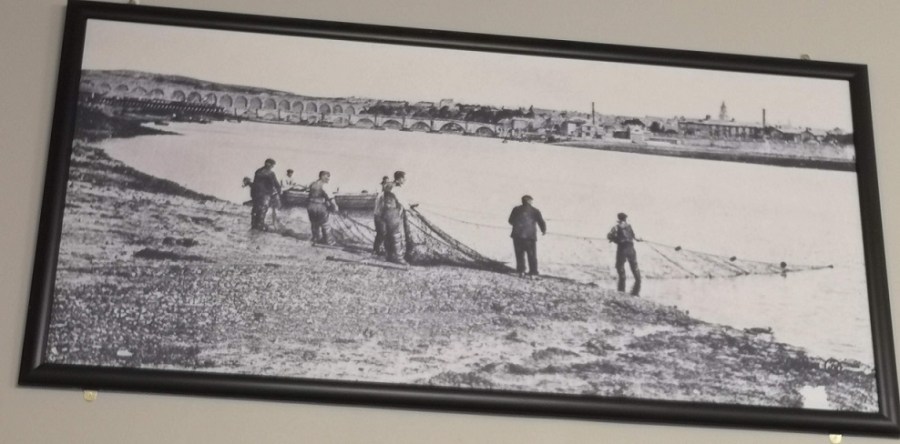
Old photo of fishermen on the River Tweed with the iconic bridge behind them. Berwick-upon-Tweed railway station, England
IMG_20200124_185157 (1)
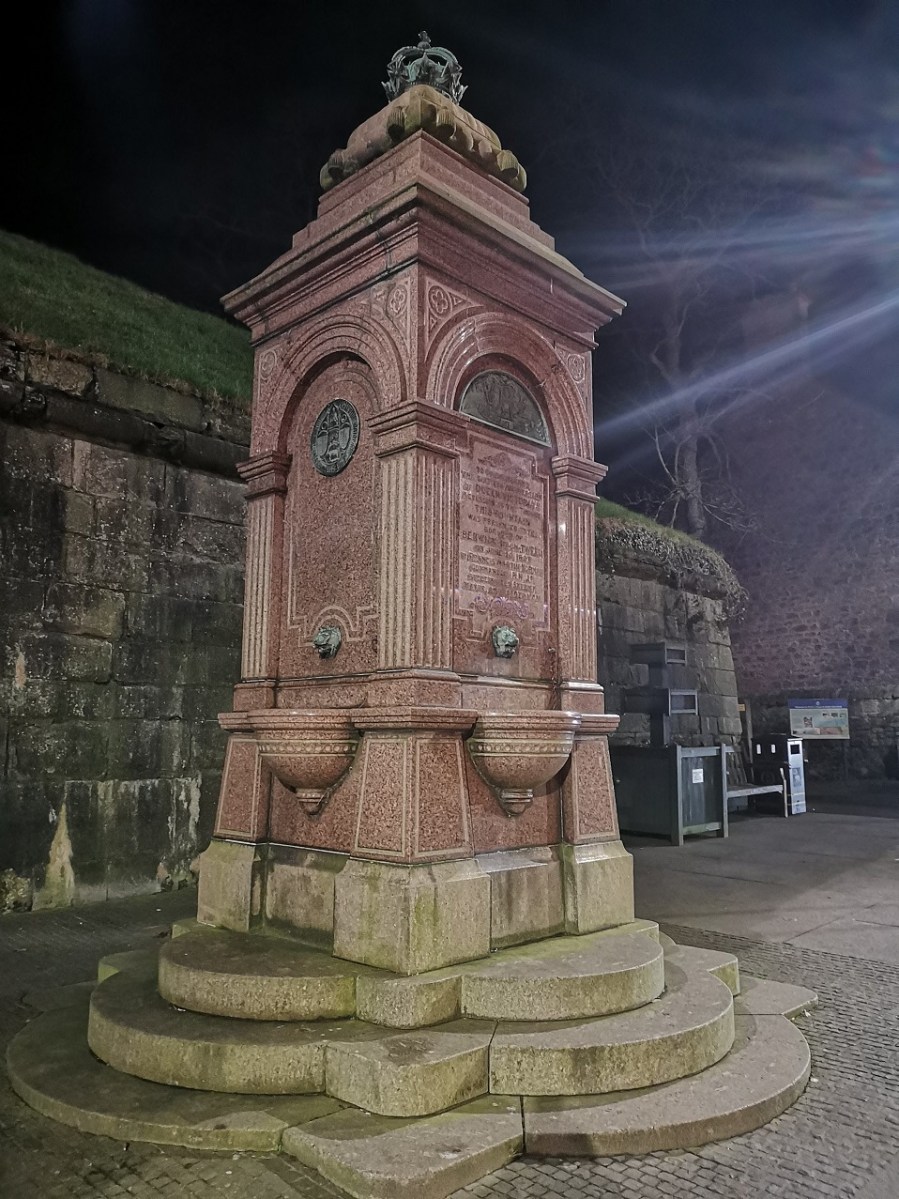
Monument with a coat of arms which has a cow in a gold chain on it, Berwick-upon-Tweed, England

St Abbs

It takes quite a while to get to St Abbs from my home in Edinburgh by public transport (train then local bus), so this time I went the night before and stayed at the Seaview B&B 6, Brierylaw, St Abbs. I highly recommend it. The owners are really friendly and generous with their time, and they went out of their way to make me comfortable (I had a luxurious bath), and ensure I was well-fed.
IMG_20200125_082821 (1)
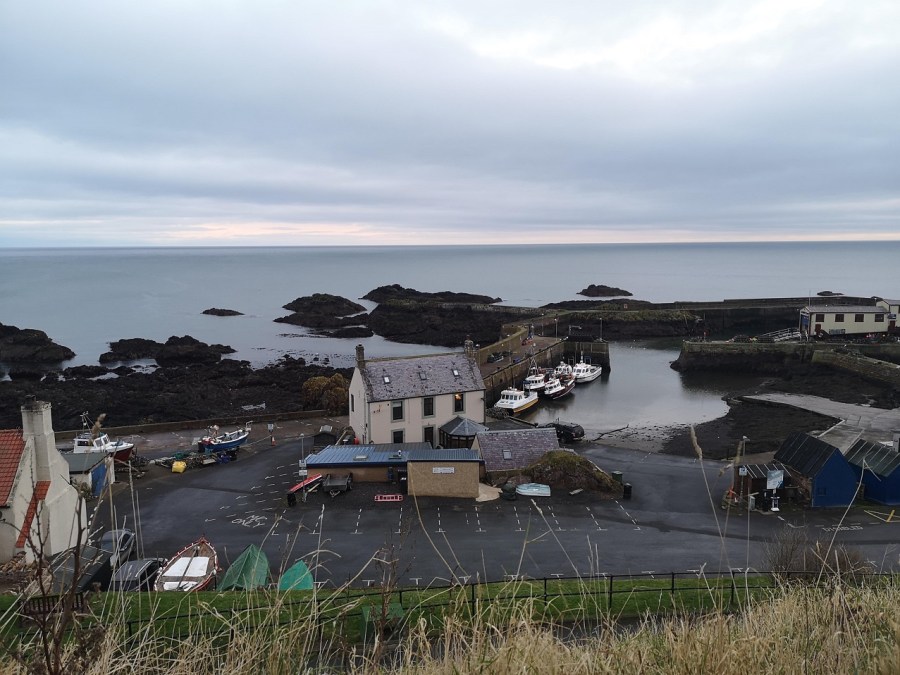
St Abbs, Berwickshire Coastal Path, Scotland

Another shoutout for the Old School Cafe at the Ebba Centre. Full story of their delicious cakes and kindness here (day 2 of the Berwickshire Coastal Path)
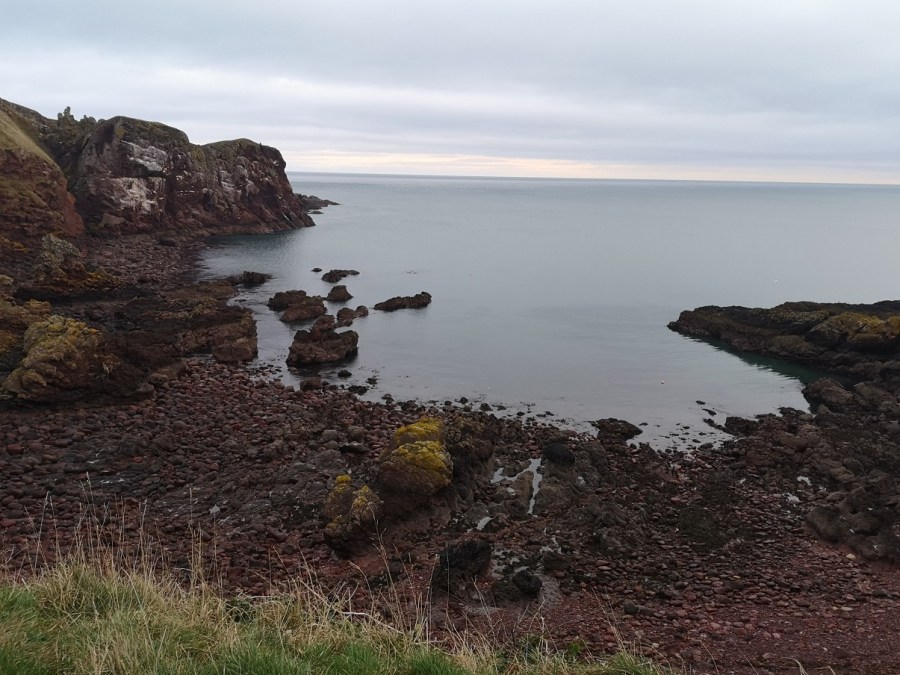
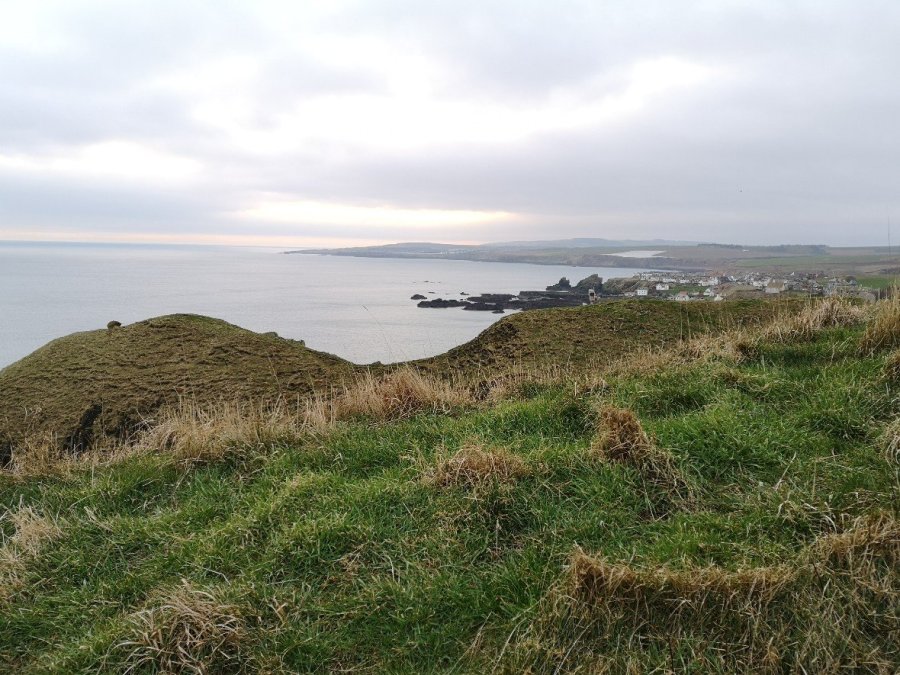
Berwickshire Coastal Path, Scotland
wp-15806417472572134981477857271577.jpg
St Abbs over the undulating hills, Berwickshire Coastal Path, Scotland

Maps and interesting facts

I took photos of the Ordnance survey (OS) Explorer map 346 entitled Berwick-upon-Tweed, Eyemouth, Cockburns Path etc, before I left my accommodation.

I left at 8.30am and walked the St Abbs to St Abbs Head path again. The National Nature Reserve is a paradise for birdwatchers, hikers and great fun for tiring out children. I scouted round the first little mound to save my legs at this early stage and remembered nuggets of information I gleaned from the Ruth and Barry at Seaview:

  • that the guillemots are starting to return from their winter sojourn
  • that you can see up to 1000 seal pups (a great piece in the Herald by Virginia Wilde about seals) on beaches near here in the season (October / November)
  • that, ‘St Abb’s Head is carved almost entirely out of lavas, which are flows of molten rock across the earth’s surface. These lavas were sticky and flowed slowly because they are composed of a silica-rich rock called andesite (named after the Andes Mountains).’ from the Edinburgh Geological Society pdf
  • that the sea cleanses west-east along the coast making for the calm waters which delight scuba divers.
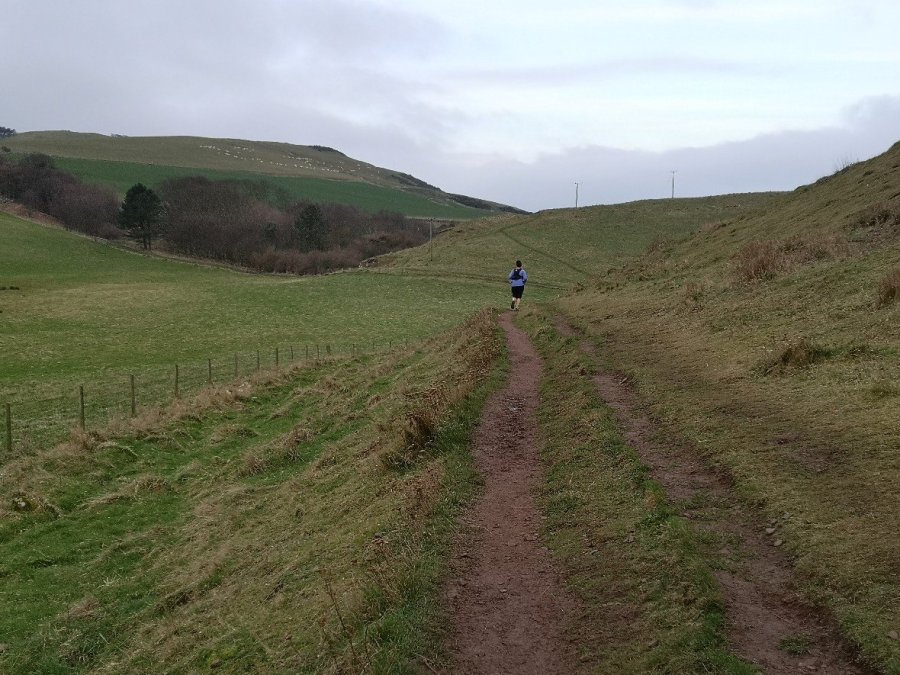
wp-15806417471983855919334392288700.jpg
I saw two joggers and a birder, but no hikers during the whole day, Berwickshire Coastal Path, Scotland

This is a walk with wild and varied terrain

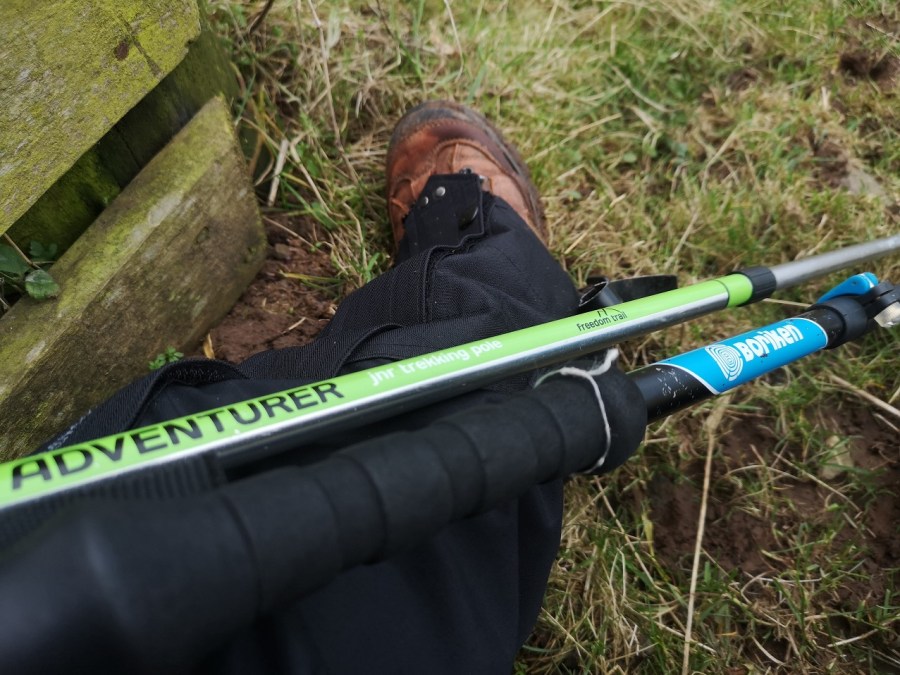
Then the first climb: I had to stop several times because I was so unused to it; I realised that my poles were uneven (one for a child and the other more sturdy, for adults), and the new gaiters which were discovered in the back of one of mum’s cupboards had long straps which are supposed to be trimmed before using – they kept getting in the way.  I could feel a headche looming (a reminder to drink water regularly as I hike), and the cold wind was at the nape of my neck. I was mighty glad for the rucksack protecting my kidneys – it would have been freezing if I hadn’t been properly dressed. Let’s hope, I thought to myself, that it’s 8 and not 10 hours as some of my treks have been. It looked so easy on the map!
IMG_20200125_130506
I am so grateful for my decent boots, mismatched walking batons and new gore-tex gaiters (waterproof material which you wrap around the lower legs to stop mud and water entering over the edge of boots or up the bottom of trousers). They still had the security tag on them which Barry kindly released me from before I left). Berwickshire Coastal Path, Scotland
wp-15806417471252567188060057851932.jpg
Berwickshire Coastal Path, Scotland

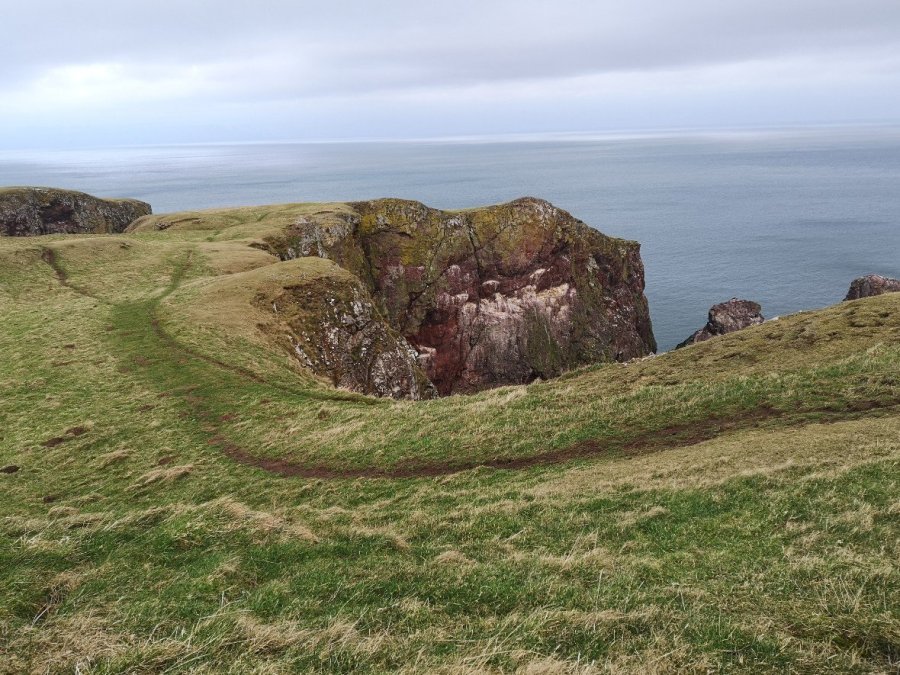
I could feel Xmas, heavy and bulky around my waist. Wow! was it hard work up and down what I discovered were the highest cliffs in Berwickshire. Overhead, pairs of birds were chasing each other, long-necked with a wide wingspan.
wp-15806417995651564258576816512679.jpg
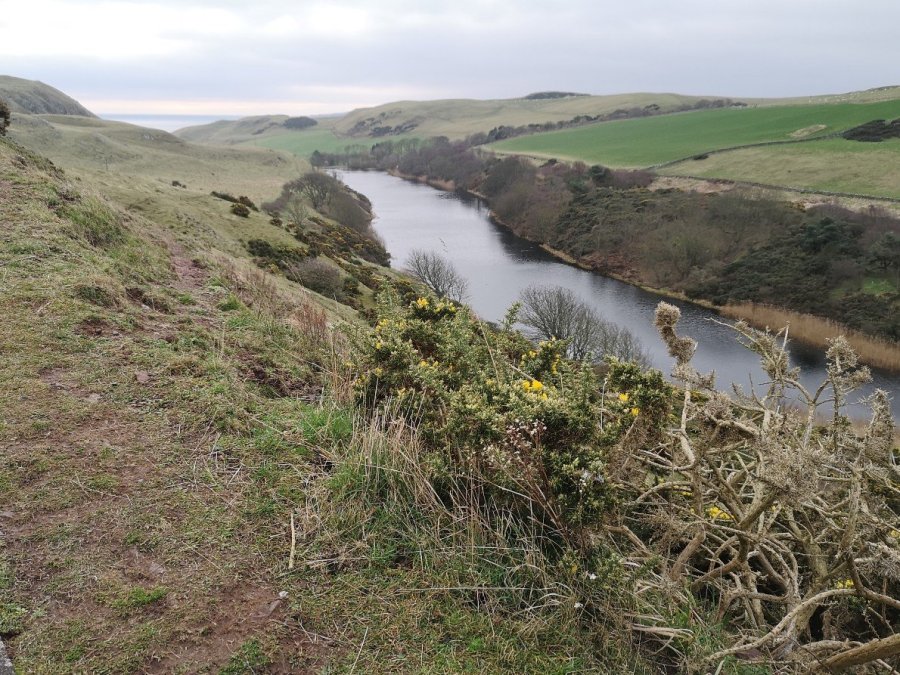
Mire Loch and the North Sea in the distance, Berwickshire Coastal Path, Scotland
wp-15806422138765258525180309203326.jpg
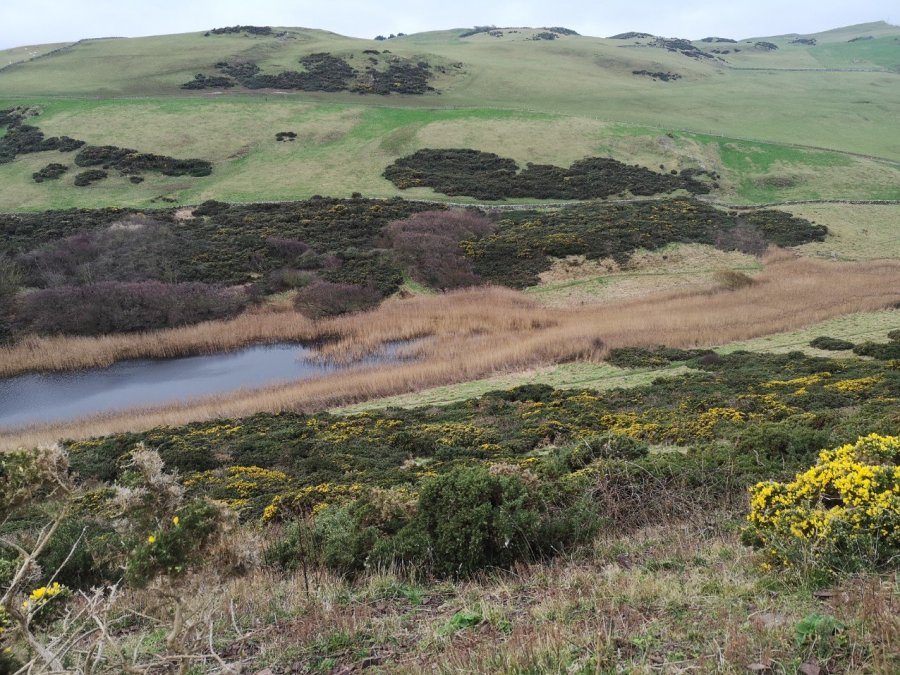
Mire Loch and the yellow gorse, Berwickshire Coastal Path, Scotland

The closer I got to the water, the louder the seabirds and the wind. The white sky was dissected by the trail of a plane, and I had forgotten the red, the pink-burgundy-purple of the land round here. ‘Between each lava flow there is commonly a reddened zone, because the lava may have been weathered for hundreds of years in a subtropical climate until the next lava covers it’ (Edinburgh Geological Society pdf as above).
wp-15806422138035377520110578496876.jpg
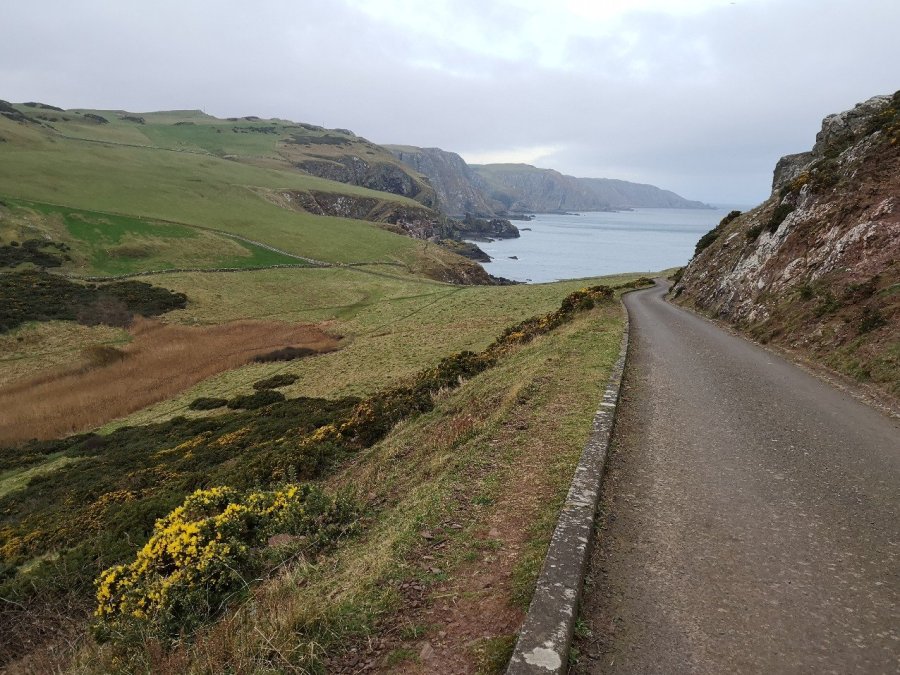
Going downhill on the road, the silence descended and the view opened up again, Berwickshire Coastal Path, Scotland

Gorgeous Geology

Sniffing on account of the cold wind, I came to my first path dilemma – do I go by the road or off to the right? There was no sign. I chose the road, but was very unsure and got into a bit of a (short-lived) state about it, trying to look at the photos I had taken of the OS map without my phone being blown out of my hands, and comparing them to the insubstantial BCP leaflet while the wind was coming towards me like nothing on earth. There was a sign further on, so the road was the correct course of action.
wp-15806422137213143995503587857946.jpg
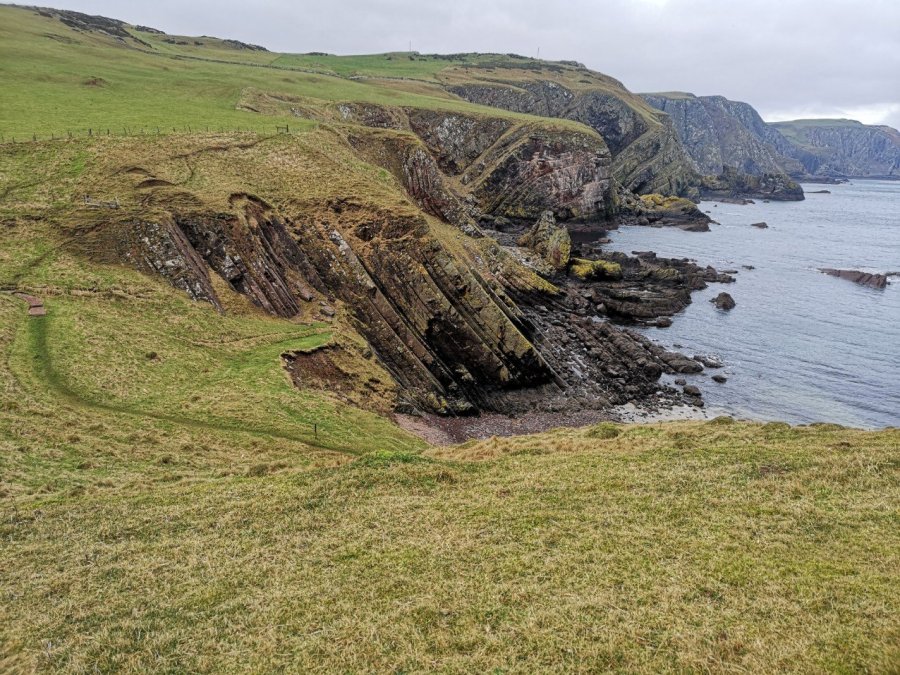
When I rounded the headland to be faced with this bay, I was astonished to remember reading someone who said he hadn’t noticed the strata of rock, Berwickshire Coastal Path, Scotland

The second female runner, red faced, grinned as she ran on, then stopped to hold open the gate for me. As she disappeared into the distance, I was left with the sound of the waves. I adore the quiet.

My poles stuck into the soft, brown clay which soon changed to clods around the edge of a field where cattle had clearly been. The cow pats had orange fungus (pezizales) on them and there were great clumps of shiny, black pastilles, deer droppings.

It struck me how little I know about so many jobs: diving, fishing, farming, lighthouse keeping, all of which I depend on. Such things I mused as I walked.
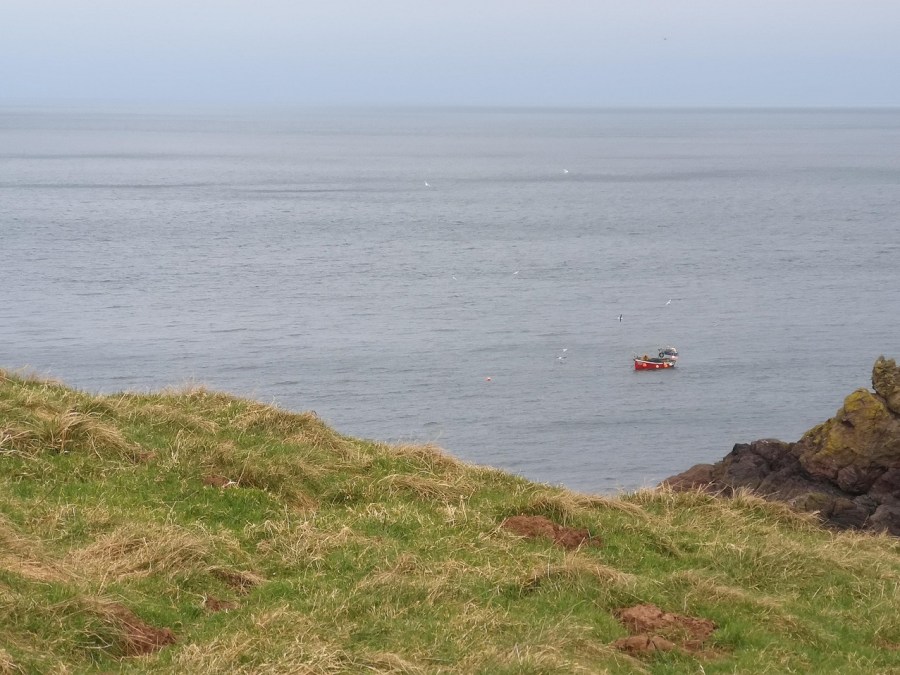
IMG_20200125_092756
In the distance, a single fisherman in his orange all-in-one suit was chugging along at the same time as laying his nets. He was followed by squawking, white birds. Berwickshire Coastal Path, Scotland

I heard the birds going sweeeak, squweeeak, sqweeeak, sqweeeak, sqweeeak, tda, tda, tda very fast!

I, on the other hand, was going so, so slowly and feeling incredibly unfit, breathing heavily on the ascents – great exercise for inner and outer health. As I paced, I could feel my heart sighing. My head was still zizzy and a bit anxious, but I could also actually feel myself grounding, as if lead was working its way down my legs which of course made them feel altogether too heavy to climb hills. My system was settling. The intense breathing had cleared away some of what was clogging my lungs; the bowel clearing which went on an hour after starting, resulted in a very easy sensation in my abdomen. This was good for me.

Cliffs, stiles and wind turbines

What sort of terrain was it? Two stiles, a little burn, up a very steep bit, over a stone wall, ribboned white, and through a gate with a metal spike to shut again after me – I struggled with it. More stout stiles, wind turbines and wet burns (where your water bottle might fall out of its pouch, getting muddy even around the lip under the lid), even more stiles (too high for short legs), curving round contours and up more slopes – pwhew!

After the highest cliffs (the Tun Law Forts) and the two admiralty poles (to measure nautical miles), the path hugs the coast (I went inland by mistake). The sea was all glassy, rippling gently in the wind. The wind was incredibly heavy up here, but down at the sea it looked magical. The path is sometimes dizzingly close to the edge of steep gorges with white foam at the bottom. The gorse was olive green from a distance, and their glorious sunshine flowers matched the yellow arrows.
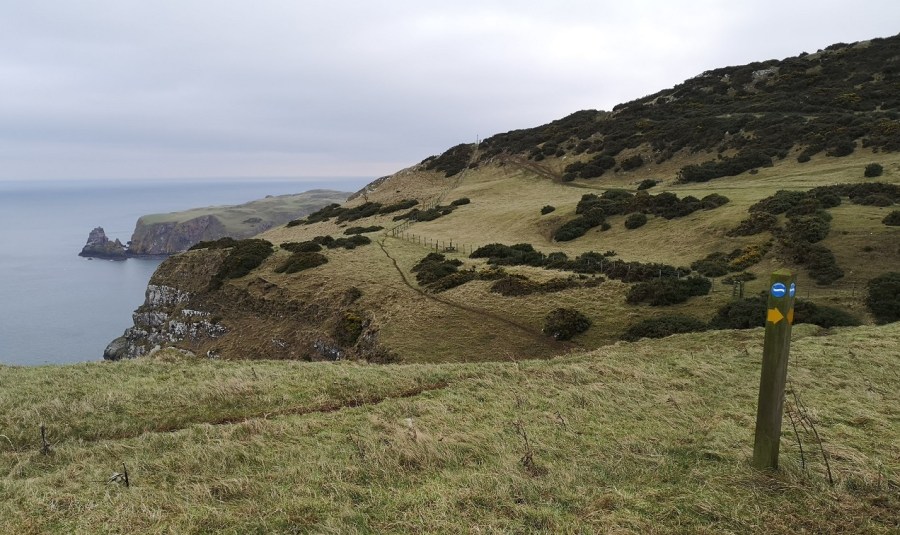
IMG_20200125_100446
The stunning landscape of the Berwickshire Coastal Path is, generally, well signposted. I was warned by two sources that it is easy to get lost – maybe my several years of experience paid off, because I only went off-course for a sum of 10 minutes or so over the day. Here you can see the various possibilities which converge at one point

Then there was a beautiful flat stretch: Small brown birds were tweeting. They appeared and disappeared like helicopters doing vertical take-off and landing practice (skylarks?). I couldn’t see any dolphins or whales, which I always wish I could, but then I realised how lucky I am to see seals almost every day outside my house. Gulls with black wing tips were gliding over the sea. There were feathered swarms, like bees, inland over the sheep-filled fields.

I heard the sound of a quad bike before I saw it, like the brrr you do with your lips, spitting saliva a bitty, to make a baby laugh. Then I saw a man holding back a collie dog with great difficulty. He gestured and spoke, but the wind stopped me from hearing what he said. I got the gist and waited. They were driving the escaped sheep back up the cliff and we all had to be very careful in case they panicked and rushed in the wrong direction, to their death.
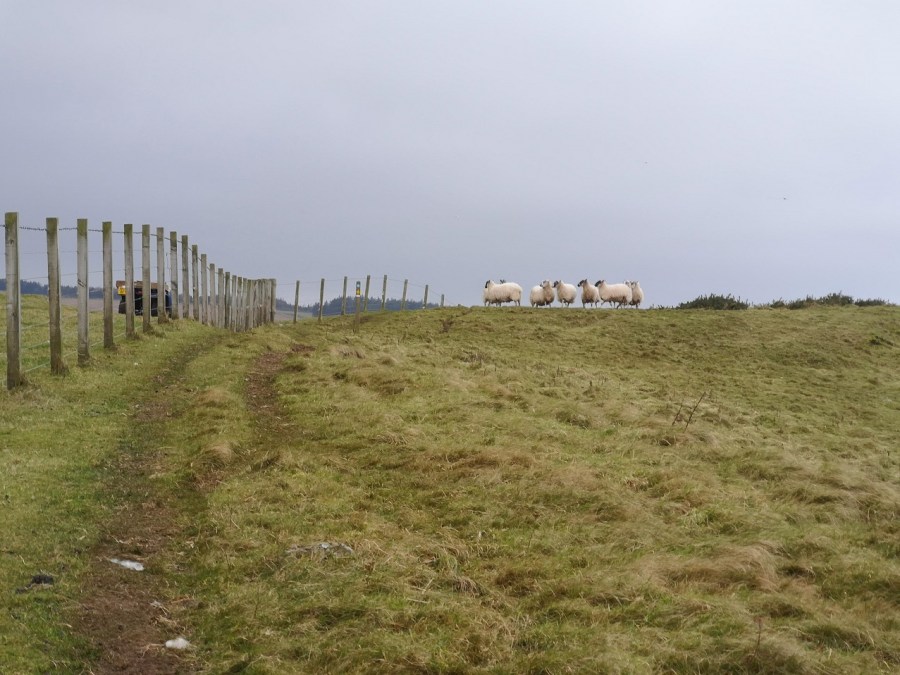
IMG_20200125_100855

This was my first ‘proper’ walk after injuring my left foot on the Portuguese Camino. It had taken months to heal and I was nervous about future walks, but I became more confident as the day progressed. My ankles felt weak – that was the lack of Scottish hill walking practice – and so I was careful to place my feet flat where possible, which sometimes hard on the side of these hills.
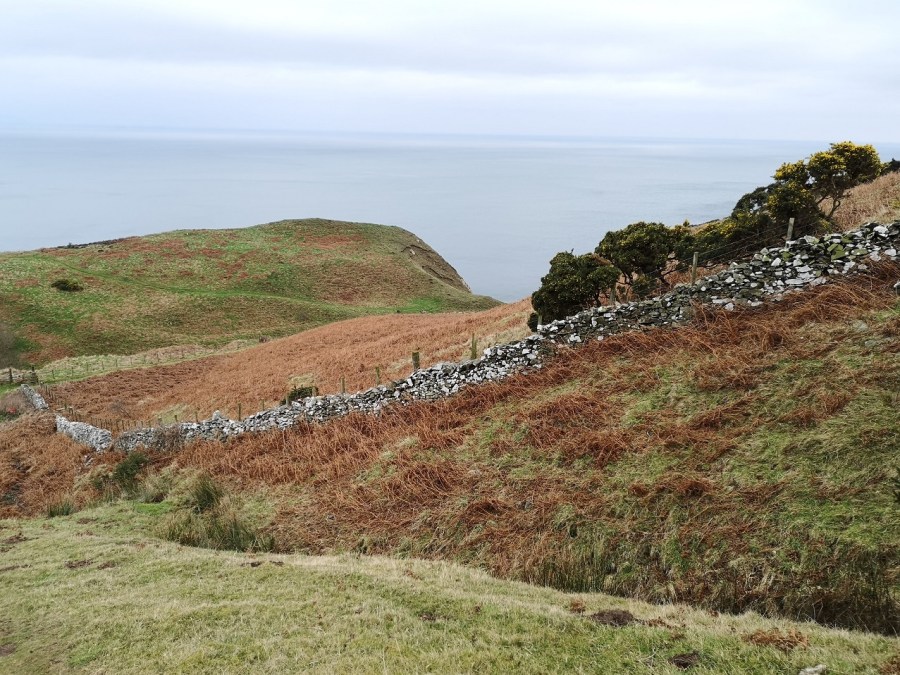
IMG_20200125_102227
The fawn-deer-brown bracken was lying almost flattened to the ground after winter storms. Berwickshire Coastal Path, Scotland

Higher and higher, I looked back at the most wonderful rocks which angled down and reached their guano covered fingers into the sea, some with athritic knuckles all jagged as if they had rough skin.
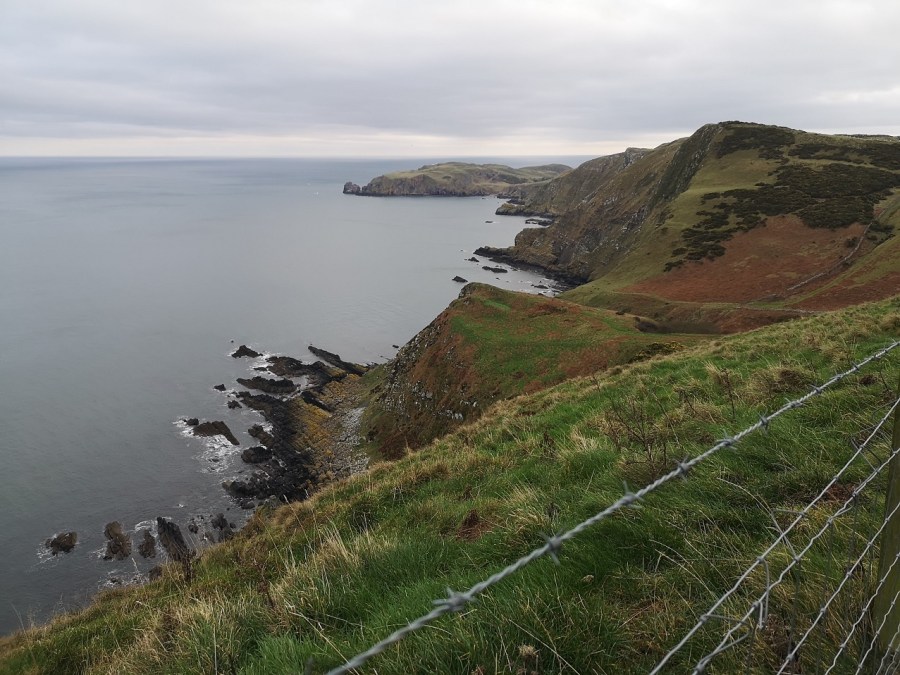
IMG_20200125_105052
Berwickshire Coastal Path, Scotland

More sheep

For the first time I saw sheep head-butting each other, their hind legs sort of bouncing off the ground as they did it. As soon as I stopped to watch, though, they stopped too, like embarrassed teenagers caught doing something they shouldn’t be – it was so funny.
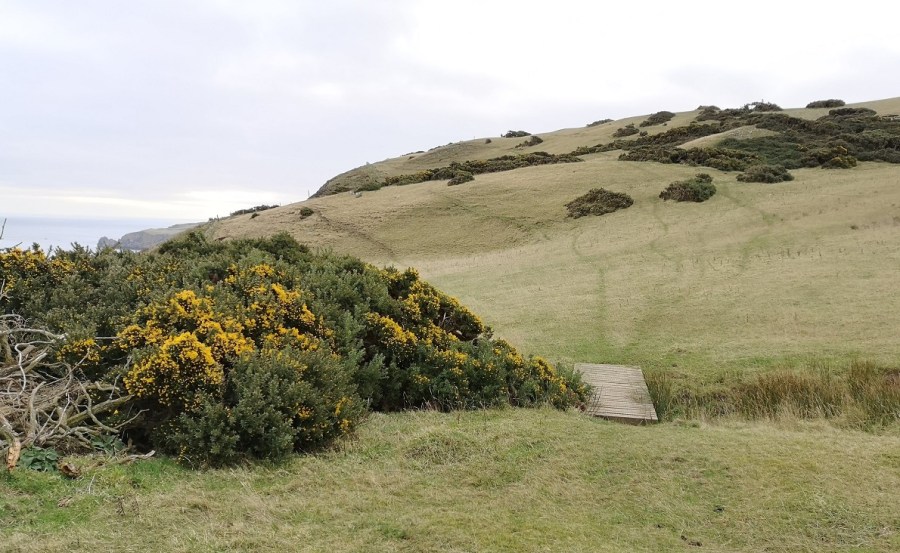
IMG_20200125_110904

Three hours in and the ground was flatter – forest and fence, new coppice of some type of pine.  Ditches full of rainwater were squidgy to negotiate. There was not much sign of a path here until the next metal fence and a gully with thorn trees, inland.
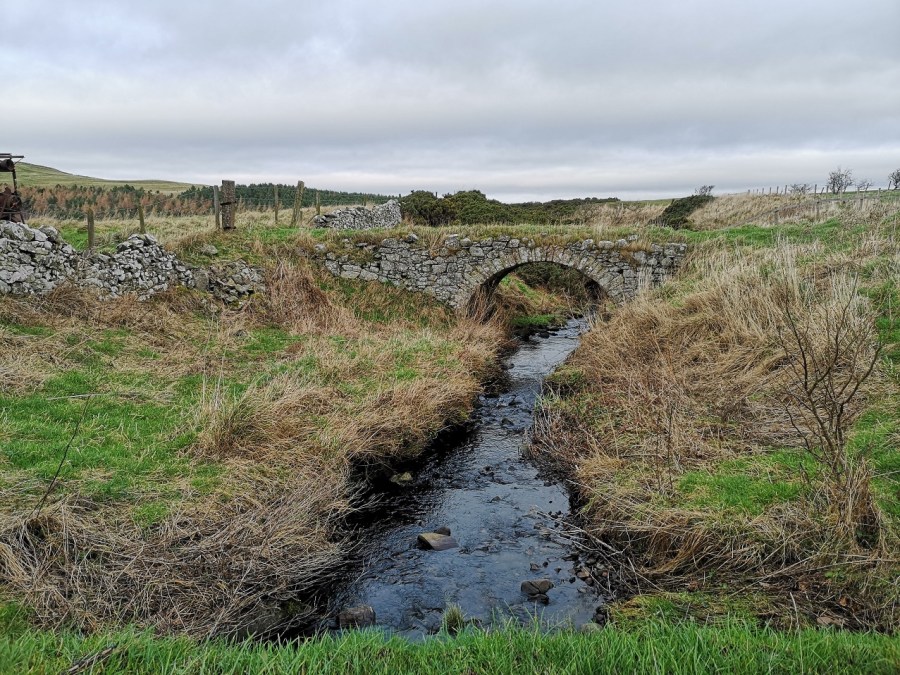
IMG_20200125_113928

On this walk, you just keep on going and you eventually get there. I arrived at Dowlaw (say doolaw) farmhouse at 12 noon – 3.5 hours exactly which was good going given that the time for this stage was listed as 3.5 – 4 hours. As you approach the dwelling, remember to turn right through a small copse, do not take the left at the farm machinery.
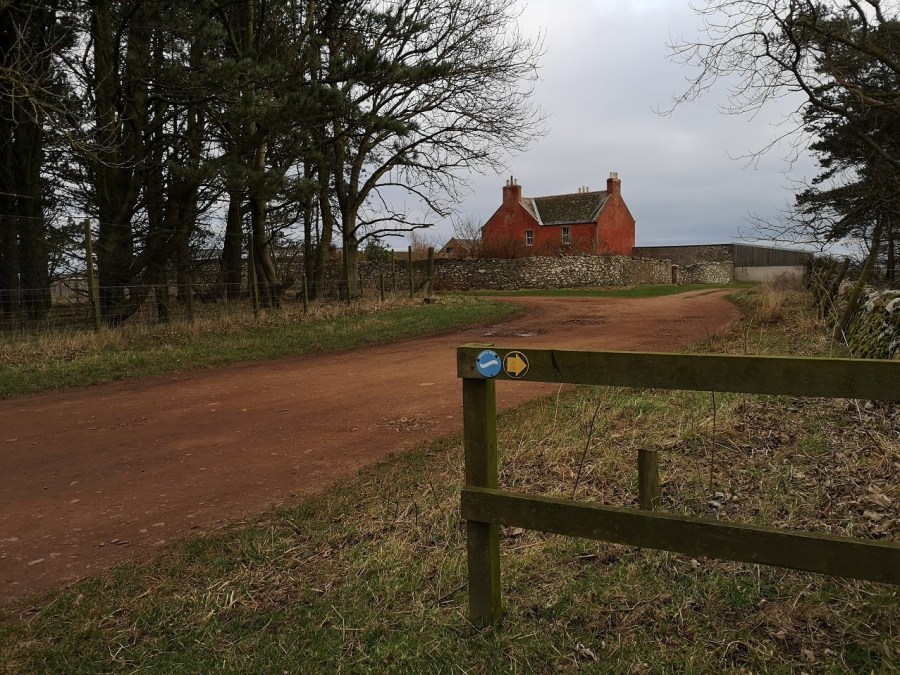
IMG_20200125_120212

The half way mark – Dowlaw

I lay down and rested out of the howling wind for a few minutes, but it was very wet. I had been hearing a conversation going on beyond my left shoulder which when I stopped I couldn’t identify the origin of. Slowly I realised it was the wind turbines turning, chatting away to themselves.

I followed the road and then left it as the map showed, perhaps too early, because there was a dearth of signs. I traversed grass with almost no noticeable track to speak of. Yes, the signs were unclear, seeming to point across more moorland, but I was unsure. There was a car with its engine running, a solo man in it, a big screen on his dashboard that he was watching, despite facing out to sea.

I was very, very tired by this time, so I was glad that it was more level, overall, on this final stretch. I was amongst the sheep, passing through gate after gate,  and molehills were everywhere. It must all be taken carefully – the route twists and turns, over waterways and round field corners. When you doubt that you are on the right track because you come to a junction where there are options, scan far, far ahead into the distance looking for a small pole with a yellow arrow and a blue and white sign to guide you.
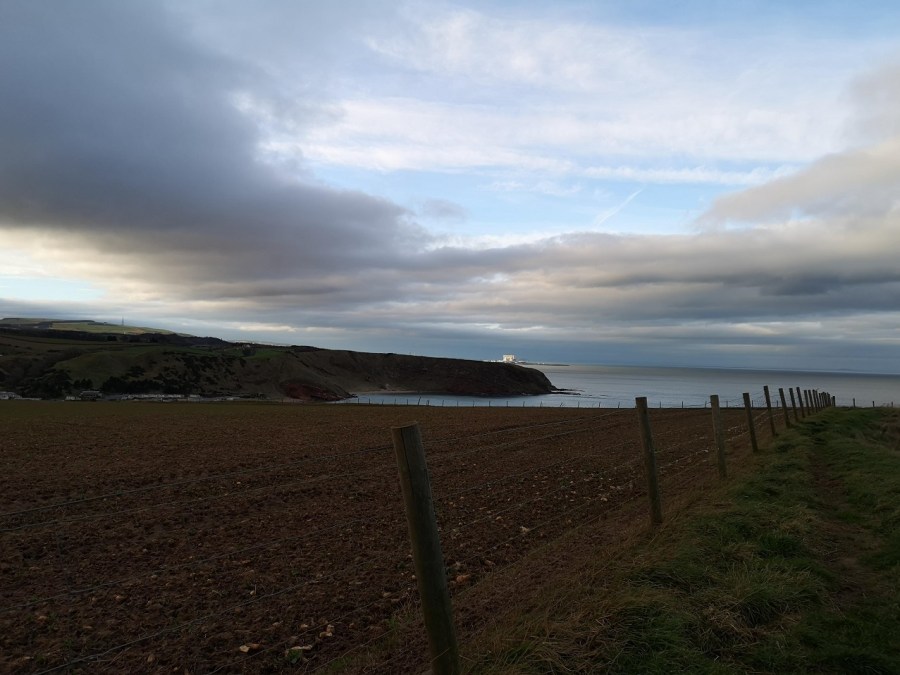
IMG_20200125_143650
Torness shining in the distant sun, Berwickshire Coastal Path, Scotland

Next was a farm yard with very pretty, nervous calves inside a barn, and three barking dogs, enclosed. Crows lined up on the telegraph wire. A sheep with a horrible rasping cough was on my left. It was if something had gone down the wrong way, most distressing. In the road in front of me were two running, waddling birds (game birds? I did hear shooting earlier). Every now and then they took off, their wings whirring as fast as those of flies. More cottages were ahead and smaller, brown birds with white tail feathers twittered away. They looped horizontally in and out of the hedgrows as if they were hanging the decorations.
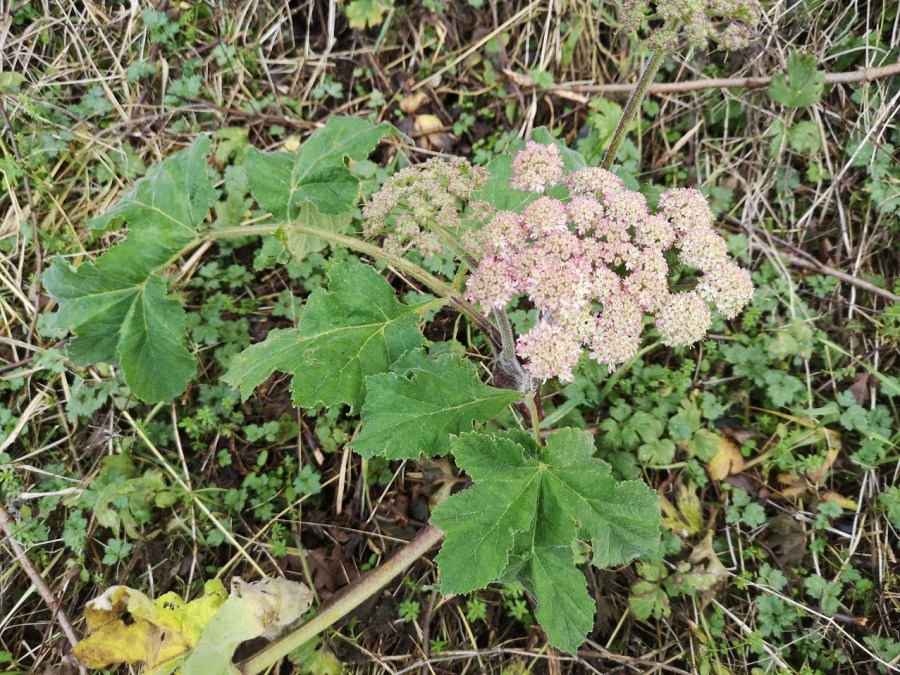
Cow parsnip hogweed (heracleum sphondylium)

Flora and fauna -Old Cambus

My eye was drawn to the catkins flibbaling in the wind, snowdrops harbouring under a stone ledge, pussywillow shining white, and hogweed/cow parsnip in flower. Thoughts flitted in and out about a book I was recently given: Melissa Harrison’s Rain. I wasn’t sure about it at the beginning, but it was starting to grow on me – four, easy essays written about seasonal walks in different parts of England, all about rain and the effects it has on animals and the earth – interesting facts, well written.  I wondered to myself if she learned from books / the internet or if it was local lore from people she had spoken to along the way.

‘Here and there hazels have produced their yellow catkins; there are hips bright as blood, too, and beside the path a straggle of field mustard, most likely a farmland escapee…’

This was Old Cambus and I went straight on, as far as the T-junction, and there I thought I must be wrong. I was right! Retracing my footsteps (right hip and soles sore from road walking) I asked a woman getting into a car and she pointed me to the seagreen shed. I had to go past the garden with the tin / metal sculptures of a sheep and a pelican.
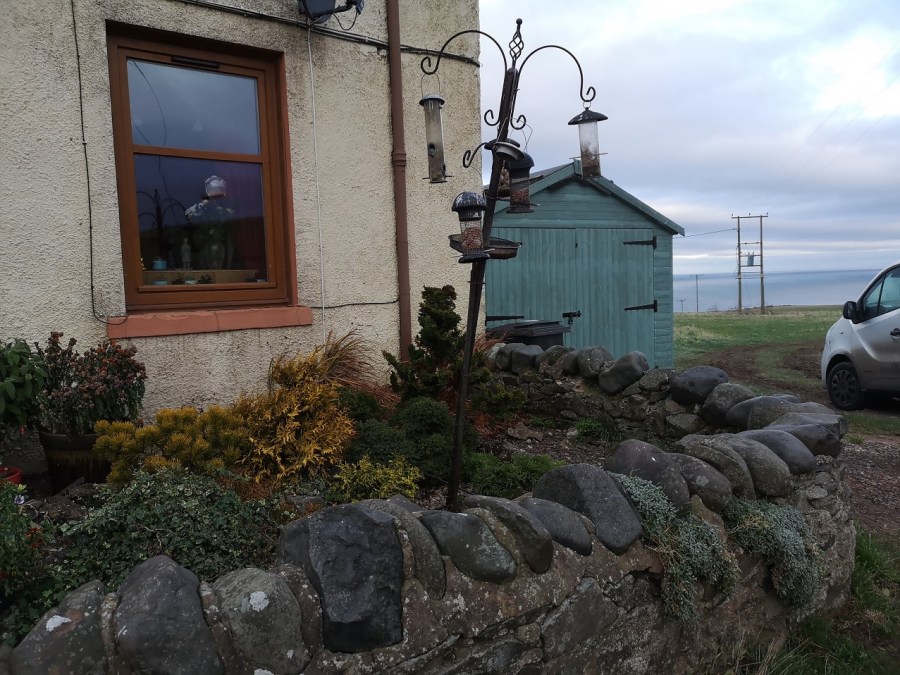
IMG_20200125_140718
Turn right at this cottage, walk straight down the left hand side of the field and then, although it is counter-intuitive, turn right (do not go across the farmyard full of wood even though there is a sign pointing left there). Berwickshire Coastal Path, Scotland

So, now I was going back in the opposite direction (sea on my left) to another sign in the corner of the field. Then, straight downhill (not left) towards the sea. There was a ruin up ahead.
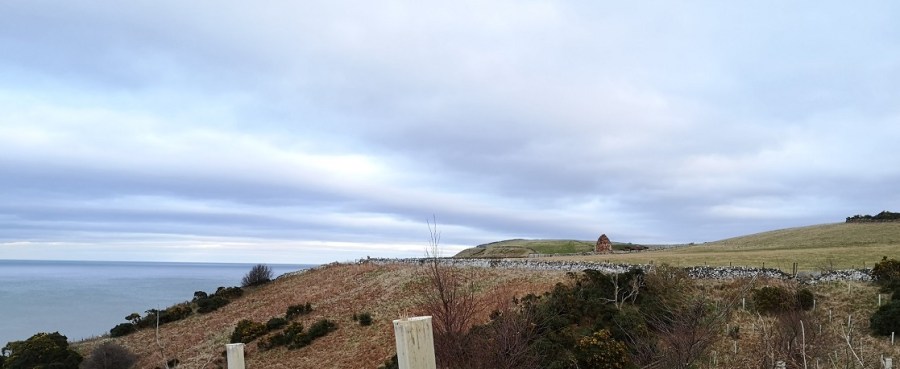
ruin
The ruin seen from the other side. The day was brightening as it came to its end. Berwickshire Coastal Path, Scotland

Siccar Point

Although the path goes inland here, I was able to get a photo, later, looking back towards the famous Siccar Point or Hutton’s Unconformity.

Siccar Point (Hutton's Unconformity)
Siccar Point or Hutton’s Unconformity, of immense geological interest, Berwickshire Coastal Path, Scotland

‘In 1788, James Hutton first discovered Siccar Point, and understood its significance. It is by far the most spectacular of several unconformities that he discovered in Scotland, and very important in helping Hutton to explain his ideas about the processes of the Earth.’

 ‘At Siccar Point, nearly vertical sedimentary rocks of Silurian age – greywacke sandstones and mudstones – are covered unconformably by a younger sequence of red sandstone and breccia.’ The Geological Society

‘Hutton used Siccar Point to demonstrate the cycle of deposition, folding, erosion and further deposition that the unconformity represents. He understood the implication of unconformities in the evidence that they provided for the enormity of geological time and the antiquity of planet Earth, in contrast to the biblical teaching of the creation of the Earth.’

Over a cattle grid I traipsed, and took a right with lots of signposts giving mileages to Cockburnspath which turned out to be erroneous, but kept me forging forwards at the time. A long stretch along the edge of a fence was very steep with very little space to walk.

Pease Bay
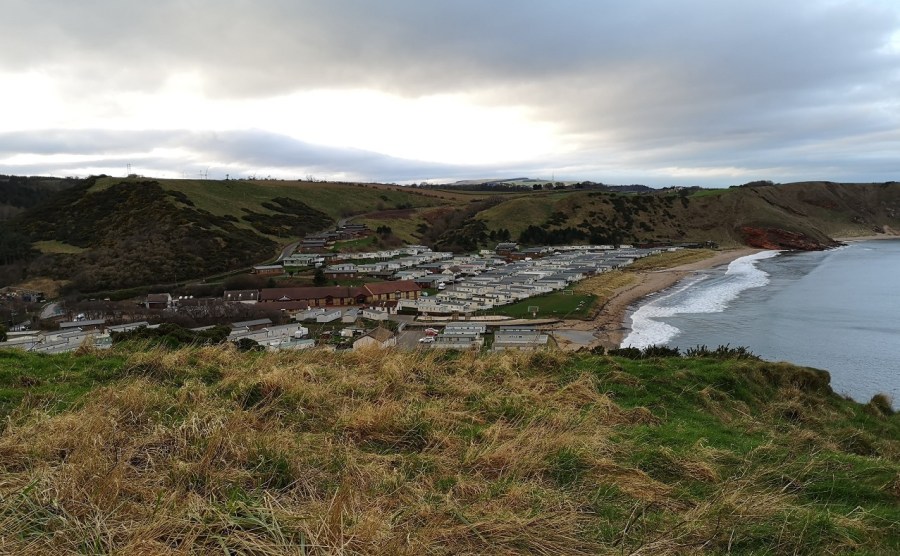
IMG_20200125_144208
There was Pease Bay  ahead – how did they ever get planning permission to fill the bay like that with caravans? Berwickshire Coastal Path, Scotland
IMG_20200125_144548
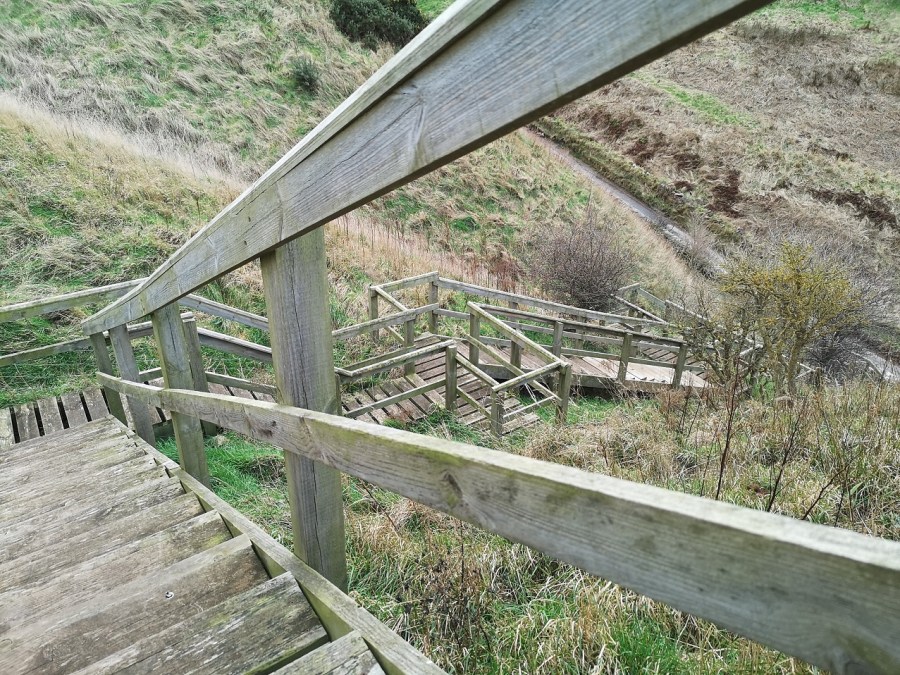
I sat for five minutes and ate some sugary snacks before stumbling down a long flight of wooden steps to Pease Bay, Berwickshire Coastal Path, Scotland

Up a very steep road on the other side, past some houses, I joined the very end of the Southern Upland Way (which starts at Portpatrick, south western Scotland 214 miles / 344kms). More tough steps, this time, up.
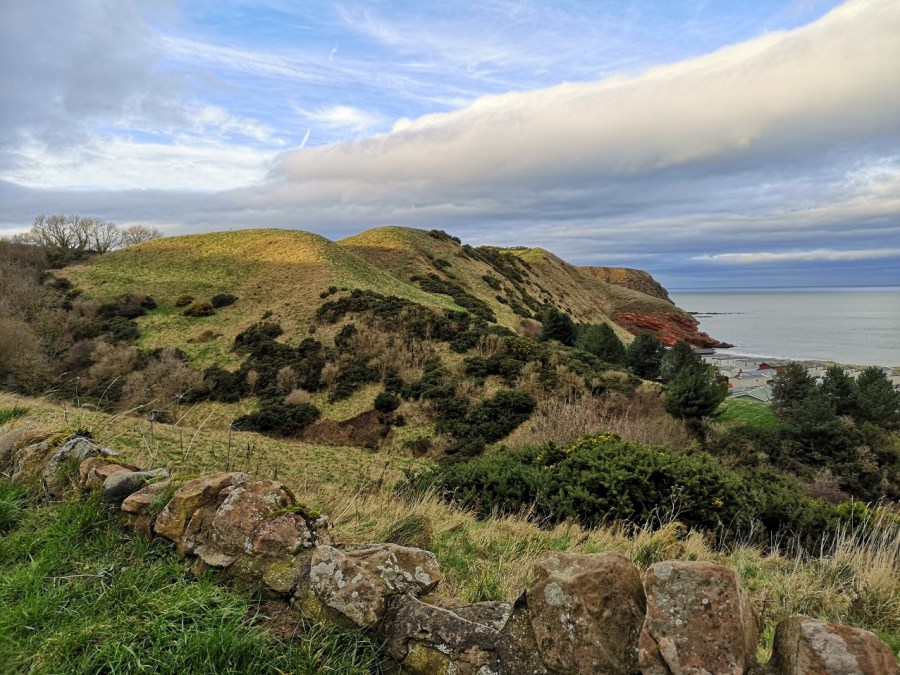
IMG_20200125_150410

Crossing a burn with little waterfalls on a boardwalk, I came across a sweet bay which could not be reached except by boat.
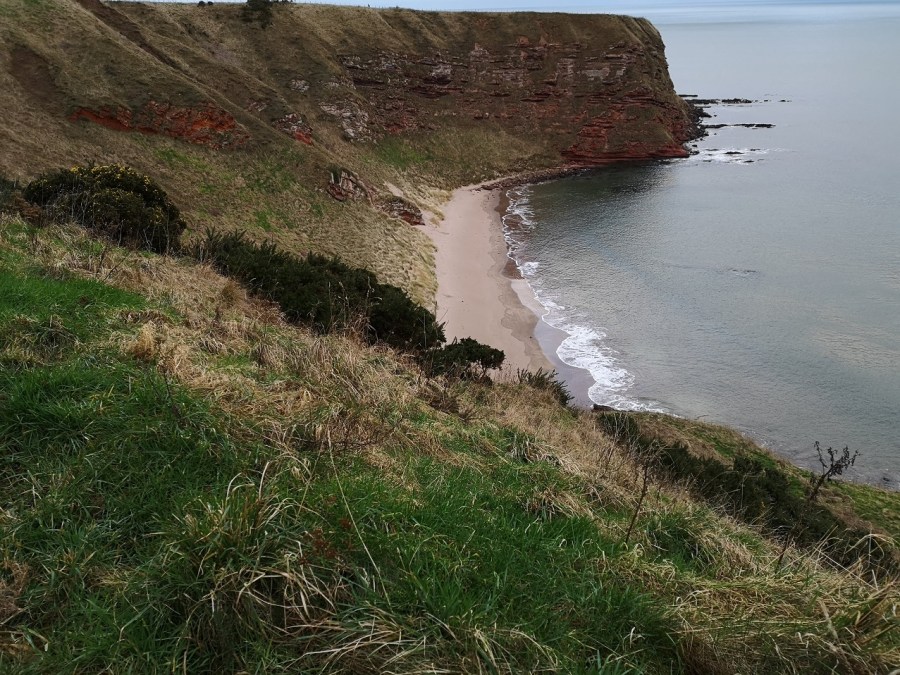
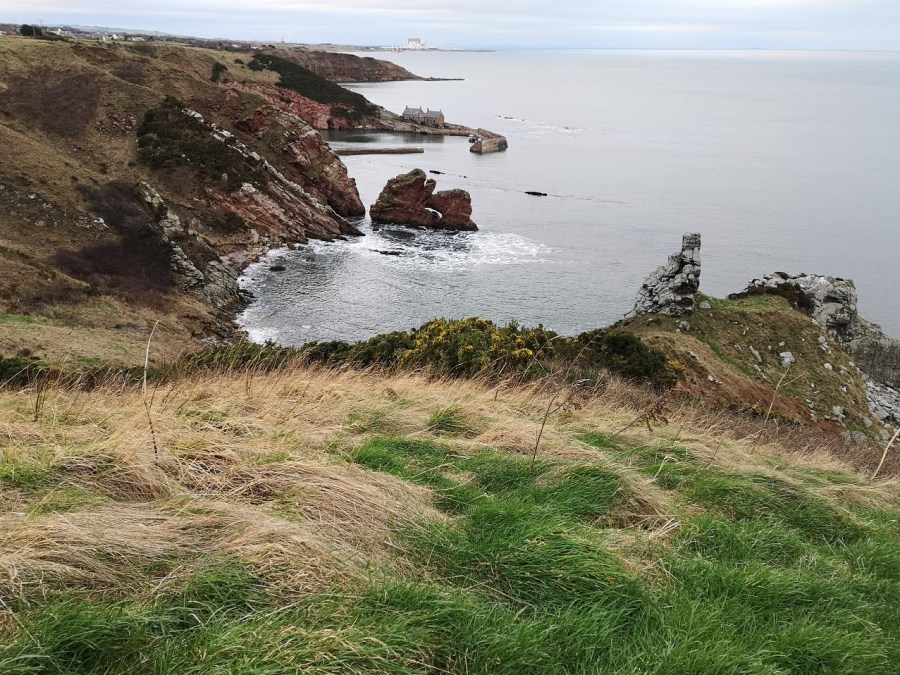
Beach cusps link to Coastal Wiki
Beach cusps – scallop-shaped patterns made by the sea at the edge of the shore where waves have collapsed into a thin bore. Berwickshire Coastal Path, Scotland
IMG_20200125_152814
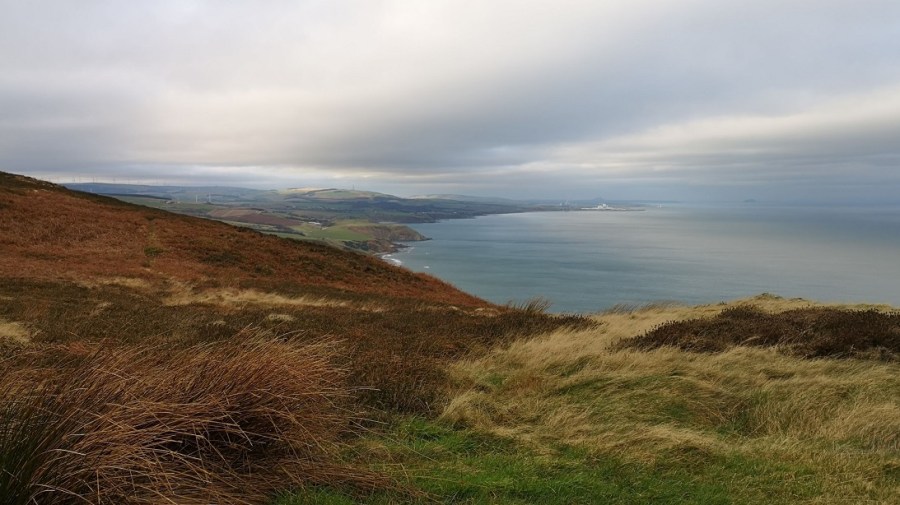
The complicated coastline of Berwickshire with the picturesque houses of Cove and Torness Power Station in the distance, looking towards Edinburgh, Scotland

Cove and Cockburnspath

At Cove, there are caves in the red rock and stacks to rival Orkney’s. Striated rock comes down into the water. I spied a single cormorant on a rock with another swimming towards it out at sea. A solitary, brown, fluffy caterpillar was at my feet.
IMG_20200125_155039
On one side a man mended his car, on the other, a funny dog jumped off the ground in his enthusiasm to be petted – cute or what! Berwickshire Coastal Path, Scotland

oznorHB

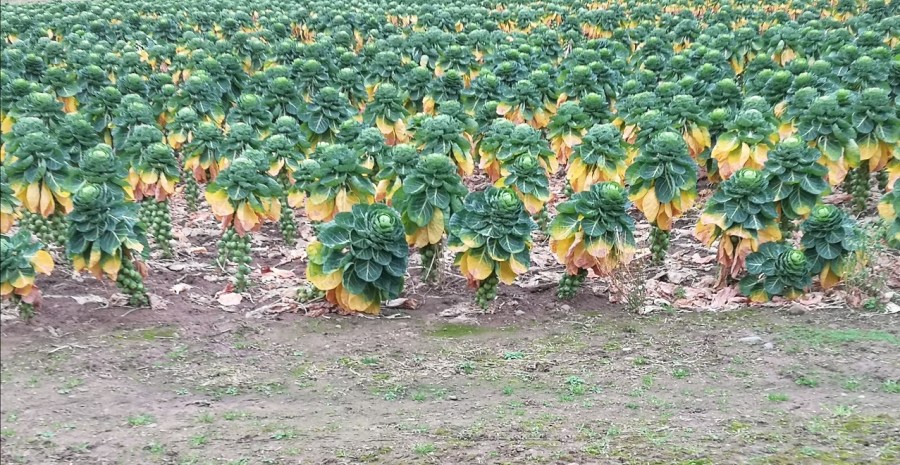
Past a field of prize-winning sprouts, this stretch is noisy with motorway traffic and, as I passed under the railway, yet another train sped across. I viewed the peace and biscuits graffiti which was exactly as ‘Ettrick Shepherd’ on the Walk Highlands website stated (long distance walks / Berwickshire Coastal Path / St Abbs to Cockburnspath). I am indebted to him for his account, which I read before I walked.

IMG_20200125_155512
Never mind the spelling, it’s the sentiment which counts! Berwickshire Coastal Path coming into Cockburnspath at the end – hooray! Scotland

I arrived at Cockburnspath at 4pm, before it was dark. To get the bus back to Edinburgh, you need the stop on the Bowling Club side of the road. It turned out I could have got the 4pm bus, but I went for a celebratory cup of tea at the post office and village shop (which very sadly closes in 5 weeks due to bereavement) and so, missed it. I waited over an hour, regaled by very loud rock music coming from the house nearby, as it got darker. My right cheek was glowing hot from walking all day, much of it with the wind in my face. Thankfully, it’s a nice old fashioned bus stop with a covered wooden seat but, being wet throughout from the sweat of the walk, I chilled very quickly and so snuck behind and changed into dry clothes from the day before.
cof
Berwickshire Coastal Path, Scotland

Birdwatching on the Berwickshire Coast

Really good leaflet on wildlife of the Welsh coast, many of which species can be seen in Berwickshire too. pdf

You might also like Day 1 of the Berwickshire Coastal Path and North Berwick to Dunbar
Caldas de Reis to Herbon: Portuguese Camino

Camino Portuguese da Costa – Day 13, October 1st 2019

Leaving Caldas de Reis

Caldas means hot springs and although a foot fountain was right outside my hostel, there was no encouragement to bathe mine as they dissuade you for hygene reasons.

wp-15757594134727832793370343453374.jpg
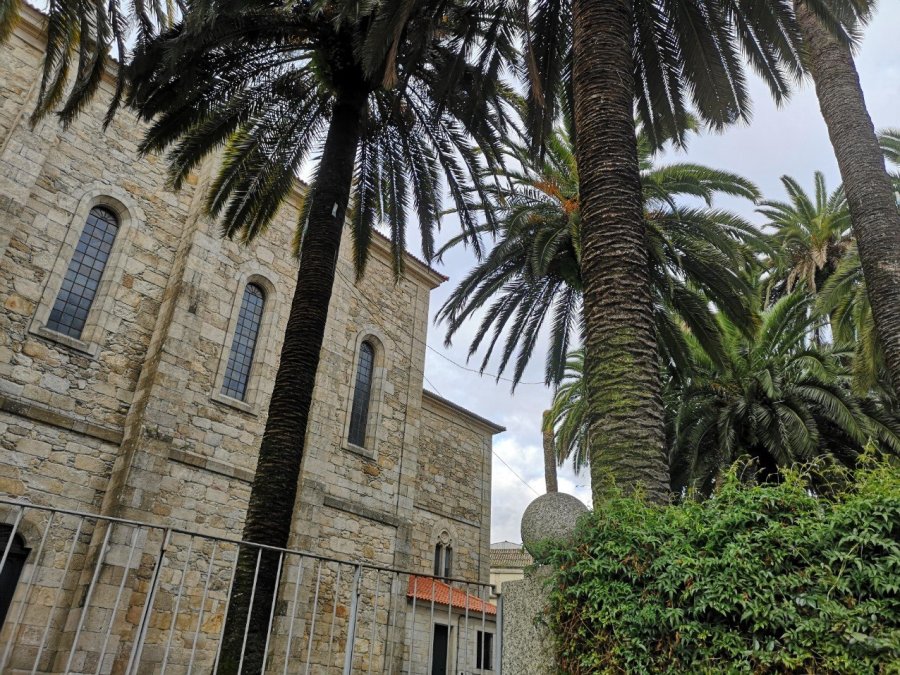
Towering palms beside the Igrexa de san Tome Becket (the British St Thomas a Becket), Caldas de Reis, Spain

There is a Bishop’s mitre on the door and otherwise I cannot find out what the connection is between St Thomas a Becket and Caldas de Reis – although of course he may have made pilgrimage here.

wp-15757594135467747829338258218117.jpg
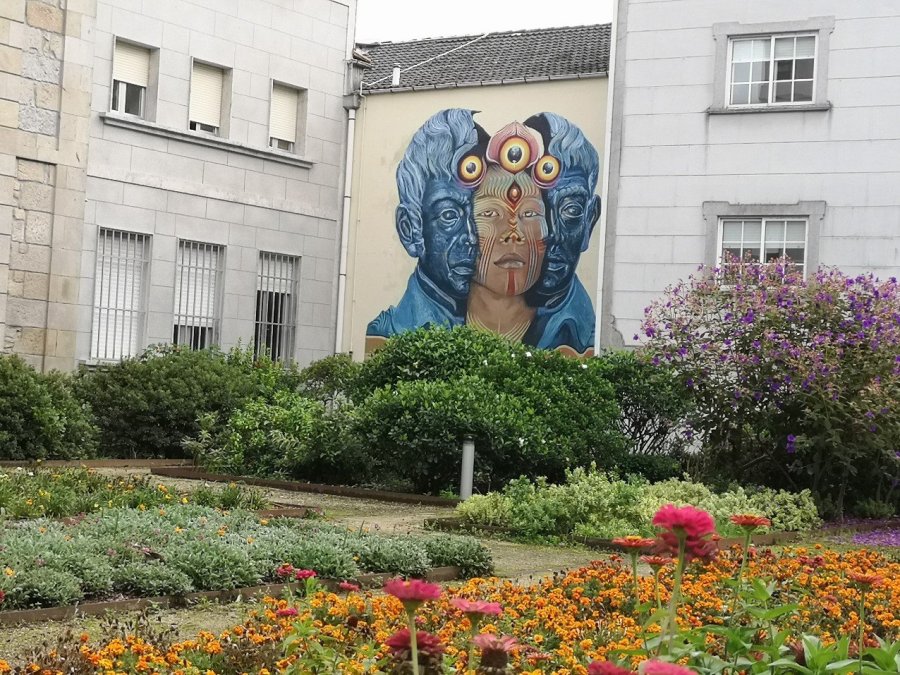
Street art, Caldas de Reis, Camino Portuguese, Spain
IMG_20191001_082315
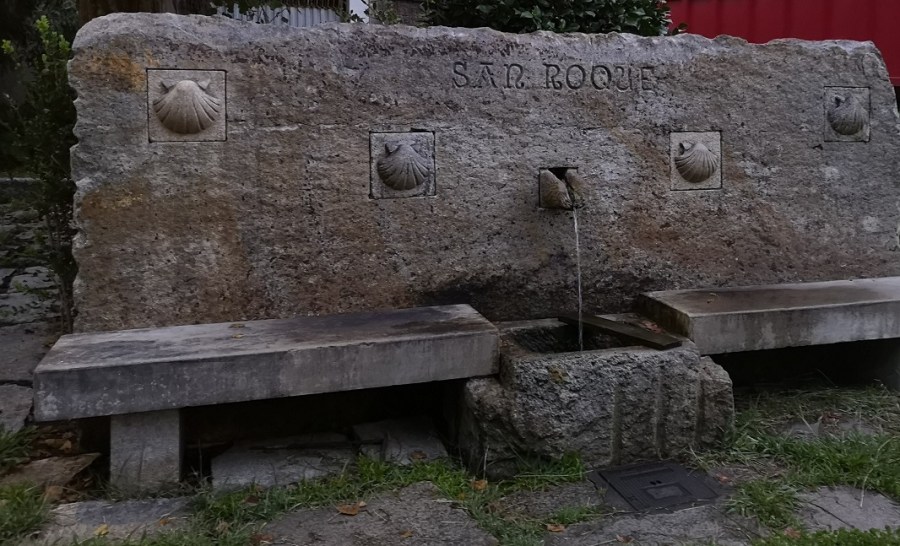
One of the many beautiful stone fountains you can see on the Portuguese Camino. Here emblazoned with the shell symbol of paths meeting at Santiago de Compostella
wp-15757594133904278473395589887106.jpg
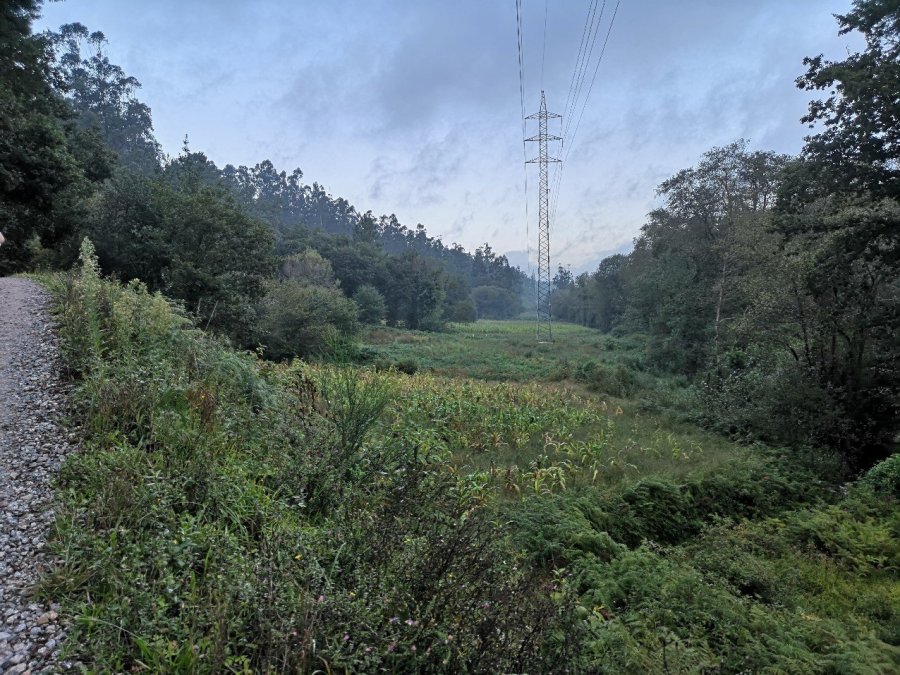
Walking out of Caldas de Reis, I looked down a long valley, the view spoiled by a pylon, Spain
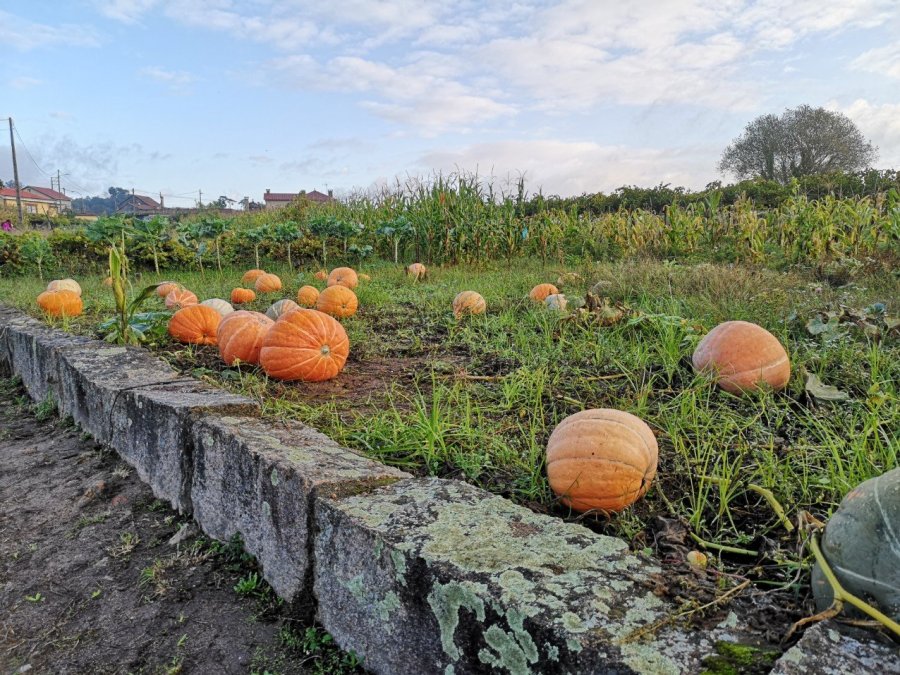
huge orange feild pumpkins
Field pumpkins. Although there were squash everywhere in the fields and gardens, I never saw them offered on a menu
wp-15757594132473507760989671653137.jpg
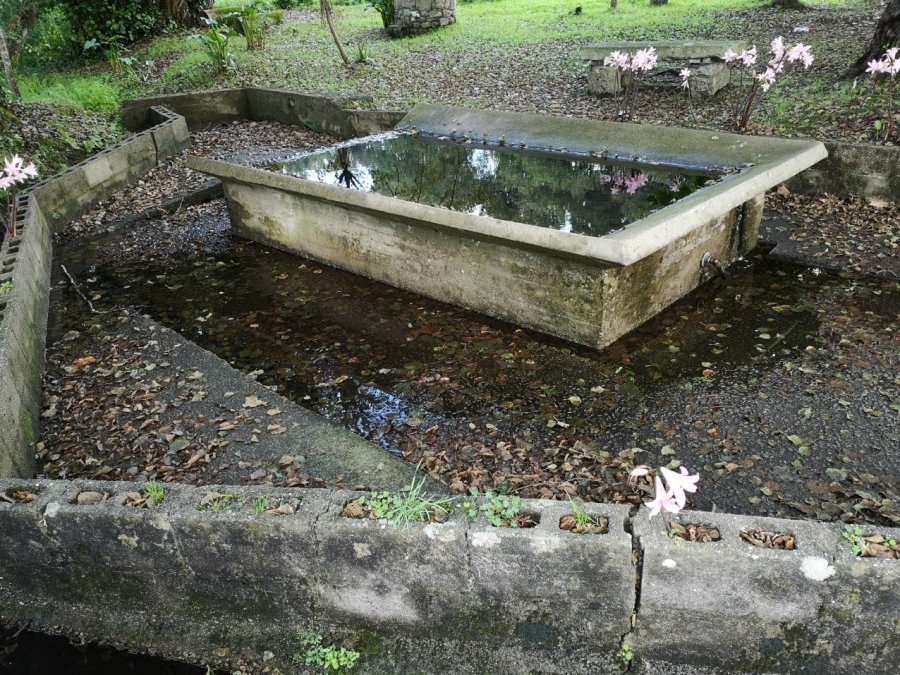
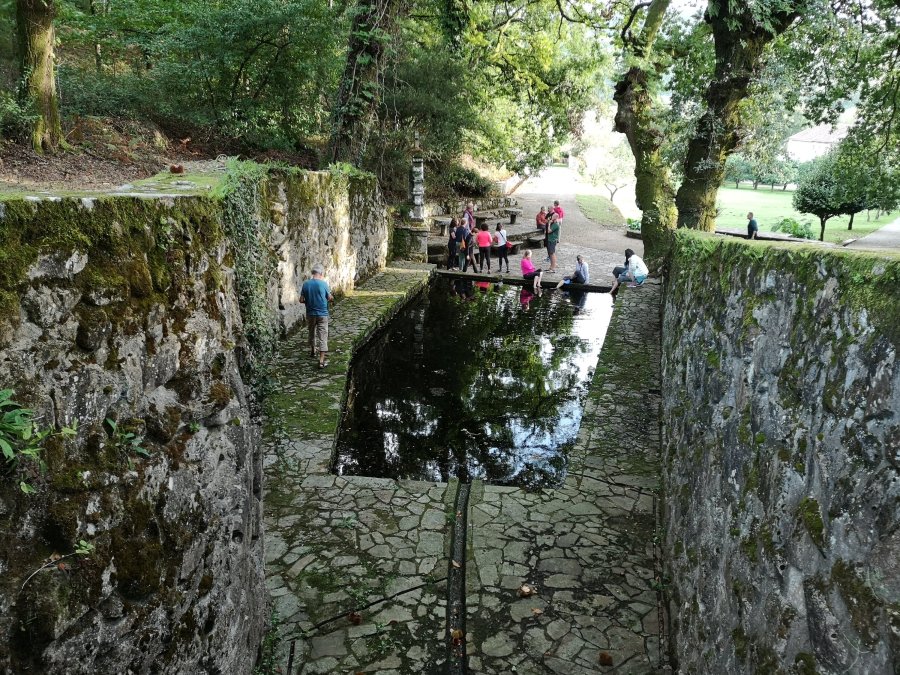
Reflections in the traditional, central washing area with what appeared to be self-seeded white lillies randomly dotted around. Carracedo, Spain

Further down the road were clumps of pink lillies growing wild on the banks like the lupins do in Scotland along the motorway between Edinburgh and Perth.

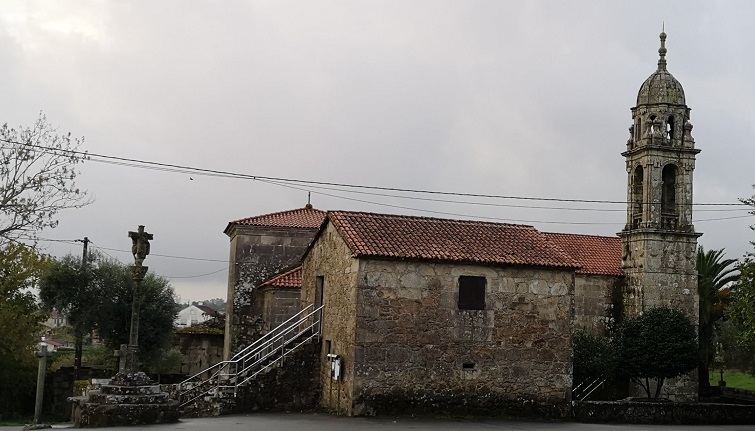
Iglesia San Clemente de Cesar, outside Caldas de Reis, Spain
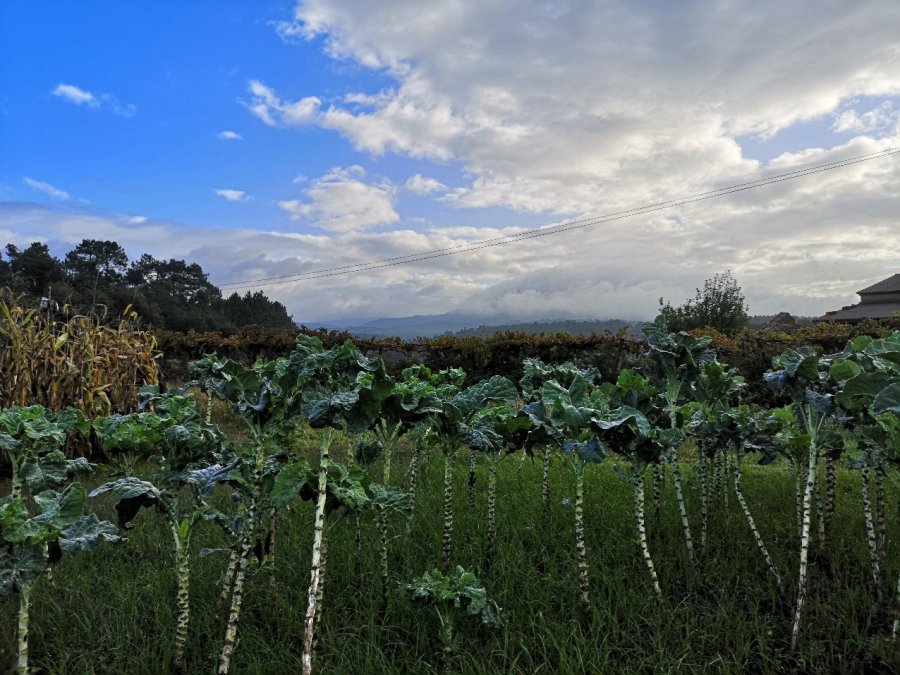
edible plants in growing situation
Tall brassicas growing in O Cruceiro, Spain
wp-15757594131388527001352102127771.jpg
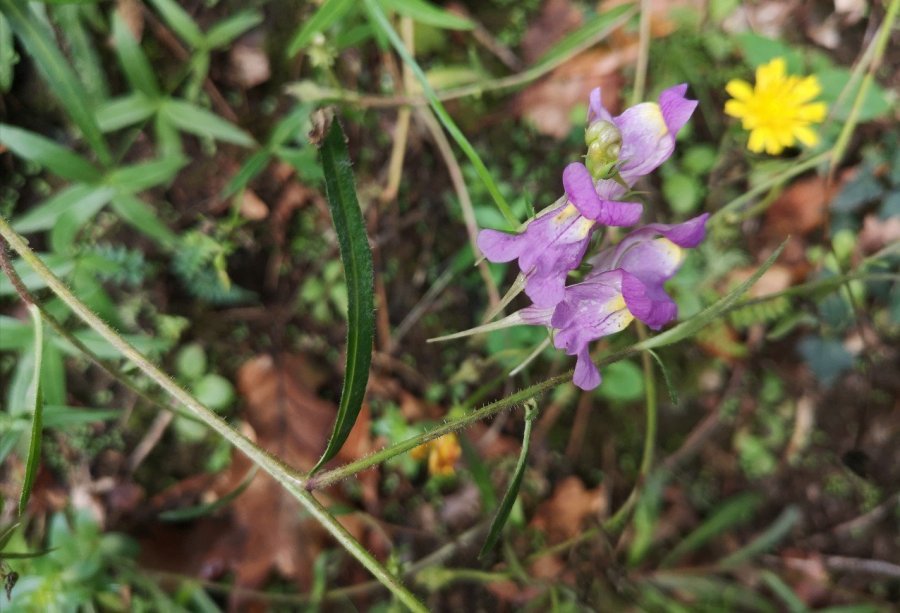
Three Bird Toadflax (Linaria triornithophora). I used the Leafsnap plant identifier app – free)
wp-15757594130905166107859613523662.jpg
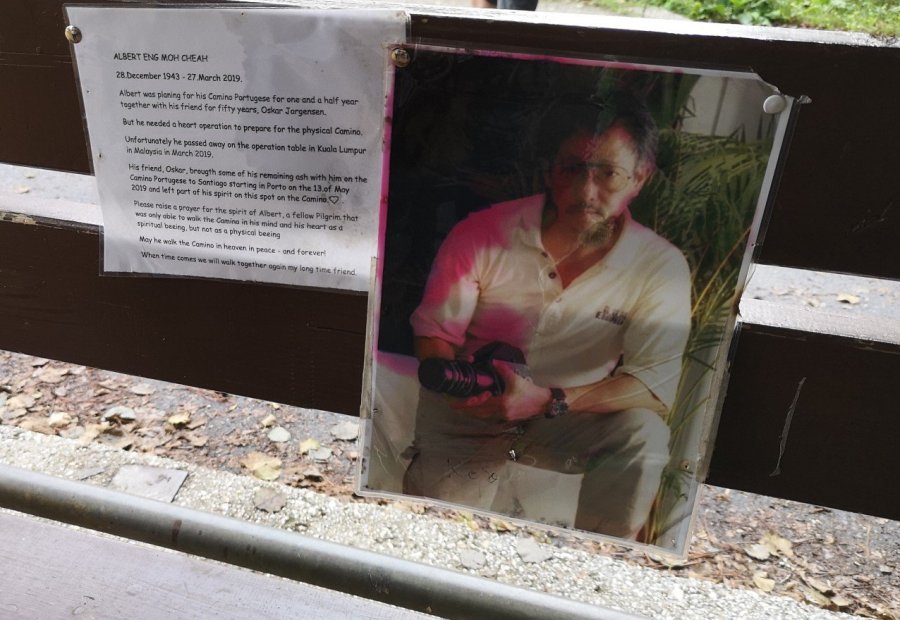
Memorial and location of Albert’s ashes, left by his friend. They had planned to walk the Camino together, but Albert had died on the operating table beforehand. Camino Portuguese, Spain

There are many such places to be found along the paths of the Caminos de Santiago.

wp-157575941302386307661914693332.jpg
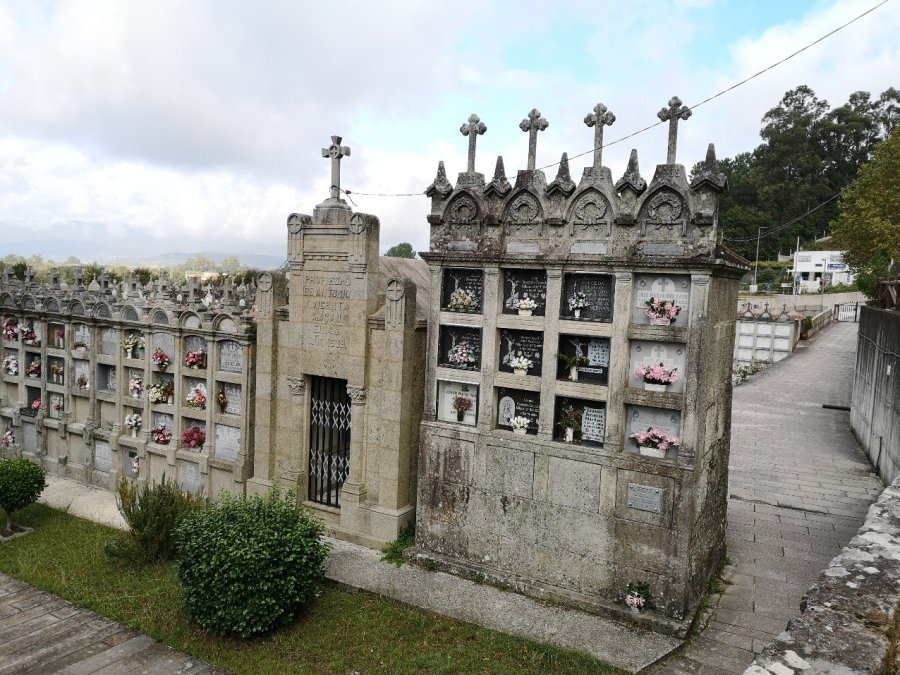
Cemetery, Camino Portuguese, Spain
wp-15757594129553135108499666099730.jpg
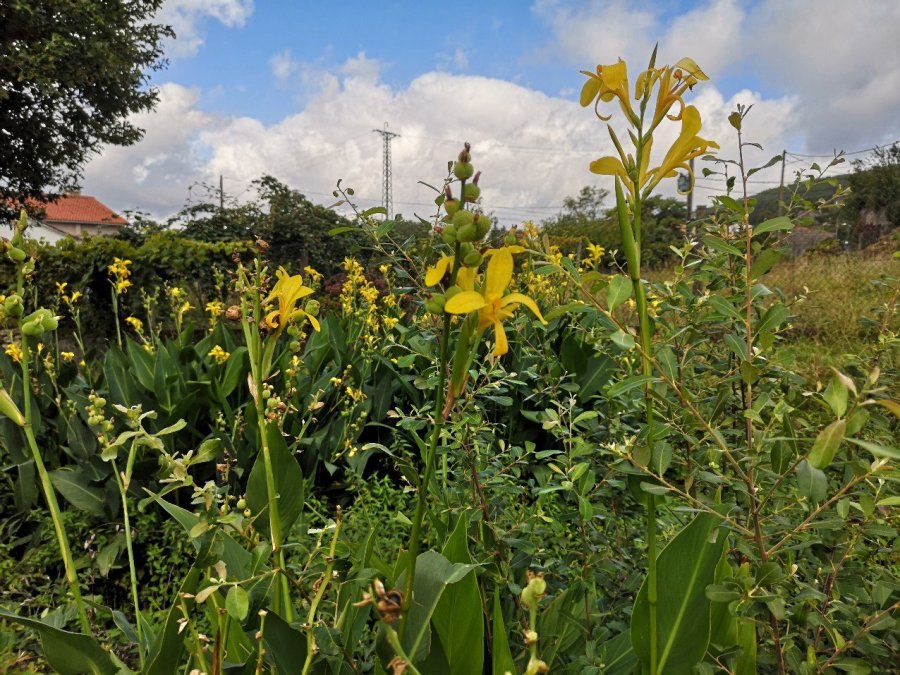
Sunshine in the form of canna lillies with their buxom seed pods, Spain
IMG_20191001_114407
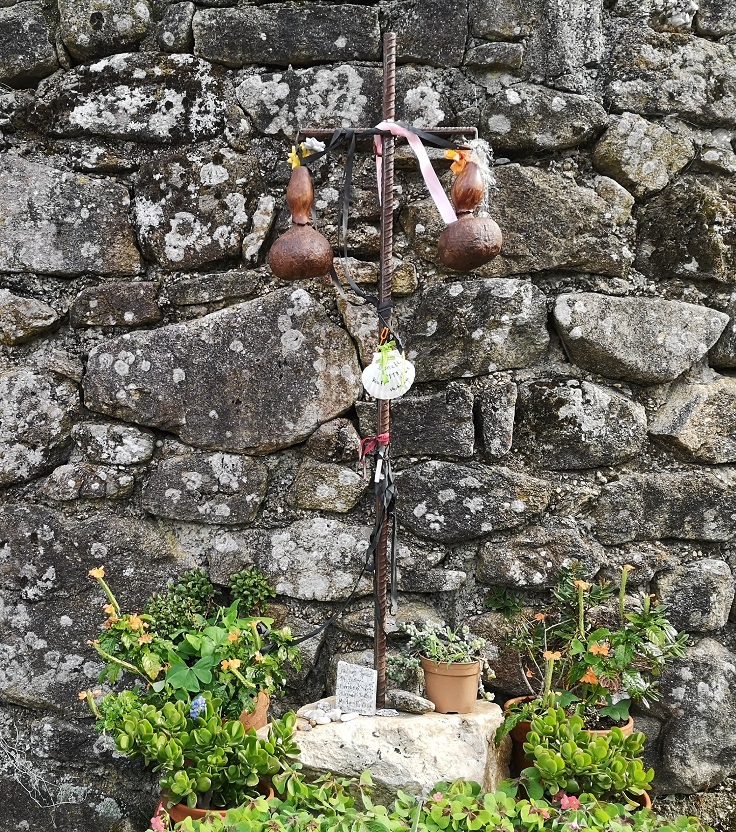
Gourds (used for carrying water by early pilgrims) and a camino shell on a rusty metal cross with plants and inscriptions, Camino Portuguese, Spain
wp-15757598562672393435185142778585.jpg
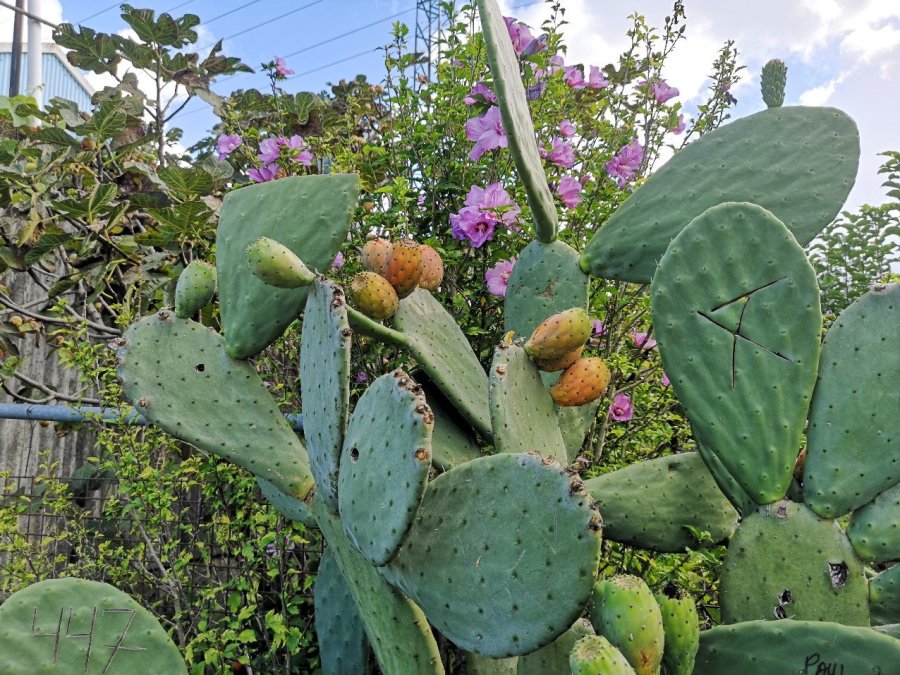
Prickly pears, Spain

Pontecesures (on the way)

wp-15757598562026358904469645822453.jpg
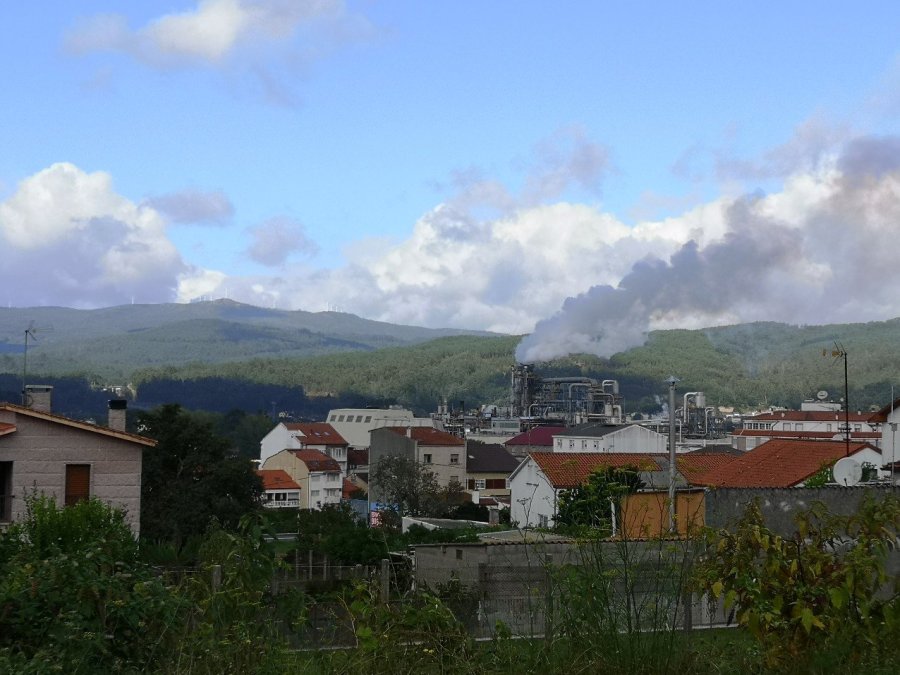
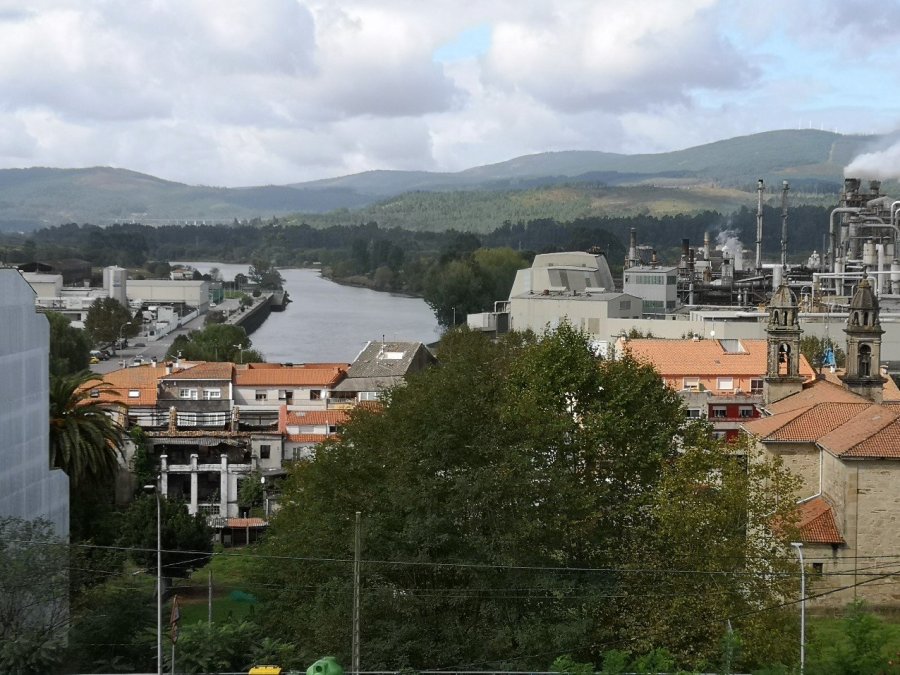
Coming into Pontecesures with its industrial pollution, Spain
wp-15757598561187096922817541200833.jpg
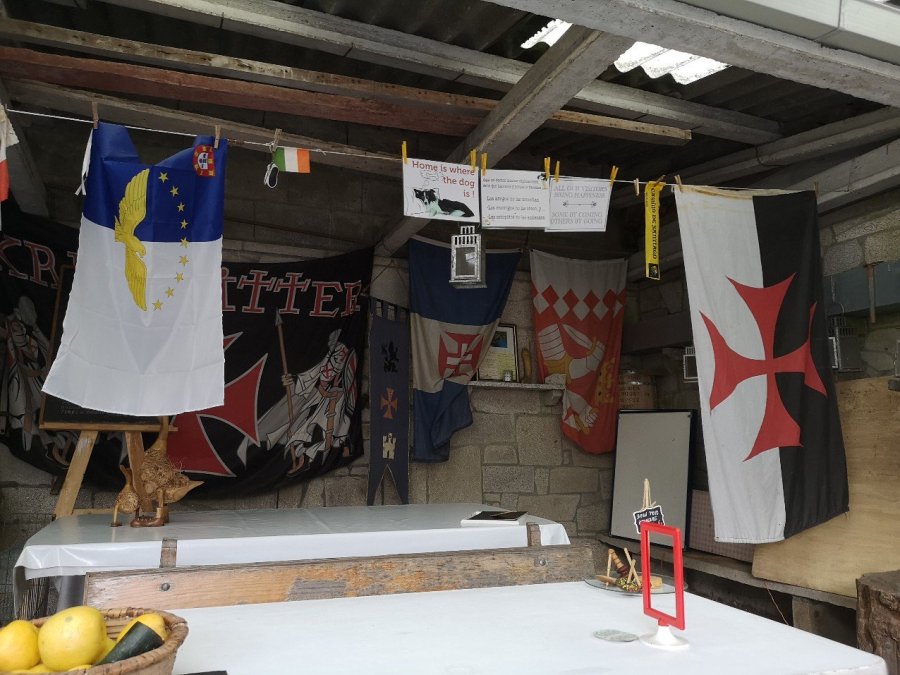
This cafe was recommended in a guide which I read. It was truly idiosyncratic, run by one man who has his own way of doing things, takes offence easily, and is dedicated to the Camino. Pontecesures, Spain

Just before crossing the River Ulla, on the right at a corner (if I remember correctly) is the place in the above photo. With makeshift furniture and varying quality of food, it is a somewhere to sit out of the sun and get refreshments. It appears to be donativo, but the maitre d’ expected payment and it was obviously a rather random affair. He was not chatty with me, but did serve up the ‘last’ bowl of vegetarian stew (it came recommended). He took a liking to the young couple who came in later, but sent another man who asked questions, packing! The flags and the individual nature of this place reminded me of Manjarín on the Camino Frances.

wp-15757598560356184186539244975996.jpg
The Rio (river) Ulla, Pontecesures, Spain
wp-15757598559731854173921876745109.jpg
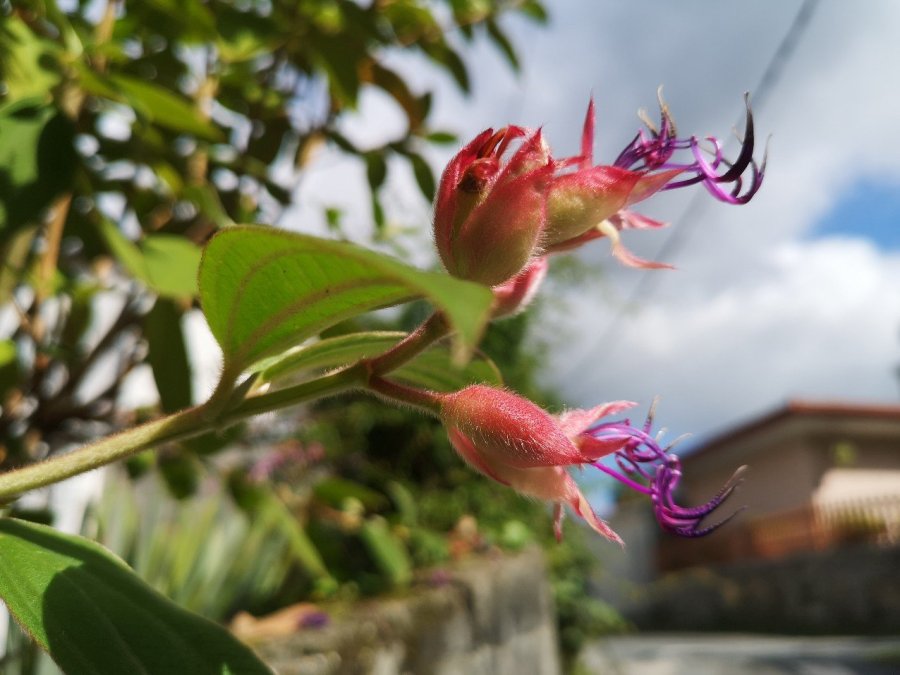
The Glory Bush (Tibouchina urvilliana) flower. (Thanks to Name That Plant on houzz.com)

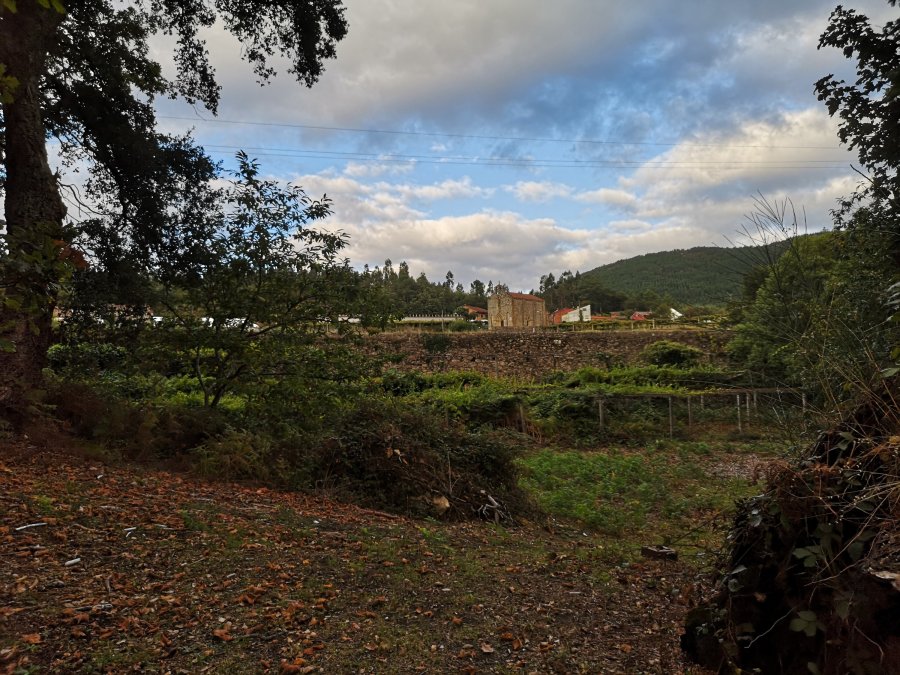
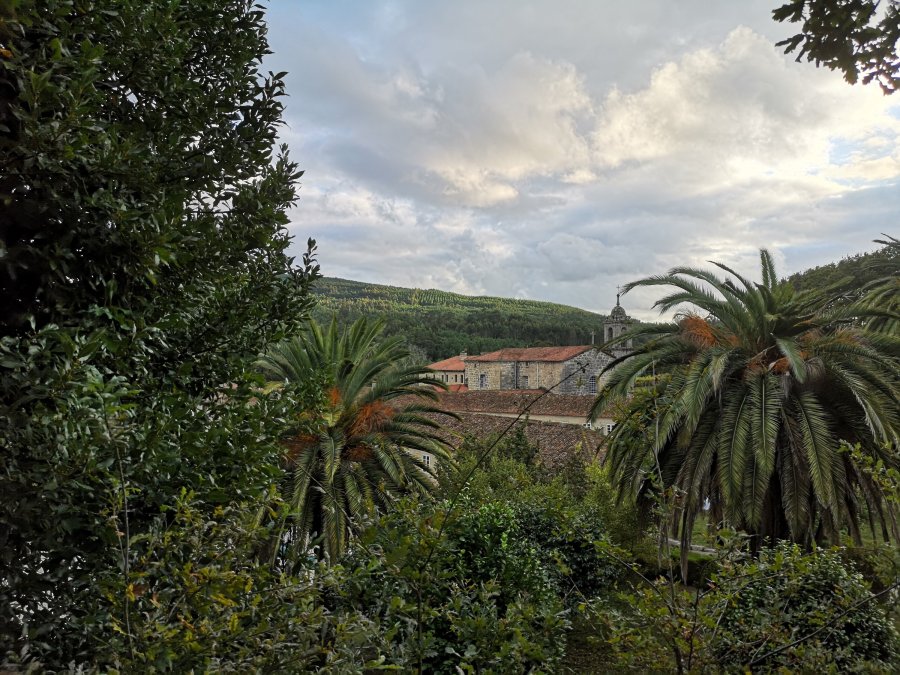
After crossing the bridge at Ponte(bridge)cesures and climbing up the other side in full, hot sun, the path took me along the banks of the River Ulla towards the San Antonio (St Anthony’s) Monastery of Herbón.

wp-15757598558187856607513512249152.jpg
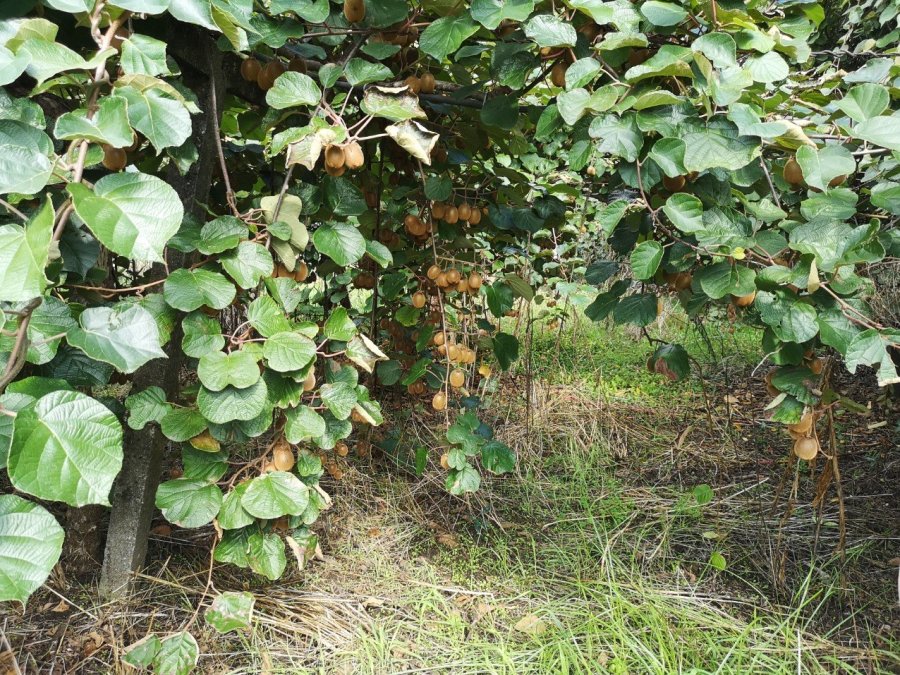
These kiwi fruit were drooping off the stalks and there were acres of them, on the way to Herbón, Spain
wp-15757598557348934453252971180202.jpg
The route wound along the banks of the River Ulla, sometimes amidst the undergrowth, although the signs were pretty clear, Camino Portuguese

This time I did not bathe as I was keen to get a bed for the night in the monastery on the opposite bank.

wp-15757598556468615746123390535385.jpg
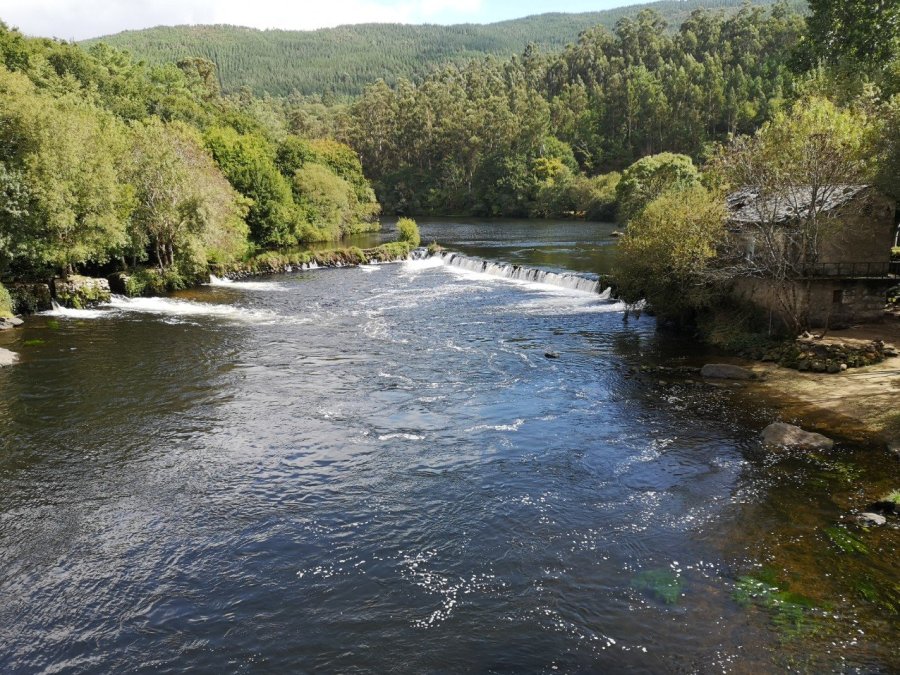
Weir, River Ulla, Spain
wp-15757598555556194141176949288190.jpg
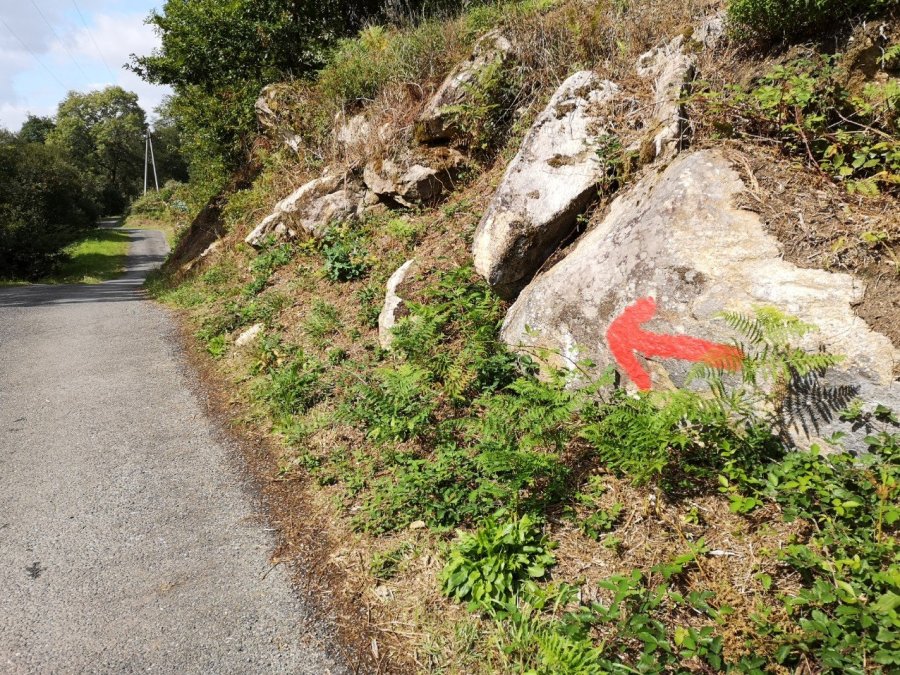
Red as well as yellow arrows here. Up and down I went, towards and away from the river, before crossing and climbing uphill away from it. Camino Portuguese, Spain
wp-15757598554748229064429630376951.jpg
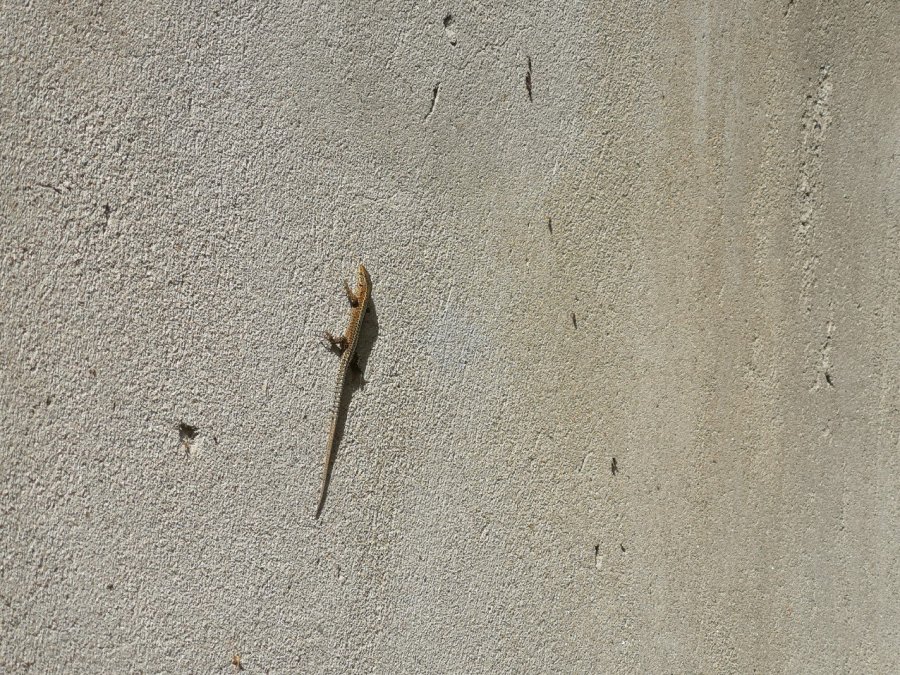
A small salamander basking in the sun!

Herbón Monastery

wp-15757598554055878017217988717153.jpg
Walking around the walls of the Herbón Monastery looking for the entrance I spotted this shrine, Spain

I was pushing myself (not great for the still-painful foot) because of spening time over lunch and knowing that there is always competition to get a bed at the Herbón Monastery. I passed a couple who were clearly needing some ‘romantic’ time by the river. They were in no hurry to get there before me.

wp-15757598553408084093448808527101.jpg
And there was the queue stretching back from the entrance in the wall – only two spaces were left and approximately four hours to wait before opening time, Herbón Monastery, Spain

It was nice and warm and there was plenty to see (photos below). People came to join the line, but were too late and left again – it was a little way into Padrón because it is a detour to get here.

wp-15757598552734175862719887648713.jpg
Old friends met up and new ones were made while waiting, Herbón Monastery, Spain
wp-15757598552048530942702029455041.jpg
The church of the missionaries, Herbón Monastery, Spain

The young couple sauntered in after quite a while, but were too late and went off again.

wp-15757598551205672469938816300087.jpg
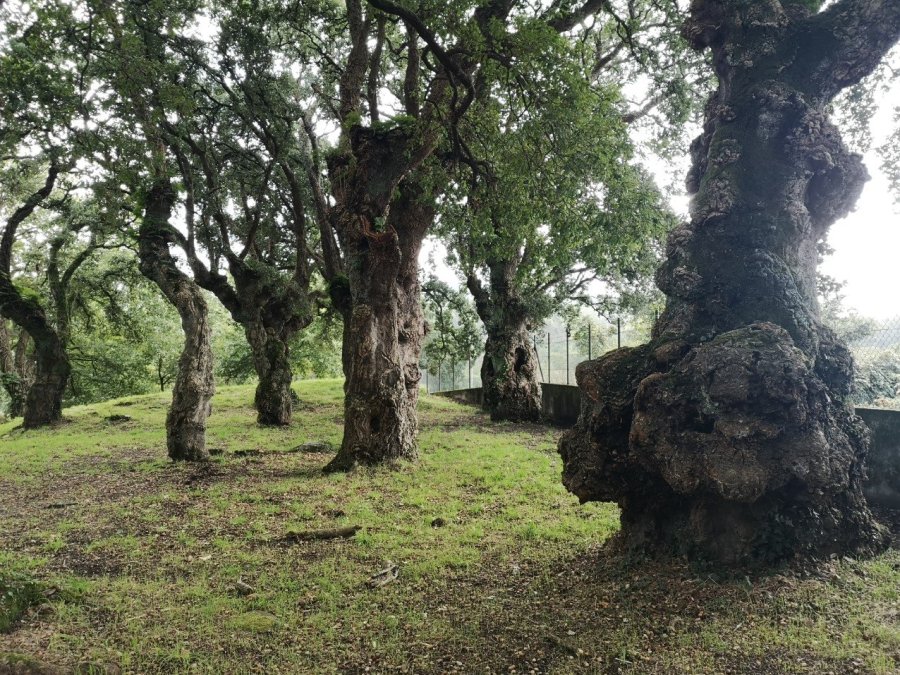
Seriously old trees – all knarled and full of character, Herbón Monastery garden, Spain

There were others with injuries far worse than mine. A small group decided to leave, calling a taxi, whereupon exactly the same number arrived late (after others had already turned away) and so they found that there were spaces for them. It just goes to show!
wp-15757598549808723494736964364664.jpg
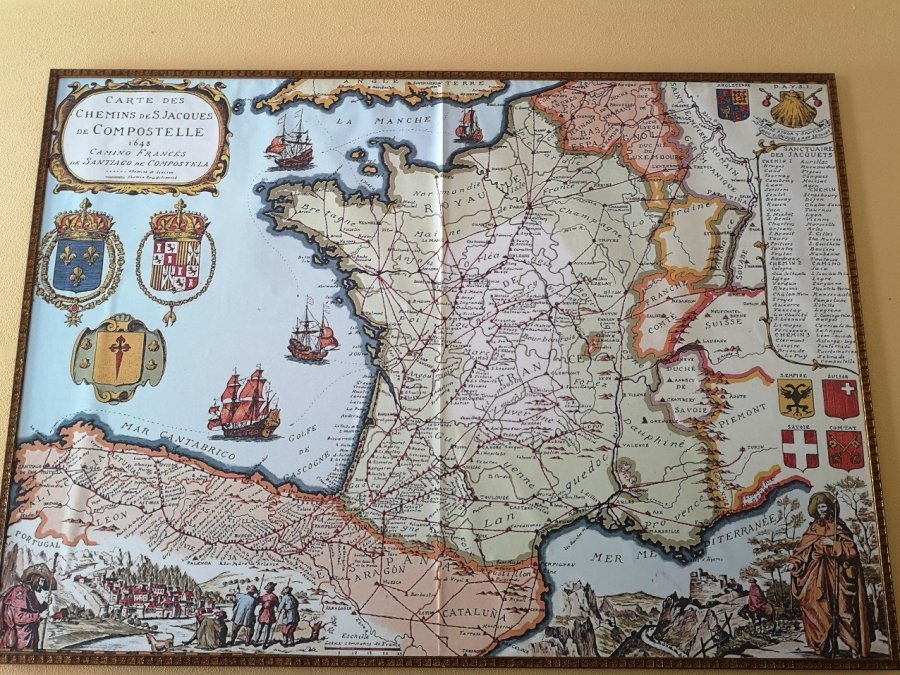
French map (1648) on the wall of the reception area of the Monastery at Herbón, showing the many caminos converging on Santiago de Compostella.

Eventually, after a light shower, we were let in and welcomed by the volunteers. It was very efficient. The accomodation was in small cubicles of two bunks each, ranged along a corridor. (That’s my mess on the bottom bunk!)

wp-1575759854815948809128833526134.jpg
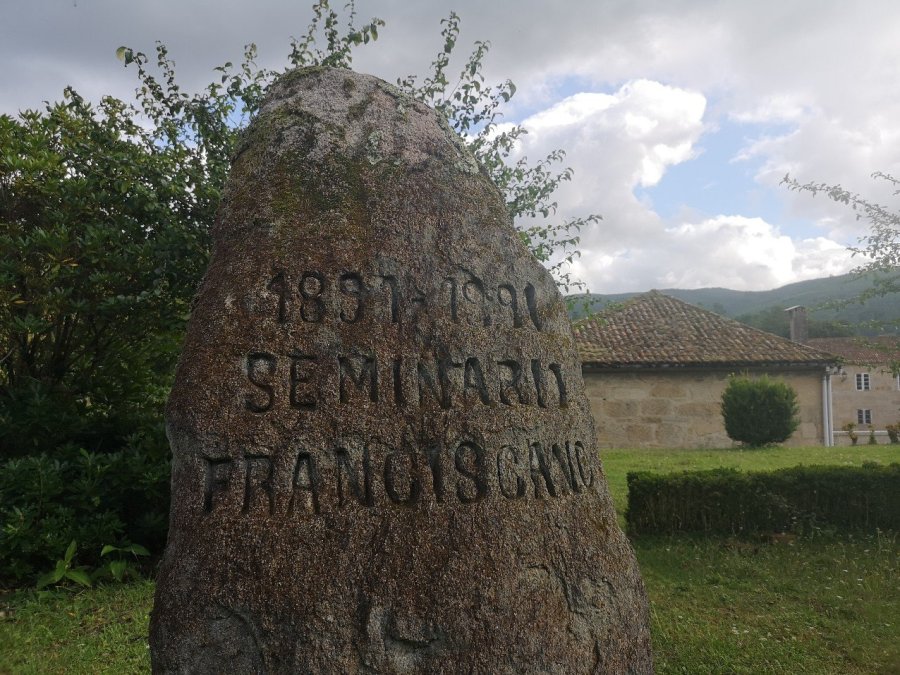
Franciscan Seminary 1891-1991. This monastery is in danger of being shut down because there are no young monks coming into the Order, but they do a lot in the village, so it is hoped that it will survive. Herbón Monastery, near Padron, Spain
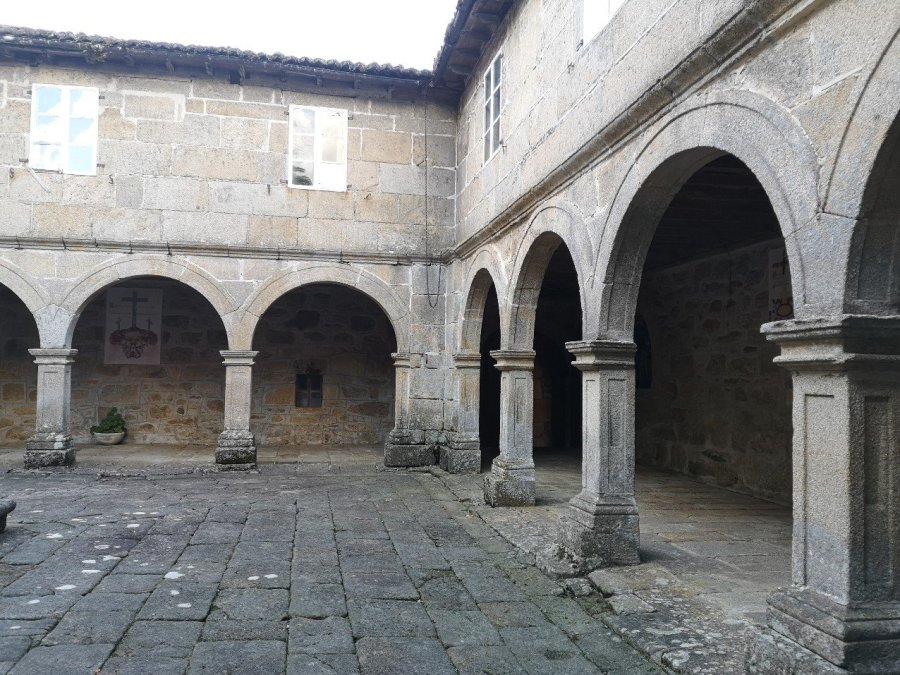
After a break in which I spent time meditating in the sun, we were taken on a tour of the chapel, cloisters and other parts of the building. This is practically compulsory and very interesting. The monks were missionaries, sent overseas to spread the word of God, and those left at home ran a school on the premises.
wp-15757598547493078431519586646247.jpg
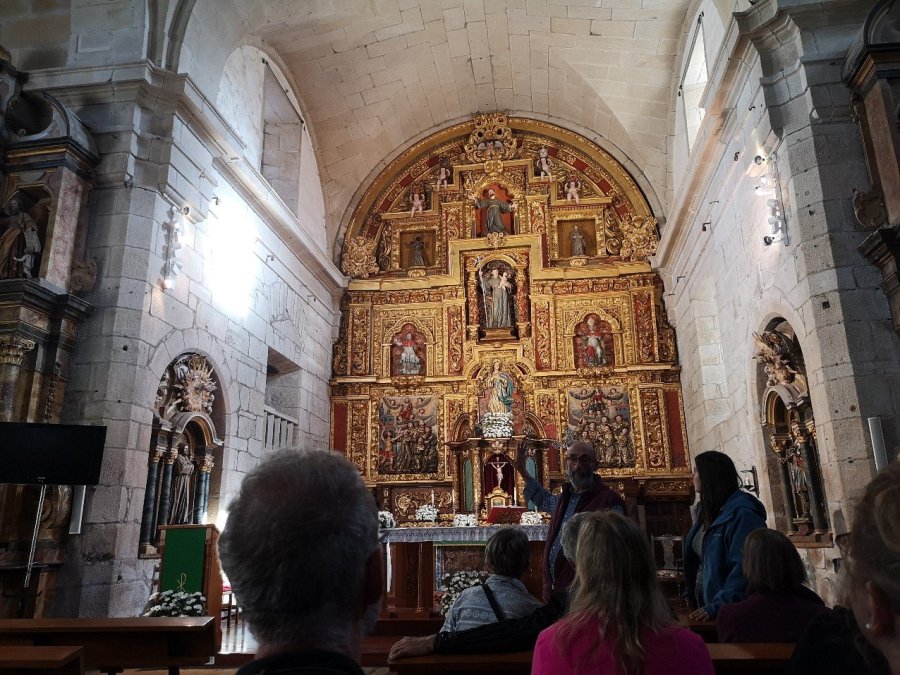
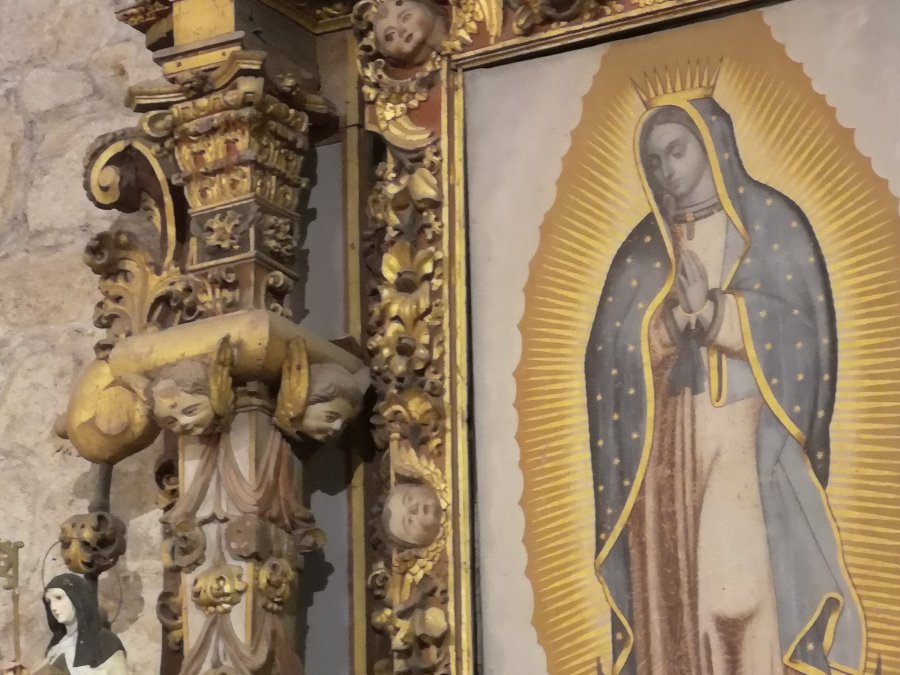
The sparkling golden altar, Herbón Monastery, Spain
img_20191001_1959142924504076259570694.jpg
I loved these little angel heads with wings holding up the column, Herbón Monastery, Spain
wp-15757598546744557571054286983828.jpg
Cloisters, Herbón Monastery, Spain
IMG_20191001_190126
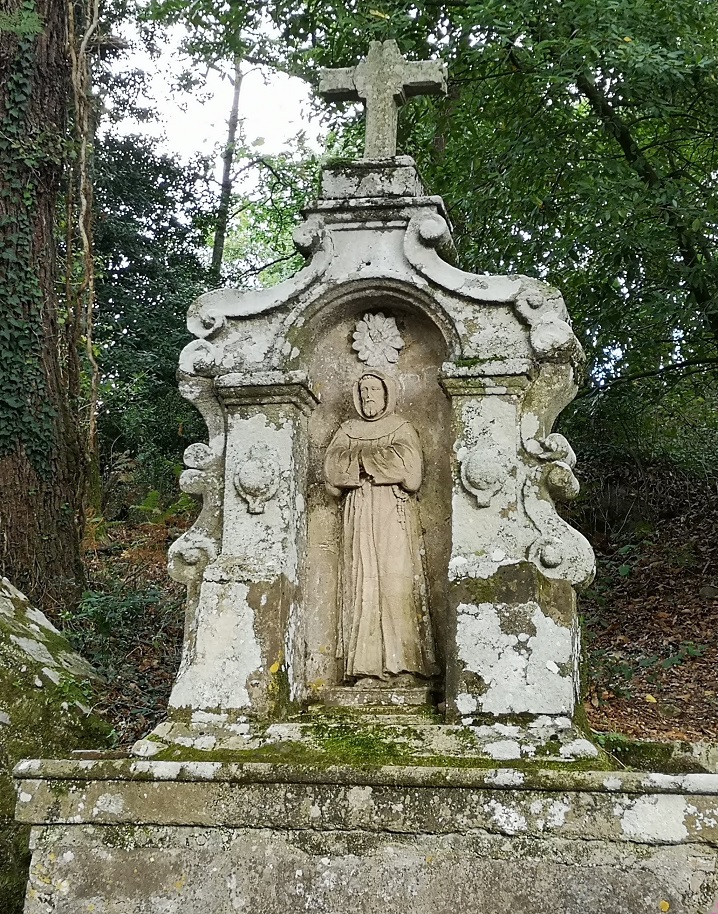
Stone statue and cross in the garden, Herbón Monastery, Spain

The large garden sports vineries (there is no-one to keep them going now, sadly), kitchen garden (partly in use, as far as I could see), water which has been tested and found to have lots of minerals in it so is truly healing, and various levels and attractive sections making it really interesting.

img_20191001_1911592558158822151139108.jpg
A place of meditation, Herbón Monastery, Spain
img_20191001_191253515970754849790526.jpg
View from the garden, Herbón Monastery, Spain
img_20191001_1909574816207568895407269.jpg
Healing waters at Herbón Monastery, Spain
img_20191001_1909402556854877487163534.jpg
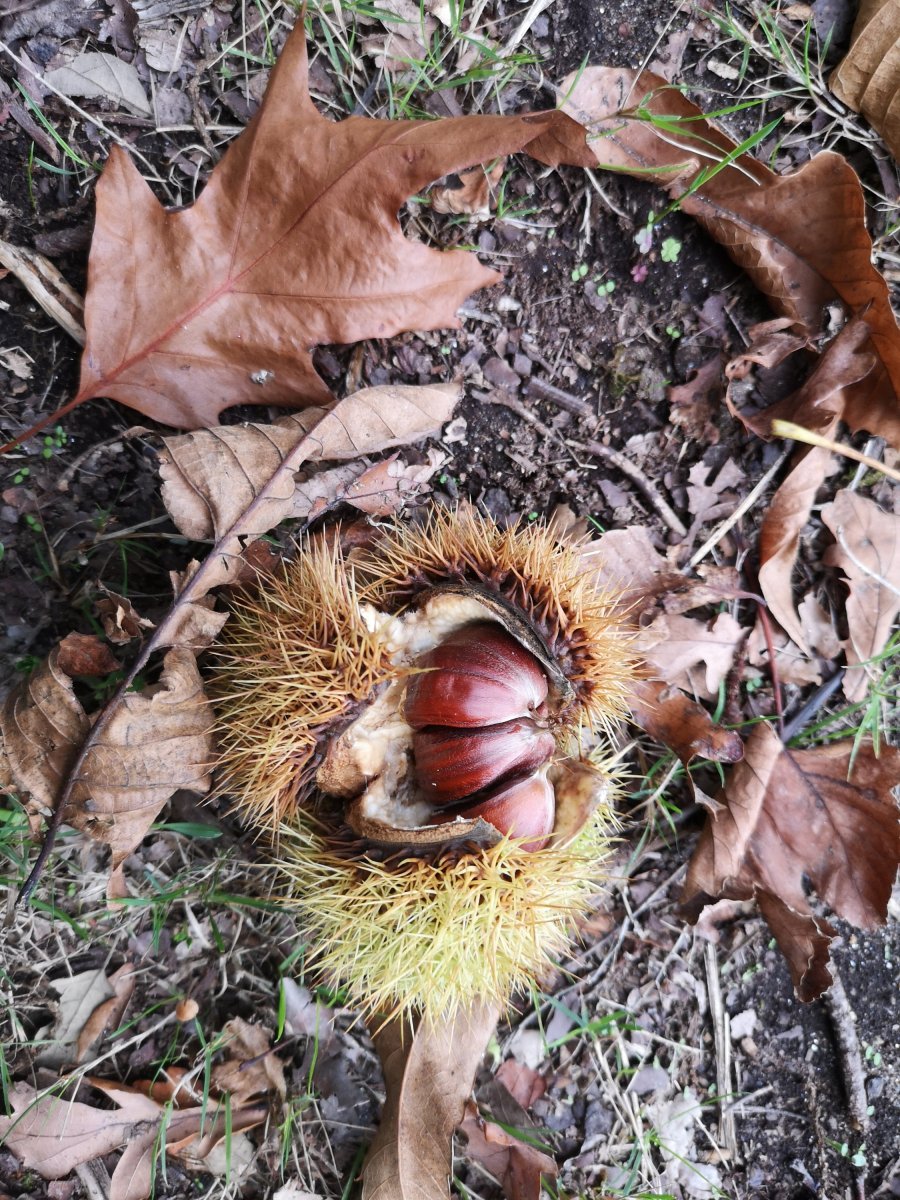
Dry, brown Autumn leaves and sweet chestnut prickles bursting open
img_20191001_1914083614598323089823019.jpg
Untended vines, Herbón Monastery, Spain
img_20191001_1952591042894575286220075.jpg
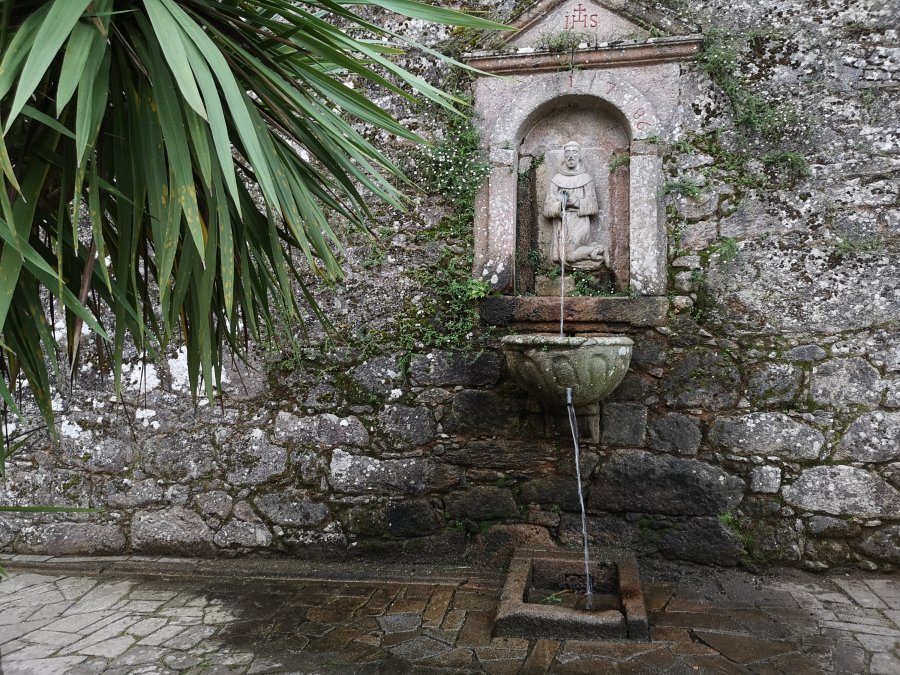
Wall shrine and fountain, Herbón Monastery, Spain

To reward us for such a long guided tour and talk, we were given a good meal (included in the 6 euro price) around long canteen tables and there was a lovely atmosphere there.

Note: There is always a decent vegetarian option at the shared meals on the Caminos

IMG_20191001_195226
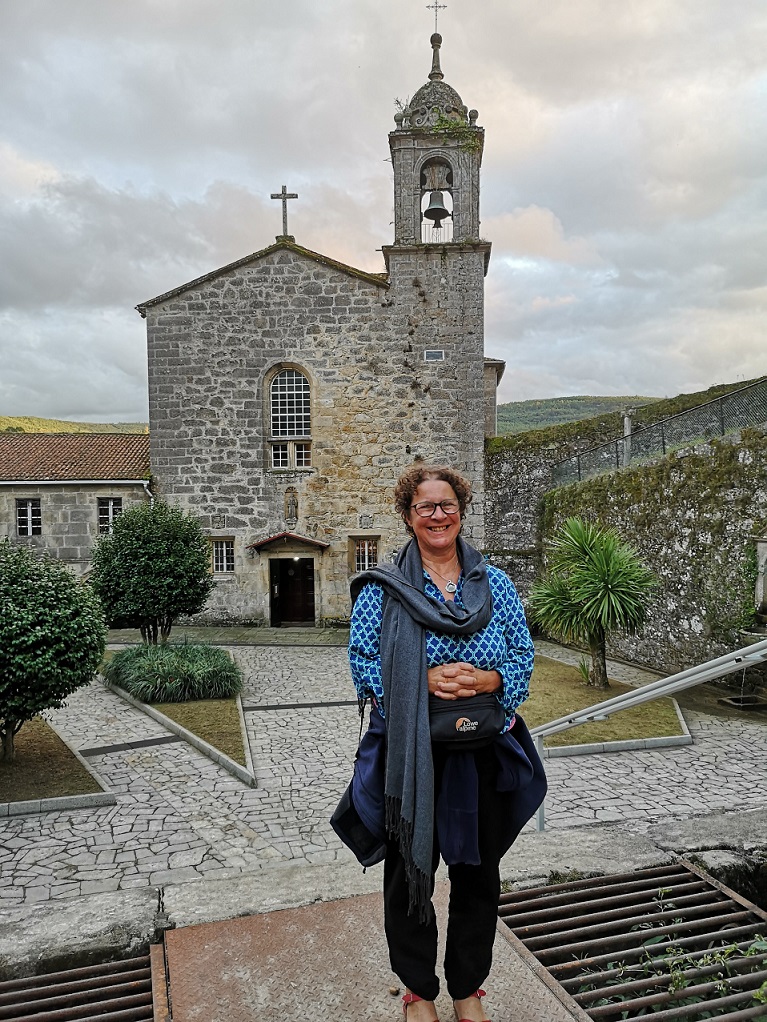
Yours truly, Herbón Monastery, Spain

A synchronised Edinburgh walk

When I travel away from Edinburgh, my aim is clear: either to walk Pilgrimage (taking the paths people have trodden before me, where their steps have created tangible layers of spiritual tradition); or to explore a given area, what to me is virgin territory.

But when I am home, my walks are more prosaic – to and from work and the shops for my messages (used in Scotland, meaning errands) – placing my feet on known land, pavements I have walked so many times. Then my focus is on forging new connections between familiar places, seeing the same views from alternative perspectives and finding something new in them.

On Jan 11, I joined in the Snapshot Synchronised Walk (Women Who Walk Network) taking a route from Causewayside in a near-straight line to York Place.

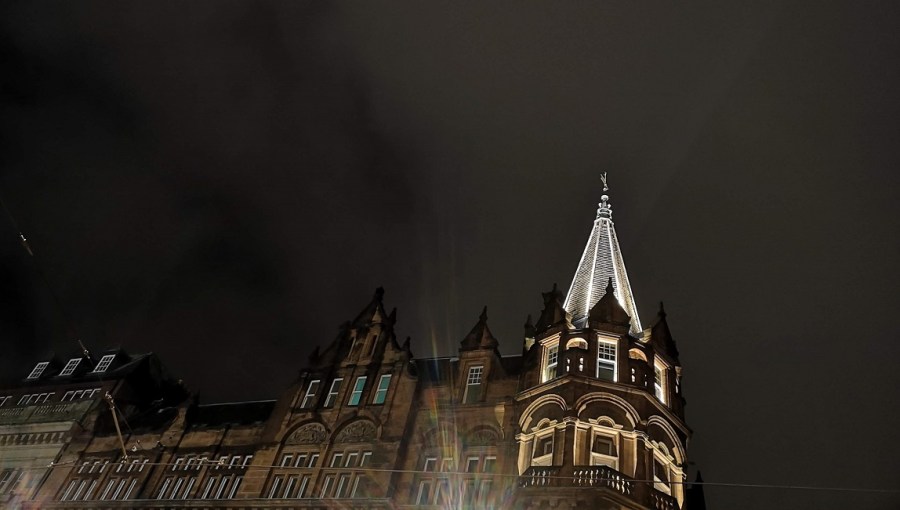
After a day of teaching, a good tramp is therapeutic. Via ghostly vennels, northwards along narrow-walled passageways, up slopes, down flights of steep steps, I discovered a gothic-glowing steeple, a jaundiced arch lit by 19th century streetlamps, and scary blue eyes in a repurposed church. The extra-mundane exuded from the normal.

rhdr
Corner of South St Andrew’s Street, Edinburgh, Scotland

I walked Causewayside from Sainsburys, past Summerhall with its ghoulish green up-lighting,

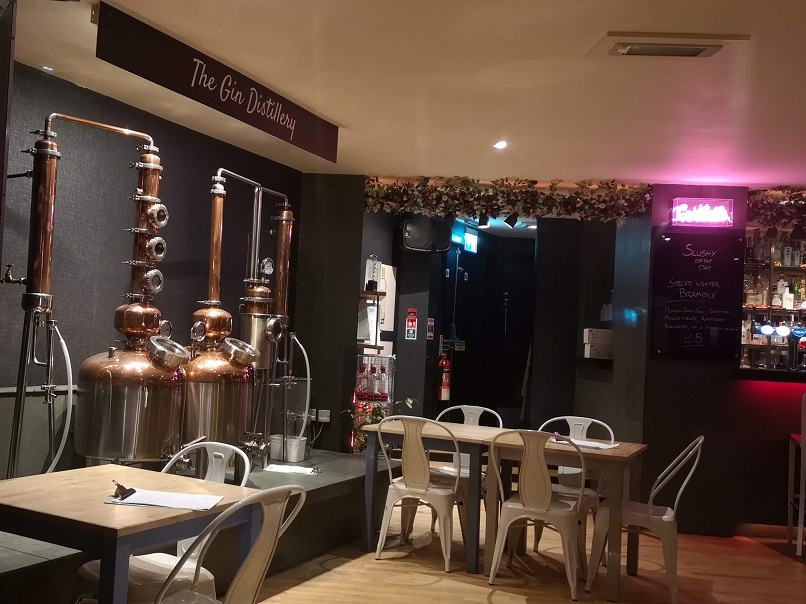
I meandered along the edge of the Meadows, and the South Loch Gin Distillery (which I hadn’t seen before),

mde
South Loch Gin Distillery, Edinburgh, Scotland

I kept the University on my left,

Until I glimpsed the rear of the National Museum.

I picked my way over the cobbles of West College Street,

Across Chambers Street,

Down steps to meet Guthrie Street half way,

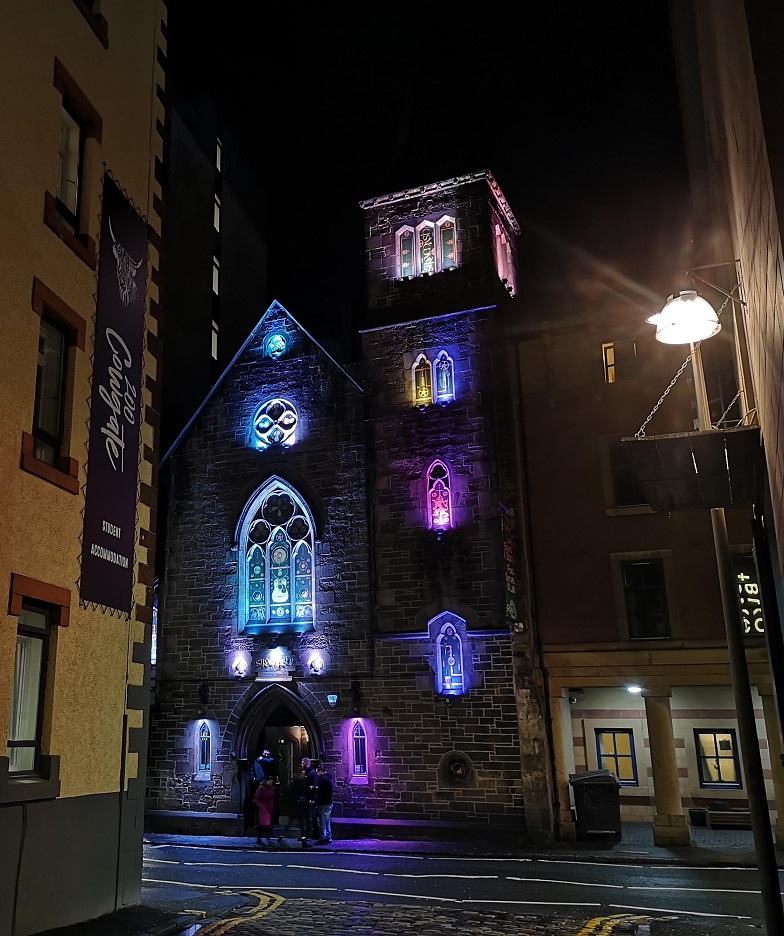
Crossed the Cowgate and took a mini-right to find Stevenlaw’s Close (which I didn’t know was there). Looking right I paused to snap the Stramash Live Music Bar.

IMG_20200111_183132 (4)
Stramash Live Music Bar, Edinburgh, Scotland

On the opposite side of the High Street was Fleshmarket Close,

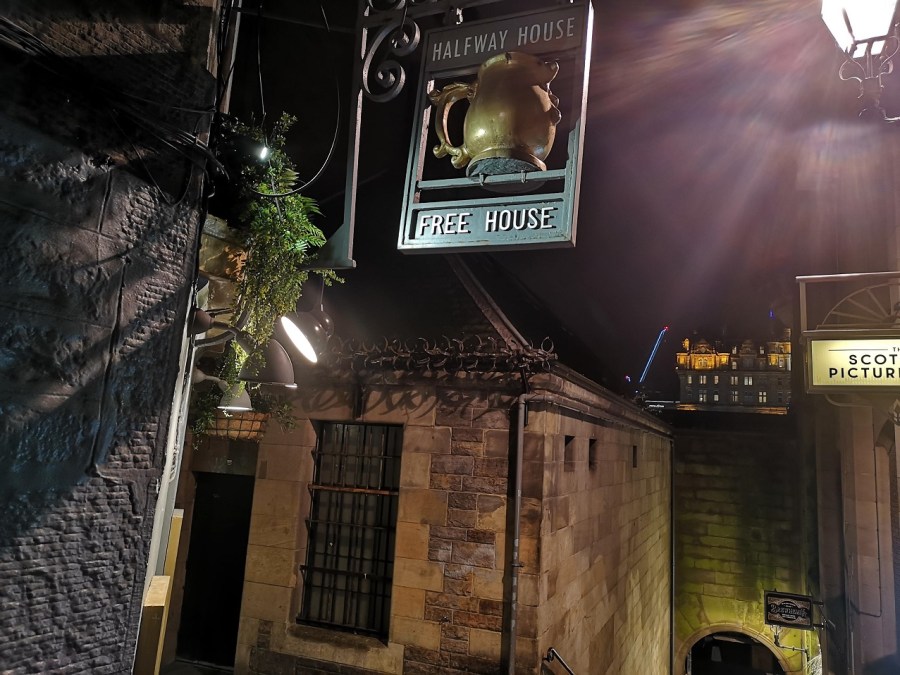
On the opposite side of Cockburn Street was the downhill flight past the Halfway House:

IMG_20200111_183540
The Balmoral Hotel in the distance, on the corner of North Bridge, Edinburgh, Scotland

Through Waverley Station and up the other side, I crossed Princes Street and took South St Andrew’s Street where I popped my head into the old Bank of Scotland which has become a mighty fine looking hotel.

IMG_20200111_184319
The old Bank of Scotland building, St Andrew’s Square, now The Edinburgh Grand, Edinburgh, Scotland

I posted a thank you letter in a pastel pink envelope I had been carrying in my bag for a few days, to my sister in London.

The rain came on.

The wind blew me through the bus station (where a small bag of mini-cheddars were outrageously priced) and out onto York Place, carefully avoiding trapping my toes in the tram lines.

Rounding the corner to Broughton Street I found that the bus stop was closed – again.

All the way down that road I tripped, head down because of the driving wind,

…where I waited 7 minutes, as my coat became increasingly sodden, before taking the bus to my home by the sea.

wp-15795193834723358382907983162524.jpg
Sunset from my apartment, a few days later


Pontevedra to Caldas de Reis: Portuguese Camino

Camino Portuguese da Costa – Days 11 and 12, September 29th – 30th 2019

cof
How many kilometers between Pontevedra and Santiage de Compostella?

Pontevedra to San Mamede de Portela

I left the Casa A Grade air bnb (see my previous day’s walk for details) in the almost-dawn, and continued along the Rio Tomaza into Pontevedra, a 40 minute walk.

cof
Glorieta de Compostella – Fuente de los Niños (Fountain of drinking children) at the interseccion (intersection) Rúa (Road/street) Peregrina con (with) Rúa Fray de Navarette 36001 Pontevedra, Spain
IMG_20190929_093533
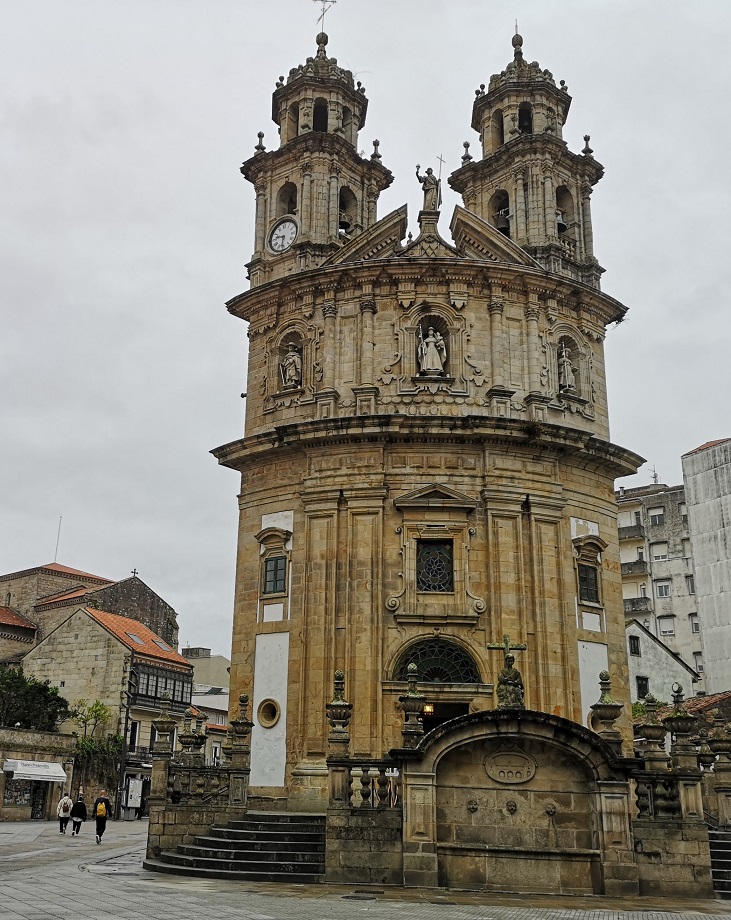
The Capela (chapel) de Peregrina (of female) pilgrims, Pontevedra, Spain
IMG_20190929_093216
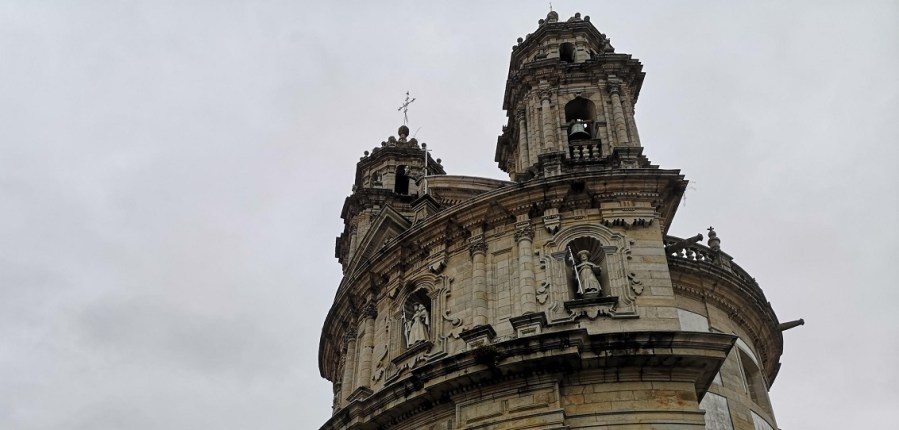
Detail showing St James, The Capela (chapel) de Peregrina (of (female) pilgrims, Pontevedra, Spain
IMG_20190929_093704
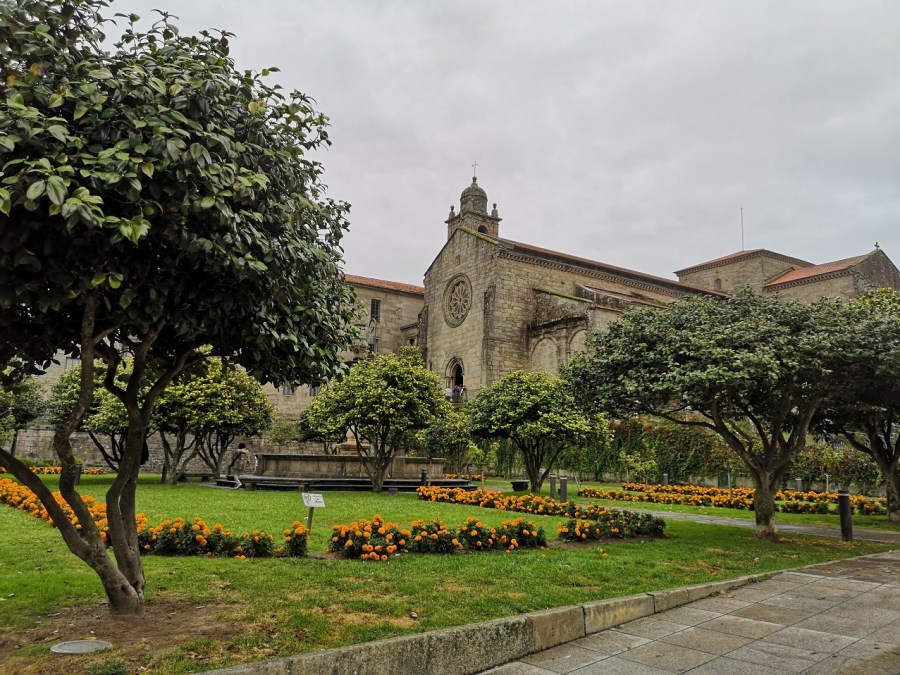
Convento (convent) do San Francisco, Pontevedra, Spain

The Top Ten Things to Do and See in Pontevedra website (not mine)

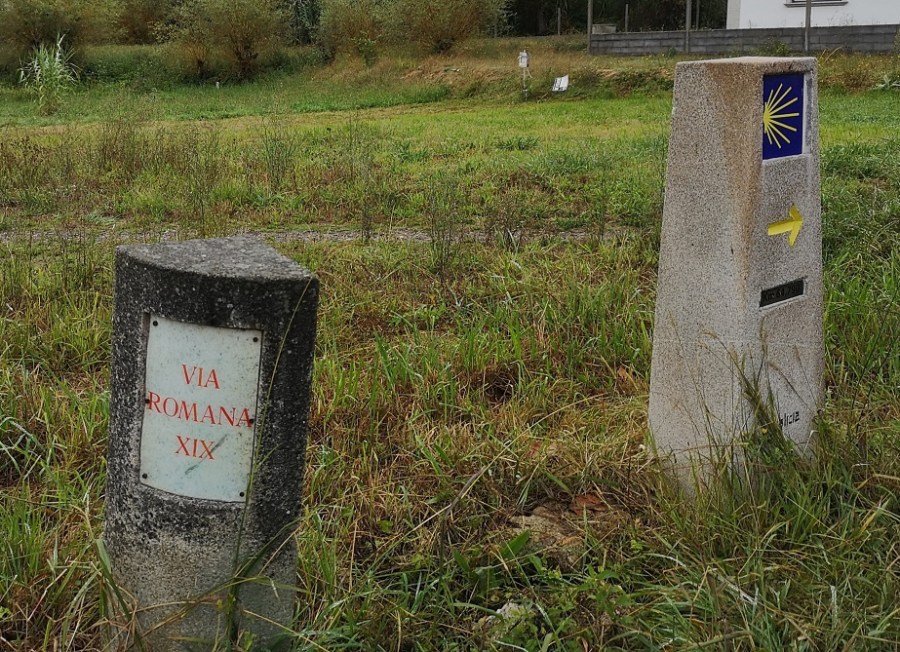
Leaving the city, I once again rejoined the Via Romana / Portuguese Camino

cof
Via Romana XIX and yellow arrow / iconic signposting for the Camino de Santiago, Spain
wp-15757585232919078124369034734436.jpg
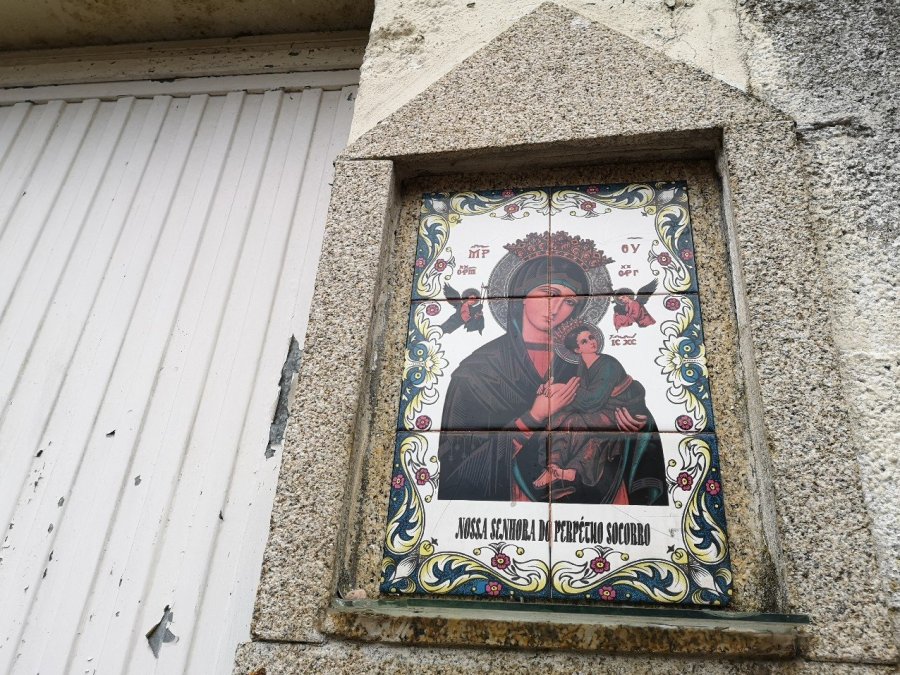
The Virgin on decorative tiles, Spain

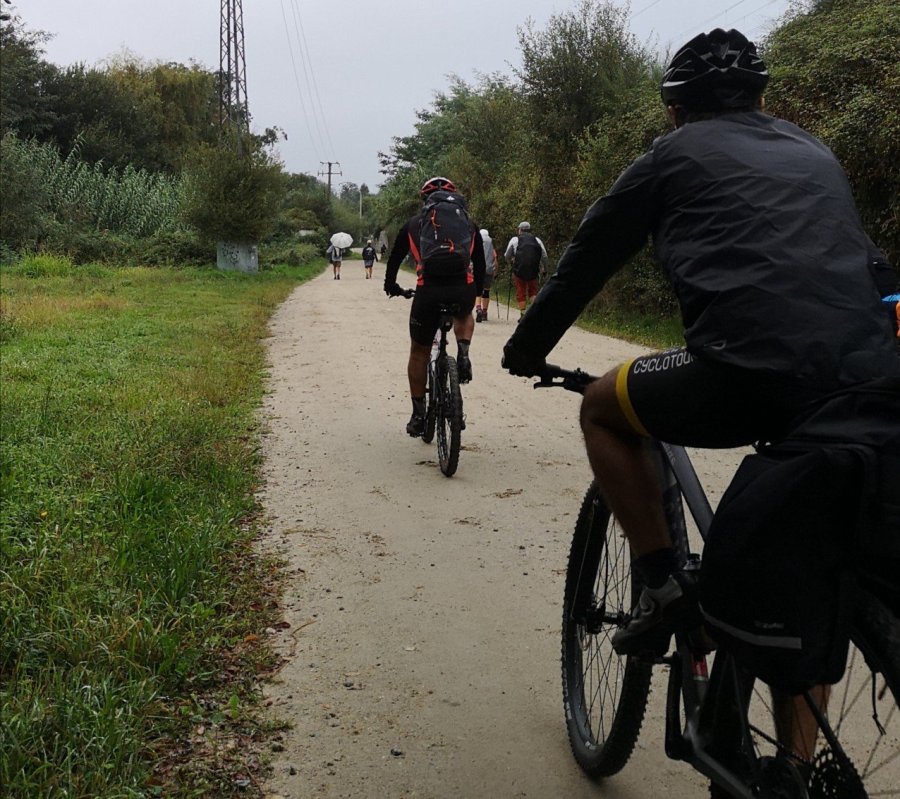
Being a Sunday, the cyclists were out. When you are walking quietly, focusing on the way your feet meet the ground, allowing thoughts to meander in and out, and then a cyclist shoots past your left elbow with a whoosh and, very occassionally, a Buen Camino, it is a shock. When it happens over and over again, it’s more akin to a small trauma and there is no possibility of resting in your rhythm and pace, you must stay alert.

wp-15757594145153967253161314889418.jpg
Sunday cyclists on the Camino Portuguese, Spain
wp-15757594144445943913642842046061.jpg
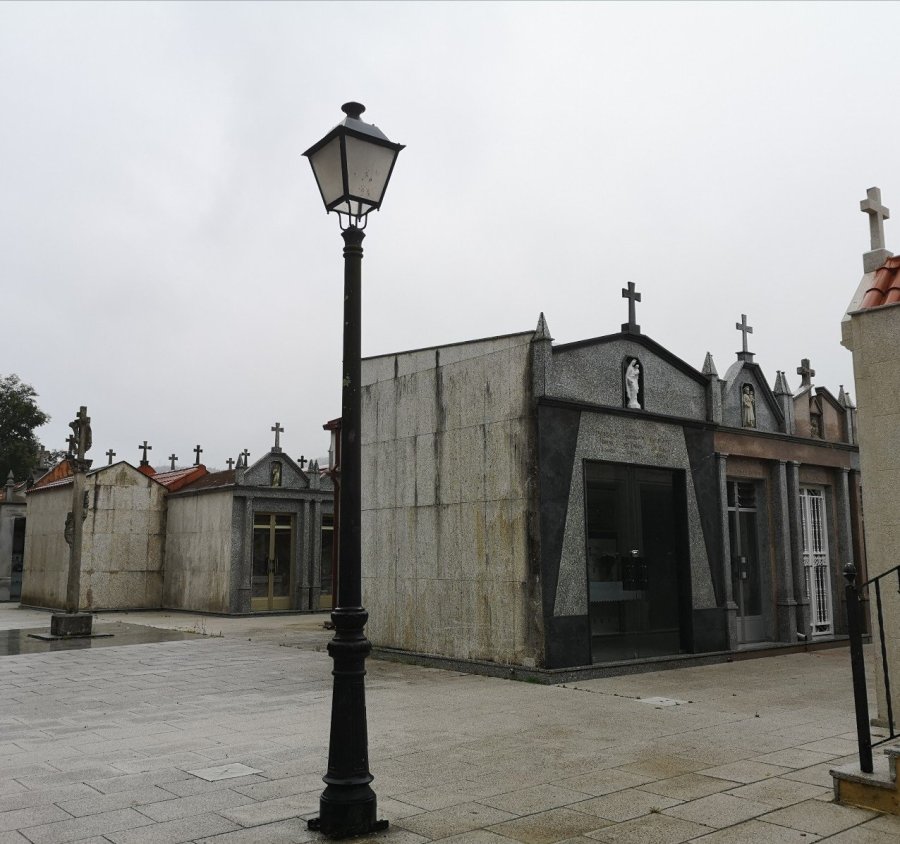
It rained on and off as I passed a cemetery, near San Mamaede de Portela, Spain

Shortly afterwards, it poured and it was not possible to take photos. Arriving at the hostel of San Marmede de Portela in the middle of the countryside, there was no-one to greet me, just a couple already drying off. Thank goodness the door was open! I was soaking, wet through. It was a large dormitory and I chose a corner away from the door, not knowing that there was no heating and that by the end of the day the room would be completely full to overflowing (there were pilgrims sleeping in the eating room etc). It was also very dark and although some of us tried to open windows, they were always immediately closed by others.

Wet walking clothes are stinky, especially when there is no drying room or anywhere to hang clothes / store boots except narrow corridors. If you sleep on the bottom bunk and they are like drapes all around you, there is no getting away from the smell. People were using one hair drier between 20 or more, but it takes a long time to dry sodden socks with one. There is a big garden and other buildings outside, but the weather was too terrible to contemplate unless you arrived very late in which case I did see folk sloshing across, seemingly with no other opton, but I didn’t know where they were going.

IMG_20190929_185041
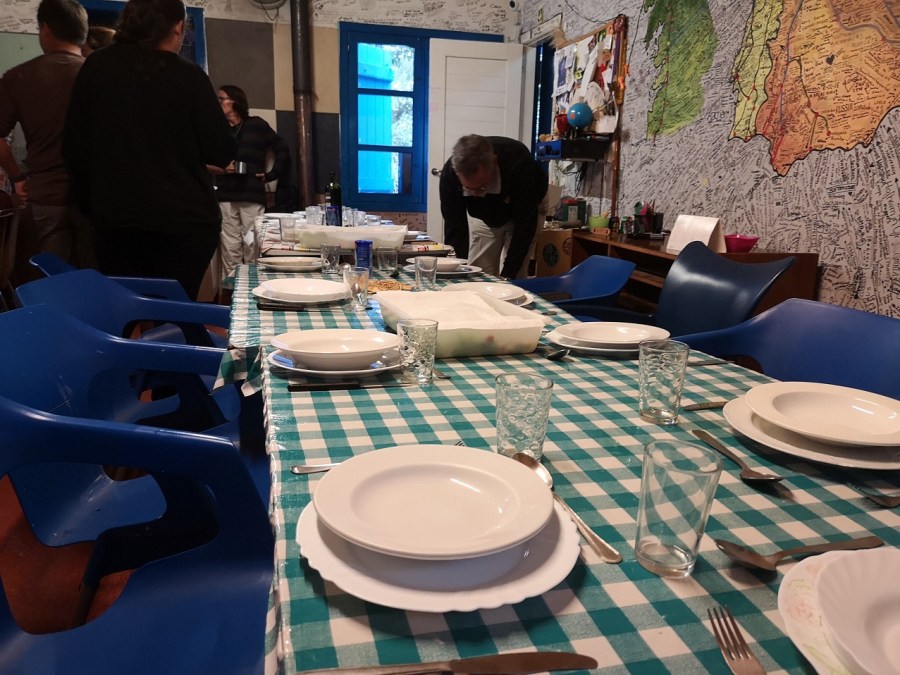
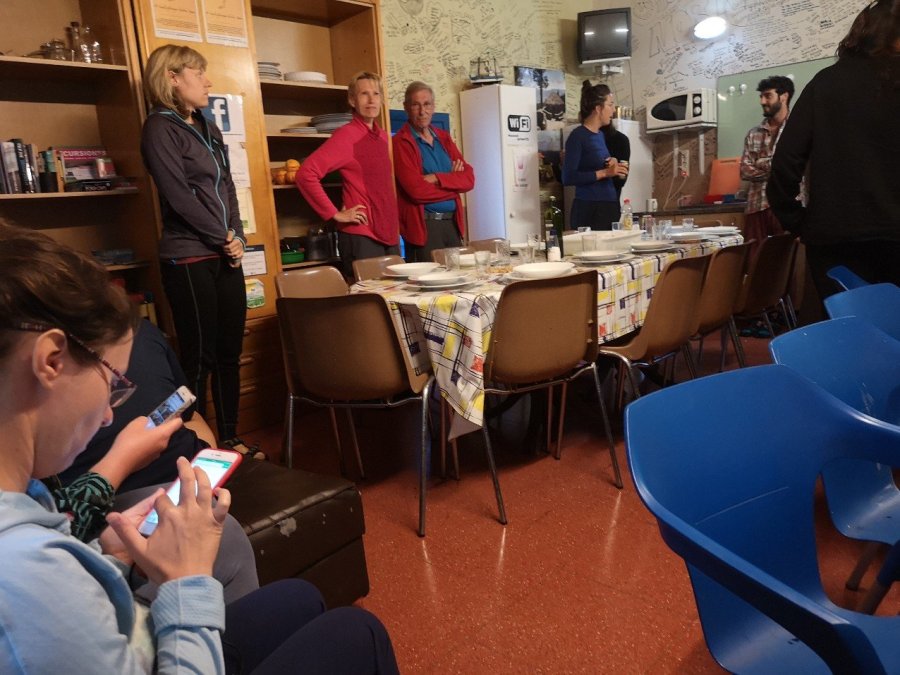
I am not good at these sorts of photos but you can see the world map on the wall on the right and the numbers of hikers who have written on it, plus the table laid and the scrum of diners waiting to eat

Run by volunteers, this is a donativo hostel and the men who came along later knew what they were doing and were well prepared. Being well away from shops or restaurants, a great meal was produced and tables and chairs arranged and rearranged to fit everyone in. Sitting alongside all nationalities, it was a jolly occassion (there was nowhere to get away from it if you had wanted privacy). There was wine and hot soup, vegetarian tortillas with salad and, if I remember rightly, a desert too. Clearing up was a communal event and the partying went on, as ever, late into the evening.

wp-15757594143784656698628152827769.jpg
All ages, all nationalities, many fixed on screens. Other than the bunks, there was nowhere else to sit until we were given permission to be at the table. Hostel San Marmede de Portela

San Marmede de Portela to Caldas de Reis

The next day it was still raining, but luckily it cleared. Ugh, putting on wet boots and clothes is one of the worst things after a broken night!

I walked through Santa Maria de Alba, A Cancela and Albergue de Briallos.

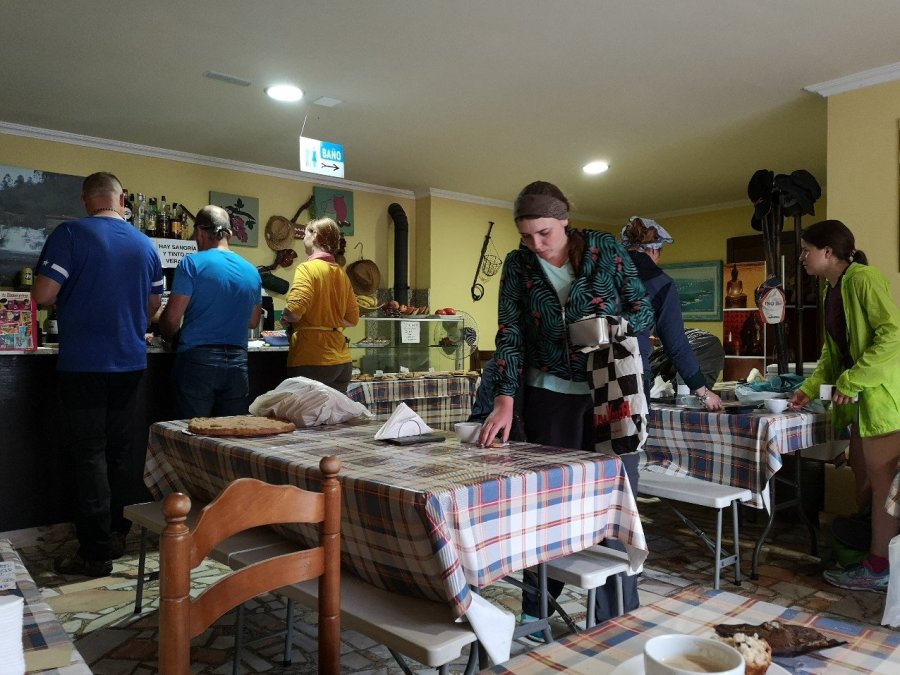
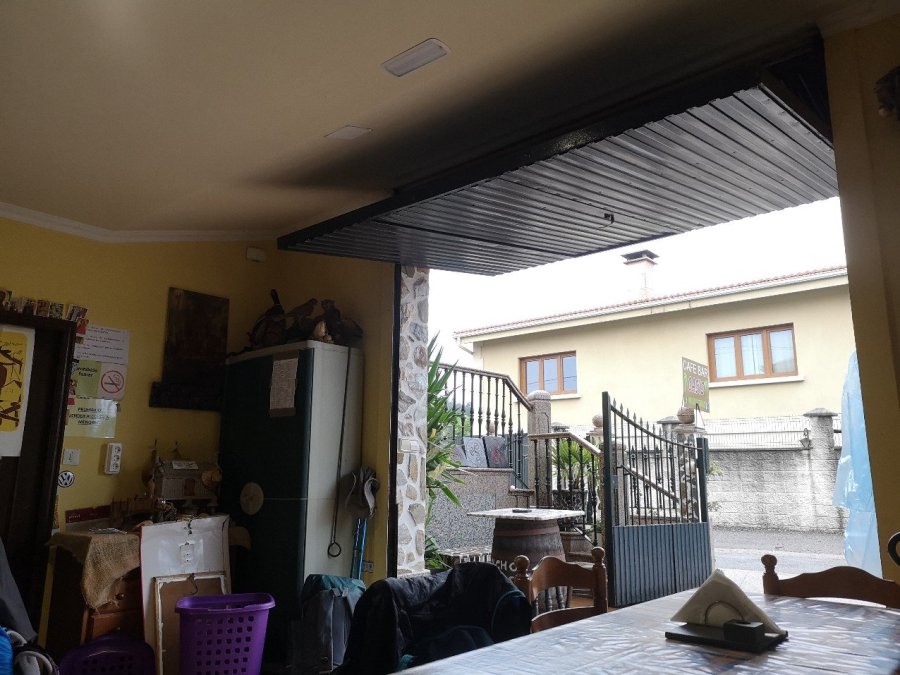
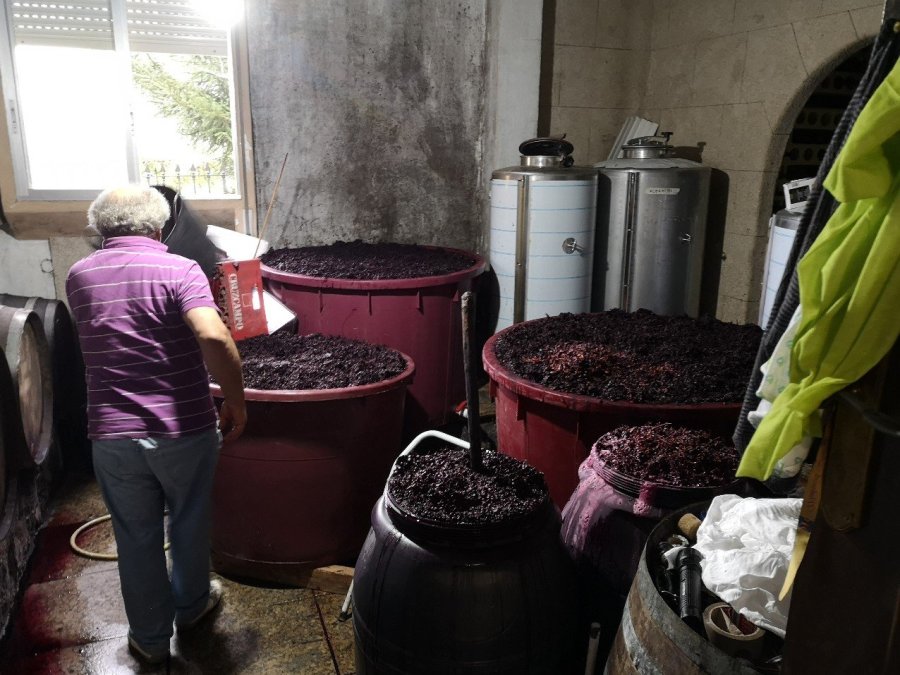
There was a most unusual cafe where many of us stopped for a hot drink that morning (some were taking shots of orujo (a sort of grappa) with their coffee, perhaps a way of warming up from the inside). There was only one, older and innovative man serving us all. It looked as if he had used his garage for this purpose and, after serving us, I noticed that he disappeared through a side door. On further investigation, I spied huge vats of grapes steeping.

wp-15757594142407622495142951191371.jpg
Crowded with pilgrims ready for morning coffee, A Cancela, Spain
wp-15757594143082762725114010782263.jpg
A garage reimagined as a cafe, A Cancela, Spain
wp-15757594141813037060909793235170.jpg
And winery in a side room – the smell was amazing as he stirred the great vats releasing the aroma of rotting and ripening grapes. A Cancela, Spain

I am always coming across dead animals on the camino, but today’s fox was still alive. I crouched down and whispered to it, knowing that it would not live long, wishing it well on its journey.

oznorDL
I thought perhaps you would not want to see a photo of the fox, but this was nearby, always a reminder, Spain
wp-15757594141091801889411609114913.jpg
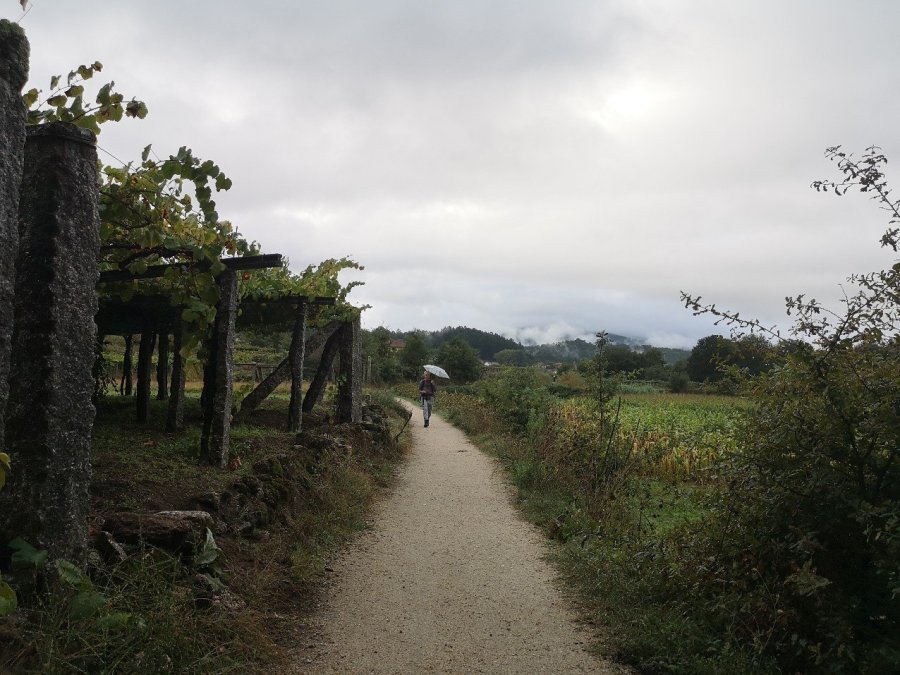
It continued to drip and drizzle, puffy rain clouds on the horizon, some walking with umbrella, past vines heavy with fruit
wp-15757594140258270172172958501422.jpg
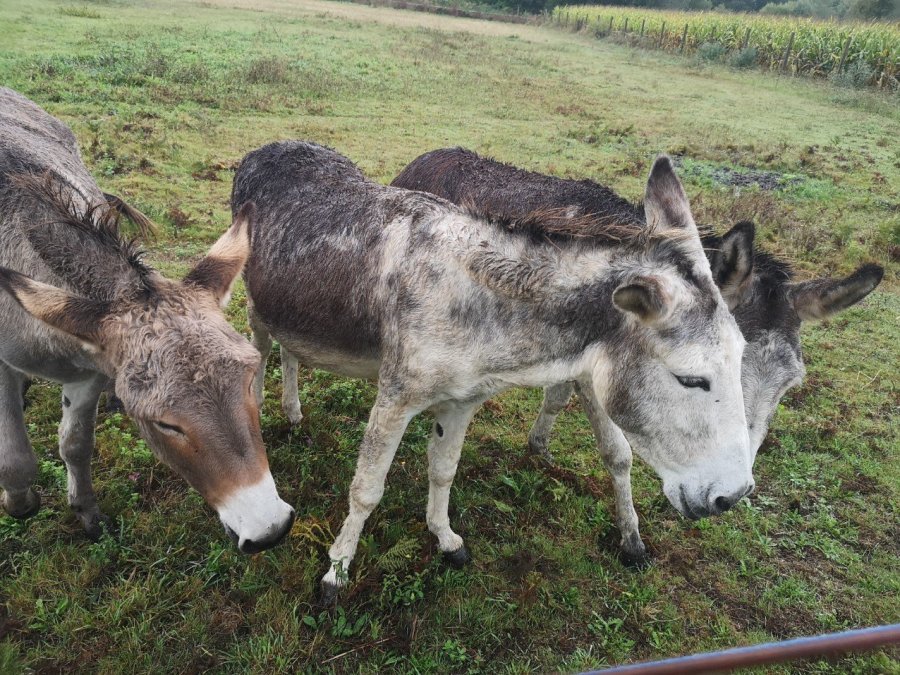
I can never resist a chat with a donkey

My In Praise of the Donkey blog

wp-15757594139533025610127399031264.jpg
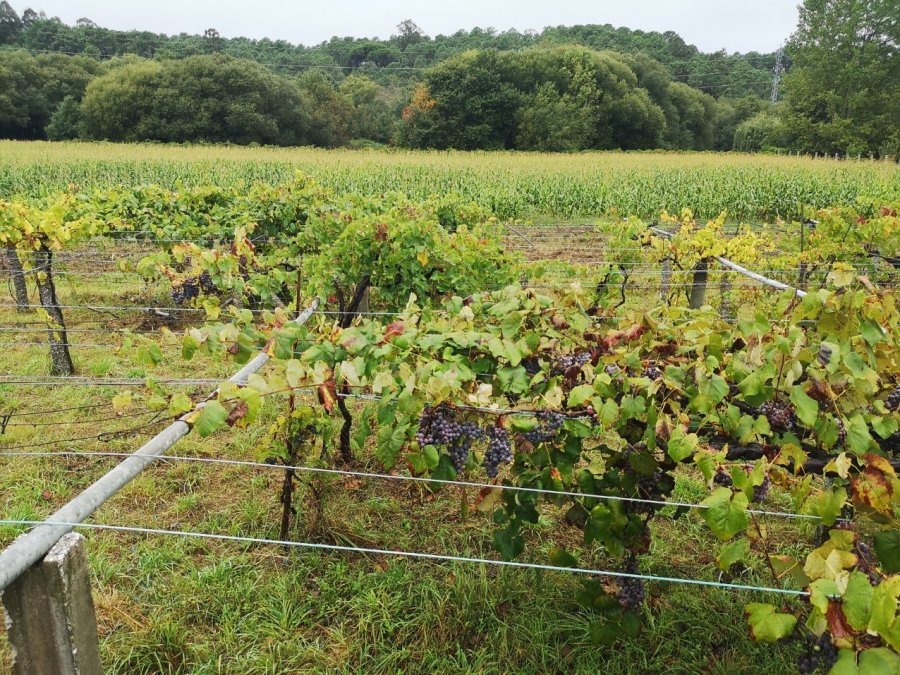
Black grapes heavy on the vines, Camino de Santiago, Spain
wp-15757594138751081151239996175557.jpg
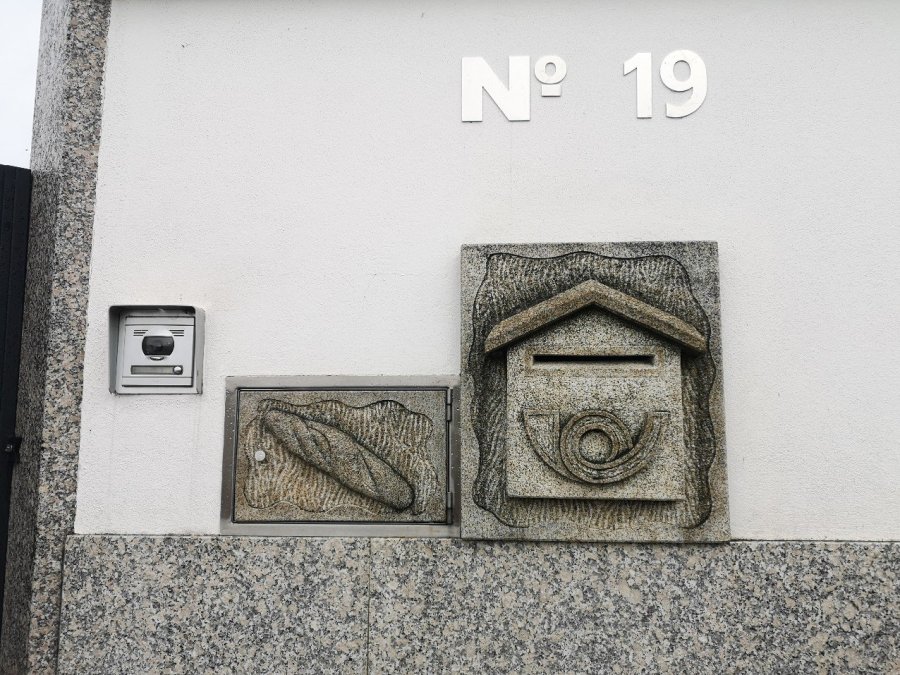
Letter box and bread slot
wp-15757594138285233160726546896744.jpg
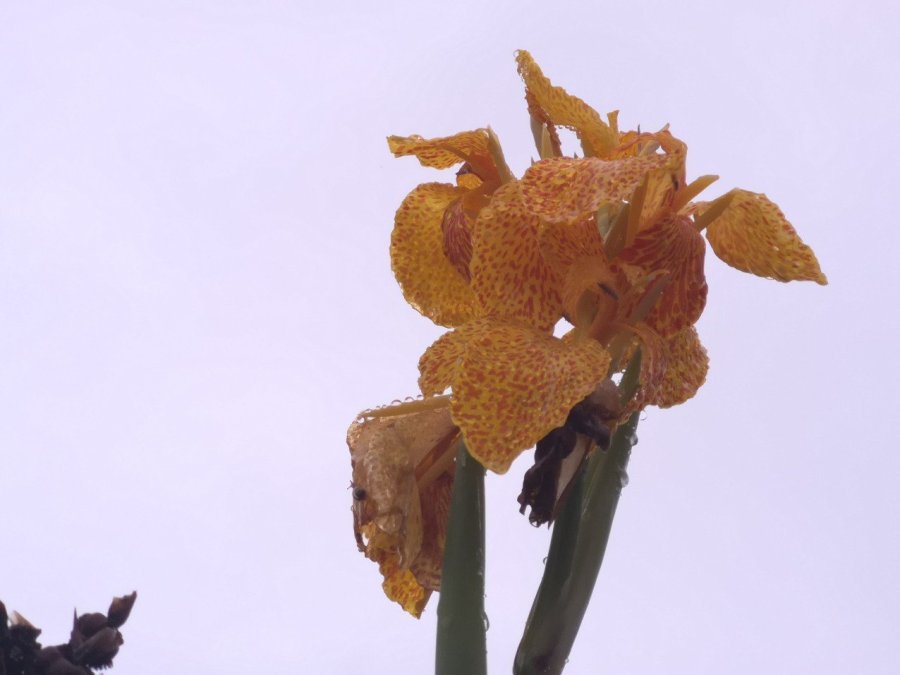
A speckled, camouflage-yellow canna resplendent against a dull sky
wp-15757594137661802051631746472823.jpg
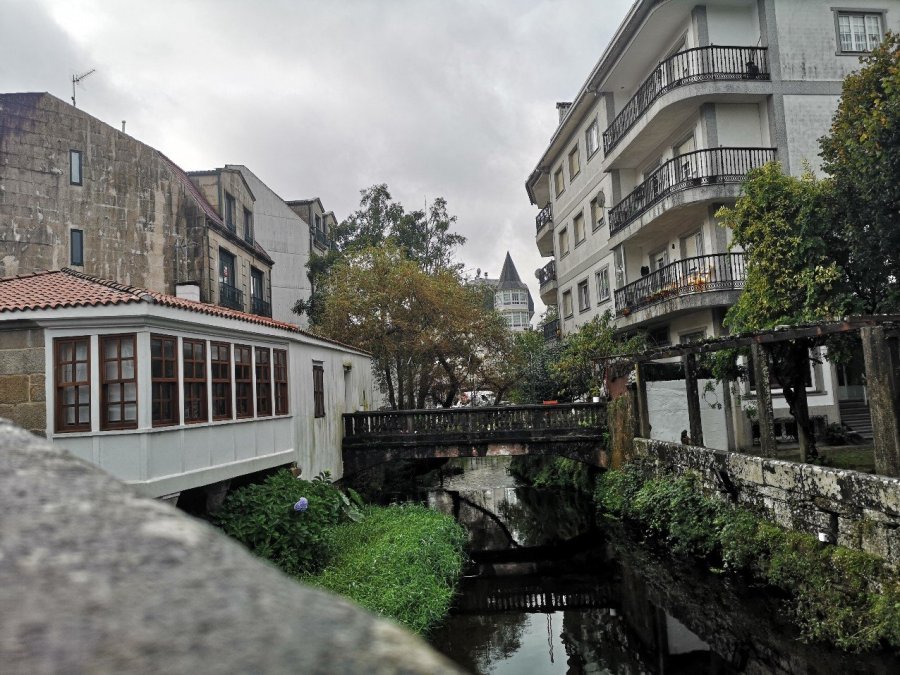
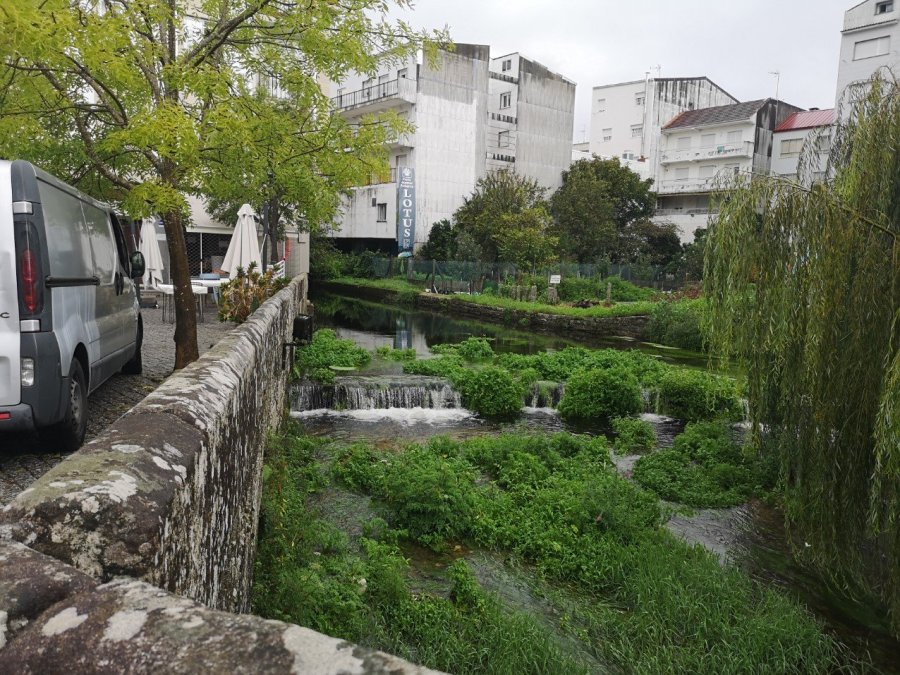
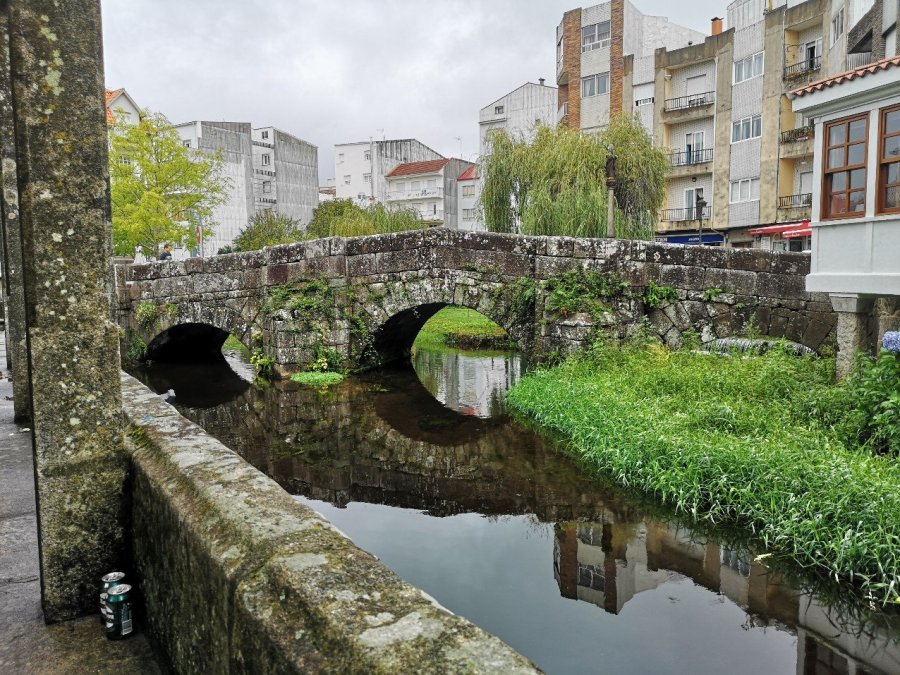
Caldas de Reis, a most attractive place at the confluence of the Rivers Bermaña and Umia, Spain

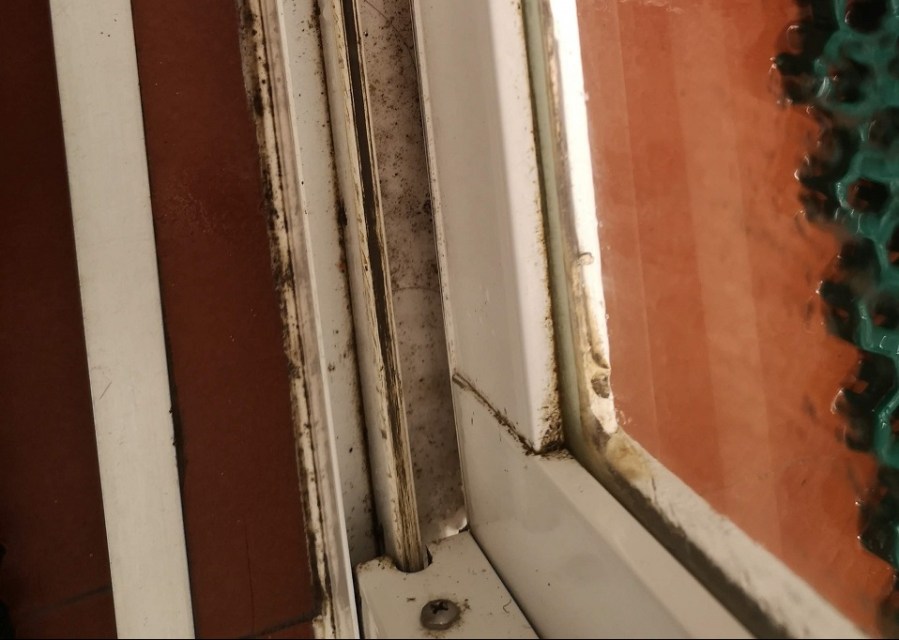
I stayed in the private Albergue Peregrinos Posada Doña Urraca and I do not recommend it, despite the fantastic location. It was dirty and crowded, the rooms are almost at the front door so anyone can walk in and out. The photos on the website do not show it as it is – do not be deceived. It is not a municipal one – I have never seen a government-run hostel be filthy like this.

IMG_20190930_135336
Accumulated dirt in one of the 2 tiny bathrooms at the private Albergue Peregrinos Posada Doña Urraca, Caldas de Reis, Spain

There was some lively conversation around the table, however, from the US as well as Germany, and a crowd of Polish pilgrims (I have not met people from Poland much at all on the Camino) at the hostel.

wp-15757594136887512290363190643888.jpg
Caldas de Reis, Spain

It’s a busy and normal town despite all of us traipsing through, with friendly local people and lots of facilities – a big supermarket, cafes and loads of banks. I tried the three cashpoints in one street – one was charging 3.50 euros, one 1.50 and the third nil, so watch out for this when getting cash out. It wasn’t my bank which charged me, nothing to do with getting money from a British finance organisation, it was the cashpoint machine company and I found this all over Portugal and in some parts of Spain. (I use a Post Office Travel Money Card via an app on my phone which charges for the exchange, but doesn’t have an additional service charge like the Bank of Scotland does if I use my everyday debit card when I am abroad).

wp-1575759413615615010262674591721.jpg
Stunning bridges, some reminiscent of Oxford or Venice, and clean rivers in Caldas de Reis, Spain

Have you walked the Portuguese Camino? Maybe you are planning to? Leave me a comment to let me know 🙂

Mos to Pontevedra: Portuguese Camino

Camino Portuguese da Costa – Days 9 and 10, September 27th – 29th 2019

Mos to Redondela

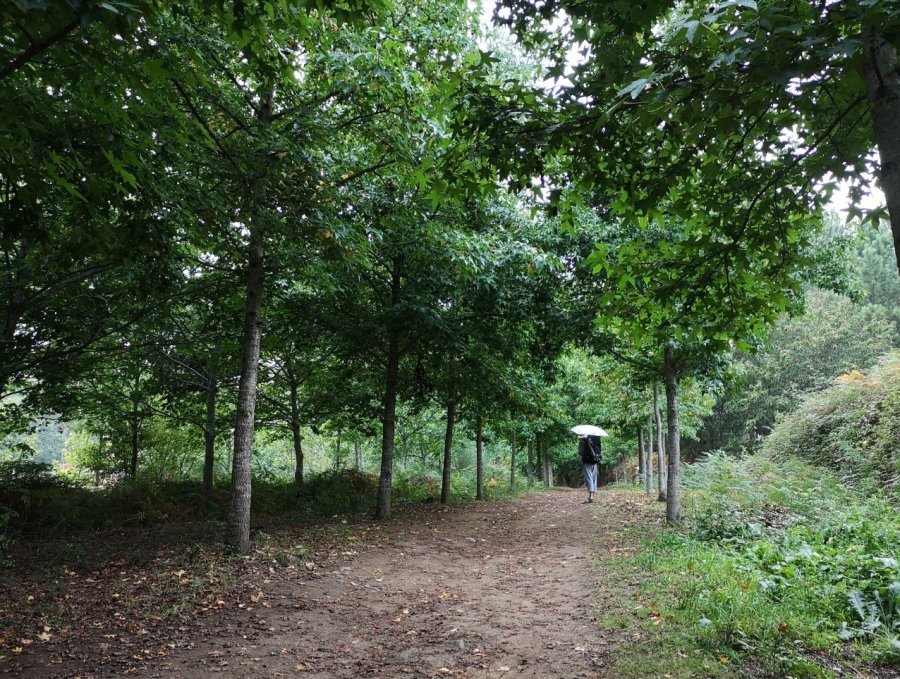
pilgrim with umbrella tree avenue
I walked along avenues of acers only just starting to turn yellow where it rained slightly (as it is prone to do in Galicia)

Walking this Camino was a prize for the long year I had spent writing my first book and the exciting but stressful dash to submit the manuscript to the publishers by the end of August. I had sat down – researching, typing while travelling – and eschewed long distance walks for that reason. Today, as I was ambling along, I realised that there was now some space into which a new project might come – and it came! The great Camino de Santiago forum is absolutely chock-a-block full of interesting information about pilgrimage in Spain and elsewhere. There is a mind boggling amount of collective knowledge in it, submitted by enthusiasts from all over the world, and when I am on the road I often consult it for hostel information, path directions and more. My searches the previous evening had led me to interesting topics related to my previous explorations and that then trickled through my mind as I made my way towards Redondela. Walking is such a great way to allow those creative thoughts to flourish!

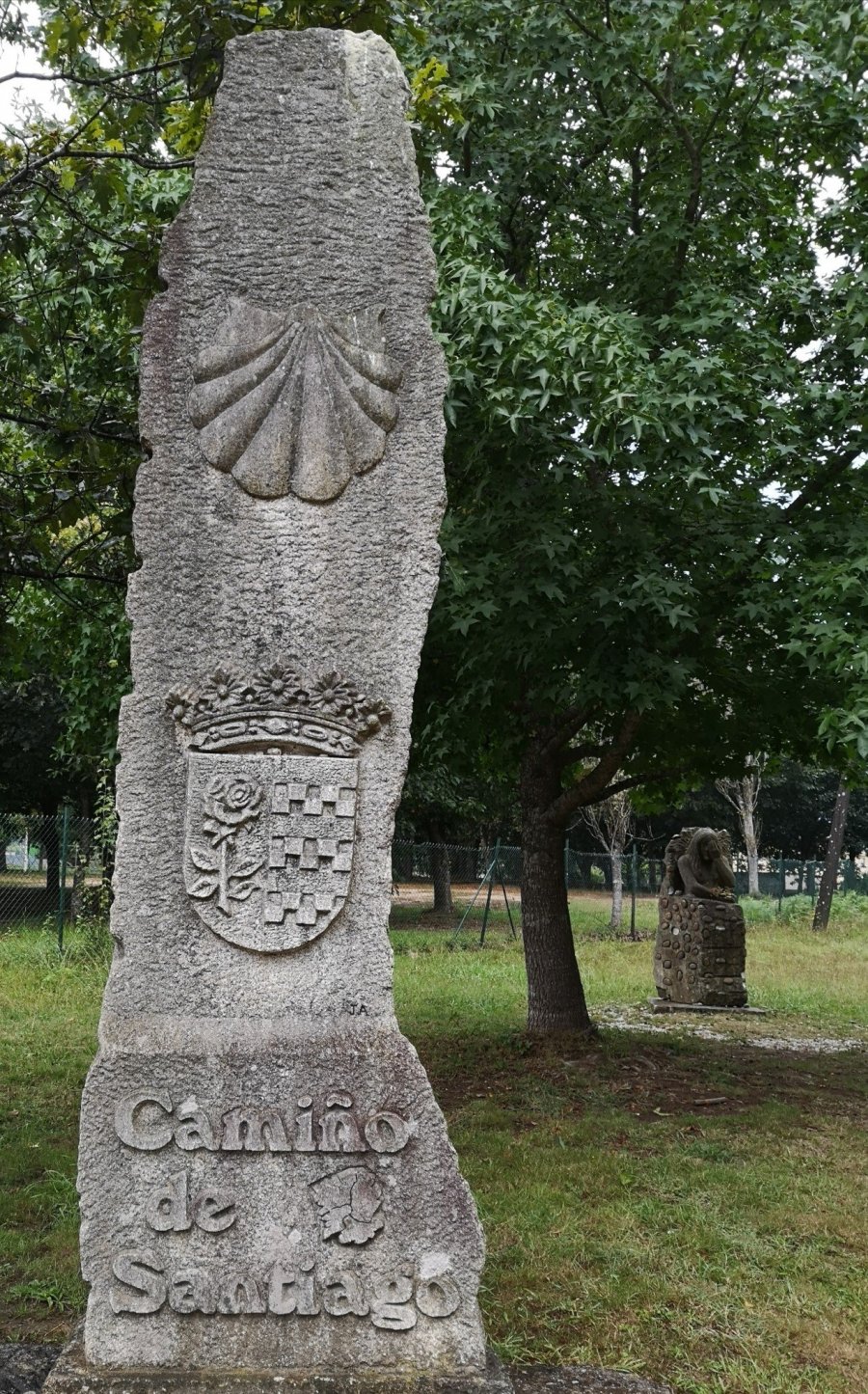
coat of arms camino shell stone marker
Typical Camino de Santiago stone with the familiar shell and an unidentifiable coat of arms with a stemmed rose and daisies
wp-15757574735184115352271808108207.jpg
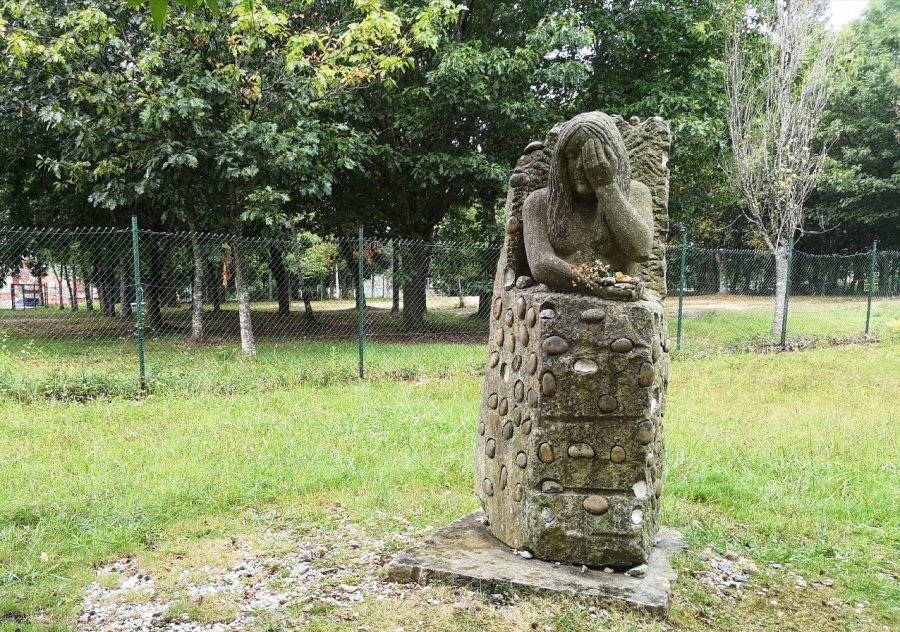
Another sign of grief? Stone statue of a woman covering her eye

Food and Wine on the Portuguese Camino

Local food
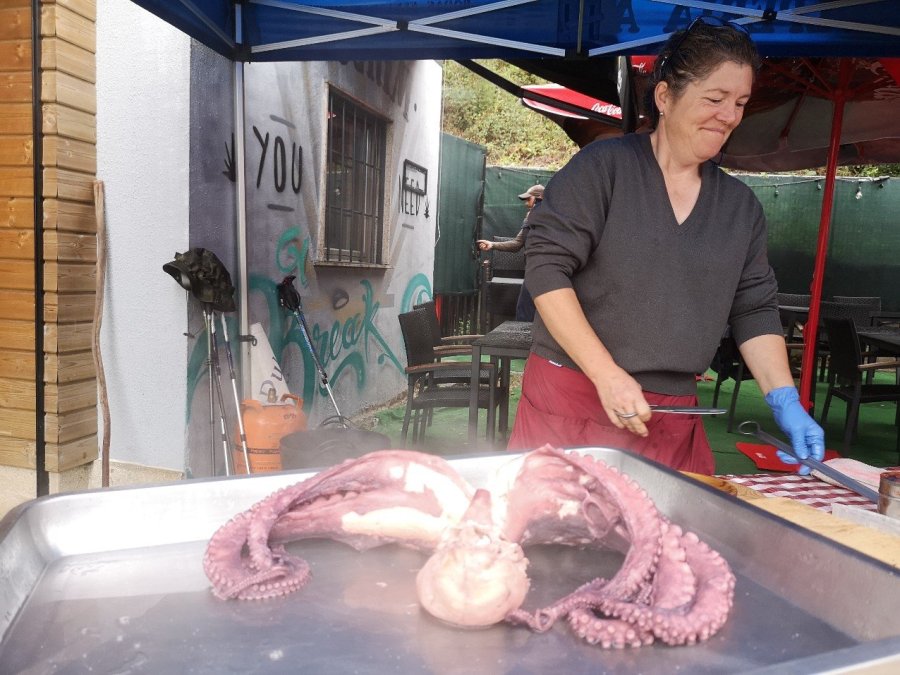
Pulpo (Octopus ), a Galician delicacy, on a stall outside

What, you may ask, can a vegetarian eat while walking the Portugues Camino, when meat is such an important part of the local diet? You can usually find eggs and vegetables (though they are often cooked rather longer than we might do them in the UK) and of course salad galore, though if we are walking out of season we might find we are served the packaged iceberg which is familiar back home. What we can never eat unless we beg at someone’s front door (no, I haven’t done this myself!) are the wonderful tall greens which so many grow in their front gardens, but which are not to be found, not in local shops, supermarkets or restaurants.

edible plants in growing situation
Tall brassicas growing in O Cruceiro, Spain

So, look out for Padron peppers (very small and grilled ones which are not really from Padron, but more of that in another blog), caldo verde (warming cabbage soup) which is usually not made with a meat stock but check, and also be careful that they don’t garnish it with sausage; bread and olive oil of course; roasted chestnuts (see below); and you most definitely can eat pastel de nata (the most delicious bijou custard tarts) as long as you are not vegan because they have eggs in them.

bowl of roasted chestnuts Portugal
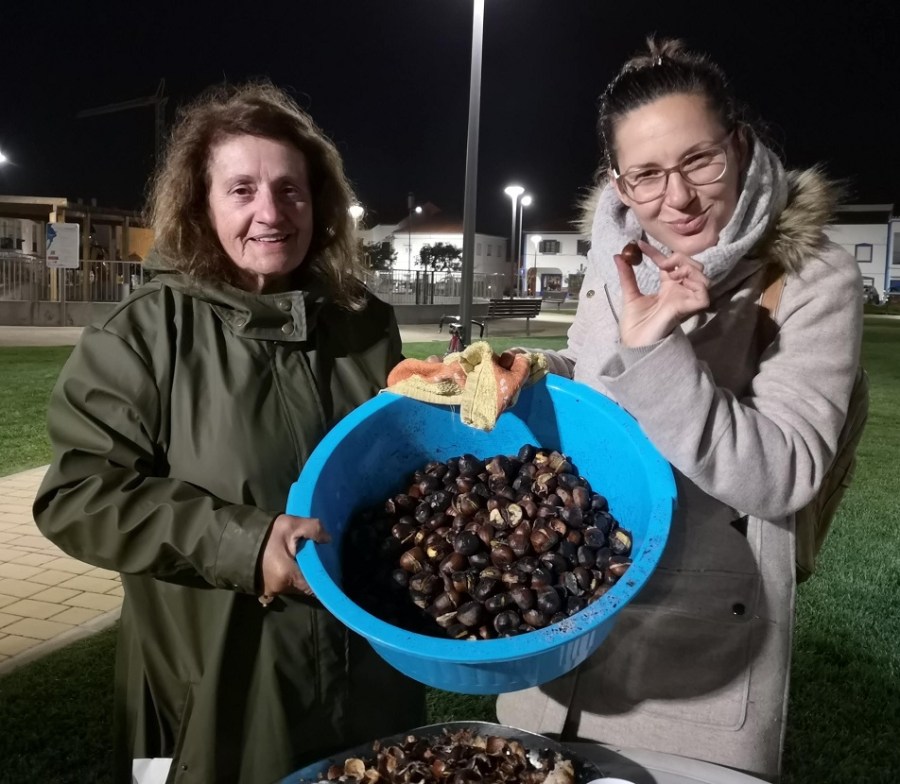
Lea and friend, Vila Nova de Milfontes, Portugal (not on the Camino Portuguese da Costa) with whom I shared 100s of roasted chestnuts – yum!

Fun Fact

Conventual deserts: Traditionally, eggs whites were used in convents to starch the priest clothing and the nun’s robes. Left with the egg yolks and time to kill, the nuns had to get creative. Making the most delicious and famous desserts became a tradition in Portugal.” From Authentic Food Quest

huge orange feild pumpkins
Field pumpkins. Although there were squash everywhere in the fields and gardens, I never saw them offered on a menu

If you are pescetarian (that is, you also eat fish, but not meat) you will have no trouble because Portugal is well known for sardines (although very attractive, don’t buy the smartly decorated tins as they are many times more expensive than the ordinary ones – make sure they are Portuguese) in the smaller shops or supermarkets); bacalhau (salted cod fish – variable, some stupendous, some just salty), octopus (pulpo, see above) and other delicacies from the ocean.

plant detail and Latin name
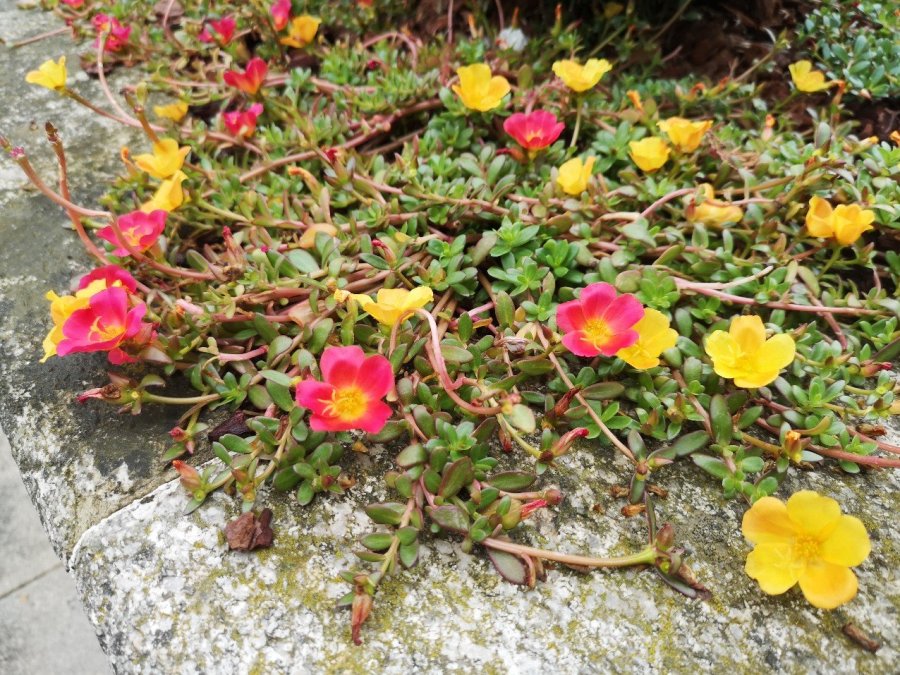
Moss Rose (Portulaca gradiflora, a semi-succluent) with red and yellow flowers indicating a mixed seed bed. Thanks to the helpful folk on houzz.com for identifying this for me

Finally, these stages of the Camino Portuguese are close by the Soutomaior, one of the sub-regions of the DO (denominacion origen) the vineyards of the high-quality, light-bodied white Albarino wine, produced by the Rias Baizas.

Civic buildings Redondela
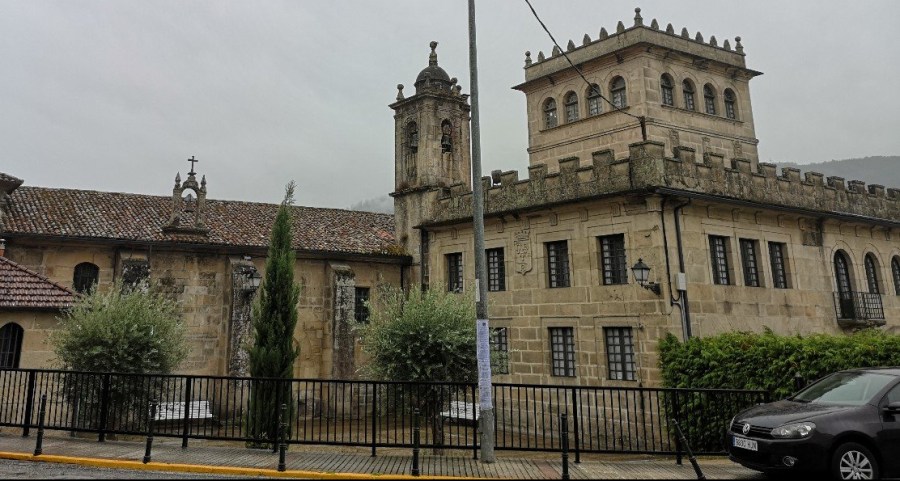
The Concelo (government offices) de Redondela, Spain
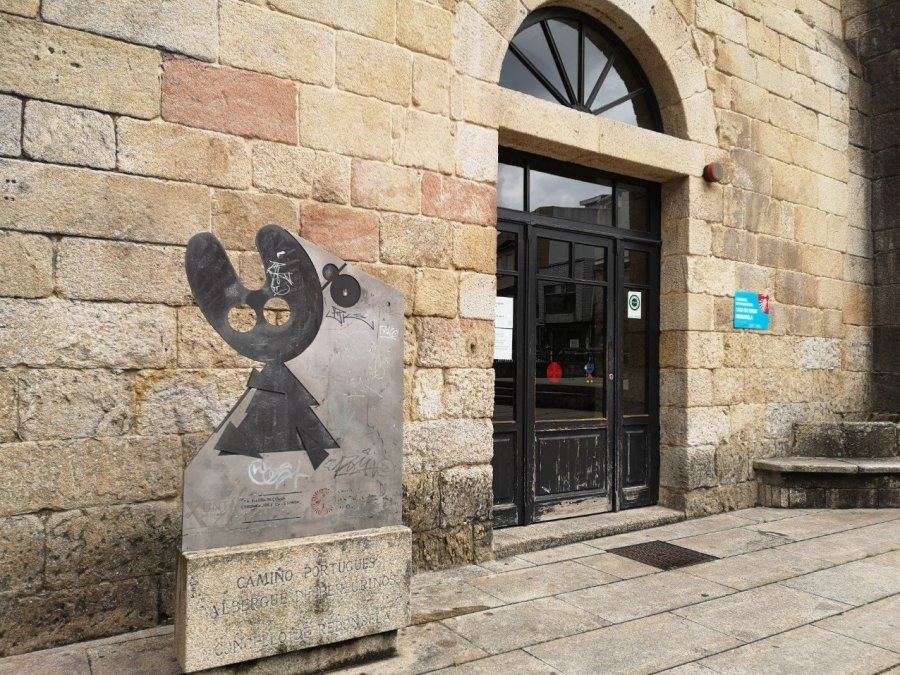
Xunta sign entrance outside Pilgrim Hostel
Albergue de peregrinos rennovated 16th century Casa da Tore, Redondela, Spain

There are 42 beds, it costs 6 euros, opens between 1-10pm and is open all year round.

urban Redondela
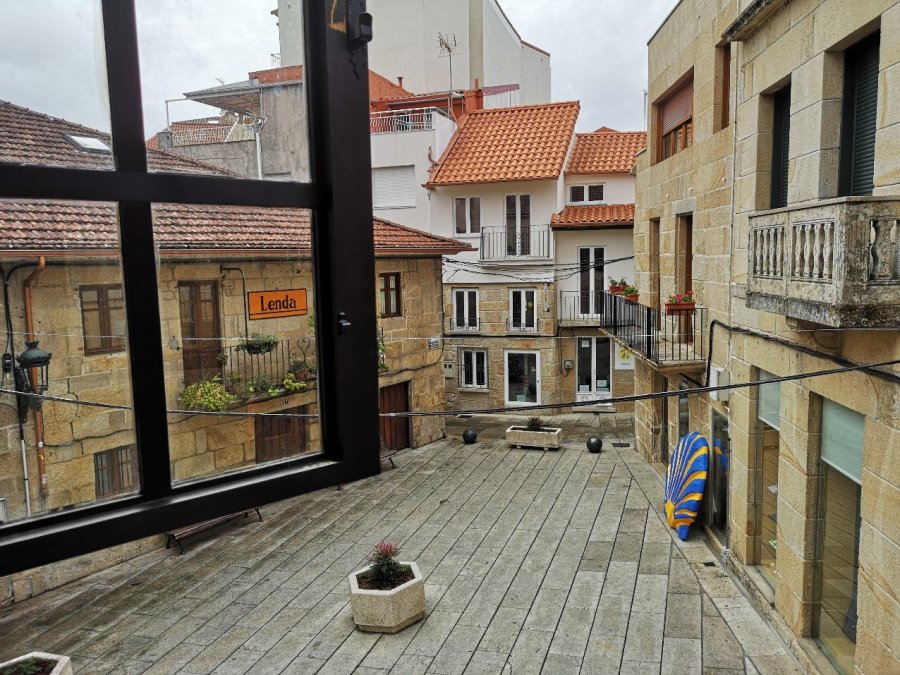
View from the hostel window with a large blue and yellow camino sign, typical stone balconies and showing the narrow streets of the town, Redondela, Spain

Because the room opened straight into the middle of the town, it was extremely loud with revellers late into the night and early hours of the morning.

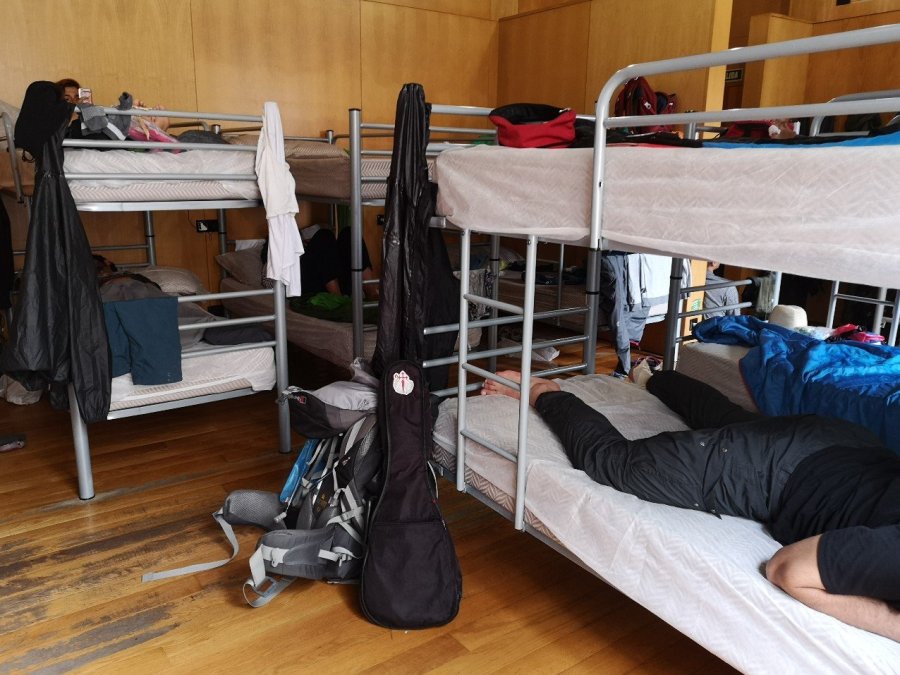
interior hostel with bunks
Metal bunks in crowded rooms, full to bursting in late September 2019, Xunta (municipal) hostel, Redondela, Spain

Redondela to Pontevedra (almost)

This was a good day despite my foot /feet still hurting. Such wonderful scenery and sun! That’s why I love to walk like this – to be in nature, to be surrounded by beauty, to be amazed, step-by-step.

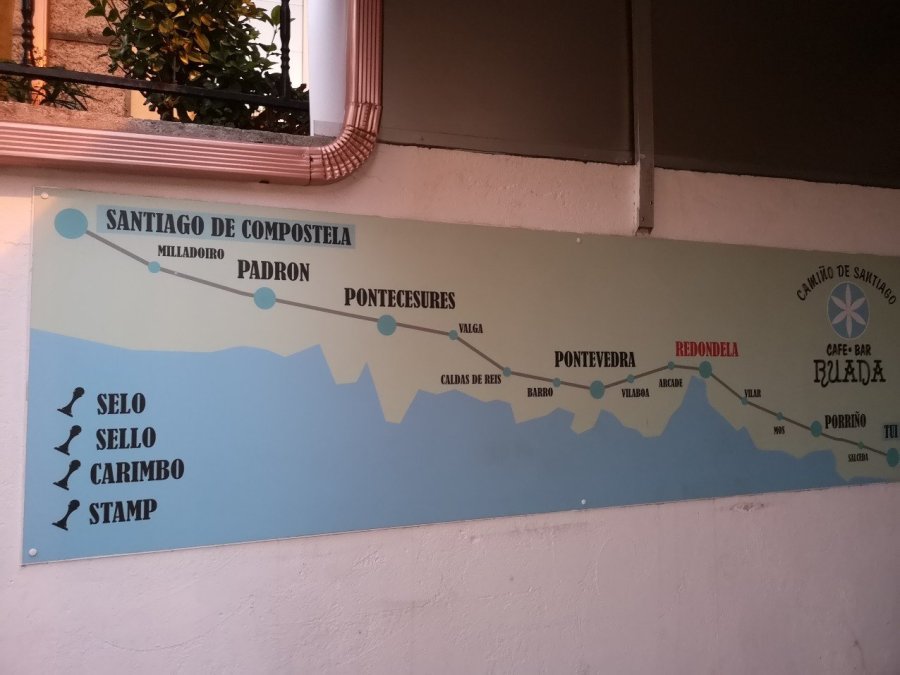
map of Camino route
This part of the Camino Portuguese, Spain

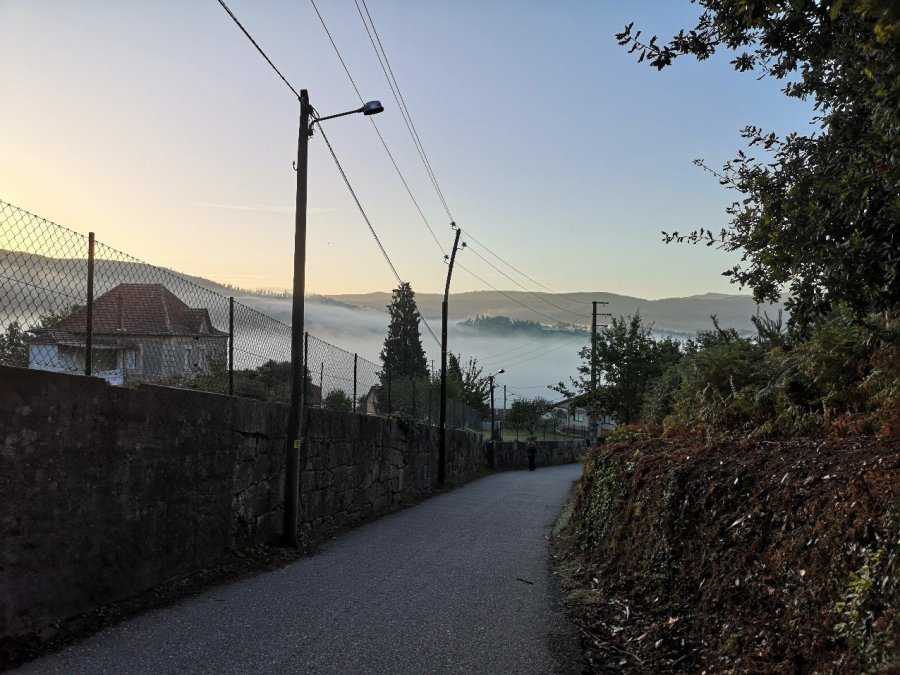
I left just after dawn, the lights still on under the aches of the bridge.

wp-15757582309304865887284464690737.jpg
Heavy mist in the valley making the view mysterious and other-worldly, Camino Portuguese, Spain
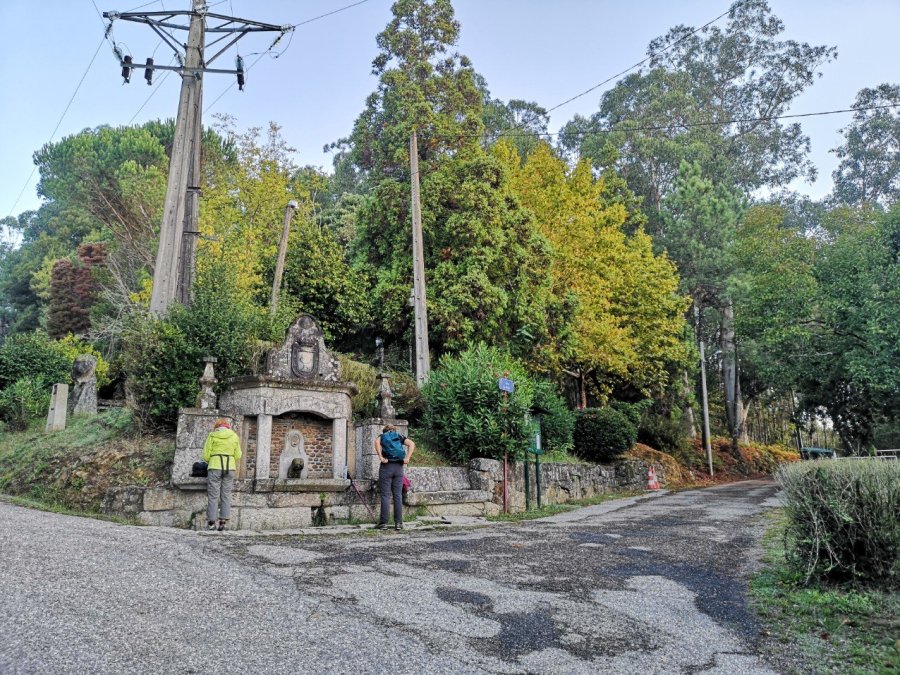
water fountain
Water stop – natural, fresh water from the fountain at the junction, Camino Portuguese, Spain
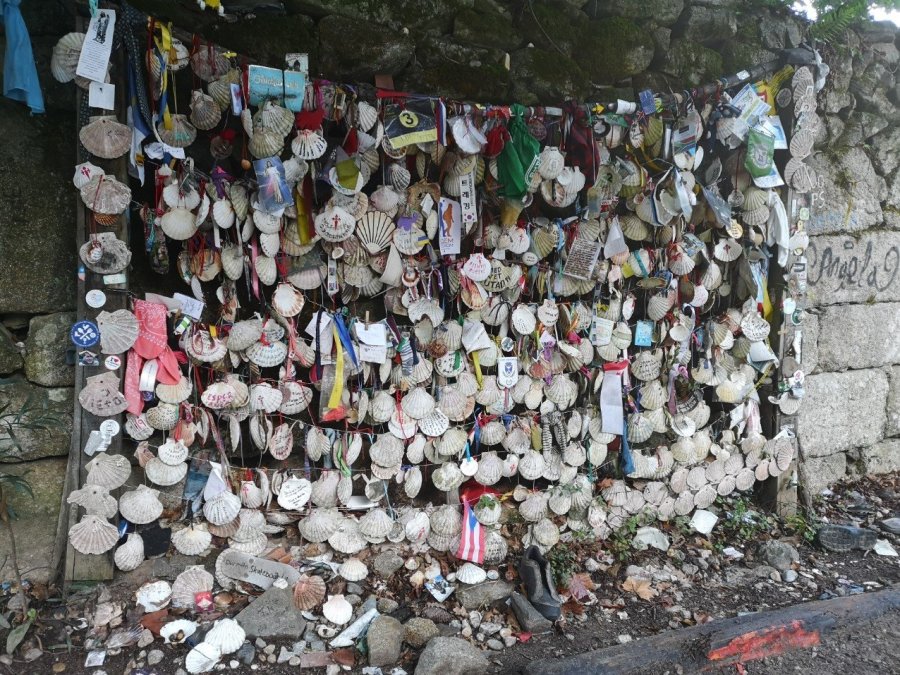
wp-15757582307781621467779182786975.jpg
Shells and other Camino paraphernalia, Camino Portuguese, Spain
Long view of river and Arcade
Looking down onto Rio Verdugo and Arcade, Spain
wp-15757582306345867371402776829862.jpg
Eucalyptus catching the morning sun
wp-15757582304795510892613551927832.jpg
Down now to a welcome stall set up by local weekend volunteers offering tea and snacks (for donations). You can see the partially wet ground from the regular showers of rain, Spain

Saturdays are very busy days on the Camino with cyclists and local walkers as well as those who are making their way to Santiago de Compostella.

IMG_20190928_095044
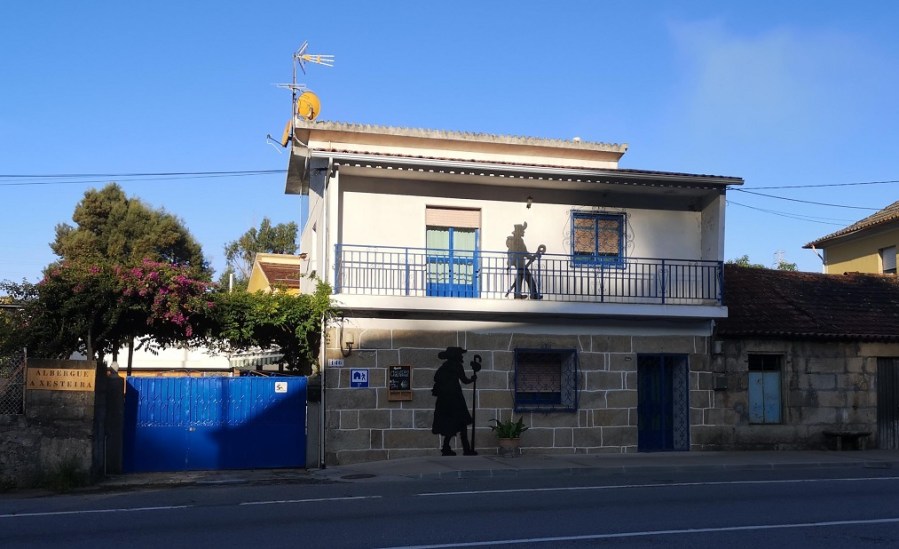
A town which celebrates the Camino and its pilgrims – silhouette cut-outs on the walls of this hostel, Spain
wp-1575758230402985514243139777939.jpg
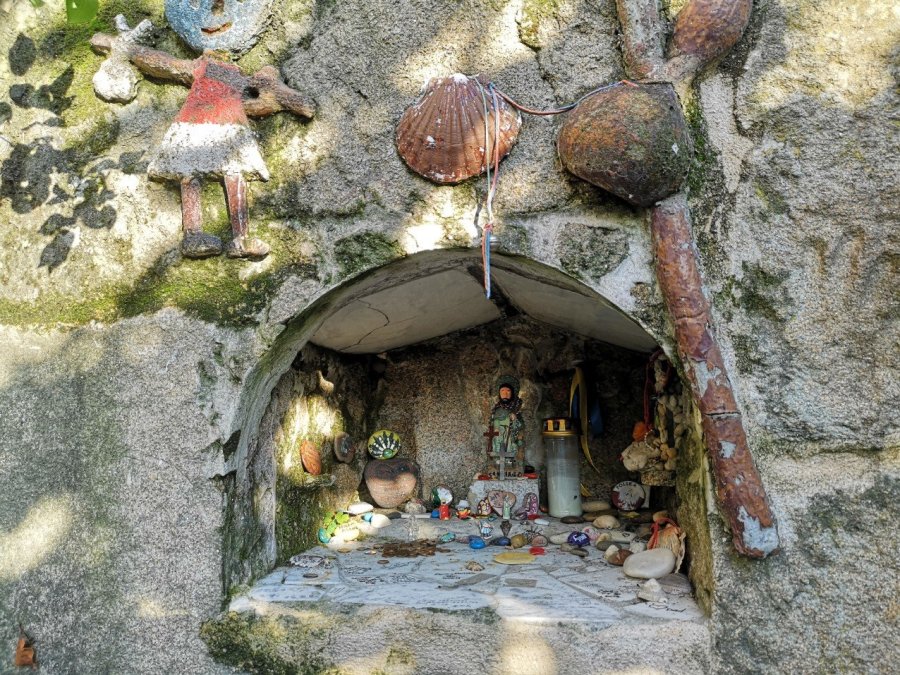
A way-side grotto with Camino knick-knacks, Spain
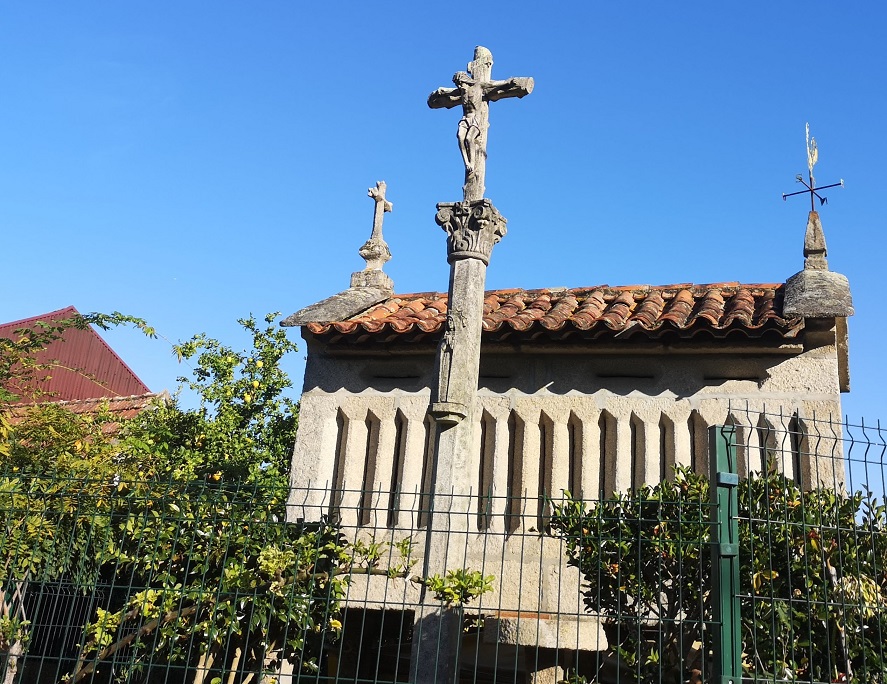
horreo
The first horreo (stone shed for storing maize over the winter, on stilts to keep out the rats and the wet) with plenty of religious protection, Spain
wp-15757582302759106576697906478999.jpg
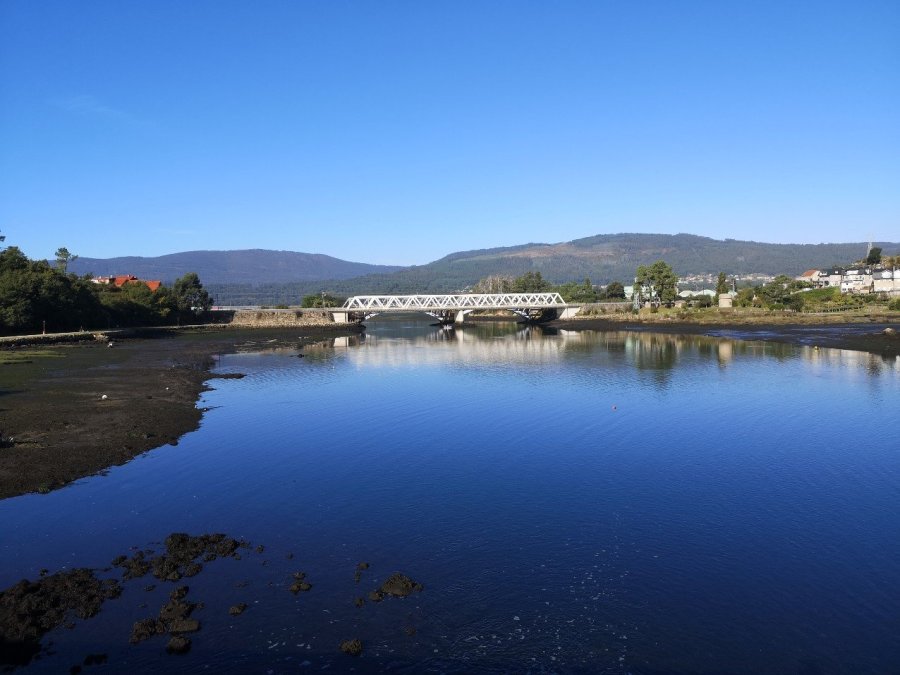
I crossed the Verdugo river by the Ponte Sampaio (or San Paio) bridge getting a good view of a more modern one further along, Arcade, Spain

The Puente (Ponte) San Piao: ‘It is here where a decisive battle for Spain’s independence was held against Napoleon’s troops in 1809 which ended the five month French occupation.’ from Santiago-Compostella.net

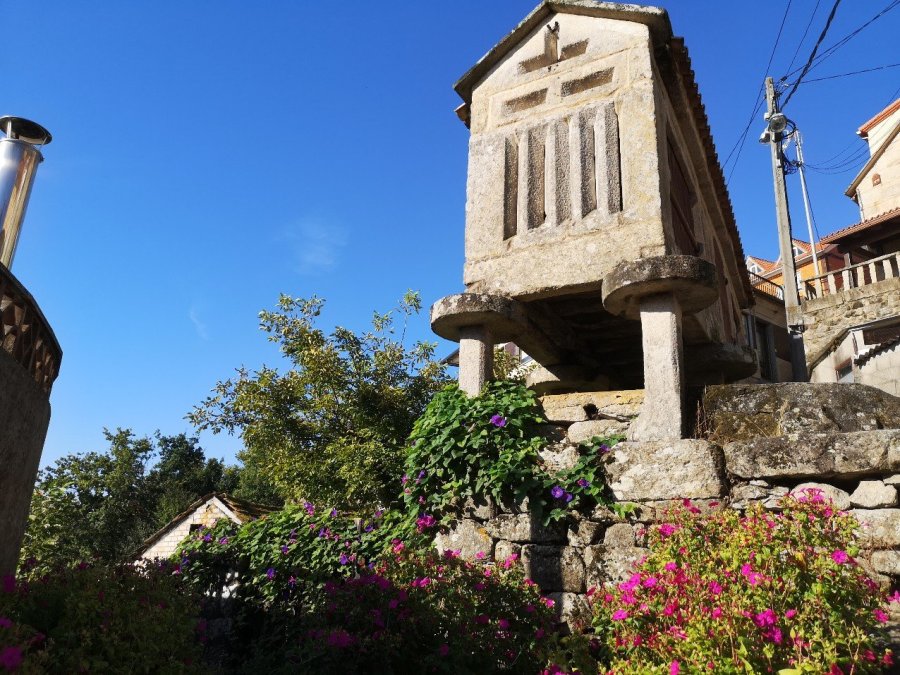
wp-15757582302041974639778526243213.jpg
Another horreo – blue skies at this stage and so it was hot for the climb up the hill on the other side of the river, Arcade, Spain
wp-15757582301277047412698431770066.jpg
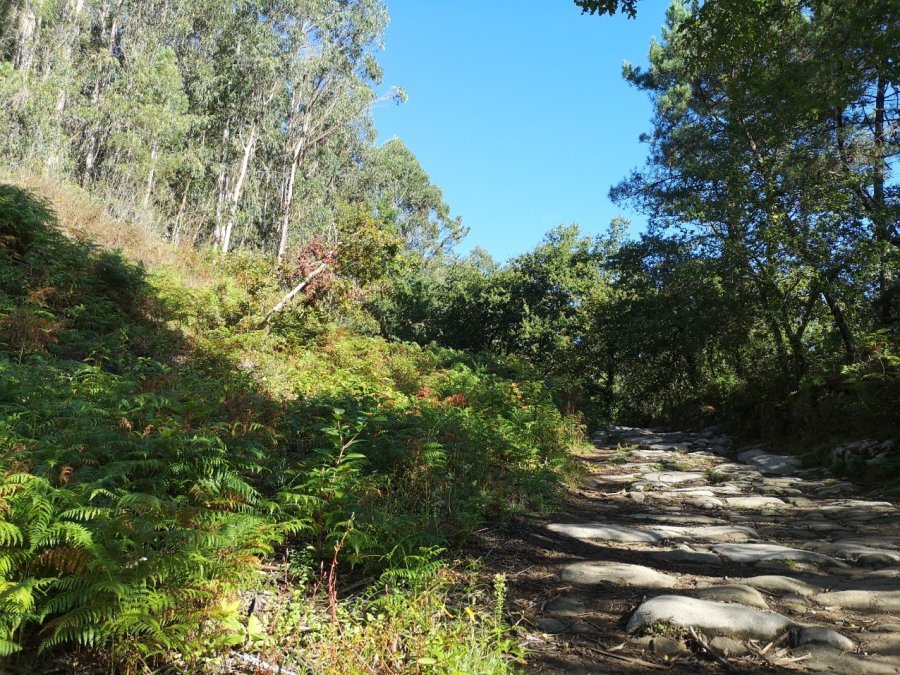
Back into the countryside and more paths made up of large stones which would be running with water and very slippery if the weather hadn’t been fine, Spain
wp-15757582300435206322642768291167.jpg
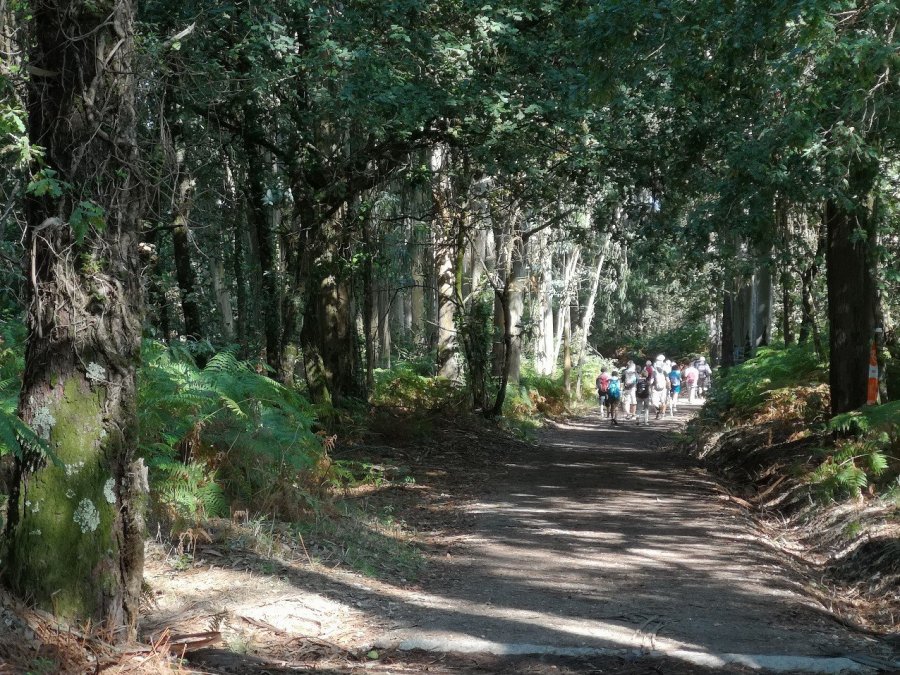
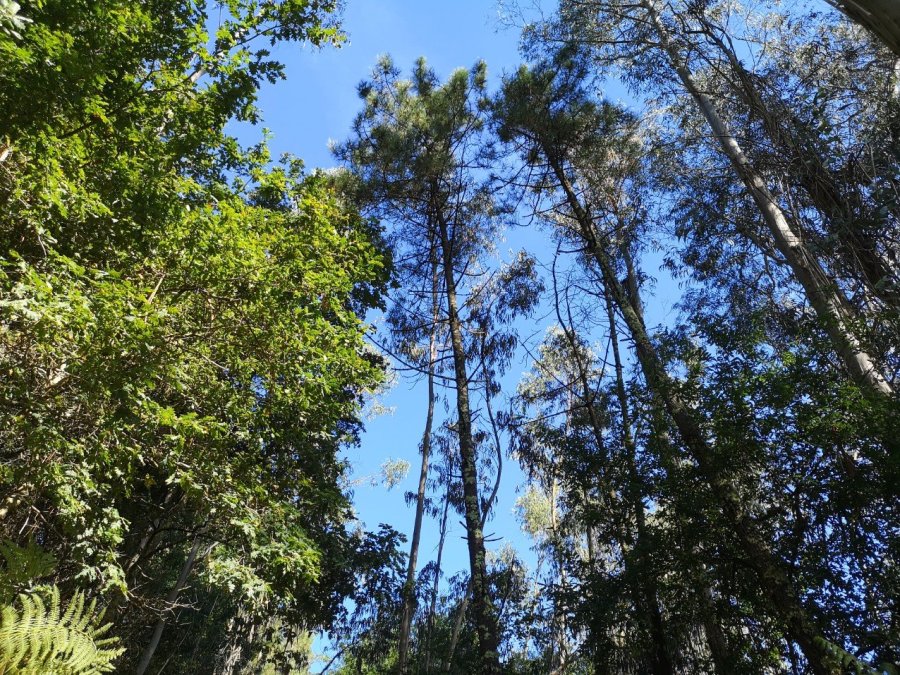
Pine and other mixed woods, trees towering over me, Spain
wp-15757582299658687062367829718813.jpg
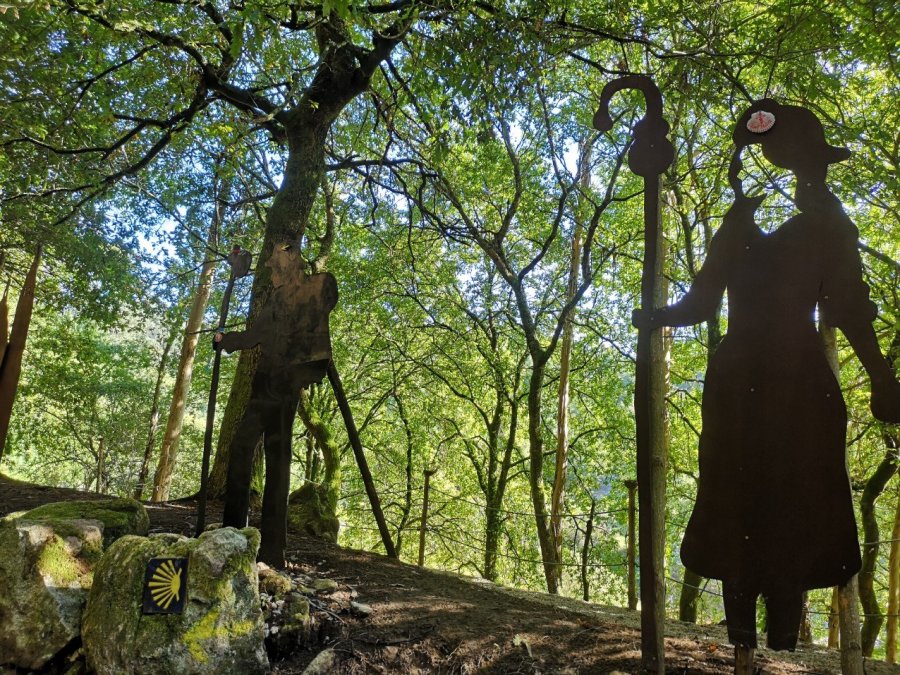
Deep in the woods was a rare peregrina (female pilgrim) statue and lots of shells. There was no difficulty finding the way, Spain
wp-15757582298922616719338549107426.jpg
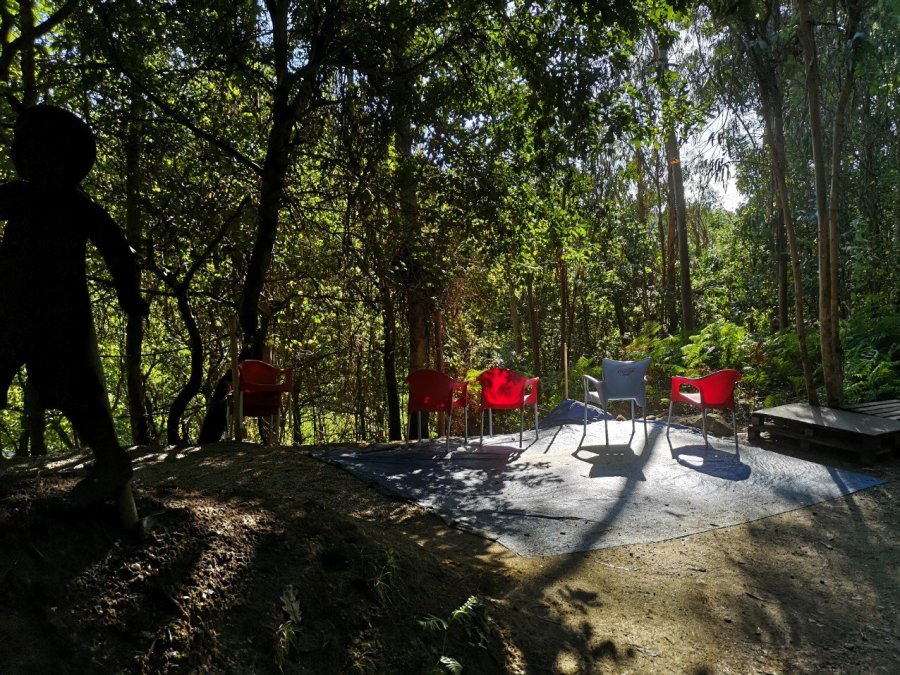
Plastic chairs ready for resting and enjoying the dappled surroundings, Galicia, Spain
wp-15757582298131283678518243671301.jpg
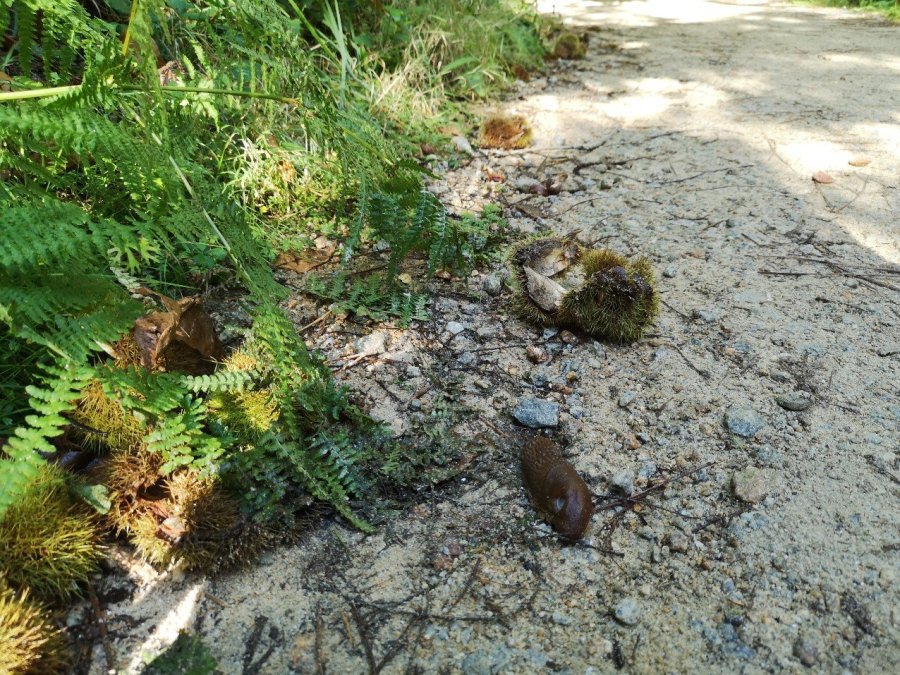
I spotted huge slugs of all shapes and sizes amongst the sweet chestnut prickles and ferns, Galicia, Spain
wp-15757582297342372984993972078112.jpg
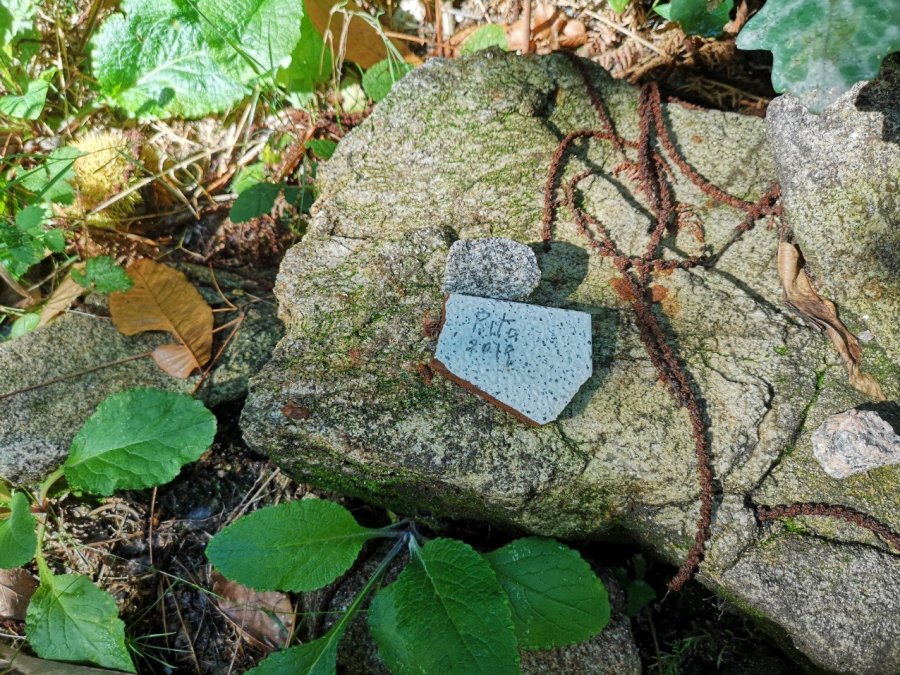
If you look carefully, you will find little mementoes in the rocks, Camino Portuguese de Santiago, Spain
wp-15757582296598612575987469710254.jpg
Actual crowds of pilgrims in great chattering groups, Camino Portuguese, Spain
wp-15757582295948488488118612593639.jpg
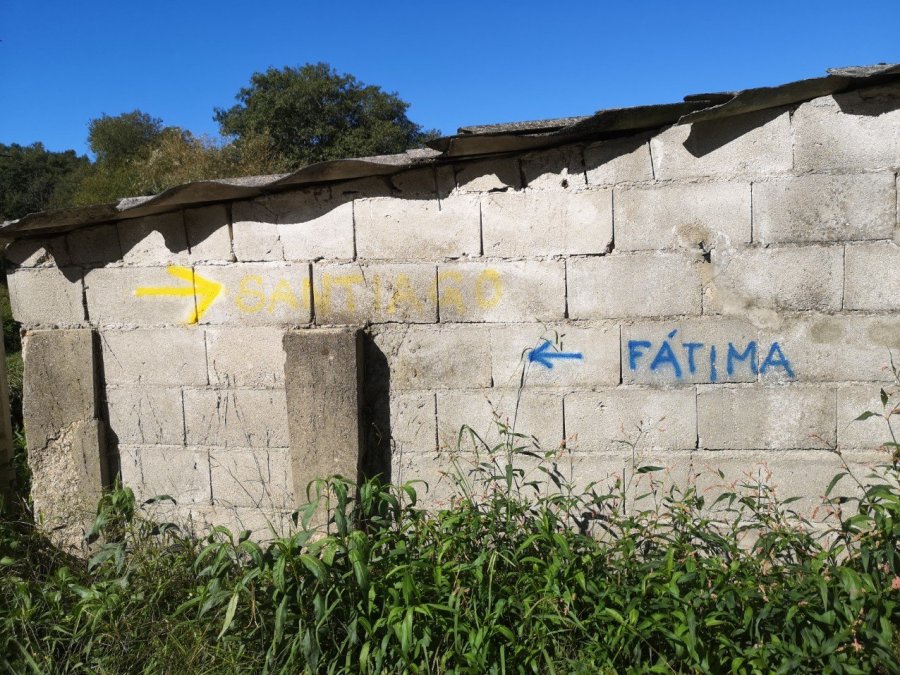
I crossed the Fatima Camino here: Santiago in yellow, Fatima in blue

Fatima travel blog link

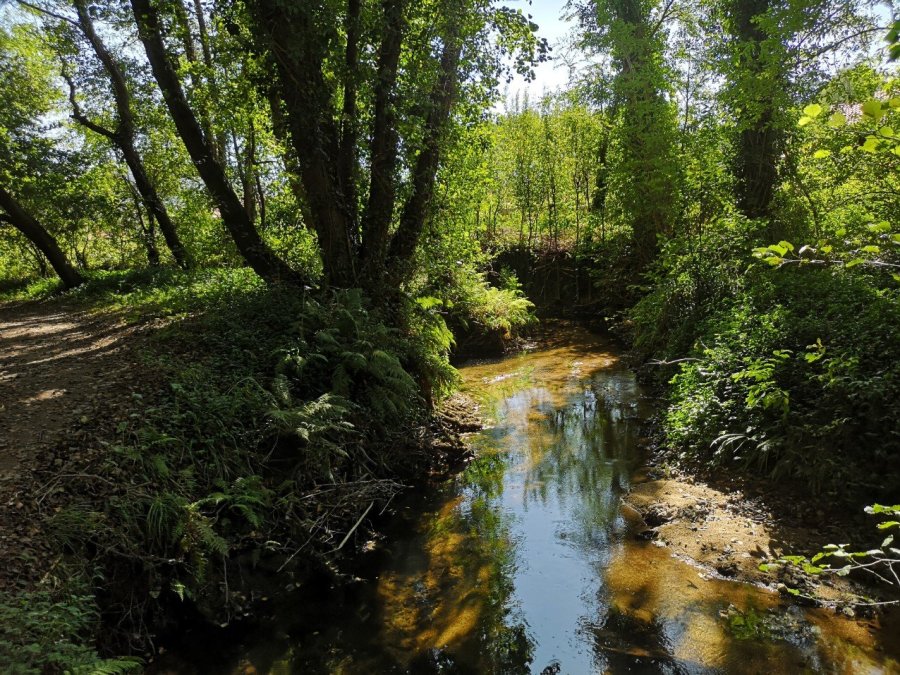
The final stage of this day’s walking through the Valley of Tomeza and Salcedo, took me through a riparian area (a wetland by a river). The ground is peaty in places (as in Scotland – there are many connections between Galicia and Scotland), moist forests of alder and willow, oak, ash, birch, chestnut, brambles (blackberries) and even cherry blossom (Prunus padus or Cerdeiro de acio in Galician) and hops can be found (as in my native Kent). The sign said that the presence of otters is a sign of good water quality. It certainly looked bubbling and clear, but sadly, I didn’t see an otter.

stone bridge Rio Tomeza Spain
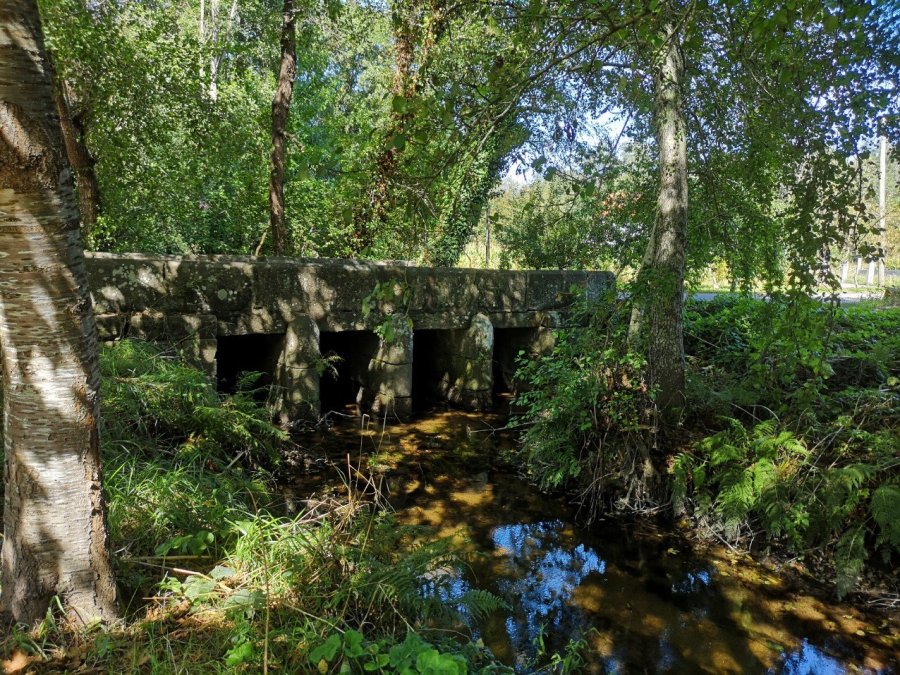
Ponte da Condesa (stone bridge) over the Rio Tomeza, near Pontevedra, Spain

This last part was particularly gorgeous – green, verdant and peaceful apart from the trickling water and birds chanting around me.

rural Galicia
Rio Tomeza near Pontevedra, Spain

Accomodation: The previous evening I had come across an air bnb called Casa A Grade online and tried to find out if there was a space, unsuccessfully. I had even phoned and the woman said they did not have any single beds. Well, as I was walking through these wonderful woods, there was a hostel sign. I crossed the quaint bridge and wound my way through what turned out to the the end of the garden. There I came across a plunge pool glittering in the hot sun and it was the same place. And they did have a single bed for me!

wp-15757582293813899321997848964774.jpg

I lay in the garden, dipped into cool water, washed and hung out my clothes (which dried in the scorching sun), bought vegetables from their garden plus bread and prepared food for the evening meal. Breakfast was included in what i think was the 25 euro price. All the beds were full – a family room was taken by a mother and father who were accompanying their daughter to a Rhythmic Gymnastics competition – she was a champion), and 4 singles (2 pilgrims and 2 holiday makers) along a corridor and separated by curtains. There is one bathroom and everything was clean. The owners were very friendly and helpful.

Finally, it was only 40 minutes into Pontevedra, but that was another day!