Walking Secular Pilgrimage

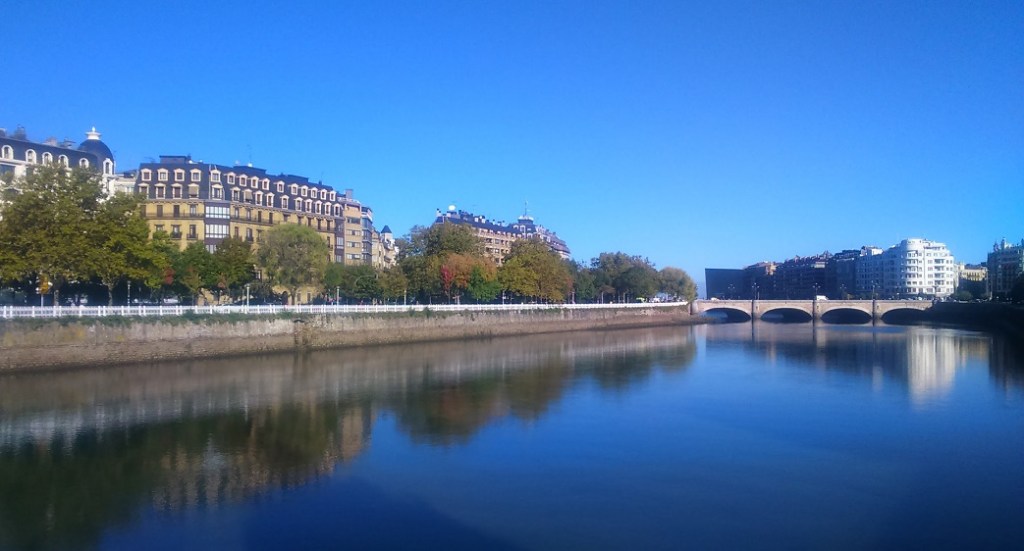
In October 2016, aged 53, and needing a change, I stepped out of my front door in Edinburgh for an adventure. First visiting relatives by train in the New Forest, England then it was a boat from Portsmouth across the Bay of Biscay to Santander where I started walking.

Coming into Santander. “I craved to go beyond the garden gate, to follow the road that passed it by and to set out for the unknown.” from My Journey to Llasa by Alexandra David-Neel

I exchanged Shiatsu for hospitality, as I still do, meeting some wonderful people in the process. This time, I walked the Camino de Santiago from Pamplona to Santiago de Compostella (400 miles).
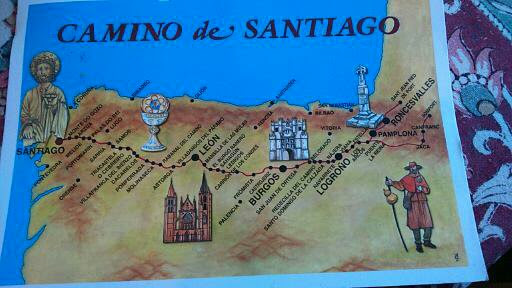
Camino de Santiago postcard

After that autumn in Spain, I returned many times. Walking other solo caminos such as the Via de la Plata (1000 kms) from Seville to Santiago, and from Porto in Portugal also to Santiago (it is said that all roads lead there) were amazing experiences. I made pilgrimage in other parts of Spain too, notably in Cataluna. I walked the Via Sacra in Austria, and shorter routes in Estonia, Greece, Norway, Hungary, France, Switzerland, Croatia, in Ireland, Wales and Scotland.
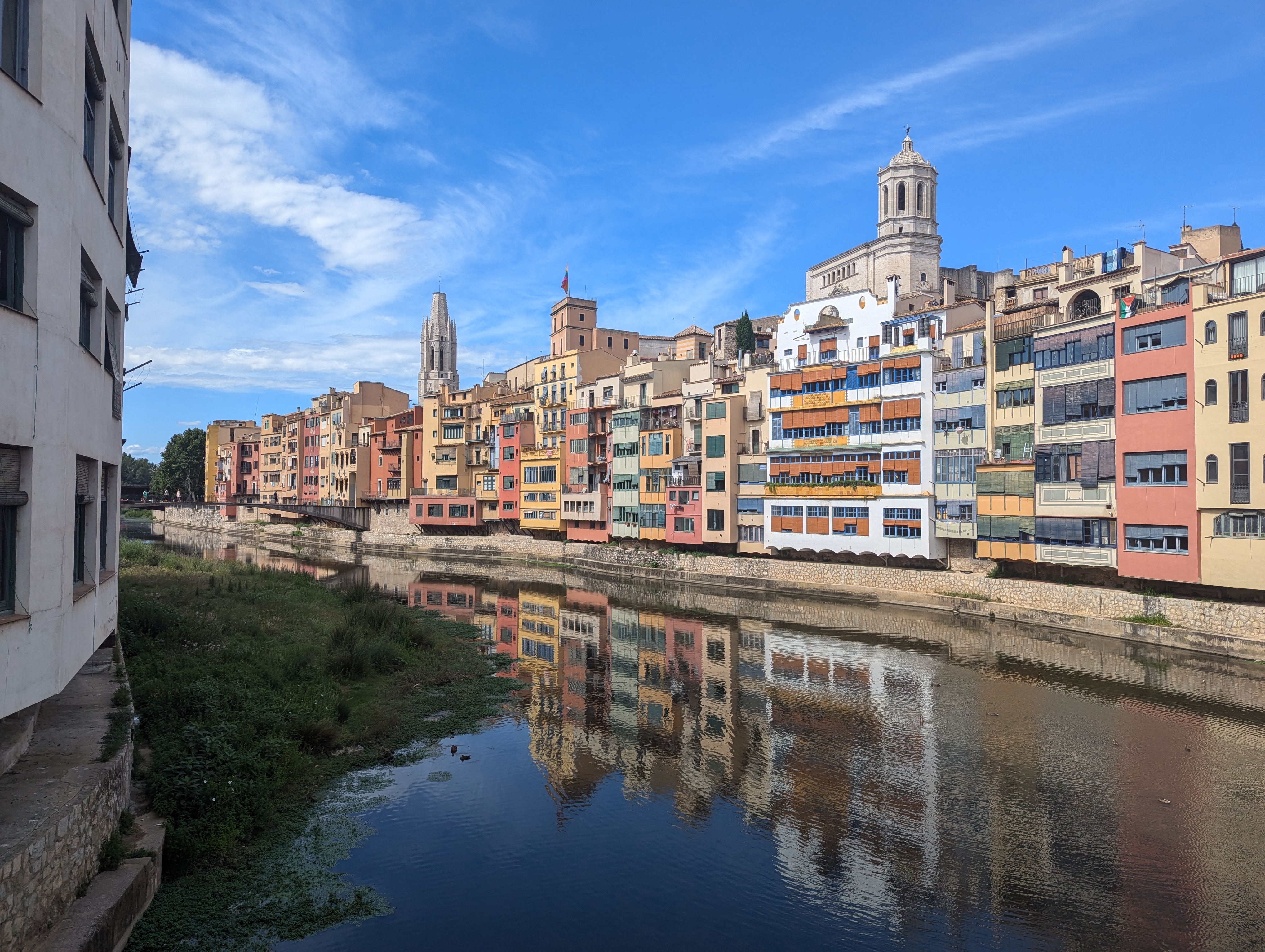
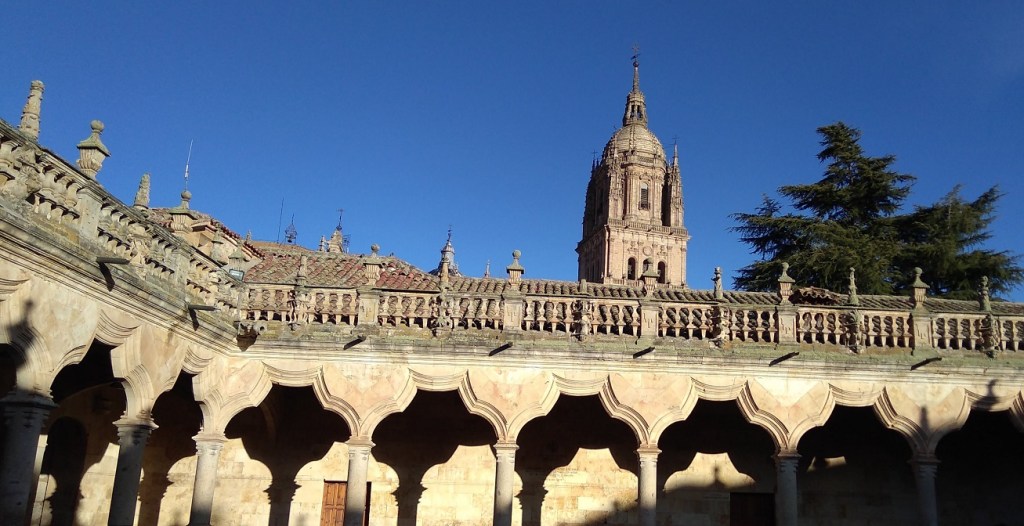
Girona, Spain

It was in Scotland that I joined the Pilgrimage for COP26 (2021) and later I walked the St Margaret Way and the St Magnus Way on Orkney.
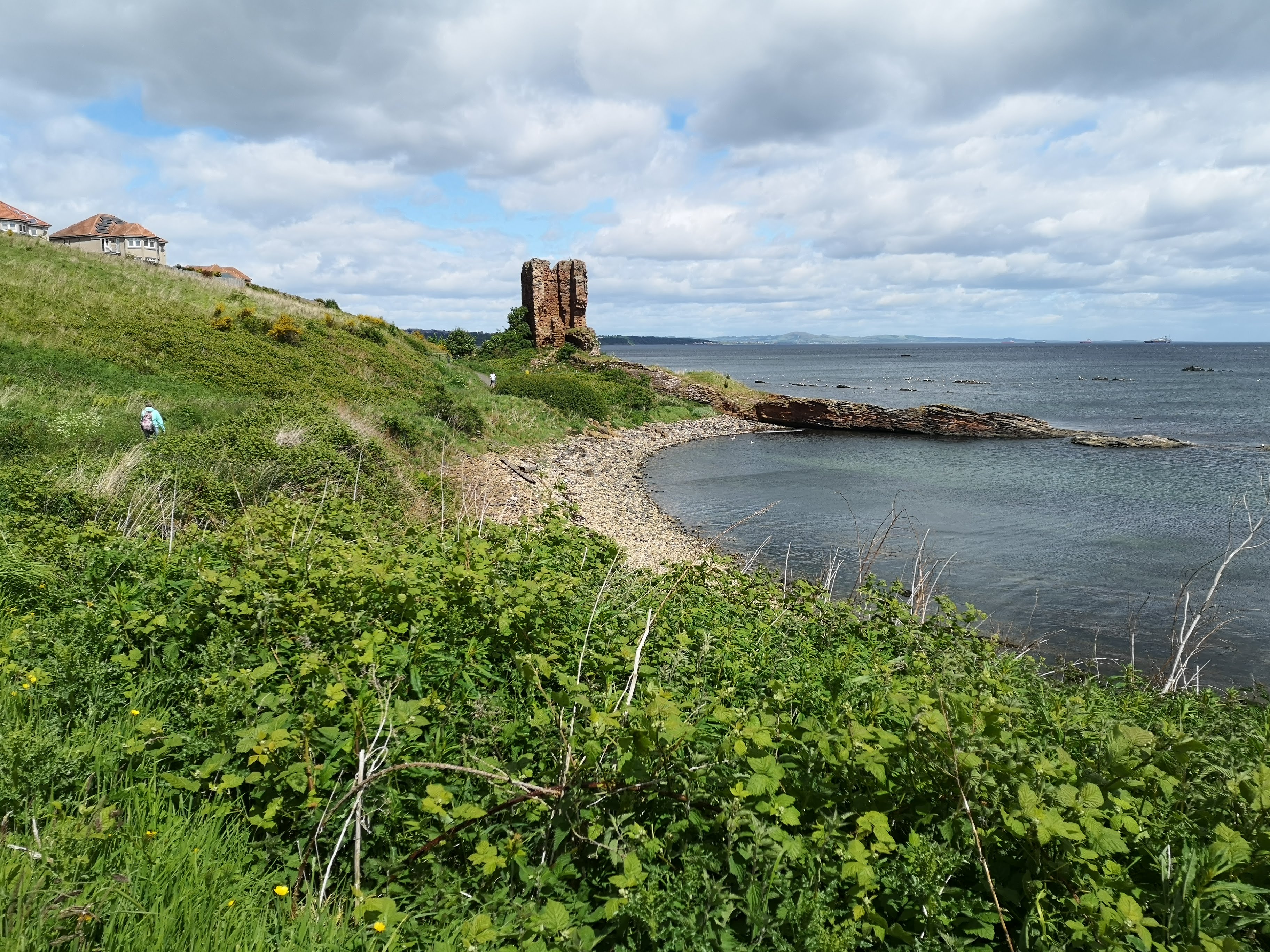
Seafield Tower near Kinghorn, Fife, Scotland

Secular pilgrimages are often long-distance walks that involve walking to places of spiritual significance. Whilst I don’t follow any religion or subscribe to a particular Way, I have studied Taoist philosophy and have attended a Buddhist sangha for many years. If I had to choose a deity, it would be Gaia, goddess of the Earth, because being part of nature and walking the landscape is a vital and necessary part of my life. Walking day-by-day, from place to place, one step at a time, is a meditation. Sometimes, the routes are named and prescribed in advance; at other times, I wander or drift in the spirit of psychogeography, following my intuition or signs around me. These walks are part of my art practice as well as being seen as pilgrimage: walks with an intention, for the chance to muse and remember, to commune with the ground, air and something ‘other’. I walk to see where the path takes me.
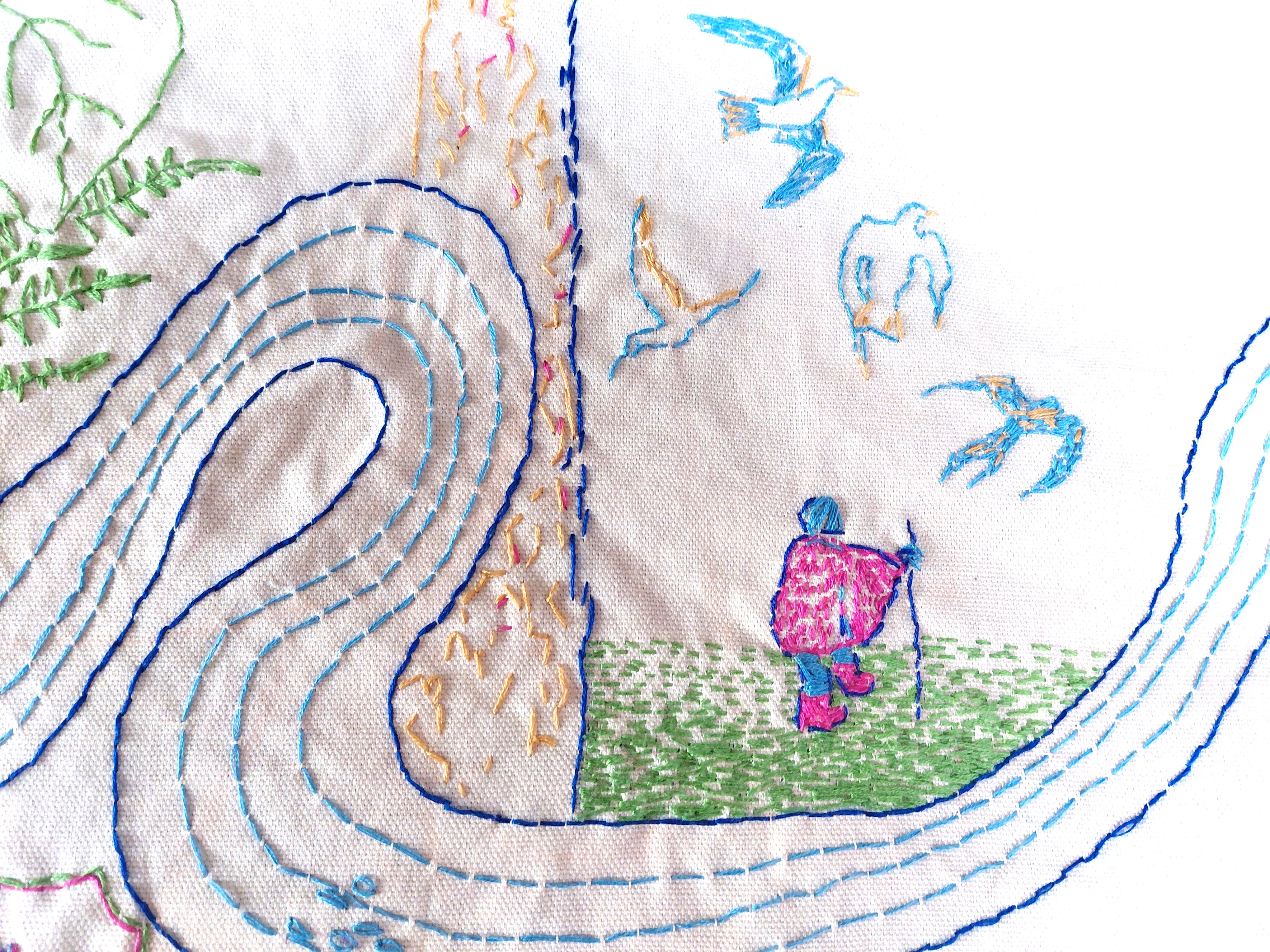
The Granton Burn, a stitched textile map; pilgrimage to a lost river. Edinburgh, Scotland

Walking secular pilgrimage is a simple act in many ways. To keep moving, passing through village, town and city, meeting people and saying goodbye, is humbling and an exercise in letting go. Never staying long, paying my respects and being respectful, I am a simple visitor, a traveller.

Images from day 1 of the St Margaret’s Way pilgrimage walking from Edinburgh to South Queensferry

Someone who travels, wanders

Peregrination is related to the Peregrine Falcon. The fastest animal known, with dives measuring upwards of one hundred and eighty-six miles per hour, the Falco peregrinus can be found all around the globe and the peregrinus part refers to a wanderer. Jess Jennison in WordOriginStories.com breaks the etymology of the bird’s name down into per meaning through and agr- land. This is further extrapolated to coming from abroad and travelling or migratory. The word apparently changed over time, from peregrinus to pelegrinus (with an ‘l’) then became to pelerin in French and pilegrim in Old English. Over the years, peregrine (the adjective) came to mean having a tendency to wander, and a pilgrim, someone who travels to a holy place. 
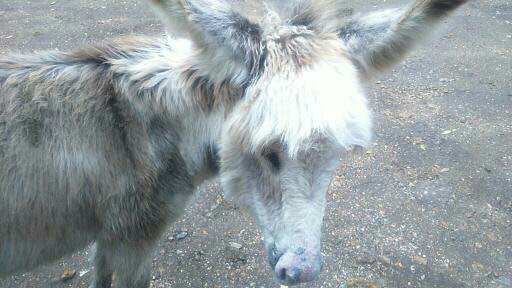
The name of the blog ‘Walking Without a Donkey’ references Robert Louis Stevenson’s Walking with a Donkey in the Cevennes and nods to the fact that I carry my own rucksack; I am my own ass.

Community pilgrimage

The Girona mini pilgrimage is an example of a community pilgrimage. Part of the Walking Arts Encounters in Cataluna, 2022. It was followed by two more in other parts of Cataluna: Olot and Vic. I walked solo pilgrimage along parts of the Cami Sant Jaume before the Walking Arts Encounters began, and to Montserrat afterwards.
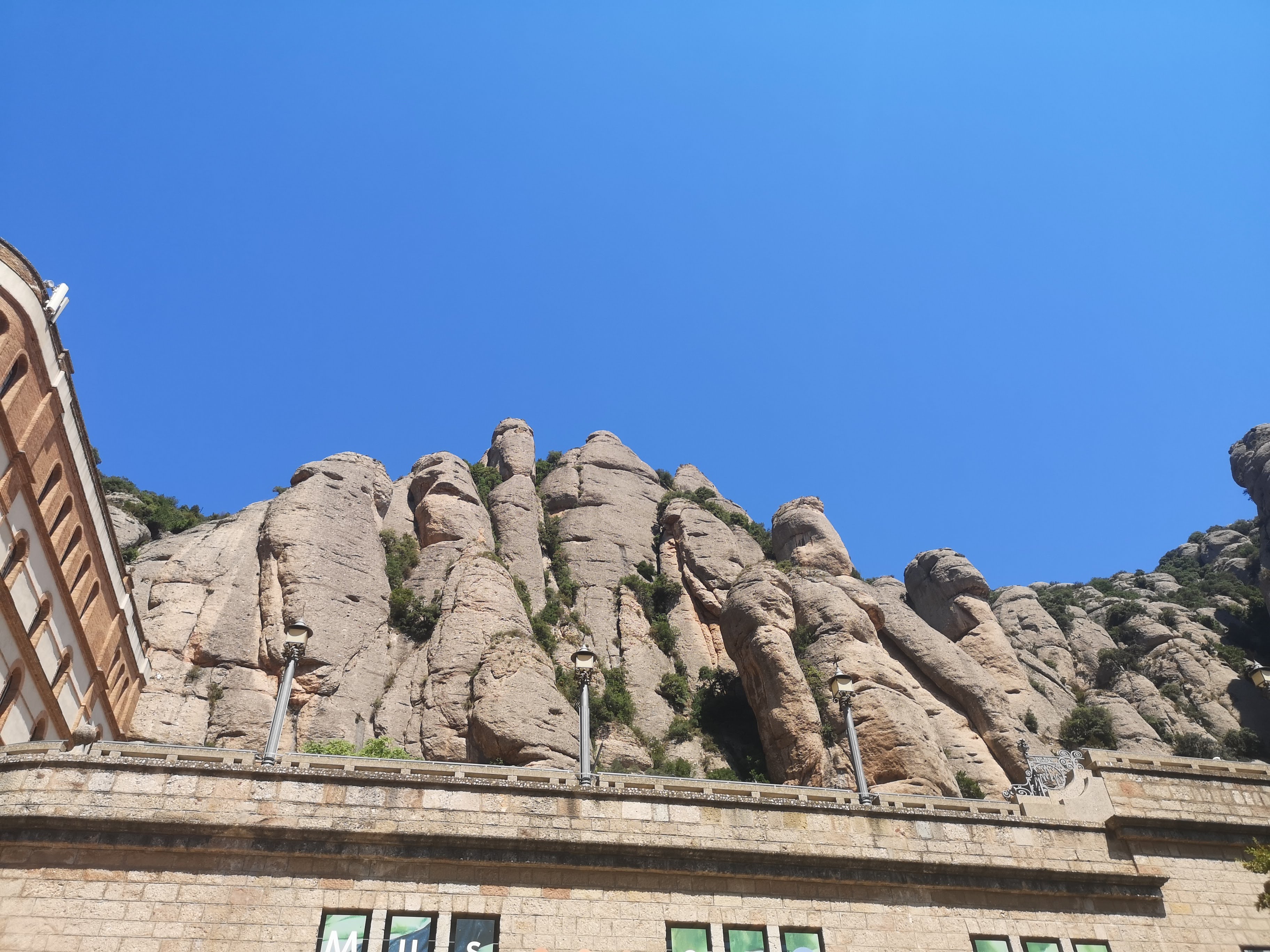
Pilgrimage to Montserrat

Art and Pilgrimage

As I walk, I frequently make Wayside Shrines – a way of showing appreciation to place. I collect things as I walk, dropping them into my pocket, and when a suitable ‘altar’ presents itself, I assemble what seems right in order to make an offering. It may be that ity does not last long. Perhaps it becomes covered with snow or dry leaves, is taken apart by birds or animals, or simply blown away in the wind; it doesn’t matter. The gesture has already been made.
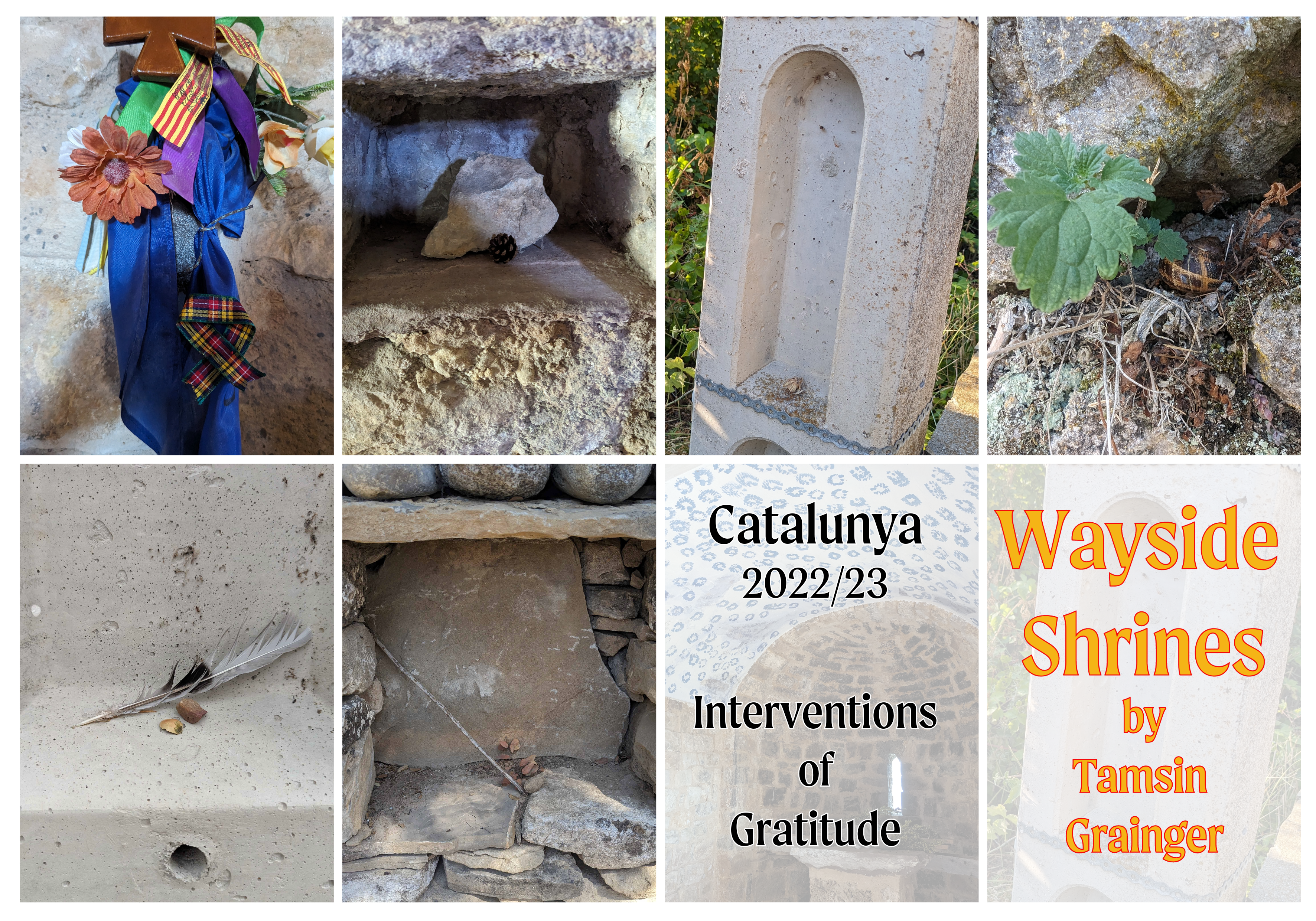
This zine of Wayside Shrines is available for £5 / €5.50. email tamsinlgrainger@gmail.com

Walking with Ants was a 2025 major project involving the creation of a new stitched art work for the Line(s) of Enquiry exhibition at Hardwick Gallery, Cheltenham and a pilgrimage. The Pilgrimage for the Small Things walked from Chepstow on the English-Welsh border, in the Forest of Dean, along the River Severn, and through the Cotswolds, arriving at the associatied symposium at the University of Gloucestershire.

All my pilgrimages and long-distance walking can be found on walkingwithoutadonkey.com. The role of the donkey through literature, historically and in pilgrimage can be found In Praise of the donkey.
Sweat mapping

A guest post by Marie-Anne Lerjen, a walking artist from Zurich (Switzerland). Her website is in German.

We walked a good long walk (24 kms) from Girona to Banyoles in Cataluña, setting off in a considerable heat (27 degrees) and finishing after dark. Here is Marie-Anne’s Sweat Mapping blog

It’s a quick but good listen on Soundcloud:

Featuring myself and many other walking artists from around the world who had congregated at the Art del Caminar conference.

Festivities and Delegates

Part of the Separation and Unity Project, Cataluña, July 2022

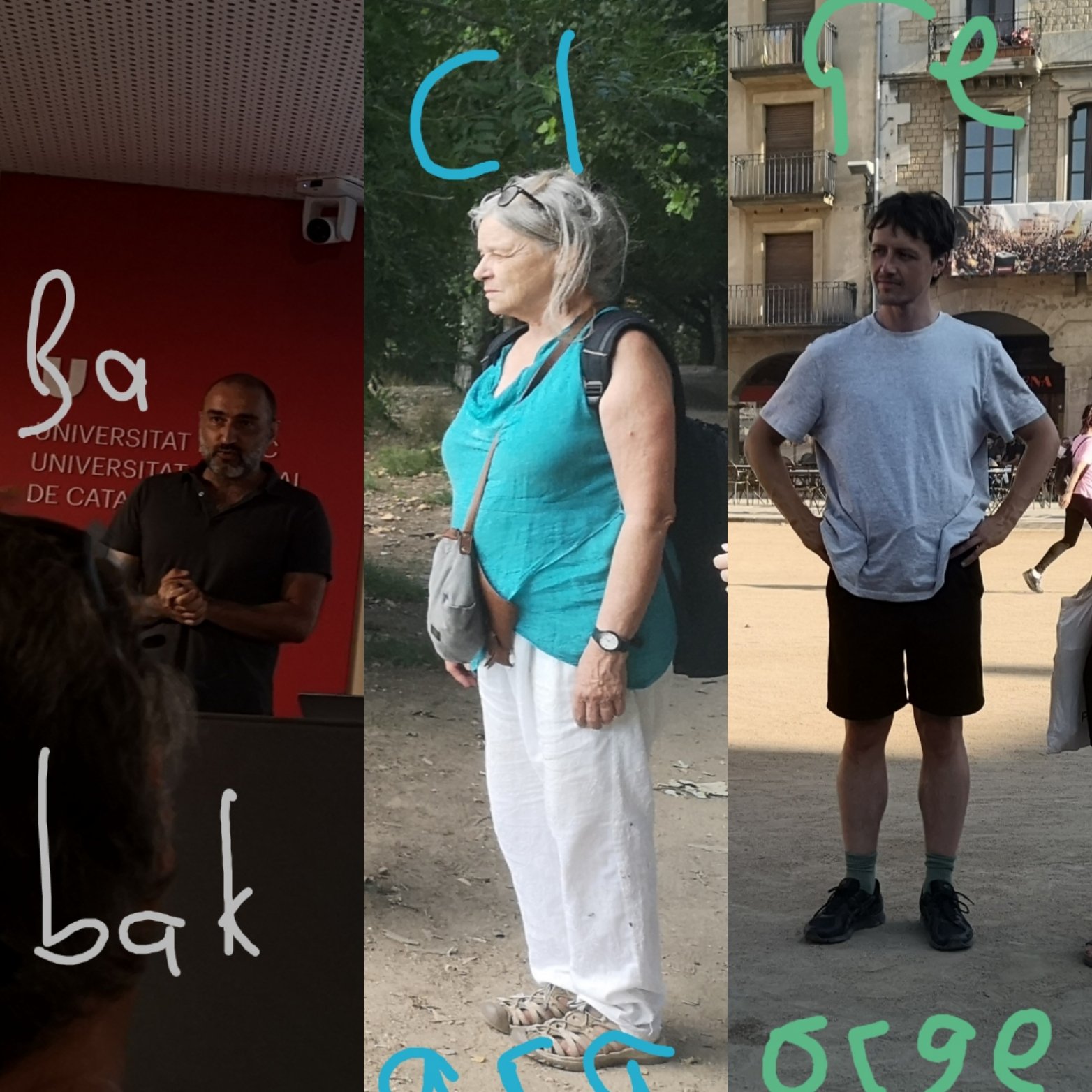
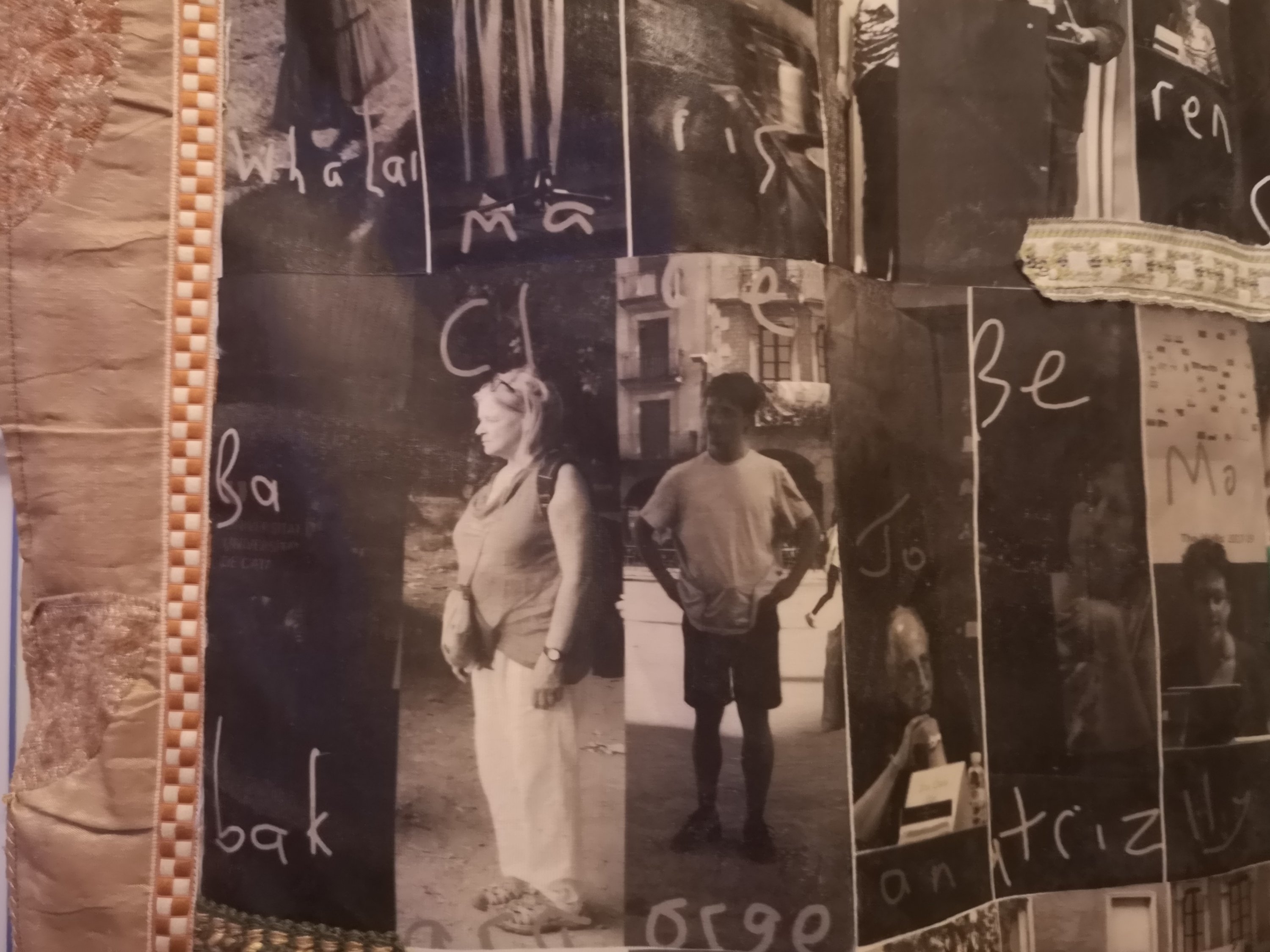
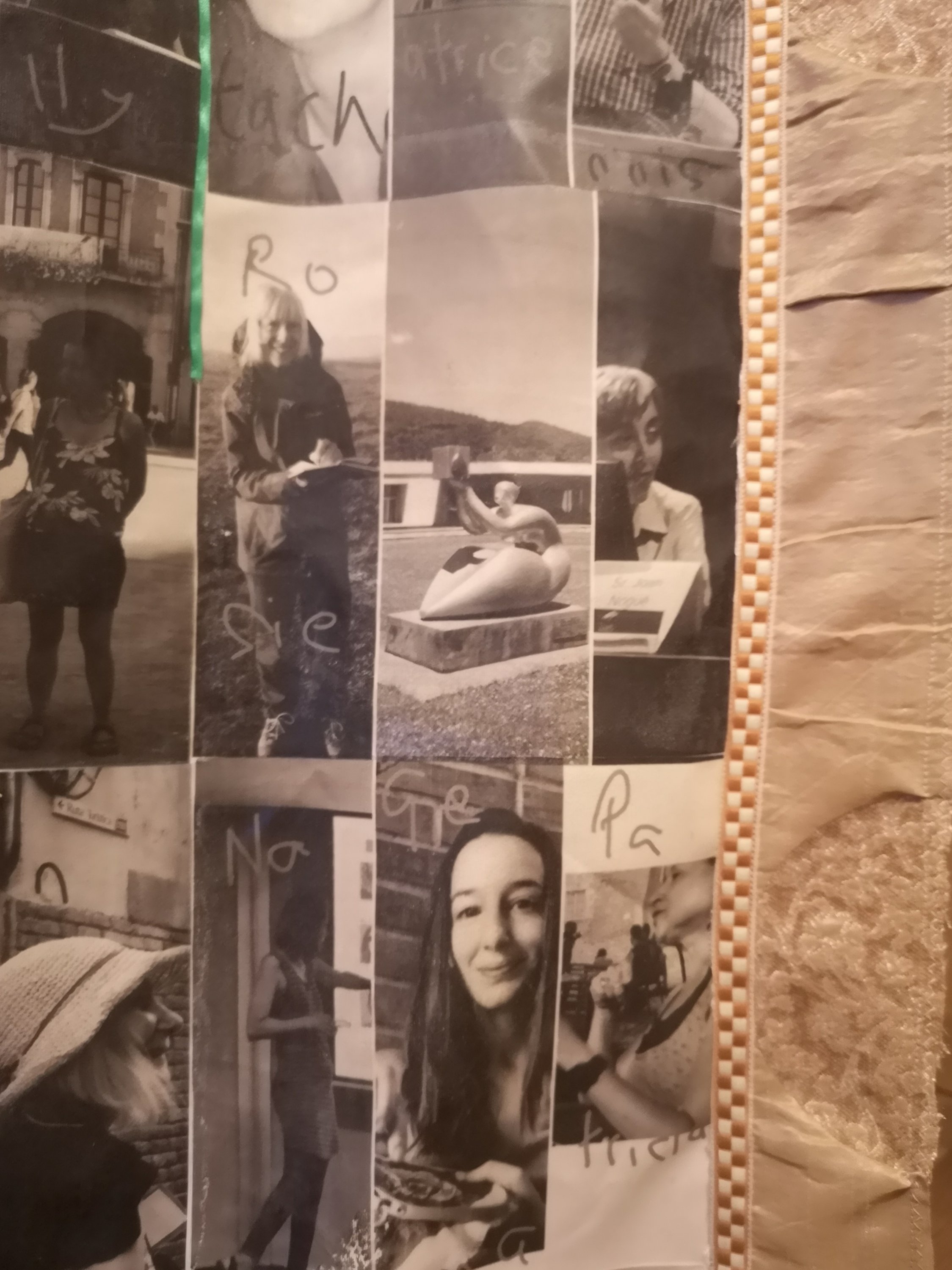
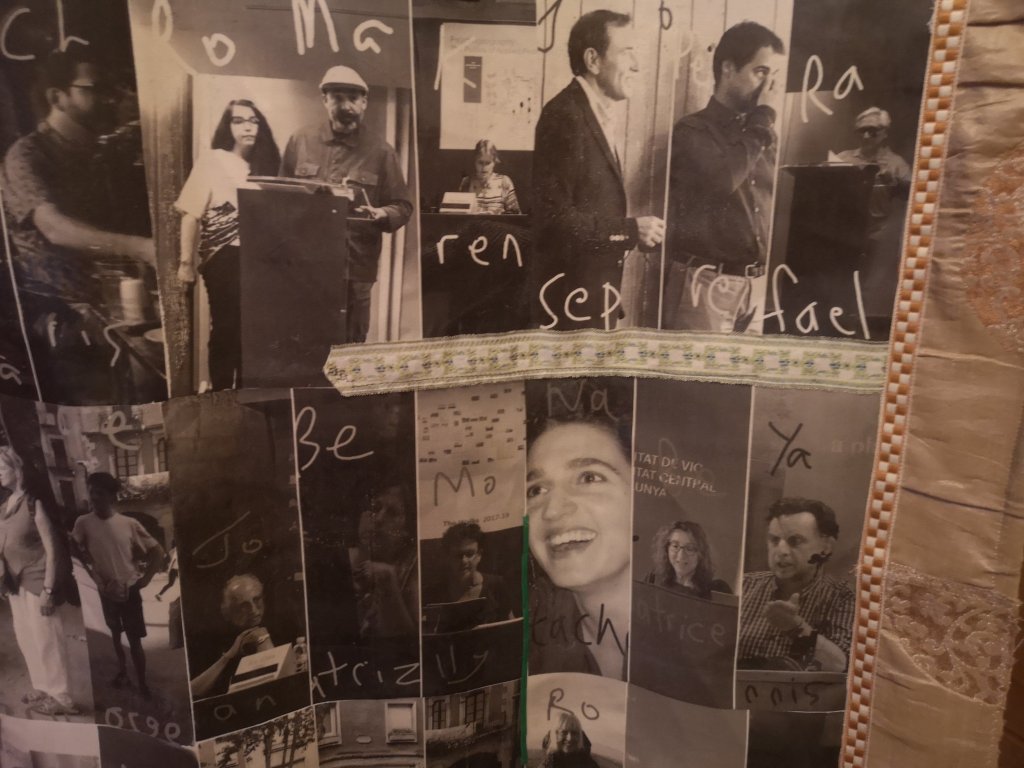
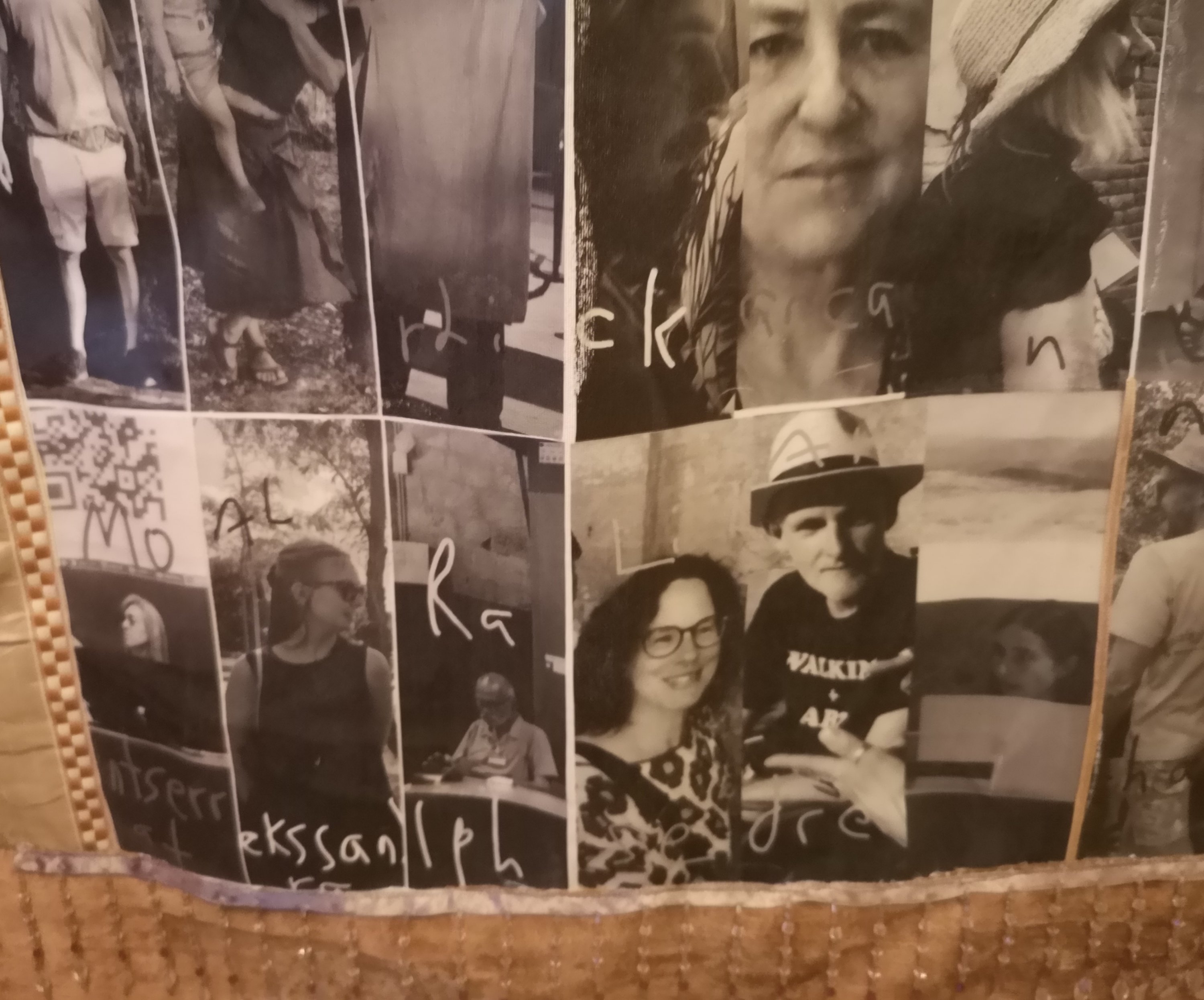
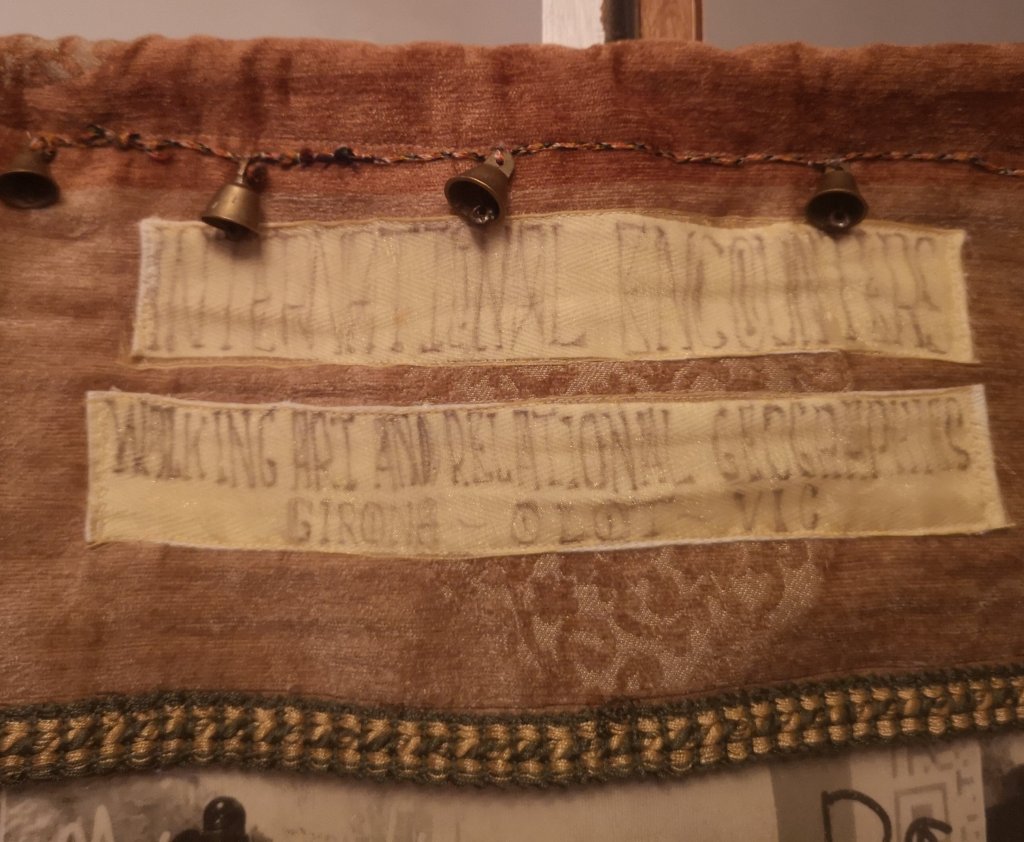
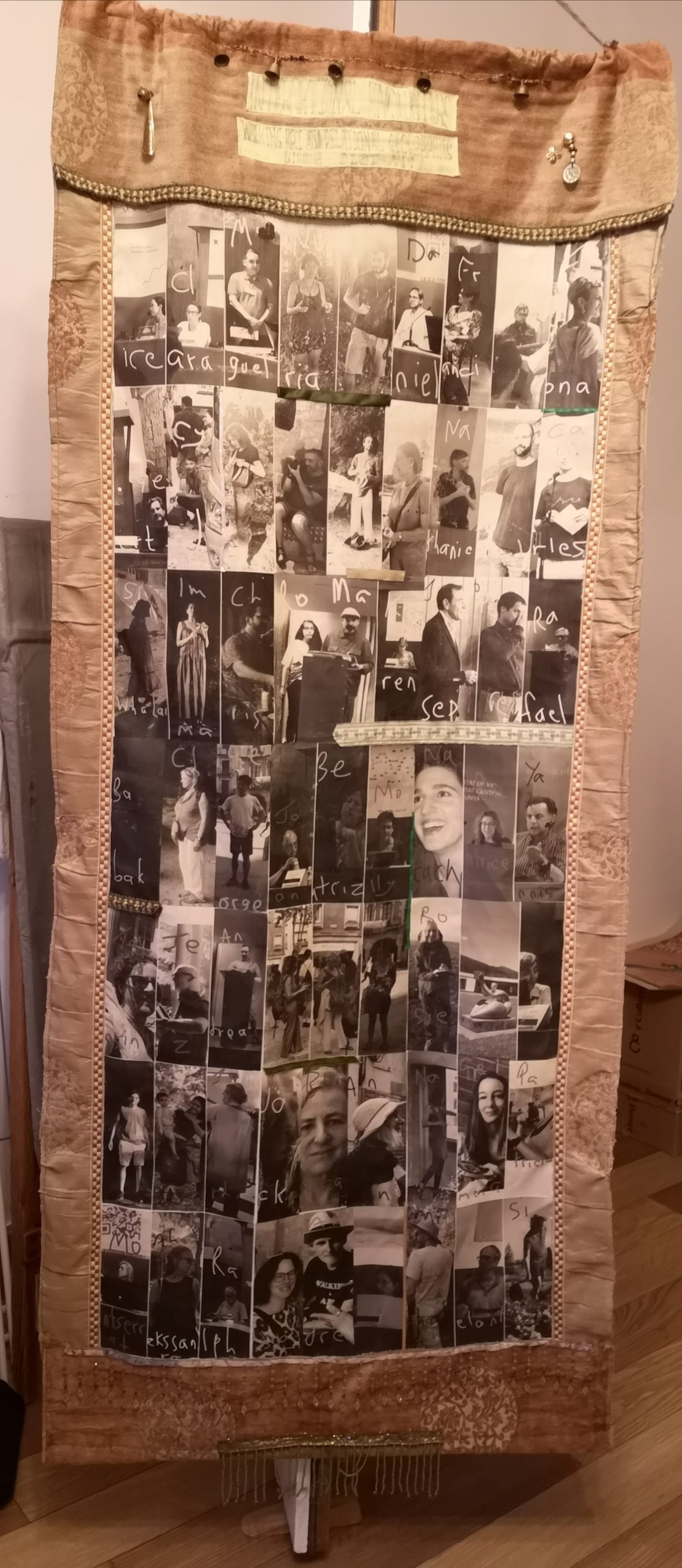
This wall hanging, ‘Festivities and Delegates’ represents an act of unity, the bringing together of many of those who attended the Walking Art and Relational Geographies International Encounters conference in Cataluna in July 2022. Planned for several years, but thwarted by the pandemic, delegates were at last able to travel from Australia, South Africa, Brazil, America and Europe to the conference in Girona, Olot, and Vic to share walking art and community projects via presentations and walkshops over a period of a week.

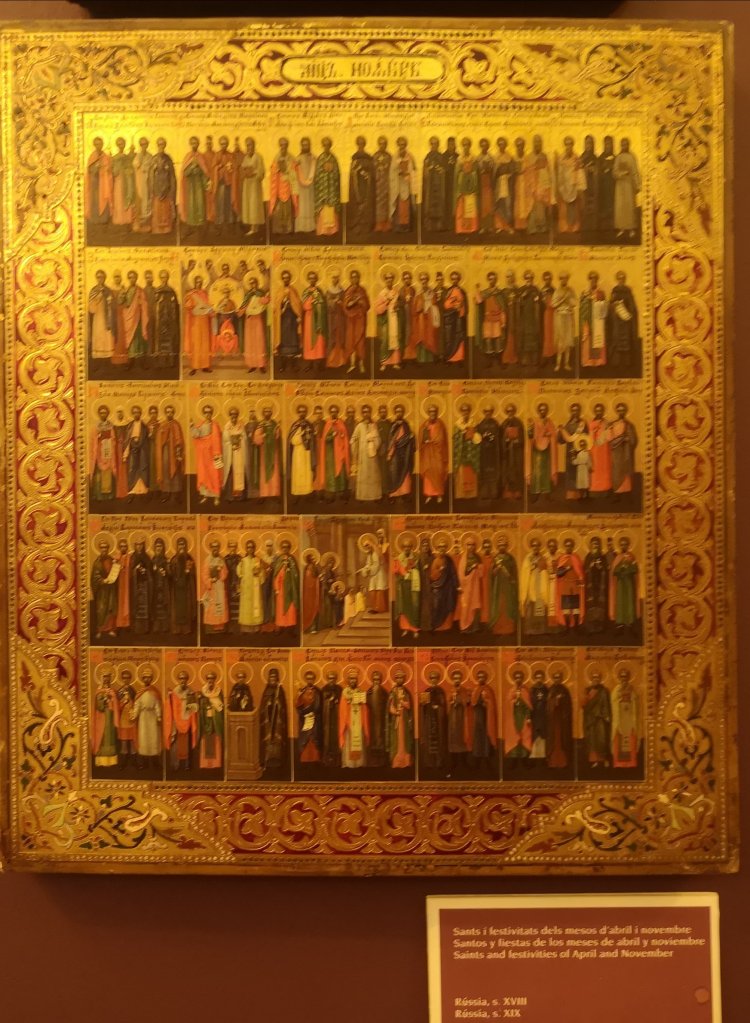
This work was inspired by the 18th /19th century ‘Saints and Festivities for the months of April to November’ in the Museu Montserrat. I climbed up there after attending the conference. The ornate Russian ‘menologion’ is a calendar featuring rows of saints, above which are their names and the dates of the days on which they are honoured, in cyrillic script.

This would have been a visual reminder of the annual Masses of the Orthodox Church which celebrated many different saints.

menologion (menologium, menology, menologue, menologia) was sometimes a liturgical ‘office’, an ecclesiastical, Eastern Orthodox service book or martyrology; a long list of saints and the details of their lives arranged according to the months of the year.

It is not dissimilar to the secular mural at the National Portrait Gallery in Edinburgh depicting key figures and events in the history of Scotland. The Separation and Unity Project is interested in the movements towards and away from independence by Scottish and Catalonian peoples, at what urges us to separate from, or join with each other.

I am also referencing Buddhist and Hindu mandalas, and other celebratory depictions used to inspire their followers and remind them of the true path. Mandalas come in many shapes and sizes, often using geometric arrangements. They can represent the whole universe, and be used as a way to separate from everyday existence and focus on what is important for greater knowledge. The Vajrabhairava mandala, for example, is a silk tapestry woven with gilded paper depicting lavish elements like crowns and jewelry.

The human mind is like “A microcosm representing various divine powers at work in the universe”

John Ankerberg and John Weldon (343:1996) via Wikipedia (see below)

Process and production of Festivities and Delegates

I took digital photos and video stills from my phone documentation of the conference and the social time we spent together, and manipulated the images using free Layout software. In some cases I used social media images. Instead of the elaborate calligraphy that you can see on the Russian ‘Festivities…, I wrote free-hand with my finger or with a biro.

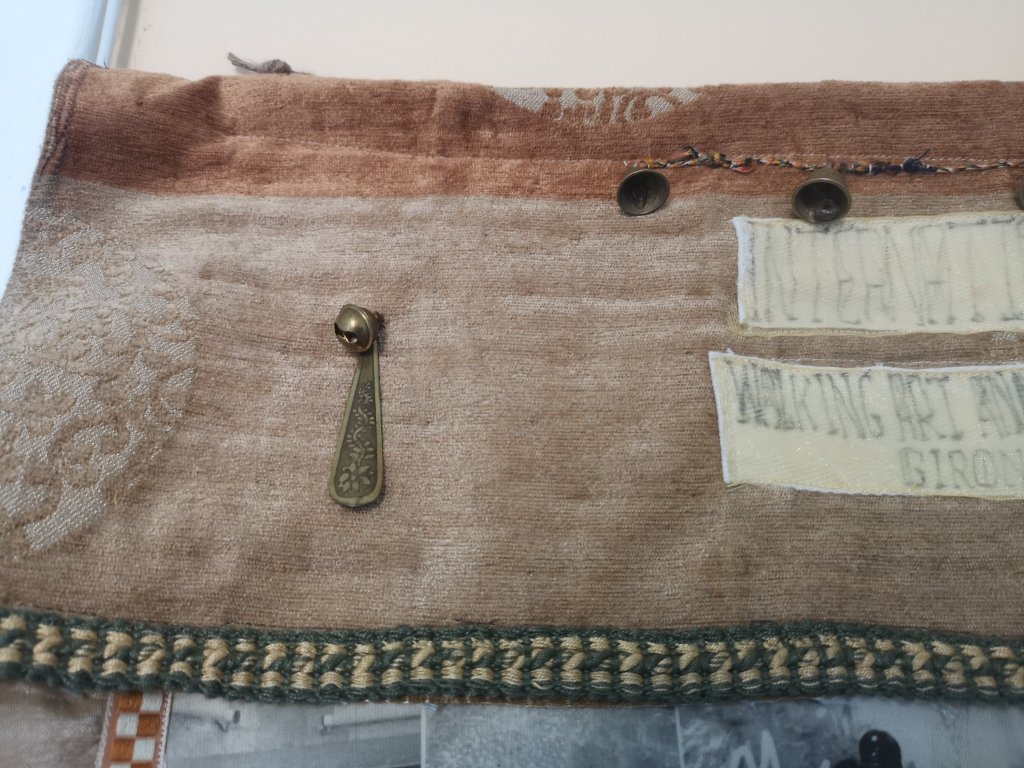
Details: 160cm long and 70cm wide, mixed media – sewed from scraps of upholstery fabric which came from free sample books. Ribbons, tapes and sundry, shiny objects such as bells, earings which have lost their pairs, and sequins. Iron-on paper was used to transfer the photographs onto the fabric.

It incorporates a number of small brass and other metal bells, with reflective totems. These were/are often used to ward off evil spirits, to bring ones attention into the moment, to reflect the devil’s face back to him, and, contrastingly, even to represent the sound of the Buddha’s ‘voice’ spouting wisdom. The protective aspect would also traditionally have been as much from the ‘monkey mind’ and other natural inner temptations, as from what might be attacking us from the outside. Tantric mandalas would have been an aspect of separation and protection from the outer Samsaric world.

Quote: from their ‘Encylopedia of New Age Beliefs: The New Age Movement’, (p. 343, ISBN 9781565071605 archived from the original on 2016-06-03, retrieved 2015-11-15)

International Walking Encounters – Cataluña

The Project – part 1

June/July 2022

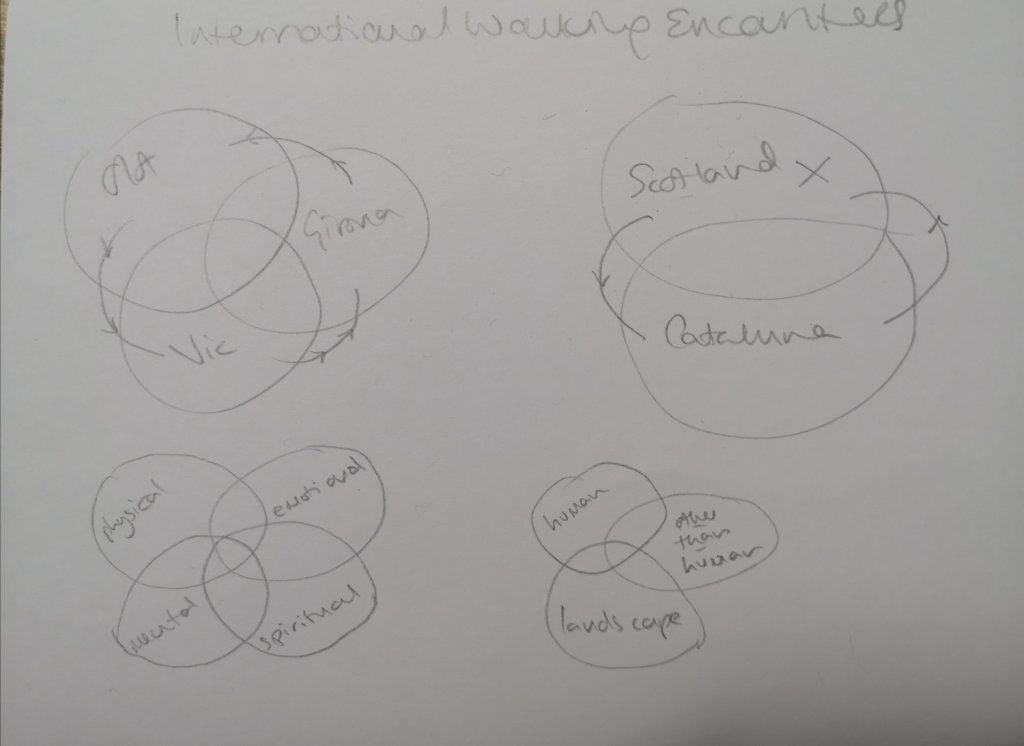
The first part of The Separation and Unity Project between Edinburgh and Cataluña takes the form of walking, walkshop and outdoor performance as part of WALKING ARTS ENCOUNTERS, Walking Arts and Relational Geographies

There is a spiritual-political-geographical link between Edinburgh, Scotland where I live, and Cataluña in the Iberian Peninsula where the Encounters are taking place (Girona, Olot and Vic). In both countries, we have long been engaged in matters of self-determination, with debates over separation and unity, community, national and inter-national relationships. Whilst primarily represented as a battle fought in law courts and parliaments, or between opposing protesters on the streets, this has often been a binary approach. It is necessary to spend time listening, sharing and making work with artists and members of the community in order to understand each other better and find possible ways forward.

Europe is defined, in many ways, by borders. They speak of crumbled empires, shifting boundaries – most of them, …. speak of unimaginable suffering.

Kerri ni Dochartaigh ‘Thin Places’ p17

As a walking artist, secular pilgrim, feminist and outdoor performer, I will carry the awareness of these issues from the Scottish hills to the Cataluñian mountains, from Edinburgh’s extinct volcanoes (Arthur’s Seat, Calton Hill and Castle Rock) to the volcanic land of Olot, and between the Oak Wood in Dalkeith Country Park and the oak trees of the Plain of Vic.

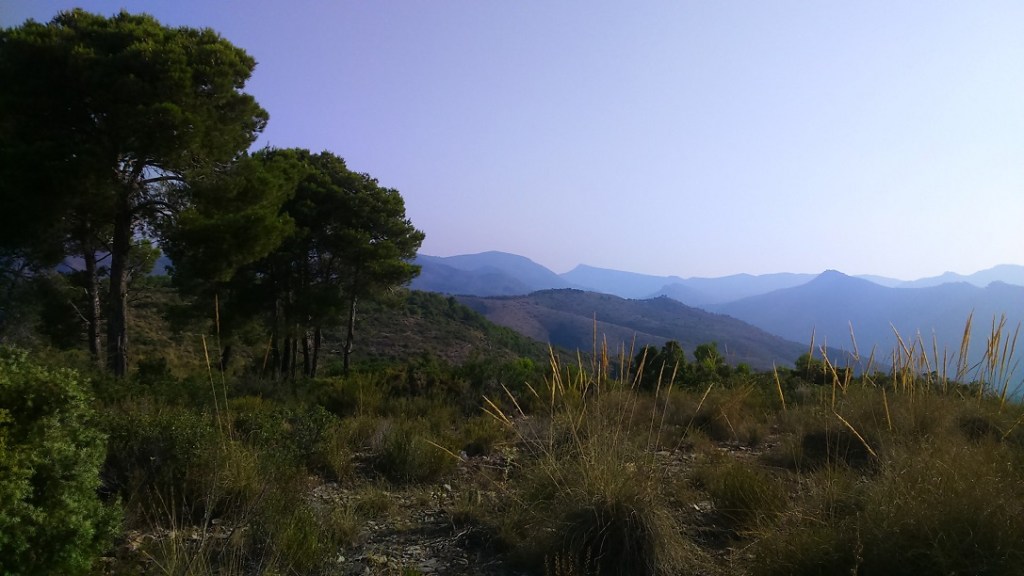
I have been walking the St Margaret’s Way through the carboniferous volcanic rocks of the Burntisland area in Fife, Scotland, and will be able to carry my experiences with me on the ancient spiritual path which unites each of the three conurbations where the Encounters are happening, the Camí de Sant Jaume (Camino Catalán).

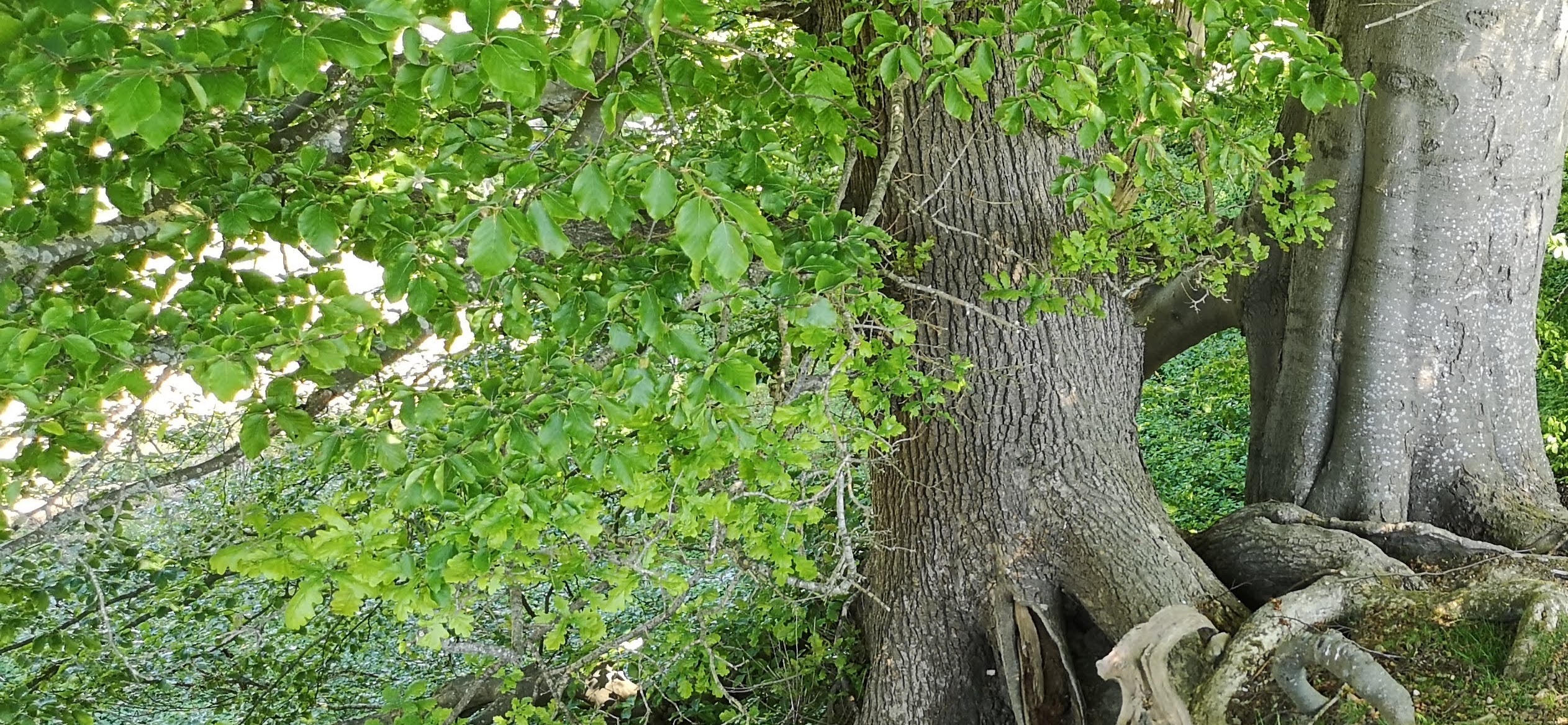
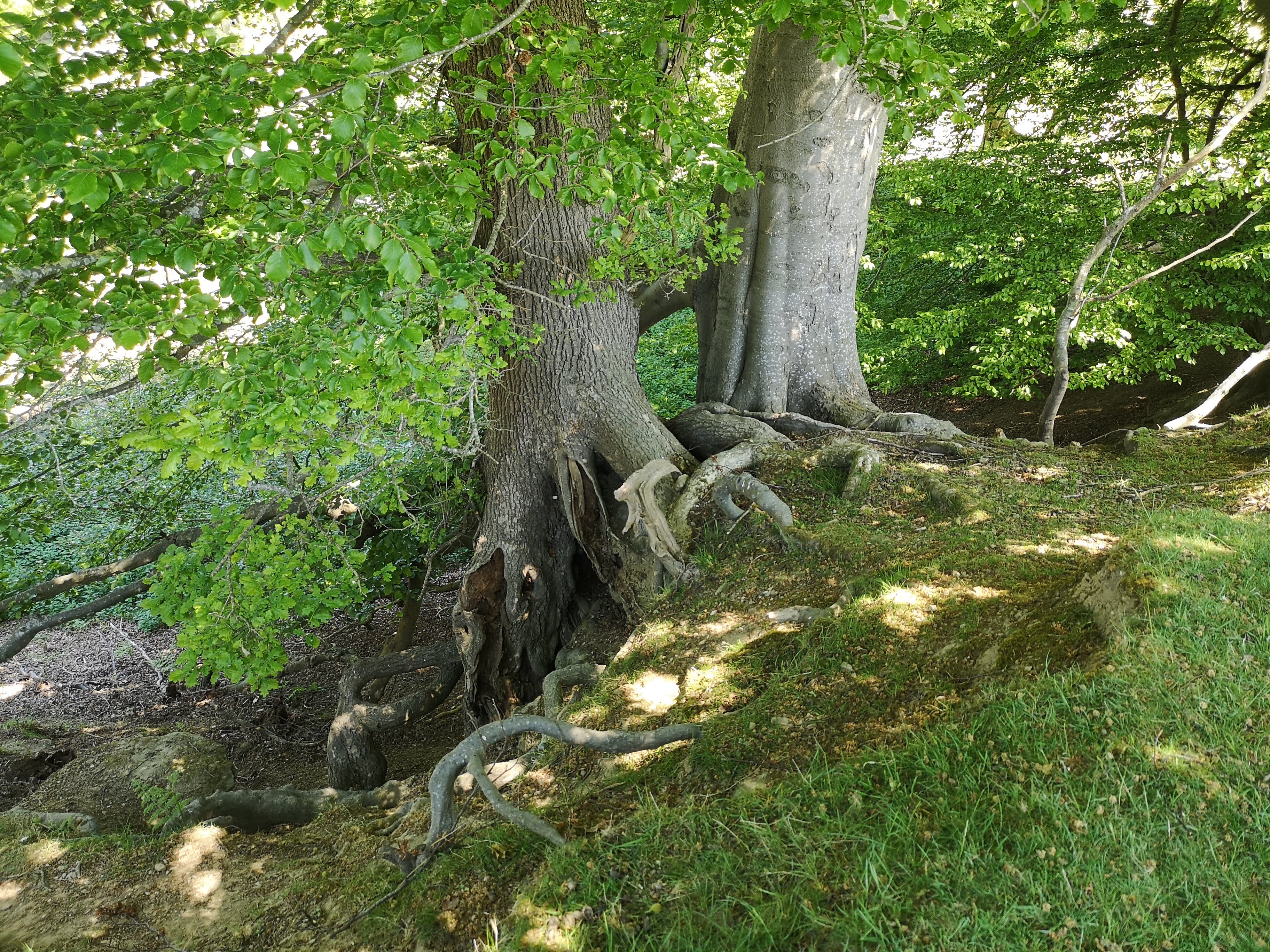
Co-mingling of Oak and Beech

Separation and Unity

This is the artistic focus

  • in the human experience (notions of belonging and alienation, shared feeling and dislocation)
  • consideration of the other-than-human and our relationship to that realm; and in the landscape

Documentation:

  • Impromtu performance
  • Collecting words, images, marks, and sound segments
  • Mapping
  • Film and pamphlet on return to Edinburgh

Collaboration with delegates during the International Encounters will take the form of walking sections of the urban camino together in each of the three locations. This ritual series of three mini pilgrimages will be a way of considering the spiritual aspect (in the widest sense of the word), and the trinity of psychogeographical outings will form a unity between the three sites for the purpose of comparing sensations, ideas and feelings. Each walk will start with an embodied exercise for individuals, a group game for unification, and prompt = one hour in each place:

  1. Girona: starts at the Catedral de Girona to Pont de L’Aguia 9pm for 40 minutes
  2. Olot: starts at Plaça Major to Pont de Sant Roc 6.30pm for 30 minutes
  3. Vic: starts at Catedral de Sant Pere de Vic to L’Atlàntida Centre des Arts (35 mins 6.30pm
Co-existence and mutual reliance

I will be making contact with women for whom this focus is pertinent, both in Scotland and Cataluña. As always I will seek Shiatsu practitioners with whom to exchange.

#walkingandrelationalgeographies @naucoclea #artdelcaminar

Here is a link to the Art del Caminar conference film