
Author: tamsing
30 Women and men took a walk on the weekend of 4/5 April 2020 when most people around the world were vastly restricted in their movements for the purpose of limiting the spread of the corona virus. They took 30 minutes of exercise, as encouraged by their governments, staying close to their homes and collected feelings, sounds and images while they were out.
These were made into a video / audio, a soundtrack of photos, to share with those who were unable to leave their homes – individuals who were isolating and the peoples in Spain who were told to stay at home, for example. People took walks in Israel, Greece, France, Iceland, the US, the Czech Republic, Scotland and England. 79 joined the Facebook group (including the 30) over 48 hours.
Here is the full video of the sounds which were collected by the people above, for you to watch when / if you are stuck inside, or if you would like to hear what it sounds and looks like in different parts of the world.
I have selected one photo per participant for this blog. The other photos mentioned in the commentary below will be in the film. Guidelines were set for the walks and they can be found here.
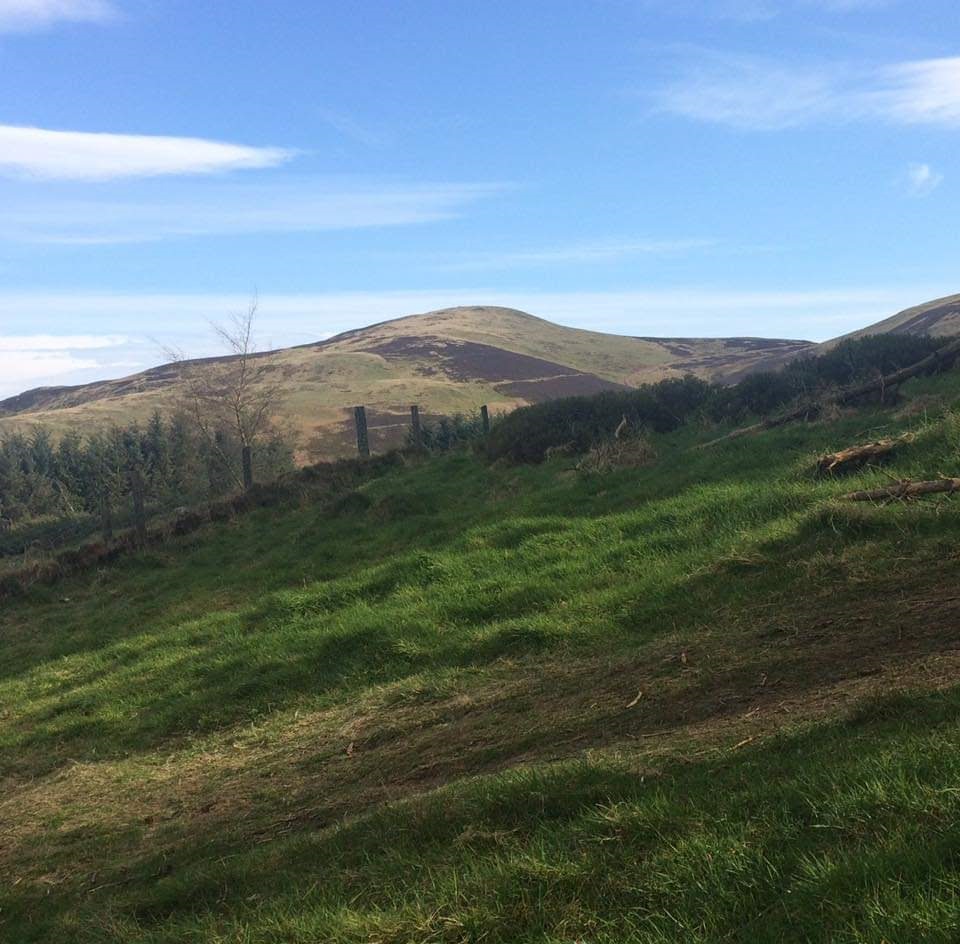
LG wrote: I started from home wearing gloves as there are a few gates and stiles to go through before gaining access to the hills near my house. I did have to speak to one woman who commented on my walking pole, wishing she had one. She had just come down the steps in my photo, they are very steep. I climbed the steps then made a right angled turn up the side of the hill where all Edinburgh and the Firth of Forth come into view below – not a great photo it being my old smart phone, but it is amazing whatever the weather. I walked up to the brow of the hill, the larch are beginning to flower, hard to capture, it was quite windy up there, and the fence posts all have moss hair! I sat for a while to admire the view looking east and south towards Allermuir Hill. Down across the boggy bit to the lovely stone seat erected as part of a woodland planting initiative commemorating the First World War, where I sat again to listen. Wood pigeons, chaffinches, two magpies, a flat-footed hill runner, a mountain biker struggling up the hill, lots of silent intervals. Down to a small burn, took a short video. Back along a different path and across a field through the woods to my street. Love this tree, someone once carved a heart, it has grown with the tree and the tree has formed its own heart above it ❤ This is a favourite short walk, which since my hip replacement last autumn, I can now enjoy again. I’m so lucky to have this on my doorstep – think I’d go crazy if we were confined to our homes!
Video on Facebook – click on Liza’s photos within her post and you will see her video of a beautiful burn.
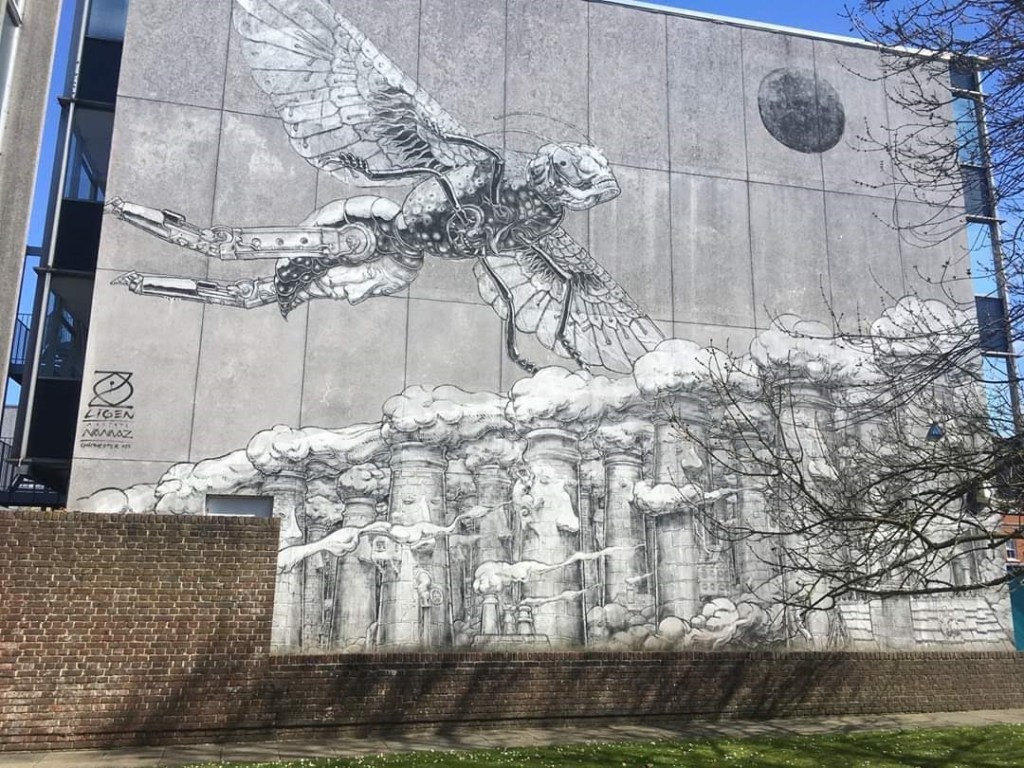
KL wrote: I had a slightly belated, long, tiring and enjoyable cycle ride yesterday, but on Saturday a short suburban walk. Space to observe normality and uncertainty, fears and opportunities, isolation and society . . .
Kim’s audio on Soundcloud 4.4.2020 – 04:04:2020, 12.40
JW sent videos – from herself in Edinburgh – Wind Murmuration – and from a friend of hers on Holy Isle off the south west coast of Scotland.
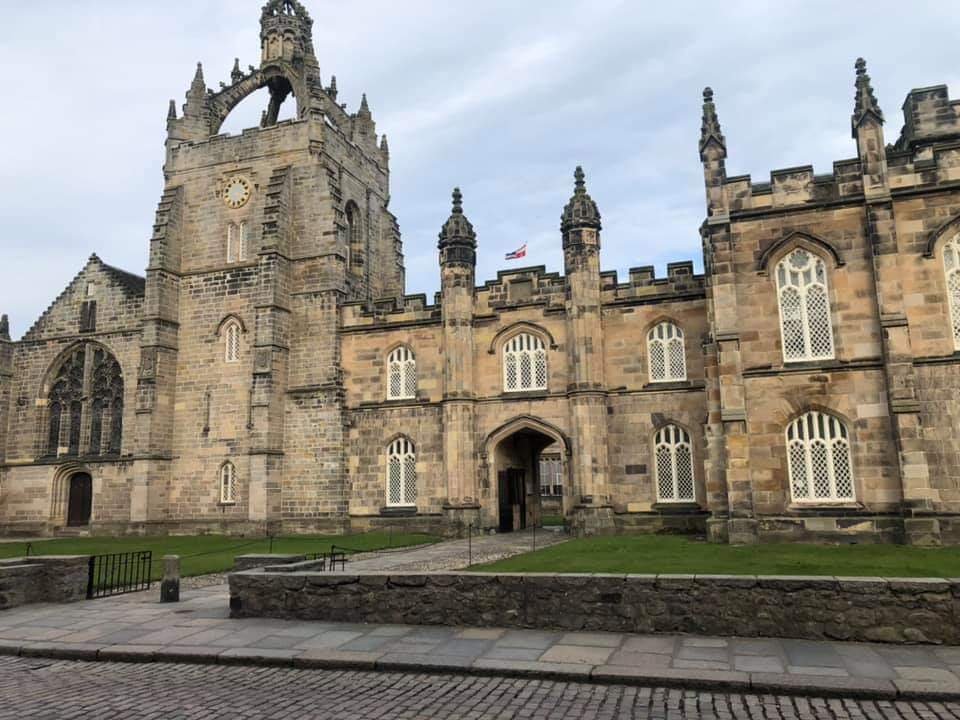
GC wrote: I went for a walk around the block today that led me to Aberdeen university. I loooove that area. So nice and full of old building, lovely houses, little cottages. It’s the old Aberdeen 😍 Daffodils are in bloom, Seaton park was deserted and it all felt so peaceful. It was 3. 4km and bird and bells were ringing at 6pm. Bliss ✨⚡️#walkgowild
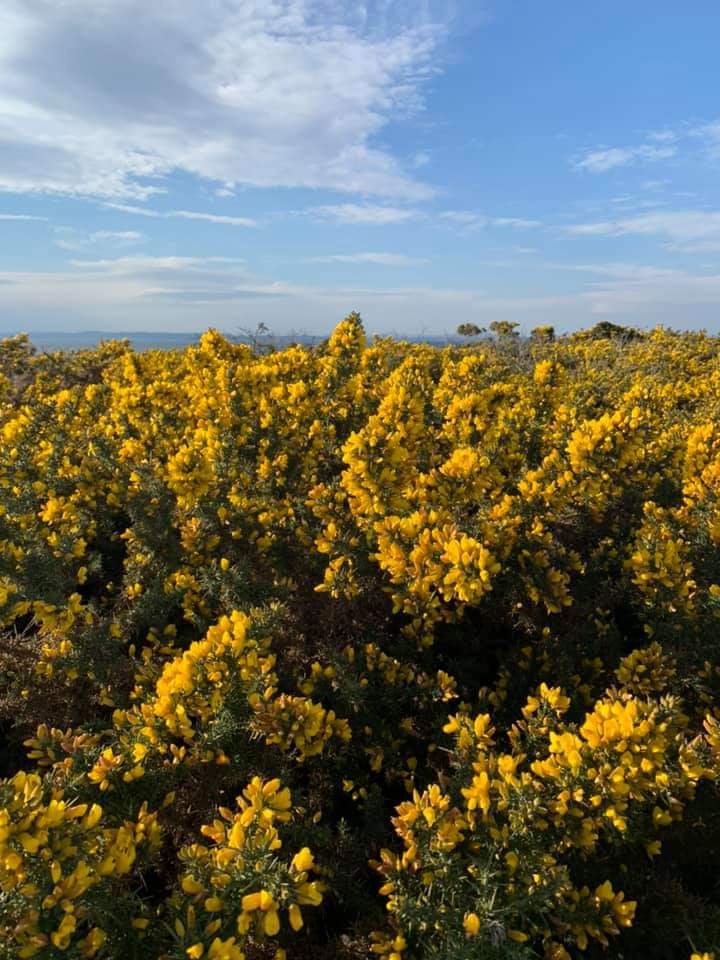
EP wrote: I walked by the coast with my dog on Sunday afternoon – my daily walk towards Musselburgh, near Edinburgh. Lots of birds chirping in the warmth of the sun, so fortunate to have the Forth estuary on my doorstep. The sea soothes me. Seaweed in abundance, daffodils in the scrubland, bright sky sunshine – so good for the soul. I love yellow – gorse on the hill. Healing our world.🌎
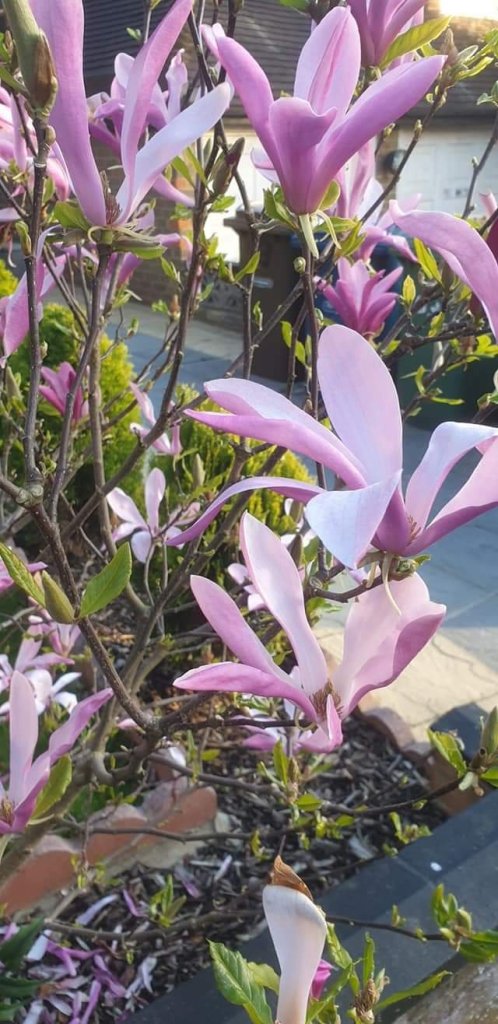
Carmen S wrote: It was a late evening walk, beautiful light, extraordinary blossoms, spring is here.
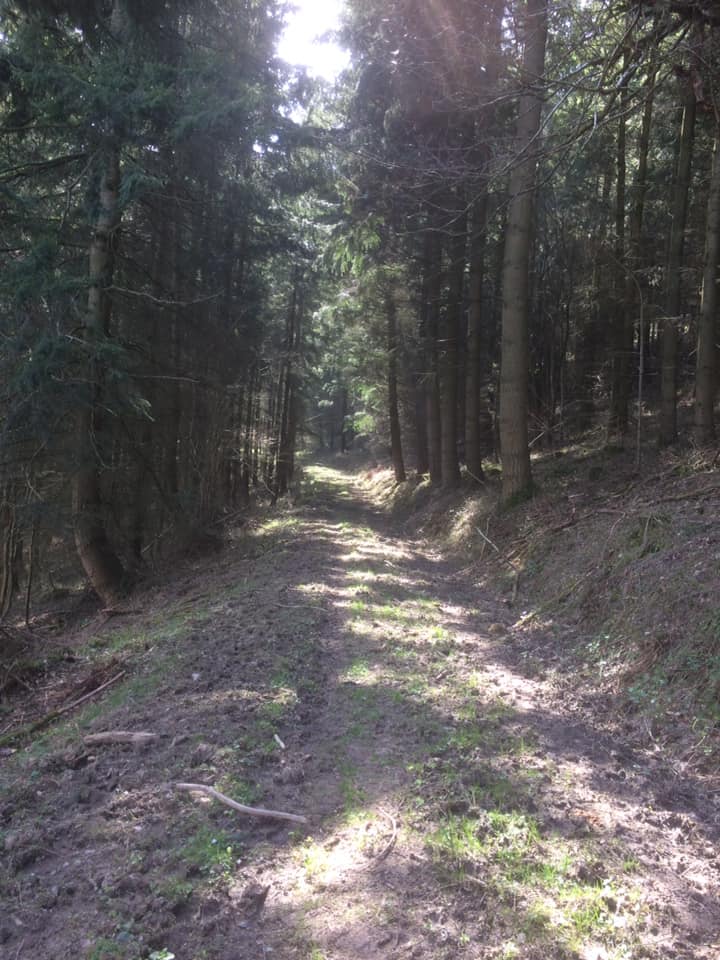
SJ wrote: Today’s walk next to my house 🙏
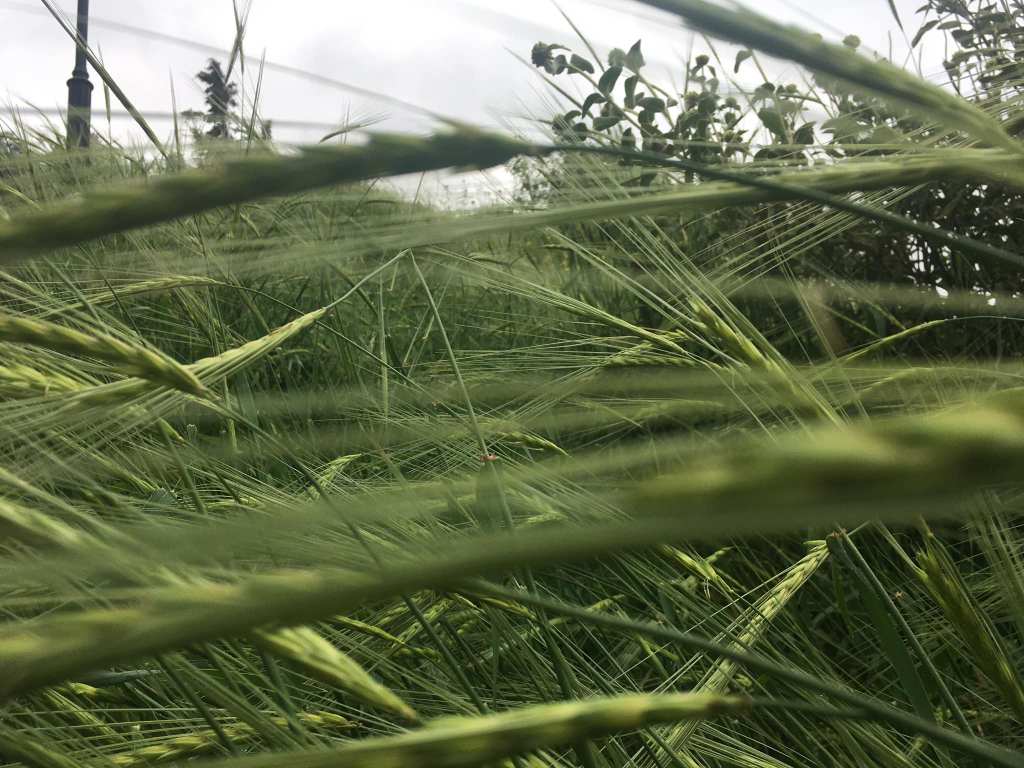
Maria G gave her photos titles: Walk and sense all dimensions! Far, close, hug, and Leia.
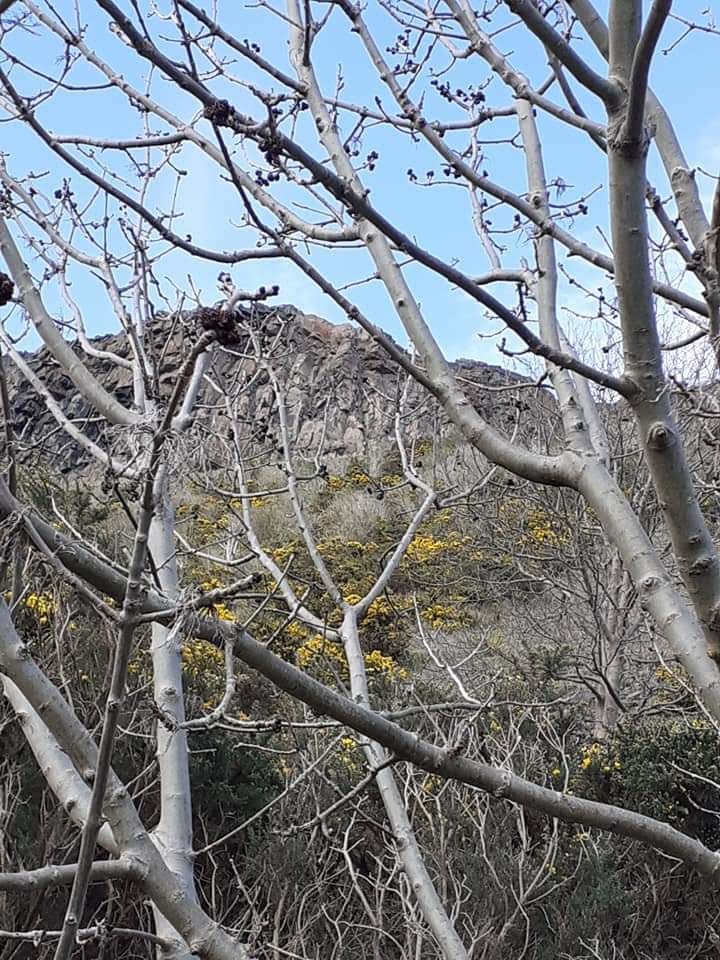
GI wrote: My favourite walk and I am so lucky to live near by the Arthur seat, Edinburgh. I could not resist to walk with the bare feet, the Earth was so warm even thought the sun came out later on – such beautiful day, very grateful for moments like this. My daughter was climbing the tree, I got the beautiful hag from it and some fresh nettles to brew the tea and we collected white fluffy feathers on the way home to be creative 🙏/ Sunday around 5pm. The concert from all the birds and gentle wind were so refreshing.
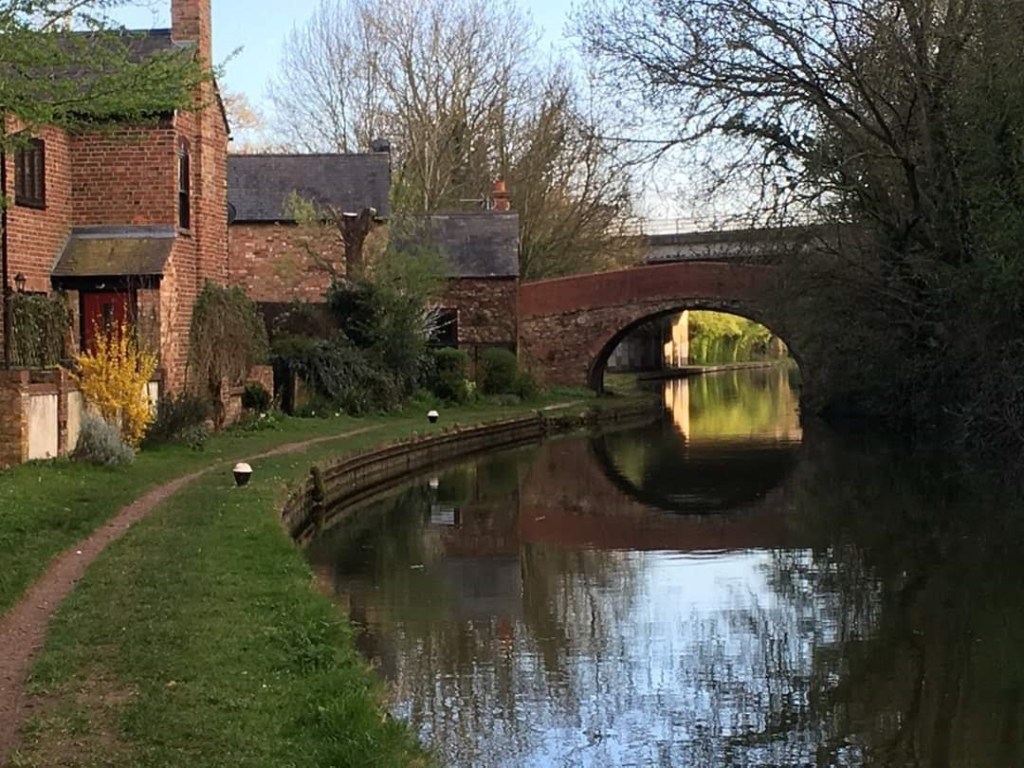
Catharine S wrote: A stroll in the local park in Milton Keynes – along the canal, and then back along by Caldecotte Lake, up a bit to Ouzel Valley park, and back onto the Grand Union, and home. Traffic noise is possibly less, but still pretty noisy – not too much bird song to pick up, so no audio. Pub is closed, which I notice means later on less light pollution from the sign, allowing for a bit more vision of clear, starry nights. I appreciate the old canal bridges over the Grand Union in Milton Keynes, and the good looking moon.
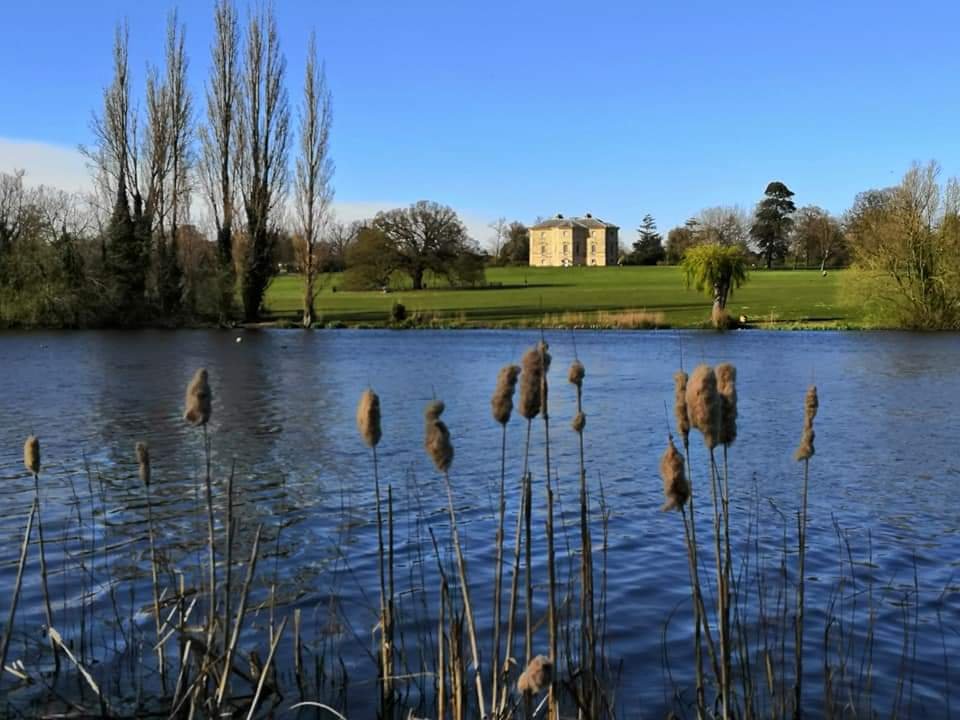
SS wrote: Danson Park for 30 minutes this afternoon after 4:30 pm. Her video on Facebook is here. A few from me. I had a quick walk for 20 min between 14:00 and 14:20. With the first photo, I just fell in love with the bright green. The third was all about sky and sense of space. And the last 2, color, delight for the heart.
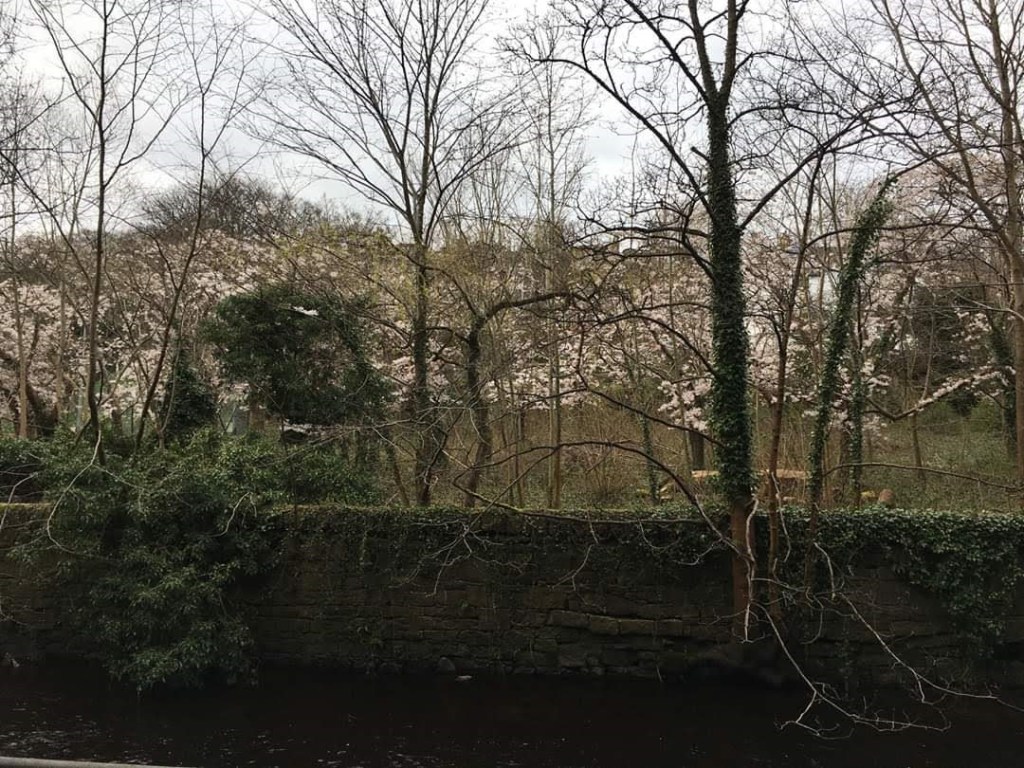
CT wrote: I went for a walk at about 16:00 along the Water of Leith with my husband and then, half an hour later, kept walking on my own in our communal gardens below our street, which face onto the river. I see a magpie settle on a tree. I listen to the birds, trying to identify them from their sound (I’m so bad at that) and the river flowing below. I look at the blossom across the river from the old orchard. I’m looking at the trees in the garden – can I see a tree creeper, that I haven’t seen for the past two years but I know are in the gardens? It’s very peaceful, people walking along the river, minding their distance and enjoying being out.
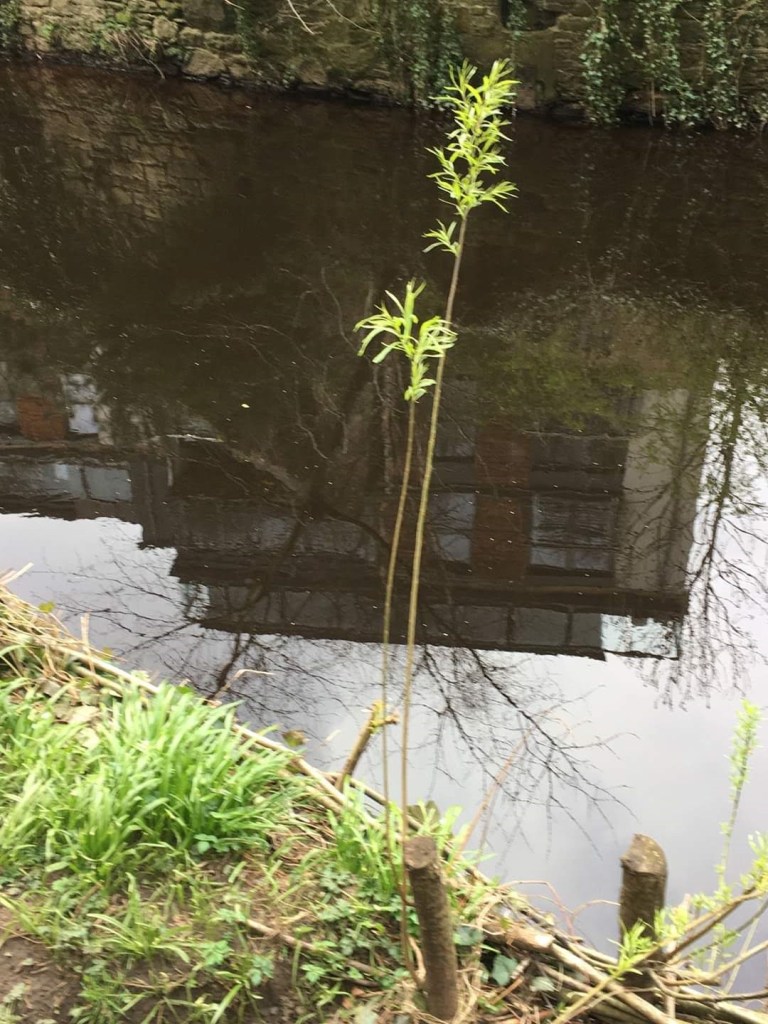
Walk 2: I walk up the steep slope in our gardens. I’m not good at birdsong but think I can hear the see-saw sound of great tits and the more mellifluous robin. I meet someone also looking for a tree creeper – they’re very hard to see, so I’m trying to learn what they sound like. I’m also looking for a wren; there are lots in the garden but you don’t often see them. I see another two magpies – one for sorrow; two for joy; three for a girl … I’m looking down on a pigeon! it just flew away. I hear a bird give a warning sound – is that a blackbird? I’m not quite sure. Past the badger’s hole. I finished my walk down onto the public footpath and then a brisk stride up the 140 steps from the river to our street (no landings for the first 111 steps – done without a break!) to get my cardio-vascular exercise for the day. Catharine’s video on facebook is here.
Maria Shi-Fo sent videos of Plaka and Akropoli in Athens – autumn within Spring, Saturday morning. They are on Facebook here. She has another one taken on Sunday afternoon, not very far from Athens
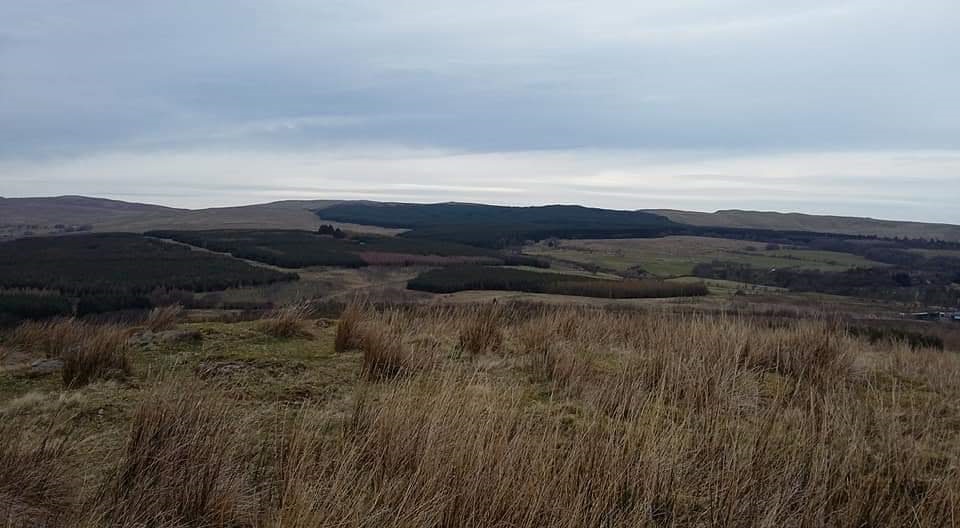
EL wrote: I walked behind the house today. The flowering currant is in memory of our first pony Benji, wind turbines were noisy, good views and interesting lichens.
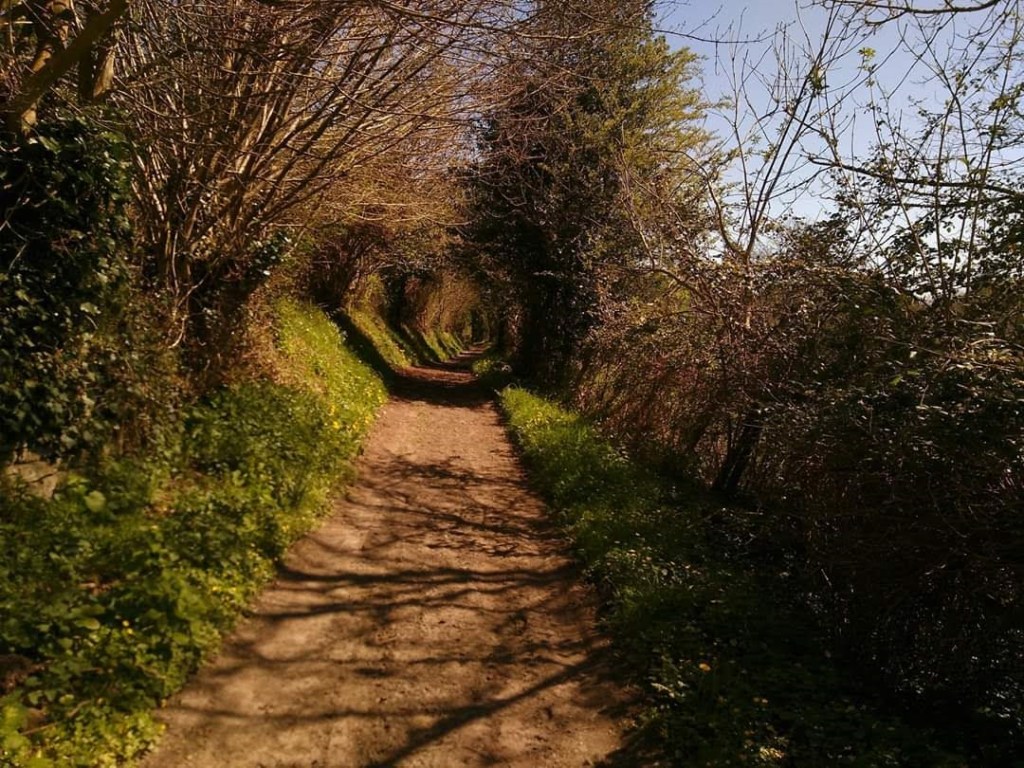
KL wrote: Our dog Ruby was a little too hot, so we ended up doing lots of stops to cool down pottering in the streams and river. Ruby was a thirsty girl! She has dodgy hips so finds it very hard to go up and down that particular slope – hence the encouragement from my partner! Here is the video of Ruby
We went for a walk – a familiar route, straight from the front door, down to the river Le Noireau in the valley down a decline of 20%. Keeping to the required distance from home (1km in France) and only 1hr for exercise. The full loop is about 5km and usually takes us an hour. It was quite warm today.
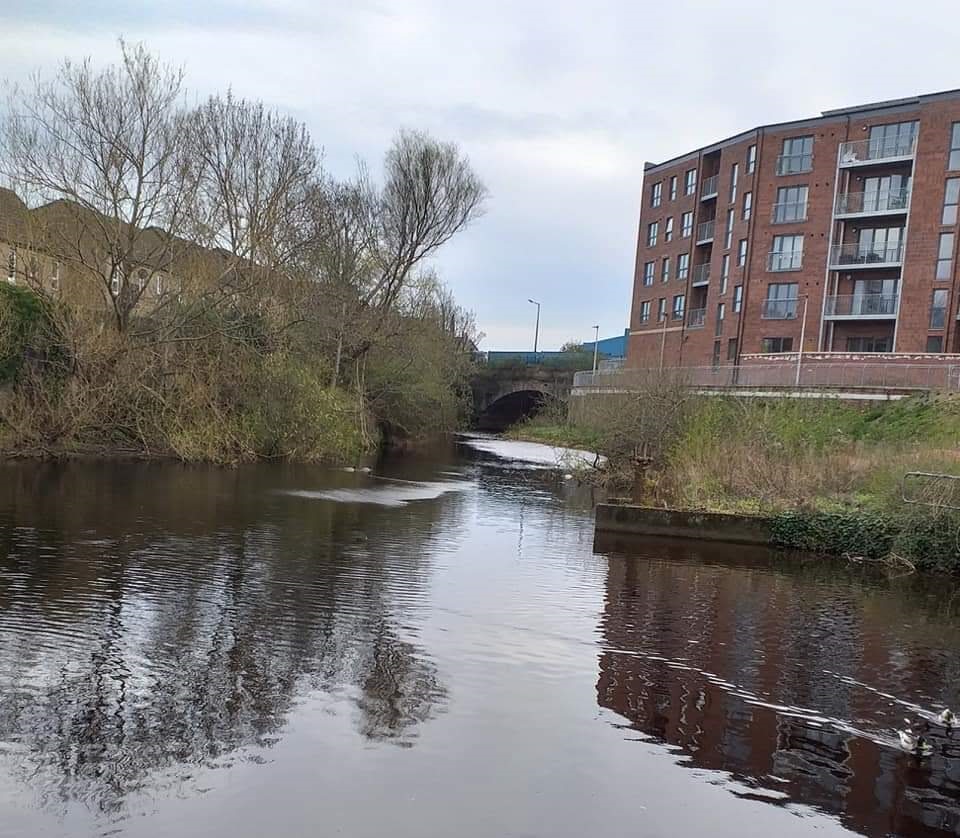
CM wrote: On Saturday around 3pm I went for a walk with my granddaughter, aged 5, along the Water of Leith. We started at the Shore, she was on her scooter and I was armed with a long stick, at her request. We meandered along to a place we could feed the ducks and splash with said stick in the water. We played and sang along the way, and back. The simplicity of the walk was truly joyful. The sounds of the birds, the water, and our own chatter. The small things in life are often the most precious.
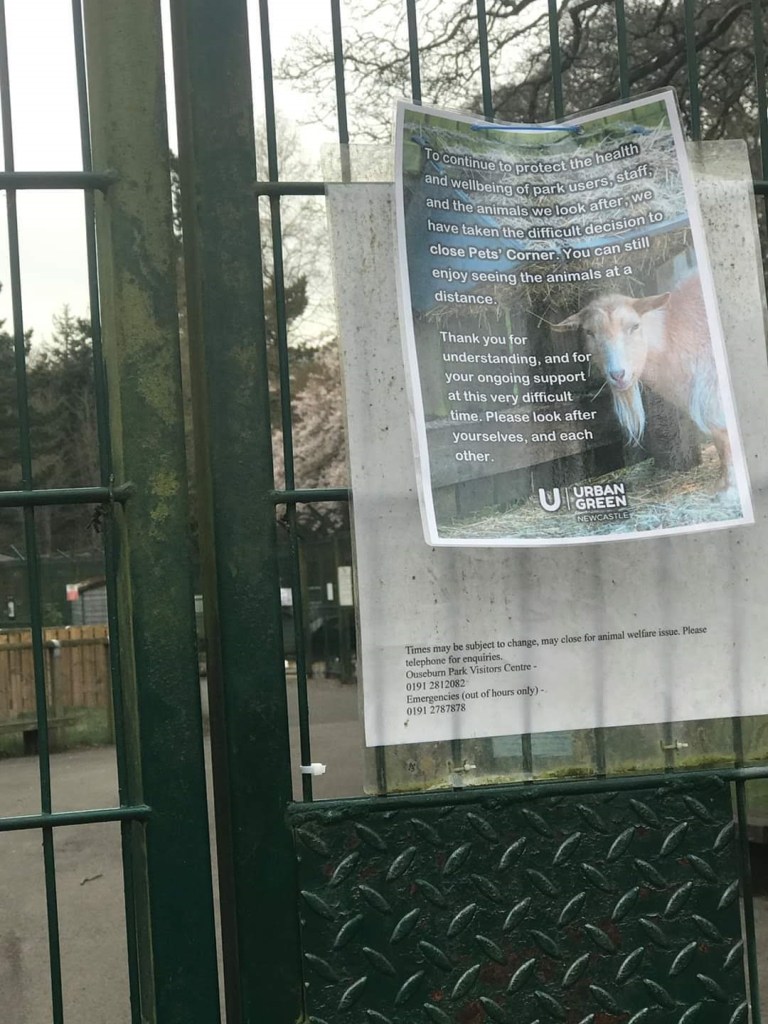
ML wrote: I cycled to Jesmond Dene, still early. The sound of the burn and birdsong. No idea what birds were – made mental note to learn. Of all the Buddhist teachings I’ve studied over the years, the most simple is the most profound; present moment, wonderful moment. A beagle sits refusing to budge not even when a spaniel pup offers him a game of chase.
Just back from a walk through Jesmond Dene then back home via the streets of suburban Newcastle upon Tyne. I forgot to do the 5 mins note taking but recorded 1 minute of sound.
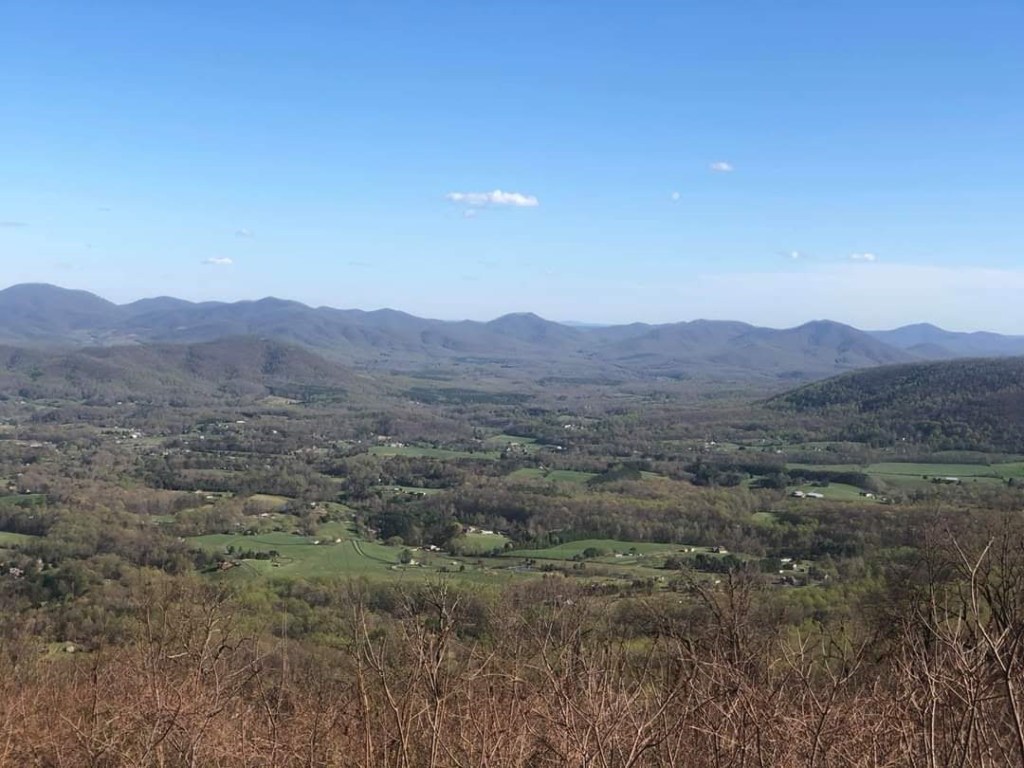
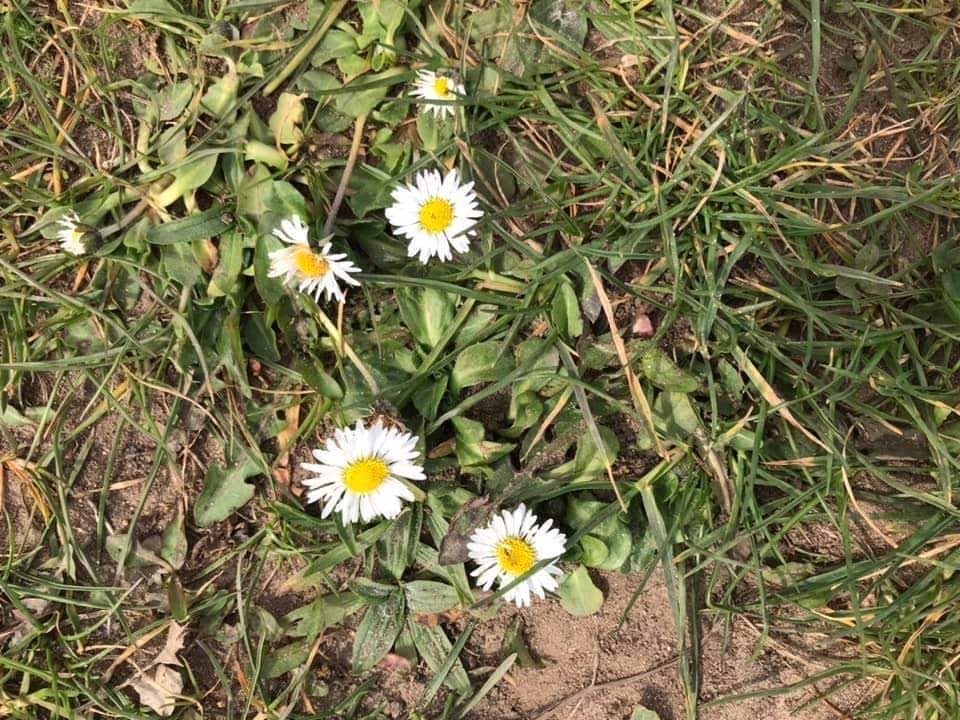
JT wrote: A blustery, wonderfully warm Spring day in my local park. Lovely to hear the wind in the trees 🌳 🌲 Berries are out … Berry Hill Primary School closed for the foreseeable future 😔 … so Schools out – possibly ‘Schools out for summer’ 🧒 👶 I’m sure there’s a song budding there 🎶 🎤 🏫… 💃 Her video on Facebook is here
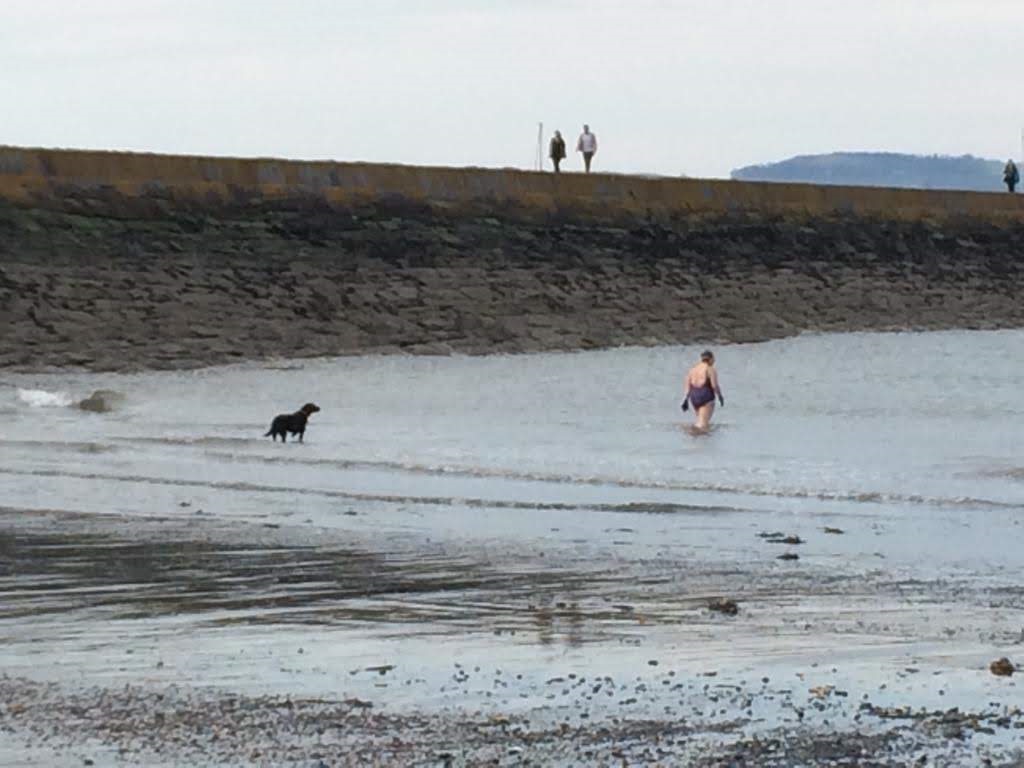
LS wrote: We set off from the house at about 1635. We headed down the hill to the sea making a new friend en route, and bumping into old ones. It was strange keeping a distance and not giving them a hug. (Sorry it would have been rude not to chat!). We chose a circular route; gentle walk down to the seafront and back up the steep steps to our road. It was interesting to see the groups of people on the beach keeping their distance and many more people walking along the quayside than normal. I wondered if all the groups were from the same household, or whether they had arranged to meet friends at the sea front. There were four people stripping off for a swim and I wondered if they were from the wild swimming club? I admired their bravery; the sea looked cold even though it has been a very mild day. I took a photograph of the quay from above because it made an interesting geometric shape into the sea. The terraced garden enchanted me because it is an achievement to create something so attractive from scratch on such a steep embankment. The colours of the car matched the Fisherman’s cottage and made me think of the limited palette used by the artist Whistler. Most of these Fishermans cottages have screens or net curtains at the window to prevent prying eyes. I was delighted by this display, carefully arranged, inviting people to pause and look in. A reminder of Spring and hope for all of us. The woman strode out into the surf, but it was the dog who had second thoughts. It’s usually the other way round!
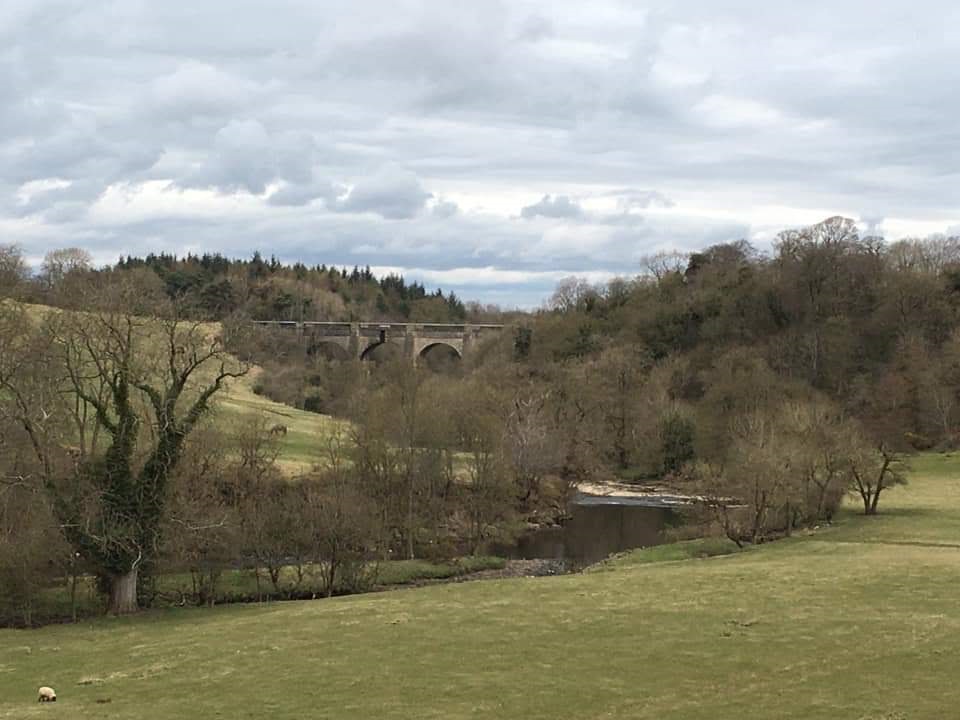
TH wrote: Yesterday I walked from my front door down to the River Almond along to the Union Canal where I followed the path towards Ratho, rejoined the road at Clifton cottage and walked back round to Lins Mill where I retraced the river walk to complete my loop on a cloudy, but bright day. So many birds around chirruping, calling or singing mellifluously – various tits, magpies, chiff chaffs, blackbirds, wood pigeons, pheasants, a robin, a thrush, a woodpecker tapping away….babbling brooks and the rush of river water contrasting with the silence and stillness of the canal. I’ve never seen so many roe deer as close to home before – a cluster of four stood staring at me through the trees for a good while, before bolting away. So many hosts of golden daffodils in varied hues. A few folk about, everyone greets each other these days even if just with a smile – we’re all in this together. Her video is here on Facebook
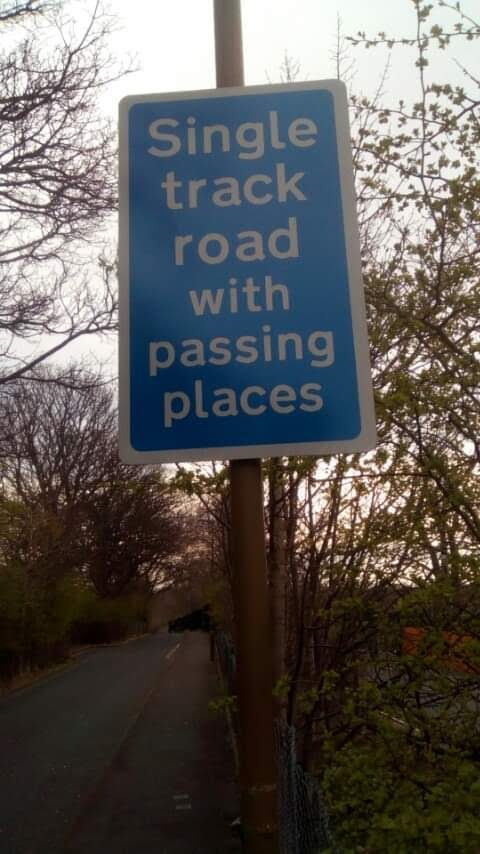
MS wrote: Short walk around Duddingston Golf Course today, around 40 minutes, left approximately 12 noon. Warm overcast day, took a few cuttings while I was out. His video is on Facebook here
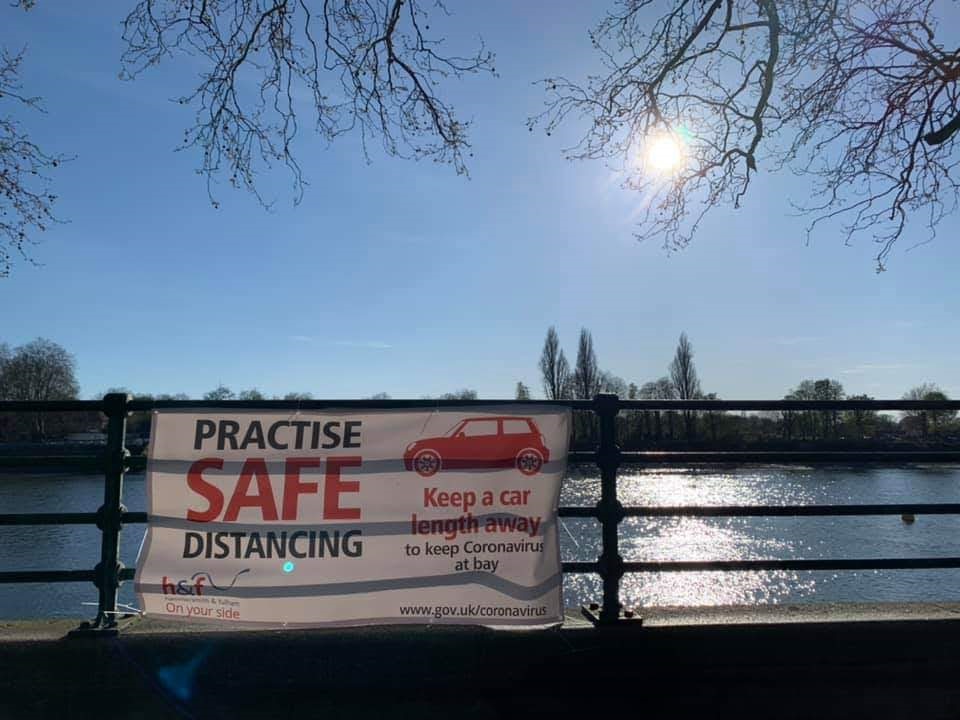
MG wrote: 17.07 to 17.57 on April 04, 3.6 kms through Bishops Park, Fulham, London, England 🏴 I usually walk in the morning and around the bridges in the weekends (7kms), but that was before the lockdown…I thought it would be less busy at tea time as Hammersmith & Fulham reopened parks (and had dozens of volunteers help the park patrol avoid big gatherings). I enjoyed walking in the middle of the street as no one is taking their cars anymore. I sat on a bench facing the sunset, closed my eyes and enjoyed a little breeze and the warmth of the sun on my face, knees and shinbones… listening to a big variety of birds 🐦 🦅 🦢 wishing I could name them… my sense of smell is not impressed as I haven’t recorded any smell in my notes despite taking loads of pictures of blooming trees…plan for next time to try and smell more… As I listen to the birds there is suddenly an airplane ✈️ loosing speed above us, I remember the « nextdoor » chat the other day saying we « only » had 120 airplanes that day instead of the common 1200…we are on one of Heathrow landing paths! Walking back I pass a house with 2 families having an informal gathering (with respect to the two meters rule between the two groups), and I smile as our neighbours have had a few of these meetings today already… enjoy your weekend! ☯️💖
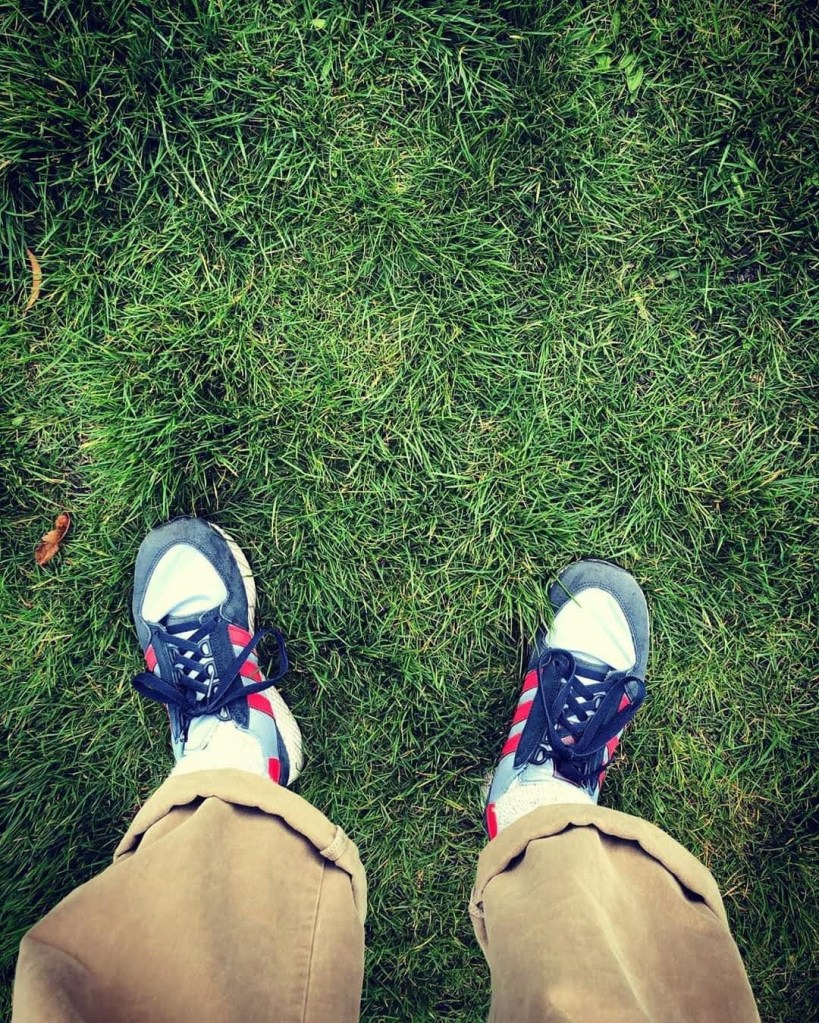
DO wrote: I left my flat at 5.45pm and walked to Brighton Park in Portobello, Edinburgh. The street is quiet. I take a few photos along the way and a video of me running away from someone who is coughing loudly. At 5.50pm, all is quiet in the park except for the sound of buses on Brighton Place. Today feels like a layer of grief and sadness has been lifted. I was meditating earlier and I felt Earth’s heart. In the park, I felt Earth saying, “Thank you.” Joy and sadness. Joy at the sound of Spring: birds and a palpable sense of hope that we are entering a new phase of existence. Sadness at the irony of being enclosed indoors during a time of renewal. Feeling my feet on the ground. Grateful for this moment. And I love old trees, they have seen a lot. I miss Hampstead Heath. At 6.00pm, the church clock from the Catholic church chimed. It was very touching. Awaken, it seemed to say, we are being called to tune in to our inner being, a new tempo. 🙏
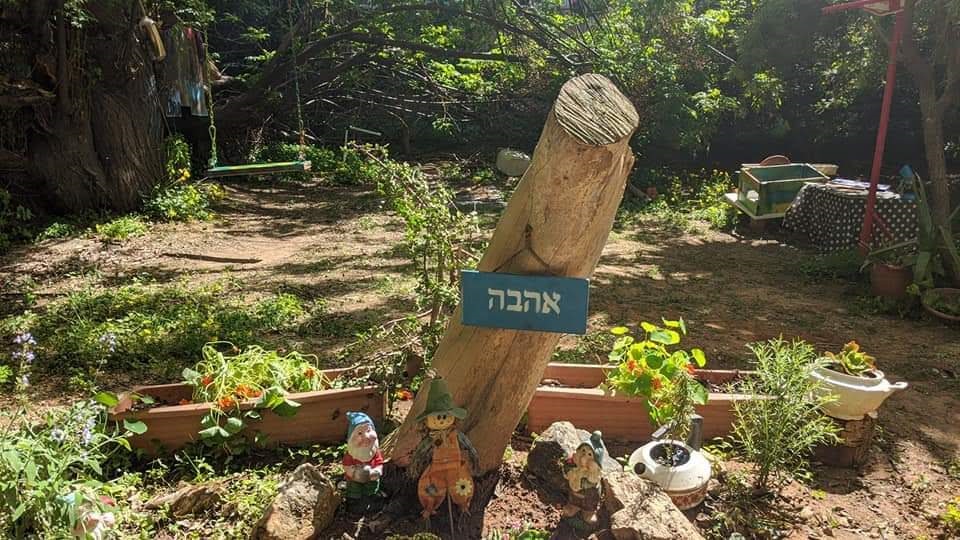
SG wrote: My route began in midday as I stepped out of my home in Tel Aviv, Israel. I started in the front lawn of the building and continued onwards across the road, weaving through the neighbouring buildings. I listened and recorded the peaceful sounds of nature and the chirping birds overwhelming the atmosphere with their beauty. We are not allowed to venture out that much, only up to 100 meters. My walk was not very long, nonetheless it was meaningful. I took a few photos of what caught my attention: a bicycle ( a passion of mine), a tire filled with plants, a blank sign and a guitar (music and nature which I can’t live without)… The blank sign, I felt, was very much like a path of uncertainty and acceptance. I accept that life has a route for each one of us and we don’t hold the reins for the most part, so we might as well walk with acceptance 🙂 I discovered a tree stump and it automatically took me to a fovourite of mine, Shel Silverstein’s “The Giving Tree” which has always been such a profound impact in my life. Most noticeably, I took a moment to breath in and observe my surroundings. A hedgehog accompanied me, which reminded me that this place called earth is not only my home. A photo of a sign in Hebrew that said love which always resonates within me. I feel it is best to end with “And the tree was happy”. Thank you, be humble and be safe. 🙏
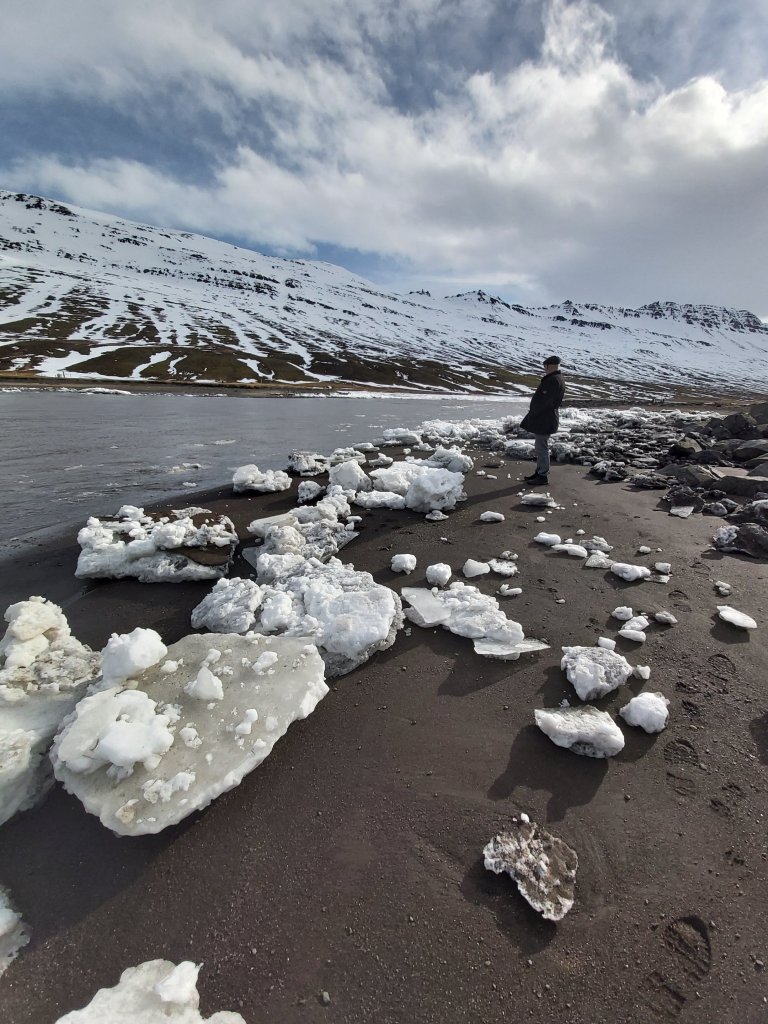
RV wrote: Location: Eastern Fjords, Iceland. Town called Neskaupstadur. Walked 40 minutes, between 15:35, finished 16:15. Weather: south-western, strong winds, but sun. We had a metre of snow yesterday but today’s winds and 10 degrees has melted it all. Walked from the harbour, past the small boat harbour to the estuary where the glacial river enters the sea. Today there were icefloes in the harbour, the river has broken her icy shakkles at last. The black volcanic sand beach had heaps of snow and jagged ice, the river itself running dark grey and loud between the narrows. We walk here five or so times a week, it is never the same walk. Different boats in the harbour; trawlers, freight carriers of frozen fish, oil tankers, small boats. They have started the Lumpsucker roe season, dragging the nets weekly, but the weekend’s storm made the takings light. Migratory birds coming back. The black helmeted seagull, orange legged oyster catchers, eider ducks, black backed gulls. The Faroese say Spring comes when the oyster catchers return. The Icelanders welcome Spring with the Golden Plover. We heard the Oyster catchers “peep peep” and the “hum umm” of the eider ducks, the wind constantly in our ears. Not many cars, people walking, children, dogs, but everyone cautious, wary.
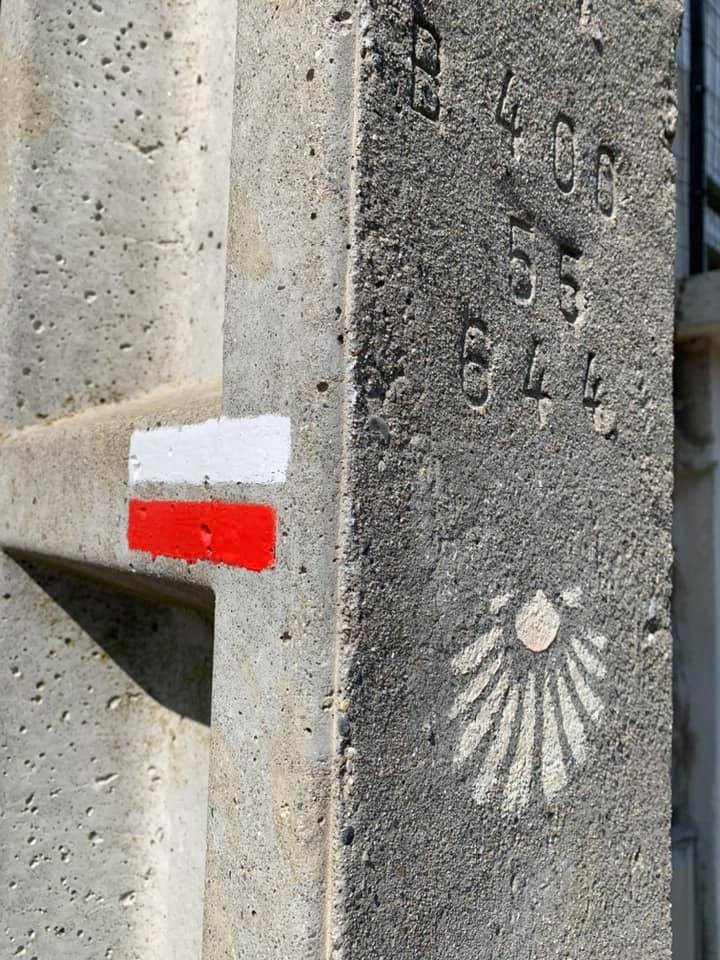
CD wrote: A walk yesterday in my neighbourhood of Castelnau-le-Lez, very close to Montpellier, but very quick to be in nature. 🙏 It is also a stop on the Compostella road. I like to stroll through the streets looking in the gardens, all the different trees : laurel, olive, palm, lilac, roses, pin parasols (a type of oak), thyme, rosemary, iris, wild orchids. I walk to the top of a hill where I can see the sea – so close, but too far for now. It’s the feeling of containment that give that little, but very present, pressure of not being able to … this brings energy to a point that helps good transformation of what needs to transform in the moment. In fact, it’s a present, une “aubaine” as we say it in French (a boon in English). Then enjoying space lying down in the sun in the grass full of little herbs and flowers. So good. Her videos are on Facebook here about which she wrote: No words needed 😁🙏
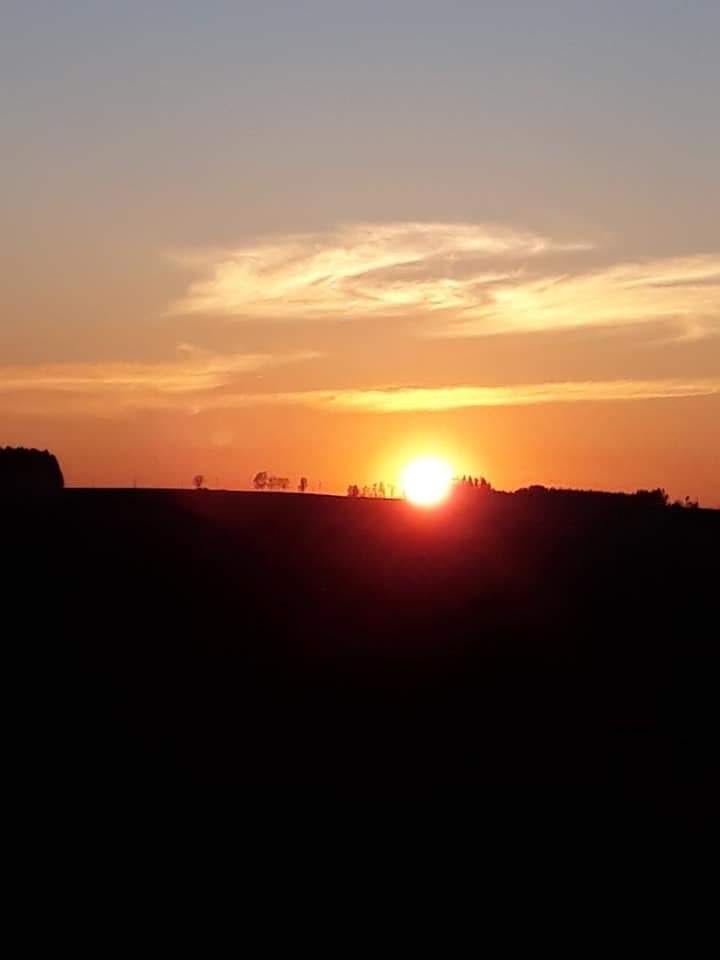
VS wrote: Lovely walk on fields. Keep coming back daily to watch a sunset.So beautiful yet diferent every day. Pics were captured 19:21-19:26, a shorg video at 19:24. Her video is here on Facebook
Featured photo of the hedgehog by Shera Geller.
#walkgoesviral March 2020. This event has now taken place and the completed film is here on YouTube and here is a link to the words and images.
Below are the project prompts:
A virus is a tiny particle and needs a host cell to be able to live and spread. If each of us takes a short walk this weekend; if we all listen and record the sounds around us and the feelings which go with them; within a 2 km / 1 mile radius; and if I host a platform for collating these – then we can co-create a record of our extraordinary times. For those who cannot leave the house or hospital, we will collect the sounds of the outside for them to hear indoors.

- You might take a circular walk, or a there-and-back one. On foot, in a wheelchair, or buggy
- For children and adults, dogs and tortoises
- Aim to be silent throughout – don’t speak (although don’t be rude! If you talk, make a note of why and when)
You have 5 tasks to complete –
You will need a basic smartphone – nothing fancy. If you don’t have a sound recorder or video option on your phone, simply listen and record on paper:
- Make a sound recording (or video with sound) of one minute duration somewhere along the route
- Stop at another spot and listen for 5 minutes – write down what you hear at the time (or you can record yourself speaking on your phone and write it down when you get home). You can make a list or be creative
- Take 1-5 photos at any stage of the route. Write down when and why you took them. (I do not recommend that you take a photo of yourself or your house, for privacy reasons)
- When you get home, create an account of your walk in words, sound, drawing or other art form
- Share what you have made (see below for sharing platforms)
Please note these things when you share:
- Time: Start and end time, recorded sound at… Sat down, listened and wrote at… Took photos at…
- Location: My route began and ended at home / where I am staying or living now (give general location). I went this way …. (list route or places or make another sort of record of it)…
Here is an example:
I walked between 5 and 5.30pm; recorded sound at minutes 7-8; sat, listened and wrote at minutes 24-28; took photos at minute 4 (because it was pretty),14 (because she reminded me of my mum), 24 (because that’s my favourite cafe) and 28 (because I was interested in the shadows); My route began and ended where I am staying now in Yalding, Kent, England. I went across the road, through Kinton Lane, around the field, through the gate at the far side…. … And ended back where I started (or I might draw a picture of my route or use my phone technology to digitally produce my route etc. You choose)
Note down anything else you think is interesting, eg if you take your donkey with you, please note this down as well.
What is the point of doing this?
- To take a walk, focus on your environment and how it makes you feel
- To notice how the area has changed since we have been in ‘lockdown’ and again, if repeated, how these things change over time
- To know that you will be walking with other people who are doing the same thing in different locations around the world, thereby creating a walking community at this time of separation
- For fun / exercise / to boost your immune system / be more grounded
- To see what happens
- To create a record of this event for posterity
- You can probably think of more reasons – please tell each other
Social Media
The Facebook group is called Walk This Weekend
Twitter/Instagram #walkgoesviral
I will use my twitter for sharing info @walknodonkey
Once you have shared, I will
- Collate the data and share in a blog
- Record how many people walked and where
- Make a film with the photos, words and sounds (help will be appreciated as I am an amateur filmmaker )
Privacy
I will not reveal or use any personal information or data (if you do share your email with me for the purposes of sending recordings etc, I will keep it only for that purpose and delete after. It will never be shared with anyone else)
The future
Hopefully, we can each repeat the same walk the following week so that changes in you, in nature, and in your environment during that time can be noted.
Link to the final video on YouTube
Please share with others you think may be interested. This is a Walking Without a Donkey event. Please feel free to comment below.
A 3 hour round walk, to and from Yalding High Street. March 2020
At this time, when we are not allowed to leave the house more than once a day unless there’s an emergency, and should only be doing it for the purposes of exercise, my awareness of the connections between nature and our situation is alive in my mind as I walk.
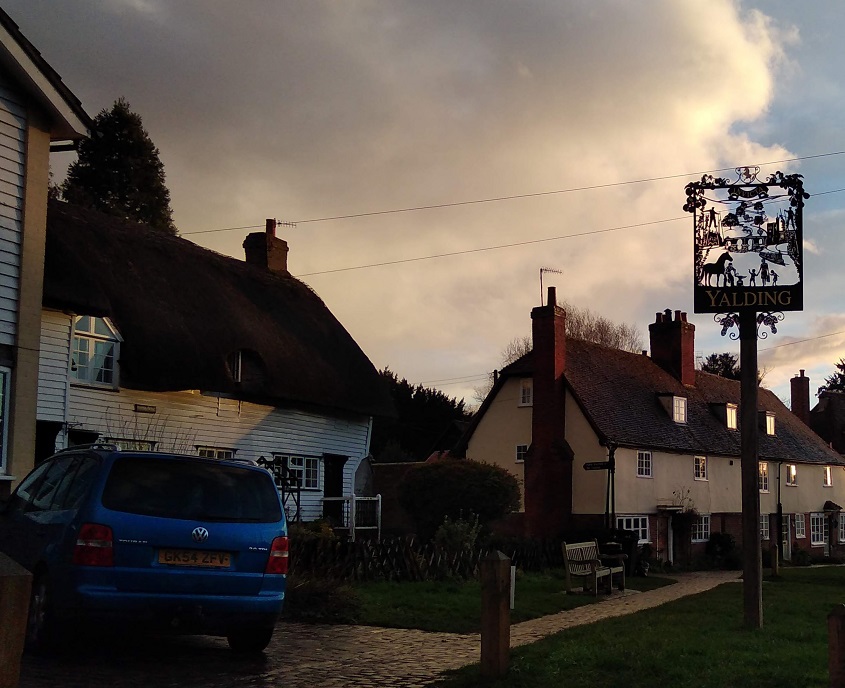
There’s a little lane off Yalding High Street, between the white-boarded, thatched house and the pale daffodil-yellow brick one with matching tiles (on the same side as St Peter’s and St Paul’s church). It takes you past the churchyard and through a gate which is now propped open with a sign saying it’s because of the corona virus. (It took me a while to work out why, but I think it’s so that you don’t have to touch the wood and possibly leave or catch germs). The cemetery with H’s grave and the rifle range are almost facing each other and you can see the controversial new builds and the rubble which has been left over. The Kintons is a well-used sports and dog-walking patch of grass with a children’s play area.
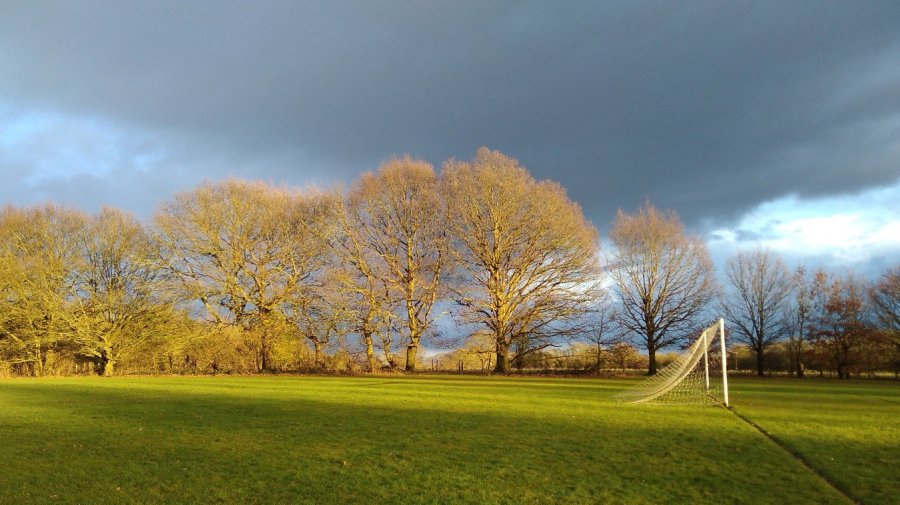
In the far left hand corner, past the bluebell woods, is a track which darts straight ahead. A field was being mowed to the right, a rather portly little dog was scampering behind, and I could see into the scrubby woods, with the back entrance to a grand mansion opposite. A woman was coming towards me and she couldn’t avoid being closer than two metres due to the narrowness of the track, but she awkwardly tilted her upper body as far away as possible. I had a lot of bible teaching when I was a child and stories often pop into my mind. I had been thinking about the image from the Good Samaritan of people crossing over to avoid having to help the injured and needy. Nowadays, on the contrary, we are taking care of each other by doing just that: by-passing on the street. Equally, many of us are going out of our way to look out for others – the phone and the doorbell ring approximately seven times a day at my mother’s house where I am currently staying, with folk from near and far checking if she is okay because she usually lives alone and is over 80 years old.
Crossing Vicarage Lane at a slight angle, I clambered over the stile, sleeve pulled down over my supporting hand to avoid skin contact, tromped through the grass, crossed an access road, and followed the footpath signs (you do not have the Right to Roam in England as we do in Scotland).
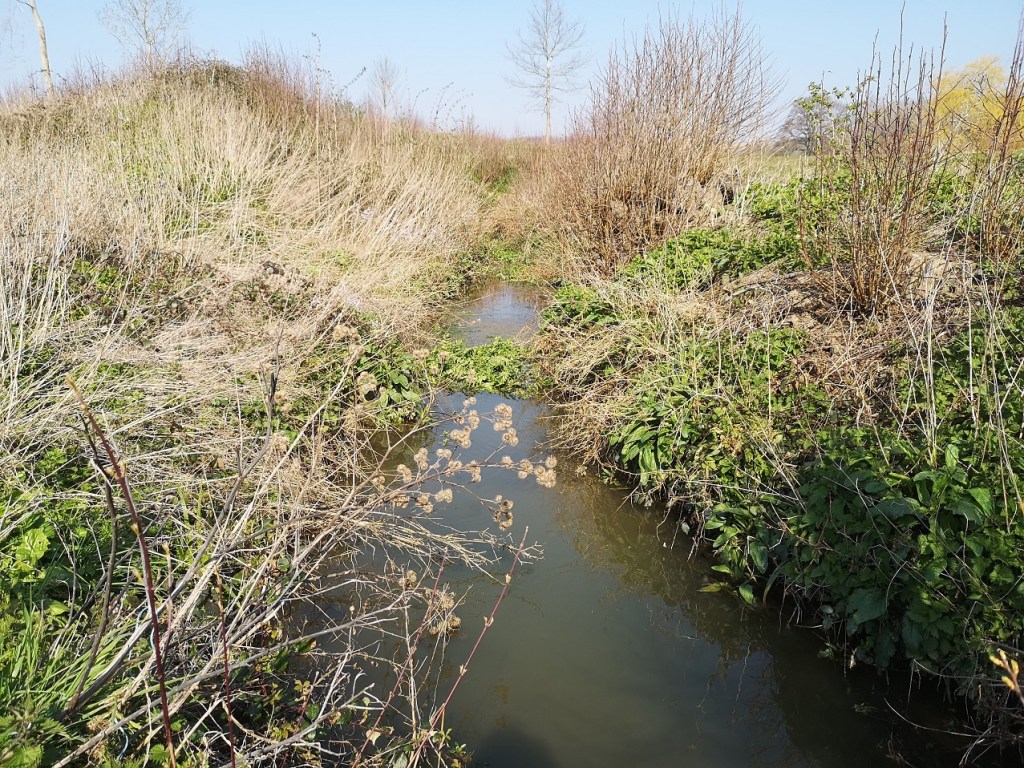
Water weaves through this landscape at the best of times. It floods regularly, inundating the copses and arable lands; contrastingly, it is often so dry that great fissures appear and hose pipes are banned. Locals are constantly reminded of what is vital to life, forced to focus on conserving it and appreciating it when it is in balance. This virus we are now dealing with, is, maybe unwittingly, protecting our landscape (yesterday drones were spying on the Yorkshire moors to even stop hikers (for different reasons)). Although many fear that we have damaged it for good, we do also know how resilient nature can be.
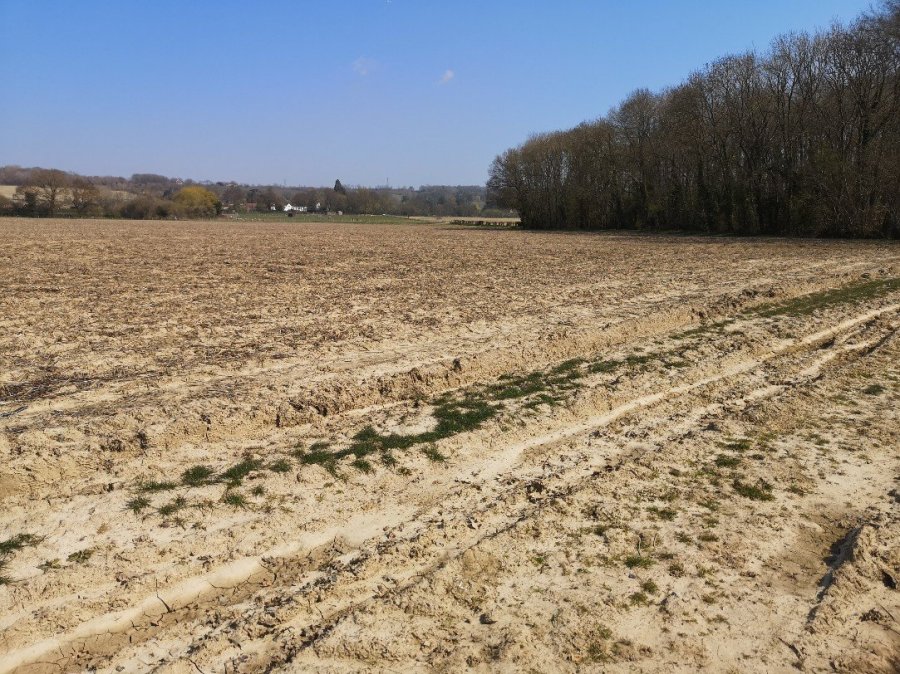
The earth was bright in the sun, hardening and whitening every day now Spring is here. Often so solid and unyielding in the south east of England, there are still sodden patches and the odd sinkhole of wetness left from Winter and you might not be so safe if you stepped there. I reflected that it is change, especially unforseen changes, which challenge our sense of security. Although we want to trust that we will one day be able to plan and move around the world again, we do not know when that will be. In fact, we know deep down that nothing will be exactly the same; we understand that this is serious enough to bring about a new order. We don’t yet know what shape that will take because, metaphorically speaking, the ground underneath us has shifted. This is why walking, even when we have to watch our footing, is such a reassuring activity – we still get from a to b and survive the experience. I could feel myself becoming grounded, and then I sighed and felt a movement in my heart area. (Chinese medicine practitioners: in the Five Phases, when the child’s happy (Earth), so is the mum (Fire)).
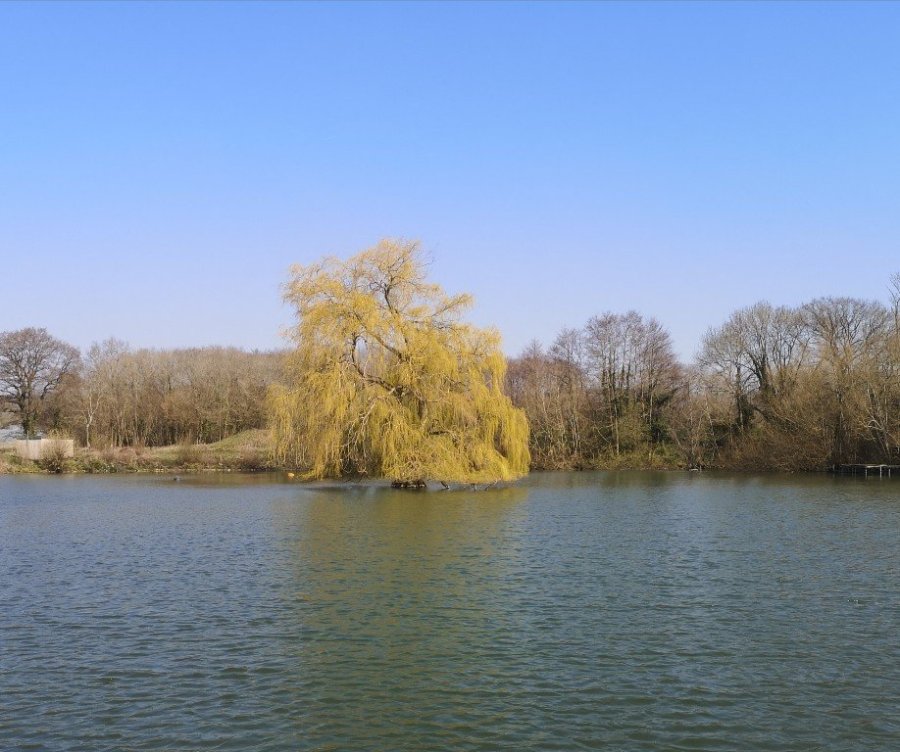
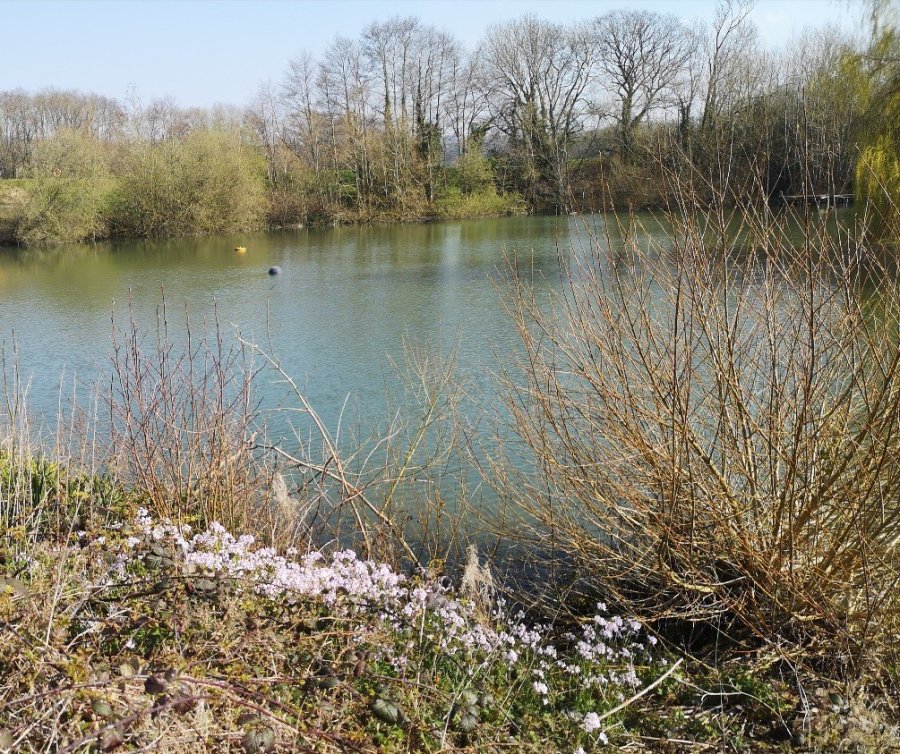
Walking towards Grove Lane, there is an almost imperceptible gap on the left which opens out to a small lake. It looked grand. Skirting it, I admired the wild flowers. What a beautiful setting on such a day, with the cool wind causing mini waves and turning the surface a myriad of shades of blue.
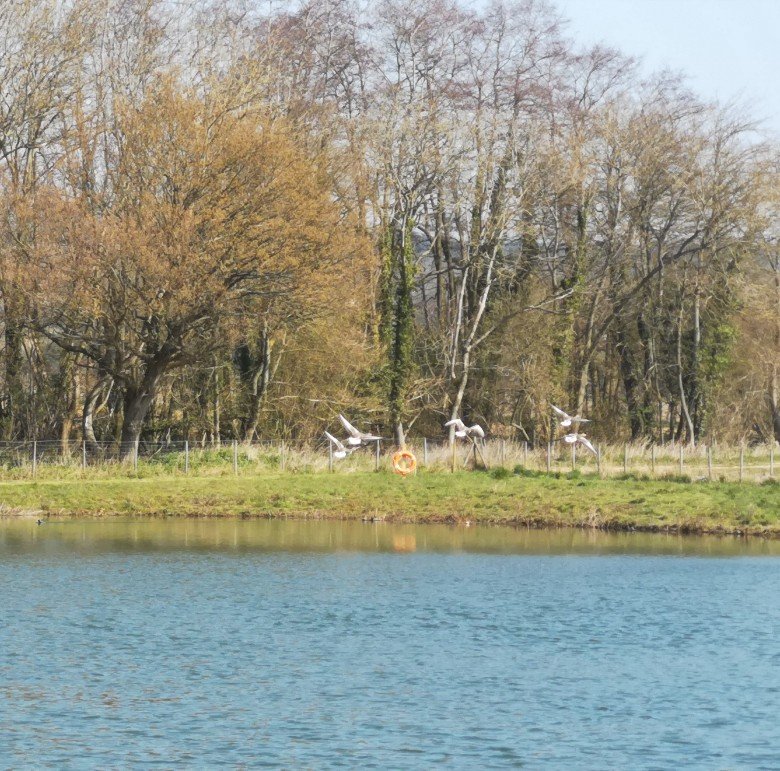


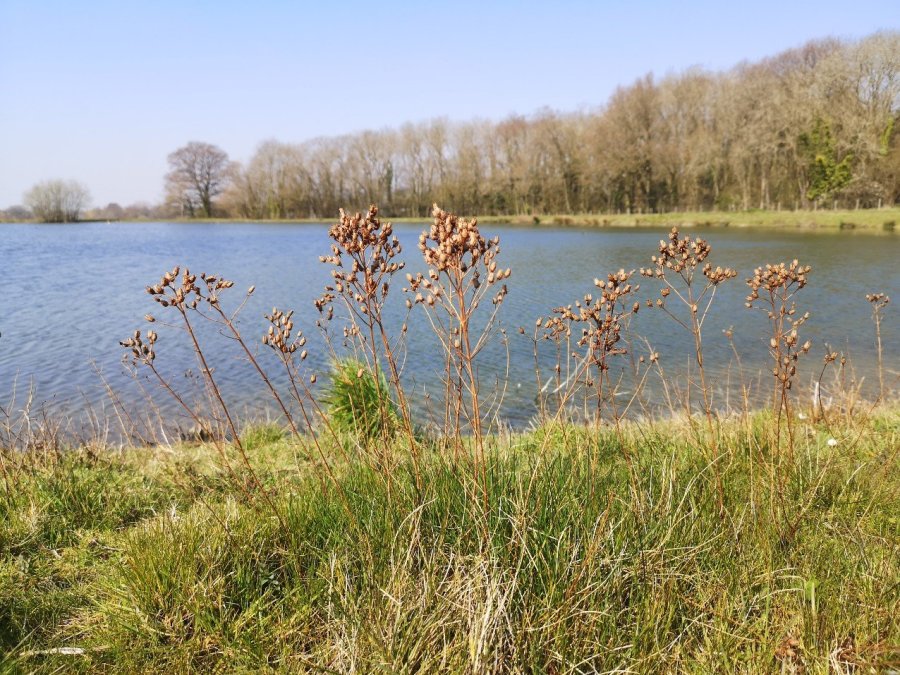


I crouched down to watch a bee collecting from between delicate mauve petals. He was only just about holding his own way in the breeze, but he kept on, goal clear. I admired the water birds and the Daisies with their sunshine faces. Bird’s Eye nestled at their feet, making another stunning combination of hues. There were sharply serrated Nettles and whorls of Thistles. Neon orange lifebelts hung at either end, and the whole was chicken-wire-edged so that I made an entire cycle before exiting precisely where I entered, stepping over the fallen fence.
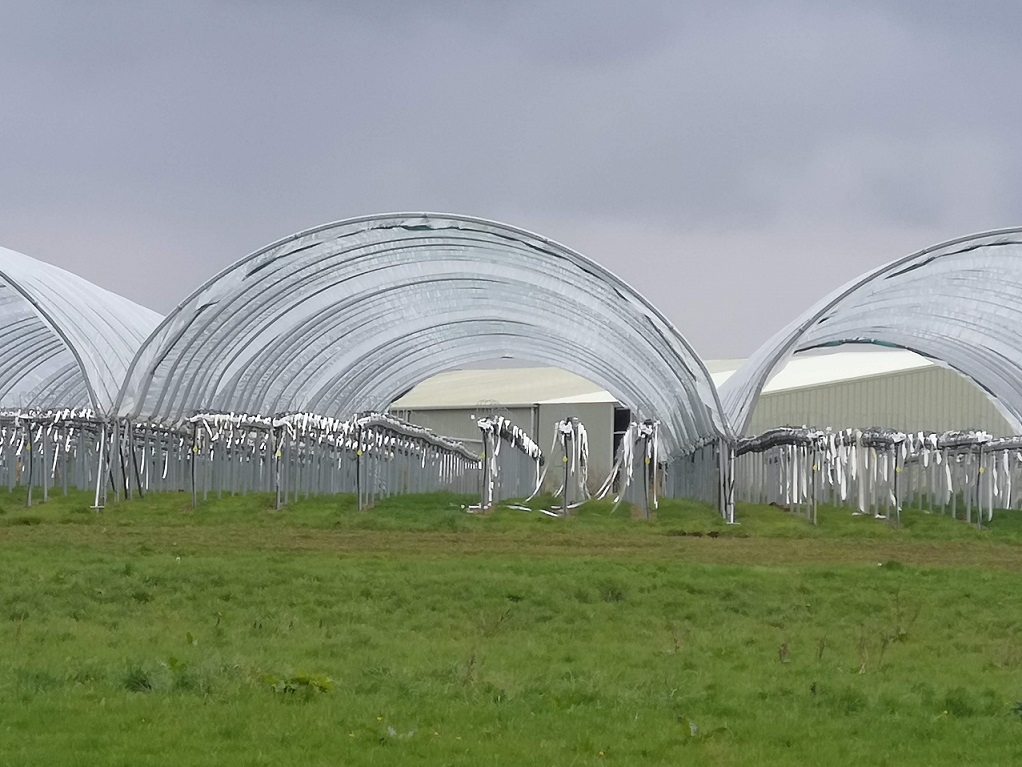
Doubling back on myself by the lane which curves around the lake, my attention was attracted by men’s voices, the first of several groups I passed during the morning, working away hard in close proximity. They were setting the strawberry plants onto the stands under the plastic hoods.
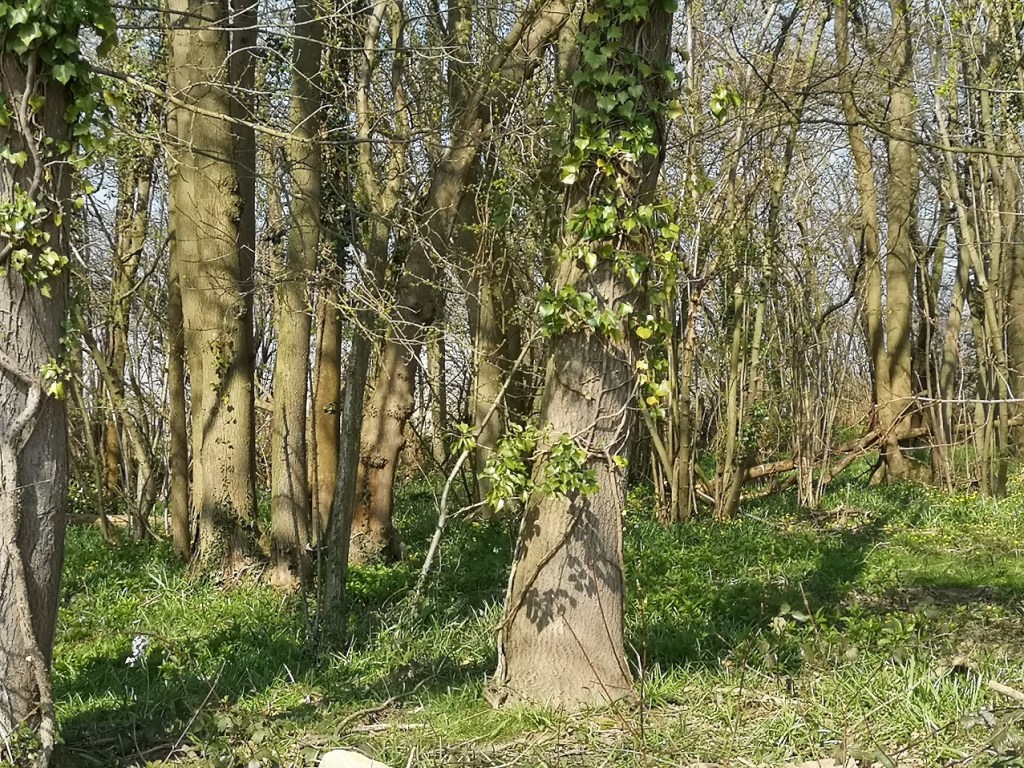

I heard the coots before I saw them and I suspect that they were born here, that their life has been, and will continue to be, spent in this pond, (according to the RSPB they are resident here all year round), just as the trees in the wood next to it have stood in the same place for 100s of years. Other waterfowl return to their homes, well to their second homes every winter like Brits on the Costa Brava.
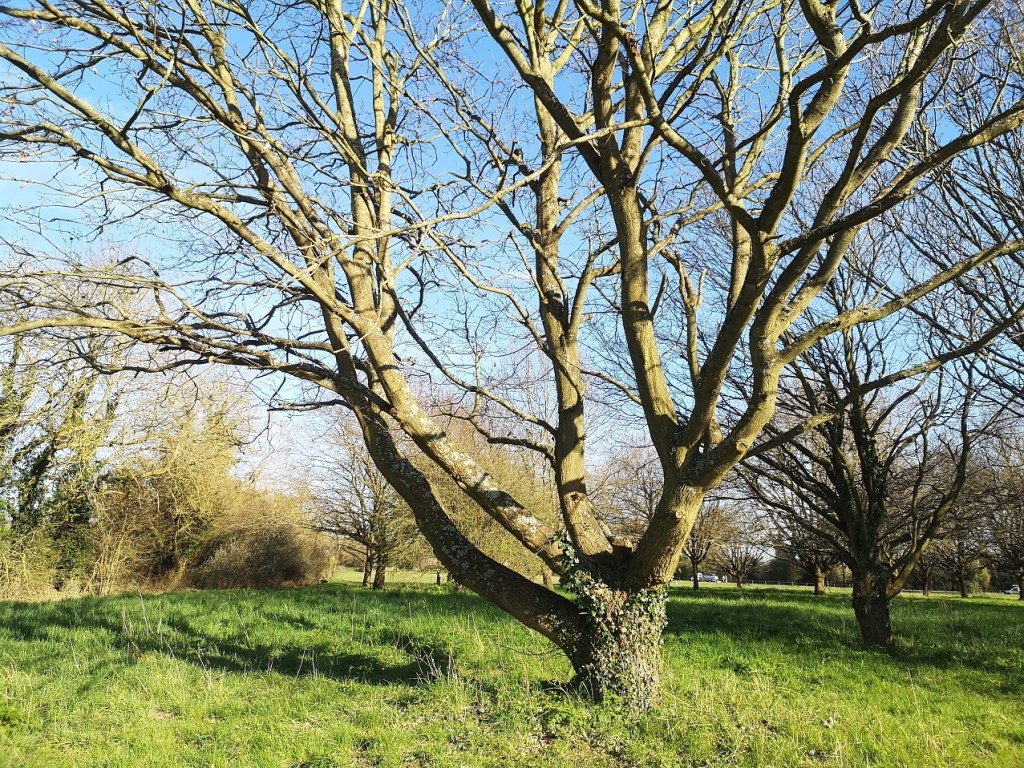
Witness the staying power of trees! There they are, in one spot, come month, come year. And what do they do while they’re standing there? It turns out they are very quietly, and probably slowly, fostering their community through their roots, just as so many of us are only now starting to do.
The word ‘Foster’ is associated with the Old English ‘fostrian‘ meaning to supply food, nourish and support.

At the same time as processing the CO2 (carbon dioxide) for us, looking beautiful and smelling divine, trees offer a home to insects, birds and other creatures. And yet, so many humans were living and suffering alone before this crisis and are now even more isolated. This can be an unnatural, even a dangerous situation for certain people. Questions arise: What can we do to make sure that those who want it can get support and companionship? How can we plan in advance for the next virus? Trees will grow taller and straighter, needing less pruning, if they are planted close to each other in the way that they naturally reseed in a woodland area. What a lot we have to learn! What a lot we are learning right now, thanks to the Covid-19.
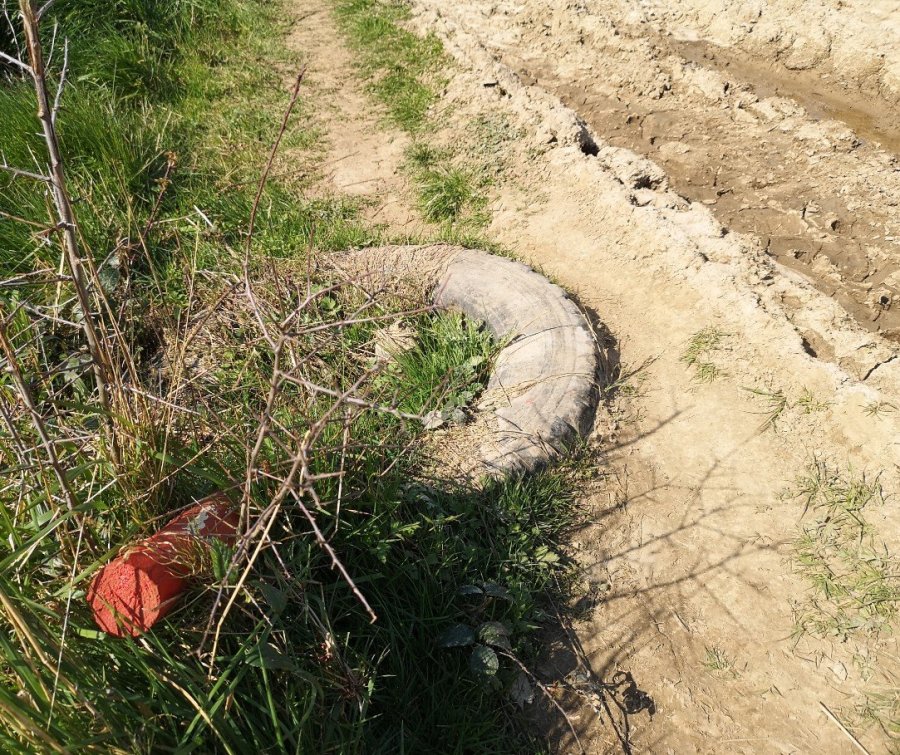
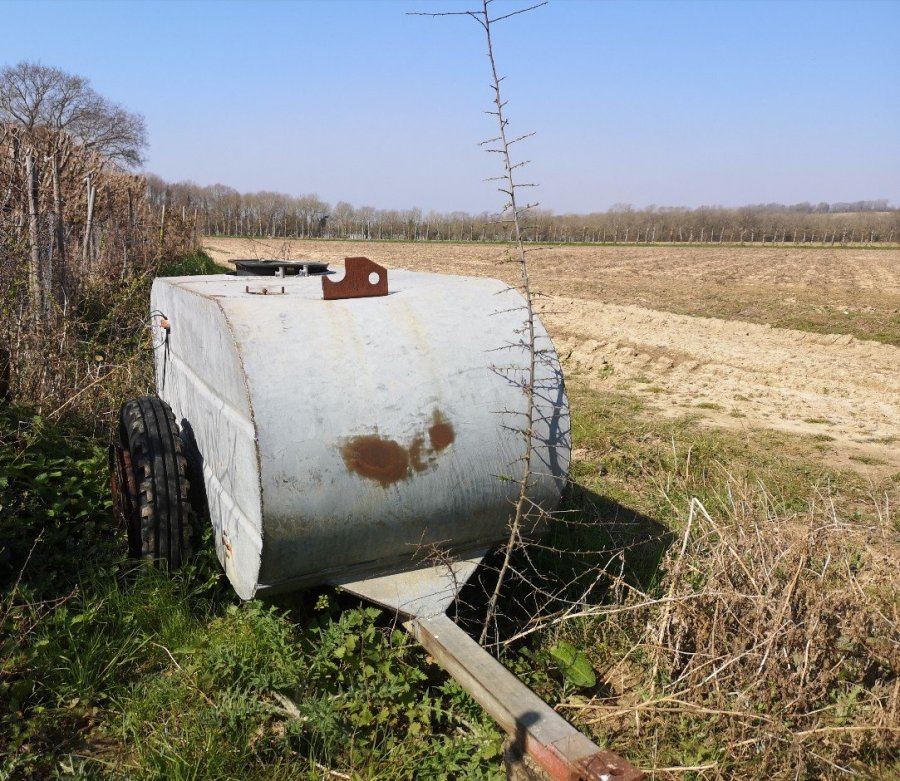
The path took me around a corner where some old equipment was half buried and put out to pasture. Wide open fields were flattish, a gentle rise in the distance and the wind from the north was chilly except when sheltered by the hedgerows.

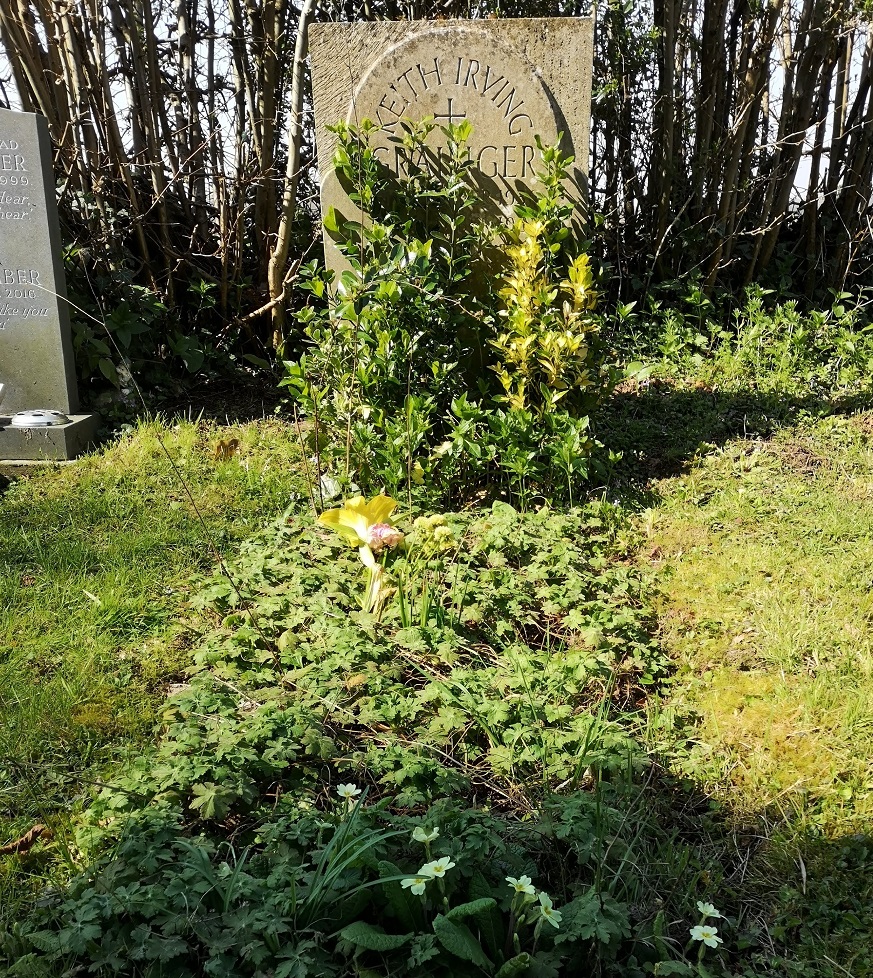
I took the Permissive Path (that is, not a public Right of Way, but one which is permitted by the landowner) over a tiny, planked bridge to West Street and stopped at Hunton St Mary’s church to visit my father’s grave. I took a quick photo of the Village Hall to send to my sister – she got married there – and then crossed back over, past the Engineering Works and went right. I wandered beside more agricultural land until I reached the junction between Barn Hill and the wonderfully named Lughorse Lane.
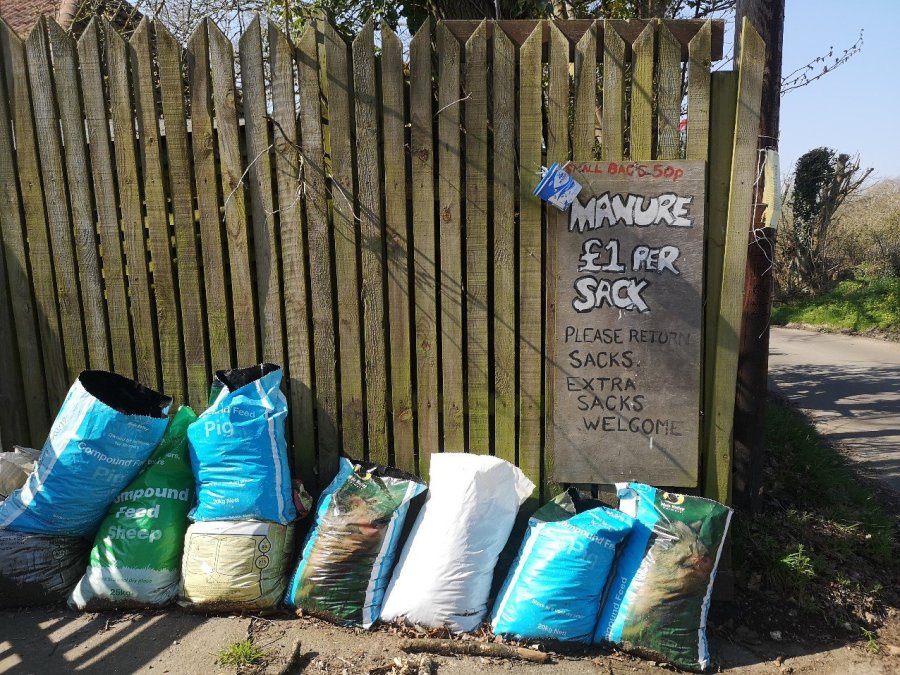

Clumps of proud daffodils with orange trumpets kept their eyes on me as I passed. There were also some plants which resembled long and upright poos, or if I am to be less disgusting, vertical pine cones in the deep grass (see above).
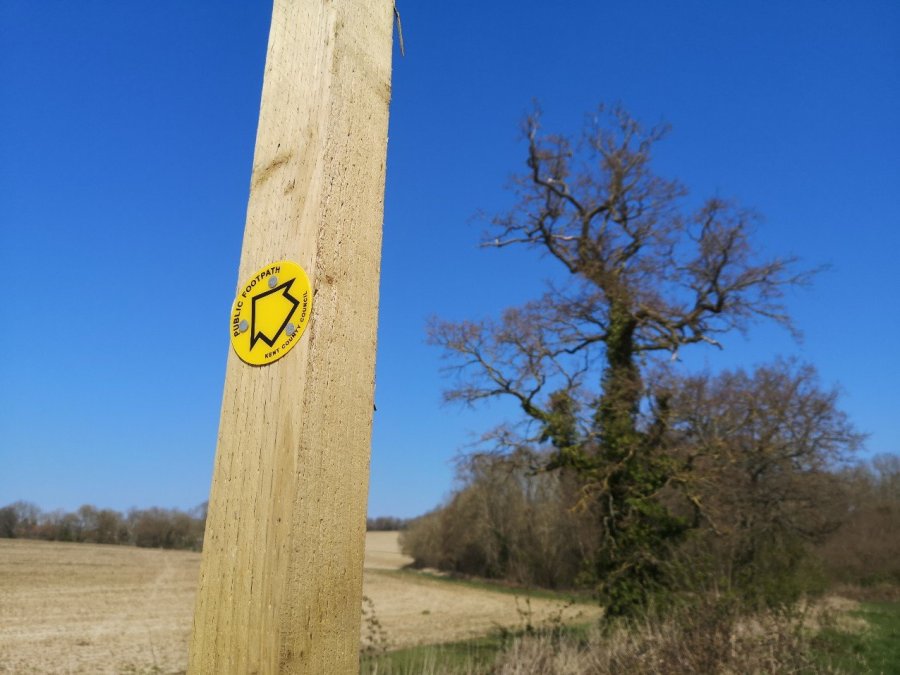
Before long there was a footpath off to the right and I started to climb quite steeply. It was peaceful. This was my exercise (in case any(official)one is reading this). There was stubble from what appeared to be bamboo on my right, but I doubt it; more likely wheat. There were mostly Magpies, Pigeons and Crows around although I did see a Jay a few days ago which was exciting. I spied a raptor nearer the top, most likely a buzzard, sailing on outstreched wings, but the photo was too indistinct to reproduce it here.

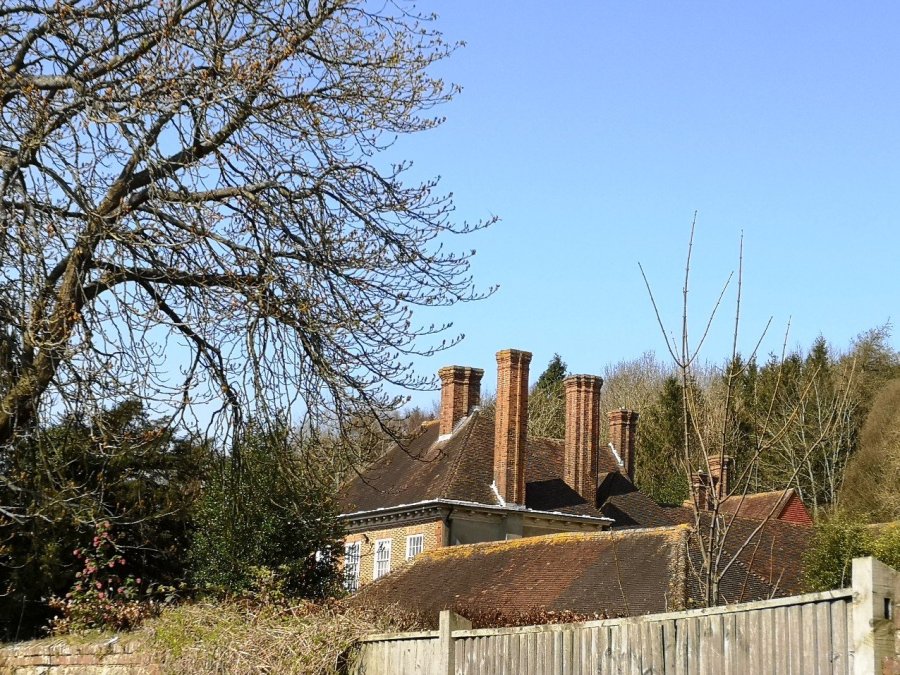
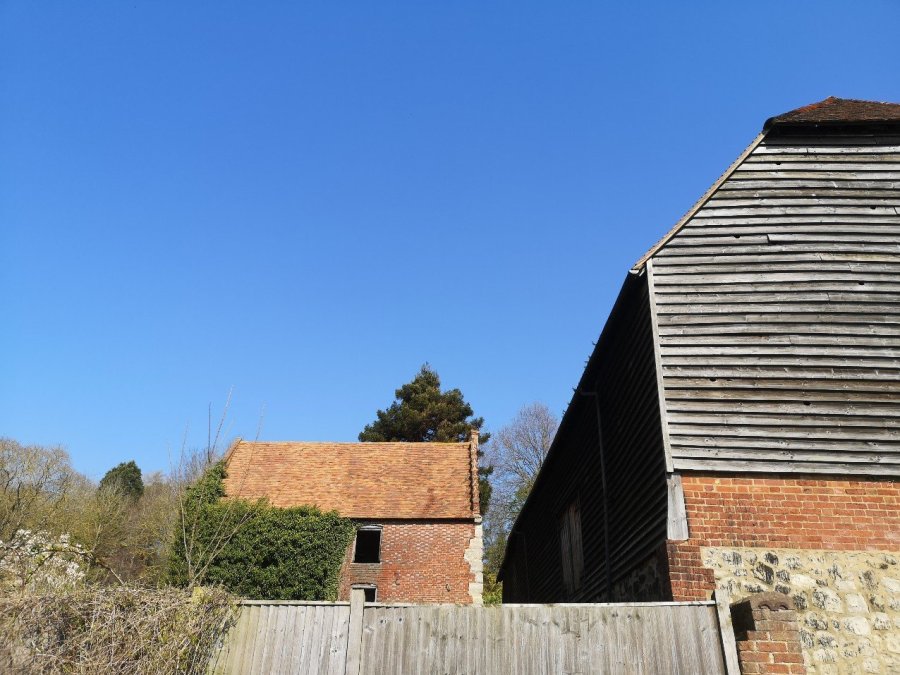

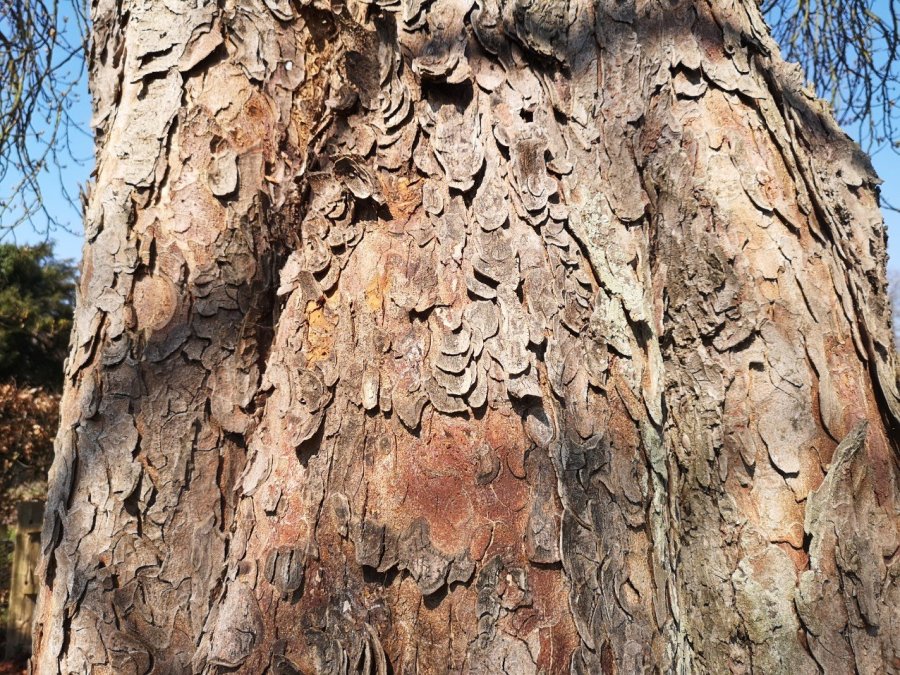
Although a dogwalker took the private road uphill on the right, I turned left on the official way and walked through the Buston Manor yard. First a jogger and then a proper walker with a staff who wore headphones, came towards me. But I was drawn aside by the gardens, architecture and tree bark design, never mind the extensive walled garden. I was told, later, that it is often used for filming TV and features.
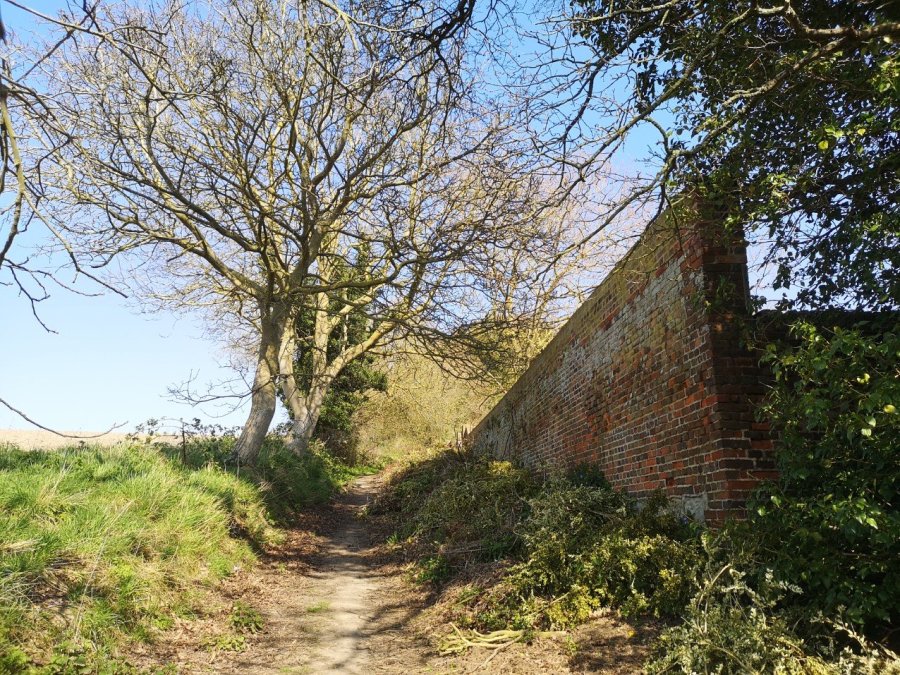
Up again and a little sit-down to eat my satsuma, wind in my ears and at the back of my neck. We have to be careful of that as an acupoint GB20, aptly named Wind Pool, where Wind can enter causing headaches or worse (flu), certainly making us vulnerable. My (and my grandmother’s) advice – wear a scarf!


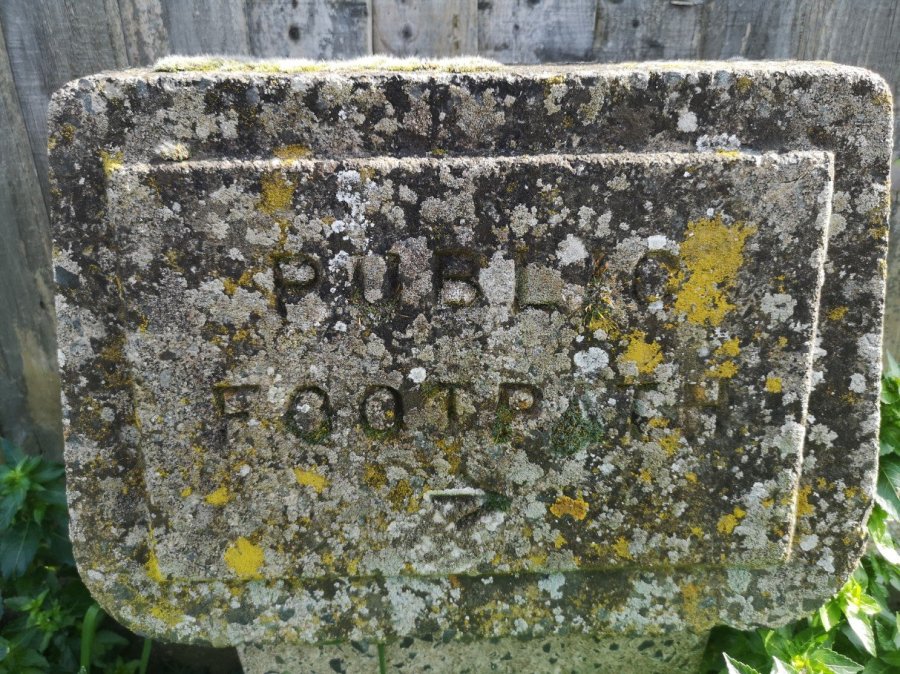
Through a metal gate, I went left onto a farm track of very dark loam, ploughed by machinery wheels and criss-crossed with tree shadows and sunshine-saturated grass. Steeply down now, until I unfortunately spied a Public Footpath stone and so took a right up a slight bank and out into the open again where there was one of the ‘footpaths’ I have walked the length of before in this area. This narrow enclosure drew me along and then, suddenly ending in a field, it showed me up to the right (where admittedly the vibrant green of ground-spreading chamomile was growing alongside left-over broad bean seedlings) and, without realising where I was heading, I was through another metal gate and onto Yalding Hill.
Yalding Hill is to be avoided at all costs if you are on foot as it is a very busy, narrow road with no pavements. Being very familiar with such situations, I was brazen and made sure every vehicle speeding towards me knew I was there (waving my arms, making eye contact, thanking them afterwards), but many were going too fast and several times I had to flatten myself against a bank. Had I known this in advance, I would have turned back.
Tip: Do turn back if you find yourself on Yalding Hill. Find another, safer way down.

I walked through the garden gate three hours to the minute from when I left – good timing!
A YouTube interview with Peter Wohlleben’s best selling book – The Hidden Life of Trees
Human beings can adapt to anything.
Winnifred via elizabeth_gilbert_write on Instagram
Have you been having any thoughts about nature and the virus? Please do share them with us in the comments below – I would love to hear from you.
16.3.20. This blog is unashamedly full of flowers, birds and other natural phenomena. I was very grateful to see that nature is carrying on (perhaps a little less interfered with than before) while all this is going on. It is intended as reassurance, and as a reminder that walking is allowed in the UK, even if you are at risk or at home because others in your family are unwell! I never thought I would have to use that phrase – how is it possible that walking needs to be sanctioned by a government? These are mighty strange times.

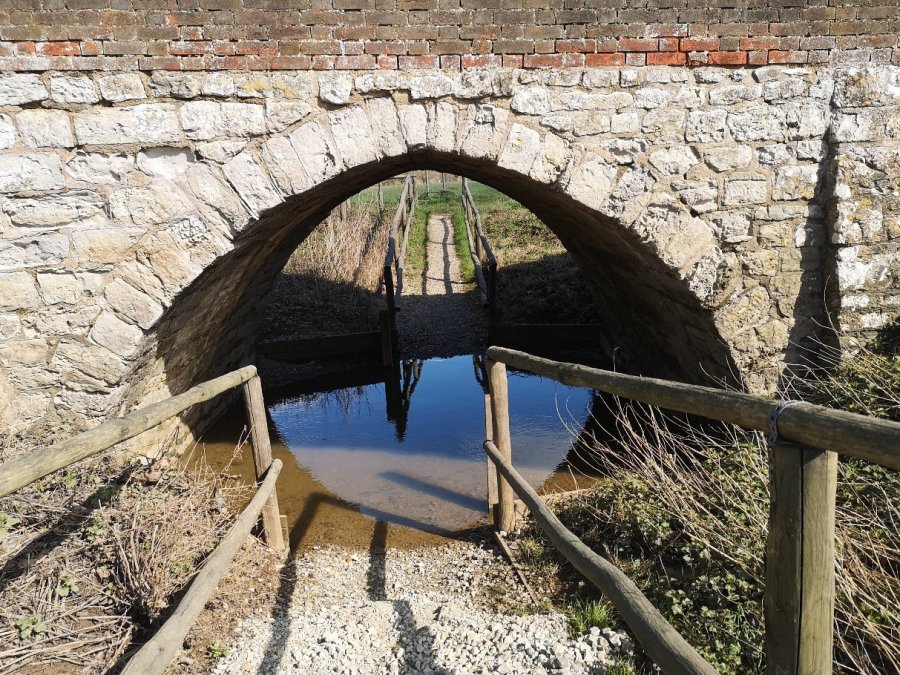
I walked across the Lees (more here) and tried to go under Twyford Bridge but it’s still flooded. I took the pedestrian way that bypasses Hampstead Weir (see above link for sunny photos from an earlier time) and comes out at Teapot Island. From there I took a left to walk along the towpath with the River Medway on my right. There were no fishermen today, but there was a man in wellies and shorts, his knees looking rather vulnerable, having a smoke, and another further on, busy weeding. They were outside the new fixed caravans which are lined up neatly there – rather liable to getting wet, I would hazard.
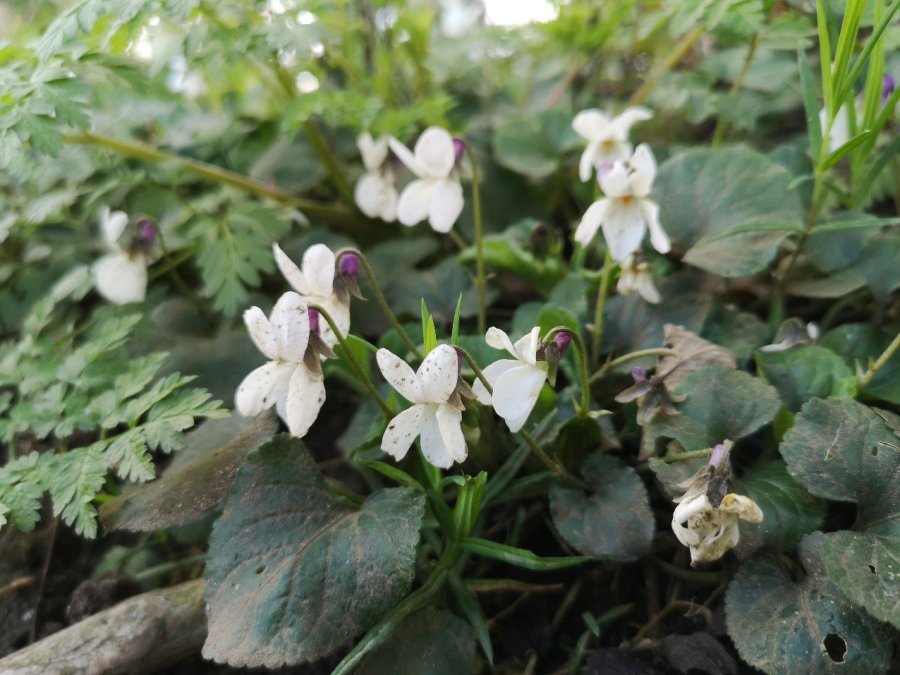

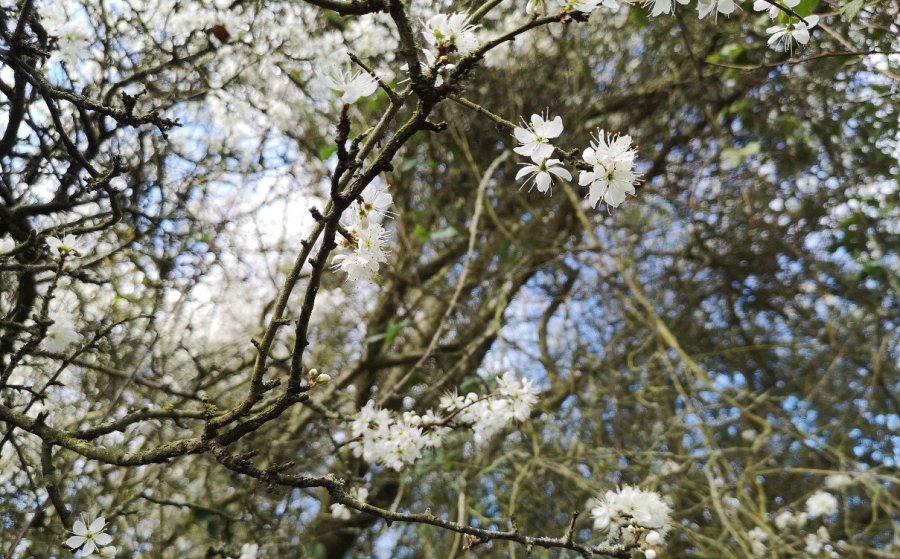
The sun shows up all manner of miniscule details: a strand, a filament of spider’s web stuck to a bramble new-leaf which is coexisting with the old ones on the same stem. There are also aged twigs, dry leaves, spent old man’s beard alongside the new blackthorn flowers and buds. We are all together in this.

I began in a thwarted frame of mind: It was about when you want to walk from a-to-b-to-c, but have to settle with there-and-back. Then, quickly, it was just as glorious as it could be. I had planned to walk The Pilgrim’s Way from Winchester to Canterbury across the North Downs. I even had the Pilgrim’s Passport sent to me by a very helpful woman at the Cathedral in C. Another time!
Winnie-the-Pooh, or Pooh for short, was walking through the forest one day, humming proudly to himself. He had made up a little hum that very morning, as he was doing his Stoutness Exercises …Well, he was humming this hum to himself, and walking along gaily, wondering what everybody else was doing, and what it felt like, being somebody else, when suddenly he came to a sandy bank, and in the bank was …..
e reading club AA Milne
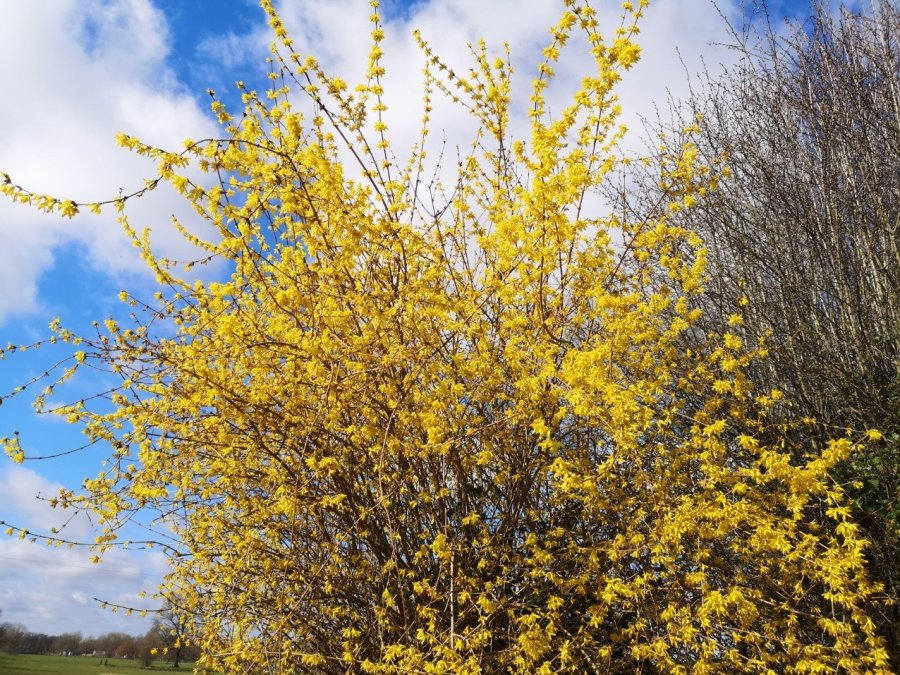
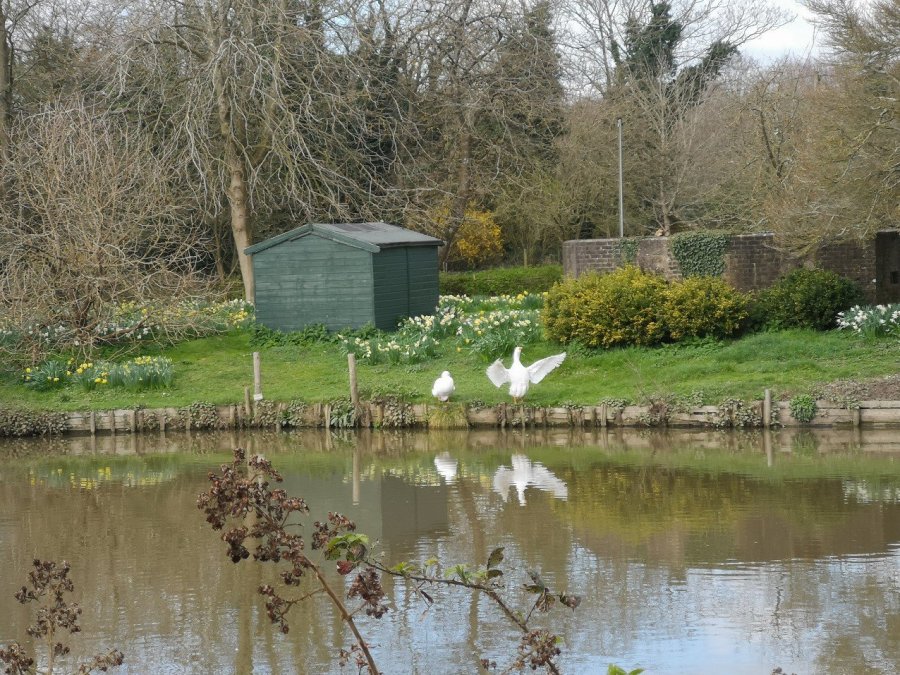
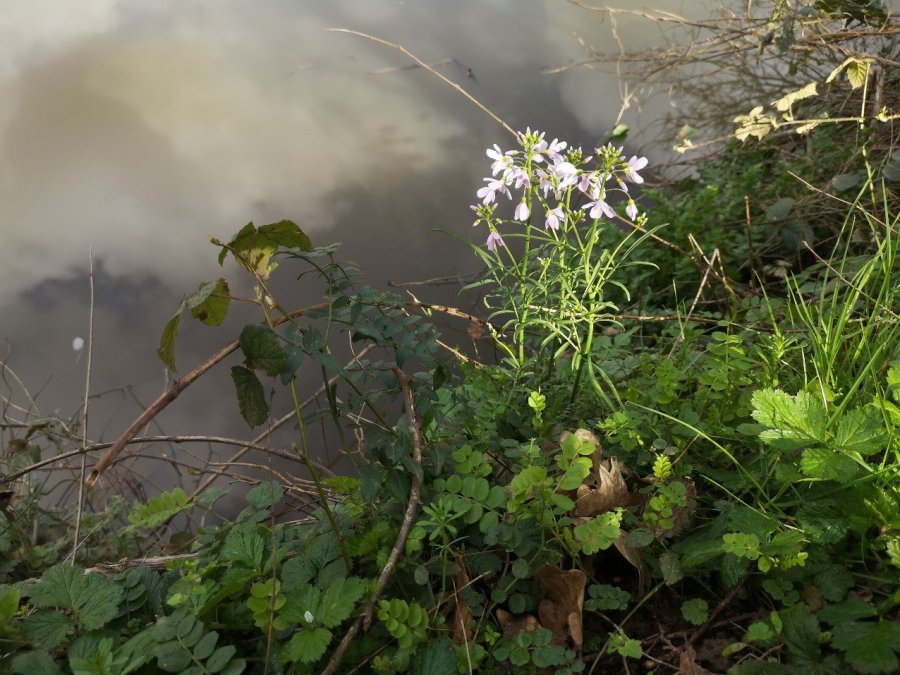
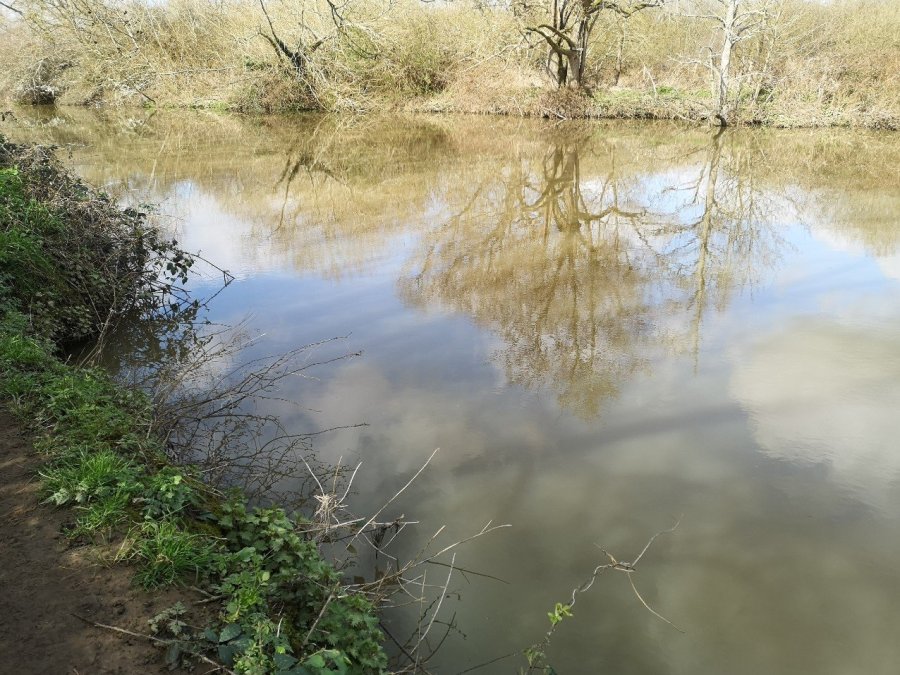
There was the scent of wood smoke, and the sound of water under the bridge and through the lock, of twittering, and an occassional parping from a train that was still running even despite the reduction in passengers due to the crown shaped virus.
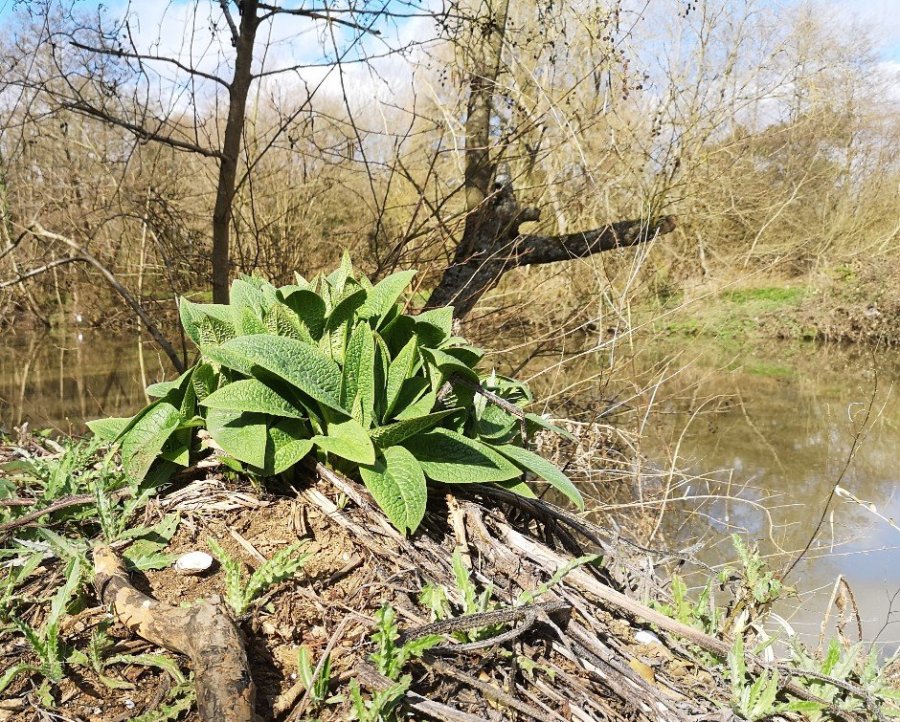
There were regal foxgloves – no flowers yet, just a fascinator of leaves tilted at a jaunty angle on a mount. Many, many wood anemones were spread across the earth. Copious bird calls either drowned out this winter’s new tinnitus (mostly in my right ear) or it just stopped. There was, however, the thrum of engines from somewhere offstage (which was not the sound in my head!)
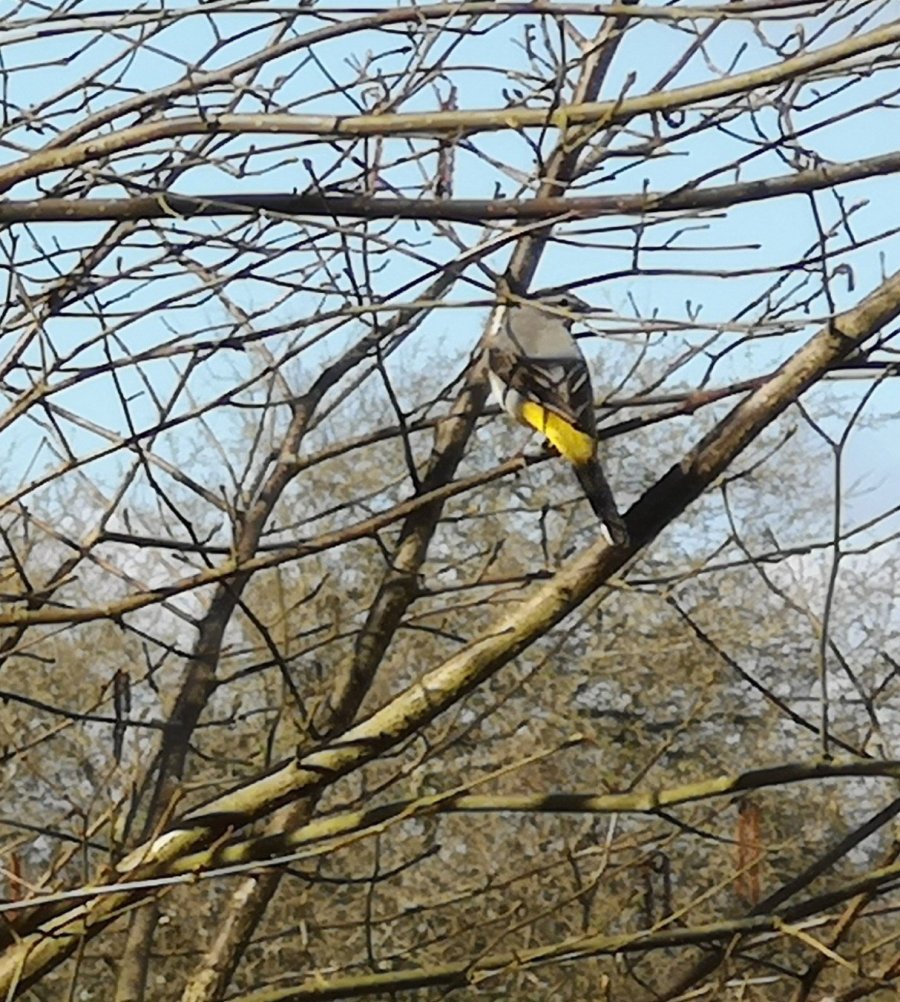
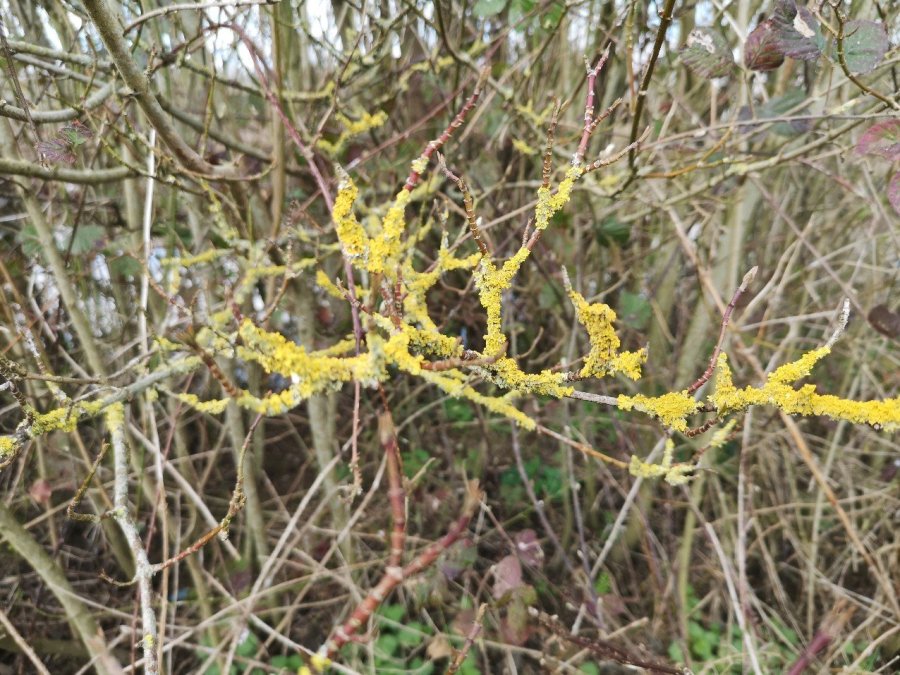

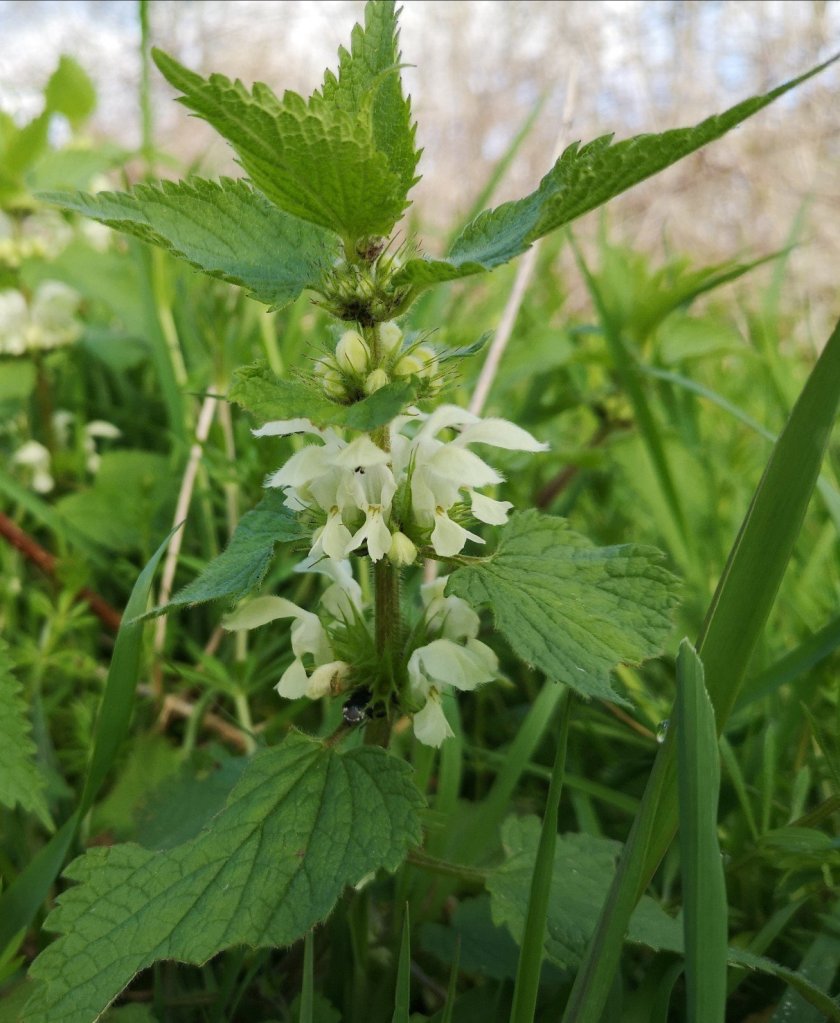
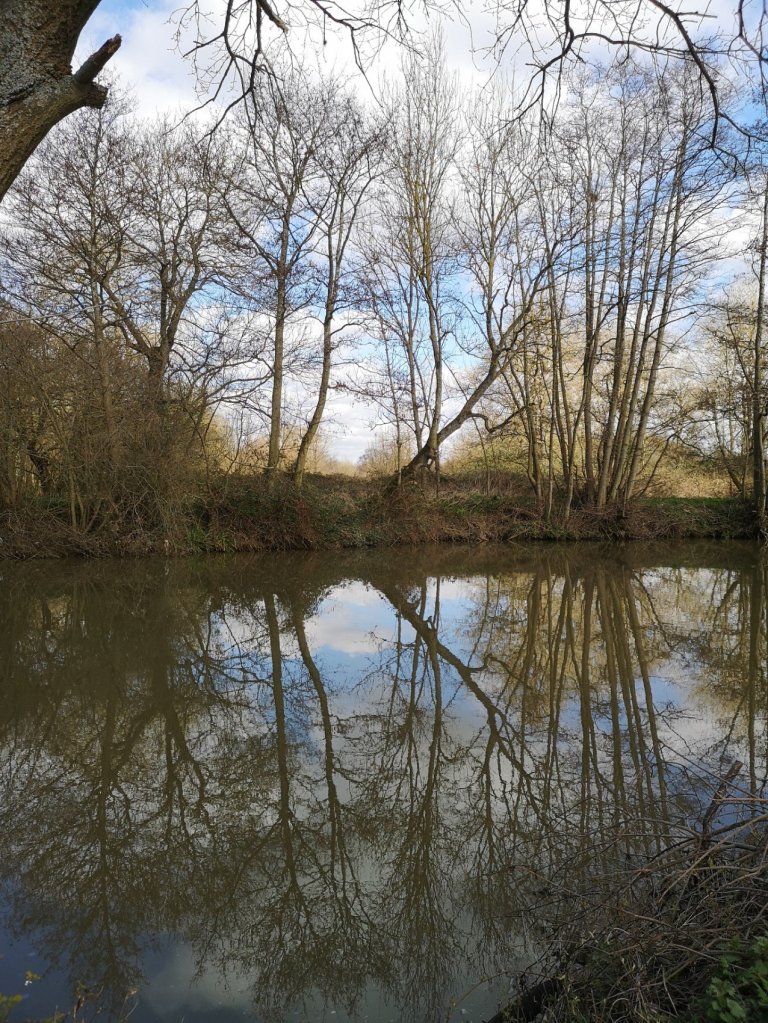


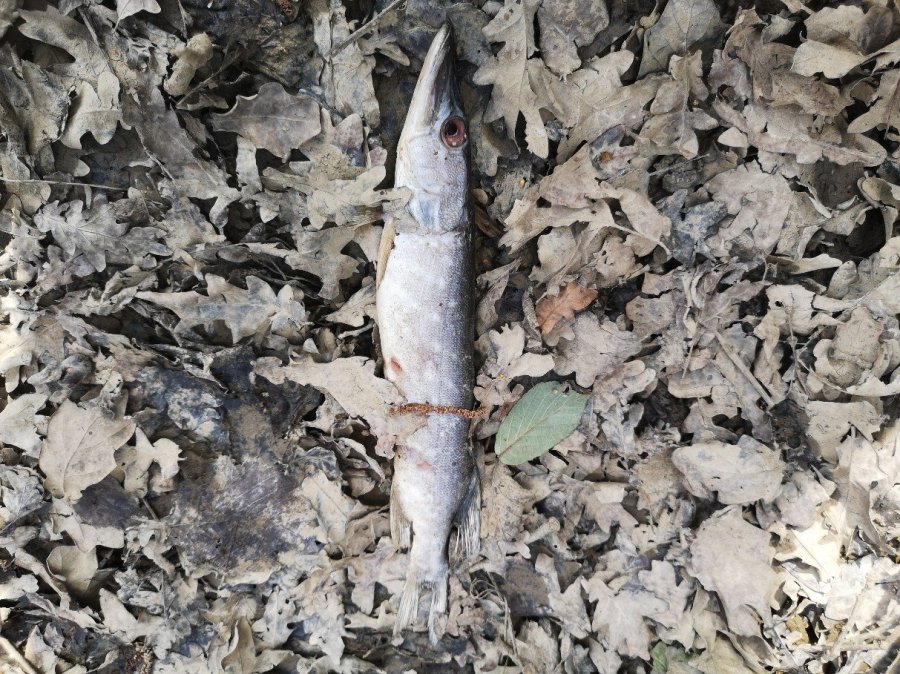
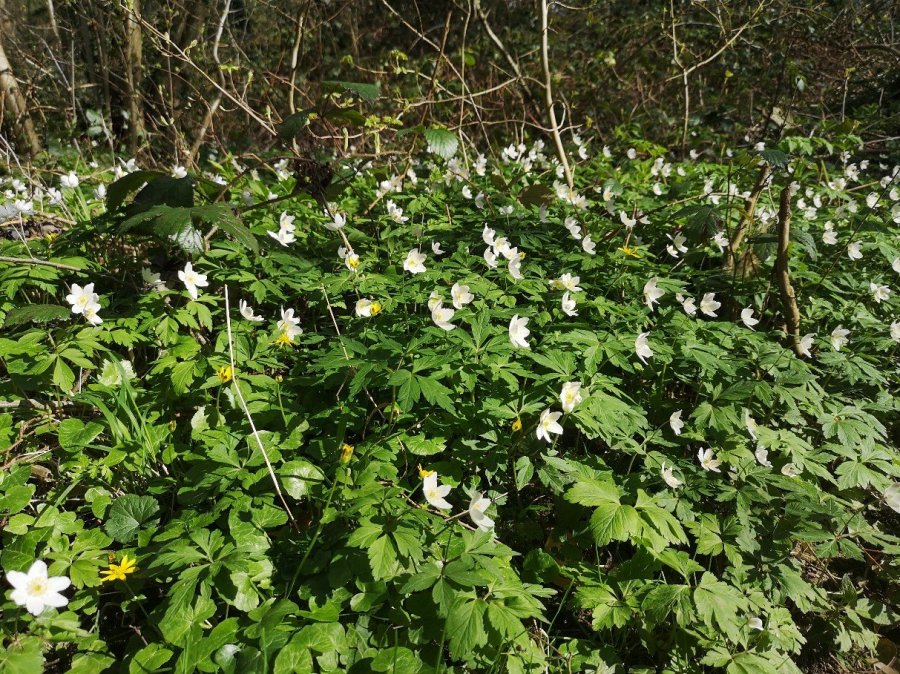
I spied one or two little settlements almost hidden by trees over the water, indications that people are living there quietly, in those beautiful spots. At a little bridge, I crossed to investigate the white flowers on the other side – were they wild garlic? No, instead a veritable sea of anemones. And, I spotted a large dead fish with a long nose – a pike – which I thought must have been flung there when the water broke the banks, because the greenery around it was all covered in a film of earth-dust. However, there was a hole in its side, so it must have been hoiked out by a human and not returned.
In the essence of full disclosure, I actually like the way northern pike taste. However, many would rather eat the aluminum foil the pike was cooked on than the fish itself. Well, with that in mind, one chef in Canada is about to change all that.
by Brad Smith
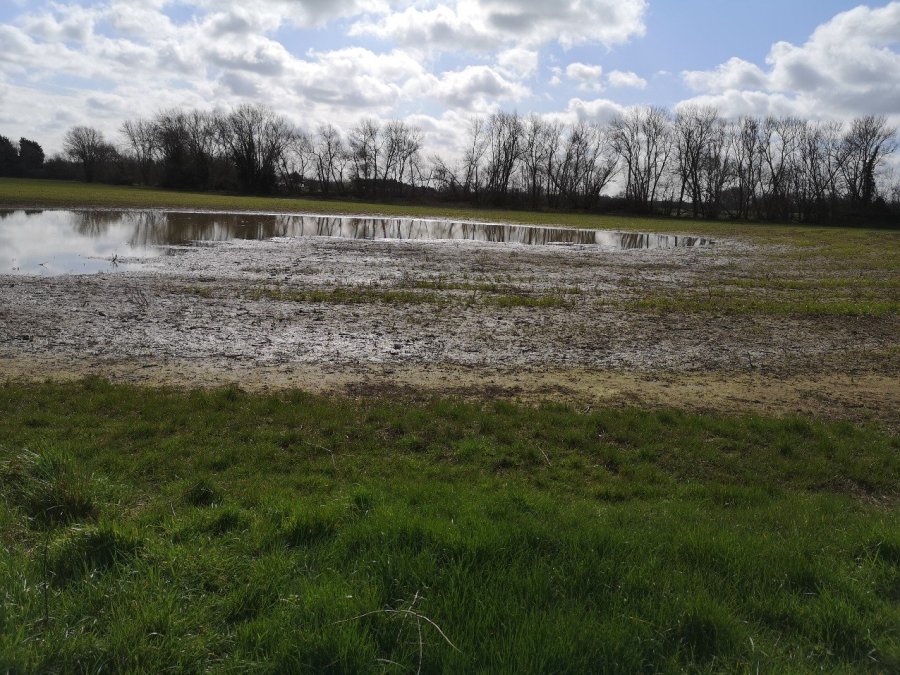
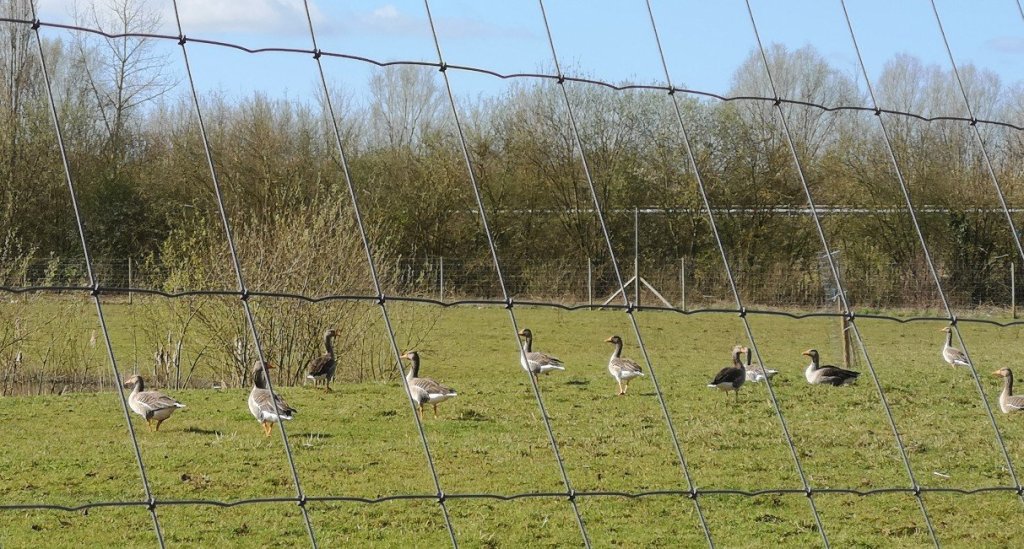


Coming up onto the road, I was in East Peckham with the food Co-op to my left. I spotted footpath signs up ahead pinting to the industrial area where they burn acrid things in backyards and the flooded woods are full of metal rubbish. Nevertheless, birds sang, woodpeckers clacked their beaks against bark, I spotted mallards and blackbirds, a thrush, a chaffinch – simply delightful.

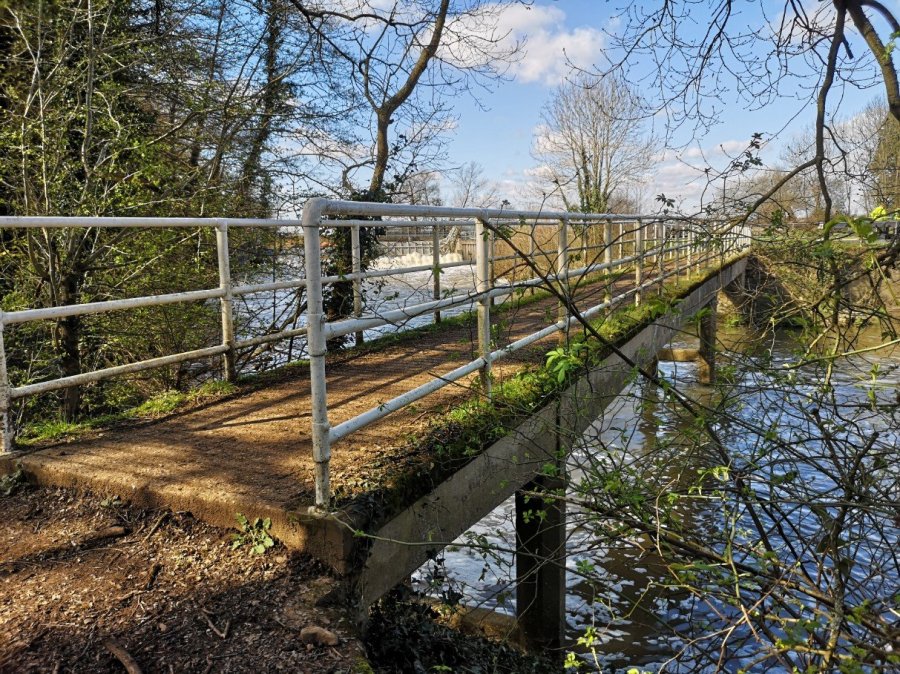
I was not clear which path to take at Sluice Weir Lock #6 located between the ‘River Walk Junction (Junction with the northern route to the railway bridge) (5 miles and 7¾ furlongs and 5 locks to the west) and Yalding Wharf (2 miles and 1 furlong to the northeast)’ also known as Branbridge’s Whark, Arnold’s Mill Lock, Pinkham. ‘Straight on to Hadlow and Golden Green, or over there to East Peckham which is very pretty’ said the male half of a couple I had been playing overtaking with for half an hour or so. They had a massive dog called Rudolf who, when he jumped up, was taller than me! I took the attractive route and they took the other. After all, we were supposed to be ‘social distancing’ which is possible but a bit weird – speaking to others with a 2 metre gap.
Note: a furlong is an eighth of a mile, 220 yards or 201 metres
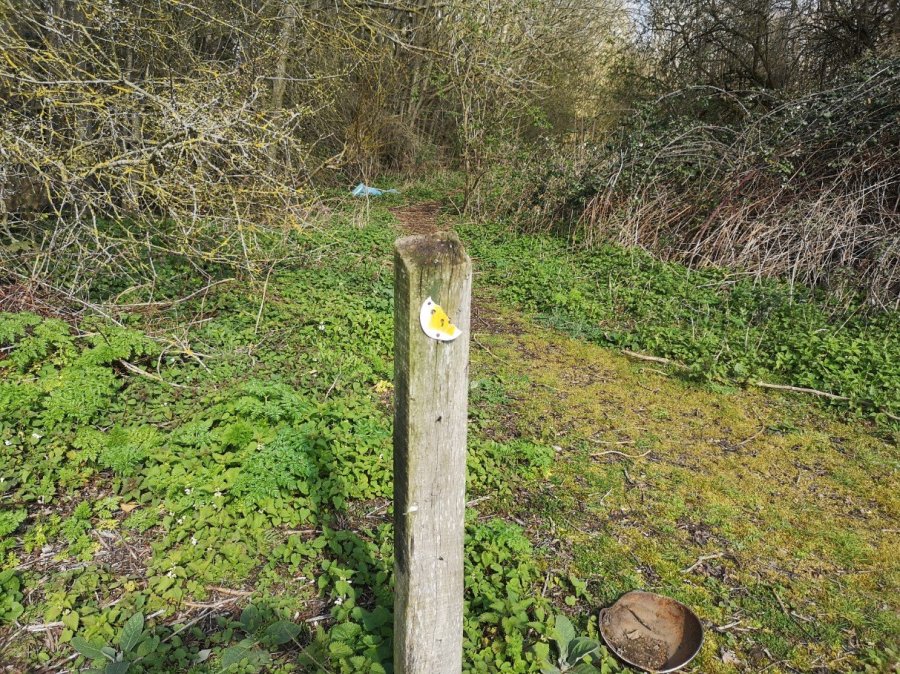
I explored the lock a little and then perused the woods where a huge bumble buzzed around my feet and a robin warbled and squeaked alongside me. There was the first butterfly of the year – bright orange like the redbreasts chest – on my return I saw a uniformly delicate yellow one.
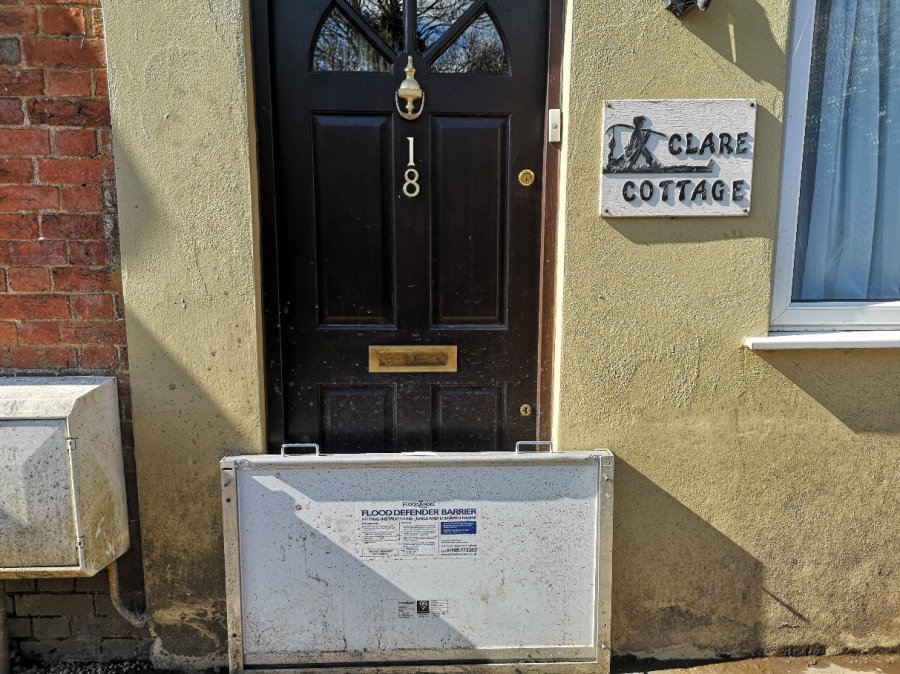
I meanered through the trees, across a pedestrian bridge and came out at a big house and paddock, then a row of cottages. The house plaque reminded me of Dick Whittington which I took as a good sign – a pilgrim if ever there was one, with his staff and pack over his shoulder.
Popular legend makes Dick Whittington a poor orphan employed as a scullion by a rich London merchant. He ventures his only possession, a cat, as an item to be sold on one of his master’s trading ships. Ill-treated by the cook, Dick then runs away, but just outside the city he hears the prophetic peal of bells that seems to say “Turn again, Whittington, lord mayor of great London”
Britannica
I came out by bus stop on Old Road, East Peckham, opposite the street with the General Store and post office. The sun was warm and my 1.5 hours almost up before turning back. Retracing my footsteps and having a seat on the steps of the bridge, an satsuma revived me. I watched a cat emerge from the woods. She caught sight of me and took a sharp angle to avoid contact. There was a squirrel, but no chatter nor conversation.

I waved at a woman sitting under blossom reading. She had on a cardi which exactly matched the house and brown-red bush to her left. It tuned out to one of my mother’s friends – a village is a small place. She was bemused, not knowing me at all.
This walk took me just under 3 hours from yalding High Street to Pinkham and back along the river (allowing plenty of time for photo taking!)

Walking keeps my energy flowing so I find I can be kinder. It does no-one any harm, and it feels as if it boosts my immune system. Do you like to walk? What effect does it have on your spirits?

