Camino Portuguese da Costa – Day 13, October 1st 2019
Leaving Caldas de Reis
Caldas means hot springs and although a foot fountain was right outside my hostel, there was no encouragement to bathe mine as they dissuade you for hygene reasons.
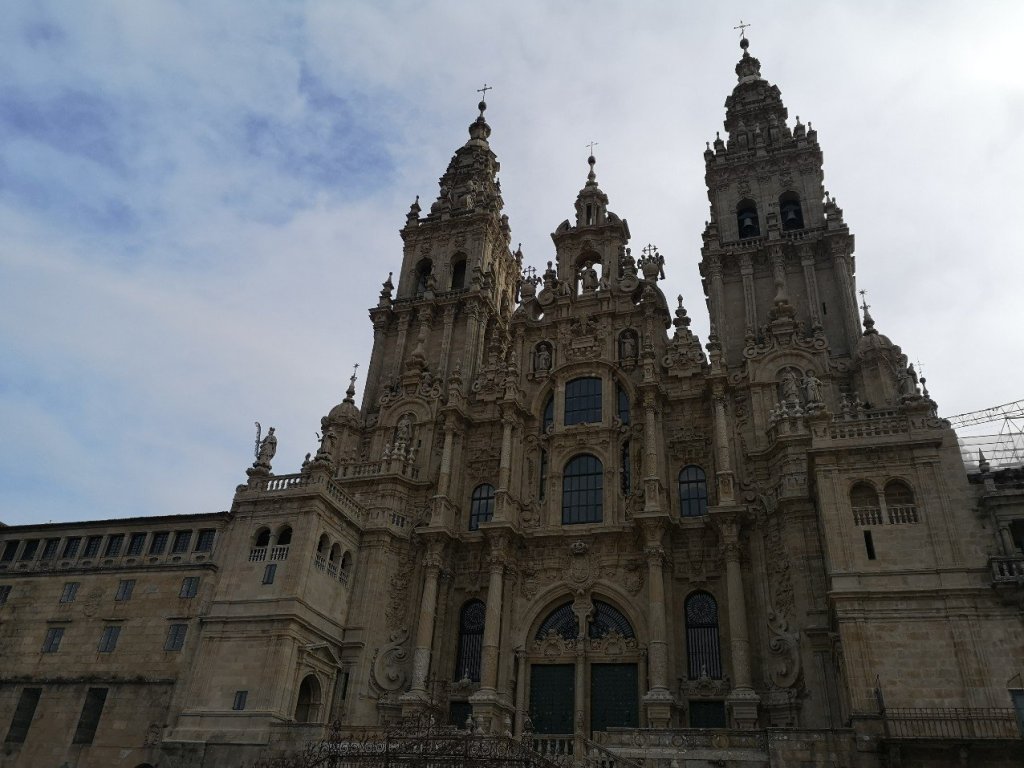
Towering palms beside the Igrexa de san Tome Becket (the British St Thomas a Becket), Caldas de Reis, Spain
There is a Bishop’s mitre on the door and otherwise I cannot find out what the connection is between St Thomas a Becket and Caldas de Reis – although of course he may have made pilgrimage here.
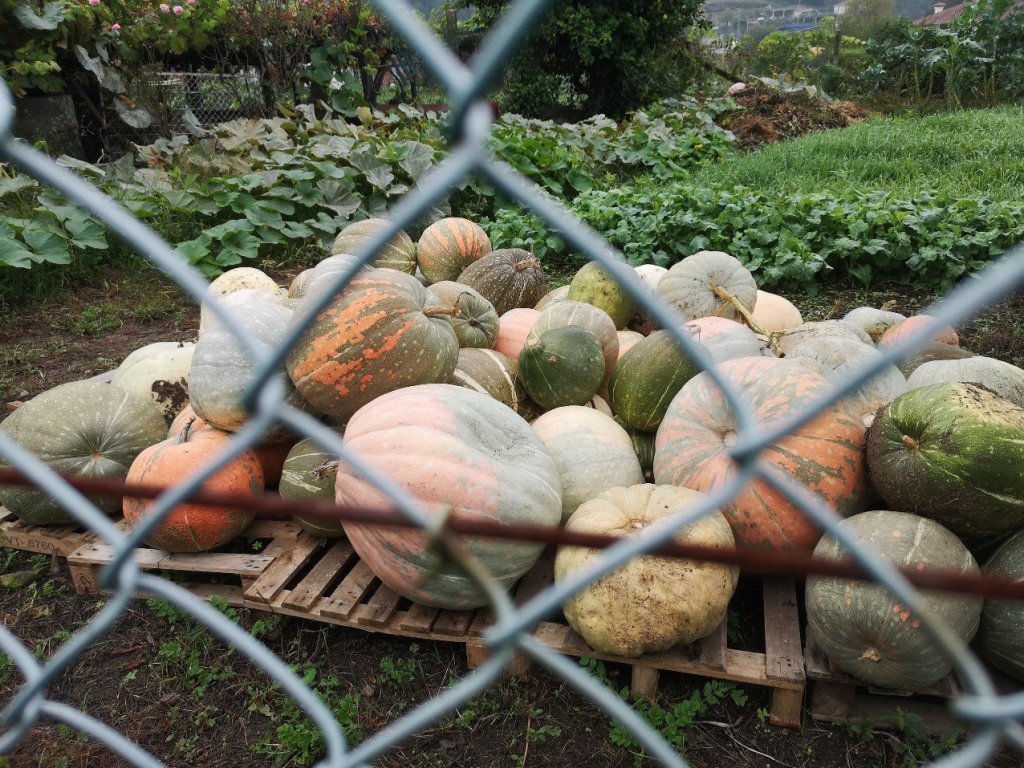
Street art, Caldas de Reis, Camino Portuguese, SpainOne of the many beautiful stone fountains you can see on the Portuguese Camino. Here emblazoned with the shell symbol of paths meeting at Santiago de CompostellaWalking out of Caldas de Reis, I looked down a long valley, the view spoiled by a pylon, SpainField pumpkins. Although there were squash everywhere in the fields and gardens, I never saw them offered on a menuReflections in the traditional, central washing area with what appeared to be self-seeded white lillies randomly dotted around. Carracedo, Spain
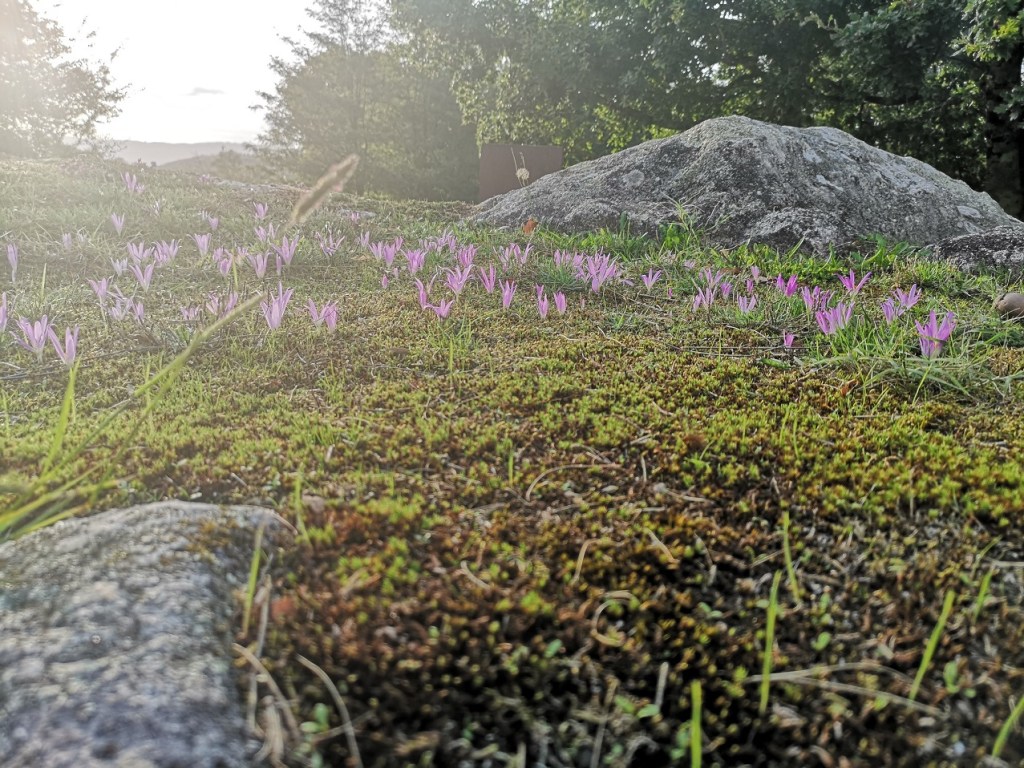
Further down the road were clumps of pink lillies growing wild on the banks like the lupins do in Scotland along the motorway between Edinburgh and Perth.
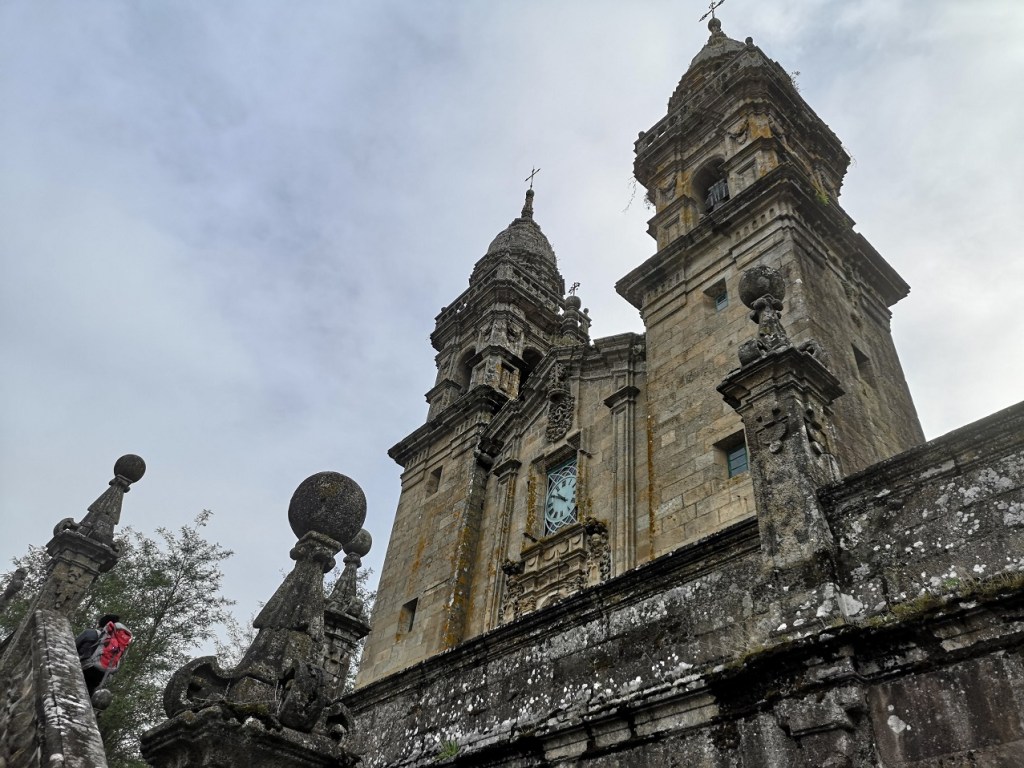
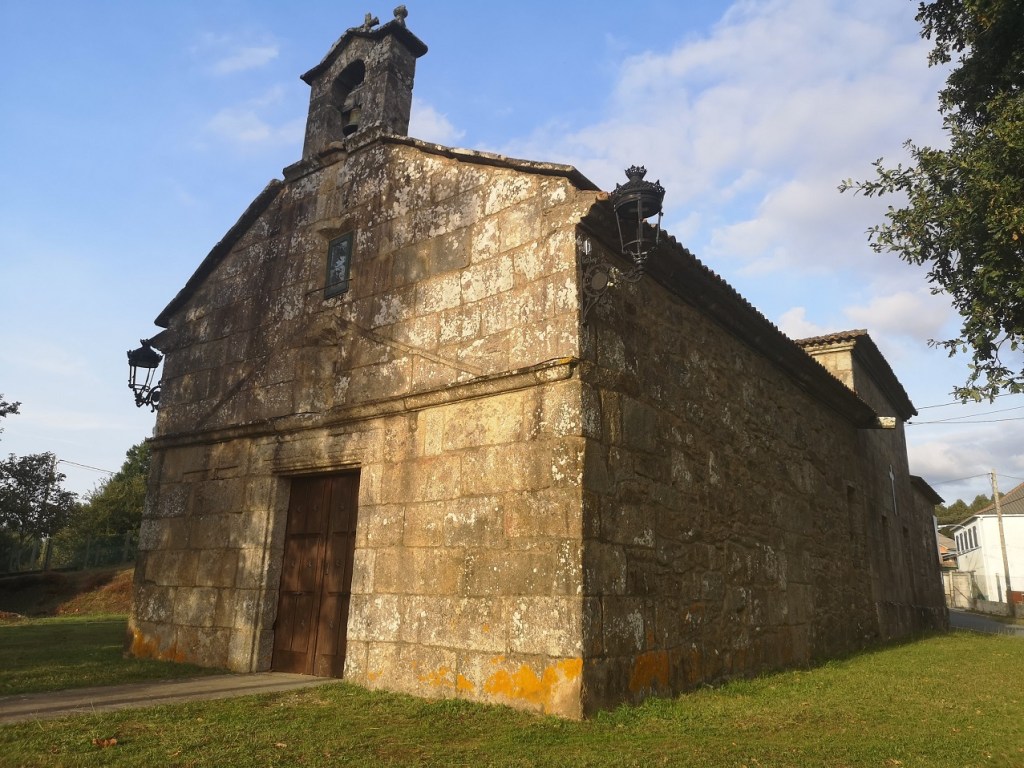
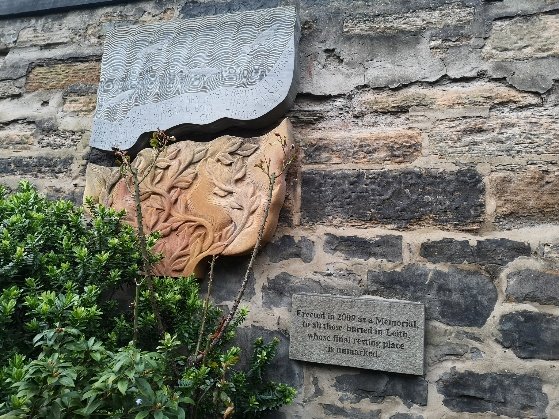
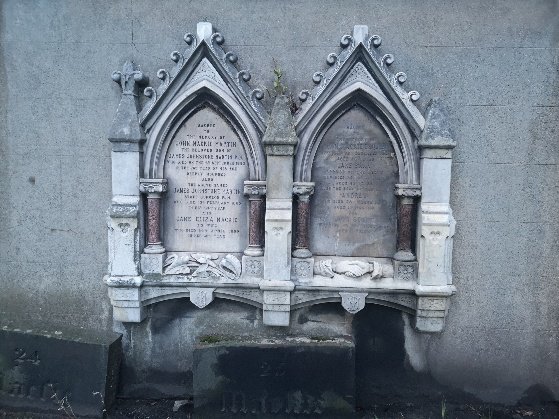
Iglesia San Clemente de Cesar, outside Caldas de Reis, SpainTall brassicas growing in O Cruceiro, SpainThree Bird Toadflax (Linaria triornithophora). I used the Leafsnap plant identifier app – free)Memorial and location of Albert’s ashes, left by his friend. They had planned to walk the Camino together, but Albert had died on the operating table beforehand. Camino Portuguese, Spain
There are many such places to be found along the paths of the Caminos de Santiago.
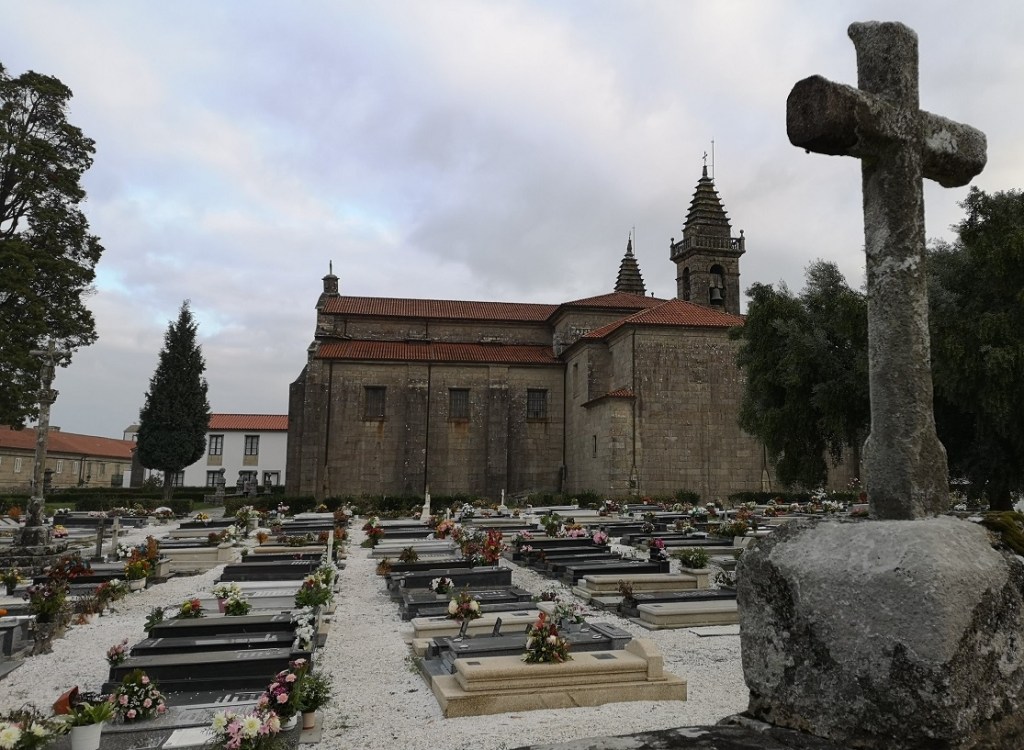
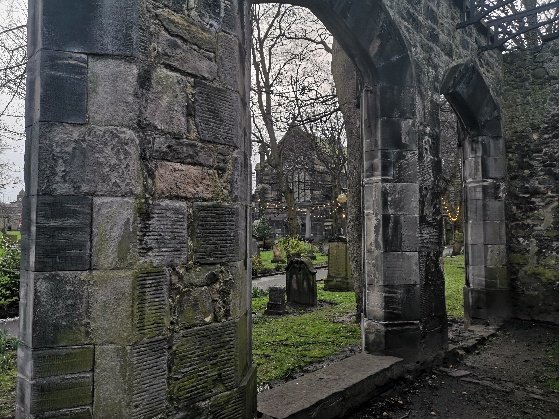
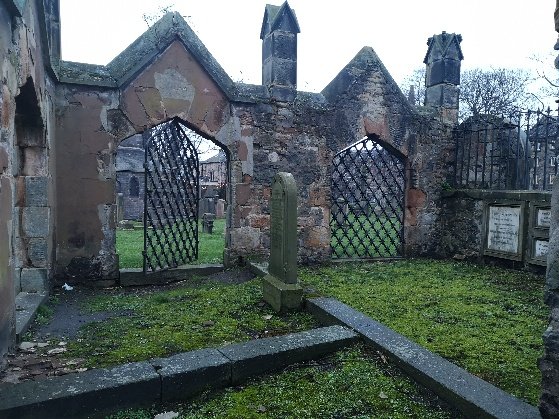
Cemetery, Camino Portuguese, SpainSunshine in the form of canna lillies with their buxom seed pods, SpainGourds (used for carrying water by early pilgrims) and a camino shell on a rusty metal cross with plants and inscriptions, Camino Portuguese, SpainPrickly pears, Spain
Pontecesures (on the way)
Coming into Pontecesures with its industrial pollution, SpainThis cafe was recommended in a guide which I read. It was truly idiosyncratic, run by one man who has his own way of doing things, takes offence easily, and is dedicated to the Camino. Pontecesures, Spain
Just before crossing the River Ulla, on the right at a corner (if I remember correctly) is the place in the above photo. With makeshift furniture and varying quality of food, it is a somewhere to sit out of the sun and get refreshments. It appears to be donativo, but the maitre d’ expected payment and it was obviously a rather random affair. He was not chatty with me, but did serve up the ‘last’ bowl of vegetarian stew (it came recommended). He took a liking to the young couple who came in later, but sent another man who asked questions, packing! The flags and the individual nature of this place reminded me of Manjarín on the Camino Frances.
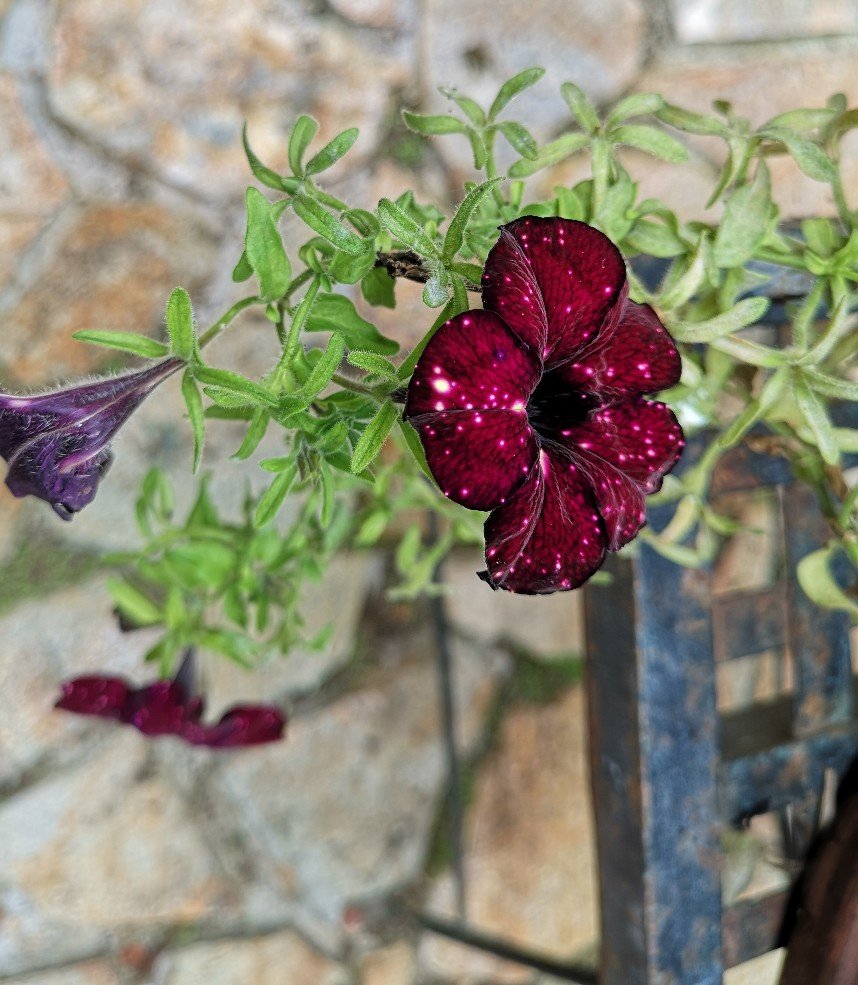
The Rio (river) Ulla, Pontecesures, SpainThe Glory Bush (Tibouchina urvilliana) flower. (Thanks to Name That Plant on houzz.com)
After crossing the bridge at Ponte(bridge)cesures and climbing up the other side in full, hot sun, the path took me along the banks of the River Ulla towards the San Antonio (St Anthony’s) Monastery of Herbón.
These kiwi fruit were drooping off the stalks and there were acres of them, on the way to Herbón, SpainThe route wound along the banks of the River Ulla, sometimes amidst the undergrowth, although the signs were pretty clear, Camino Portuguese
This time I did not bathe as I was keen to get a bed for the night in the monastery on the opposite bank.
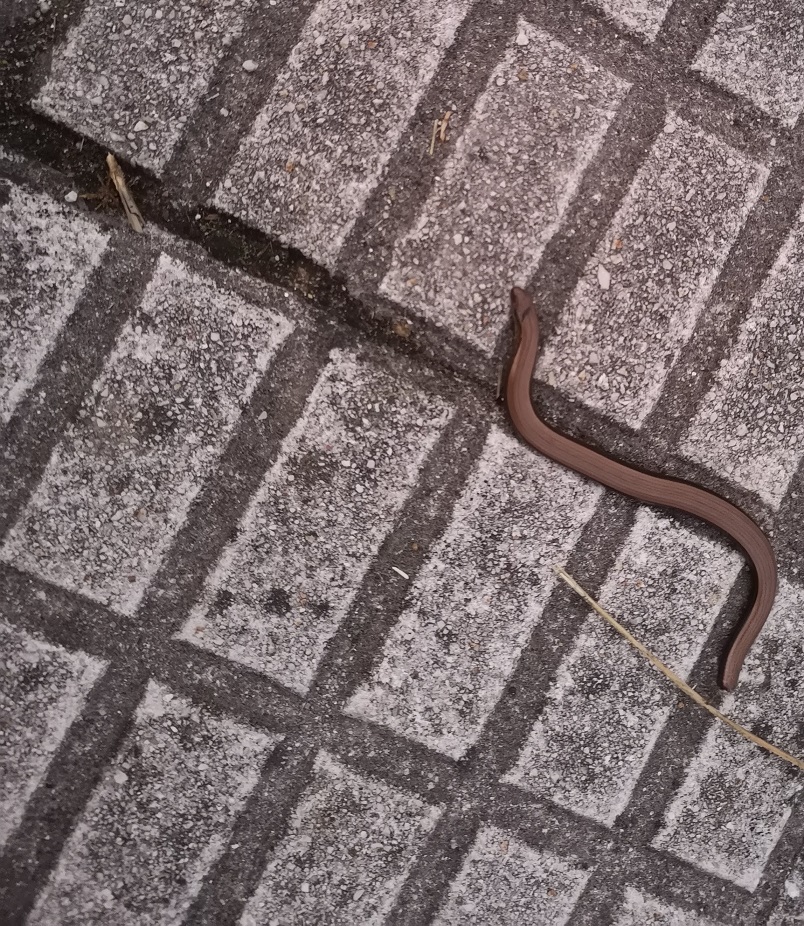
Weir, River Ulla, SpainRed as well as yellow arrows here. Up and down I went, towards and away from the river, before crossing and climbing uphill away from it. Camino Portuguese, SpainA small salamander basking in the sun!
Herbón Monastery
Walking around the walls of the Herbón Monastery looking for the entrance I spotted this shrine, Spain
I was pushing myself (not great for the still-painful foot) because of spening time over lunch and knowing that there is always competition to get a bed at the Herbón Monastery. I passed a couple who were clearly needing some ‘romantic’ time by the river. They were in no hurry to get there before me.
And there was the queue stretching back from the entrance in the wall – only two spaces were left and approximately four hours to wait before opening time, Herbón Monastery, Spain
It was nice and warm and there was plenty to see (photos below). People came to join the line, but were too late and left again – it was a little way into Padrón because it is a detour to get here.
Old friends met up and new ones were made while waiting, Herbón Monastery, SpainThe church of the missionaries, Herbón Monastery, Spain
The young couple sauntered in after quite a while, but were too late and went off again.
Seriously old trees – all knarled and full of character, Herbón Monastery garden, Spain
There were others with injuries far worse than mine. A small group decided to leave, calling a taxi, whereupon exactly the same number arrived late (after others had already turned away) and so they found that there were spaces for them. It just goes to show!
French map (1648) on the wall of the reception area of the Monastery at Herbón, showing the many caminos converging on Santiago de Compostella.
Eventually, after a light shower, we were let in and welcomed by the volunteers. It was very efficient. The accomodation was in small cubicles of two bunks each, ranged along a corridor. (That’s my mess on the bottom bunk!)
Franciscan Seminary 1891-1991. This monastery is in danger of being shut down because there are no young monks coming into the Order, but they do a lot in the village, so it is hoped that it will survive. Herbón Monastery, near Padron, Spain
After a break in which I spent time meditating in the sun, we were taken on a tour of the chapel, cloisters and other parts of the building. This is practically compulsory and very interesting. The monks were missionaries, sent overseas to spread the word of God, and those left at home ran a school on the premises.
The sparkling golden altar, Herbón Monastery, SpainI loved these little angel heads with wings holding up the column, Herbón Monastery, SpainCloisters, Herbón Monastery, SpainStone statue and cross in the garden, Herbón Monastery, Spain
The large garden sports vineries (there is no-one to keep them going now, sadly), kitchen garden (partly in use, as far as I could see), water which has been tested and found to have lots of minerals in it so is truly healing, and various levels and attractive sections making it really interesting.
A place of meditation, Herbón Monastery, SpainView from the garden, Herbón Monastery, SpainHealing waters at Herbón Monastery, SpainDry, brown Autumn leaves and sweet chestnut prickles bursting openUntended vines, Herbón Monastery, SpainWall shrine and fountain, Herbón Monastery, Spain
To reward us for such a long guided tour and talk, we were given a good meal (included in the 6 euro price) around long canteen tables and there was a lovely atmosphere there.
Note: There is always a decent vegetarian option at the shared meals on the Caminos
When I travel away from Edinburgh, my aim is clear: either to walk Pilgrimage (taking the paths people have trodden before me, where their steps have created tangible layers of spiritual tradition); or to explore a given area, what to me is virgin territory.
But when I am home, my walks are more prosaic – to and from work and the shops for my messages (used in Scotland, meaning errands) – placing my feet on known land, pavements I have walked so many times. Then my focus is on forging new connections between familiar places, seeing the same views from alternative perspectives and finding something new in them.
On Jan 11, I joined in the Snapshot Synchronised Walk (Women Who Walk Network) taking a route from Causewayside in a near-straight line to York Place.
After a day of teaching, a good tramp is therapeutic. Via ghostly vennels, northwards along narrow-walled passageways, up slopes, down flights of steep steps, I discovered a gothic-glowing steeple, a jaundiced arch lit by 19th century streetlamps, and scary blue eyes in a repurposed church. The extra-mundane exuded from the normal.
Corner of South St Andrew’s Street, Edinburgh, Scotland
I walked Causewayside from Sainsburys, past Summerhall with its ghoulish green up-lighting,
I meandered along the edge of the Meadows, and the South Loch Gin Distillery (which I hadn’t seen before),
South Loch Gin Distillery, Edinburgh, Scotland
I kept the University on my left,
Until I glimpsed the rear of the National Museum.
I picked my way over the cobbles of West College Street,
Across Chambers Street,
Down steps to meet Guthrie Street half way,
Crossed the Cowgate and took a mini-right to find Stevenlaw’s Close (which I didn’t know was there). Looking right I paused to snap the Stramash Live Music Bar.
Stramash Live Music Bar, Edinburgh, Scotland
On the opposite side of the High Street was Fleshmarket Close,
On the opposite side of Cockburn Street was the downhill flight past the Halfway House:
The Balmoral Hotel in the distance, on the corner of North Bridge, Edinburgh, Scotland
Through Waverley Station and up the other side, I crossed Princes Street and took South St Andrew’s Street where I popped my head into the old Bank of Scotland which has become a mighty fine looking hotel.
The old Bank of Scotland building, St Andrew’s Square, now The Edinburgh Grand, Edinburgh, Scotland
I posted a thank you letter in a pastel pink envelope I had been carrying in my bag for a few days, to my sister in London.
The rain came on.
The wind blew me through the bus station (where a small bag of mini-cheddars were outrageously priced) and out onto York Place, carefully avoiding trapping my toes in the tram lines.
Rounding the corner to Broughton Street I found that the bus stop was closed – again.
All the way down that road I tripped, head down because of the driving wind,
…where I waited 7 minutes, as my coat became increasingly sodden, before taking the bus to my home by the sea.
Camino Portuguese da Costa – Days 11 and 12, September 29th – 30th 2019
How many kilometers between Pontevedra and Santiage de Compostella?
Pontevedra to San Mamede de Portela
I left the Casa A Grade air bnb (see my previous day’s walk for details) in the almost-dawn, and continued along the Rio Tomaza into Pontevedra, a 40 minute walk.
Glorieta de Compostella – Fuente de los Niños (Fountain of drinking children) at the interseccion (intersection) Rúa (Road/street) Peregrina con (with) Rúa Fray de Navarette 36001 Pontevedra, SpainThe Capela (chapel) de Peregrina (of female) pilgrims, Pontevedra, SpainDetail showing St James, The Capela (chapel) de Peregrina (of (female) pilgrims, Pontevedra, SpainConvento (convent) do San Francisco, Pontevedra, Spain
Leaving the city, I once again rejoined the Via Romana / Portuguese Camino
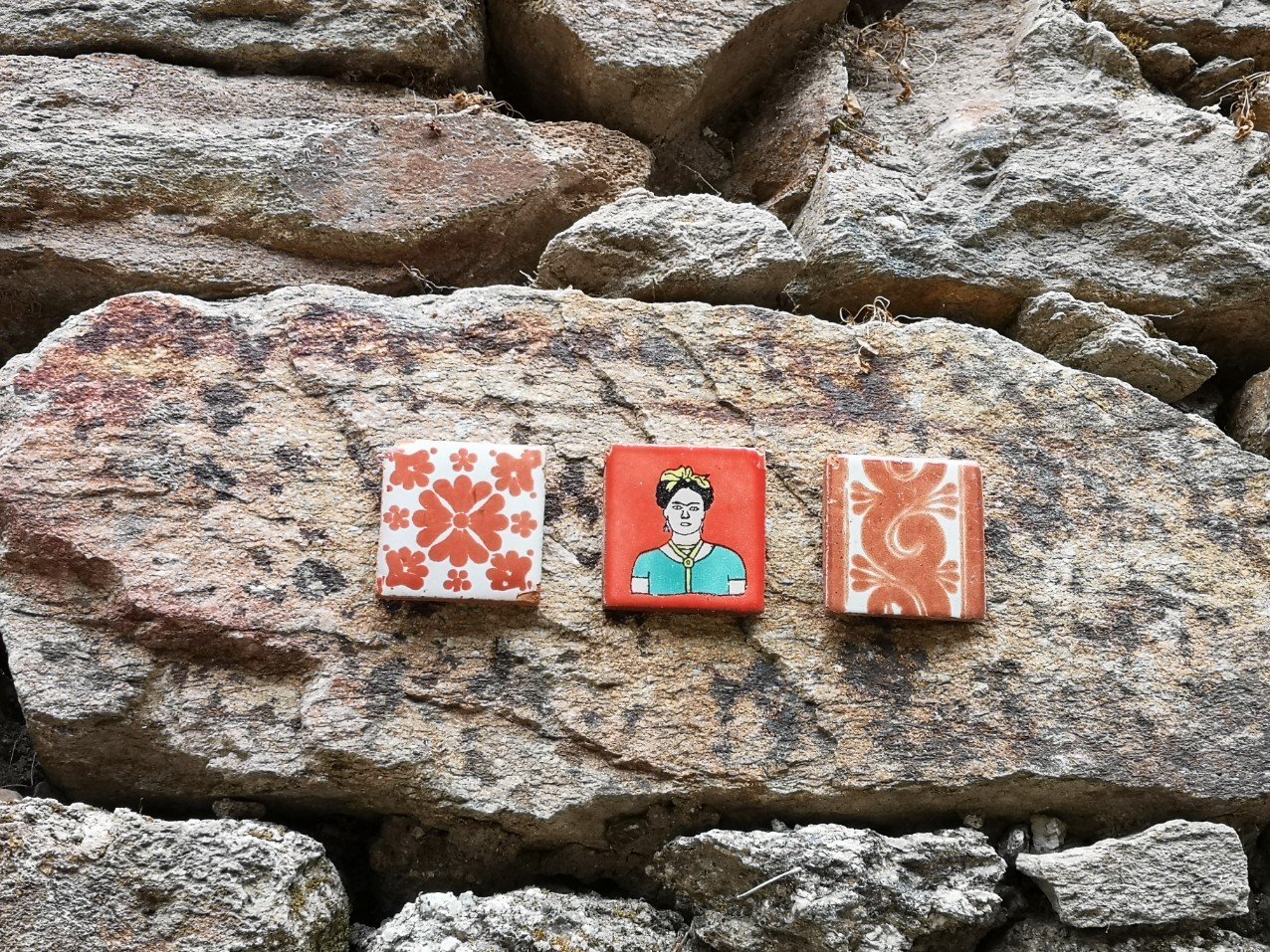
Via Romana XIX and yellow arrow / iconic signposting for the Camino de Santiago, SpainThe Virgin on decorative tiles, Spain
Being a Sunday, the cyclists were out. When you are walking quietly, focusing on the way your feet meet the ground, allowing thoughts to meander in and out, and then a cyclist shoots past your left elbow with a whoosh and, very occassionally, a Buen Camino, it is a shock. When it happens over and over again, it’s more akin to a small trauma and there is no possibility of resting in your rhythm and pace, you must stay alert.
Sunday cyclists on the Camino Portuguese, SpainIt rained on and off as I passed a cemetery, near San Mamaede de Portela, Spain
Shortly afterwards, it poured and it was not possible to take photos. Arriving at the hostel of San Marmede de Portela in the middle of the countryside, there was no-one to greet me, just a couple already drying off. Thank goodness the door was open! I was soaking, wet through. It was a large dormitory and I chose a corner away from the door, not knowing that there was no heating and that by the end of the day the room would be completely full to overflowing (there were pilgrims sleeping in the eating room etc). It was also very dark and although some of us tried to open windows, they were always immediately closed by others.
Wet walking clothes are stinky, especially when there is no drying room or anywhere to hang clothes / store boots except narrow corridors. If you sleep on the bottom bunk and they are like drapes all around you, there is no getting away from the smell. People were using one hair drier between 20 or more, but it takes a long time to dry sodden socks with one. There is a big garden and other buildings outside, but the weather was too terrible to contemplate unless you arrived very late in which case I did see folk sloshing across, seemingly with no other opton, but I didn’t know where they were going.
I am not good at these sorts of photos but you can see the world map on the wall on the right and the numbers of hikers who have written on it, plus the table laid and the scrum of diners waiting to eat
Run by volunteers, this is a donativo hostel and the men who came along later knew what they were doing and were well prepared. Being well away from shops or restaurants, a great meal was produced and tables and chairs arranged and rearranged to fit everyone in. Sitting alongside all nationalities, it was a jolly occassion (there was nowhere to get away from it if you had wanted privacy). There was wine and hot soup, vegetarian tortillas with salad and, if I remember rightly, a desert too. Clearing up was a communal event and the partying went on, as ever, late into the evening.
All ages, all nationalities, many fixed on screens. Other than the bunks, there was nowhere else to sit until we were given permission to be at the table. Hostel San Marmede de Portela
San Marmede de Portela to Caldas de Reis
The next day it was still raining, but luckily it cleared. Ugh, putting on wet boots and clothes is one of the worst things after a broken night!
I walked through Santa Maria de Alba, A Cancela and Albergue de Briallos.
There was a most unusual cafe where many of us stopped for a hot drink that morning (some were taking shots of orujo (a sort of grappa) with their coffee, perhaps a way of warming up from the inside). There was only one, older and innovative man serving us all. It looked as if he had used his garage for this purpose and, after serving us, I noticed that he disappeared through a side door. On further investigation, I spied huge vats of grapes steeping.
Crowded with pilgrims ready for morning coffee, A Cancela, SpainA garage reimagined as a cafe, A Cancela, SpainAnd winery in a side room – the smell was amazing as he stirred the great vats releasing the aroma of rotting and ripening grapes. A Cancela, Spain
I am always coming across dead animals on the camino, but today’s fox was still alive. I crouched down and whispered to it, knowing that it would not live long, wishing it well on its journey.
I thought perhaps you would not want to see a photo of the fox, but this was nearby, always a reminder, SpainIt continued to drip and drizzle, puffy rain clouds on the horizon, some walking with umbrella, past vines heavy with fruitI can never resist a chat with a donkey
Black grapes heavy on the vines, Camino de Santiago, SpainLetter box and bread slotA speckled, camouflage-yellow canna resplendent against a dull skyCaldas de Reis, a most attractive place at the confluence of the Rivers Bermaña and Umia, Spain
I stayed in the private Albergue Peregrinos Posada Doña Urraca and I do not recommend it, despite the fantastic location. It was dirty and crowded, the rooms are almost at the front door so anyone can walk in and out. The photos on the website do not show it as it is – do not be deceived. It is not a municipal one – I have never seen a government-run hostel be filthy like this.
Accumulated dirt in one of the 2 tiny bathrooms at the private Albergue Peregrinos Posada Doña Urraca, Caldas de Reis, Spain
There was some lively conversation around the table, however, from the US as well as Germany, and a crowd of Polish pilgrims (I have not met people from Poland much at all on the Camino) at the hostel.
Caldas de Reis, Spain
It’s a busy and normal town despite all of us traipsing through, with friendly local people and lots of facilities – a big supermarket, cafes and loads of banks. I tried the three cashpoints in one street – one was charging 3.50 euros, one 1.50 and the third nil, so watch out for this when getting cash out. It wasn’t my bank which charged me, nothing to do with getting money from a British finance organisation, it was the cashpoint machine company and I found this all over Portugal and in some parts of Spain. (I use a Post Office Travel Money Card via an app on my phone which charges for the exchange, but doesn’t have an additional service charge like the Bank of Scotland does if I use my everyday debit card when I am abroad).
Stunning bridges, some reminiscent of Oxford or Venice, and clean rivers in Caldas de Reis, Spain
Have you walked the Portuguese Camino? Maybe you are planning to? Leave me a comment to let me know 🙂
Camino Portuguese da Costa – Days 9 and 10, September 27th – 29th 2019
Mos to Redondela
I walked along avenues of acers only just starting to turn yellow where it rained slightly (as it is prone to do in Galicia)
Walking this Camino was a prize for the long year I had spent writing my first book and the exciting but stressful dash to submit the manuscript to the publishers by the end of August. I had sat down – researching, typing while travelling – and eschewed long distance walks for that reason. Today, as I was ambling along, I realised that there was now some space into which a new project might come – and it came! The great Camino de Santiago forum is absolutely chock-a-block full of interesting information about pilgrimage in Spain and elsewhere. There is a mind boggling amount of collective knowledge in it, submitted by enthusiasts from all over the world, and when I am on the road I often consult it for hostel information, path directions and more. My searches the previous evening had led me to interesting topics related to my previous explorations and that then trickled through my mind as I made my way towards Redondela. Walking is such a great way to allow those creative thoughts to flourish!
Typical Camino de Santiago stone with the familiar shell and an unidentifiable coat of arms with a stemmed rose and daisiesAnother sign of grief? Stone statue of a woman covering her eye
Food and Wine on the Portuguese Camino
Pulpo (Octopus ), a Galician delicacy, on a stall outside
What, you may ask, can a vegetarian eat while walking the Portugues Camino, when meat is such an important part of the local diet? You can usually find eggs and vegetables (though they are often cooked rather longer than we might do them in the UK) and of course salad galore, though if we are walking out of season we might find we are served the packaged iceberg which is familiar back home. What we can never eat unless we beg at someone’s front door (no, I haven’t done this myself!) are the wonderful tall greens which so many grow in their front gardens, but which are not to be found, not in local shops, supermarkets or restaurants.
Tall brassicas growing in O Cruceiro, Spain
So, look out for Padron peppers (very small and grilled ones which are not really from Padron, but more of that in another blog), caldo verde (warming cabbage soup) which is usually not made with a meat stock but check, and also be careful that they don’t garnish it with sausage; bread and olive oil of course; roasted chestnuts (see below); and you most definitely can eat pastel de nata (the most delicious bijou custard tarts) as long as you are not vegan because they have eggs in them.
Lea and friend, Vila Nova de Milfontes, Portugal (not on the Camino Portuguese da Costa) with whom I shared 100s of roasted chestnuts – yum!
Fun Fact
Conventual deserts: Traditionally, eggs whites were used in convents to starch the priest clothing and the nun’s robes. Left with the egg yolks and time to kill, the nuns had to get creative. Making the most delicious and famous desserts became a tradition in Portugal.” From Authentic Food Quest
Field pumpkins. Although there were squash everywhere in the fields and gardens, I never saw them offered on a menu
If you are pescetarian (that is, you also eat fish, but not meat) you will have no trouble because Portugal is well known for sardines (although very attractive, don’t buy the smartly decorated tins as they are many times more expensive than the ordinary ones – make sure they are Portuguese) in the smaller shops or supermarkets); bacalhau (salted cod fish – variable, some stupendous, some just salty), octopus (pulpo, see above) and other delicacies from the ocean.
Moss Rose (Portulaca gradiflora, a semi-succluent) with red and yellow flowers indicating a mixed seed bed. Thanks to the helpful folk on houzz.com for identifying this for me
Finally, these stages of the Camino Portuguese are close by the Soutomaior, one of the sub-regions of the DO (denominacion origen) the vineyards of the high-quality, light-bodied white Albarino wine, produced by the Rias Baizas.
The Concelo (government offices) de Redondela, SpainAlbergue de peregrinos rennovated 16th century Casa da Tore, Redondela, Spain
There are 42 beds, it costs 6 euros, opens between 1-10pm and is open all year round.
View from the hostel window with a large blue and yellow camino sign, typical stone balconies and showing the narrow streets of the town, Redondela, Spain
Because the room opened straight into the middle of the town, it was extremely loud with revellers late into the night and early hours of the morning.
Metal bunks in crowded rooms, full to bursting in late September 2019, Xunta (municipal) hostel, Redondela, Spain
Redondela to Pontevedra (almost)
This was a good day despite my foot /feet still hurting. Such wonderful scenery and sun! That’s why I love to walk like this – to be in nature, to be surrounded by beauty, to be amazed, step-by-step.
This part of the Camino Portuguese, Spain
I left just after dawn, the lights still on under the aches of the bridge.
Heavy mist in the valley making the view mysterious and other-worldly, Camino Portuguese, SpainWater stop – natural, fresh water from the fountain at the junction, Camino Portuguese, SpainShells and other Camino paraphernalia, Camino Portuguese, SpainLooking down onto Rio Verdugo and Arcade, SpainEucalyptus catching the morning sunDown now to a welcome stall set up by local weekend volunteers offering tea and snacks (for donations). You can see the partially wet ground from the regular showers of rain, Spain
Saturdays are very busy days on the Camino with cyclists and local walkers as well as those who are making their way to Santiago de Compostella.
A town which celebrates the Camino and its pilgrims – silhouette cut-outs on the walls of this hostel, SpainA way-side grotto with Camino knick-knacks, SpainThe first horreo (stone shed for storing maize over the winter, on stilts to keep out the rats and the wet) with plenty of religious protection, SpainI crossed the Verdugo river by the Ponte Sampaio (or San Paio) bridge getting a good view of a more modern one further along, Arcade, Spain
The Puente (Ponte) San Piao: ‘It is here where a decisive battle for Spain’s independence was held against Napoleon’s troops in 1809 which ended the five month French occupation.’ from Santiago-Compostella.net
Another horreo – blue skies at this stage and so it was hot for the climb up the hill on the other side of the river, Arcade, SpainBack into the countryside and more paths made up of large stones which would be running with water and very slippery if the weather hadn’t been fine, SpainPine and other mixed woods, trees towering over me, SpainDeep in the woods was a rare peregrina (female pilgrim) statue and lots of shells. There was no difficulty finding the way, SpainPlastic chairs ready for resting and enjoying the dappled surroundings, Galicia, SpainI spotted huge slugs of all shapes and sizes amongst the sweet chestnut prickles and ferns, Galicia, SpainIf you look carefully, you will find little mementoes in the rocks, Camino Portuguese de Santiago, SpainActual crowds of pilgrims in great chattering groups, Camino Portuguese, SpainI crossed the Fatima Camino here: Santiago in yellow, Fatima in blue
The final stage of this day’s walking through the Valley of Tomeza and Salcedo, took me through a riparian area (a wetland by a river). The ground is peaty in places (as in Scotland – there are many connections between Galicia and Scotland), moist forests of alder and willow, oak, ash, birch, chestnut, brambles (blackberries) and even cherry blossom (Prunus padus or Cerdeiro de acio in Galician) and hops can be found (as in my native Kent). The sign said that the presence of otters is a sign of good water quality. It certainly looked bubbling and clear, but sadly, I didn’t see an otter.
Ponte da Condesa (stone bridge) over the Rio Tomeza, near Pontevedra, Spain
This last part was particularly gorgeous – green, verdant and peaceful apart from the trickling water and birds chanting around me.
Rio Tomeza near Pontevedra, Spain
Accomodation: The previous evening I had come across an air bnb called Casa A Grade online and tried to find out if there was a space, unsuccessfully. I had even phoned and the woman said they did not have any single beds. Well, as I was walking through these wonderful woods, there was a hostel sign. I crossed the quaint bridge and wound my way through what turned out to the the end of the garden. There I came across a plunge pool glittering in the hot sun and it was the same place. And they did have a single bed for me!
I lay in the garden, dipped into cool water, washed and hung out my clothes (which dried in the scorching sun), bought vegetables from their garden plus bread and prepared food for the evening meal. Breakfast was included in what i think was the 25 euro price. All the beds were full – a family room was taken by a mother and father who were accompanying their daughter to a Rhythmic Gymnastics competition – she was a champion), and 4 singles (2 pilgrims and 2 holiday makers) along a corridor and separated by curtains. There is one bathroom and everything was clean. The owners were very friendly and helpful.
Finally, it was only 40 minutes into Pontevedra, but that was another day!
Camino Portuguese da Costa – Days 7 and 8, September 25th – 27th 2019
La Guarda / A Guarda, Galicia, Spain
La Guarda is in Spain, even though it is a town on the Portuguese Camino. I was happy to be back in Galicia, one of my favourite parts of Spain. I should have liked to see the Celtic hill fort and village of Castro de Santa Trega which connects with Scottish history (I live in Edinburgh) on the top of the hill that La Guarda sits beside, but I was not comfortably ambulant.
In the morning, I walked a short way (30 minutes, 2 kilometers) from the Albergue Municipal in La Guarda where I had spent the night, to visit the churches, but it was a strain and took me much longer than it should have. As a result of the pain in my foot, I decided to turn back and take a different route.
Santuario de San Roque, Parroquia de Salcidos with Saint James in the frontSt James carrying his crook with wearing his hat with the camino shell on it. Also with an angel and a dog. Apologies for the quality of the photo, but I thought they were charming tiles
The two churches (above and below) are almost next to each other and I was the only one there. A few people were on their way to work and school, on the main road, and the churches were closed as they always are unless there is a service on. However, I admired their grandeur and solidity, the Santuario de San Roque having seen many pilgrims over the centuries.
Igrexa Parroquial de San Lorenzo de Salcidos, PortugalThe mountain was just visible above the clouds as I looked from Salcidos, a borough of La Guarda, Spain
Then I rested for 20 minutes and took the bus. It runs from Salcidos to Tui (get off / on near Repsol gas station (estacion de servicio) on N-550) regularly and takes around an hour. This was the second day that I could not walk, something that had, thankfully, never happened to me before, and it was very hard to accept. The journey took me through urban areas with grey stone buildings boasting elegant balustrades around the windows, along the northern side of the River Miño, and deposited me opposite some public gardens bright with bougainvillea and sporting a grand metal statue of cantering horses, the Monumento al Caballo Salvaje.
Monumento al Caballo Salvaje (wild horses monument) in the park, Glorieta de Vigo, Tui, Spain
Tui
Tui is a busy city, full of hustle and bustle and with all facilities you could possible need. There is an excellent market, with cafes and shops galore. Not far from the Albergue is a friendly eating place / hostel (Albergue Ideas Peregrinas – not the cheapest, but with a European atmosphere and great, healthy breakfasts, including vegan food), and that is opposite one selling crêpes, and so on…! All tastes are catered for and many people holiday here even if they are not hiking. There is an extensive Natural Park to the north west with hills, Monte Aloia, for excellent views of Baiona, Vigo and the whole region.
I picked up a copy of Jim Crace’s The Melody in the hostel the night before and made the most of my enforced resting time to have a good read. Described as a meditation on grief, it connects with all my recent writing on the subject – there’s no such thing as a coincidence!
See St James peeking out from behind the column where Arzobispo (Archbishp) Lago Gonzalez (1865-1925) sits. His high cheekbones and benign expression make him look as if he is listening to a child telling him a story.The location of the Albergue de Peregrinos is magnificent with views from the rocky hill across the river Miño and hills of northern PortugalThe Capela da Misericordia is right next door and only slightly uphill (Rua Parroco Rodriguez Vazquez) from the Albergue de Peregrinos. Situated at the back of the Santa Maria Cathedral of Tui, it is simpler and almost unadorned. SpainThe hostel is wonderfully situated in this historic city. Elegant cafes are to the right of the Plaza da Concello, opposite the Concelo (the government offices of the social security finance department) and the Police. The side of the Santa Maria Cathedral is in the middle (in the background) and just past the flags, on the left and down the steps is the Albergue de Peregrinos, Tui, SpainThrough and archway in the eleventh century city walls you can see the old Roman street which predates it, giving a sense of the elevation of the town, Tui, SpainEntrance to the Albergue de Peregrinos with the typical Galician government, metal sign of a cartoon-type pilgrim with her water gourd over her shoulder, Tui, Spain
I was early into the town from La Guarda and encountered a difficulty: the hospitalera behind the reception at the hostel was talking animatedly to a gentleman who was lounging nearby. On seeing me, she launched into an attack on pilgrims who pretend to be walking, but actually must have come by public transport because they would never, otherwise, have arrived by this time. She laughed, he laughed, they compared notes and got increasingly irate about such behaviour.
I was dying to get the weight off my back and feet, and trying to explain in Spanish that I had not done this before, but had no choice with my foot pain. She ridiculed me and said I shouldn’t be carrying such a heavy load. It was most upsetting and as I became distressed she started to shout, saying that she wasn’t being nasty, just that ….
It is true that the municipal Xunta (the Galician council) albergues are for the pilgrims and that, increasingly, people are either not carrying their own packs or are taking buses and trains some or all of the way. It may have been an external voice, too, uttering the very words which I was hearing inside my head, and been part of my having to come to terms with being human and not always strong. Anyway, I said I would go away and then she started calming down and took me through the familiar process: passport check, credential stamp, payment (cash), and bedding. I was shaken.
It is a large hostel with solid wooden bunks. Although there is a sitting area where you can eat inside at the back, the kitchen is across the little garden and so I sat there for my tea as the sun set and it cooled down.
I delighted in the little face peering over as if she was having a chat with what look like two shepherds (there is a lamb at the feet of the right hand character). Catedral (cathedral) Santa María, Tui, Spain
You can see the beautiful cloisters and internal gardens of the Santa María Cathedral de Tui in the photos on their website.
The very grand entrance to the Santa Maria Cathedral on San Fernando Square, Tui, Spain
The tourist information is also in San Fernando Square and the staff are extremely helpful and kind there.
The seventeenth century, richly attired King Fernando carrying a sword and globe with a cross on it representing the might of the expansion of his Catholic empire around the worldThe Virgin with a halo of golden stars, robes flying and cherubs dangling in the interior of the Cathedral Santa María, Tui, SpainMarket stall with salami and cheese – local products of the area, Tui, Spain
Tui to Mos
It is 25 kilometers to Mos and even though I had rested up for 2 days (well, a lot less walking than usual), it was too far, so I took a bus part of the way and trekked the rest (only 8 kilometers) to see whether I could manage. It was such a beautiful day and I was so happy to be on my feet again under the blue sky.
Vines loaded with dusky black jewels are spied between tall, thin trunks with mountains in the distance
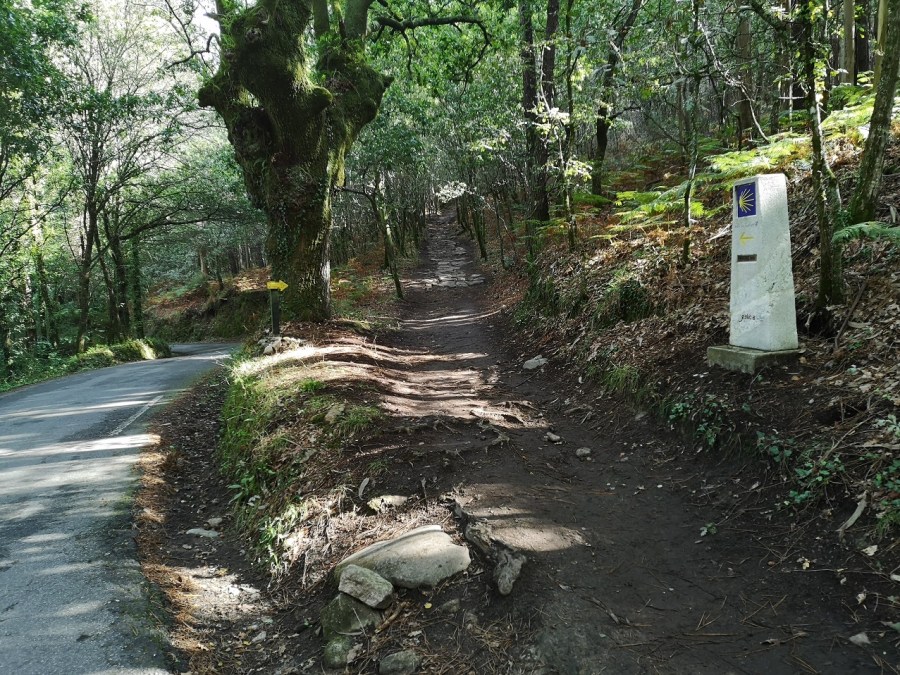
I am walking along the Via Romana XIX linking Braga and Astorga, enjoying listening to the birds and smelling the countryside after being in towns for the last few days. Sometimes the signs are hidden amongst pink roses. In the distance the open fields are empty now after harvest.
Ferns and lush farmland. The Mos population is spread across the region, with no one major centre. It is at a relatively high altitude commanding open viewsThis quiet area has a respectful energy about it with fresh lillies and roses decorating this wayside shrineBelltower of the Iglesia (church) Santa Eulalia. Nearby there is a very tall column with a crucified Christ at the top. It is a well-to-do area in places with carefully kept gardens (white camelias were spotted) and expensive cars, not like some parts of Galicia on the Camino FrancesBeautiful tall flatsedge, nutgrass or umbrella sedge (Cyperus eragostis)
There is a native, milky coloured drink called horchata de chufa or horchata de Valencia which is the region where I first came across it. It is made from the tubers of the nutsedge (not the type in the photo above). (Thank you to floral_uk on the ‘name that plant’ forum of houzz.com for this information). It is similar to a Mexican version except that the latter is made from rice, not this sedge.
Mos, Galicia (Redondela Region)
I stayed at the Casa Blanca hostel near the Santa Baia church where I sat in the evening. The albergue is new with a bar that serves ice cream and snacks, and there is a restaurant oppostite which cooks wonderful Padron peppers and does breakfast as well as evening meals. The accommodation is in a separate building and all are situated on quite a hill. There is a coin-operated washing machine and I shared a load with others after much negotiation, however there is not enough room to hang the clothes to dry outside and, anyway, it was already cold at night so my things had to come in at bed time to avoid being damp by morning.
I went up looking for a fruit and veg shop. Instead, I saw a man on the top of a ladder picking grapes who told me I had gone in the wrong direction. On the way back down a woman pulled up in her car and spoke to me in French. She took me through to the back of her gradmother’s house (derelict) into the stepped garden full of fruit trees and picked figs. We stood and chatted over these juicy fruits and then she introduced me to her husband. He filled my shopping bag with massive bunches of black grapes for sharing with the other pilgrims back at the hostel. I laid them on large fig leaves in the self-catering kitchens for folk to help themselves.