2 – 3 May 2020. A virtual tour informed by friends and relations, online resources and other kind people who agreed to speak with me or shared their photos and experiences via social media. Please see the Research and Planning post for more details.
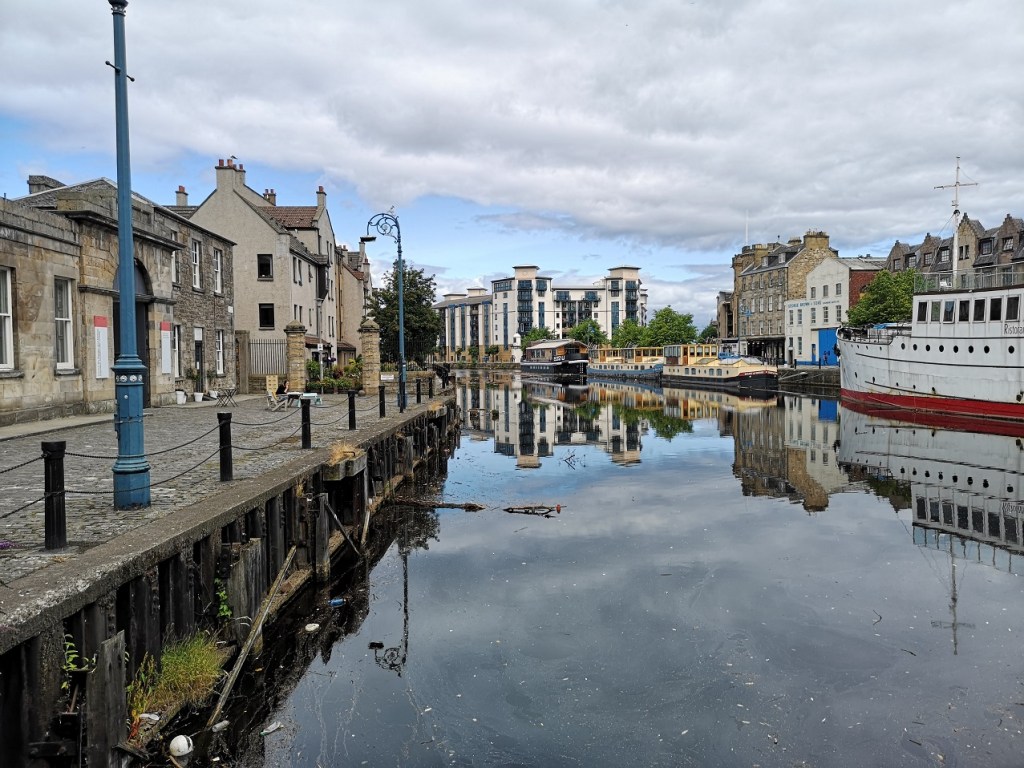
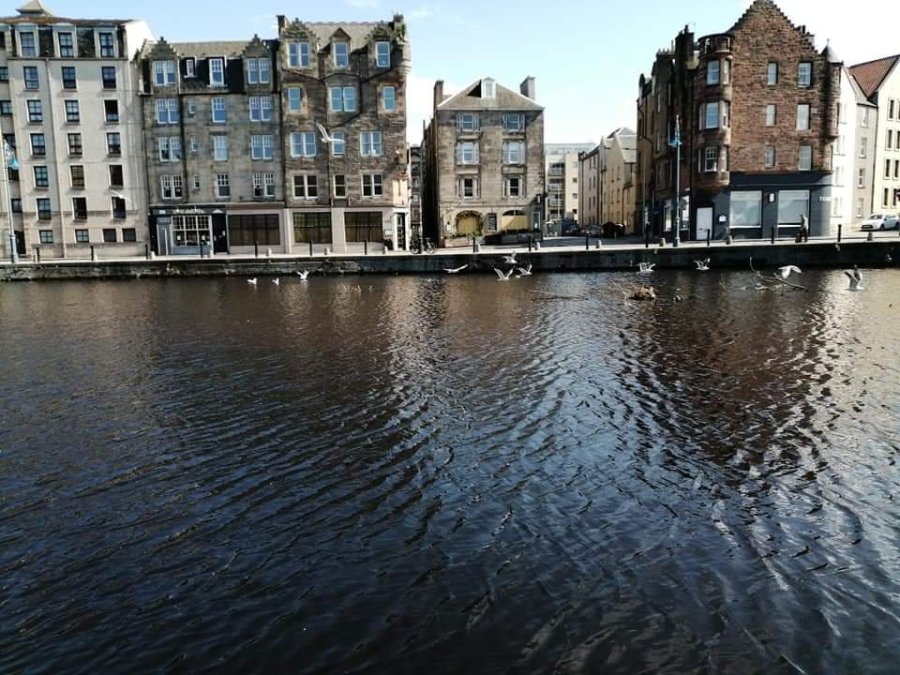
Custom Lane on the left, looking towards Leith Docks, Edinburgh
My virtual visit to Shetland began at Leith Docks in Edinburgh. The Aberdeen, Leith and Clyde Shipping Company extended a route from here to Lerwick 83 years ago, enabling Shetlanders to trade their lace and knitted products. Approved of by Queen Victoria herself, it was women who toiled to make these fine stockings and shawls, who were the mainstay of the economy.
“Women were culturally, economically and demographically predominant in this period,…hundreds of unmarried women … were only able to support themselves through knitting.“
Isobel Cockburn, ‘Fingers as clever as can be yet’: Shetland Lace and Women’s Craft in Victorian Britain.
Nowadays, it is not possible to sail from Leith, so I took a train (approx. 2.5 hours) to Aberdeen which was also the first leg of my 2018 journey to Orkney to walk the St Magnus Way. It was an easy 10 minute walk from the railway station to Jamieson’s Quay, and I had almost an hour before the ferry left at 5pm.
I travelled with Northlink Ferries who have great customer service. Photo Isobel Cockburn
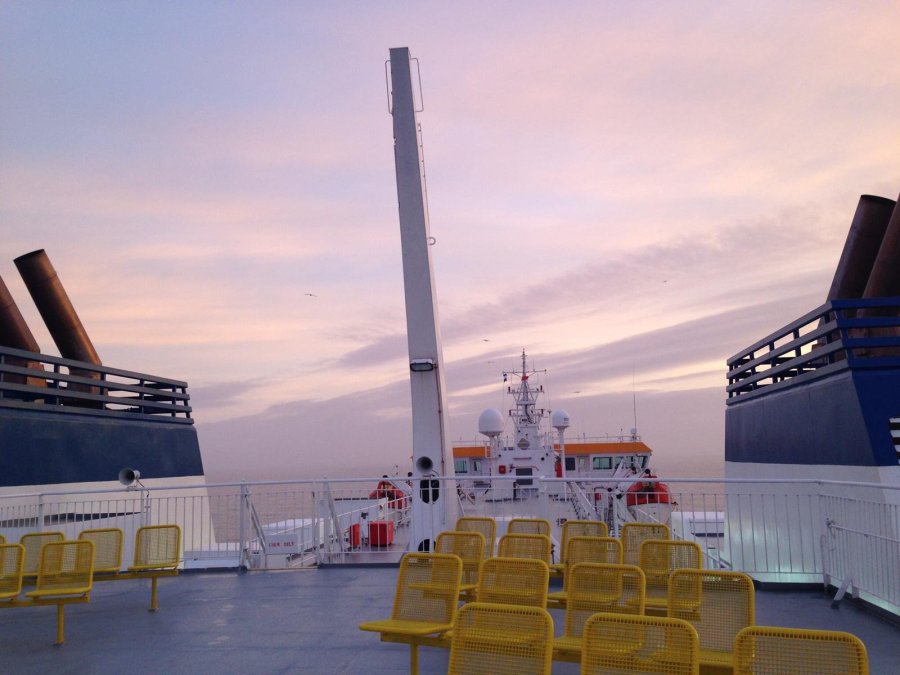
Seeing the sun starting to set, seen from the stern. Photo Isobel Cockburn
It was only 10 degrees when we left and the temperature was dropping steadily during the four hours before sunset, but it was well worth being up on the chilly deck for the spectacle.
Spectacular sunset. Photo Isobel Cockburn
The wind was a light northerly (5.5 miles an hour) and the journey on the Northlink Ferries‘ ship, the MV Hjaltland, took 12 hours, stopping half way at Hatston in Orkney, docking at 11pm and leaving again 45 minutes later. I had elected for a seat rather than one of the cabins (the cheapest) and wiggled in and out of my sleeping bag at 1.30am when it was totally dark (3 degrees – brrr) and again at 6 when it was already quite light, an hour after sunrise. Sadly, I saw no cetaceans (whales, dolphins and porpoises) although many do during the early hours of the day at the end of this journey.
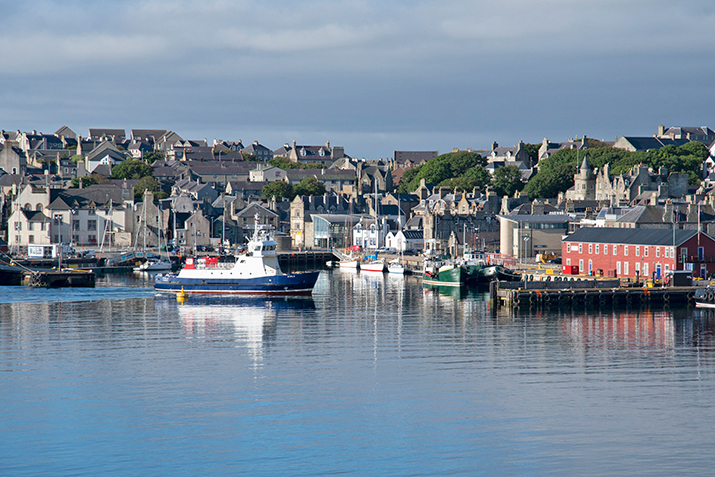
Lerwick harbour. Photo from the Northlink Ferries site
Lerwick is almost equidistant from Aberdeen on the mainland of Scotland, Bergen in Norway, and Tórshavn in the Faroe Islands. Its name comes from the Norse ‘Leirvik’ meaning muddy or clay bay. It’s a major fishing centre where more fish are landed than in England, Wales and Northern Ireland combined, despite the, relatively, small population.
As I had had breakfast on the boat, I was ready to explore. Fifteen minutes walk north of Holmsgarth terminal is The Shetland Textile Museum (opens 12noon). Located at the Böd of Gremista, it is only £3 to enter. Fifteen minutes in the other direction is the Shetland Museum and Archives (10am – 4pm) where there are exhibitions, events and the Emma-Louise coffee shop. Remember that, in real life, both are open Tuesday to Saturday. As this was an imaginery trip, I was able to enter on a Sunday! (note: The Co-op food store, if you ned to stock up, is on the Holmsgarth Road 6 minutes from the terminal towards the latter.) If you arrive on a Sunday like I was meant to, you will have to either go somewhere else and come back a few days later, or spend a minimum of 3 days in the town. There is so much to see and do that I can see this would be a delight.
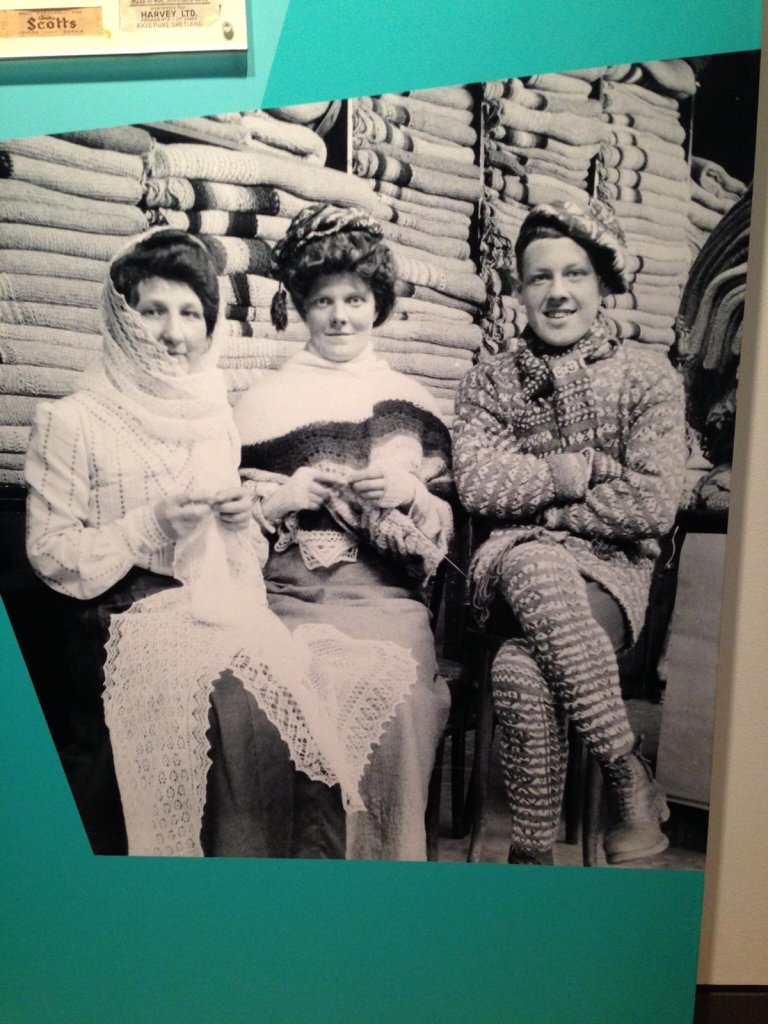
Advertising image from D&G Kay, 1900s. Photo Isobel Cockburn
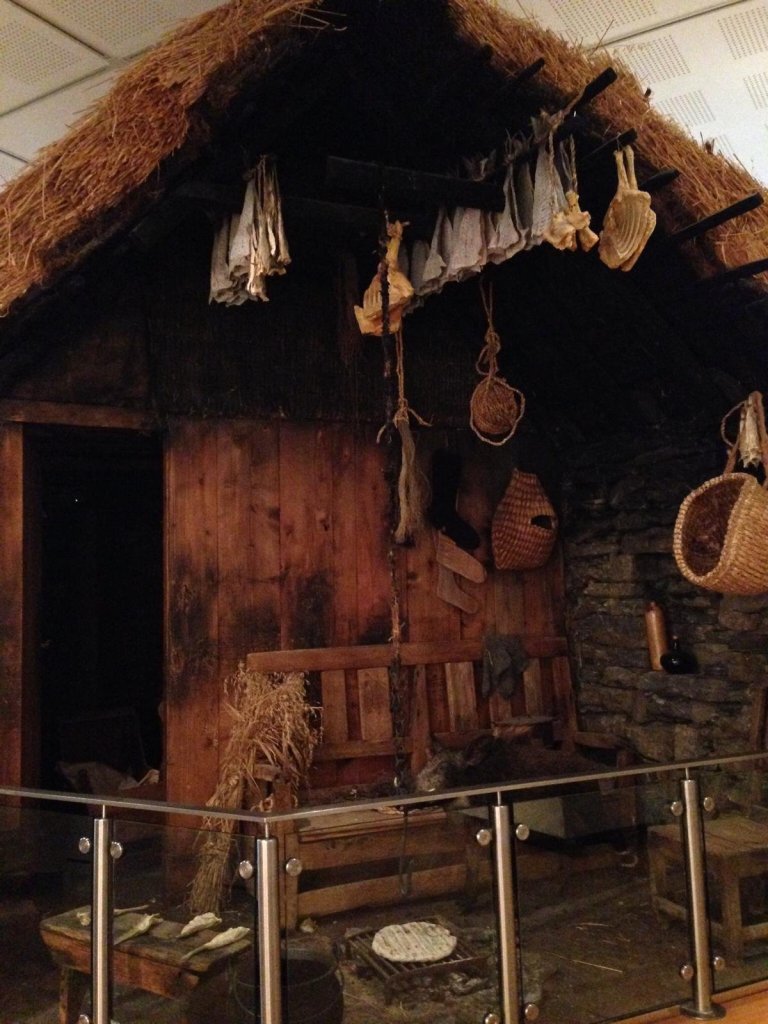
Traditional croft display with baskets and fish, Shetland Museum and Archives. Photo Isobel Cockburn
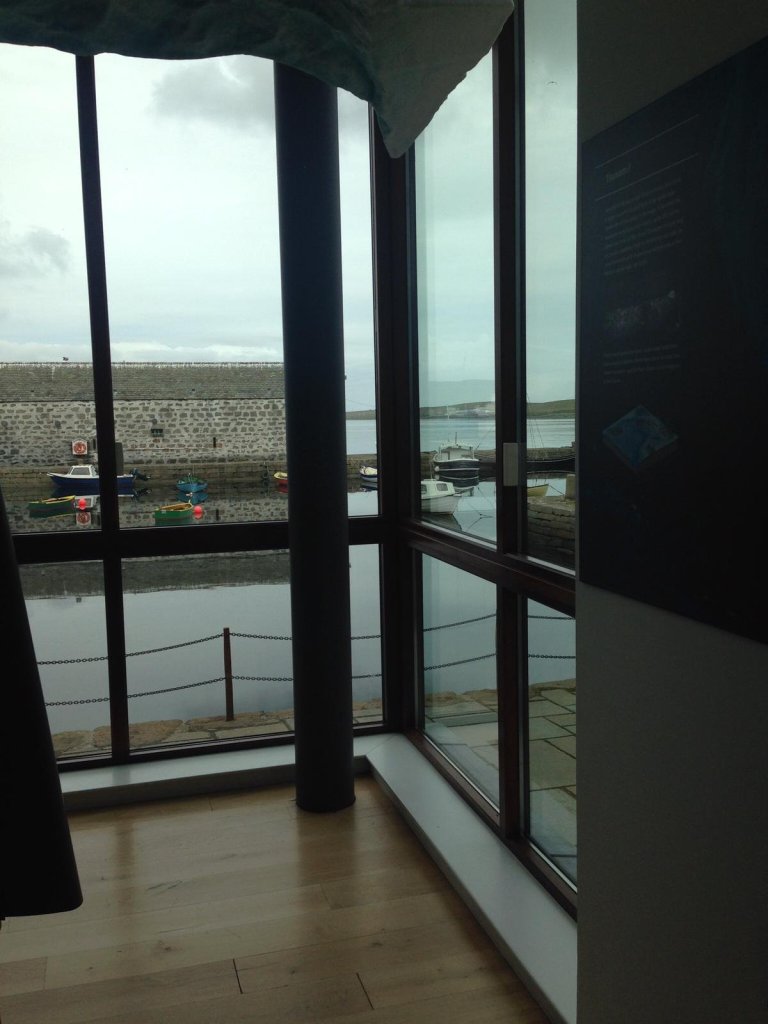
The Shetland Museum and Archives is right beside the sea at Gutters Gaet. Photo Isobel Cockburn
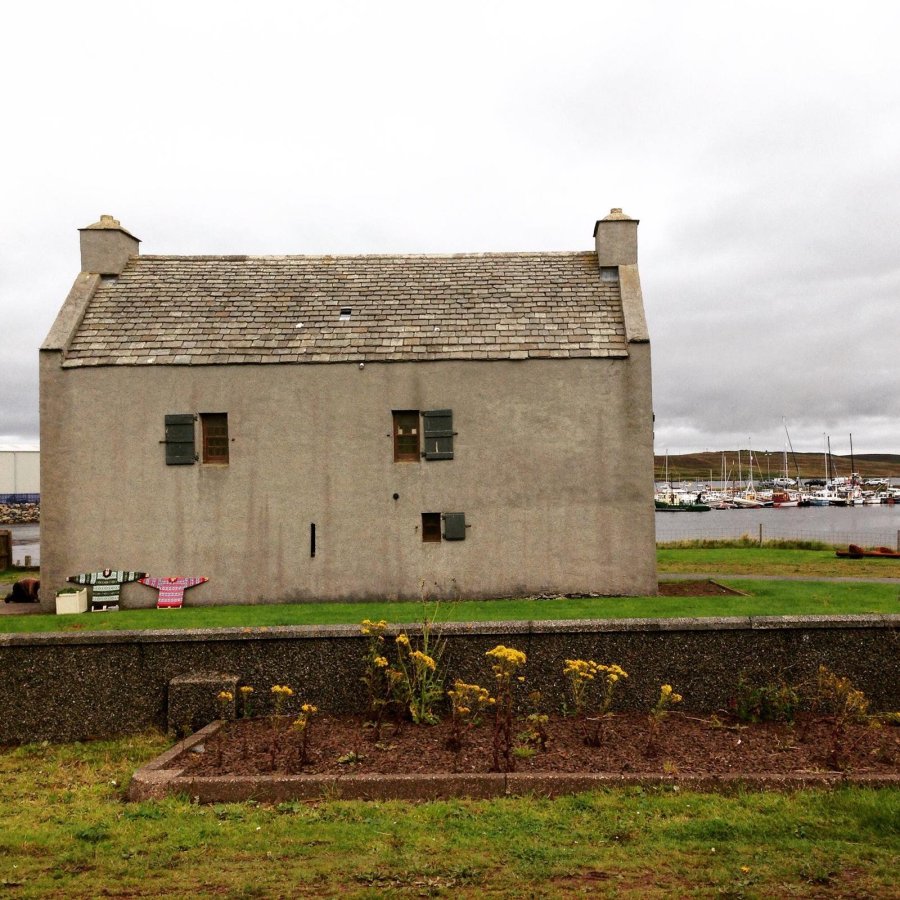
Textile Museum, Lerwick. Photo Isobel Cockburn
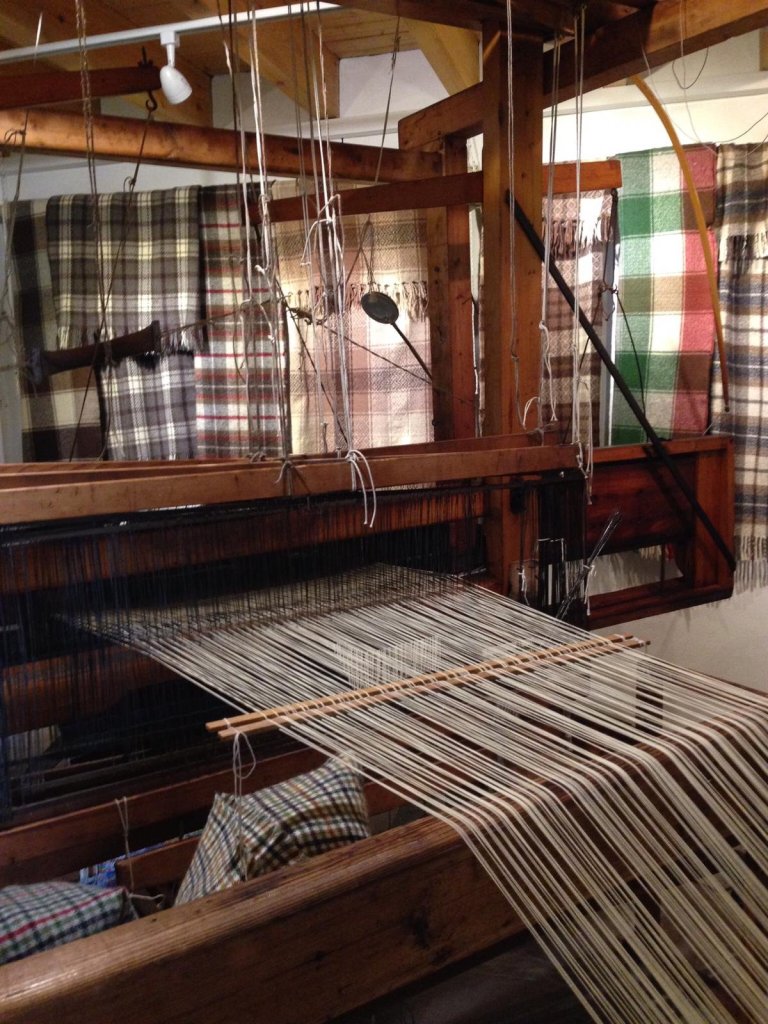
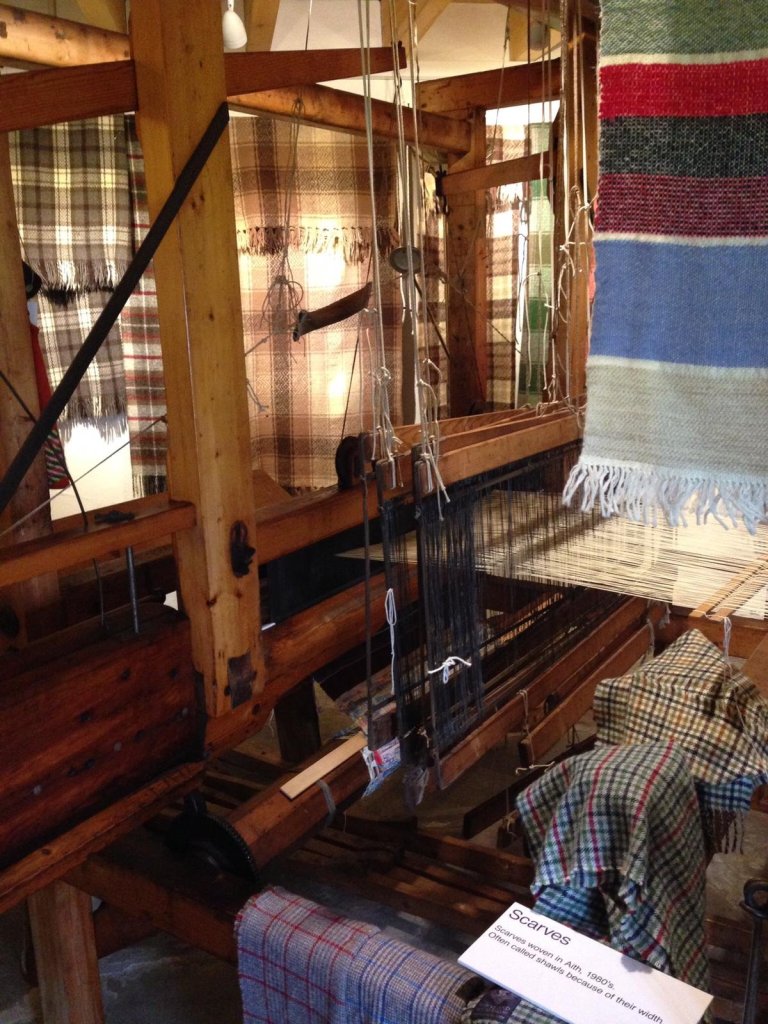
Looms in the Textile Museum, Lerwick. Photo Isobel Cockburn
Admiring the fabric in the Textile Museum, Lerwick. Photo Isobel Cockburn
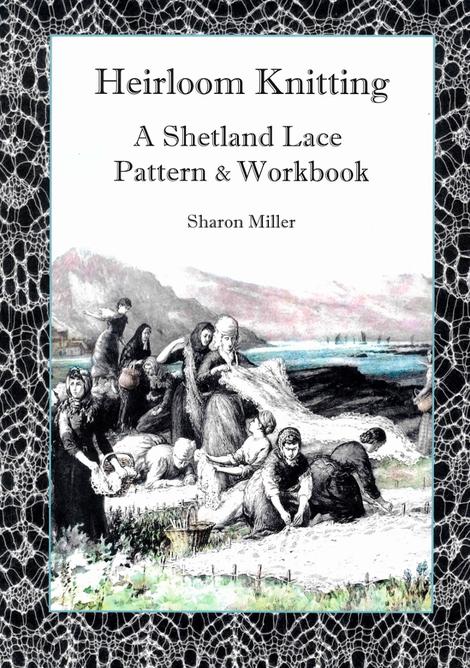
Available from The Shetland Times. Photo from their website
There’s a brewery, a town hall, a fort and the bookshop is part of The Shetland Times where you can buy Heirloom Knitting, A Shetland Lace Pattern and Work Book by Sharon Miller, as well as maps and gifts.
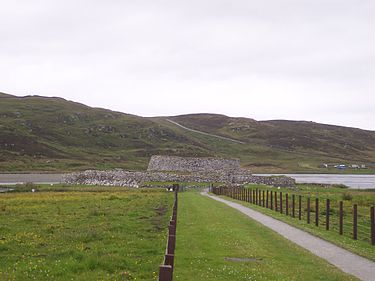
The broch at Clickimin Loch, west of Lerwick, Shetland. Photo Wikipedia
What would a hiker do? Why, take a walk along the Knab Road and then right into Hillhead which becomes Scalloway and then South Road, until I meet the roundabout. From there I would drop down onto the track which skirts the Loch of Clickimin almost all the way, excepting for Westerloch drive. I would admire the wildfowl and explore the broch, a Pictish fort, which was occupied circa 700BC until about the 6th century. I would camp somewhere if it was warm enough at night (you can wild camp in Scotland) where I could leave my rucksack so I could climb.
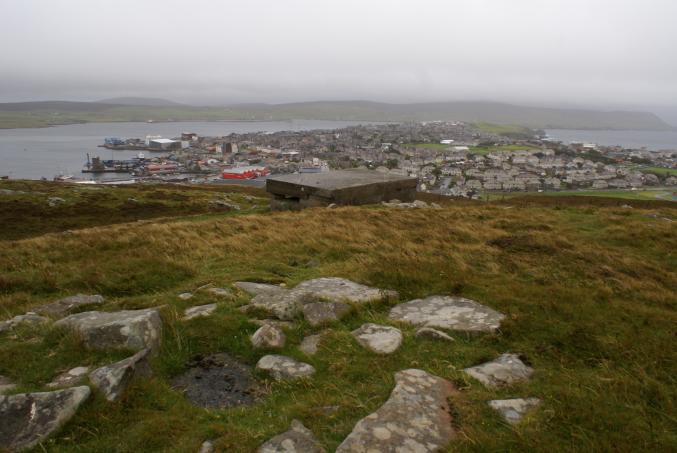
North Staney Hill
Then I’d climb up Staney Hill and get a panormaic view of Lerwick and the sourrounding landscape.
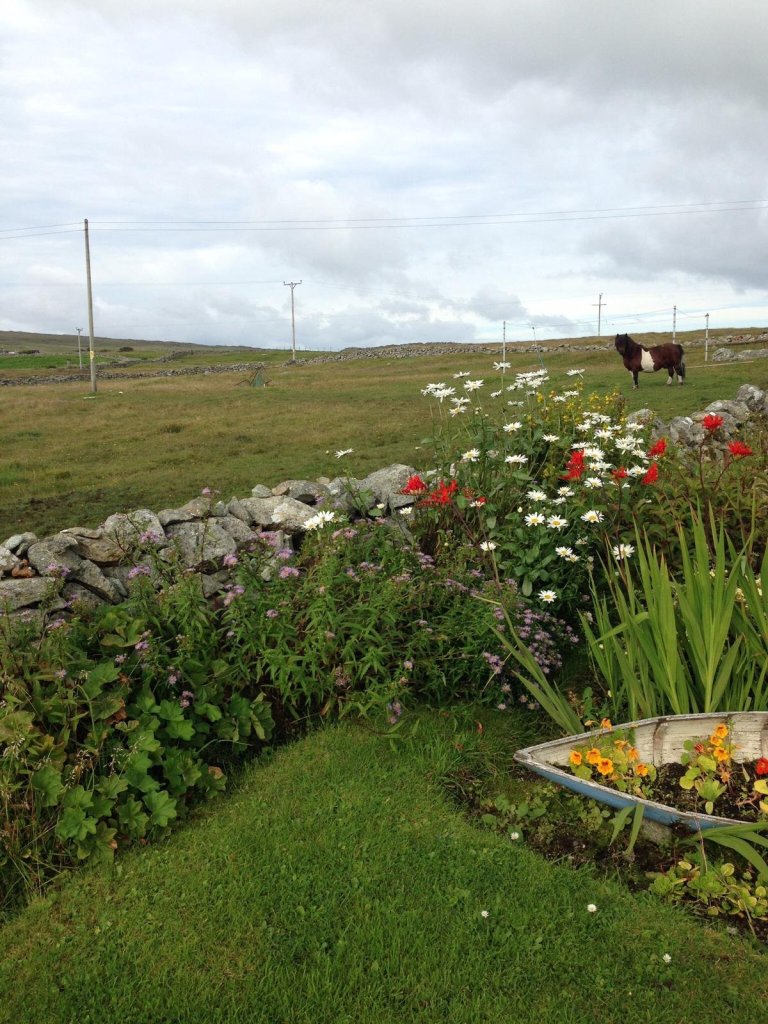
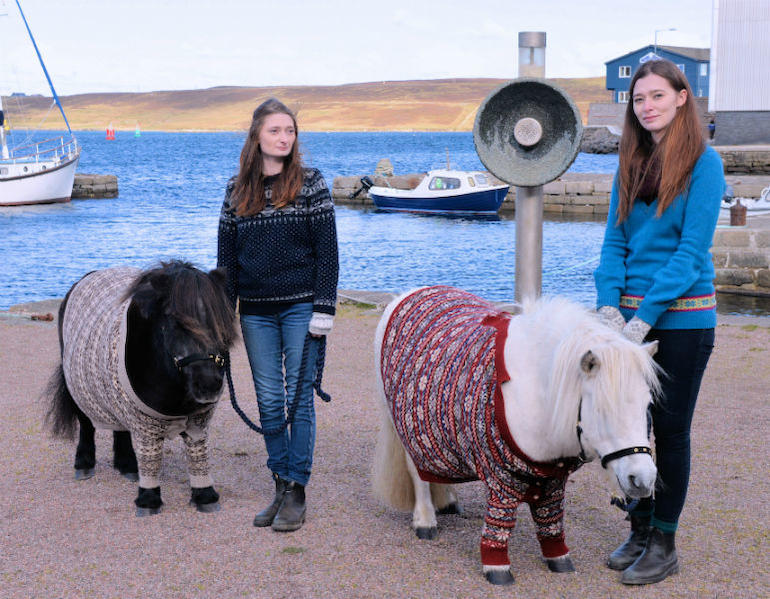
A Shetland pony. Photo Isobel Cockburn
Shetland Wildlife offer tours from Lerwick around the Noss coast to see the birds and sea mammals.
All photos are copyright Tamsin Grainger unless otherwise stated.
On 2nd May, I was supposed to be making my first visit to Shetland – by train and ferry, from capital to capital, via Aberdeen. However, with the restrictions on travel and interpersonal contact imposed as a result of Covid-19 virus still in place in the UK, I could not go until the lockdown had been lifted. My visit was to be virtual.
The North Sea – coming into Stromness, Orkney – a mere 32 miles from Thurso on the north coast of Scotland
From Leith to Lerwick
During my initial research, I discovered that when, in 1836, the Aberdeen, Leith and Clyde Shipping Company extended a route from Leith Docks in Edinburgh to Lerwick, Shetlanders started using it to trade wool, lace and knitted items for the markets down south. I have lived in or very close to Leith for many years and this started me thinking. Perhaps I could also make a return trip, but in reverse, from Leith to Lerwick and back. Maybe I would find out what it was and is like to cross 216 miles of the North Sea. I’m guessing it might have been a real culture shock, coming from a rural crofting community to a noisy city, and remembered how hard the lads from the Fife farming community found it when they started dance college in London at the same time I did. Some of them simply returned home within the first term.
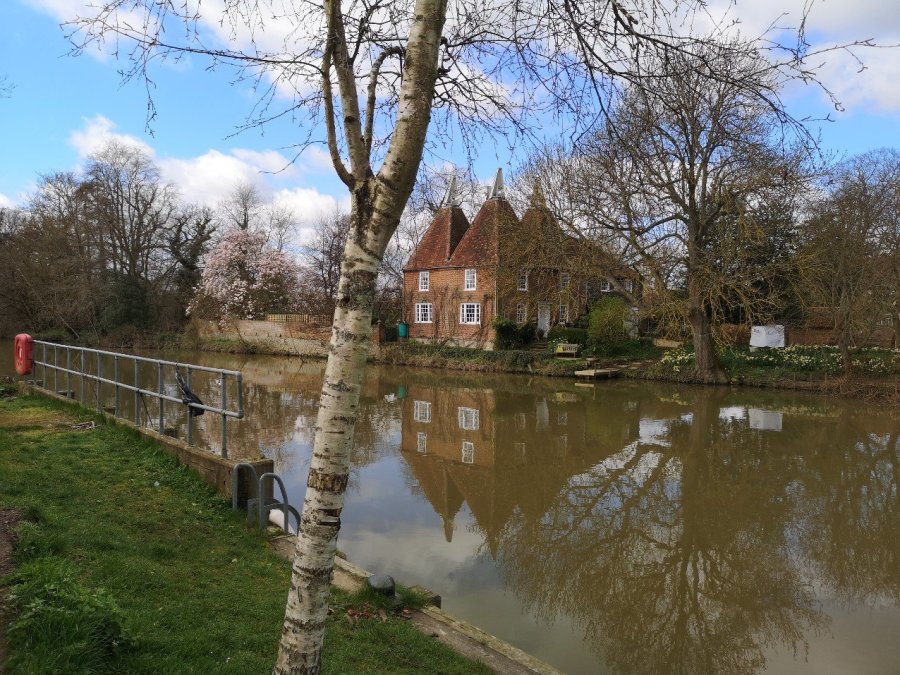
The River Medway at Yalding – on which side were you born?
I have thought a great deal about home and belonging over the years. I am English, born a ‘Kentish Maiden (KM)’ south of London. (It depends which side of the River Medway you were born as to whether you are a KM or a ‘Maid of Kent’). Also referred to as the ‘Garden of England’, Kent is where I was staying during the first 5 months of the pandemic lockdown when I made this Shetland project. My history is that I left Kent when I was 18 years old, spent some time in other parts of England and Wales in my 20s, and then moved to Edinburgh, where I have lived for 35+ years. In 2016, I began a new phase: I travelled to and around Europe for six months of each year, and spent the other six at home. When I am away, I feel comfortable, not homesick. It is my and others’ relationship to their homeland that I want to try and understand more through this virtual trip to Shetland.
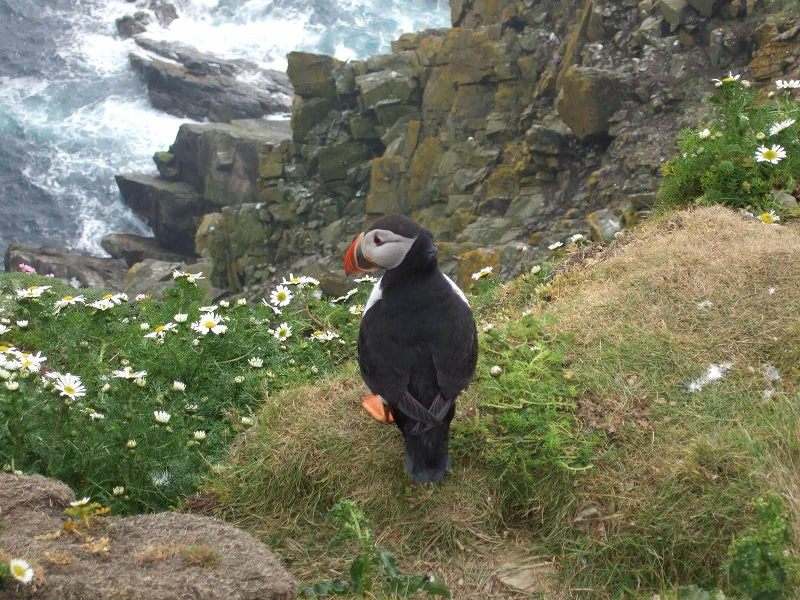
Puffin (tammie norrie) Shetland taken by Lesley Skeates
Walking and talking with women about home
I was hoping to invite women to walk with me when I visited, to talk about their home on Shetland, as well as what it is like to leave, live elsewhere, and then return. I am interested in what brings about a sense of belonging. The act of walking is one which can ground us, ease the flow of conversation, and connect with what can be called ‘home’, the earth. Now that the plan has been changed, I will be on my home turf speaking on the phone to women walking on theirs, and I am looking forward to a fruitful chat about the subject.
Much of Shetland’s business is in fishing. Photo Lesley Skeates
While I cannot go in person, I can identify some benefits in making an imaginery journey. As an inveterate walker, I had planned to explore as much of the mainland as possible on foot. I knew I would start in Lerwick for practical reasons, but from there it would depend on invitations received and what turned up. I would have been alive to what caught my interest. Now that I will be travelling virtually and ‘meeting’ folk on the phone or Zoom, I can zip backwards and forwards from Bressay in the east to Papa Stour in the west, from Unst in the north to Sumburgh on the southern tip, without having to worry about ferry or bus connections. Although I would prefer to smell the real scents of the Loch of Spiggie, or hear the actual squawks of the skua (recorded here by Nikolay Terentyev on Soundcloud), it will definitely be quicker to get around!
Here is Christine De Luca speaking in Shetlandic, the dialect of the archipelago, sometimes called auld or broad Shetland / Shaetlan. Recorded by Wikitongues.
‘I wis boarn and bred in Shetland an maist o mi childhood wis spent in Waas….. – it means ‘Inlets o da sea’, an hit hed a fundamental effect on me, bein browt up in a croftin/ fishin community aa mi childhood. Whin I cam awa tae Edinburgh whaar I bide noo, an I’ve bidden for 50 year, hit wis redder awe-inspirin an scary.’
Direct from Christine De Luca, recorded by Wikitongues
Leith, Edinburgh taken by Anna Jane
I recently lead a walk in Leith focused on some of the women who lived there in the past (Walking Between Worlds). In research for that project, I was unable to find much information about women from Shetland who might be buried in Edinburgh, so I am on the look-out for stories about the women from these far-flung northern Isles who visited and traded with the mainland, for accounts of the sea trip (the route has been discontinued), or people who have passed-down tales from friends and relations. Please do get in touch if you have any information.
To get a female perspective of the Isles – now and in the past
To look at the topic of ‘home’: leaving home, returning, living and working there and away, in general
To start to understand a particularly female viewpoint of home and belonging, specifically the northernmost islands which have a chequered relationship with Scotland and Scandinavia.
Ling (heather). Photo by Lesley Skeates
Thanks to Isobel Cockburn for the title photo of a loom in the Textiles Museum, Lerwick.
Links
Leith to Lerwick Days 1 and 2 Charting my journey northwards and visiting Lerwick’s Textile Museum and Museum and Archives.
Lerwick and Northmavine Days 3 and 4, in which I write about the Press Gang, visit The Old Tolbooth and view Da Lightsome Buoy, then travel to the north west to speak to Helen Robertson about her knitting projects.
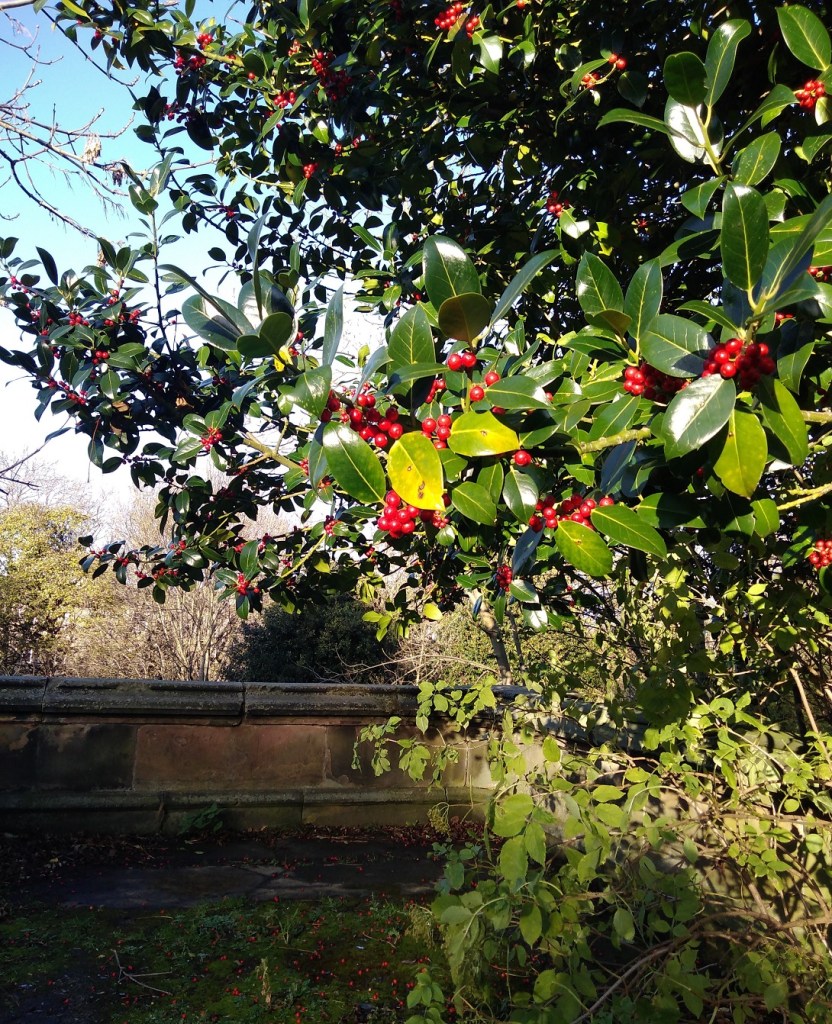
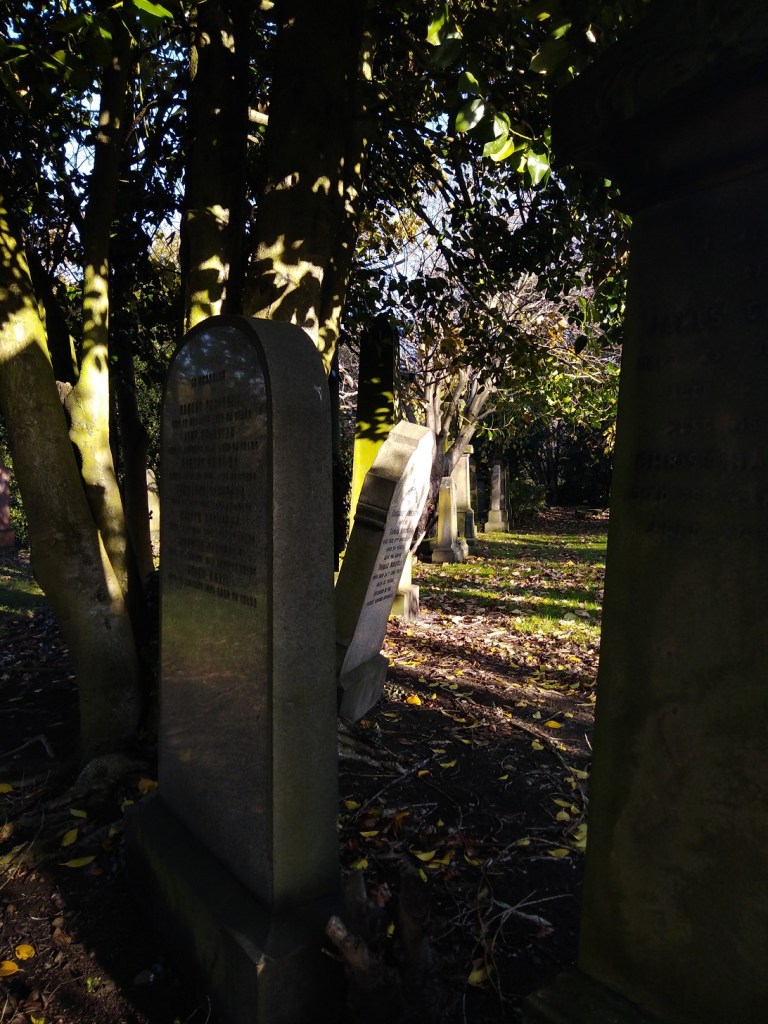
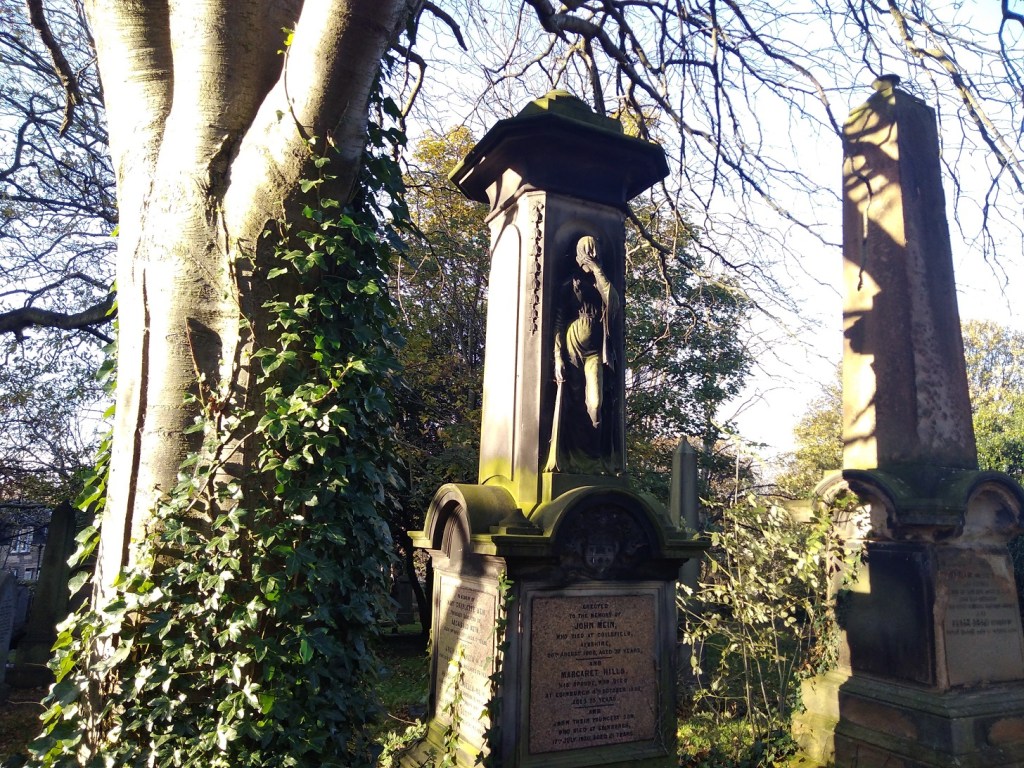
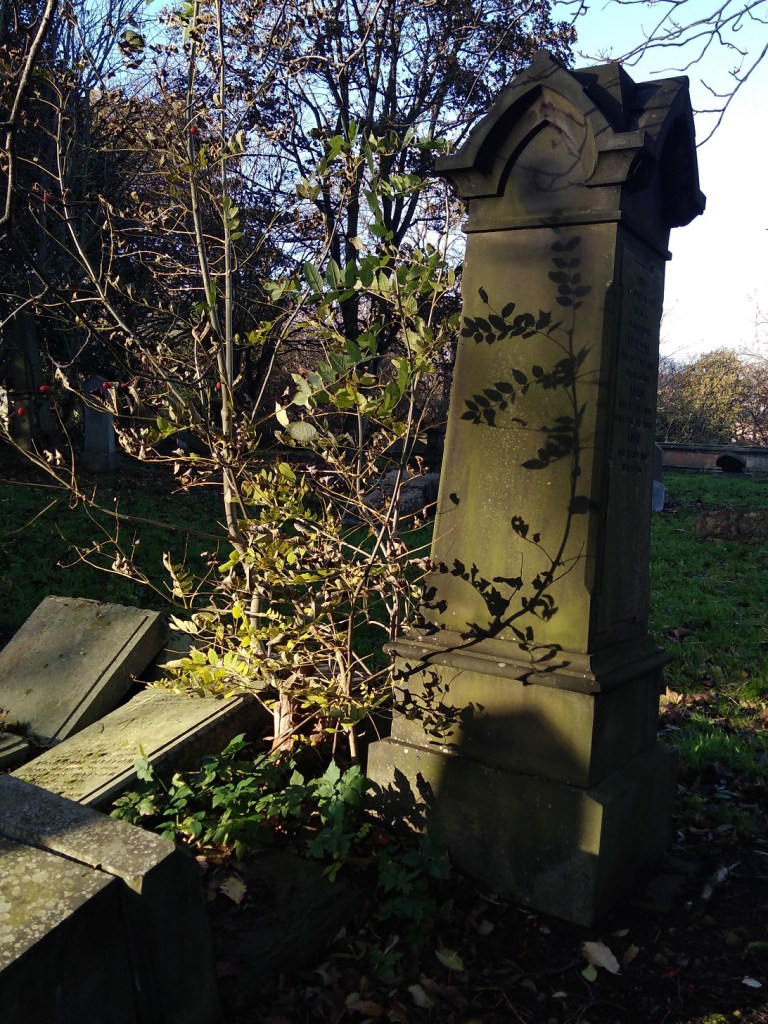
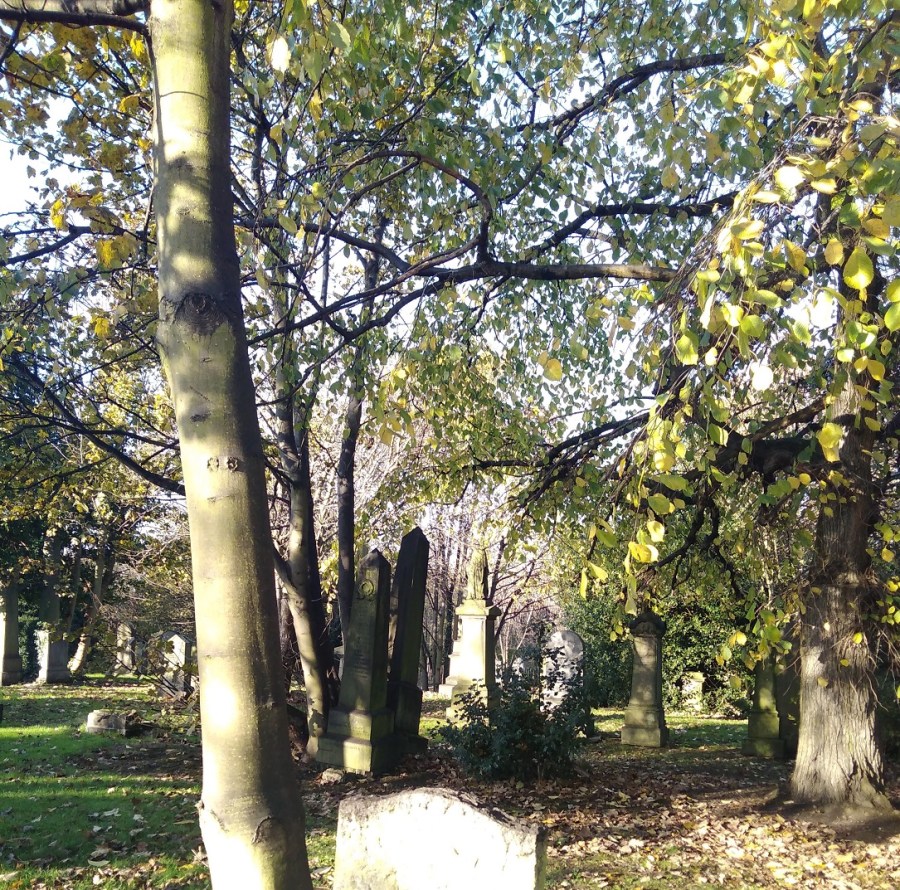
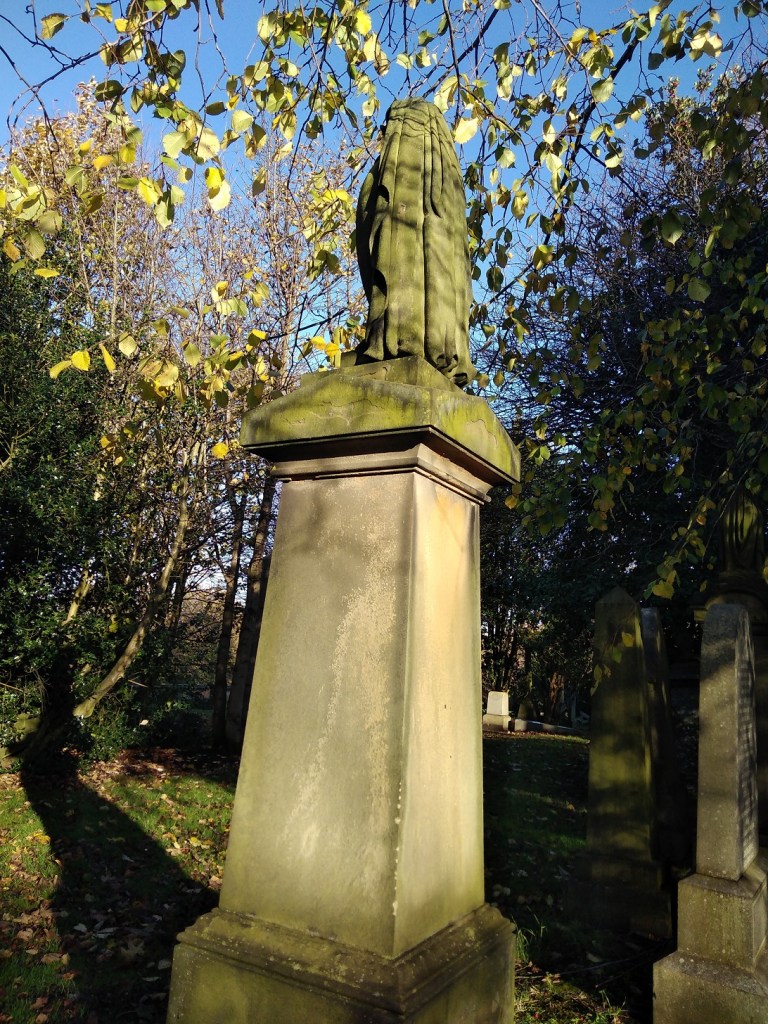
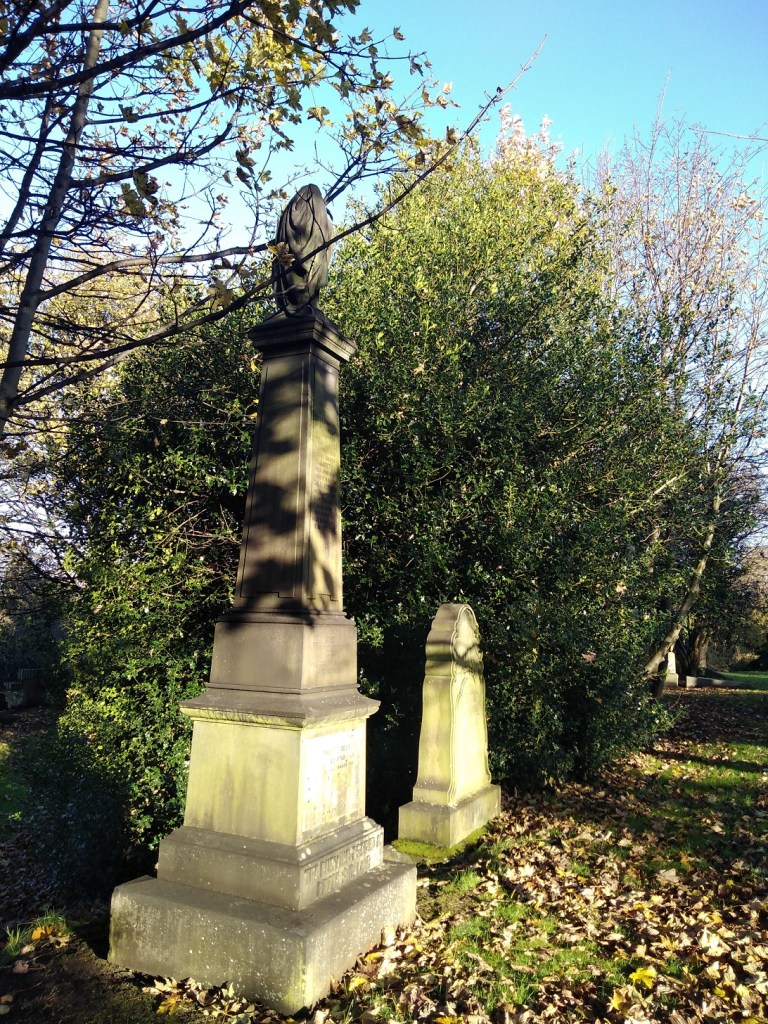
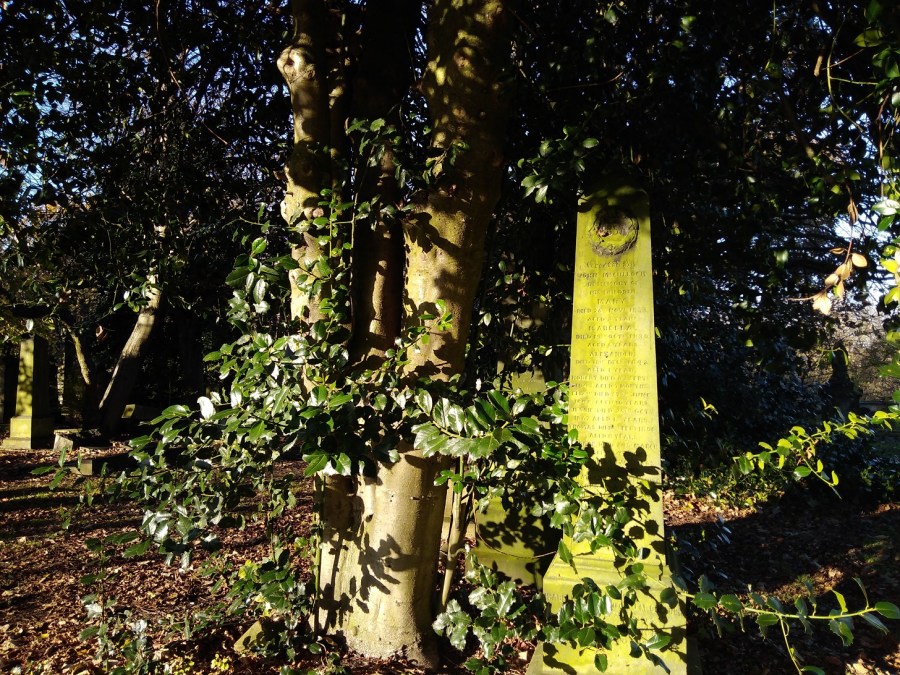
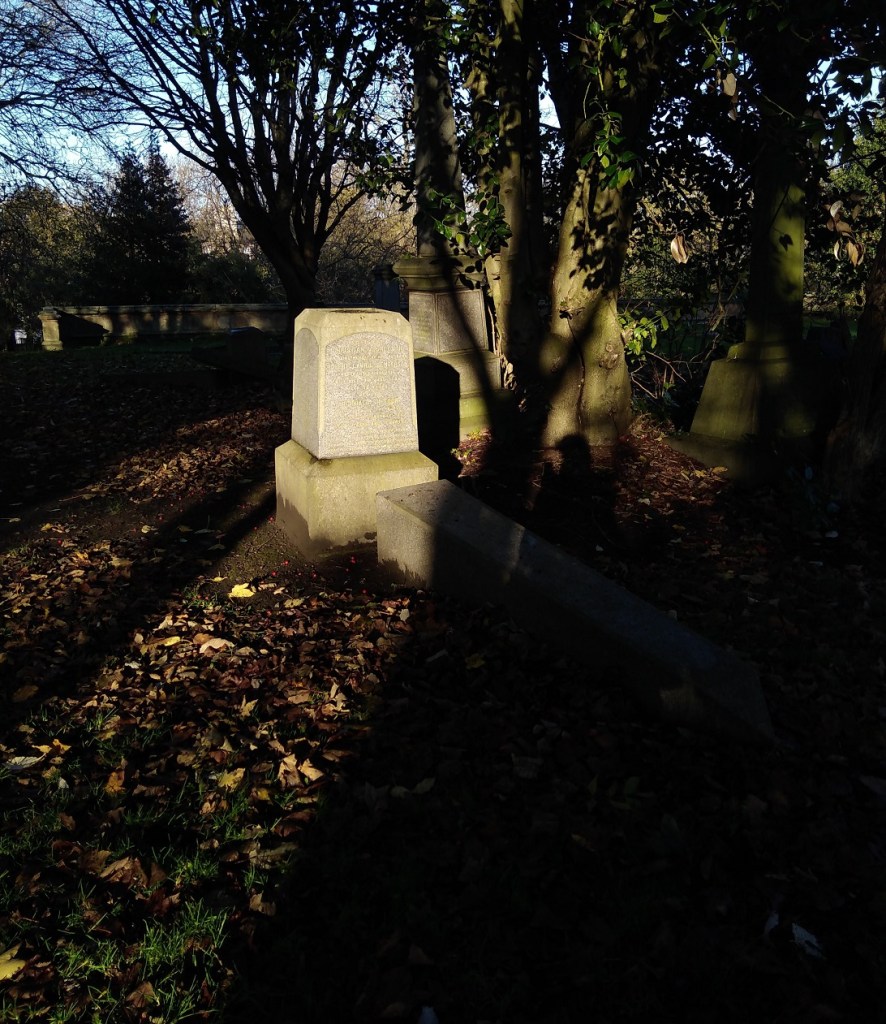
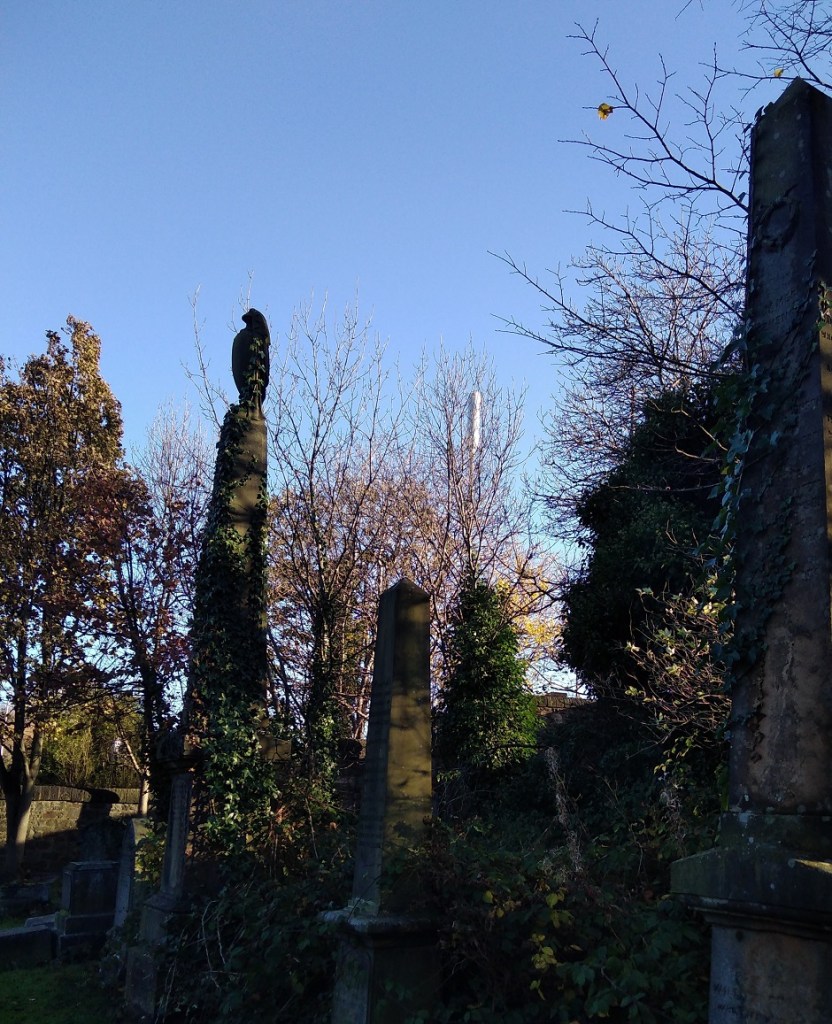
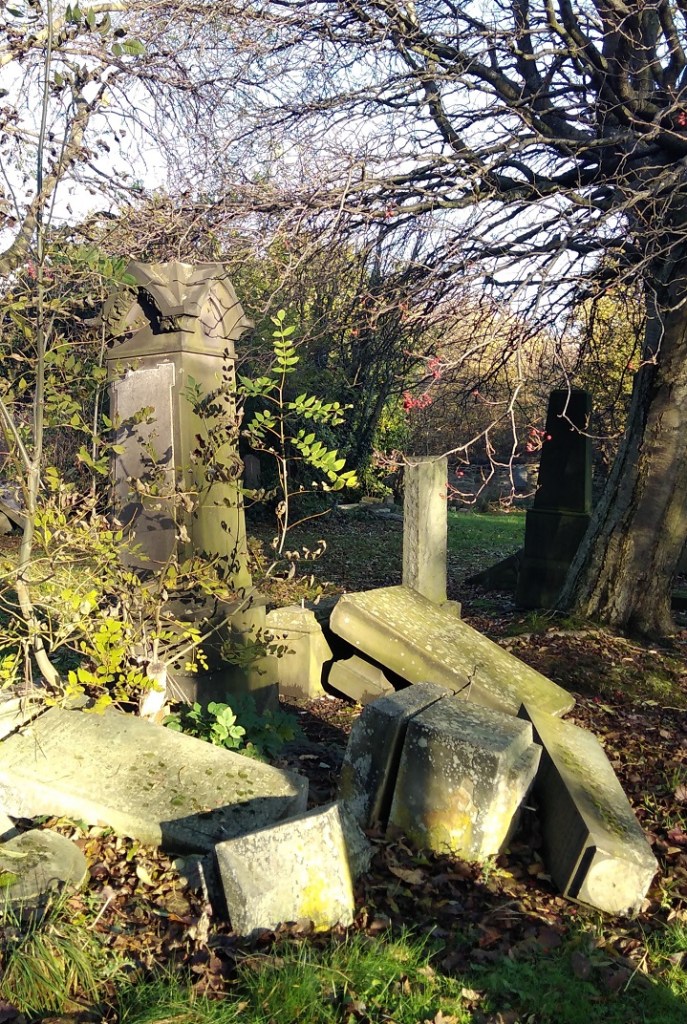
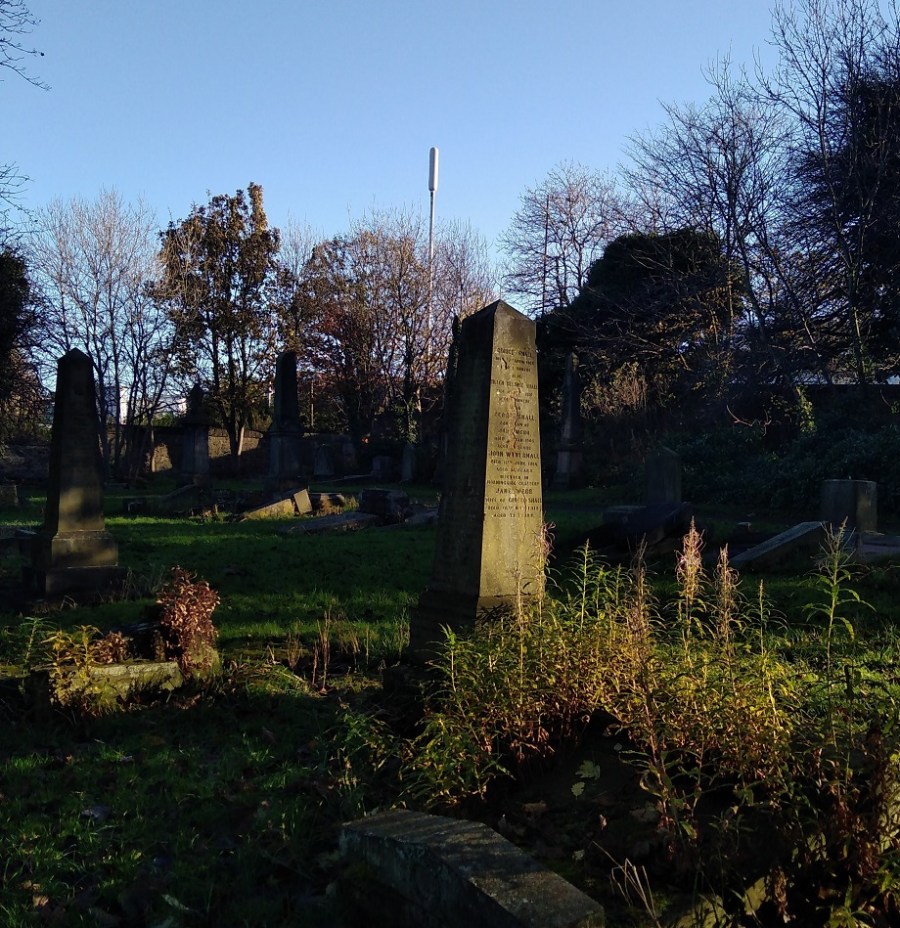
It was Autumn, season of the falling away of summer foliage and the start of nature’s melancholy. On the day I happened upon this place, on a walk from Slateford to Tollcross, rays of sunlight lit up corners and features of the deserted graveyard.
There was sadness there, of course, but also a lightness and positivity. I find beauty in every season, and the shift from one to the other, the inevitable transformation, often calls for contemplation on what is passing, and what may be to come.
There are times when we feel that death is closer than usual, and very often the news is full of it, as it is today. Some block it out because it is too hard to face, others have no choice but to deal with loss and the complicated practicalities it brings. Still others will realise that the proximity of unexpected demise can be a good thing in some ways.
“A close conversing with death … would scum off the gall from our tempers, remove the animosities among us …”
For five thousand years we have used darkness as the metaphor of our mortality. We are at the mercy of merciless death, which is darkness. When we died, they [neolithic people who built Maes Howe] sent a beam of midwinter light in among our bones. What a tender, potent gesture. In the Christian era, we were laid in our graves to face the rising sun. ‘
‘The people that walked in darkness have seen a great light: they that dwell in the land of the shadow of death, upon them hath the light shined.’.
The Bible, Isaiah
This is not a religious blog, I am not a church goer, but I do notice that when we know sorrow, it means we will also recognise happiness as its opposite when it returns; when we experience grief, then, too, we will recognise love. Living through the death of someone throws the light on these inevitable aspects of life.
English poet and hymnodist, William Cowper, described grief itself as medicine. Grief cleanses the anguish from our souls and sets us back up on the path of life so we can dance.
In these days of Covid-19 (we are still in lockdown in the UK as I write) there are a few more articles about death in the media than normal. The Guardian’s Yuval Noah Harari wrote, ‘Some might well argue that…the crisis should teach us humility. We shouldn’t be so sure of our ability to subdue the forces of nature…..While humanity as a whole becomes ever more powerful, individual people still need to face their fragility…We have to own up to our transience.”
For me, the acknowledgement that I do not know when I will die is something I remind myself of every day. It helps me put things into perspective. I might not live to a ripe old age, so I ask myself, ‘What is the most important thing right now?’
Access to the Dalry Cemetery is on Dundee Street near its join with henderson terrace and it backs onto Dalry Road in Edinburgh. See Find A Grave dot com
“In today’s twitter-centred terms, ‘ Exits to Edinburgh’ could be described as a hashtag that walkers used to refer to the type of walk I guided: one which would meet at Edinburgh castle, choose a location at the periphery of the city, and then walk an unplanned route in order to reach that location. A fourth stage might include sharing our creative responses to the walk afterwards.”
The walks I make have a beginning and an end, but I get lost in-between. I ‘lose myself’ in my thoughts and sensations, miss the signs and find myself somewhere else. I start out with an intention, a stone in my hand perhaps, and I end up with a living plan(t) for the future inside me.
Having discarded the prompt-stone at a prominent juncture (it has served its purpose) I turn in a new direction, towards a new East. I may go wrong in the process and end up who-knows-where in my quest, which has no name until afterwards.
What was related, tangentially, to what I started with, is metamorphosing and becoming. It appears little by little, takes shape as I move.
When I go my own way like this, take the “unplanned route to reach the periphery” (which by its nature is just outside my forward-seeing vision), I find myself in an unfamiliar location, a place which contains new possibilities. In my brain, new neural tracks are trodden and remembered, in my mind unexpected links are forged which lead me in directions not previously imagined.
I walk
I notice
It reminds me of …
That connects with …
… and before I know it I find myself in a new place.
I feel the thrill. I recognise it has to be done, followed through with and, later, communicated.
Once lost, and noticing that the daylight is fading, my task is to find my way back to a path and continue until I arrive at a place of safety for the night.
‘The pathways get stronger with repetition until the behavior is the new normal.‘
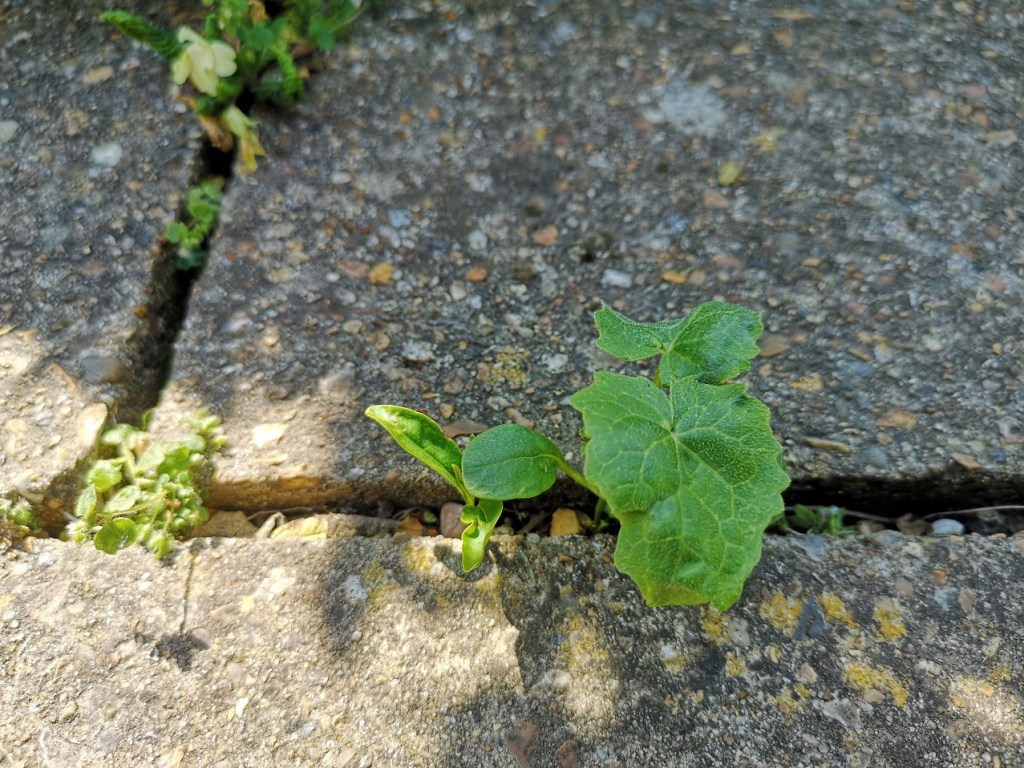
I sleep on it, like a mattress of new endeavours under which is a pea that cannot be ignored. The pea sprouts while I dream. In the morning, I discover that my subconscious has fertilised that small plant, and when I step out again onto the continuation of that route the next day, it leads me somewhere else and the shoot inside continues to grow with the next set of new experiences and meetings.
‘and like many of them he ceased to be lost not by returning but by turning into something else.”
Out of the house, I turned right instead of the usual left. I was heading towards a certain place and hoping to deviate – deviation, on occasion, being the source of imaginative instigation.
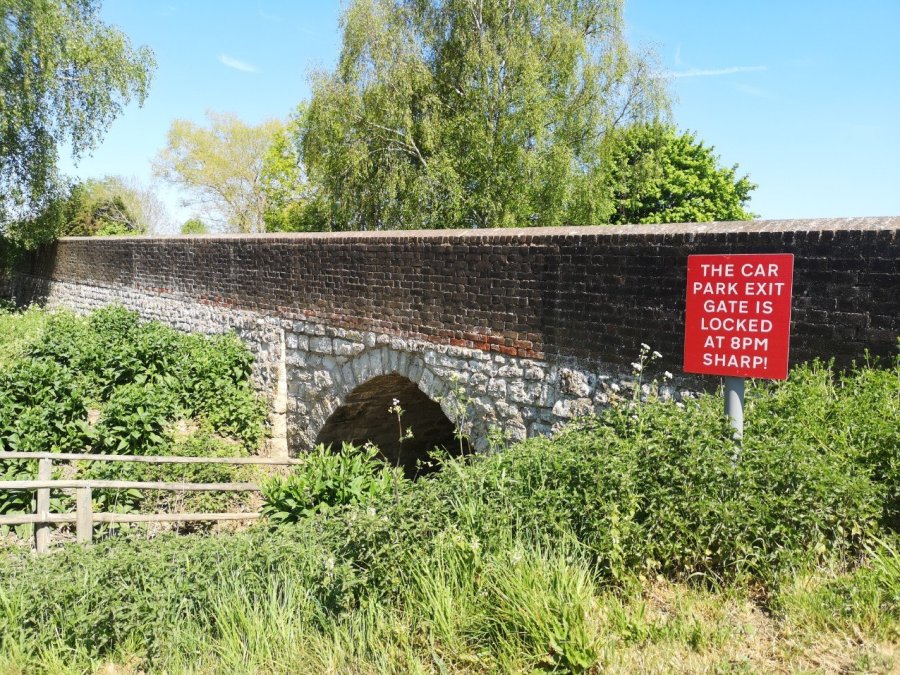
Ahead, on the single lane bridge, was a man on the non-pavement side where there’s a ‘>’ in the wall, a ‘more than’ nick out of the road. There is more, because when you stand there and look over, you can see the river. I was prepared to walk on the pavement, to keep my distance, but he crossed back. He had a stick. I said ‘good morning’ and he seemed surprised. I crossed to the nick and leaned over to look at the water. I live by the sea in Edinburgh, but here in Kent with my mother during the Covid-19 lockdown period, I am landlocked. It is different. It has an effect on me.
A lone swan with plenty of water all to herself
I took a left at the post office. Another gentleman and I dodged right-left-right until we wordlessly worked out who would go in the road – me. We smiled, maybe murmured, I can’t remember now.
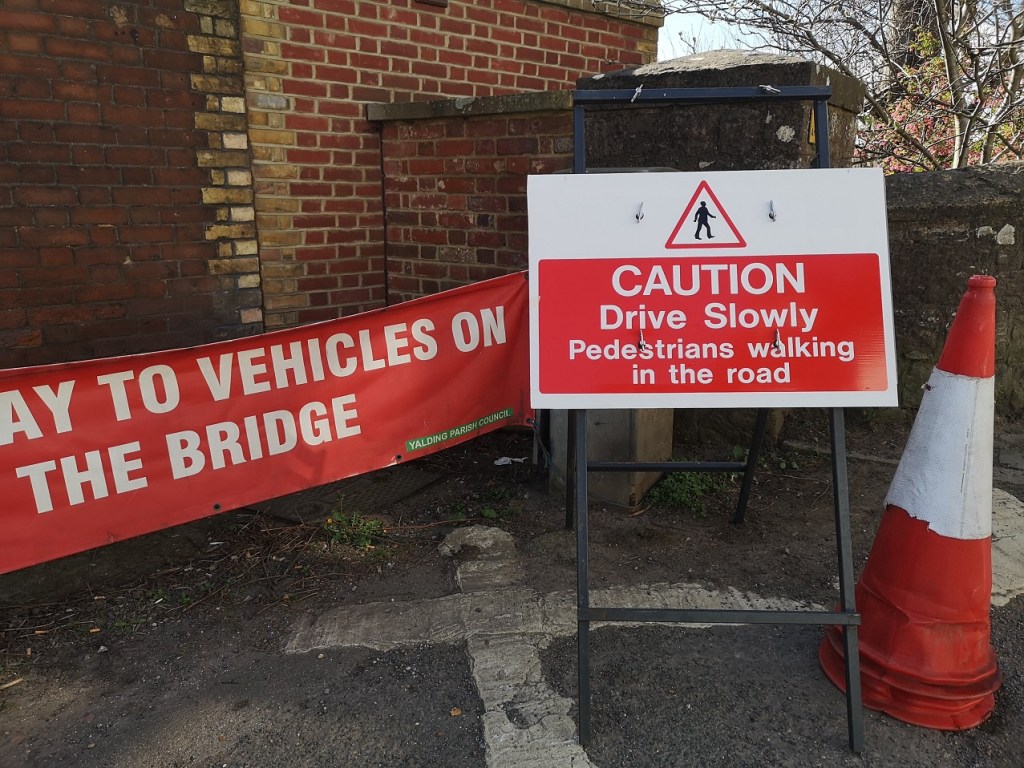
Does this shifting onto the highway to keep our distance, endanger our health?
Flood protection sandbags
My route is chosen
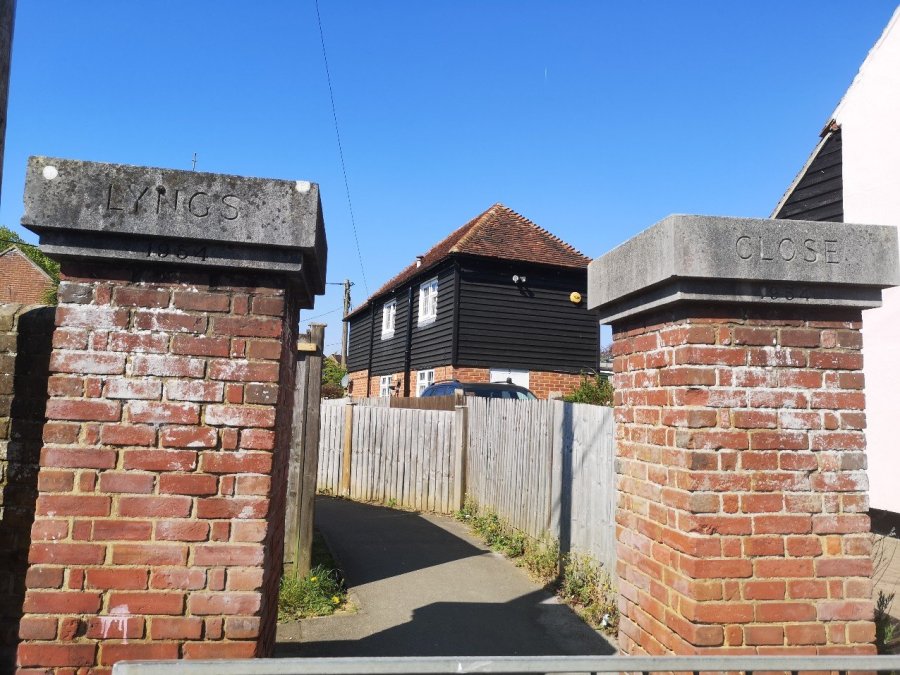
I passed where the sandbags are still piled up outside ‘the pretty cottages’ from the flooding,. Further on, there were words carved in chunks of stone at the top of 2 brick gate posts – Lyngs Close. I typed it into my notes for memory’s sake, and google changed it to ‘lungs’. For once, clever google – Lyngs does mean lungs! It denotes ‘an open space in a town or city, where people can breathe fresher air’ (which I didn’t know at the time). That set off a chain reaction in my mind.
Lyngs Close
Theme
I am a health practitioner, and when I refer to the Lungs in my work (Chinese Medicine), I spell it with a capital letter because the term encompasses both the respiratory organs and the things we practitioners have all noticed over the years that are repeatedly connected with them. For example, clients I see with asthma and other pulmonary issues, will often tell me, ‘I can’t breathe in this relationship’, or, ‘Although there is space at my work, I can’t take a deep breath when I’m there – I think it’s because my boss watches over me all the time’. These phrases link the physical lungs and the ability to breathe easily, with the psychological feelings around having enough space and freedom.
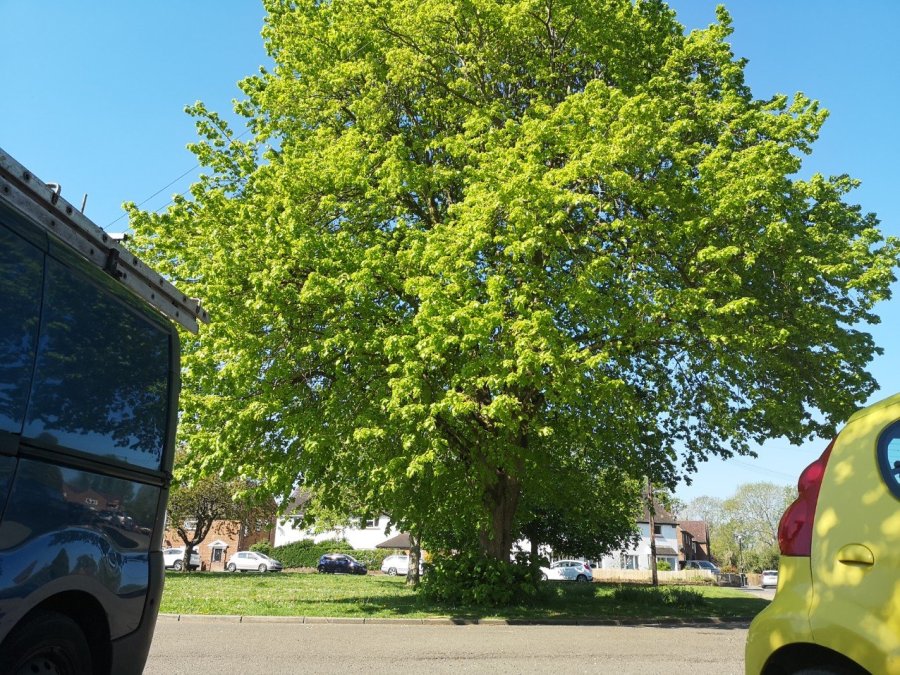
The lyng at Lyngs Close (and Beech tree #1)
This week, the Daily Mail reported concerns that ‘political appointees are breathing down the necks of scientists’, implying that they are being pressurised to make a vaccine quickly. In ancient Chinese texts you will find references to regulations, and the setting of borders (including those between what is right and wrong) linked to the Lungs. As it is their job to exchange oxygen and carbon dioxide across membranes (the borders between the alveoli, the air sacs) in order to maintain our vitality, the aspects of our lives related to rules, space and air are also connected. We are living in a time when the government might ‘push strict lockdown rules to their limit’ and that affects each of us in different ways. I tend to rebel if the boundary is too restricted, if my freedom to create is curtailed.1
A walk theme emerged by happenstance (which I always think must be about happily coming across something). Chance is about things happening unexpectedly and about providing for the possibility of…
Beech # 2
The Scottish charity Greenspace Scotland (2011) defines green spaces as: ‘the green lungs of our towns and cities which contribute to improving peoples’ physical and mental health…and ‘breathing spaces’ to take time out from the stresses of modern life. ‘
As I made my way down the narrow close, I remembered a walk I took a few weeks ago – I was directed along a foot-width path between two fences, by a farmer who did not want ramblers on his land. This expression of limitation was in the middle of a great, grassy field. I was unable to stray in any way. I recalled the signs I had photographed the previous evening – ‘Strictly Private’ and ‘Keep Out’. In Scotland we have the ‘Freedom to Roam’, not so here in England, my original home.
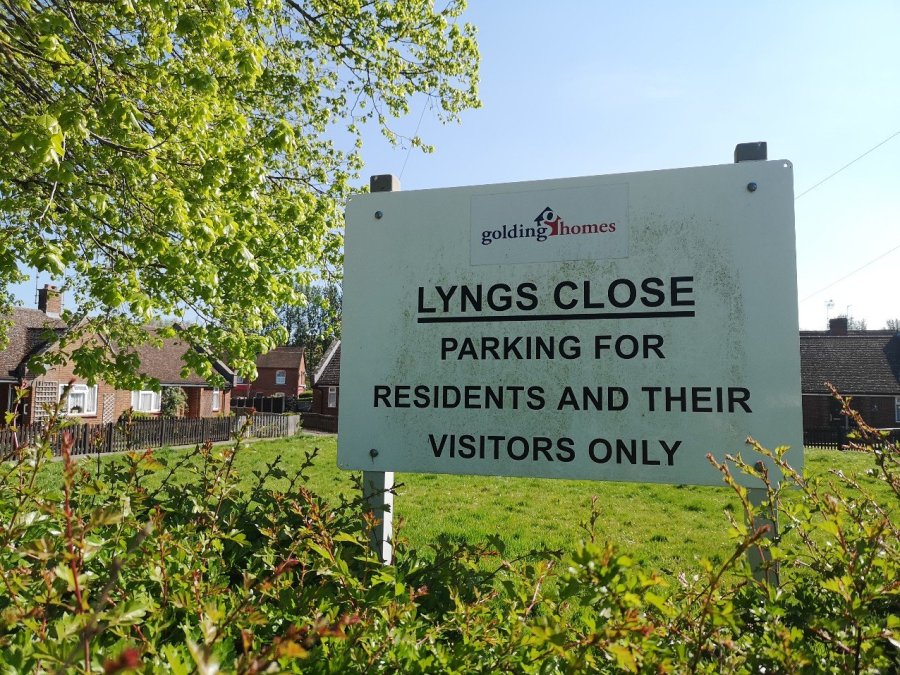
Restricted parking sign
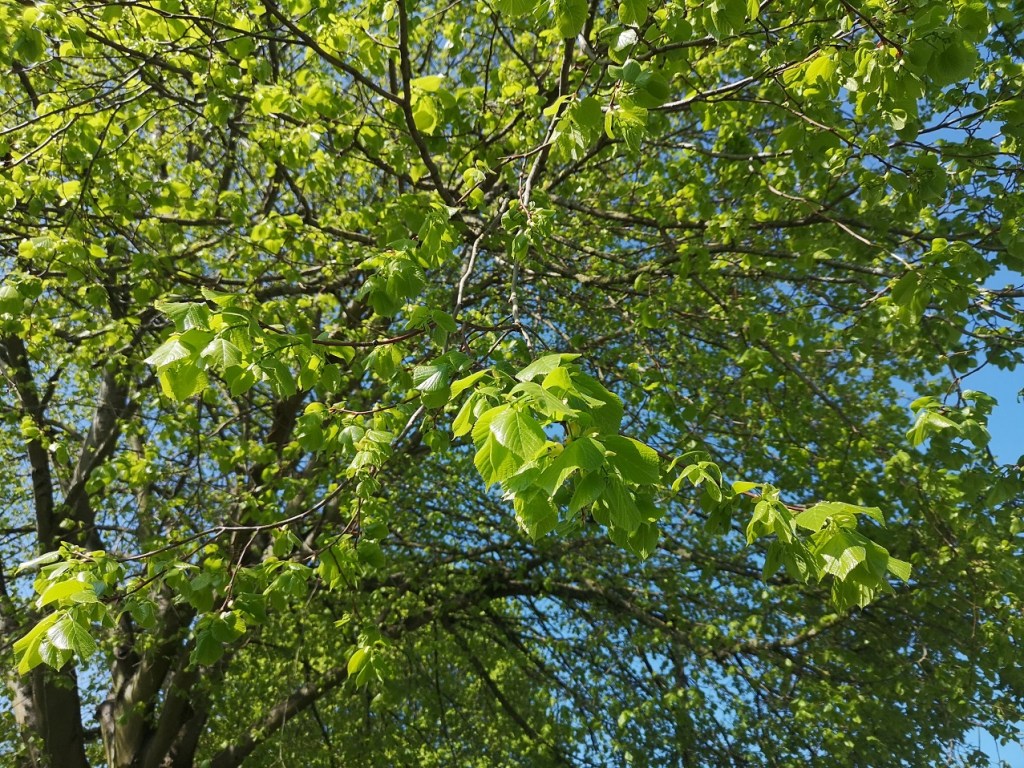
Leaves cleaning our air on our behalf
It’s like the world’s northern forests become a giant vacuum cleaner, scouring the air, sucking down the CO2 till around November
The way then opened up and there was a huge beech tree, one of earth’s 3.1 trillion ‘lungs’, with lobe-shaped leaves. (See the link in the box above for the source of that statistic). By the tree, at the edge of this oval patch of green for everyone to share, was a sign telling me that parking was for residents and their visitors only. I manoeuvred between the cars and came upon an even bigger Green, surrounded by houses and vehicles of varying shapes and sizes. I don’t have one, haven’t had for years, but I remember shutting myself in mine, in a secluded spot, to cry or scream, sleep or read when the children were at school and it all got too much. Here, it was momentarily clear, no exhaust fumes clogging up the air. I wondered if more cars were ‘at home’ than usual – that our new rules were going some way to liberating the planet from exhaust fumes.
There was a murmur of voices, slamming of doors and then a thrumming as an engine started up. It couldn’t, it tried again – the machine was coughing.
Dry tracery of tracks and mud
I had already strayed from my path, wandered off the tarmac onto grass and the crunch of dry sticks breaking. I took a big deep breath and blew at a dandelion clock. Under my boots, a dry tracery of tracks and mud; above, birds warbled. Avian creatures are the only species with a syrinx, the air passing across these thin membranes to produce their songs. Sometimes, like the Song Thrush, there are 2 windpipes and so 2 tunes can be sung simultaneously. It’s known as ‘duetting’. (How Do Birds Sing, CelebrateUrbanBirds.com)
If they stay there long, the grass will die
I noticed two bins on the grass which I knew would starve it of light if left there for very long. Without light, as every school child is taught, it would be unable to photosynthesise, to process carbon dioxide and water and convert it into oxygen and glucose to be able to thrive.
Dandelion clock
I mused on a Facebook story: A friend living in Peru reported, ‘Six weeks of no physical exercise, except for 2 minute walks to take the rubbish out, or check the mailbox, or walk from the car park to the pharmacy…’ Another, from Scotland, wrote, ‘I have felt a bit up and down emotionally this week, wondering….when I shall see my children and grandchildren again.’ Starved of light and sunshine, of physical contact and face-to-face time with friends and family, the health of we and our environment is threatened.
Outside the Village Hall, a man and a woman in a stationary car were smoking with the windows open and the engine running.
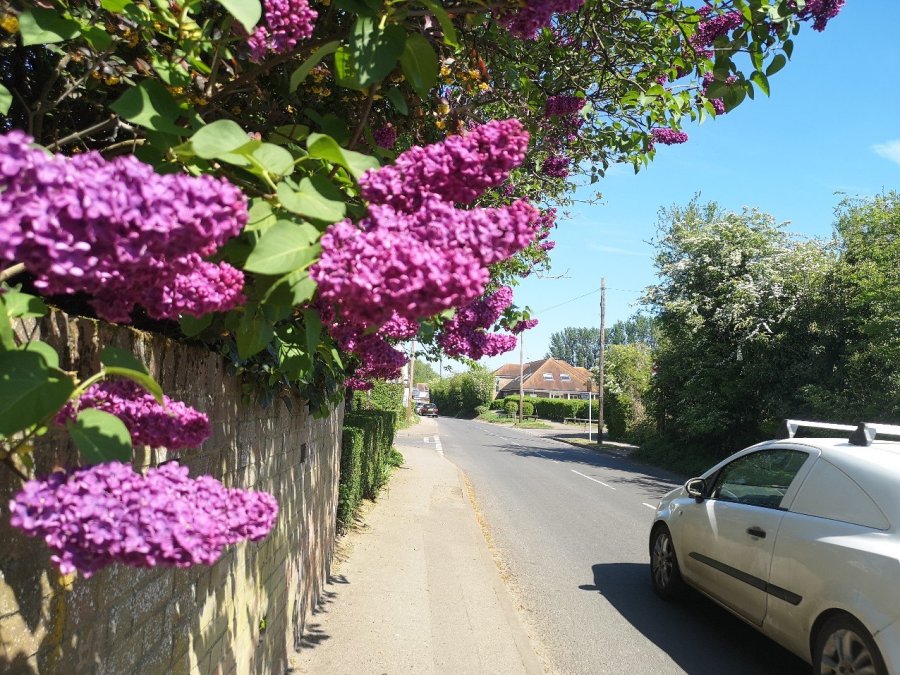
There seemed to be cars in every shot, stealing the focus from the lilac
Alone and together
Now I was back on the main road by the bus stop. A cyclist sped past, the dynamo humming. Four-by-fours raced, causing a wind to ripple my trousers. For a moment it was me and the birdsong before the next one. As it pulled away my nostrils filled with toxic vapours. A child stamped so he could hear himself, questioned his parents. He sang a snippet of the tune in his head, aloud. It was boiling (April) – I was ‘warming’.
Sweet chestnut blooms (plus a speed restriction sign and a car)
There were the wings of a pigeon, whirring; there, the straining neck of a blackbird dashing; and there, the candelabra of the chestnut tree. I remembered that they give some people hayfever.
People have trodden an illegal path
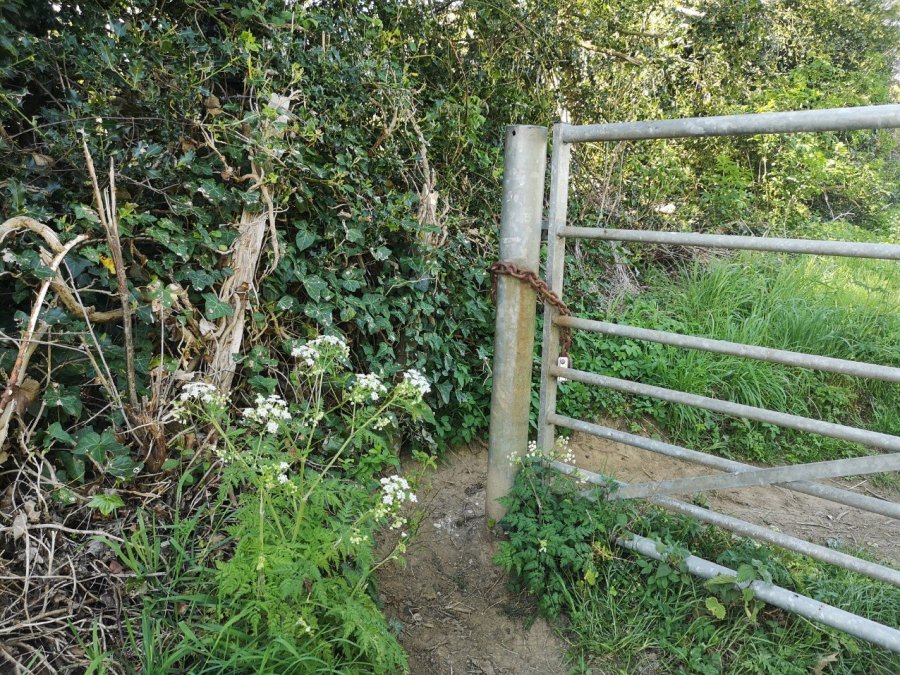
On my right was a track, and a gate with just enough space to squeeze around. ‘How do I know where I am not allowed to walk if there are no signs?’ I caught myself wondering. I went anyway. It took my fancy.
The pheasant hotfooting it away
There was one single crow high up in the clear blue sky; further on a solitary cat in the forage; a pesky pheasant in the stubble, its red head and plumed tail quite evident. Until it spotted me, that was. Then it ducked. If I had been a hungry buzzard at that moment, that pheasant would have seemed to be a clod of earth – cunning. A buzzing insect intercepted me and my camera. I ignored it because of the game and my thoughts. It was me and them. It smelled of hot, cut grass and faintly acrid chemicals.
8, 12, 4 birds flew around in ellipses, making a 3d spirograph of smooth circling, their wings catching the sun and glinting like morse code. I watched some more. No, the signalling came from their white bellies being exposed between wing flaps – hidden, shown, hidden, shown – around 3 x per second 2, 70-95 mph3 Notably, they choose to expend extra energy in order to fly together, adding an extra wingbeat per second in order to have compatriots to home with.4 I have brought Sara Baume’s book ‘handiwork’ for a walk with me. She writes that birds migrate with other species sometimes, if they share feeding habits. I didn’t know that. I like to think I could join a flock of others who have the same needs as me for company on the long journey.
If I am not allowed to go there, I can’t help them
Over and over again, as I walk, I am faced with limitations and the knock-on effect of them. As I turned a corner, cars were relegated to the distance, birds and other unidentifiable noises took precedence, but I could not investigate because of the fence. On Saturday morning it was the same – I think it was a distressed duck I was hearing (perhaps because of my concern over the mother of the 2 dead ducklings the cats brought in the day before), but I couldn’t satisfy my curiosity because of the wire and wooden posts. Nor could I help, even if that had been possible. (This is another topic – the crossing over the road to avoid contact, thereby missing the opportunity to be close to another, strike up a conversation, smile into their eyes and help if need be; the secluding which precludes neighbourly chats and offers / receiving of support; the ‘Keep Out’ signs which stop me reaching the scene of the problem – none of it healthy). I realised I was walking the outside perimeter of someone’s garden. They were on one side, me the other.
Hawthorn, Crataegus laevigata
The wood pigeon gurgled her underwater sounds; the sweet smell of hawthorn was like incense in a mosque. Two rabbits ran out onto the path and turned towards me. I realised they don’t know I was there. One turned off close by, the other froze. She seemed to be unsure. A pigeon errupted from above my head, and I startled. That scared the bunny away.
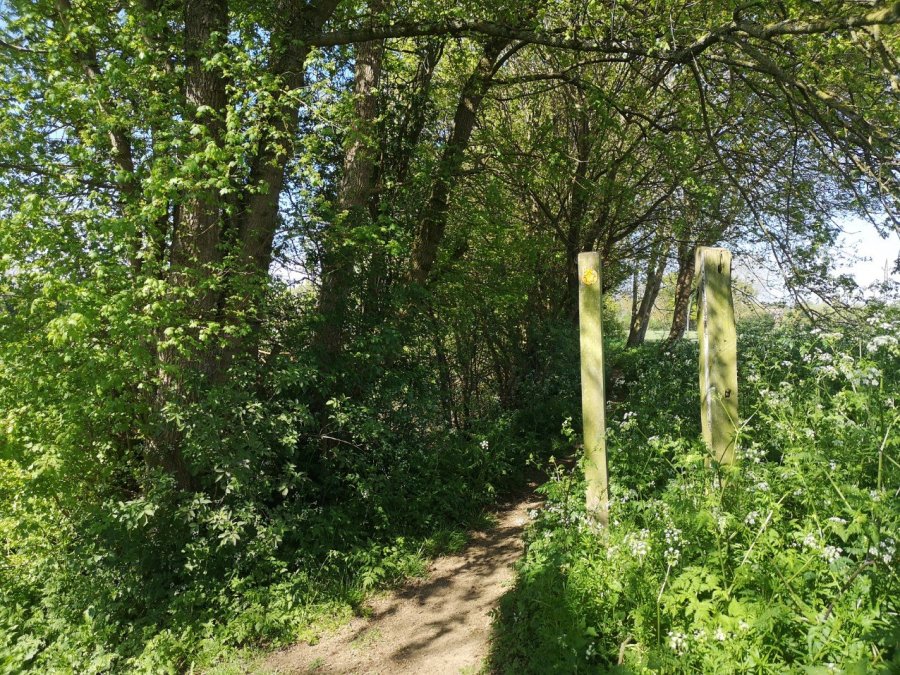
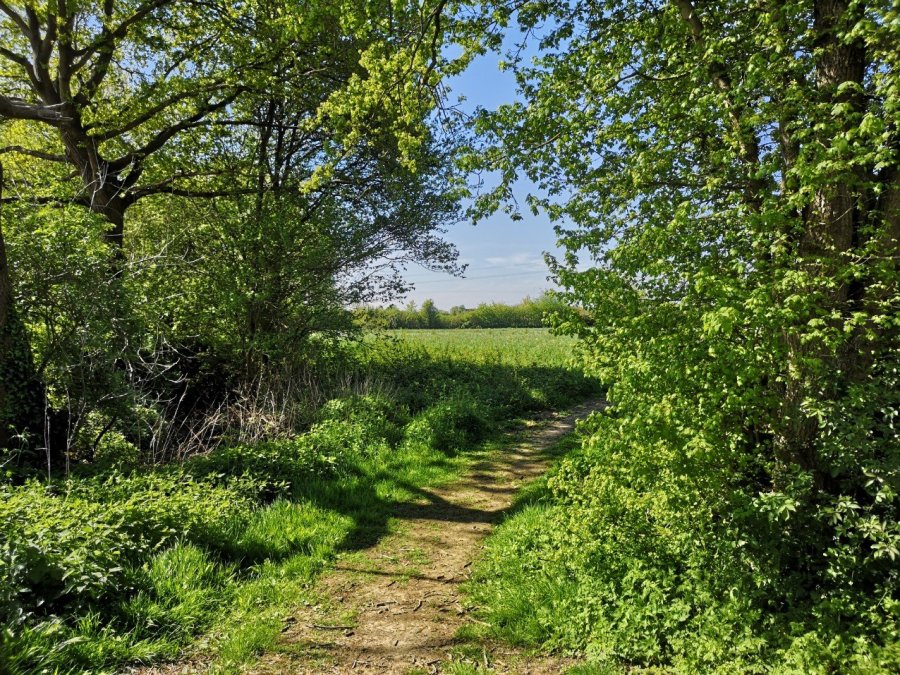
Lush hedgerows and official footpath sign
Nearing the end
This was the front of the sign I got stung to see …
A woman’s voice I couldn’t quite hear, interrupted my peace. I saw the phone ringing and I didn’t answer. Before I knew it I recognised where I was and glanced at the time – it was getting on.
I was on the official footpath, but it was the back of a sign that was towards me. I got stung by nettles trying to read it, and, although I generally think that homeopathically that does me good because I respond well to the properties of Urtica dioica, drink it every day (it’s good for the health of my joints and blood), nevertheless this is another danger inherent in rural walking!
Wilding
Raspberries gone wild
Before the cherry orchard, I came across raspberries which have been allowed to go wild. Not over excited, although maybe they are because they have grown in exuberant, prickly arches, more monumental than the brambles. (Do they compete? I wonder). They have been left, free to go their own way. Kids who ‘go wild’ are said to be having fun, they squeal and scream, their voices filling the air with their freedom of expression. I go a bit wild when I walk: I dismiss pretence and constraint. Not quite feral, not ‘gone mad’, but I have wilded.
The voices behind me were getting louder. Closer therefore. ‘You don’t want to do it on a day like today’, he said with a forbidding tone. I stood to the side to let them pass.
I wanted to stay out until I wanted to go back. I knew, now, where I was and how long it would take to get home and guaged it was perfect timing to speak to the kids on Zoom. (Actually I was late and the youngest messaged, ‘Where are you all? I am here on my own. I could be outside.’)
Offstage, a child screamed. A fatherly voice said, ‘Calm down, don’t panic, if there’s a problem, tell me’. Then I was back on a road. They cycled past.
So, be careful, you have been warned
You can’t do this, or that, nor the other
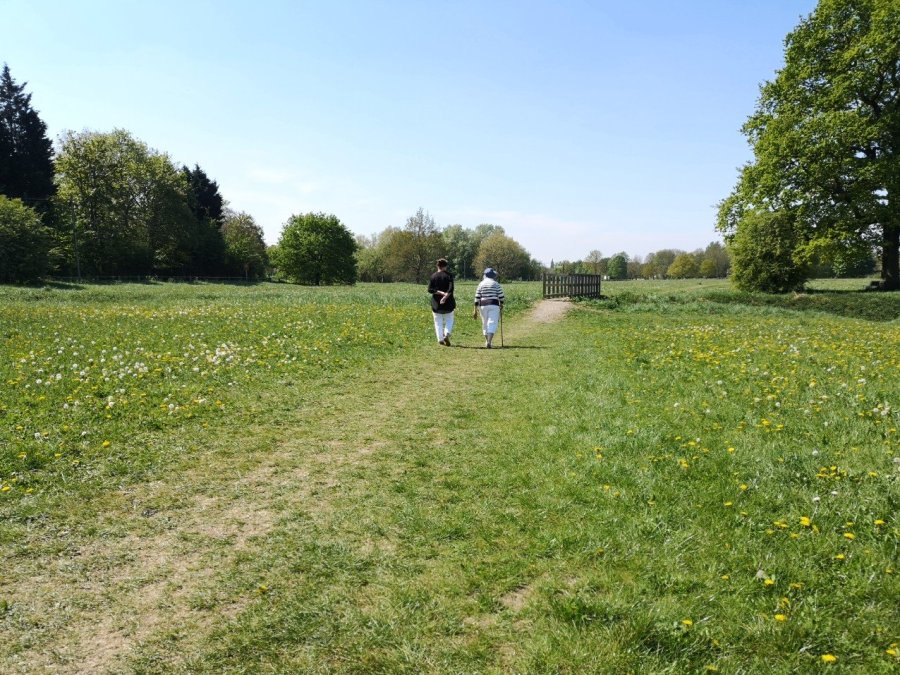
As I crossed the Lees, there was a procession of us, socially distanced. We were strung out, hopefully not ‘strung out’ – nervous or tense – after our walk. One woman wore headphones, cut off; a couple were knee deep in the undergrowth; a what-I-call ‘proper hiker’ was focused forwards with his baton jauntily over his shoulder like Dick Whittington (I said hello, but got no response); a friendly woman with a walking stick smiled and nodded.
Most of us were well spaced out – these 2 must have been living together
I did go where I had intended to, but I got there an unfamiliar way. I came across a lot of warnings, but survived. My health was all the better for the open air and the Spring green.