I am pleased that my essay Squaring the Circle has been published in Caught by the River. In it I walk forageable and forbidden places near my home in Edinburgh.
It was written in response to a Walking the Land brief from David Tidsall and Andy Freeman.
Sunday 2nd October 10am – 12noon and 2.30 – 4.30pm
At granton:hub, (Madelvic House), Granton Park Avenue, Edinburgh EH15 1HS. Link to the full weekend programme here.
Showing the mixed media work of selected artists from Granton, Edinburgh and around the UK, this pop-up exhibition addresses themes of death, grief, loss, and re:living.
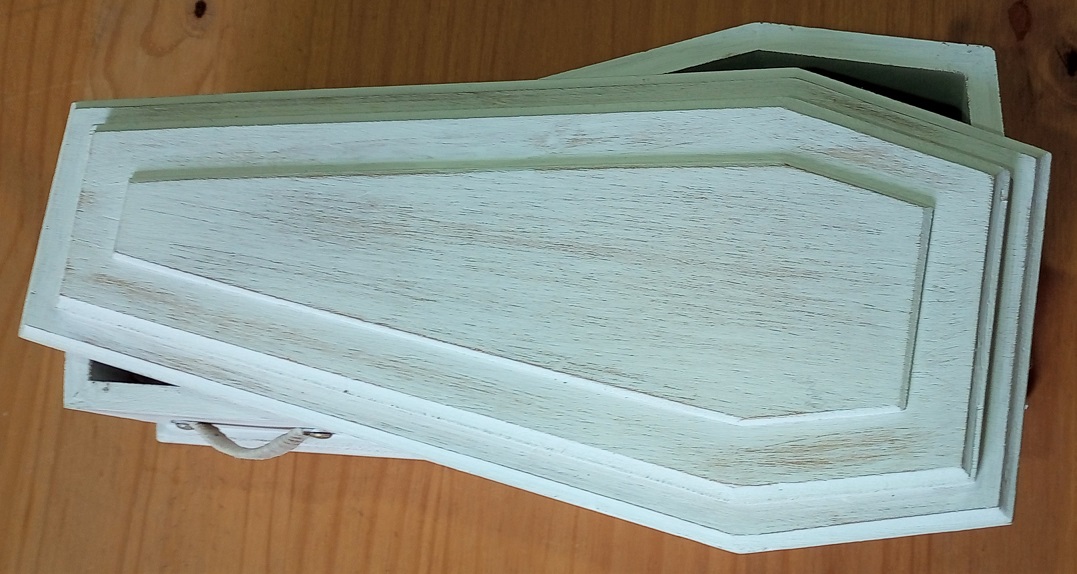
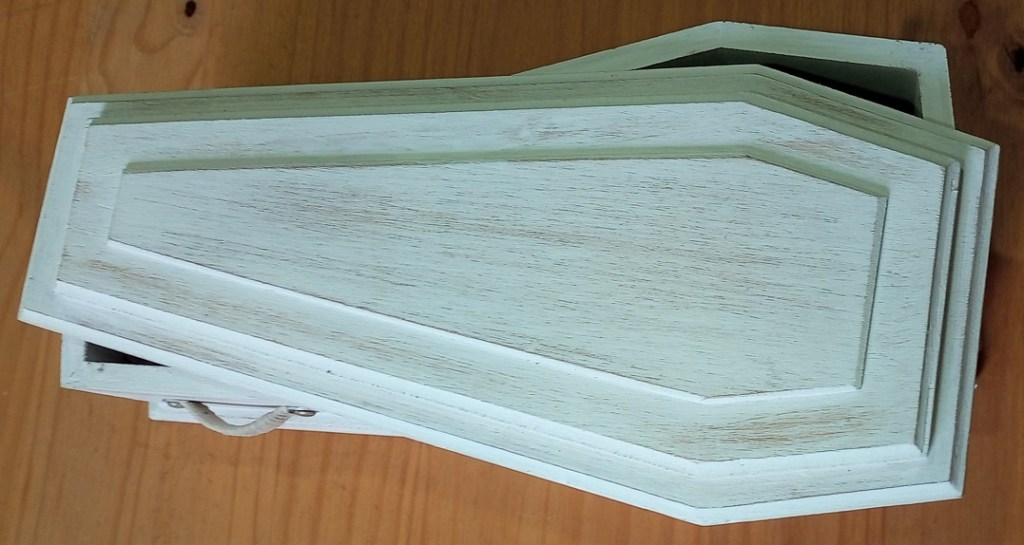
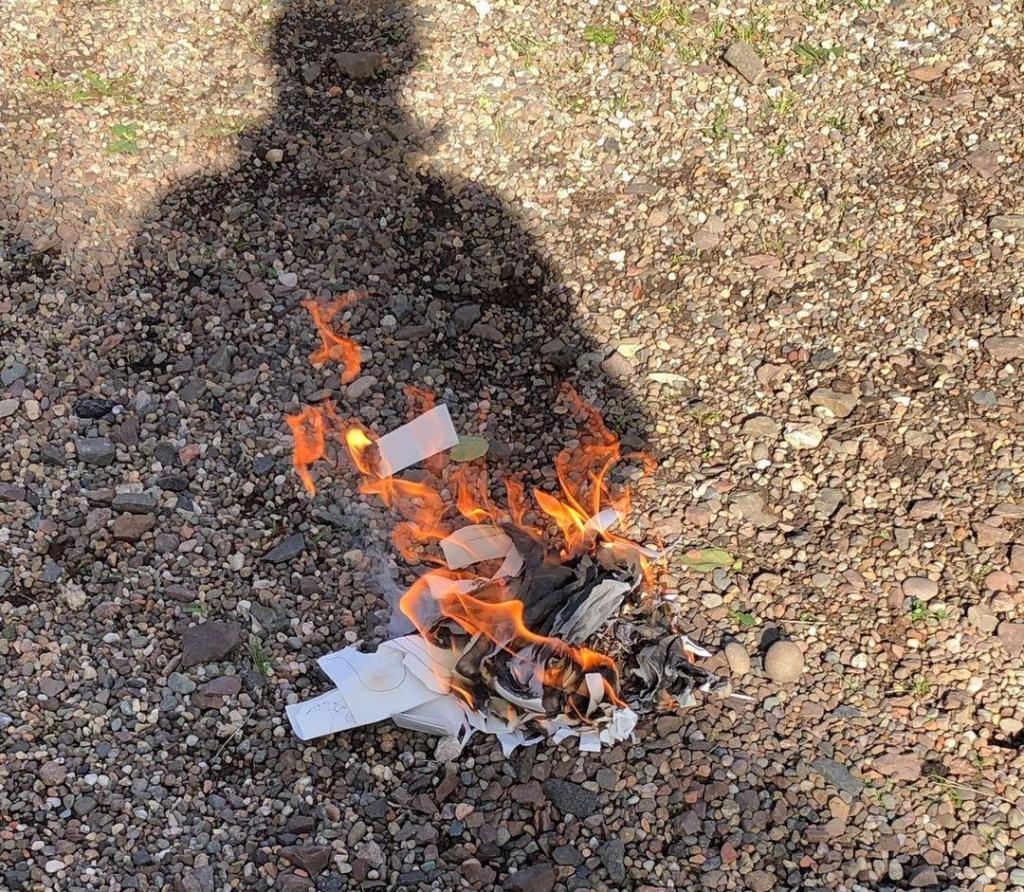
“KUMMER KASTEN” by Bibo Keeley. Translated from the German, the title roughly translates into ‘agony box’. Bibo writes, “Whenever thoughts of personal loss, traumatic experiences, or even fears for the future of the planet become overwhelming, I put my thoughts to paper and place them in this box. It’s an on-going process, and every now and then I take out all the things I have written and burn them.” Material: ply wood (and other materials). Size: L 40cm W 18cm H 12cm
This varied exhibition includes painting and drawing, artists books, sculpture, film and poetry by:
Sound Walk and Art Installation, September 2021-September 2022
Sound Walk September, a global festival, has come round again and I am minded to reflect on the year that No Birds Land has been in the Trinty Tunnel on the Edinburgh cycle paths. Here is last year’s blog with all the details about location, transcript and documentation.
Funded by Sustrans and the RSPB, No Birds Land was shortlisted for a Sound Walk September award in 2021, and a year later, No Birds Land is still up, albeit in a different form.
Cave paintings
The preparation time for No Birds Land consisted of lengthy email conversations, and long hiatuses between communications with lots of departments of the City Council and tunnel owners; a frustrating process. I was in contact with all my local MSPs and Councillors, most of whom were very helpful, and some who pulled strings behind the scenes I think. In the end someone (maybe anonymously) telephoned me and suggested I go ahead!
What remains?
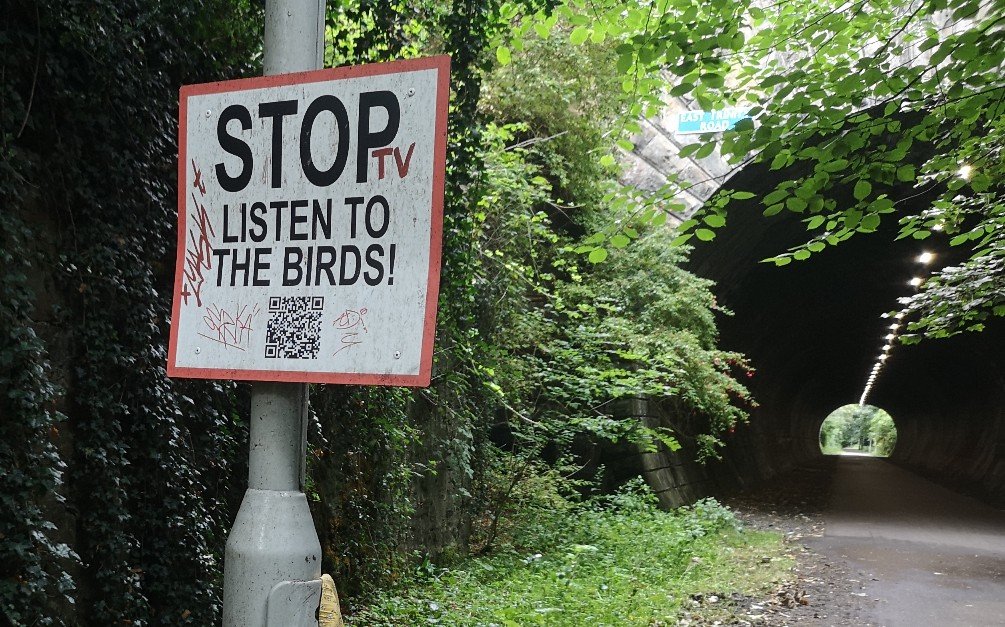
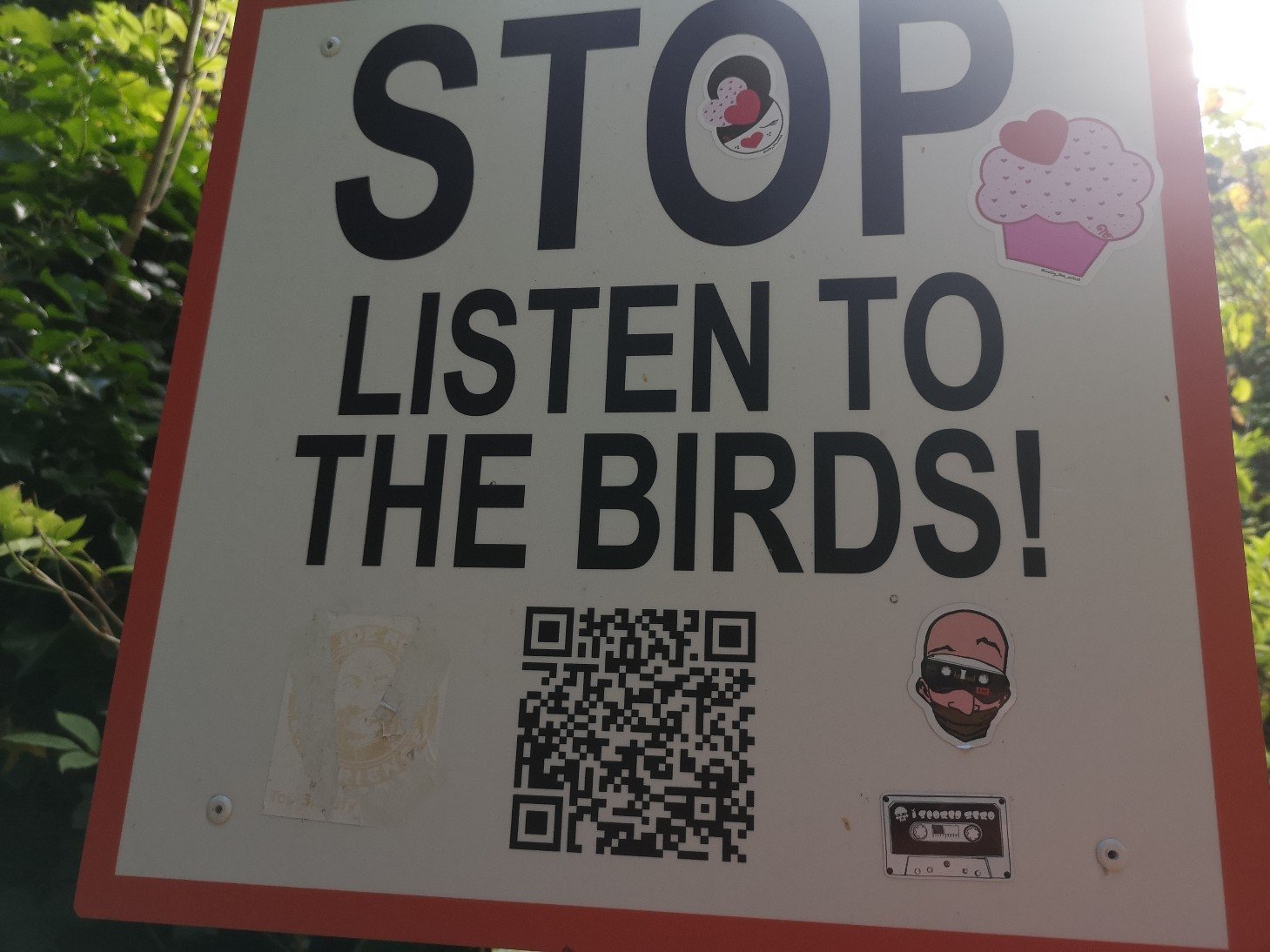
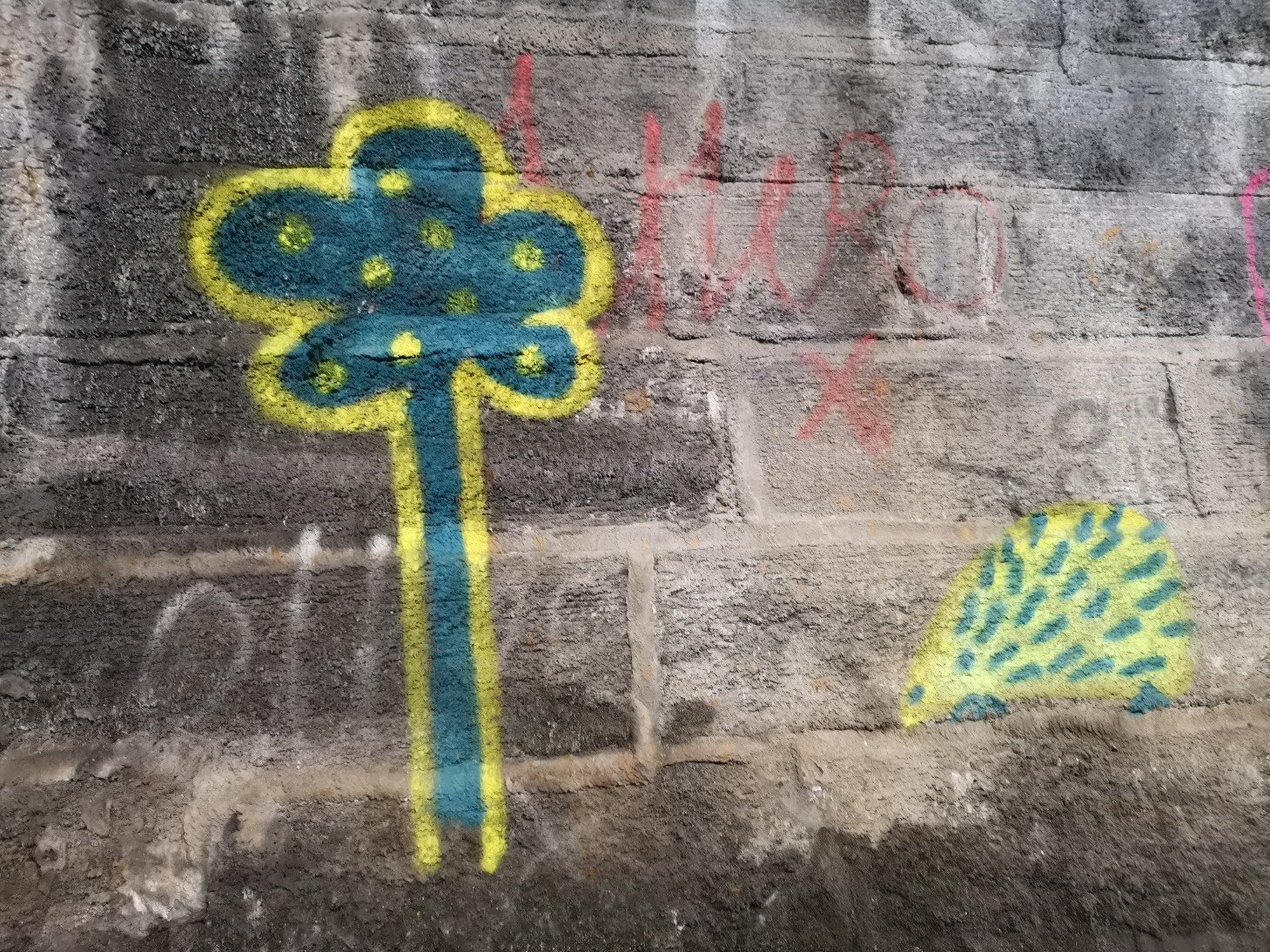
Although I had initially planned for wooden A boards at either end of this place where birds cannot nest or sing and hardly ever fly, the signage folk persuaded me that street signs would be better, given the weather and so on, and they have been fantastic, standing stalwart through wind and rain. With their air of familiar street furniture, you need to look twice before realising that they are something a little bit different. Furthermore, covered in graffiti and stickers nowadays, they blend into the tagged landscape beautifully.
The sound endures on the cloud. The QR code printed in indelible inks, its distinctive black and white geometrical pattern prevailing, is the interface between the ubiquitous mobile phone and ‘Soundcloud’, where it sits waiting to be triggered and listened to (to date 1462 people have listened). It’s an eerie experience for me to walk or cycle through and hear my own voice: “What can you hear? Hear, hear. What can you he-he-he…?”
I never thought it would still exist so much later, indeed I was asked how long it would be up for, and warned by several people that it wouldn’t last long, what with vandals and so on. Also, that I better watch out for any danger it might cause.
So what has changed?
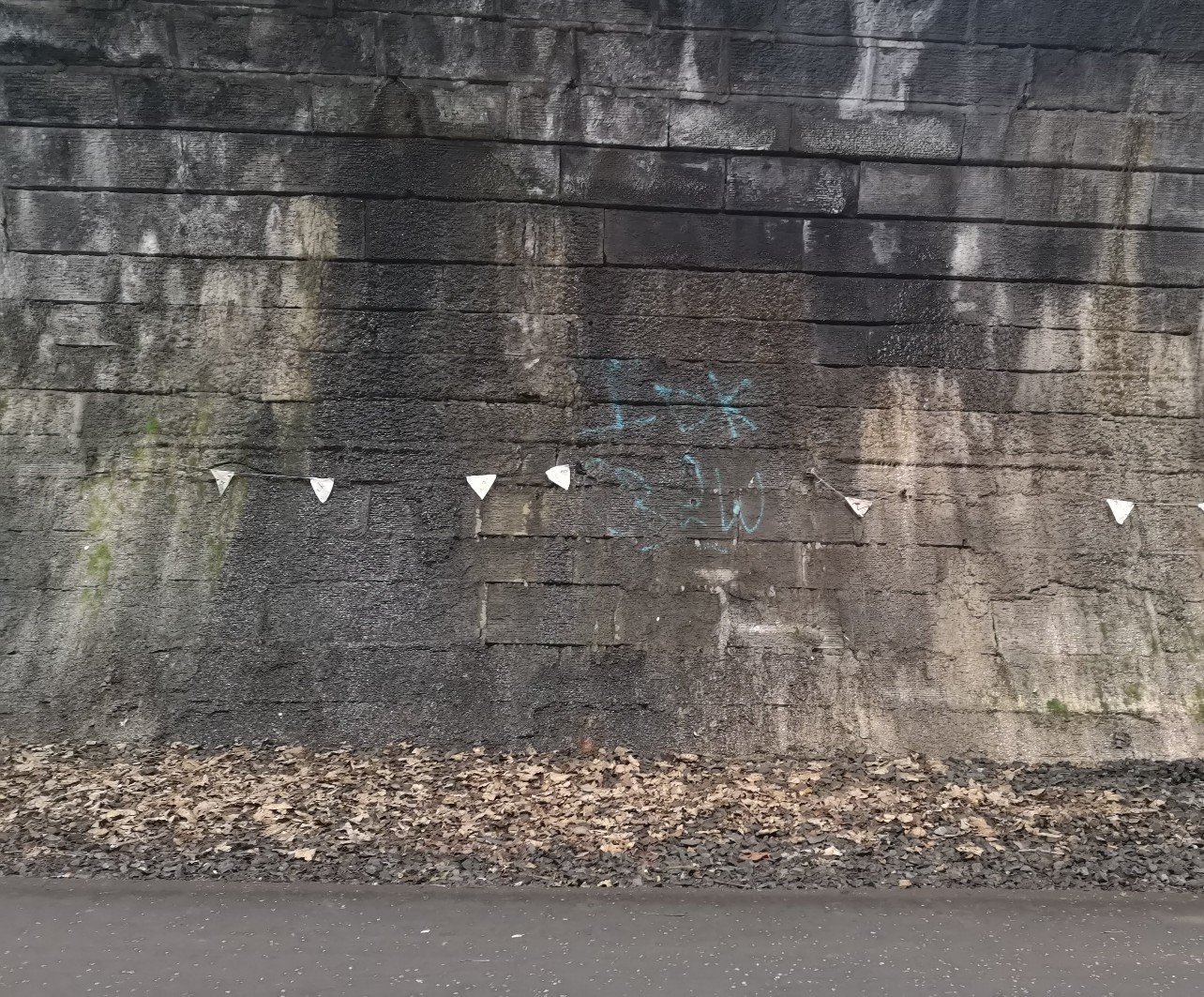
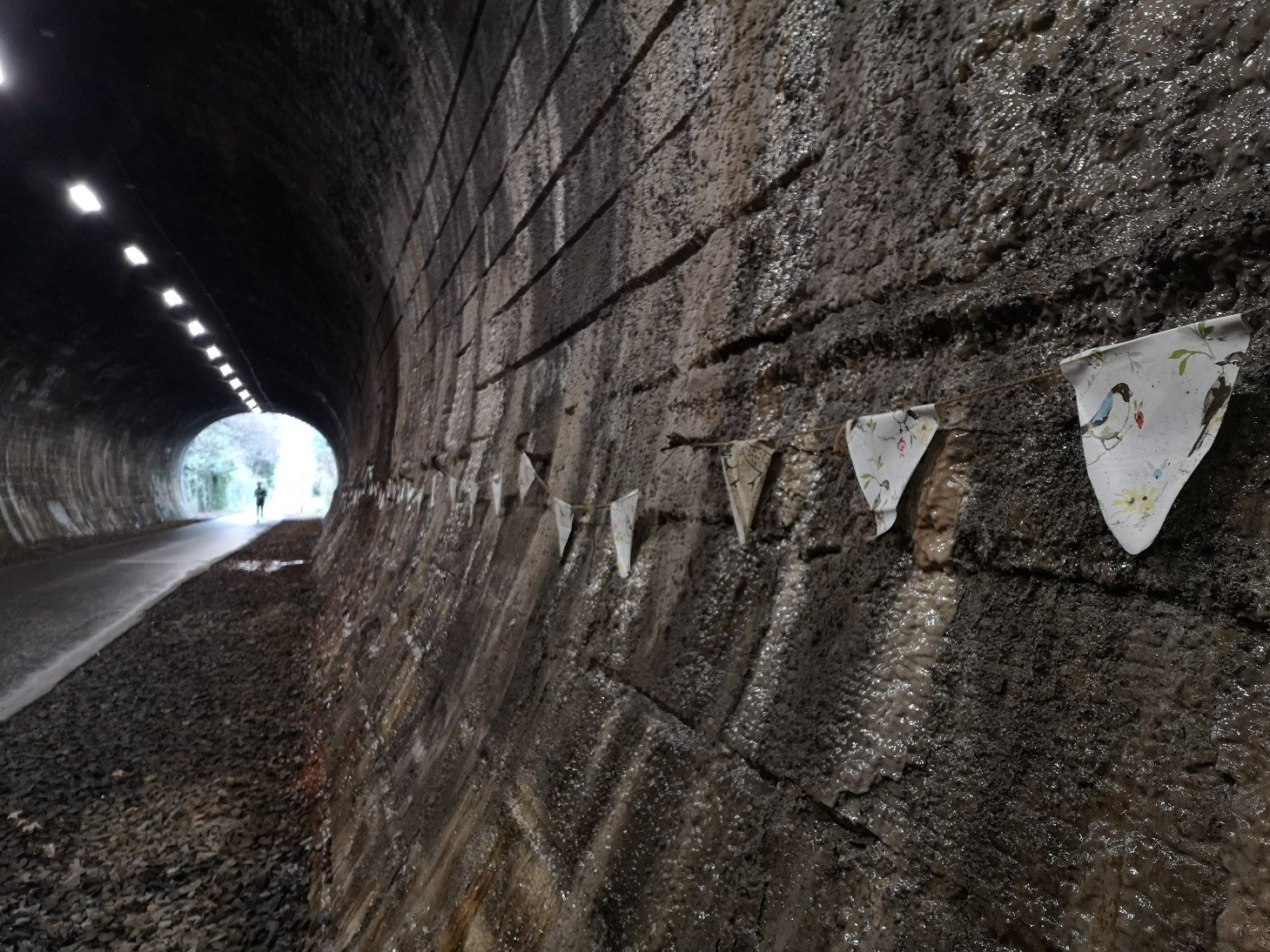
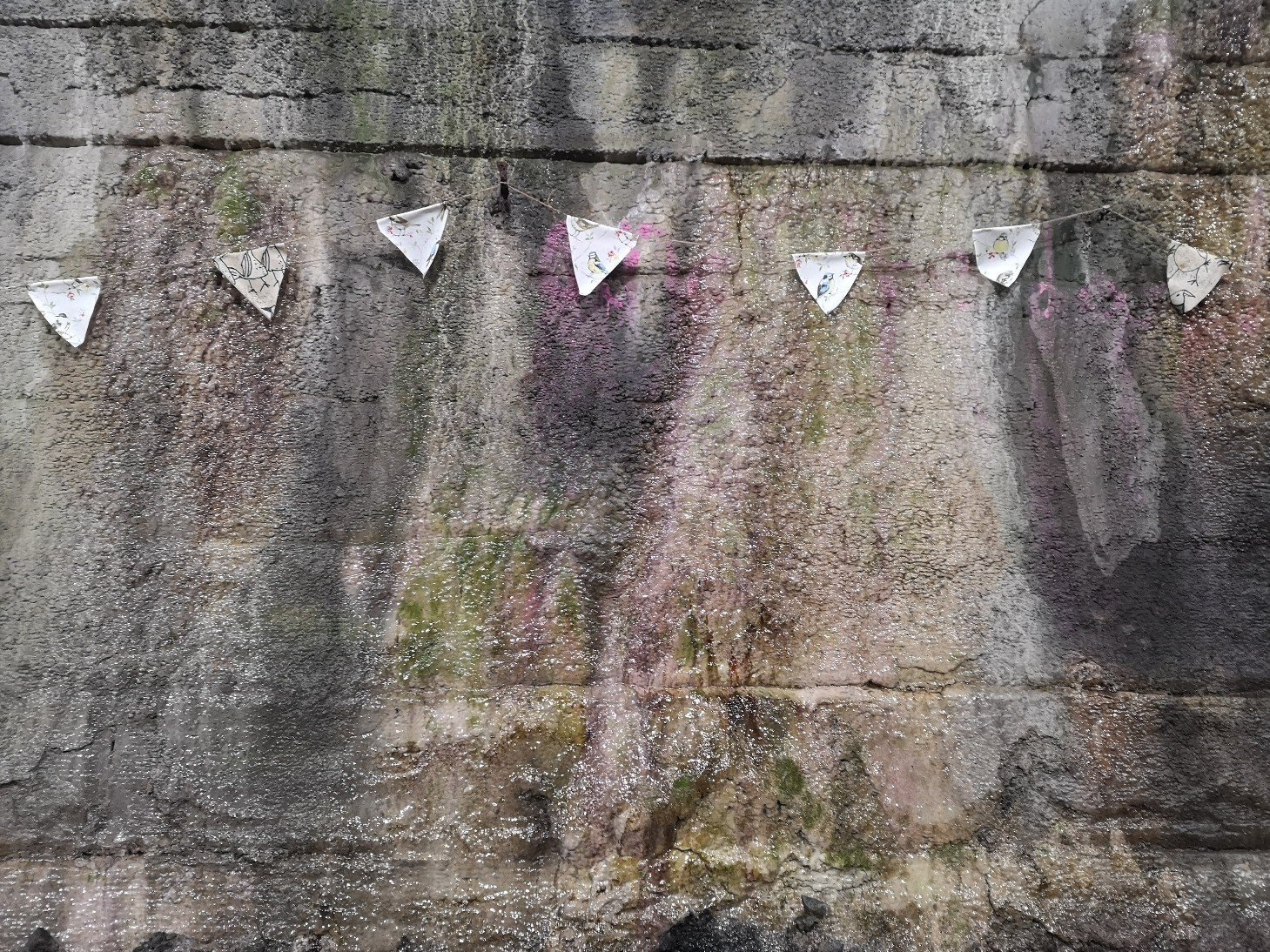
The very long string of bunting with bird images and sounds on it, was trickier to install than I imagined even though I had my friend, tall-Andrew, to assist, so people stopped. They wanted to know what we were up to and immediately started to help. This community involvement has continued.
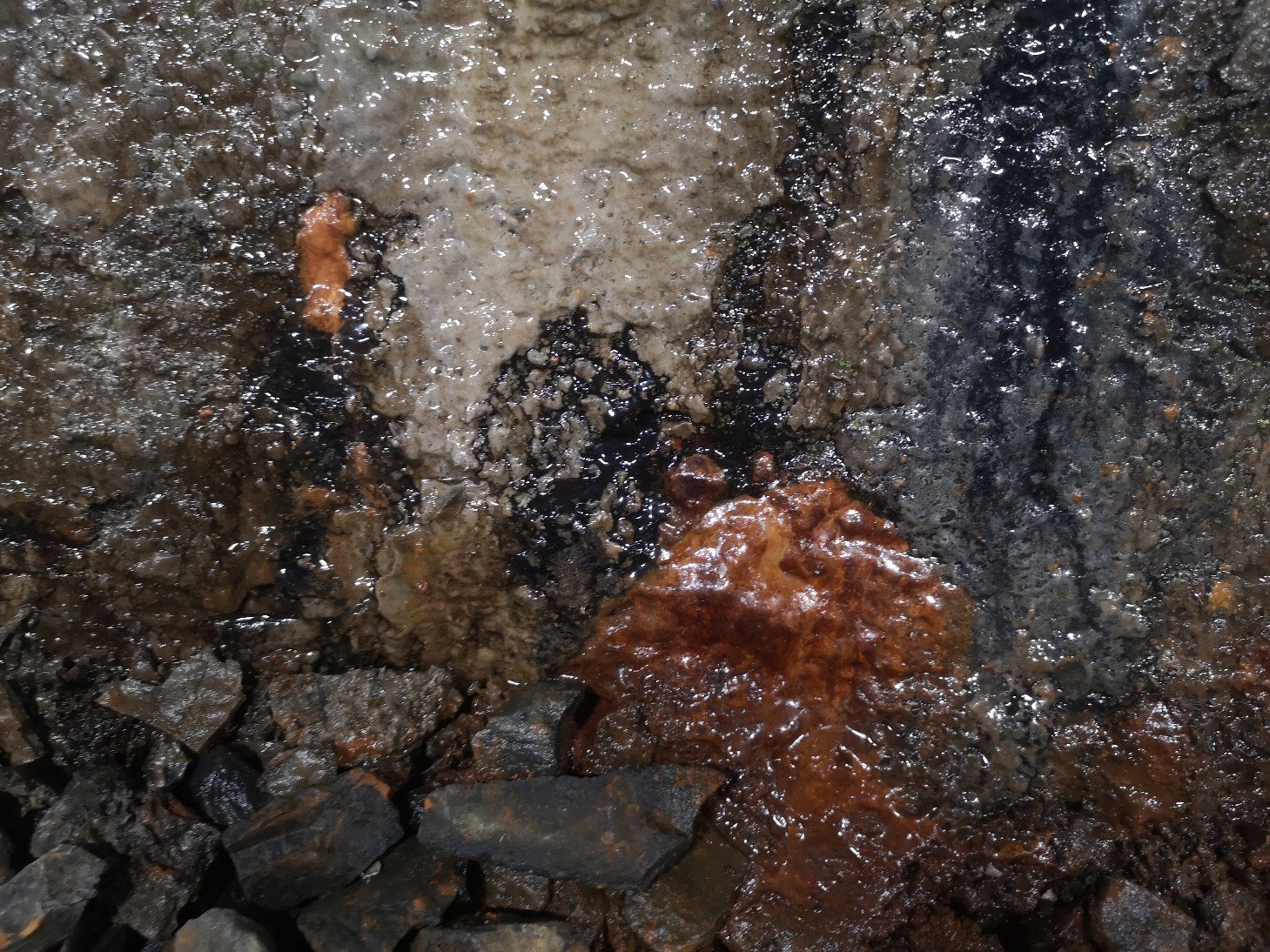
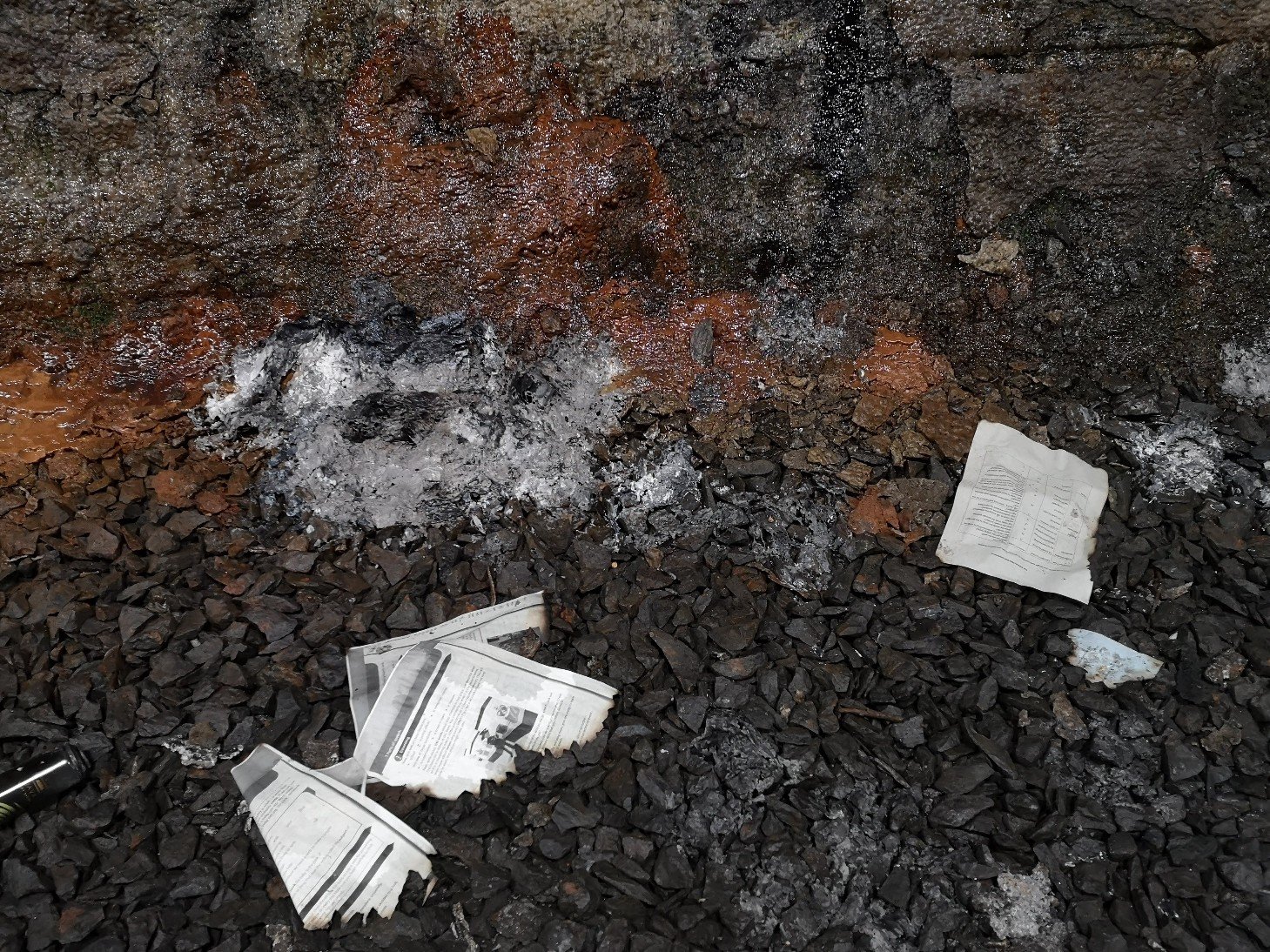
For 6 weeks it was untouched, but in October when I proudly led a group of Pilgrimage for COP26 hikers through to show them, it had suffered its first attack (maybe because school half-term had come and gone) and much of it was lying in pools of bright orange water, the run-off from the walls which had collected ores and elements on its way down.
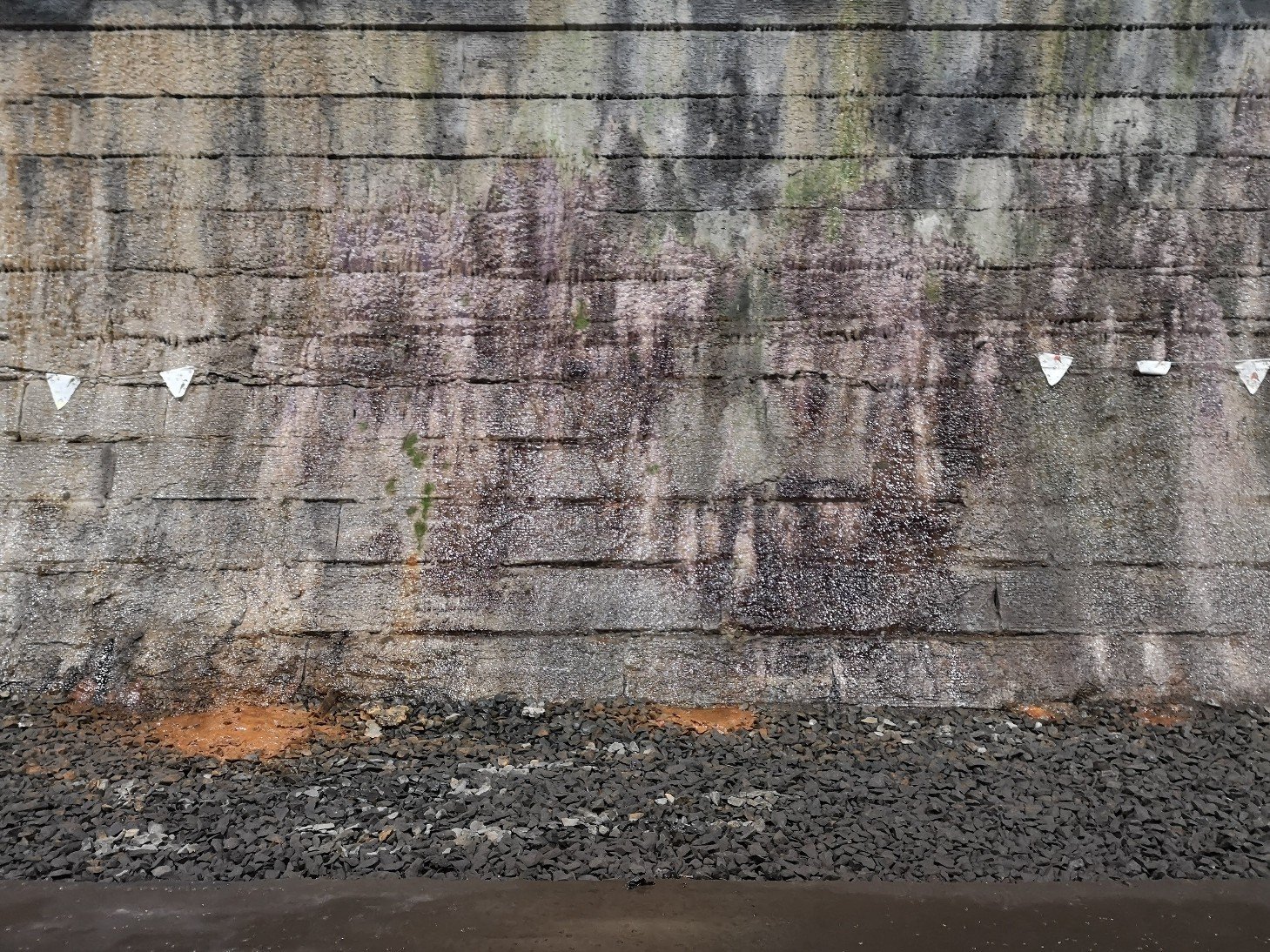
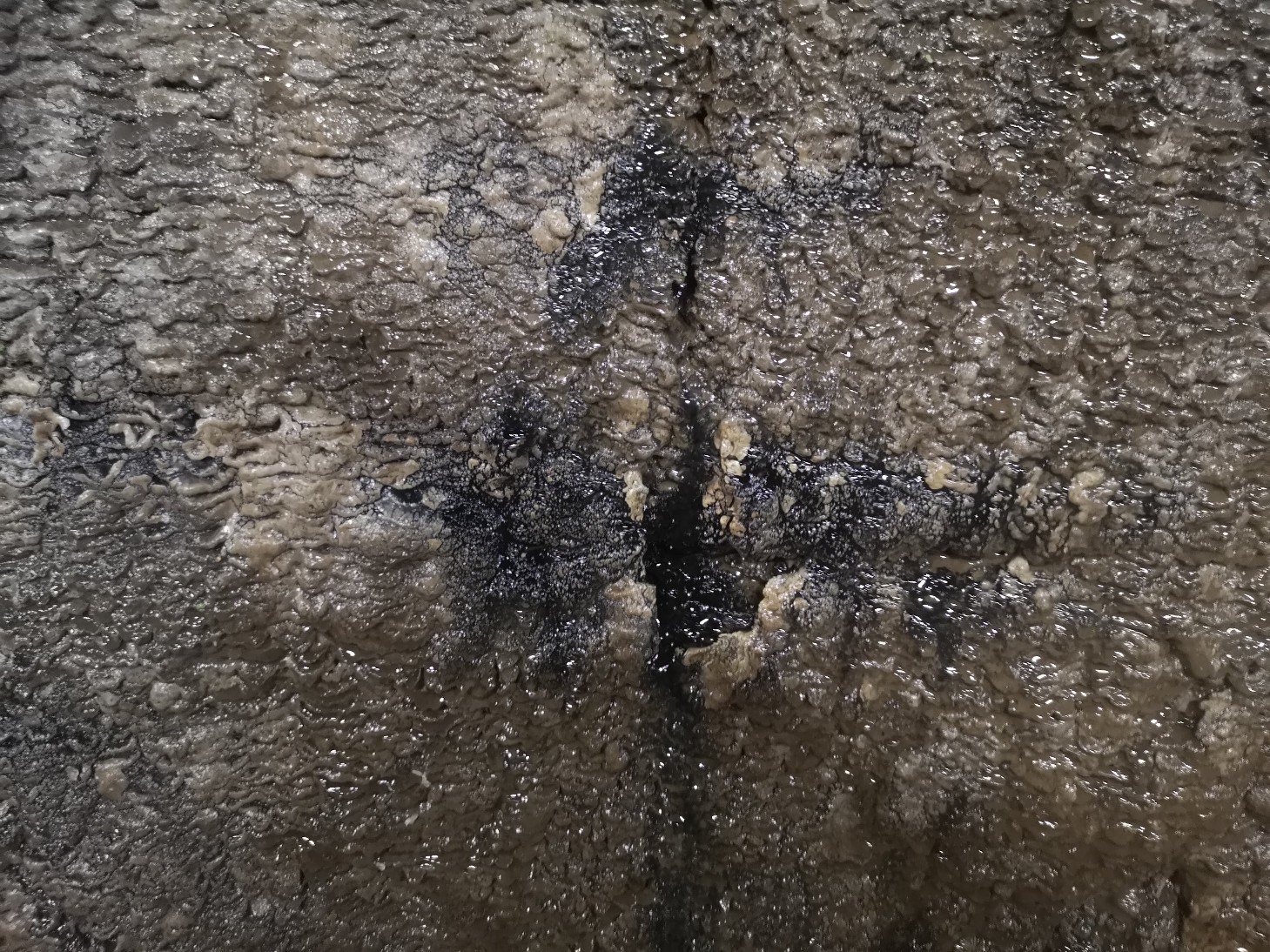
Look at the colours the rain has co-created with the graffiti and the wall itself!
I had been checking almost daily before we left for Dunbar and the start of our Climate Trek. I would stand or sit close by to watch people interacting with it, listening to their conversations if they were in groups, and asking them what they thought if I sensed they were up for a chat. On Sunday afternoons, perhaps the busiest time of the week, about 40 people an hour went through and of them, 20 stopped to look, listen and comment. Despite my fears, it had stayed whole.
At this stage of the Pilgrimage, we had a journalist with us who was interviewing me as we walked and my distress was obviously clear because other members of the group started to kindly collect the parts and attempt to make good. However, we had to continue on our way to South Queensferry, so I phoned artist-Lesley that evening and asked her if she might do her best to attend to it until I was able to do so myself, and she kindly obliged.
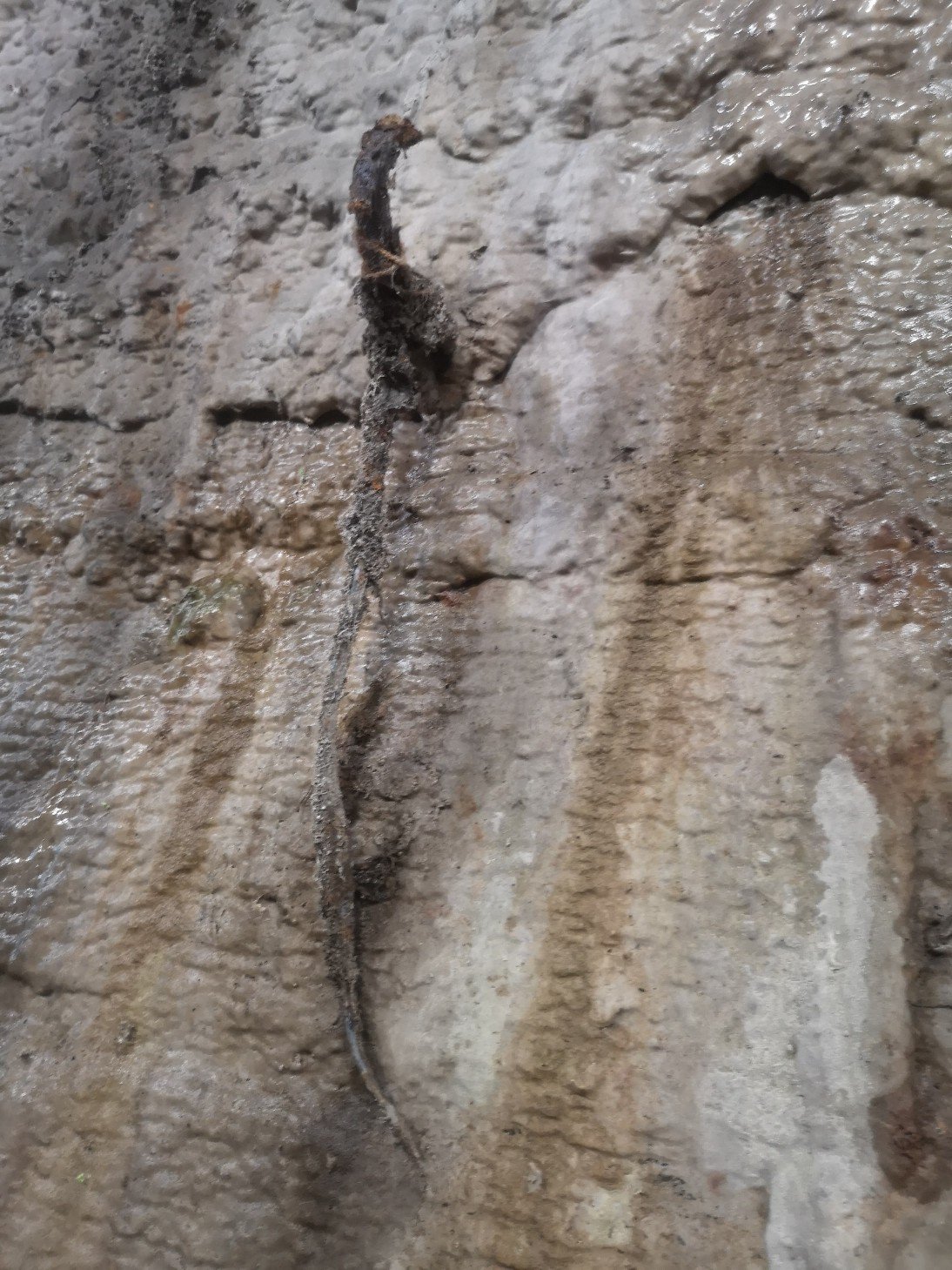
Rotting twine
It has taken on a life of its own
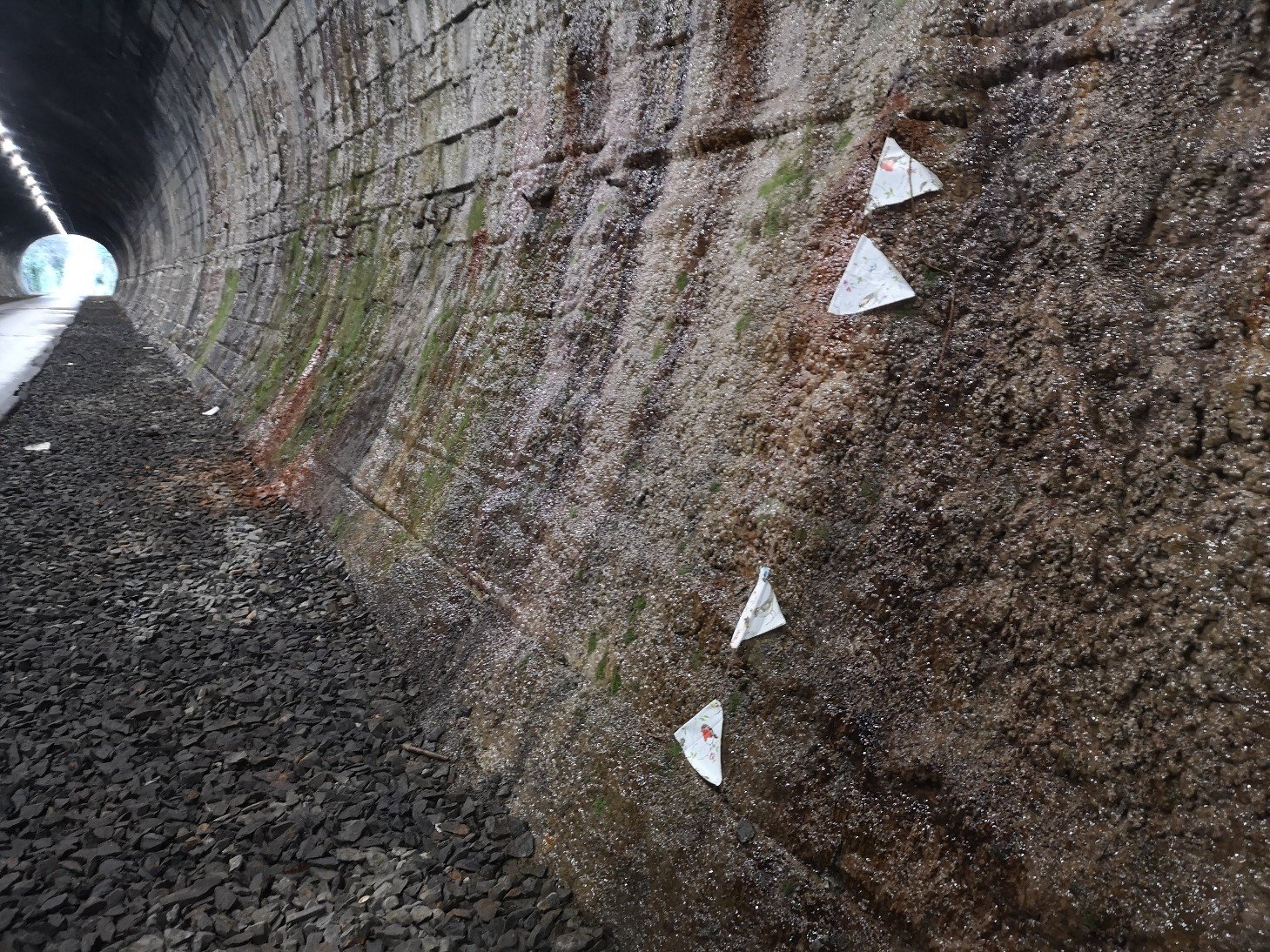
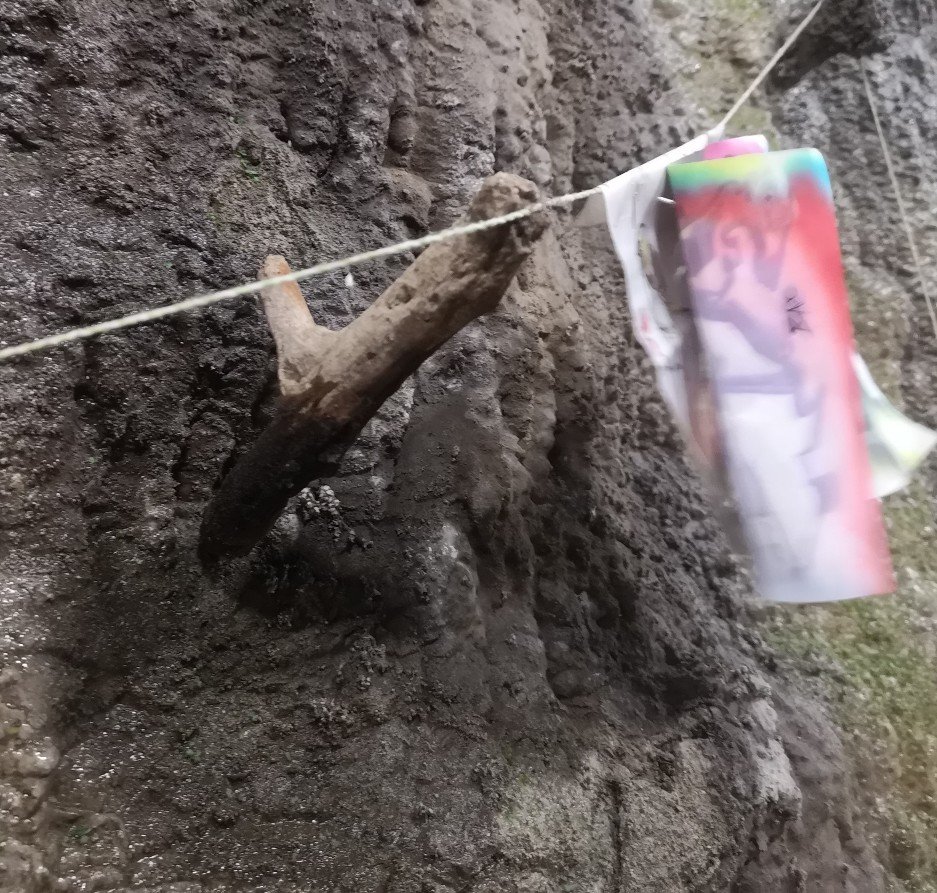
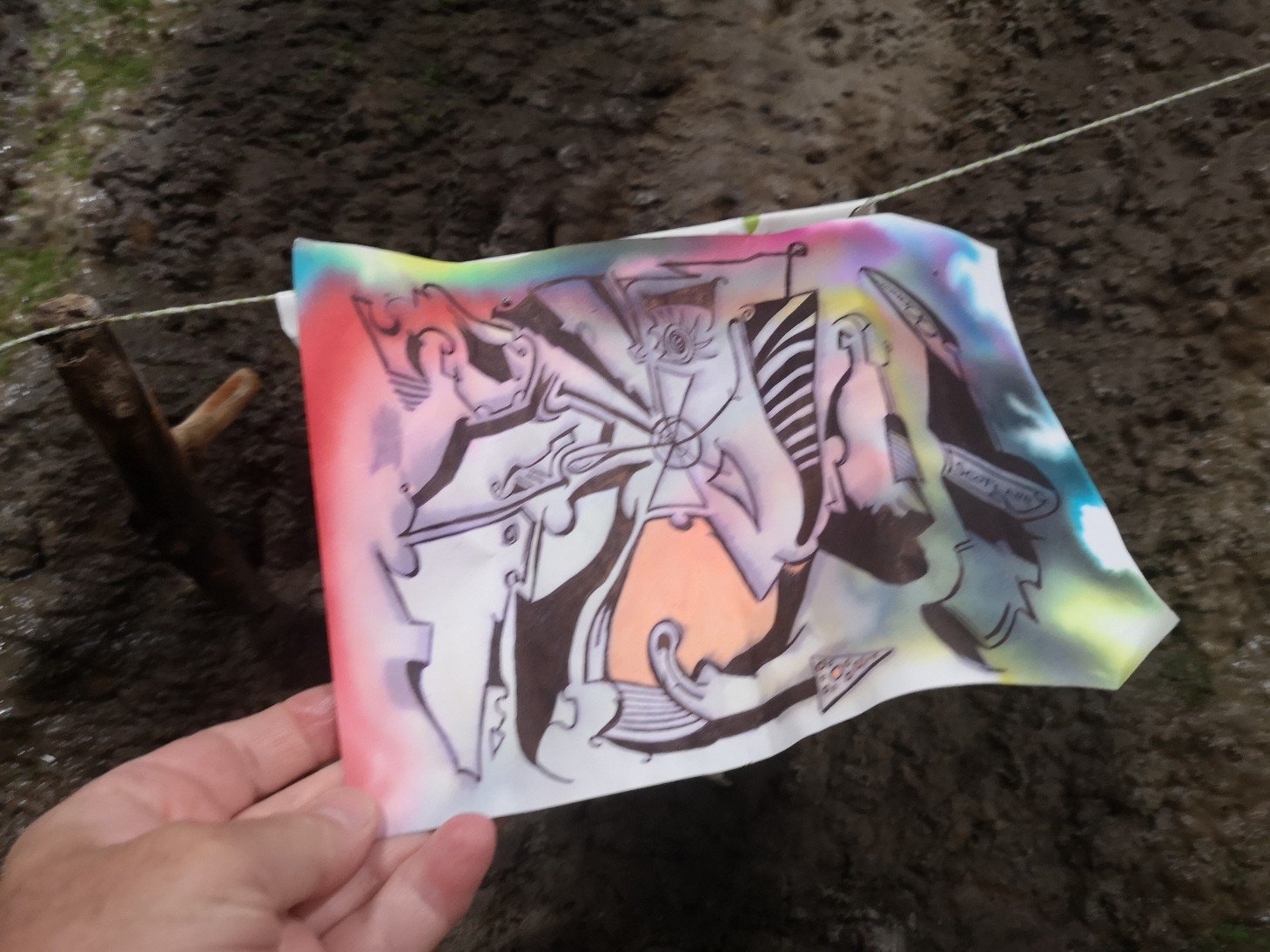
Since then, unseen passers by have often repaired and rehung lengths. I used to do it myself but after 6 months, I thought I would leave it to have its own life, and now I see new types of string connecting the pennants, and sections which weren’t there one day have magically reappeared the next. Someone messaged me to say she had found a string of them on Wardie Bay beach. Little changes have been made, signalling the care that has been taken, and also showing, subtly to me, that there is understanding of the work itself.
See how s/he has used a fork of wood to prop it away from the wall to keep it dry – good idea!Who is the artist?
The graffiti scrawlers add to it, another artist has complemented it, and nature has made many changes. Walking with Jim Slaven along the canal as part of the Art Festival in August 2022, I was interested to hear him comparing the 2 tunnels along the Forth and Clyde, how one was built soundly, is dry and in tact, and the other was not and lets in the rain. Well the engineer who built the Trinity Tunnel, Thomas Grainger (no relation, even though that’s the exact name of my grandfather who was also a tunnel engineer and worked in Trinity House in London!) didn’t do a great job, because ‘my’ tunnel is verr-ry damp.
And No Birds Land seems to still have life because when people ask what I do and I tell them about it, they know what I mean. They say “Oh yes, I’ve seen it.” Happily they almost always add, ” I like it”. Walking along an adjacent path recently, I met a Community Policeman and he knew it too. Talking to dog walkers who were telling me what they thought of the new Sound Walk / Installation, The Wall (my entry for the Sound Walk September 2022), I heard, “Oh you are the artist! Yes, I listened to that and told my neighbours on the stair, “You must listen to The Wall’. We need more of these.” It’s heartening, of course.
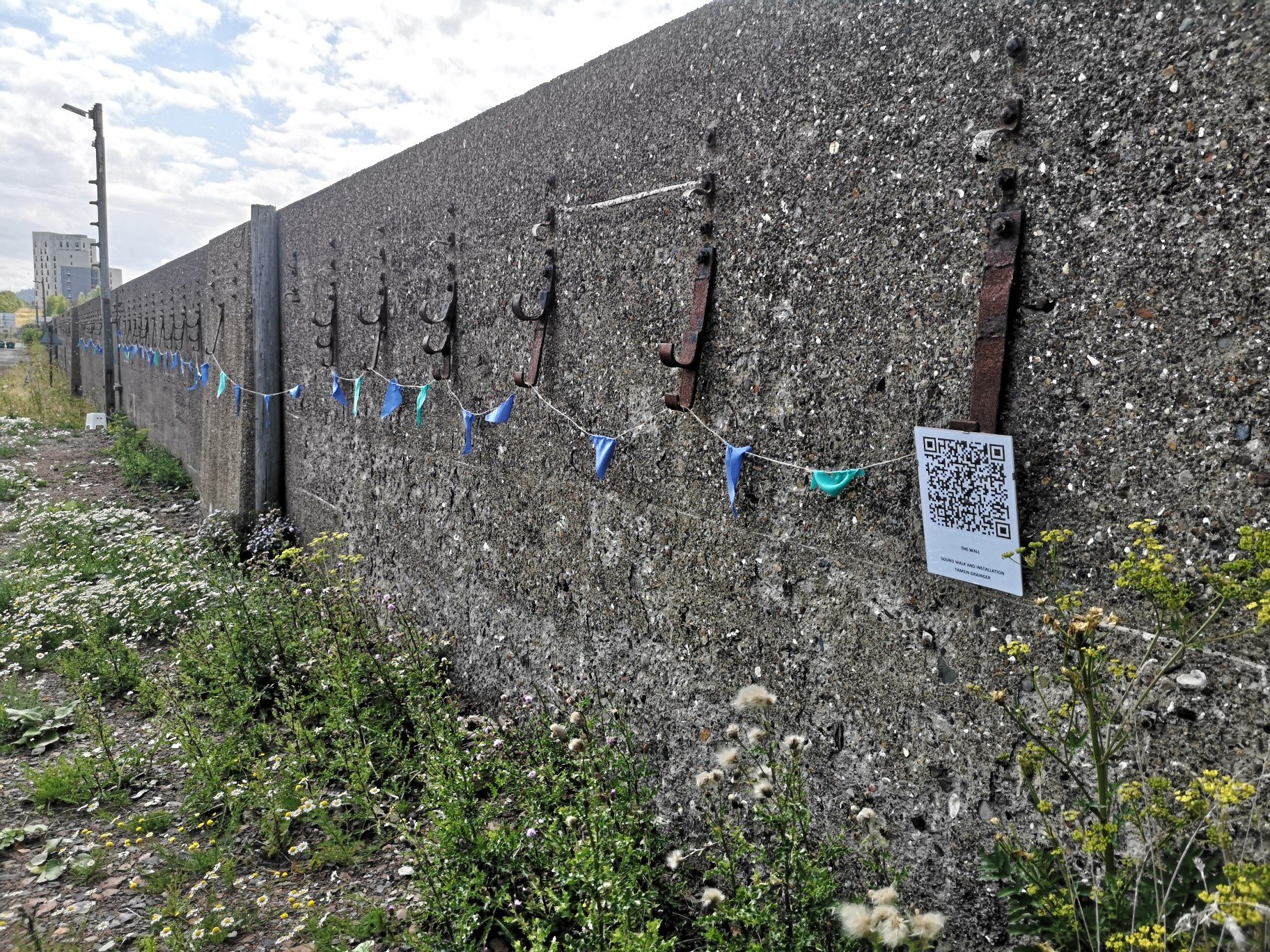
The Wall, Western Breakwater, Granton Harbour
What is much harder to ascertain, is the effect that No Birds Land has had. Has it informed people about the plight of our nesting birds and why that is happening? Has it suggested alternatives to the prevailing habits of designing glass buildings with no ledges for birds to perch on, nor eaves for them to make their nests under, for example? That is so much more difficult to guage.
This type of long-term intervention in a public space, which is used by commuters and other regulars as a through-way between the sea and the city, encourages people to eventually stop and check it out, it allows for re-listening and sharing with friends and family (I have been told this). It went up at the tail end of the Covid restrictions, at a time when walking was still super-popular, and so there is a high footfall (12-48 people an hour on average). It has repurposed the space and brought art outside and to its audience.
This event was held on Sunday 2 October 2022 at granton:hub 12.15 – 2.15pm
Photo Dawn Oei
It took the form of a floor-seated circle of participants, a ritual to contain our grief, a structure within which to allow feelings to flow at a manageable rate.
Photo Dawn Oei
With respect and compassion, we facilitated a sharing circle and a safe space to bring grief and memories with a view to Re:live (both the past and in the future). It was held in the same room as the Death Café (the evening before) and the Re:living Art Exhibition.
Bibo Keeley’s Kummer Kasten (agony box)
After the circle, we went outside to burn the messages which visitors and participants had written and put in Bibo Kerley’s Kummer Kasten / Agony Box. We also added paper art that we had made during the Circle.
Photo, Dawn Oei
There was a Closing Ritual for this session and for the whole weekend.
Bea is an artist and educator whose practice explores ideas around death and loss, faith and ritual. She has taught and managed courses at Arts University Bournemouth, UAL (Camberwell, London College of Communication and Central Saint Martins), at EBAC in Brazil and Artslink in China. She is a Trustee for Lewisham Education Arts Network (LEAN) and a member of the Artist’s Group, Throes of Grief.
Tamsin is a community artist (No Birds Land, Trinity Tunnel; The Wall, Western Breakwater), complementary therapy practitioner, session leader, and author of Death and Loss in Shiatsu Practice (published by Singing Dragon Press).
30 Sep – 2 Oct 2022 granton:hub, (Madelvic House), Granton Park Avenue, Edinburgh EH15 1HS
The Re:living Weekend is a response to our human need to talk, walk, remember, and make art about the ever-present experiences of death, grief and loss in our lives. Whether we are grieving for a close friend, pet or family member; concerned about the loss of bird, insect or plant habitats and other changes to our climate; affected by war; or managing on-going / one-off life events around relationship, work and/or home loss, coming together with others to focus, share, or simply be with our feelings is supportive.
Or contact tamsinlgrainger@gmail.com. All events are free although donations (to cover costs) are welcome.
c Bea Denton
Re:living Art Exhibition
1st October 11am-4pm; 2nd October 2022 10am-12noon and 2.30-4.30pm at the Granton Hub (Madelvic House), Granton Park Avenue, Edinburgh EH15 1HS.
Showing the mixed media work of selected artists from Granton, Edinburgh and around the UK, this pop-up exhibition addresses themes of death, grief, loss, and re:living. This varied exhibition includes painting and drawing, artists books, sculpture, film and poetry.
We welcome everyone, whatever age, ability, status or gender. The walk- and workshop will be conducted in English. Please note that the walkshop will be fully accessible, however the Granton Hub is not fully accessible. We do have a portable ramp to allow wheelchair and powerchair users to get into the building, which you will have access to, and once in the building there is level access but no there is no wheelchair accessible toilet.
Walkshop: Friday 30 SeptemberMeet at Madelvic House for a 2pm departure. We will return there by 4pm.Book here
Participants will be taken on a prescribed route around the area immediate to the Granton Hub.
Participants will be invited to bring an object (or image) that speaks to them of absence and/or loss, to help channel thoughts and memories. This will be something small enough to hold in the hand, or put into a bag or back pack while walking. During the walk, we will be facilitating creative activities, so the object shouldn’t inhibit creativity.
During the Walkshop, participants will be invited to walk, sometimes in silence, and to respond to the environment and to their personal experience and thoughts about death, loss and grief through drawing, writing, recording, performance etc. There will be times to stop and draw, to record sounds, to photograph, to write or to perform.
Memory Art Workshop:Friday 30 September 4.30-6.30pm. Book here
The Memory Art Workshop will take place at Granton Hub after the Walkshop, and will begin with group reflection and discussion about experiences and feelings from the Walkshop.
During the Workshop, participants will be asked to witness and listen to each other, and are encouraged to share and talk about the drawings / photographs / sounds / writing that they made during the Walkshop. This is not a critique, and we do not expect participants to have any previous art and design experience or qualification.
Following this discussion, you will be invited to draw / write / record / photograph in response to your own and/or others work and shared experiences. Transformation is a key element in this Workshop – making new multi-layered works that materialise grief through transformation of images, words, sounds etc. Participants will create new works using simple techniques, that will be layered to form new composite works that will be exhibited at Granton Hub on Saturday 1st and Sunday 2nd October.
All materials will be provided.
Please note that there will be a half hour break inside between the Walkshop and Workshop for refreshments (provided, though contributions gratefully received).
c Bea Denton
Death Cafe
Saturday 1 October 6.30-8pm at granton:hub Book here
Death Café is a group meeting in person in Edinburgh where people can come to talk about death. Book via Eventbrite
Talking about death is not something that we can all do with our families and friends, and yet it is something which is so often on our minds.
At the Death Café, there is an emphasis on listening and sharing, and the focus is that life is finite and we want to talk about that. We all have interests and concerns about bereavement, loss, grief or dying, especially at this time when we are dealing with the Coronavirus and fears of war.
This meeting will take the form of a floor-seated circle of participants, a ritual to contain our grief, and the creation of your own personal mandala.
Bea Denton (London) is an artist and educator whose practice explores ideas around death and loss, faith and ritual. She has taught and managed courses at Arts University Bournemouth, UAL (Camberwell, London College of Communication and Central Saint Martins), at EBAC in Brazil and Artslink in China. She is a Trustee for Lewisham Education Arts Network (LEAN) and a member of the Artist’s Group, Throes of Grief.
Tamsin Grainger (Granton) is a community artist (No Birds Land, Trinity Tunnel; The Wall, Western Breakwater), complementary therapy practitioner, session leader, and author of Death and Loss in Shiatsu Practice (published by Singing Dragon Press).


 Walking without a donkey