Blended is a Walking Art exhibition on 23rd-25th October 2026 at Granton:Hub, Madelvic House, Granton Park Avenue, Edinburgh, EH5 1HS.
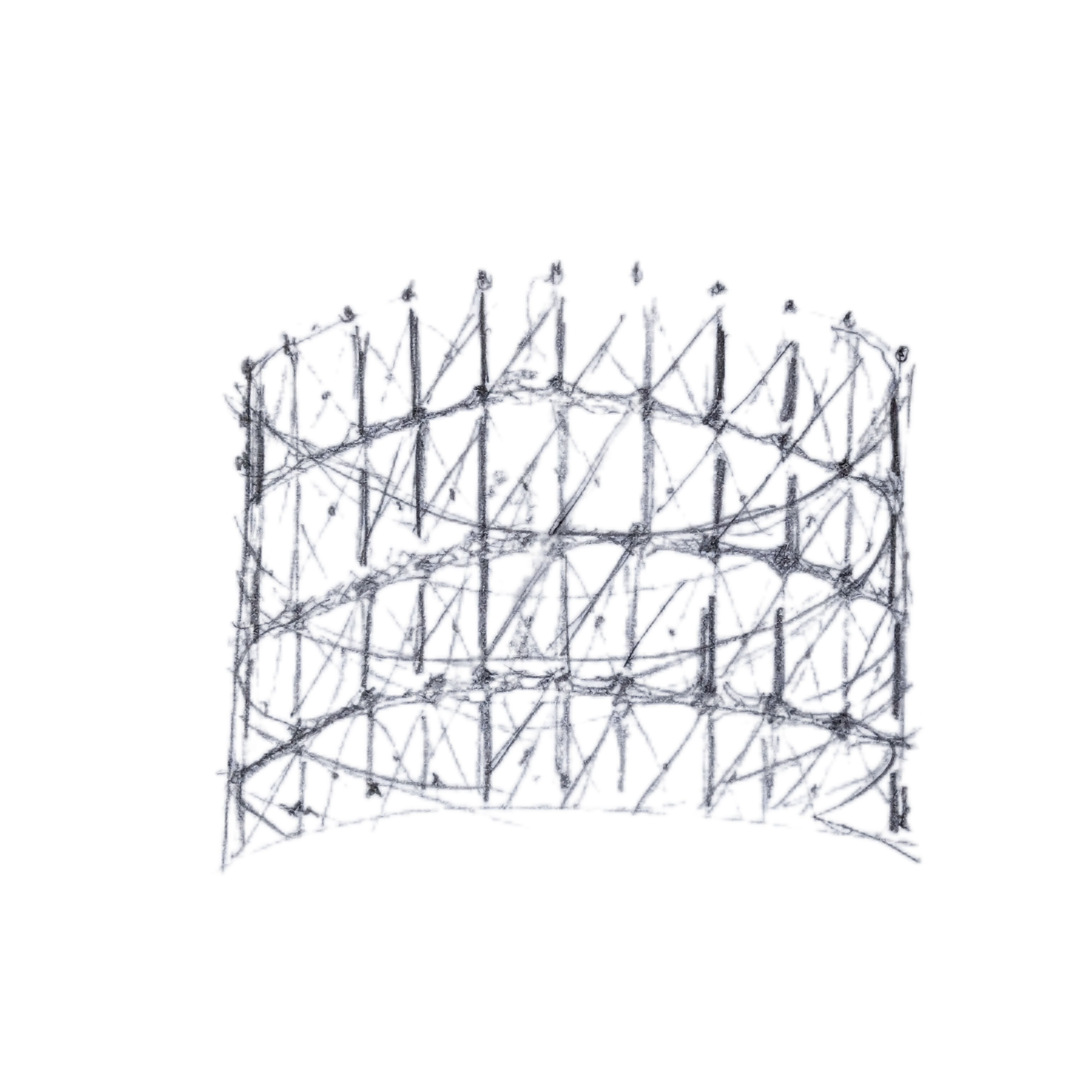
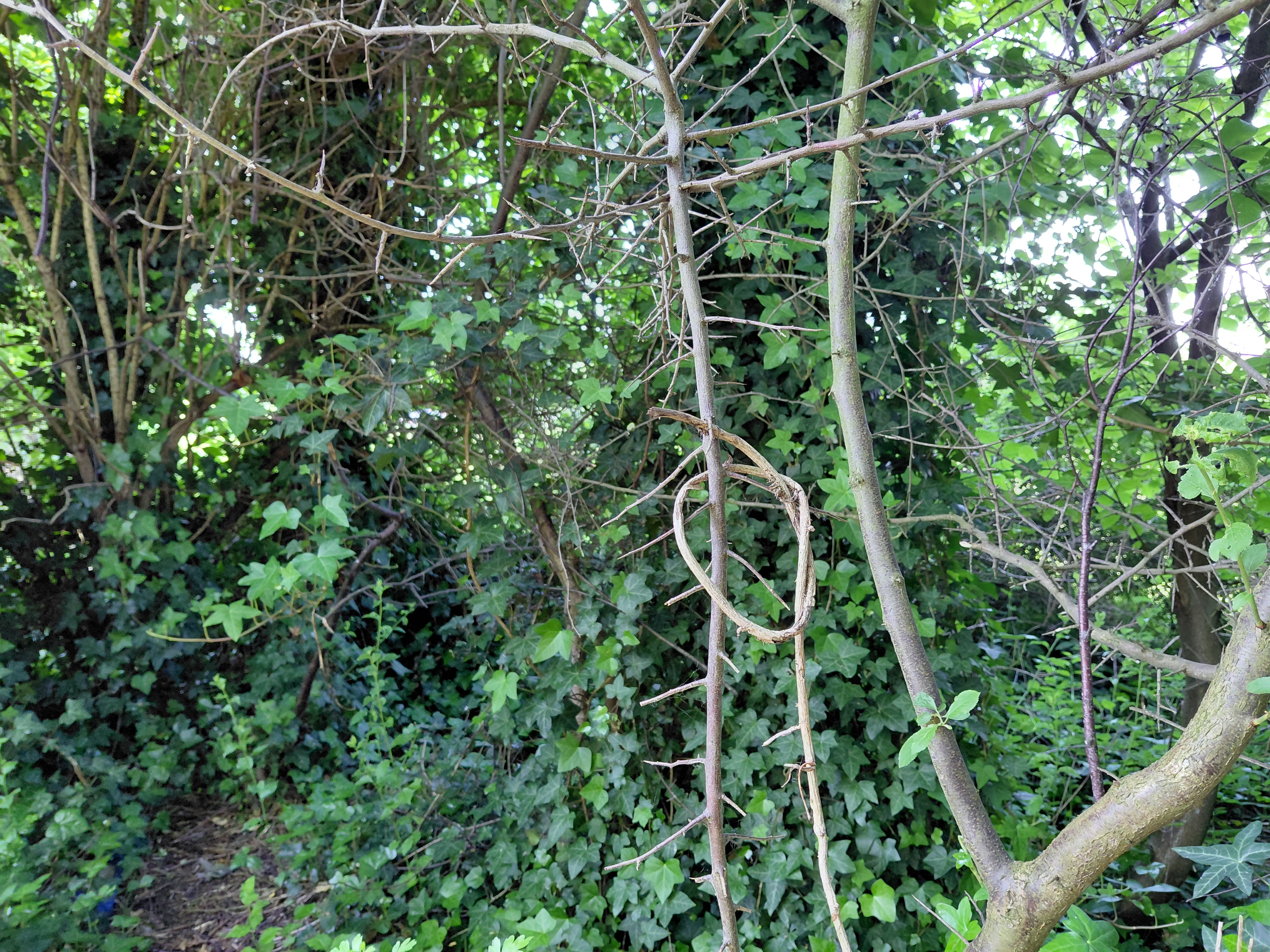
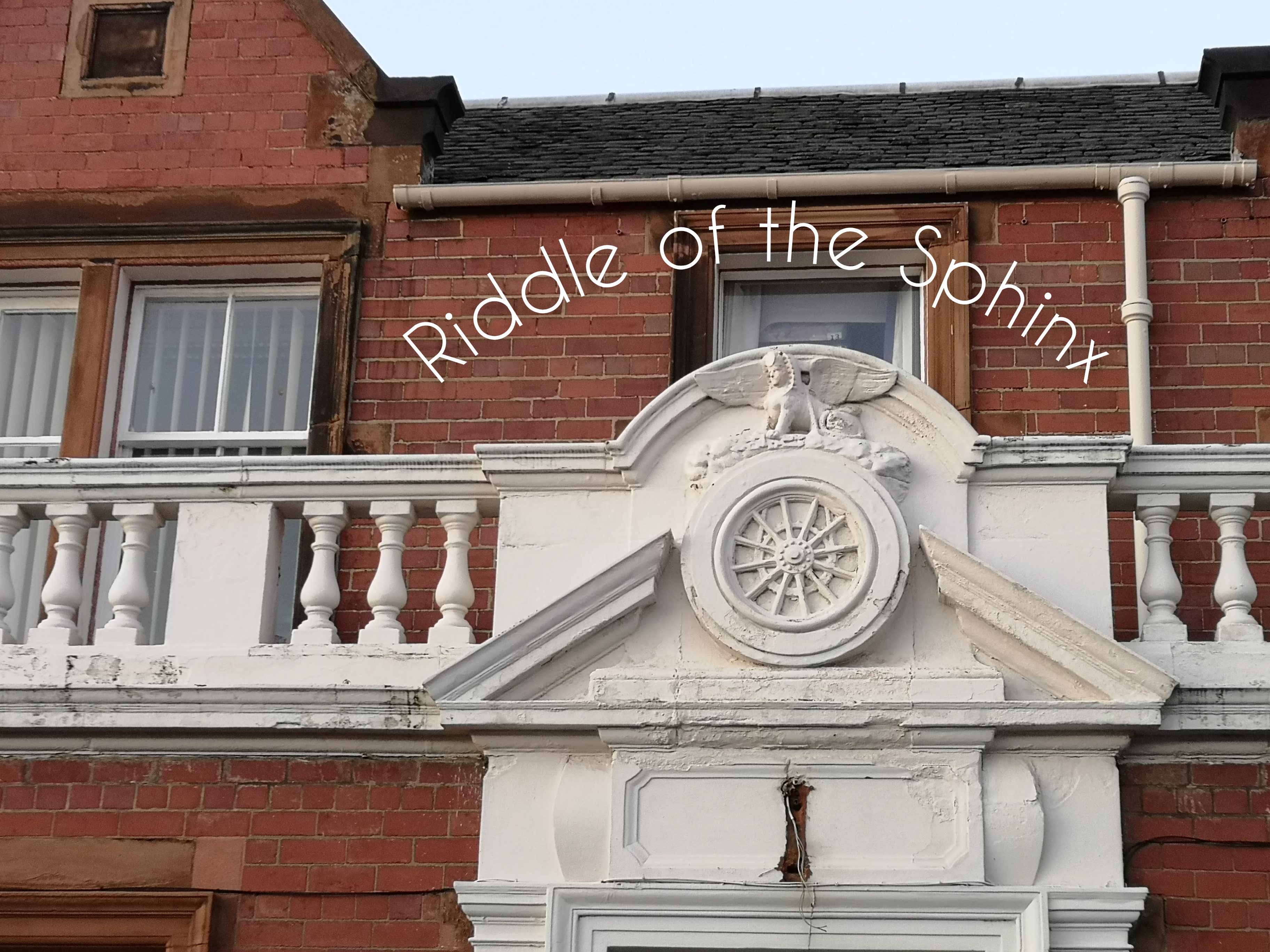
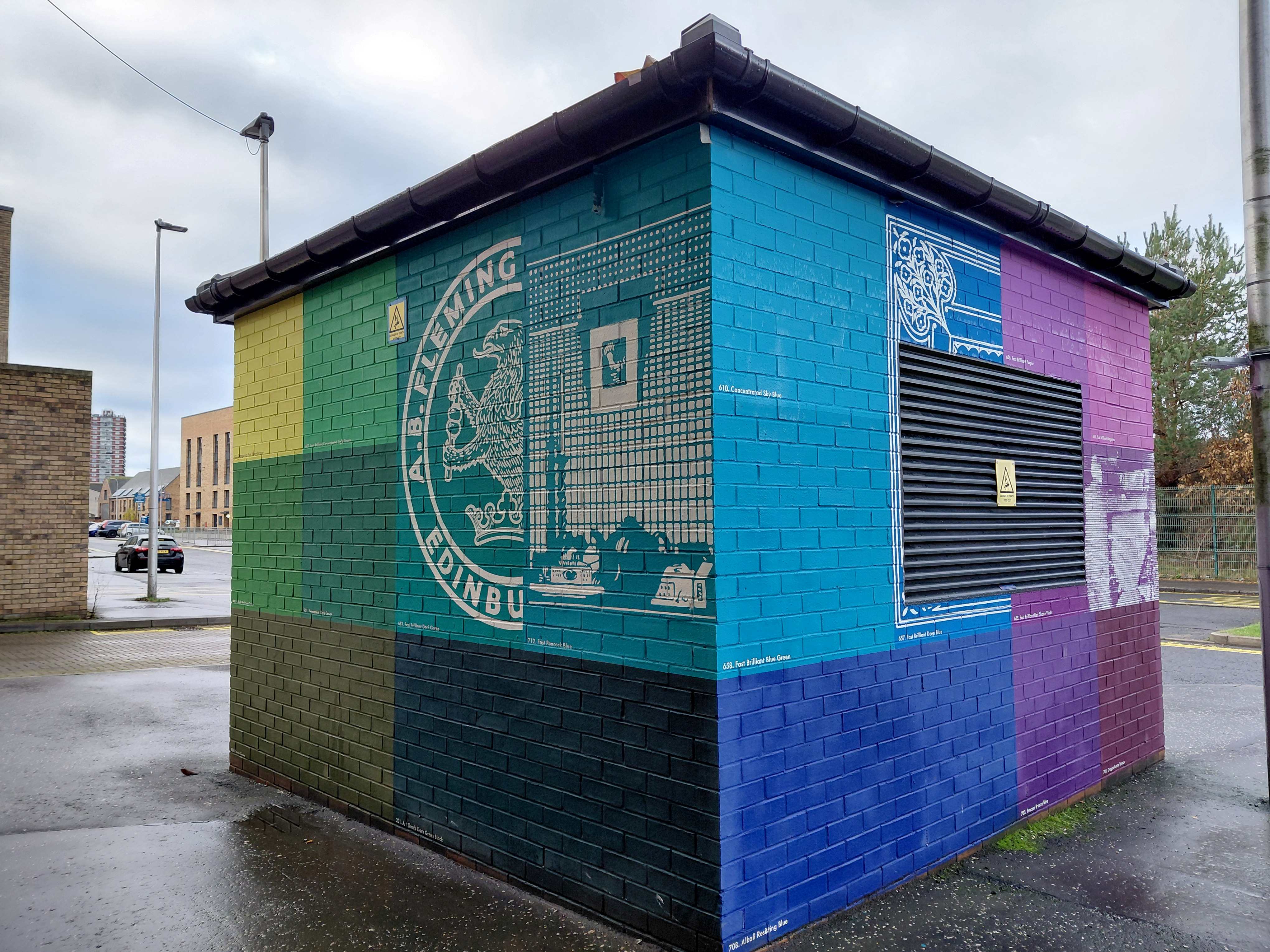
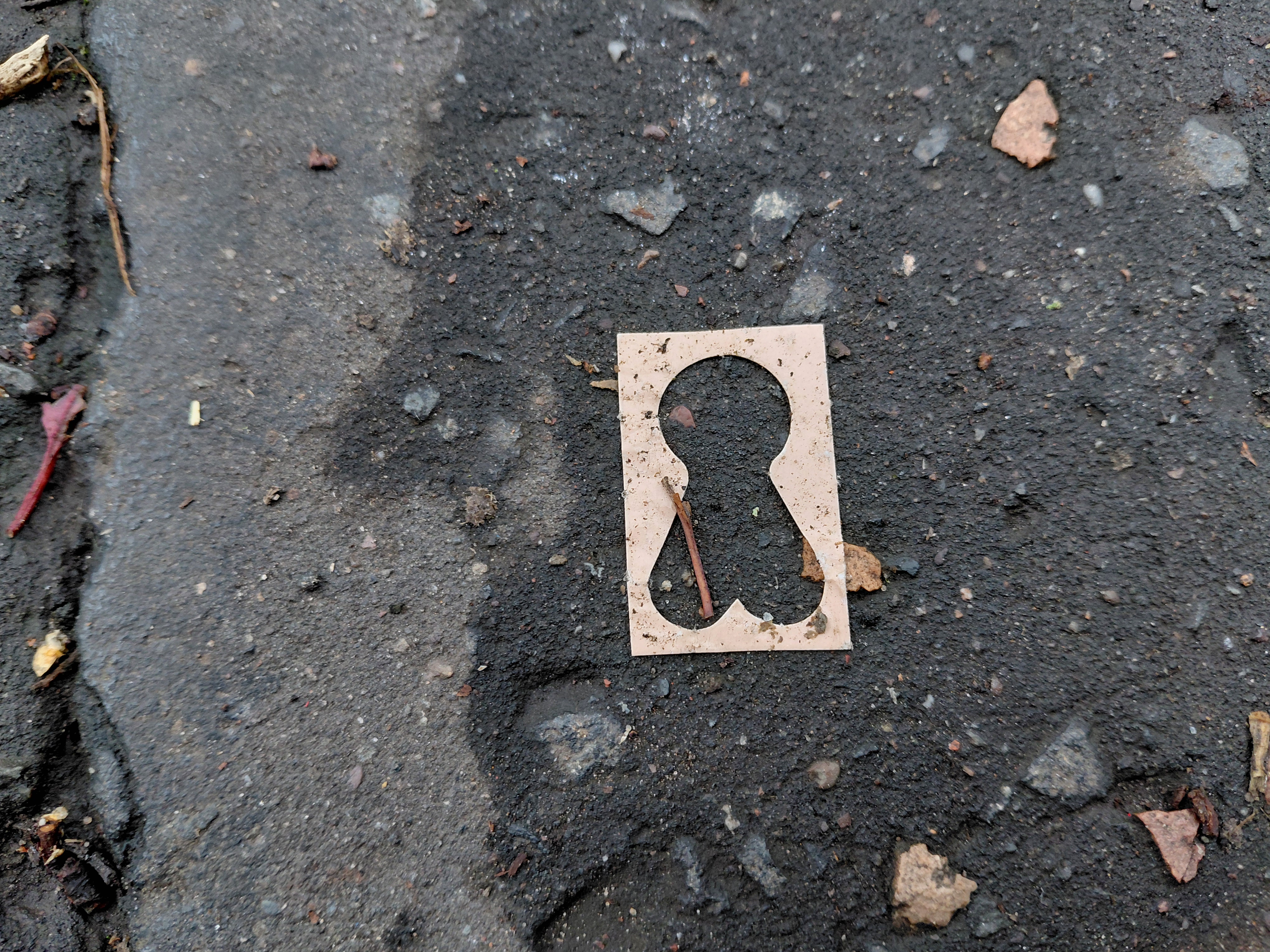
Local heritage site, the Granton Gastower; a tree knot found in the Granton Crescent Park (photograph for Deep Encounters); and the Madelvic sphinx: drawing and photographs taken during walks in the area and inspiration for the exhibition
‘Blended’ will be a Walking Art exhibition of mixed media work made in Granton, inspired by the local history of the area. It will include ‘The Granton Burn’ a stitched banner (currently hanging at Riddles Court), sculpture made using materials from the United Wire factory and found at Wardie Bay, and new textile works based on the Madelvic House sphinx. There will also be works on paper and video, including those made with my Walking in Pairs partner, Kristina Rothstein and for the Deep Encounters project spearheaded by Janette Kerr.
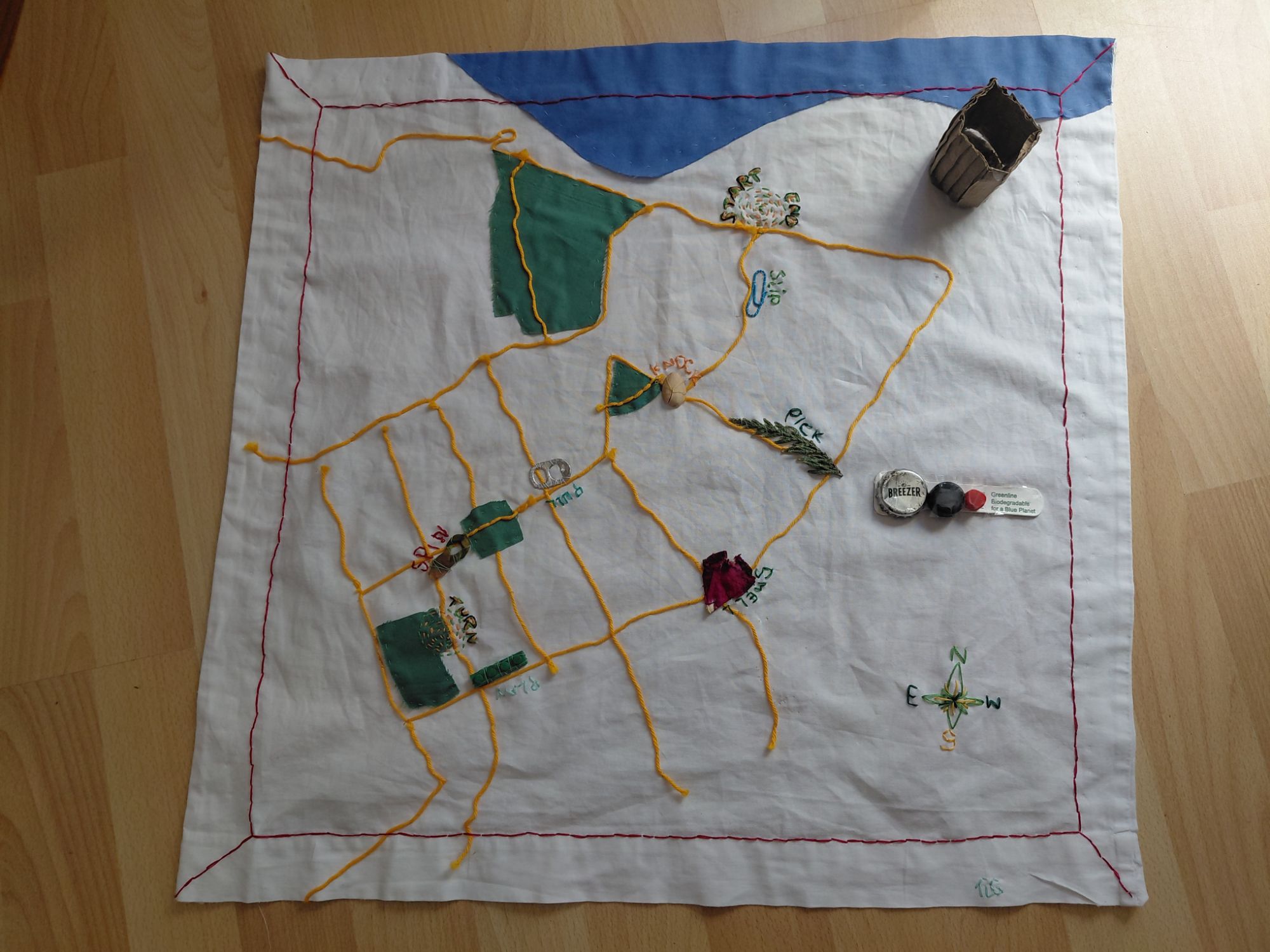
A Board Game made of a stitched map of the walks usingthread and found materials, with cup and counters. Jointly made by Tamsin Grainger and Kristina Rothstein and stimulated by a walk we took in June 2026. Kristina and I walked at the same time and with the same theme in mind, she in Canada and I in Edinburgh (in the rain)
Walking Art is made during or after a walk, and always prompted by the walking and the location where it happens. The medium of the work and the subject matter come from the walk and the beings / people / places I meet. I am fascinated by maps and the sense of belonging that walking gives me. With my feet on the ground and using all my senses, I allow my body’s movement and the surroundings to spark ideas.
The weekend begins with a Community Walk at 5pm on Friday 23rd October in Granton with a shared theme. This is free or by donation and you can book here.
There will be an indoor opening event directly after the walk at 6-8pm at the same venue with refreshments.
On Saturday and Sunday 24th and 25th October, the opening hours to wander through the exhibition will be 10am – 5pm. There will also be a pop-up shop. I hope to see you there.
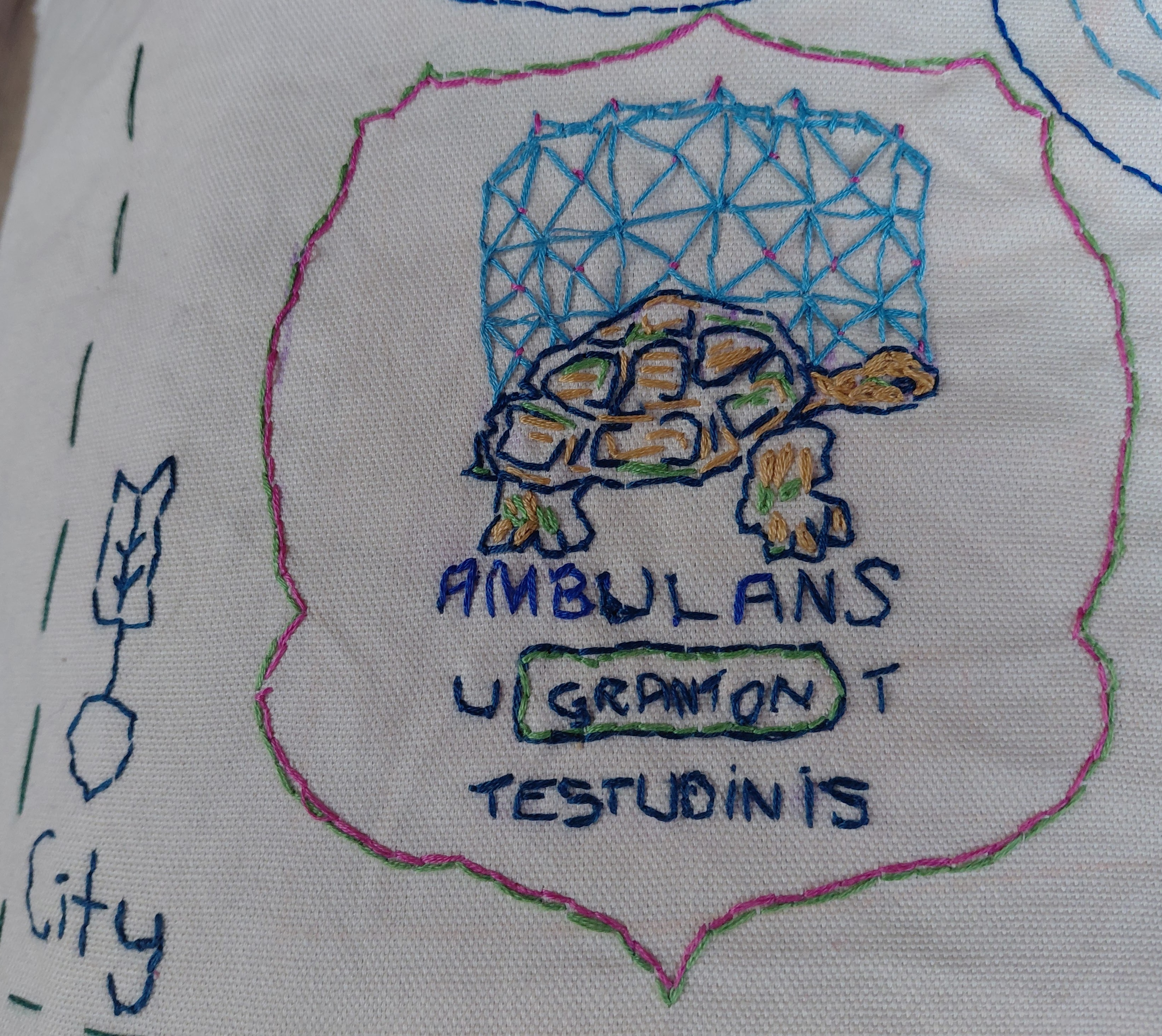
Walking Like a Tortoise, detail from The Granton Burn. Textile.
The Walk Club Edinburgh is a brand-new Edinburgh walking / wheeling club offering ambulatory meet-ups that focus on local history, art, and urban nature ~ with a twist ~
Our next walk
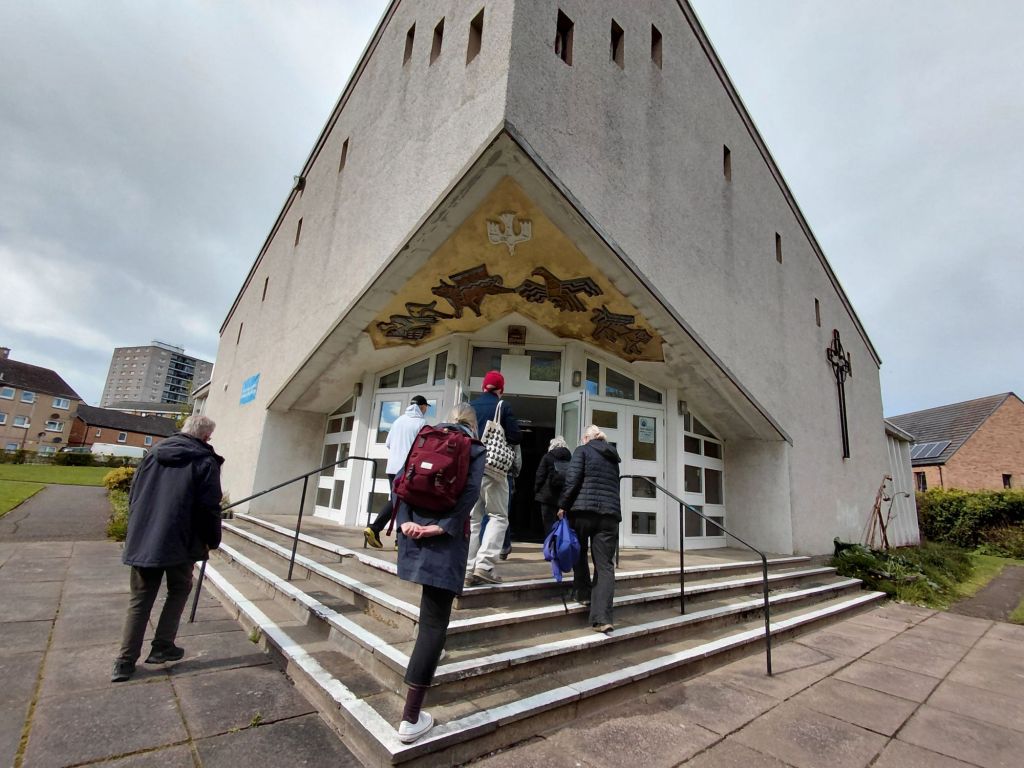
The Walk Club Edinburgh next walk will be on 23rd October at 5-6pm. (Please note that this is a different time from usual.) It will be a circular walk for one hour, leaving from Madelvic House (Granton:Hub) Granton Park Avenue, Edinburgh, EH5 1HS. Booking link here
It accompanies the art exhibition, Blended. All the art work came about as a result of walking and consists of mixed media art – wire sculpture, photography, and stitched textiles. There will also be a small pop-up shop. The exhibition opening event is immediately after the walk and you are invited to attend. Refreshments (alcoholic and non-alcoholic) will be provided.
A donation towards this event will be used to fund research and preparation time. Please note that even if free tickets are sold out, you will still be able to book a donation ticket.
The Walk Club Edinburgh – About
Each walk will have a theme and celebrate events such as the Festival of Terminalia, the Urban Tree Festival, May Day, and the Autumn Equinox. The events aim to be stimulating and the company friendly. Fresh air and gentle exercise are promised, whether you are on wheels or feet, and the Walk Club is open to everyone. Children and dogs are welcome (no membership fee for them!) The aim is to be accessible, inclusive, and flexible.
Moving slowly through the urban landscape allows for higher quality noticing and time to pay attention. Pauses are important so we can look, smell, and discover. We will embrace community, as well as silence and conversation.
Monthly walks around Edinburgh, often in less well-known areas Location: Each walk will be different Time: Sundays, 2-4pm, once a month Duration: Approximately two hours The walks will go ahead whatever the weather You are welcome to attend all or some of the walks as you wish
What will we do?
Meet-ups will involve:
Walking / wheeling
The opportunity to get to know one another
Local history, games, quiet meditative walking
Each one will be different in topic / theme. Just turn up. There is no need to tell me if you’re coming unless you would like to be certain that the walk will be possible for you.
Cost
For an annual membership fee of £10 (£5 concessions) you will receive a membership pack through the post (including a badge, welcome postcard, and the Walk Club membership card). You can make a donation per walk if you want – something like £5/£3 – no pressure.
Please note that at this time, you have various options in order to join The Walk Club:
Download the form by clicking the button above and print it out in order to fill it in. Then upload it and return it to me
If you have a programme on your phone / computer that will allow you to fill in a pdf on screen, then you can miss out the print-out part and simply click on the button above, fill it in and email it to me
You can email me now and I will send you the membership form.
My email is tamsinlgrainger@gmail.com and once I have your form and annual membership fee, I will send out your membership pack.
The first Walk Club event
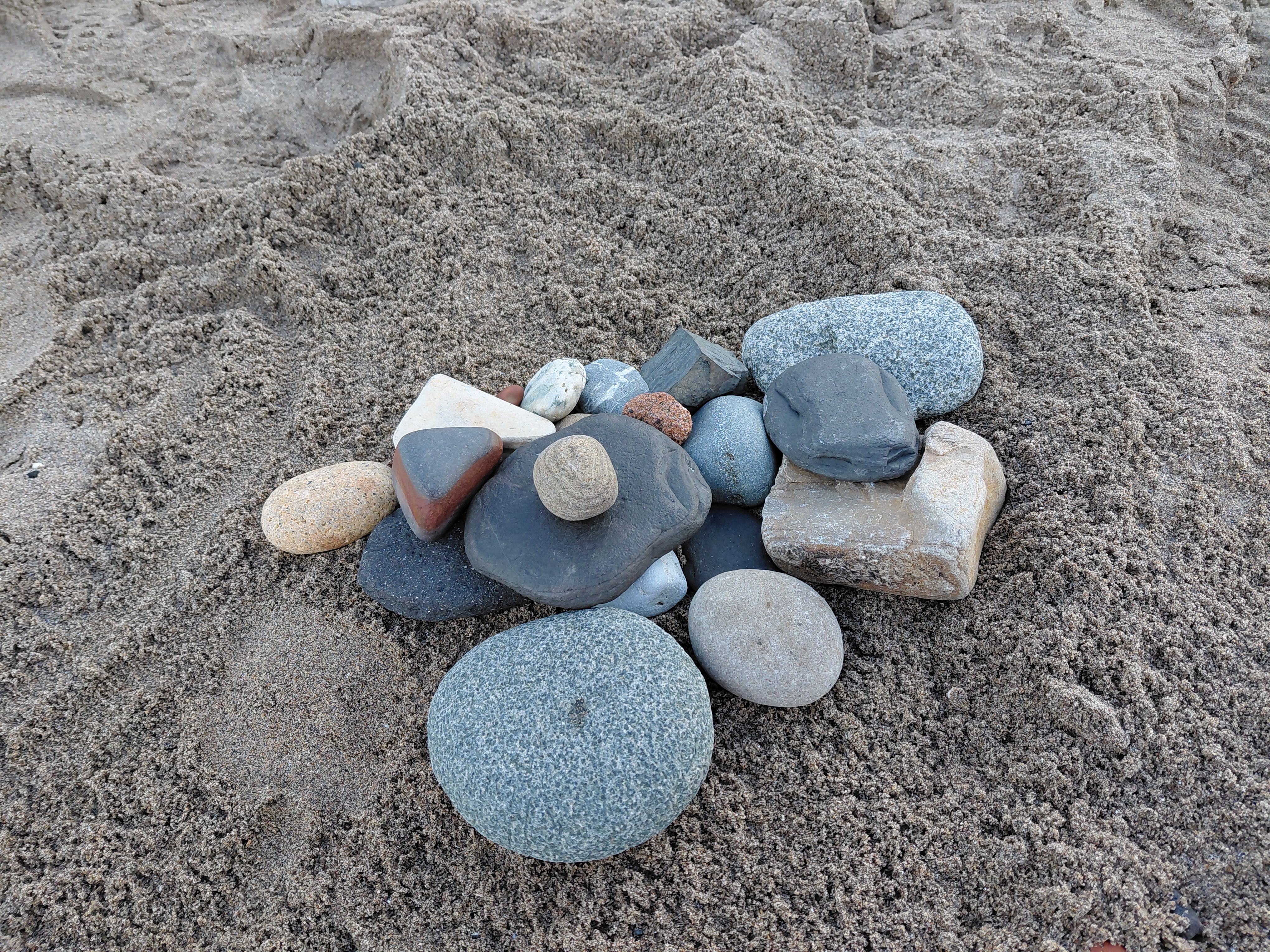
The first walk was on the Saturday 21st February celebrating the Festival of Terminalia: Rock On!
We collected stones at Wardie Bay and walked them past rock music studios to Granton ‘the Brick’ Beach and made a cairn
Other walks
Since then, we have met monthly and here are some of the walks we have been on together:
On August 22nd, we walked the Linen Way in Bonnington and surrounds. It was a community walk around the Bonnington area of Edinburgh with local history, nature and art.
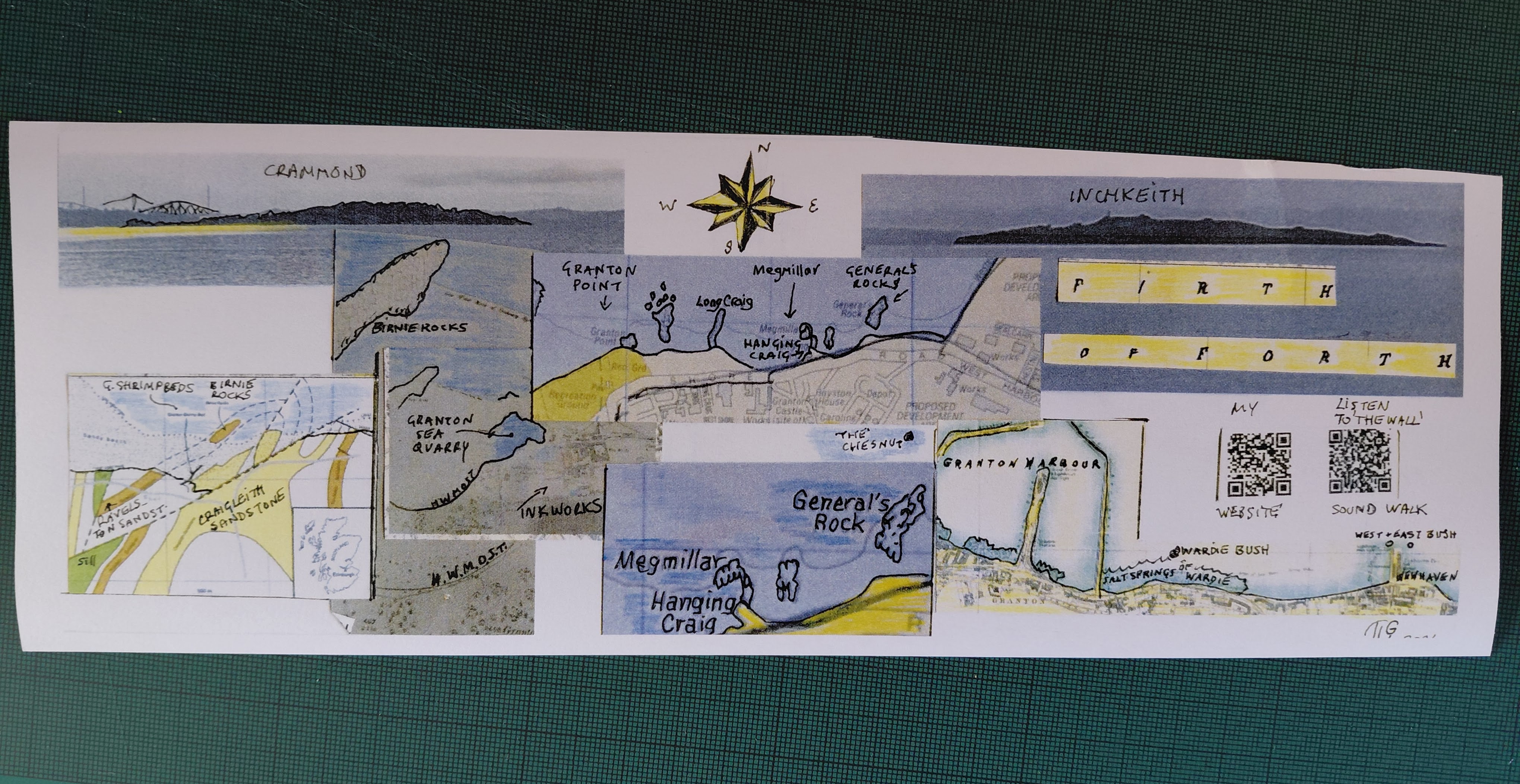
Composite image of sites of interest around Bonnington, Edinburgh
We visited sites of mills (including the early Chancelot Mill), cottages of the linen and wool workers (with some information about shrouds), the areas known as Bonnytoun and Bonnyhaugh. And we looked into the origins of local street names such as Mill Lade, locate the site of St Cuthbert’s Well, and take in the Water of Leith where women bleached the linen.
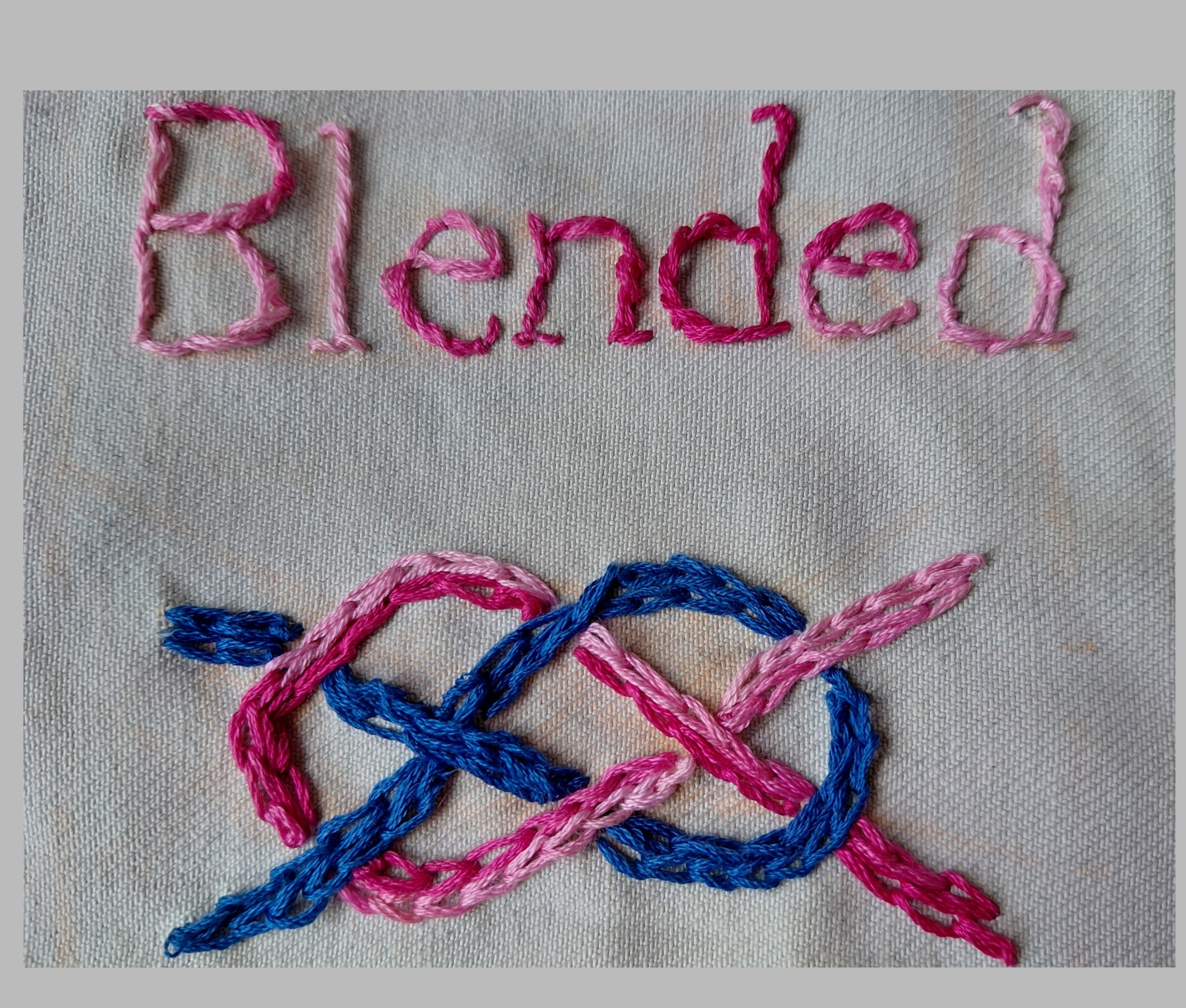
Knots, a community walk for all the family was on Saturday 26th September as part of the Granton:hub / Madelvic House Doors Open Day.
We walked, played, and did an art activity, as well as learning about nature. This event was concerned with the Harbour / fishing, and United Wire, both historical and contemporary industries. We learned a basic knot, and made a joint artwork. It started at the Granton Hub / Madelvic House.
We have also walked around Western Harbour:
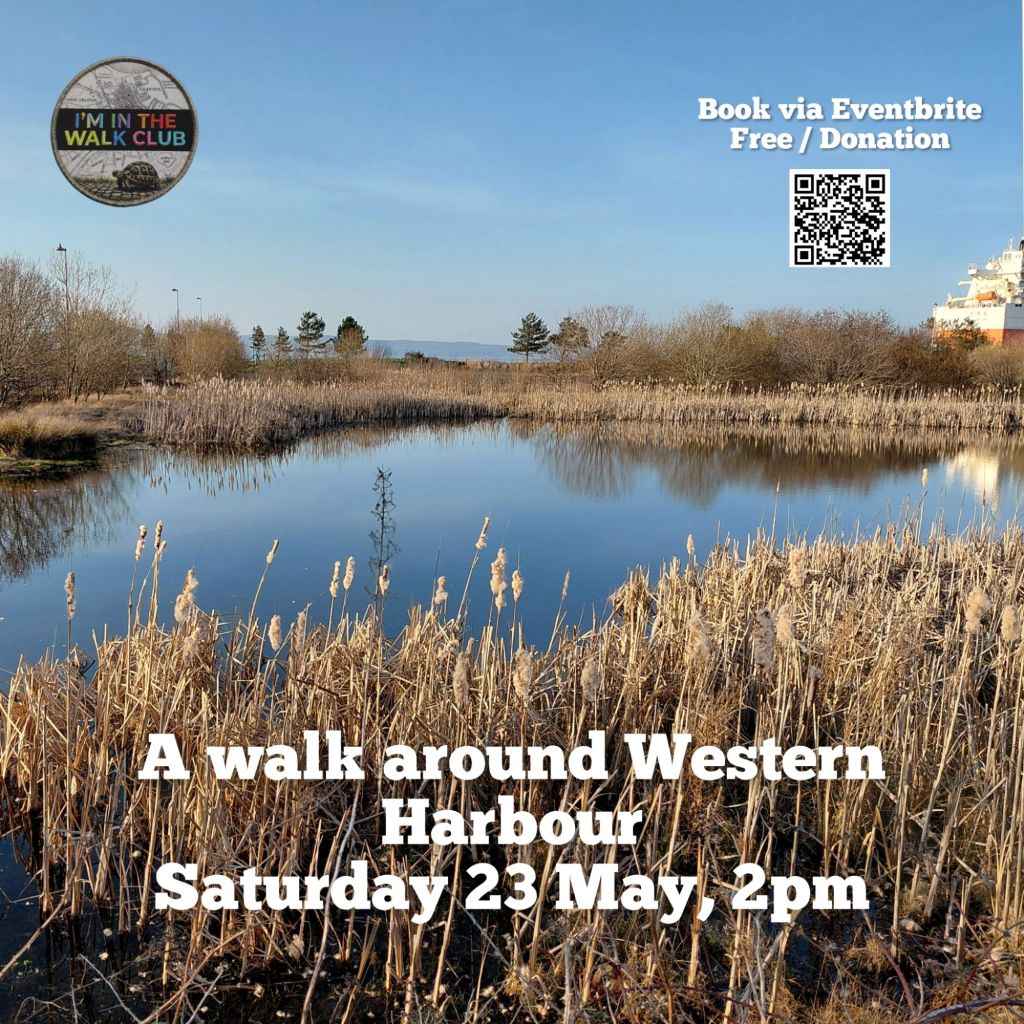
Saturday 23rd May, 2-4pm. There was local history, information about the campaign to save the ponds, the wind/alternative energy structures, art, and local stories. We had an optional cafe visit at 1pm (The Haven, 9 Anchorfield, Newhaven, Edinburgh EH6 4JG). It was, as ever, open to everyone.
There have also been Walking with Children and Families events, Granton Hub activities
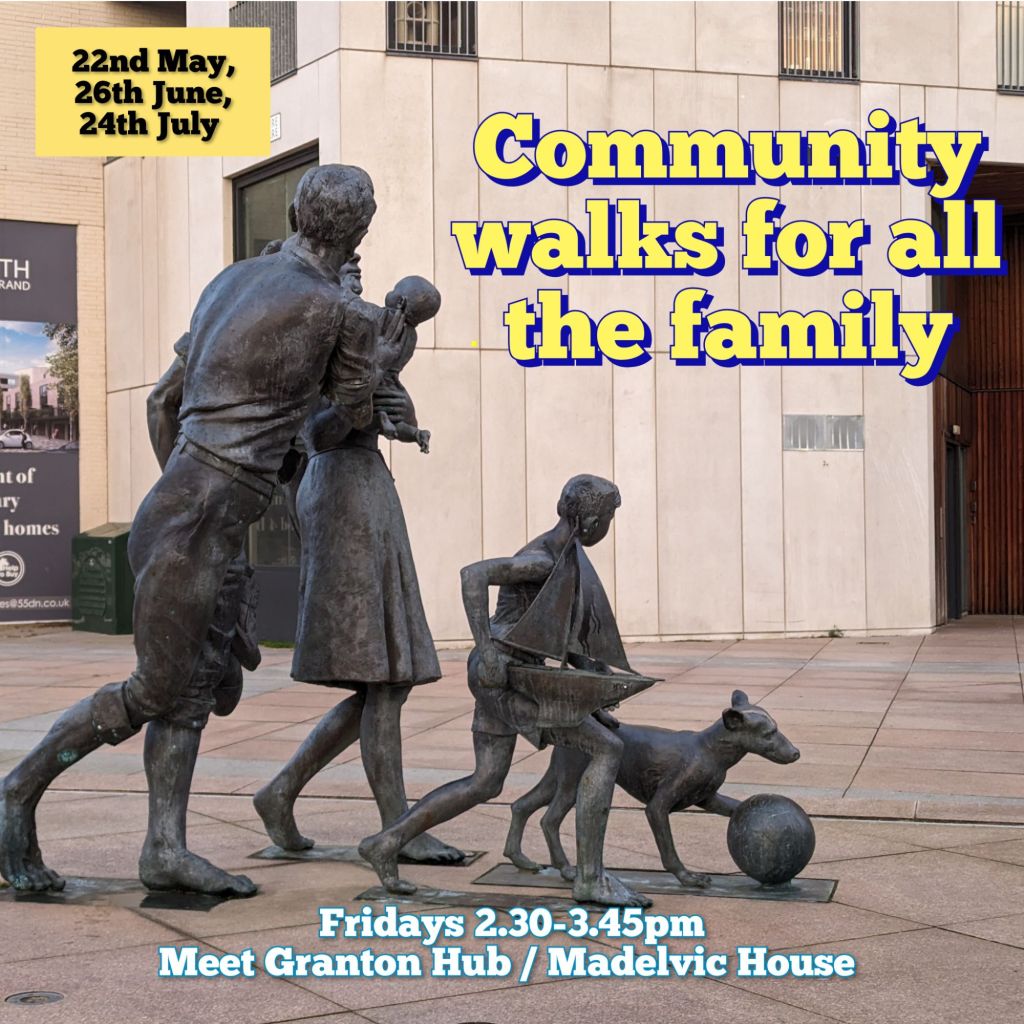
These were community walks for all the family on Friday afternoons, and started on 22nd May. We walked, played, did an art activity related to local history, and learned about nature too.
Walking the Pennywell Labyrinth
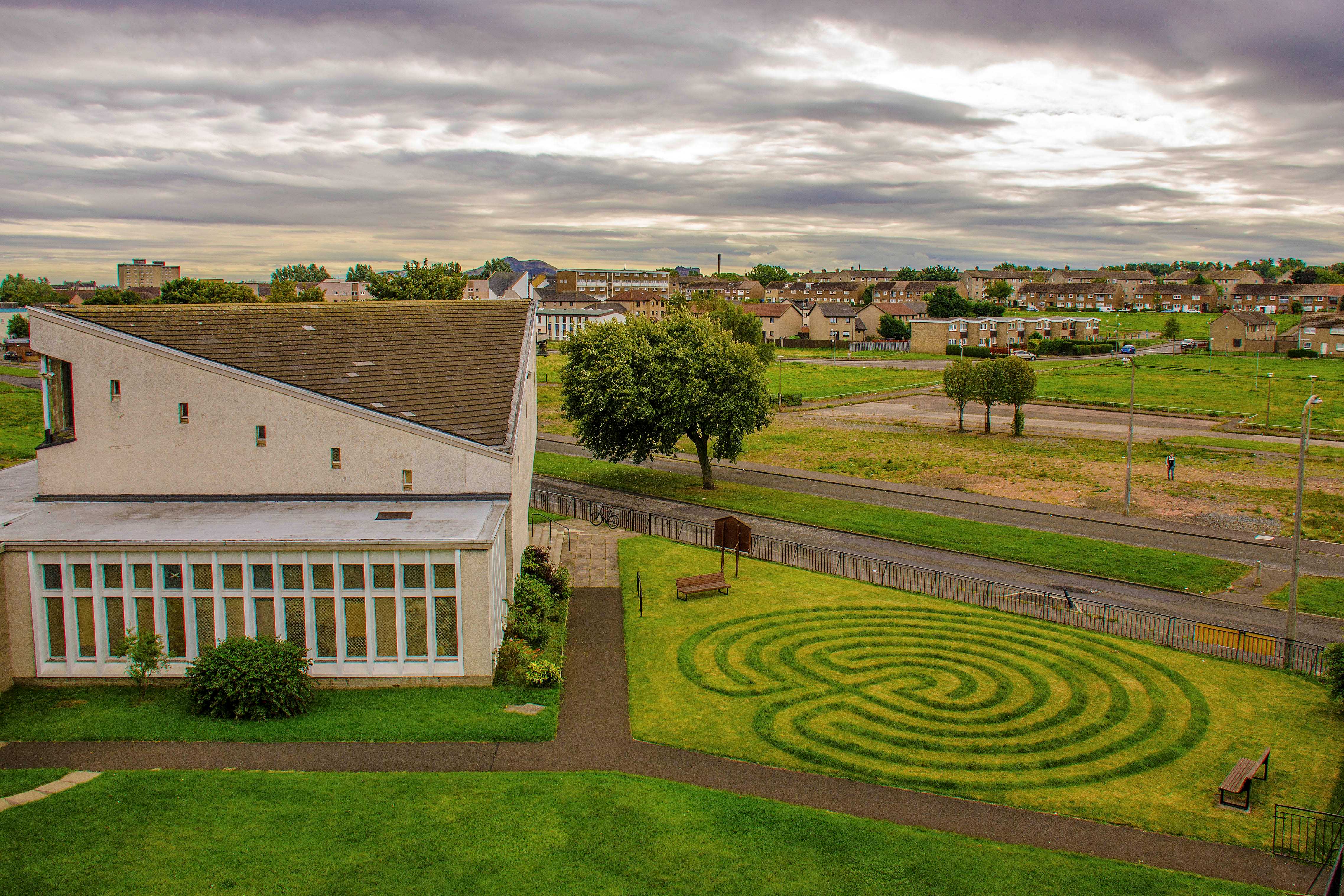
Another walk took in the Pennywell Labyrinth. It was in April 2026and we met at North Edinburgh Arts (2pm – 4pm). It was a there-and-back walk, and the labyrinth was designed by Natalie Taylor.
One (Sunday 22nd March) marked the Spring Equinox and visited the Pennywell Arts and Heritage Trail murals in North Edinburgh. The artwork below is by Fraser Gray and the walk was led by me, Tamsin Grainger, with local history, stories, art chat and discussion. All ages were welcome, and it was foot, wheel and paw friendly.
Mural by Fraser Gray, part of the Pennywell Arts and Heritage Trail
More information on the North Edinburgh Arts Trail
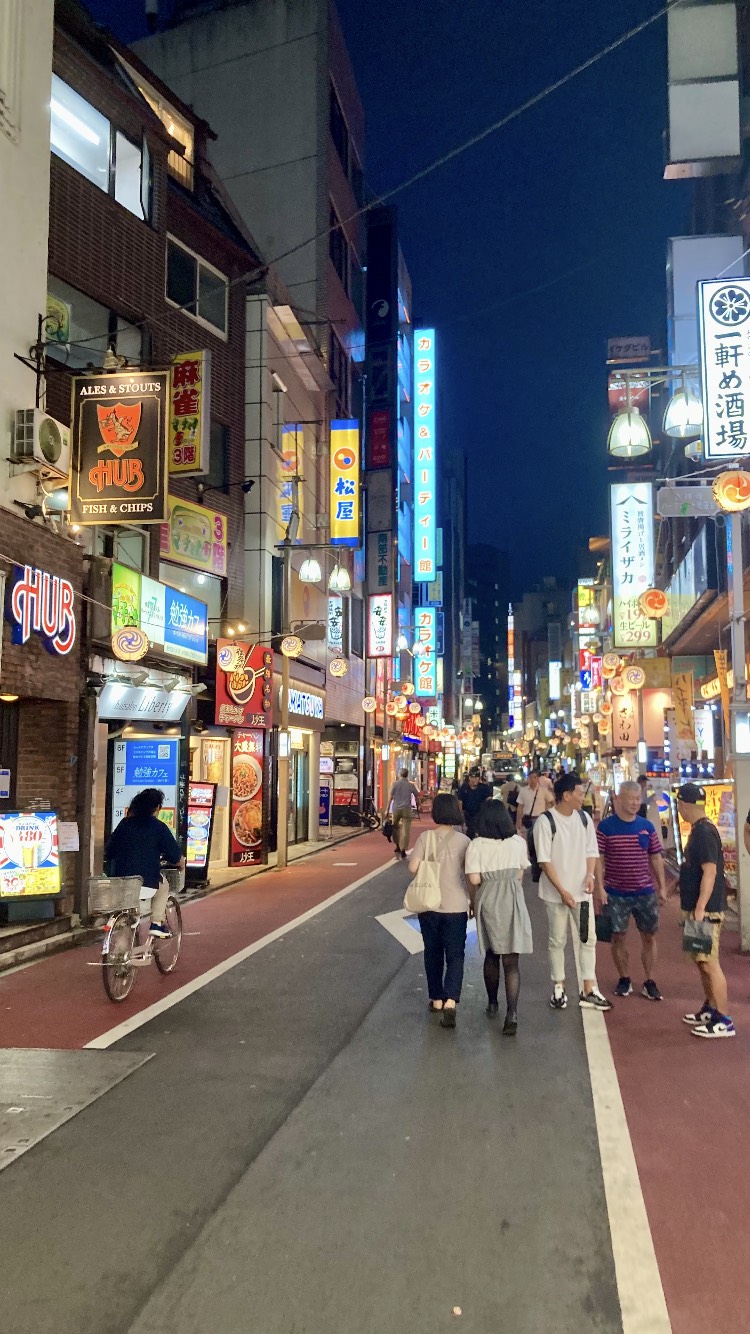
For our second walk together-apart, Kristina Rothstein and I walked in Tokyo, Japan and Edinburgh, Scotland respectively. 2nd October 2025. The agreed location was the city, and coordinated stops were scheduled for the beginning, middle and end. We were looking for found words to make into a poem.
TokyoLeith, Edinburgh
Kristina’s walk
The walk started at 7pm Tokyo time, on the last night of my three and half week trip to Japan. Japan does not use daylight savings time, so it was completely dark. It was a clear night with a half moon. I started my walk at Luke Jerram’s “Museum of the Moon” installation at the Shimokitazawa Moon Festival, located at the Shimokita Senrogai Open Space. Shimokitazawa is a hip neighbourhood on the west side of Tokyo with lots of small independent shops, cafes and bars and very narrow, vibrant streets. I have only spent 10 days there but it is the distract of Tokyo that I know best.
There were many young, excited visitors to the moon installation, taking selfies and buying snacks. I did not plan a route, but a general circuit. I walked along a greenway for 5-10 minutes, which is lit and moderately travelled. After that I headed into residential streets. In sharp contrast, almost all were completely deserted, even at this relatively early hour. Tokyo’s narrow residential streets discourage traffic, so I saw no cars and only a few pedestrians. I passed a few bikes and one cat. I heard many chirping insects as if in the countryside. I crossed several level crossings. Some streets continued in a long straight line, but most were on an irregular grid. After over half an hour weaving through these quiet backstreets, I emerged back to the bright streets of convenience stores, restaurants, apartment buildings, hair salons, and grocery stores.
The sensation of the walk was strange. To wander with no destination in the evening in an unknown city was unusual for me. While on busy streets I observed people from more of a distance than I usually might. It was also odd to be on such quiet residential streets when I was not walking to one of those residences.
I imagined Tamsin in a part of Edinburgh that perhaps she didn’t visit often or didn’t know as well as other parts, seeing streets as if a foreigner. I felt a sense of many more residents walking those backstreets, an urban bustling that was perhaps more evenly spread out than what I experienced. I imagined the shift from moonlight to daylight and back. In this unfamiliar setting I found it a bit easier to receive impressions and ideas than to transmit my own, though I certainly tried.
Kristina’s poem
Moooooooon Light and bright, it hypnotizes and drags crowds to its orbit, hands rearranged to hold the moon up in the sky
Mushi mushi, Japanese kitty! Oh you are a shy kitty. Off on your Night business my friend. I love you. Sayonara.
“I have no idea who James is. And now it’s available. awesome!” Siren-like tones ring Ding ding ding ding at Level crossings clang clang every three minutes. Dog walk bark
Then. So quiet Leaves whisper and the chirp of crickets Chirp chirp chirp sussuration, or stridulation words I just learned One of my favourite sounds to sleep to
Is everyone tucked away at home or are they out on the town, eating drinking fun in a Myriad of tiny spaces where you can get a fresh botanical soda or an experimental music tape or Ramen handcrafted by a man who lives upstairs or take a selfie in front of the moon projection
“You really feel like you’re somewhere different”
Play table tennis Recipe shimokita Caution crows Underground rock Café stories
Just One Cat Up To Per Person
DING DING DING DING
Prohibitions and manners around Shimokitazawa Station: No smoking No littering No graffiti No street vending No parking No skateboarding No nuisance
“And so many even, oh!”
bird song or the hum of an air conditioner or the whistle of an exhaust pipe or a tiny delivery van, the silence of headphones.
Clang. Chirp.
And now it’s available. awesome!
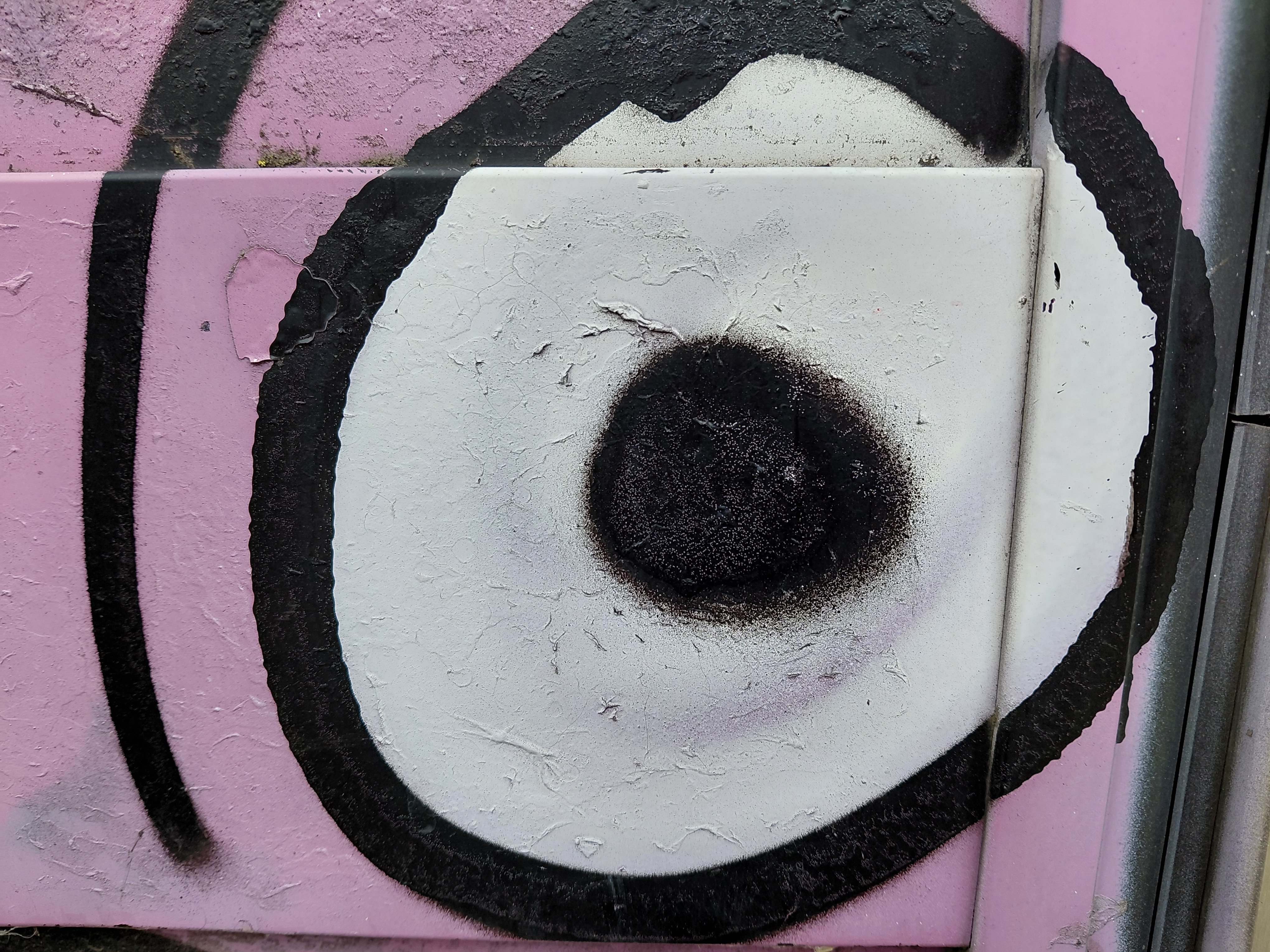
Three images above by Tamsin: U or a smile; hoolet’s eye; Laverock – skylark
Tamsin’s walk (parts 2 and 3)
11.30am
///galaxy.belong.eating *
U (or is it a smile?)  And me walking. T’wit t’woo Owl - hoolet in Scots. Circular O, eyes seeing, not in the dark, but across space, from Scotland to Japan, Tokyo to Edinburgh. You to me to you. And back again. Up a long straight street, I turn left and head into a busier area. South Laverock Avenue – Laverock being Scots for skylark - the birds are not heard here nowadays, nor, I suppose, where you are in downtown Tokyo. In the past, though, it used to be a favoured spot for larks, so an 18th c merchant named his house after them and now there’s a whole area called Laverock this and that. Like the lark singing and spiralling up high, I’m signalling to you, seeing if your thoughts are uppermost so I can detect them, looking, linking up these two walks with our feet, time, and intent.
Three images above by Tamsin: MAN; mans profile; SWALK (sealed with a loving kiss)

12 noon
///roofs.asking.sulk
White ring with a black centre and an arc to its left. Second silhouette of a male head in profile (previously, MAN on the front of a car in strong, square, manly letters with a roaring lion logo, in case we don’t get the picture). I'm on a busy shopping street with lots of cars and outlets. The next shop flirts with me: ‘Hello Gorgeous’. Walk In, the hair salon says, but I don’t. I’m headed to a café: Sketchy Beats (you started at one in Japan, I’m ending at this one) arriving at 12.05. It was shut.

A little further down the road a shop read, ‘Tokyo’.
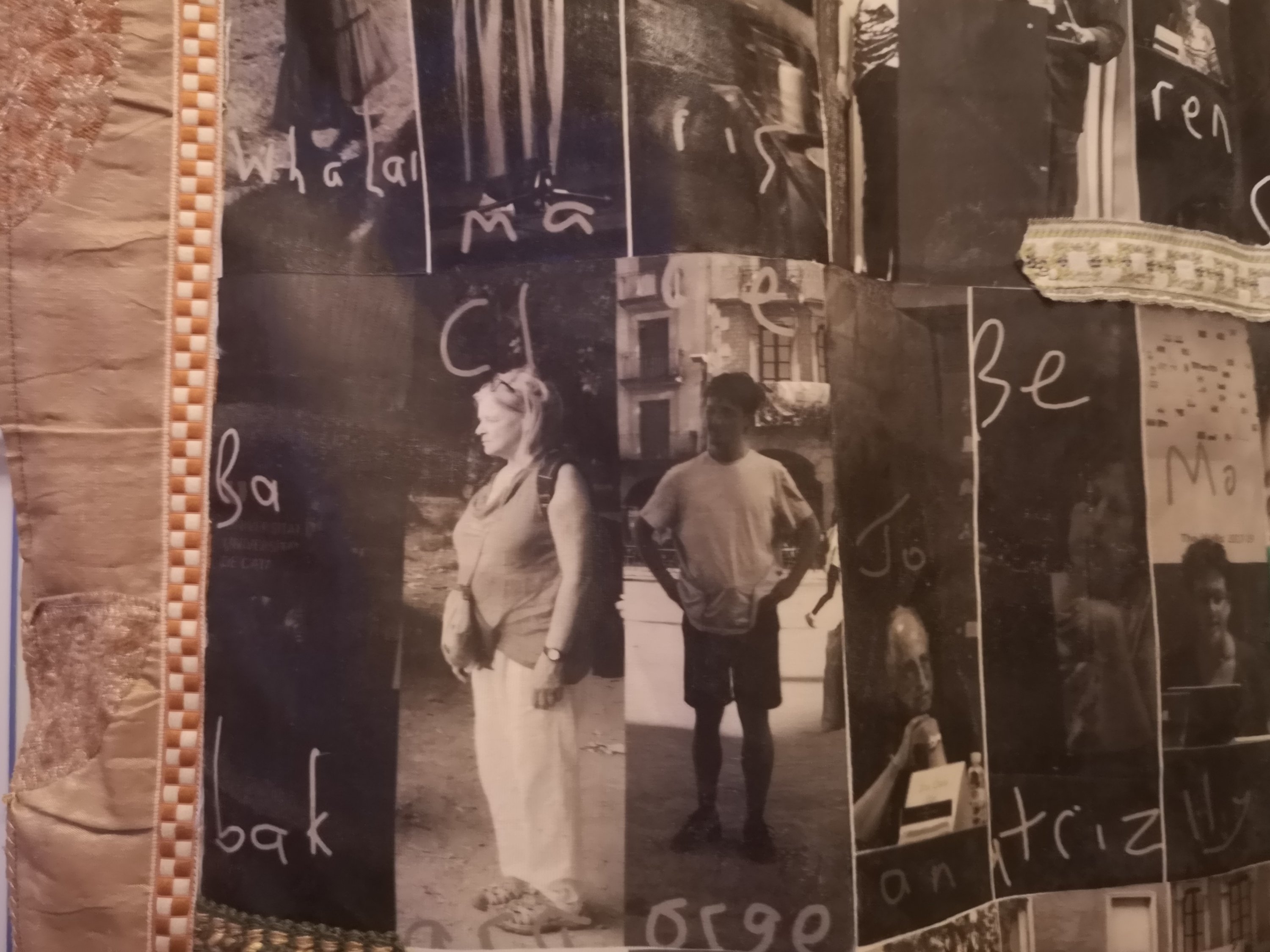
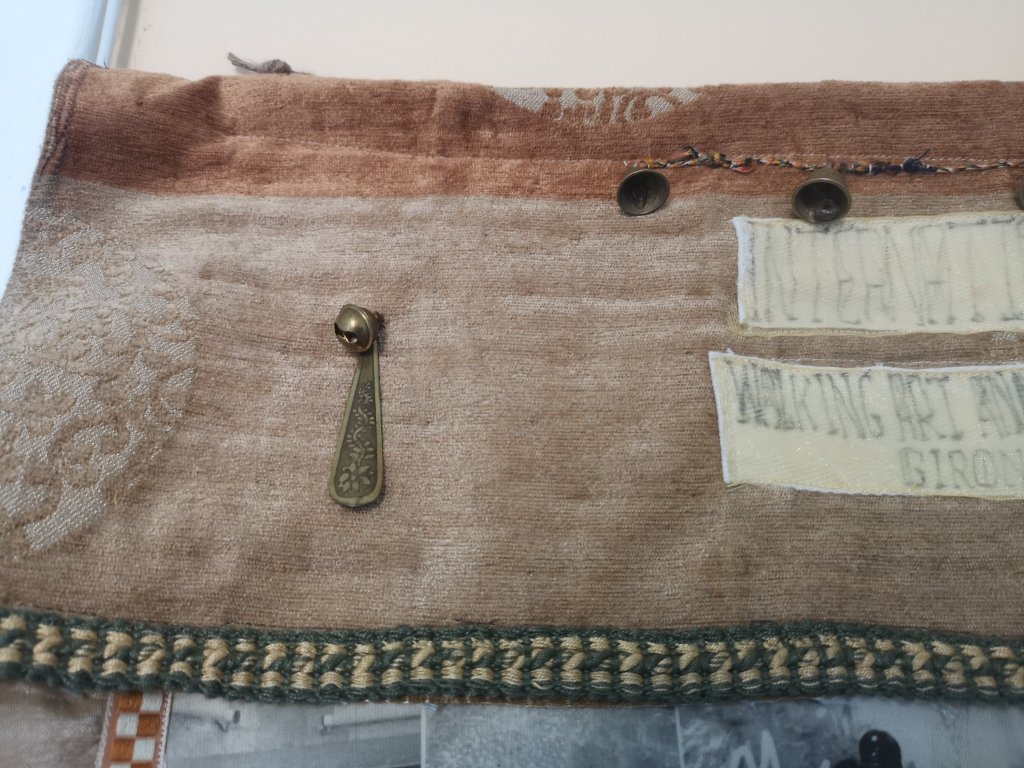
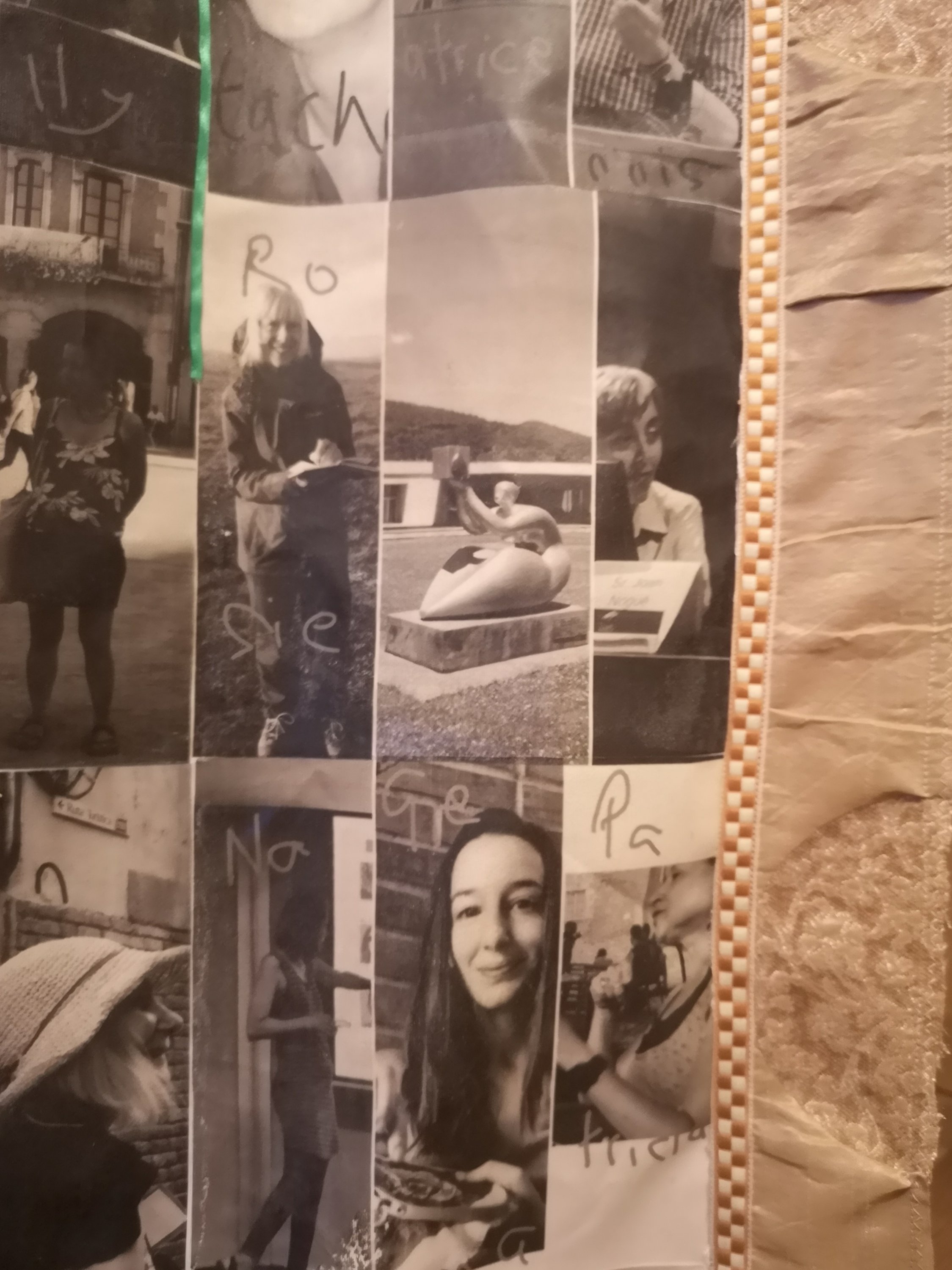
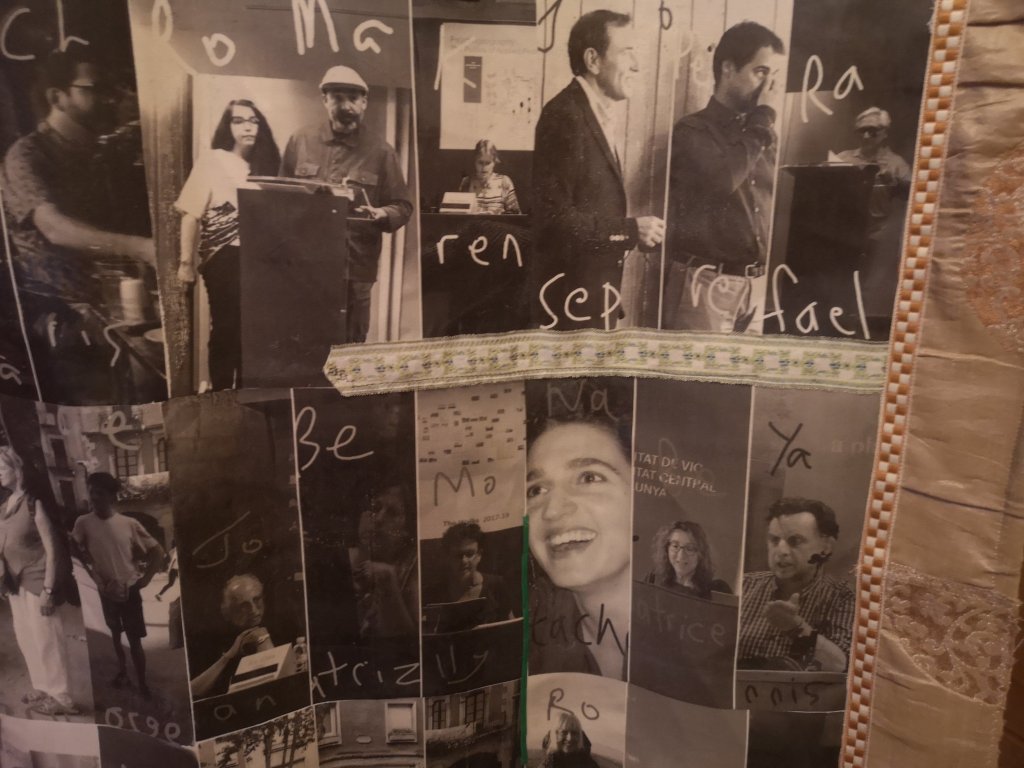
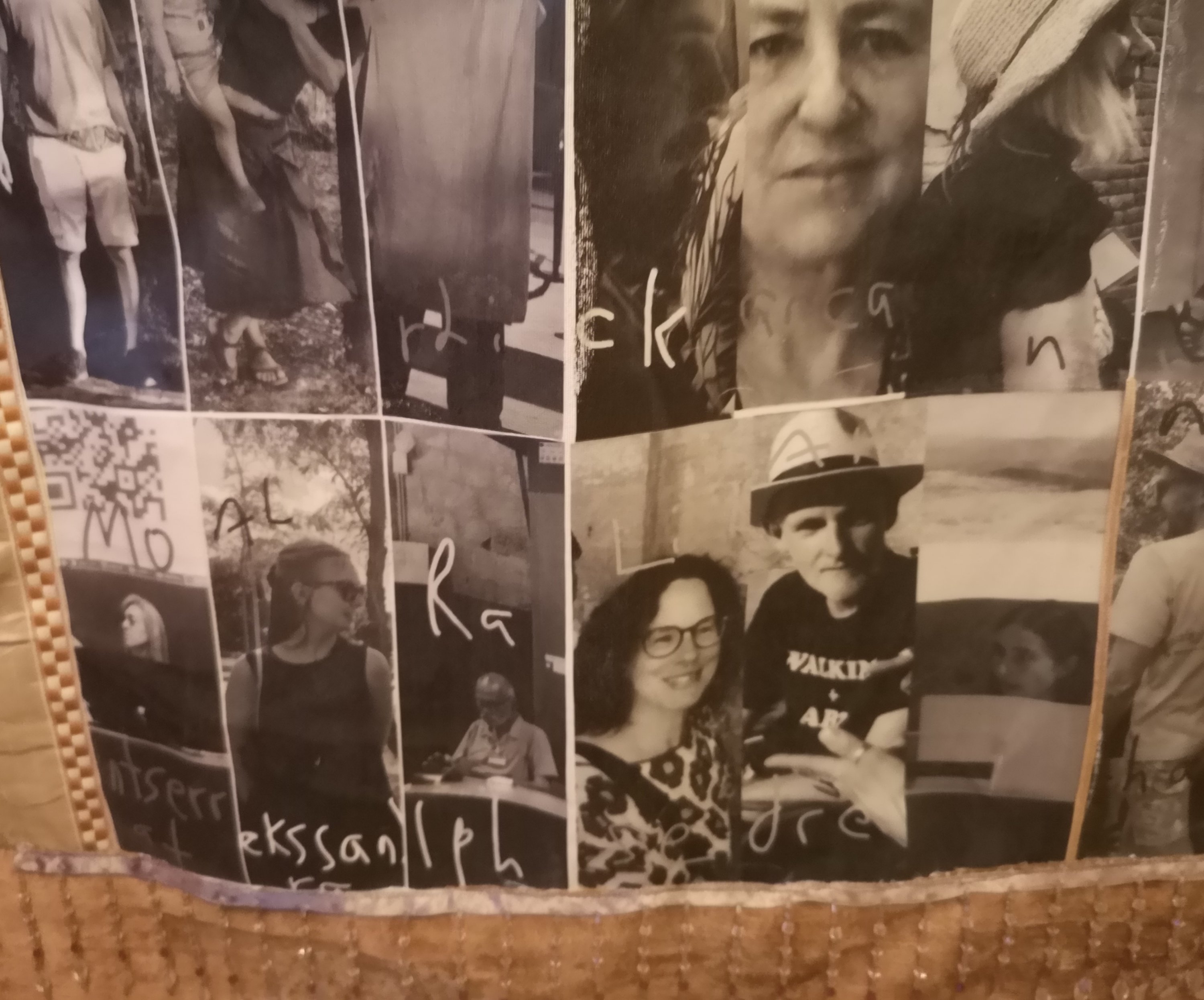
Part of the Separation and Unity Project, Cataluña, July 2022
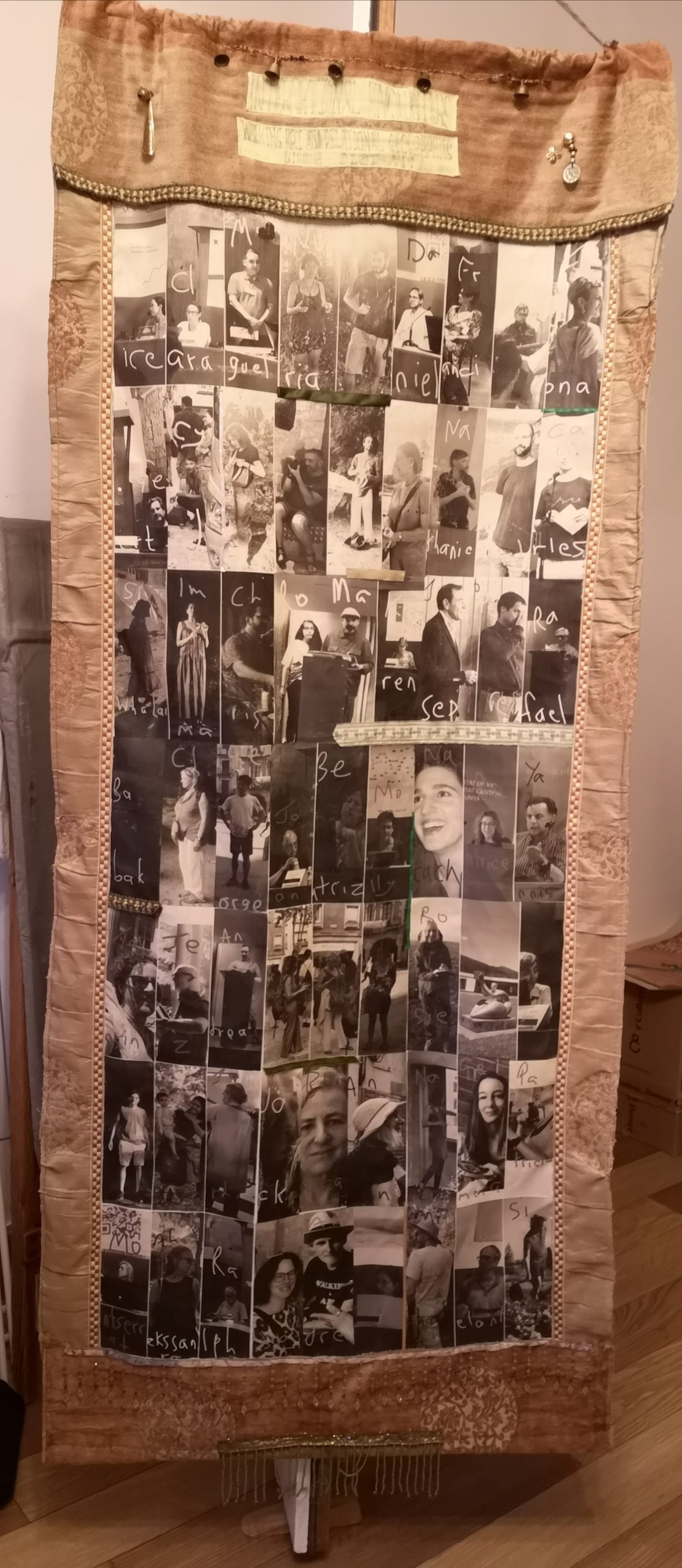
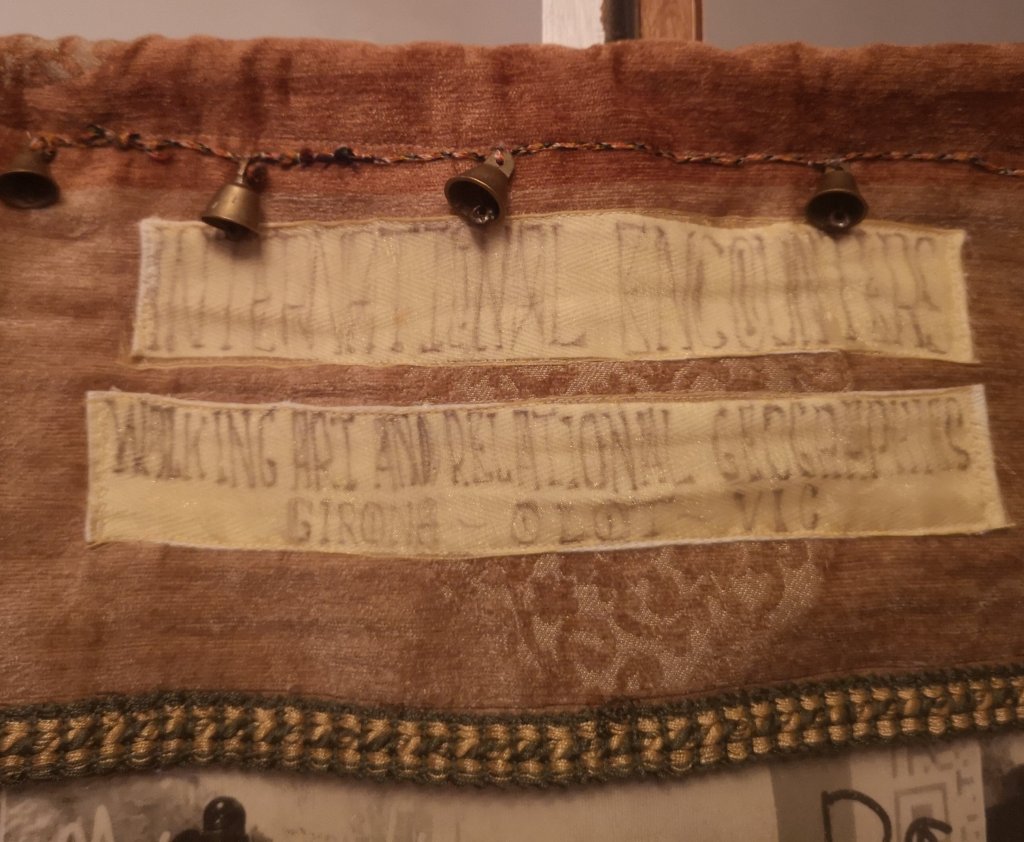
This wall hanging, ‘Festivities and Delegates’ represents an act of unity, the bringing together of many of those who attended the Walking Art and Relational Geographies International Encounters conference in Cataluna in July 2022. Planned for several years, but thwarted by the pandemic, delegates were at last able to travel from Australia, South Africa, Brazil, America and Europe to the conference in Girona, Olot, and Vic to share walking art and community projects via presentations and walkshops over a period of a week.
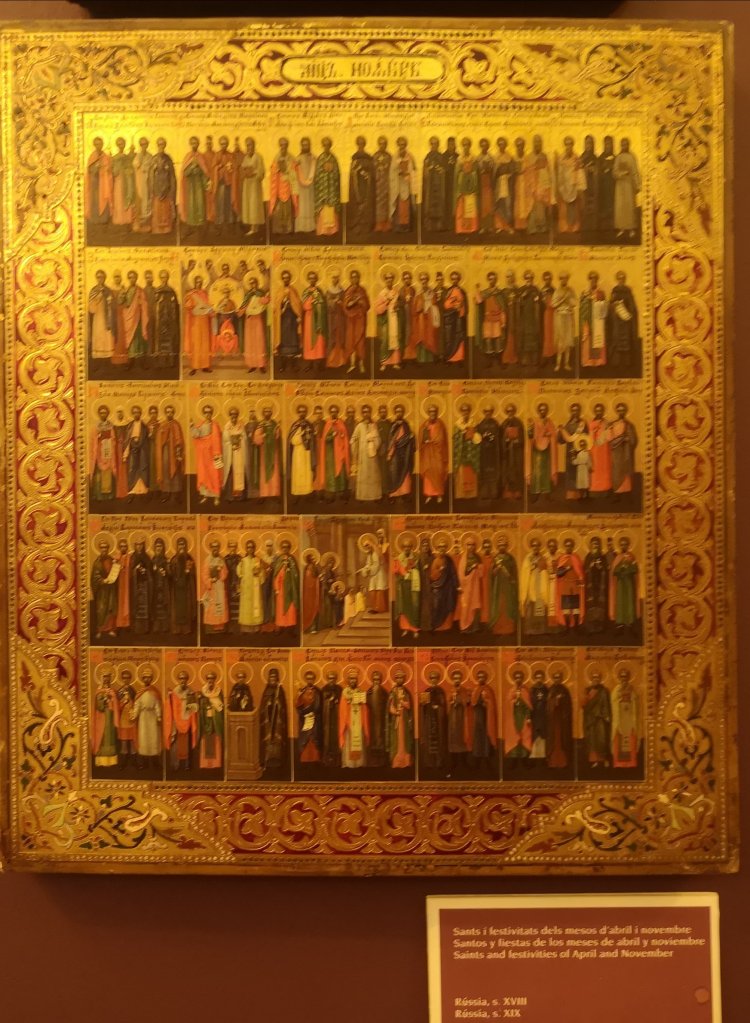
This work was inspired by the 18th /19th century ‘Saints and Festivities for the months of April to November’ in the Museu Montserrat. I climbed up there after attending the conference. The ornate Russian ‘menologion’ is a calendar featuring rows of saints, above which are their names and the dates of the days on which they are honoured, in cyrillic script.
This would have been a visual reminder of the annual Masses of the Orthodox Church which celebrated many different saints.
A menologion (menologium, menology, menologue, menologia) was sometimes a liturgical ‘office’, an ecclesiastical, Eastern Orthodox service book or martyrology; a long list of saints and the details of their lives arranged according to the months of the year.
It is not dissimilar to the secular mural at the National Portrait Gallery in Edinburgh depicting key figures and events in the history of Scotland. The Separation and Unity Project is interested in the movements towards and away from independence by Scottish and Catalonian peoples, at what urges us to separate from, or join with each other.
I am also referencing Buddhist and Hindu mandalas, and other celebratory depictions used to inspire their followers and remind them of the true path. Mandalas come in many shapes and sizes, often using geometric arrangements. They can represent the whole universe, and be used as a way to separate from everyday existence and focus on what is important for greater knowledge. The Vajrabhairava mandala, for example, is a silk tapestry woven with gilded paper depicting lavish elements like crowns and jewelry.
The human mind is like “A microcosm representing various divine powers at work in the universe”
John Ankerberg and John Weldon (343:1996) via Wikipedia (see below)
Process and production of Festivities and Delegates
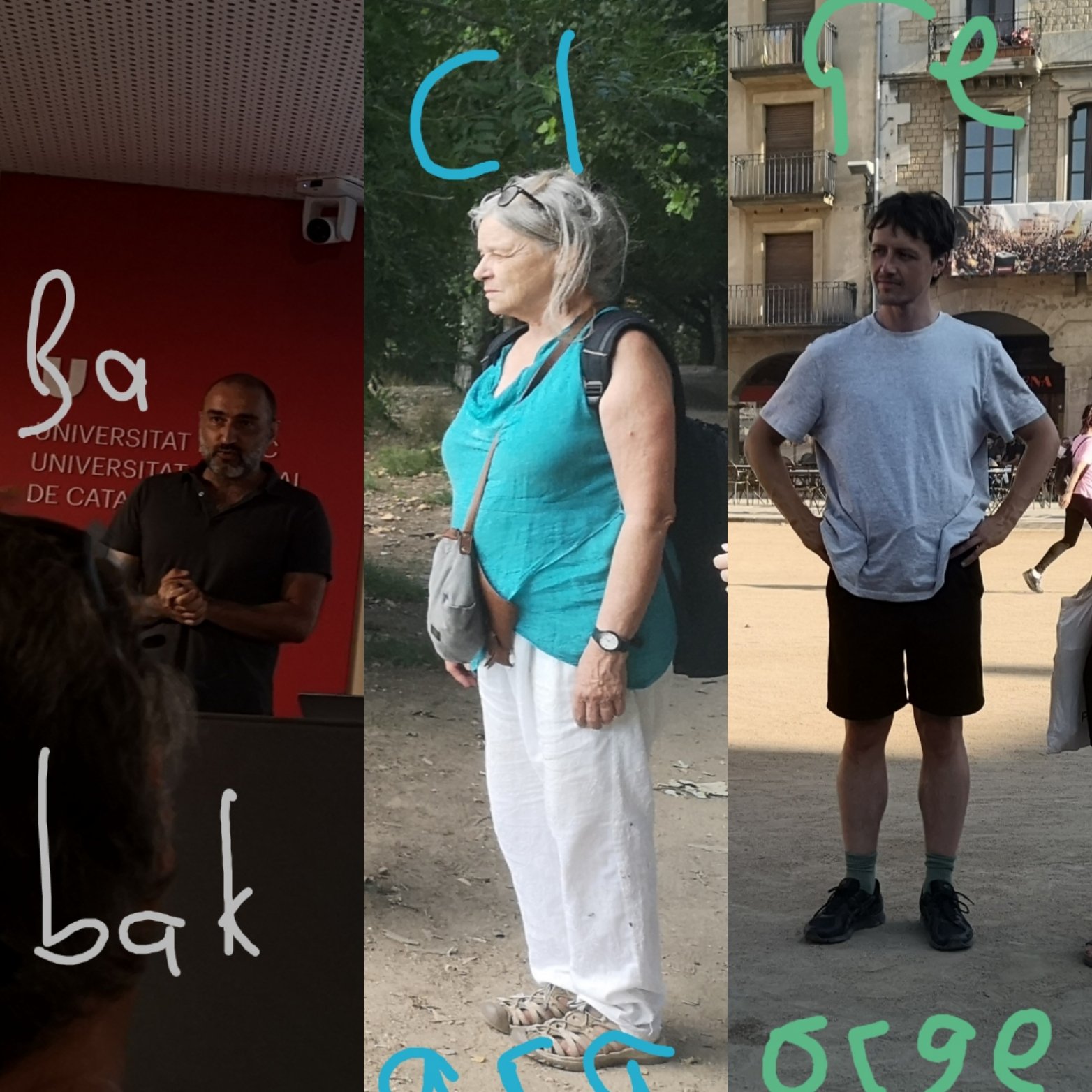
I took digital photos and video stills from my phone documentation of the conference and the social time we spent together, and manipulated the images using free Layout software. In some cases I used social media images. Instead of the elaborate calligraphy that you can see on the Russian ‘Festivities…, I wrote free-hand with my finger or with a biro.
Details: 160cm long and 70cm wide, mixed media – sewed from scraps of upholstery fabric which came from free sample books. Ribbons, tapes and sundry, shiny objects such as bells, earings which have lost their pairs, and sequins. Iron-on paper was used to transfer the photographs onto the fabric.
It incorporates a number of small brass and other metal bells, with reflective totems. These were/are often used to ward off evil spirits, to bring ones attention into the moment, to reflect the devil’s face back to him, and, contrastingly, even to represent the sound of the Buddha’s ‘voice’ spouting wisdom. The protective aspect would also traditionally have been as much from the ‘monkey mind’ and other natural inner temptations, as from what might be attacking us from the outside. Tantric mandalas would have been an aspect of separation and protection from the outer Samsaric world.
Quote: from their ‘Encylopedia of New Age Beliefs: The New Age Movement’, (p. 343, ISBN 9781565071605 archived from the original on 2016-06-03, retrieved 2015-11-15)