Gateway to This

A walk for 4WCoP25 (the 4th World Congress of Psychogeography 2025), the theme of which is, ‘After That, This’

You can walk in person with me in Swansea, Wales at 3pm on Saturday 11th October (this is the booking link for the whole Congress which is free of charge. There is no individual link for this walk). Alternatively, you can join us wherever you are in the world, alone or with a group, with the prompt below.

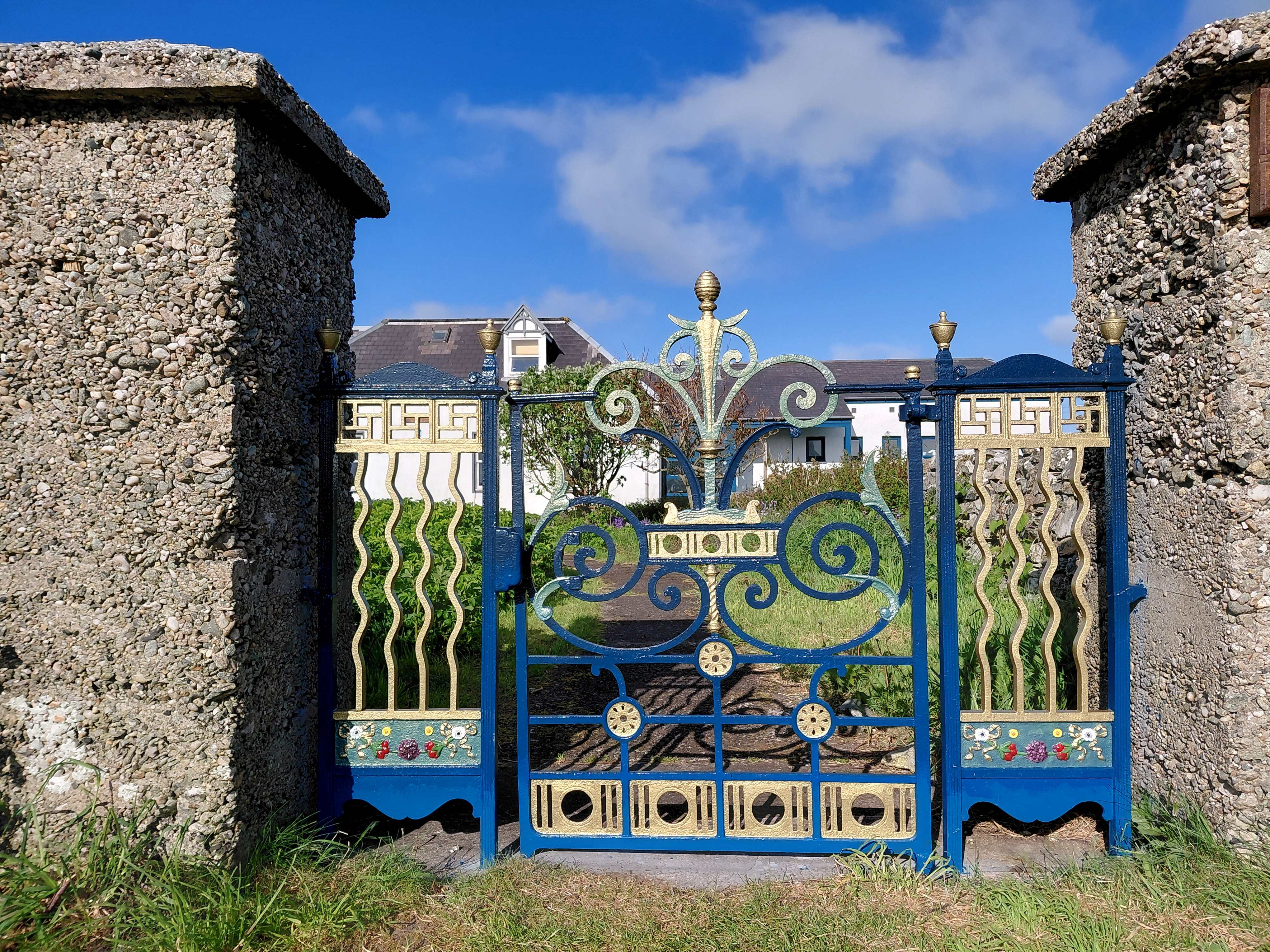
Gateway to … Shetland youth hostel

A co-created walk of 45 minutes duration

‘After That’ (the past) and before we get to ‘This’ (now), we must pass through a portal. This walk will seek gateways of all shapes and sizes. It’s for those who haven’t yet arrived in, or are curious about, the present moment.

Moving through a portico, from one side to the other, sometimes in conversation, sometimes silent, the present will be revealed. Carrying with you a paper portal sporting the words, Gateway to … , it’s the walking through and under these transitionary arches that will help us finish the sentence.

Free downloads (two) for the distal version of Gateway to This

This event is free of charge.

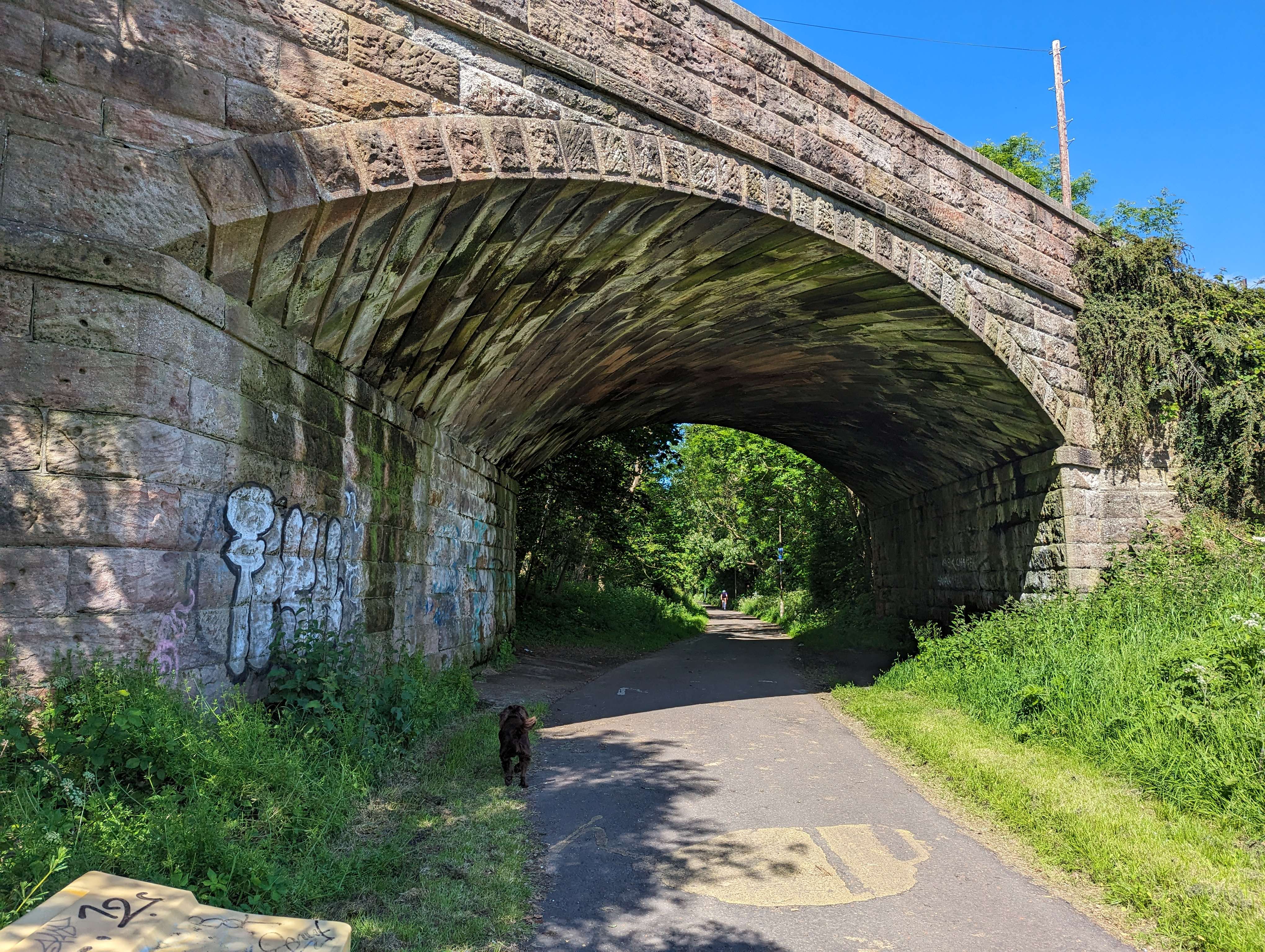
Gateway to … bridge on the Roseburn Path, Edinburgh

Slow Ways -Gloucester to Cheltenham

This walk as taken in March 2025. It was the penultimate day of a 10-day hike from Chepstow, on the Welsh-English border, to Cheltenham. My artwork was in the Walking the Land’s Line(s) of Enquiry exhibition at the Hardwick Gallery, which opened on 7 March, and I was attending a Symposium at the University of Gloucestershire there on 21st.

You may be interested in this companion blog post: Walking with Ants

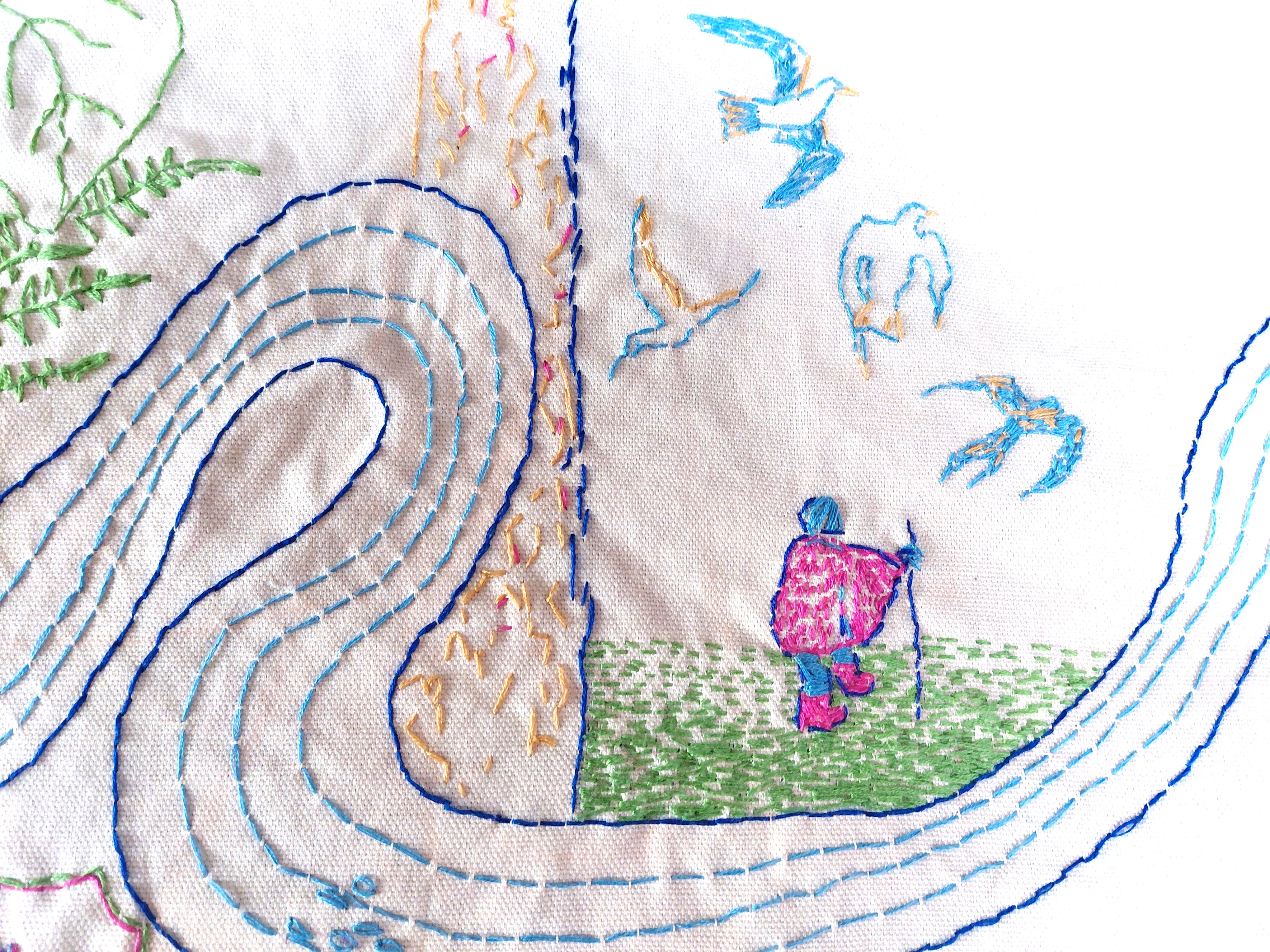
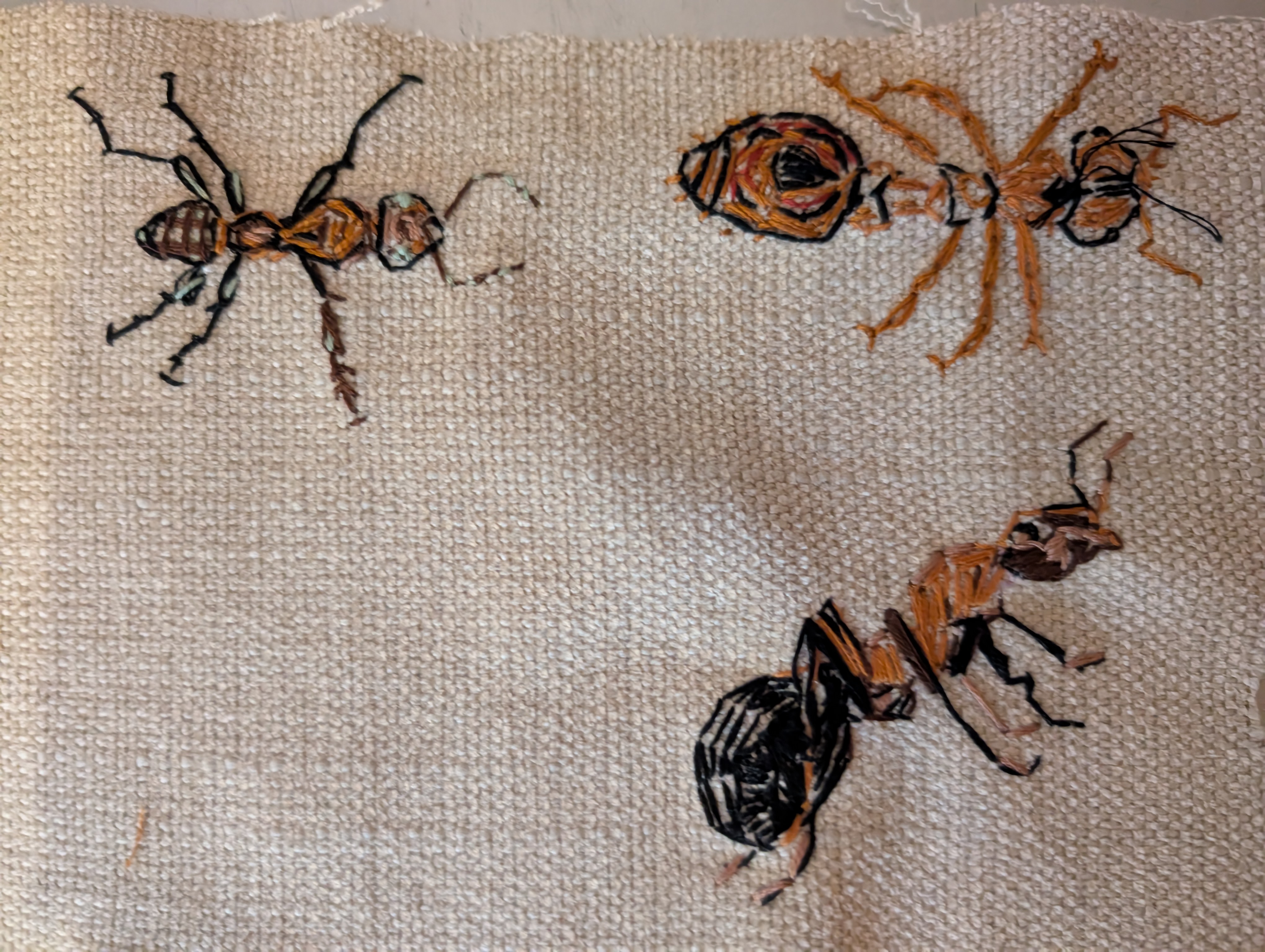
Detail, The Honeydew Line, by Tamsin Grainger (embroidery). I was walking for the small things, celebrating and honouring them as vital participants in our ecosystem

Sunrise Walks 2024

This is a Pedestrian Project about marking time. It took place between 27th October and 4th November 2024 (inc. images from 5th November).

I’m no creature of habit. Left to myself, I struggle to do the anything every day at the same time; I rarely eat at regular mealtimes, and having been self-employed for my adult life, I’ve never worked an on-going 9-5 (am-pm) day. Not since school.
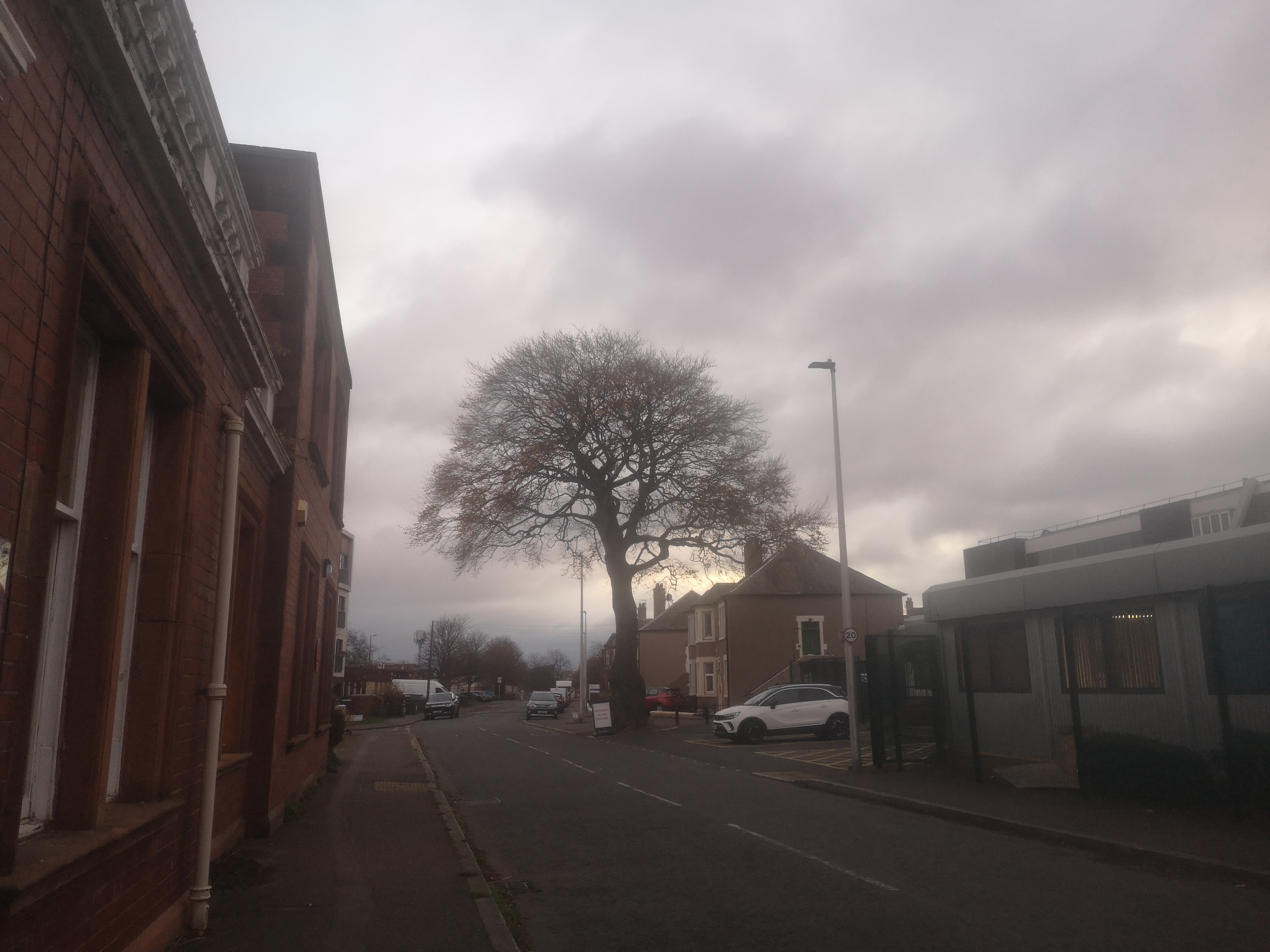
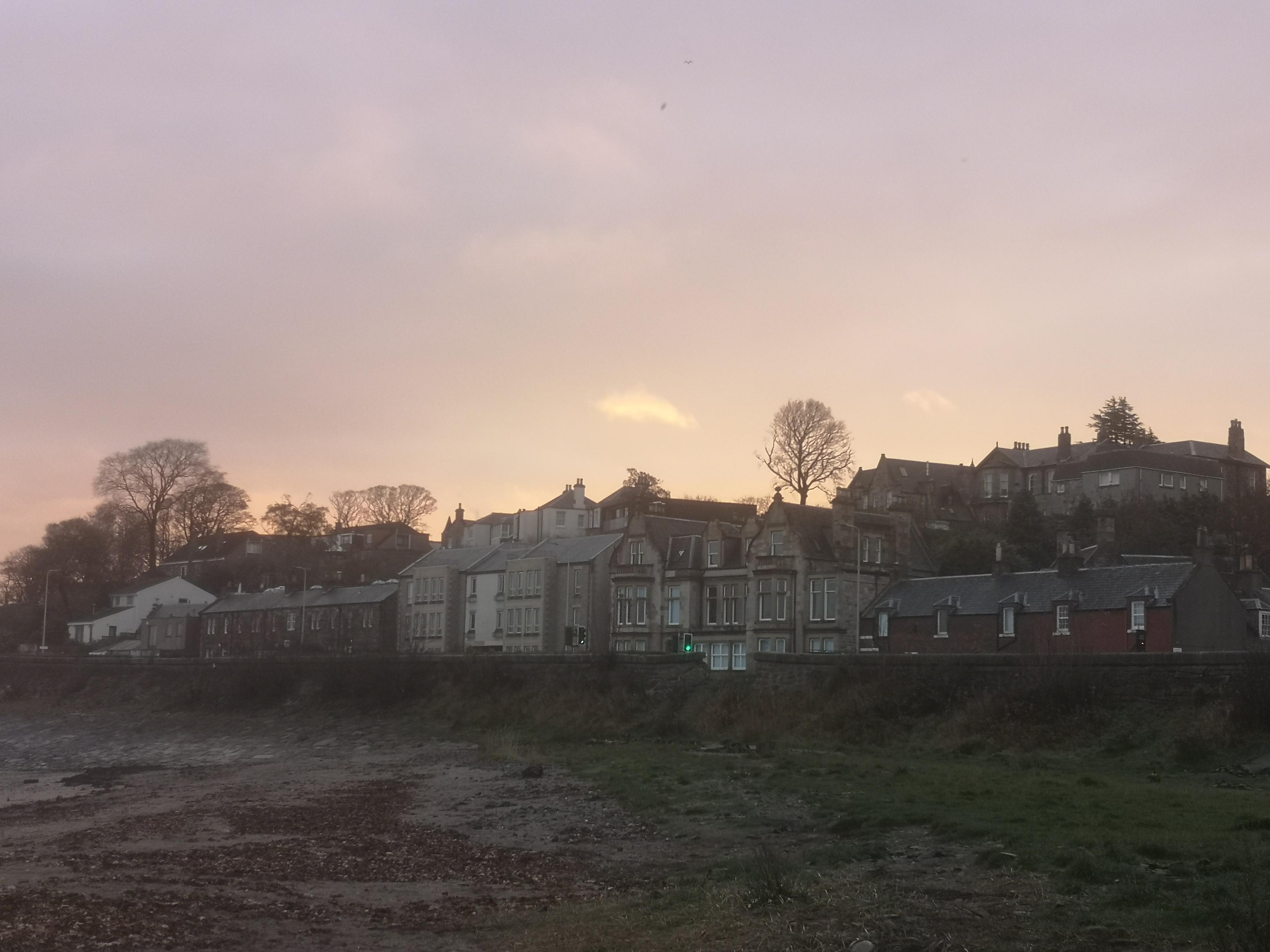
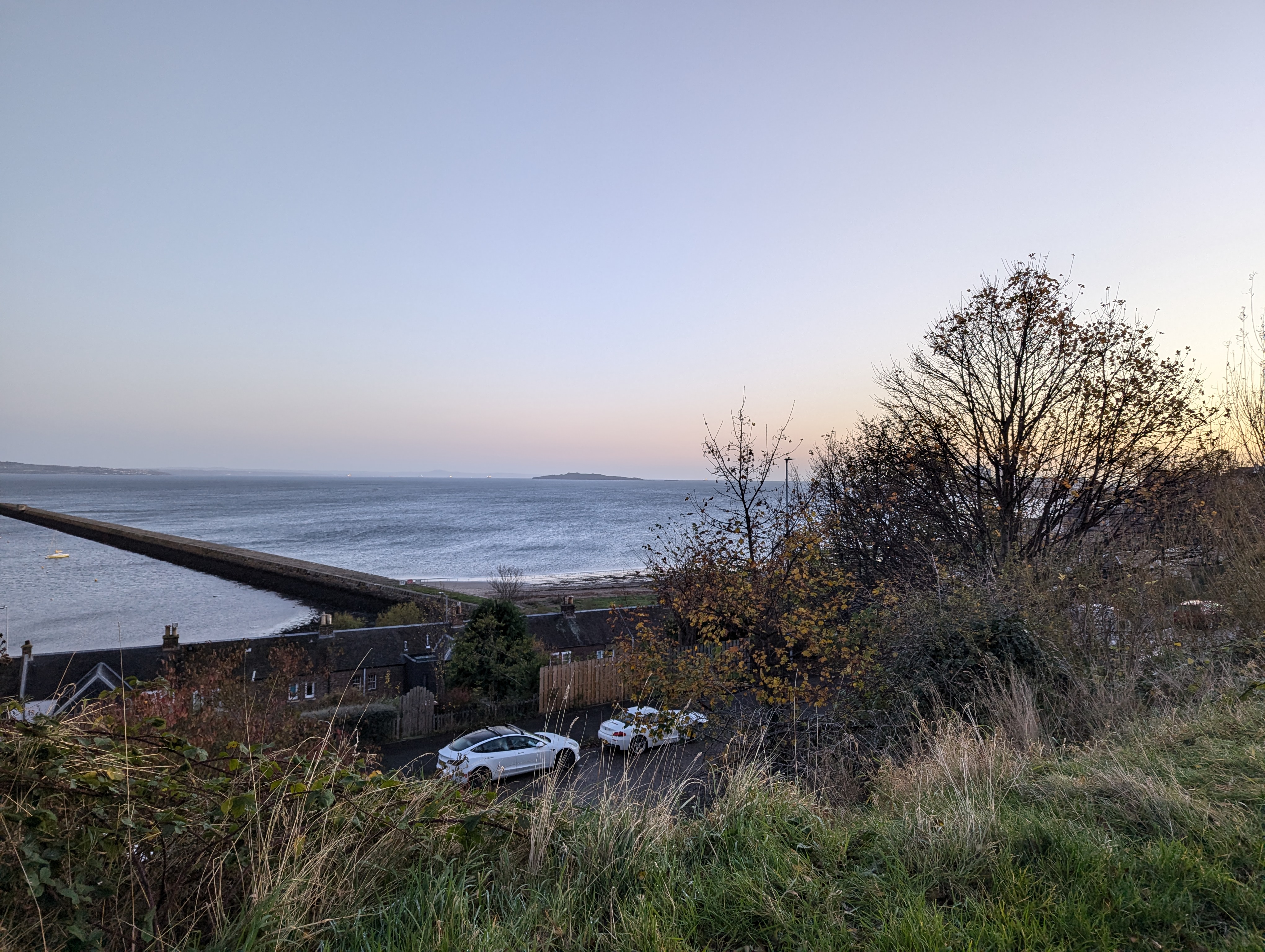
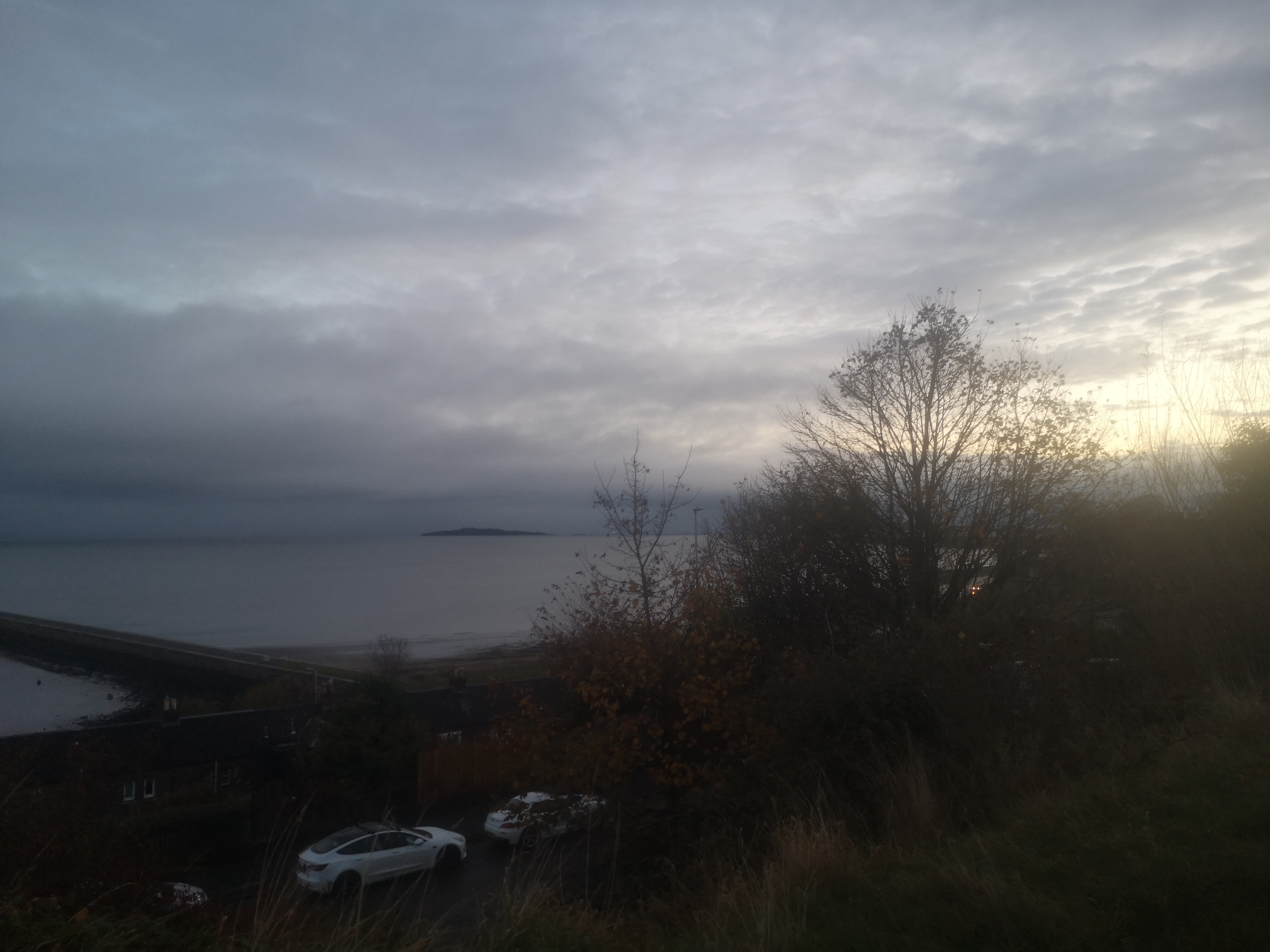
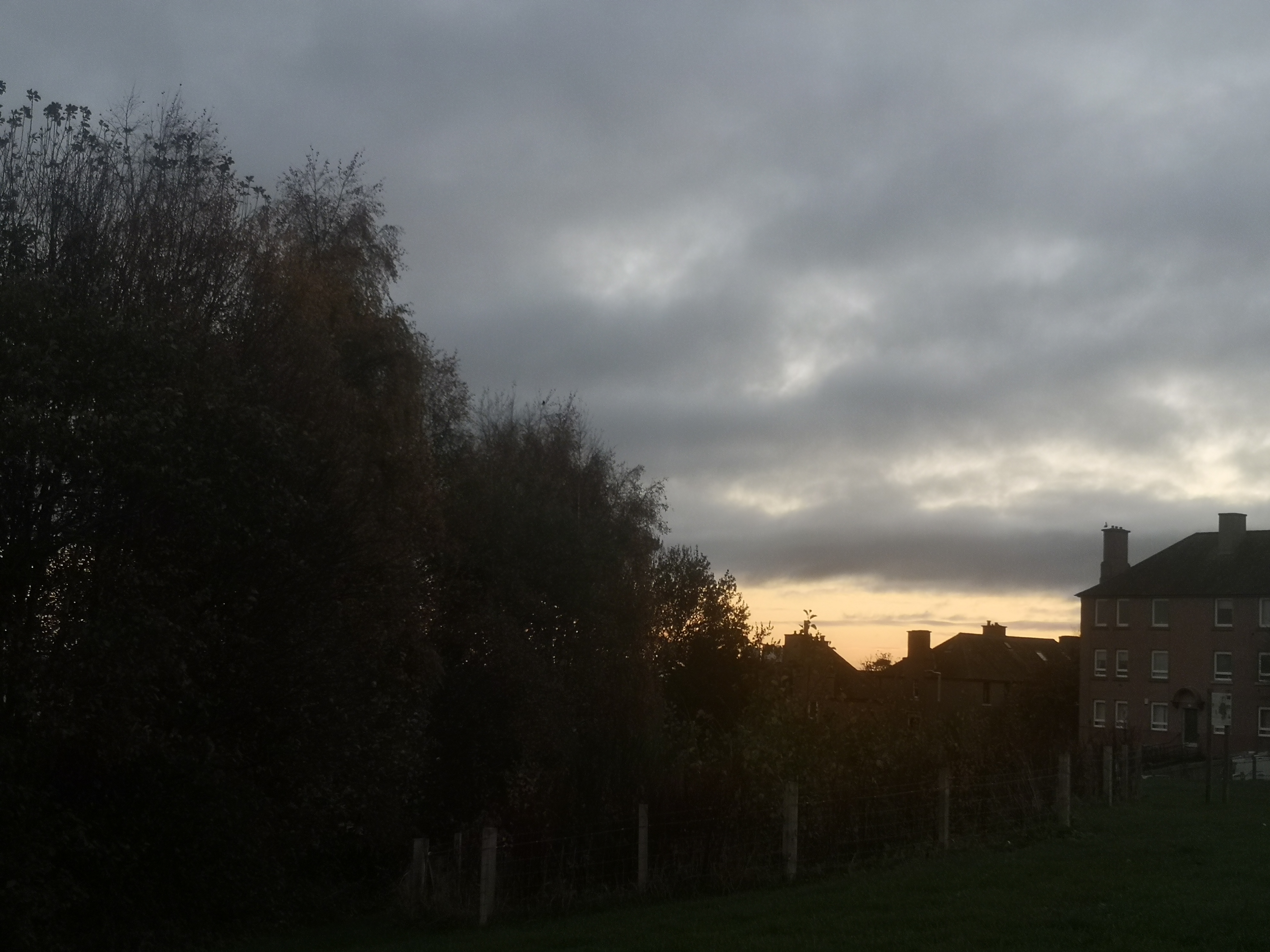
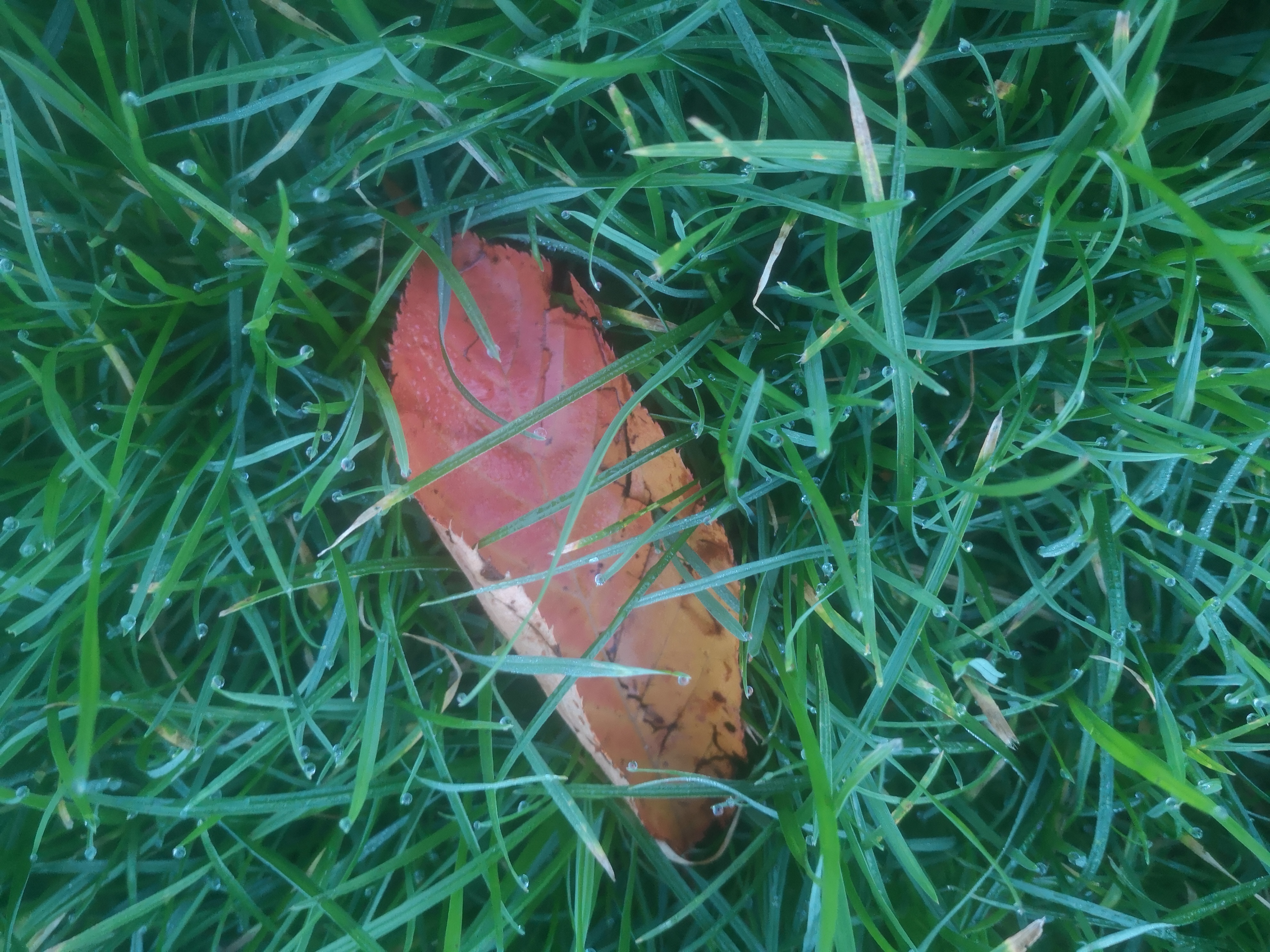
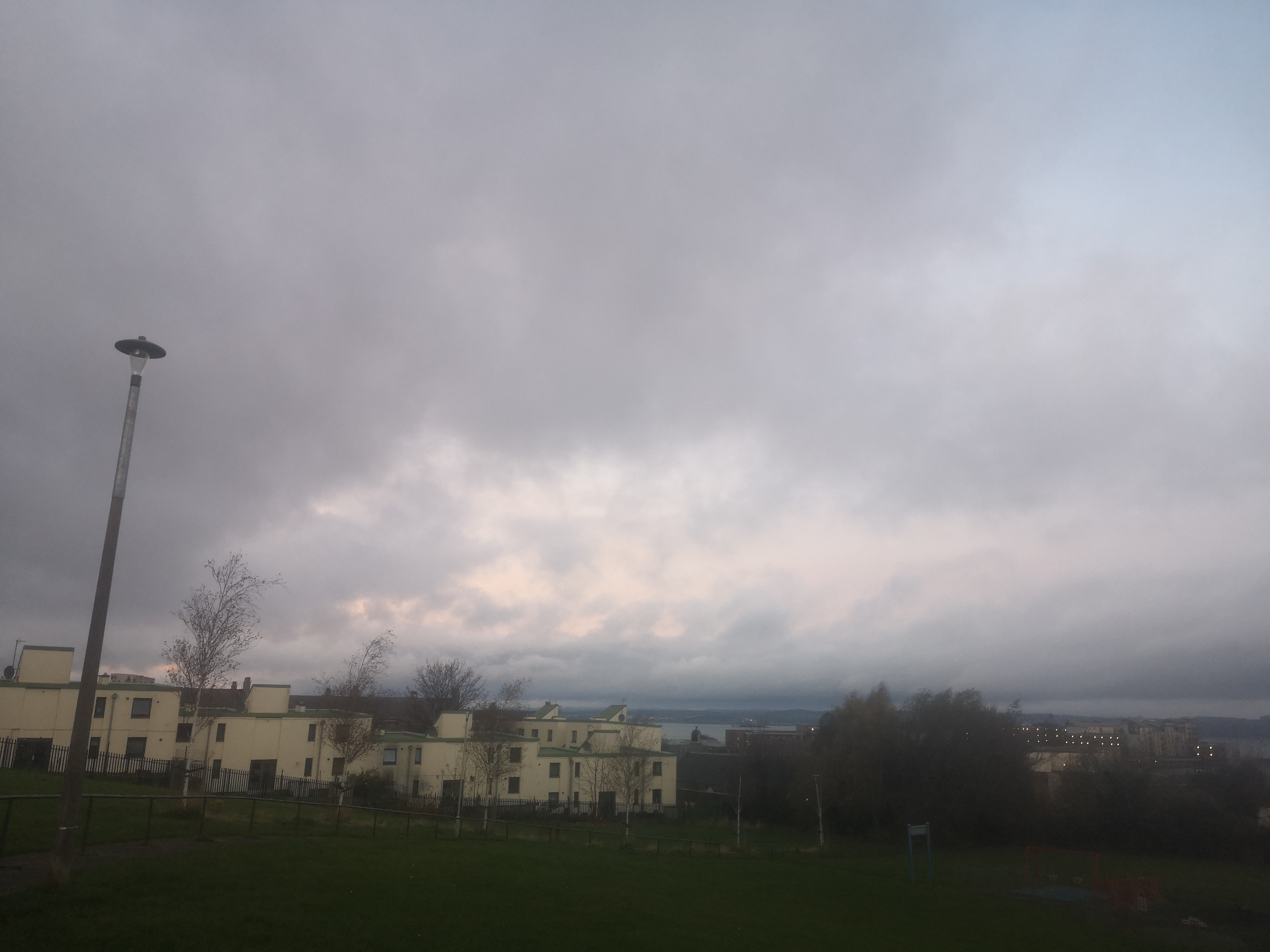
Photos Taken 15 minutes Before Sunrise (or thereabouts)

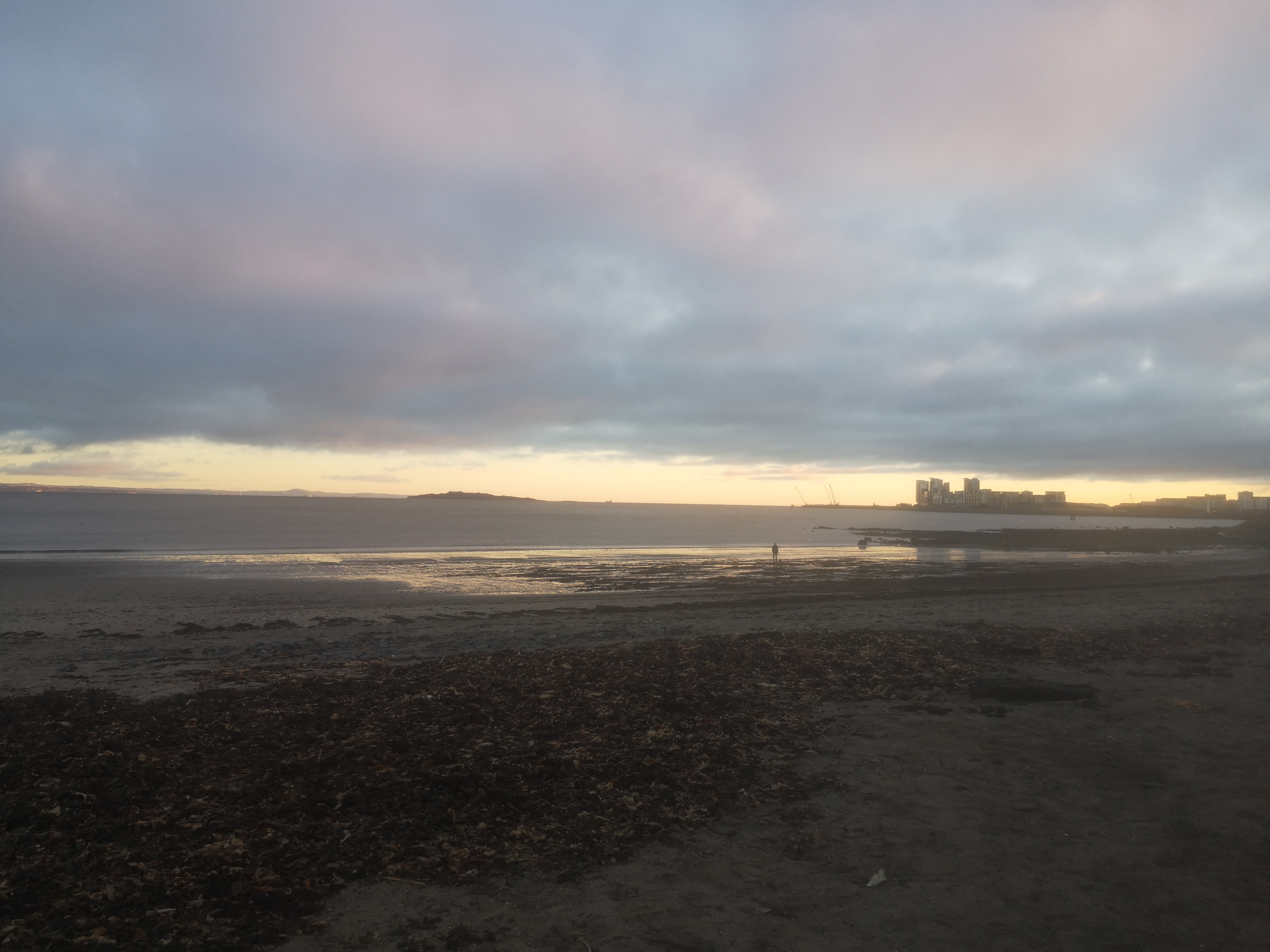
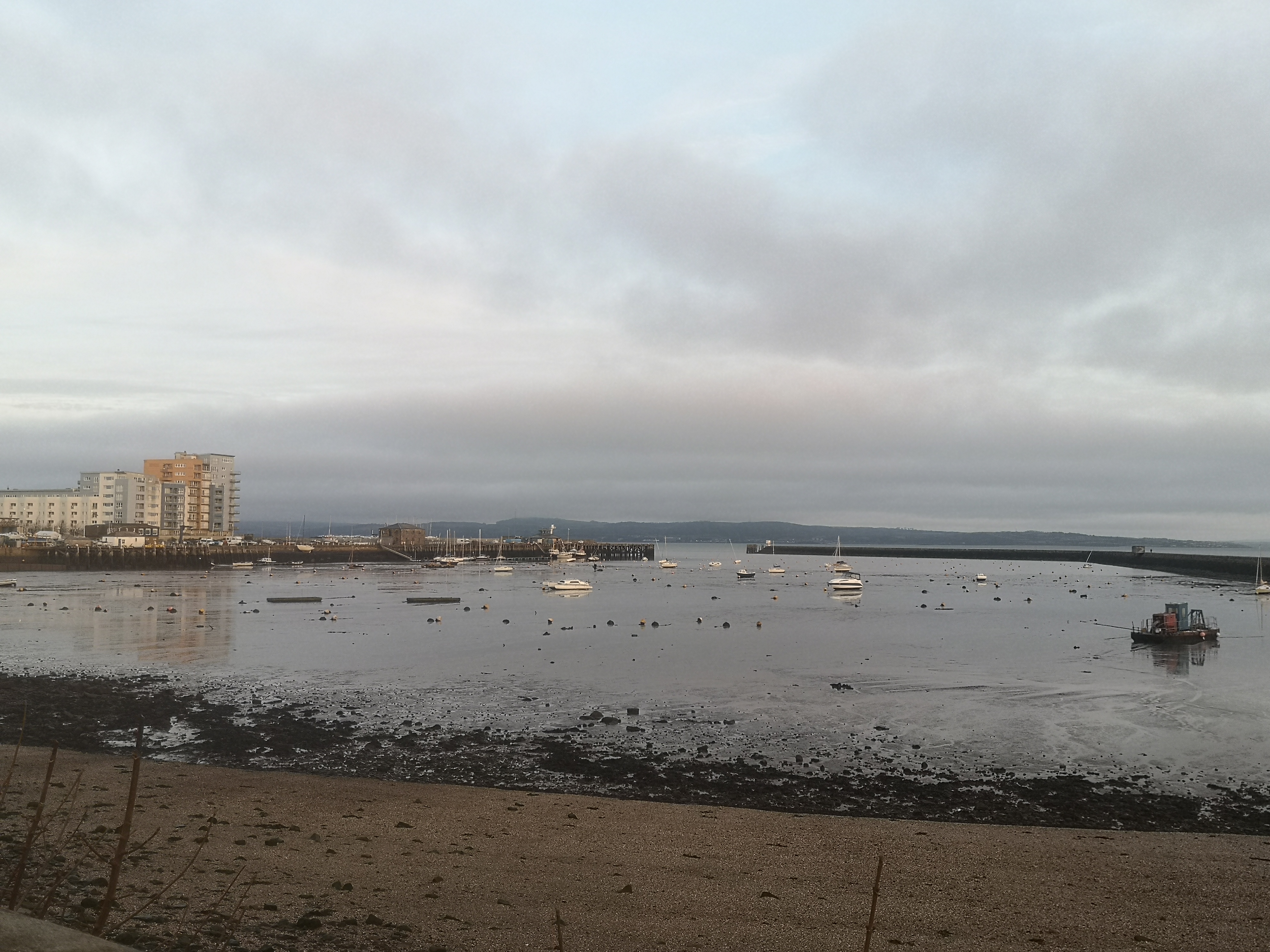
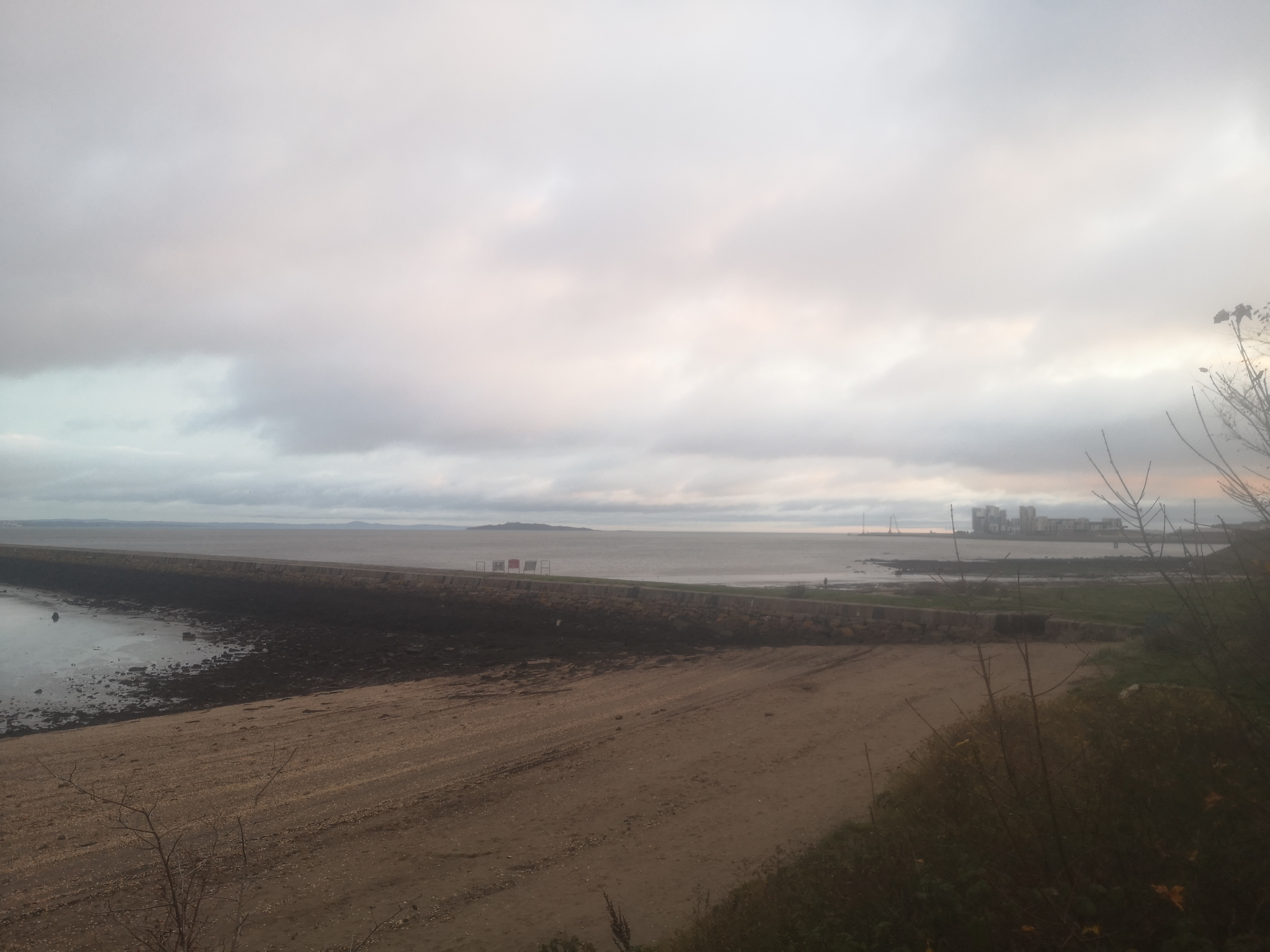
This may explain why Sunrise Walks are an interesting concept to me. Instead of following my own inner, wonky routine, I have decided to set my alarm and be there, on my doorstep at the correct time, every day between the clock chaging in the UK and in the US, as prompted by Blake Morris. The brief was to take a photo (or somehow to document) the moments that were 15 minutes before, at, and 15 minutes after, sunrise.

Except …

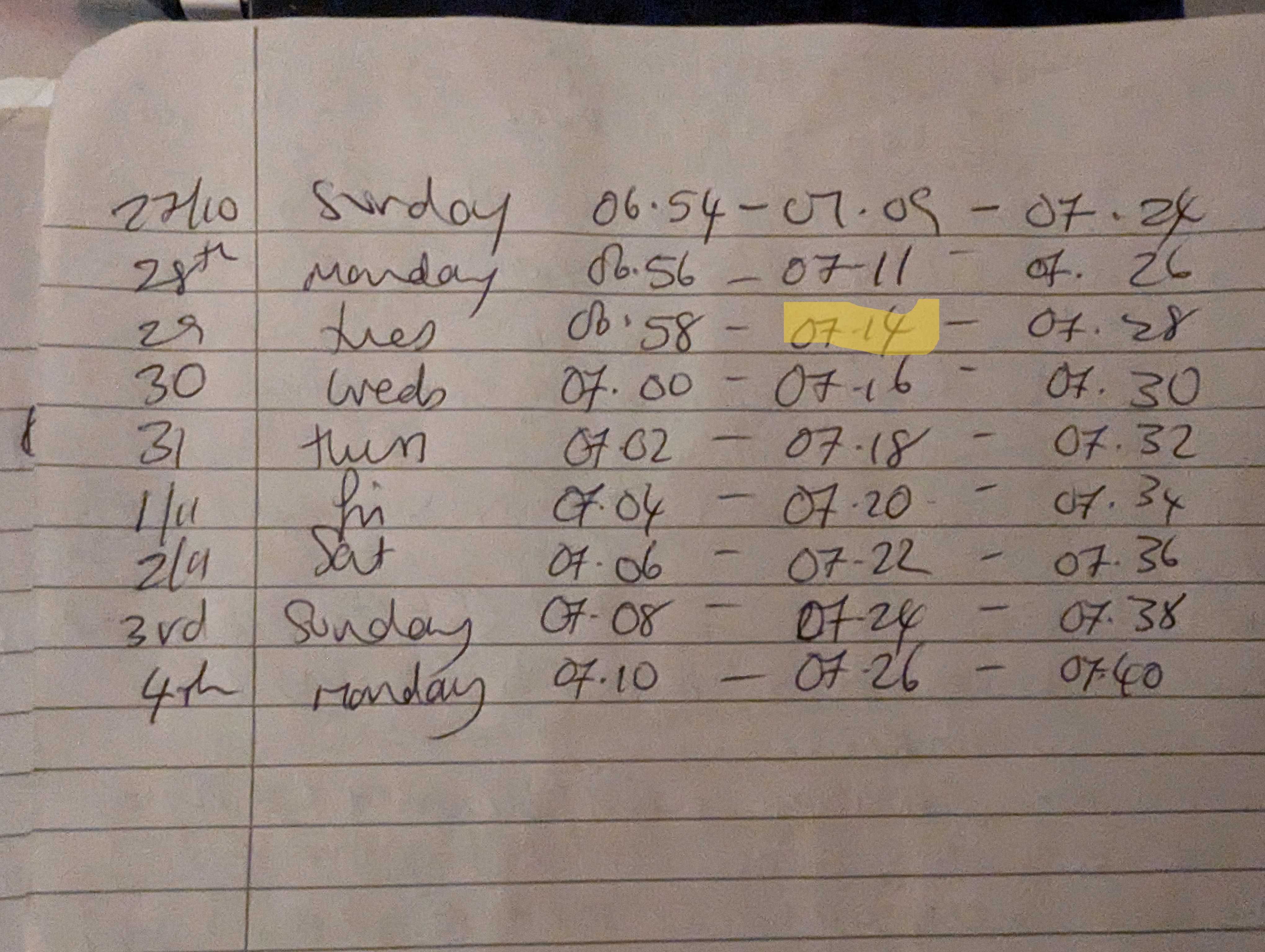
Sunrise changes by 2+ minutes every day so it isn’t actually ‘the same’. I made a chart in advance:

I didn’t notice that blip until day 7 and it was too late to change by then

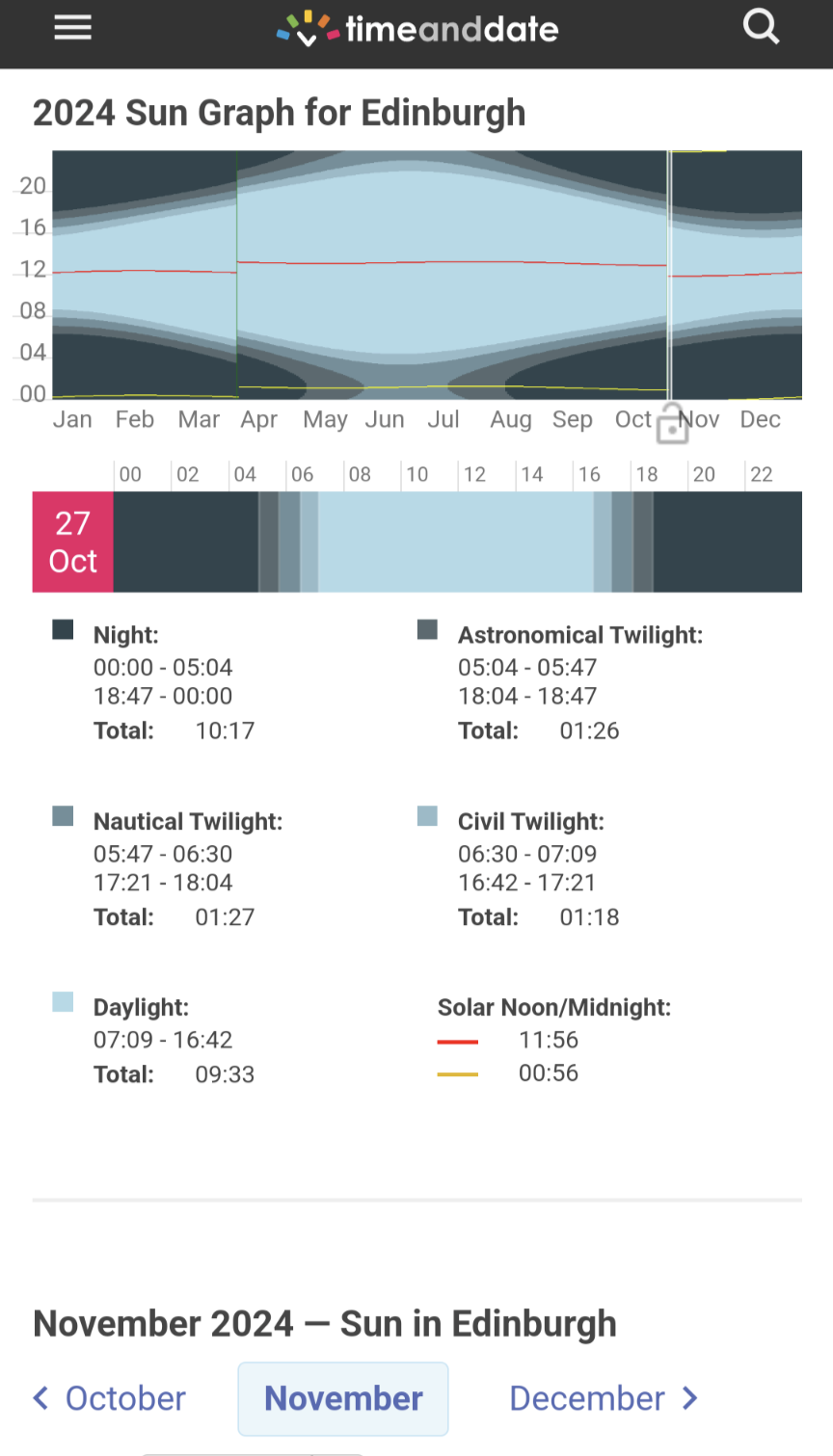
Times and Twilight

I took the sunrise times from the Time and Date website and missed the 3 minute difference between 28th and 29th October. Instead, I saw that there were 2 minutes between 27th and 28th, 30th and 31st etc and followed that pattern for all of the start and end times (I’d be no good in a lab or at setting train timetables) meaning that from day 3, I was snapping my photos at the wrong times.

In writing this blog, I have discovered that this anomaly is because …

The Earth’s orbit around the Sun is elliptical, rather than circular, and the Earth’s axis of rotation is not perpendicular to the plane of the orbit.  This non-circularity of the orbit and the tilt of the Earth’s axis of rotation both contribute to the uneven changes in the times of sunrise and sunset.

Jeff Mangum on the National Radio Astronomy Observatory

As an aside: I really like the idea of ‘civil twilight’ (above). That’s exactly how it was. It related to me as an ordinary person (not a military woman nor an ecclesiastical one) and was both a courteous and a polite time of day. I always thought twilight was before the dark finally settled down to sleep, but it means, “the soft glowing light from the sky when the sun is below the horizon, caused by the reflection of the sun’s rays from the atmosphere.” (Oxford dictionary), so it can apply to sunrise AND sunset.

Civil twilight “Begins in the morning, or ends in the evening, when the geometric center of the sun is 6 degrees below the horizon. Therefore morning civil twilight begins when the geometric center of the sun is 6 degrees below the horizon, and ends at sunrise.”

National Weather Service

If you are interested in that, you’ll probably like this too: Guardian article, The three phases of twilight, explained

The Route

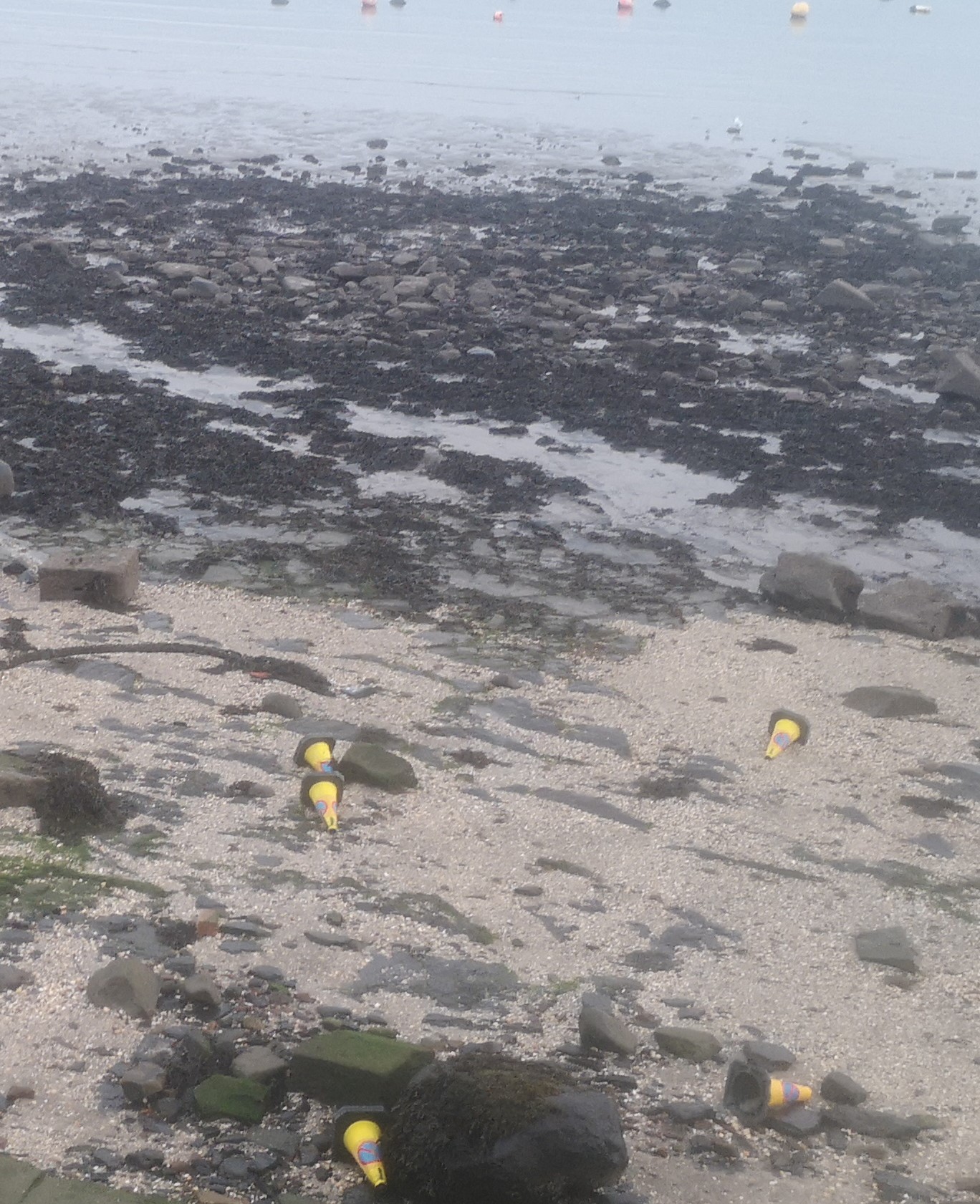
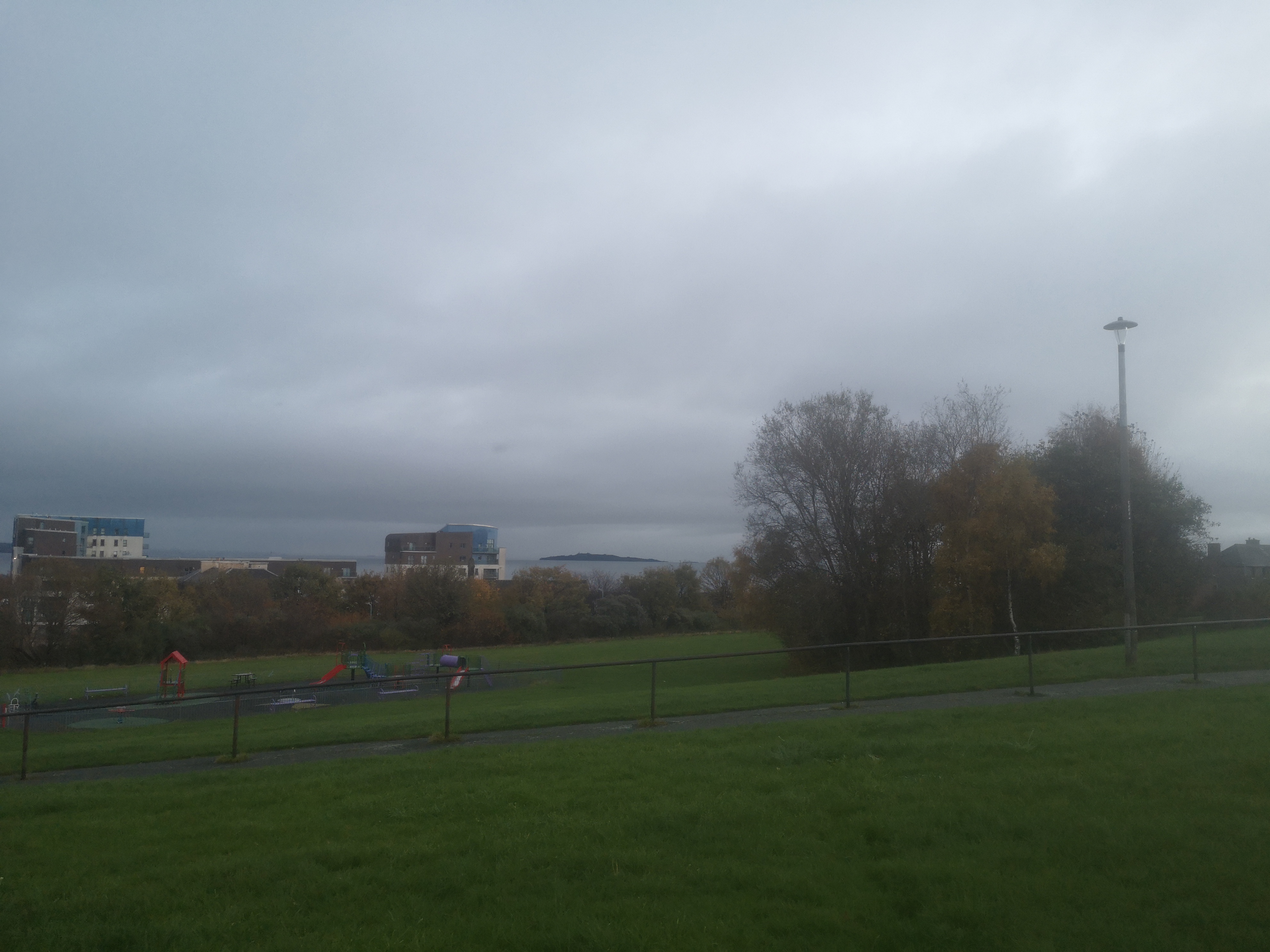
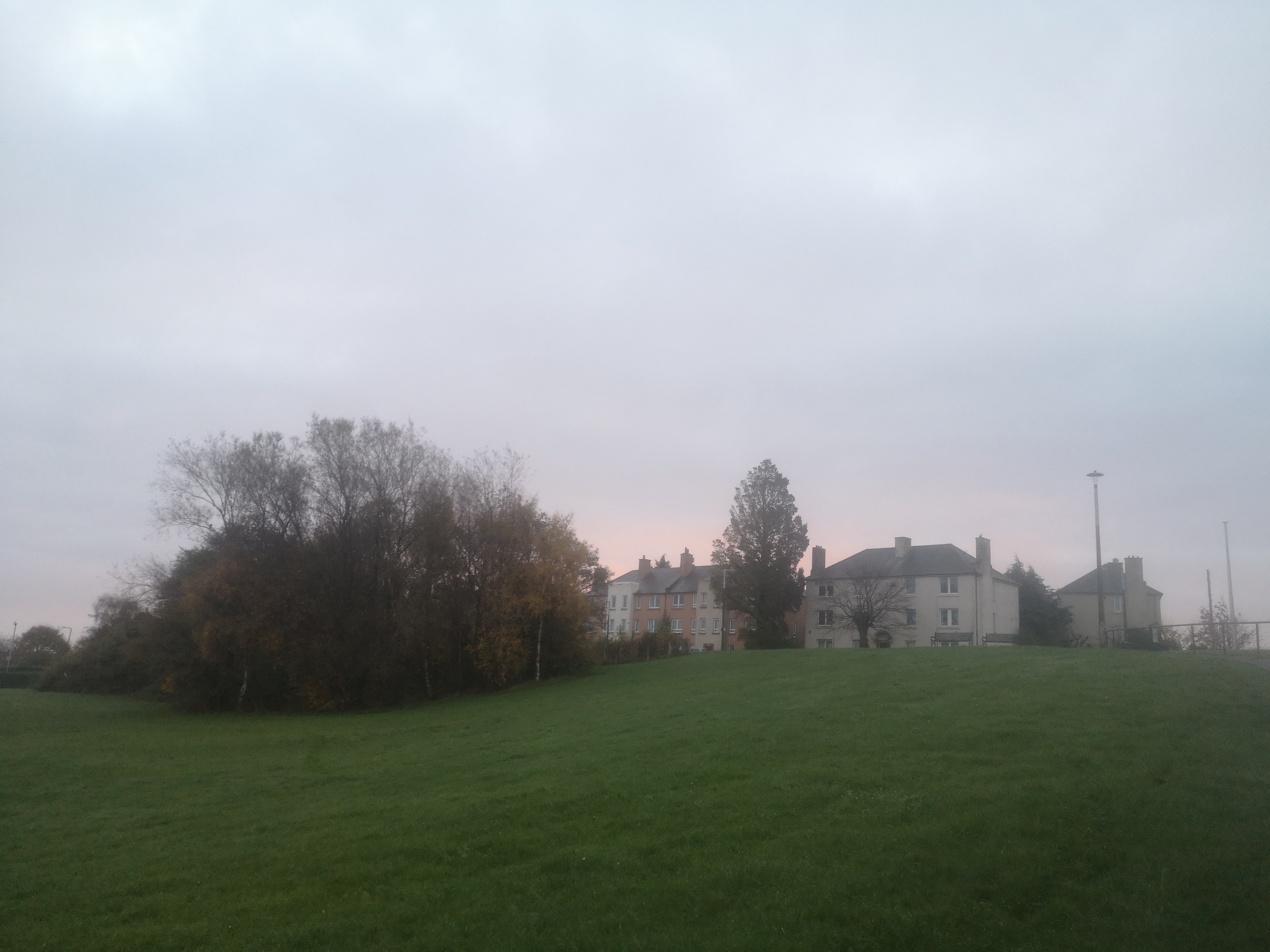
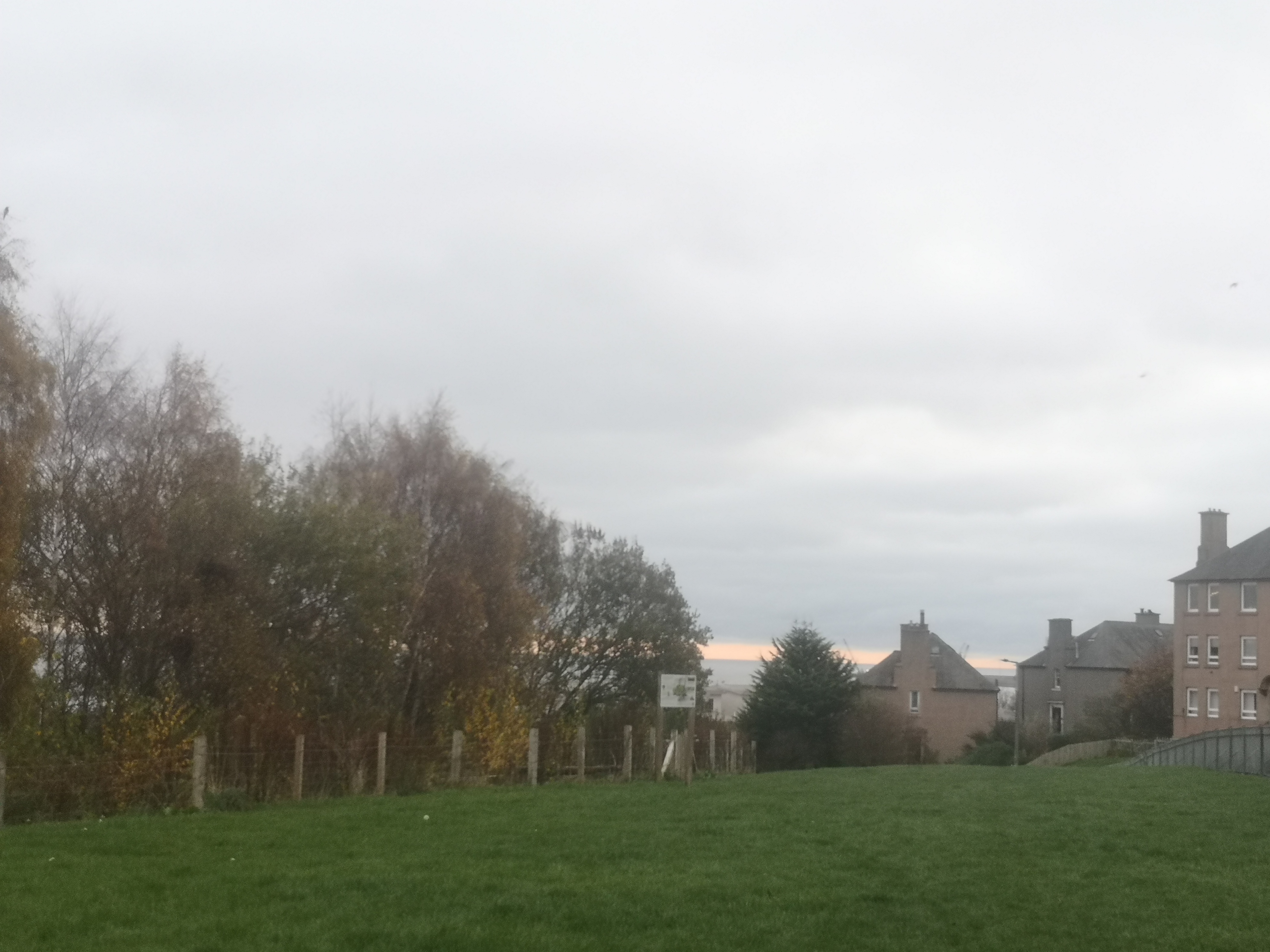
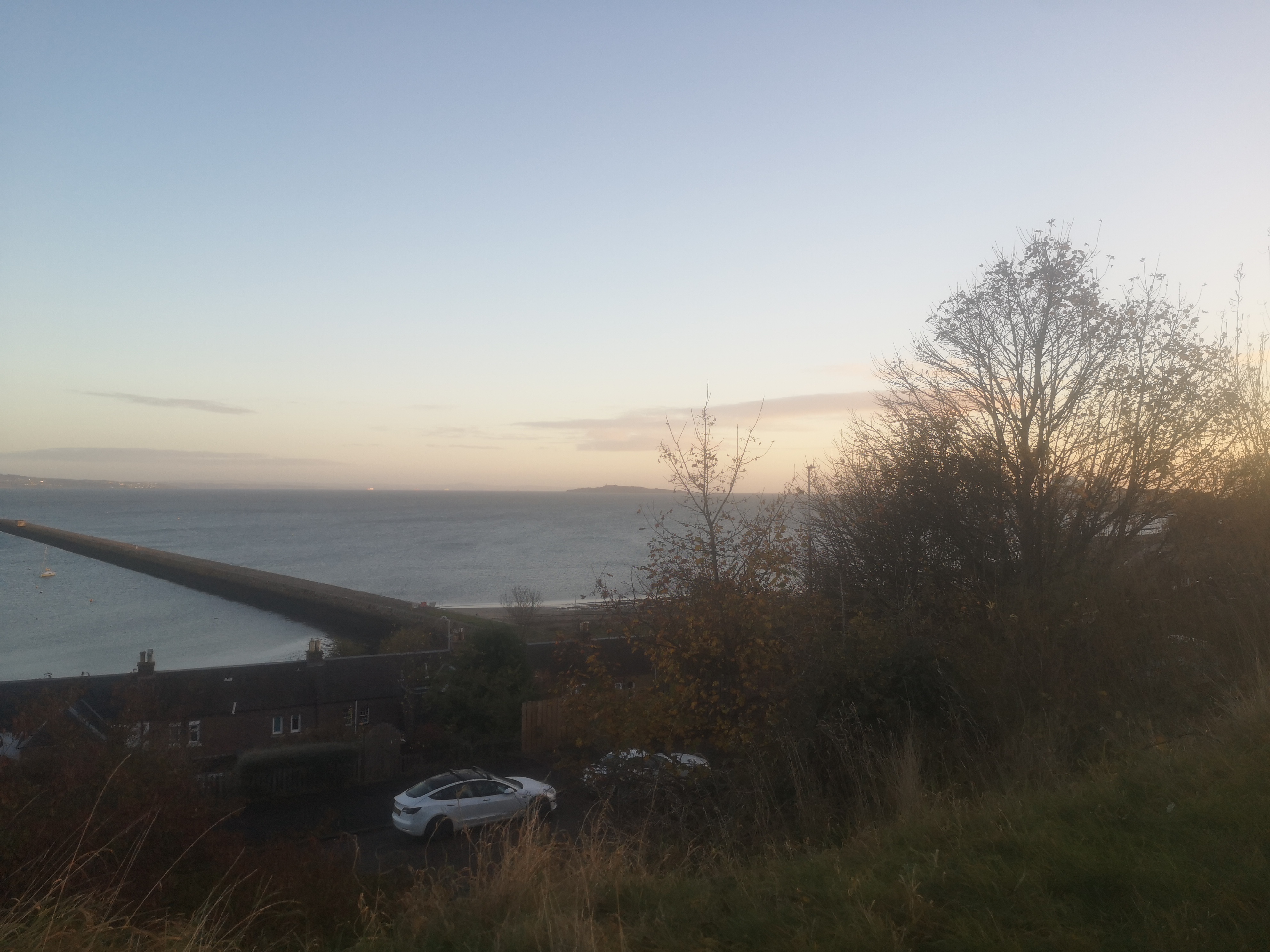
Anyway, I chose to walk the same route every day. Starting at the view near my front door 15 minutes before, walking to the highest point of Granton Crescent Park for sunrise, then down and through The Wasteland (to check whether my banner was still there and if the bulbs that we planted on the community walk had come up), and along to Wardie Bay for 15 minutes after. I didn’t make it on time to the beach every day as I got distracted by yellow cones at low tide and all manner of other things.

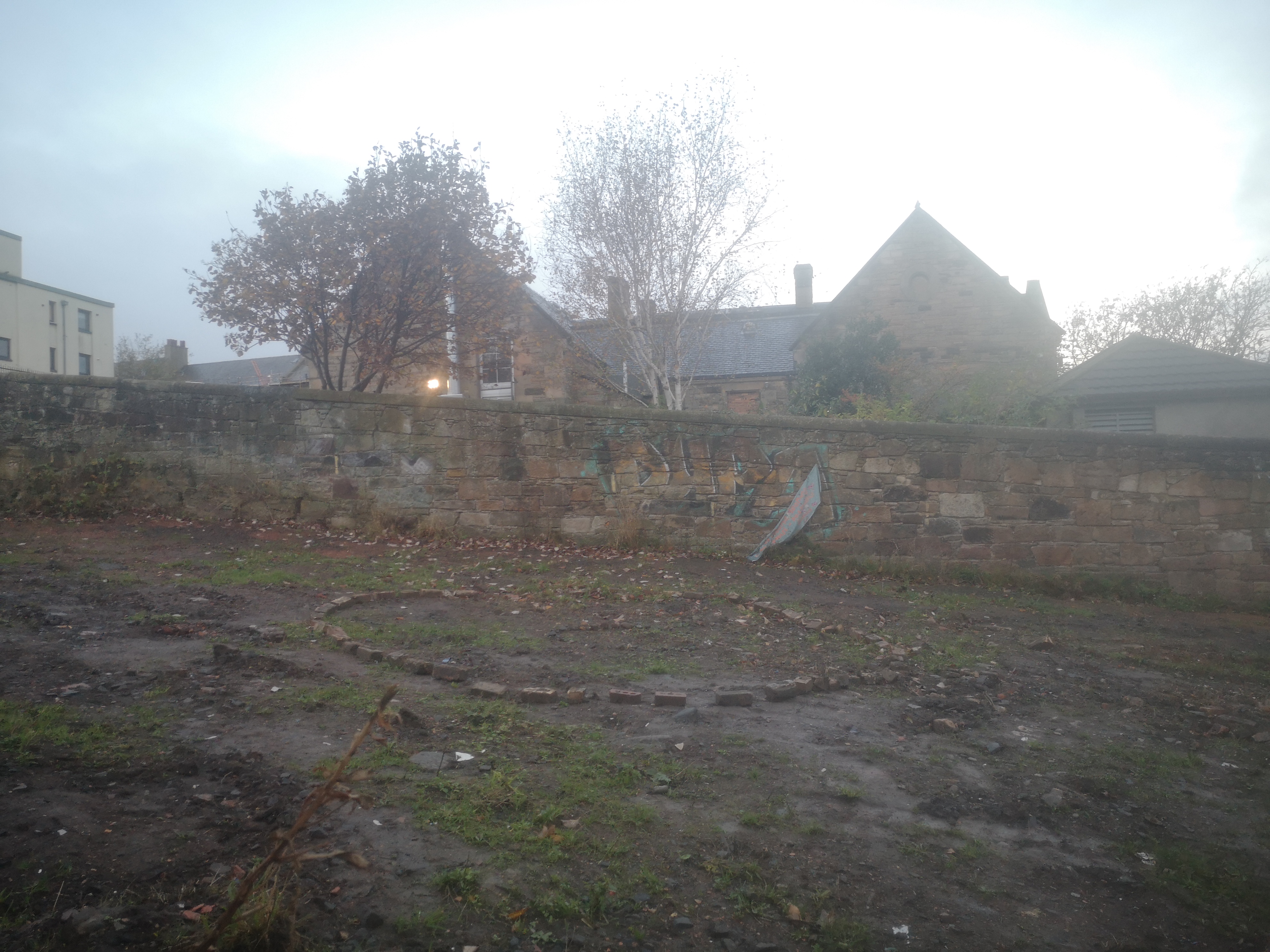
The Wasteland. Looking through the brambles from the Granton Crescent Park steps – the banner on the far wall had blown down again, but the circle of stones was in tact (at this date)

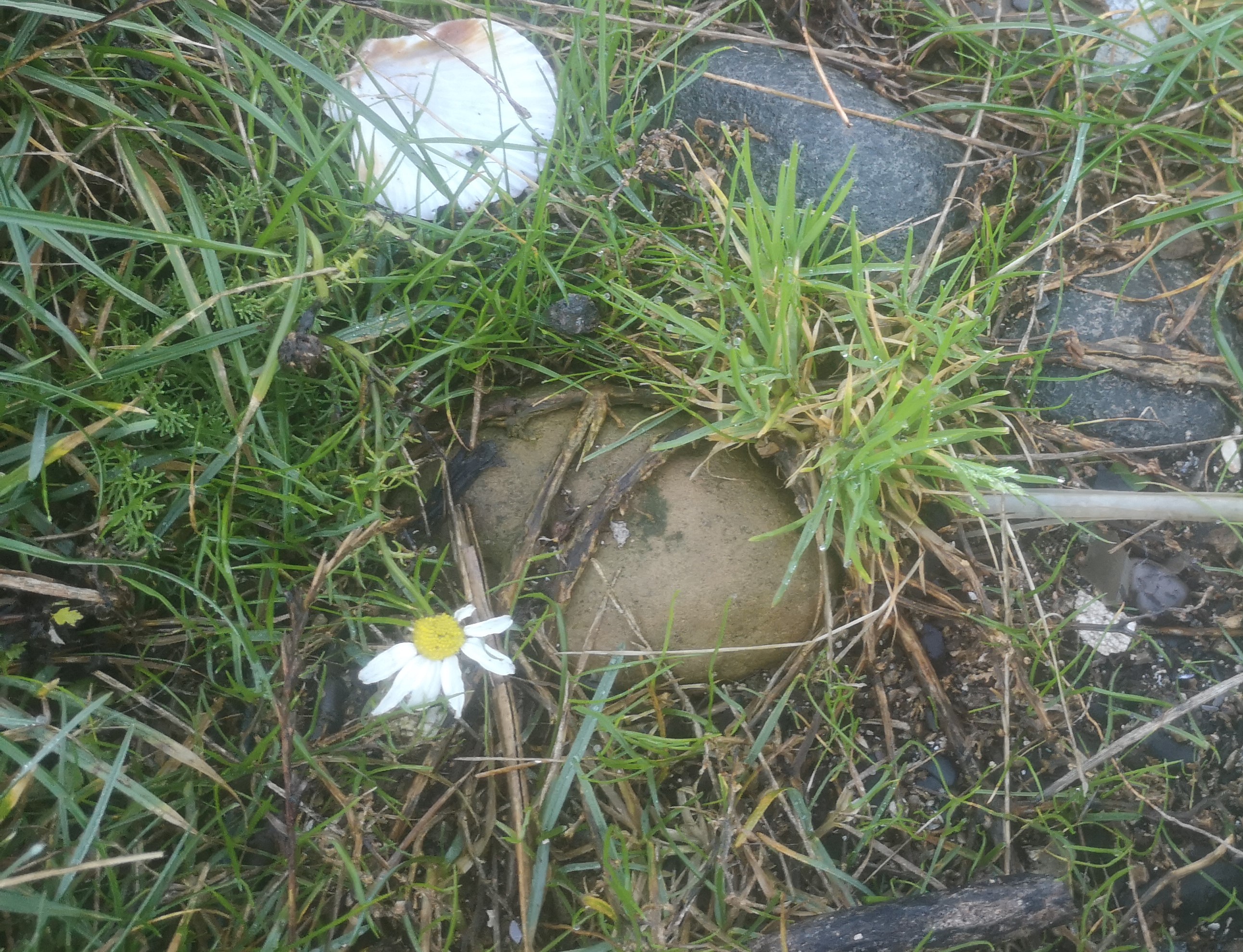
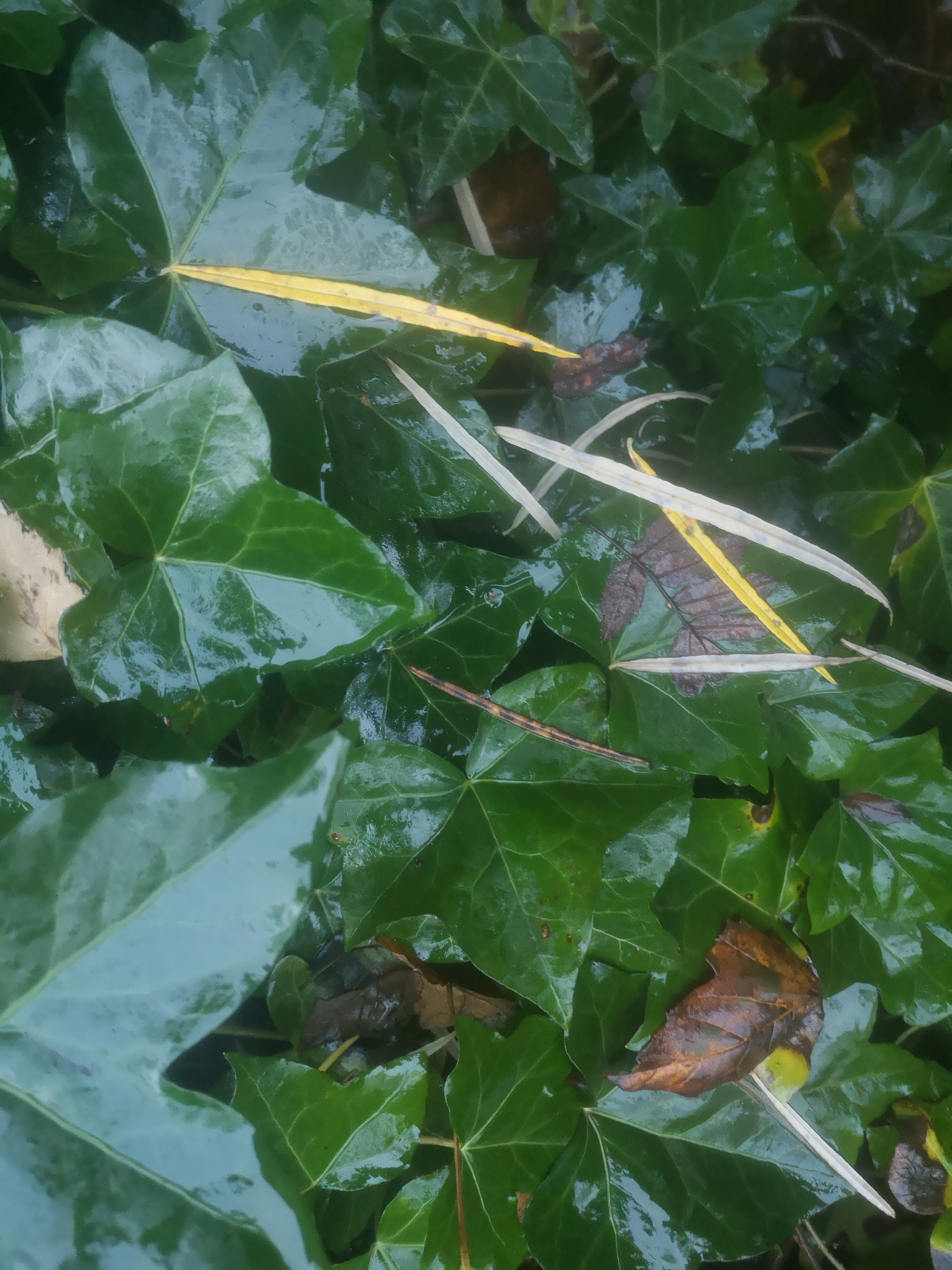
Traffic cones at low tide (left). That must have been a fine game for someone – really? They matched all sorts of other yellows which presented themselves: a sherbet-yellow yacht in the harbour, wild ragwort, chamomile (middle, like fried eggs with frayed edges), and spears of ageing sea buckthorn leaves (right). A flock of pigeons wheeled silently overhead, a single oyster catcher peeped piercingly, and a young gull lifted his feet higher than usual, one by one, to clear the wet grass fronds.

What happened?

  • The devil was watching just as I set off on the first day, and I dropped and completely broke my phone (the one with a decent camera). I reverted to my daughter’s very old one for the rest of the project hence the grainy quality of the images. That made me choose when and whether to take photos at all. I sketched and took careful mental notes so that I would remember, and spent time afterwards writing them down
  • I did this walk at the times on my chart until I got to Friday (day 6) when I realised it would clash with something I actually do every week at the same time, which is to go to my meditation group, so that day’s photos were not taken at the correct times
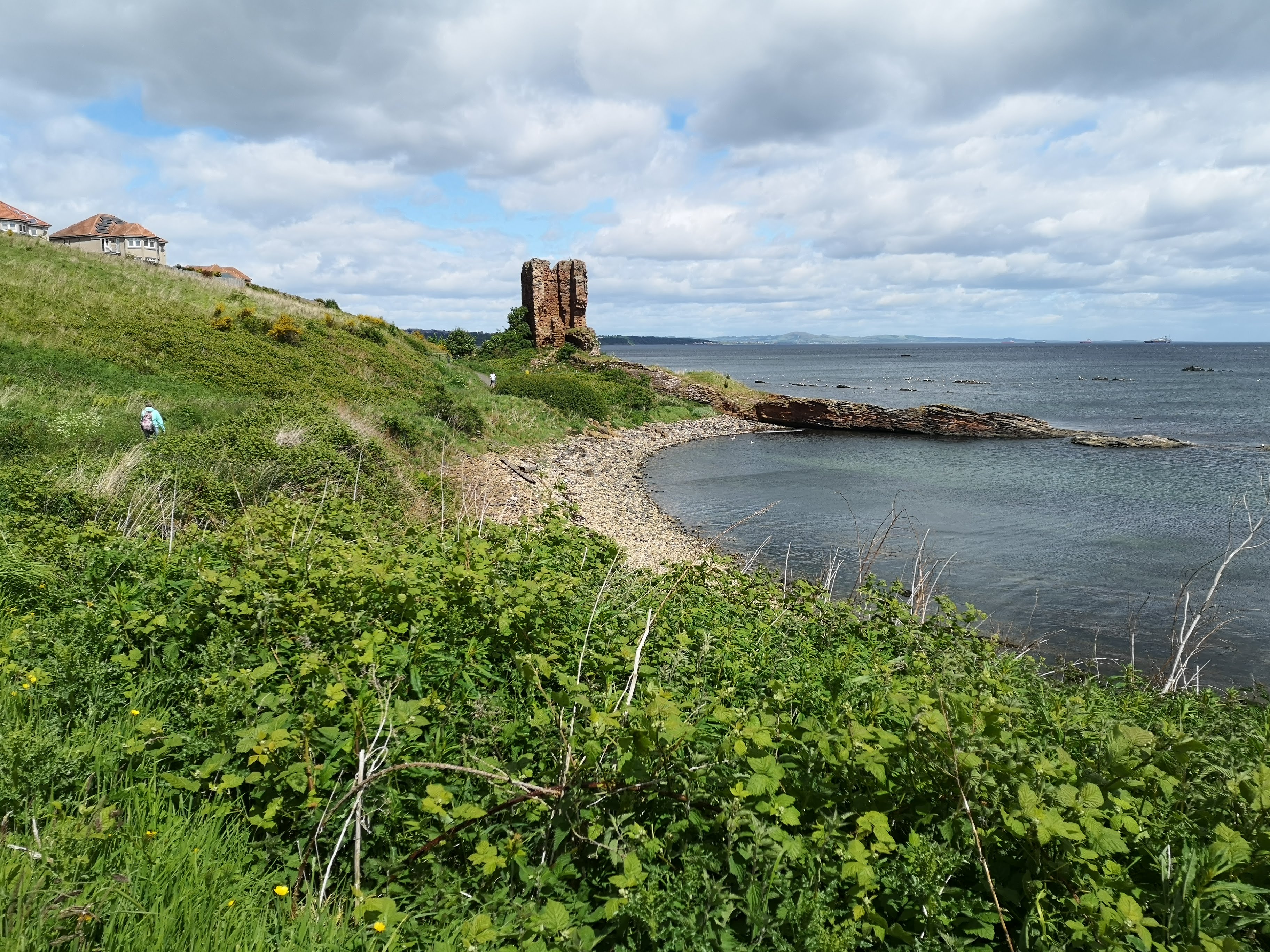
  • I thought Sunday was the final day (I’d put it in my diary wrong – don’t ever rely on me to be reliable) and on Monday I was doing this really long walk in Fife (the final day of The St Margaret’s Way) which meant that I had to be on an early bus and couldnlt walk the usual route
  • Thank godness art doesn’t have to be a precise science

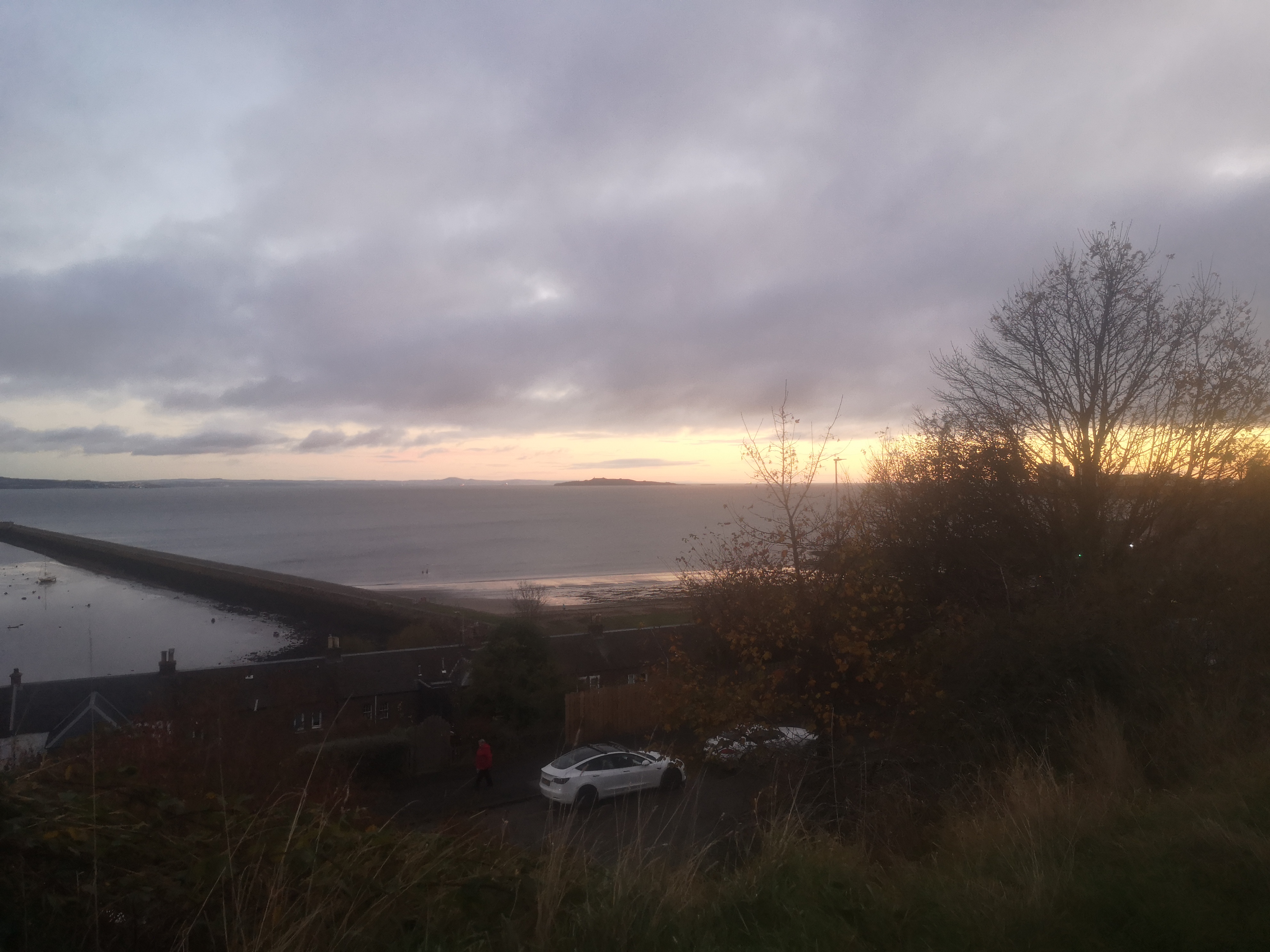
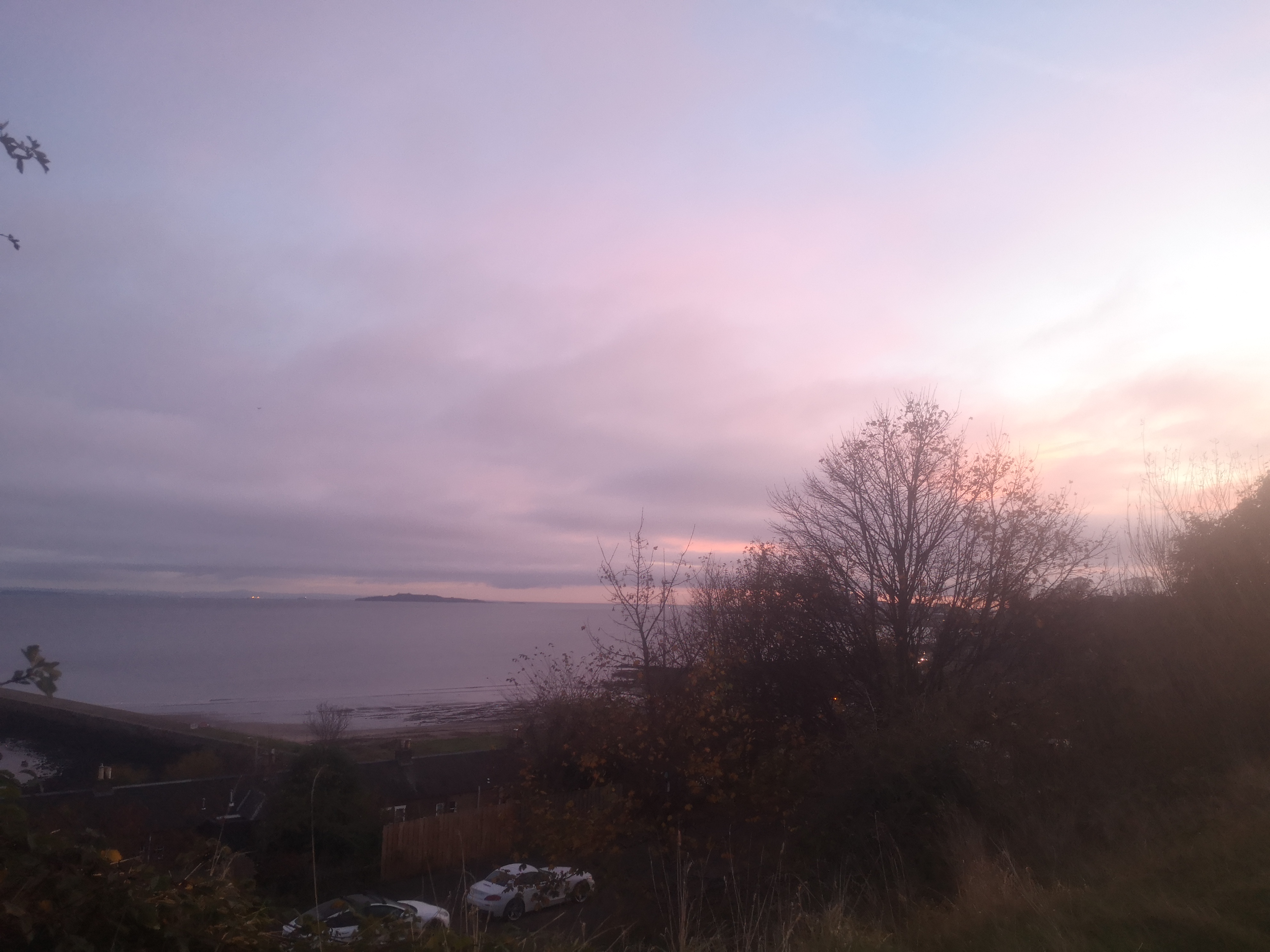
Photos Taken at Sunrise (pretty much)

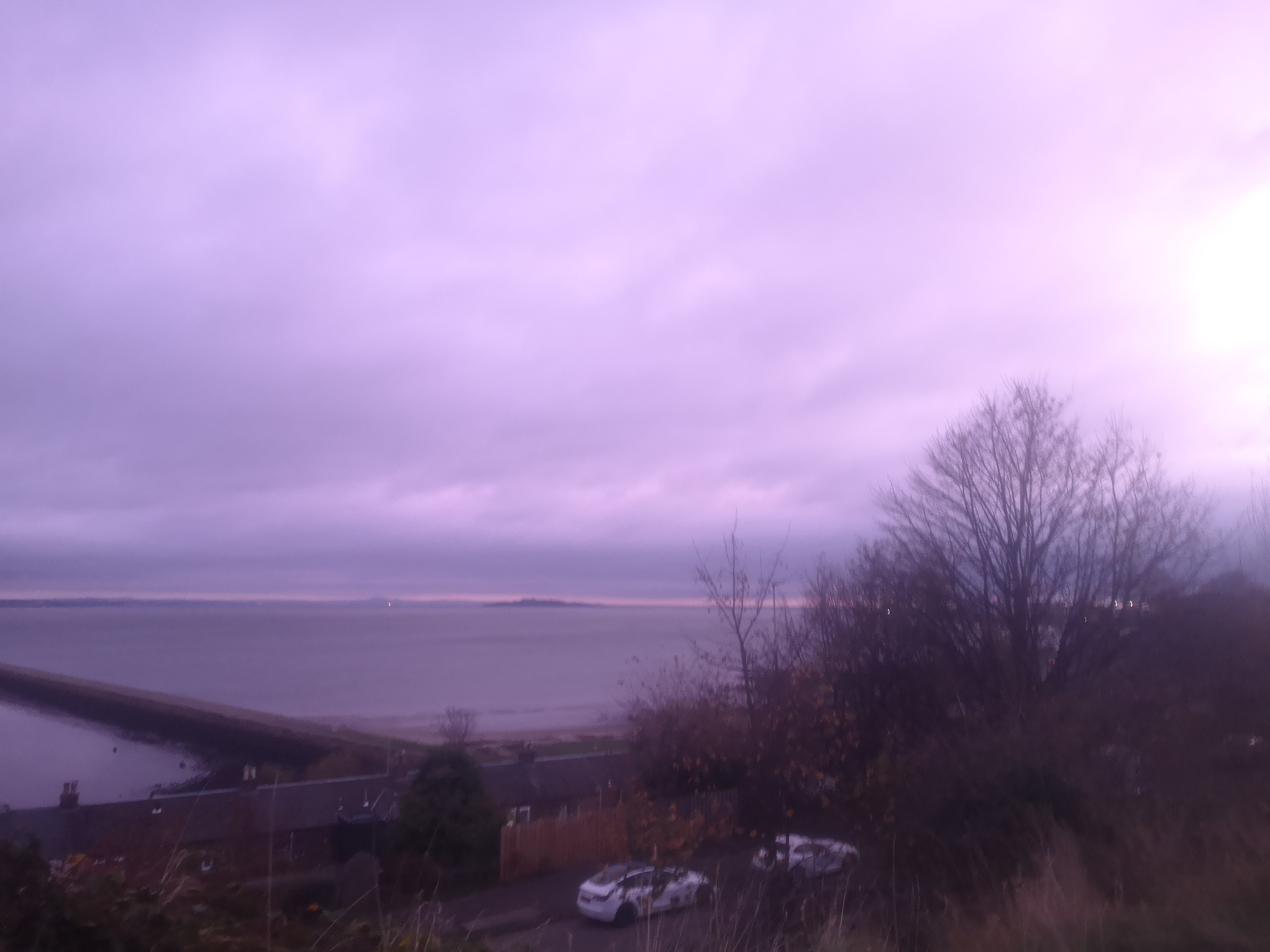
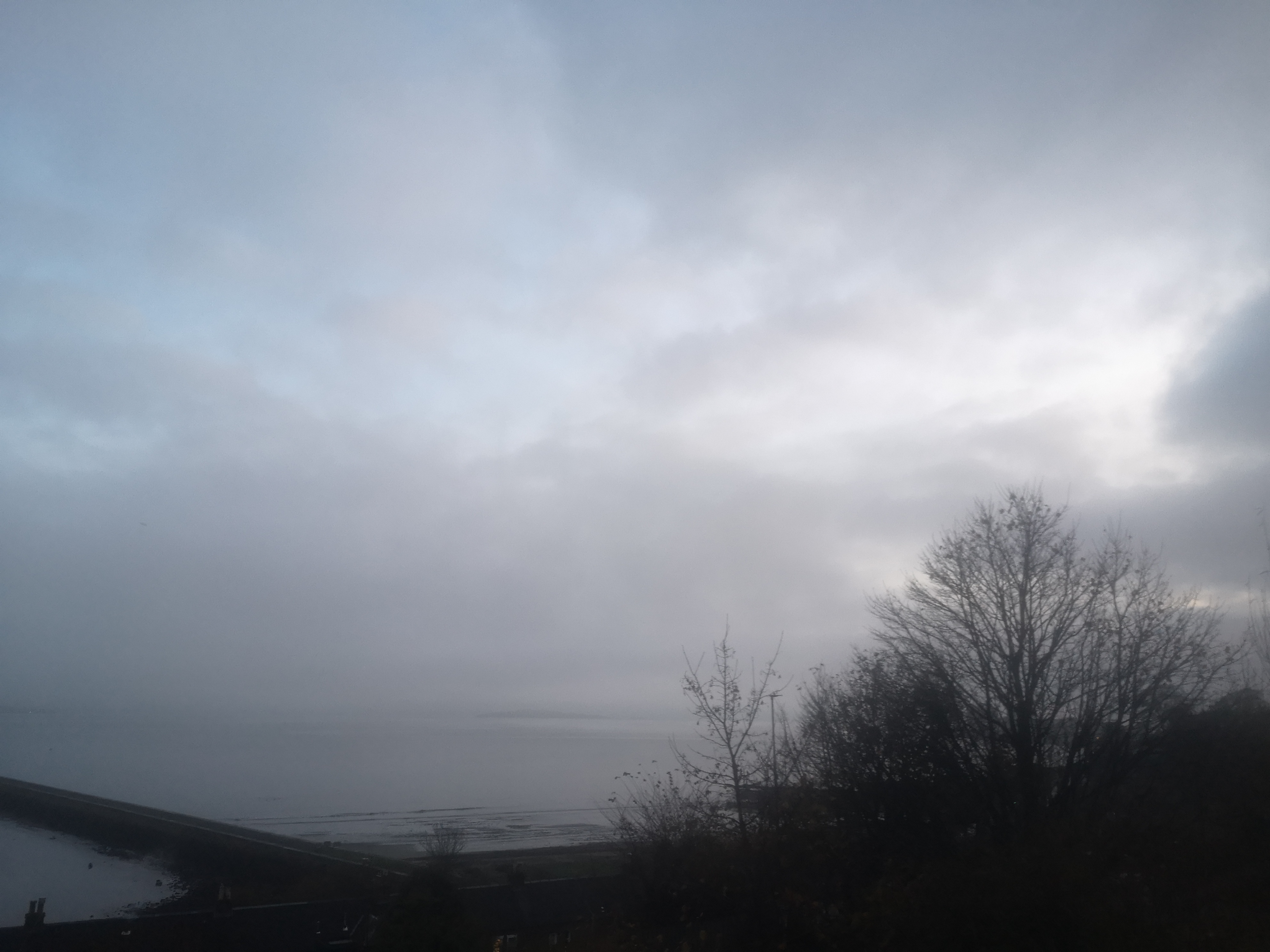
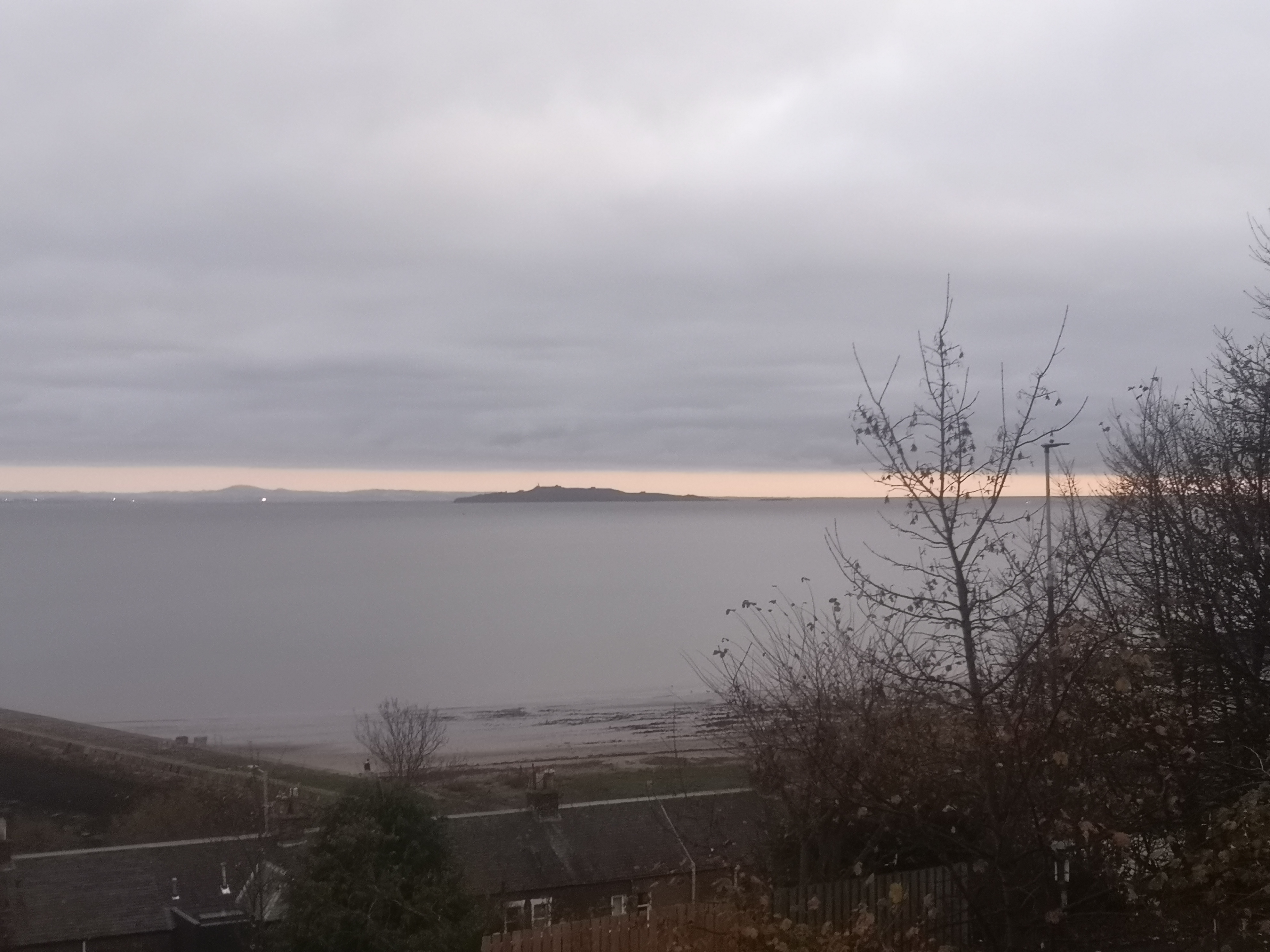
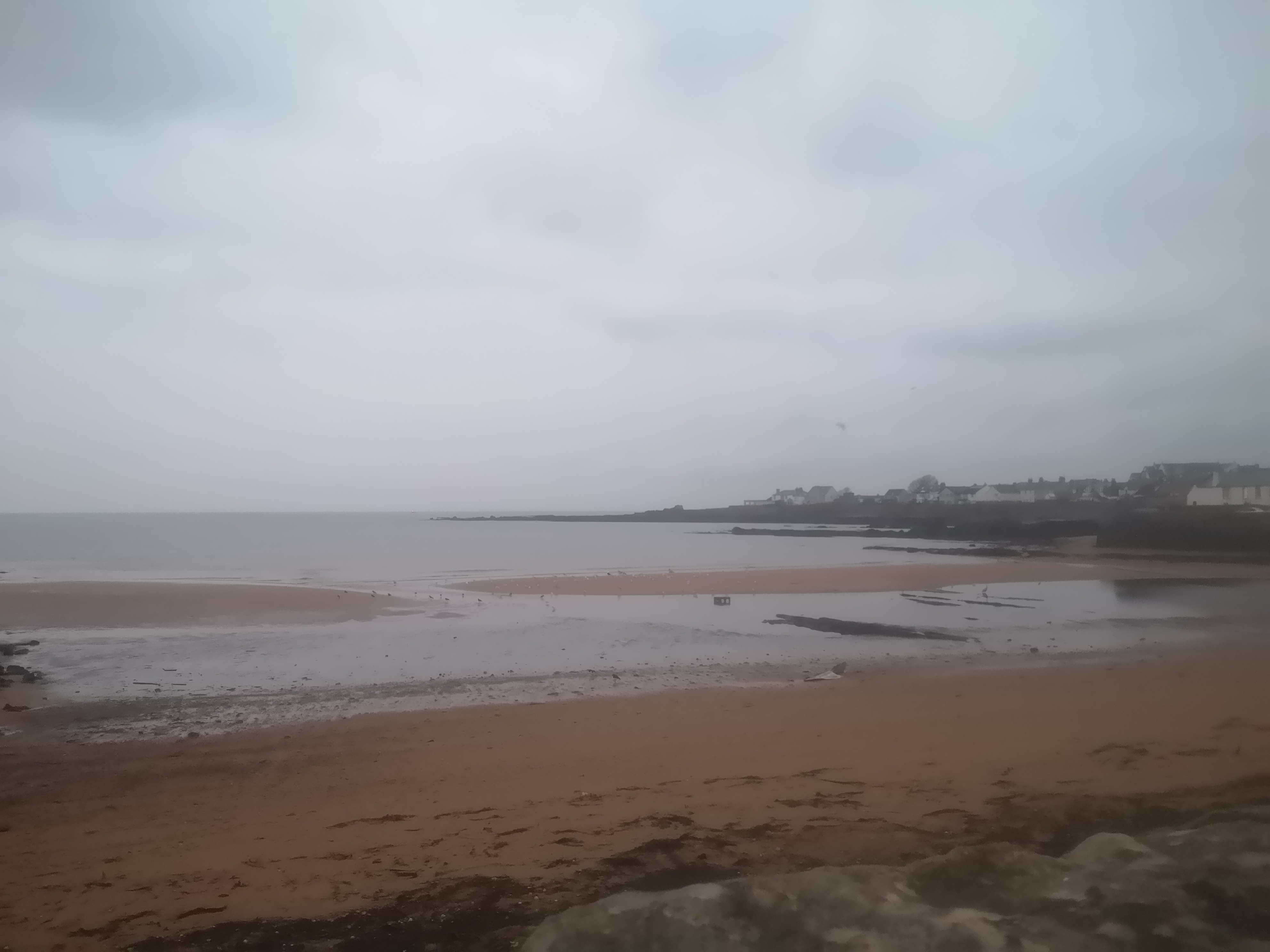
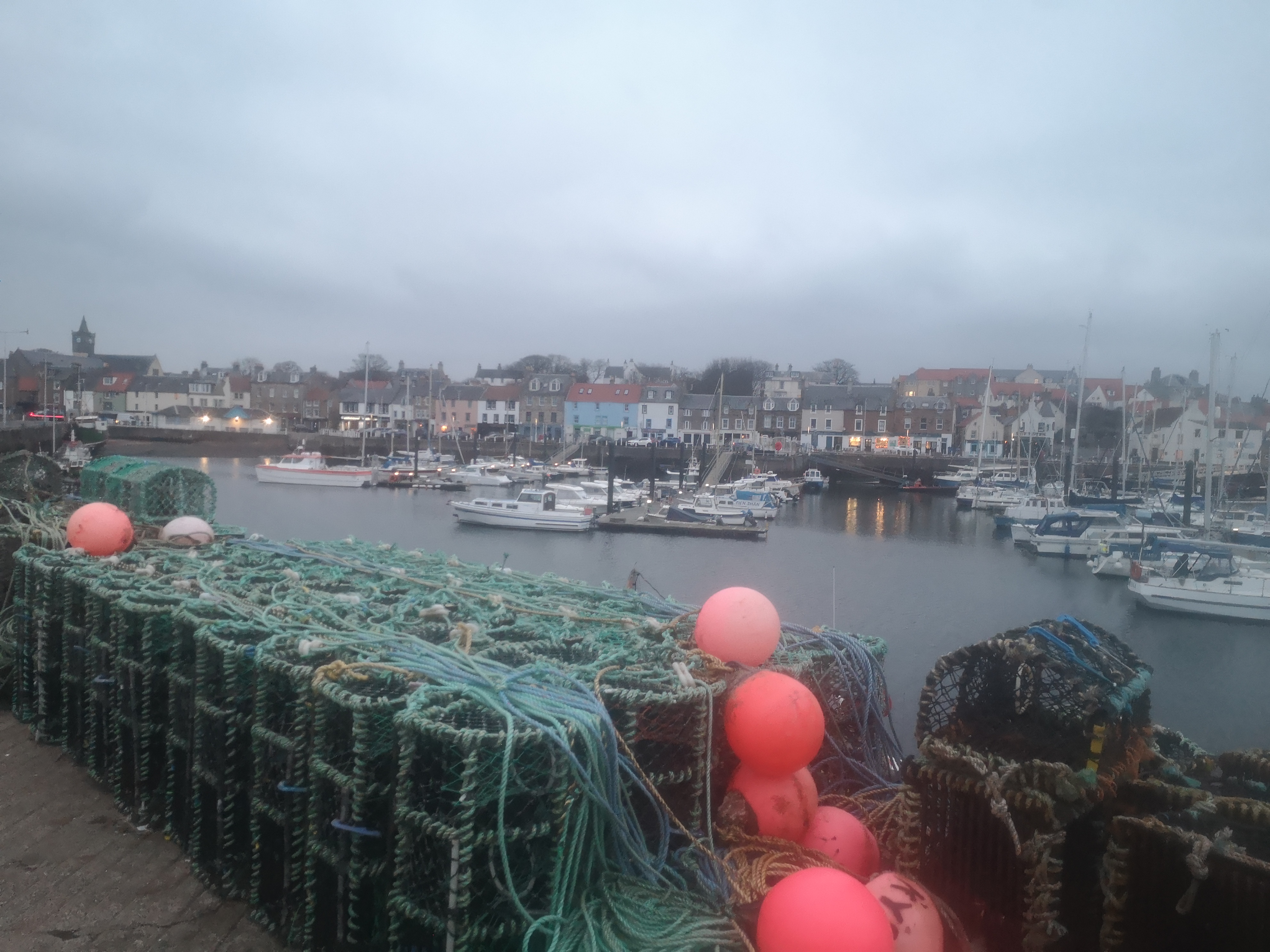
Notes on photo gallery above: Sunrise Photos. Day 1 was taken 2 minutes early because of the phone debacle. Day 6 was not taken at the right time either which you can see by the sky colour, though it is a rather nice, pinky purple). The 9th picture above was taken in Anstruther. It wasn’t a Sunrise Walk day, but I needed 9 images to make the photo grid work and found that I had taken a photo at exactly the right time.

What did I discover?

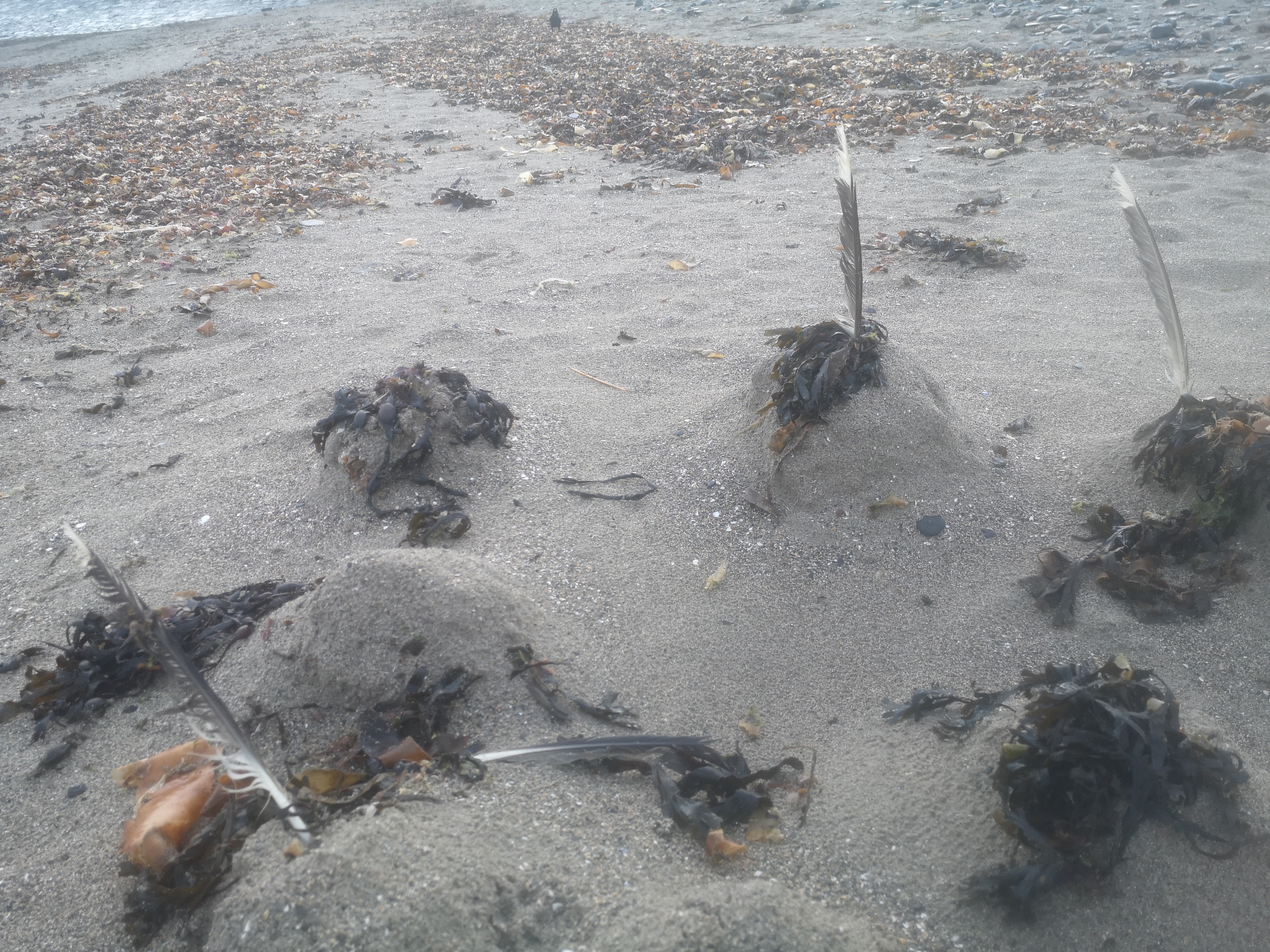
A long, thin black feather and a small slim, silver-blue fish, both on the strand – a grounded agent of flight and a beached swimmer. A series of sandcastles with upright feathers stuck in them like sentinels of the dawn. Border lines: Fife and Inchkeith Island on the horizon; the Eastern breakwater dissecting the sea, along which silouettes walked; the dividing line between the light and dark skin on my arm where the nettle stung me and left a tingling sensation for the remainder of the day. Fallen white poplar leaves and a camp in the little woods with silver tinsel looped over a branch.

Day 5, A Windy Film

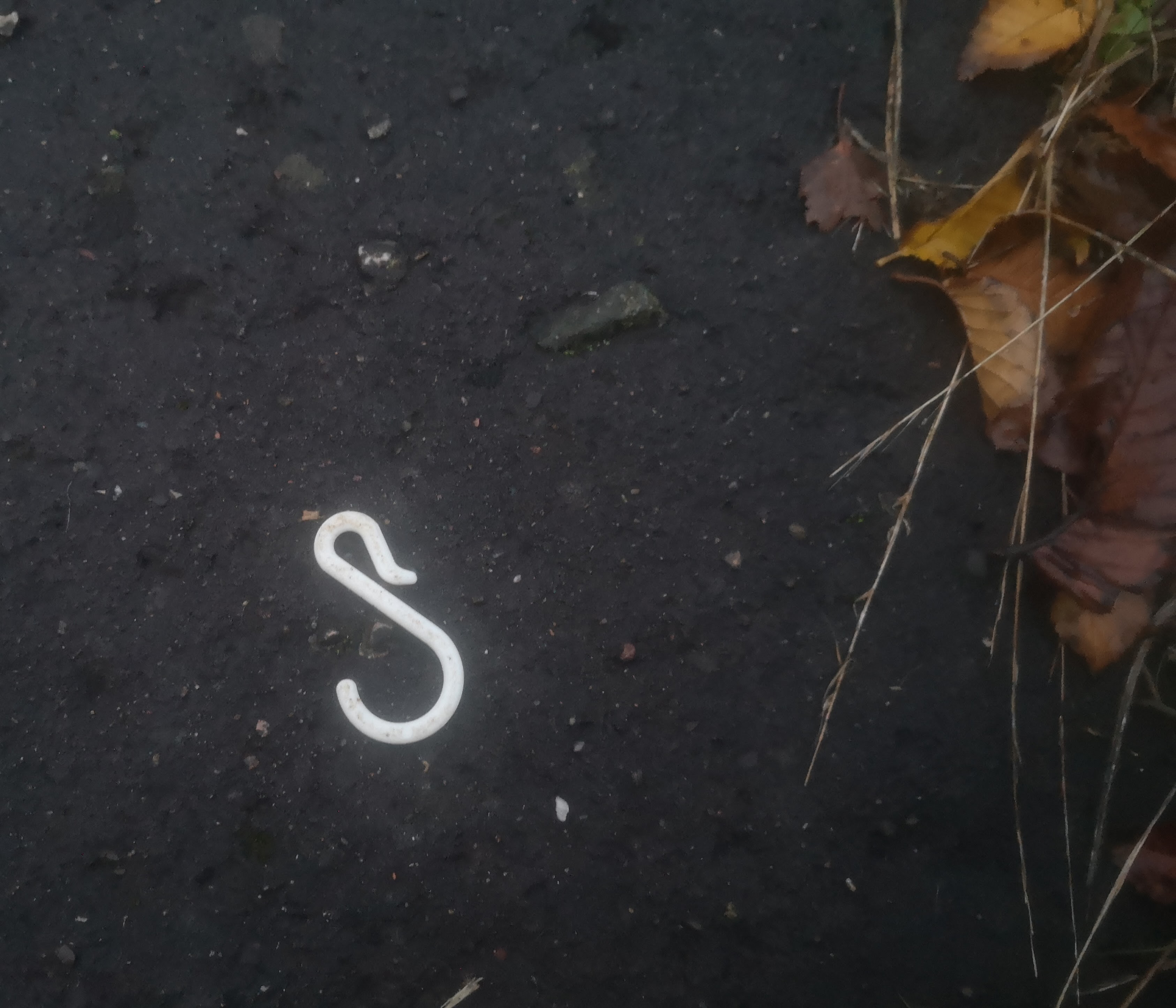
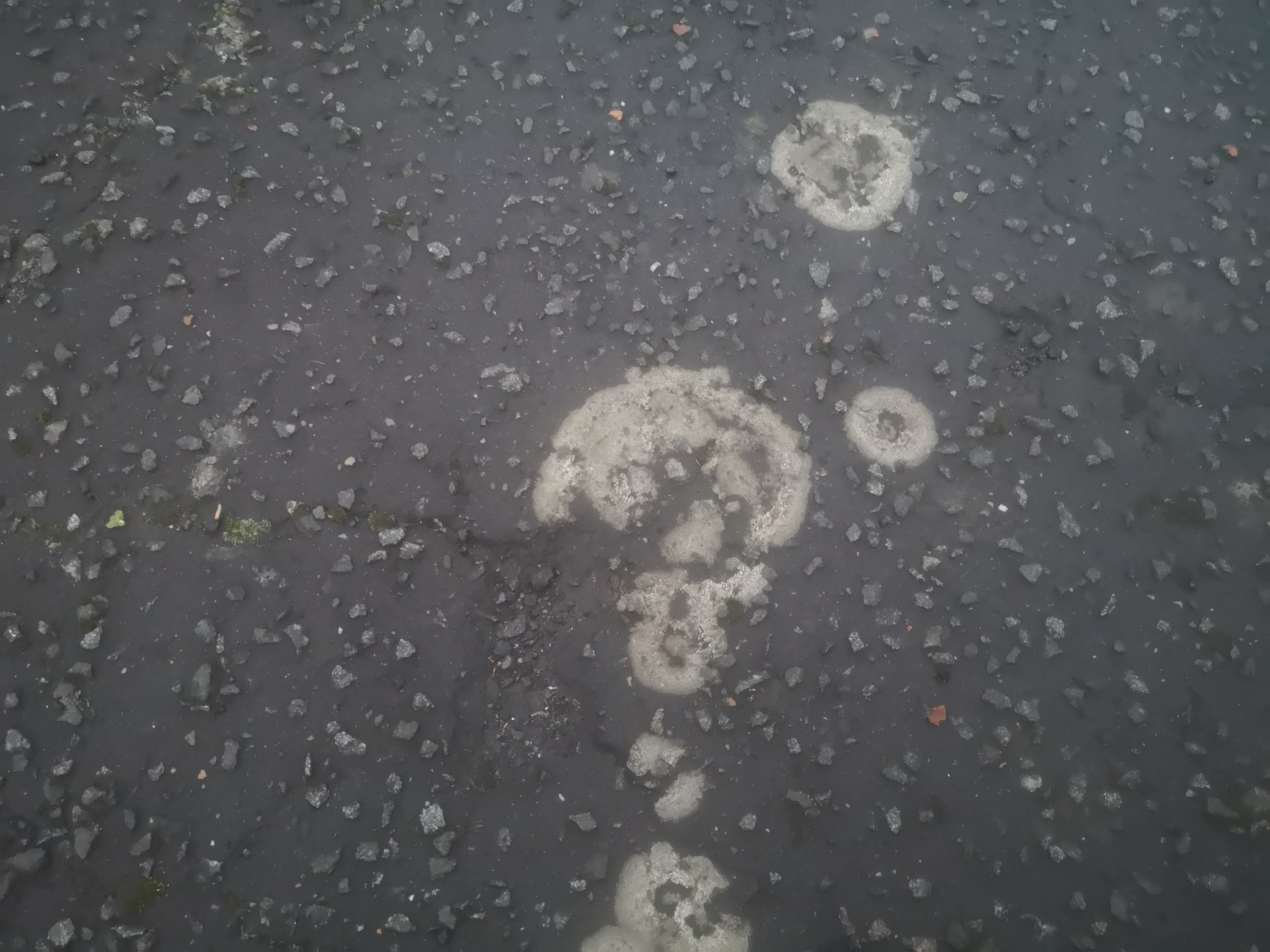
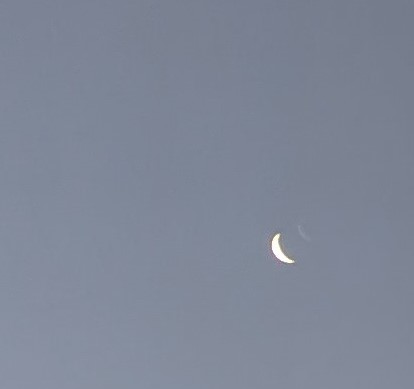
I learned that even when I get up at almost exactly the same time every day and walk almost the same route, the world is always different. It’s never the same. My thoughts are not the same, nor are my actions (even if I try) and neither is the sky / moon / sea / trees / rubbish (though the s-shaped hook was there impacted into the pavement every day). I liked the way the lichen pattern nearby and the shape of the crescent moon above seemed to be related to the curtain hook.

These solo walks were also social occassions. I knew that I was walking with other psychogeographers all over the world. We all shared on Intsagram and sent messages to each other, building up relationships over this 8-day period and, in some cases I knew some from previous Sunrise Walks or in-person meetings – I could picture Jackie in Dublin after walking with her in Canterbury, England, Carol near Philadelphia in the US after we First Friday Walked together along the Thames in London last month, and Kel who I’ve before met in Greece and Gloucestershire. Many, if not all, are part of the Walking Artists Network, and Carol, Kel and I are members of Walking the Land Artist Collective.

The last word(s)

I’m awake every day now. At dawn. Is that what it takes?

Compare what happened to day 7! It turned from dull to golden.

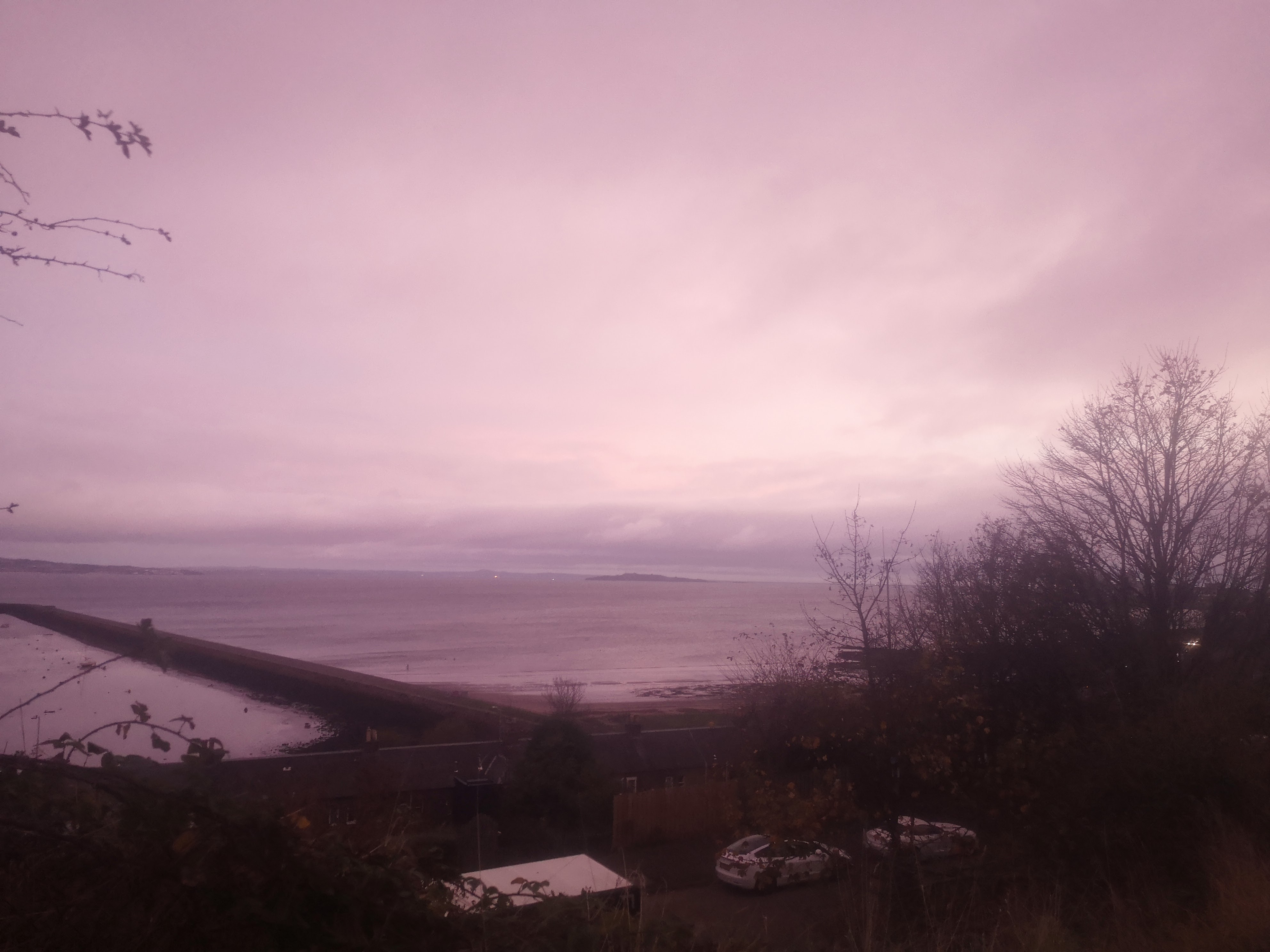
Photos Taken 15 Minutes After Sunrise (but not always)

See also: Lia Leendertz’s New Almanac

My 52 Walks with Blake Morris

Link to instagram page where, if you scroll down, there are other Sunrise Walks images I’ve done it before!

Slow Travel (overland)

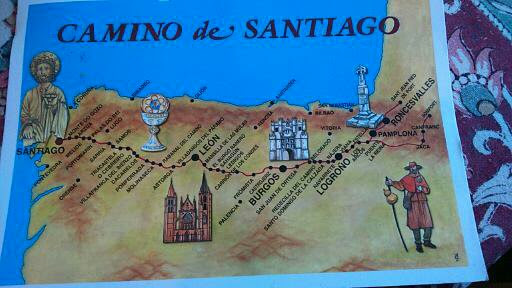
I’m championing Slow Travel, blogging about going overland on foot, by train, bus, Bla Bla Car, or ferry. I began in 2016 by taking a boat to Santander from Portsmouth across the Bay of Biscay, and walking around Spain, including from Pamplona to Santiago de Compostella (most of the Camino Frances) which took 5 weeks (approx. 410 miles / 660 kms). Then in 2023, I decided ‘no more aeroplanes for me’.

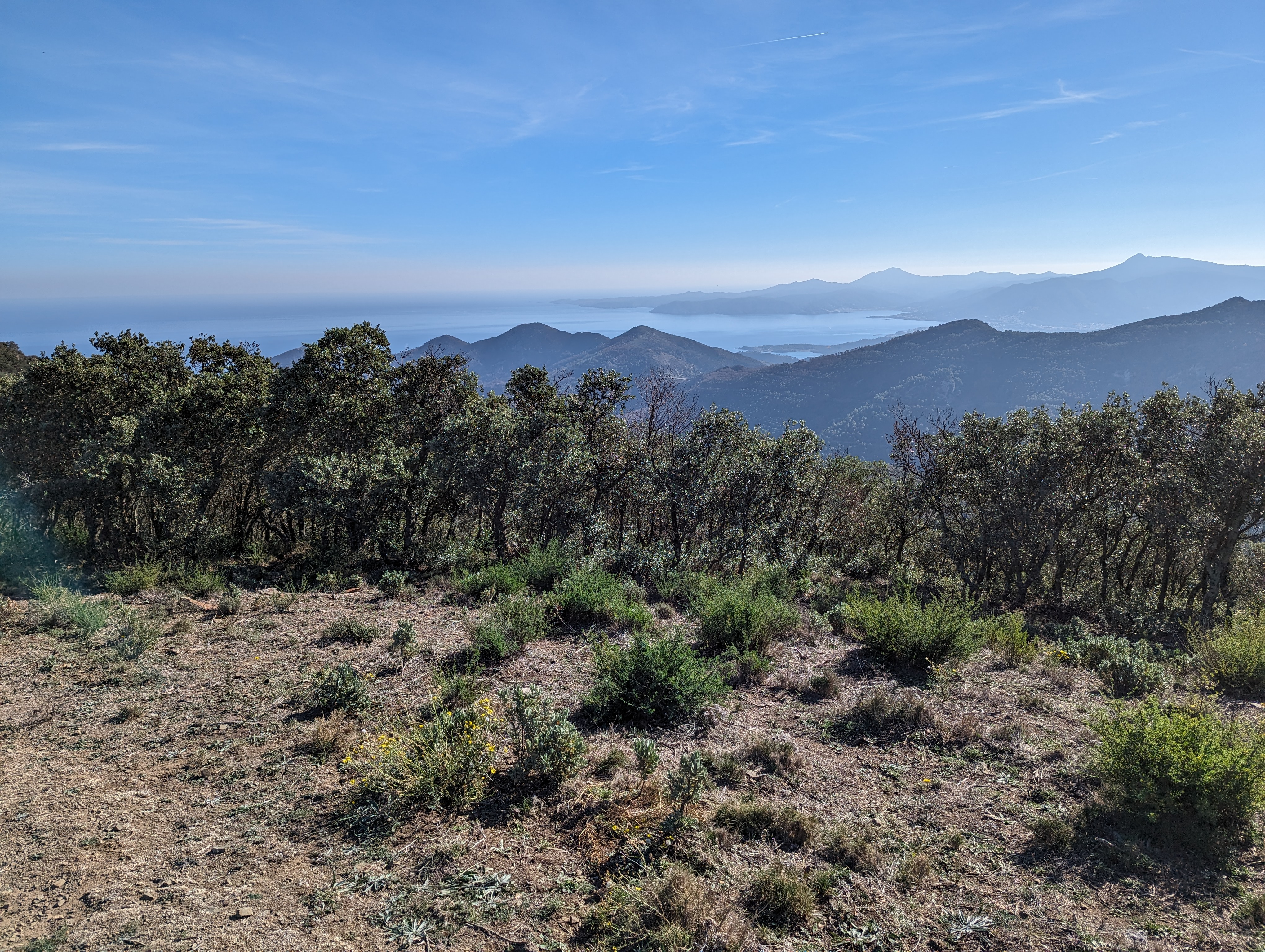
Pyrenees on the Walter Benjamin Trail 2023

There are several reasons why I’m doing this: the most important two are to avoid producing carbon emissions when flying, and the pleasure I get from being able to feel the ground under me and see the places I’m passing through. Ideally, I would walk, and I’ve done a lot of that, but I generally move between cities on wheels on a method of transport where I’m sharing with other people. I’m concerned about global warming and climate change, and would prefer not to be responsible for making it any worse, if possible.

This type of journey is slower. It takes more preparation time, and is often more expensive too, which means that I must incorporate the travel days into my itinerary rather than adding them on to the beginning and end of a holiday. I have chosen to make this a part of my life and art, and I know how lucky I am, privileged, to be able to do that. I stop off whenever I get an invitation to give Shiatsu, exchanging with people as I go, which means that I often meander instead of going in a straight line.

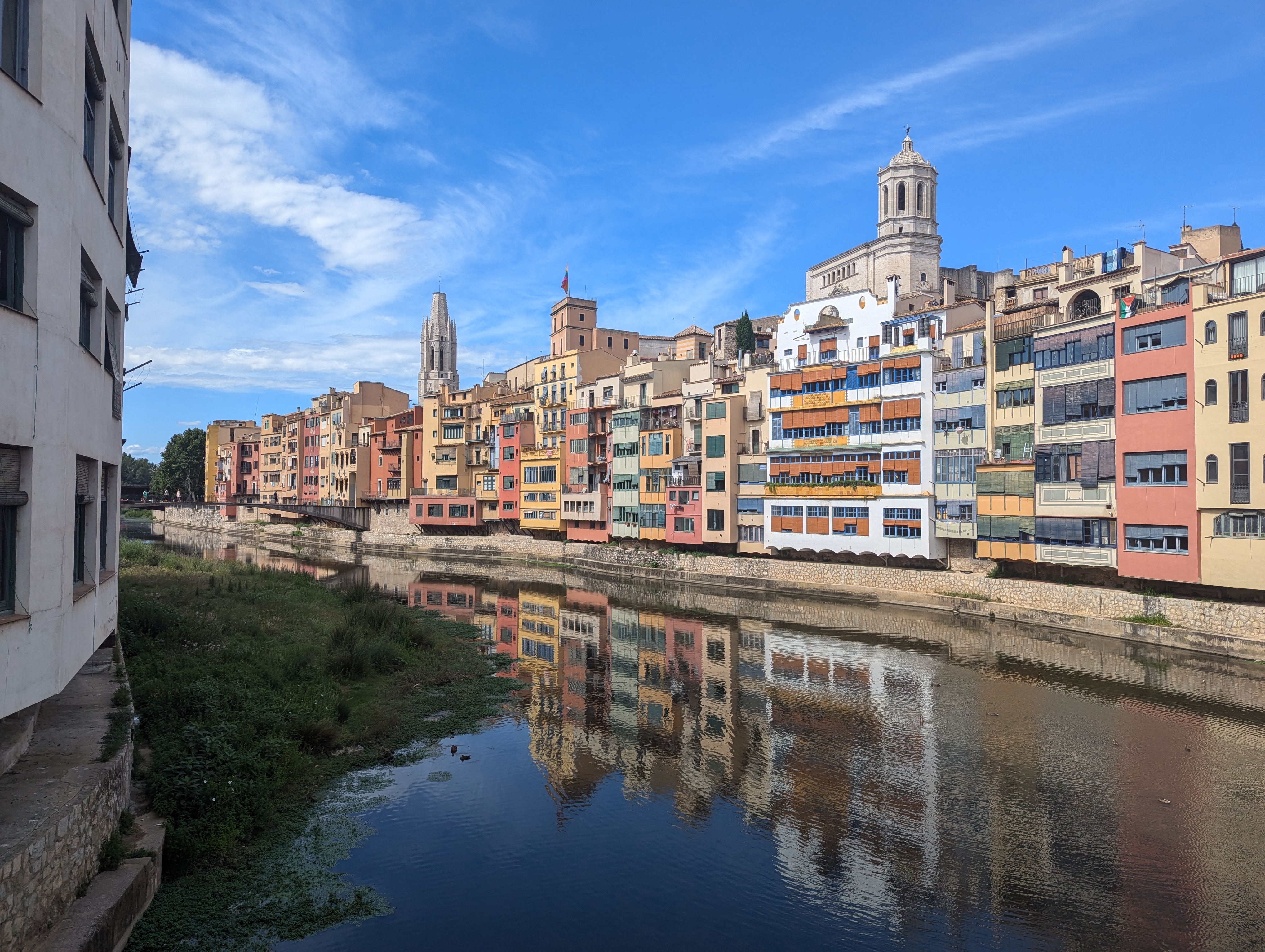
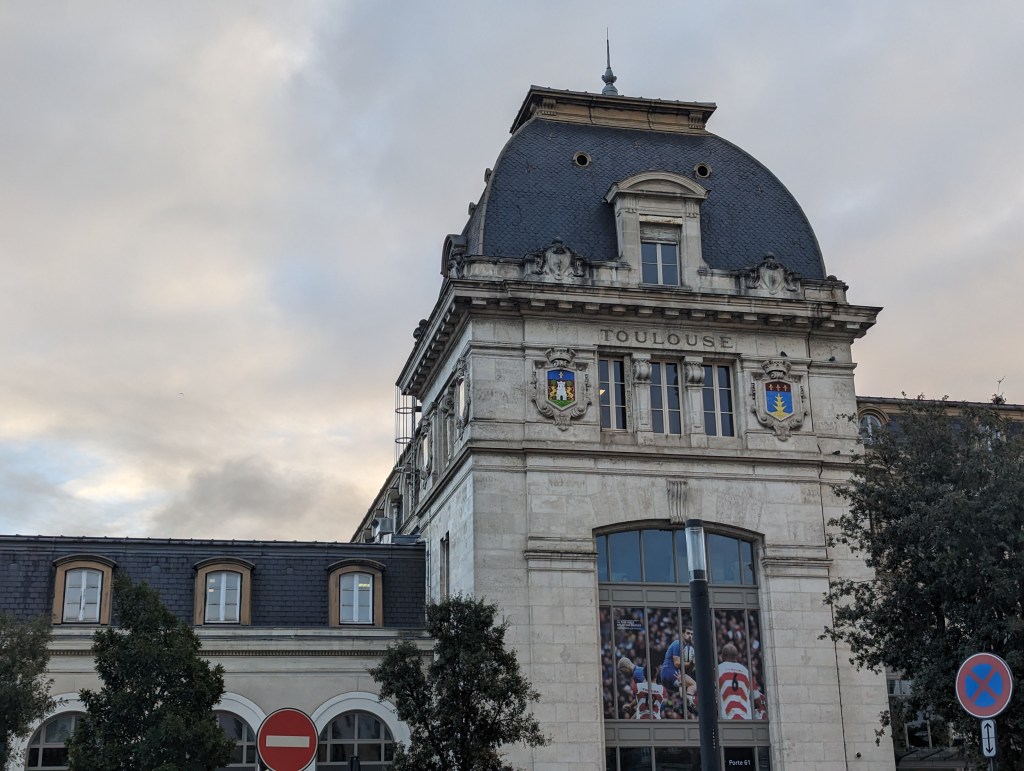
Toulouse-Matabiau train station between Paris and Girona

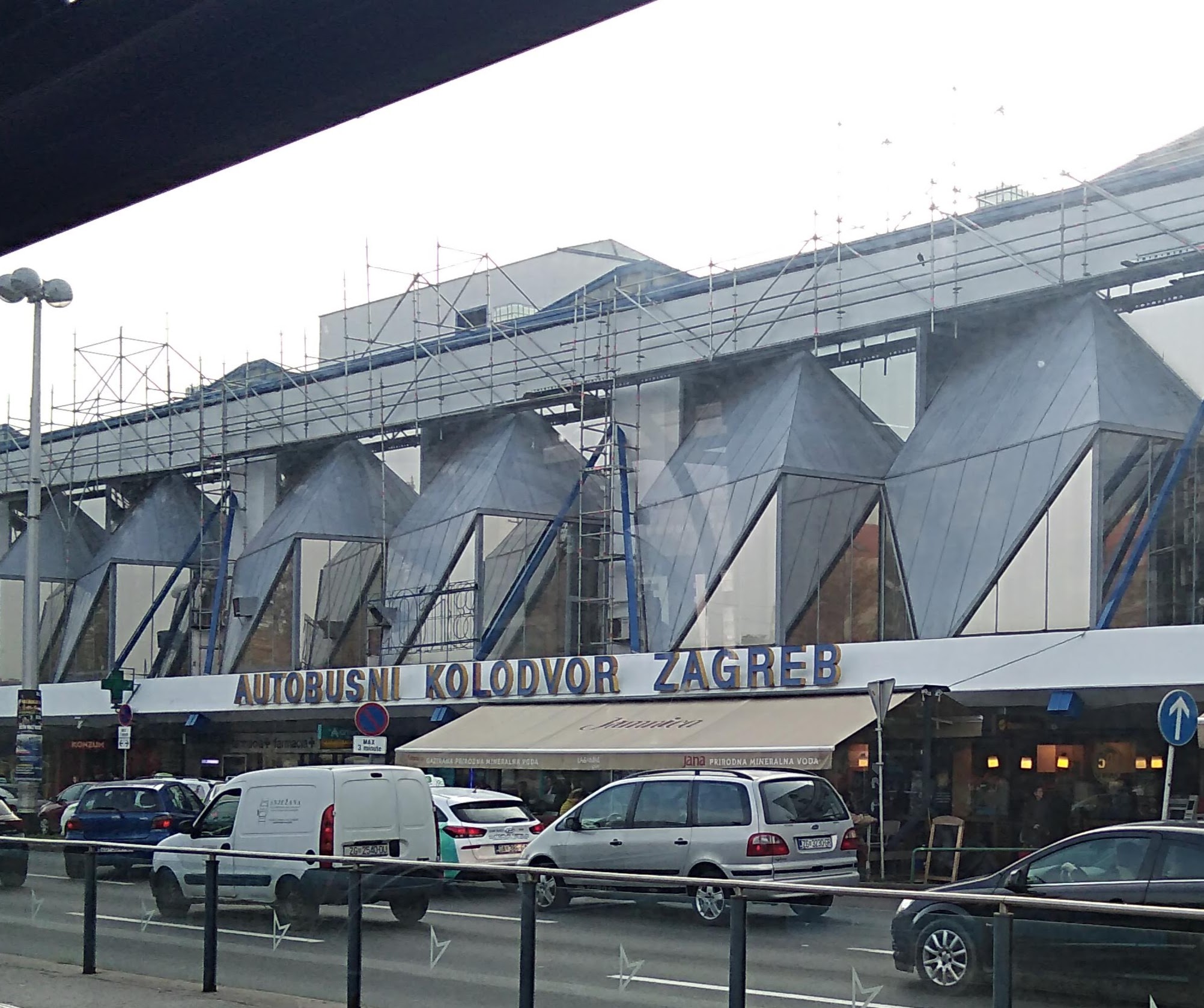
Between 2016 and early 2023, I did fly (although I often walked from the airport to where I was staying eg in Dublin), so you will find that info in the older blogs (see below, when I went to Croatia, for example. I flew from Paris to Milan and took buses from there to Zagreb.)

Zagreb bus station

Scotland – Greece 1

Scotland – Greece 2

Scotland – Spain (2024)

Portsmouth (England) to Santander (2016)

Walking Spain on foot (and how to get there)

Croatia (includes some airport info as I didn’t make my promise to stop flying until early 2023)

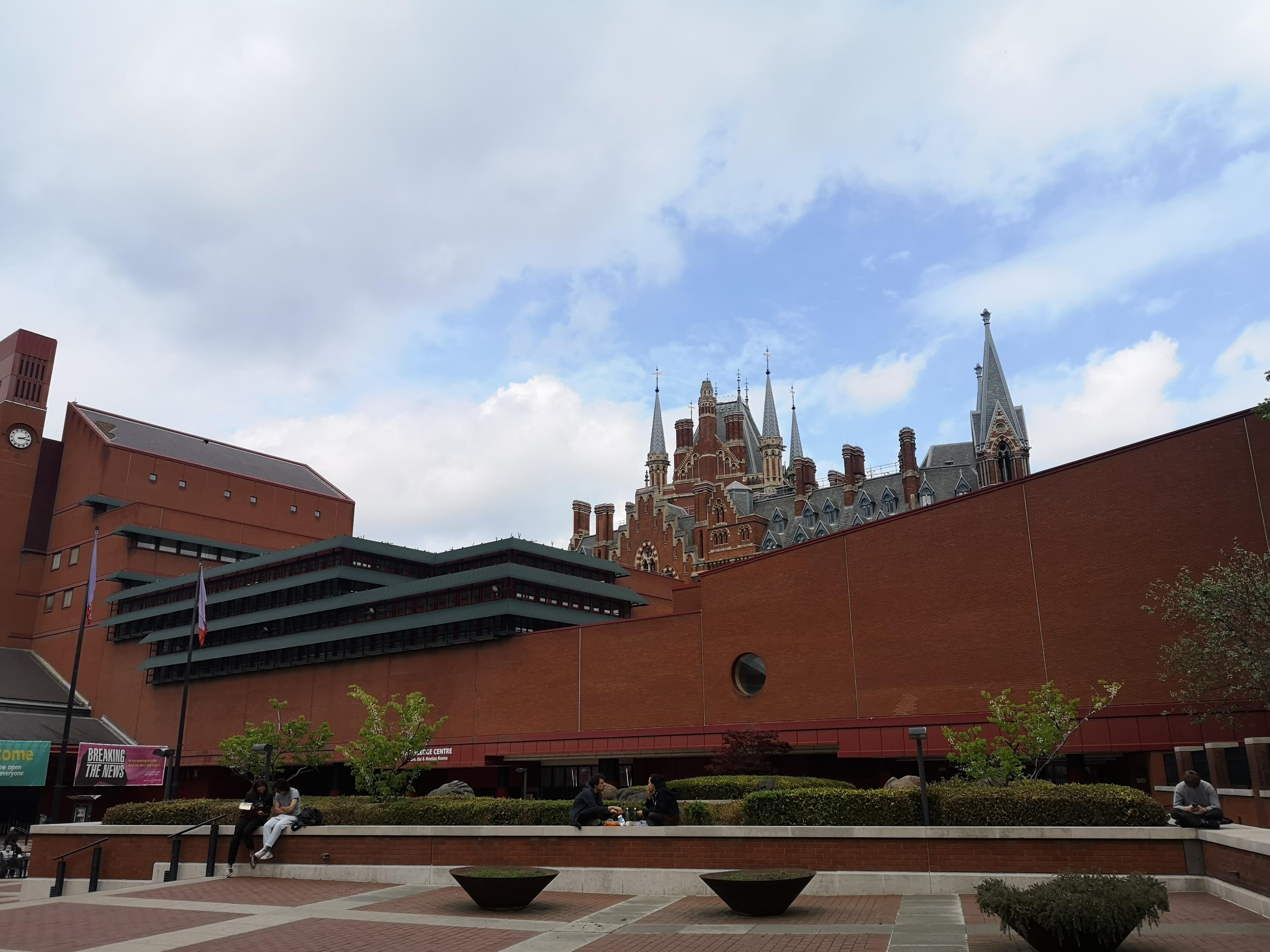
St Pancras Station, London (where you can take the Eurostar to Paris and Brussels)

Tinos and Chora town

May 2023

Introduction

I thought I might take a break after teaching Shiatsu and giving supervision in Athens, so I looked up islands which were easy to get to from the capital and typed the word ‘pilgrimage’ into the search engine as a starting point. Tinos came up immediately. It’s not only a vital place of pilgrimage for Greek people, but it’s also famous for its dovecots (see photo at the end of this blog), which I have been studying for a few years now. To Tinos I had to go!

Map of Greece showing the location of Tinos in relationship to Athens

A sacred island of pilgrimage, Tinos is one of the Cyclades, and has a deep history that is crucial to Greece herself. Since the 7th century, a feast has taken place there in honour of the Dormition of the Virgin Mary (her passing from the earthly state). Then, in 1823, two years after the Greek War of Independence had started, a nun called Pelagia found the Holy icon of the Annunciation of the Panagia in a field. Considered a divine omen for the Greek Revolution, a shrine / church was founded to coincide with the agricultural calendar on the island, and a festival was established on 15 August to which women and men flock each year.

In the first [of several chapels at the Shrine] is a holy spring, where pilgrims collect water which has powers of fertility and cures sickness. According to tradition, the well was found during the excavations in search of the icon. The well was dry. On the day the church’s cornerstone was laid, it filled up with water. The source is seen as a miracle, and the chapel of the holy water is called the “Life-Giving Spring.”

Evy Johanne Haaland

Evy Johanne Haaland, a Norwegian researcher (Dr/PhD, history) and government scholar, writes here about Palagia, and the ritual that women through the ages have performed – climbing up the steep hill from the sea to the shrine on their hands and knees, sometimes with a child on their back.

Greek women are strong and active persons …, thus paralleling the divine Panagia.

Evy Johanne Haaland

Shrine to the Panagia, Chora, Tinos, Greece

Practicalities

Chora is the main town of the island, also known as Tinos, and is where the ferry arrives and leaves from Athens. I took the ferry to and from Rafina (not far from Athens – take the inexpensive KTEL bus).

Old photo of Chora, Tinos, Greece
Resident pelican, Chora, Tinos, Greece

The town is well stocked and bustling with pretty, narrow streets, a long waterfront (including the port) and steep climbs to the Panagia shrine.

There is a good bus service across the island, but NOT on Sundays and I didn’t find it easy to get information about when they run.

Café

Recommended book café: Antilalos, Fr. Paximadi & Afentouli, 84200 Chora, Tinos. The owner and other staff were so very kind to me. I arrived on a Sunday and had booked an air bnb at the opposite end of the island – too far even for me to walk in one afternoon (though I walked from Pyrgos to Panormos which was wonderful). They made phone calls on my behalf and really helped me out. There were no taxis because, of course it was some sort of festival and so everyone was celebrating with family. I started to walk, but it was far too hot at midday, so in the end they arranged for a taxi driver they knew to come on his day off from another village and pick me up. He took me to Pyrgos – more than three quarters of the way there, and I was really grateful.

Antilalos Café in Chora, Tinos, Greece

Accomodation

I stayed at the Pension Selenti which I would recommend.

Evening view of Chora town from the Pension Selenti, Tinos, Greece

Old Weaving School, Chora

Zarifios Vocational School (Βιοτεχνική Σχολή Τήνου Υφαντήριο) is a legacy of the Zarifis family originating from Constantinople. Since 1898, Zarifios School has been a reminder of the gratitude of the family of banker Nikolaos Zarifis towards the governess of his children, who took them to the safe environment of Tenos (sic), when riots broke out in the Constantinople. The school emphasized in the traditional weaving art supporting women and society in adverse conditions. Today, 200 years later, it still continues to have a presence by supporting the School and textile workshops.” Description from thehouse.gr website

Archaeological Museum

The Archaeological Museum is worth a visit.

Built in the early 60s by the architect Charalambos Bouras, the Archaeological Museum of Tinos contains finds from Chora, the main town, as well as the hill of Exombourgo, local villages, and the Sanctuary of Poseidon. I particularly enjoyed the little courtyard with its bodyless legs and lace-like mosaic.

Archaeological Museum, Chora, Tinos, Greece

Artist’s Residency and Maria Valela

There was an Artist’s Residency taking place on the island when I was there, and I was particularly pleased to meet Maria Valela, a weaver, who gave an inspiring demonstration at the Old Weaving School in Chora, and invited me to accompany her to a local women’s knitting and weaving group that she was visiting. In return I offered her Shiatsu.

Maria Valela, weaver, artist

“The island is widely recognised for its marble tradition and was home to some of the most widely revered Greek artists of the 19th and 20th centuries.” from Kirki Projects page

Various photos of Maria and the knitting / crochet group, Chora, Tinos, Greece

The Inherited Earth artist residency programme was part of the Fe26 project a collective research program by the NWMW NPO team 2023. “The Fe26 project brings together an interdisciplinary group of people to exchange knowledge and practices around metal as matter, material, and object in conjunction with locus, crafts and identity. In this aspect, the NWMW team has envisioned along with curator Christos Artemis “The inherited earth” Fe26 residency.” ARTrabbit.com

Links

The second in this series of blogs about Tinos is Tinos and Kionia

Map and walks by Desired landscapes

Secret Tinos blog

Typical dovecot, Tinos, Greece