There is a spiritual-political-geographical link between Edinburgh, Scotland where I live, and Cataluña in the Iberian Peninsula where the Encounters are taking place (Girona, Olot and Vic). In both countries, we have long been engaged in matters of self-determination, with debates over separation and unity, community, national and inter-national relationships. Whilst primarily represented as a battle fought in law courts and parliaments, or between opposing protesters on the streets, this has often been a binary approach. It is necessary to spend time listening, sharing and making work with artists and members of the community in order to understand each other better and find possible ways forward.
Europe is defined, in many ways, by borders. They speak of crumbled empires, shifting boundaries – most of them, …. speak of unimaginable suffering.
Kerri ni Dochartaigh ‘Thin Places’ p17
As a walking artist, secular pilgrim, feminist and outdoor performer, I will carry the awareness of these issues from the Scottish hills to the Cataluñian mountains, from Edinburgh’s extinct volcanoes (Arthur’s Seat, Calton Hill and Castle Rock) to the volcanic land of Olot, and between the Oak Wood in Dalkeith Country Park and the oak trees of the Plain of Vic.
I have been walking the St Margaret’s Way through the carboniferous volcanic rocks of the Burntisland area in Fife, Scotland, and will be able to carry my experiences with me on the ancient spiritual path which unites each of the three conurbations where the Encounters are happening, the Camí de Sant Jaume (Camino Catalán).
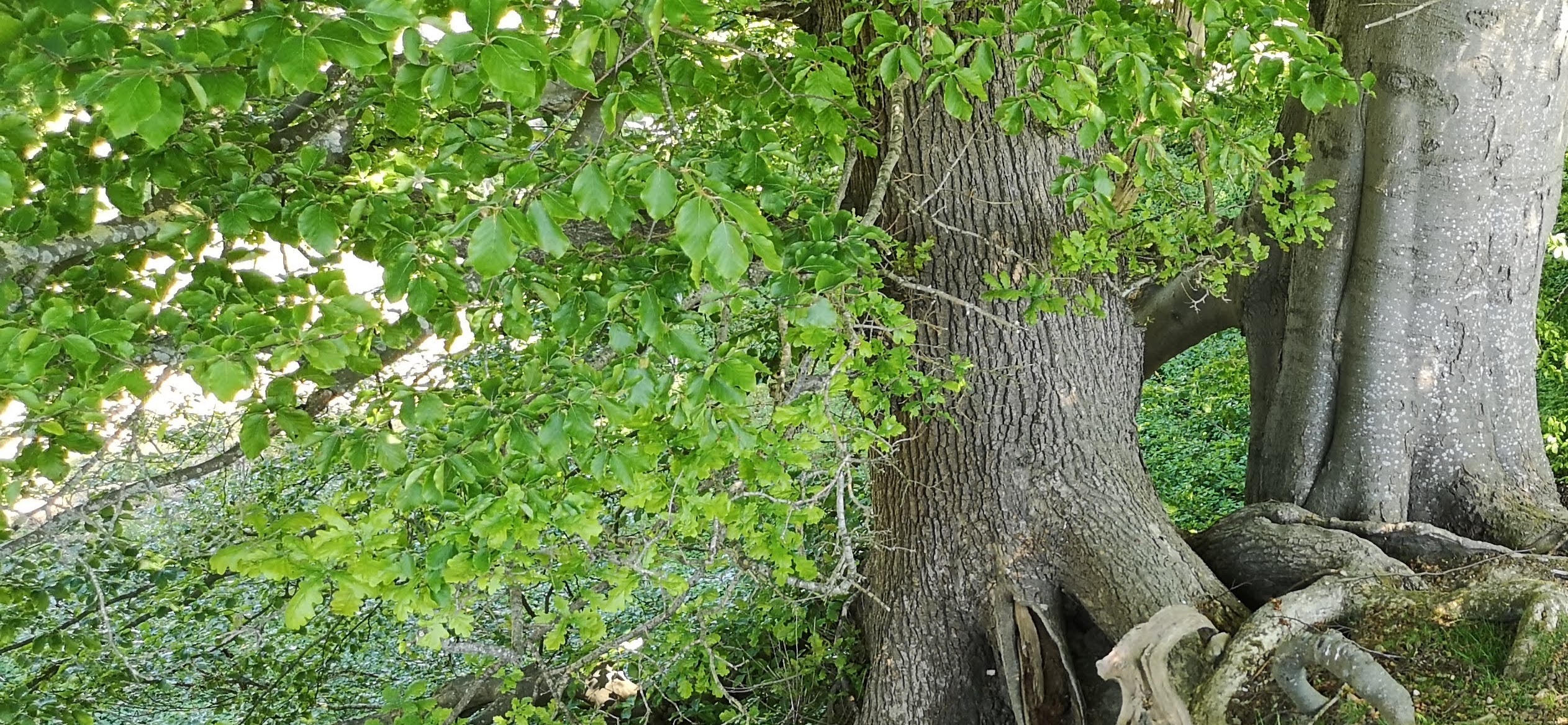
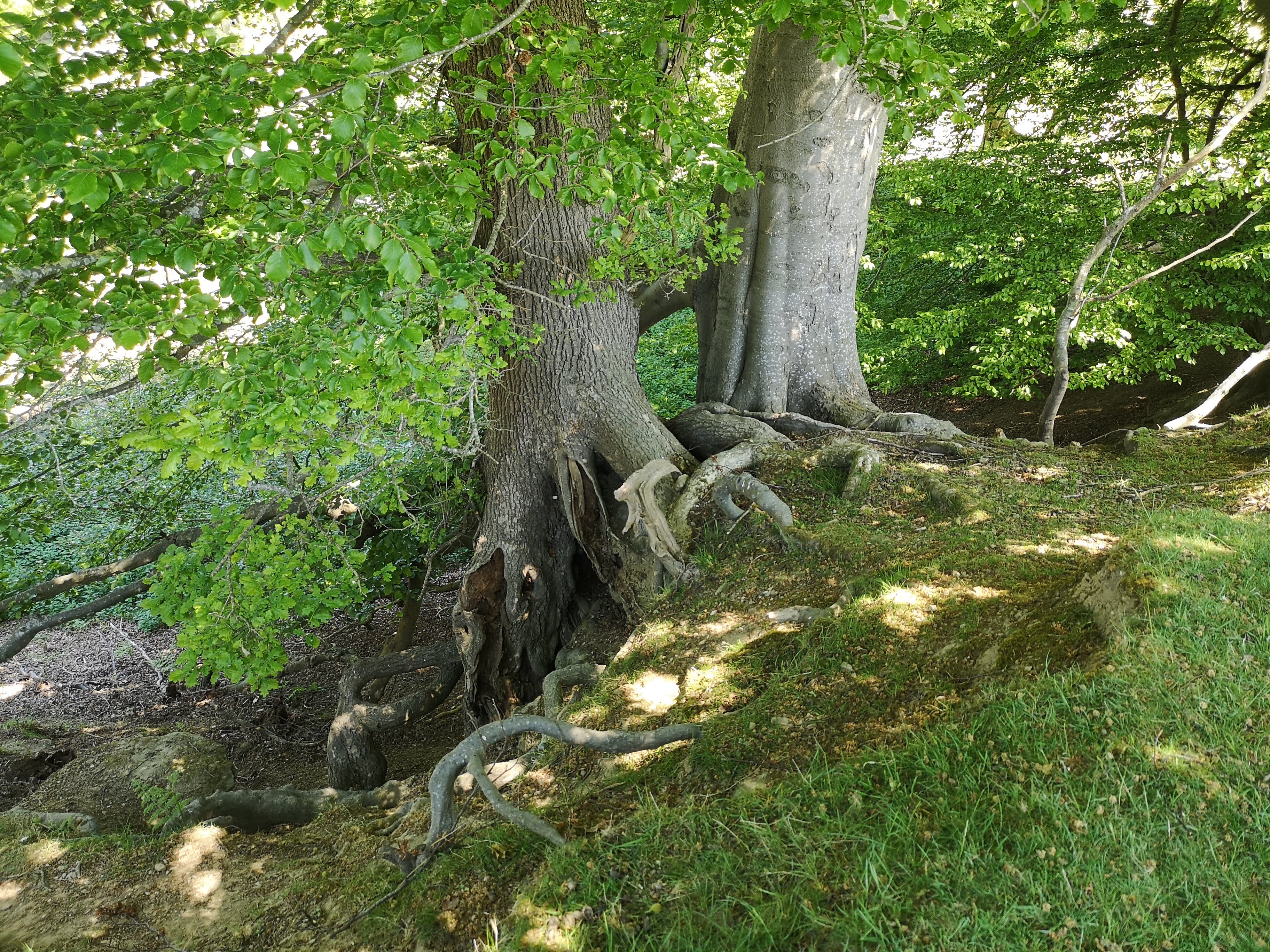
Co-mingling of Oak and Beech
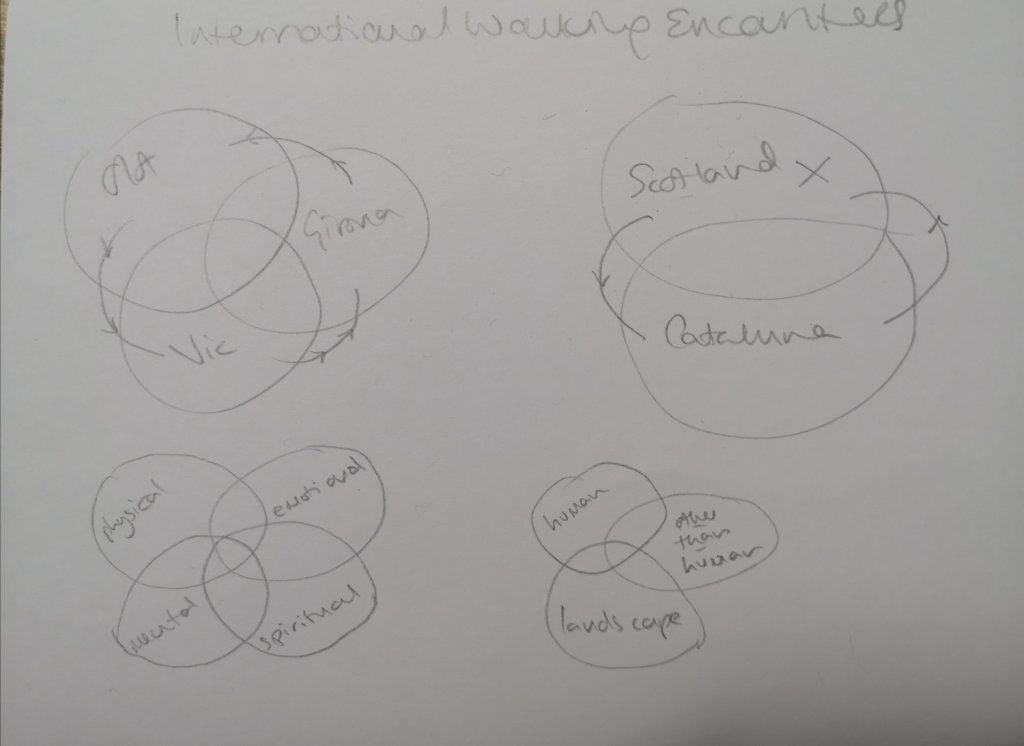
Separation and Unity
This is the artistic focus
in the human experience (notions of belonging and alienation, shared feeling and dislocation)
consideration of the other-than-human and our relationship to that realm; and in the landscape
Documentation:
Impromtu performance
Collecting words, images, marks, and sound segments
Mapping
Film and pamphlet on return to Edinburgh
Collaboration with delegates during the International Encounters will take the form of walking sections of the urban camino together in each of the three locations. This ritual series of three mini pilgrimages will be a way of considering the spiritual aspect (in the widest sense of the word), and the trinity of psychogeographical outings will form a unity between the three sites for the purpose of comparing sensations, ideas and feelings. Each walk will start with an embodied exercise for individuals, a group game for unification, and prompt = one hour in each place:
Girona: starts at the Catedral de Girona to Pont de L’Aguia 9pm for 40 minutes
Olot: starts at Plaça Major to Pont de Sant Roc 6.30pm for 30 minutes
Vic: starts at Catedral de Sant Pere de Vic to L’Atlàntida Centre des Arts (35 mins 6.30pm
Co-existence and mutual reliance
I will be making contact with women for whom this focus is pertinent, both in Scotland and Cataluña. As always I will seek Shiatsu practitioners with whom to exchange.
The last few days, which I walked first going backwards from Santiago de Compostella – Outerio – Bandera – Laxe. In the direction of Seville (north to south)
Camino Portuguese da Costa – Day 13, October 1st 2019
Leaving Caldas de Reis
Caldas means hot springs and although a foot fountain was right outside my hostel, there was no encouragement to bathe mine as they dissuade you for hygene reasons.
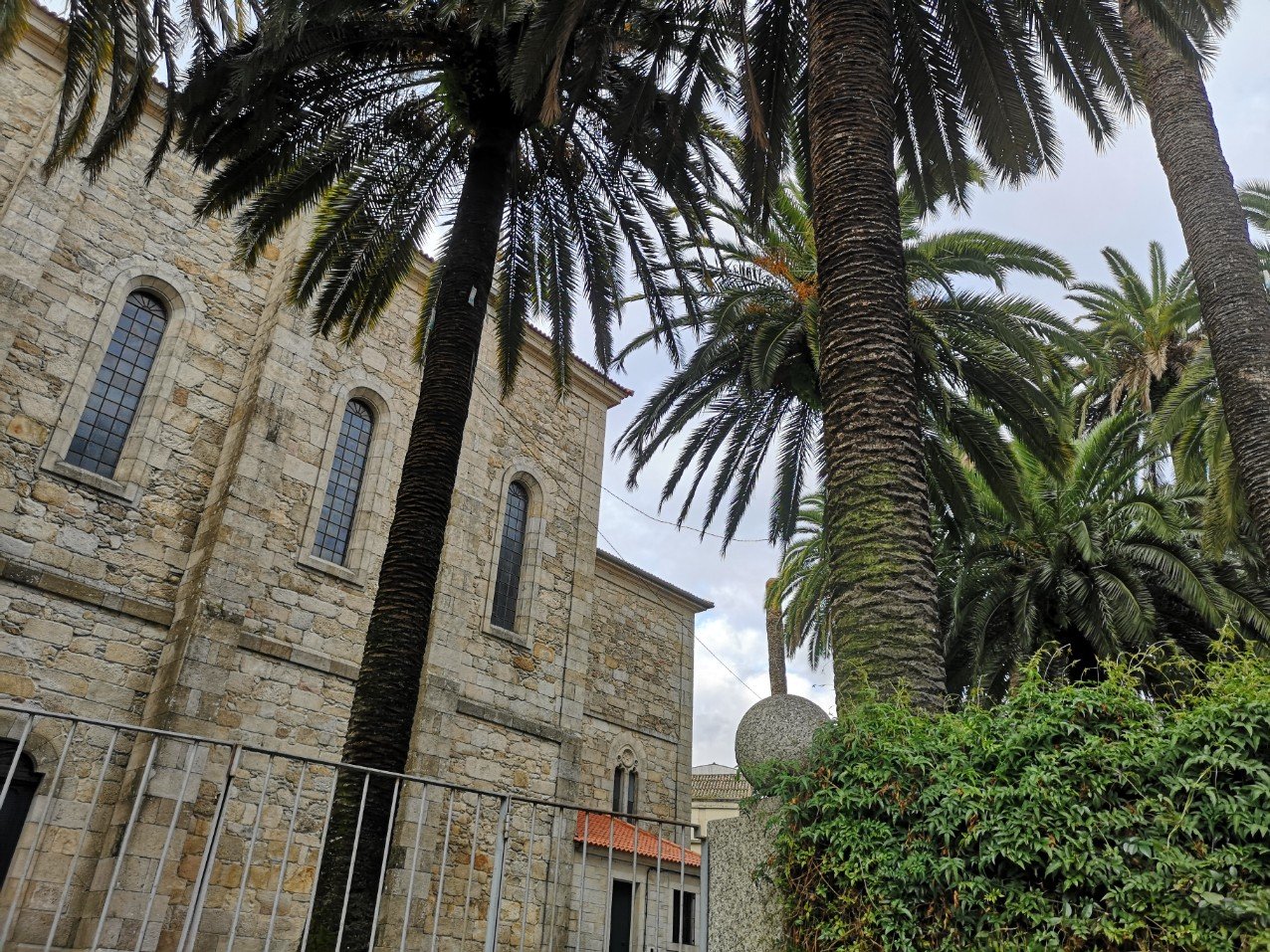
Towering palms beside the Igrexa de san Tome Becket (the British St Thomas a Becket), Caldas de Reis, Spain
There is a Bishop’s mitre on the door and otherwise I cannot find out what the connection is between St Thomas a Becket and Caldas de Reis – although of course he may have made pilgrimage here.
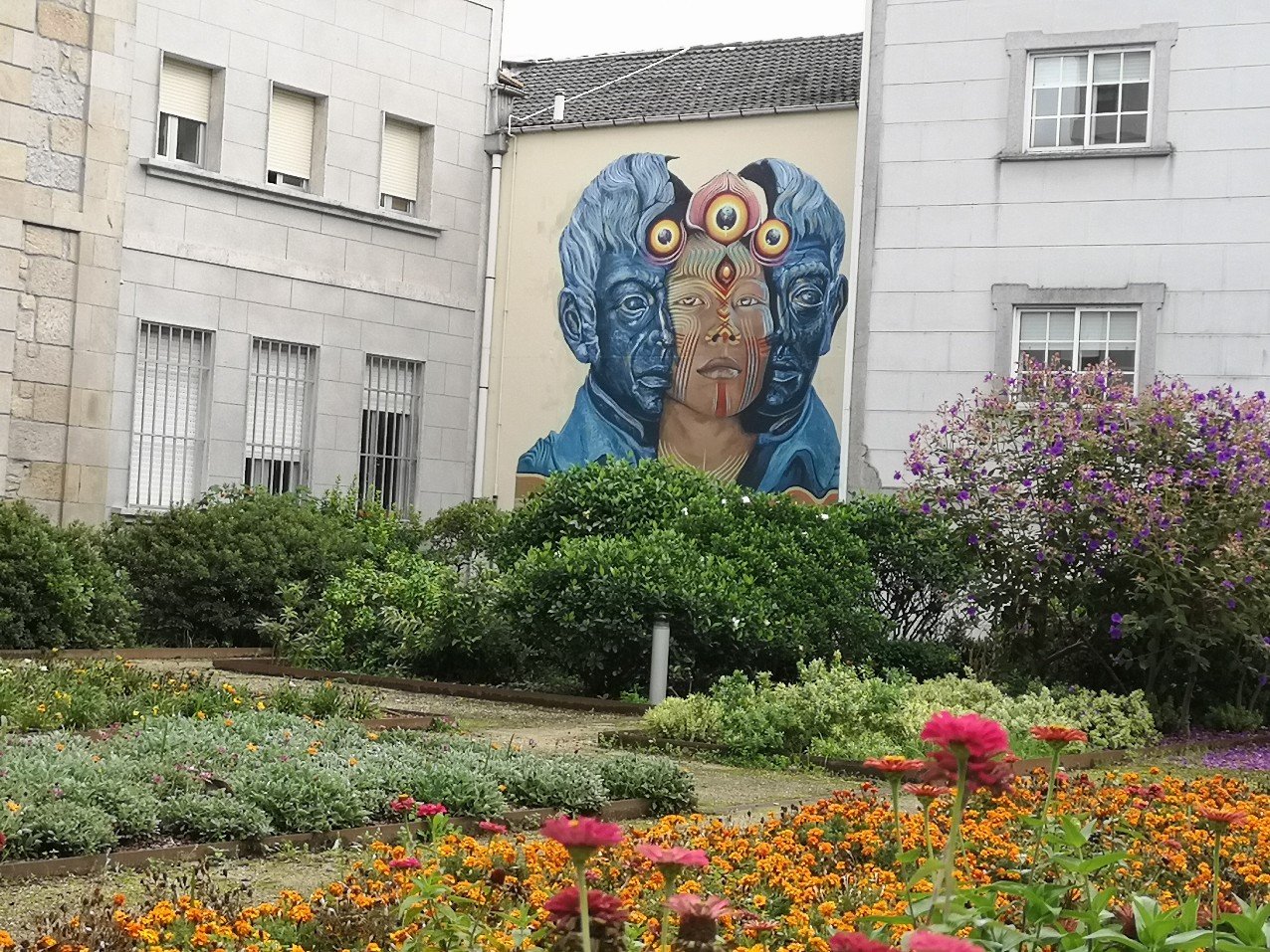
Street art, Caldas de Reis, Camino Portuguese, Spain
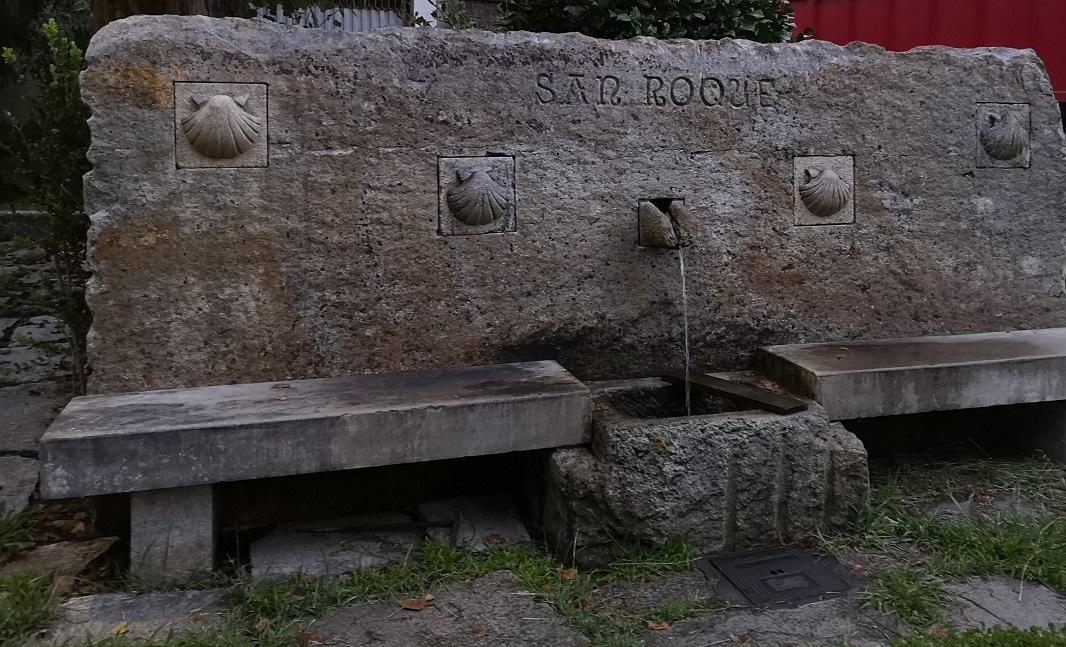
One of the many beautiful stone fountains you can see on the Portuguese Camino. Here emblazoned with the shell symbol of paths meeting at Santiago de Compostella
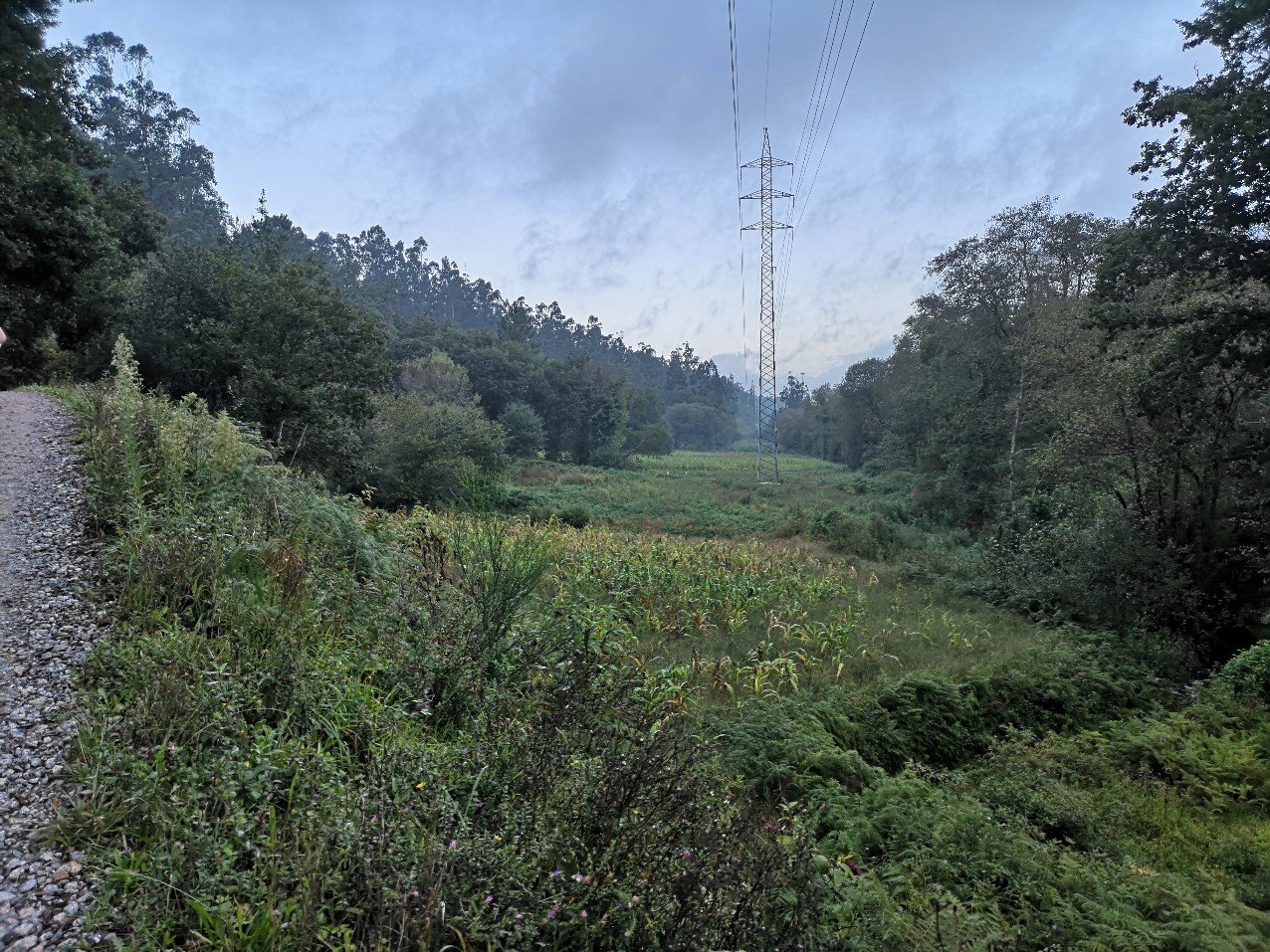
Walking out of Caldas de Reis, I looked down a long valley, the view spoiled by a pylon, Spain
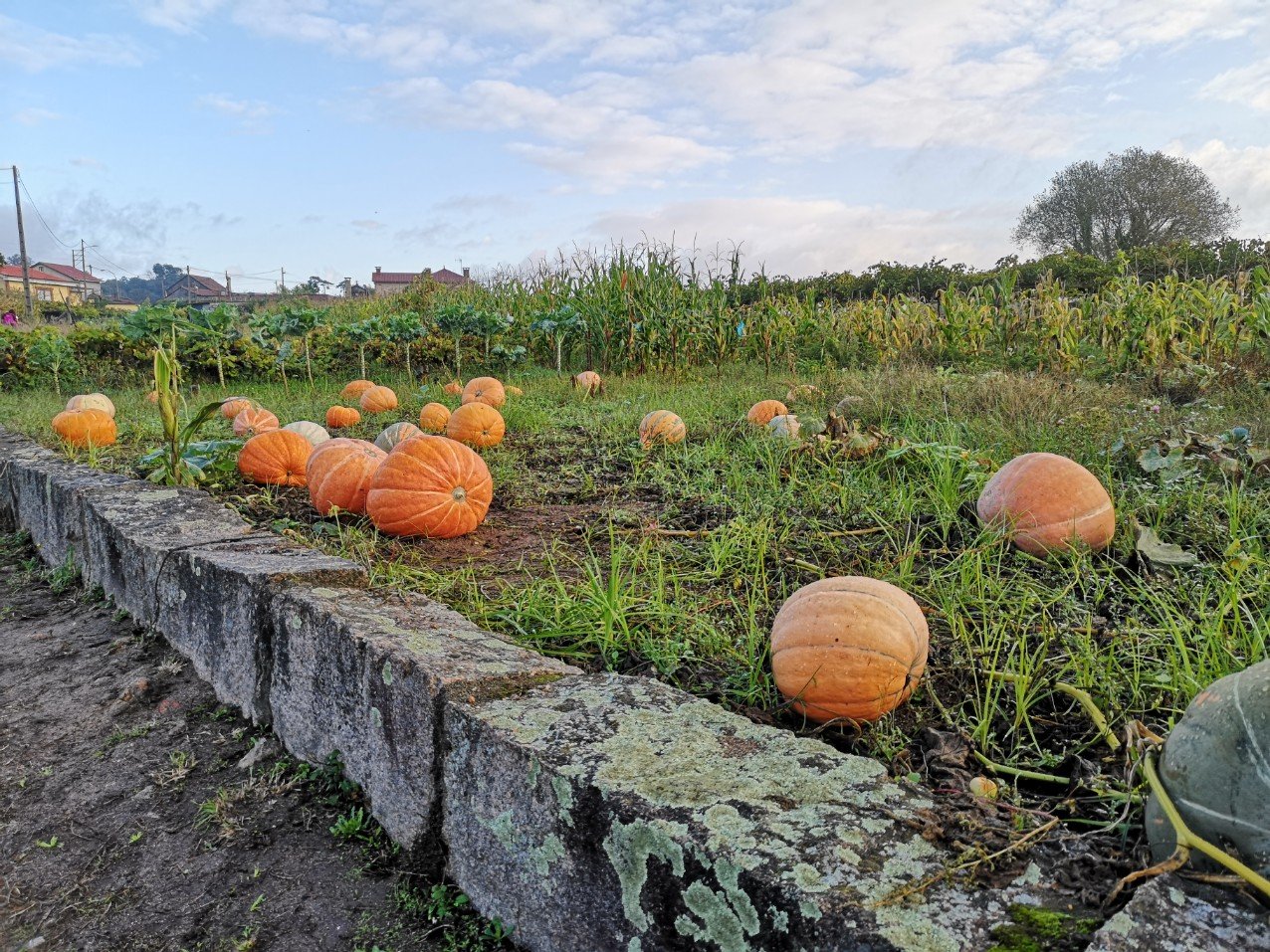
Field pumpkins. Although there were squash everywhere in the fields and gardens, I never saw them offered on a menu
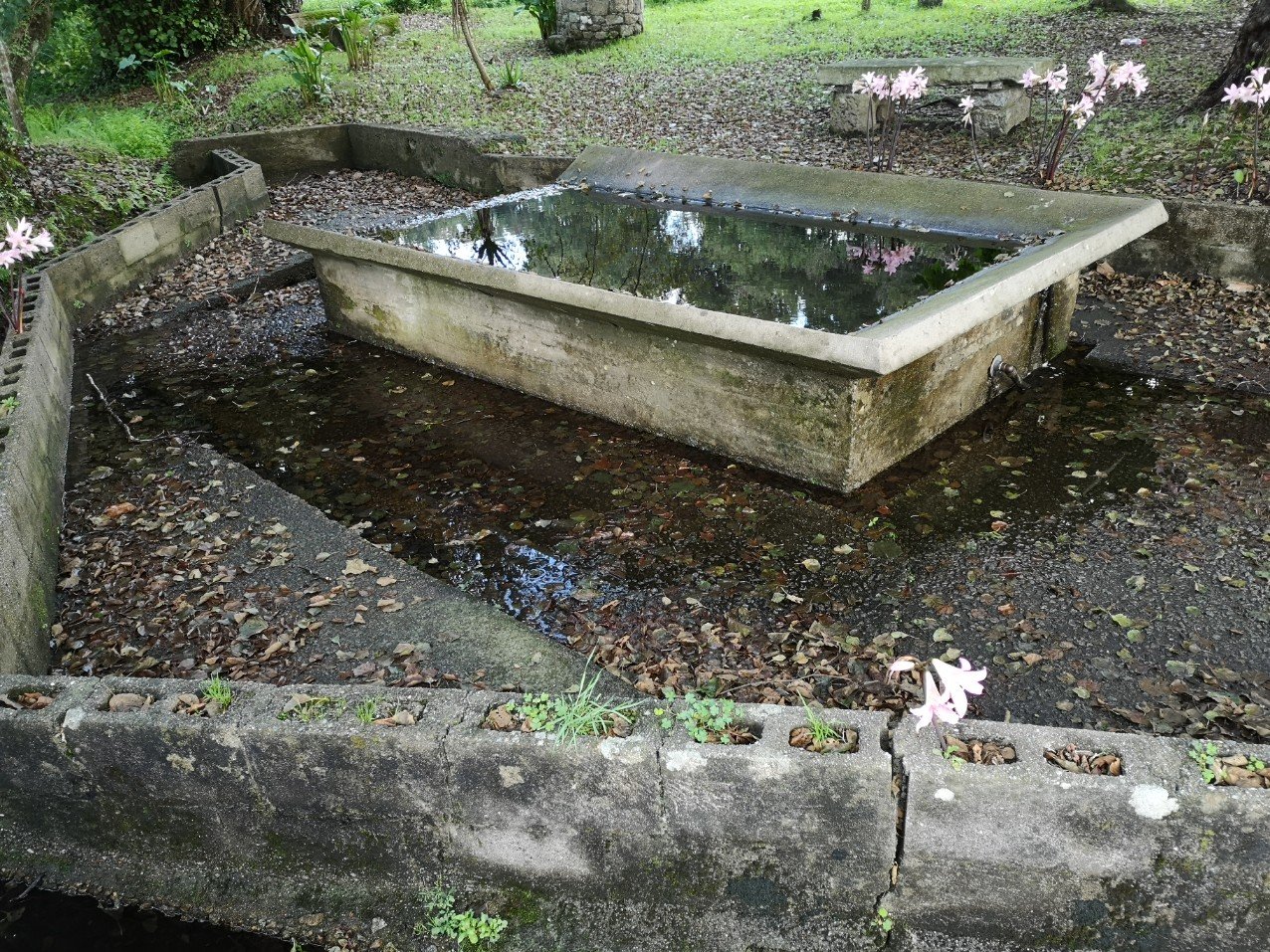
Reflections in the traditional, central washing area with what appeared to be self-seeded white lillies randomly dotted around. Carracedo, Spain
Further down the road were clumps of pink lillies growing wild on the banks like the lupins do in Scotland along the motorway between Edinburgh and Perth.
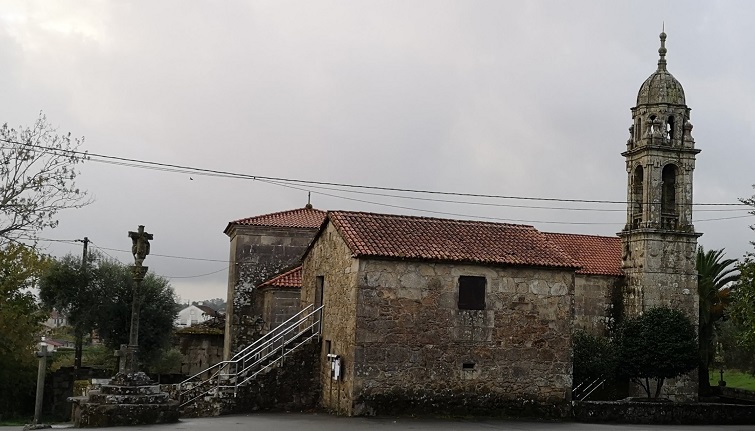
Iglesia San Clemente de Cesar, outside Caldas de Reis, Spain
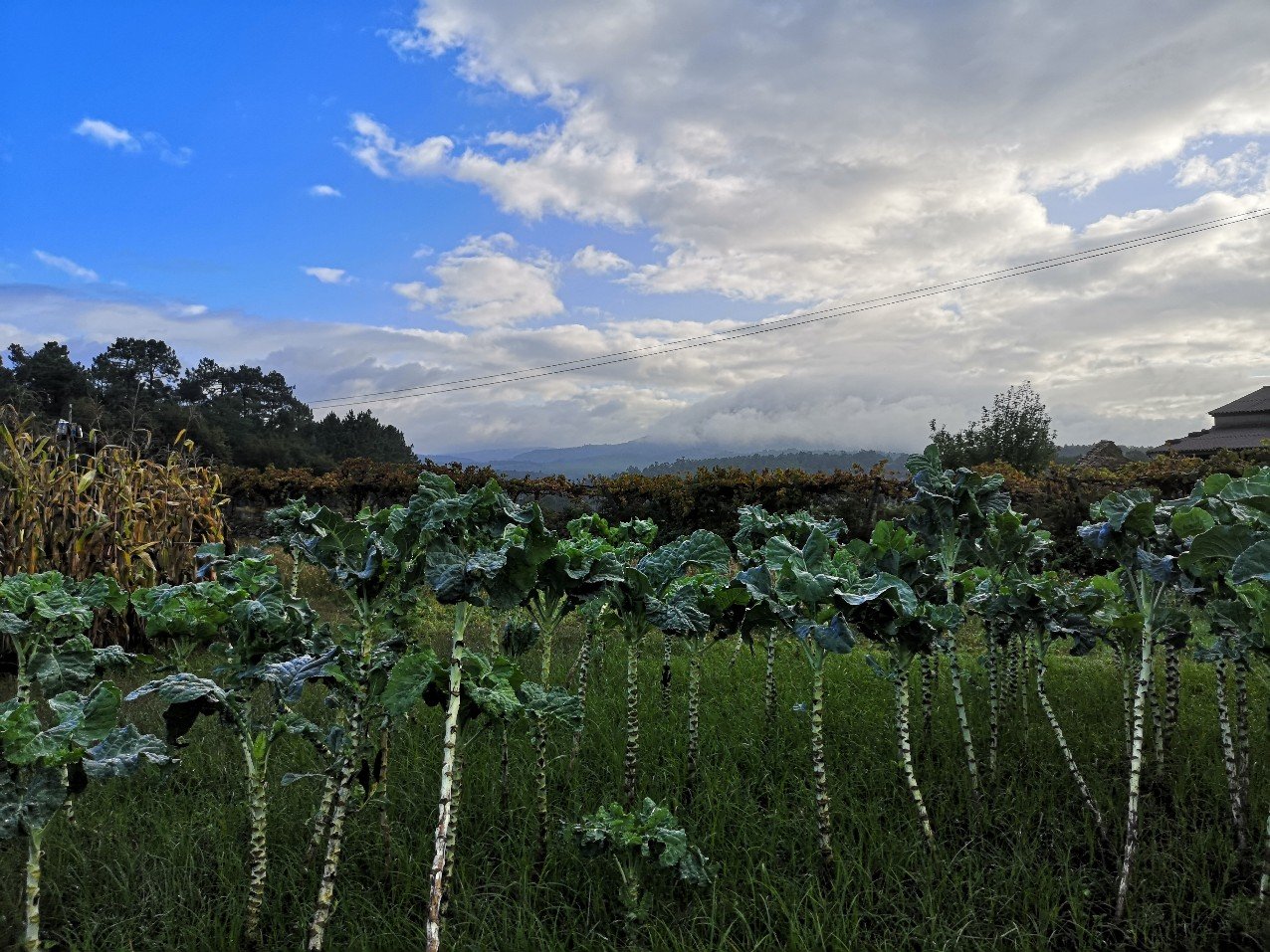
Tall brassicas growing in O Cruceiro, Spain
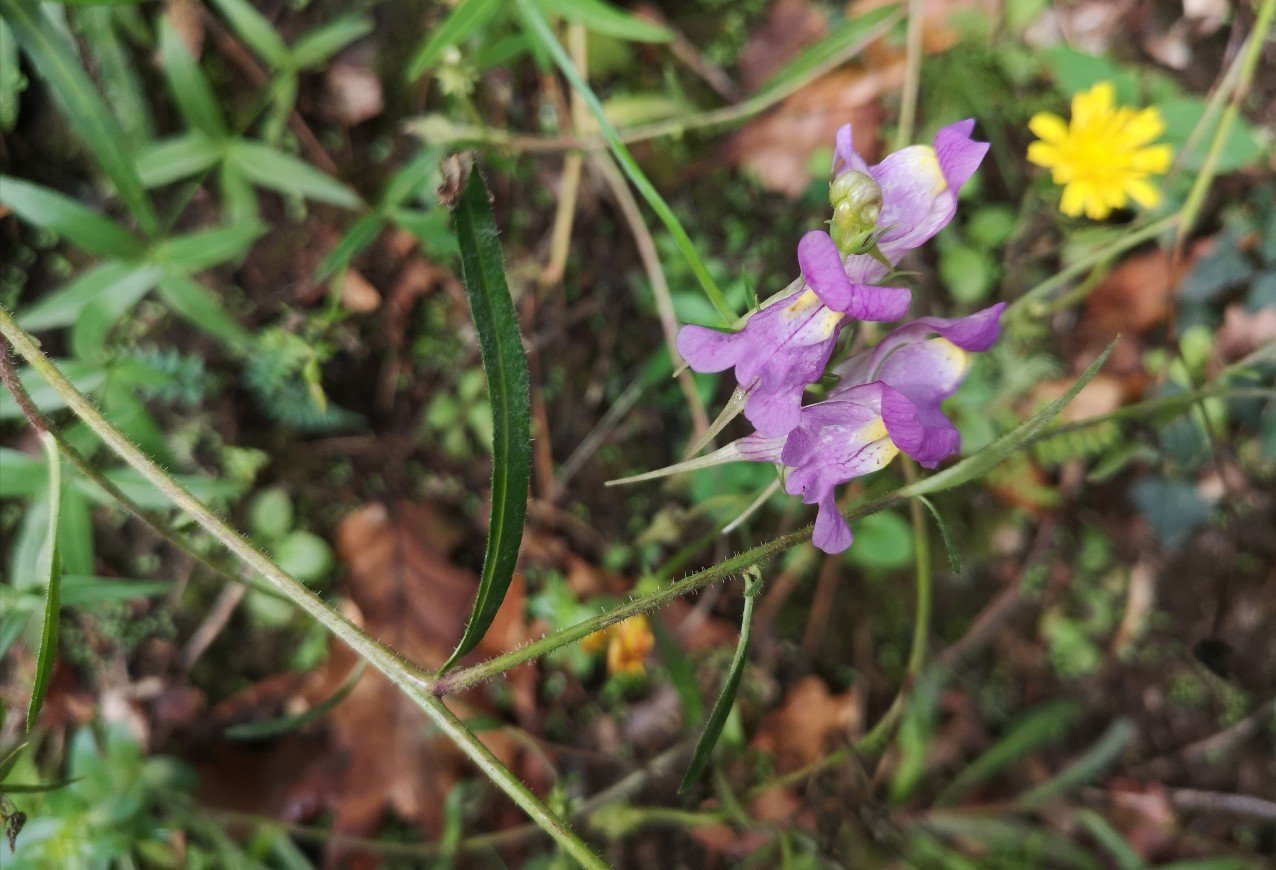
Three Bird Toadflax (Linaria triornithophora). I used the Leafsnap plant identifier app – free)
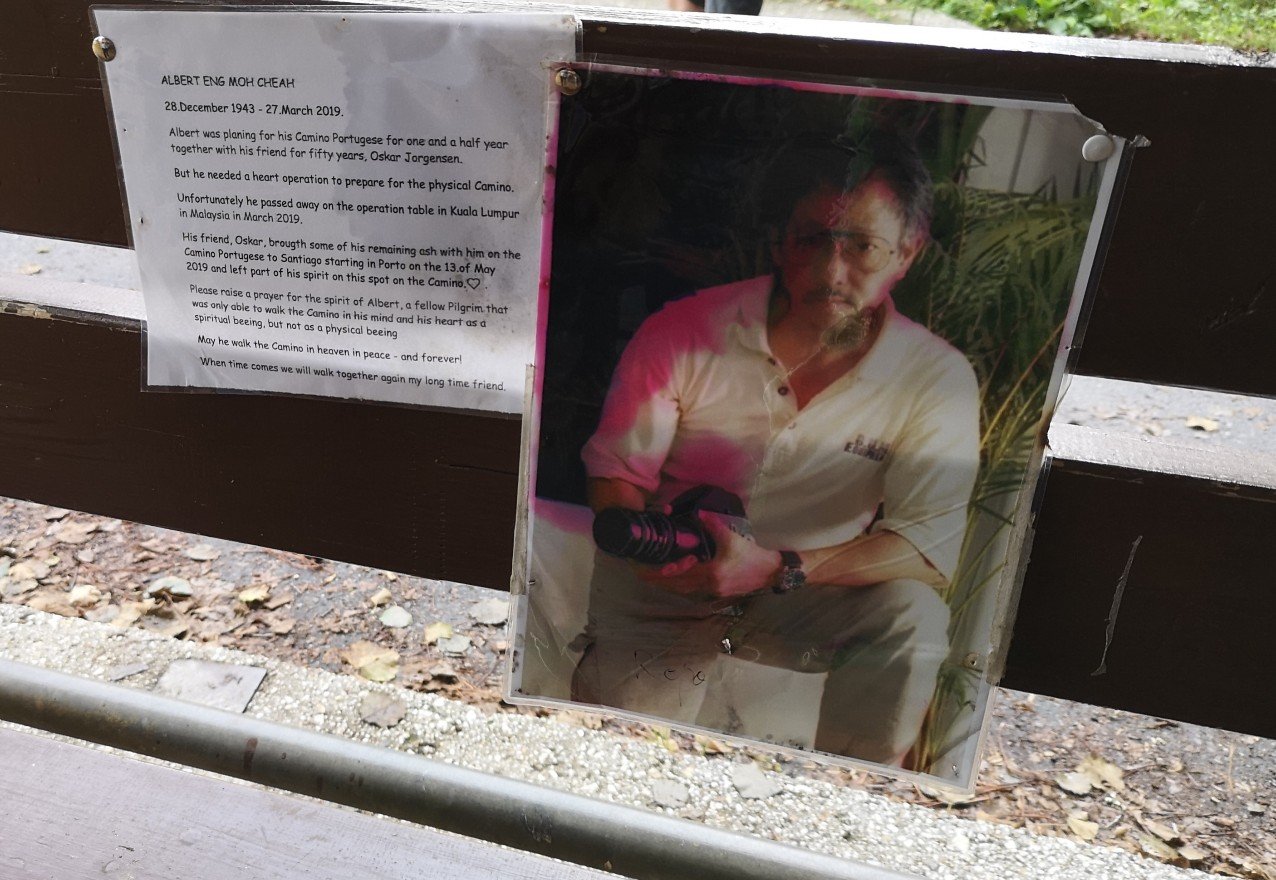
Memorial and location of Albert’s ashes, left by his friend. They had planned to walk the Camino together, but Albert had died on the operating table beforehand. Camino Portuguese, Spain
There are many such places to be found along the paths of the Caminos de Santiago.
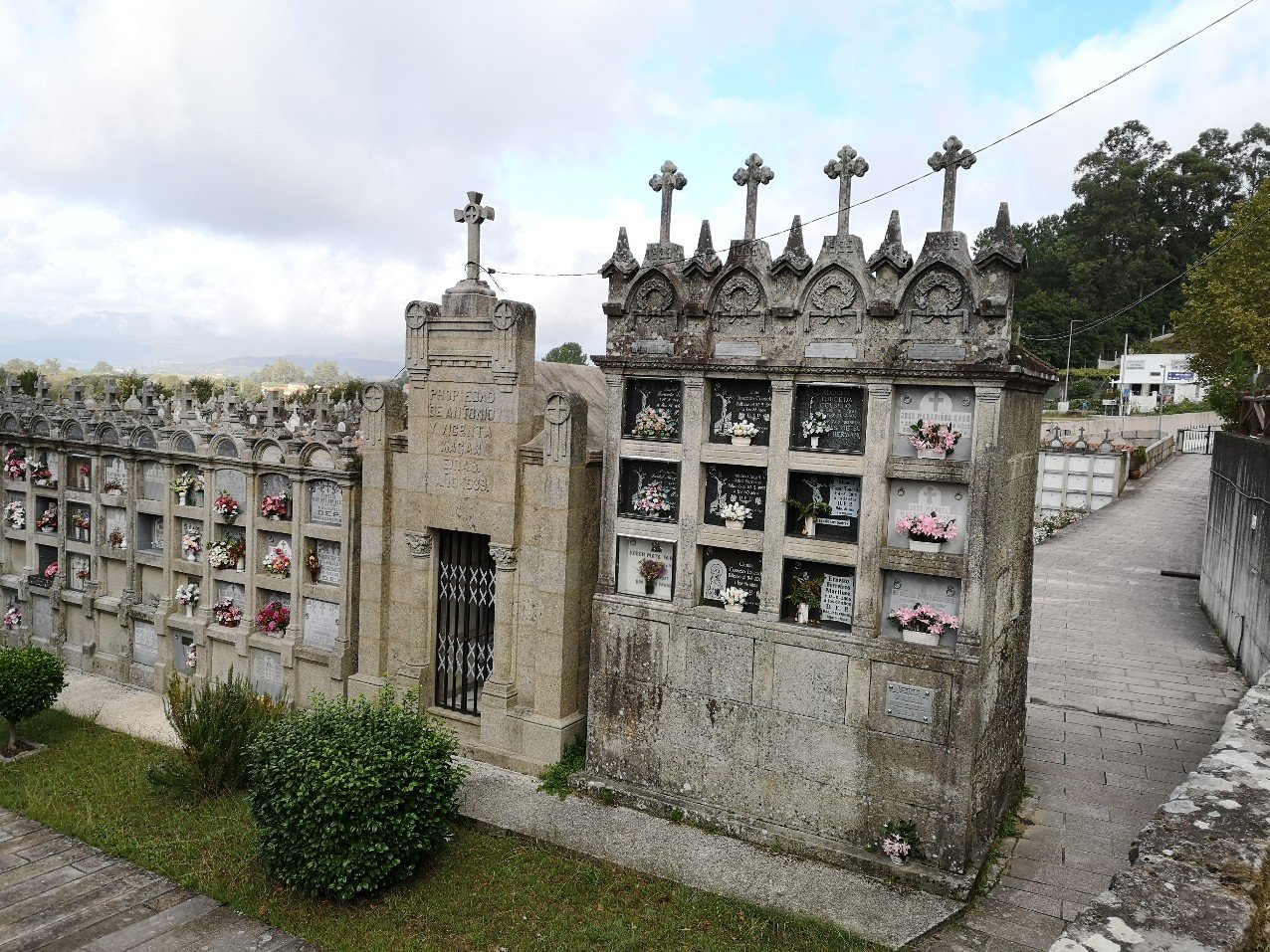
Cemetery, Camino Portuguese, Spain
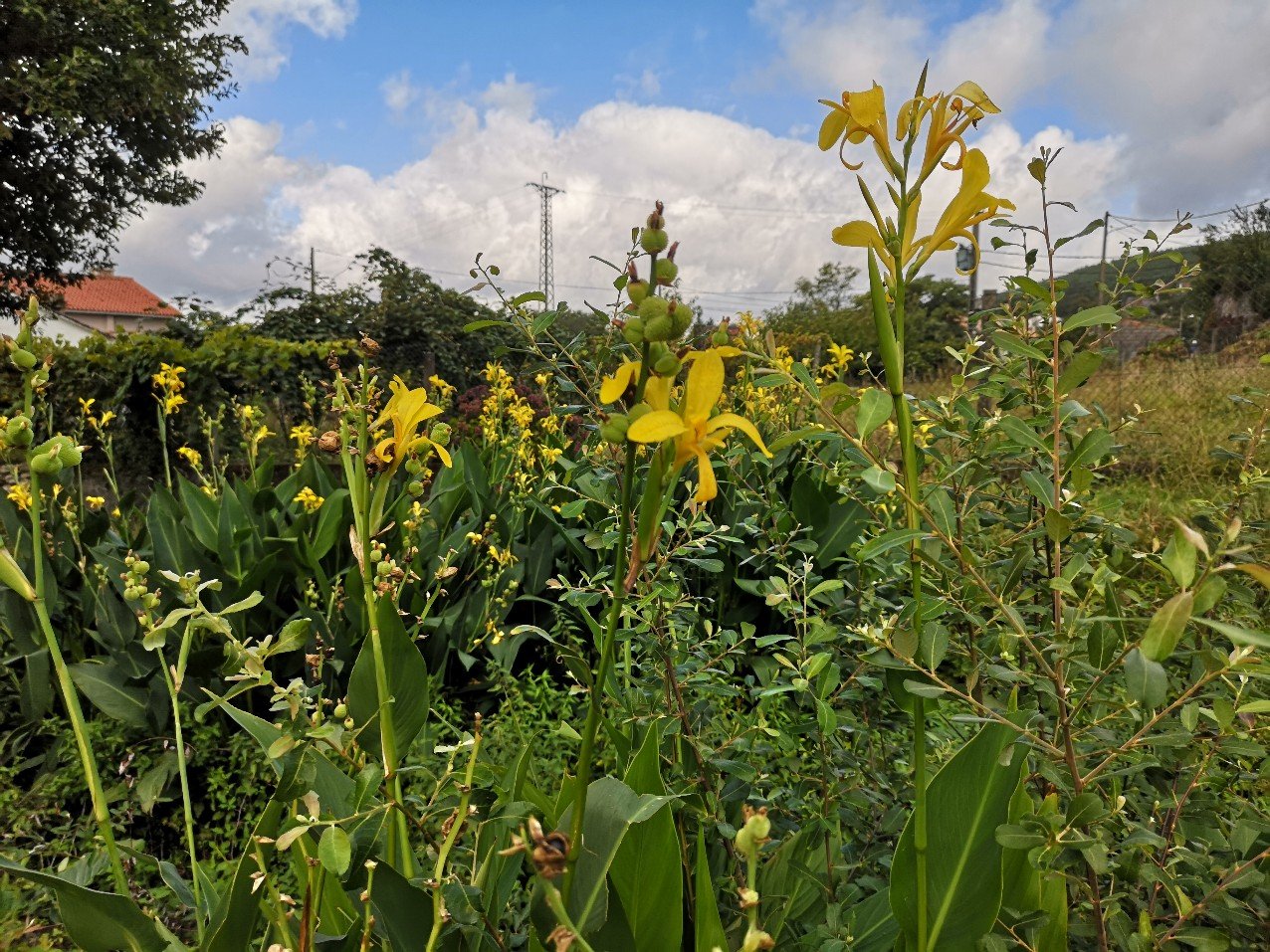
Sunshine in the form of canna lillies with their buxom seed pods, Spain
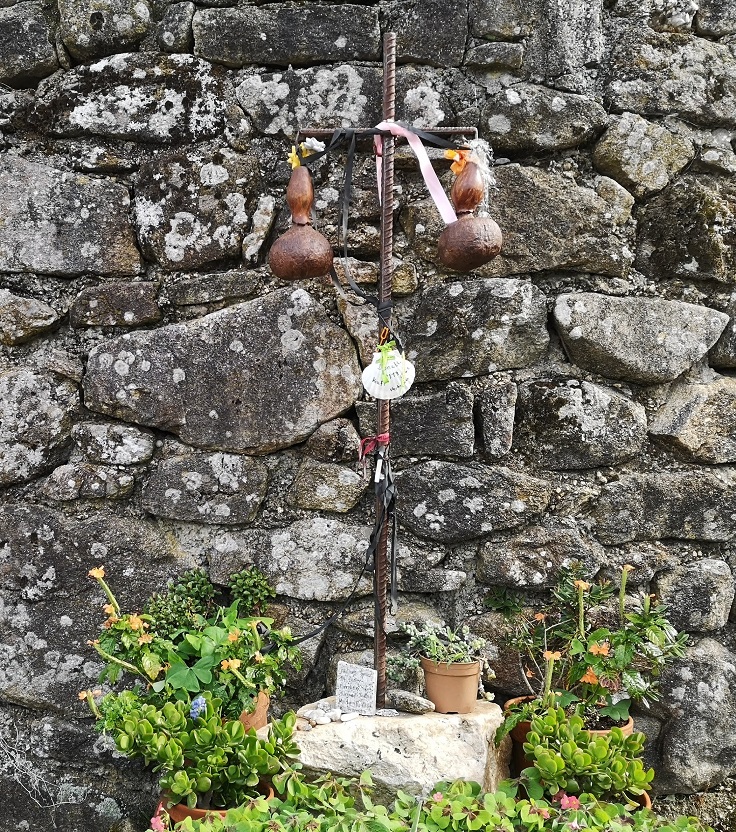
Gourds (used for carrying water by early pilgrims) and a camino shell on a rusty metal cross with plants and inscriptions, Camino Portuguese, Spain
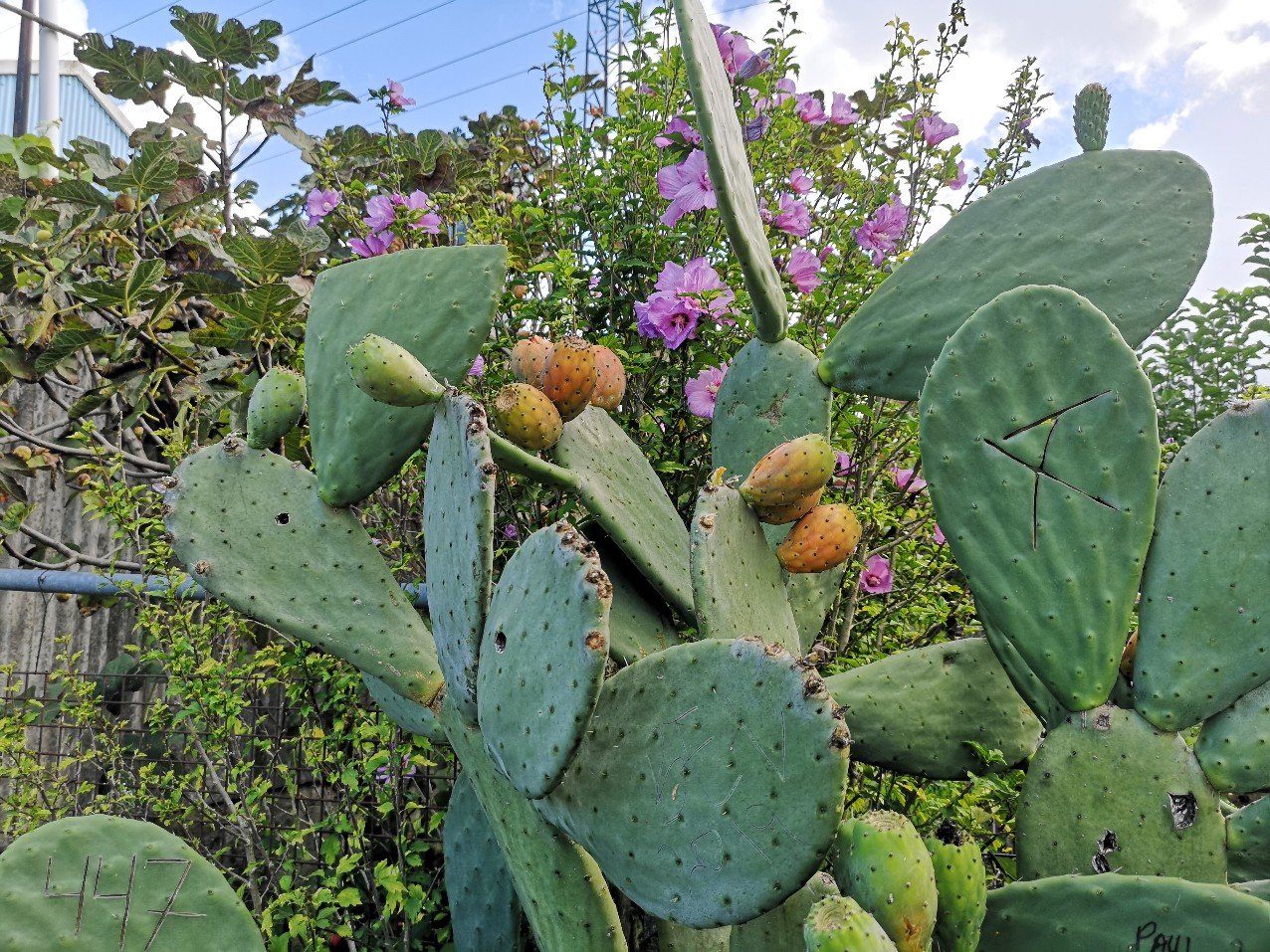
Prickly pears, Spain
Pontecesures (on the way)
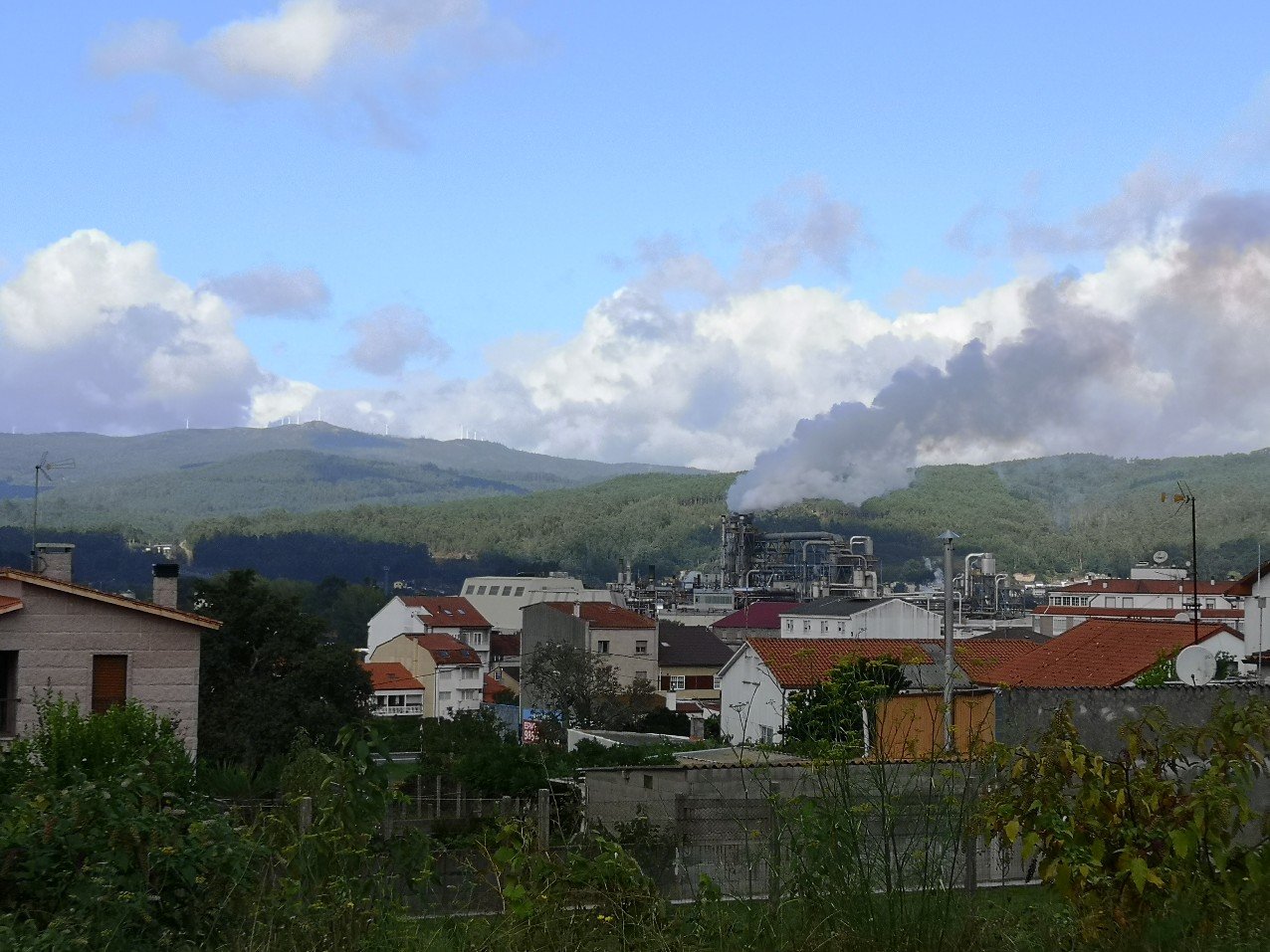
Coming into Pontecesures with its industrial pollution, Spain
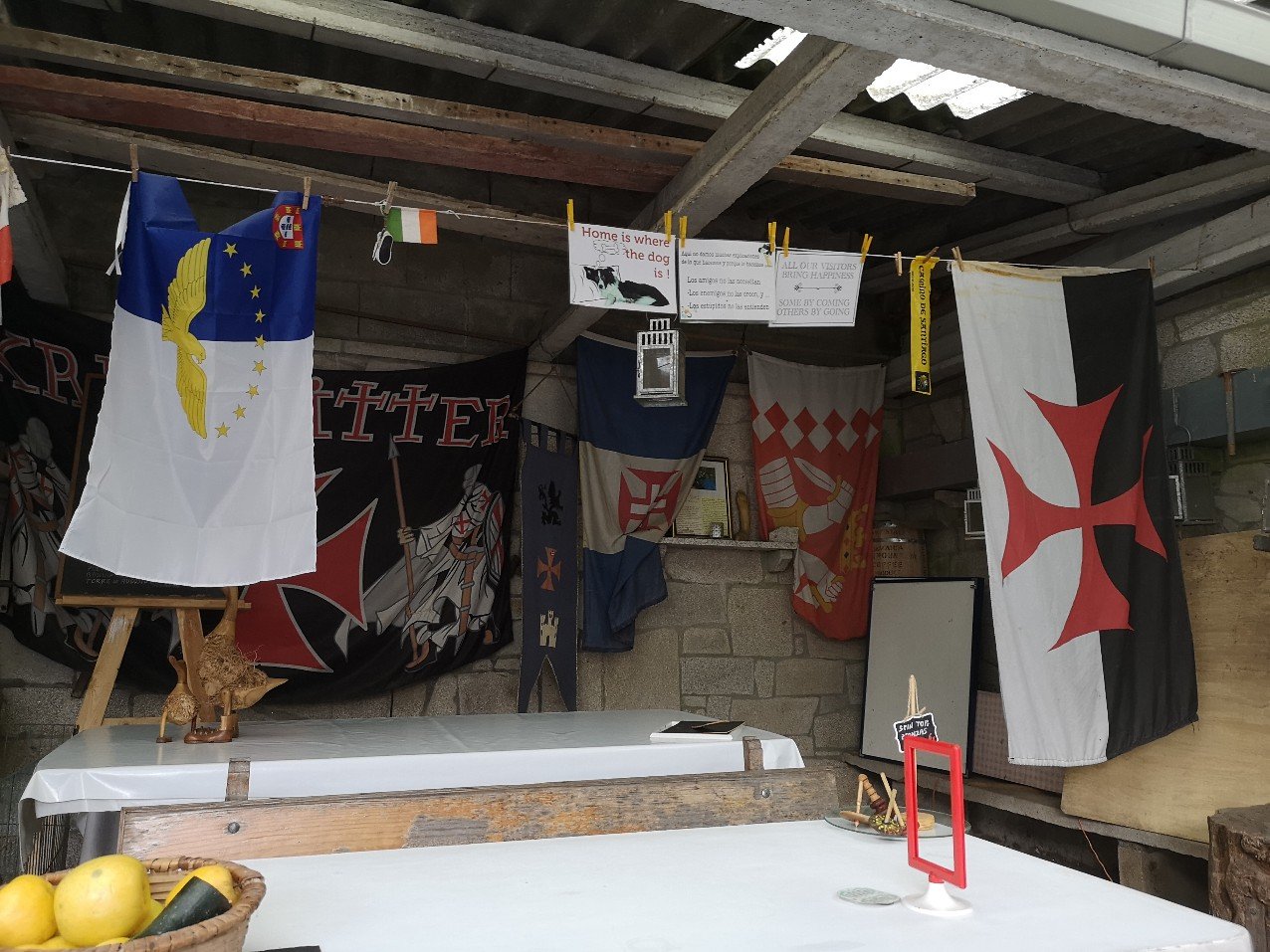
This cafe was recommended in a guide which I read. It was truly idiosyncratic, run by one man who has his own way of doing things, takes offence easily, and is dedicated to the Camino. Pontecesures, Spain
Just before crossing the River Ulla, on the right at a corner (if I remember correctly) is the place in the above photo. With makeshift furniture and varying quality of food, it is a somewhere to sit out of the sun and get refreshments. It appears to be donativo, but the maitre d’ expected payment and it was obviously a rather random affair. He was not chatty with me, but did serve up the ‘last’ bowl of vegetarian stew (it came recommended). He took a liking to the young couple who came in later, but sent another man who asked questions, packing! The flags and the individual nature of this place reminded me of Manjarín on the Camino Frances.
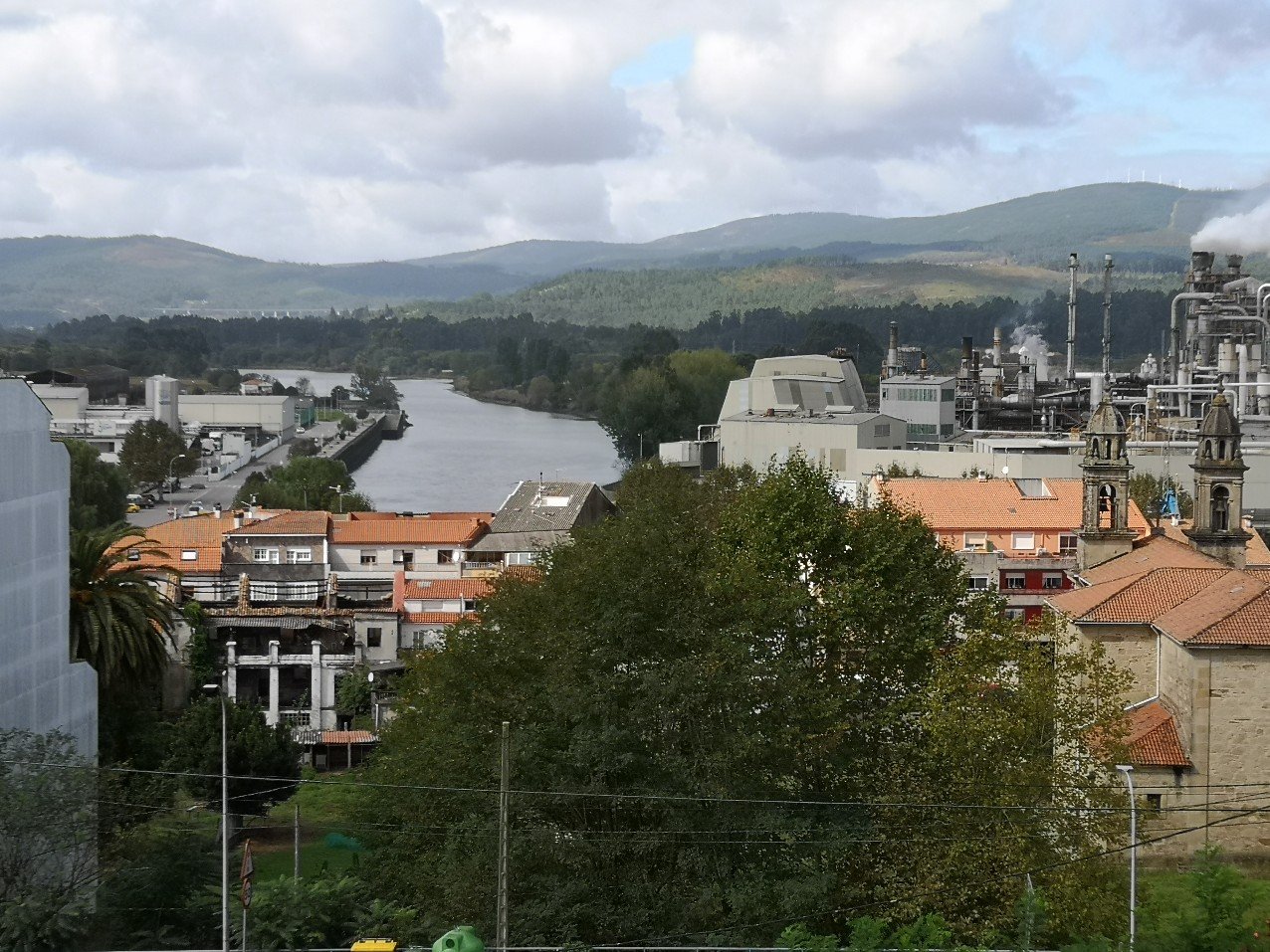
The Rio (river) Ulla, Pontecesures, Spain
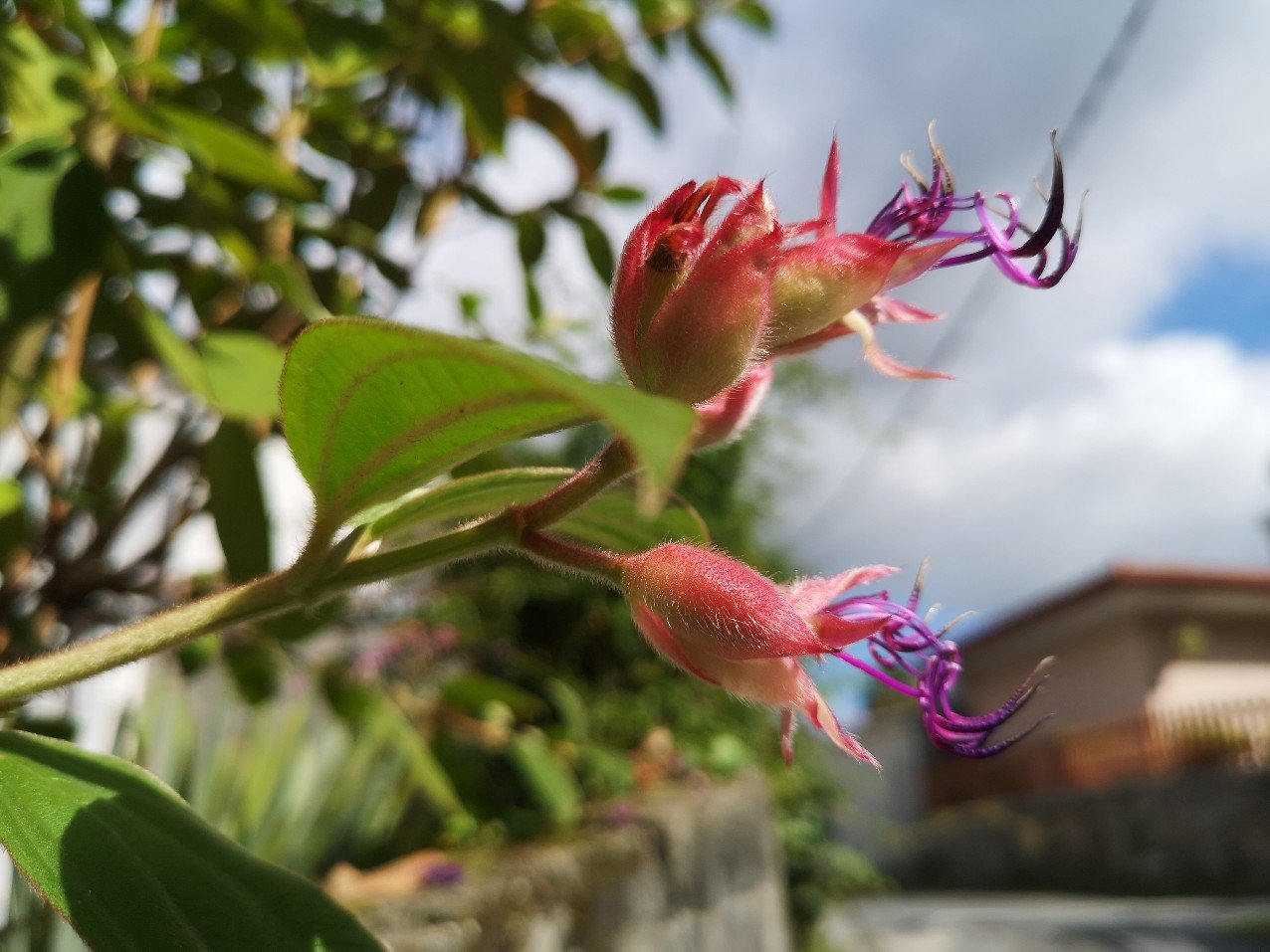
The Glory Bush (Tibouchina urvilliana) flower. (Thanks to Name That Plant on houzz.com)
After crossing the bridge at Ponte(bridge)cesures and climbing up the other side in full, hot sun, the path took me along the banks of the River Ulla towards the San Antonio (St Anthony’s) Monastery of Herbón.
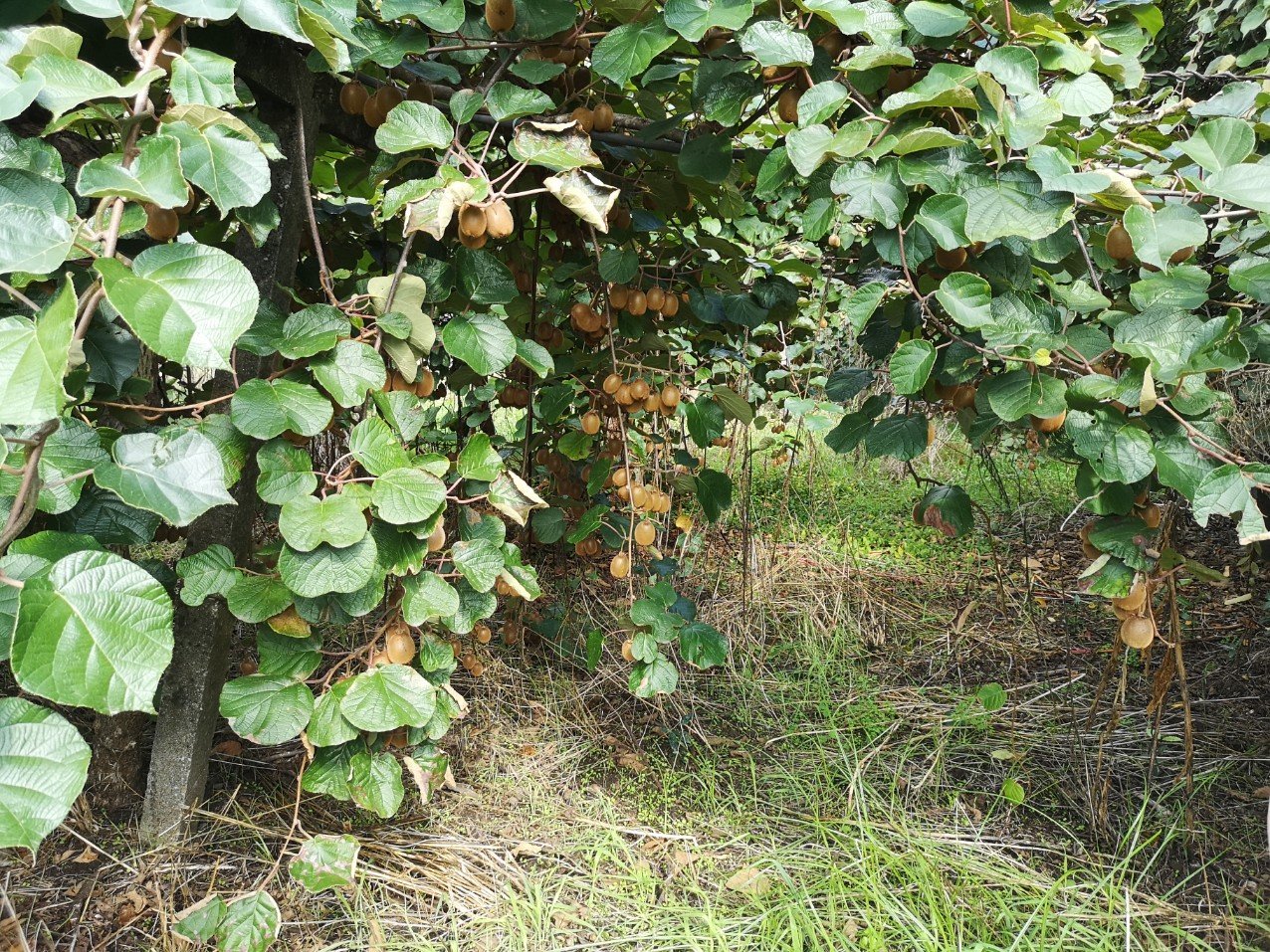
These kiwi fruit were drooping off the stalks and there were acres of them, on the way to Herbón, Spain
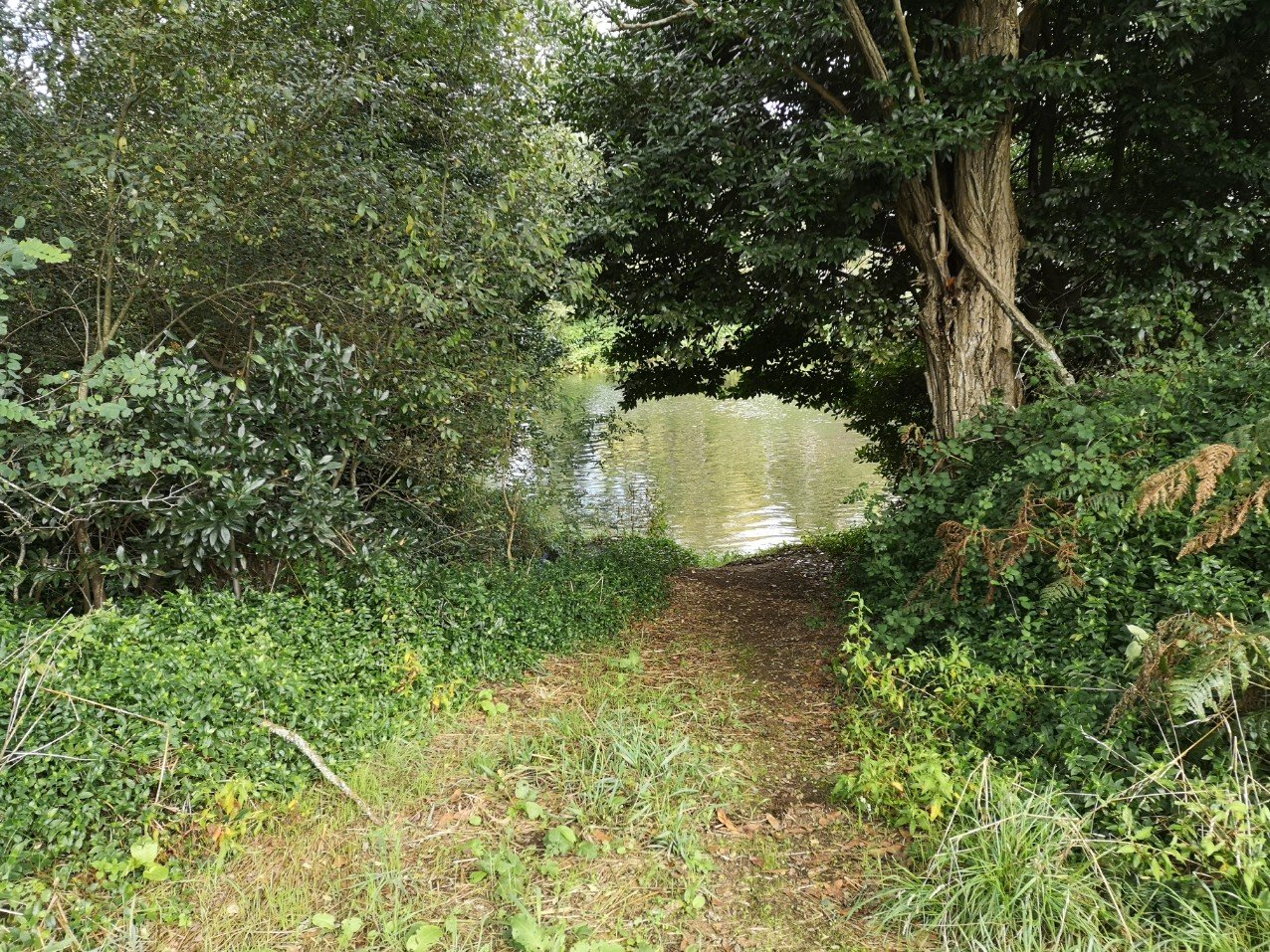
The route wound along the banks of the River Ulla, sometimes amidst the undergrowth, although the signs were pretty clear, Camino Portuguese
This time I did not bathe as I was keen to get a bed for the night in the monastery on the opposite bank.
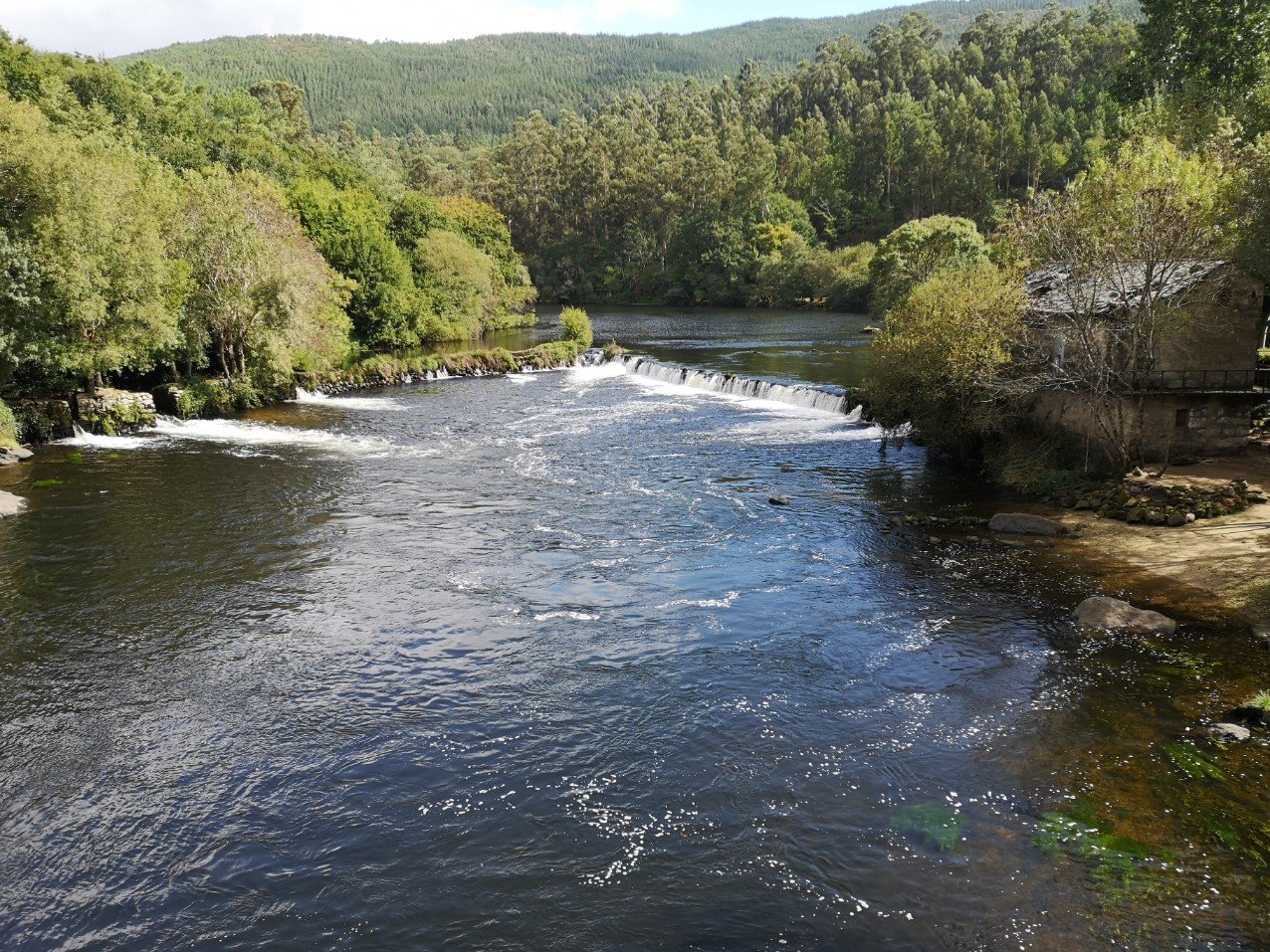
Weir, River Ulla, Spain
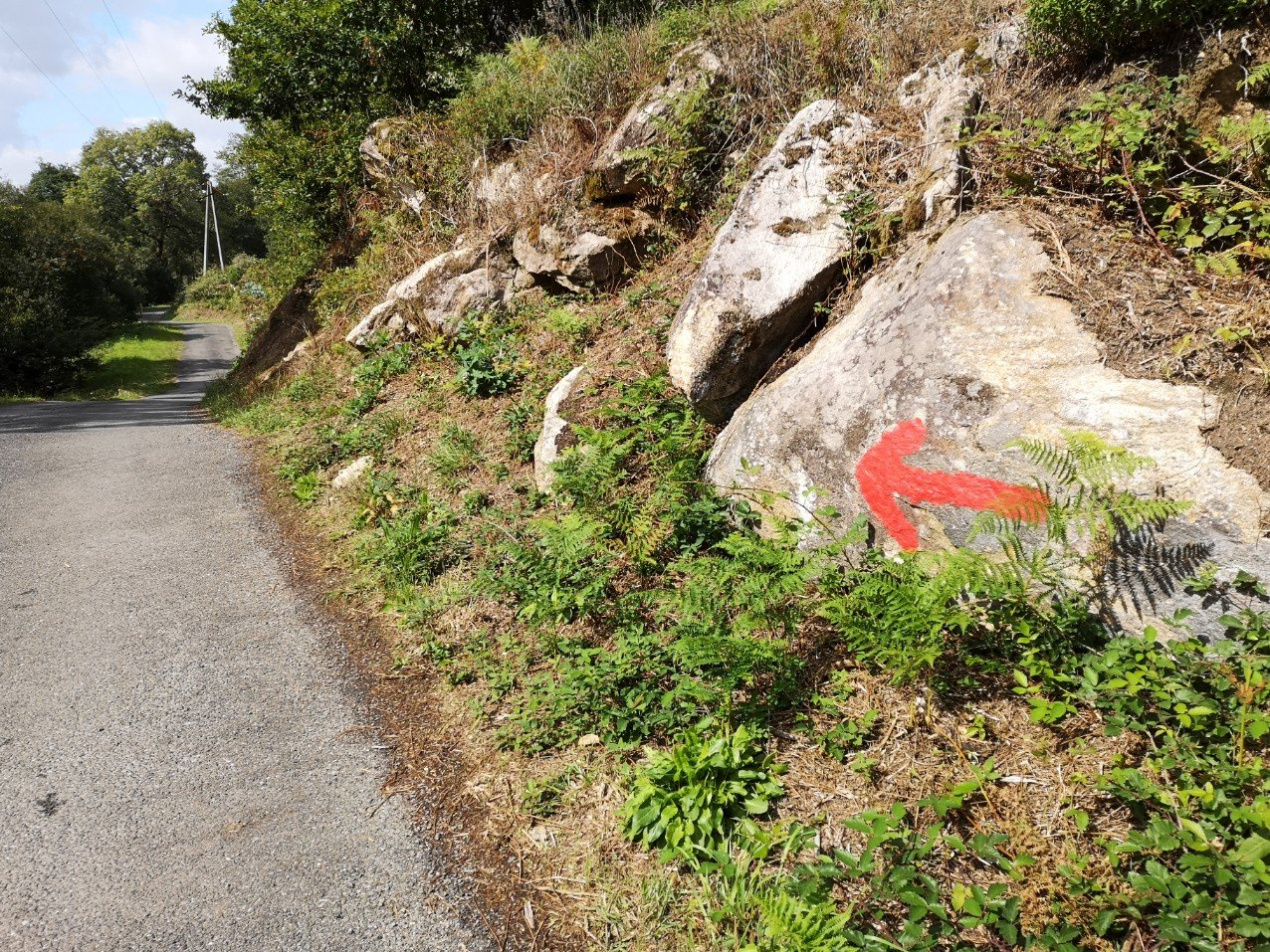
Red as well as yellow arrows here. Up and down I went, towards and away from the river, before crossing and climbing uphill away from it. Camino Portuguese, Spain
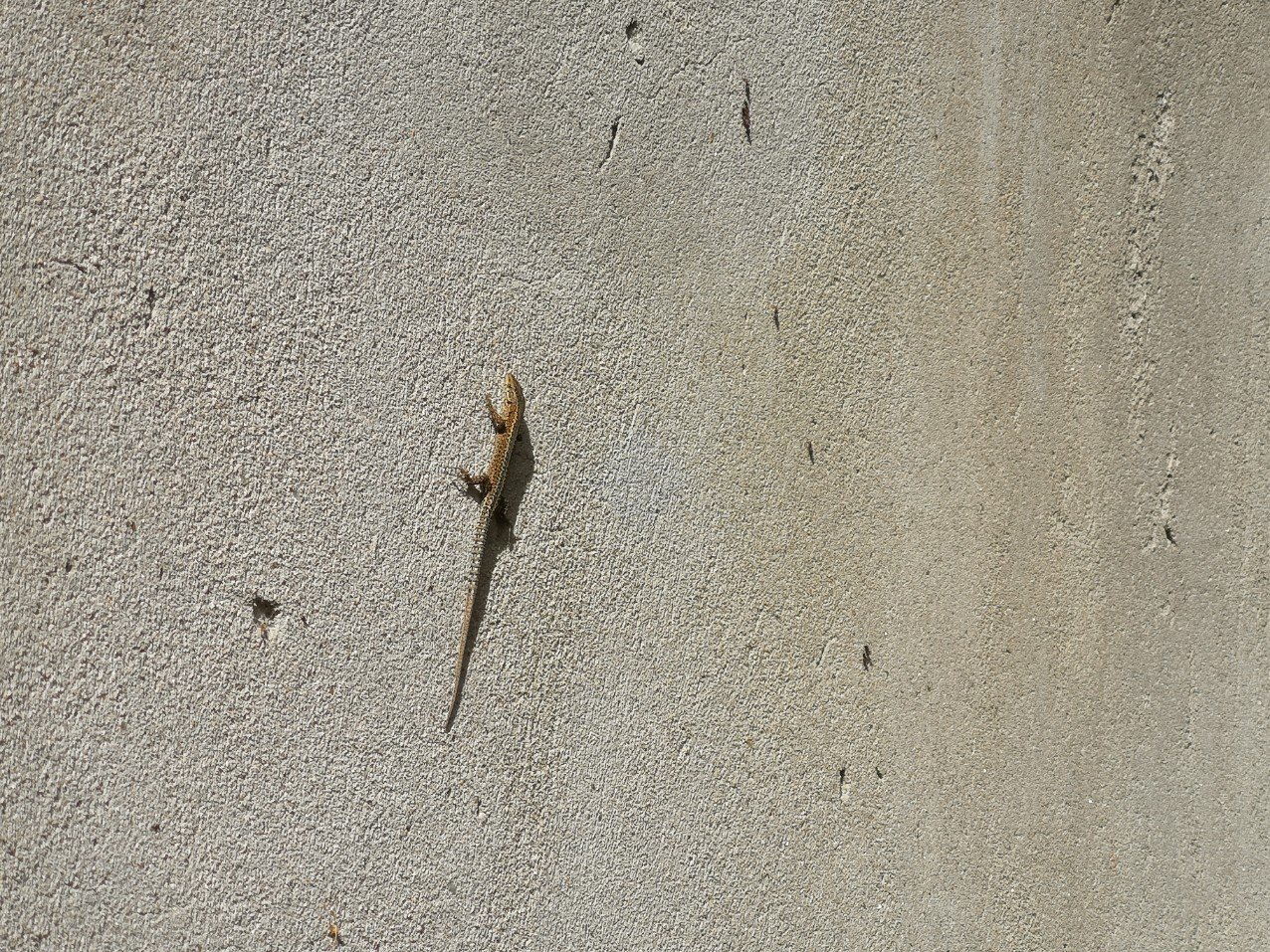
A small salamander basking in the sun!
Herbón Monastery
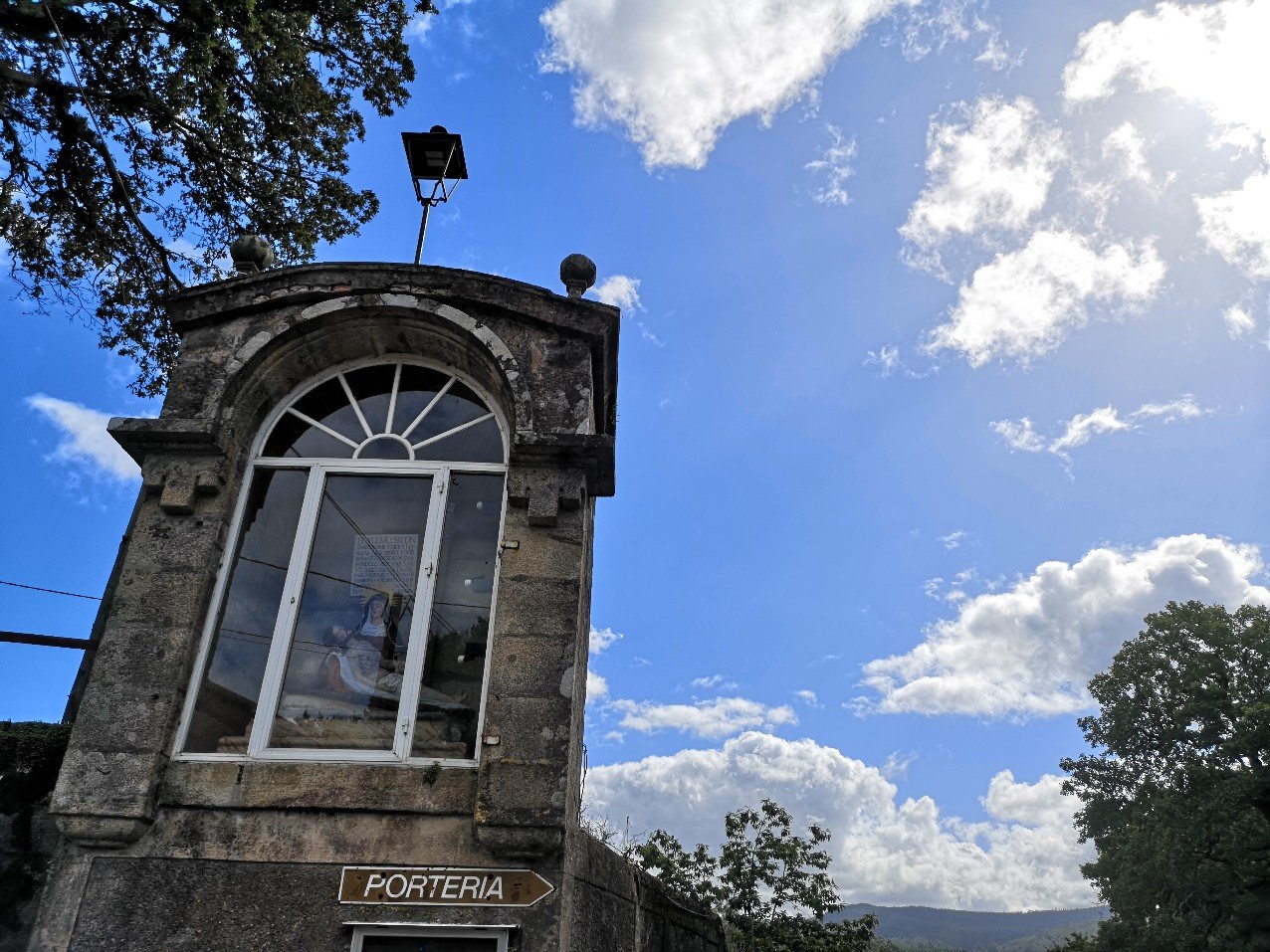
Walking around the walls of the Herbón Monastery looking for the entrance I spotted this shrine, Spain
I was pushing myself (not great for the still-painful foot) because of spening time over lunch and knowing that there is always competition to get a bed at the Herbón Monastery. I passed a couple who were clearly needing some ‘romantic’ time by the river. They were in no hurry to get there before me.
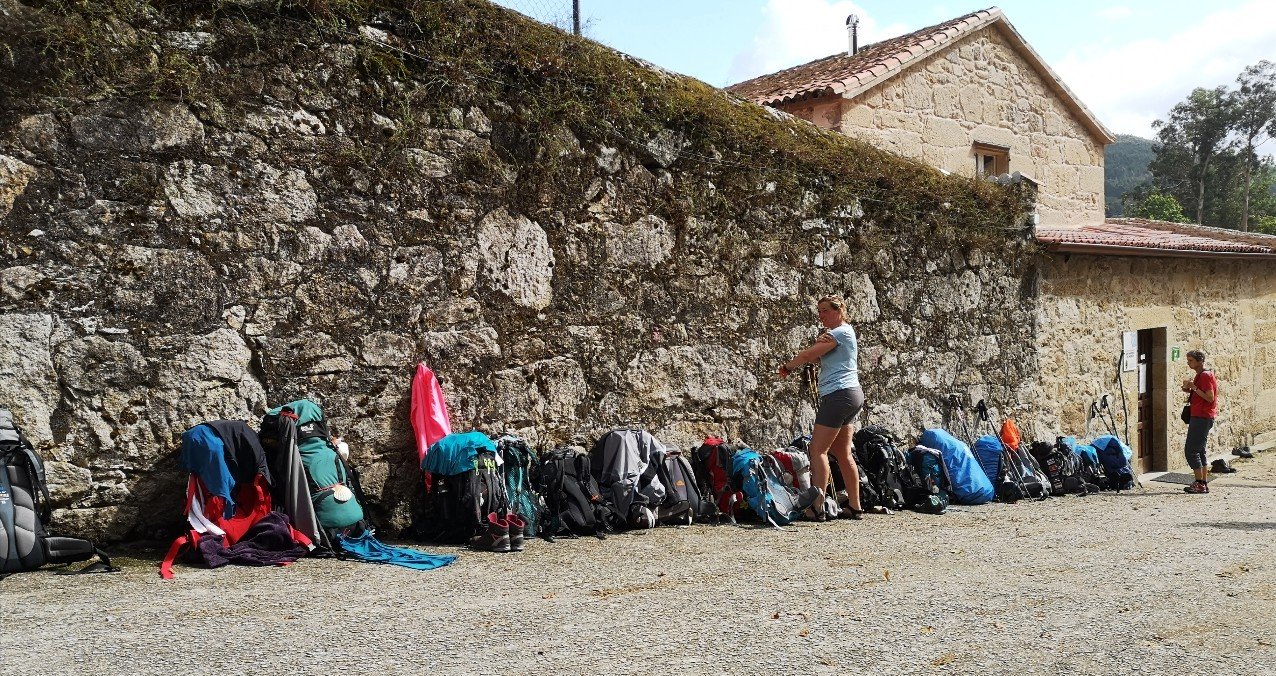
And there was the queue stretching back from the entrance in the wall – only two spaces were left and approximately four hours to wait before opening time, Herbón Monastery, Spain
It was nice and warm and there was plenty to see (photos below). People came to join the line, but were too late and left again – it was a little way into Padrón because it is a detour to get here.
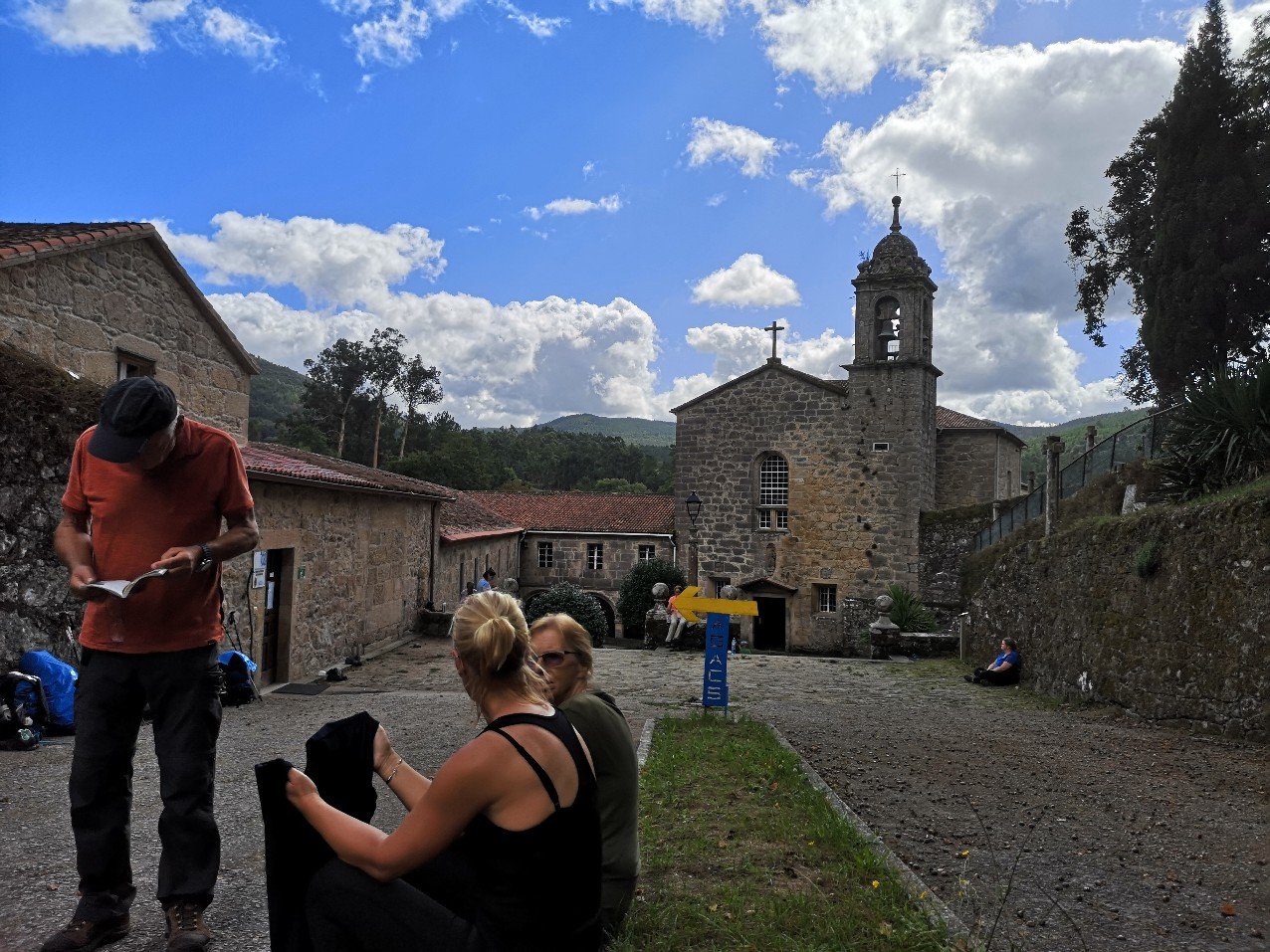
Old friends met up and new ones were made while waiting, Herbón Monastery, Spain
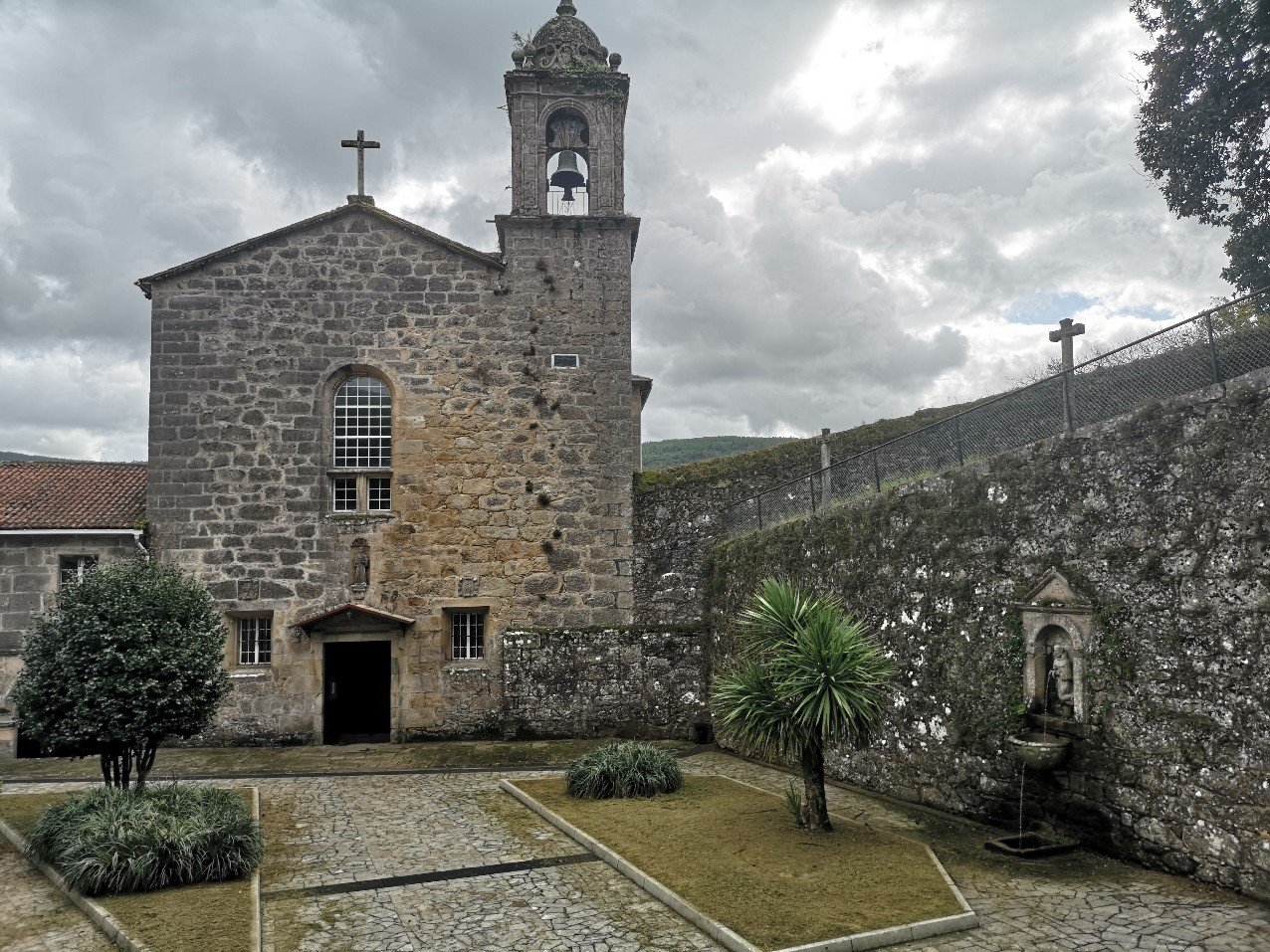
The church of the missionaries, Herbón Monastery, Spain
The young couple sauntered in after quite a while, but were too late and went off again.
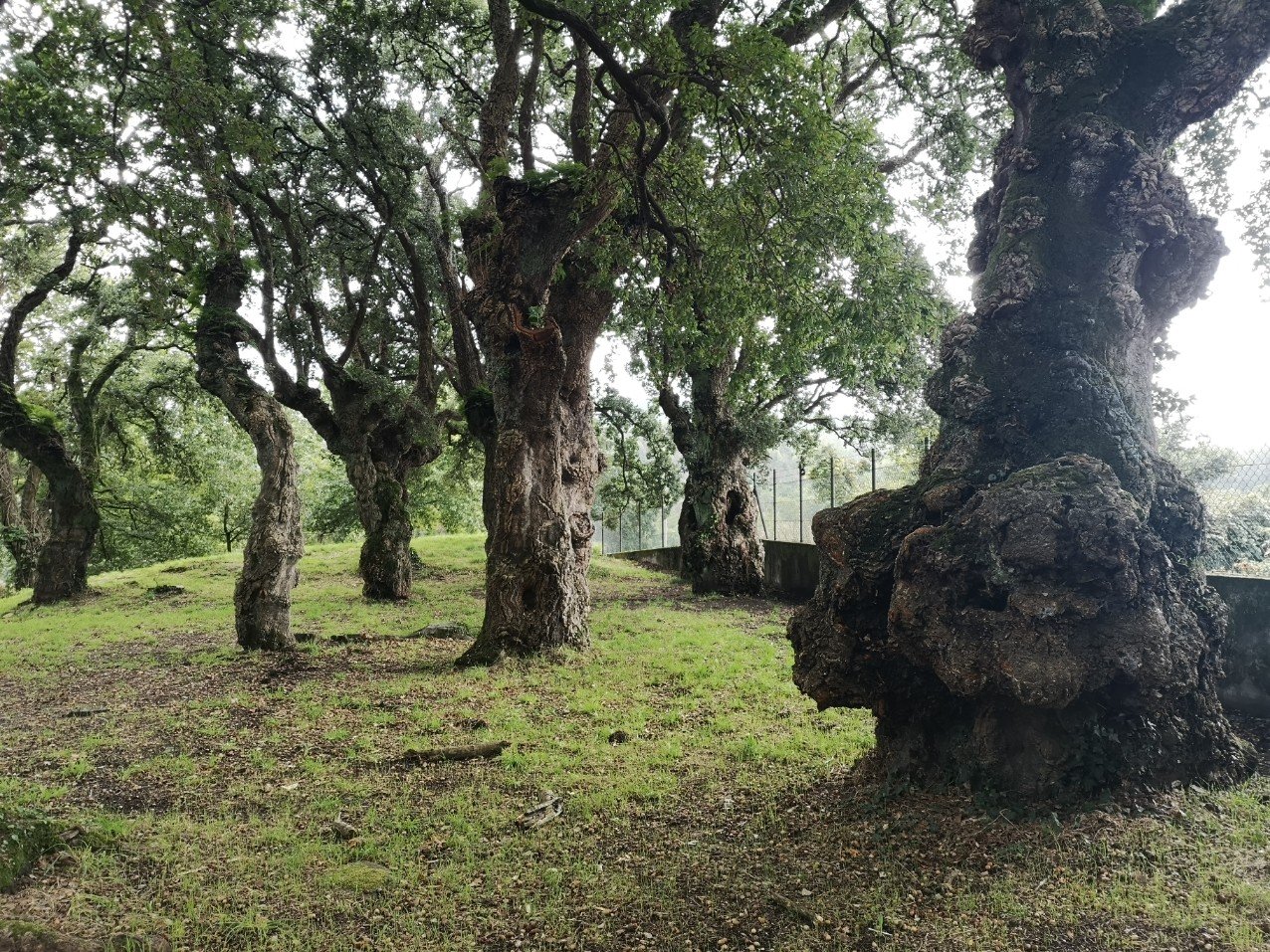
Seriously old trees – all knarled and full of character, Herbón Monastery garden, Spain
There were others with injuries far worse than mine. A small group decided to leave, calling a taxi, whereupon exactly the same number arrived late (after others had already turned away) and so they found that there were spaces for them. It just goes to show!
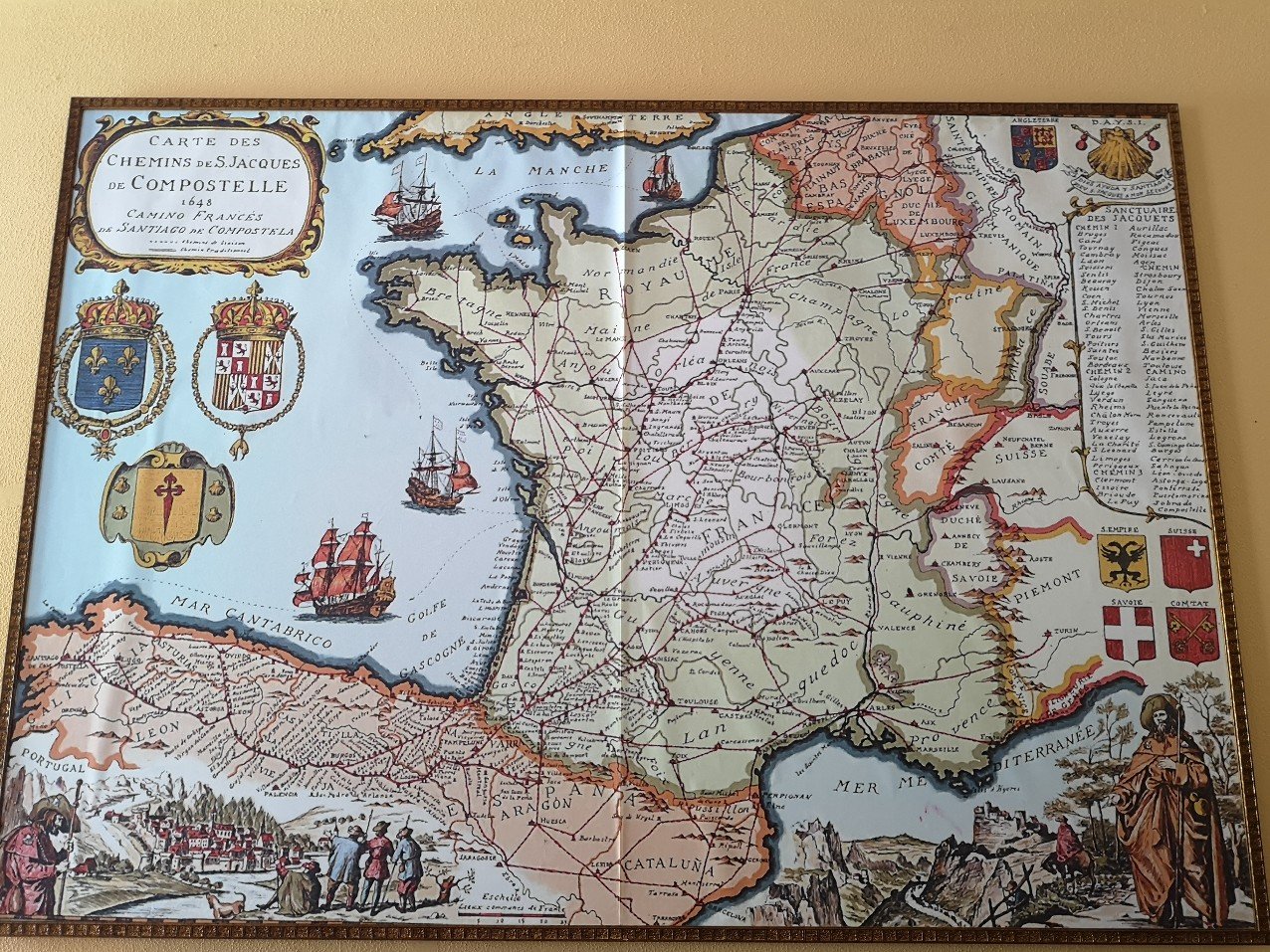
French map (1648) on the wall of the reception area of the Monastery at Herbón, showing the many caminos converging on Santiago de Compostella.
Eventually, after a light shower, we were let in and welcomed by the volunteers. It was very efficient. The accomodation was in small cubicles of two bunks each, ranged along a corridor. (That’s my mess on the bottom bunk!)
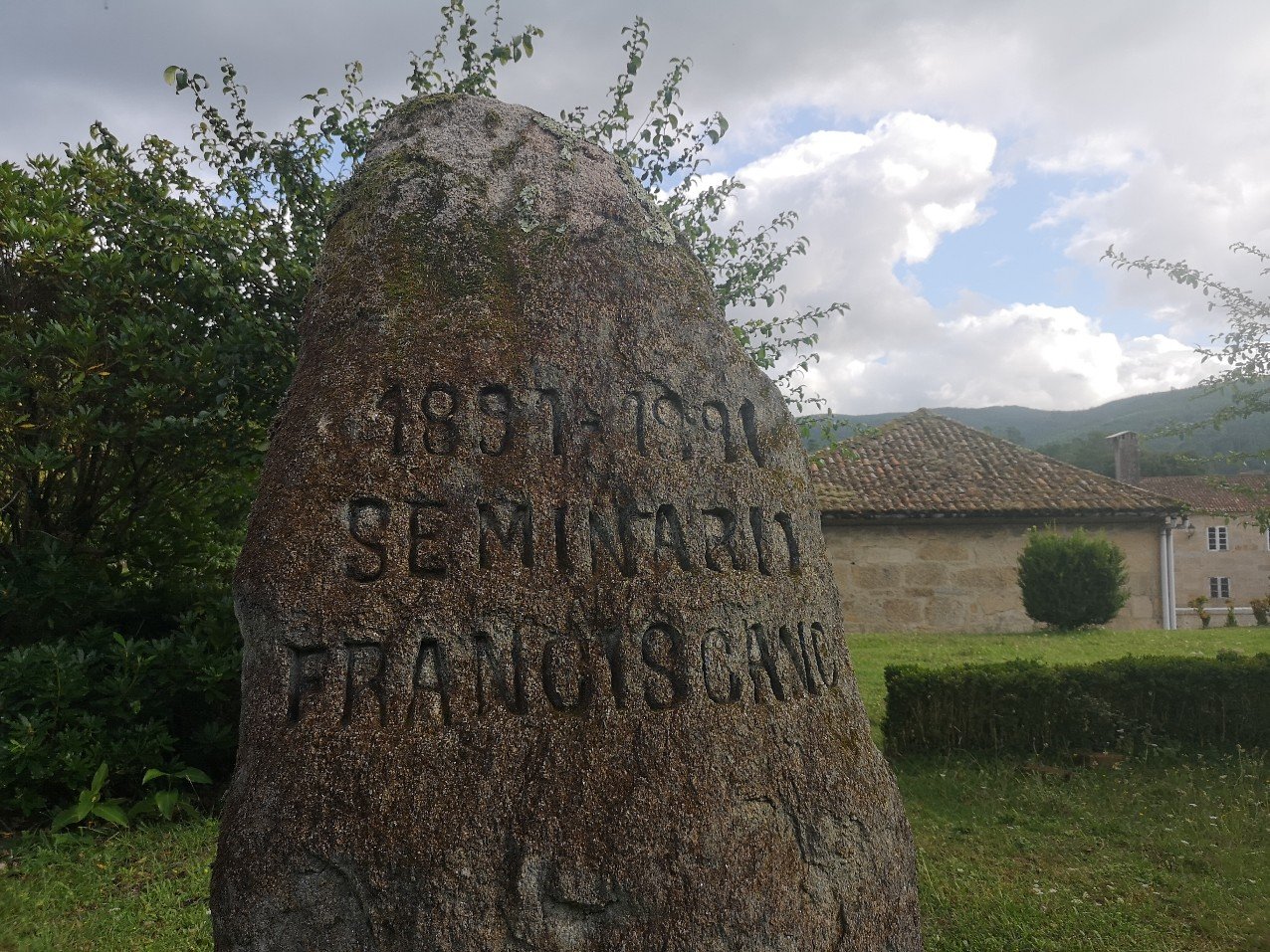
Franciscan Seminary 1891-1991. This monastery is in danger of being shut down because there are no young monks coming into the Order, but they do a lot in the village, so it is hoped that it will survive. Herbón Monastery, near Padron, Spain
After a break in which I spent time meditating in the sun, we were taken on a tour of the chapel, cloisters and other parts of the building. This is practically compulsory and very interesting. The monks were missionaries, sent overseas to spread the word of God, and those left at home ran a school on the premises.
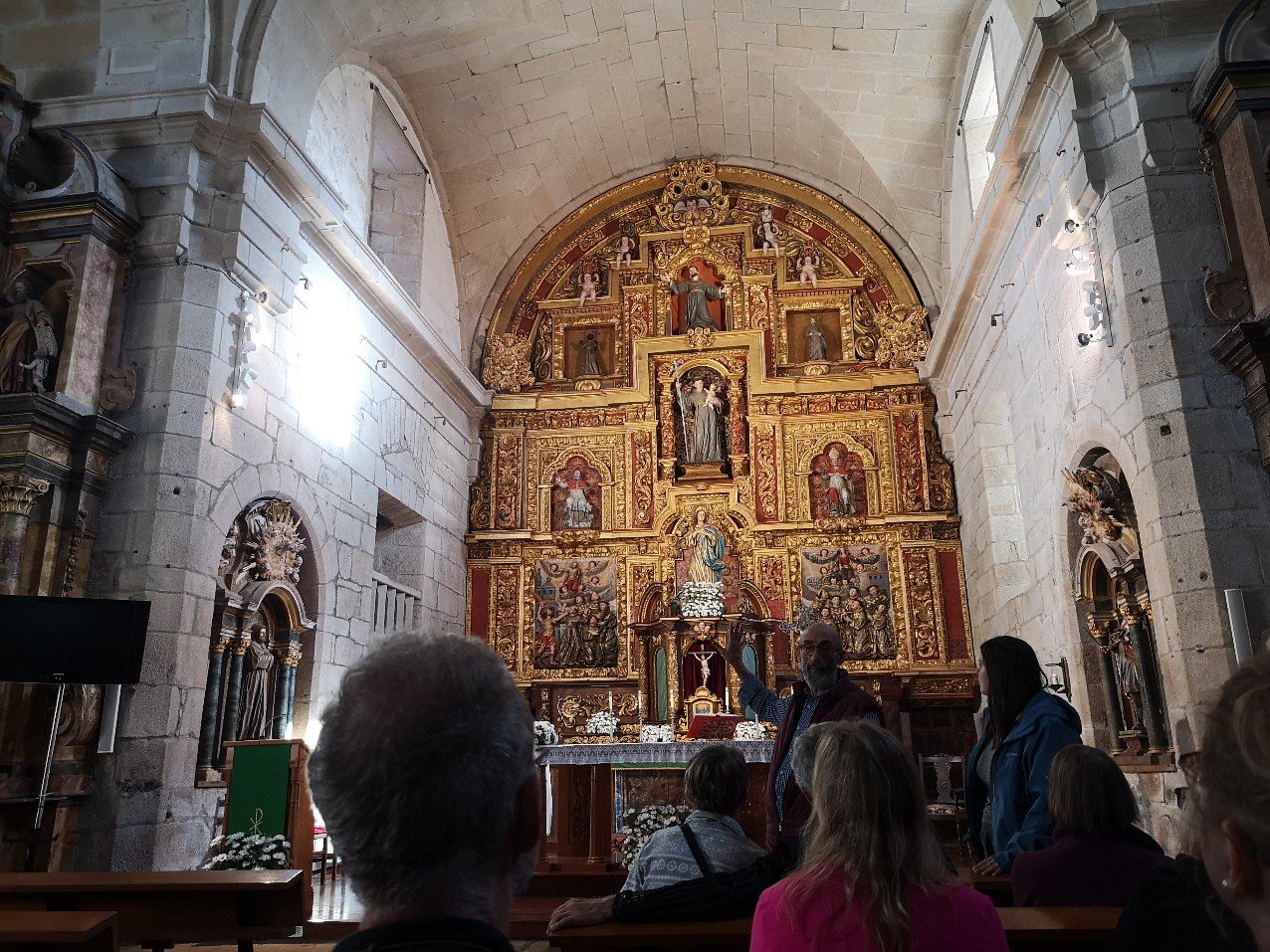
The sparkling golden altar, Herbón Monastery, Spain
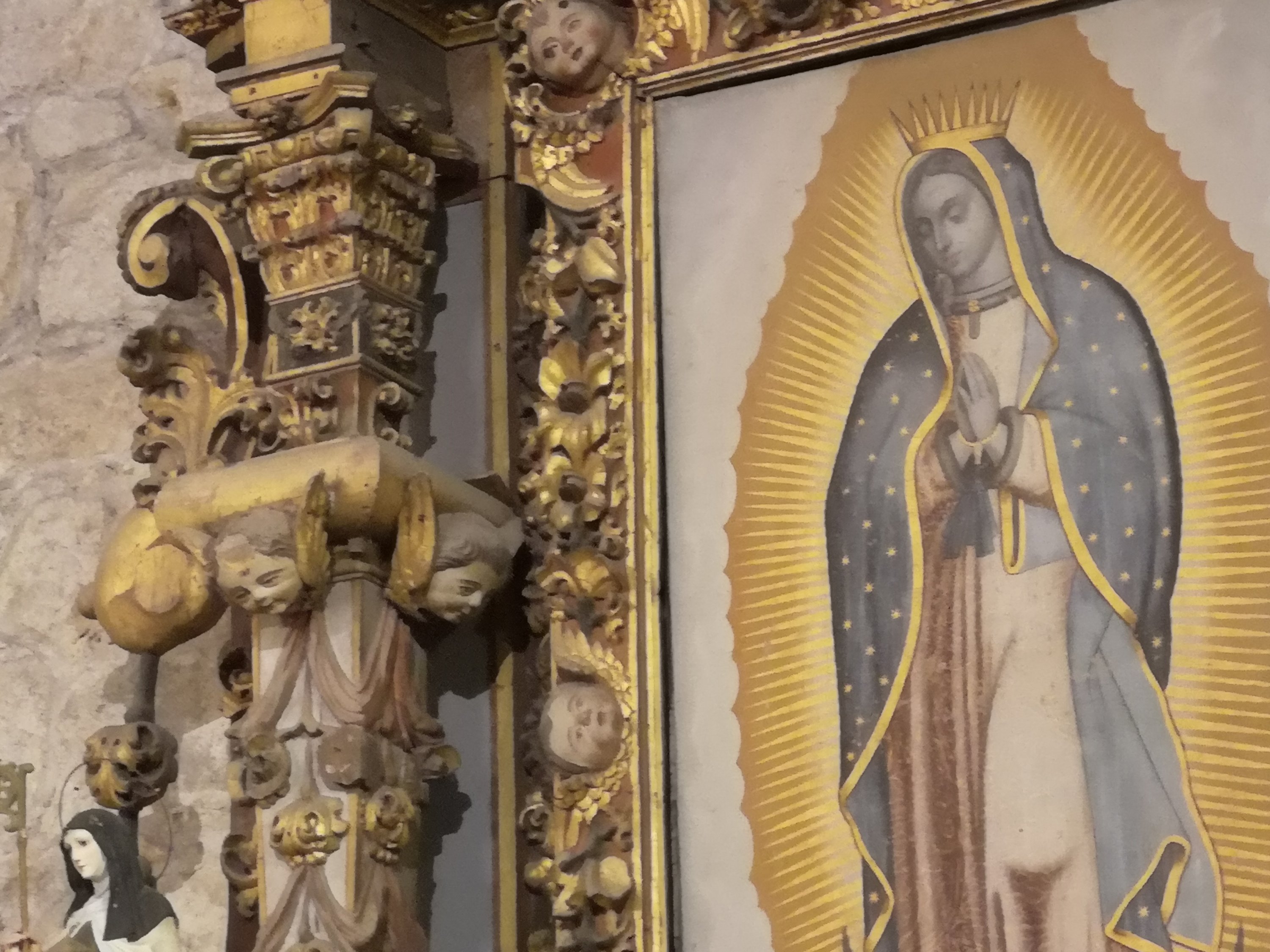
I loved these little angel heads with wings holding up the column, Herbón Monastery, Spain
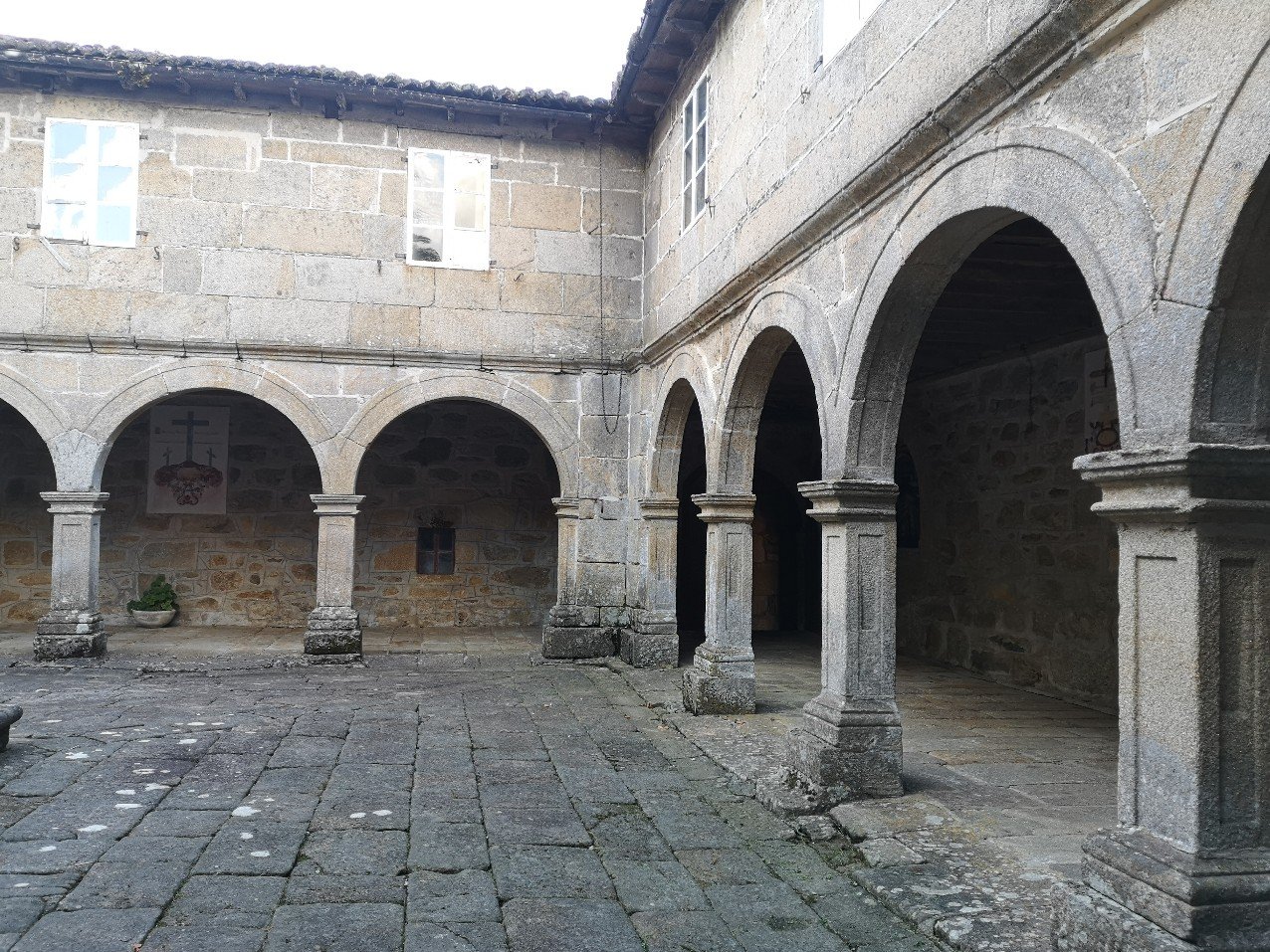
Cloisters, Herbón Monastery, Spain
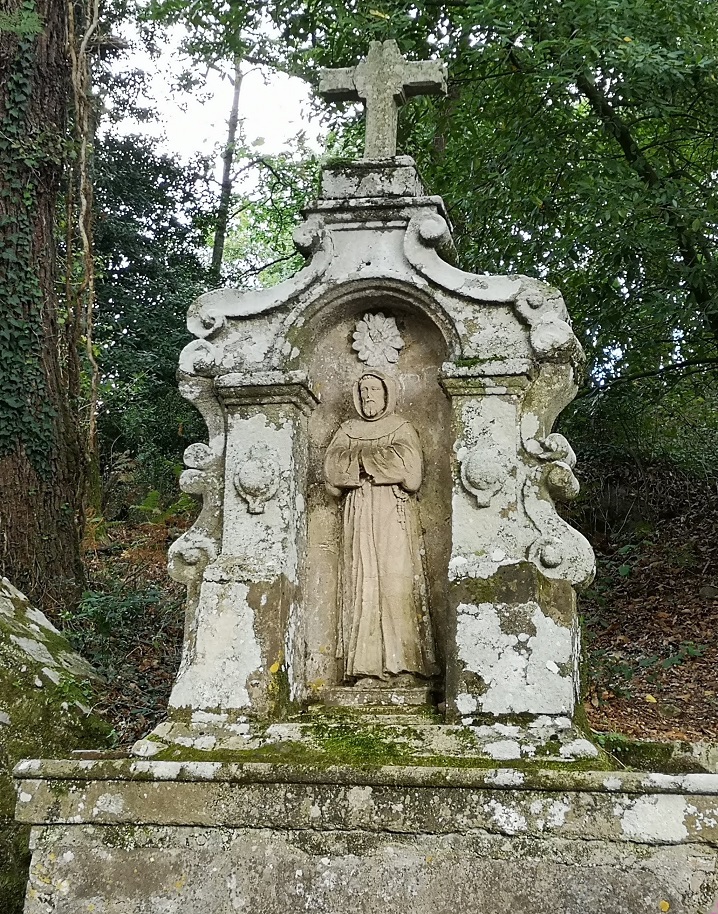
Stone statue and cross in the garden, Herbón Monastery, Spain
The large garden sports vineries (there is no-one to keep them going now, sadly), kitchen garden (partly in use, as far as I could see), water which has been tested and found to have lots of minerals in it so is truly healing, and various levels and attractive sections making it really interesting.
A place of meditation, Herbón Monastery, Spain
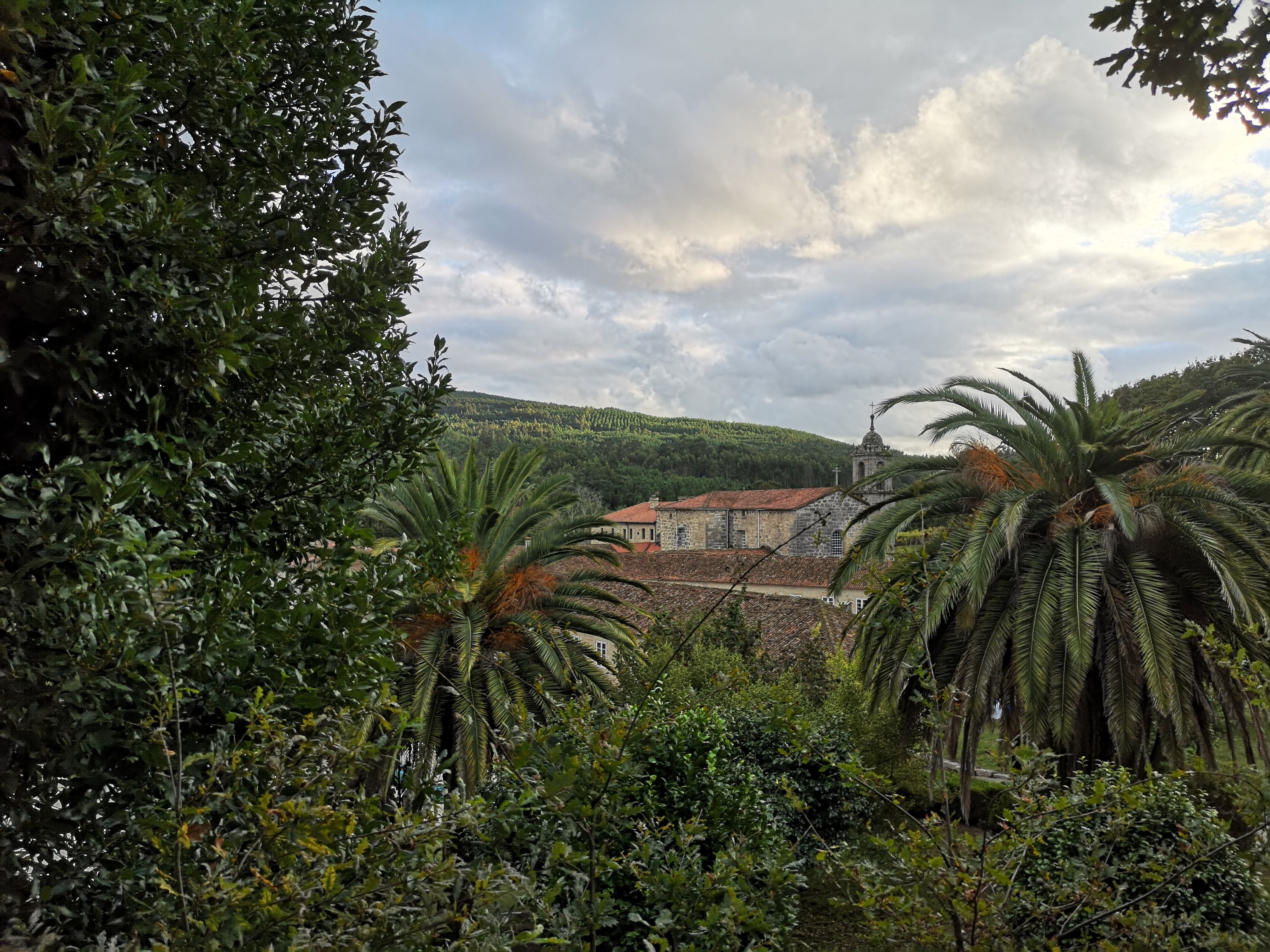
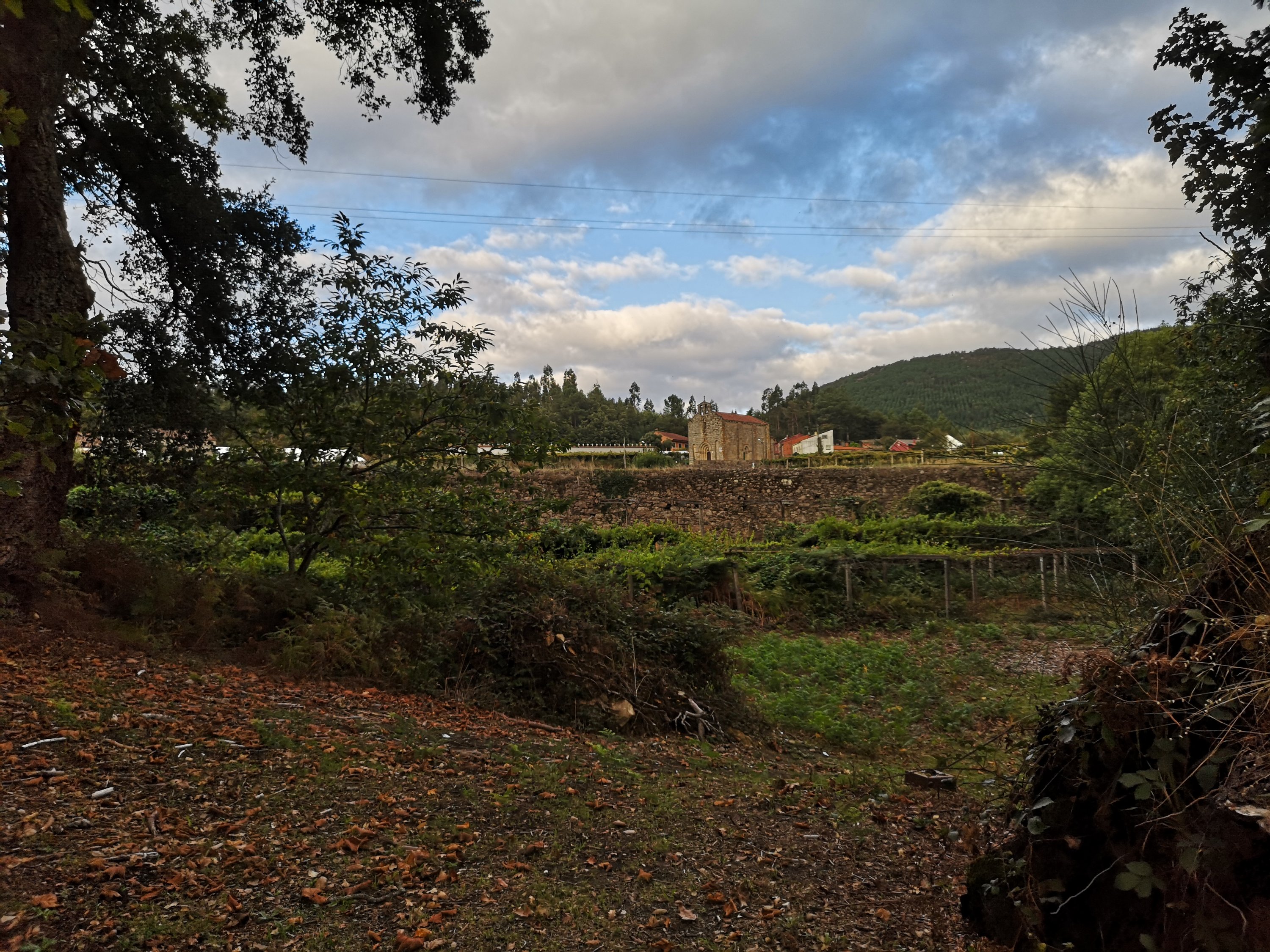
View from the garden, Herbón Monastery, Spain
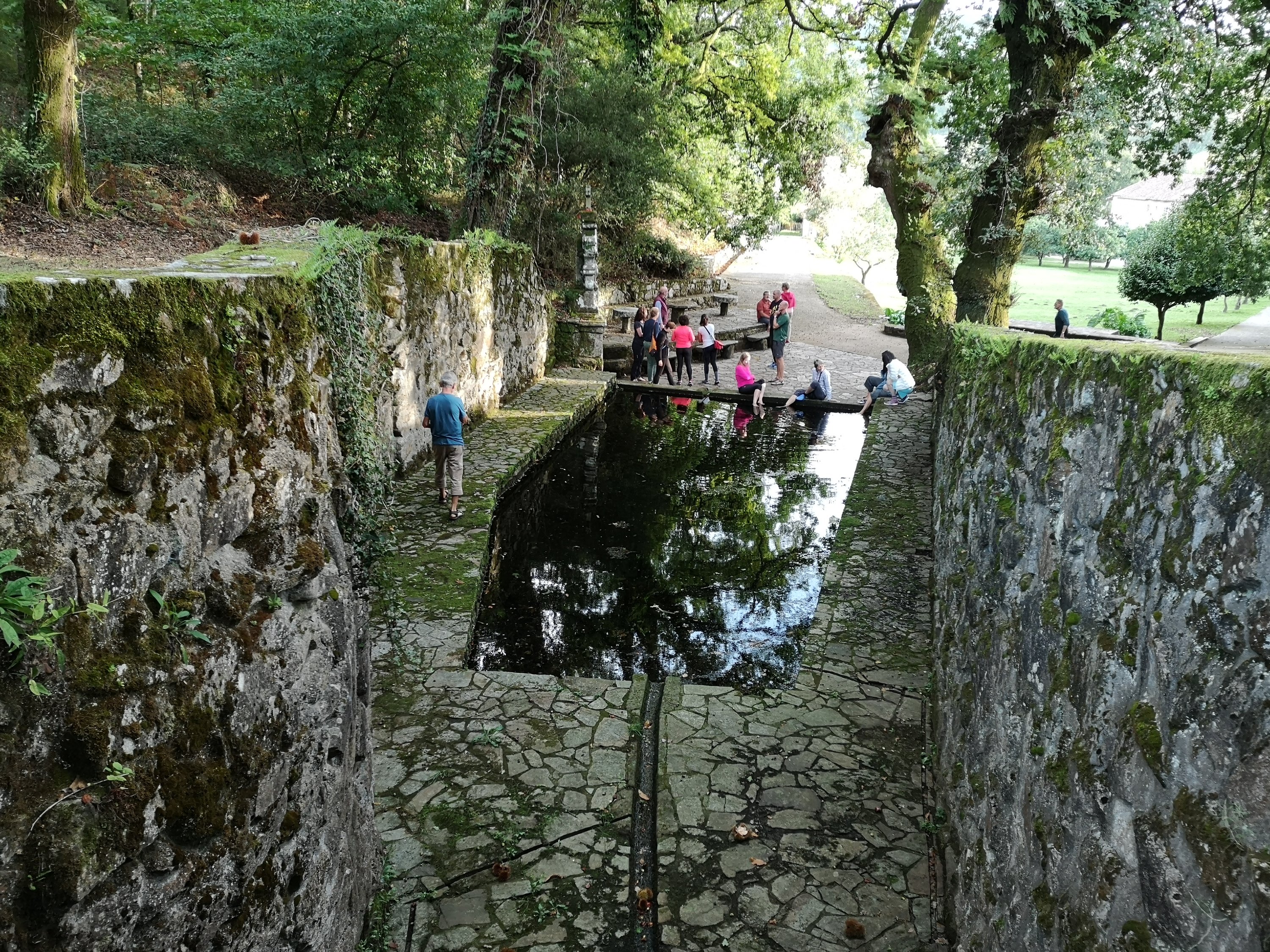
Healing waters at Herbón Monastery, Spain
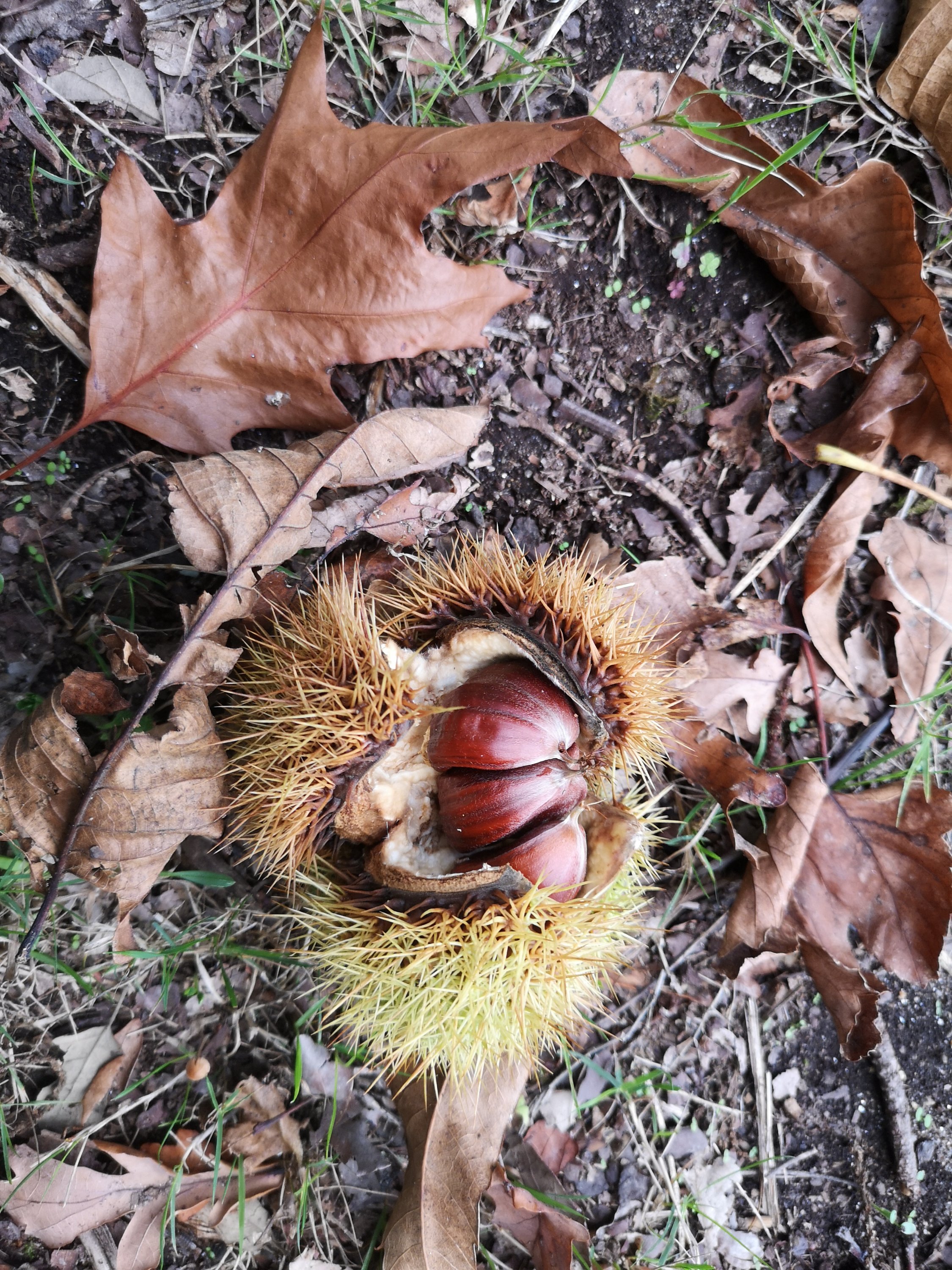
Dry, brown Autumn leaves and sweet chestnut prickles bursting open
Untended vines, Herbón Monastery, Spain
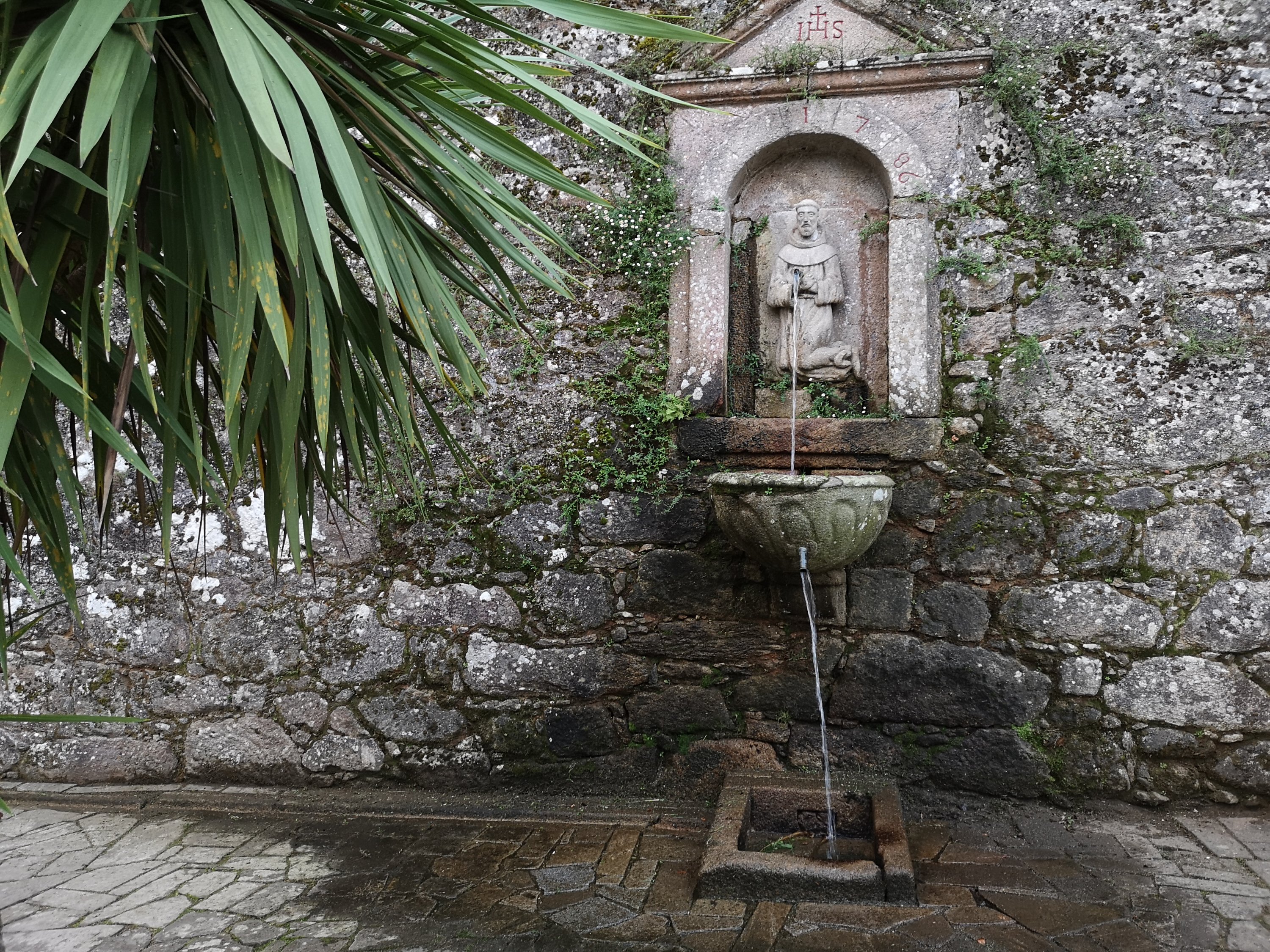
Wall shrine and fountain, Herbón Monastery, Spain
To reward us for such a long guided tour and talk, we were given a good meal (included in the 6 euro price) around long canteen tables and there was a lovely atmosphere there.
Note: There is always a decent vegetarian option at the shared meals on the Caminos
Camino Portuguese da Costa – Days 7 and 8, September 25th – 27th 2019
La Guarda / A Guarda, Galicia, Spain
La Guarda is in Spain, even though it is a town on the Portuguese Camino. I was happy to be back in Galicia, one of my favourite parts of Spain. I should have liked to see the Celtic hill fort and village of Castro de Santa Trega which connects with Scottish history (I live in Edinburgh) on the top of the hill that La Guarda sits beside, but I was not comfortably ambulant.
In the morning, I walked a short way (30 minutes, 2 kilometers) from the Albergue Municipal in La Guarda where I had spent the night, to visit the churches, but it was a strain and took me much longer than it should have. As a result of the pain in my foot, I decided to turn back and take a different route.
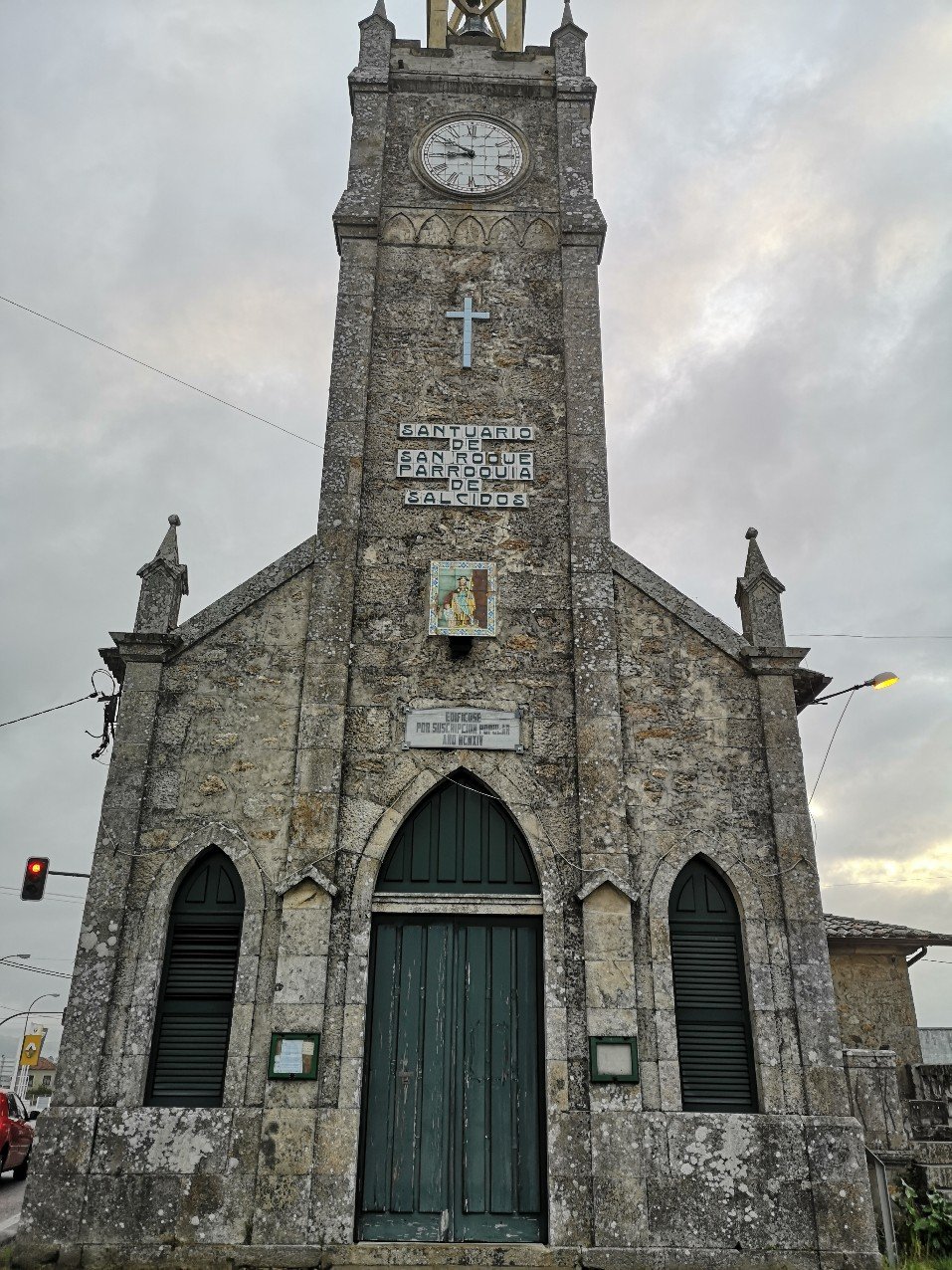
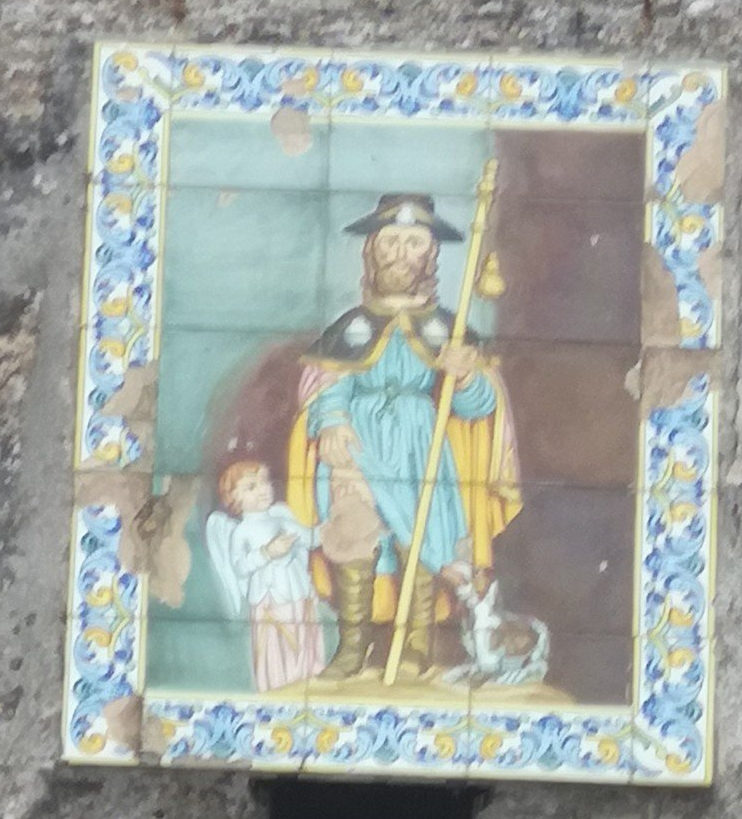
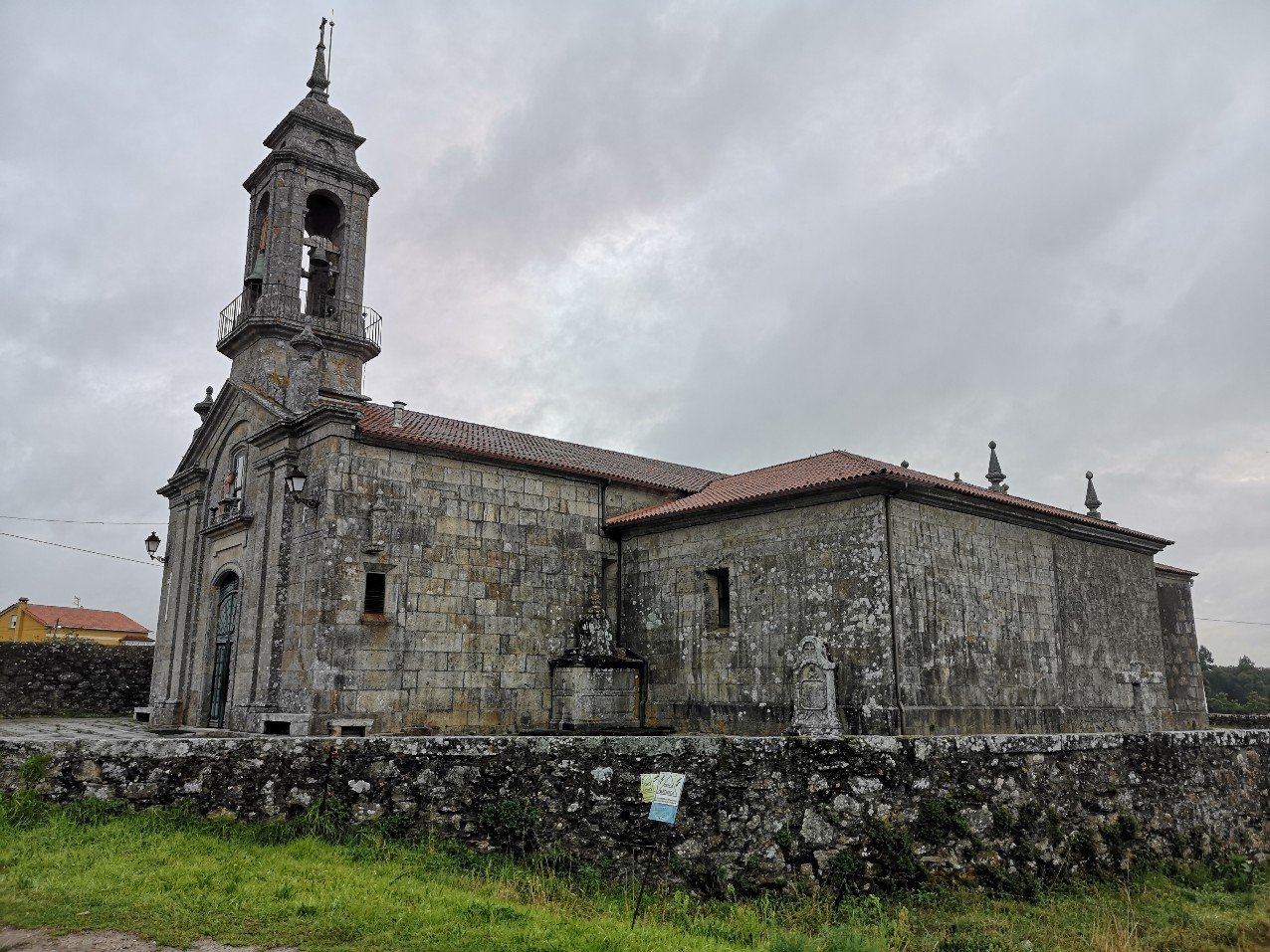
Santuario de San Roque, Parroquia de Salcidos with Saint James in the front
St James carrying his crook with wearing his hat with the camino shell on it. Also with an angel and a dog. Apologies for the quality of the photo, but I thought they were charming tiles
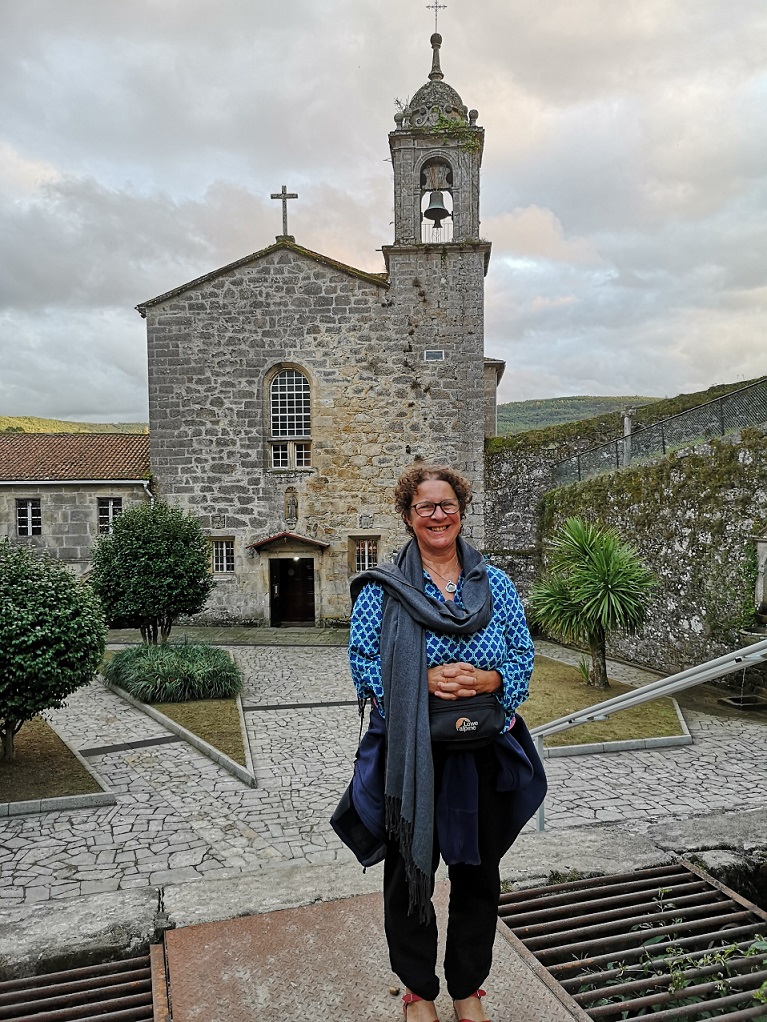
The two churches (above and below) are almost next to each other and I was the only one there. A few people were on their way to work and school, on the main road, and the churches were closed as they always are unless there is a service on. However, I admired their grandeur and solidity, the Santuario de San Roque having seen many pilgrims over the centuries.
Igrexa Parroquial de San Lorenzo de Salcidos, Portugal
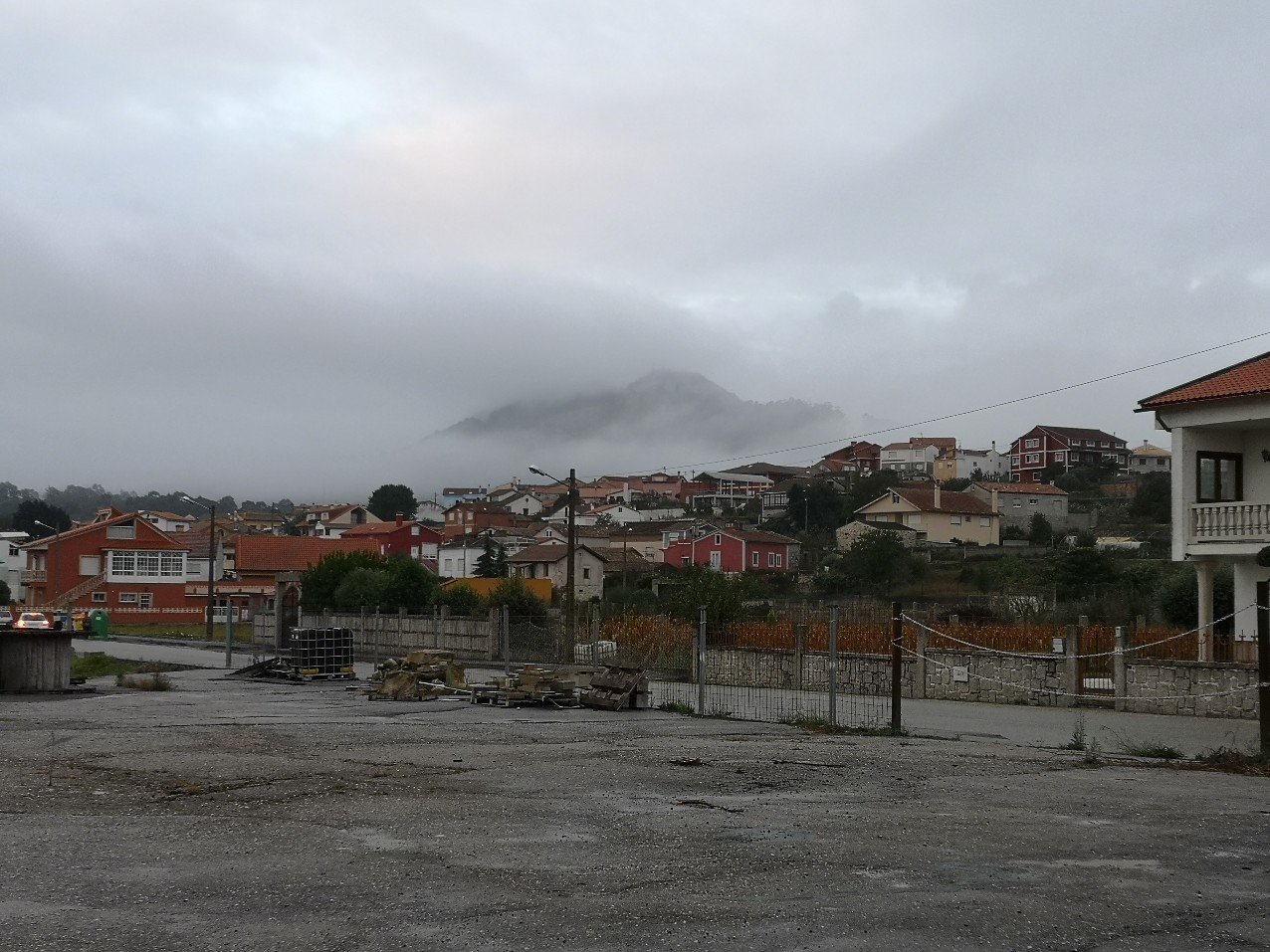
The mountain was just visible above the clouds as I looked from Salcidos, a borough of La Guarda, Spain
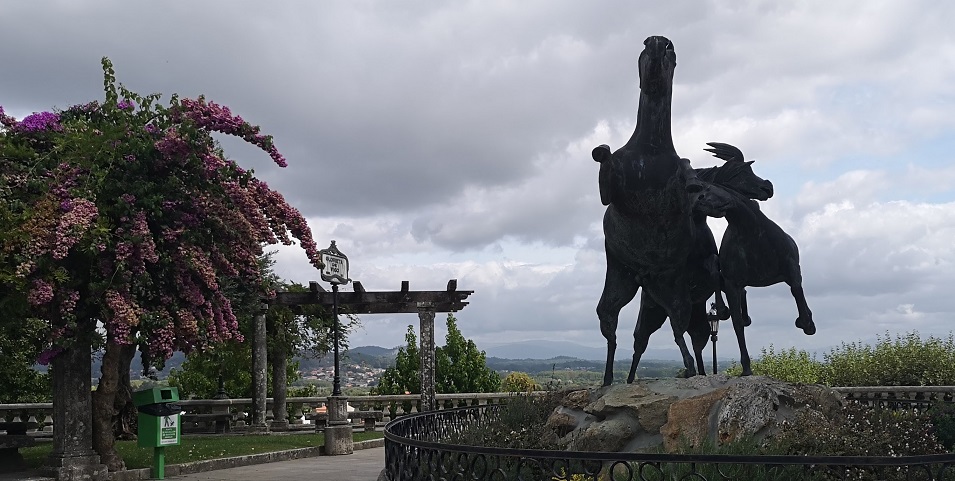
Then I rested for 20 minutes and took the bus. It runs from Salcidos to Tui (get off / on near Repsol gas station (estacion de servicio) on N-550) regularly and takes around an hour. This was the second day that I could not walk, something that had, thankfully, never happened to me before, and it was very hard to accept. The journey took me through urban areas with grey stone buildings boasting elegant balustrades around the windows, along the northern side of the River Miño, and deposited me opposite some public gardens bright with bougainvillea and sporting a grand metal statue of cantering horses, the Monumento al Caballo Salvaje.
Monumento al Caballo Salvaje (wild horses monument) in the park, Glorieta de Vigo, Tui, Spain
Tui
Tui is a busy city, full of hustle and bustle and with all facilities you could possible need. There is an excellent market, with cafes and shops galore. Not far from the Albergue is a friendly eating place / hostel (Albergue Ideas Peregrinas – not the cheapest, but with a European atmosphere and great, healthy breakfasts, including vegan food), and that is opposite one selling crêpes, and so on…! All tastes are catered for and many people holiday here even if they are not hiking. There is an extensive Natural Park to the north west with hills, Monte Aloia, for excellent views of Baiona, Vigo and the whole region.
I picked up a copy of Jim Crace’s The Melody in the hostel the night before and made the most of my enforced resting time to have a good read. Described as a meditation on grief, it connects with all my recent writing on the subject – there’s no such thing as a coincidence!
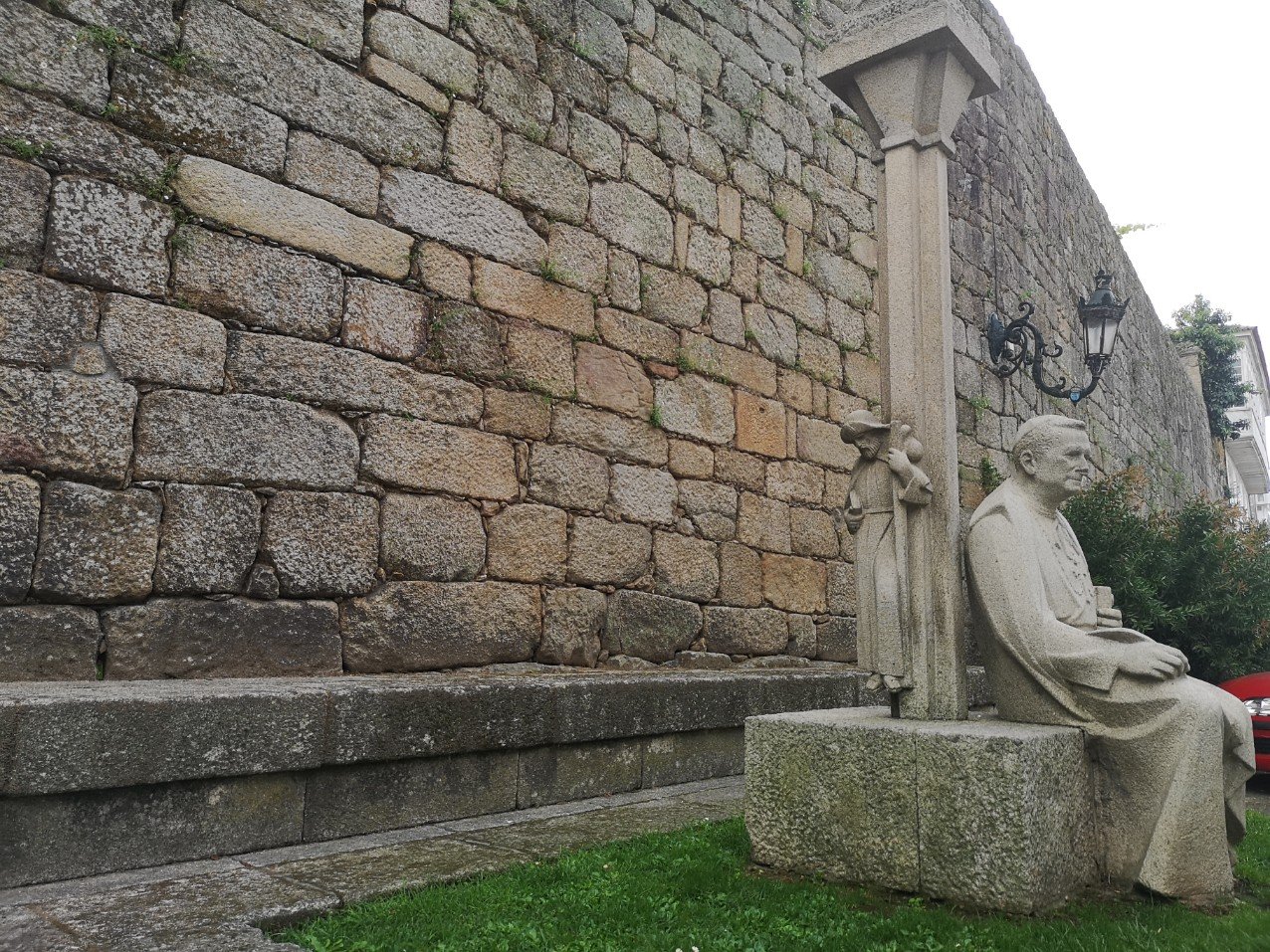
See St James peeking out from behind the column where Arzobispo (Archbishp) Lago Gonzalez (1865-1925) sits. His high cheekbones and benign expression make him look as if he is listening to a child telling him a story.
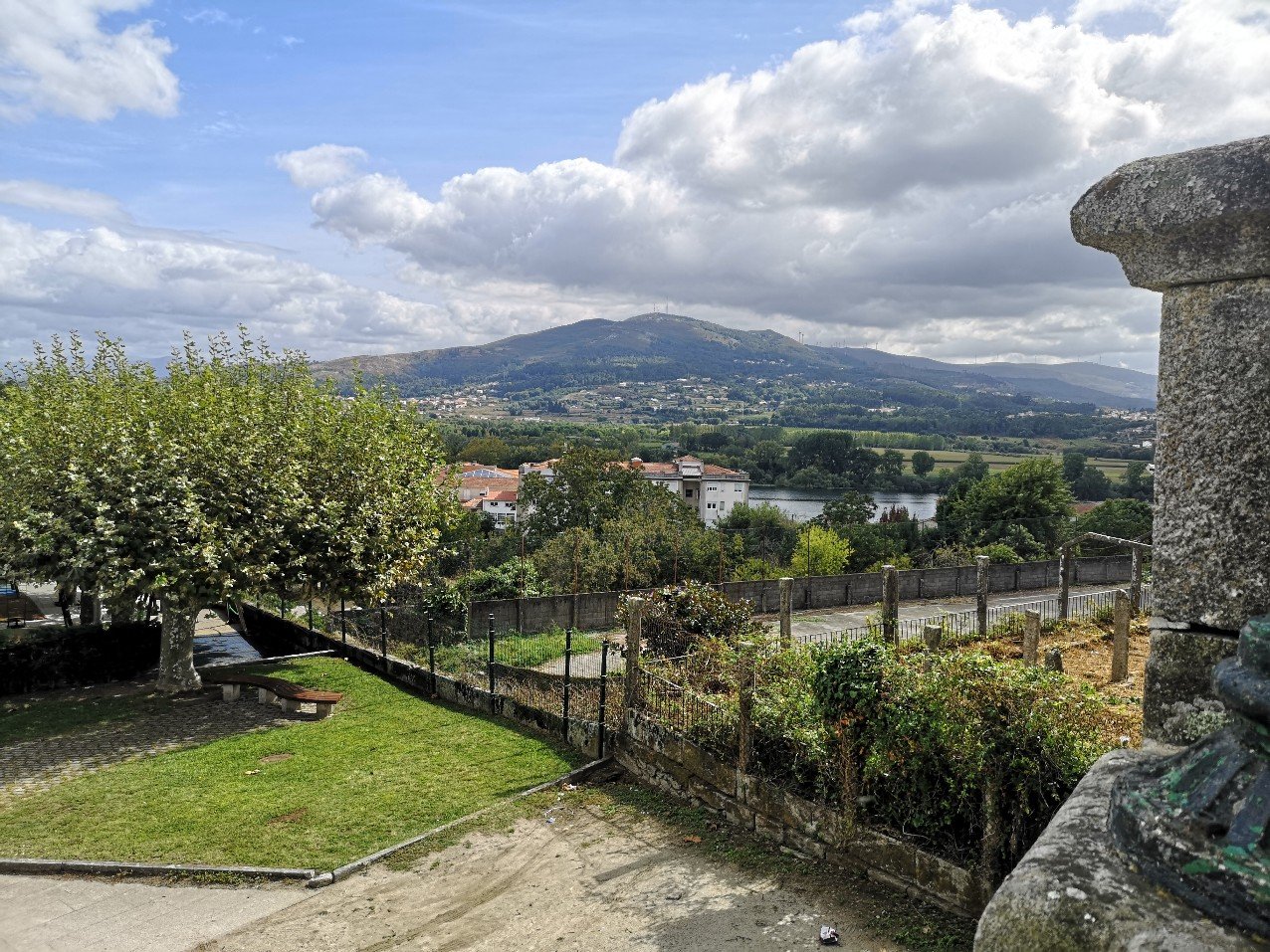
The location of the Albergue de Peregrinos is magnificent with views from the rocky hill across the river Miño and hills of northern Portugal
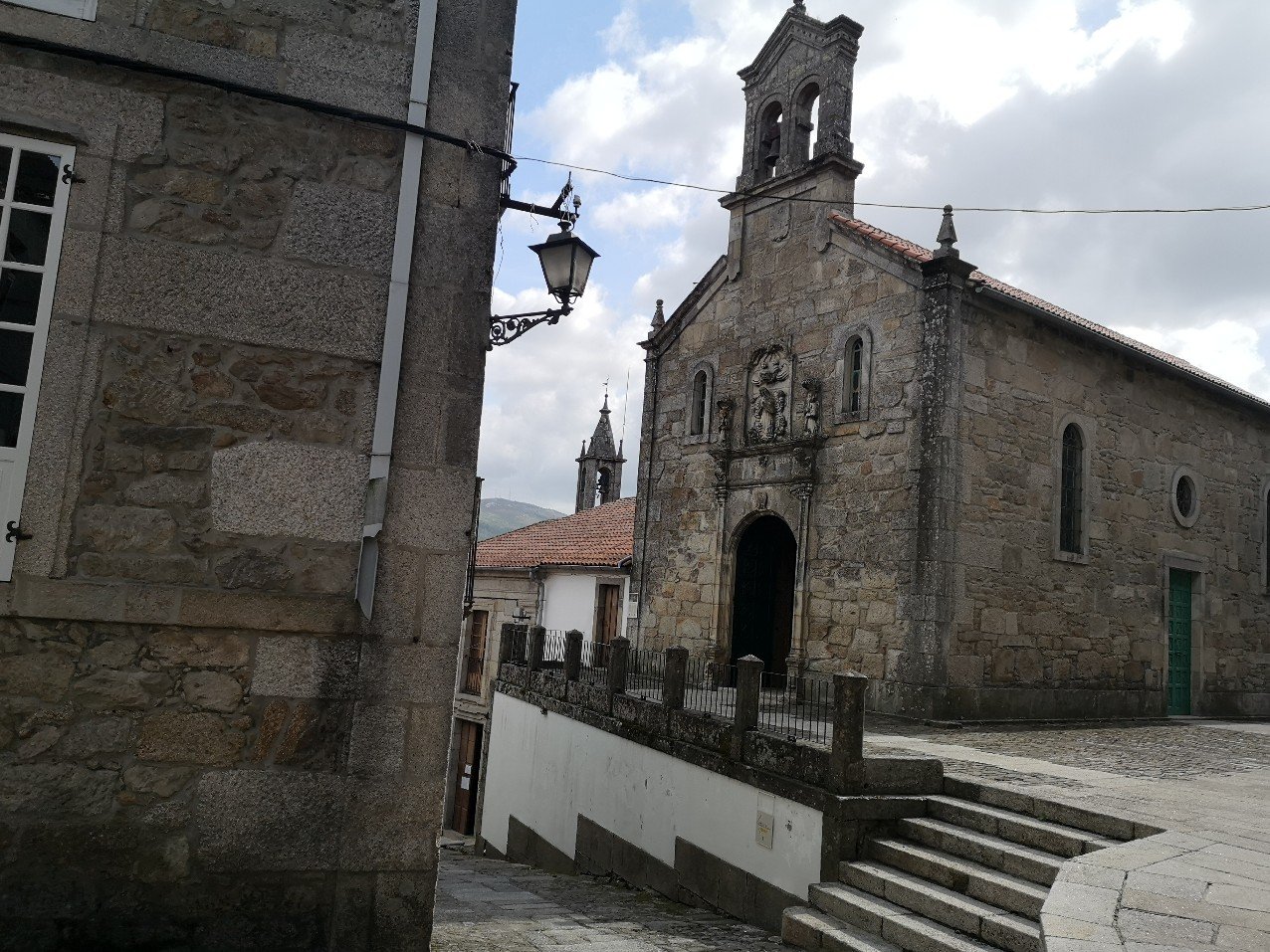
The Capela da Misericordia is right next door and only slightly uphill (Rua Parroco Rodriguez Vazquez) from the Albergue de Peregrinos. Situated at the back of the Santa Maria Cathedral of Tui, it is simpler and almost unadorned. Spain
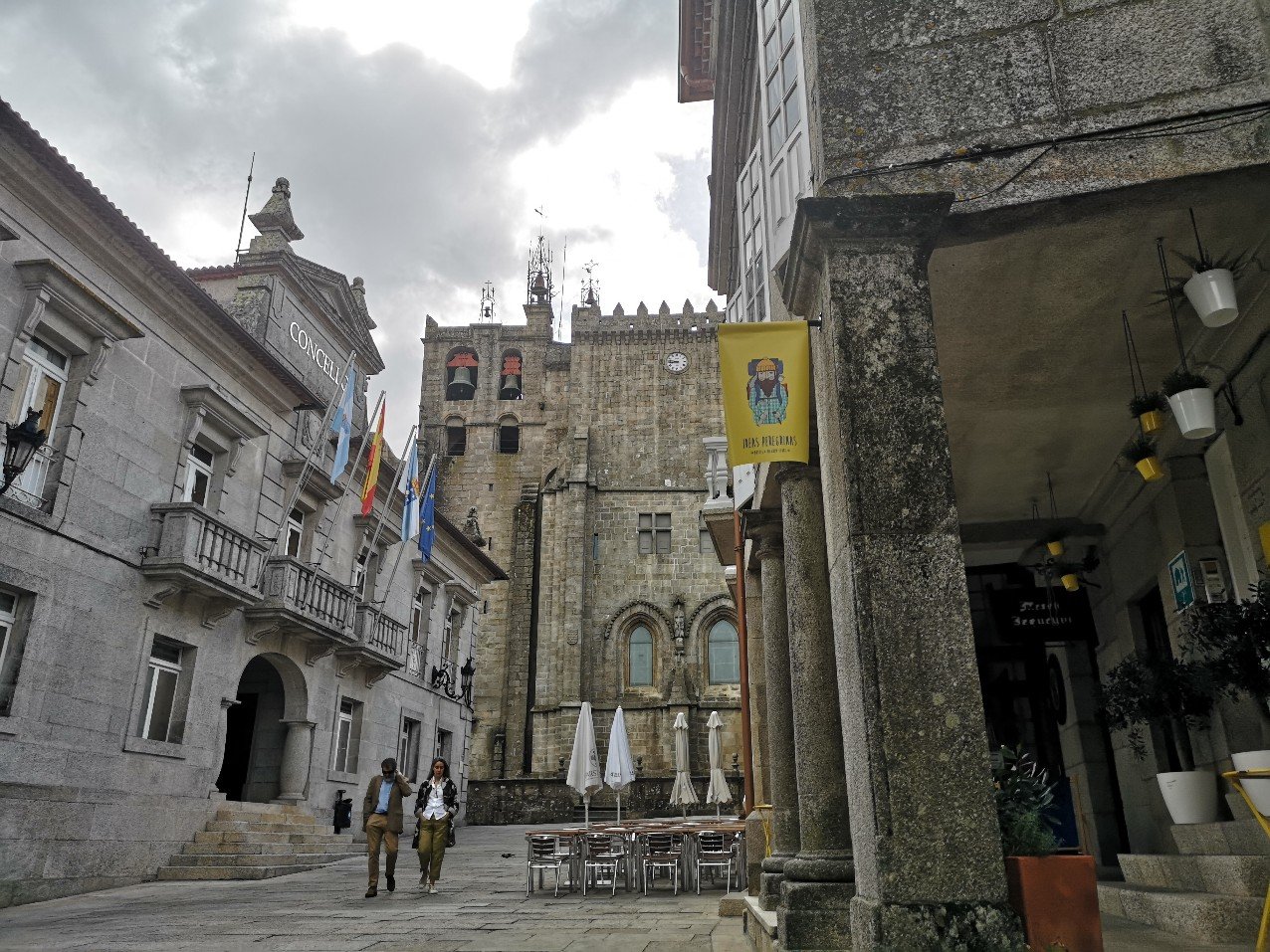
The hostel is wonderfully situated in this historic city. Elegant cafes are to the right of the Plaza da Concello, opposite the Concelo (the government offices of the social security finance department) and the Police. The side of the Santa Maria Cathedral is in the middle (in the background) and just past the flags, on the left and down the steps is the Albergue de Peregrinos, Tui, Spain
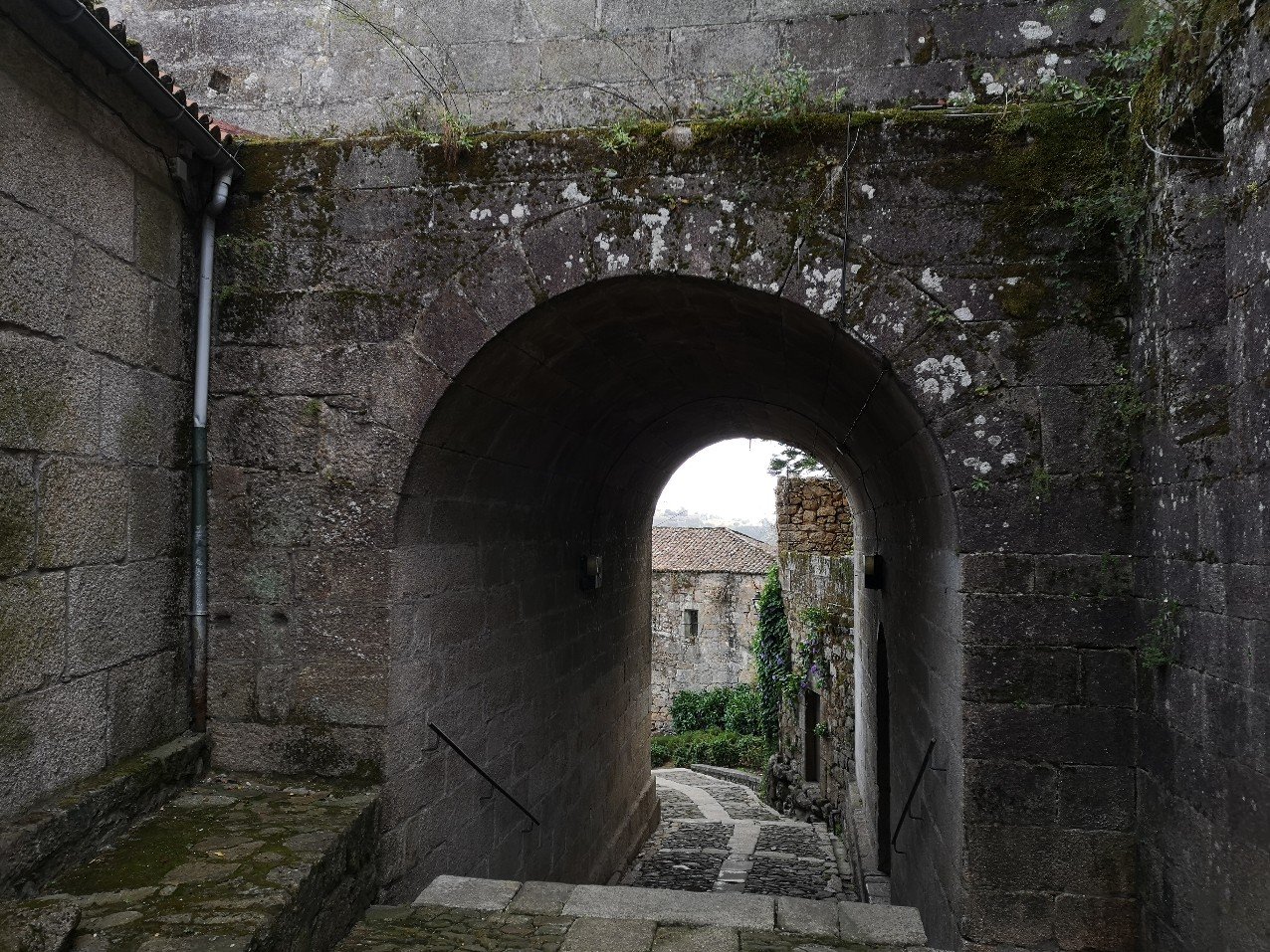
Through and archway in the eleventh century city walls you can see the old Roman street which predates it, giving a sense of the elevation of the town, Tui, Spain
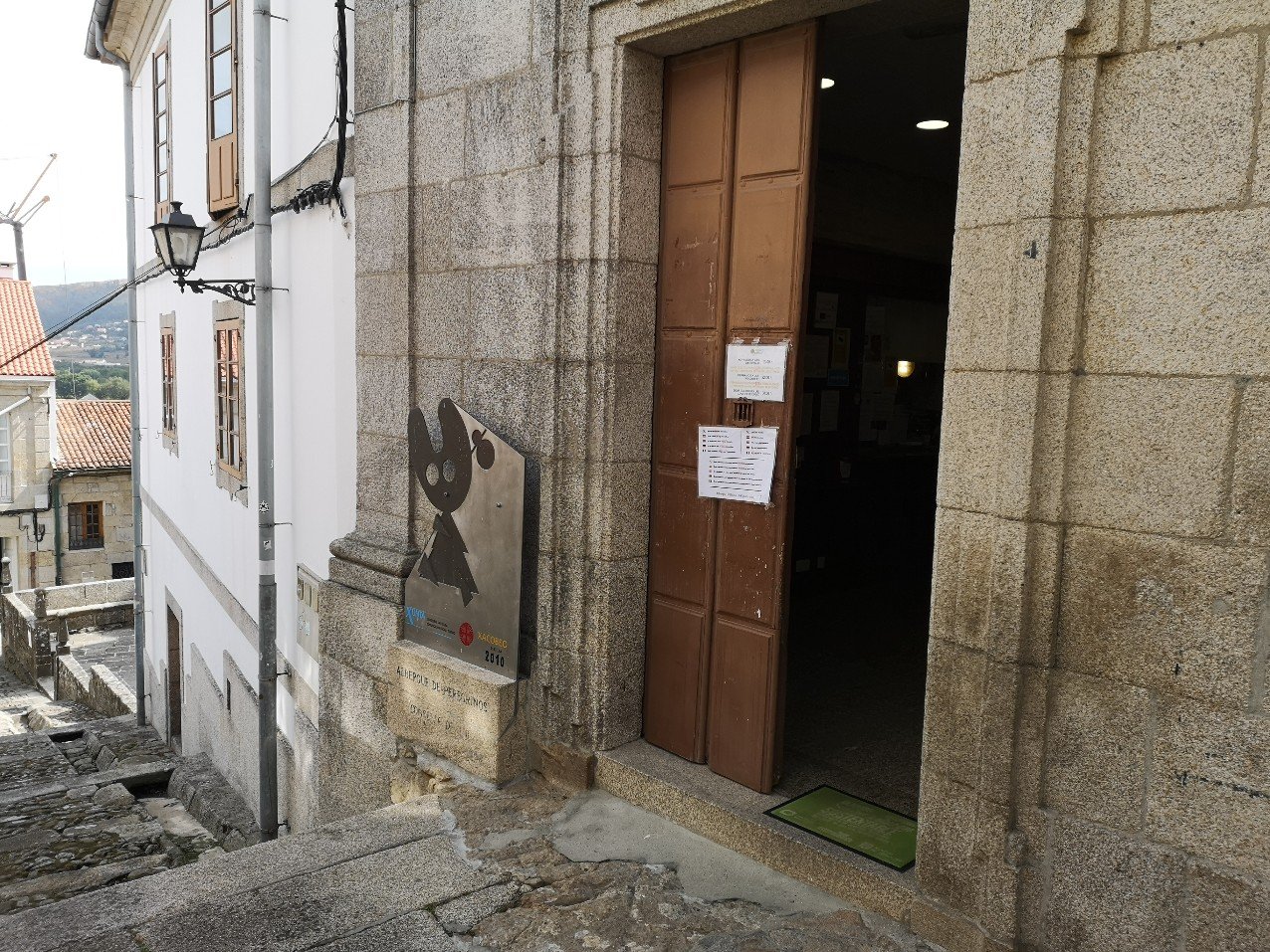
Entrance to the Albergue de Peregrinos with the typical Galician government, metal sign of a cartoon-type pilgrim with her water gourd over her shoulder, Tui, Spain
I was early into the town from La Guarda and encountered a difficulty: the hospitalera behind the reception at the hostel was talking animatedly to a gentleman who was lounging nearby. On seeing me, she launched into an attack on pilgrims who pretend to be walking, but actually must have come by public transport because they would never, otherwise, have arrived by this time. She laughed, he laughed, they compared notes and got increasingly irate about such behaviour.
I was dying to get the weight off my back and feet, and trying to explain in Spanish that I had not done this before, but had no choice with my foot pain. She ridiculed me and said I shouldn’t be carrying such a heavy load. It was most upsetting and as I became distressed she started to shout, saying that she wasn’t being nasty, just that ….
It is true that the municipal Xunta (the Galician council) albergues are for the pilgrims and that, increasingly, people are either not carrying their own packs or are taking buses and trains some or all of the way. It may have been an external voice, too, uttering the very words which I was hearing inside my head, and been part of my having to come to terms with being human and not always strong. Anyway, I said I would go away and then she started calming down and took me through the familiar process: passport check, credential stamp, payment (cash), and bedding. I was shaken.
It is a large hostel with solid wooden bunks. Although there is a sitting area where you can eat inside at the back, the kitchen is across the little garden and so I sat there for my tea as the sun set and it cooled down.
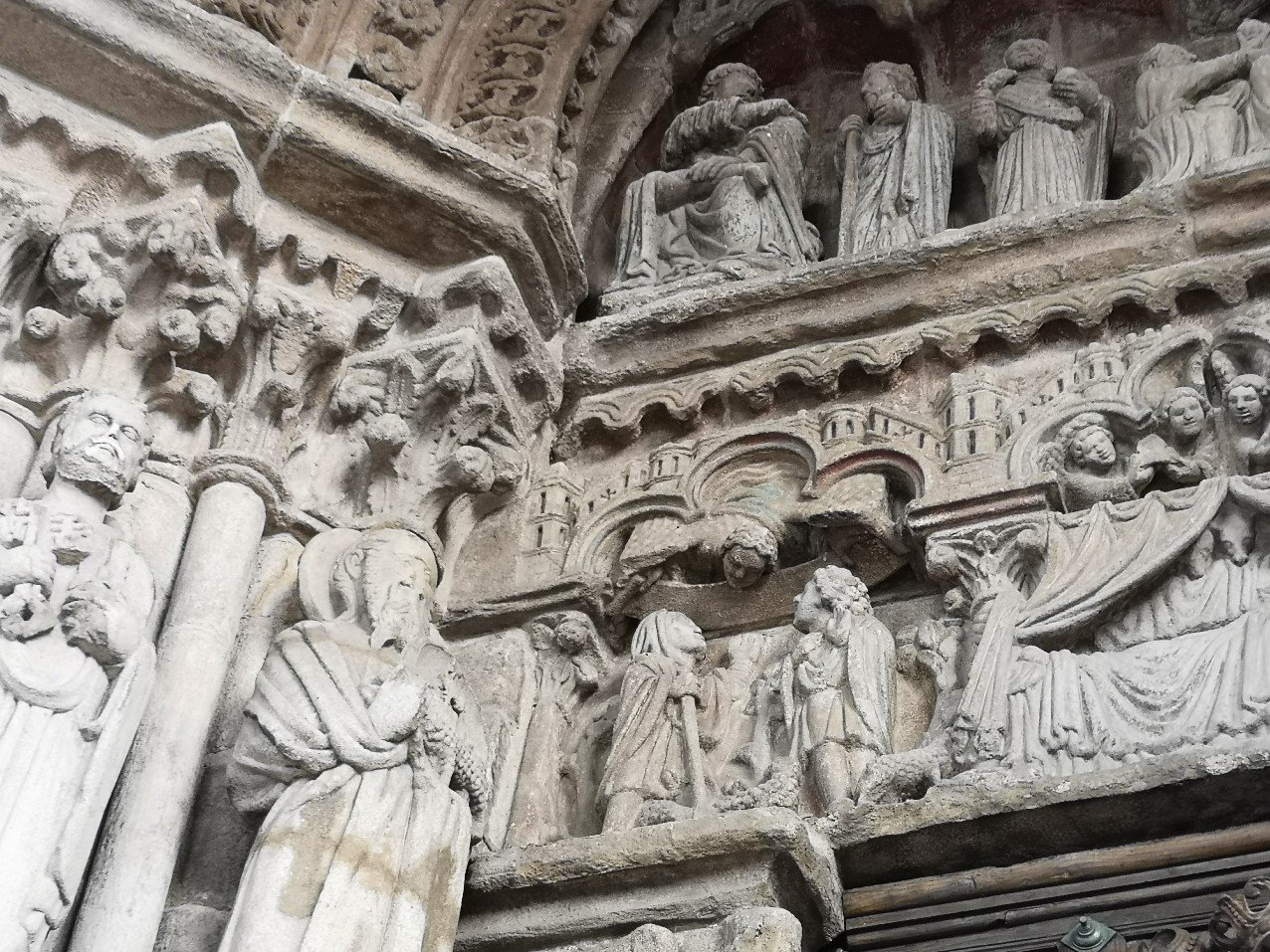
I delighted in the little face peering over as if she was having a chat with what look like two shepherds (there is a lamb at the feet of the right hand character). Catedral (cathedral) Santa María, Tui, Spain
You can see the beautiful cloisters and internal gardens of the Santa María Cathedral de Tui in the photos on their website.
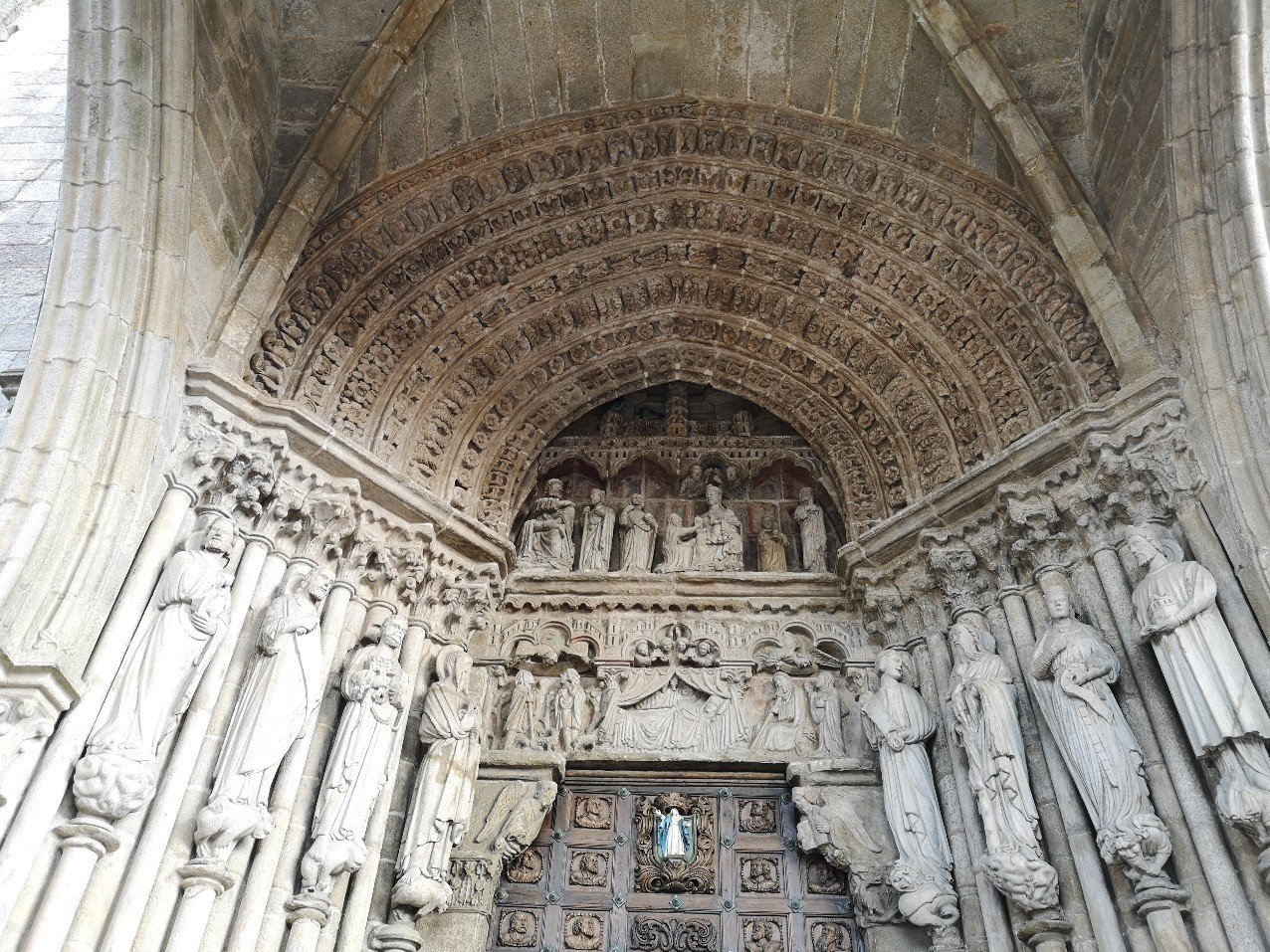
The very grand entrance to the Santa Maria Cathedral on San Fernando Square, Tui, Spain
The tourist information is also in San Fernando Square and the staff are extremely helpful and kind there.
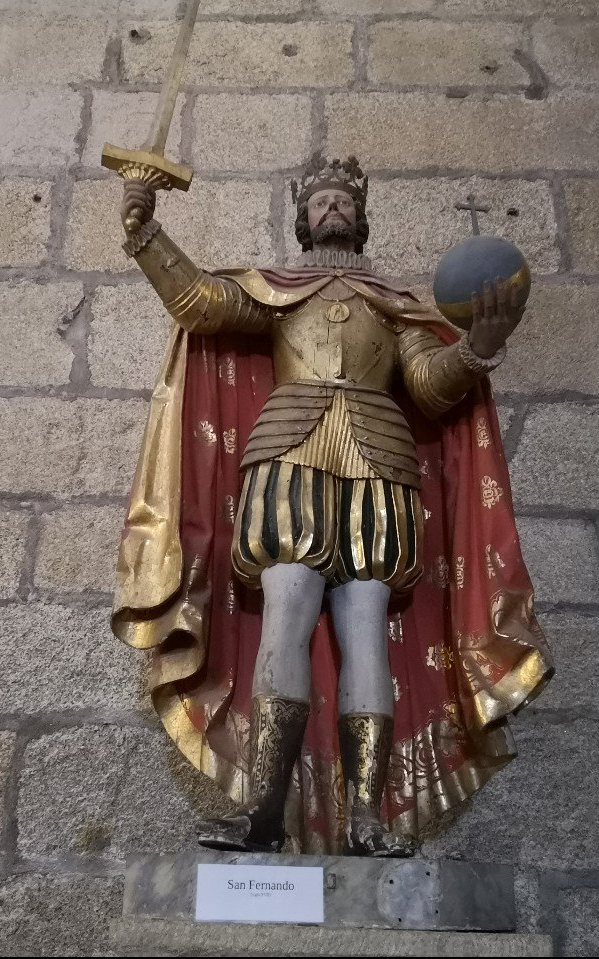
The seventeenth century, richly attired King Fernando carrying a sword and globe with a cross on it representing the might of the expansion of his Catholic empire around the world
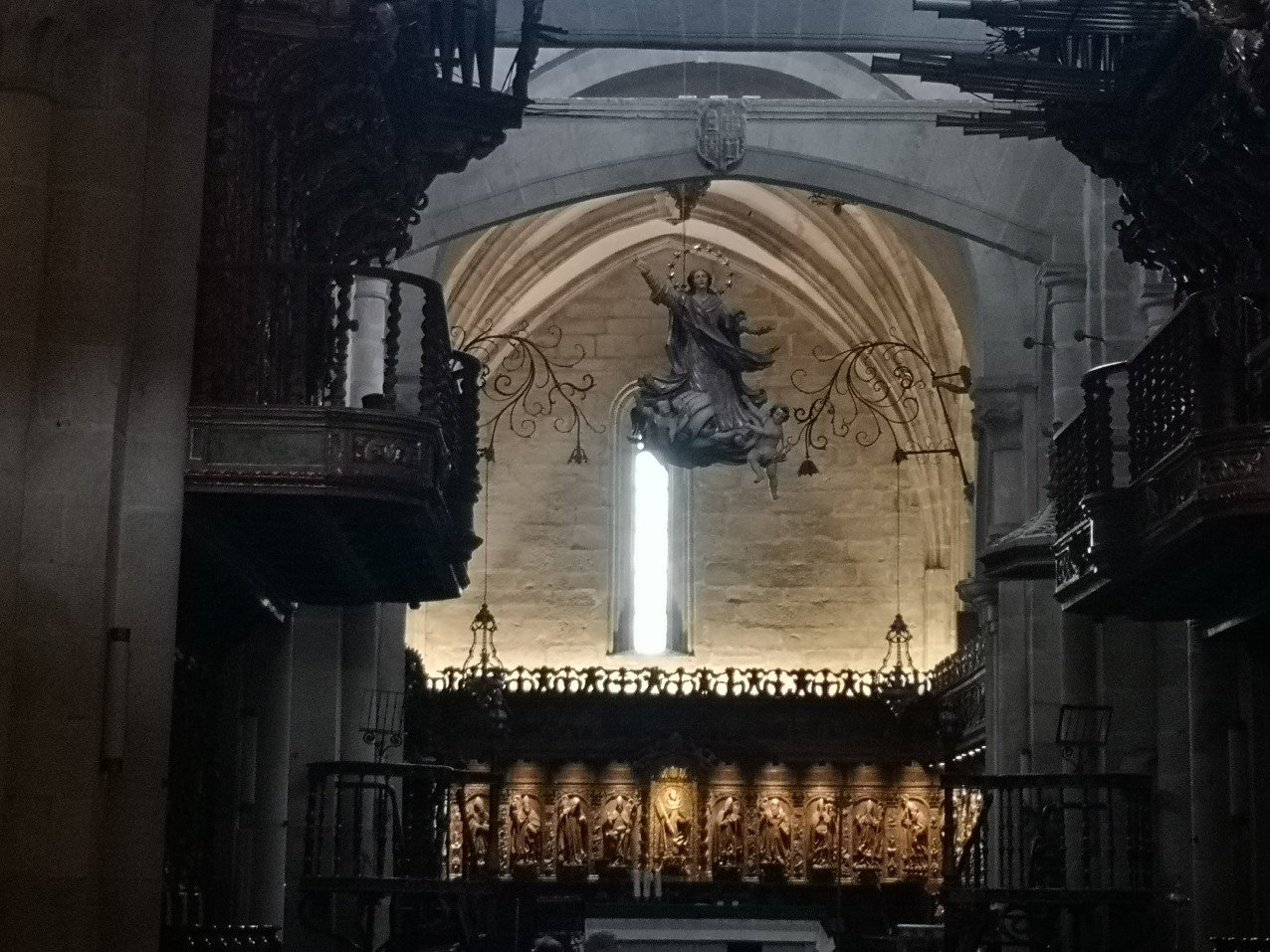
The Virgin with a halo of golden stars, robes flying and cherubs dangling in the interior of the Cathedral Santa María, Tui, Spain
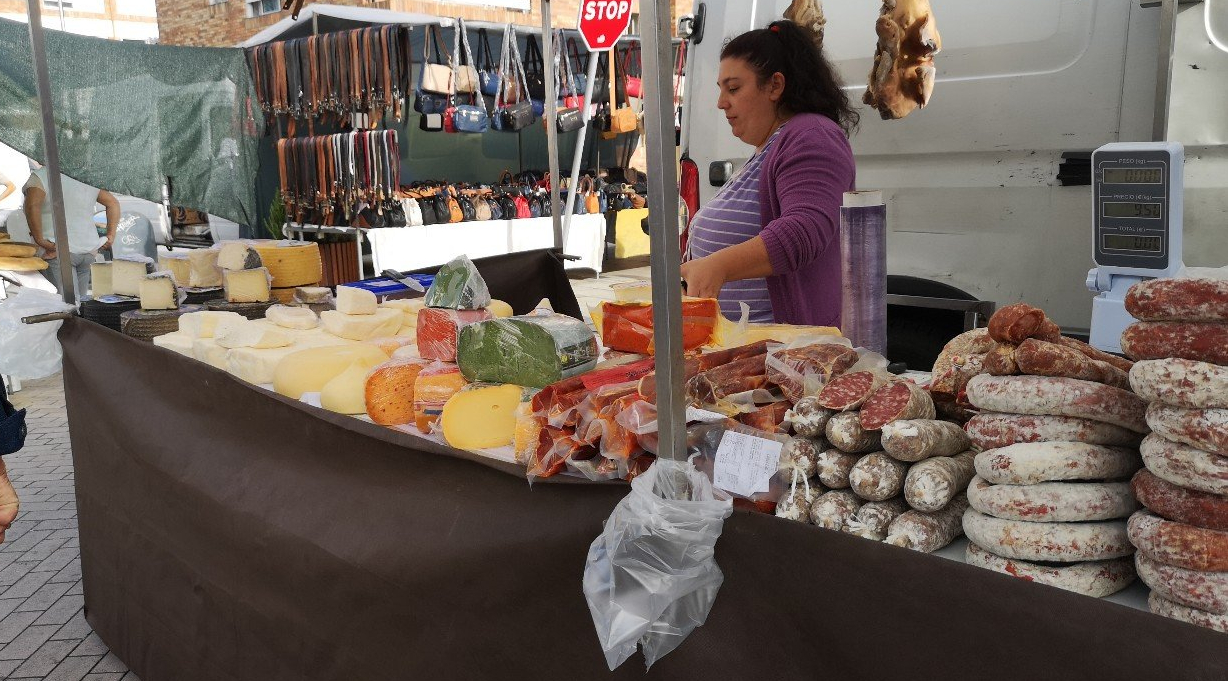
Market stall with salami and cheese – local products of the area, Tui, Spain
Tui to Mos
It is 25 kilometers to Mos and even though I had rested up for 2 days (well, a lot less walking than usual), it was too far, so I took a bus part of the way and trekked the rest (only 8 kilometers) to see whether I could manage. It was such a beautiful day and I was so happy to be on my feet again under the blue sky.
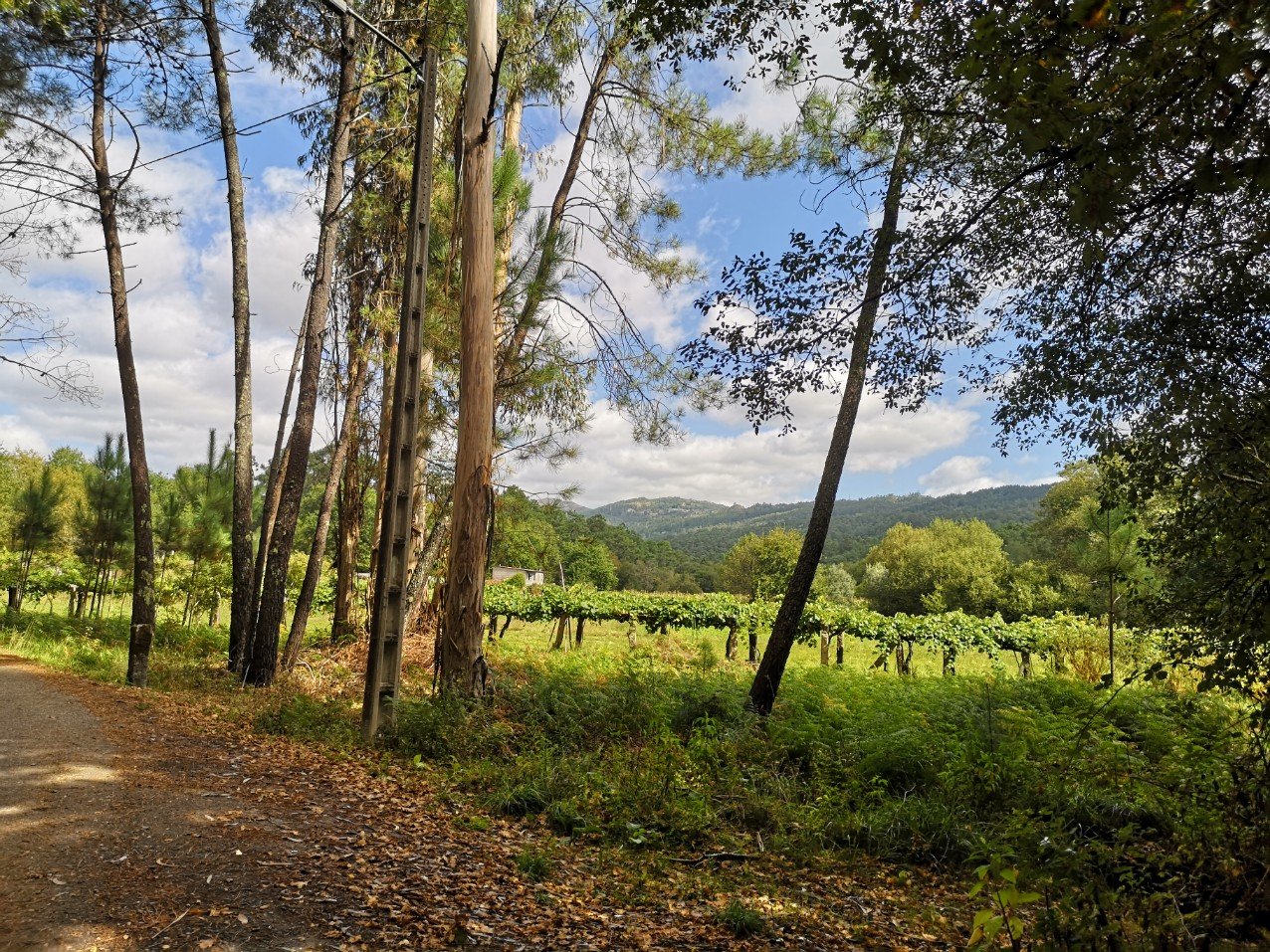
Vines loaded with dusky black jewels are spied between tall, thin trunks with mountains in the distance
I am walking along the Via Romana XIX linking Braga and Astorga, enjoying listening to the birds and smelling the countryside after being in towns for the last few days. Sometimes the signs are hidden amongst pink roses. In the distance the open fields are empty now after harvest.
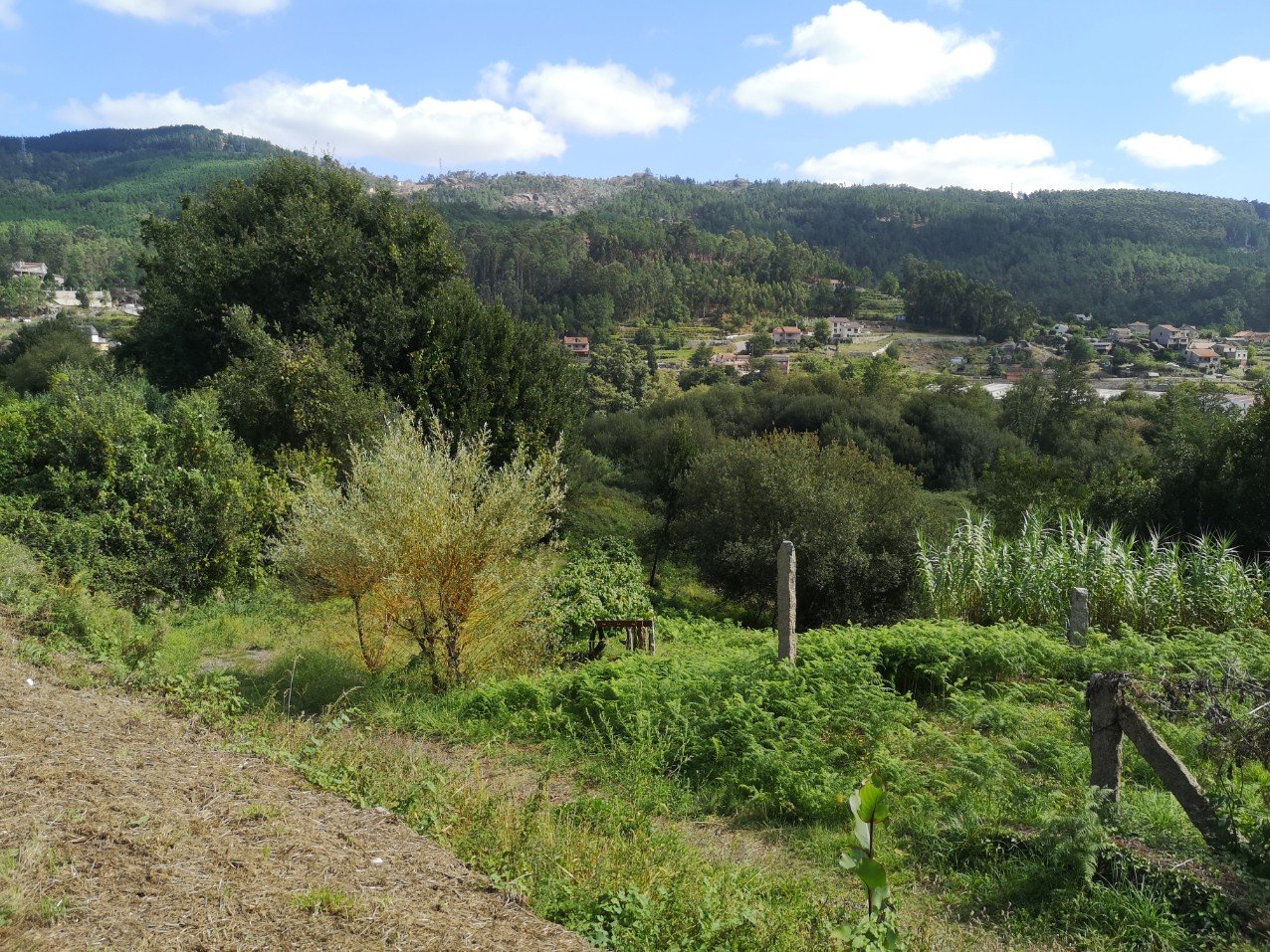
Ferns and lush farmland. The Mos population is spread across the region, with no one major centre. It is at a relatively high altitude commanding open views
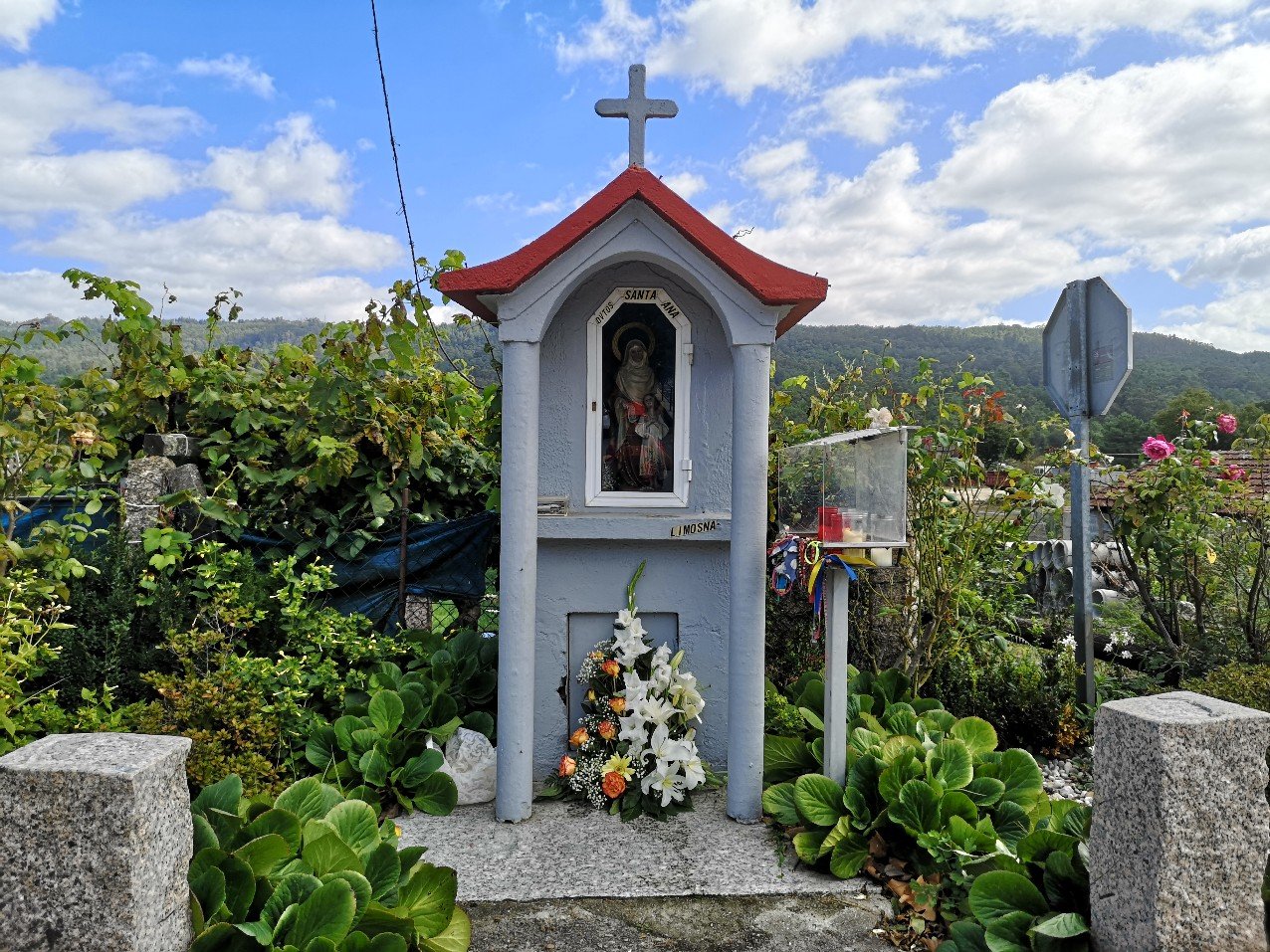
This quiet area has a respectful energy about it with fresh lillies and roses decorating this wayside shrine
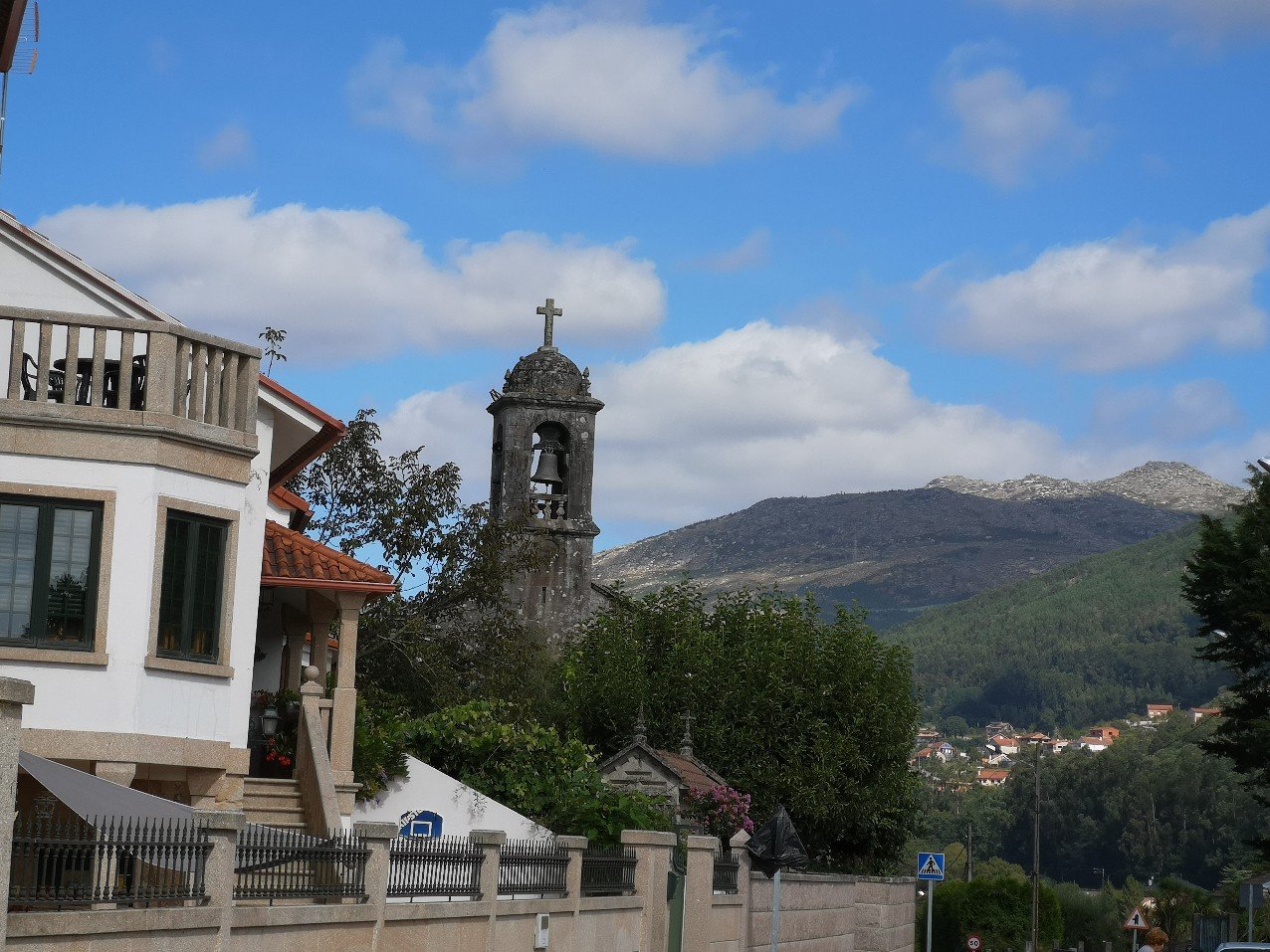
Belltower of the Iglesia (church) Santa Eulalia. Nearby there is a very tall column with a crucified Christ at the top. It is a well-to-do area in places with carefully kept gardens (white camelias were spotted) and expensive cars, not like some parts of Galicia on the Camino Frances
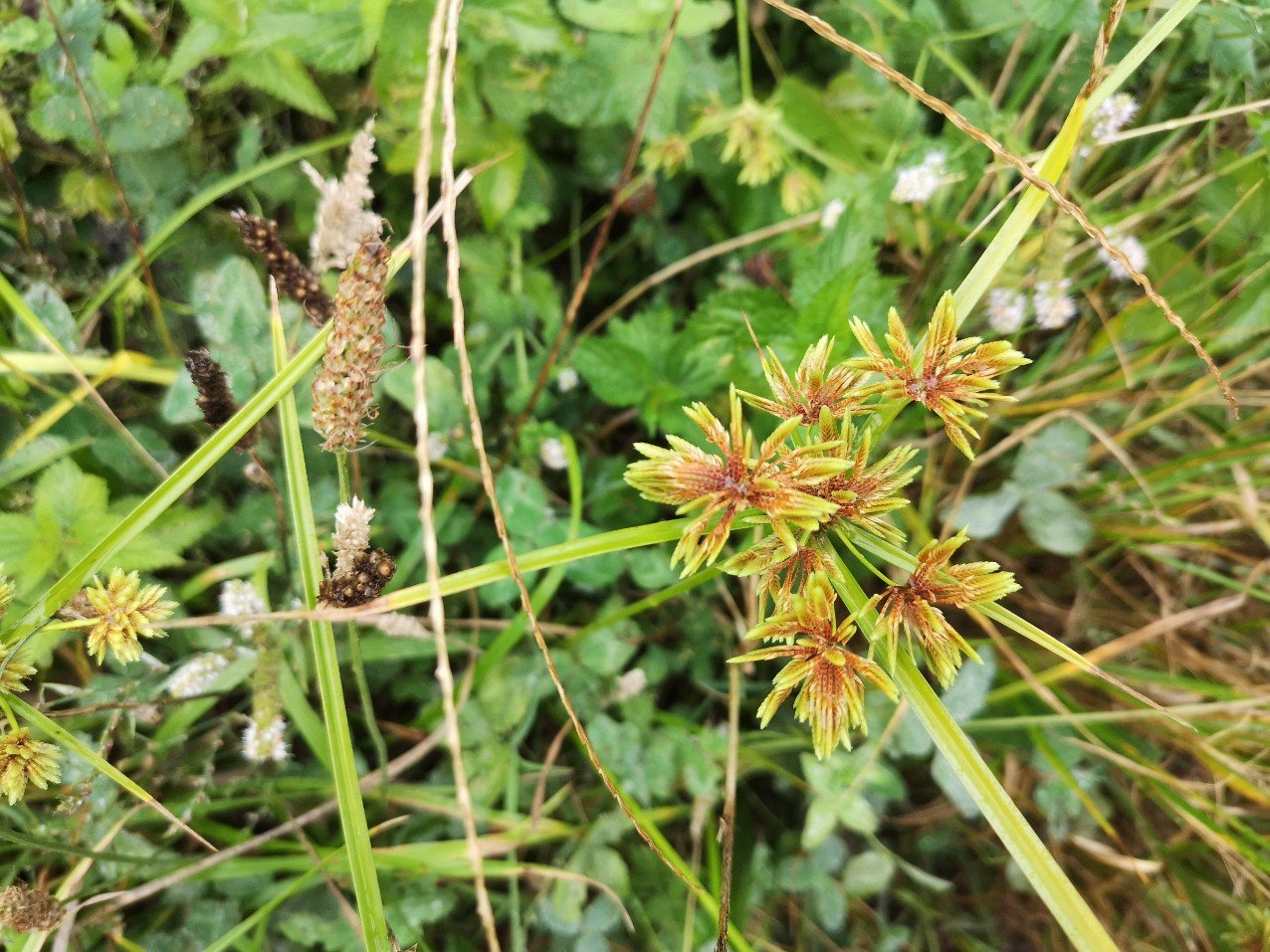
Beautiful tall flatsedge, nutgrass or umbrella sedge (Cyperus eragostis)
There is a native, milky coloured drink called horchata de chufa or horchata de Valencia which is the region where I first came across it. It is made from the tubers of the nutsedge (not the type in the photo above). (Thank you to floral_uk on the ‘name that plant’ forum of houzz.com for this information). It is similar to a Mexican version except that the latter is made from rice, not this sedge.
Mos, Galicia (Redondela Region)
I stayed at the Casa Blanca hostel near the Santa Baia church where I sat in the evening. The albergue is new with a bar that serves ice cream and snacks, and there is a restaurant oppostite which cooks wonderful Padron peppers and does breakfast as well as evening meals. The accommodation is in a separate building and all are situated on quite a hill. There is a coin-operated washing machine and I shared a load with others after much negotiation, however there is not enough room to hang the clothes to dry outside and, anyway, it was already cold at night so my things had to come in at bed time to avoid being damp by morning.
I went up looking for a fruit and veg shop. Instead, I saw a man on the top of a ladder picking grapes who told me I had gone in the wrong direction. On the way back down a woman pulled up in her car and spoke to me in French. She took me through to the back of her gradmother’s house (derelict) into the stepped garden full of fruit trees and picked figs. We stood and chatted over these juicy fruits and then she introduced me to her husband. He filled my shopping bag with massive bunches of black grapes for sharing with the other pilgrims back at the hostel. I laid them on large fig leaves in the self-catering kitchens for folk to help themselves.
Camino Portuguese da Costa – Days 5 and 6, September 23rd – 24th 2019
Viana do Castelo
Viana do Castelo to Caminha is 28.2 kms which was too far for me because my left foot hurt, so I stopped in Vila Praia de Ancora instead which was approximately 23 kilometers.
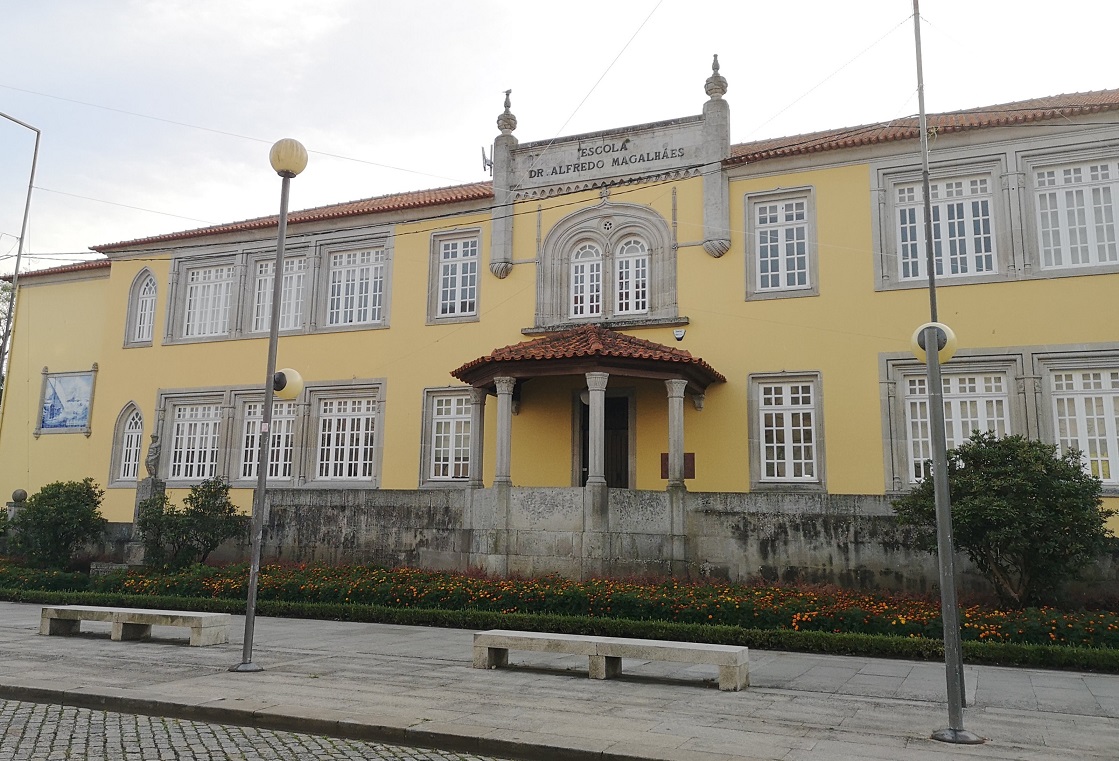
Escola Dr Alfredo Magalhaes, Viana do Castelo, Portugal
Through Areosa, Afife, then Carreco, and Vilarinho.
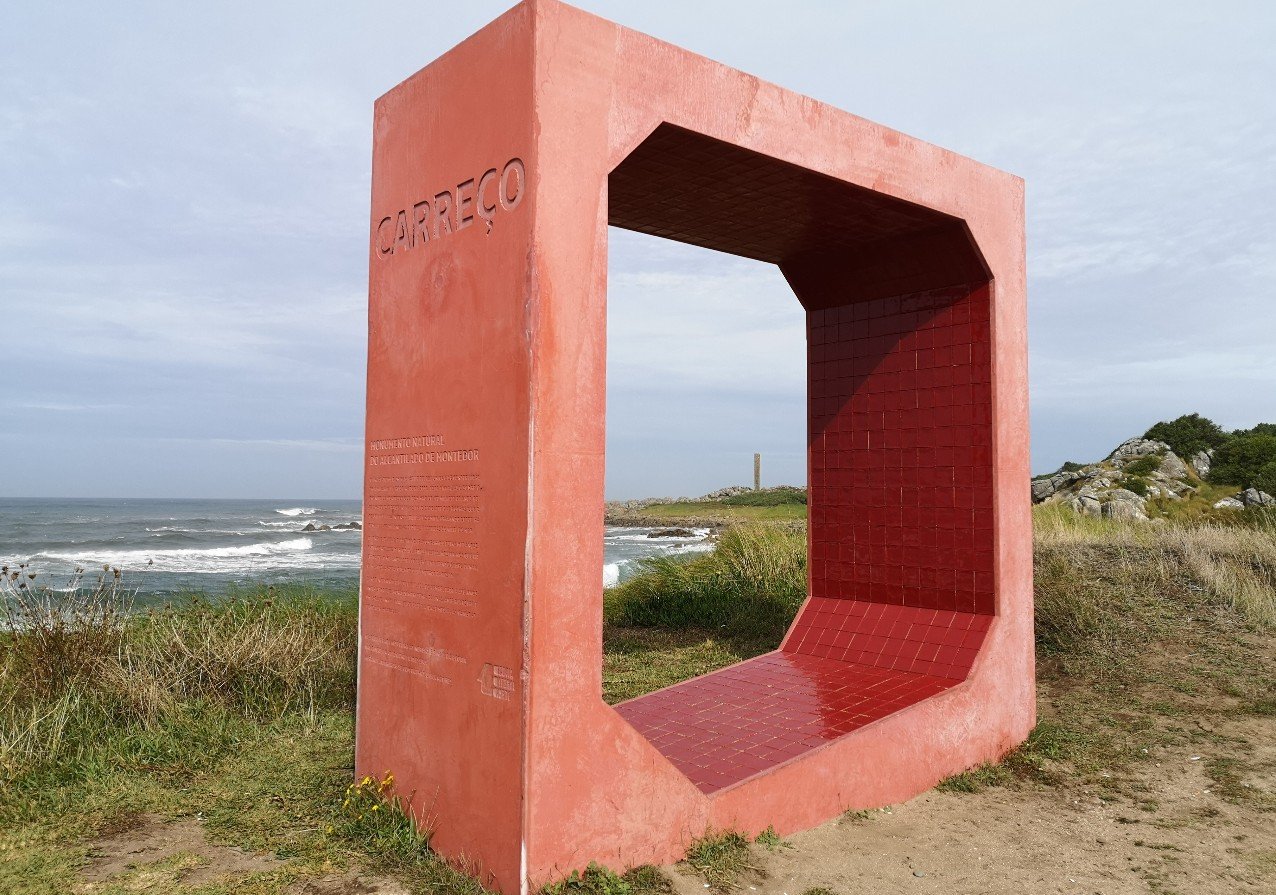
Monumento Natural do Alcantilado de Montedor, Carreco, Portugal
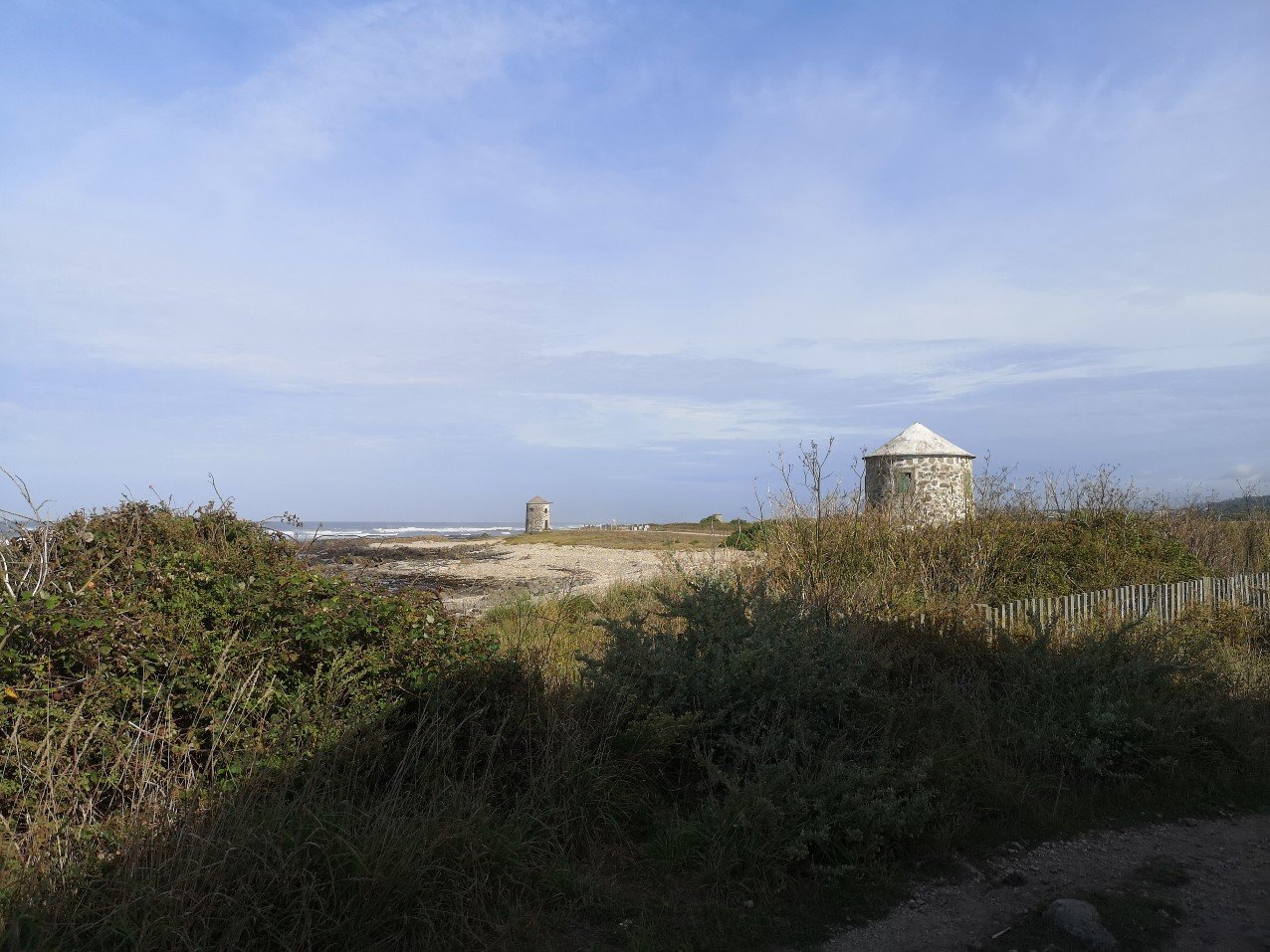
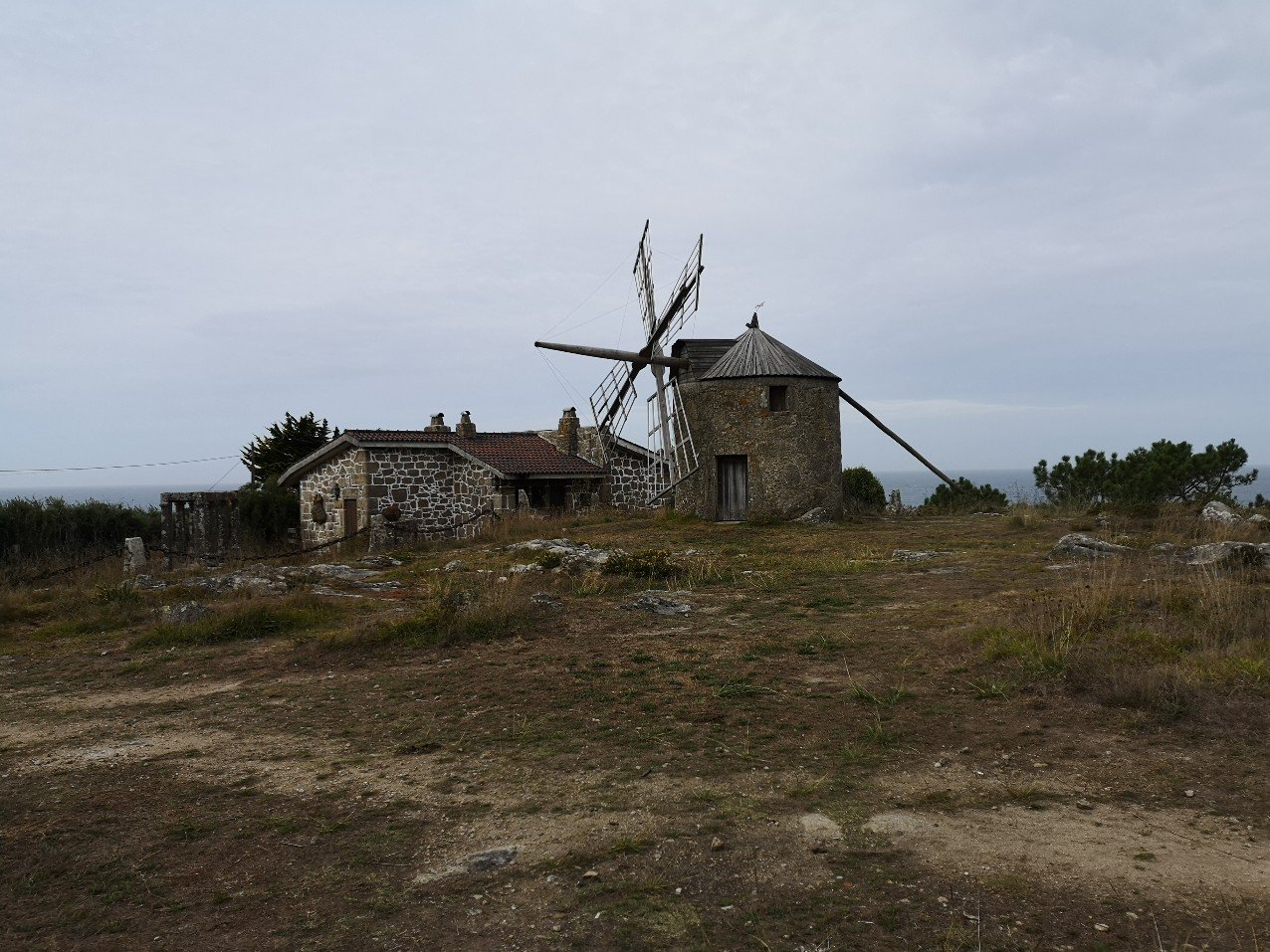
Old windmill round towers along the Cima coast, Portugal
This type of circular tower would have been a mill and there is one which still has its four wooden sails, nearby – see below.
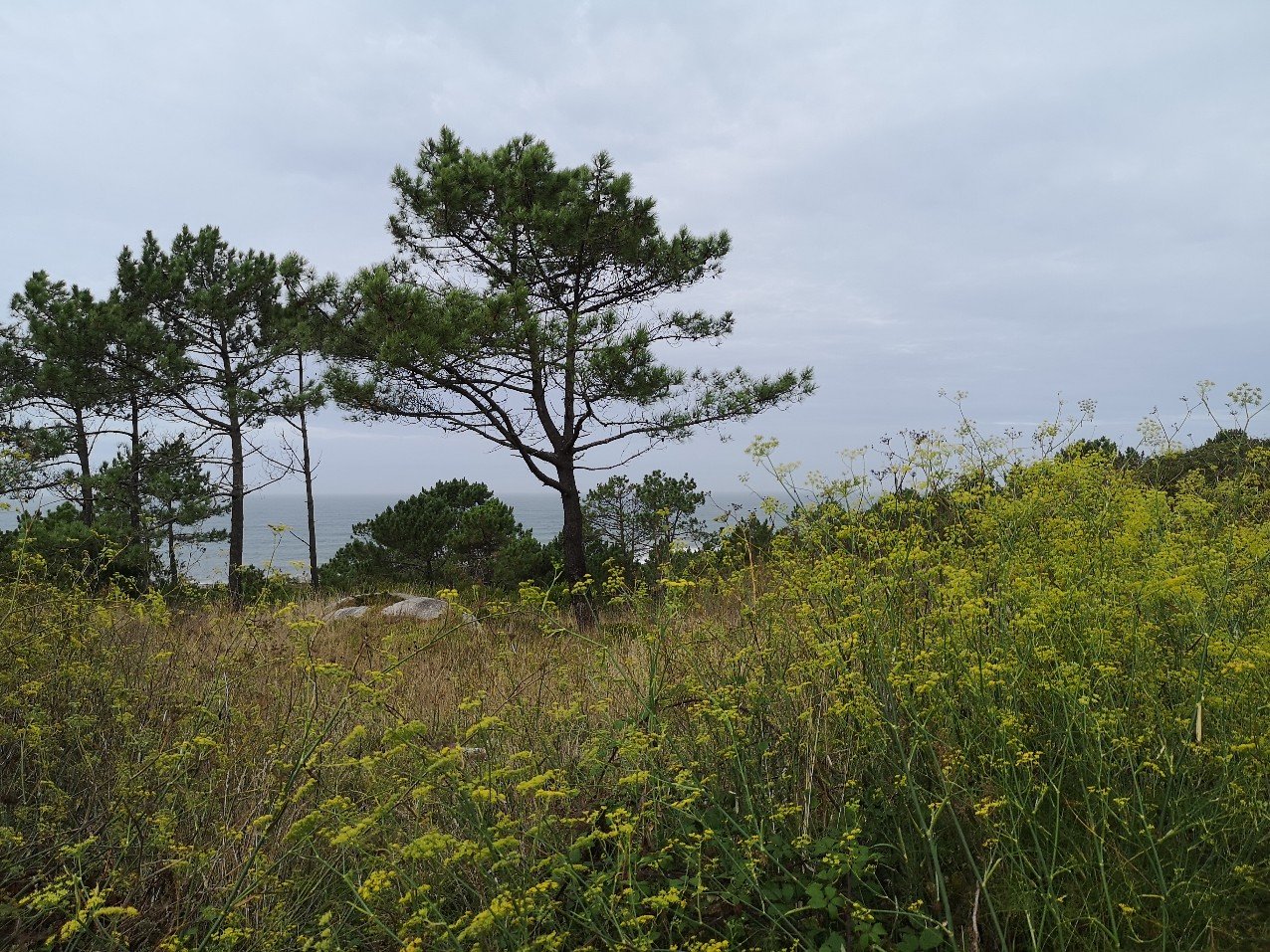
Wild Parsnip (yellow Pastinaca sativa). Red headed cardinal beetles love it. Maritime Pine (Pinus pinaster)
Moinho de Cima, windmill, Portugal
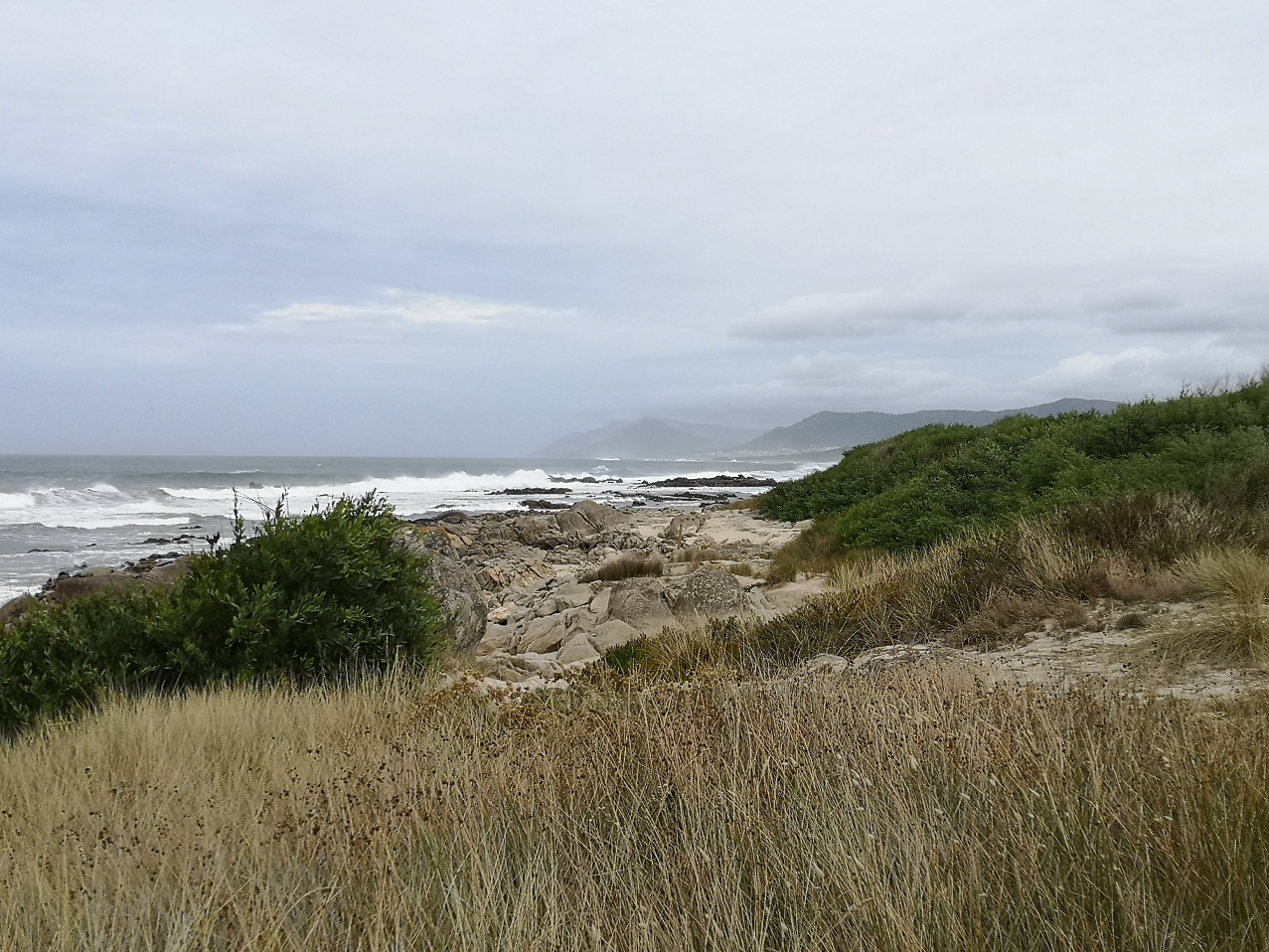
Juniper shrubs (Juniperus turbinate) and hills in the distance (perhaps Vila Praia de Ancora or even La Guarda). The Atlantic Ocean battering against the rocks
Although my foot was painful, it was a wonderful walk across little bridges over the Ria Ancora and its estuary. I sat to look at the map and was bitten again and then kept going around the coast into the next town.
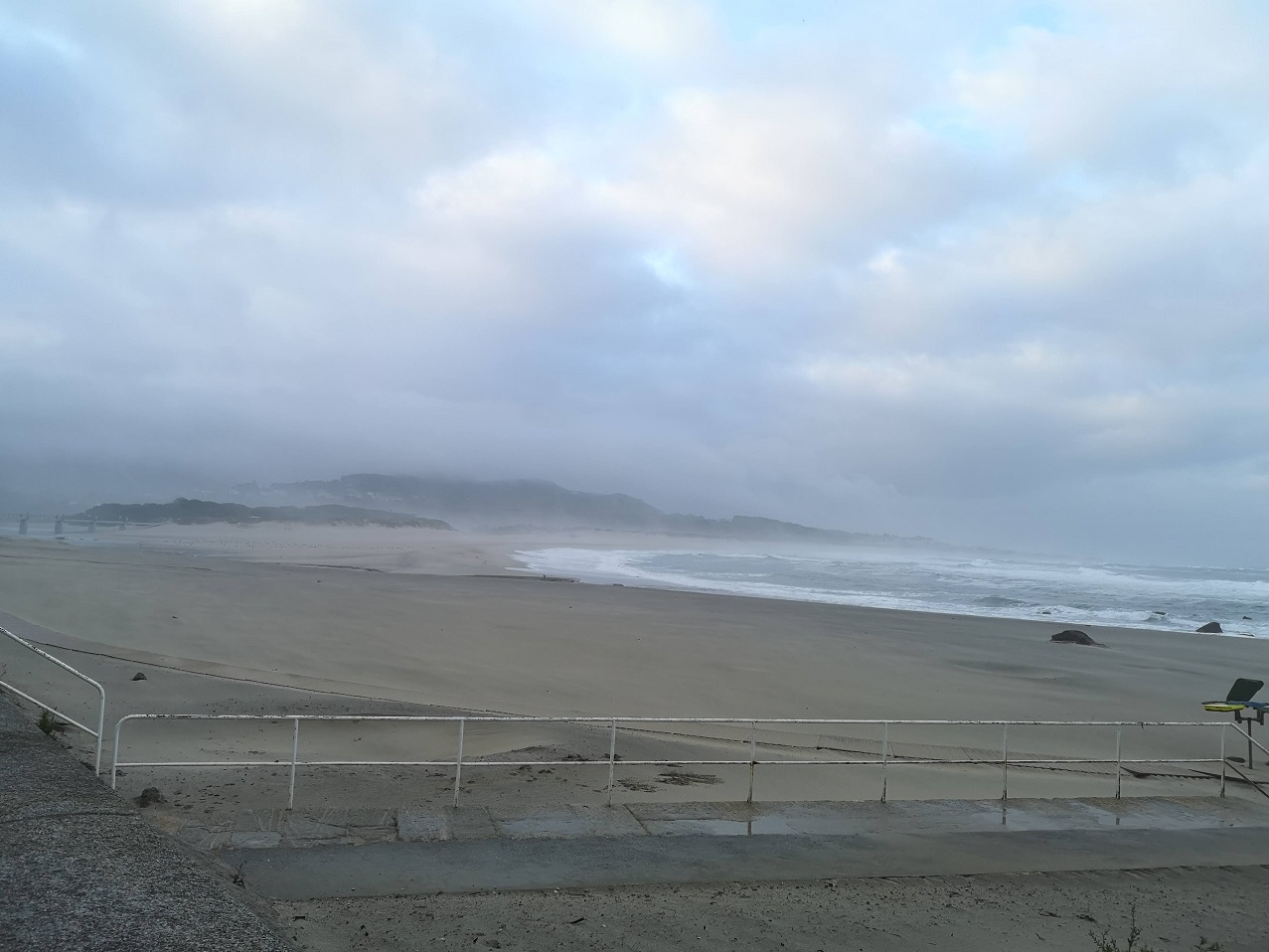
Overcast and atmospheric at Vila Praia de Ancora, Portugal
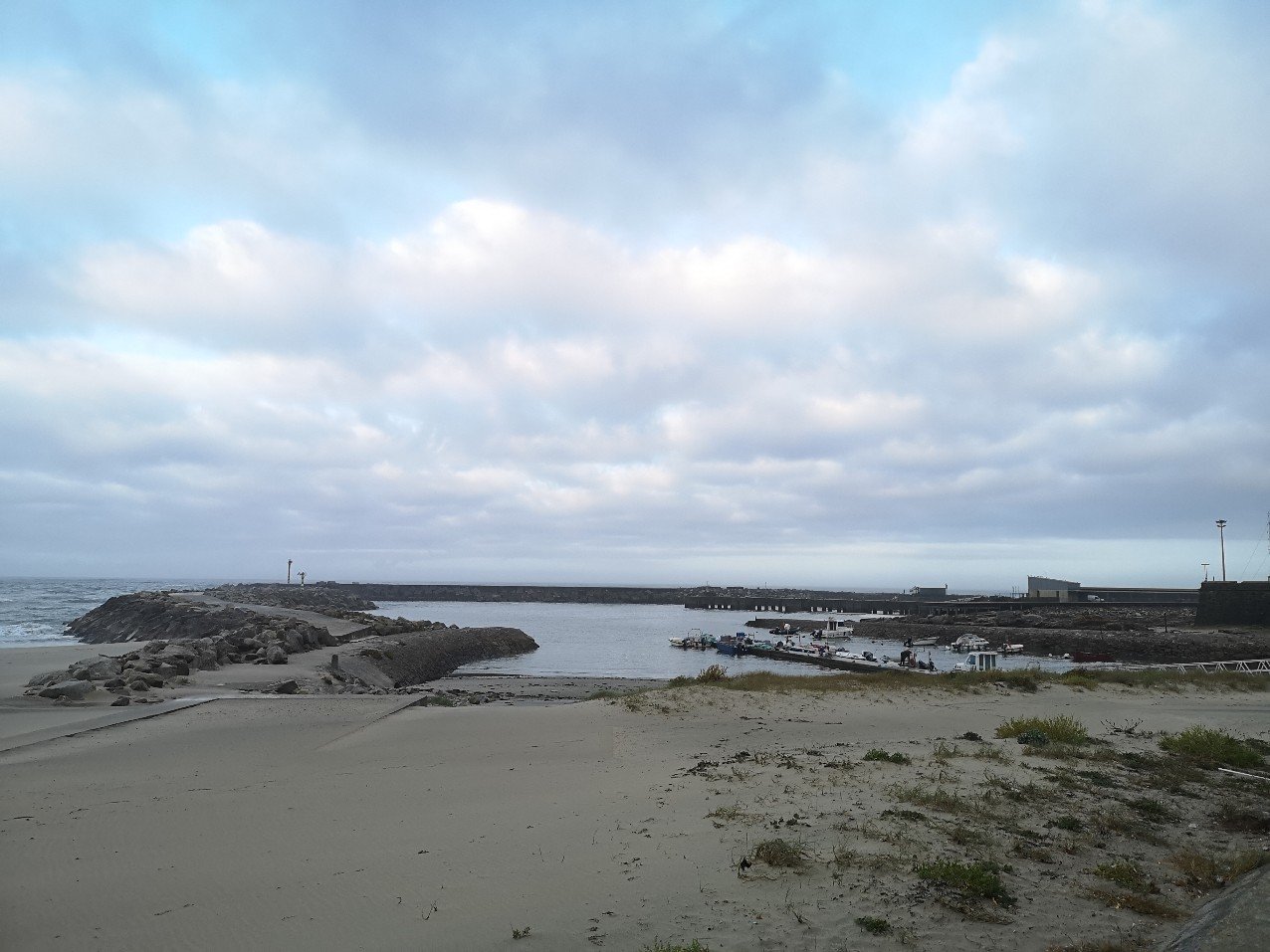
Harbour, Vila Praia de Ancora, Portugal
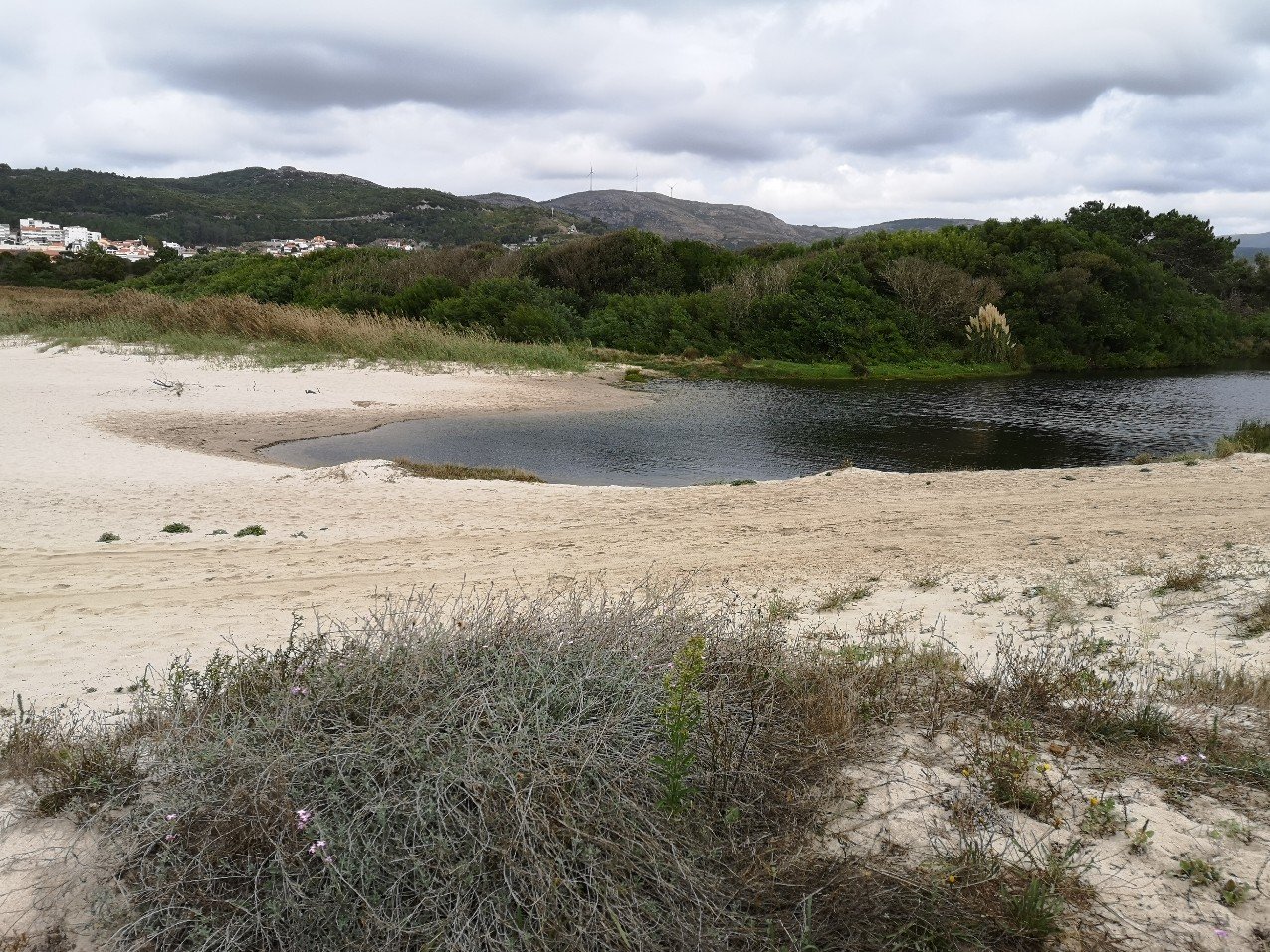
Praia do Duna do Caldeirao, Ancora, Portugal
As ever, be careful of automatic translators on your phone / ipad as some of the Portuguese names are also words which mean everyday things and it can be very confusing.
Vila Praia de Ancora
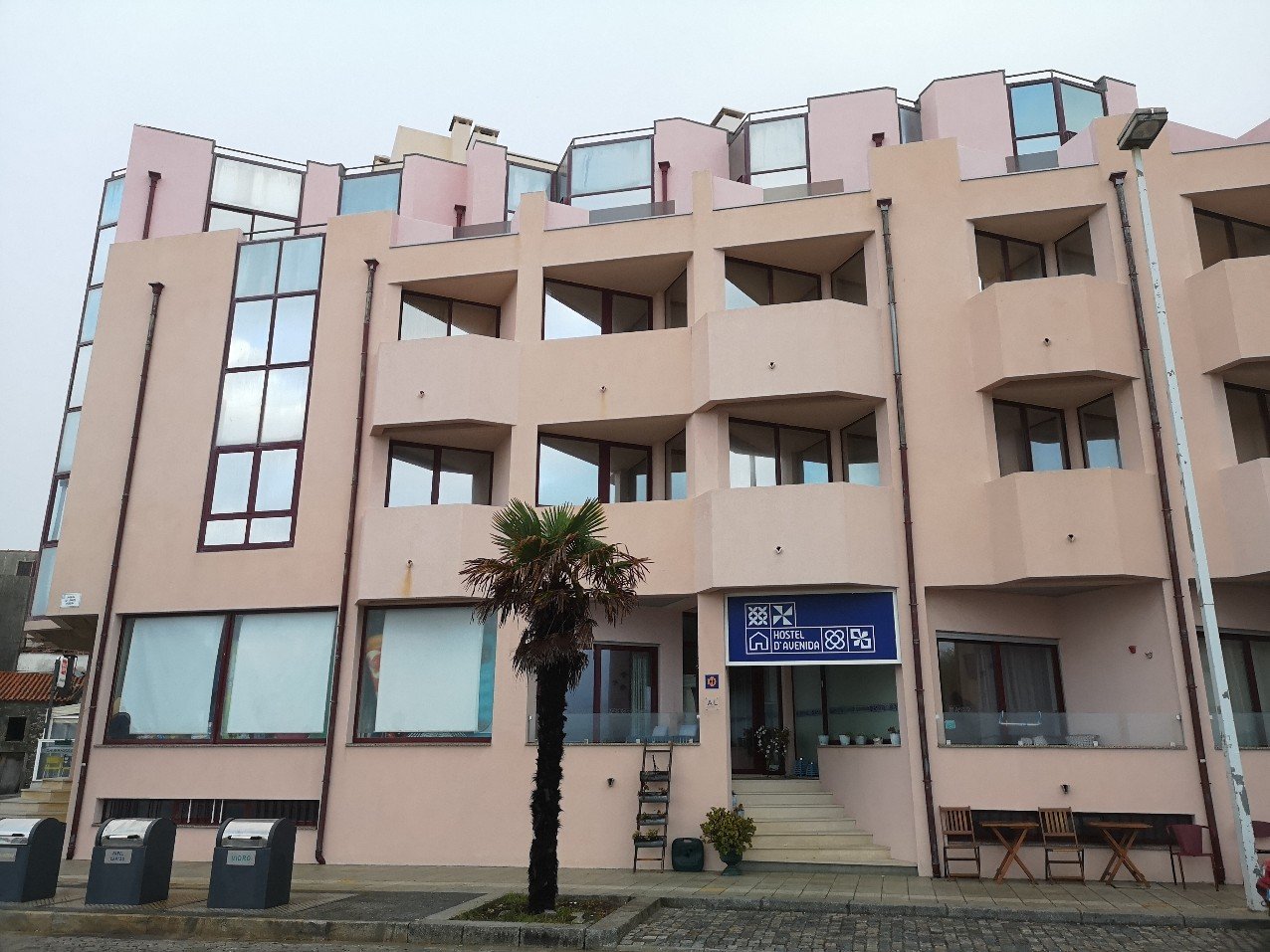
The wonderfully situated Hostel D’Avenida (private) opposite the harbour and ‘Children’s Beach’, Vila Praia de Ancora, Portugal
There are separate women’s and men’s dormitories at this hostel. The kitchen is quite sohisticated ie it has utensils and tables and chairs! The next morning I had breakfast in a cafe around the corner, admired the sculpture (see below) and then tried to walk, but could not put any weight on the ball of my foot, despite the pain being on the top around the metatarsal bones of the 4th and 5th toes (TH / GB for those of you who speak Shiatsu).
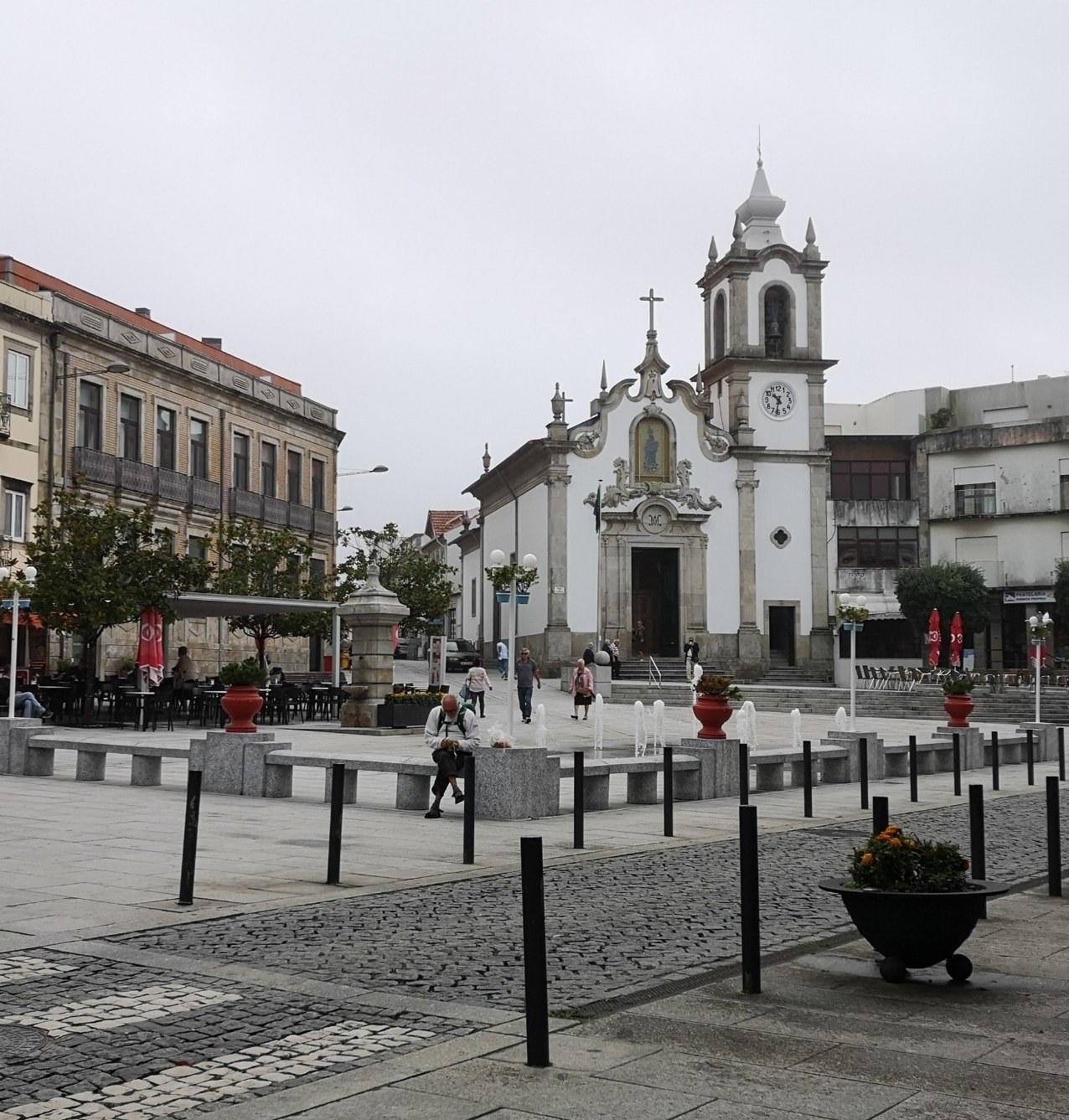
Catholic church Vila Praia de Ancora, Portugal
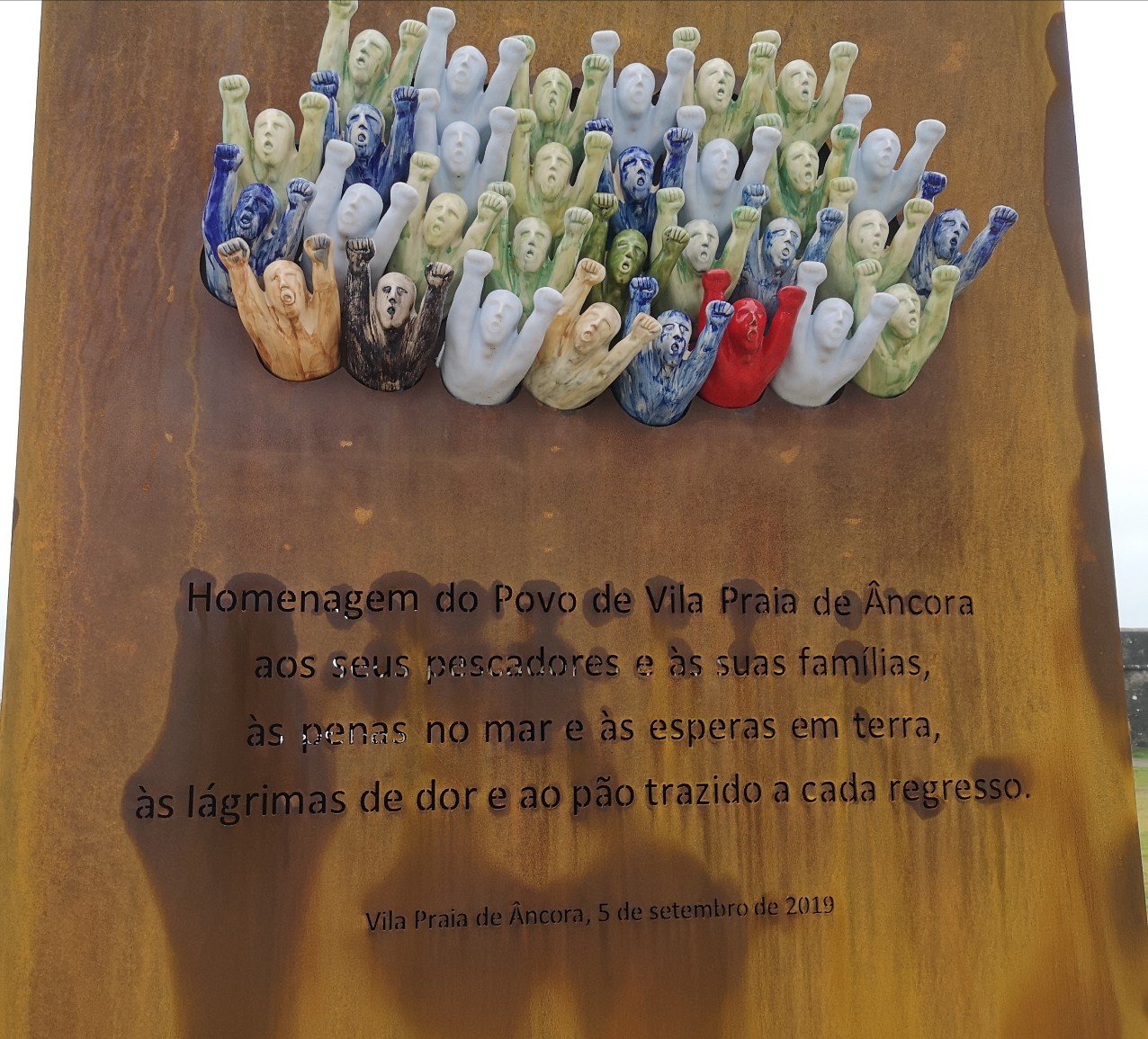
Homage to the people of Vila Praia do Ancora – the fishermen and their families. In recognition of the power of the sea to cause pain and tears as well as to feed those on land
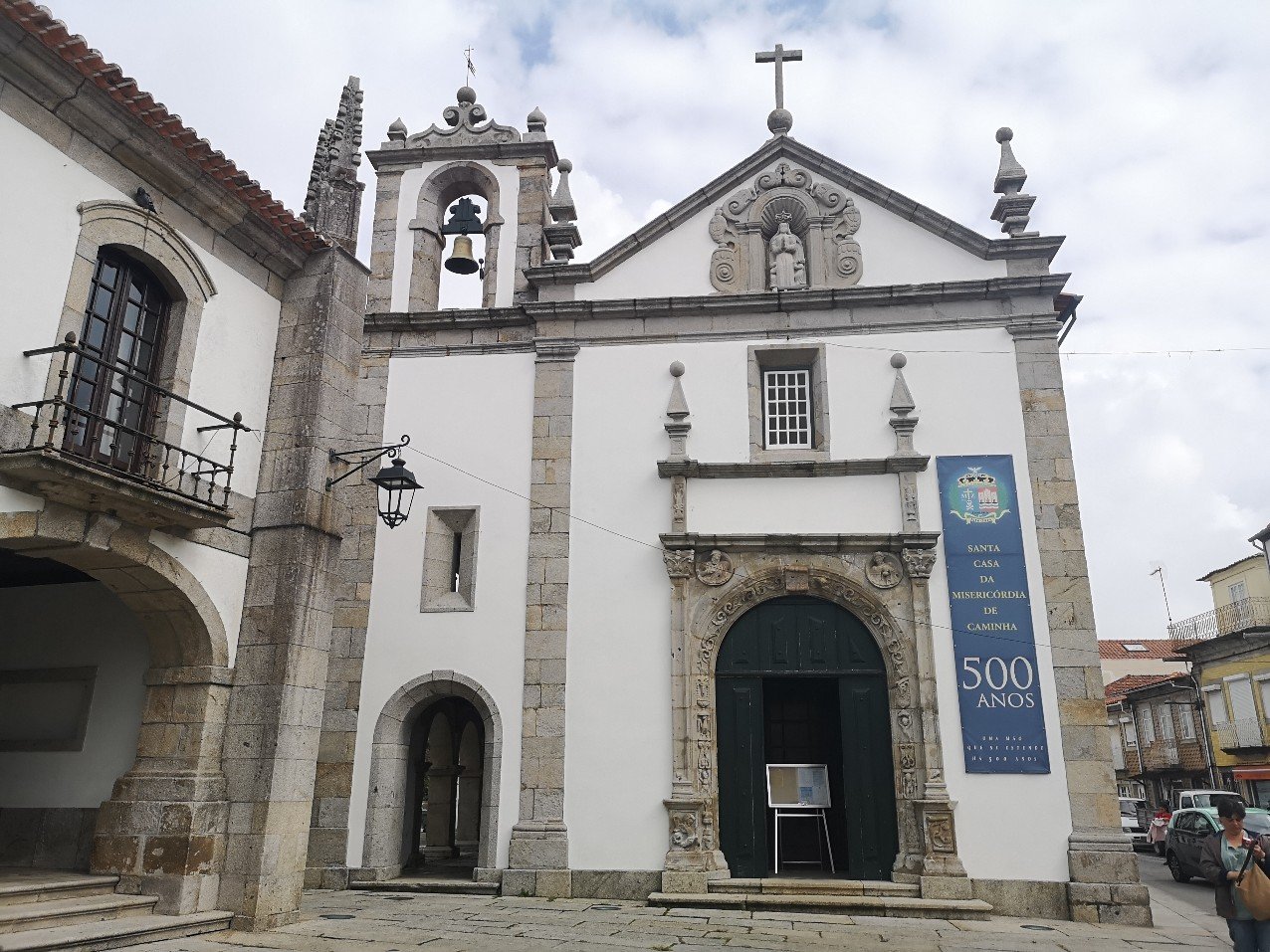
Holy House of Mercy of Caminha in Vila Praia de Ancora, Portugal
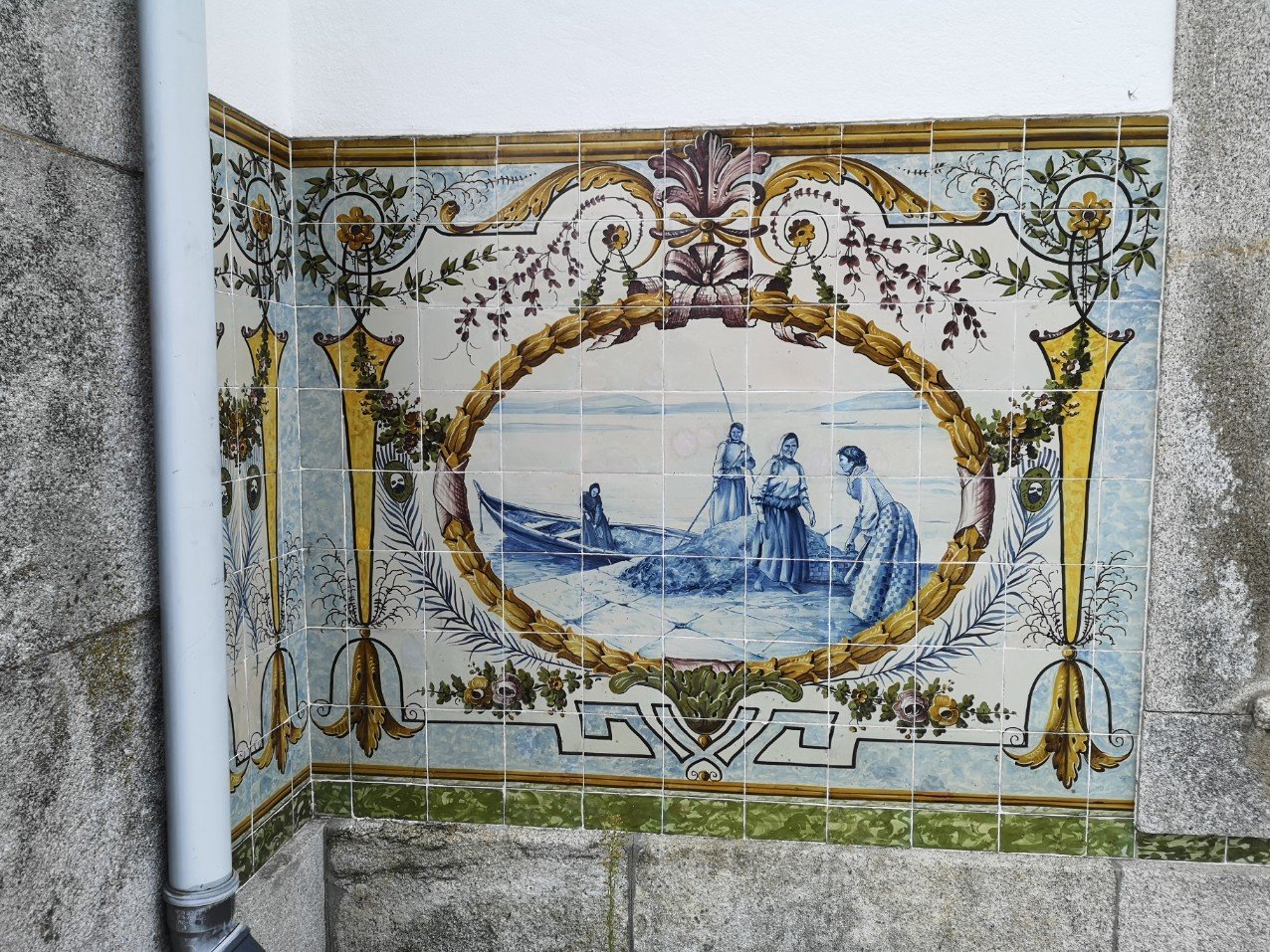
Traditional blue and white tiles depicting a Portuguese fishing scene which reminded me of theNewhaven fisherwomen in Edinburgh, Scotland
I took the train (15 minutes) to Caminha (alongside a surpring number of other backpackers) and whiled away the time, first in a cafe and then with a picnic and a good book in the park near the ferry terminal. I was very sorry to have missed the countryside between the two places.
When I arrived I visited the Centro de Saude (Health Centre) in Caminha, using my European Health Card (which will presumably not be valid after we leave the EU – I cannot understand how that will be a good thing). There was a certain amount of hassle with reception photocopying my passport and staff asking each other questions while I waited. The doctor spoke good English and she wiggled my foot, looked at my rucksack disapprovingly, and gave me anti-inflammatory cream and pills. On top of that I had blisters on the other foot, perhaps from the extra pressure I had put on it by limping. One way and another I still had to walk approximately 10 kilometers in all.
The ferry takes 20 minutes, does not sail on Mondays and costs 2 euros.
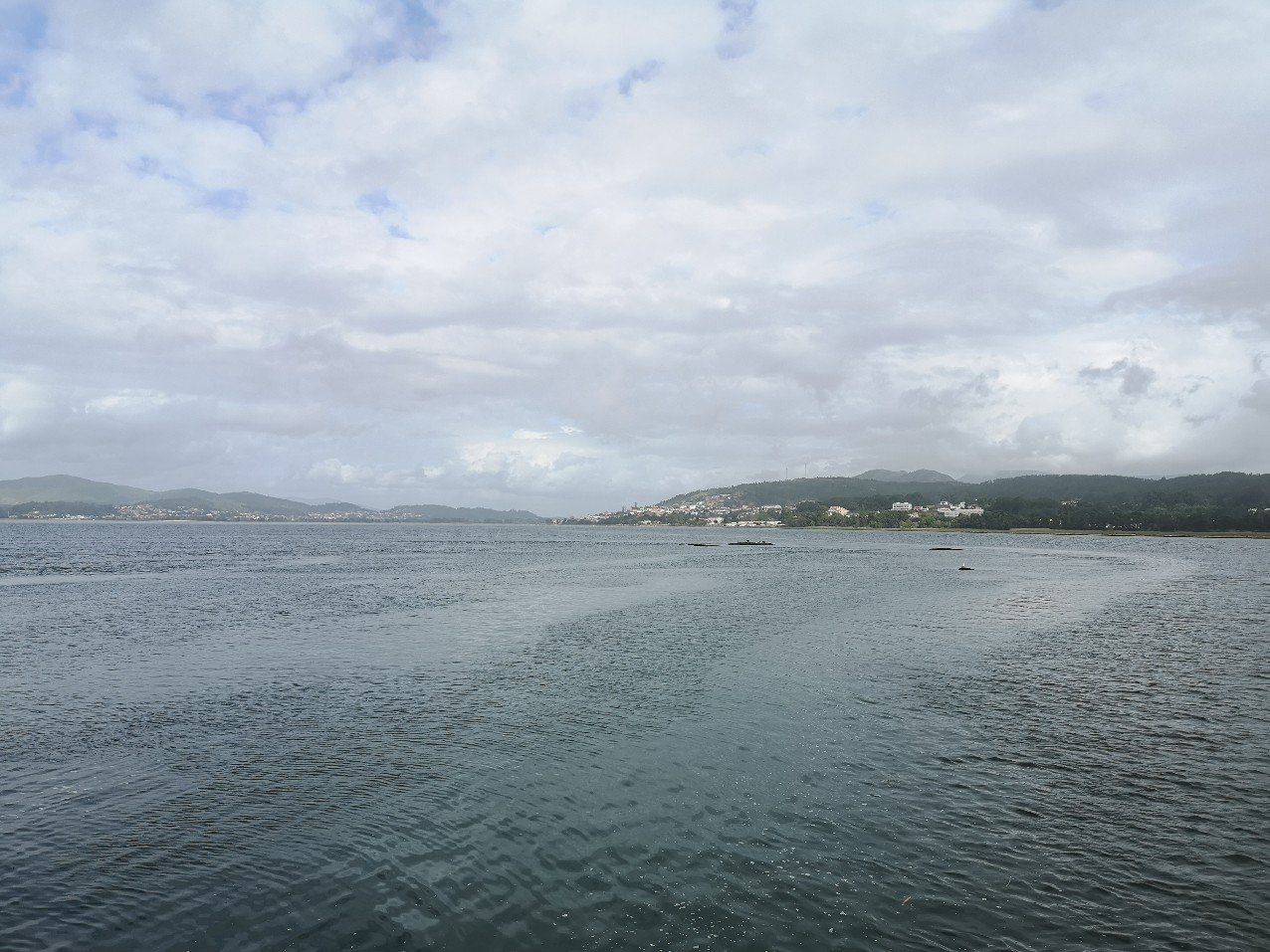
Crossing the Minho in a small ferry from Caminha in Portugal to A Pasaxe in Spain.
The time usually changes between Portugal and Spain – one hour difference!
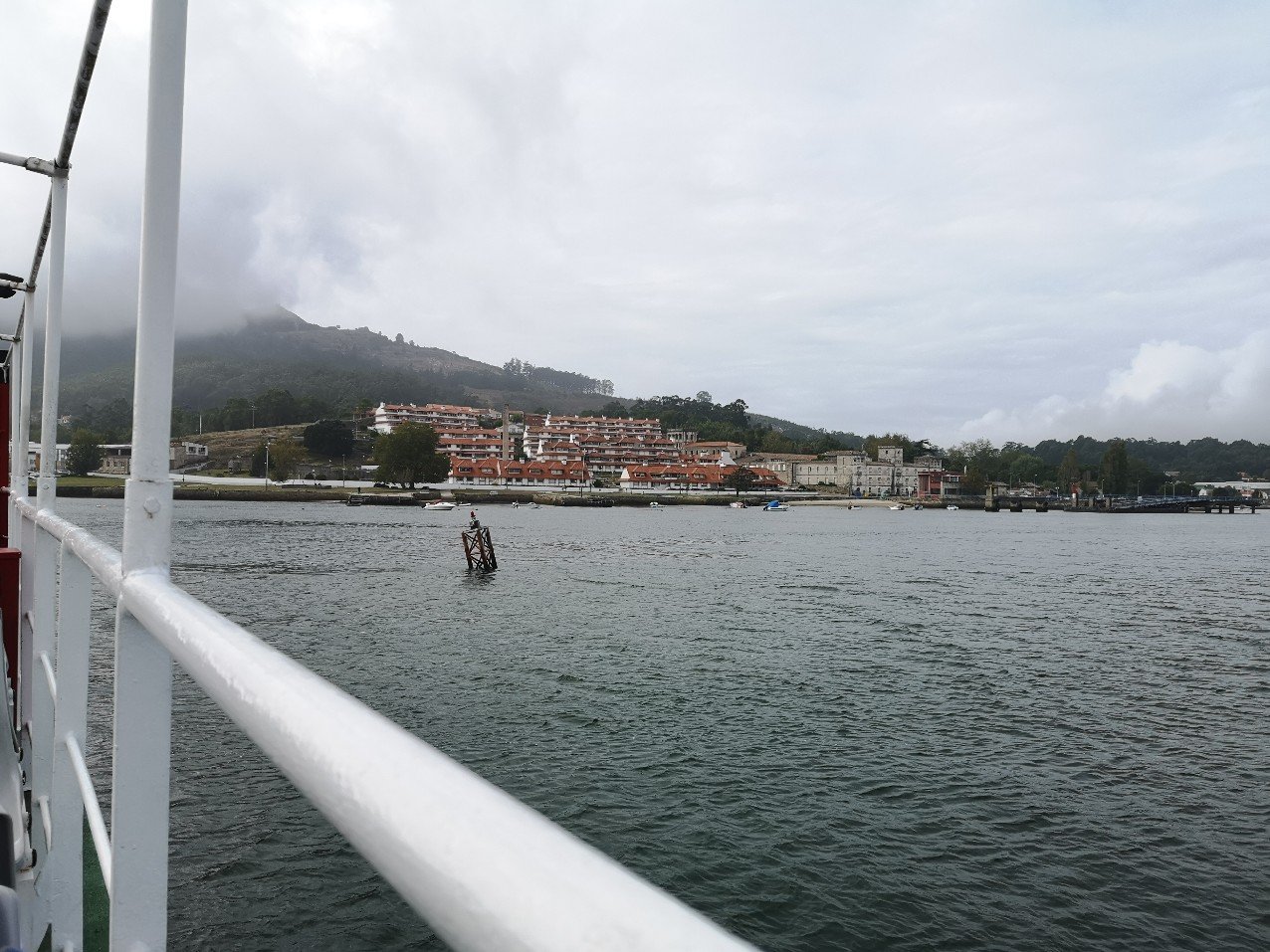
Getting closer to the northern side of the Minho River looking towards A Pasaxe in Spain.
La Guarda / A Guarda (Spain)
Note: there was no need to book at the Municipal Albergues at this stage of the Portuguese Camino, although there were a good number of pilgrims everywhere, but I did book the private hostels via booking.com
It was a further 40 minutes walk to La Guarda (by road), 3 kilometers. I could not walk, so I looked around the car park to see who was getting into their car and then asked the most friendly looking person if he knew whether there was a bus or taxi into the town. He said he didn’t know, but would give me a lift, which was what I was hoping! It only took 10 minutes or so and he kindly put me down close to the Municipal Albergue de Peregrinos (pilgrims), Rua Puerto Rico.
Luckily, it wasn’t far to the shop that evening for ingredients for my tea and I spotted a nearby bakery for the morning.







 Walking without a donkey