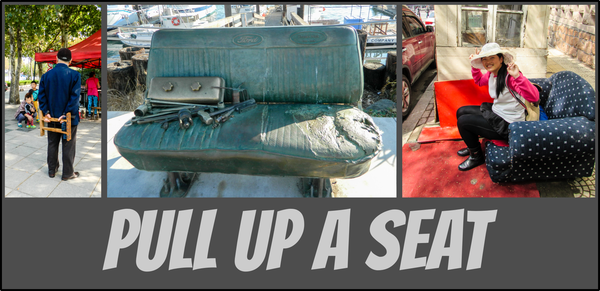
Pull Up a Seat, week 52. Just making it into the last 2019 photo challenge. It’s all about sitting down – something I support wholeheartedly!
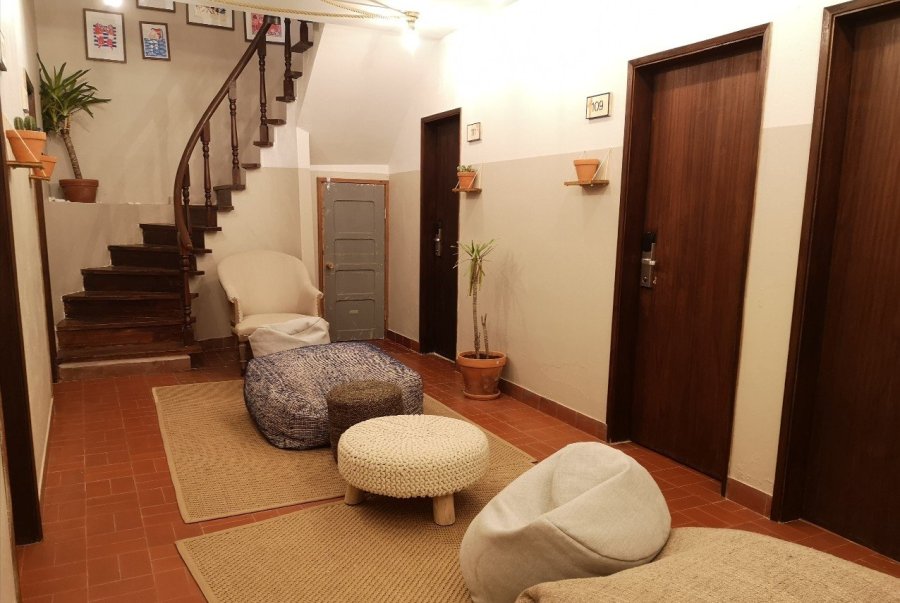
My day at the hostel began with yoga on the roof before sun up. I tiptoed past these comfy cushions to get my mat so as not to wake anyone. Later I flopped down onto the big squashy beige one for a rest on my way back down. Whew!
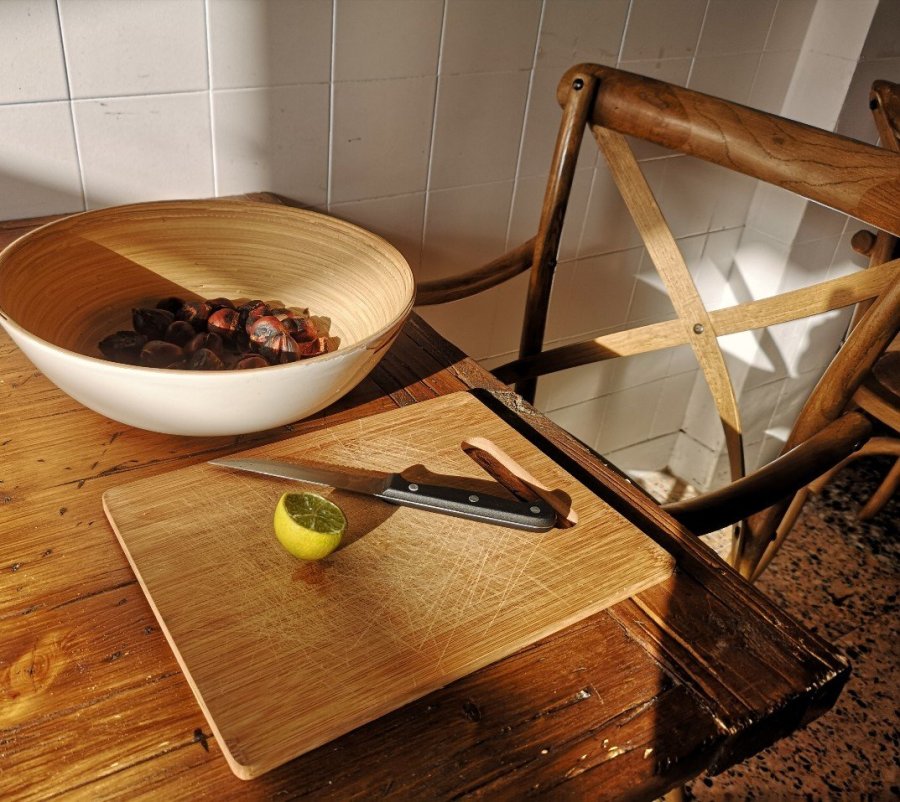
A cool selection of pouffes and stools for hard working muscles to recuperate onI sliced some lemon to have in hot water to rehydrate
And then I went off for a nosy around the town. It was somewhat overcast.
Vila Nova de Milfontes, Portugal
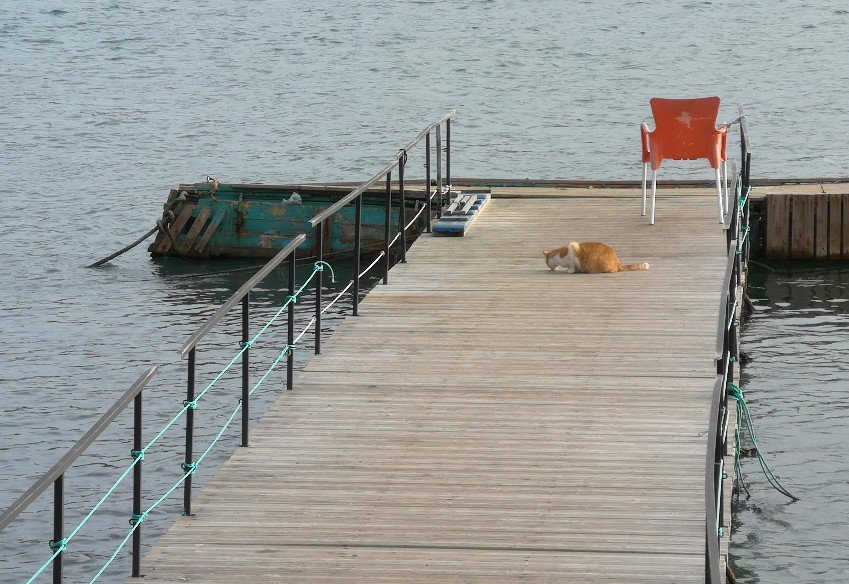
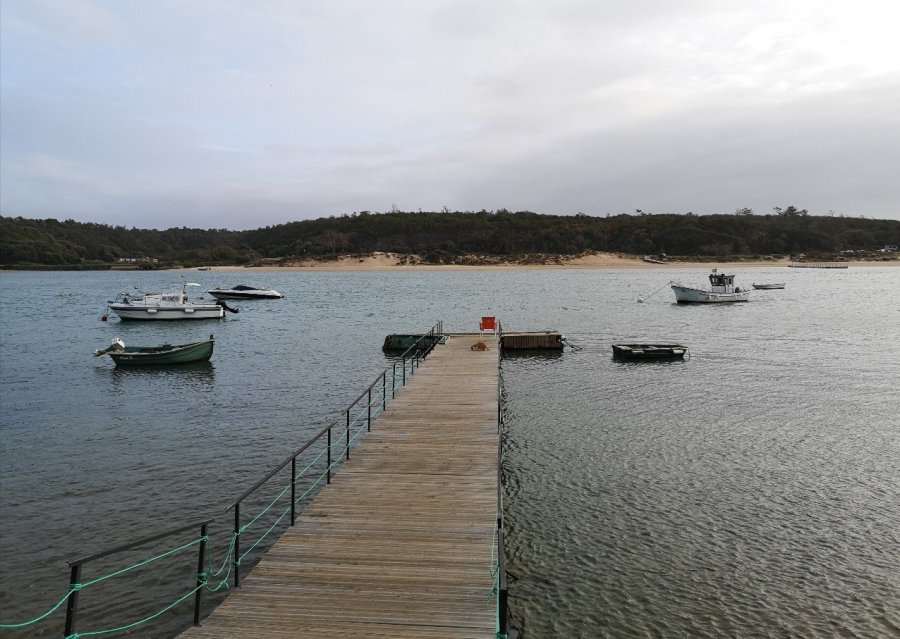
This cat had found something interesting to investigate. Meanwhile I had to turn the seat round to get this view:
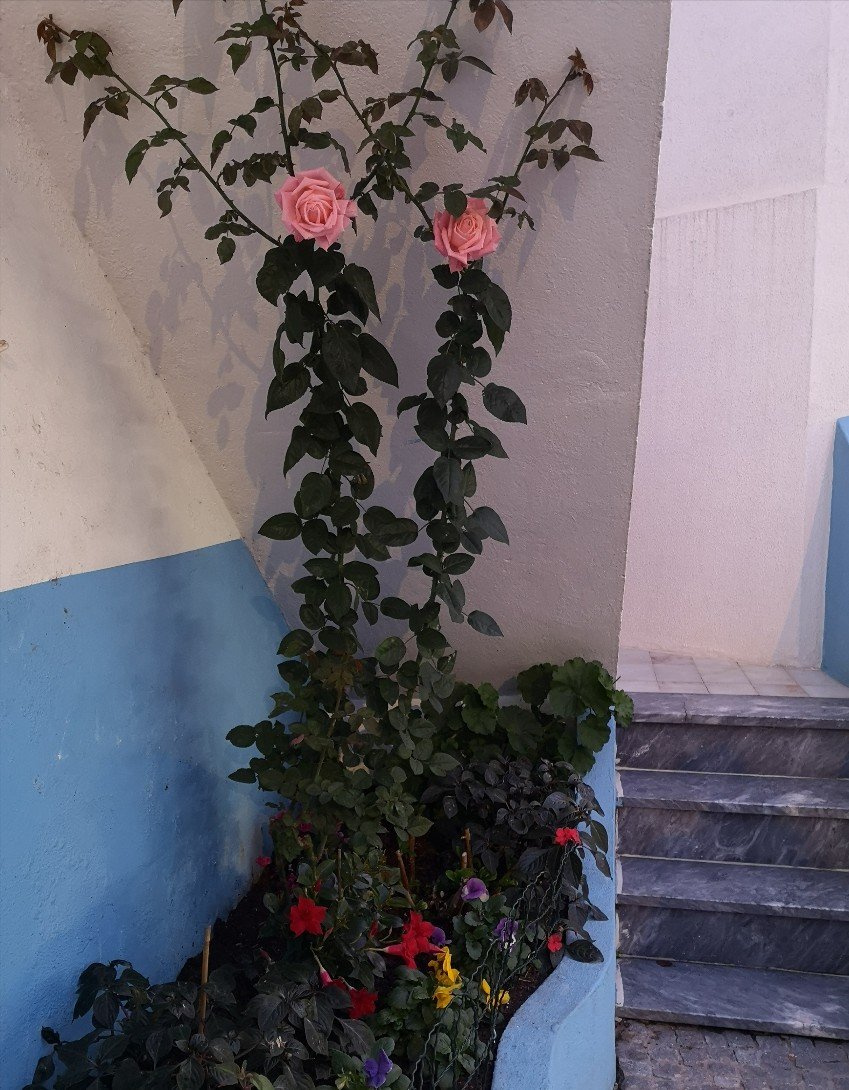
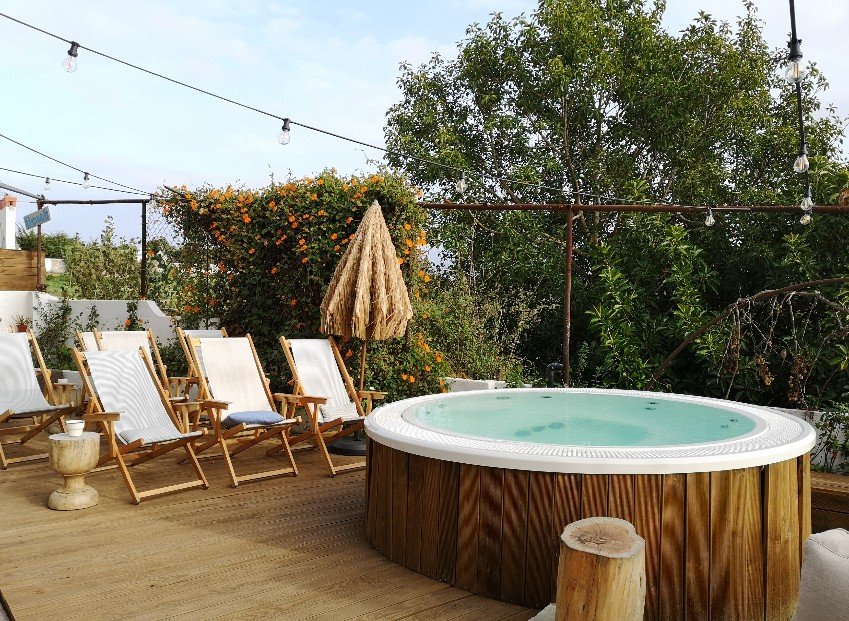
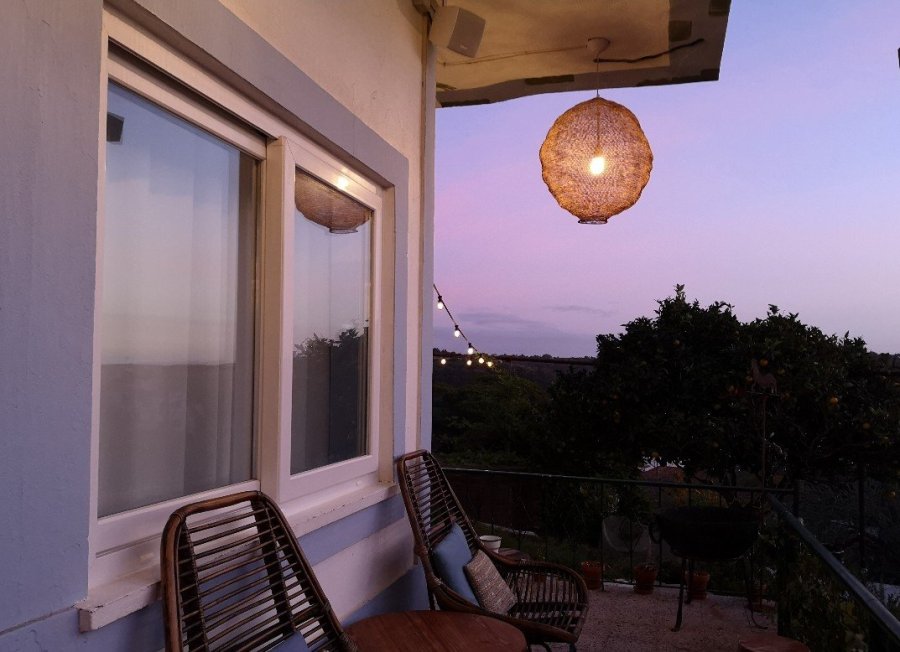
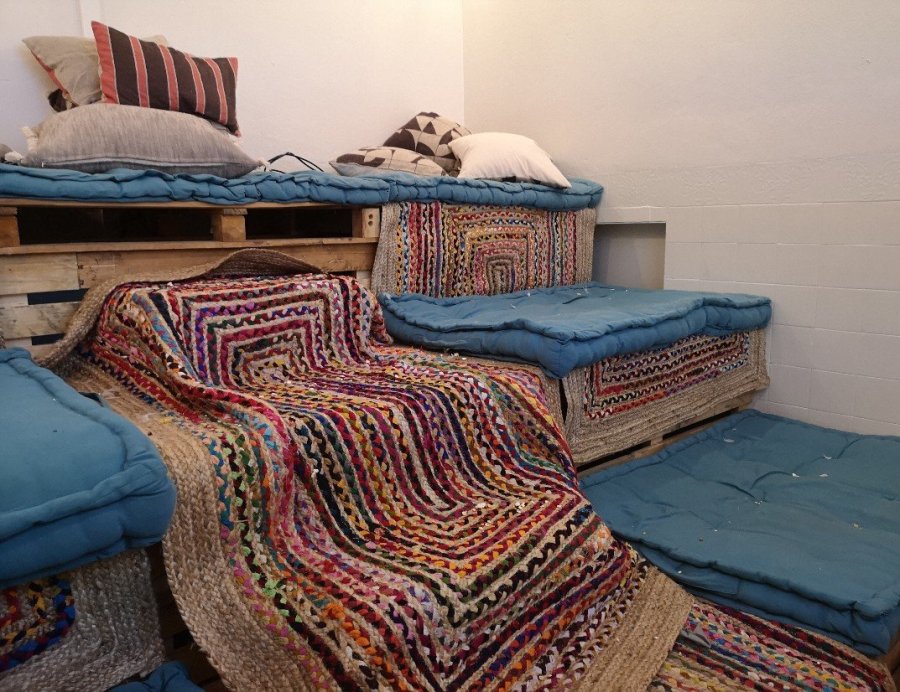
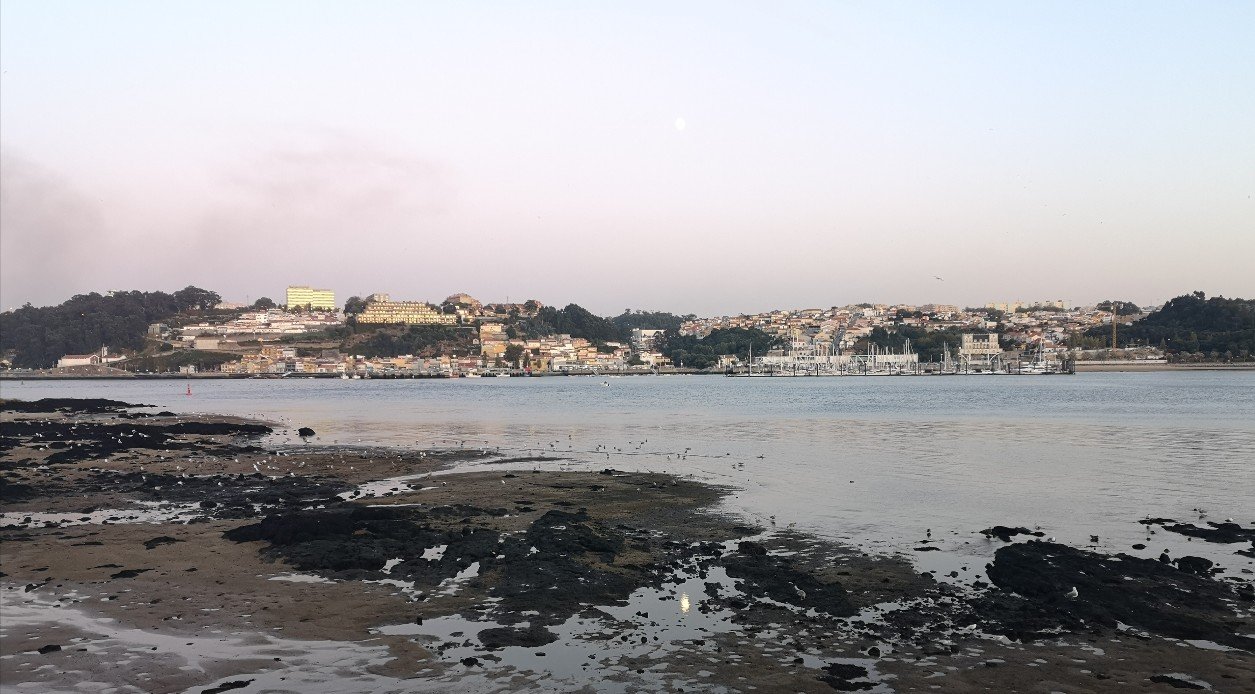
View across the Mira River as it comes close to the Atlantic Ocean, Vila Nova de Milfontes, PortugalSteps make a beautiful place to sit if there are roses like these beside youAt the end of my walk I returned to the hostel for a jakuzzi and, afterwards, lay back on the deckchairs to relaxI enjoyed a drink at sunset on these designer seatsIn the evening, the cinema space at the hostel had these rugs and mats spread over the sitting area, giving it an Eastern look
Porto to Matosinhos to Vila do Conde – days 1 and 2 of my Camino Portuguese Coastal and Littoral routes (280 kms in total) * September 19th and 20th 2019 were the Littoral, that is, they followed the coast with all its ins and outs.
I did a practice walk in the opposite direction a week before starting which is why the sea, is on my right
This is a walk from Porto in Portugal to Santiago de Compostella in Spain. There are 3 routes – the quickest is inland, and the other 2 travel along the coast, some more literally than others. It is the second most popular Way – the Camino Frances from Saint Jean Pied de Port in France to Santiago being the most famous.
Leaving Porto (also known as Oporto)
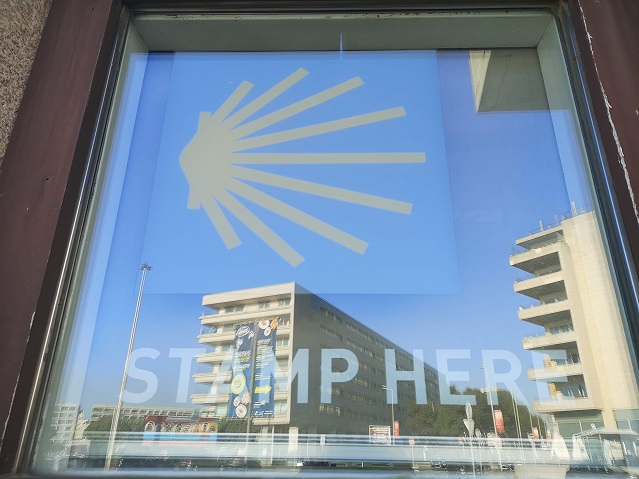
I stayed at the Albergue Peregrinos do Porto which was great. There was a friendly welcome from the group at the desk and I was able to buy my Credential (the first of the new version, I was told) which is the folded paper which I carried with me everywhere thereafter, and which had to be stamped twice a day (by hostels, cathedrals or cafes etc) if I was to be able to get a Compostella, which is the certificate you can buy in Santiago de Compostella to prove that you have completed the camino.
There is a beautiful garden which was ideal for me to do peaceful tai chi in and for sitting with a drink in the evenings. The only drawback was that the showers were also outside. Ordinarily this would not bother me at all, but mosquitos adore standing water and I was bitten to within an inch of my life. Not everyone is as delicious as me, and I had taken steps to put them off, but the bites lasted for well over a week and left scars. The bunk bed was 12€ per night/person. (10€ for the Albergue and 2€ for the touristic municipal taxes).
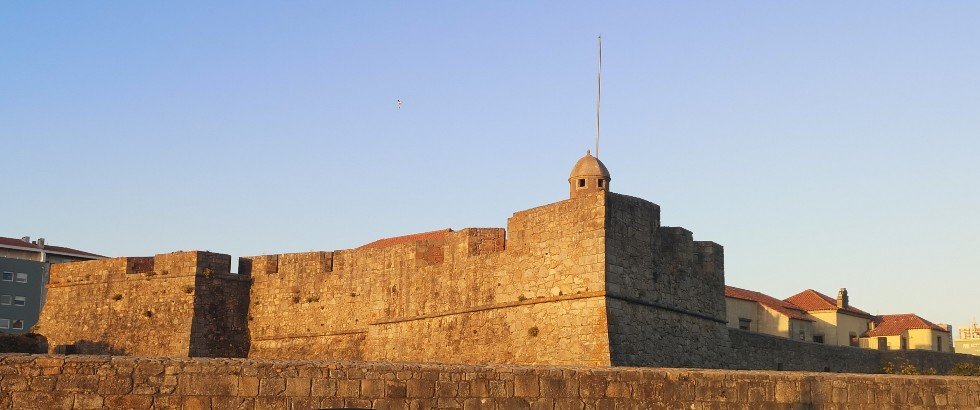
Forte do Sao Joao Baptista
There’s lots to see on your way out of Porto: first along the Douro River, under the bridges, past beaches, restaurants and cafes (especially the Foz district which is smart), the lighthouse (Capel Farol Sao Miguel-do-Anjo), two forts, a helicopter pad, gardens and statues.
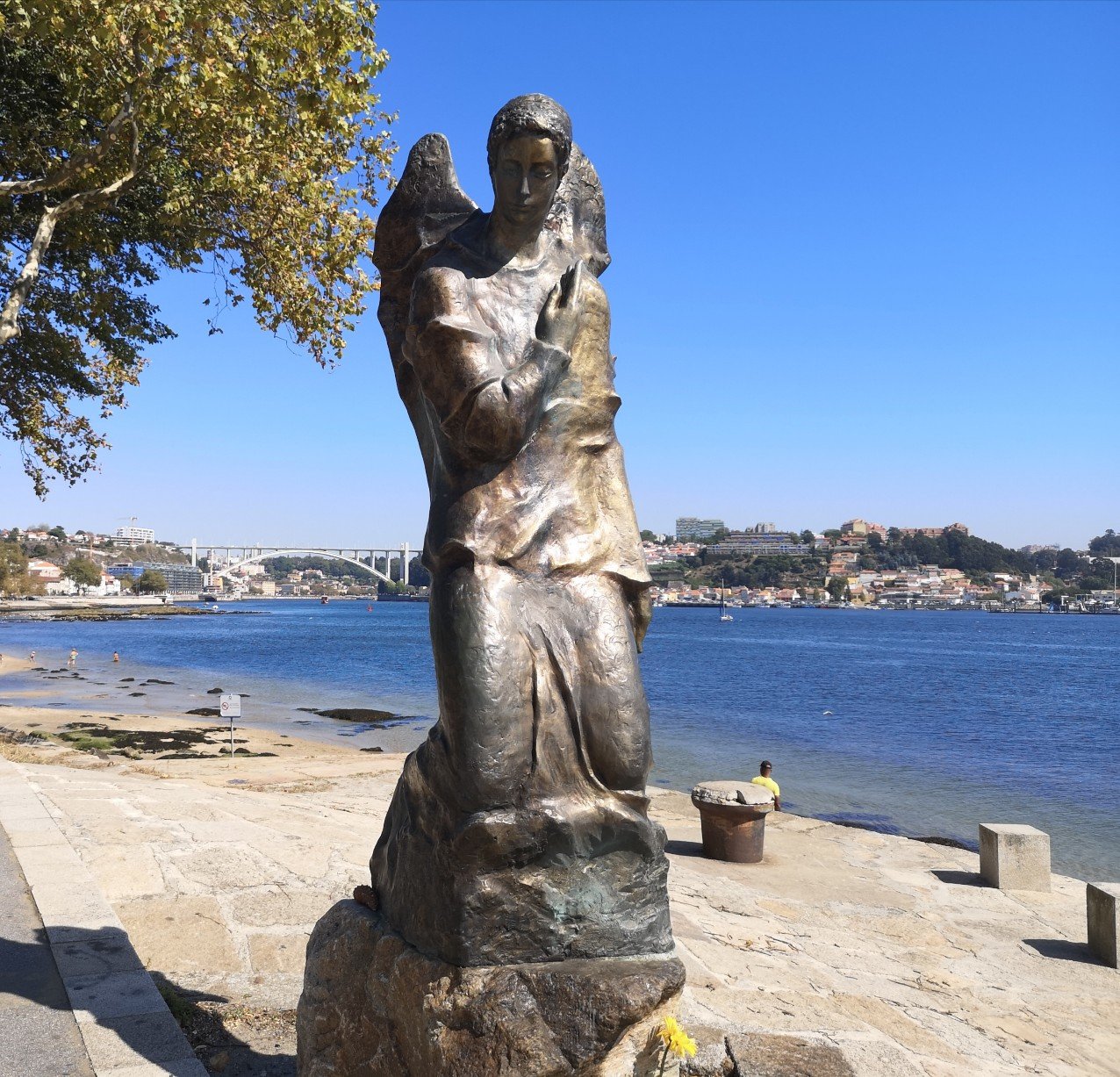
O Mensageiro (The Messenger), ie the angel Gabriel by Irene Vilar (from Matosinhos with a studio in Foz do Douro), Douro River, Porto, Portugal
If you wanted to get to Labruge, the end of stage one (24.5kms from Porto), but take a shorter walk, you can take the Line 1 tram from Ribeira, with your rucksack, as far as Foz do Douro (remember to sit on the left so you can see the view!). Then you could have a coffee by Jardim do Passeio Alegre (Cheerful Walk Garden, according to Google Translate!) with its fountain and cool shade, before starting to walk. This will save you 6kms (1 hour and 10 minutes at the average walking speed).
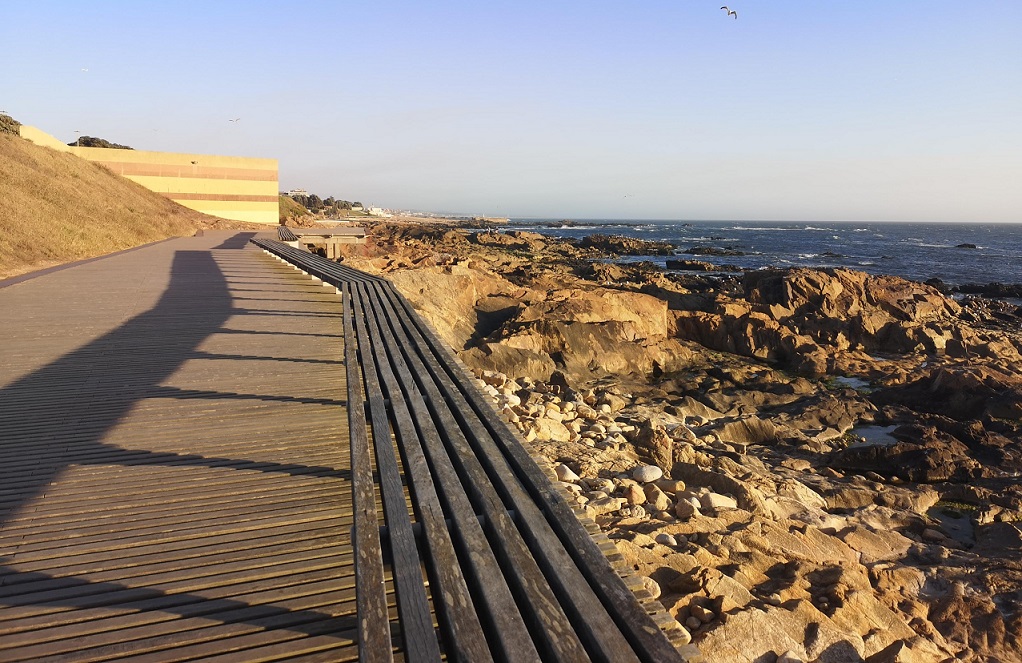
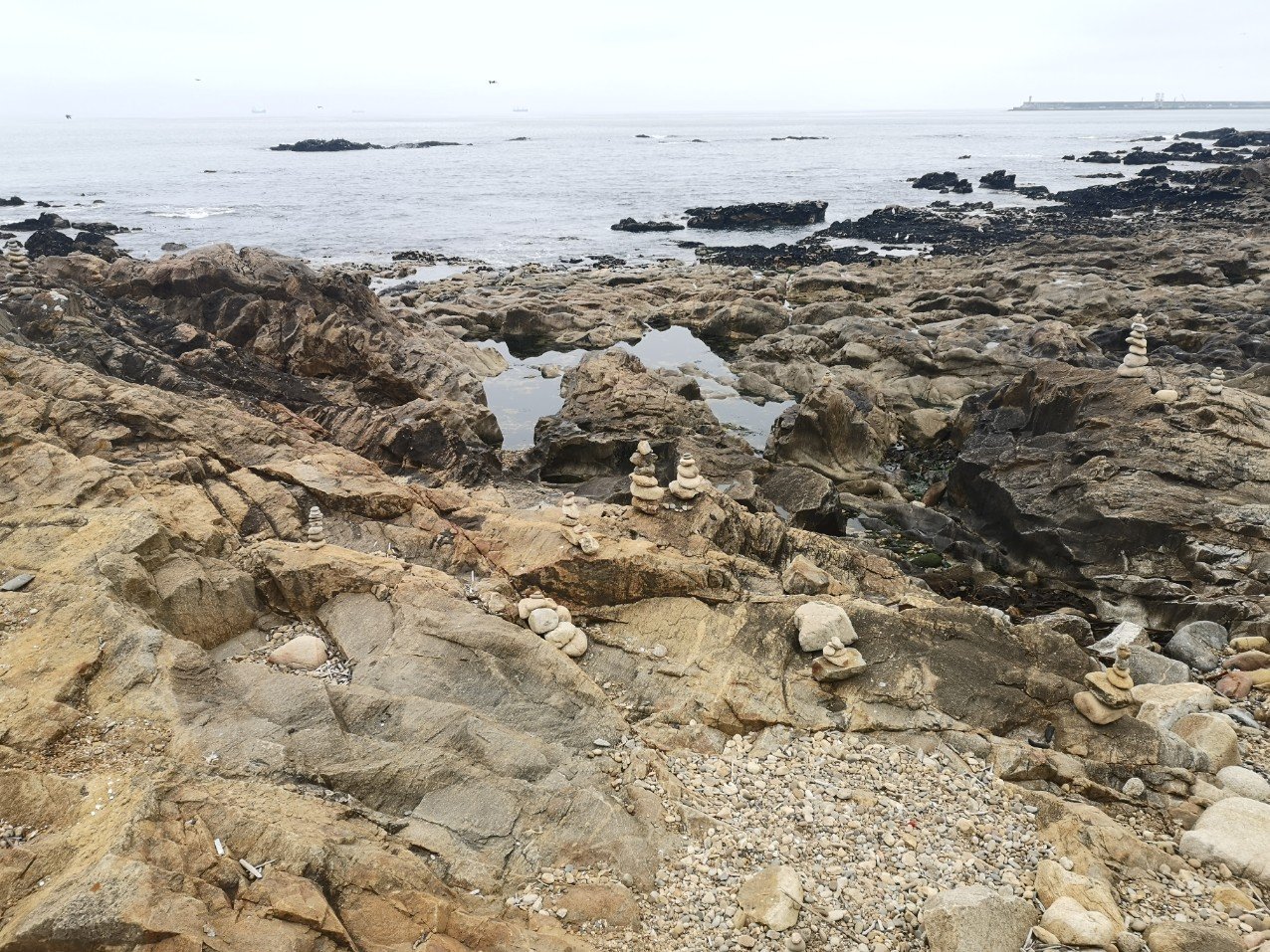
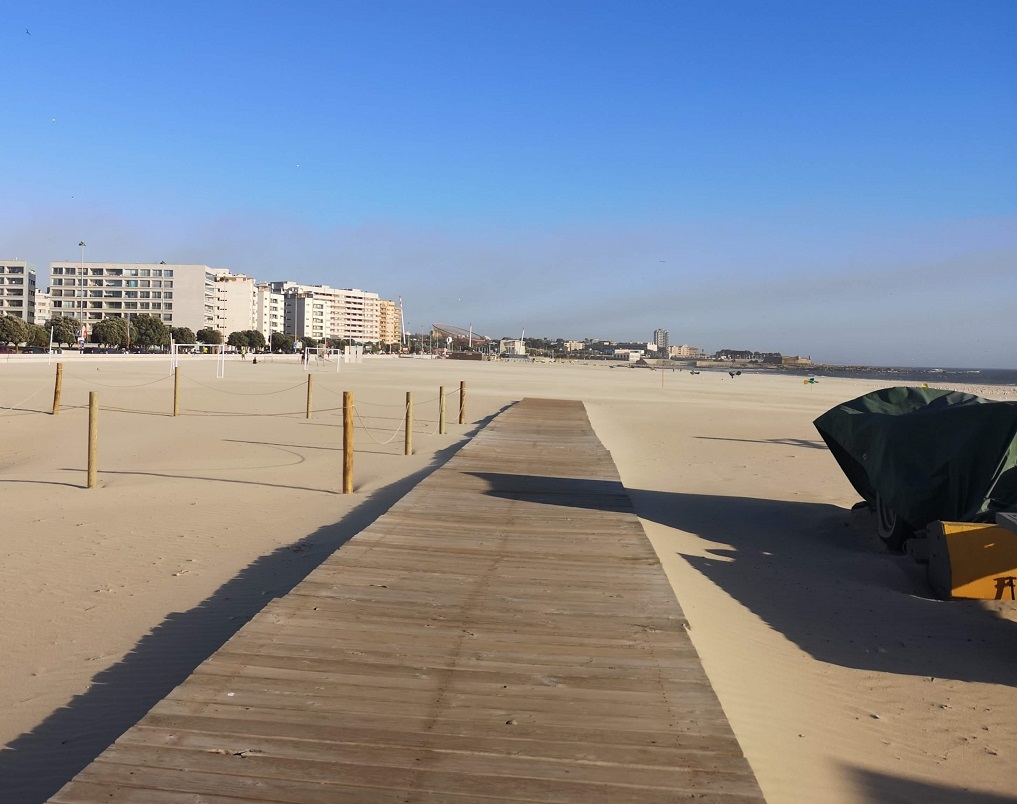
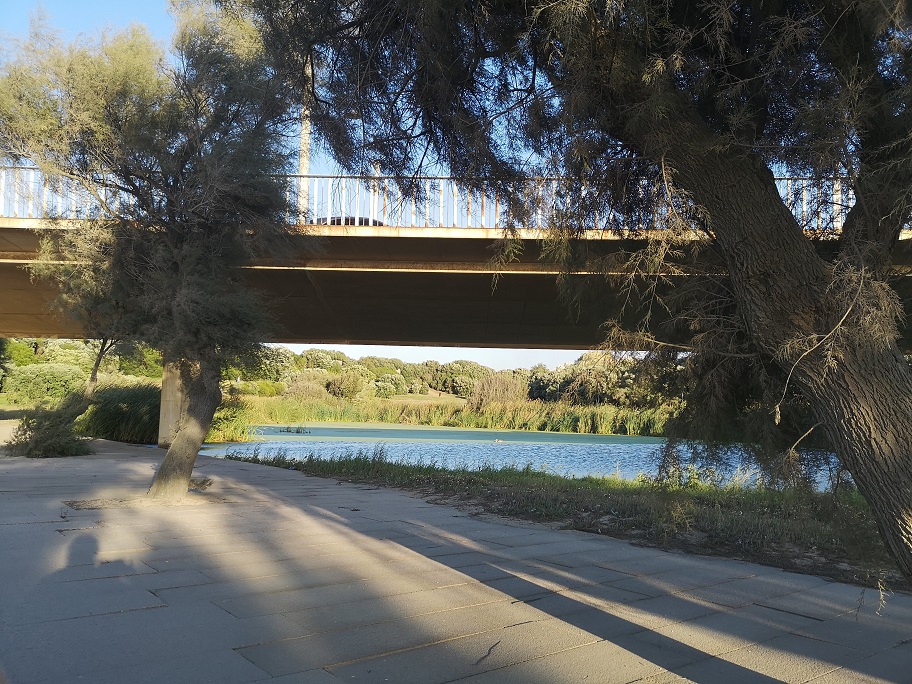
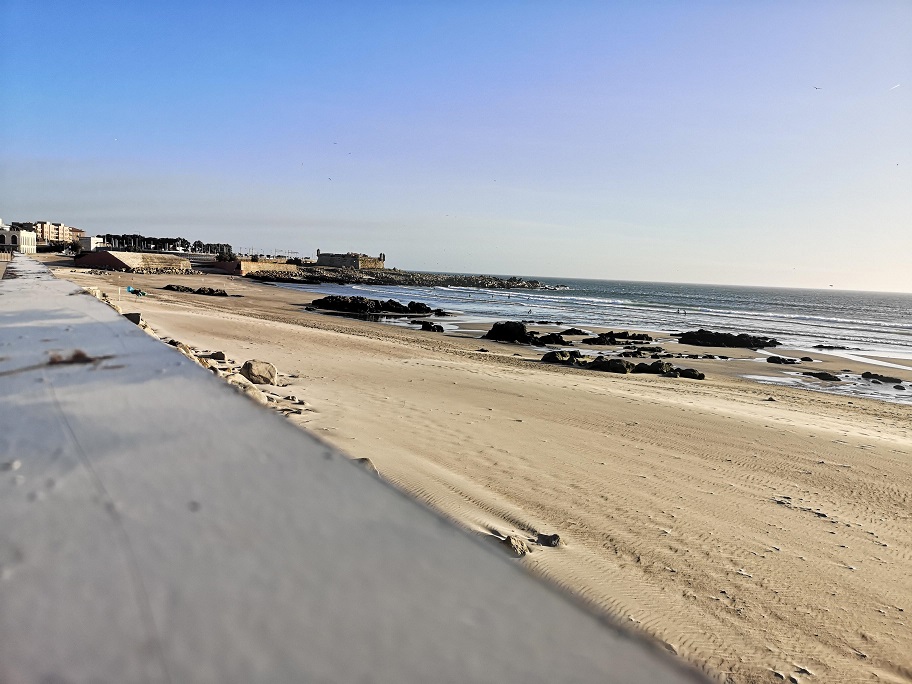
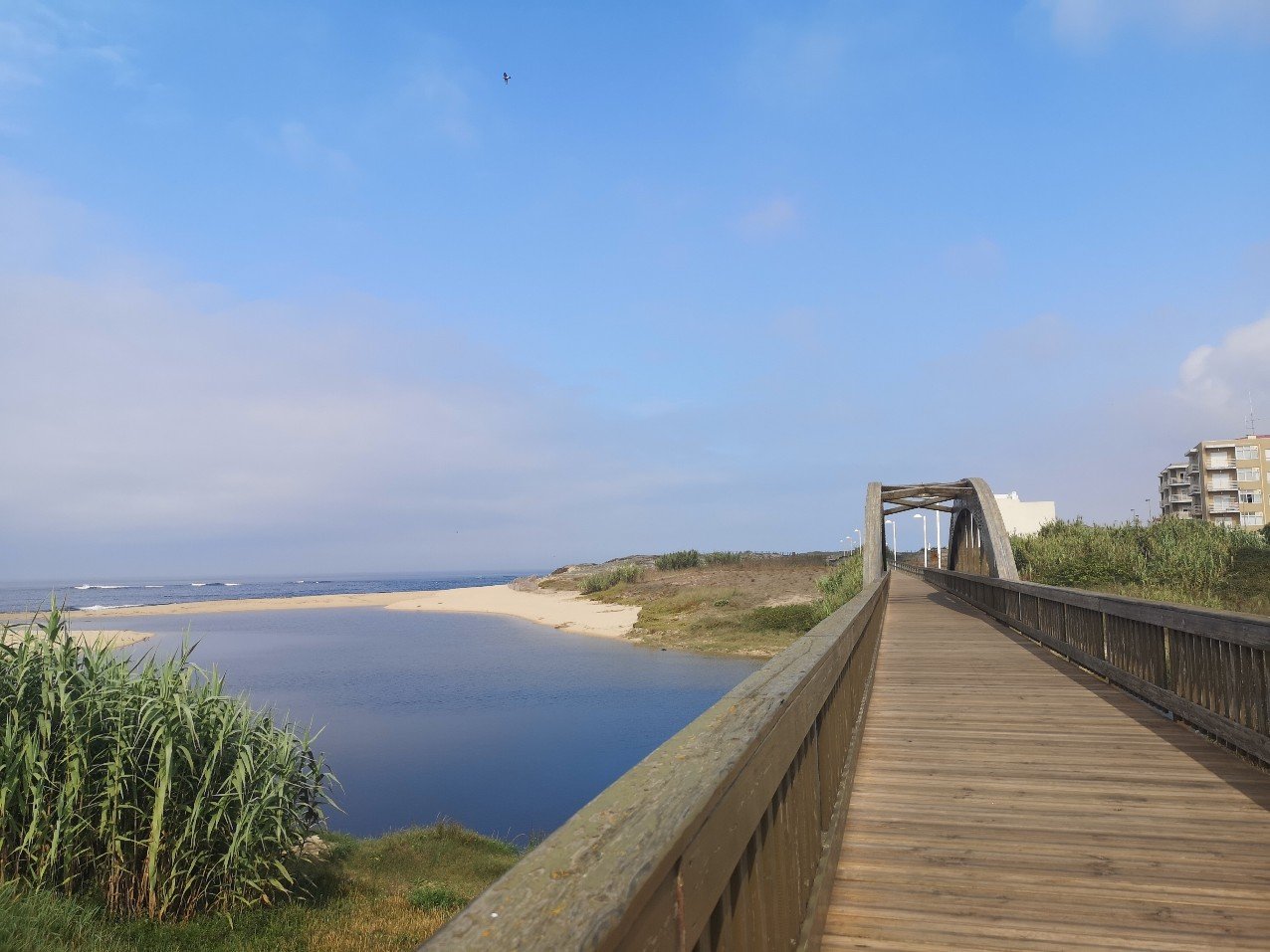
A beach not far from Porto where people have made small piles of stones perched on the rocks, similar to the cairns we find on Scottish trailsLong boardwalks make for flat and easy walking. The Atlantic Ocean is right beside themA scenic lake nearby where the path winds and where I momentarily lost the waySand as well as rocks with the Fort of St Francis (Francisco) Xavier aka Castelo do Queijo (of the Cheese) in the distance
The Fort of St Francis (Francisco) Xavier was designed by Miguel l’Ecole (1661). Occupied by Absolutists in 1832, it was badly damaged in a battle with the Liberals and abandoned. Later it was used as the headquarters of the Oporto Naval Brigade’s 1st Company, and is now the Northern Commandos Association
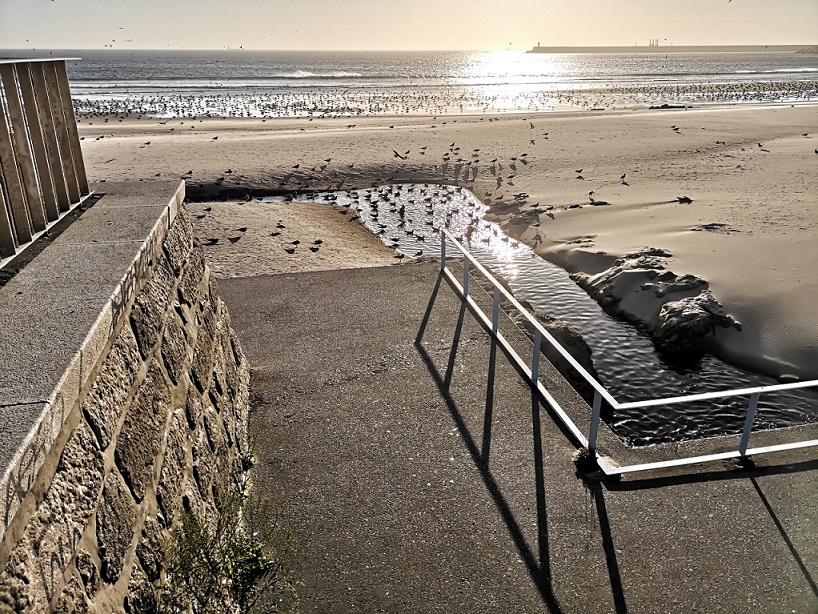
The coast is a wonderful place for birdlife and they collect in the evenings like this, at the water’s edgeHere you can get a stamp on your credential, Matosinhos, Portugal
I had a lovely swim. All along here the waves tend to be strong and I noticed that most locals do not take the plunge.
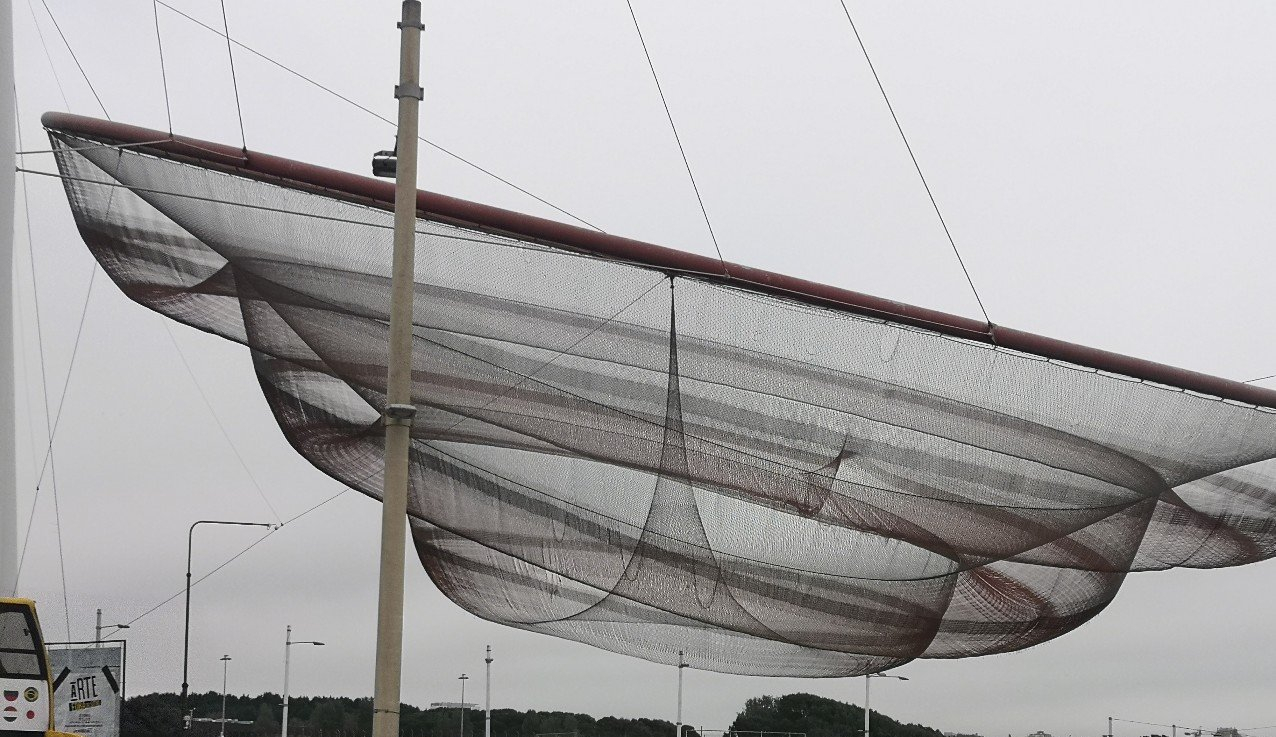
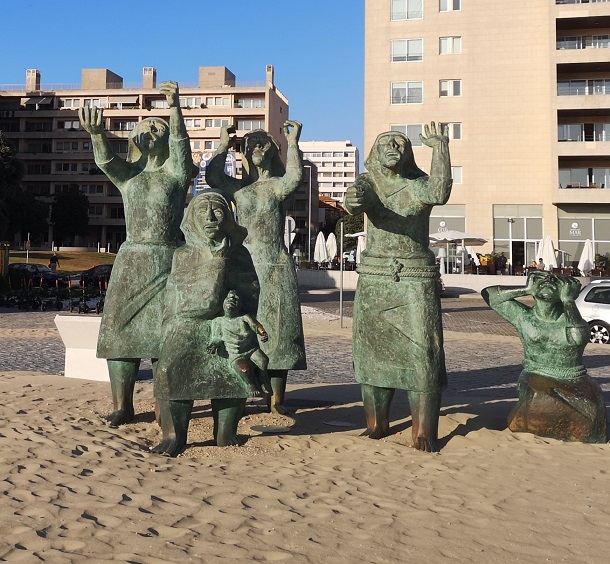
‘She Changes’ by Janet Echelman, a giant net which hangs over the road at Matosinhos, outside PortoMoving sculpture by José Juao Brito (2005) inspired by a painting by Augusto Gomes (also from Matosinhos). It remembers the 1947 fishing disaster when 152 men died leaving 72 widows and 152 children behind
In Matosinhos I stayed at the Hostel Matosinhos Suites, a funny modern block in the heart of this area, a suburb of Porto. The room was small with 6 bunks packed into it. It had a table and 2 chairs (for 6 people), a kettle and mini fridge (but not enough sockets) and it got very hot with us all in. There was a small balcony where we managed to negotiate hanging up the washing by stringing a small rope and sharing pegs – just! It was clean and there were curtains across each bunk. Cost: 22 euros through booking.com.
There are loads of places to eat, including underneath the Suites. Matosinhos is best known as the place where Porto inhabitants leave the city and come to sit in the seaside restaurants to eat the famous shellfish.
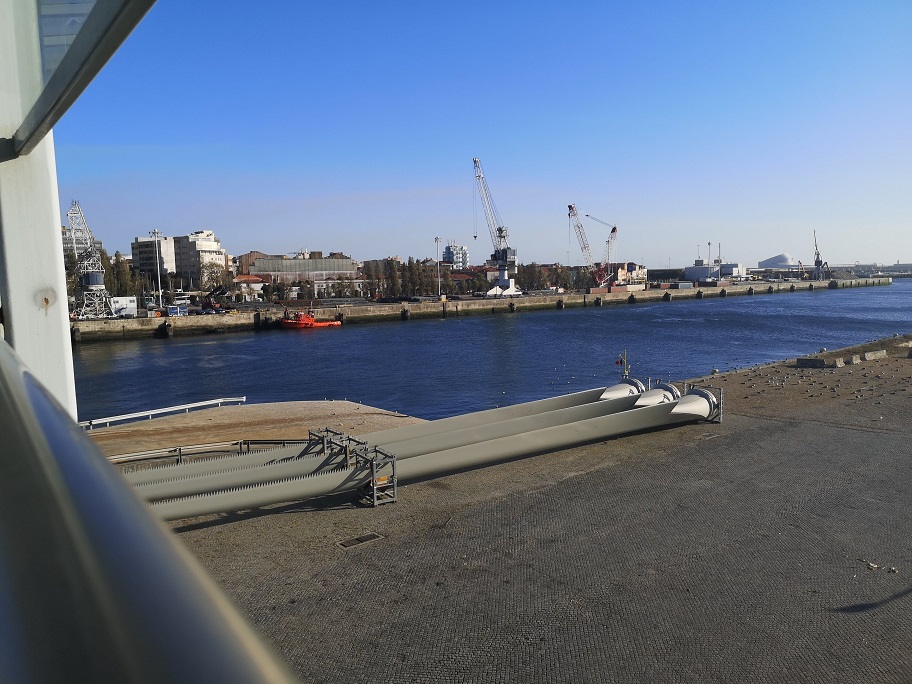
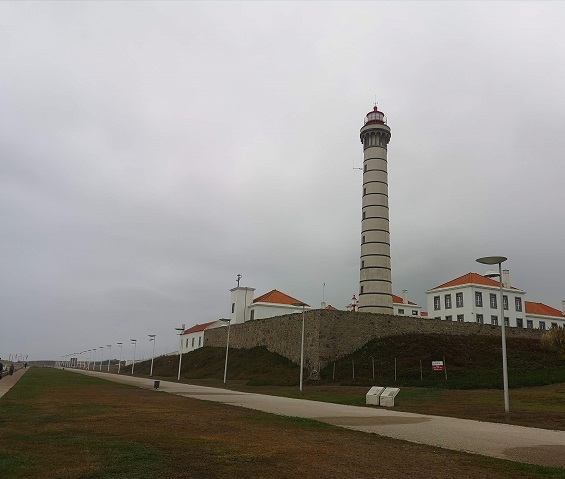
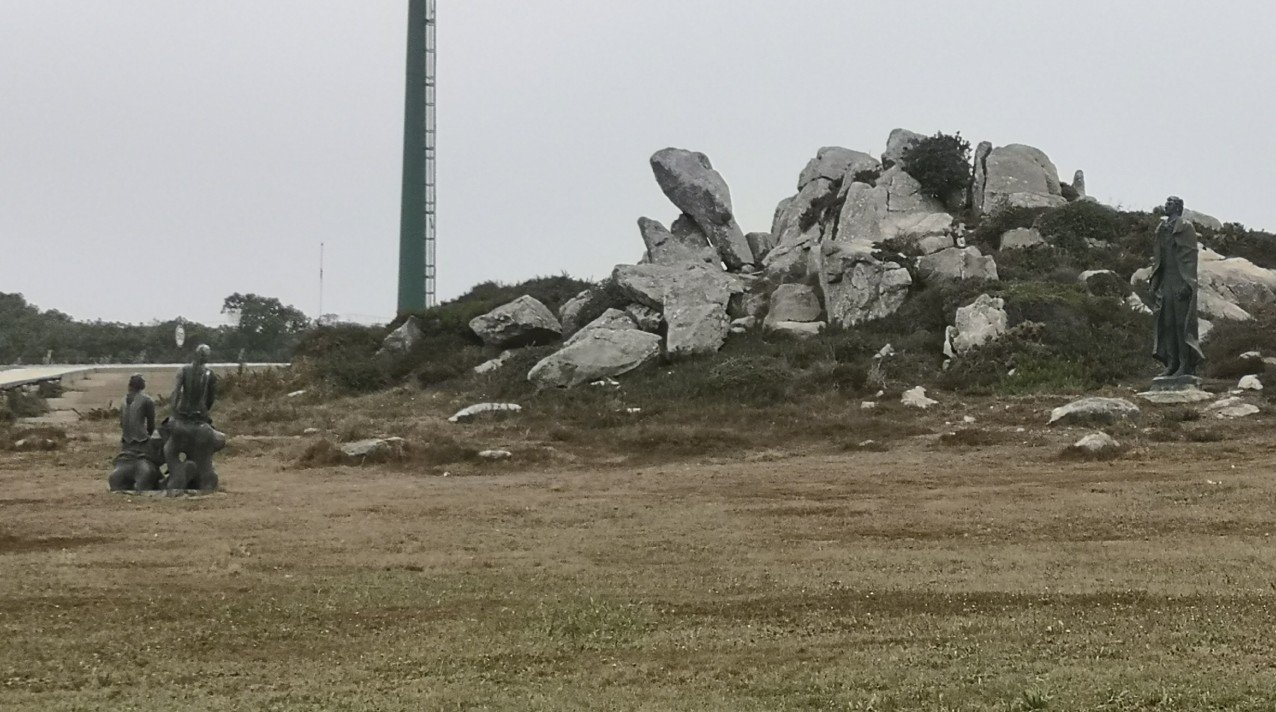
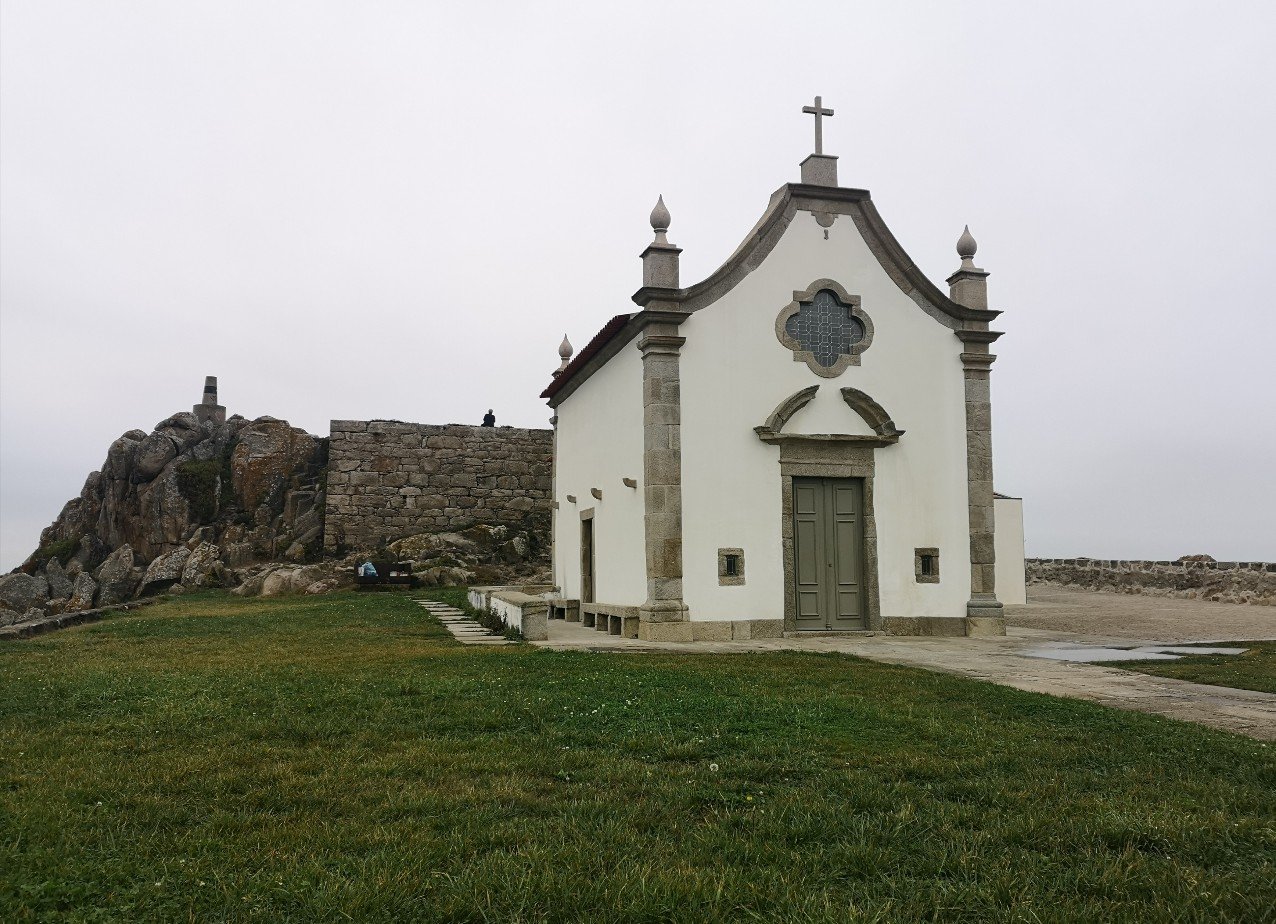
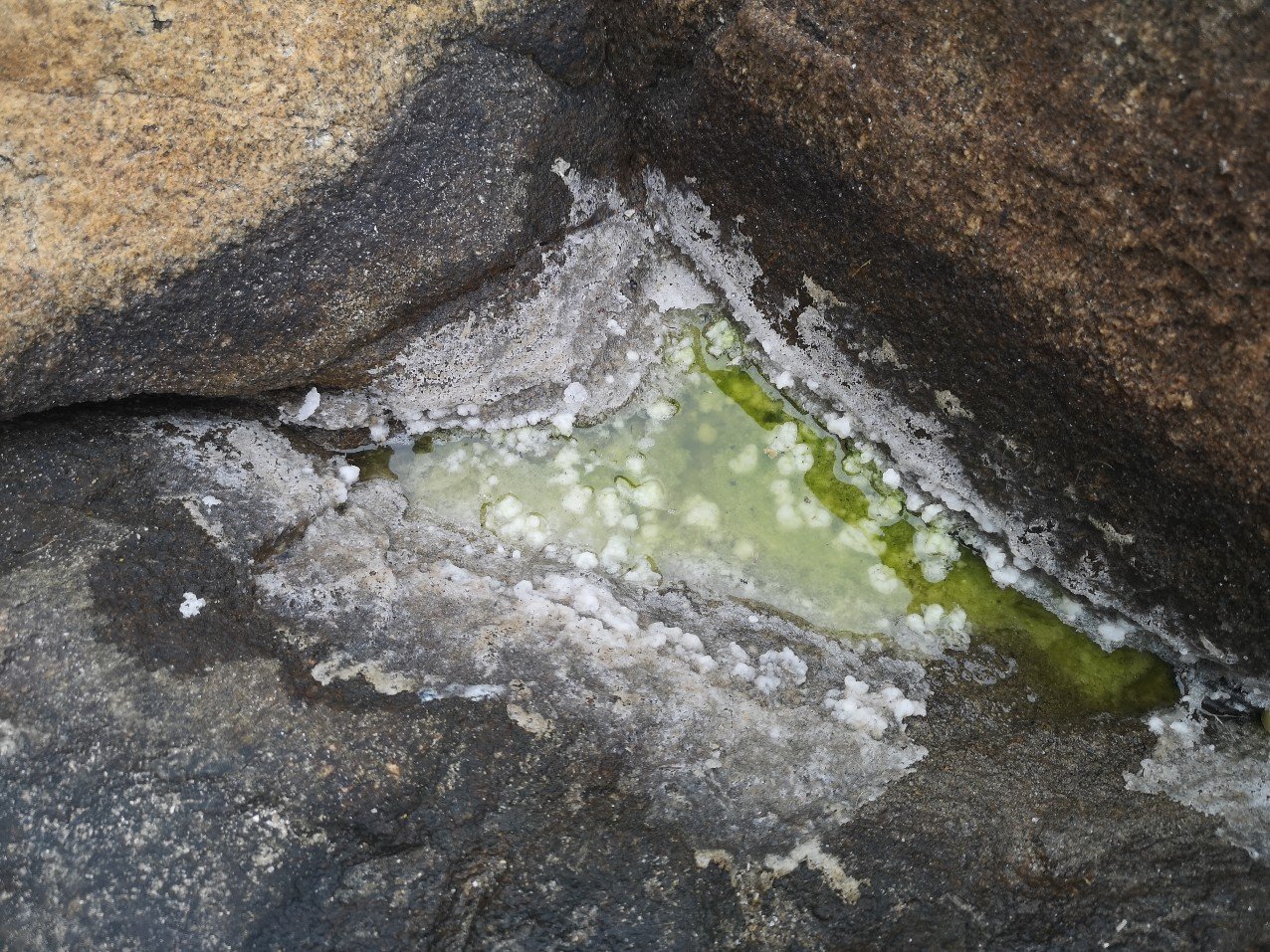
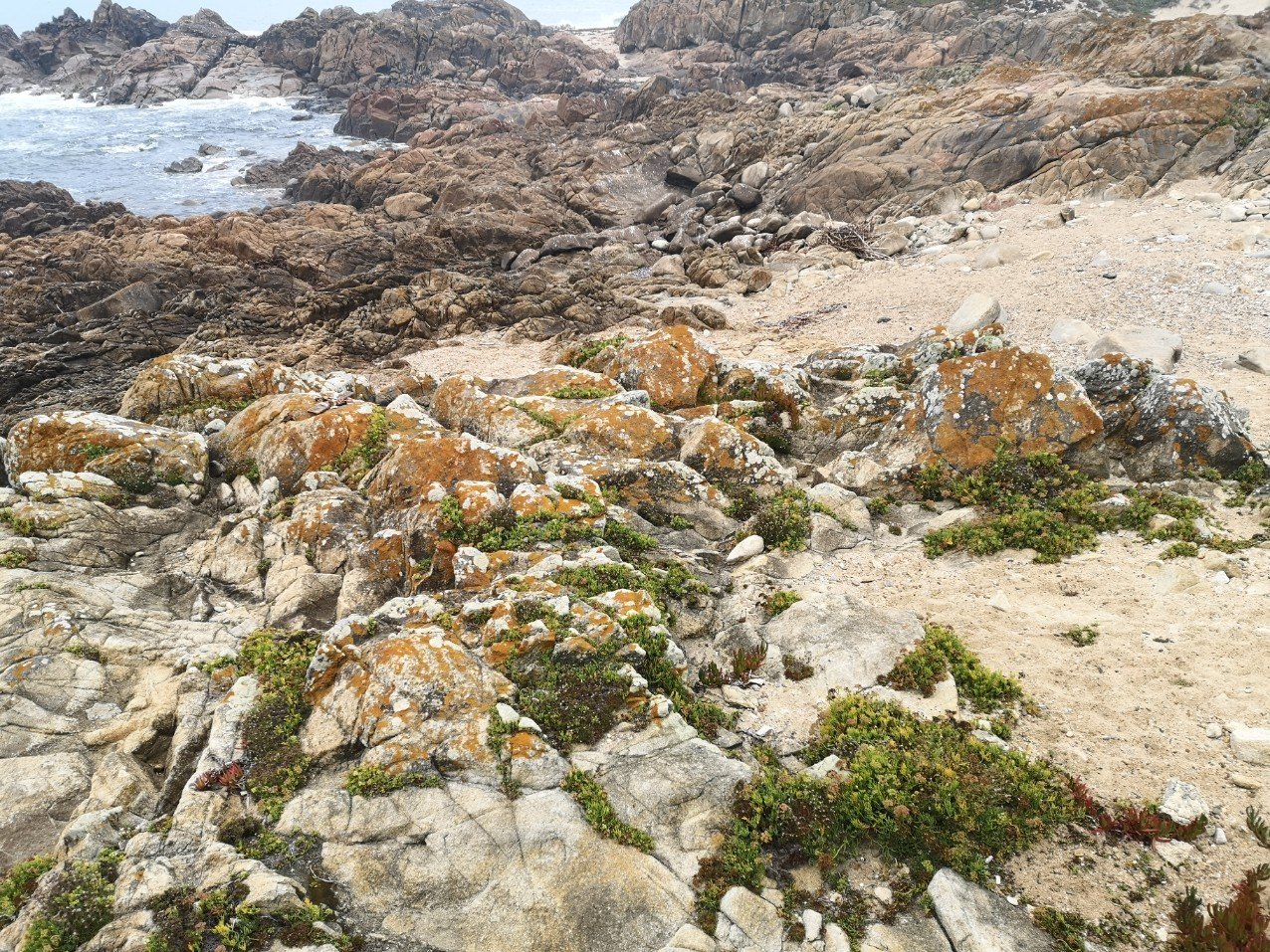
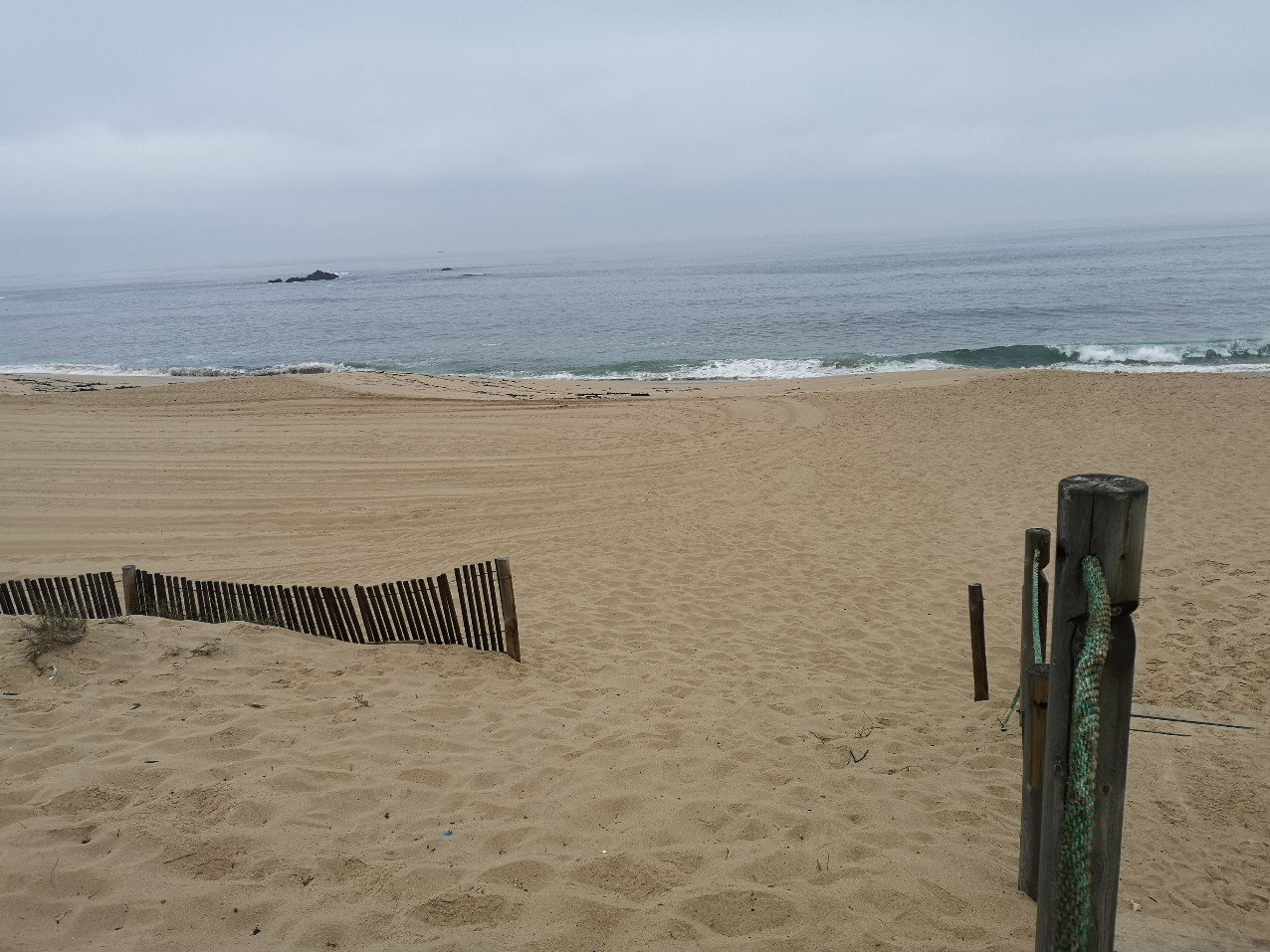
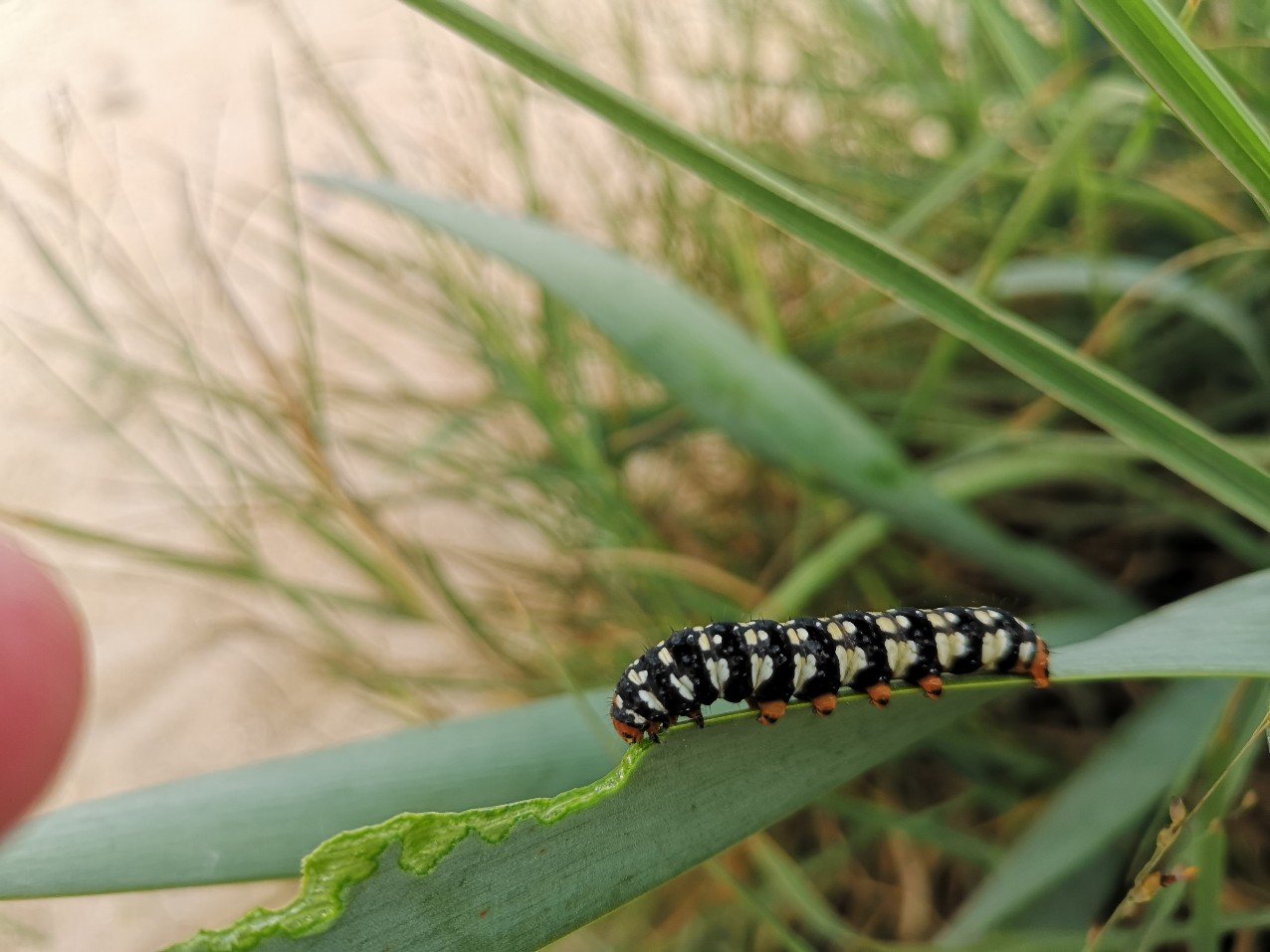
The second day of the Littoral route takes you briefly through the industrial heart of the port, over the Ponte (bridge) movel de Leca (the name of the river)The day began grey – the Farol (lighthouse) do Boa Nova at Leca da PalmeiraMonument dedicated to Antonio Nobre (poet 1867 – 1900) with his muses, by Alvaro Siza Vieira. Location: Leca da PalmeiraCapela (chapel) da Boa Nova (Good News), Leca da Palmeira. It was linked for many years (according to Wikipedia) to the hermits of the Franciscan Order prior to 1475Salt depositsColourful lichen and seaweed on the rocksBeautiful deserted beaches. Here is Praia das Salinas (salt pans) or perhaps it is Praia da MemoriaA caterpillar caught my eye1
There was a diverse range of flowers, mostly growing close to the ground on account of the wind, many of them also fleshy so they can survive without rain.
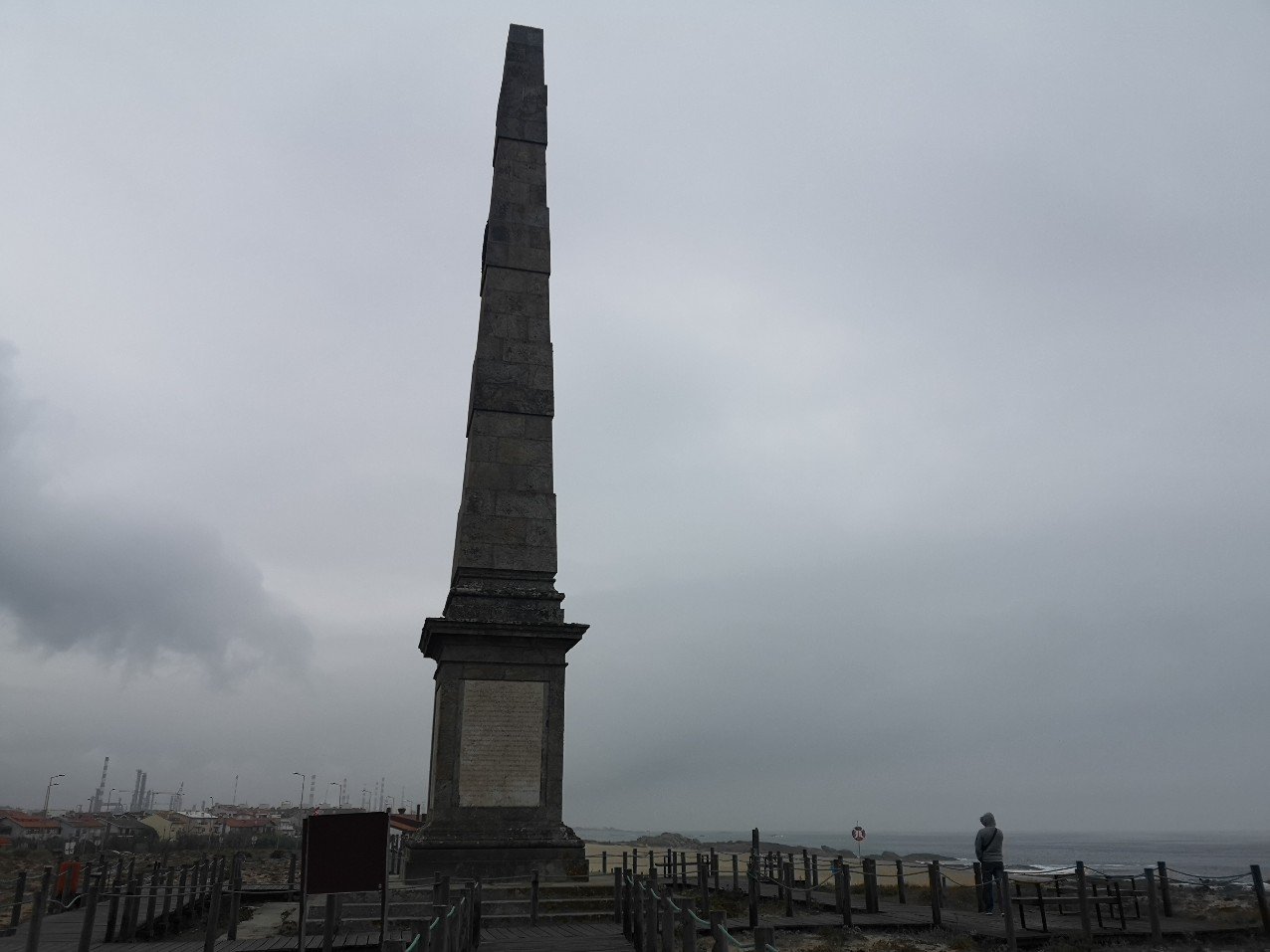
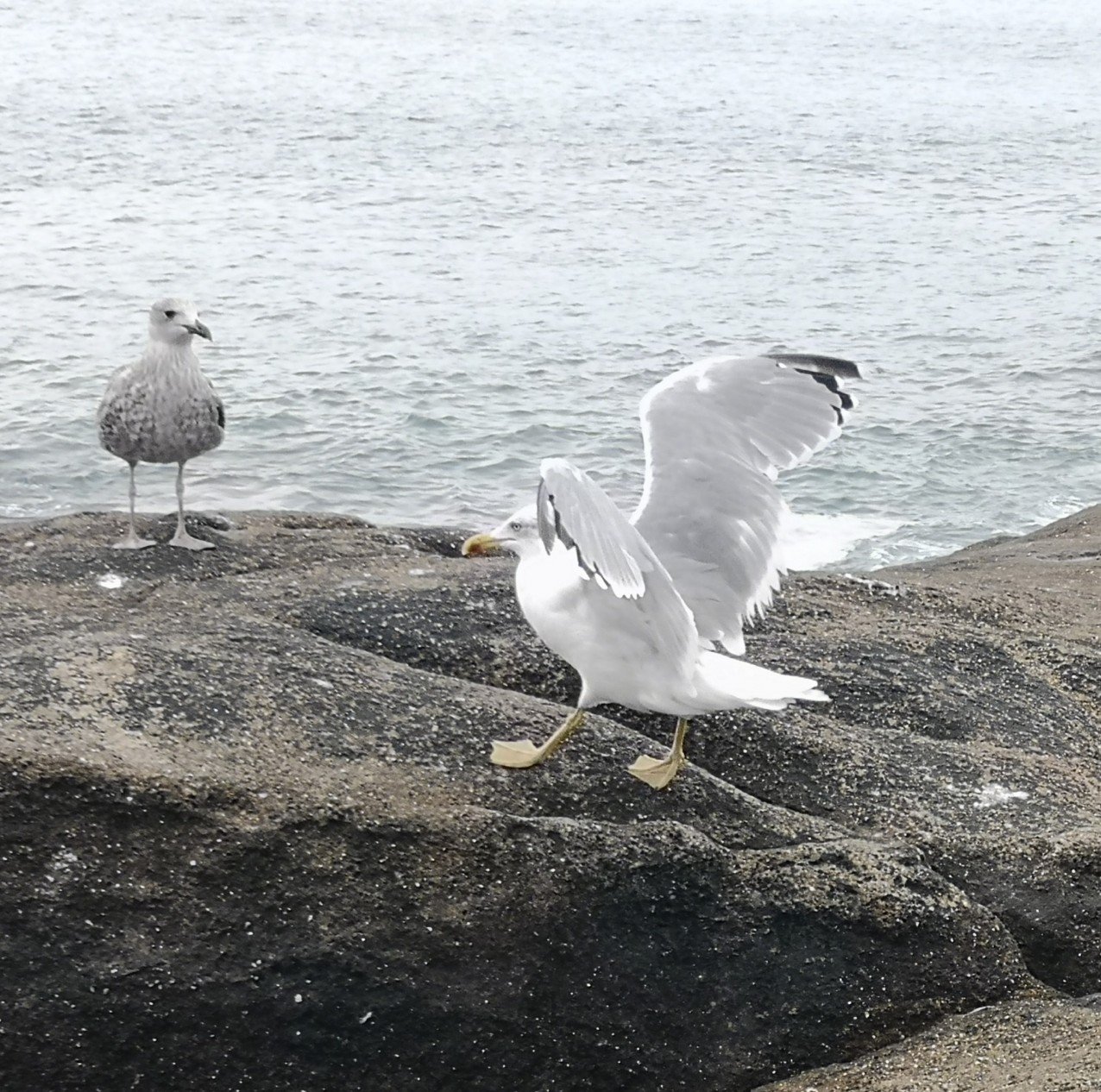
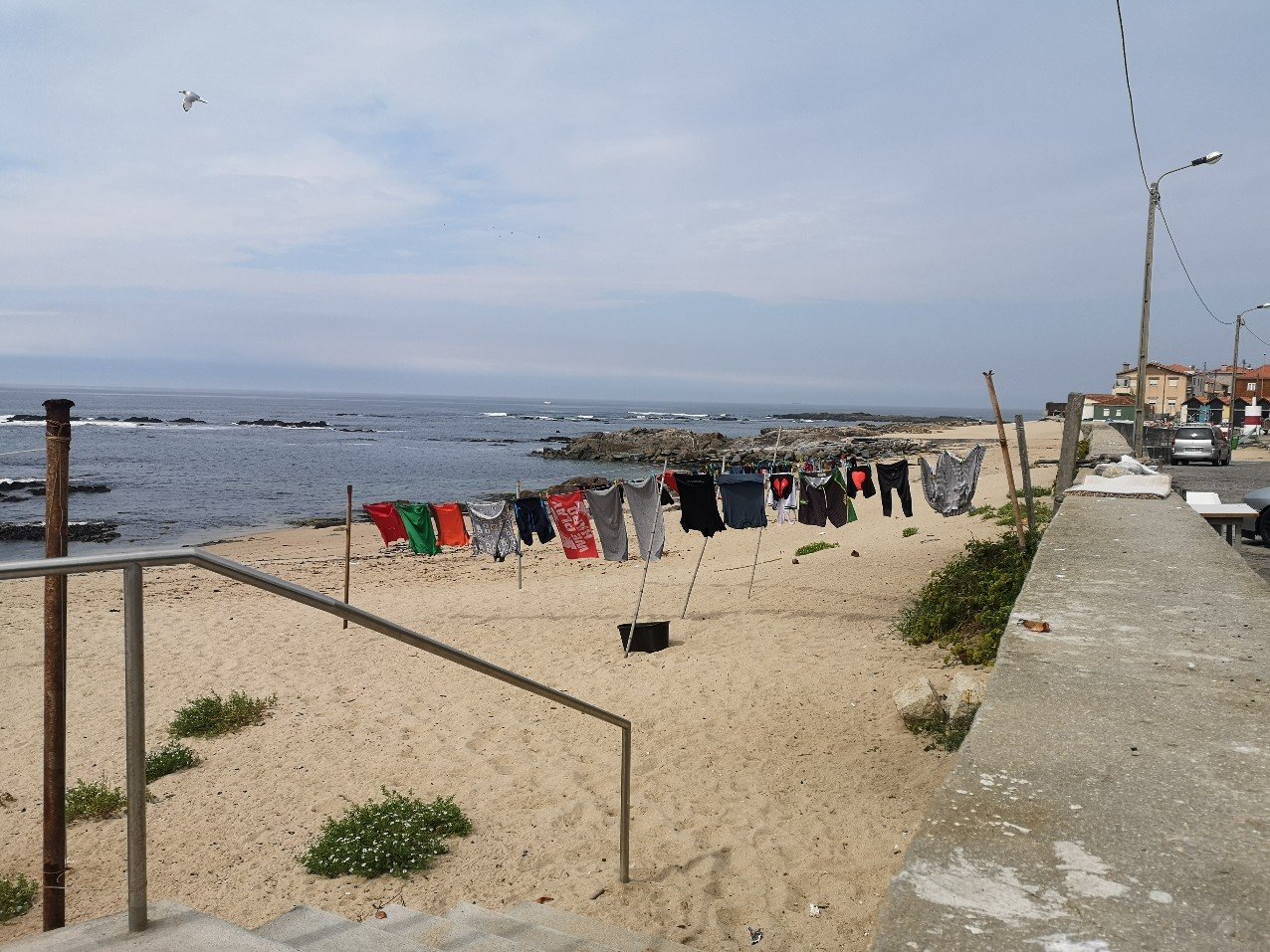
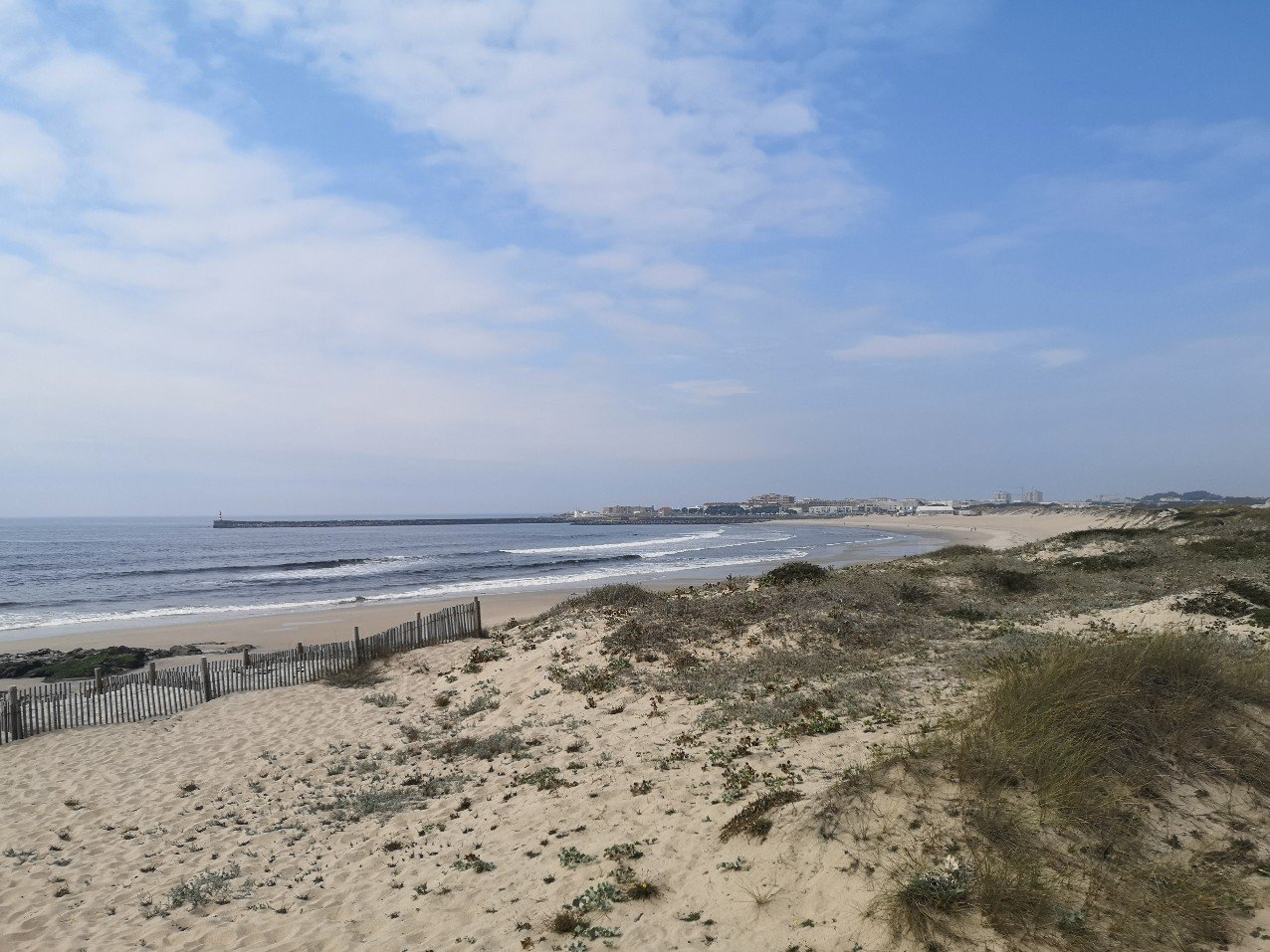
O Obelisko da Memoria (Memorial Obelisk) marking the disembarkment of King Pedro IV and his 7500 men who came to liberate Portugal from the Absolutist regime which had dominated itBy now the sun had come out and the waters were clear and still – perfect for a hike. Between Praia de Angeiras and Praia da LabrugeSeagulls shared lunch, fighting over the remainsWashing hung out to dry on the beachVila do Conde in the distance
That night’s rest was in Albergue Santa Clara Albergue de Peregrinos Municipal (which can be found on Facebook). It has a large dining area which was very busy, and a small kitchen. Beware of leaving food out – someone went off with my hard boiled eggs which were in a cup cooling for breakfast 😦
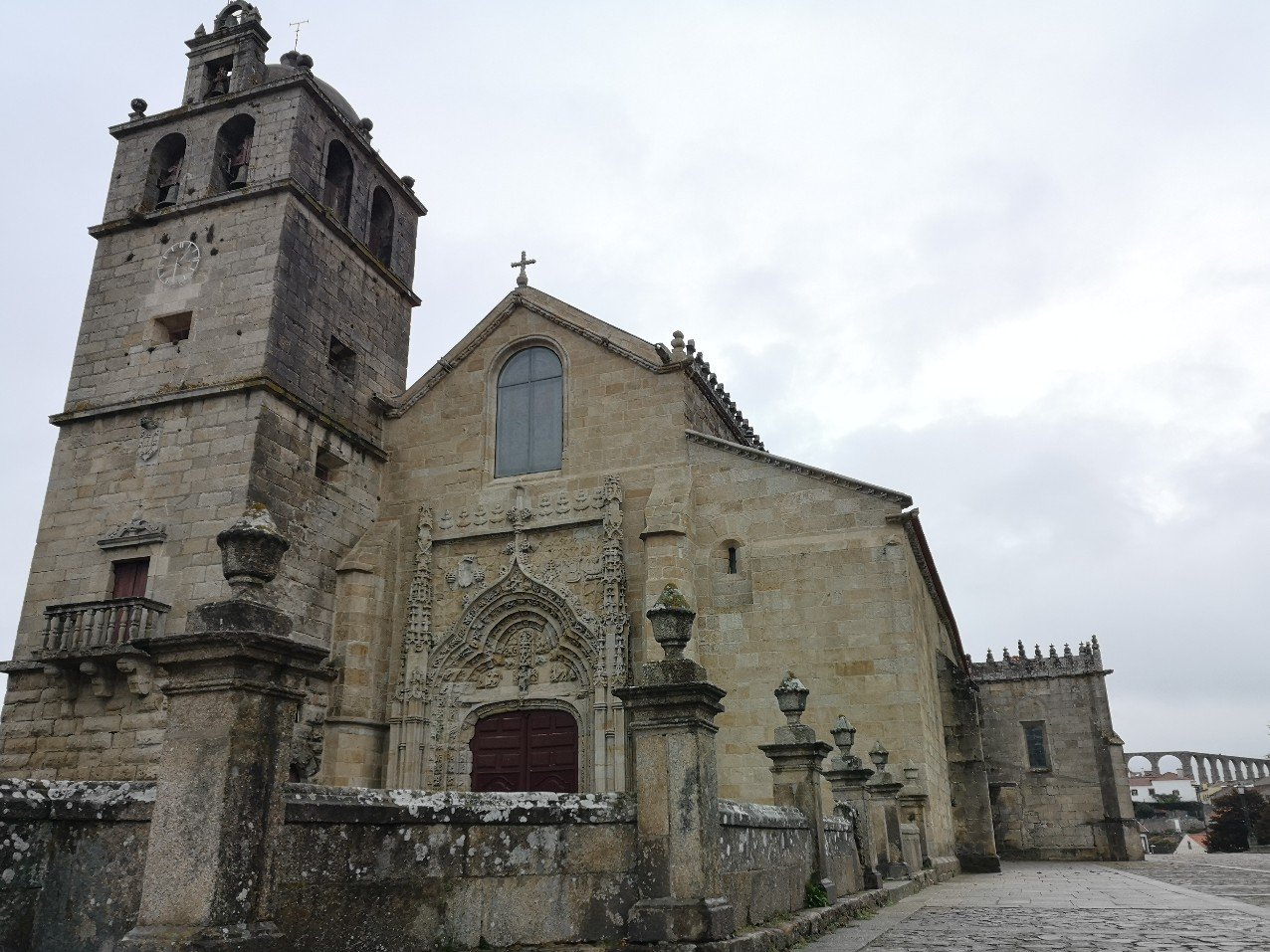
Vila do CondeIgreja Sao Joao Baptista
The hostel overlooks the Igreja Sao Joao Baptista (Church of St John the Baptist) and a lively marketplace. There is a cafe just around the corner where you can sit outside with your beer (very good value), and it is in the centre of town for all other amenities.
Vila do CondeConvento (convent) Santa Clara Vila do Conde
*There is a variation to the Portuguese Camino da Costa and Litoral (this word has 1 or 2 t’s depending on the language), which is reputedly very, very beautiful, called the Espiritual (Spiritual). It starts in Pontevedra (where the Inland and Coastal routes converge), and ends in Padron. More information here
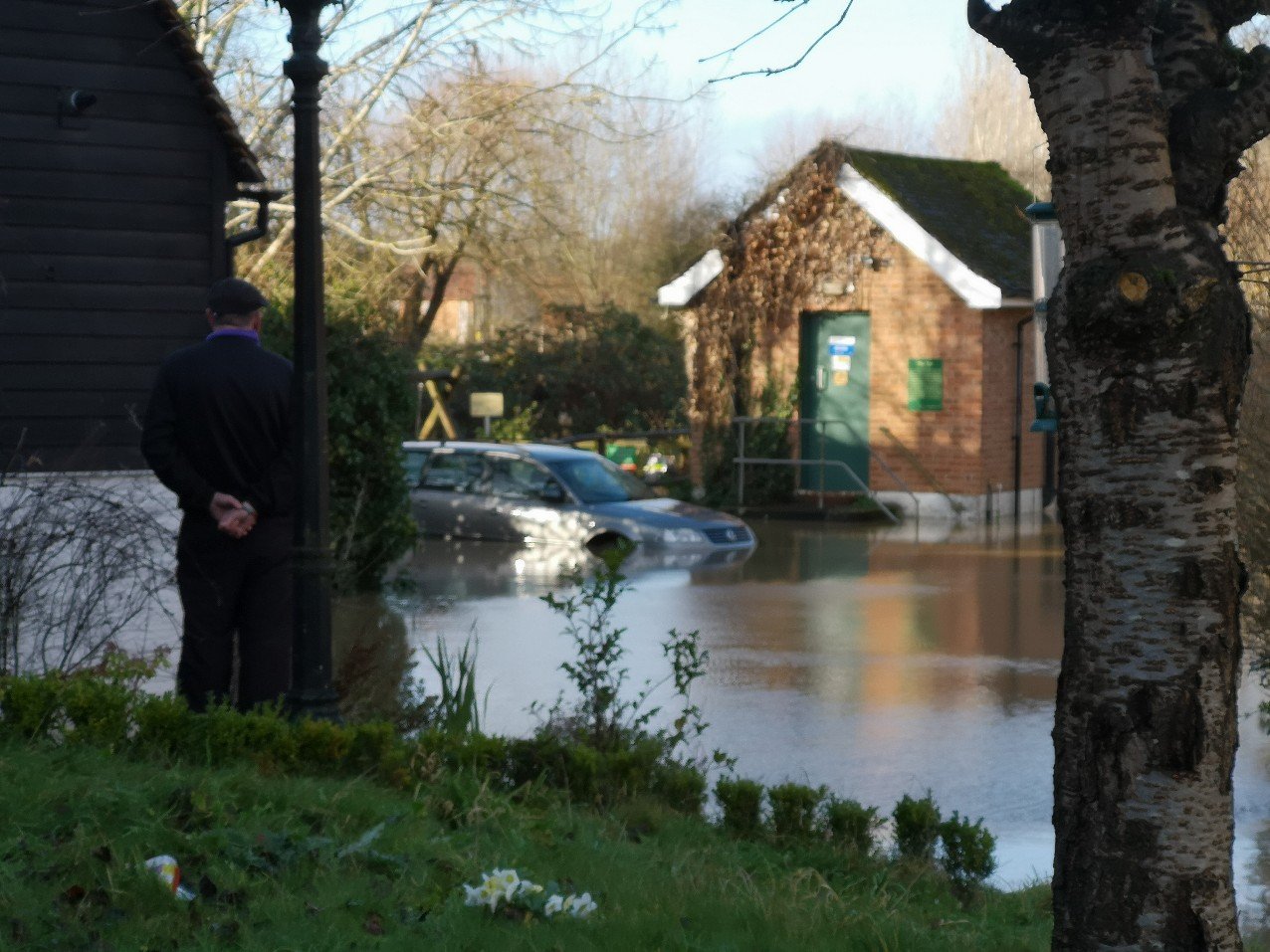
I started my walk (to deliver a Xmas present and do the shopping) at the forge on the High Street. On the left, as you look at it, the Tat is flooded, a car immersed up to the windows.
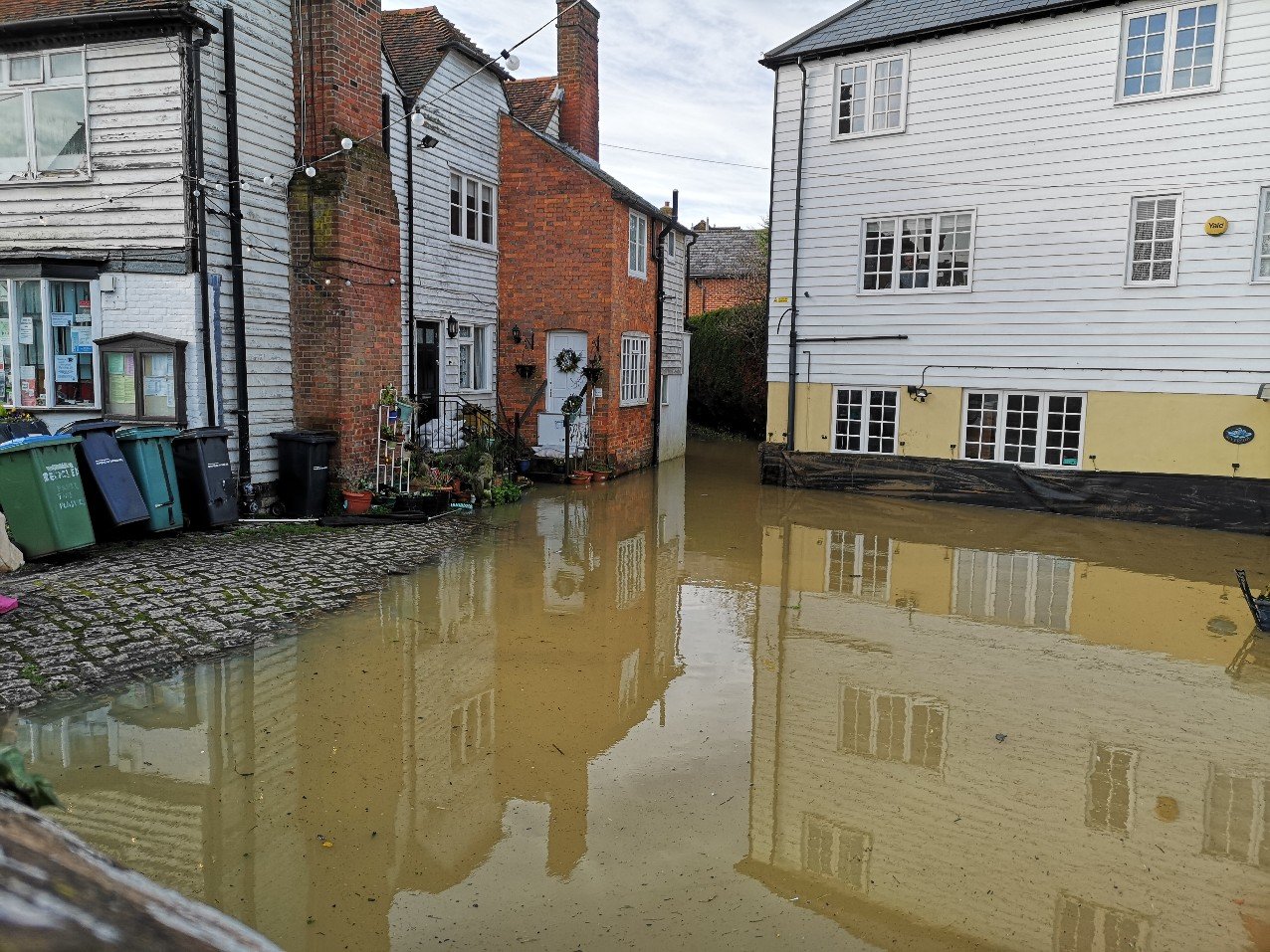
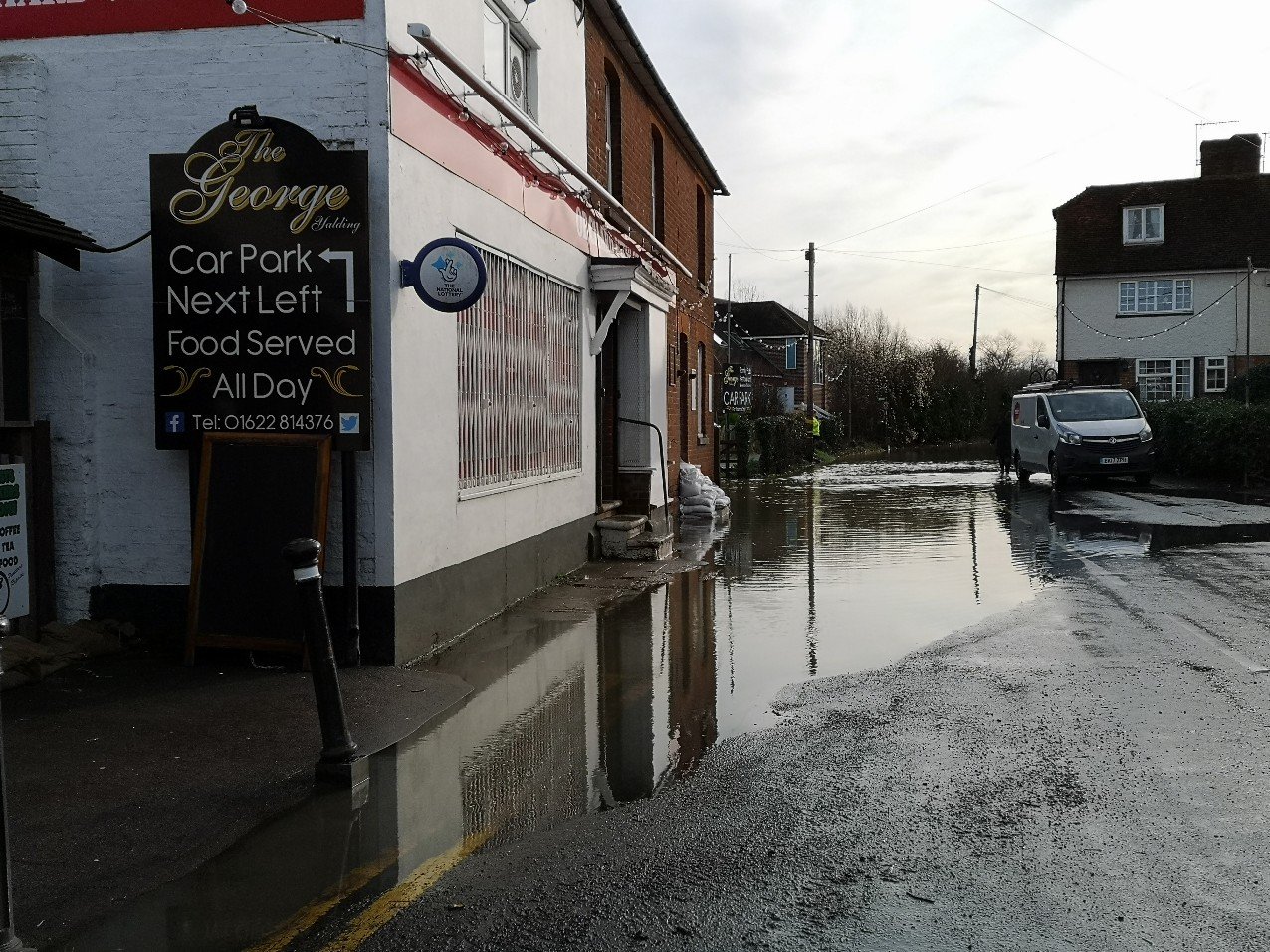
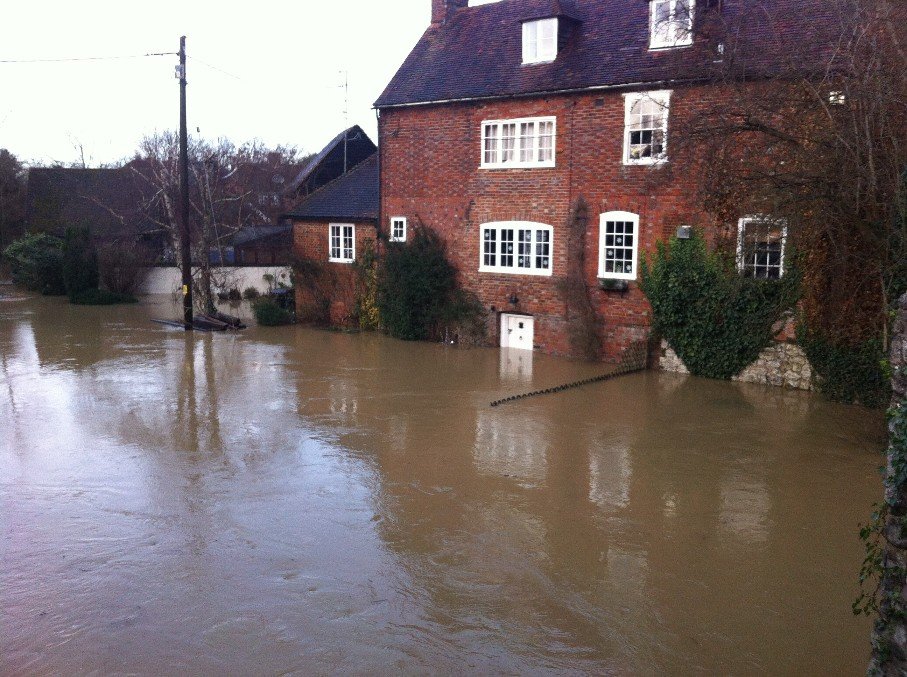
Severe flooding, Yalding , Kent
Typical Kenish dwellings
I pass the flautist from the previous evening’s carol service in the parish church.
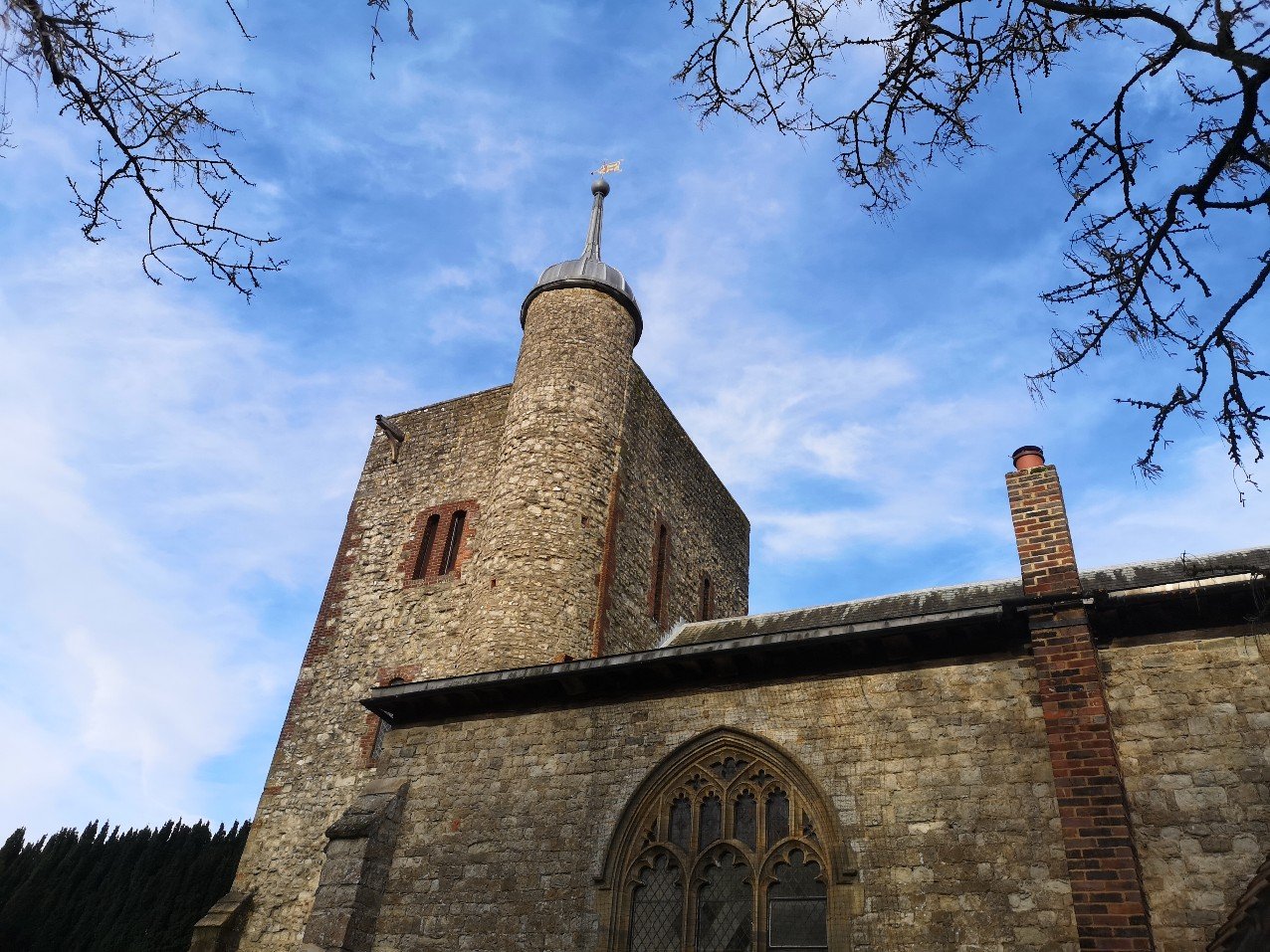
Yalding Parish Church
Taking a right at the war monument, where the village tearooms are on the opposite corner, I see that Vicarage Road is closed to traffic due to water inundation further up. The drains are full – I can hear the torrents under the grate by the side of the road.
Passing the school on my right I spot an aspen, a tree known as trembling or populous tremuloides, poplar. Each three-pointed yellow leaf is on its own long stalk tipping from side to side and rustling, like half a castanet searching for its pair to clatter against.
Acer opalus
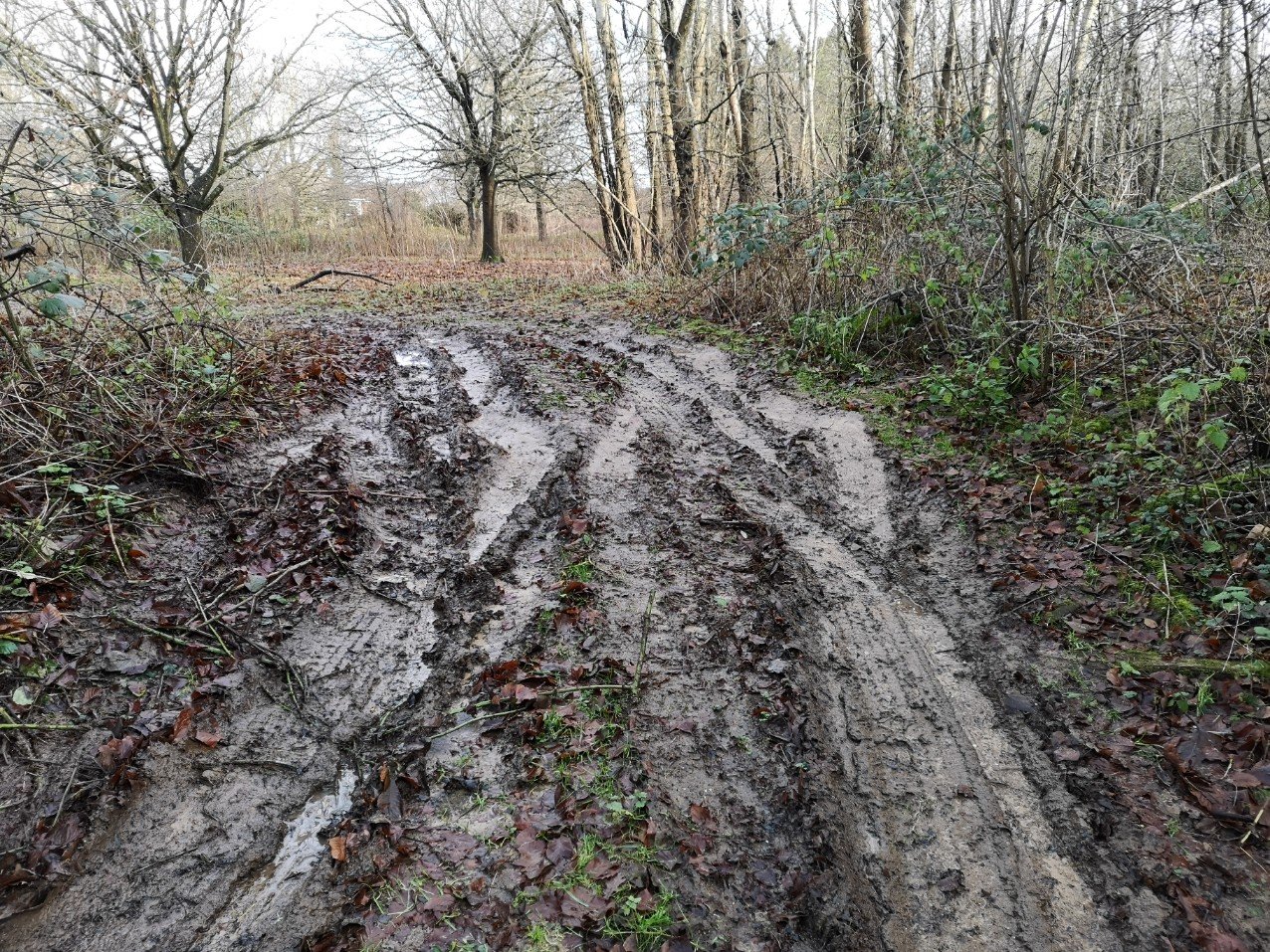
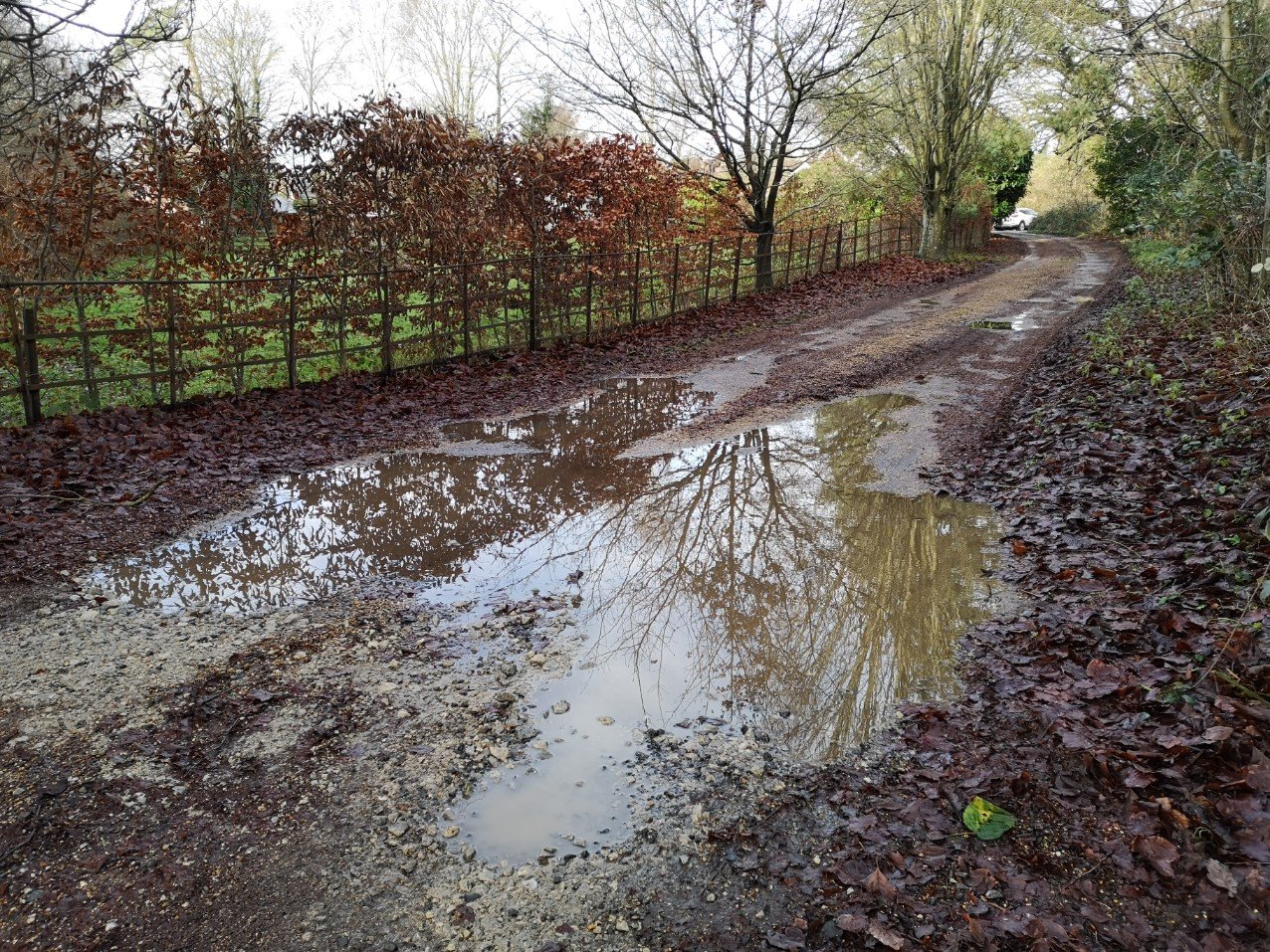
I pass the entrance to the new estate and take a right into a leafy, rather soggy drive where it is quiet. Only the birds are piping and tweeting, trilling, as they do. There are great ridges of mud, puddles the width of the drive.
To my left are flutters of wood pigeon, heard but not seen. A sharp chirp comes from elsewhere. The dun brown earth in one garden is squared off with planks awaiting spring sewing, or maybe even harbouring overwintering goodies ready to spring in, well Spring.
The Lodge in full summer
The lodge where only 6 months ago stately artichoke flowers bloomed now has a Xmas wreath and lights which are only just visible in the bright morning.
The Xmas Lodge
Now that the trees are bare on the other side, I can see right through to the paddock to the grey tin trough. A wheelbarrow lies on its side and fresh straw has been strewn.
Coppice
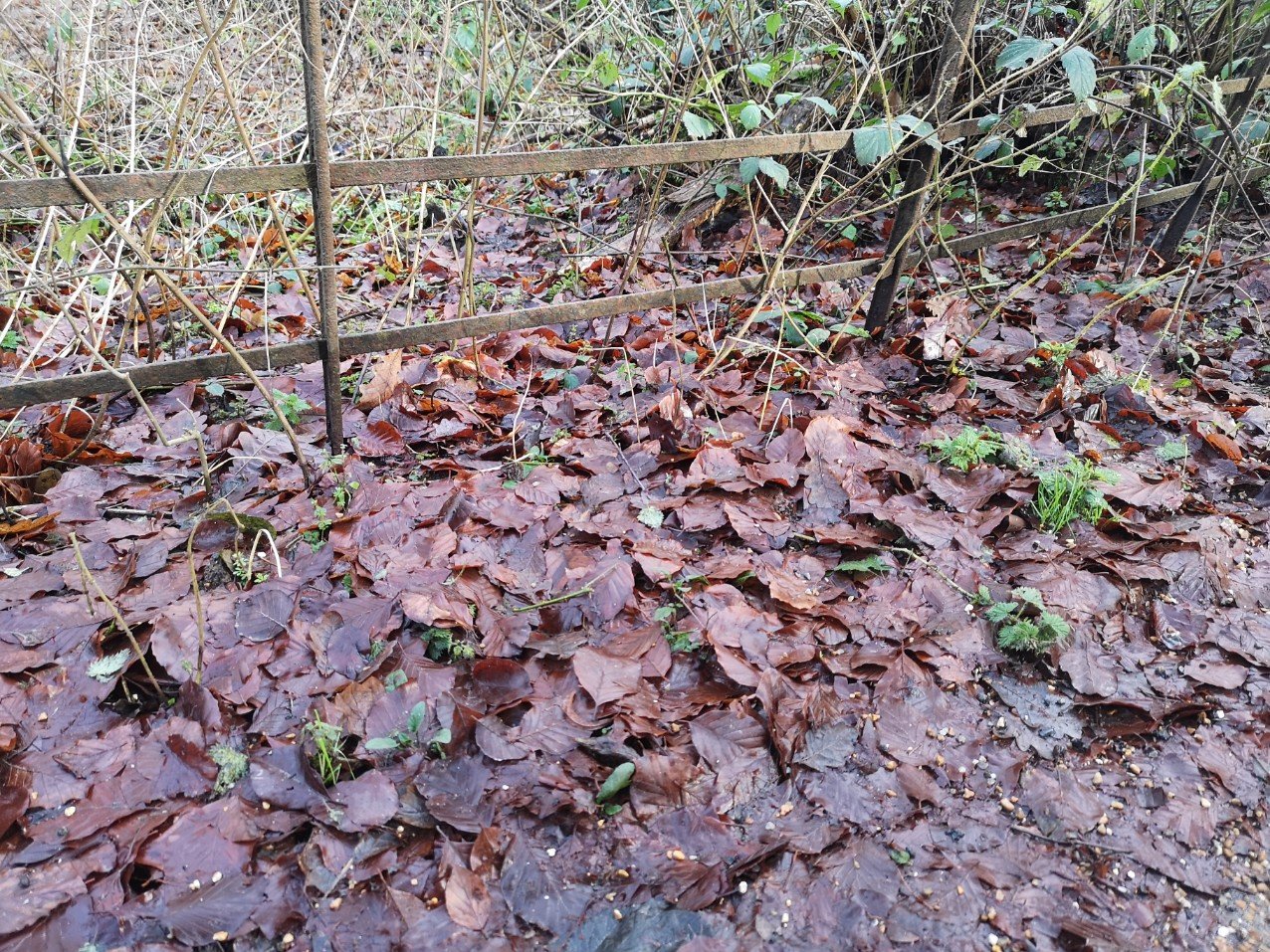
Layer upon layer of burgundy leaves, beech and oak, have been smoothed by rain and packed down to protect the almost dormant plants. When I step on them, they are so deep and cushiony I sink damply down so they cover my feet.
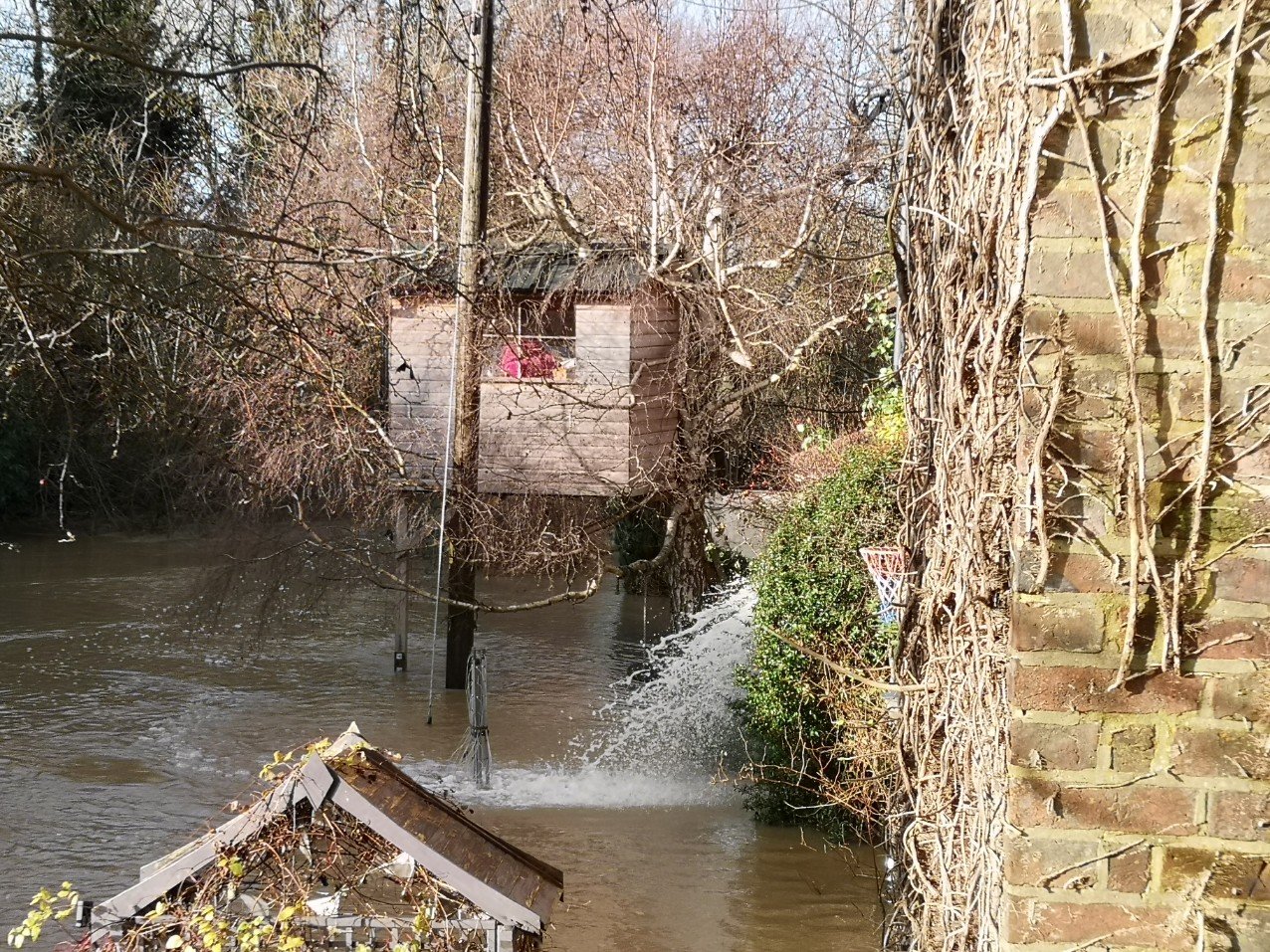
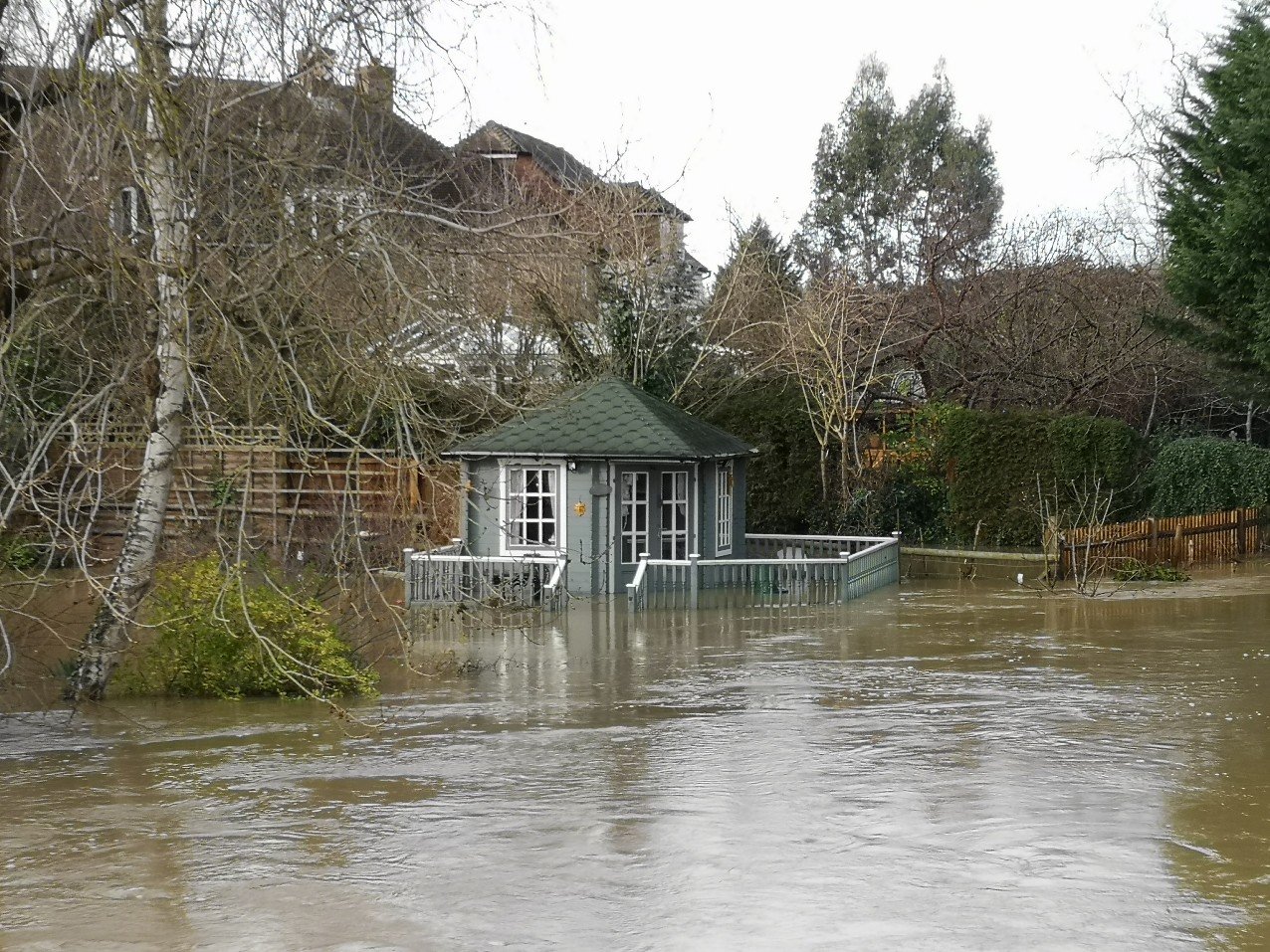
On my return I see a shed, a shepherd’s one, on stilts, very sensible given the amount of standing water
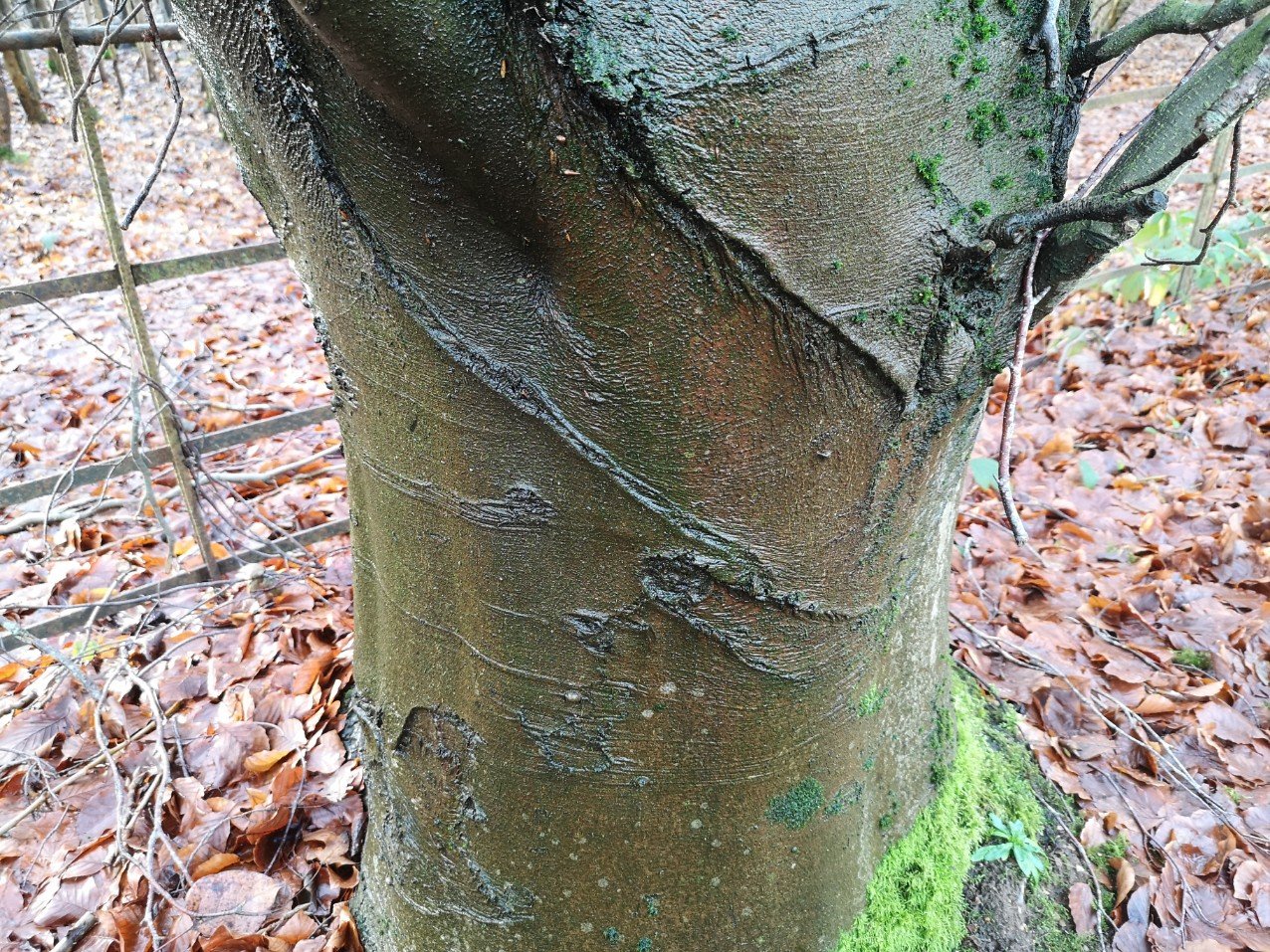
Wet trunks like twisted elephant skin (or at least how I imagine their hides, never having seen one in real life)
The man I gave the present to asked, ‘What’s it like in the village? I replied that all the cars have moved from the flooded Lees area and are outside mum’s house. He told me that Little Venice had to be evacuated and that their houses had been built to float. I had no idea. Later I discovered that he was not referring to Little Venice on London’s Thames, but to the collection of caravans close to Yalding Station which flood regularly.
The bottom of the trees are all green with moss
As I returned, a red van stopped and the driver rolled down the window to ask, ‘you all right?’ I said I was enjoying the day and taking photos, and he replied that he wished the locals were too. Is it so obvious that I am not local then! Perhaps this is an unusual activity for a Sunday morning just before Xmas.
I wandered on under the nearly-Xmas sun, not a snowflake in sight. I could hear the South Eastern train tooting to warn its approach ahead of the level crossing.
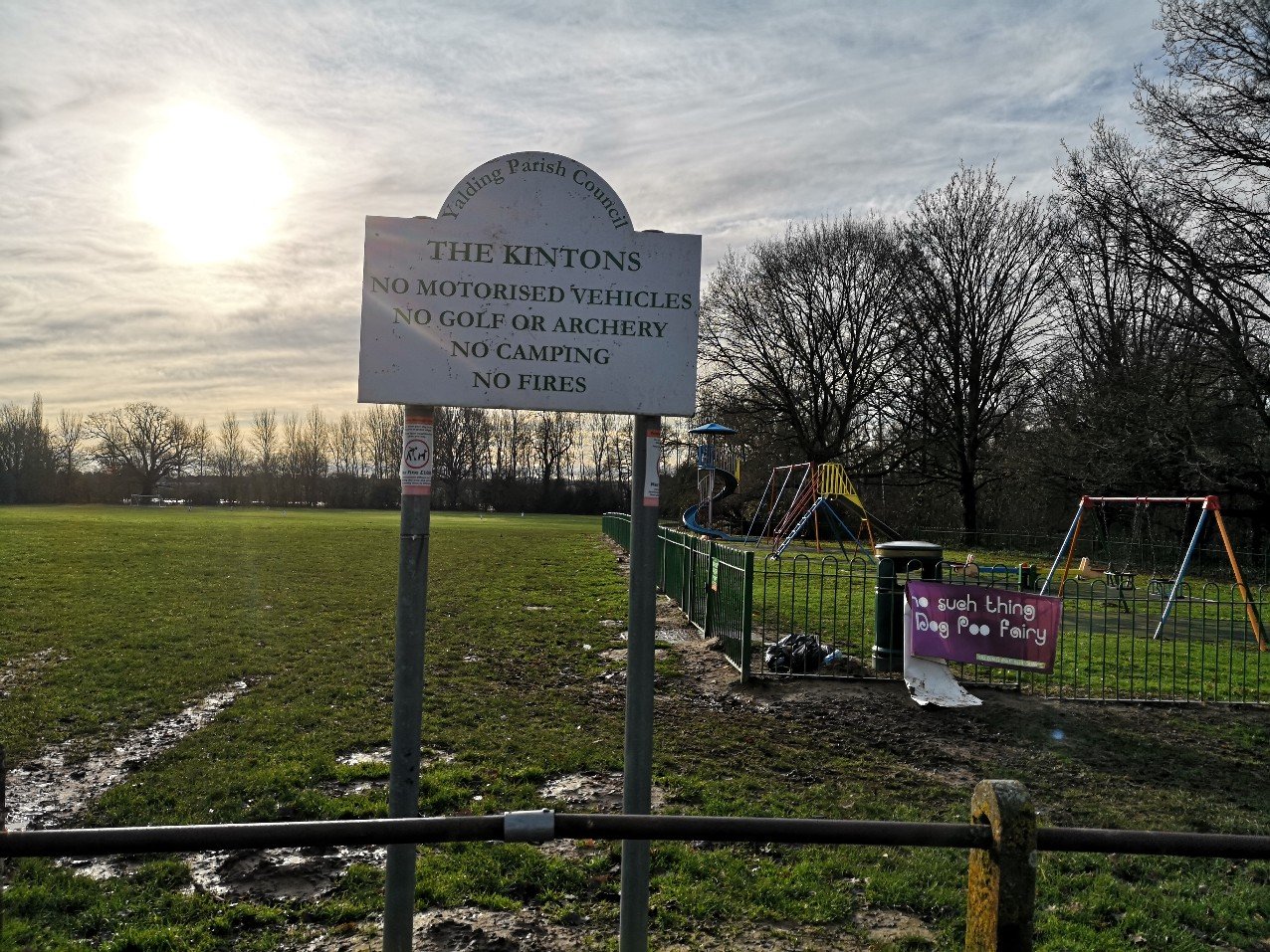
The Kintons – children’s playground cricket and football pitches, dog walking area
On the way back I squelched my way down to the Kintons, past the new houses. Many are already inhabited, one with a shiny green ribbon crossed up/down, and side to side of the front door as if wrapped like a present with a bow in the middle, and another has the words ‘I’m sold’ emblazoned across it.
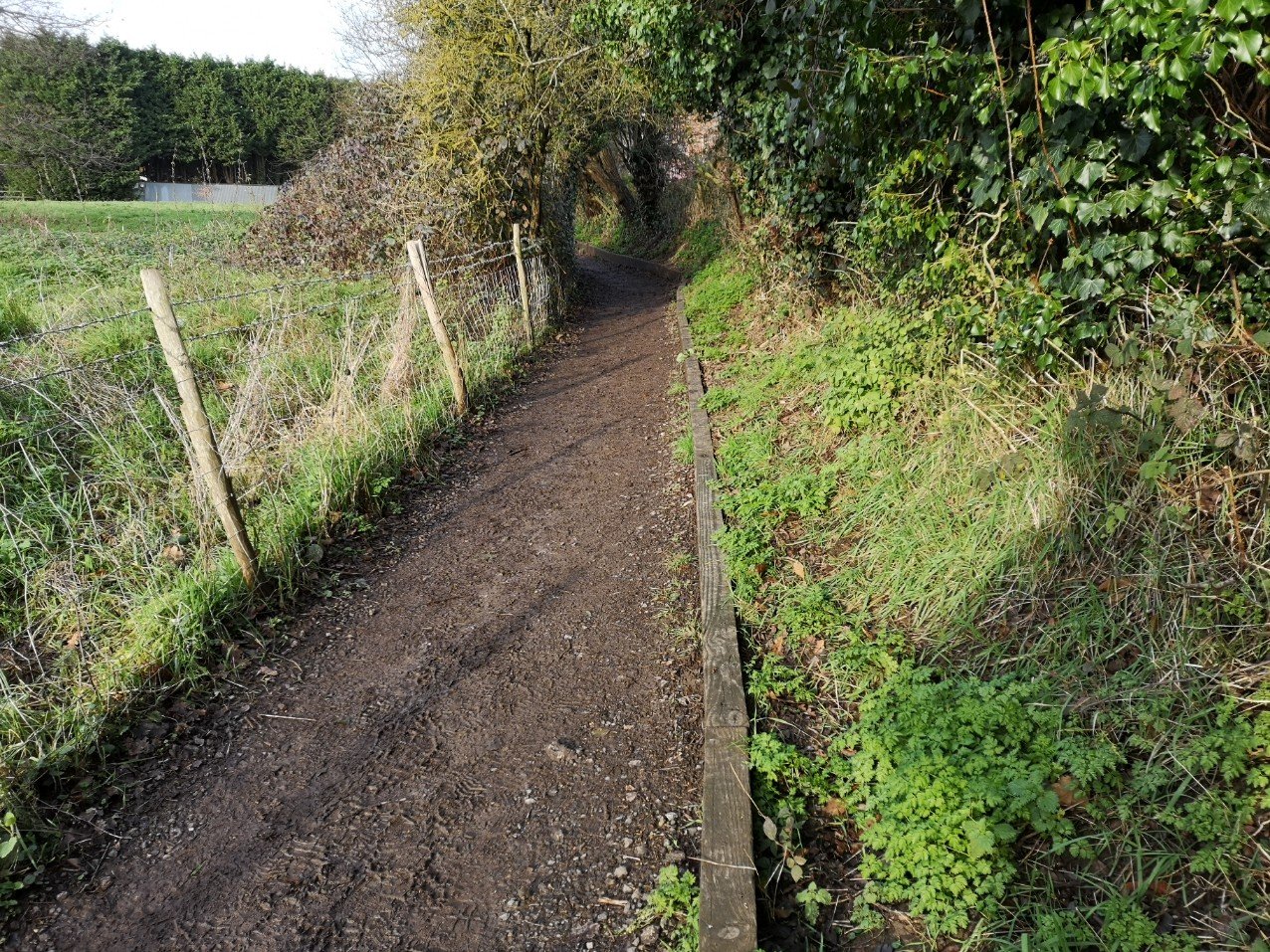
I walked along the top of the edging board to save my unsuitable boots from more mud and to see if I still could balance as I used to.
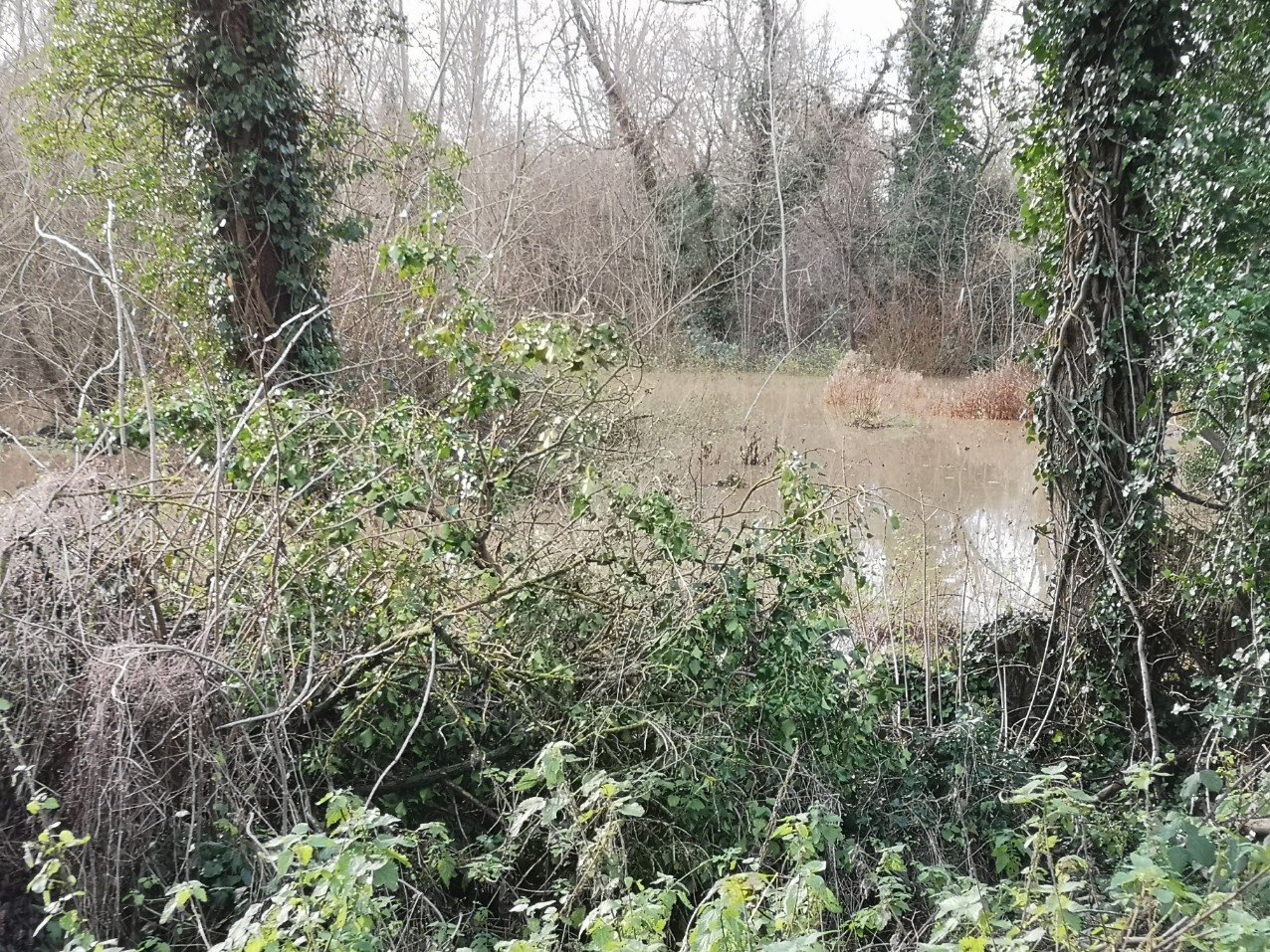
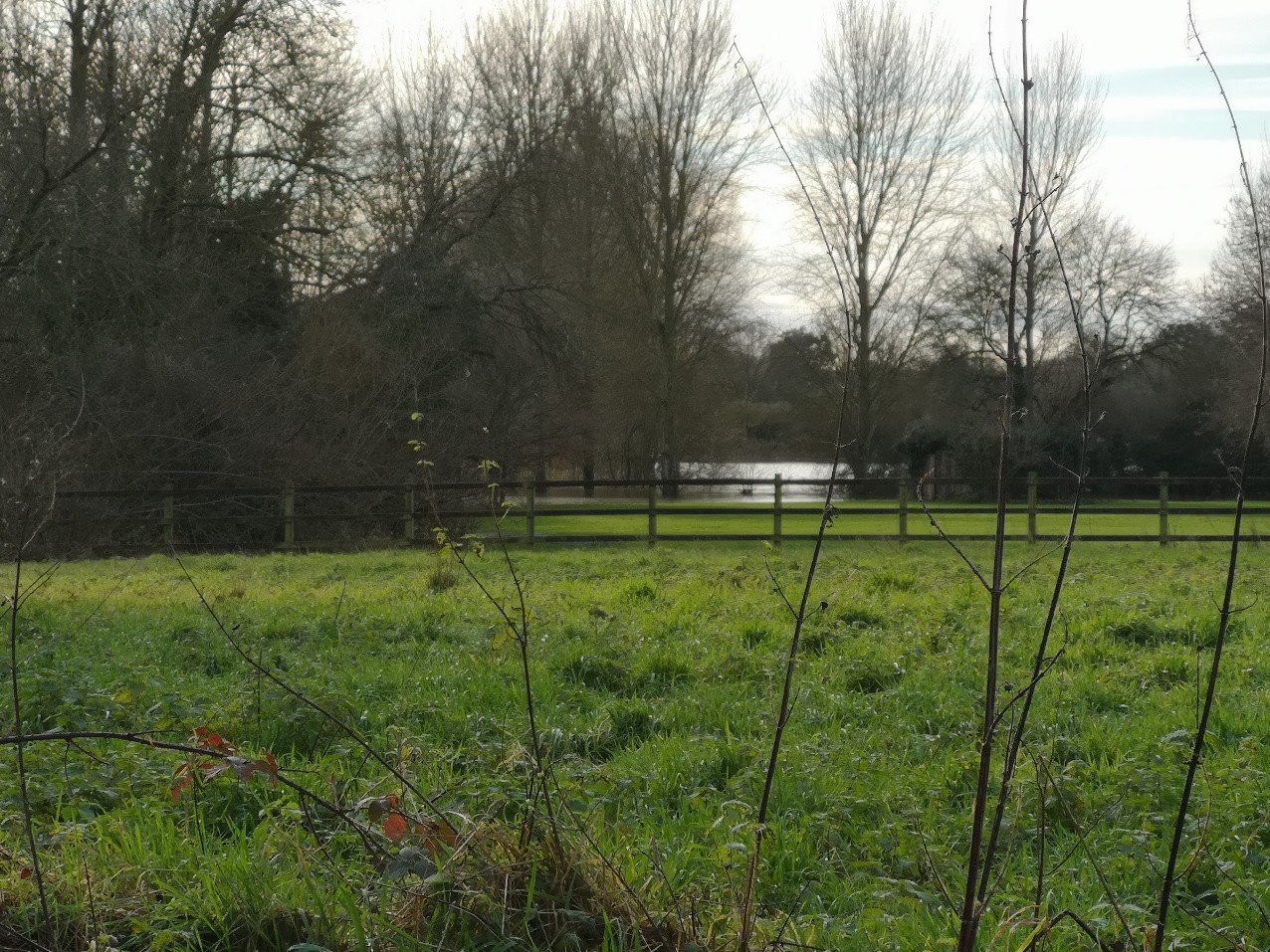
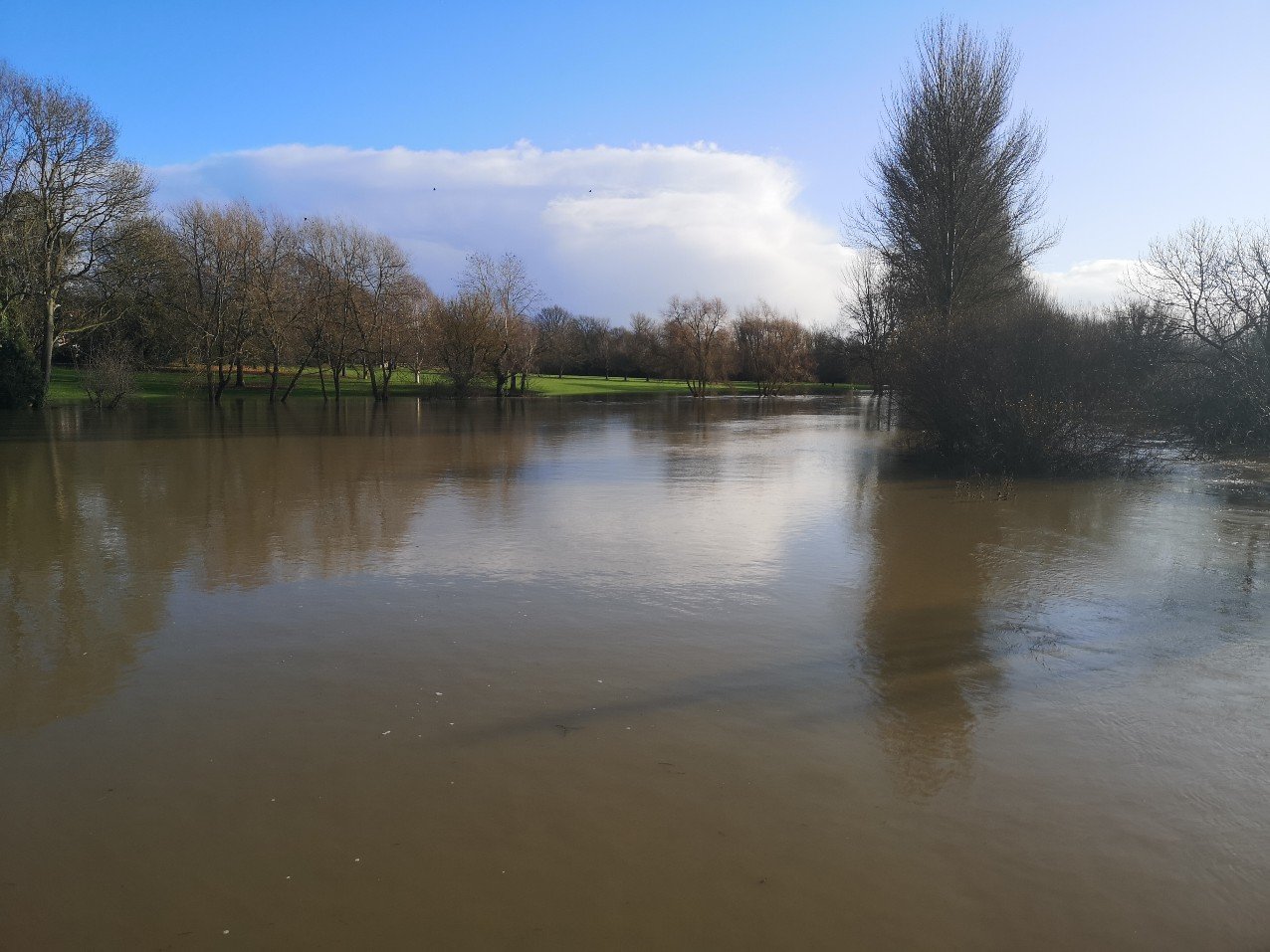
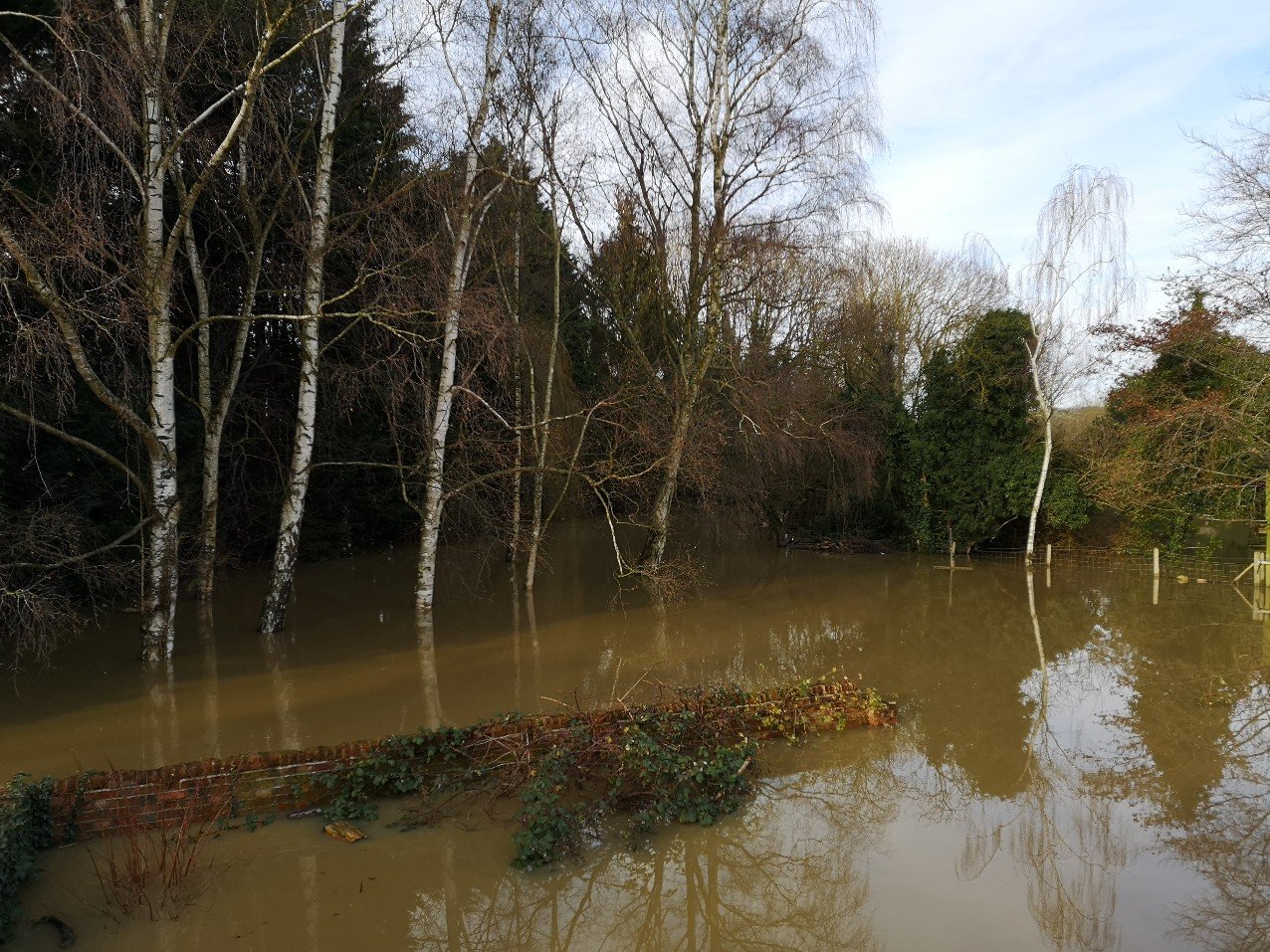
I felt surrounded by water, glimpsed through every break in vegetation.
All smelled of damp undergrowth and wood fires which I imagined burning in cosy sitting rooms where Xmas trees stood adorned with lights with a ring of presents at their feet.
I bid good morning to a gentleman who passed by wearing (suitable) wellies with a lively dog, but sadly I had no canine companion, no Trio.
I stopped by the tree though and remembered her rushing and scampering after squirrels in her heyday.
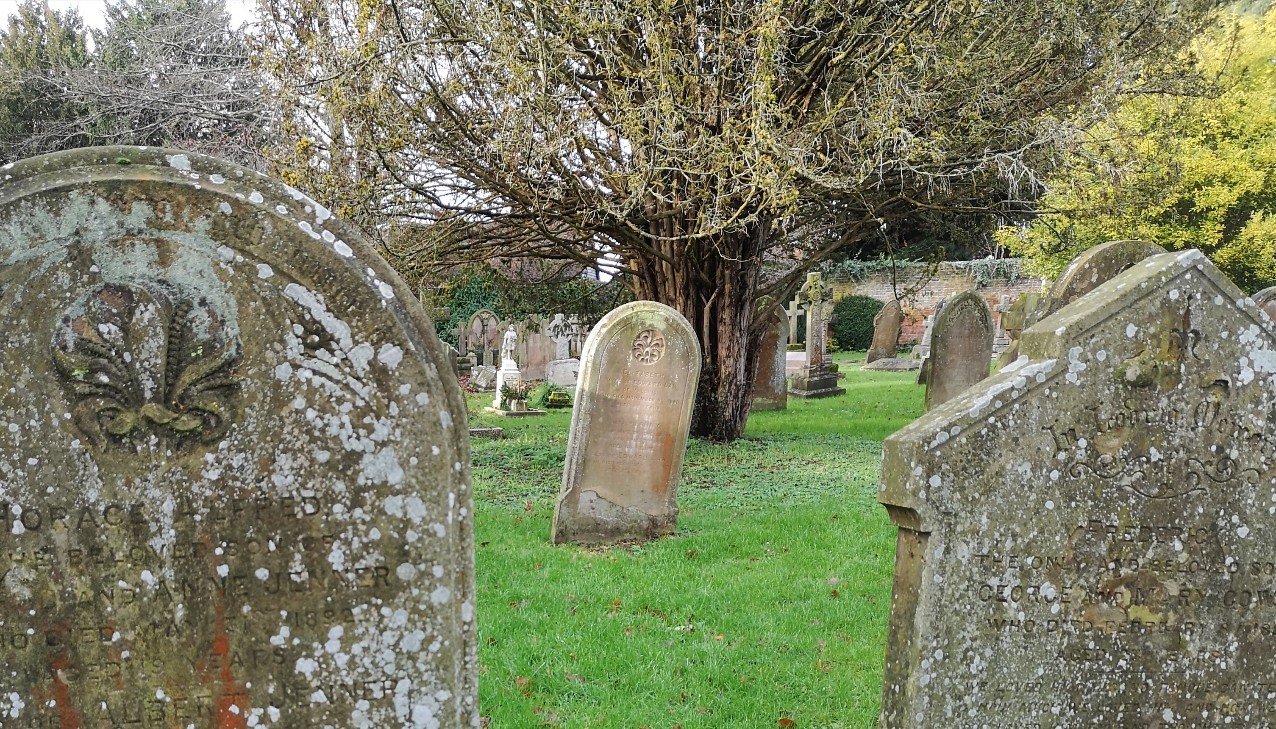
Here is the churchyard where happy photos were taken of mum and Hugh after the wedding, and the churchyard where he was buried only a few years later.
Back in the centre of the village, no one seems to be able to stop taking photos. Clusters of locals were swapping sodden stories.
It looks beautiful but it was hard on those who had to evacuate their homes
I watched a man wade to this hut on stilts with an armful of bedding. See the water gushing out of his basement
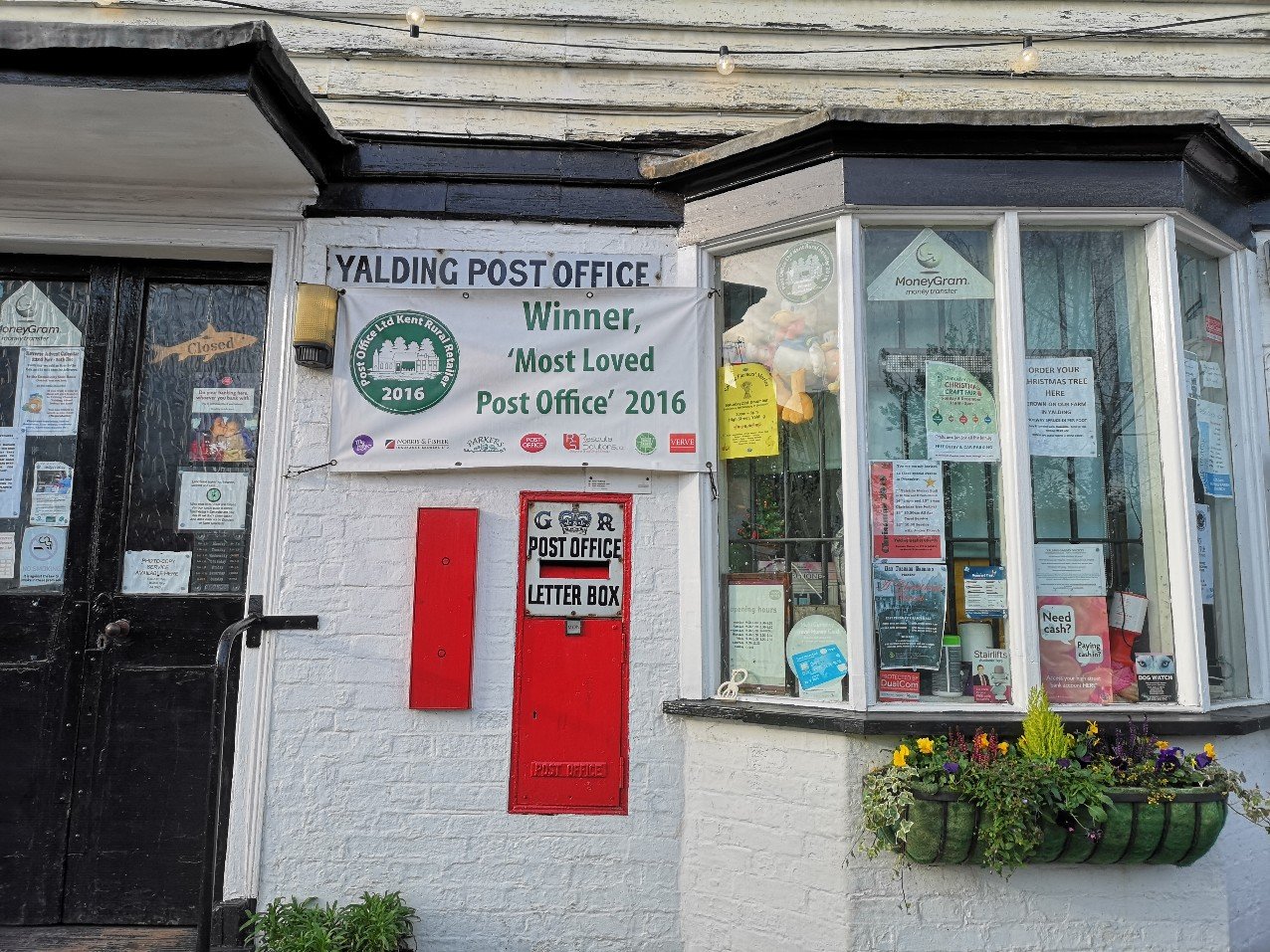
I bought some of my last minute presents at the post office as I could not get out of the village
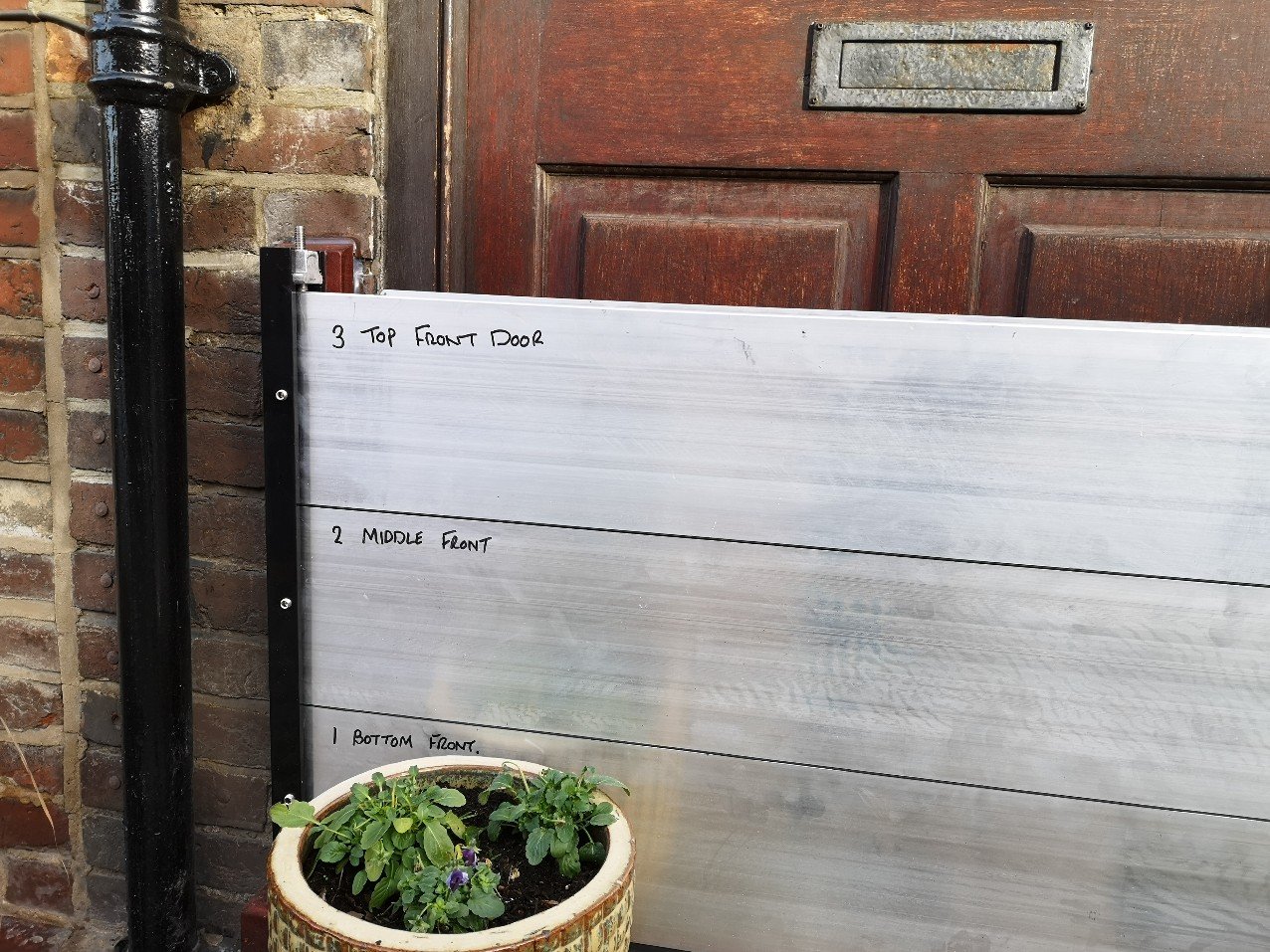
Flood barriers in place
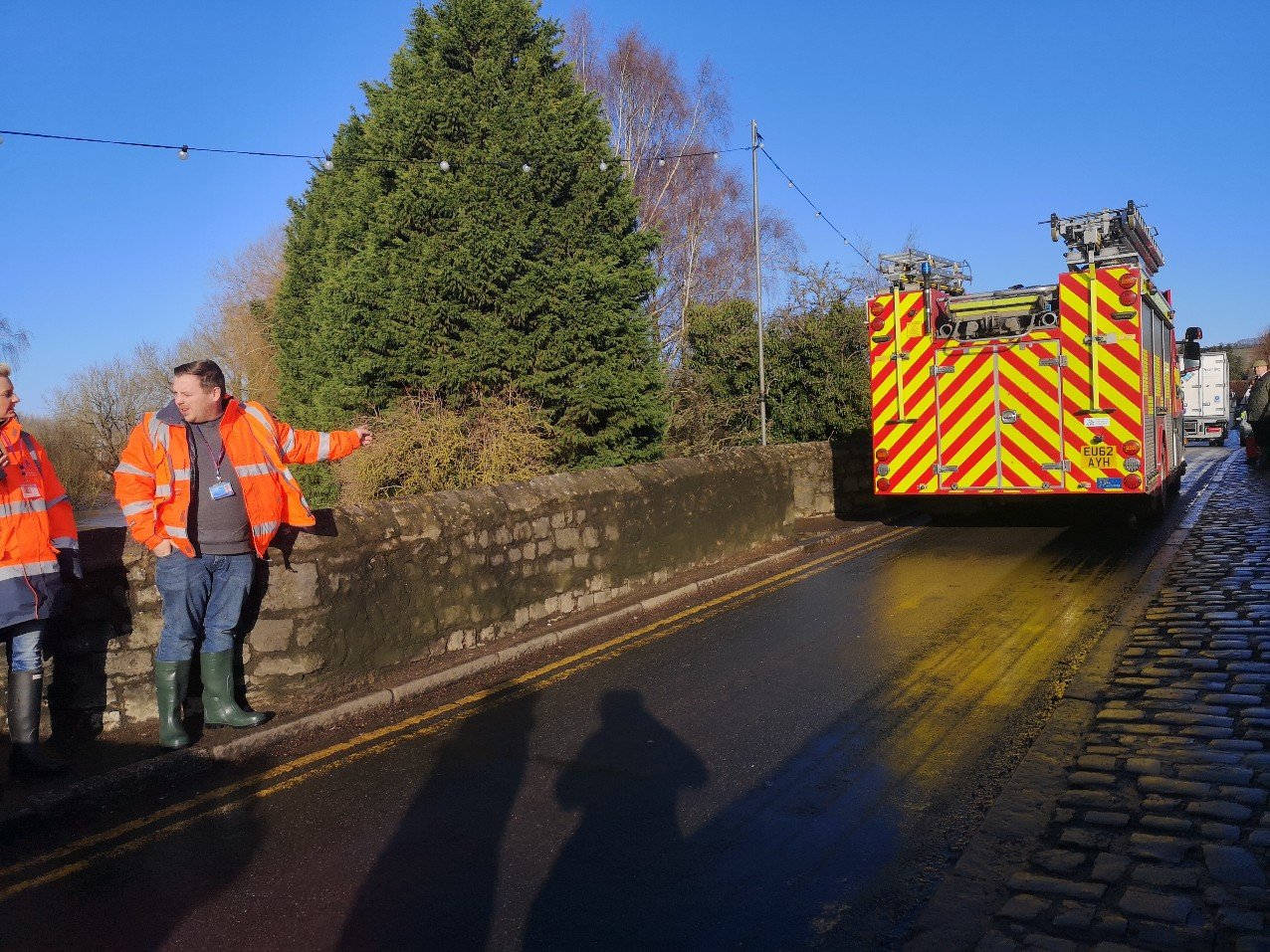
The emergency services were on hand
The village shop staff were doing a stirling job too, passing on up to date news
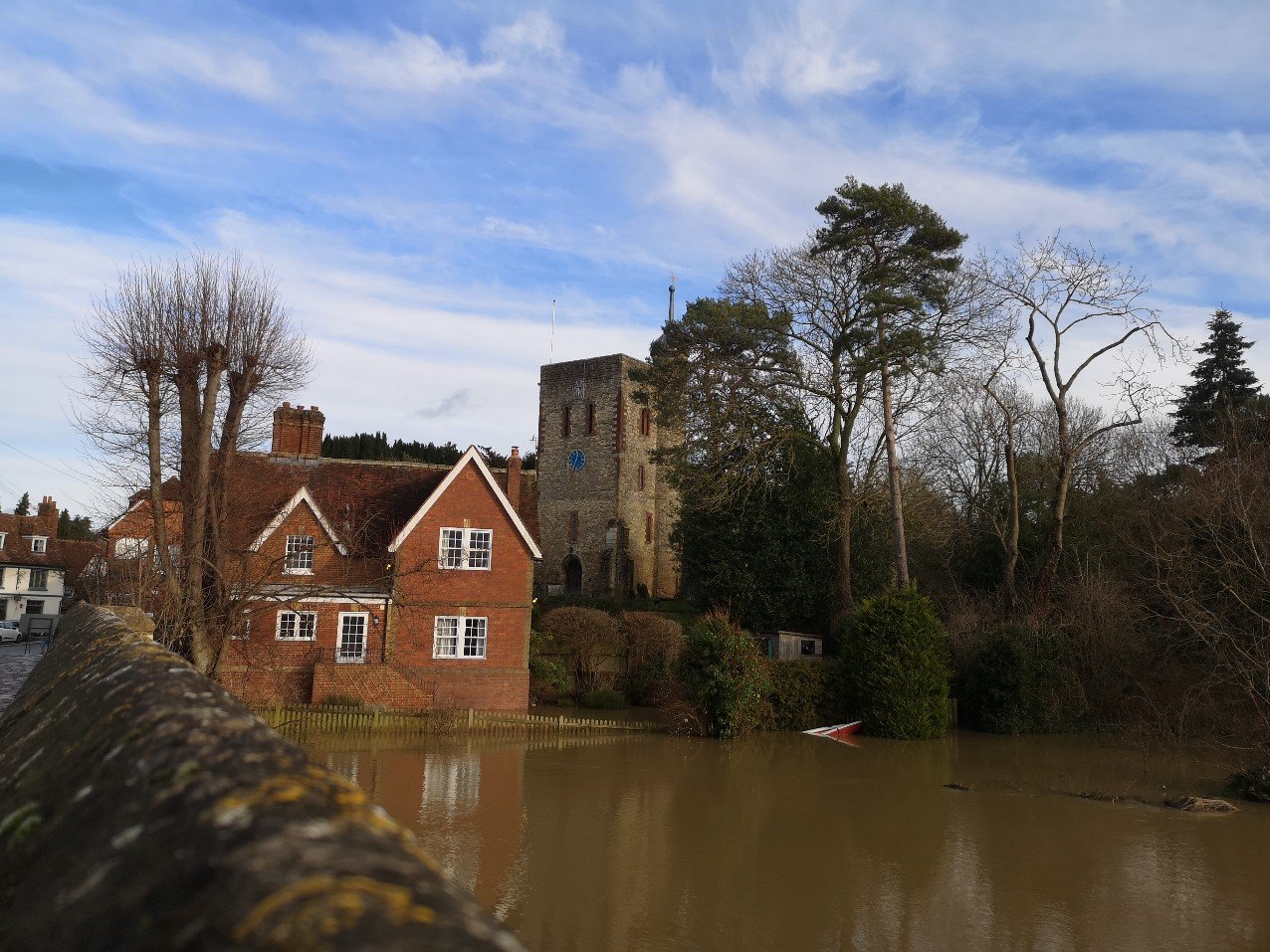
The church from the bridge
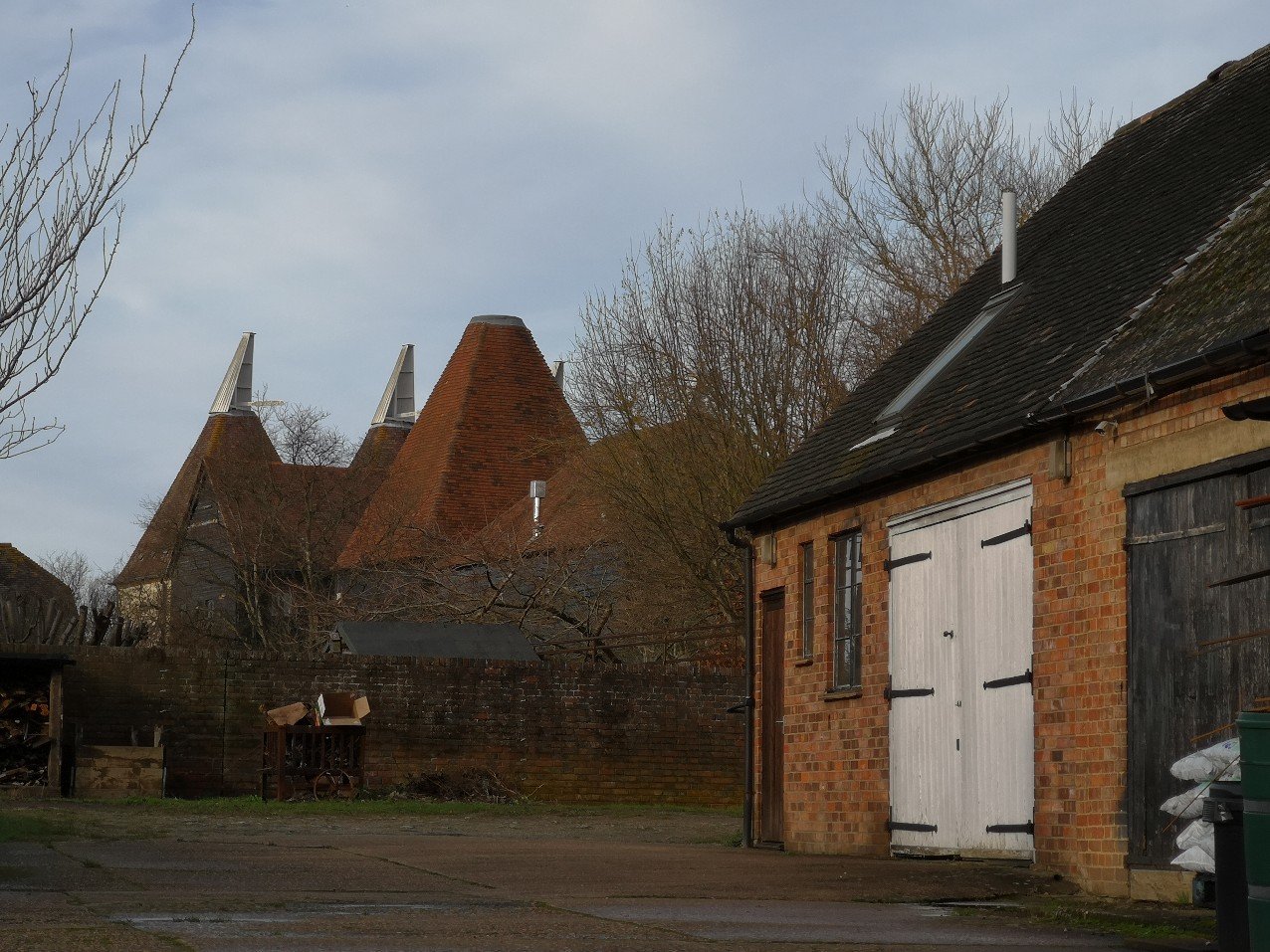
Oast houses where hops used to be used in the making of beer
The last flooded Xmas was 2013 which was much worse
The Via Algarviana (GR13) runs for 300kms and is mainly mountainous. It begins in the east and ends in the west travelling through the Algarve region of Portugal. Starting at Alcoutim on the border with Spain, it finishes at the spectacular Cabo San Vicente, said to be the western-most tip of Europe, with America across the Atlantic Ocean. From there you can walk the Ruta San Vicente going north towards Lison, or eastwards along the coast towards Faro and Albufeira, if you would like to keep going! November 2019
The beautiful Algarve of Portugal (inland)
Route: Alcoutim, Balurcos, Furnazinhas, Vaqueiros, Cachopo, Barranco do Velho, Salir, Alte, Messines, Silves, Monchique (with a monastery), Monalete, Bensafrim, Vila do Bispo, Cabo de Sao Vicente. There are 14 stages.
Below are a selection of views of the countryside at the start of the walk, the east of the Portuguese Algarve. Official website Please note that the fires referred to on this page were in 2018 and people were walking the route in 2019.
Mountains
Trees and shrubs – in flower even at the end of the year
2019 has been a very dry year
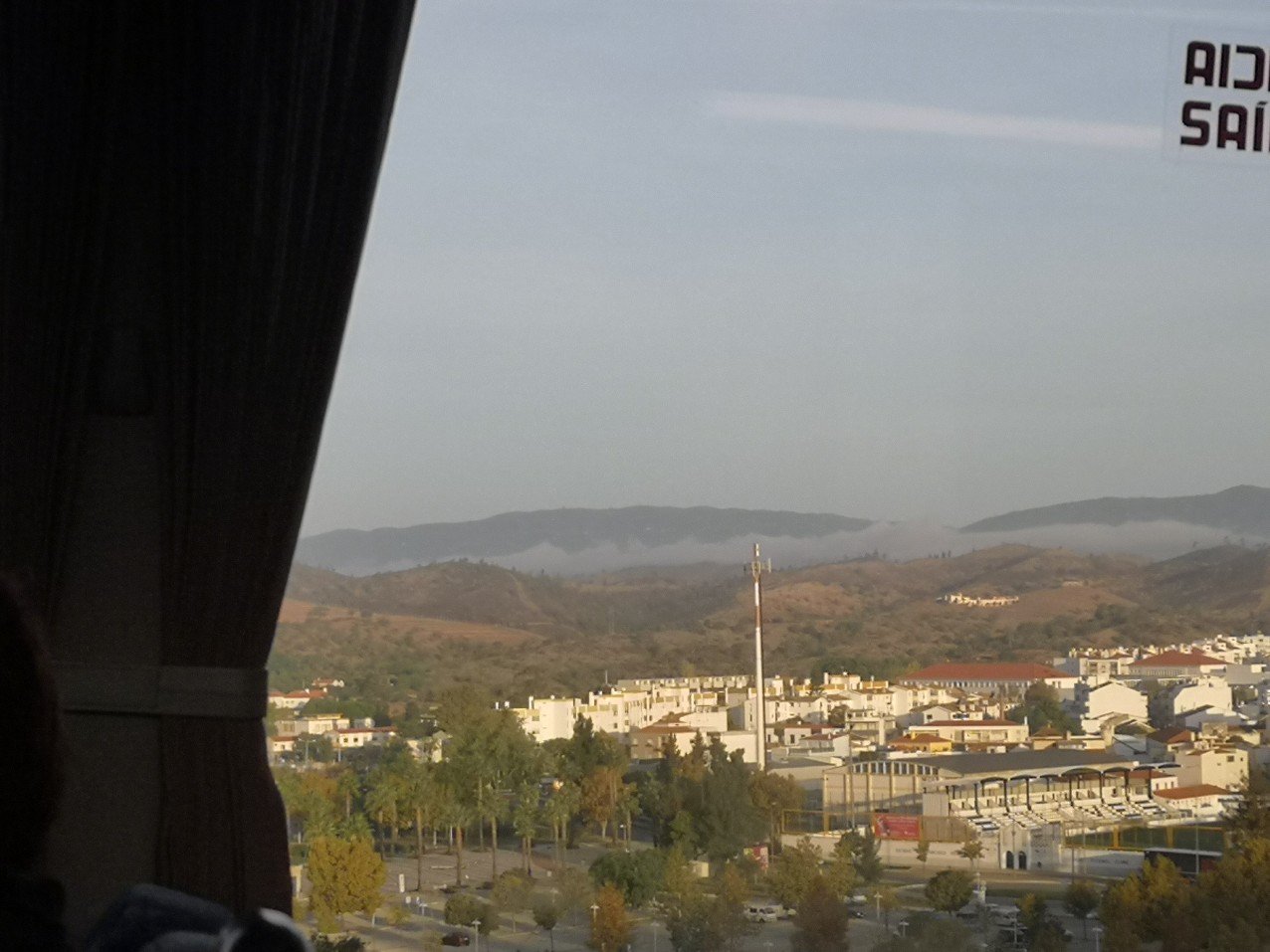
Taken from the bus
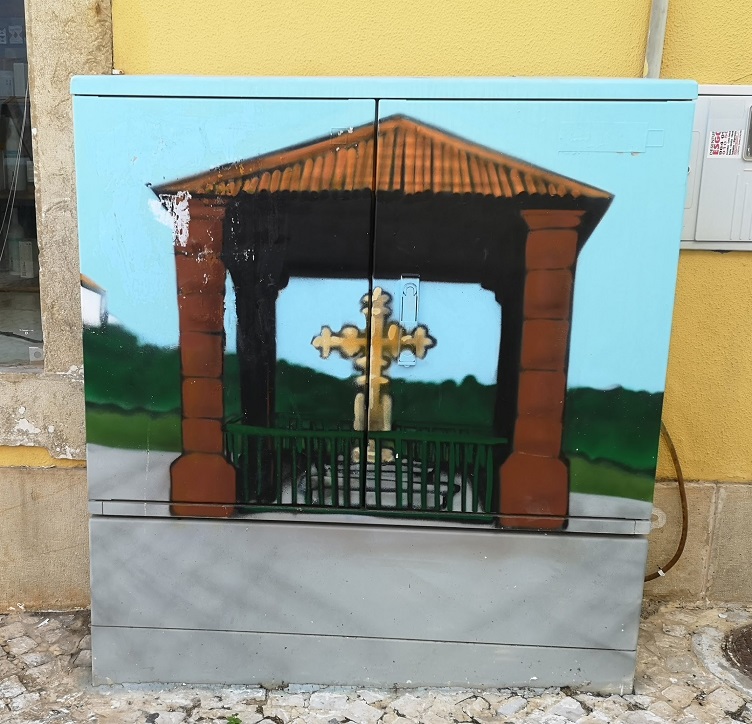
Near Silves on the Sao Bartolomeu de Messines road is the National Monument, the Cruz da Portugal.
The Cruz da Portugal, one of the paintings which cover the electrical boxes by Hélder José (known as ‘Bamby’), and Filipe Gusmão, of Style Spectrum (#stylespectrum_unlocked)
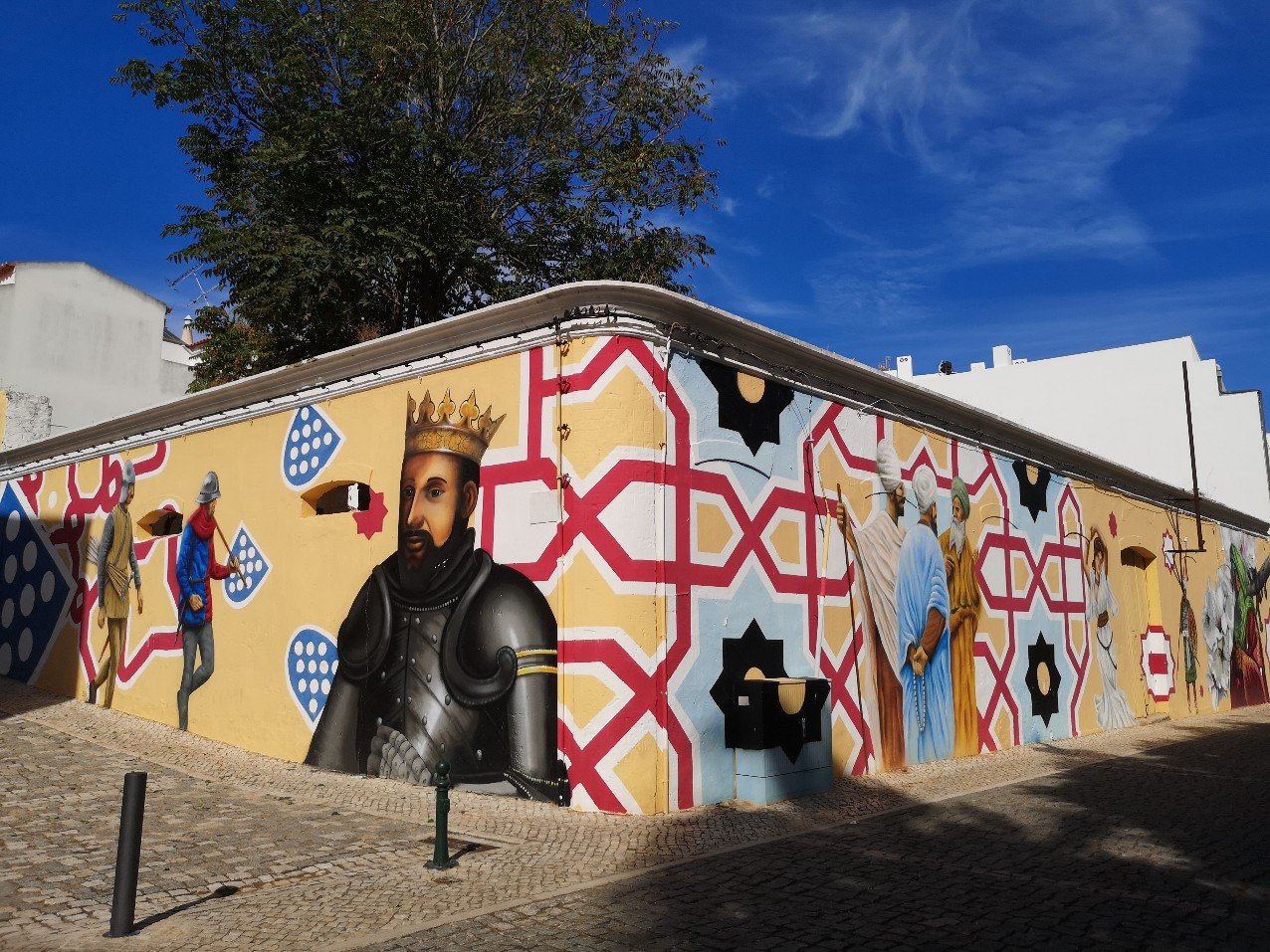
Mural, also by Hélder José (known as ‘Bamby’), and Filipe Gusmão, of Style Spectrum, which is positioned in front of the Municipal Library, Silves (#stylespectrum_unlocked)
The Roman Bridge at Silves
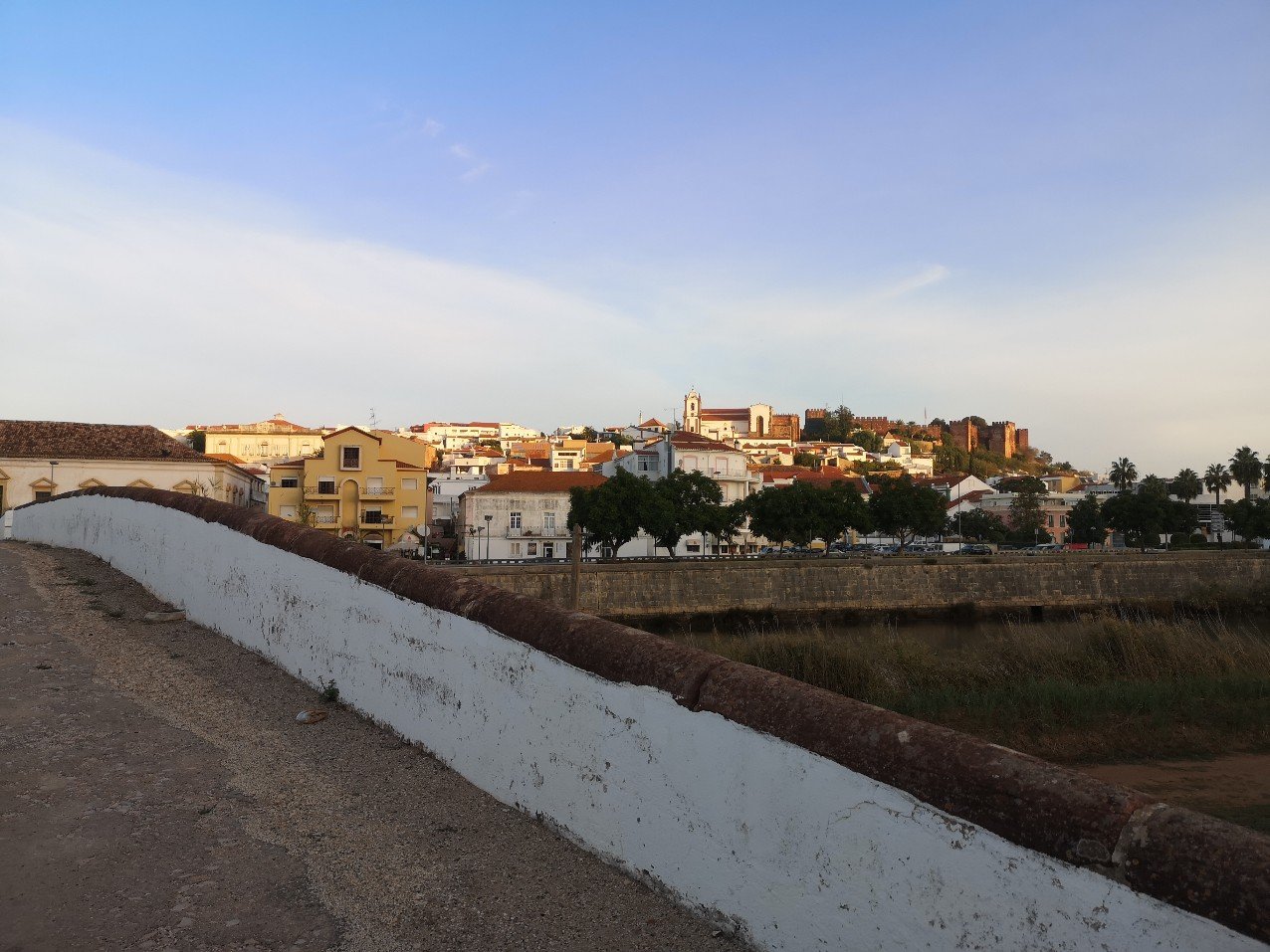
Silves, taken from the Roman Bridge
Silves at night – castle and cathedral all lit up
Deep brown, fertile land, the hostel and the village of Silves
River Ebro at Silves (which flows to Portimao, the port at the mouth of the riverwestwards)
The Horta Grande Hostel, Silves – highly recommended (use booking.com)
The fortress and sea views from Cabo San Vicente (end of the route) below
More information on Silves the castle, the museum, the fanous medieval festival etc (the parts I didn’t get to see because I had an ankle injury or was there at a different time of the year).
Lagoa (not to be confused with Lagos) in the west of the Algarve of Portugal. November 2019
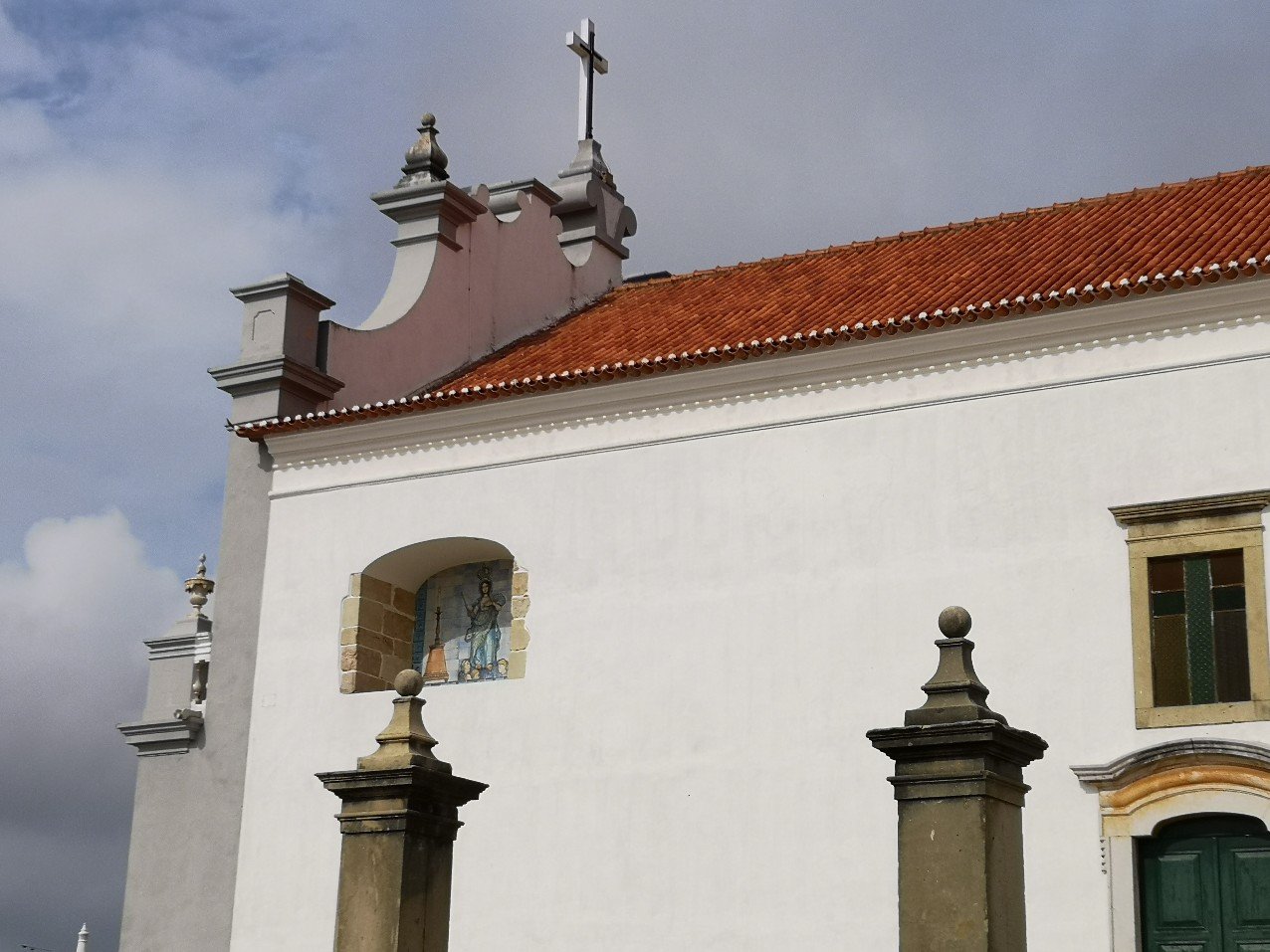
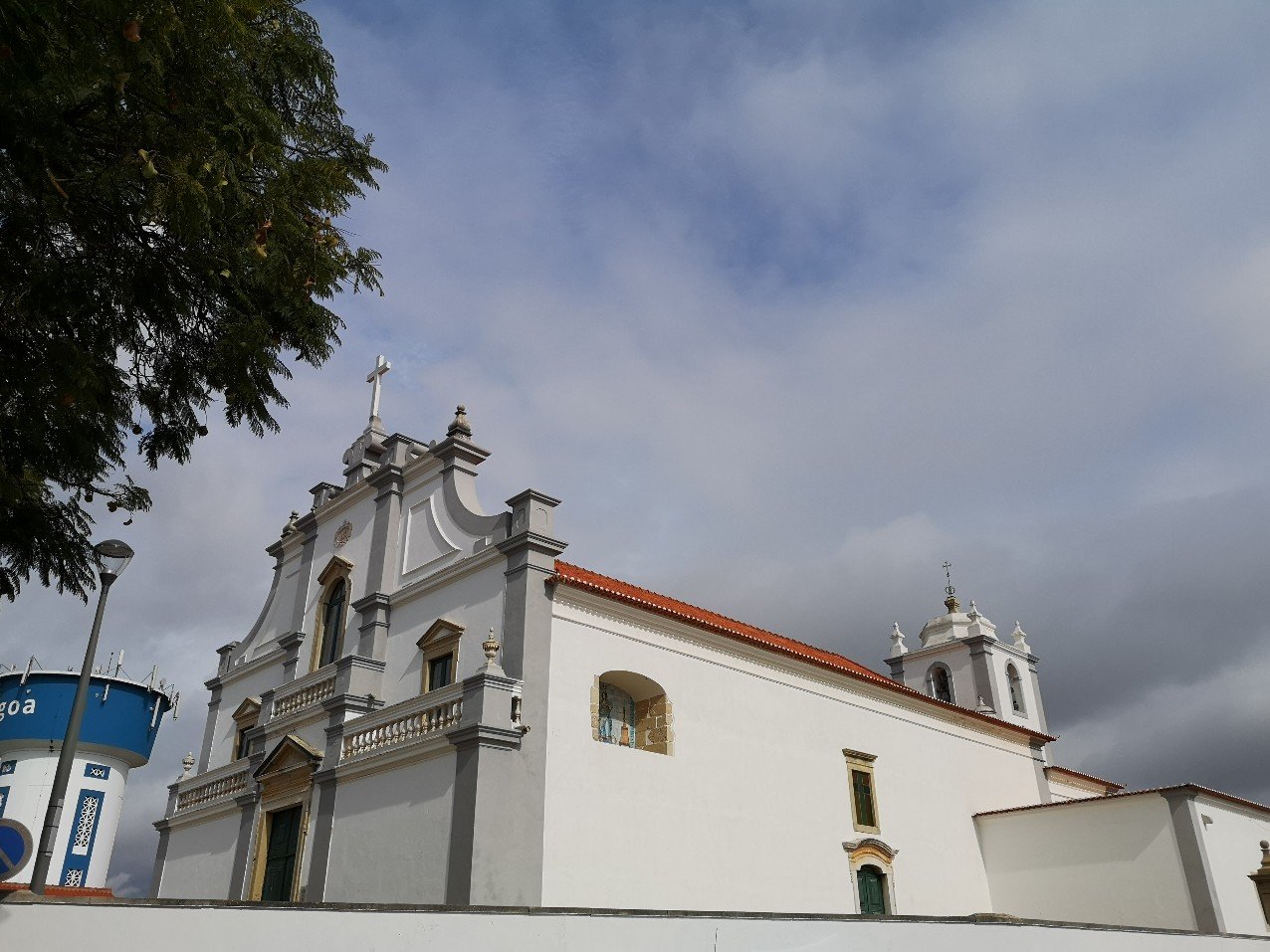
Igreja Matriz de Lagoa, Portugal with Neoclassical influences on the facade
Igreja Matriz de Lagoa. Mid 16th century but affected by the 1755 earthquake (as so much of the region was) with a Baroque belltower
Detail from the side of the Church of Our Lady of the Light (see above)
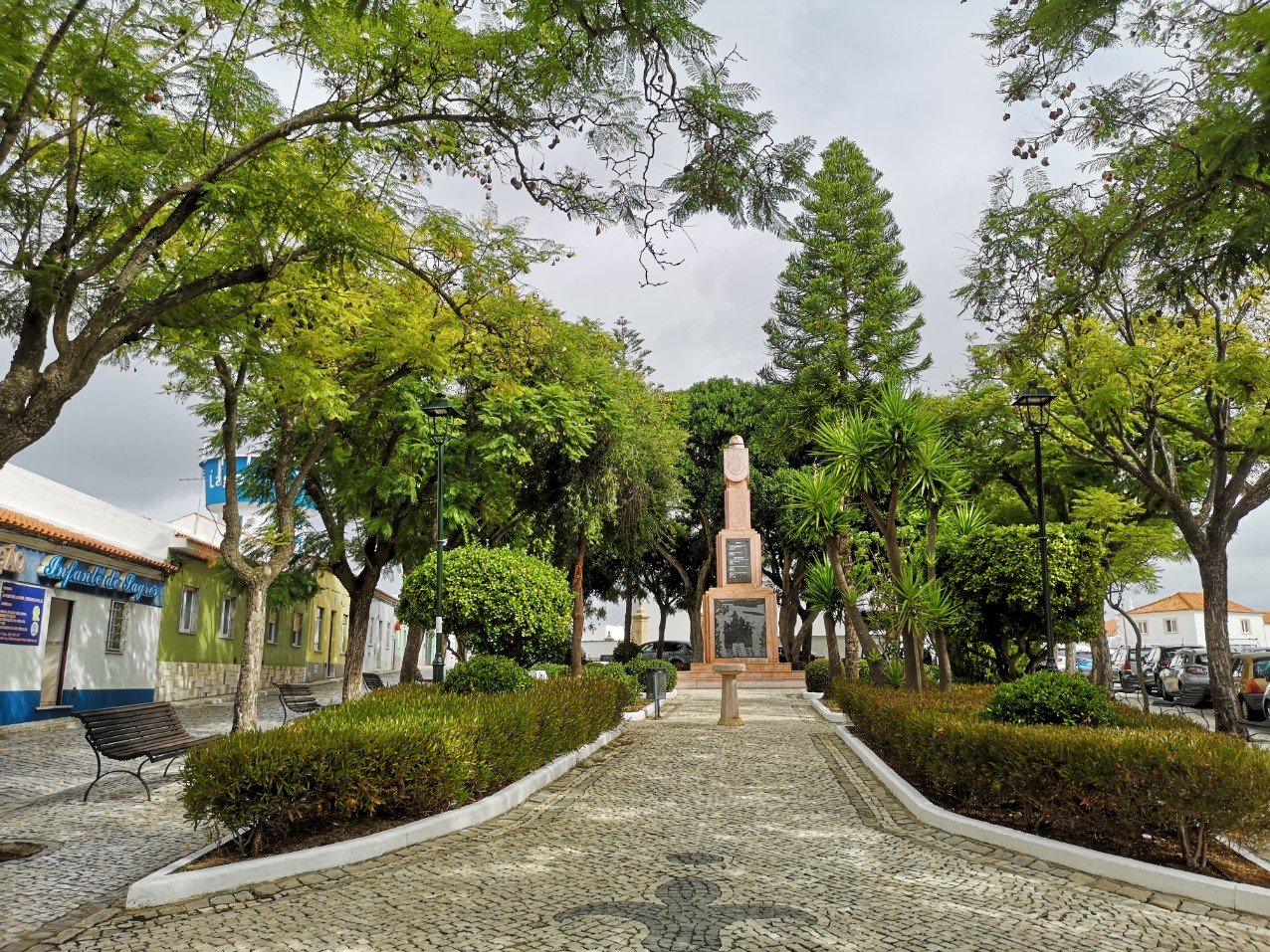
Lagoa
Convento de Sao Jose (Saint Joseph) 18th century, Lagoa
The Convento de Sao Jose (Saint Joseph) was built to shelter women and children who were looked after by an order of mendicant nuns. After the extinction of the religious orders, it was taken over by Benedictine nuns. There is more to see inside including a cloiser, but it was shut because it was a Monday. It is usually open between 9-12.30 and 1400-17.30 Tuesday to Saturday.
Palacete Cor-de-Rosa (The Pink Palace). Originally the Palacio da Independencia. It has a neoclassical interior
All over this part of the Algarve you will find original artwork covering the municipal electrical boxes by ‘Bamby’ from Style Spectrum (#stylespectrum_unlocked)
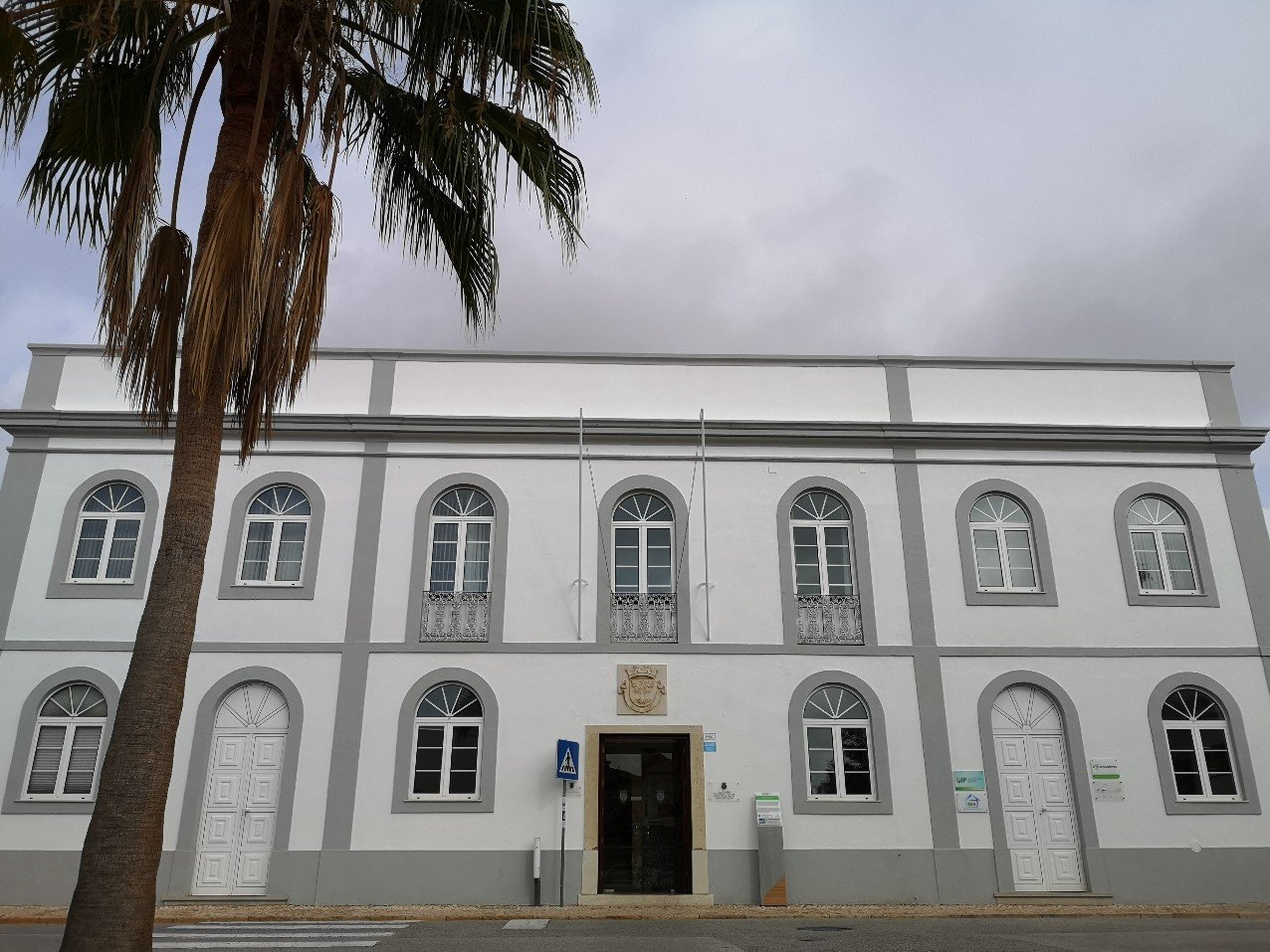
Town Hall, originally Ermida de Nossa Senora do Pe da Cruz (the Hermitage of our Lady of the Foot of the Cross) from 14th century dating back to a time of pilgrimage. There are only a few parts remaining from those days. It was used as a prison at another time in its history
The Lady in Red (LiR) Modern Art Gallery is in a winery (reputedly it smells of the vine) and it was also closed when I was there, but it opens 10-12 and 14-18 Tuesday to Saturday and costs 2euros entrance. According to a Trip Advisor contributor it is better than the Tallin Modern Art Gallery. Address: Rua 25 Abril 55, Edificio Adega Cooperativa do Lagoa 8400-343 opposite the bus station which has buses to and from many places you will want to visit in the area. Pay on the bus – very cheap fares.
Vasco da Gama was a Portuguese explorer, the first Count of Vidigueira. He was the first European to reach India by sea.
























 Walking without a donkey