Walk Paris – Tuileries and the Seine

January 2023

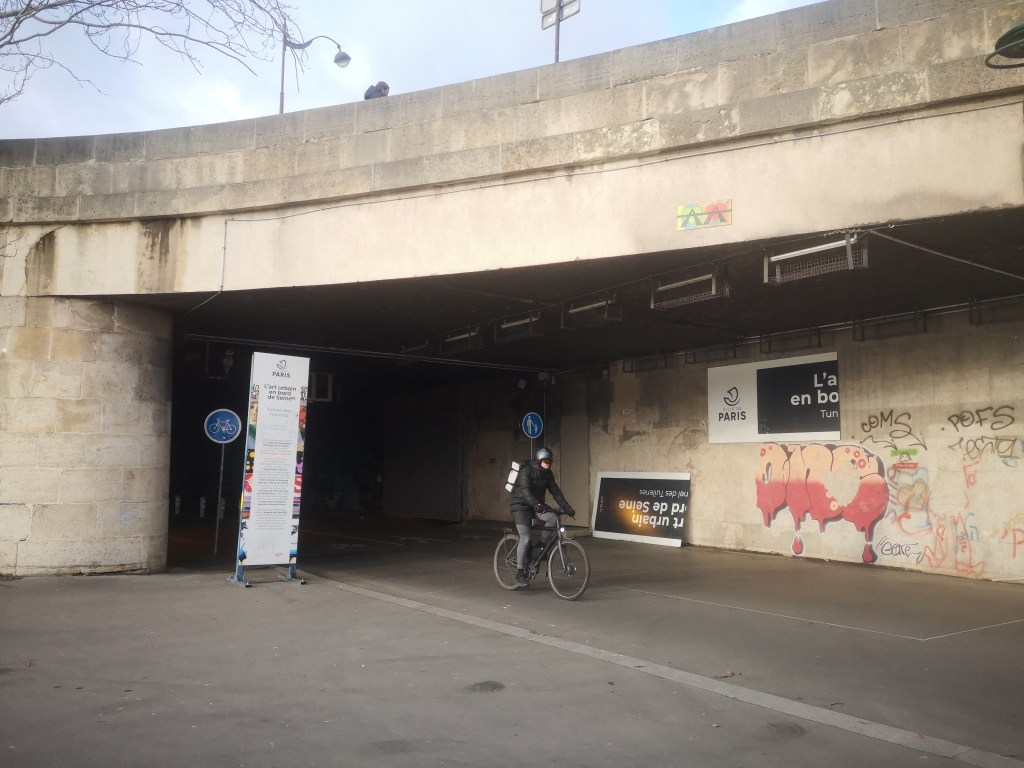
A walk from the Tuileries Gardens (Louvre art gallery end) to the Pont Neuf, along the Seine, and back through the Tuileries Tunnel with art works. I aimed to walk through the tunnel in the other (west-east) direction, but couldn’t find the entrance. Google maps to the rescue! Note that it says ‘Closed’ though at the time of writing that means only to cars and lorries etc.

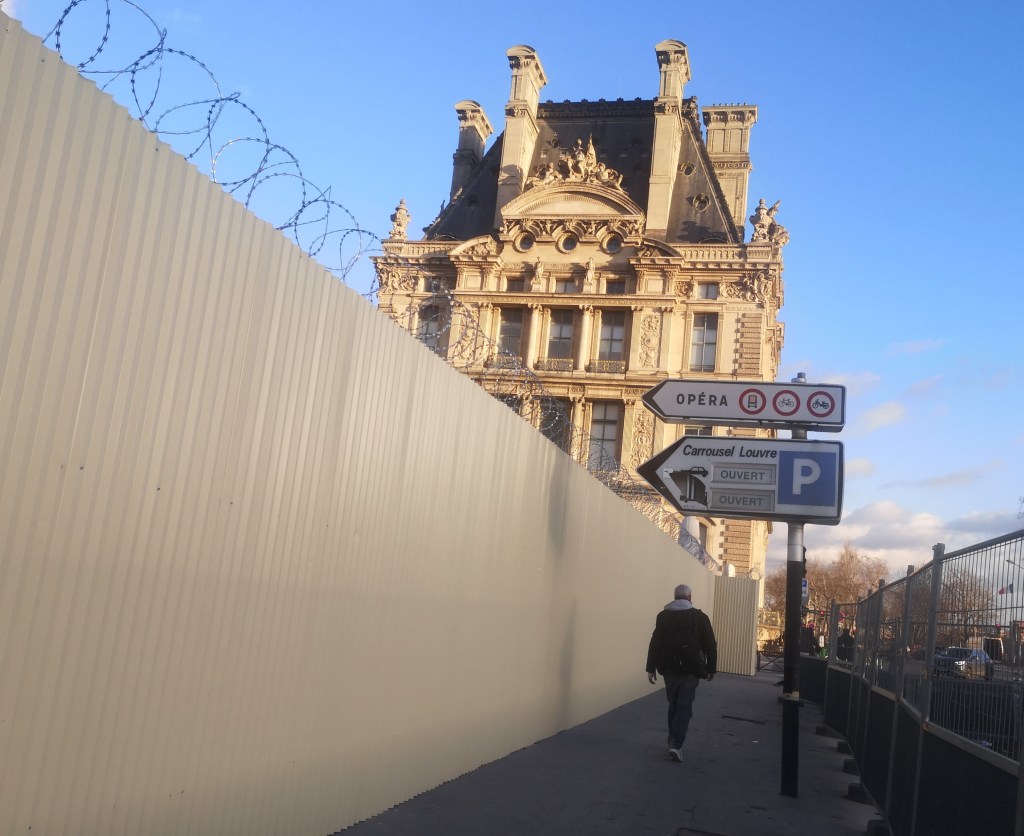
Come out of the Tuileries Gardens by the end of the Louvre (above) and instead of walking across the zebra crossing to the river, take a right on the same side (the barbed wire towering above you)
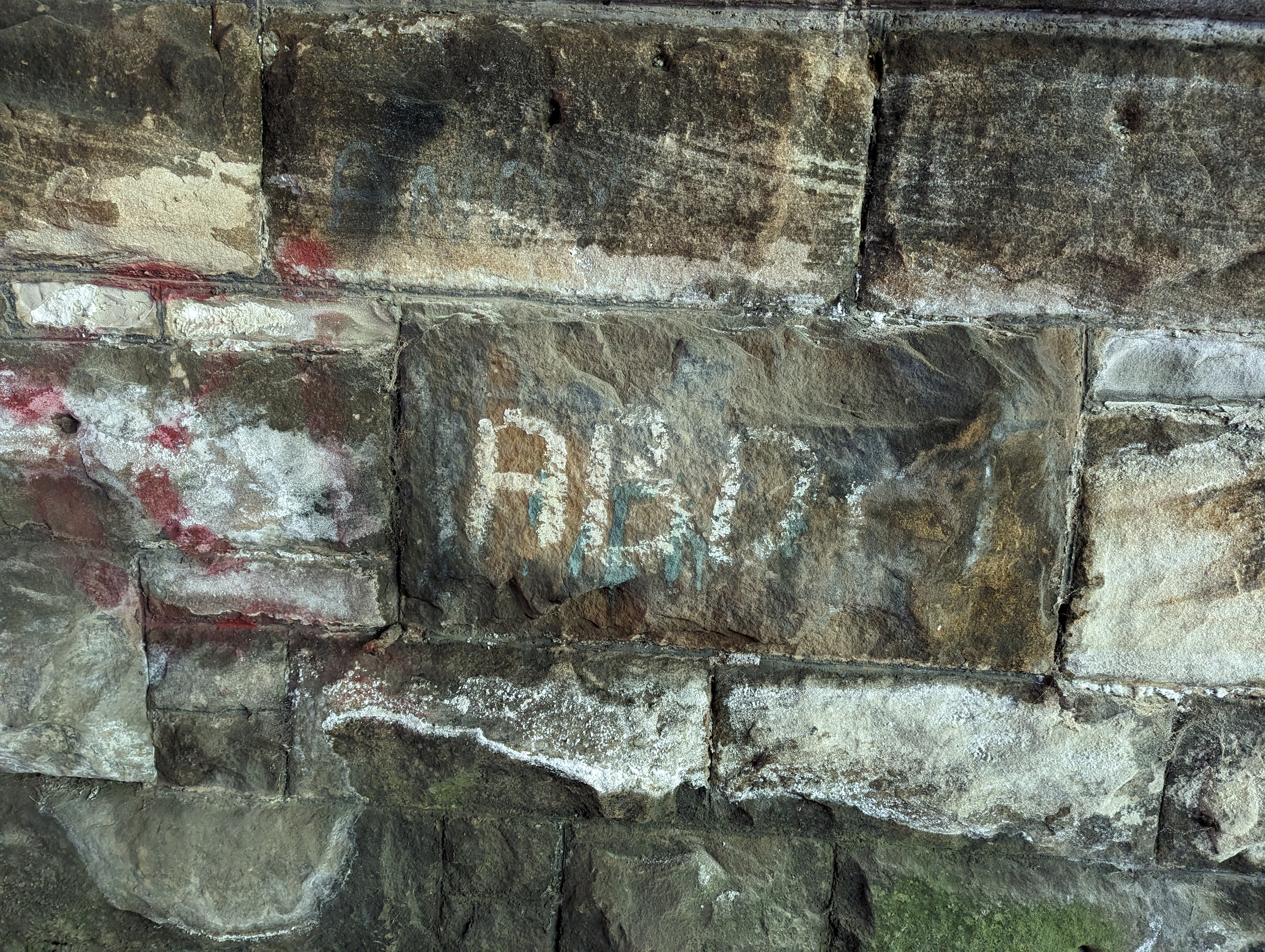
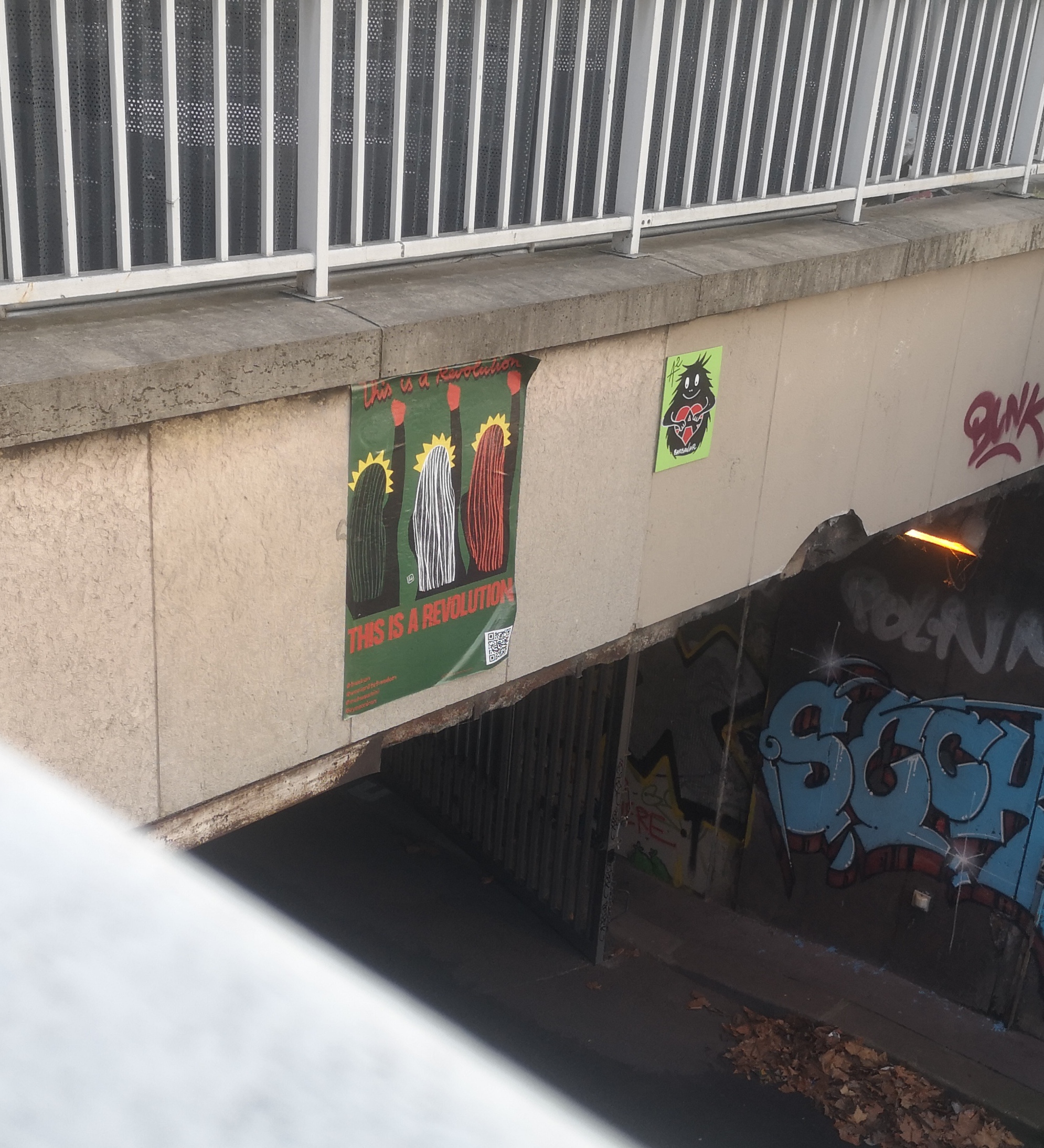
‘This is a Revolution’. Above the entrance to the Tuileries Tunnel
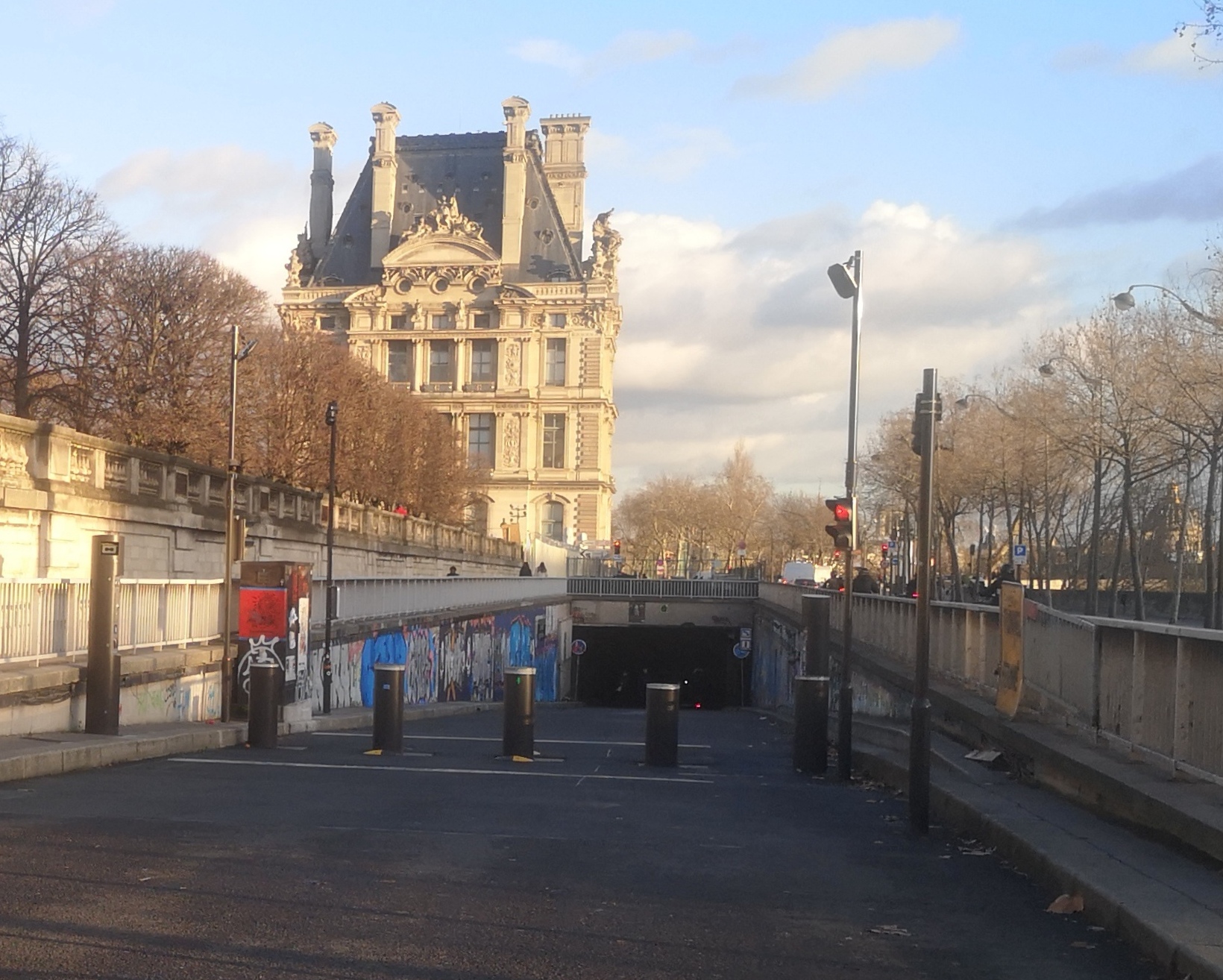
Tuileries Tunnel (Tuileries Gardens / Louvre) entrance

Walk along the Seine

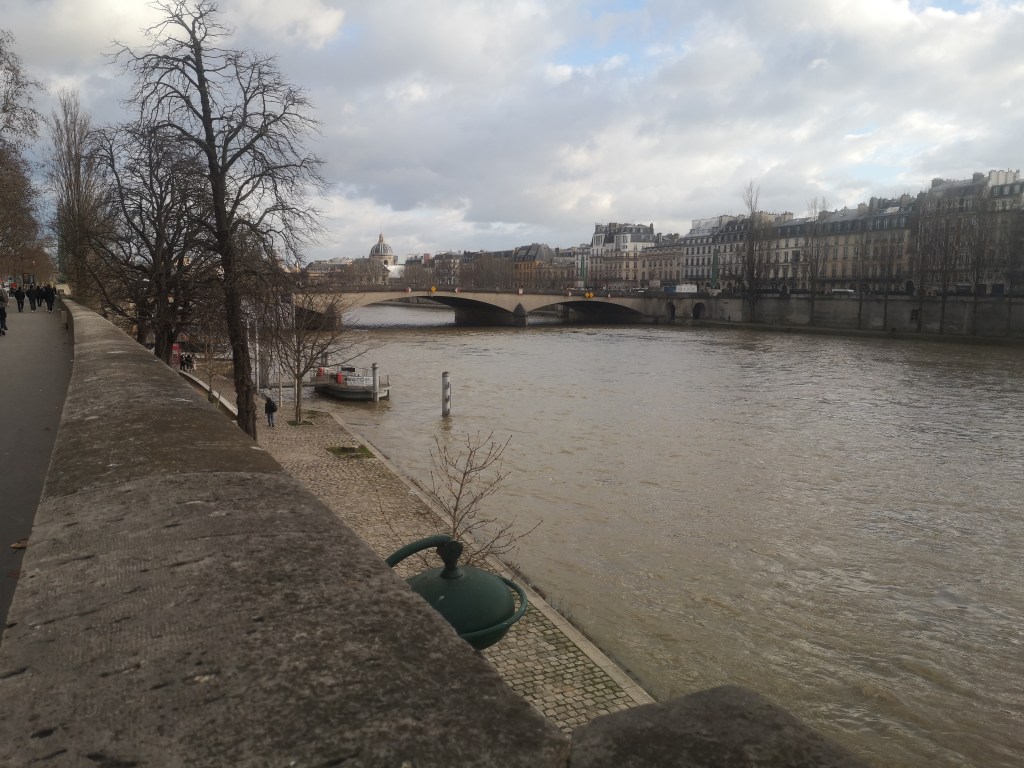
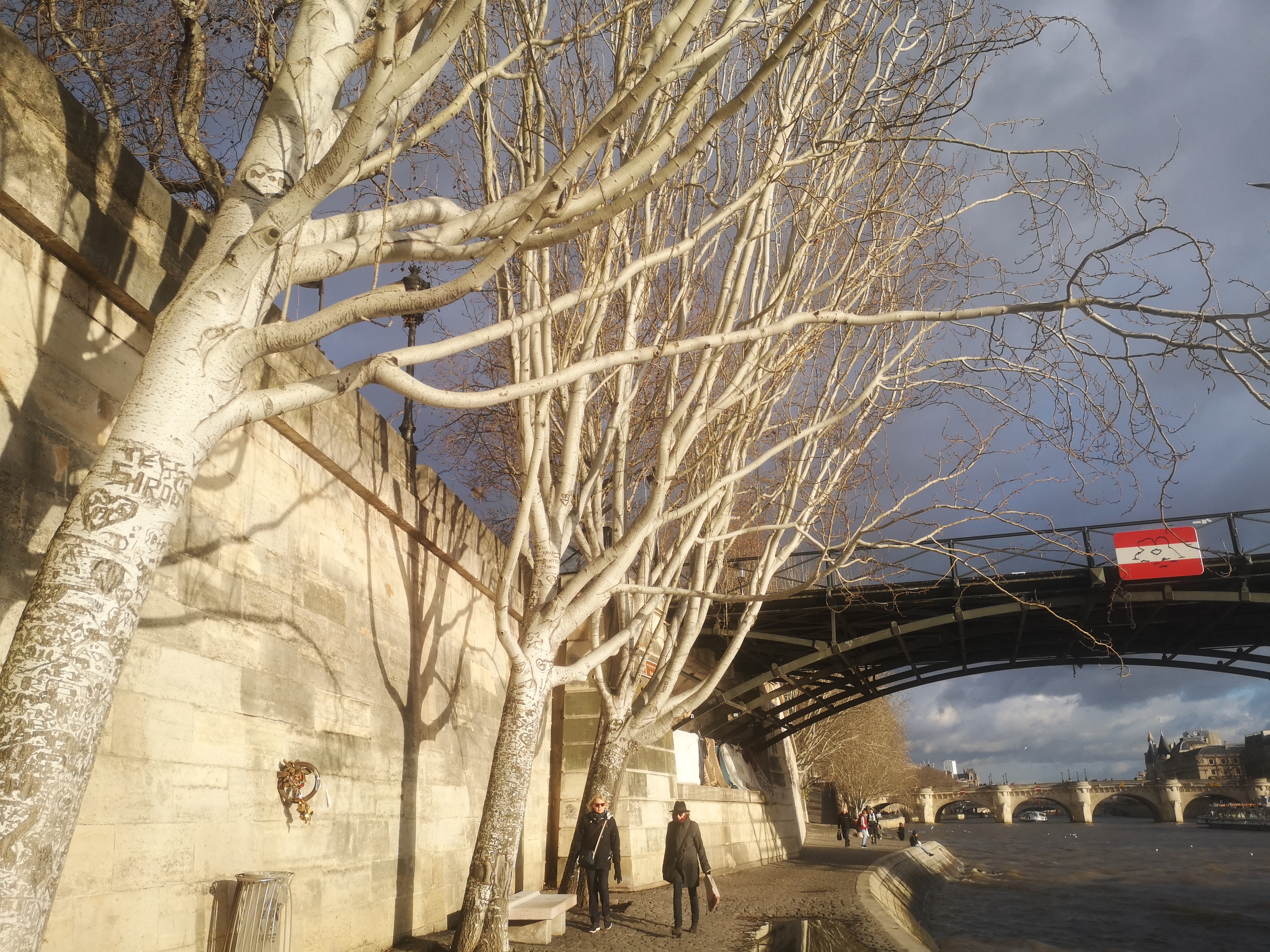
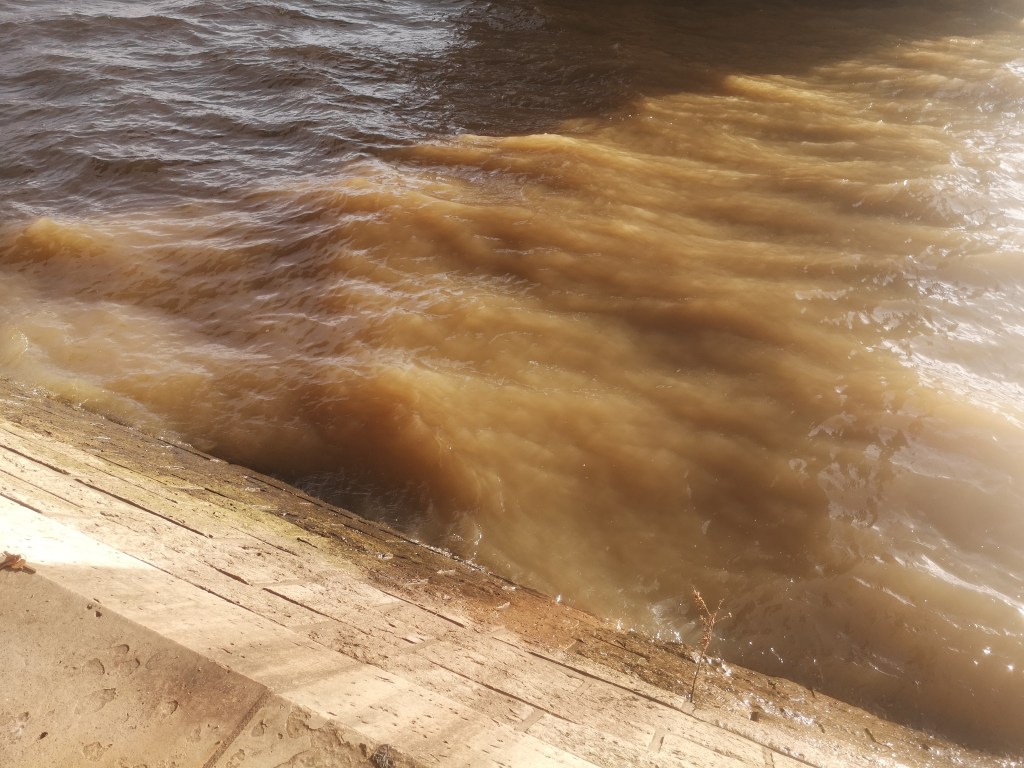
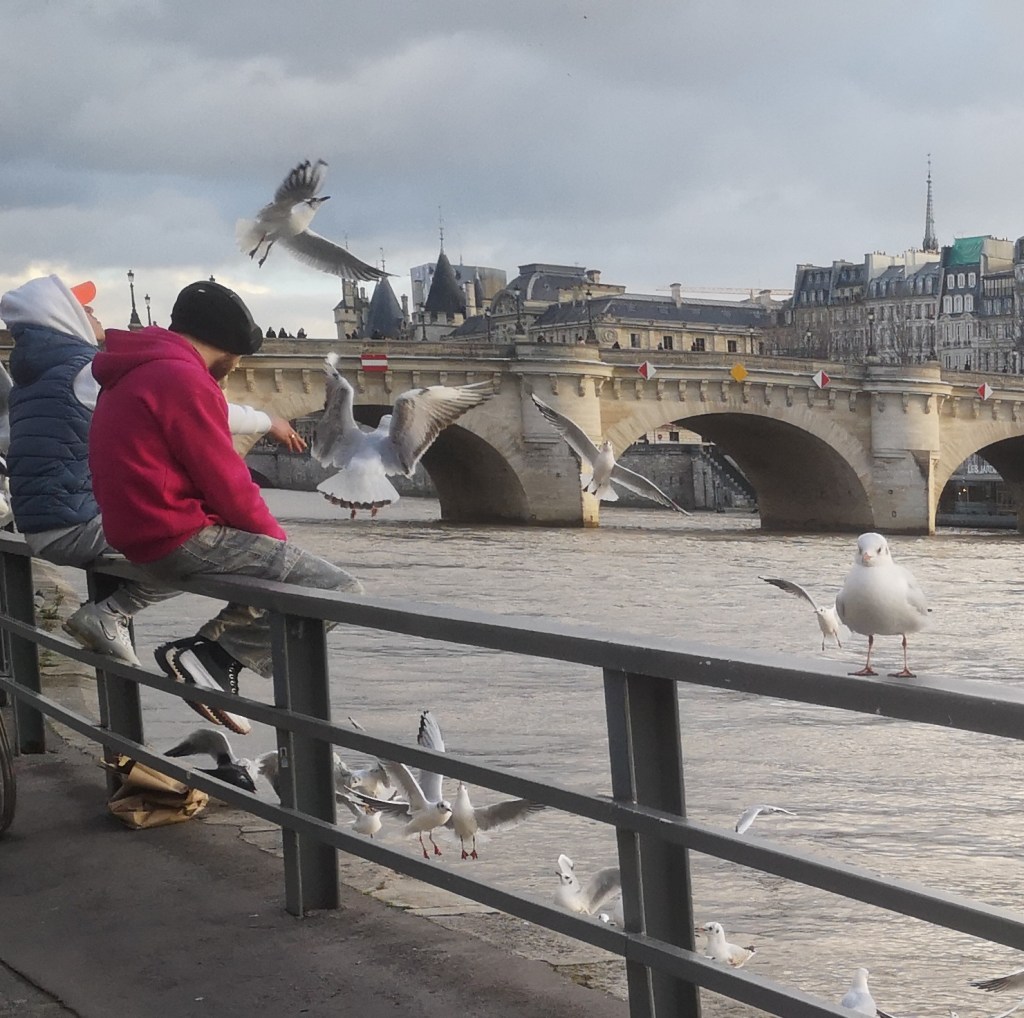
The Seine river with the Pont des Arts in the distance. I was looking for some space and a more natural environment after many noisy walks across the city to and from work during the week.
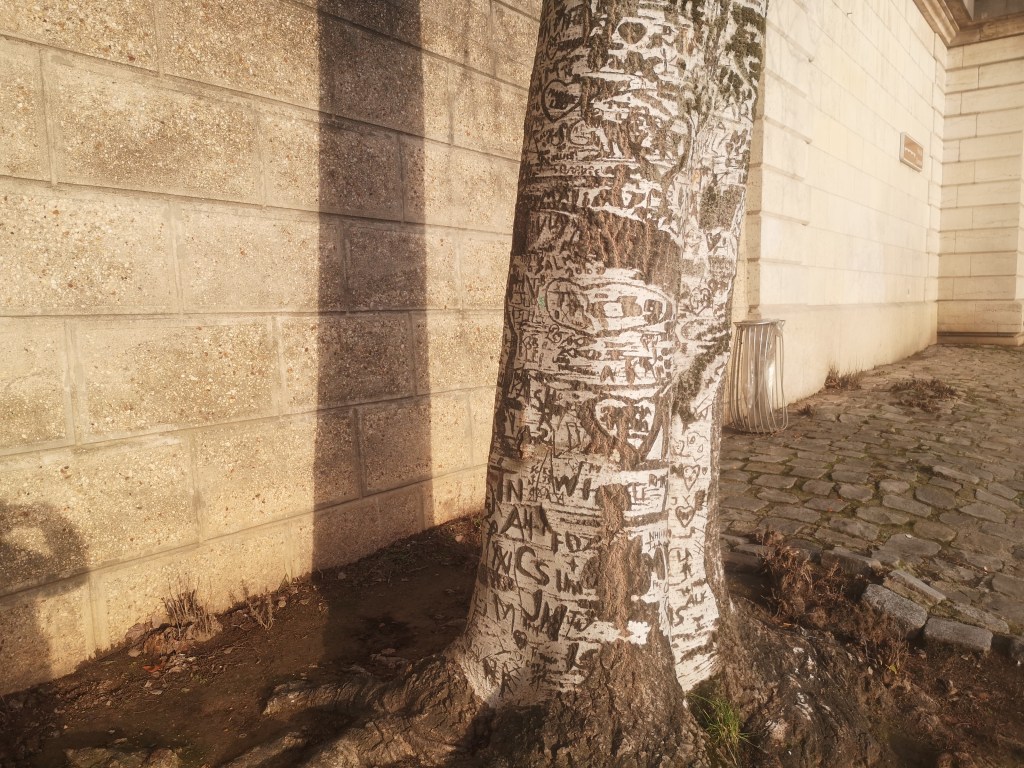
A long row of luminous silver birches lines the River Seine

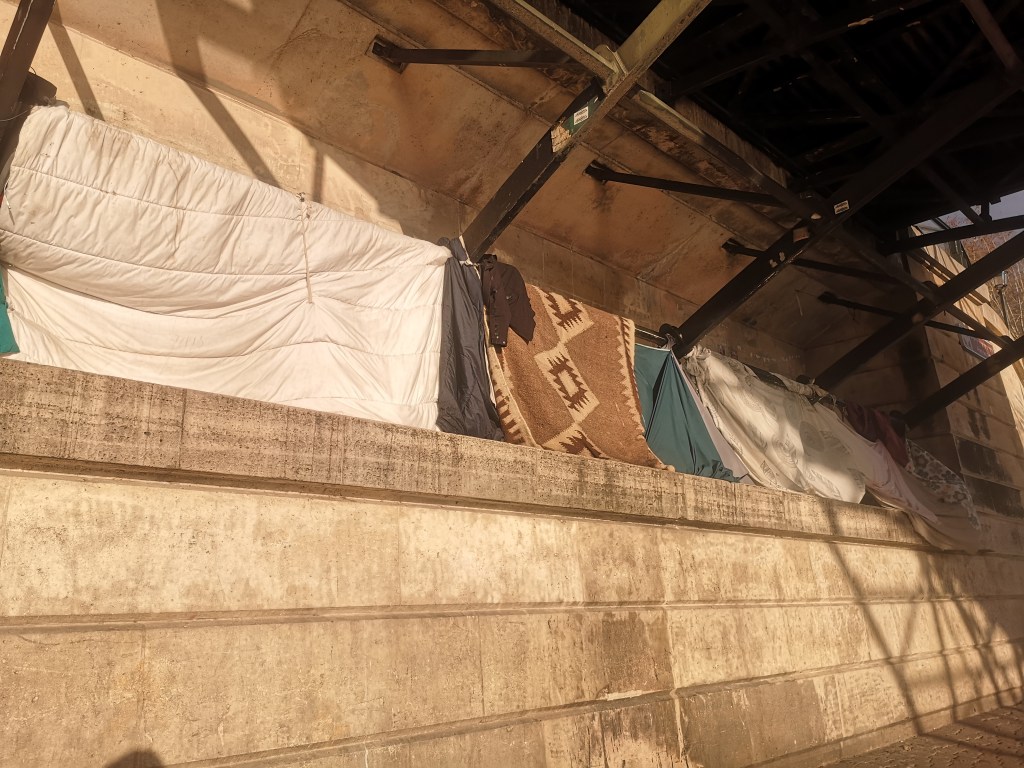
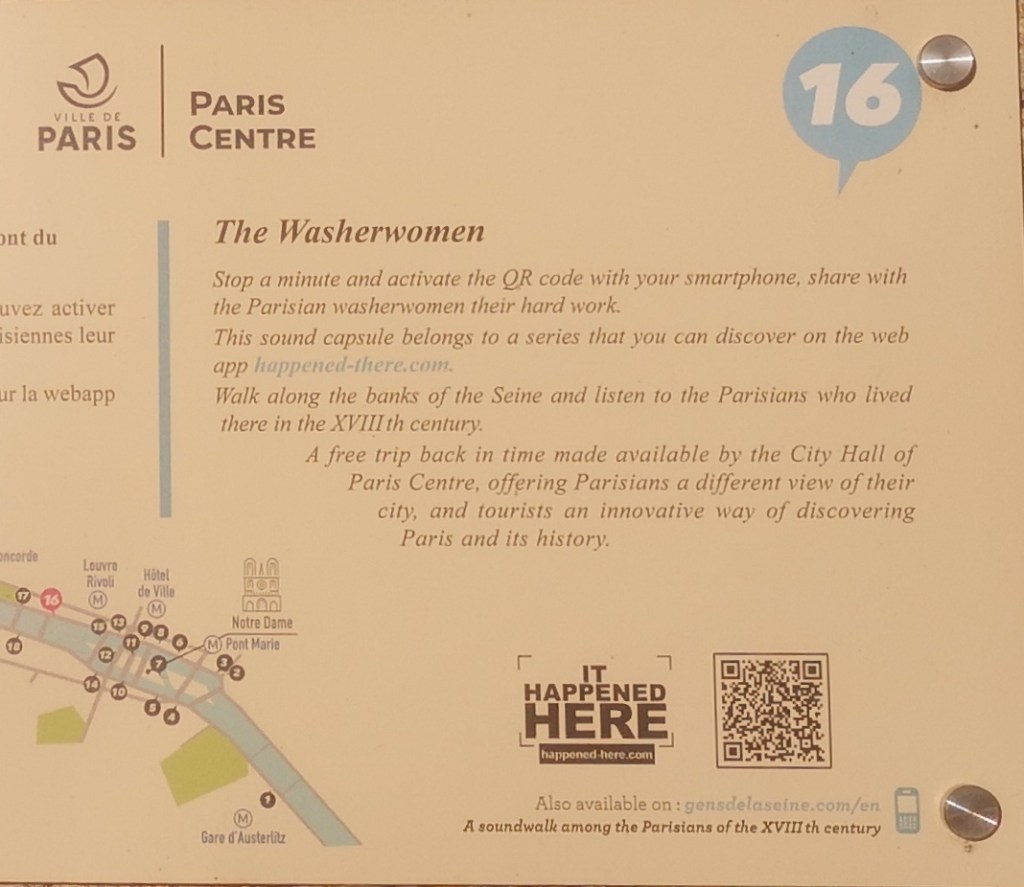
Look to your left for make-shift homes and art work. Signs indicating historical sites of interest and local history are on the walls too, including the story of the Washerwomen. During the18th century, more than 80 boats would have been moored along the banks of the Seine, each carrying 24 washerwomen (‘a gigantic laundry’). Others built a jetty, illegally, and stationed themselves there to hang out the washing to dry. Eventually the boats were condemned as a hindrance to river traffic, and ‘the smalls’ unseemly to be seen from the Louvre and the Tuileries Palace.

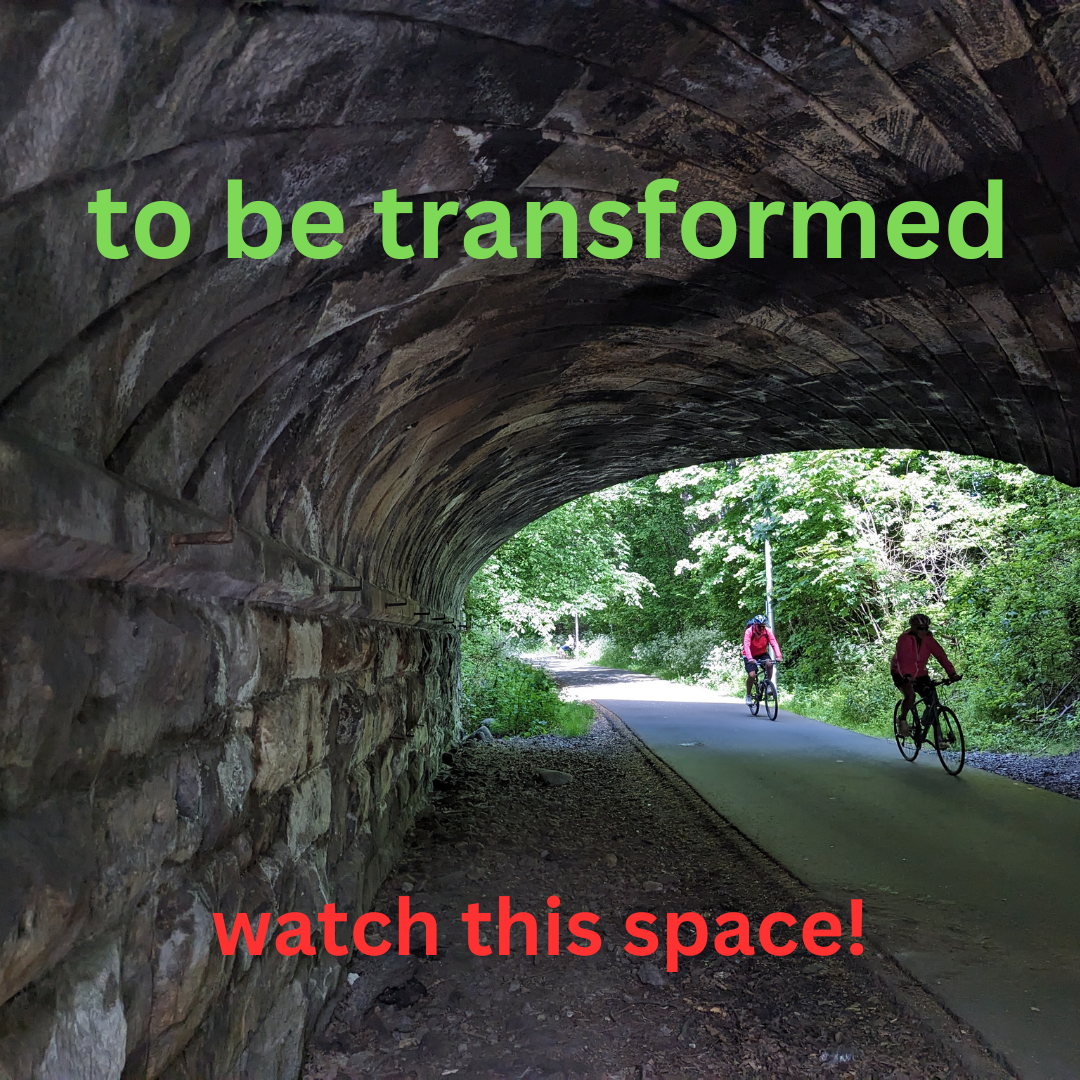
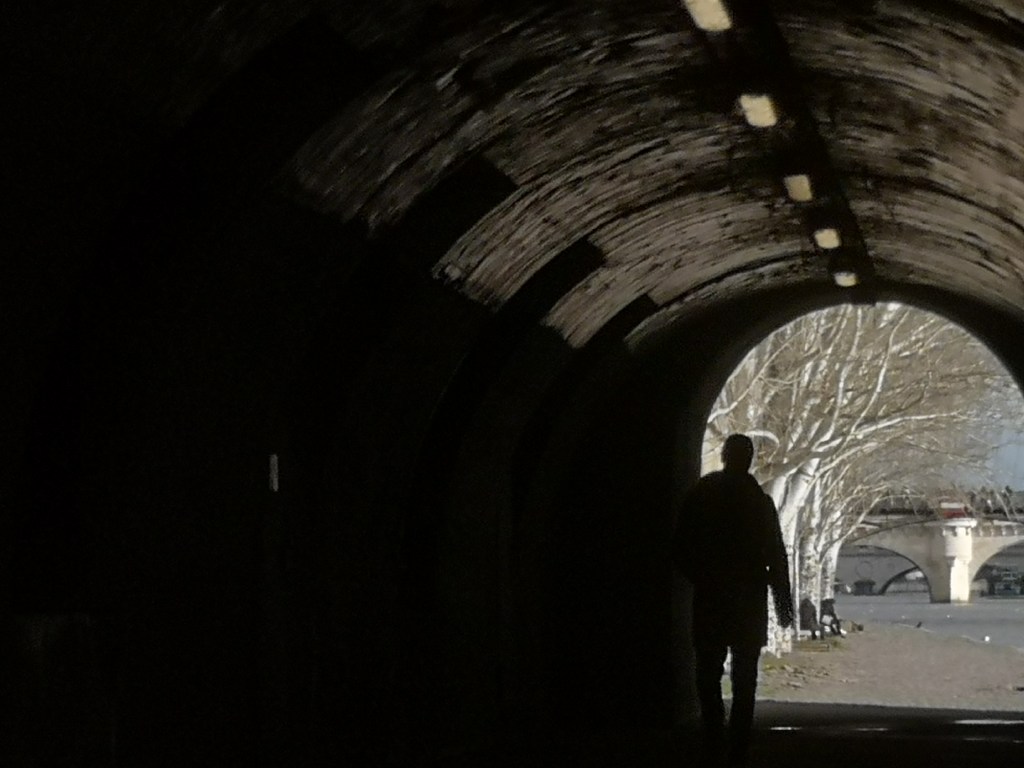
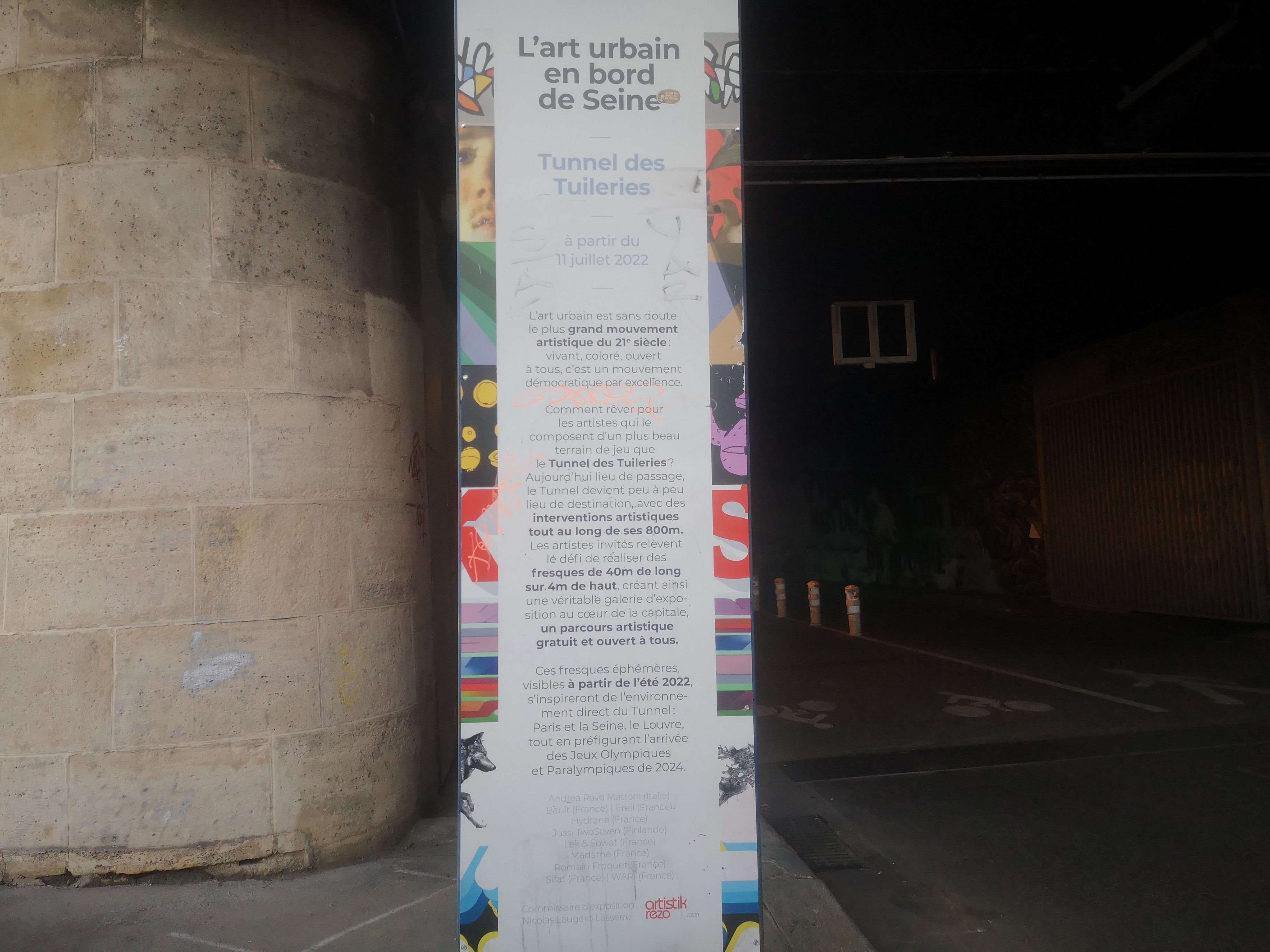
Tuileries Tunnel

Details:

  • From the Tuileries Gardens (close to the Louvre art gallery) to half way between the Pont des Arts and the Pont Neuf on the north/right bank
  • 800m long – once you’re in, there’s no escape
  • 10 European street artists
  • Parallel to the Seine River
  • Open only to walkers and cyclists
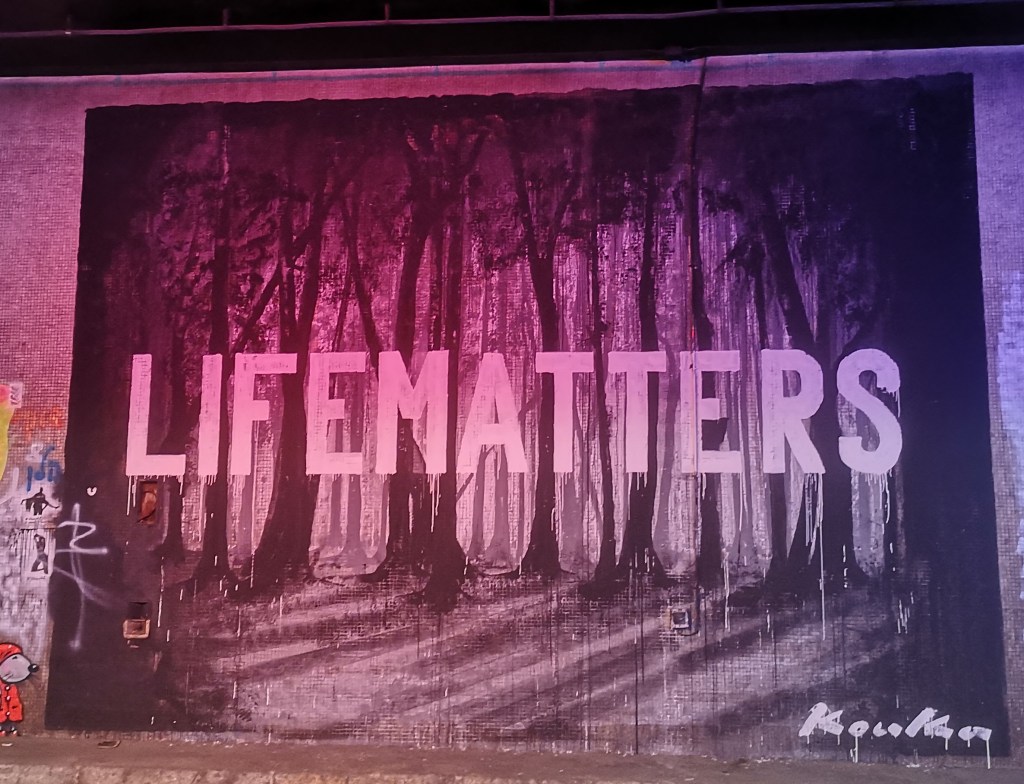
  • Including Andrea Ravo Mattoni, Hydrane, Lek & Sowat, Bault, Ërell, Madame, Romain Froquet
  • Artistic direction: Nicolas Laugero Lasserre, with the support of the City of Paris

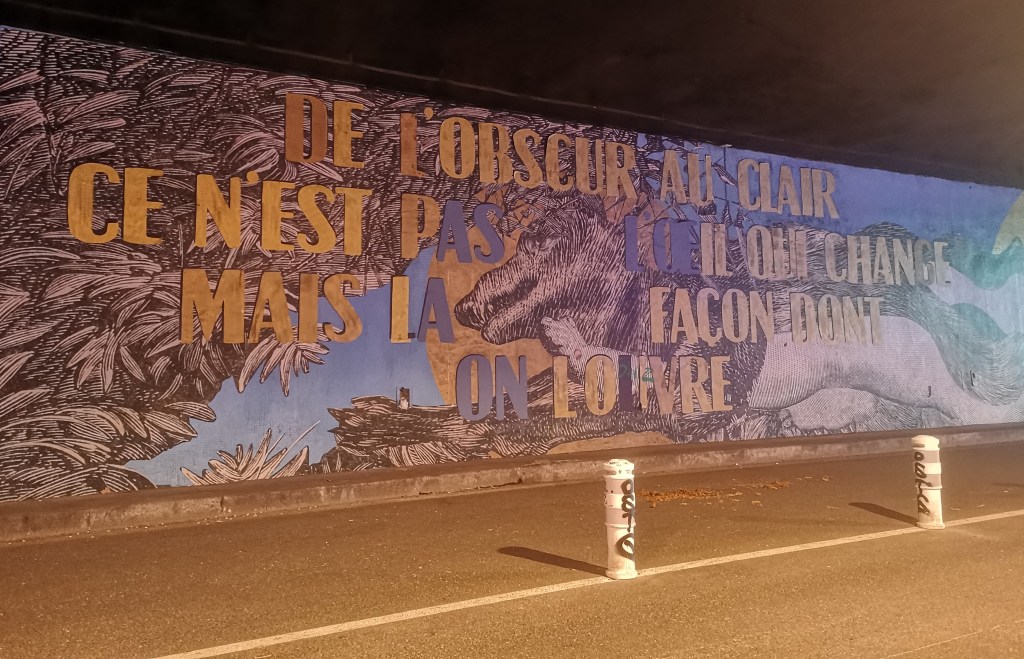
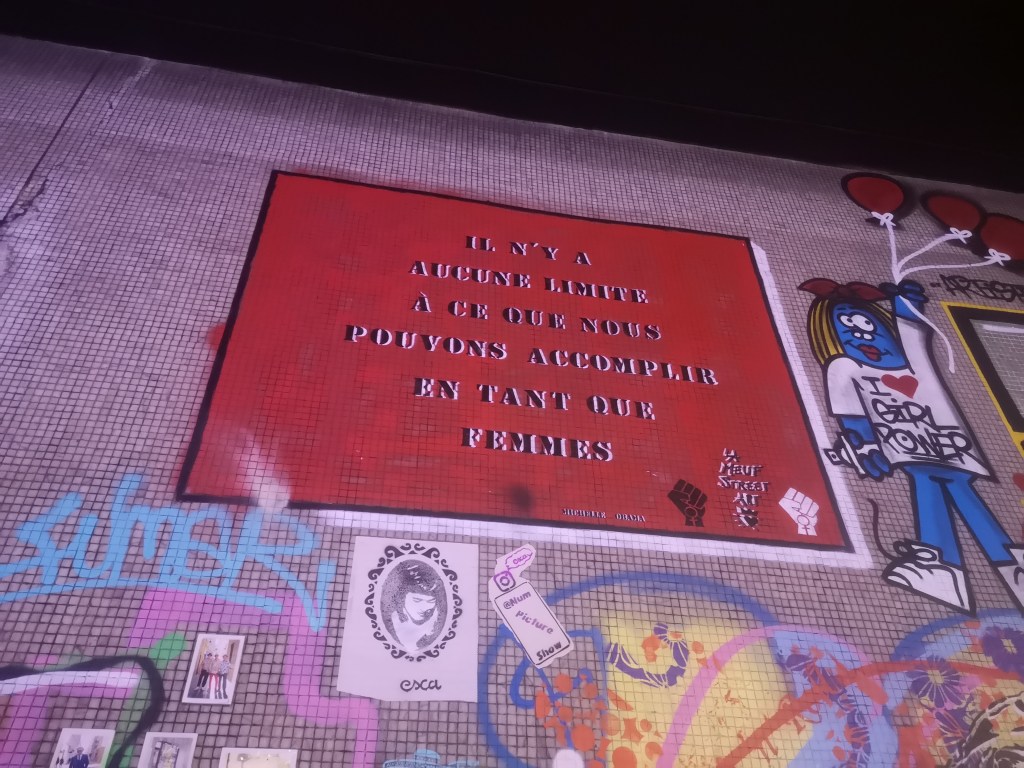
Text from the @m_a_d_a_m_e (below) ‘De l’obscur au clair ce n’est pas l’œil oui change mais la façon dont on Louvre’ meaning, approximately, ‘from dark to light, it’s not the eye that changes but the way we Louvre.’

No spotlight on homelessness

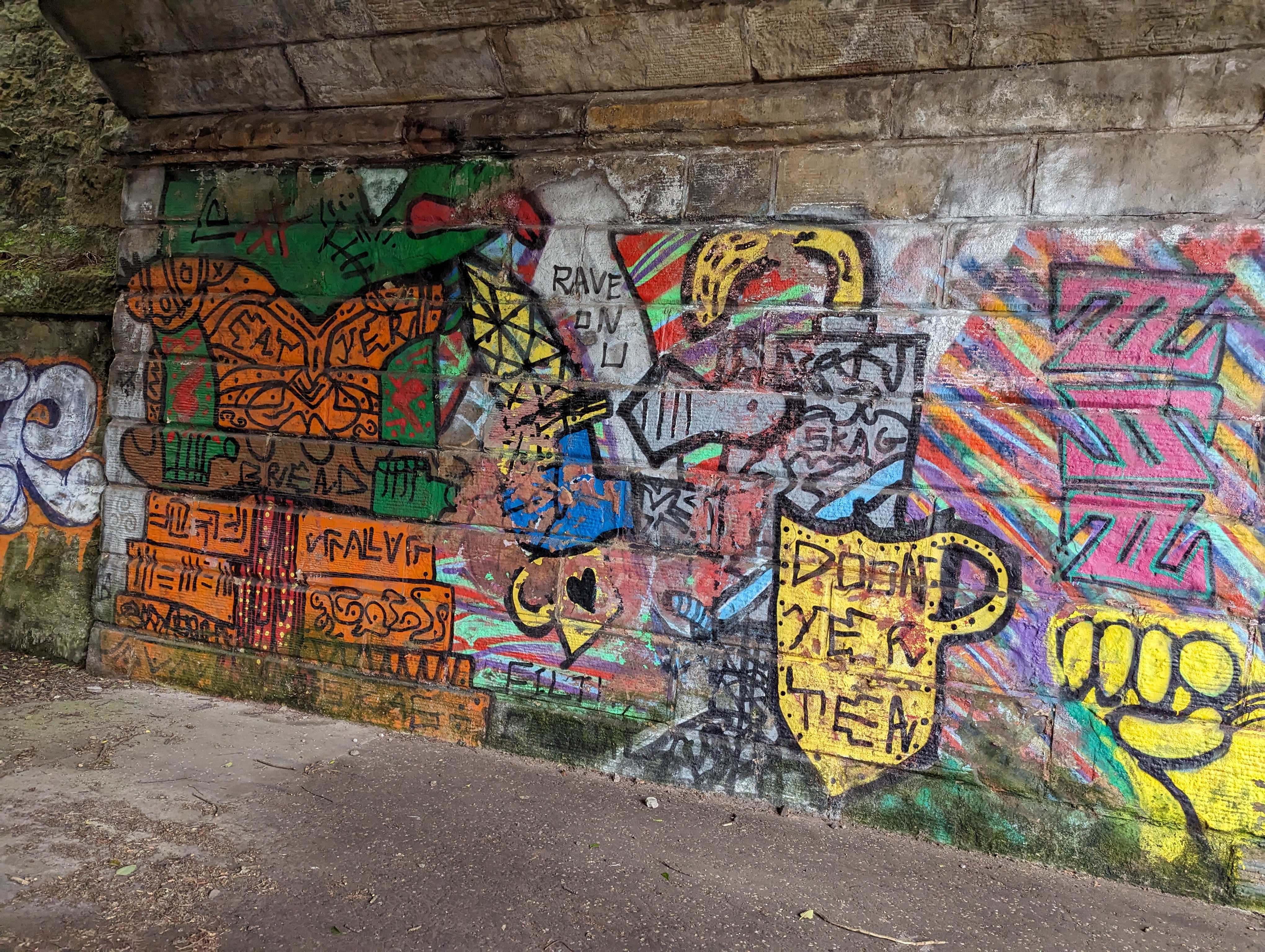
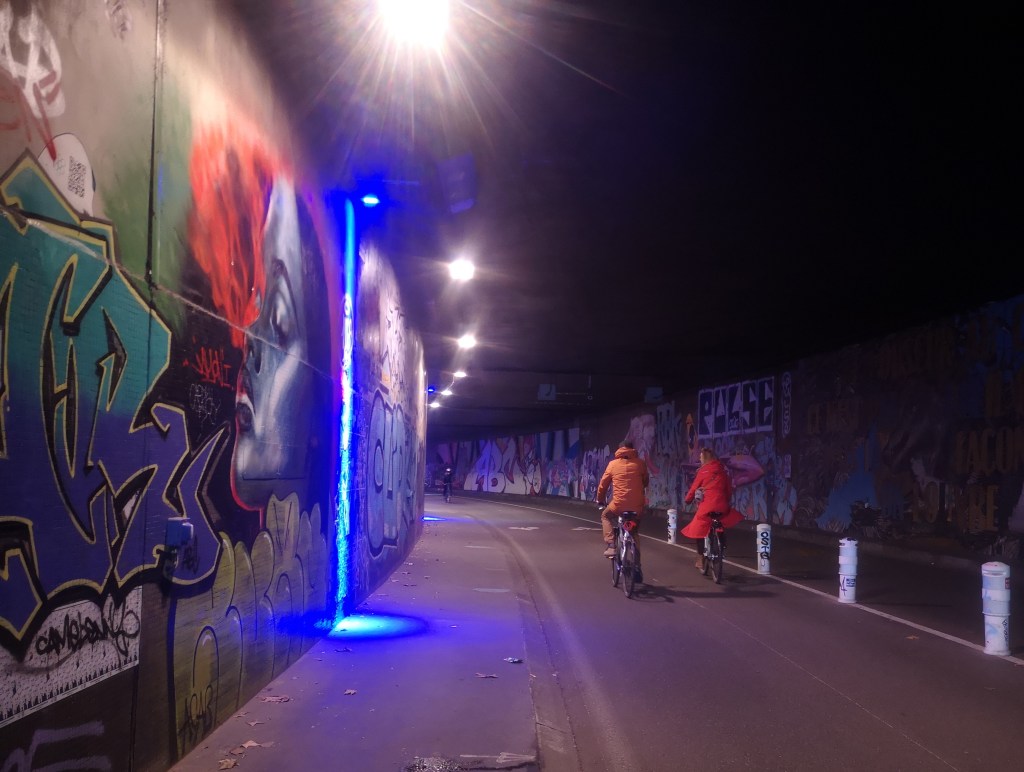
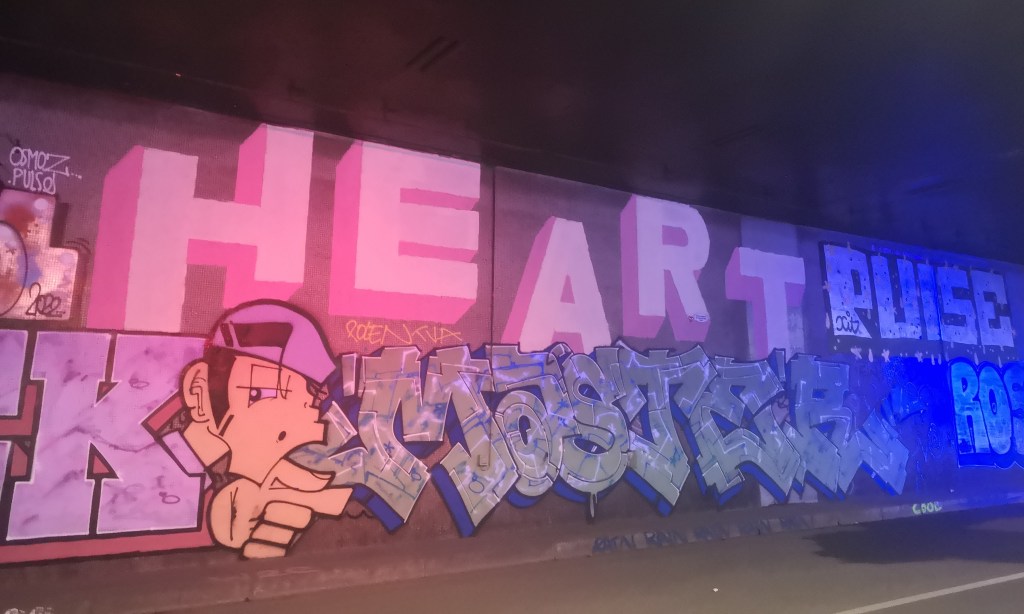
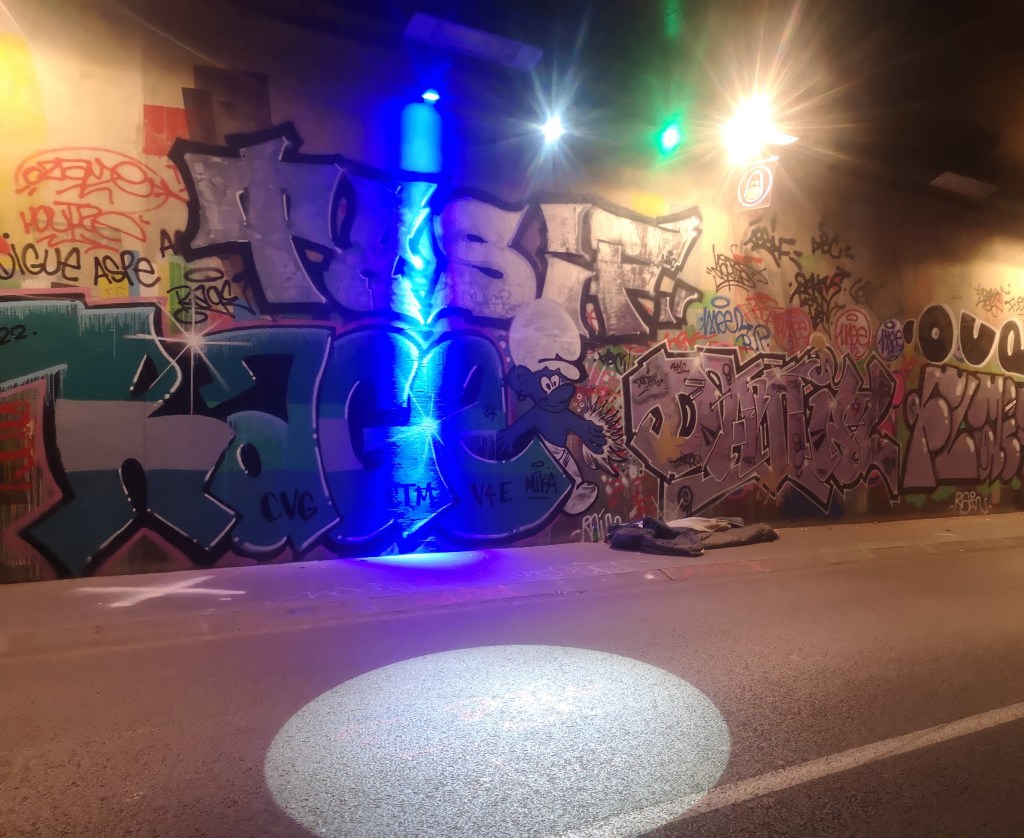
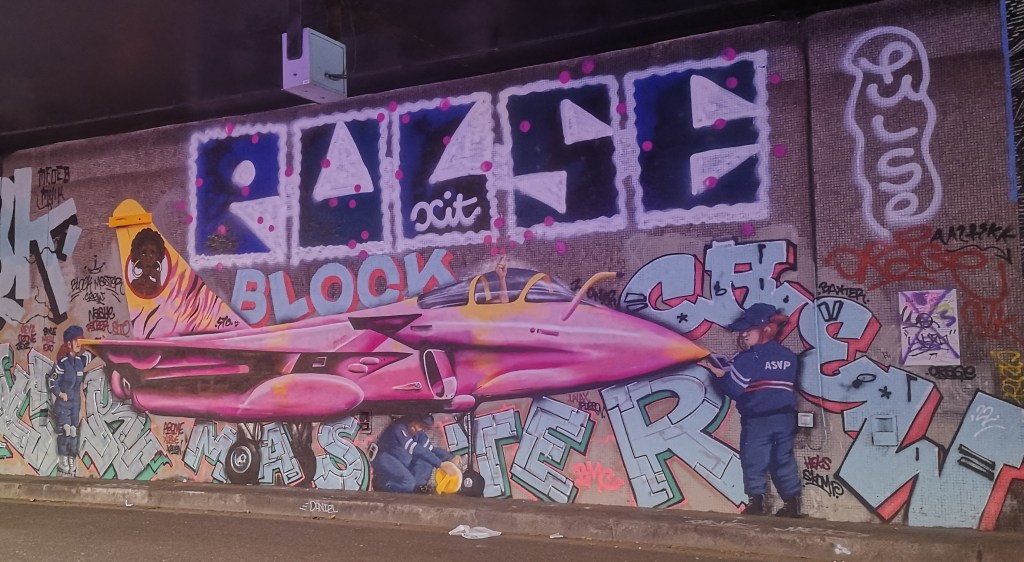
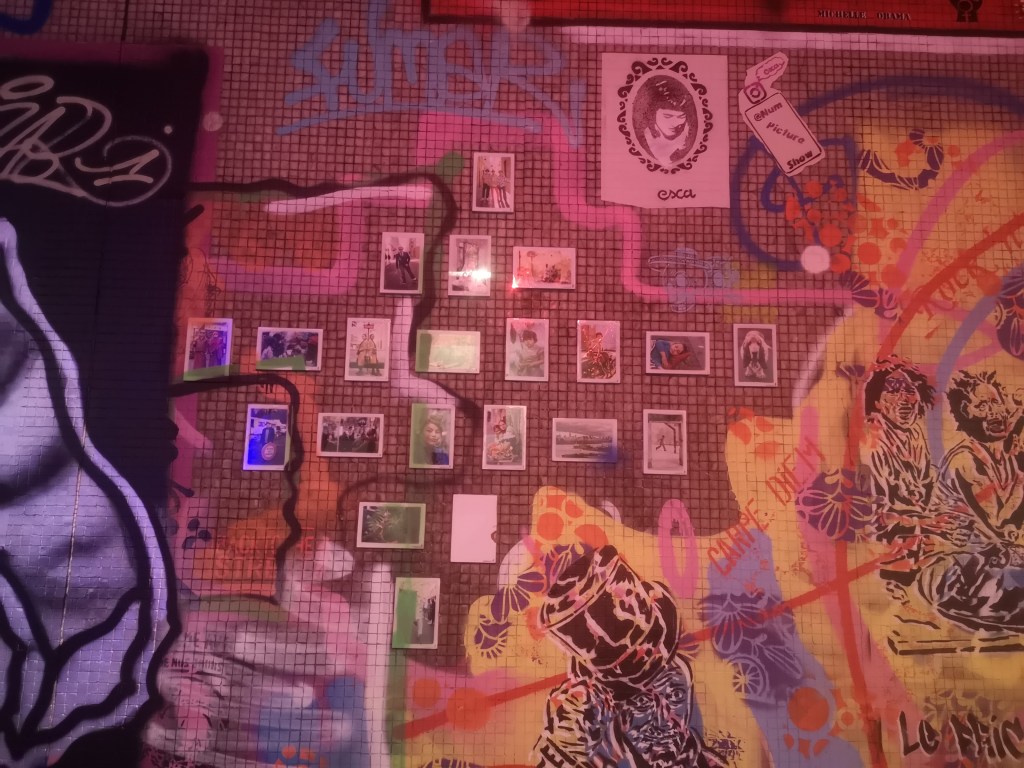
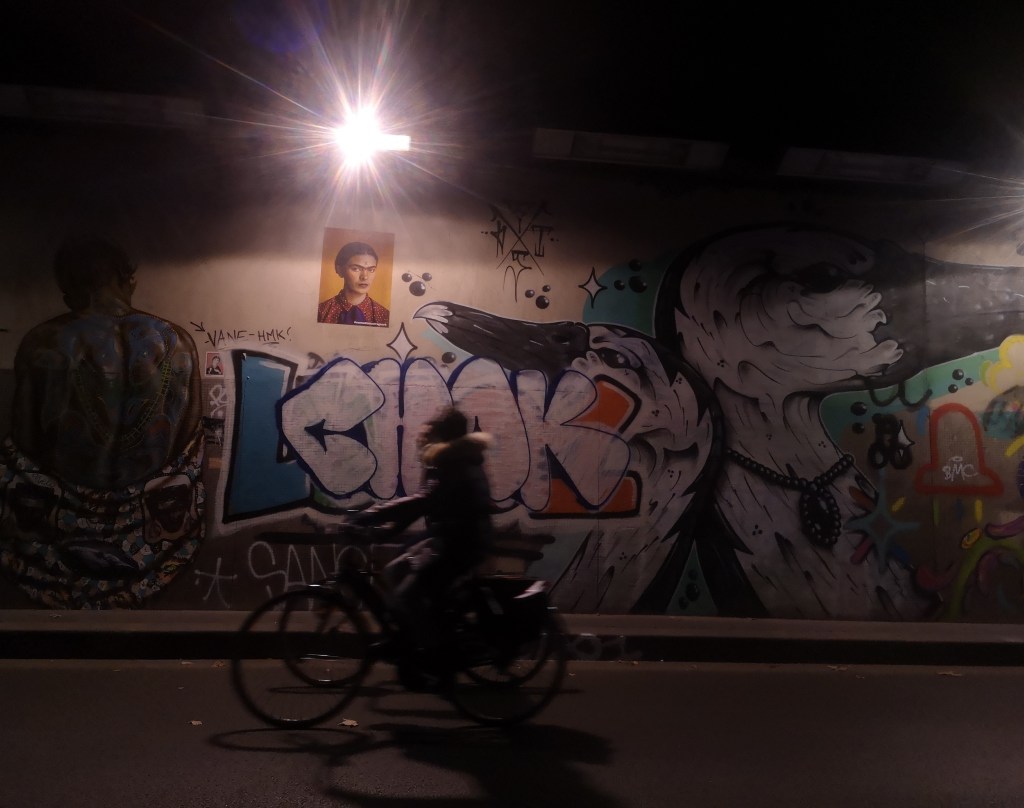
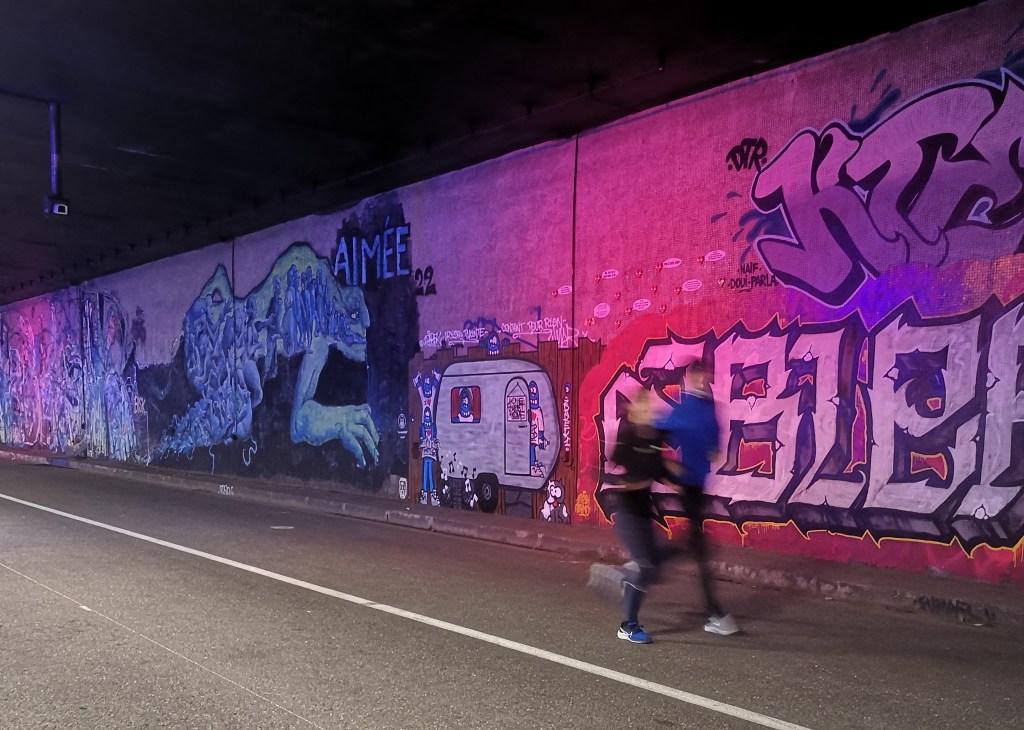
The Tuileries Tunnel is a cross between a cold contemporary art gallery and a graffitied tunnel. With all the ambience of the Channel one (linking Dover and Calais), once you are in it you are only reminded of its Parisian location by occasional French texts. Overlaid now with random graffiti, it’s hard to distinguish between the original and later-added work.

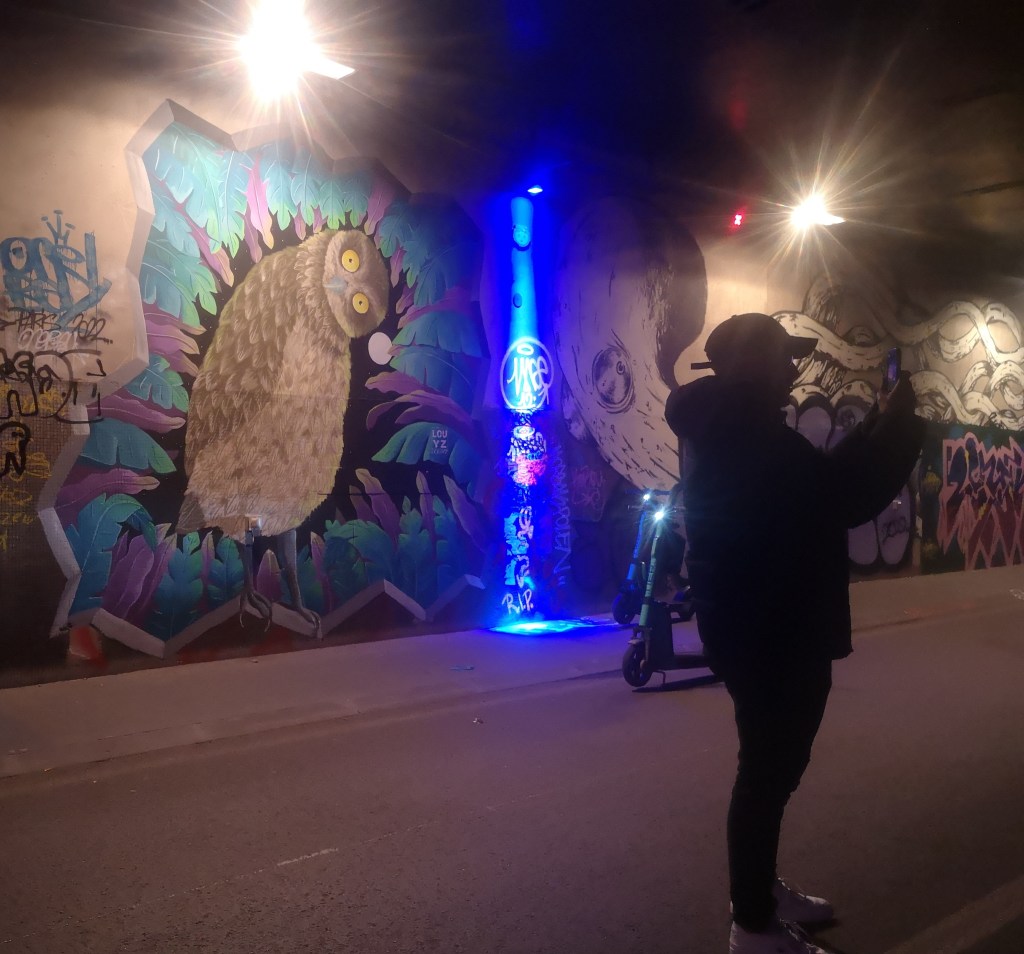
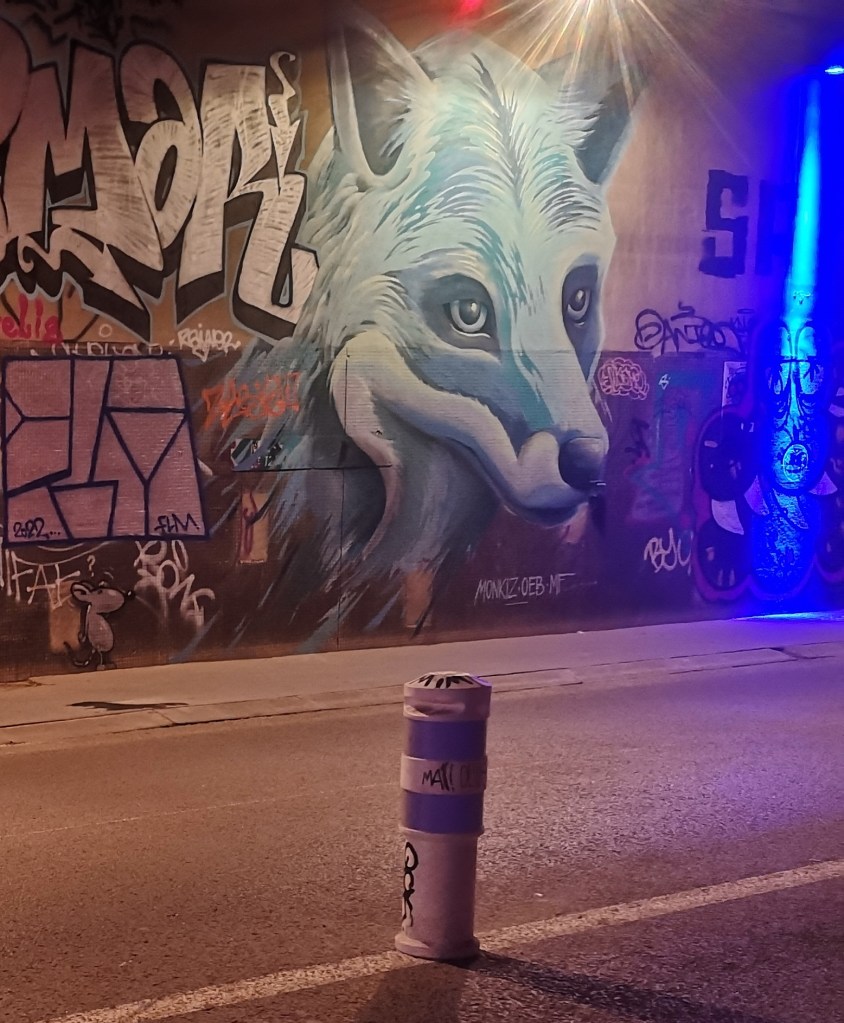
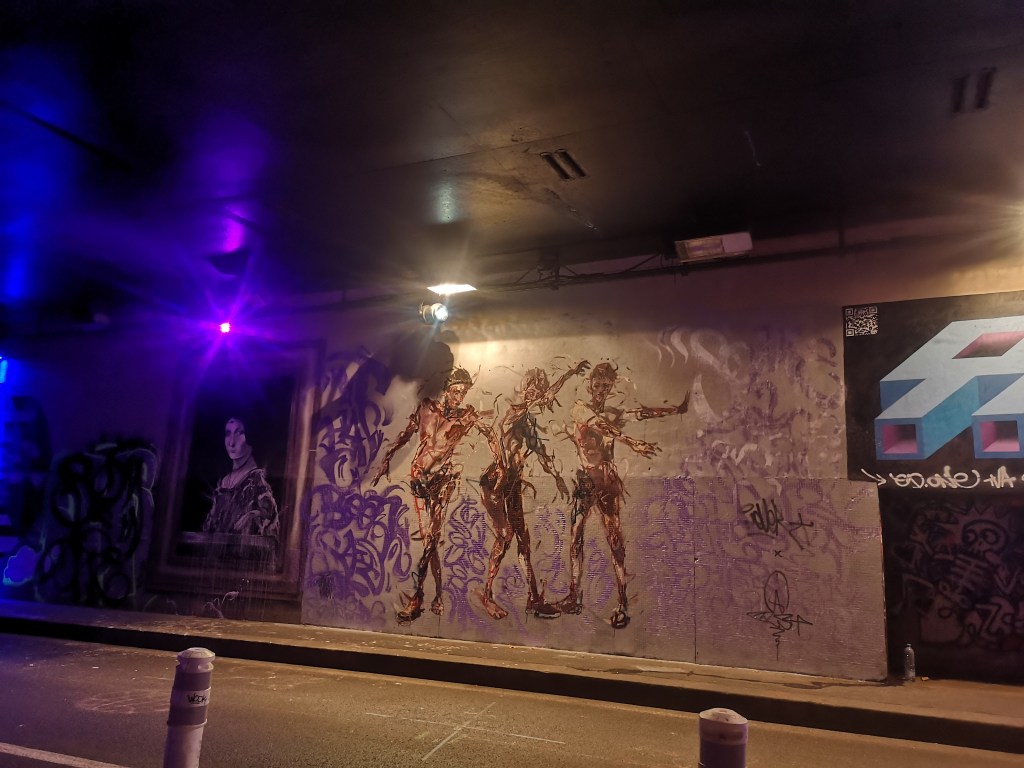
Lighting changes colour like switching traffic beacons and affects the frescoes. Beam-me-up blue ones invite you to stand underneath, back to the sides – part interrogatory, part revelatory. Some works stretch along the walls, like the dancing figures or running wild animals, moving and flowing; others decorate with familiar blocks of primary coloured letters or the image of Frida Kahlo. All are constantly interacting with their audience, some concentrating only on running and others defacing them.

There isn’t one theme, though the fight for life and peace features strongly. The art works do not, collectively, tell a story, nor do they offer a message (unlike the Colinton Tunnel or No Birds Land in Edinburgh), though there is immense subtlety in some of them despite the conditions of the walls and the external temperature.

Half way through, I wasn’t sure I wanted to stay, but I had to either go back or on. There is a rawness in the air, a sense of disquiet, with none of the cosyness of a National Gallery or safety of a contemporary white box. Certainly there is impermanence – there are no guarantees that what you are witnessing will be there tomorrow.

Way in / out

Link to tourist website page about the Tuileries Tunnel

Info board

Nearest public toilets: Tuileries Gardens, Rue de Rivoli / Place des Pyramides entrance.

For a good takeaway try Aki Boulangerie, 16 Rue de Sainte-Anne, 75001 Paris (Japanese take-away meals: those works-of-art-cum-French-pâtisserie (cakes is too pedestrian a description), real delicacies. I had a briquette (I think it was called) sort of deep fried breadcrumbs outside with curried veg inside – delicious).

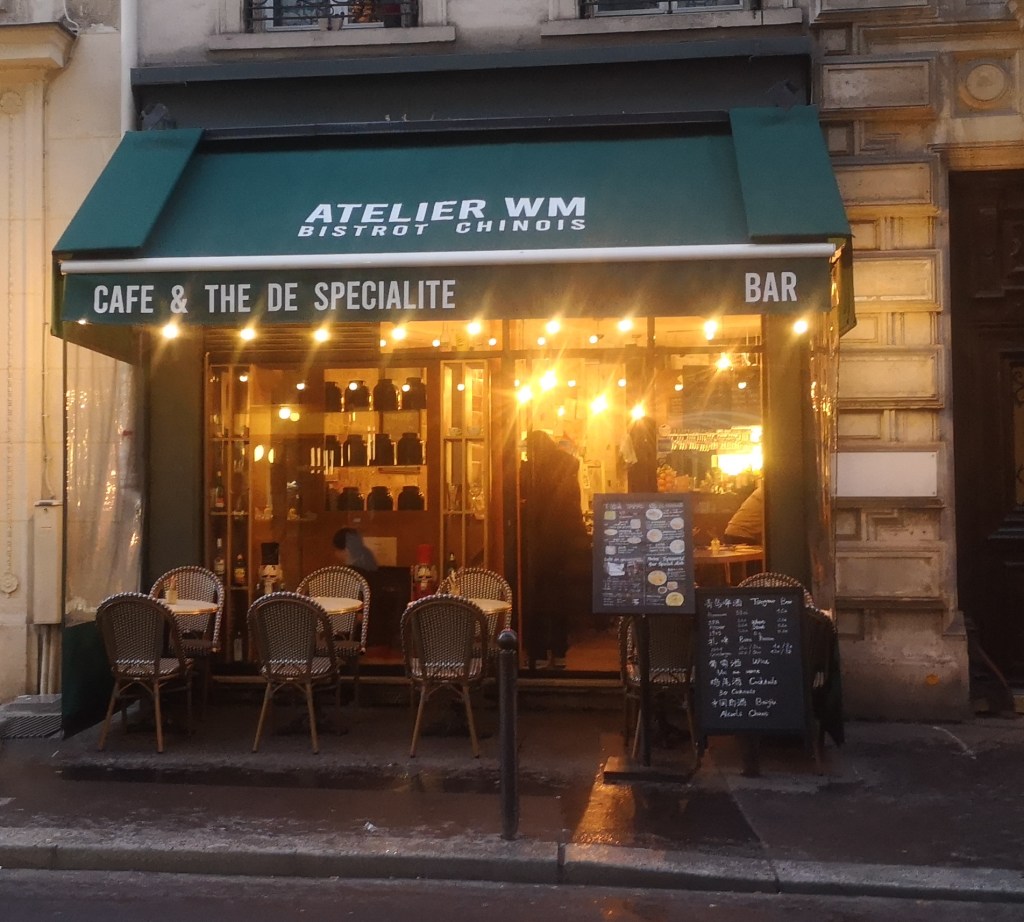
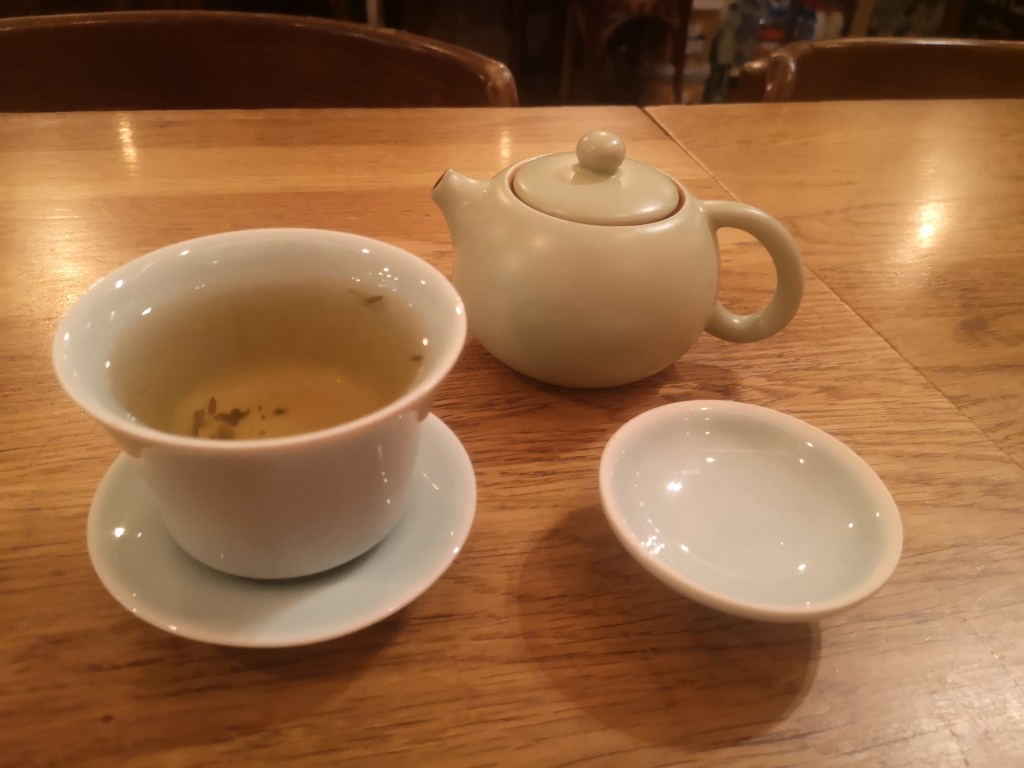
For the best, simple green tea served in the tiddliest teapot (there’s plenty – quality not quantity) in Paris (so far) try Atelier WM – 45 Rue de Richelieu, 75001 Paris, France

Have you been to the tunnel? What did you think? Please do leave a comment below.

Festivities and Delegates

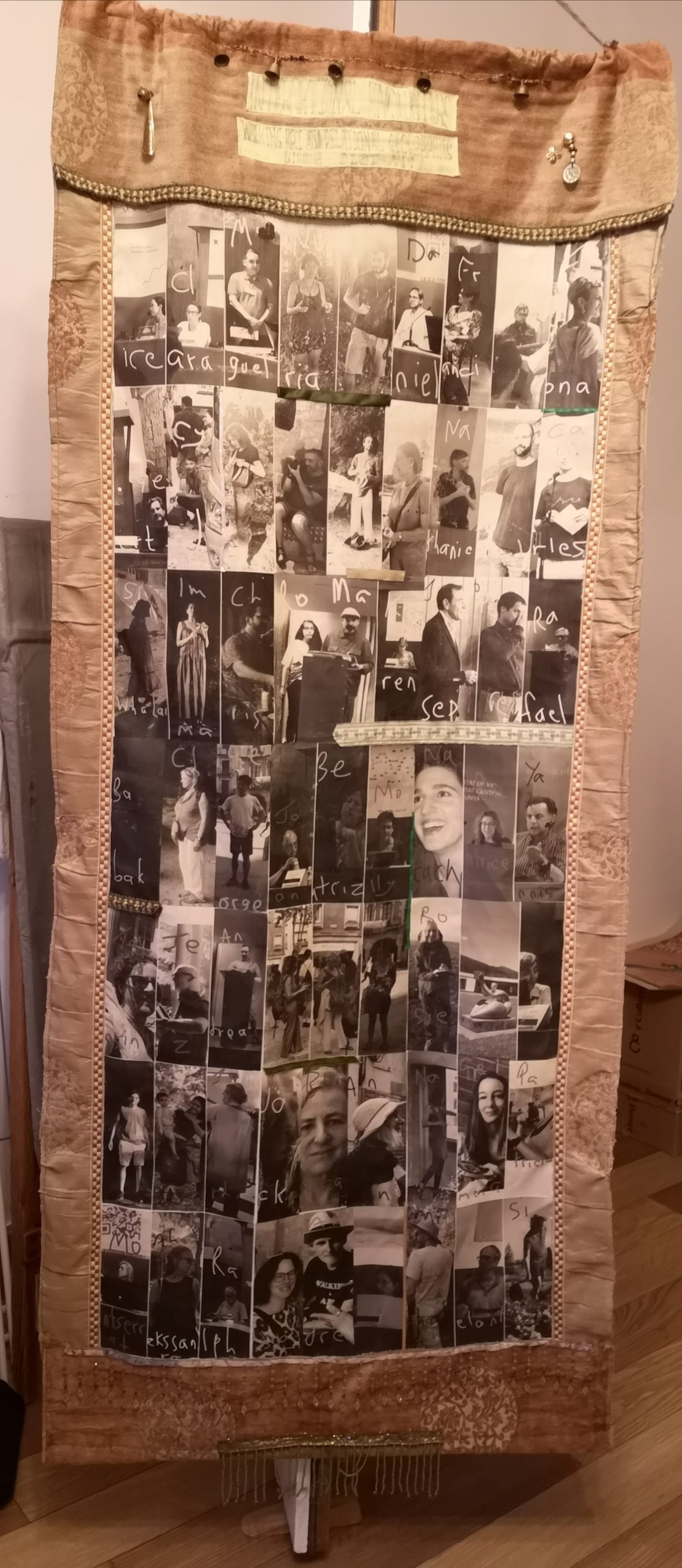
Part of the Separation and Unity Project, Cataluña, July 2022

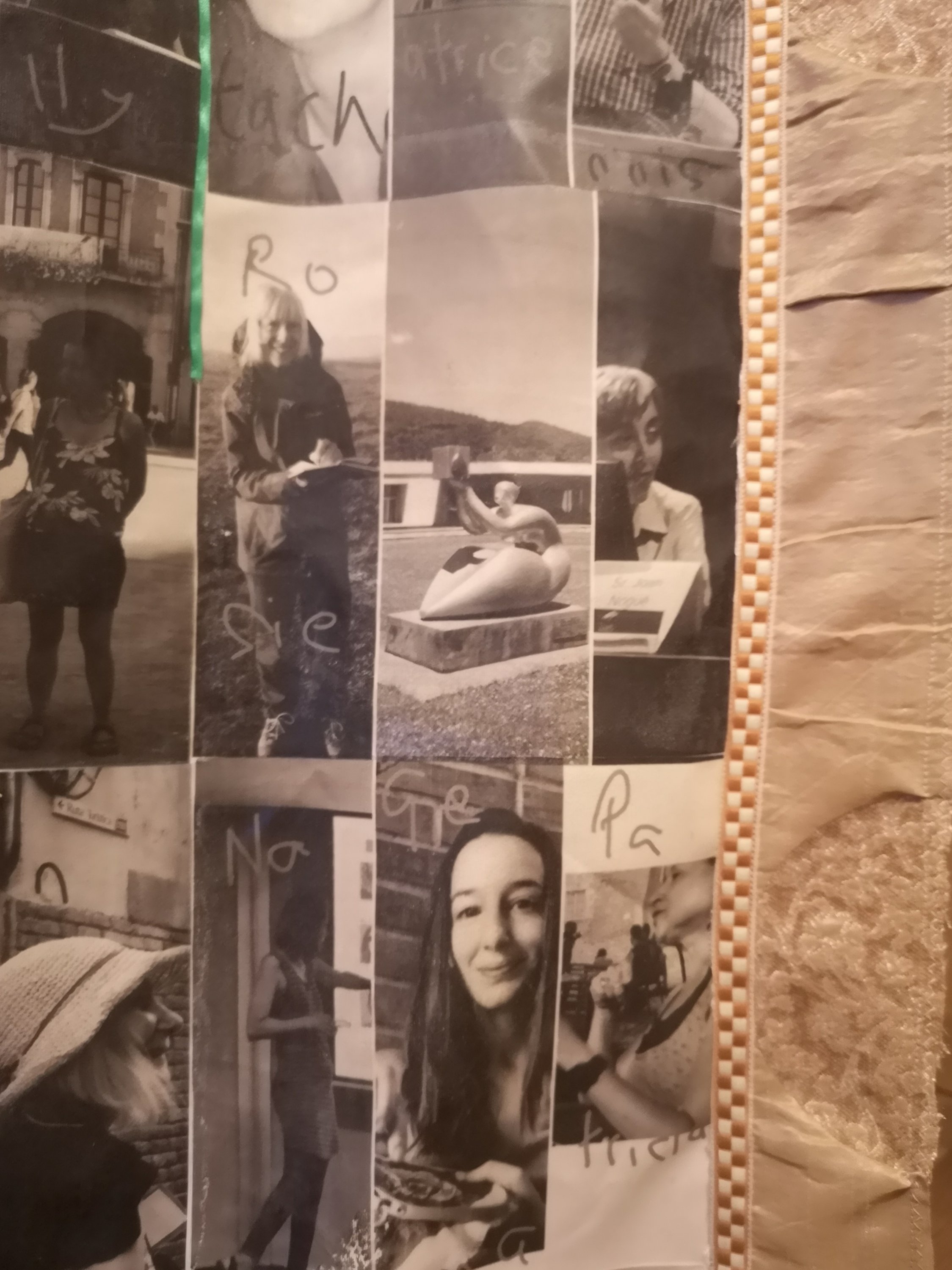
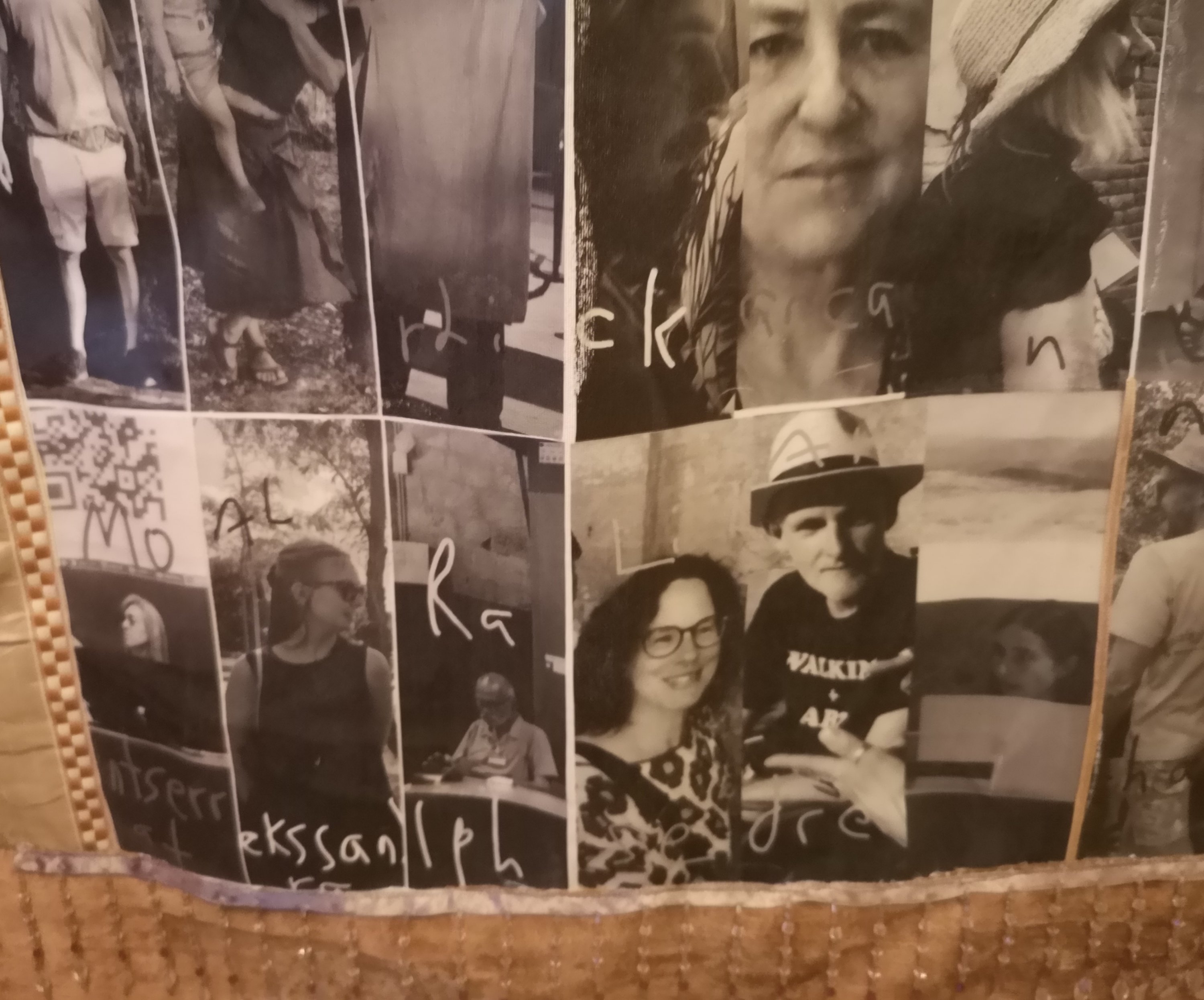
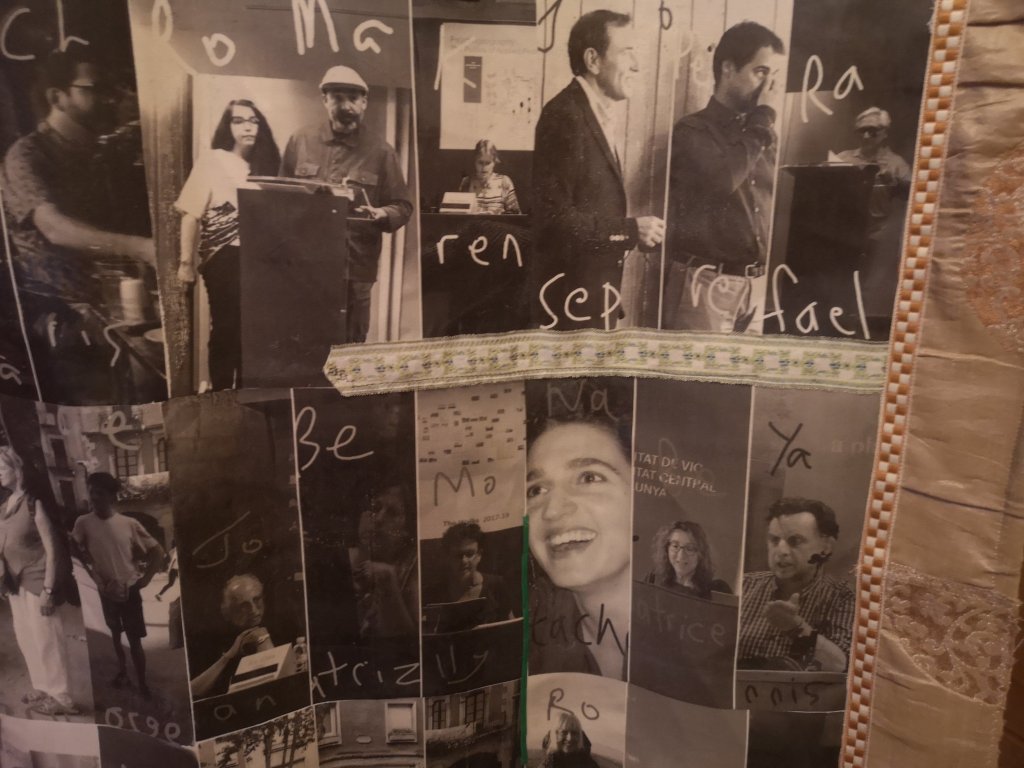
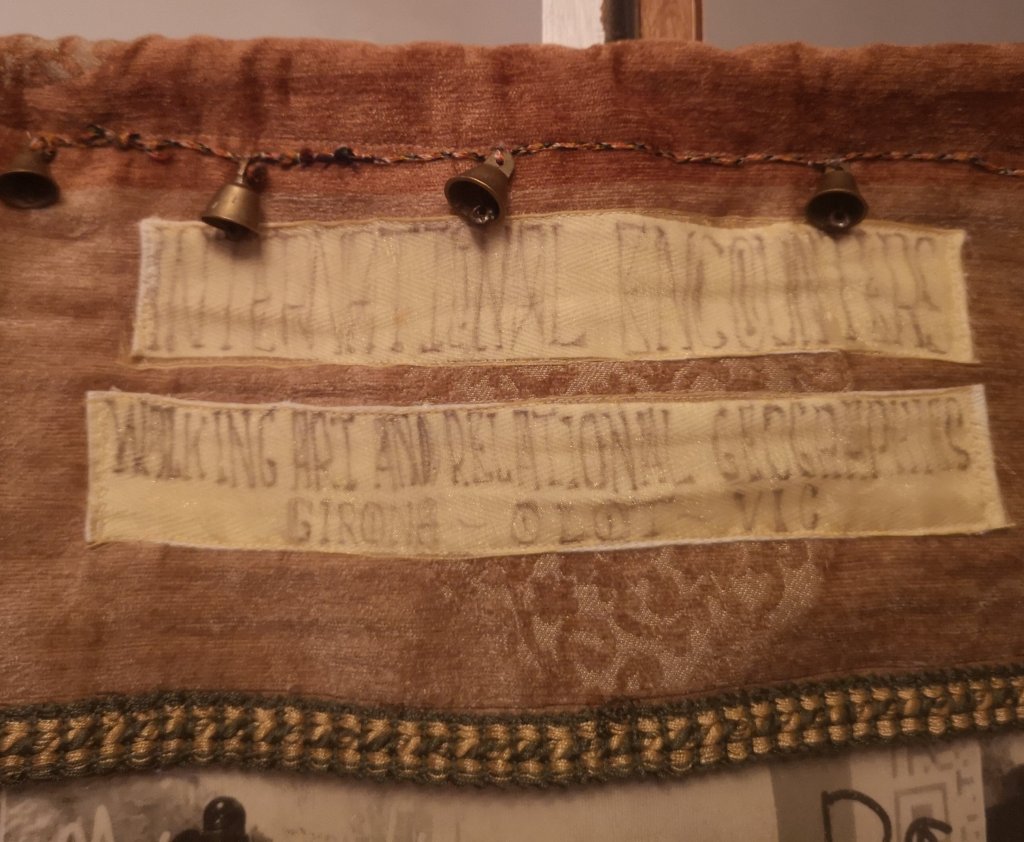
This wall hanging, ‘Festivities and Delegates’ represents an act of unity, the bringing together of many of those who attended the Walking Art and Relational Geographies International Encounters conference in Cataluna in July 2022. Planned for several years, but thwarted by the pandemic, delegates were at last able to travel from Australia, South Africa, Brazil, America and Europe to the conference in Girona, Olot, and Vic to share walking art and community projects via presentations and walkshops over a period of a week.

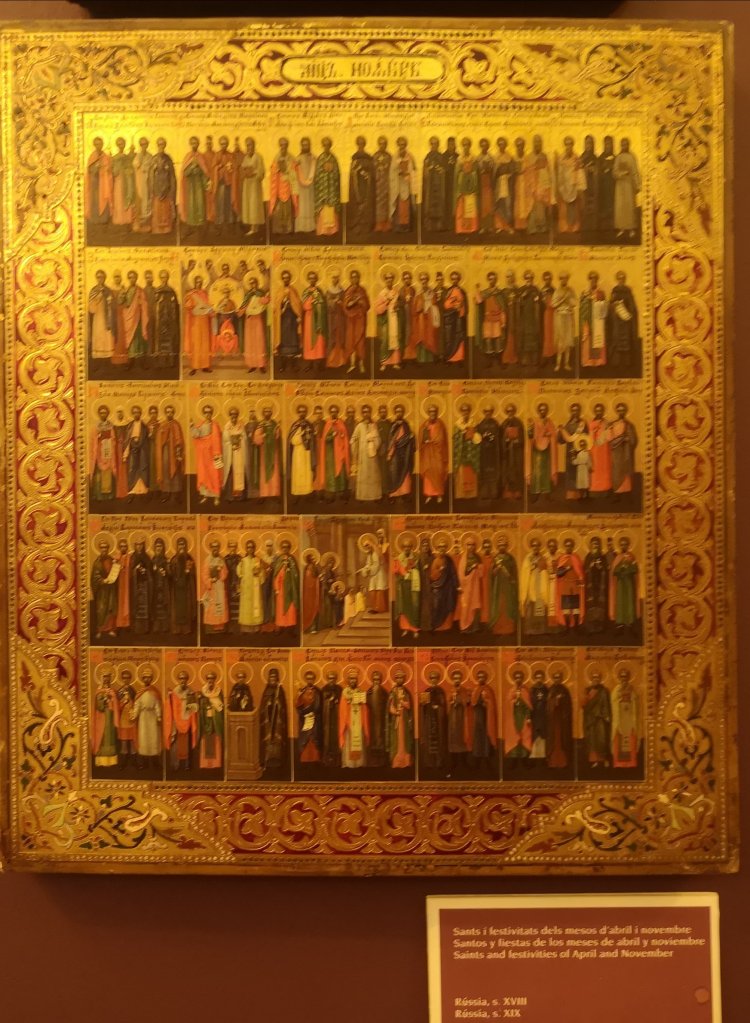
This work was inspired by the 18th /19th century ‘Saints and Festivities for the months of April to November’ in the Museu Montserrat. I climbed up there after attending the conference. The ornate Russian ‘menologion’ is a calendar featuring rows of saints, above which are their names and the dates of the days on which they are honoured, in cyrillic script.

This would have been a visual reminder of the annual Masses of the Orthodox Church which celebrated many different saints.

menologion (menologium, menology, menologue, menologia) was sometimes a liturgical ‘office’, an ecclesiastical, Eastern Orthodox service book or martyrology; a long list of saints and the details of their lives arranged according to the months of the year.

It is not dissimilar to the secular mural at the National Portrait Gallery in Edinburgh depicting key figures and events in the history of Scotland. The Separation and Unity Project is interested in the movements towards and away from independence by Scottish and Catalonian peoples, at what urges us to separate from, or join with each other.

I am also referencing Buddhist and Hindu mandalas, and other celebratory depictions used to inspire their followers and remind them of the true path. Mandalas come in many shapes and sizes, often using geometric arrangements. They can represent the whole universe, and be used as a way to separate from everyday existence and focus on what is important for greater knowledge. The Vajrabhairava mandala, for example, is a silk tapestry woven with gilded paper depicting lavish elements like crowns and jewelry.

The human mind is like “A microcosm representing various divine powers at work in the universe”

John Ankerberg and John Weldon (343:1996) via Wikipedia (see below)

Process and production of Festivities and Delegates

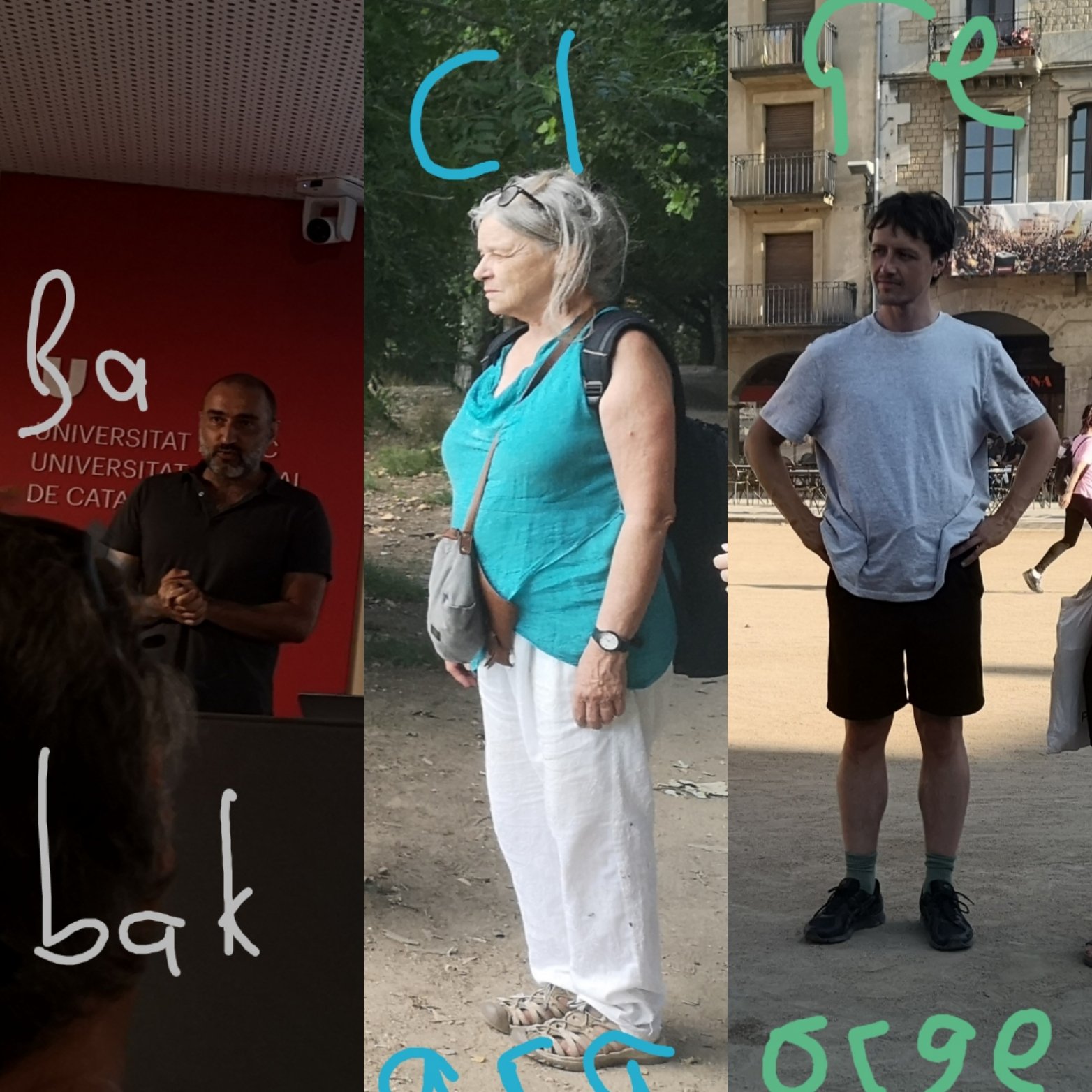
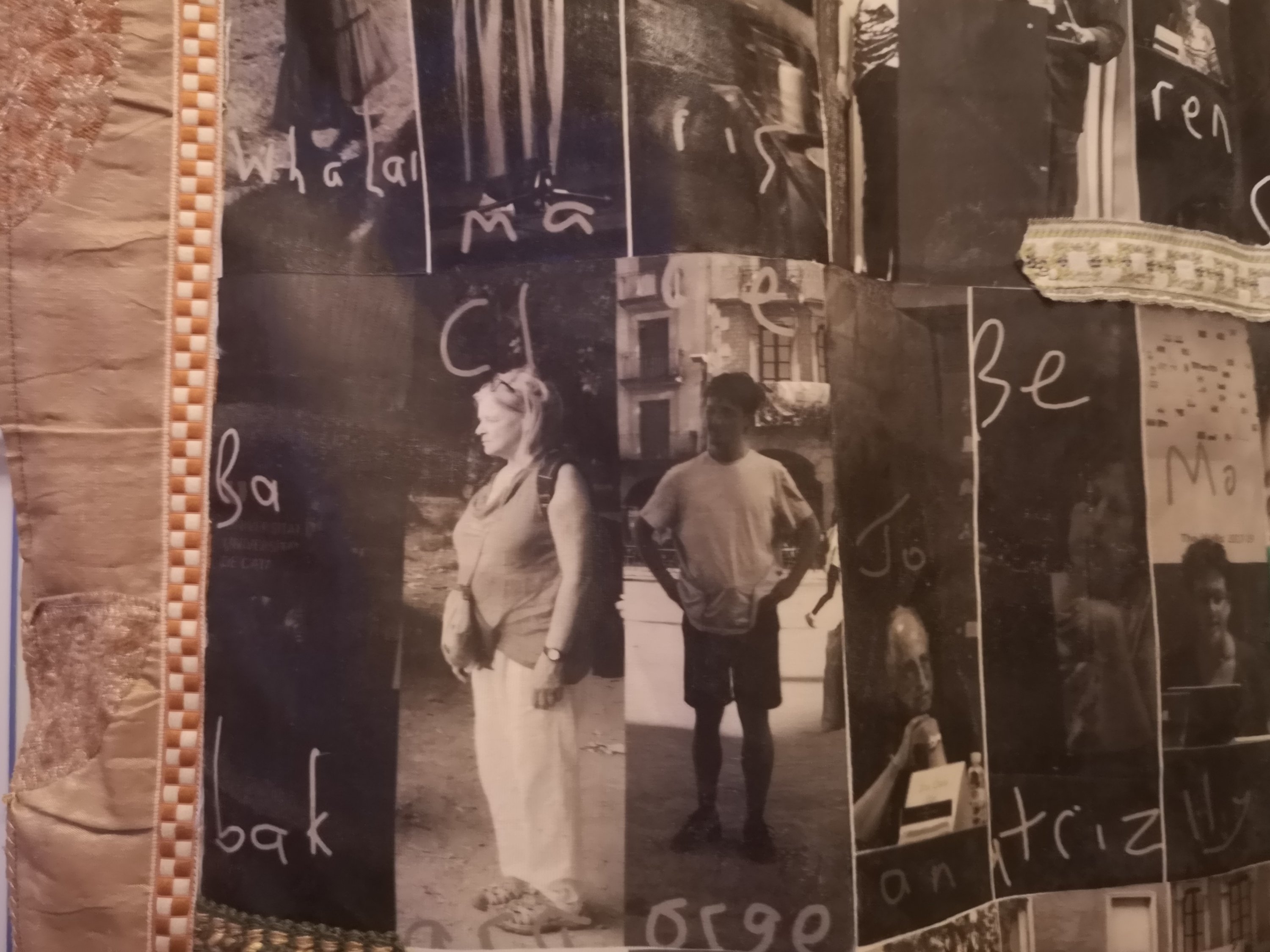
I took digital photos and video stills from my phone documentation of the conference and the social time we spent together, and manipulated the images using free Layout software. In some cases I used social media images. Instead of the elaborate calligraphy that you can see on the Russian ‘Festivities…, I wrote free-hand with my finger or with a biro.

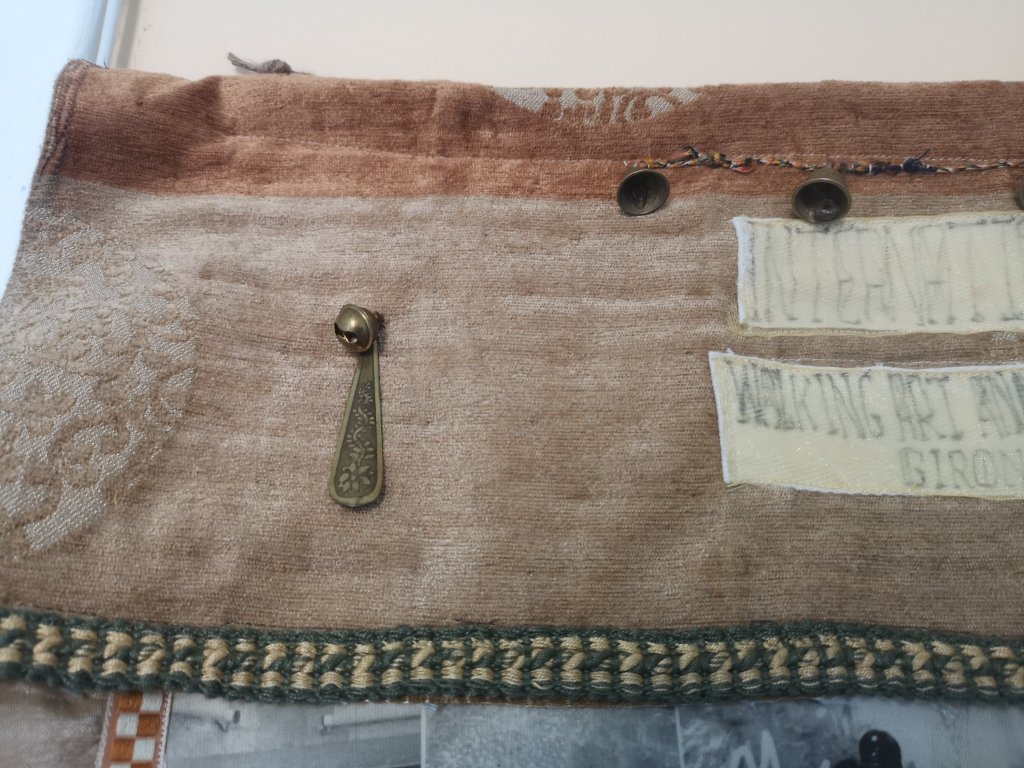
Details: 160cm long and 70cm wide, mixed media – sewed from scraps of upholstery fabric which came from free sample books. Ribbons, tapes and sundry, shiny objects such as bells, earings which have lost their pairs, and sequins. Iron-on paper was used to transfer the photographs onto the fabric.

It incorporates a number of small brass and other metal bells, with reflective totems. These were/are often used to ward off evil spirits, to bring ones attention into the moment, to reflect the devil’s face back to him, and, contrastingly, even to represent the sound of the Buddha’s ‘voice’ spouting wisdom. The protective aspect would also traditionally have been as much from the ‘monkey mind’ and other natural inner temptations, as from what might be attacking us from the outside. Tantric mandalas would have been an aspect of separation and protection from the outer Samsaric world.

Quote: from their ‘Encylopedia of New Age Beliefs: The New Age Movement’, (p. 343, ISBN 9781565071605 archived from the original on 2016-06-03, retrieved 2015-11-15)

The Wall

A Sound Walk and Installation on the Western Breakwater, Granton Harbour, Edinburgh, Scotland. 31 July 2022

Here is a link to the first blog about The Wall

Where can you go to walk along and listen to The Wall?

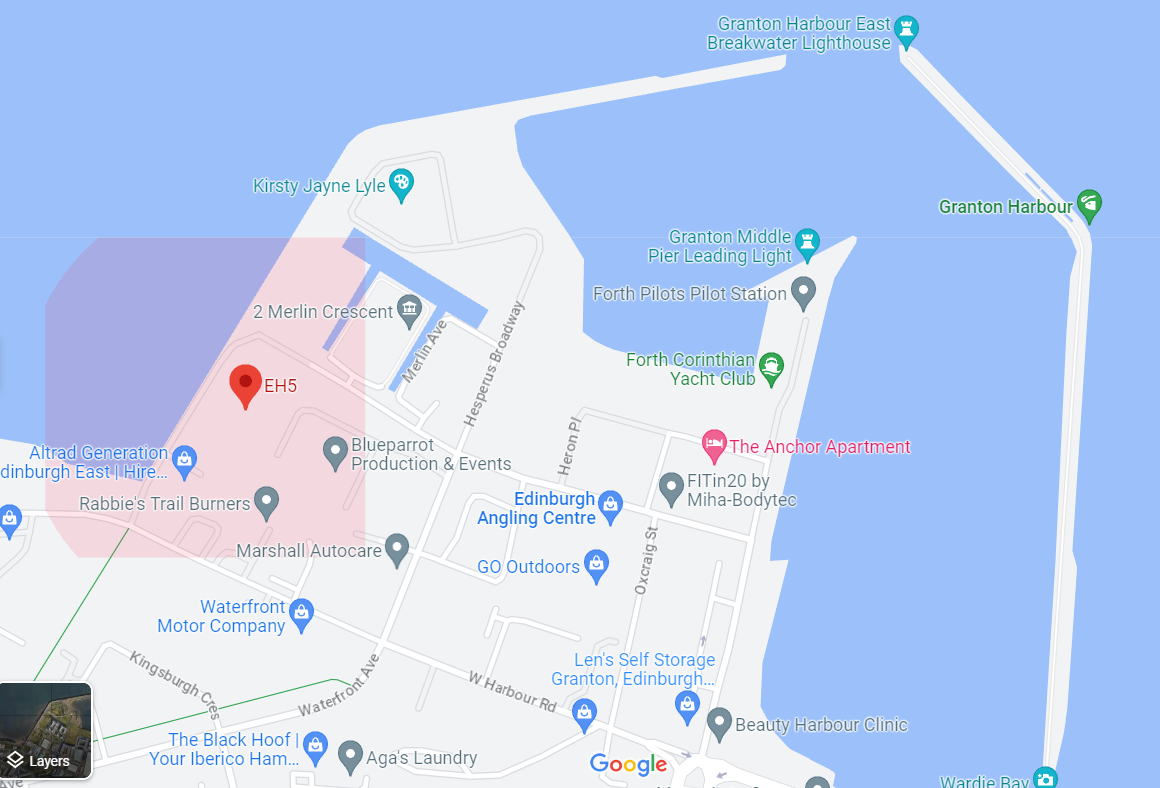
Here are the co-ordinates: 55.984877, -3.232373

What 3 words: ///piles.cargo.whips

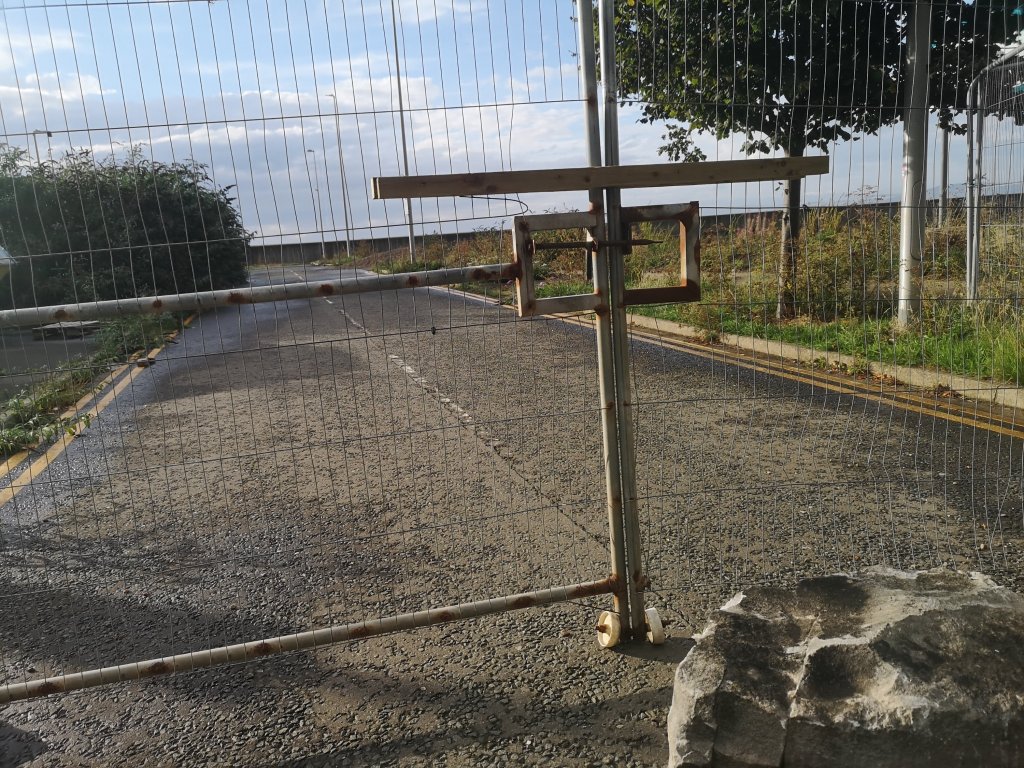
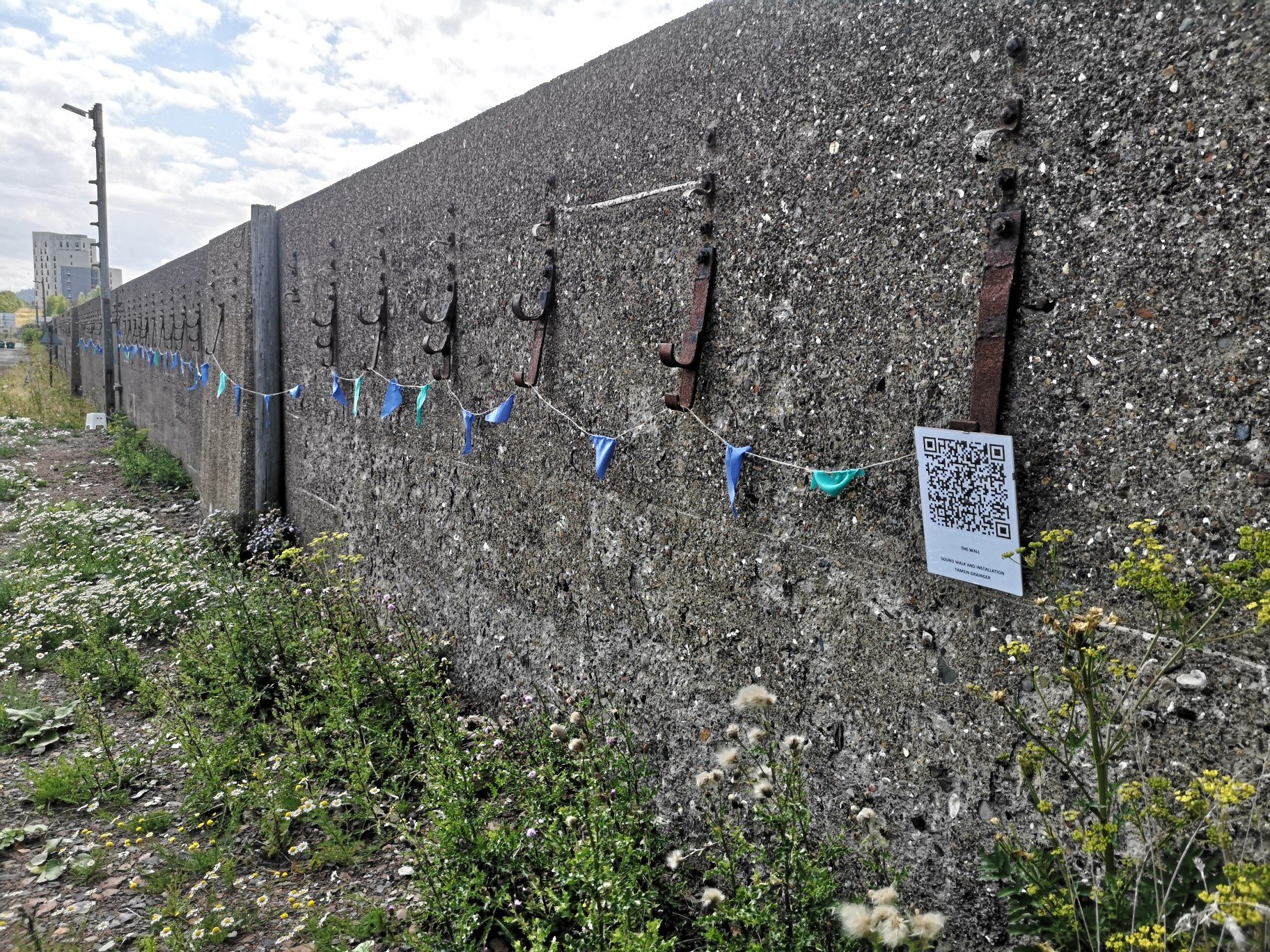
Enter Chestnut Street, turn left along Hesperus Crossway and at the end of the street, walk straight ahead. It may be necessary to find a gap in the fence. You will see the wall in front of you and the QR code should be hanging on a bracket in the section to the left of another wire fence. Otherwise, you can access the Soundcloud recording using the link below and it will tell you what to do and when.

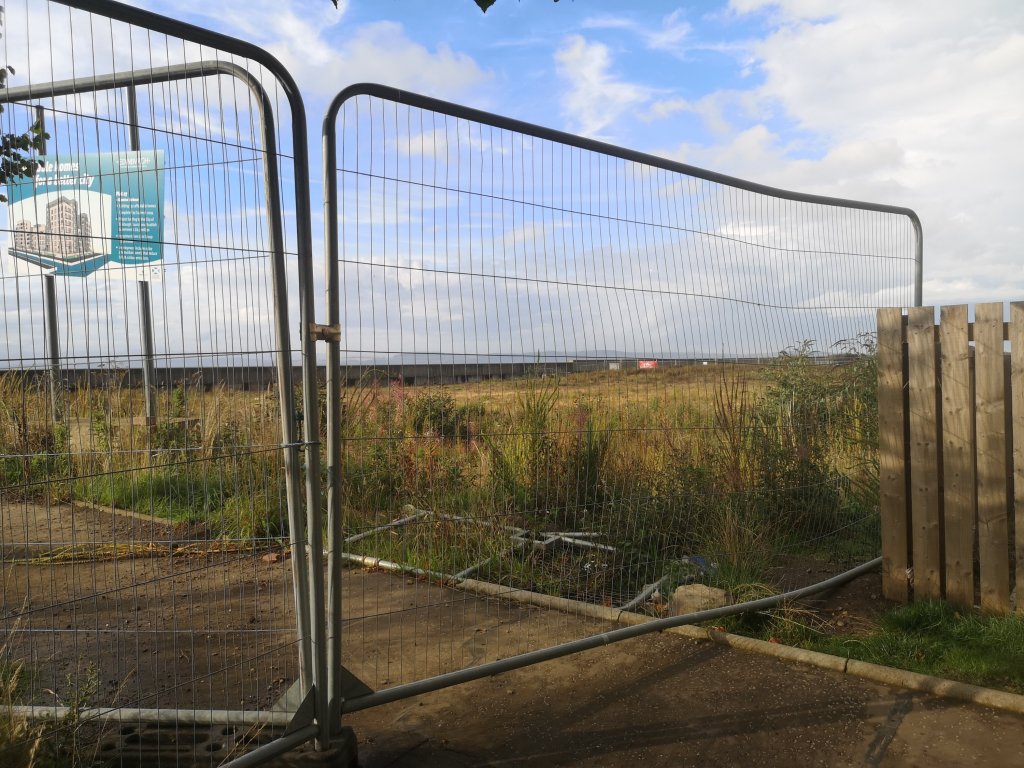
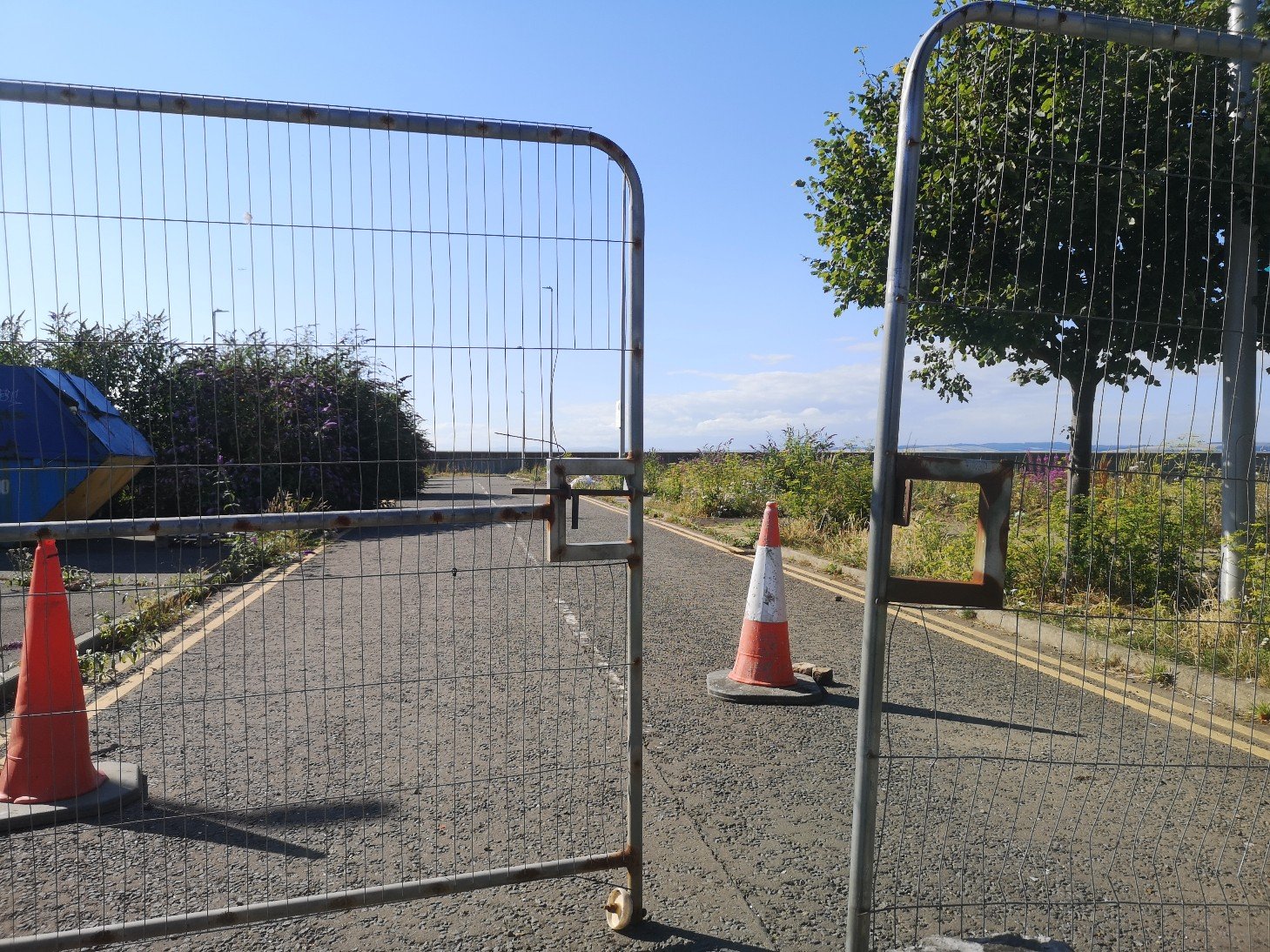
The developers regularly shut off the area (which is ironic (see below)) and it’s sometimes hard to get to this installation. However, if you are unable to, you can listen below, look at the photos, and imagine you are walking!

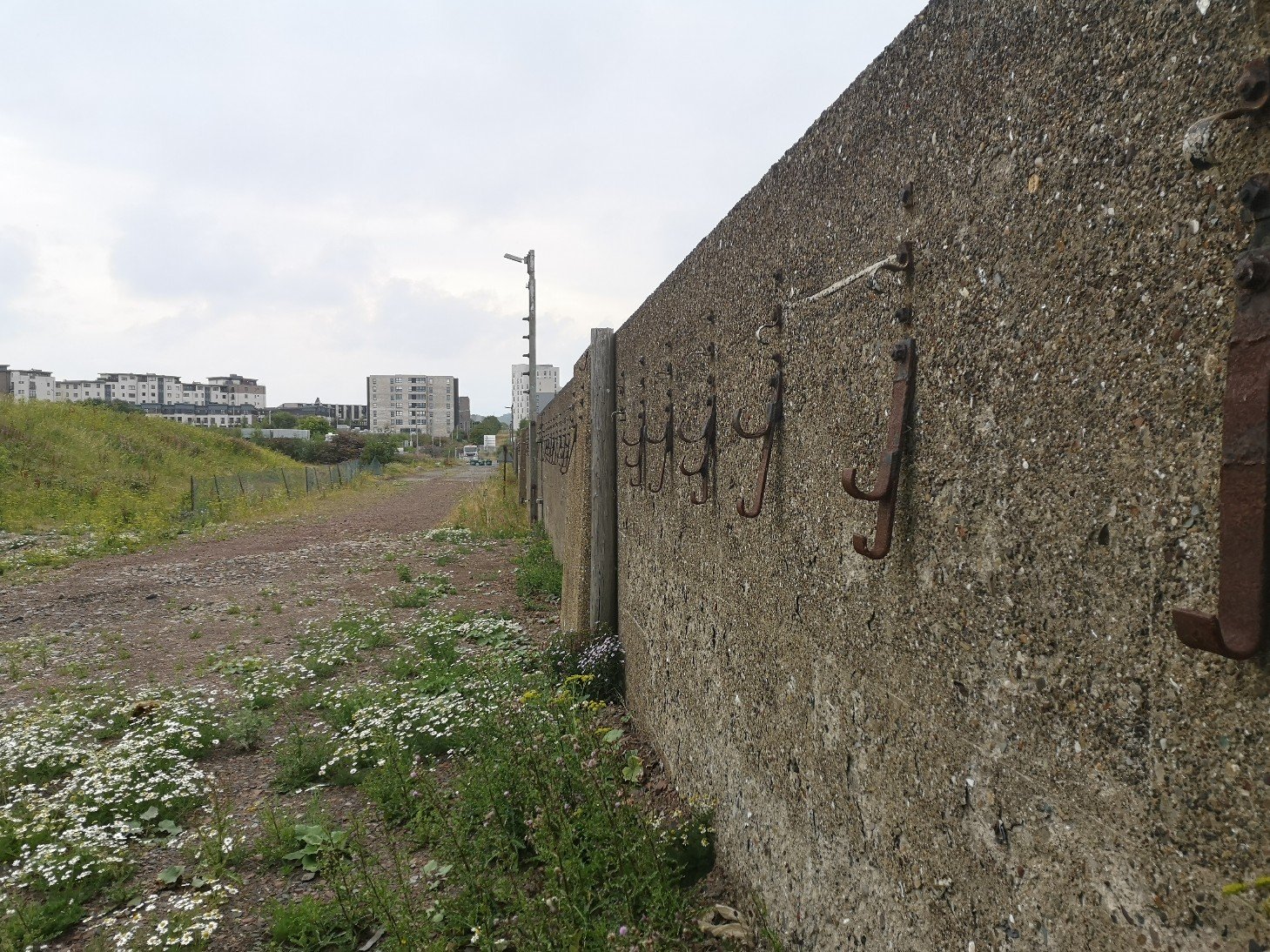
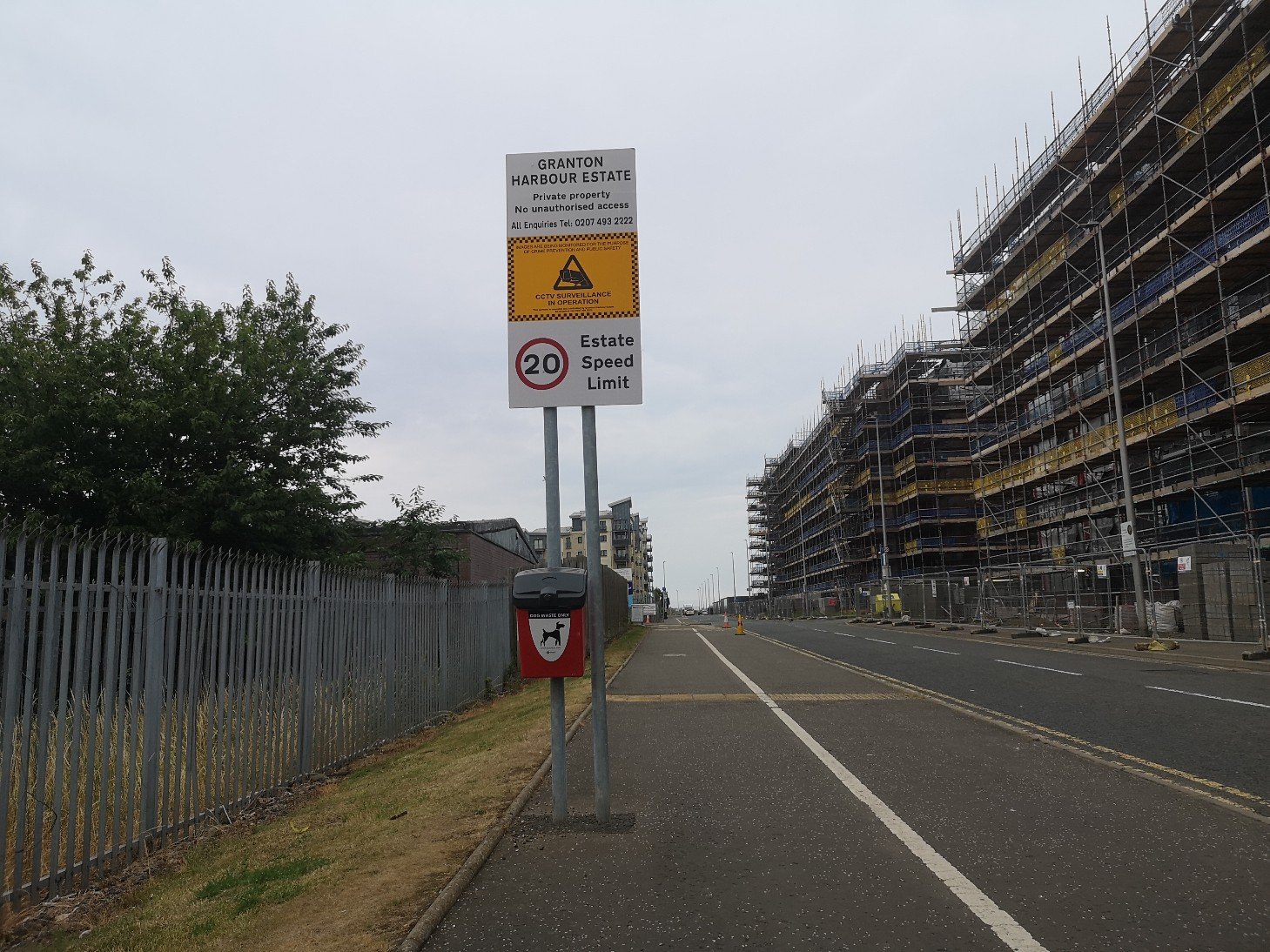
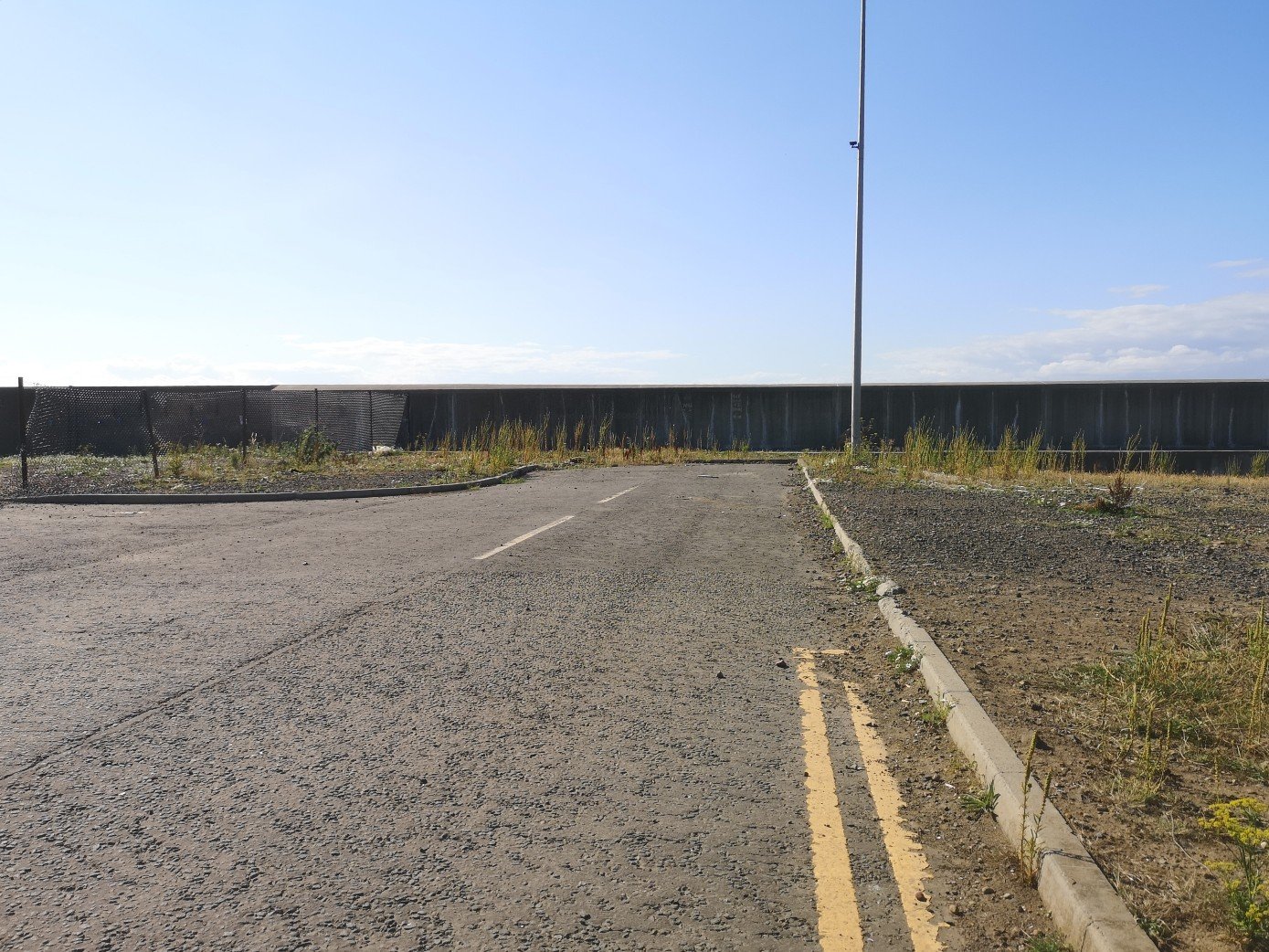
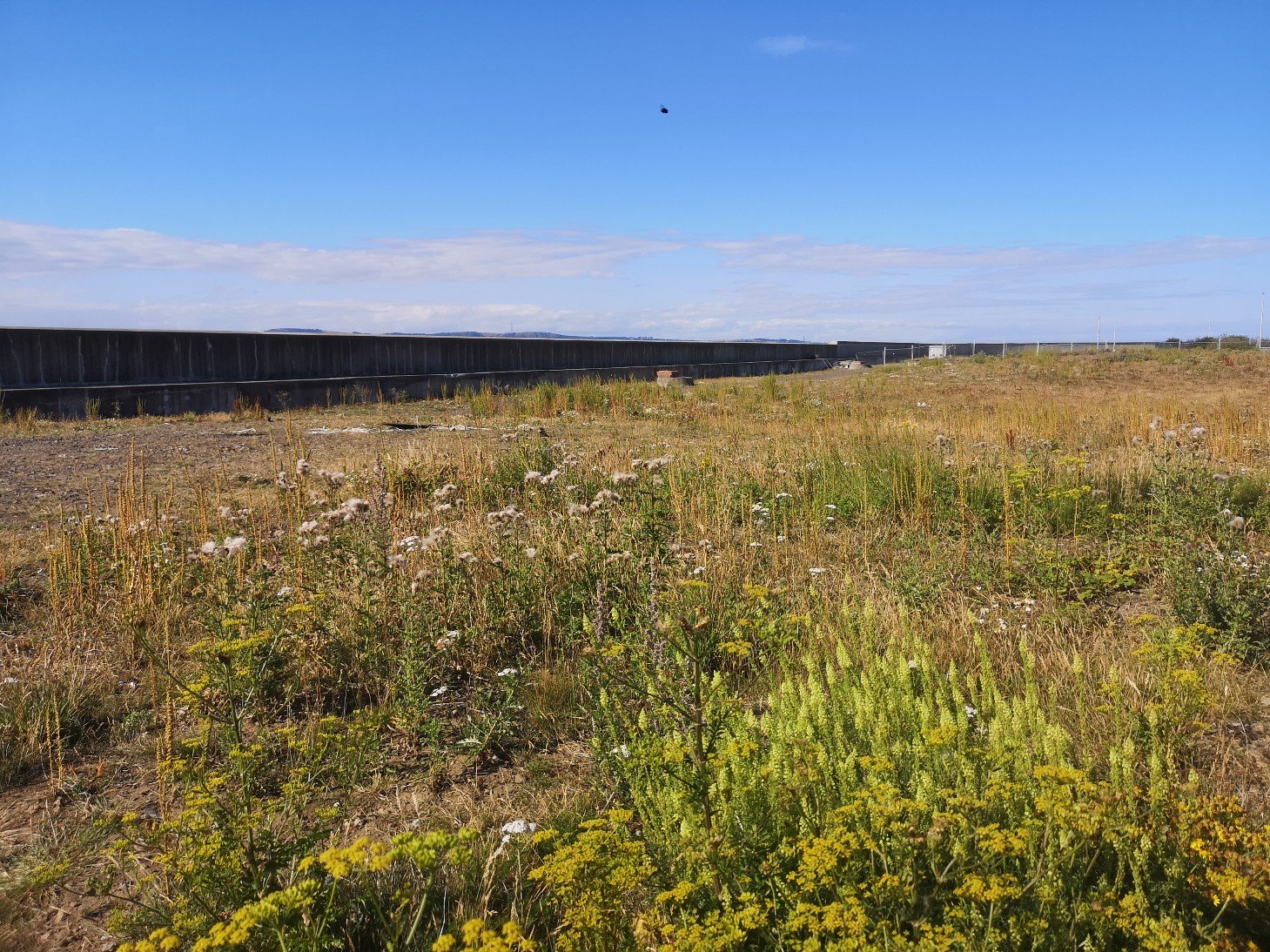
At the very edge of the harbour, bordering a piece of scrubland whose time is nearly up – it won’t be long before it is ‘developed’ – is a tall wall separating the reclaimed land from the sea. It’s hard to find out who built it and why, but I have a pretty good idea. It’s marked as Granton Breakwater on google maps, although there are in fact three ‘arms’ to the harbour: the best known is Eastern Breakwater (note that the beach, Wardie Bay, is to the east side of that); the Middle Pier (recently renamed Chestnut Street – why?); and the Western one where the soundwalk is located.
This is a spot of ‘guerilla art’, in the same vein as guerilla gardening!

Walls have been in the news in recent years and this unprepossessing one tends to go unnoticed, with the general exception of dogs and their companions. It borders the area which is, as I say, undergoing intense development, most of it for the luxury market. The plans show that there will be concrete walkways and a communal ‘garden’.

Walls serve complex functions and produce varying effects on the socio-geographical aspects of an area, an area in this case which has a rich history. The Granton community used to work and play here every day, it was alive with industry, and their voices can still be heard if you listen carefully.

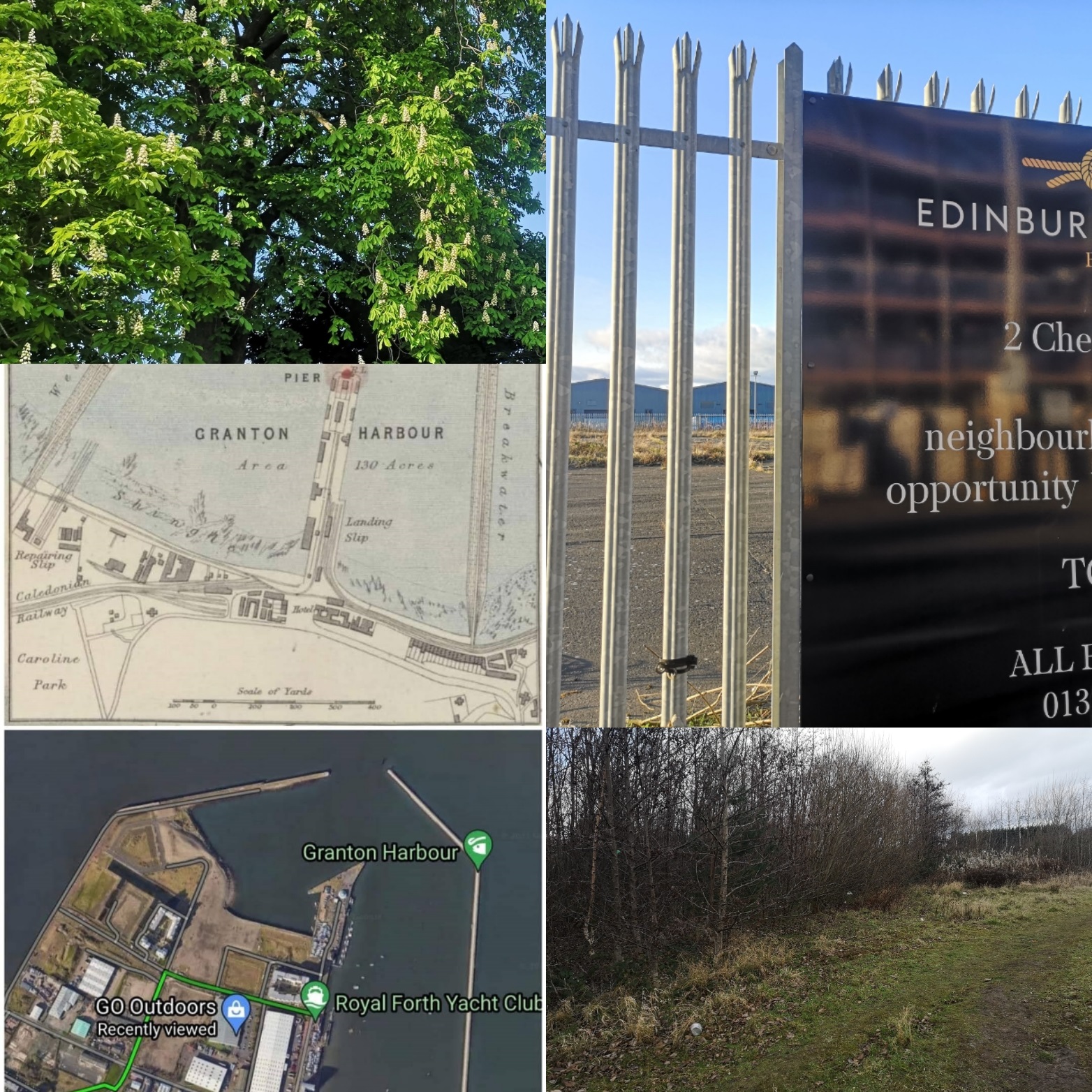
Before – the site of an old railway with hooks for cables

In the meantime, small parts of the harbour have been returned to straight channels of water, and the railway line and its attendant buildings have, in the most part, disappeared.

It is a psychogeographer’s dream!

After

Keeping people in check – restrictions

The wall has a distinctive voice. It is not shy to speak, indeed it wants to be heard, it has something to say. After all, it’s another of those structures, like trees and the sea, which is always in one place, come rain, come shine, and has therefore witnessed a lot of what goes on over the ages. The southern end is still covered with roughcast, a sort of pebbledash, and if you look carefully there are fragments of crockery and other interesting hints of these lives.

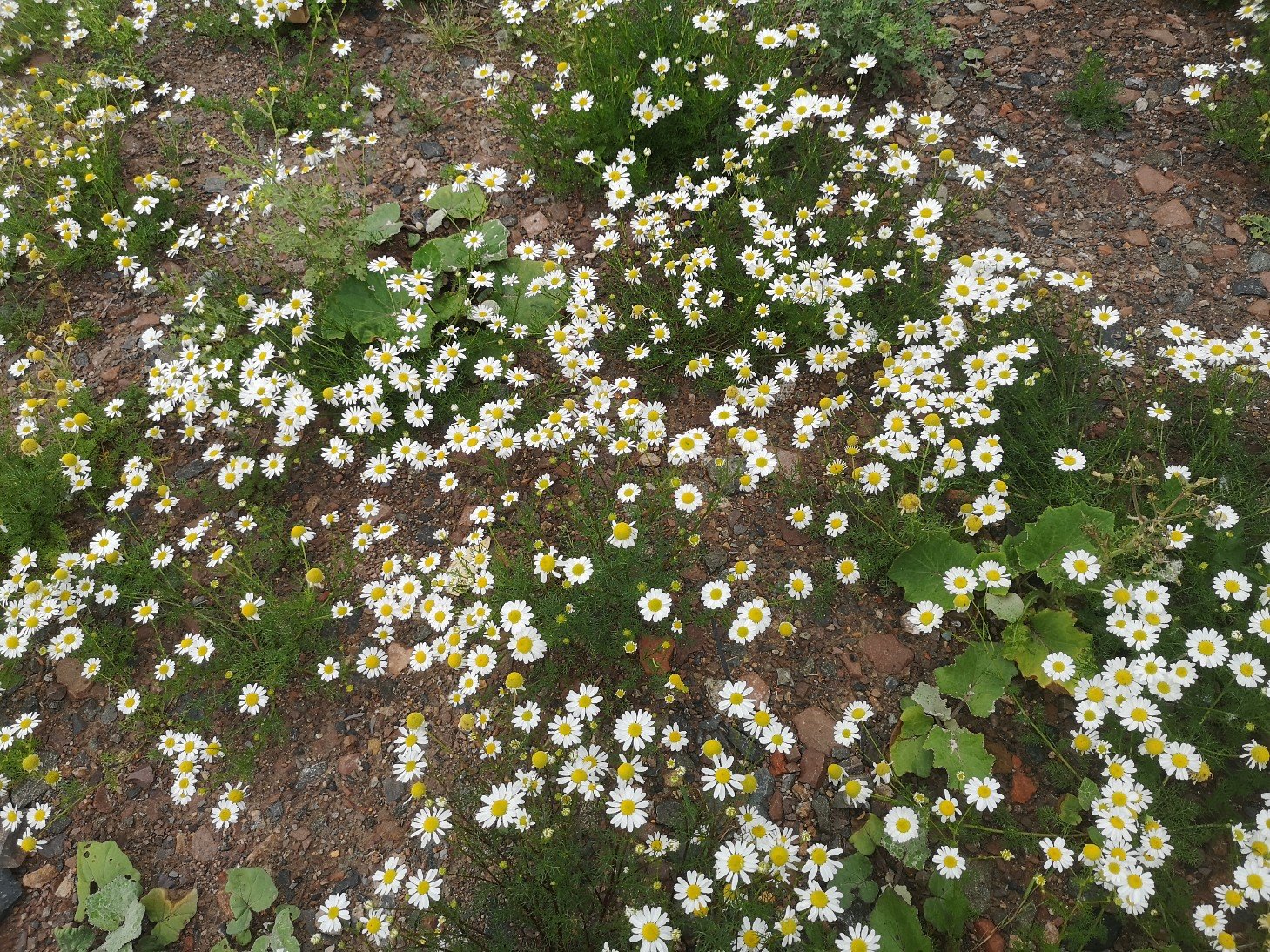
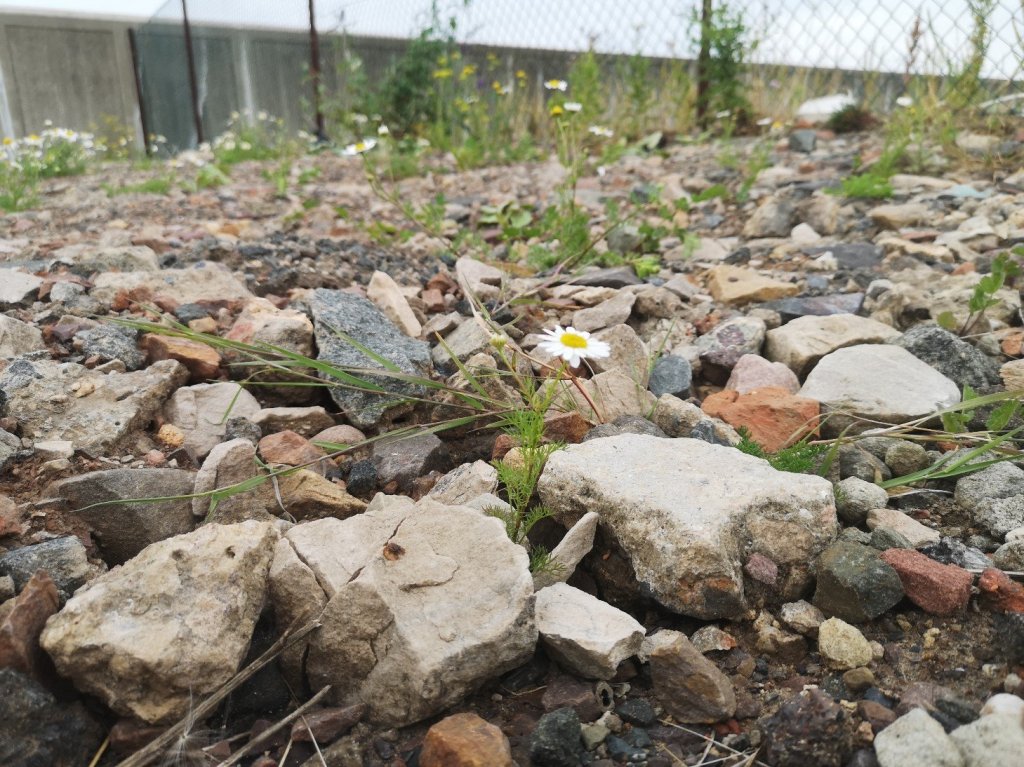
(Beware the thistles! And try not to crush the chamomile, although if you arrive before midday you can gingerly remove a handful of flowers for a tisane which will taste quite delicious compared to the tea bags you can get in Lidl. The plants will simply send out more blooms in response, and their days are numbered).

Chamomile

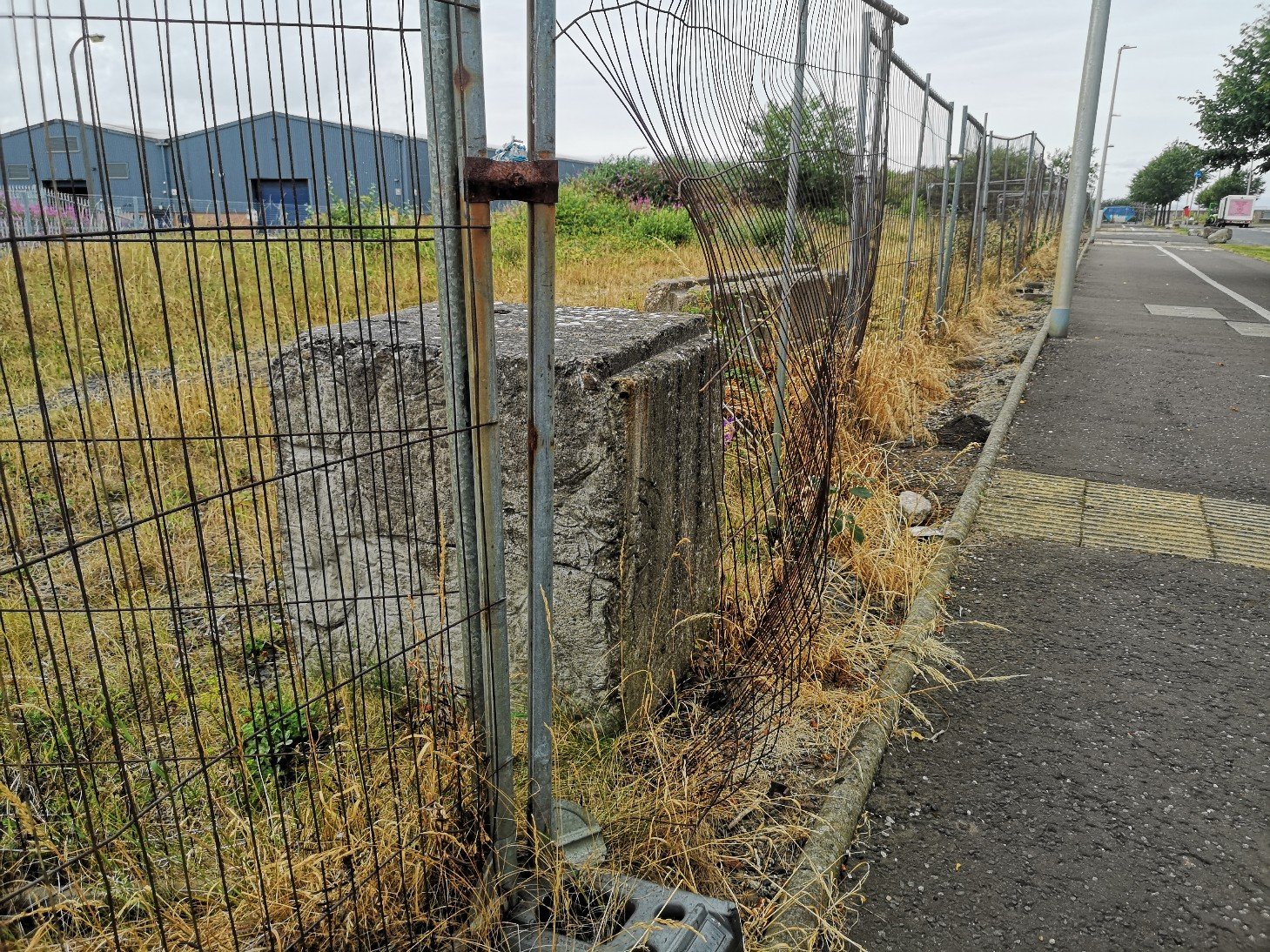
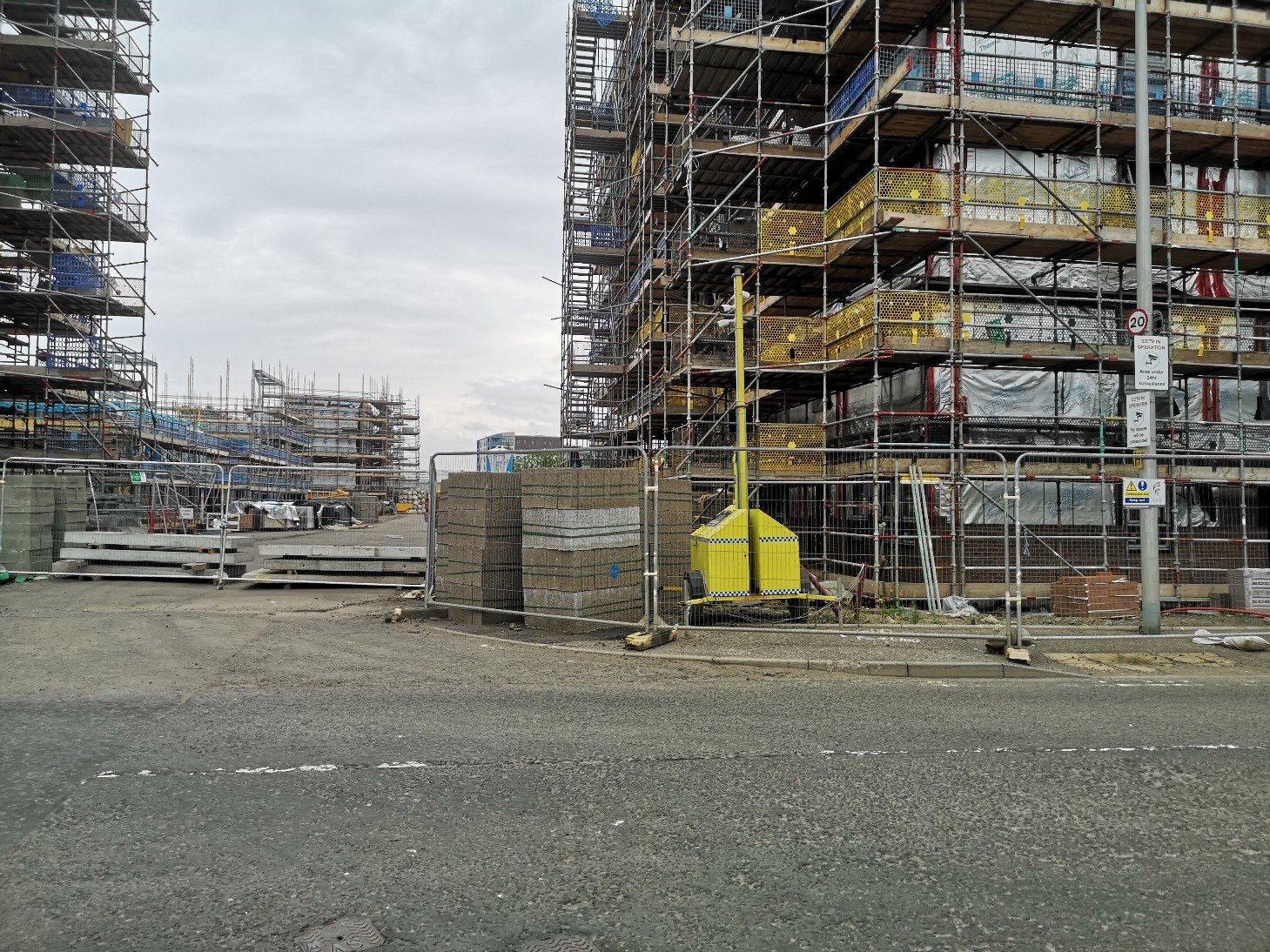
This is a land of fences, and as fast as ‘they’ put them up, people have found ways through. Mostly. This was, after all, common ground for nearly 200 years. However, there are two places now where access / exit is impossible, making it necessary to approach the installation the long way round, past security cameras, and for no discernible reason.

Hesperus Crossway

During the past few years, place names have been changed, walls have been smoothed over, fittings removed, and ‘messy’ buildings have been redecorated so as to almost wipe out any hint of their former daily functions. The result is a gentrification and appropriation (in the name of regeneration), which erases most external reminders of the past. It must be remembered, though, that ‘the past’ was made by people, and many of those people still live in the area. Their memories are part of who they are; this past is a valuable part of their lives.

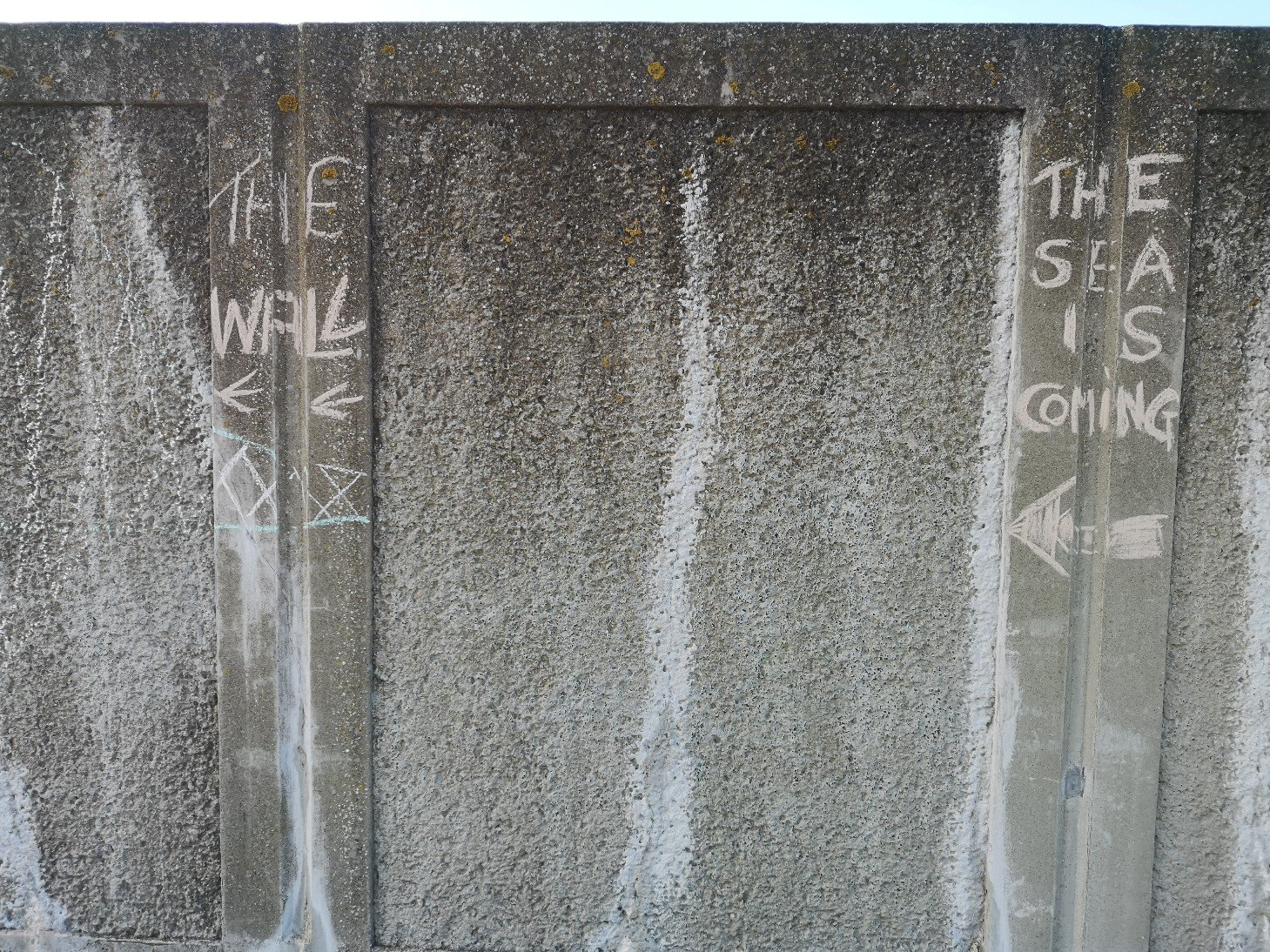
The chalk mural will disappear over time, and if a previous installation, No Birds Land is anything to go by, it may also be vandalised. These changes will be part of the duration and time-based aspects of the piece. It will be difficult to know who walks, hears and sees the installation, but by pacing the edgeland like this, learning about this liminal area and feeling the effect it gives, it is hoped that you and it will be stimulated. (Since then I have used spray chalk to redo the mural which should last longer in the weather.)
The Wall

You can locate this soundwalk and installation by taking the West Harbour Road, and turning onto Chestnut Street. There is a ‘Private’ sign. Turn left onto Hesperus Crossway, and go to the very end of the road. 

what 3 words: ///voted.cycles.impose

Slip through the fence and walk forwards. It is a dead end, and in front of you is The Wall.

There is a new fence to your left, meeting the wall at right angles, part of which has been pushed down. You can go over that into the section of scrub land and walk towards the wall. There you will see the QR code to scan with your mobile phone and can then listen to the walk (headphones will probably be best).

You will see some of the chalk drawing ahead of you, and the wall (made of sandstone from the Dukeof Buccleuch’s quarries on the Granton Estate, ashlar and some of the larger facing blocks were quarried in Fife) stretches to both sides with the main part of the installation to the left. Once you are listening to the audio, you can walk in each direction according to the instructions, or make your own choice. In total the sound walk is 13 minutes 44 seconds, and it could take you around half an hour to 45 minutes to explore the whole.

Please note that there is nowhere to park except on West Harbour Road, so it’s best to cycle or walk. Or, you can get a bus to Granton Square (16, 47, 19, 200) and walk from there – it will take you around 10 minutes.

If you are not in Edinburgh or cannot get to the harbour, here is a link to the audio part.

Quotes and references are from/to

  1. Henry Wadsworth Longfellow, The Wreck of the Hesperus
  2. Rachel Carson Under the Sea Wind
  3.  RLS ‘From a Railway Carriage’
  4. Local street names

I have tried to upload the walk to the Echoes app but it has been unsuccessful. I will try again later.

You may also like to download the Curious Edinburgh app, which will take you to other aspects of the harbour and tell you all about it. Also the Granton History and Railscot websites.

I lead a community walk as part of 4WCoP22 on Thursday 4 August at 1pm in person (meeting Chestnut Street), and you can find out more about it here.

International Walking Encounters – Cataluña

The Project – part 1

June/July 2022

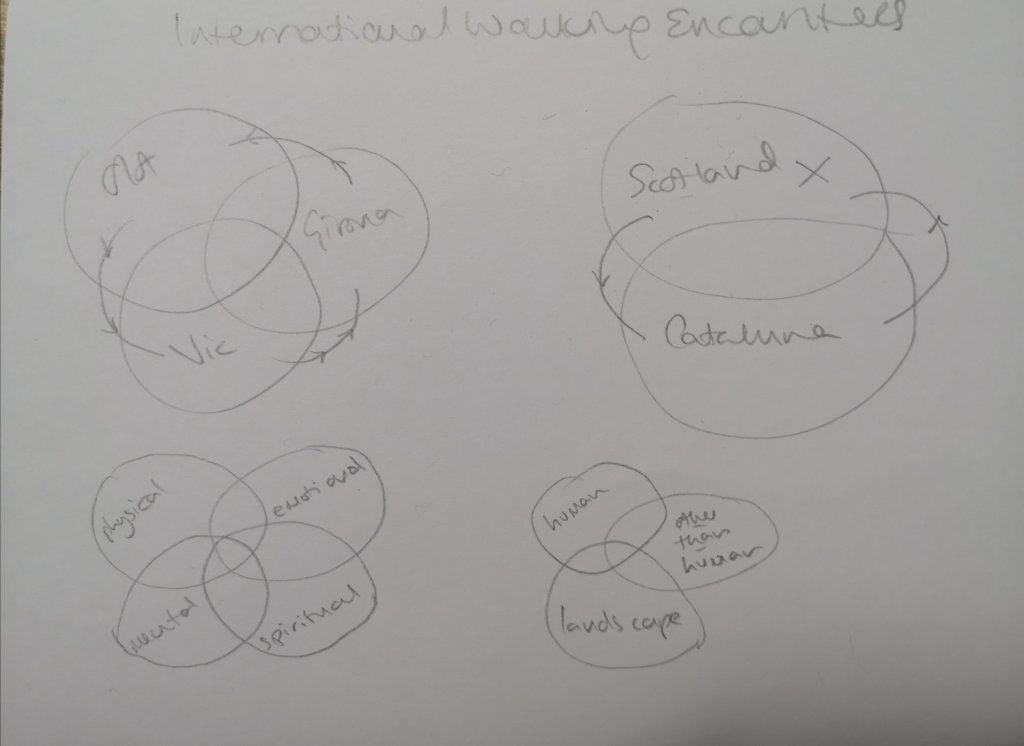
The first part of The Separation and Unity Project between Edinburgh and Cataluña takes the form of walking, walkshop and outdoor performance as part of WALKING ARTS ENCOUNTERS, Walking Arts and Relational Geographies

There is a spiritual-political-geographical link between Edinburgh, Scotland where I live, and Cataluña in the Iberian Peninsula where the Encounters are taking place (Girona, Olot and Vic). In both countries, we have long been engaged in matters of self-determination, with debates over separation and unity, community, national and inter-national relationships. Whilst primarily represented as a battle fought in law courts and parliaments, or between opposing protesters on the streets, this has often been a binary approach. It is necessary to spend time listening, sharing and making work with artists and members of the community in order to understand each other better and find possible ways forward.

Europe is defined, in many ways, by borders. They speak of crumbled empires, shifting boundaries – most of them, …. speak of unimaginable suffering.

Kerri ni Dochartaigh ‘Thin Places’ p17

As a walking artist, secular pilgrim, feminist and outdoor performer, I will carry the awareness of these issues from the Scottish hills to the Cataluñian mountains, from Edinburgh’s extinct volcanoes (Arthur’s Seat, Calton Hill and Castle Rock) to the volcanic land of Olot, and between the Oak Wood in Dalkeith Country Park and the oak trees of the Plain of Vic.

I have been walking the St Margaret’s Way through the carboniferous volcanic rocks of the Burntisland area in Fife, Scotland, and will be able to carry my experiences with me on the ancient spiritual path which unites each of the three conurbations where the Encounters are happening, the Camí de Sant Jaume (Camino Catalán).

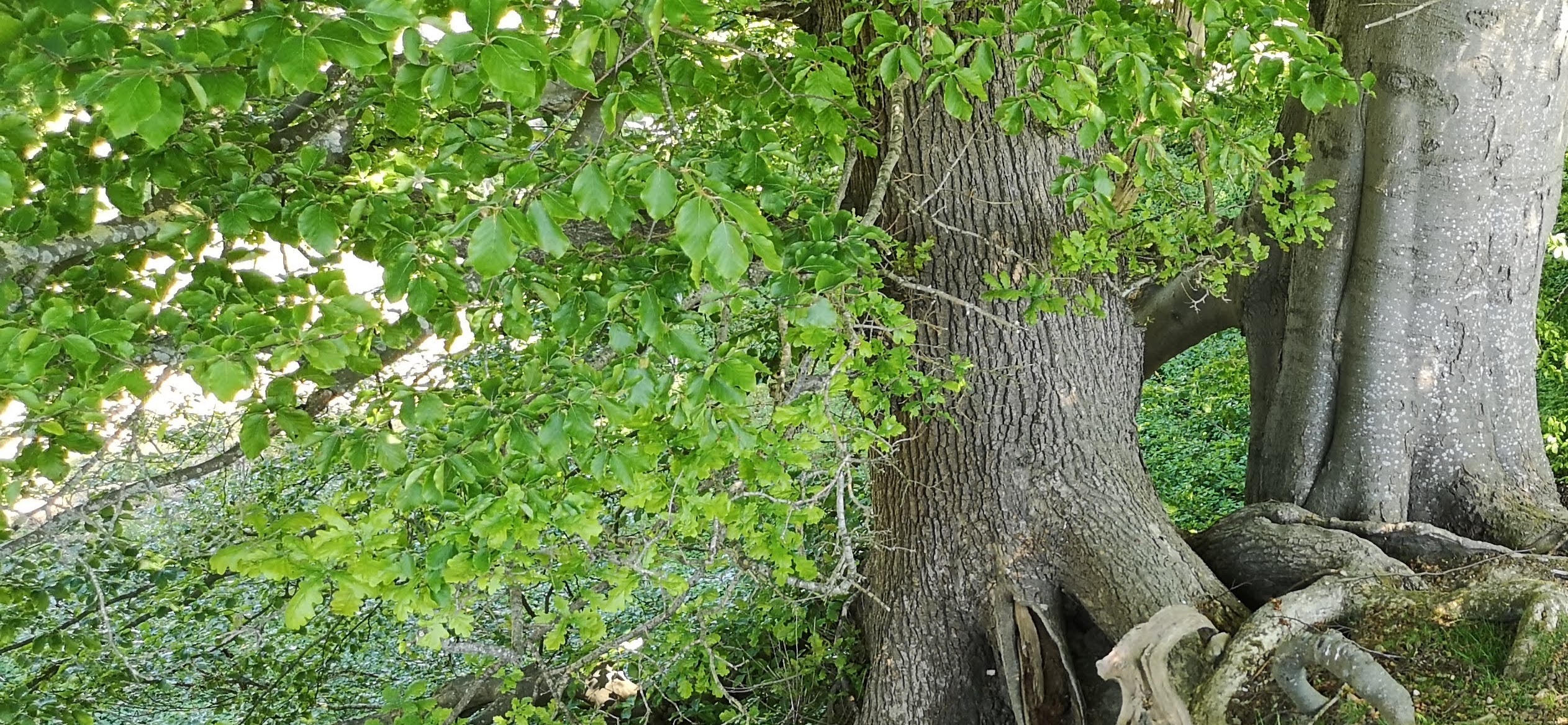
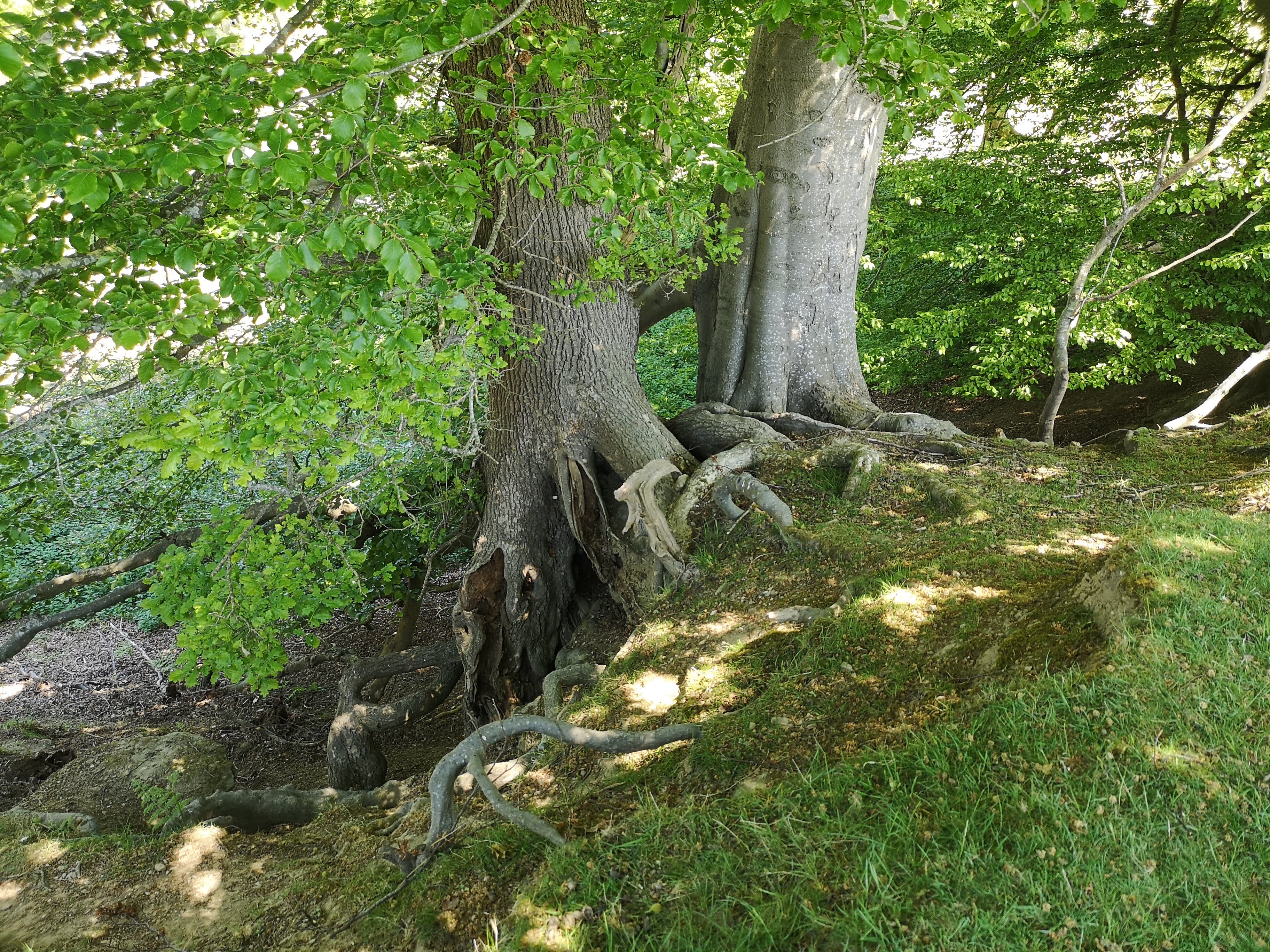
Co-mingling of Oak and Beech

Separation and Unity

This is the artistic focus

  • in the human experience (notions of belonging and alienation, shared feeling and dislocation)
  • consideration of the other-than-human and our relationship to that realm; and in the landscape

Documentation:

  • Impromtu performance
  • Collecting words, images, marks, and sound segments
  • Mapping
  • Film and pamphlet on return to Edinburgh

Collaboration with delegates during the International Encounters will take the form of walking sections of the urban camino together in each of the three locations. This ritual series of three mini pilgrimages will be a way of considering the spiritual aspect (in the widest sense of the word), and the trinity of psychogeographical outings will form a unity between the three sites for the purpose of comparing sensations, ideas and feelings. Each walk will start with an embodied exercise for individuals, a group game for unification, and prompt = one hour in each place:

  1. Girona: starts at the Catedral de Girona to Pont de L’Aguia 9pm for 40 minutes
  2. Olot: starts at Plaça Major to Pont de Sant Roc 6.30pm for 30 minutes
  3. Vic: starts at Catedral de Sant Pere de Vic to L’Atlàntida Centre des Arts (35 mins 6.30pm
Co-existence and mutual reliance

I will be making contact with women for whom this focus is pertinent, both in Scotland and Cataluña. As always I will seek Shiatsu practitioners with whom to exchange.

#walkingandrelationalgeographies @naucoclea #artdelcaminar

Here is a link to the Art del Caminar conference film

Winchelsea to Rye

6 January 2022 – a winter walk between Winchelsea and Rye, East Sussex

Taking the cross-country route from Winchelsea between the yellow and white roads above, through Rye, then from Rye Harbour to Camber Sands
Gateway to a frosty walk – Winchelsea’s Medieval arch, East Sussex

I knew Winchelsea when I was a girl because my granny lived there for a while. My family and I visited for special occasions and I went to stay with her, once on my own and once with my sister. It was the time I was there alone which has remained in my mind.

View ahead – where I was going to walk across the marshes to Rye, East Sussex

I was allowed, perhaps encouraged, explore without a grown up. I remember ranging down slopes, across dried cow pats and over little, soft hummocks. I walked and ran, then I lay down and I can recall the feeling of being there all these years later.

I have a visceral memory of the give of the land underneath me, the warm scent of rabbit and sheep pellets, my nose close-up to the goldening strands of springy turf, the upright threads of harebells level with my chin.

Harebell

When I returned, some forty five years later with mum, the first thing I saw was a dead blackbird on the pavement in front of the church where Spike Milligan is buried.
Blackbird – loss

I must go down to the sea again,
to the lonely sea and the sky;
I left my shoes and socks there –
I wonder if they’re dry?

Spike Milligan

It was such a fine-weather day to be walking out.
Towards Rye, East Sussex

Mum and her friend asked, How will you get there? But I knew there would be a path, somehow, and there it was.

A sign of the path

I walked from this small cliff-town – what is sometimes called New Winchelsea – to her sister Rye, larger and more cosmopolitan. Rye and Old Winchelsea used to be side-by-side until the terrible storms of the mid-13th century when the ocean drowned the Old Winchelsea, a vibrant Cinque Port trading in wine. Pilgrims once put out for St James of Compostelle in Spain from there.

Bullrushes

There was ice in the ploughed ruts and water everywhere. I followed the designated way, but it was little more than a desire path.

An icy morning
Desire Path
Water courses abound on these former marshes. Winchelsea to Rye, East Sussex
Frosted undergrowth
I took the wooden bridge between the stalks
Still sweep reflecting the sky

I caught my foot on a plant and fell over, of course, arriving into the town to meet friends with mud all over my trousers. Then we walked some more, as the rain came on, along Camber Sands. My siblings and I used to make sand castles with dad there. I remember how the sea was so, so far out and we had to walk ‘miles and miles’ to get our feet wet. All those years ago.

There are holes in the sky
Where the rain gets in
But they’re ever so small
That’s why the rain is thin….

Spike Milligan
From Rye Harbour, view across the River Rother to the Discovery Centre
Mouth of the River Rother as it meets The Channel
Camber Sands

Links

The history of Winchelsea

Radio 4 ‘Ramblings’ about Winchelsea

Here is a circular walk in the area with directions