Abandoned Walk

This project was conceived by Kel Portman. We drew a straight, red line the length of the UK on a phone map between our homes (334 miles) and started to walk along it towards each other; Kel from his doorstep in Gloucestershire and I from mine in Edinburgh. We allowed one day and had to abandon before meeting in the middle.

5th April 2022
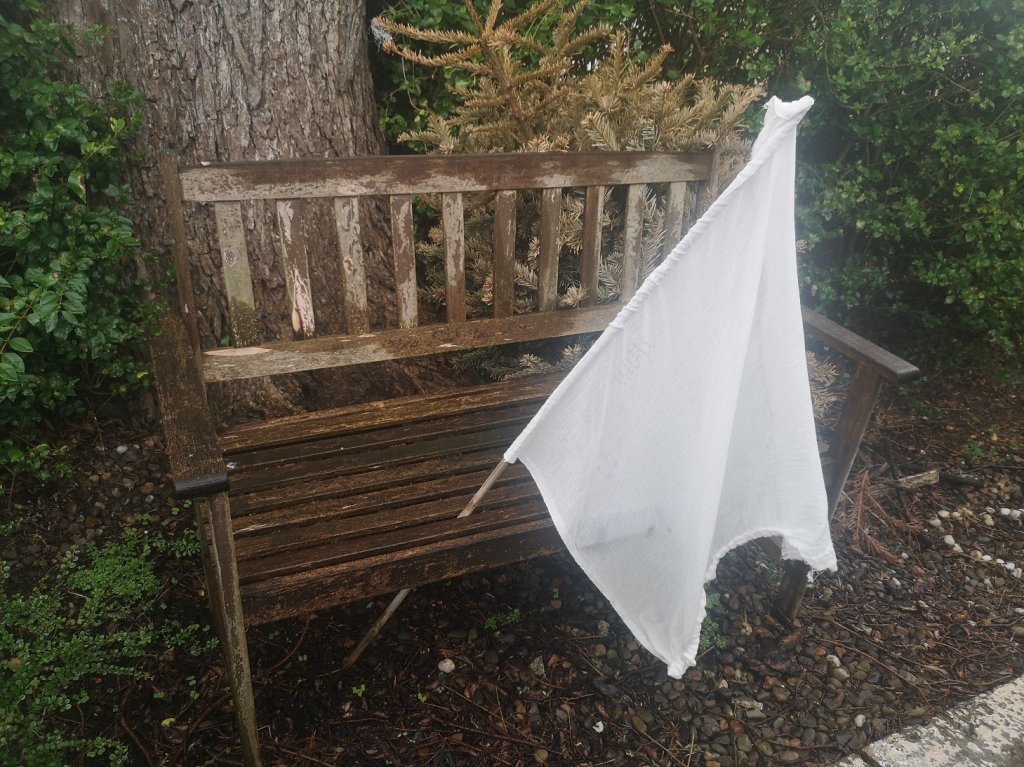
Home, the starting point. I took my white flag with me for Peace (the Ukranian war was moving into its third month)

Let’s begin with the weather! It was wet, not pouring though, and I was on familiar ground. Strange that one’s sense of distance changes if you set out for long walk – I seemed to be in Inverleith Park in a matter of minutes. Slow came the raindrops.

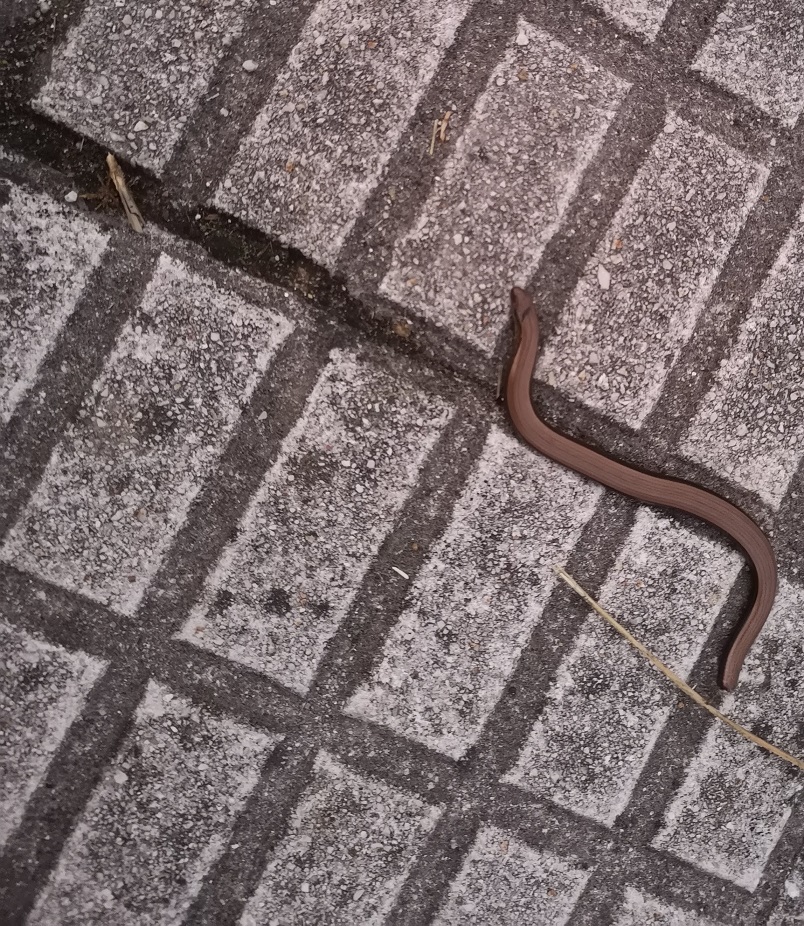
I passed a worm on the pavement and admired a Tree Creeper bird as he did just that.
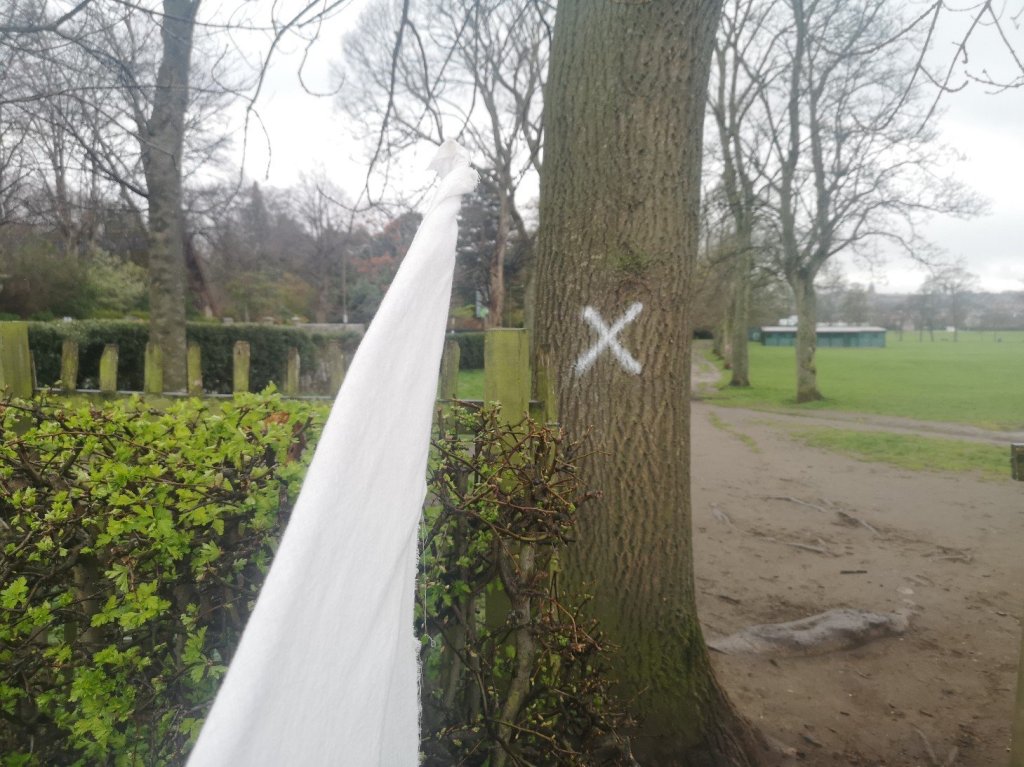
I hope this strong and upstanding tree is not condemned. Inverleith Park, still on the north side of the city of Edinburgh

I have a book of poetry with me by Denise Riley, ‘Say Something’. Stopping after 2,108 steps in Stockbridge, overlooking the Water of Leith and one of Andy Galsworthy’s statues, I count 21 words from the first of the book and write the next ones on the tabula rasa of my flag: “I understood as a stone”.

I added to my flag at each of my stopping places and in this way I made a Found Poem for the walk.
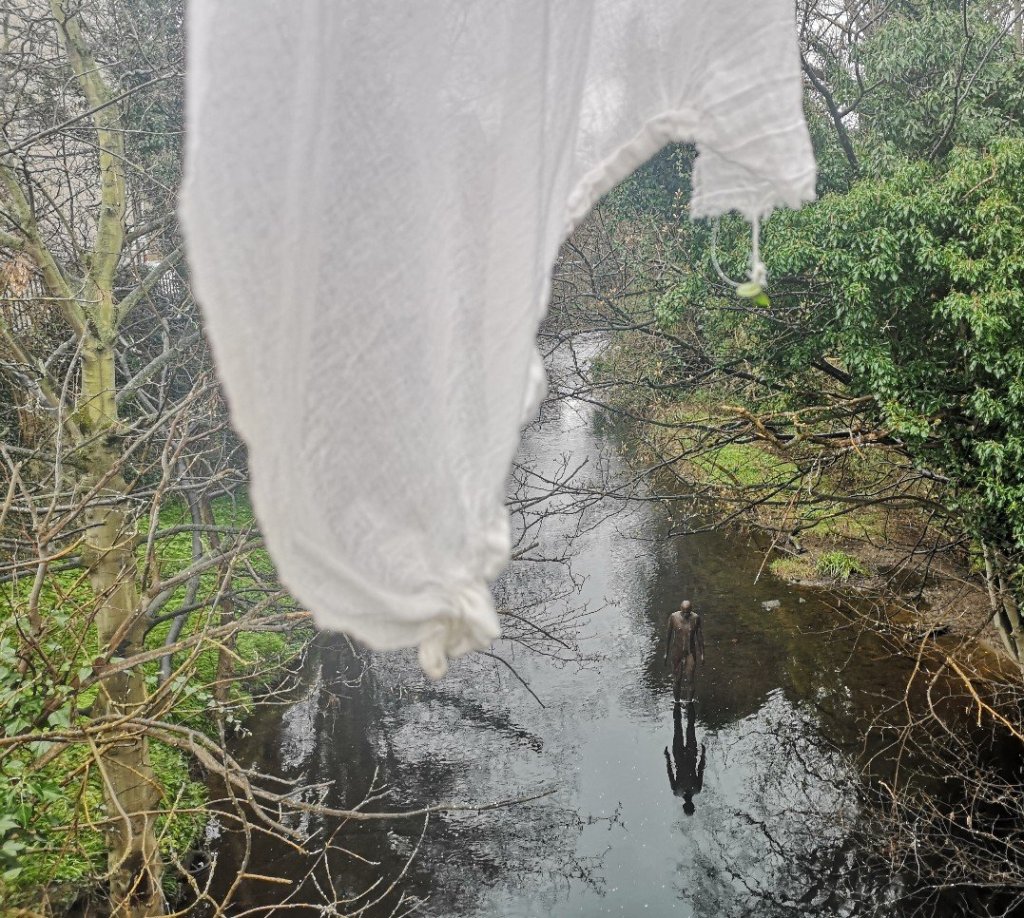
I took the hint and put myself in to the rock that I was standing and leaning on. I felt stalwart.

Walking further uphill through the New Town, there are removal men stacking a truck. One says, “it looks like you’re surrendering”. I remember a conversation with a Polish taxi driver last week who said that the Ukraine should surrender, to save lives. That was during the fifth week of this pointless war that Putin is waging. Perhaps my flag is going to prompt some interesting and topical conversations with people I might otherwise never discuss politics.

I guess I am surrendering to the route to the idea of this walk, and to the wet.
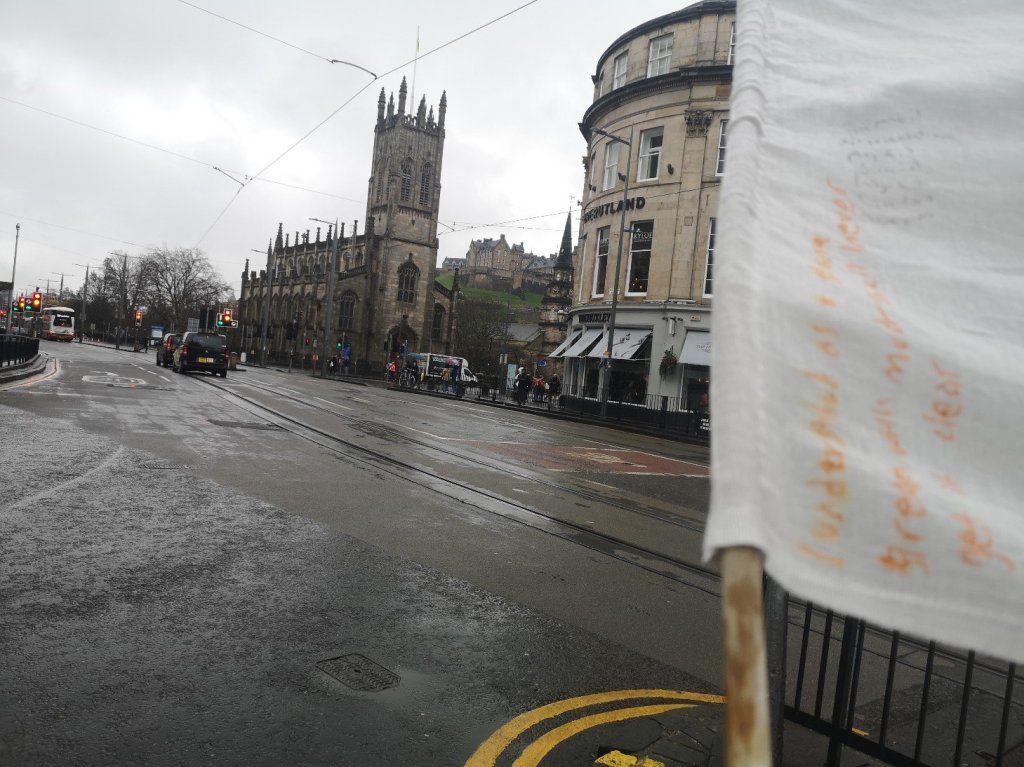
The second sloppy, muddy stop on Princes Street with Edinburgh Castle in the background

Phone call #2 with Kel is at 10.03am. I tell him that, of course, Edinburgh residents are used to people doing weird stuff on the street, because of the annual summer Festival with its buskers and theatricals. My new app said 2,891 steps so 28 words further on into Riley’s book I copy my second phrase in the orange pen: “stream with mud-shall I never get it clear”.
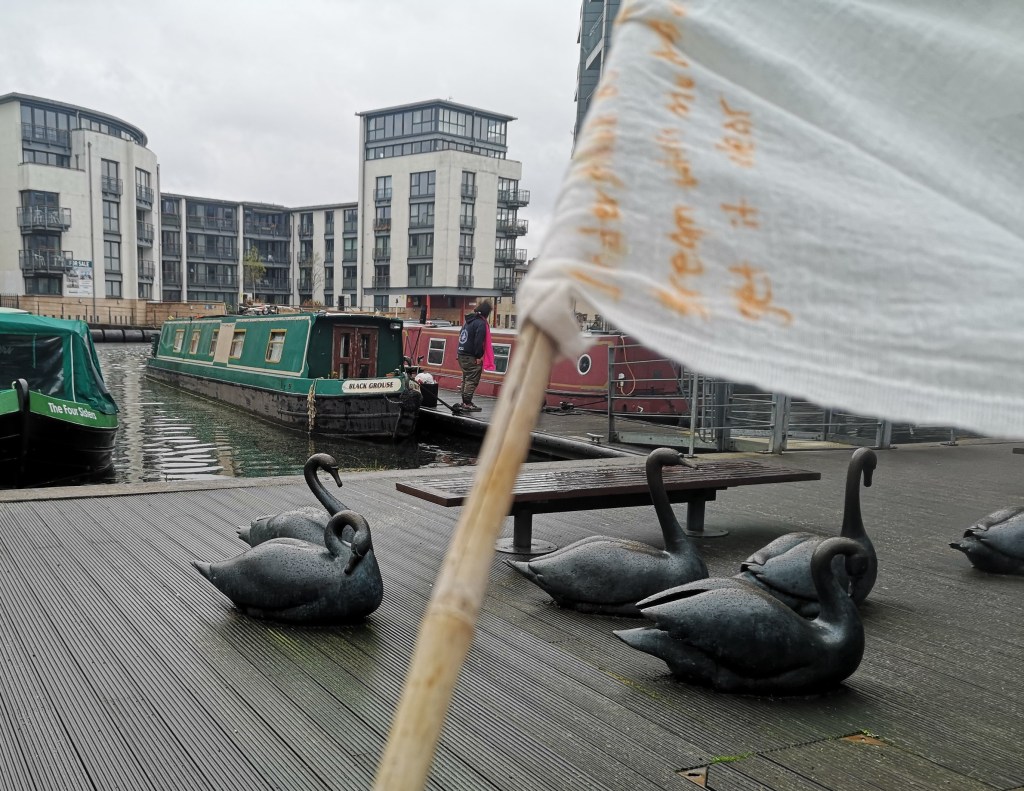
Lochrin Quay, Edinburgh

Moving from one watercourse to another, I am making my way steadily behind the west side of Lothian Road to Lochrin Quay, the beginning of the Union Canal. Here are swans and seagulls and the start of the water’s journey to Glasgow and the west.
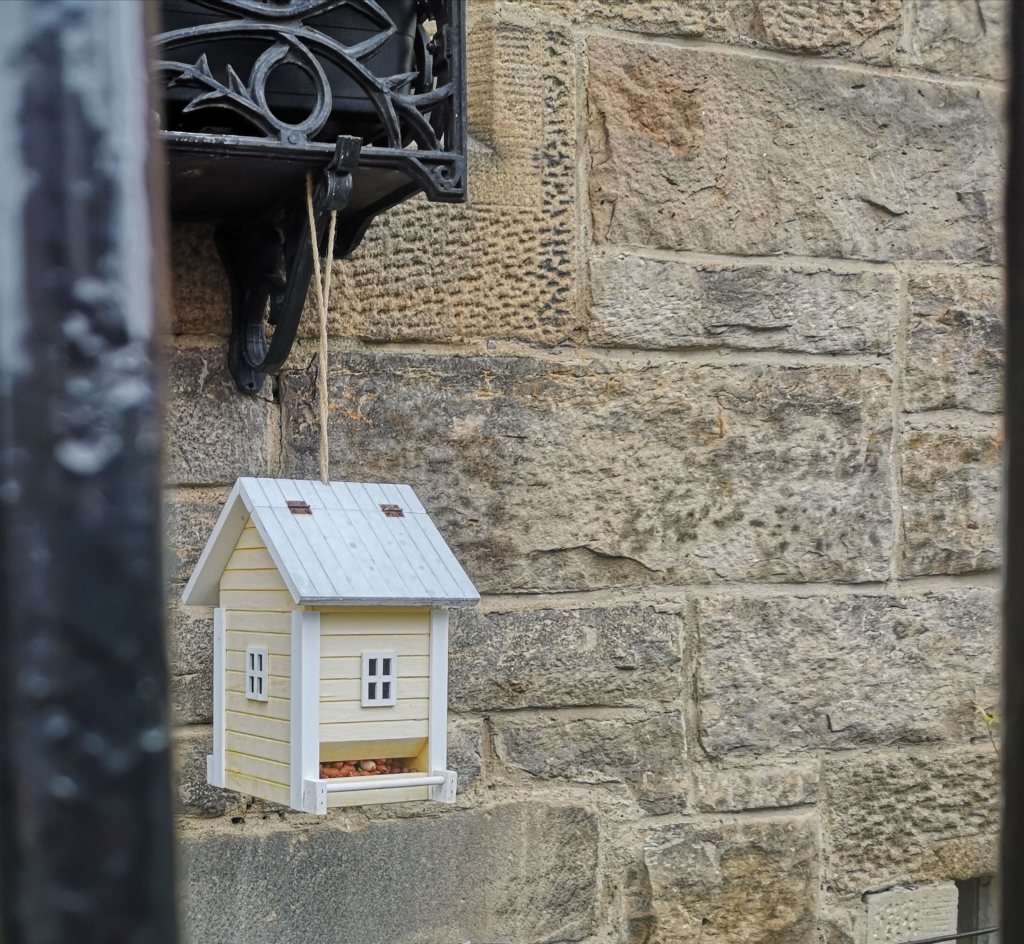
A wee white hoose hangin’

Still attempting to follow the red line as closely as possible, I am being taken a new way, winding through residential areas which are peaceful, all except for repeated deliveries – vans hopscotching up the street from door to door.

To surrender: to give in. Also – to allow your instinct or others you trust to lead you. To listen to what’s drawing you on, for signals to turn right or left. It is a blend of controlling and releasing control.
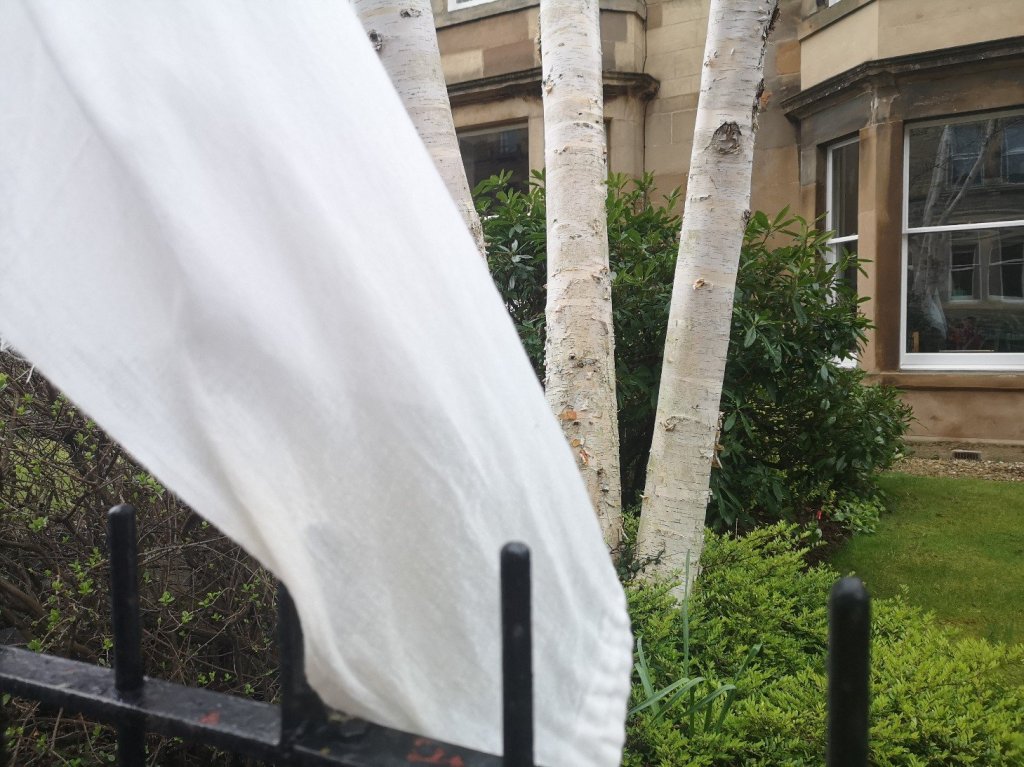
Himalayan (silver) birches in a front garden

Surrender – I’m getting interested in this ‘given’ theme: to say ‘yes’ to Kel’s prompt, follow the line which happens to connect us on the map and see what happens.

Now I’m entering ‘the South Side’ of the city. I nip into the Bike Shop for a wee. More climbing. More detours around gardens that only key holders are able to sit in. Where to have my picnic? I cannot find any seats – it’s a recognised issue in Edinburgh which I understand is to stop homeless folk sleeping on them. Instead, I pass piles of grubby bedding at pavement corners. It must be so cold.
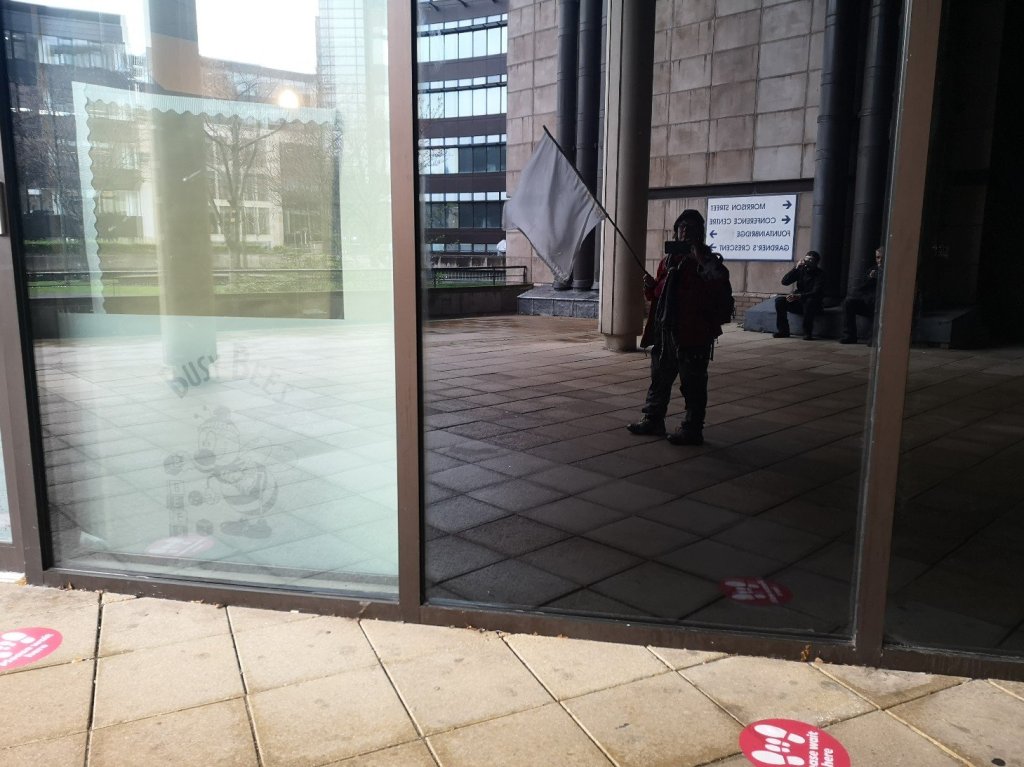
Self portrait with flag

I perch on a post and nibble my oatcakes.

Number 3 stop is at 4,521 steps and I count 45 words by the railway line. I am noting the difference between my phone’s two step-counting apps (the other says 11,476 – oops).
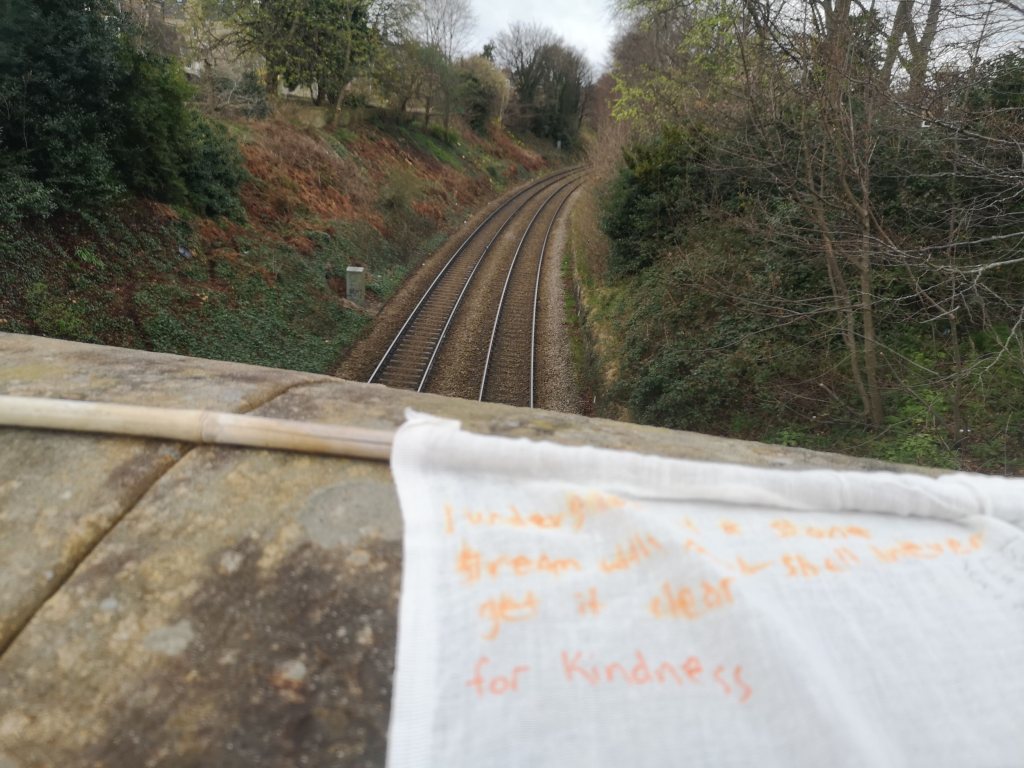
Crossing the railway line, facing west

On completely unfamiliar territory now, I’m meeting no-one and there are plenty of dead ends. It is raining more heavily on me and I’m having to stop constantly to consult the maps, compare them and try to find a route through. The phone is getting wet so I’m balancing the umbrella over it with one hand and using the other to awkwardly hold and tap at the same time. Still climbing. Still in a residential area, though this time of bungalows and front gardens and driveways.
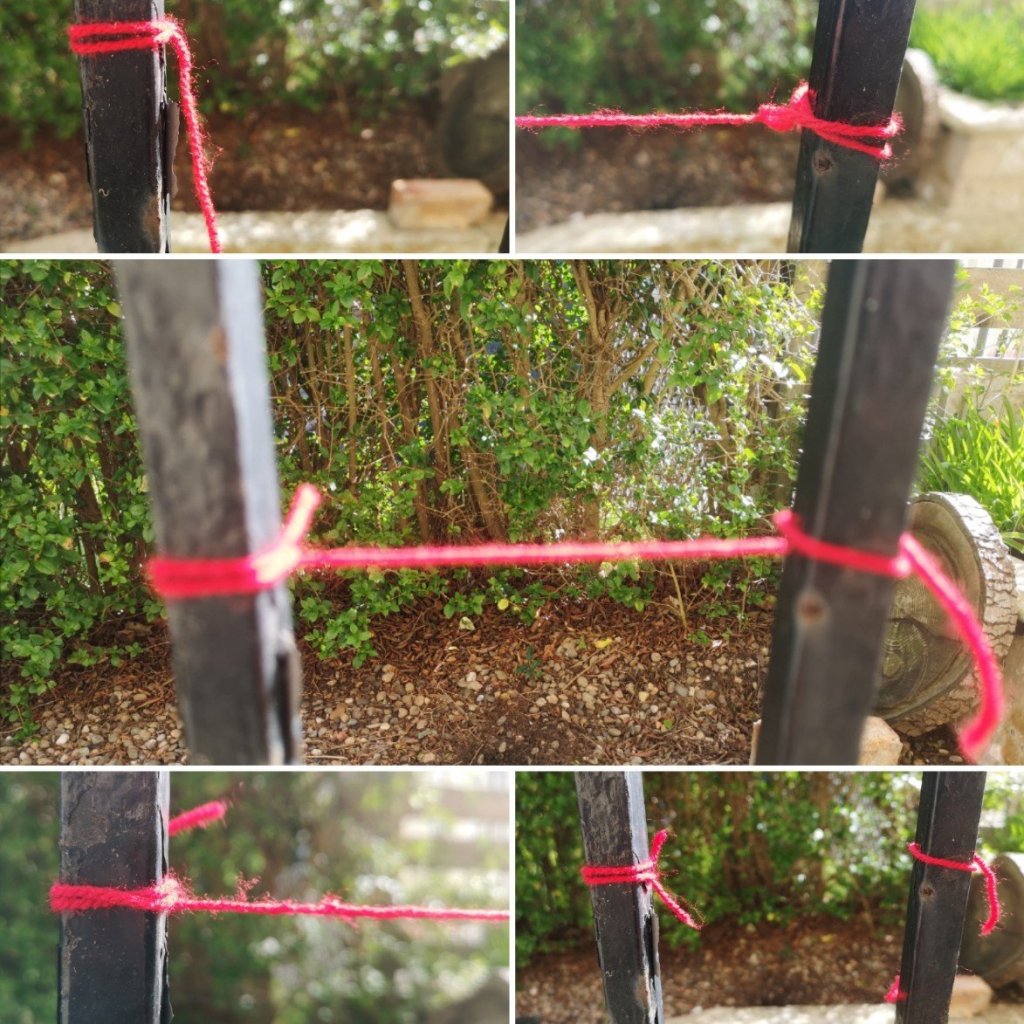
We drew a red line on the map, but had to abandon part way through the

I take a wrong turning around the Midmar Drive area where there are some trees, but mostly pavement, offering time for me to continue thinking about surrendering to the ground, letting it support my increasingly tired feet.
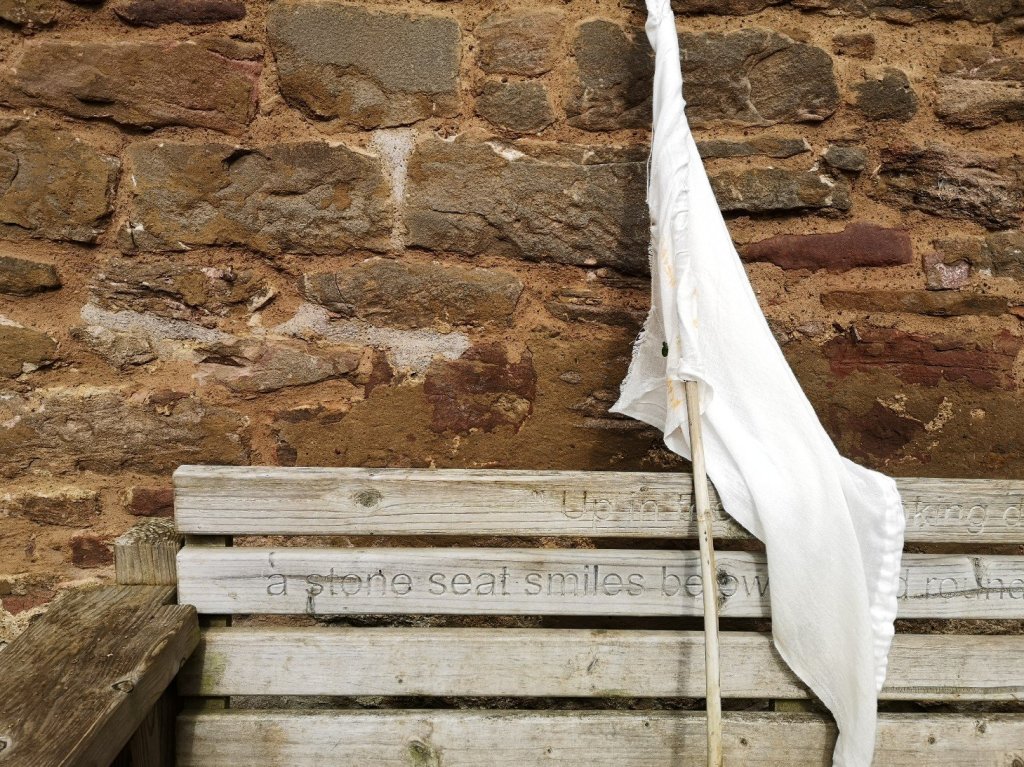
Found text in front of the Doocot at the Hermitage of Braid: “a stone seat smiles”

Eventually I am at the Hermitage of Braid and the Braid Burn, a small river running through woods. I love the smell of garlic, the crunch of pine cones underfoot and warmth of a little sun on my back. The café offers a seat, tea and a scone and I am reviving. Not far along is an abandoned dovecot / doocot, a community garden and some random-cut primroses lying on the path.

A man with a military moustache is with his wife, walking, and he makes comment on my flag. I explain. He guffaws that those who want peace must prepare for war and I repeat that I favour peace and surrender. He counters with “that’s a naughty word – surrender”. I give up.
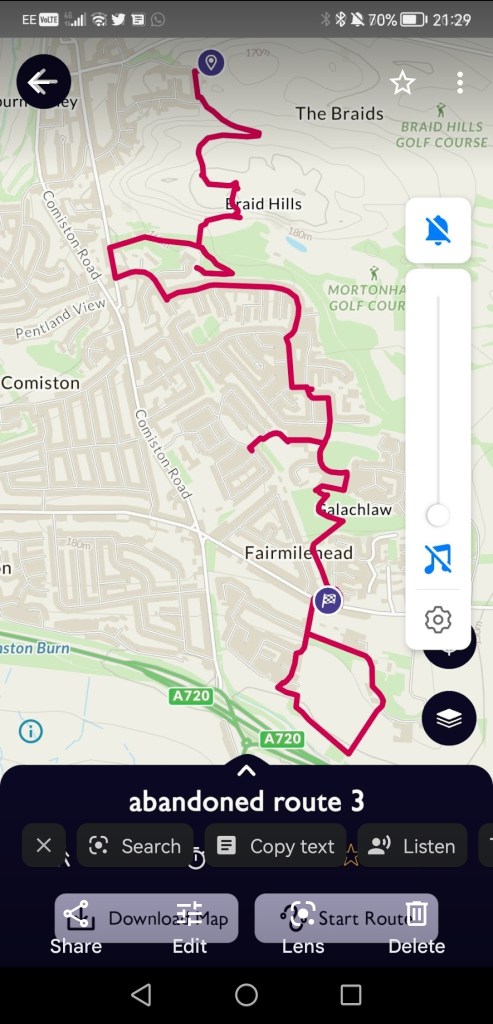
Back and forward to find the way, I happily discover public toilets. Some nice Council men are clueless about the geography of the area, wish me “good luck”. It is a steep climb up and out, always travelling south towards my distant walking companion.
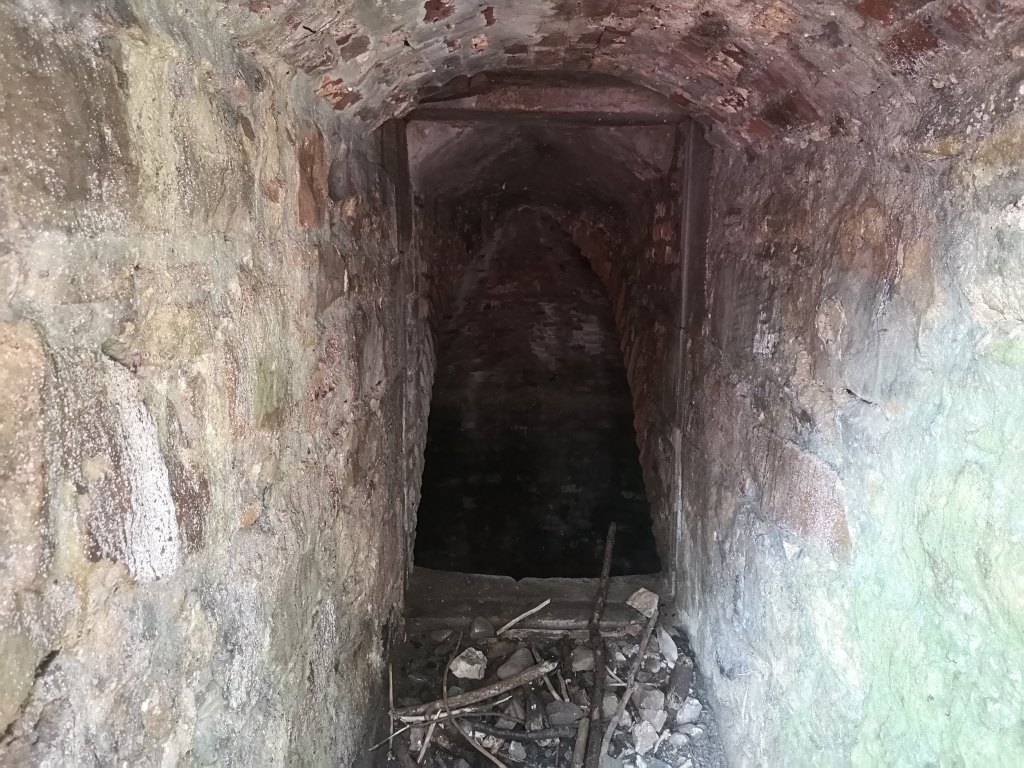
The Ice House, Hermitage of Braid

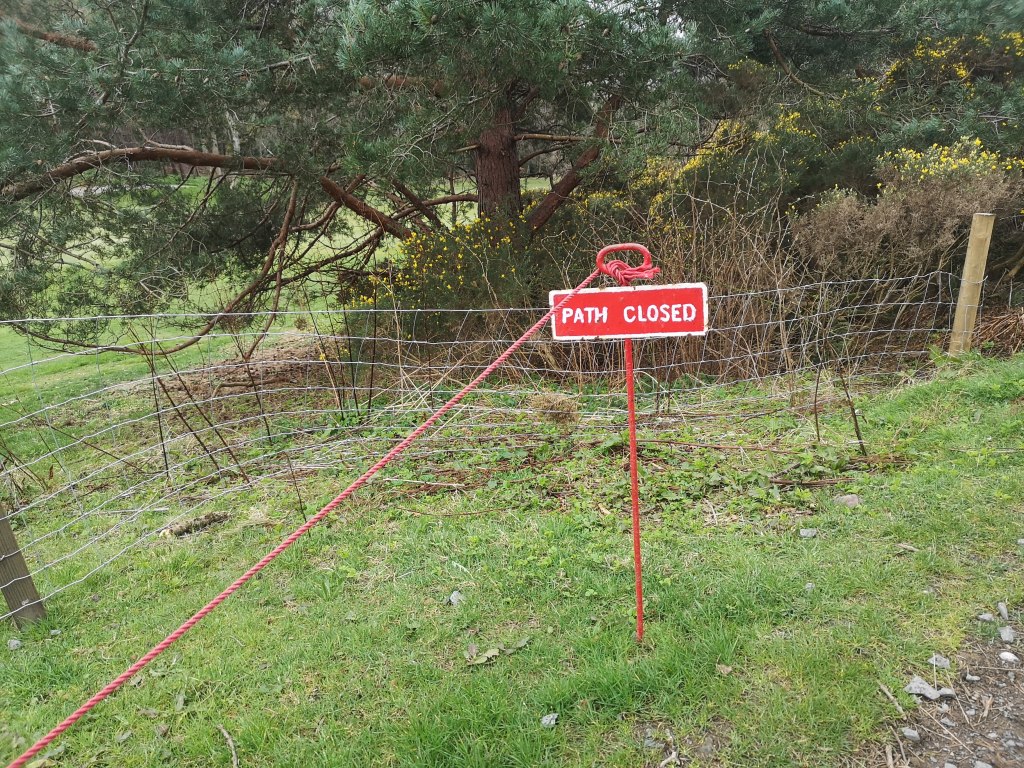
Turning back at a fallen tree because there’s a fence around the building, I cross a main road and must alternate crawling under brambles and pushing through yellow flowering gorse, then must retrace and try again further along. I’m flipping between the ordnance survey app, Google and my saved maps.

It’s windy up here. “Wha’s the white flag fer?” Asks another Council employee with a van and tools. “Are yer givin up?” “Peace?” He turns to his friend and says: “You need one a them Jimmy!” and Jimmy scowls.

It’s 7,487 steps up on golf courses with a great view across the city towards home and Inchkeith Island, far away now. A headache threatens so I sit on the red line (metaphorically speaking) for a cup of tea from my flask and a snack. Tiredness. Riley’s words are “Perking up”.  
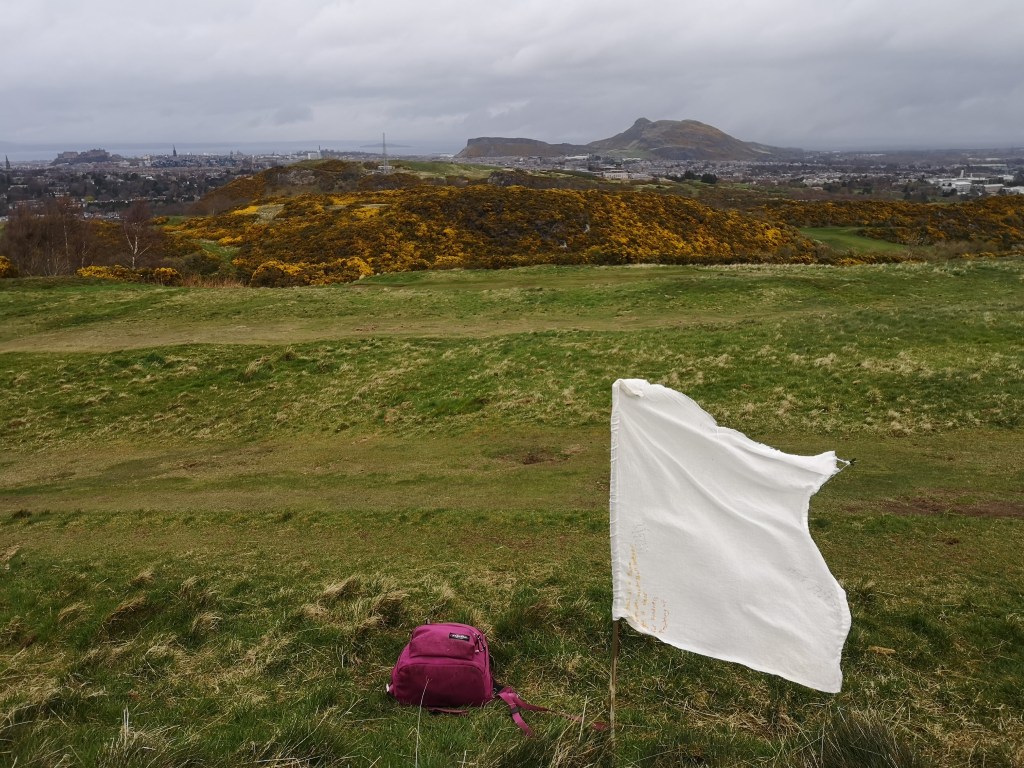
1.40pm and I’m feeling connected to Kel as we walk towards each other – like an internal compass adjusted south west, a magnet in my chest.
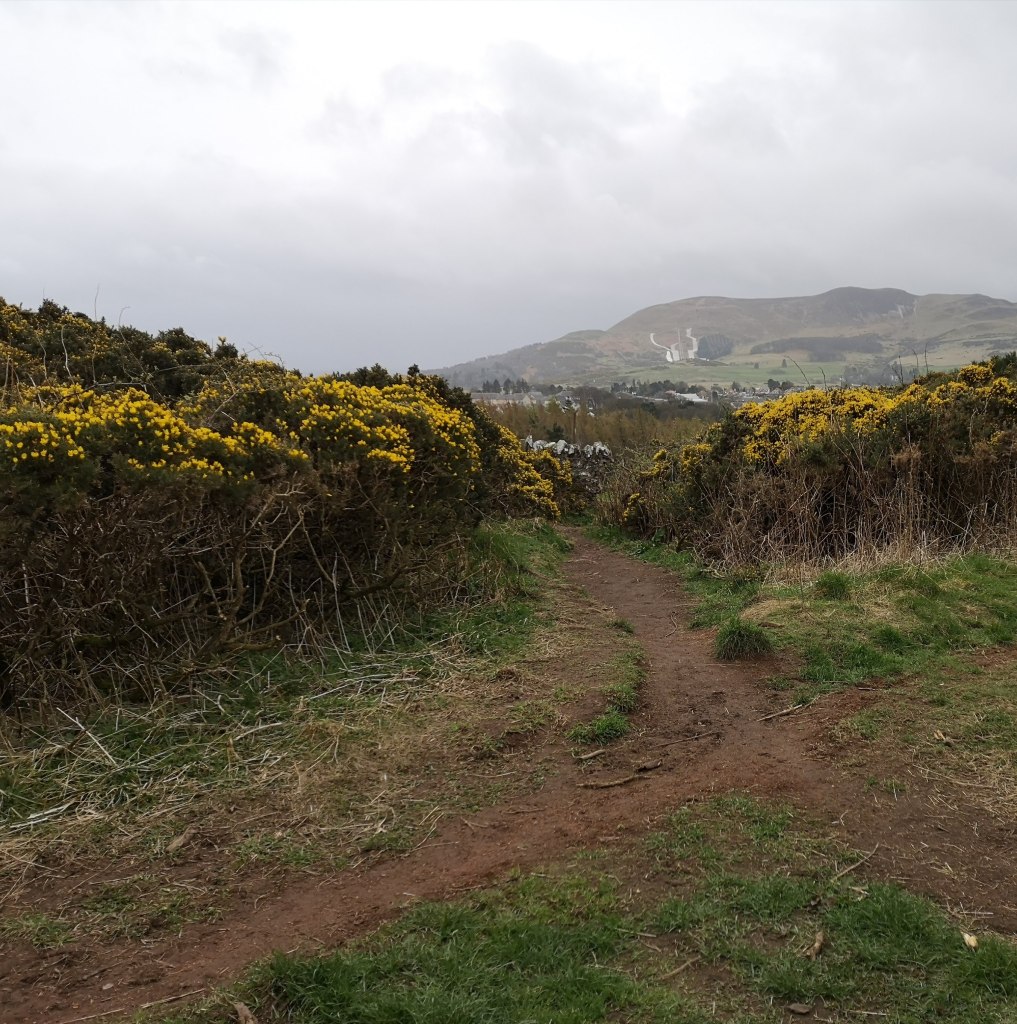
From the Braids, Edinburgh, looking towards England. The familiar coconut scent of the yellow gorse

I must retrace my footsteps to Calachlaw and then it’s stop number 5 at 12,101 steps and I add to my flag: “But little songs”. Kel phones to say that he is abandoning his walk for the day. Frogston Road West. There’s an unidentifiable smell of chocolate and a new, blonde fence – harbinger of…?
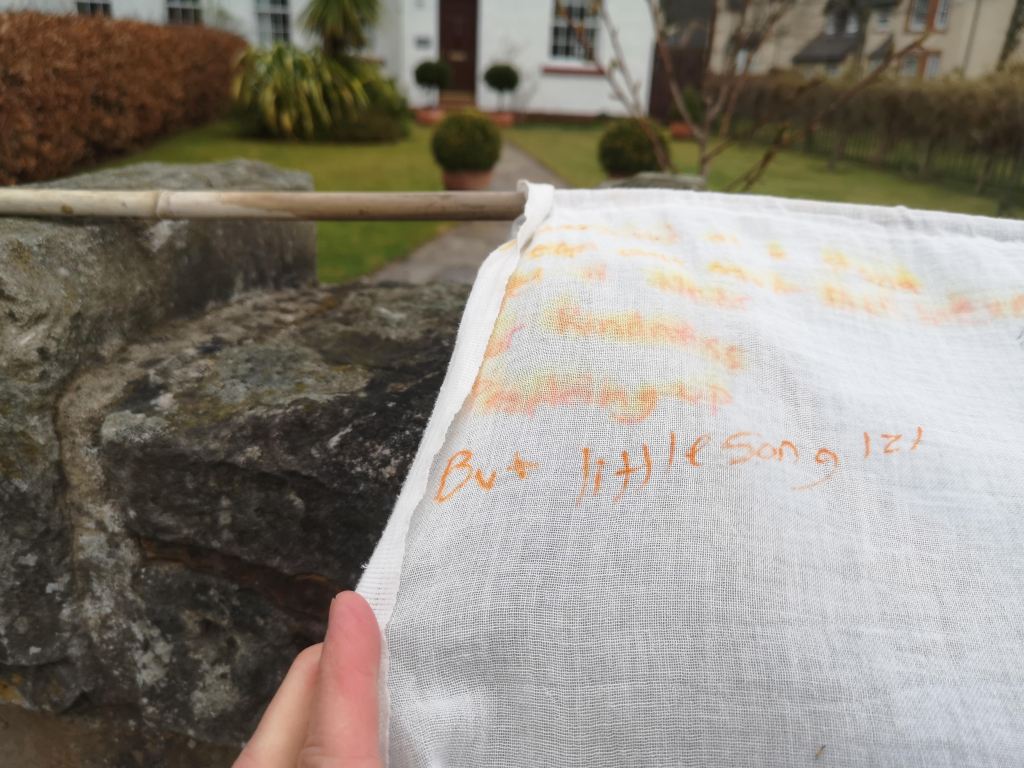
“But little songs”
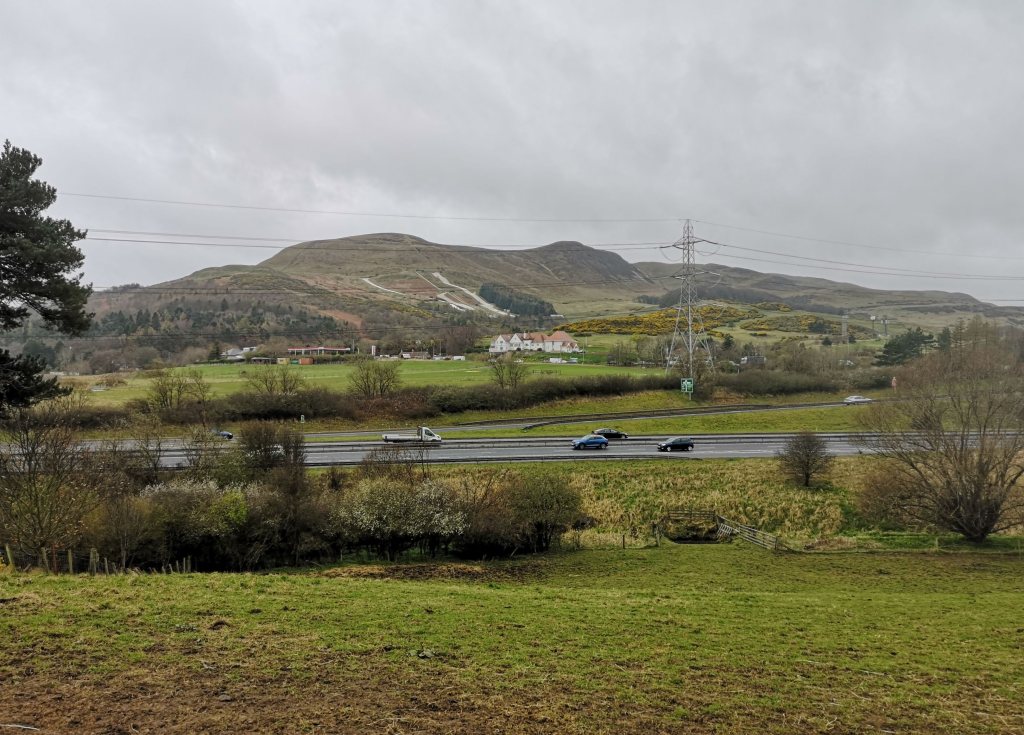
And then I couldn’t go any further. I reached the Edinburgh by-pass and there was no way across
There are the white strips of the Pentland Hills dry ski slope across the by-pass
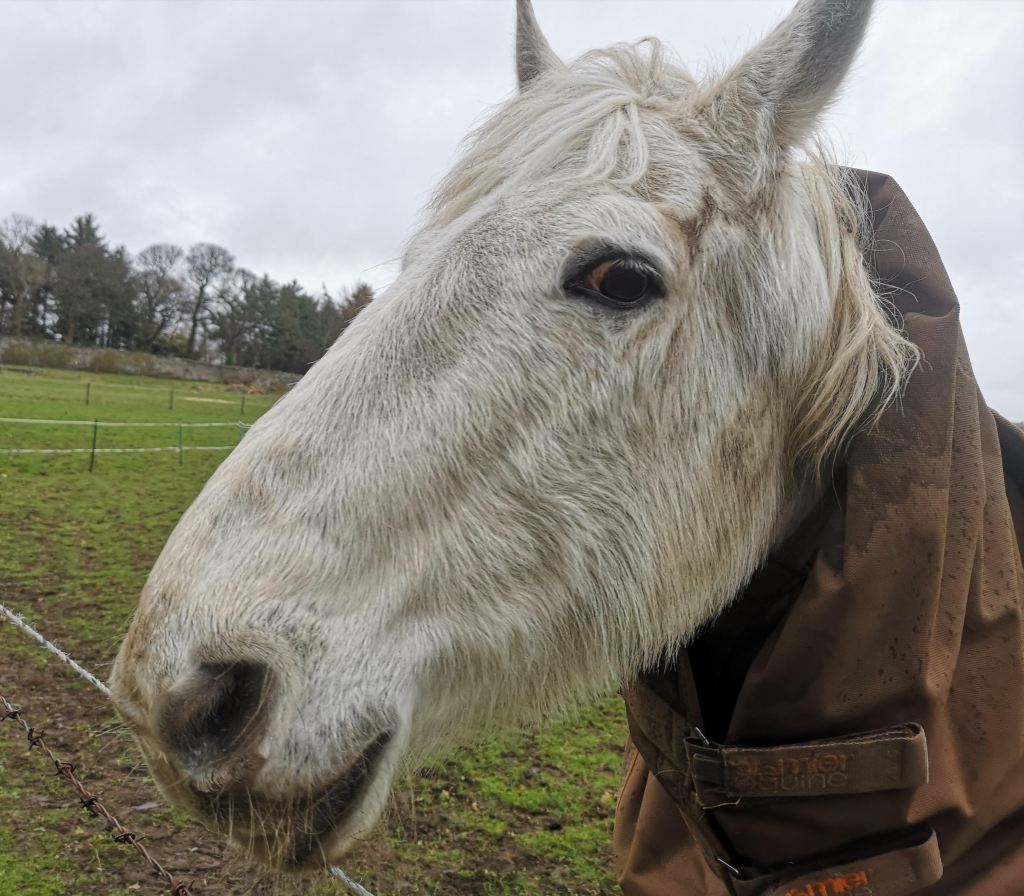
I meet a white horse
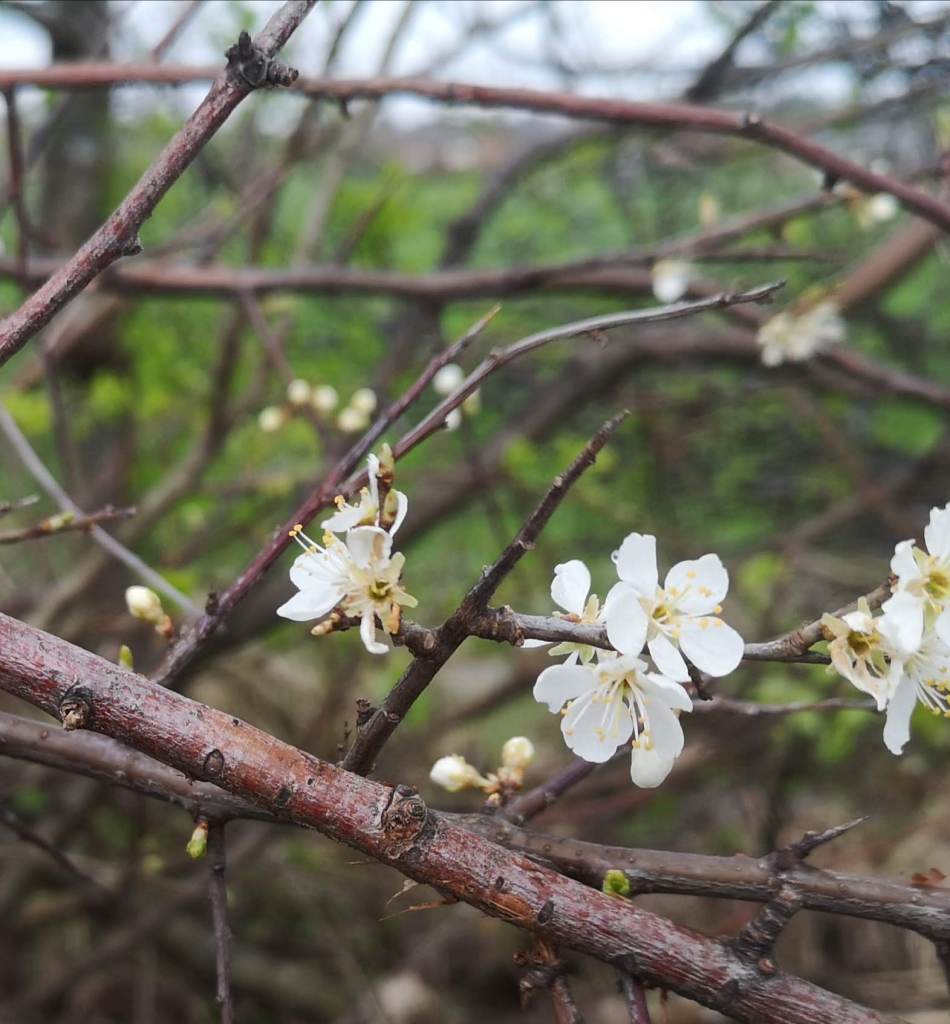
Inhale the sweet Hawthorn

And then I must walk an extra big loop back, at 5pm. Circumstances demand that I surrender. I must abandon my walk because of the man-made, traffic-laden road that has no pedestrian crossing. It’s 5 mins until the #11 bus is due to drive me back.

My found poem

I understood as a stone….stream with mud-shall I never get it clear ….. for kindness…. perking up…. But little songs…. we hope to find ourselves

Denise Riley from Maybe; maybe not and A Part Song @uealdc Denise Riley

From Denise Riley’s book: “for kindness”.

Stats

1st stage 8.86kms. 2nd 2.76kms. 3rd 17.09kms equals 28.71kms equals 17.84 miles. 6 and three quarters of an hour. 14025 pedometer, 28439 Huawei health app.
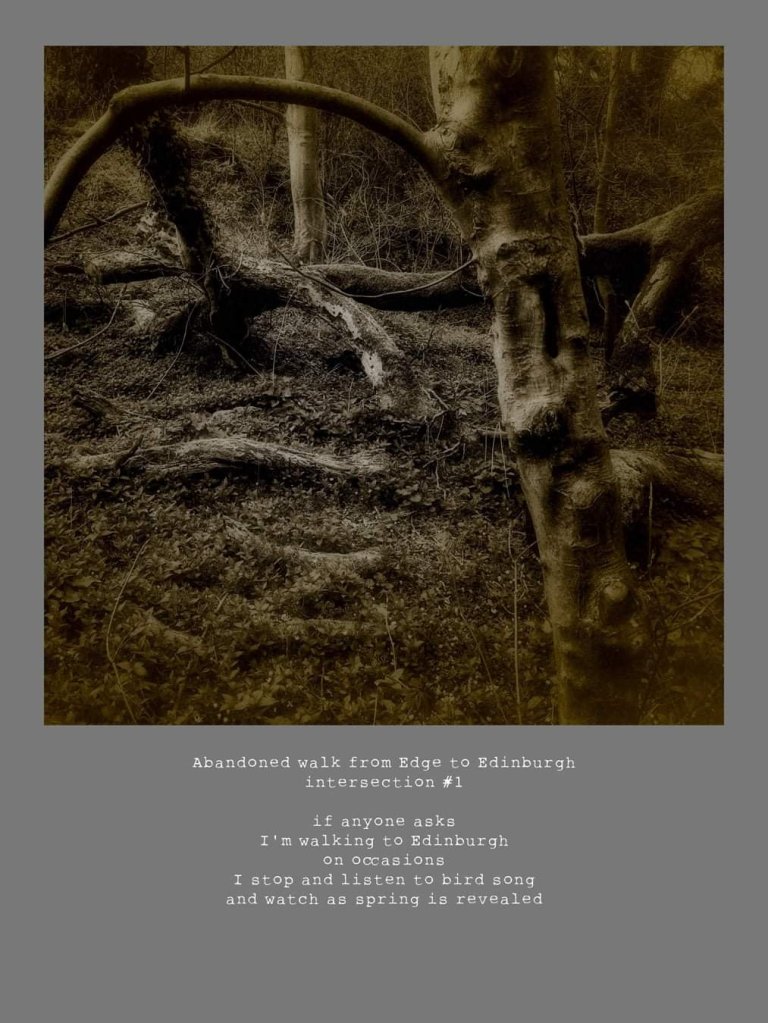
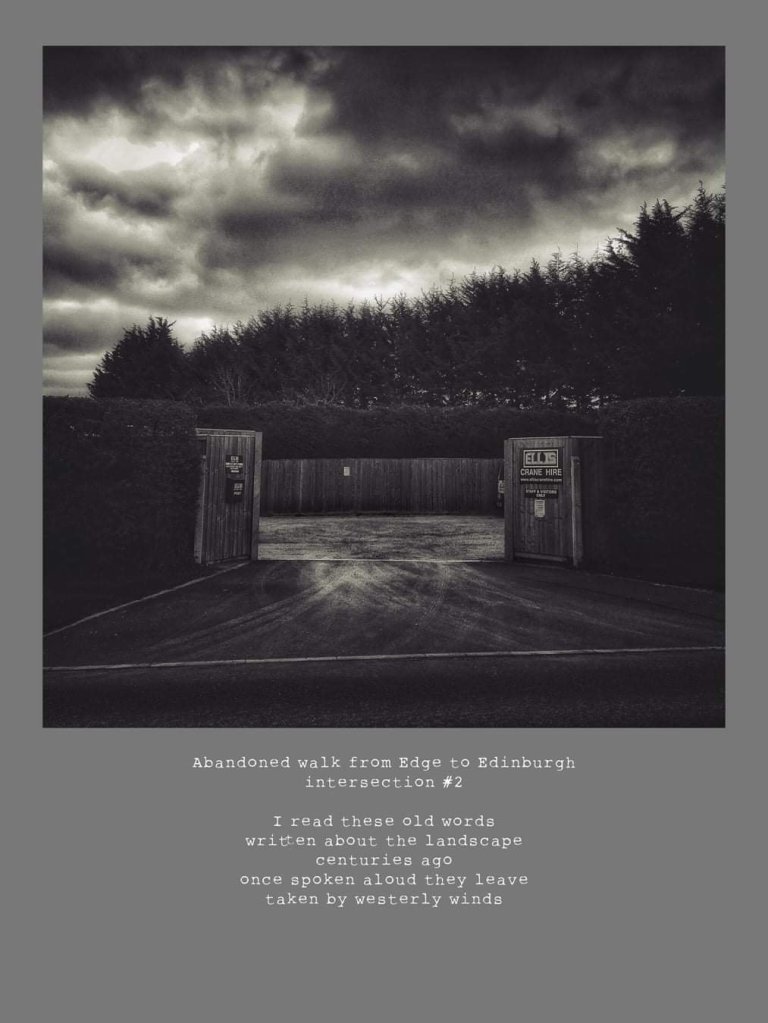
Image and words by Kel Portman I
Image and words by Kel Portman II

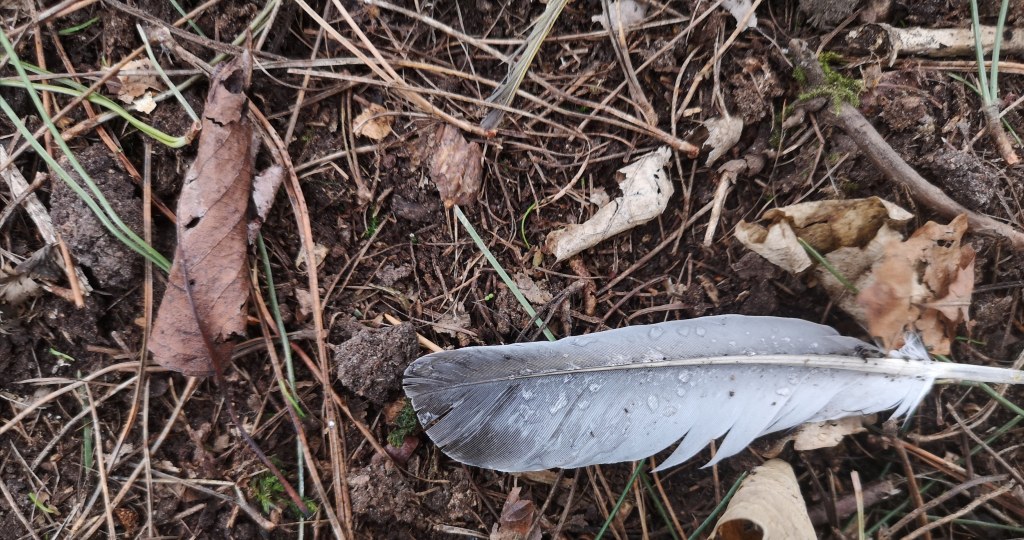
Today a feather

Pilgrmage to COP26

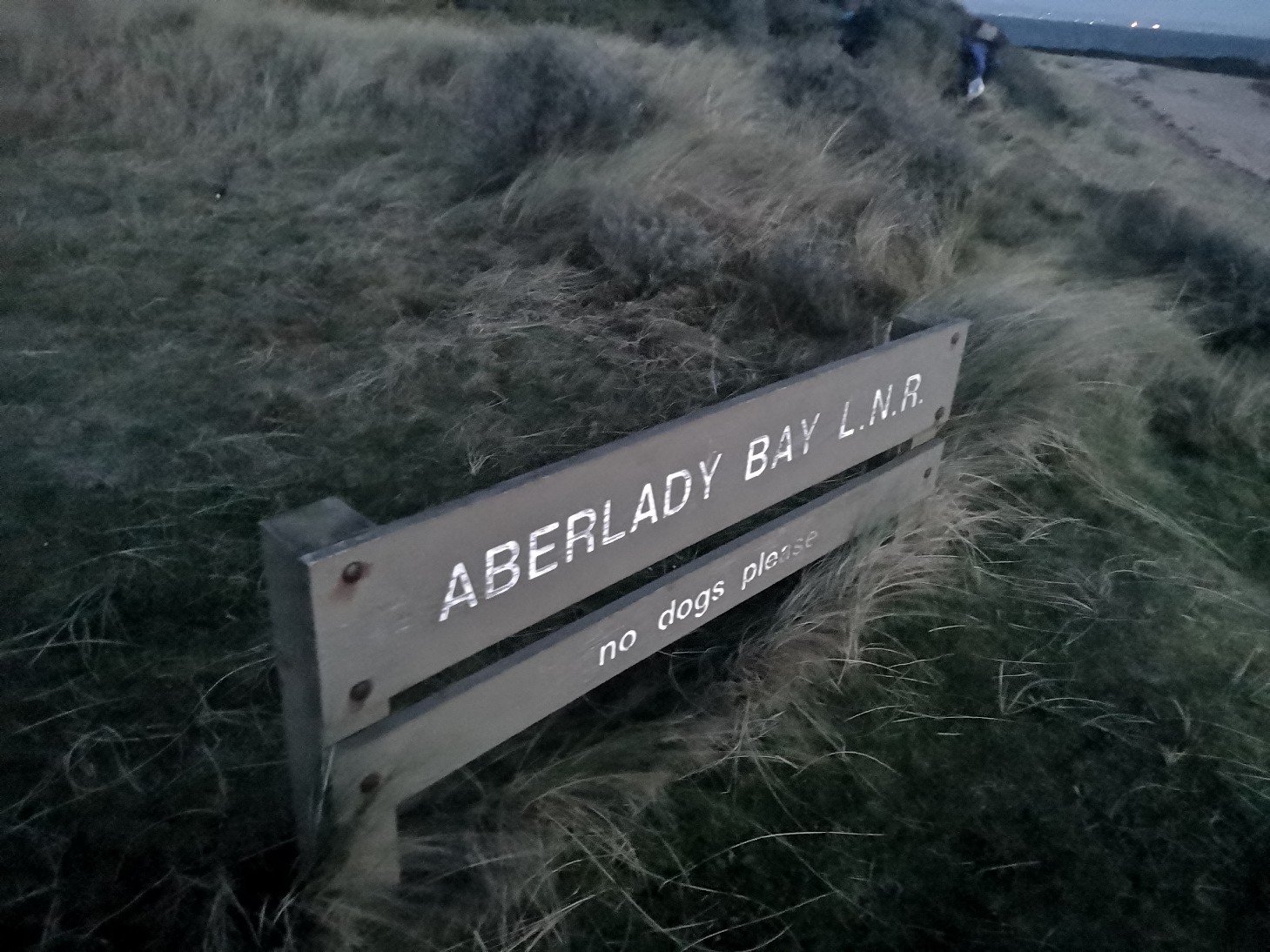
Blog 6: From Aberlady Bay to Portobello via Musselburgh

Listen to The king of the faeries by Matthew Crighton on the tin whistle on #SoundCloud recorded on the beach at Aberlady, round the campfire.

https://soundcloud.app.goo.gl/jHju3

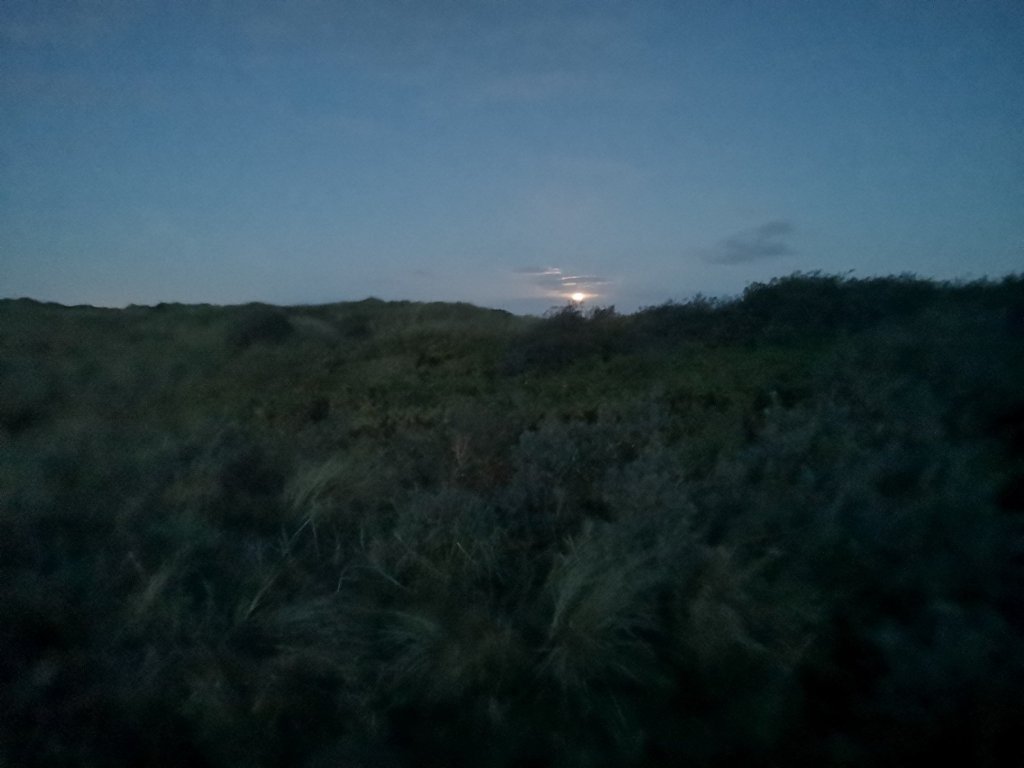
Sunrise as we walk away from our camping spot at Aberlady Bay, 7am
It’s only just over an hour but we have all our camping gear and what’s left of the food and water paraphernalia, and it’s very uneven ground. We walk in silence

At the car park, the electric support vehicle and day walkers are waiting for us. The group had split into two the previous evening with the others sleeping at the village hall in Aberlady. They visited Prestongrange Museum where they received a lovely welcome.

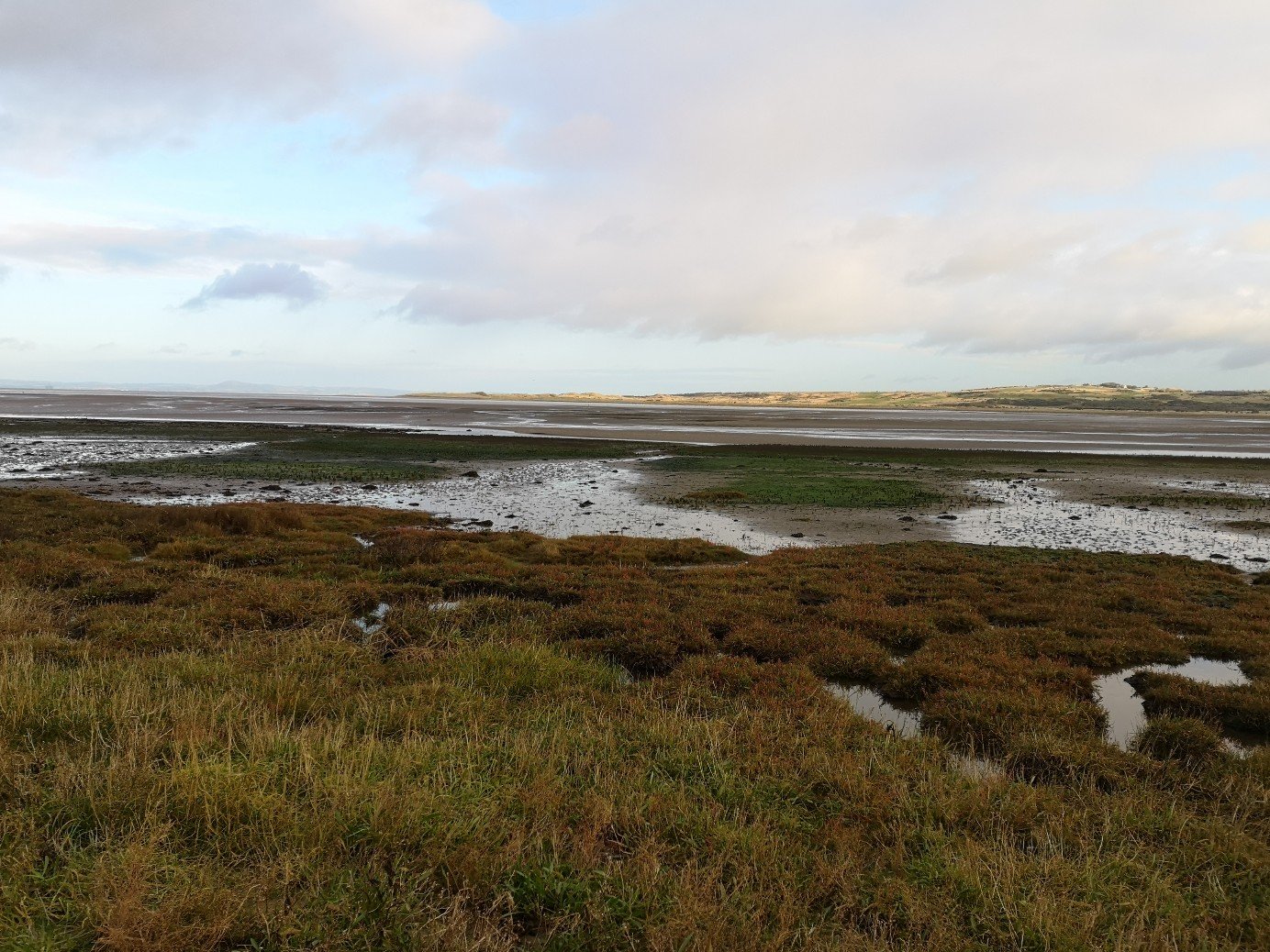
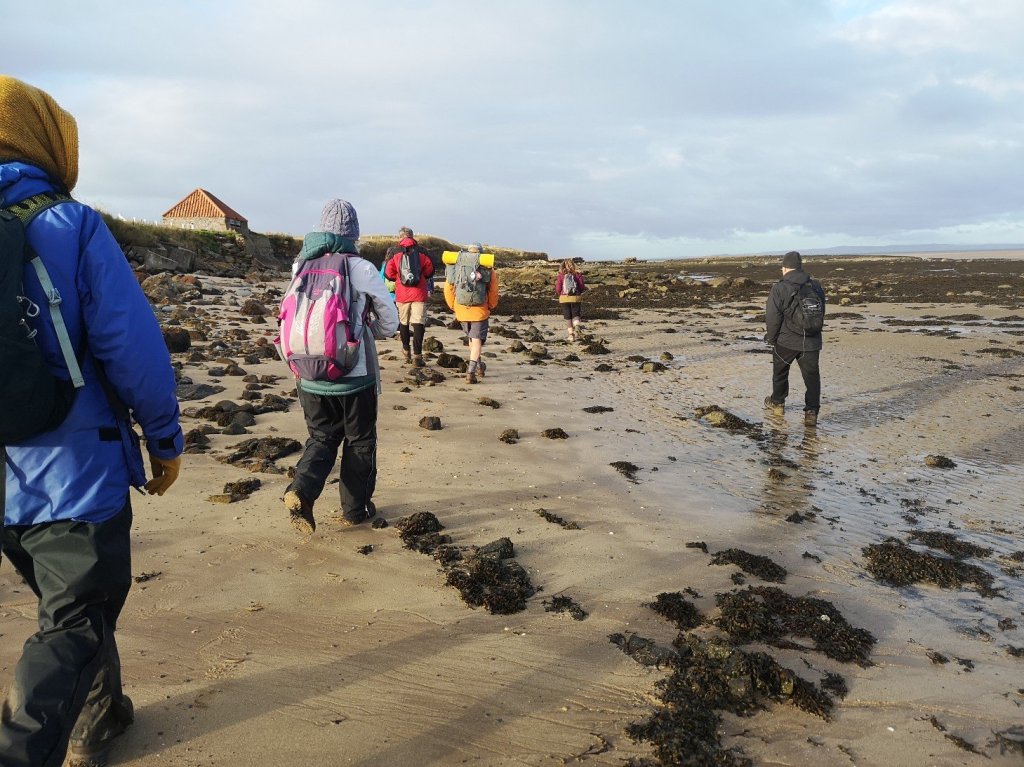
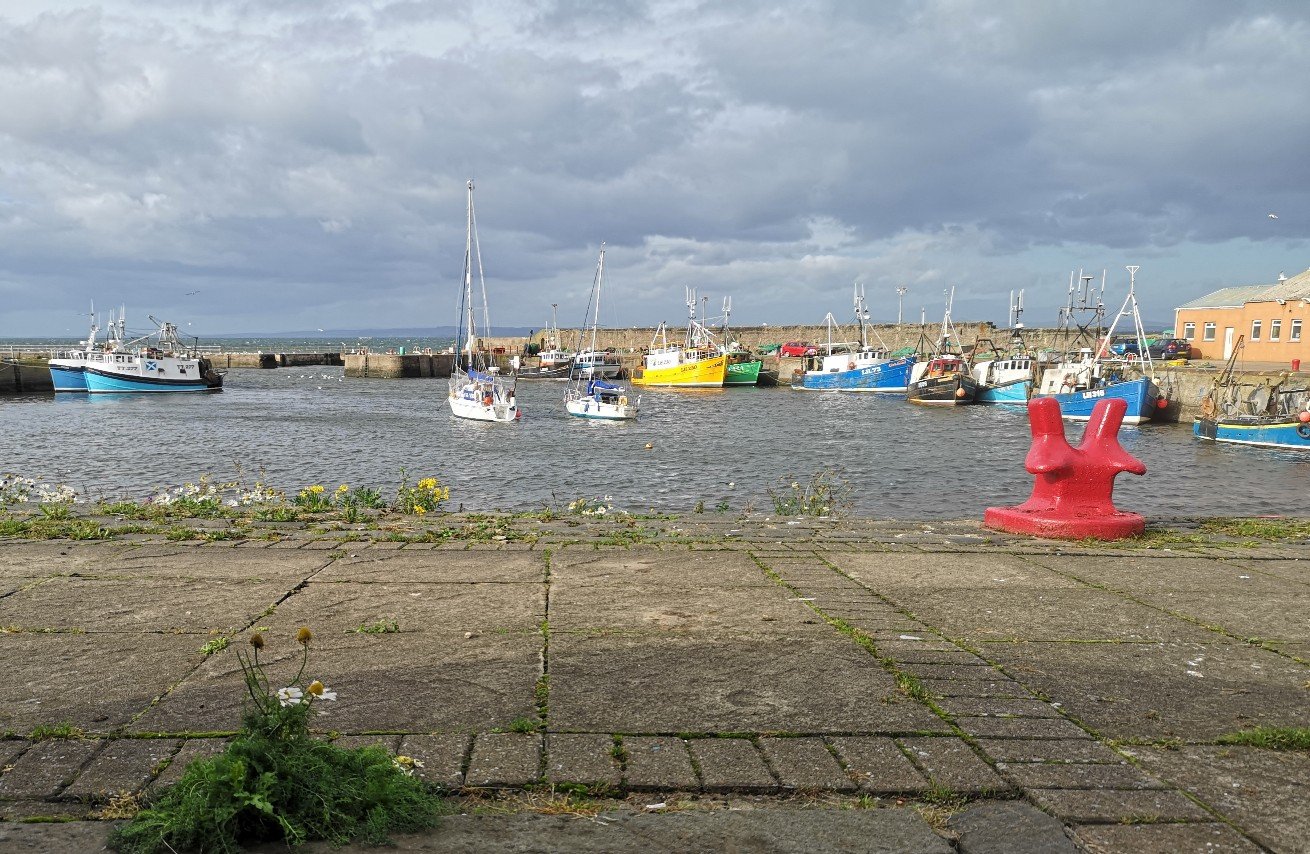
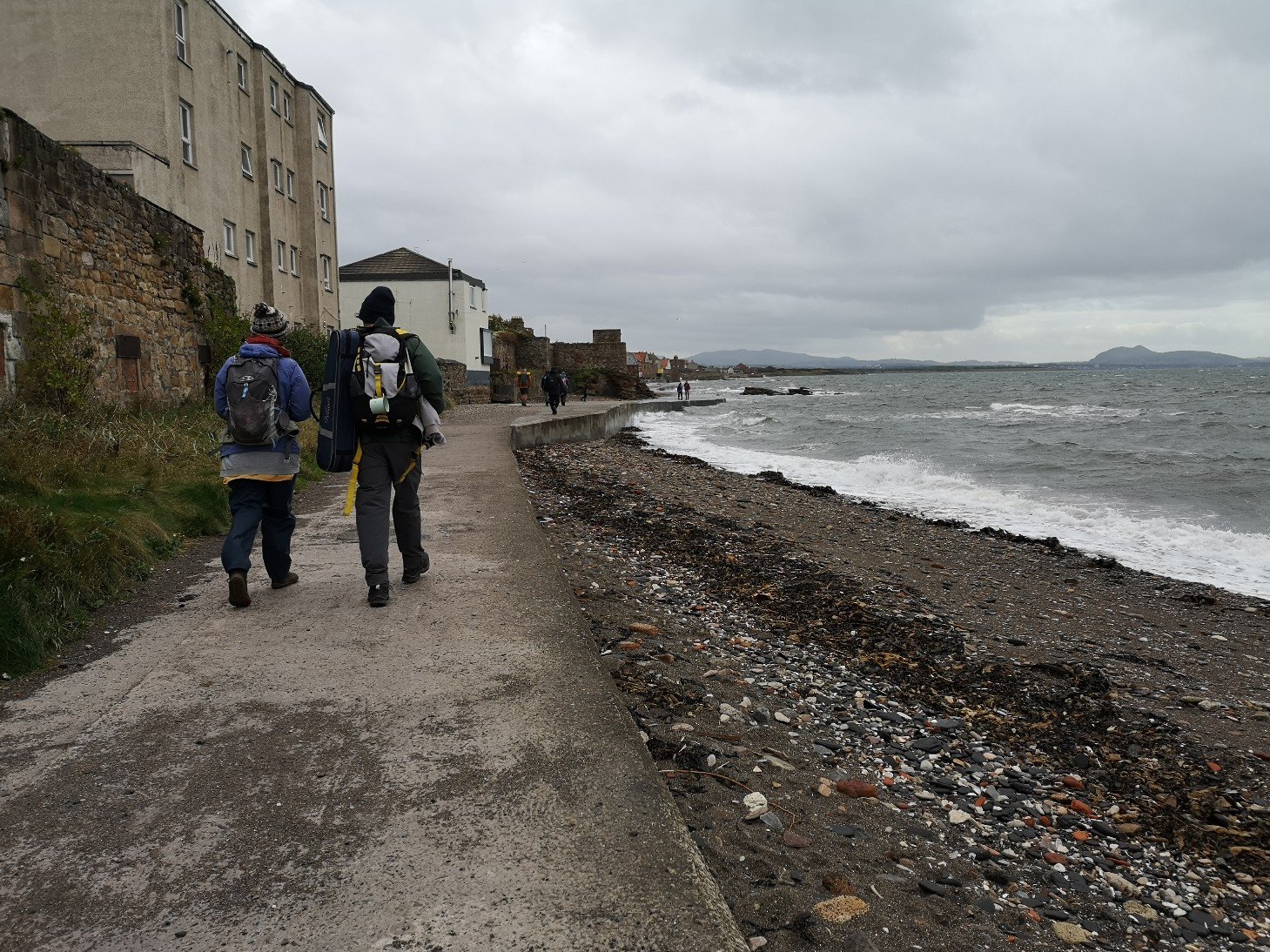
After a standing-up breakfast and use of the public conveniences (thanks to East Lothian Council for keeping them open for us), we set off for the day’s trek. The coast was stunning.

Longniddry Bents, East Lothian, Scotland
East Lothian

The weather was changeable – a cool wind with sun, light then heavier spells of rain, never for too long, thank goodness.

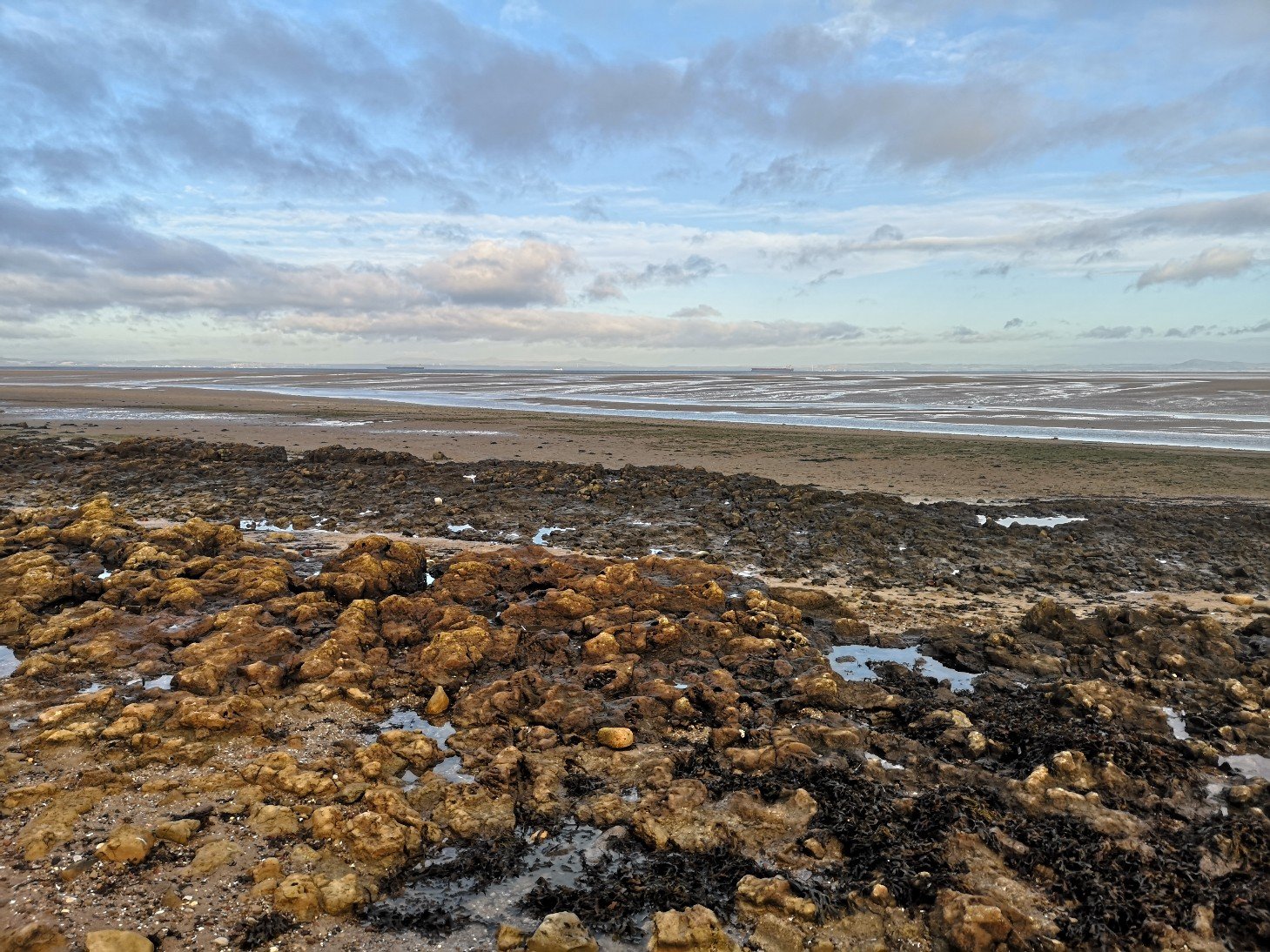
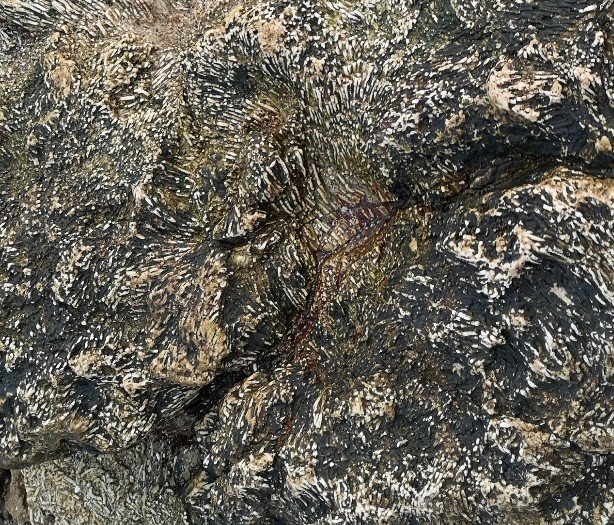
Coral skeletons

We passed coral skeletons (tubes) which have been squashed into limestone making ‘spaghetti rock’ which date from the Carboniferous period (350-300 million years back). Craigielaw point fossils gives more information.

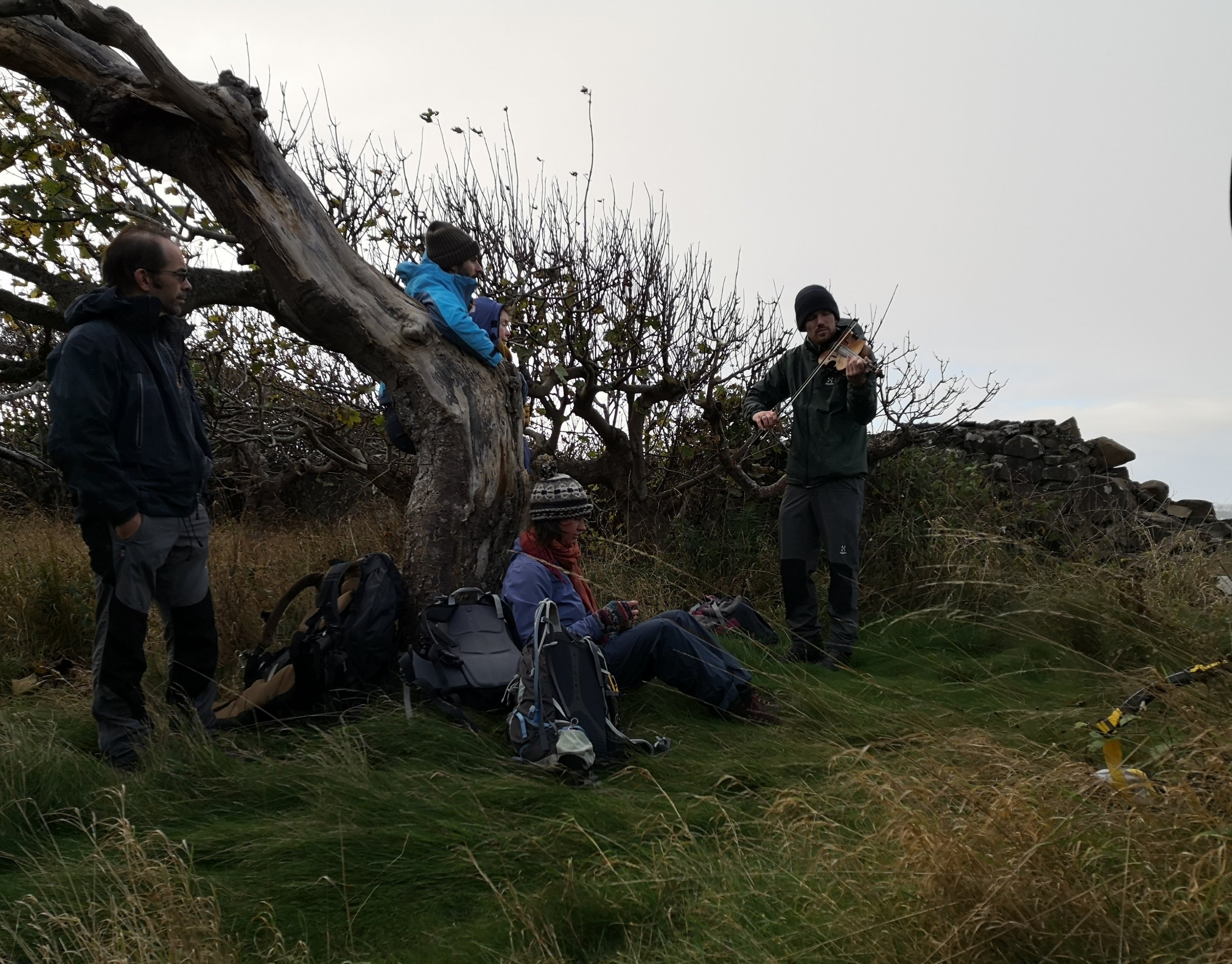
Cameron played the violin for us, though it was dark and drizzly then
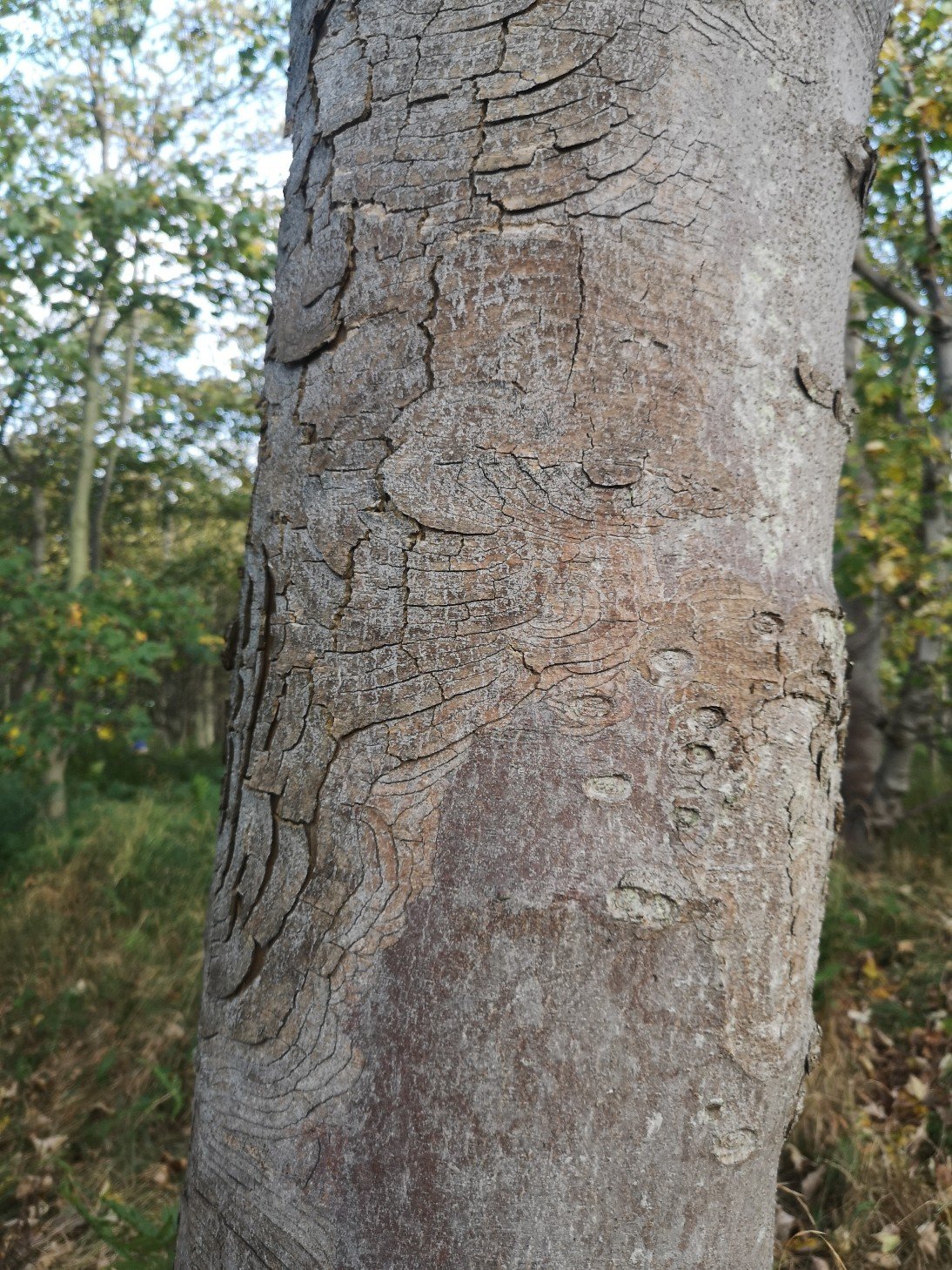
We were invited to walk amongst the sycamore copse, to listen to the particular song of those trees and admire their personal designs
Some had fallen, revealing their age
Wandering through the sycamore glade
Francesco
Beth
Port Seton

We regained the main road through Port Seton with all the hustle of normal life – quite a contrast to the meditative pacing at the shore. The Harbour Takeaway served a good green tea and peppermint slice and the sun was warm on my back for 5 minutes before we had to walk on.

Towards Prestonpans

At Musselburgh, we had an extended stop where volunteers had been preparing a meal for us at the Brunton Theatre. We were shown a film. ‘Local Food Roots’ (trailer on Pinterest) which featured various UK projects which grow and distributed vegetable boxes (Riverford) and innovative organisations which cooked with produce from their own communities (Nottingham Hospital – yes, it can be done. They argued that buying in food that had travelled many 100s of miles from South America and Africa was not only less nutritious but also added to the already dangerous limits of carbon in the atmosphere). Sheila Dillon from the BBC Radio 4 Food Programme was a contributor. This was another example of our learning about the various ways the climate crisis can be addressed, as we wend our way to Glasgow.

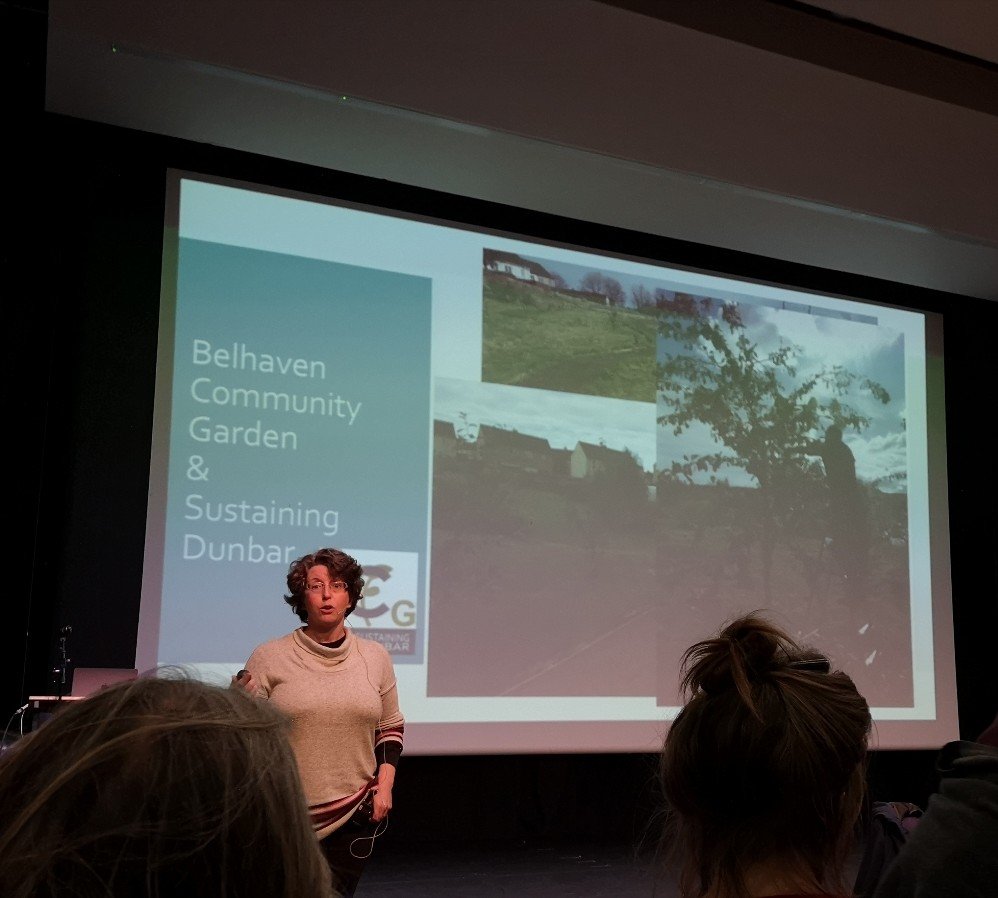
Naomi Barnes, Sustaining Dunbar
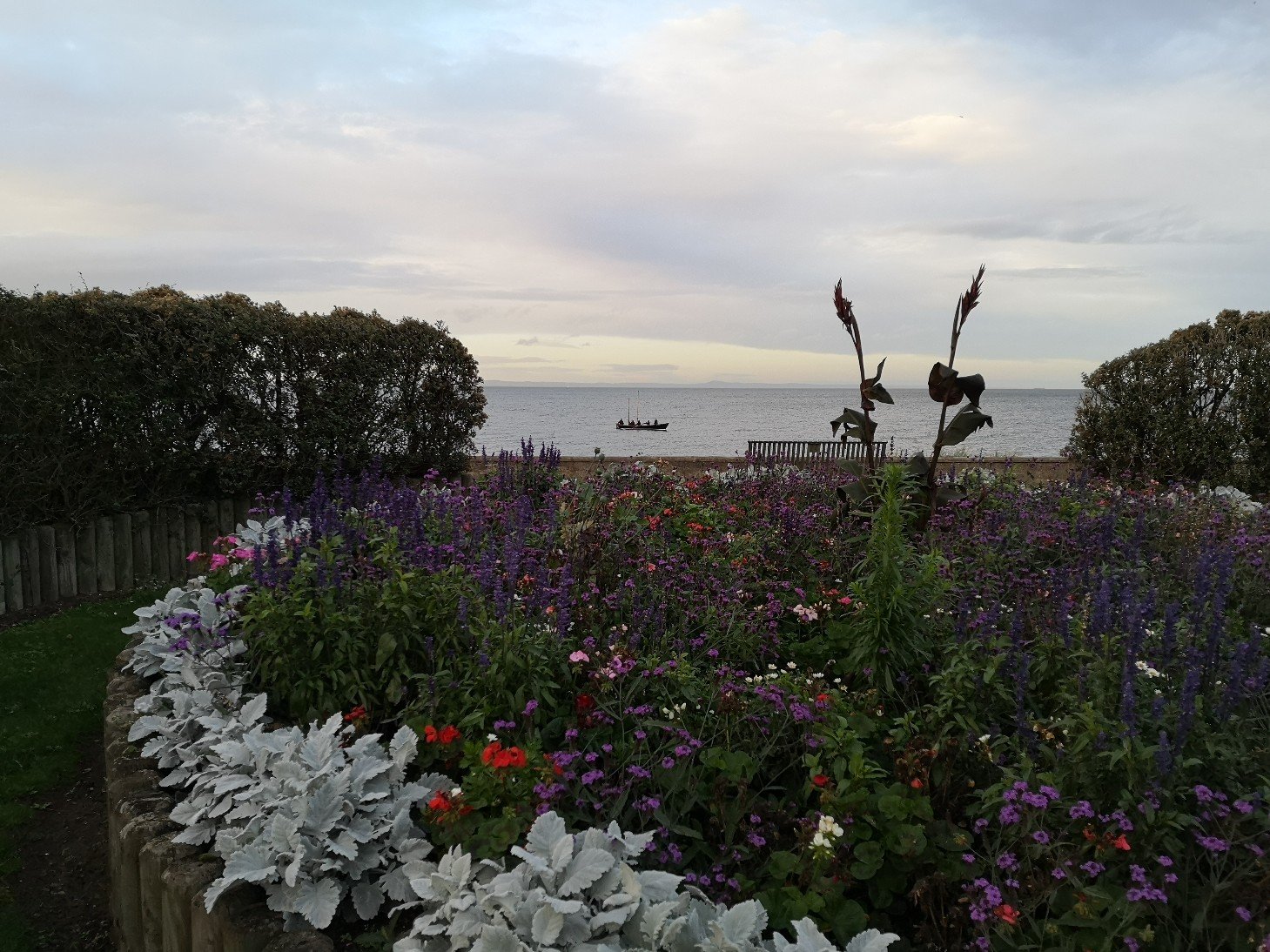
We were met by rowers from Musselburgh (you can see the boat in the middle of the picture beyond the flowers) Prestonpans, East Lothian

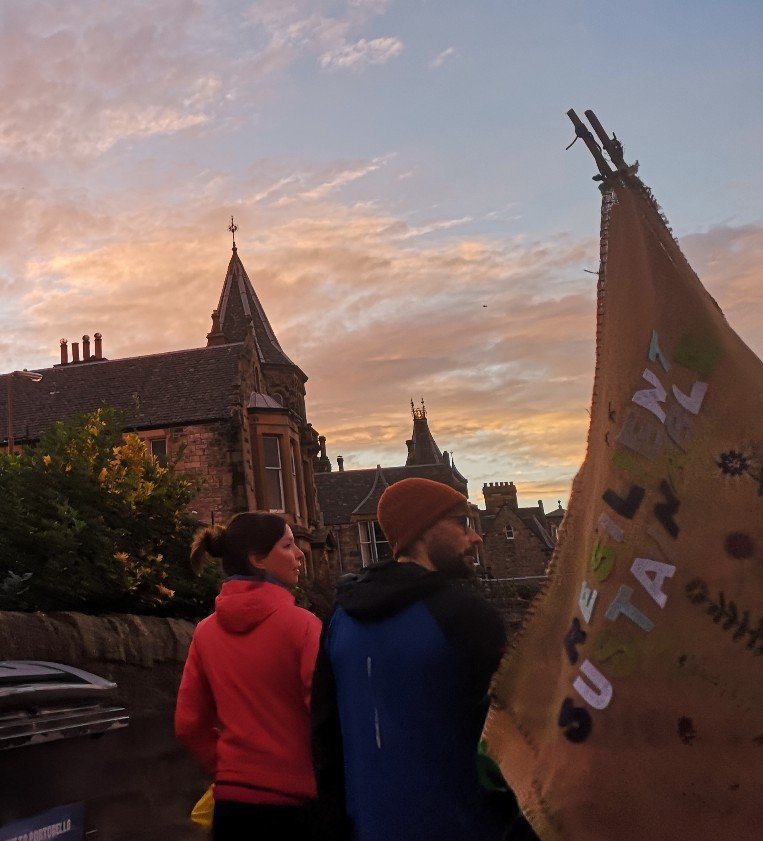
It was hoped that the Portobello crew would be there too, but at the last minute they were short of a member, so two of them ran to meet us here, and then walked back with us (see below) with their Resilient, Sustainable banner.

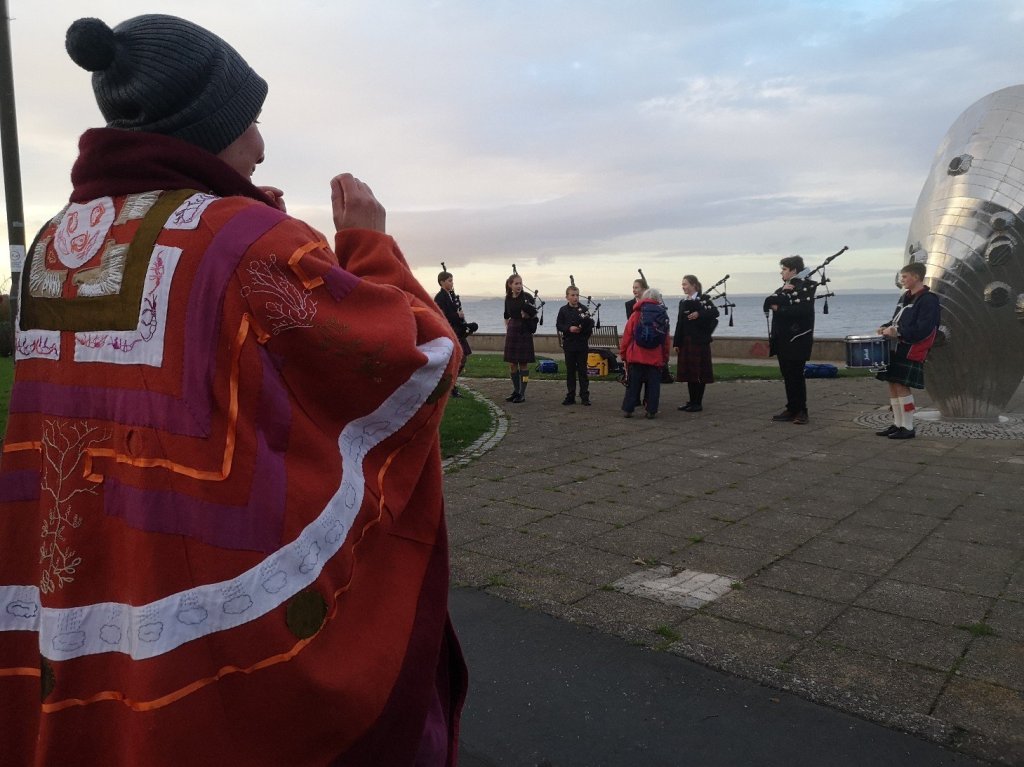
The pipe band from Loretto School were also there to welcome us. Marianne was the Keeper of the Soils for the day

People seem to really understand what we are doing: they thank us and wave as we go by, and messages of encouragement are coming in all the time.

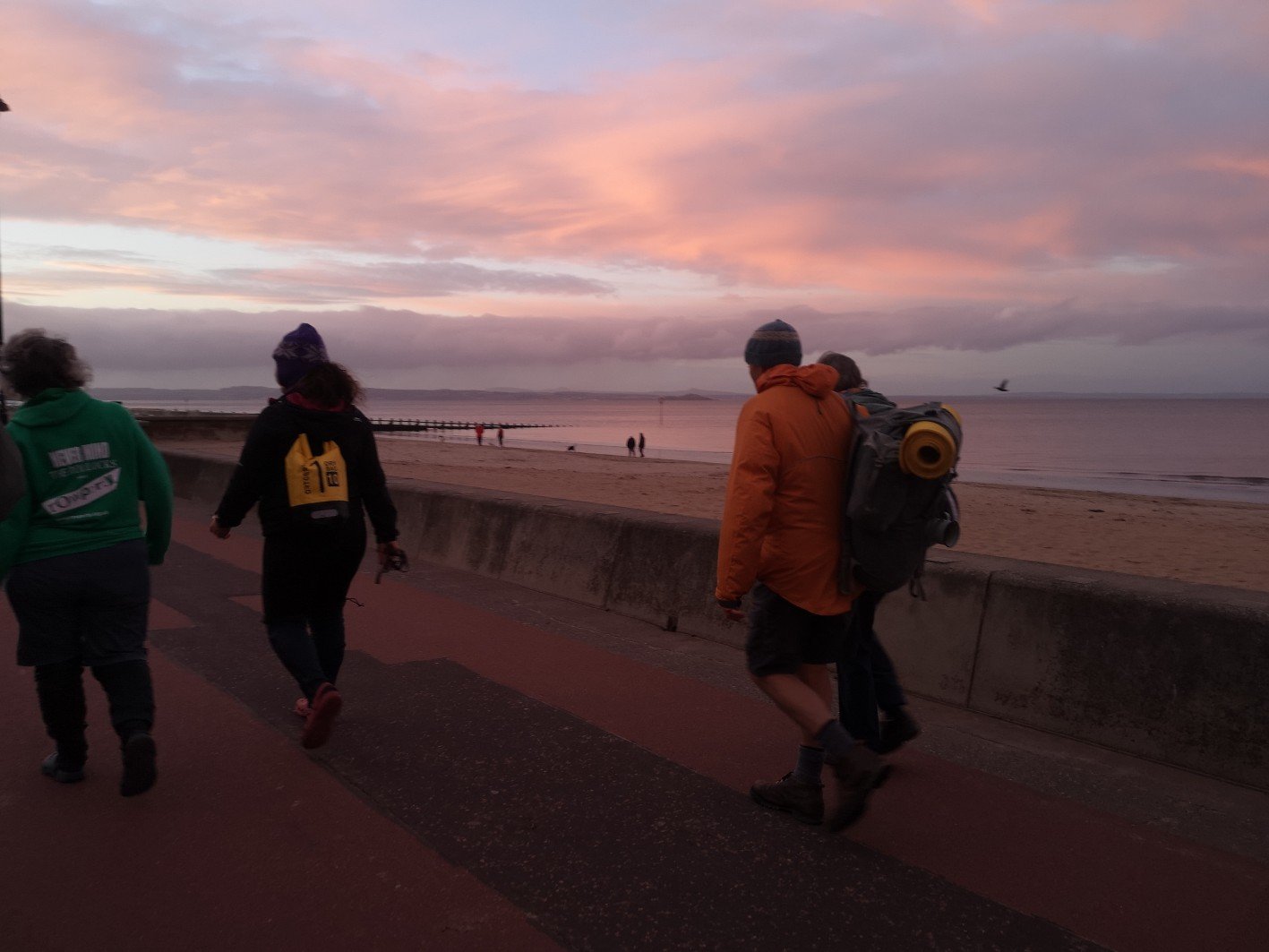
As the sun was lowering, we walked along the prom into Portobello

Keeper of the Soils cape: Natalie Taylor, artist, North Light Arts

The Pilgrimage for COP26 programme is here https://artandecologyearth.files.wordpress.com/2021/10/pilgrimage-for-cop26-programme-04.10.21-edit.pdf

@pilgrimageforcop26 #pcop26

Teo to Santiago de Compostella: Portuguese Camino

October 2nd 2019. The final leg of the Portuguese Camino de la Costa or Caminho da Costa from Porto in Portugal to Santiago de Compostella in Spain. 125 kms in total, today was a walk of approximately 15 kms.

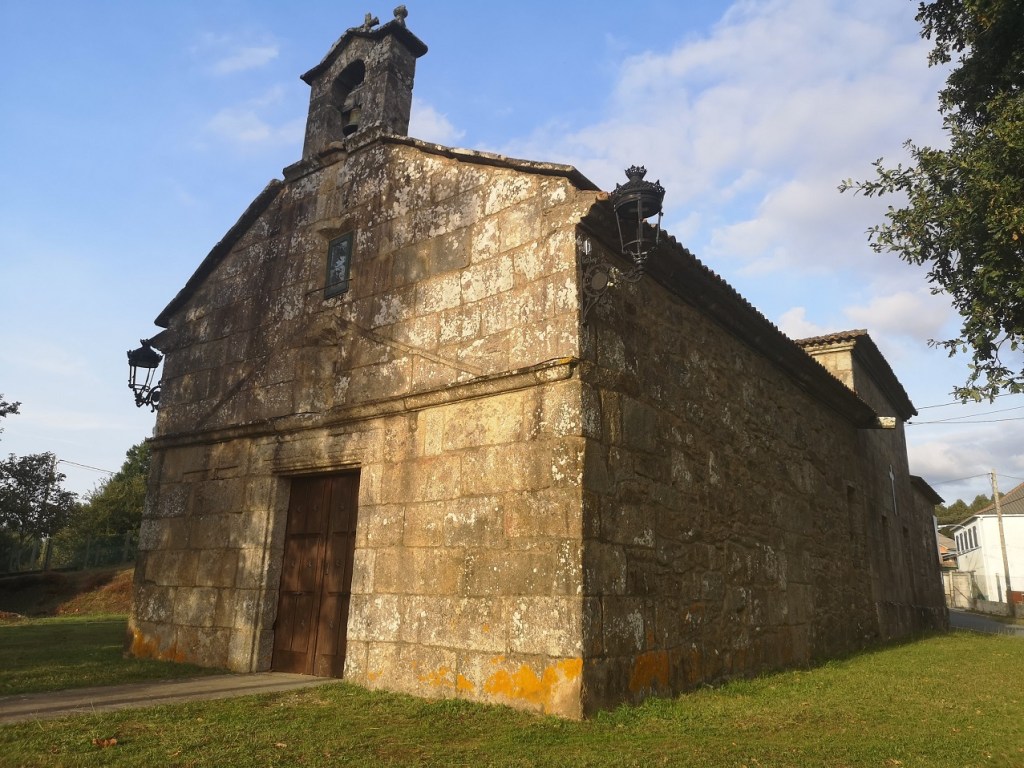
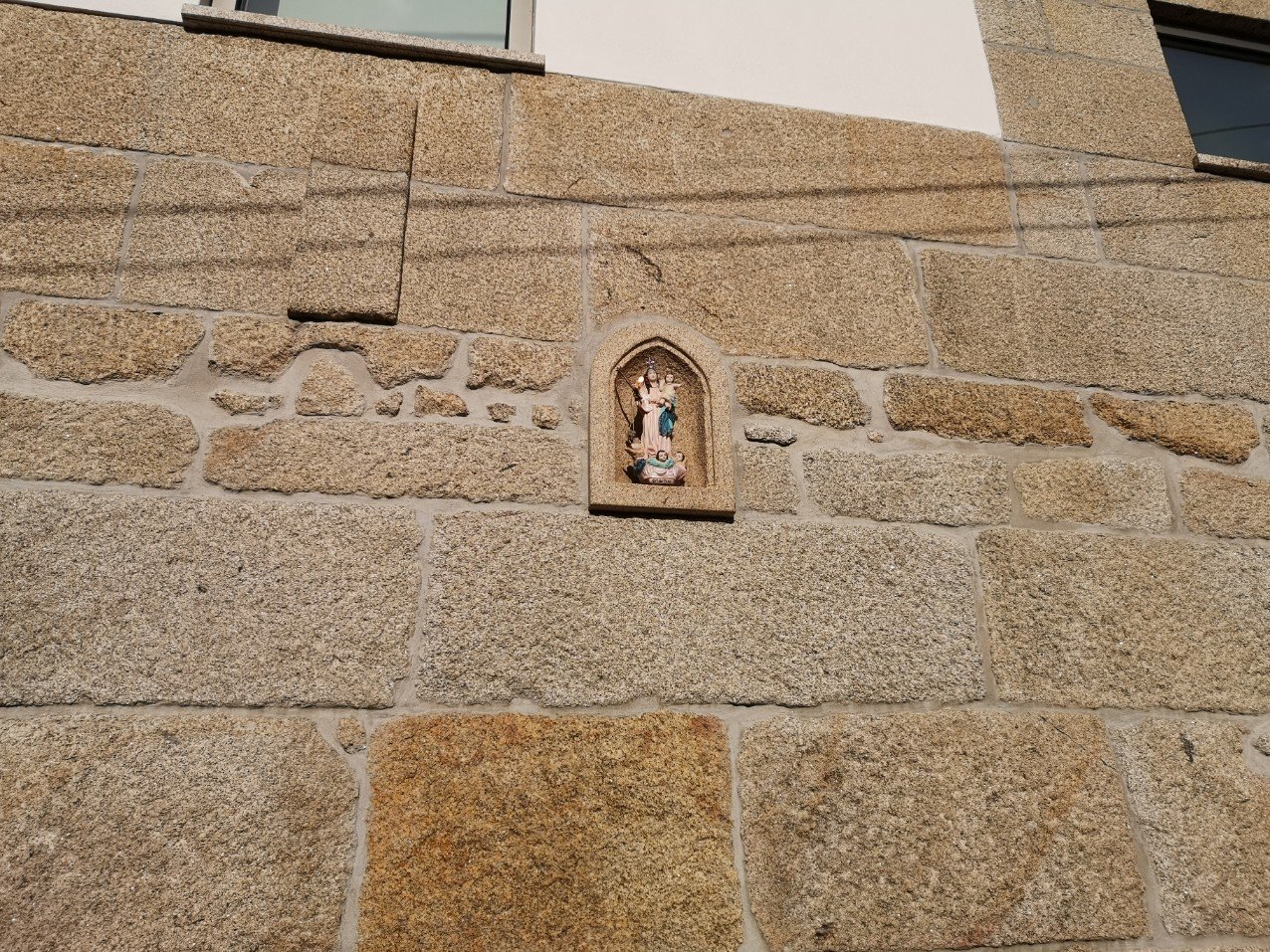
St James, patron Saint of the Camino, holding his staff and sitting in a little nook on the side of the Capela do San Martino near the cross, Cruceiro de Rua de Francos, near Teo, Galicia

Retracing my steps from the night before, I left the albergue at Teo at 7.45am and began the last leg of this Portuguese camino. It was misty, cold and the path went steeply up. Thankfully the weather cleared later. I had to take painkillers for my foot for only the second time on this way. It didn’t hurt when I was sitting down – a clear message.
Lugar de la Grela with roof crosses typical of the region, Galicia

Overall, this way into Santiago de Compostella is hilly and it was hard going, however it was lovely countryside. I breathed in the fresh air before entering the city.

We hiked forested paths, up and down hills, crossed rivers and railways, passed shopping centres, went down narrow alleys between houses, climbed a steep hill beside a hospital, and then walked on city streets. Spencer Linwood’s blog of this final day
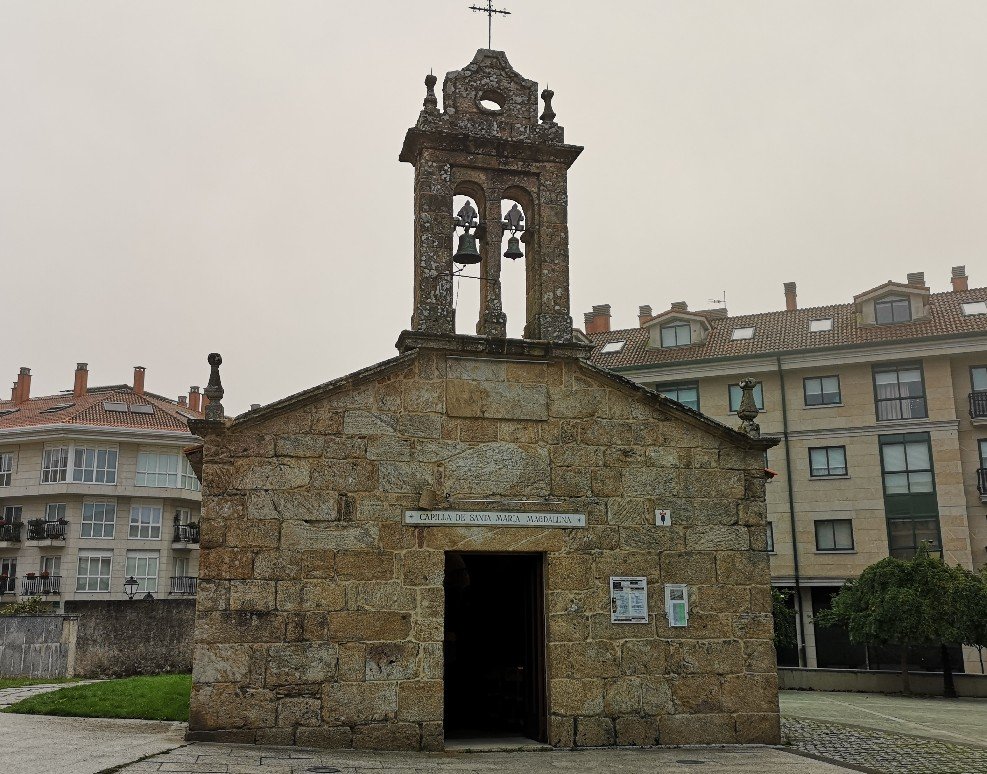
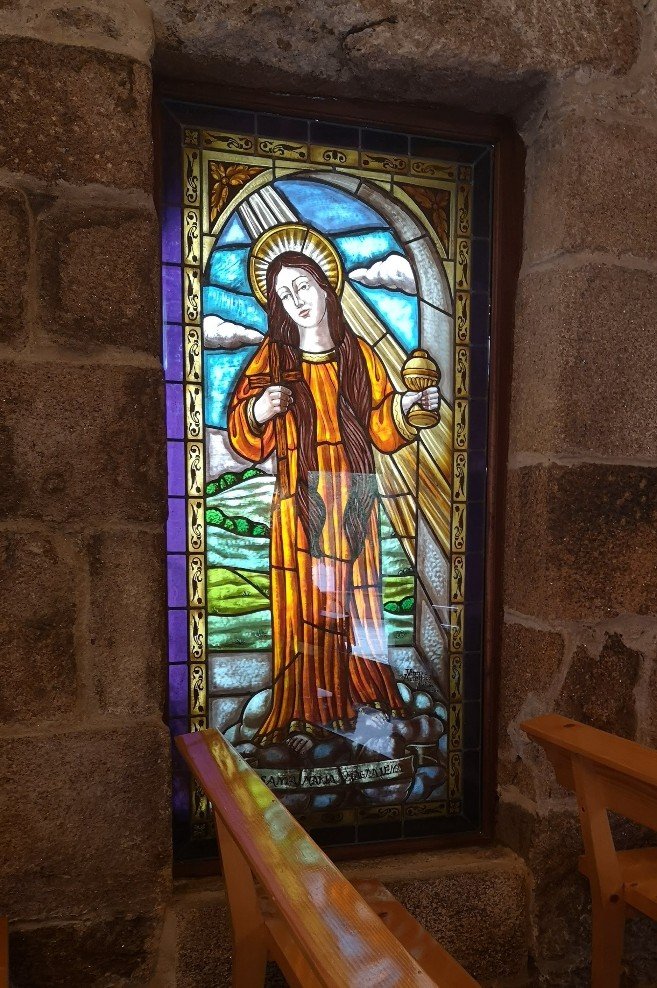
Capila de Santa Maria Magdalena, Galicia
Stained glass at the Capila de Santa Maria Magdalena, Galicia . She is often depicted with long flowing tresses, a cross in her right and in her left hand she presents an egg (in an eggcup?) to Emperor Tiberius as a symbol of Christ’s resurrection. There are some great stories about Mary and her egg

According to tradition, after Jesus’ Ascension into heaven, the Magdalene…boldly presented herself to the Emperor Tiberius Caesar in Rome to proclaim the resurrection of Jesus Christ, with an egg in hand to illustrate her message. Holding the egg out to him, she exclaimed for the first time what is now the universal Easter proclamation among Christians, “Christ is risen!” The emperor, mocking her, said that Jesus had no more risen than the egg in her hand was red. Immediately, the egg turned red as a sign from God to illustrate the truth of her message. The Emperor then heeded her complaints about Pilate condemning an innocent man to death, and had Pilate removed from Jerusalem under imperial displeasure. Mary Magdalene continued her mission as an evangelizer, contemplative, and mystic in the heart of the Church.

By Grechen Filz (link under photo above)
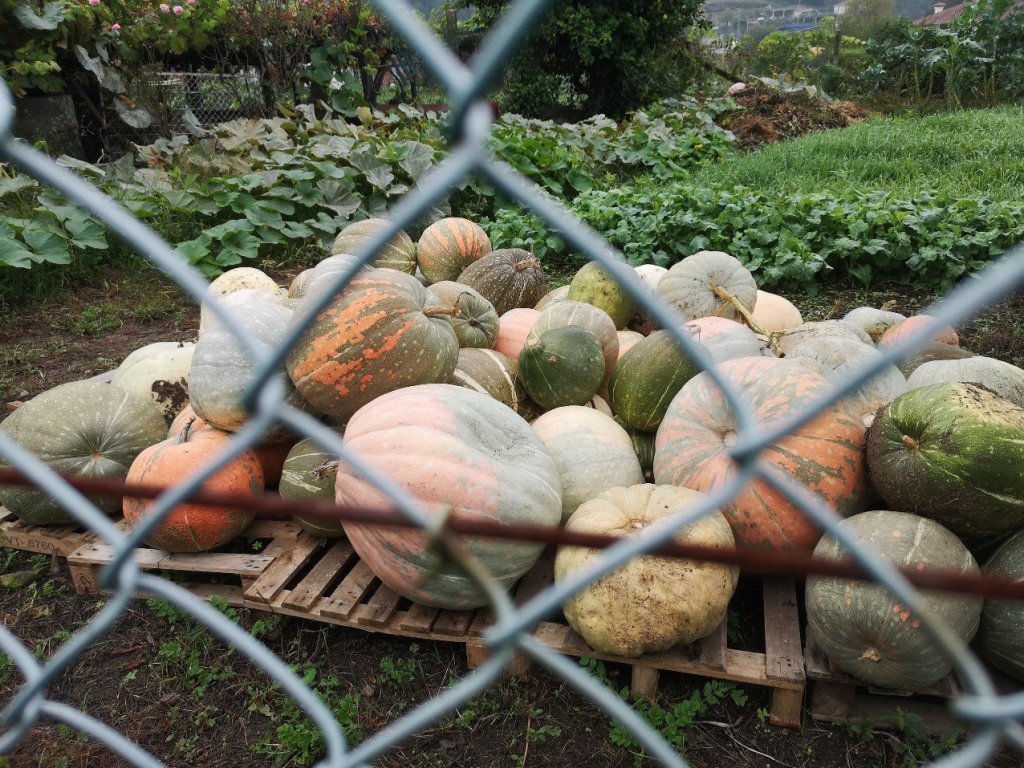
Autumn squash piled up after harvest, Galicia

At one point there was a cacophony of hunting dogs and two men wandering around looking very guilty, a huge 4×4 a little further on. The hounds seemed to be nosing around for something, but it wasn’t clear what and otherwise the area was deserted. Moving away, up a inclinne, I passed a female backpacker going in the opposite direction, so I repeatedly glanced back. I knew she would be passing the men and wanted to keep an eye out for her in case she needed back-up.
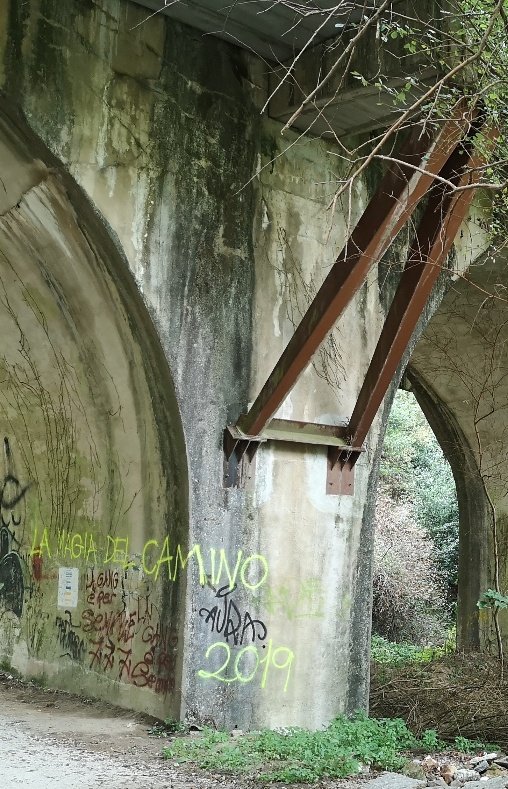
La magia del camino graffiti, underpass of the main AG56 road which goes past Santiago and on to Noia on the west coast

Much to my disappointment, I started to feel some back pain as I traipsed up towards the city centre, searching for signs and arrows to no avail.
Tip: Remember that google maps is all but useless in the Poruguese / Spanish countryside, but great in towns and cities, so at this stage when there is a dearth of directions, you can switch on the GPS.

The outskirts seemed to go on and on and so I took an elevenses pitstop in a city cafe enjoying some green tea and sweet Santiago tart which I remembered well from my first visit in 2016, when my life had already started to change.

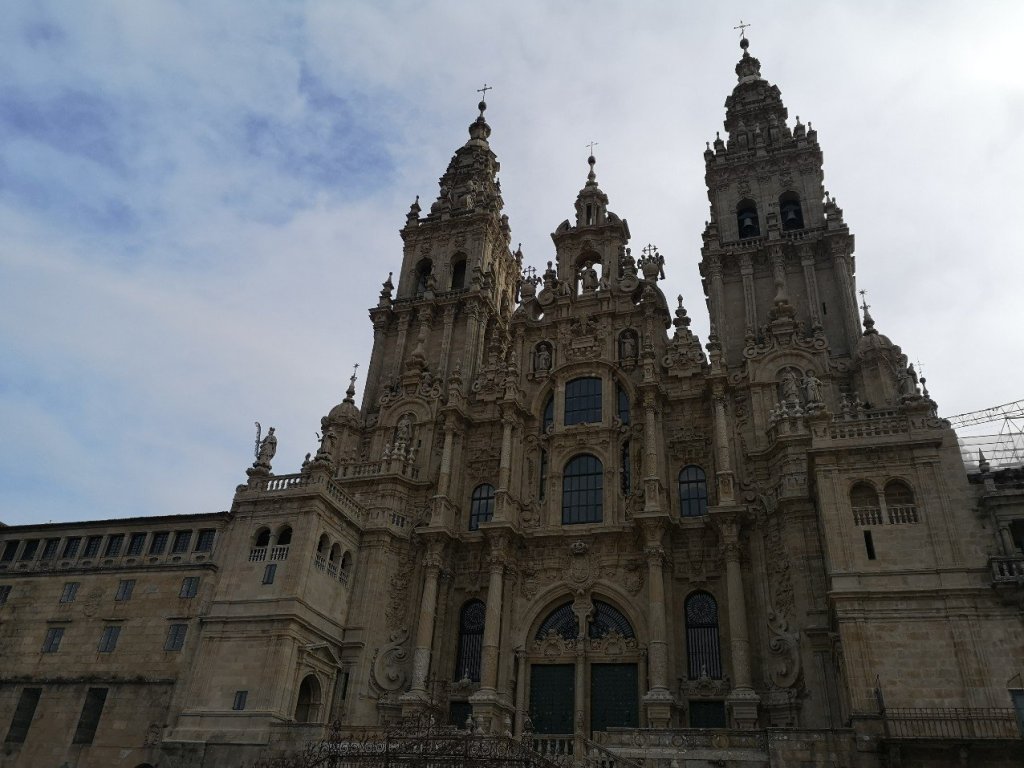
The Cathedral of Santiago de Compostella, Galicia seen from the ground looking up

I arrived in the main square at 12.15. Someone asked whether I was going to lie down. I didn’t know about this, but apparently there is a tradition to prostrate, head towards the towering building and admire it upside down, so I did. Of course.

This was my second time in Santiago despite having walked three caminos. When I walked the Via de la Plata, I initially headed south, towards Seville (1000 kms away). Later I started there, walking northwards until I got back to where I had finished that section the year before. I didn’t do the final stage for a second time, and so didn’t visit Santiago. I didn’t go to the special Mass this October 2019 either, for the same reasons.

View of the cathedral of Santiago de Compostella from the balcony at the Roots and Boots hostel
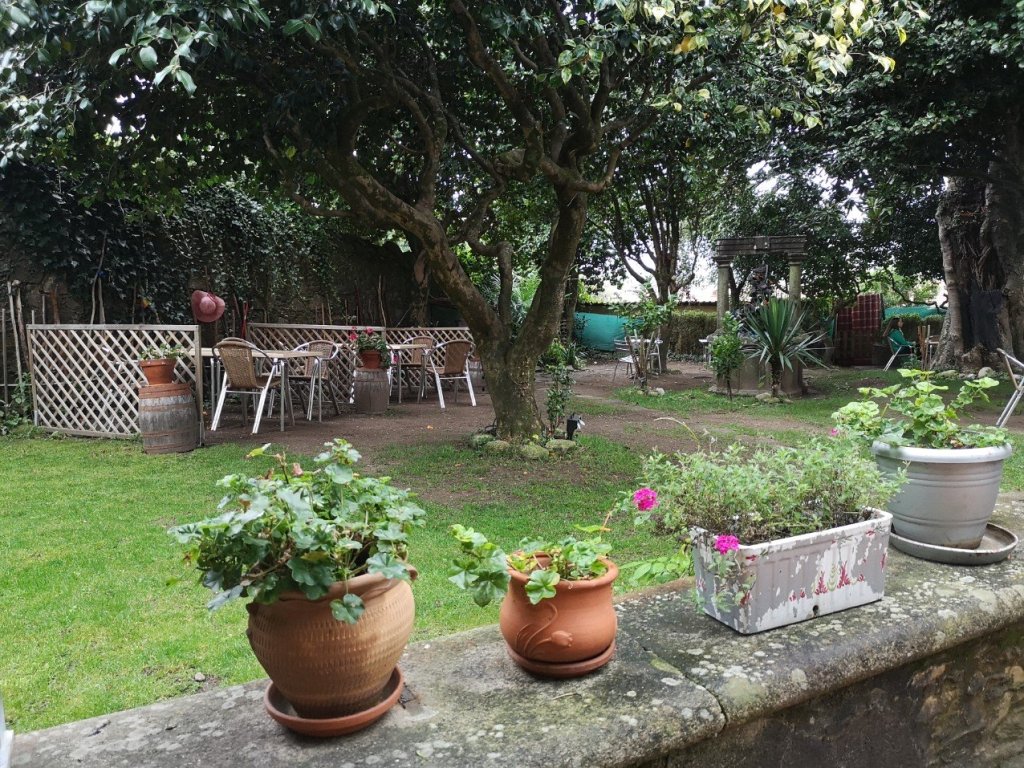
The garden at the Roots and Boots hostel, Santiago de Compostela, Galicia

I had booked the Roots and Boots hostel in advance and was very happy with it. Very close to the centre, the rooms are small (no extensive dormitories) and mine had a magnificent view of the cathedral. There is a pretty, enclosed garden with tables and chairs by a reasonably priced, hole-in-the-wall, cafe. I sat out there until quite late at night, getting slightly chilly but enjoying the situation, especially given it was October.

I had lunch in a large restaurant, very popular with pilgrims. I was surprisingly tired and the large portions and very quick service suited very well!

Laundromat courtyard out back, Santiago de Compostela, Galicia
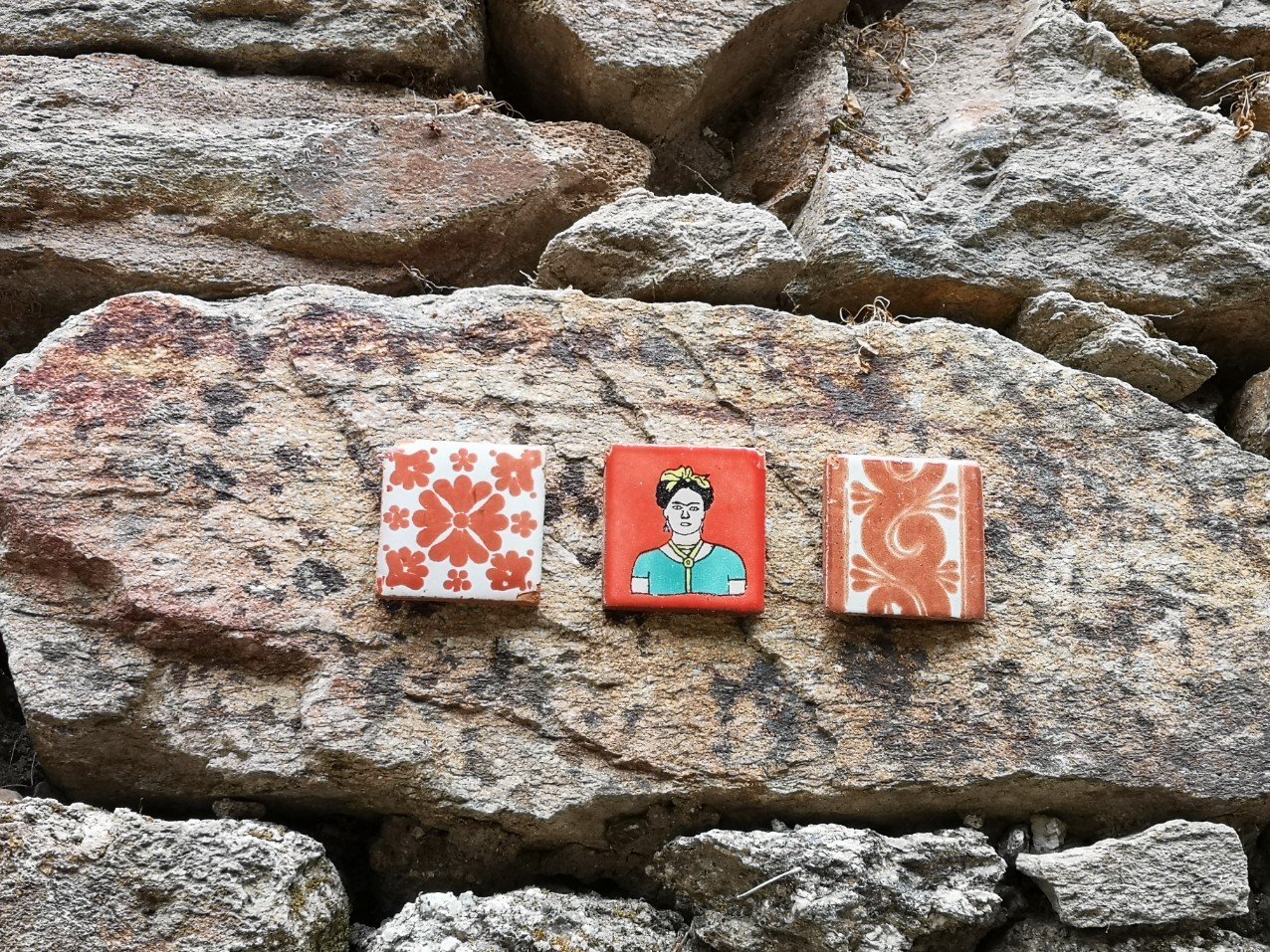
Frida Kahlo on tiny tiles in the courtyard of the launderette, Santiago de Compostela, Galicia
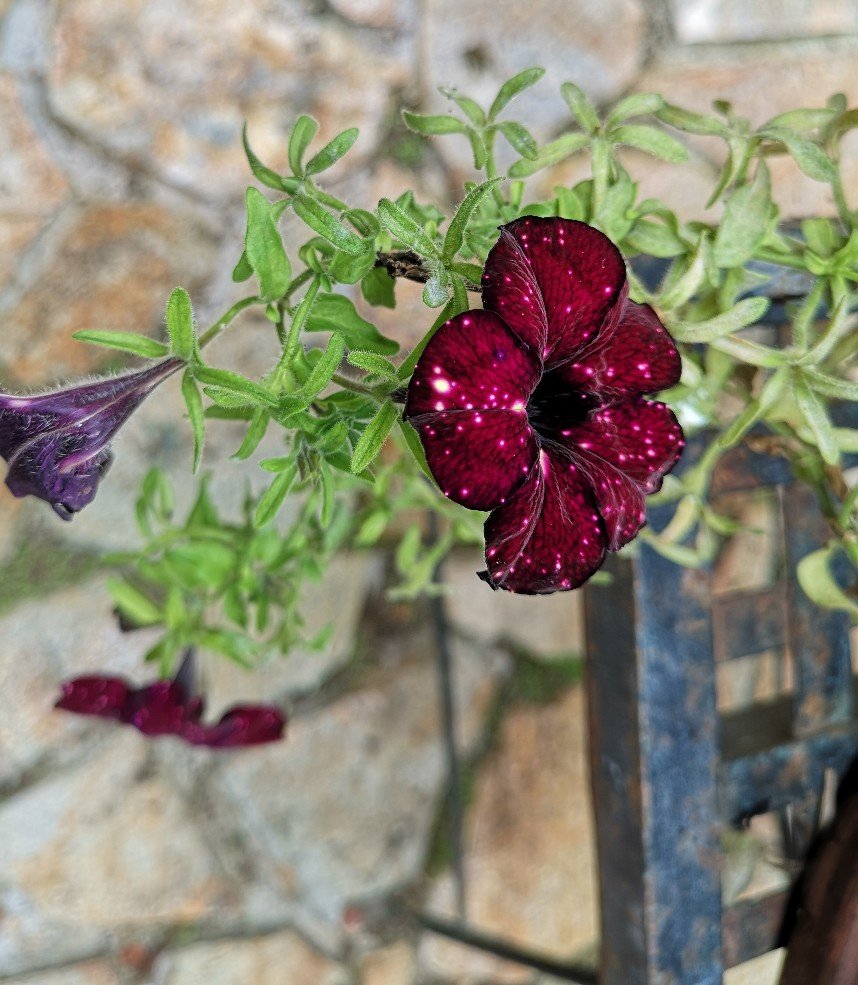
Glowing Petunia in the same courtyard

Then I left clothes to be washed at a rather nice launderette (as launderettes go) on Rua das Hortas which had a decorated and flowering courtyard. You can also get washing done at Pilgrim House, a veritable Santiago institution.

I had not planned what I would do next until a few days before, when I came across a post on the Camino forum which set me off on a new trail. I contacted the redoubtable Rebekah Scott at her Peaceable Kingdom to ask if I could stay with her at Moratinos on the Camino Frances, in the name of research. She kindly obliged, but later sent me an email saying that she couldn’t host me after all because she looks after a hostel on the Camino Primitivo and had to go up immediately. Unless, she added, I wanted to go too. More on this adventure later…..

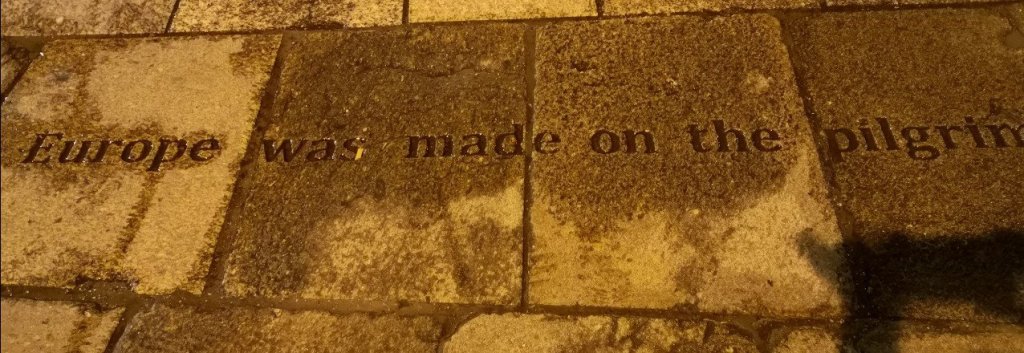
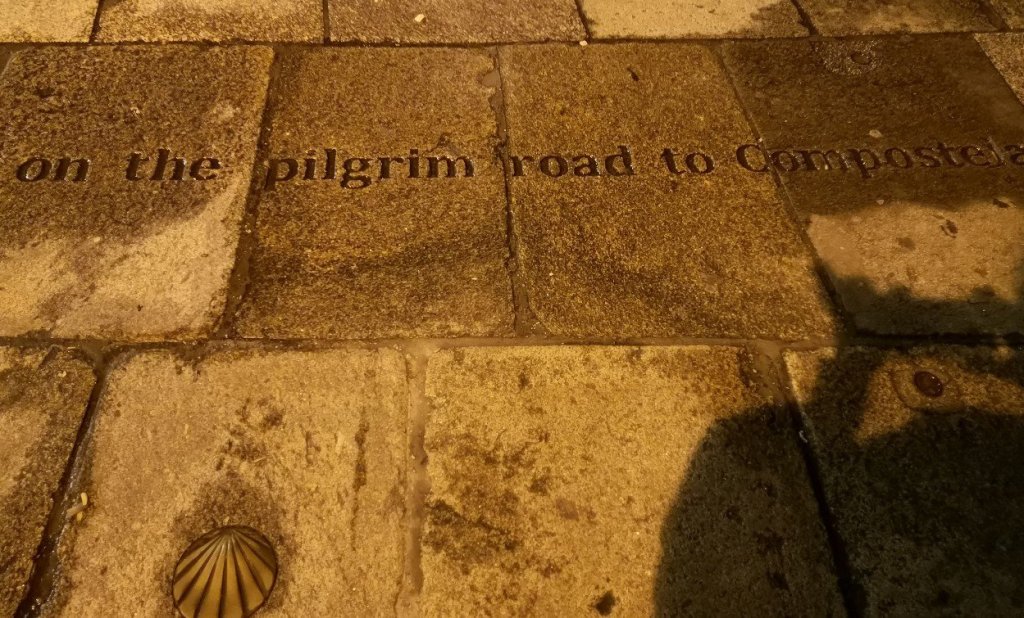
Pavement message in the early morning of the next day: Europe was made on the pilgrim
road to Compostella

Excellent Stingy Nomads guide to the Poruguese Caminos – all the variations and pretty much anything else you want to know.

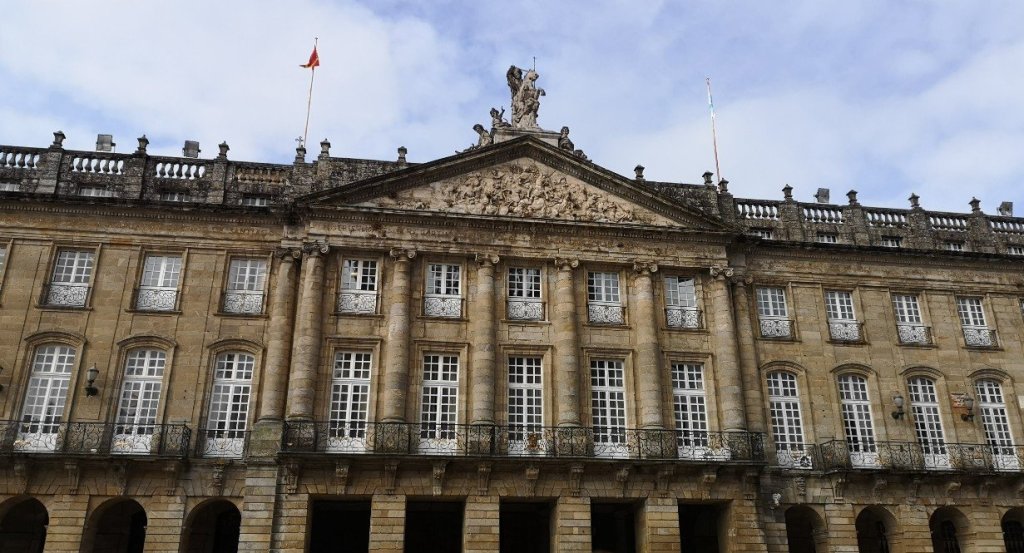
Parador (hotel) Santiago de Compostella

Footnote: If you have some cash at the end of your camino, you could try the Parador, one of the famous Spanish hotels which offers pilgrims a free lunch, so I am told.

The camino shell necklack I bought in Porto for 5 euros and which I wore as a talisman for the Camino to Santiago de Compostella

Herbon to Teo: Portuguese Camino

Camino Portuguese da Costa – Day 14, October 2nd 2019

It is 25 kms from Padron to Santiago and I was not confident I would manage that with the extra 3.2 kms from Herbón to Padrón, so I decided to break my journey in Teo, making two, admittedly short, days out of one longer one.

I took a last look at the gardens of the monastery of Herbón, Spain and spotted this little critter slinking its way amongst the stones

They played music to wake us up at the Herbón monastery and then there was a return to the large dining room for a shared breakfast. Although we had arrived through countryside, the path out, towards Padrón, was almost immediately into a village and then along a main road.

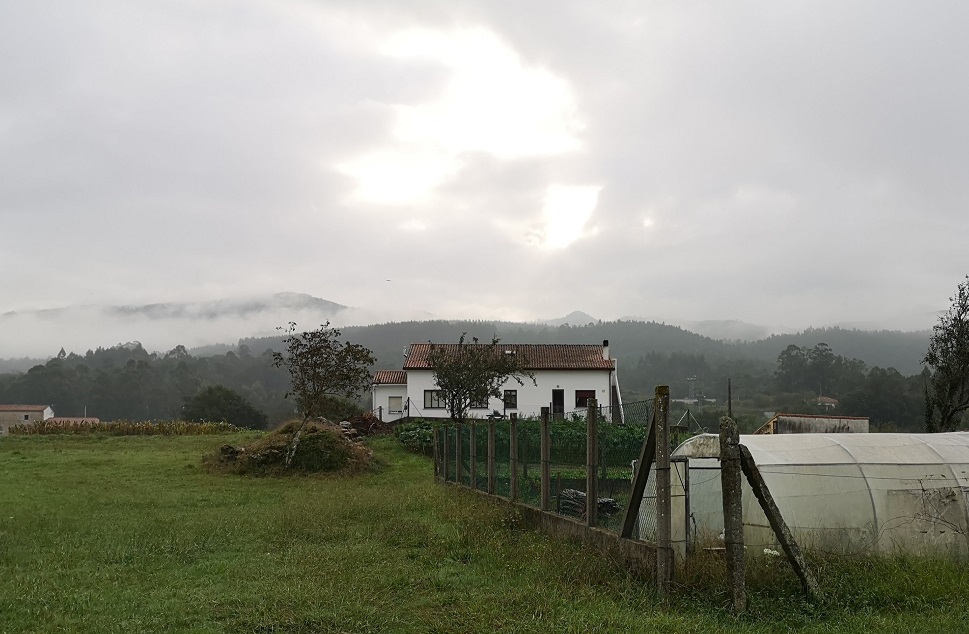
A typical Galician scene with terracotta rooves, fruit frames and misted mountains in the background, Spain

I was on the Ruta dos Xardins da Camelias, heading towards the home of padrón peppers which we had been told the previous evening didn’t really emanate from Padrón at all. It doesn’t stop them being one of my favourite dishes.

Crossing the River Sar with a wonderful view of the Iglesia de Santiago de Padrón. Still dark enough to merit headlights. Spain

I waited in a bar for the pharmacy to open so I could get some anti-inflammatories for my left foot which was still very painful.

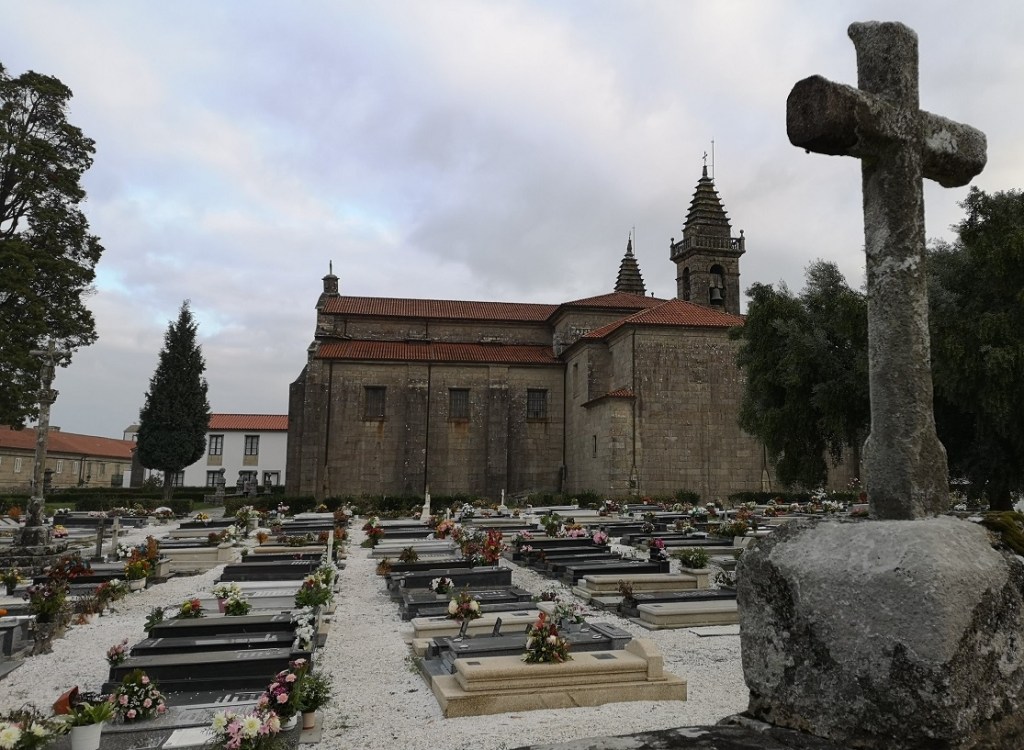
Flattened graves surrounding a traditional Galician church, Padrón, Spain
Perhaps that is Monte Meda (1454 feet) in the distance, half hidden by low cloud cover, the sun trying hard to shine through, Galicia
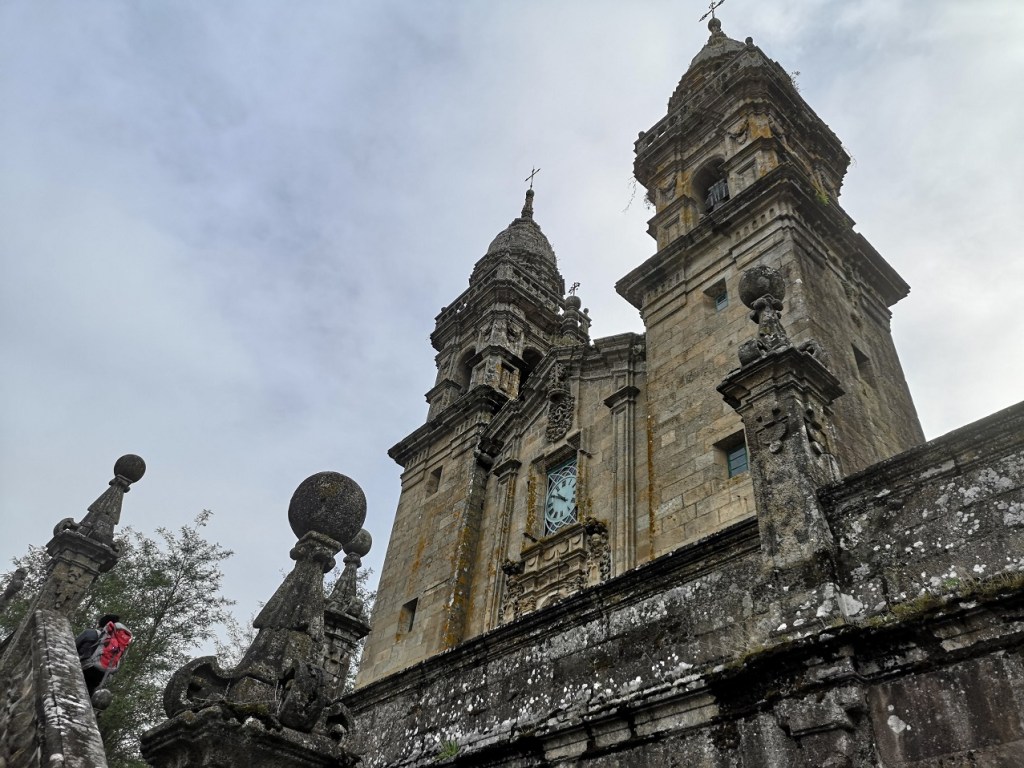
Approximately half way there and I came across the Santa Maria de Cruces Church with its ornate twin steeples, A Escravitude, Galicia
I heard them before I saw them! Hunting dogs keen to get a look at the pilgrims
One was really determined – squeezing sideways under the fence!

And then I was in the rural landscape I love so much. Grass and sheep, scarlet willows with yellow branches stemming from a single point, just a few green leaves left now as winter approaches – nothing too carefully kept.

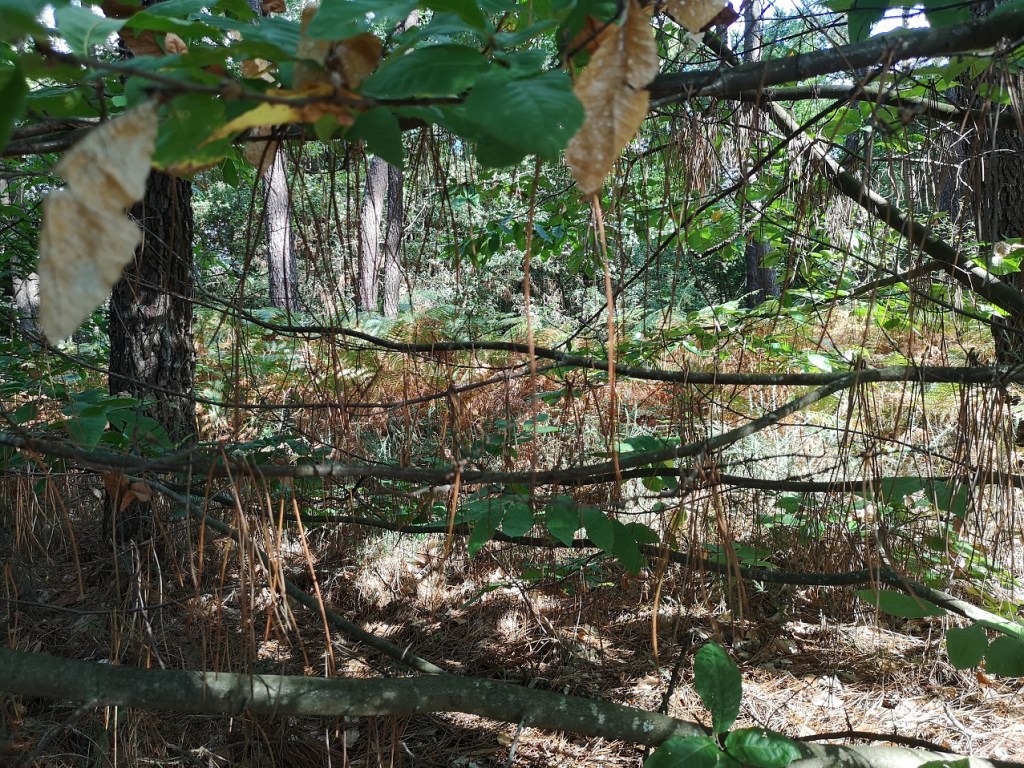
It’s when the pine needles turn brown and fall. They catch on branches below and create this chopstick effect
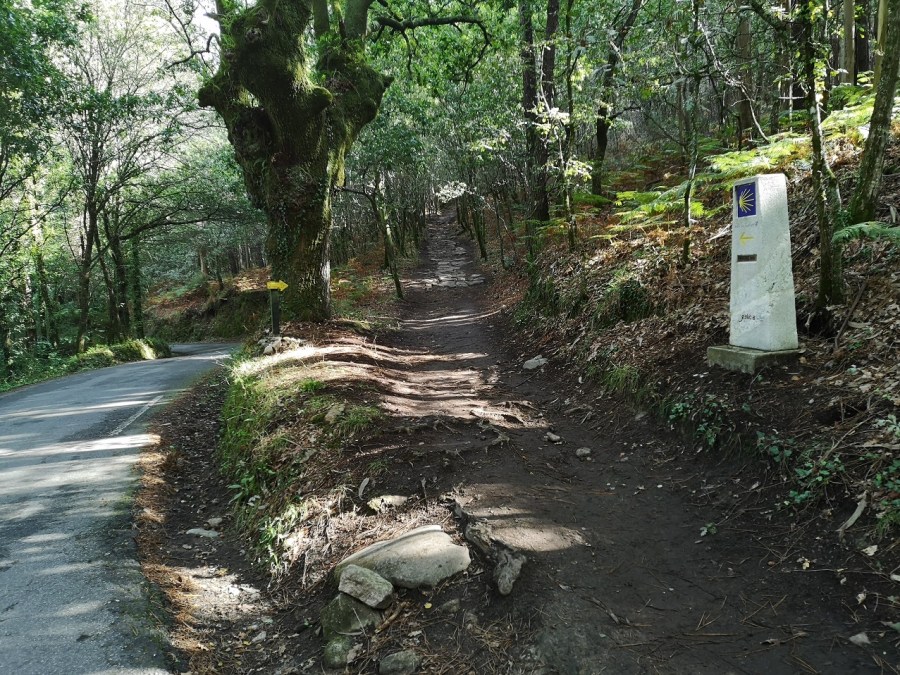
Look carefully and you will spot the yellow arrow on the tree in the centre. Getting close to Santiago de Compostella now – ‘the end of the road’, Galicia
Onto the Ruta Saudable de Teo, the healthy route, where you cannot pick flowers or frogs, but you can hike!
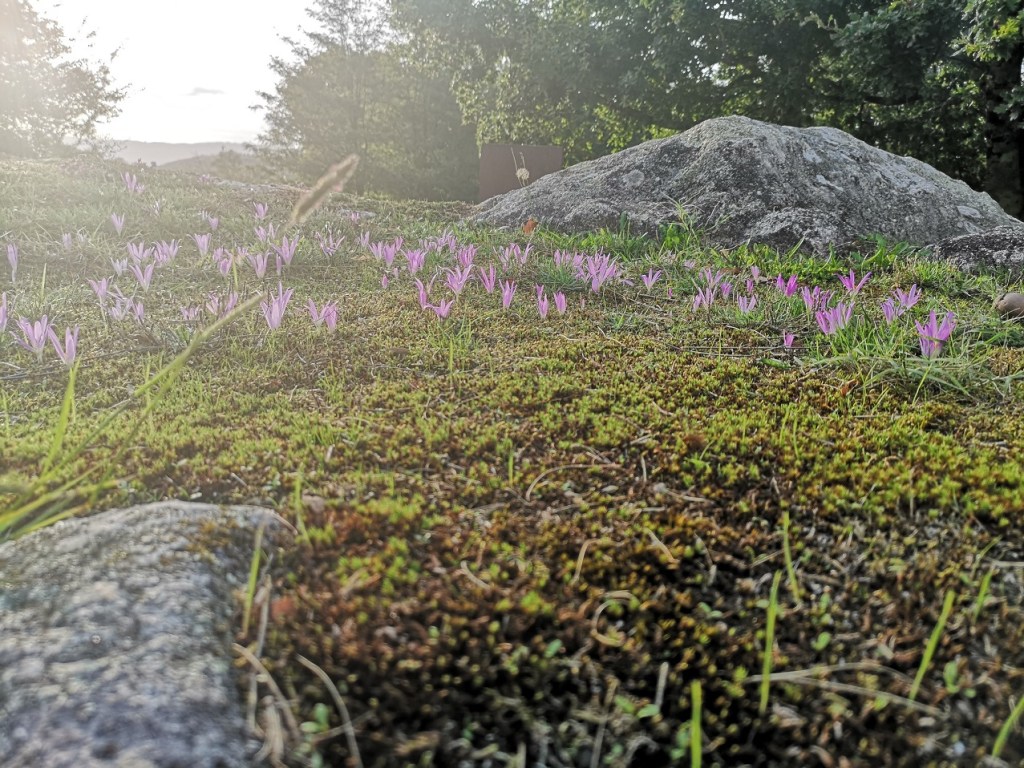
Autumn crocus in hazy sunlight
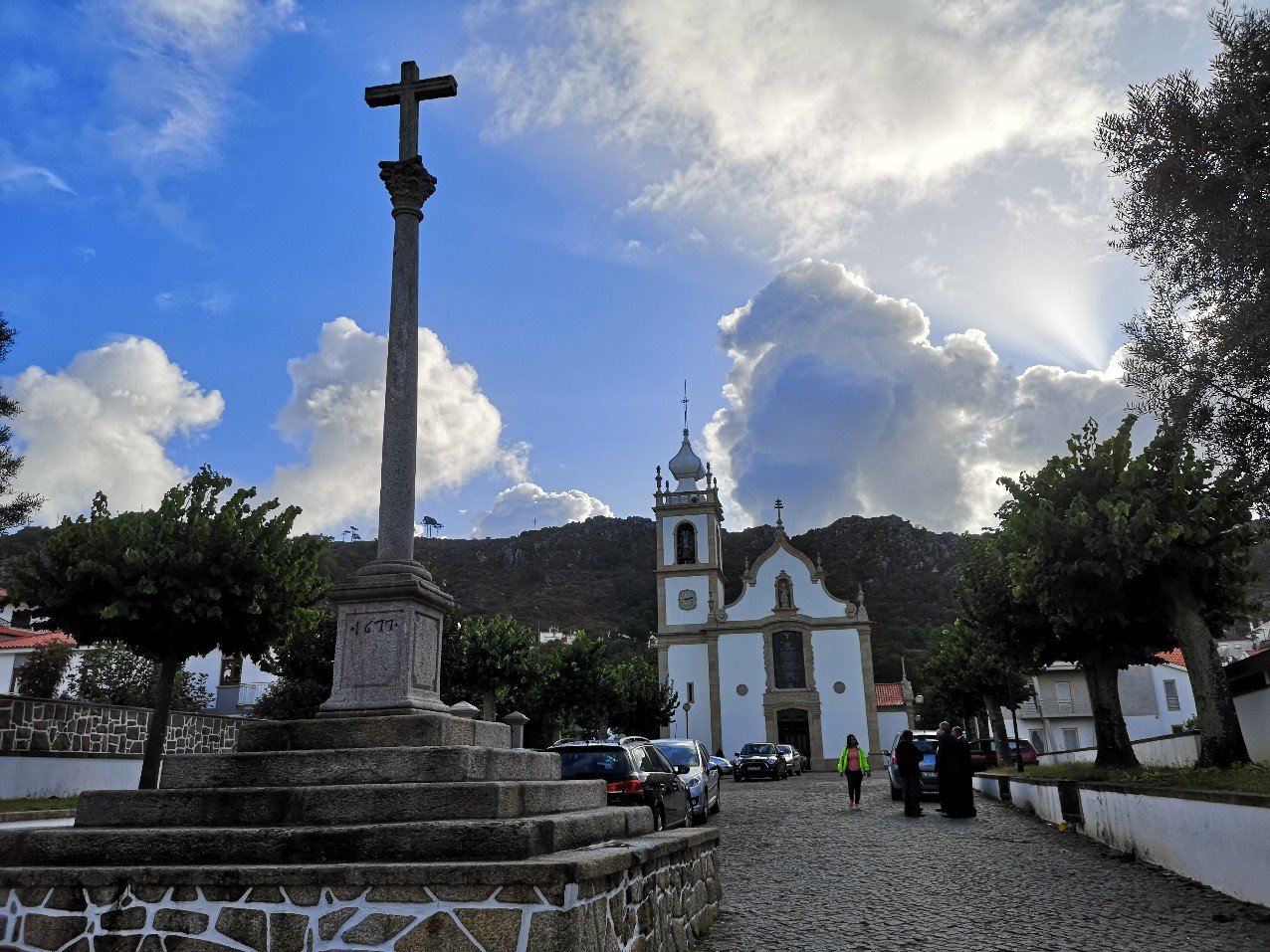
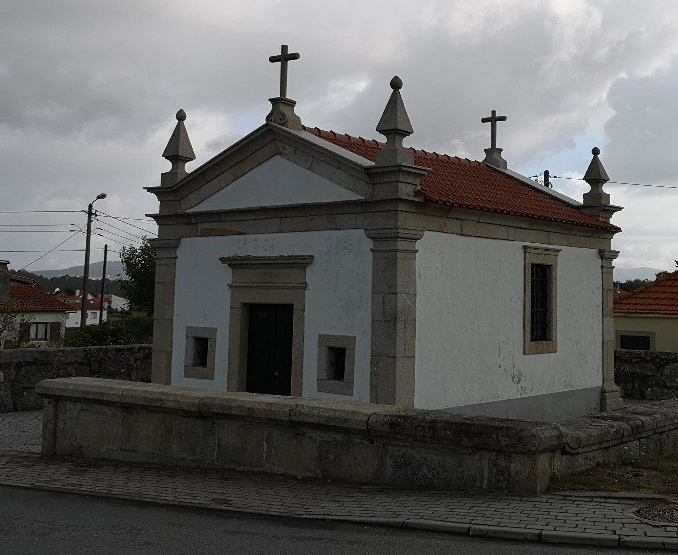
Capela de San Marino de Ruta de Francos: modest, solid, ancient, Galician

The country roads were lined with almond trees, almost neon in their greenness, and forming a backdrop to lush undergrowth, rough-stalked bracken. I happily trotted along, constantly overtaken by others rushing to the finish line.

The albergue Xunta de Teo (municipal albergue at Teo) is in a beautiful spot, a drop down from an extremely busy main road, but accessed by the walkers from the opposite, safe side. There are cafes both down and uphill, and they are equally idiosyncratic. Shops can be found even further on: the one at a service station is often open, the much smaller village store is shut for hours at lunch time.

The albergue was closed on arrival, only opening much later (4pm) with a queue, and filled up very quickly, so that many were turned away. It is run in a haphazard sort of a way and there are no utensils in the kitchen.

While I waited for it to open, I sat under a plastic awning and wrote and read and ate p. peppers and drank beer and it was expensive, in comparison to other places.

In all I went up and down that road a few times, eventually getting supplies for the evening meal, and then wandered back through the forest, past the church and other very smart looking buildings, several of which were supposed to be a restaurant and up-market accommodation, but both looked uninhabited. It was like a rekkie for the next day (in the opposite direction), very pleasant, and I returned to sleep when it was almost dark.

Sunset through the treest, Teo, Galicia

Vila do Conde to Viana do Castelo: Camino Portuguese

Camino Portuguese da Costa – Days 3 and 4, September 21st – 22nd 2019.

Vila do Conde

20 kms from Porto; 24.95 kms to Esposende

architecture Vila do Conde Portugal
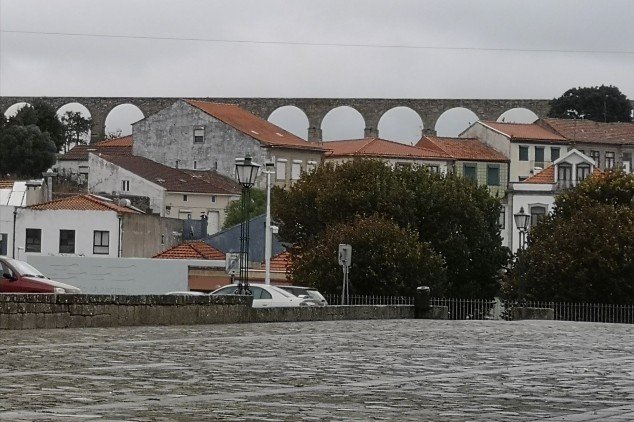
Admiring the Santa Clara Roman aqueduct in Vila do Conde which had 999 arches and, at 4 kms, is the second longest in Portugal

urban landscaping Portugal
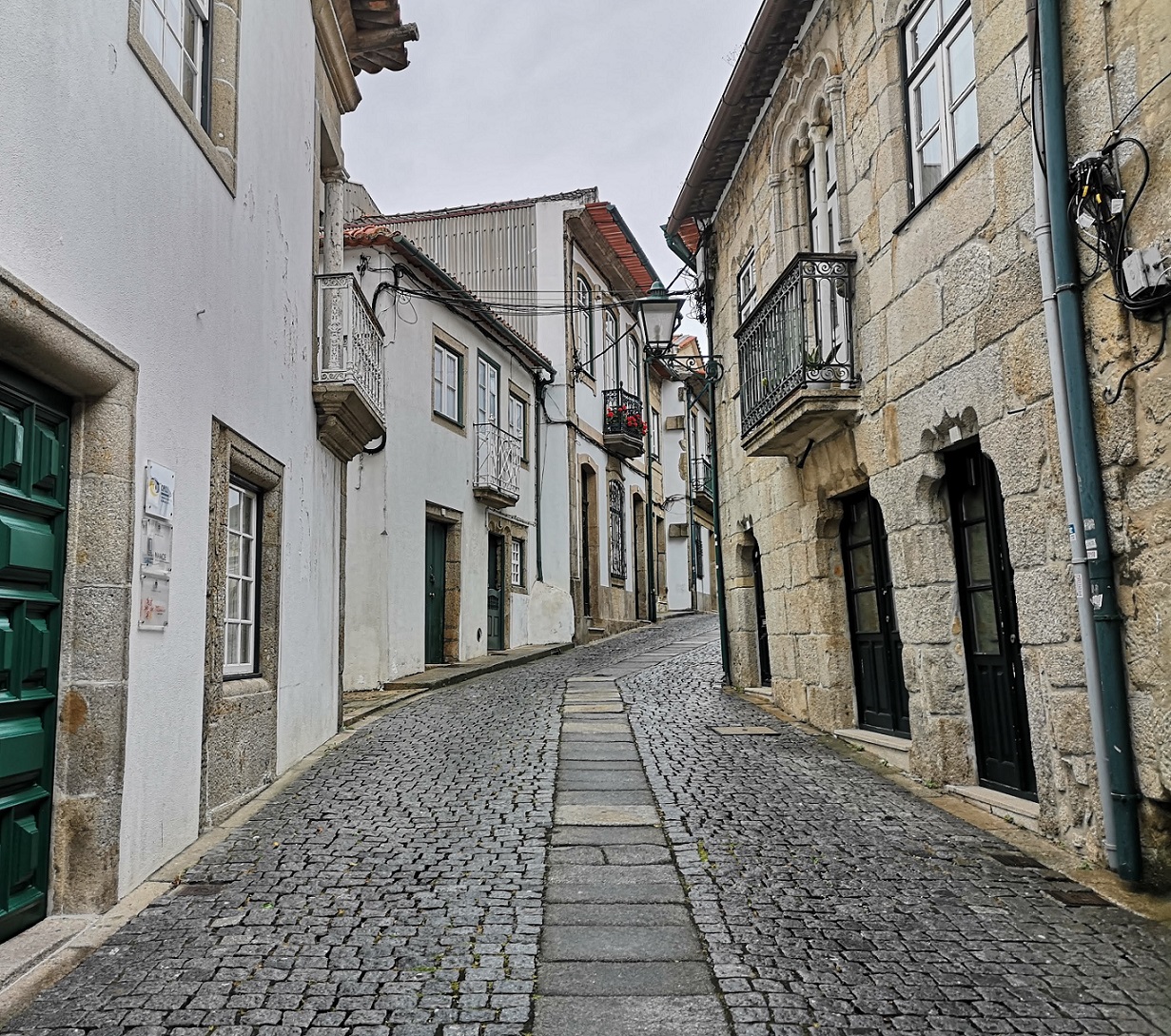
Typical cobbled street, Vila do Conde

wp-1575755369970164076639993739099.jpg
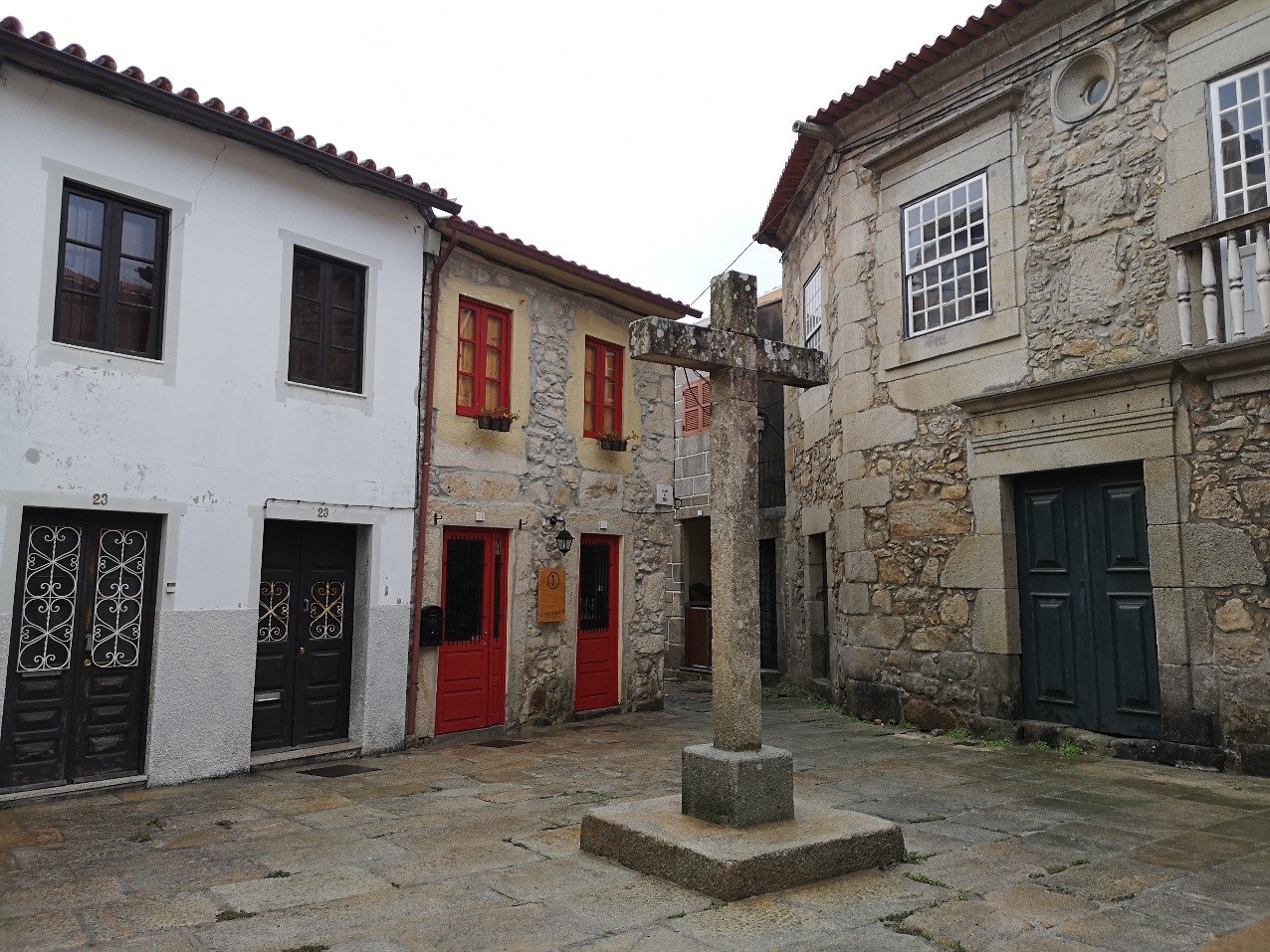
Mercat cross Vila do Conde

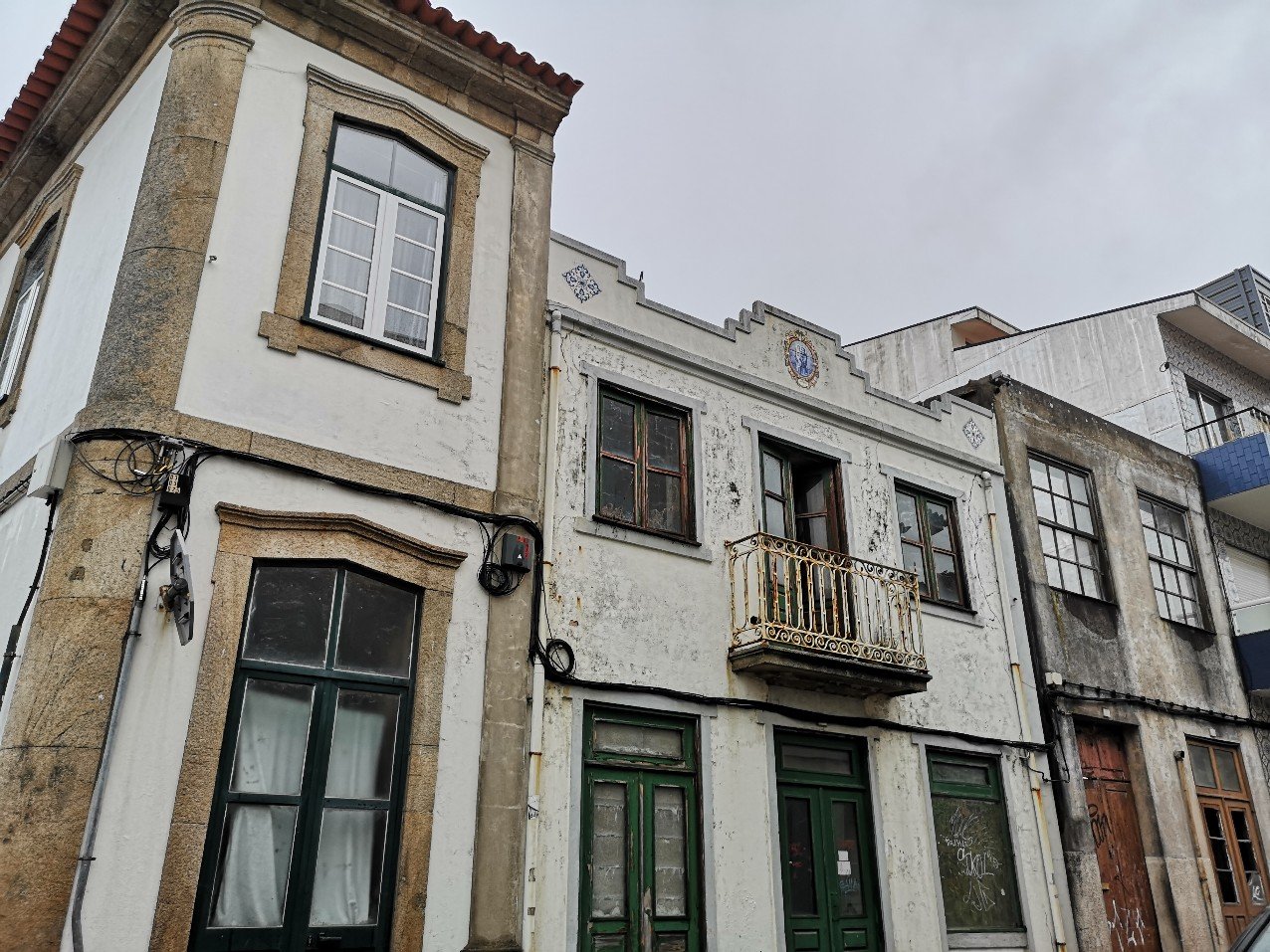
Slightly dilapidated but charming architectural features, Vila do Conde

web link to Porto blog
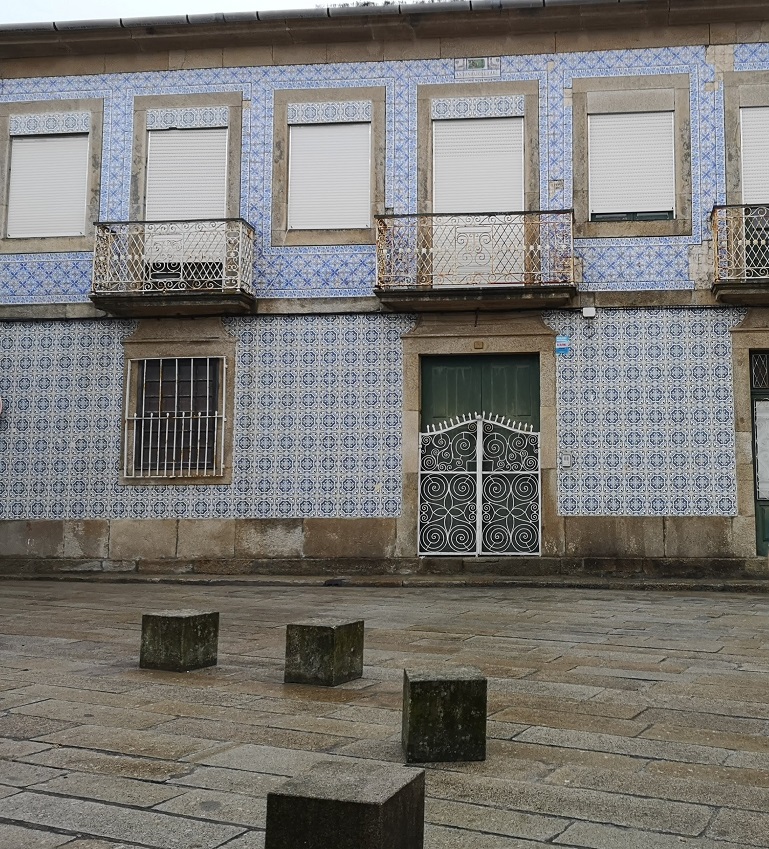
Similar blue and white tiles to the ones I saw in Porto, Vila do Conde

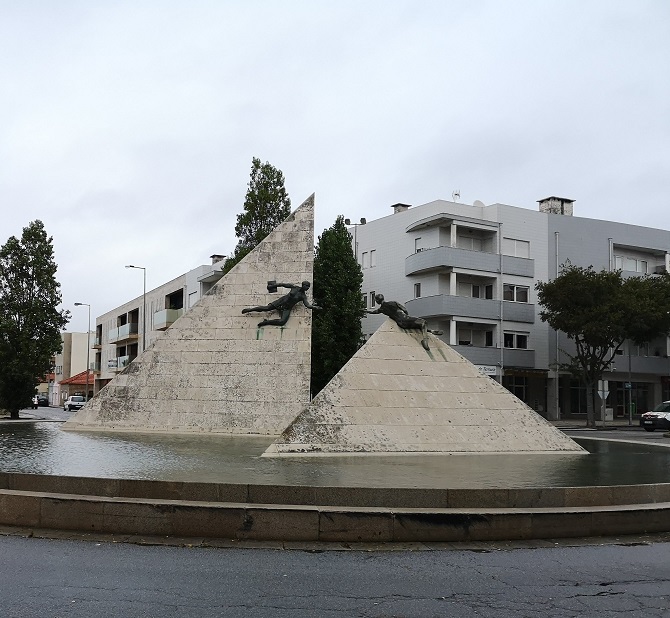
stone monument to education Vila do Conde Portugal
I like interesting roundabout sculptures: Monument to Education and teachers, Benguiados Street, Vila do Conde

Portguese street scene
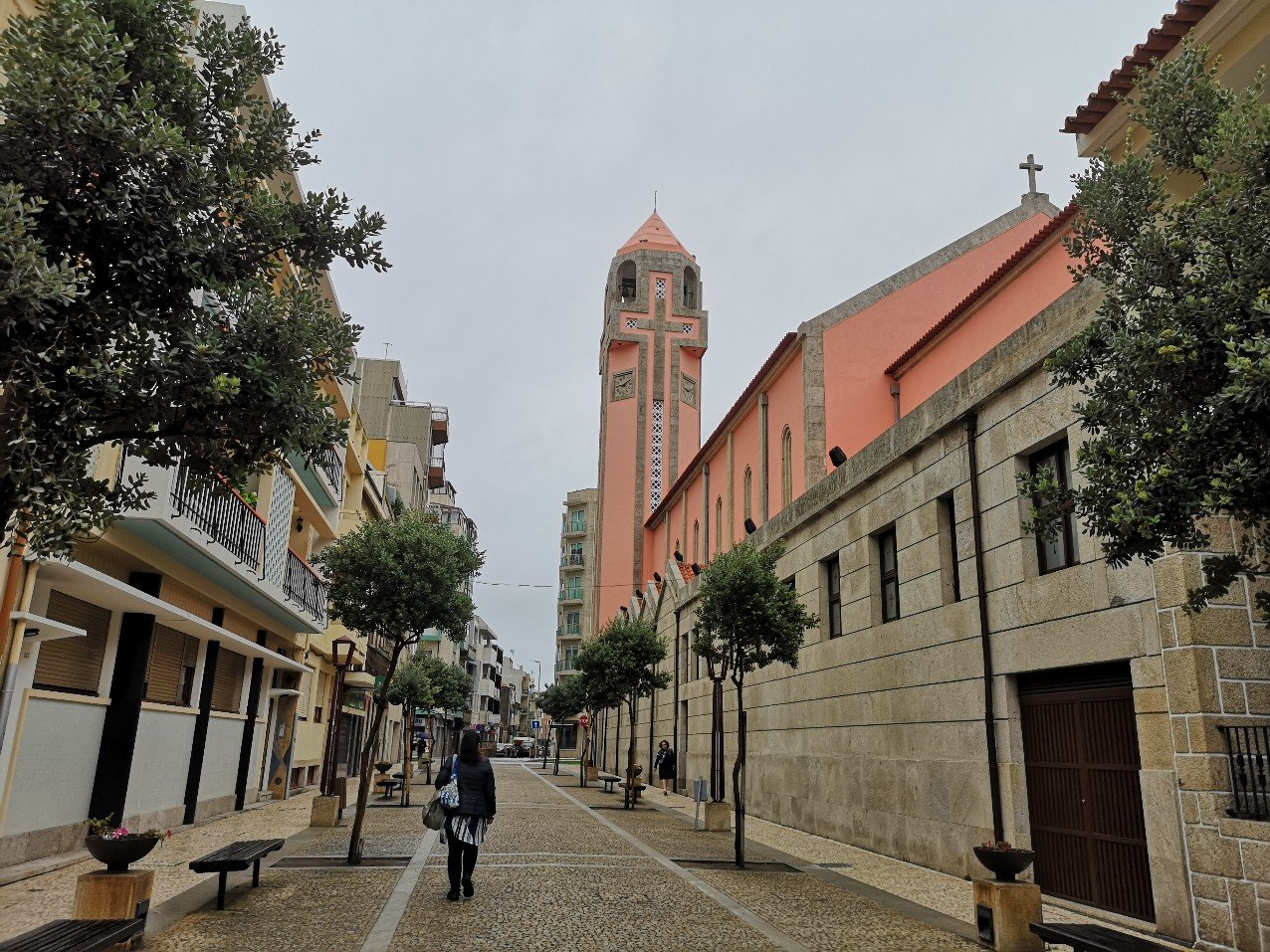
I am not sure what the name is of this pink church, Vila do Conde

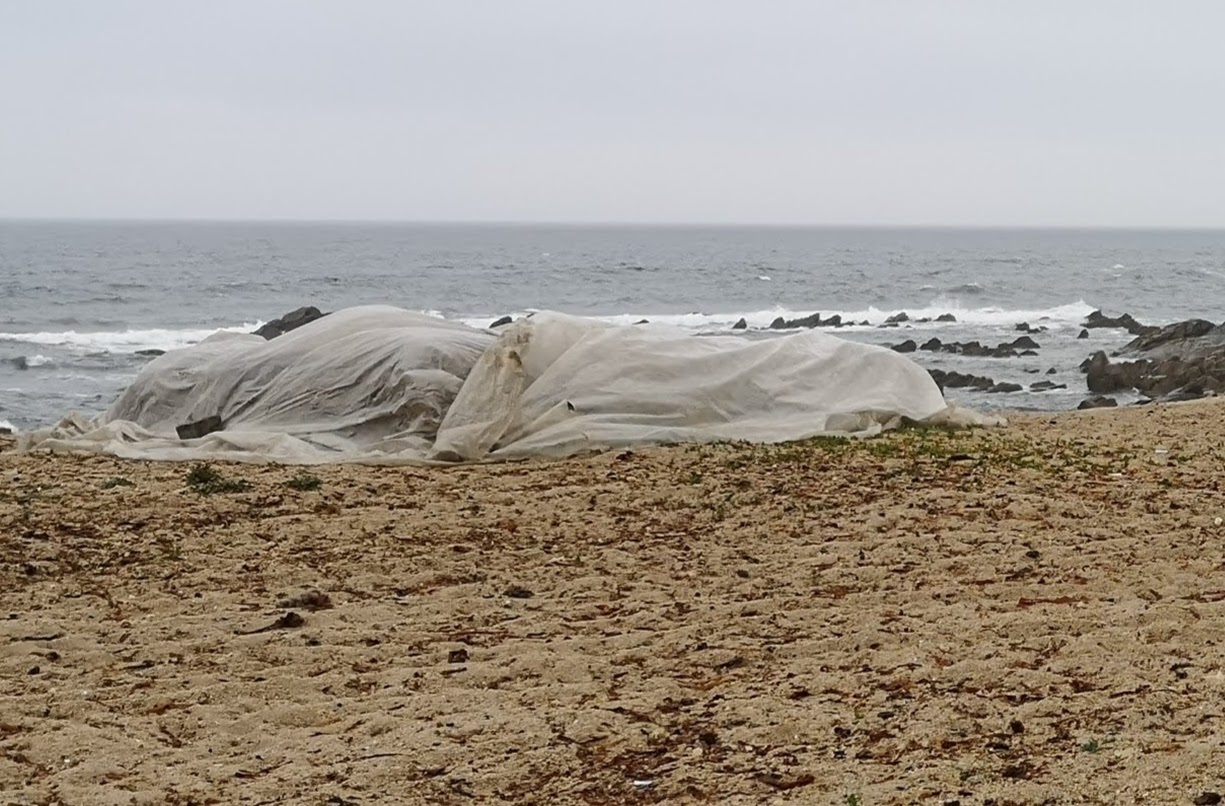
Drying seaweed under white cloths on the beach – I could see these huge piles all along the coast as I walked

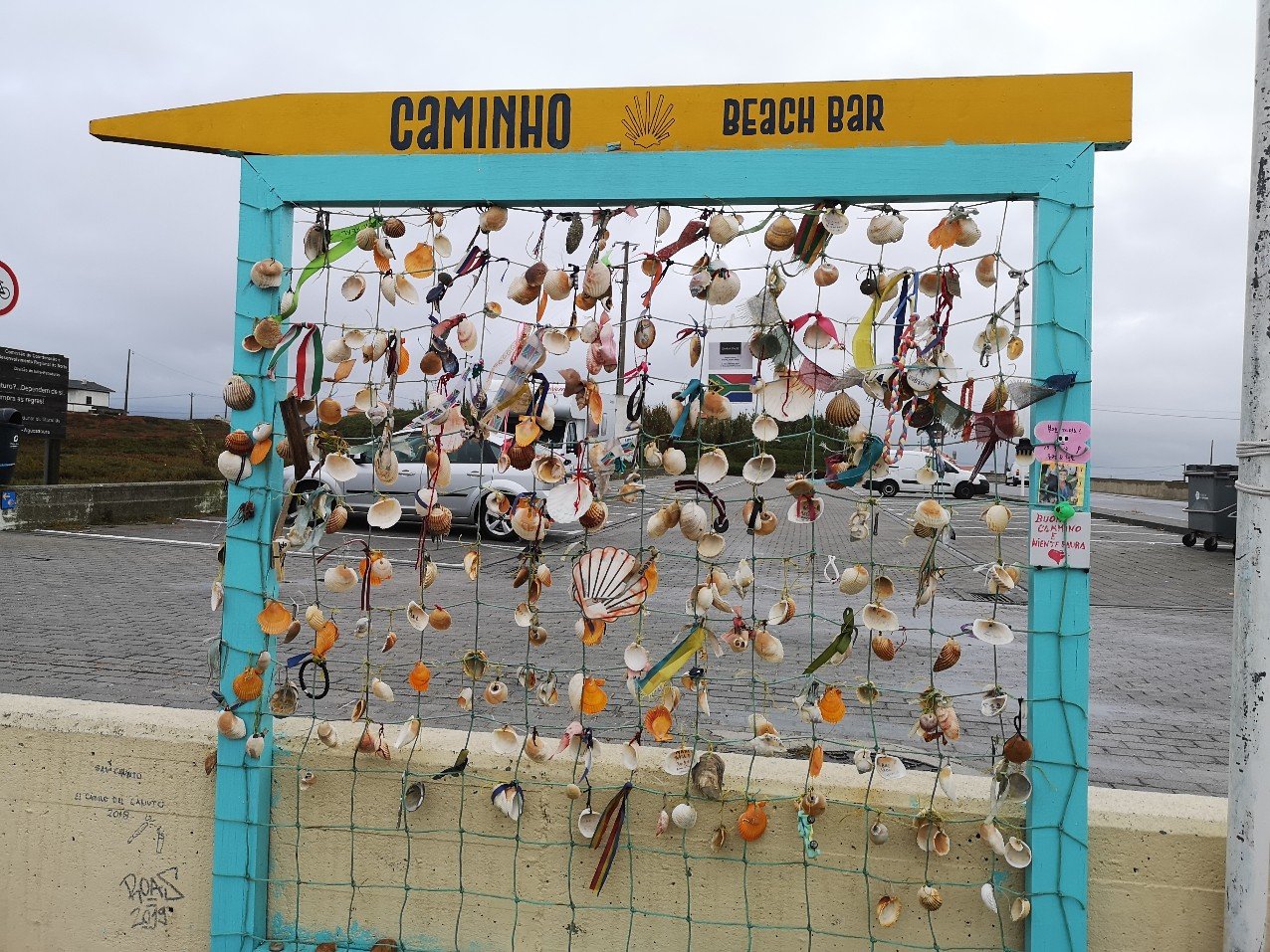
Idiosyncratic beach bar sign with the Camino shells as decoration

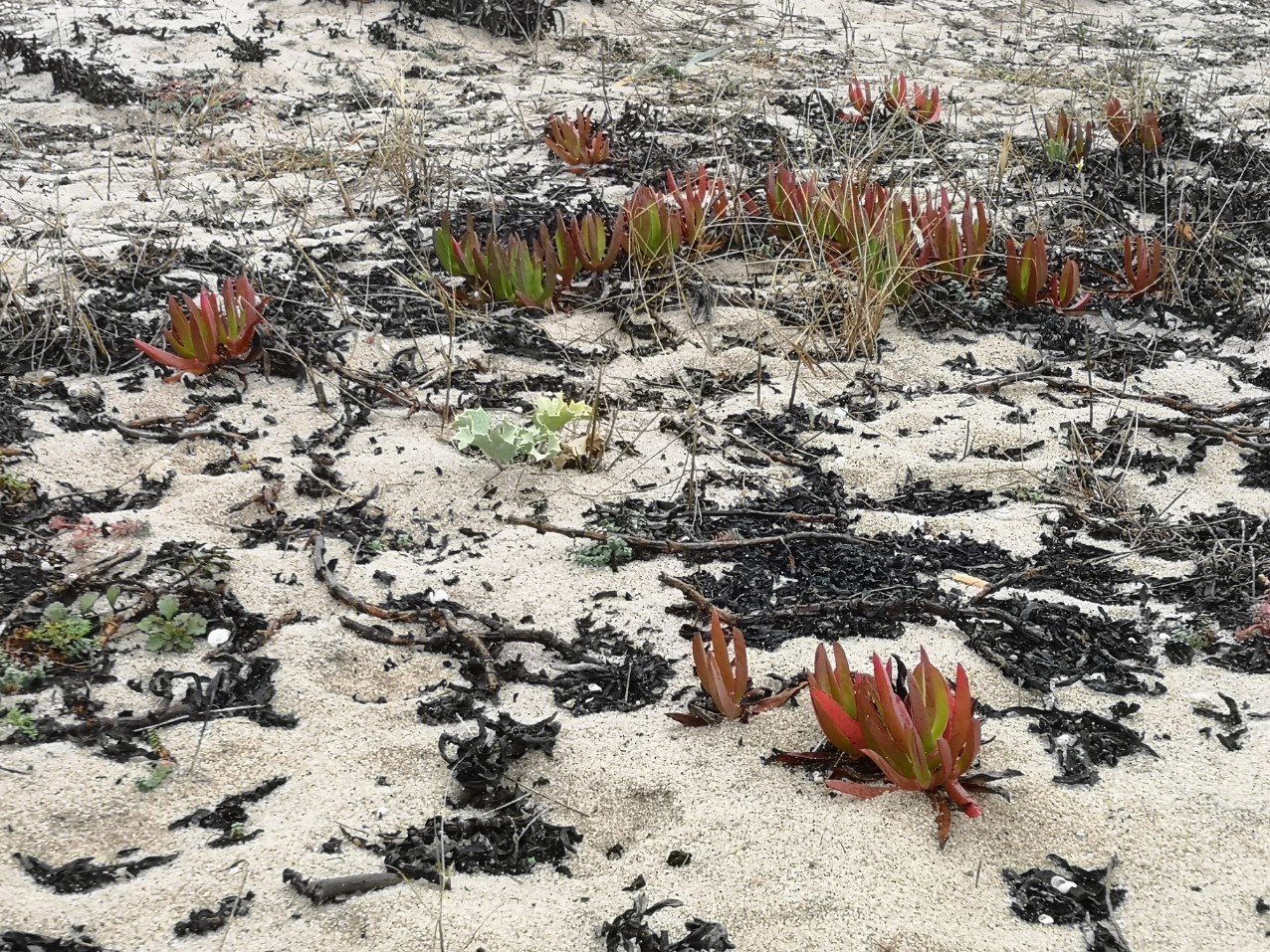
plant identification
Hottentot or Sour Fig (Carpobrotus edulis)

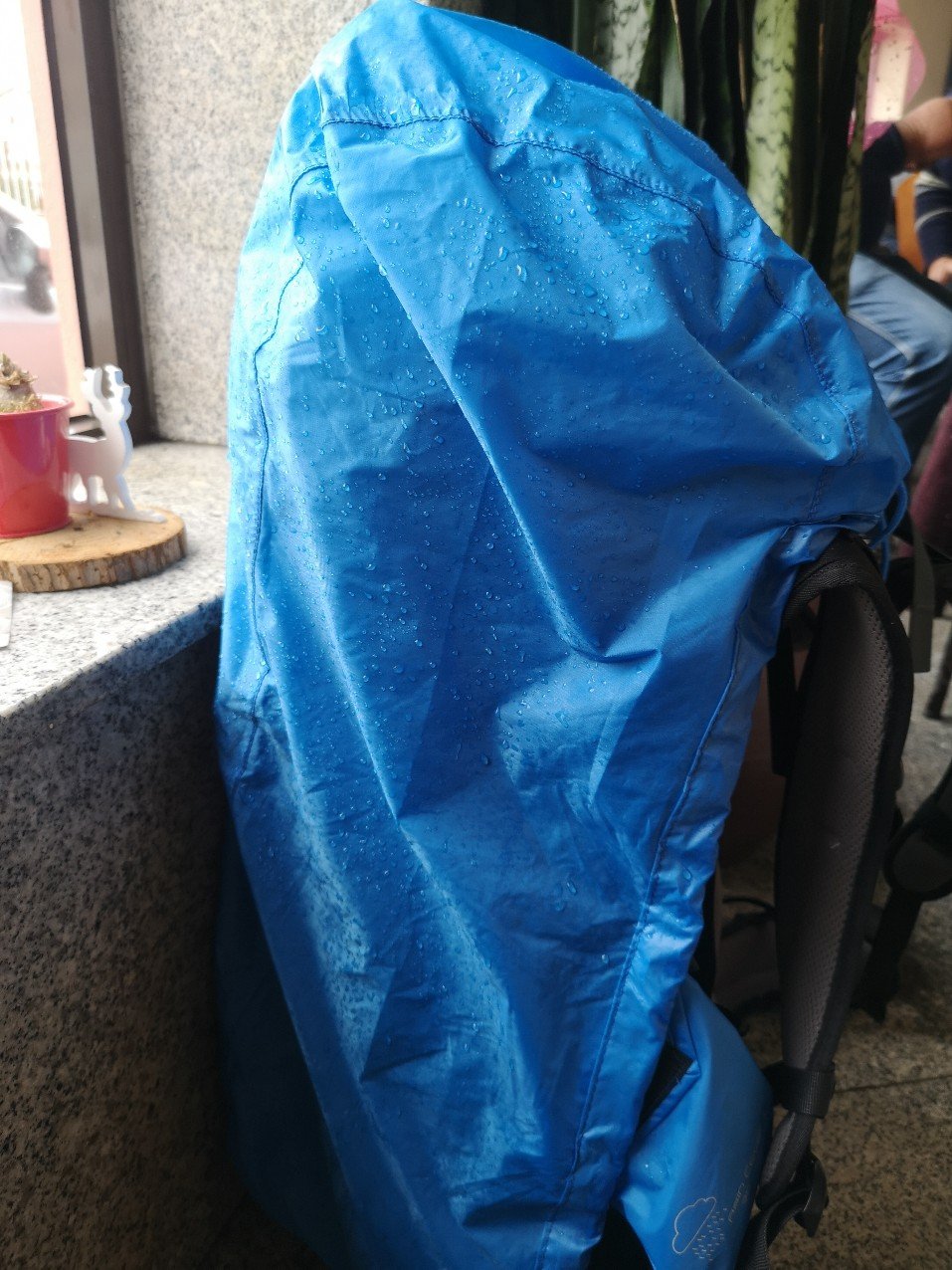
It was so very wet! All the rucksacks in the cafe where I went to shelter, were covered up. Only a few of my things got properly damp

It was in this cafe that I accepted a cap and guide book which belonged to a woman who I had been seeing at hostels along the way. I assumed I would see here agin and so took it with me for her. Guess what? I carried them to Santiago but never did see her.

Esposende/Marinhas

Link to the municipal hostel in Esposende/Marinhas. The Albergue San Miguel is one of the hostels that you have to walk through the town and almost out the other side to reach. The building in front, nearest the main road, is not the hostel but the Red Cross centre (the 2 organisations are connected through the Marinhas council) and the people there are used to exhausted pilgrims trekking through by mistake!

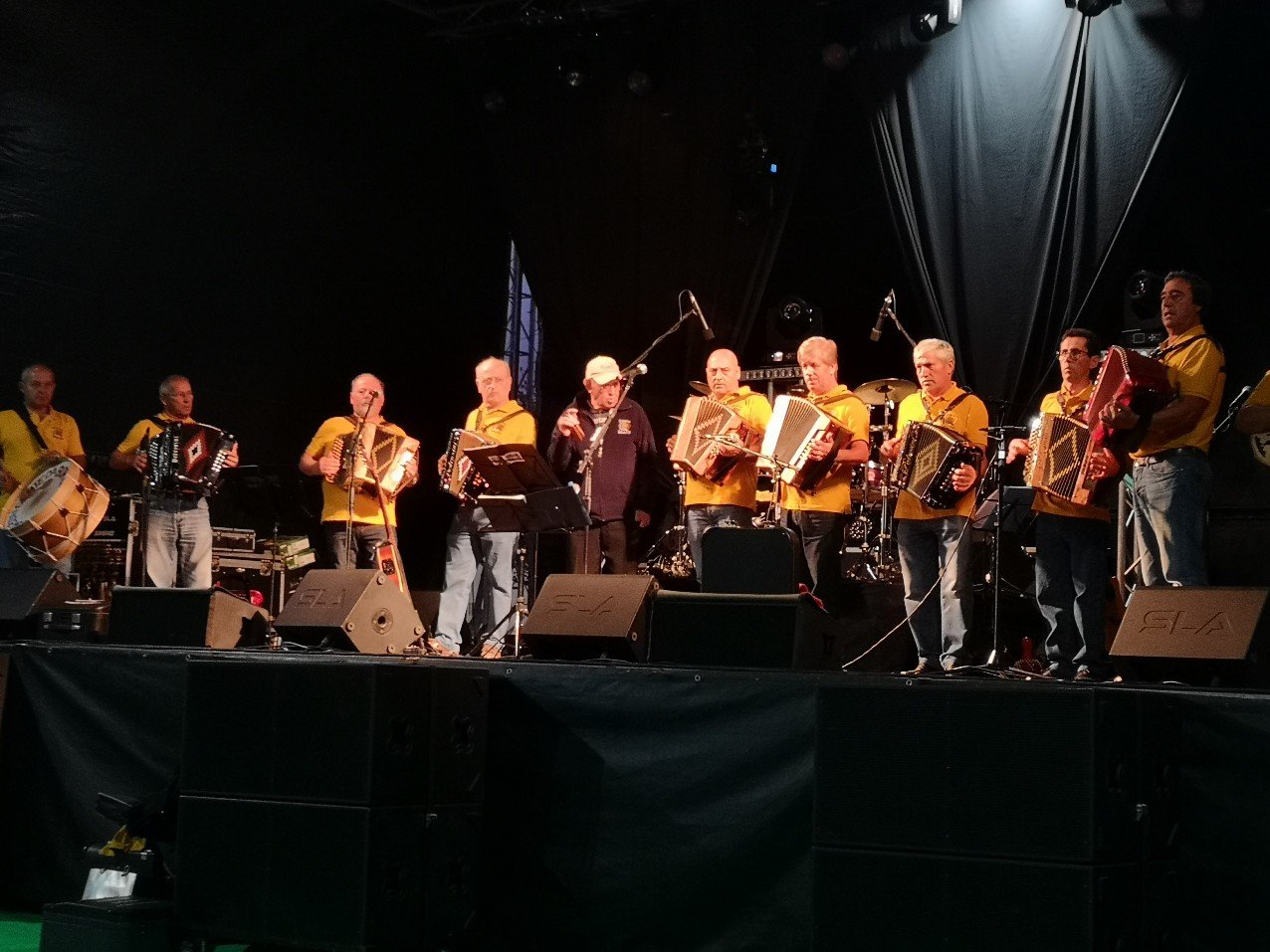
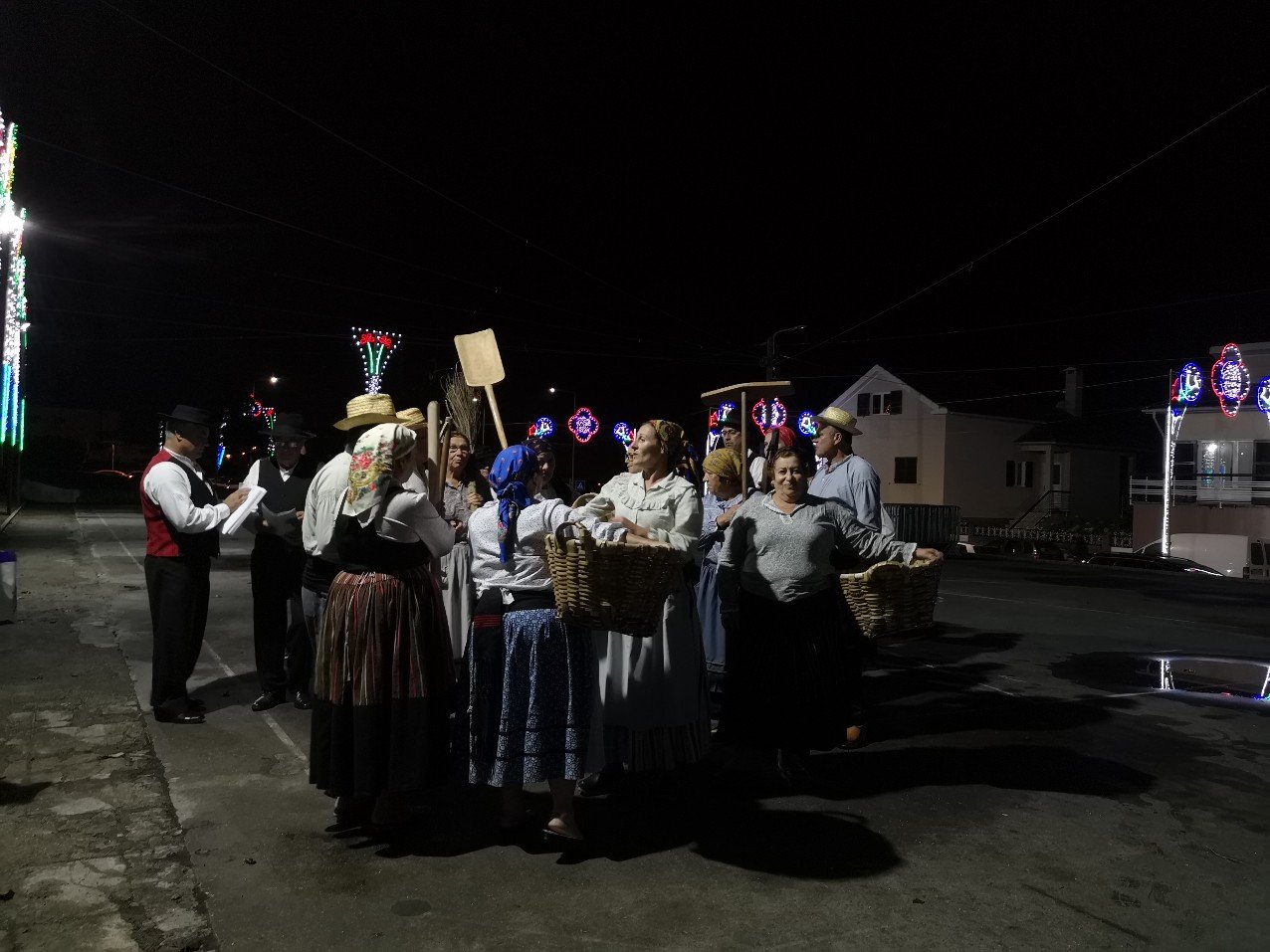
Nearby, and within very easy earshot, was an annual festival venue with bands, demonstrations of rural activities such as threshing, and more food than you might have ever seen in one long hall. People flocked from far and wide to sit around long tables in large family groups and have a good time. It was not possible to sleep, so as they say, when you can’t beat em, join em!

Portuguese folk band instruments
The lively band ‘gieing it laldy’ – heartily playing traditional Portuguese music

folk costume and props Portugal
Women in folk costumes outside preparing for a demonstration of old-fashioned farming methods

I walked through Monte, Lugar de Cima, Outeiro, Barros Sao Fins, Santo Amaro, Estrada,

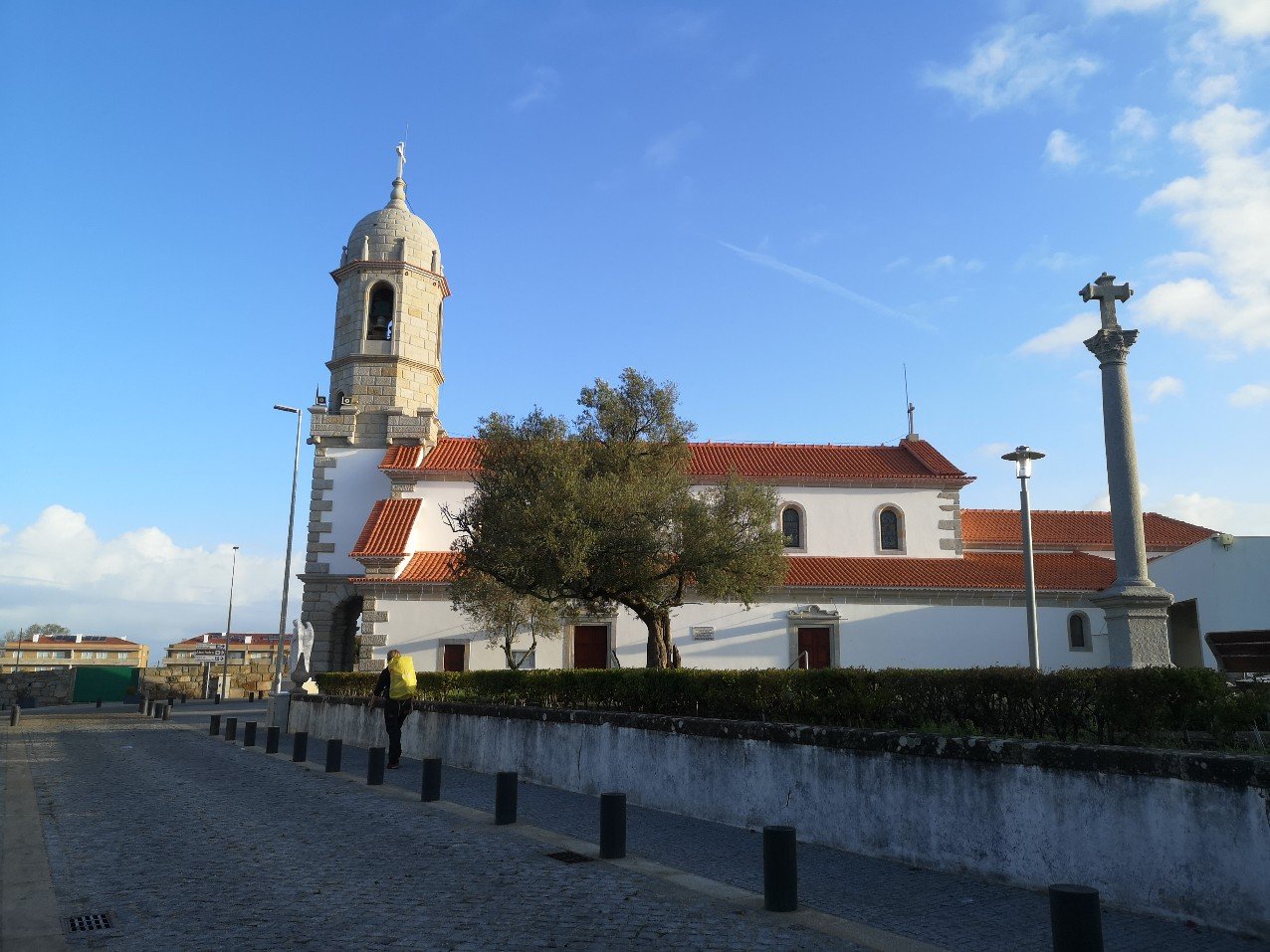
church Sain Michael Marinhas
Igreja Matriz do Sao Miguel Arcanjo das Marinhas. Leaving the next morning

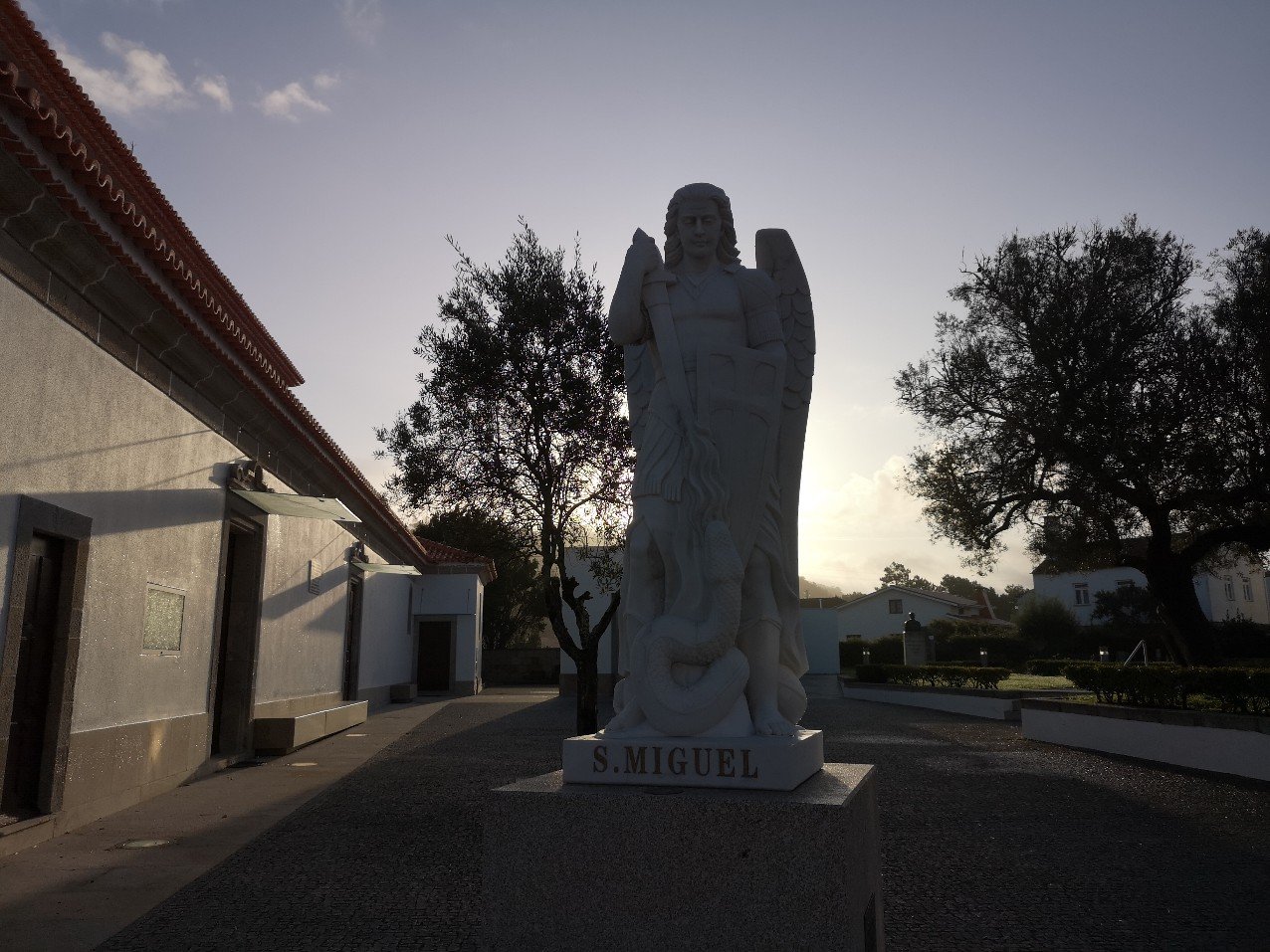
Sculpture Archangel Michael
The archangel Michael with his sword and a huge phallic snake ie Satan, statue Marinhas

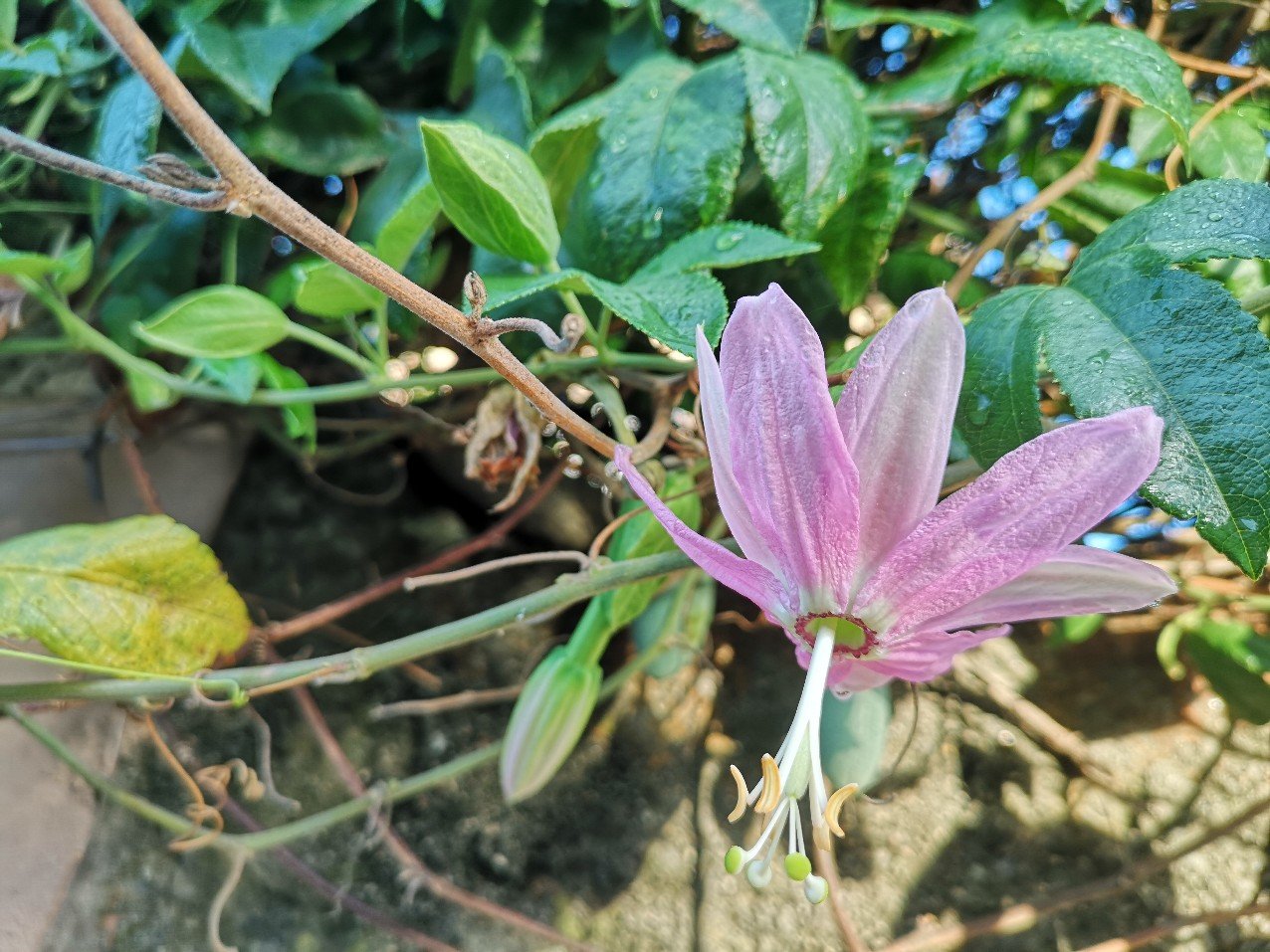
detail passion flower
Passion fruit (Passiflora) flower

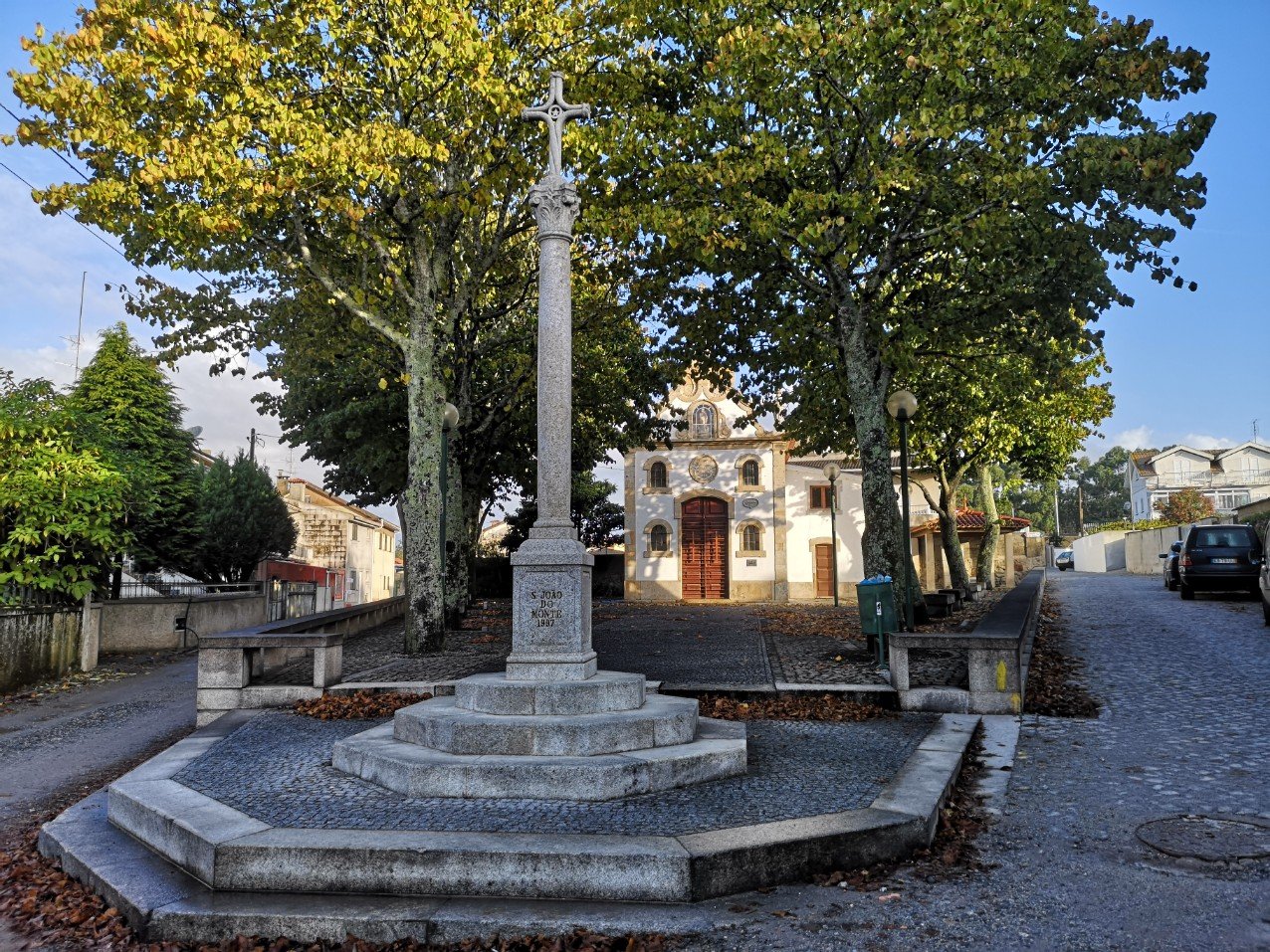
Sao Joao church and cross Esposende
Sao Joao (Saint John) do Monte cross and chapel, Esposende area, Portugal

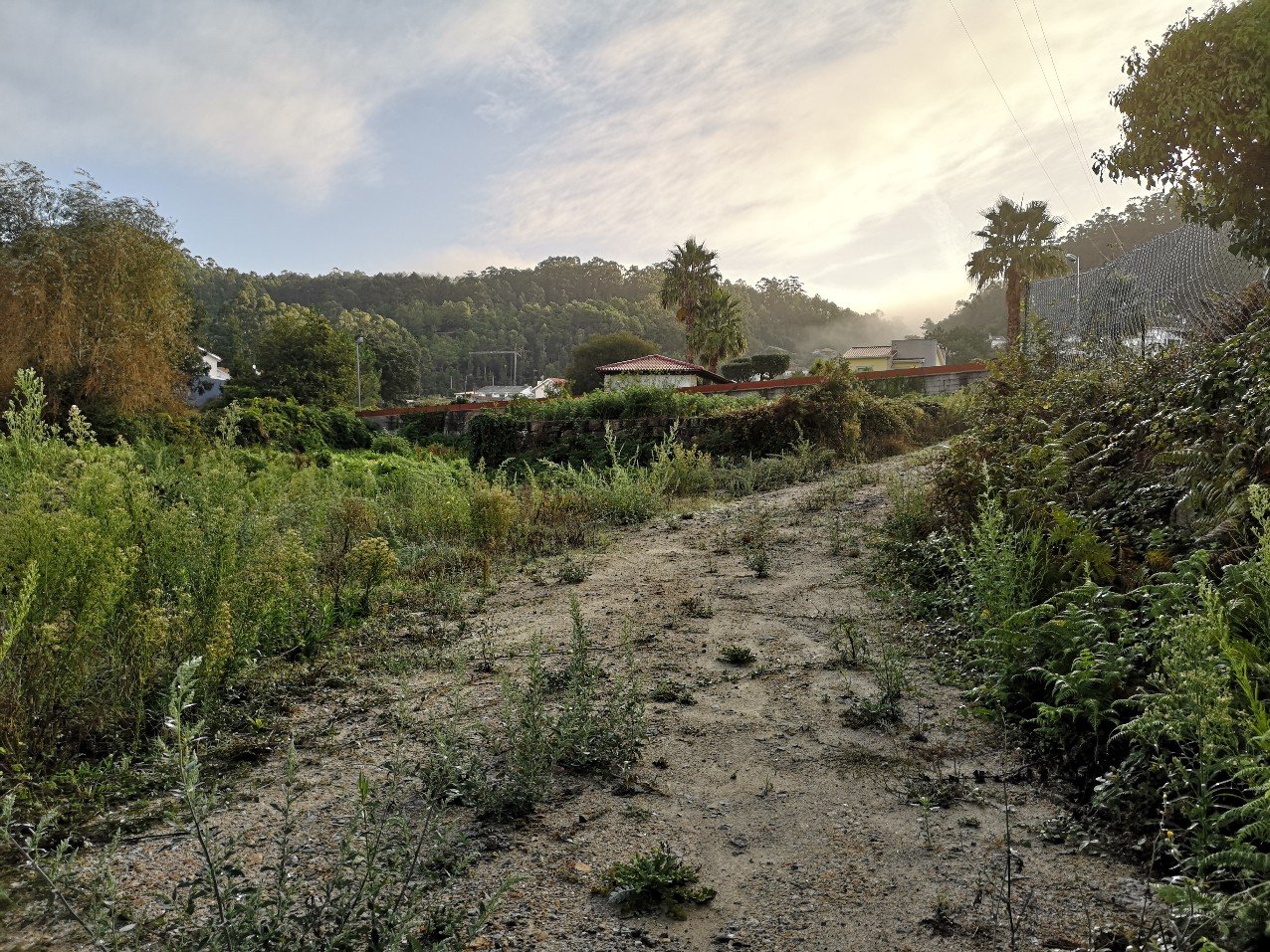
Portuguese landscape
Into the countryside, interior Portugal

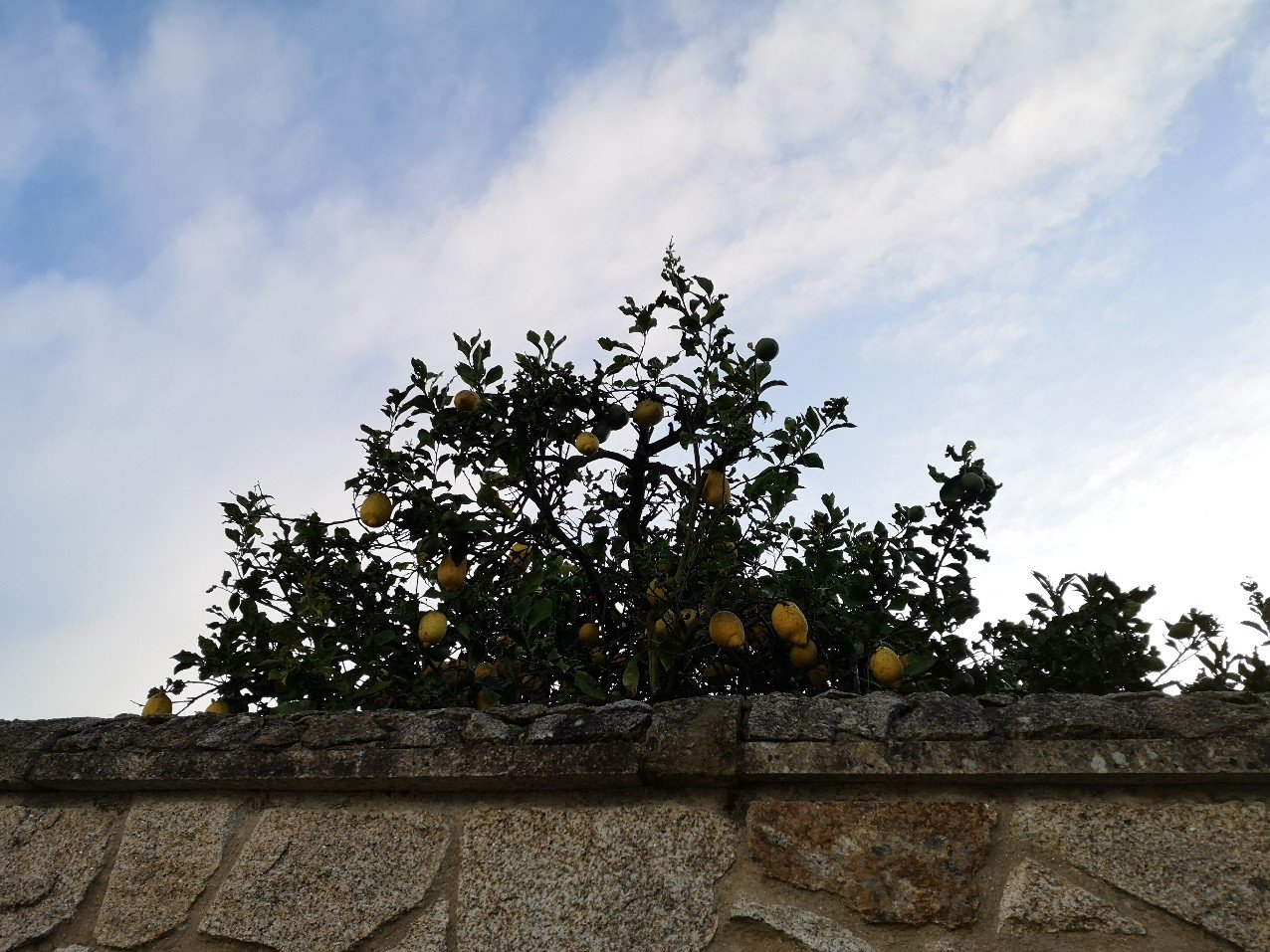
lemon tree
Lemon tree, Portugal

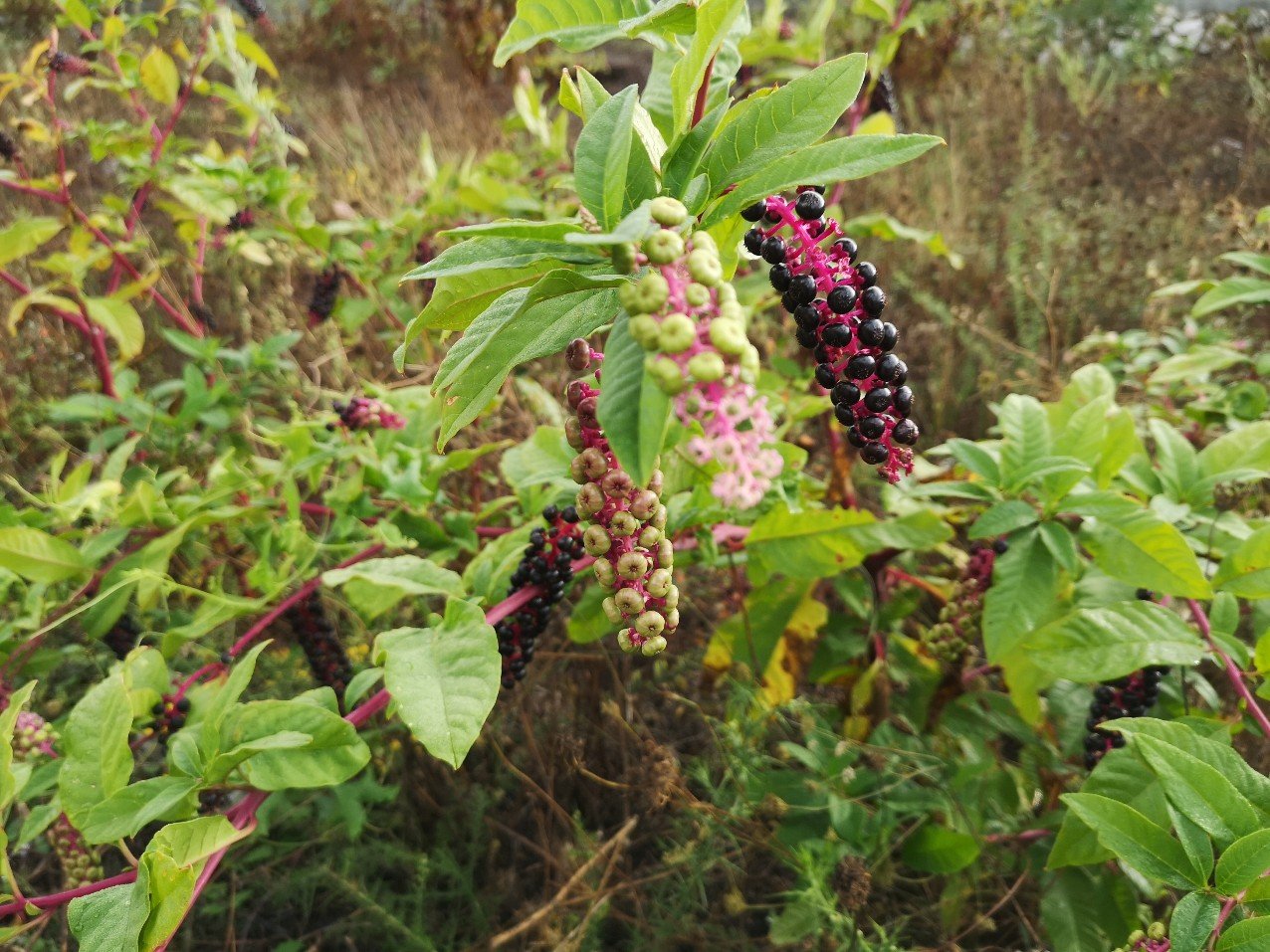
Detailed plant information
Pokeweed (Phylotacca americana) also known as pokeberry. It has a poisonous root and mature stalks, although you can eat the young stalks if properly cooked. The berries have a red dye which is used to colour wine, sweets and cloth

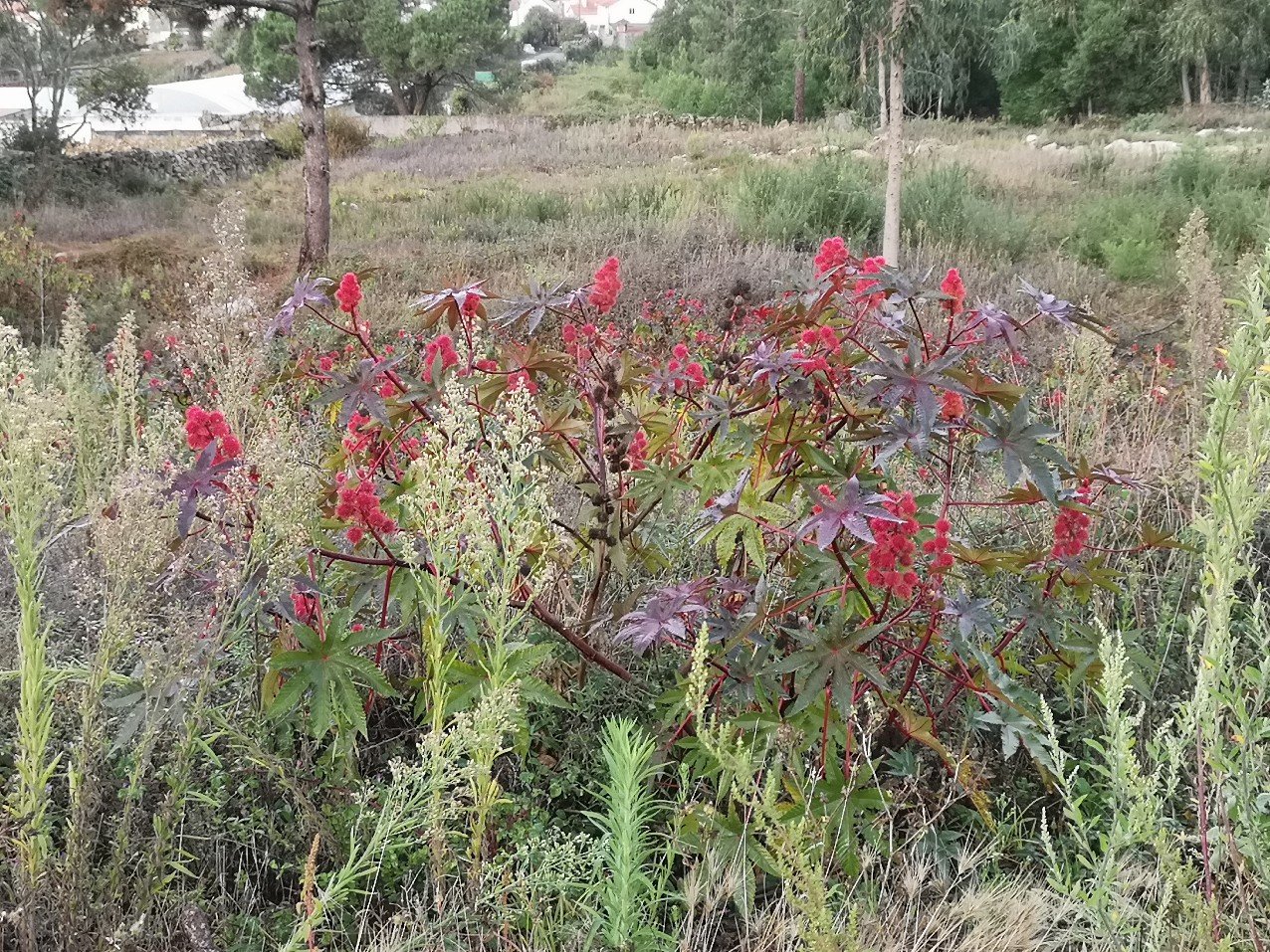
Detailed plant information
Castor oil plant, ricinus communis (because it’s red?)

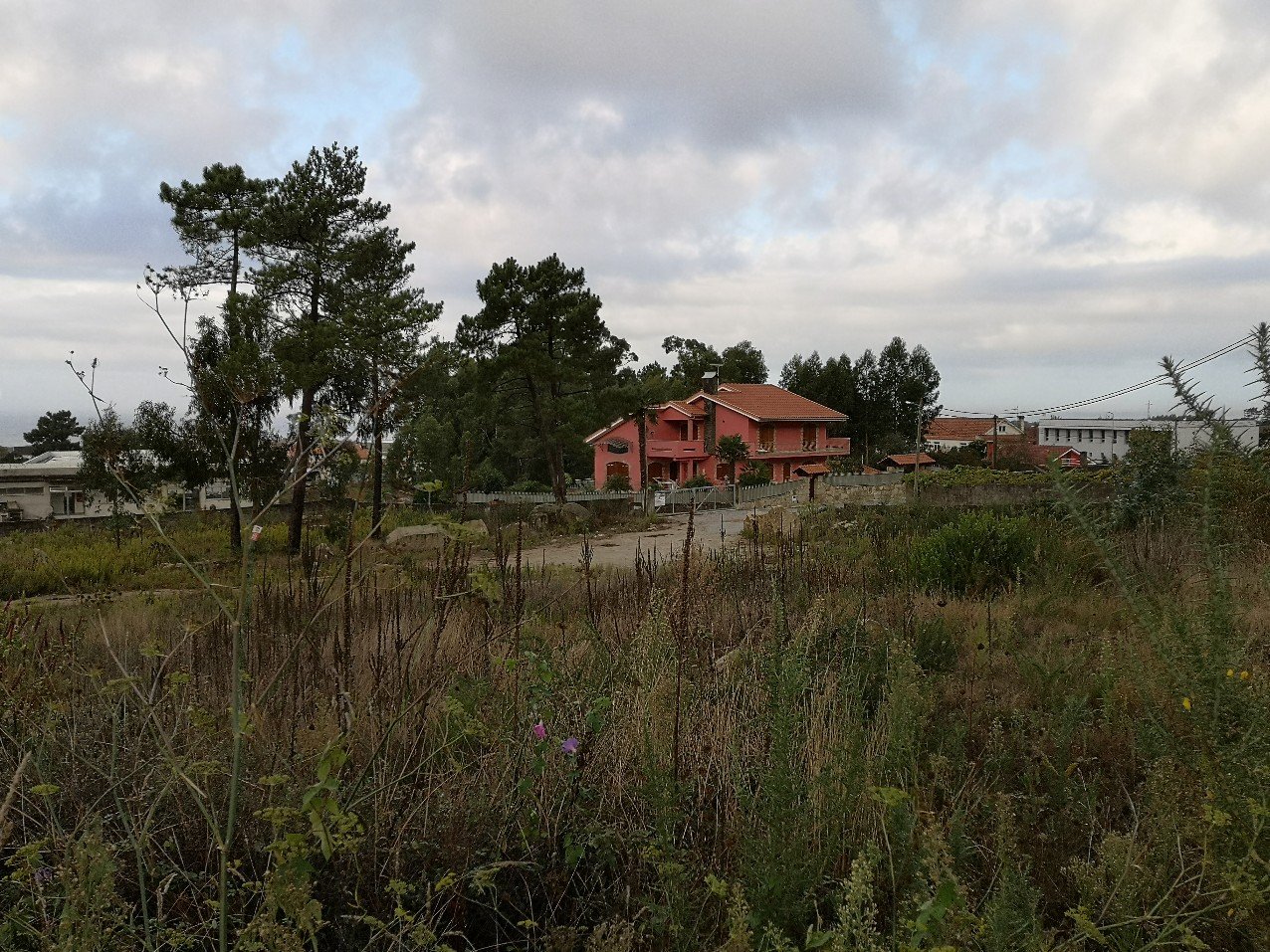
Portuguese landscape
A typical Portuguese dwelling in the distance

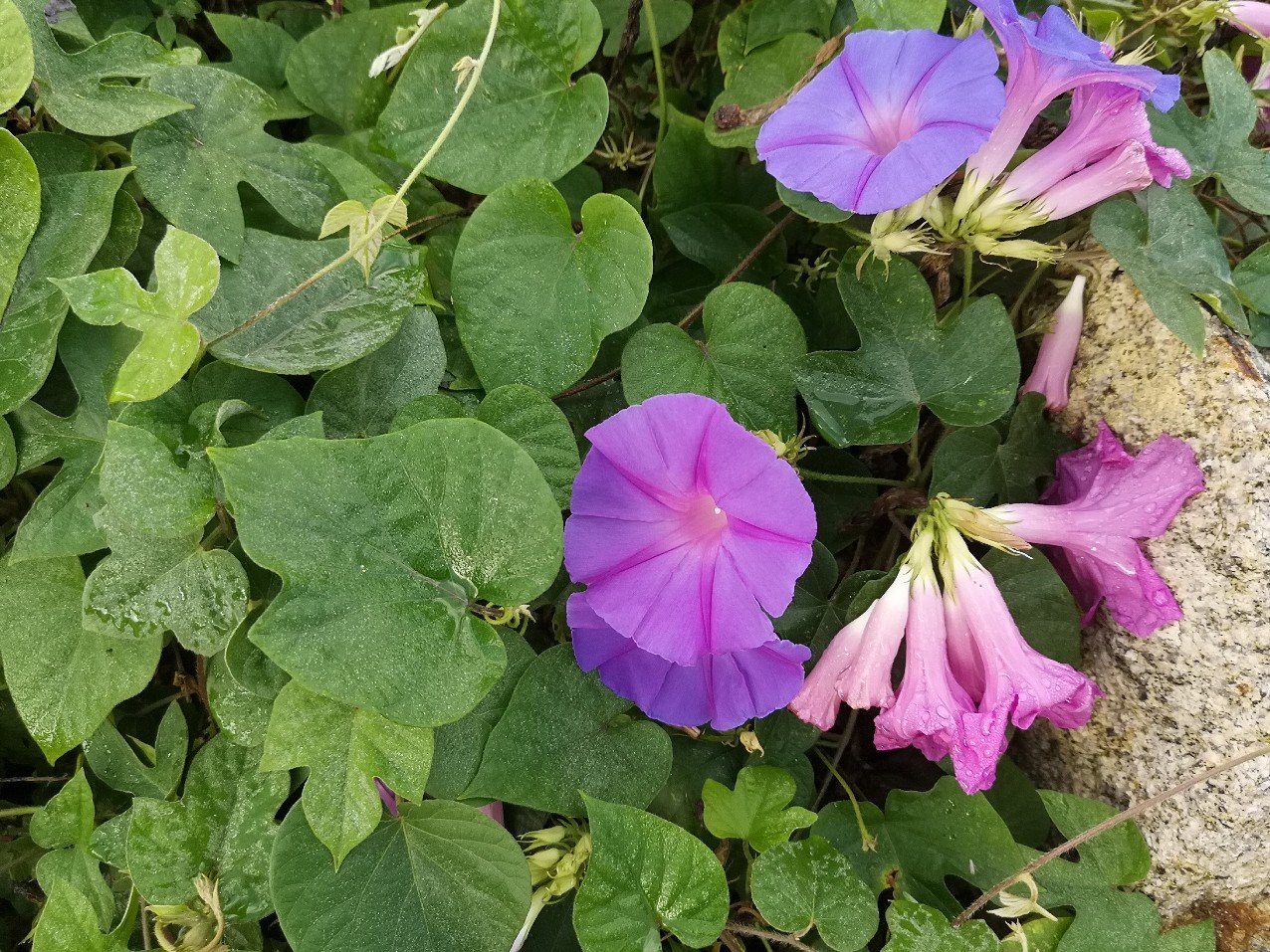
detail of plant
Morning Glory (Ipomoea)

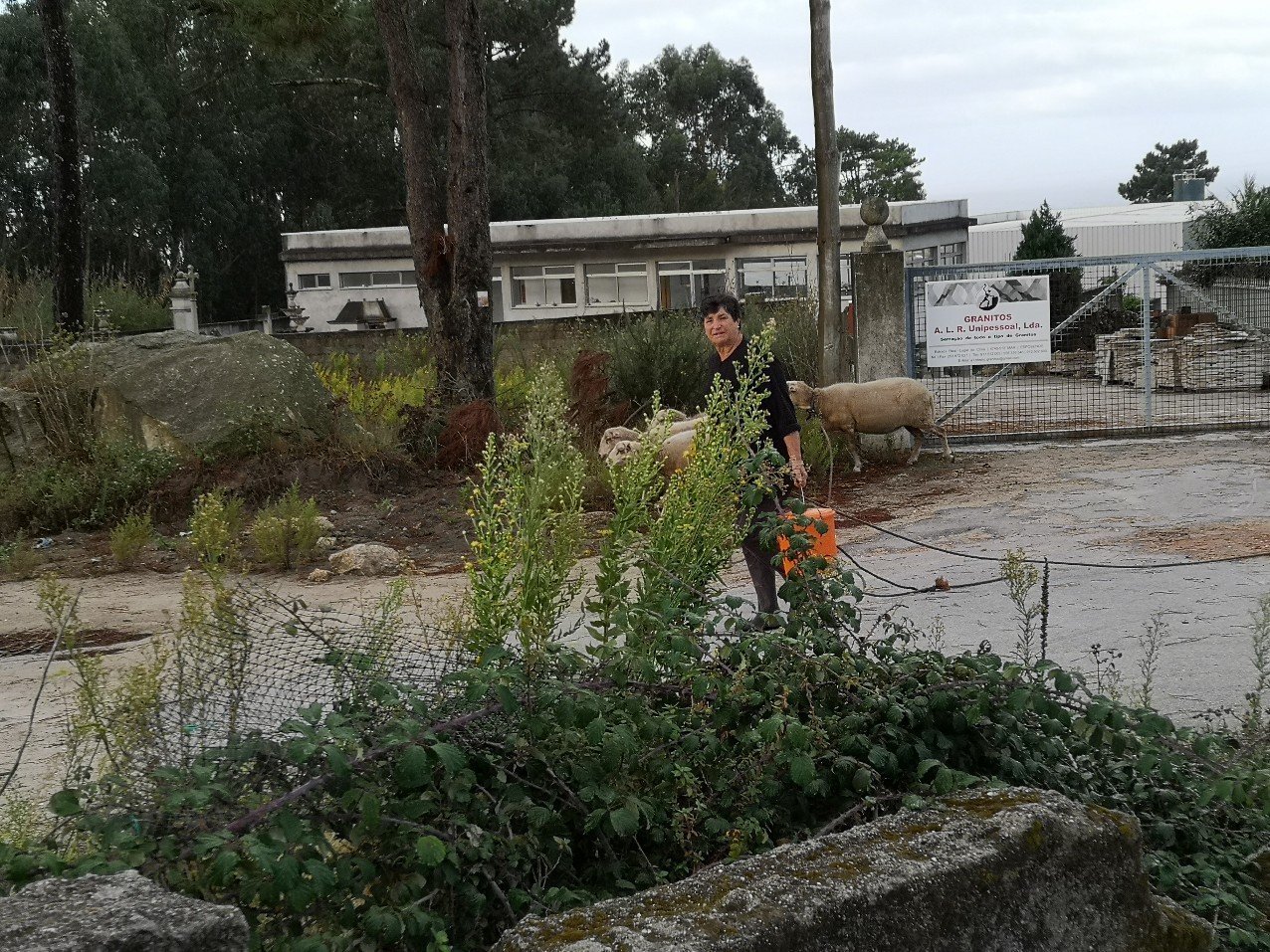
working woman with goats Portugal
A woman leading goats to pasture

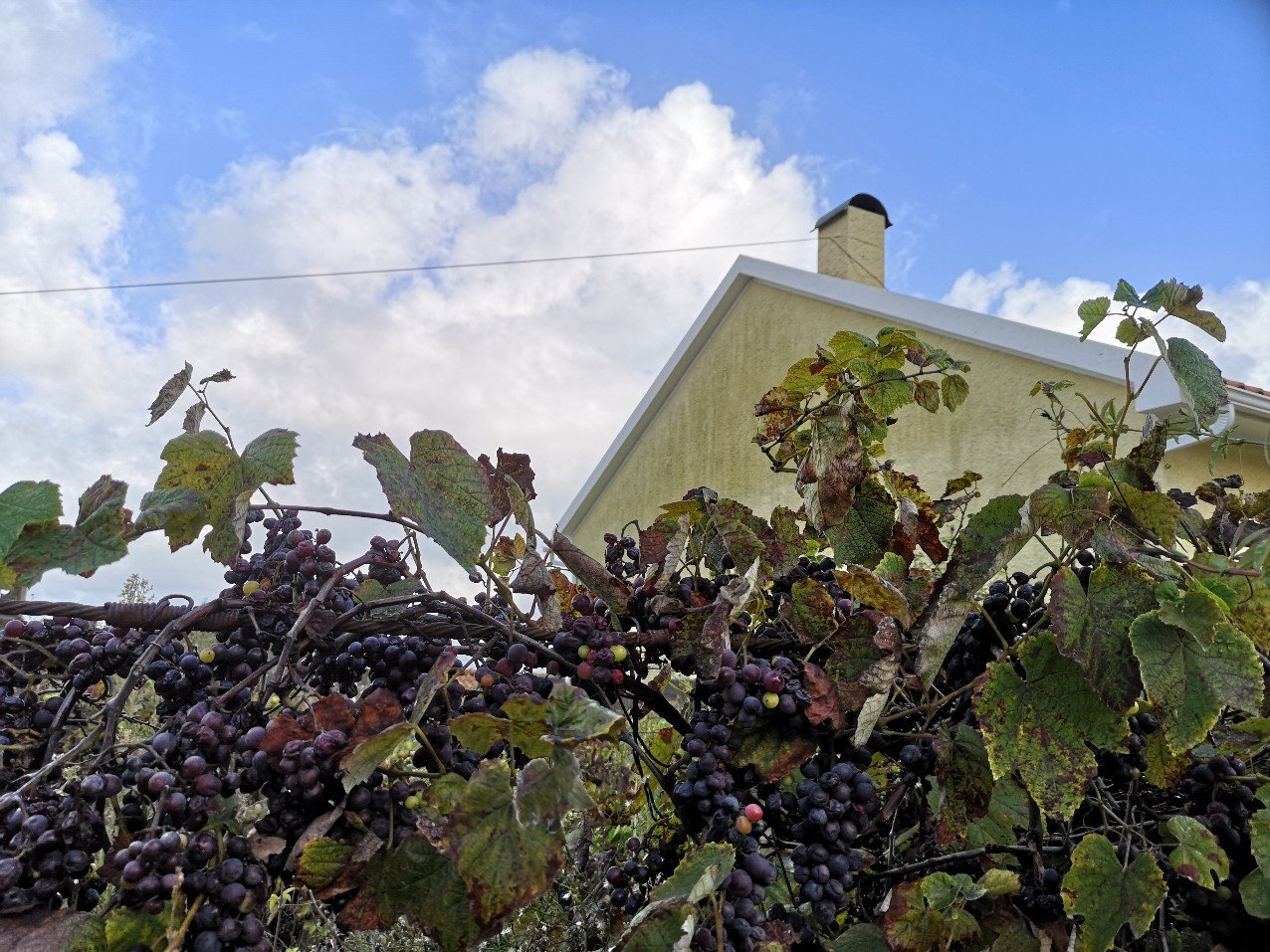
grapes vines Portugal
The grapes were being harvested all along the way and as many hung over the edges of the fences and supports, I sampled a rich and lucious few!

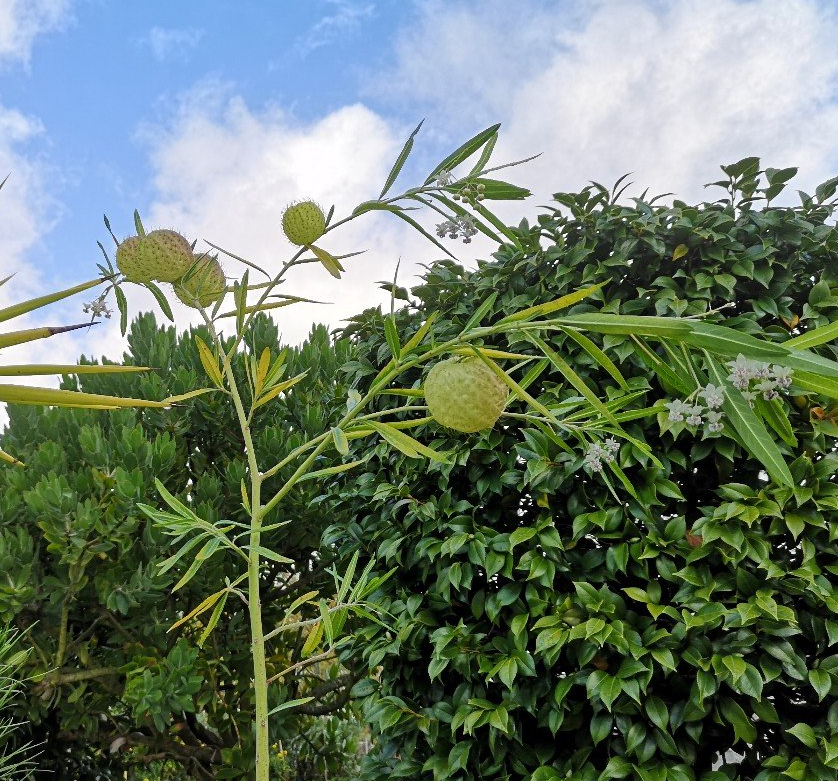
detailed plant description
African Milkweed (Gomphocarpus physocarpus) also known as hairy balls milkweed! If you look closely, you will see that there are small pale, milk-white flowers at the end of the stems. It attracts the Monarch butterfly in Australia and Madeira

I am reliably informed that this plant is one of the food plants for the Monarch Butterfly, in Australia. They prefer this, and another alien, over the native milkweeds.

church cross Portugal
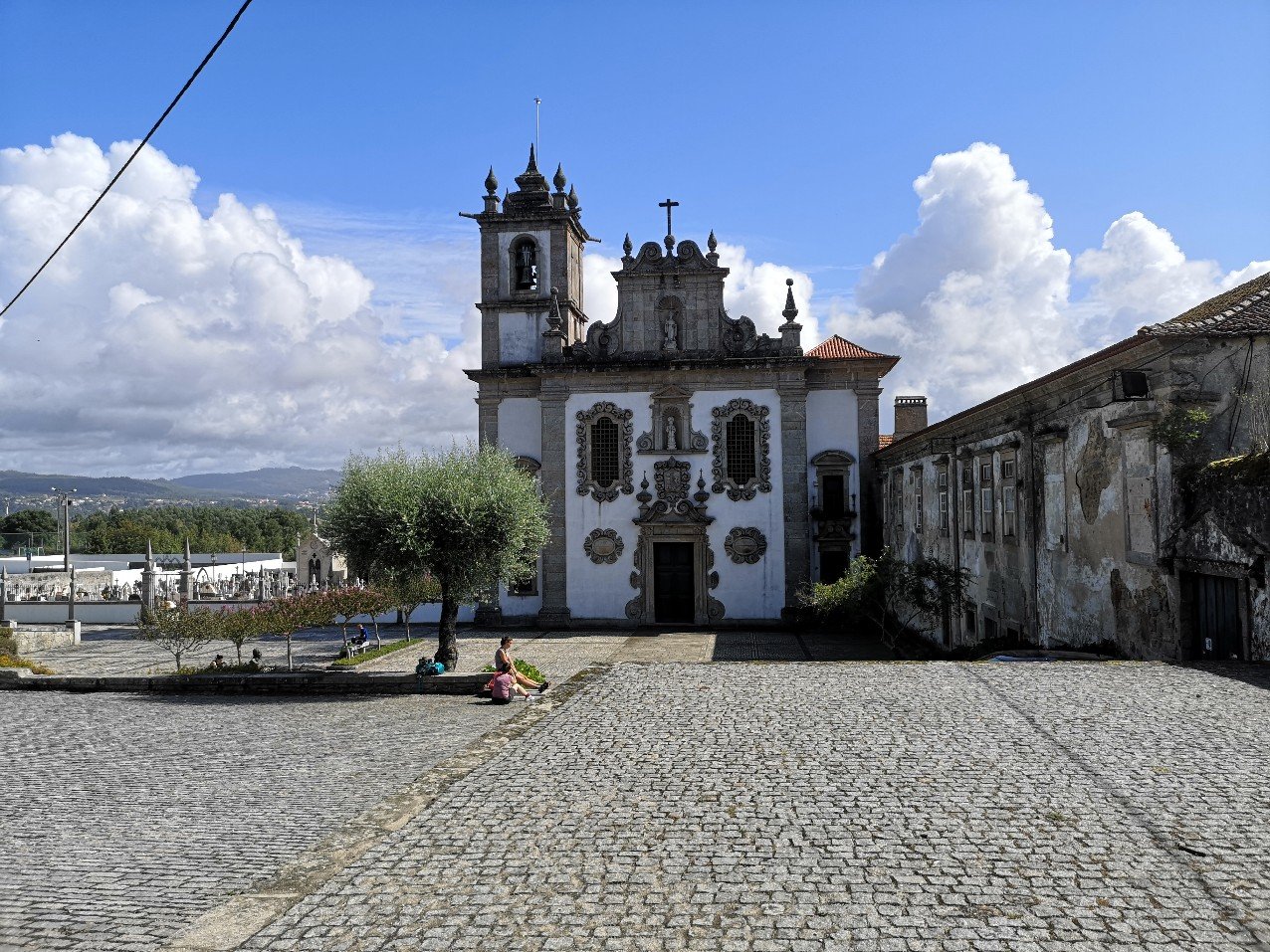
Igreja do Sao Pedro Fins (Peter), Belinho, Portugal

detail church architecture Portugal
Virgin and Son with 3 supplicating little ones at her feet, Igreja do Sao Pedro Fins (Peter), Belinho, Portugal

architecture of Portugal
Capela de Nossa Senora dos Remedios, Estrada,  Braga, Portugal

detail oak tree and acron in Portuguese woods
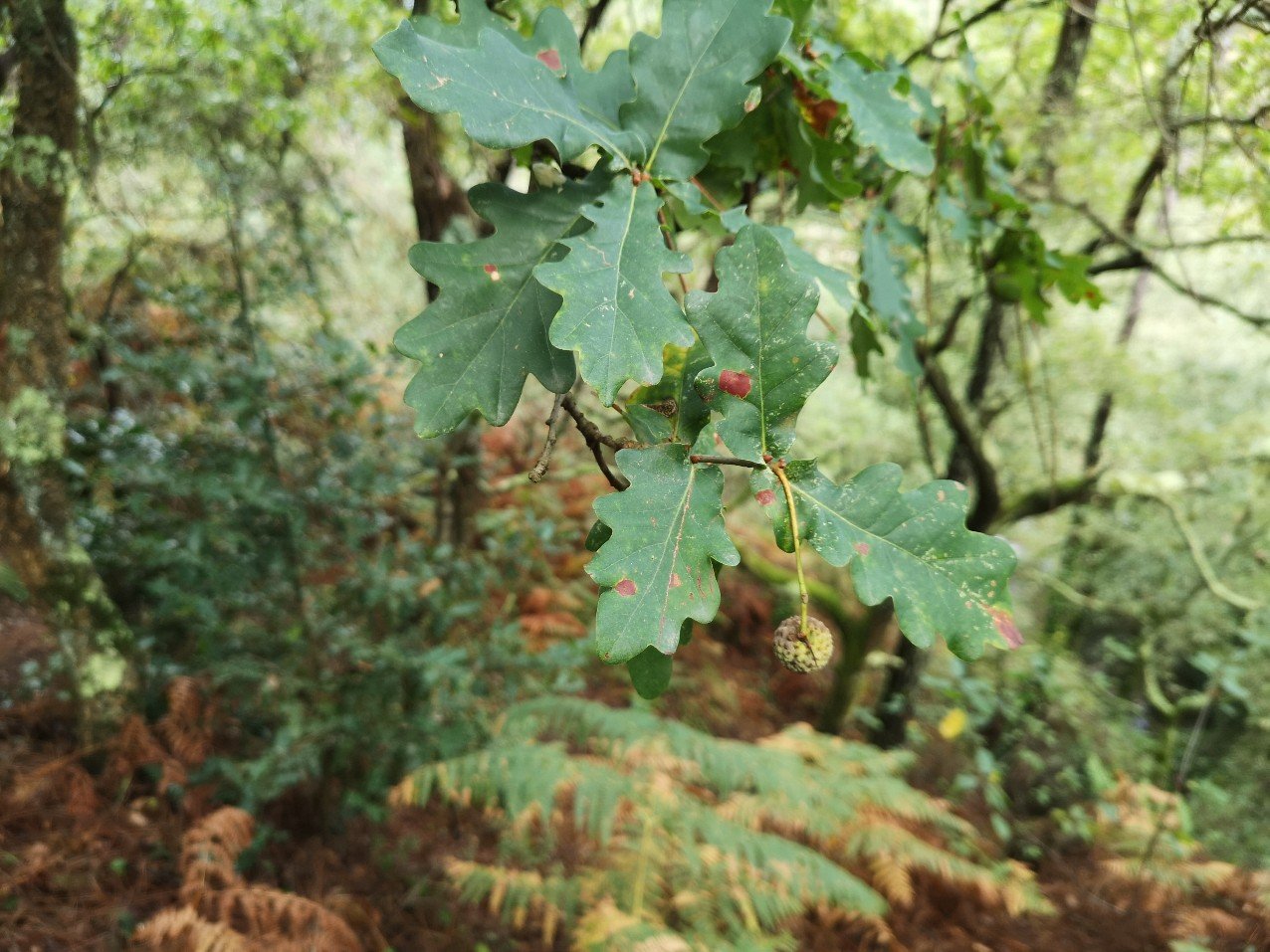
Into the Oak (Quercus) woods

rural landscpae Portugal
The bracken (ferns) were starting to turn brown, but it smelled fresh and woody

woods Portugal
At some point in these beautiful woods I made a long steep climb behind a man who was walking fast

The way was made up of large boulders and unevenly sized stones, some wet. I went fast to keep up with the man in front which was exhilarating, but I wonder if this is where I twisted my ankle without quite noticing.

Portuguese woods and pool
There were pools of inviting water, so down went the rucksack, off came the clothes and oh! it was so refreshing

pool Portugal
Idyllic setting

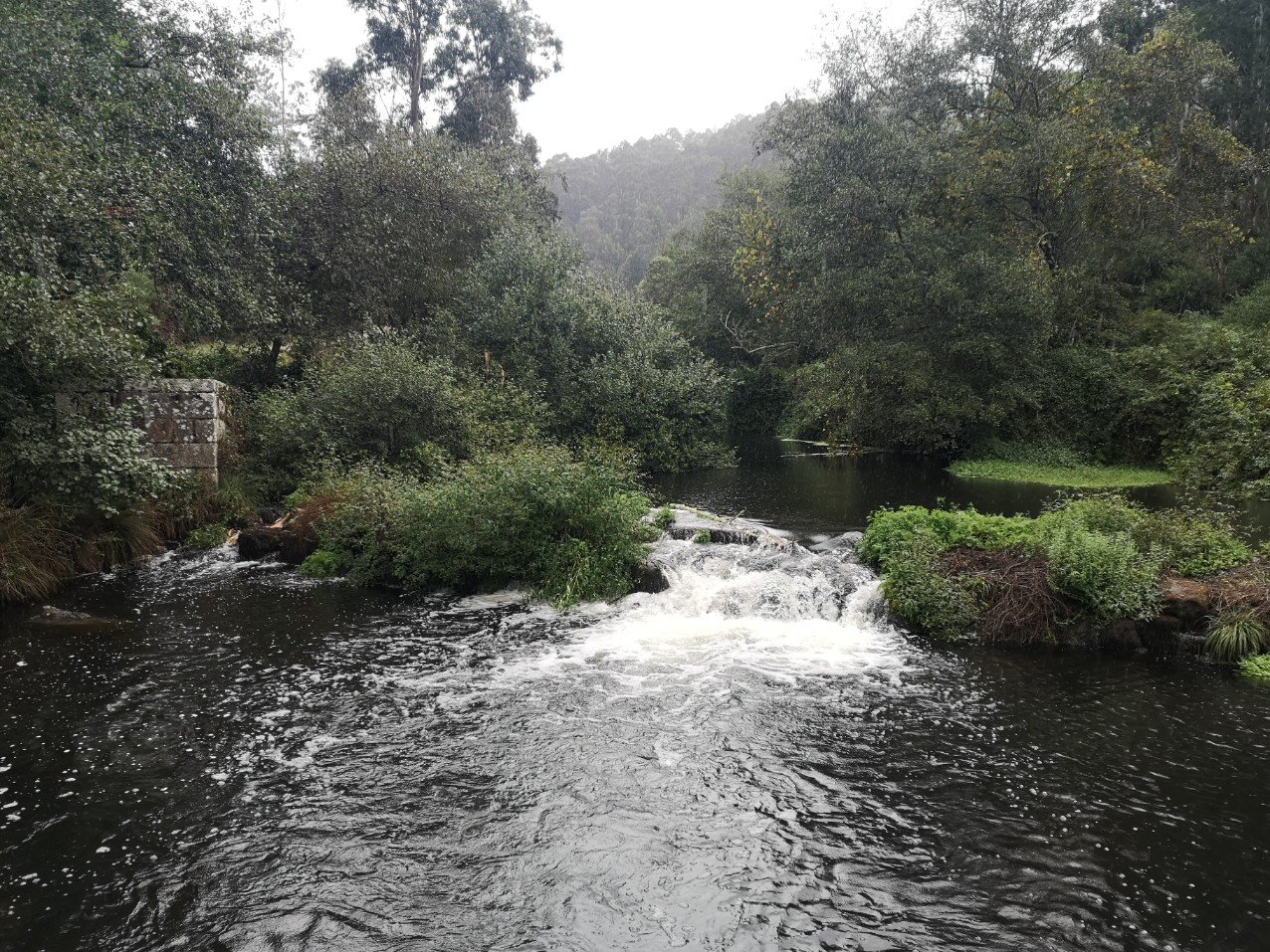
Water ways Portugal
Water ways Portugal

And then the heavens opened. Before I could find a place to stop and take my backpack off to cover it and myself (even though I had, minutes earlier, been immersed in cool waters), I was soaked through. It was torrential. And steep, uphill. At the top I sheltered in a bus stop and watched the rain running down in torrents. More and more pilgrims joined me in that tiny space. There was a mobile shop on the Green opposite, but it was a bar – alcohol only, no hot drinks.

church Belinho Portugal
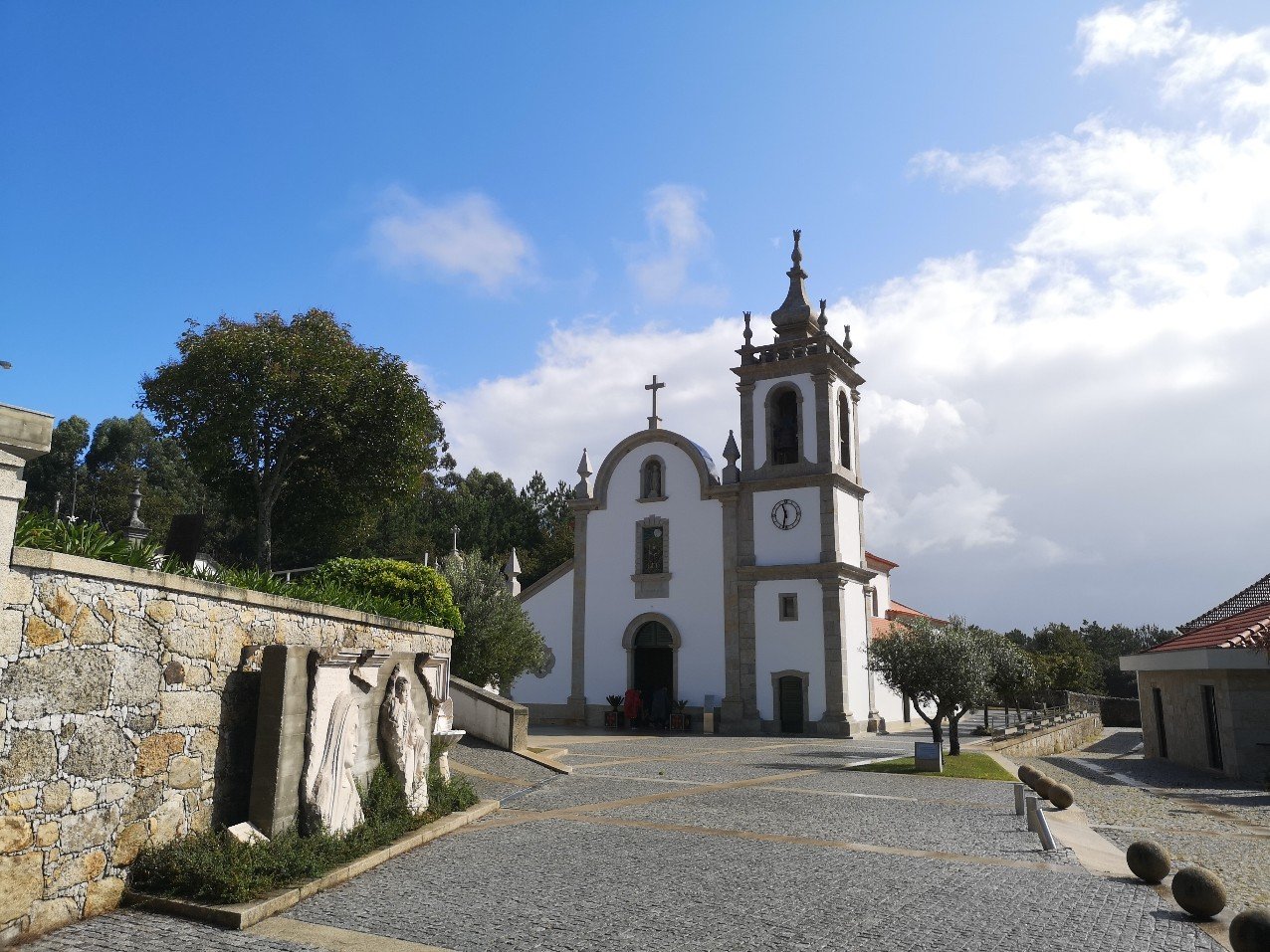
Igreja Sao Pedro (Peter), Belinho

Portuguese landscape and weather
However, the clouds rolled away and I steamed quietly as I walked into a sunnier landscape

monastery Sao
Mosteiro (monastery) de Sao Romao de Neiva, Portugal

detail of fruit and plant
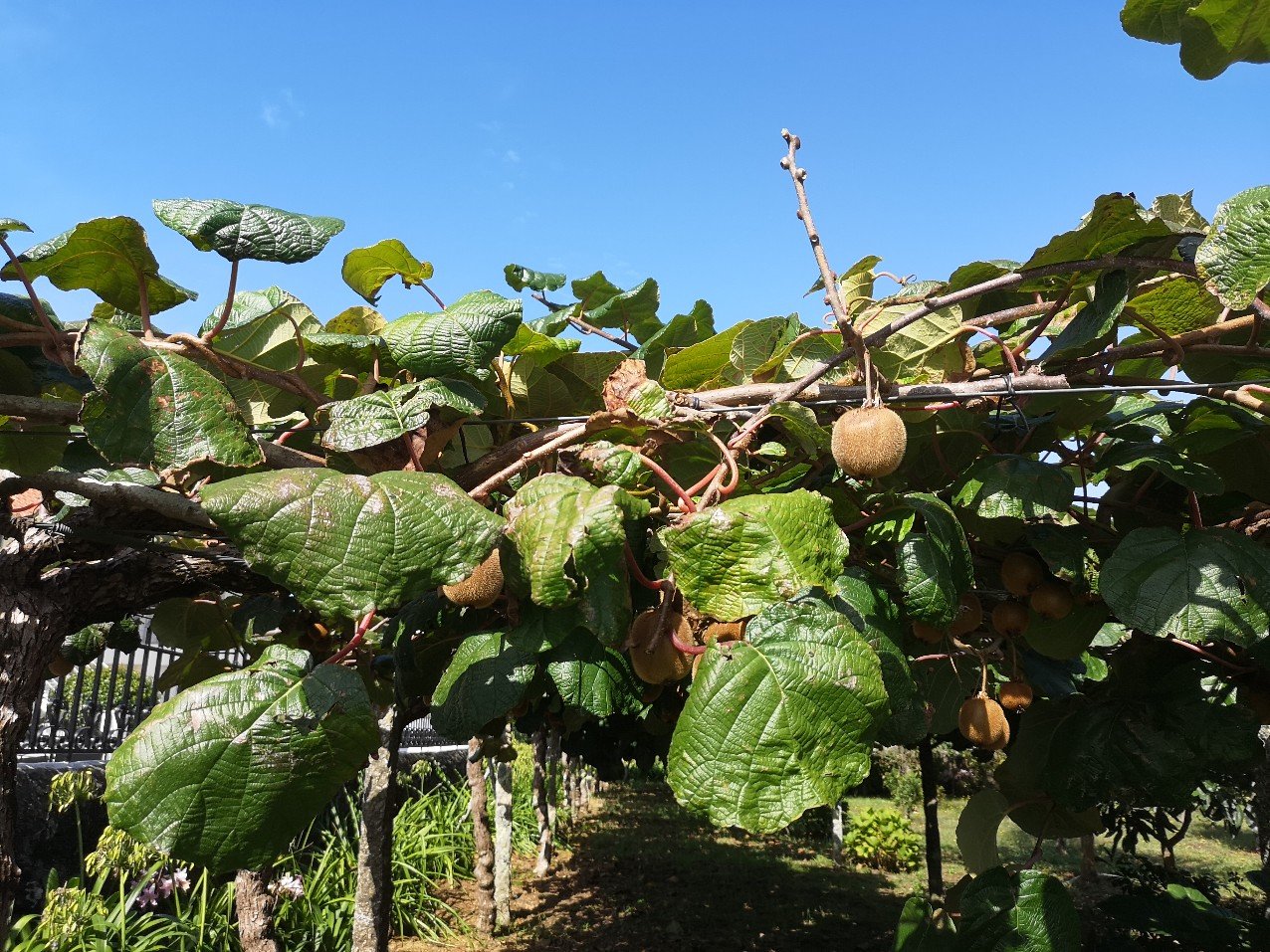
Kiwi fruit (Actinidia deliciosa) hanging from their vines

Despite their appearance, I was assured that they would not be ripe for eating until December at least.

traditional Portuguese church
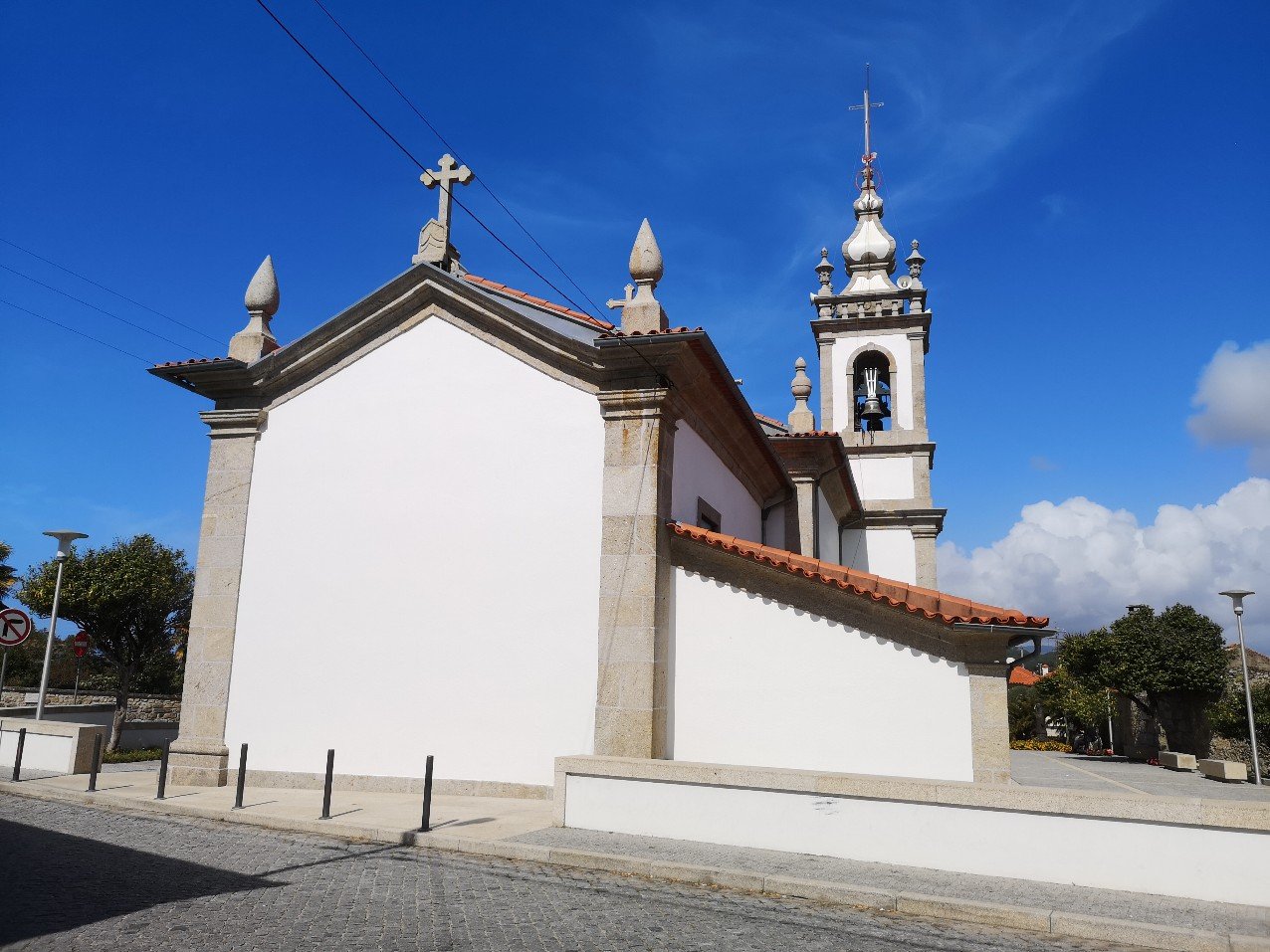
Igreja Parochial de Chafe, Viana de Castelo, Portugal

pilgrims woods Portugal
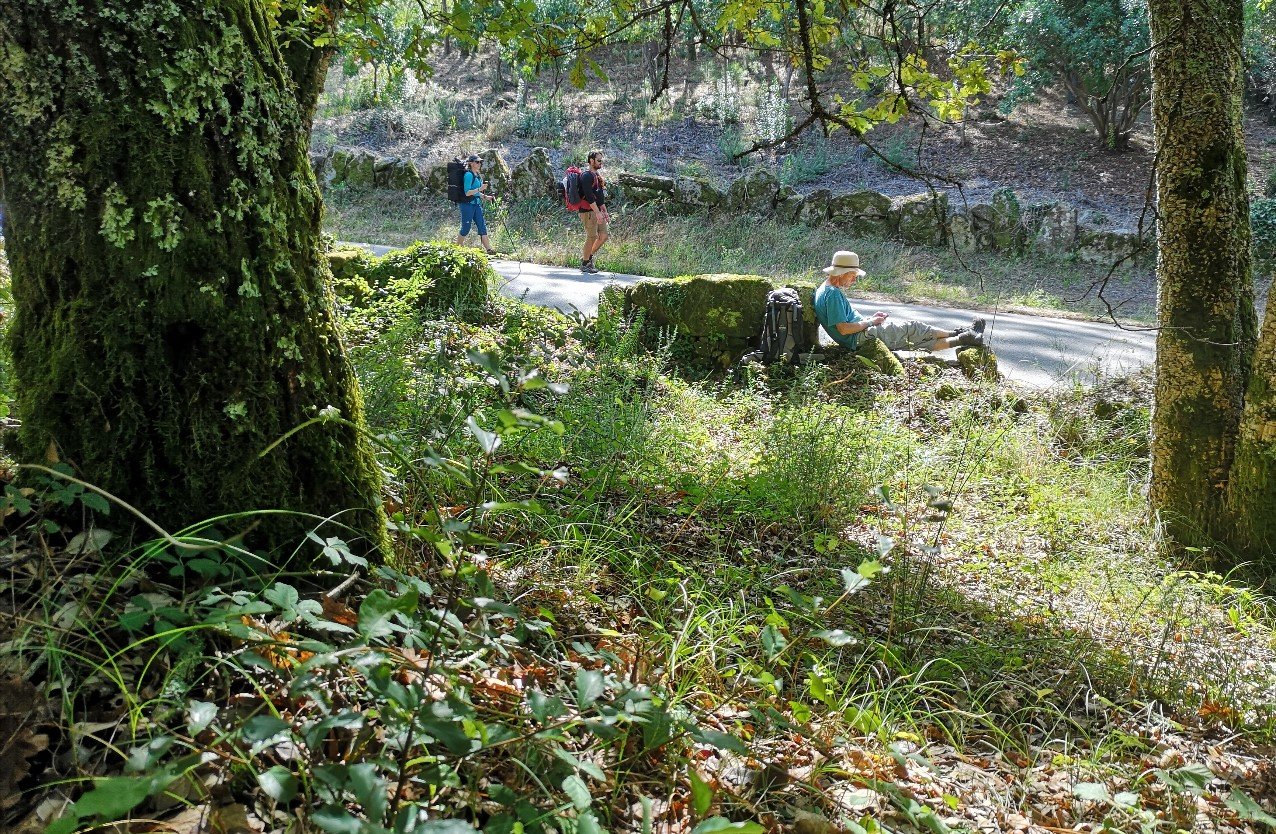
A long downhill stretch beside resting pilgrims

The way into Viana do Castelo is across the Limia via a long, metal bridge. The hikers share it with the vehicles, although there is a narrow shaft where we walked. I could see the water’s of the Lima River far below through the grid I walked on, each step clanging loudly. The width of one person, there was no possibility of stopping to rest and, as I was limping by this time I must have slowed because I was aware of a queue of others behind me, all having to go at my pace. I kept doggedly on with no choice.

funicular Viana do Castelo Portugal
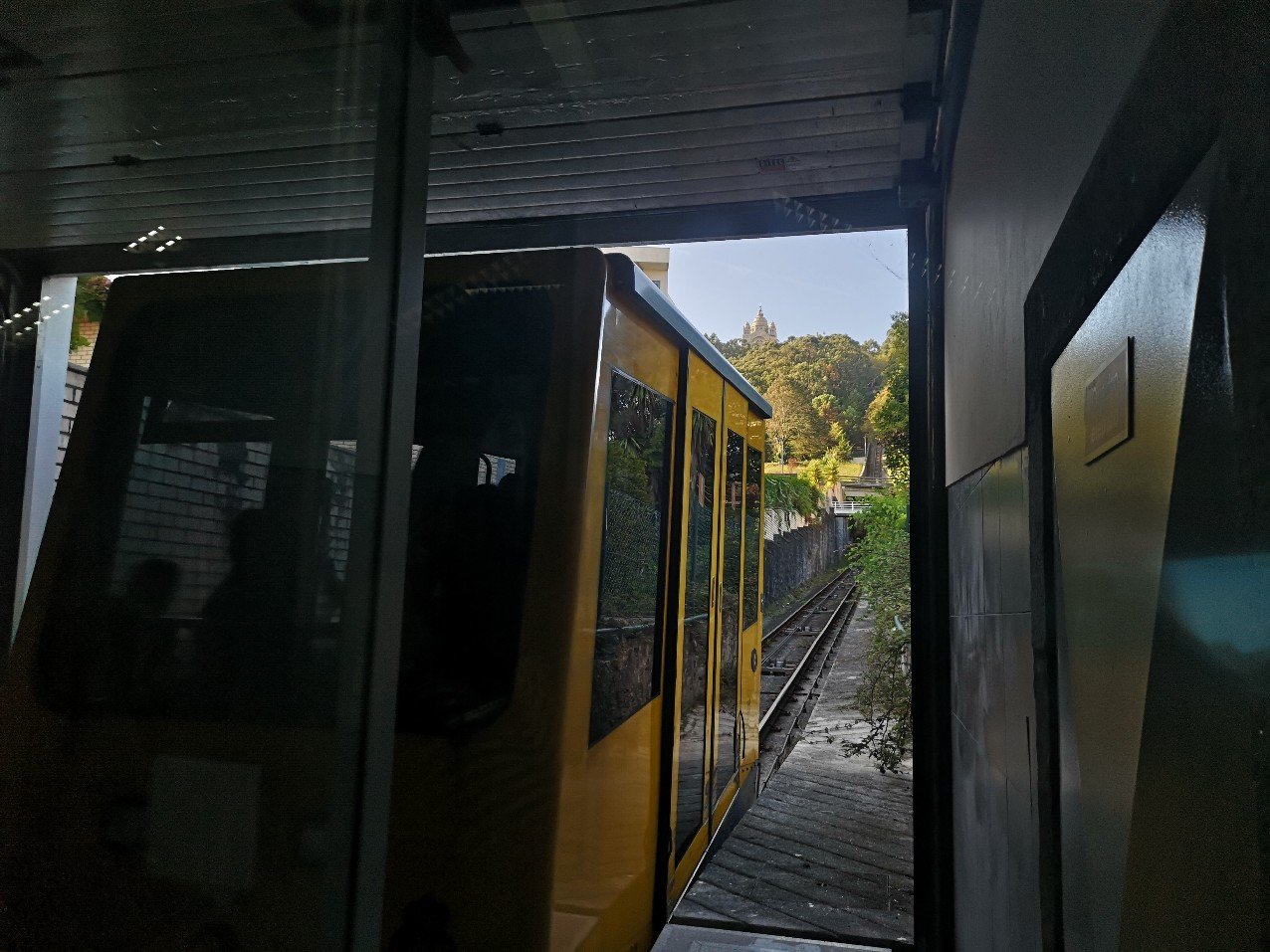
Funicular up to the castle, Viana do Castelo, Portugal

I allowed myself to be persuaded to take an extra trip that evening despite my sore feet. What a mistake! Although the sights were inspiring, my physical health suffered and I paid for it for many weeks to come.

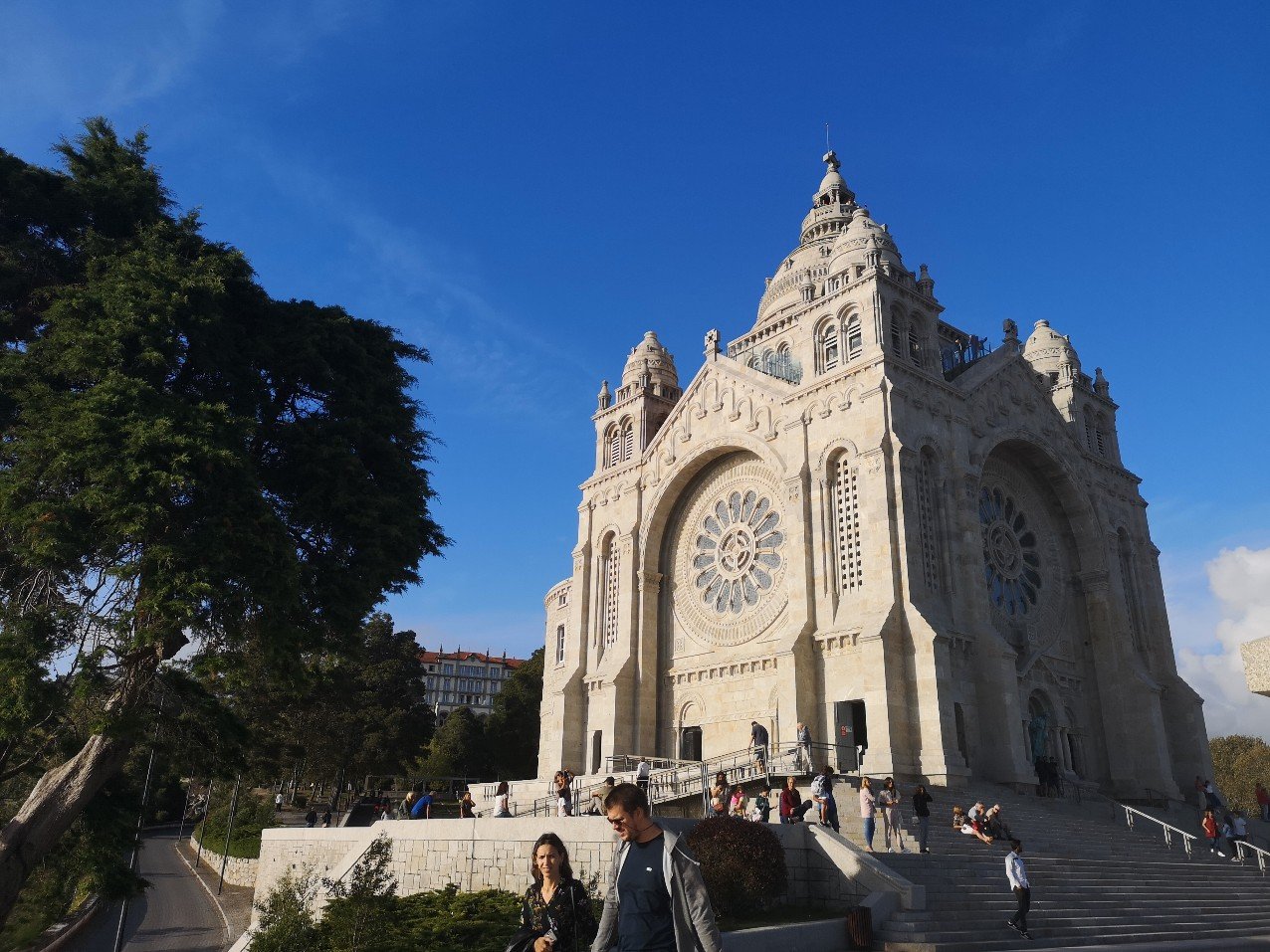
Santa Luzia Portugal
Sanctuary of Santa Luzia, Viana do Castelo, Portugal

Designed by Miguel Ventura Terra, this church venerates St. Lucy of Syracuse.

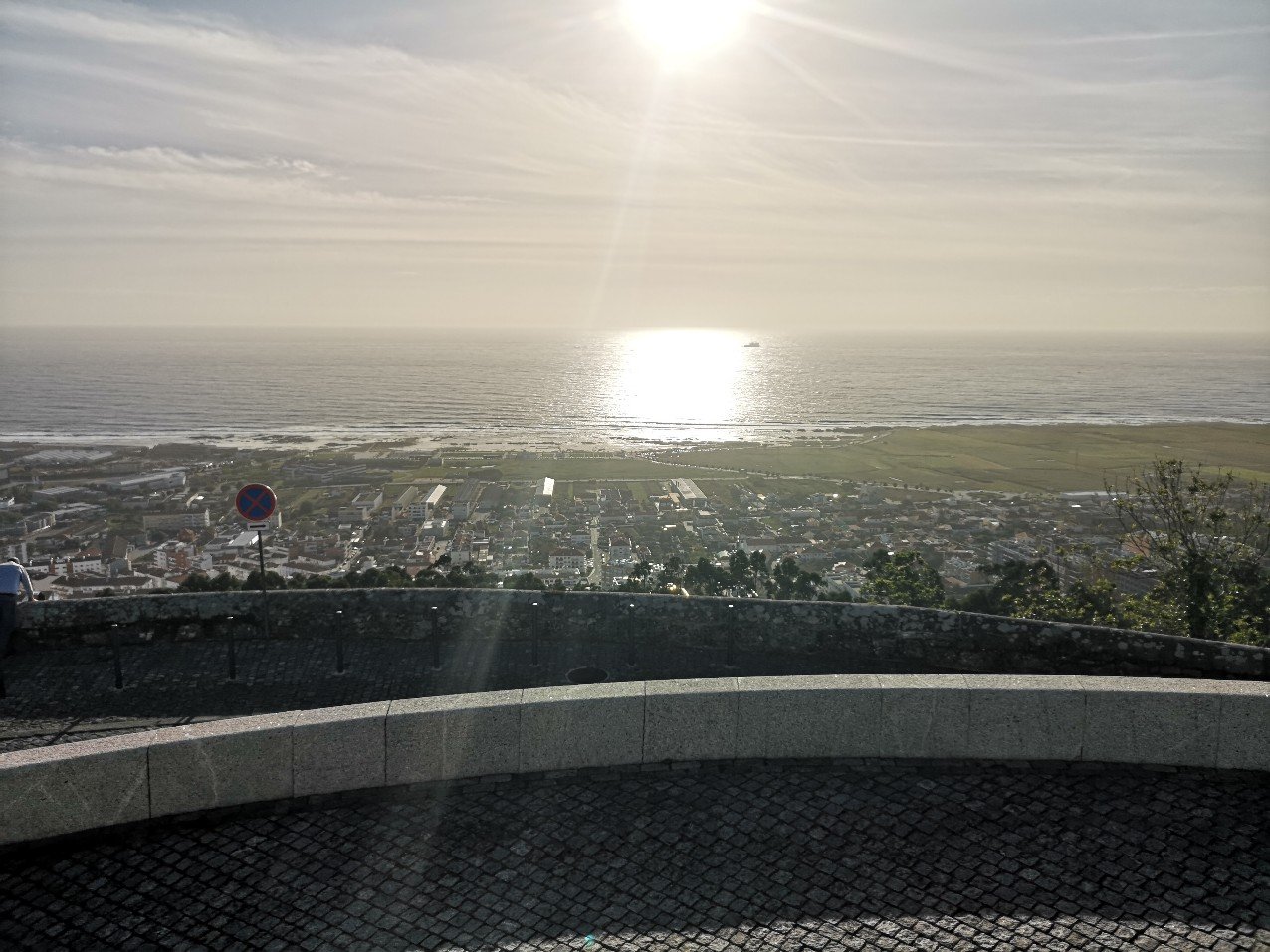
vista Portual Viana do Castelo
View of the Atlantic Ocean from the top of the hill, Viana do Castelo, Portugal

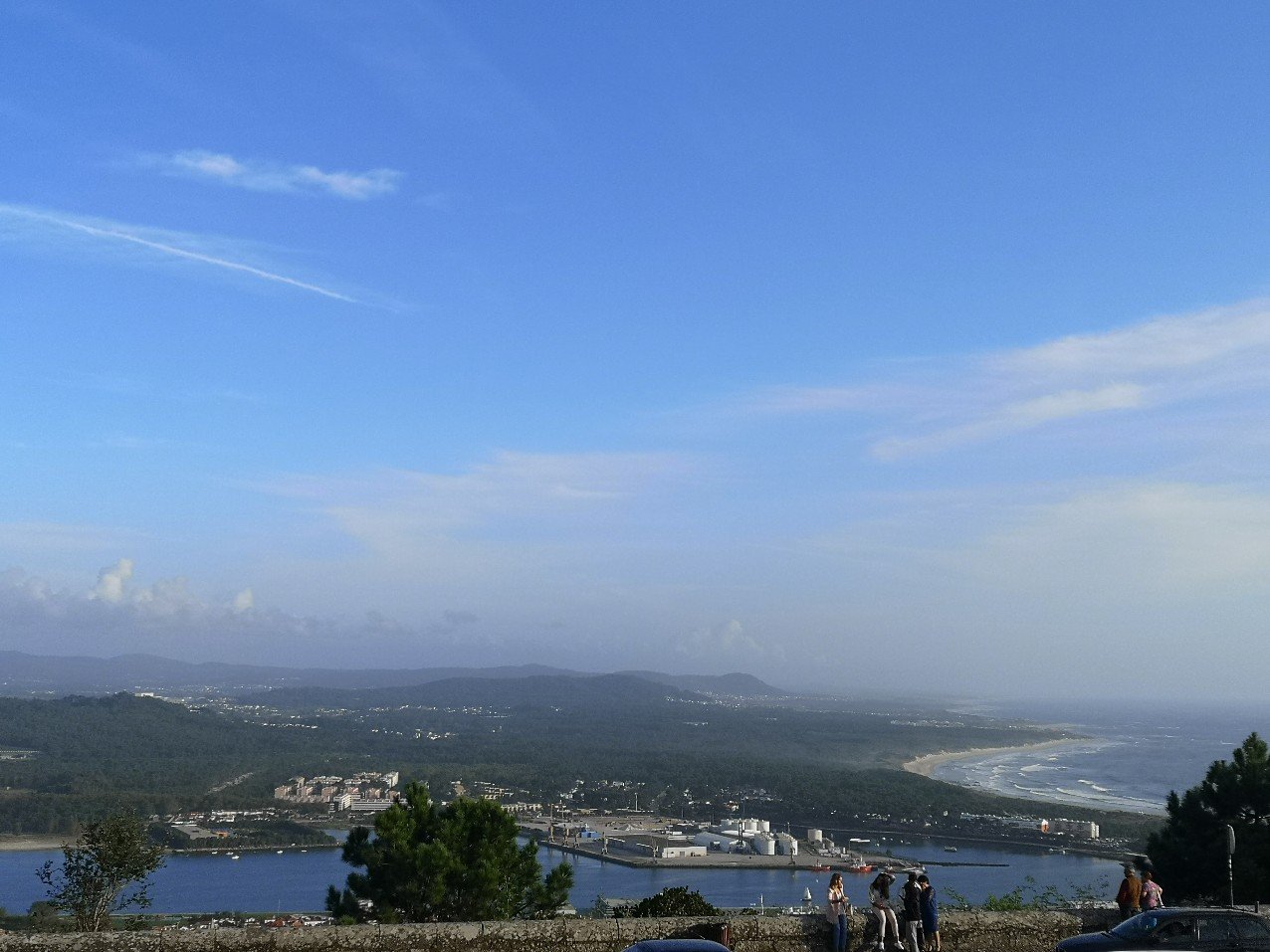
vista Portugal Viana do Castelo
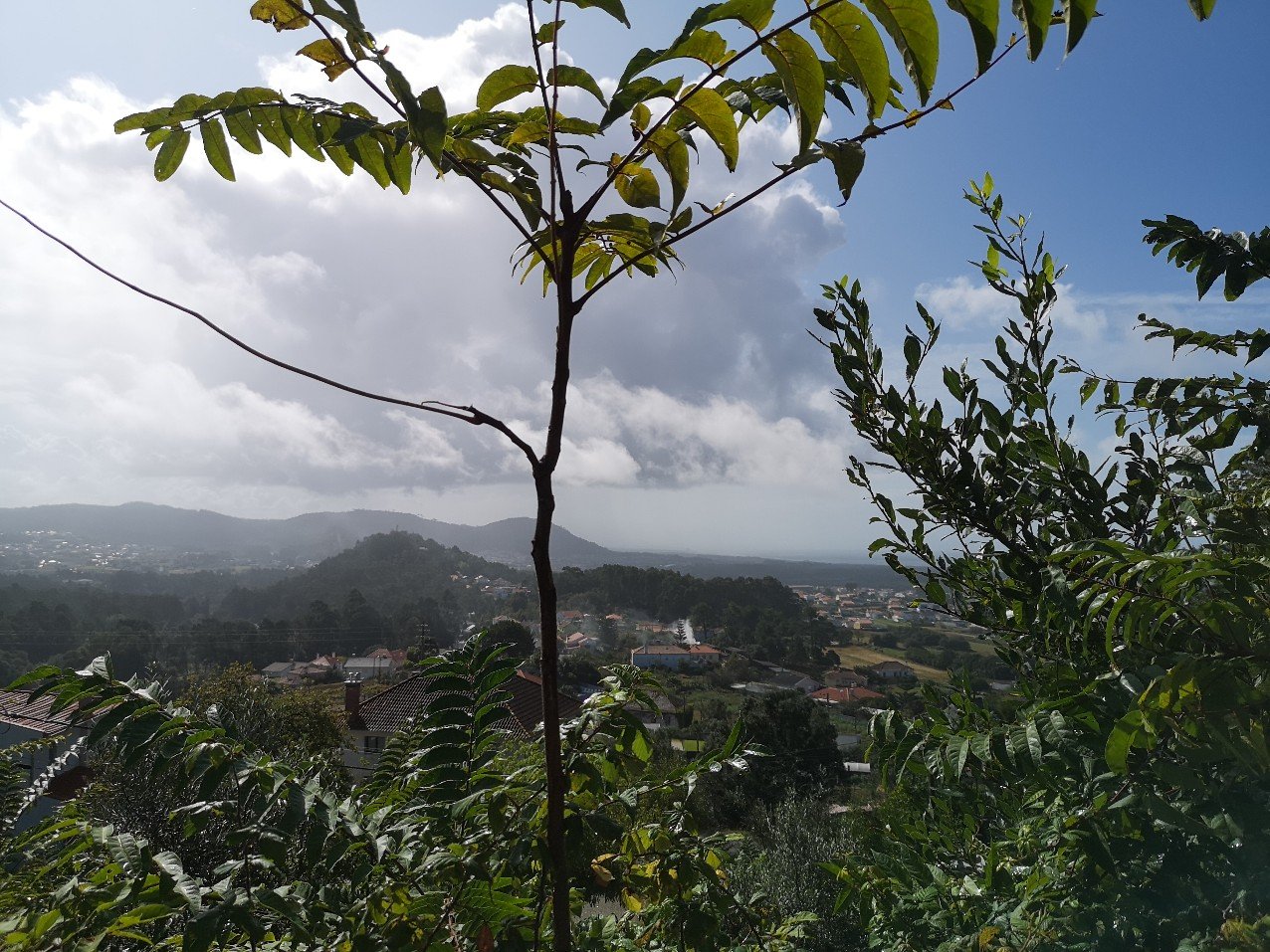
Another view, this time of the River Lima and southwards from where I had come to Praia (beach) do Cabadelo, Viana do Castelo, Portugal

stained glass windows santa Luzia Portugal
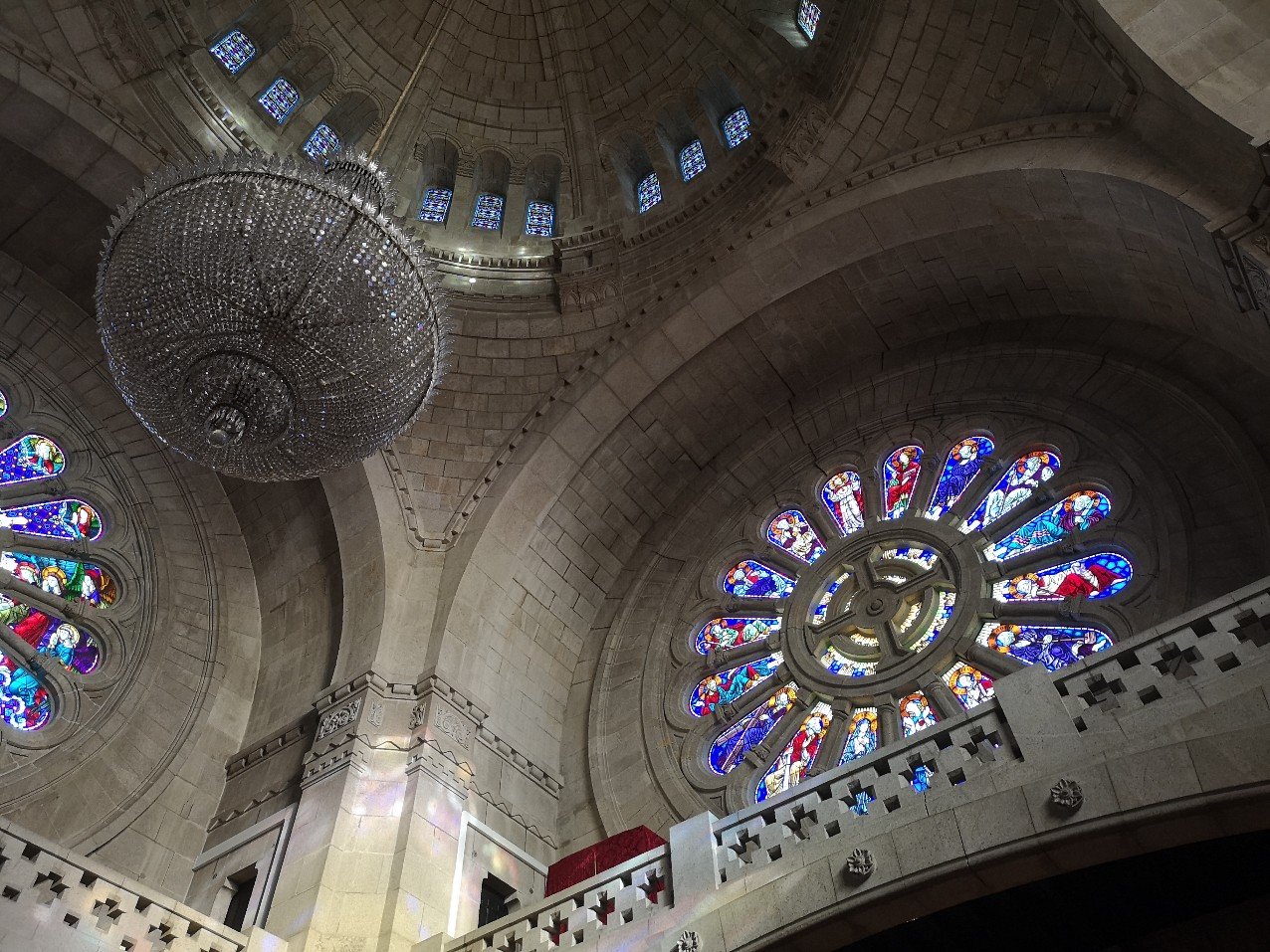
Inside the Sanctuary Santa Luzia, Viana do Castelo, Portugal

fresco roof detail Santa Luzia Portugal
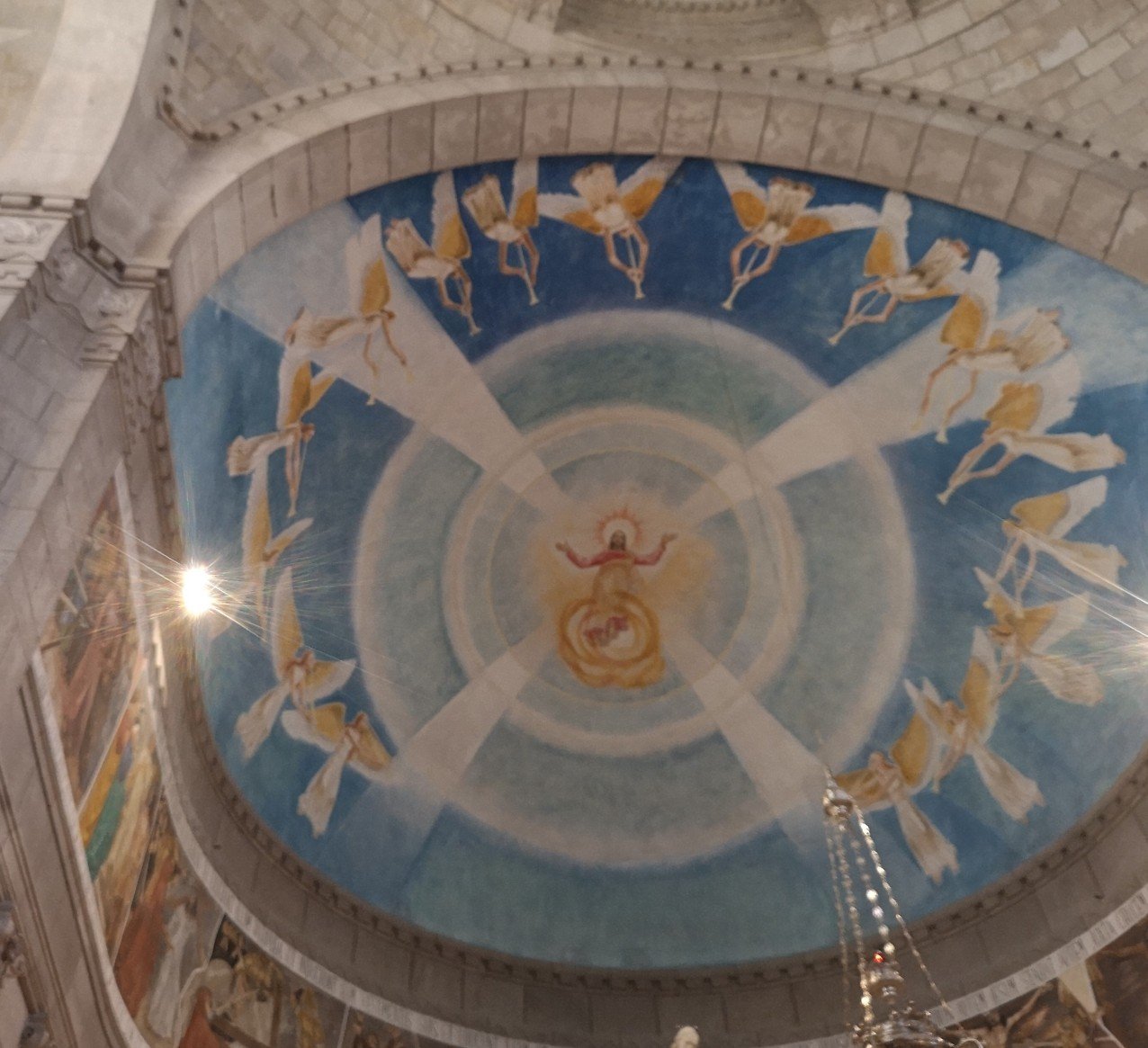
The stunning dome of the Sanctuary Santa Luzia, Viana do Castelo, Portugal

I am indebted to the people on the houzz.com forum who have an immense wealth of knowledge about plants and are so willing to help.

Previous blog – days 1 and 2 Portuguese Camino Porto to Vila do Conde

Days 5 and 6 Viana do Castelo to La Guarda

If you have also walked the Portuguese Camino, did you stay in the same hostels as I did? Please feel free to share your experiences in a comment below.