Shetland – south mainland

A retrospective blog in the series about a virtual visit I made to Shetland in 2019. I had booked my ferry, planned my itinerary, and, most importantly, arranged a series of walks and talks with Shetland women on the theme of ‘A sense of belonging’. Then the lockdown happened.

NorthLink Ferries cancelled my ticket so as to keep residents safe, and I had to be creative. Happily, the women I was looking forward to meeting agreed to walk and chat with me by telephone and Zoom instead.

Kathryn Spence
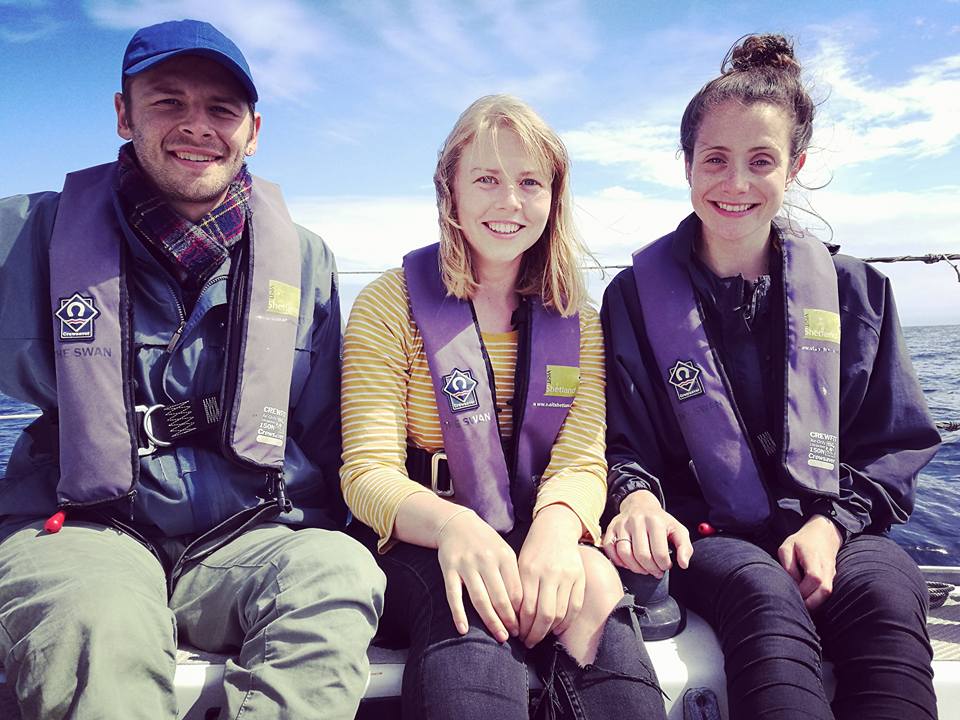
Kathryn Spence (centre) and company, while working on ‘Just Dance’ shown at The Mareel, Lerwick, Shetland 2017

Kathryn Spence works for Shetland Arts as their Creative Projects Manager, as well as being a freelance artist, professional contemporary dancer and choreographer. She started by telling me about herself when we walked and talked together, she in Shetland and I in Kent, England. ‘There is quite a young community here on Shetland, though not in the Highlands of Scotland. Boys did apprenticeships (in the oil industry especially) straight after school, and many of the girls stayed to be with them.’

‘I didn’t know there was such a thing as being a dancer when I was young; there wasn’t that provision available. I was away for 12 years, in Glasgow, and then London to train. Then I worked in the Highlands with Plan B, and in Edinburgh where there are lots of opportunities to climb the ladder, but I kept in touch with my school friends every summer, and so when I returned ten years later I slotted back in.’
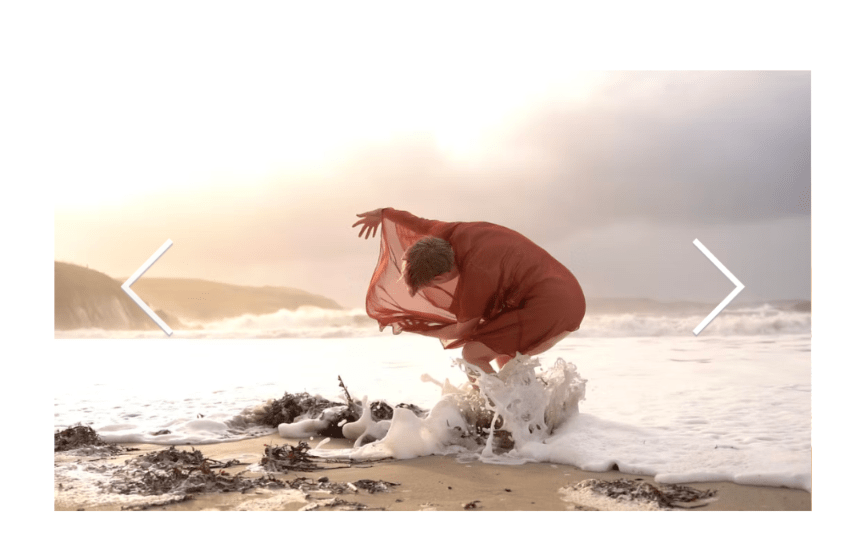
Kathryn Spence, ‘Beneath the Movement’ currently available on BBC iplayer

I’ve always known that I’m from here. It’s such a homely place, a community of all ages, and the landscape, the slow pace of life compared with other places I’ve lived; these are all reasons I’ve always known I wanted to come back.

Kathryn explained that living ‘in the country’ means living as part of a small and close-knit community. In Shetland, as in many other Scottish island communites I have visited (eg Orkney) people seem to depend on each other more than on the Mainland. She said that, in her opinion, it’s not even the same as living in the Highlands of Scotland, which are also sparsely populated. Her husband grew up there, on a farm near Invergordon, and therefore imagined they would be living in a secluded cottage when they moved to Shetland, far away from others, but in fact they are well connected. Amy Liptrot, author of The Outrun and herself an islander (from Orkney) understands. She writes (in her review of Tamsin Calidas’ ‘I am An Island’) that ‘the reality of island life requires more interaction with, and support from, neighbours than anywhere else … it’s made of community and culture’ (The Spectator).

The Outrun book cover. Published by Canongate Books

‘A sense of belonging and a sense of community is instilled in us from a young age’ says Kathryn. ‘There are a lot of high profile celebrations and festivals (see below) which makes Shetland quite individual, and when you’re growing up you’re told that your dialect is different from anyone else, plus we are far away from everywhere in the middle of the North Sea, which is spoken about an awful lot, and so that is another thing to be quite proud of.’

Painting by Janette Kerr that is currently (May 2025) on the walls of the Kilmorack Gallery in Inverness-shire as part of her exhibition ‘Flow’. Janette lives and paints in Shetland.

Kathryn cites the landscape as contributing to her sense of belonging, as do the other Shetland women I spoke with. ‘I have lived in other very beautiful places, but I love the land here and I am drawn to it. What I like is the extreme: one minute you’re at the cliffs, the next at the beach, all condensed, closer. I think that all these things help to create a sense of community.’

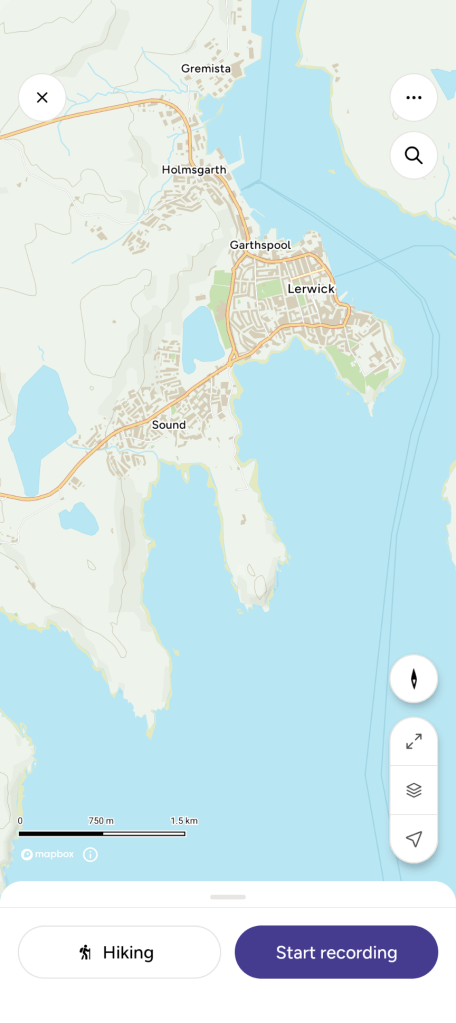
Lerwick, the capital
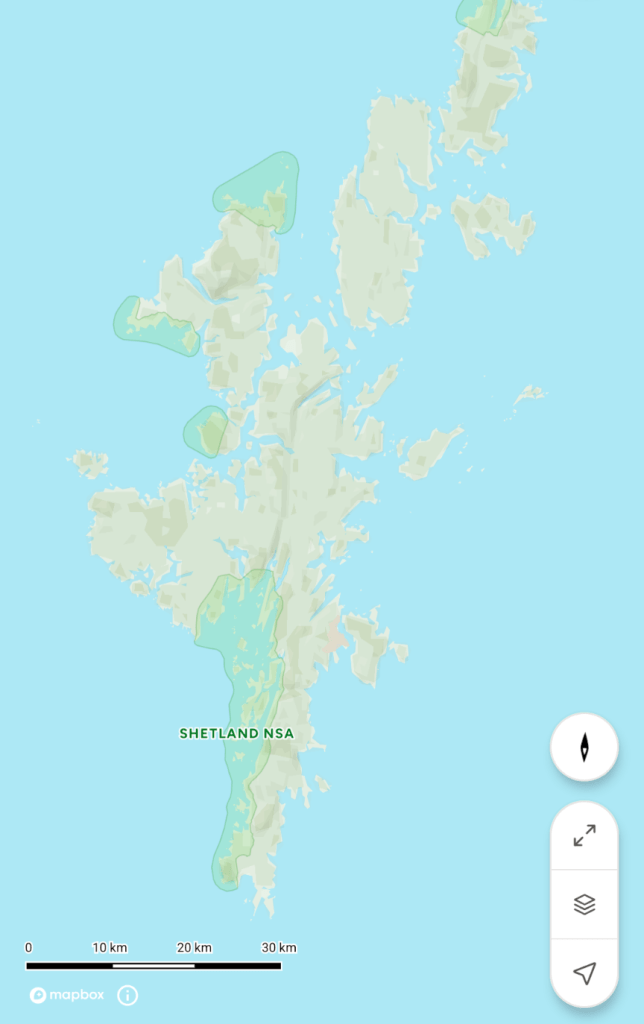
Kathryn works in Shetland’s capital, an 18 minute car commute from her home. ‘Lerwick is similar in size to Invergordon in the Highlands – a small Scottish port town and not much happens there – but there’s an awful lot happening in Lerwick. It’s partially because it’s a capital. Invergordon is near Inverness so it doesn’t have to have everything, but Lerwick is far away from everywhere else you do have to have everything.


It is very small, but convenient, and now we have the Mareel where bigger dance companies can come and perform which is great. If I want to spend a night there I can either get a bus and be dropped off at my doorstep at midnight (there’s a really good service in the south part of the island because of the airport in Sumburgh which is half an hour’s drive from Lerwick, or even take a taxi if it’s a special occassion, which is dear at £40, but that’s £20 each and down south it would be the same cost for much less distance.’ (Spoken in 2019).
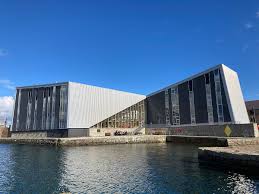
The Mareel, taken from Wikipedia

We talked about people being flexible in order to be and stay in work all year round, another theme that came from my conversations. ‘That is something that comes from the islands – as soon as you put roots down anywhere you have to be prepared to be adaptable. I work in the arts and there’s just the one arts organisation here [Shetland Arts], so if I was to lose that income I would need to diversify.’ Consequently, she teaches some dance classes and has trained as a yoga teacher to help her stay fit – what with her choreography and this, she has quite a few strings to her bow! ‘It’s always about connecting with people through movement, the language of movement.’
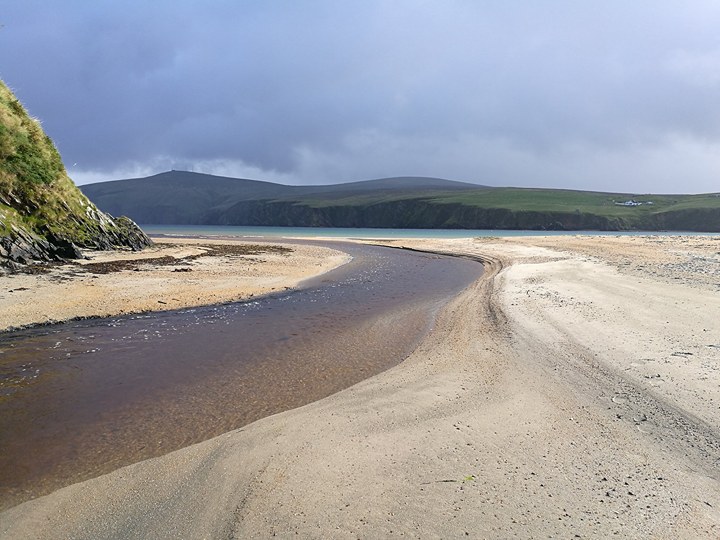
Kathryn’s Shorestation Residency with sculptor Tony Humbleyard. Photo by Kathryn Spence

This was not the only fascinating conversation I’ve had with local women which covered the topics of ritual – celebrations like weddings, festivals and funerals (the latter, sadly, were very tricky during of the Coronavirus pandemic.) There was mention of long-standing traditions like the famous Up-Helly Aa Viking fire festival (in Lerwick and other sites across Shetland), but I won’t write much about that as there is a lot of information available on the internet. Suffice to say that some women were very keen ‘to be allowed’ to join in the all-male shindig back in 2019.
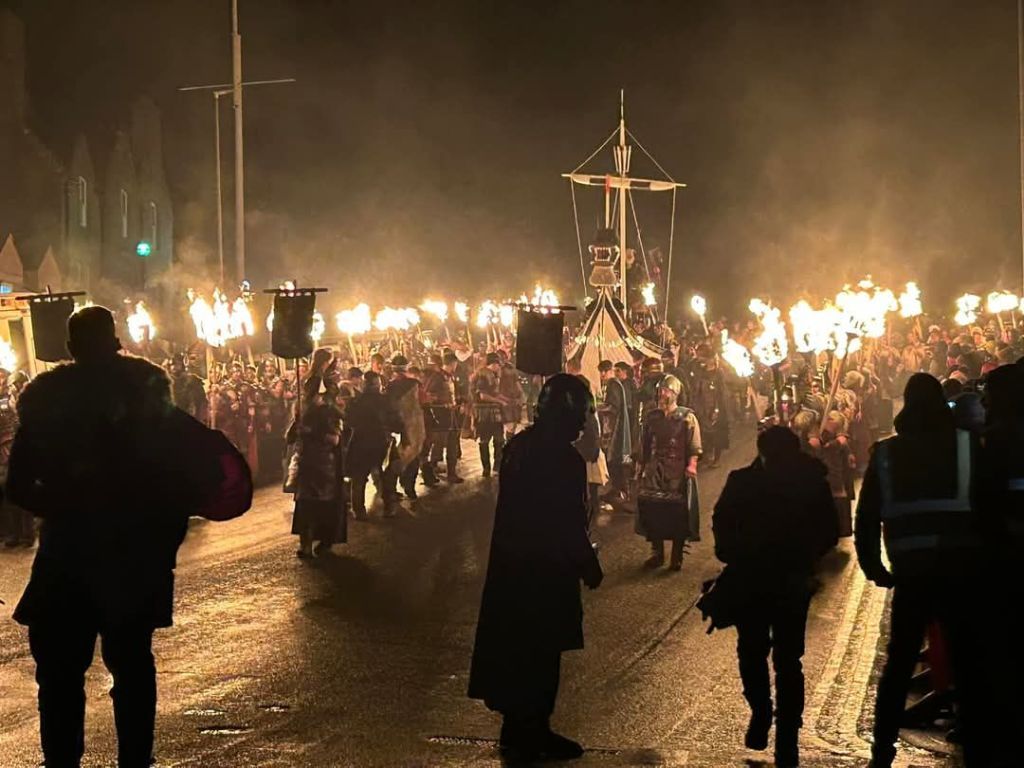
Up Helly Aa fire festival January 2025 Photo Janette Kerr

Update: In January 2024, the BBC’s Ken Banks reported that, ‘Shetland’s famous Up Helly Aa fire festival has seen the traditional dramatic burning of a replica Viking galley. For the first time in the event’s 143-year-old history, women and girls joined the main “squad” at the head of the torchlit procession through Lerwick. Up Helly Aa – the biggest fire festival in Europe – is held on the last Tuesday in January. The annual event sees people celebrate Shetland’s Norse heritage.’

Thank you to Kathryn for telling me about belonging in Shetland, and to Janette Kerr for giving me permission to use her photos. A separate blog will be dedicated to my upcoming visit and meet-up with Janette.

I will be in Shetland between 12-22 May 2025. Please let me know if you would like to do a Shiatsu / hospitality exchange. tamsingrainger.com
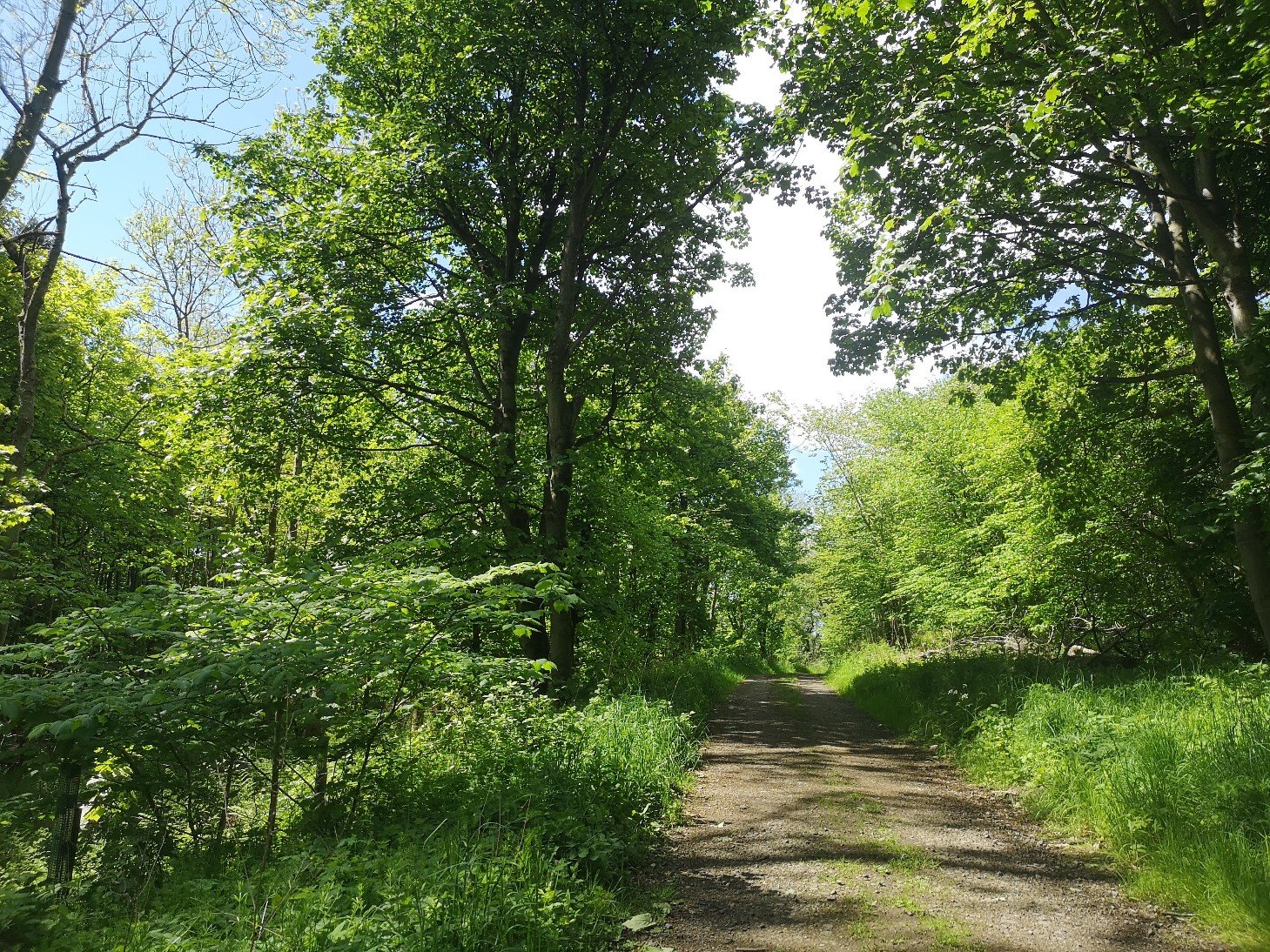
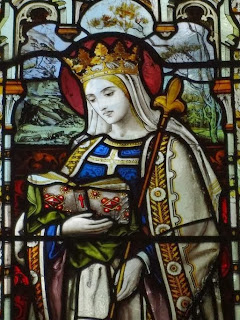
St Margaret’s Way

I walked this route in 2022 and it is a varied one –  urban and rural, located both inland and along the coast. I did so as part of a bigger project, Separation and Unity, in which I walked the landscapes of Scotland and Catalonia finding similarity and difference in their volcanic history and oak woods. I am interested in the human need for both togetherness and sharing, and at the same time a recognition of individuality.

The only Scottish pilgrimage named after a woman, the St Margaret’s Way, is representative of so many women’s stories – there are no waymarkers on the ground and apparently no detailed information online about it.

[These women were] “strong, creative, independent-minded

women who achieved a visibility in their society that led to recognition of sanctity.

Forgetful of their sex: female sanctity and society, ca. 500-1100
JT Schulenburg – 1998

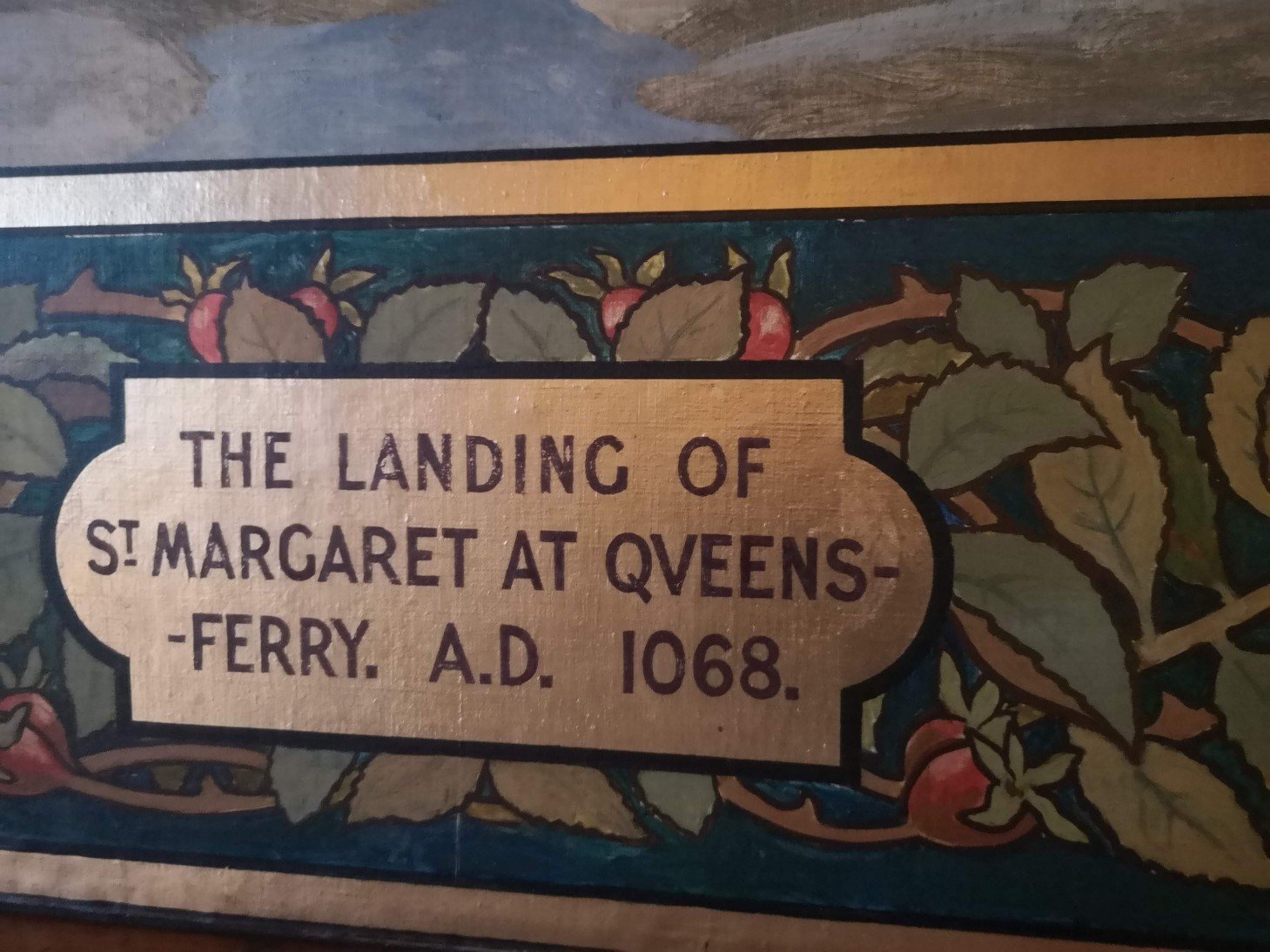
And yet Margaret (c1045-1093) was a Queen. More, she was a highly influential, practical, intelligent and determined woman, who was later sainted, and is almost always described as pious. Someone who was dedicated to serving others, and mother to a queen and three kings (she birthed eight children in total), she was also a Hungarian refugee who must have understood what it was like to arrive on foreign shores after a long boat journey. Devoutly religious (Catholic), she was a pilgrim who launched a ferry service to take walkers across the Firth of Forth, before there were bridges, so they could continue to St Andrews.

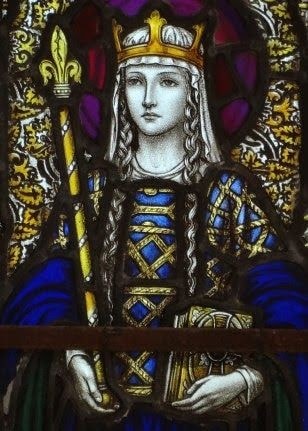
St Margaret, Brabourne, Kent, from A Clerk of Oxford blogspot
She was not in charge of her life, you might say [because she was a queen and because of the age in which she lived]…. but she rose above that to become her own woman who would establish monasteries, infrastructure and so on. She would journey from being a potential pawn in power games to becoming a power in her own right, a power for good, a power for the poor…..

Tom Shields, St Fillan’s RC Parish Church Crail

Reading the backstories of female saints, you will find a common theme; how they were wanted by men and often had to go to great lengths to make it clear that they had other feelings and plans for themselves. Margaret was no exception (we are told in the Anglo-Saxon Chronicles): “Then King Malcolm began to desire Edgar’s sister Margaret for his wife, but he and his men all argued against it for a long time, and she herself also refused, and said that she would not have him or anyone, if the divine mercy would grant that she should please the mighty Lord in virginity, with a bodily heart in pure continence in this brief life. The king urged her brother pressingly until he said yes – and indeed he dared not do otherwise, because they had come into the king’s power….though it was against her will” (translation A Clerk of Oxford blogspot ) [It goes on to say that God wanted it this way as she was to go on to “lay aside the sinful customs which that nation previously followed” including influencing the king himself, so it is clear that this was not an altogether unbiased account.]

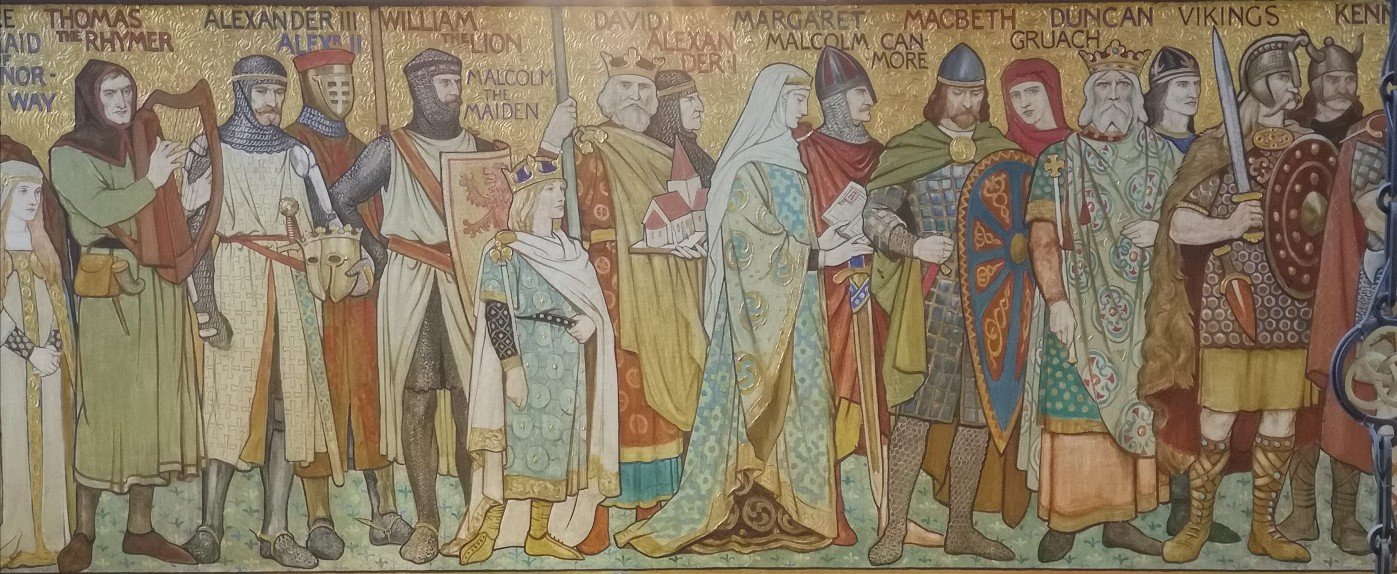
Margaret and Malcolm Canmore, Scottish National Portrait Gallery mural

I am not a religious person, so my interest in Margaret is in her standing as a woman in Medieval society; the kindness she is said to have shown to everyone, including prisoners of war; what is recorded about her relationship with her husband (we are told that he was illiterate and that she read to him); and the role she plays in the history of walking pilgrimage.

a pathway of meditation and devotion

Margaret was exceptionally well read and raised in an environment of enlightened devotion and charity…throughout her life she balanced her charitable and family work with a desire for seclusion and contemplation. Margaret strongly supported devotion to the Celtic saints while also connecting Scotland with the Europe wide development of monasticism.

The St Margaret Pilgrim Journey
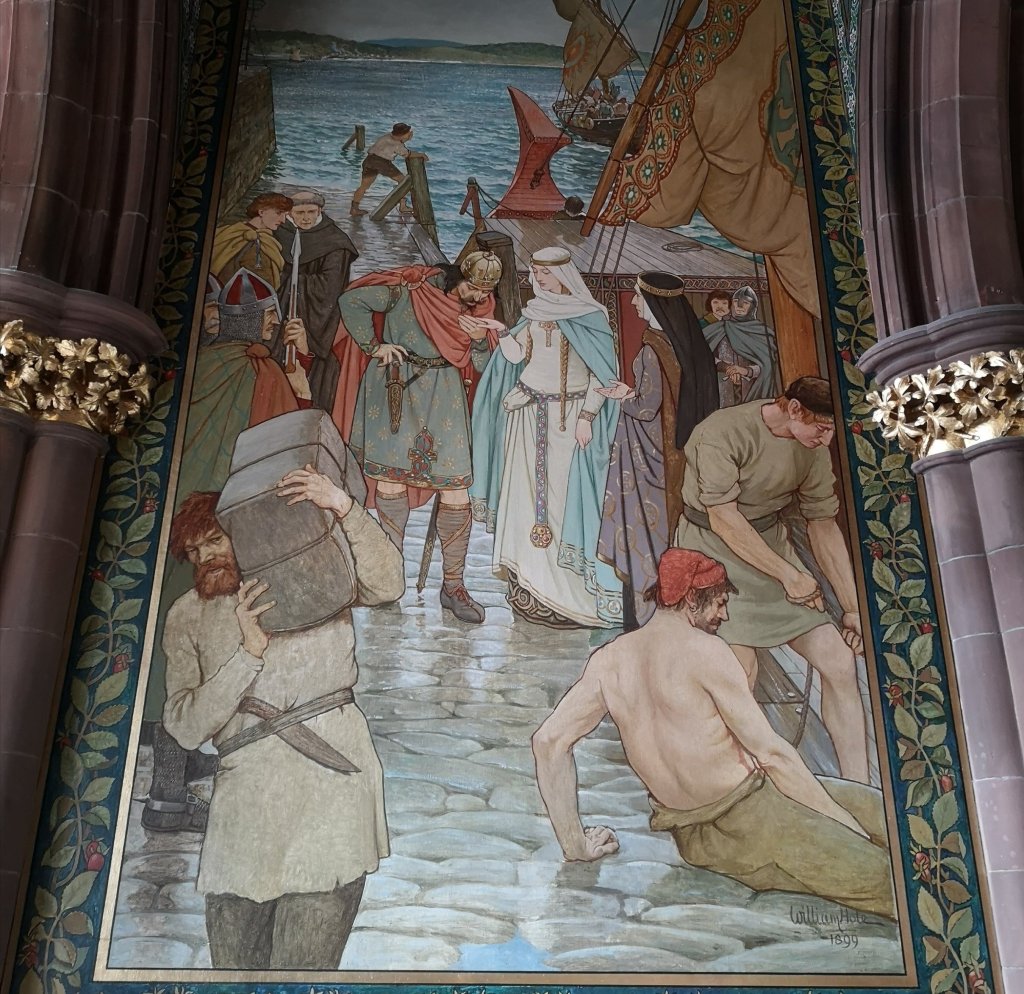
Scottish National Portrait Gallery mural

Maps and routes

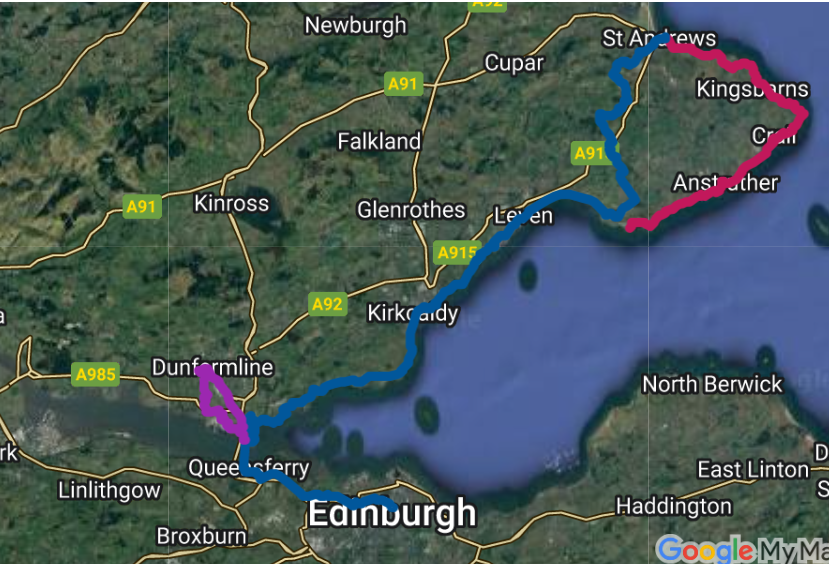
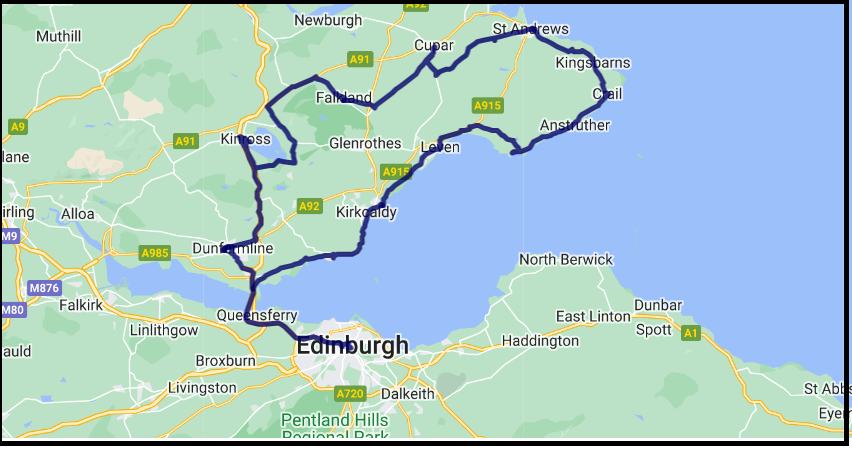
The version of the St Margaret’s Way which I walked is 100kms / 62 miles in length. Here are the stages:

  1. Centre of Edinburgh to South Queensferry between 17km/10.5m-22/13.5 6 hrs
  2. South Queensferry across the old road bridge to Burntisland 20km/12.5-22/13.5 7hrs
  3. Burntisland to East Wemyss
  4. East Wemyss to Earlsferry
  5. Earlsferry to Cameron Reservoir
  6. Cameron Reservoir to St Andrews
The British Pilgrimage Trust St Margaret’s Way map. I walked the blue line

There are a number of maps available and I had difficulty downloading The Way of St Andrews one, so I used the Long Distance Walkers Association (LDWA) which is out of date just now, though soon to be updated.

Before you leave Edinburgh, you may like to visit St Margaret’s Chapel at the Castle, the city’s oldest building (early 12th c), built by her youngest son, David. It is looked after by a Guild, all run by women called Margaret.

St Margaret

The Way of St Andrews website calls this path “a modern restoration of a medieval pilgrimage walk”. The British Pilgrimage Trust offers to email you a version if you fill in their online form, which I recommend. The path is also listed in their hefty and valuable tome Britain’s Pilgrim Places (Nick Mayhew-Smith and Guy Hayward) with a little, basic information.

Strangely, Follow the Camino describes walking the St Margaret’s Way as being in “the footsteps of Scotland’s patron saint, St. Andrew”, and Fiona Diack, too, in Spotted by Locals, notes that it “dates back to the 10th century as a way to honour St Andrew, the patron saint of Scotland”.

Ian Bradley, in Fife’s Pilgrim Way, cites High Lockhart as devising the route in 2011 (p26), and Donald Smith (author, scholar and instigator of the Storytelling Centre in Edinburgh) as having devised the St Margaret’s Journey, offering “two routes from North Queensferry to St Andrew’s one using the Fife Coastal Path [the one I took] and the other broadly taking the same course as Cameron Black’s St Andrew’s Way.” (p27/28) which I am unfamiliar with.

The St Margaret Pilgrim Journey (link above) – a quite different tour from the route I took

Note: The link on this page (Ways and Trails.co.uk) is out of date.

Pittencrieff Park, Dunfermline, Fife

Cameron Black’s St Andrew’s Way moves through Dunfermline where you can visit St Margaret’s cave; the Roman Catholic Memorial church which bears her name and to where a relic of the saint was returned in 1998, 900 years after her death; and the Benedictine Abbey founded by Margaret. Dunfermline Abbey and the ruins around it are all that remain of that Benedictine Abbey founded by her in the eleventh century. The foundations are under the present nave (or`Old Church`). Outside the east gable is where you can see her shrine, itself a place of pilgrimage since medieval times.

 ‘that âme d’élite’, the ‘exquisite St Margaret’,

Baker, Derek. “‘A Nursery of Saints’: St Margaret of Scotland Reconsidered.” Studies in Church History Subsidia 1 (1978): 119-141. citing Knowles, MO p 242.
Earlsferry, Fife

St Andrews was a very popular place to visit. From the south the pilgrims would have came via South Queensferry and then got the boat to Fife. From the south east, pilgrims arrived mainly from the Continent at North Berwick, where they took the ferry to the opposite coast arriving at Earlsferry (the end of my fourth day). From there they continued northwards, cutting off the East Neuk (the site of the continuation of the Fife Coastal Path) and heading directly to the final city.

Looking at St Andrews, Fife

They travelled the last 15 miles on foot to St Andrews along a track the width of “a donkey with two panniers”

Scotland’s Finest
Fife Coastal Path, Kinghorn

This web page has some fun information about St Margaret. Uncover Travel

More information about St Margaret

Early primary texts about St Margaret: the Anglo-Saxon Chronicle‘s account of her marriage contains extracts from the Life of Margaret written for her daughter, by a monk, Turgot, Prior of Durham, between 1100-1107. He knew Margaret and her family well and wrote that she, “showed herself to be a pearl”. She is now known as The Pearl of Scotland.

Gerda Stevenson reminds us, however, that it was she who was credited with persuading the King, her husband, to ban the use of Scots in favour of English.

I yearned / for the old tongue my mother learned me on her lap, / words that once rose up from deep inside me; / but they’re lost, the well is dry – it’s like a fatal thirst / that can’t be quenched; and I know now why / my mother called her Margaret the Accursed.

from ‘Quines’ by Gerda Stevenson (2018:34)

Whether you like to walk for the pleasure of the activity, the beauty of the landscape, or for religious reasons, the St Margaret’s Way is well worth the time. Please note that Komoot, the walking app, rates it as level: expert.

Walking the St Margaret’s Way

This is an enjoyable route that covers a great deal of the Fife Coastal Path excepting the final ‘day’ stage from Earlsferry to St Andrews (marked ‘Expert’ ) which is tough, especially if you attempt it all in 1 go.

One of many such road side signs

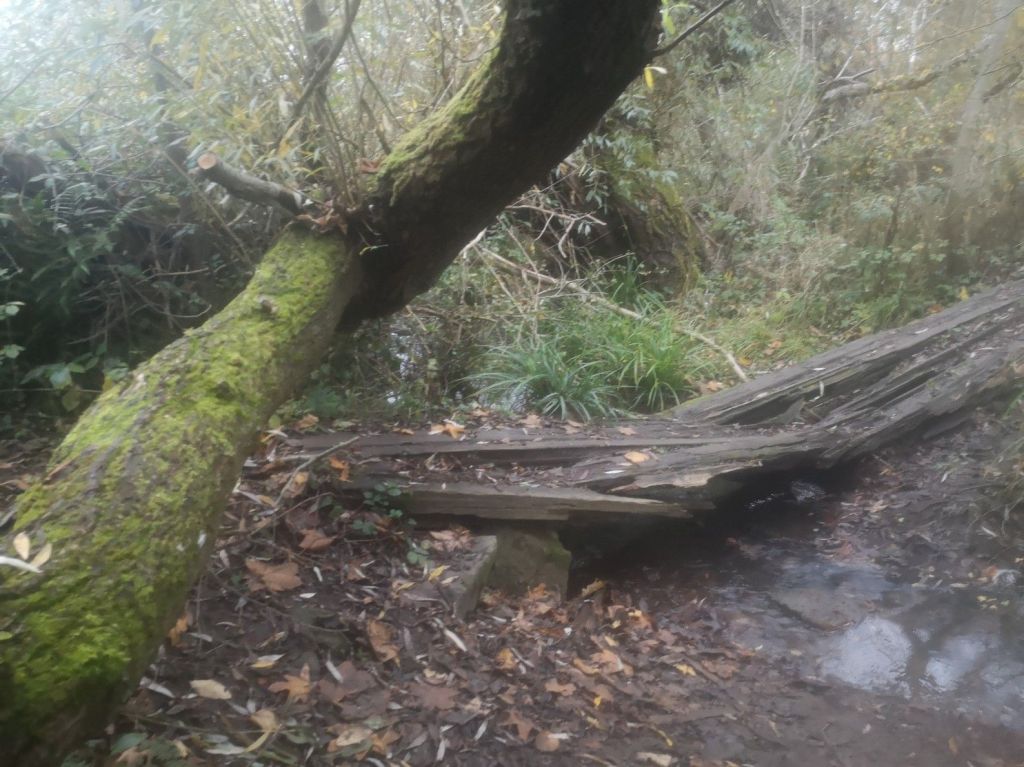
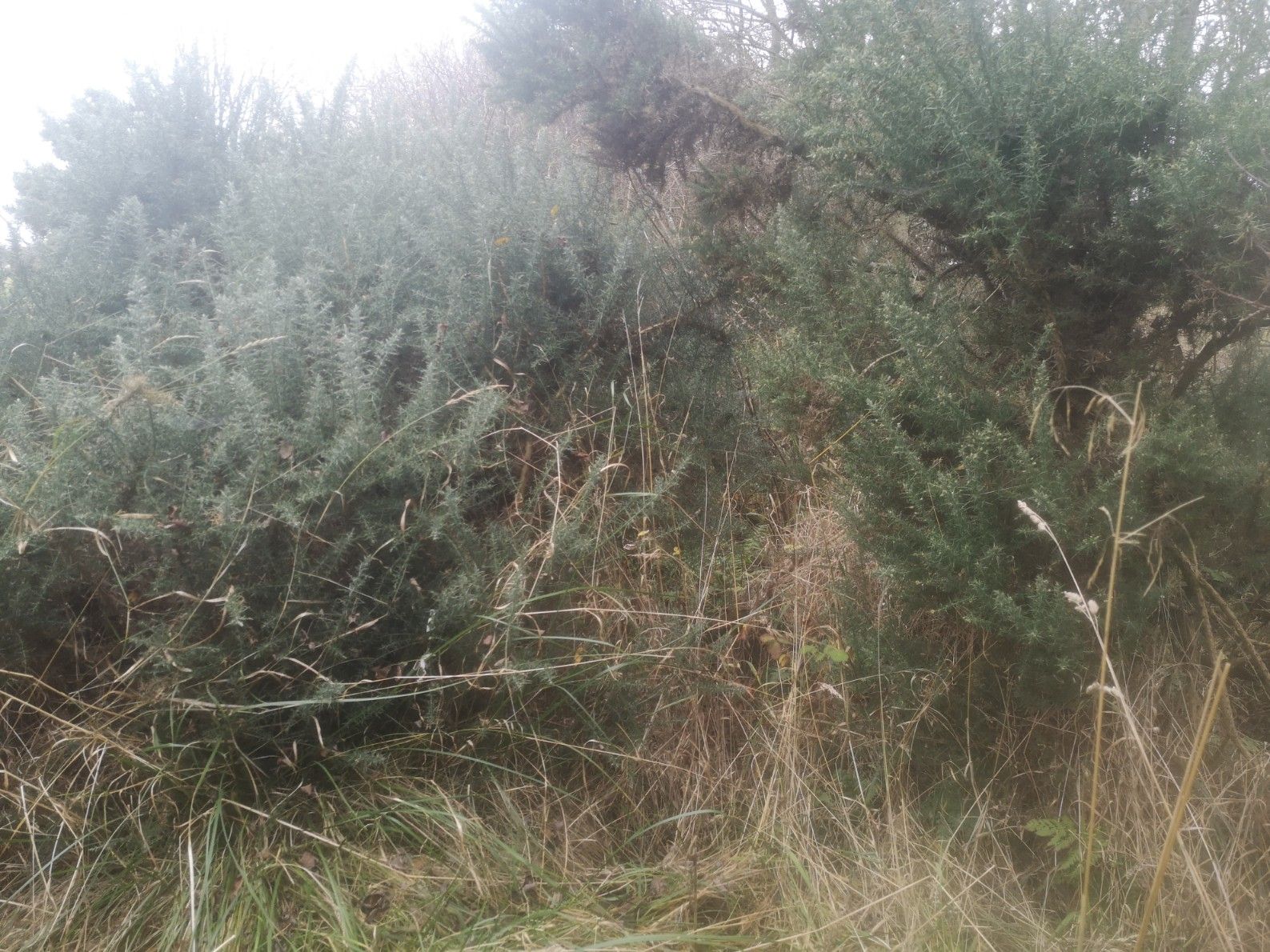
A lot of it is uphill and includes much road walking (there are green verges to avoid cars, but they are not suitable for walking on as there are regular (every 20 paces) ditches across them for water run-off from the road). There is also a long stretch of path which verges on pushing through undergrowth (very prickly gorse which I had to protect myself from, including my head – though I am very short in stature, the bushes are high). This is despite what the Way of St Andrews website says about it having been recently cleared (I walked it in early November 2024). Towards the end, just after the smart Duke’s Golf Course (there are toilets at the main building, very kind staff, and a kit kat cost £2!) and Craigtoun Park, the path is hard to find and the bridge broken, but it’s possible to cross the Cairnsmill burn on stones.

Broken bridge over Cairnsmill Burn

I enjoyed the day very much, though it was a long, tough hike. Due to the time of year I had to watch daylight hours ending at 4.30pm, and because I was coming from Edinburgh by bus (approx. 3 hours) I was only able to start at 9.30am. I got to the end just as the light went out of the sky, arriving in the dark and finding that the Cathedral was closed, so there was no welcoming committee.

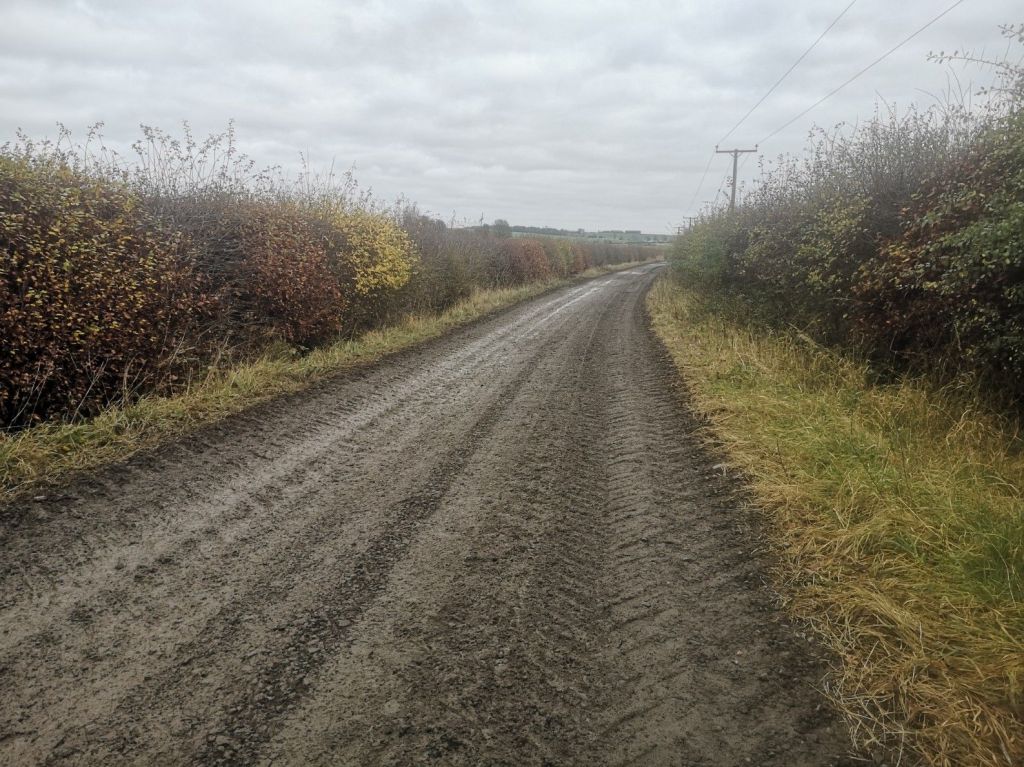
Extremely muddy in places though no rain all day, luckily
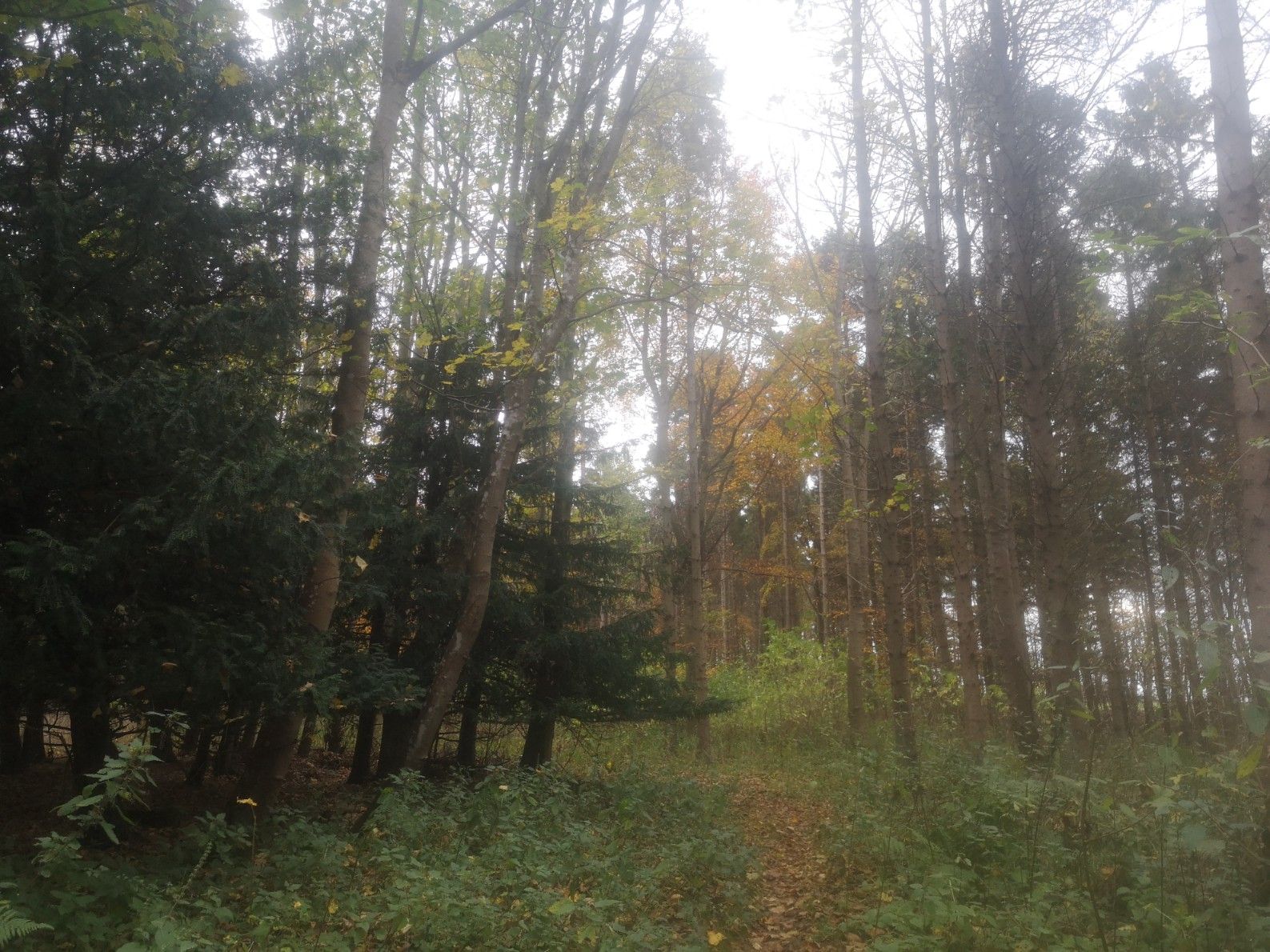
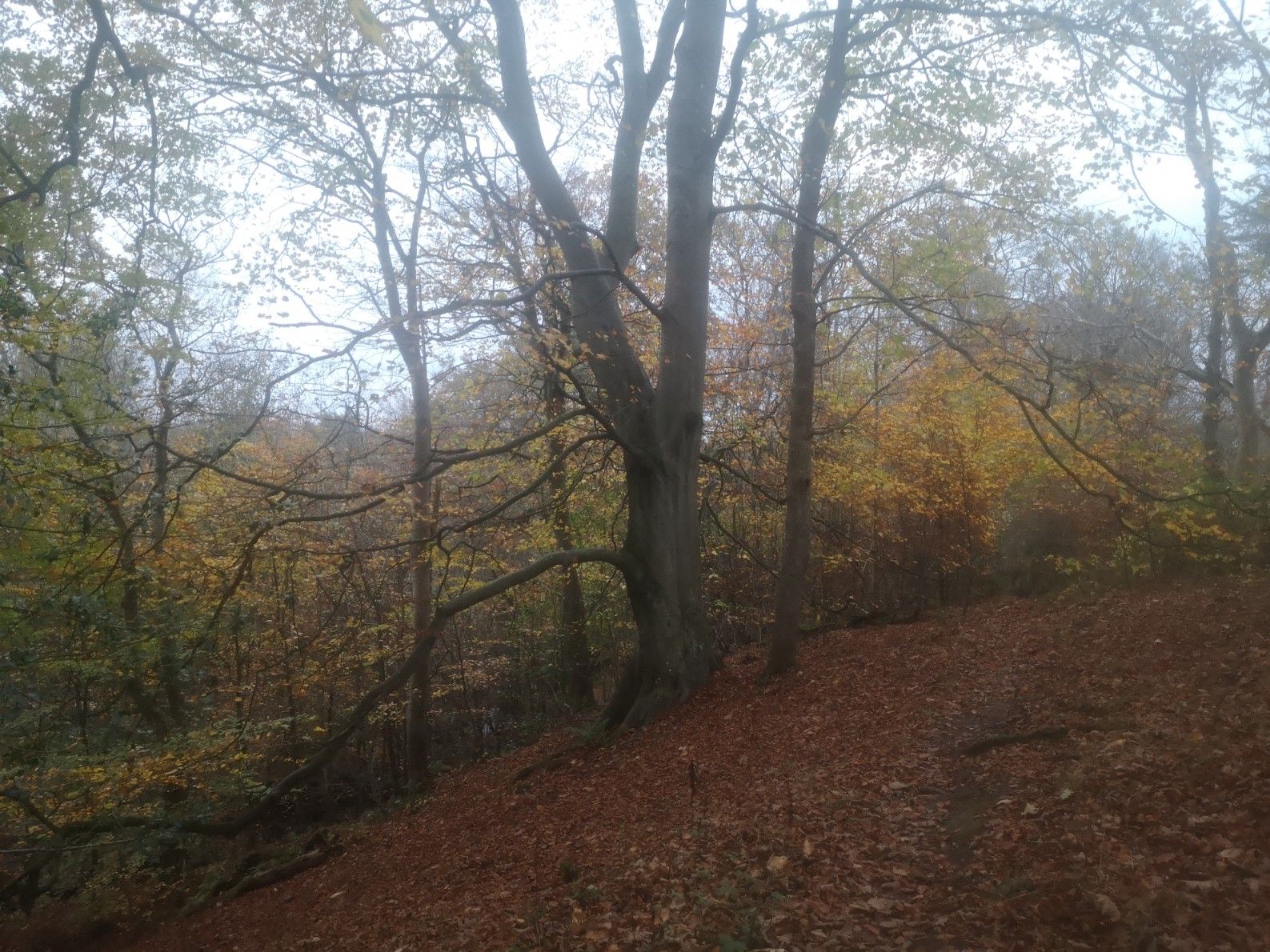
Gorgeous Autumn colours through the woods
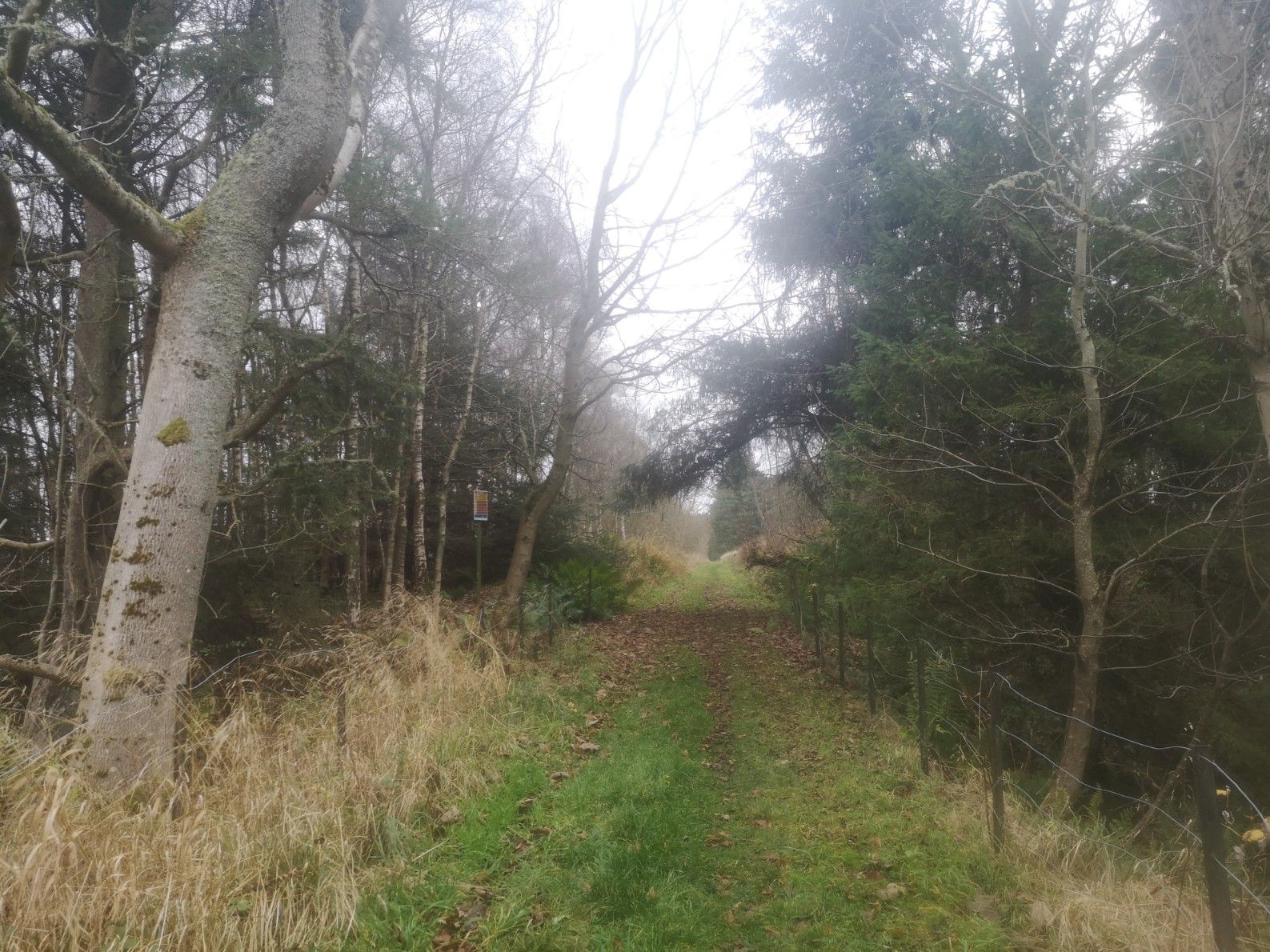
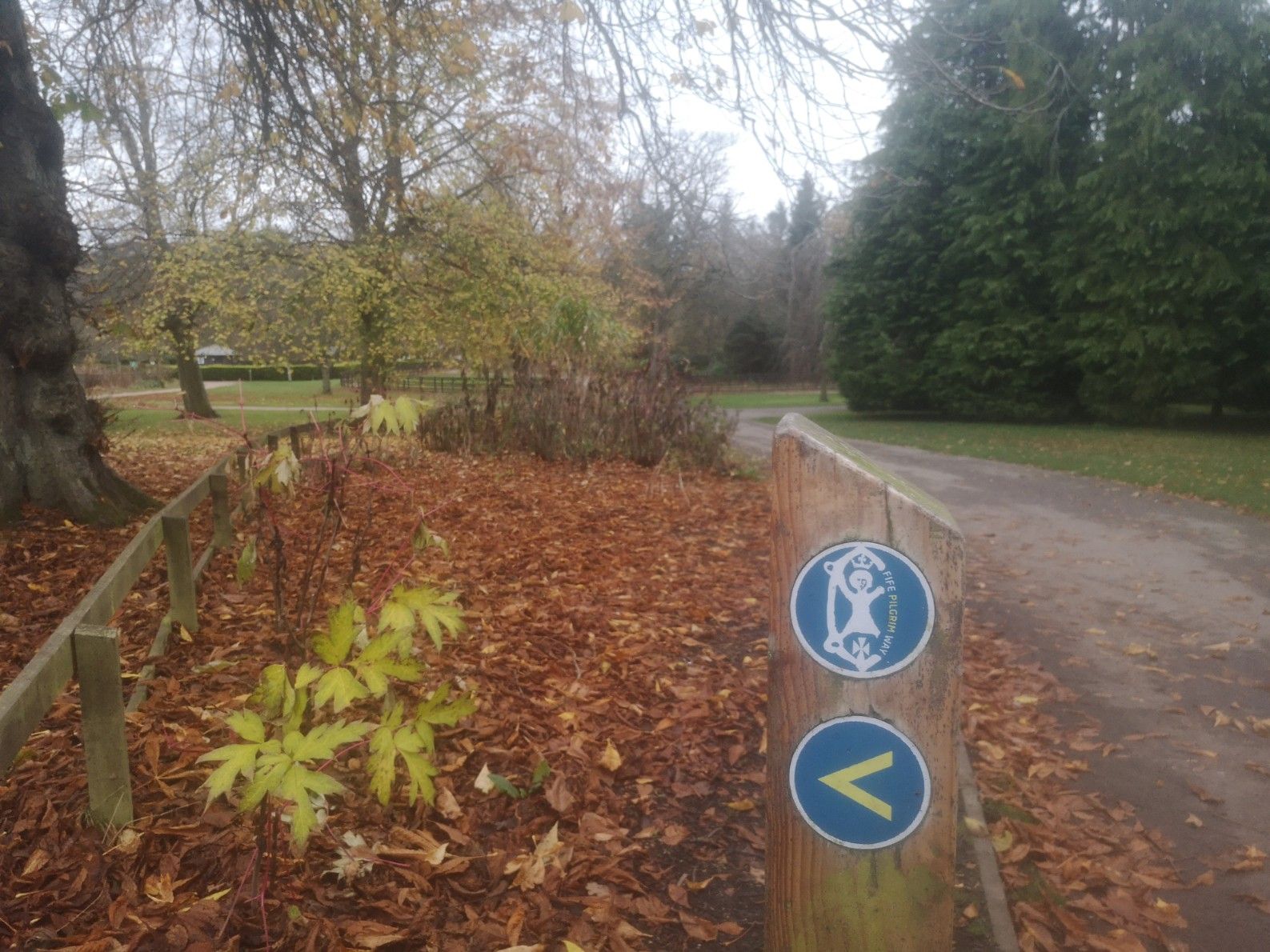
Some is waymarked, not many signs
Lovely tree slopes when nearly into St Andrews
Ideal path for walking
A 5 km stretch was hard to find at the start, spiky to push through and overall, hard going

The website says to allow 10 hours. I did it in 8 from the junction between the main road A917 and B941 north of Earlsferry. I walked fast when I could and didn’t get lost too many times!

Winter trees against a dull sky, but no wind and temperate weather
Through well-kept estate lands with large houses and interesting small buildings scattered around

Beware the complete lack of affordable accommodation in St Andrews and expensive drinks and snacks. It’s very attractive, but inhospitable unless you’re rich. There is no hostel as advertised (as far as I could tell), so either expect to pay a lot and book in advance, or you can take a short bus ride to Anstruther to the Murray Library Hostel there which is really clean with a well-stocked kitchen, lots of heating, comfy sitting room, and friendly staff. Downsides: does not use eco-friendly products, pay £3 for a towel, no soap or products in showers though generous when I asked), no drying room (I don’t think), nor dorm bedside lights or bed curtains. Cost £26. Does not include breakfast, but there are lots of cafés and 2 fish and chip restaurants (Wee Chippy is good, not cheap).

Joining the Fife Pilgrims Way through the Craigtoun Park
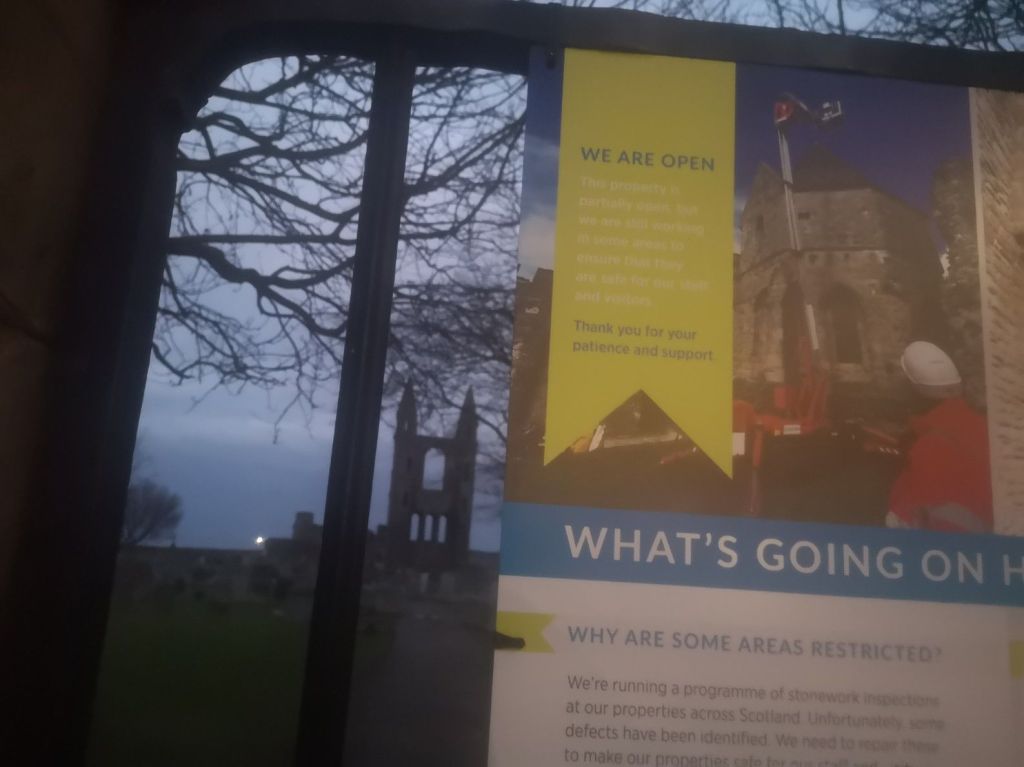
The ruined Cathedral of St Andrews is the end point, closed when I arrived
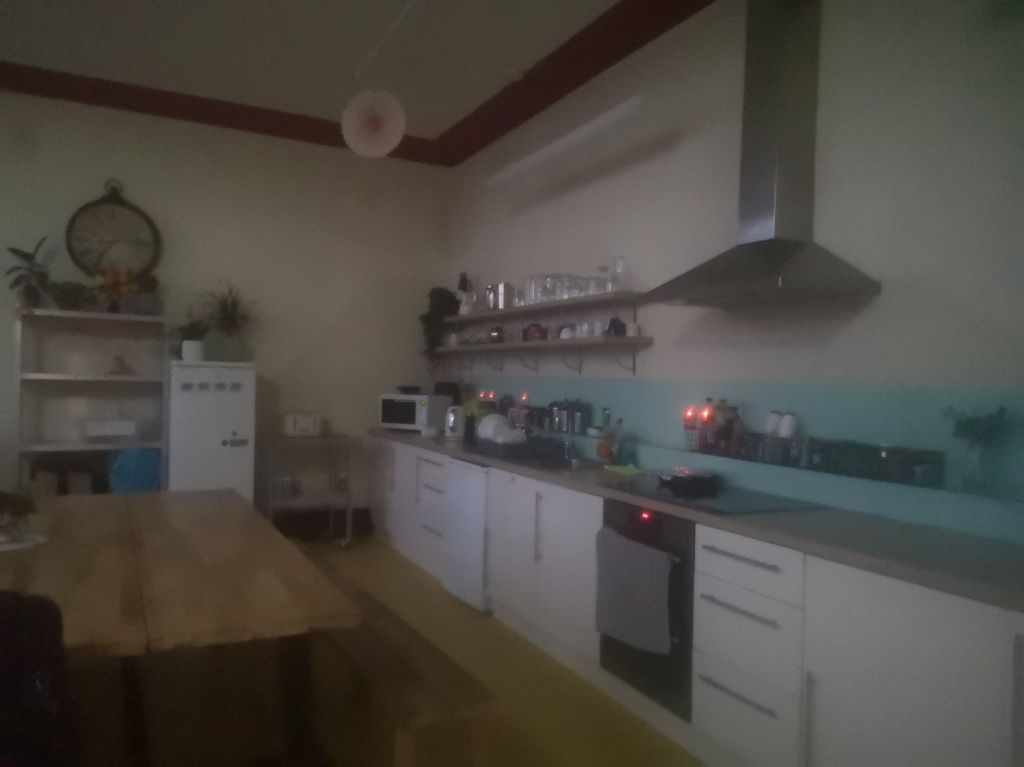
Murray Library Hostel kitchen, Anstruther
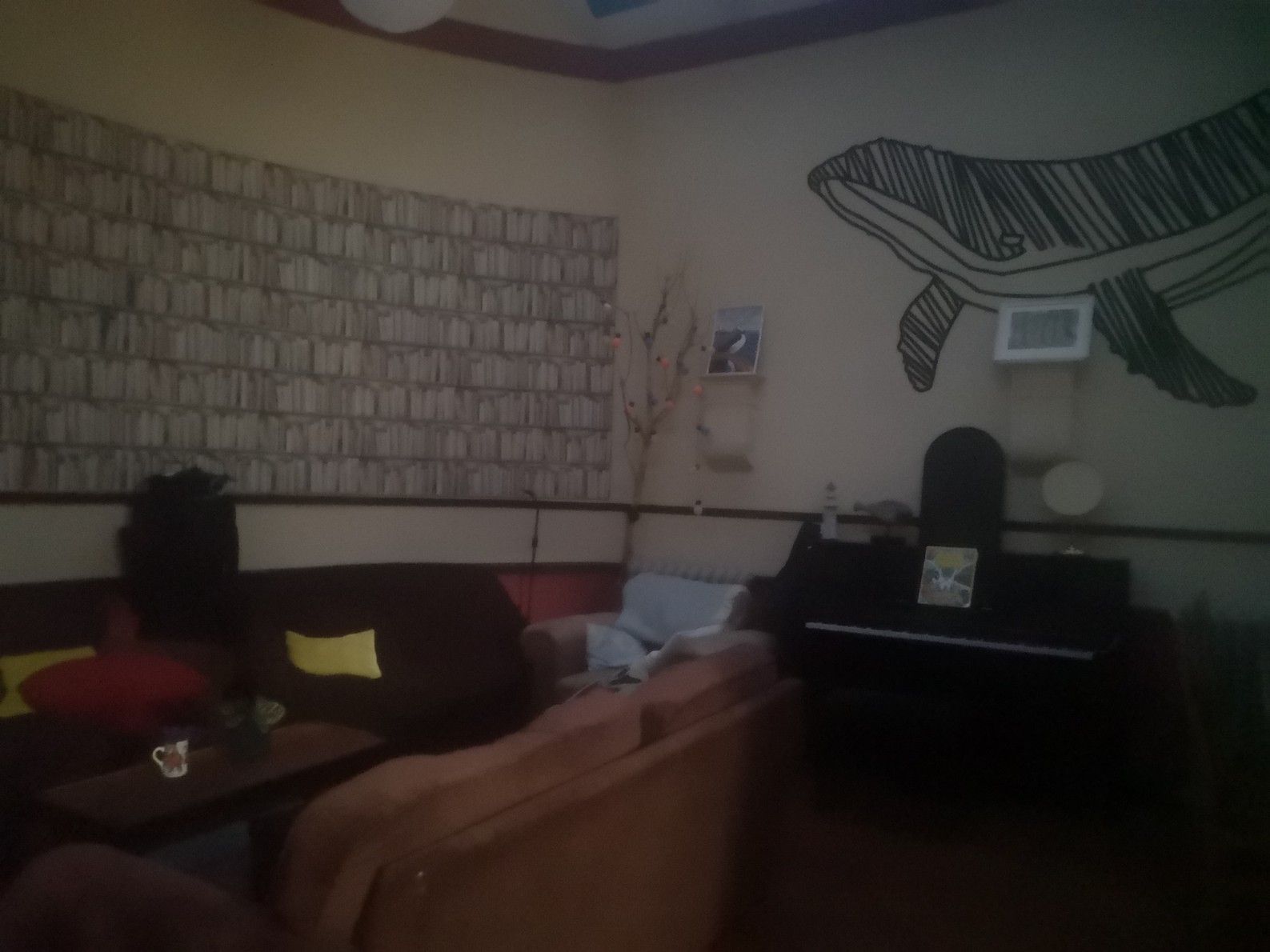
Murray Library Hostel sitting room, Anstruther
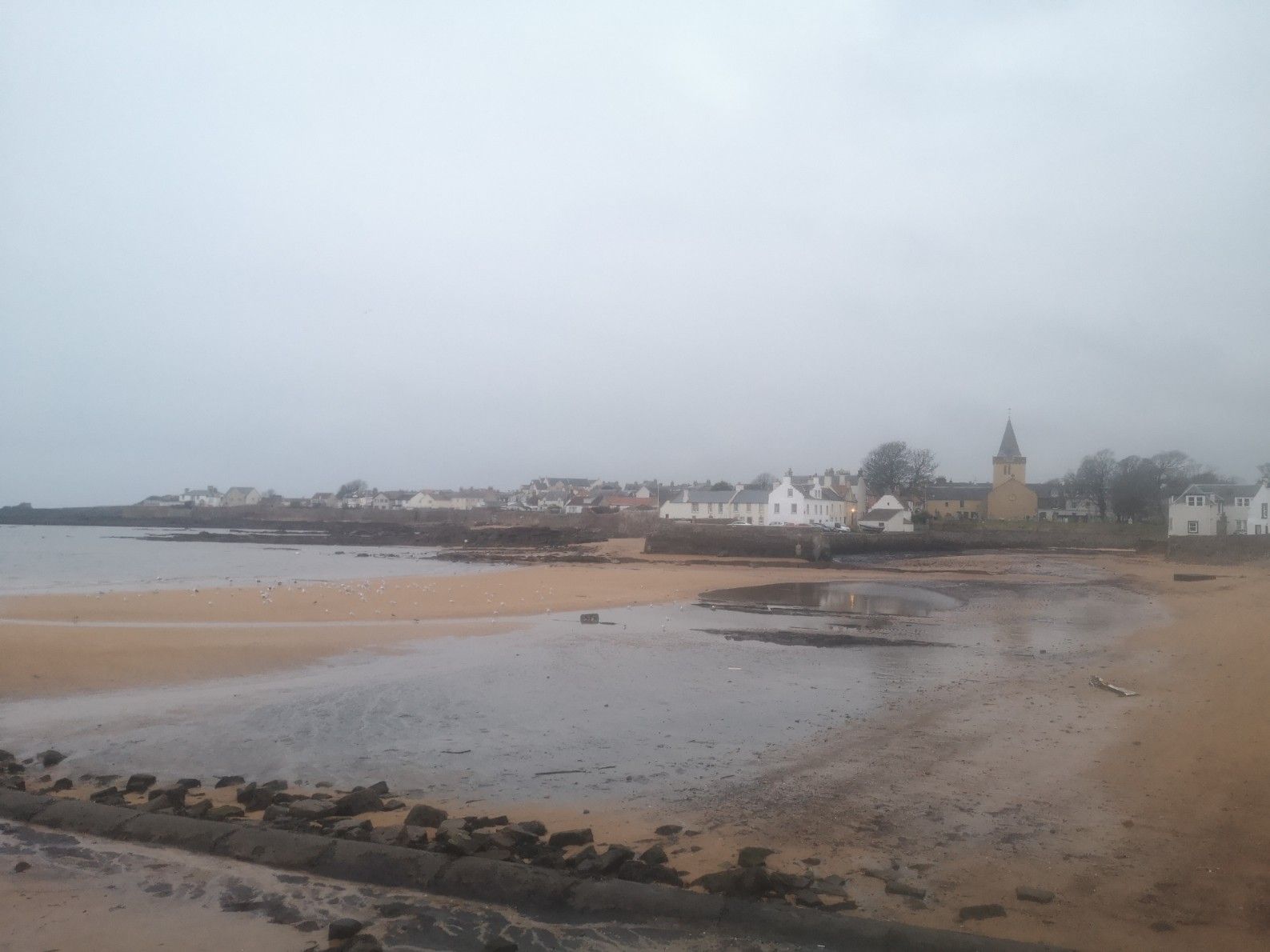
Beautiful Anstruther (on the St Margaret’s Way elbow or Fife Coastal Path) beach opposite the Murray Library Hostel

I would recommend you take a tent and a friend(s), break the last stage up and do it over 2 days, taking it leisurely in the summer!

Have you already walked the St Margaret’s Way? Please do leave a comment below if you have; I’d love to hear from you.

Edinburgh – New College and Calton Hill

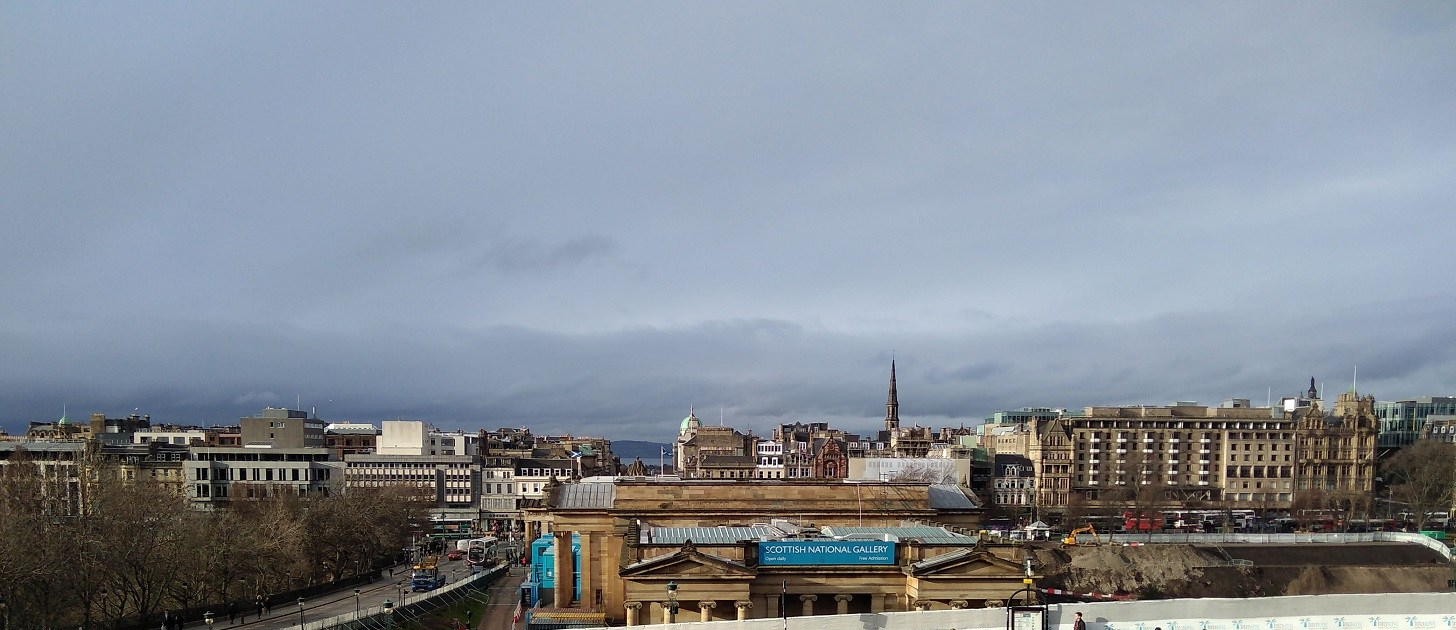
Here are some winter photos to wet your appetite for making a windy climb down from the Royal Mile and up Calton Hill for the fabulous views of Salisbury Crags, Arthur’s Seat and more.

IMG_20190308_160758

I took the Hidden Heroines Tour on International Women’s Day (8.3.2019) of places in the city centre where you can find out about famous Edinburgh women.

Carla Nebulosa was our tour guide and she and her team had researched and prepared the itinerary. Originally from Madrid, she delivered it in a personable, even exuberant manner. She has started to write a book of the same name and is looking for donations from the tours to cover her up-front costs.

IMG_20190308_161141
Carla (with the hat on, pointing) on the steps of Lady Stair’s Close and the back of the Writers MuseumEdinburgh

St Margaret (1070 – 1093) was an English princess: devout Catholic; charitable; mother of eight; wife to and good influence on King Malcolm; and, most importantly, she established a ferry across to Fife so folk could walk pilgrimage to St Andrews. She is further remembered because the oldest surviving building in Edinburgh, part of the Castle, is in her name.

The roots of the summer pilgrimage dates back to June 1250 when the relics of Saint Margaret were translated to a new shrine in Dunfermline Abbey following her canonisation that year by Pope Innocent IV.

crop_pilgrimage_2018_logo


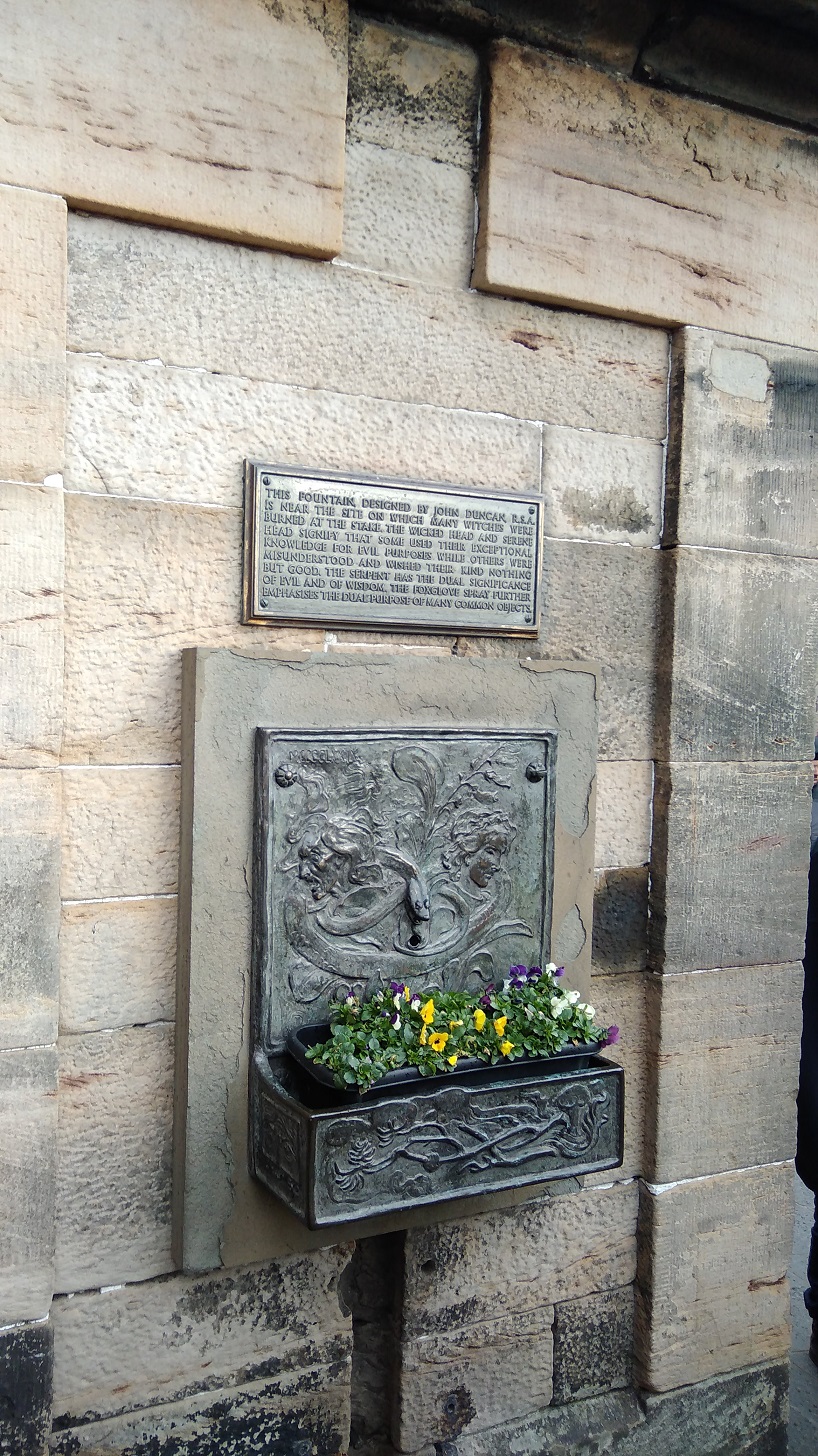
The Witches’ Well can be found at the entrance to the Castle Esplanade. It is a memorial to the women who died unnecessarily as a result of the 1563 Scottish Witchcraft Act

The Witches’ Well, a cast iron fountain and plaque, honors the Scottish women who were burned at the stake between the 15th and 18th centuries. It’s an easy site to miss for people only focusing on the castle that looms ahead. During the 16th century, more women were murdered at this site than anywhere else in Scotland. Each victim was denied a proper trial.

The Witches’ Well
IMG_20190308_155152
The Witches’ Well, Atlas Obscura, Edinburgh

We visited sites associated with Catherine Sinclair (novelist 1800 – 1864), Susan Ferrier (novelist 1782 – 1854), and Elsie Inglis (doctor and suffragist 1864 – 1917). Inglis was one of the first women to be educated at the Edinburgh School of Medicine for Women, though later she transferred to Glasgow to complete. I always remember her name as I went to visit my friend Tracy in the Elsie Inglis Memorial Maternity Hospital (1925 – 1988), the day she gave birth to her first daughter, Gemma.

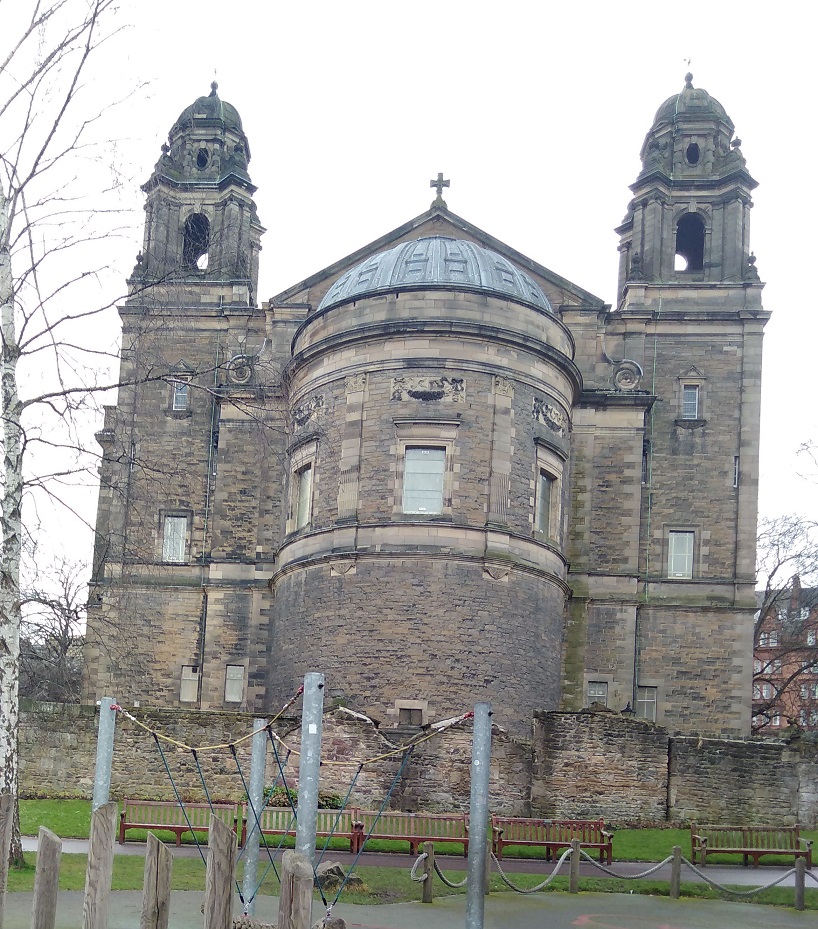
IMG_20190121_125419
St Cuthbert’s from Princes Street Gardens where Susan Edmonstone Ferrier is buried, Edinburgh
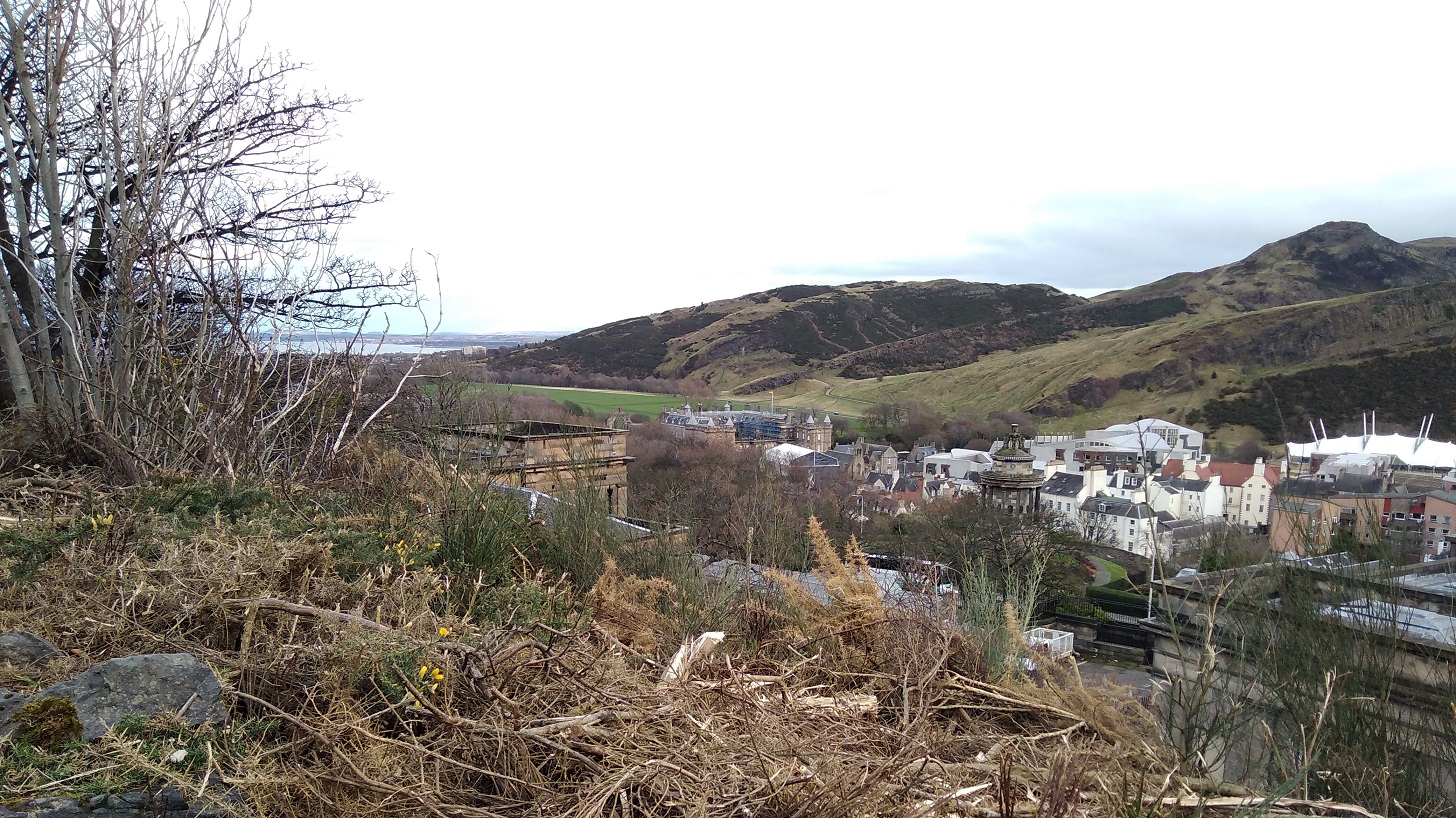
IMG_20190308_165806
Looking towards Abbeyhill, site of the former Elsie Inglis Memorial Maternity Hospital, Edinburgh

Mary Somerville, featured on the £10 note, was a Scottish scientist (1780 – 1872) and she gave her name to one of the houses at my secondary school in Tonbridge, Kent, so I was pleased to hear her mentioned.

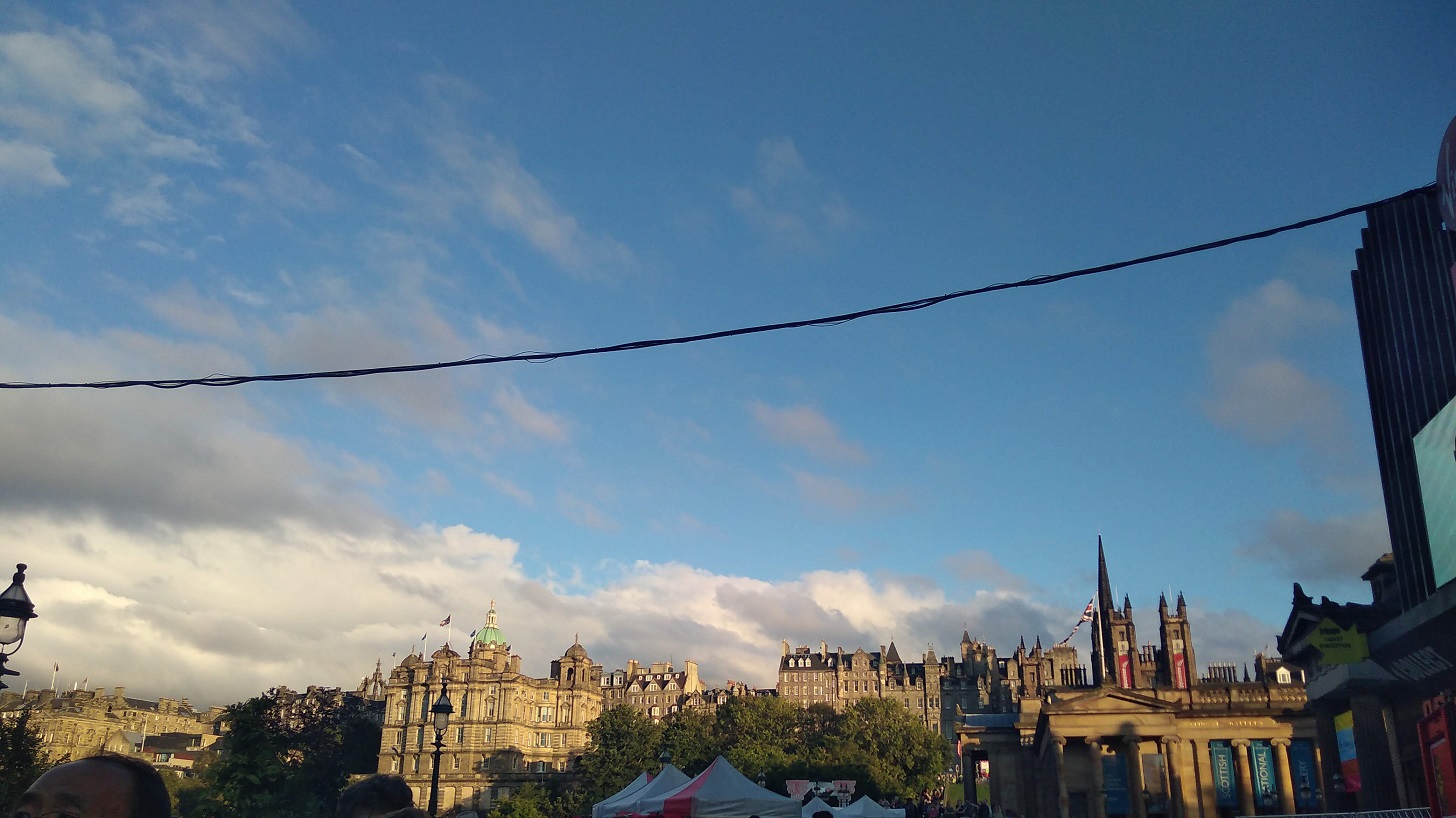
IMG_20180806_201952
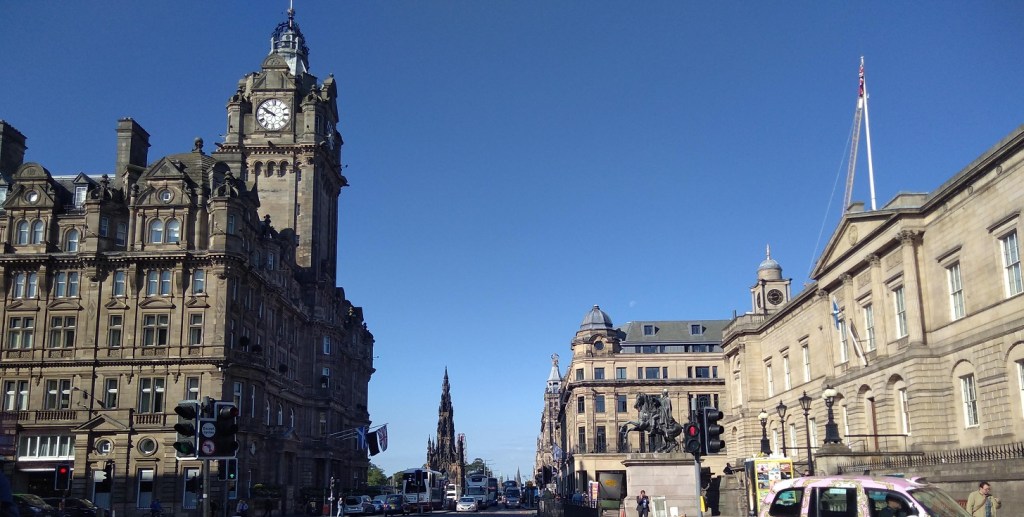
Bank of Scotland, The Mound on the left with the green dome, Edinburgh

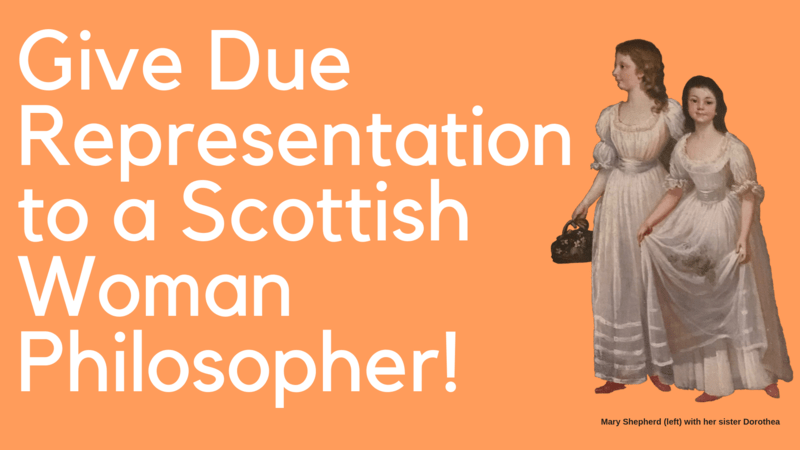
Lady Mary Shepherd was born to the Primrose family (1777 – 1847) just outside Edinburgh. A Scottish philosopher, she wrote two philosophical books (1824 criticising the views of David Hume, and 1827 on the perceptions of an external universe) which were influential in Edinburgh philosophical circles at the time. (thanks Wikipedia)


She finds them (the main tenets of the Scottish school) unable to sustain scientific inquiry, everyday practical reasoning, and belief in an almighty deity.

From the Stanford Encyclopedia of Philosophy 

You can add your signature to a petition here to get a statue erected to her, if you like.

Detail from painting by Alexander Nasmyth, depicting the family of
Neil 3rd Earl of Rosebery in the grounds of Dalmeny House.
Courtesy of Dalmeny Estates

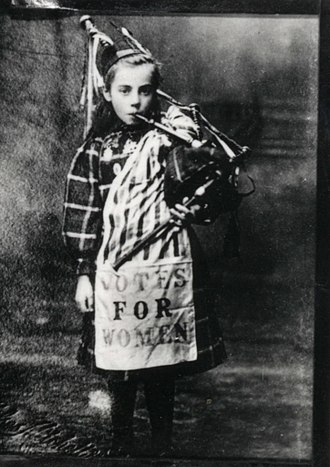
Bessie Watson was the youngest bagpipe playing suffragette! Born in Edinburgh in 1900, she was encouraged to play to strengthen her lungs as prevention against tuberculosis which ran in the family. Look at her little pale face! She joined the WSPU, the Women’s Social and Political Union, with her mother, marching down Prince’s Street in 1909 to celebrate ‘what women have done and can and will do’.

Bessie Watson
Princes Street, Edinburgh


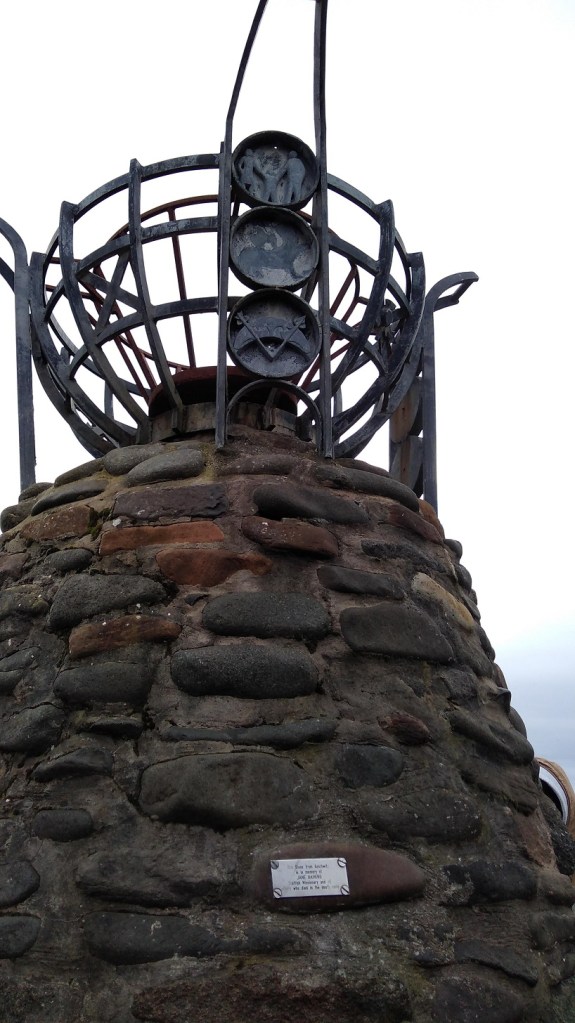
Jane Haining was ‘A farmer’s daughter from Galloway in south-west Scotland, Jane was a Church of Scotland missionary, and went to the Scottish Jewish Mission School in Budapest in 1932, where she worked as a boarding school matron in charge of around 50 orphan girls. The school had 400 pupils, most of them Jewish. Jane was back in the UK on holiday when war broke out in 1939, but she immediately went back to Hungary to do all she could to protect the children at the school. She refused to leave in 1940, and again ignored orders to flee the country in March 1944 when Hungary was invaded by the Nazis. She remained with her pupils, writing ‘if these children need me in days of sunshine, how much more do they need me in days of darkness’.” Her brave persistence led to her arrest in by the Gestapo in April 1944, for “offences” that included spying, working with Jews and listening to the BBC. She died in the Nazi concentration camp at Auschwitz just a few months later, at the age of 47.’ There is a fitting memorial to her on Calton Hill. There is a book about her, Jane Haining, A Life of Love and Courage by Mary Miller published by Birlinn.

Jane Haining memorial, Calton Hill, Edinburgh


Williamina Paton Stevens Fleming (1851 – 1911) was a Scottish astronomer active in the United States. During her career, she helped develop a common designation system for stars and cataloged thousands of stars and other astronomical phenomena. ‘One of nine children of a Scottish craftsman and his wife, she already knew the cold reality of family survival. Her father had died when she was seven; at 14, she had become a student teacher to help support her mother and siblings. At 20, she had married a Dundee bank employee and widower, James Orr Fleming, 16 years her senior—who would abandon her and their unborn child shortly after her arrival in the United States. Despite it all, “Mina” Fleming would rise to a key position in Harvard’s astronomy program and be hailed as the nation’s preeminent woman astronomer..(classifying) by far the most extensive star compilation of the era.’

The Edinburgh Observatory, now the Collective Gallery, Calton Hill, Edinburgh (not my photo)
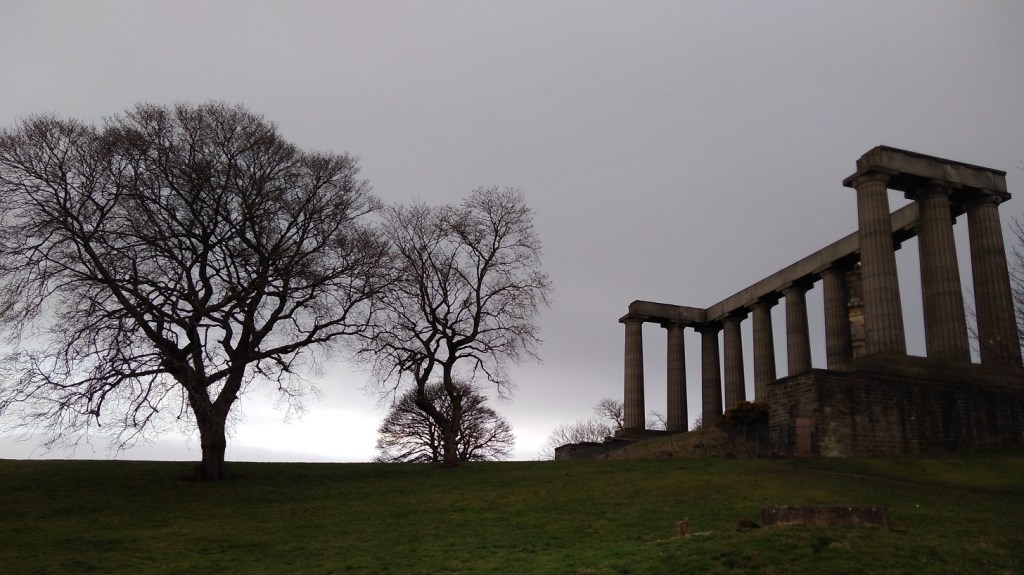
‘Edinburgh’s Acropolis’, Calton Hill, Edinburgh

The Hidden Heroines tour took in women of politics, literature, medicine, education, witches and business and I highly recommend it if it is ever held again.

Shetland dialect and a sense of identity

12.5.20

Chatting and walking at the same time

I have been talking to Shetland women about home and belonging. My initial idea was to meet up in person when I visited, but it has been impossible to go due to the corona virus, so my trip is a virtual one and my meetings had to take a different form. We chat on the phone, and while we do that, we both walk – I in Kent, England, and they in Edinburgh or on Shetland. Walking is part of the experience. We are connected in time and spirit, if not in space, and we are prepared for the ‘meeting’, so, as well as the information, thoughts and ideas we discuss, it’s interesting to take the walk itself into account.

Dandelion clock. Photo Ann Marie

When I spoke with one woman, she had just fallen over and cracked her knee and tooth. I was negotiating road works while she told me about what happened – six men were working in close proximity with loud machines, and members of the public were trying to work out where was safe to walk. A second woman was walking in snow on Shetland, while I was in a T shirt because it was so sunny. A third is unable to walk far at any one time due to a physical condition. We kept getting cut off, the signal breaking down, and between us we had to work out what was best: I had to be out in the open, rather than under trees; she to sit still and survey her surrounding area while we spoke.

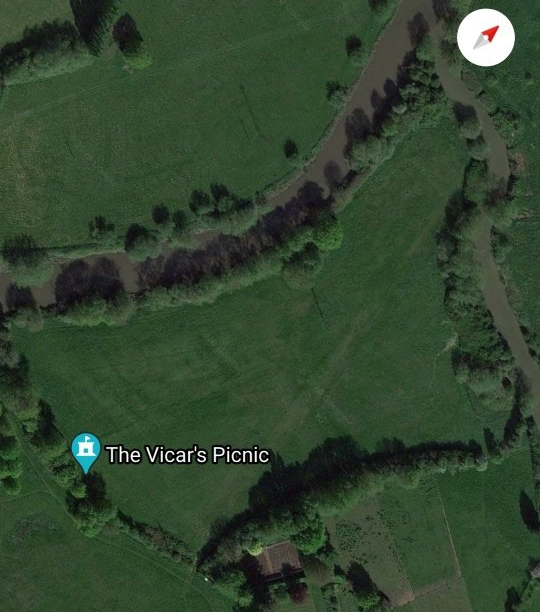
The field where I walked while talking to Ann Marie, seen from the air, the shape is similar to the island of Whalsay. Courtesy of google maps
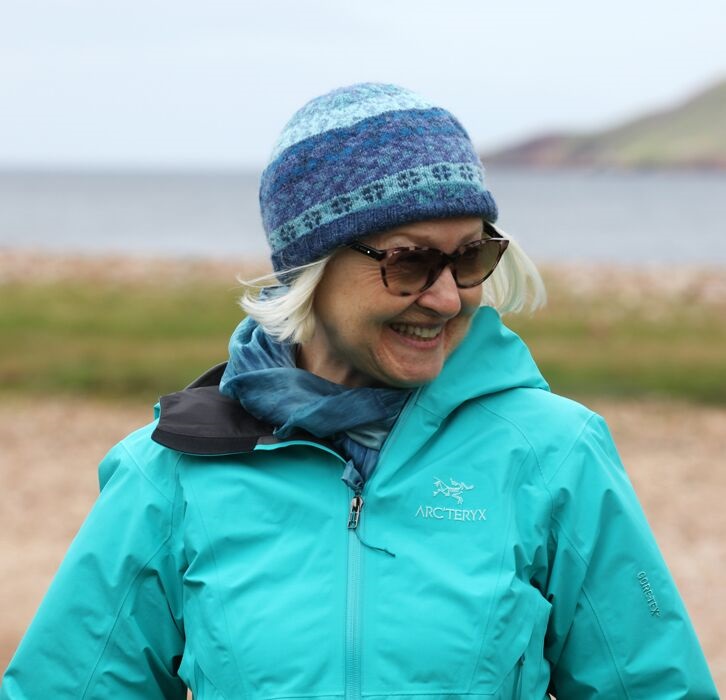
Ann Marie. Photo from her website

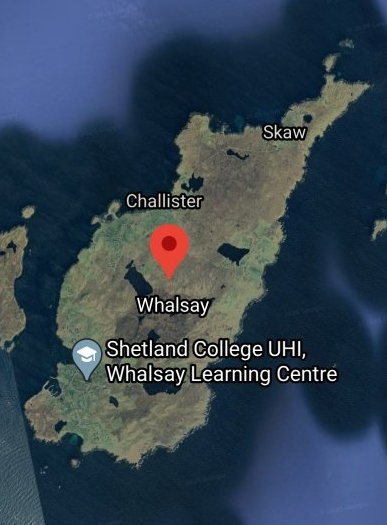
When Ann Marie Anderson phoned me from Whalsay, a jamon-shaped island in the east of Shetland, I wasn’t far from the river. Taking a right over the bridge, I passed 3 cyclists who were standing sort-of-200m apart on a path which was 1.5 metres wide, with cars parked beside them, on a very busy road. I crossed to the dangerous, non-pavement side. When I got to the Lees and climbed over a metal gate (no mean feat when you’re on the phone!) I found myself in an unfamiliar field, full to heart-height with sweeping grasses, gleaming yellow buttercups and dandelion clocks, many of which had discharged their fluff into downy piles on the hard-baked, cracked clay. I was totally alone and walked around the perimeter where someone/thing had crushed the undergrowth before me. I took occassional wee detours out and back through the bushes to where I knew the edge of the land met the river bank and found little patches of sand where the fishermen sat in days gone by. Back in the field, I deposited my anorak – an incongrous scarlet island amongst the gentle, complementary hues of nature – and traced figures of eight, winding pathways of my own in one corner as we conversed.

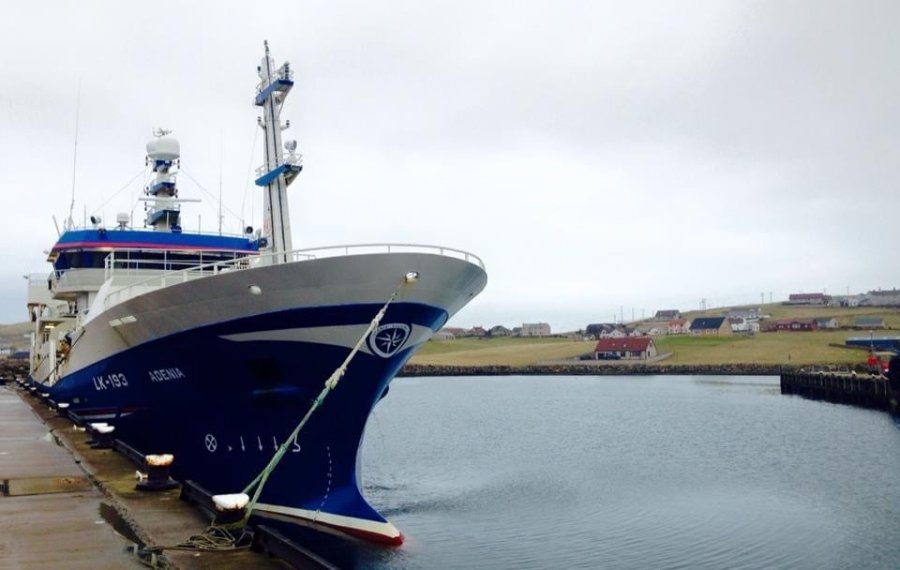
The pelagic fishing boat, ‘Adenia’. Photo Ann Marie
The island of Whalsay, Shetland, shaped like a Spanish ham. Google maps

Walking the coast of Whalsay

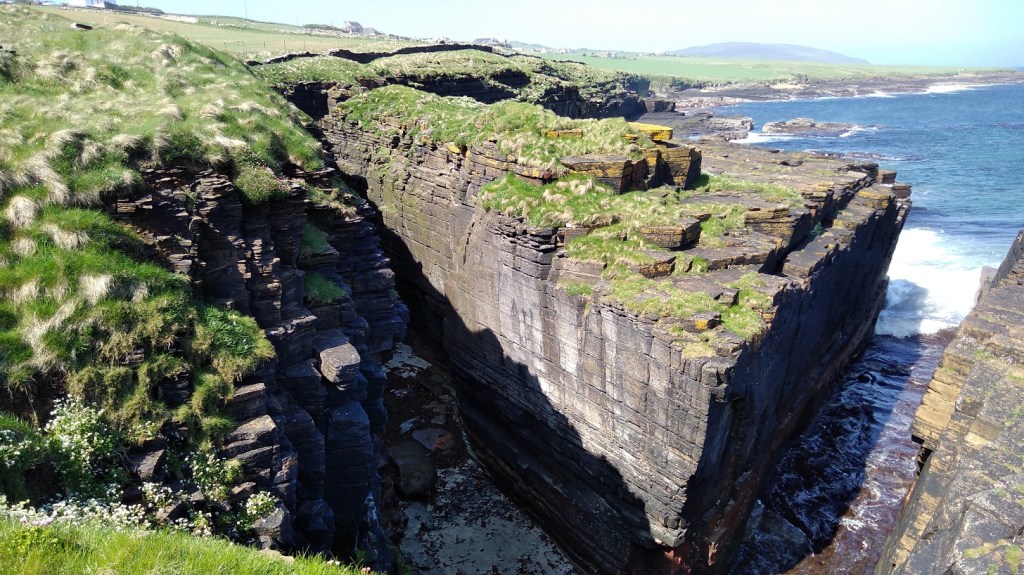
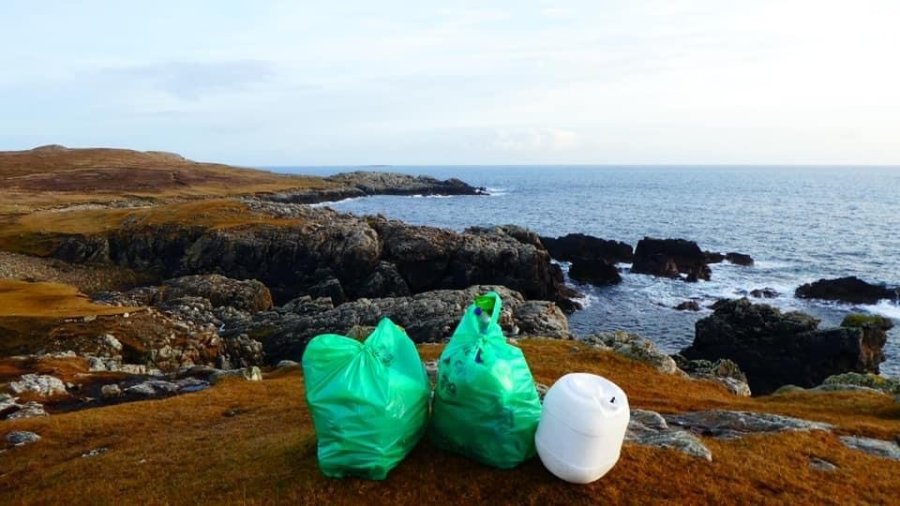
Ann Marie told me about where she has lived for 18 years: how you must cross the estuary from the mainland to get there, managing the ferry terminal and traffic; how the island has around 1000 inhabitants; and that she stays in Symbister, the main conurbation, her home. ‘Whalsay is on the east coast’, she told me, ‘there’s nothing really in the middle of the island and I usually go around in a car. Recently, though, I’ve been walking around the coast, seeing it from a different angle. It’s really interesting.’ She decided to join the challenge of gathering bruck (rubbish) which has been dumped or floated in from abroad, particpating in a Shetland-wide project to pick up litter called Da Voar Redd Up. ‘There’s not a coastal path as such’, she said, ‘but little blue pointers say Access Shetland. I diverted into geos (long, narrow, steep-sided rock clefts formed by erosion in coastal cliffs) and onto beaches where I could.’ So far she is 3/4 of the way round and has picked up 80 bags. Some of the pieces she has lifted have come from as far away as Massachusetts!

A geo on the north coast of the Orkney mainland
‘Gadderin bruck’ – some of the 80 bags of rubbish that Ann Marie has so far colected around the coast of Whalsay

How Shetland dialect contributes to a sense of identity

I am interested in how people construct a sense of their own identity, whether that’s by land, accent, or commonality of other sorts. One of the most impressive things about speaking to women from Shetland has been their use of dialect and the variations on English they employed when they spoke to me, the modulations they make for most folk, in fact, who are not Shaetlan speakers. Christine De Luca writes: ‘Shetland dialect – or “Shetlandic” – is a lively mother tongue, still vibrant and enjoyed both for its onomatopoeic quality and its classlessness.’

Christine De Luca. Photo provided by Christine

Christine told me a story about her aunt who died some years ago, but who never left Shetland very much. ‘She had been to the Women’s Guild, the church group for women, and a visiting minister’s wife had come. A woman who was in the Guild spoke to this lady in broad Shetland dialect. My aunt was very annoyed when she got back home – she thought it was so rude – it was a way of making the woman feel awkward, an example of the power of language to exclude or include.’

I have used some Shetland vocabulary for the landscape, birds and animals in previous blogs in this series, and in Research and Planning, you can read some of Christine De Luca’s words, written in the way she spoke them, and find links to recordings.

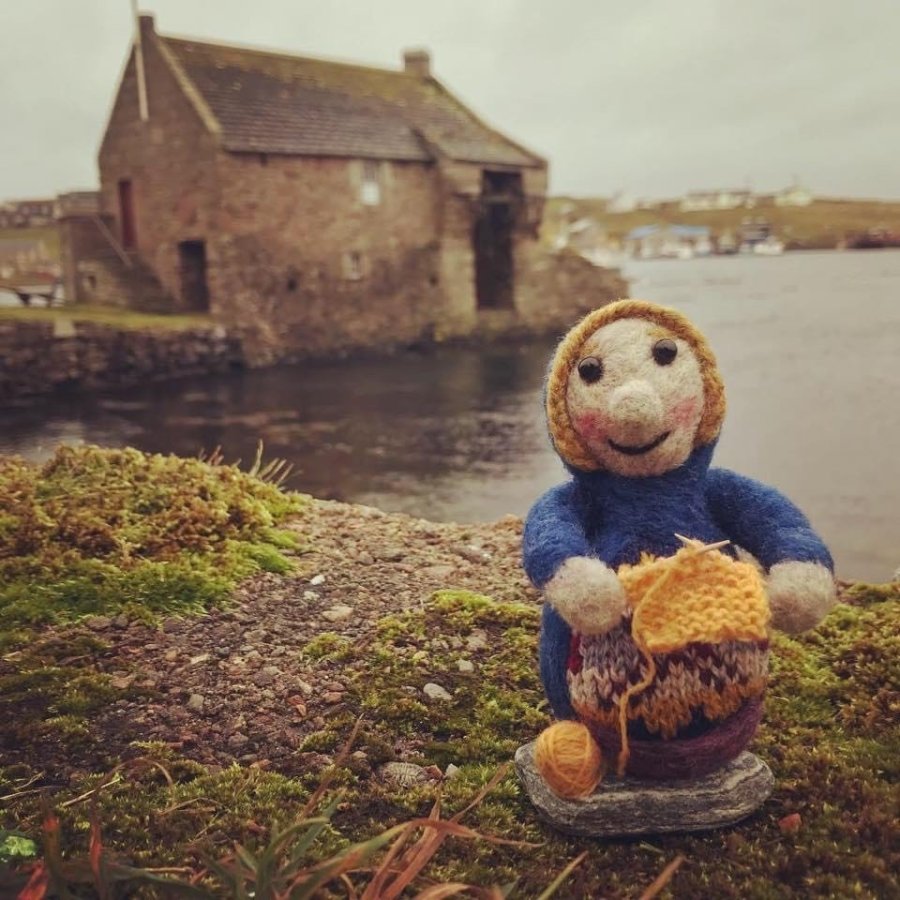
Ann Marie is a a needle felter and these are her Peerie Ooricks, characters from her children’s books, made from 100% Shetland wool. Photo Ann Marie

Ann Marie explained that she writes peerie bairns’ (little children’s) books in Shetland dialect, also working with them in school because, ‘Through my work I can see that the Shetland dialect is a dying one. A study has shown that in the next 25 to 30 years it’ll be gone. People are changing their tongue so that they are understood better and I do think that the TV has had a huge impact on that. There are still areas where it is strong, and I like to think that I’m doing my peerie bit to keep it alive so that hopefully it’ll be there in the future.’ Before the lockdown she was working alongside Shetland Arts delivering ‘Arts in Care’ workshops with elderly people in care homes. She told me, ‘It’s interesting, seeing how the children and the elderly respond differently. ‘

Another of Ann Marie’s Peerie Ooricks, knitting. Photo Ann Marie
The coast of the Sound of Papa near Huxter Mills, west of Sandness on Shetland, adjacent to the island of Papa Stour. Photo Lesley

‘I read the elderly certain poems and it’s amazing the different directions the people from the different care homes take. For example, I read them Christian Tait’s Da Magic Stane (about a stone which is sent skimming and visits some of Shetland’s Isles). One group wanted more information on the origin of the name Papa Stour which is one of the islands the stone visits; where others started speaking about where they were born and what was going on at the time they were born, how they were delivered in the house and there not being any hospitals; how life has moved forwards.’ You can listen to Tait’s poem here.

One of the old Norse or click mills at Huxter, west of Sandness on Shetland, adjacent to the island of Papa Stour. Photo Lesley

Deepdale and Sandness Hill walk. Thanks to Alastair Hamilton for this and other information from his blog on shetland.org

Waas (Walls), Shetland. Photo Christine

Christine writes in English and in Shetland dialect which is a blend of Old Scots with much Norse influence. She said, ‘The way people identify through language and the relative status of ways of speaking is quite a complex thing. For example, my cousin phoned me yesterday. Now, she’s in Edinburgh and she was brought up in Shetland, but her father’s people were from the south…. so their home wasn’t as Shetland as mine was. She thoroughly understands it, half speaks it, you might say, so when she phoned me I felt quite comfortable speaking in my normal Shetland dialect and she would just speak back in her kind of half-Shetland accent…it comes naturally. My sister, of course we were brought up the same, we just naturally speak in our Shetland tongue. My two brothers are slightly different – my elder brother went away at seventeen, into the Royal Navy officer class where you have to speak as they might expect you to do. He is very English spoken, but when he has been with us for a bit then he speaks in dialect again.’ I asked her if it was with an English accent. ‘No, he can do it quite perfectly!’ she replied. ‘My younger brother went to Canada and married a Canadian and he speaks with a slight roll, but when he’s on his own he reverts. We are chameleons really.’

Christine: ‘We have a verb for adjusting your accent, knappin, to speak in, let’s say, an English accent when there’s no need to. Nowadays folk seem to use the verb only meaning just speaking English, the meaning has perhaps changed a bit, but it used to mean an unnecessarily English accent and it certainly had a very pejorative edge about it.’

You can listen to a recording here of the word ‘knappin’ being used in a sentence in dialect. If you’re interested, like me, in the origins and examples of ‘knap’, here is another page about it. It’s interesting that to to knap can also mean to walk in a particular way: ‘To strike (the heels) on the ground in walking (Ork. 1960); intr. to walk with short active steps, to patter, to move about smartly’, which was something I did as I passed those road works while I trying to hear the voice on the phone, but not something I could do in the field where I was talking with Ann Marie.

Sunset at Symbister, Whalsay. Photo Ann Marie

Here’s a Whispered reading by Still Waters ASMR of Ooricks in da Paet Hill by Ann Marie Anderson and illustrated by Jenny Duncan. The children’s book is about Ooricks, written in dialect of course, about digging peats from the bank in the traditional way. The Peerie Oorick Etsy page and the Peerie Ooricks Facebook Page

Christine De Luca’s website is here. Christine was born and brought up in Shetland, spending her formative years in Waas (Walls, see above) on the west side of the mainland, 15 minutes drive from Sandness (above). She now lives in Edinburgh. Her main interest is poetry, but she is also active in promoting work with Shetland children and has written dialect stories for a range of age-groups. In addition to this, her first novel, And then forever was published in 2011. She was appointed Edinburgh’s poet laureate (Makar) for a three year period, between 2014 and 2017. She has been published and recognised widely in the UK and internationally, wining prizes and having her work translated into countless other languages.

Christian S. Tait was born and brought up in Lerwick, where she now lives. After teaching music (Primary and Secondary) for twenty years, she was a primary teacher until her retirement in 1995. Christian writes in both English and dialect. Her first poetry collection, Spindrift, was published in 1989. Stones in the Millpond (2001) is part history and part a collection of poems inspired by and based on the experiences of members of her own family in the First World War. Her work appears in the New Shetlander and other local and national publications. Christian’s novel And Darkness Fell, set in and immediately after the First World War, was published by Shetland Library in 2018. You can find examples of her work here.

All photos are copyright Tamsin Grainger unless otherwise specified

Unst and Yell

Unst and Yell are the two most northerly islands of the Shetland archipelago, known as Zetland until 1974. It is north of the north, and full of everyday places which have the ‘northernmost’ label attached to them – cafe, post office, art gallery….

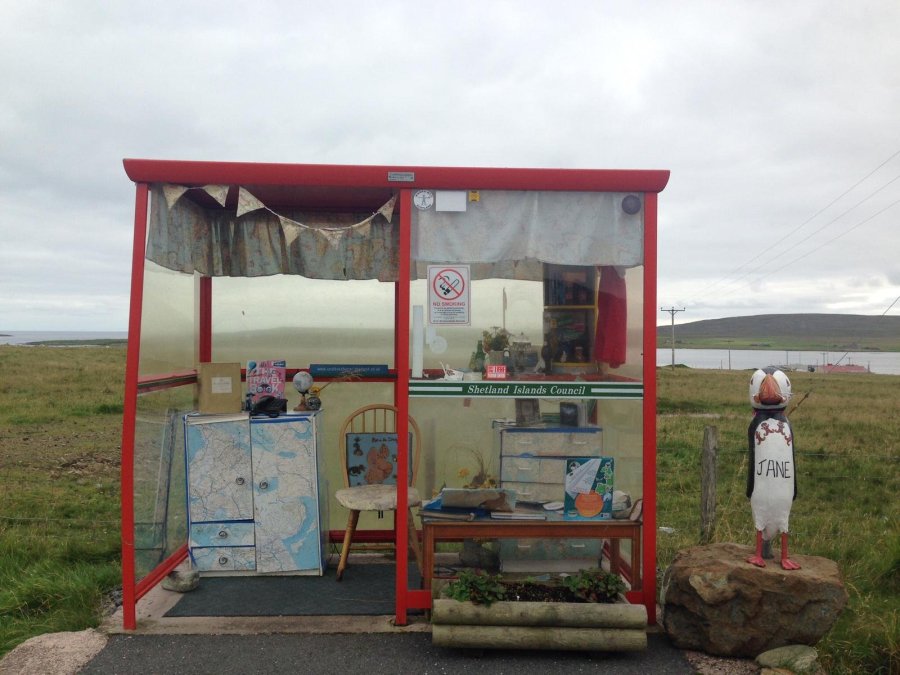
The northernmost bus stop! Photo Isobel Cockburn

Basic facts

Living this close to the Arctic Circle (400 miles, 640 kms) it’s not surprising that the winds can get up and the trees are sparse. However, the climate is mild because of the North Atlantic Current, and extension of the Gulf Stream system (Britannica). Unst measures 12 miles x 5, has between 650-700 inhabitants (the population seems to be falling). It is perhaps the first chunk of land the Vikings reached after leaving Norway, and in the summer there is almost no night – the simmer dim. ‘They say that if you climbed the highest hill on Shetland on midsummer’s night, the sun barely dips below the horizon’. From 60 degrees north online magazine.

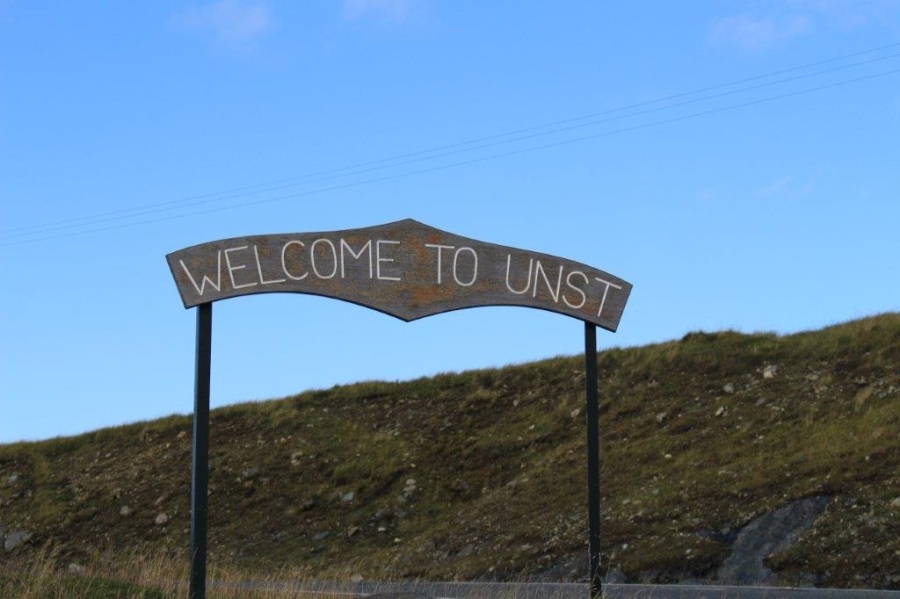
Welcome to Unst! Photo Liza Green

What does that word mean?

  • A wick is a place where goods are traded
  • Vik is the old Scandinavian word for cove or bay
  • A broch is an Iron Age, drystone, hollow-walled structure
  • A voe is a small bay or narrow creek
  • A holm is an islet (especially in a river or near a mainland) and a piece of flat ground by a river which is submerged in times of flooding
  • A böd was a building used to house fishermen and their gear during the fishing season

What to see – Vikings

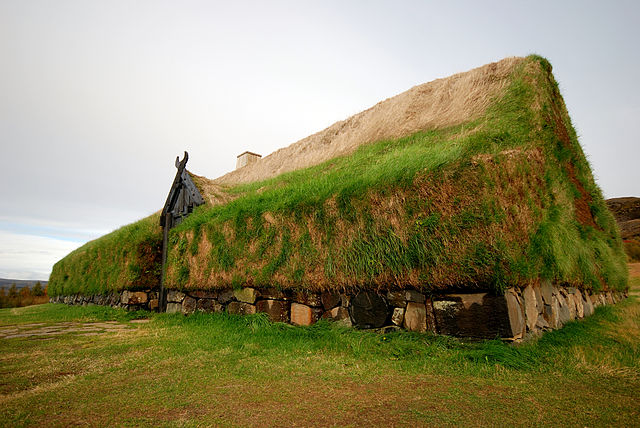
A beautiful picture of a Viking longhouse from Scott Michael Rank at history.net

There are plenty of fascinating places to visit on Unst, in fact I would have to scout round without seeing any of them properly if I wanted to fit them all in one day: a ruined castle at Muness with a tower house from around 1500, 3km east of Uyeasound; three excavated Viking longhouses at Belmont, Hamar and Underhoull; a longboat called The Skidbladner (good name) at Haroldswick; and brochs galore, such as the one at Underhoull within 15 minutes walk from Belmont. The Unst Boat Haven tells of the history of boats and fishing and, together with the Viking Unst Project, is near Haroldswick on Harold’s Wick.

More Viking history here and here at Shetlandamenity.org

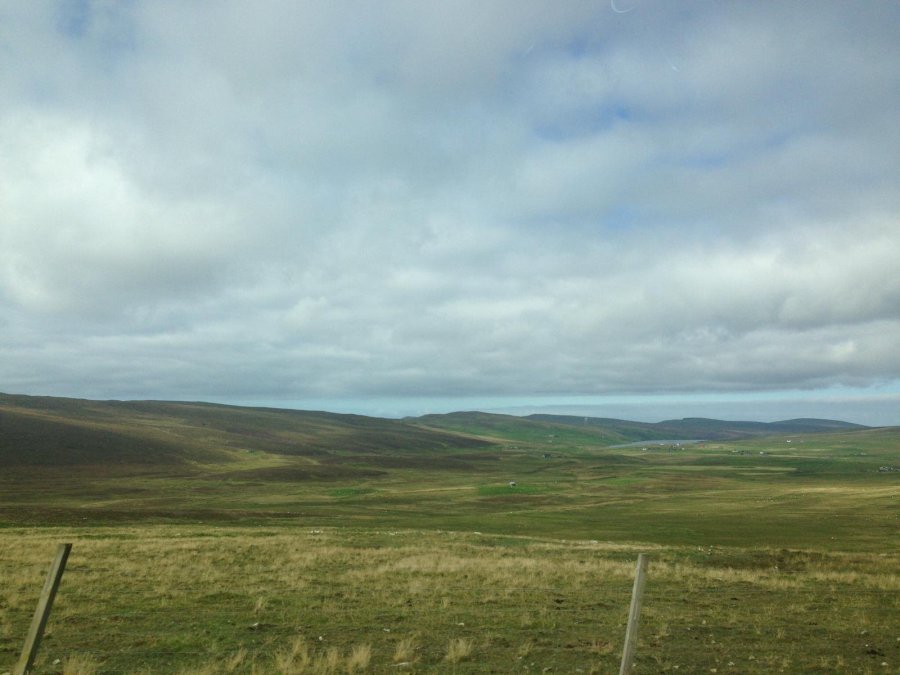
Moorland and gentle hills in Unst. Photo Isobel Cockburn

Walking on Unst

There are more than 100 miles of coastal paths, trails (including special Viking ones) and moorland walks. The Hermaness National Nature Reserve, north of Burrafirth is spectacular, and look out for the rare arctic-alpine plants an hour’s walk south on the Keen of Hamar. You can pretty much guarantee to see orcas in August, and look out, too, for basking sharks.

All that space – Uyeasound, Unst. Photo Isobel Cockburn

More Unst sights

  • The Unst Heritage Centre – crofting, quarrying, crafting, wildlife tourism and fish farming including fine lace knitwear
  • Victoria’s Vintage Tearooms
  • There are three shops in Baltasound: The Final Checkout, Henderson’s Stores (known as Ethel’s) and Skibhoul Stores, next to Britain’s most northerly Post Office and sporting an acclaimed bakery

Yell

The Shetland Gallery. Photo Lesley

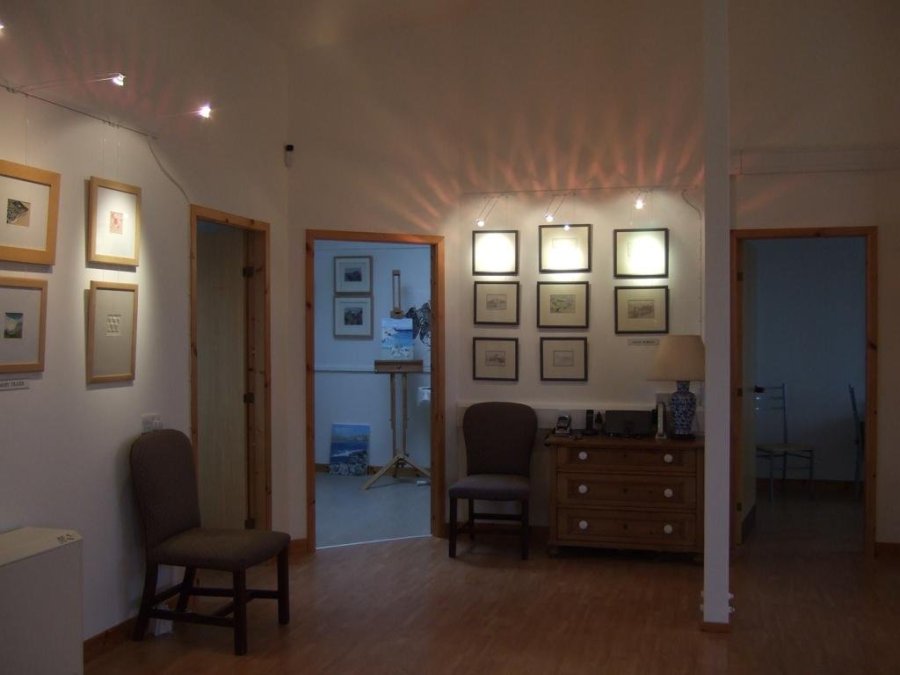
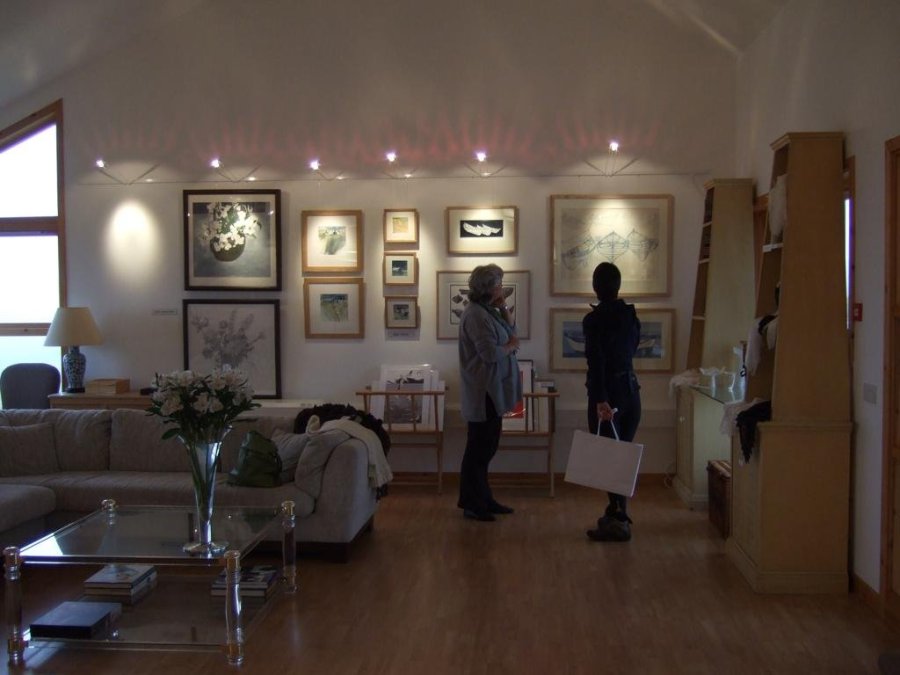
The Shetland Gallery is in Sellafirth, in the north of Yell. Allow yourself time to visit on your way from one ferry terminal to the other (see below) as it is well worth it, showing contemporary art and ‘high-end’ craft work. There’s a wide range of work, from the moody landscapes of Anne Bain to the bold linocuts of Keira Jem Thomson.

The Yell Museum, The Old Haa, is also well worth a visit.

The Shetland Gallery. Photo Lesley

Beaches, buildings and a bounty of geological features

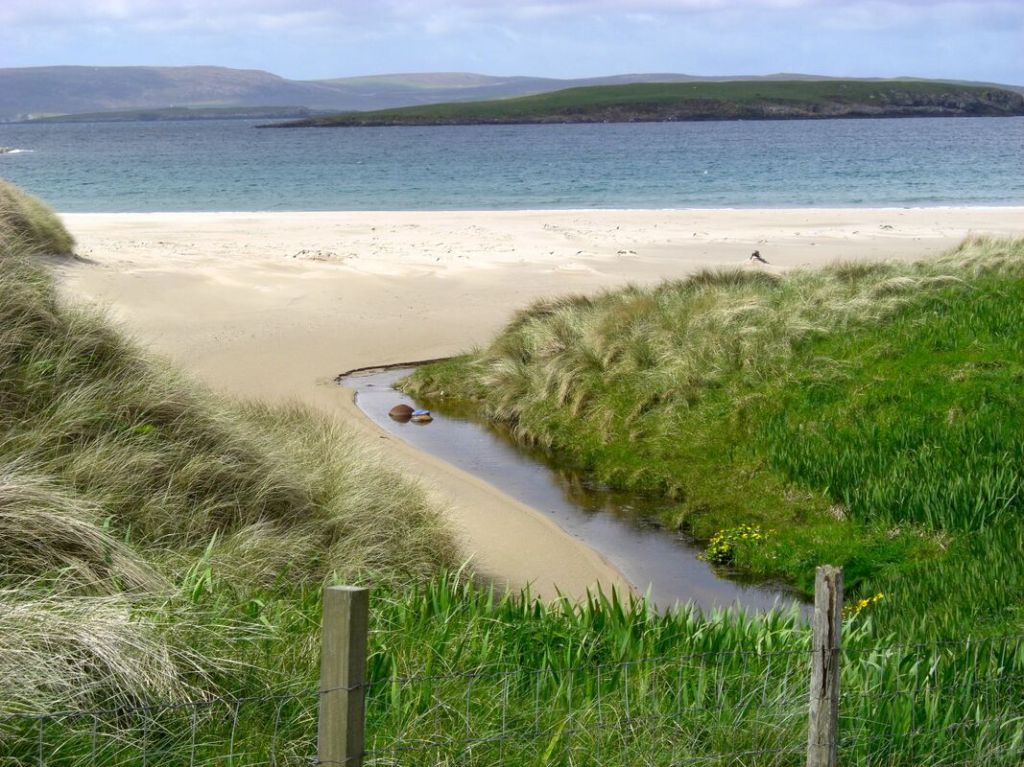
West Sandwick Beach, Yell. Photo Laurie Goodlad, Shetland With Laurie

Yell offers particularly clean and beautiful sandy beaches at West Sandwick, Brecon, Gossabrough and Hamnavoe, and there are dunes and machair where you might find the semi-precious stone, garnet, and mineral, mica. St Magnus gives his name to the church at Hamnavoe dating from 1838. You can find out more about him here. Birrier has an Iron Age fort as well as a bonnie bay. The Moine Rocks on the Lembister coast have striking white veins of granite-pegmatite, and there are countless other geological features to feast your eyes on. Thanks to Shetland Visitor for lots of this information.

Flowers, Shetland. Photo Lesley

Burra Ness where there is cairn, ancient boat ‘noosts’ and the remains of a broch on the northeast promontory. Gloup Holm has a large seabird colony and Ladies Hol is a good place for seals and sea birds and is a well-known cliff for puffin burrows.

Shetland Visitor

If you visit too, look out for arctic terns (tirricks) and merlin, just two of the birds found on Yell. And, it is famous for its flora, including two carniverous plants: butterwort and sundew. Will the peat continue to nurture old plants and pollen after so much of it has been dug up to make way for massive wind turbines? There has been intense local feeling against the proposals of the business Viking Energy and it looks like it will go ahead even though the local people will get none of the electricity or the profits. There is no doubt that it’s going to take x amount of years to recover the damage done to the environment. You can see lovely shots of birds here spotted on Unst (despite the title of the blog – East Sussex, England)

The Widden (White) Wife. Photo Lesley

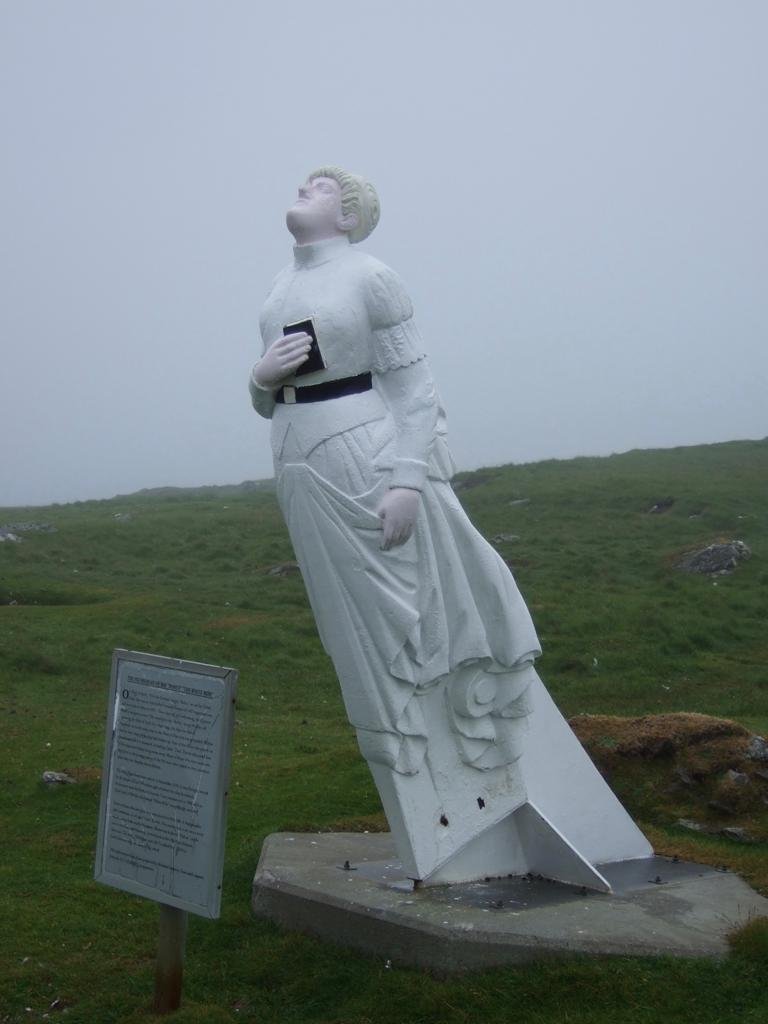
The White Wife (Widden Wife) is at Otterswick (ON Óttarsvík – from the man’s name Óttar). She is the figurehead from the German training ship Bohus, wrecked in 1924. Four lives were lost from a crew of 38 plus a stowaway. A black marble commemoration slab, set in stone from nearby Hascosay, is in Mid Yell kirkyard. I have, sadly, come across many of these memorials to those who have died in fishing accidents and the women and children who were left behind, as of course, Shetland is predominantly a fishing community.


Photograph of Elizabeth Mouat. 1886. Image: Shetland Museum and Archive

A happier story comes to us down the ages – what a survivor!

‘In 1886 Elizabeth Mouat, a sixty-year-old Shetland lace knitter, was in a boat named the Columbine, travelling from one end of Shetland’s mainland to the other alongside a small crew. A storm threw the boat off its course and the crew jumped ship, swimming to the shore and leaving Betty Mouat, and the forty lace shawls she was transporting, alone on the boat.[1] She drifted for nine days in the North Sea and eventually arrived, alive, in Norway on 7 February.’

[1] Davies, K., ‘Born Survivor: Betty Mouat’, 60 North No. 3, Autumn 2012, p. 4. From
‘Fingers as clever as can be yet’: Shetland Lace and Women’s Craft in Victorian Britain by Isobel Cockburn

Music in Shetland

Music is popular throughout Shetland, especially that of the fiddle (traditional violin) and Margaret Robertson is a local fiddler, pianist, music teacher and composer. Her website tells us that she ‘grew up in Yell in a house where an evening without music, live or recorded, was a rare occurrence’ and I know from my conversation with Helen Robertson on Northmavine, that the network of community halls around the islands serves as an incredibly popular circuit for the smaller bands and solo artists who play at the annual Shetland Folk Festival and the Accordion and Fiddle Festival in Lerwick. Fiddler extraordinaire Aly Bain, and rock musician and songwriter Astrid Williamson were both born on Shetland and have achieved fame outside their home country. More about Astrid. The Mareel in Lerwick is the main music venue and here is some more general information from Shetland Arts about the scene.

How to get there

To get to Unst you have to go via Yell. Here are the stages: Toft on the Mainland across Yell Sound to Unsta on Yell, then transfer to Gutcher (also on Yell), then across the Bluemull Sound on a second boat to Belmont on Unst. (Note: Some of the boats go to Fetlar (denoted with ‘H’ for Hamars Ness on the timetables).) There are frequent, daily ferries to Yell from the Mainland. Here are the ferry timetables. A morning bus service leaves from Lerwick at 7.50am, going past the ferry terminal. There is an afternoon bus as well, leaving at 2pm at weekends and 2.30pm on weekdays (timetables can be found here).

Official tourist websites: Unst.org (includes videos about Wool Week, The Reel Festival, and Unst whisky) and shetland.org

The force of the wind is difficult to resist, the screeching of several thousand seabirds is a repetitive din in the background and the drama of the ocean surrounding me is all-consuming. I’ve spent the last couple of hours strolling between sheep, gawking at the vast spectacle of the Isle of Unst’s coastline.

A good Unst blog, Travels with a Kilt

Quoys, Unst a film poem by Roseanne Watt on YouTube

Scottish Field on Unst includes Where to Stay

A Crofter’s Life film by Jenny Brown National Library of Scotland