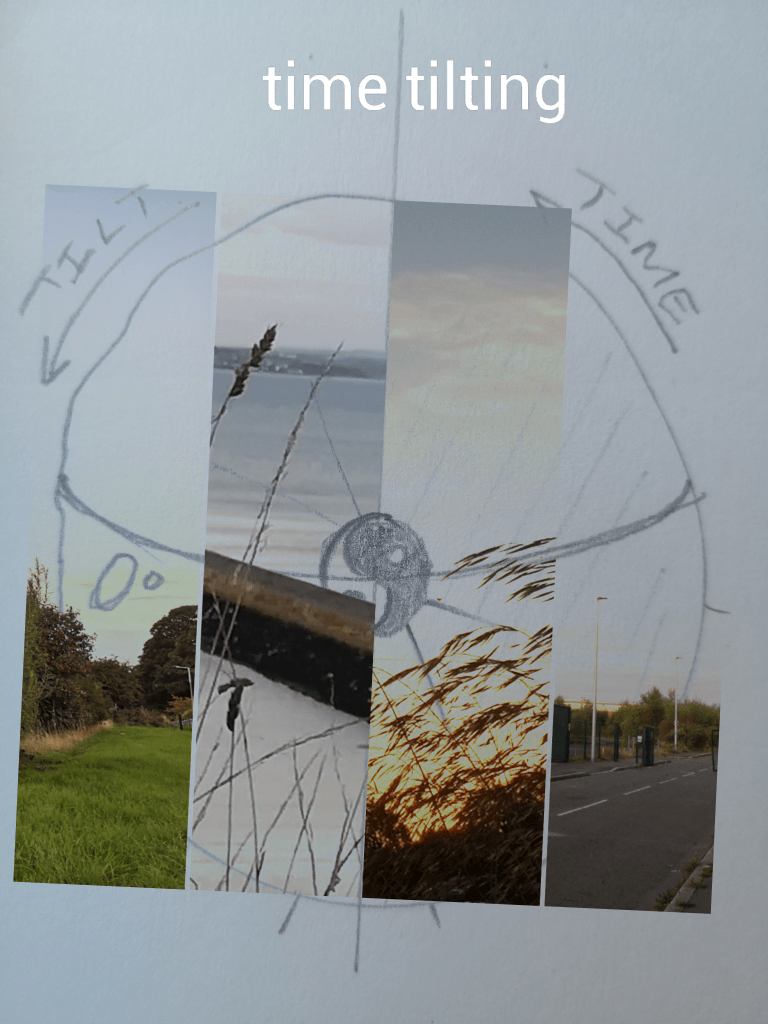
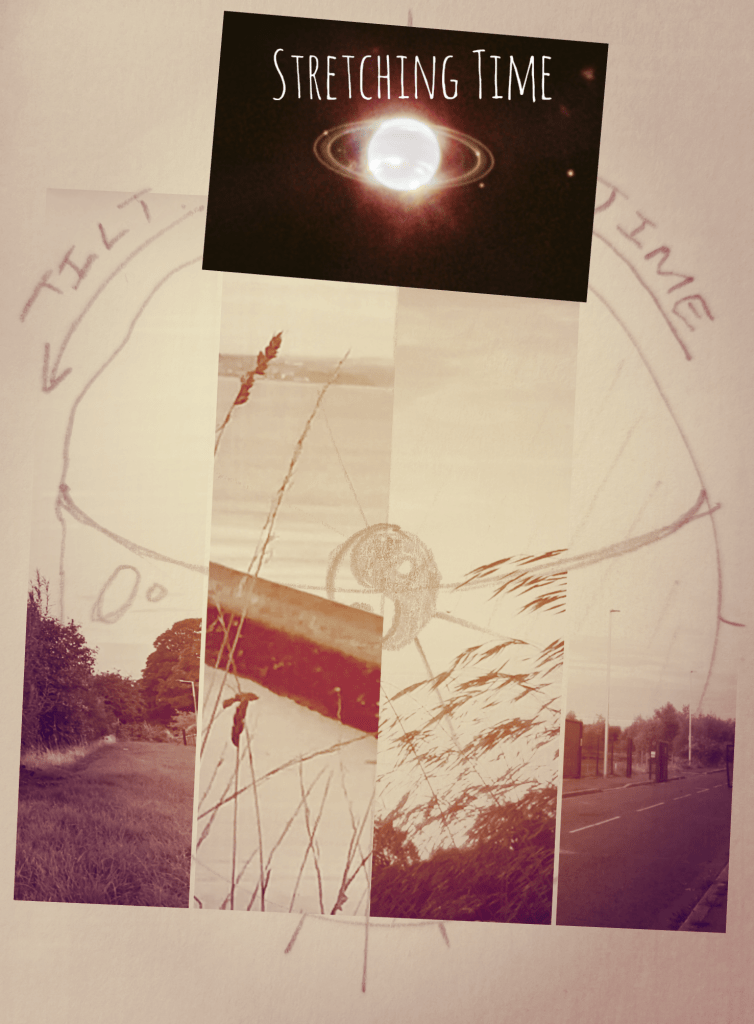
This event was held on Sunday 2 October 2022 at granton:hub 12.15 – 2.15pm
Photo Dawn Oei
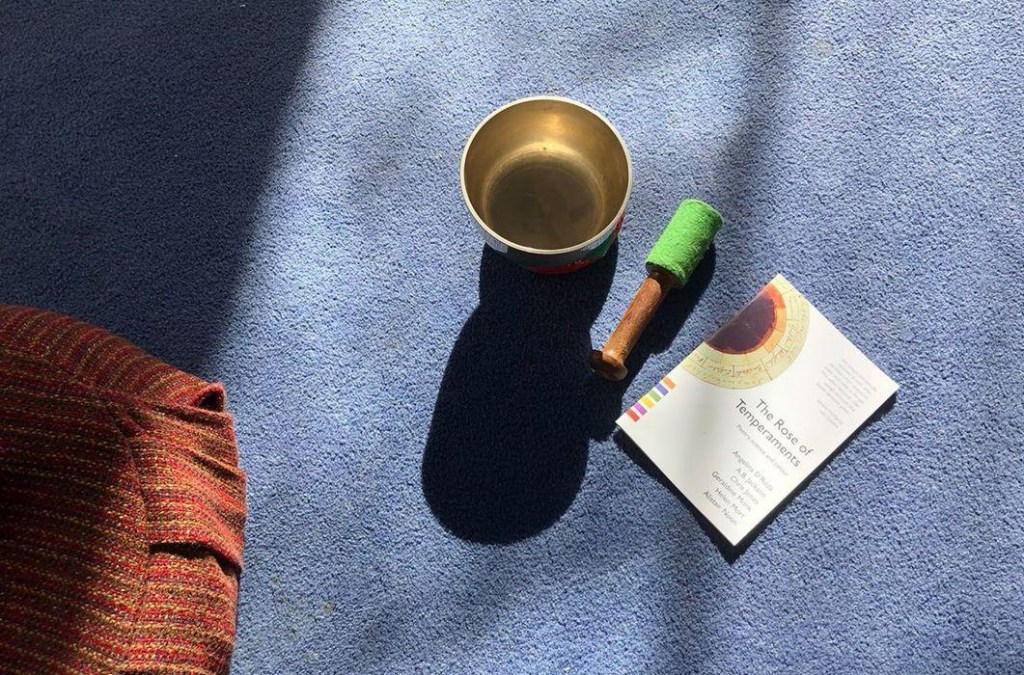
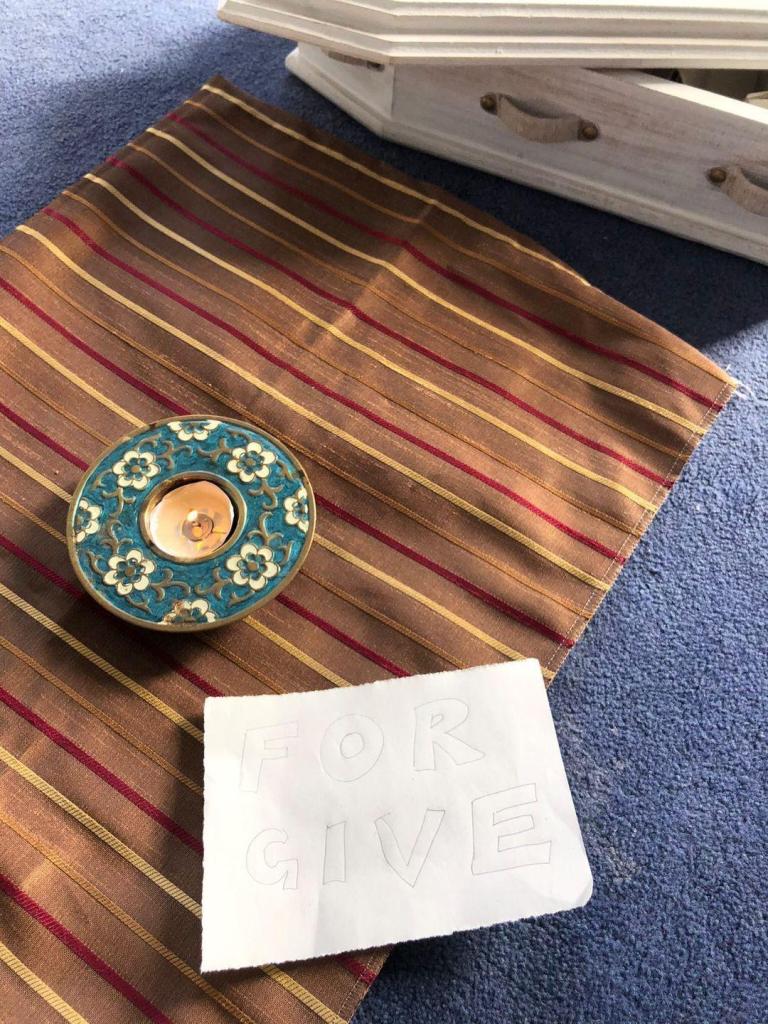
It took the form of a floor-seated circle of participants, a ritual to contain our grief, a structure within which to allow feelings to flow at a manageable rate.
Photo Dawn Oei
With respect and compassion, we facilitated a sharing circle and a safe space to bring grief and memories with a view to Re:live (both the past and in the future). It was held in the same room as the Death Café (the evening before) and the Re:living Art Exhibition.
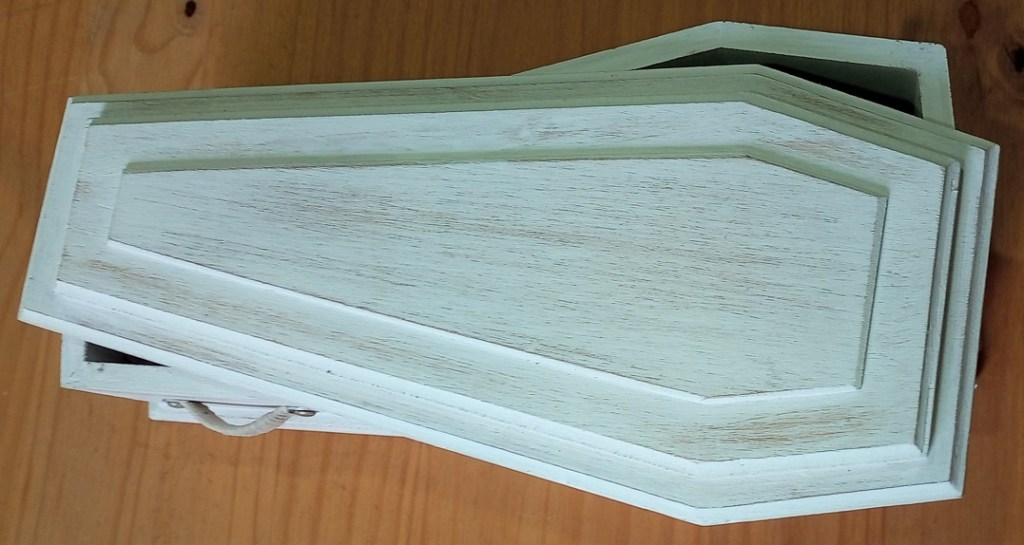
Bibo Keeley’s Kummer Kasten (agony box)
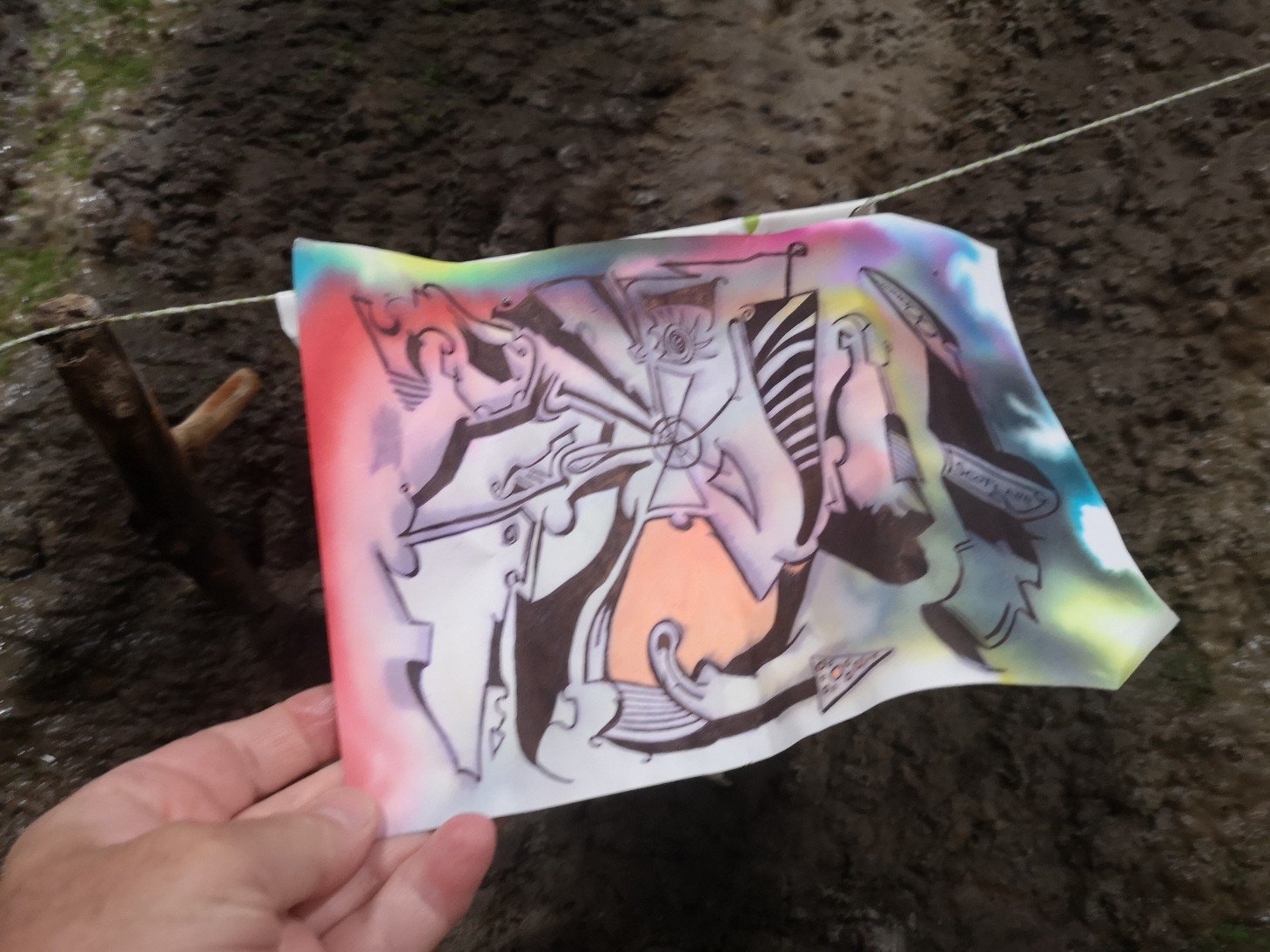
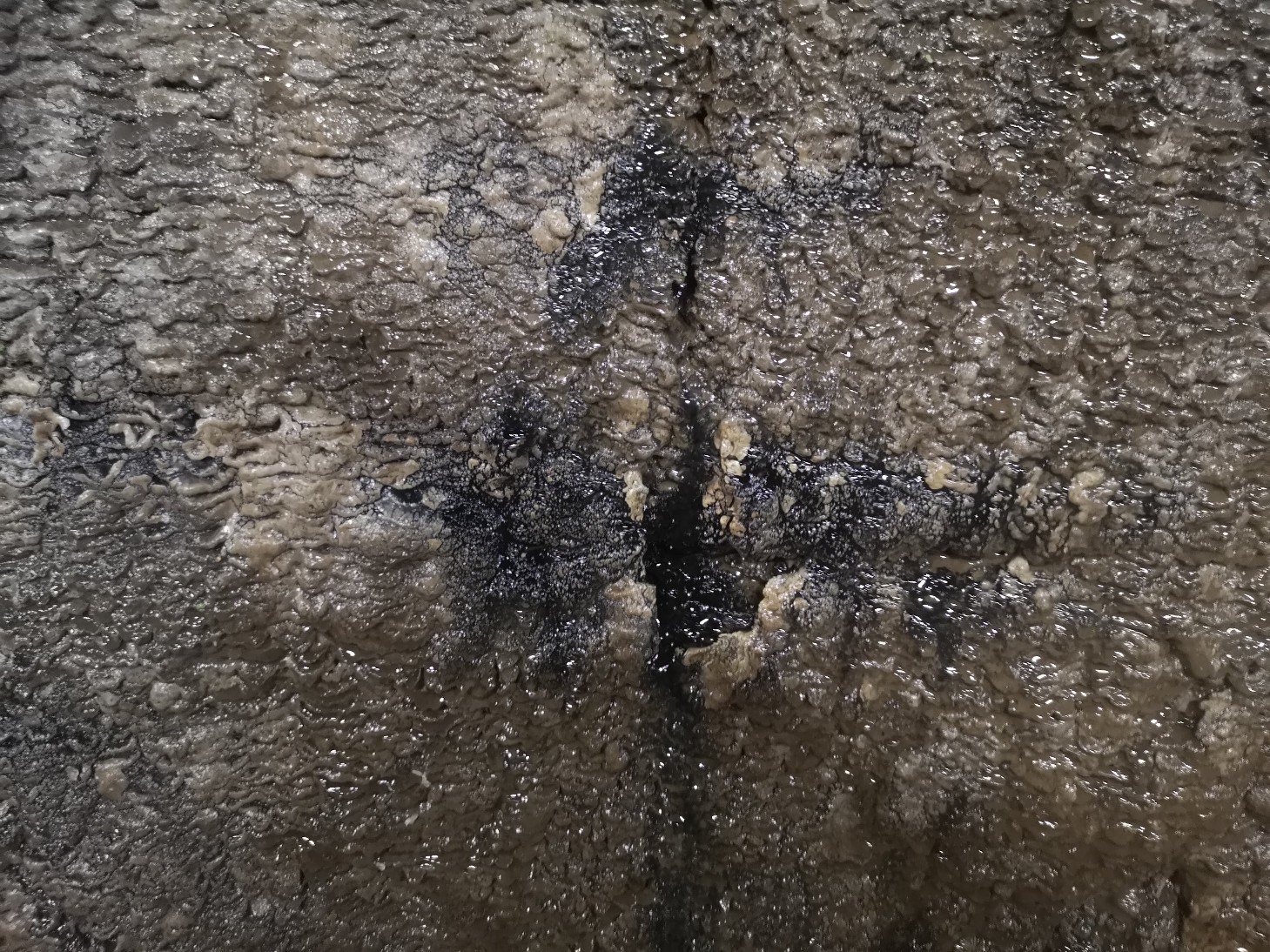
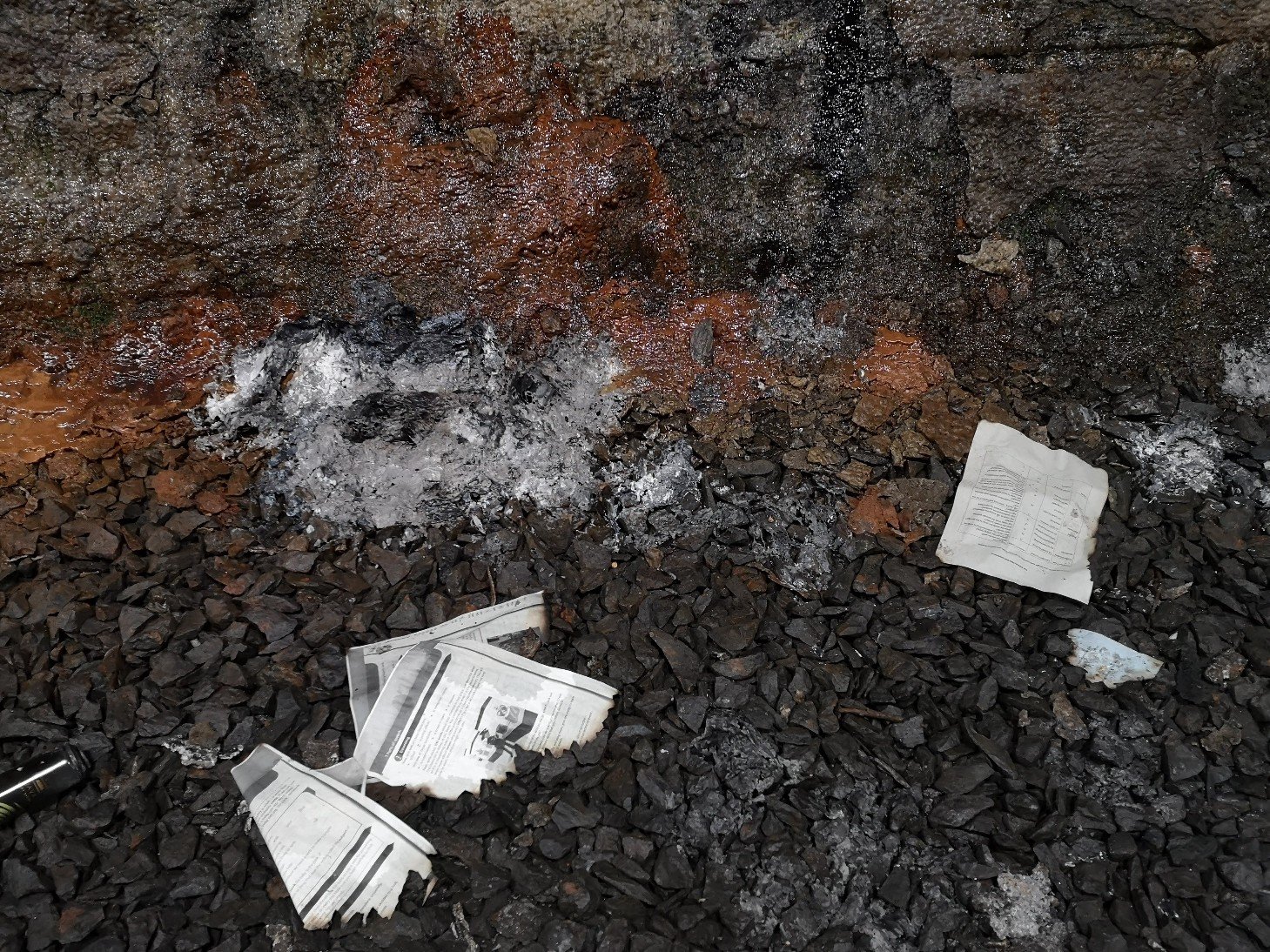
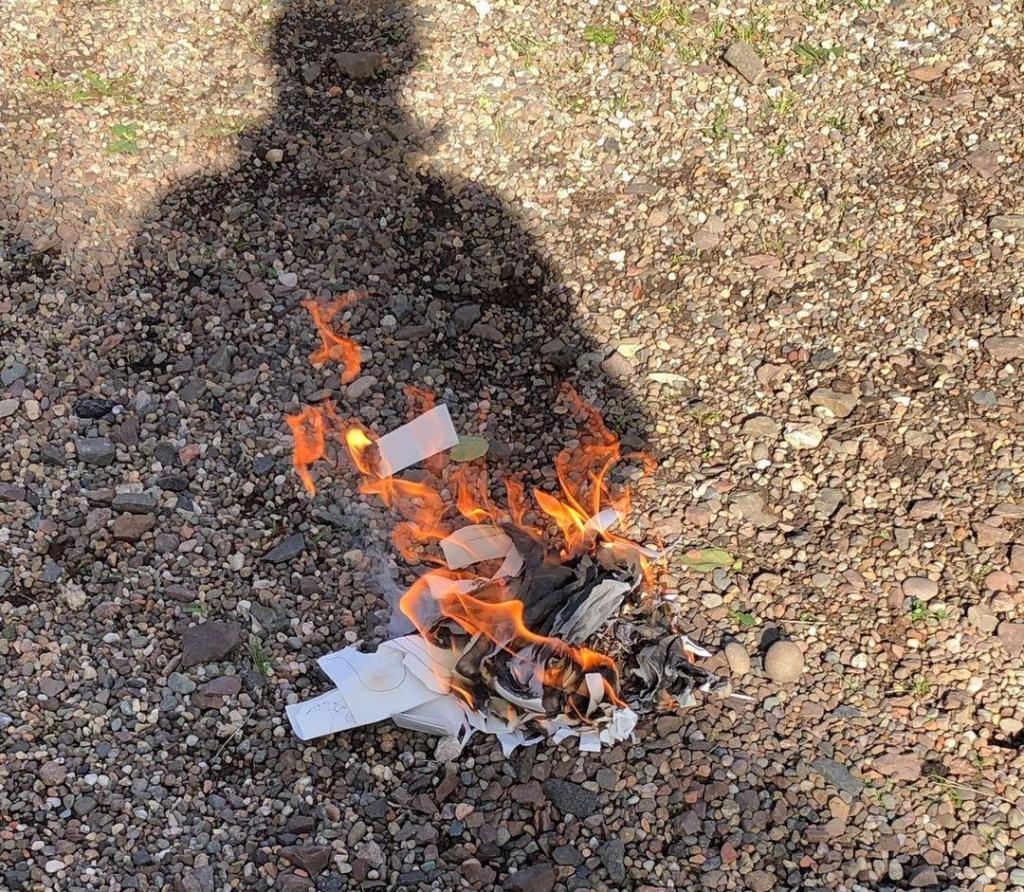
After the circle, we went outside to burn the messages which visitors and participants had written and put in Bibo Kerley’s Kummer Kasten / Agony Box. We also added paper art that we had made during the Circle.
Photo, Dawn Oei
There was a Closing Ritual for this session and for the whole weekend.
Bea is an artist and educator whose practice explores ideas around death and loss, faith and ritual. She has taught and managed courses at Arts University Bournemouth, UAL (Camberwell, London College of Communication and Central Saint Martins), at EBAC in Brazil and Artslink in China. She is a Trustee for Lewisham Education Arts Network (LEAN) and a member of the Artist’s Group, Throes of Grief.
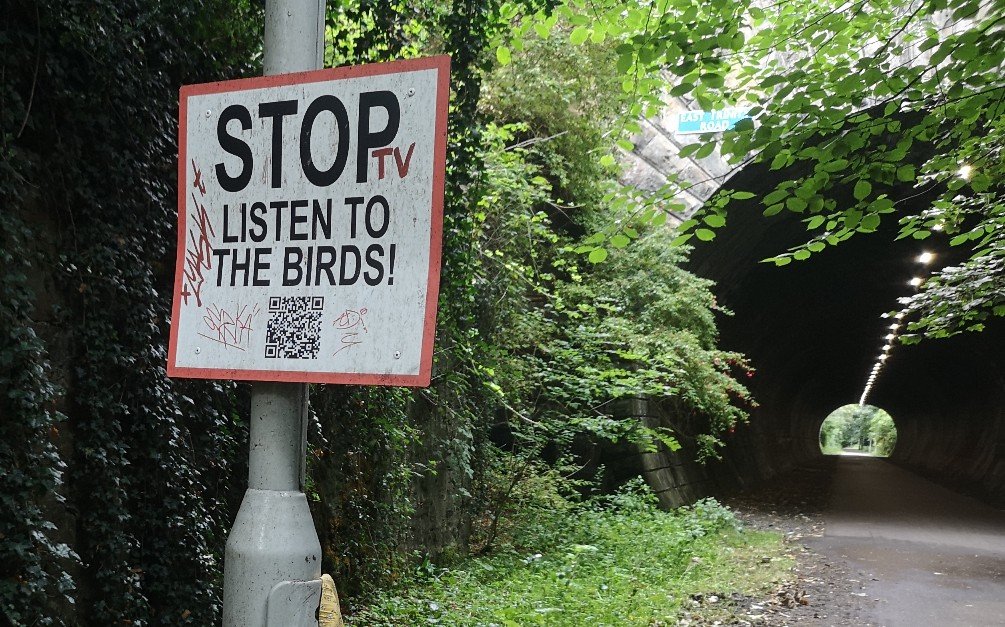
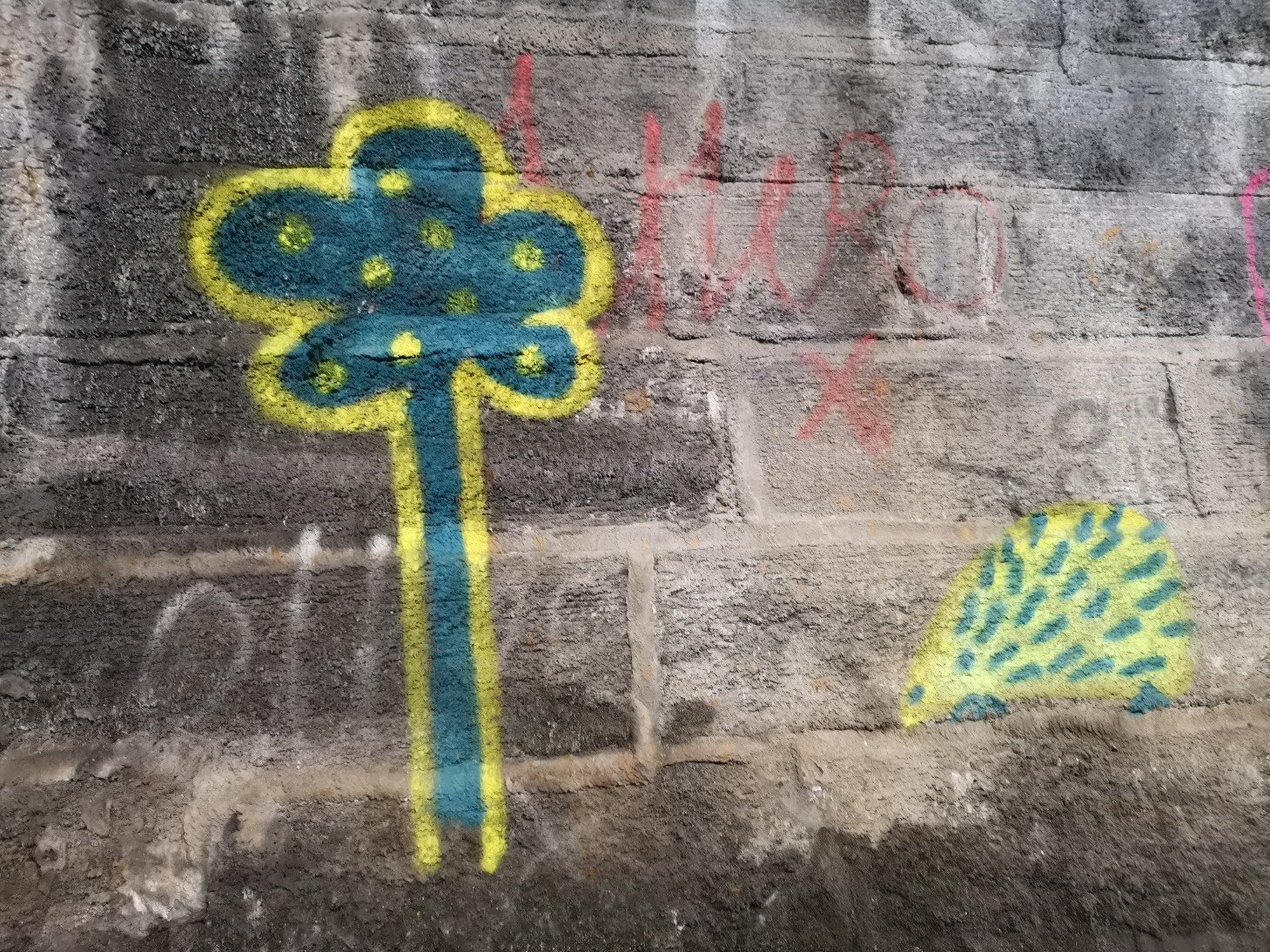
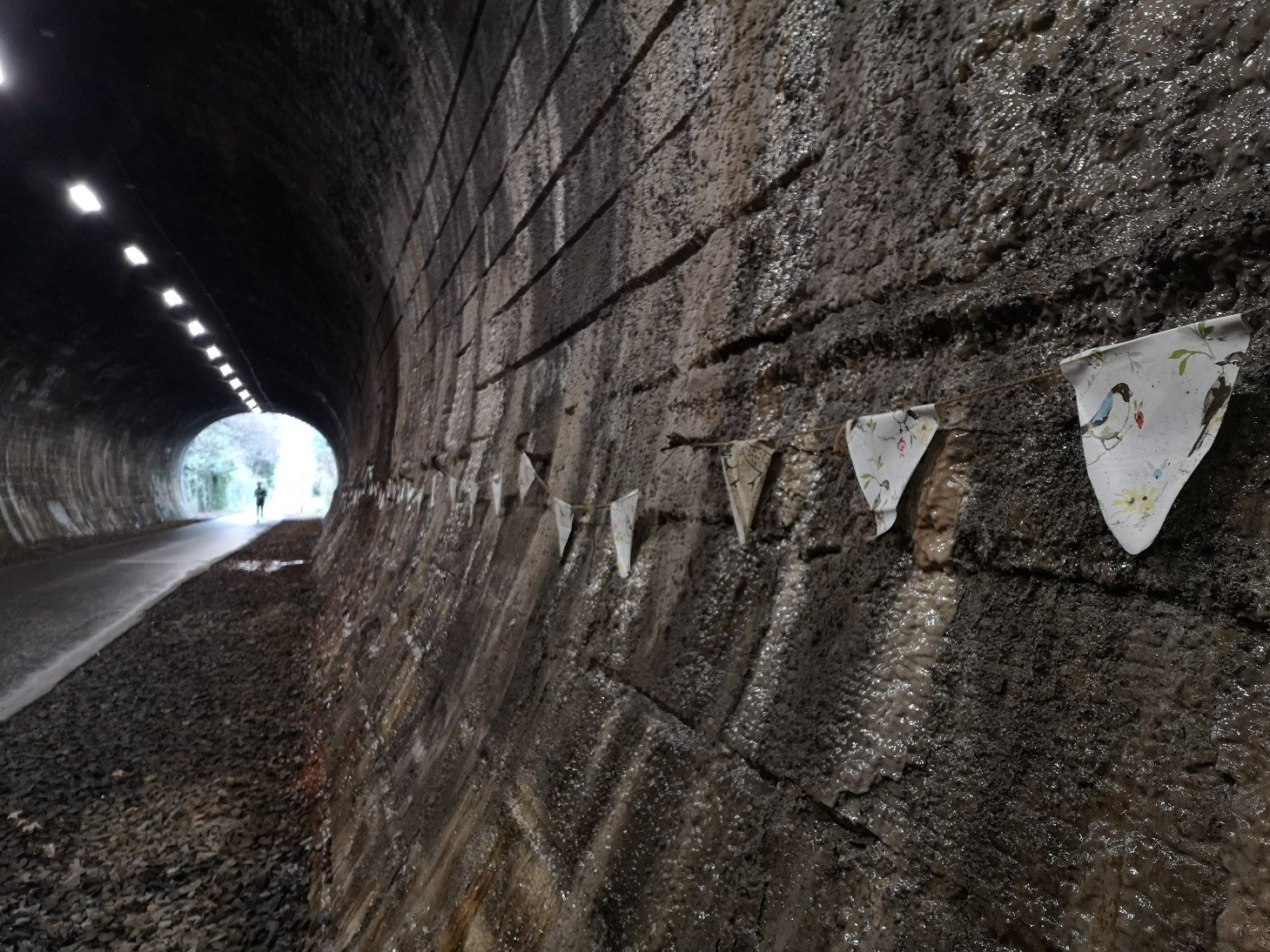
Tamsin is a community artist (No Birds Land, Trinity Tunnel; The Wall, Western Breakwater), complementary therapy practitioner, session leader, and author of Death and Loss in Shiatsu Practice (published by Singing Dragon Press).
30 Sep – 2 Oct 2022 granton:hub, (Madelvic House), Granton Park Avenue, Edinburgh EH15 1HS
The Re:living Weekend is a response to our human need to talk, walk, remember, and make art about the ever-present experiences of death, grief and loss in our lives. Whether we are grieving for a close friend, pet or family member; concerned about the loss of bird, insect or plant habitats and other changes to our climate; affected by war; or managing on-going / one-off life events around relationship, work and/or home loss, coming together with others to focus, share, or simply be with our feelings is supportive.
Or contact tamsinlgrainger@gmail.com. All events are free although donations (to cover costs) are welcome.
c Bea Denton
Re:living Art Exhibition
1st October 11am-4pm; 2nd October 2022 10am-12noon and 2.30-4.30pm at the Granton Hub (Madelvic House), Granton Park Avenue, Edinburgh EH15 1HS.
Showing the mixed media work of selected artists from Granton, Edinburgh and around the UK, this pop-up exhibition addresses themes of death, grief, loss, and re:living. This varied exhibition includes painting and drawing, artists books, sculpture, film and poetry.
We welcome everyone, whatever age, ability, status or gender. The walk- and workshop will be conducted in English. Please note that the walkshop will be fully accessible, however the Granton Hub is not fully accessible. We do have a portable ramp to allow wheelchair and powerchair users to get into the building, which you will have access to, and once in the building there is level access but no there is no wheelchair accessible toilet.
Walkshop: Friday 30 SeptemberMeet at Madelvic House for a 2pm departure. We will return there by 4pm.Book here
Participants will be taken on a prescribed route around the area immediate to the Granton Hub.
Participants will be invited to bring an object (or image) that speaks to them of absence and/or loss, to help channel thoughts and memories. This will be something small enough to hold in the hand, or put into a bag or back pack while walking. During the walk, we will be facilitating creative activities, so the object shouldn’t inhibit creativity.
During the Walkshop, participants will be invited to walk, sometimes in silence, and to respond to the environment and to their personal experience and thoughts about death, loss and grief through drawing, writing, recording, performance etc. There will be times to stop and draw, to record sounds, to photograph, to write or to perform.
Memory Art Workshop:Friday 30 September 4.30-6.30pm. Book here
The Memory Art Workshop will take place at Granton Hub after the Walkshop, and will begin with group reflection and discussion about experiences and feelings from the Walkshop.
During the Workshop, participants will be asked to witness and listen to each other, and are encouraged to share and talk about the drawings / photographs / sounds / writing that they made during the Walkshop. This is not a critique, and we do not expect participants to have any previous art and design experience or qualification.
Following this discussion, you will be invited to draw / write / record / photograph in response to your own and/or others work and shared experiences. Transformation is a key element in this Workshop – making new multi-layered works that materialise grief through transformation of images, words, sounds etc. Participants will create new works using simple techniques, that will be layered to form new composite works that will be exhibited at Granton Hub on Saturday 1st and Sunday 2nd October.
All materials will be provided.
Please note that there will be a half hour break inside between the Walkshop and Workshop for refreshments (provided, though contributions gratefully received).
c Bea Denton
Death Cafe
Saturday 1 October 6.30-8pm at granton:hub Book here
Death Café is a group meeting in person in Edinburgh where people can come to talk about death. Book via Eventbrite
Talking about death is not something that we can all do with our families and friends, and yet it is something which is so often on our minds.
At the Death Café, there is an emphasis on listening and sharing, and the focus is that life is finite and we want to talk about that. We all have interests and concerns about bereavement, loss, grief or dying, especially at this time when we are dealing with the Coronavirus and fears of war.
This meeting will take the form of a floor-seated circle of participants, a ritual to contain our grief, and the creation of your own personal mandala.
Bea Denton (London) is an artist and educator whose practice explores ideas around death and loss, faith and ritual. She has taught and managed courses at Arts University Bournemouth, UAL (Camberwell, London College of Communication and Central Saint Martins), at EBAC in Brazil and Artslink in China. She is a Trustee for Lewisham Education Arts Network (LEAN) and a member of the Artist’s Group, Throes of Grief.
Tamsin Grainger (Granton) is a community artist (No Birds Land, Trinity Tunnel; The Wall, Western Breakwater), complementary therapy practitioner, session leader, and author of Death and Loss in Shiatsu Practice (published by Singing Dragon Press).
1st October 11am – 4pm; 2nd October 2022 10am and 12noon and 2.30-4.30pm at the Granton Hub (Madelvic House), Granton Park Avenue, Edinburgh EH15 1HS.
We are inviting artist submissions for the Re:living Exhibition that address themes of Death, Grief, Loss, and Re:living. There is no prescribed media for submitted work, and can include art/design/craft.
All work submitted should be suitable for this Granton pop-up Community Centre setting. You can see details of the room here https://grantonhub.org/ including the Sphinx Room which size is 8.75m x 4.7m. The ceiling is 3.3m high.
Please send a digital image / brief description of the submitted artwork (no more than 3 items per person) with related web address (including contact details and social media), suggested selling price, and short bio (50 words max). Publicity photos/short video of you and your work will be required if selected.
A 20% commission will be taken by Granton Hub on all individual works sold, and fees payable for the work sold will be made by bank transfer within 2 weeks of the close of the exhibition.
Your work should be no bigger than A2 size (or thereabouts) and will be either wall, table (a basic refectory type table), or floor-mounted (note: there is a carpet, so no water, earth, sand etc unless completely contained). If wall-based, work should be framed and include mirror plates or D rings.
Please include the running time (in minutes) for video and audio works, and a short description of the piece. If video or audio work is selected, artists will need to supply playback equipment and ensure that it is PAT tested, with proof of compliance PRIOR to the exhibition opening.
We have a screen and moveable seating available for public showings. Artists will need to bring their own plinth(s) if needed.
If your work is selected, it must be delivered directly to the venue on Friday 30 September at 1pm or 6.30pm, and collected on Sunday 2nd October between 4.30 and 6.30pm. Please note that this is a group exhibition of mixed media work in a non-formal gallery setting (blue carpet, walls painted either pale green or white), and will be exhibited between on Saturday 1st and Sunday 2nd October only. You are encouraged to attend and engage with the public during these times.
It is your responsibility to insure your work and neither we, nor the Granton Hub, can take any liability for its loss or damage.
It will be assumed that the organisers will be able to take photos during the event which can be used on social media and websites. Credits will be included where feasible.
We regret that Madelvic House is not fully accessible. We do have a portable ramp to allow wheelchair and powerchair users to get into the building, which you will have access to, and once in the building there is level access, but no there is no wheelchair accessible toilet.
Deadline for submissions: 9th September 2022
We will make our decision by: 16th September 2022
Final photos and other information will be required by: 23rd September 2022
Address for submissions: tamsinlgrainger@gmail.com
Part of the Separation and Unity Project, Cataluña, July 2022
This wall hanging, ‘Festivities and Delegates’ represents an act of unity, the bringing together of many of those who attended the Walking Art and Relational Geographies International Encounters conference in Cataluna in July 2022. Planned for several years, but thwarted by the pandemic, delegates were at last able to travel from Australia, South Africa, Brazil, America and Europe to the conference in Girona, Olot, and Vic to share walking art and community projects via presentations and walkshops over a period of a week.
This work was inspired by the 18th /19th century ‘Saints and Festivities for the months of April to November’ in the Museu Montserrat. I climbed up there after attending the conference. The ornate Russian ‘menologion’ is a calendar featuring rows of saints, above which are their names and the dates of the days on which they are honoured, in cyrillic script.
This would have been a visual reminder of the annual Masses of the Orthodox Church which celebrated many different saints.
A menologion (menologium, menology, menologue, menologia) was sometimes a liturgical ‘office’, an ecclesiastical, Eastern Orthodox service book or martyrology; a long list of saints and the details of their lives arranged according to the months of the year.
It is not dissimilar to the secular mural at the National Portrait Gallery in Edinburgh depicting key figures and events in the history of Scotland. The Separation and Unity Project is interested in the movements towards and away from independence by Scottish and Catalonian peoples, at what urges us to separate from, or join with each other.
I am also referencing Buddhist and Hindu mandalas, and other celebratory depictions used to inspire their followers and remind them of the true path. Mandalas come in many shapes and sizes, often using geometric arrangements. They can represent the whole universe, and be used as a way to separate from everyday existence and focus on what is important for greater knowledge. The Vajrabhairava mandala, for example, is a silk tapestry woven with gilded paper depicting lavish elements like crowns and jewelry.
The human mind is like “A microcosm representing various divine powers at work in the universe”
John Ankerberg and John Weldon (343:1996) via Wikipedia (see below)
Process and production of Festivities and Delegates
I took digital photos and video stills from my phone documentation of the conference and the social time we spent together, and manipulated the images using free Layout software. In some cases I used social media images. Instead of the elaborate calligraphy that you can see on the Russian ‘Festivities…, I wrote free-hand with my finger or with a biro.
Details: 160cm long and 70cm wide, mixed media – sewed from scraps of upholstery fabric which came from free sample books. Ribbons, tapes and sundry, shiny objects such as bells, earings which have lost their pairs, and sequins. Iron-on paper was used to transfer the photographs onto the fabric.
It incorporates a number of small brass and other metal bells, with reflective totems. These were/are often used to ward off evil spirits, to bring ones attention into the moment, to reflect the devil’s face back to him, and, contrastingly, even to represent the sound of the Buddha’s ‘voice’ spouting wisdom. The protective aspect would also traditionally have been as much from the ‘monkey mind’ and other natural inner temptations, as from what might be attacking us from the outside. Tantric mandalas would have been an aspect of separation and protection from the outer Samsaric world.
Quote: from their ‘Encylopedia of New Age Beliefs: The New Age Movement’, (p. 343, ISBN 9781565071605 archived from the original on 2016-06-03, retrieved 2015-11-15)
Where can you go to walk along and listen to The Wall?
Here are the co-ordinates: 55.984877, -3.232373
What 3 words: ///piles.cargo.whips
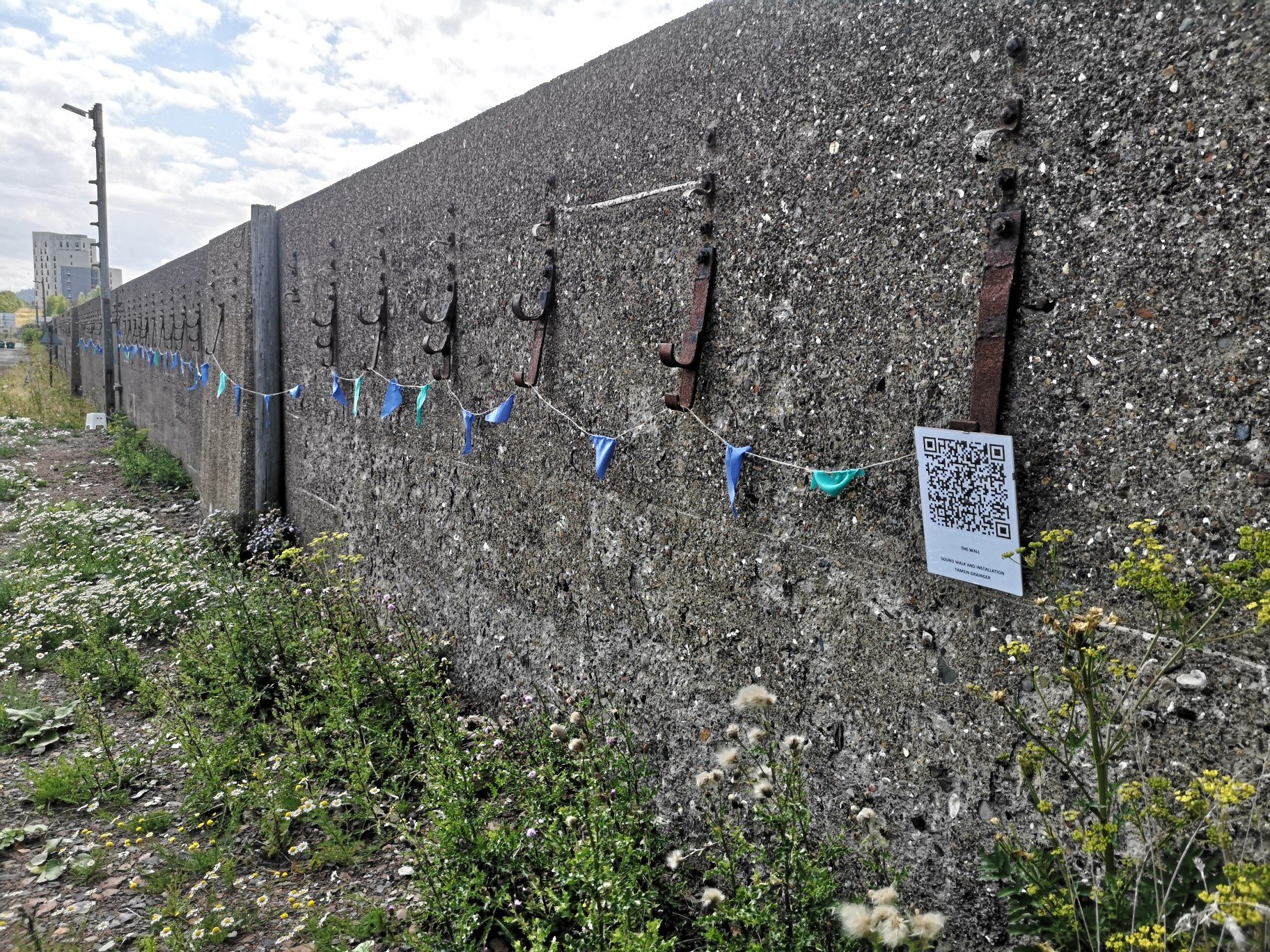
Enter Chestnut Street, turn left along Hesperus Crossway and at the end of the street, walk straight ahead. It may be necessary to find a gap in the fence. You will see the wall in front of you and the QR code should be hanging on a bracket in the section to the left of another wire fence. Otherwise, you can access the Soundcloud recording using the link below and it will tell you what to do and when.
So-called common ground
The developers regularly shut off the area (which is ironic (see below)) and it’s sometimes hard to get to this installation. However, if you are unable to, you can listen below, look at the photos, and imagine you are walking!
At the very edge of the harbour, bordering a piece of scrubland whose time is nearly up – it won’t be long before it is ‘developed’ – is a tall wall separating the reclaimed land from the sea. It’s hard to find out who built it and why, but I have a pretty good idea. It’s marked as Granton Breakwater on google maps, although there are in fact three ‘arms’ to the harbour: the best known is Eastern Breakwater (note that the beach, Wardie Bay, is to the east side of that); the Middle Pier (recently renamed Chestnut Street – why?); and the Western one where the soundwalk is located.
chamomileBuddleiaRose Bay WillowherbThe land has been allowed to get on with flourishing
This is a spot of ‘guerilla art’, in the same vein as guerilla gardening!
Walls have been in the news in recent years and this unprepossessing one tends to go unnoticed, with the general exception of dogs and their companions. It borders the area which is, as I say, undergoing intense development, most of it for the luxury market. The plans show that there will be concrete walkways and a communal ‘garden’.
Walls serve complex functions and produce varying effects on the socio-geographical aspects of an area, an area in this case which has a rich history. The Granton community used to work and play here every day, it was alive with industry, and their voices can still be heard if you listen carefully.
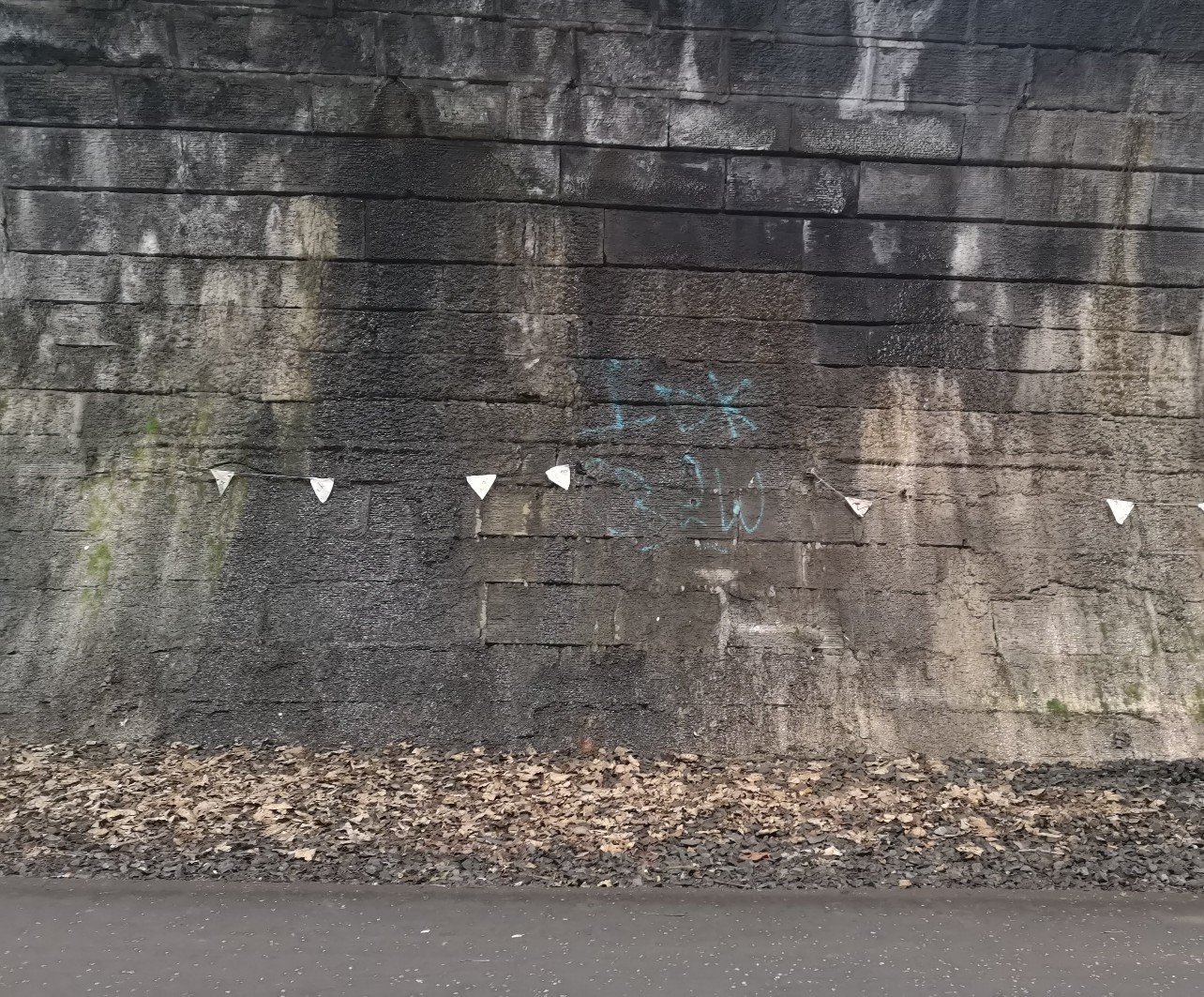
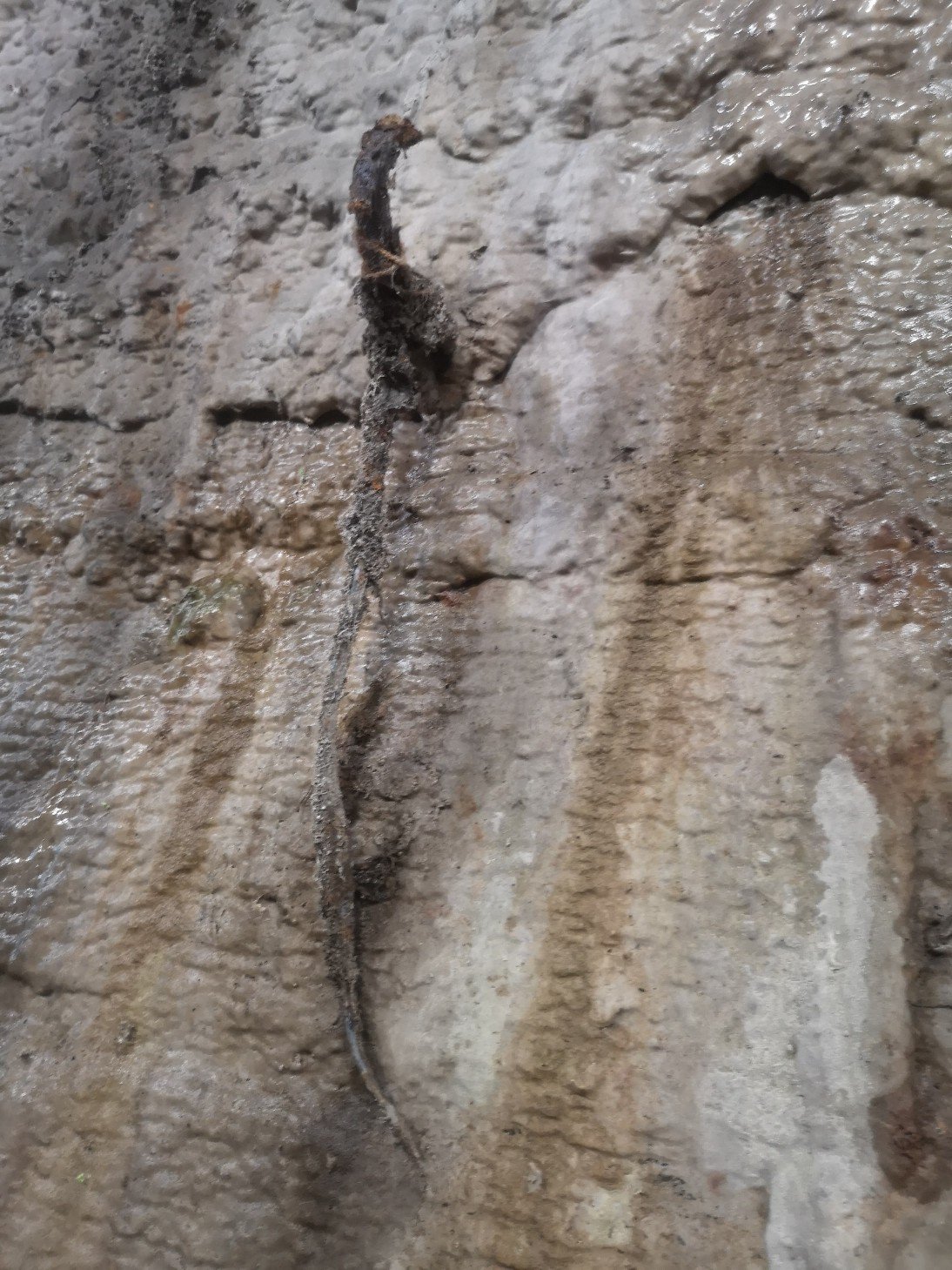
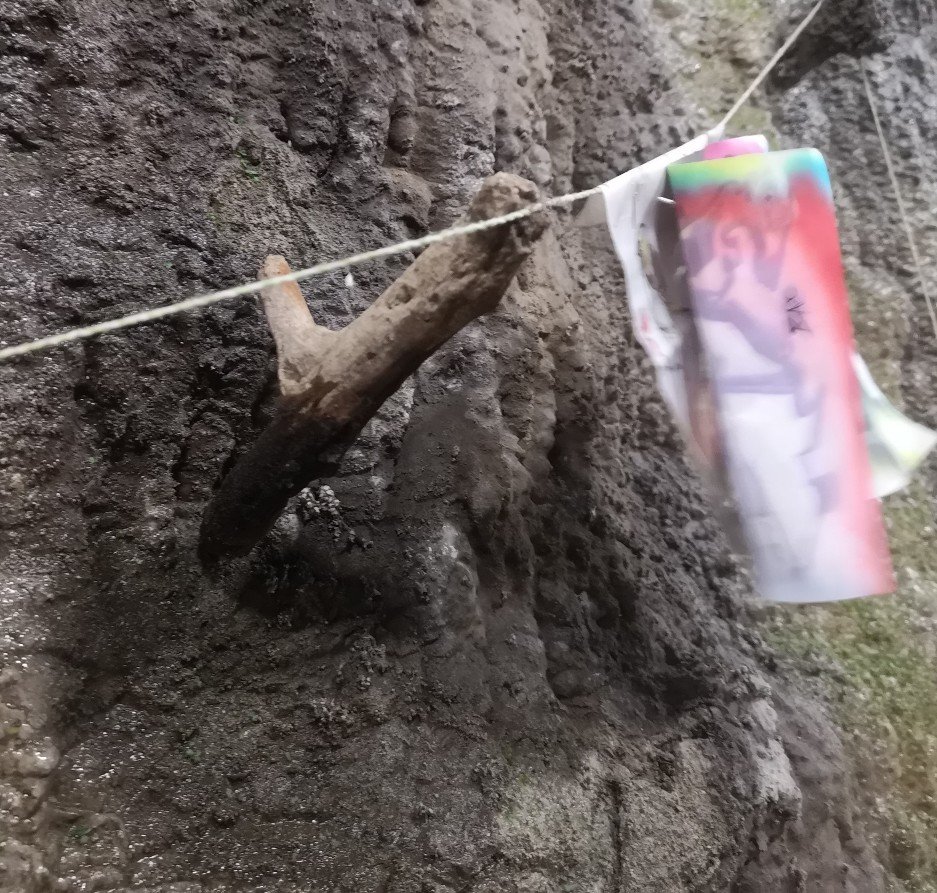
Before – the site of an old railway with hooks for cables
In the meantime, small parts of the harbour have been returned to straight channels of water, and the railway line and its attendant buildings have, in the most part, disappeared.
It is a psychogeographer’s dream!
After
Keeping people in check – restrictions
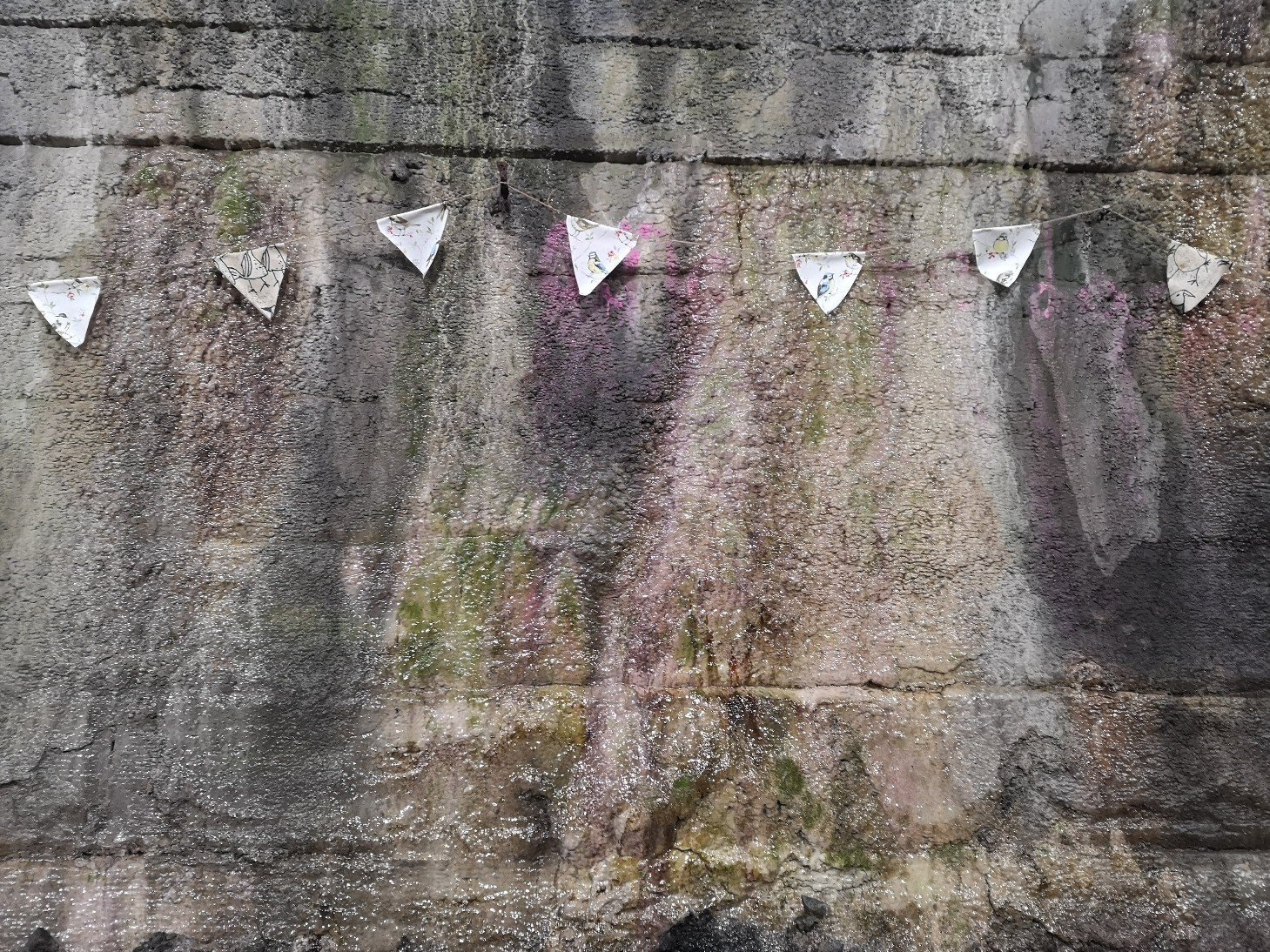
The wall has a distinctive voice. It is not shy to speak, indeed it wants to be heard, it has something to say. After all, it’s another of those structures, like trees and the sea, which is always in one place, come rain, come shine, and has therefore witnessed a lot of what goes on over the ages. The southern end is still covered with roughcast, a sort of pebbledash, and if you look carefully there are fragments of crockery and other interesting hints of these lives.
(Beware the thistles! And try not to crush the chamomile, although if you arrive before midday you can gingerly remove a handful of flowers for a tisane which will taste quite delicious compared to the tea bags you can get in Lidl. The plants will simply send out more blooms in response, and their days are numbered).
Chamomile
This is a land of fences, and as fast as ‘they’ put them up, people have found ways through. Mostly. This was, after all, common ground for nearly 200 years. However, there are two places now where access / exit is impossible, making it necessary to approach the installation the long way round, past security cameras, and for no discernible reason.
Hesperus Crossway
During the past few years, place names have been changed, walls have been smoothed over, fittings removed, and ‘messy’ buildings have been redecorated so as to almost wipe out any hint of their former daily functions. The result is a gentrification and appropriation (in the name of regeneration), which erases most external reminders of the past. It must be remembered, though, that ‘the past’ was made by people, and many of those people still live in the area. Their memories are part of who they are; this past is a valuable part of their lives.
The chalk mural will disappear over time, and if a previous installation, No Birds Land is anything to go by, it may also be vandalised. These changes will be part of the duration and time-based aspects of the piece. It will be difficult to know who walks, hears and sees the installation, but by pacing the edgeland like this, learning about this liminal area and feeling the effect it gives, it is hoped that you and it will be stimulated. (Since then I have used spray chalk to redo the mural which should last longer in the weather.)
The Wall
You can locate this soundwalk and installation by taking the West Harbour Road, and turning onto Chestnut Street. There is a ‘Private’ sign. Turn left onto Hesperus Crossway, and go to the very end of the road.
what 3 words: ///voted.cycles.impose
Slip through the fence and walk forwards. It is a dead end, and in front of you is The Wall.
The sign says that this land is privateSecurity camerasNote the cycle lane opposite a ‘no cycling’ sign!
There is a new fence to your left, meeting the wall at right angles, part of which has been pushed down. You can go over that into the section of scrub land and walk towards the wall. There you will see the QR code to scan with your mobile phone and can then listen to the walk (headphones will probably be best).
Slip through the fenceIt’s a dead end with a wall. There is also a new fence at right angles on the left
You will see some of the chalk drawing ahead of you, and the wall (made of sandstone from the Dukeof Buccleuch’s quarries on the Granton Estate, ashlar and some of the larger facing blocks were quarried in Fife) stretches to both sides with the main part of the installation to the left. Once you are listening to the audio, you can walk in each direction according to the instructions, or make your own choice. In total the sound walk is 13 minutes 44 seconds, and it could take you around half an hour to 45 minutes to explore the whole.
You can walk south, inland towards the cityYou can also walk north, towards Fife
Please note that there is nowhere to park except on West Harbour Road, so it’s best to cycle or walk. Or, you can get a bus to Granton Square (16, 47, 19, 200) and walk from there – it will take you around 10 minutes.
If you are not in Edinburgh or cannot get to the harbour, here is a link to the audio part.
Quotes and references are from/to
Henry Wadsworth Longfellow, The Wreck of the Hesperus
Rachel Carson Under the Sea Wind
RLS ‘From a Railway Carriage’
Local street names
I have tried to upload the walk to the Echoes app but it has been unsuccessful. I will try again later.
You may also like to download the Curious Edinburgh app, which will take you to other aspects of the harbour and tell you all about it. Also the Granton History and Railscot websites.