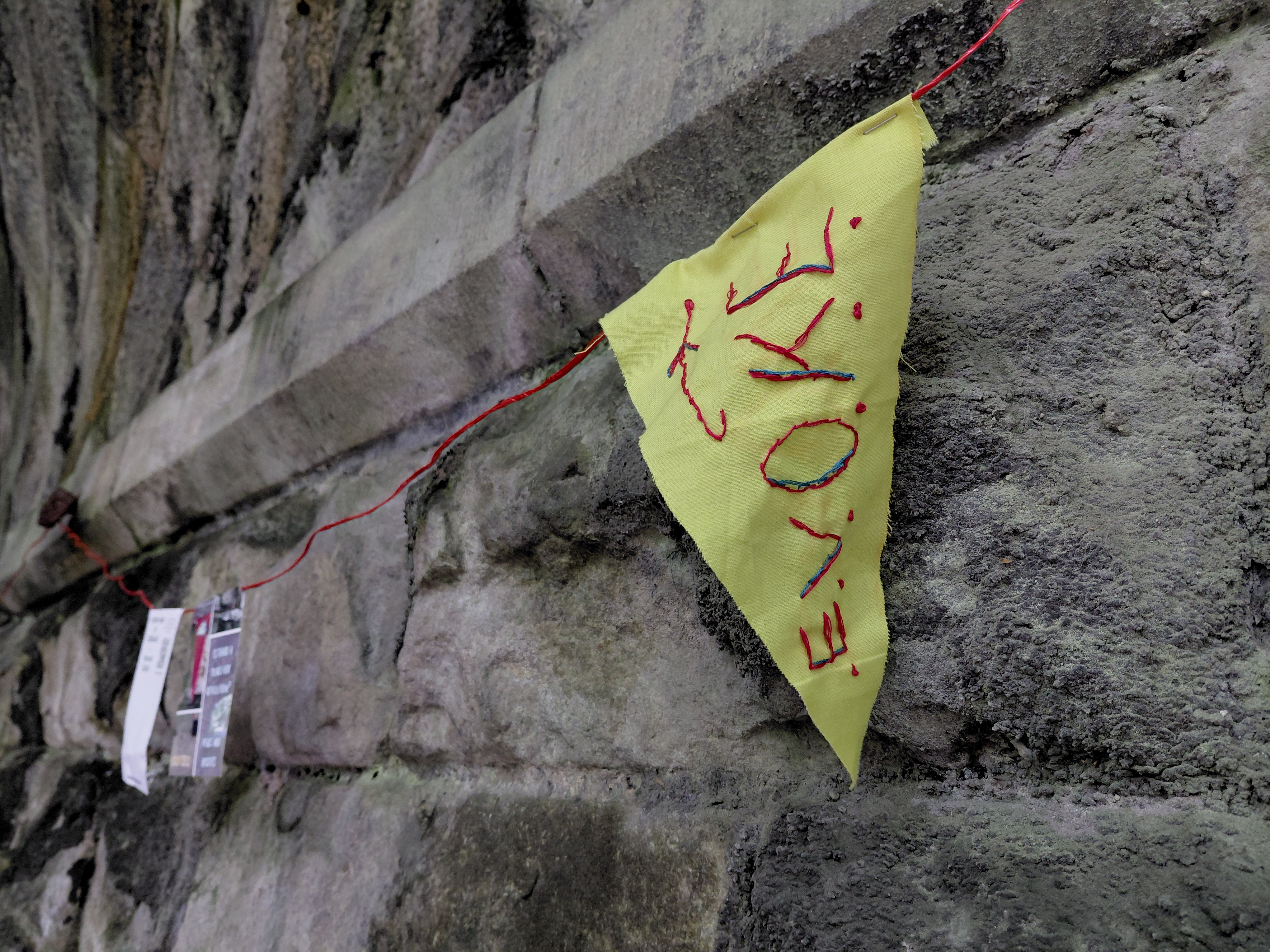
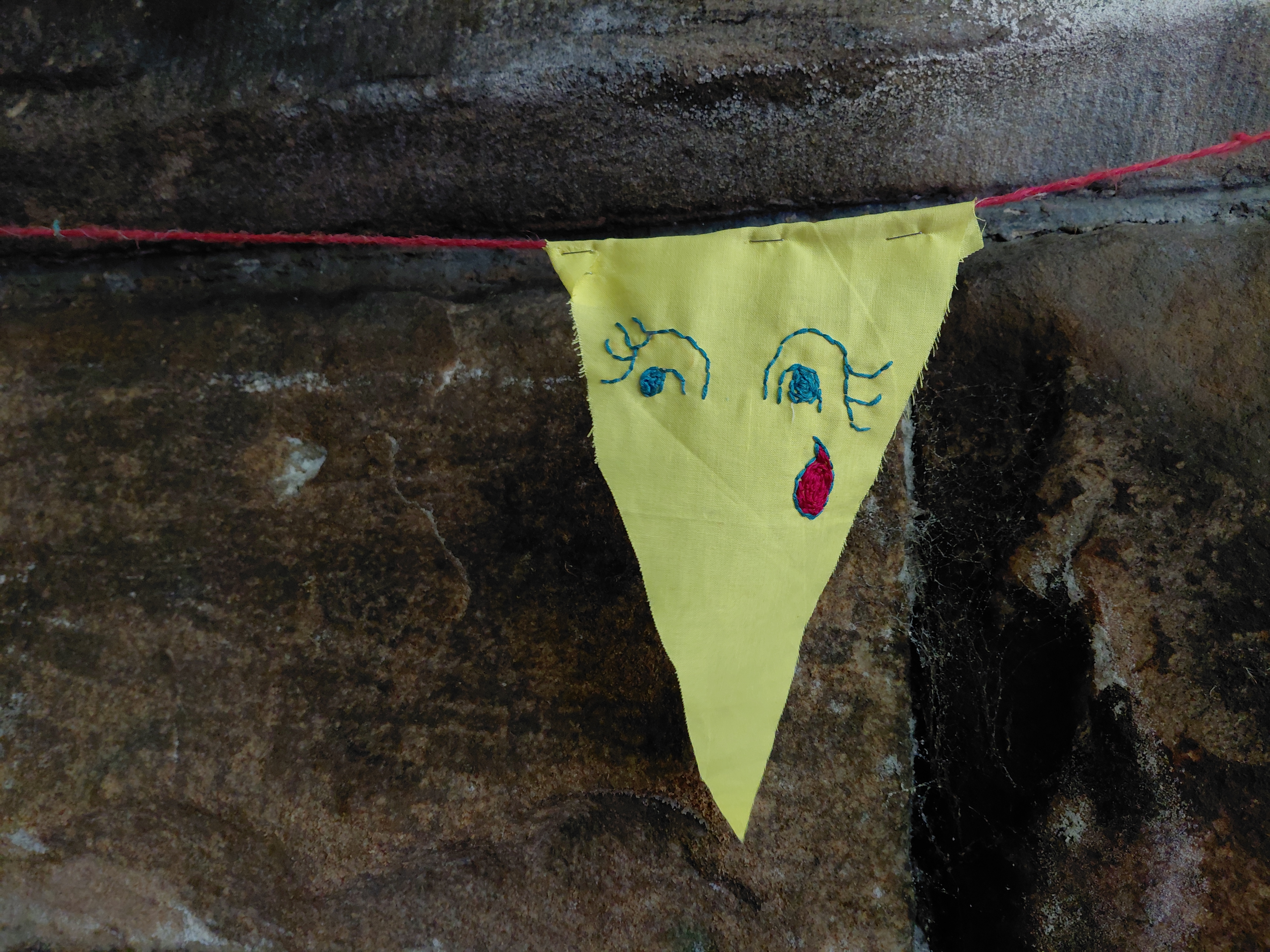
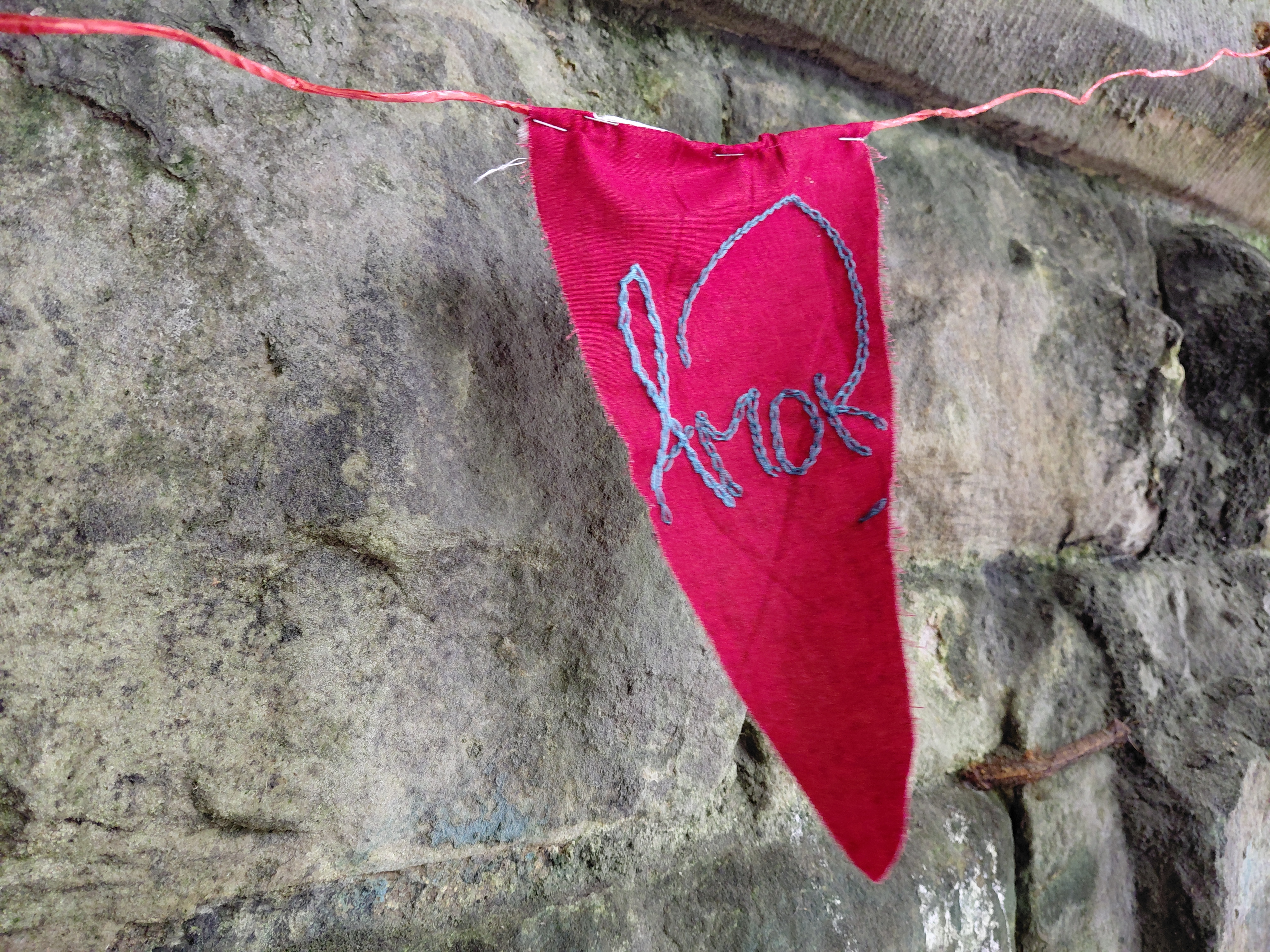
November /December 2023
The Camallera Sound Walk is a walk around the border of the town of Camallera. There are 12 stages to the walk, and at each stage there is an original sound montage to listen to. It was created during an artist residency at Nau Côclea, Camallera, in Cataluña.
The walk is on flat, smooth land except for a short climb through the woods between Stages 2 and 3. You do not need to be very fit. It will take approximately 1.5 hours depending on your pace and how long you stop at any one time. There is a cafe / restaurant: L’avi Pep, half way round if you get thirsty (see map below). You are advised to wear sensible footwear and appropriate clothes for the weather. Bring water with you to drink.

Part of the Separation and Unity Project
This walk is part of the Separation and Unity project. Part One began in Spring 2023 with walking the St Margaret’s Way pilgrimage in Fife, and the oak forest of Dalkeith, both in Scotland (Caledonia). Shortly afterwards, I walked part of the Camí de Sant Jaume (Camino Catalán) pilgrimage for the Walking Arts Encounters in the summer, located in Girona, Olot and Vic, Cataluña, first alone and then leading others.
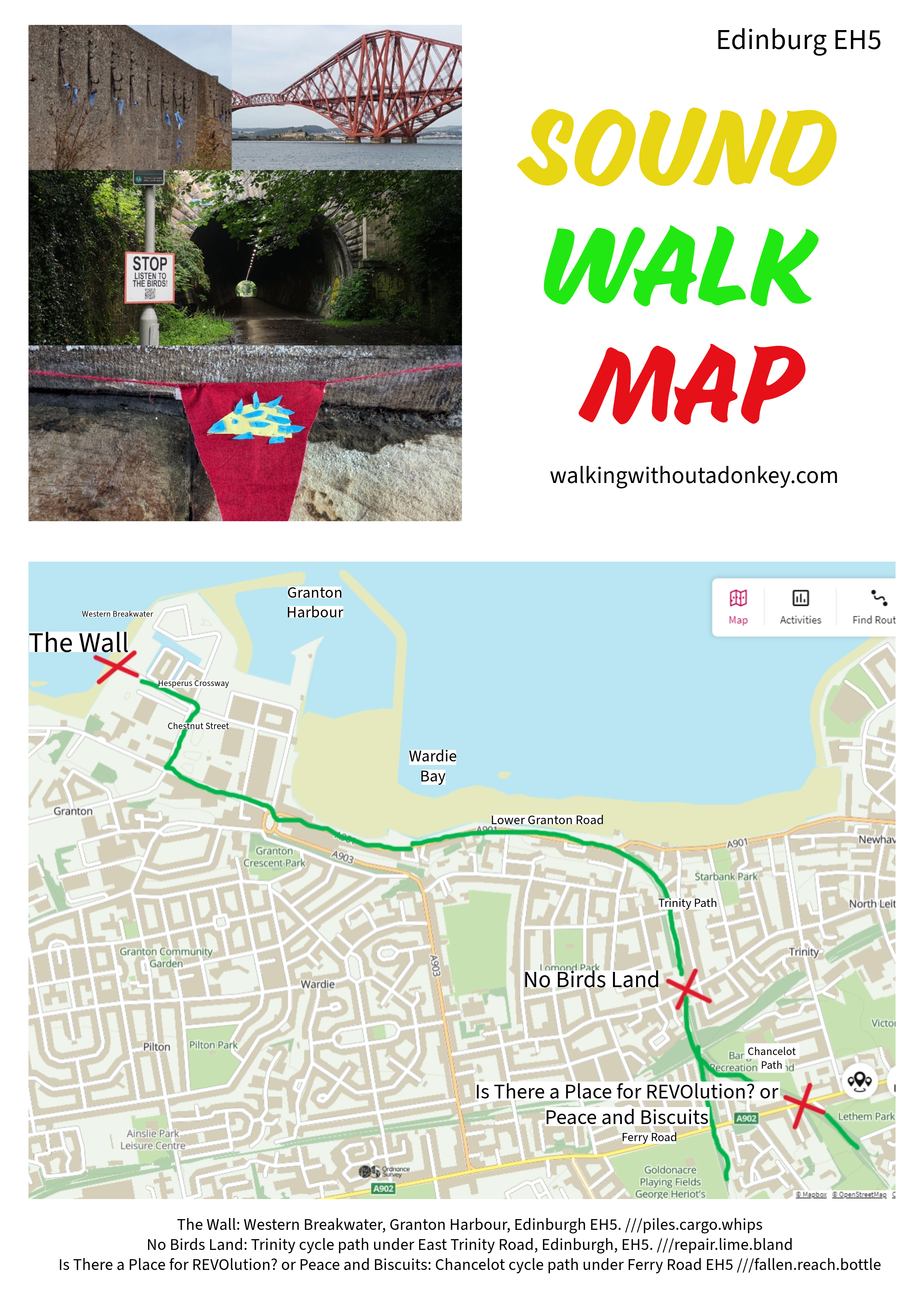
Part Two were Boundary Walks: the first around Granton in Scotland followed by an exhibition, Walking Like a Tortoise, and then this Camallera Sound Walk.
All my walks are part of my on-going life’s walk, all are connected, and each one leads on to the next.
Camallera
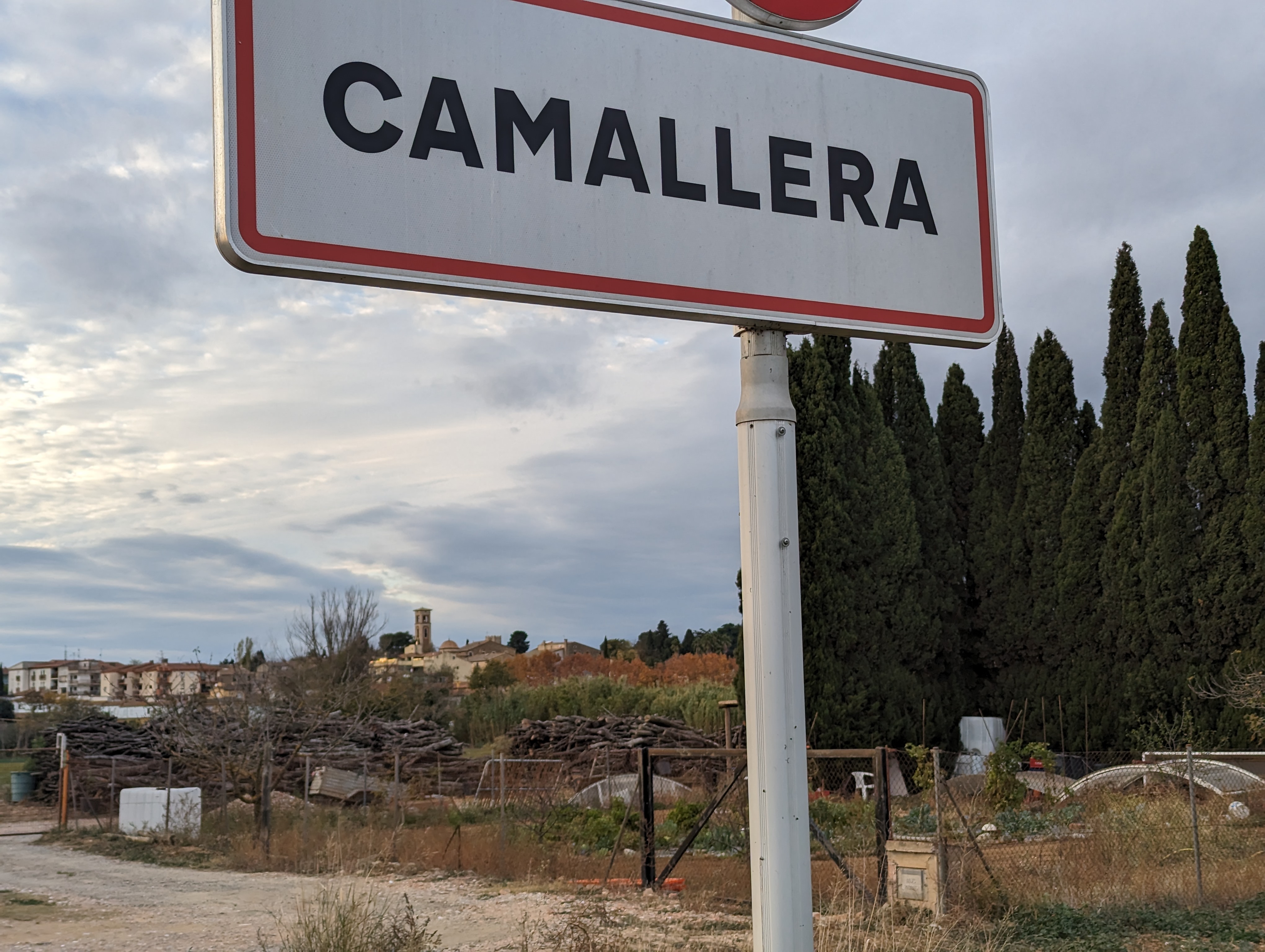
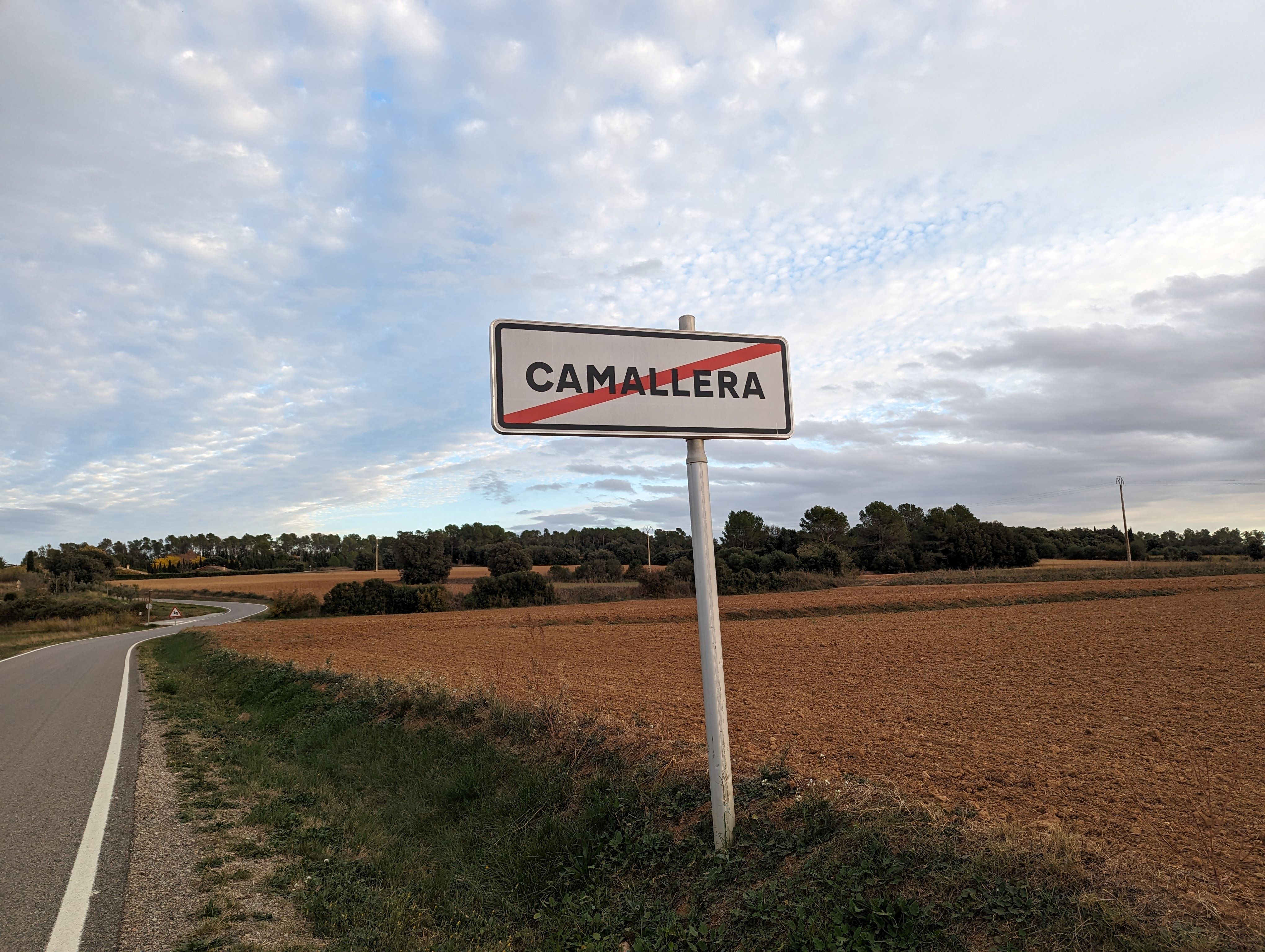
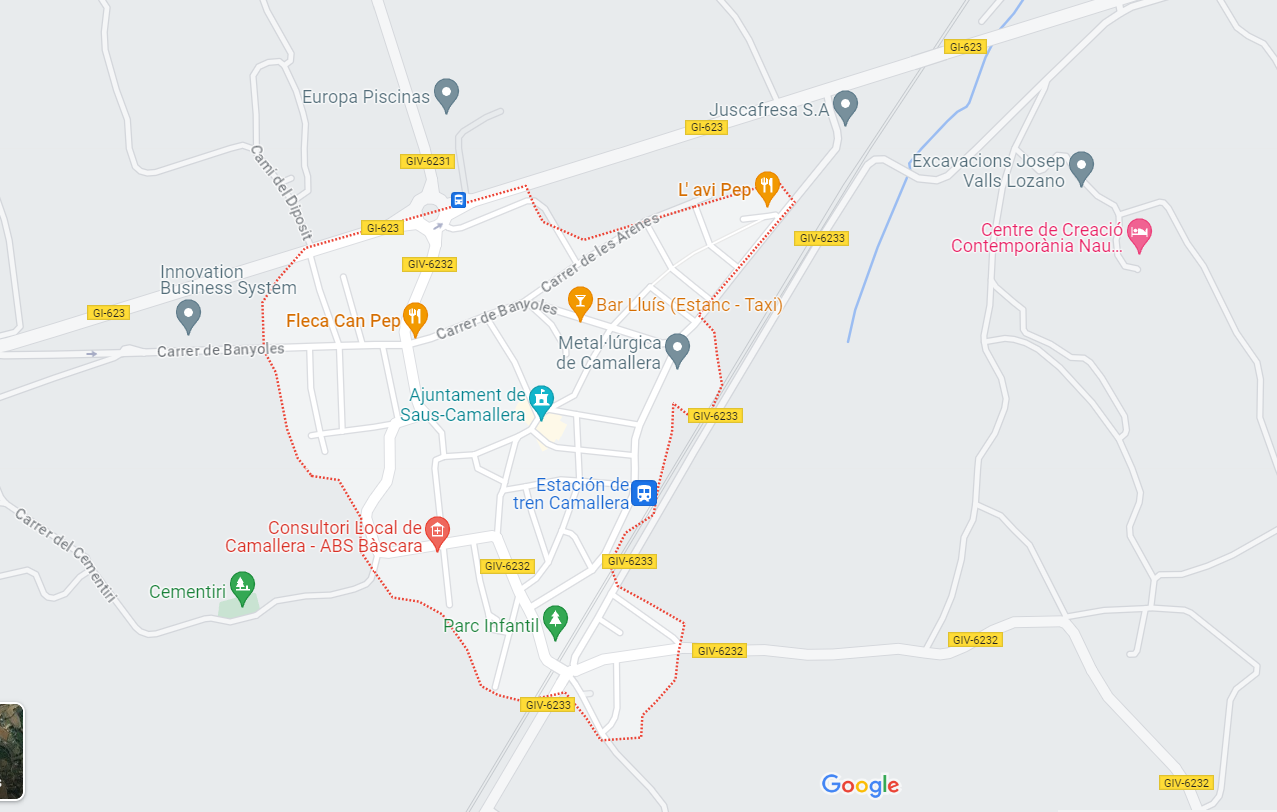
Camallera is a small town in the comarca (region/county) of Alt Empordá which borders with France, and includes Figueres. The municipal border (shown in yellow on the maps) between it and Vilaür slices through the top. It is a third of what I would call a parish in the UK – the trinity of Saus-Camallera – which also includes Saus to the north-east and LLampaies to the west. There are around 800 people living in Saus-Camallera, and it is a mixed agricultural, industrial and tourist area.
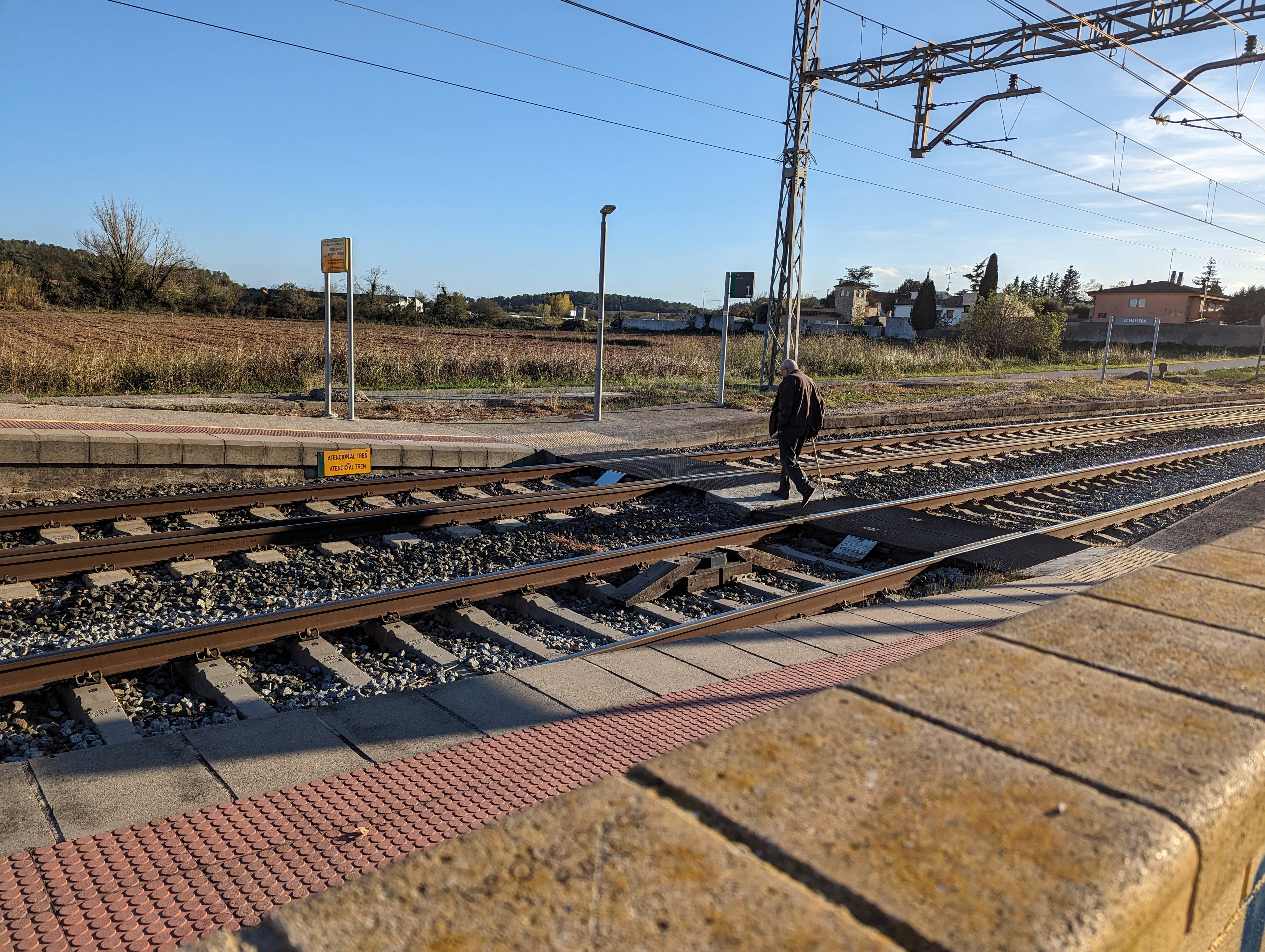
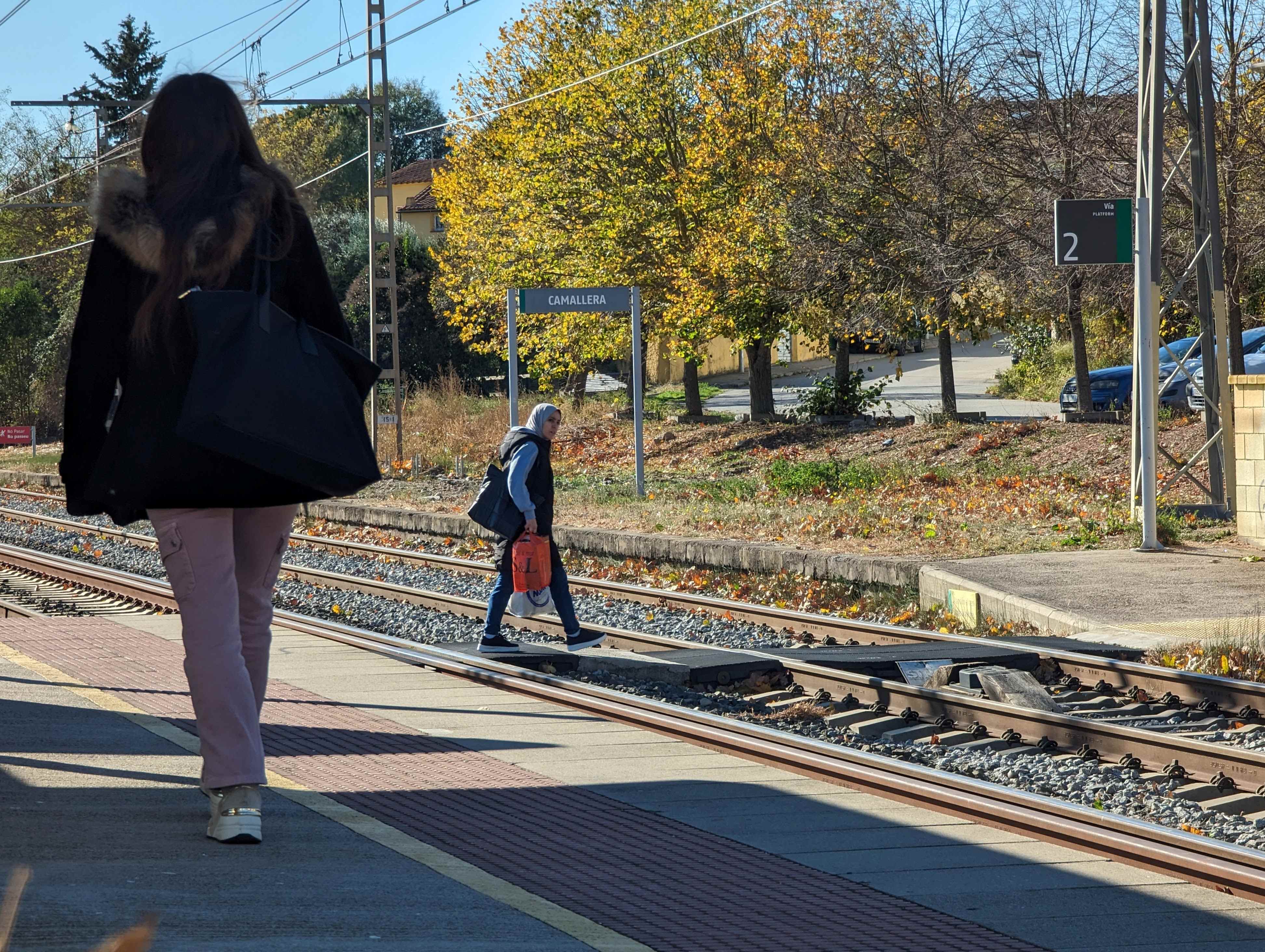
The railway divides the town with a strong and noisy diagonal line linking France to Barcelona and Spain. There are only three crossings, one for motorised vehicles (it is possible, but not advisable, to walk along the hard shoulder), a bridge between Stages 10 and 11, and the other is for feet, over the rails themselves – be careful! (You can also walk through an underpass to visit Saus (see Option 1 below), but you cannot get into Camallera that way except via the busy main road). If you are a bird or insect, you may cross wherever you want.
The language of the Sound Walk
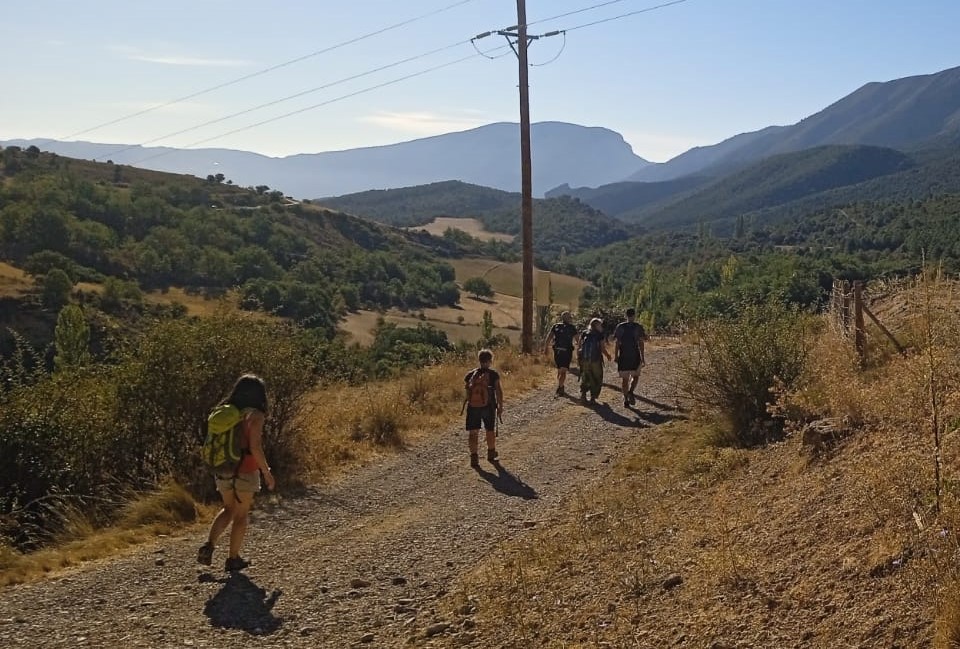
I do not speak Catalán, the language of this town, nor can I act as your guide using Castillian Spanish. When I participated in El Grand Tour in August, often having to look down and watch where I was putting my feet in order to negotiate the stony hillsides of the pre-Pyrenees, I could not understand each word and phrase that my fellow walkers were speaking, instead I heard these languages as music, the flow and the cadences of them. I learned to distinguish their different speakers without seeing the people as they spoke. The undulations of the landscape and the sentences informed each other, one perhaps having grown out of, or together with the other. They flowed around and through me as we walked, and I even began to understand some of them in this way.
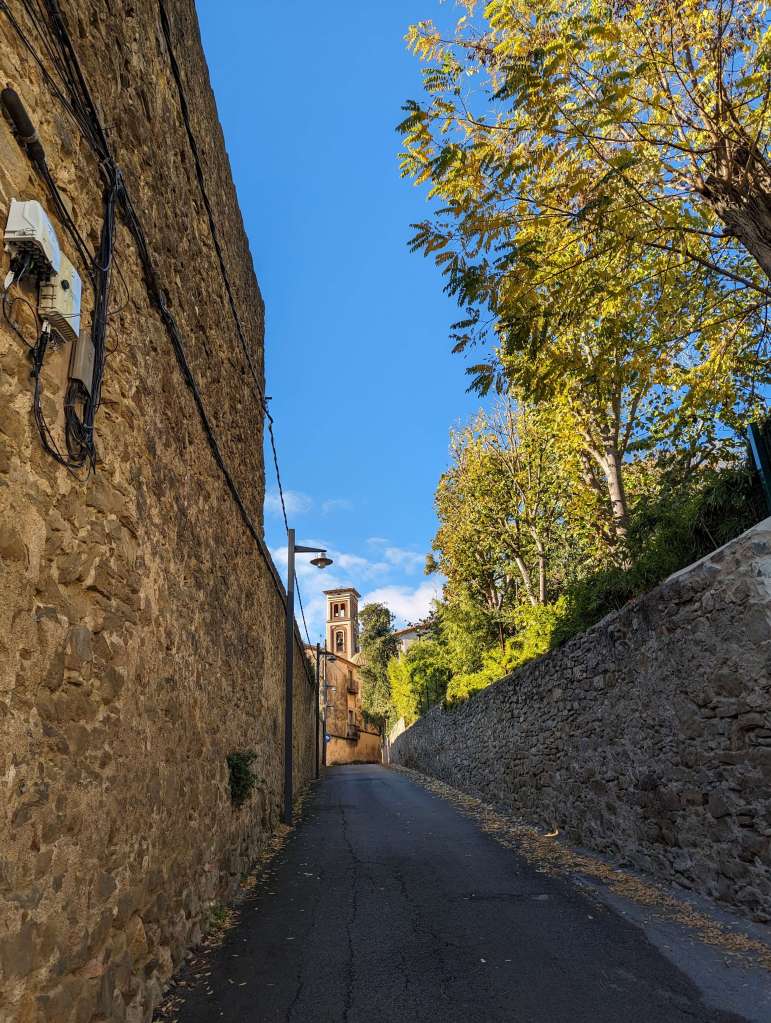
So, this Sound Walk has no words; you do not have to speak one language or another to participate. It uses all manner of sounds and various versions of silence which I hope will evoke feelings, memories, thoughts, and local history even if you don’t know any details of it. My research consisted of walking around and around, gleaning a sense of the place through the ground and the soles of my feet, and discovering its energy through the air and my skin. I sat at each stage; sensing, intuiting, noticing, meditating and receiving. Two weeks is a very short time during which to get to know somewhere, and I am therefore grateful to Clara Garí, Anna and her children, and Martina for their anecdotes, familiarity with, and knowledge of the area.
The found sounds were all recorded by me on my Google pixel pro 10 mobile phone, mostly from the area, and a few from nearby Girona, and Scotland. They have been supplemented with one or two others from online libraries. I used Adobe Premiere Pro to assemble them.
Note to the walker
If you want the whole Camallera Sound Walk experience, I suggest you start at the train station and follow the trail anti-clockwise (widdershins in Scots). The walk describes 2 loops, so you will be crossing the railway line several times. Listen to the sounds around you, and those you make, as you walk. When you arrive at the first of the 12 stages, stop and listen to the audio. First a gong will sound, and then there will be a track lasting about 3 minutes. A quieter gong ends the stage. Turn off the sound as you walk to Stage 2, and when you turn it back on there will be a short gap of silence before the next gong sounds for the start of Stage 3. Repeat until you get back to the train station after Stage 12.
My first task in making this sound walk was to map the route around the boundary of Camallera and then choose the direction. When it came to creating the audio, I knew what experience I wanted you to have, however I know you may actually walk the whole thing differently. You might walk clockwise or visit the stages in a random order. Perhaps you will only go to one stage. You might listen to an audio that belongs to Stage 2 at Stage 3, or you might follow the walk at home without being in the town at all, with only the photographs to orient yourself. None of this will matter. What I’m interested in is that you will find or feel or think something when you’re listening.
I have endeavoured to translate the local Camallera stories which residents told me, together with my personal experiences, into audio. I hope that they will open portals to other worlds.
can you find me? what do I sound like?

12 stages around a boundary
I have a history of walking pilgrimage, and although my pilgrimages have been secular rather than religious, it is interesting that this boundary walk developed 12 stages. I did not plan this in advance, it is just what emerged. Many pilgrimages are based on the Via Crucis, the 12 Stations of the Cross or Way of Sorrows, depicting the path Jesus walked to Calvary. It is said that the path was first mapped with stones by Mary, Jesus’ mother (it is known as the Via Dolorosa in Jerusalem). This Sound Walk has other spiritual associations: bird song and bells, a cemetery stage, and one at the Chapel of Saint Sebastian who had a particularly violent death.
In the 12 spaces, I listened; I dreamed into them. This method of ‘feeling into place’ is quiet. My art practice has made me sensitive to the nuances of somewhere, and I’m always attending with respect, sitting as in meditation with an open mind and accepting what arises. I’m noticing what I feel in my body, what emotions, memories, and thoughts come to me, and I have tried to convey that to you through this soundscape. I hope that what speaks to me is in a universal language that can be effectively communicated. I also invite you to sense each stage yourself and respond.
In every microcosm is the macrocosm. Therefore, when you take a seat, or pause under the sweet white acacia tree, you are not only in a playpark or on a pavement, you are in a whole environment. You stand on top of an ancient land, a topography of millennia; you are amidst a community of human and other-than-human beings (herbs, insects, for example); and you are under a vast, borderless sky. Your own electrical energy will immediately engage with that of those beings beside, under and above you. When you open to that flow and connection, you will be able to pick up the subtle connections.
We are all so different
You and I will experience the Sound Walk differently. I brought all my life experiences with me to Camallera, and the audio responses are particular to me as an individual (not part of a pair or group) and a woman. I’m a certain age (60 years), and I’m Caucasian and privileged through education and upbringing. I’m not from Camallera, nor Cataluña (though I have spent 3 months here in the past 18), not even from Europe anymore, though I was, and feel as if I am. The audio I have made will reflect this.
And yet, I submerged myself in the place, filled myself with local stories, tried to make a soundtrack that contains all that. Although I don’t know how you will respond, I know that what’s in those places is limitless, that being in those spots with the sounds reverberating in your ears, head and nervous system, will give you the opportunity to listen through me, and beyond, may be a jumping-off place to another locality, connect you with someone else, or stimulate a feeling that doesn’t, in the first instance, seem related until you sink into it and let it trigger you. Can you sink through its layers and find points of contact, of resemblance and recognition?
The 12 stages
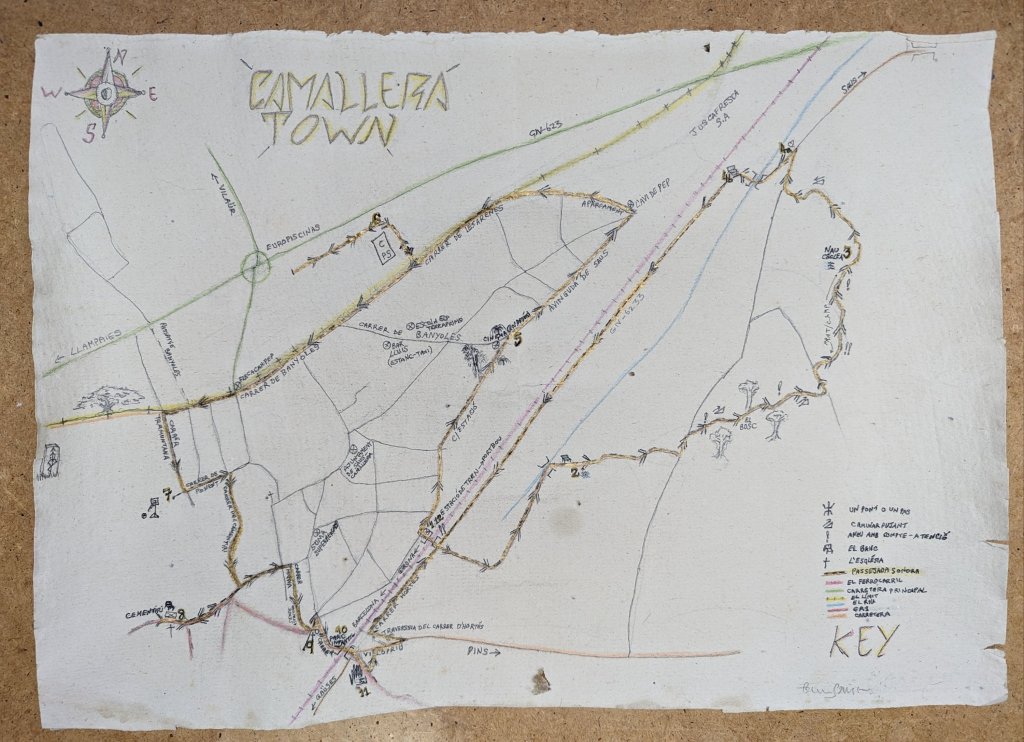
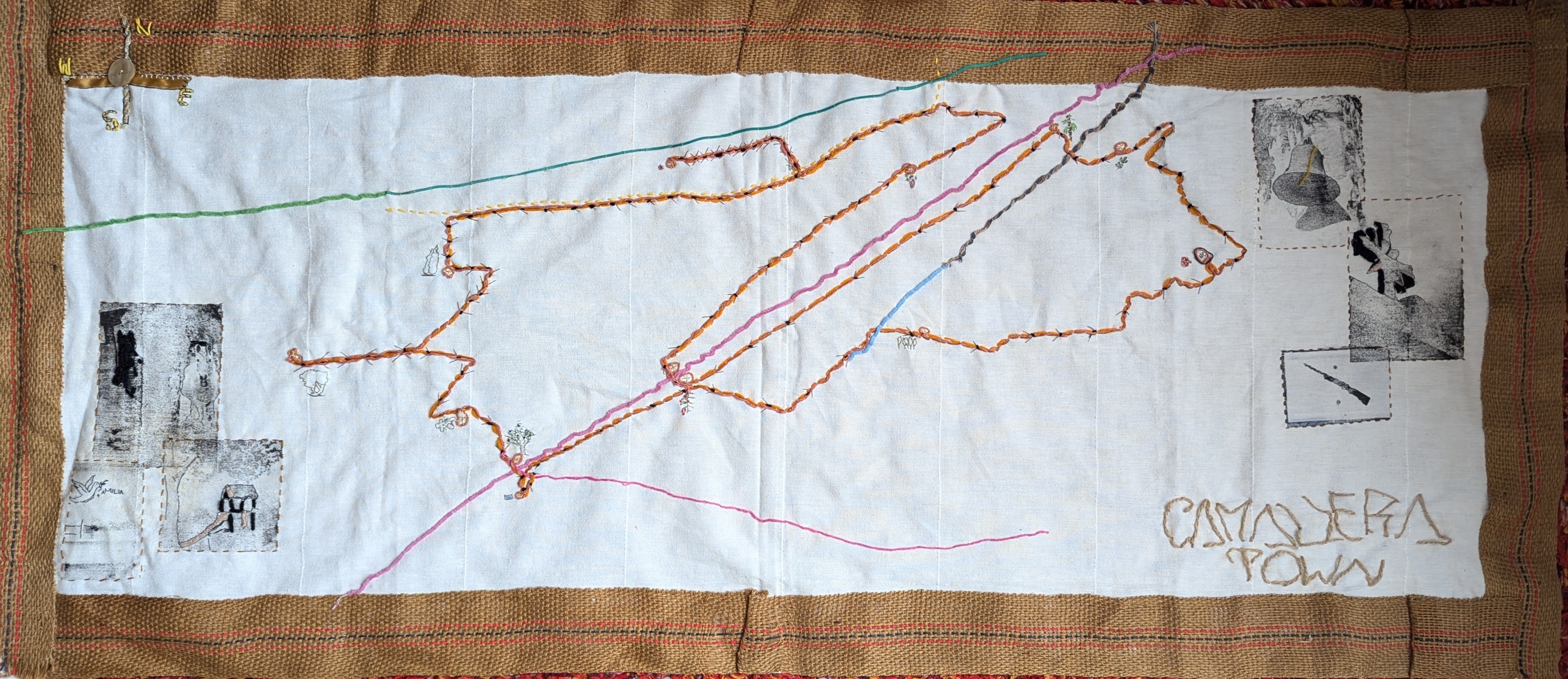
Here is the map. Enjoy your walk, whether you live in Camallera or are a visitor (in-person or virtual). There are other maps below, a pdf download, and it can also be found on the Komoot and Echoes apps.
Komoot link: https://www.komoot.com/tour/1396666626?ref=wtd&share_token=a3uoWoEwVcCYFPNK2ln924qMcnVPvOoXZp1mHJahS1vSvAoMeG
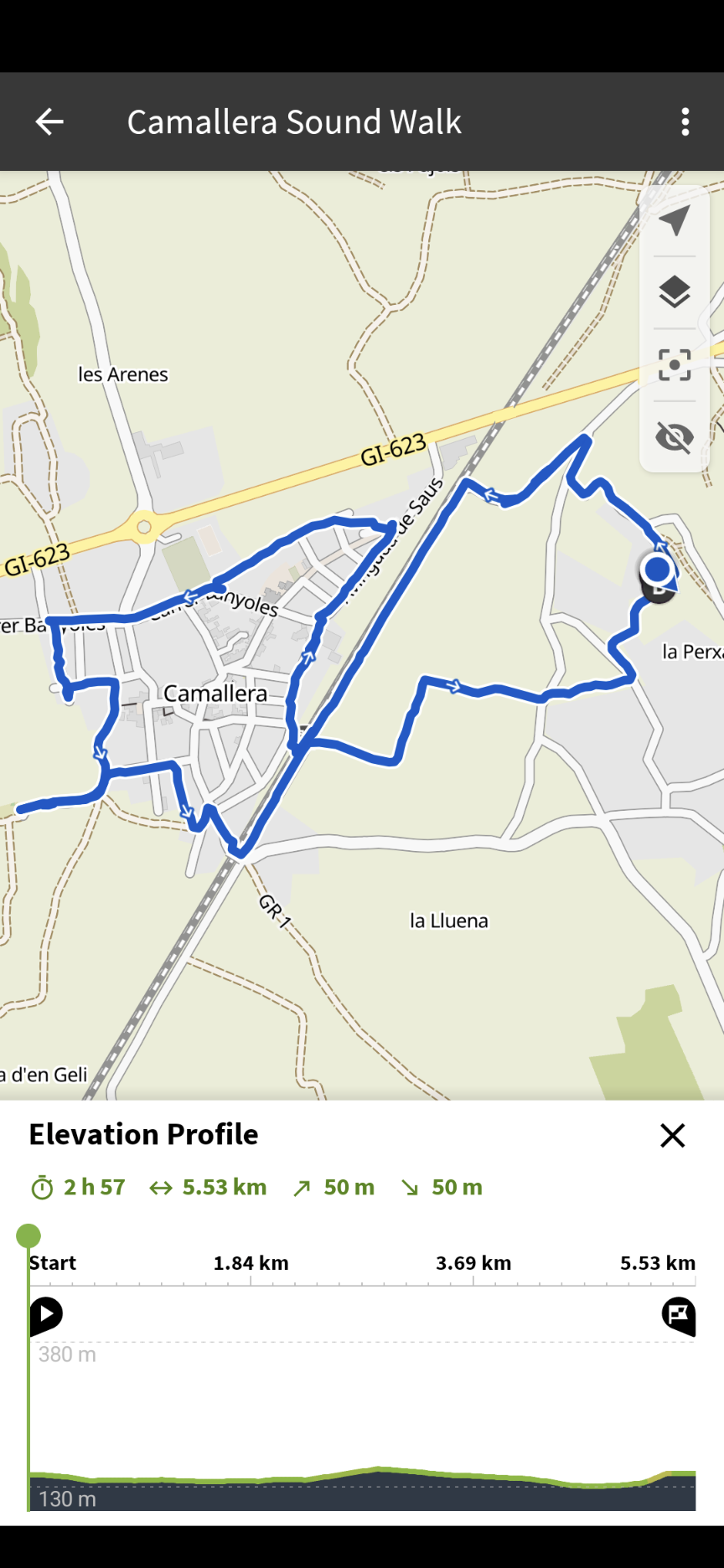
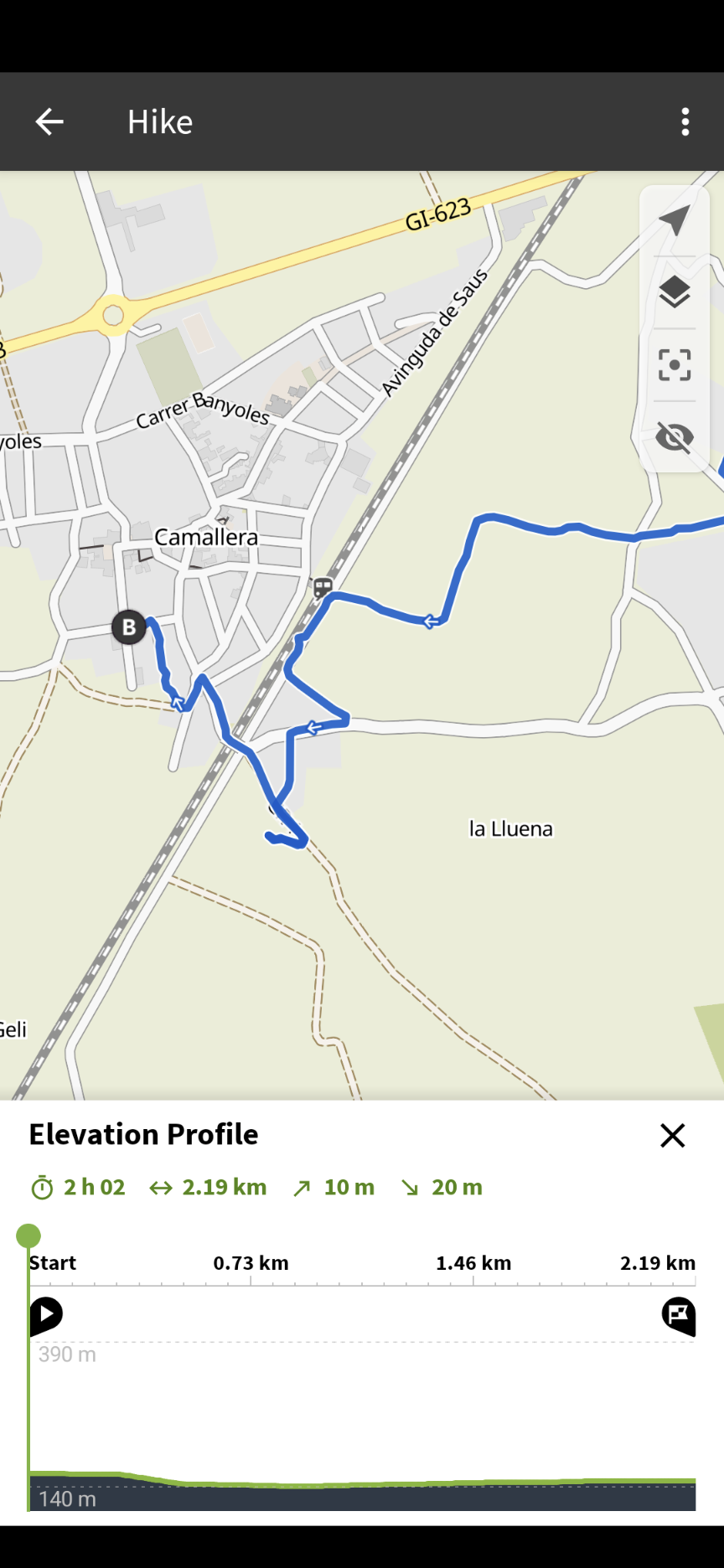
Each stage is a resting place, and each of these resting places is also a transition from the previous stage to the next. Together they make up a whole and I hope you like exploring them as much as I did.
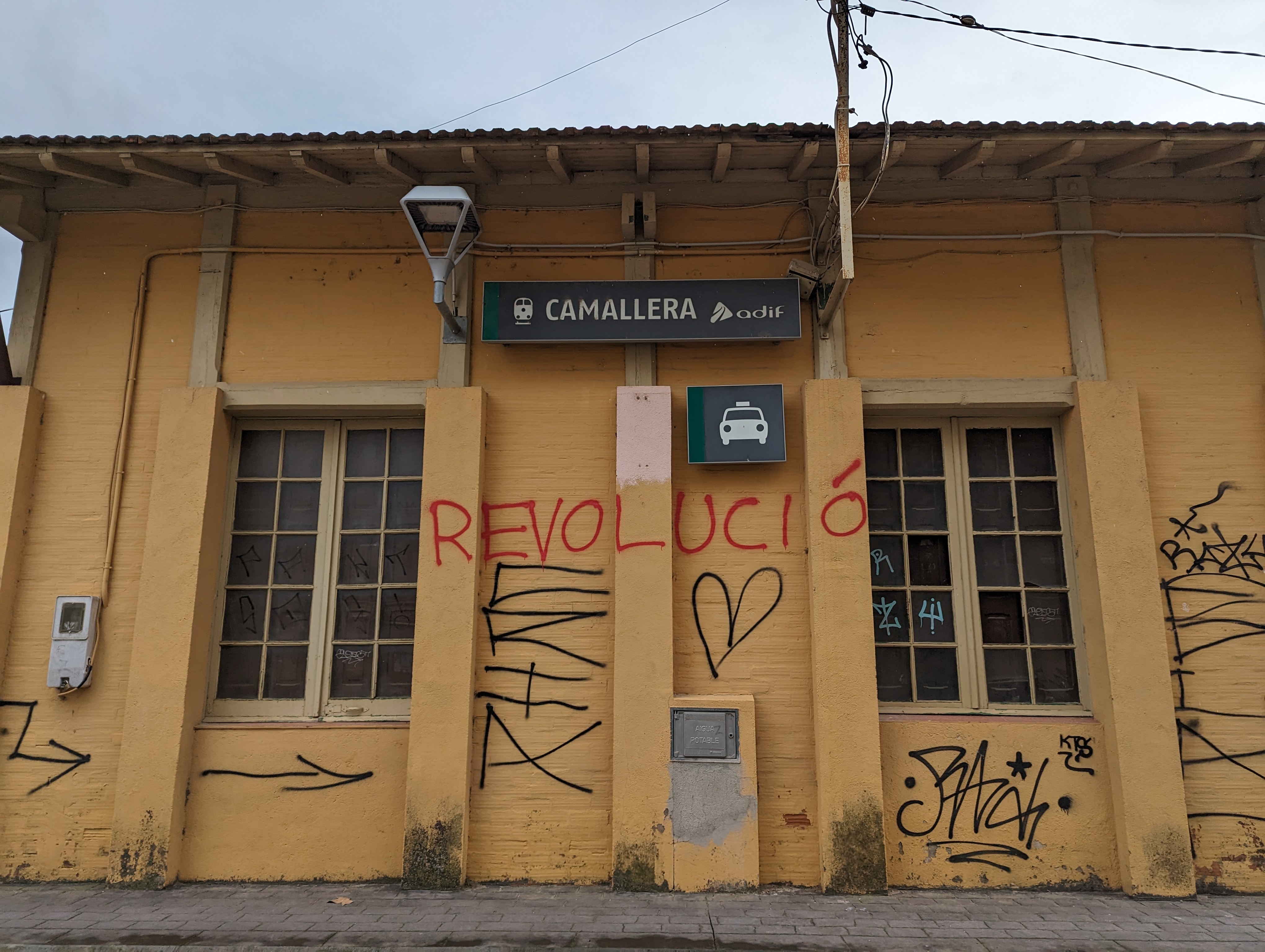
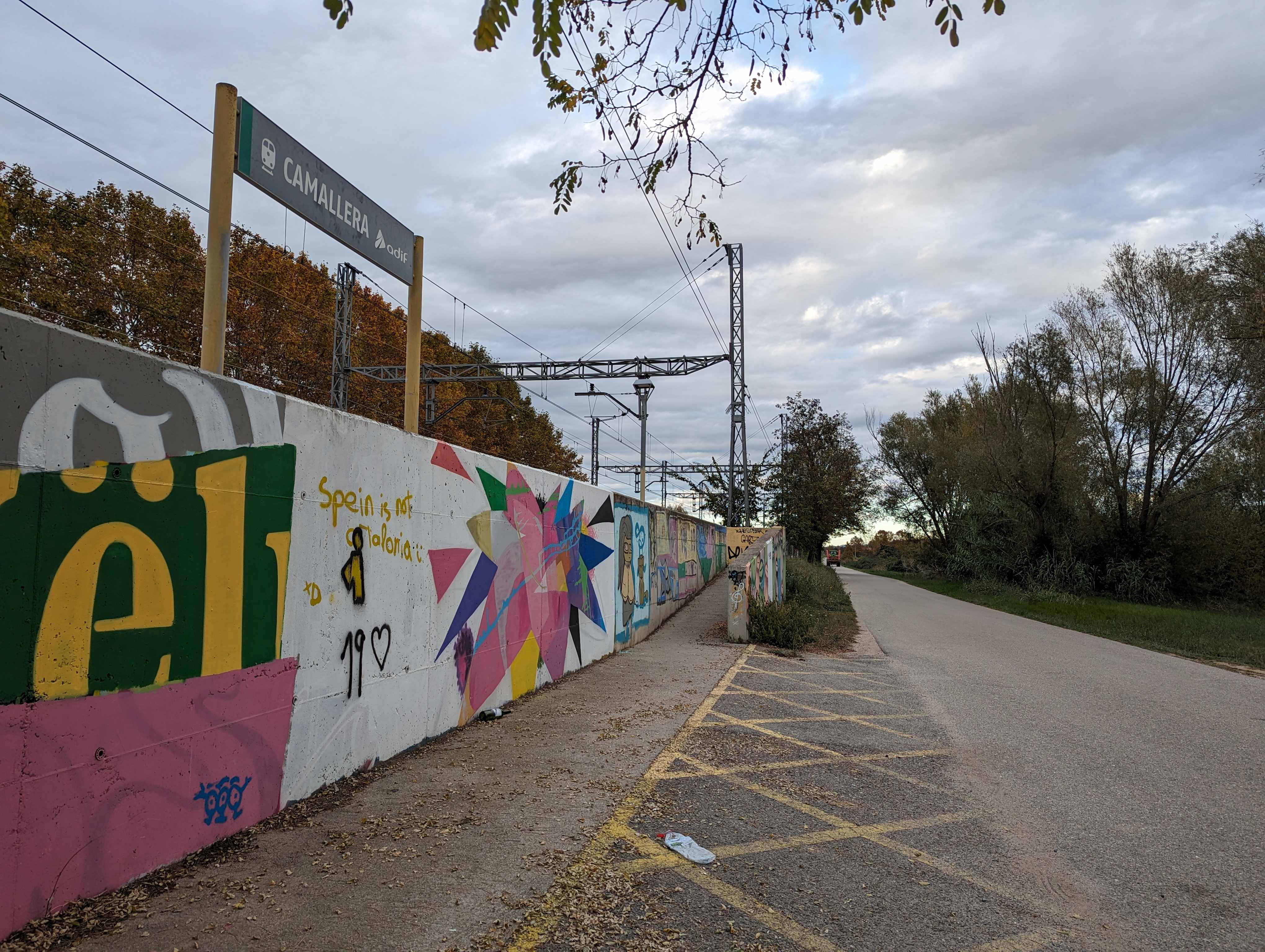
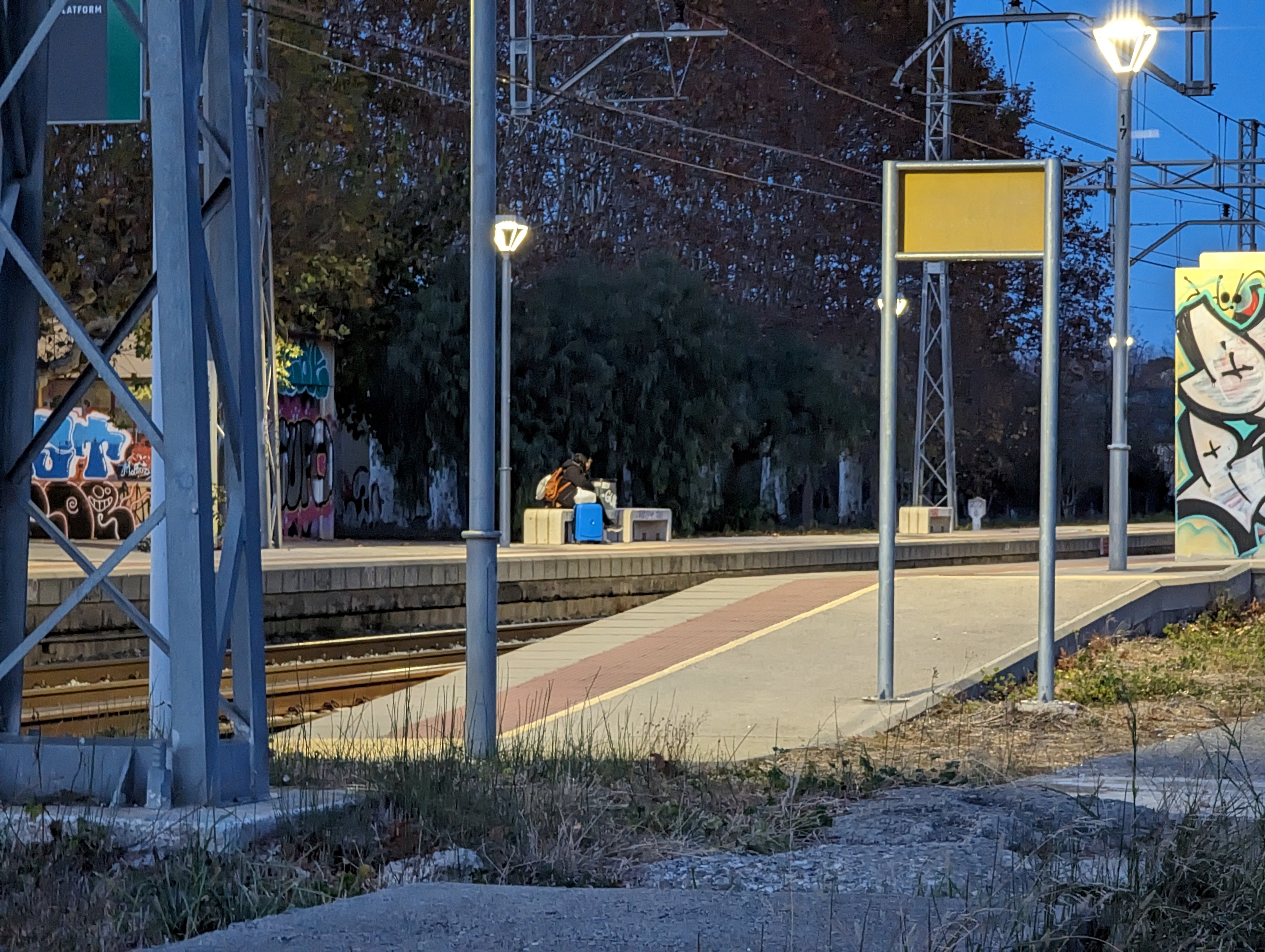
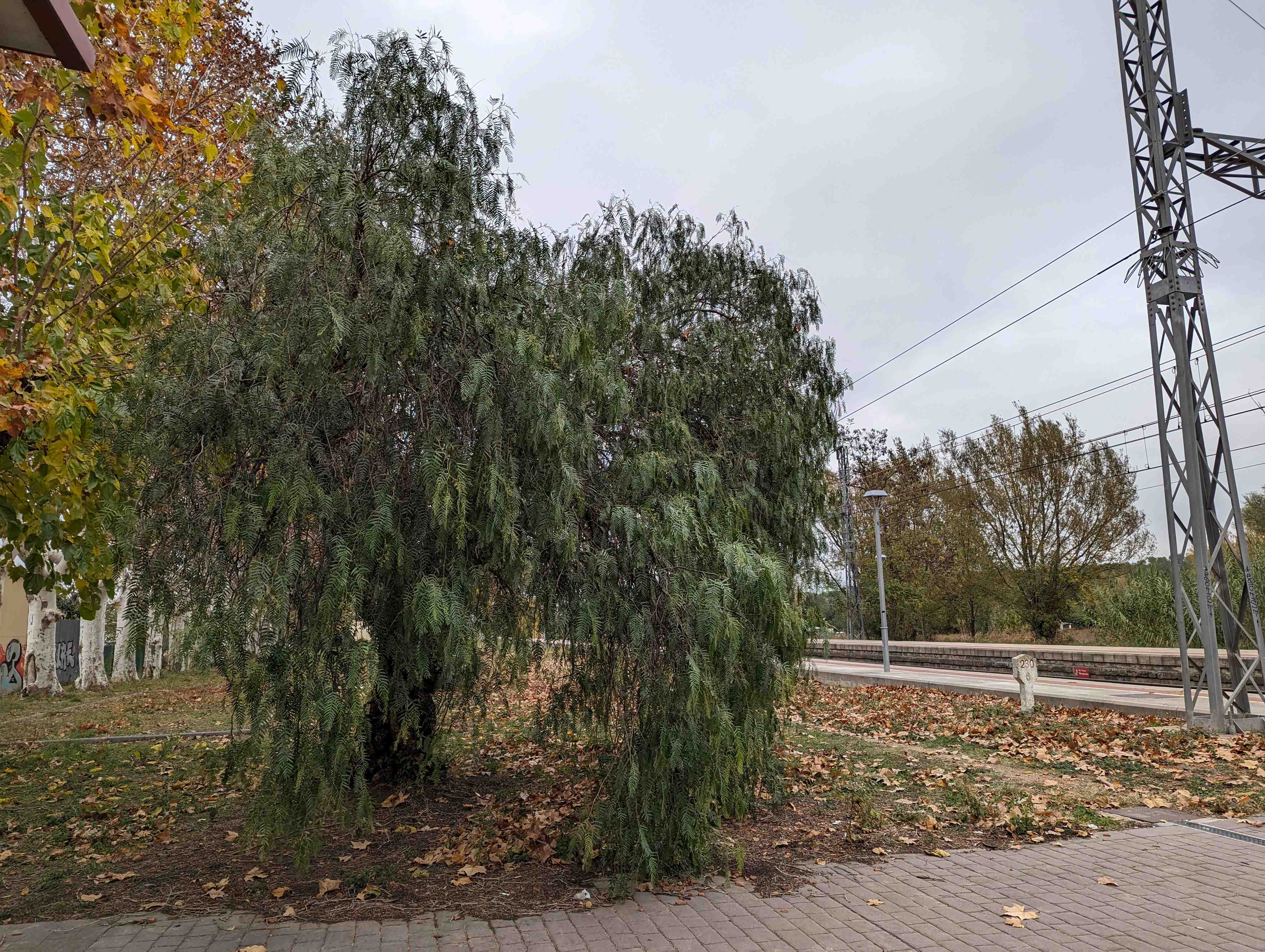
Stage 1 Arriving – Train station (Estacion de tren). Tree: Peruvian peppertree
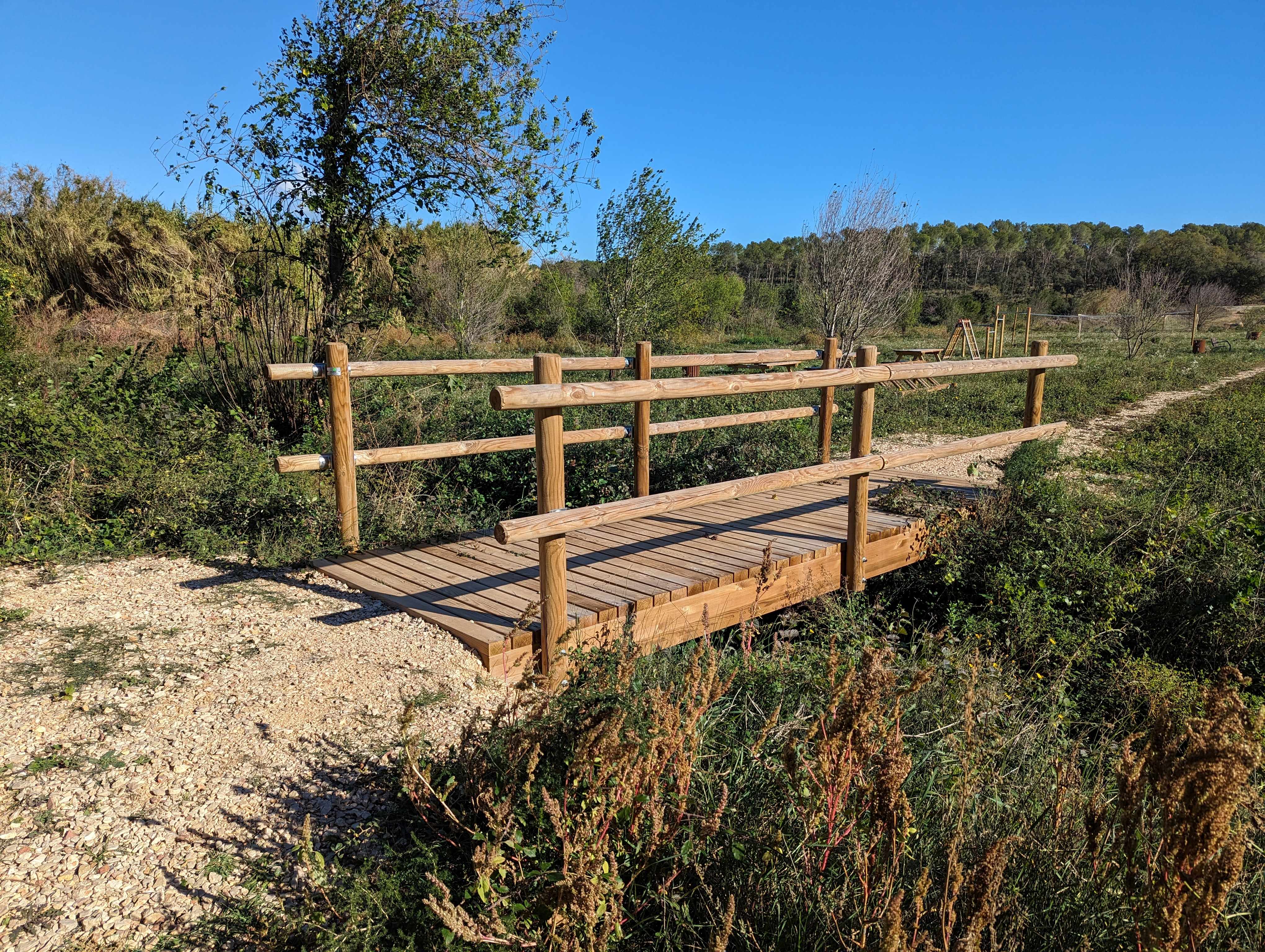
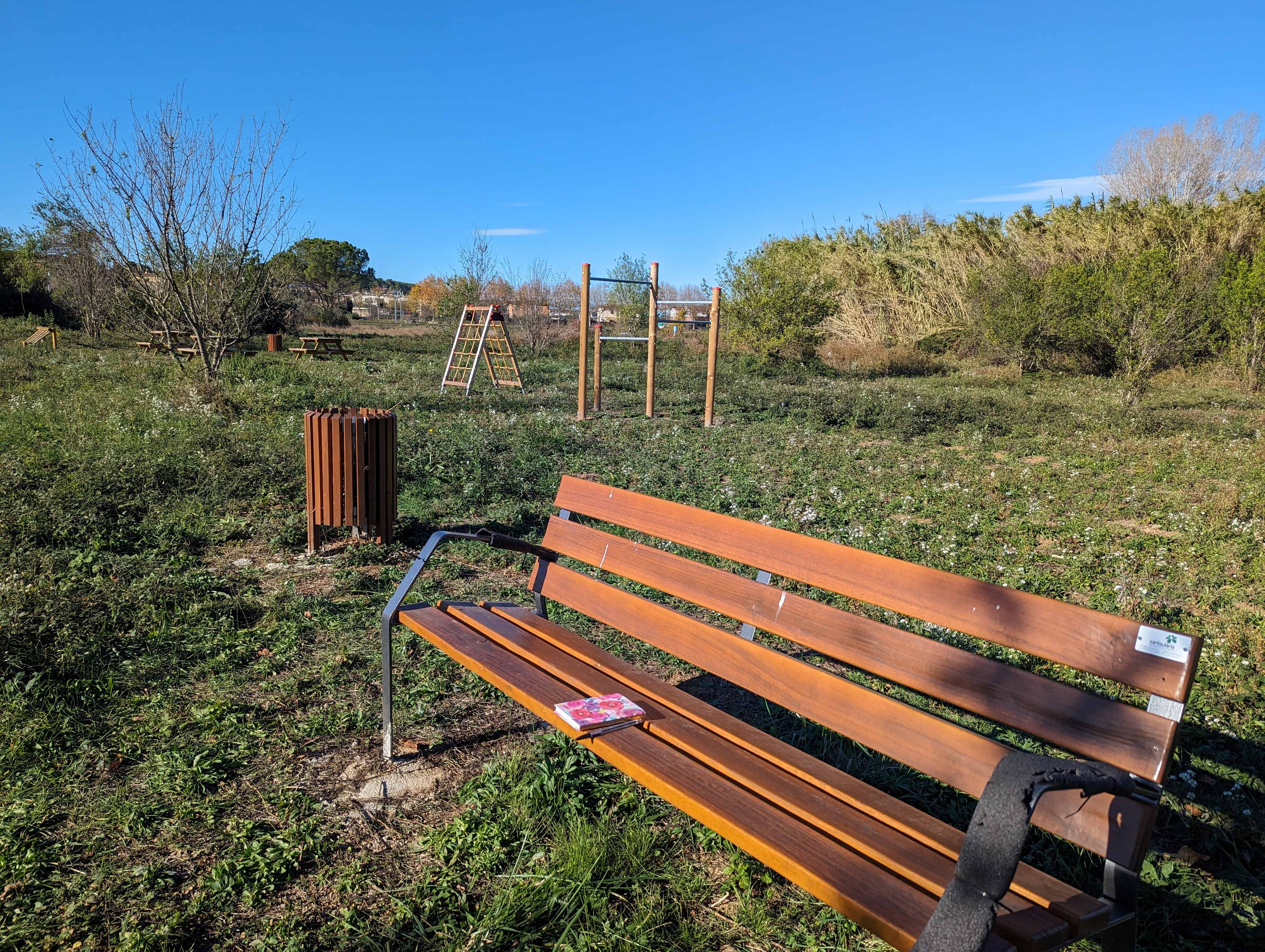
Stage 2 Listen to the water – Recreation area. Tree: 5 poplars
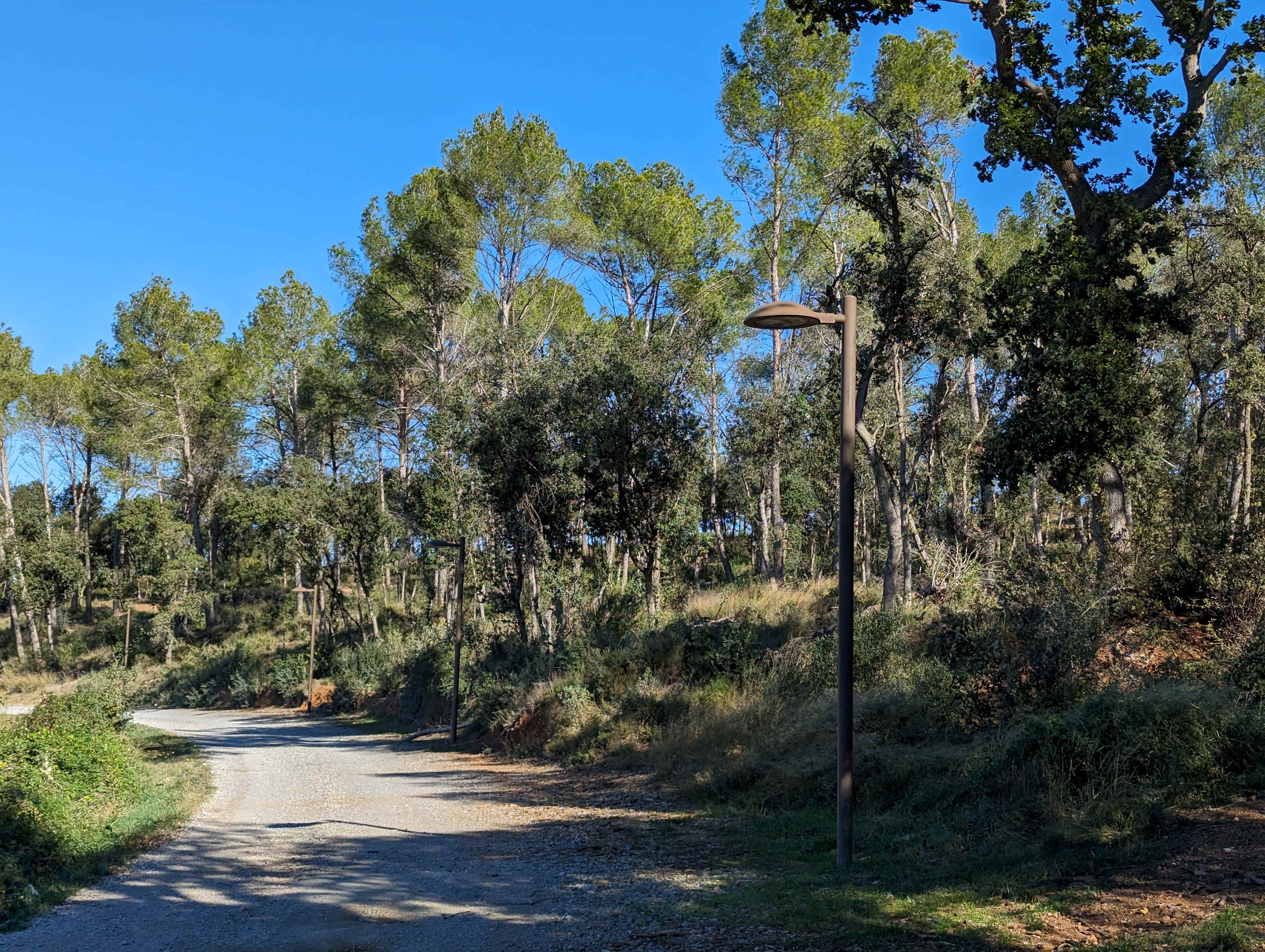
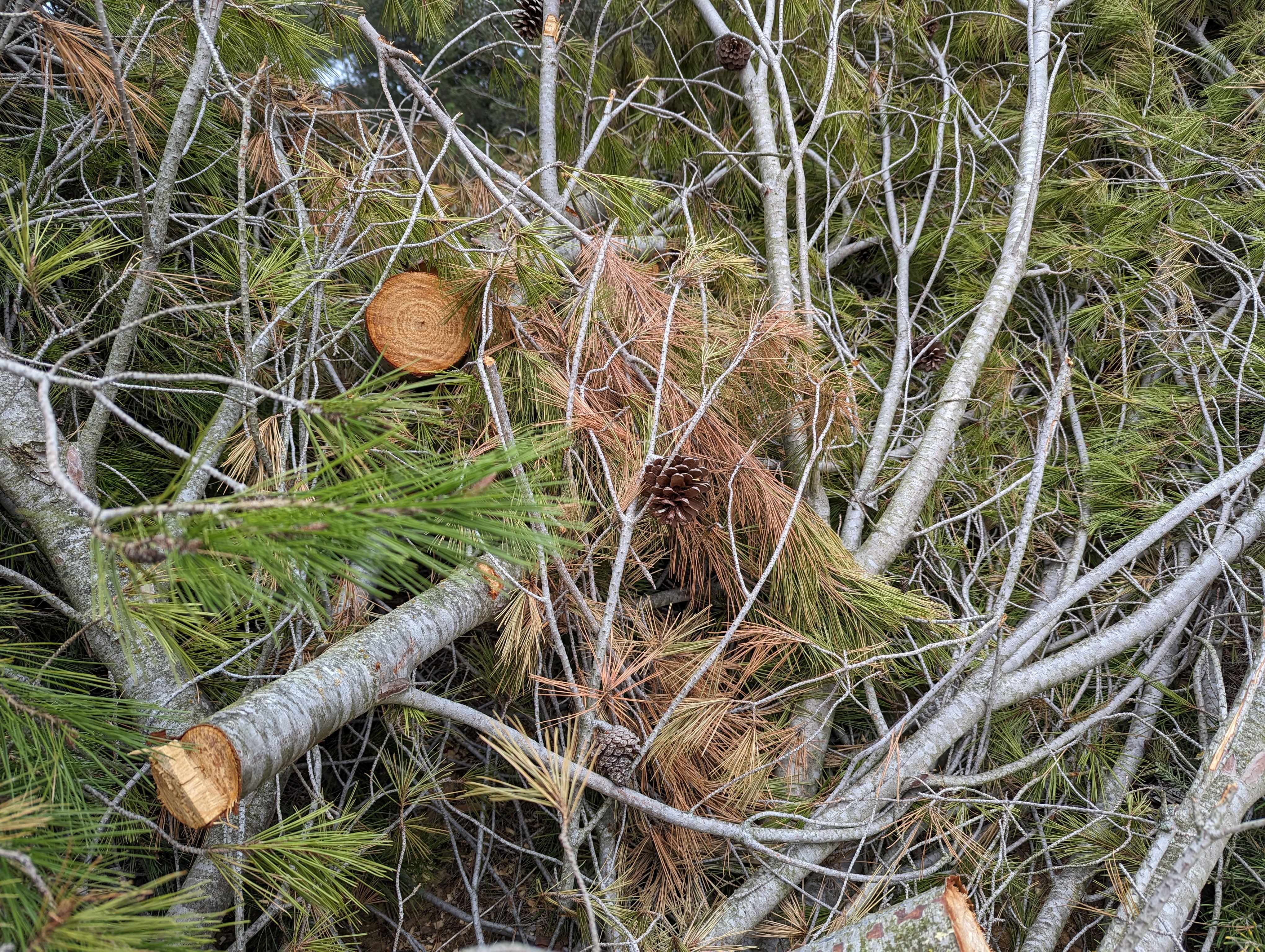
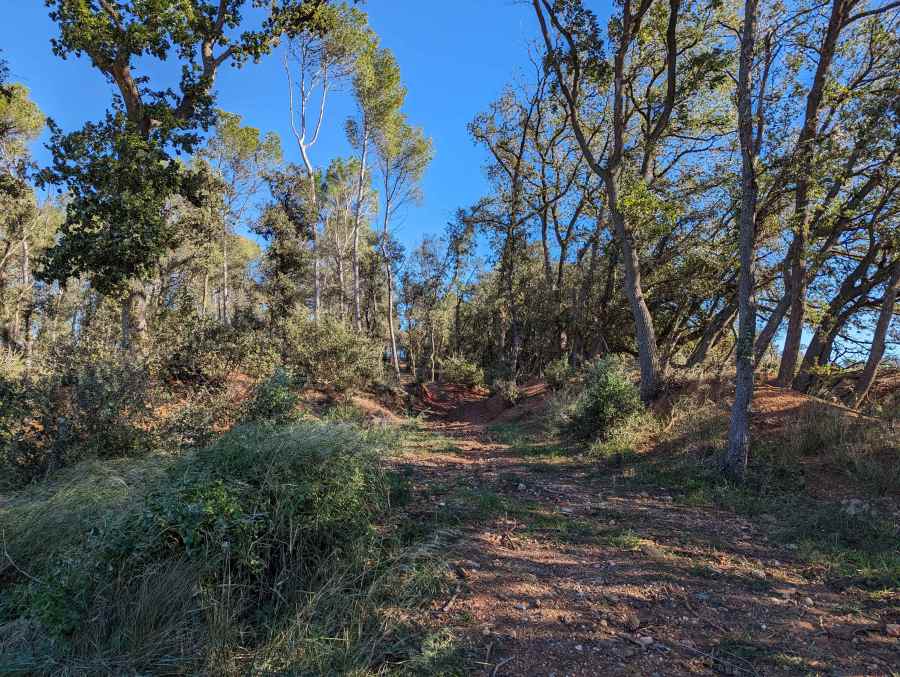
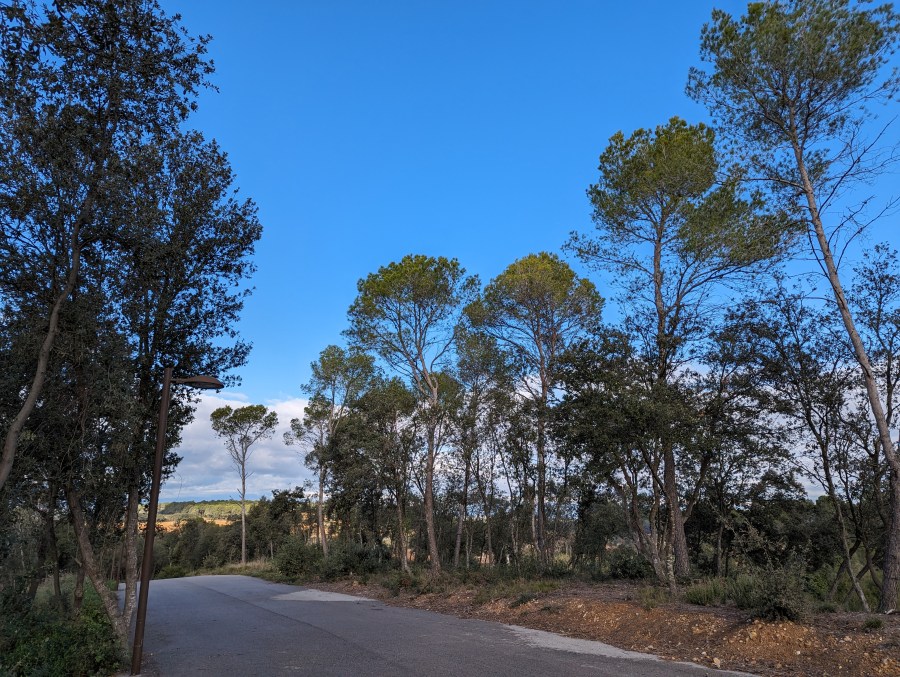
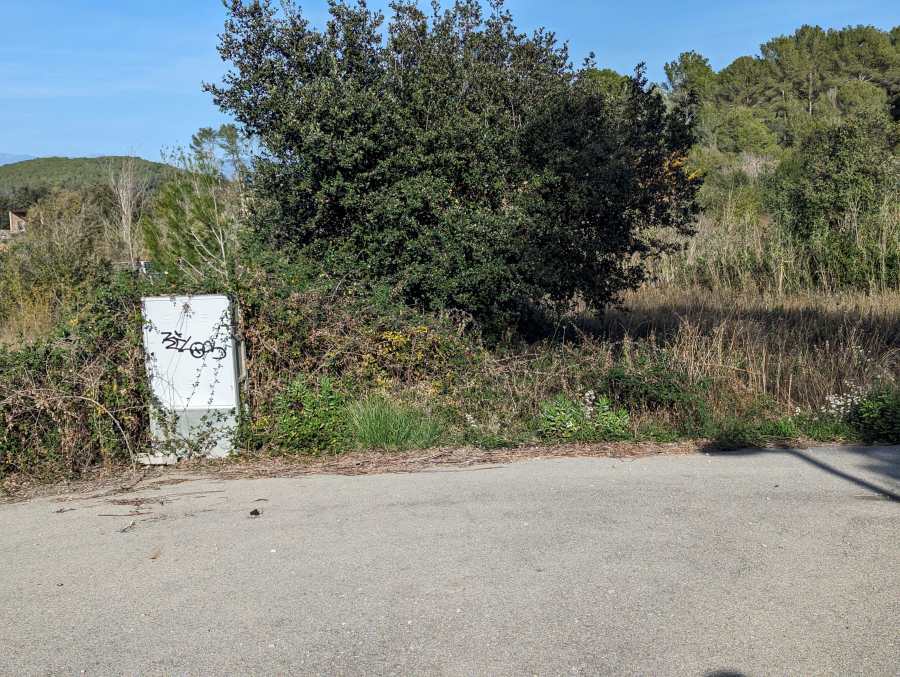
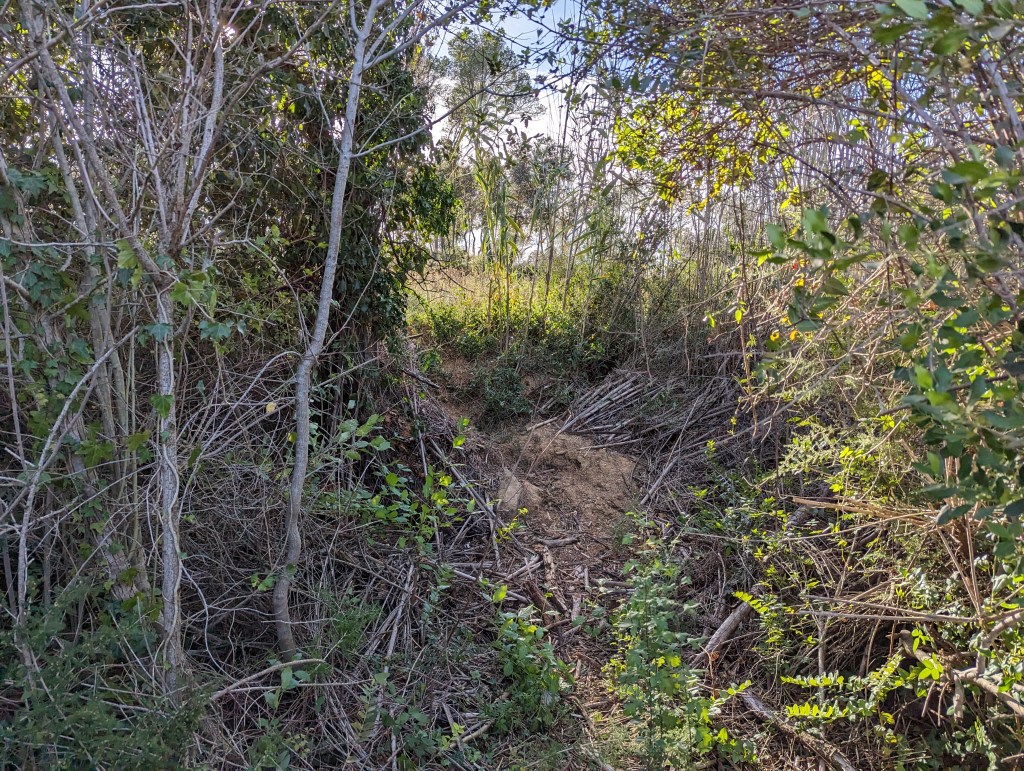
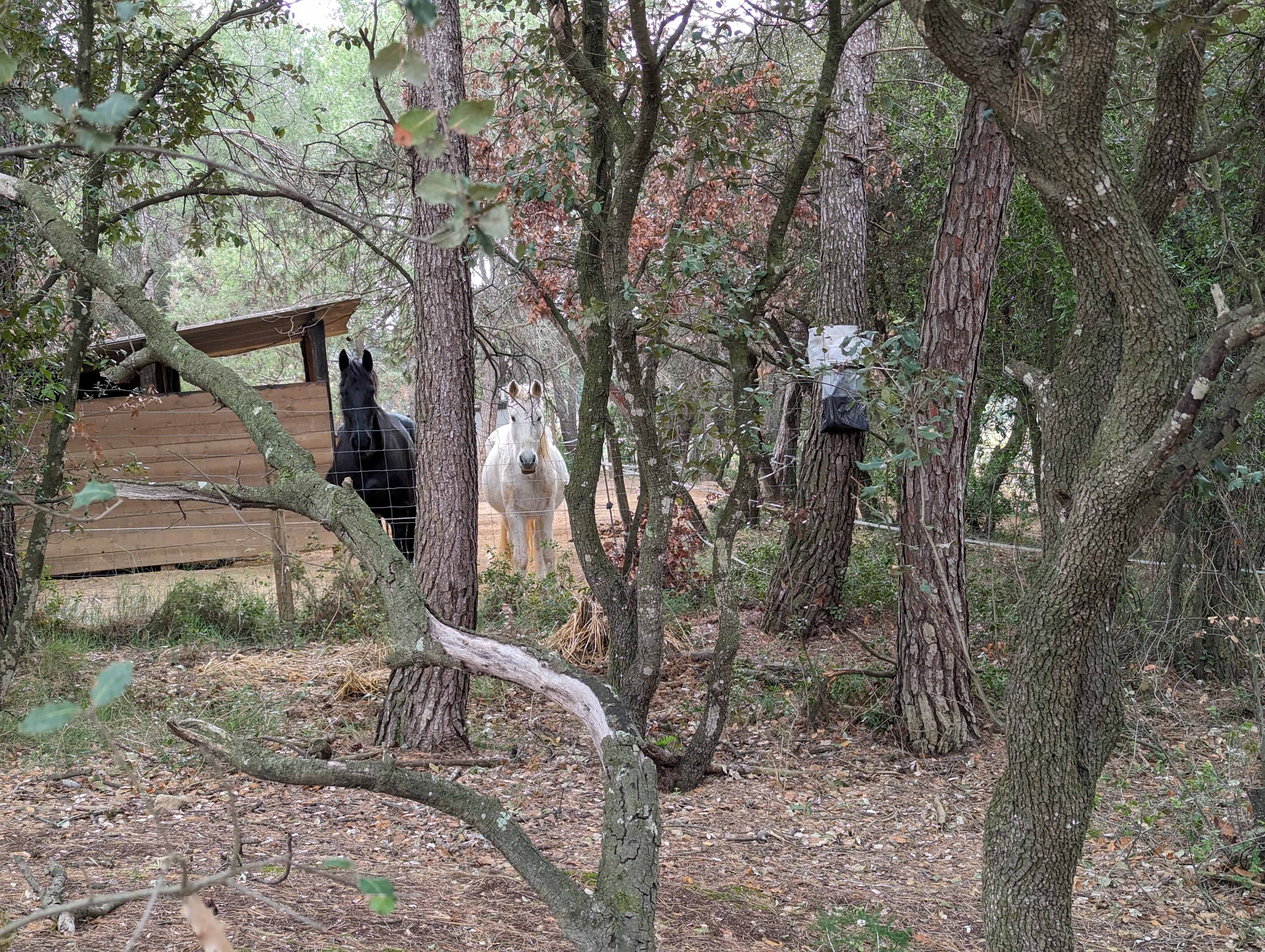
From the recreation area, walk on until the end of the path (there are two huge stones at the entrance). Cross over the road. Walk uphill through the woods along an uneven path (look out for 2 horses, 1 black and 1 white on your left), turn left along a road for a short time. Take the first right, a dead end, and walk right to the end. Look for a path through the meadow, but be careful of the small drop half way along where it turns sharply left. At the end of that path is another tarmac dead end road and stage 3 is on the left through a small gate.
Stage 3 Quiet – Nau Côclea. Trees: Umbrella and Scots pines
Stage 4a Passing. By the tree: White flowered acacia
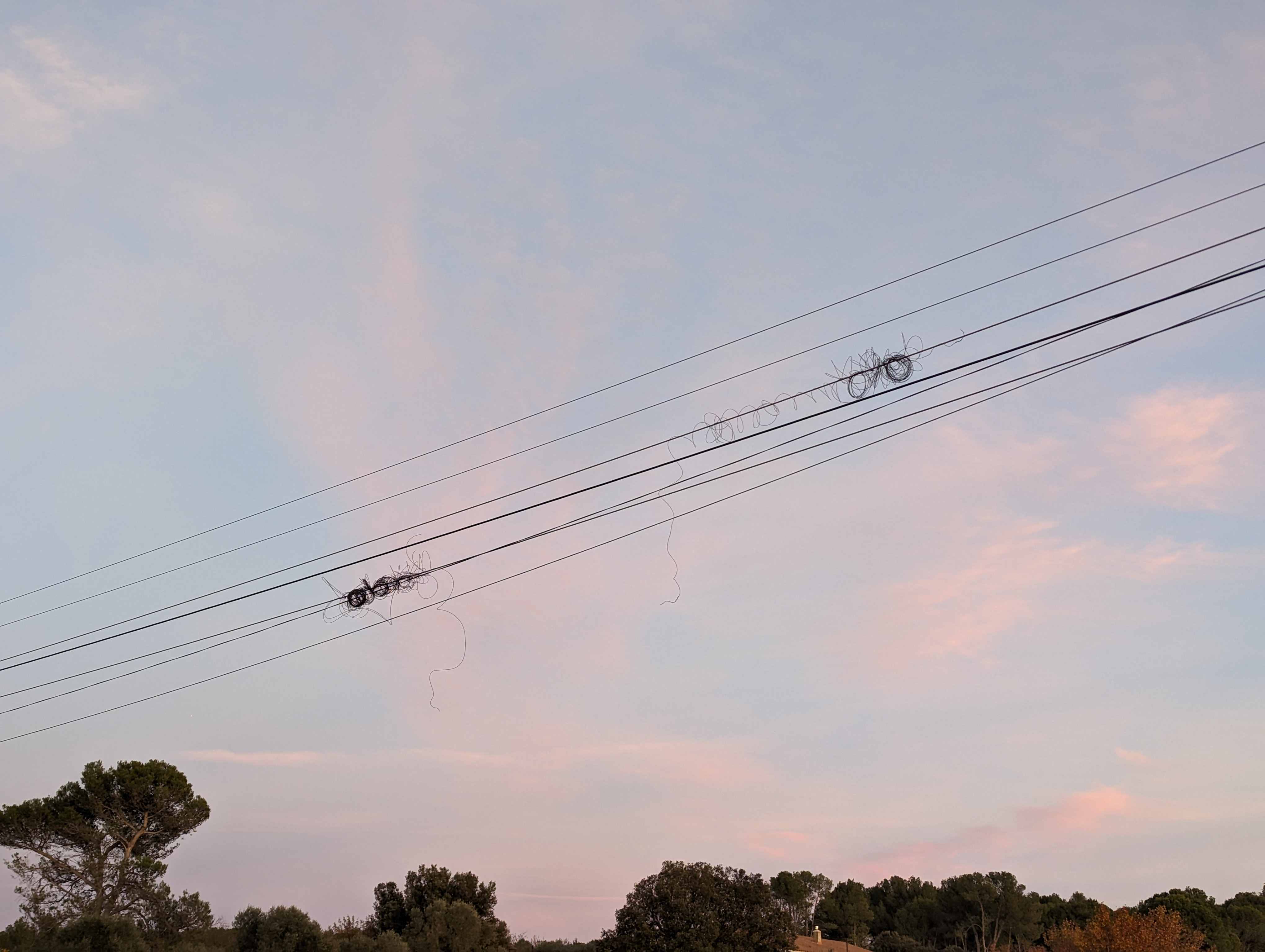
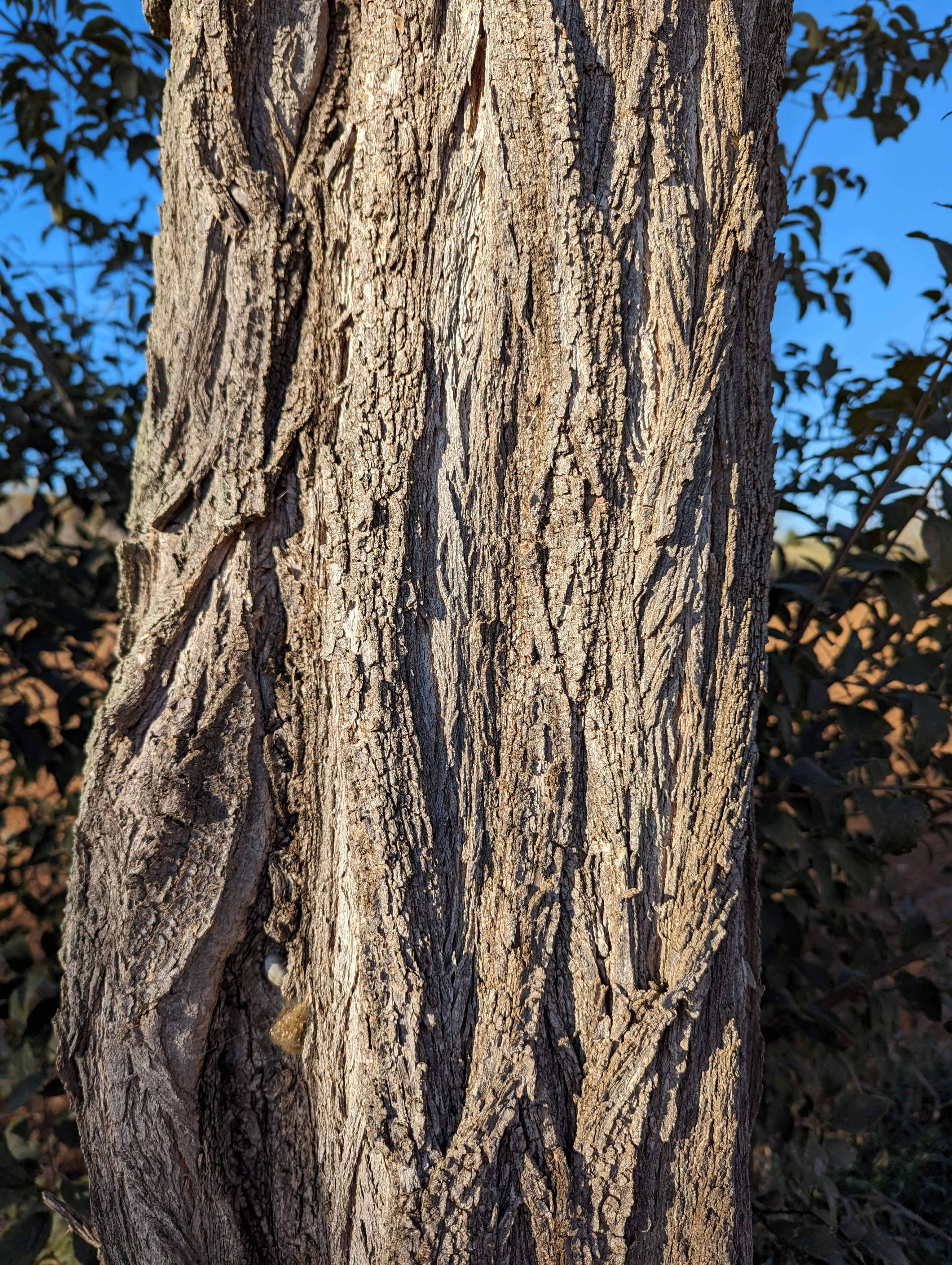
Stage 4b Corner – where Juscafesca, the railway, road, and fields meet. ‘Trees’: Bamboo
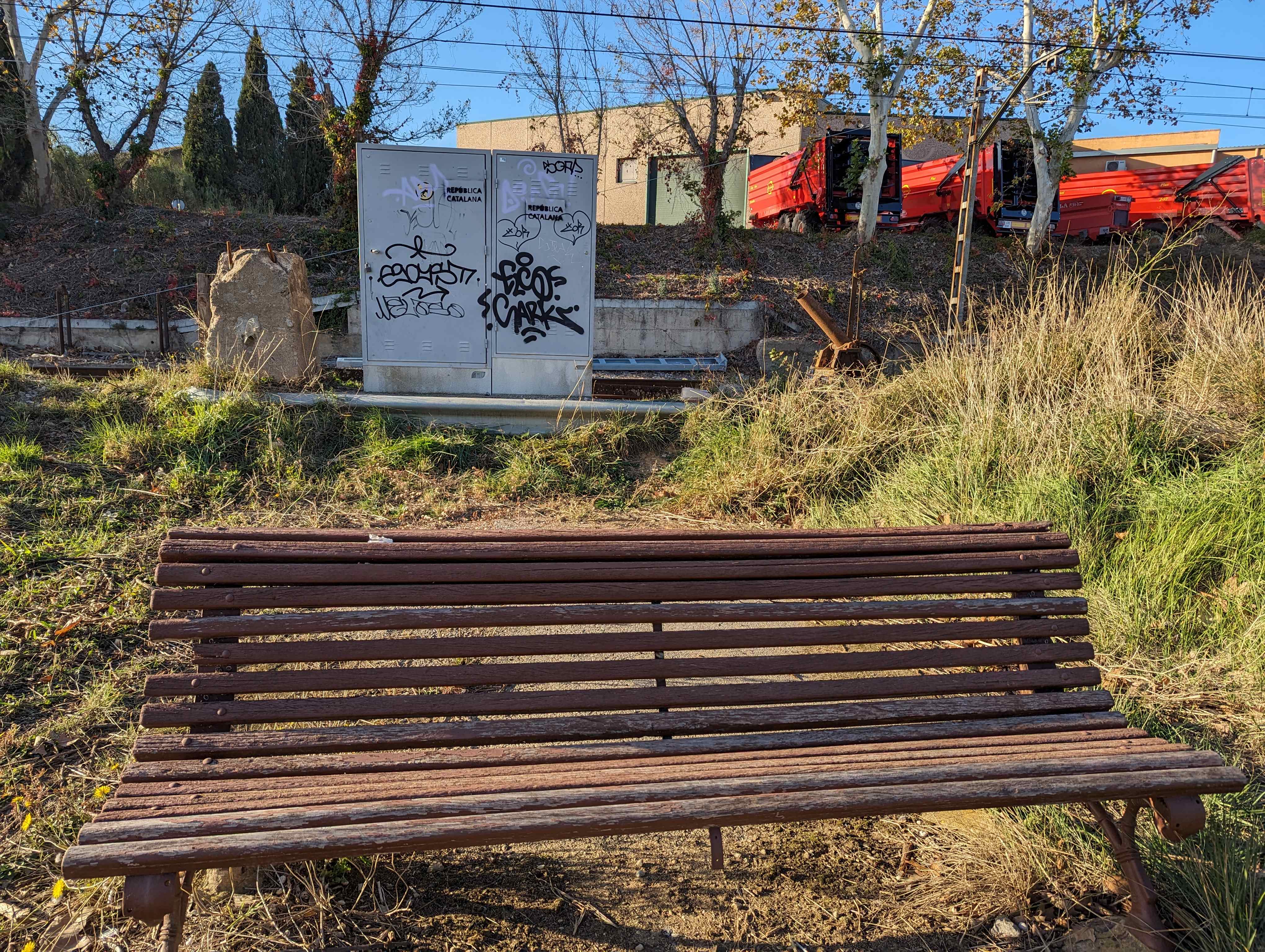
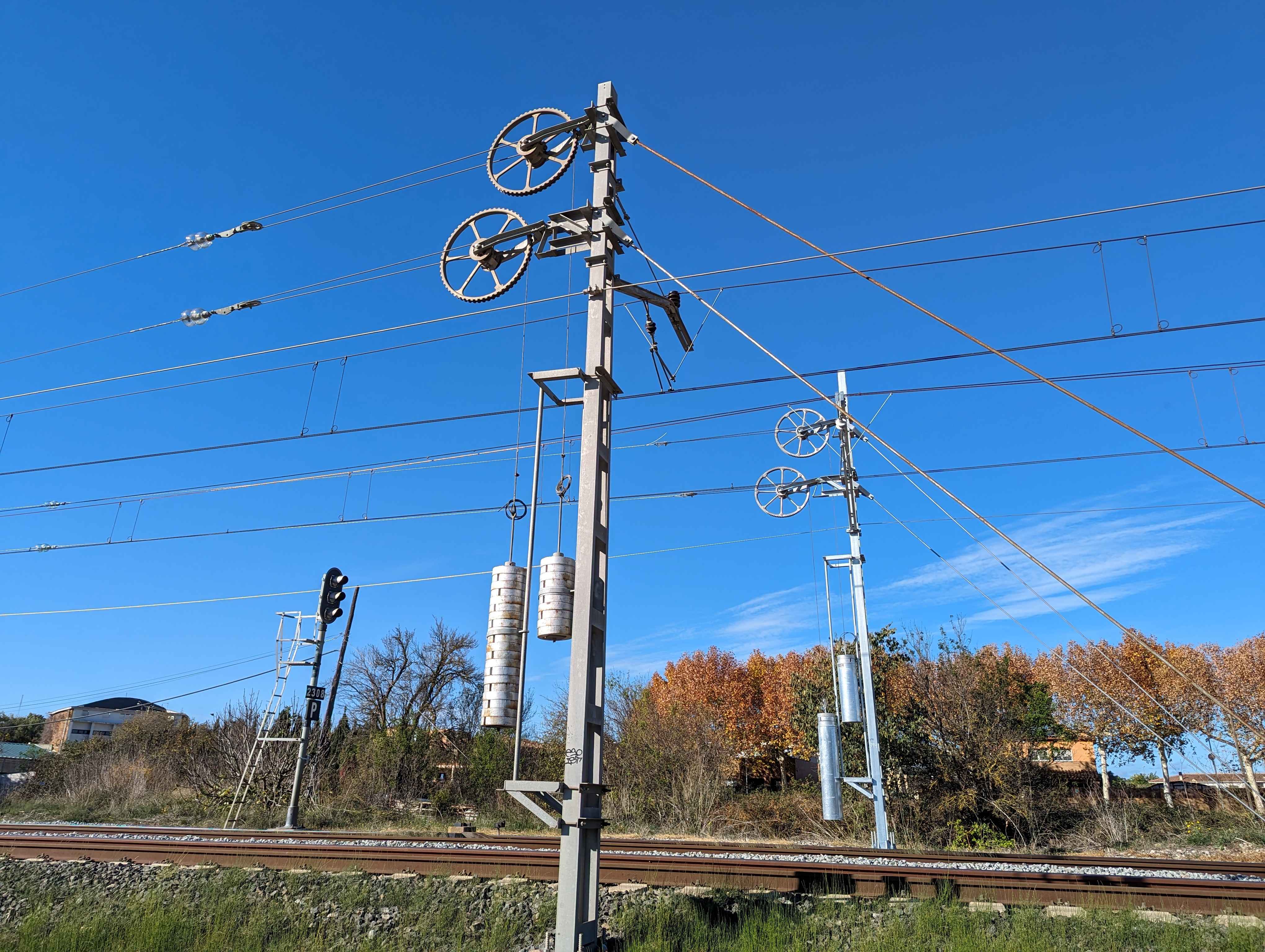
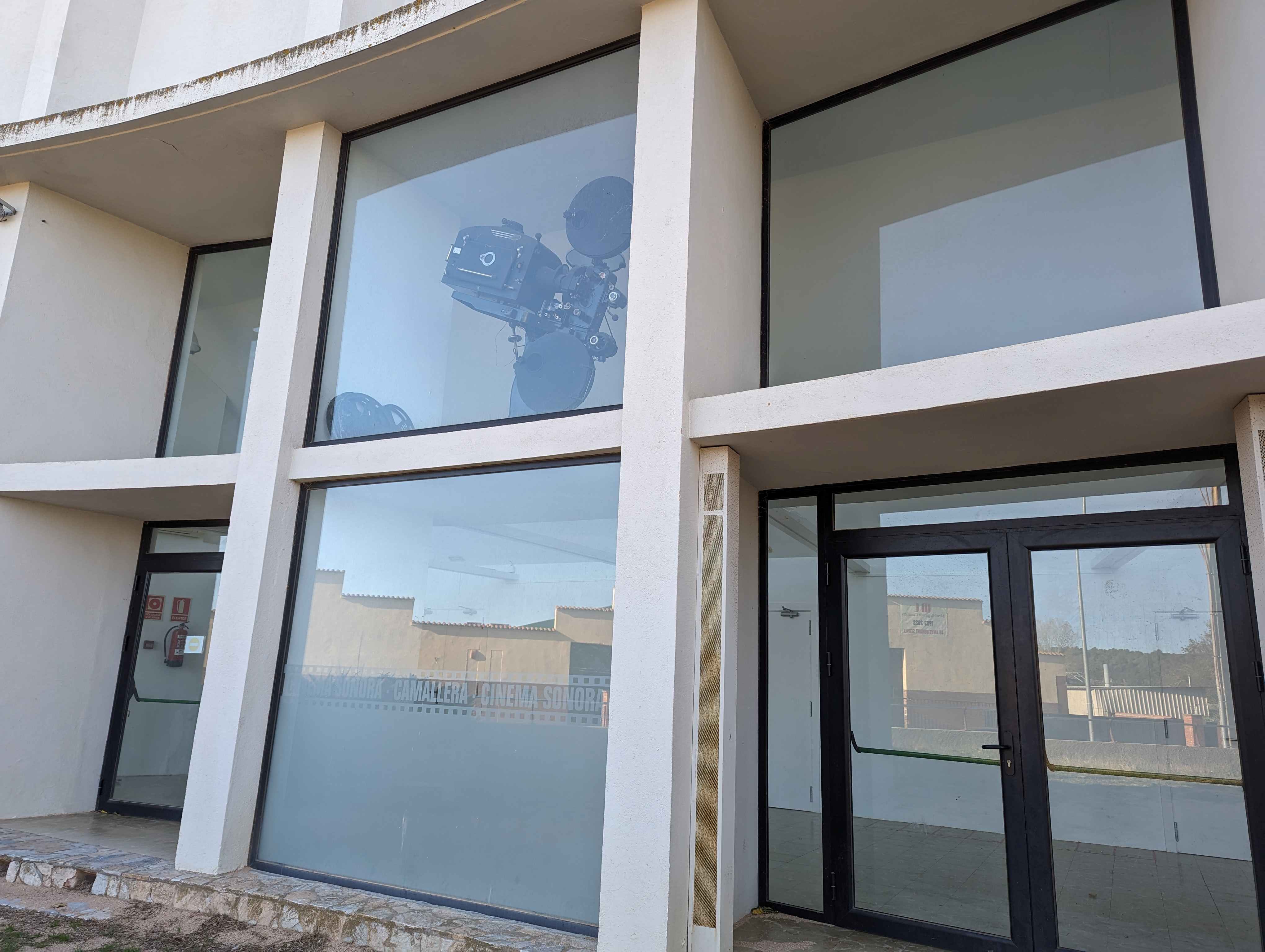
Stage 5 Junction – Cinema (not in use). Trees: Palms and Willows (2 of each)
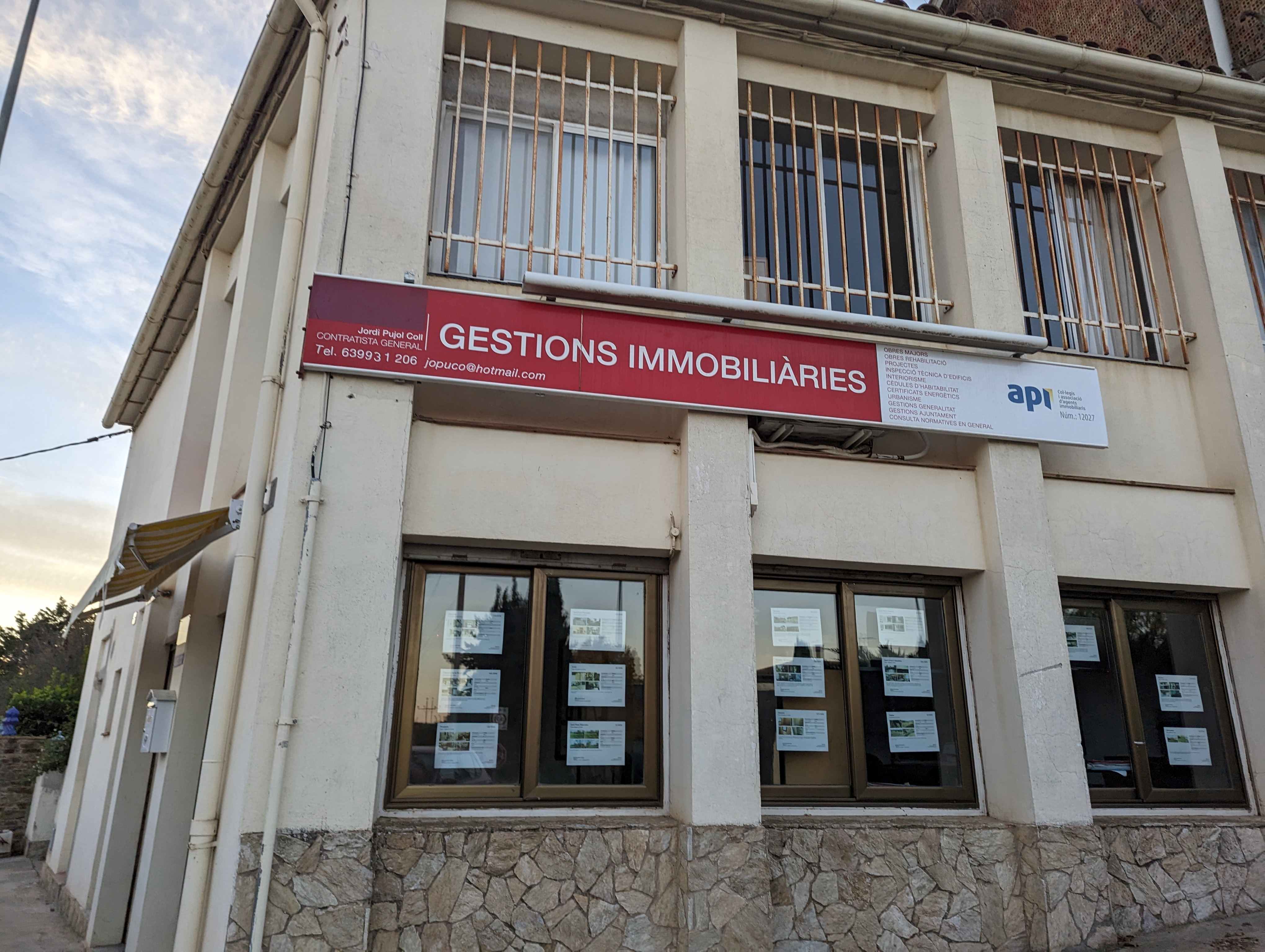
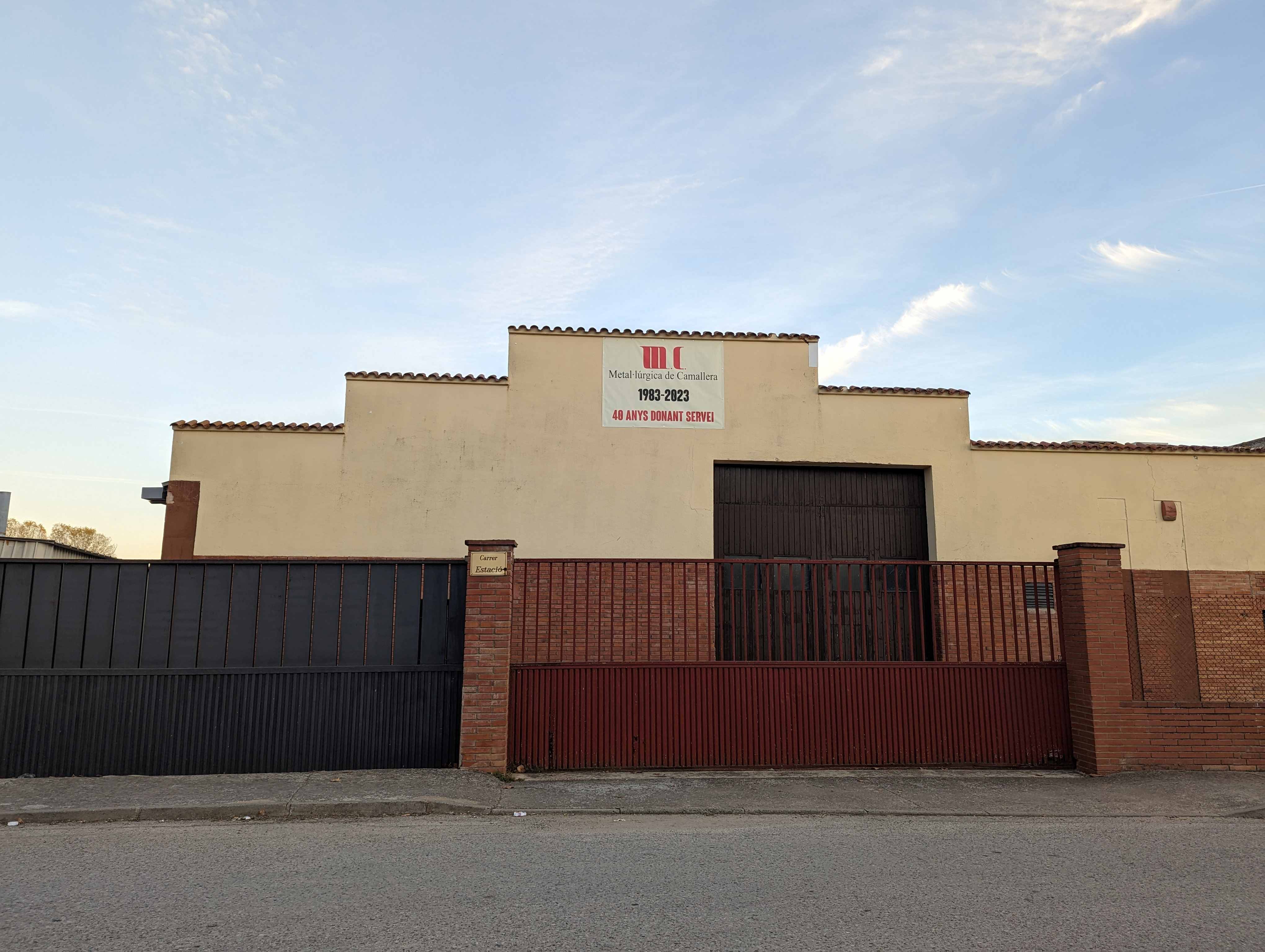
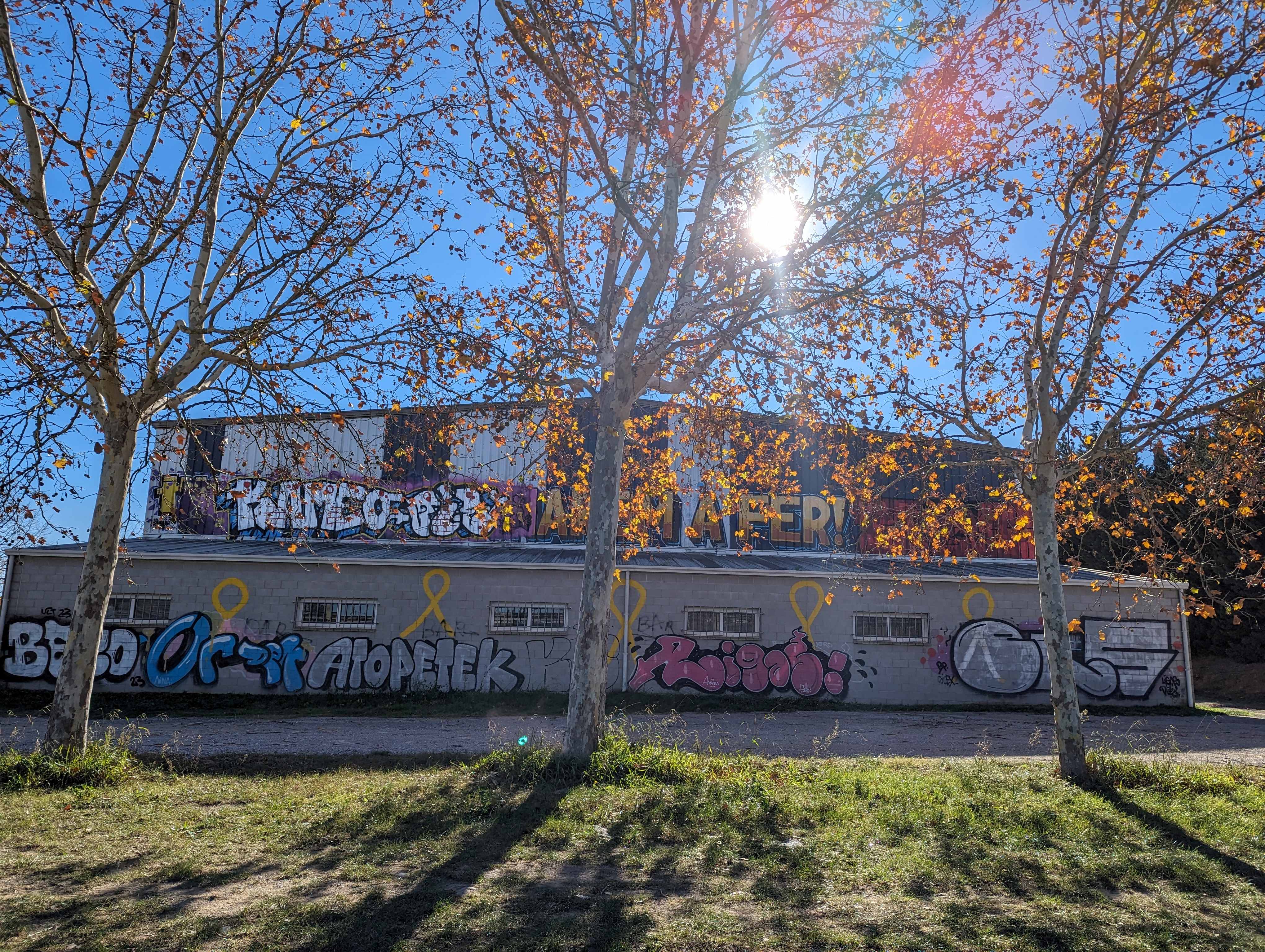
Stage 6 In-between – Back of the Oficina Rural de Correus (post office) / Pavello poliesportif (sports centre) building. Trees: 13 Planes
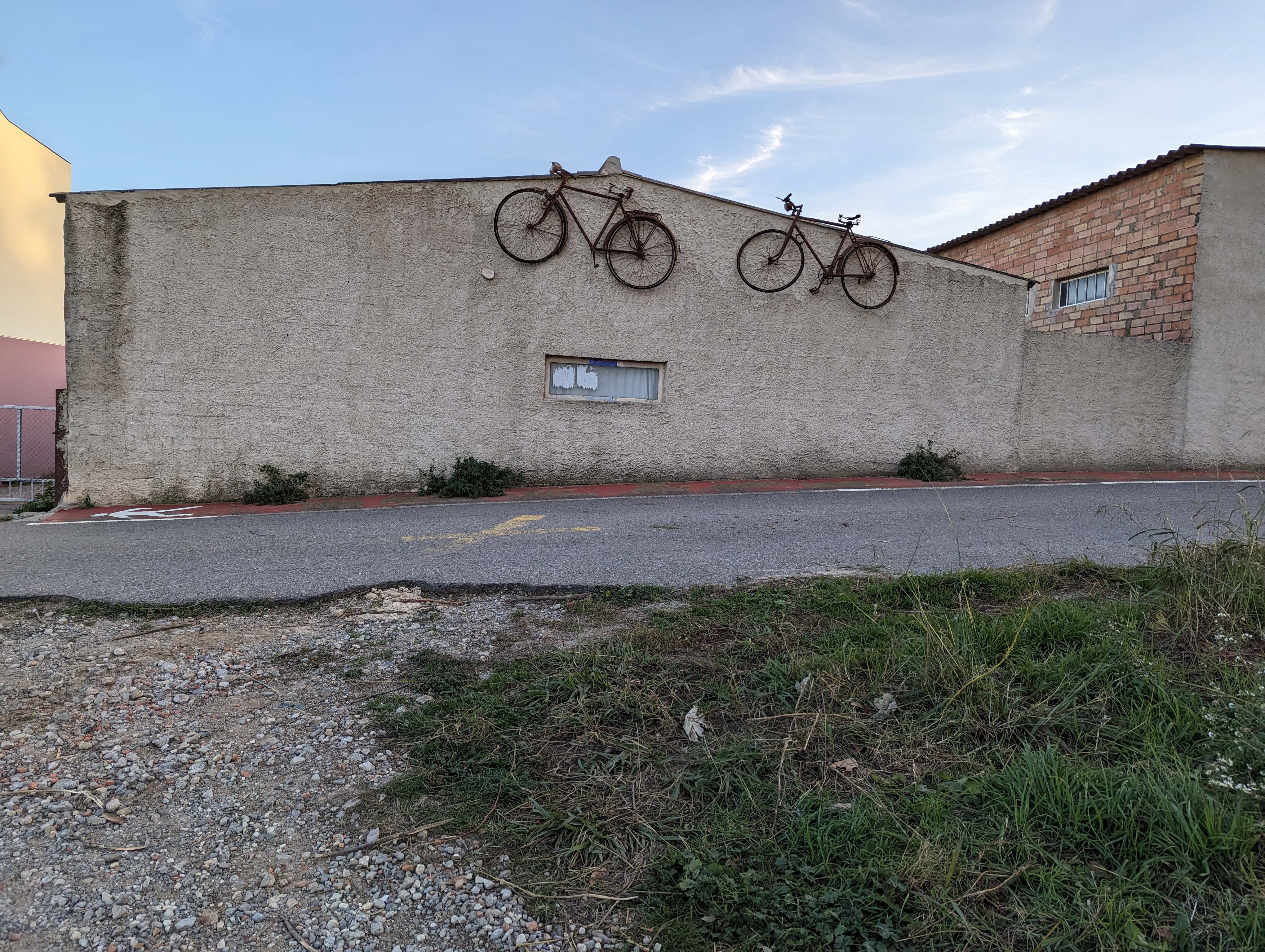
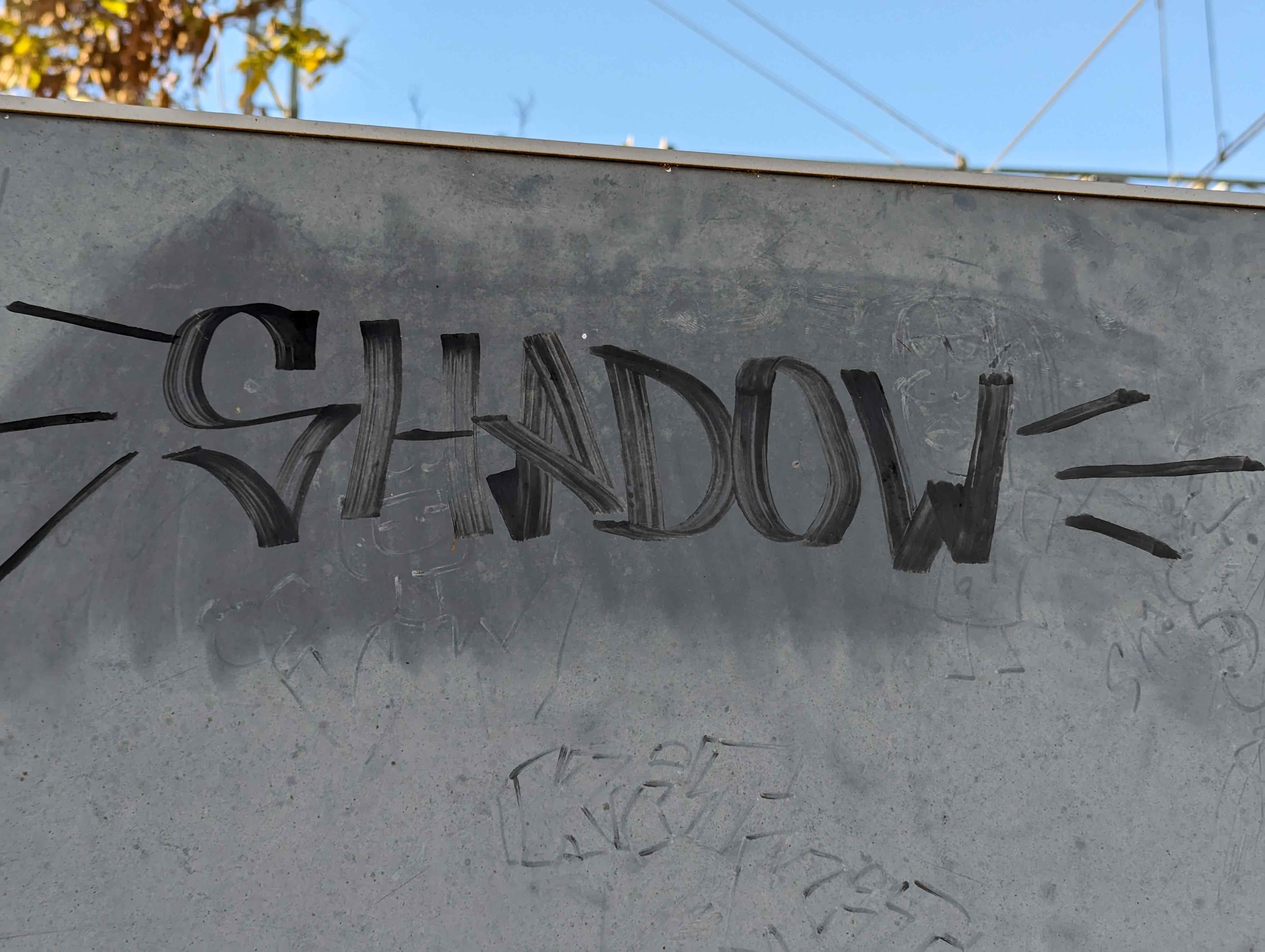
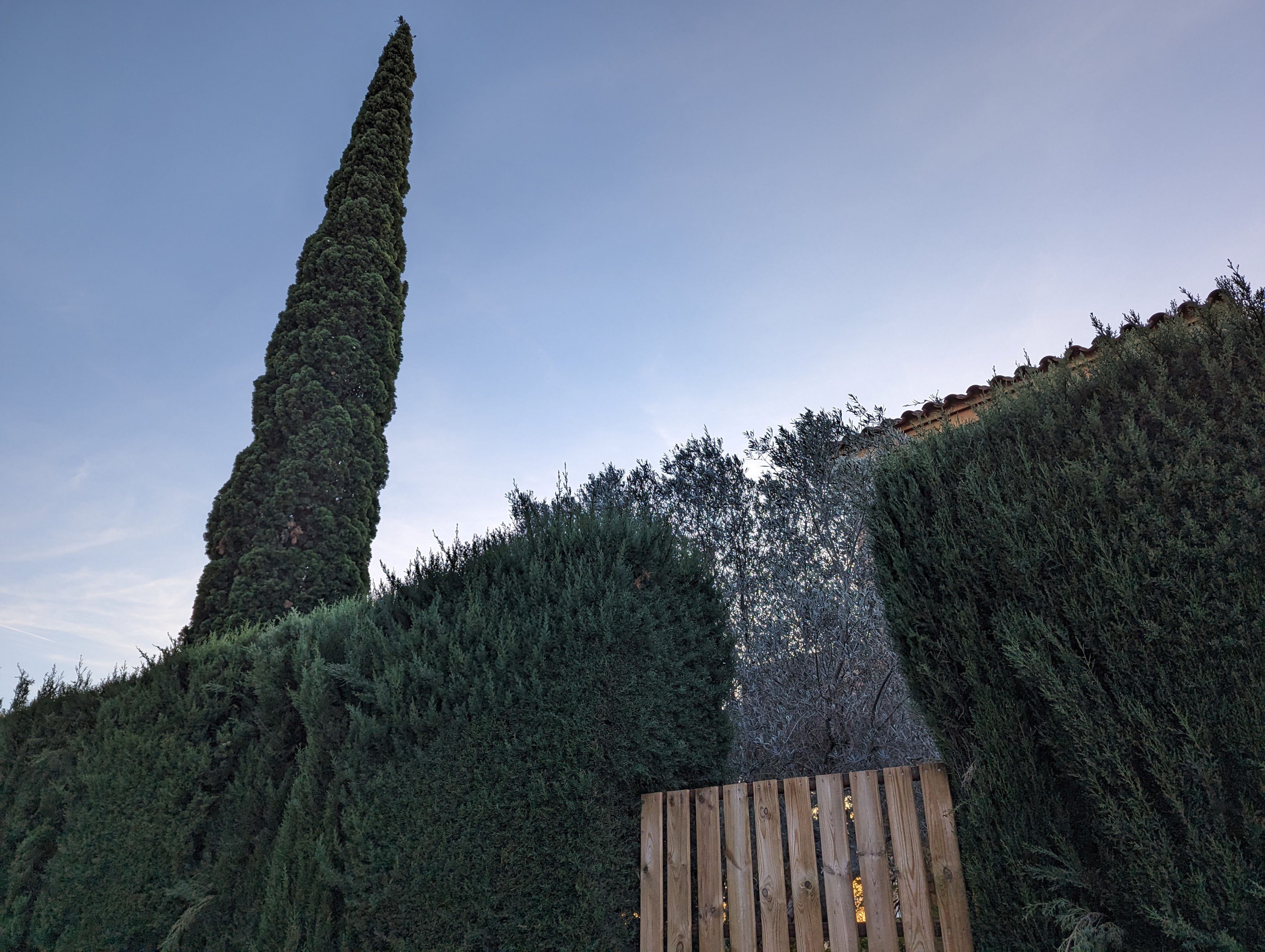
Stage 7 Air- Carrer Tramuntana. Trees: Cyprus
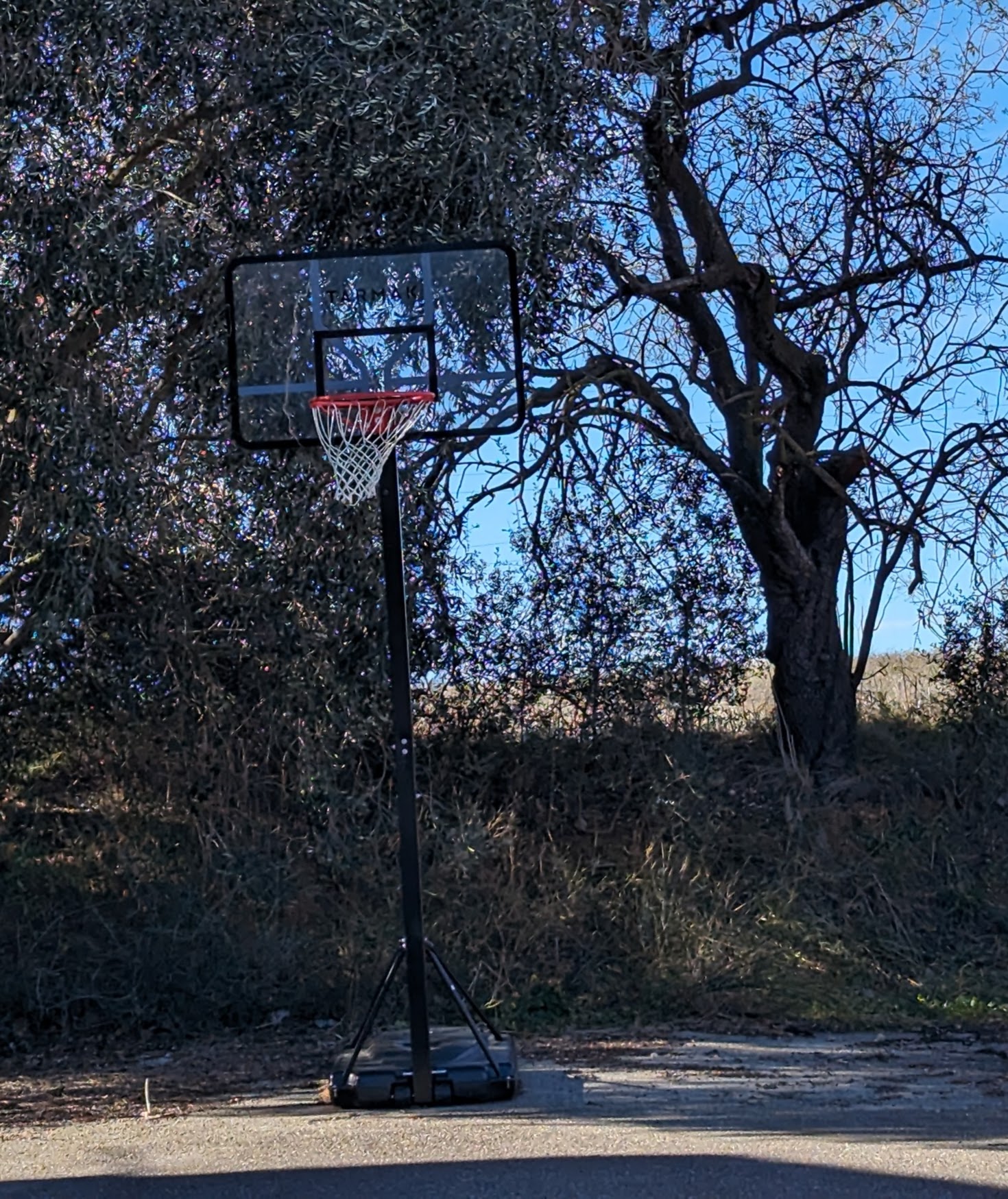
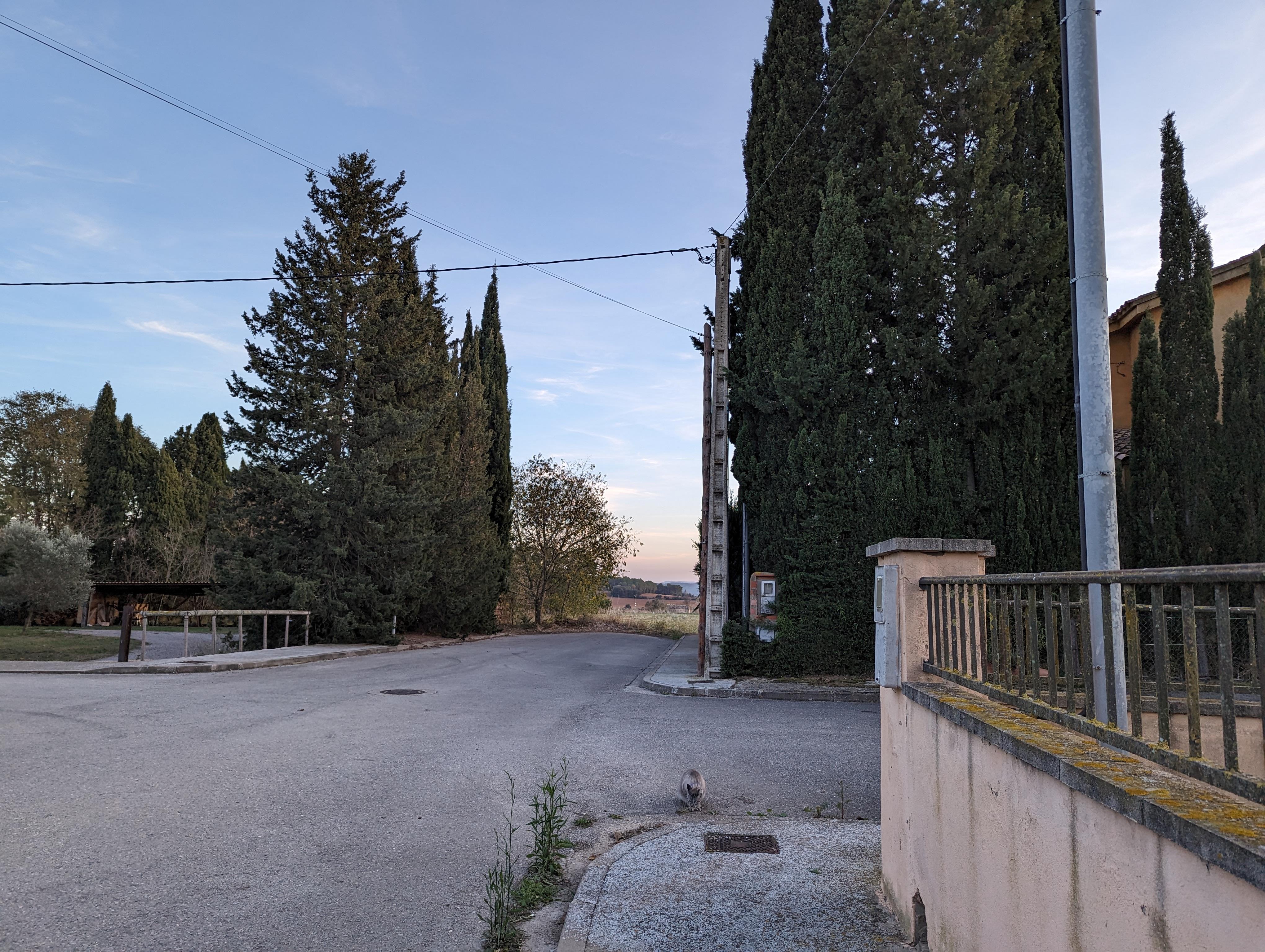
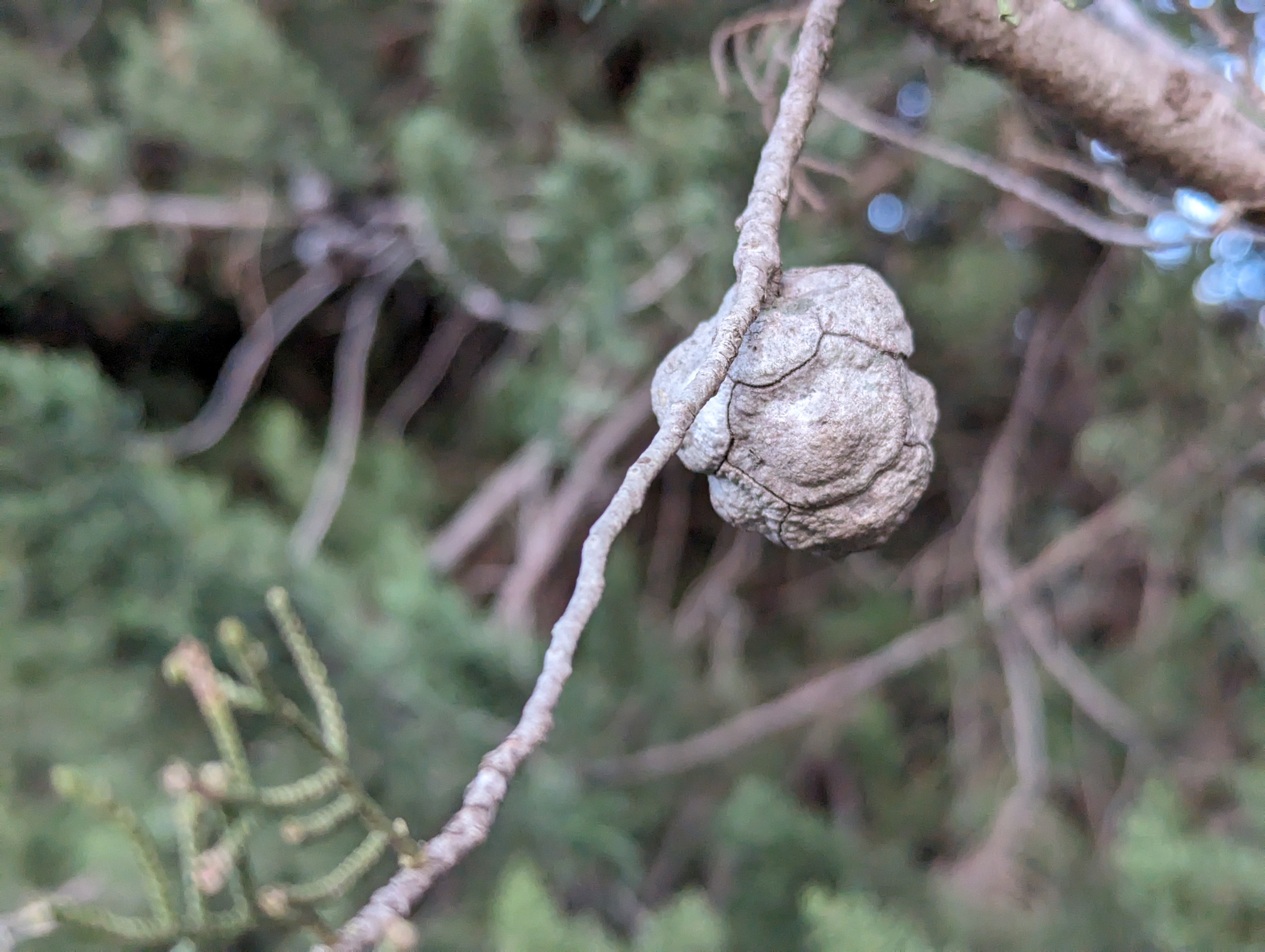
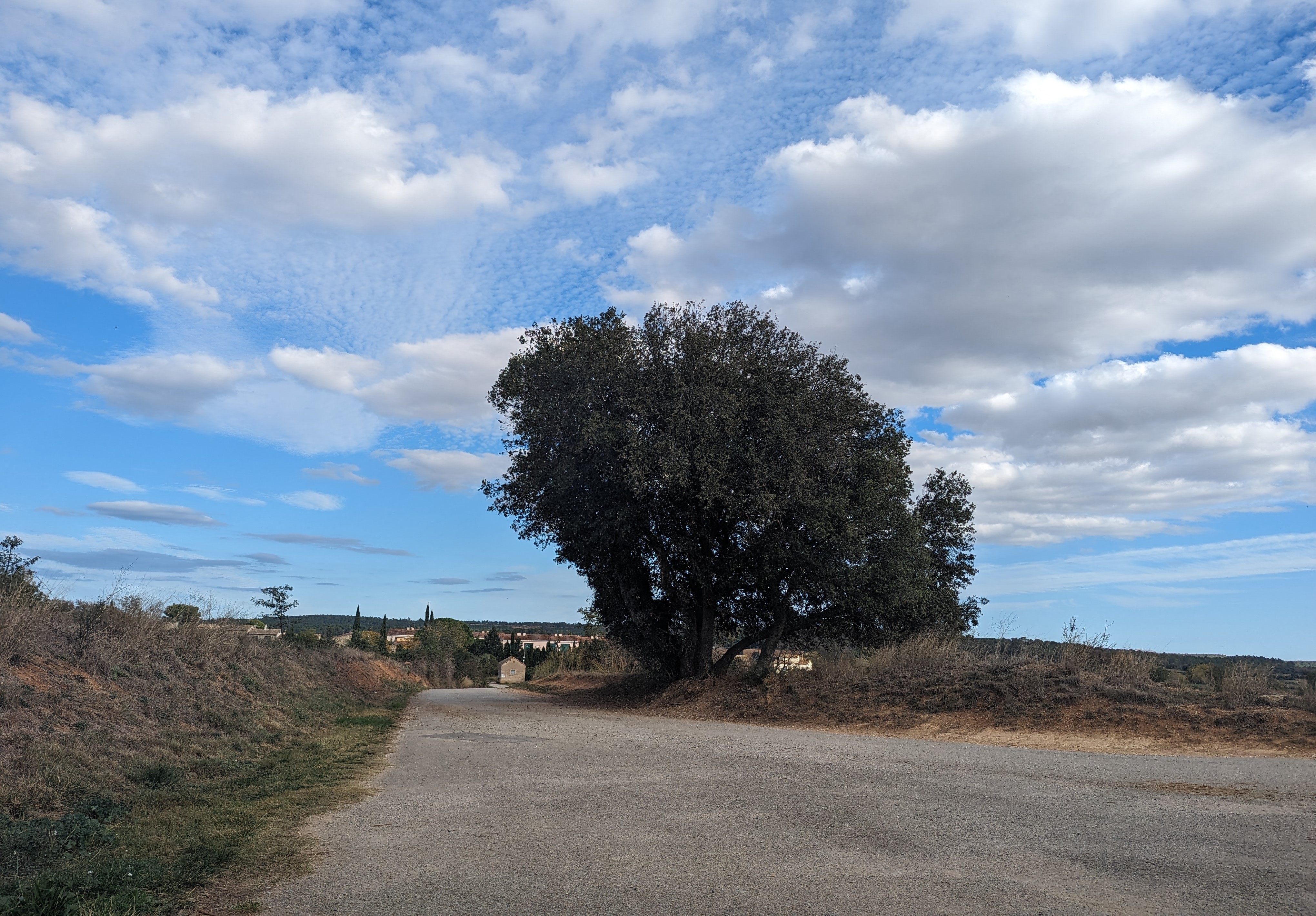
Stage 8 Transition – Cemetery. Tree: Kermes Oak
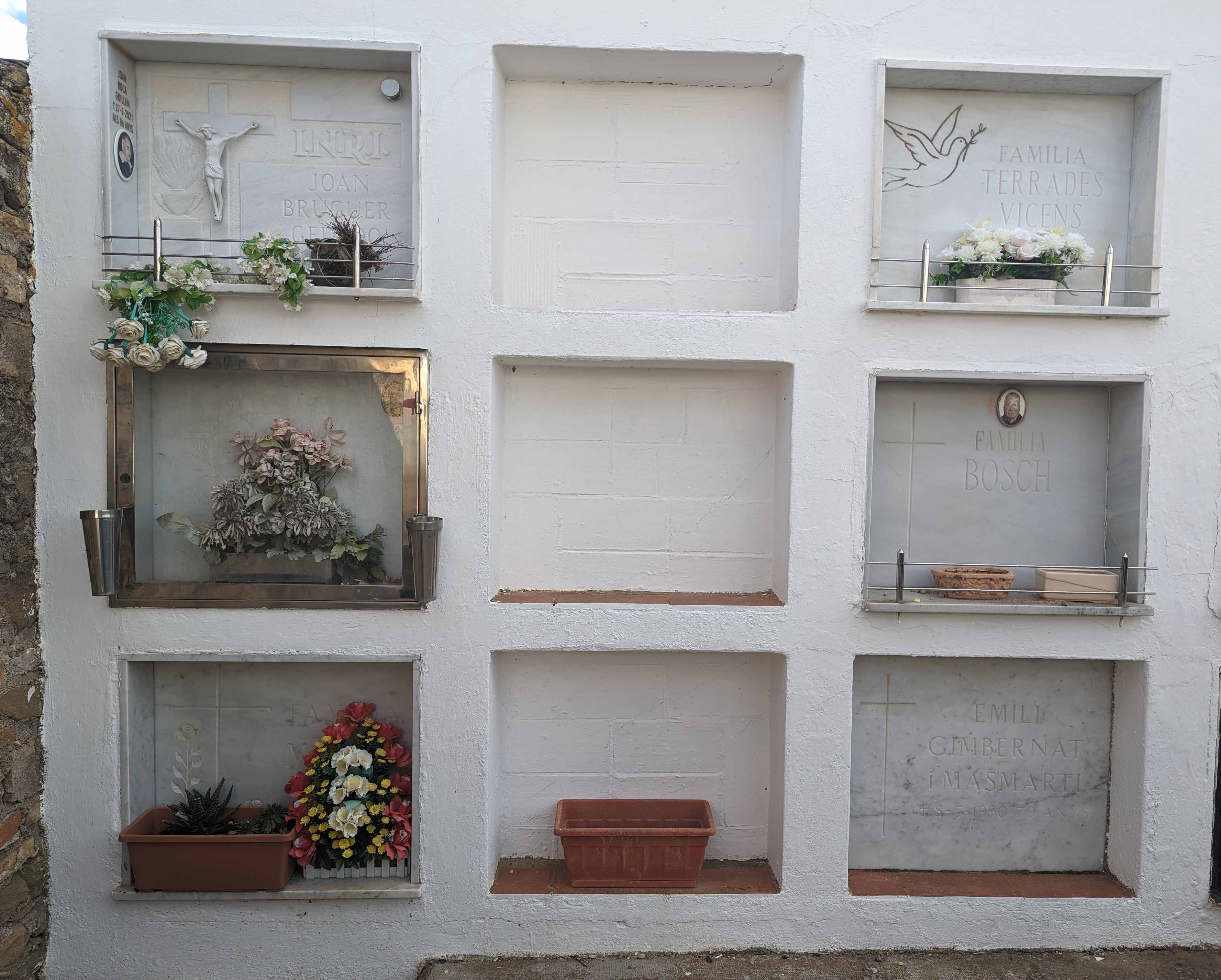
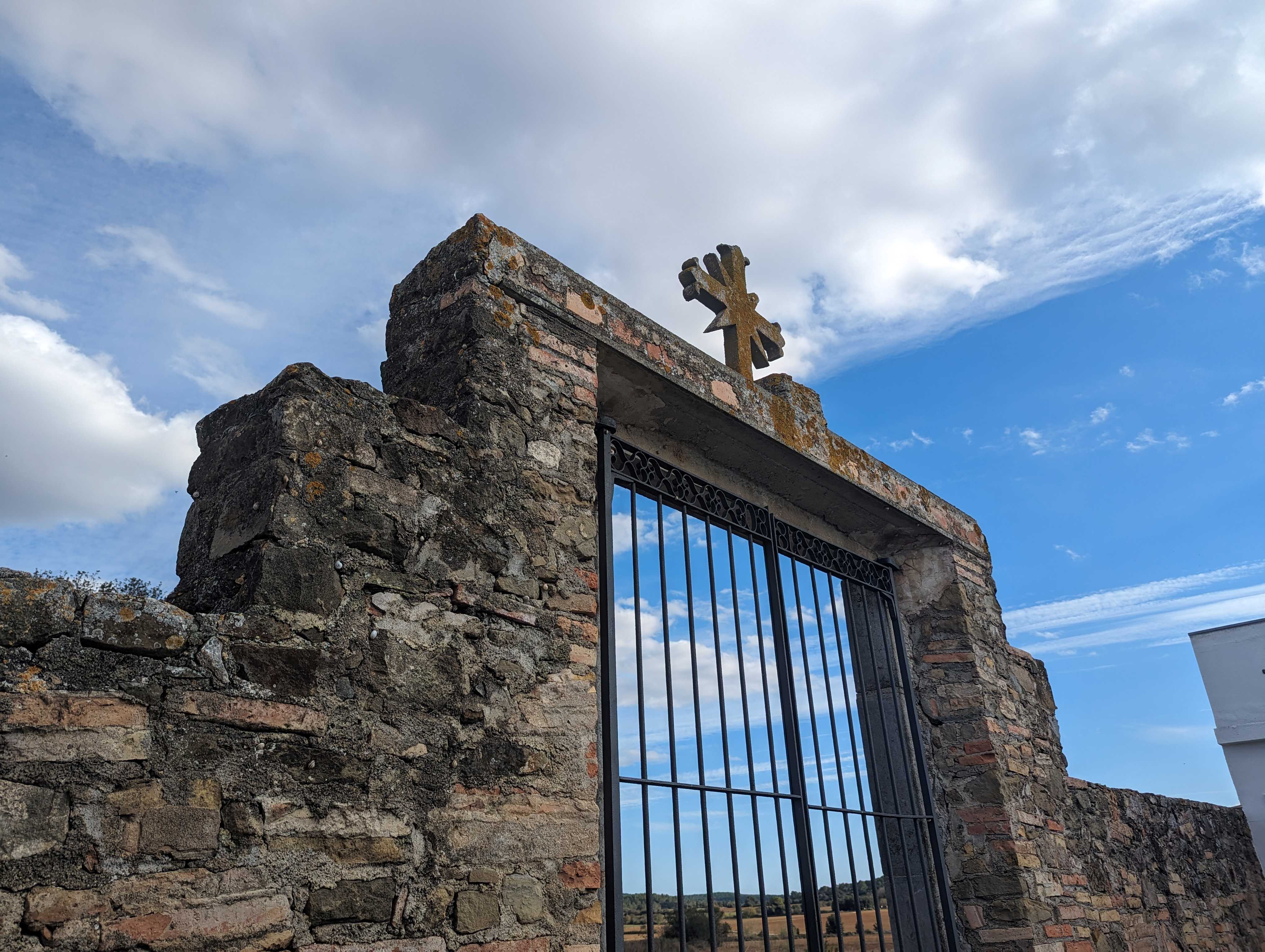
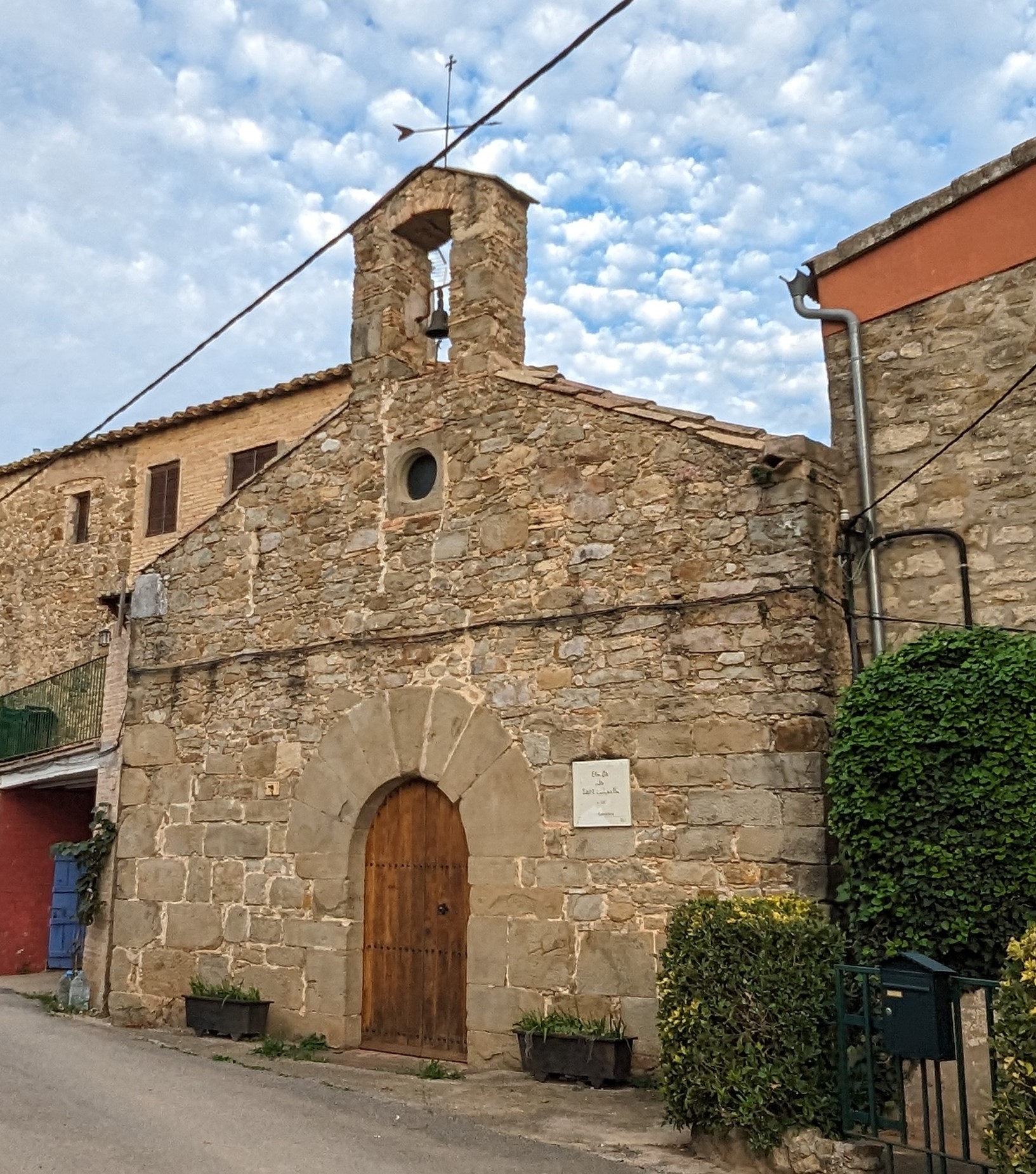
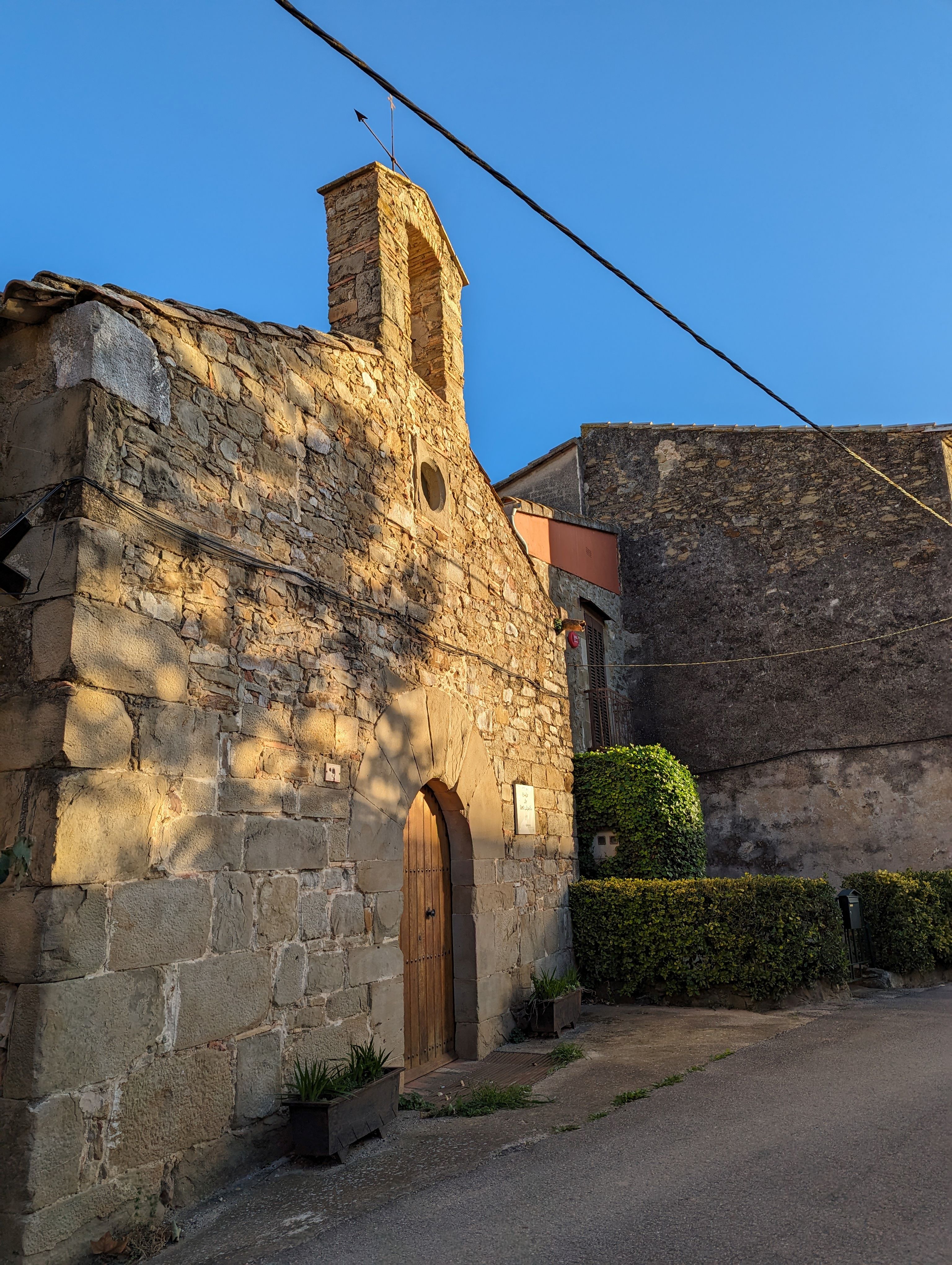
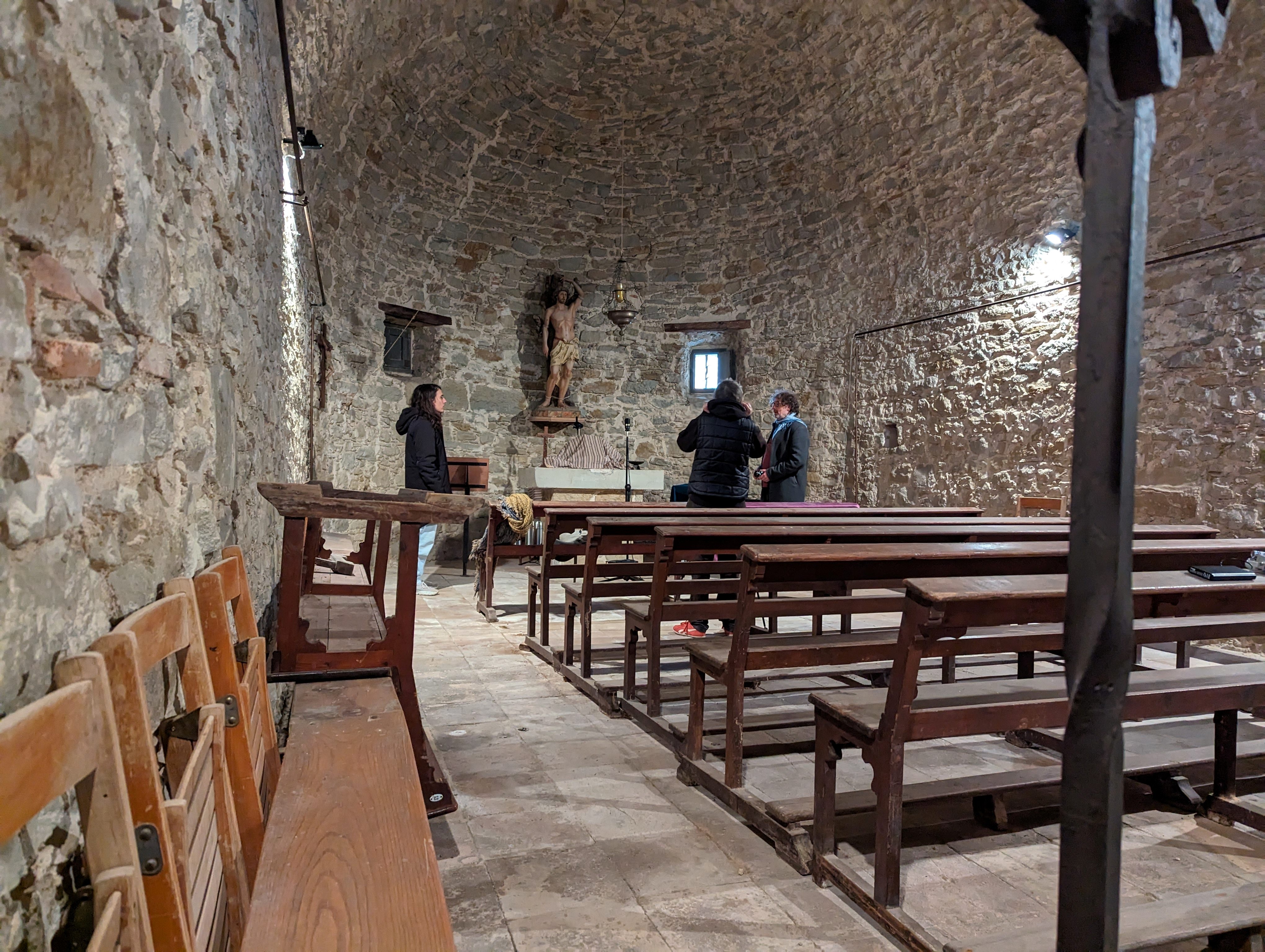
Stage 9 Deepen – Hermitage de Sant Sebastiá. Tree: Fig
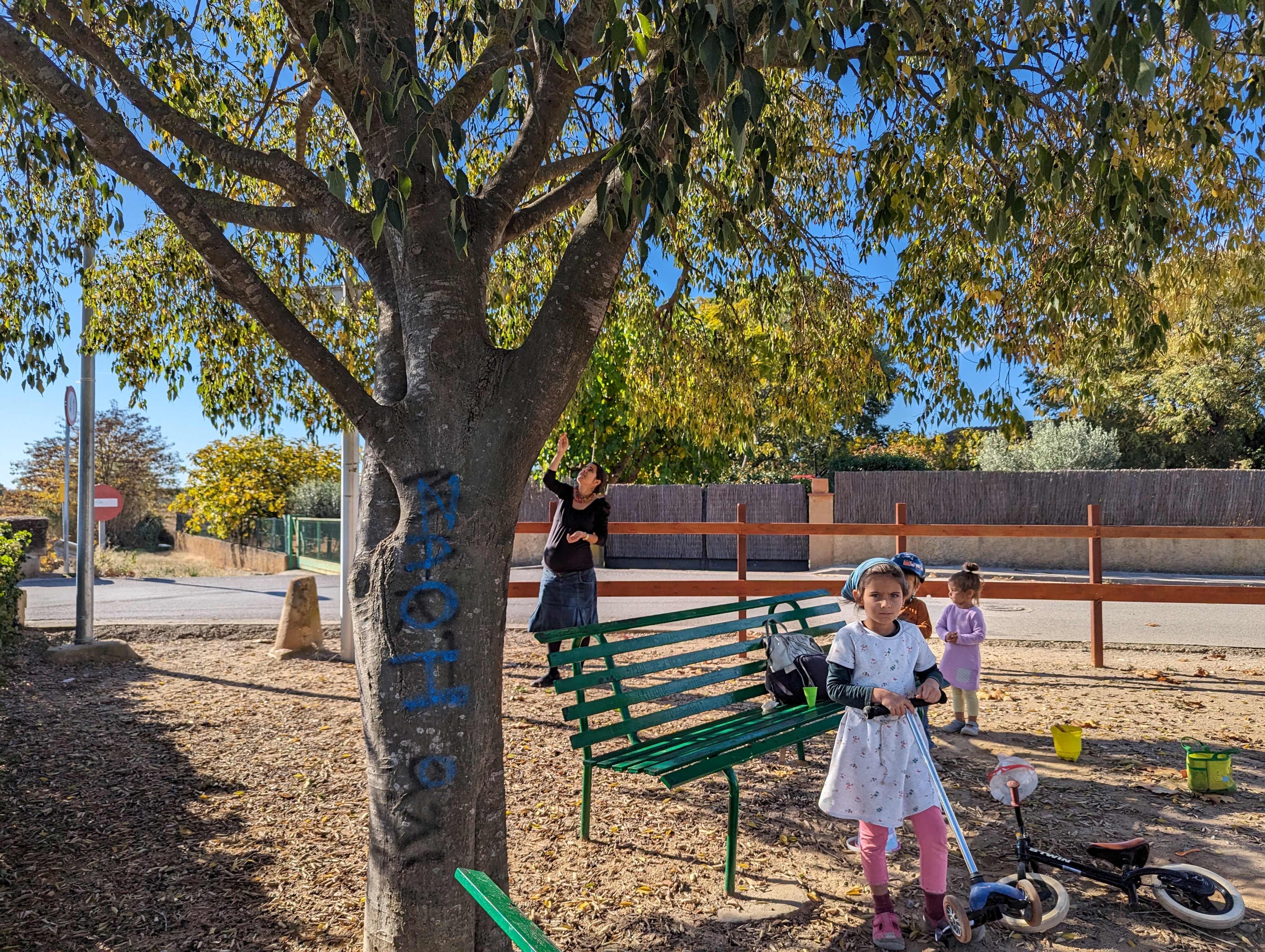
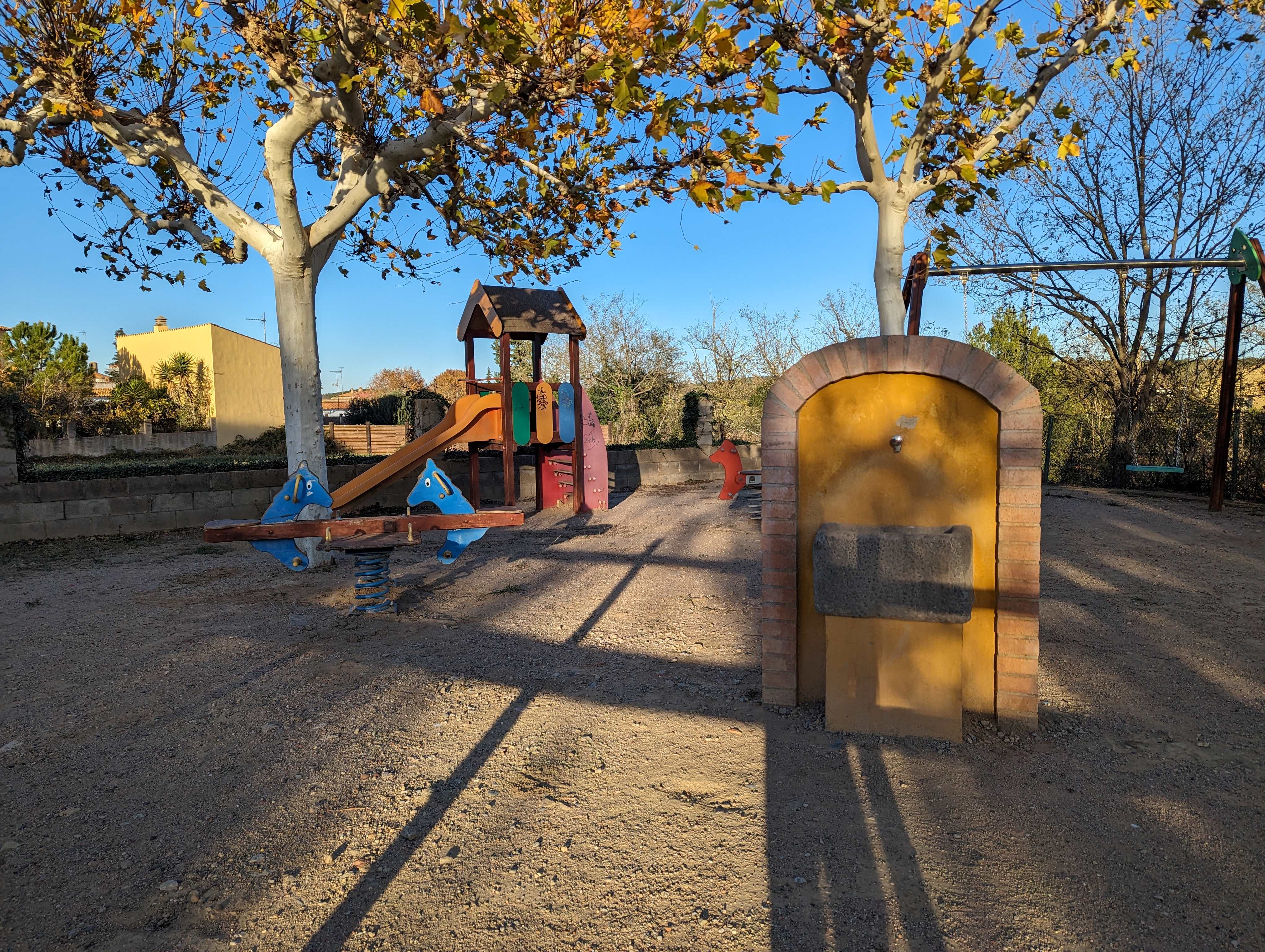
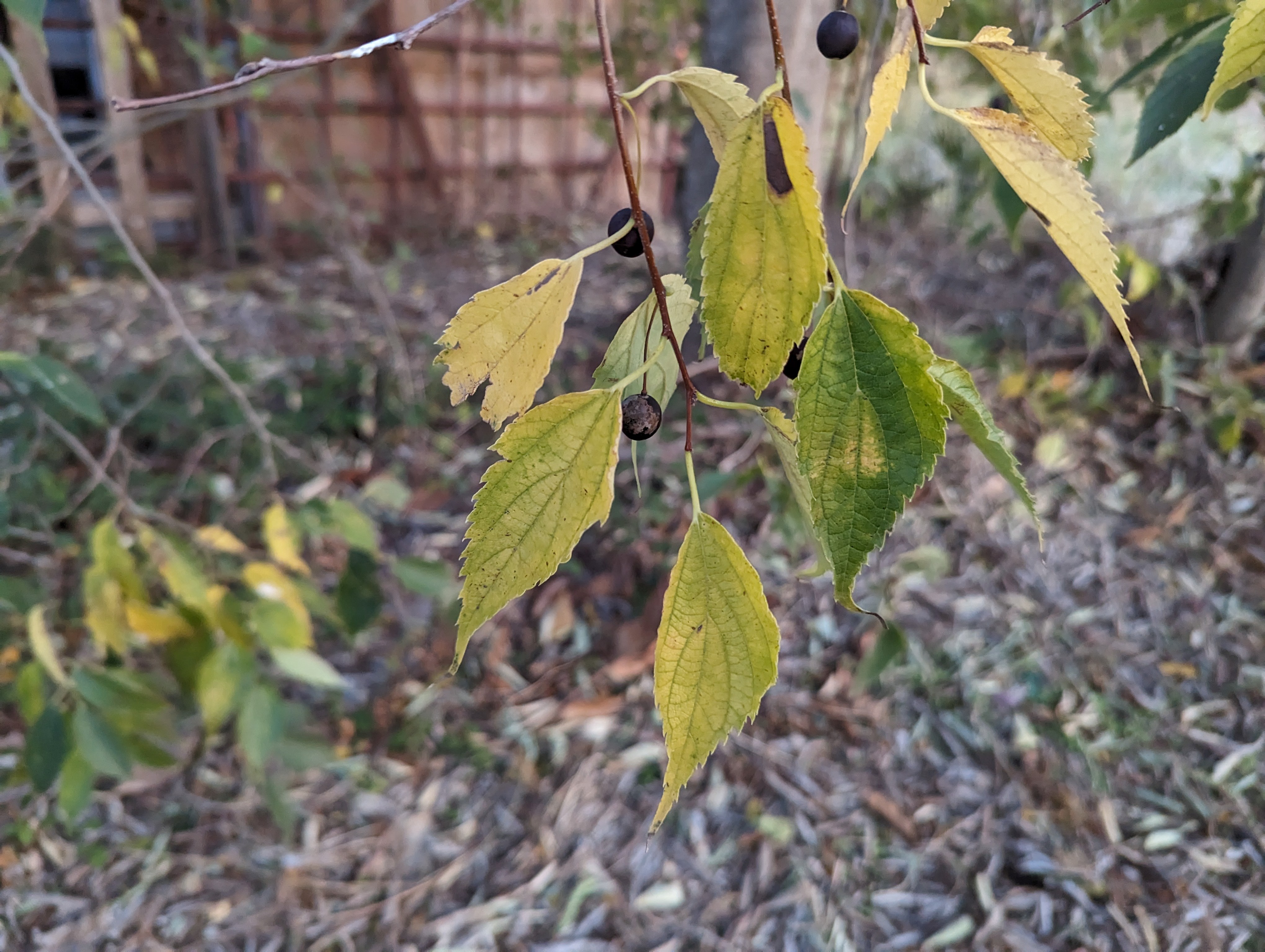
Stage 10 Play – Play park (Parc d’Infantil). Tree: Hackberry (buletta tree)
Stage 11 Dance – Outdoor dance floor (not in use). Tree: Plane
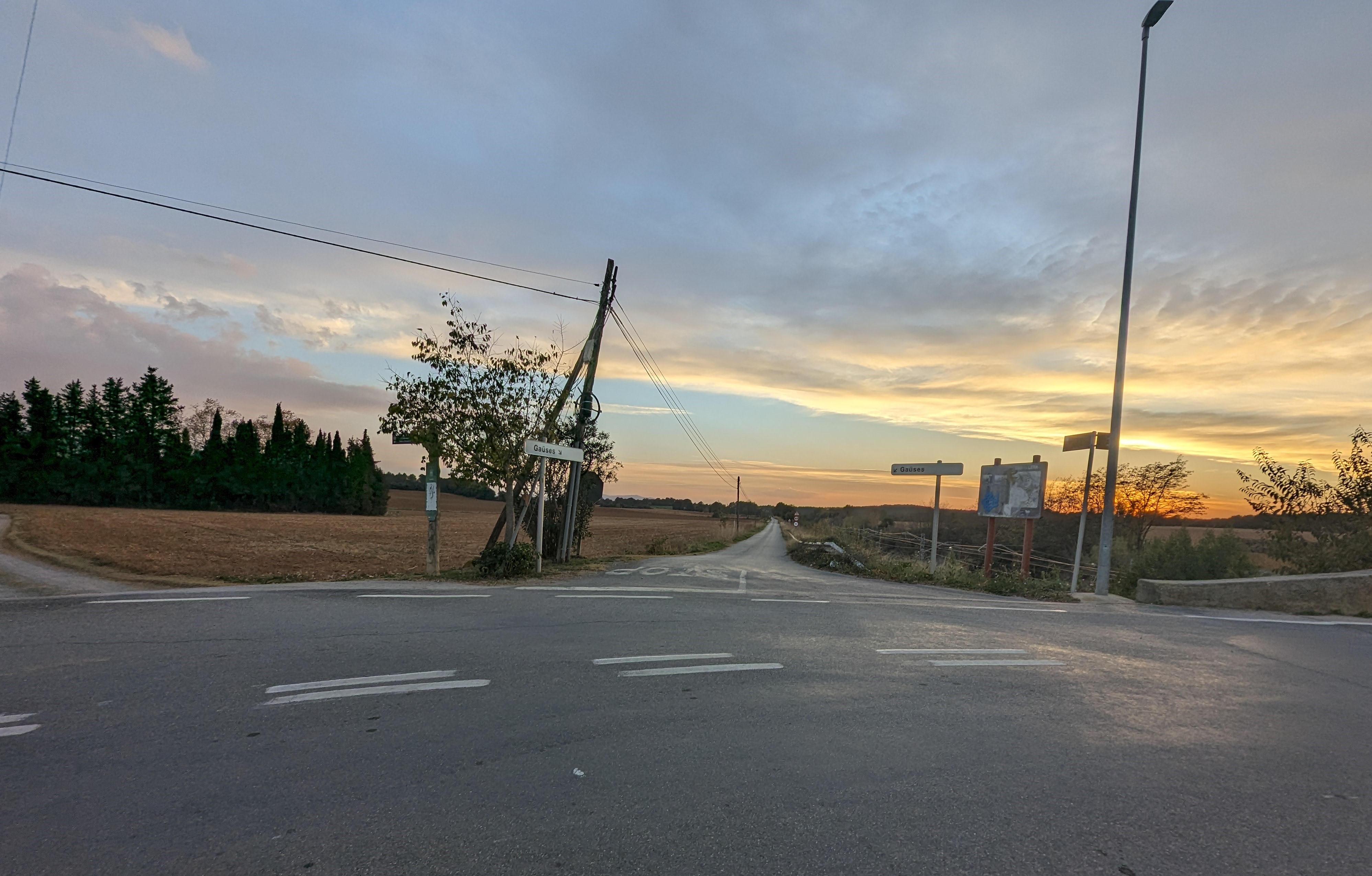
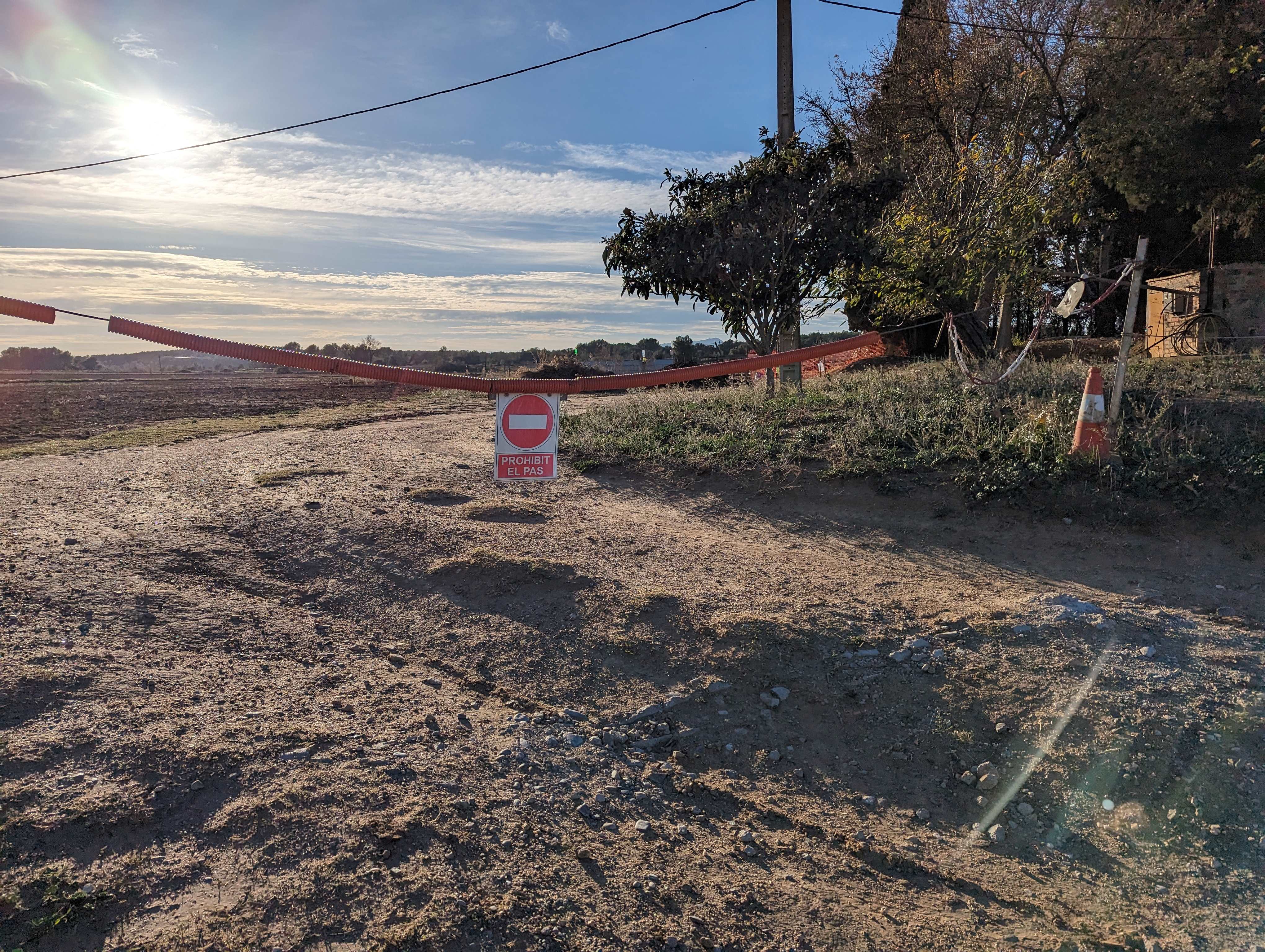
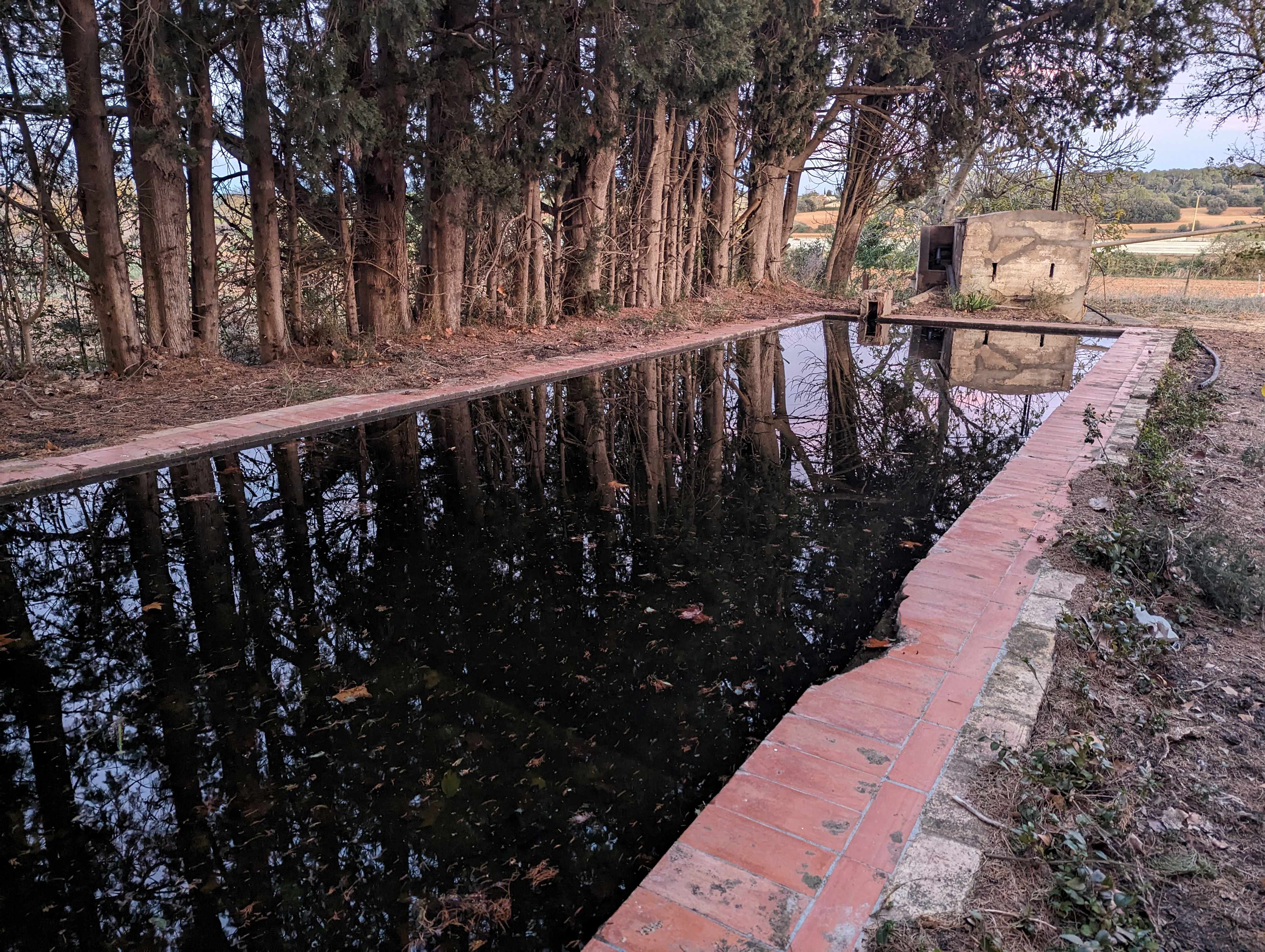
After leaving Stage 11, turn left towards the way you came but then take the next right, behind the houses, between them
Stage 12: Departing – Train station (Estacion de tren, reprised). Tree: Pink pepper tree
The Camallera Sound Walk and climate change
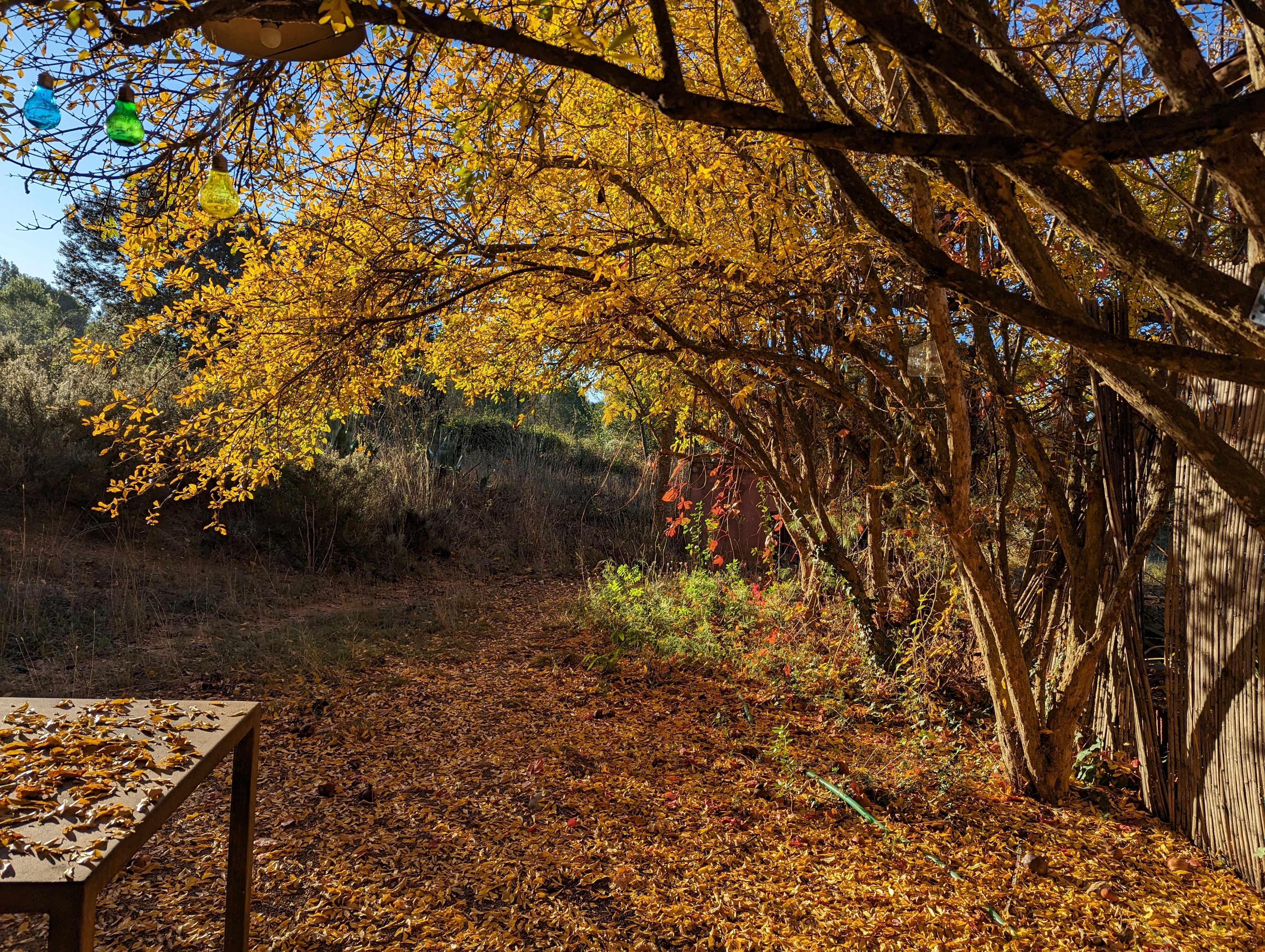
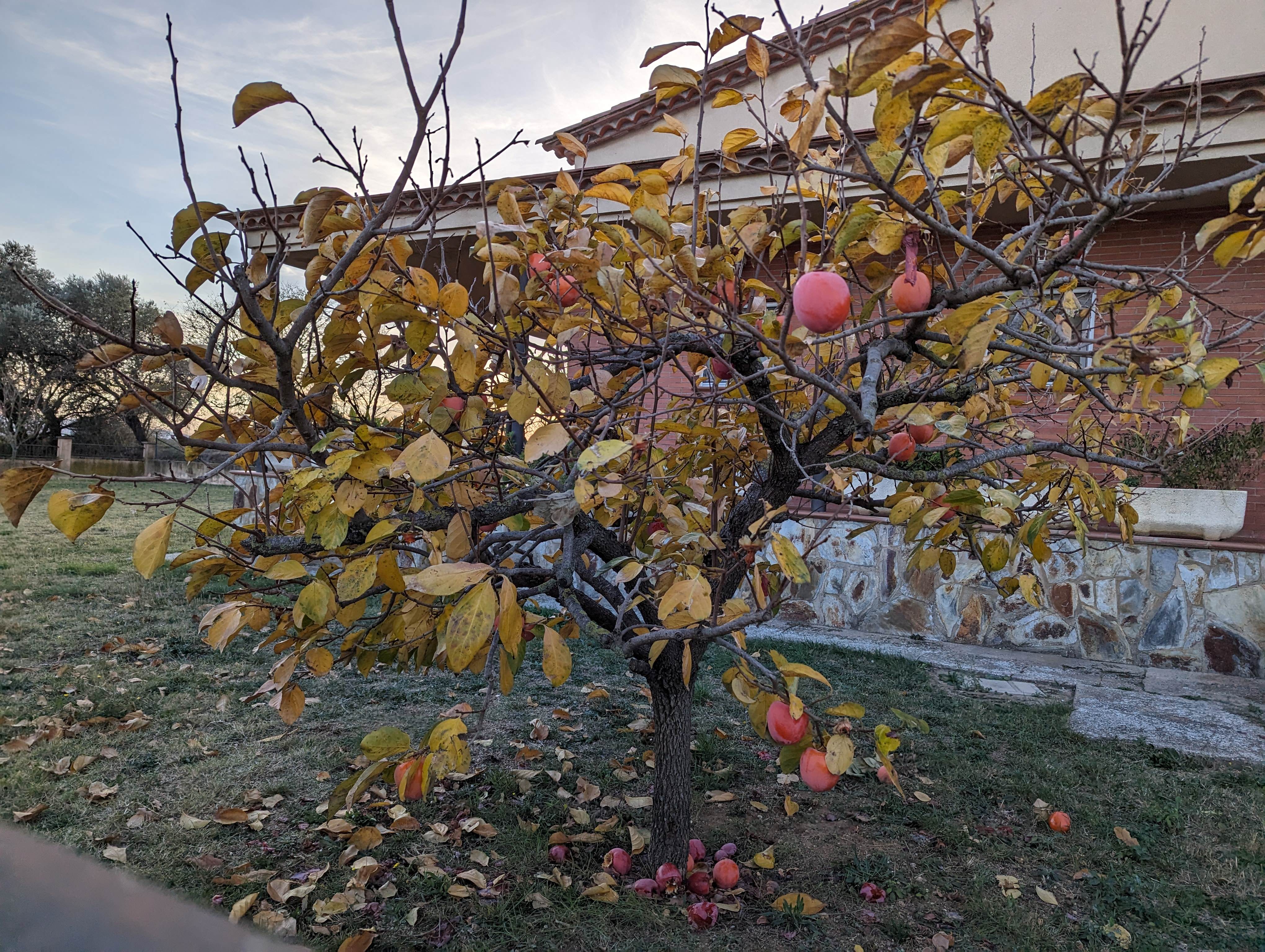
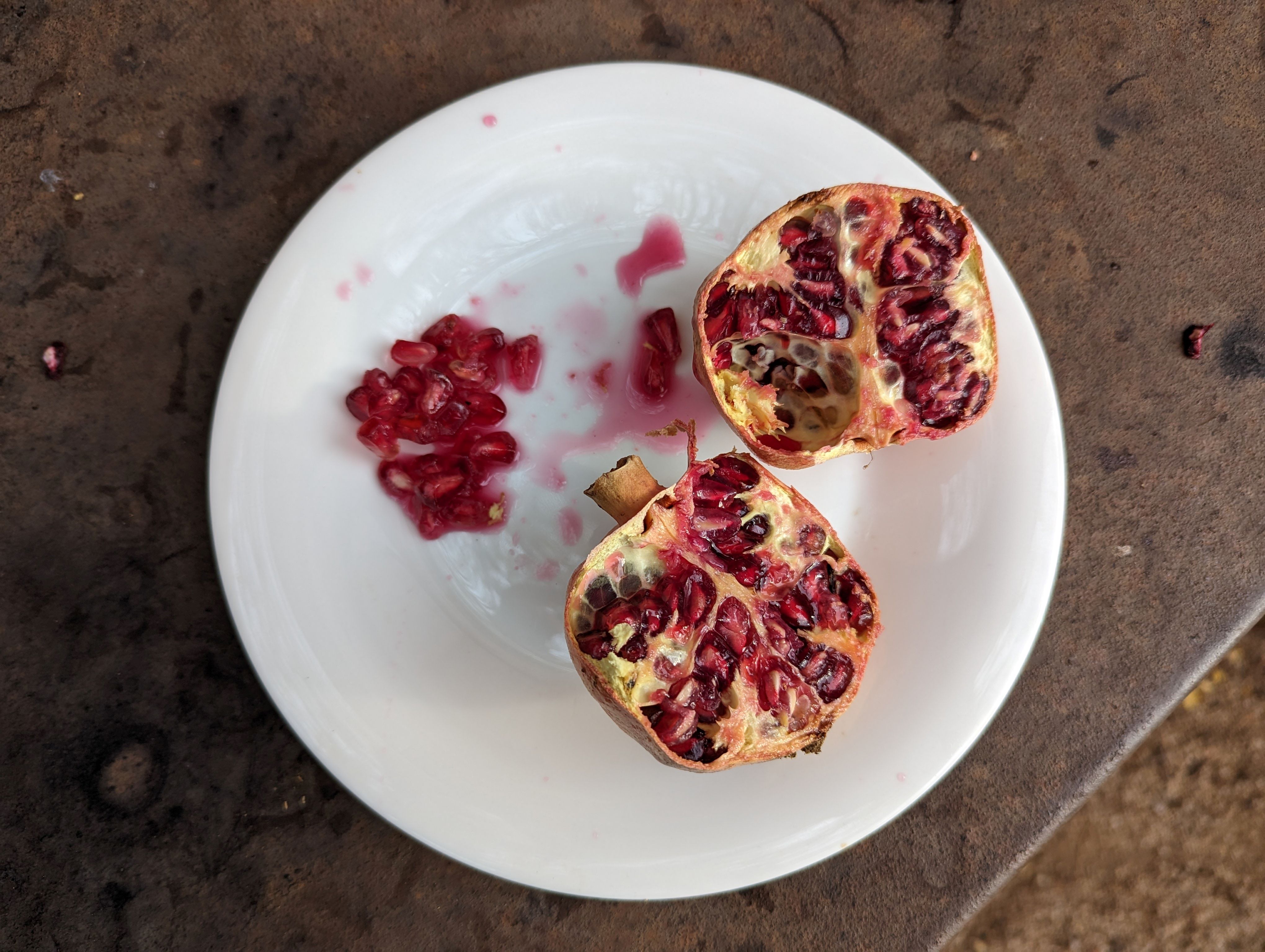
I was walking around the edge of Camallera at a specific time. I wandered during the change from Autumn to Winter when the leaves were turning from green to orange and amber, but red admiral butterflies still gorged on the fallen pomegranates.
The climate as we knew it in recent decades has changed rapidly, so when I walked in 2023, we were already years into an extensive crisis. It rained properly once, and spat occasionally, but the area is still drier than it was even last year. Temperatures were on average 1.5 degrees (at times 2 degrees) centigrade hotter, though I left on a white, frosty morning.
2023 is the driest on record in the 109-year history of the Fabra Observatory and the driest in 73 years in parts of Bages, Osona and Moianès
https://web.gencat.cat/en/actualitat/detall/2022-lany-mes-calid-mai-registrat-a-Catalunya
Trees
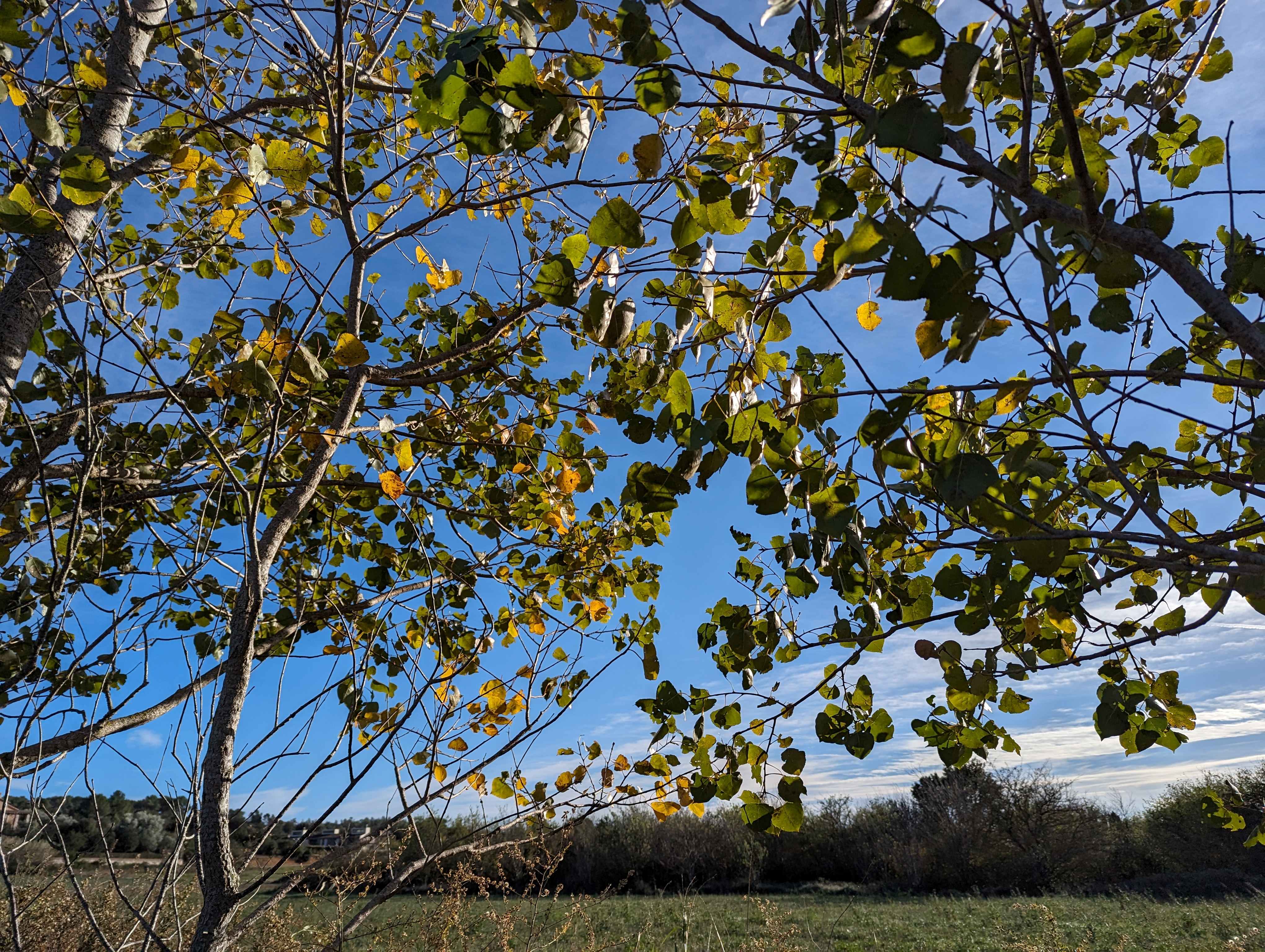
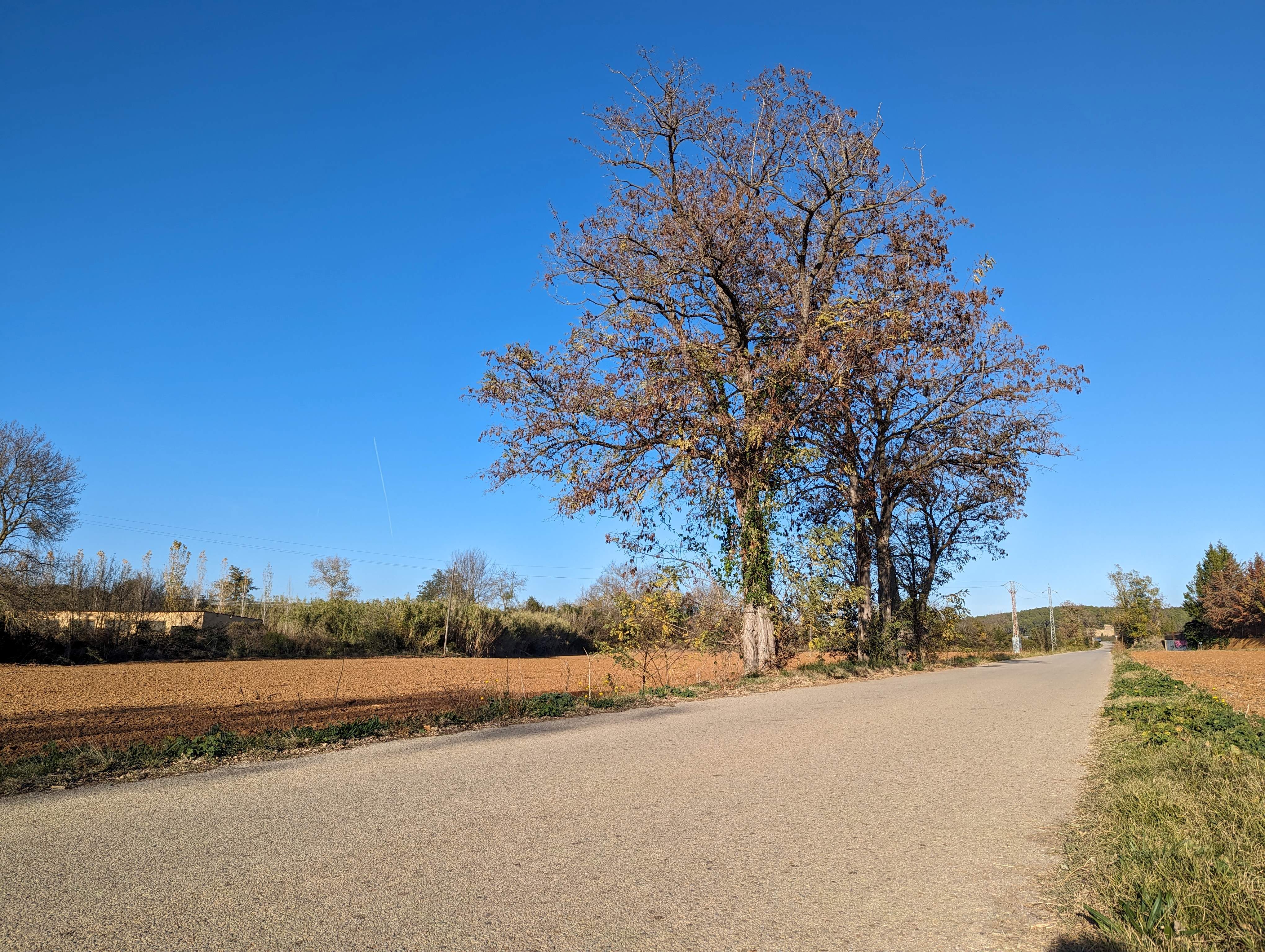
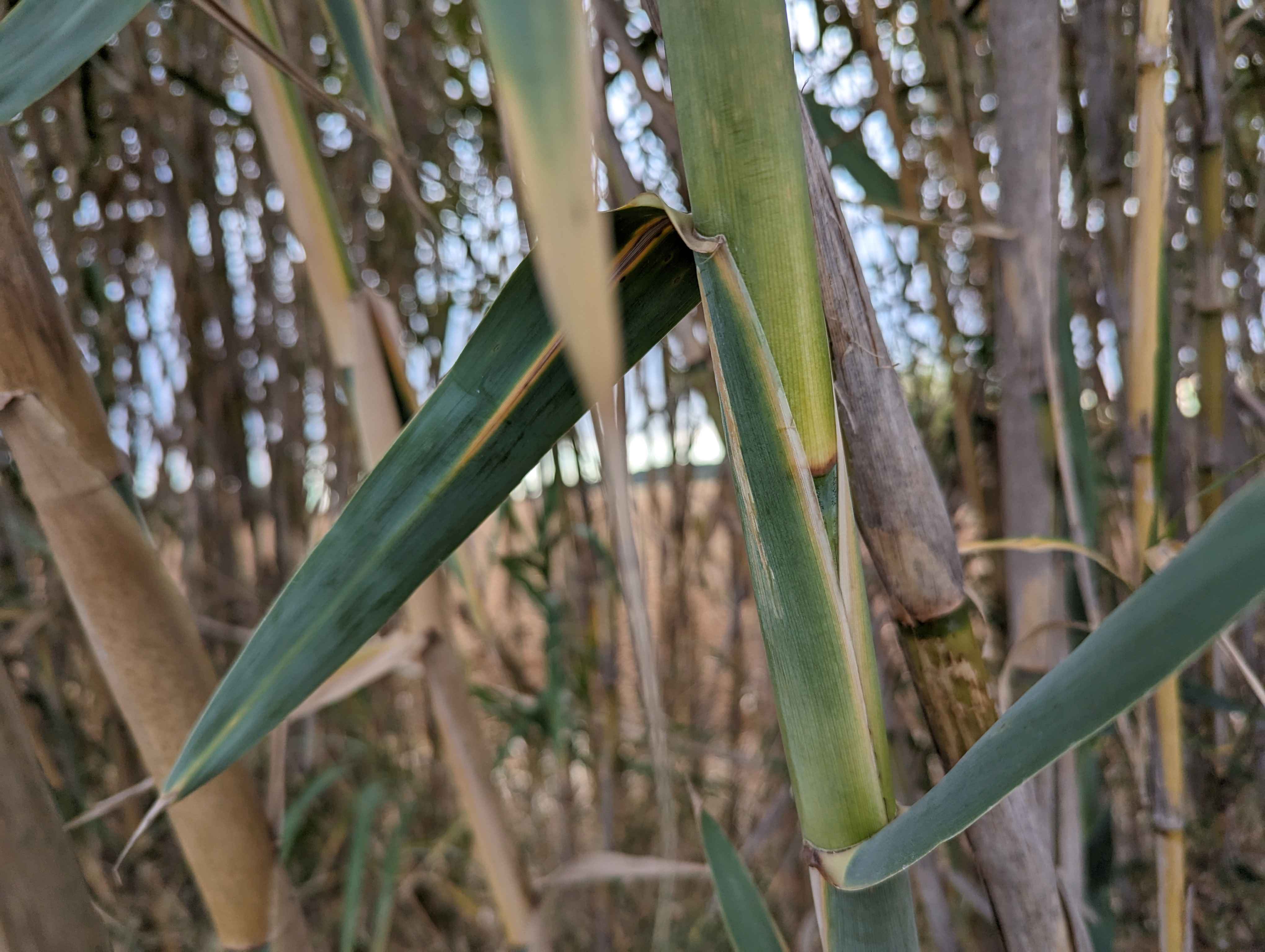
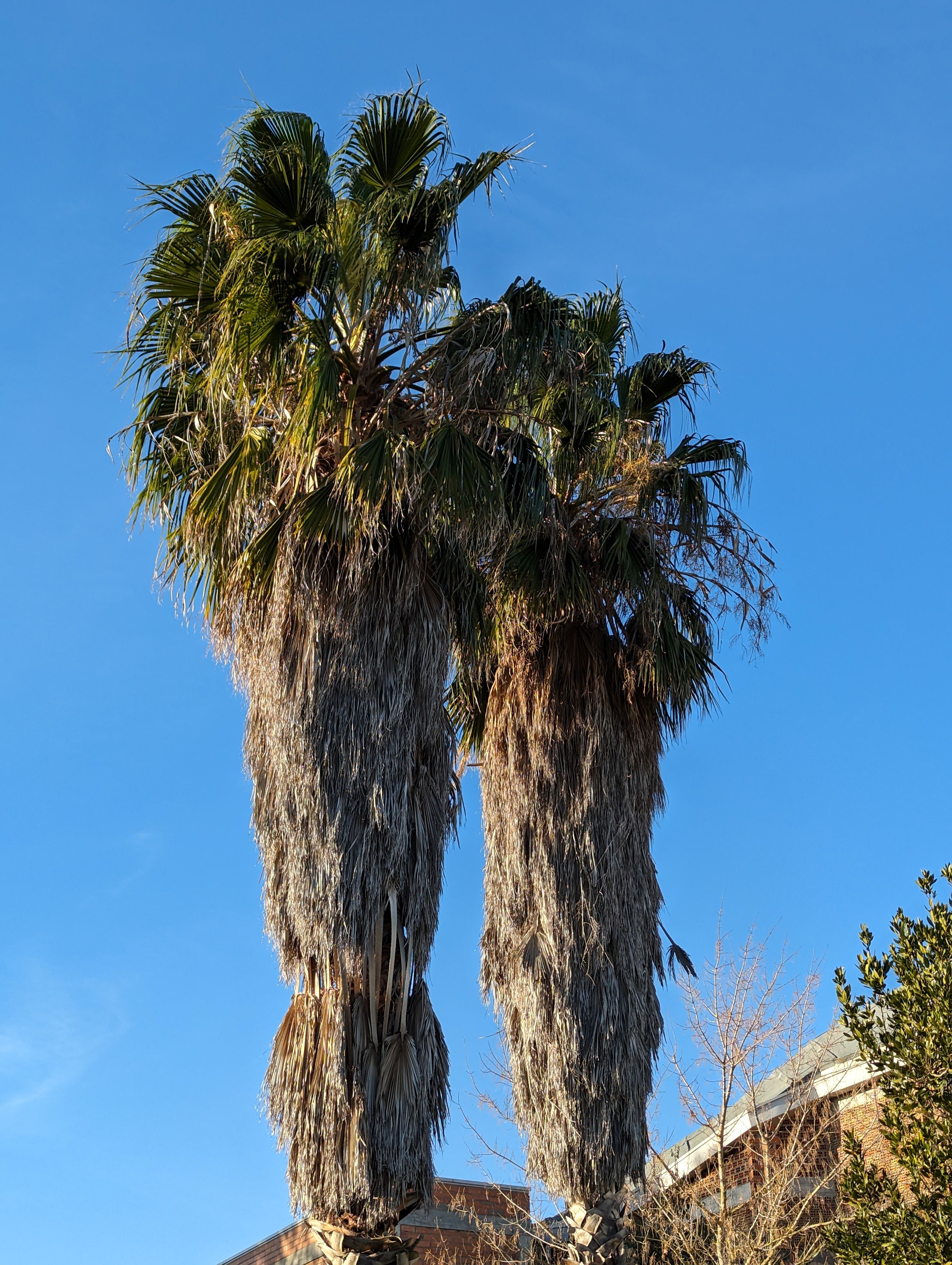
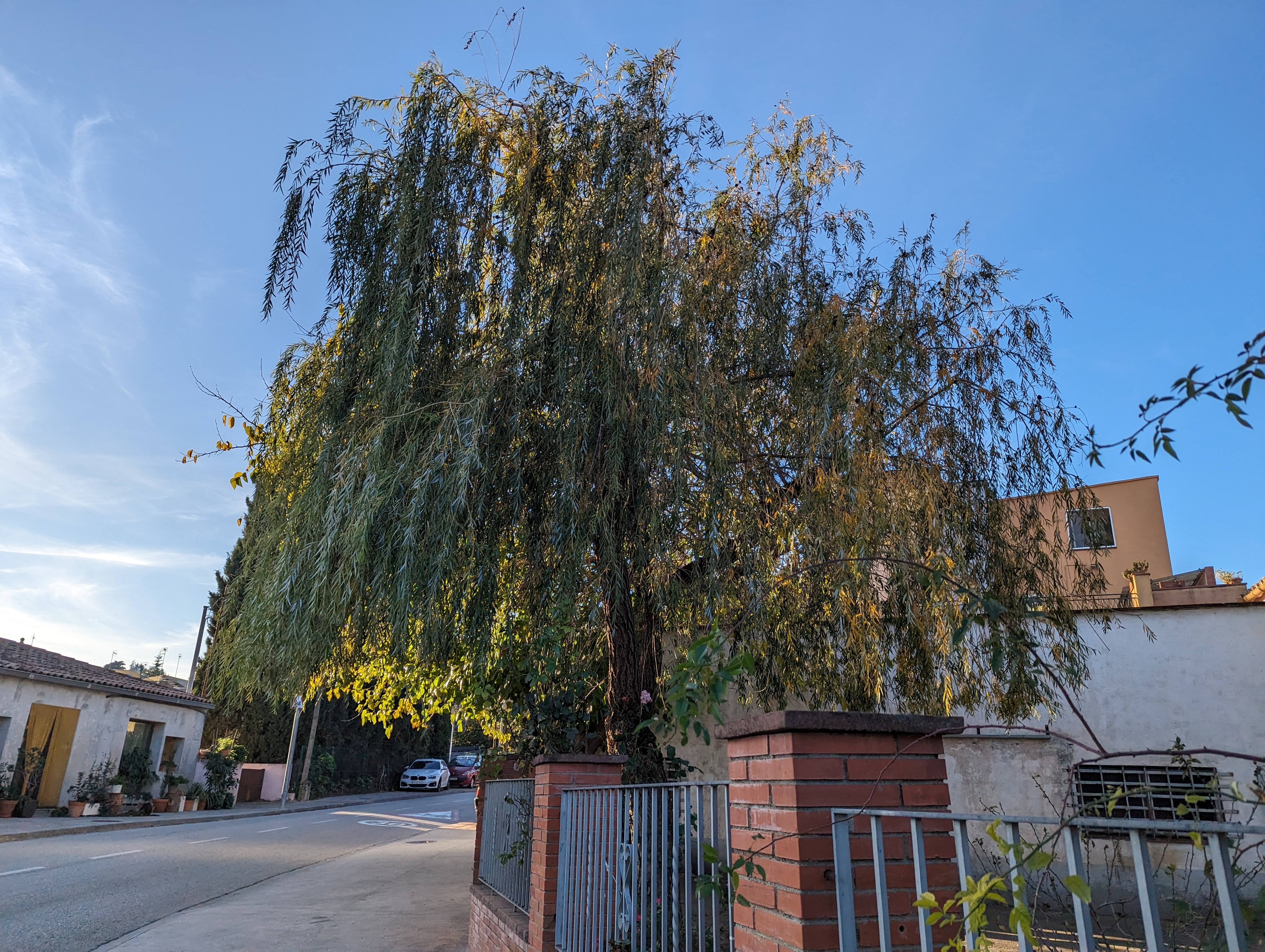
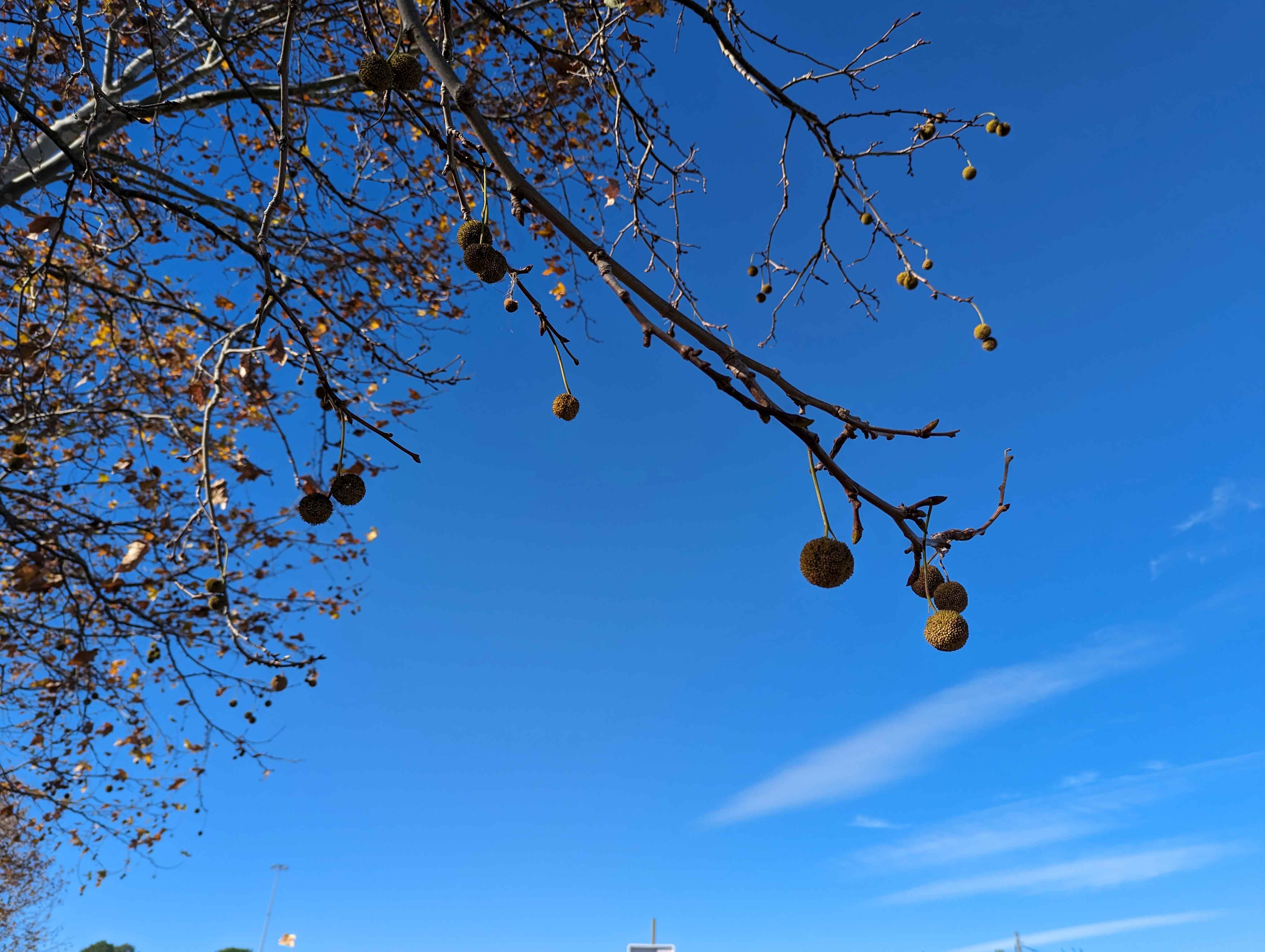
Camallera is rich in trees. There are plane trees (Platanus hispanica) everywhere, at almost every stage of the walk, but I have chosen others to give a sense of the variety in the area. There are more to be found between stages and if you venture inside the boundary.
Senses
Remember to taste and smell too! At each stage, roll your tongue around in your mouth, swallow the saliva, focus on what taste is there. Is the flavour of stage 1 different from stages 2, 3, 4 … ? You will find wild fennel, rosemary and thyme to satisfy your tastebuds.
At each stage, take a deep smell of the space you are sitting or standing in. Does it smell differently from your home or from the way it smelled in the previous season of the year? Savour the scent of pines and sage when you crush it, the warm tarmac in the sun, and whatever else you discern.
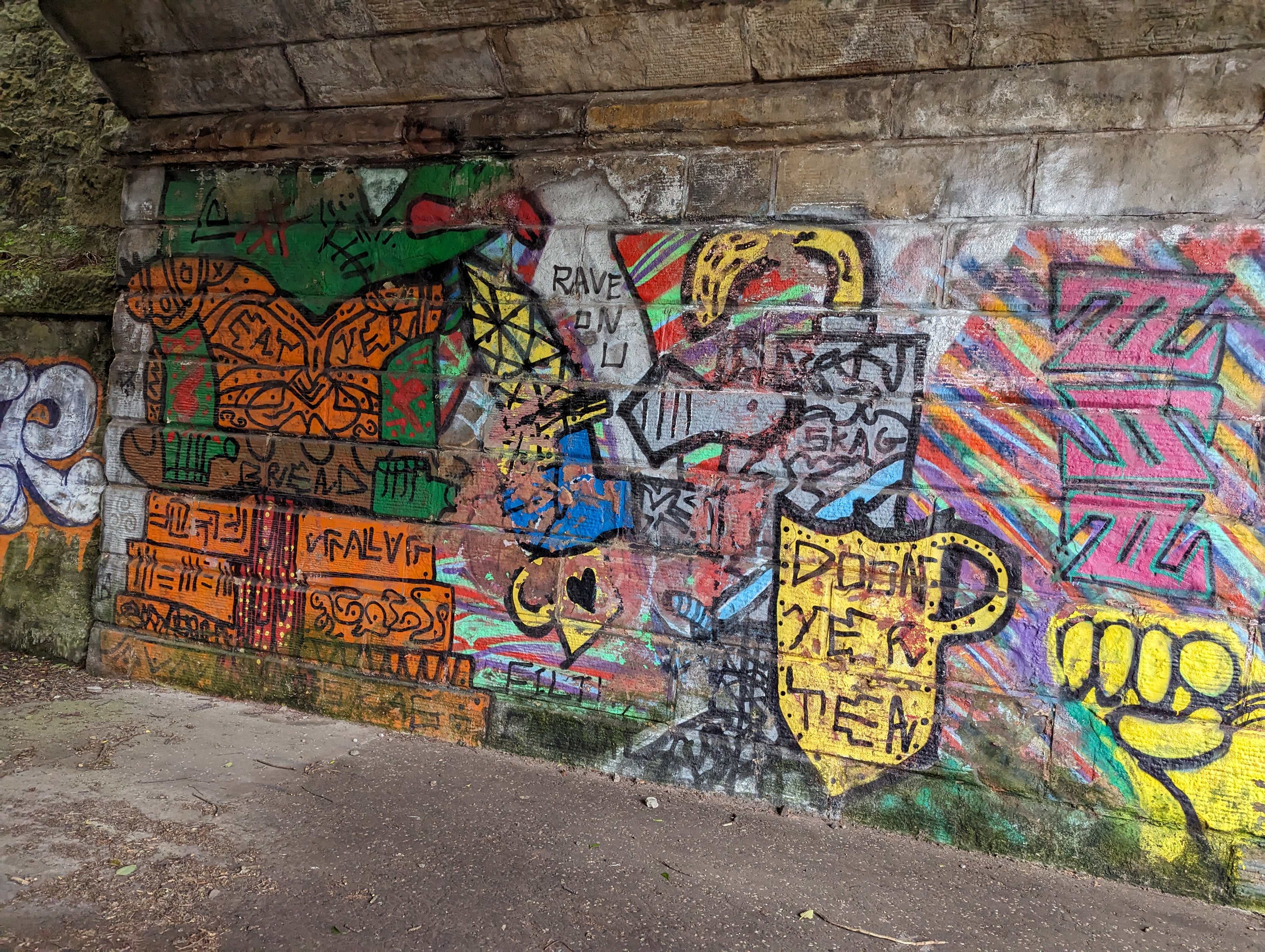
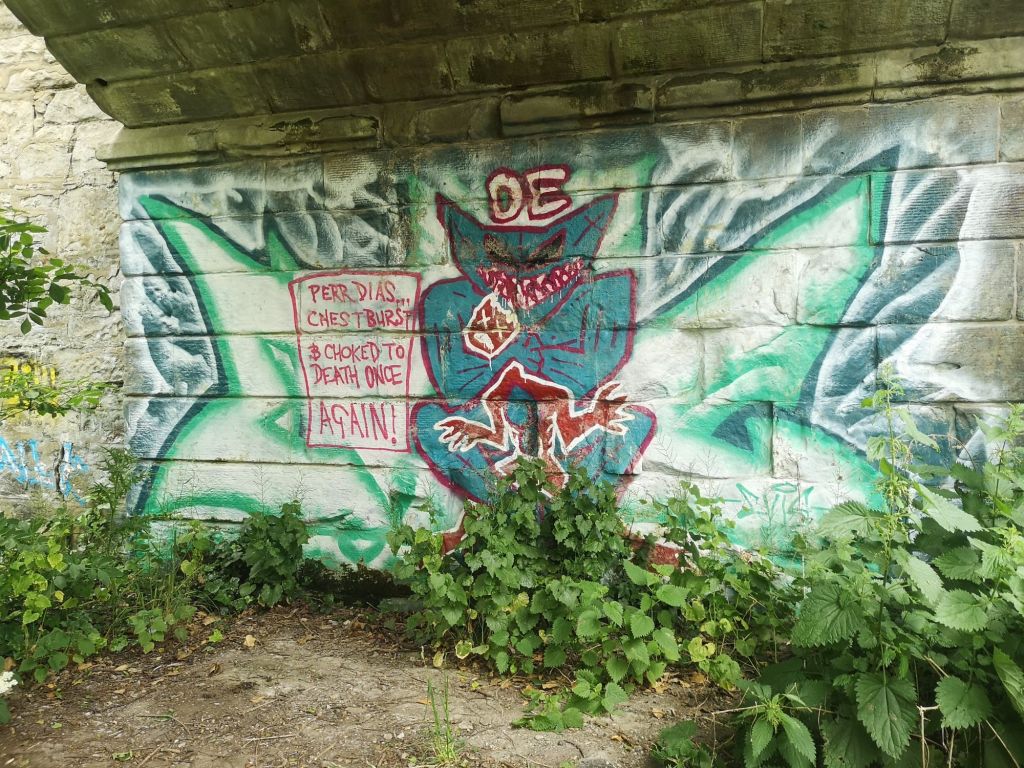
The area is a feast for the eyes: the newly ploughed, ochre-coloured earth, the graffiti everywhere, the blushing fruits and golden leaves, all depending on the time of year.
Options
There are 3 optional loops that can be added to the Sound Walk. They don’t have recorded excerpts to listen to, but are rich in sounds.
Option 1: Saus, between stages 3 and 4a. Leave Stage 3 behind you, walk downhill past the barking dogs and turn right (following the Sound Walk), but when you get to the sharp left-turn, continue instead straight on towards the main road GIV623. You are now on the GIV6233. Follow it around to the right and take a left through the underpass to the other side of the main GIV623. Take Carrer Oest into the town of Saus and don’t forget to visit the 11th century church – Església de Santa Eugènia de Saus. Please note that you have to go back the same way you came as there is no other route between Saus and Camallera.
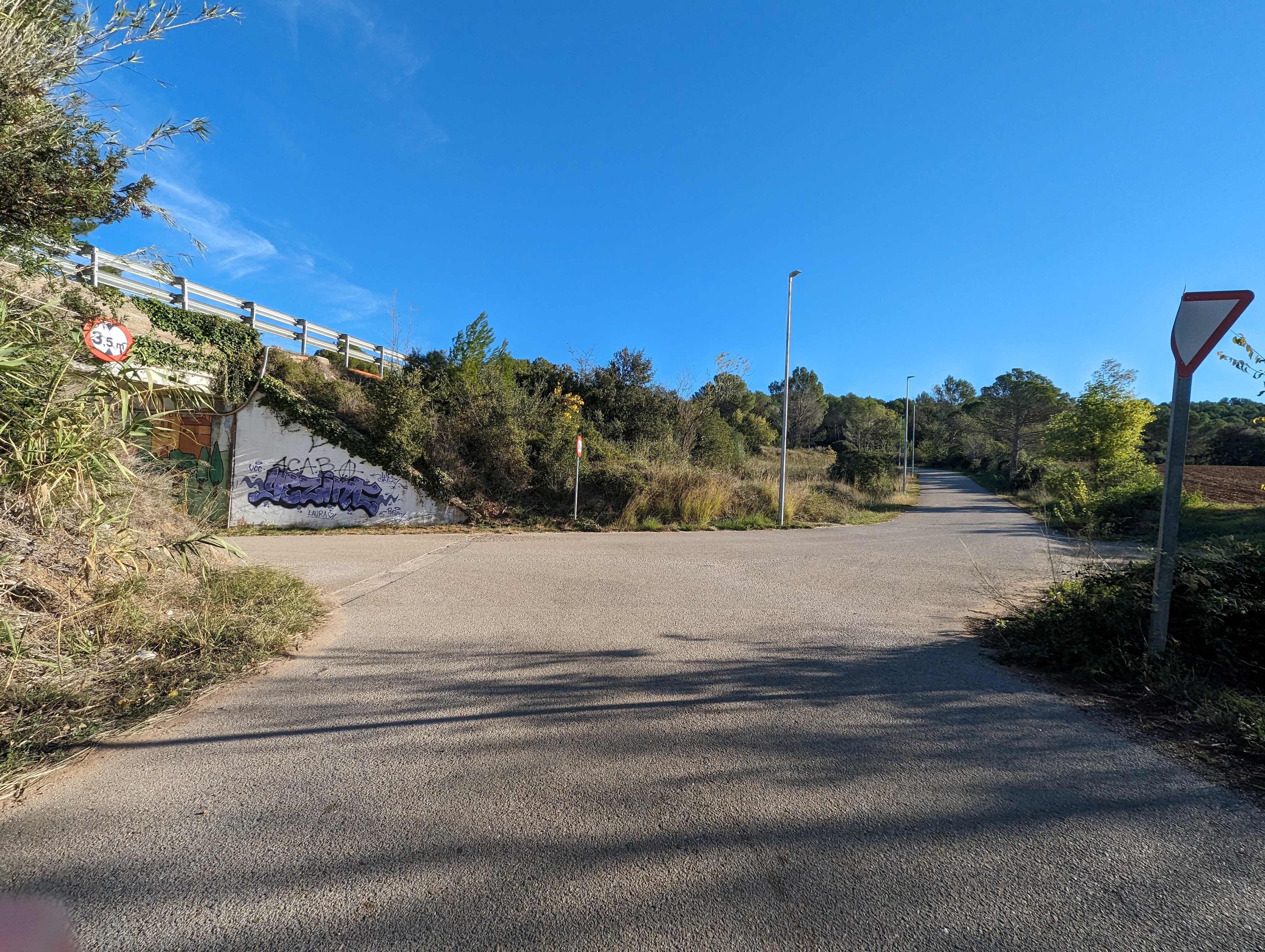
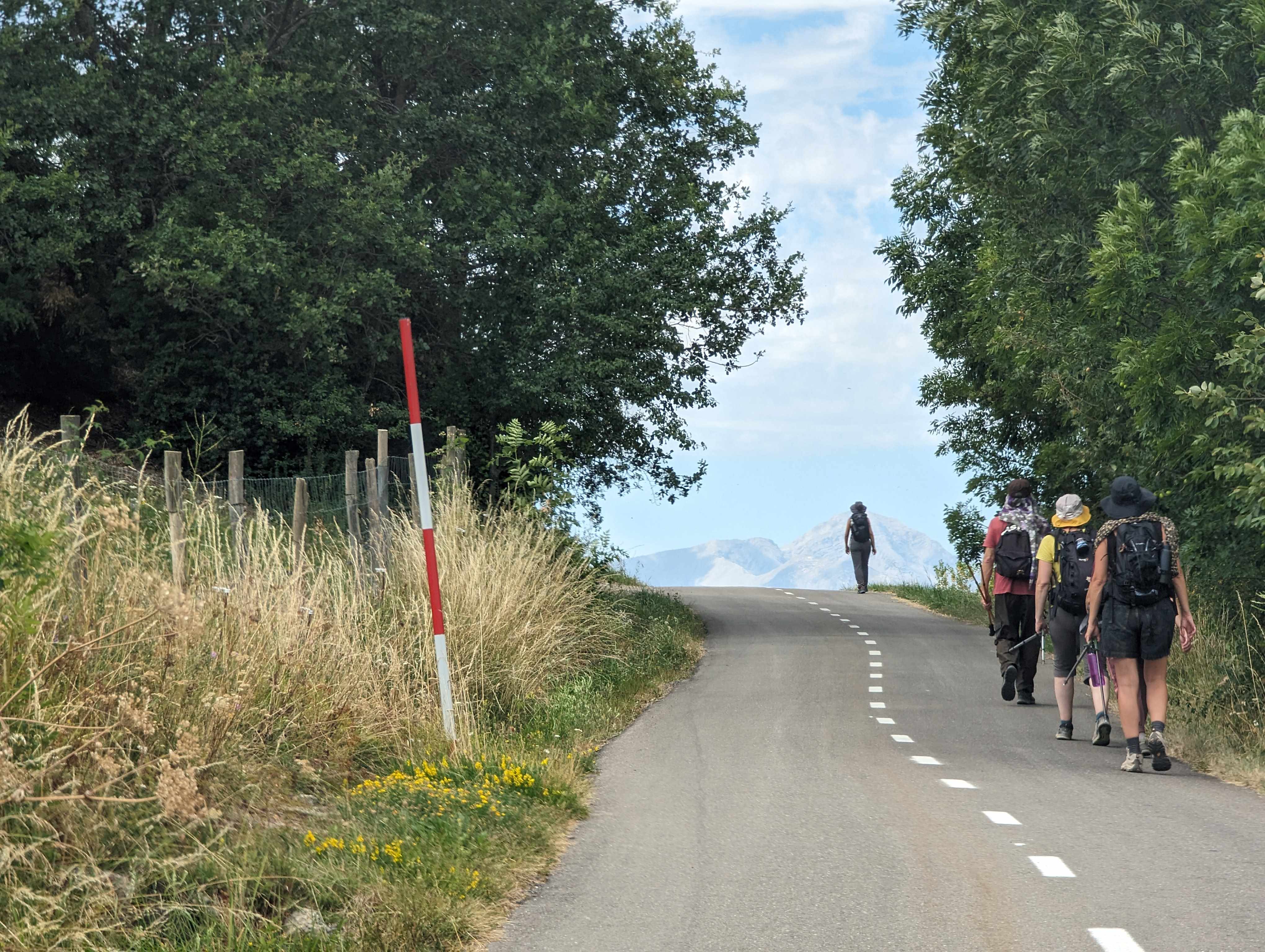
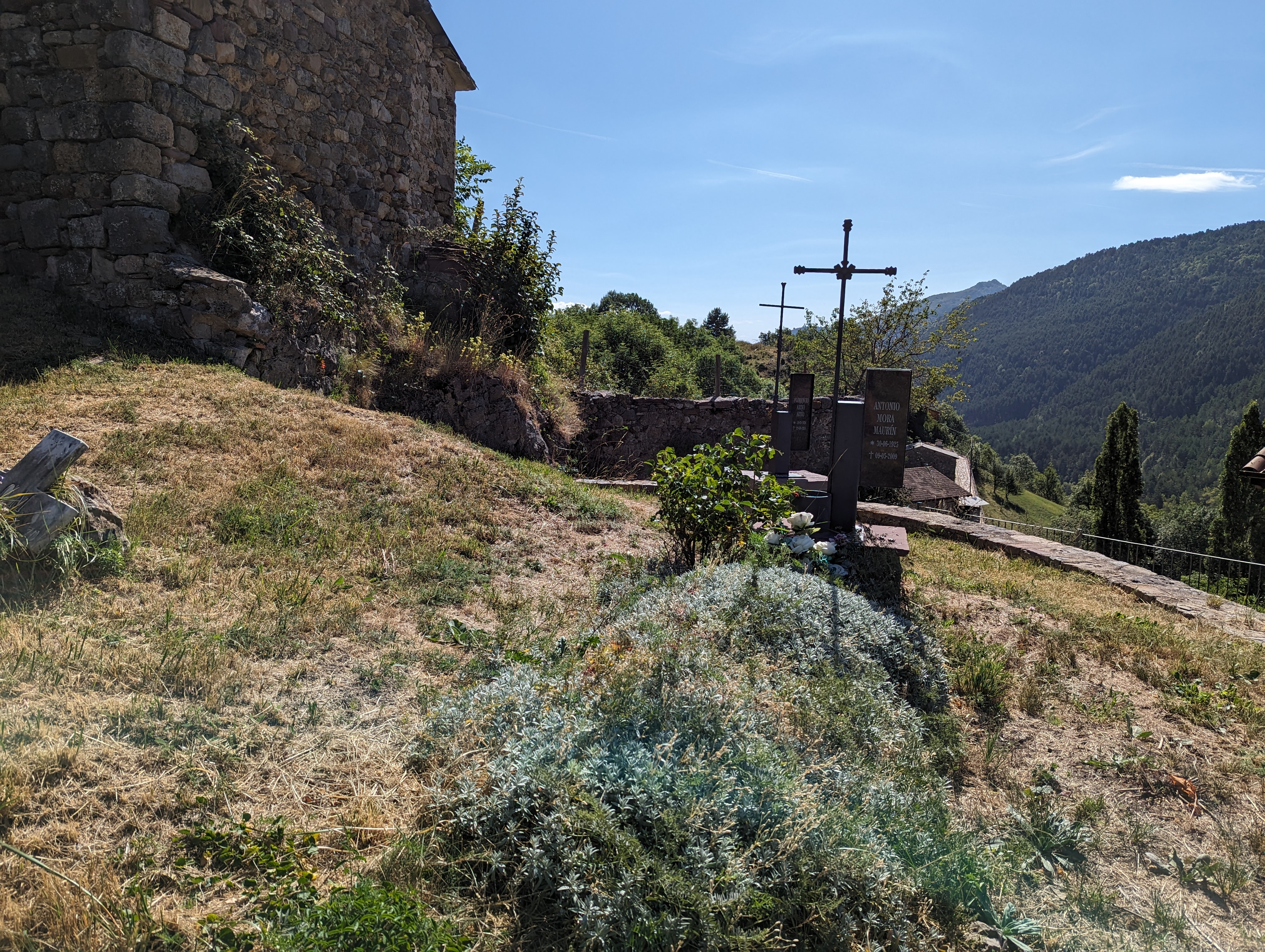
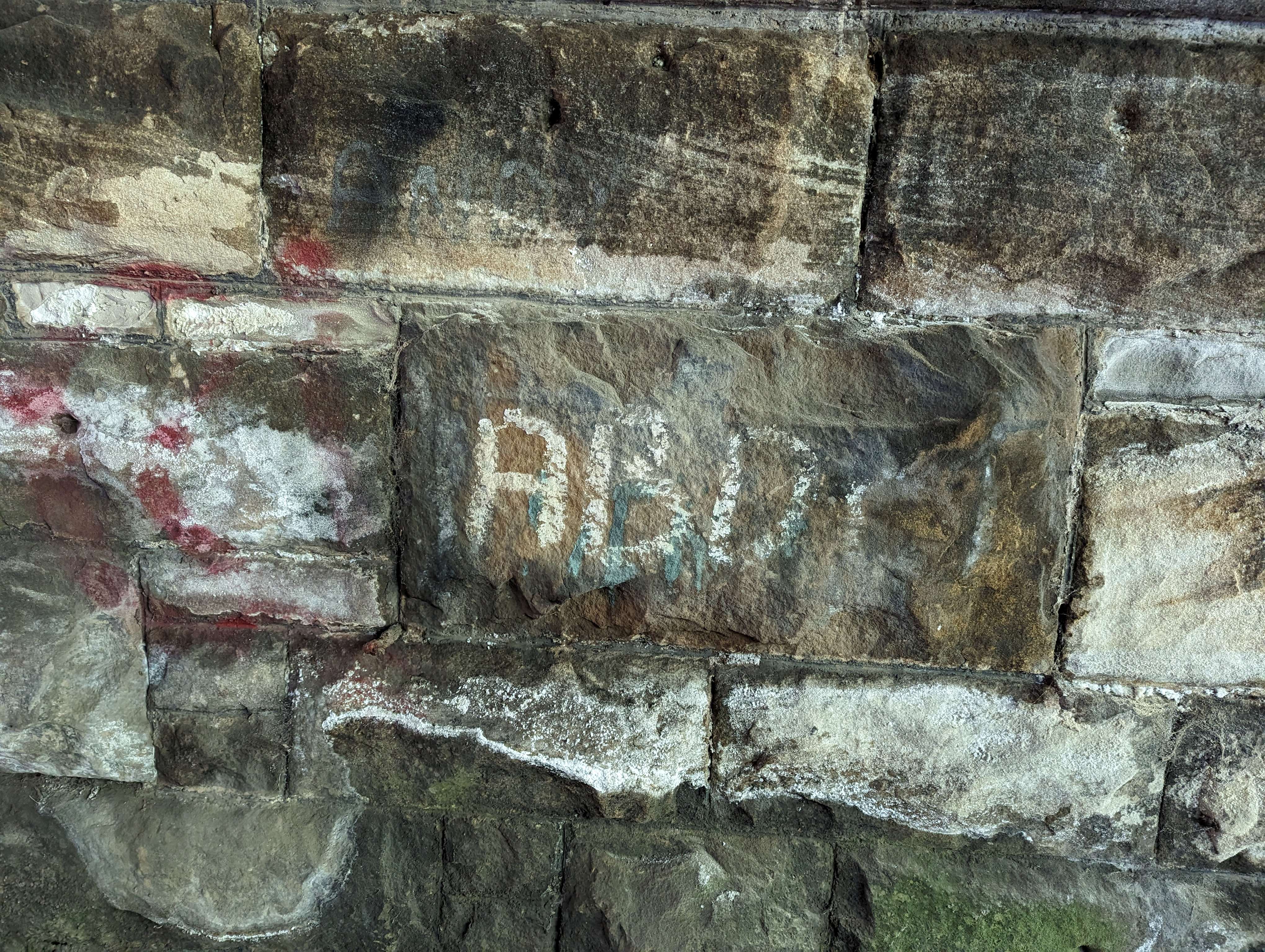
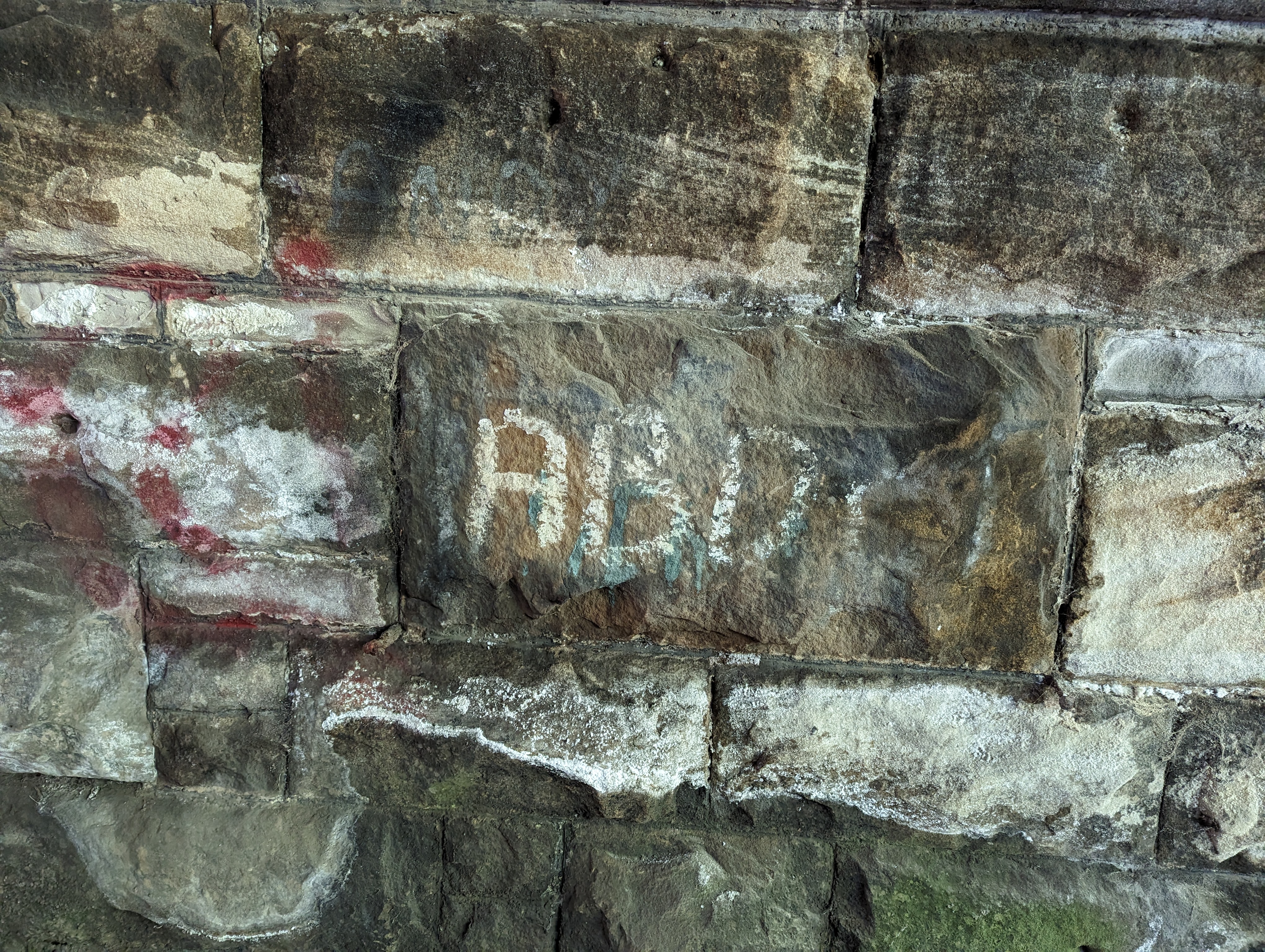
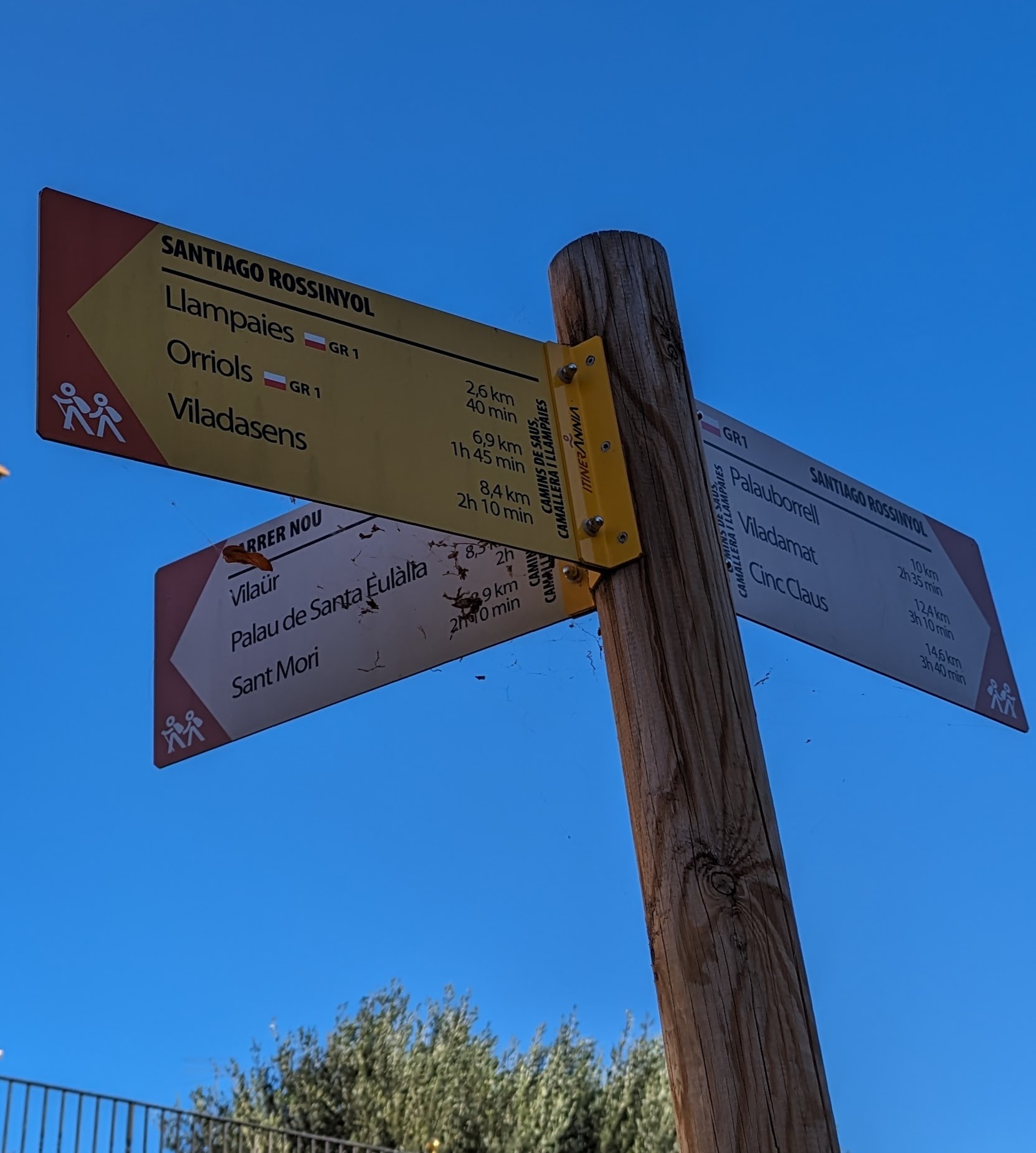
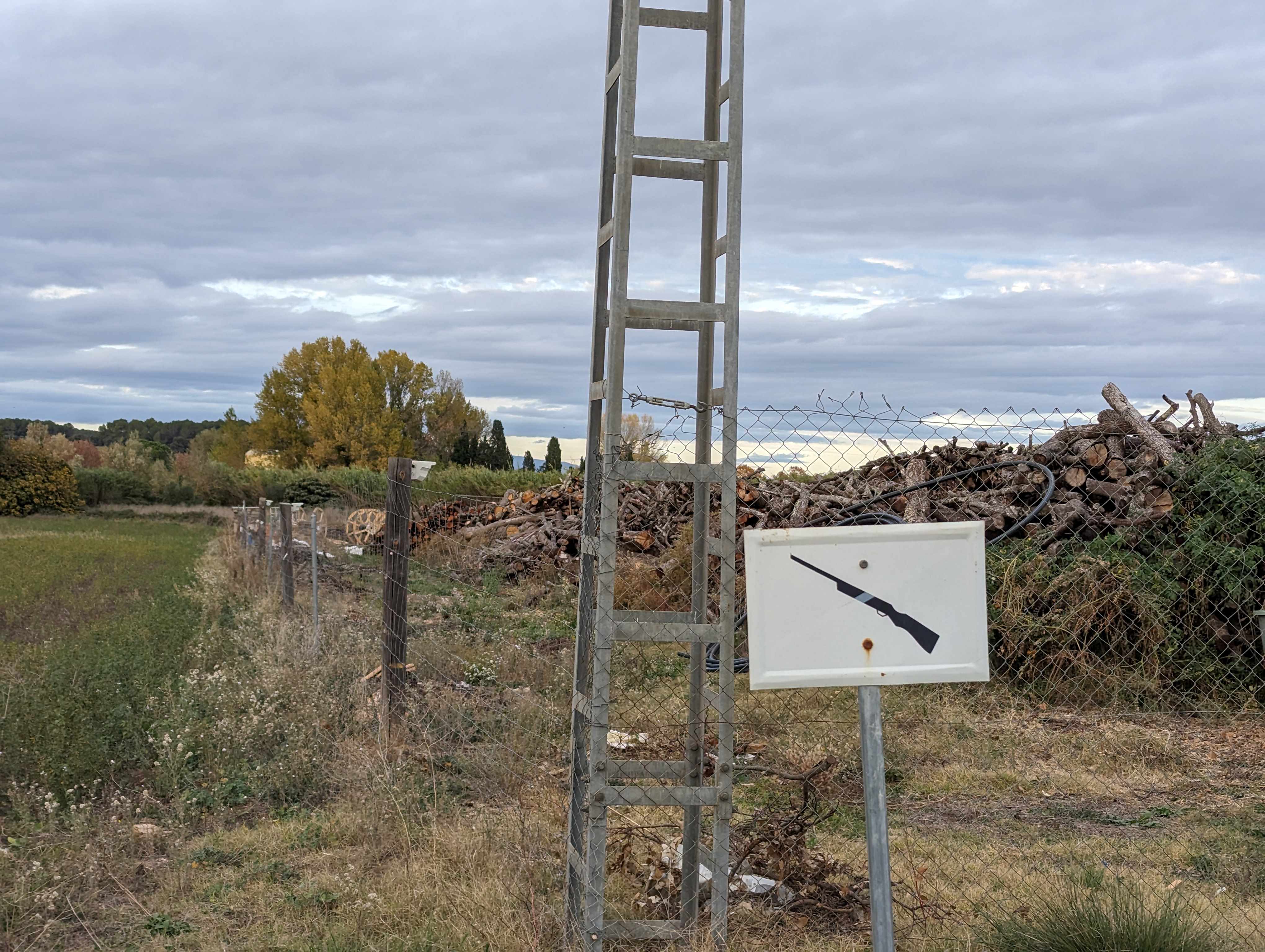
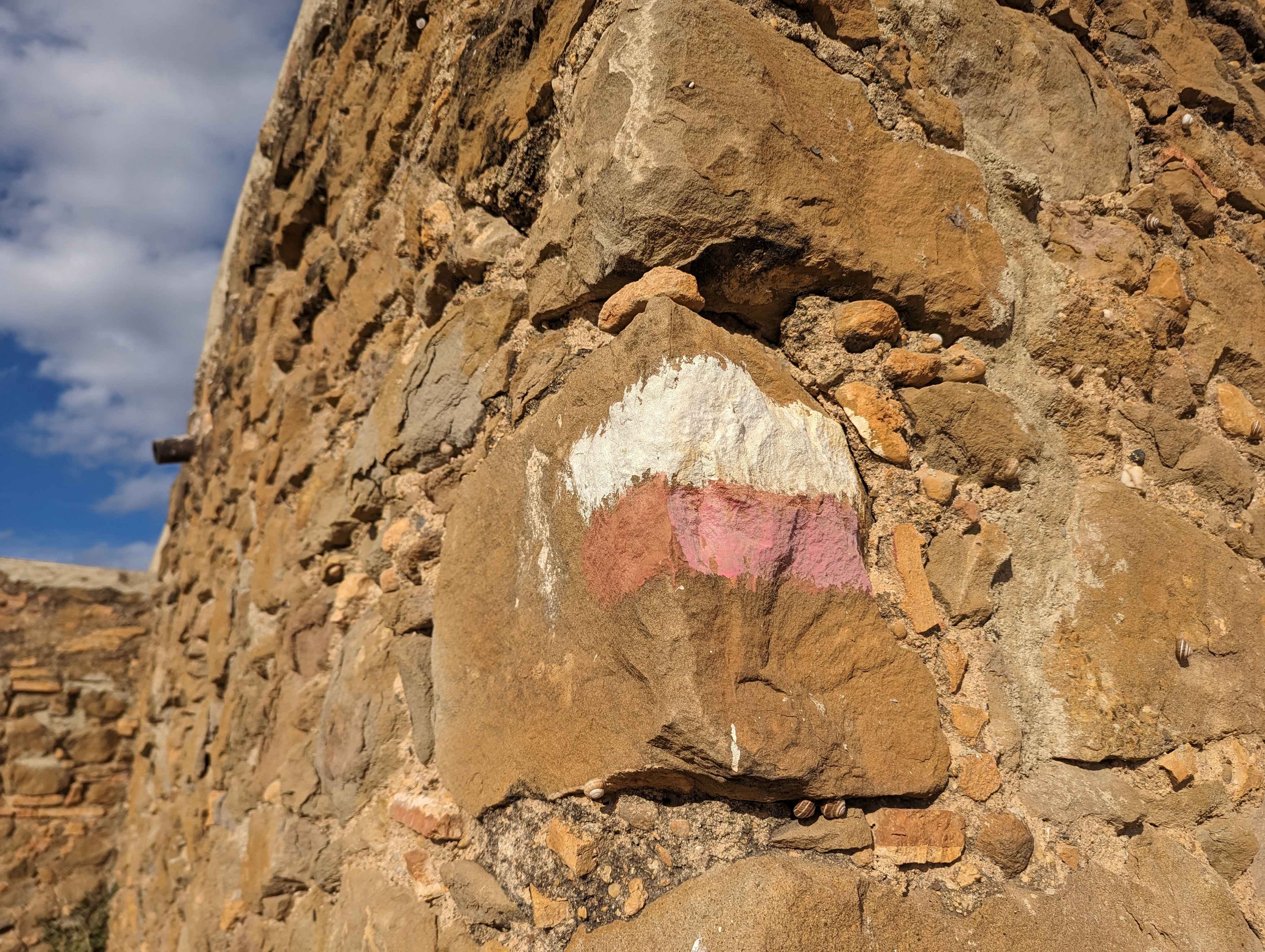
Option 2: The woods beyond the cemetery (Stage 8). Continue along the same road, keeping the cemetery on your right. There is a junction with 3 options. Take the second left and walk a loop, coming back via what would have been the third left. The GR1 trail runs along that south western corner of the town, so look out for the red and white striped signs (photo below) and the sign posts (photo above).
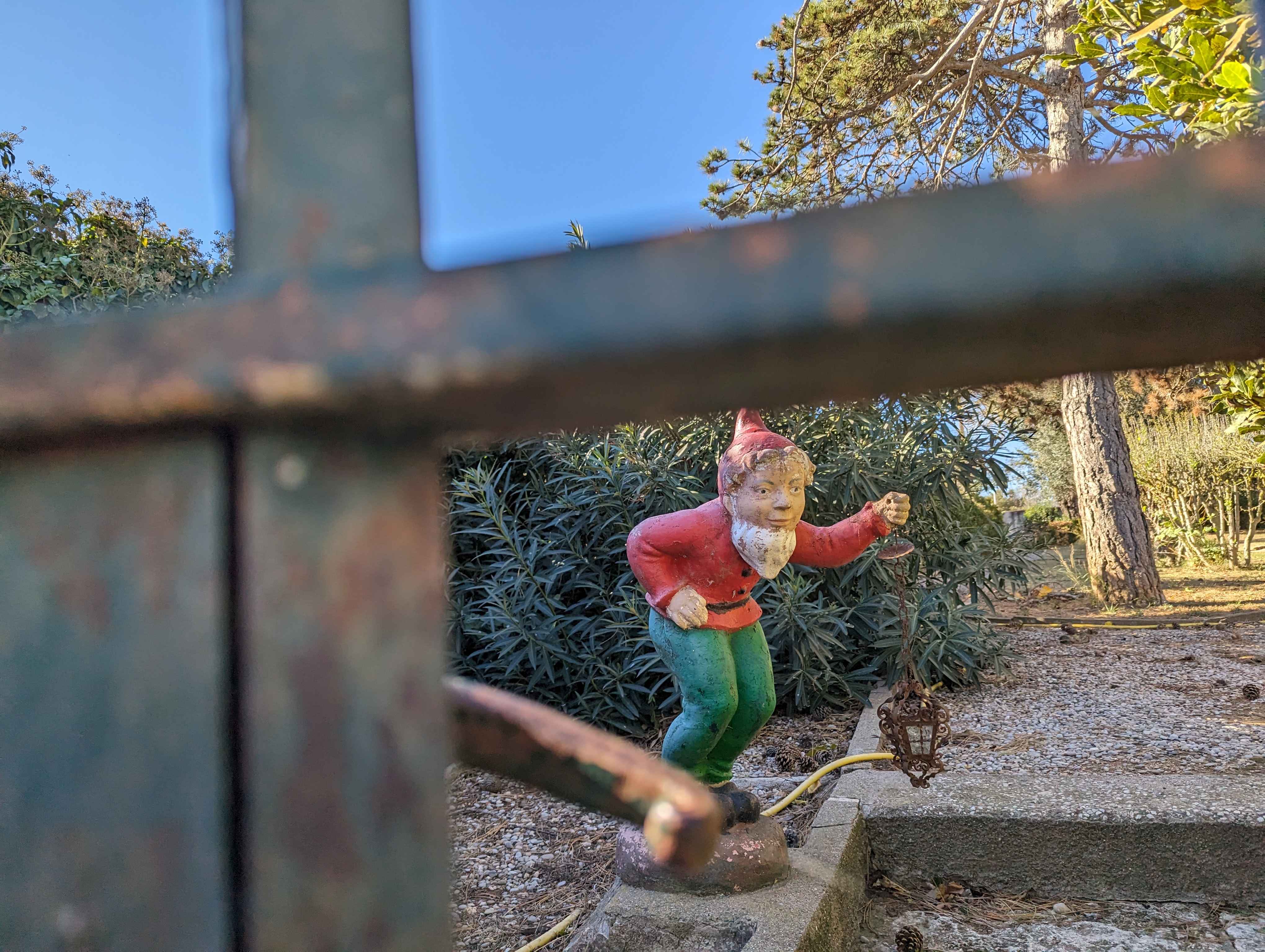
Option 3: Llampaies. From Stage 6, continue along the Carrer de Banyoles (it becomes the Carretera Girona-L’Escala) instead of turning off left along Carrer Tramuntana to Stage 7. Look out for a whispering gnome, the sound of a beautiful cedar tree in the wind, some silent graffiti (see main map above) in a field on your left, and the clangs and vrooms of Responsive Business (a transportation company, maybe) with a red chair on the balcony for peacefully sunning oneself during work breaks.
Thanks
Many thanks to Clara Garí and Nau Côclea for the opportunity to discover this wonderful place. Also to the singers Jordi Homs and Mar Serinyà (listen to Stage 9), and to percussionist Jordi Rallo and his group who feature in Stage 4a.
My workshop participation in, and listening to, Viv Corringham‘s work has been an influence, as, I’m sure, have all the other captivating sound walks and works on walklistencreate.org. I have not studied with Pauline Oliveros, but I have read a lot about her work and learned from others who have. My conversations with Igor Binsbergen while we walked, were fascinating and also important.
Nau Côclea offers a grant consisting of accommodation, follow-up and public presentation. This walk will be presented as part of the Walking Arts Encounters in Girona in July 2024.