The Forest of Dean

Chepstow and the Forest of Dean were at the beginning of my walk along the Gloucestershire Way (see below), the British Pilgrimage Trust’s Tewkesbury Abbey to Gloucester Cathedral, and the Slow Ways UK route from Gloucester to Cheltenham. The whole project was a political, ecological and artistic walk ‘for the small things-often unseen or unnnoticed-to celebrate their importance in our ecosystem’. The theme grew out of my research for the Line(s) of Enquiry Walking the Land group exhibition which was at the Hardwick Gallery, University of Gloucestershire in Cheltenham between 3 and 27 March, and from the actual stitching of tiny insects. (This blog , Walking with Ants, explains what I did.)

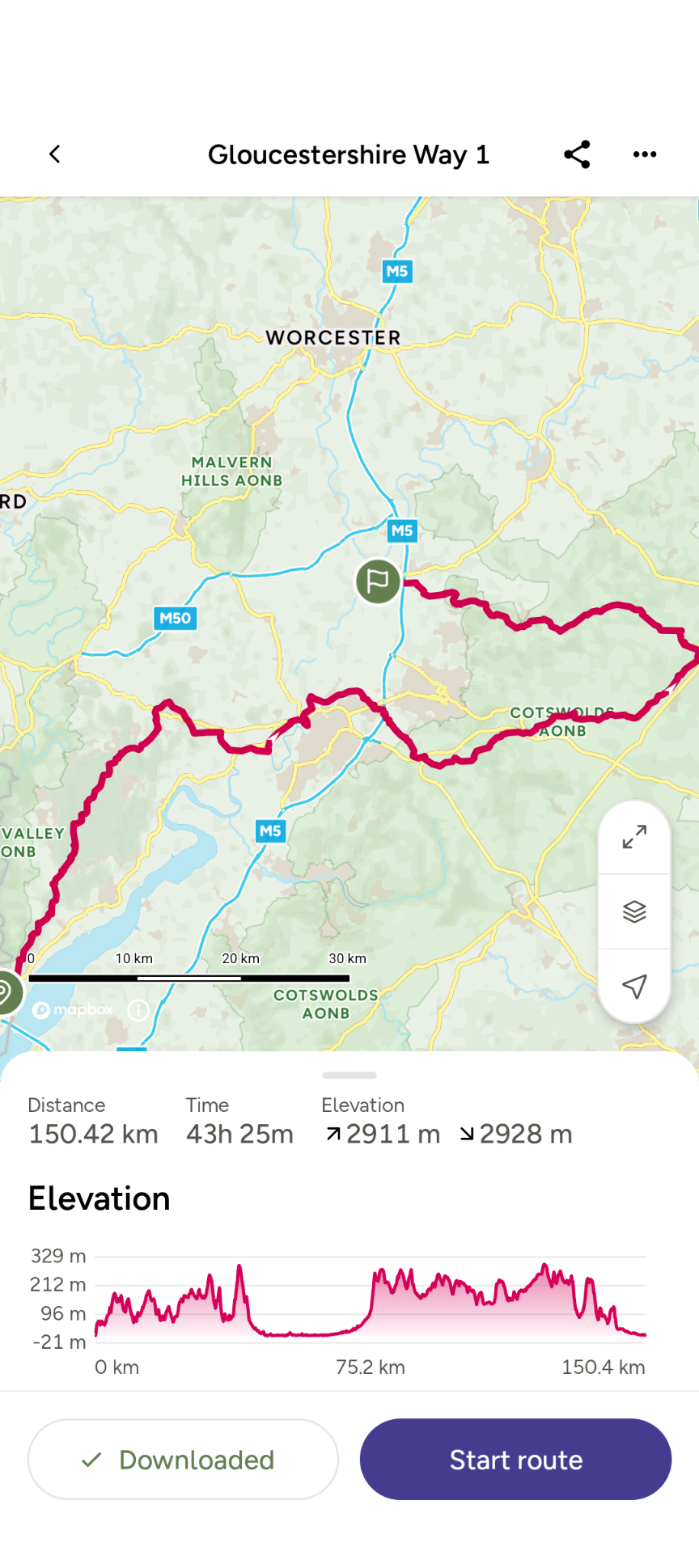
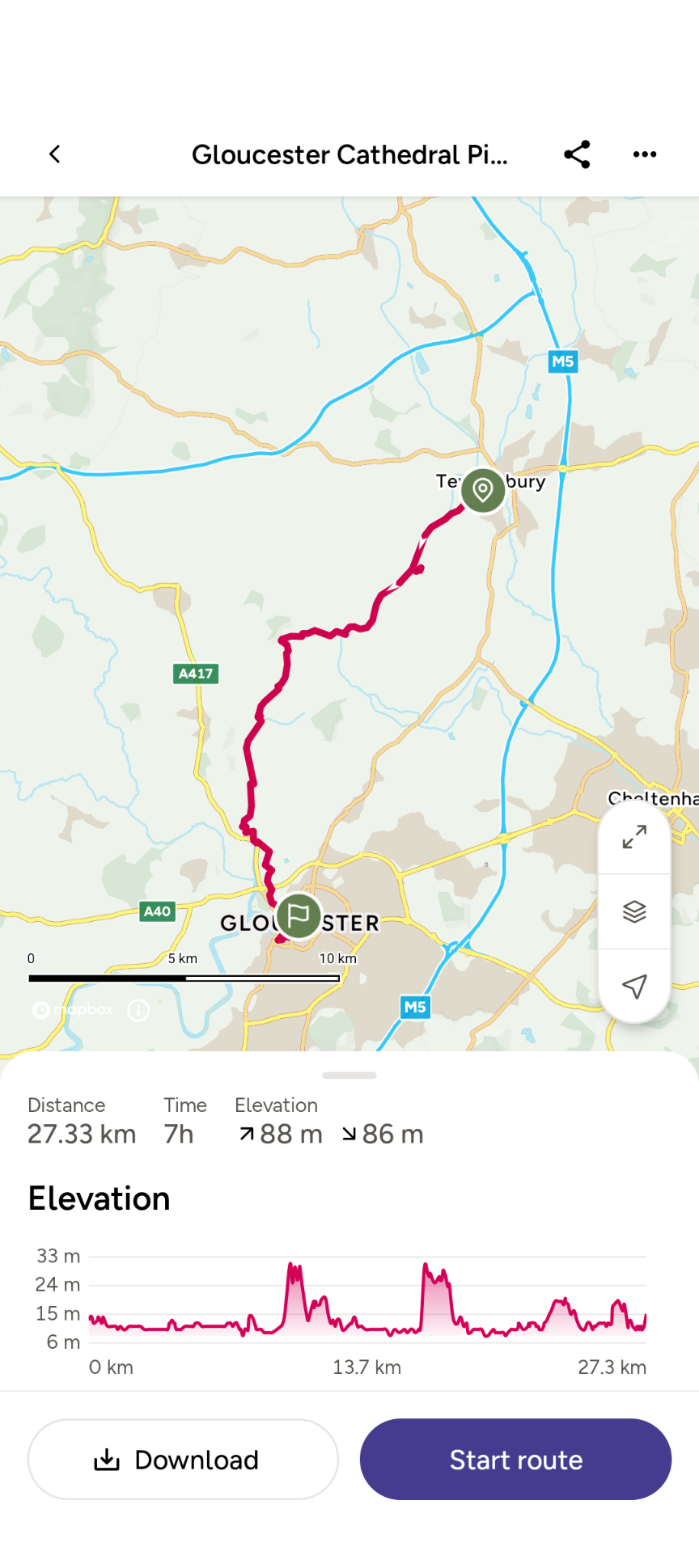
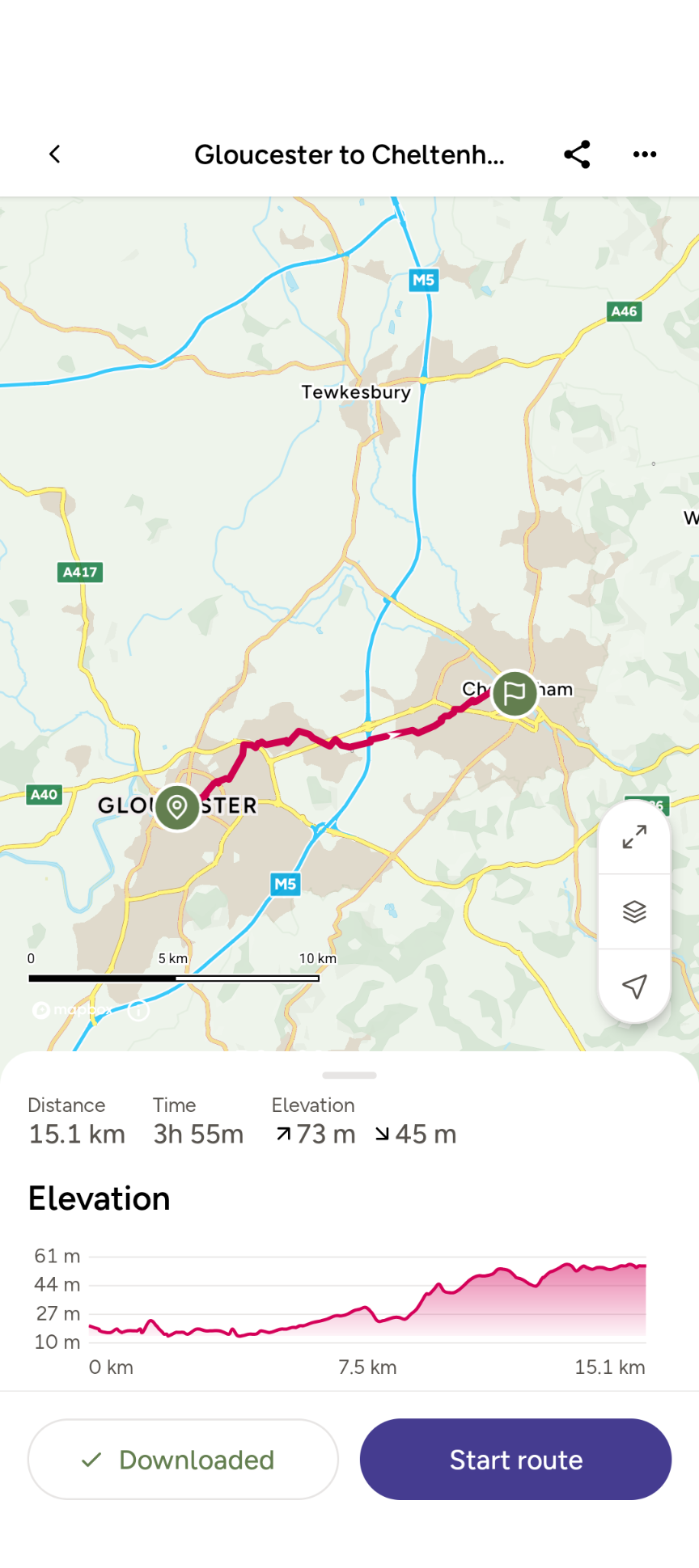
Three Ordnance Survey map app screenshots of the maps I used for the walk: The Gloucestershire Way (GPX from the Long Distance Walking Association), the British Pilgrimage Trust’s Tewkesbury Abbey to Gloucester Cathedral, and the Slow Ways UK route from Gloucester to Cheltenham

Day 1

I am fascinated with borders, the shared edges of places. Though they are a line on a map, they are also complex political divisions. Chepstow, or Cas-gwent, being on the Welsh side of the English border, shares the languages of Welsh and English and is at the cross-over point between cultures. I knew it a little, in my early twenties, when I lived and worked in the Forest of Dean as a Dance Animateur (someone who animates people about dance in a specific geographical area). It seemed right, somehow, to start my walk on the Old Bridge very shortly after sunrise, at the meeting of night and day. Long walks are always significant for me, they mark the boundary of the way I was and of a new way to be.

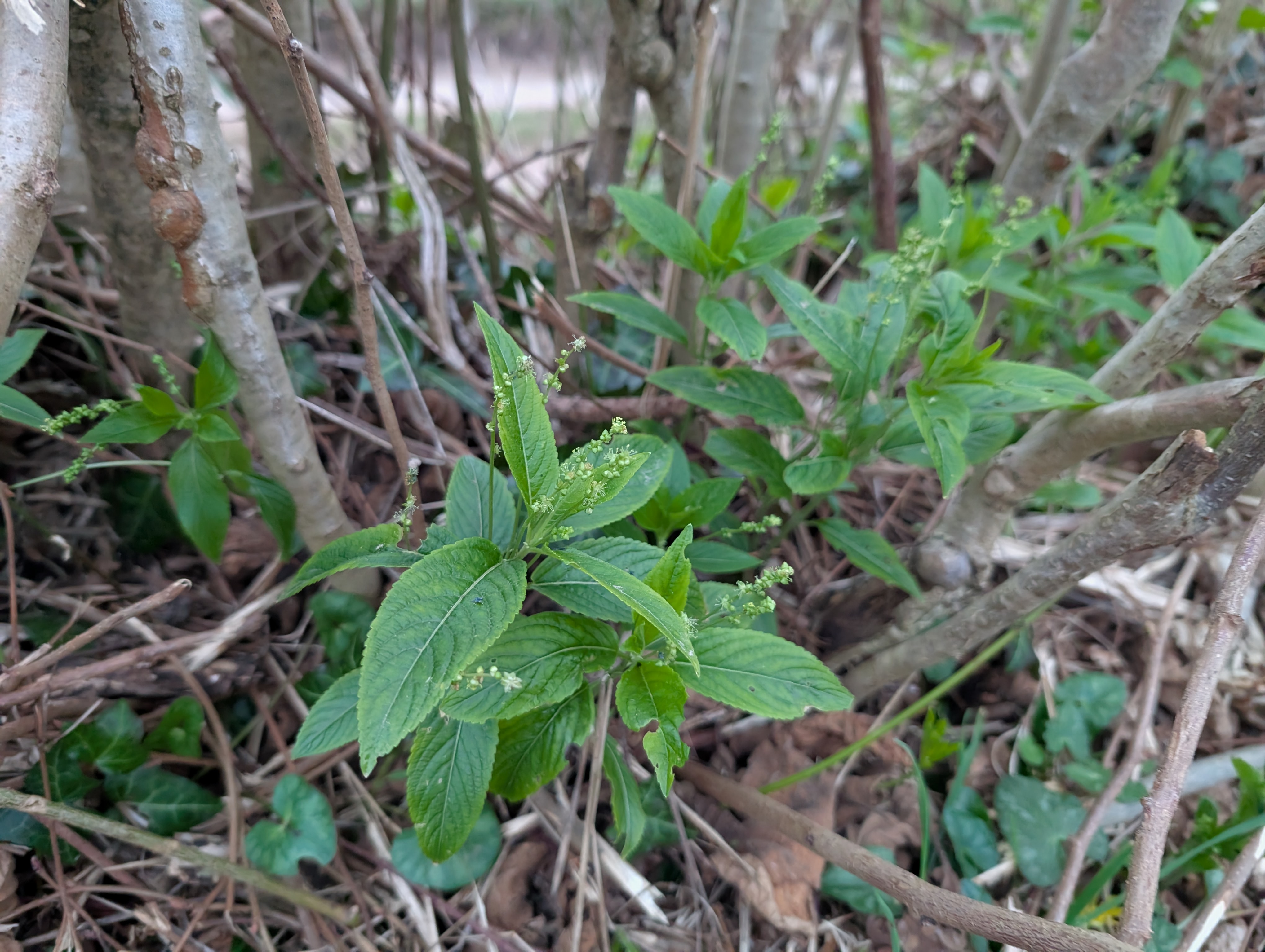
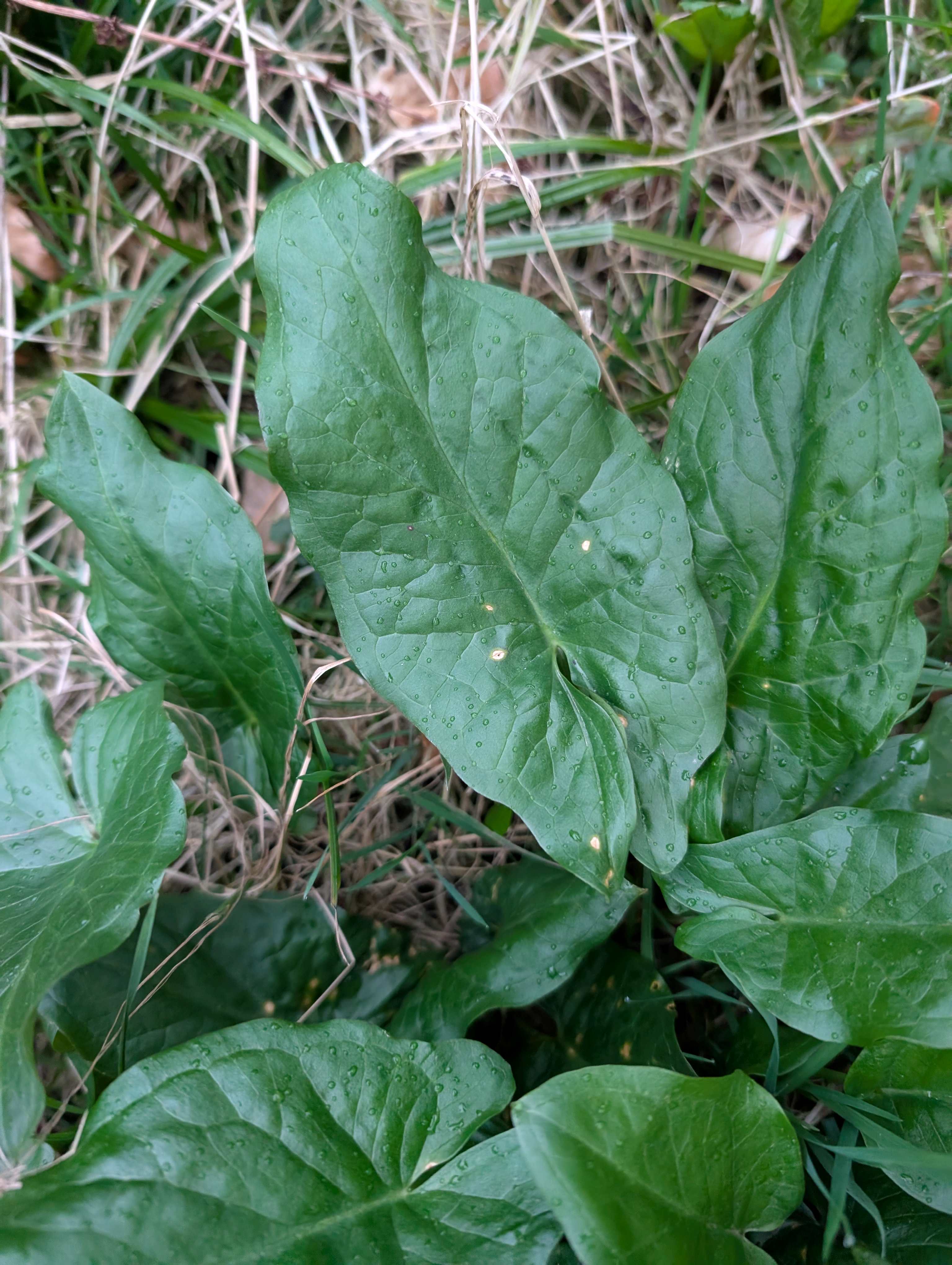
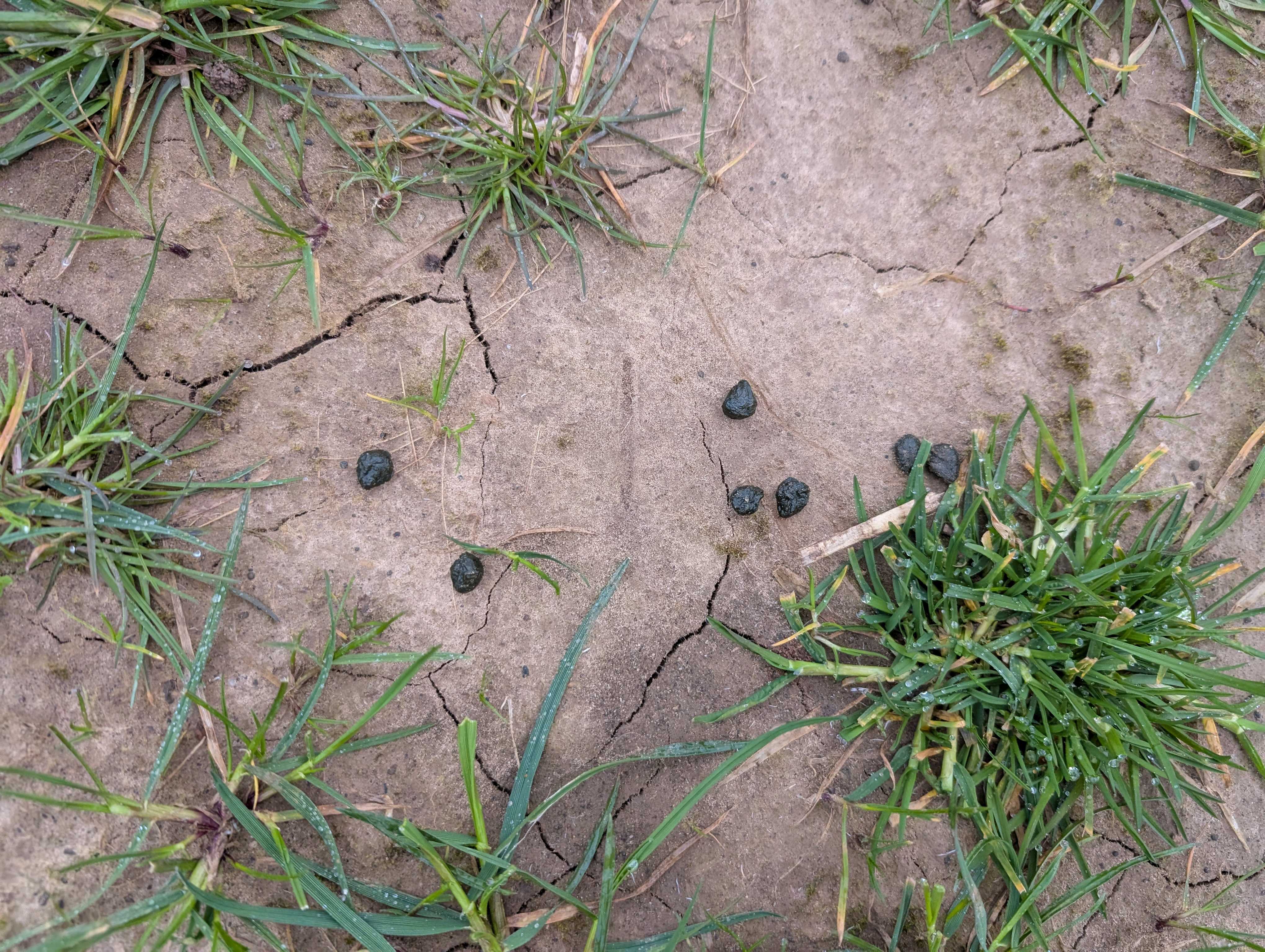
Captions for the images above: Some of the small things that I met on day 1, that make up and contribute to our ecosystem: Dog’s Mercury / Bingelurt or Mercuralis perennis (highly poisonous) found on ancient woodland floors; White spots on Lords and Ladies / Cuckoo pint or Aurum maculatum, perhaps indicating minerals in the water. It is also poisonous; Deer droppings that will feed the soil when it rains.

Before I left Edinburgh for Gloucestershire in England on 6 March 2025, I had felt under increasing pressure to produce intelligent ideas and write about what I intended to do. I felt sure it was not enough to ‘go on a walk and look at the landscape through the eyes of an artist’. I was worrying myself over not being sufficiently learnèd because I haven’t been to Art School or done a PhD, as so many of my erudite friends and colleagues have. I wonder, now, whether that worrying had something to do with what happened on the walk, with the injury I sustained which took a long time to get over and which still causes me pain at times.

… that the brain’s left hemisphere is designed to help us apprehend and thus manipulate the world, and the right hemisphere to comprehend it, to see it all for what it is.

Dr Iain McGilchrist from The Matter with Things (intro)

Using both sides of the brain

My different interests have always engaged me with both sides of my brain. At dance college we were being trained to become ‘thinking dancers’, effectively doing 2 degrees in one by mastering the practical application and delving deeply into the academic subjects which underpinned it.

Shiatsu, which I started to learn in 1989, is a hands-on subject. I was taught and have practised for many years, how to touch the body effectively and appropriately; it was essential that I deepened my intuition about the Chinese / Japanese notions of chi and qi. However, we also studied the theoretical and philosophical aspects of this complex complementary therapy.

Now I’m making walking art: simple perambulation in its application, plus reflection and enquiry coming duraing and after. With this latter, though, I was constantly worried about my ability and whether I should be doing something more in-depth and sophisticated.

Day 2

Captions for the images above: Going up May Hill, Forest of Dean March 2025, and the view from the top

I’d looked at the map for the second day, seen that there was a steep hill at its end, and told myself I did not have to do that, what with the heavy rucksack and it being only the end of day 2 (traditionally, one of the most challenging when doing a long-distance hike as you are not used to the hours of exercise, haven’t yet built up the relevant muscles to cope with it). When I got to Longhope though, I felt good. It was such a beautiful evening that I broke my resolve and went up anyway. Almost immediately, I had to stop every 11 paces, to rest and breathe, and then my foot slipped from under me and the weight on my back toppled me over. I was, as I had intuited the night before, too tired. It did not feel not serious, but by the time I started going down, I was hobbling. The back of my left knee was already hurting a lot.

The result of straining a tendon was that I had to focus in minute detail on my body sensations and how the surrounding landscape effected them. I could not use my brain to figure intellectual things out or puzzle over the meaning of what I was doing. I had to sink into my physical system to find ways to mitigate the damage and minimise any further harm to my soft tissues. This meant watching the ground, not only for the small things which often reside there, but for any slight undulation. Equally mindful of the internal as well as external beings I was meeting, I was forced into a different sort of balance.

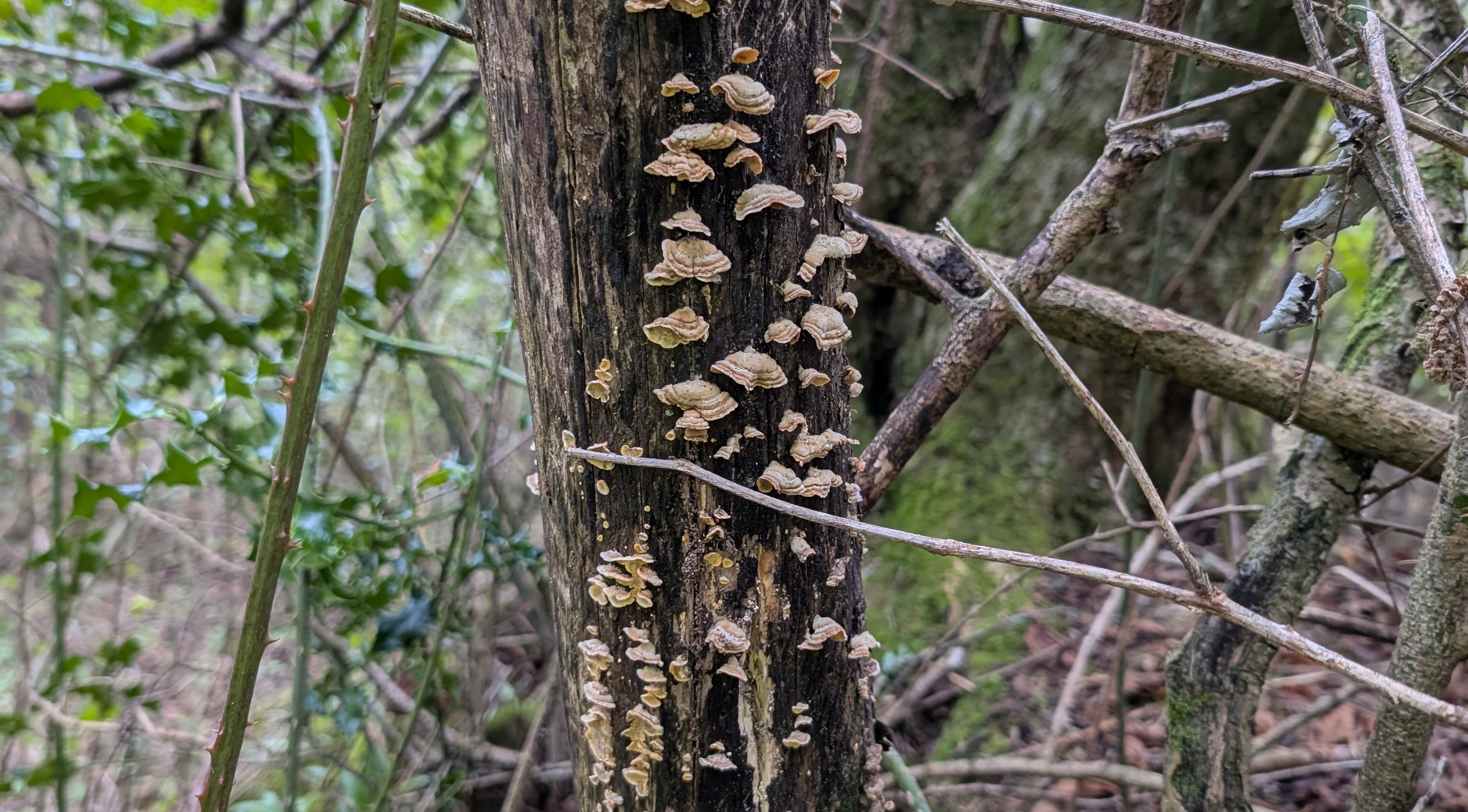
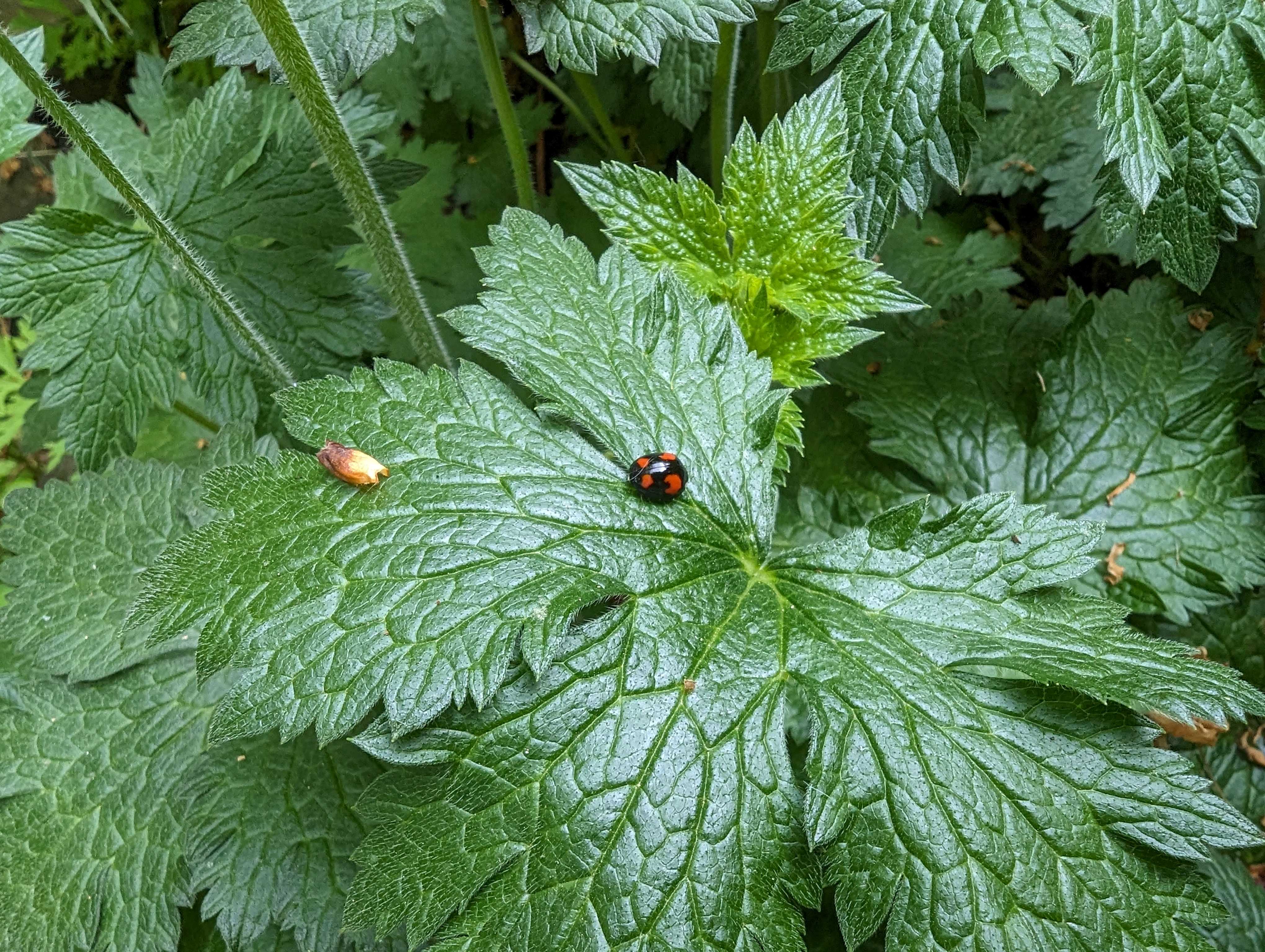
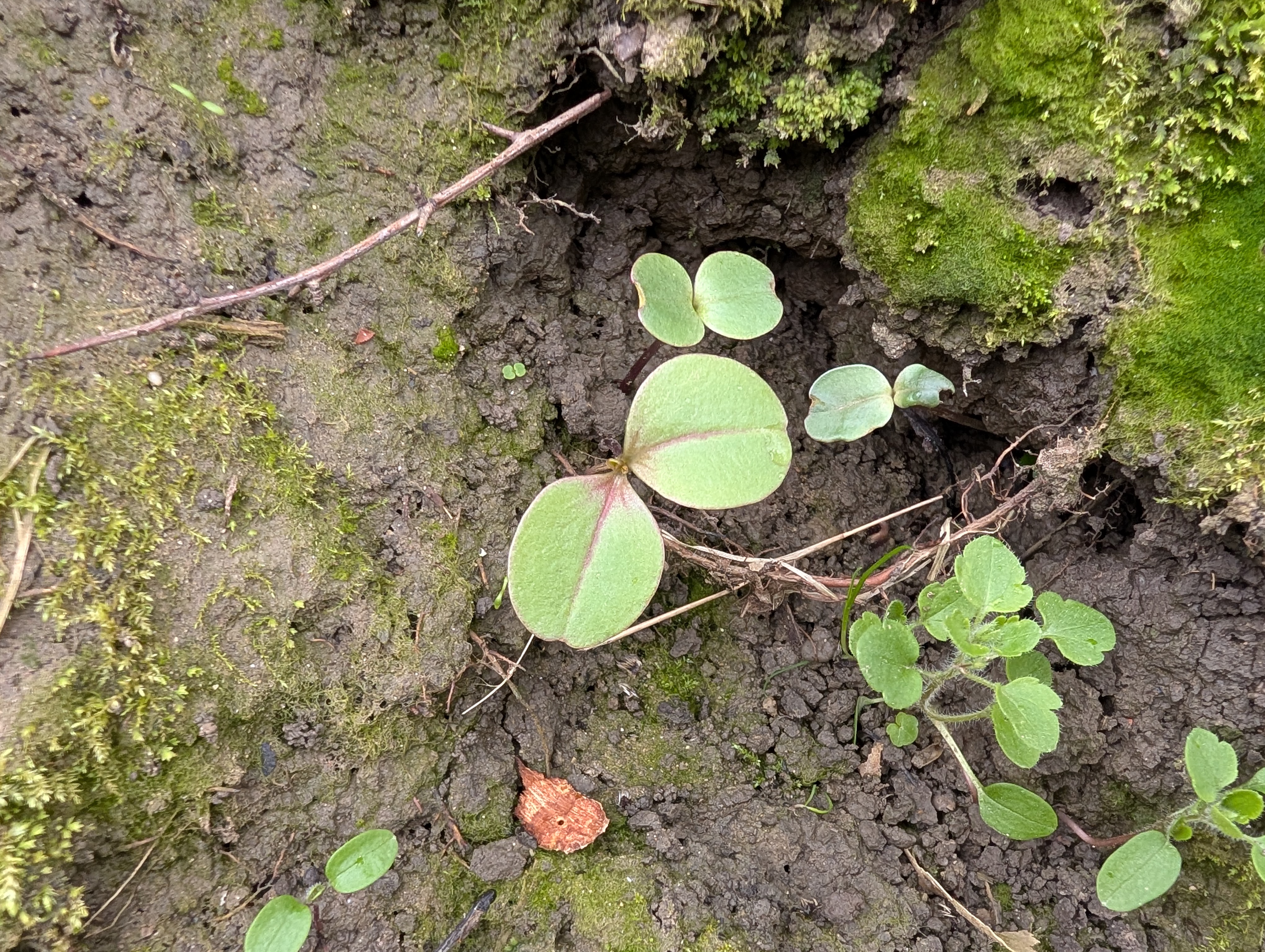
Captions for the images above: fugi growing on a log, Harlequin ladybird, cotyledons growing on a molehill

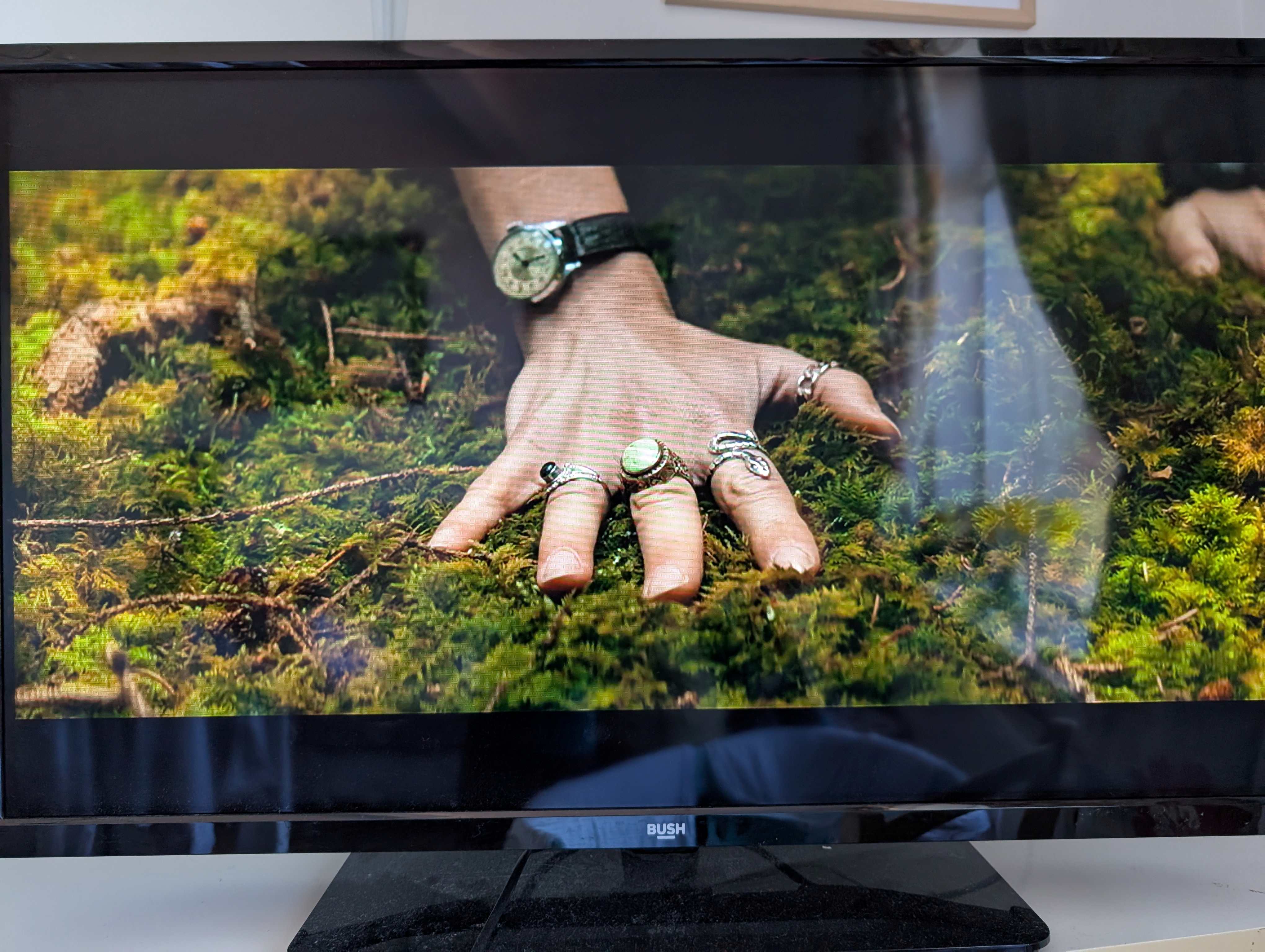
Just before I left home, by chance, I came across the drama deries, The Change (Channel 4) by Bridget Christie. It’s about a woman who leaves home and goes to the Forest of Dean ‘to find herself’. I could hardly believe the syncronicity. After my return, nursing my poor leg and unable to walk far at all, I watched series 2. It is full of shots of the small things: a beetle slowly crawling, mushrooms sticking out of a log, and seedlings starting to sprout. It is suggested that the more Linda, the main character, starts to feel rooted, and things start to drop into place for her, the more she starts to hear what is going on in the landscape around her; even the mycelium growing and connecting underground.

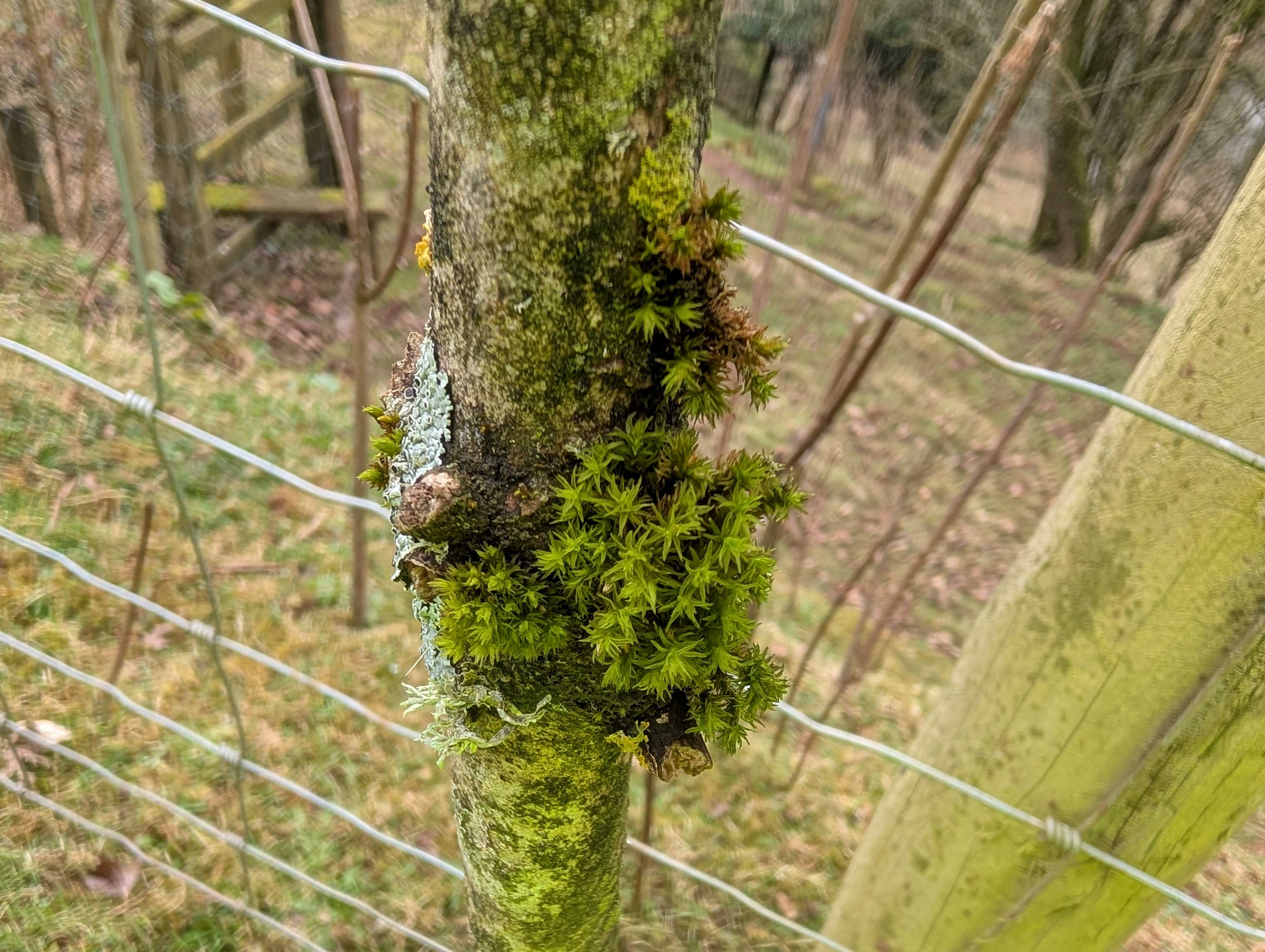
Moss and lichen on a fence post, Forest of Dean
Hand on moss: still from ‘The Change’ by Bridget Christie on Channel 4

These early days of the walk were idications of how the whole was going to be: fascinating in the detail, a deep learning and balancing experience, and muddy, so very muddy.

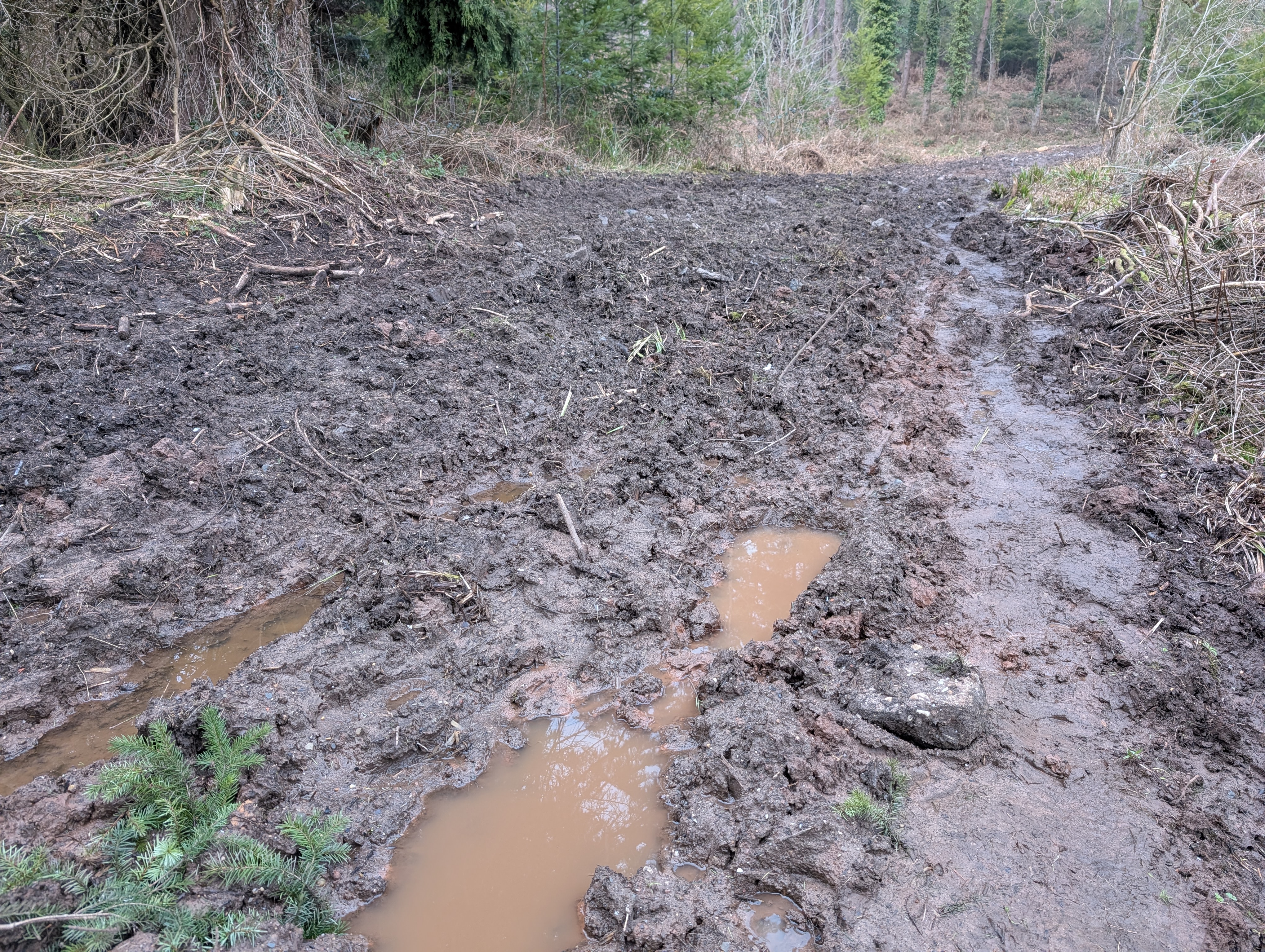
So many of the paths, the majority of them, were extremely muddy, very slippery and practically impassable

To be continued/

Slow Ways -Gloucester to Cheltenham

This walk as taken in March 2025. It was the penultimate day of a 10-day hike from Chepstow, on the Welsh-English border, to Cheltenham. My artwork was in the Walking the Land’s Line(s) of Enquiry exhibition at the Hardwick Gallery, which opened on 7 March, and I was attending a Symposium at the University of Gloucestershire there on 21st.

You may be interested in this companion blog post: Walking with Ants

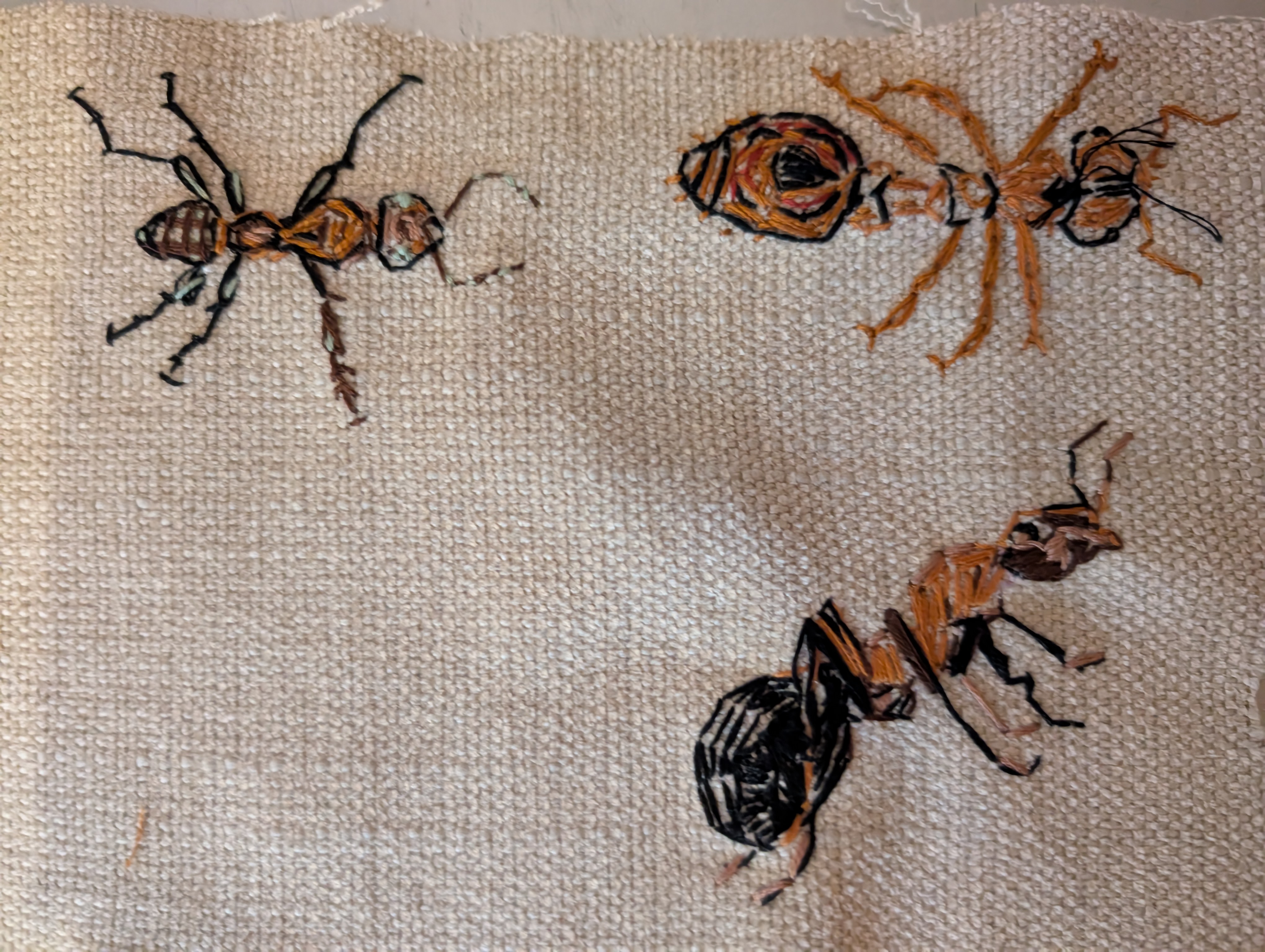
Detail, The Honeydew Line, by Tamsin Grainger (embroidery). I was walking for the small things, celebrating and honouring them as vital participants in our ecosystem

First Friday Walk

1 November 2024 a Walking the Land artist collective monthly event. This Friday’s brief was by Janette Kerr and me, Tamsin Grainger and part of the Lines of Enquiry, a collective walking art project which will culminate in a group exhibition in 2025.

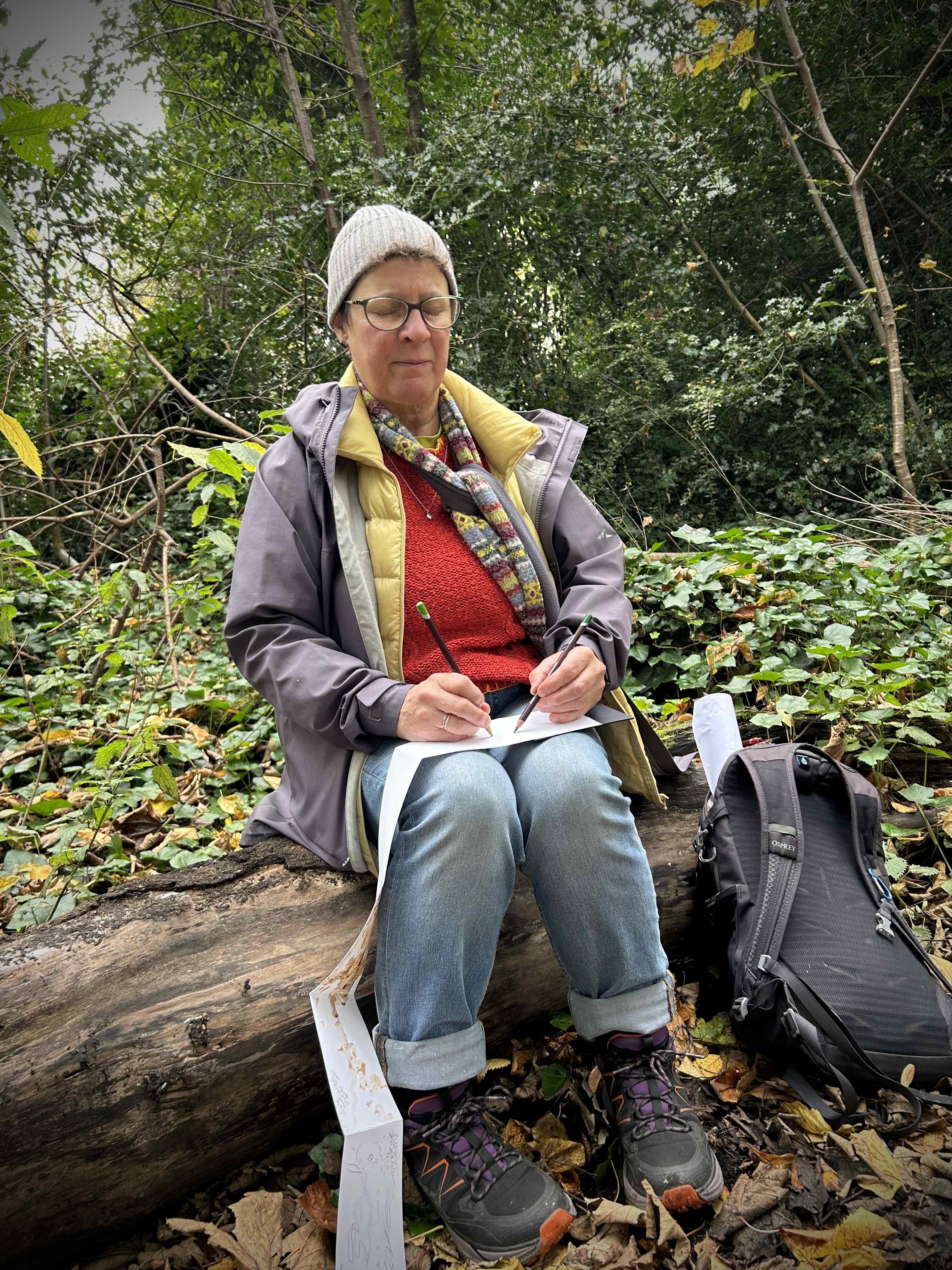
Look for somewhere to sit, stand or crouch on your own. Pause. Close your eyes and concentrate on listening.

Try to separate out all the sounds you can hear.

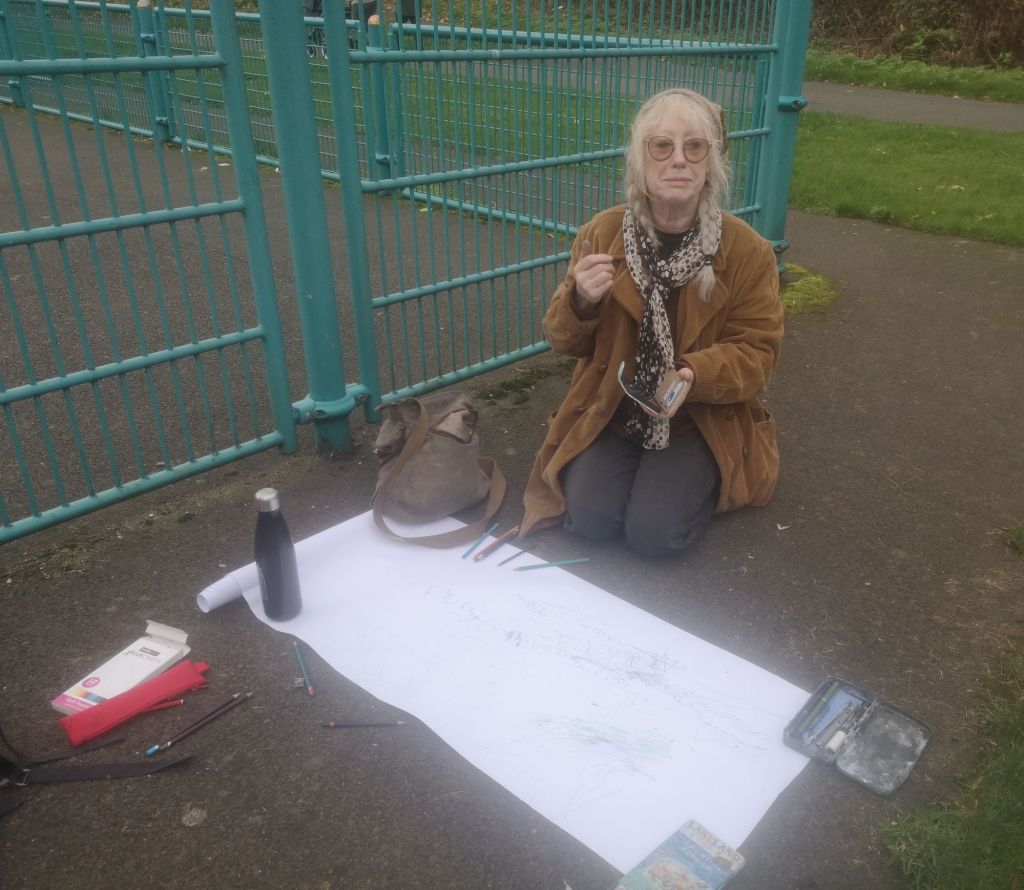
Using a piece of paper and pencil, crayon or pen, and with your eyes still closed, make marks on your paper that you think might represent the sounds you are hearing (don’t try to make a picture of, or draw, the thing making the noise!)

Spend as long as you like doing this. You might stop and do it several times during the walk.

If you are walking with others, you might try this together on one piece of paper.

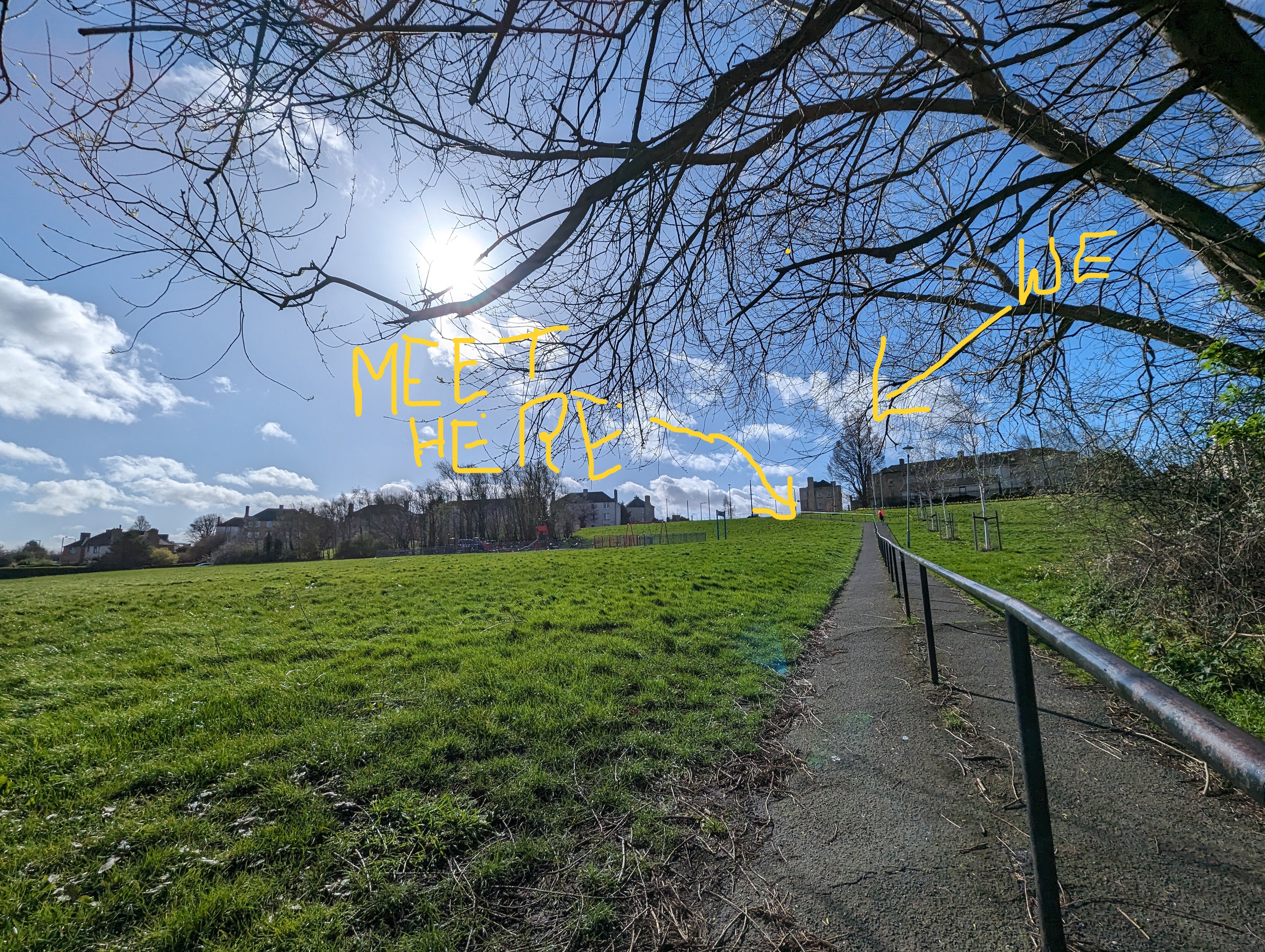
Here are the What3Words locations for the 6 stops we made along part of the Edinburgh Cycle Path network, connecting in spirit with others who were walking along the Honeybourne Line (Gloucestershire) and elsewhere.

  1. ///Causes.Host.Home
  2. ///Perky.Fetch.Useful
  3. ///Notice.Case.Bugs
  4. ///Linked.Tides.Eager
  5. ///Bounty.Belong.Only
  6. ///Maker.Exit.Corn
  7. ///Friday.Notice.Retail
Damp earth causes stains
Tree hosts magpies and sparrows
Home is far away.
Perky dog's tail wags
'Fetch' calls his human with joy
Useful happinness.
Part of the No Birds Land sound walk installation
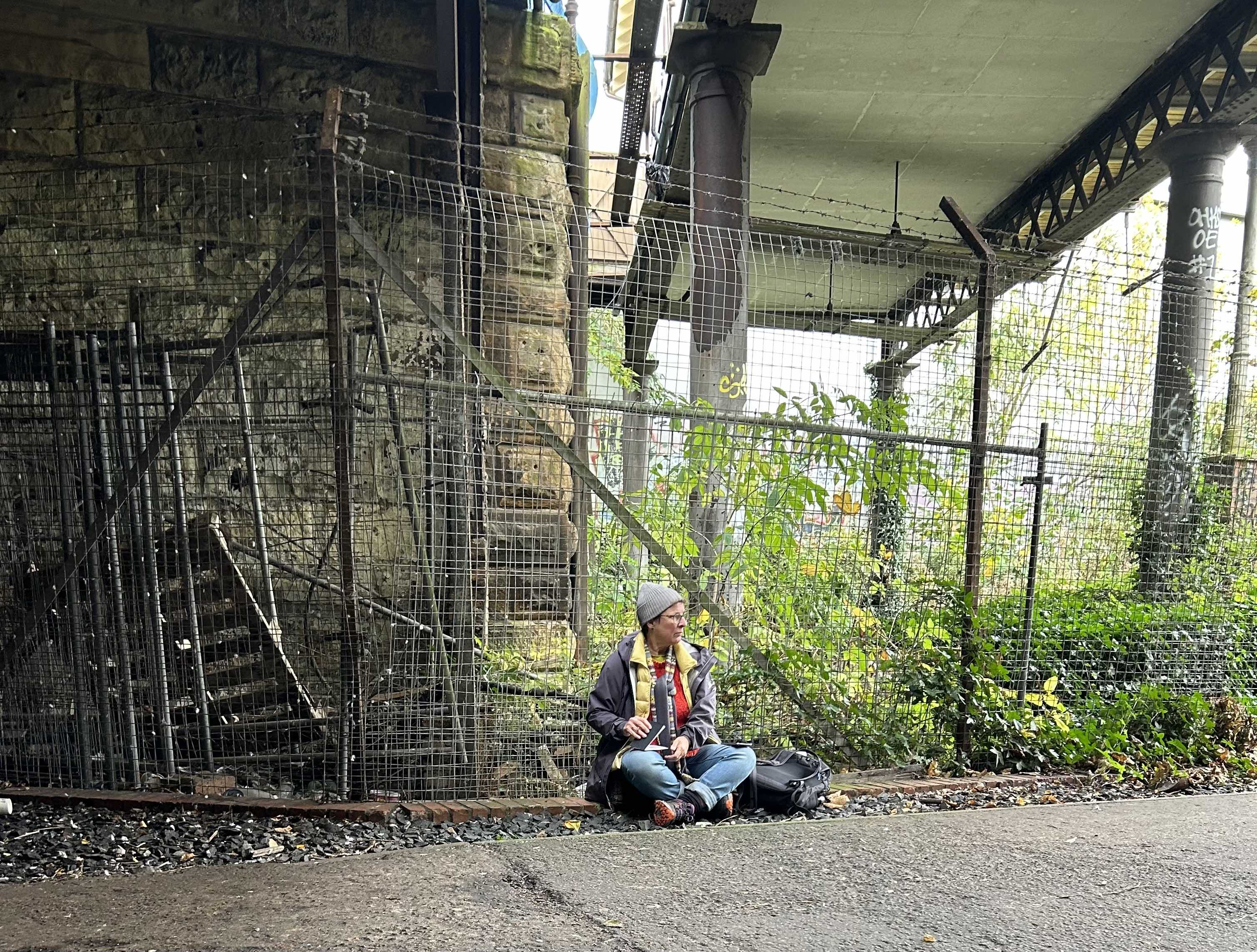
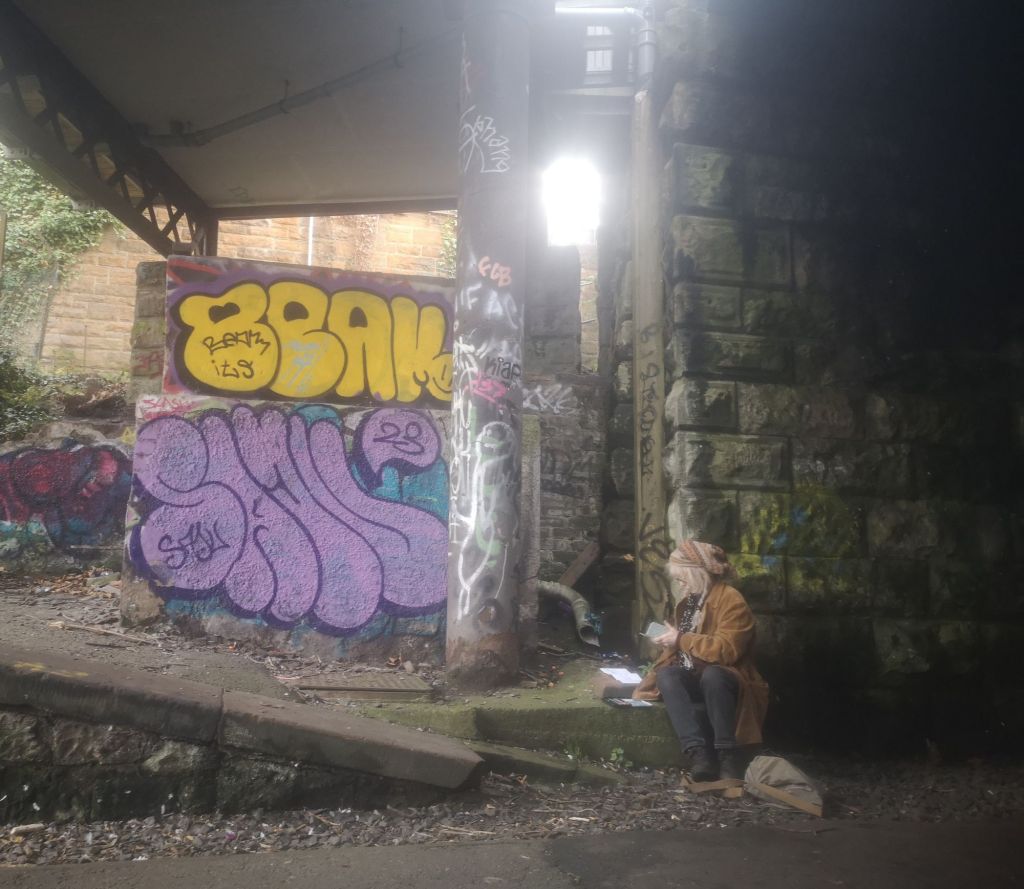
Under the Bridge. Edinburgh cycle paths. Photo Janette Kerr
Notice how cold stone
Is, in case of chills and piles
Bugs me every time.
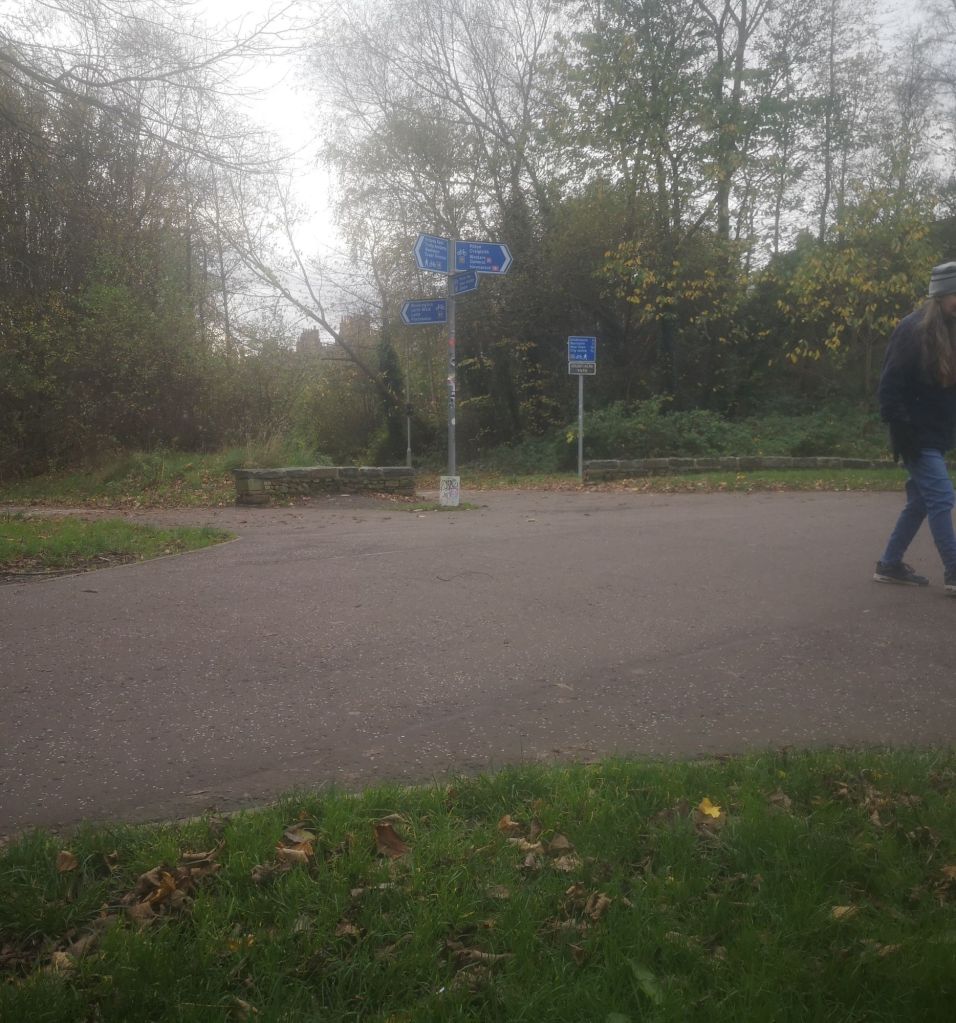
Where the 5-ways meet on the Edinburgh Cycle Path
Log sitting linked to
Ruth, tides away from here, though
Eager to connect.
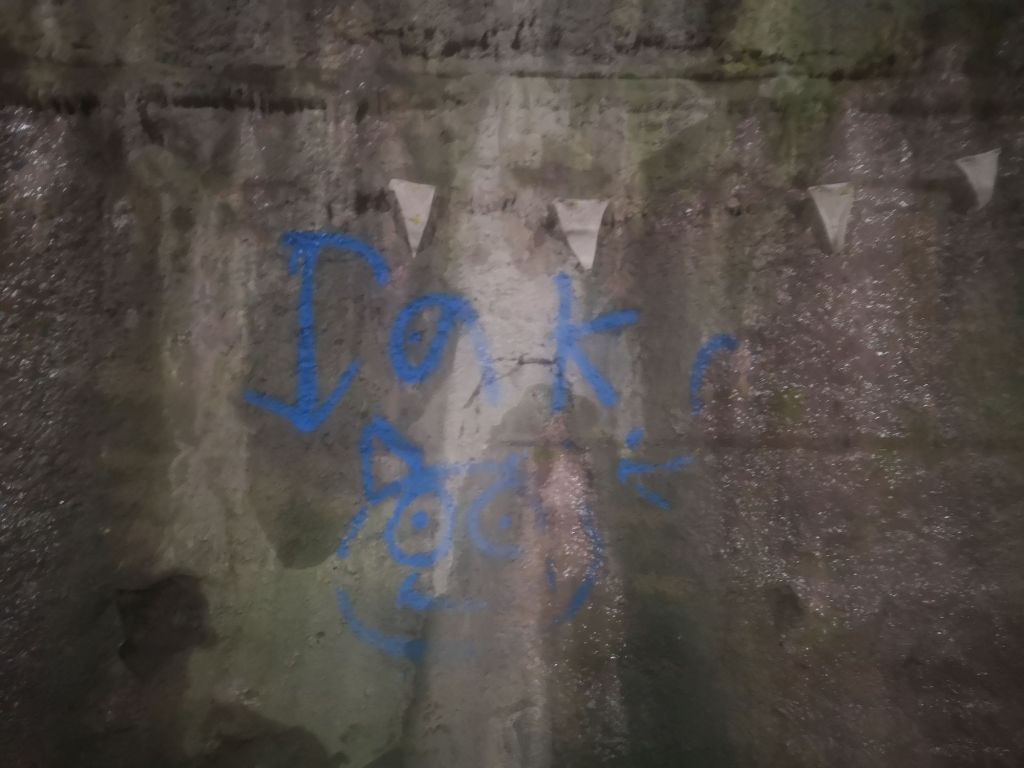
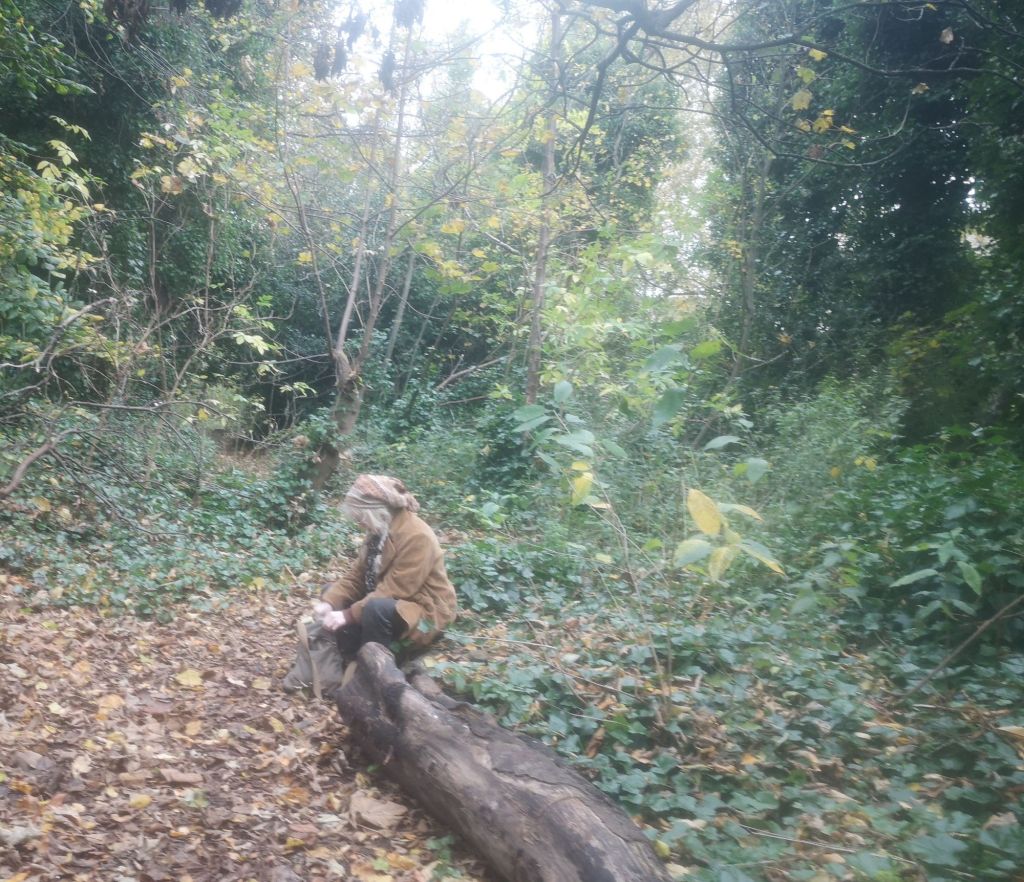
Not Log Letters but Log Drawings (of the soundscape)
Pigeon poo bounty
Belongs here under the bridge
Who to? Only coo!
Despite the metal mesh, the pigeons roost in the roof of the old railway tunnel where Janette draws
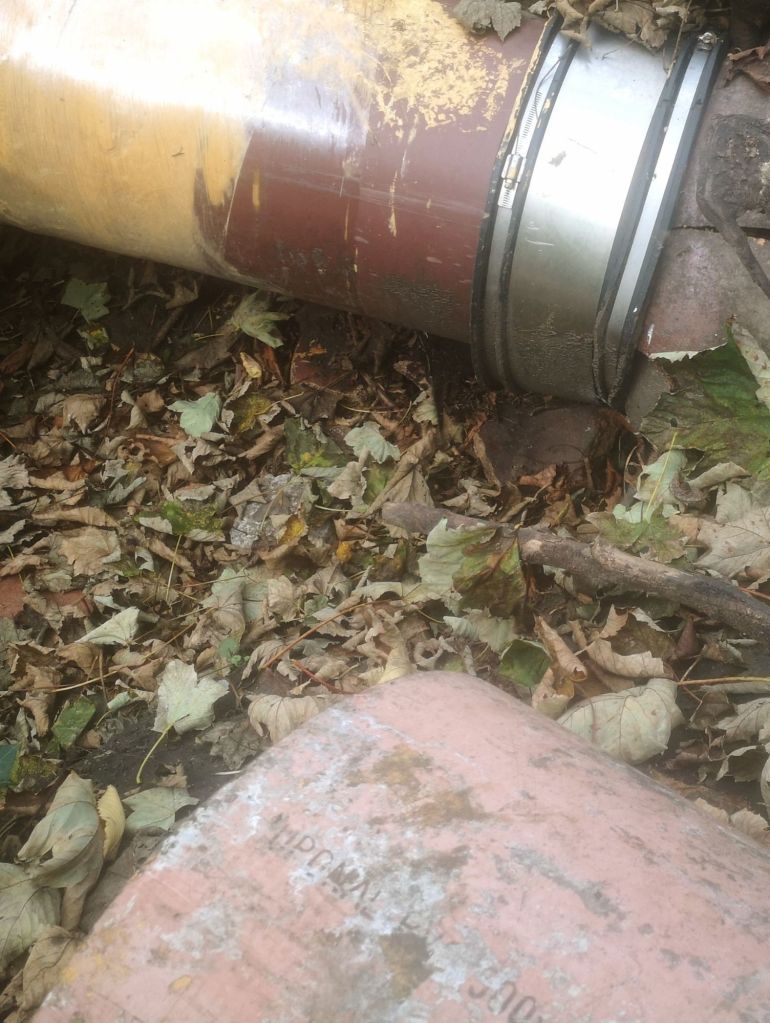
Maker mark on pipes
No exit for the sewage
Rose and corn coloured.
Strange, but serious pipes on the hillside
First Friday walking
Notice the noise of the drill
Retail shop going up.
Final stop: drawing together, opposite each other at the end of the Leith Path near the Edinburgh Sculpture Workshop
Some of the drawings made during the First Friday Walk (November 2024 by Janette and Tamsin)

Notes

On the ‘Log sitting …’ haiku: ‘Ruth’ refers to Ruth Broadbent and our project Conversations from a Log

Walking with Ants

I am an Edinburgh-based artist who exhibited in the Walking the Land collective Lines of Enquiry exhibition at the Hardwick Gallery University of Gloucestershire in Cheltenham. The gallery is situated near the Honeybourne Line, a greenway which used to be a railway. After the opening on 7 March, I made an artwalk from the Welsh/English border to the Symposium which was also at Hardwick and held by Walking the Land.

The Honeybourne Line in Cheltenham and the Cycle Route Network in my home city of Edinburgh date from the Industrial Revolution, whereas industrious ants have been around since the Jurassic era. For much longer than we have been commuting along these paths, they have been making their way back and forth to work from ant hill or nest, gathering food, clearing up after us, and making critical relationships with other species (famously stroking aphids so they secrete honeydew).

I have walked, watched, sketched and embroidered ants in order to appreciate and understand more about them and their busy lives. So often unseen, they are a vital part of our ecosystem and I celebrate them.

The Honeydew Line (stitching) by Tamsin Grainger at the Hardwick Gallery, Cheltenham. Ants walk each day to forage, and like commuters along the Honeybourne Line (Cheltenham), they pass in both directions often carrying heavy loads

I walked from Chepstow to Cheltenham through the Forest of Dean, the Severn Plain and the Cotswolds, looking out for the unseen small ones (eg ants who are part of our ecosystem and clear up our rubbish). For 10 days, I noticed, acknowledged, and paid attention to the vital role these not-insignificant members of our community play.

 The mushroom says, fruitfulness comes from what is unseen or overlooked — hidden networks, decomposition. 

Elizabeth Wainwright, Redlands

Orange crust fungus
Frozen crocuses

At the end of each day, I visited the home of someone who had taken me up on my offer of a Shiatsu-hospitality exchange. Highlighting the walk in advance on social media, I invited others to accompany me and/or to meet in the evenings / overnight. I was delighted to make the acquaintance of many people I’d never previously met, and others whom I had known before but had not seen for a few or even for 40 years.

During the walking process, I witnessed the terrible devastation to our soil that we have caused through intensive forestry, extraction, and injurious industrial farming methods. The effects of the recent, more extreme, wind, storms and flooding, often attributed to climate change, were experienced every day.They prompted me to recognise our human failing to protect the insects, birds, plants and animals that we have a duty of care towards, and rely on.

Eroded paths – almost impassable with human feet

Over the next months, I’ll be reflecting on the injury to my leg from slipping on the mud while climbing May Hill at the end of a 10-hour-day’s trek carrying a heavy pack. The pain I walked with became an embodied manifestation of the state of the crisis we are in. There were times on the tops of hills when trudging and squelching through mud, that I wondered if I could continue to go on. I had to sit and rest, mindfully. I had to accept the situation, go right into the middle of the extreme discomfort in order to transform the pain that each step caused.

So many broken or fallen trees

I will be addressing the idea that this was more than a walk or a wander, perhaps a pilgrimage, and that the act of hope was inherent in the constant need to physically move forwards. I accepted help and occasionally I sewed a small panel instead of touching, embroidered something I had come across during that day’s walk – Melusine (found on the arch of Notgrove Manor) and a periwinkle flower (from the hedgerows). Though I had scheduled one rest day, I had to take a second, a break from the walking. Lucky me that I could do that, with the help of new and old friends.

Someone left a dog poo bag on the wall

This walk has been now been completed. Thanks to all those who walked with me, or who bartered hospitality for Shiatsu. What is Shiatsu?

Tamsin giving Shiatsu, Paris

My route: Chepstow, to Parkend, to May Hill, to Gloucester, and to Crickley. Salperton to Stow-on-the-Wold, to Winchcombe, to Tewkesbury, all along the Gloucestershire Way. Then, to Gloucester on a British Pilgrimage Trust route, and finally to the Walking the Land Symposium in Cheltenham along a Slow Ways route. Total: approximately 124 miles (around 200 kms).

Starting in Chepstow at dawn

The Walking the Land ‘Lines of Enquiry’ exhibition ran between 3rd and 27th March, and the Symposium was on 21 March 2025.

Arriving at the Hardwick Gallery, Cheltenham, for the Symposium on 21st March 2025 at the end of the walk

Walking Home

‘Homewards’ is a Walking Home / Walking in Transition walkshop proposal for the International Walking Arts Encounters in Psarades, Prespa, Greece in July 2025

This walkshop asks where and what is home. It acknowledges that we may have to walk a long way before we find somewhere to settle, and that although the building may be bombed-out, make-shift, unsafe, or insufficient, yet it can simply be where home is. It has to be enough for us, and enough to be shared with others who are visiting or do not have a home of their own.

The local community will be invited to join the walkshop alongside visitors to the Walking Encounters. In 2023, I was privileged to hear some local people’s life stories, about the town’s children having to leave for their own safety many years ago. They made long walks to find new homes, and it was a long time before they returned (some never did). It is hoped that we can continue this conversation about home. A translator will be sought for ease of communication.

Walkshop

‘Homewards’ consists of a walk in search of a home where there will be a welcoming hospitality ritual and a ‘meal’ laid out for those participating. It will be quite a long, circuitous and hot walk ‘home’ and walkers will be invited to discuss the themes of ‘walking home’, ‘what home means to us’, and ‘what we need from a home’.

Both talking time and silence will allow participants to debate how much space and how many resources are needed before somewhere can be called home, and to reflect on what is available.

It is likely that the walkshop will take place in the middle of the day or in the afternoon heat (participants to cover up / wear hats) and last 2 hours in duration.

This proposal was accepted, but sadly I was unable to travel to Greece in 2025. Conceiving of the walk allowed me to engage with these important topics. At this time of permanent, temporary, forced and voluntary migration taking place globally due to climate change and wars, it is a vital subject, particularly for those lucky ones like myself who have a safe roof over our heads. I thank WALC (Walking Arts and Local Communities) who are the organisers of the Walking Arts Encounters.

In the meantime, I continue to welcome / walk / meet with refugees and asylum seekers who are arriving in Edinburgh, Scotland, many of whom are rehoused in Granton where I live. You may be interested in Walking Like a Tortoise (here and a longer post here) which included such walks and workshops.

I met Amy Tinderbox, Australian Walking Artist, at the Walking Arts Encounters. Her latest post is The Magic Study of Objects here.