In Praise of the Donkey

New Year’s Day 2020

You can listen to Funky Donkey by the Beastie Boys while you read this if you so desire.
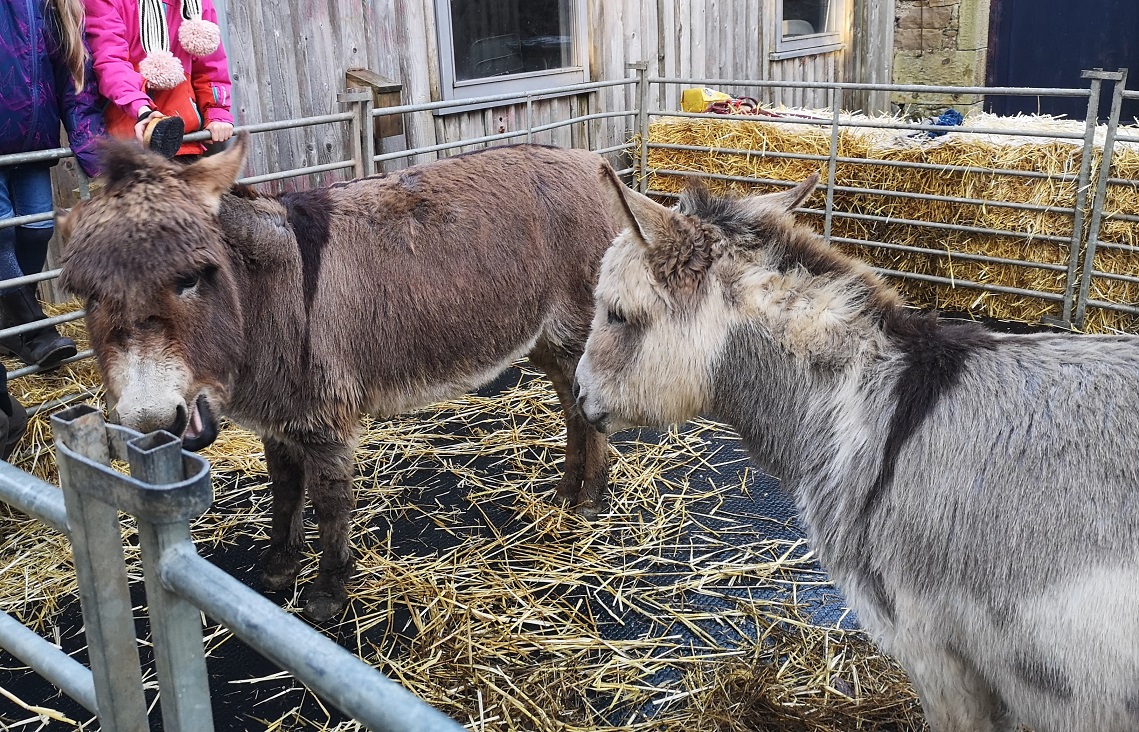
Children love donkeys, Jupiter Artland Xmas 2019

Donkeys = go slow

Robert Louis Stevenson wrote a book called ‘Walking with a donkey in the Cevennes’ (France). When he walked there, he was forced to go slowly so that his donkey didn’t “browse”. In order to make it through a walking day of around 20 kilometers with a rucksack on my back, I too engage a modest pace. I have discovered that slow is good for me. I can see the details of the landscape, I can feel the ground under each heel and toe, I have time to muse.

‘I noticed that a donkey has an appealing terrestrial solidity – it’s a good solid animal – yet its limbs are surprisingly slim. It’s as firmly yet lithely connected to the earth as a birch tree. ‘ Beatrice and Virgil which, among other things, features a particularly enjoyable conversation between Beatrice, who is a donkey, and Virgil, who is a howler monkey, about the nature of a pear (that is, the fruit).

by Yann Martel (2010) p. 121 (TW: torture, holocaust)
text contains ink
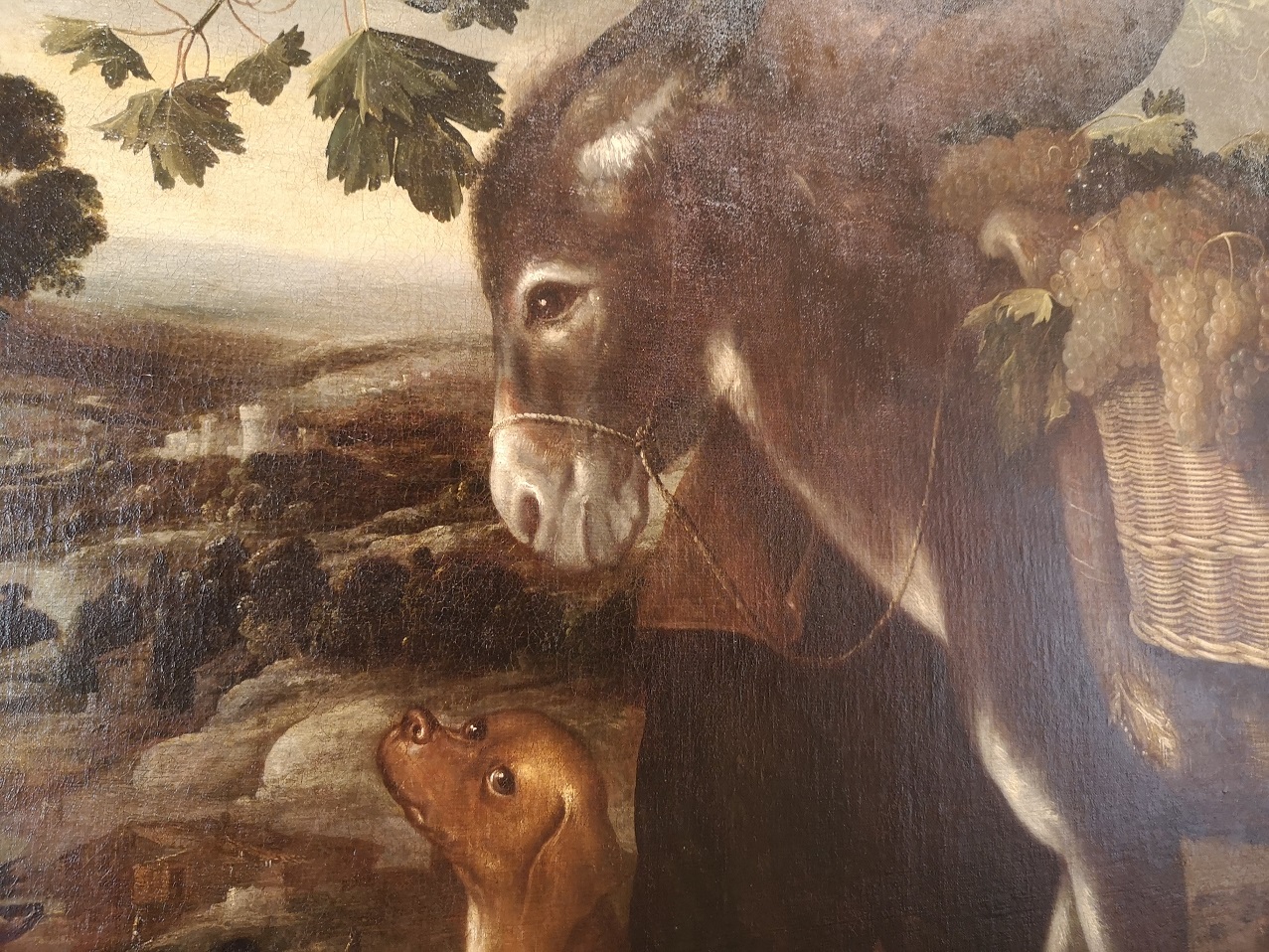
Donkey detail from Otoño (Autumn), a painting by Francisco do Barrera 1638, which hangs in the Museum of Fine Arts, Seville, Spain

In his book ‘The Wisdom of Donkeys: Finding Tranquility in a Chaotic World’, Andy Merrifield wrote about how he would watch Grebouille graze in the field for hours, as a sort of meditation. Merrifield trod in Stevenson’s footsteps and he too discovered the unhurried pace of the beast.
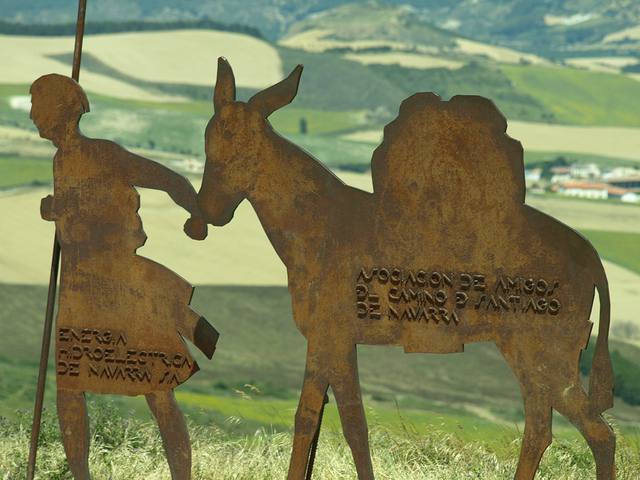
Sculpture from the Camino Santiago de Navarra, courtesy of Spanish Fiestas

Did you know? Donkey’s Back (lombo da burro) is the name of a rock in the Lapa de Pombas, a fishing port on the west coast of Portugal just south of Almograve? Local fishermen guide their entry and exit to the harbour by using this and other such masses.
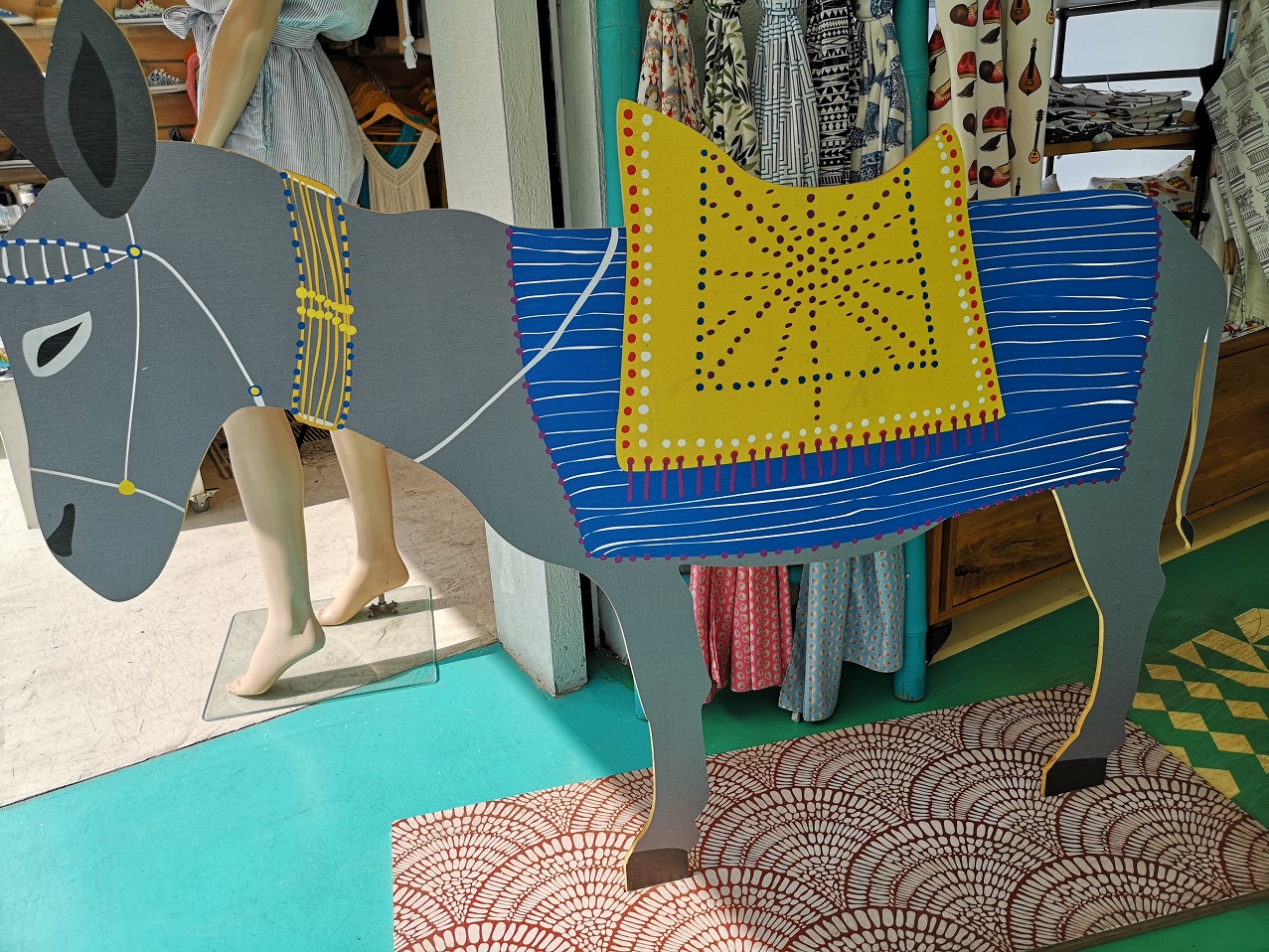
A cardboard donkey, spotted in a shop in Athens, Greece

Stubborn as a mule

Known to be good at kicking, donkeys also have a reputation for stubbornness and this is usually regarded with derision. However, I am assured by owners that if a donkey refuses to do something there will be a good reason, that it’s all about self preservation. That makes sense doesn’t it? It’s funny how we don’t always put ourselves in others’ (horse)shoes, juding them instead by our own habits, standards or preference and therefore perhaps misunderstanding their reasons for not doing something. If we are to learn from the ass, we will look around us when someone is stubborn and ask, ‘why might that be?’ and ‘is there a good reason?’ before we try and force them.

You probably know that a donkey is an ass is a donkey. They are the same thing.
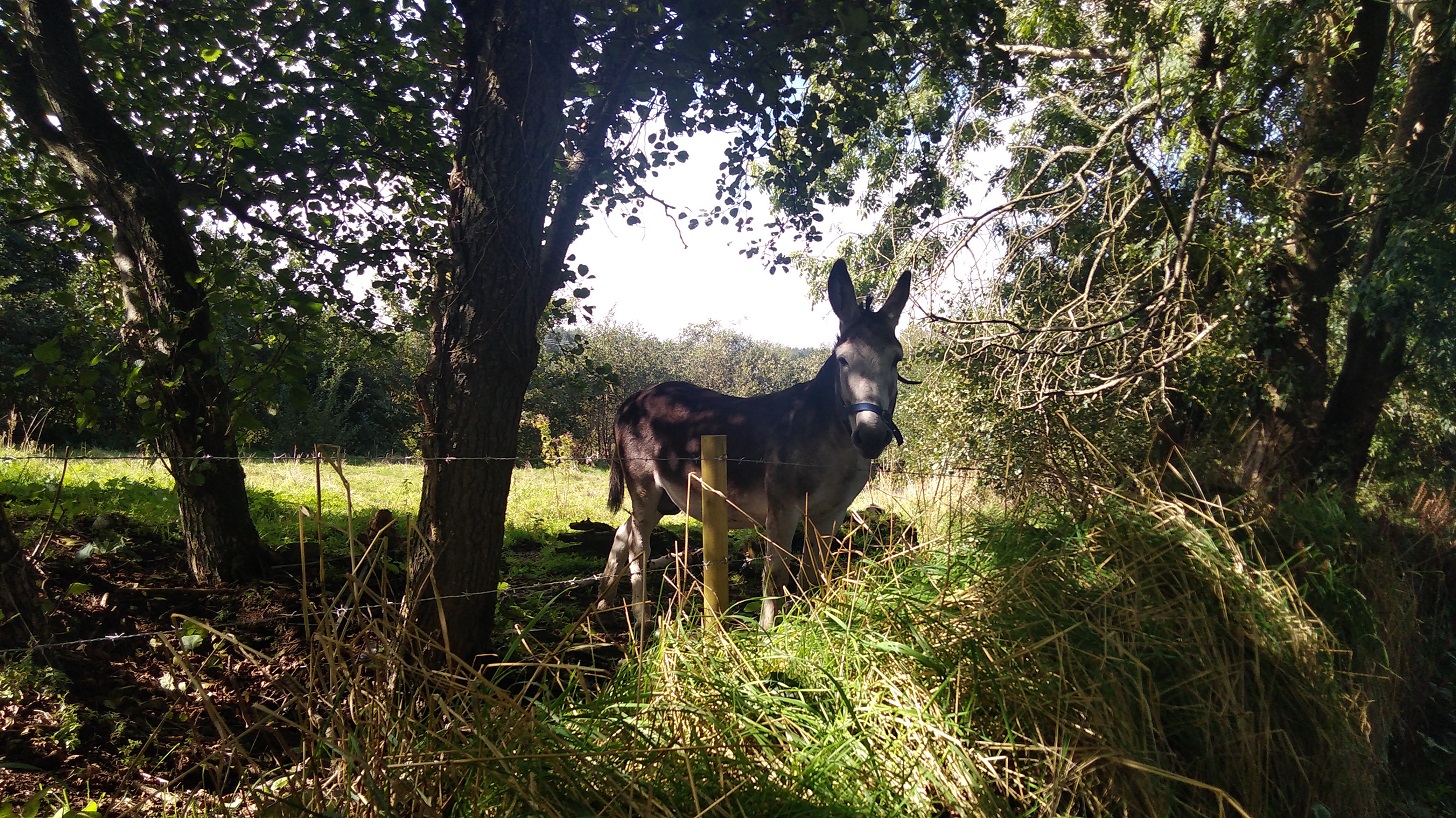
An Irish Donkey, Cork, Ireland

‘Donkeys have been used for transporting people and goods since biblical times. While donkeys have a reputation for being stubborn, they are also notoriously smart and capable of keeping themselves and their passengers away from danger.’ from ‘What is the differece between mules and donkeys?‘ by Jen Davis
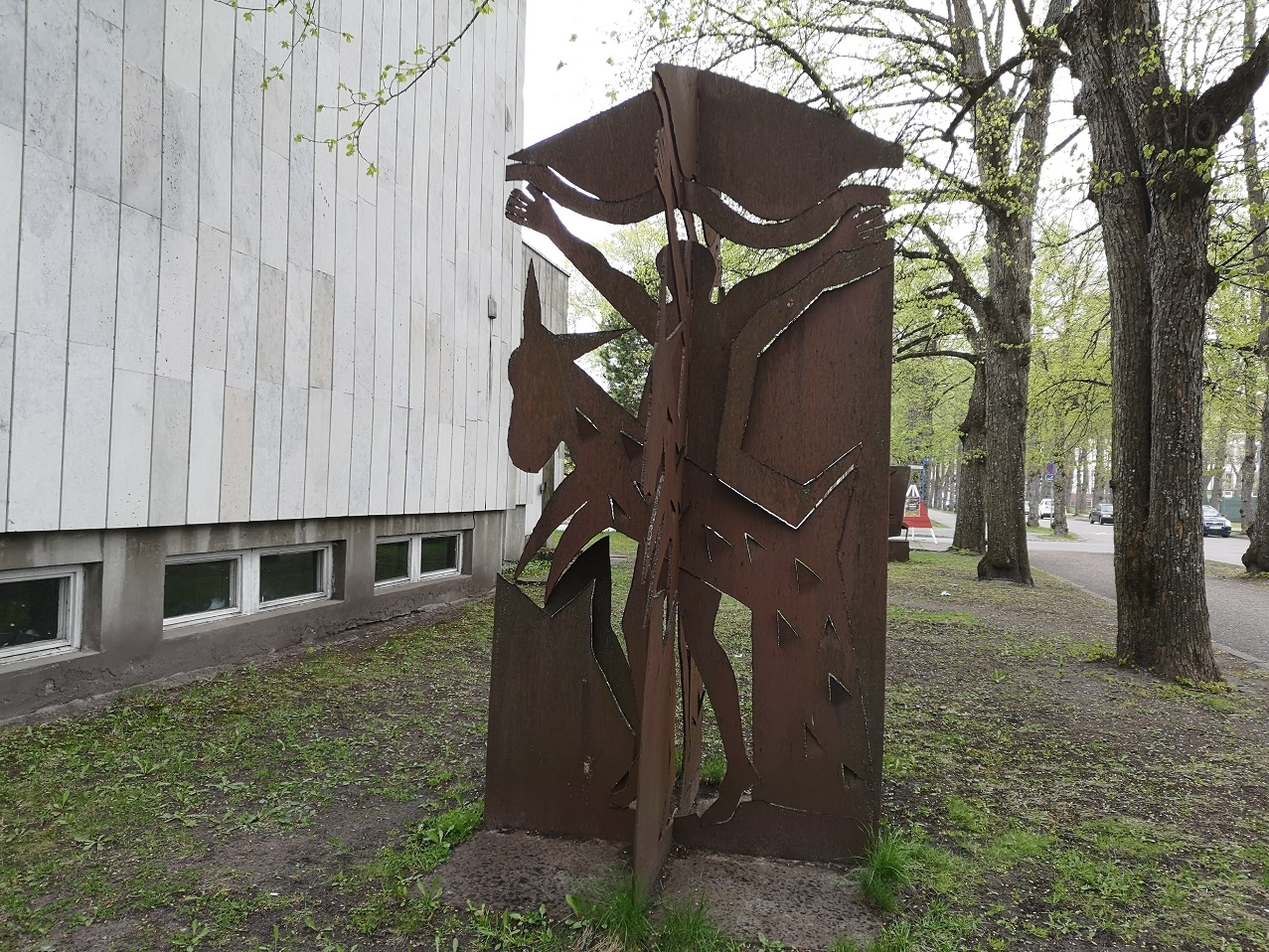
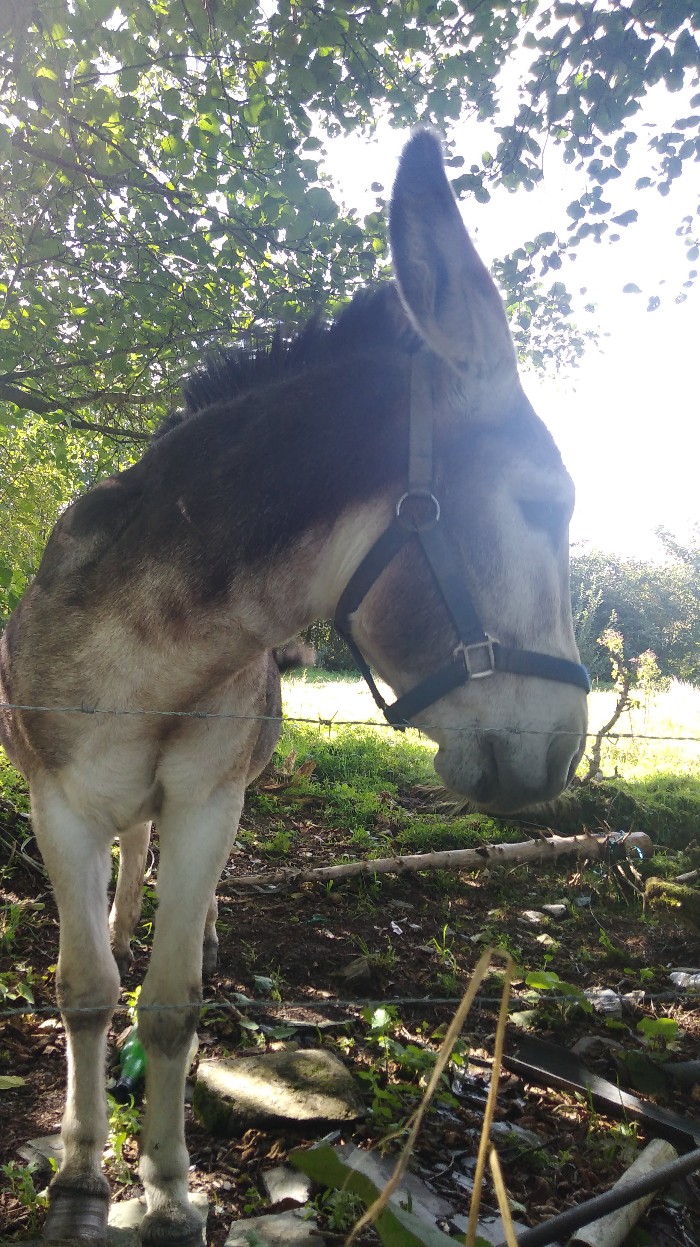
Donkey Art outside the Uue Kunsti Muuseum, Parnu, Estonia
identify a donkey
Donkeys have characteristically long ears

Ass attributes

In ‘Stories About My Ass’, Brandon Dickerson writes about how clever donkeys are, how he spent time, sweat and money securing their perimeter fence to stop them escaping. He was just boasting on the phone to his wife about what a good job he had done when Yoti (one of his donkeys) promptly broke through the new boundary with ease and, joined by his companion Donkey, they calmly grazed ‘in his face’ (as it were). From The Great Escape

Mule, donkey, ass, colt…

Mule: A mule is produced when you breed a male donkey to a female horse, also known as a mare. A “hinny,” meanwhile, is produced when you breed a stallion, or male horse, to a female donkey. Mules possess characteristics of both of their parents but are typically sterile and unable to reproduce. (Jen Davis for mom.me)

Colt: a baby donkey such as Jesus was said to be riding on – ‘humble [lowly] and mounted on a donkey, on a colt, the foal of a donkey.’ Zachariah 9:9

Donkeys are herbivores and sometimes they live into their 50s (35-40 years is common). They need shelter from the cold and rain because their coats are not waterproof. Because of this they often die of pneumonia in the UK. from Donkey Quiz 
wp-15779775401117902428717306046728.jpg
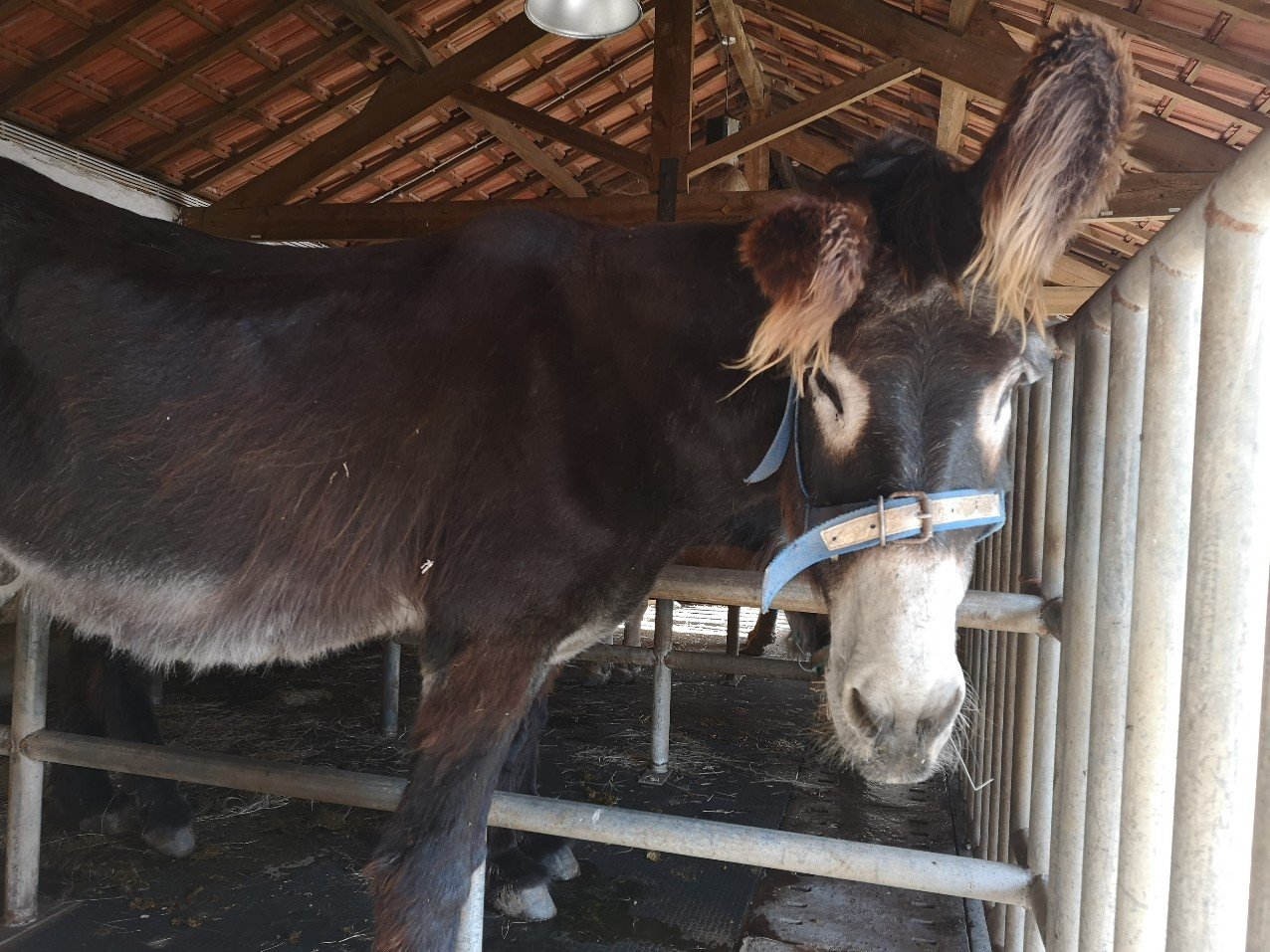
A mule – see the ‘wither’ bump in the shoulder area. Donkeys have flatter backs

So, riding on a donkey means being humble, or what?

In the prologue to his ‘Canterbury Tales’ (stories about some of the earliest pilgrims), Chaucer writes that ‘a humble beast exalts the rider’, making reference to the Bible (again) and stressing the state of mind needed to ride on one. Some imply that riding a donkey, in this context, implies a lack of concern for smart clothes, the opposite of making an imprression of being rich and lording it over everyone (Chaucer’s ‘General Prologue to the Canterbury Tales: An Anotated Bibliography 1900-1982’ by Caroline D Eckhardt and Dorothy E Smith). Others suggest that the donkey represents the Jews (Wikipedia), and yet others that riding thus, signifies a coming in peace because if he had been on a horse it would have  denoted war. (William David Davies and Dale C Allison 2004).
IMG_20180527_112230 (640x359)
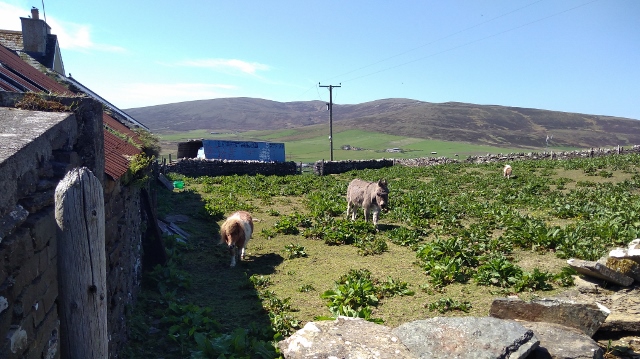
Orkney donkeys, spotted while making the St Magnus pilgrimage

Looking at the roots of the Hebrew words (I used this source Mony Almalech 2014 accessed Jan 2020) used to enquire into the meaning of ‘colt of the she-ass’ which Christ sat upon on Easter day, one can start to understand that a he-ass (male, related to the root of the word ‘red’ (of wine and fire) and ‘clay’) implies being base, ie of the earth, material; whereas the she-ass was more to do with ‘white’ (think about her milk) and her tendency to walk with small steps: a he-ass is not related to a she-ass. While we in the West have been led to believe (perhaps as a result of sloppy translations or misunderstanding of cutural references) that the donkey represents humility or peace, Jews of the time (who the bible was written for) will have understood the subtleties of these words and therefore known that Christs’ choice of a colt (son of a she-ass, not a he-ass) was clearly a mount for a King. (The Sathya Sai Sanctuary Trust for Nature knows this too.)
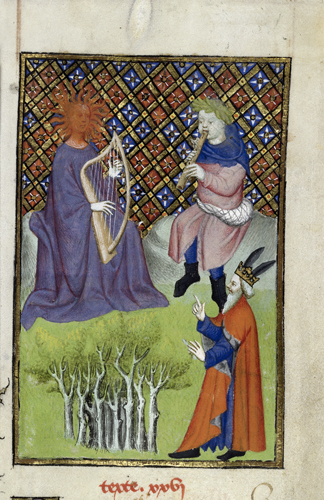
King Midas with his donkey’s ears from the British Library Catalogue

Midas, the man with a donkey’s ears

Midas (the one whose touch turned things to gold – see Ovid’s ‘Metamorphoses’ book XI 85-145) was deemed to have ‘undiscriminating ears’ and therefore given a new, elongated pair, those of a slow-moving ass. These donkey’s ones were ‘covered with shaggy hair and flexible at the base’ all the better to hear with.

In his account of walking the Camino de Santiago, ‘Spanish Steps – My Walk with a Donkey’, Tim Moore describes the swivelling ears, noting how alert they are. He starts to realise that when they are raised and rotating (I get an image of a submarine’s periscope), something is about to go amiss.
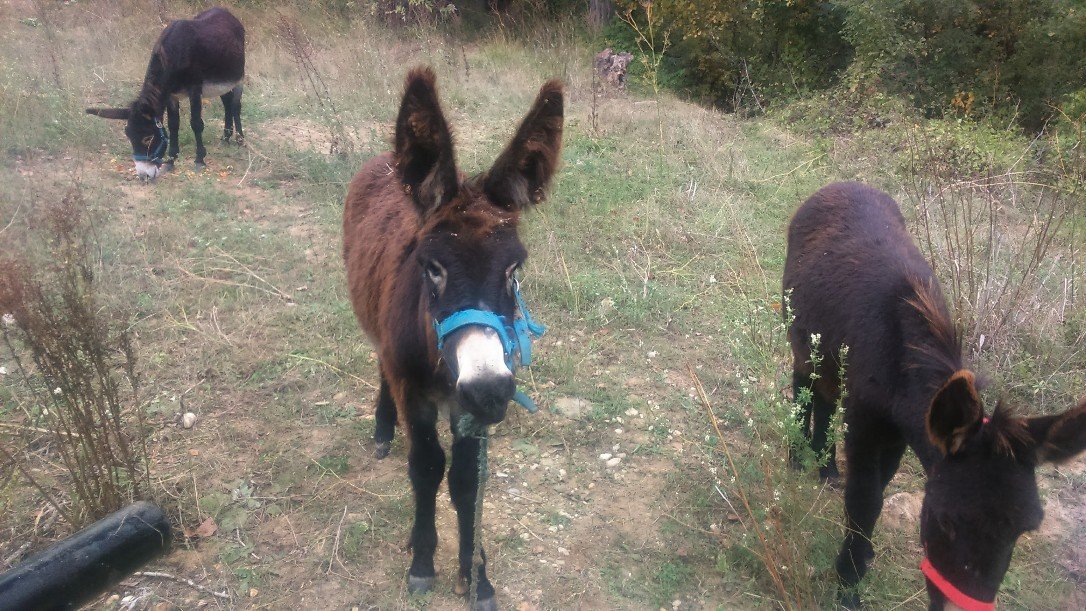
In Chaucer’s version of the Midas’ myth (a jolly rendition can be found in ‘The Wife of Bath’s Tale’), the woman in question couldn’t bear to keep quiet about her husband’s special lugholes (well who could, what a story!) so she told the water in a lake. In Ovid’s original, though, it was a ‘servant’ who gave the game away: to the earth from which grew reeds which in turn whispered it to the winds. (I used A. S. Kline’s translation of Ovid for these quotes.)
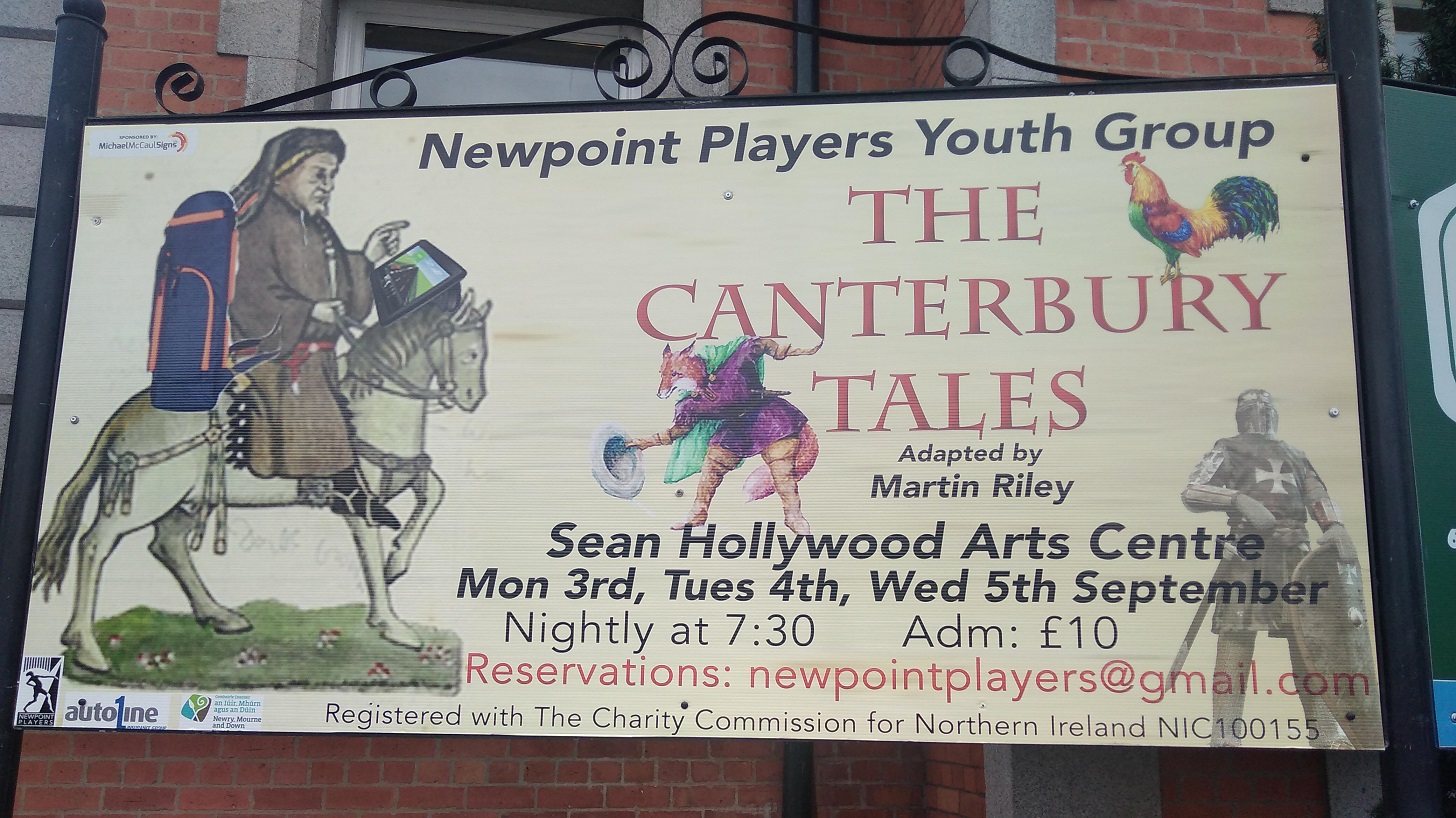
Newpoint Players Canterbury Tales poster, Newry, Northern Ireland

‘You may have seen a housefly … but I bet you aint never seen a donkey fly.’ The fast-talking (Eddie Murphy voiced) donkey in the film, Shrek

A donkey to carry your stuff

It is now possible for long-distance walkers to have a company transport their luggage from one hostel to another along the Camino de Santiago de Compostella (properly kown as the Camino Francais or French Camino) by car or van, allowing many to make that trek who had previously not been able to. Then there are a few pilgrims who take a mule to carry their bags, but the majority carry their own. I started my long-distance walking habit in Spain with a rucksack on my back (containing what I needed for a 3-month stay: summer, autumn and winter), rather than having a donkey carry it for me, hence my blog is entitled, ‘Walking Without a Donkey’.
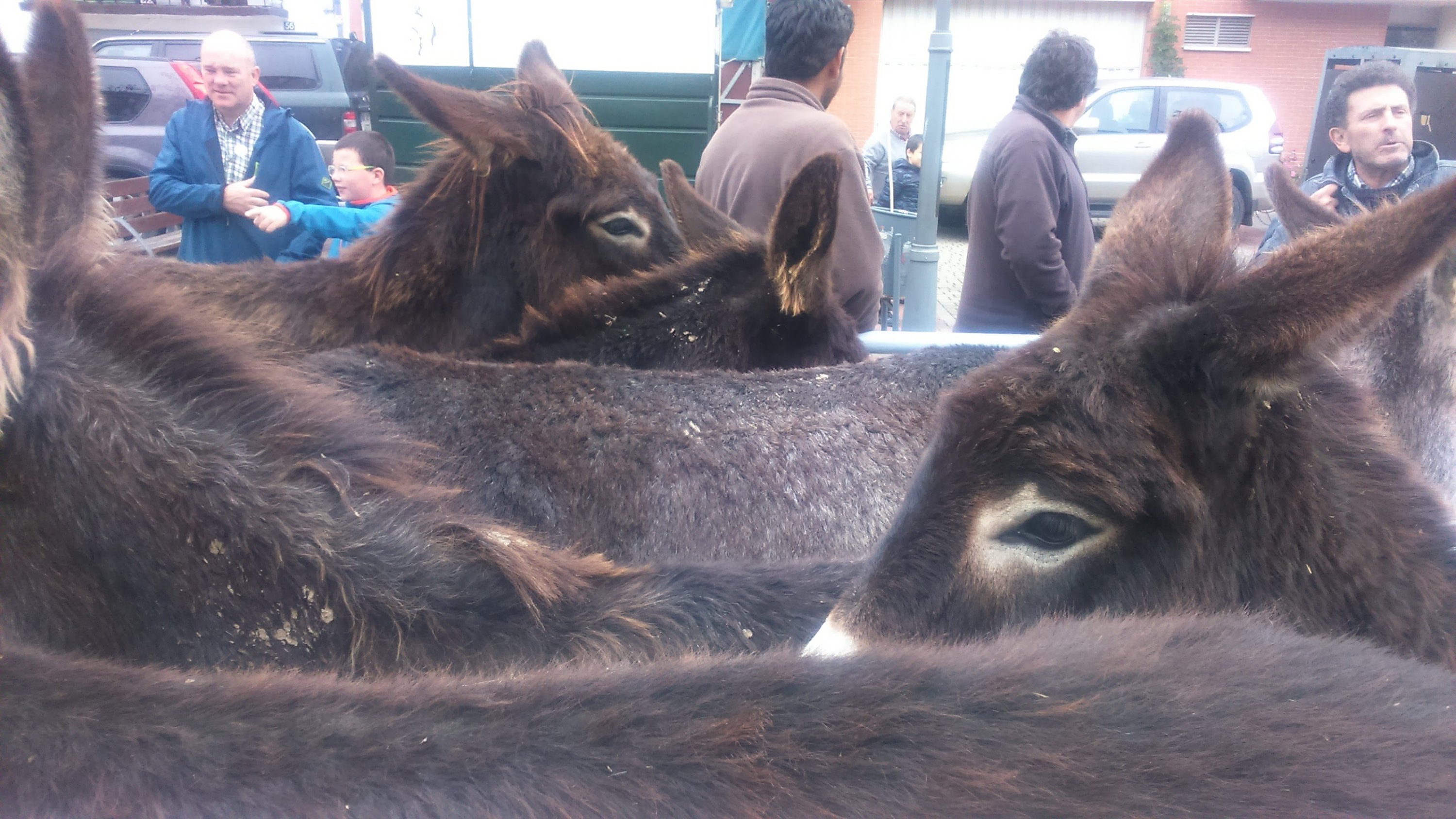
Donkeys from the Pays Basques region

Lou Monte sings (in ‘Dominick the Donkey’) about the reason Santa has a donkey: ‘Because the reindeer cannot climb the hills of Italy. ‘

Finally, here is a recipe for ‘tired donkey’, Galician soup called sopa de burro cansado. It consists of hard bread (100-150g) soaked in red wine (500ml) with sugar (3 or 4 tablespoons)!
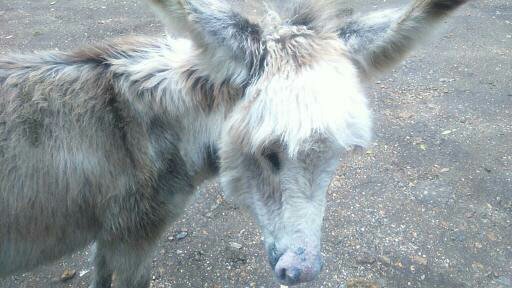
Even though no-one carries my luggage but me, I am not an ass

Robert Louis Stevenson (best known as the writer of Treasure island) ‘Travels with a Donkey in the Cévennes’

Chemin Stevenson / The Stevenson Trail, France GR70 (Grande Randonee ie a long walk) starts in Monastier sur Gazeille in the Haute Loire (Velay area) to Saint Jean du Gard or Ales in the land of the Camisards. It takes about 2 weeks. There is a little film with images of Stevenson on this page.

The Donkey Sanctuary (UK)

Stories About My Ass is a podcast on itunes about, among other things, being a miniature donkey owner.

The Shrek donkey on Atlas Obscura
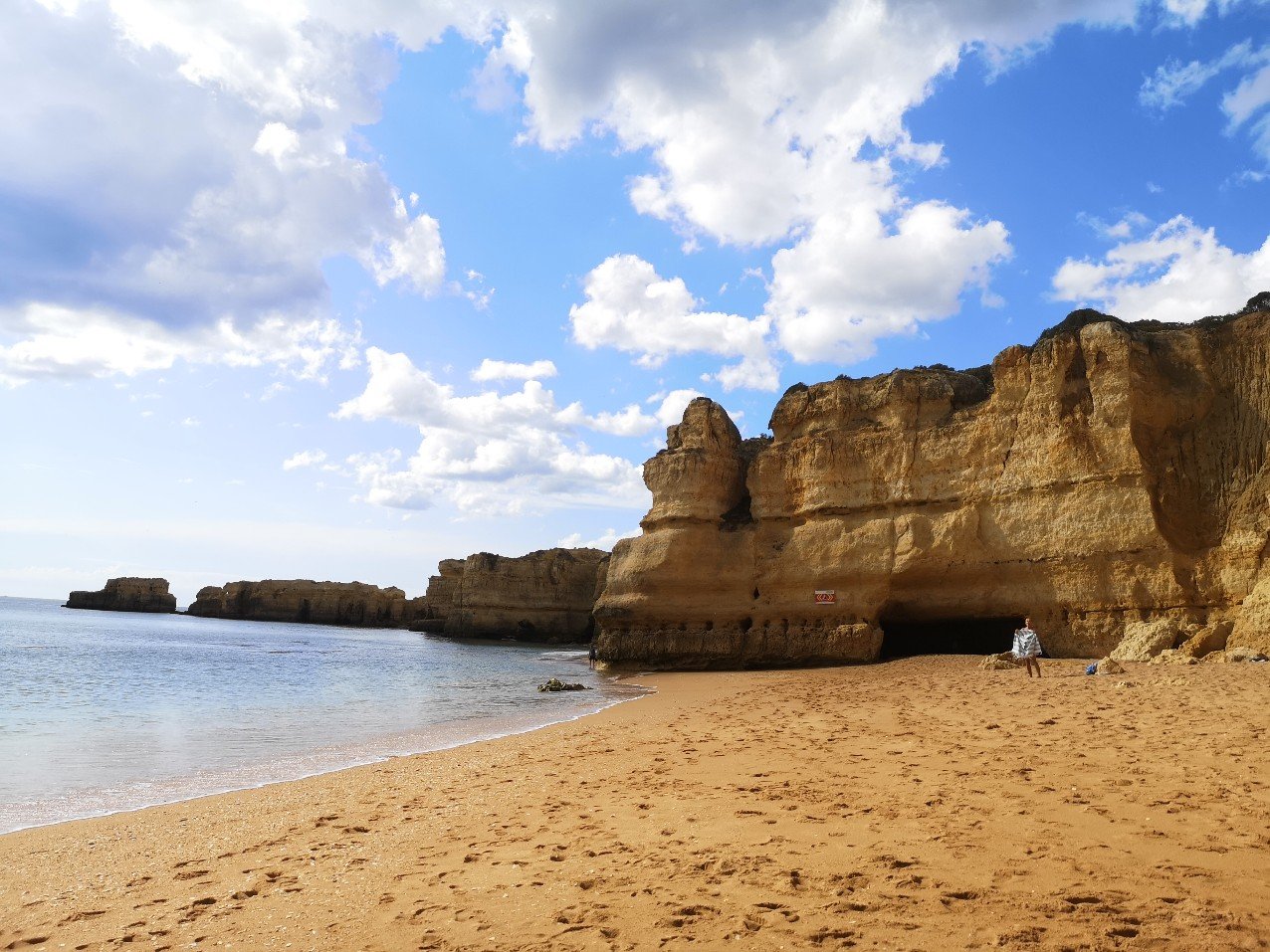
Tavira, Portugal

October 2019

The Algarve of Portugal, the southernmost region, is best known for its beaches, and spectacular they truly are.

Impressive cliffs Algarve
The magnificent cliffs and expansive beaches of the Algarve, Portugal

However, there is a wealth of interest inland too, with small villages in the foothills and spread along rivers, all linked together with expanses of citrus orchards and olive groves, random whitewashed properties with terracotta rooves, and a not inconsiderable bus / road / rail network making touring a manageble and enjoyable experience.

Winding roads and scrubland of inland Portugal, Algarve
The typical whitewashed villas of the hills of inland Portugal, near Tavira

Getting there

I arrived in Faro (capital of the Algarve) by bus from Seville (and before that from the north of Spain). The bus (Terminal Rodovario) and train (trem) stations are a few minutes walk away from each other so I was able to amble from one to the other to comare prices.

Paper map of Faro, Portugal
Map of Faro

Tavira, to the east, was my first stop and you can get there by both modes of transport: train is quicker (30 minutes), but more expensive, and buses (taking 1 hour) seem to be more often. This website is an excellent source of information.

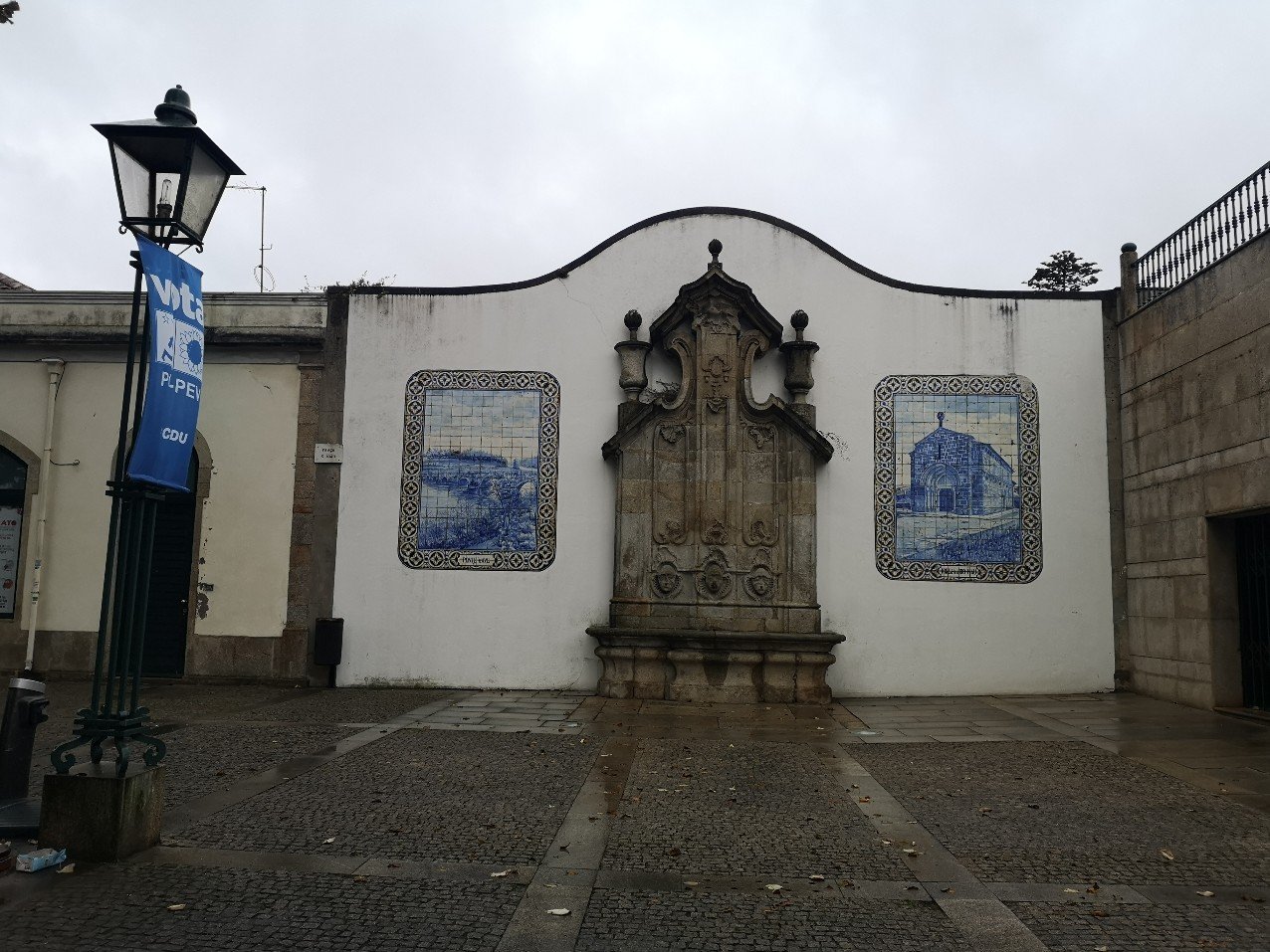
Town buildings of Tavira with Roman Bridge (Ponte Romana) across the river Gilao
Ponte Romana (Roman bridge) de Tavira, River Gilao, Portugal
There are two bus stops in Tavira: Porta Nova and Tavira, but you must stipulate which destination when buying your ticket (always buy in advance), as they are slightly different prices.

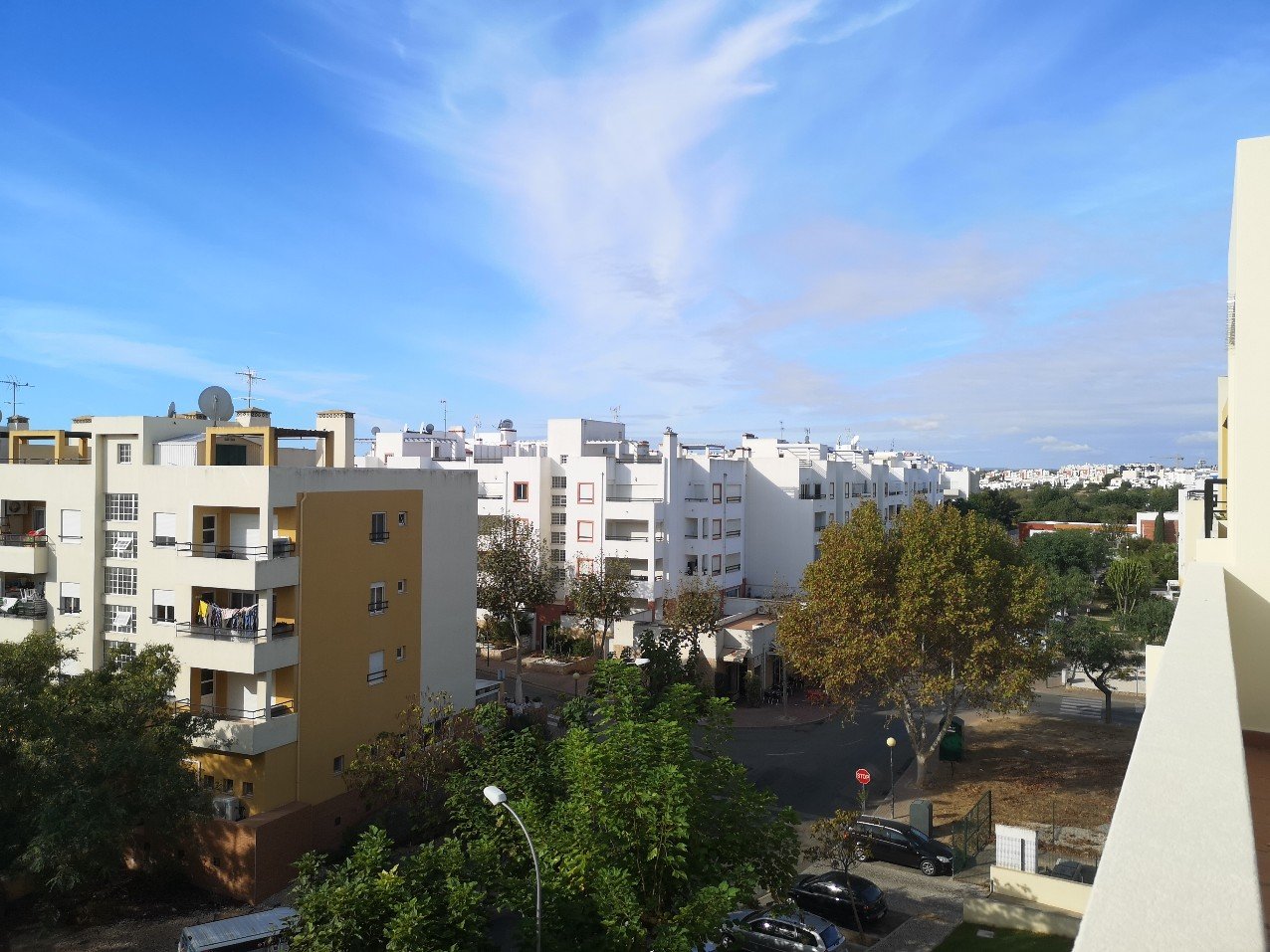
High rise apartments in Tavira, Portugal
The apartments of Tavira, Portugal

Tavira

There seem to be two sides to Tavira: the old town and the newer developments (above) where lots of the ex-pats live. Most people I speak to really like this place and there is not only a lot to see, but good beaches and good countryside restaurants nearby as well if you have a car, so no wonder it is popular. For cyclists and walkers, it is a great setting-off point – there is a network of cycle routes and you can now walk from Tavira to Santiago de Compostella. The locals are geared up to having vistors around all the time and are courteous and understanding, speaking excellent English.

Church of our Lafy of Learning or Saint Paul, in leafy square with statue, Tavira, Portugal
Igreja de Nossa Senhora da Ajuda ou de Sao Paulo (Church of Saint Paul), and the Jardim (Garden) da Alagoa, with statue of Dom Marcelino Franco, Bispo (Bishop) of the Algarve 1920, in the Praca (Square) Dr Antonio Padinha, Tavira, Portugal

This beautiful square has lots of cafes and restaurants where you can sit outside and enjoy the leafy view.

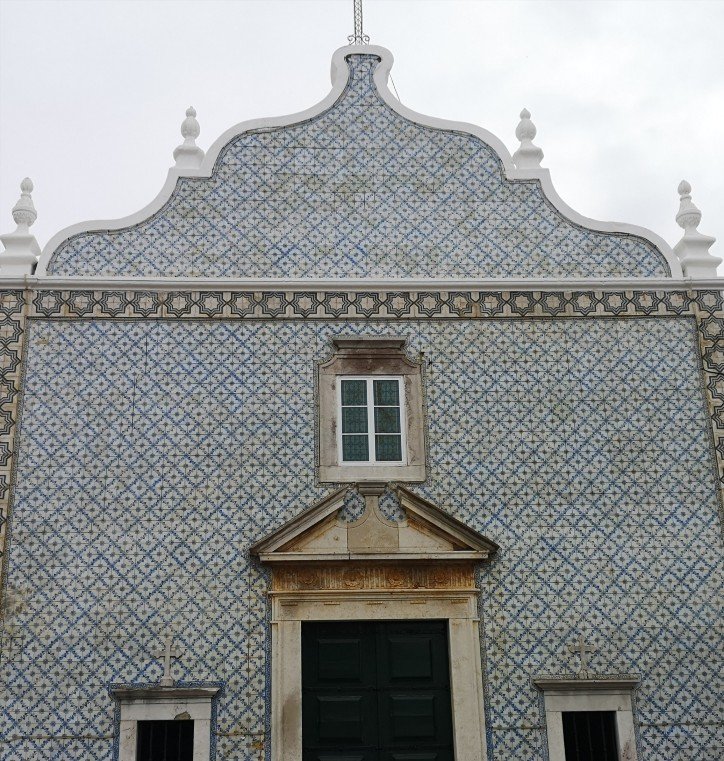
web link church Igreja of the da Misericordia, Tavira, Portugal
Tracy and the Igreja da Misericordia

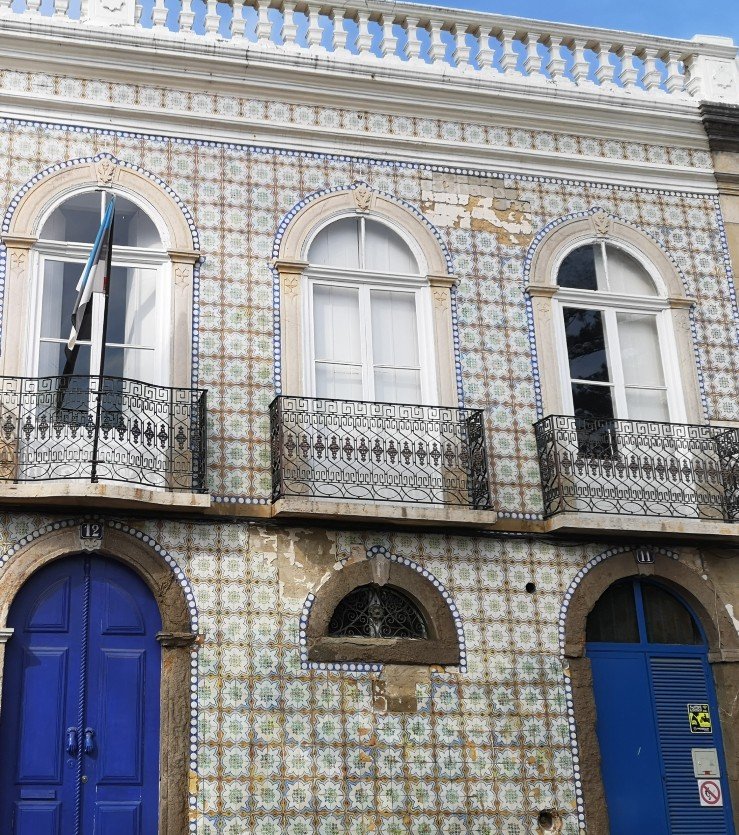
Building in Tavira showing the blue and white decoration, balustrades and tiled exterior, Portugal
Typical Portuguese blue and white decoratedhouse, Tavira, Portugal

Decorated exterior of building with blue and white tiles in Tavira, Poetugal
Tiled exterior of Tavira architecture, Portugal

Tavira riverscape
The River Gilao, Tavira, Portugal

decorated floor market Tavira
Mercado (market), Tavira, Portugal

baskets Tavira
Basket stall, market, Tavira, Portugal

unknown fruit
Cherimoya, custard apple native to the mountains of Equador and Peru

Fish on market stall Tavira
Fish stall, market, Tavira, Portugal

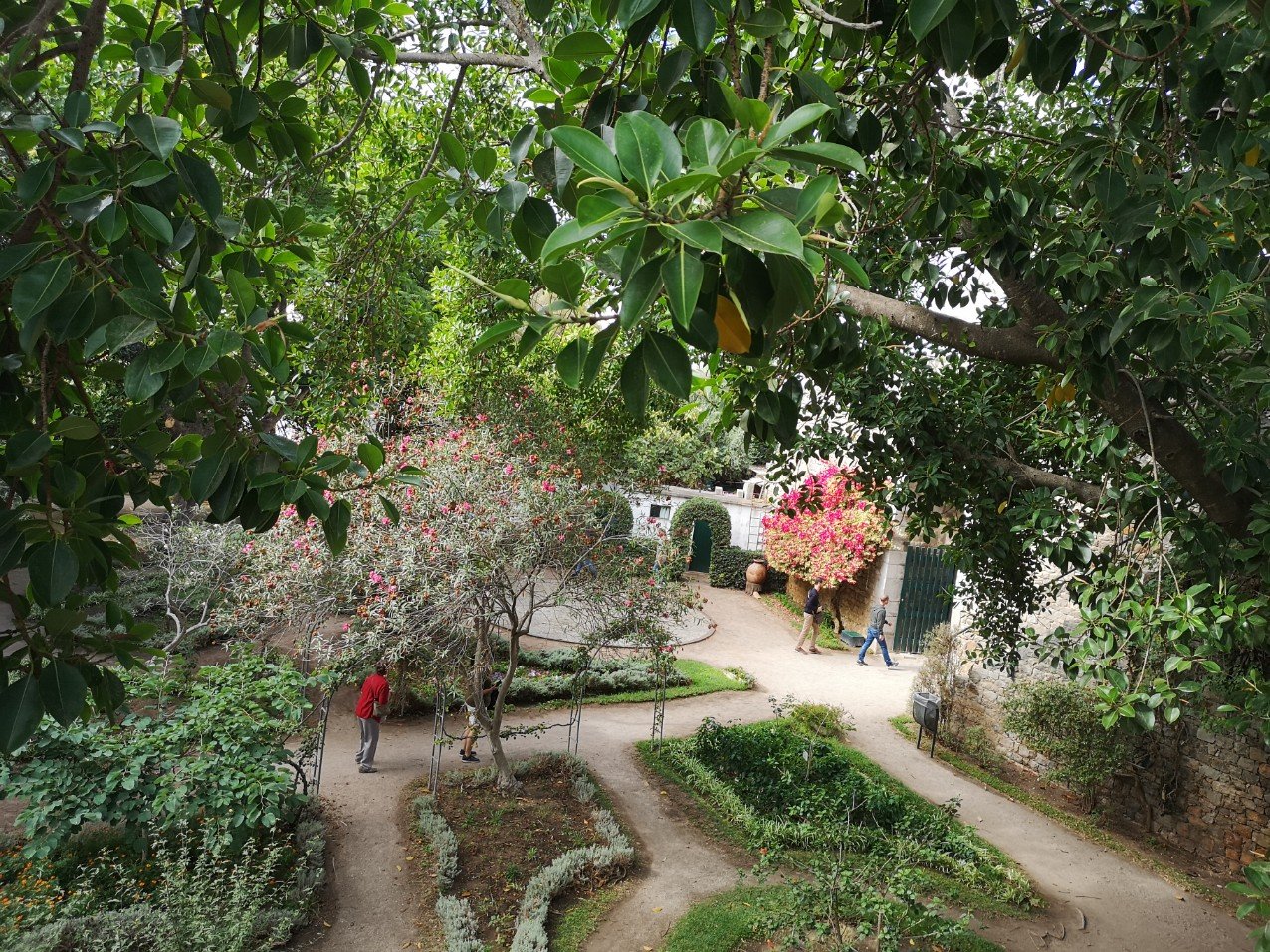
overhead view gardens Castelo do Tavira
The gardens of the Castelo (castle), Tavira, Portugal

Castelo do Tavira ramparts
Tracy on the ramparts of the Castelo do Tavira, Portugal

wp-15722791921532366607911287098584.jpg
The blue potato bush or Paraguayan nightshade (Lycianthes rantonnetii (previously Solanum rantonnetii). Poisonous, evergreem lightly fragrant flowers followed by red berries

english and latin name of plant
California or Arizona Fan Palm (Washingtonia filifera)

palm tree hibiscus
Date palm and hibiscus, Tavira, Algarve, Portugal

Pedras del Rei

The Tavira area was the first place I ever went abroad when I was a young teenager with my parents. It was memorable for a number of reasons, not least the trip to the beach which was reached by a little train and boat. When I accepted Tracy’s kind invitation, I had no (conscious) idea that her new place was near this early holiday destination, so you can imagine my pleasure when I was taken for a late afternoon walk only to be faced with a sign saying Pedras del Reí. The memories came flooding back!

passenger train to beach Tavira
Train to the Praia do Barril beach, Pedras del Rei, Tavira, Portugal

train engine Tavira
Train engine, Pedras del Rei, Tavira, Portugal

path in woods Praia do Barril beach
Walking along the boardwalk towards Praia do Barril, Tavira

Praia do Barril

anchors in the sand Praia do barril beach
The beach is stunning and memorable for its anchor graveyard and ex-tuna fishing buildings

Praia do Barril beach, Tavira, Portugal
Praia do Barril beach – kilometer upon kilometer of golden sand

Sunset marshes Barril
Back across the marshes to Tavira from Praia do barril beach

The evening light turned the saltmarsh cordgrass (correct me if I am wrong) golden

Fabrica

I also visited the beach across from Fábrica and the small village of Cacela Velha, both located in the Ria Formosa Natural Park. Like much of the coast in this area, the beach is situated on a spit of land which is separated from the mainland by a strip of water, so we took a boat across.

boat to Casela Velha beach
Taking the boat across from Fabrica to Casela Velha beach

Fabrica Tavira
Looking back towards Fabrica where there is a smart restaurant and a small cafe

Casela Velha – beach and village

sand and sea Casela Velha Portugal
Cacela Velha beach

Cacela Velha is a small village in the parish of Vila Nova da Cacela on a hillside next to the Ria Formosa, between Tavira and the town of Monte Gordo.

village scene Casela Velha
The popular outdoor market at Casela Velha

web link church entrance Casela Velha
The Parish Church of Casela Velha

view of lagoon from Casela Velha
The easternmost lagoon of the Ria (river) Formosa

main door Casela Velha church
Parish Church of Casela Velha, Portugal

Village scene Casela Velha
Just before it rained! the village of Casela Velha in the hills outside Tavira, Portugal

From there I returned by car to Faro airport (thanks to Tracy and David, wonderful hosts), and took a bus to Albufeira. The posters at the bus stop do not all contain truthful information as far as I could tell, so careful!

Many thanks to the folk on the houzz.com plant forum for help with plant identification

Vila Nova de Milfontes, Portugal

Pull Up a Seat, week 52. Just making it into the last 2019 photo challenge. It’s all about sitting down – something I support wholeheartedly!

My day at the hostel began with yoga on the roof before sun up. I tiptoed past these comfy cushions to get my mat so as not to wake anyone. Later I flopped down onto the big squashy beige one for a rest on my way back down. Whew!

A cool selection of pouffes and stools for hard working muscles to recuperate on

I sliced some lemon to have in hot water to rehydrate

And then I went off for a nosy around the town. It was somewhat overcast.

Vila Nova de Milfontes, Portugal

This cat had found something interesting to investigate. Meanwhile I had to turn the seat round to get this view:

View across the Mira River as it comes close to the Atlantic Ocean, Vila Nova de Milfontes, Portugal

Steps make a beautiful place to sit if there are roses like these beside you

At the end of my walk I returned to the hostel for a jakuzzi and, afterwards, lay back on the deckchairs to relax

I enjoyed a drink at sunset on these designer seats

In the evening, the cinema space at the hostel had these rugs and mats spread over the sitting area, giving it an Eastern look

XingfuMama host this challenge

I stayed at the Selina Milfontes hostel in November 2019

Porto to Vila do Conde: Camino Portuguese

Porto to Matosinhos to Vila do Conde – days 1 and 2 of my Camino Portuguese Coastal and Littoral routes (280 kms in total) * September 19th and 20th 2019 were the Littoral, that is, they followed the coast with all its ins and outs.

I did a practice walk in the opposite direction a week before starting which is why the sea, is on my right

This is a walk from Porto in Portugal to Santiago de Compostella in Spain. There are 3 routes – the quickest is inland, and the other 2 travel along the coast, some more literally than others. It is the second most popular Way – the Camino Frances from Saint Jean Pied de Port in France to Santiago being the most famous.

wp-15758038041221788677919301287781.jpg
Leaving Porto (also known as Oporto)

I stayed at the Albergue Peregrinos do Porto which was great. There was a friendly welcome from the group at the desk and I was able to buy my Credential (the first of the new version, I was told) which is the folded paper which I carried with me everywhere thereafter, and which had to be stamped twice a day (by hostels, cathedrals or cafes etc) if I was to be able to get a Compostella, which is the certificate you can buy in Santiago de Compostella to prove that you have completed the camino.

There is a beautiful garden which was ideal for me to do peaceful tai chi in and for sitting with a drink in the evenings. The only drawback was that the showers were also outside. Ordinarily this would not bother me at all, but mosquitos adore standing water and I was bitten to within an inch of my life. Not everyone is as delicious as me, and I had taken steps to put them off, but the bites lasted for well over a week and left scars. The bunk bed was 12€ per night/person. (10€ for the Albergue and 2€ for the touristic municipal taxes).

wp-15758037318112146227560722928827.jpg
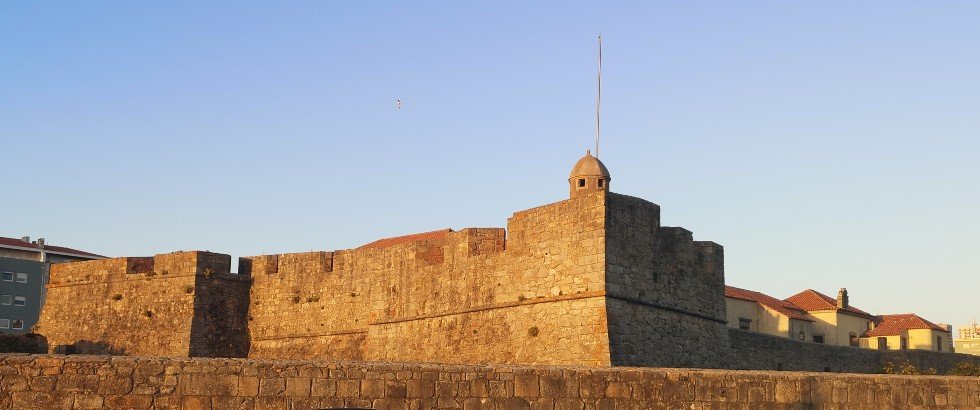
Forte do Sao Joao Baptista

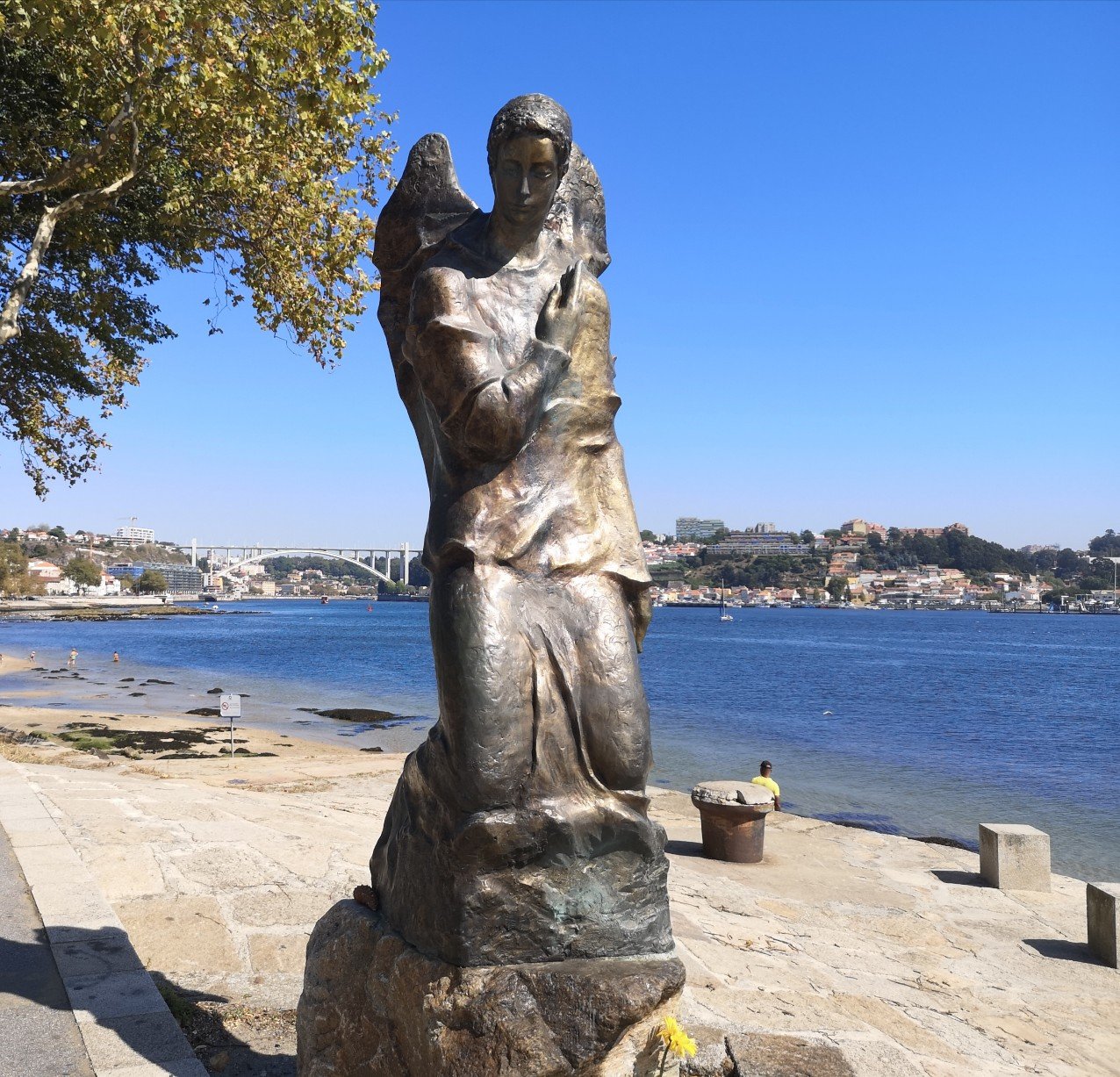
There’s lots to see on your way out of Porto: first along the Douro River, under the bridges, past beaches, restaurants and cafes (especially the Foz district which is smart), the lighthouse (Capel Farol Sao Miguel-do-Anjo), two forts, a helicopter pad, gardens and statues.

wp-15701778377747371684262718763347.jpg
O Mensageiro (The Messenger), ie the angel Gabriel by Irene Vilar (from Matosinhos with a studio in Foz do Douro), Douro River, Porto, Portugal

If you wanted to get to Labruge, the end of stage one (24.5kms from Porto), but take a shorter walk, you can take the Line 1 tram from Ribeira, with your rucksack, as far as Foz do Douro (remember to sit on the left so you can see the view!). Then you could have a coffee by Jardim do Passeio Alegre (Cheerful Walk Garden, according to Google Translate!) with its fountain and cool shade, before starting to walk. This will save you 6kms (1 hour and 10 minutes at the average walking speed).

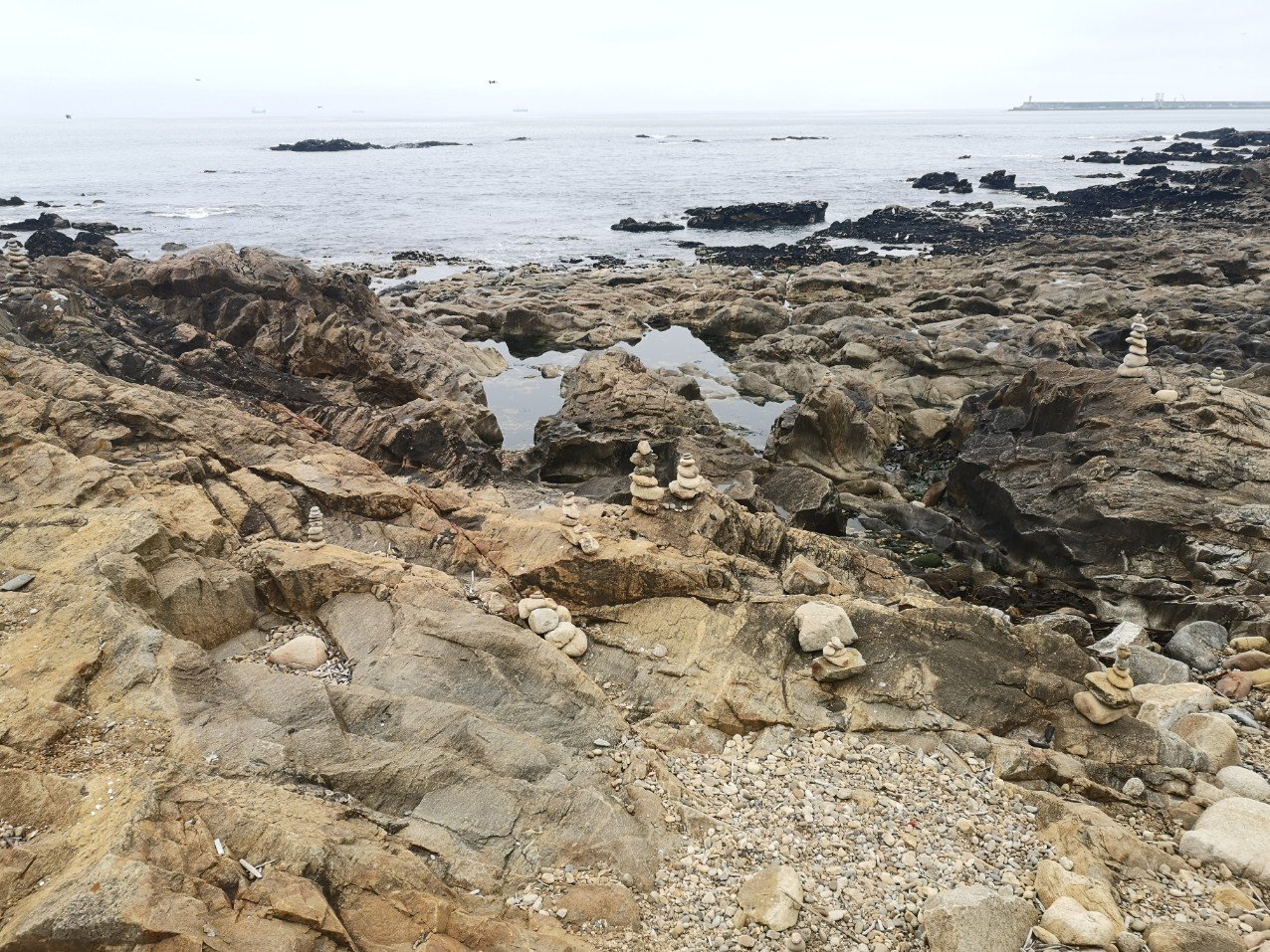
A beach not far from Porto where people have made small piles of stones perched on the rocks, similar to the cairns we find on Scottish trails
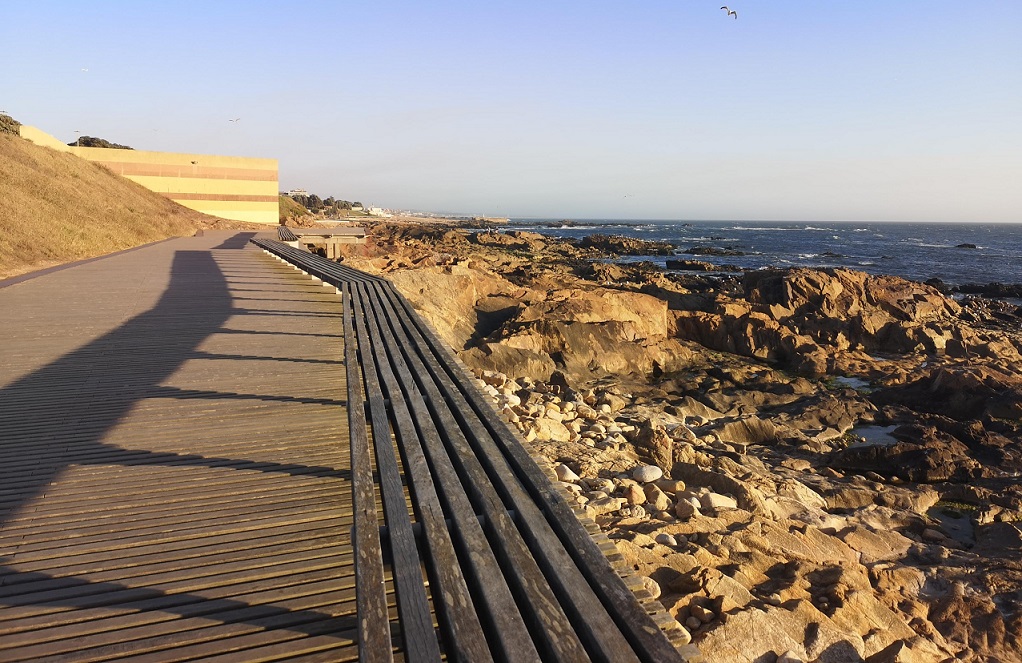
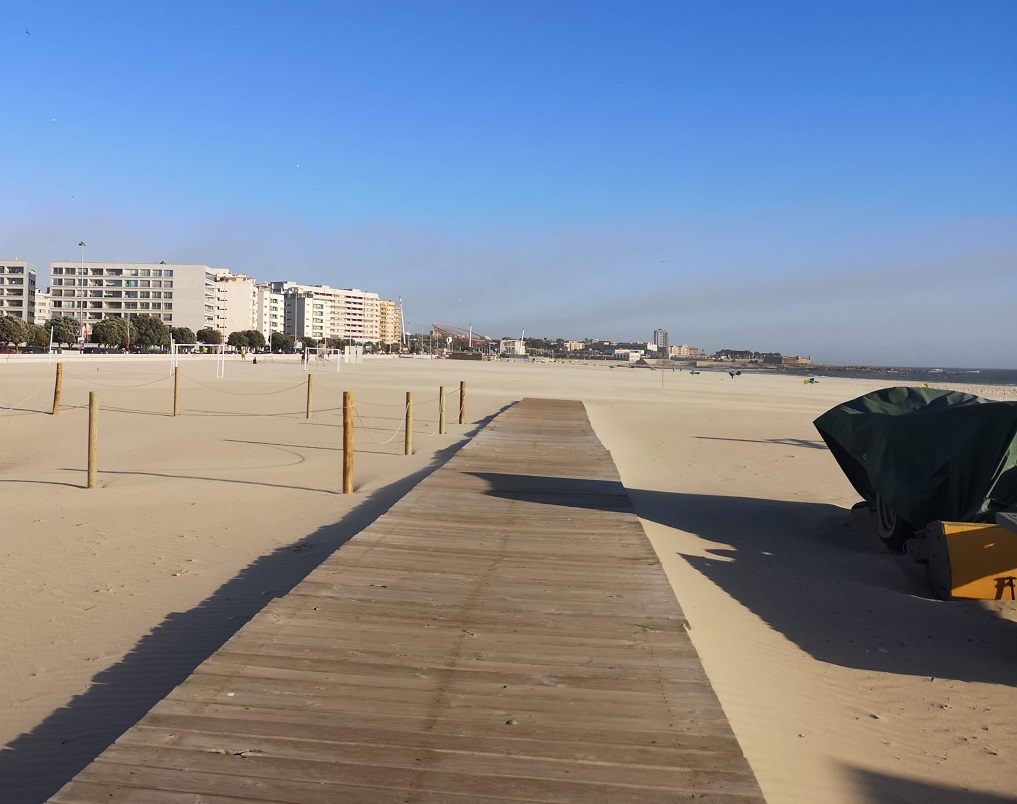
Long boardwalks make for flat and easy walking. The Atlantic Ocean is right beside them
IMG_20190910_185123
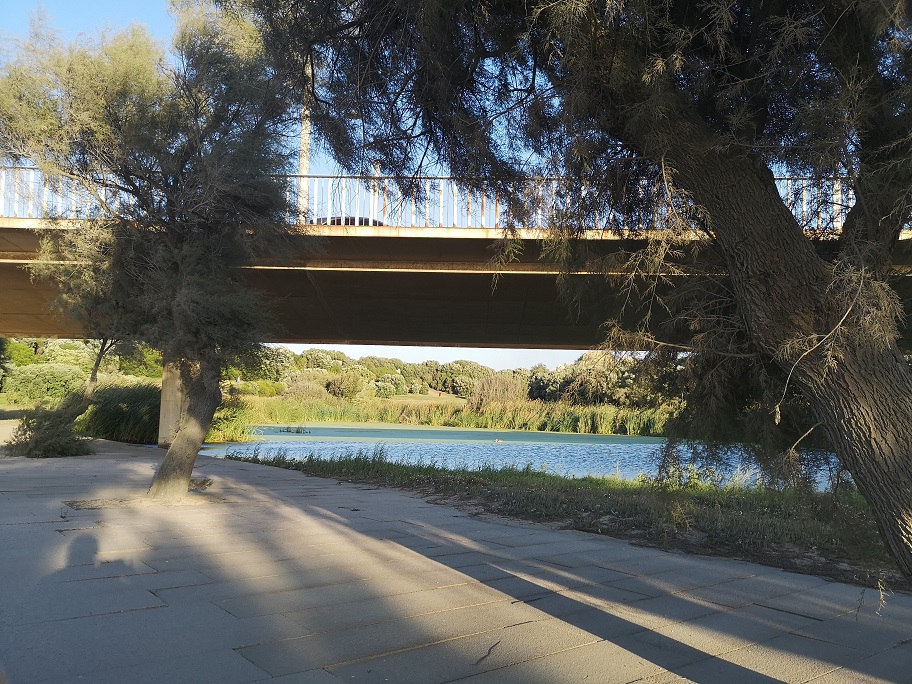
A scenic lake nearby where the path winds and where I momentarily lost the way
IMG_20190910_184603
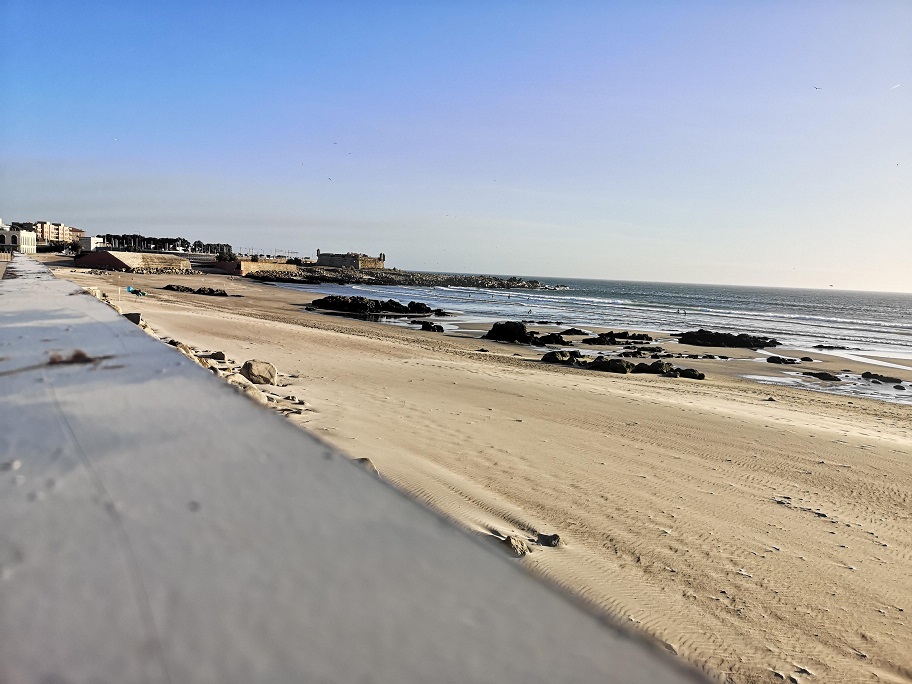
Sand as well as rocks with the Fort of St Francis (Francisco) Xavier aka Castelo do Queijo (of the Cheese) in the distance

The Fort of St Francis (Francisco) Xavier was designed by Miguel l’Ecole (1661). Occupied by Absolutists in 1832, it was badly damaged in a battle with the Liberals and abandoned. Later it was used as the headquarters of the Oporto Naval Brigade’s 1st Company, and is now the Northern Commandos Association

IMG_20190910_184421
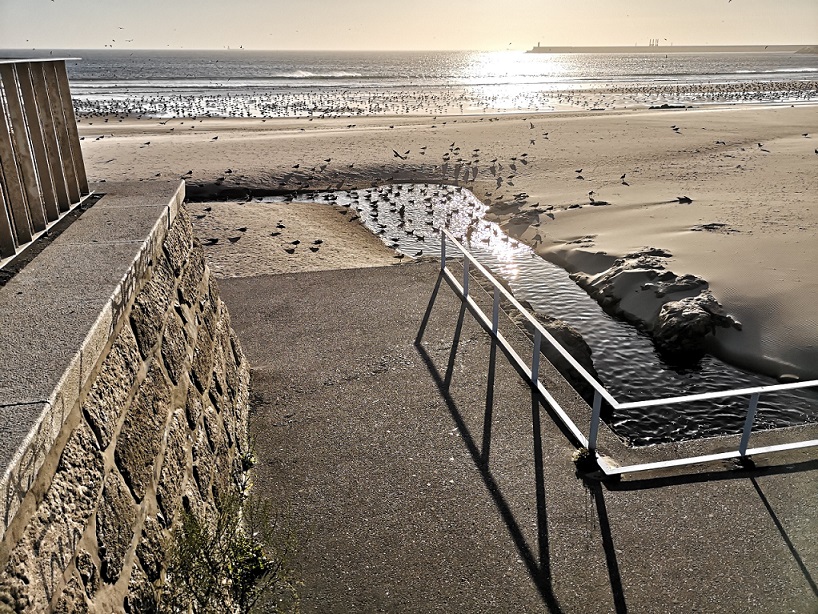
The coast is a wonderful place for birdlife and they collect in the evenings like this, at the water’s edge
IMG_20190910_183043
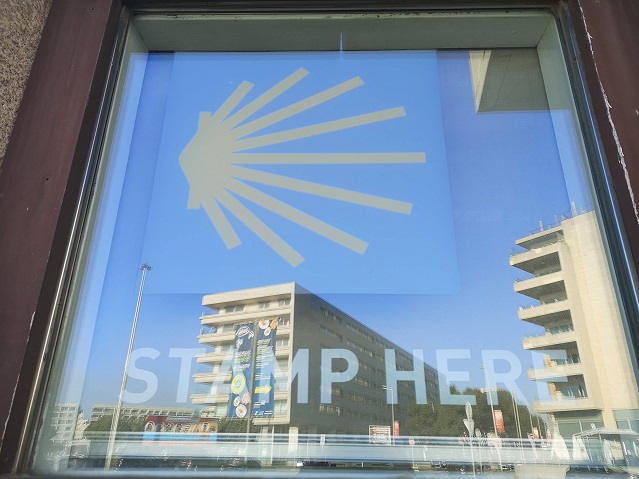
Here you can get a stamp on your credential, Matosinhos, Portugal

I had a lovely swim. All along here the waves tend to be strong and I noticed that most locals do not take the plunge.

wp-15757544483932843871303334439742.jpg
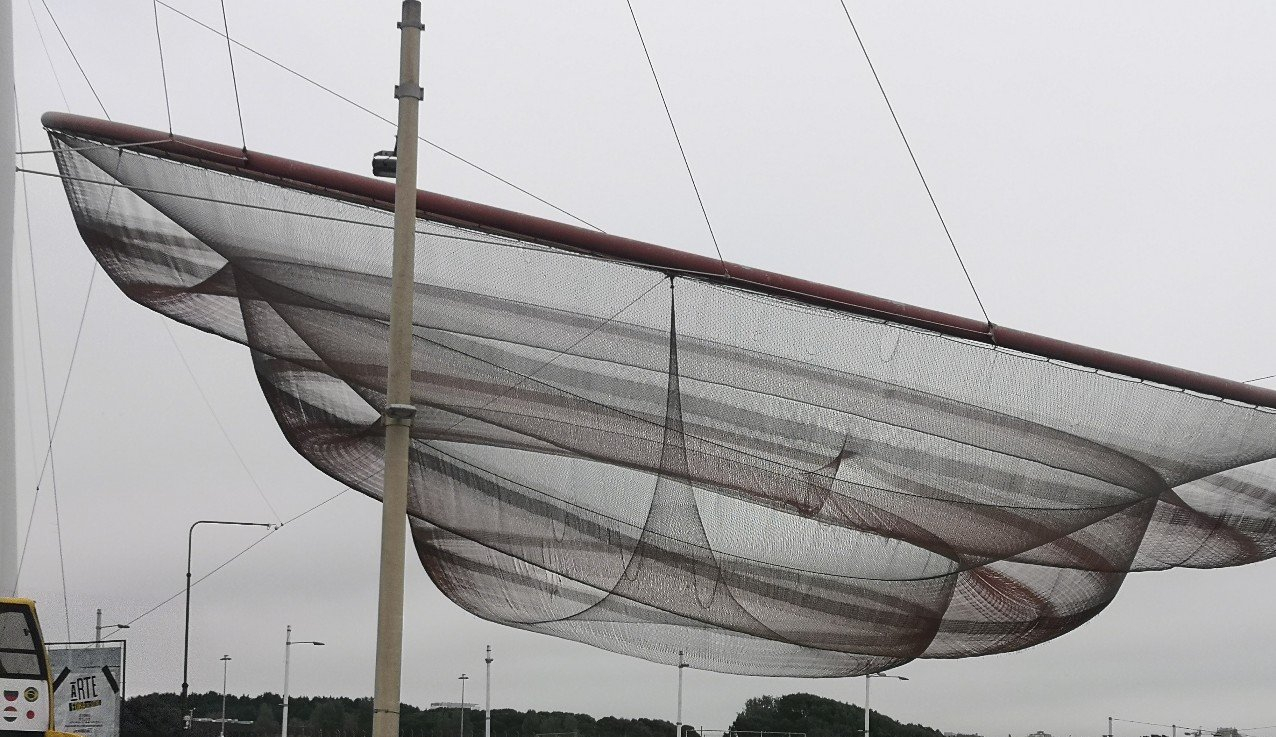
‘She Changes’ by Janet Echelman, a giant net which hangs over the road at Matosinhos, outside Porto
dav
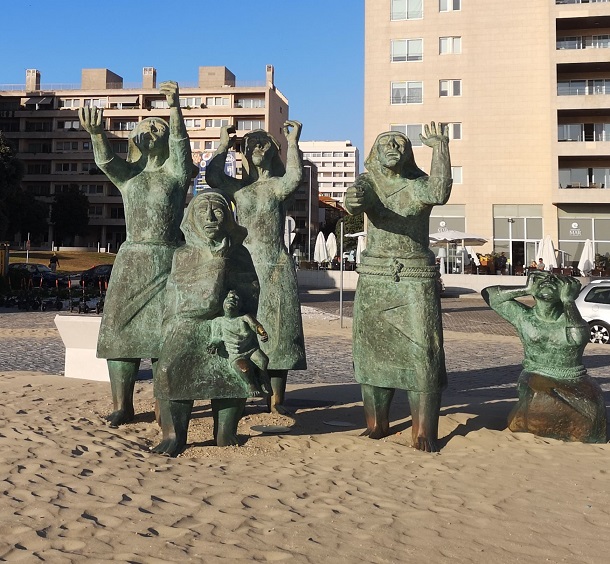
Moving sculpture by José Juao Brito (2005) inspired by a painting by Augusto Gomes (also from Matosinhos). It remembers the 1947 fishing disaster when 152 men died leaving 72 widows and 152 children behind

In Matosinhos I stayed at the Hostel Matosinhos Suites, a funny modern block in the heart of this area, a suburb of Porto. The room was small with 6 bunks packed into it. It had a table and 2 chairs (for 6 people), a kettle and mini fridge (but not enough sockets) and it got very hot with us all in. There was a small balcony where we managed to negotiate hanging up the washing by stringing a small rope and sharing pegs – just! It was clean and there were curtains across each bunk. Cost: 22 euros through booking.com.

There are loads of places to eat, including underneath the Suites. Matosinhos is best known as the place where Porto inhabitants leave the city and come to sit in the seaside restaurants to eat the famous shellfish.

IMG_20190910_181049
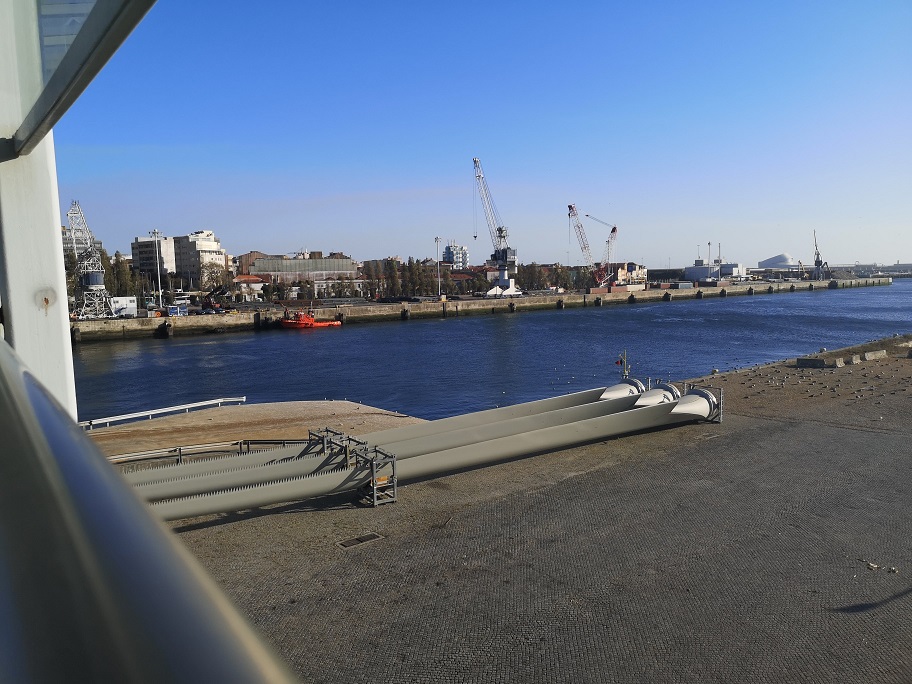
The second day of the Littoral route takes you briefly through the industrial heart of the port, over the Ponte (bridge) movel de Leca (the name of the river)
cof
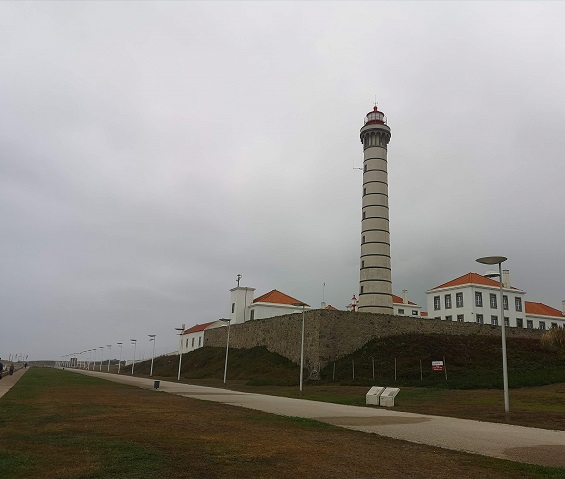
The day began grey – the Farol (lighthouse) do Boa Nova at Leca da Palmeira
wp-15757544482756174021556678501239.jpg
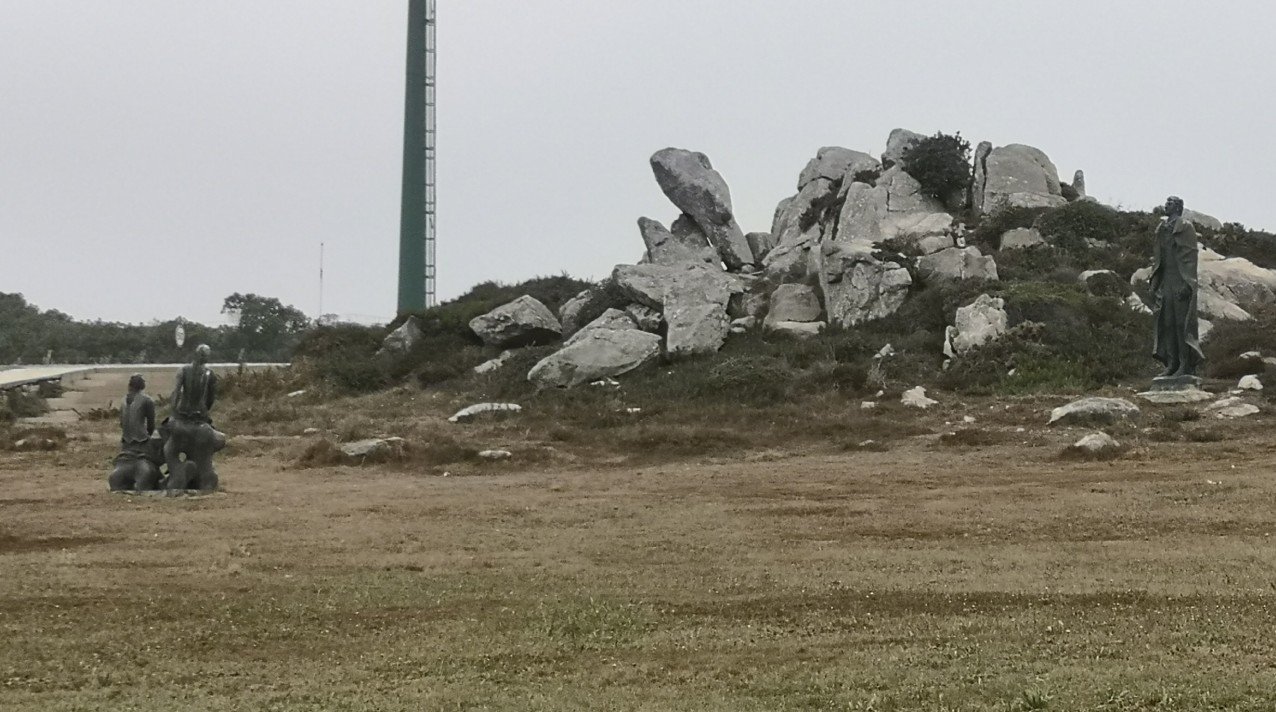
Monument dedicated to Antonio Nobre (poet 1867 – 1900) with his muses, by Alvaro Siza Vieira. Location: Leca da Palmeira
wp-1575754448204379916664242248061.jpg
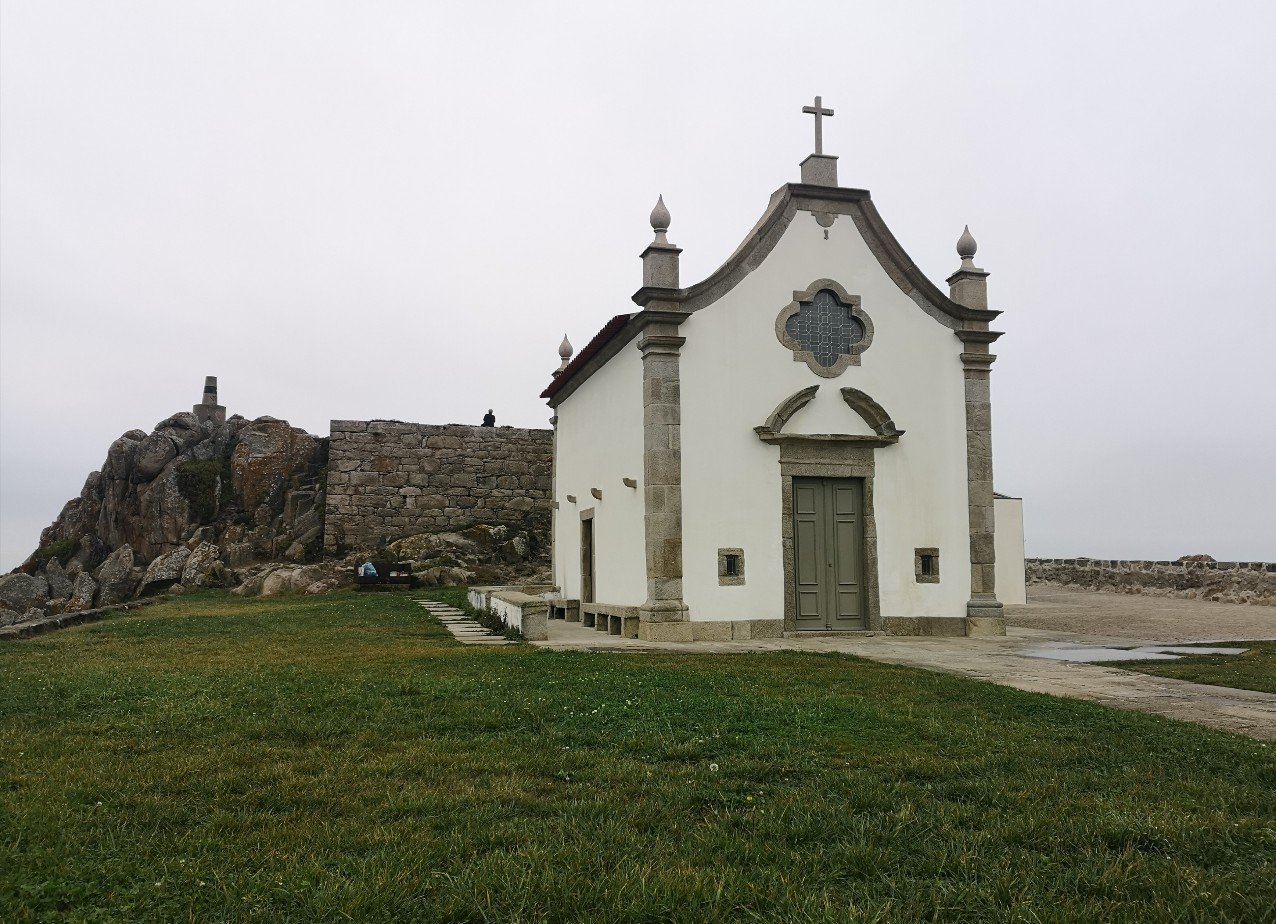
Capela (chapel) da Boa Nova (Good News), Leca da Palmeira. It was linked for many years (according to Wikipedia) to the hermits of the Franciscan Order prior to 1475
wp-15757544480488879416735500417997.jpg
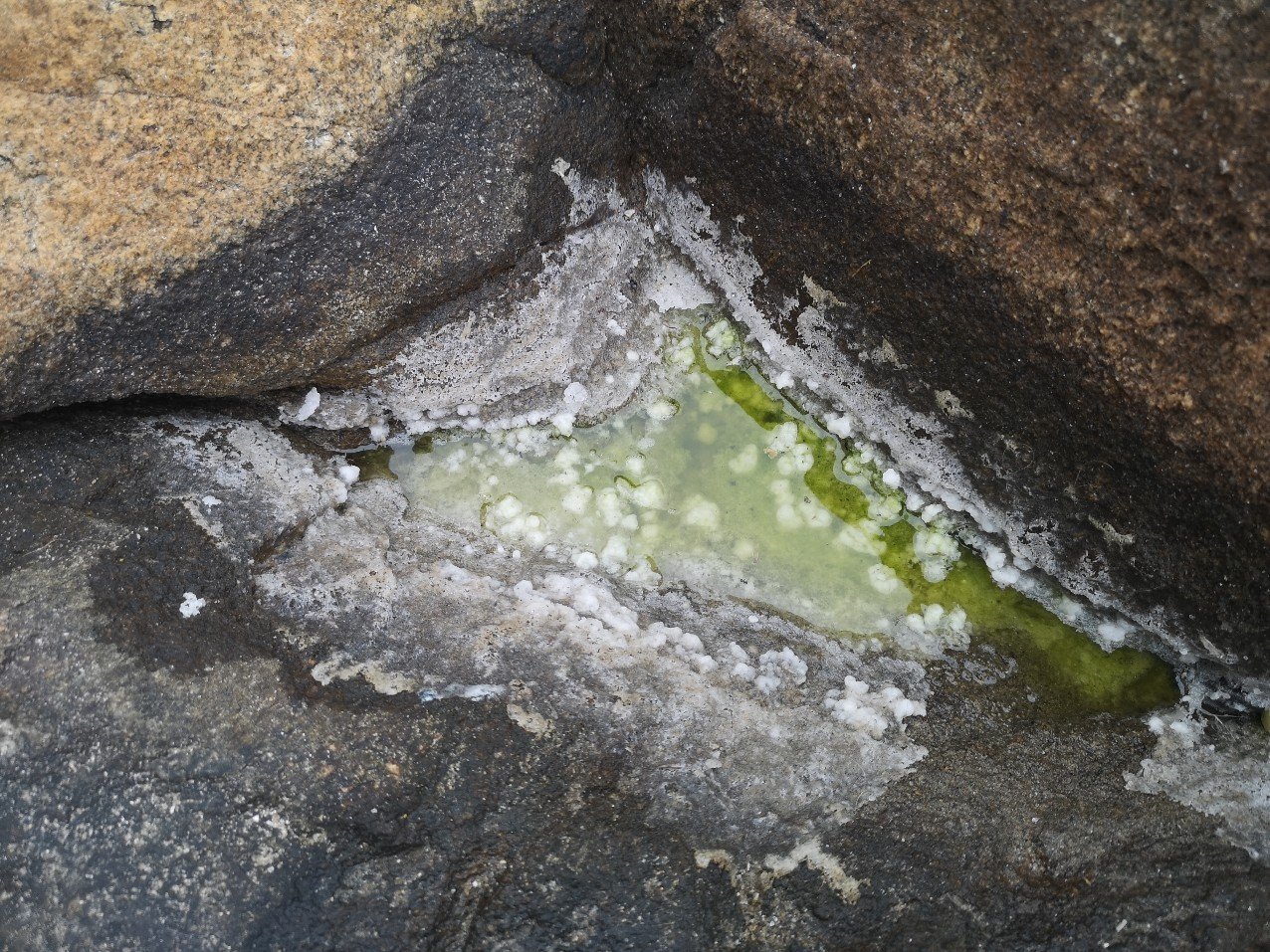
Salt deposits
wp-1575754447958732764385222171053.jpg
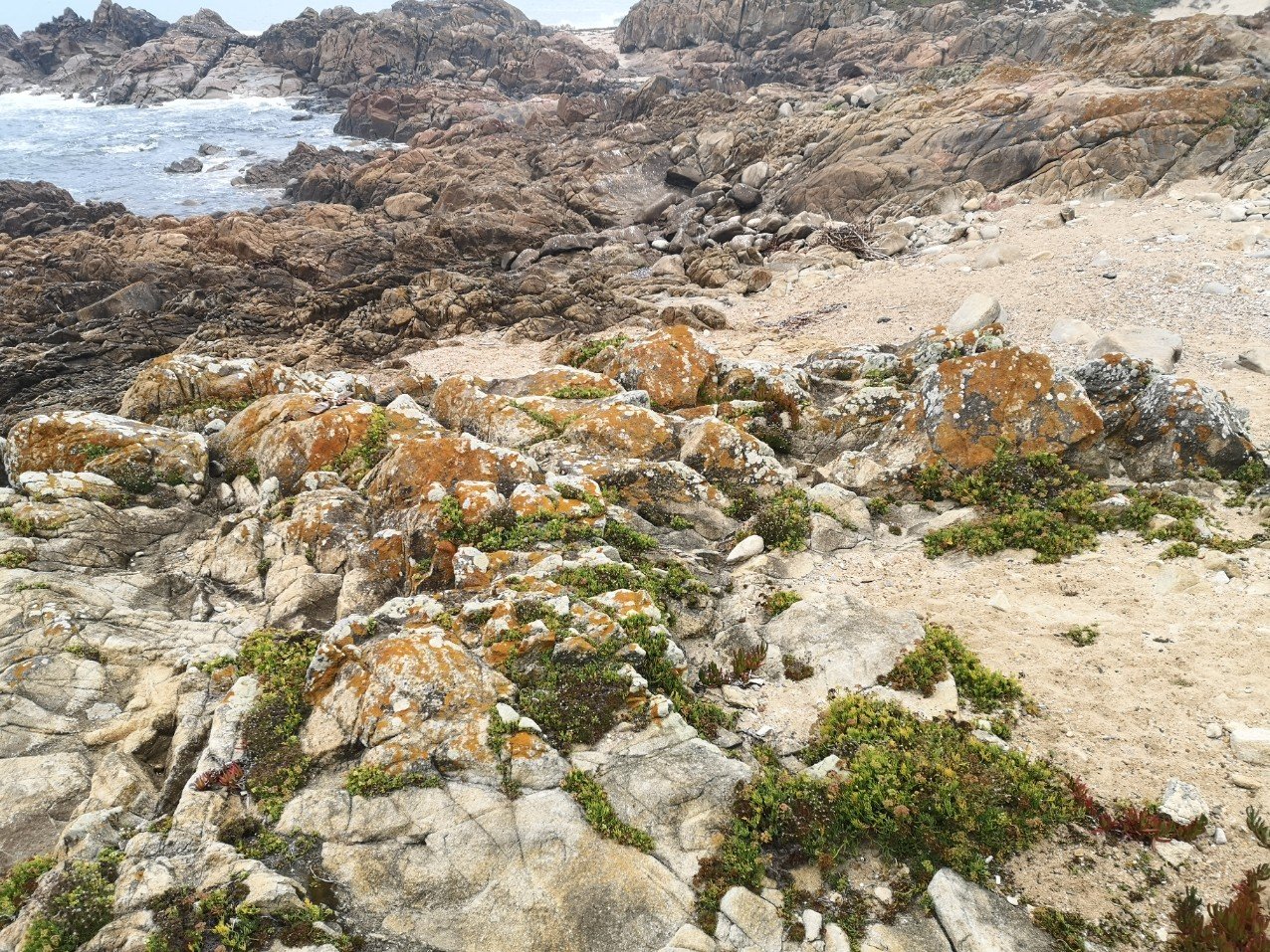
Colourful lichen and seaweed on the rocks
wp-15757544478834042128990325440369.jpg
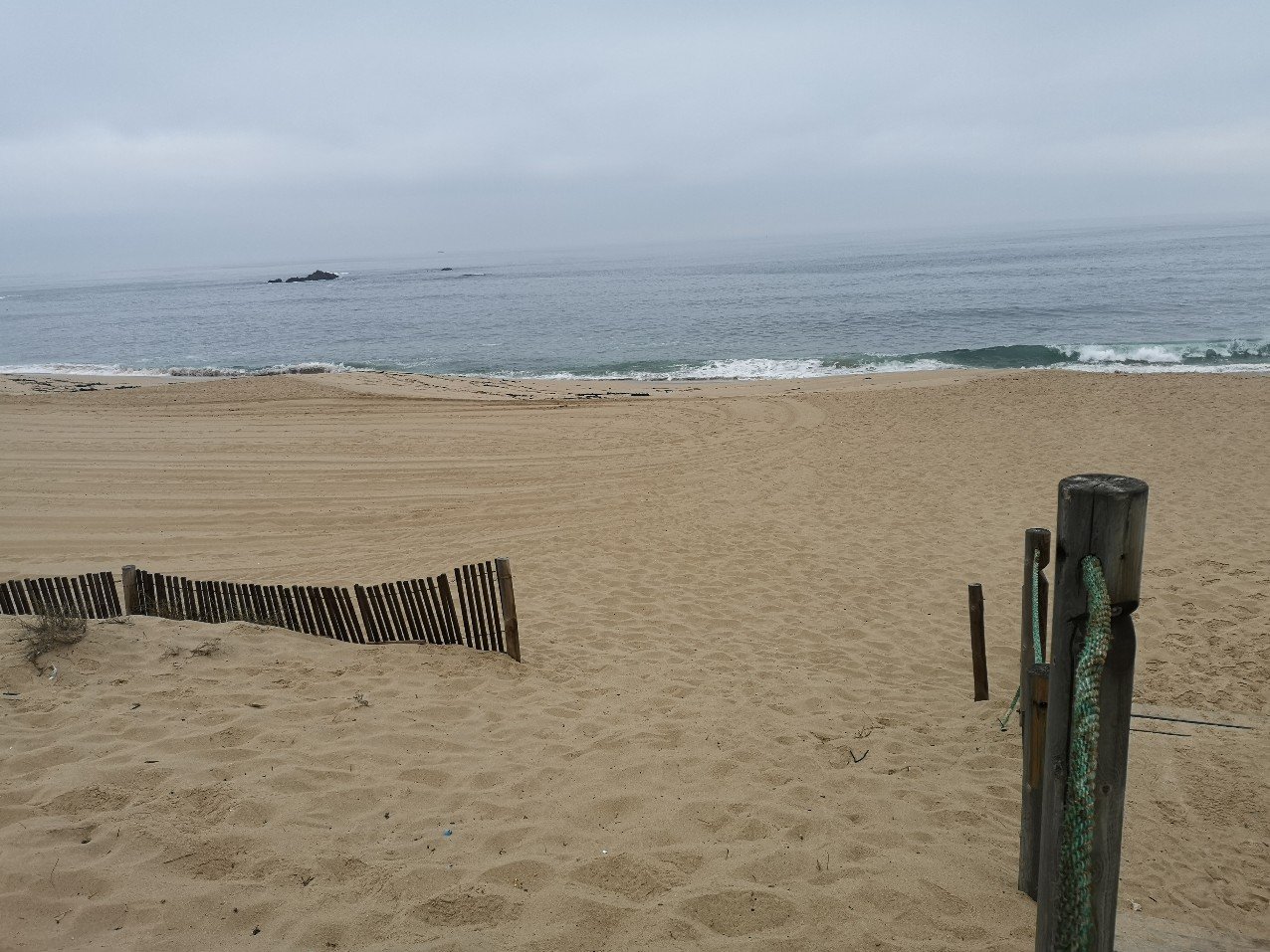
Beautiful deserted beaches. Here is Praia das Salinas (salt pans) or perhaps it is Praia da Memoria
wp-15757544477725206076421655929625.jpg
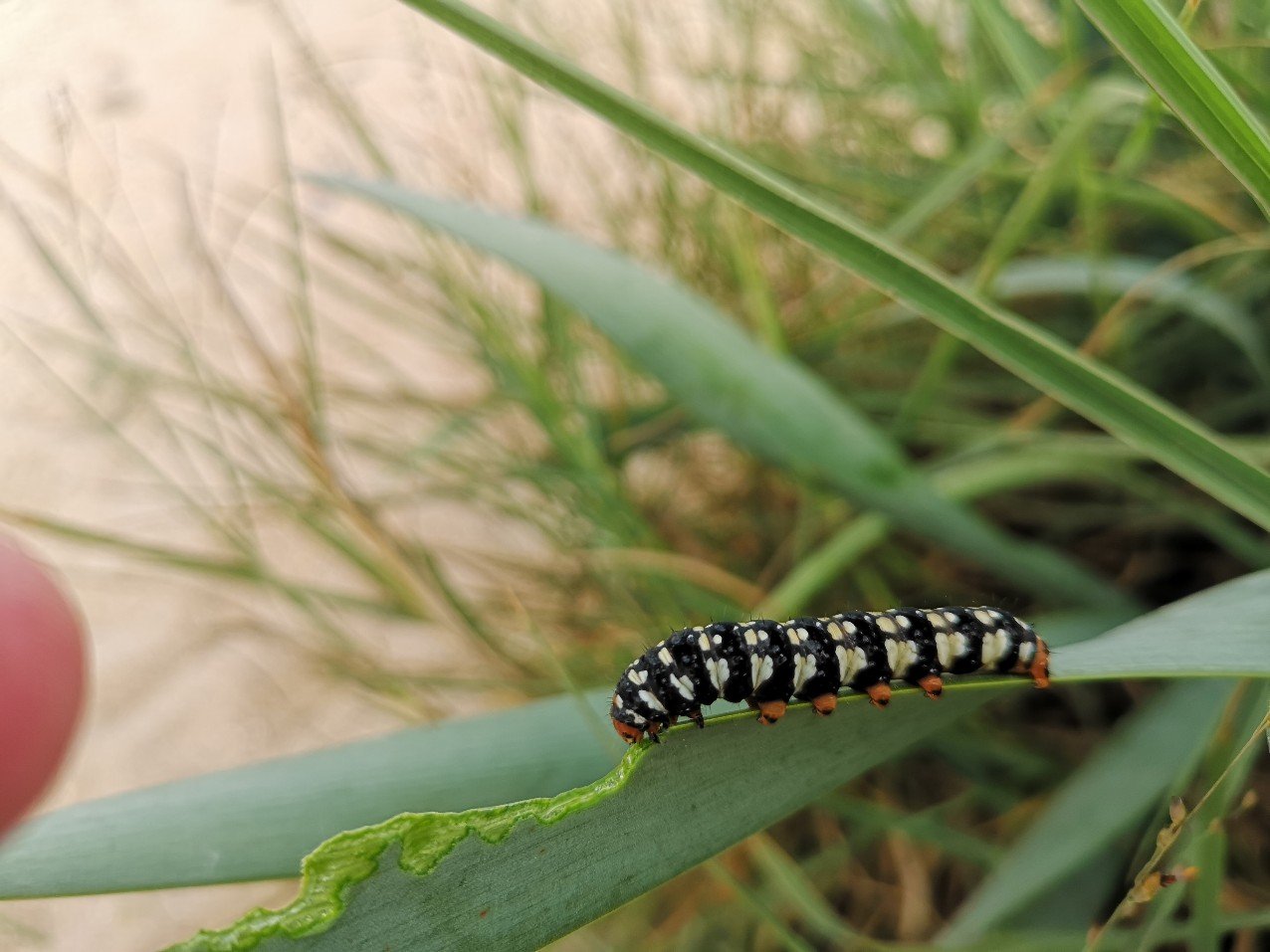
A caterpillar caught my eye1

There was a diverse range of flowers, mostly growing close to the ground on account of the wind, many of them also fleshy so they can survive without rain.

wp-15757544478321682892888719093026.jpg
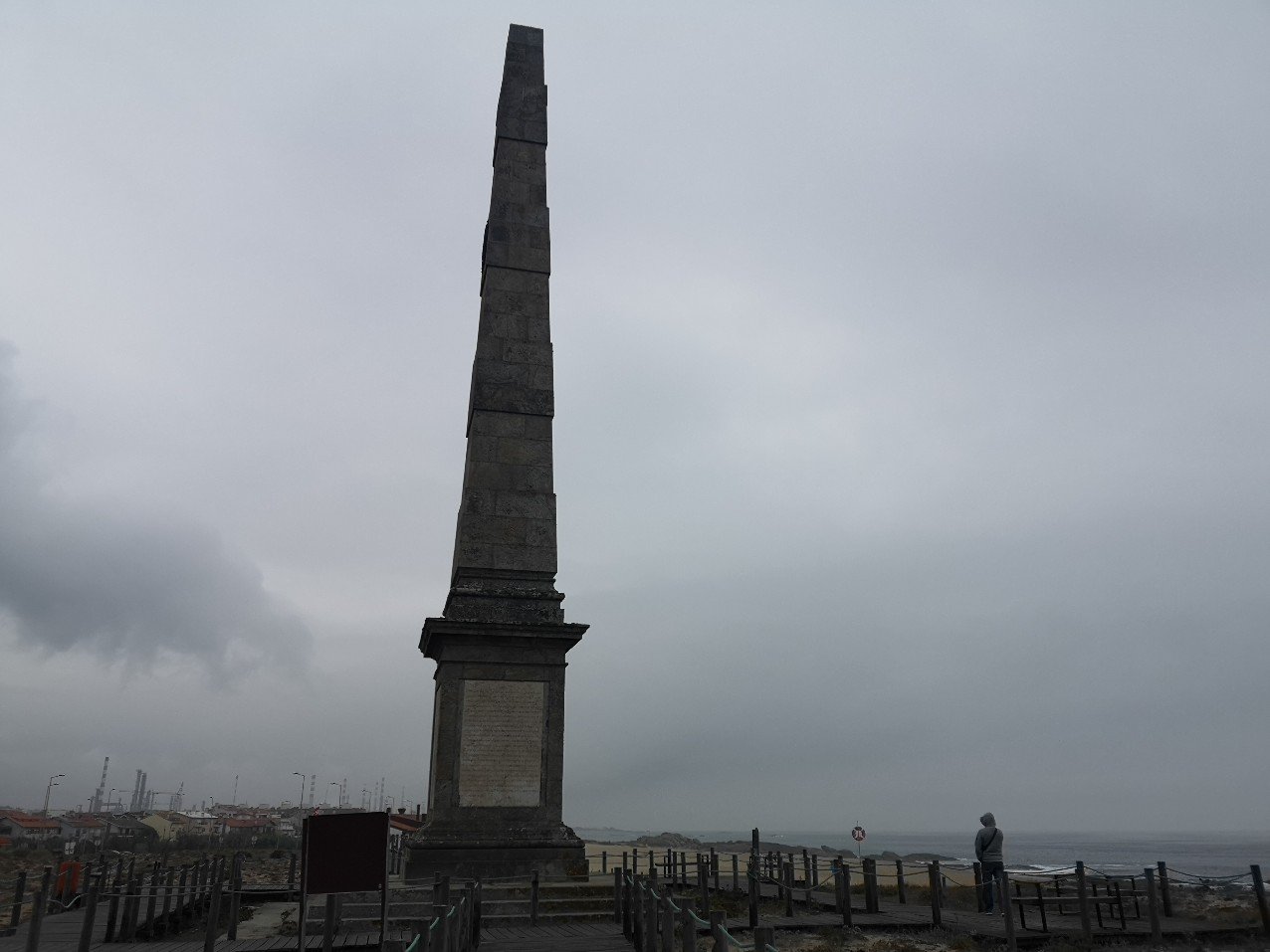
O Obelisko da Memoria (Memorial Obelisk) marking the disembarkment of King Pedro IV and his 7500 men who came to liberate Portugal from the Absolutist regime which had dominated it
wp-15757544477165726491404040725988.jpg
By now the sun had come out and the waters were clear and still – perfect for a hike. Between Praia de Angeiras and Praia da Labruge
wp-15757544476262413606025789654788.jpg
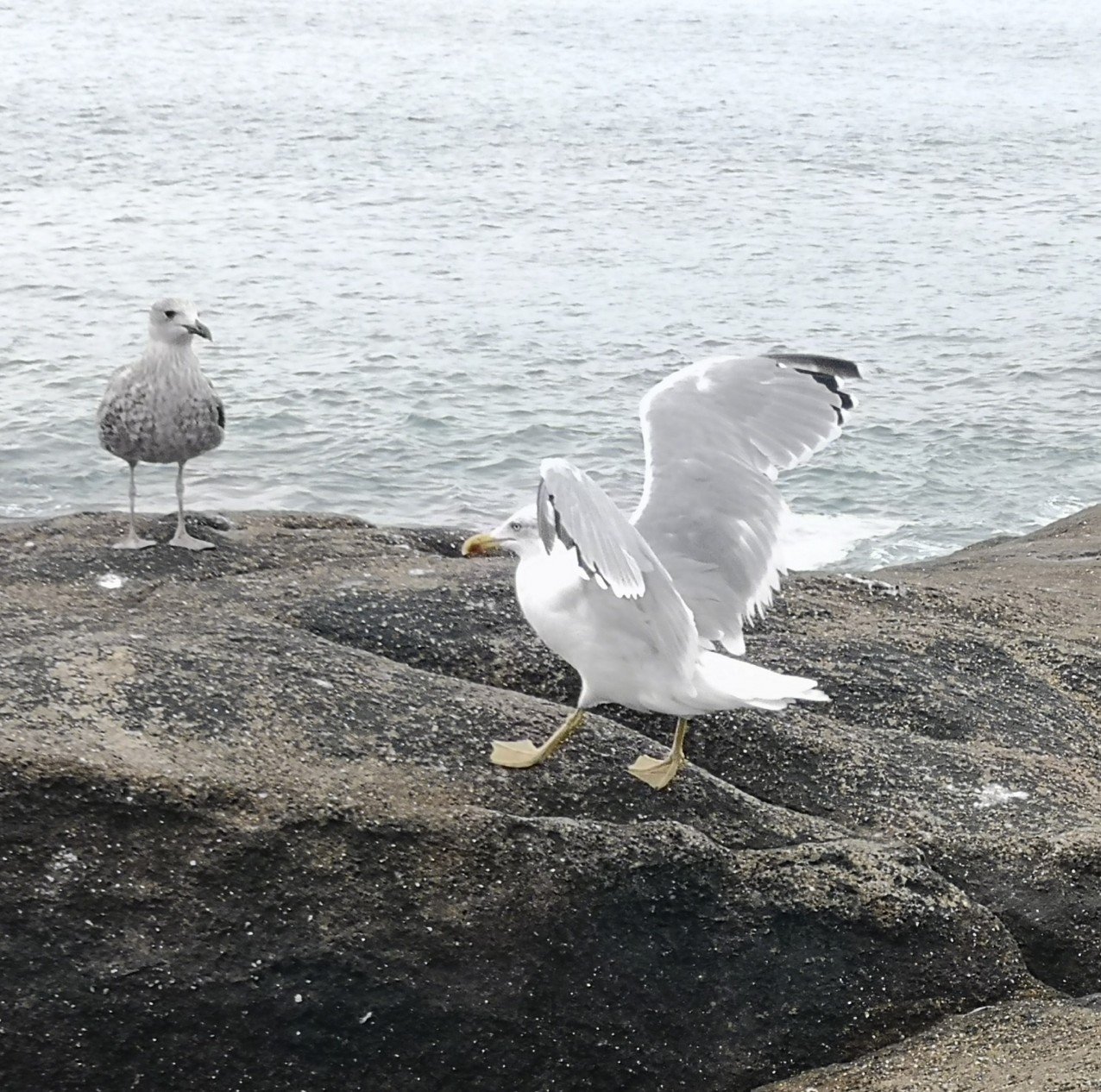
Seagulls shared lunch, fighting over the remains
wp-15757544475509114907506625321536.jpg
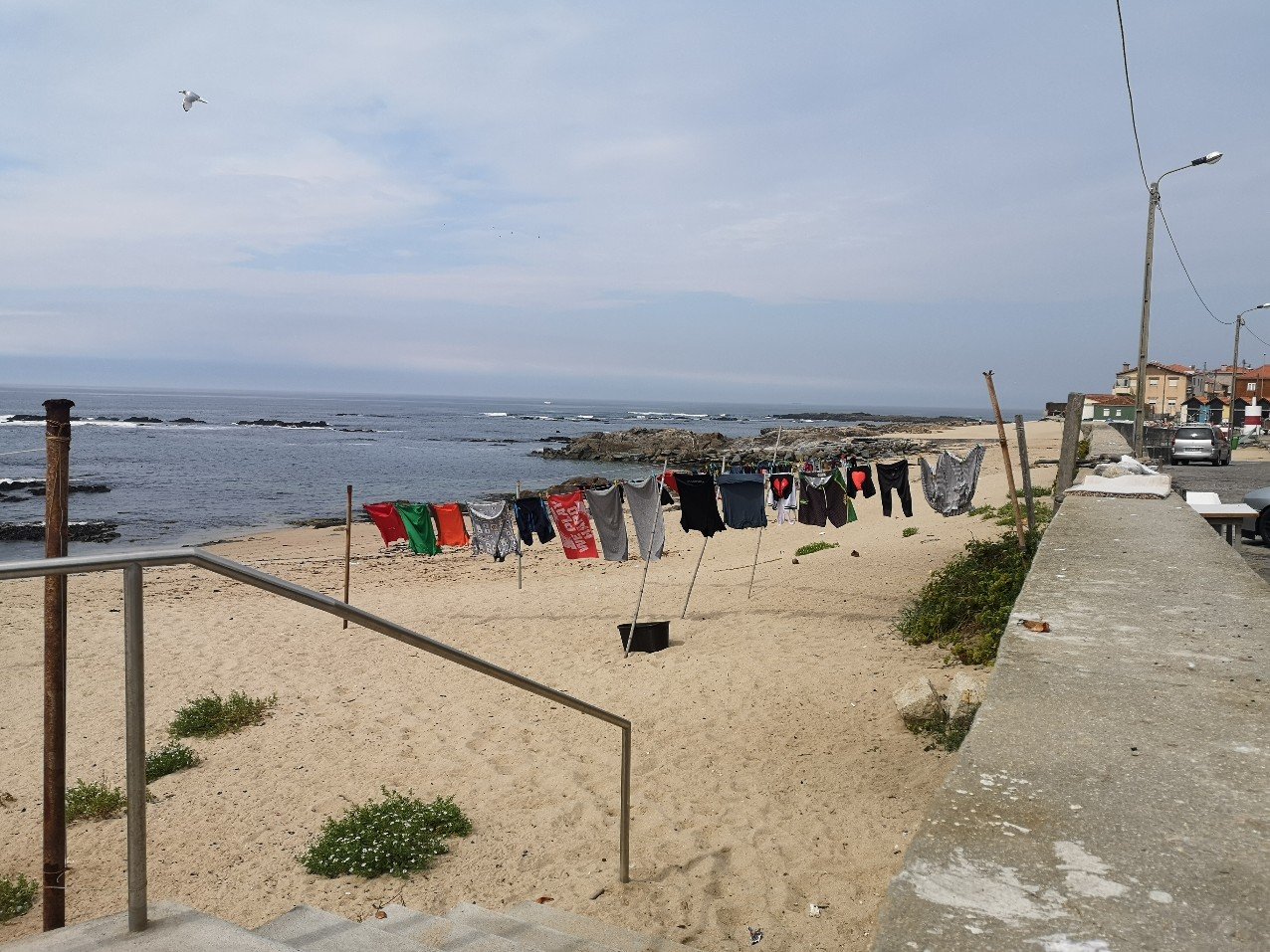
Washing hung out to dry on the beach
wp-15757544474887940490871375022684.jpg
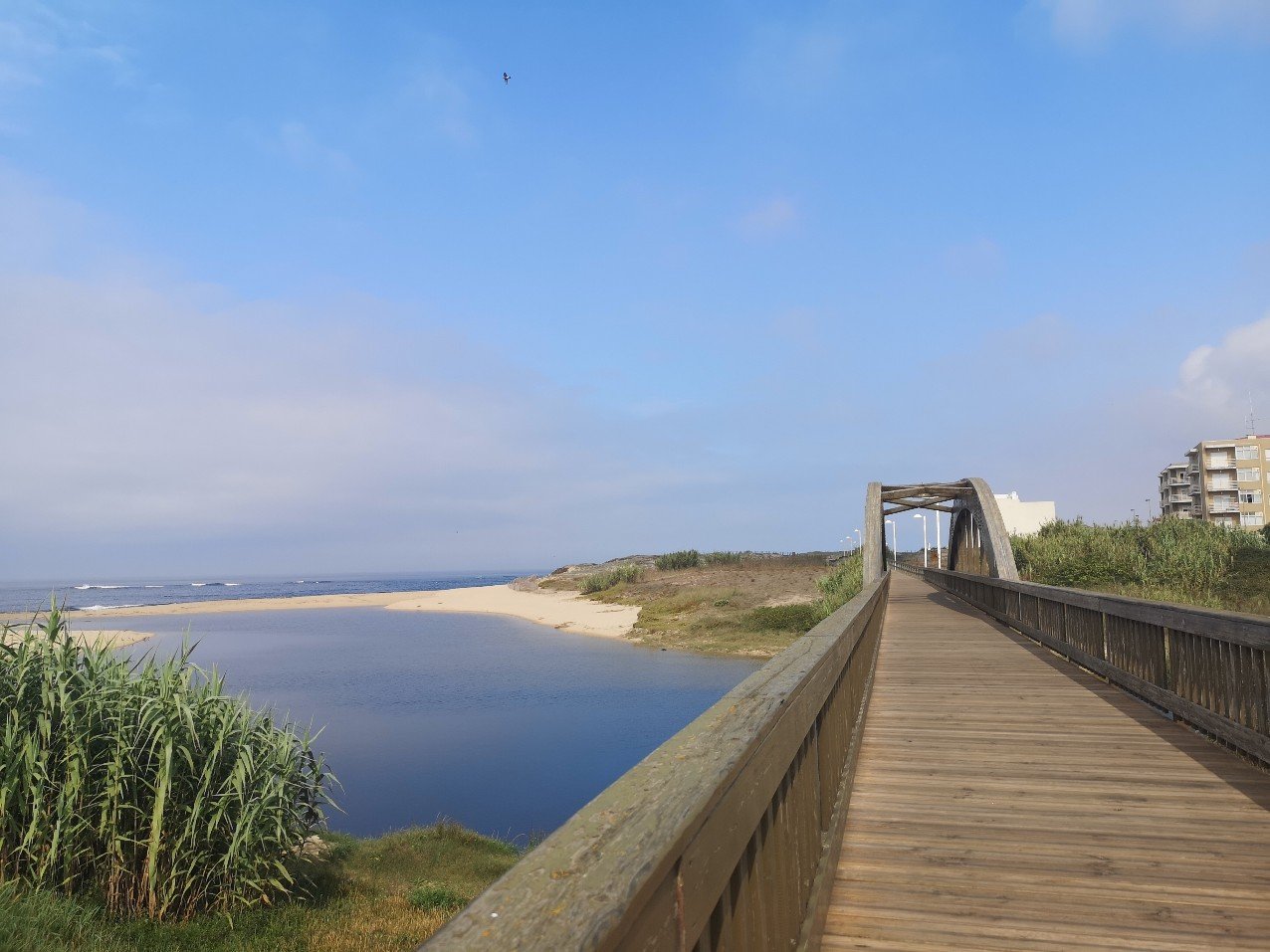
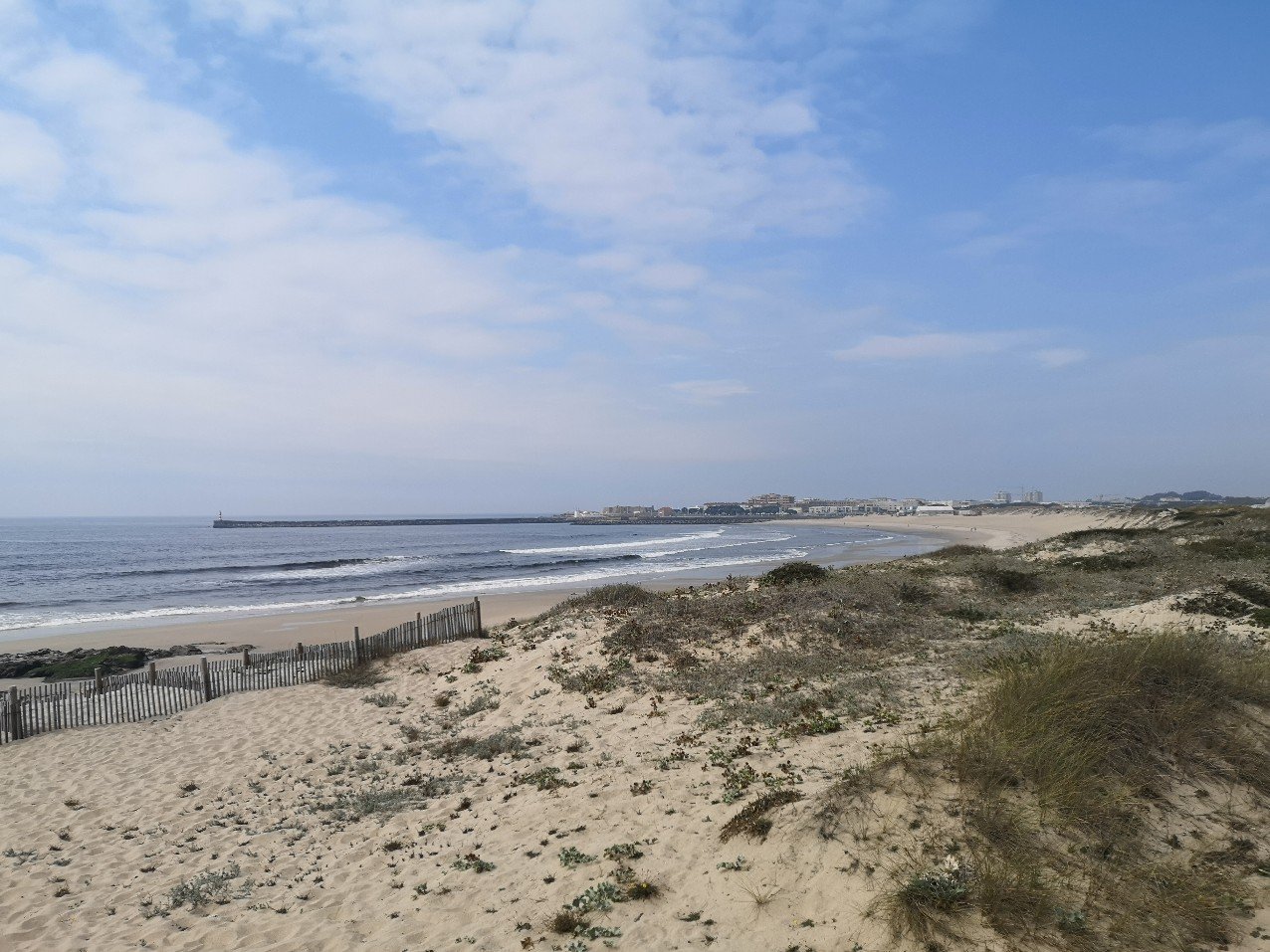
Vila do Conde in the distance

That night’s rest was in Albergue Santa Clara Albergue de Peregrinos Municipal (which can be found on Facebook). It has a large dining area which was very busy, and a small kitchen. Beware of leaving food out – someone went off with my hard boiled eggs which were in a cup cooling for breakfast 😦

Vila do Conde
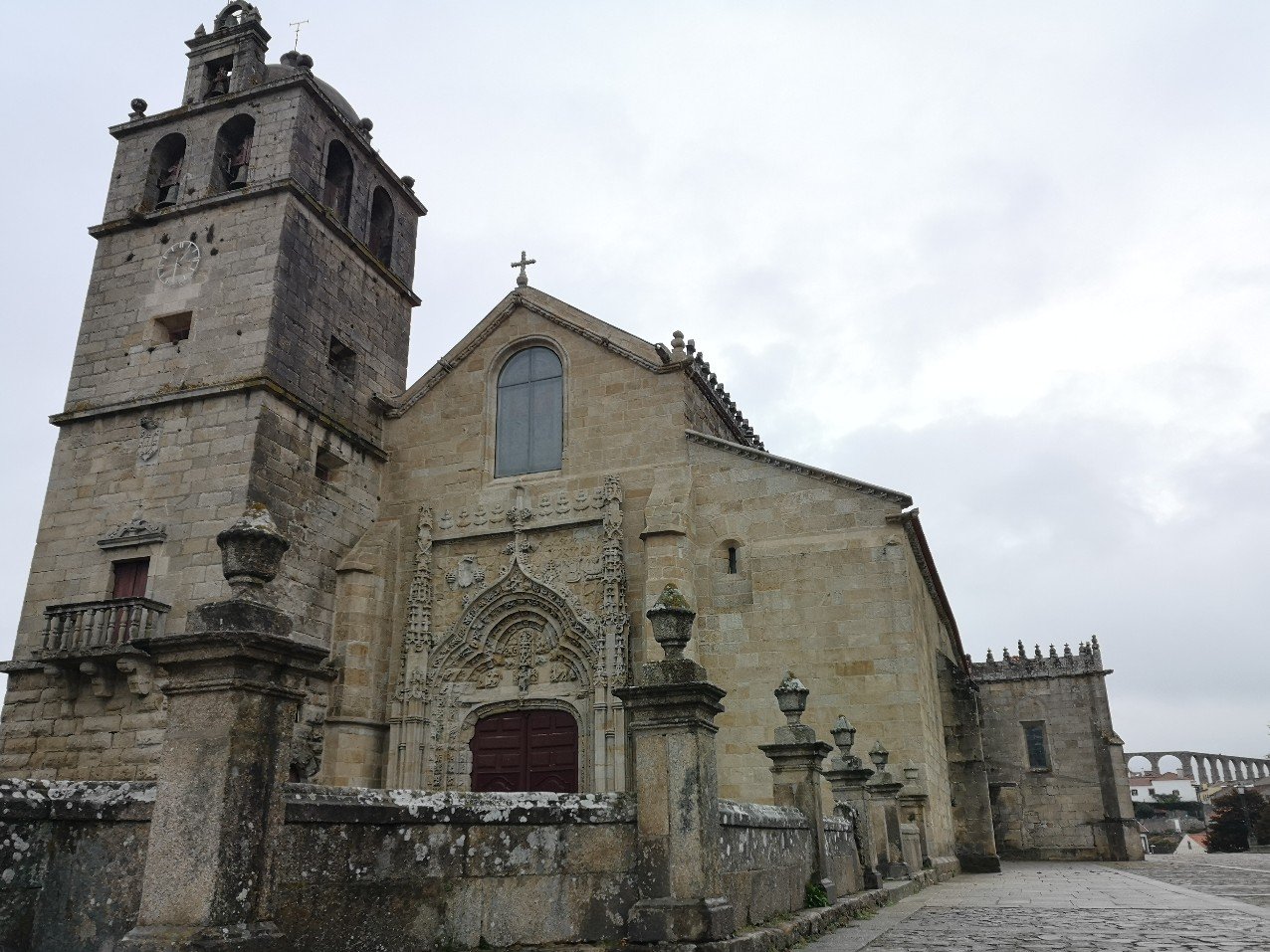
Igreja Sao Joao Baptista

The hostel overlooks the Igreja Sao Joao Baptista (Church of St John the Baptist) and a lively marketplace. There is a cafe just around the corner where you can sit outside with your beer (very good value), and it is in the centre of town for all other amenities.

Vila do Conde
Convento (convent) Santa Clara Vila do Conde

*There is a variation to the Portuguese Camino da Costa and Litoral (this word has 1 or 2 t’s depending on the language), which is reputedly very, very beautiful, called the Espiritual (Spiritual). It starts in Pontevedra (where the Inland and Coastal routes converge), and ends in Padron. More information here

Portuguese Camino next days 3 and 4 Vila do Conde to Viana do Castelo

Yalding

December 2019

The Tat, Yalding

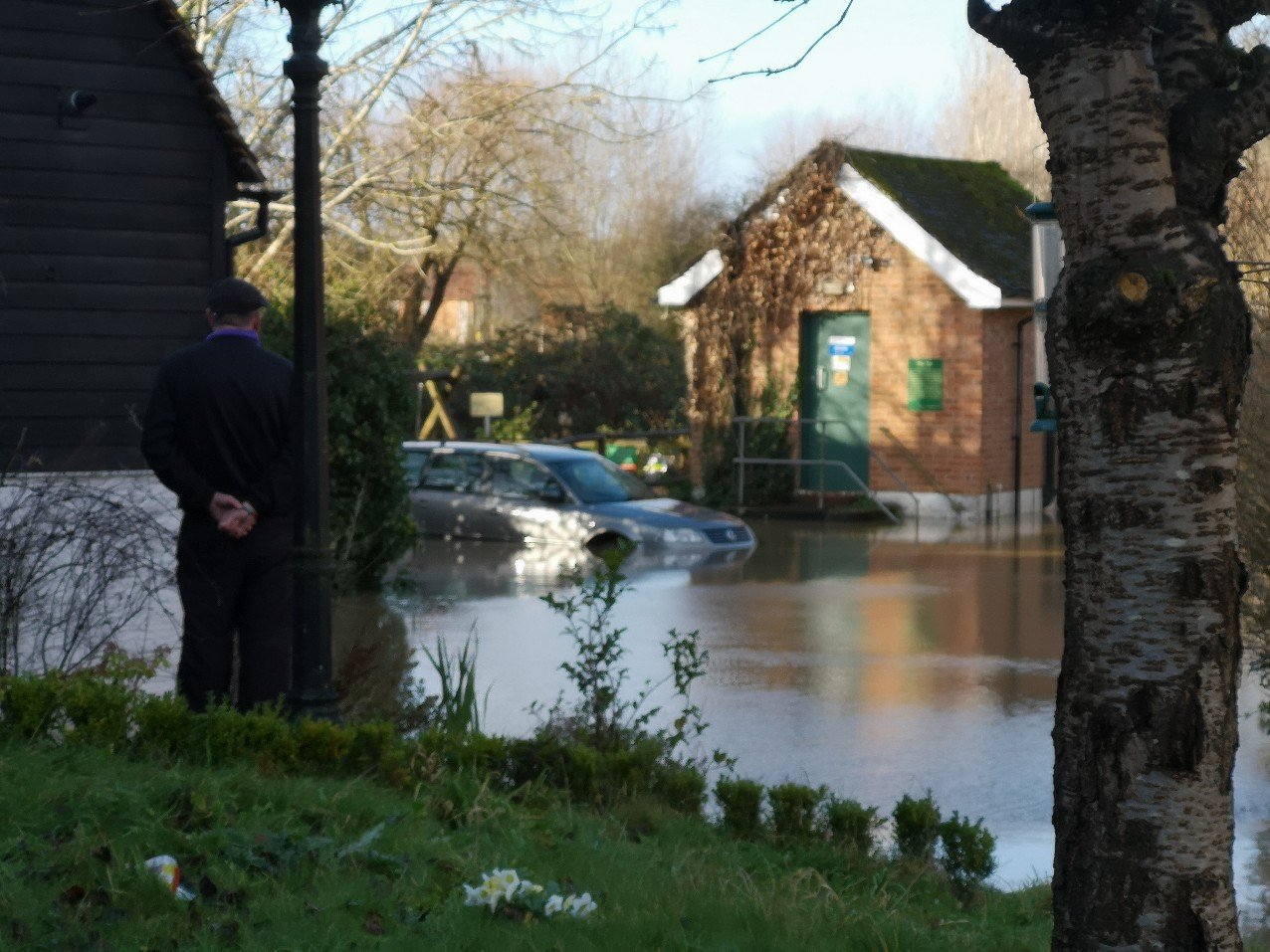
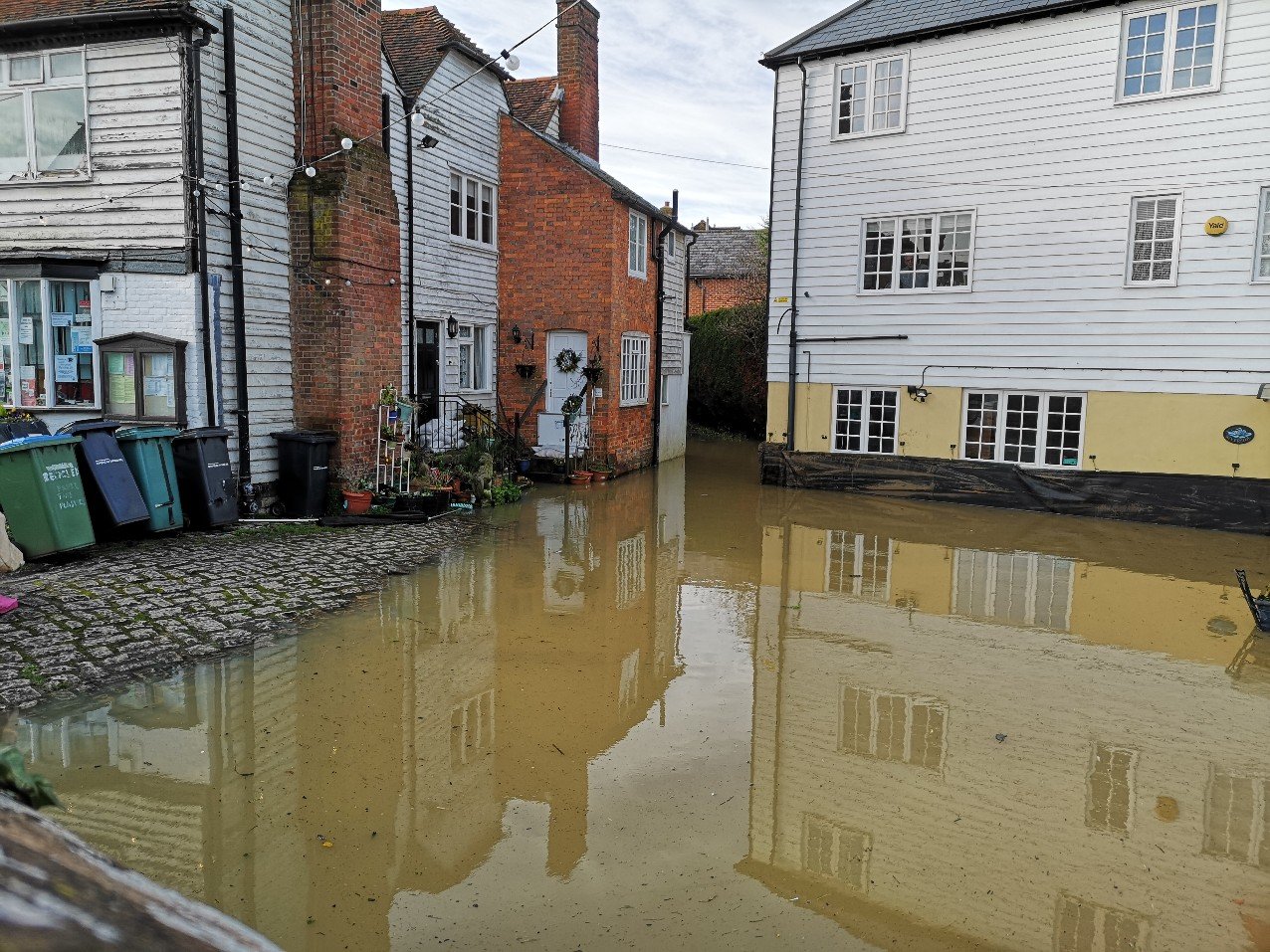
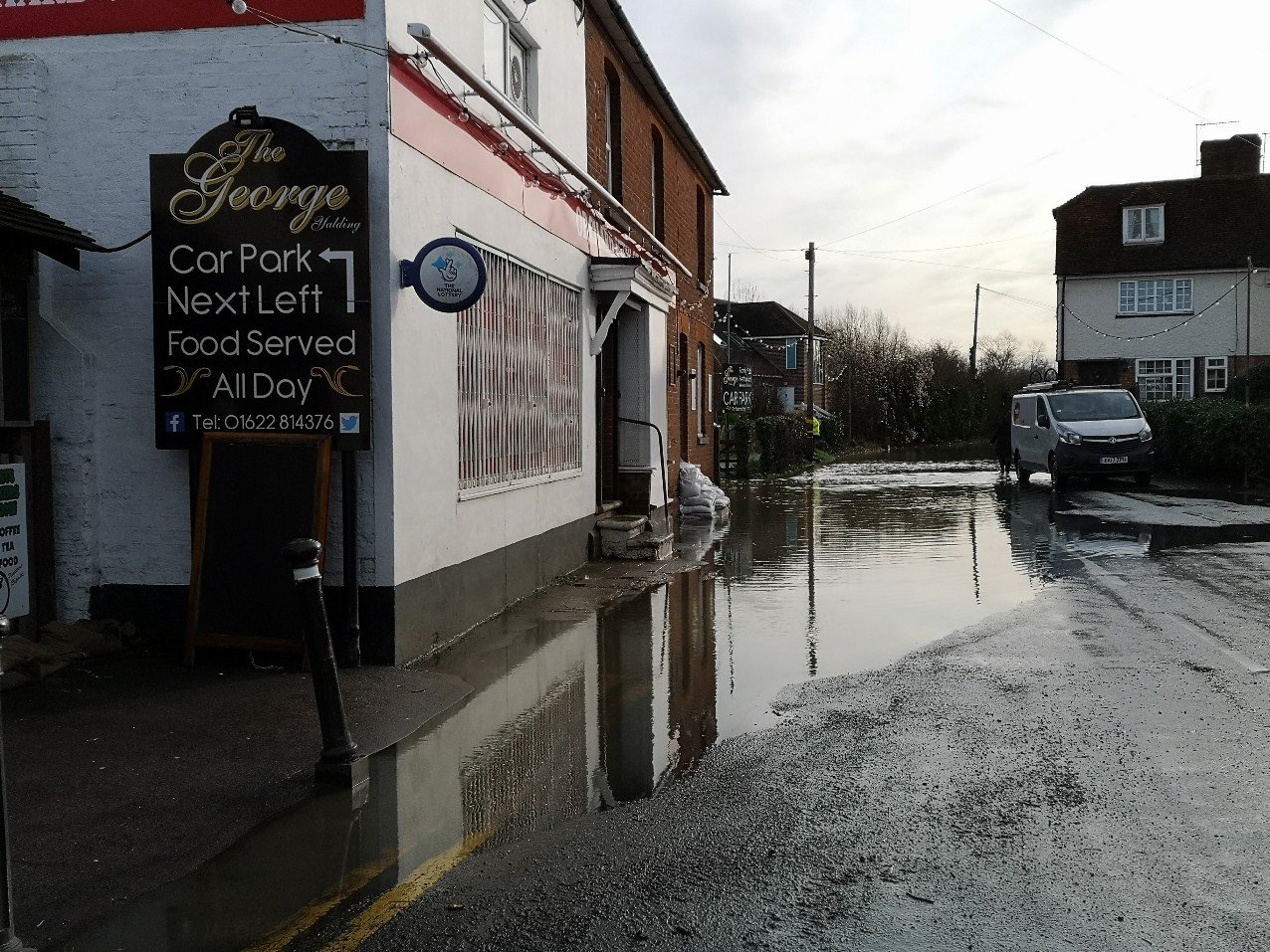
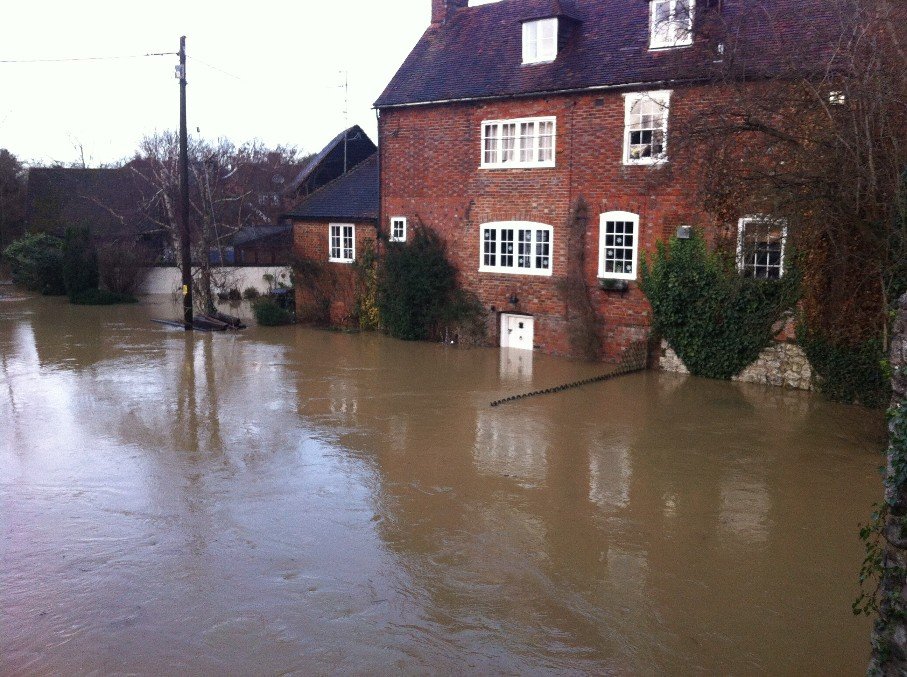
I started my walk (to deliver a Xmas present and do the shopping) at the forge on the High Street. On the left, as you look at it, the Tat is flooded, a car immersed up to the windows.

Severe flooding, Yalding , Kent

Typical Kenish dwellings

I pass the flautist from the previous evening’s carol service in the parish church.

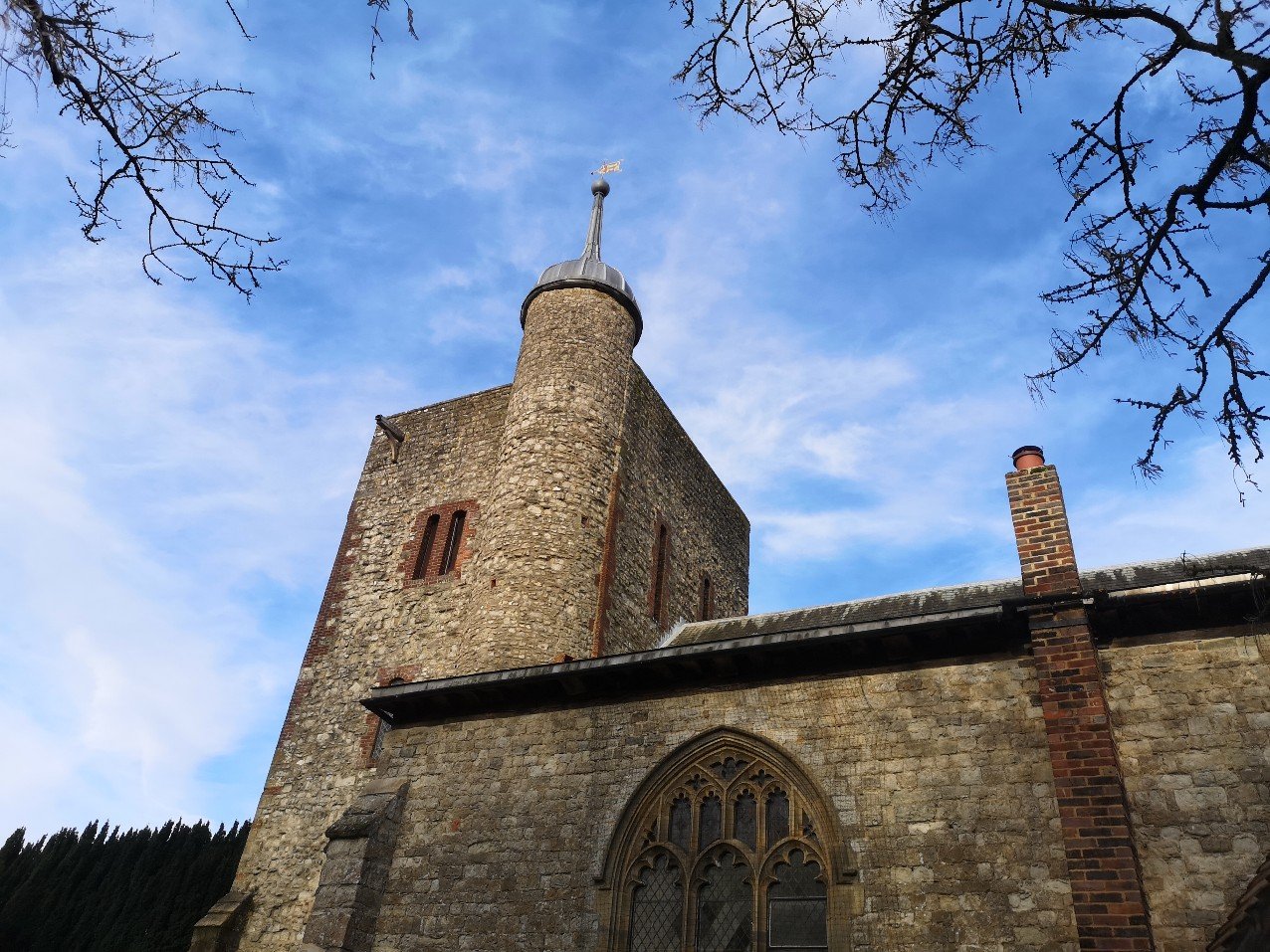
Yalding Parish Church

Taking a right at the war monument, where the village tearooms are on the opposite corner, I see that Vicarage Road is closed to traffic due to water inundation further up. The drains are full – I can hear the torrents under the grate by the side of the road.

Passing the school on my right I spot an aspen, a tree known as trembling or populous tremuloides, poplar. Each three-pointed yellow leaf is on its own long stalk tipping from side to side and rustling, like half a castanet searching for its pair to clatter against.

Acer opalus

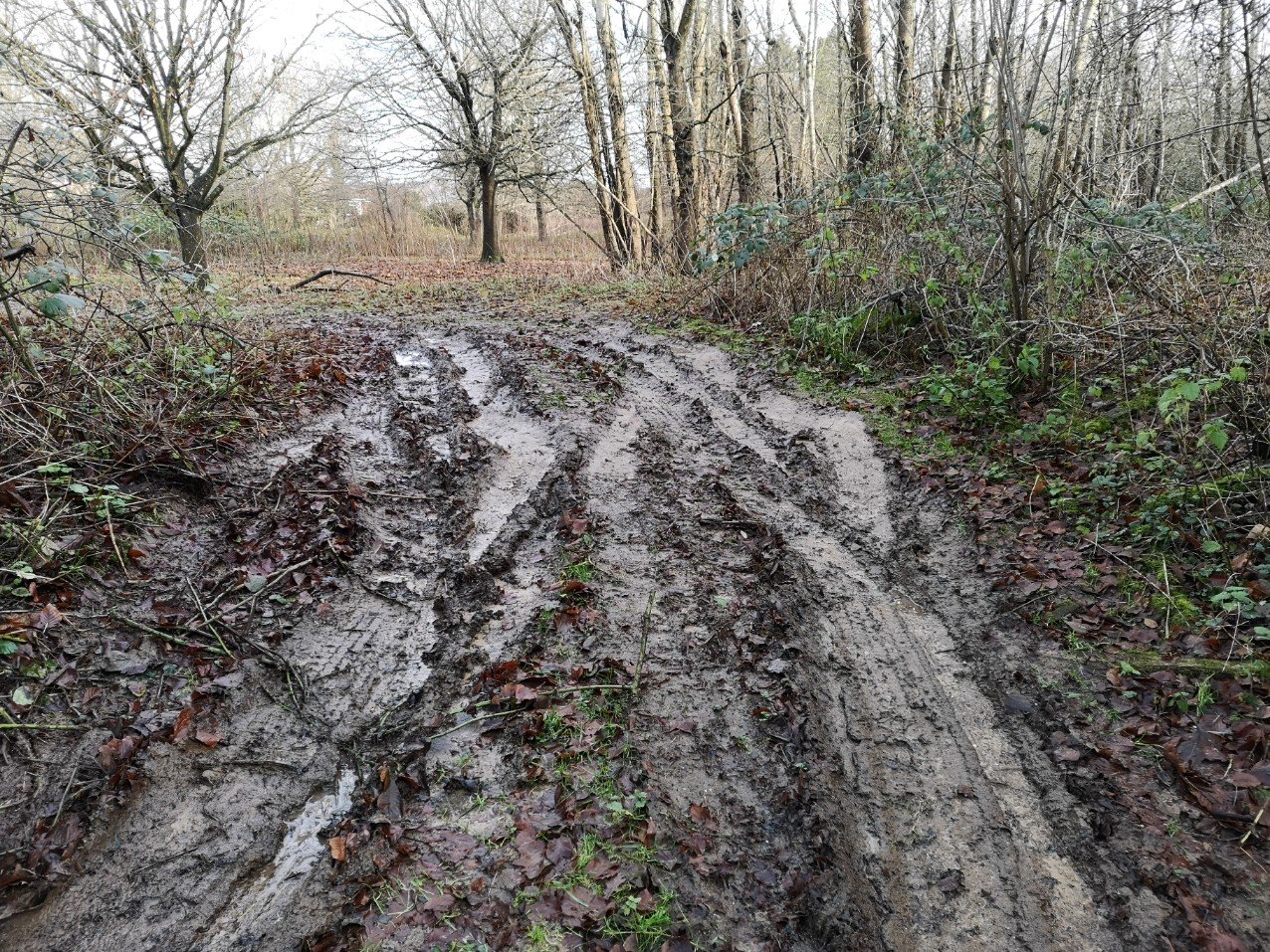
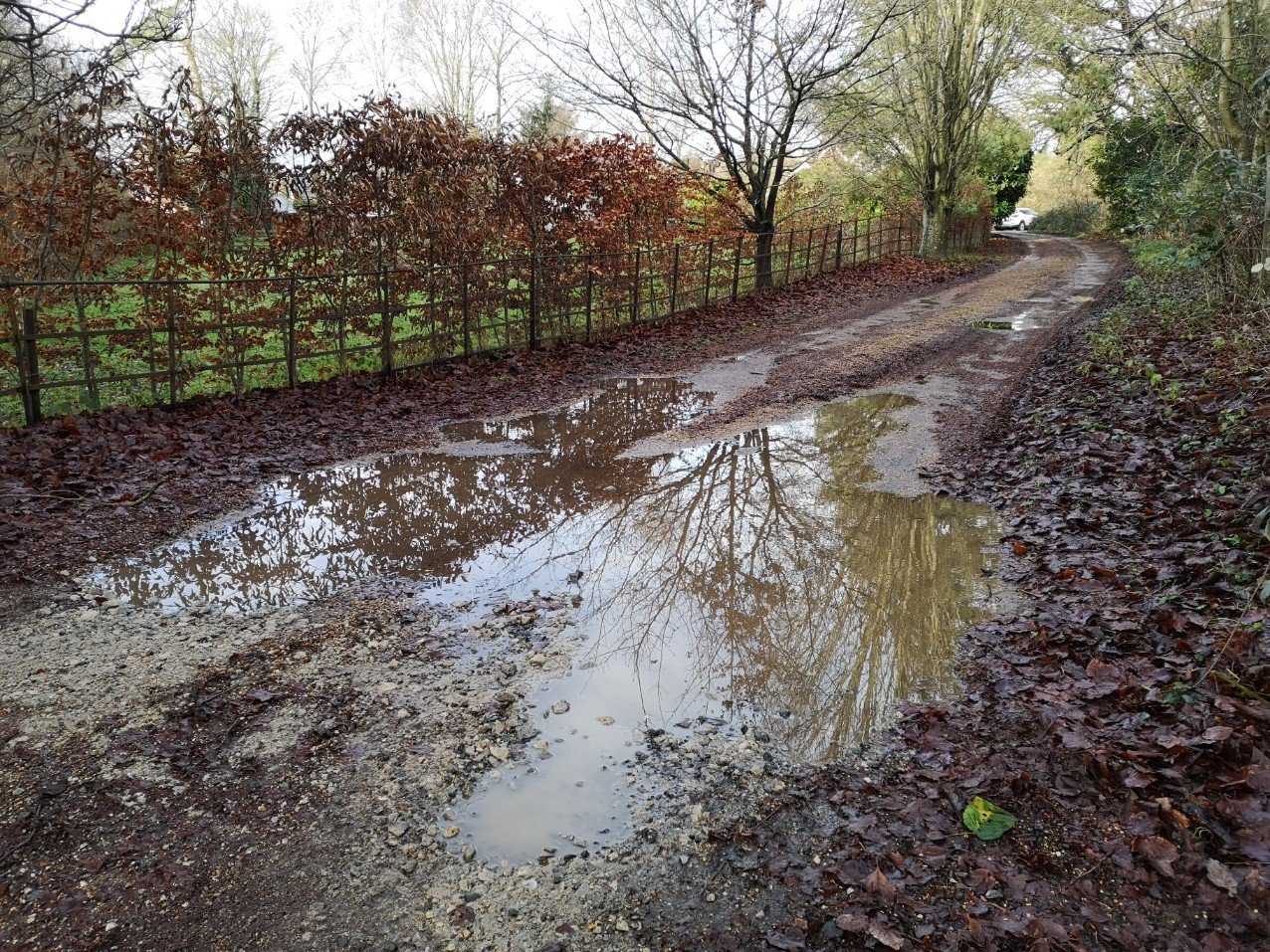
I pass the entrance to the new estate and take a right into a leafy, rather soggy drive where it is quiet. Only the birds are piping and tweeting, trilling, as they do. There are great ridges of mud, puddles the width of the drive.

To my left are flutters of wood pigeon, heard but not seen. A sharp chirp comes from elsewhere. The dun brown earth in one garden is squared off with planks awaiting spring sewing, or maybe even harbouring overwintering goodies ready to spring in, well Spring.

The Lodge in full summer

The lodge where only 6 months ago stately artichoke flowers bloomed now has a Xmas wreath and lights which are only just visible in the bright morning.

The Xmas Lodge

Now that the trees are bare on the other side, I can see right through to the paddock to the grey tin trough. A wheelbarrow lies on its side and fresh straw has been strewn.

Coppice

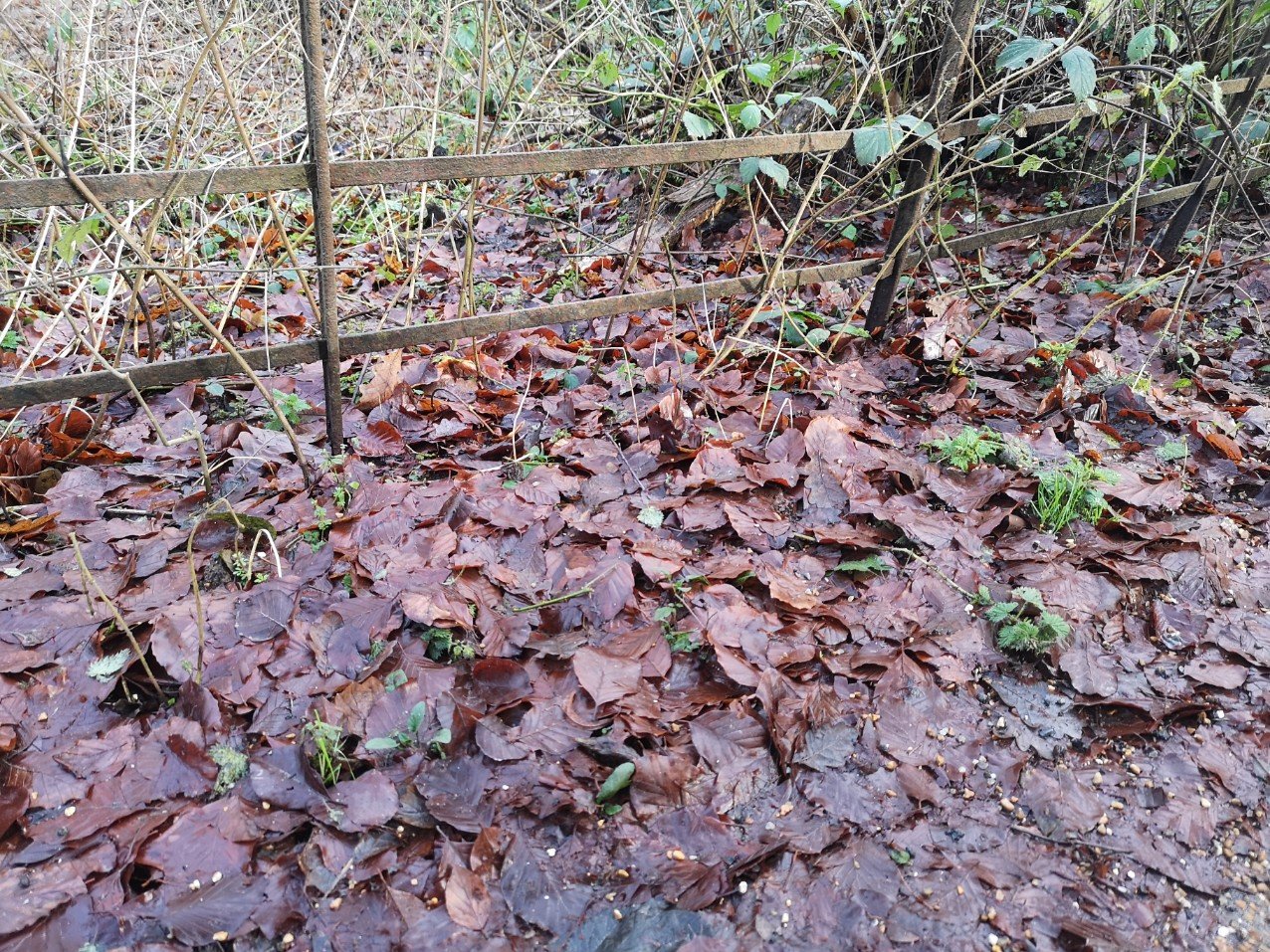
Layer upon layer of burgundy leaves, beech and oak, have been smoothed by rain and packed down to protect the almost dormant plants. When I step on them, they are so deep and cushiony I sink damply down so they cover my feet.

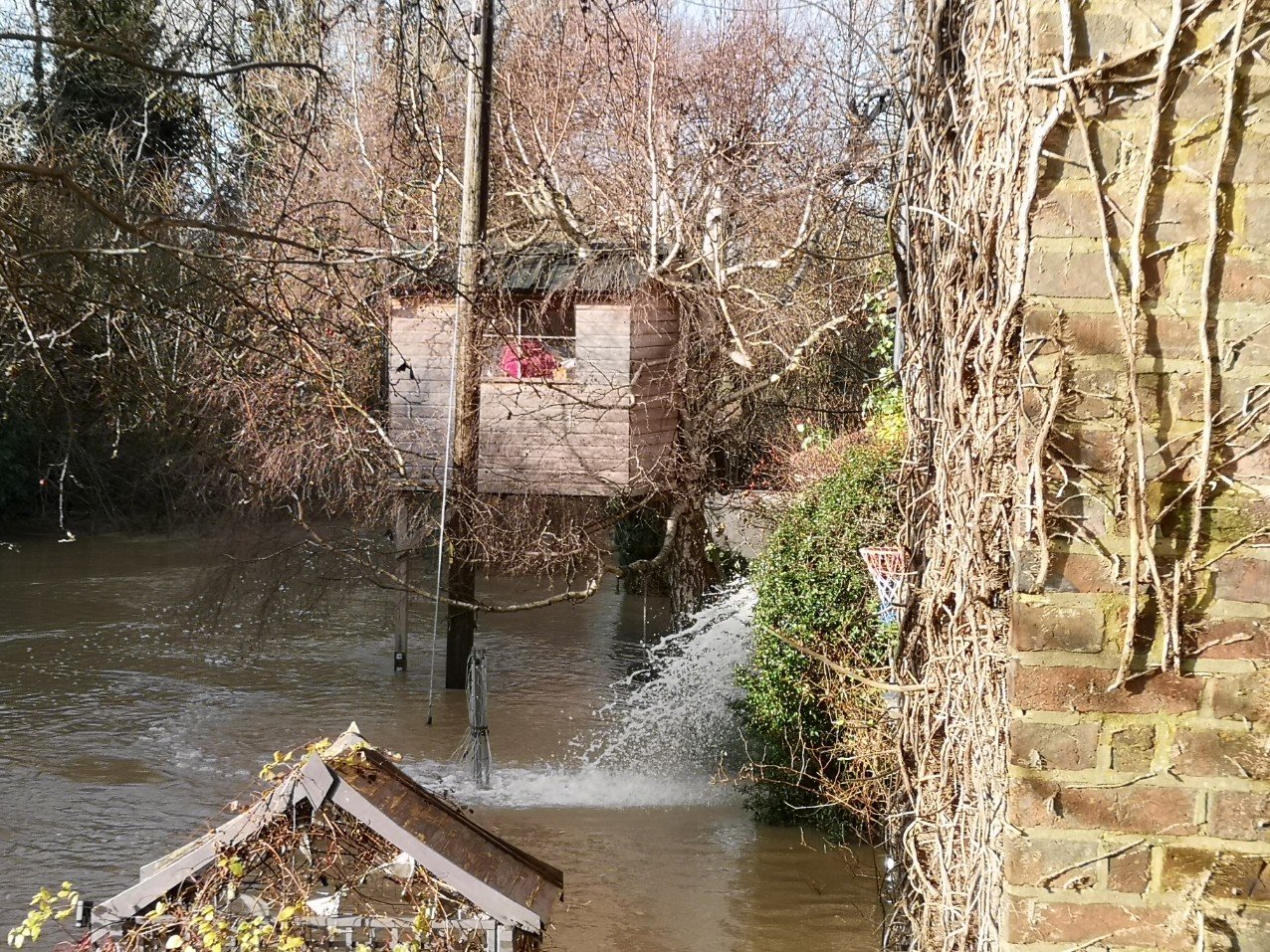
On my return I see a shed, a shepherd’s one, on stilts, very sensible given the amount of standing water

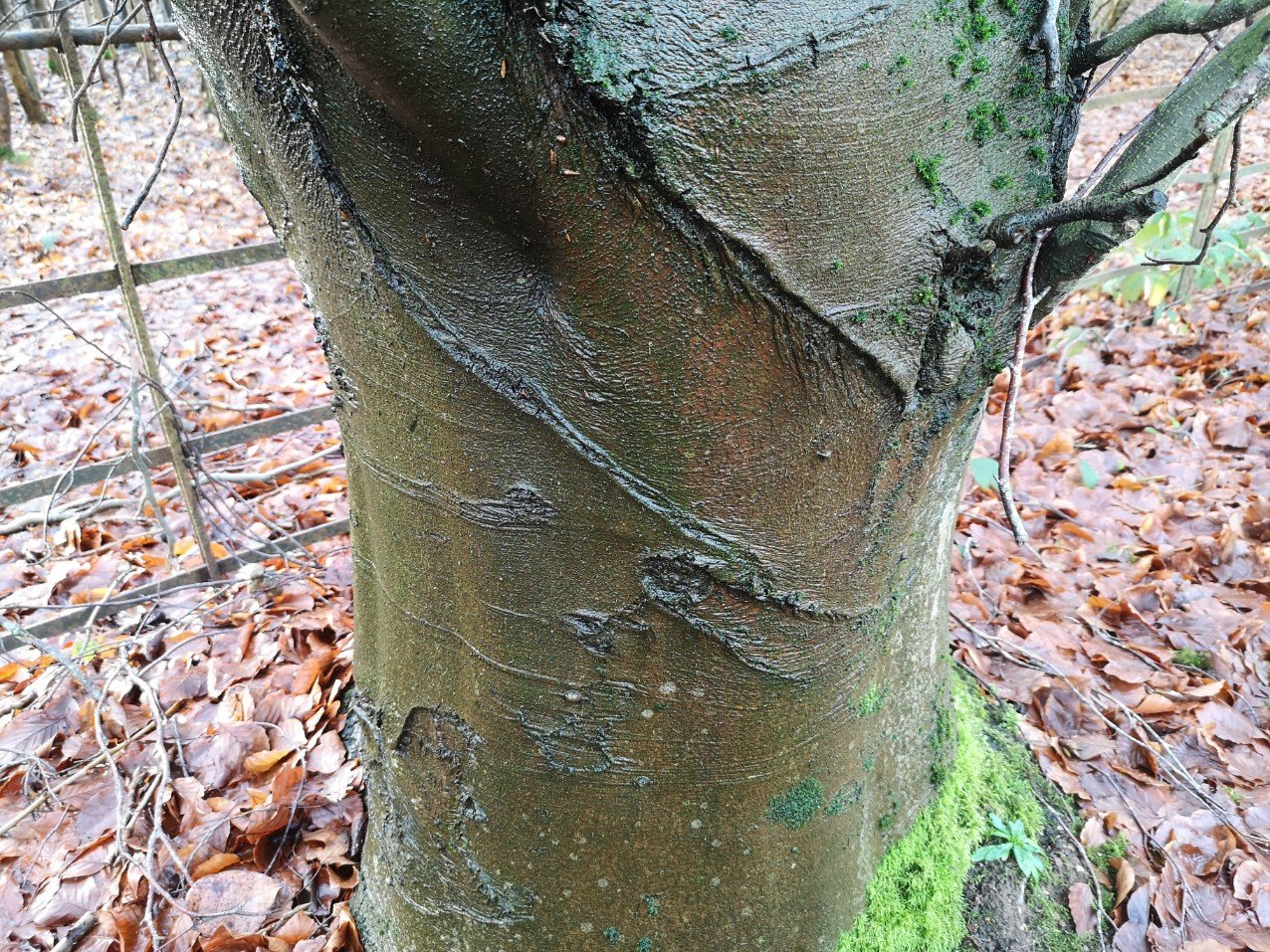
Wet trunks like twisted elephant skin (or at least how I imagine their hides, never having seen one in real life)

The man I gave the present to asked, ‘What’s it like in the village? I replied that all the cars have moved from the flooded Lees area and are outside mum’s house. He told me that Little Venice had to be evacuated and that their houses had been built to float. I had no idea. Later I discovered that he was not referring to Little Venice on London’s Thames, but to the collection of caravans close to Yalding Station which flood regularly.

The bottom of the trees are all green with moss

As I returned, a red van stopped and the driver rolled down the window to ask, ‘you all right?’ I said I was enjoying the day and taking photos, and he replied that he wished the locals were too. Is it so obvious that I am not local then! Perhaps this is an unusual activity for a Sunday morning just before Xmas.

I wandered on under the nearly-Xmas sun, not a snowflake in sight. I could hear the South Eastern train tooting to warn its approach ahead of the level crossing.

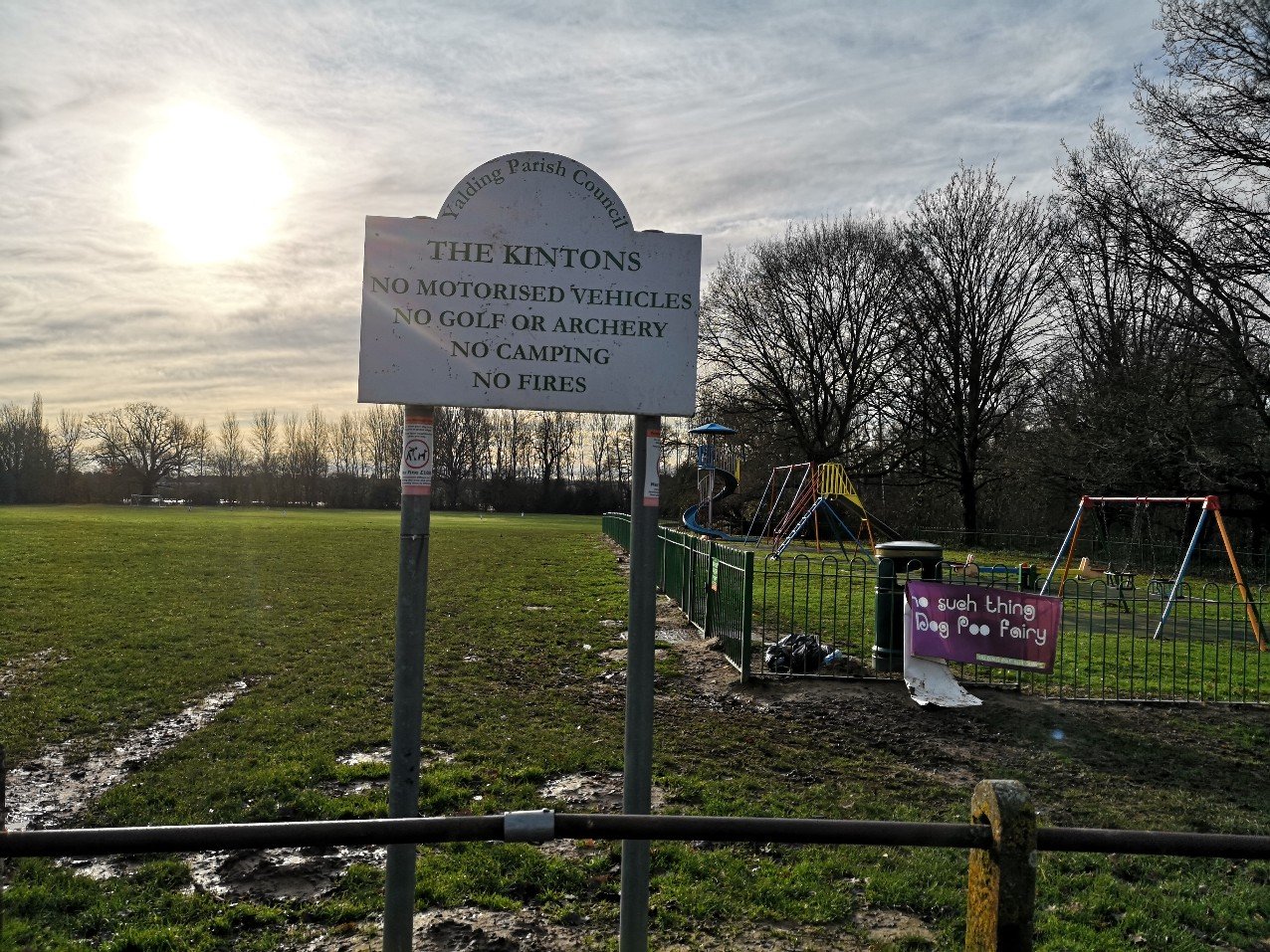
The Kintons – children’s playground cricket and football pitches, dog walking area

On the way back I squelched my way down to the Kintons, past the new houses. Many are already inhabited, one with a shiny green ribbon crossed up/down, and side to side of the front door as if wrapped like a present with a bow in the middle, and another has the words ‘I’m sold’ emblazoned across it.

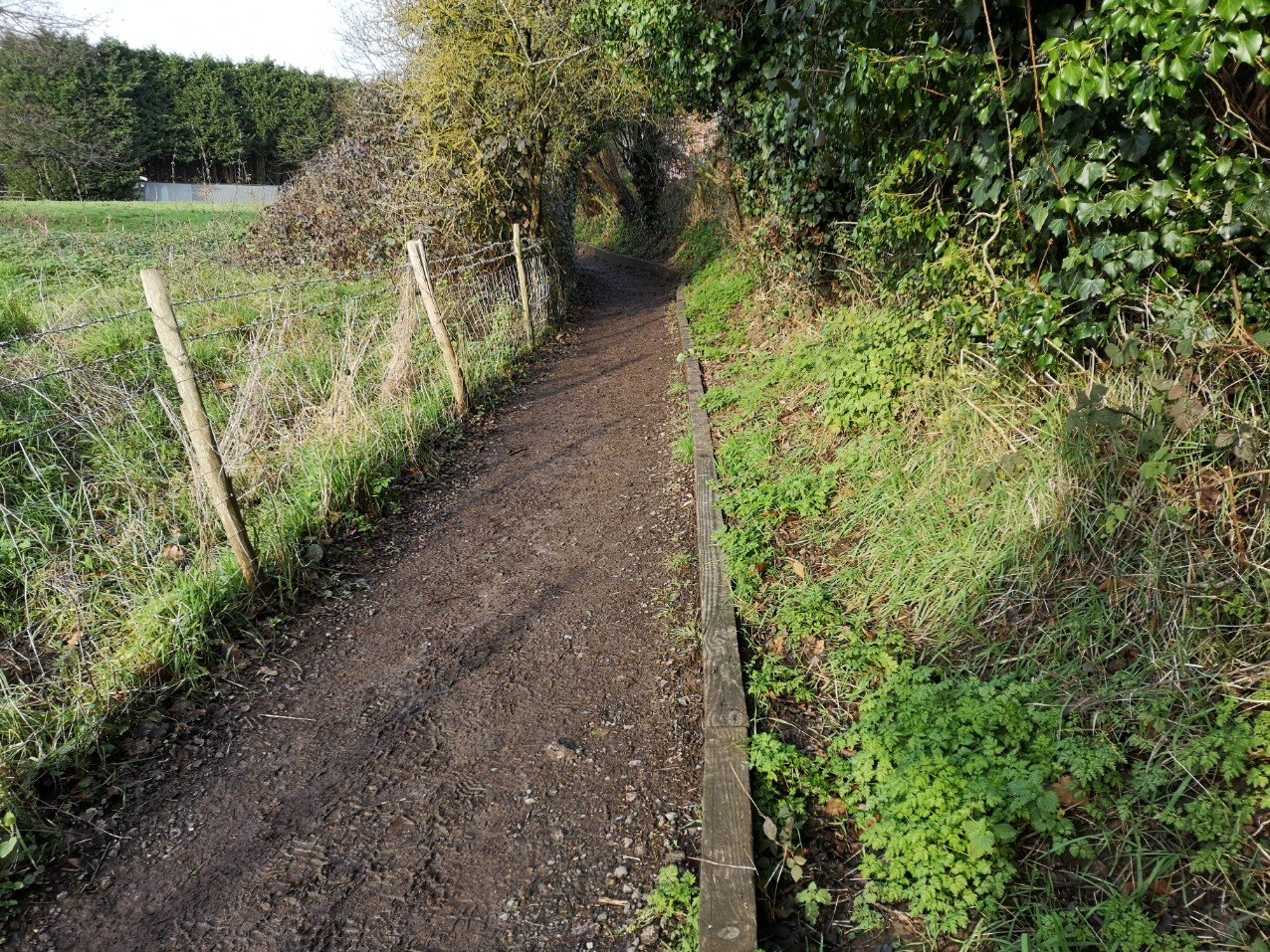
I walked along the top of the edging board to save my unsuitable boots from more mud and to see if I still could balance as I used to.

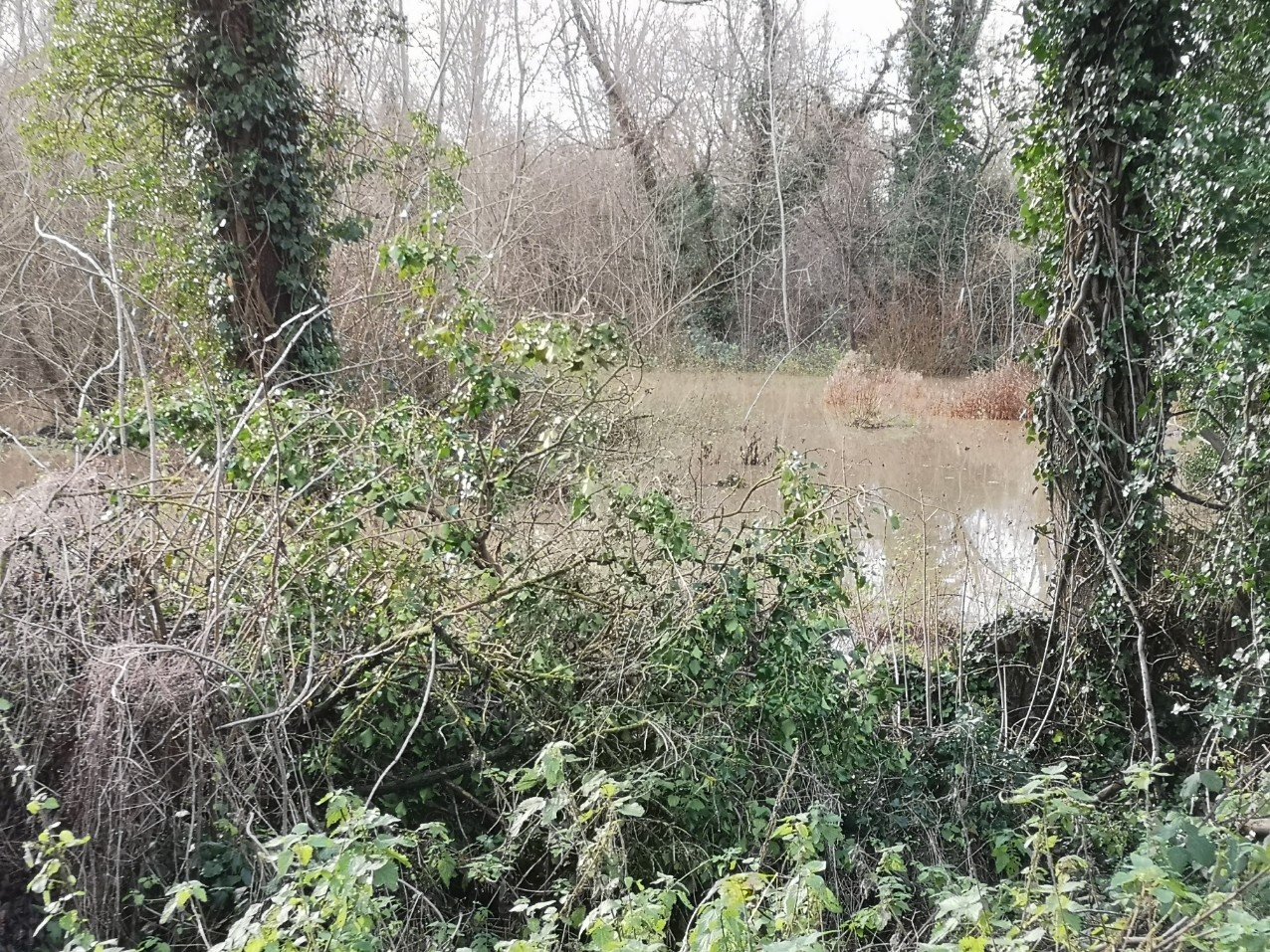
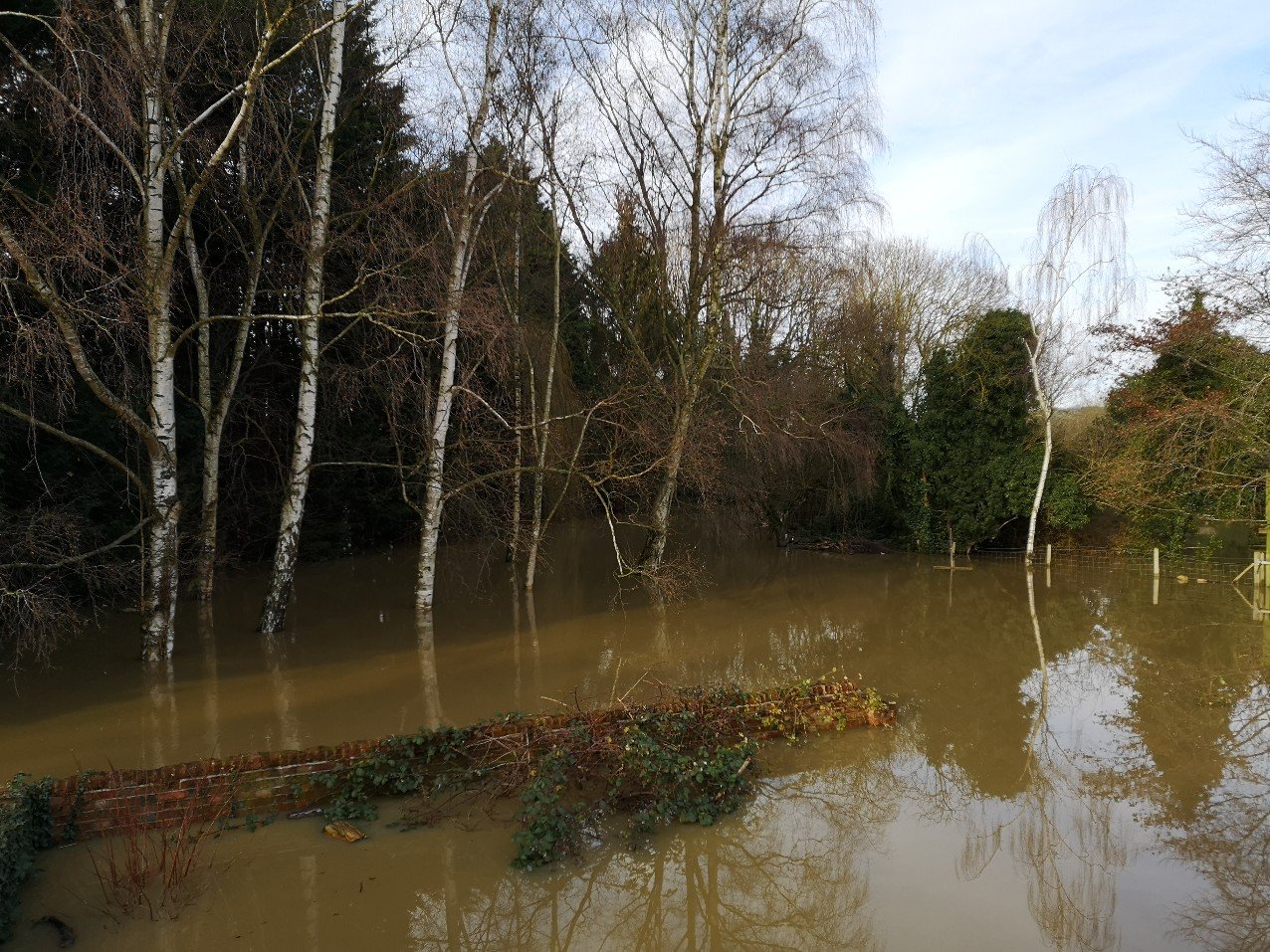
I felt surrounded by water, glimpsed through every break in vegetation.

All smelled of damp undergrowth and wood fires which I imagined burning in cosy sitting rooms where Xmas trees stood adorned with lights with a ring of presents at their feet.

I bid good morning to a gentleman who passed by wearing (suitable) wellies with a lively dog, but sadly I had no canine companion, no Trio.

I stopped by the tree though and remembered her rushing and scampering after squirrels in her heyday.

Here is the churchyard where happy photos were taken of mum and Hugh after the wedding, and the churchyard where he was buried only a few years later.

Back in the centre of the village, no one seems to be able to stop taking photos. Clusters of locals were swapping sodden stories.

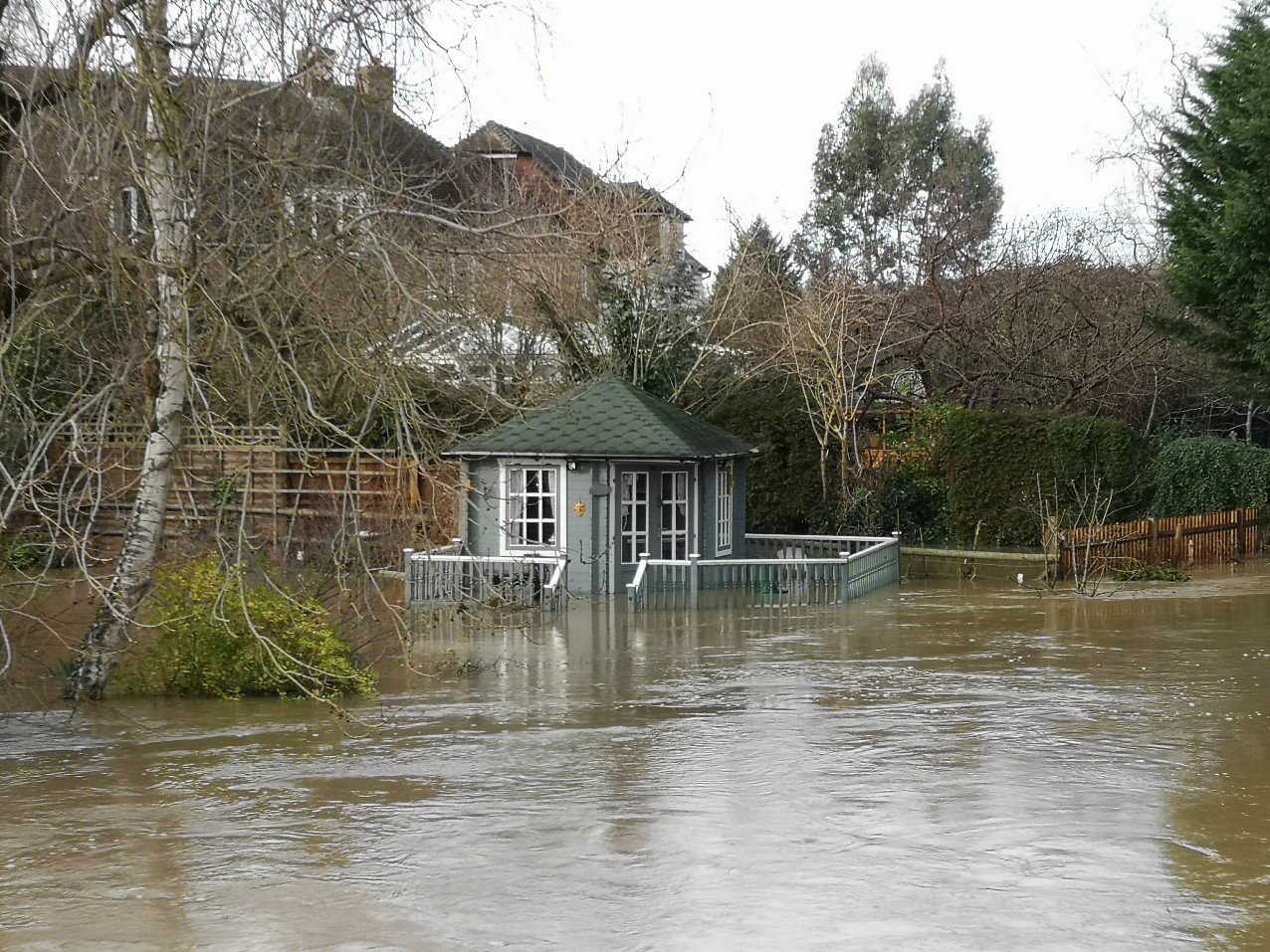
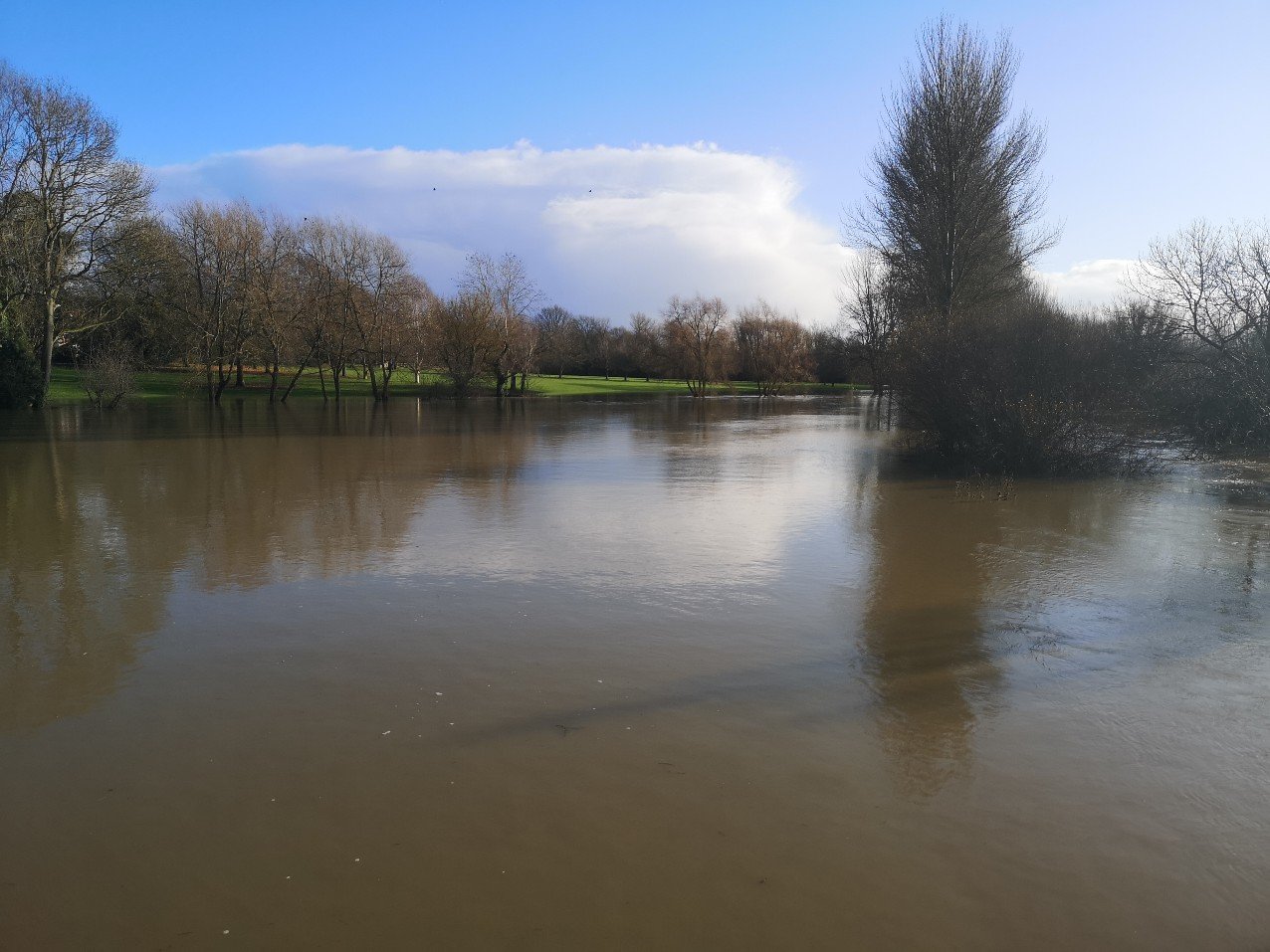
It looks beautiful but it was hard on those who had to evacuate their homes

I watched a man wade to this hut on stilts with an armful of bedding. See the water gushing out of his basement

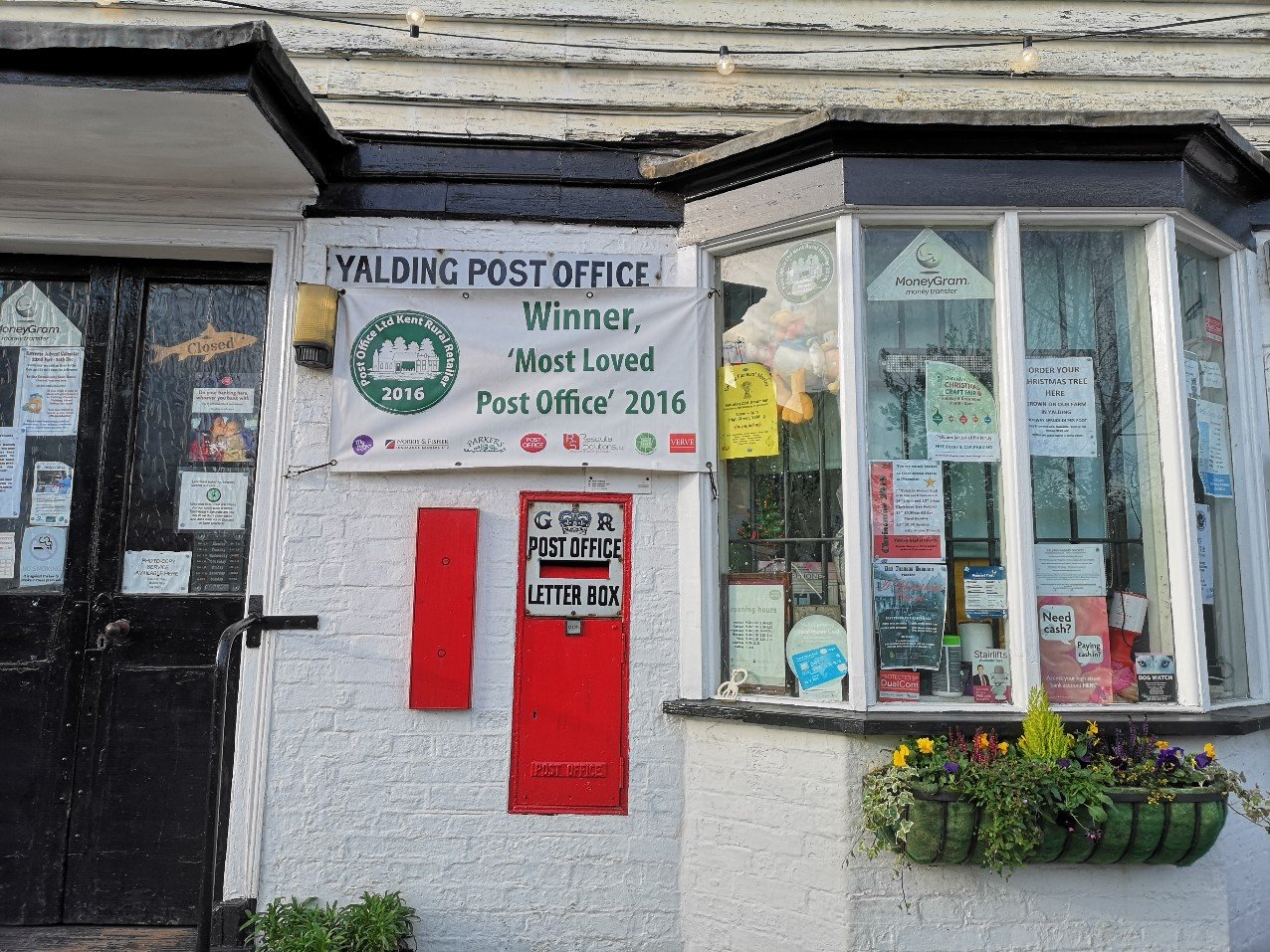
I bought some of my last minute presents at the post office as I could not get out of the village

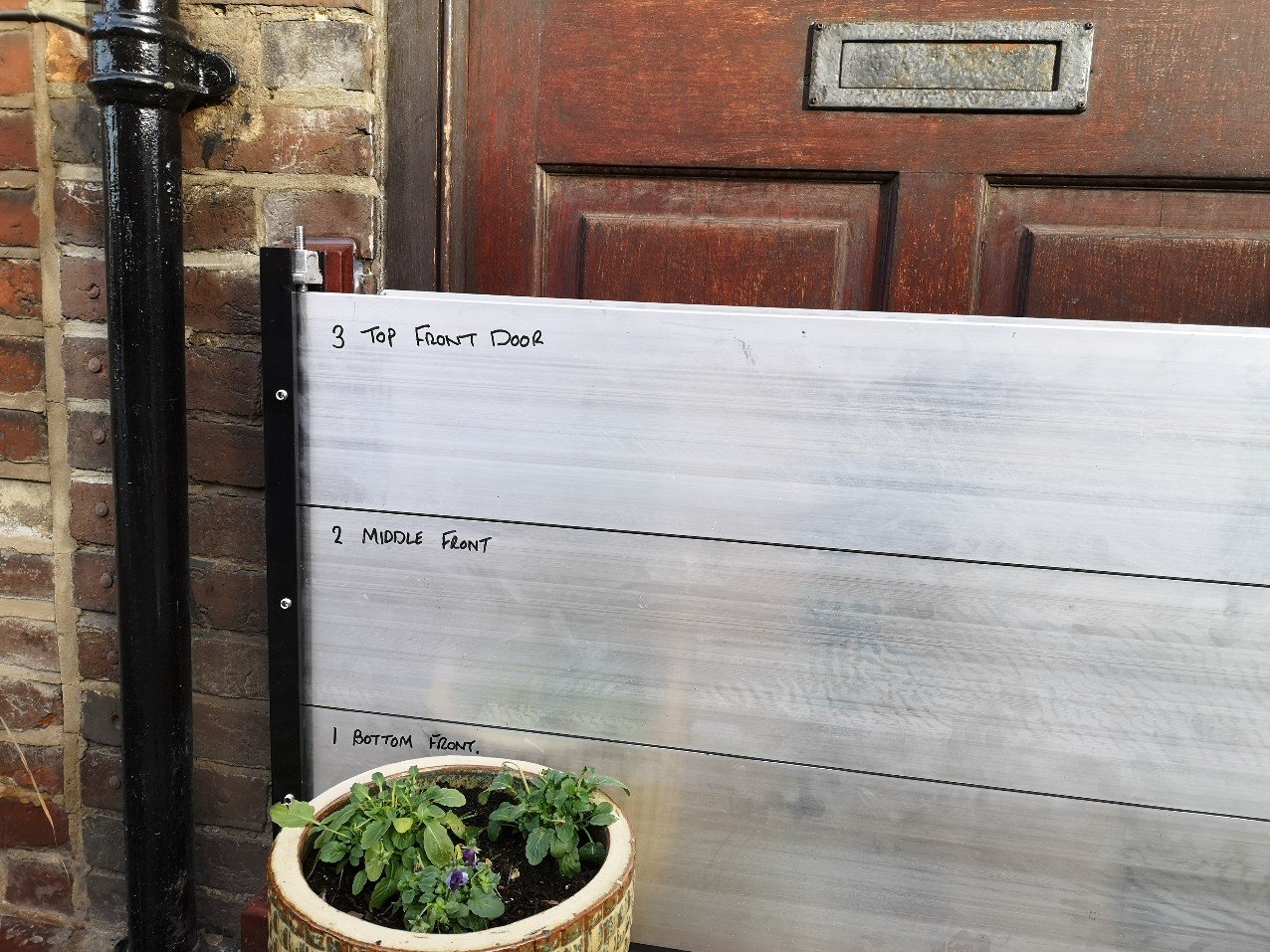
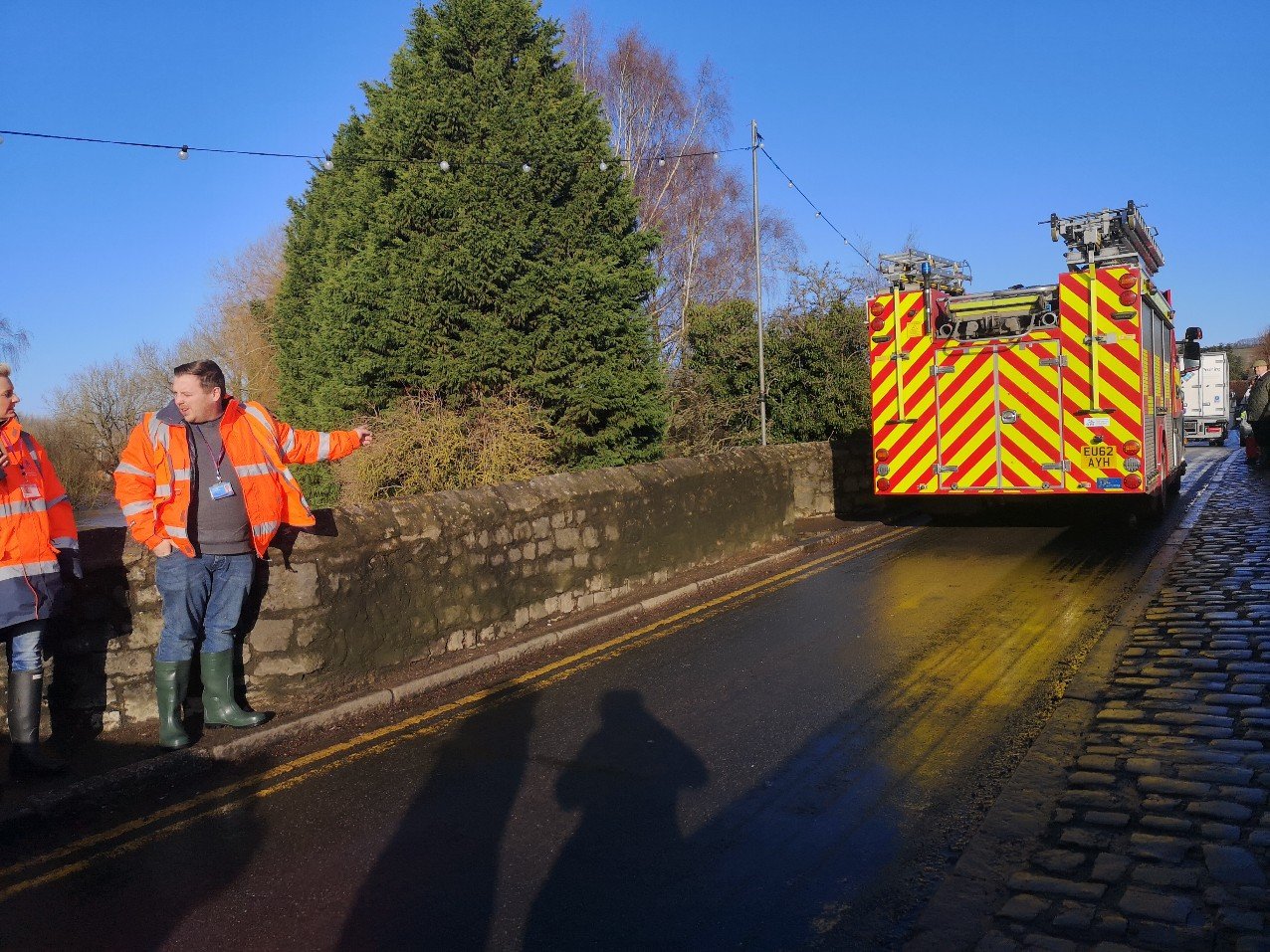
Flood barriers in place

The emergency services were on hand

The village shop staff were doing a stirling job too, passing on up to date news

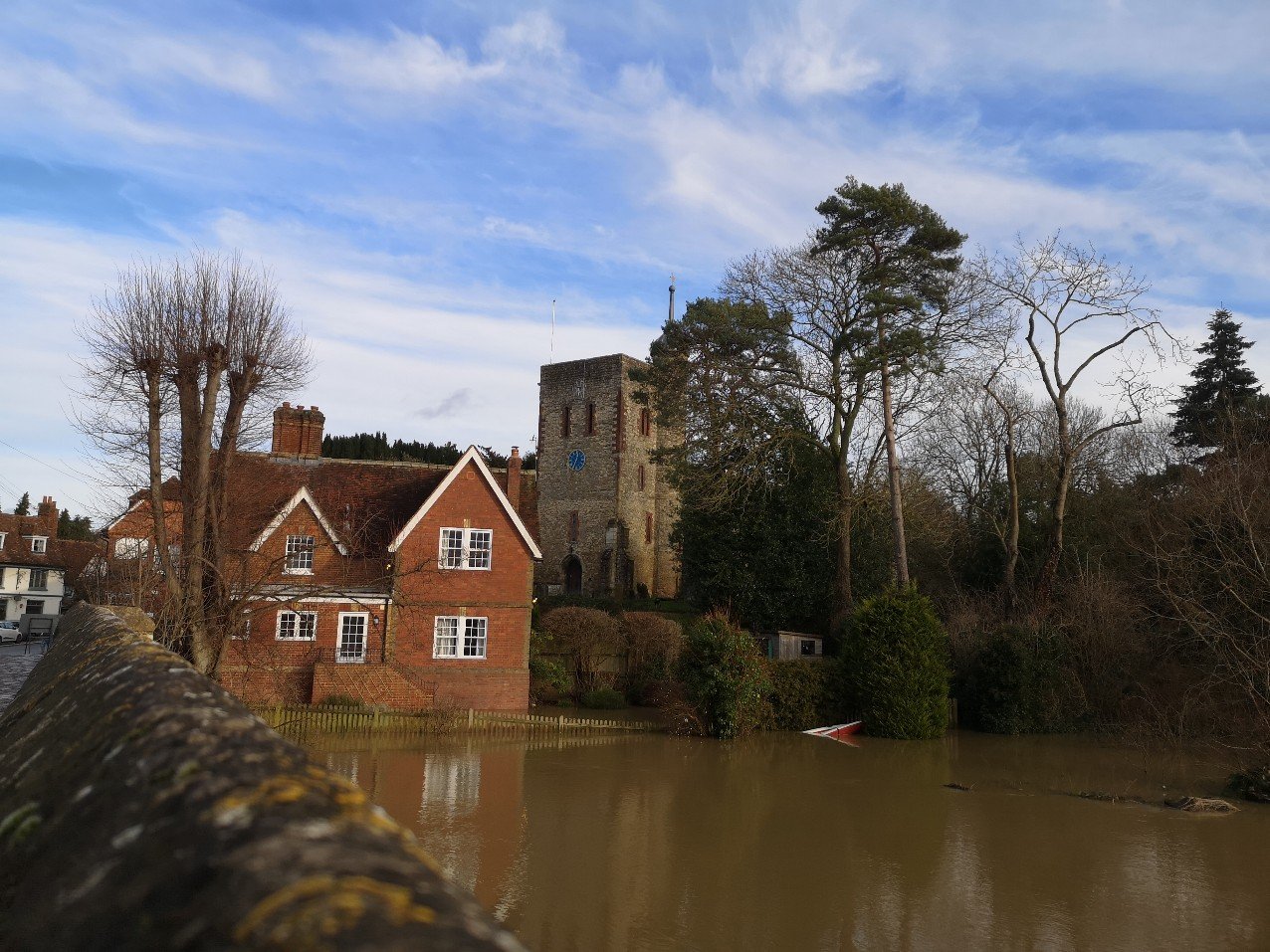
The church from the bridge

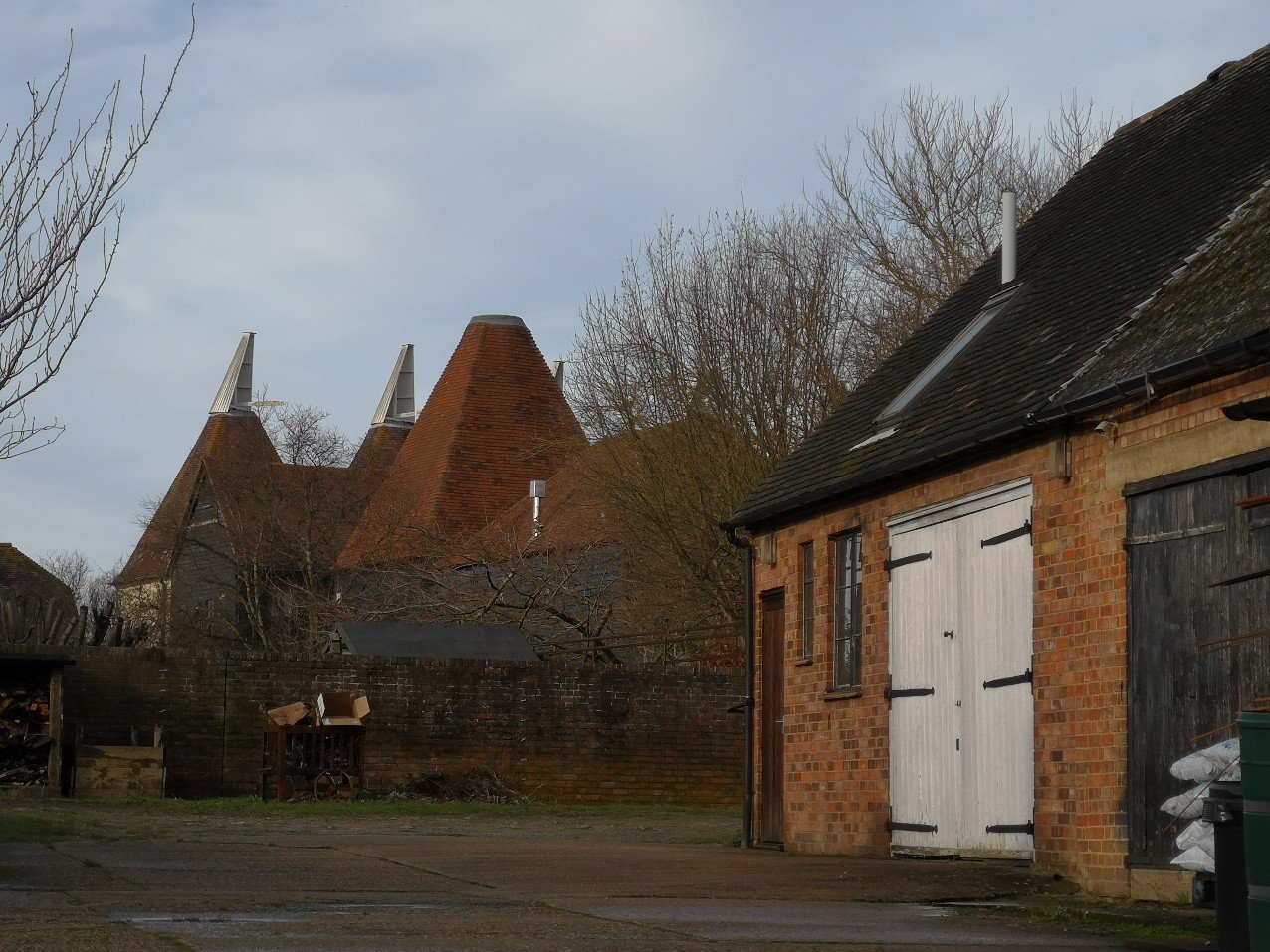
Oast houses where hops used to be used in the making of beer

The last flooded Xmas was 2013 which was much worse