I have written a before about Downton on the River Avon in Wiltshire, and the New Forest which is nearby. Here is a link to a map showing it outlined in red, and you can see that it crosses the three English counties of Wiltshire and Hampshire, very close to the Isle of Wight.
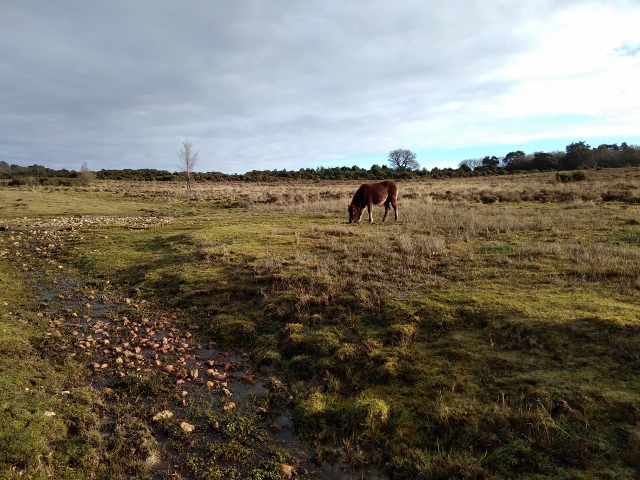
The 3000 New Forest ponies roam wild but are owned by the Commoners.
I stayed with kind and hospitable relatives in the village of Downton. It used to have a tan yard and still boasts the remains of a Saxon Moot (Mote, or meeting place) with a rarely surviving amphitheatre. If you read the rather amazing novel ‘Perfume’ by Patrick Süskind you will get a graphic account of the scent that must have pervaded the town where they tanned the leather in those days. It also has an impressive range of trees; mainly beech, yew and elm.
Empress Matilda’s imperial seal. The inscription reads ‘Matilda Queen of the Romans’
Four Matildas and three Henrys – a little history
Situated on the edge of the New Forest (or Nova Foresta) it was William I, the Conqueror, Duke of Normandy and husband of Queen Mathilda (1032-1083 of Flanders) who created this 30 square miles of private hunting ground for their use in 1079.
‘William I was described as a tough, brave, inspirational and religious man. This invasion by the Normans changed much of the Anglo-Saxon way of life that was being established here. French became the language of the upper classes, cow meat became known as beef and swine became known as gammon; murder became a crime and slavery was abolished.’ from William the Conqueror and the New Forest
‘Empress Matilda’ was named Adelaide at birth in 1102. Daughter of Henry I and Matilda of Scotland, she was only aged 11 years when she was married to Henry of Germany, 20 years her senior. That was when she became Matilda. Her husband Henry was crowned Holy Roman Emperor which is why she became Empress Matilda. Made the first Queen of England by her dad but never officially known as that, she was nevertheless in charge of Normandy in Northern France and had claims to land and fortifications, namely Downton Castle.
Mother to Henry II of England by her second marriage to Henry of Anjou (at 15 years old he was 10 years her junior), she maintained her links with the church and the matter of pilgrimage by bringing the Hand of St James (titular head of the famous Camino de Santiago in Spain) back to England (now in Reading museum) and turned out to be great at supporting monasteries (eg Bordesley Cisercian Abbey, Worcestershire)
In the mid 12th century she was engaged in the civil war with Stephen her cousin, in and out of Oxford, incidentally married to another Matilda (of Boulogne), who then won Downton from her.
One of Empress Matilda’s good friends was Lanfranc, prior of her favourite religious house, the Abbey Bec-Hellouin in Normandy. He was her children’s tutor, and when she died (aged 65 years) she was originally buried there (later her bones were transferred to Rouen Cathedral where they remain).
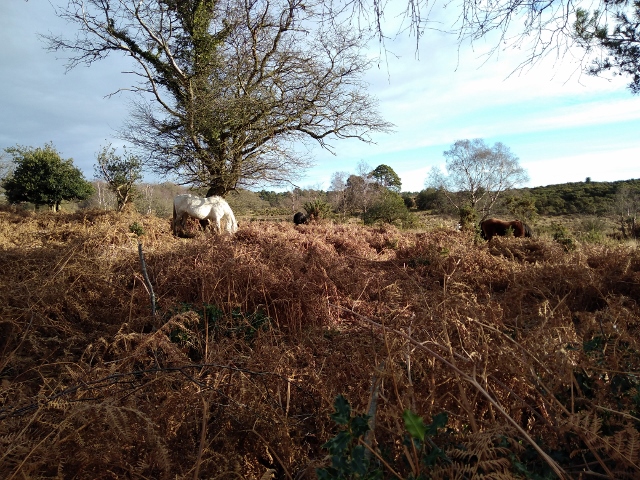
Grazing on the bracken and brambles.
Walk 1 featuring Eyeworth Pond
We began our first day’s walk at Telegraph Hill, the highest point of the New Forest and once the site of a beacon which was used ‘as a form of communication, in chains up and down the country to act as alarm systems in case the country was invaded. They were placed on elevated positions to make them easily visible for miles around.’ It was said ‘that in 1588 it took 12 hours for the news that the Spanish Armada had been sighted to travel from the south coast of England all the way to York.’ National Trust page.
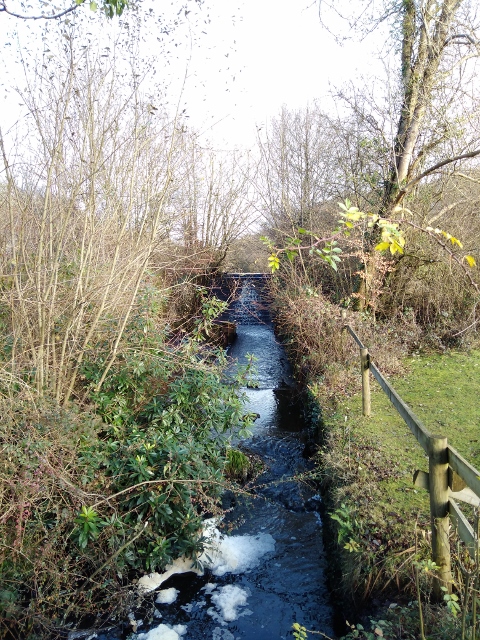
There was ice in the puddles and streams, and wet squidge underfoot in places. Thankfully we were wrapped up warmly against the cold wind.
Sixty million years ago, I was told, this forest was a tropical sea and it sits today on a bed of chalk with flint, reminiscent of my native Kentish Downs and therefore hosting similar flora and fauna.
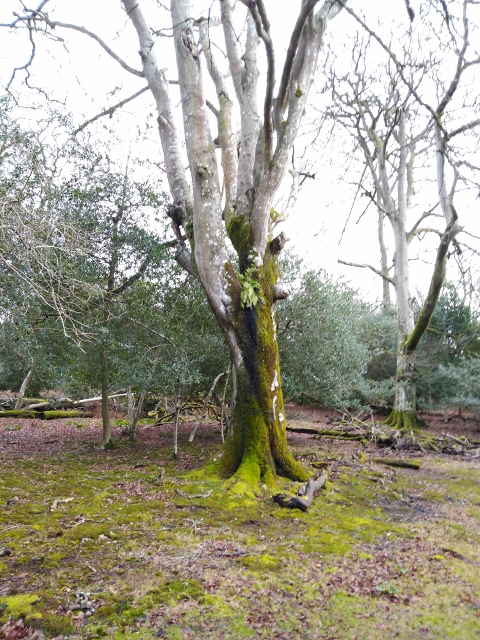
A beautiful, twisting beech tree. Alien-slime-coloured moss seems to be creeping upwards and enveloping the smooth grey bark!
It was fascinating hearing anecdotes from my hosts for whom the forest was the site of family parties when the children were growing up. Like all good adventure tales there was the game of Cargoes where teams have camps on either side of the burn and are charged with routing the other’s territory.
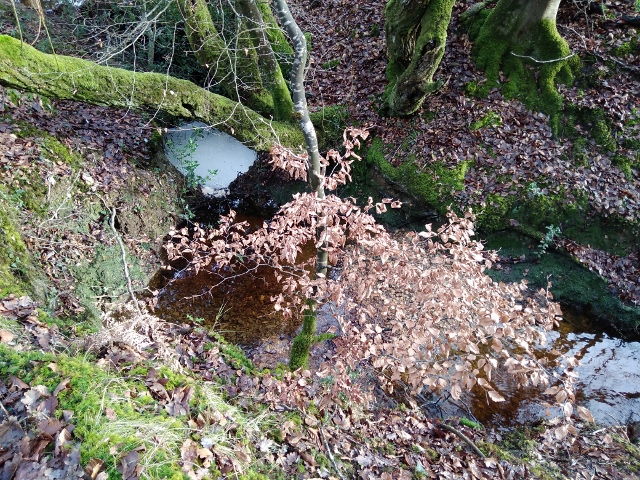
Frozen water and delicate foliage.
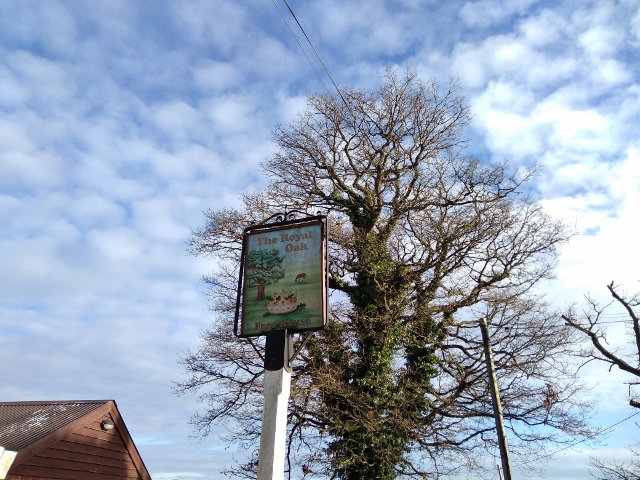
We sloshed our way across the landscape, past the Eyeworth pond to The Royal Oak in Fritham for a half of bitter and delicious lunch.
Around the table stories were recounted, notably of the traditional Mummers Play (a medieval theatrical) which comes to this hostelry, ‘in which a champion is killed in a fight and is then brought to life by a doctor’. A scene was painted for me, of the play being performed with a glass of ale in one hand, and I could imagine it clearly in this traditional setting.
As a young teenager, I participated in a Mummers Play – back section of the dragon wearing swimming flippers and processing through the town. It was to celebrate the 300 year anniversary of our primary school, and resulted in terribly sore bits at the fronts of my ankles where I still have scars!
Walk 2, in which we came across Shetland ponies
On day two we visited the wonderfully named Godshill Pit, this time in Hampshire. It was misty and raining with, once again, ice in puddles and between blades of grass. Copper water bubbled over orange flints beside bronze bracken as we leapt soggy brooks and landed on springy peat turf. Aside from this, it really was very deeply squishy under foot!
Down country roads we walked, pitted with puddles; past ancient cottages with mud walls, pigs in oval-roofed huts, alpaca in fields, a delightful Shetland pony (why are they always so delightful?), and many elegant horses attended by adoring women in wellies.
We drove back through Braemore (say Bremmer) with its quaint bridge over several waterways, its dairy, railway station, working blacksmith and post-office. It is an extremely pretty village built of local stone and I was starting to get used to the crowds of donkeys perched by the roadside, tearing off brambles and bracken from the banks. The pub was closed today so hot soup was most welcome on our return.
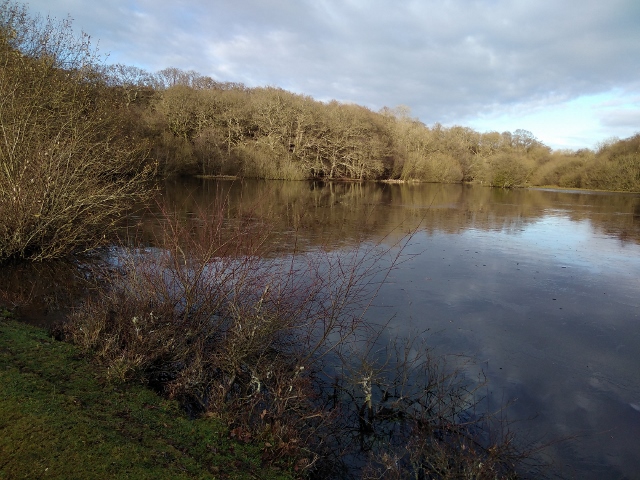
Eyeworth Pond where ponies can be seen sipping at the water’s edge.
Thanks go to Angela for preparing special vegetarian food for me; to Mike for cleaning my walking shoes – twice; to both for showing me this wonderful part of the world and telling me stories about it.
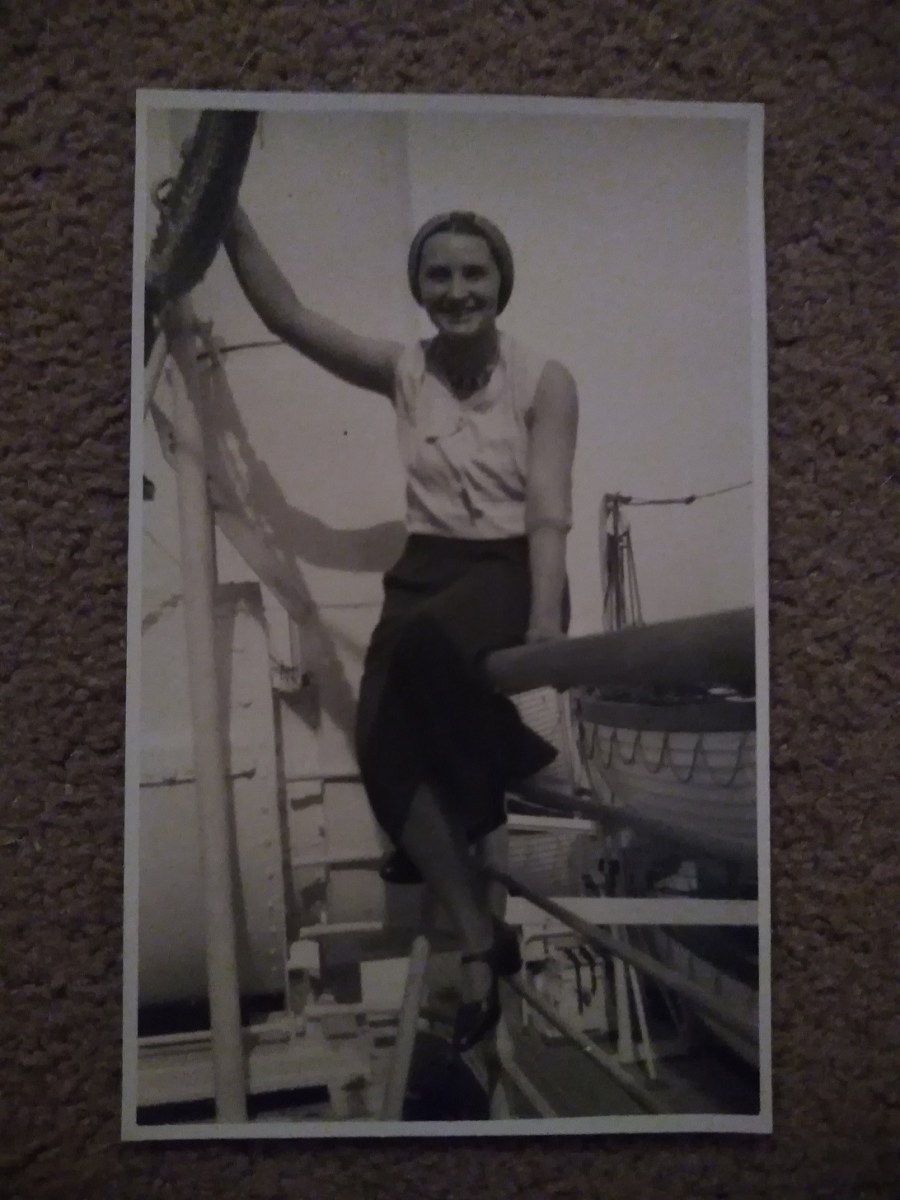
My Great Aunt Fay on her way to the Falkland Islands in 1931. She died aged 106 in 2017.
Marjorie Morgan McCallum Chibnall OBE FBA was an English historian, medievalist and Latin translator. She wrote the first fully comprehensive biography of Matilda to be published in English in 1961.
Very interesting paper about Empress Matilda (A Study of Succession, Gender and Power in the 12th Century)
Fife Coastal Path, Scotland. Stage 3, East Wemyss to Lundin Links 11.5kms. 3.5 hours.
Stagecoach Edinburgh Bus Station (also other starting points) to East Wemys (there’s only one stop) £10 single, very prompt, 2 hours.
‘Nature does not hurry, yet everything is accomplished’ – Lao Tzu (Thanks to Jackie Jarvis for reminding me of this from the Tao Te Chinghttps://inpursuitofslow.com/books/
I am trying to maintain my strength for the longer walks in Spring carrying a heavy rucksack, plus I wanted to be able to write in the evenings, so I took my old laptop. (Thanks to Gustaf at the Wild Geese Sangha for the prompt to do less kilometres (after all, it is winter). The Walk Highlands website lists these stages as short anyway. Just as I left I spotted my new baton. I have been training myself to act on these intuitive moments so took it just in case, and that turned out to be a good move.
Before the bus stop I was already feeling the familiar relaxing bubble of excitement in my tummy knowing I would be walking all weekend. It just seems to suit me, this particular pursuit!
A woman who also had a pink rucksack was waiting and we struck up a conversation. She was travelling to Carlisle to present her PhD on lichen (she works at the Edinburgh Botanic Gardens). I mentioned a good novel about botany and moss where many of the characters spend a great deal of time on their knees at ground level. ‘The world had scaled itself down into endless inches of possibility,’ (Elizabeth Gilbert’s The Signature of All Things).
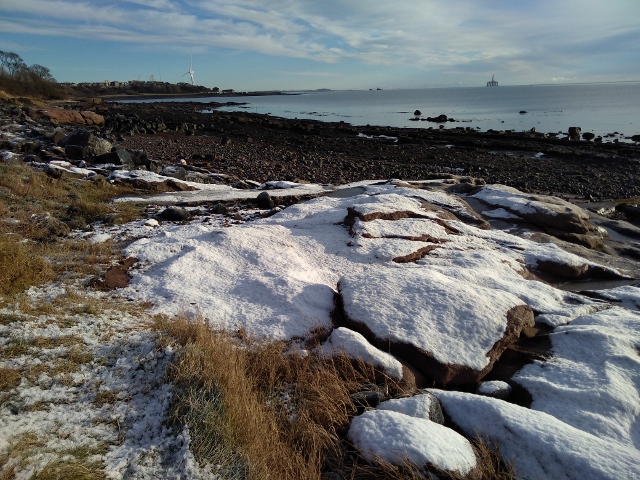
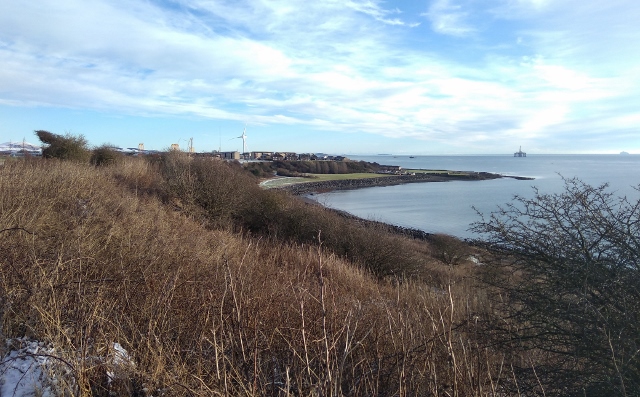
Snow on the ground and the sea to my right as I walked east to west.
When walking I become fascinated by the small things and in the dark morning the pavements were sparkling with ice. After yesterday’s amber weather warning I did wonder if it was perhaps foolhardy, but being used to solo mountain treks and the fact that this track is never far from a conurbation it seemed worth starting. And the birds were in full voice and the Edinburgh skyline was very pretty. I tried to meditate on the journey but was itching to start so it seemed to take a very long time. Then again, crossing the Firth of Forth at sunrise was special and the views through the (sadly darkened) coach windows were spectacular.
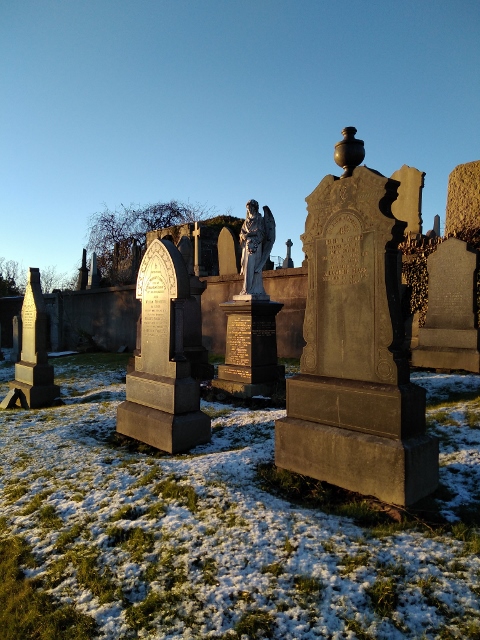
As I made my way down from the primary school in East Wemyss to the sea, past a dainty church in a snowy graveyard, the sun was dim behind soft cloud cover. Then gaps revealed patches of blue sky and they were reflected in the sea. I had arrived, back on the Way, soft snow puff and crunch cold ice under my feet, clean air in my nostrils, starlings arguing, and street with names like ‘Back Dykes’.
Seagulls fought over fish in mid air, gravestones were silhouetted up on the hill, and industrial reminders lay ahead cheek by jowl with more recent wind turbines.
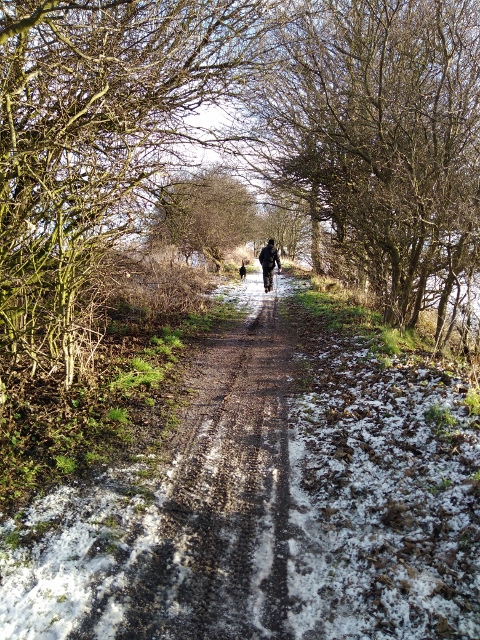
Thanks to the black clad man (with identically coloured dog) who rather reluctantly helped me get my water bottle into the side pocket of my rucksack. Some of the path is along the route of the old railway.
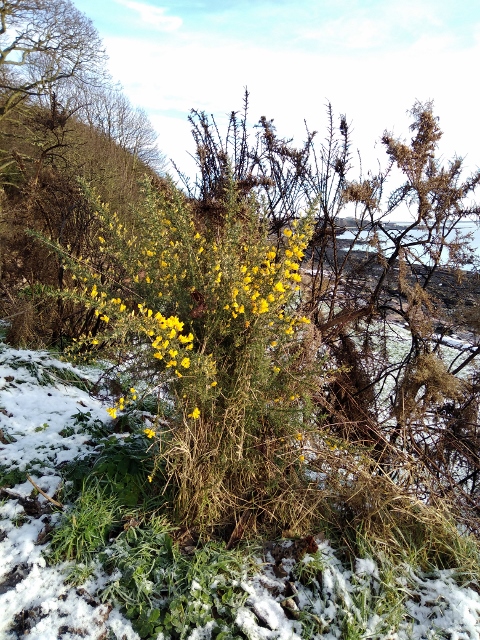
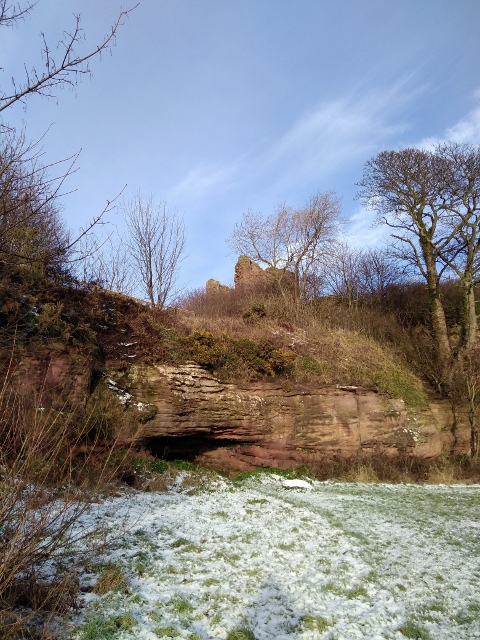
The sun continued to shine and the snow sparkled. The gorse’s corn kernals glowed, and soon the first steep steps ascended and descended with Macduff’s Castle at the top. I took a détour to visit the caves.
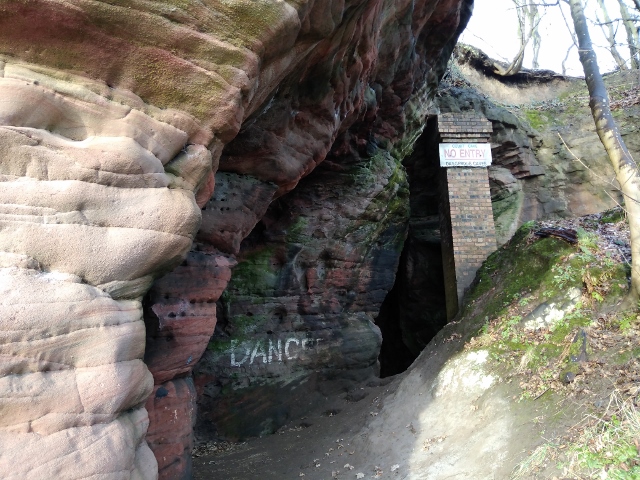
Here was the first of the famous Wemyss Caves with its warning sign which in fact could be ‘dance’ not ‘danger’.
Pigeons cooed as they flapped in and out of the doo (dove) holes in the second cave.
Soft stone tones – rose, gold, pale pewter – and a low winter sun threw my shadows.
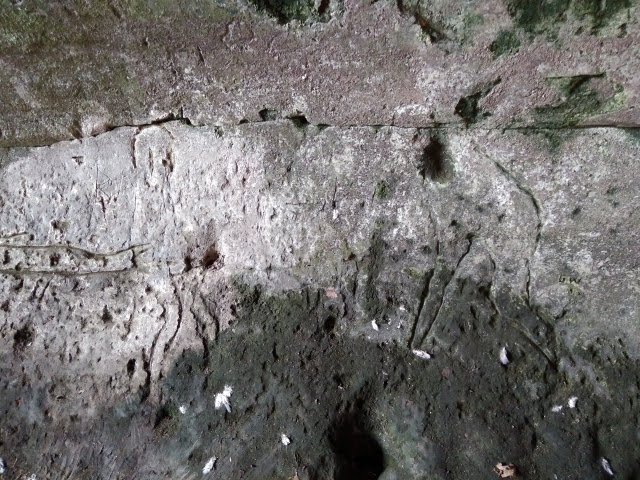
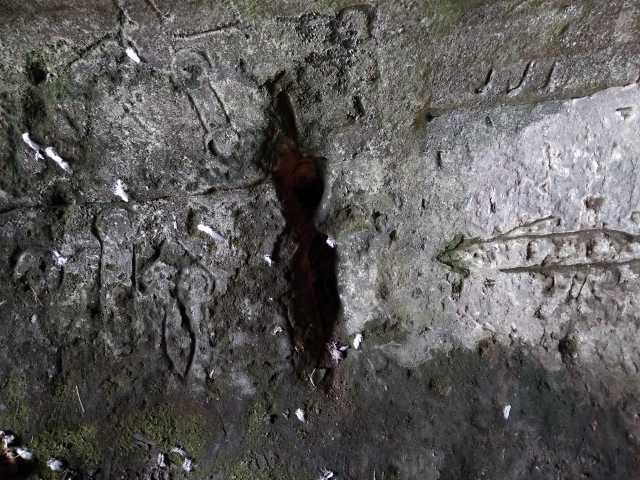
Carvings – old and new – in these Neolithic caverns.
Although there were seriously snowy hills behind me, underfoot was variously green and white depending on the shade. It was quiet here, well, except for the birds which sqwarked and twittered and ‘arrgh-ed’ and trilled. Indeed, they cawed and cheep cheep cheeped, just like they are supposed to.
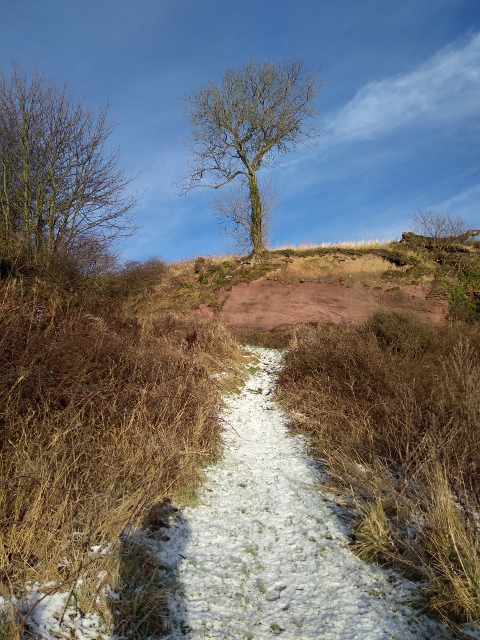
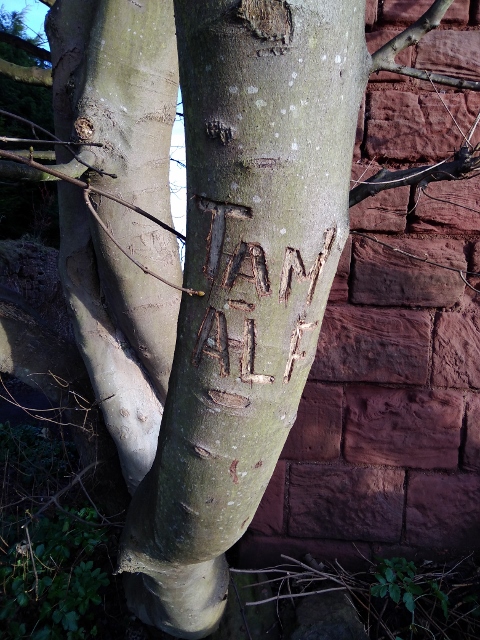
Instead of retracing my steps as directed, I took a left past this tree.
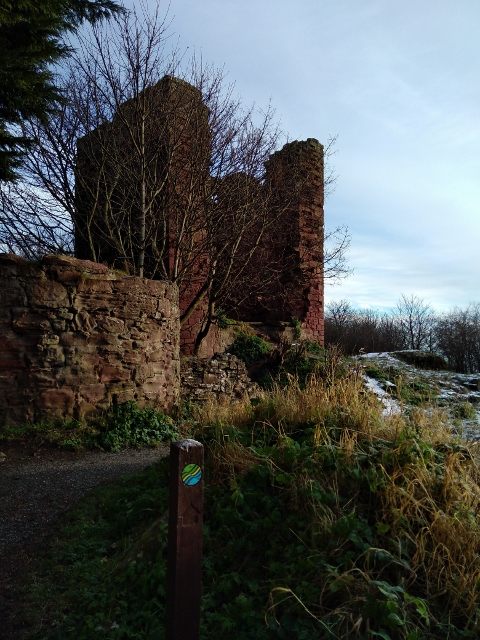
Macduff’s Castle – from the 14th century – is supposed to be haunted by the ‘Grey Lady, Mary Sibbald. According to Wikipedia, Randolph Wemyss was a descendant of Macduff, as well as the local laird and mine owner.
Matching: the monument above, and more caves below.Is this the name of my true-love-to-be?
A robin sat silently and showed off his orange breast in the sunshine. He was camouflaged perfectly with the orange pink stone.
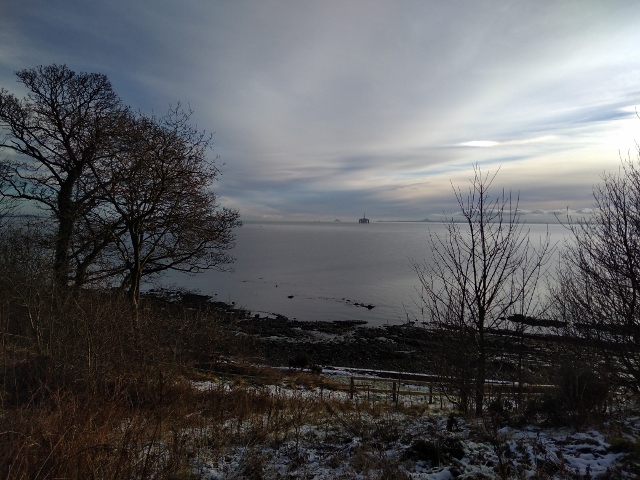
Out to sea were the Bass Rock (its puffins too small to be seen), oil riggs, and Berwick Law, the only high ground on that stretch of the opposite shore. Land and sea birds’ voices competed.
As soon as I zipped my camera in my pocket, out it had to come again because it was all just so bonny.
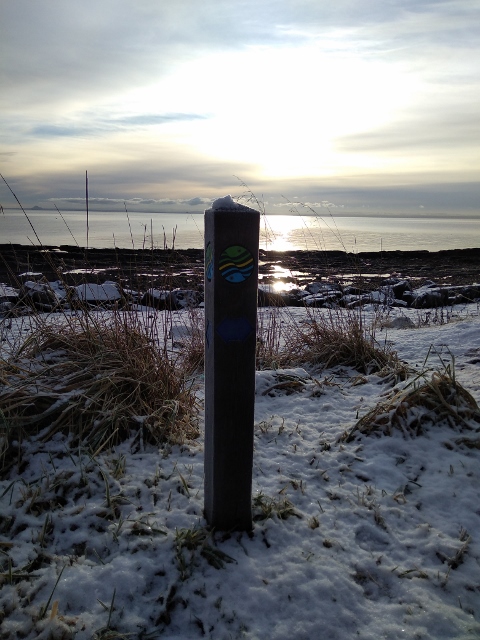
The Fife Coastal Path logo, found all along the way.
Helpful hint: zip up your pockets every single time in case you lose something vital and have to go back to search.
I felt extremely happy, and even nervous Hugo (the little grey dog who waited for me to go past and made a snorty sneezing noise) could not change that. I noted that, like pregnant tummies, everyone pats dogs when they are out walking. They are so abundant that I chose the name ‘Walking Without A Dog’ for my Scottish blog (rather than ‘Walking Without A Donkey’ which is the overall title of my foreign ones) because I do not have one.
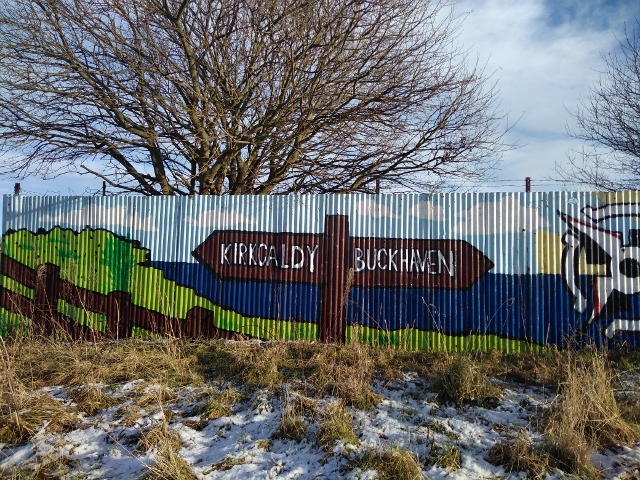
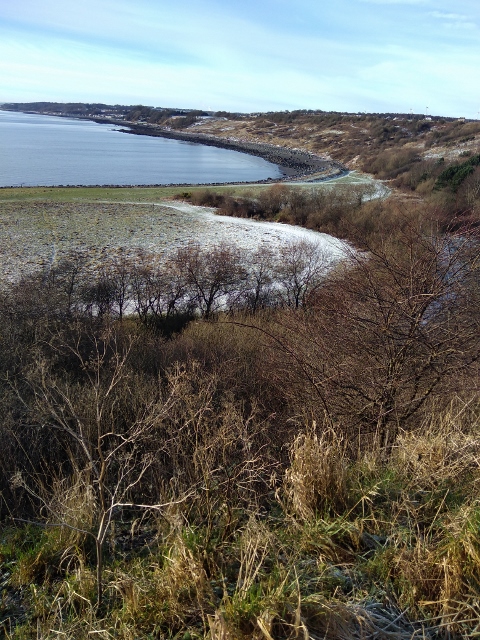
Of course the snow throws everything into brilliant relief, the blackbird in the leaf-less branches is always visible at this time of year, and the old nests are exposed. Brambles tickled as they caught my hand. The fields curved smoothly. To the left side were rooves of distant dolls houses which frontages I fancied I could open for spying on the family inside. A jut of headland was beyond, with its black foundation below and green lawn layer on top: Buckhaven. Gentle steps were sensible because it was very slippy in places.
Remember to turn right here, as instructed. Do not go straight on as I did (where there were diggers and, ‘aargh!’ traffic noise) and then have to go back….
…or you will miss Buckhaven harbour and brae where ‘the hawthorn supports 200 different species of insects’ alone (from the info board).
My kneecaps were bothering me and I had to take my gloves off to relieve the sweatyness, but just look at the view!
Looking back towards Wemyss.
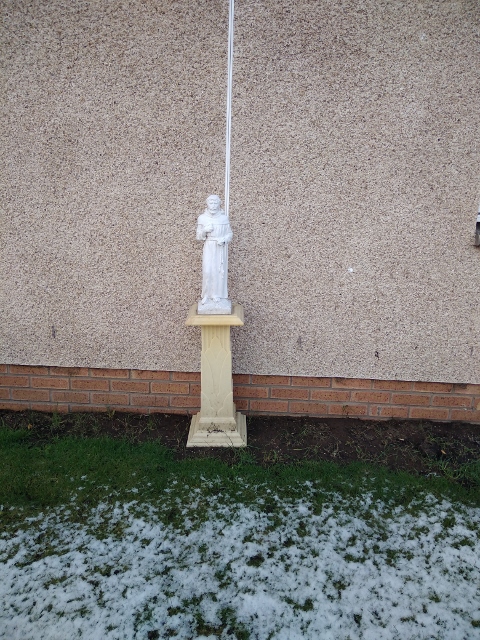
There were higgeldy piggeldy boats houses, and copious signs telling you about the bay and fishing. St James stood in someone’s front garden and welcomed me .
A reminder of my caminos (Spanish for Way) to Santiago de Compostella where some of the remains of St James are interred.
They are really trying hard in Buckhaven, providing a good range of services: bank, post office, shops, bakery/cafe and lots of butchers along its wide main road (initially made like that for the tram lines which were lifted in 1936 to make way for the more popular buses), though much was shut on this Saturday morning.
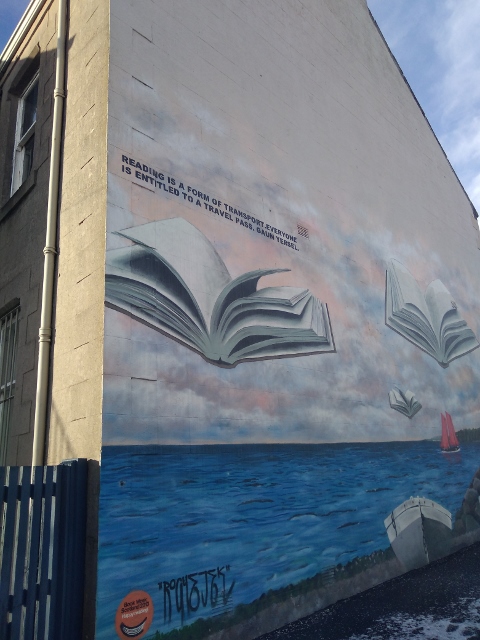
An impressive mural dates from the 2013 Book Week, ‘Reading is a form of transport. Everyone is entitled to a travel pass.’
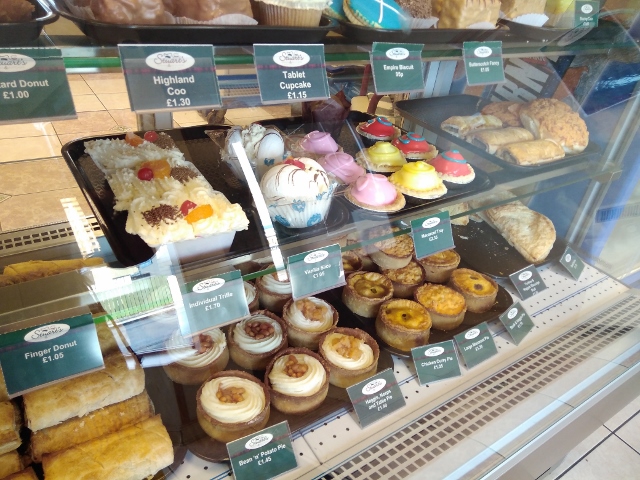
Yellow and pink icing for the apple turnovers, and yes, those really are baked beans on top of the pies. Traditional Scottish fare!
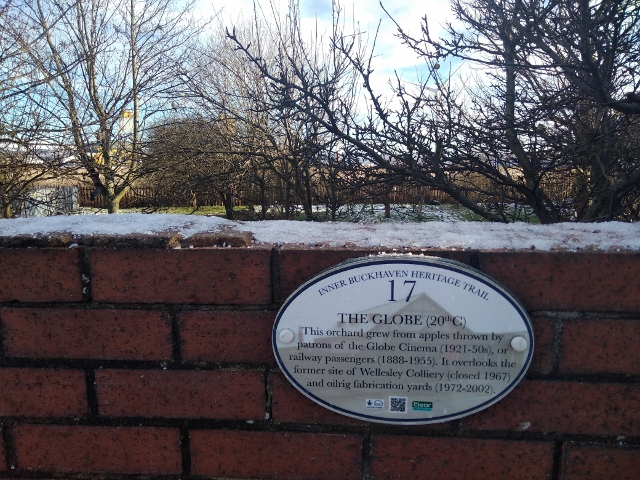
When I emerged, fortified by my cup of tea, I smelled not just fresh air but snow too. There is a Heritage Trail here and one oval sign explains that the community orchard was started from apple cores thrown by the Globe cinema goers (1921-50s) or railway travellers (1888-1955).
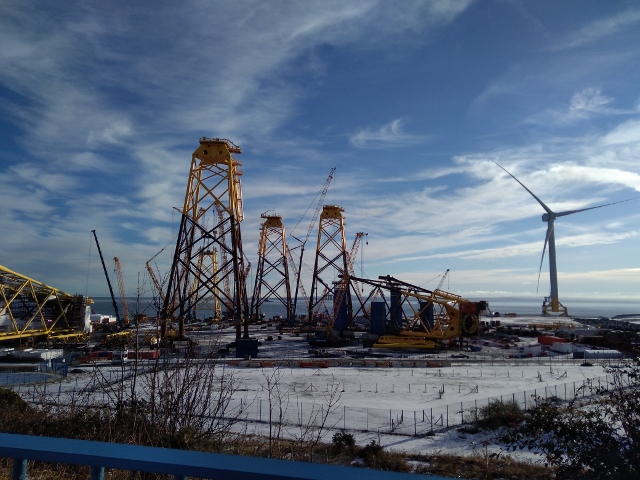
At the far edge of Buckhaven the Wellesley Colliery, or what remains of it, can be found, looking really rather grand and shiny in this weather.
The surprisingly beautiful structures of the disused Wellesley colliery which has been ‘closed for years’ said the woman I asked. Great giants are toppled, sharing the space with an example of the newer wind turbine (here owned by ORE, Offshore Renewable Energy, a not-for-profit company and used for research purposes). There is no trace of the even earlier salt panning industry.
Even these few left-over buildings dominate, and it’s not hard to understand the devastation that Margaret Thatcher’s government wreaked when they were closed in the 80s. (A similar situation in Northern England is well portrayed in the film Billy Elliot directed by Stephen Daldry.) Tellingly, as so many died underground, Denbeath Funeralcare is over the road.
There are rows of the sorts of cottages which have become expensive in today’s housing market, similar to ones in Granton which we thought must have been for the workers but no, they would not have been able to afford them. They were actually for the bosses, or at least the ‘middle management ‘.
There is a molten candlewaxy smell and a factory has replaced the mine with something more chemical. As I round the corner the sign on the warehouse says ‘Fab’ and tower blocks and roundabouts are the order of the day.
The ice is starting to melt, trickling down drains, and my stick taps on the bare pavement. People complain about this stage of the walk because of the long stretch through towns and villages, but it’s alive with the real history of the area and not too ugly in this sunny moment. Next: Methil with its docks.
There was a slight warmth when I was in the open sun, meanwhile Stagecoaches roared back and forth along the main road when I got near it (rarely, thank goodness). My body called my attention again, a niggling right shoulder, but it was nothing serious. The sidewalks were very icy here so I walked on the grassy verges to avoid tumbling. The Tap Haus wall sports the slogan, ‘get yer juice!’ It seems we are a nation who treats alcohol as juice, which might explain our problem. (In the late 19th century, the Wellesley Pub was run on Gothenburg Principles to limit excessive drinking.)
I easily amused myself during the long stretch of tarmac by likening splodges on the ground to jellyfish, and swinging my cane like Mr Banks in the happy bit of the film, Mary Poppins. Everywhere looks good in the sun, even the garish pink house with the gold railings, and I enjoyed the cacophony of sparrows (if that is not the collective name then it certainly should be).
Then, over the river to Leven.
The River Leven beside which a gentleman was rooting around intently with a long branch.
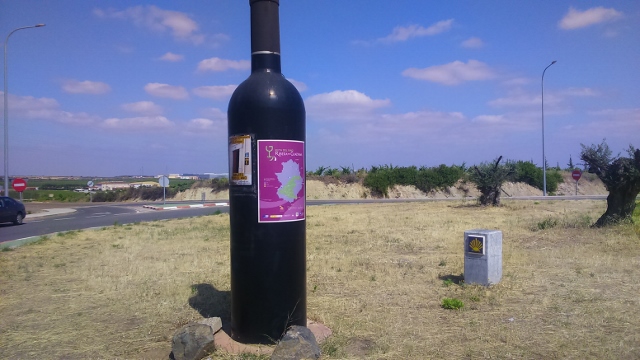
In Spain they have elaborate art work and enormous signs in the middle of roundabouts. In Edinburgh they are hoping to turn Picardy Place roundabout into a ‘gateway to the World Heritage Site’. Here there is a miniscule advert for safety boots and footwear.
Ribera del Guadiama.
‘Leven Welcomes You’ with its three steeples set against the decent sized, snow covered Largo Law (hill). The tall chimney mentioned in the directions I was using had indeed disappeared. At 12 noon I felt the first sign of weariness. A spider-legged, hooded youth wafted past in a cloud of strong aftershave, and then I was finally back to bingo and beach. I found myself disapproving of a man smoking in a car with a baby in the back, and my back was aching. It was not a proper hiking backpack having no upper strap, and that was where I was feeling it, at the top vertebrae. I had to pay 30p for the toilet and kids were screaming relentlessly in the neighbouring Action Centre. Ah, see my mood? I must be hungry.
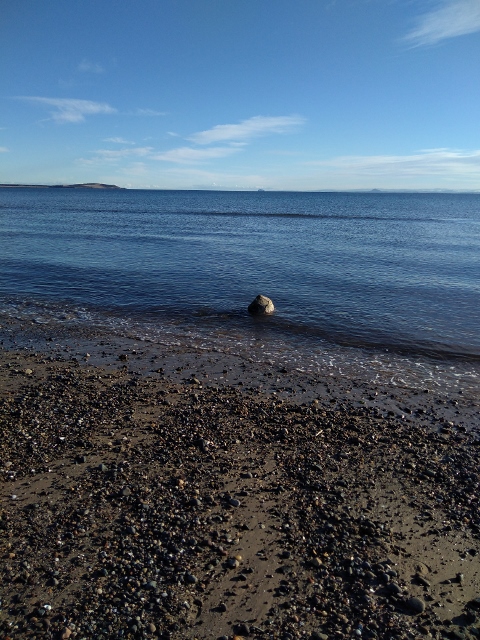
The azure sky mimics the sea. Can you spot the upturned shopping trolley?
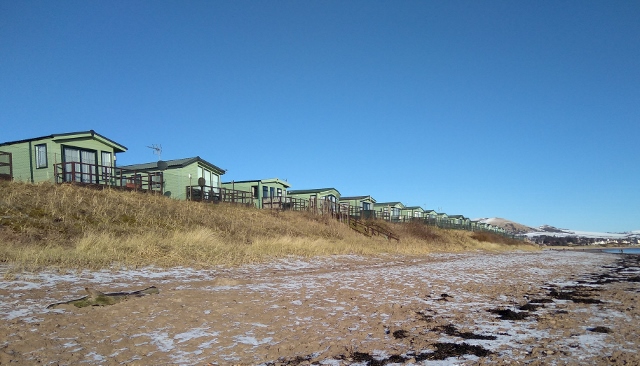
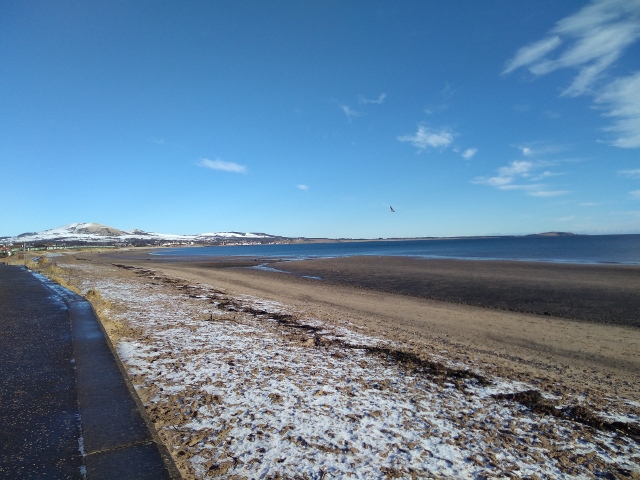
The further I went from the town, the more the landscape became sand, stones and the sound of lapping waves. Really it did! There was a reassuring briny odour as I traipsed 1.5 kms of strand, which made up for the caravan park’s monotonous green cabins.
Unattractive but perfectly situated holiday park.
There were none of the sea stacks of stage 2, nor the rock formation; simply uninterrupted sandy heaven, and watching other people’s dogs caper in the waves.
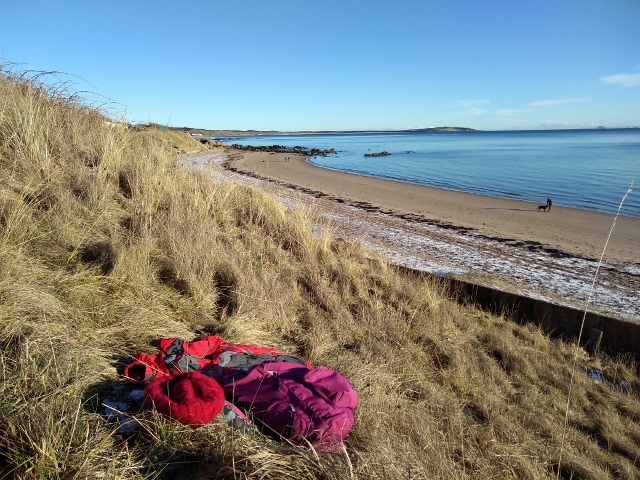
Despite the time of year, I slept here on the grass because it was too early to go to the air bnb, and I had my snack, the sun warm on my face.
Walking back in the direction from whence I had come, all was quiet inside. Only occasional practicalities took me from my pacing: a runny nose in the wind, the water bottle falling out as I crawled under the fence, or a song from yesterday’s choir repeating in my head.
Must I take short cuts? At this time of the day I often find that I do, yes. I was following google maps to my destination. Surely, I thought, I can just go across here instead of all the way round? So I crossed Lundin Links with its soft feminine curves of virgin snow.
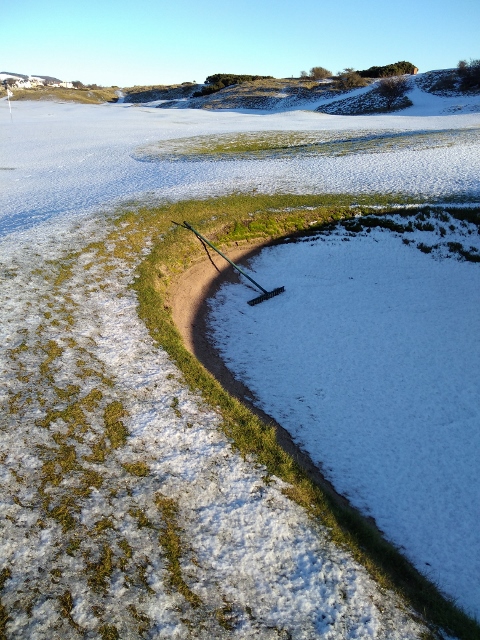
The ends of the bunkers which faced south were greener, each with its own rake.
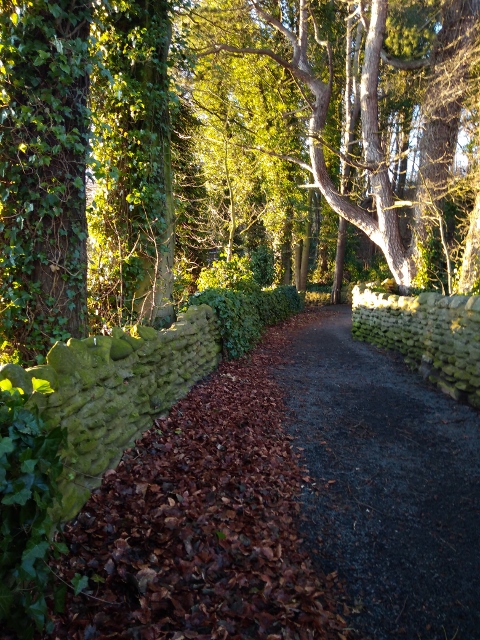
But three times I came to a dead end. Luckily, not only was everywhere interesting and beautiful to survey, but I discovered unexpected gems: Silverburn Park with its hidden garden, pebble walled paths and frozen pond.
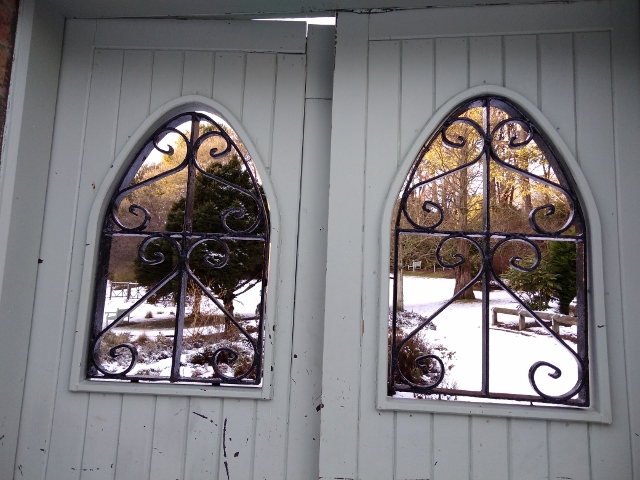
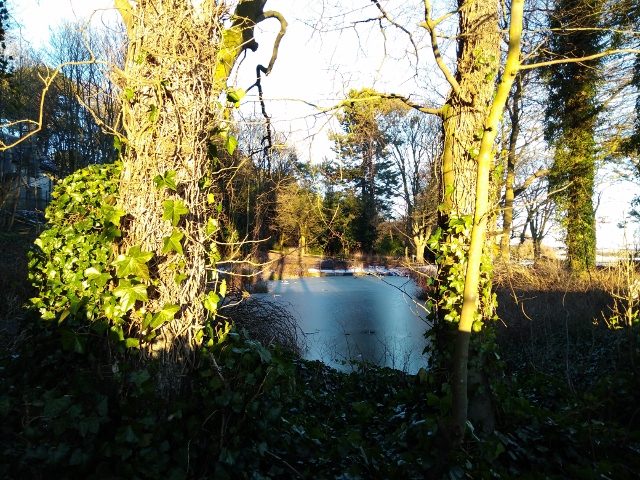
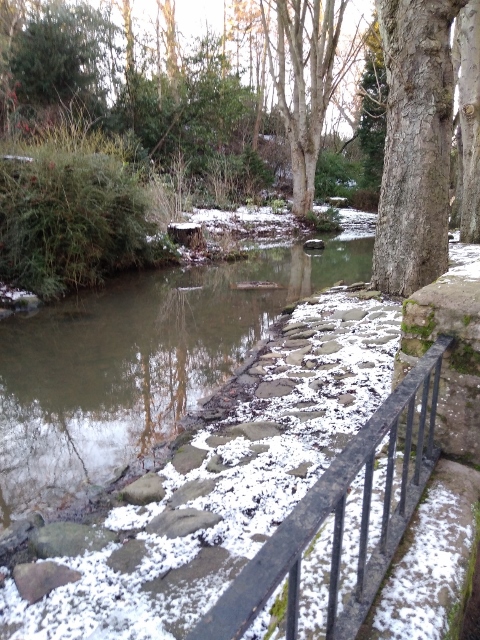
Through the windows to a winter wonderland.What a contrast to the beach and the snow scenes!The iced pond made for a strange perspective between the trees catching the sun.
When I found myself stuck, I asked folk the way: two men with far-away dogs and hi-vis jackets were helpful, indeed one gave me a ‘bunk-up’ across the cemetery wall, despite my boots and his bare hands.
Scoonie Cemetery in Leven.
My host had texted me ‘I wouldn’t advise walking up the main road there’s no paths and can be a fast road. There’s a glen called “letham glen” it’s lovely ! Walk though the glen and up the hill. Turn right and follow the path and your here!’ (sic). The best air bnb owners share local knowledge and are helpful like this.
The brilliantly named Bawbee Bridge was near my penultimate destination: Letham Glen where six grown lads were engaged in a lively snowball fight while their broad Fife accents overlapped excitedly. Initially the Glen is all about children playing, but deeper into the woods there are quaint stone bridges over babbling burns and although there was no real wildness on this hike, here was some ‘Deep peace of the running wave..’ (Gaelic Blessing set to music by Rutter. See below).
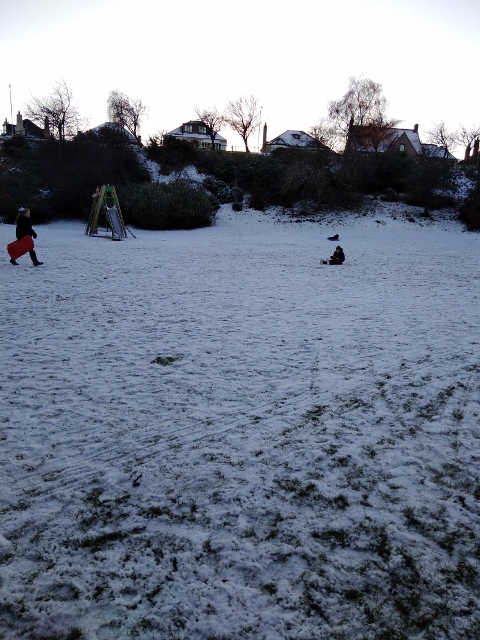
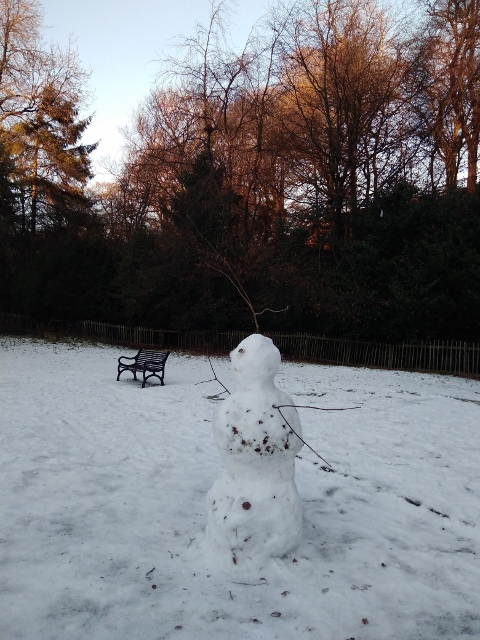
Sledging on a Saturday afternoon.The bronze light set a backdrop for this wintry gentleman.
Largo Law (hill) is a permanent feature along this part of the Fife Coastal Path and in the late afternoon, as I negotiated today’s final stage, it was on fire.
You can just see Largo Law in the distance in the stunning bronze light from the setting sun.
I stayed at the Country Farm House with Caroline and Will, Lexie the dog and Lucy the cat, and they could not have been more kind and obliging. The evening meal and breakfast were home prepared, and the bread and butter pudding with Baileys and After Eights was delicious. Look out for Caroline’s cuisine at Ladybank Golf Club where she has recently won the catering contract. I highly recommend their facilities, and if you own and love horses you will be in heaven because you can bring them for a sleep-over here and take them for beach rambles while you are treated to an idyllic rural break.
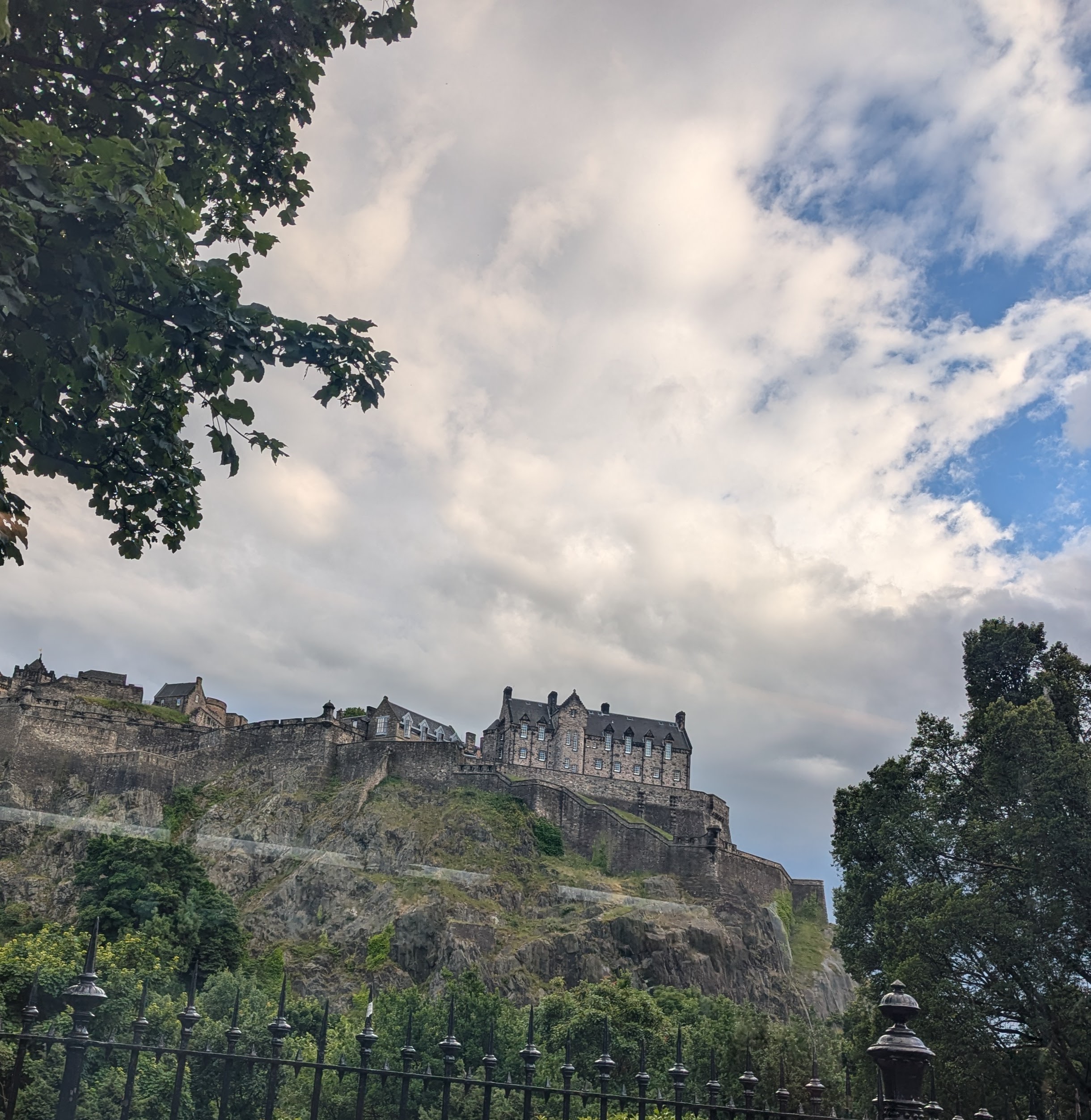
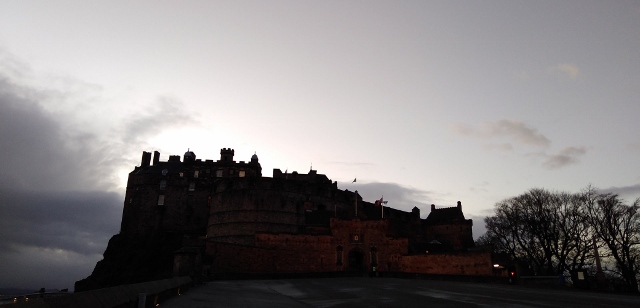
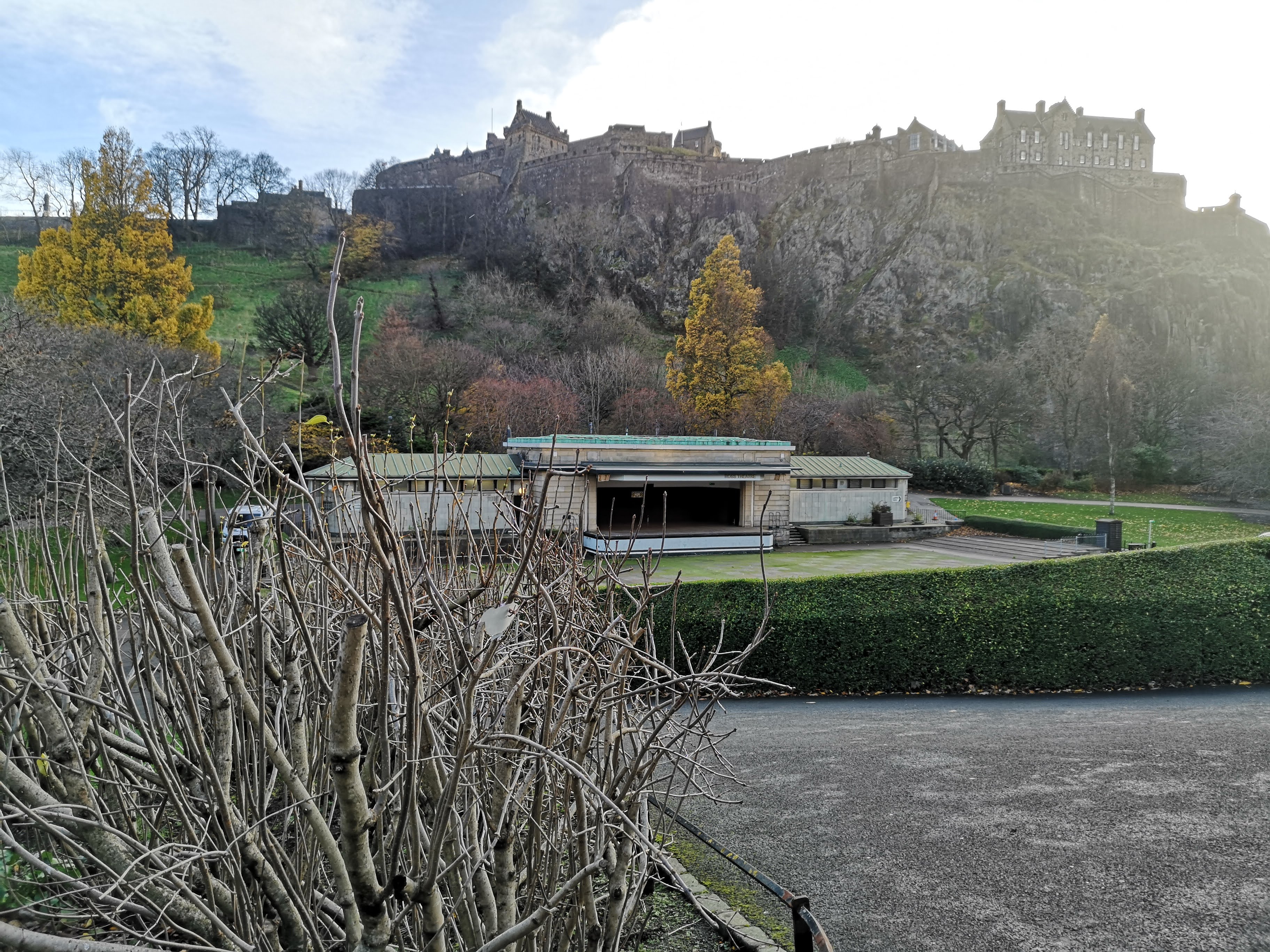
The iconic Edinburgh Castle standing on a volcanic plug, estimated to have formed some 350 million years ago.
It was a prison in the late 18th century, and before that a fortress involved in the Jacobite Rising in 1745.
On a good day you get a wonderful view from the Castle esplanade
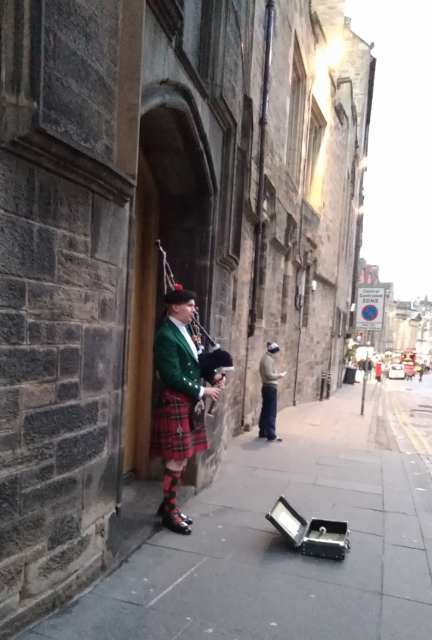
Listen out for the bagpipes! Edinburgh Royal Mile piper
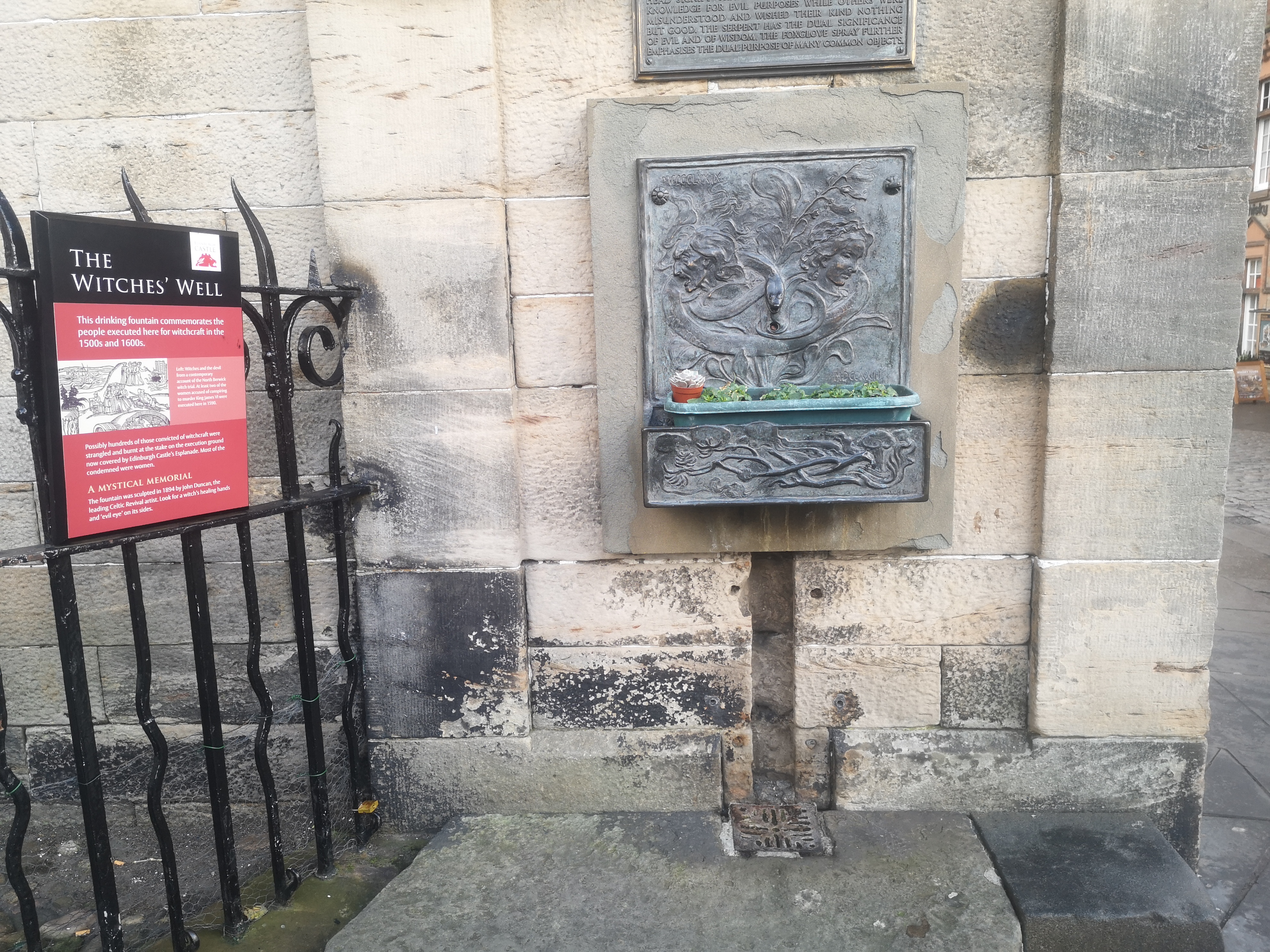
The Witches Well by the Castle Esplanade, Edinburgh
When you approach Castle Terrace from the west you might already be in the Highlands. It dominates the city and attracts more visitors than any other monument in Scotland, but it is therefore very expensive to visit.
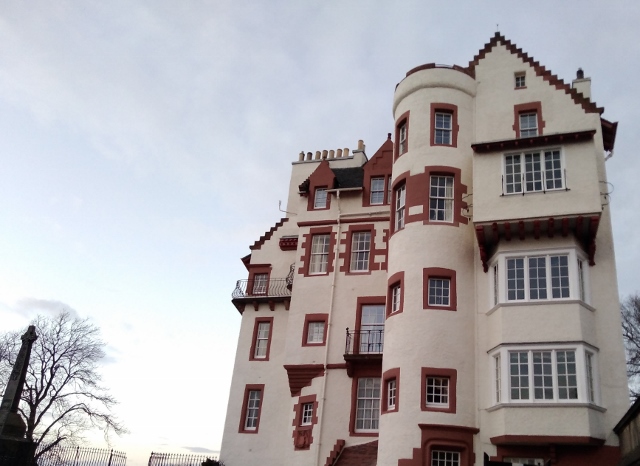
Very close by are the bonny Ramsey Garden private apartments.
View from the top of The Mound, Edinburgh
The Camera Obscura is at the top of the Royal Mile and the Palace of Holyrood and Scottish Parliament are at the bottom.
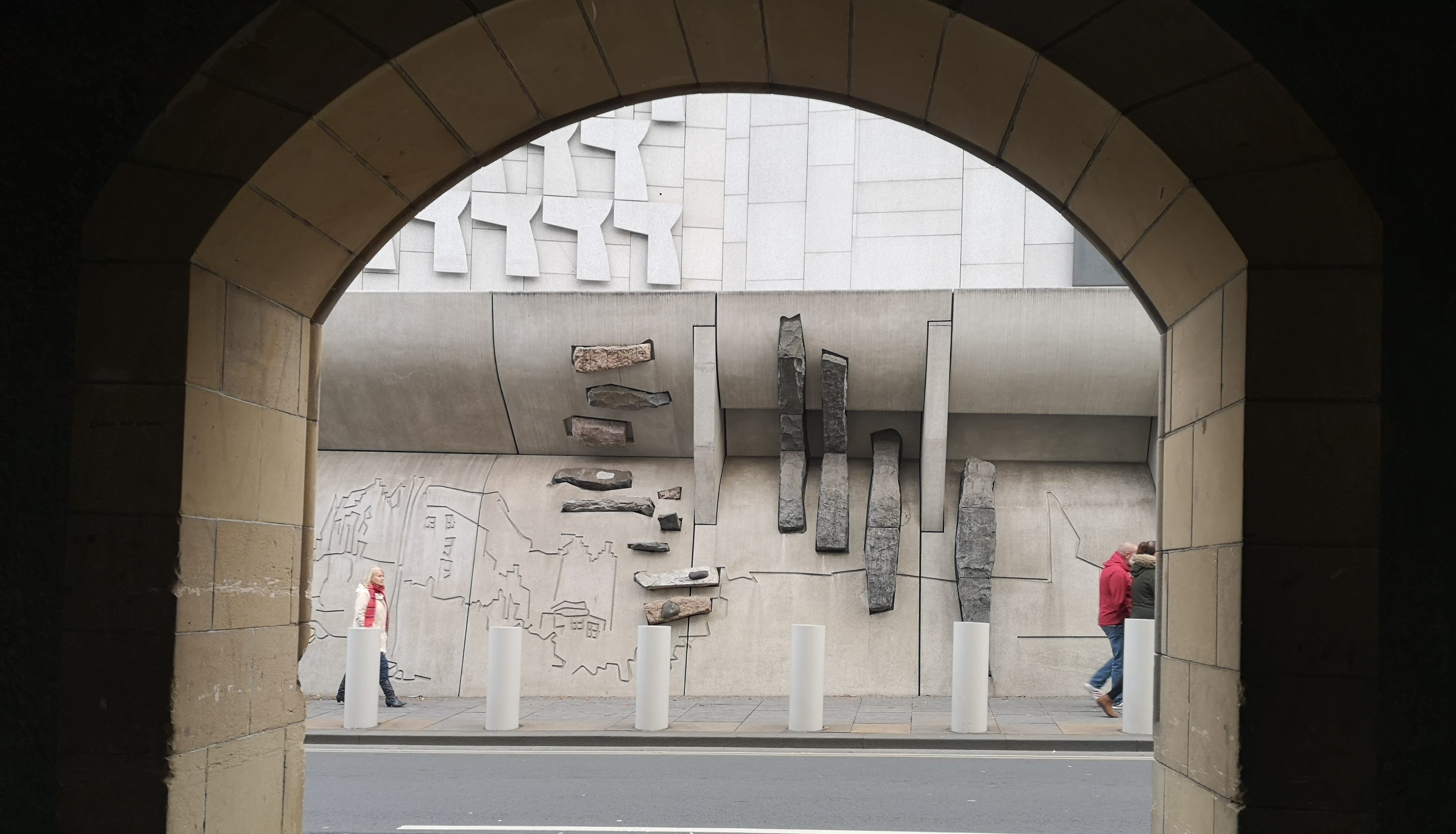
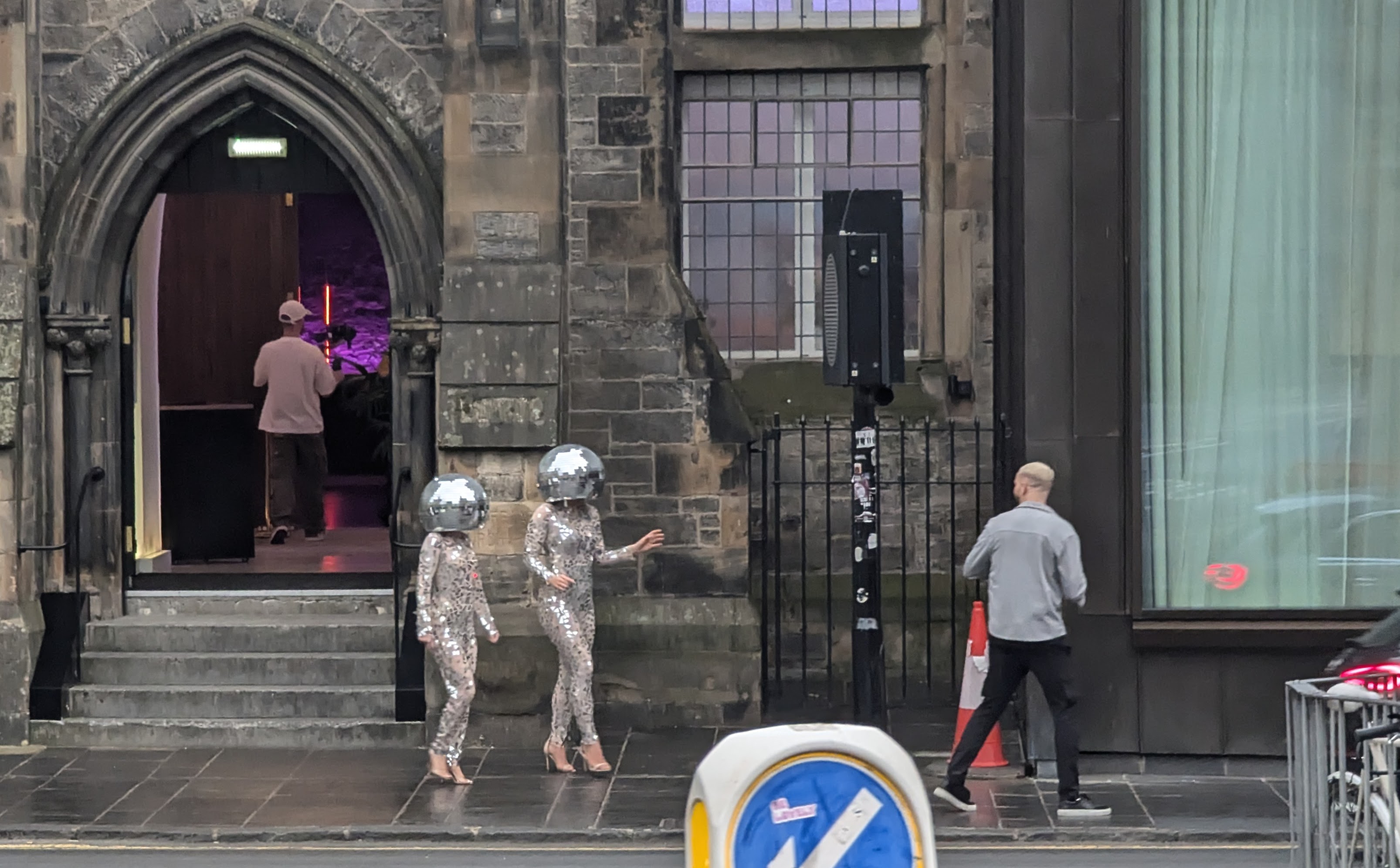
Detail, Scottish Parlaiment building, EdinburghDuring August, Edinburgh hosts the Festival (Fringe, International, Film, Art and more). You can see characters from the shows walking around the city
The church-like building on the right of the skyline is now the Edinburgh Festival ‘Hub’. Built between 1842 and 1845, as the Victoria Hall, to house the General Assembly of the Church of Scotland, the building was created by architects: James Gillespie Graham and Augustus Welby Pugin. Curiously the building was never consecrated as a Church. In 1929 the Church of Scotland ceased to use the building and it became a temporary home for a variety of congregations. It was named the Highland Tolbooth St John’s Church in 1956, before falling into disuse in the 1980s. The Hub (history).
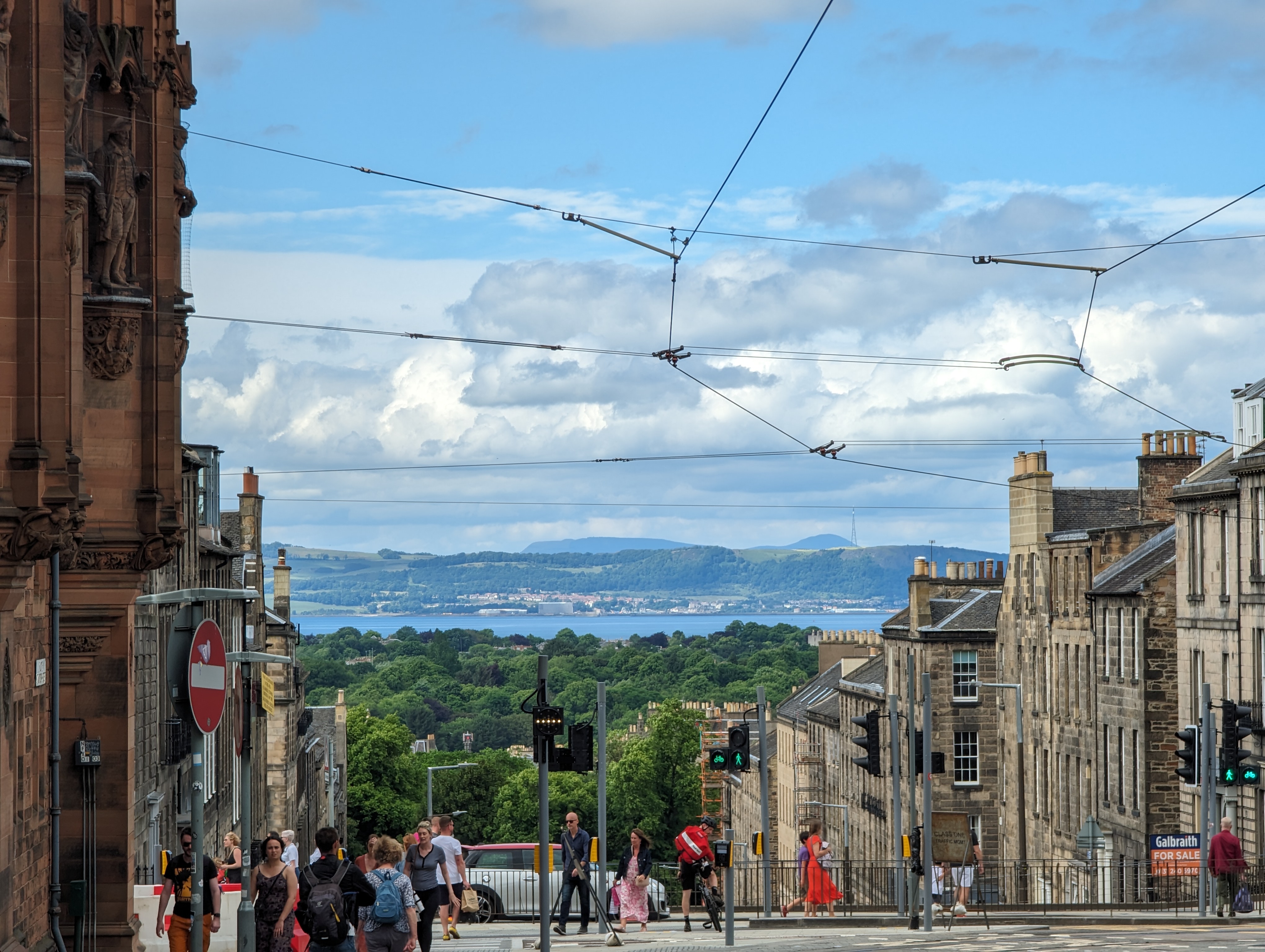
A series of narrow ‘closes’ on the left as you leave the Edinburgh castle, take you down steep steps to The Mound with the tower of New College (The University of Edinburgh) on the left here.View of Fife from Queens Street
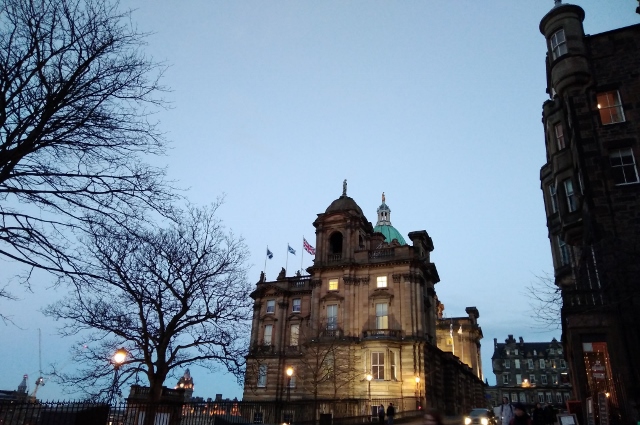
The Lloyds Banking Head Office and the Museum on the Mound, focusing on money, coinage and economics, where you can view a million £s.
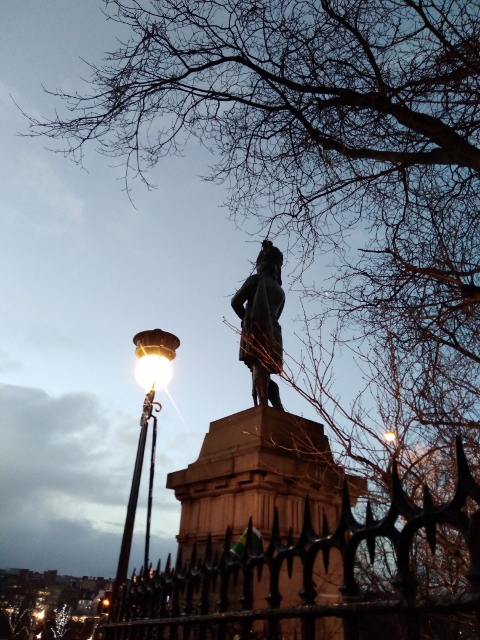
A statue of a piper in a kilt!
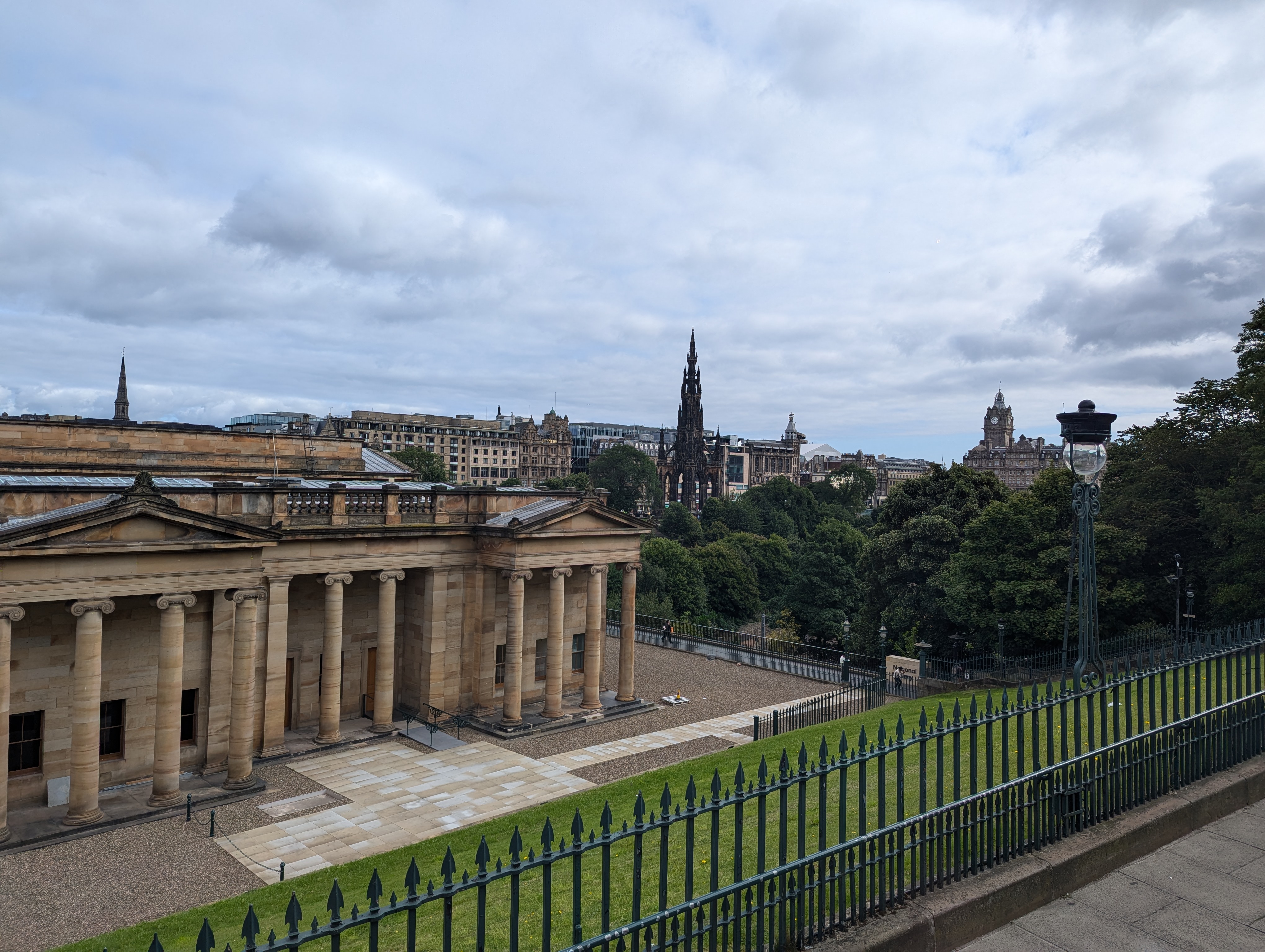
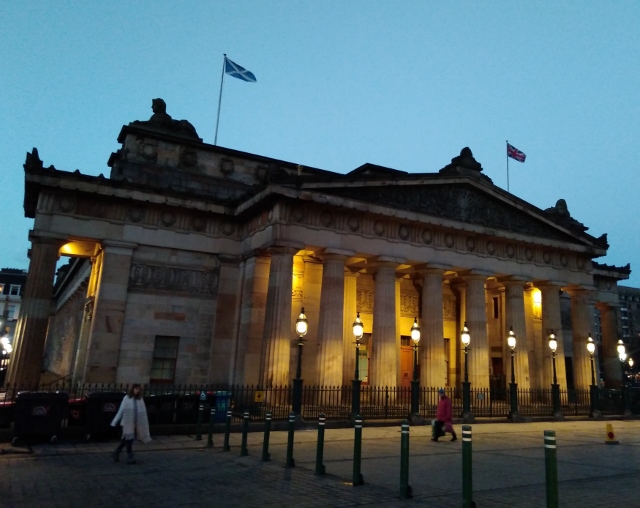
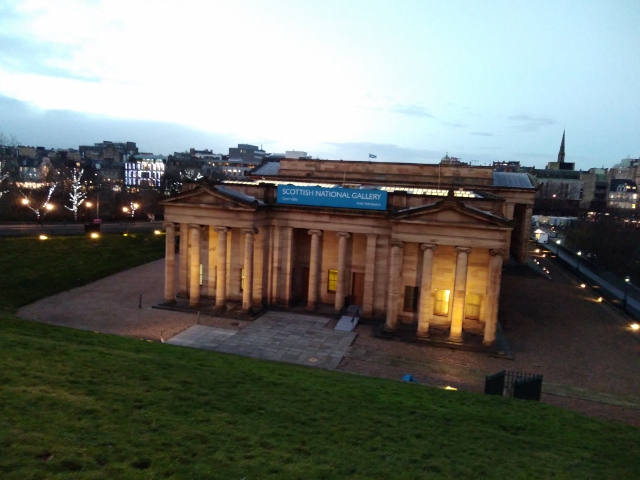
The impressive, neoclassical buildings of the National Galleries, built by William Henry Playfair in 1859 at the foot of the Mound.
Simple interior. January sees the annual showing of the JMW Turner paintings collection. They are only able to be displayed at this time of year when the light is dim so that they do not deterioriate too quickly. A gift to the city – free entry for everyone.
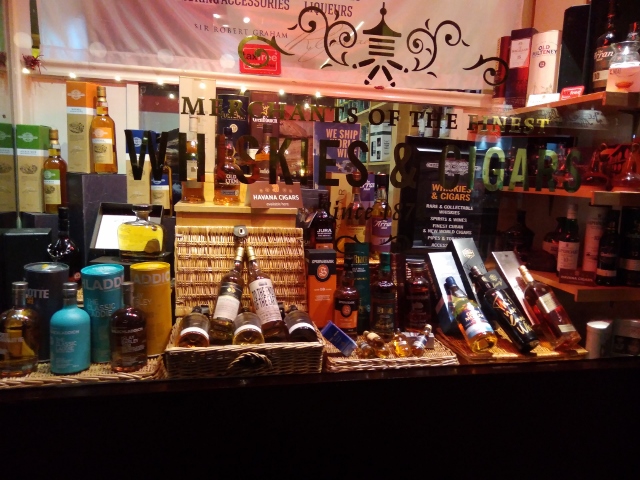
Crossing Princes Street with its clothes, books and phone shops, look both ways for Rose Street running parallel and sandwiched between that and George Street to the north. It boasts some impressive concrete poetry (English, Scots and Gaelic) and plenty of places to drink and buy whisky.
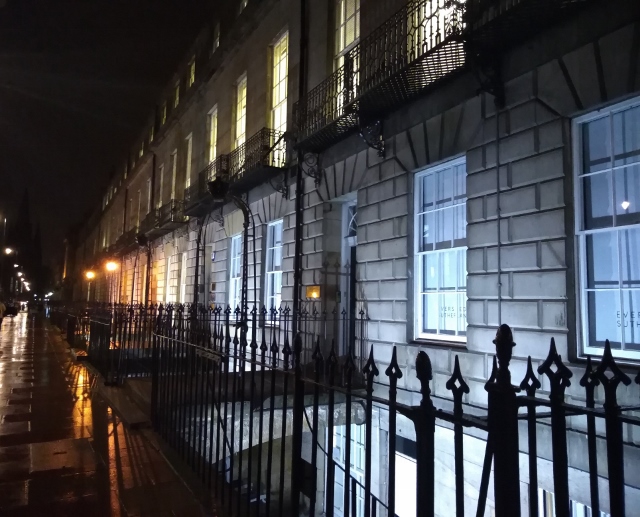
Continue down the hill and you have left the Old Town (the Castle etc) and entered the elegant New Town with its 1767-1850 Georgian style.
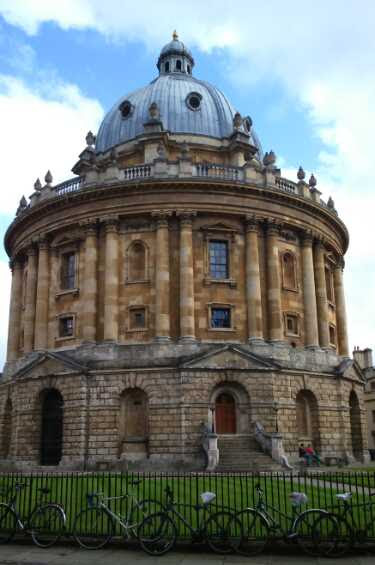
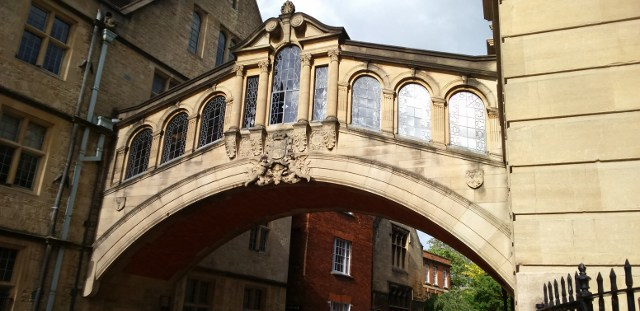
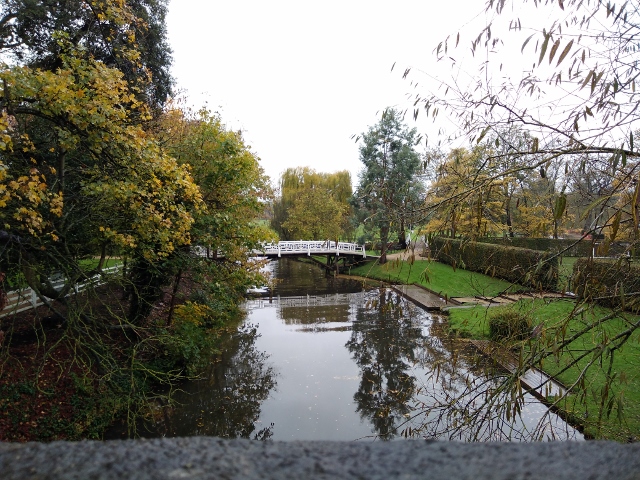
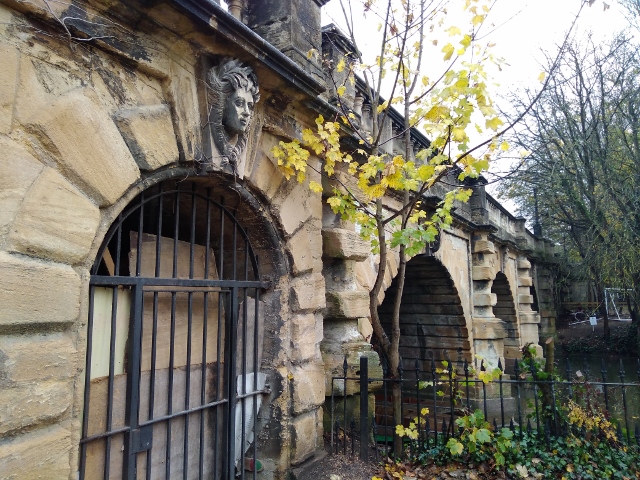
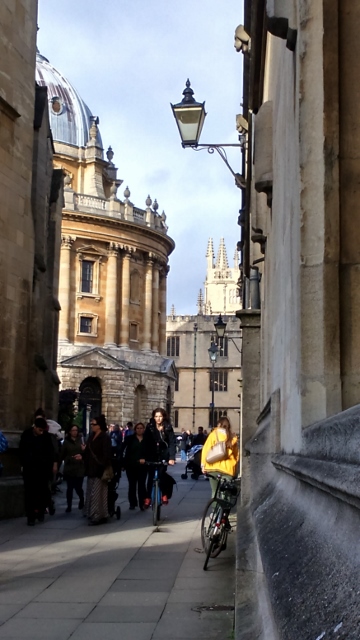
Oxford is very crowded with students and tourists – the pavements are narrow so allow time to walk around the centre, but at every corner there is an architectural marvel. From the Colleges and their gardens, to the River Cherwell and its fascinating bridges, there is just so much to see.
Check out the expansive Port Meadow with its wonderful views; the cafes of the Cowley area; the Museum of Natural History on Parks Road (not shown here) for the inside decoration alone, never mind the collection (there are plenty of events for children); and the magnificent Blenheim Palace (very close to the city and easy to get to by bus) is an absolute must-see.
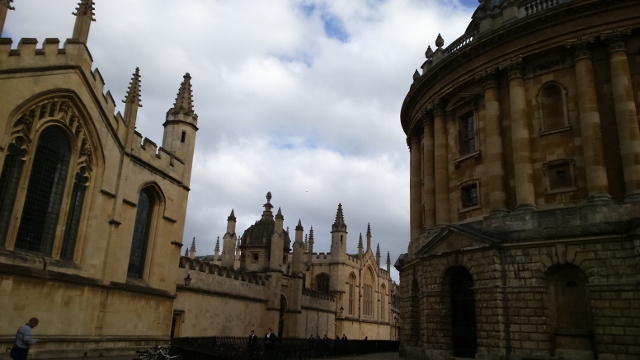
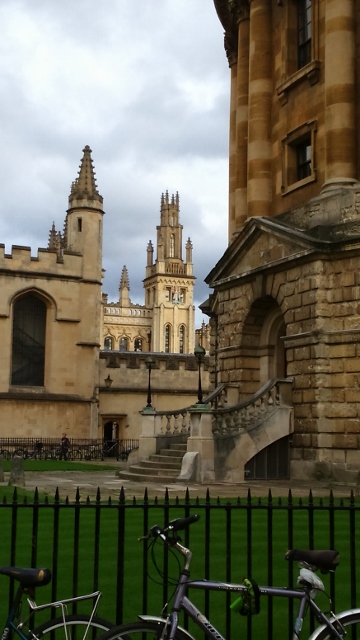
The Radcliffe Camera, part of the Bodleian Museum.
The Bridge of Sighs.
View from Magdalen Bridge.
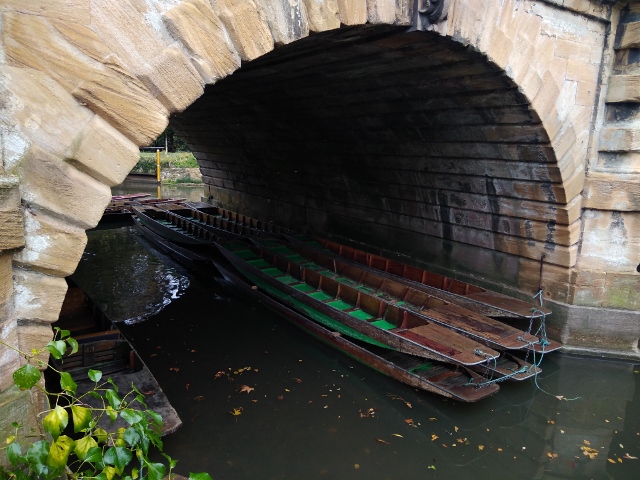
Detail of the underneath of Magdalen Bridge.
Oxford punts in winter.
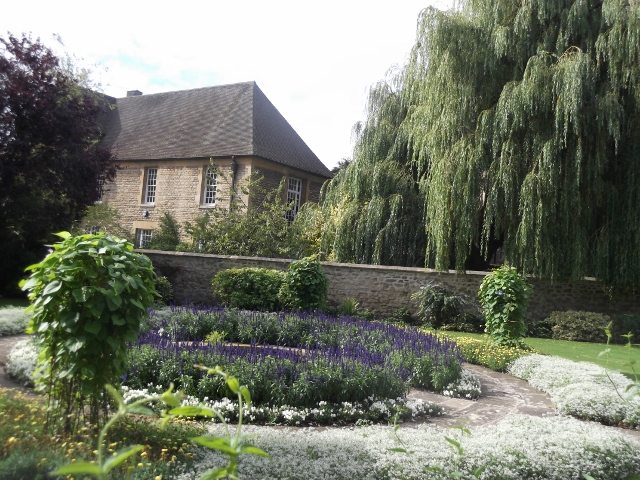
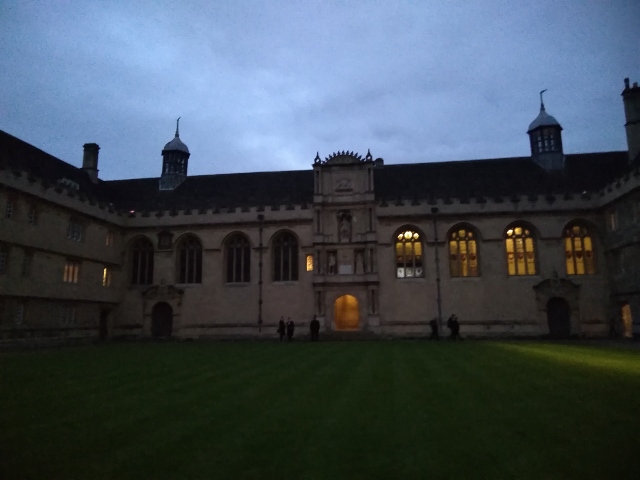
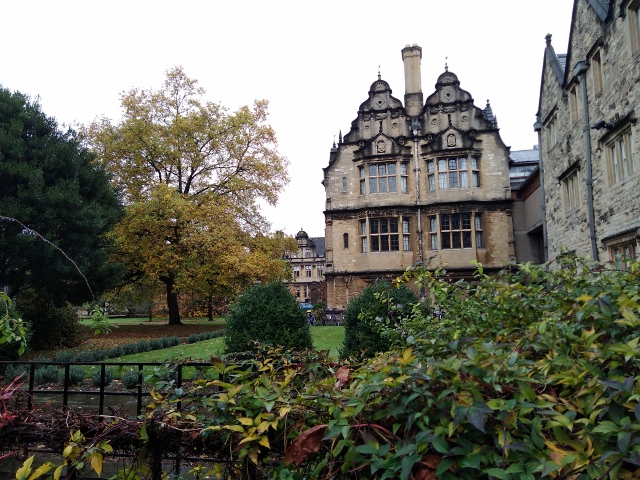
Wadham College gardens.
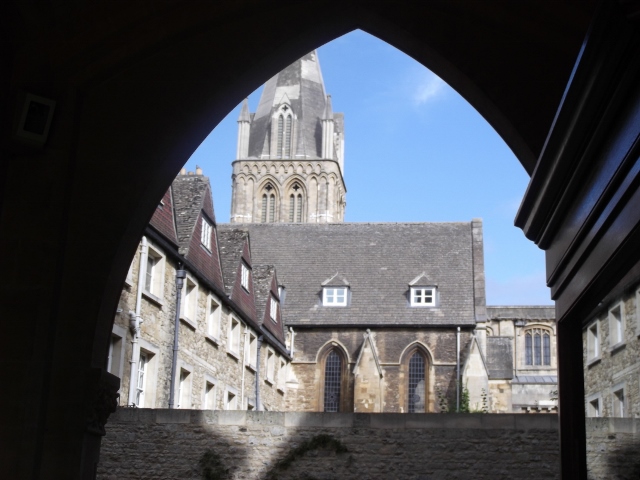
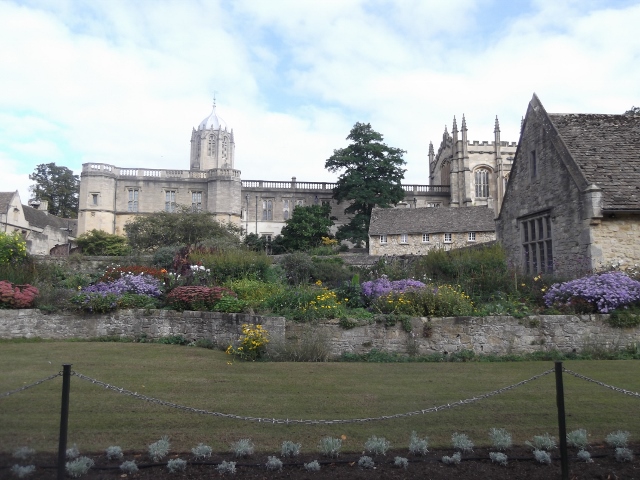
Christchurch College.
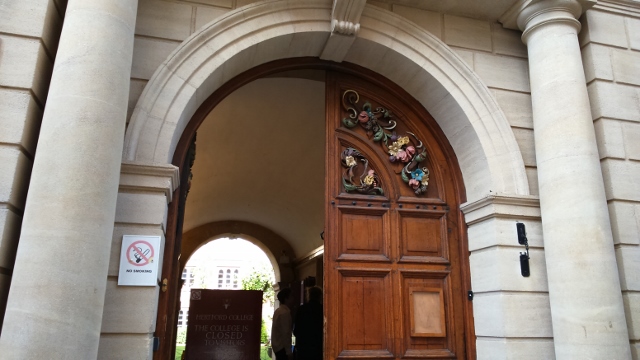
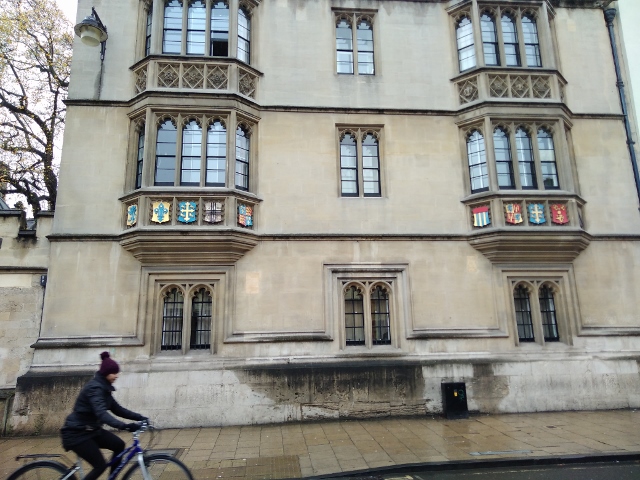
Hertford College.
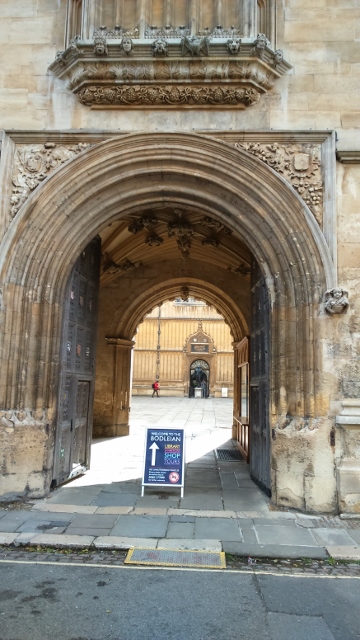
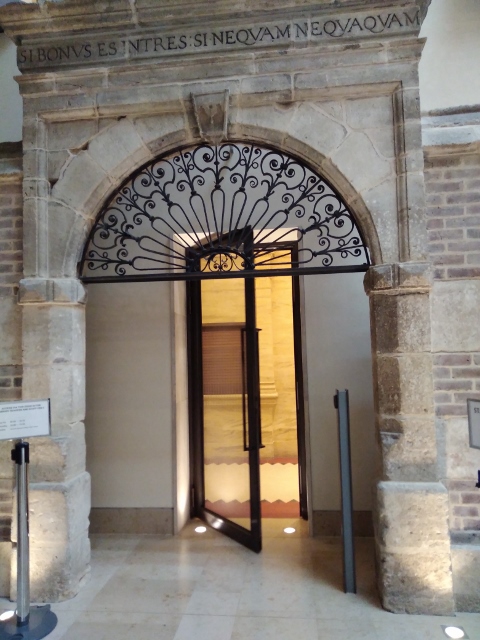
Entrance to the Bodleian Library.
The famous spires of the Oxford colleges.
Bicycles everywhere!
Gardens, Christchurch College.
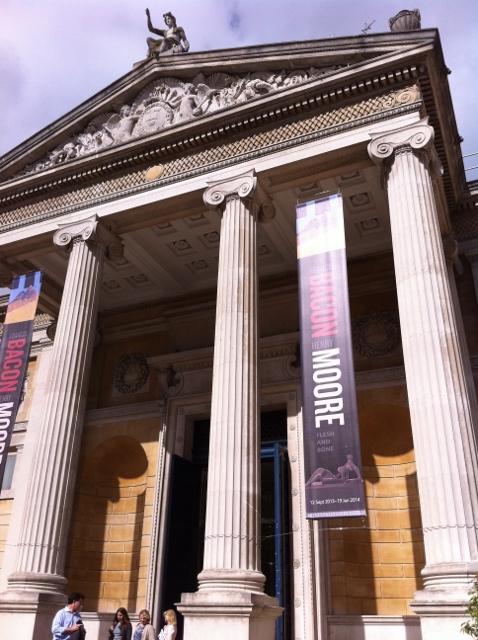
Ashmolean Museum, exterior.
The Ashmolean, interior.
The sun shows up the glorious yellow stone towers.
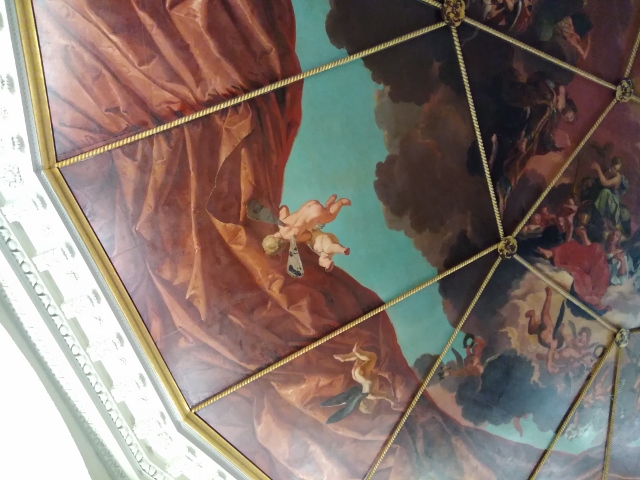
Cupid’s bottom – detail on ceiling of the Bodleian.
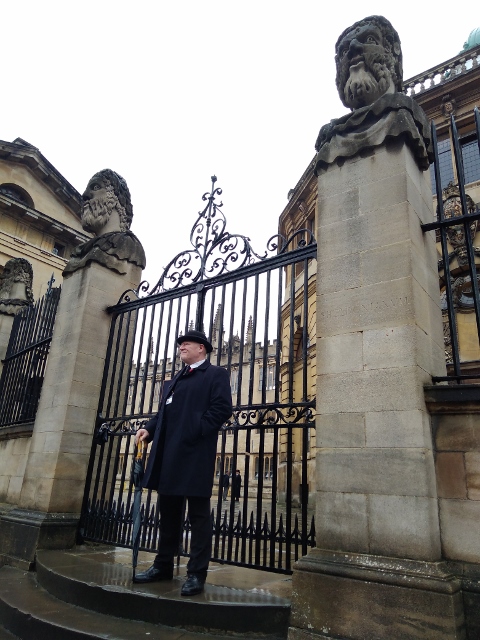
Standing guard at the Bodleian.
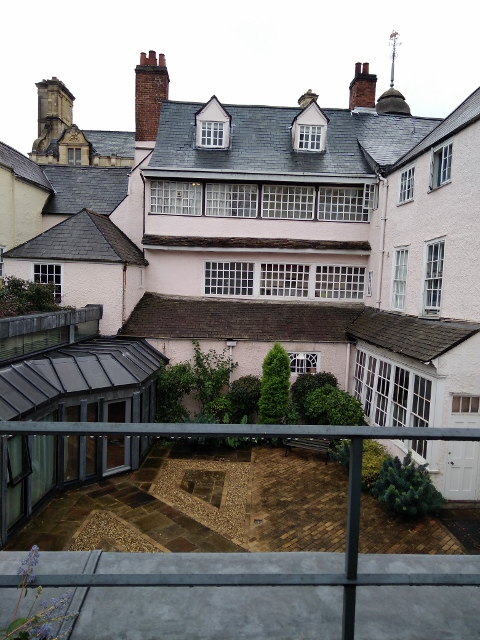
A typical street showing residential architecture.
Broad Street.
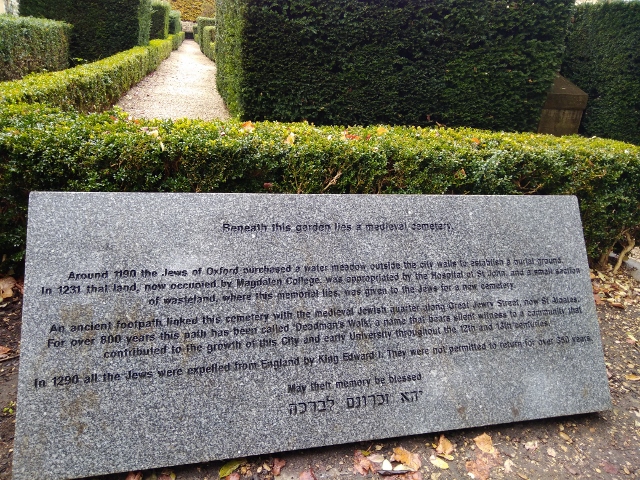
Beneath this garden lies a medieval cemetery. Located outside the Botanical Gardens.
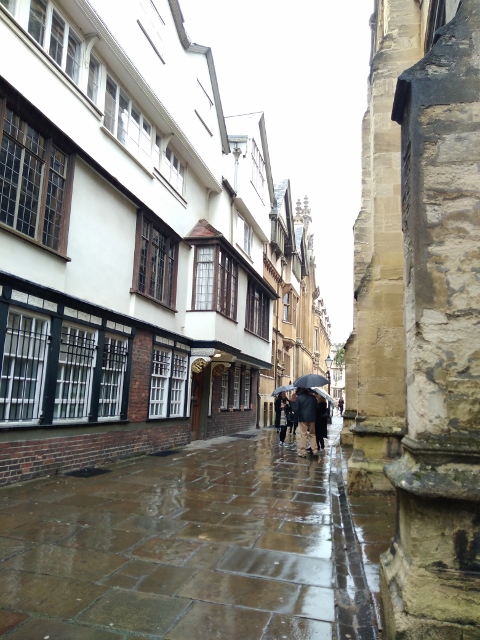
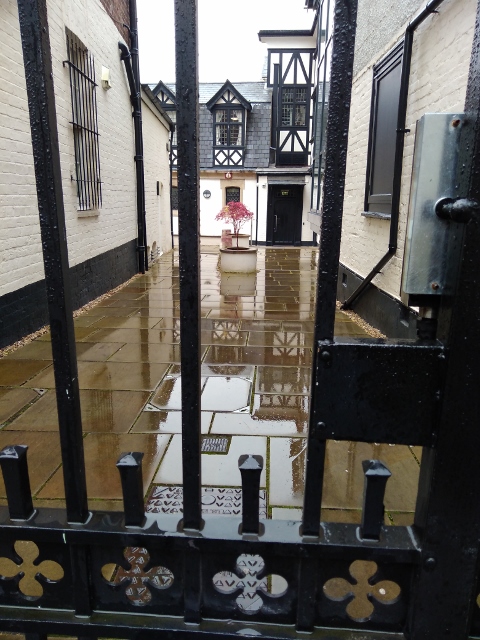
The rain shows up the black and white architecture to perfection.
Would you ever know that this gorgeous place is a mere 20 minutes bus ride (2 miles, 3 kms) from the hustle and bustle of Edinburgh city centre? Found on the south side of the Firth of Forth, between Granton and Leith Harbours, it was James IV who created it in 1504 to build the warship ‘Michael’.
Once a thriving fishing village, today’s piscary community is tiny compared with the fleets of the past. Well known for its oysters (until 1890), and once involved in whaling, it was Scottish folk songs about the herring business which first bought it to my attention.
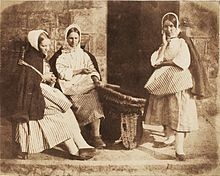
The hard working women and girls who gutted and sold the fish from door to door in creels (baskets), are immortalised in songs such as Caller Herring (1798, words by Caroline Nairne and music by Nathaniel Gow) and Song of the Fishgutters.
Newhaven fishergirls pose with a creel. Photo by Hill and Adamson. 1840s
There is one boat I see regularly unloading its crab cargo, and the articulated trucks which carry the iced fish up and down the country are parked by the fish market in the eye catching red Victorian buildings where the museum used to be. There is a retail fishmonger there nowadays, Welchs, with its astonishing array of fresh and frozen sea food and associated goods.
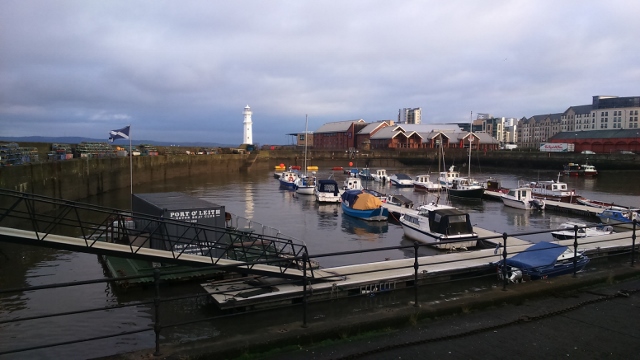
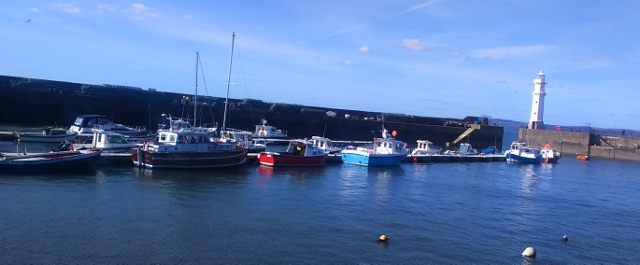
Newhaven Harbour and lighthouse, Edinburgh
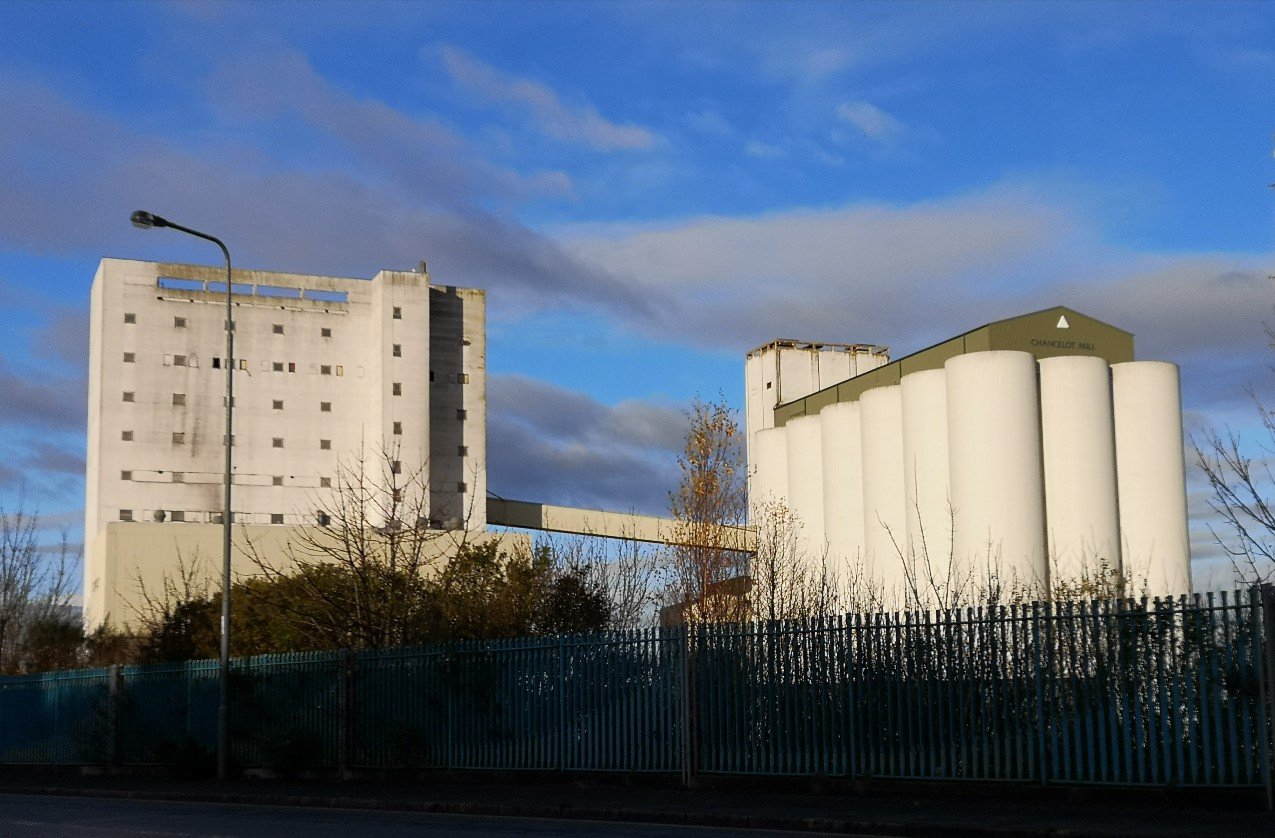
This conservation area somehow manages to sit cheek by jowel with the imposing Chancelot Mill, the happily situated Holiday Inn, and ecologically designed supermarket, none of which contribute in any way to the architectural beauty of the area.
…as you can see!
But you can find a very friendly welcome, comfy surroundings, and the best raspberry scones, freshly made cakes and affordable all-day breakfasts (sitting-in or to take-away) very near by at The Haven cafe on Lindsay Road.
There are other sights to see in the area: a beautiful, wee community garden by the wall plaque.
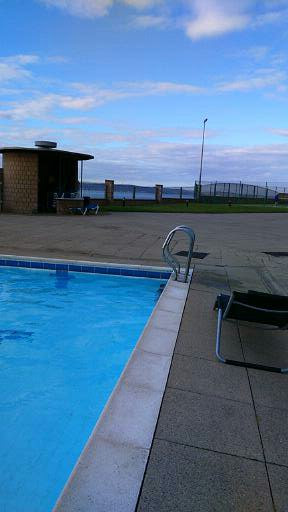
You can also find the upmarket Loch Fyne Oyster Bar; and the David Lloyd health club where you can swim outside in a heated pool right beside the seaside. There’s lots of accommodation, particularly air bnb (see below).
The famously expensive Edinburgh trams are on their way here now – soon to run as far as Ocean Terminal (20 minutes walk east / 7 minutes on the bus). The airport bus (number 200) also runs past and takes you to your flight in just over an hour.
The old church is now the very popular Alien Rock, climbing wall.
This area was part of a massive re-development reputed to be the size of Edinburgh all over again, going to be built on the docks and reclaimed land between Leith and Granton. The economic situation put paid to that, but there are some impressive tower blocks (Western Harbour for example) around which you can wander in the wind and some rocks where people picnic and fish with their hoods up.
Western Harbour flats.
The ‘secret’ beach – see if you can find it!
There is plenty to see whatever the weather: the water itself and the seasonal bird population; Inchkeith Island housing left-over battlements and a still operational lighthouse; and the view of Fife and its hills across the estuary. In the summer the massive liners disgorge their tourists who are ferried into the harbour to be whisked away by coach to see the castle. The coastguard from Granton Harbour (half an hour’s promenade to the west) are always buzzing in and out accompanying the visiting shipping from Denmark (oil tankers), Malta, the UK and further afield.
Inchkeith Island, Firth of Forth.
Fishmarket Square is just opposite the Oyster Bar, a quaint place where a (sadly) one-off Apple Festival was held a few years ago.
The recommended pub in the area is the Dreadnought, 72 North Fort Street (the bottom end!) with open jam sessions, the ubiquitous pub quiz, and appreciated pizzas. It stocks local beers from the Leith brewery (eg Pilot), a permanent gluten-free lager from Brass Castle (the owner Toby’s brother’s brewery), plus guest and vegan ones.
The Dreadnought independent pub stocking craft beer.




















 Walking without a donkey