6 January 2022 – a winter walk between Winchelsea and Rye, East Sussex
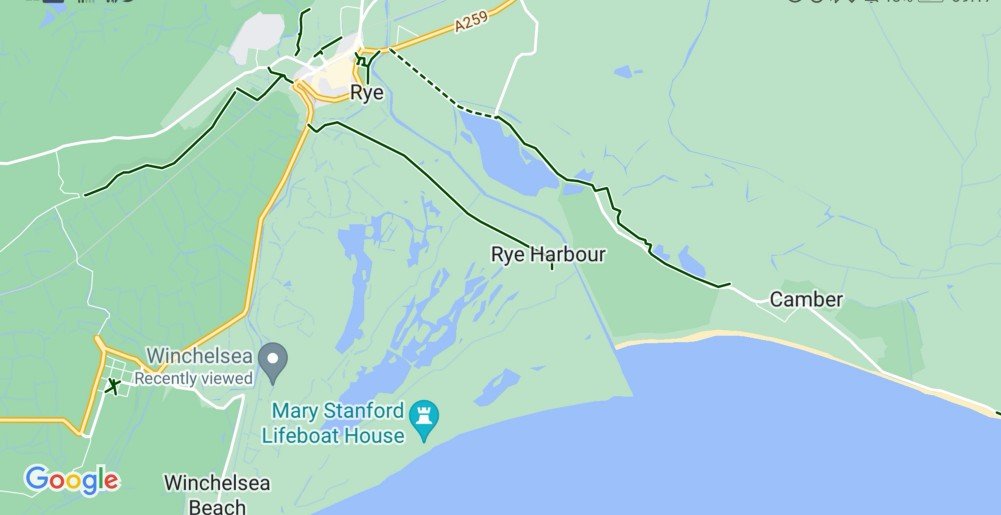
Taking the cross-country route from Winchelsea between the yellow and white roads above, through Rye, then from Rye Harbour to Camber Sands
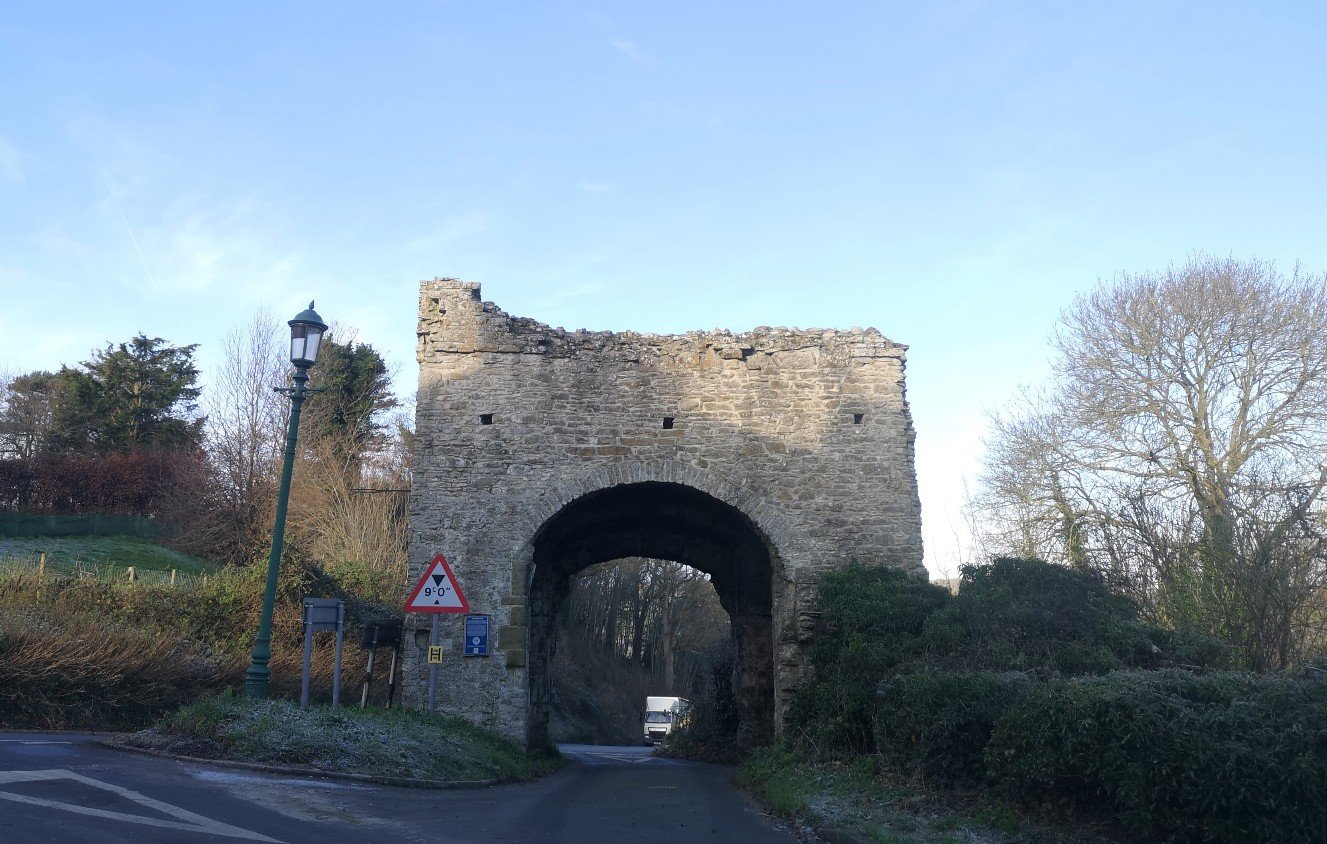
Gateway to a frosty walk – Winchelsea’s Medieval arch, East Sussex
I knew Winchelsea when I was a girl because my granny lived there for a while. My family and I visited for special occasions and I went to stay with her, once on my own and once with my sister. It was the time I was there alone which has remained in my mind.
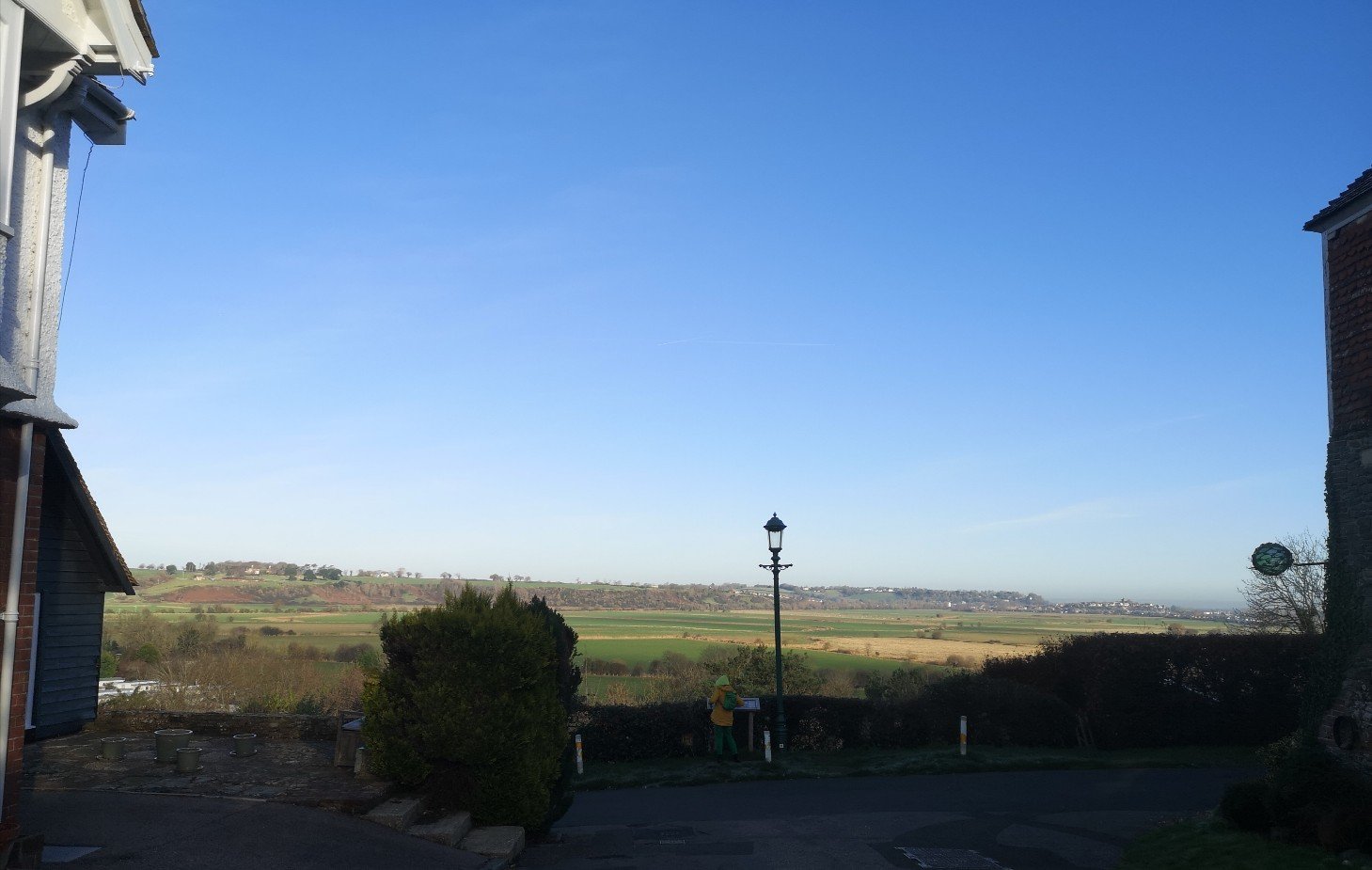
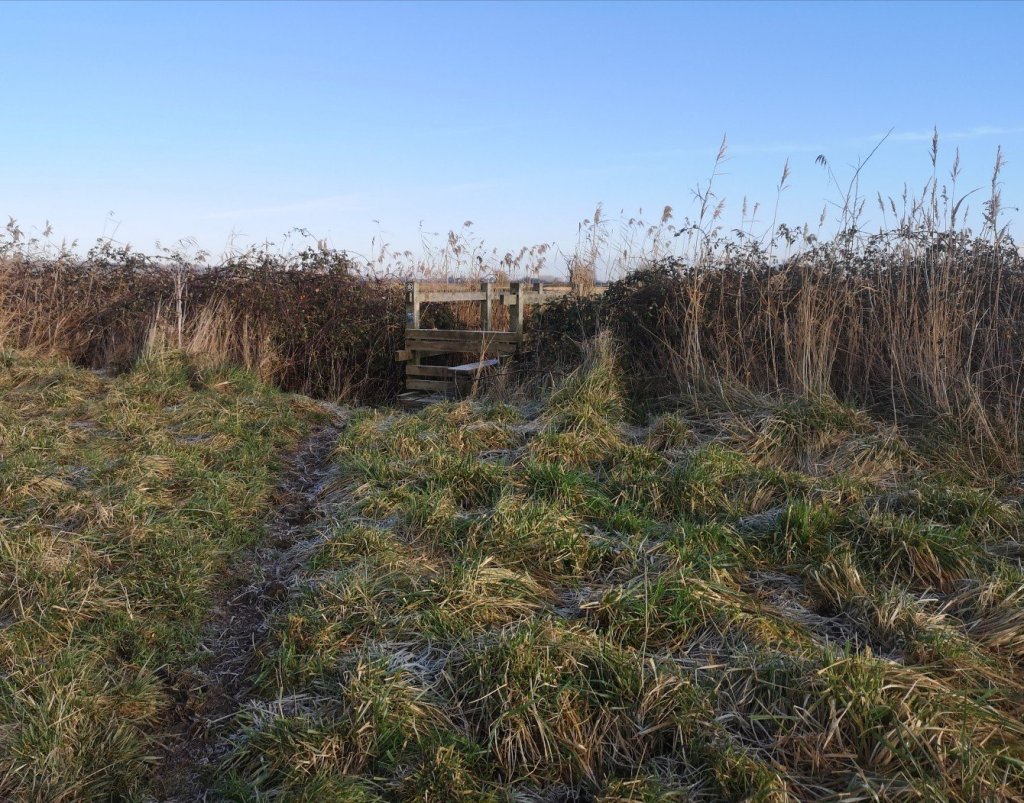
View ahead – where I was going to walk across the marshes to Rye, East Sussex
I was allowed, perhaps encouraged, explore without a grown up. I remember ranging down slopes, across dried cow pats and over little, soft hummocks. I walked and ran, then I lay down and I can recall the feeling of being there all these years later.
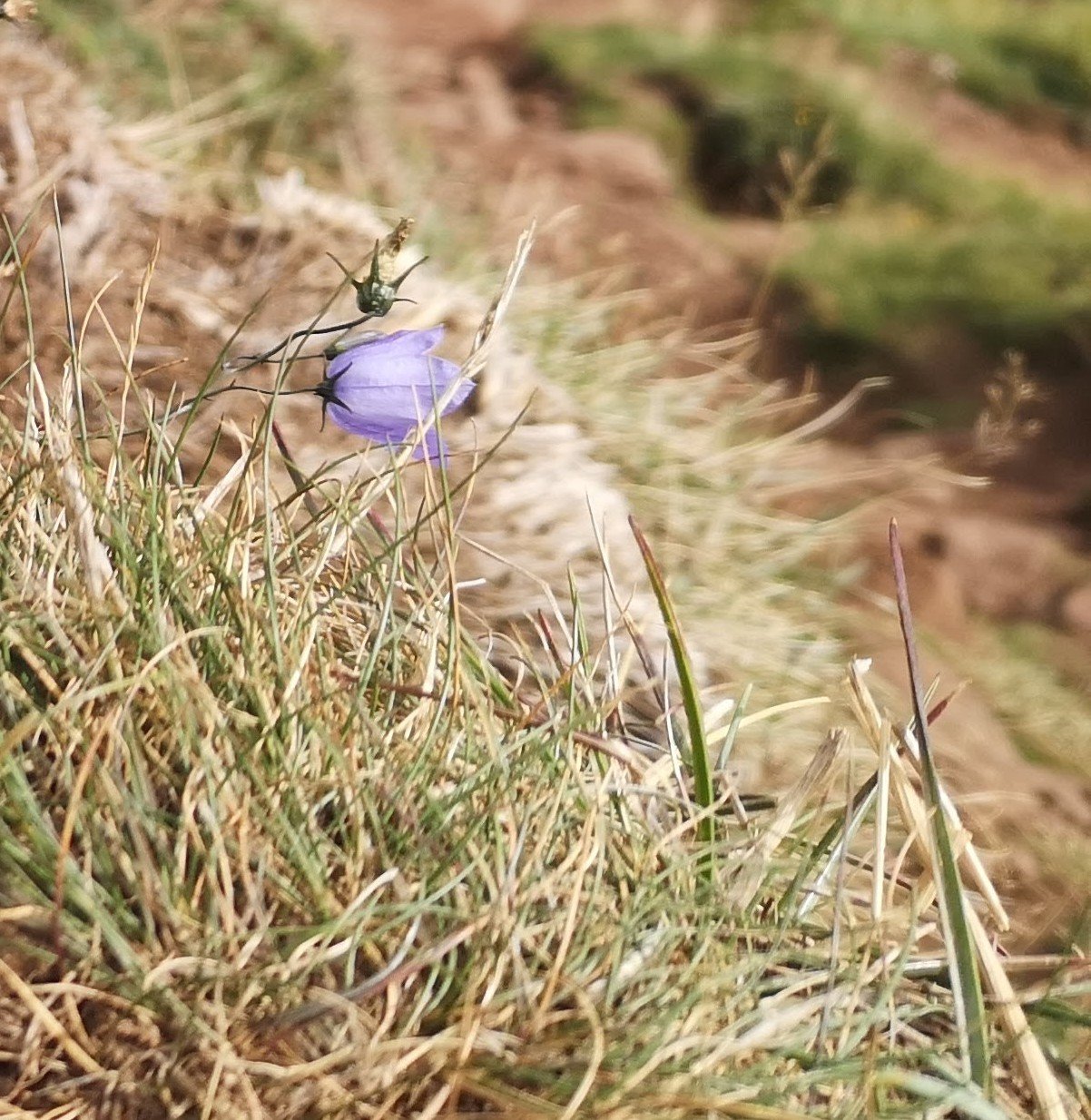
I have a visceral memory of the give of the land underneath me, the warm scent of rabbit and sheep pellets, my nose close-up to the goldening strands of springy turf, the upright threads of harebells level with my chin.
Harebell
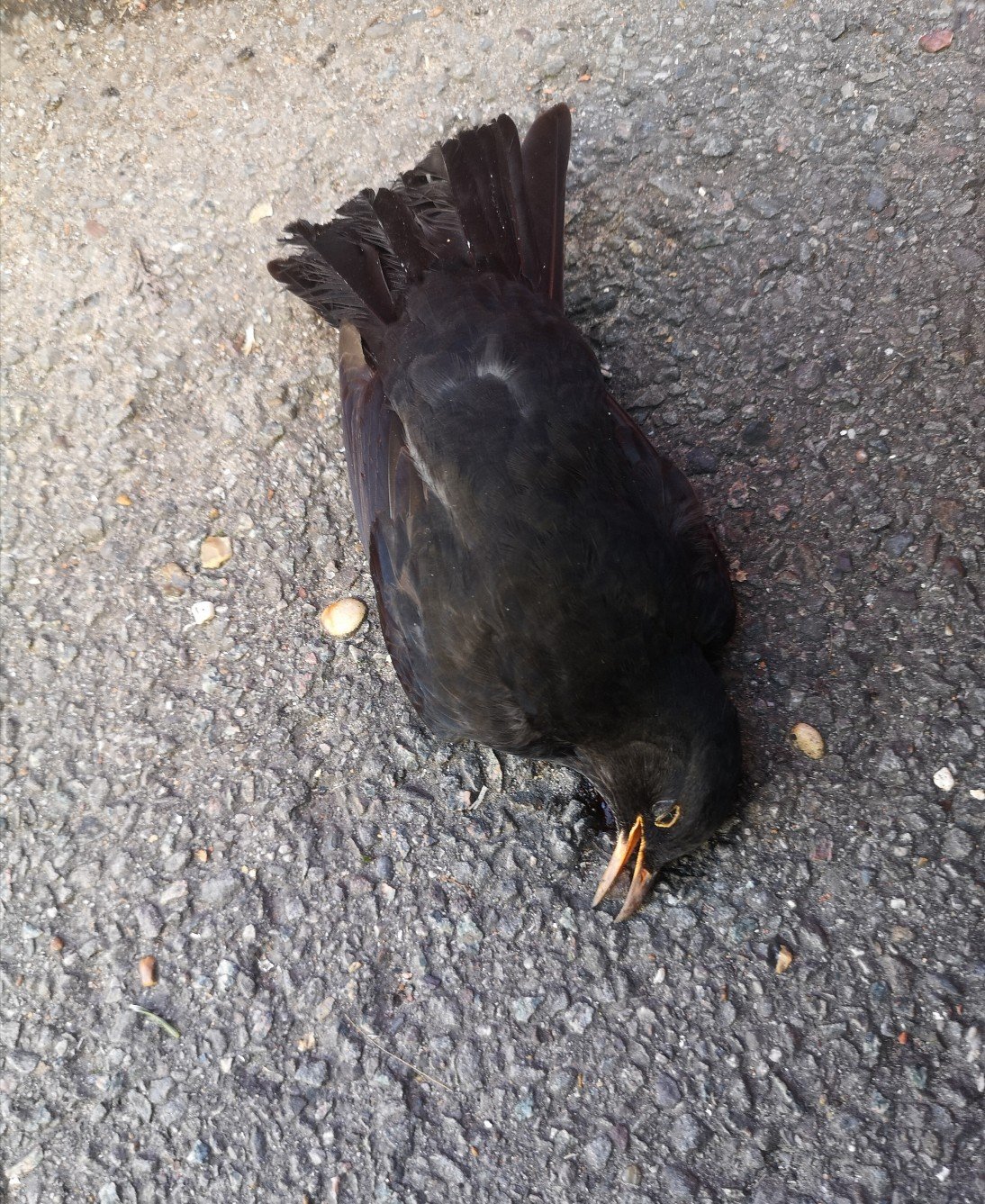
When I returned, some forty five years later with mum, the first thing I saw was a dead blackbird on the pavement in front of the church where Spike Milligan is buried.
Blackbird – loss
I must go down to the sea again, to the lonely sea and the sky; I left my shoes and socks there – I wonder if they’re dry?
Spike Milligan
It was such a fine-weather day to be walking out.
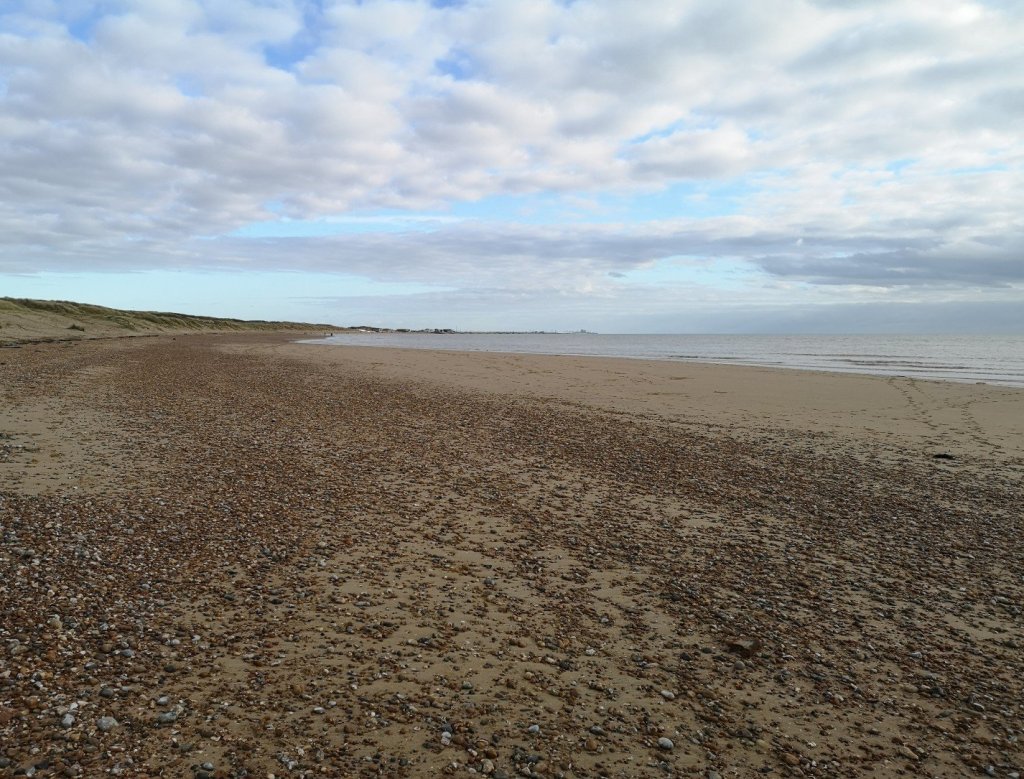
Towards Rye, East Sussex
Mum and her friend asked, How will you get there? But I knew there would be a path, somehow, and there it was.
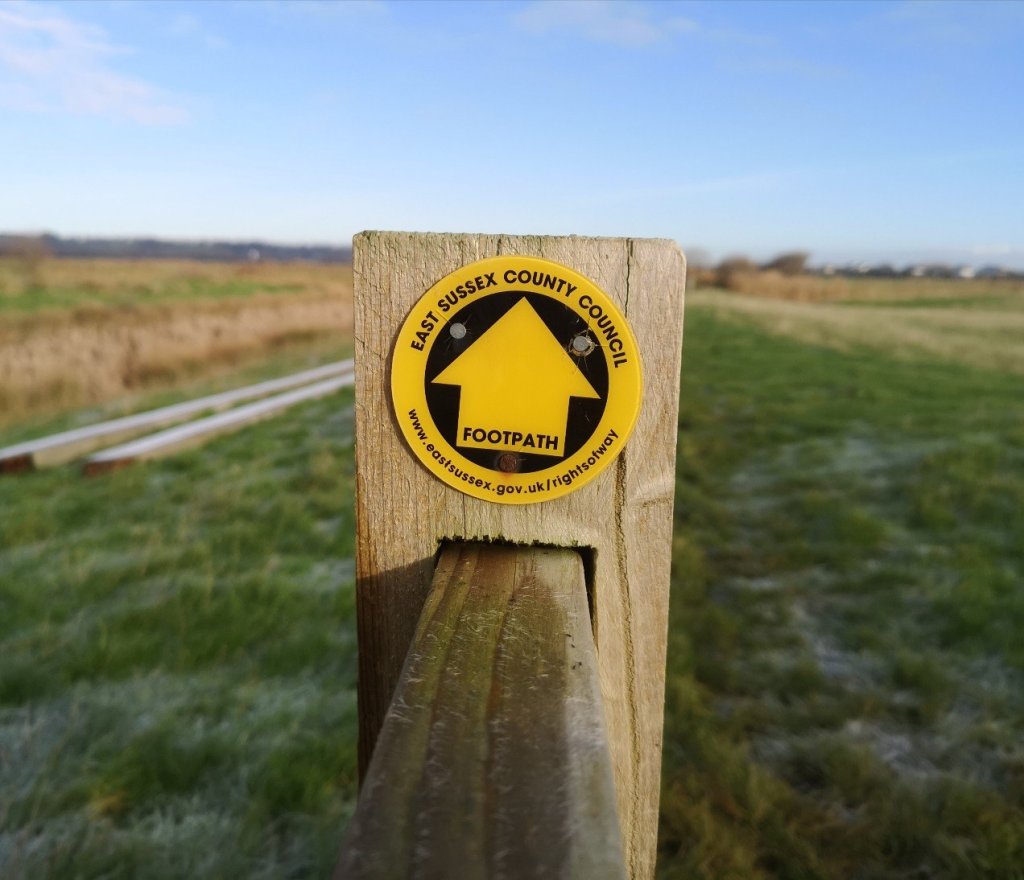
A sign of the path
I walked from this small cliff-town – what is sometimes called New Winchelsea – to her sister Rye, larger and more cosmopolitan. Rye and Old Winchelsea used to be side-by-side until the terrible storms of the mid-13th century when the ocean drowned the Old Winchelsea, a vibrant Cinque Port trading in wine. Pilgrims once put out for St James of Compostelle in Spain from there.
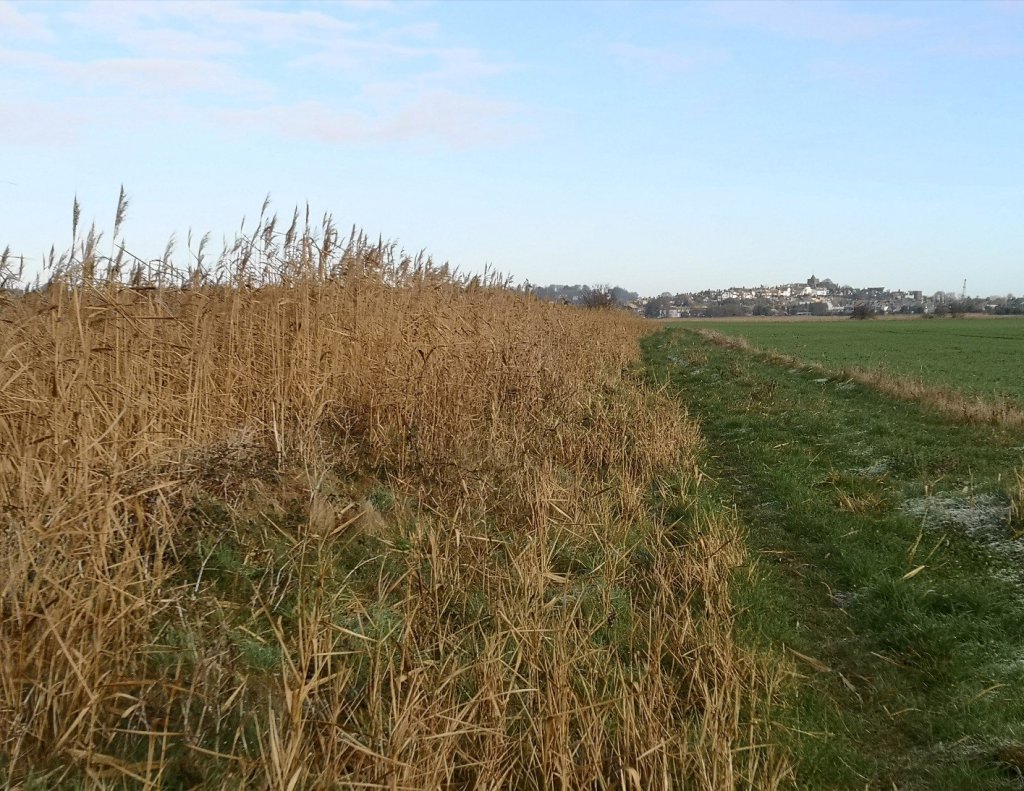
Bullrushes
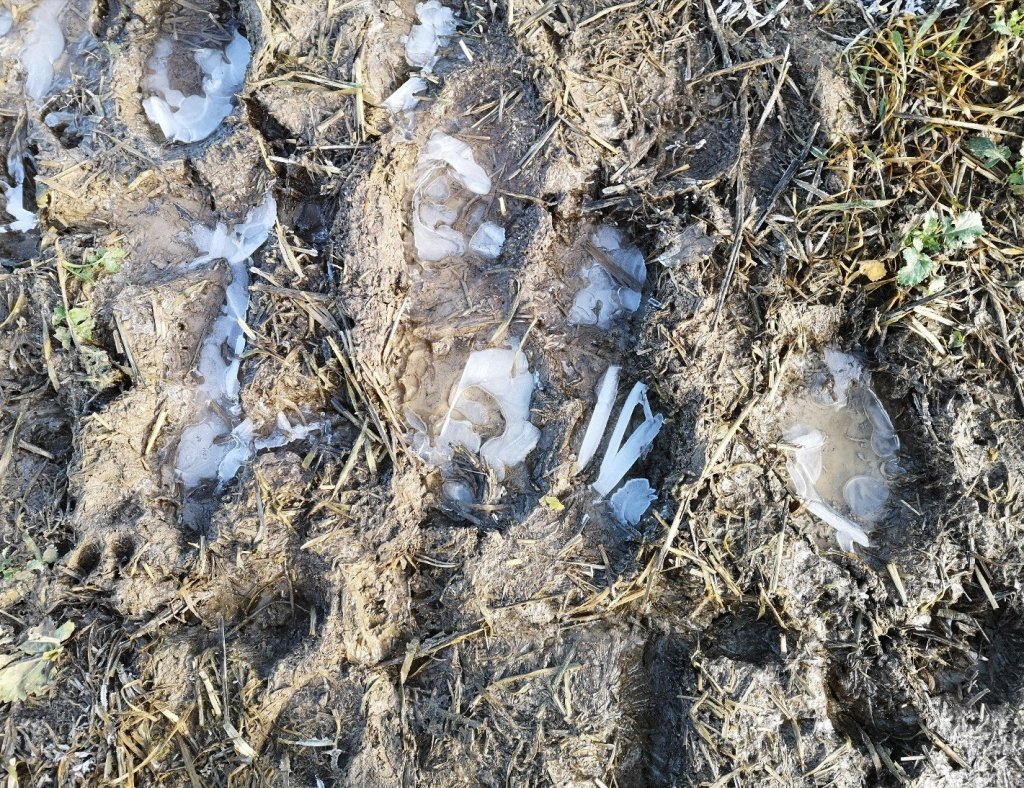
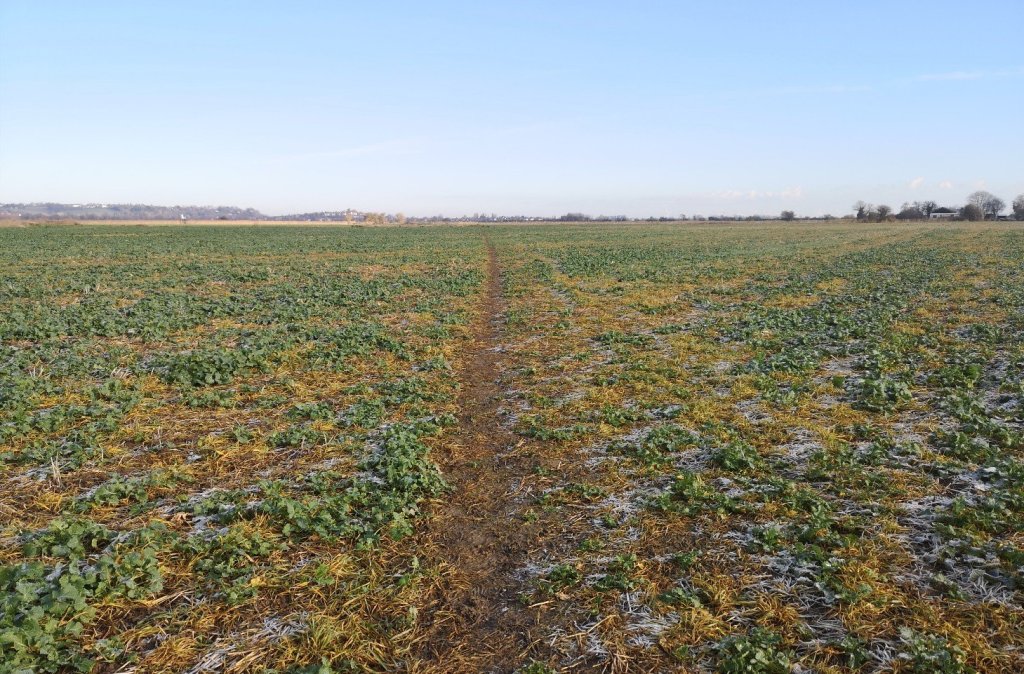
There was ice in the ploughed ruts and water everywhere. I followed the designated way, but it was little more than a desire path.
An icy morning
Desire Path
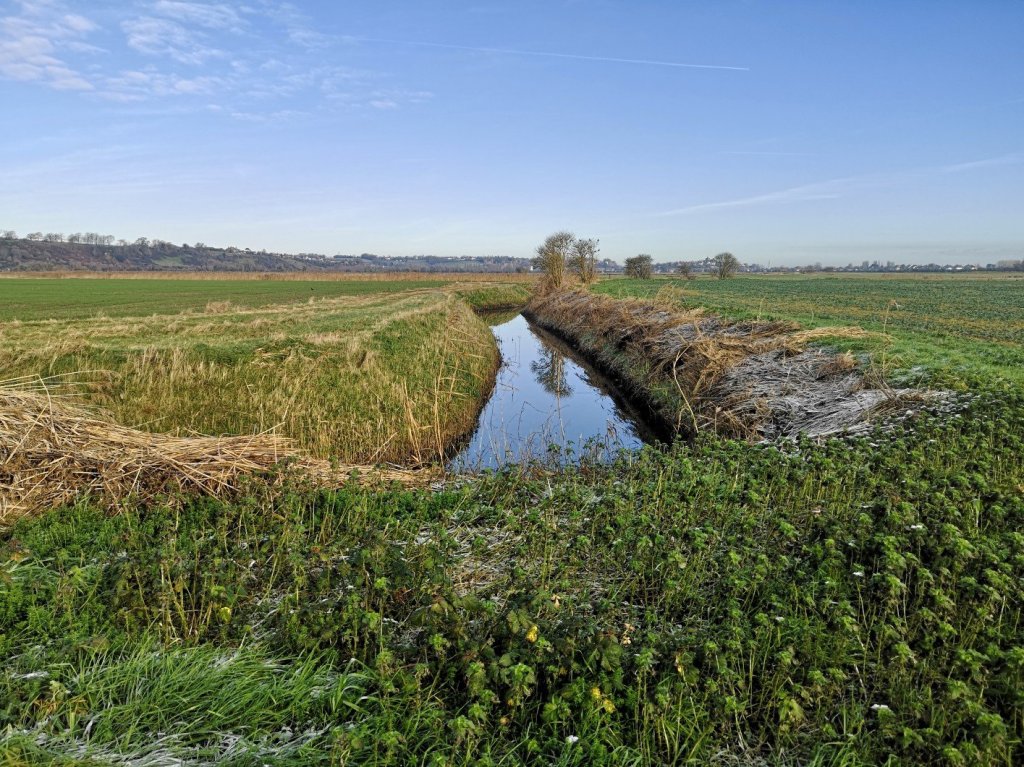
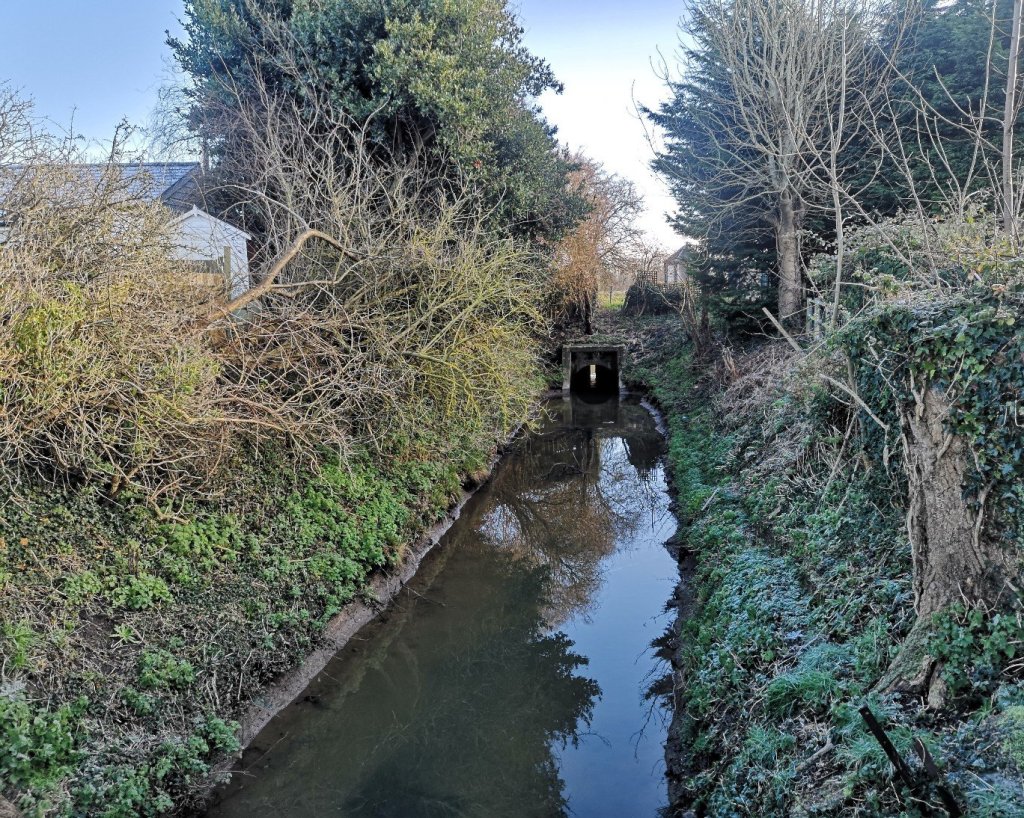
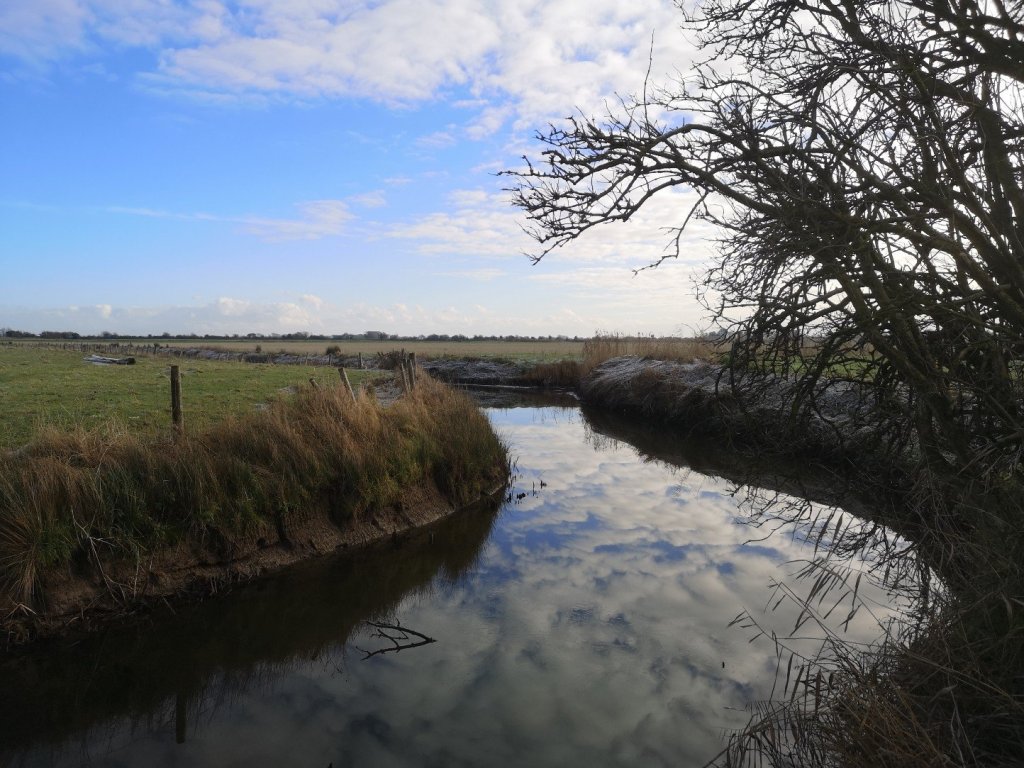
Water courses abound on these former marshes. Winchelsea to Rye, East Sussex
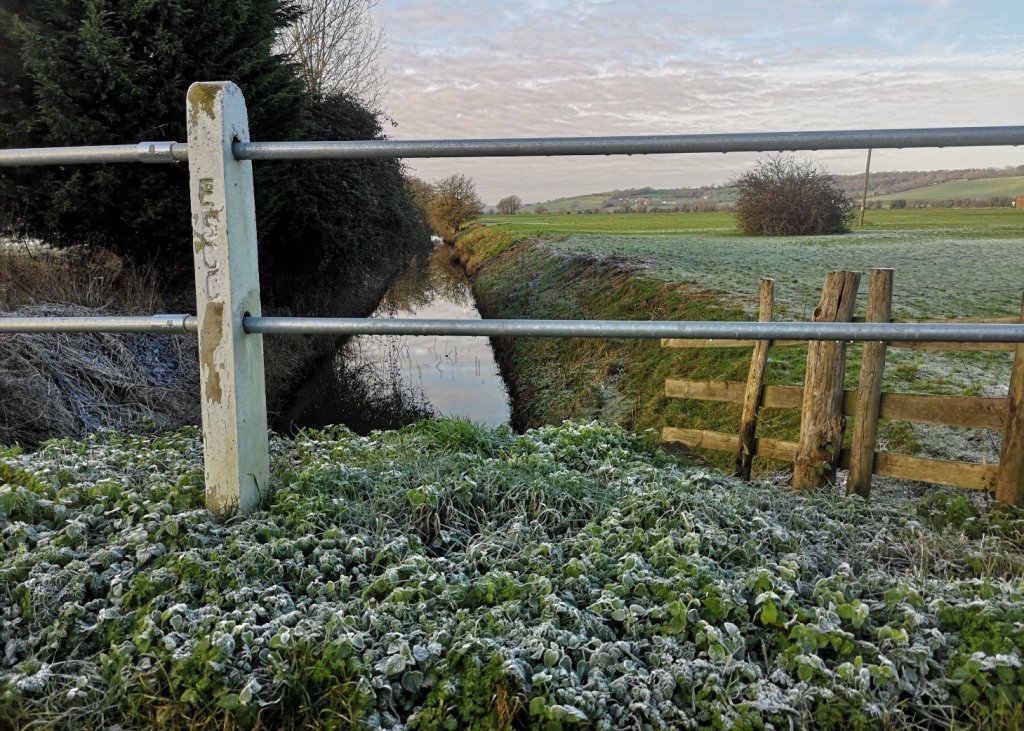
Frosted undergrowth
I took the wooden bridge between the stalks
Still sweep reflecting the sky
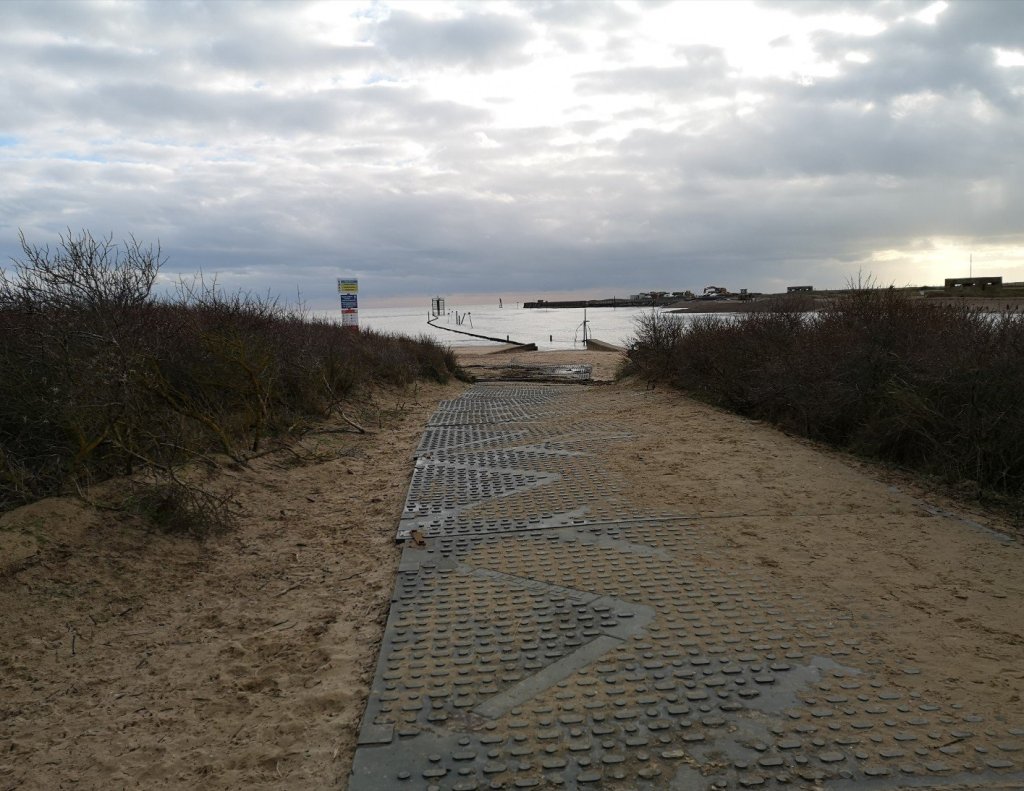
I caught my foot on a plant and fell over, of course, arriving into the town to meet friends with mud all over my trousers. Then we walked some more, as the rain came on, along Camber Sands. My siblings and I used to make sand castles with dad there. I remember how the sea was so, so far out and we had to walk ‘miles and miles’ to get our feet wet. All those years ago.
There are holes in the sky Where the rain gets in But they’re ever so small That’s why the rain is thin….
Spike Milligan
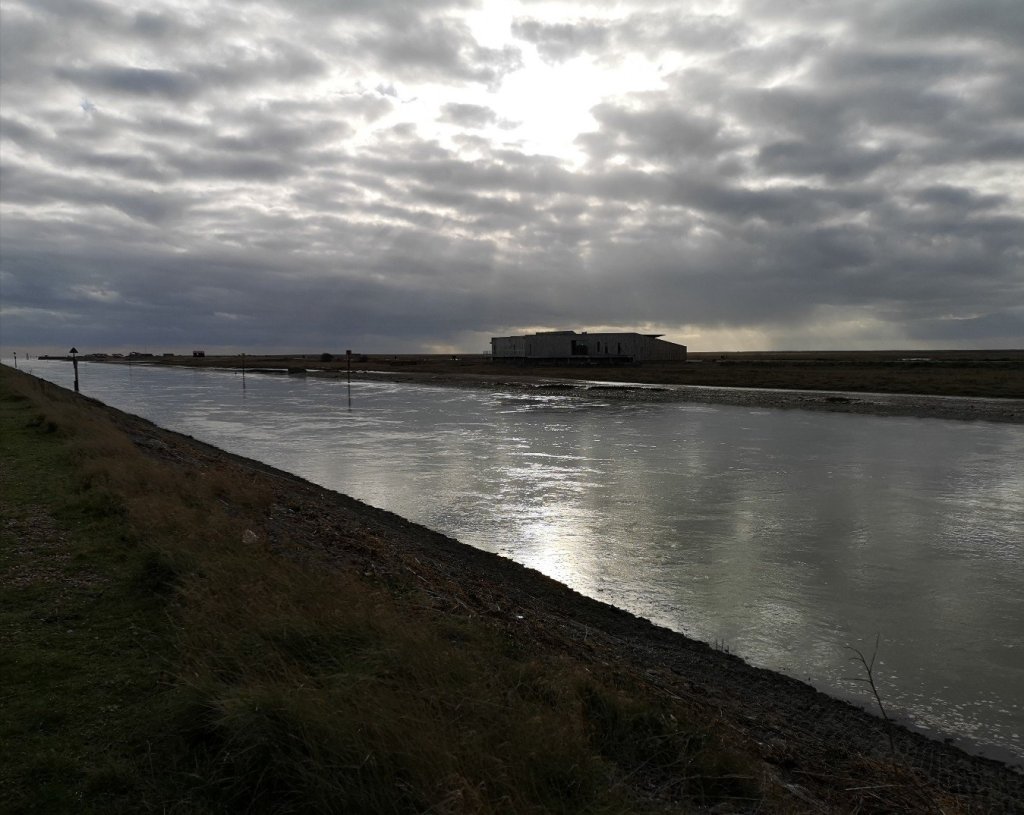
From Rye Harbour, view across the River Rother to the Discovery Centre
This month was my idea for the Walking the Land artists collective First Friday Walk. I had been reading about ‘dynamic stillness’, a term used by geographers and complementary therapists. Also, of course, I was following the war in Ukraine.
I wrote, ‘Let us walk in solidarity with the Ukrainian people who are walking away from their homes and home country, searching, looking for another place where they can be still, to re-find themselves and safe emplacements. We will set out from a still-point (perhaps the place where we live, where we feel secure), and search for “the embeddedness of the sensing subject”.
‘We will ask, ‘Where do we feel embedded?’ ‘Where can we find a moving or still emplacement in the walk, or in the place through, or to which, we are walking?’
Some of us walked alone and others in a group, and we were spread all over the UK.
Emplacement 1
At home
I sit in the sun and listen to the quiet, then a bee sounds by my ear and some birds chorus. When I stay myself some more, I hear the distant waves, and the odd car – one rattles, needs something doing to it. The tree has got my back. Do I feel safe here? Yes, mostly. This place is known, I’m within the boundaries of my garden, inside the gate. Gulls screech. I am grounded with my feet flat on the stones. Below them is the earth – I know that because there is a solitary primrose which has grown up through them. My sitting bones still hurt though.
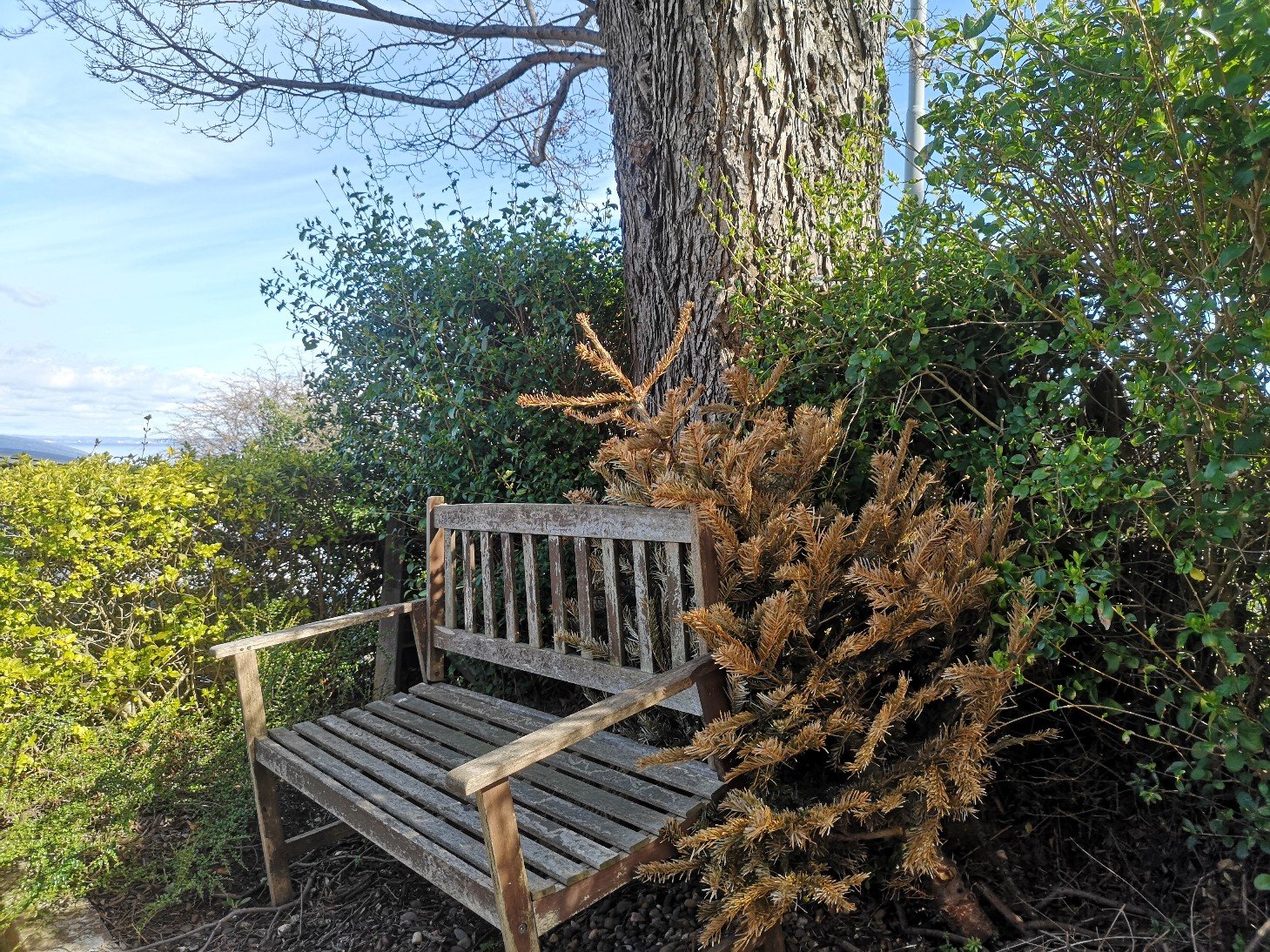
On the wooden bench beside the Wheatley Elm tree
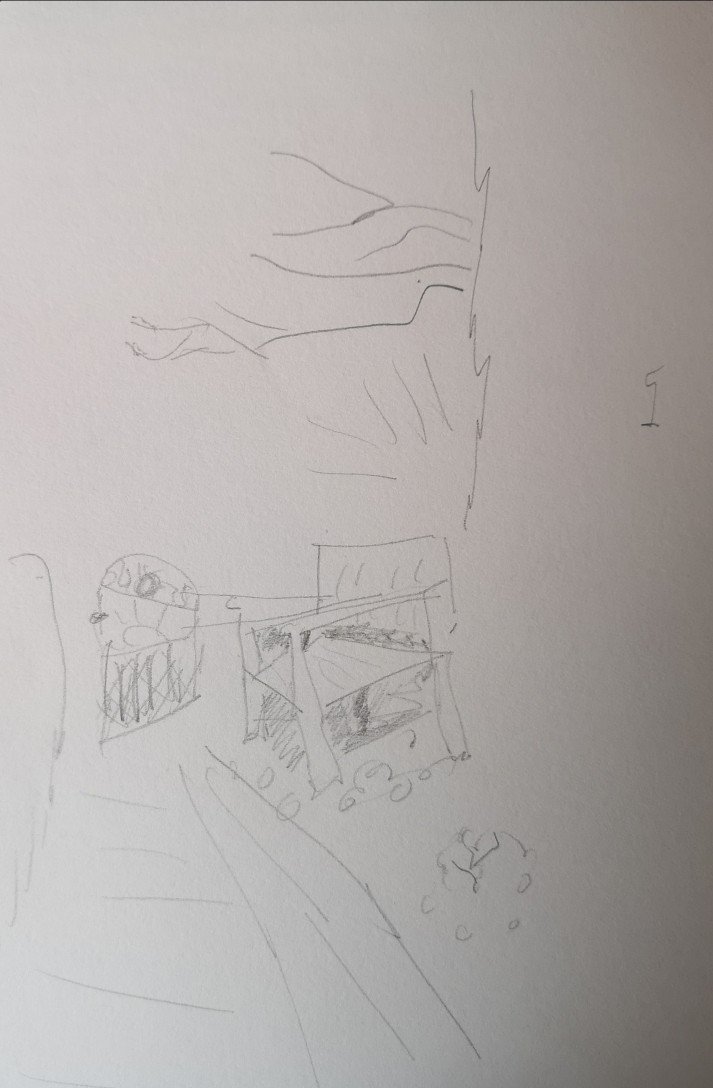
Sketching, I have a metallic taste in my mouth and frustration in my wrist as I try a third time to get the angles right. I am attempting to draw the smell of the dead brown Xmas tree which I keep meaning to take to the dump.
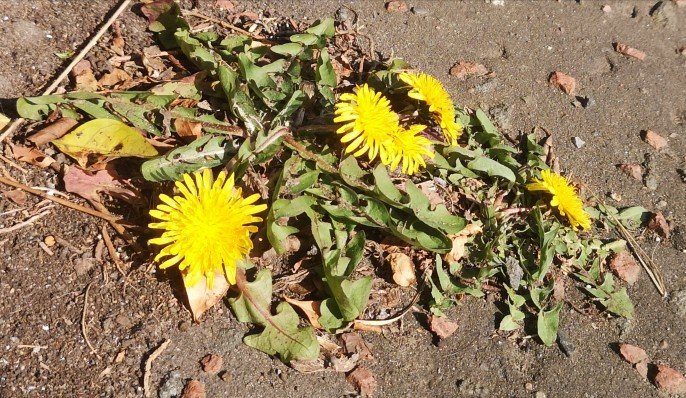
Dandelion heads like a bicycle wheels still spinning
1.05pm I begin my walk and am immediately struck by the fact that I am choosing to leave my home and the people of Ukraine have no choice. Yet, the dandelions are so cheery
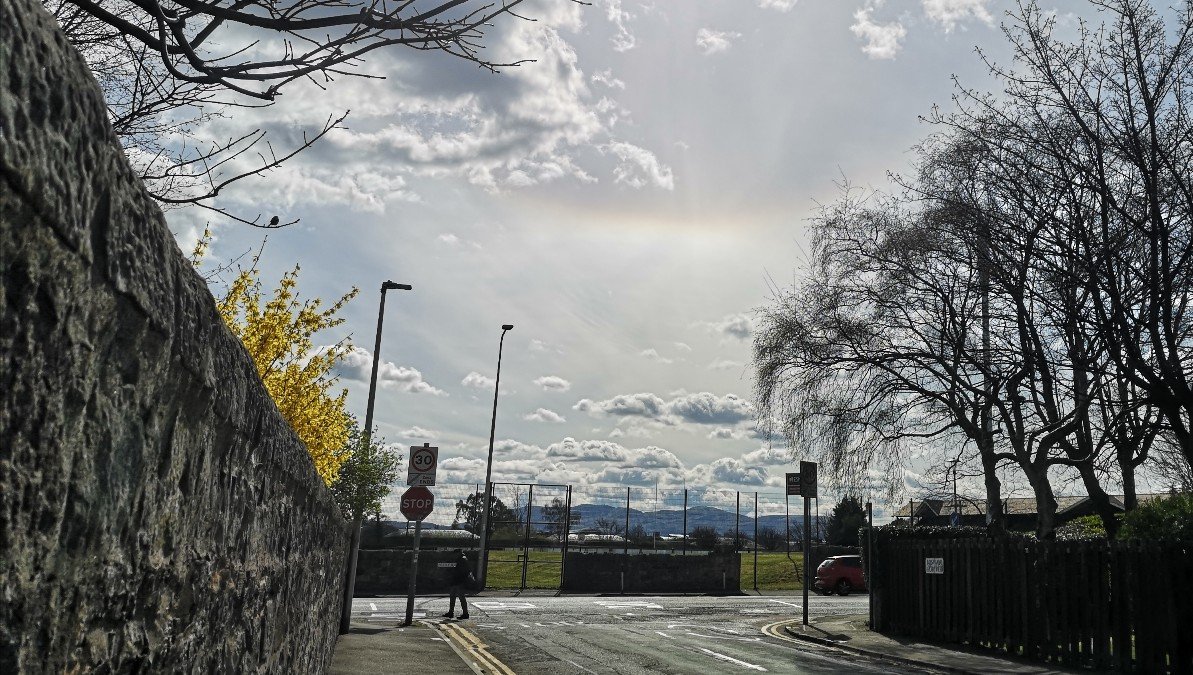
Ominous skies and a horizontal rainbow – portents
As I walked, I thought about a story I watched last night on the Channel 4 news. A Ukrainian woman was knocked unconscious and trapped. When she came round, she dug out her husband and friend and they escaped from the bombed theatre in Mariupol. Hundreds were not so lucky. She said she felt no emotions, had no feelings. This, I know from my work, is a sign of trauma.
Doomed
In Edinburgh, I heard a woman speak on her phone as she passed me: “No time to think about such frivolous things”, she said. A child’s swing in a nearby garden squeaked as it swung.
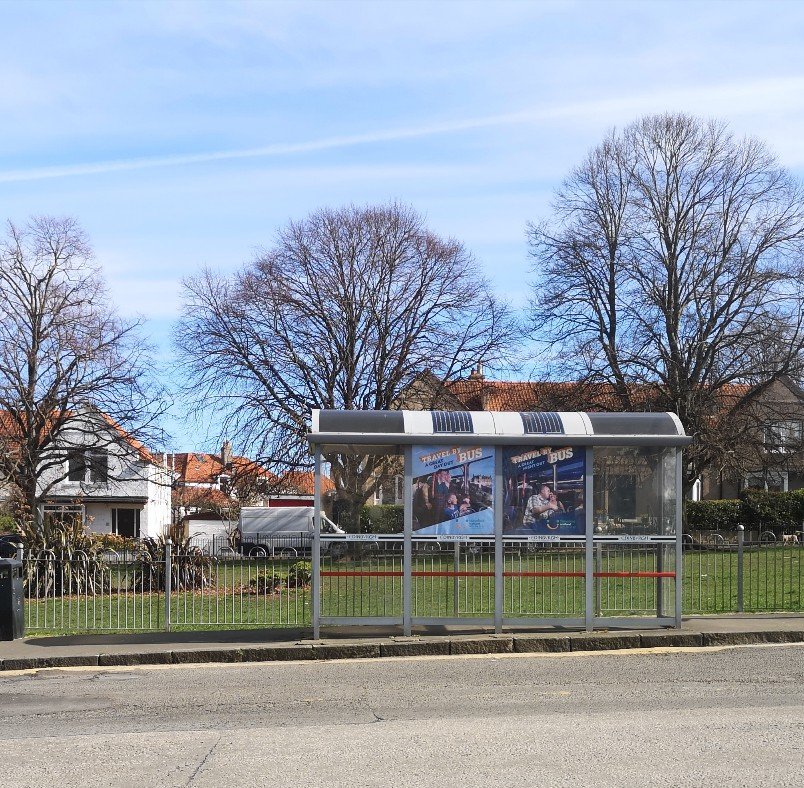
There are no queues at the bus stop
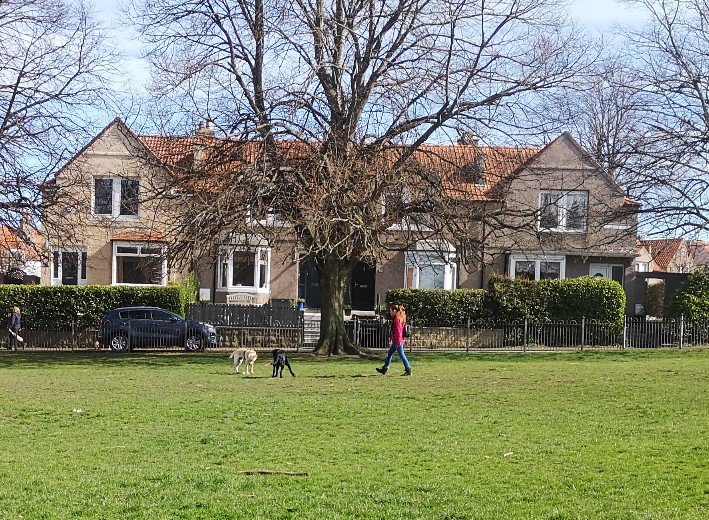
Fallen blossom petals are strewn on the pavement. I hear a dog walker saying, “All present and correct. Have a nice day” as she leaves the park.
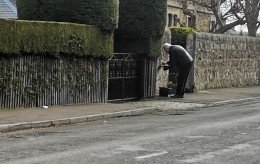
As I passed someone else walking her dogs, and this man repairing his boundary, I wondered if the people I am walking with in spirit had to leave their pets behind, and how long it would take them to repair their broken walls if they ever get home again
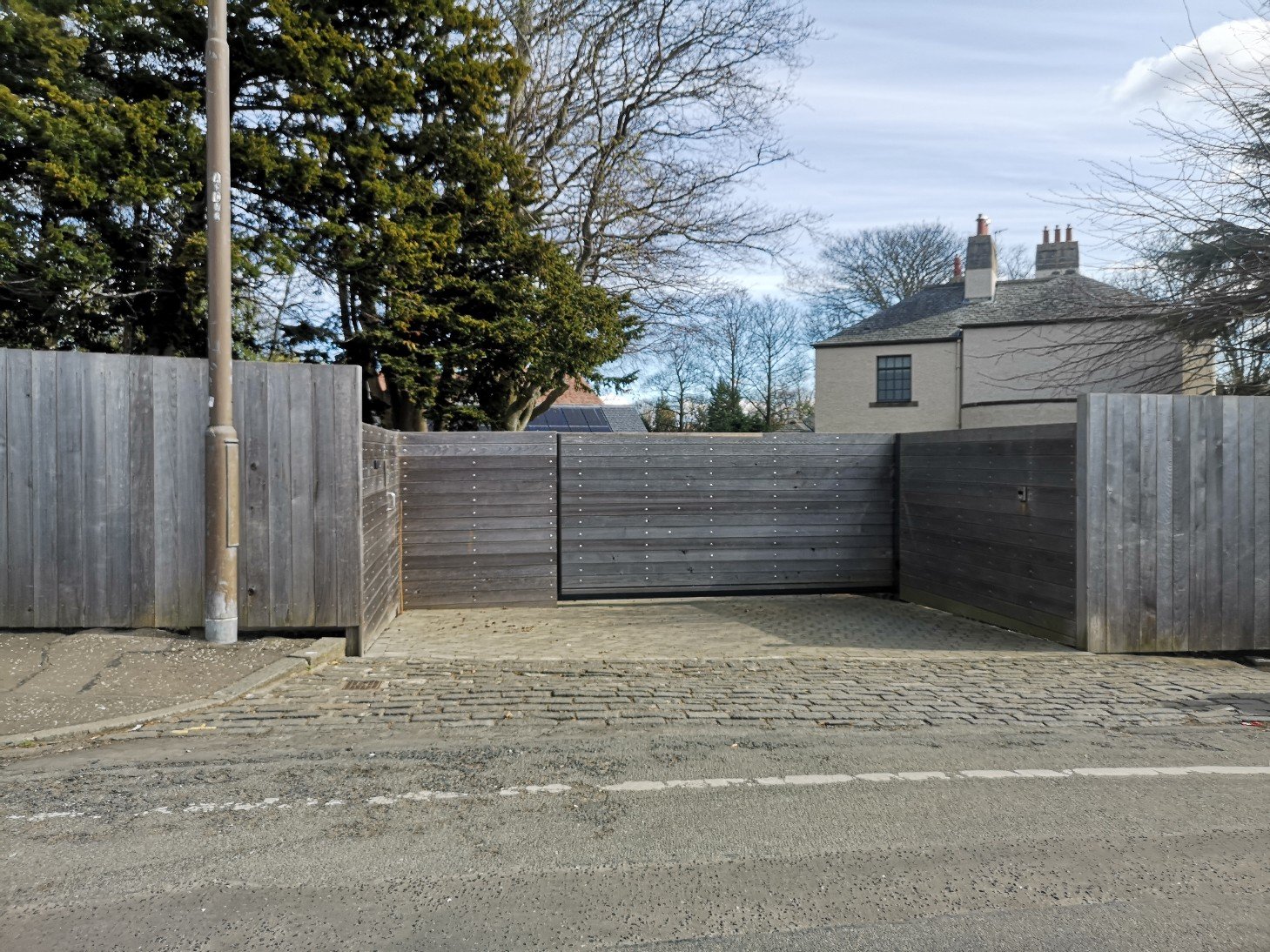
Gated for security. Will it keep out the invading forces? Protect the inhabitants from bombs?
Text 1 comes in from Richard Keating, my counterpart in Gloucestershire: “I’ve just walked a few miles from home, crossing the Nailsworth Valley and am now looking west towards May Hill. I have lived on this side of the valley for 25 years so feel very much at home here. … However the wind is cold and I’ll be glad when the pub opens its doors. Imagine how a refugee would feel as a door is opened for them. As a home is shared.”
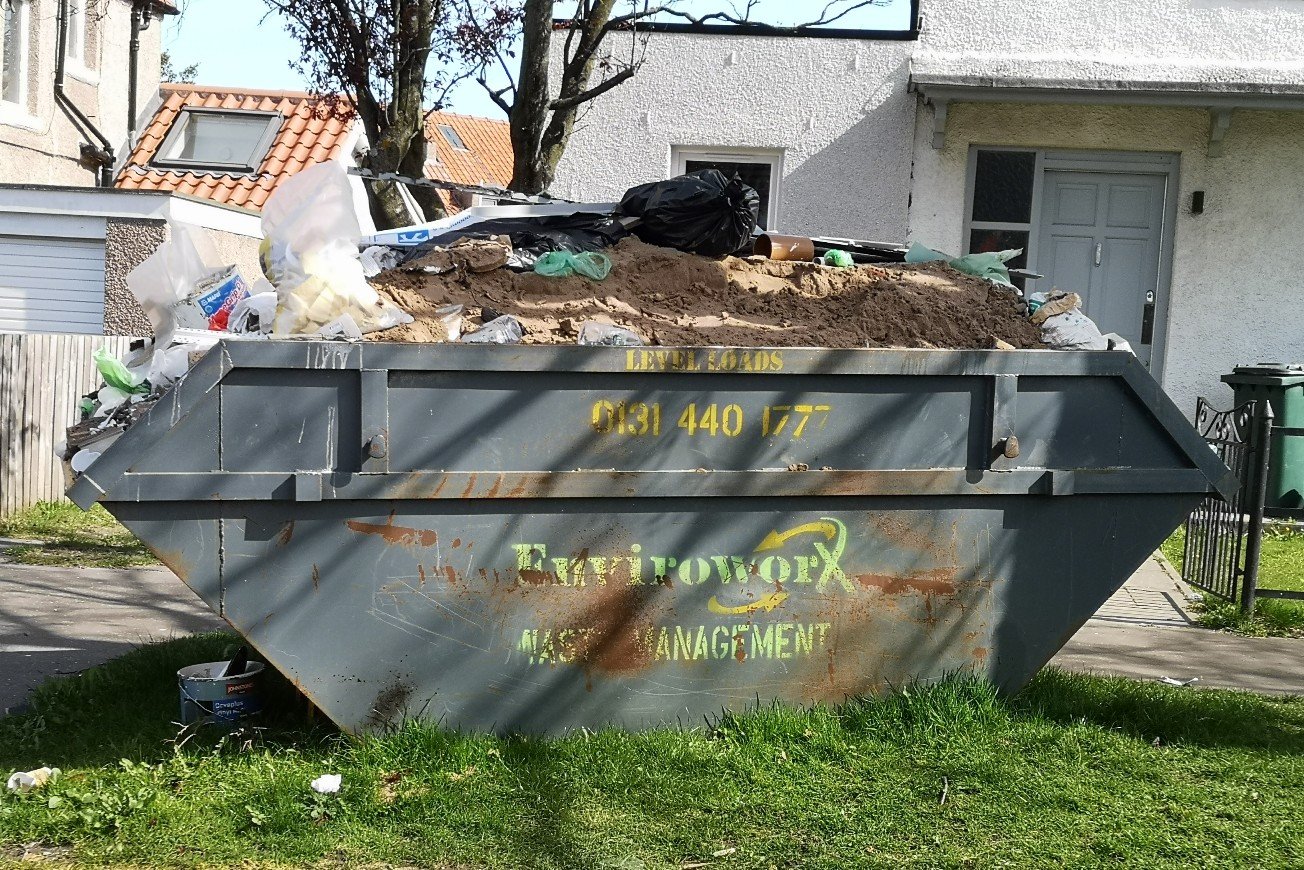
Abandoned tank . Devastation . Clearing up the rubble
The mother said, “Grandma gave her toys to me” and her little son replied, “Do you ever see her?” And then I am aware of the importance of familial relationships, of the personal artefacts passed down, of interrupted generations and houses and possessions all lost.
Impaled
On the pavement, I am treated with courtesy and kindness as a man, wordlessly, stands aside so I can pass, and smiles.
I heard that some Ukranian people who were only able to go to Russia, have been interned. It’s beyond my comprehension
I hear the father say “Oh you want to touch that” and he lifts the back wheels of the buggy up so that the little one can stroke the leaves of the hedge.
Emplacement 2
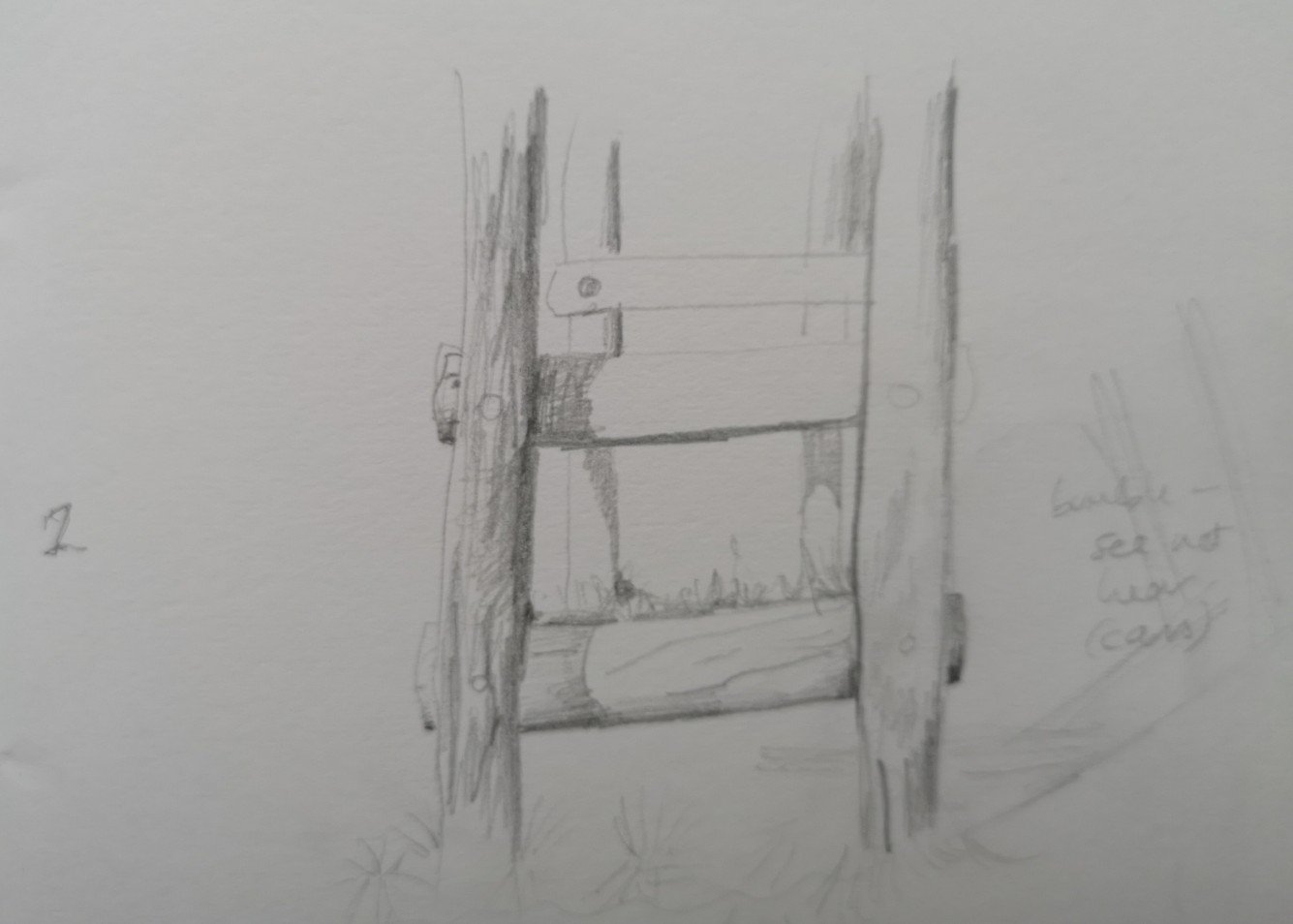
I am wedged between two upright logs, one on either side, and there is a solid one underneath me. I teeter – I am not as safe as I might be. I can’t see behind and would therefore only know if someone was coming if I heard them. There’s a lot of noise coming from all over the place, from different directions so I can’t distinguish if one of them is someone approaching me or not. I can reassure myself, though, because there’s not a war raging here in Scotland.
I hold on and stretch back, the sun is warm. I hear a foot meeting a ball and it clatters against the goal posts. Her heeled footsteps pace beyond the hedge. A dog barks. Distant voices, nearby cars. Smooth wood under my palms, a taste of…of…cucumber… and cedar. Is that a taste or a smell? There is a breeze. Cold at my nostrils, of air, perhaps exhaust fumes, a hint of the warm wood. I have been worried that I’m losing my sense of smell, but maybe it’s OK.
Emplacement 3
I receive a second message from Richard: “We’ve made our first stillness and are moving on. Your script has been well used.”
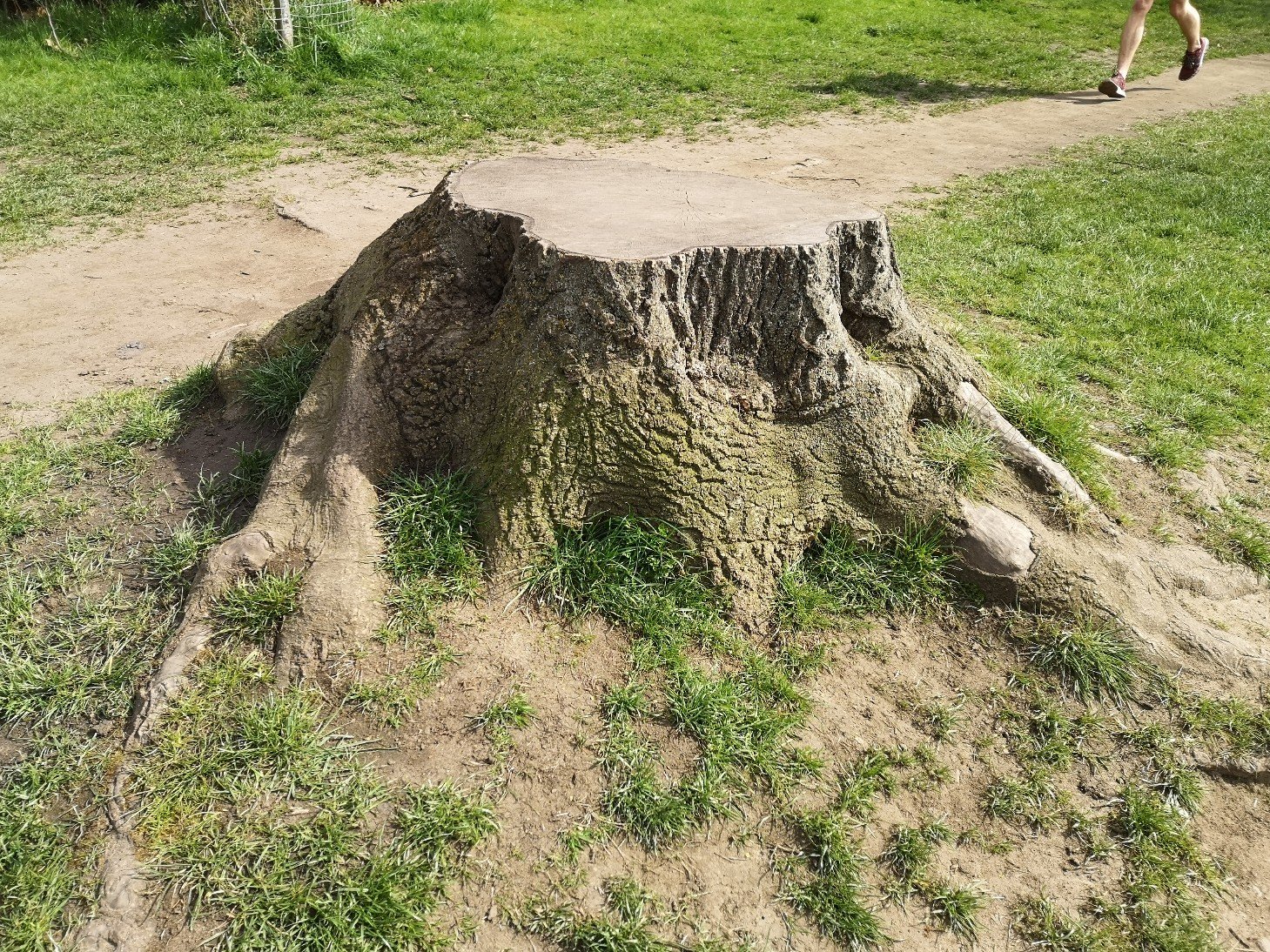
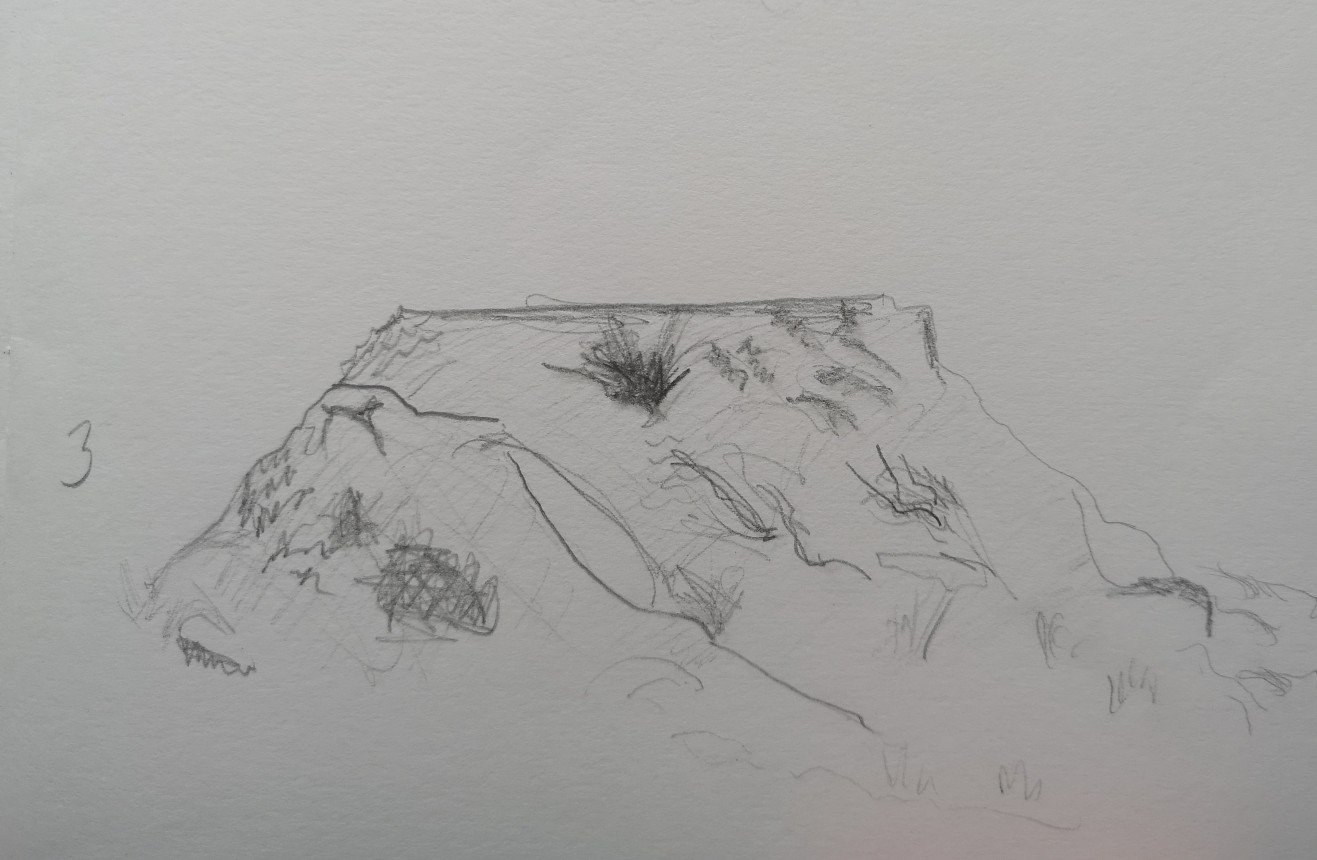
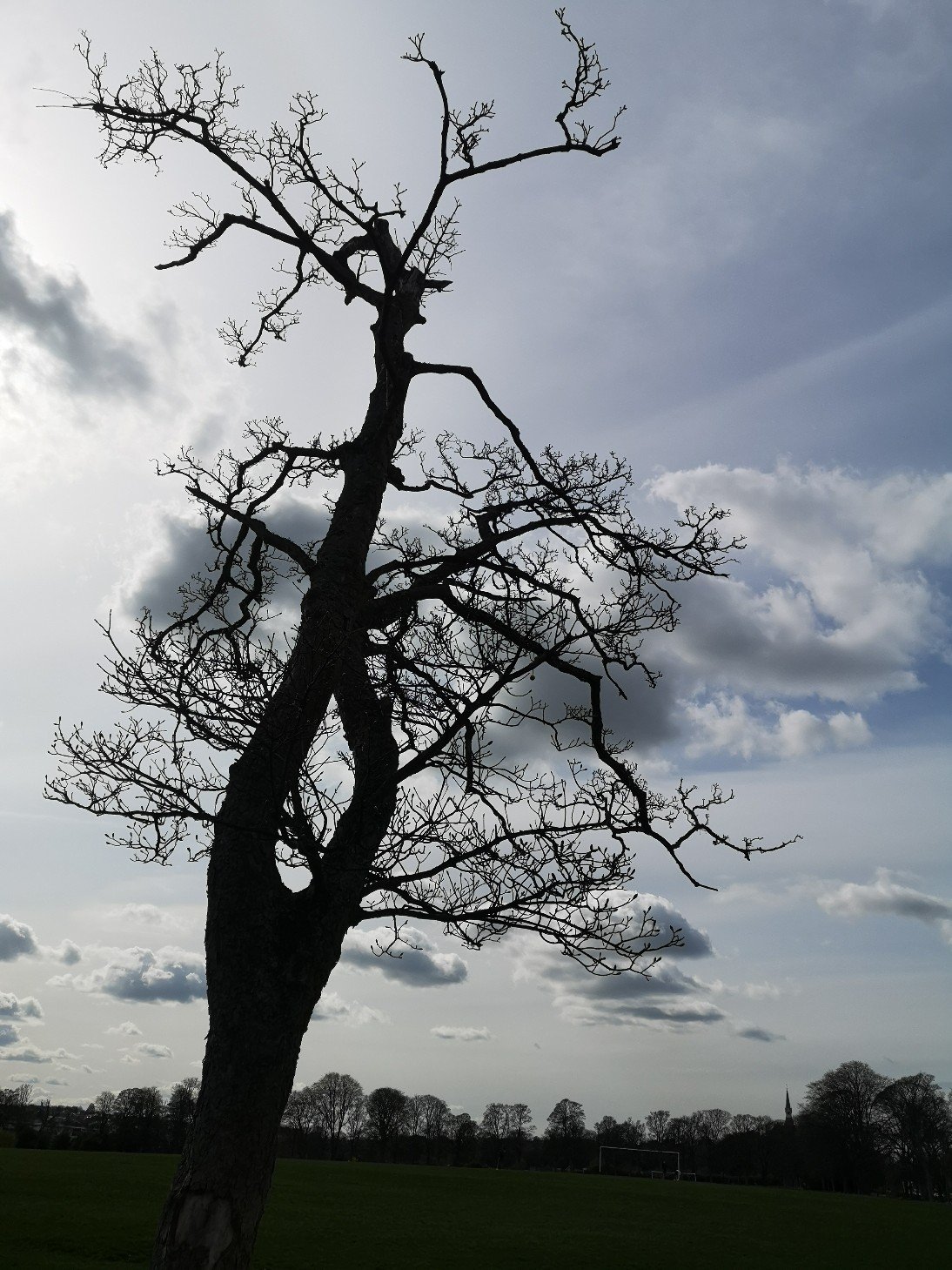
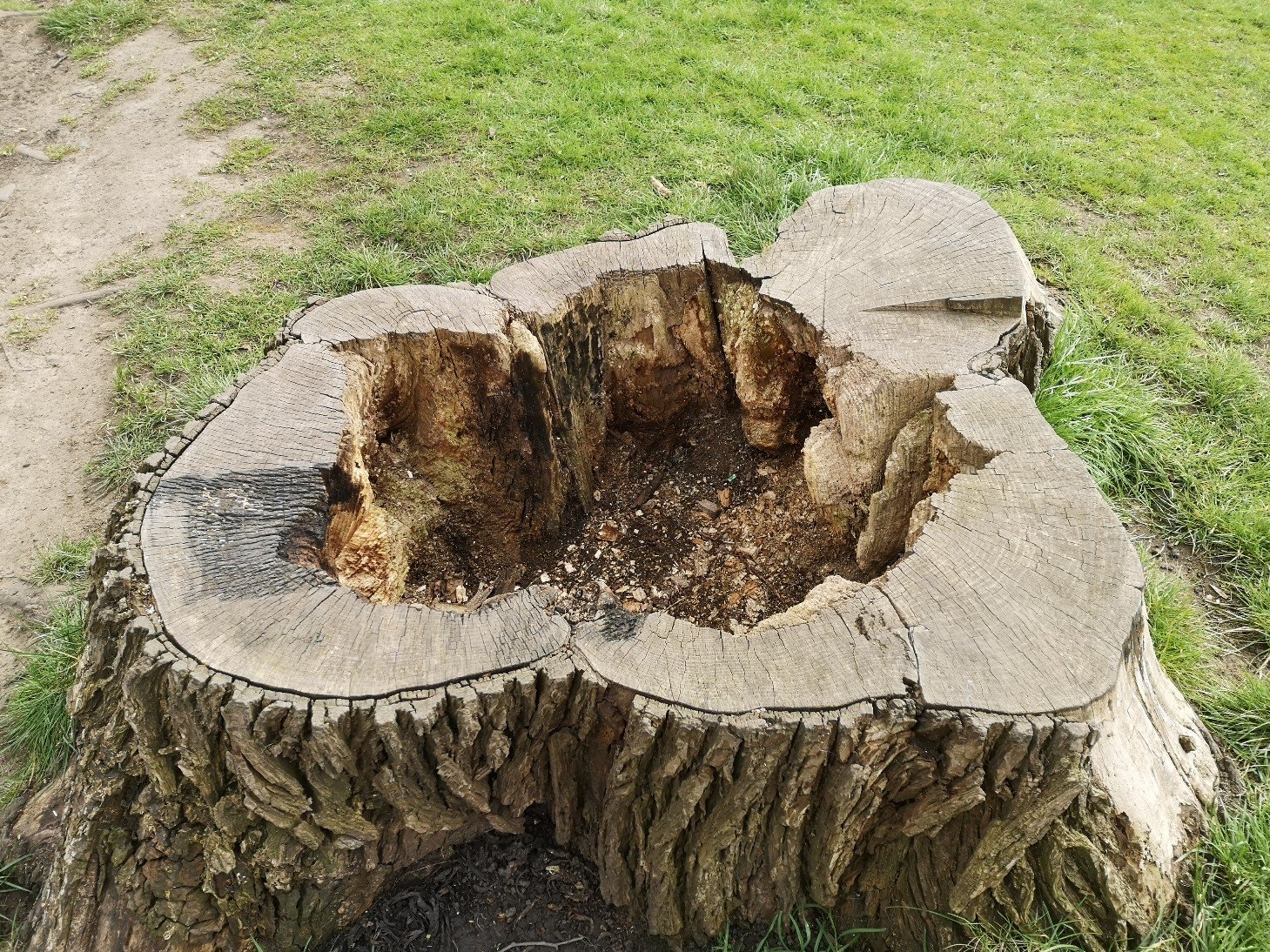
Warmer, wider and flatter under my bottom, I have lots of space on this tree stump. My lower back tilts which relieves the pain. I am facing north now, but I have the same awareness of people perhaps coming from behind. Cars wheel beyond the hedge which doesn’t seem dangerous because, to my knowledge, one has never driven through it into the park. Then I realise danger can come from above and see that the tree top obviously fell down, though presumably in the recent storm and not on a day like this…
Blasted tree
I can smell the sun on my skin and when I touch it, it is warm. I put my warm hand to my cold nose. The wind is coming towards me here bringing…. what? Ice from the Arctic? Again, my feet are off the ground and it strikes me that this is less safe as it would take me longer to put them down and run away. Footsteps behind me; I know they are male. They come up, go past, without stopping. The taste (yawn) is of old apple. Mhmm. And some metal.
Moving on, I thank the man who has painted the pavilion a gleaming privet-green. He’s busy clearing a thin layer of turf from around the perimeter. We chat about the public toilets they installed late in lockdown and then took away again because someone had to watch them all the time due to the vandalism. He said that there is already “a Ladies and Gentleman’s Cloakroom” in the building, so all they needed to do was to make it accessible for people with disabilities and then there would be a permanent facility. I said, no-one ever asks the people on the ground who know.
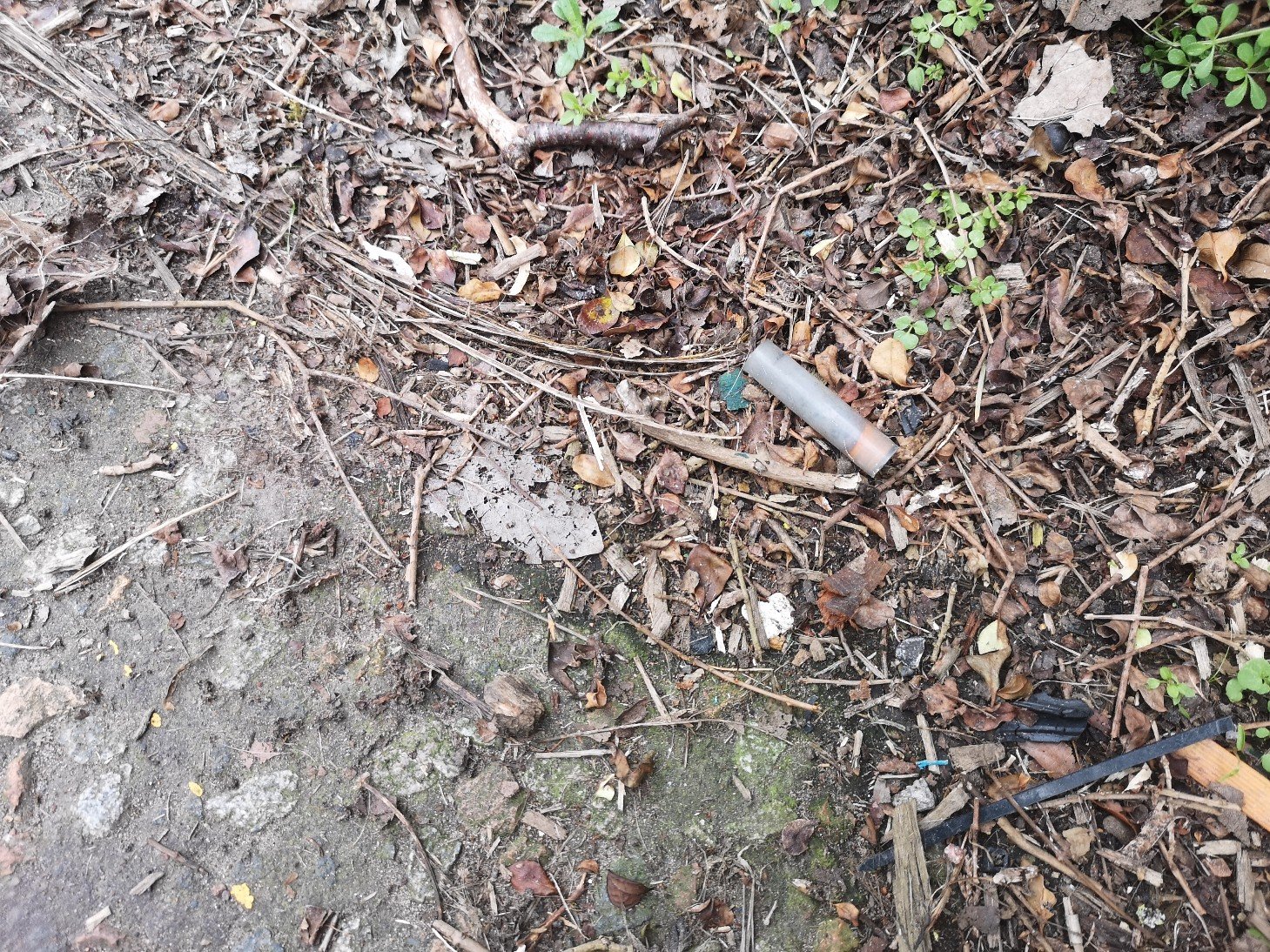
A spent shell?
Emplacement 4
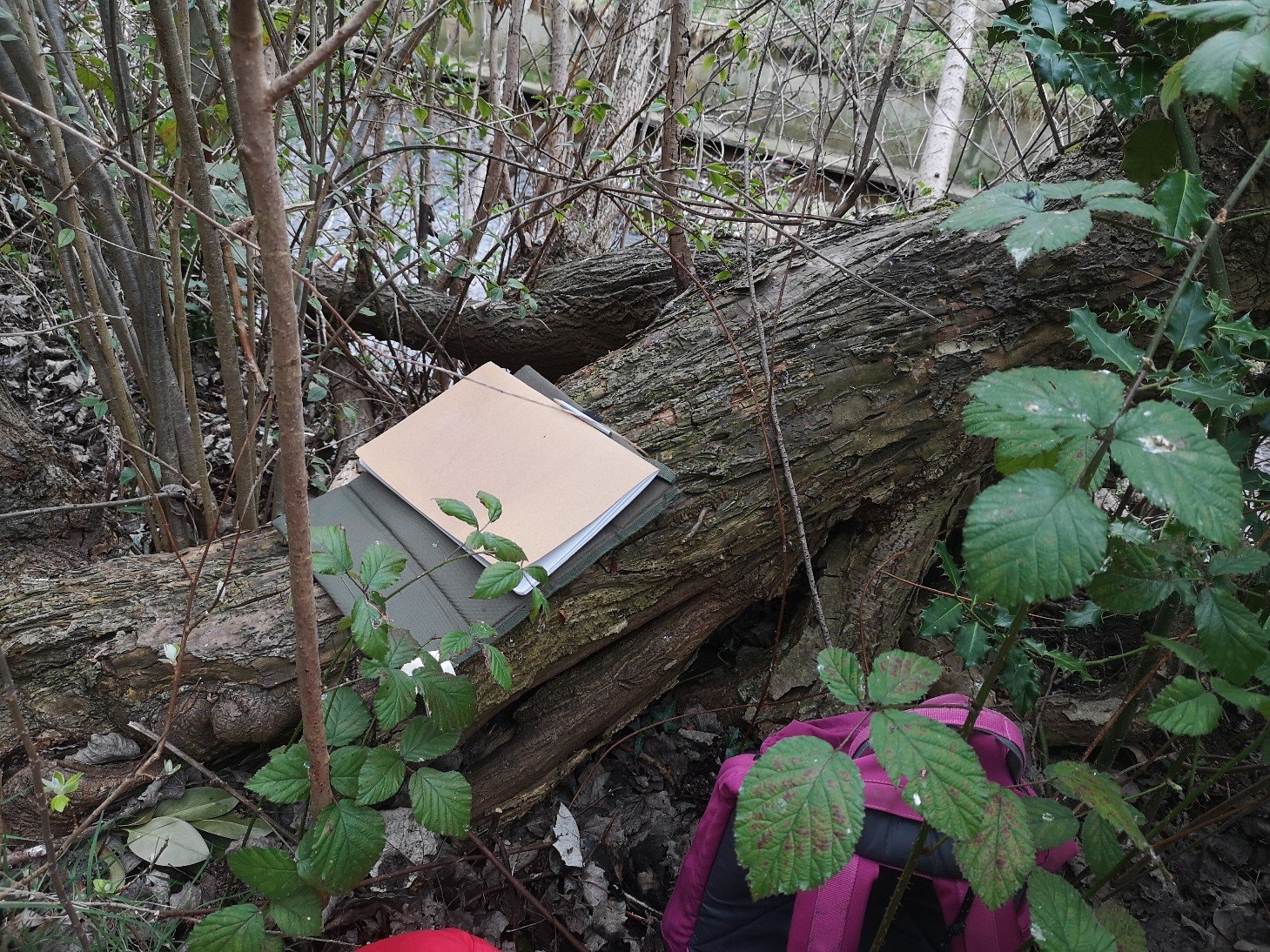
I am amongst insistent birds, beside the ever-running Water of Leith, on a hard log. The brambles are intrusive. Or maybe I am. I smell humus and rotting plants, someone smoking weed. I taste coffee (a mid walk treat), and there’s the touch of cool, smooth, dry bark on this knarled trunk.
People walk right past but don’t see me – I’m by the Rocheid Path but off the beaten track. The car sound pollution is distant. The rambling couples always come back in the other direction after a few minutes because it’s a dead end.
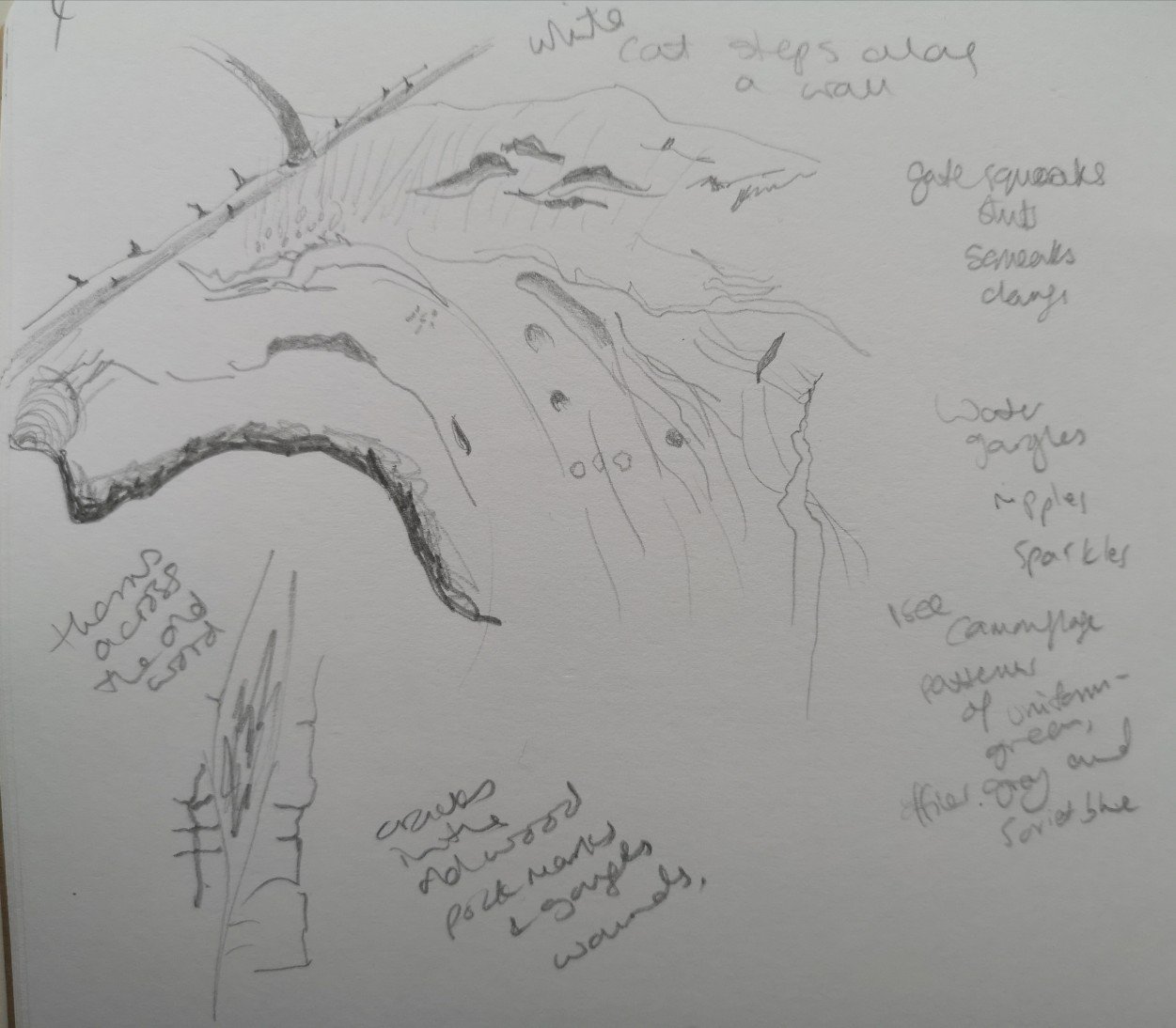
I try to sketch the detail of the log
I wonder, will Putin withdraw, or are they just regrouping for a heavier bombardment? It sounds like he’s out of rubles but… . I am obviously carrying the story with me as I walk, snippets of it anyway.
Tickling leaves at my neck, ants (maybe) under my thigh.
I see drops of ‘blood’ everywhere
My scarf is getting ruined, snagging on the thorns – as if that’s a big deal, in the circumstances. When I try to wind it around my neck again later, I am scratched because portions of blackberry branches are still stuck in it. Invisibly.
I ask myself, how can I maintain awareness of these horrifying occurrences and still live comfortably here, and Richard suggests that we could focus on better understanding “this connectivity between us all”, and I know that this is what these walks are about. I’ll share the walk, invite a response, and celebrate others’.
At 15.35 I am tired and I wonder if the Gloucester lot are having tea. I try to imagine where they are and what they are doing, without the aid of a newsflash or twitter feed.
I start on my return home with the scent of wild garlic in my nostrils.
ShatteredDouble gravesTrappedImpaledClinging on
I pick off an individual leaf of lavender and squeeze it between thumb and finger tip. I inhale for the pleasure and calm.
Sending our best wishes to the people of Ukraine, that they might find safe and still places to become embedded once more
Finding Refuge, Looking for Shelter by Lucy Guenot
In Walking the Land, we connect with each other via computers and phones. You can imagine these ‘meetings’ as emplacements, still places in which we innovate, stabilise and share our ideas. Then, see how we move out into the landscape on our walks, dynamically. If we stay in touch with each other as we walk, using What’sApp maybe, or even tweeting with a hashtag #, we remain in contact via a collective still-point while we move at the same time. If we post on social media after the walk, representing the body movement in ‘stills’ and fixed words, there is a further version of this ‘dynamic stillness’.
If you have work to share in response to this walking prompt, please send it to tamsinlgrainger@gmail.com
22.12.21 Please refer to the previous blog before reading this one as it explains the premise of the walk and my plan. Phrases in bold refer to the walking score prompts.
As we move towards a repeat of last winter’s restrictions on movement due to the Covid-19 pandemic, I took my Solstice Walk #52More No.16 as a collective endeavour – remotely with Elspeth Penfold and Blake Morris who devised it, and with my friend T. We had planned to lunch at a café with our daughters (6 between us), but the Scottish guidelines changed on Monday to a maximum of 3 households at any one meeting, and B and A both wanted to limit the possibility of picking it up in case Xmas and New Year plans are jeopardised. So, T and I could not do away with the outside; instead, we had to do away with the inside – and brave the cold.
The walk, Silverknowes, Edinburgh
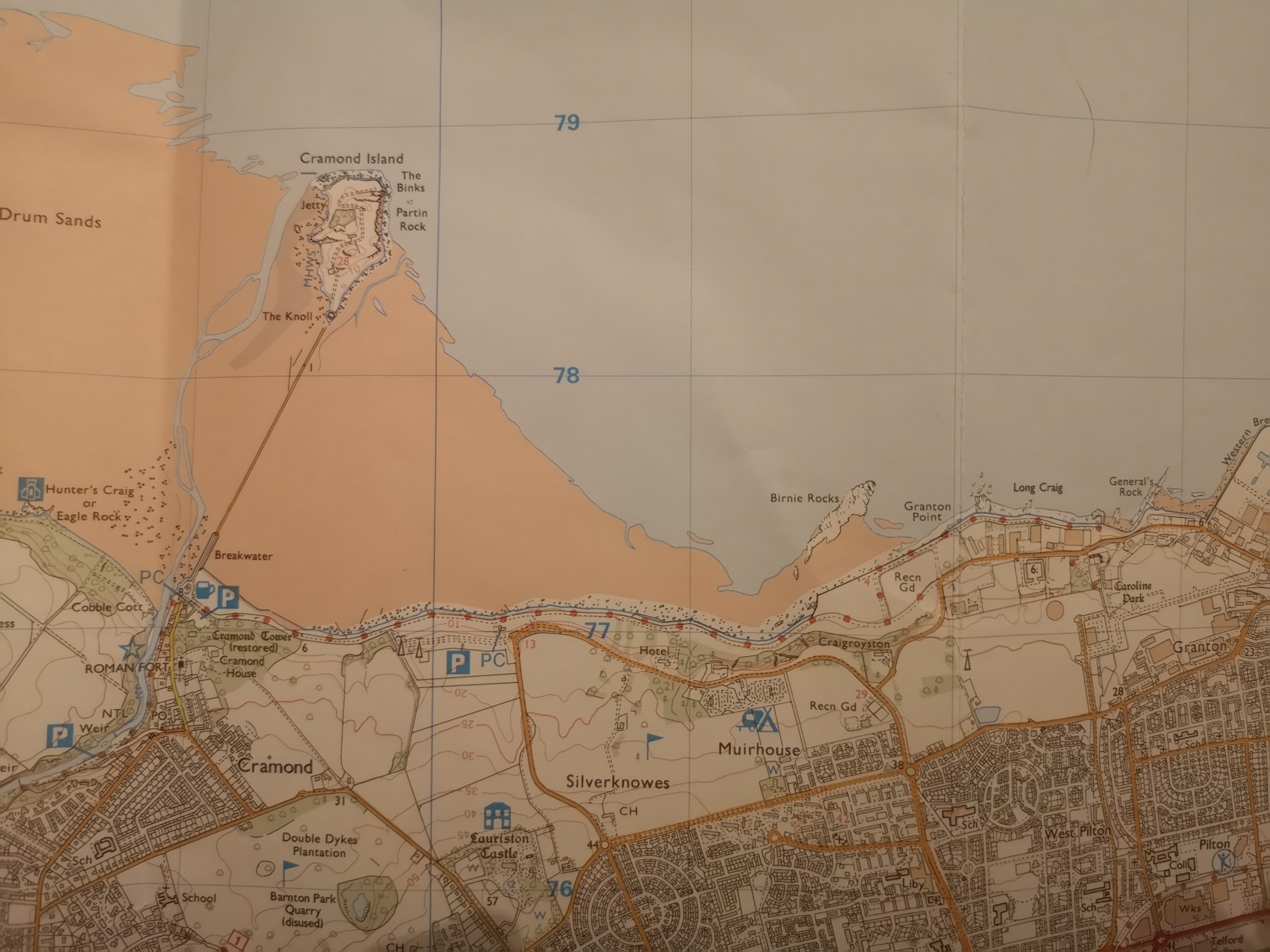
We met at Gypsy Brae and walk towards Cramond, through Silverknowes, a notoriously windy and exposed stretch of Scottish coastline.
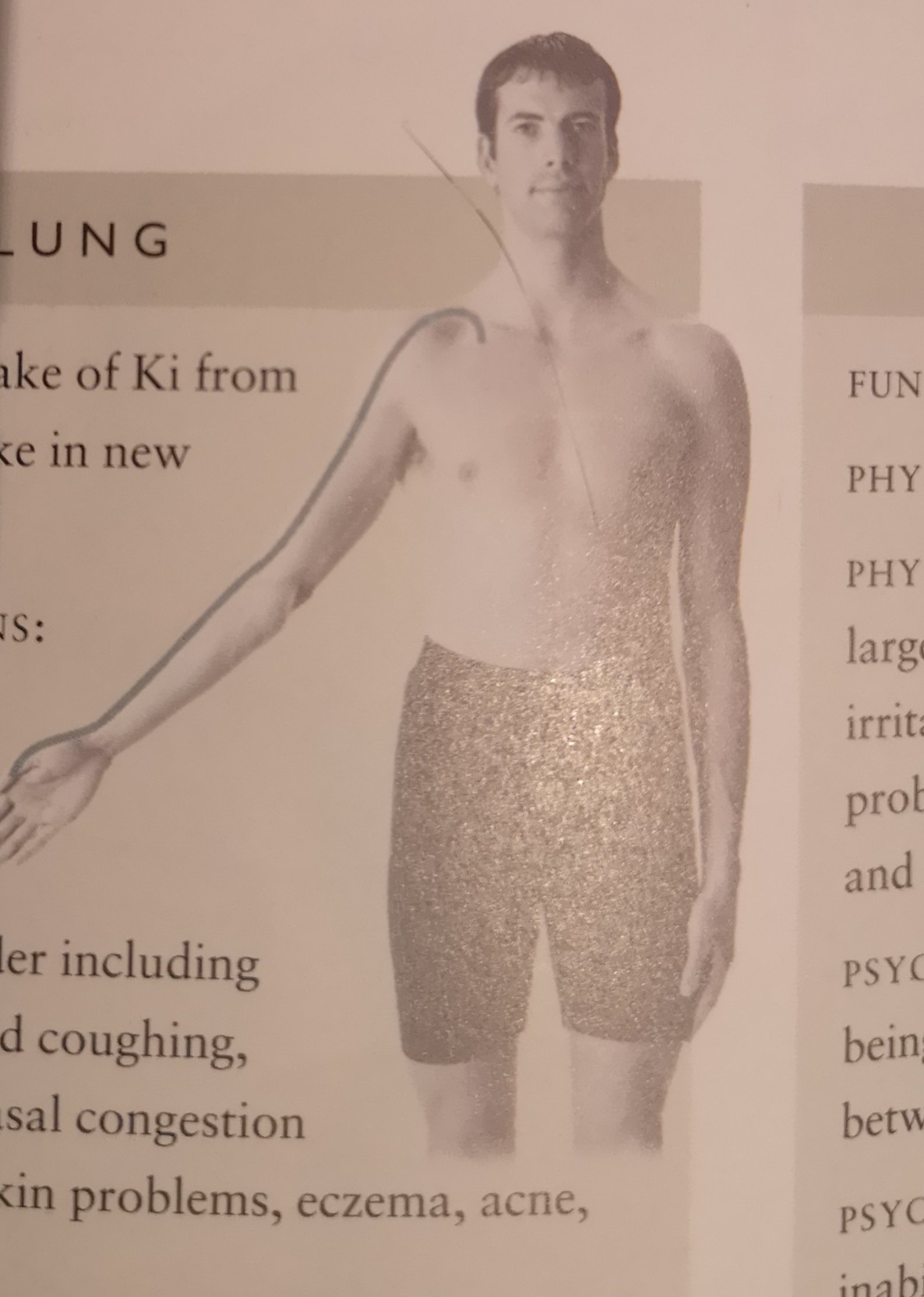
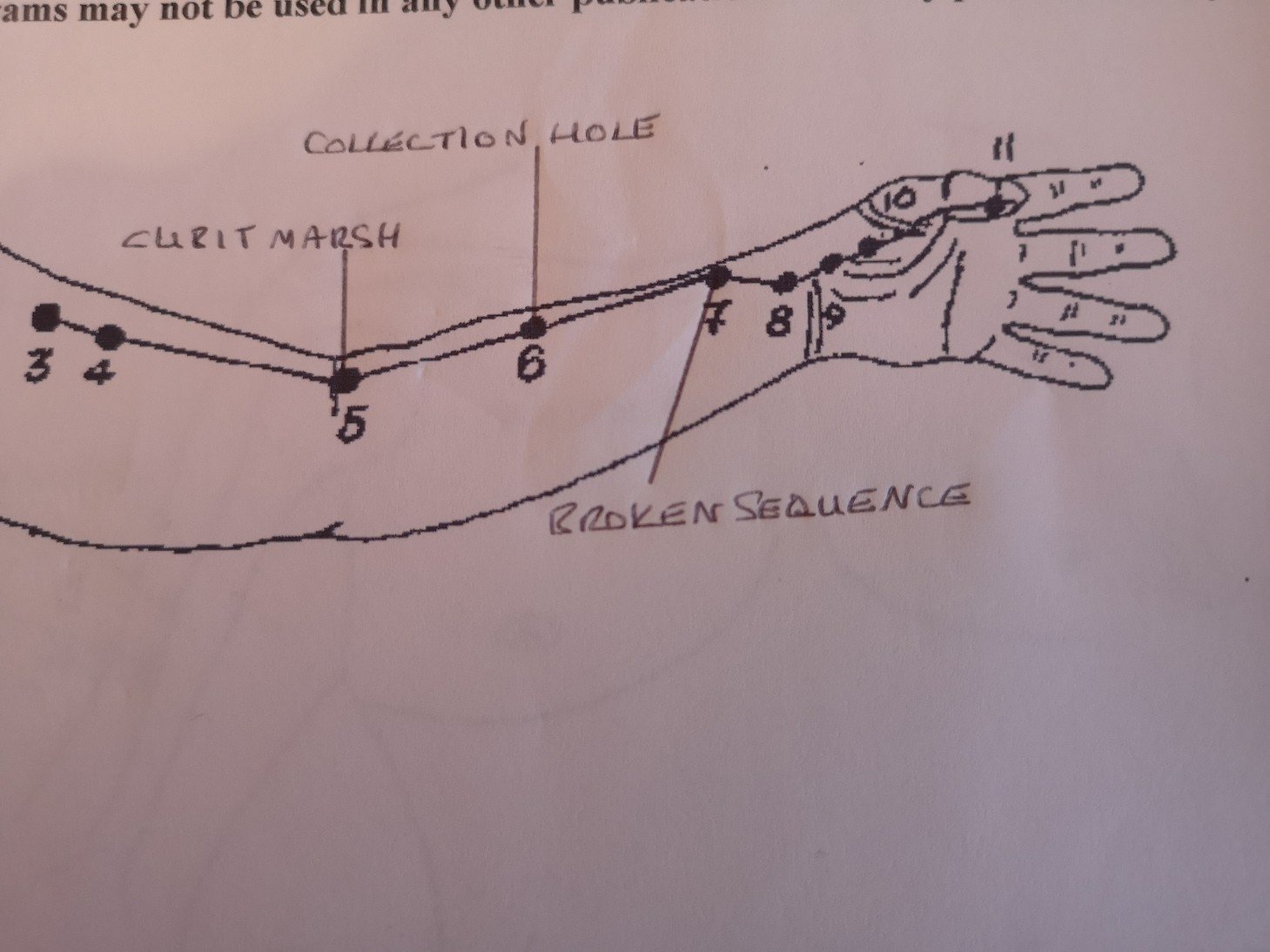
I was invited to walk through a book and I stretched that a little by using an app called Tsubook which I contributed to a few years ago. It shows the Shiatsu channels on clever body maps which can be tilted and turned so that you can see all aspects and angles. There are views with bones, muscles and the internal organs to enable the practitioner to identify the location and relationship of the acupressure points in as much detail as they want.
I chose the Lung meridian story. The points all have Chinese pinyin names which have been translated into English, and they sound surprsingly similar to the names on Elspeth Penfold’s Map of the Forbidden City which she used for her walk. In addition, we were walking and asking, ‘how does walking function as a storytelling mechanism?’ and these channels have a sequence about them. The Yin meridians often begin close to the central core of the body, and as they flow along, carrying or containing the chi of the Organs which give them their name, the points or access places along the way reflect the journey that the chi takes. From large spaces (in this case, a Palace) through rivers and ever smaller tributaries, they move outwards along the limbs to the small bones of the fingertips and the border between us and the outside world, the people whose skin we touch with ours.
Chi
We struggle to adequately translate this amazing word because it contains so much. It can be thought of as energetic vibration. In earlier times, people were better tuned into this aspect of themselves than most of us are today.
Many centuries ago, the Chinese believed the body was sacred and should not be cut up. Even if it was damaged through an accident or illness, the aim was always that it should be repaired sufficiently so it could eventually go on to meet the Ancestors in as complete and whole state as possible. They didn’t dissect each other, nor examine their insides, but instead relied on how they felt, using metaphors and comparing the sensations to what they knew well, which was the natural environment in which they farmed, fished and lived.
The names of the acupoints are poetic and descriptive, encapsulating their individual and collective function (including that of the Organs) and the location. Thus, the sensation of the radial side of the arms, the internal sensation of the flow of chi which emanates from the lungs, which changes through our lives and at different times of the day according to our activities and the weather and external pathogens, is alive, it’s an on-going story.
From Elaine Liechti’s book, Shiatsu
I have known T for many years, since before the children were born, and we keep in regular contact. I consider the relationship with her to be one of the important ones in my life, and so it was good to share this time with her. When any of us walk, we don’t walk in isolation, not from each other, not from the landscape we walk through, and not from the world-situation in which we are situated.
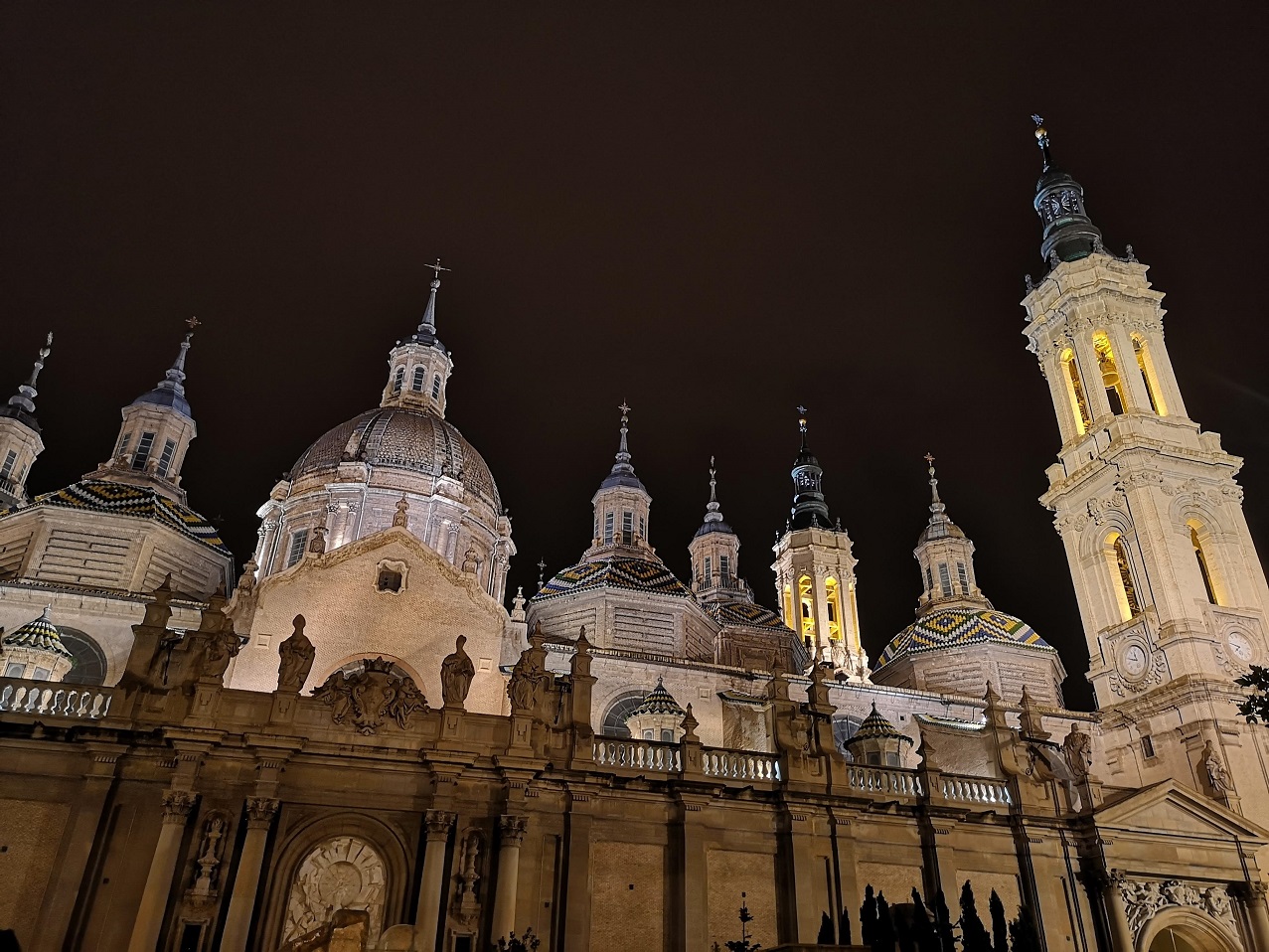
Basílica de Nuestra Señora del Pilar ‘Palace’, Zaragoza, Spain
Central Palace
The Central Palace is the translated name of the first point on the Lung channel, and it relates to the importance of the lungs. Their domed ceilings, interconnected corridors and meeting chambers play a the vital role in keeping us alive. It is in the lungs that we exchange oxygen and carbon dioxide and maintain a balance of gases. From an emotional and spiritual point of view, their function can be extrapolated to encompass the quality of our communication with each other, the literal noise we make enabled by the air passing through the throat, and by extension the gestures and movements we use for the same purpose, whether speakers or not. They are associated with our corporeal existence, represented by the breath which situates us right here in the present, and consequently the loss of the ability to exchange, and the absence of the breath which characterises death. Covid challenges all of that, affecting the respiratory system (coughs, sore throat, runny nose, the struggle for breath), and our exchange with the environment (smell and taste) in addition to our need or instinct to withdraw from each other and feelings of alienation.
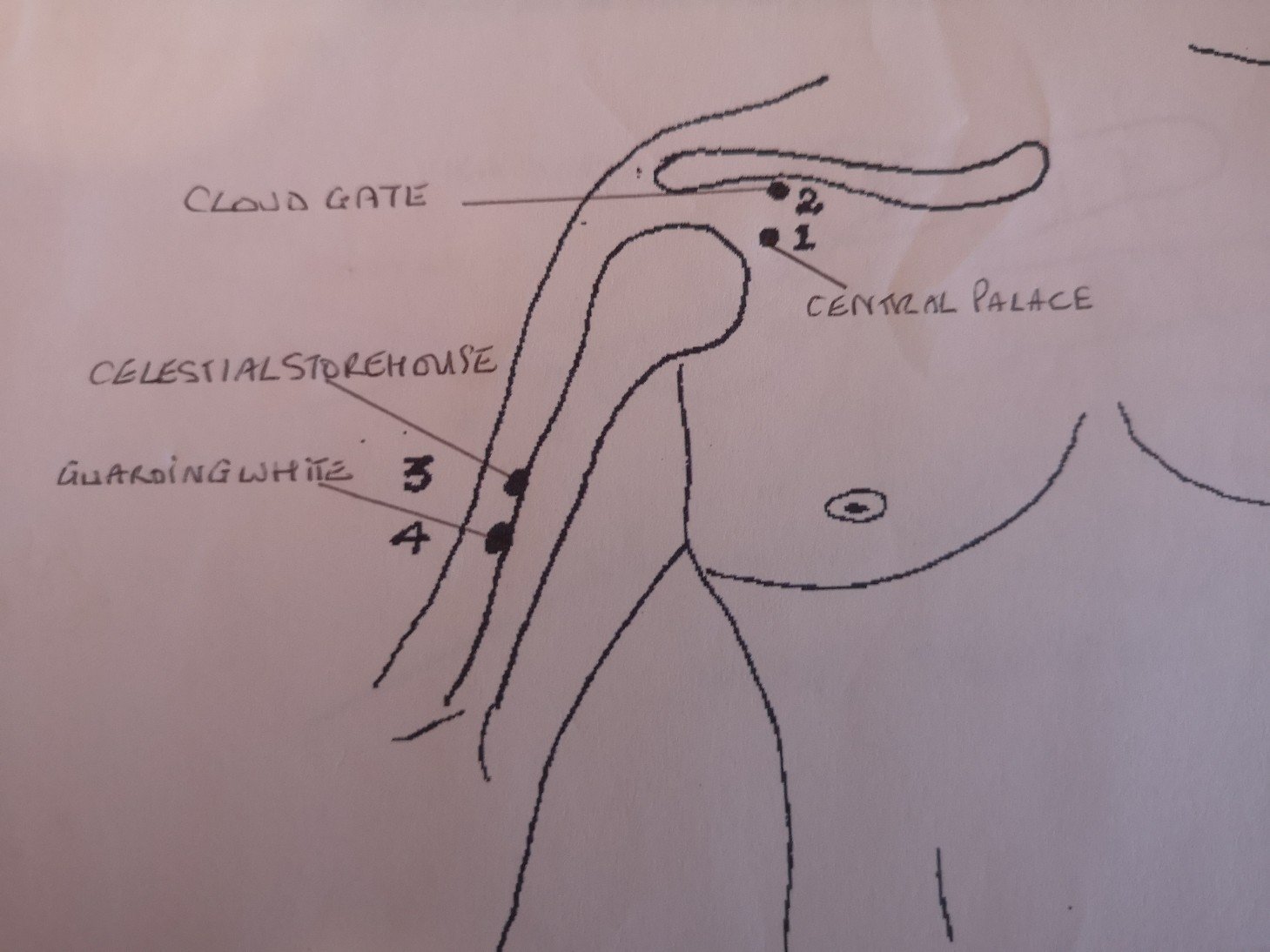
Lung 1 – 4
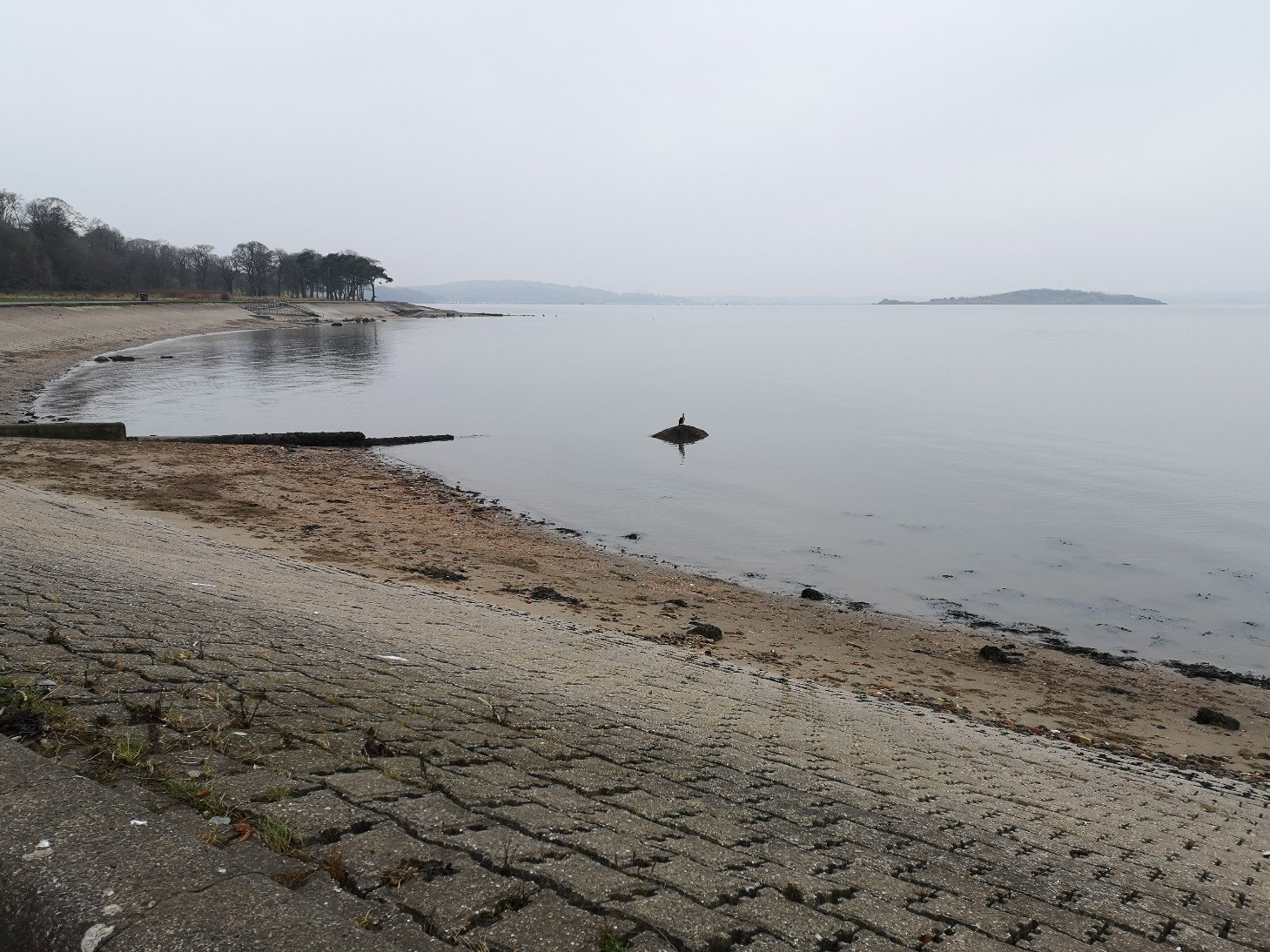
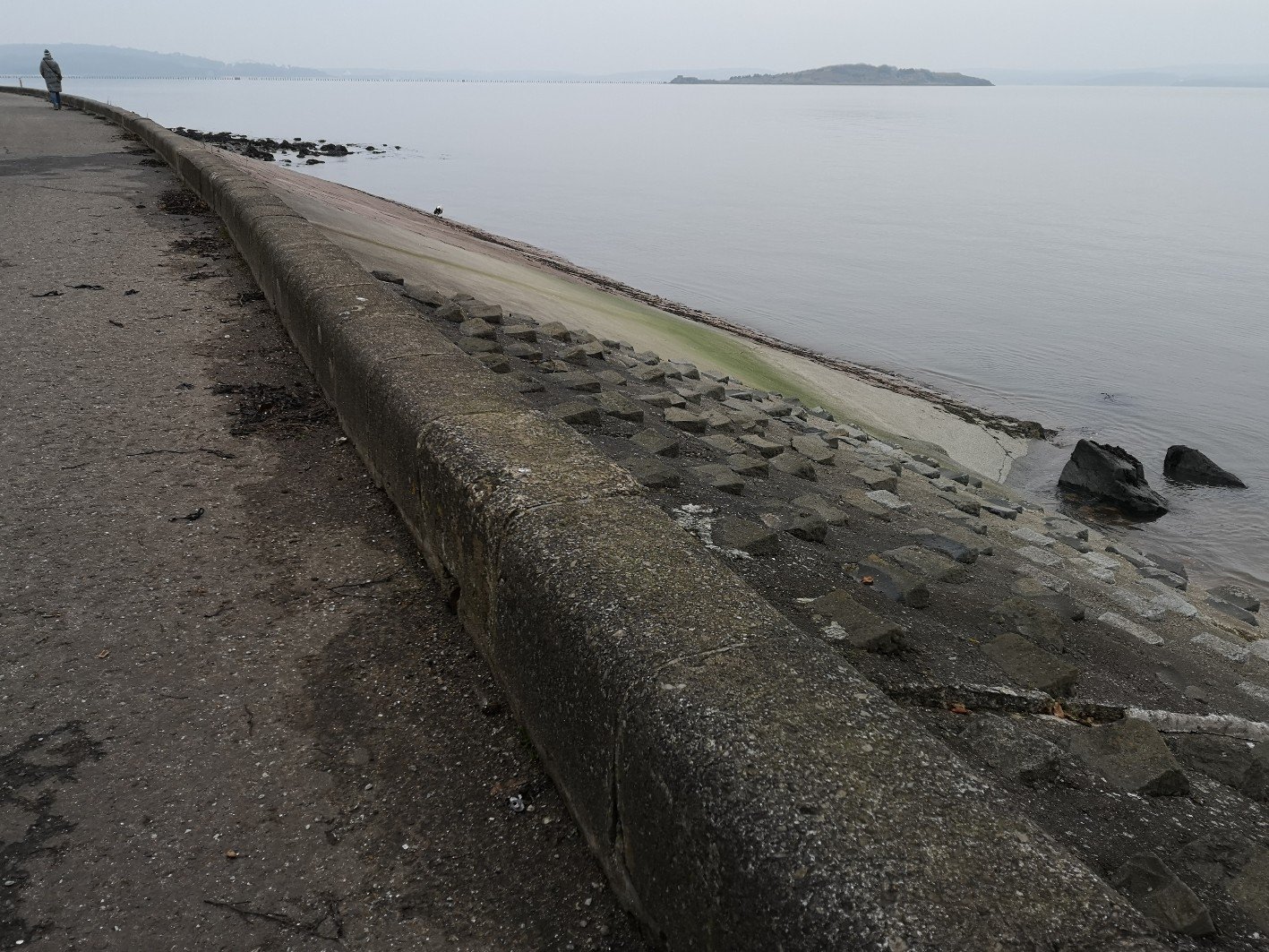
Our walk-story begins from our central location, home, and the travelling homes which are our metal cars, in other words our Central Palace. (I would usually walk there but I was going on to make a large Xmas food shop). Shiatsu practitioners and acupuncturists touch or needle this point to sedate the Lungs, to calm and smooth the Lung chi in cases of coughing. T and I are saying ‘Hello’ and ‘How are you?’ and catching up with each other. We walk on stone, beside low walls where small dogs trot, and Cramond island, separate and stately, stands out in the sea mist. The air is fresh in my nostrils and I take a series of deep breaths.
Cormorant and Cramond Island, Edinburgh
Cloud Gate
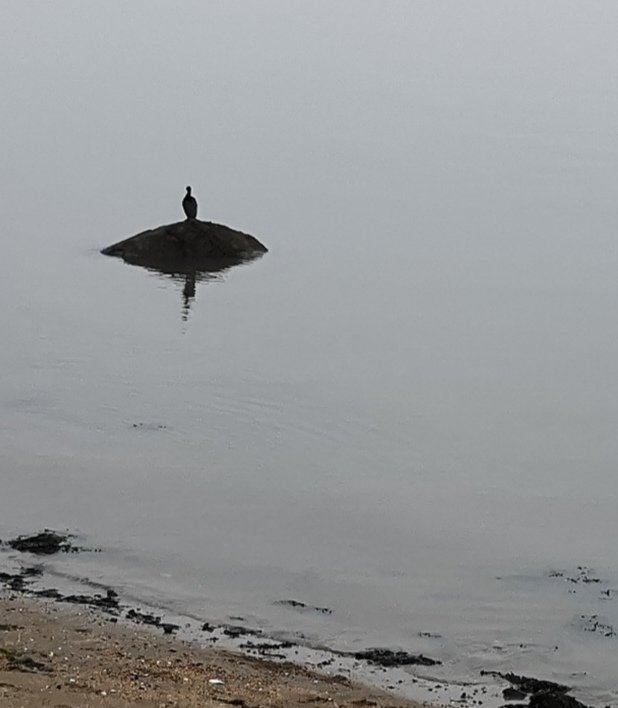
Above our heads is cloud, a lid of unform grey which has been low down for days. Cloud Gate is an acupoint which descends and disperses the Lung chi, giving the body the chance to redistribute excess phlegm away from where it clogs and stops us breathing and communicating. T and I are swapping work stories now, the busyness of the end of term, and the urgency of the festive deadline. A solitary cormorant stands on a single rock.
The distinctive shape of a cormorant (from a distance)
Celestial Storehouse
Other brave walkers stroll and cycle past us in the opposite direction, and ahead is a café, a Storehouse for sure, but Celestial? Its musak is only just audible from a distance, and we hadn’t yet got close enough to see the Buddhas which decorate it. The surround-sound, high-pitched voices of gulls intersperse our family chat – who is doing what and going out with whom. It has been noted that Lung 3, as we prosaically call it, assists with depression, characterised by isolation and lack of communication, as well as the familiar respiratory disorders. The towering and distinctive Scots Pines which we walk under have a dark, olive canopy drawing our gaze heavenwards.
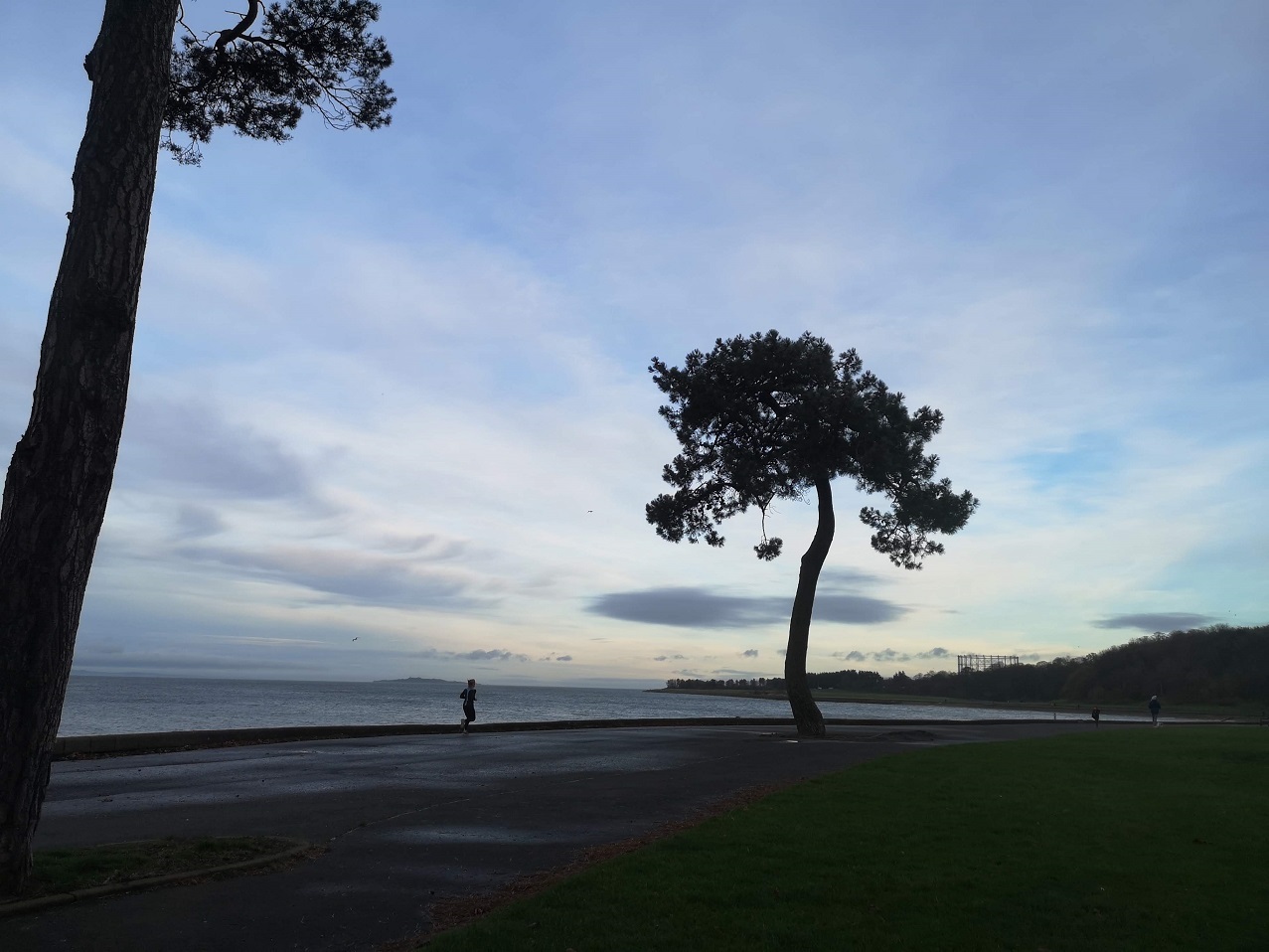
Silverknowes Scots Pine On another day when the sky was blue!
Cubit Marsh
By the 5th stage of the walk, we are onto the topic which sadly still dominates, and T told me that her G is ill with it in Glasgow, meaning she can’t join them for the holiday. We use Cubit Marsh, found in a small indentation at the elbow (cubitum), when someone is suffering certain types of pulmonary disorders. It is useful to think about the body having an internal weather system – prone to Heat and Cold for example – and, in this case, the acupoint is said to deal with Damp, something which is injurious to the Lungs, hence the name of Marsh, a wet and boggy place. It isn’t hard to understand why it is beneficial for infections, then, where there is discharge and snot. The water we are walking beside is very still, it barely circulates, and the Oyster Catchers simply sit, floating very slightly. Brine hangs in the air and the cold stings our cheeks.
Lung 3 – 11
Collection Hole
Reaching the café, we choose hot chocolate and wait at the hatch for our steaming drinks. The man who attends to us wears his neckerchief over his mouth and nose and serves at arm’s length, pushing the card machine across the surfboard which doubles as a counter. I tap without touching and try to make eye contact to say ‘Thanks’.
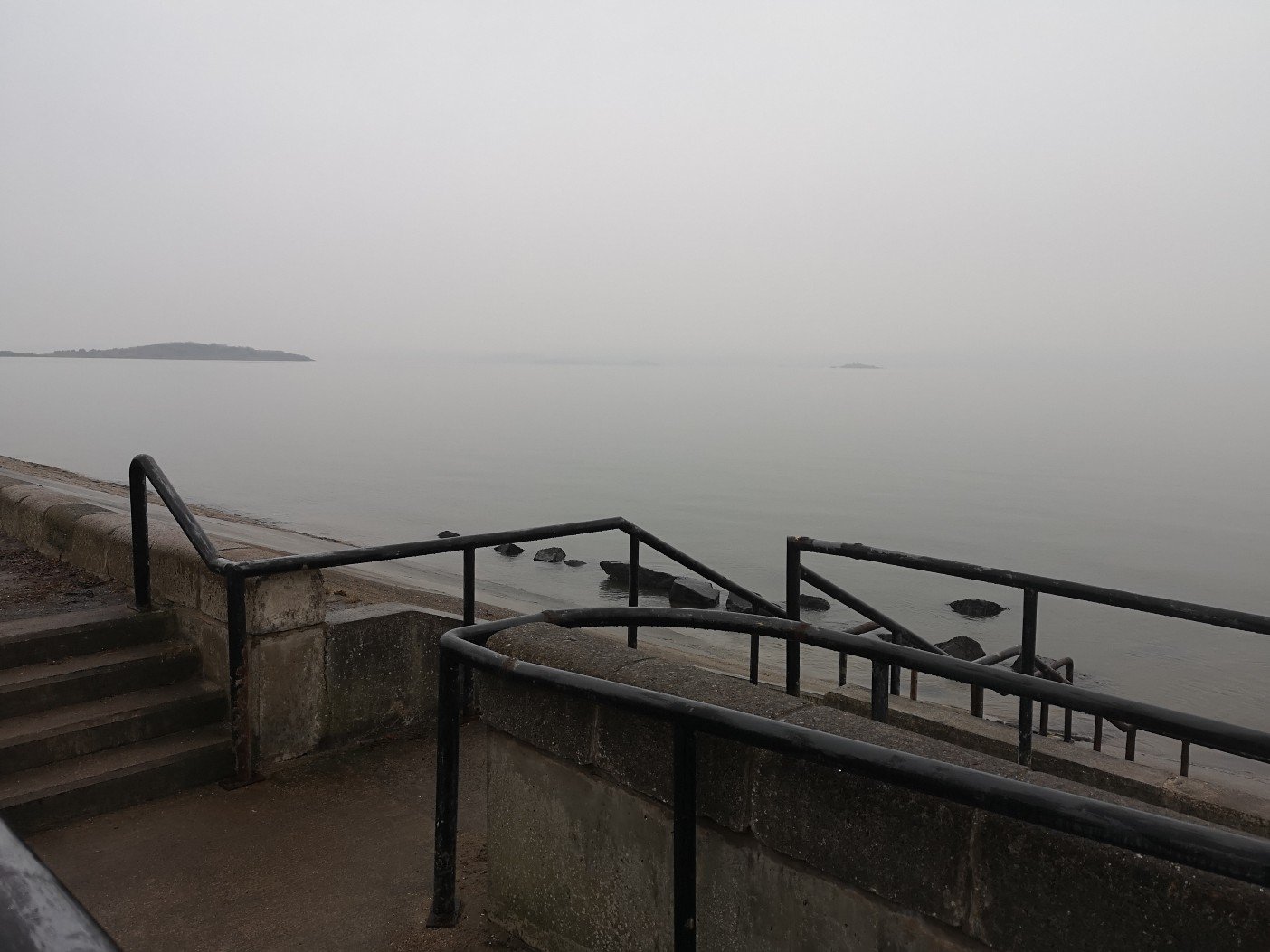
Down to the water’s edge
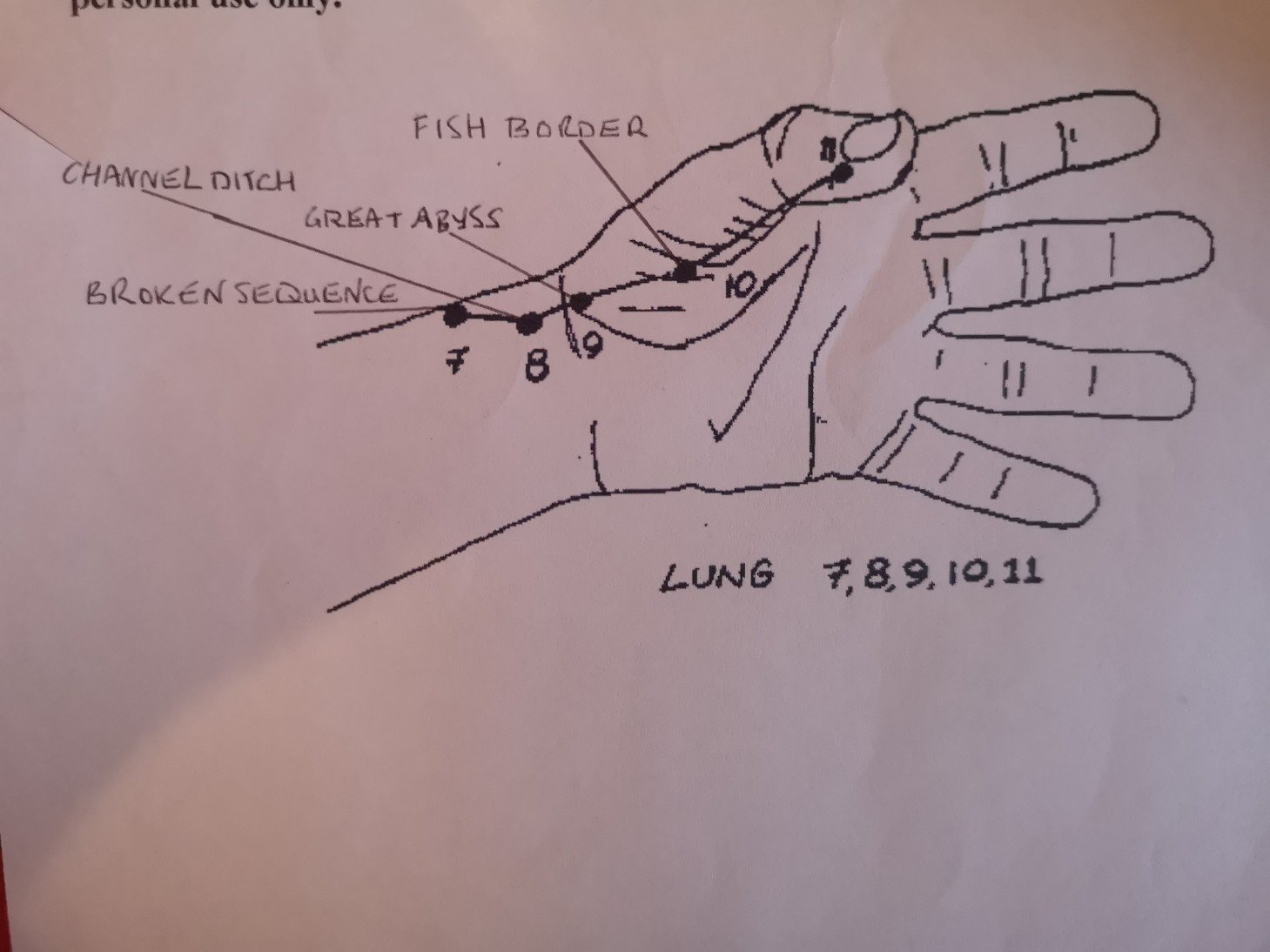
Broken Sequence
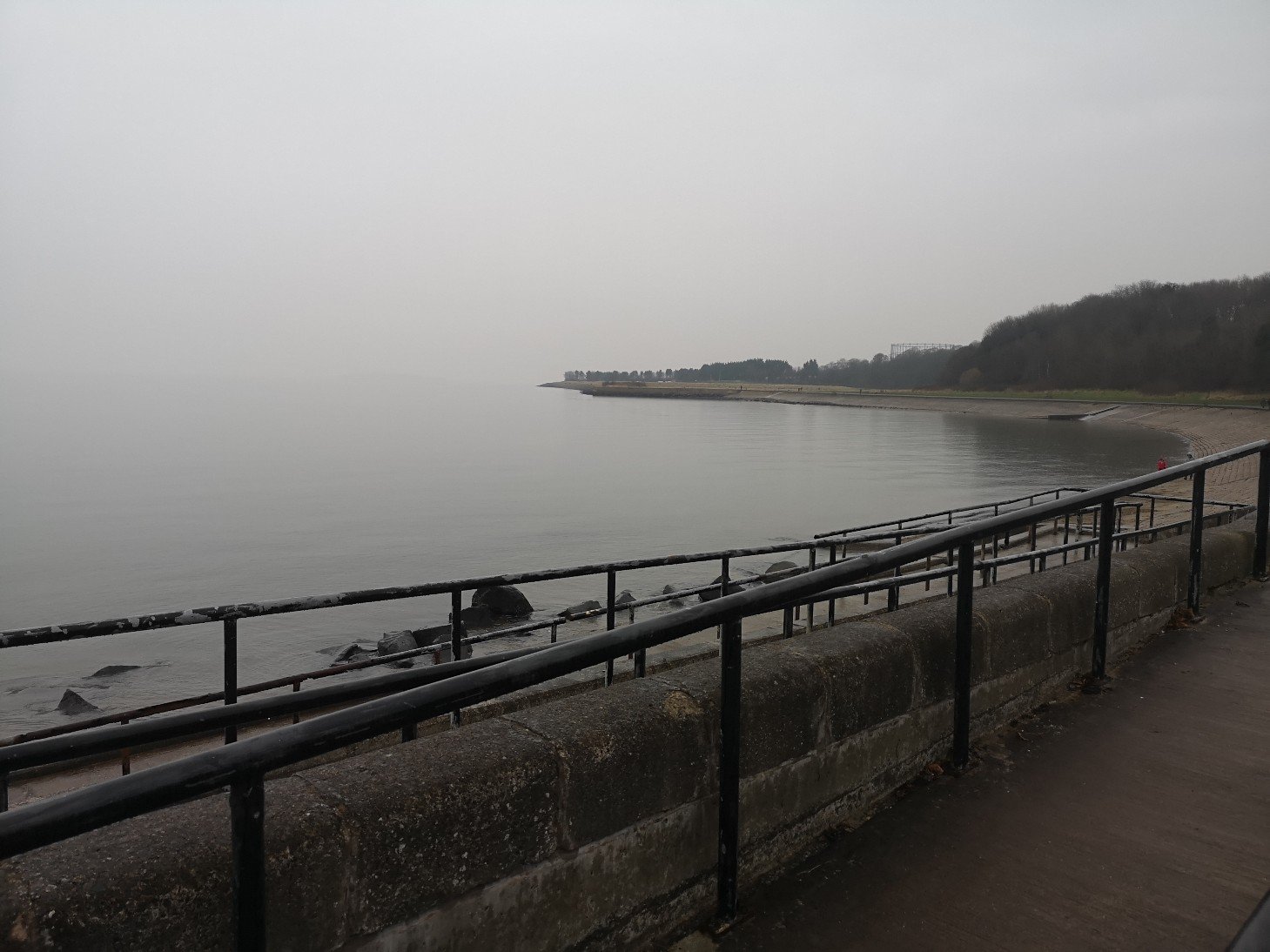
The Lung meridian now diverts to converge with the Zen Bladder channel (from the water element) and unblocks any stuck chi. At Silverknowes there is access to the foreshore where railings and steps break up the homogenous slate sea, leading down to the rocks and sand. Wind surfers like this spot and in the past I’ve watched them grasping the tow-line attached to a speed boat which zips and angles giving them the impetus to sail suddenly up into the sky, spray flying. It’s an exhilarating spectacle. We stop walking and choose a wooden bench, hoping it will be warmer to sit on than the metal ones. I had Covid recently and got off lightly with only a cold and a scratchy, irritable throat and tightness at the occiput (back of the top of the neck), which Lung 7, Broken Sequence, was very useful for.
Looking eastwards
Channel Ditch
Missing out no.4, we continue with the sense of depth that the Marsh at no.5 brought and the story continues with the second of four wrist points. With the prosaic chat now out of the way, T and I talk about matters close to our hearts and we turn tail under the spitting rain. We see the same landscape from the west now, the bay curving round to a finger of land that seems to reach out to the Kingdom of Fife. We are flagging a little as daylight thins and the haar descends, moisture palpable on jeans and bobble hats.
Lung 7 – 11
Great Abyss
The 9th point on the Lung Meridian goes even deeper, hence the name. It connects with the Po, often called the Corporeal Soul, the Lung spirit in Chinese Medicine. It connects with the spiritual aspect of ourselves.
the Po [also] allows for a tricky balancing act of living life as a human being, namely that of being a creature of spirit inhabiting the body of an animal.
T and I are nearing the end of our walk and we start to reminisce, remembering walks we took 30 years ago and relatives who have since died. It is satisfying to be able to connect with someone who knows my background so intimately. It stabilises me and gives a sense of shape to my life.
John Kirkwood continues,
Lung 9 is able to go down into the abyss, to the depth of the soul. It can retrieve a person who has lost their way, calm one who is manic, stabilise someone who feels like they are cracking up or losing control. In short, it can reach down into the very depth of a person.
Crossing the bar and, metaphorically, the wrist crease, we amble eastwards, an easy, flat trajectory which allows the focus to be on what’s said and on the feelings expressed, rather on the terrain. The short day (it being just after the solstice) closes in around us.
Walking west
Fish Border
We leave the edge of the Firth of Forth, home to cod and pollock where the tide is now receding, and head towards a gift exchange. We hug and make plans for the week between Xmas and New Year; T suggests we come to sit around their fire pit and drink mulled wine which sounds delightful. The Lung channel is nearing its end and the fresh air has renewed us. Our walk-story has merged interior and exterior, past and present, day and evening, sea and land: Yin and Yang. Two friends met in place, and in spirit I was with Elspeth, Blake and the other Solstice walkers, telling a tale.
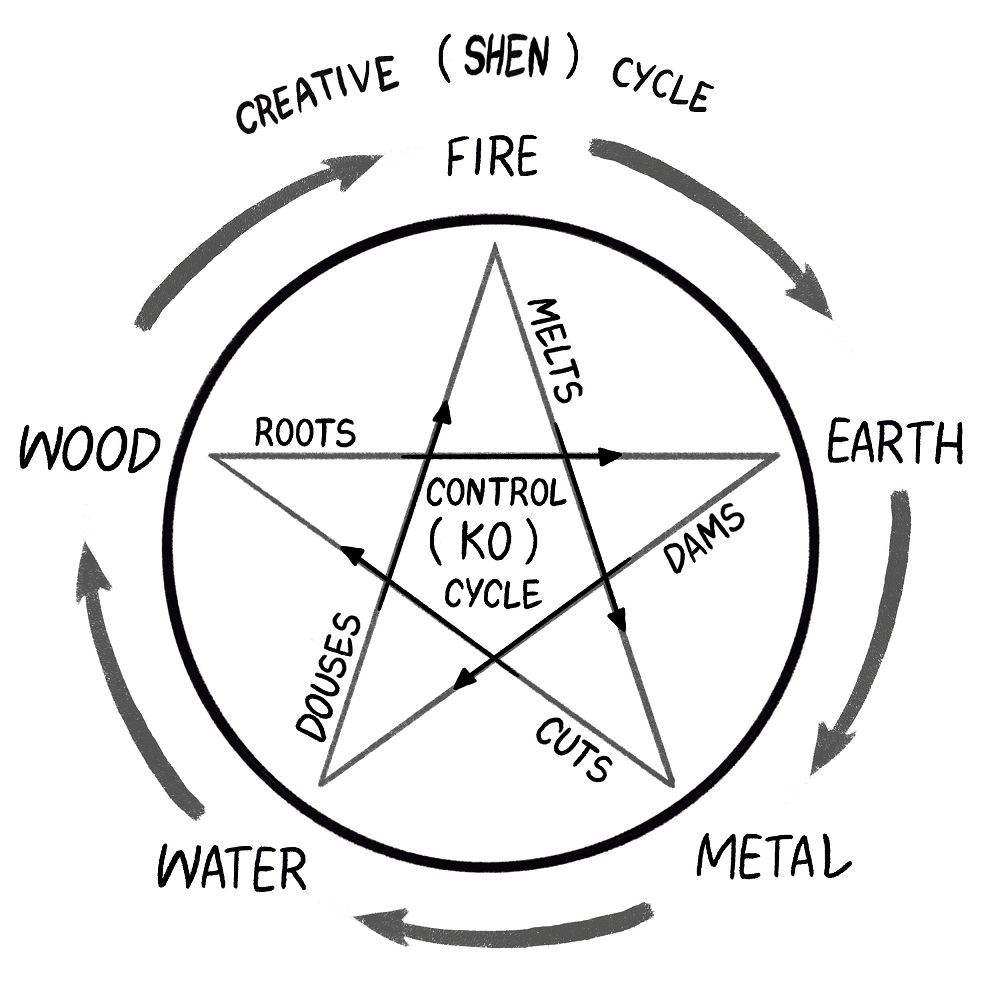
Today I am leading the Pilgrimage for COP26 walk from the Sculpture Workshop in Leith, Edinburgh to South Queensferry. The theme is ‘The Five Phases and the Ecological Crisis – a walk using the five elements of East Asian medicine to reimagine what it means to be ecological’.
The Sculpture Workshop, Edinburgh
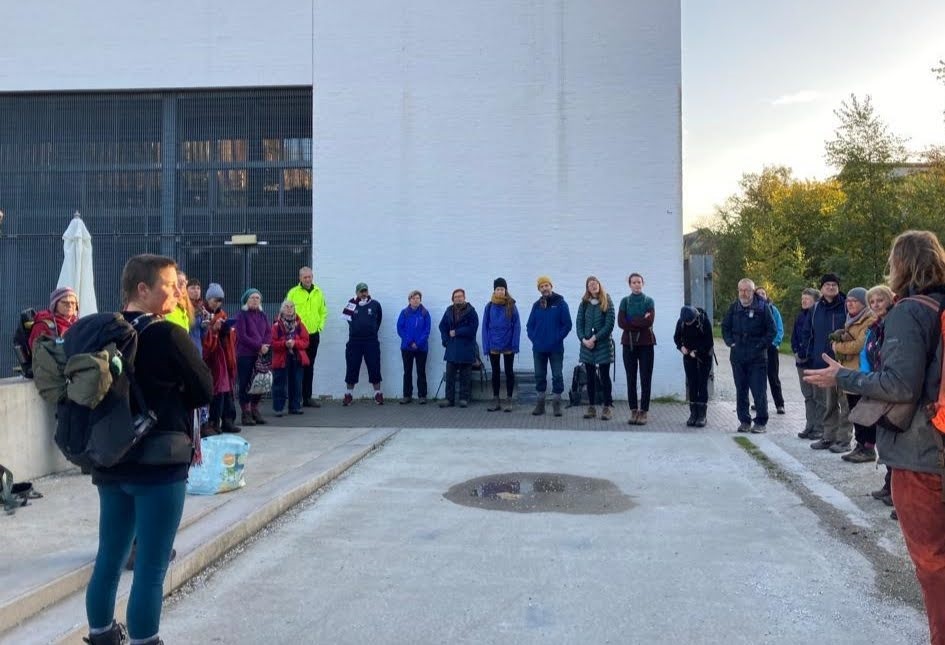
Pilgrimage for COP26 at the Sculpture Workshop, Leith. Photo Olga
There is a brief introduction by Jonathan Baxter, the organiser of the pilgrimage, to the Keeper of the Soils, the carrier of the Stitches for Survival (you can read about the latter two here), and to my walk supporters, Natalie and Ewan. Then a brief introduction to YinYang which underpins Shiatsu theory.
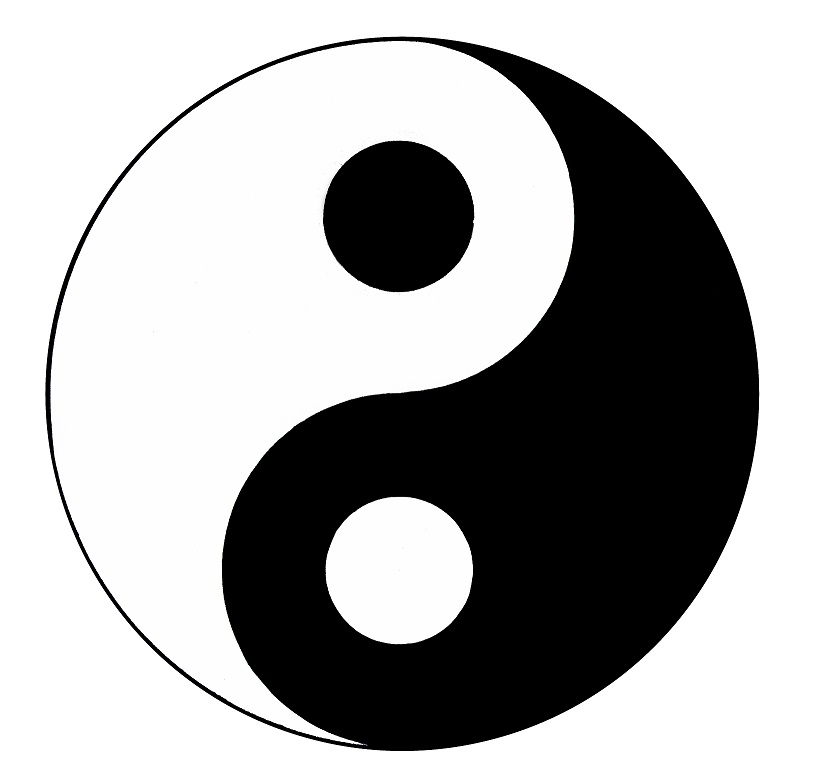
I explain how the circle represents the cyclical nature of things, a circumference of continual existence, whether in this form or another
The curving line which divides the circle, symbolises the dynamic interplay between Yin and Yang and the transformation of one to the other to maintain balance – the rise of those who favour respect and listening over those who opt for profit and power, for example
The black and white sections reminding us that we must address both sides of ourselves and our planet if we are to achieve balance, both the angry and the peace-loving, the scientific and the artistic
The small black and white spheres which sit in the opposite sides showing that the law of nature says there are no absolutes.
Diagrams showing YinYang and the Five Phases or Elements we use in Shiatsu
Stage 1 / the Metal Phase
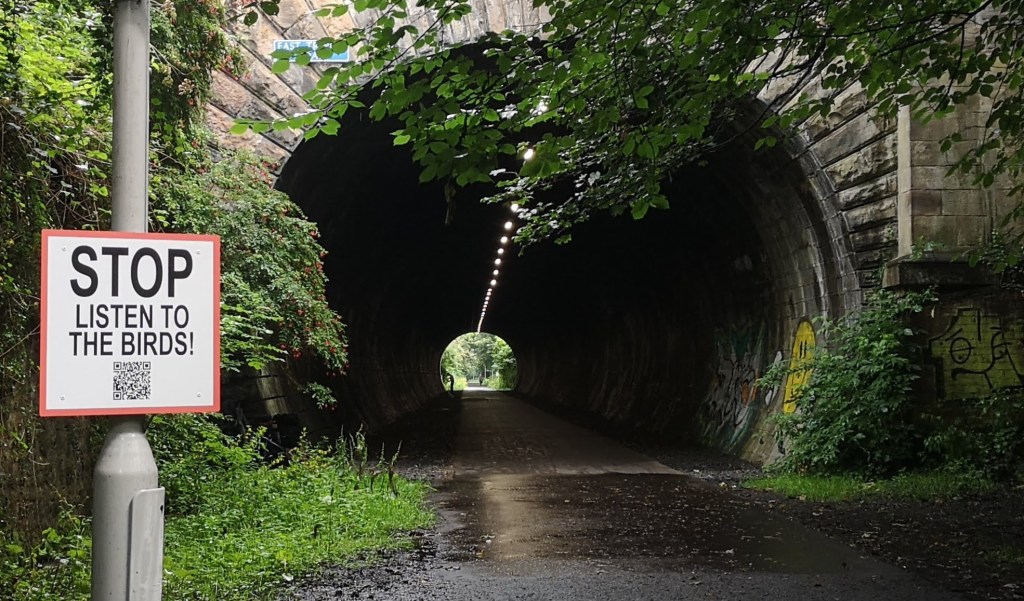
We start with the Metal Phase which encompasses the lungs and exchange of air in humans and with the wider environment. The Edinburgh cycle path is sometimes thought of as the city’s lungs and we take the branch from Leith to the Trinity Tunnel, Active Travellers focusing on air pollution and how we would like it to be.
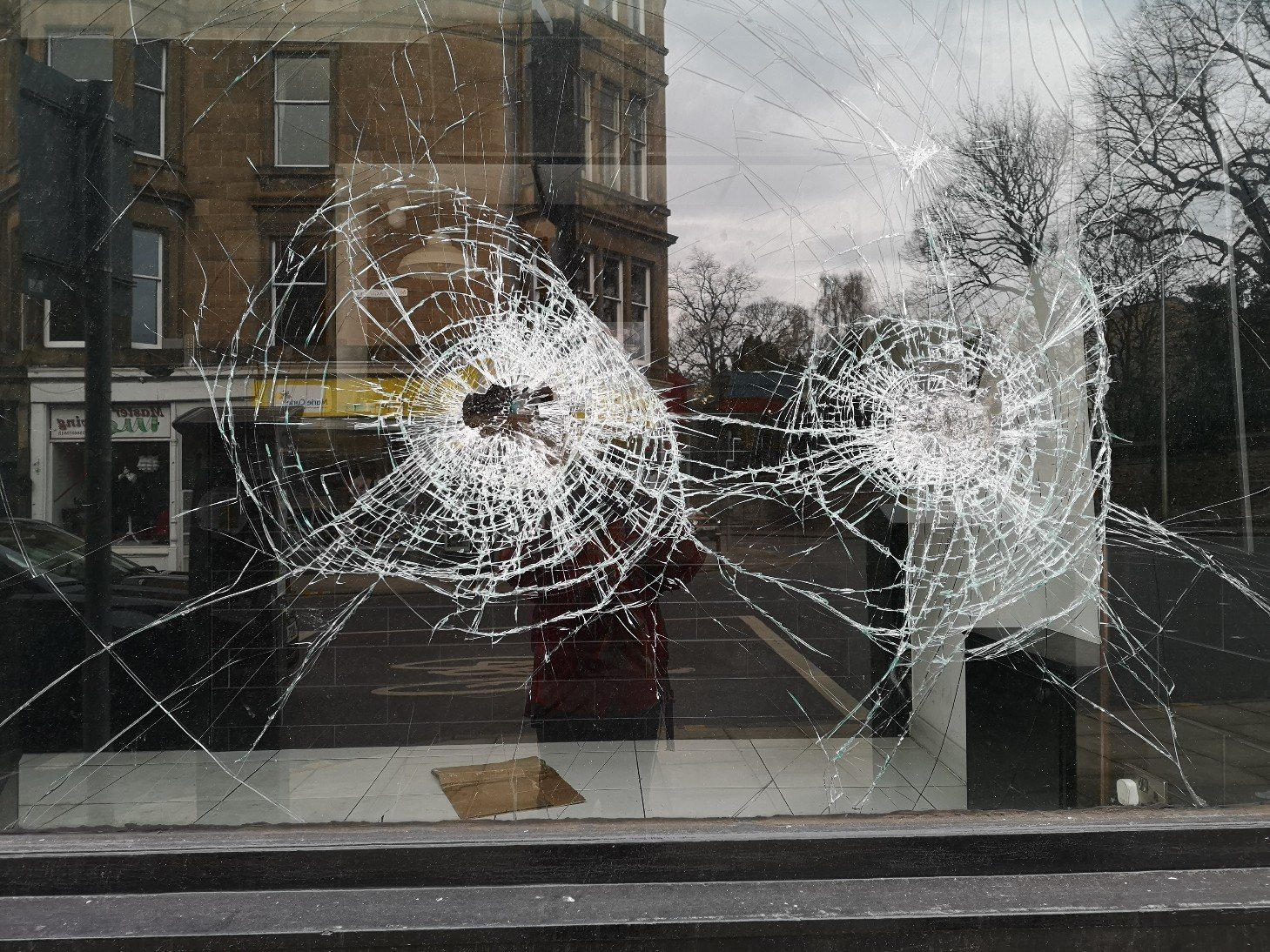
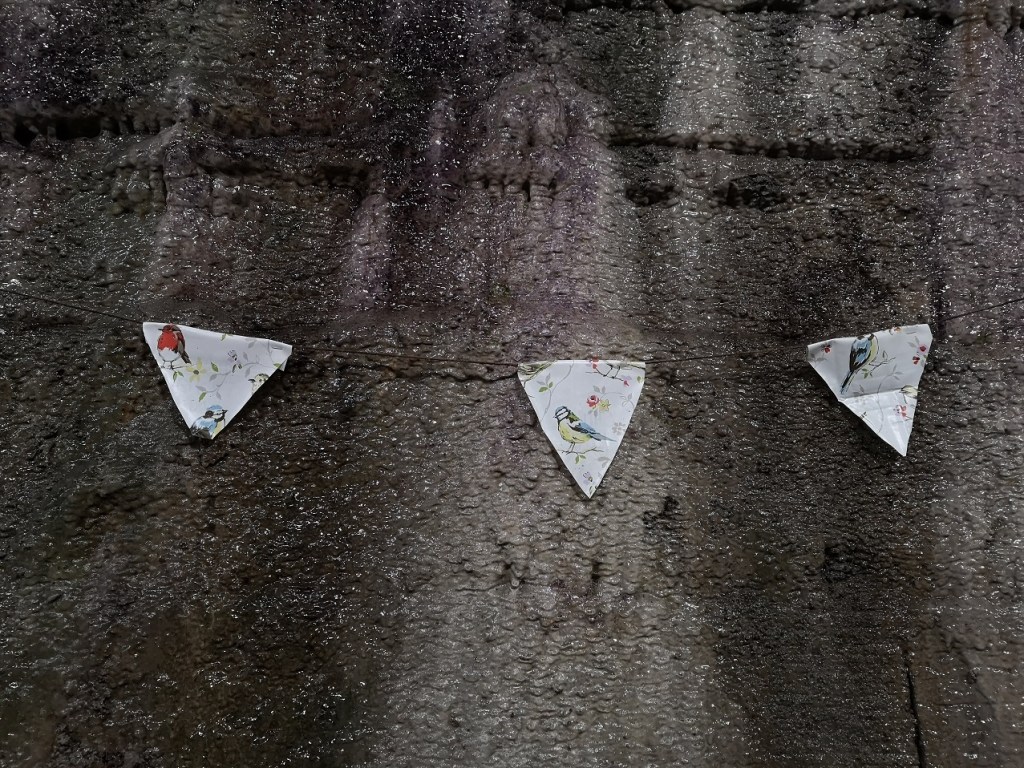
The Trinity tunnel is where my sound/art installation, No Birds Land, is situated. Sadly, on arrival it was clear that it had been vandalised while I was walking the first week of the pilgrimage and the bunting was all broken and in the mud. My pilgrim friends tried to help, but we didn’t have much time to repair.
Phyllis from the Edinburgh Reporter was walking with us and wrote about the Keeper of the Soils and No Birds Land. Her article, with links to video and audio, is here.
No Birds Land sound/art installation in the Trinity Tunnel on the Edinburgh cycle path
Many thanks to my friends Lesley and Andrew who went along the next day to repair and rehang.
We stop briefly at Granton Harbour as our numbers swell. The core group are joined by others who will come all the way to Glasgow with us and there are many day walkers too. What a jolly bunch, particularly as there was no rain!
Granton Harbour
We continue along the coast of the Firth of Forth, through the industrial outskirts and past the entrance to the Granton Walled Garden where the cape was dyed. A small group peel off to collect a soil sample before rejoining us further on.
Granton Walled Garden and Kirsty’s plot in which she grows plants to be used to dye cloth, Edinburgh
Stage 2 / the Earth Phase
Our next stop is for tea and coffee in the corner of the Lauriston Farm, kindly donated free of charge. We are immensely grateful to Lisa, Toni and Dave for their time and generosity.
Lisa serving us much needed tea and coffee, Lauriston Farm, Edinburgh. Photo Liz.
Transforming an existing farm into an urban food production and community hub that benefits, supports and regenerates the environment and all those connected to it.
Second soil ceremony of the day with Natalie Taylor wearing the cape and Dave, at Lauriston Farm. Photo Liz.
Here we pause to consider the second of the 5 Elements: Earth. There is a soil ceremony and the small sample is put in one of the cape’s pockets to be carried to Glasgow. The focus for the next stage is the physical awareness of our feet on the ground, reflecting on the ‘give and take’ which is happening on this walk – the kindness and generosity of others, and what it means to be able to accept that; and the nourishment and nurturing between us and the earth. We have our first silent period and muse on the role of sympathy and empathy in the climate crisis.
The next section is along the sea front at Silverknowes and on the beach to Cramond.
Silverknowes, Edinburgh. Photo Liz.Having a snack and taking it in turns to use the public conveniencesAt Crammond. Photo Liz
Stage 3 / the Water Phase
Here we pause to immerse ourselves in the Water Element with thought, emotion and physical exercises. We focus on harnessing the sea’s power and thinking about other renewables as we flow along the River Almond path. Recapping the first week of the pilgrimage, there is reflection on the fear engendered by the climate crisis – for ourselves, our children and other-than-humans.
The River Almond approaching the Cramond Brig
We wait for even more walkers to join us, say goodbye to others, and continue past the hotel, back down the other side of the River Almond through the Dalmeny Estate. Here we eventually have our picnic lunch. Thanks to Ewan for the delicious, home-made oatcakes.
Stage 4 / the Wood Phase
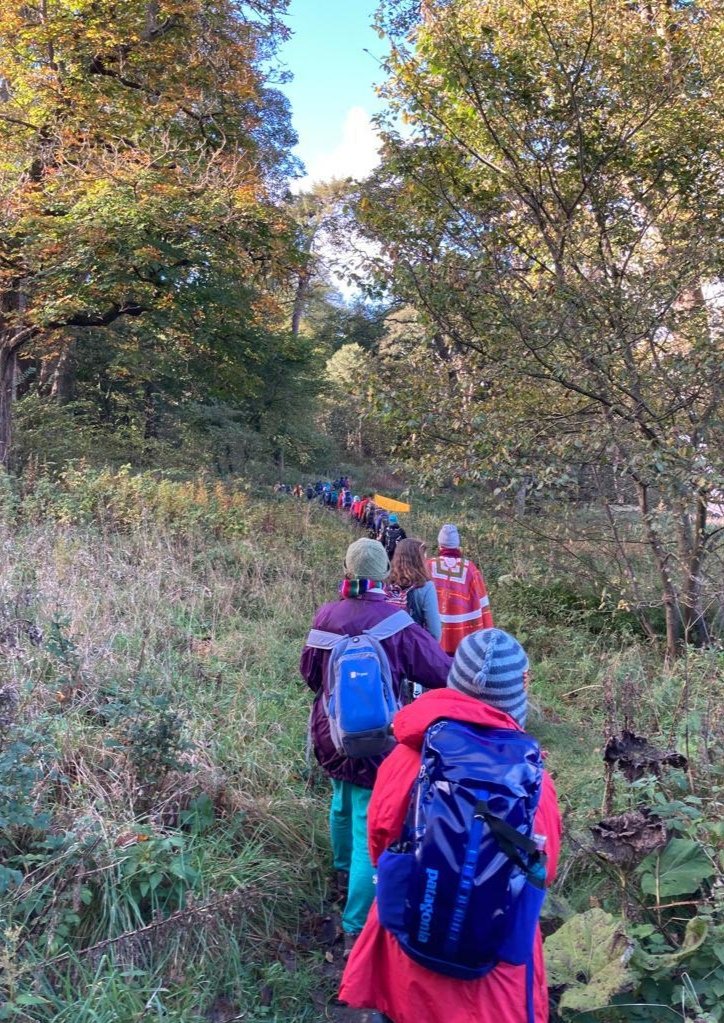
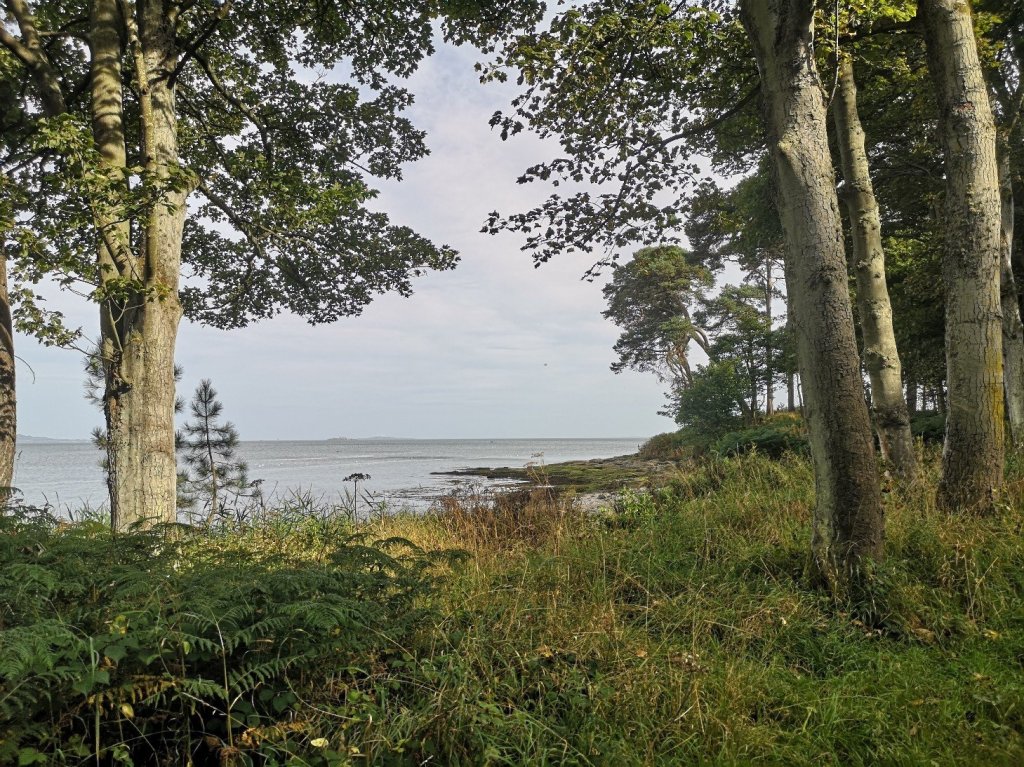
Moving into the woods, we take the chance for a second period of silence. In single file we appreciate the trees, the lush undergrowth and occassional glimpses of a wider landscape between boughs.
The sun is low at this time of year, but there’s so much to appreciate when we stop to allow everyone to catch up and regroup
Everything is going well and someone makes a suggestion for a little detour. I think, why not, we’re making good time. However, we lose half the group and that means there are rather stressful phone calls back and forth as we try to find each other. Note to self: stick to the plan!
Stunning landscapes along this stretch of the Firth of Forth
Stage 5 / the Fire phase
Our final phase is the Fire element and we are very close to our South Queensferry destination.
Renewing our community spirit with a song, we practise smiling in the face of difficulty as we swing into South Queensferry with open hearts and hope for the future. Many thanks to the pilgrim who sings for us so we can join in.
We are staying at the Priory Church, but we are too early and it’s started to rain. Bidding farewell to the day strippers, we retreat for a well-earned drink to warm up and dry off.
The Priory, South Queensferry
What a wonderful welcome we get at the Priory! Although there is only one toilet and no showers for us all, local people open their homes. There is a fascinating presentation about the Chapel and its history, a sumptuous meal, and we are very happy to bed down on the church floor at the end of the day.
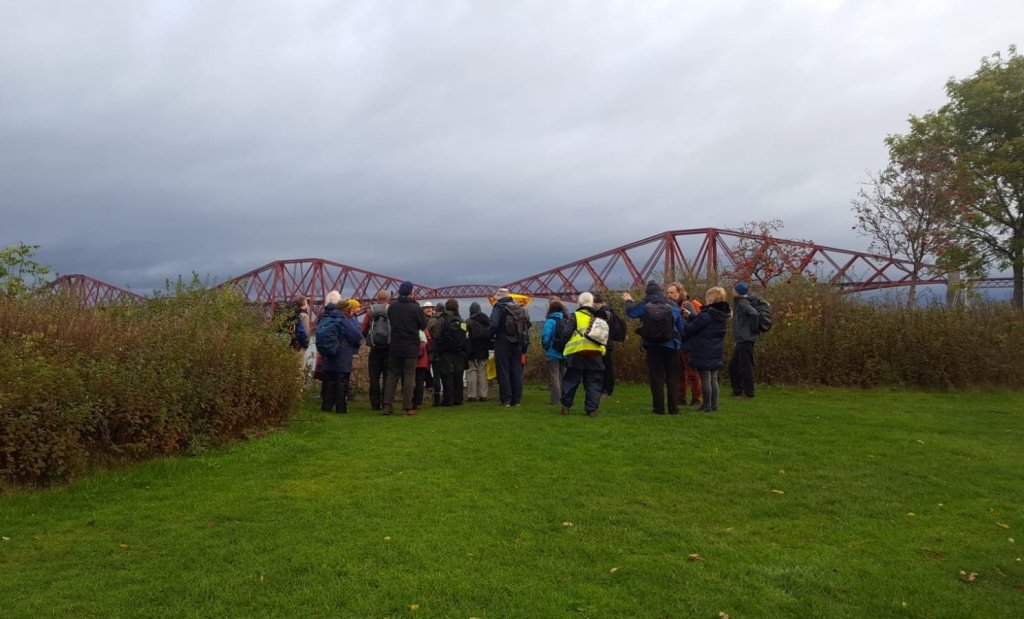
Once part of a medieval Carmelite Friary at the centre of life in the Royal Burgh of Queensferry, the Church is situated very close to the Binks where the St Margaret’s Ferry used to take pilgrims across the water to Fife, so they could walk on to St Andrews. That was before the bridges were built, and is what gives the town its name.
It is thought that there was a building here in the 11th century. Certainly, the Carmelites were in the area around 1330, a monastery was in operation in 1440, and that’s when this ancient church dates from.
St Margaret on the screen, Priory Church, South Queensferry
When I was planning the day, I tried to find someone to row us over the foot of the Almond. There used to be a boatman there who lived in the cottage opposite, but no longer. It would have meant that we missed the gorgeous river walk, but would have shortened the day. As it was, we all seemed to have coped well with the distance.
Reimagining what it means to be ecological
At the heart of the philosophy which underlies Shiatsu and East Asian medicine is the innate relationship between humans and other-than-humans. We are all one, all made of the same Chi, and intrinsically linked.
The cyclical and interdependent relationship inherent in YinYang means that it is impossible to imagine one part of nature separate from another. Every thing morphs and melds into the other, particularly in extreme situations such as the current climate change scenario. We can see this happening: the more we pollute the atmosphere, the faster and stronger the winds are having to move the air around in order to preserve its quality, so that we can all continue to exist. Balance happens, or at least the natural system is trying very hard to achieve that.
We must, of course, do our bit: notice what is happening and see where we are needed, work alongside our companions in nature and those who are trying desperately to put things right. We must listen to the messages, and this is easier to do if we walk rather than run, reflect as well as act, and connect with compassion, as well as protecting our own.
The system we are part of offers hope in this way, and although it can be hard to hear, we can console ourselves that if things do worsen, we are participants in a very grand cycle. We will be composted along with the potato peelings, sooner or later, ready to sprout again, so in the meantime, let’s pledge to do the best we can while we’ve still got time.
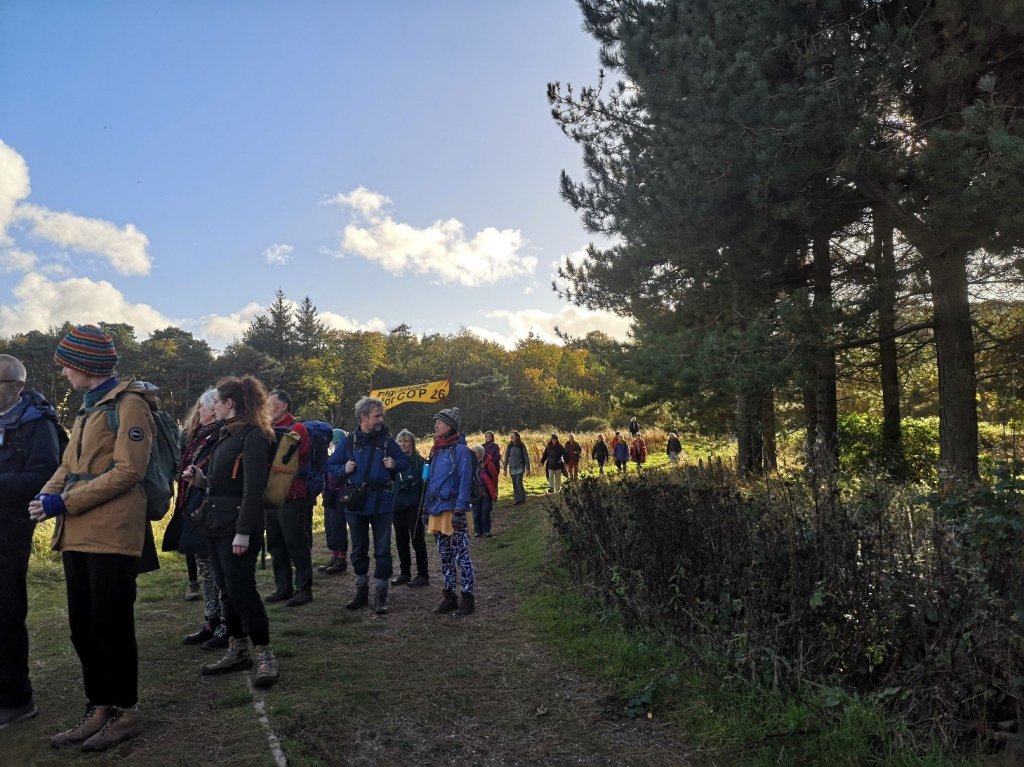
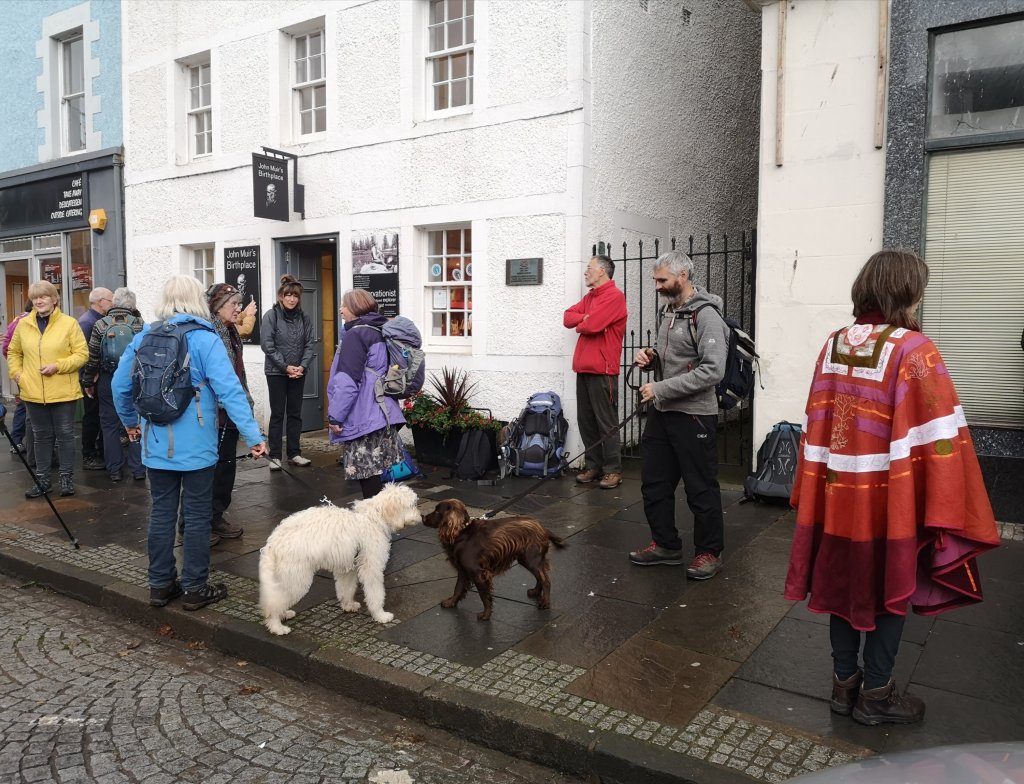
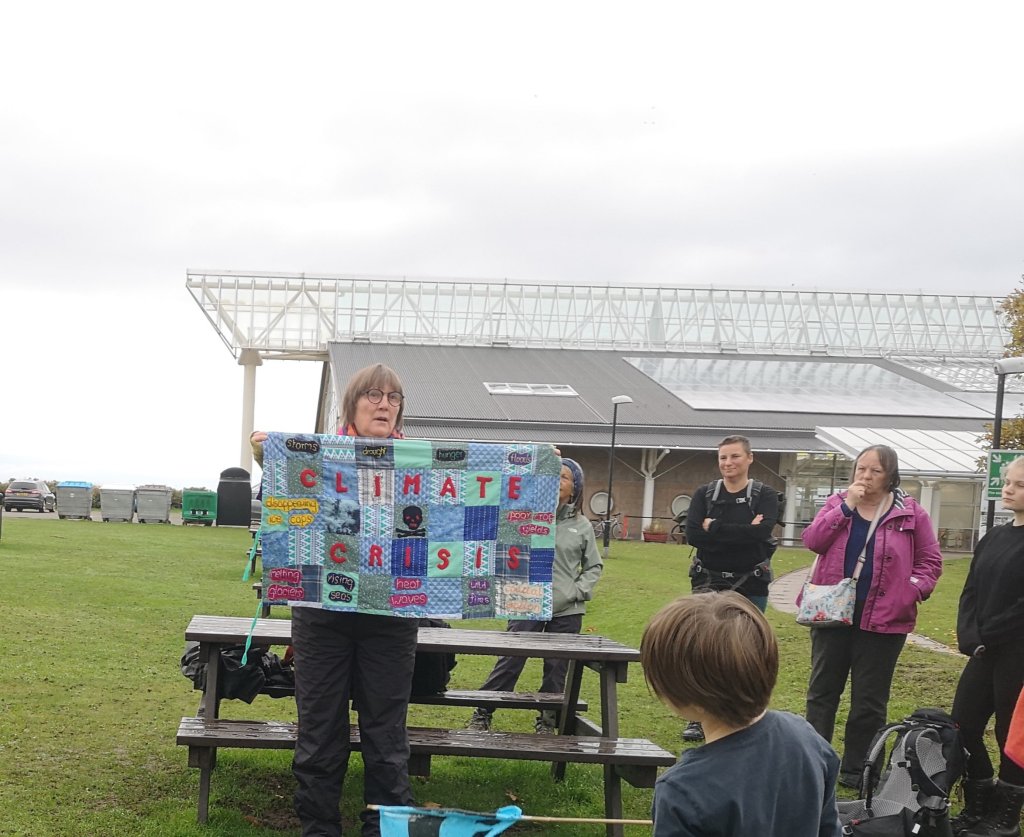
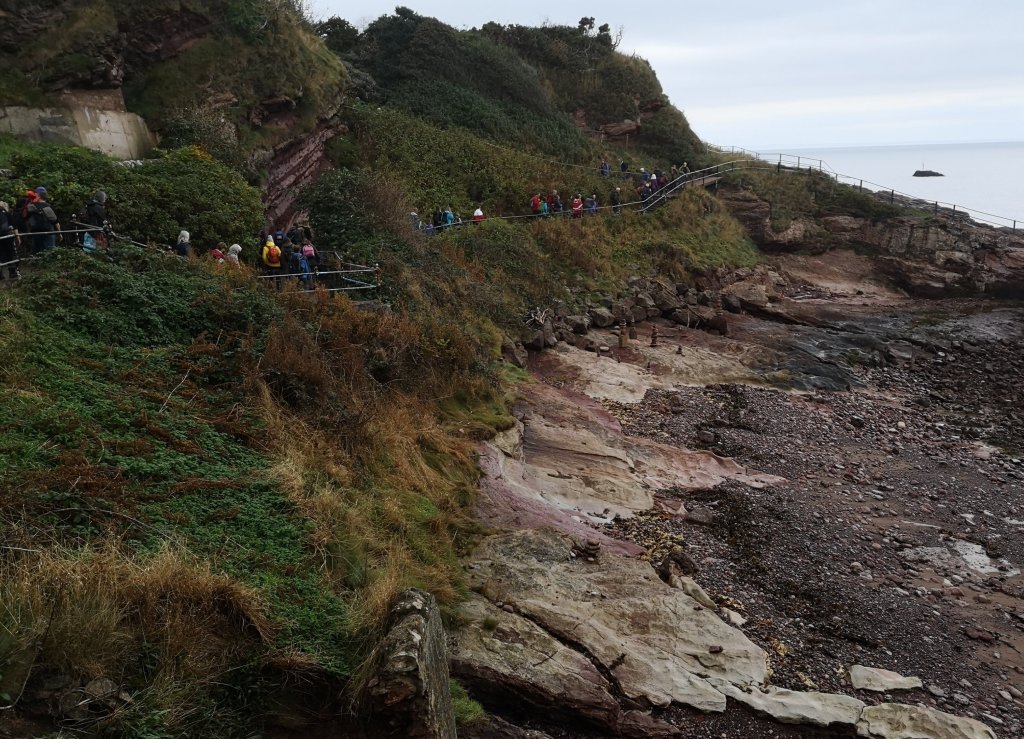
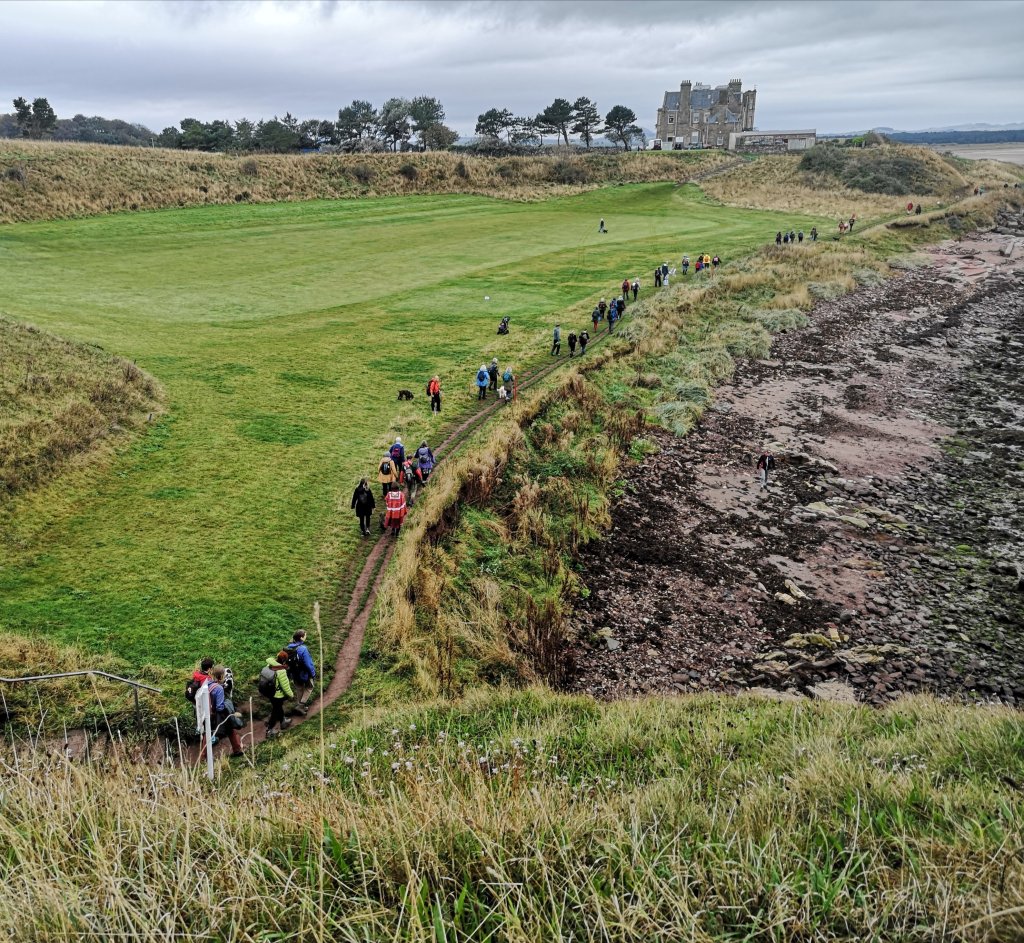
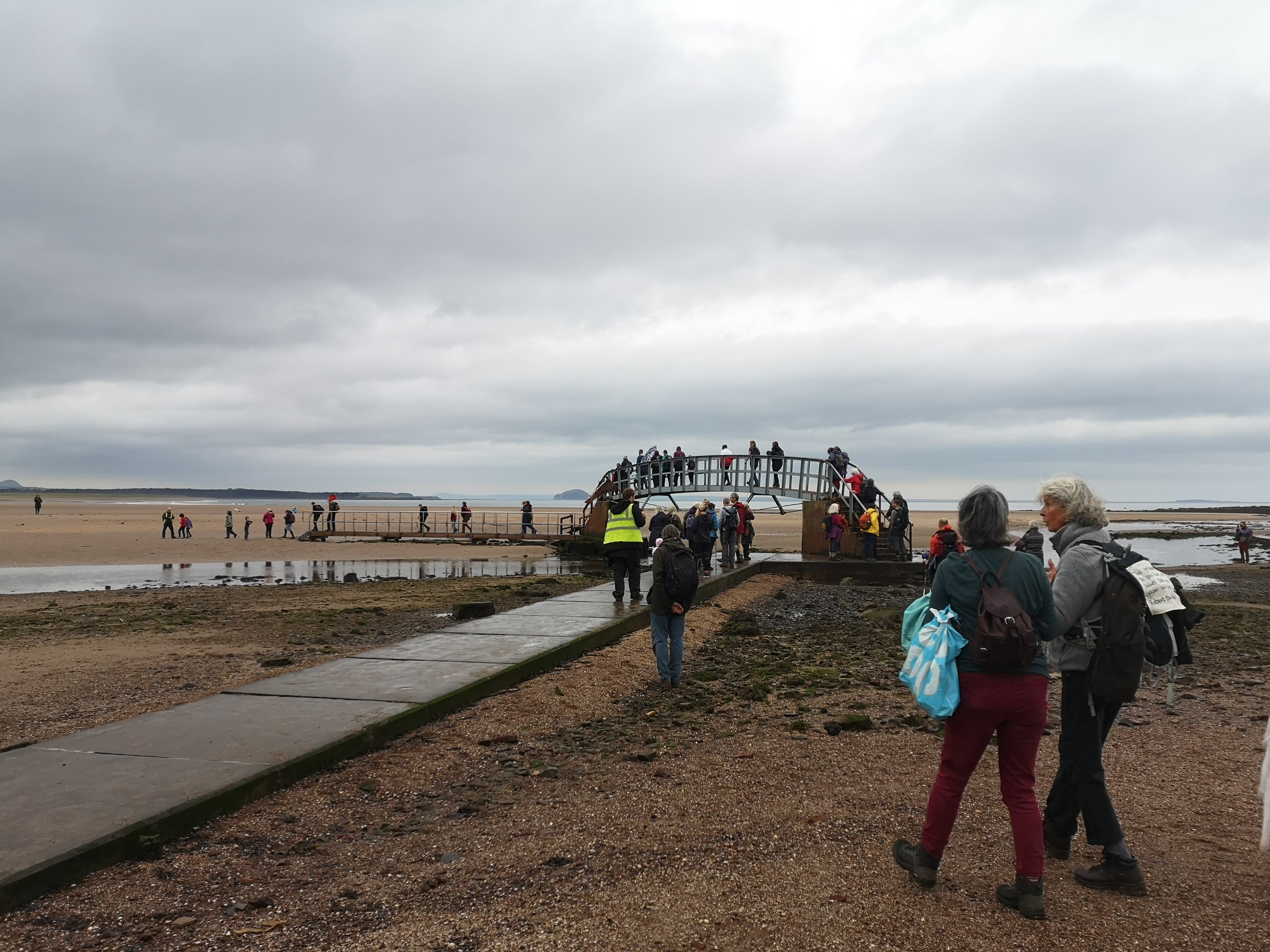
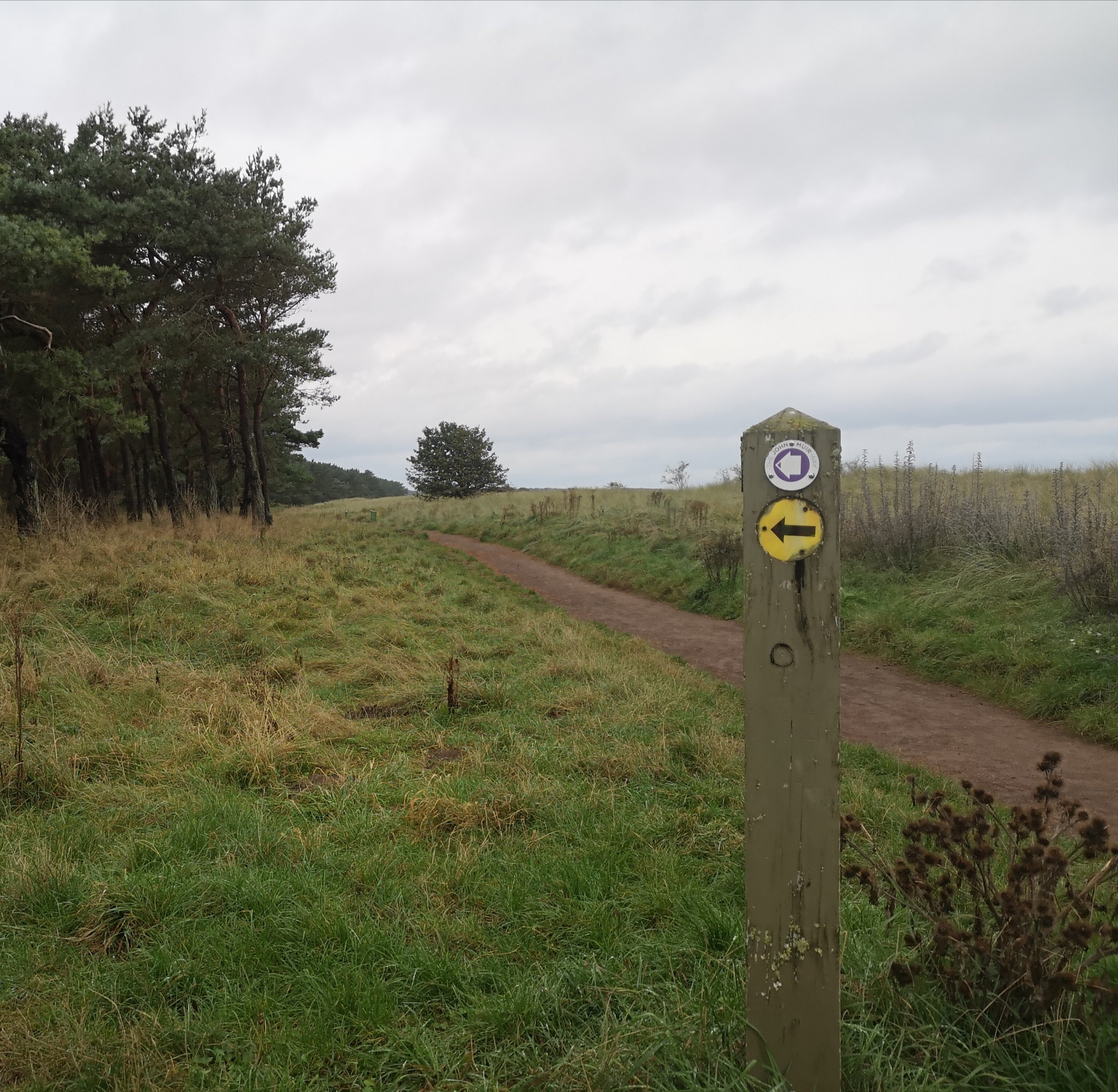
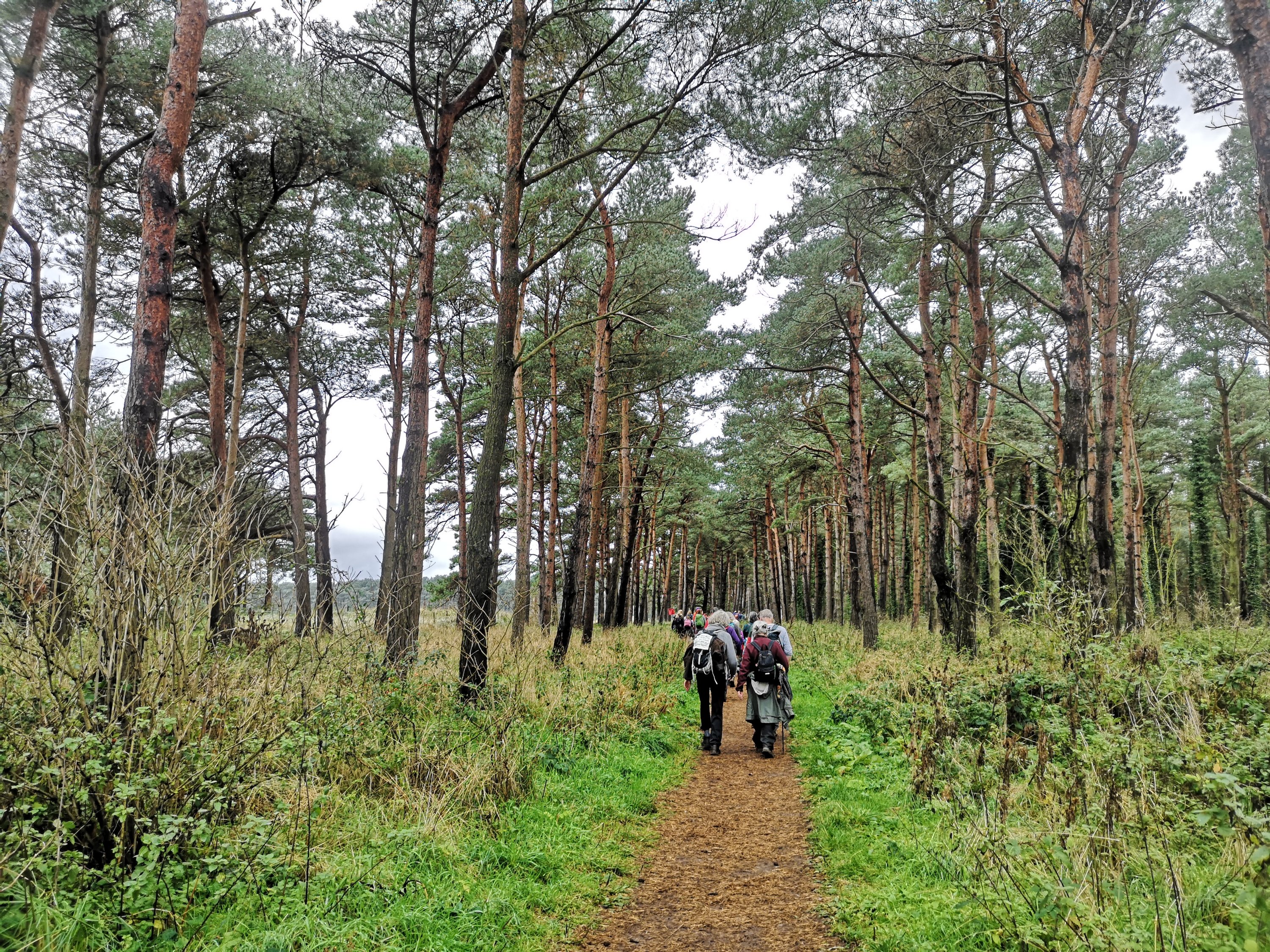
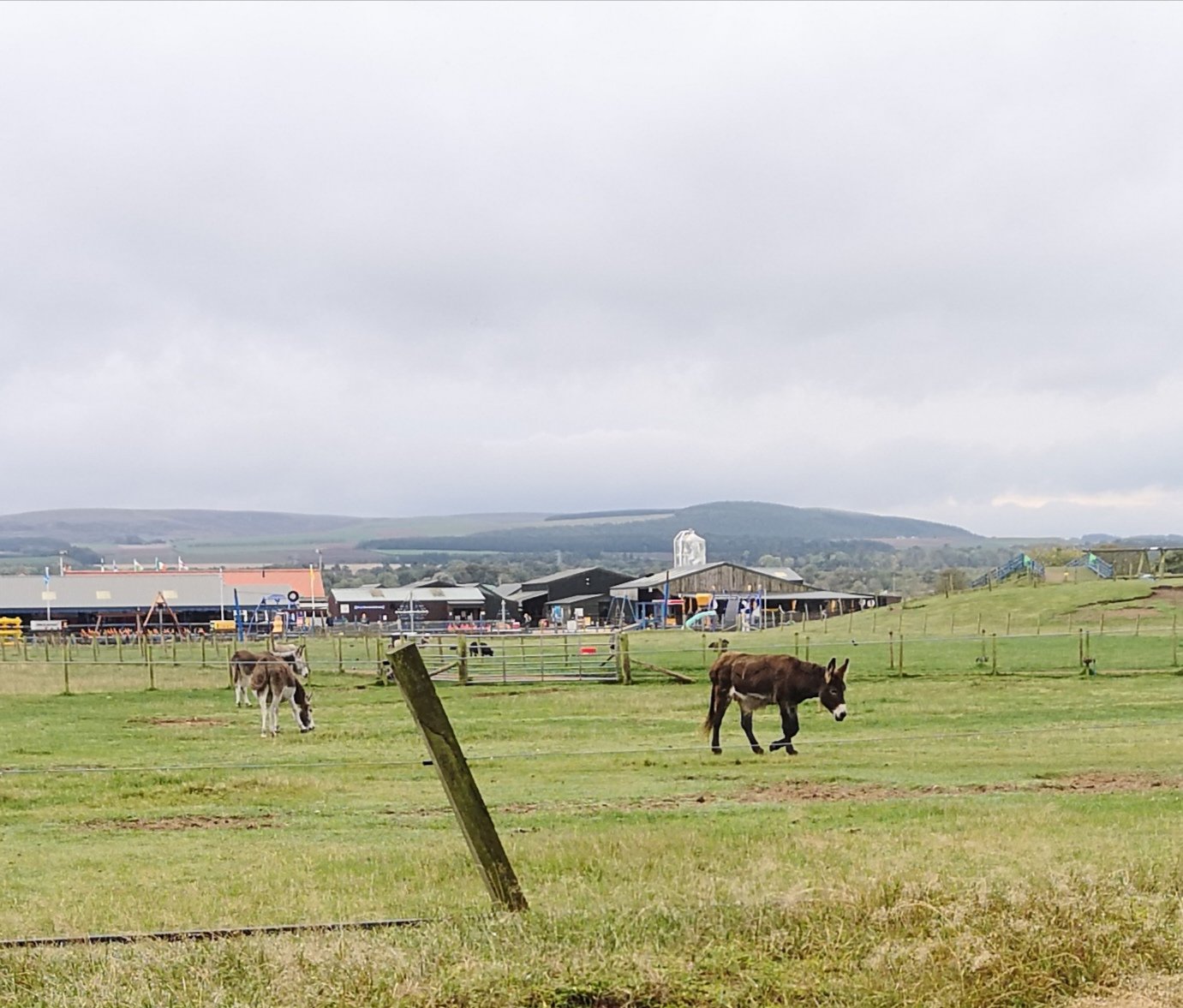
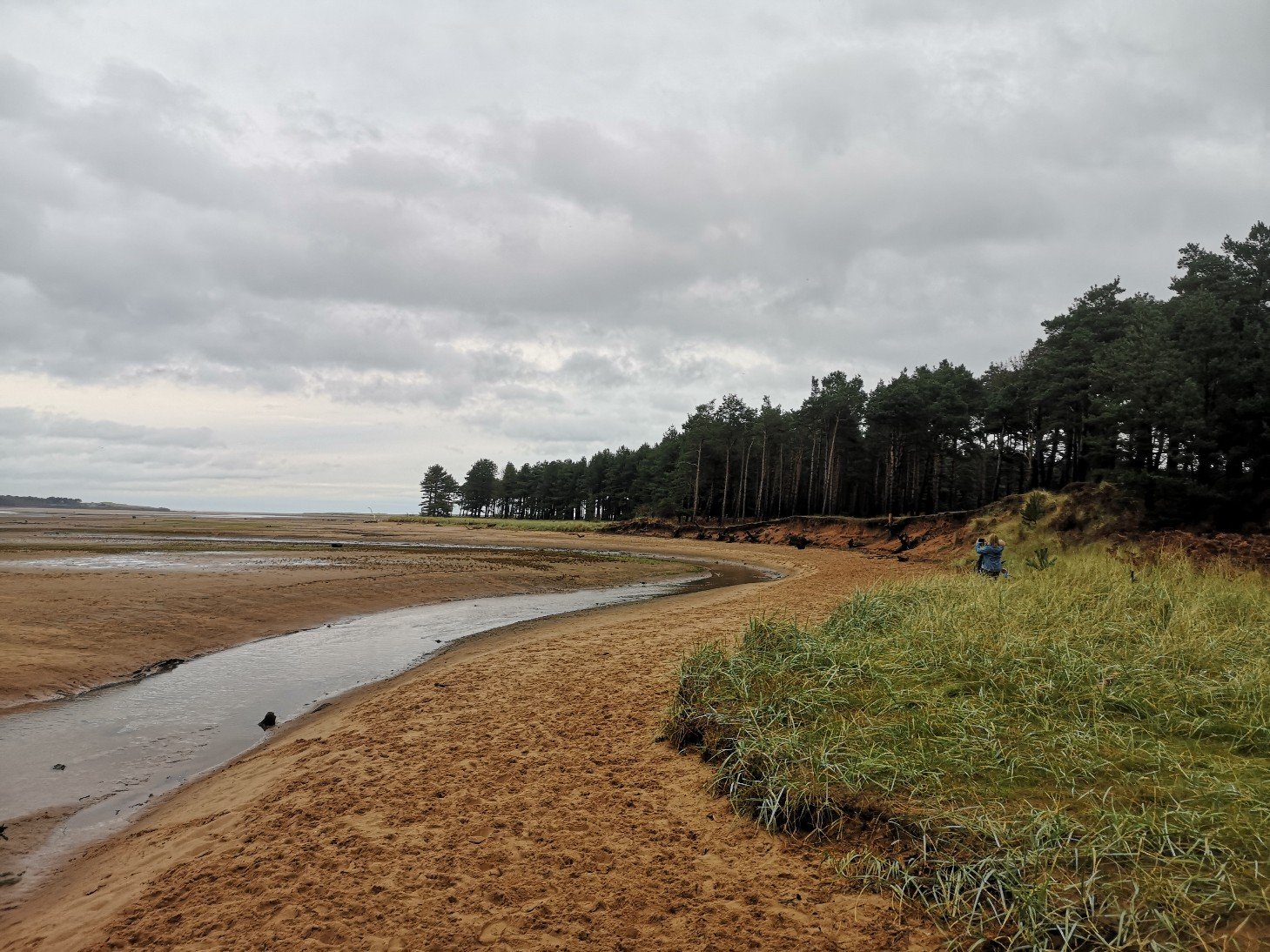
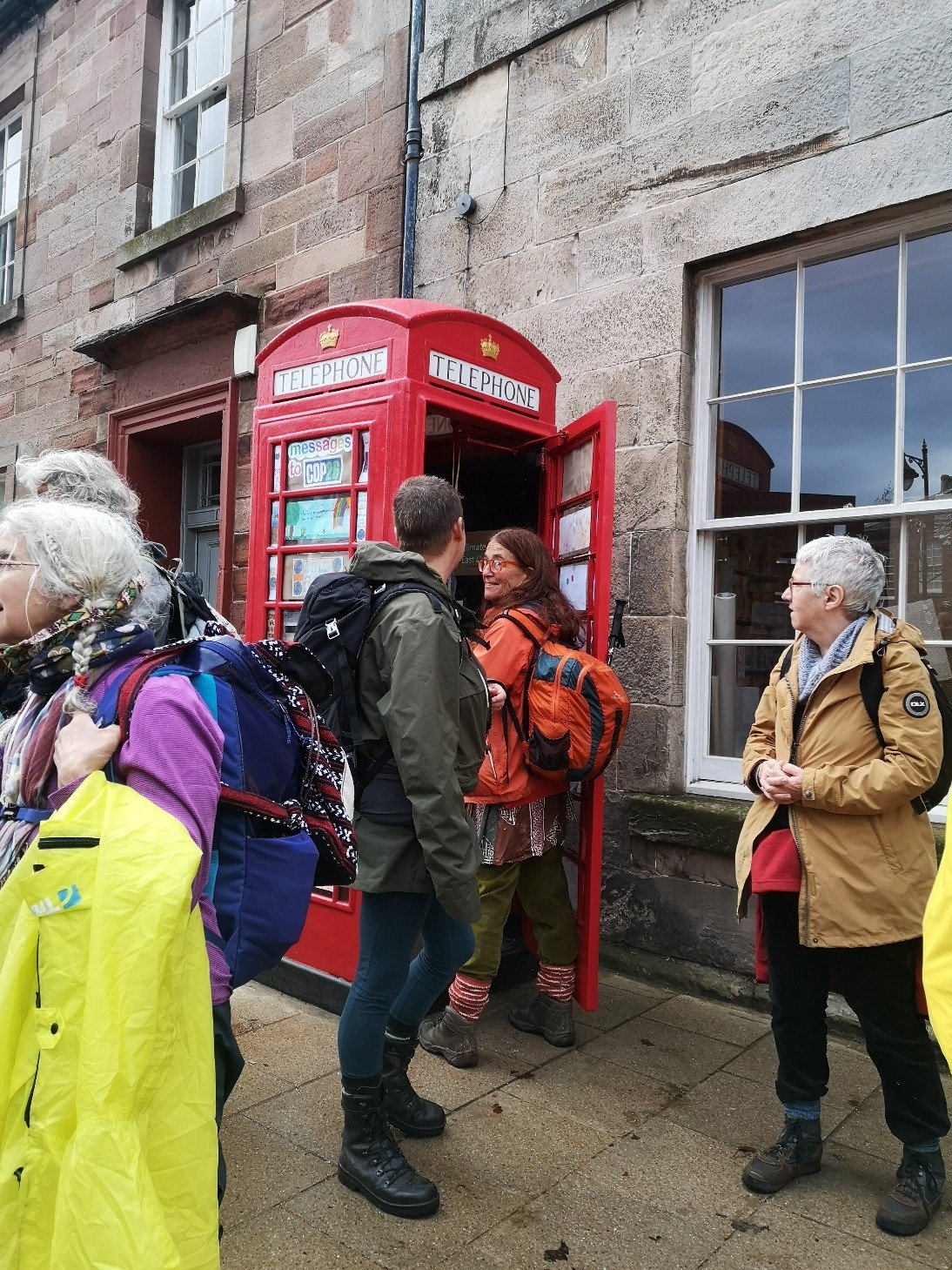
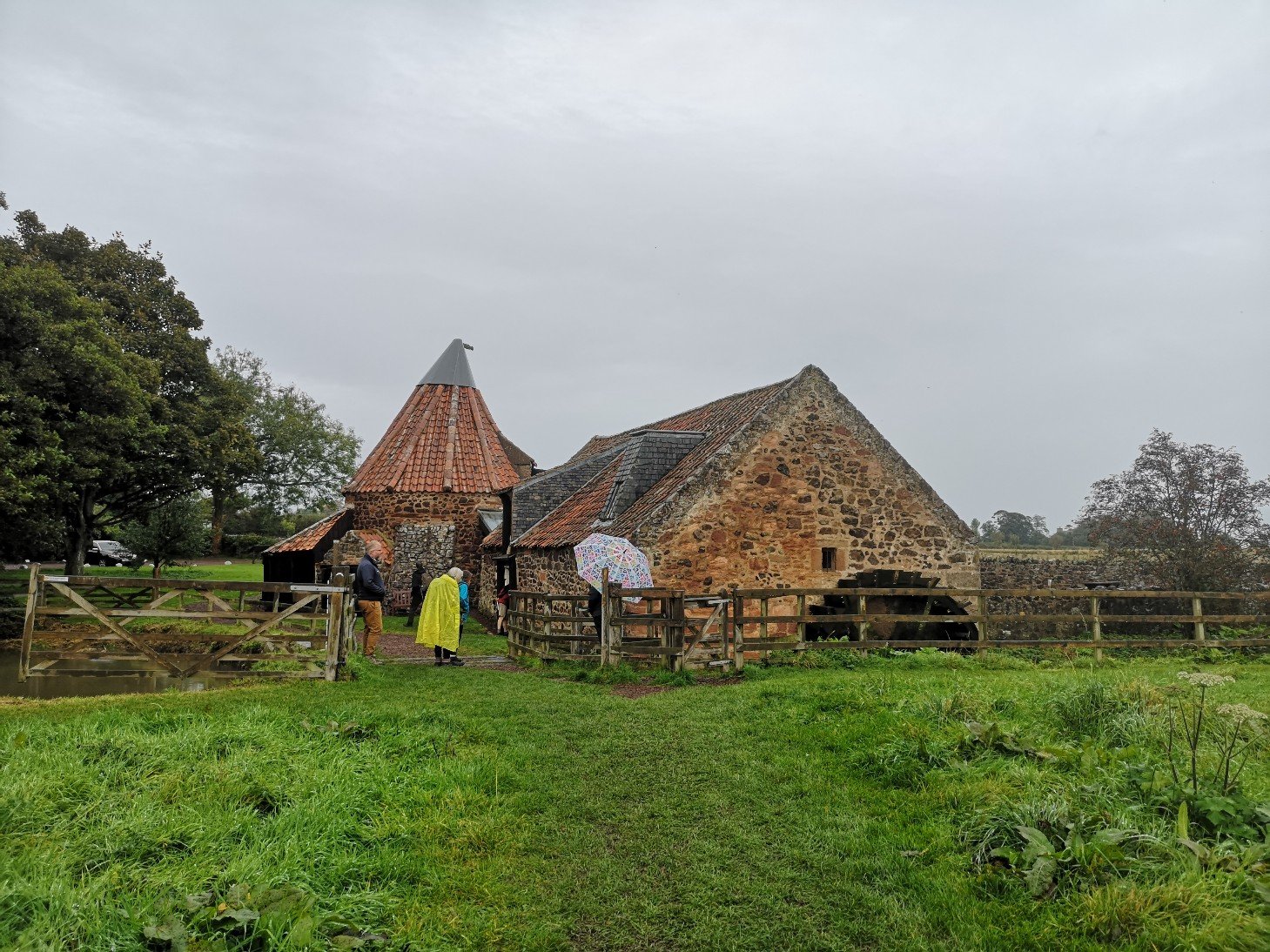
All ready to start the Pilgrimage for COP26 outside John Muir’s birthplace, DunbarLauderdale Park, Dunbar, where we stopped for some introductions and announcementsStitches for Survival Mass-craftivism to put the Earth centre-stage at COP26 Pilgrims all strung out along the East Lothian coastAnd beside Winterfield Golf LinksAcross the Bridge to NowhereFollowing the John Muir Way – yes, it rained!Beautiful woods of Scots PinePast donkeys and llamas and emusStunning sceneryStories Park, East Linton Climate Change phone boxComing into East Linton and Preston Mill and Phantassie Doocot on the River Tyne, which is run by the National Trust for Scotland
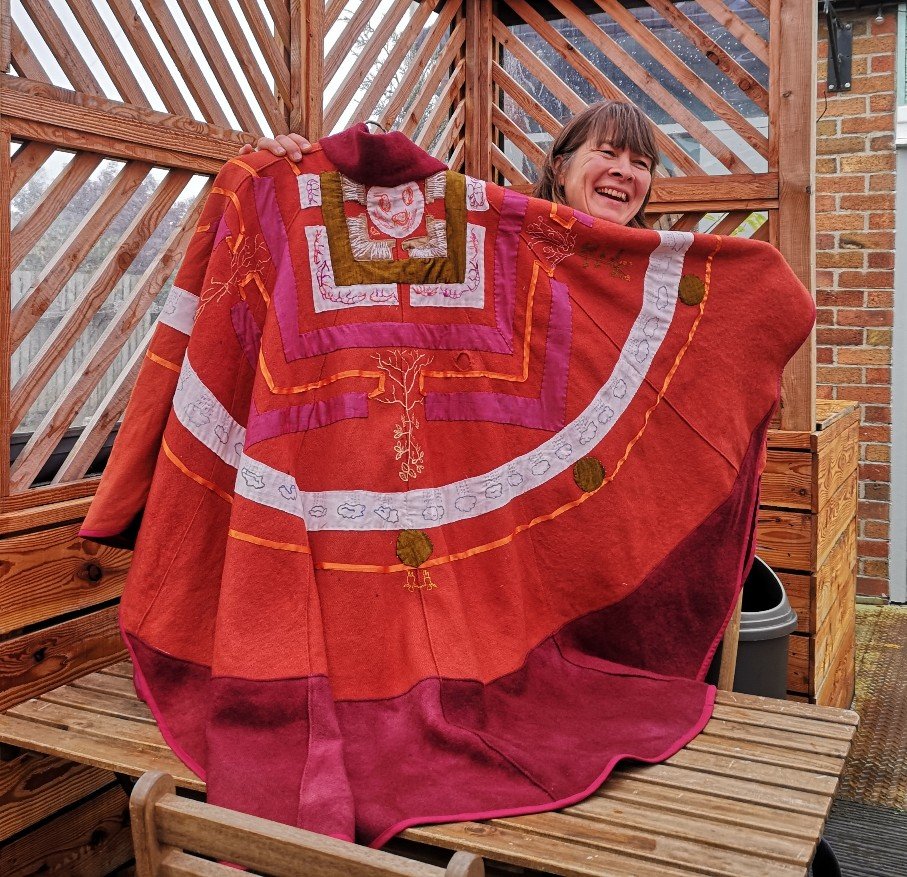
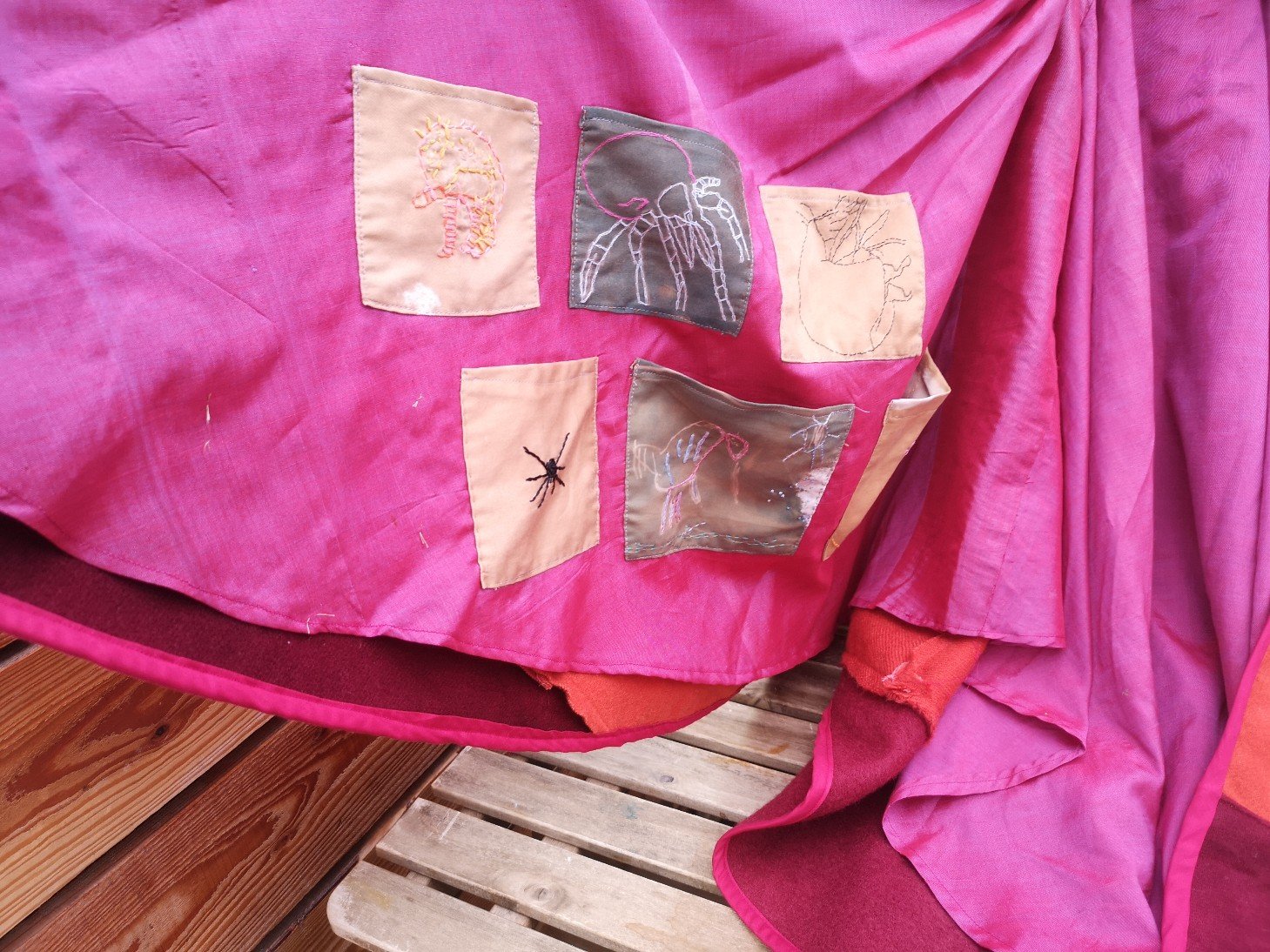
Phantassie Farm donated the day’s soil sample to the Keeper of the Soils, and it was tucked away in the inside pocket for safekeeping. Conceived of and made by Natalie Taylor with others, this wonderful cape has been hand-made using natural dyes. @northlightarts and @natalietaylorartist
Natalie Taylor , Keeper of the Soils cape with North Light ArtsPockets inside the Keeper of the Soils cape for storing the samples of soil between Dunbar and Glasgow
We were treated to a delicious lunch at Prestonkirk Church – a much appreciated rest out of the rain – and when we reemerged, the sun was starting to show its face.
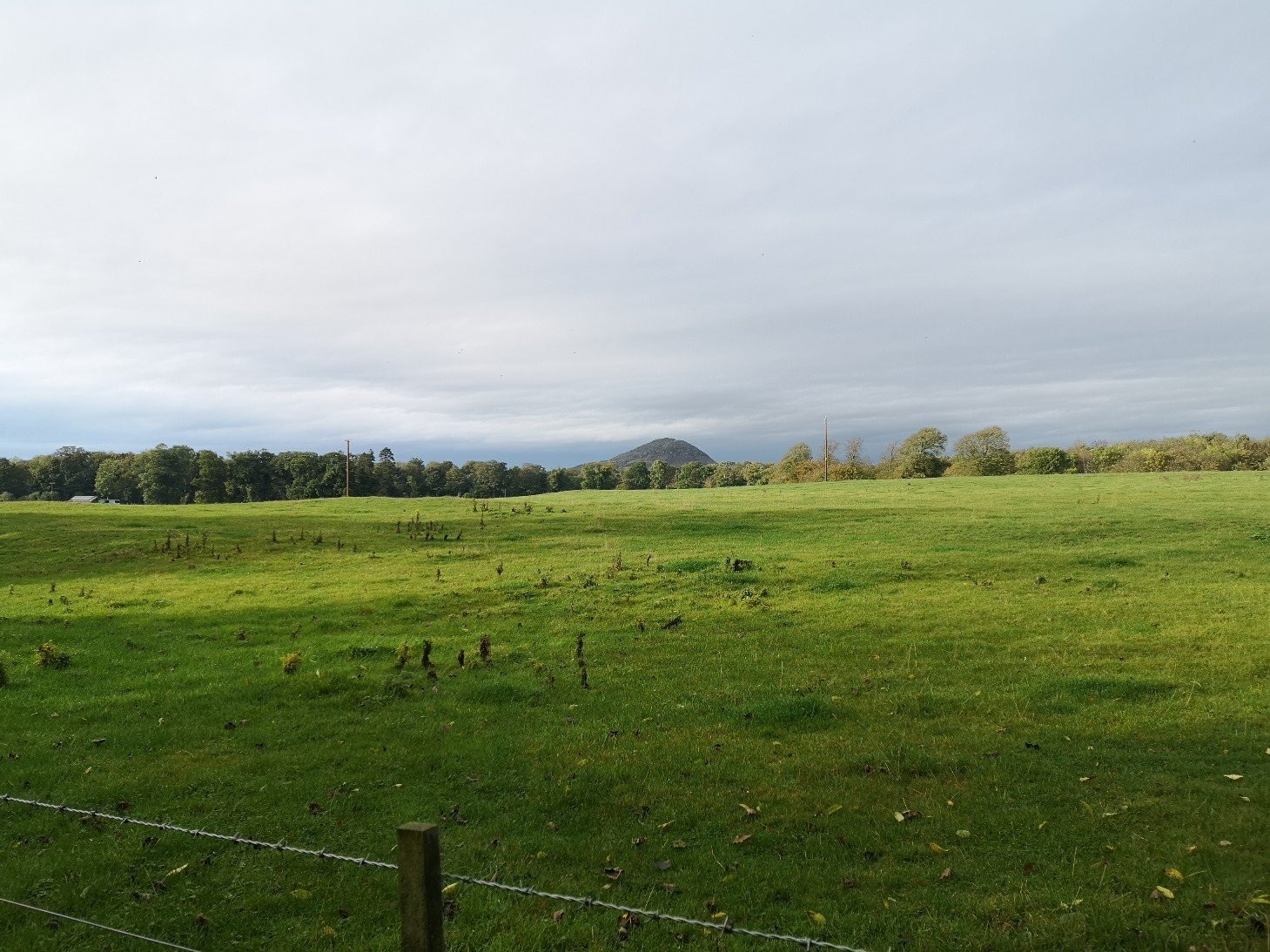
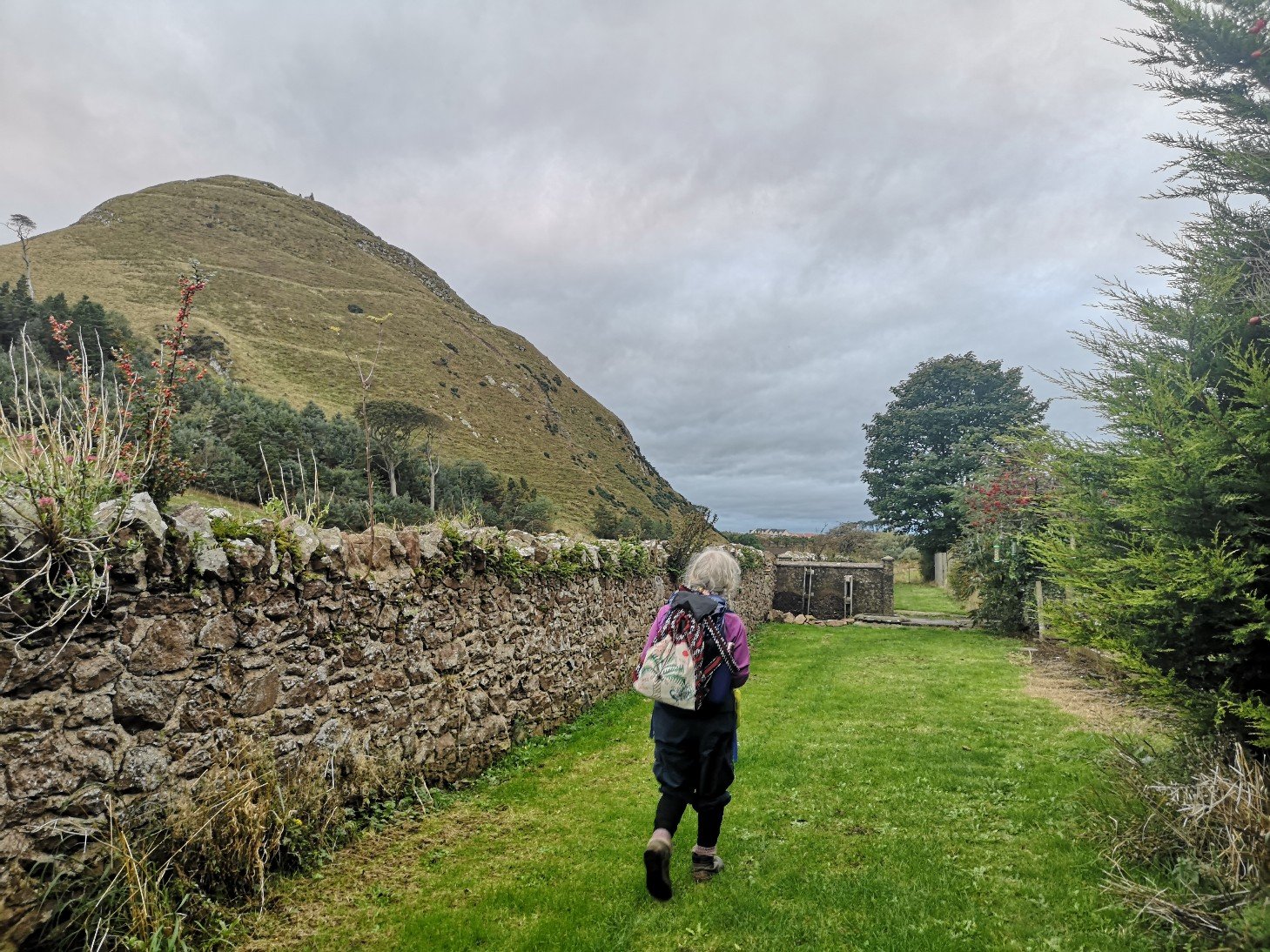
From East Linton, we headed to North Berwick,skirting Berwick Law, before arriving at our evening’s rest.
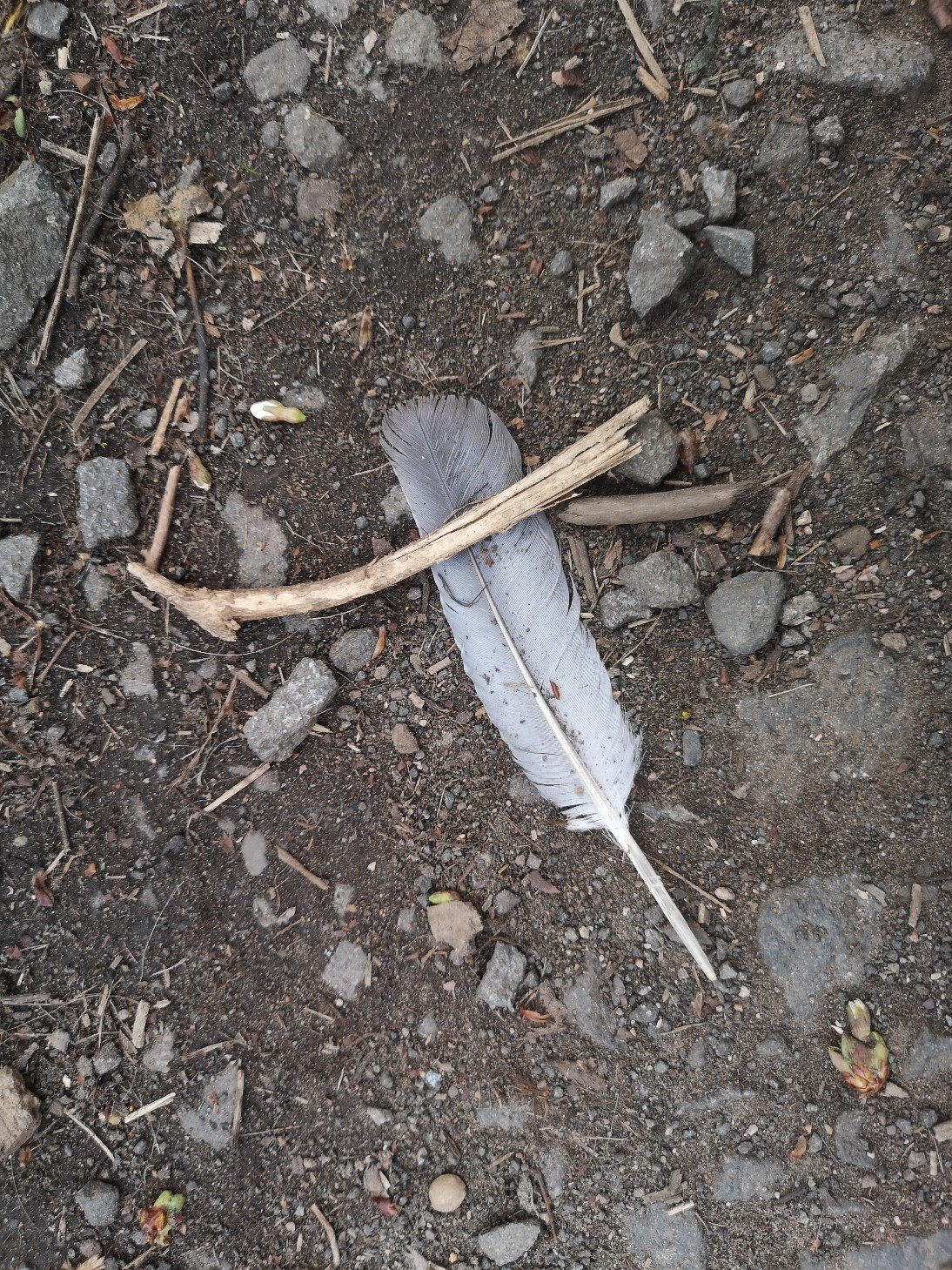
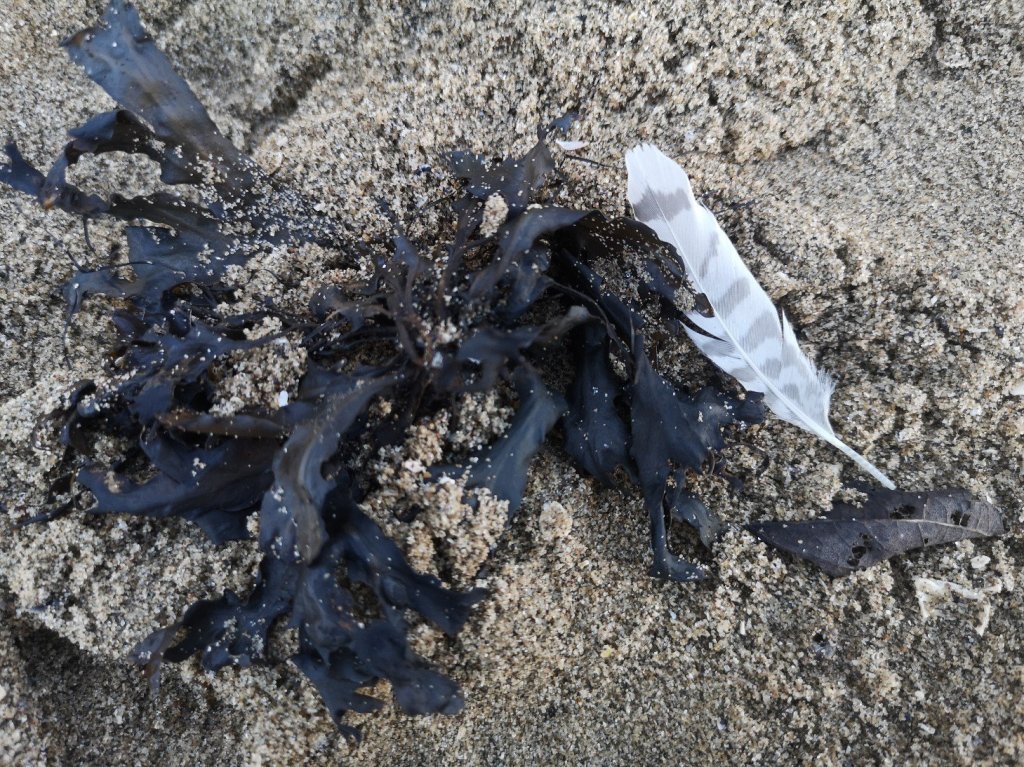
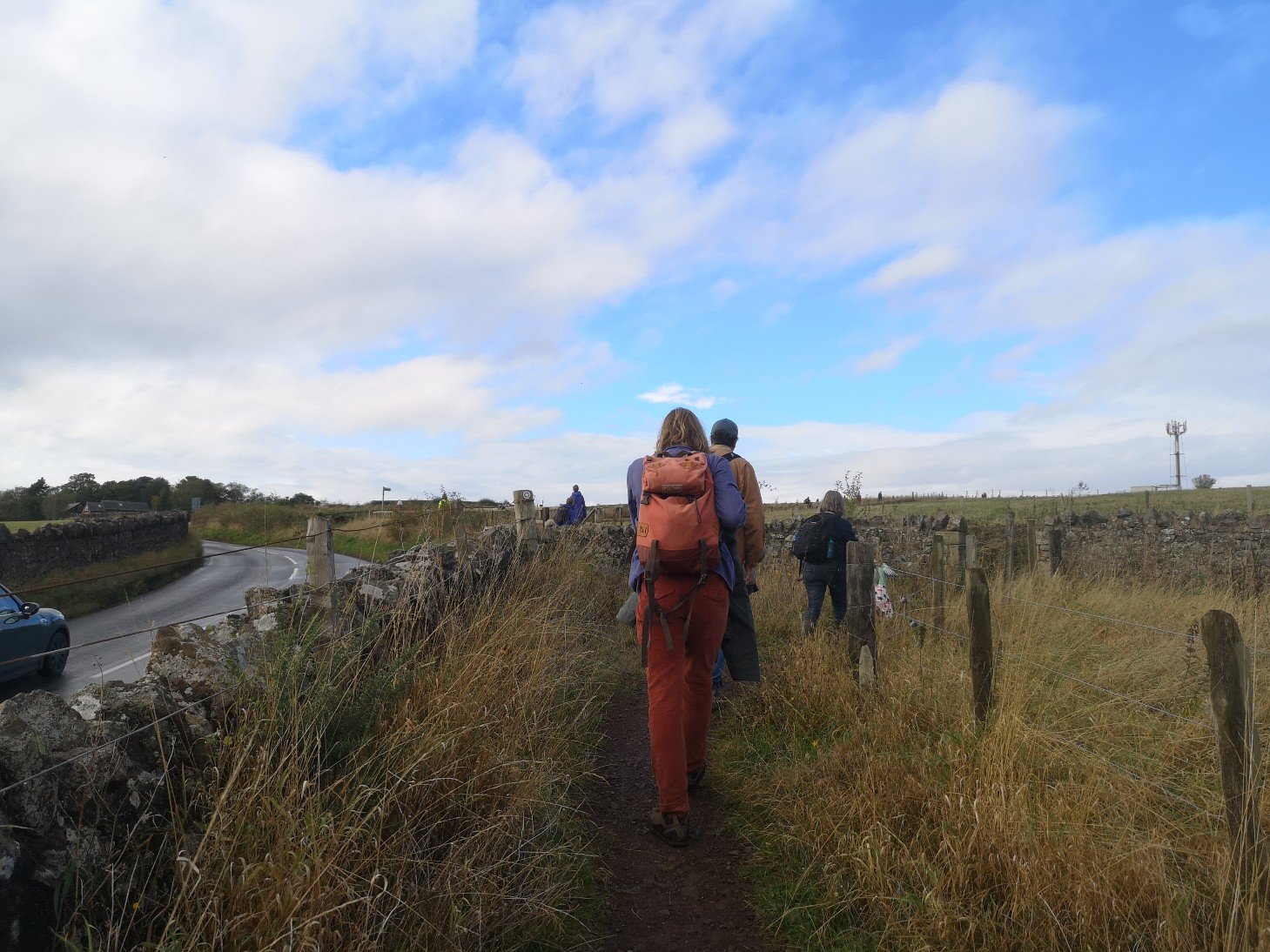
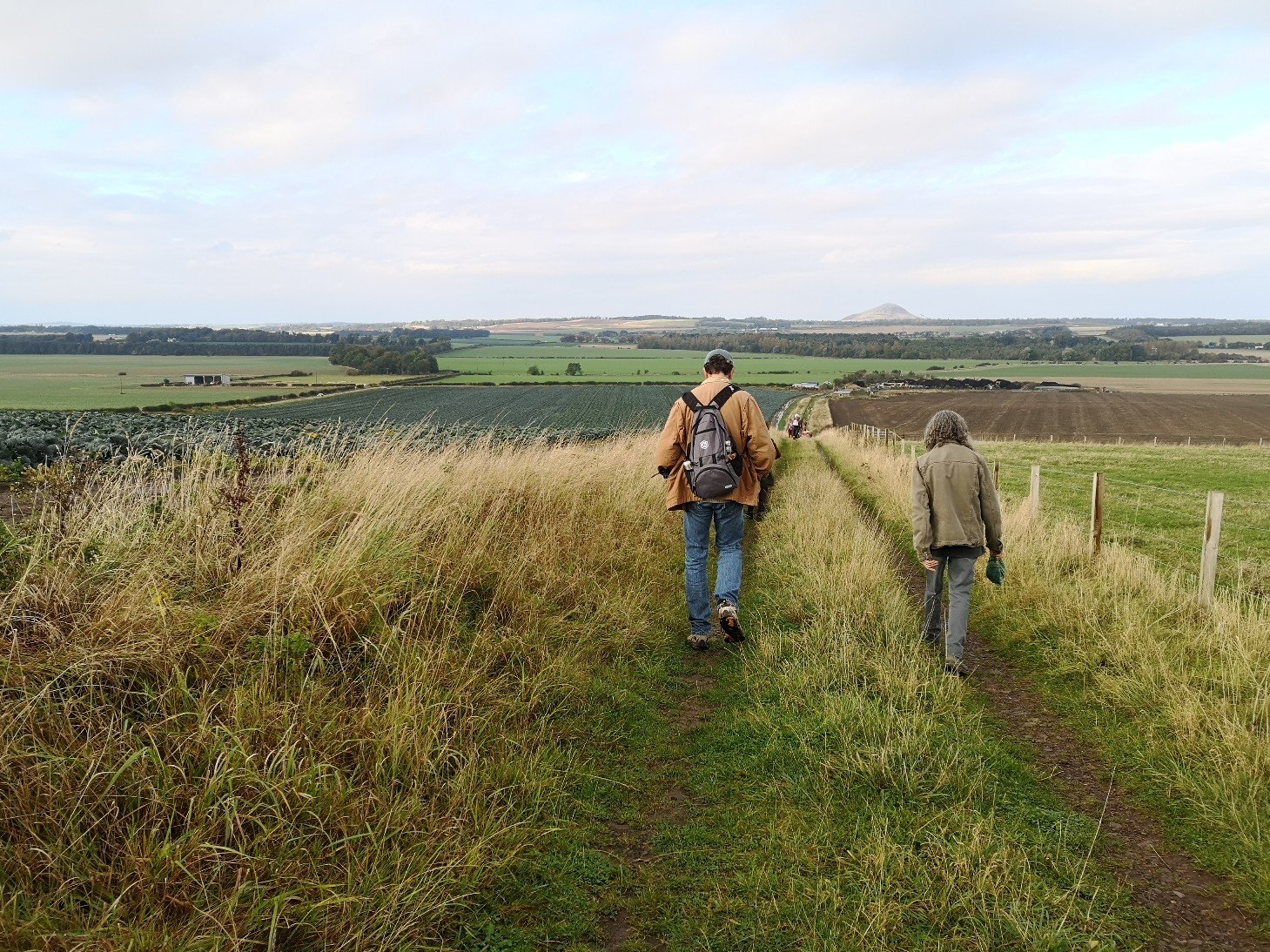
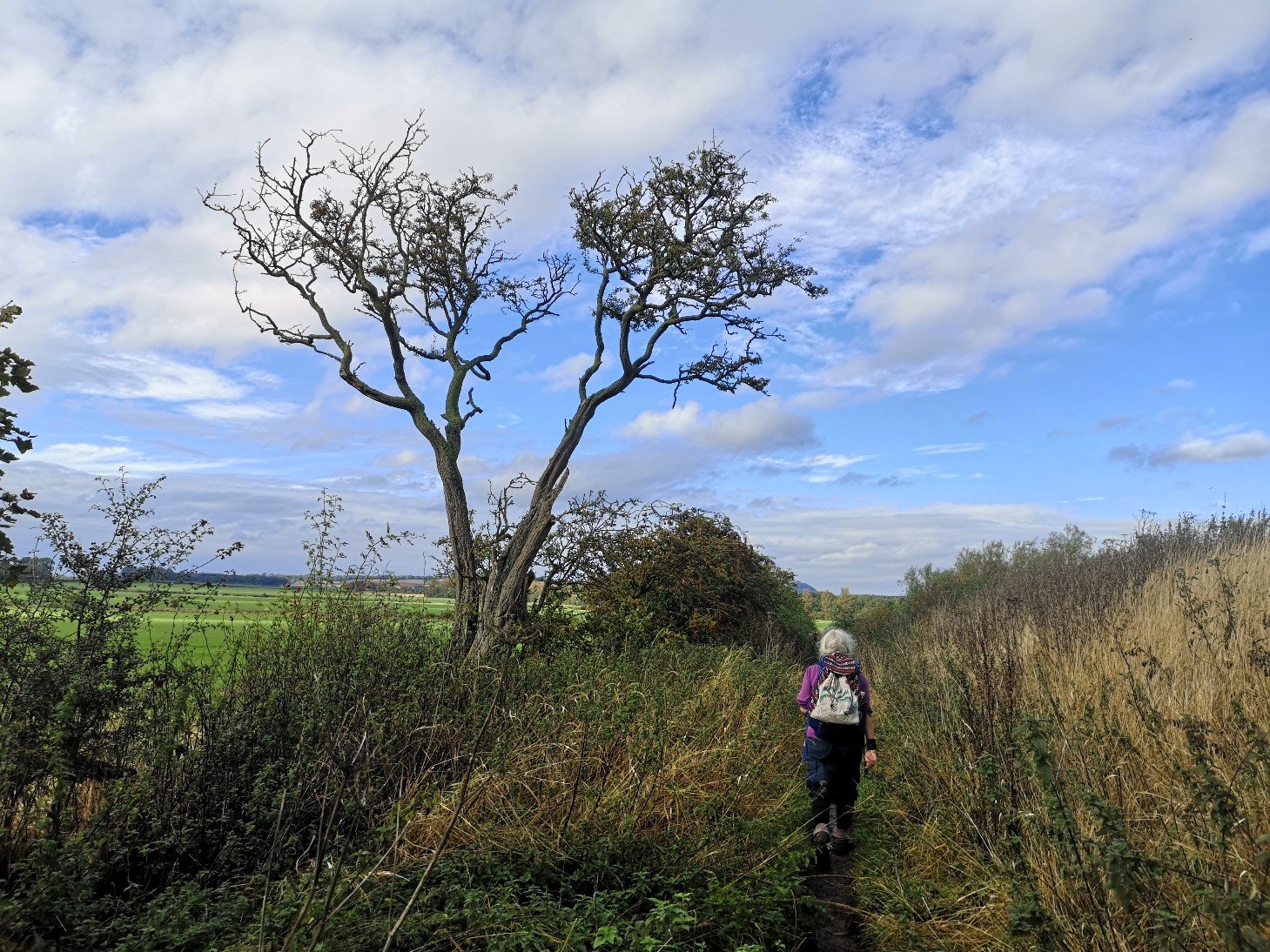
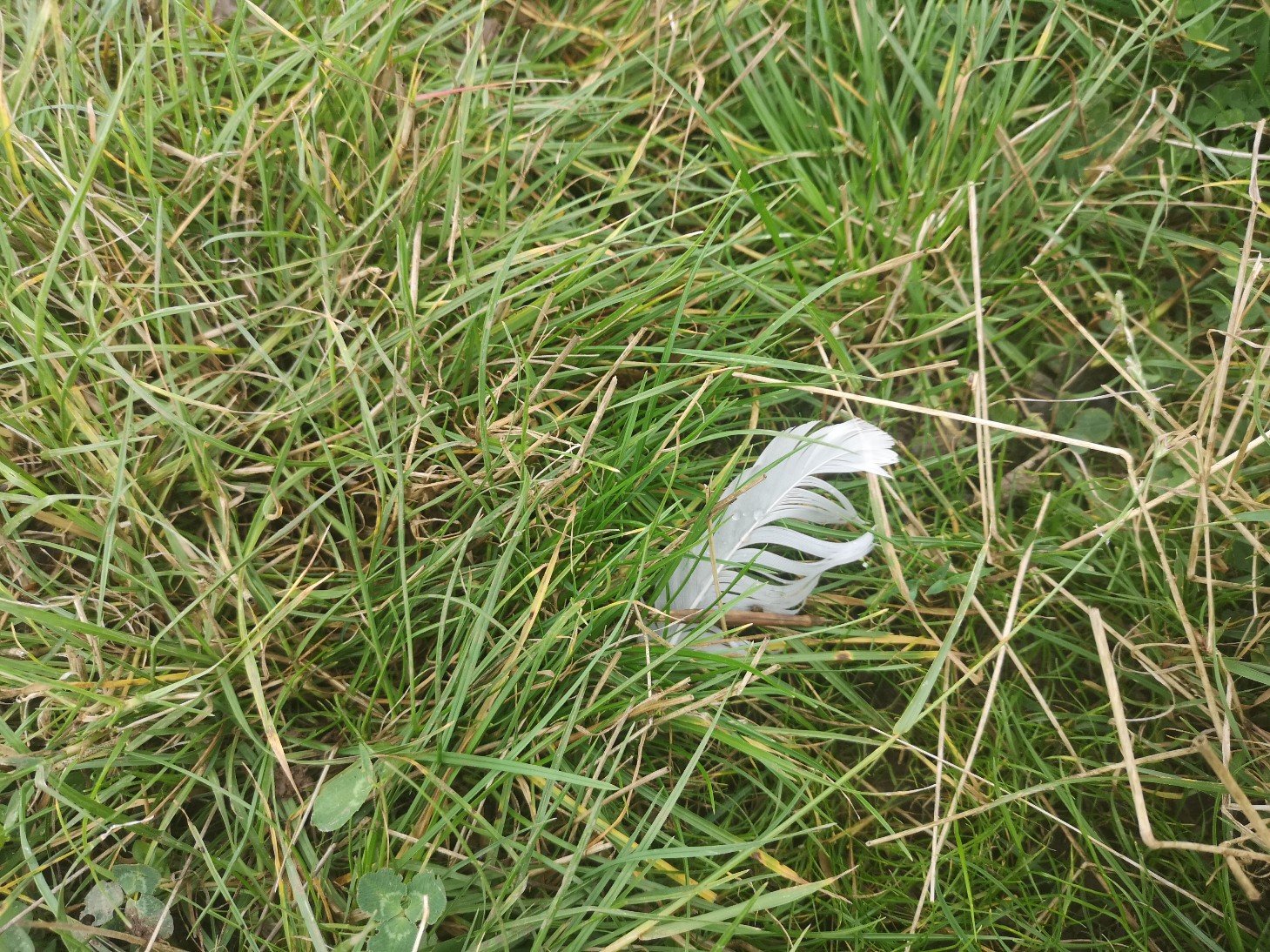
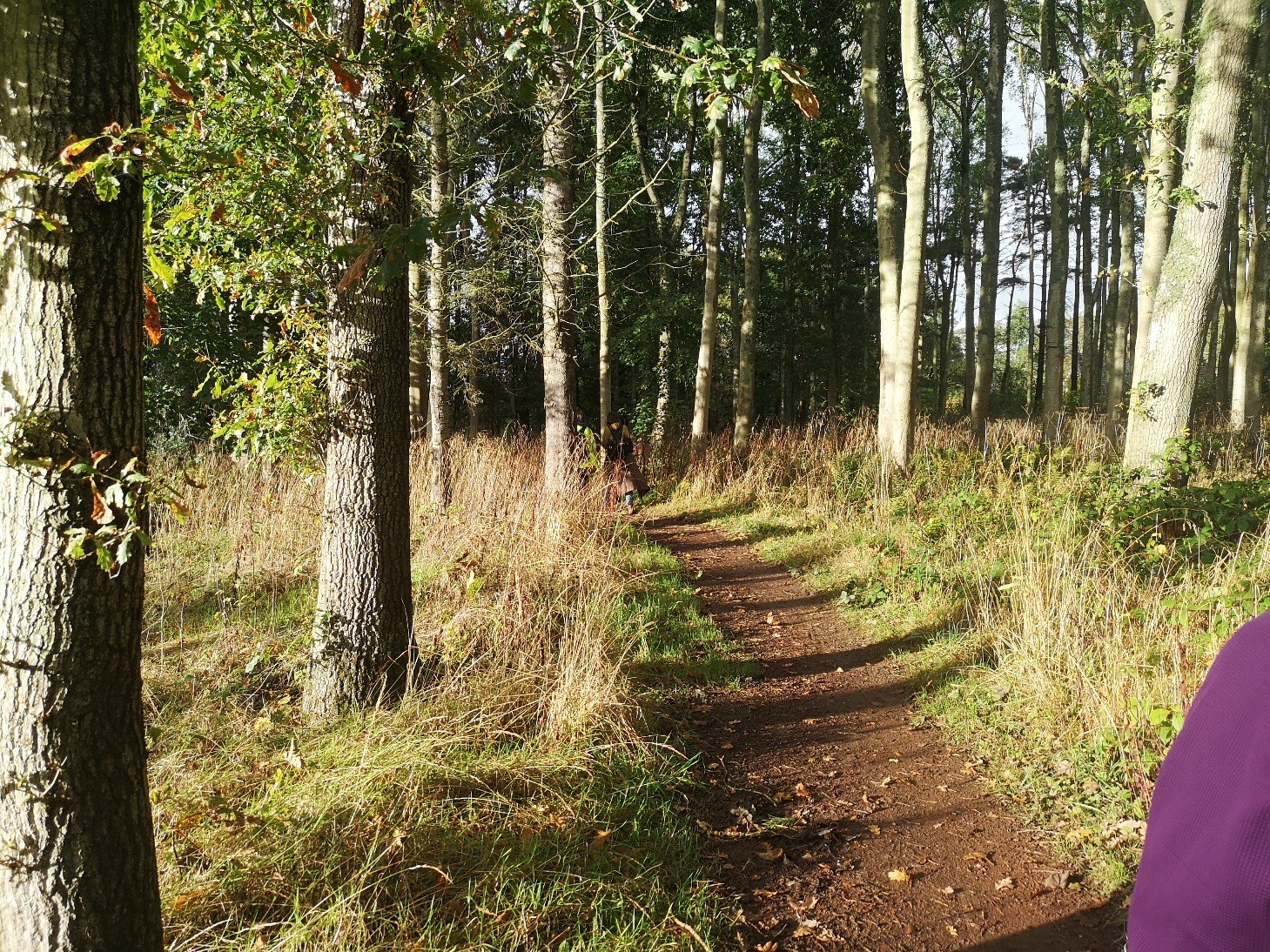
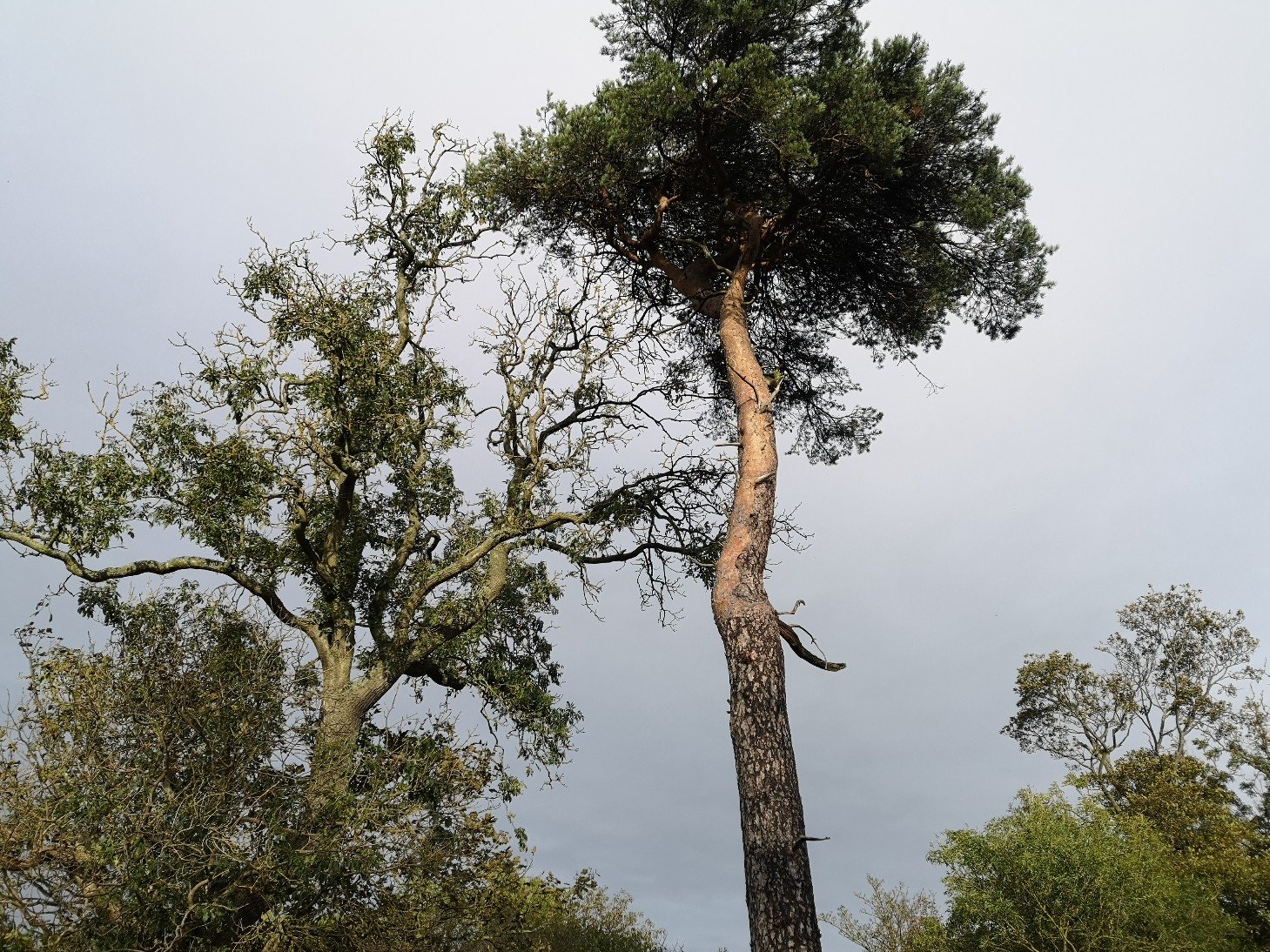
Changeable weather – some silent walking and fascinating conversation as we start to get to know each otherAcross the fields in silence after lively lunchtime chatsI was bringing up the rear today, to ensure no-one got lost or left behindPicking up my daily feather as I listened to people’s stories of grief and walkingFirst sighting of Berwick Law, luring us to our first stop on the Pilgrimage for COP26Oak woods reminding us of the environment we are walking forScots Pine in the late afternoon sunGillian – Berwick Law closer now
There were four of us at the back and we got lost here – tiredness causing a momentary lack of attention! Luckily it was only brief and GPS came to the rescue
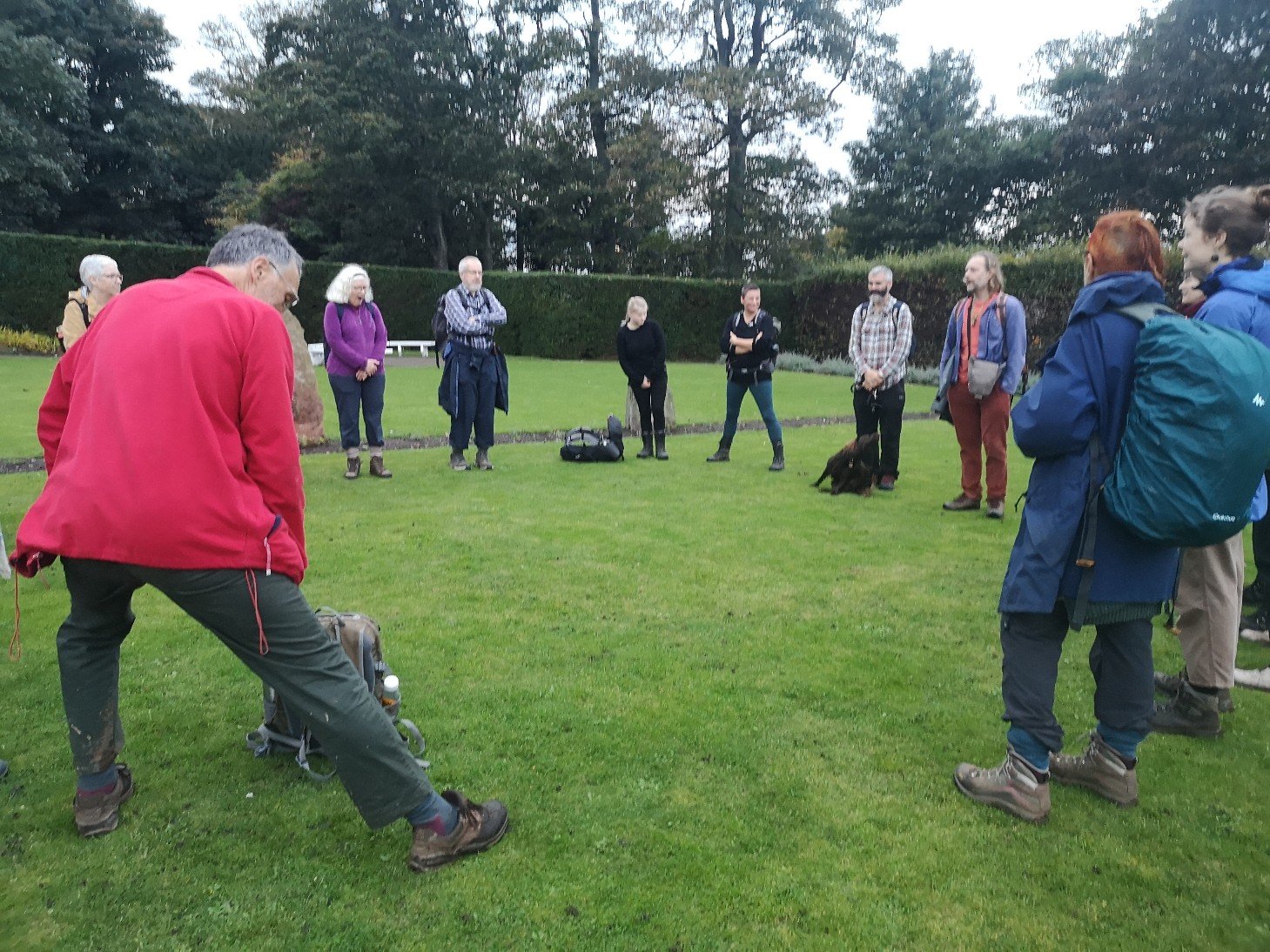
Final circle in Lodge Grounds, North Berwick for each of us to share a word which summed up the day
Many thanks to:
Adrian for leafing today’s walk.
Cian, Finnán and Valerie for their hospitality for me overnight in Dunbar on 17th.
The kind people who provided a delicious lunch at Prestonkirk, in East Linton.
And St Baldred’s in North Berwick, who provided our evening meal and accommodation.







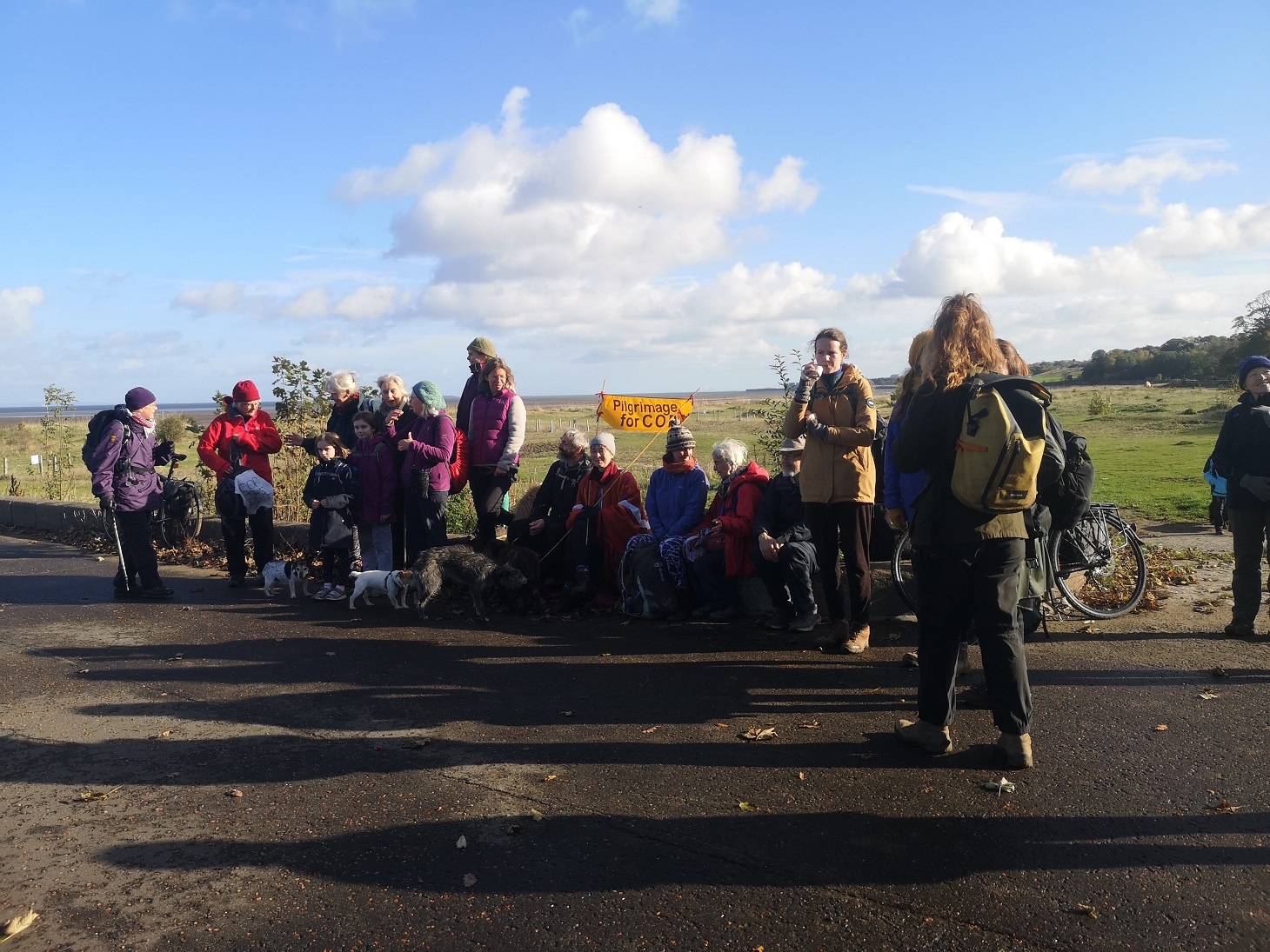
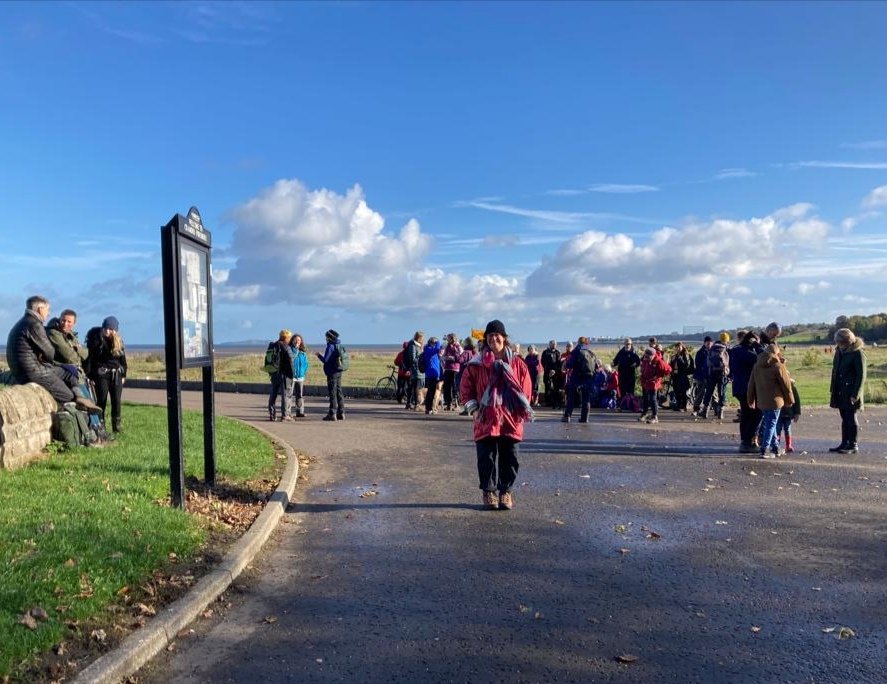
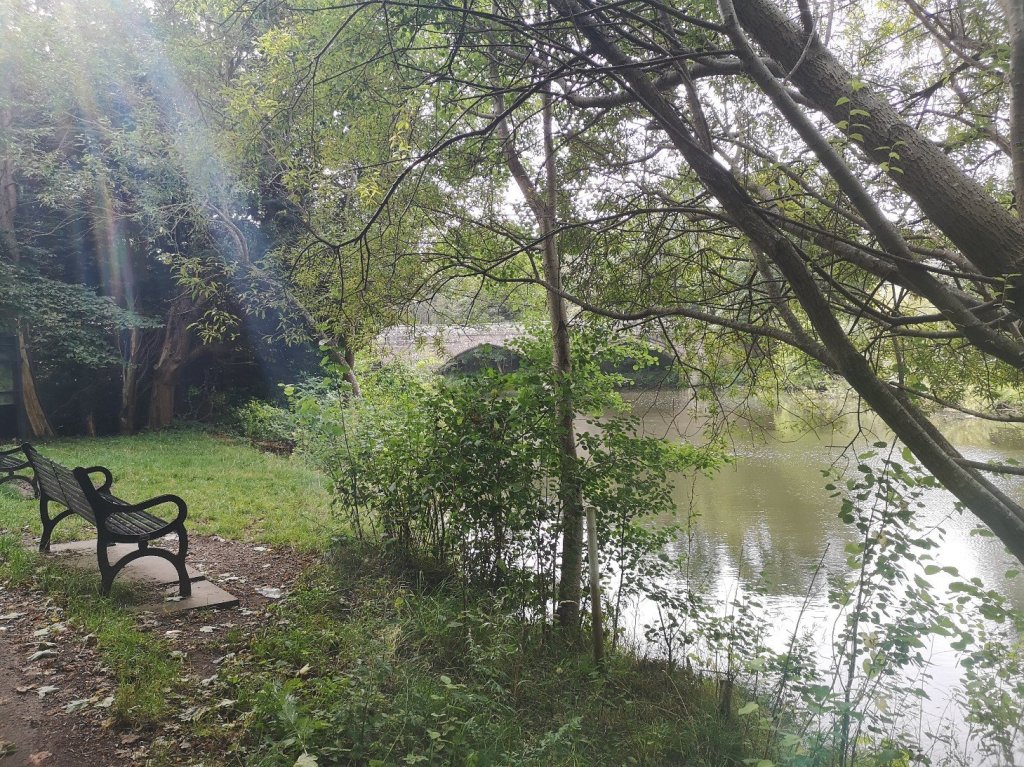
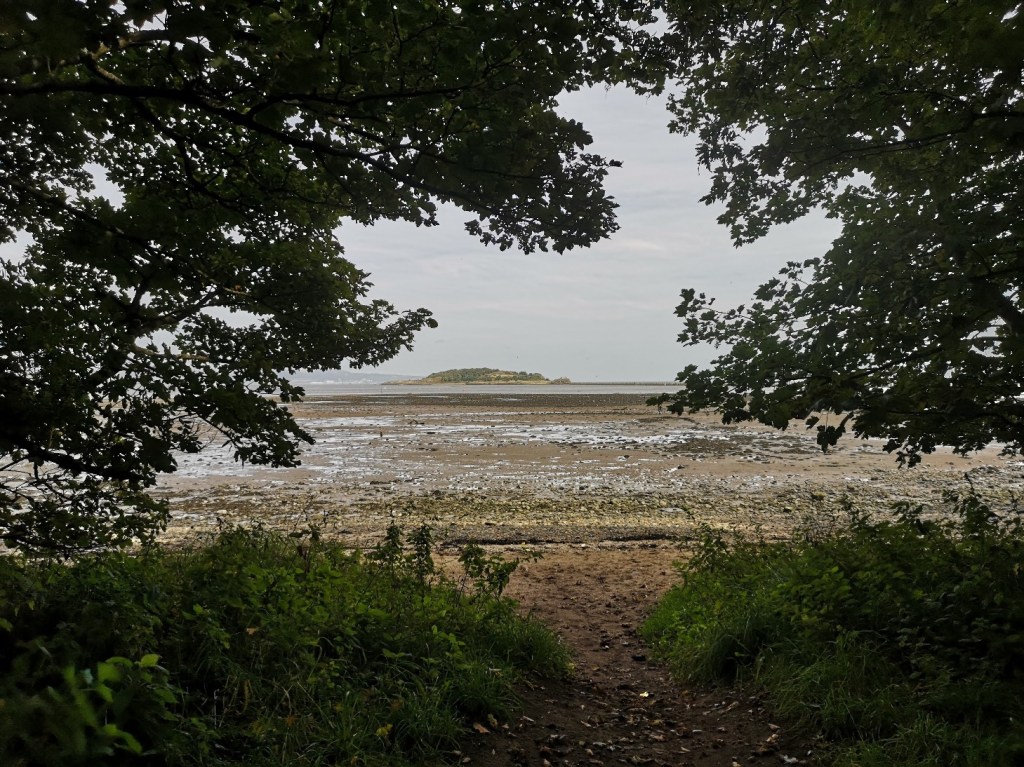


 Walking without a donkey