Guidelines for the February 2026 First Friday Walk (FFW) Please note that this is a distal prompt, but you can, of course, arrange to walk in a couple or a group wherever you are.
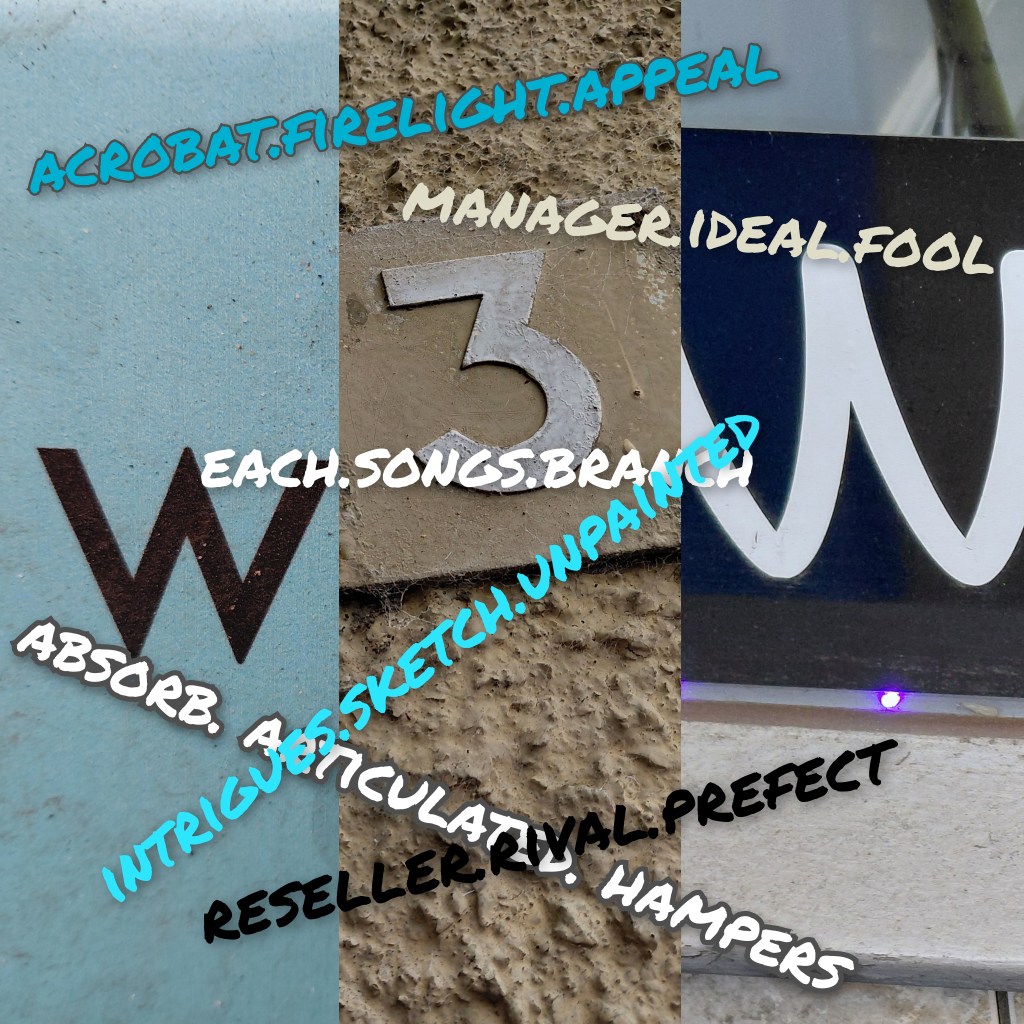
Choose a place to walk and make work. Find out the W3W/// location for your starting place (you will probably have a few options, so choose the one you like best or are most attracted to.)* Store those 3 words in your mind / notebook / phone. Set your timer and start walking. Stop after 15 minutes. Choose one of the 3 words and use it to make an intervention (it can be a photo(s), conversation, drawing, rubbing, poem, thought, installation … whatever you like). After long enough, walk for a further 15 minutes. Choose a second word and make an intervention as before (or differently).
Repeat a third time.
Either in the open air or back at home, compose your work in whatever way makes sense.
Share with someone or on social media #walkingtheland #firstfridaywalk The title (or subtitle of your work) will be the W3W/// and something of your choice.
What you will need
The W3W/// app or a text of some sort (poem, newspaper article etc)* Materials of your choice for making A timer, watch, or phone
Extra notes
*If you do not already have the W3W/// app on your phone, you can download it before you leave, from the Playstore or Applestore, look it up on the internet or on a laptop. If the whole W3W/// thing is too technology-focused for you, choose the 15th, 30th and 45th words from a text of your choice.
If you want to stay out longer, repeat with a second W3W/// address.
If you are part of another Walking the Land project, you could choose your Deep Encounters place to do this FFW, or walk at a distance with your Walking in Pairs partner (perhaps you decide in advance to swap W3W addresses, or use a mix of them).
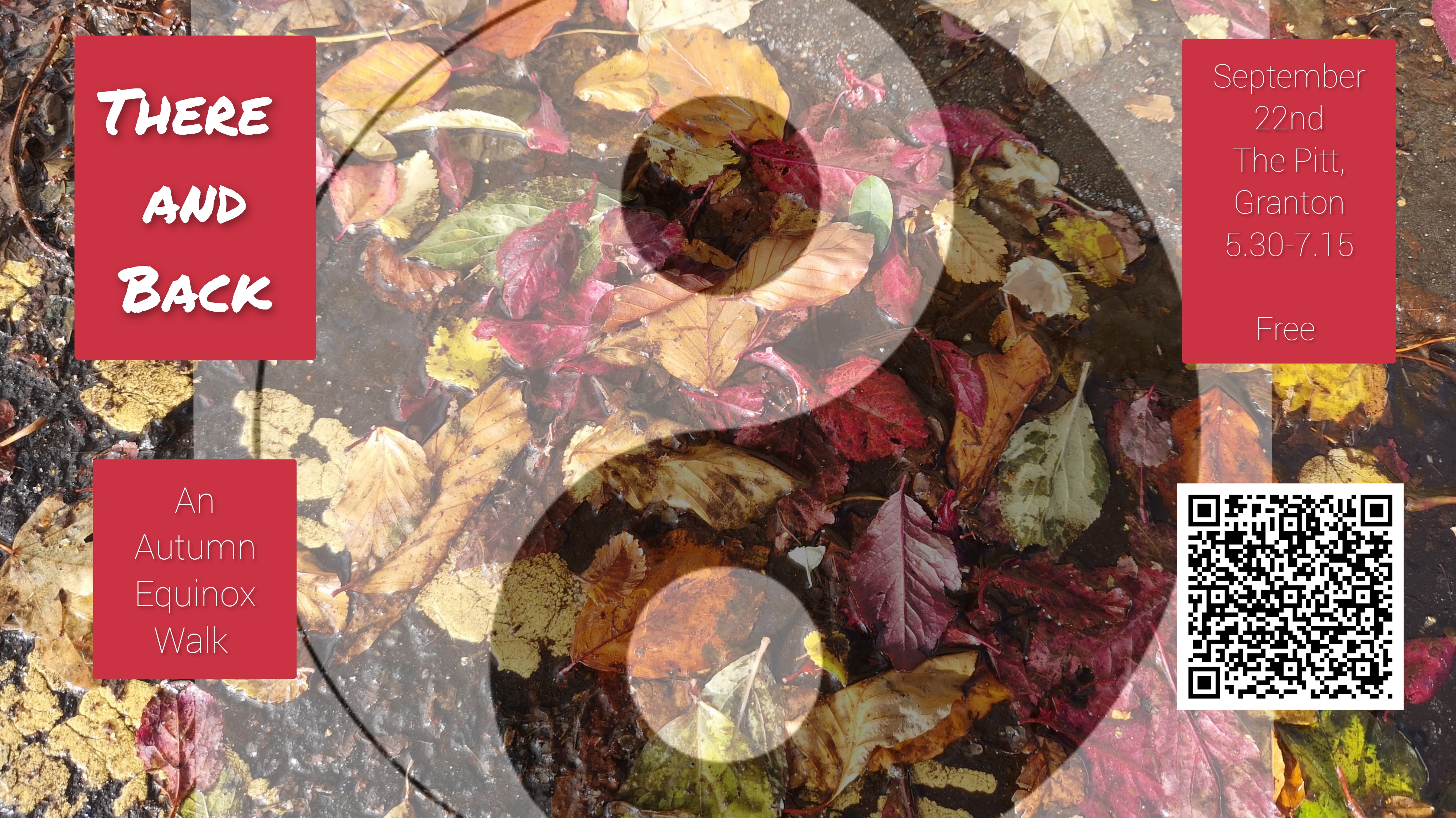
A walk to celebrate the Autumn Equinox on Monday 22 September 2025, 5.30-7.15pm meeting at The Pitt. Booking link
At the Autumn Equinox, there is balance between the daylight and the dark. As we celebrate and embrace this momentary state of equilibrium, let us take a deep breath. Transformation and renewal will come with the start of the season, so this is a good time to pause, walk, and notice what’s around us.
Meeting at The Pitt, Granton at 5.30pm, we’ll say hello, then walk in pairs towards Silverknowes, and back again. When we get back to our starting place, we’ll have some refreshment and discuss what we noticed. The event will end at sunset (7.12pm). Let’s hope it’s a clear night!
This is a flat walk on a hard surface and therefore wheel-friendly, whether buggy, wheelchair, stick or other. There are stands to lock up your bicycle at the start. Buses stop some way away: try 16, 19, 22 and get off either at Granton Square or the foot of Waterfront Avenue ///nail.served.dizzy or near the top of Spiers Bruce Way (bus top acid.pulse.cloth) and walk down.
I’m describing this walk as a Community Walk because we will walk together. All adults (and accompanied children) plus dogs are welcome. You do not have to live in Granton!
Please bring refreshments – I will provide chocolate/fruit.
This event is free to attend, though a donation of £5 per person would be gratefully received.
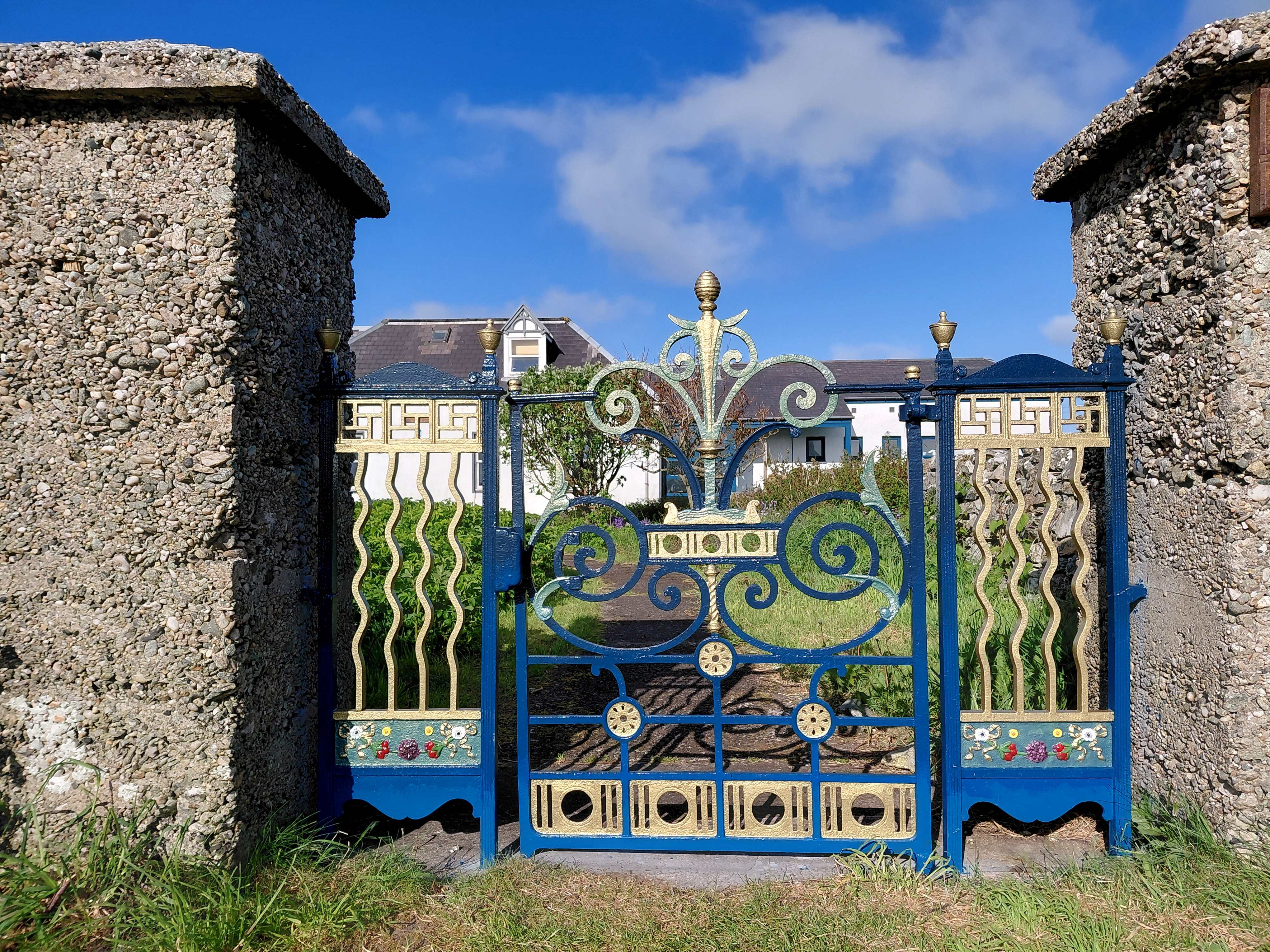
‘After That’ (the past) and before we get to ‘This’ (now), we must pass through a portal. This walk will seek gateways of all shapes and sizes. It’s for those who haven’t yet arrived in, or are curious about, the present moment.
Moving through a portico, from one side to the other, sometimes in conversation, sometimes silent, the present will be revealed. Carrying with you a paper portal sporting the words, Gateway to … , it’s the walking through and under these transitionary arches that will help us finish the sentence.
Free downloads (two) for the distal version of Gateway to This
This walk as taken in March 2025. It was the penultimate day of a 10-day hike from Chepstow, on the Welsh-English border, to Cheltenham. My artwork was in the Walking the Land’s Line(s) of Enquiry exhibition at the Hardwick Gallery, which opened on 7 March, and I was attending a Symposium at the University of Gloucestershire there on 21st.
You may be interested in this companion blog post: Walking with Ants
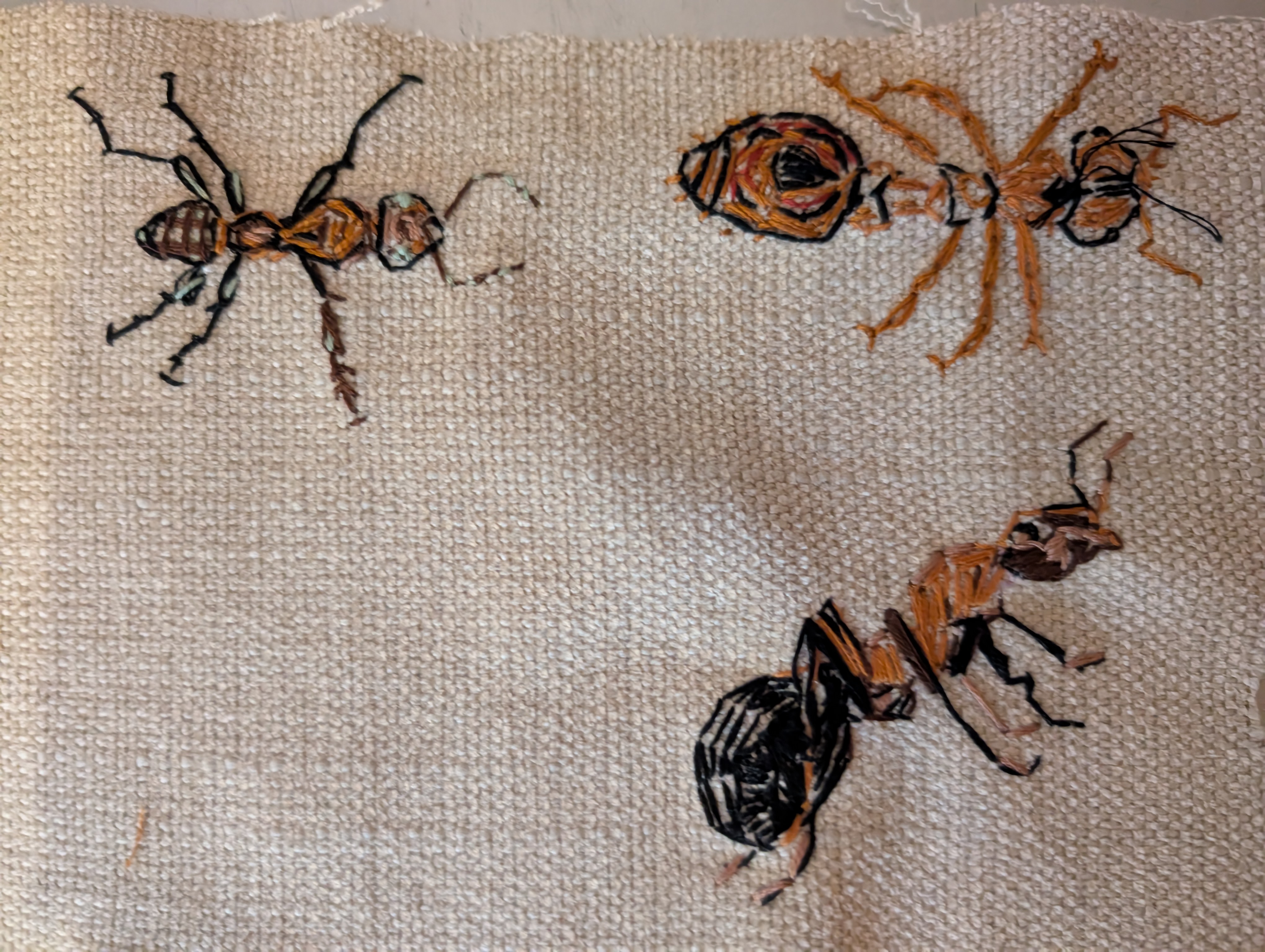
Detail, The Honeydew Line, by Tamsin Grainger (embroidery). I was walking for the small things, celebrating and honouring them as vital participants in our ecosystem
I am an Edinburgh-based artist who exhibited in the Walking the Land collective Lines of Enquiry exhibition at the Hardwick Gallery University of Gloucestershire in Cheltenham. The gallery is situated near the Honeybourne Line, a greenway which used to be a railway. After the opening on 7 March, I made an artwalk from the Welsh/English border to the Symposium which was also at Hardwick and held by Walking the Land.
The Honeybourne Line in Cheltenham and the Cycle Route Network in my home city of Edinburgh date from the Industrial Revolution, whereas industrious ants have been around since the Jurassic era. For much longer than we have been commuting along these paths, they have been making their way back and forth to work from ant hill or nest, gathering food, clearing up after us, and making critical relationships with other species (famously stroking aphids so they secrete honeydew).
I have walked, watched, sketched and embroidered ants in order to appreciate and understand more about them and their busy lives. So often unseen, they are a vital part of our ecosystem and I celebrate them.
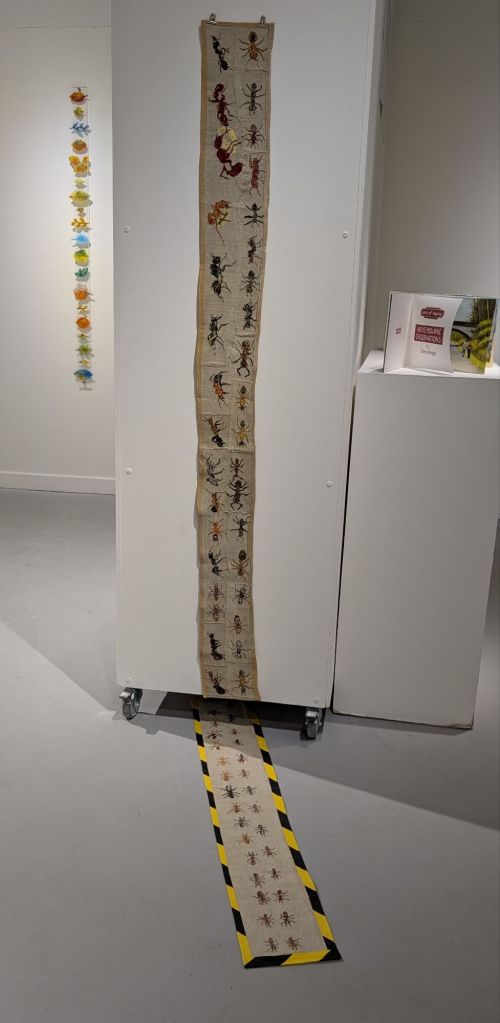
The Honeydew Line (stitching) by Tamsin Grainger at the Hardwick Gallery, Cheltenham. Ants walk each day to forage, and like commuters along the Honeybourne Line (Cheltenham), they pass in both directions often carrying heavy loads
I walked from Chepstow to Cheltenham through the Forest of Dean, the Severn Plain and the Cotswolds, looking out for the unseen small ones (eg ants who are part of our ecosystem and clear up our rubbish). For 10 days, I noticed, acknowledged, and paid attention to the vital role these not-insignificant members of our community play.
The mushroom says, fruitfulness comes from what is unseen or overlooked — hidden networks, decomposition.
Elizabeth Wainwright, Redlands
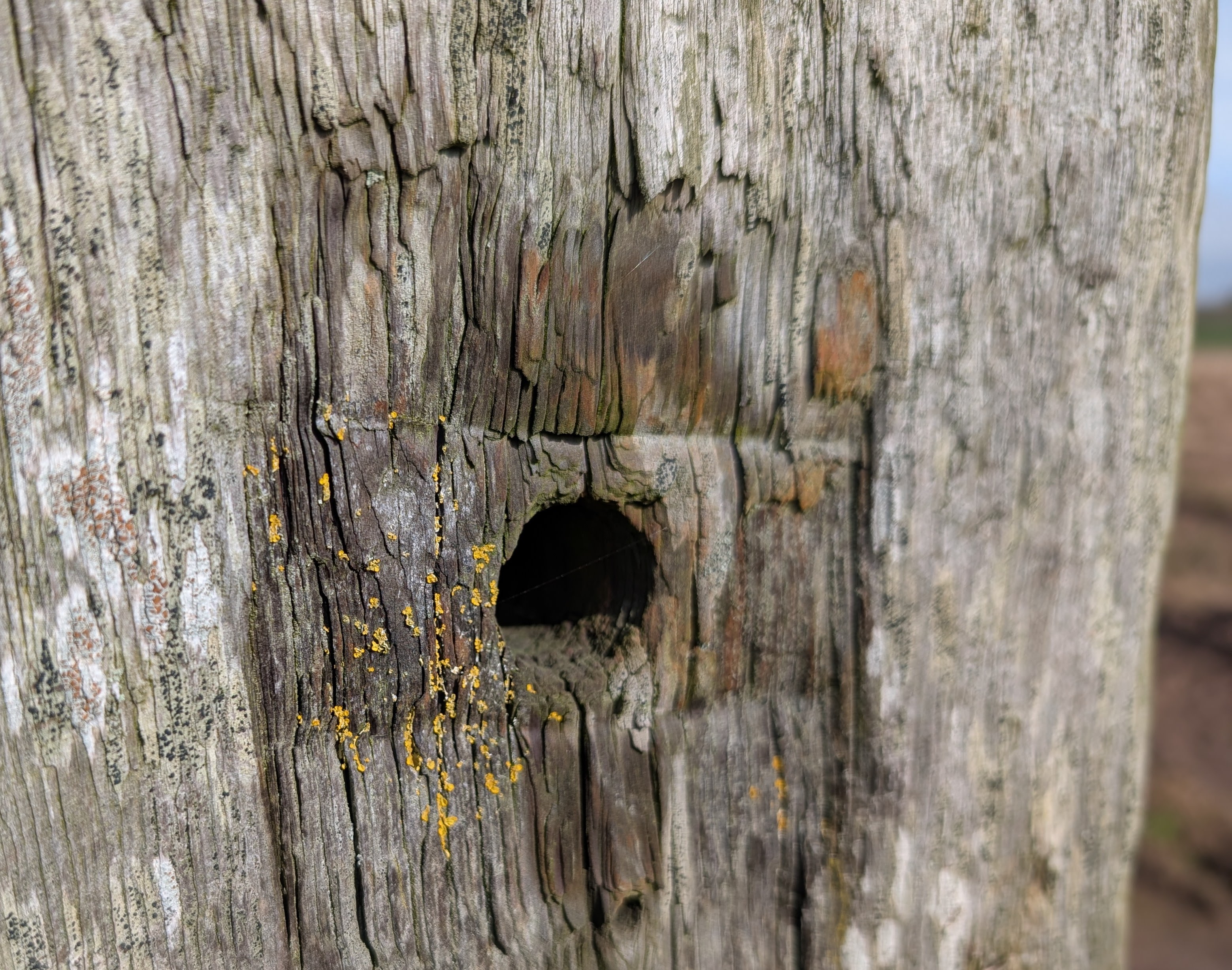
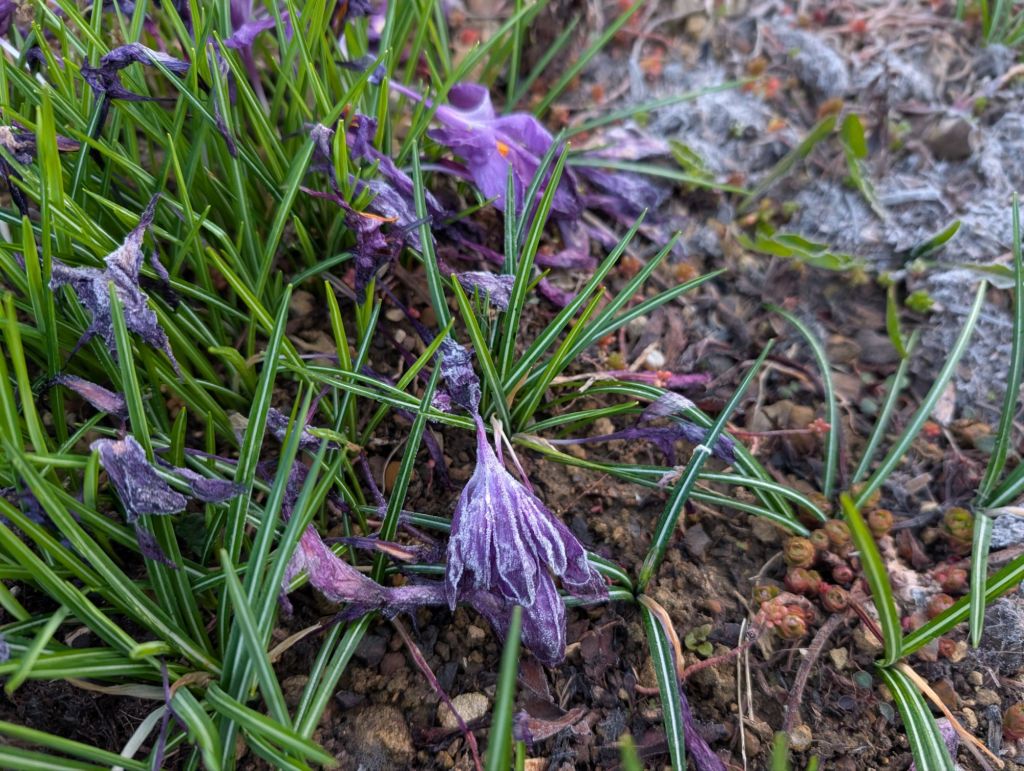
Orange crust fungusFrozen crocuses
At the end of each day, I visited the home of someone who had taken me up on my offer of a Shiatsu-hospitality exchange. Highlighting the walk in advance on social media, I invited others to accompany me and/or to meet in the evenings / overnight. I was delighted to make the acquaintance of many people I’d never previously met, and others whom I had known before but had not seen for a few or even for 40 years.
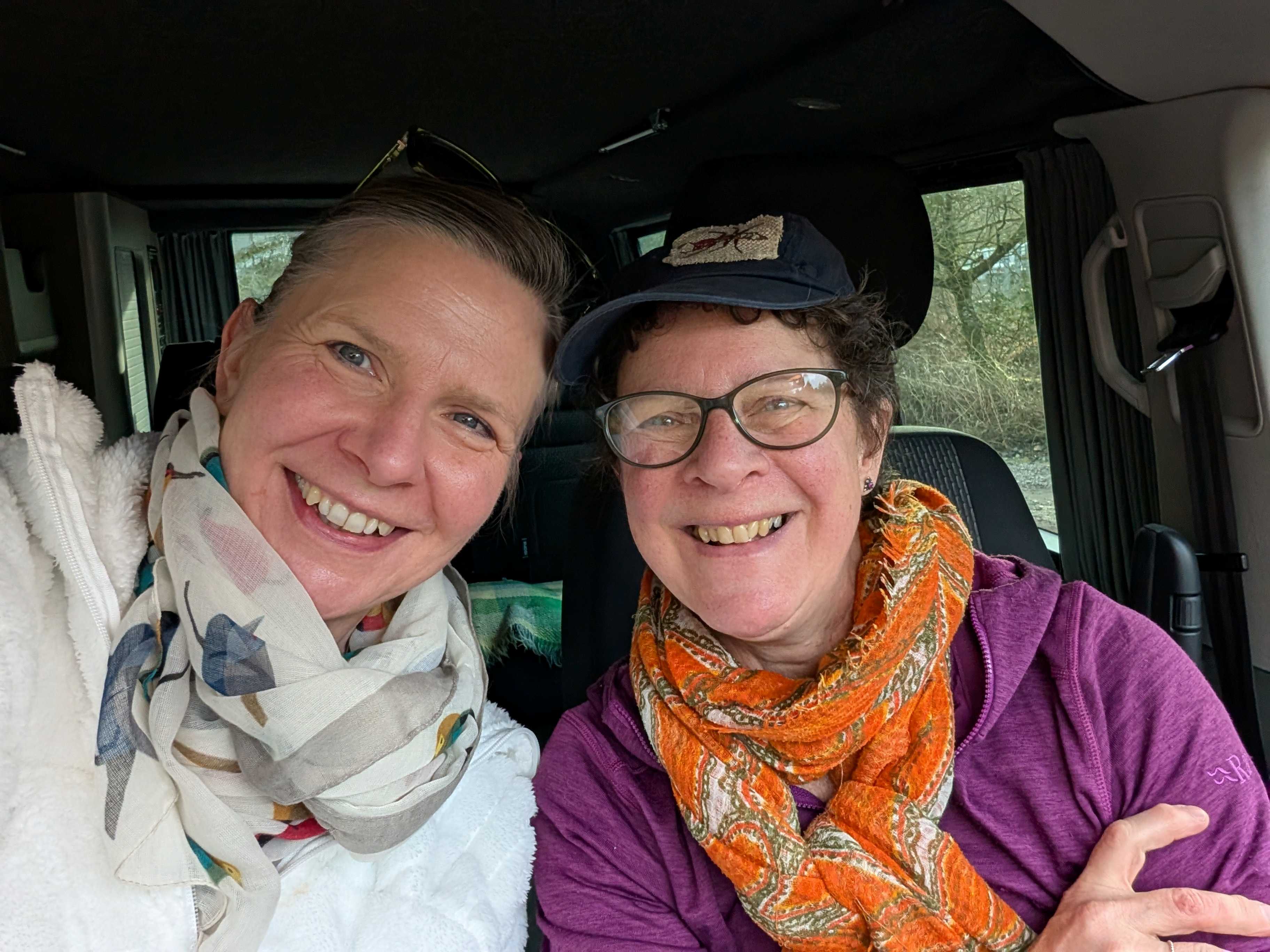
With Vicky at the end of day 1 @wyevalleyshiatsu
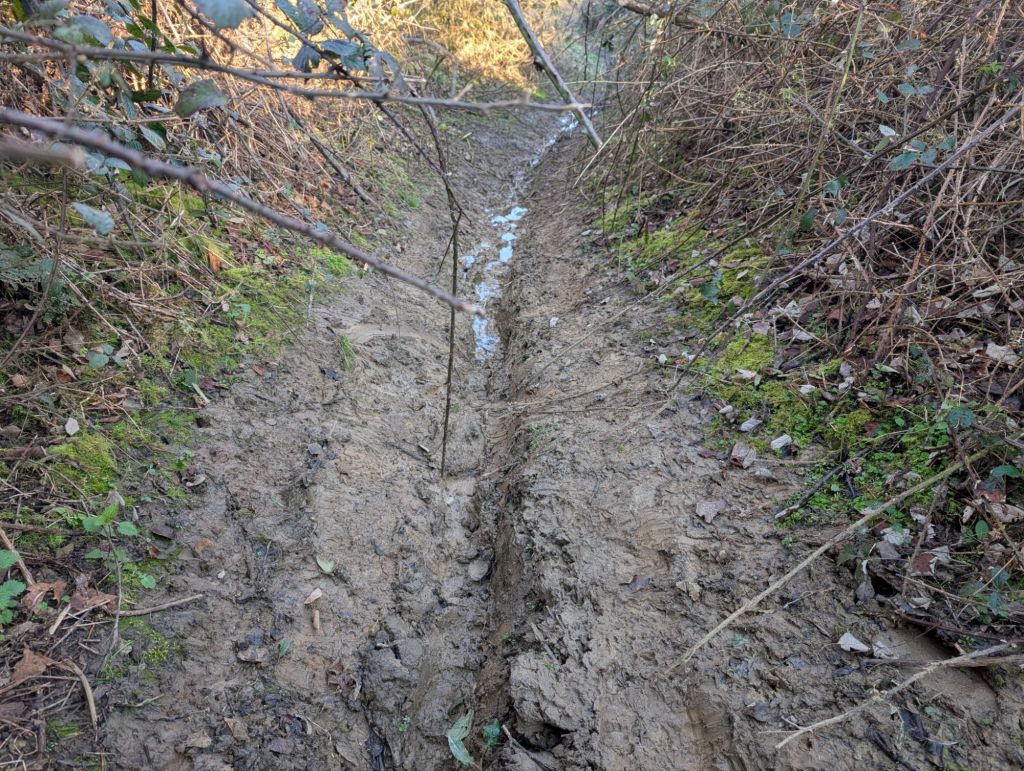
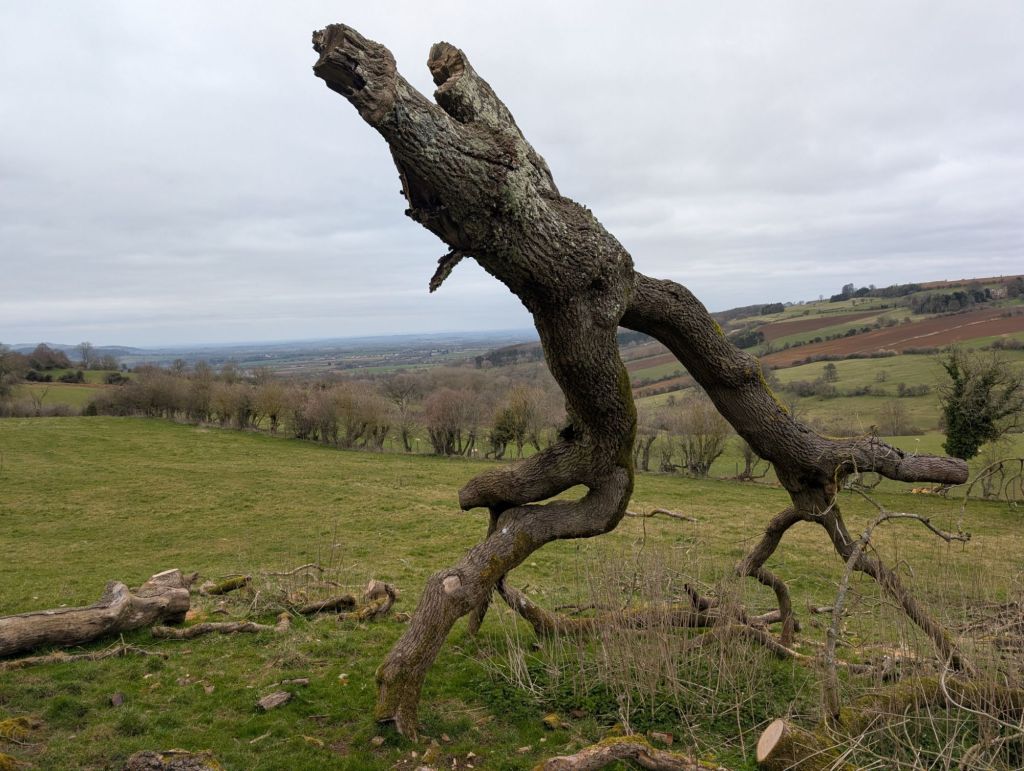
During the walking process, I witnessed the terrible devastation to our soil that we have caused through intensive forestry, extraction, and injurious industrial farming methods. The effects of the recent, more extreme, wind, storms and flooding, often attributed to climate change, were experienced every day.They prompted me to recognise our human failing to protect the insects, birds, plants and animals that we have a duty of care towards, and rely on.
Eroded paths – almost impassable with human feet
Over the next months, I’ll be reflecting on the injury to my leg from slipping on the mud while climbing May Hill at the end of a 10-hour-day’s trek carrying a heavy pack. The pain I walked with became an embodied manifestation of the state of the crisis we are in. There were times on the tops of hills when trudging and squelching through mud, that I wondered if I could continue to go on. I had to sit and rest, mindfully. I had to accept the situation, go right into the middle of the extreme discomfort in order to transform the pain that each step caused.
So many broken or fallen trees
I will be addressing the idea that this was more than a walk or a wander, perhaps a pilgrimage, and that the act of hope was inherent in the constant need to physically move forwards. I accepted help and occasionally I sewed a small panel instead of touching, embroidered something I had come across during that day’s walk – Melusine (found on the arch of Notgrove Manor) and a periwinkle flower (from the hedgerows). Though I had scheduled one rest day, I had to take a second, a break from the walking. Lucky me that I could do that, with the help of new and old friends.
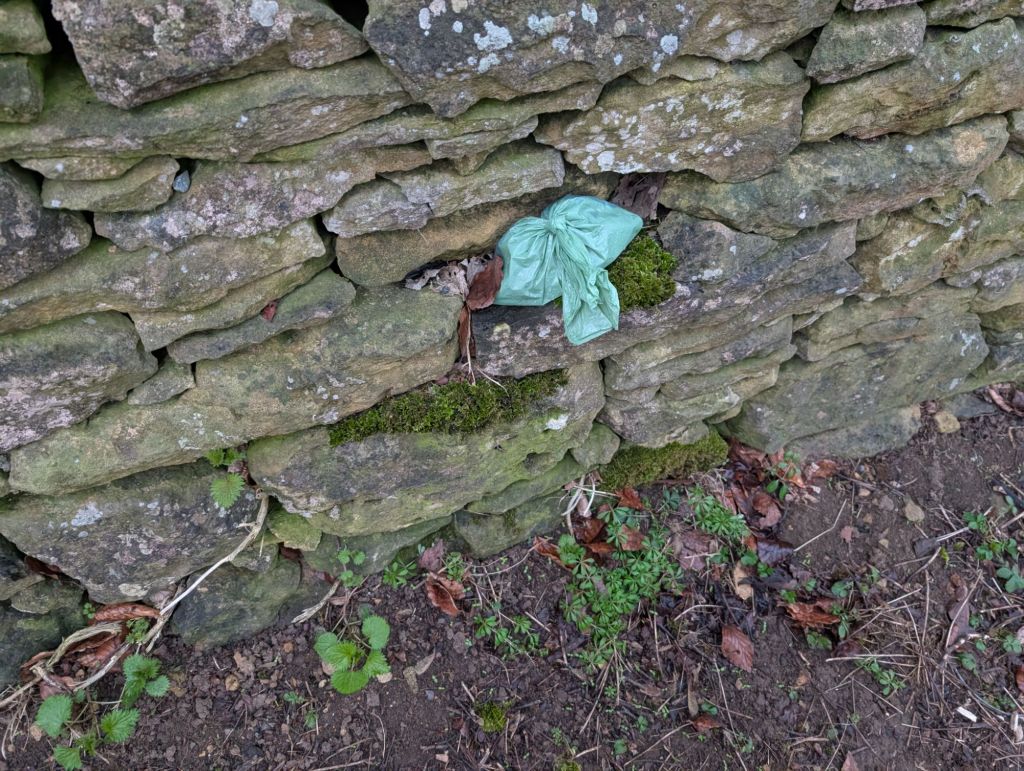
Someone left a dog poo bag on the wall
This walk has been now been completed. Thanks to all those who walked with me, or who bartered hospitality for Shiatsu. What is Shiatsu?
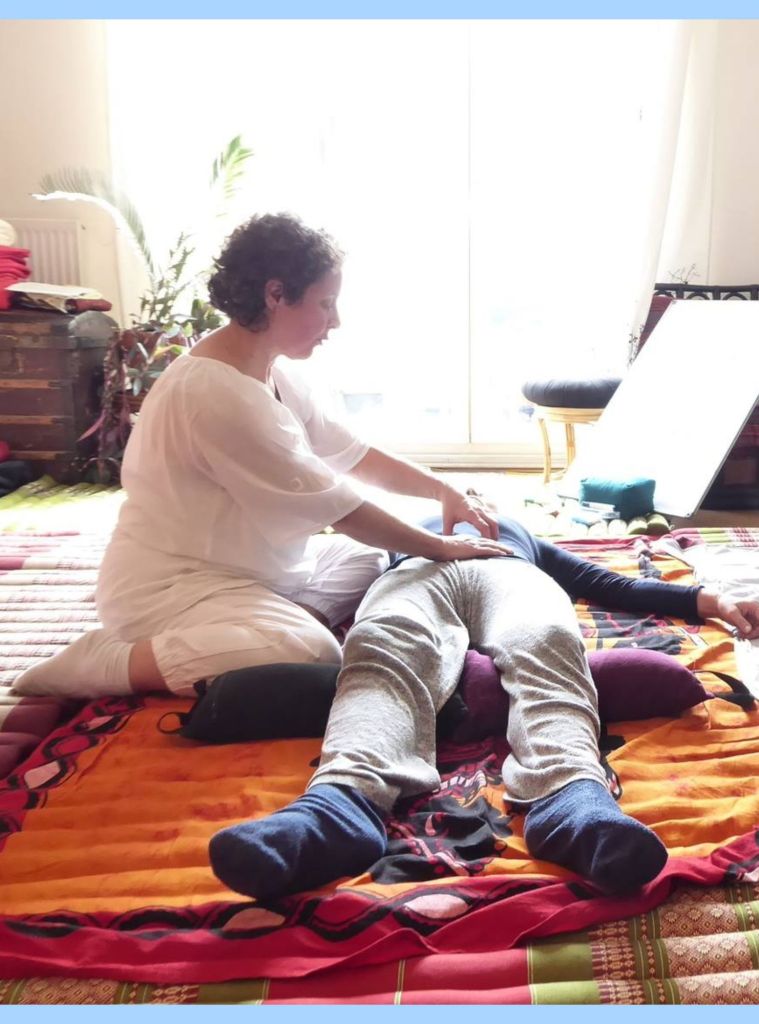
Tamsin giving Shiatsu, Paris
My route: Chepstow, to Parkend, to May Hill, to Gloucester, and to Crickley. Salperton to Stow-on-the-Wold, to Winchcombe, to Tewkesbury, all along the Gloucestershire Way. Then, to Gloucester on a British Pilgrimage Trust route, and finally to the Walking the Land Symposium in Cheltenham along a Slow Ways route. Total: approximately 124 miles (around 200 kms).
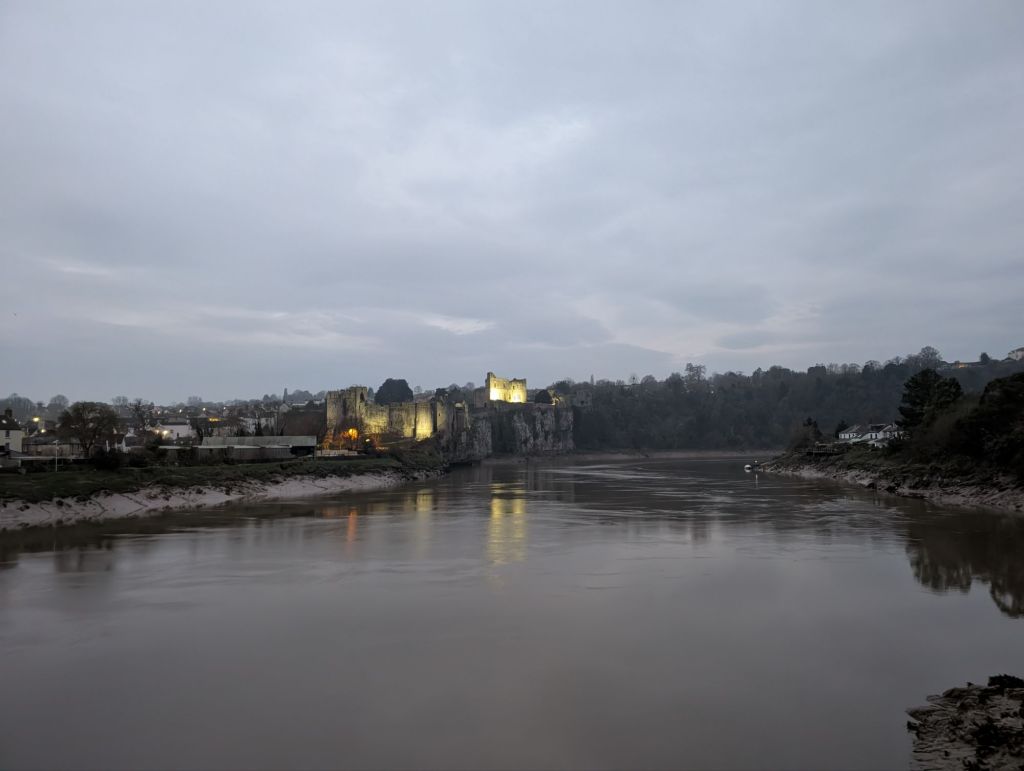
Starting in Chepstow at dawn
The Walking the Land ‘Lines of Enquiry’ exhibition ran between 3rd and 27th March, and the Symposium was on 21 March 2025.
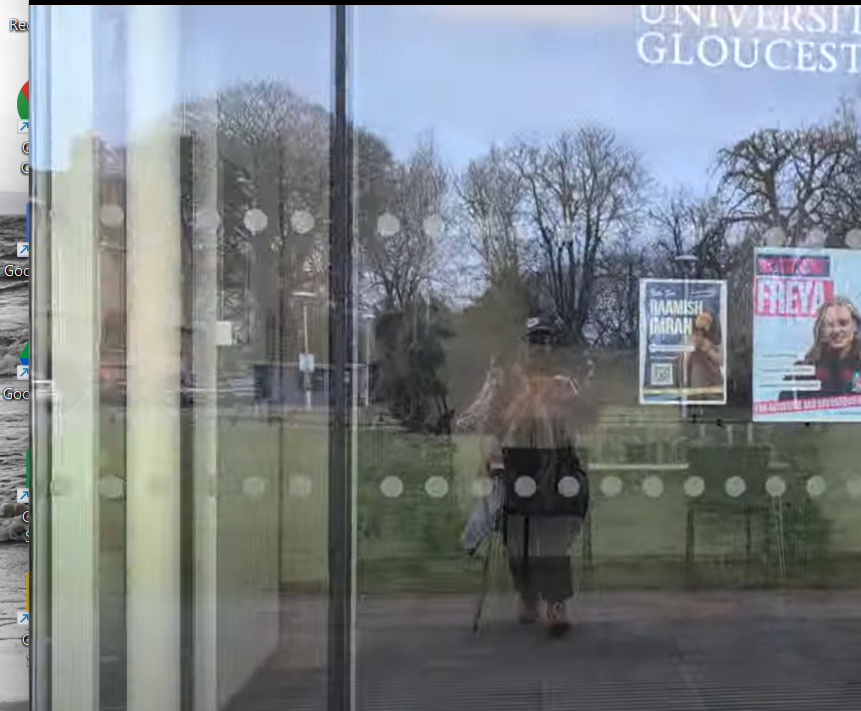
Arriving at the Hardwick Gallery, Cheltenham, for the Symposium on 21st March 2025 at the end of the walk

 Walking without a donkey