A guest post by Marie-Anne Lerjen, a walking artist from Zurich (Switzerland). Her website is in German.
We walked a good long walk (24 kms) from Girona to Banyoles in Cataluña, setting off in a considerable heat (27 degrees) and finishing after dark. Here is Marie-Anne’s Sweat Mapping blog
It’s a quick but good listen on Soundcloud:
Featuring myself and many other walking artists from around the world who had congregated at the Art del Caminar conference.
Part of the Separation and Unity Project, Cataluña, July 2022
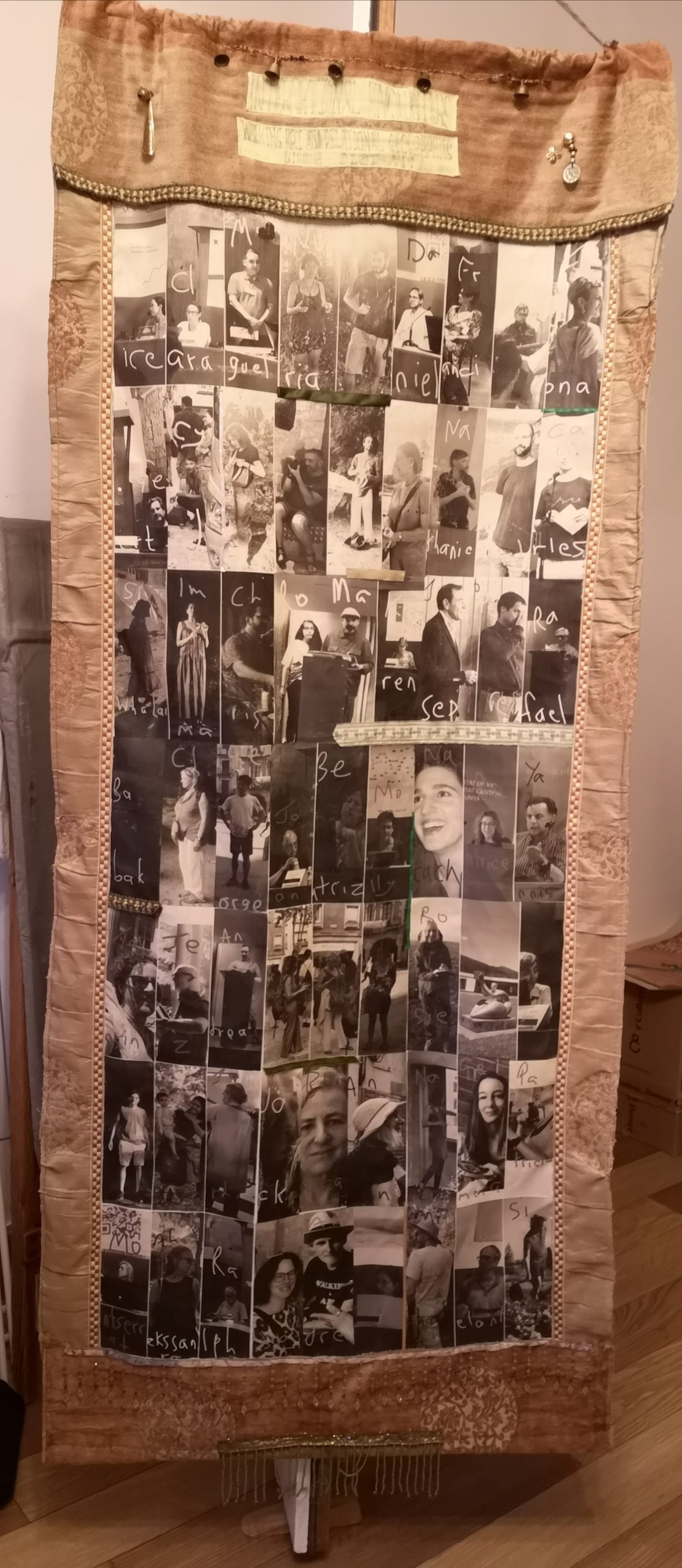
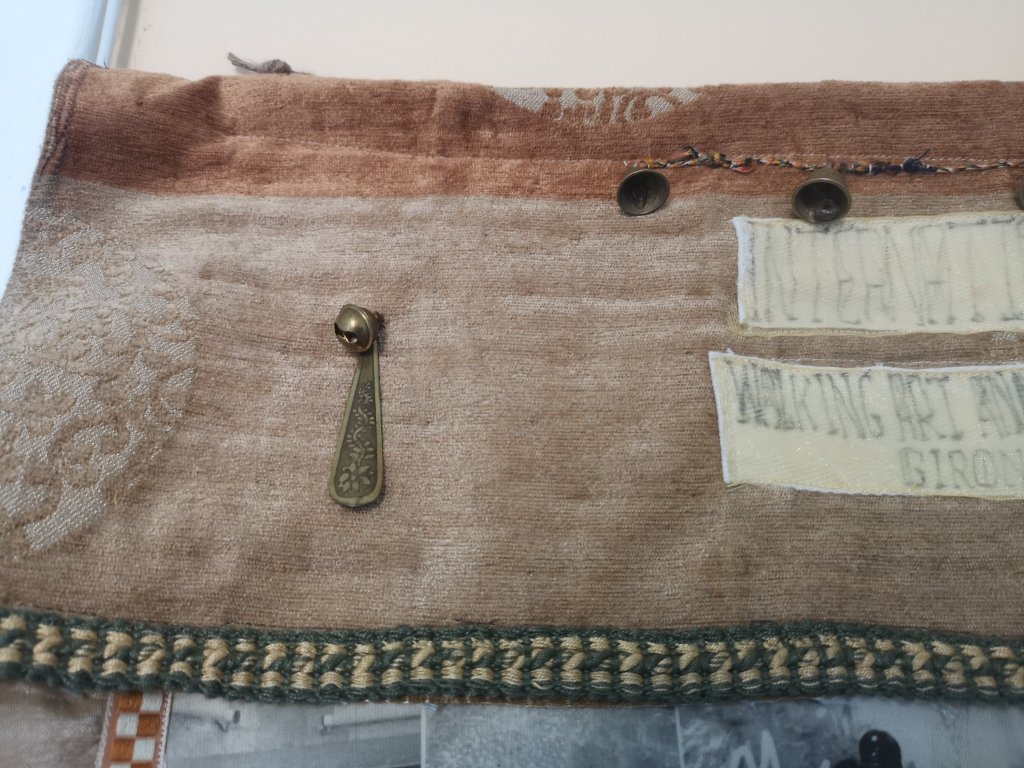
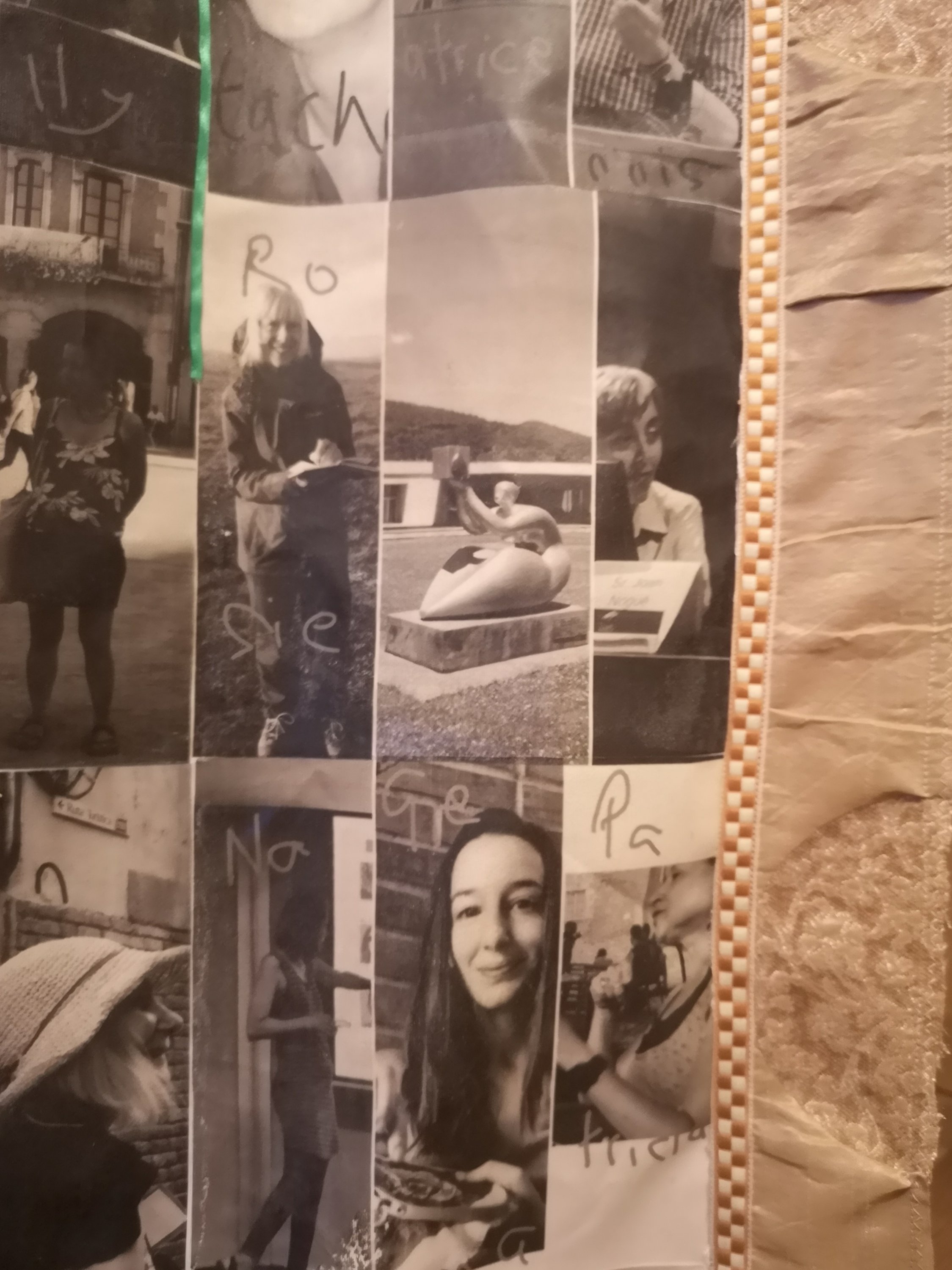
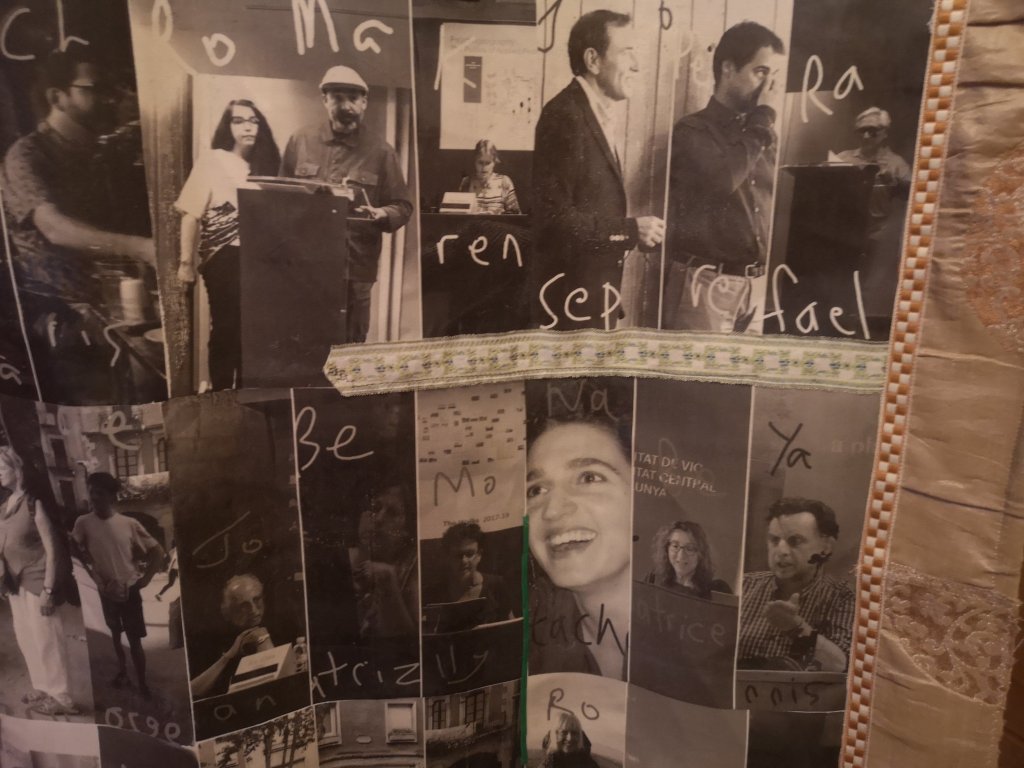
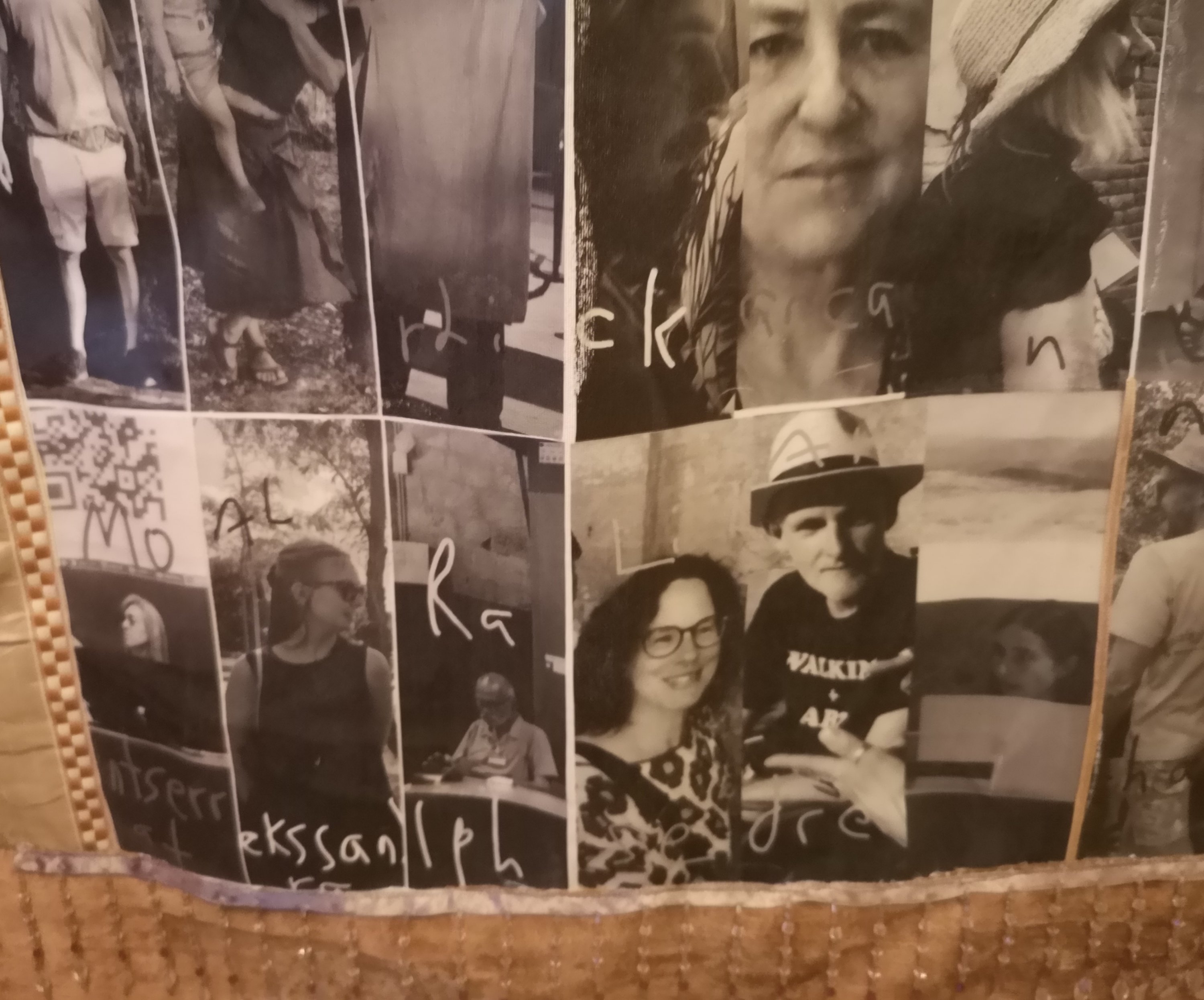
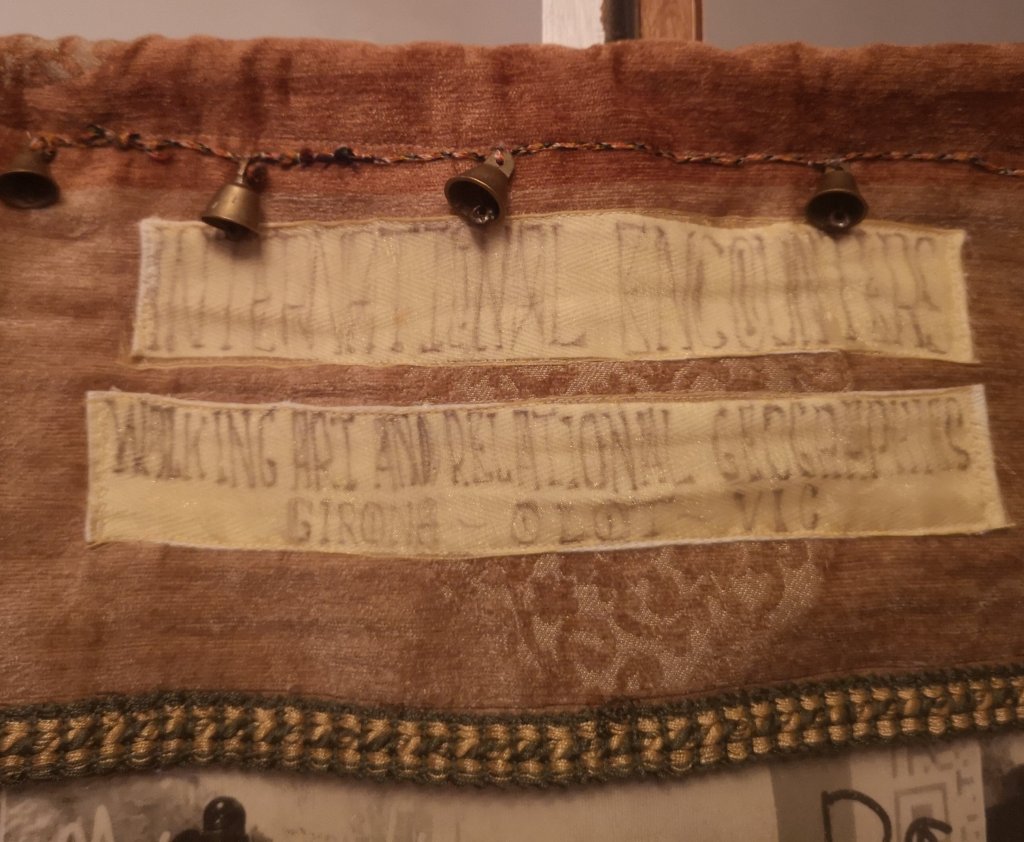
This wall hanging, ‘Festivities and Delegates’ represents an act of unity, the bringing together of many of those who attended the Walking Art and Relational Geographies International Encounters conference in Cataluna in July 2022. Planned for several years, but thwarted by the pandemic, delegates were at last able to travel from Australia, South Africa, Brazil, America and Europe to the conference in Girona, Olot, and Vic to share walking art and community projects via presentations and walkshops over a period of a week.
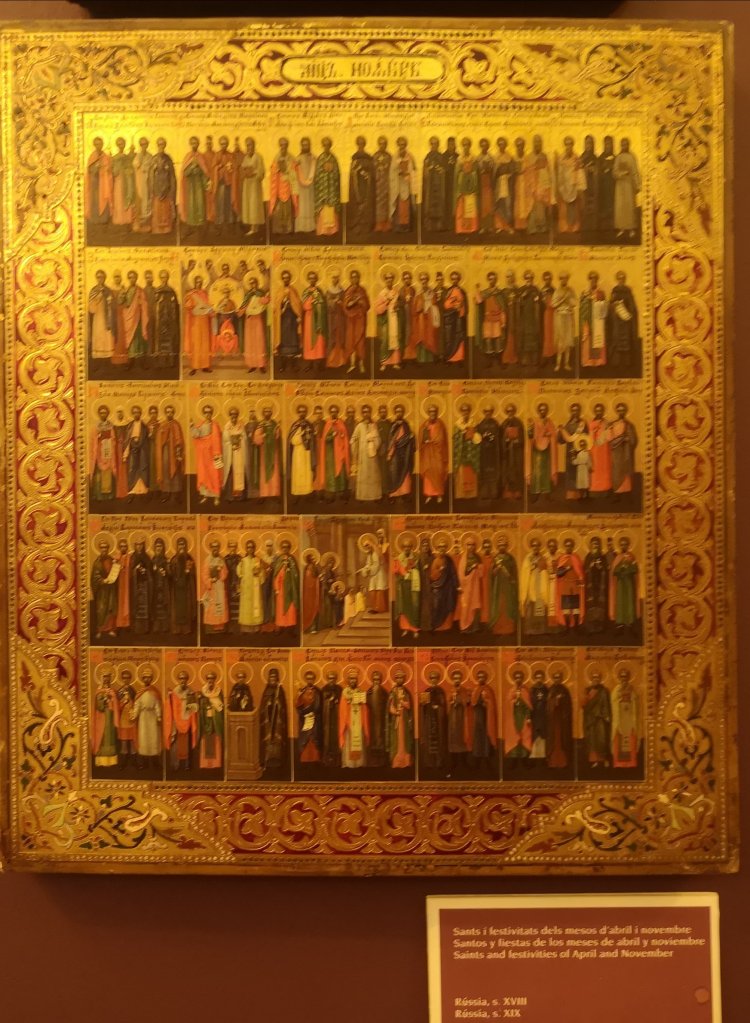
This work was inspired by the 18th /19th century ‘Saints and Festivities for the months of April to November’ in the Museu Montserrat. I climbed up there after attending the conference. The ornate Russian ‘menologion’ is a calendar featuring rows of saints, above which are their names and the dates of the days on which they are honoured, in cyrillic script.
This would have been a visual reminder of the annual Masses of the Orthodox Church which celebrated many different saints.
A menologion (menologium, menology, menologue, menologia) was sometimes a liturgical ‘office’, an ecclesiastical, Eastern Orthodox service book or martyrology; a long list of saints and the details of their lives arranged according to the months of the year.
It is not dissimilar to the secular mural at the National Portrait Gallery in Edinburgh depicting key figures and events in the history of Scotland. The Separation and Unity Project is interested in the movements towards and away from independence by Scottish and Catalonian peoples, at what urges us to separate from, or join with each other.
I am also referencing Buddhist and Hindu mandalas, and other celebratory depictions used to inspire their followers and remind them of the true path. Mandalas come in many shapes and sizes, often using geometric arrangements. They can represent the whole universe, and be used as a way to separate from everyday existence and focus on what is important for greater knowledge. The Vajrabhairava mandala, for example, is a silk tapestry woven with gilded paper depicting lavish elements like crowns and jewelry.
The human mind is like “A microcosm representing various divine powers at work in the universe”
John Ankerberg and John Weldon (343:1996) via Wikipedia (see below)
Process and production of Festivities and Delegates
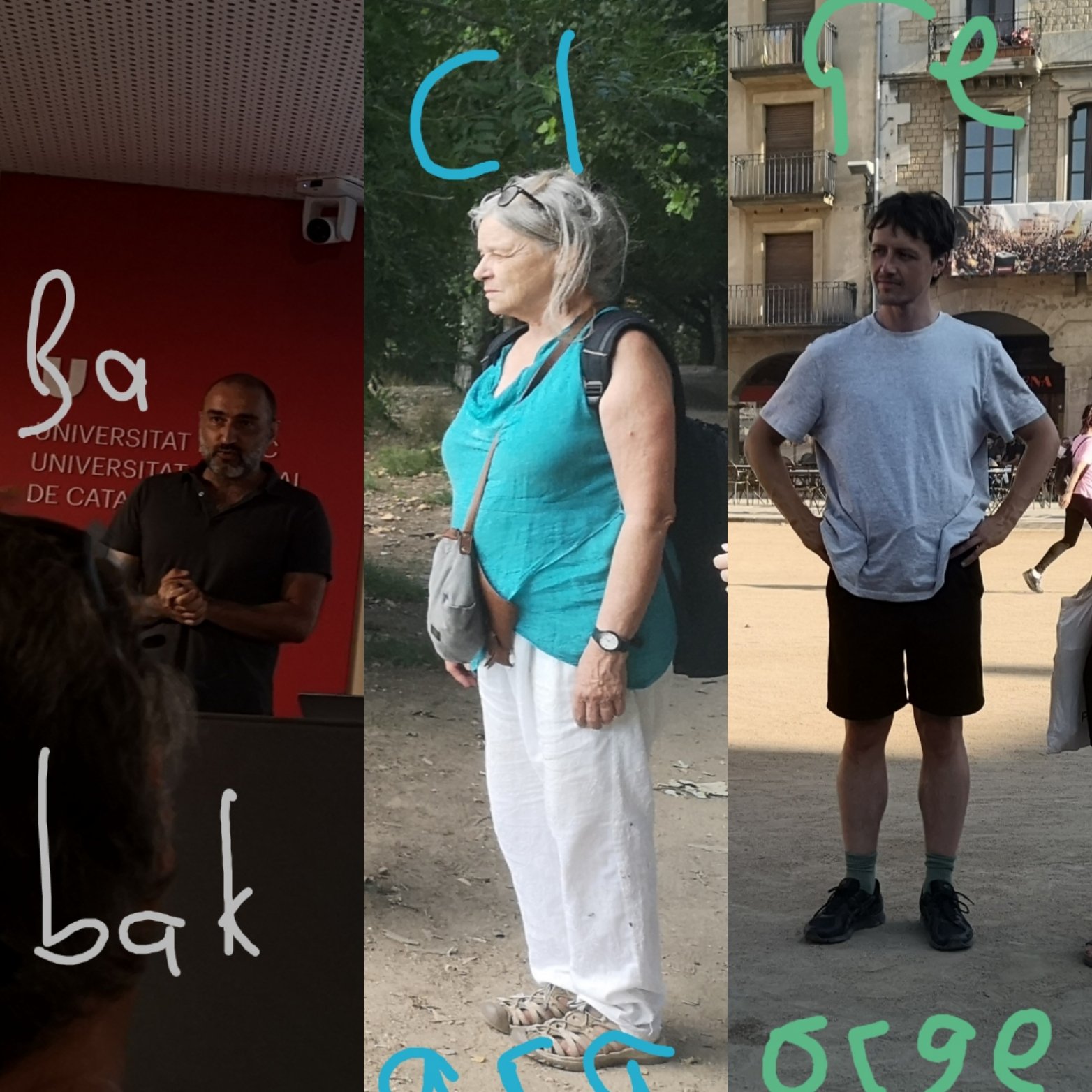
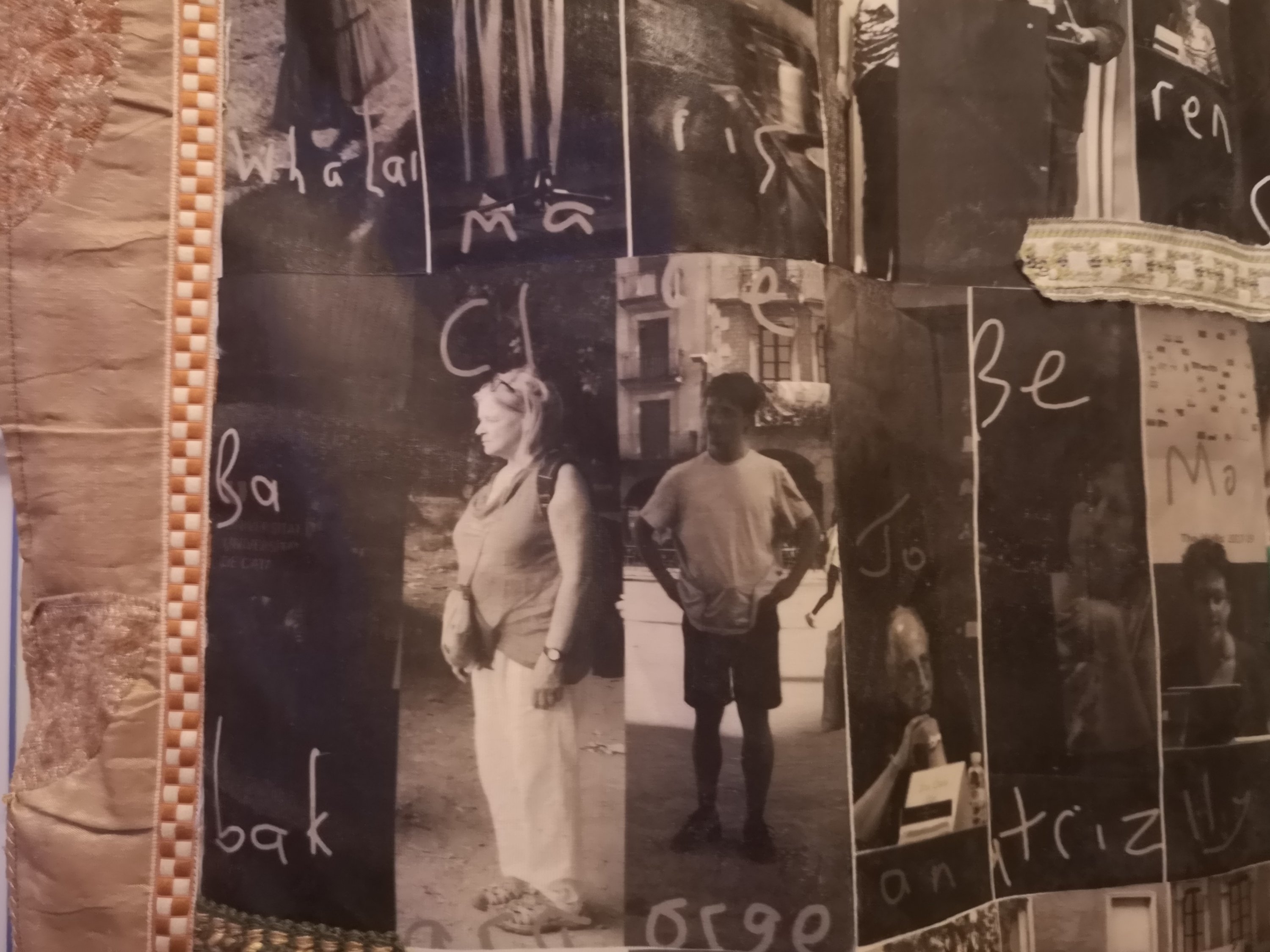
I took digital photos and video stills from my phone documentation of the conference and the social time we spent together, and manipulated the images using free Layout software. In some cases I used social media images. Instead of the elaborate calligraphy that you can see on the Russian ‘Festivities…, I wrote free-hand with my finger or with a biro.
Details: 160cm long and 70cm wide, mixed media – sewed from scraps of upholstery fabric which came from free sample books. Ribbons, tapes and sundry, shiny objects such as bells, earings which have lost their pairs, and sequins. Iron-on paper was used to transfer the photographs onto the fabric.
It incorporates a number of small brass and other metal bells, with reflective totems. These were/are often used to ward off evil spirits, to bring ones attention into the moment, to reflect the devil’s face back to him, and, contrastingly, even to represent the sound of the Buddha’s ‘voice’ spouting wisdom. The protective aspect would also traditionally have been as much from the ‘monkey mind’ and other natural inner temptations, as from what might be attacking us from the outside. Tantric mandalas would have been an aspect of separation and protection from the outer Samsaric world.
Quote: from their ‘Encylopedia of New Age Beliefs: The New Age Movement’, (p. 343, ISBN 9781565071605 archived from the original on 2016-06-03, retrieved 2015-11-15)
There is a spiritual-political-geographical link between Edinburgh, Scotland where I live, and Cataluña in the Iberian Peninsula where the Encounters are taking place (Girona, Olot and Vic). In both countries, we have long been engaged in matters of self-determination, with debates over separation and unity, community, national and inter-national relationships. Whilst primarily represented as a battle fought in law courts and parliaments, or between opposing protesters on the streets, this has often been a binary approach. It is necessary to spend time listening, sharing and making work with artists and members of the community in order to understand each other better and find possible ways forward.
Europe is defined, in many ways, by borders. They speak of crumbled empires, shifting boundaries – most of them, …. speak of unimaginable suffering.
Kerri ni Dochartaigh ‘Thin Places’ p17
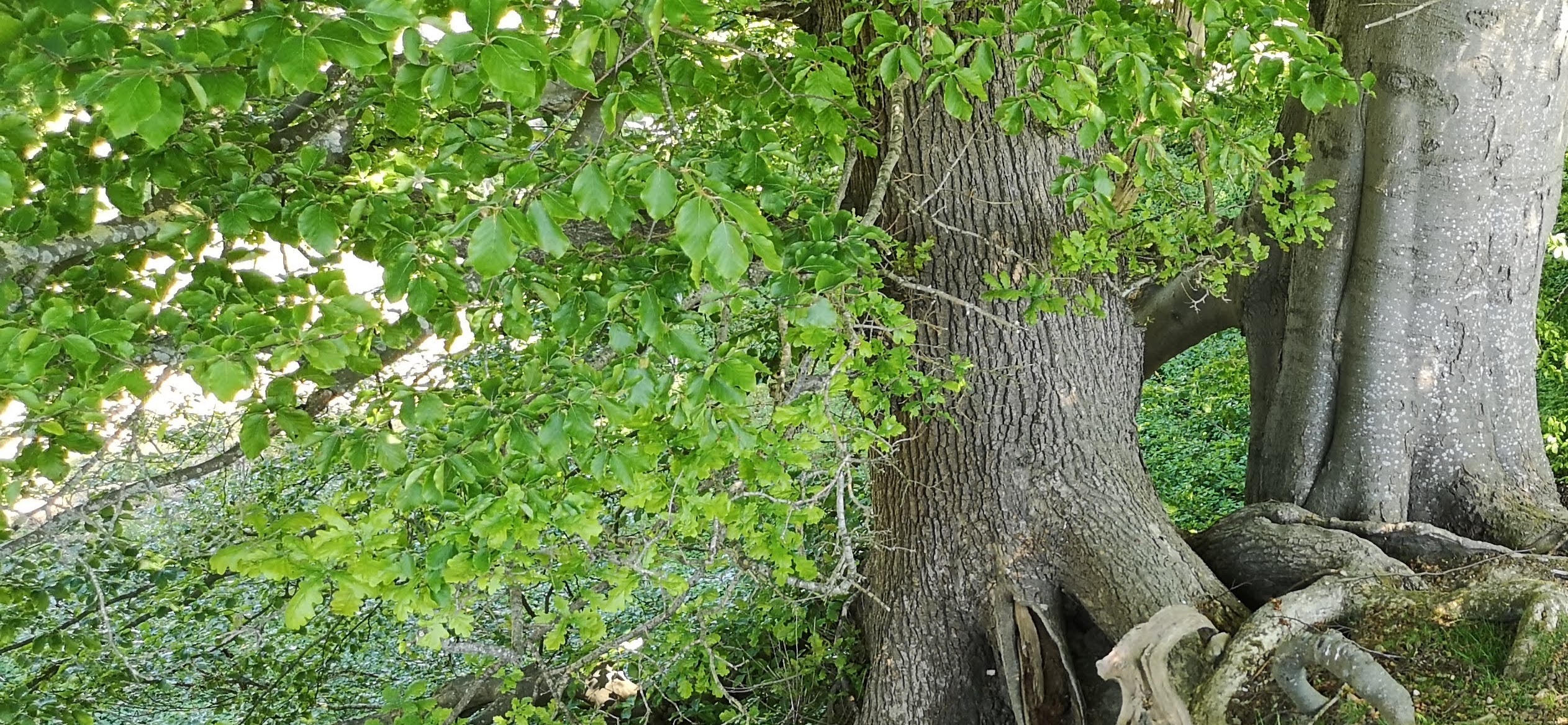
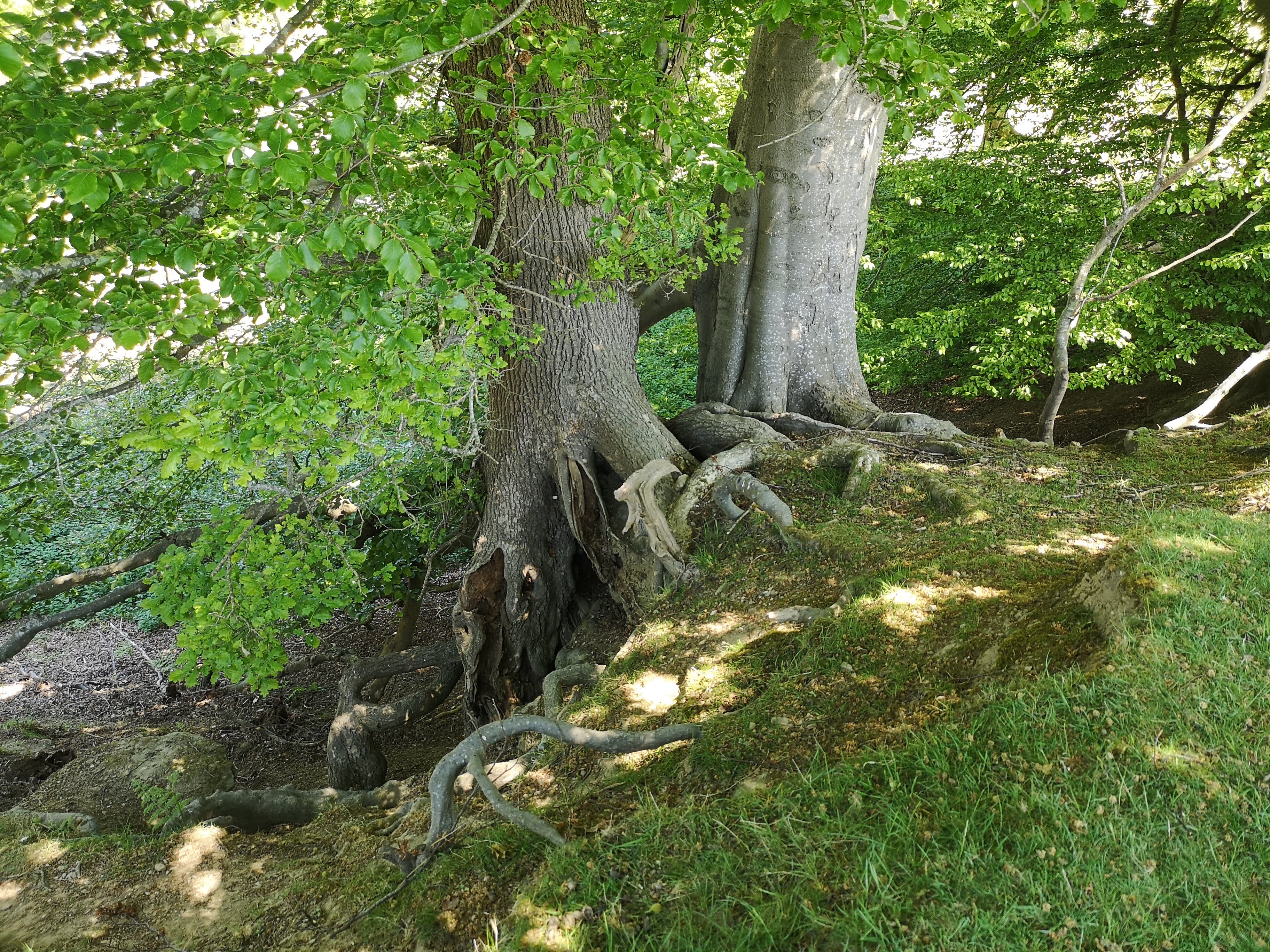
As a walking artist, secular pilgrim, feminist and outdoor performer, I will carry the awareness of these issues from the Scottish hills to the Cataluñian mountains, from Edinburgh’s extinct volcanoes (Arthur’s Seat, Calton Hill and Castle Rock) to the volcanic land of Olot, and between the Oak Wood in Dalkeith Country Park and the oak trees of the Plain of Vic.
I have been walking the St Margaret’s Way through the carboniferous volcanic rocks of the Burntisland area in Fife, Scotland, and will be able to carry my experiences with me on the ancient spiritual path which unites each of the three conurbations where the Encounters are happening, the Camí de Sant Jaume (Camino Catalán).
Co-mingling of Oak and Beech
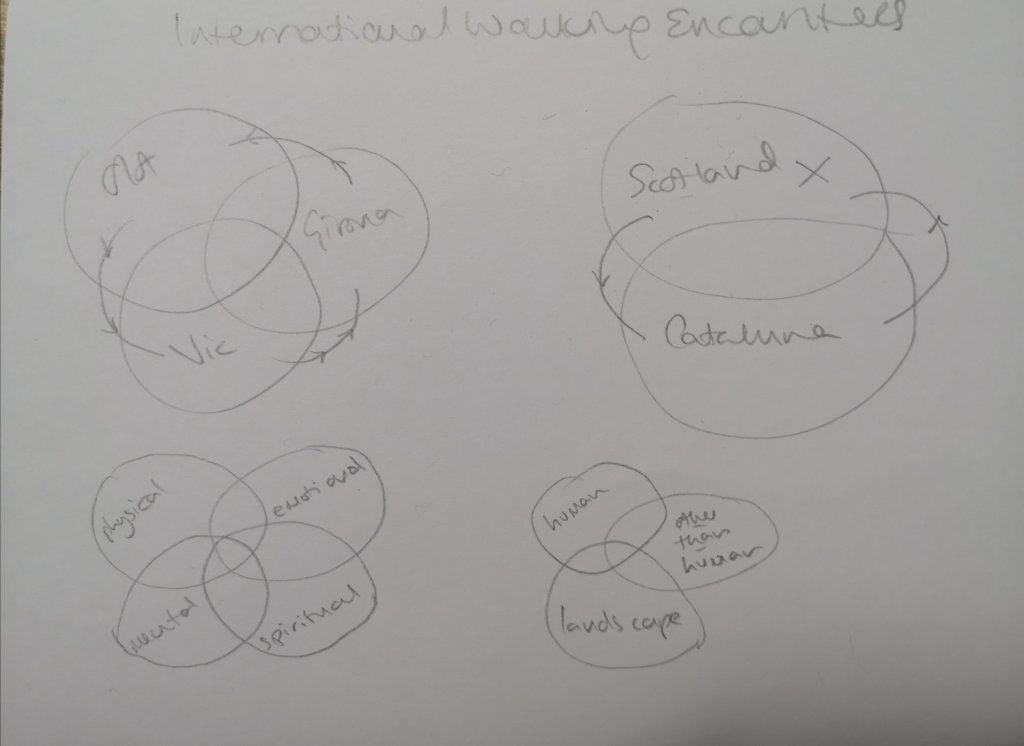
Separation and Unity
This is the artistic focus
in the human experience (notions of belonging and alienation, shared feeling and dislocation)
consideration of the other-than-human and our relationship to that realm; and in the landscape
Documentation:
Impromtu performance
Collecting words, images, marks, and sound segments
Mapping
Film and pamphlet on return to Edinburgh
Collaboration with delegates during the International Encounters will take the form of walking sections of the urban camino together in each of the three locations. This ritual series of three mini pilgrimages will be a way of considering the spiritual aspect (in the widest sense of the word), and the trinity of psychogeographical outings will form a unity between the three sites for the purpose of comparing sensations, ideas and feelings. Each walk will start with an embodied exercise for individuals, a group game for unification, and prompt = one hour in each place:
Girona: starts at the Catedral de Girona to Pont de L’Aguia 9pm for 40 minutes
Olot: starts at Plaça Major to Pont de Sant Roc 6.30pm for 30 minutes
Vic: starts at Catedral de Sant Pere de Vic to L’Atlàntida Centre des Arts (35 mins 6.30pm
Co-existence and mutual reliance
I will be making contact with women for whom this focus is pertinent, both in Scotland and Cataluña. As always I will seek Shiatsu practitioners with whom to exchange.
October 2nd 2019. The final leg of the Portuguese Camino de la Costa or Caminho da Costa from Porto in Portugal to Santiago de Compostella in Spain. 125 kms in total, today was a walk of approximately 15 kms.
St James, patron Saint of the Camino, holding his staff and sitting in a little nook on the side of the Capela do San Martino near the cross, Cruceiro de Rua de Francos, near Teo, Galicia
Retracing my steps from the night before, I left the albergue at Teo at 7.45am and began the last leg of this Portuguese camino. It was misty, cold and the path went steeply up. Thankfully the weather cleared later. I had to take painkillers for my foot for only the second time on this way. It didn’t hurt when I was sitting down – a clear message.
Lugar de la Grela with roof crosses typical of the region, Galicia
Overall, this way into Santiago de Compostella is hilly and it was hard going, however it was lovely countryside. I breathed in the fresh air before entering the city.
We hiked forested paths, up and down hills, crossed rivers and railways, passed shopping centres, went down narrow alleys between houses, climbed a steep hill beside a hospital, and then walked on city streets. Spencer Linwood’s blog of this final day
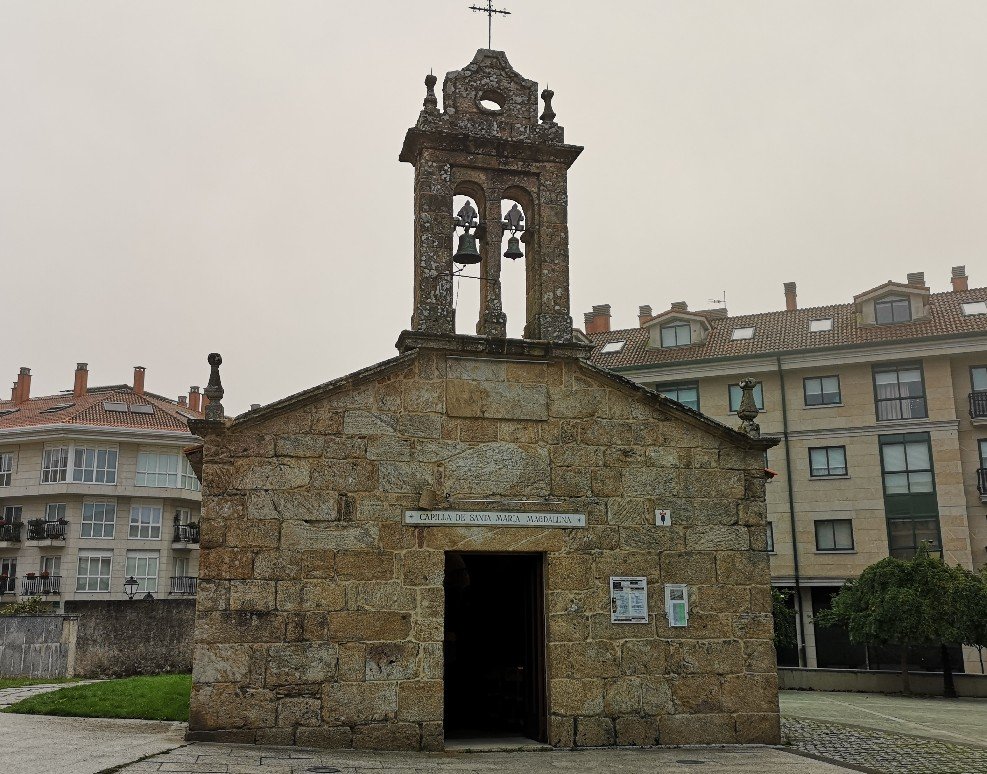
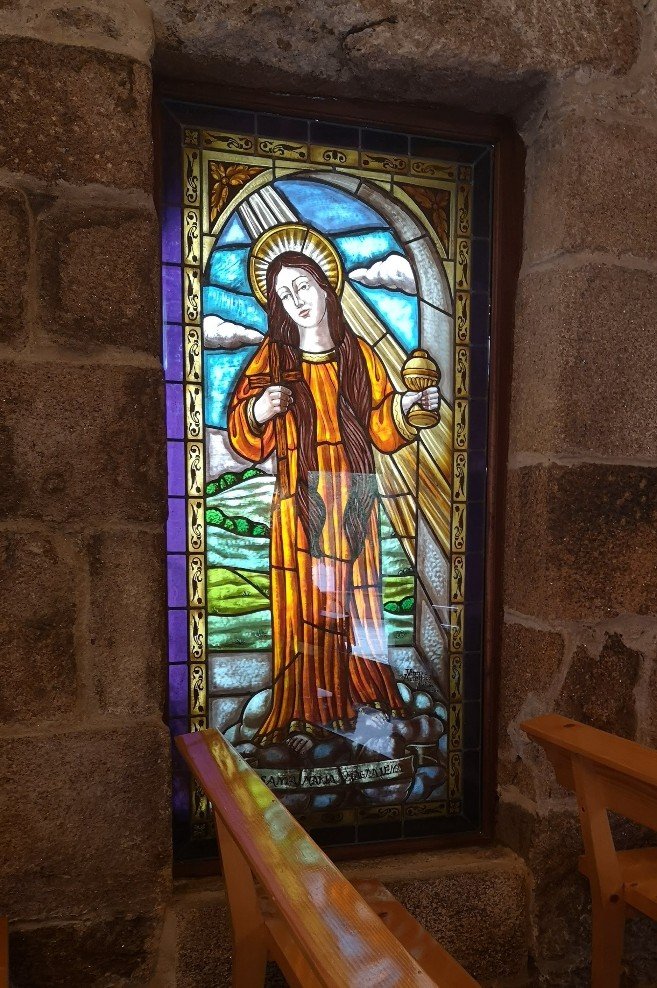
Capila de Santa Maria Magdalena, Galicia
Stained glass at the Capila de Santa Maria Magdalena, Galicia . She is often depicted with long flowing tresses, a cross in her right and in her left hand she presents an egg (in an eggcup?) to Emperor Tiberius as a symbol of Christ’s resurrection. There are some great stories about Mary and her egg
According to tradition, after Jesus’ Ascension into heaven, the Magdalene…boldly presented herself to the Emperor Tiberius Caesar in Rome to proclaim the resurrection of Jesus Christ, with an egg in hand to illustrate her message. Holding the egg out to him, she exclaimed for the first time what is now the universal Easter proclamation among Christians, “Christ is risen!” The emperor, mocking her, said that Jesus had no more risen than the egg in her hand was red. Immediately, the egg turned red as a sign from God to illustrate the truth of her message. The Emperor then heeded her complaints about Pilate condemning an innocent man to death, and had Pilate removed from Jerusalem under imperial displeasure. Mary Magdalene continued her mission as an evangelizer, contemplative, and mystic in the heart of the Church.
By Grechen Filz (link under photo above)
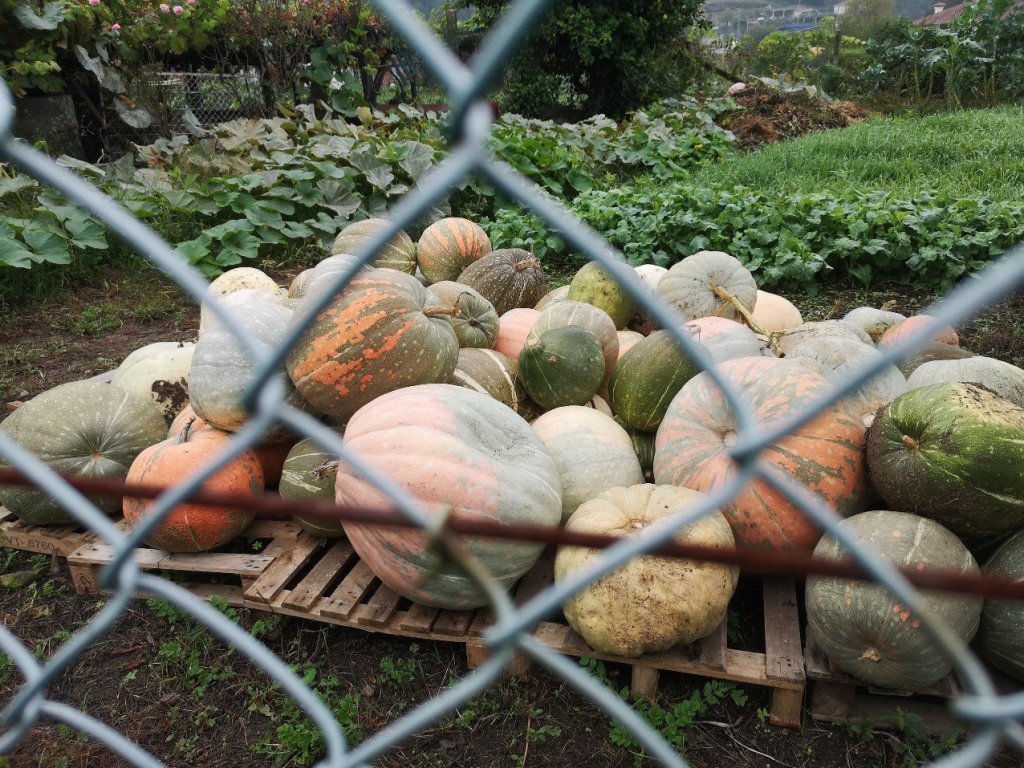
Autumn squash piled up after harvest, Galicia
At one point there was a cacophony of hunting dogs and two men wandering around looking very guilty, a huge 4×4 a little further on. The hounds seemed to be nosing around for something, but it wasn’t clear what and otherwise the area was deserted. Moving away, up a inclinne, I passed a female backpacker going in the opposite direction, so I repeatedly glanced back. I knew she would be passing the men and wanted to keep an eye out for her in case she needed back-up.
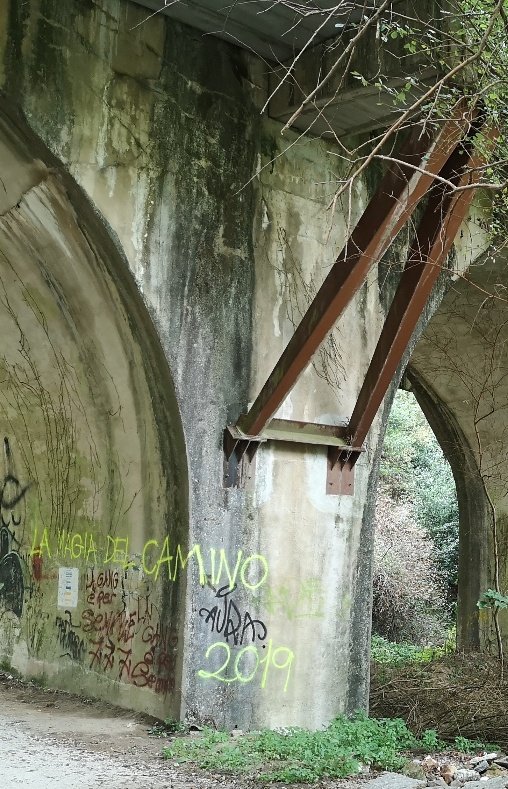
La magia del camino graffiti, underpass of the main AG56 road which goes past Santiago and on to Noia on the west coast
Much to my disappointment, I started to feel some back pain as I traipsed up towards the city centre, searching for signs and arrows to no avail.
Tip: Remember that google maps is all but useless in the Poruguese / Spanish countryside, but great in towns and cities, so at this stage when there is a dearth of directions, you can switch on the GPS.
The outskirts seemed to go on and on and so I took an elevenses pitstop in a city cafe enjoying some green tea and sweet Santiago tart which I remembered well from my first visit in 2016, when my life had already started to change.
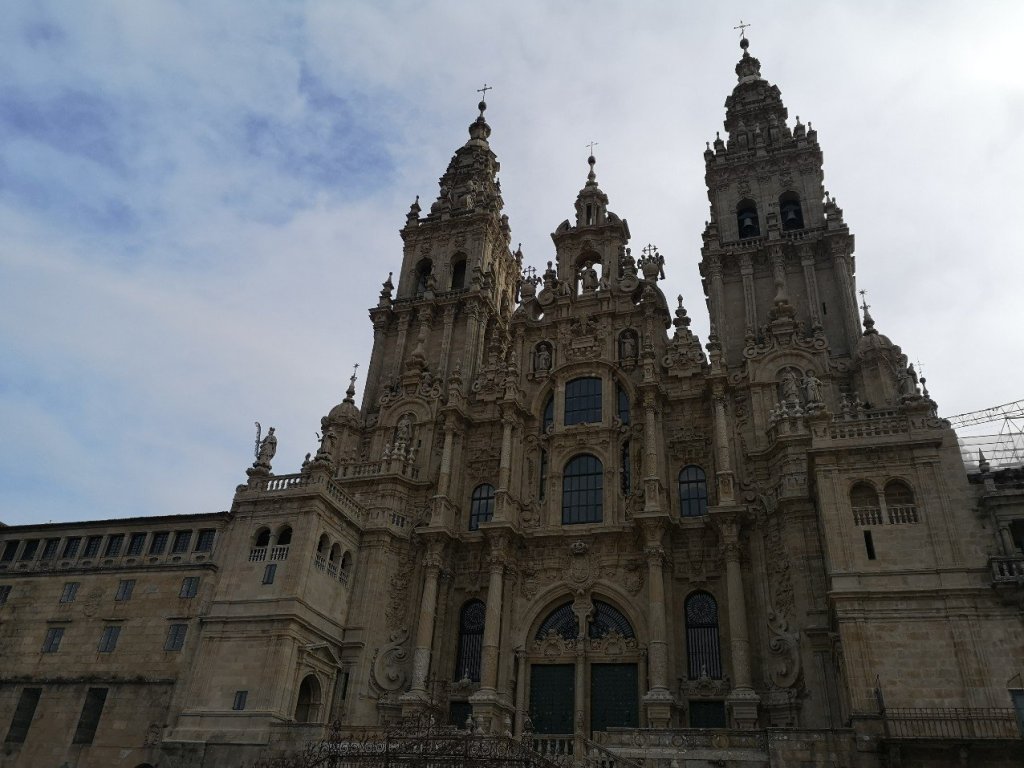
The Cathedral of Santiago de Compostella, Galicia seen from the ground looking up
I arrived in the main square at 12.15. Someone asked whether I was going to lie down. I didn’t know about this, but apparently there is a tradition to prostrate, head towards the towering building and admire it upside down, so I did. Of course.
This was my second time in Santiago despite having walked three caminos. When I walked the Via de la Plata, I initially headed south, towards Seville (1000 kms away). Later I started there, walking northwards until I got back to where I had finished that section the year before. I didn’t do the final stage for a second time, and so didn’t visit Santiago. I didn’t go to the special Mass this October 2019 either, for the same reasons.
View of the cathedral of Santiago de Compostella from the balcony at the Roots and Boots hostel
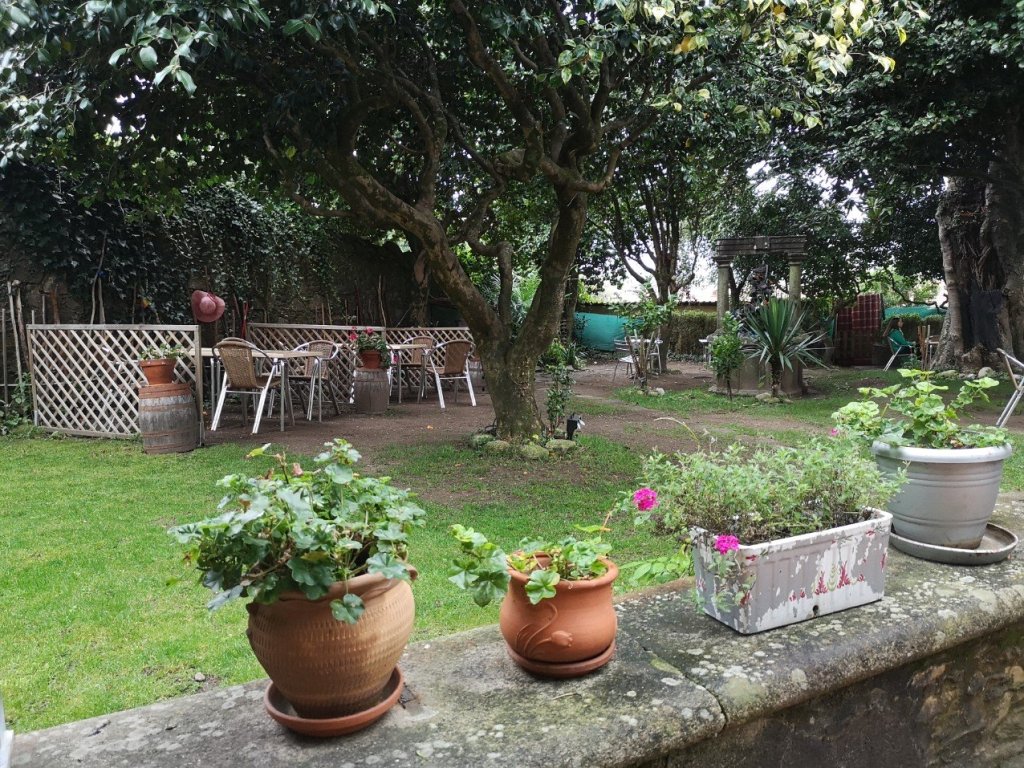
The garden at the Roots and Boots hostel, Santiago de Compostela, Galicia
I had booked the Roots and Boots hostel in advance and was very happy with it. Very close to the centre, the rooms are small (no extensive dormitories) and mine had a magnificent view of the cathedral. There is a pretty, enclosed garden with tables and chairs by a reasonably priced, hole-in-the-wall, cafe. I sat out there until quite late at night, getting slightly chilly but enjoying the situation, especially given it was October.
I had lunch in a large restaurant, very popular with pilgrims. I was surprisingly tired and the large portions and very quick service suited very well!
Laundromat courtyard out back, Santiago de Compostela, Galicia
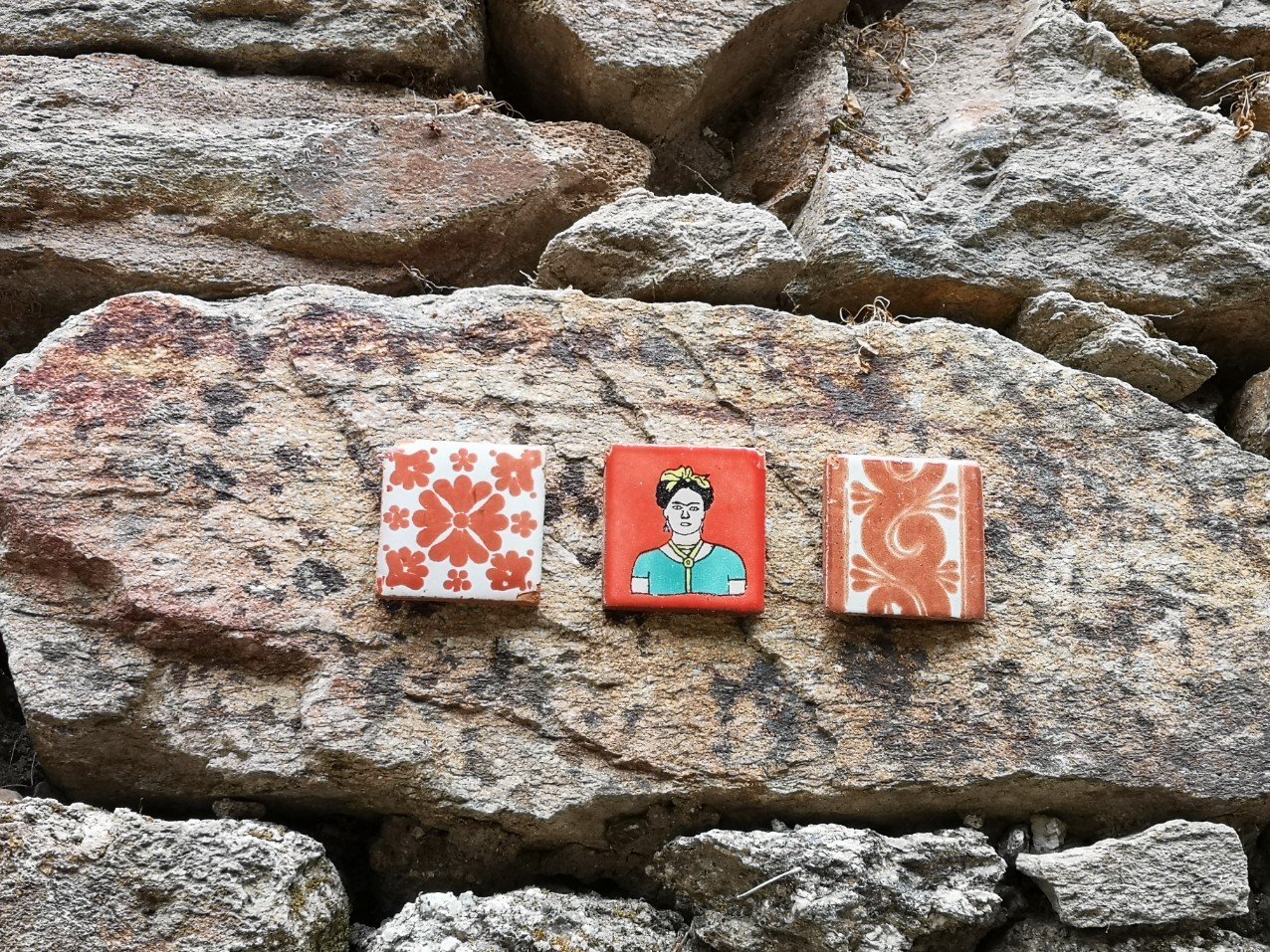
Frida Kahlo on tiny tiles in the courtyard of the launderette, Santiago de Compostela, Galicia
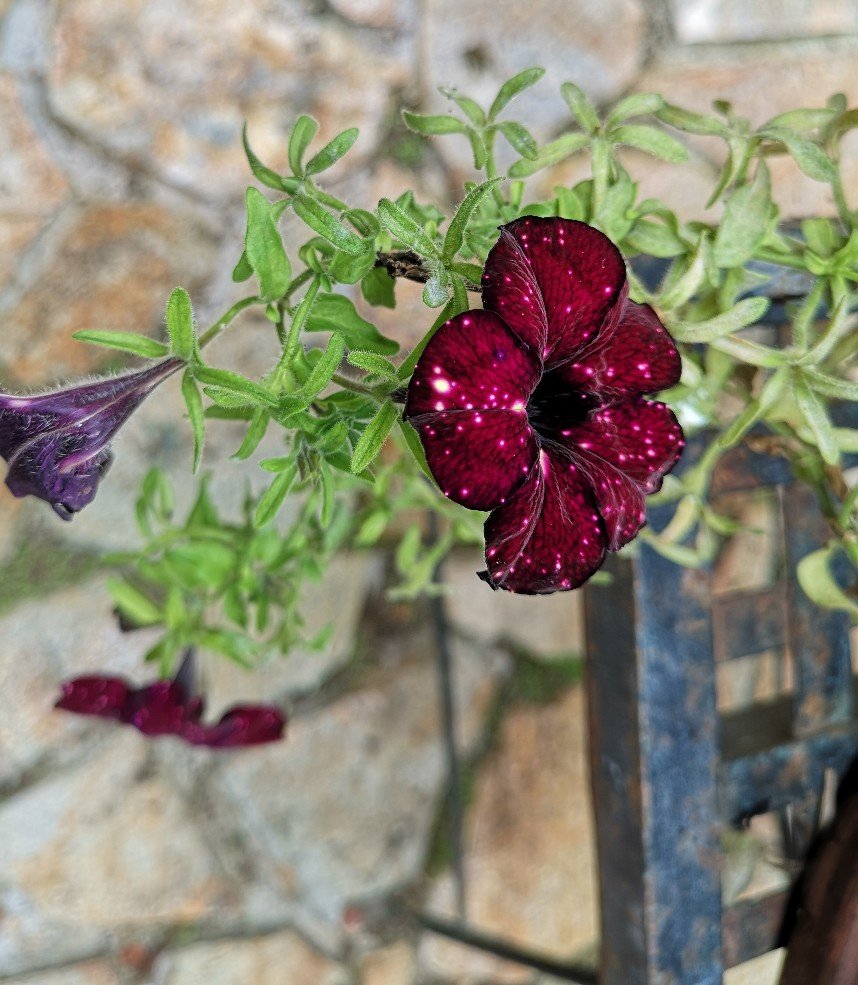
Glowing Petunia in the same courtyard
Then I left clothes to be washed at a rather nice launderette (as launderettes go) on Rua das Hortas which had a decorated and flowering courtyard. You can also get washing done at Pilgrim House, a veritable Santiago institution.
I had not planned what I would do next until a few days before, when I came across a post on the Camino forum which set me off on a new trail. I contacted the redoubtable Rebekah Scott at her Peaceable Kingdom to ask if I could stay with her at Moratinos on the Camino Frances, in the name of research. She kindly obliged, but later sent me an email saying that she couldn’t host me after all because she looks after a hostel on the Camino Primitivo and had to go up immediately. Unless, she added, I wanted to go too. More on this adventure later…..
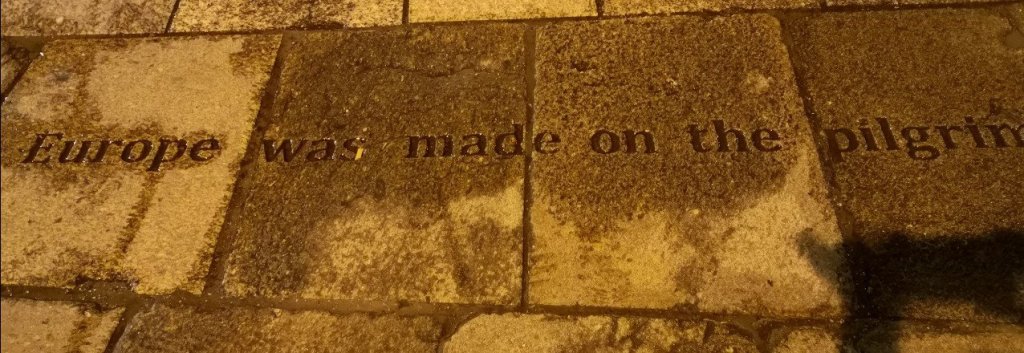
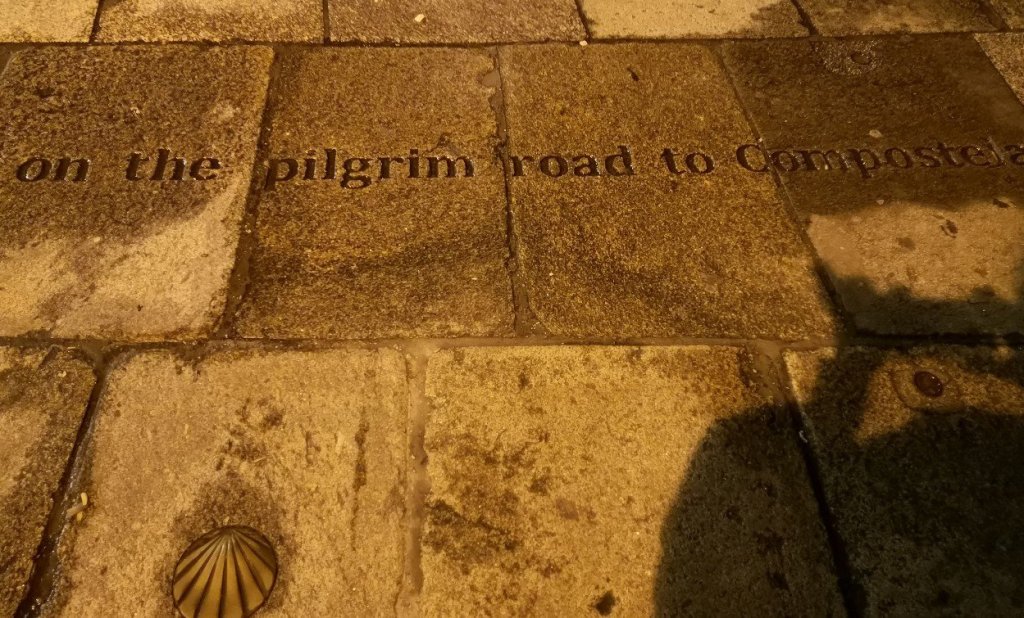
Pavement message in the early morning of the next day: Europe was made on the pilgrim road to Compostella
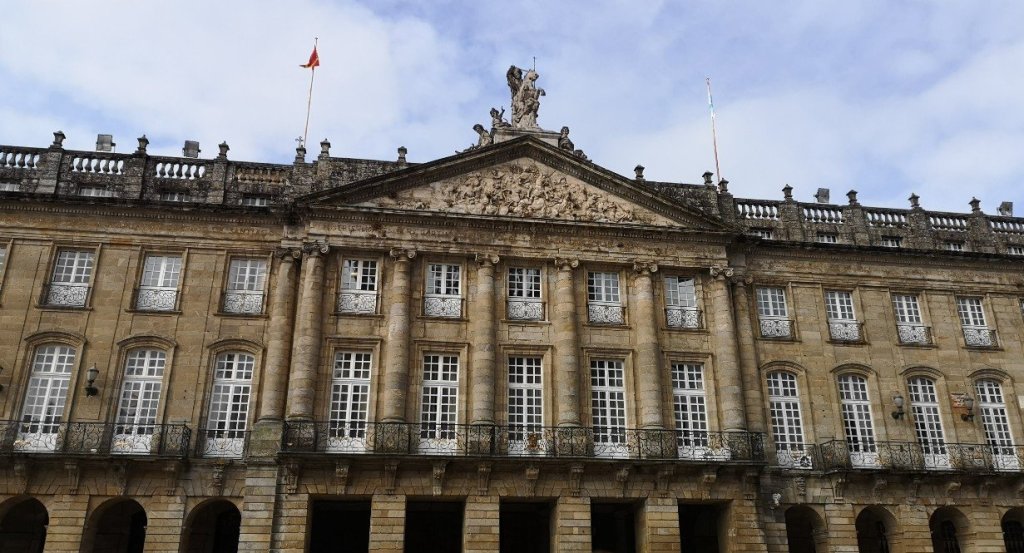
Footnote: If you have some cash at the end of your camino, you could try the Parador, one of the famous Spanish hotels which offers pilgrims a free lunch, so I am told.
The camino shell necklack I bought in Porto for 5 euros and which I wore as a talisman for the Camino to Santiago de Compostella







 Walking without a donkey