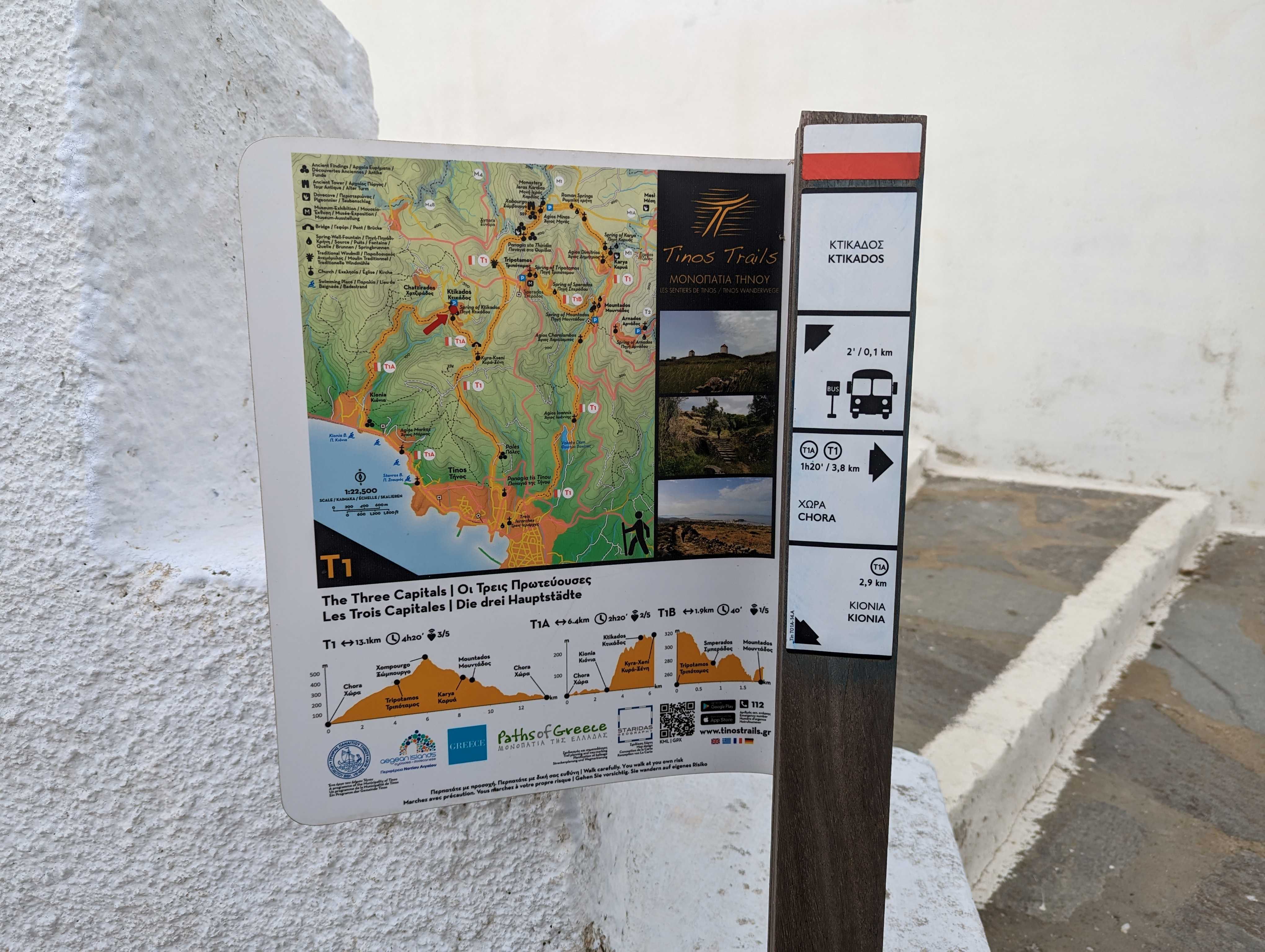
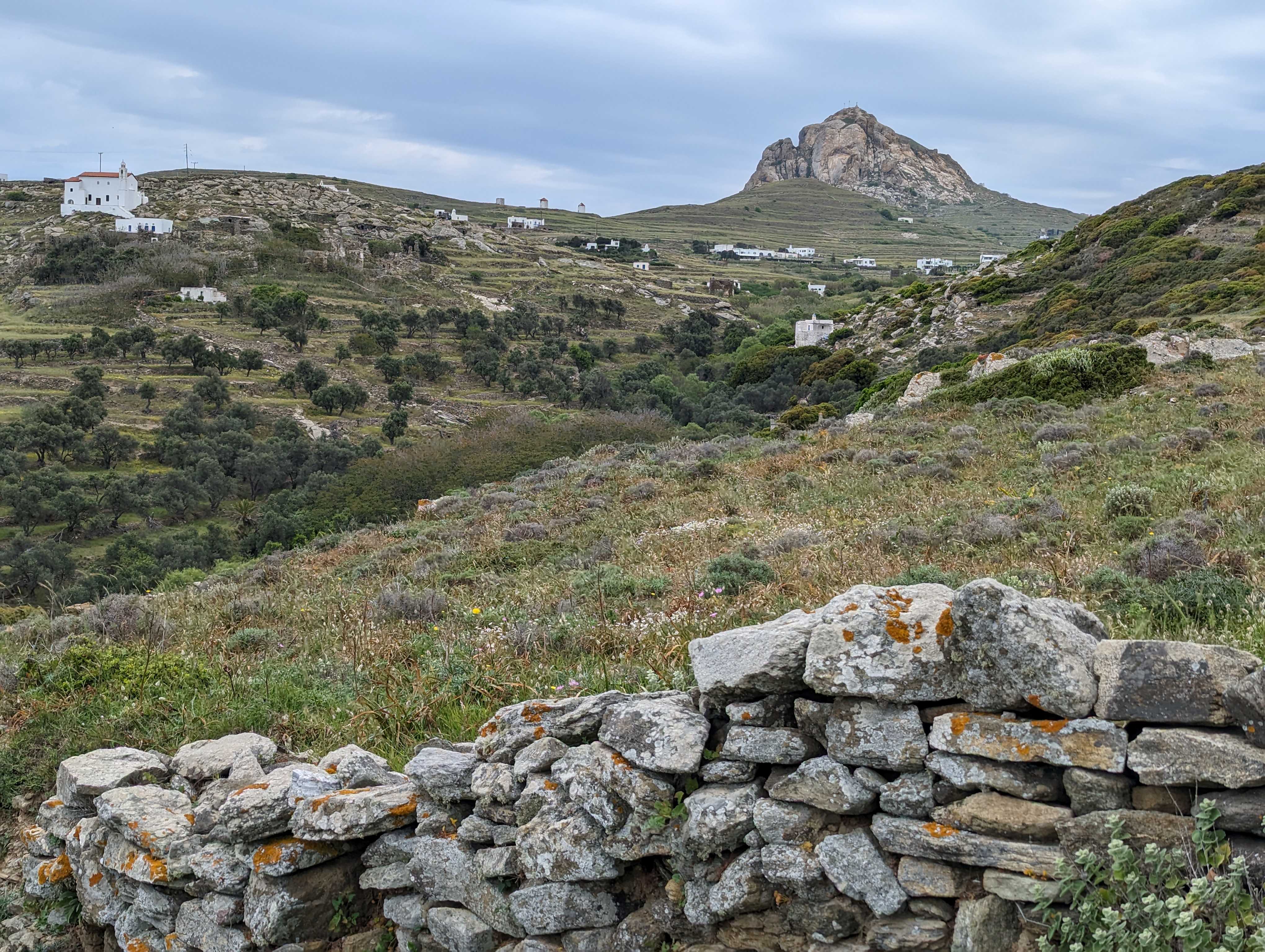
T1A walk to Kionia, Poseidon Sanctuary, walk from Kionia to Chora (Tinos town).
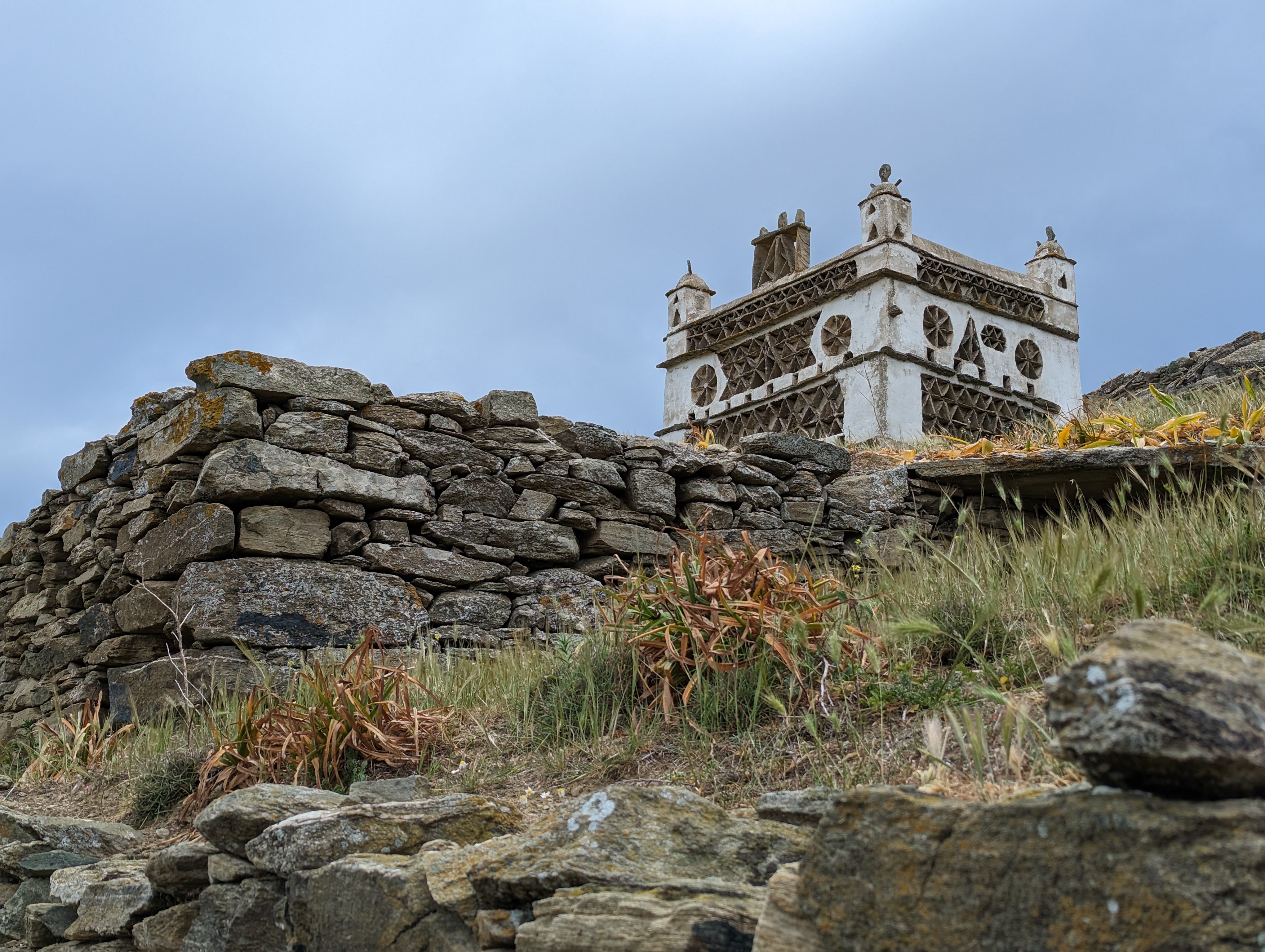
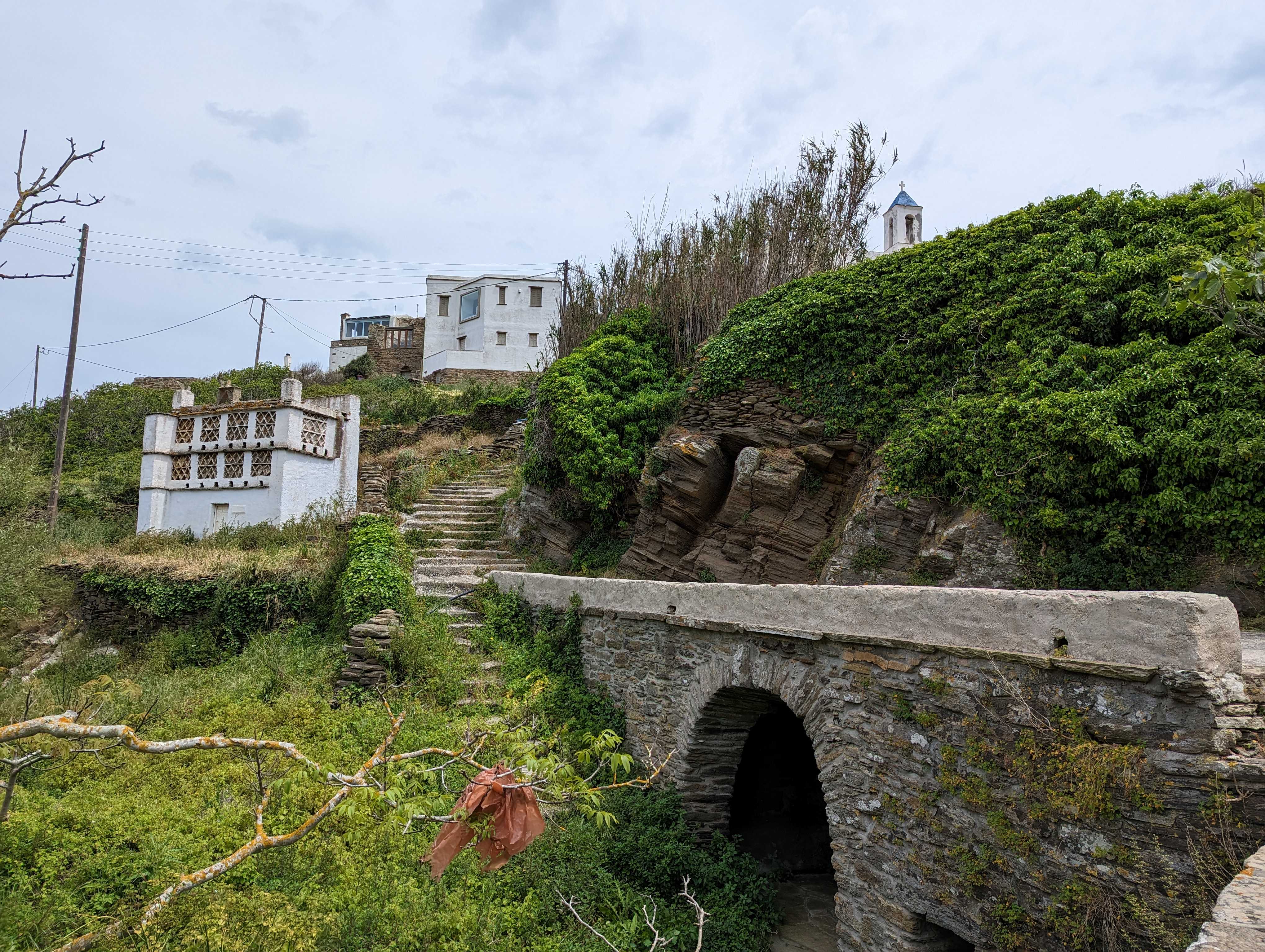
Dovcot of traditional design outside Ktikados, Tinos, Greece
There are a wide range of walks around the Greek island of Tinos. Look out for wild goats, the most stunning variety of local flowers, and unexpected chapels with cool interiors, often with murals and other atmospheric images. On the whole the paths are quite well signposted, and the ones I made travelled through varied scenery, almost all taking in at least one of the famous dovecots. There are no high mountains, but there is some climbing and descending. Do look out for trails that can be dusty from lack of rain and slippery, also narrow and overgrown ones through lack of clearing, however, none of the ones I tried were impassable.
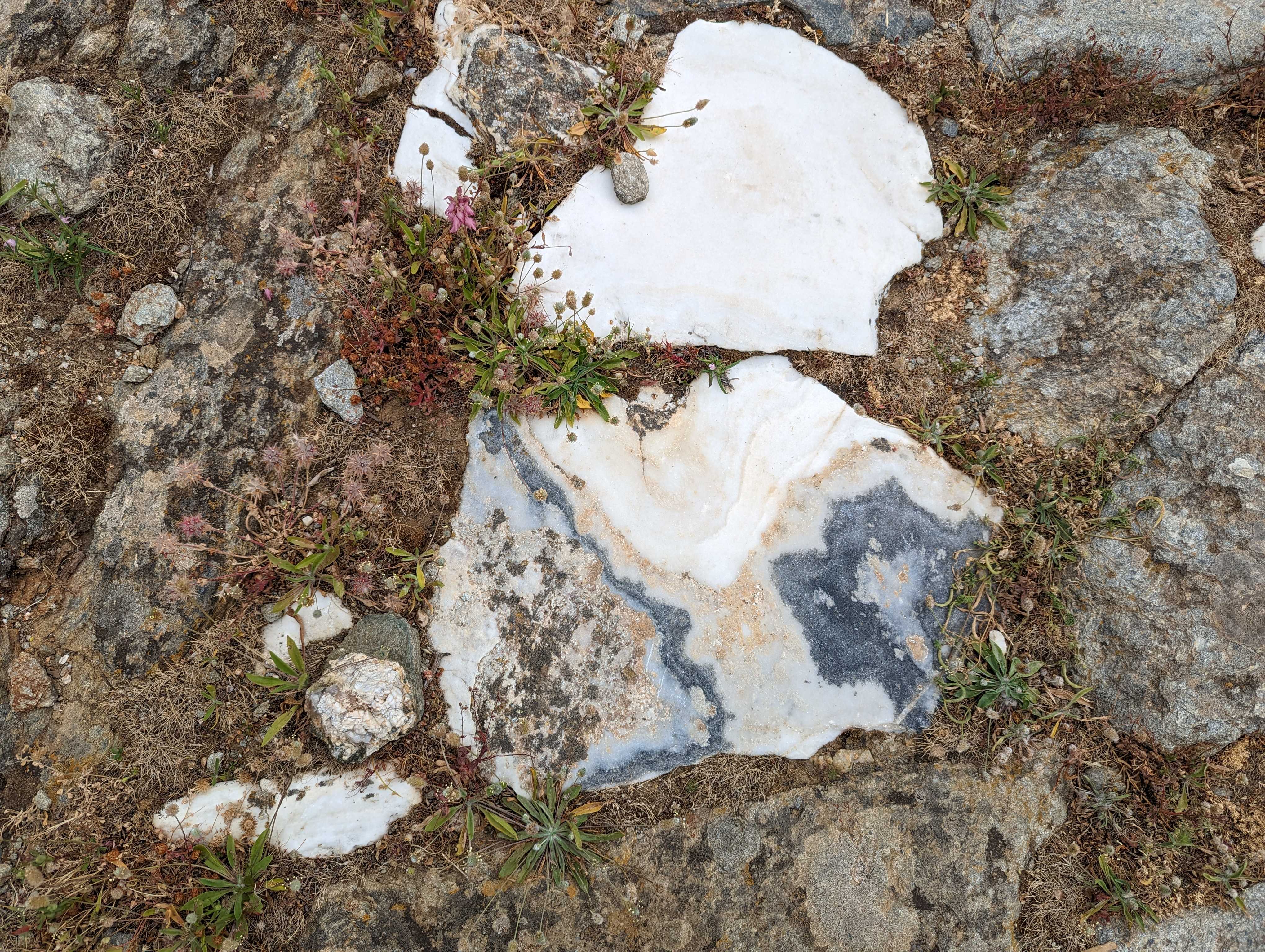
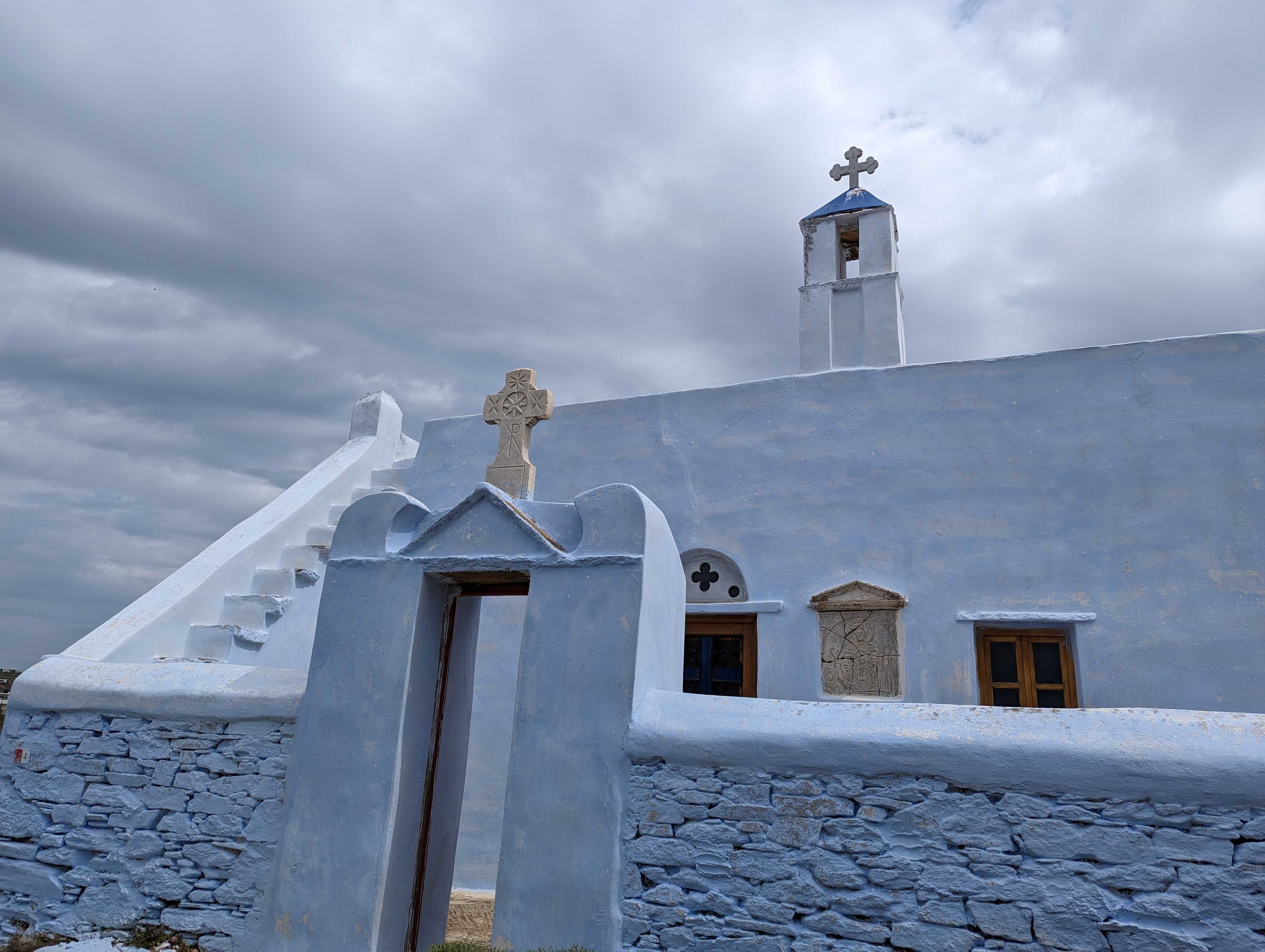
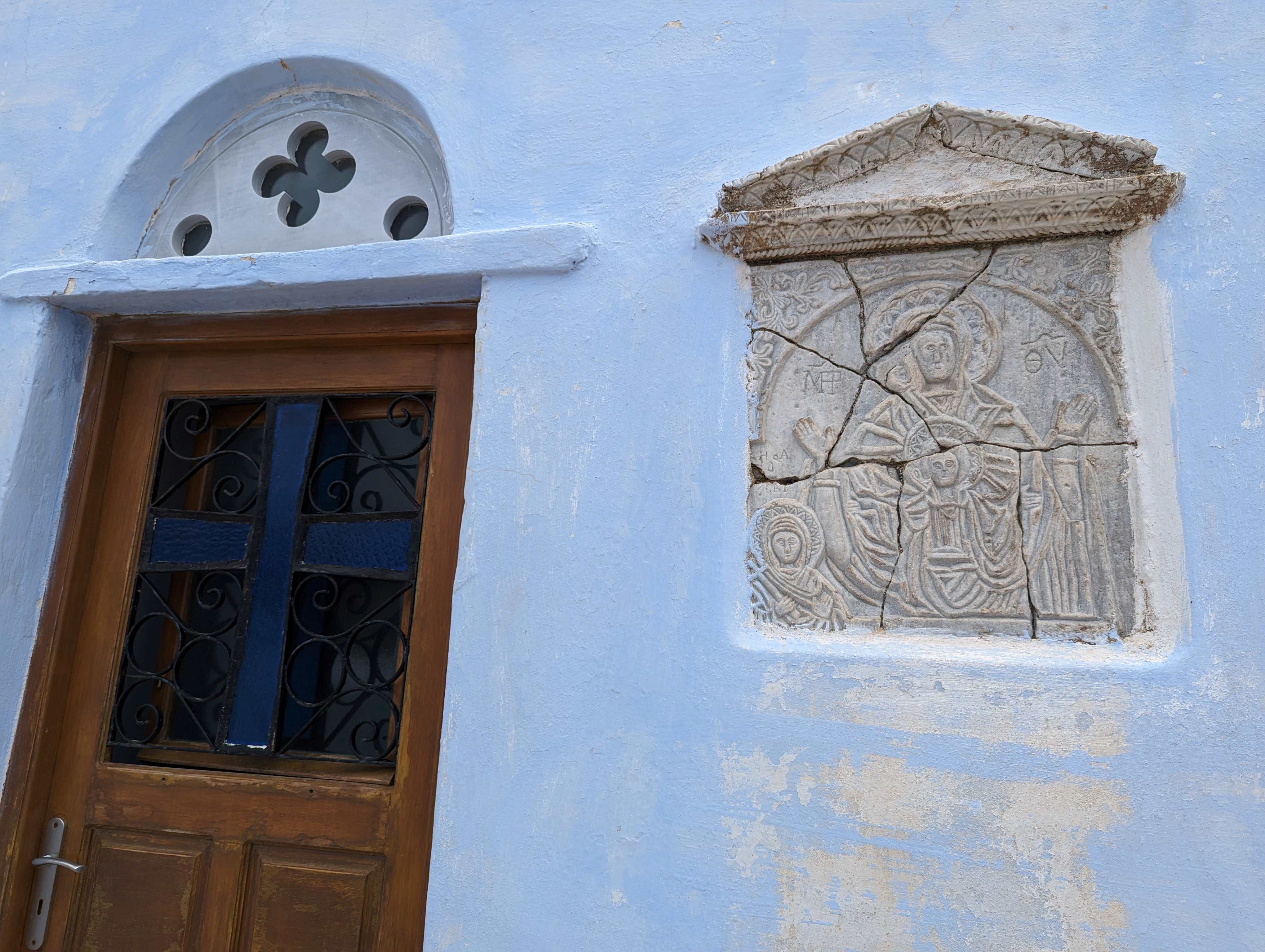
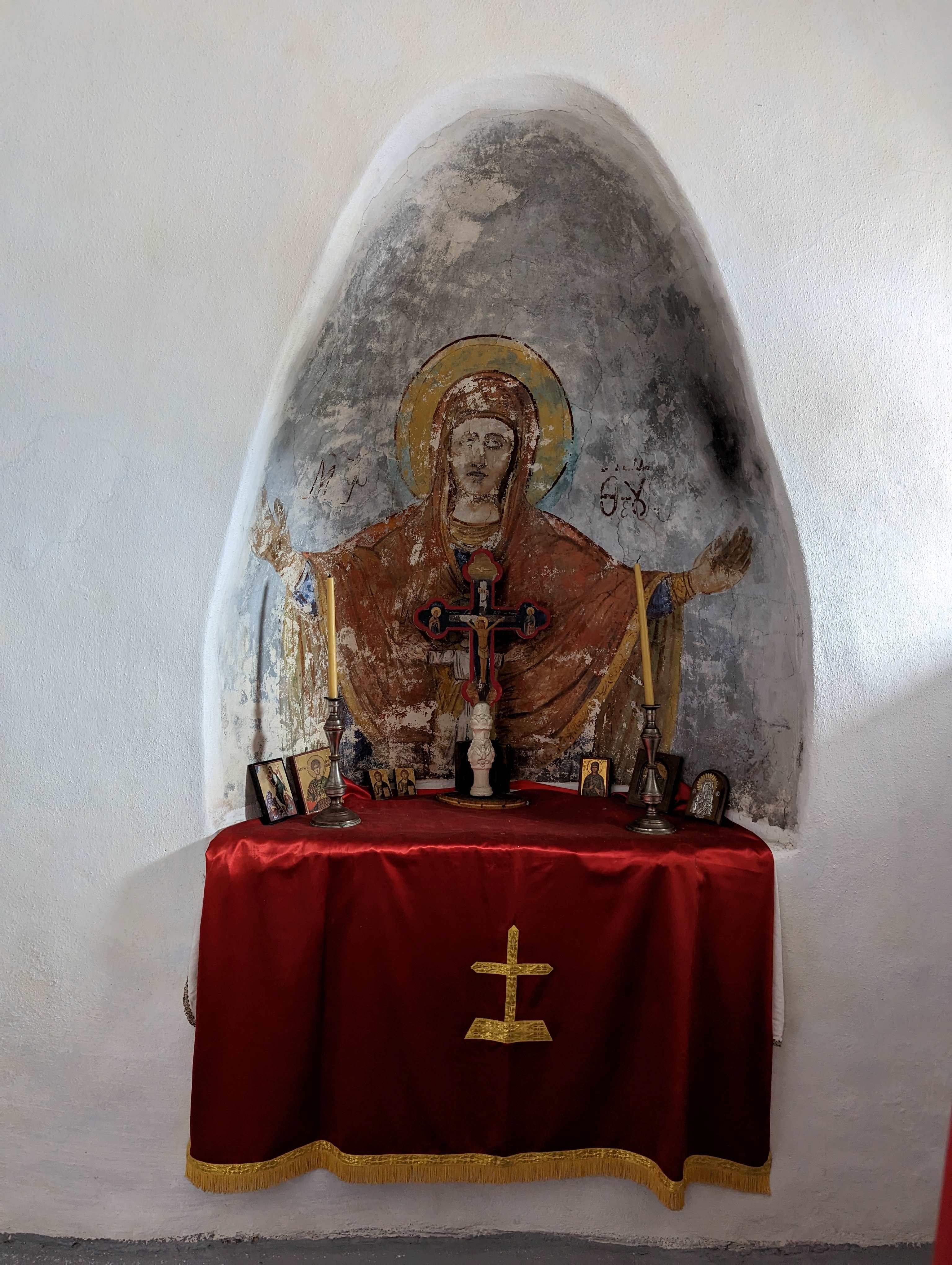
T1A trail – flora, Ktikados, chapel, and geology
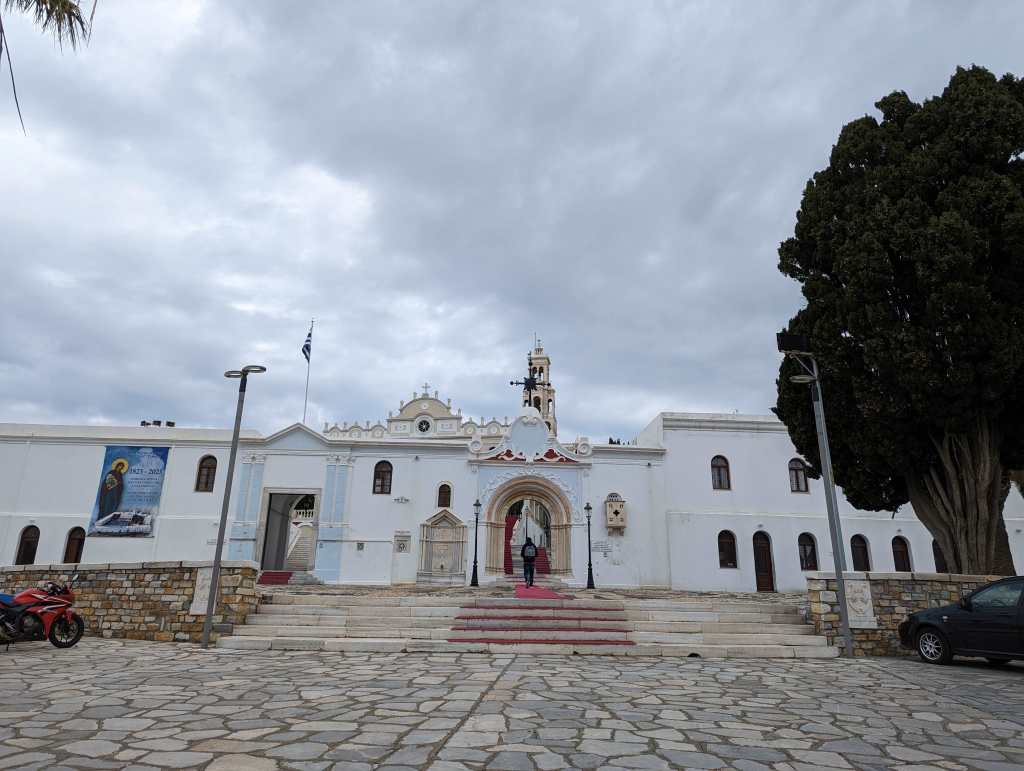
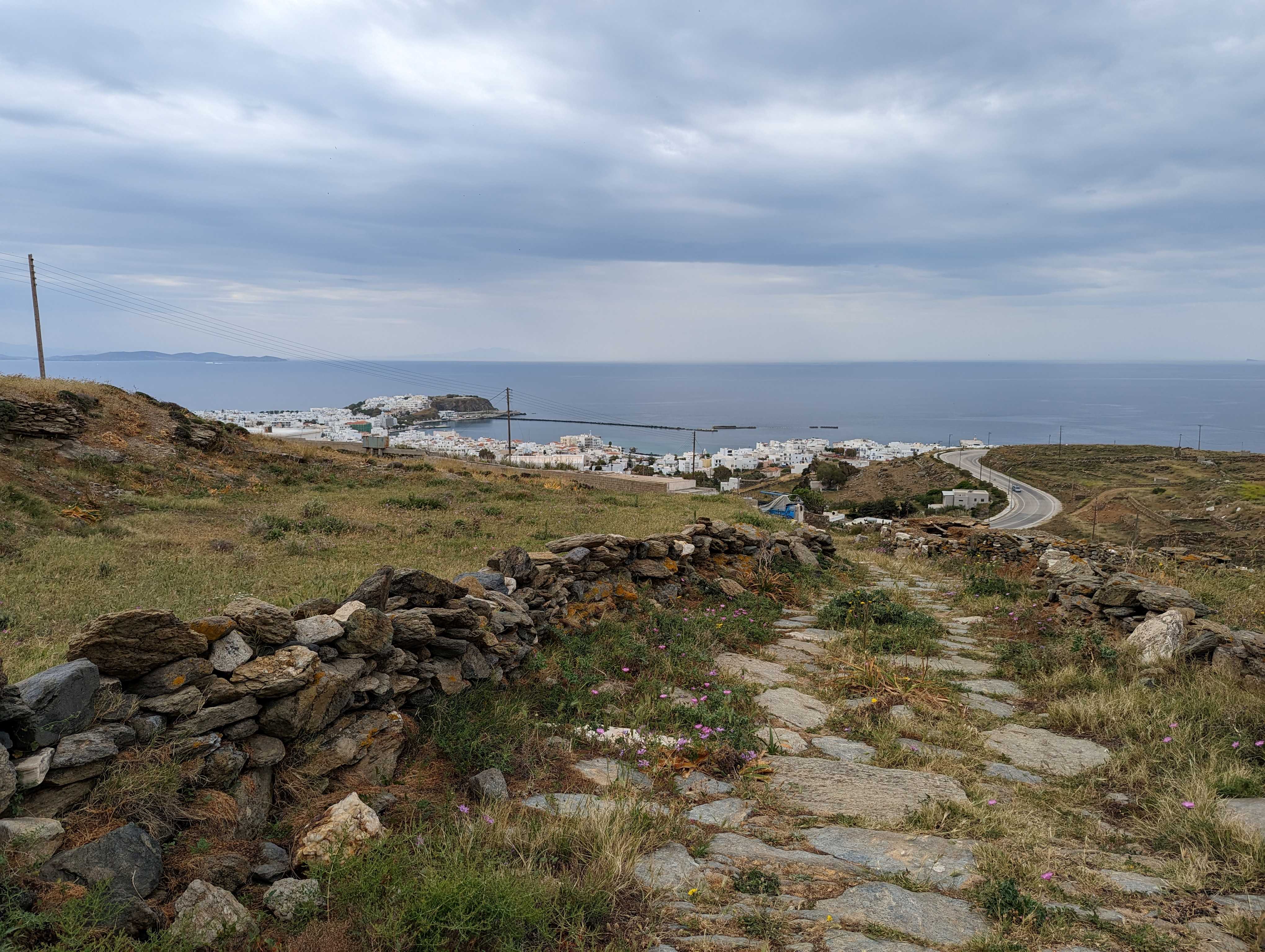
I started the T1 trail at the Panagia Shrine, Chora, Tinos, GreeceView of Chora (looking back) from T1 trail, Tinos, Greece
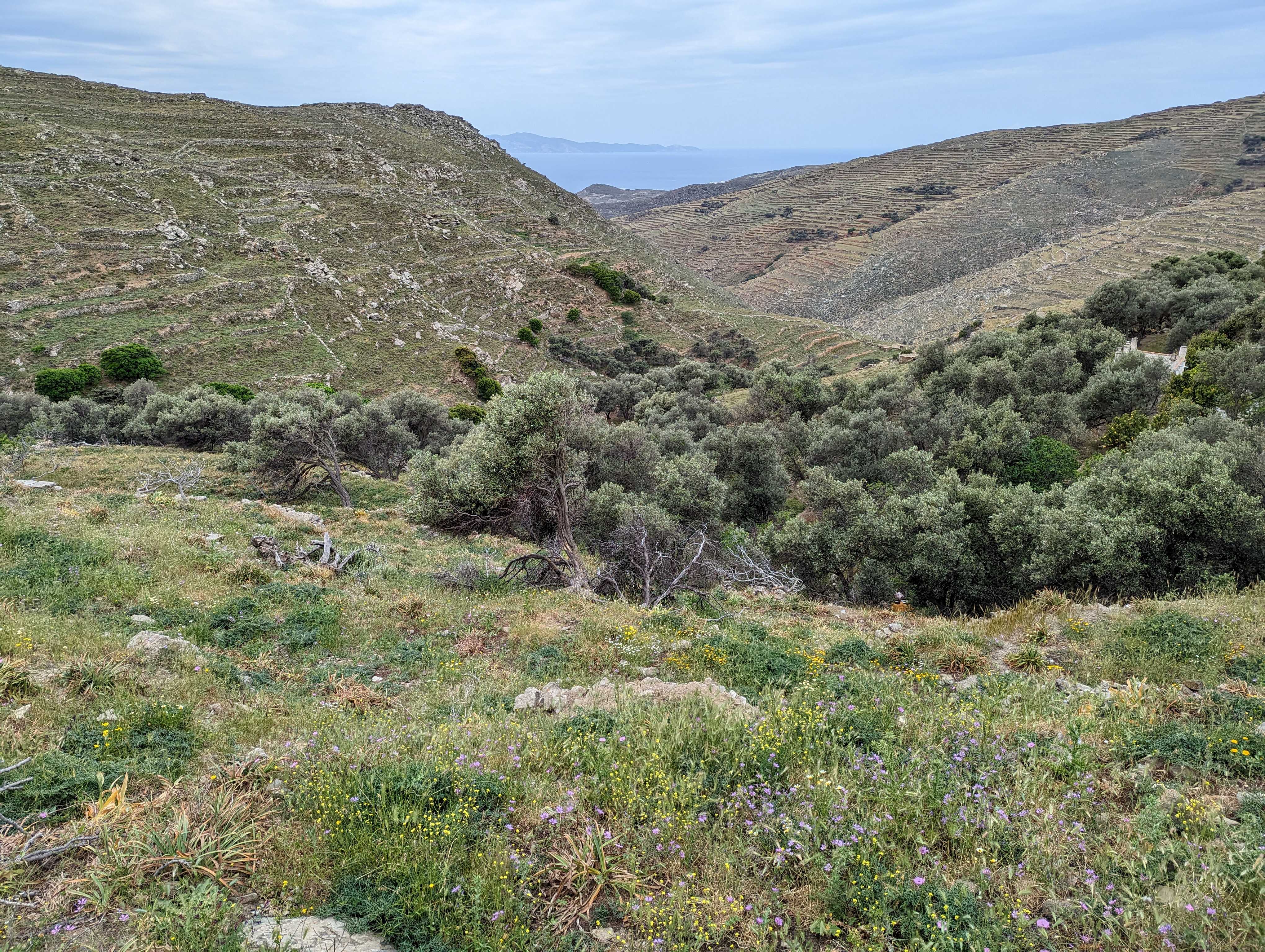
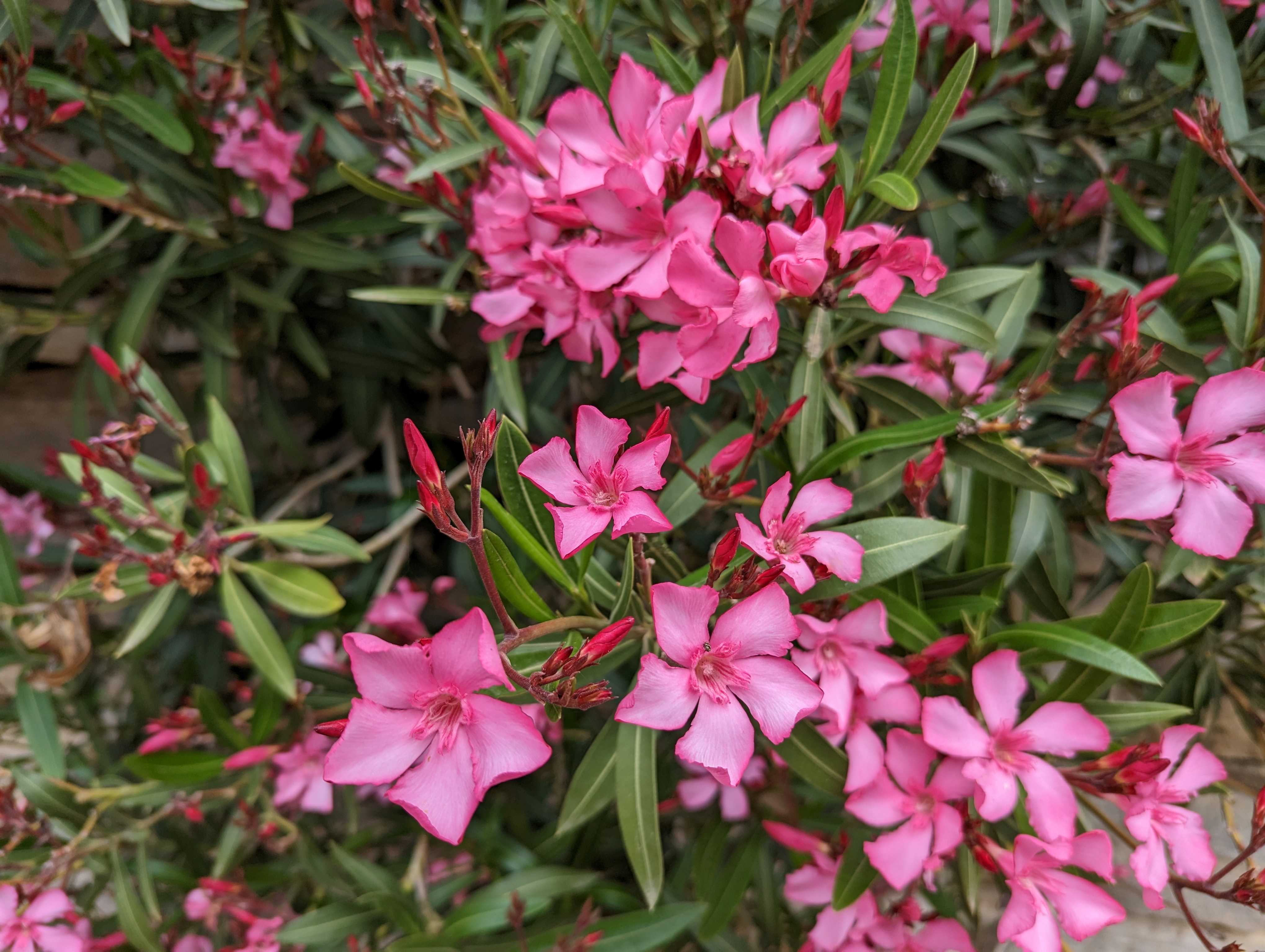
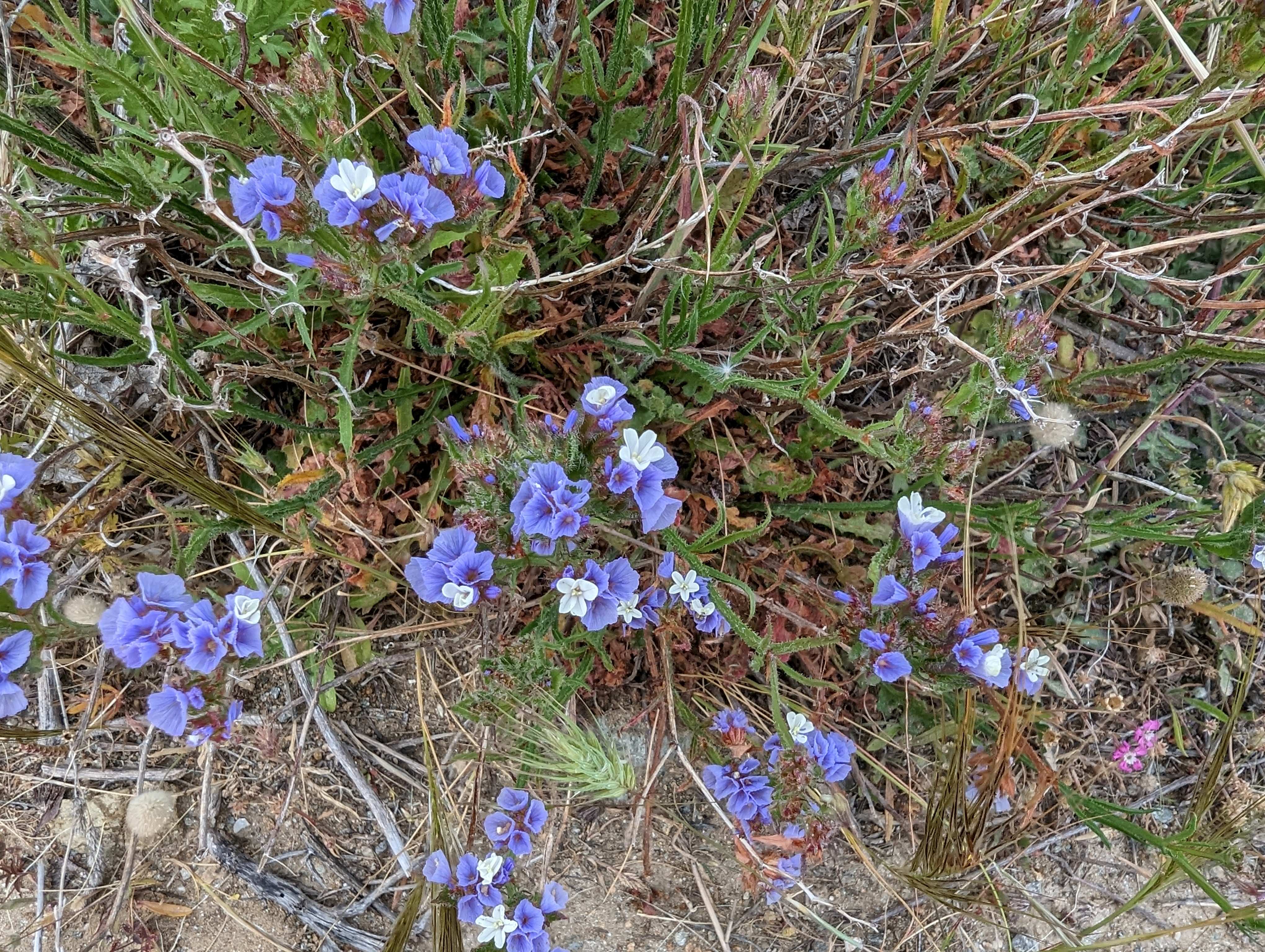
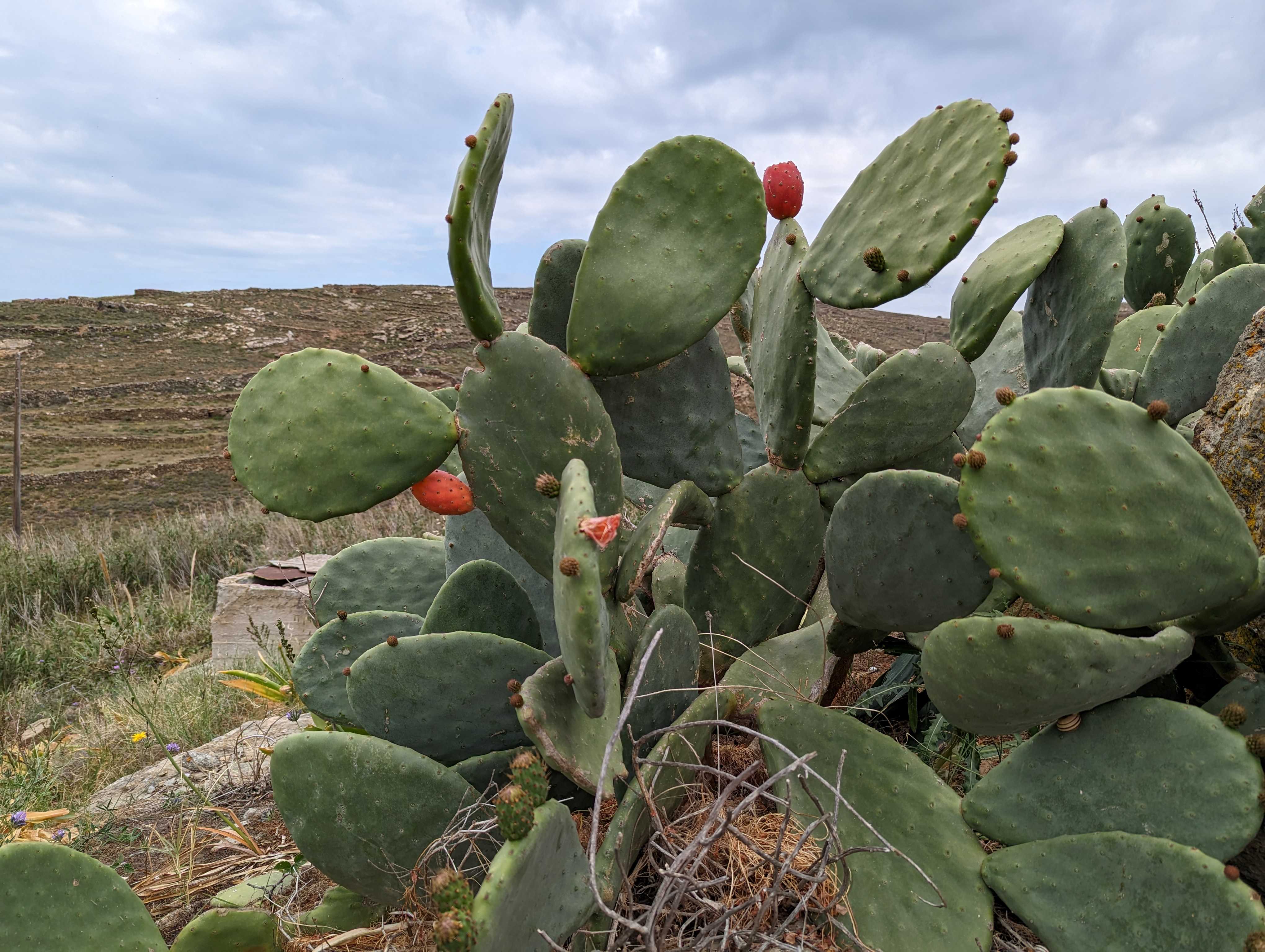
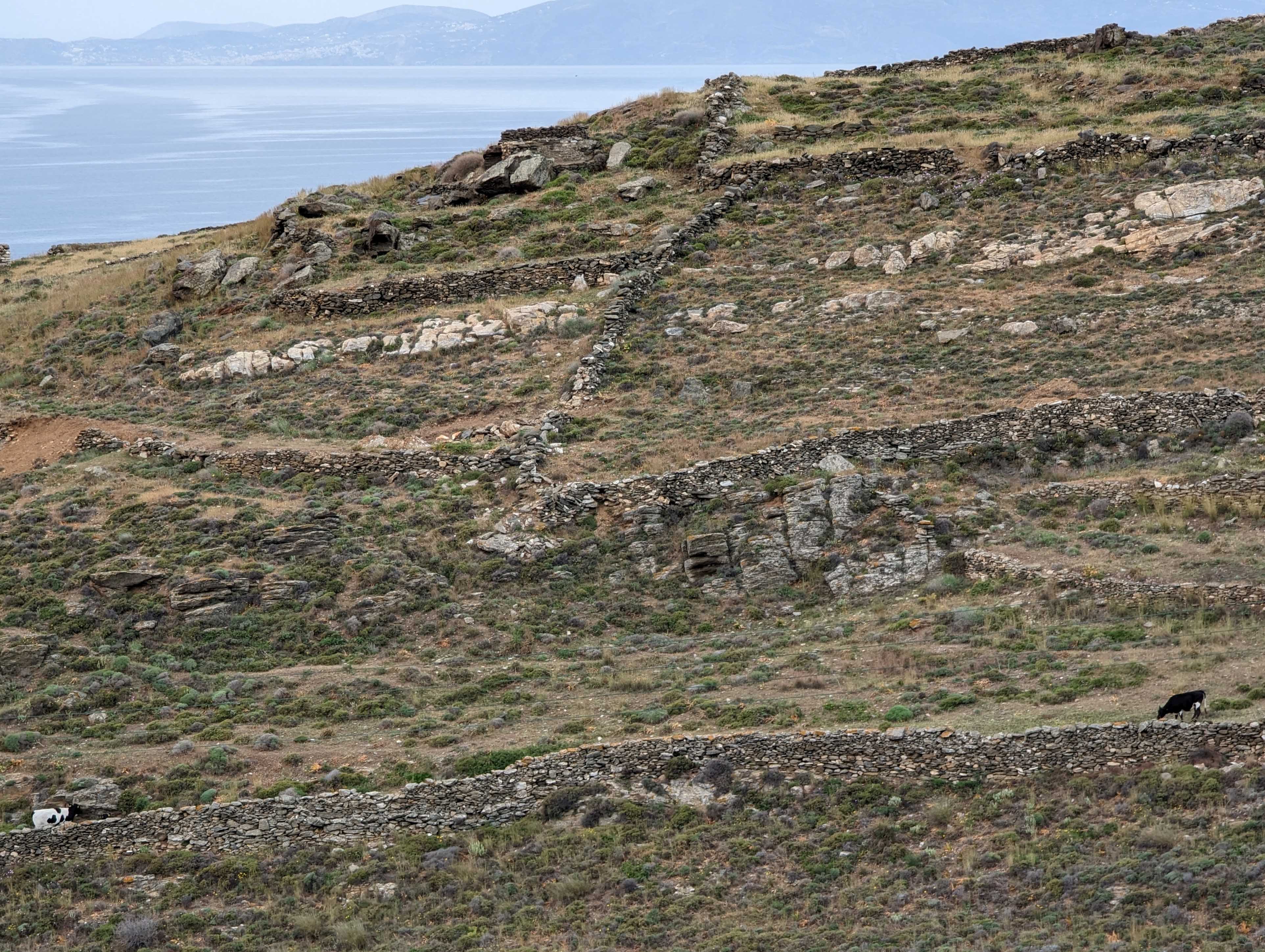
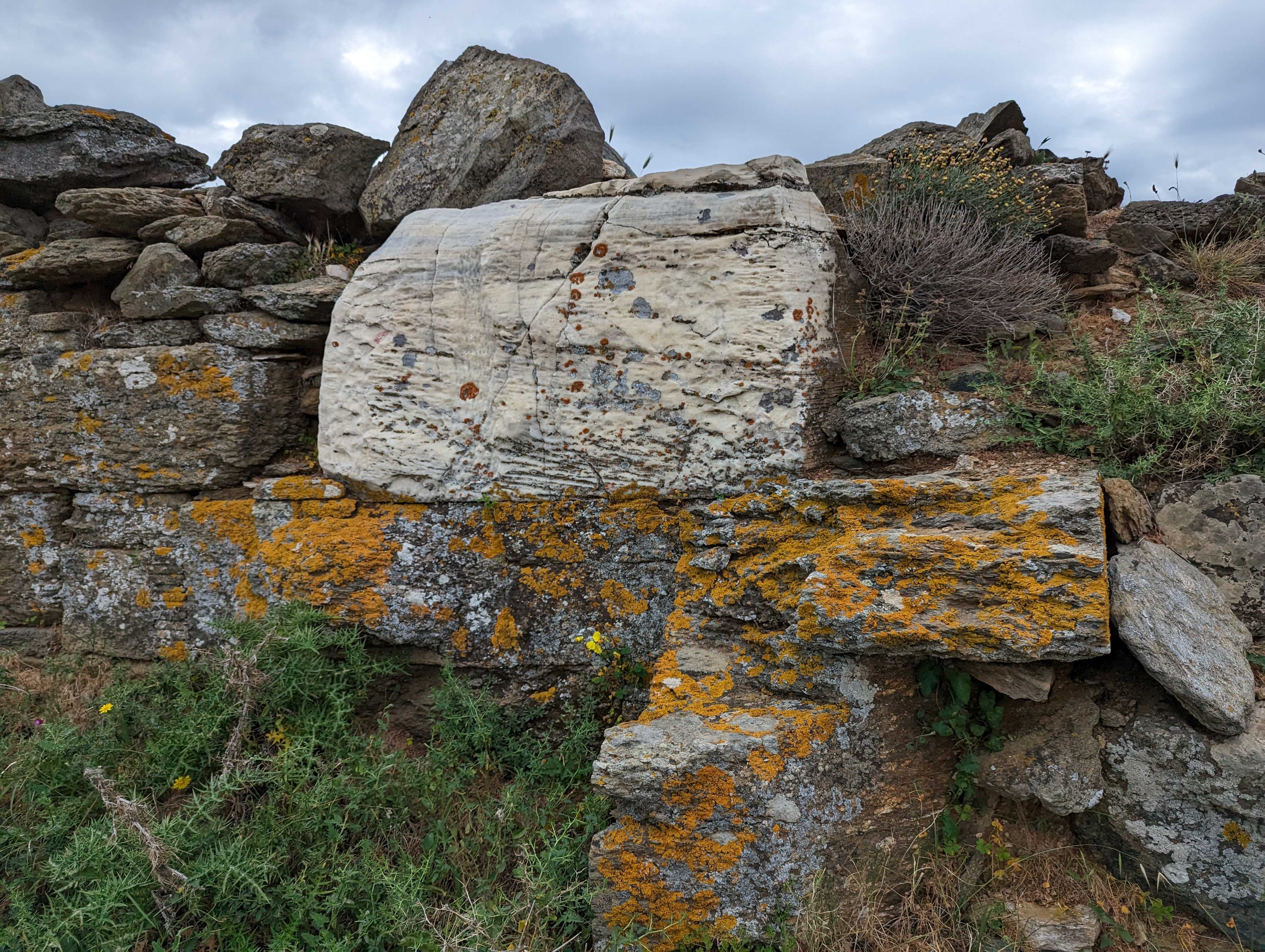
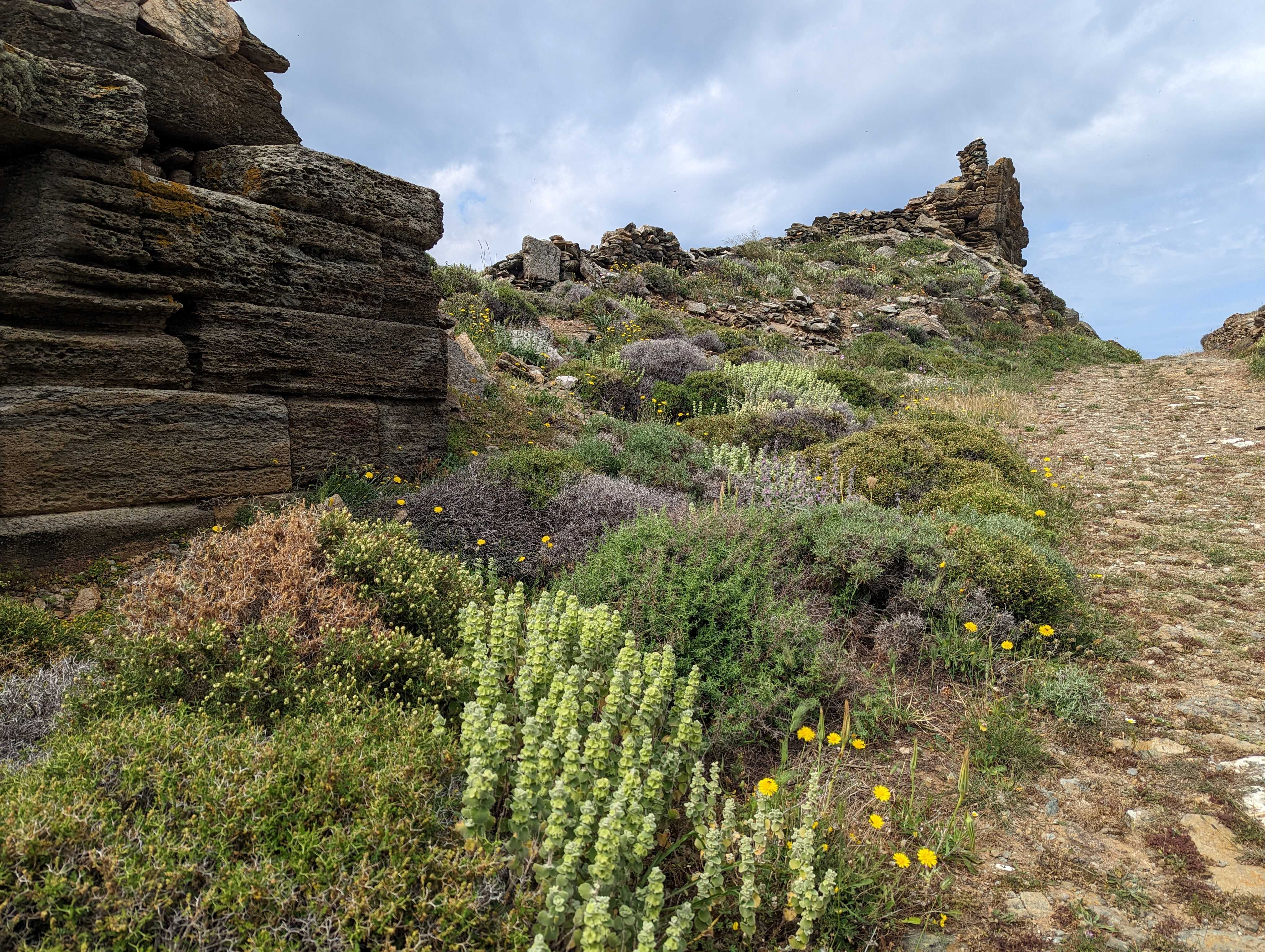
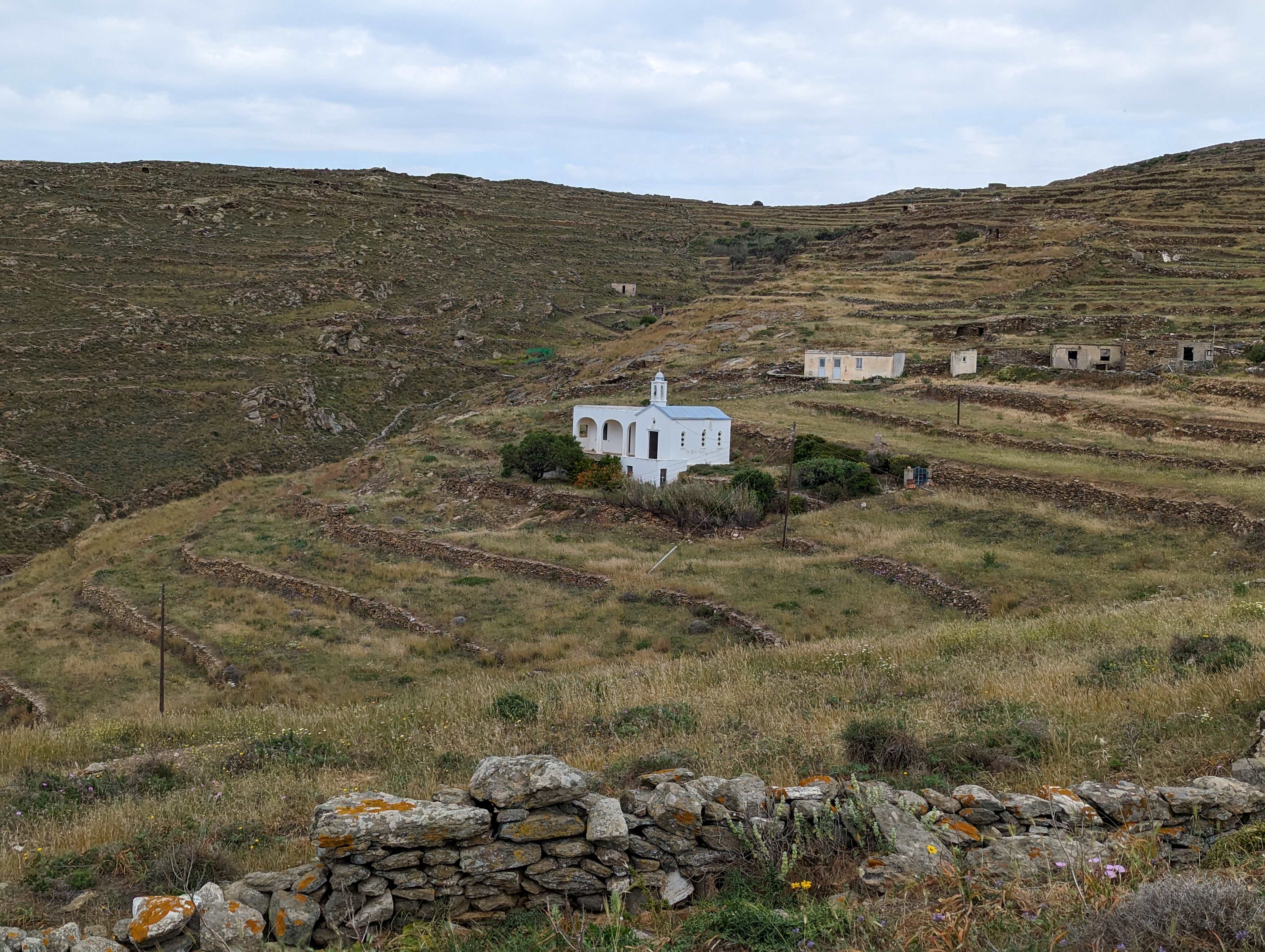
It was a wonderful day which took me steeply out of the city, hard by the Panagia shrine (Holy Monastery of Virgin Mary Evangelistria) and an olive grove, past hens, goats and ladybirds in the fields, and a vast array of wild plants: pink and white oleander, fig trees, sea lavender, and a giant cacti replete with prickly pears. I meandered along crazy-paving paths with spectacular views of the sea, across slopes with small churches, and amongst giant geological specimens.
Oleander, sea lavender and prickly pears along the T1 trail, Tinos, Greece
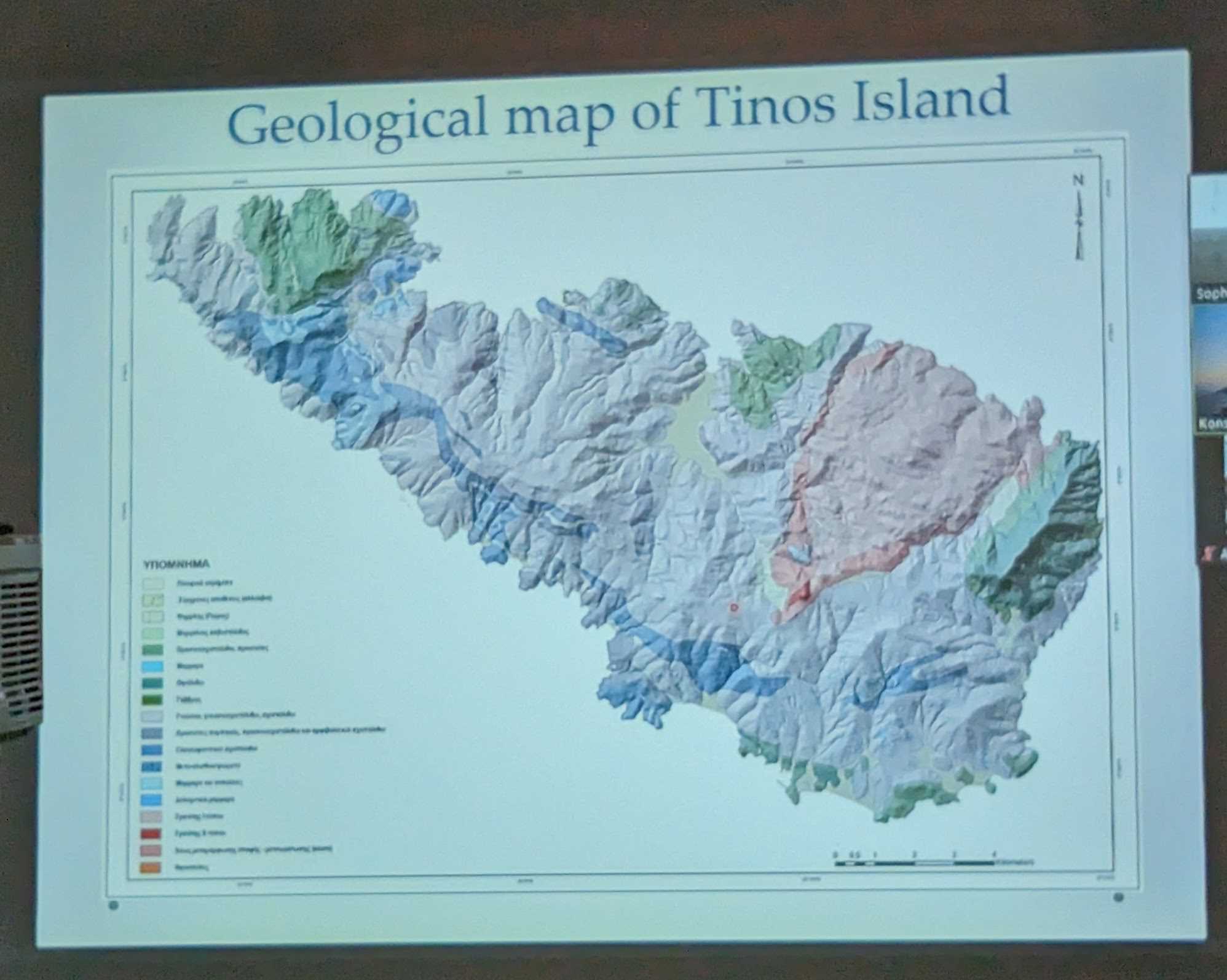
Geological map of Tinos from a presentation made as part of the Artist’s Residency, The Inherited Earth, part of the Fe26 project a collective research program by the NWMW NPO team 2023T1 trailGeology of Tinos
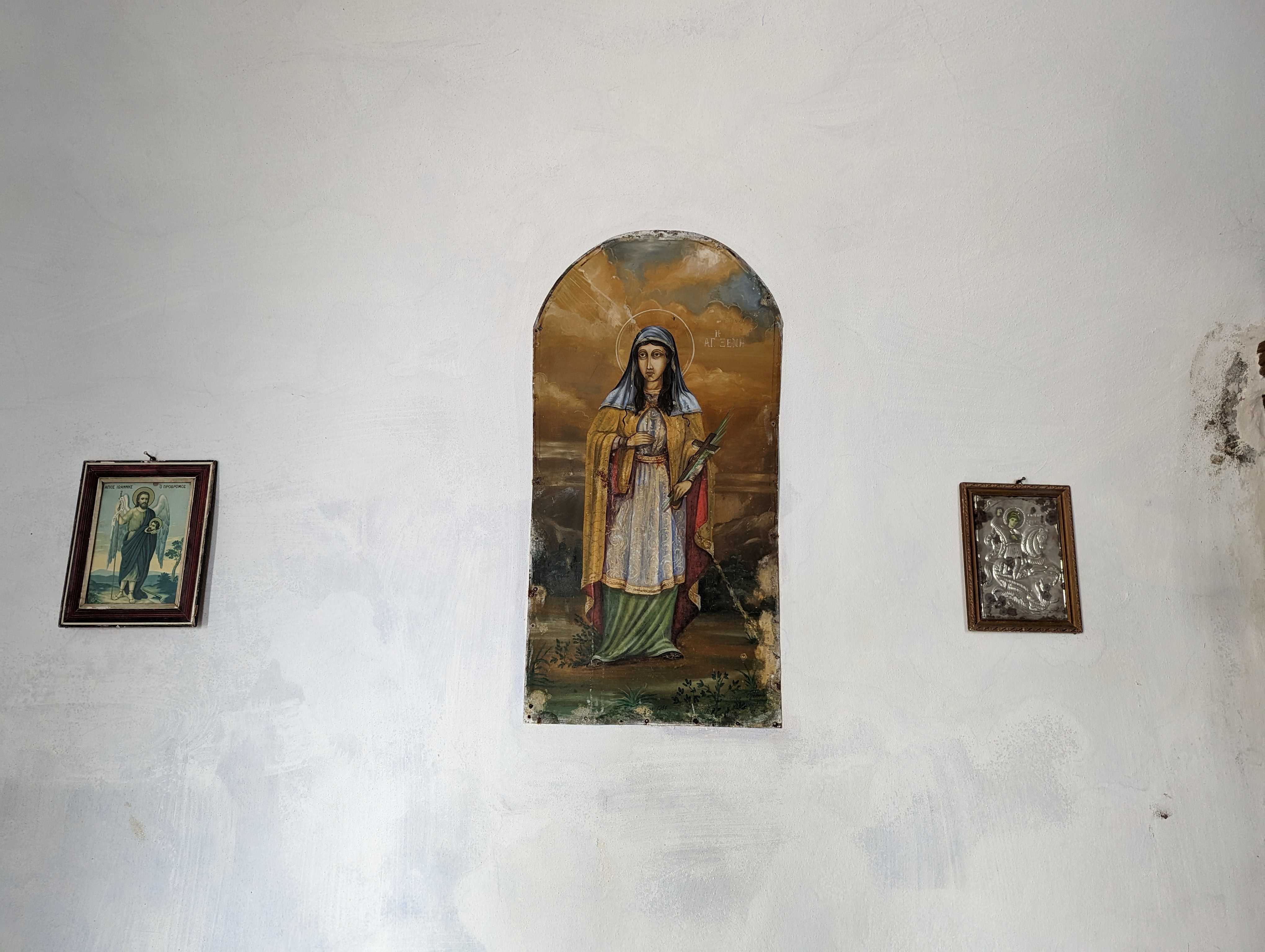
There was a small church open for me to visit. Co-ordinates 37°33’35.8″N 25°09’34.2″E
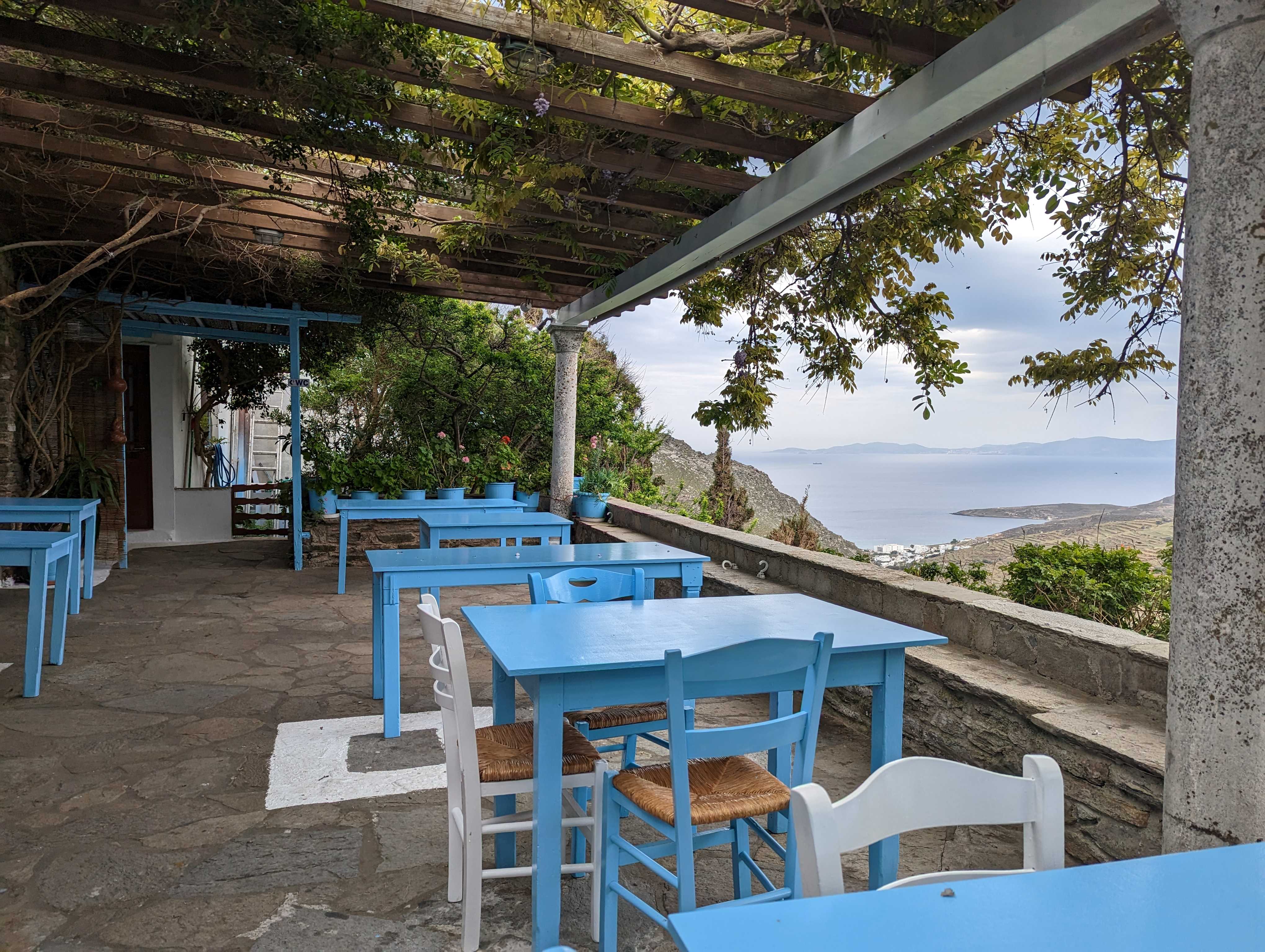
I stopped in the small village of Ktikados for a break, enjoying melizanosalata (baba ganoush / aubergine dip) and a cup of tea.
View from the Drosia Taverna, Ktikados, Tinos, GreeceKtikados
This walk comes highly recommended.
Great views of Exomvourgo (hill), Tinos, GreeceMy offerings to the Panagia on the T1 trail, Tinos GreeceOn the T1 trail
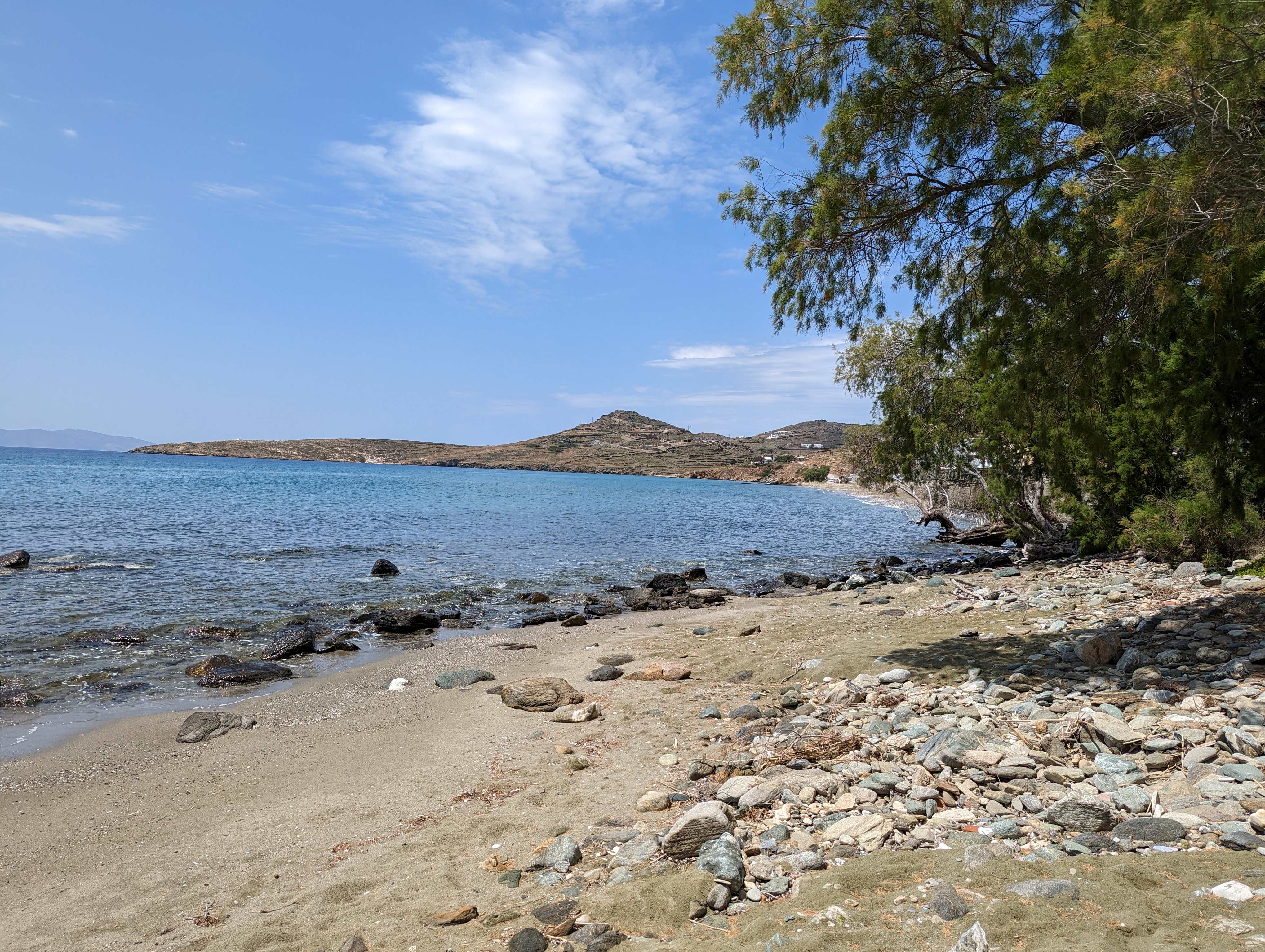
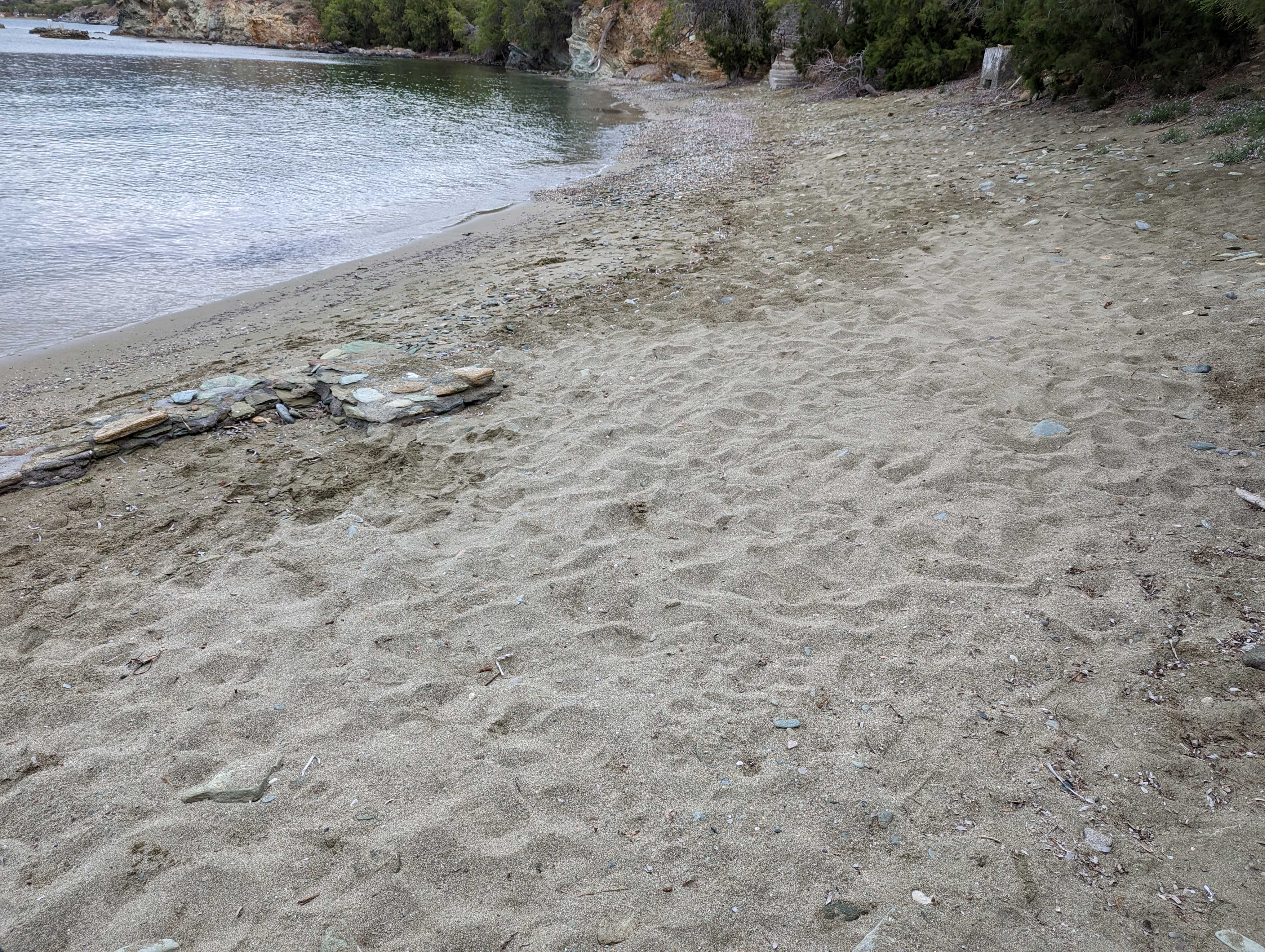
Eventually I descended to the beach in Kionia (see below) and had a refreshing swim.
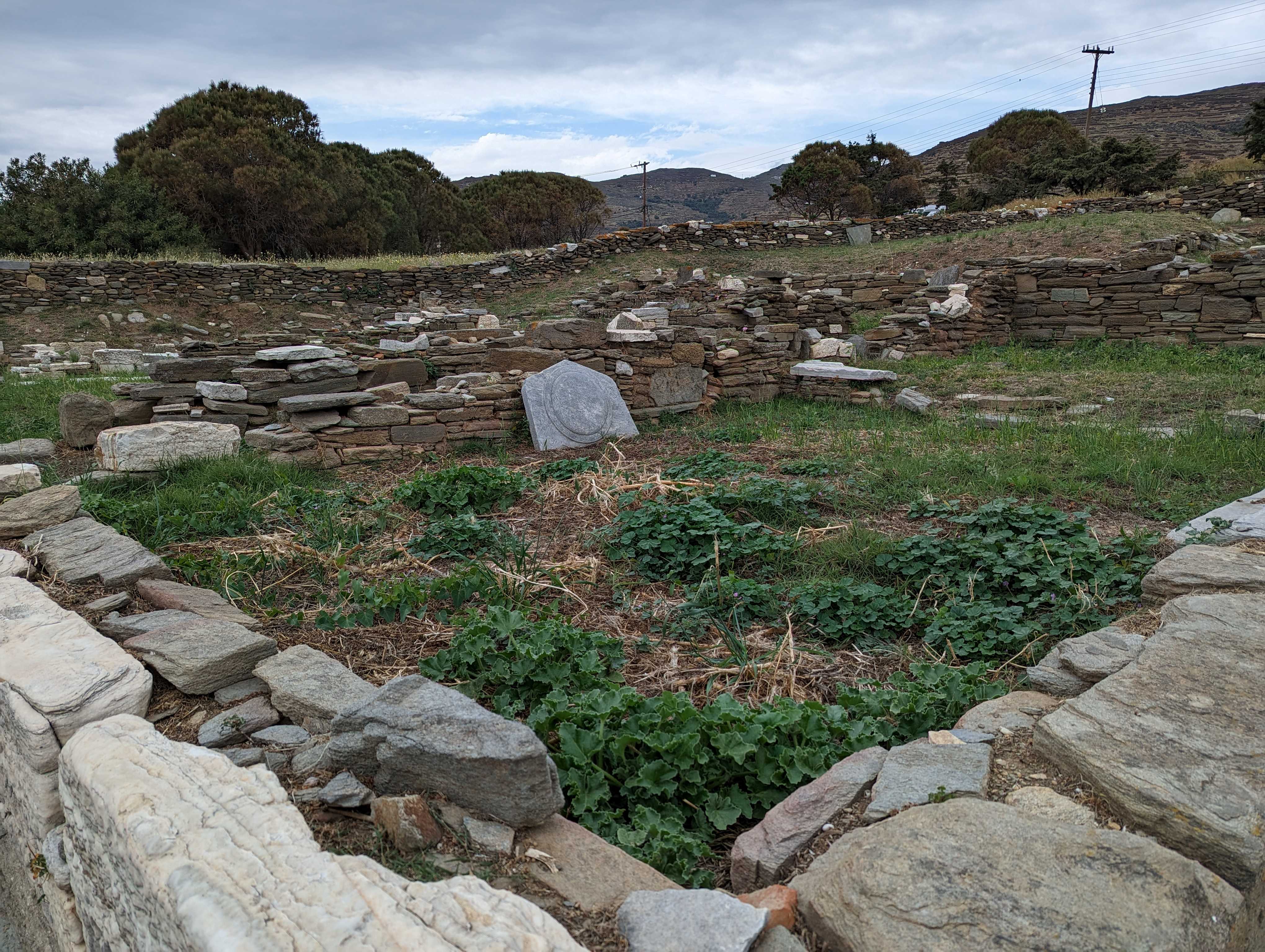
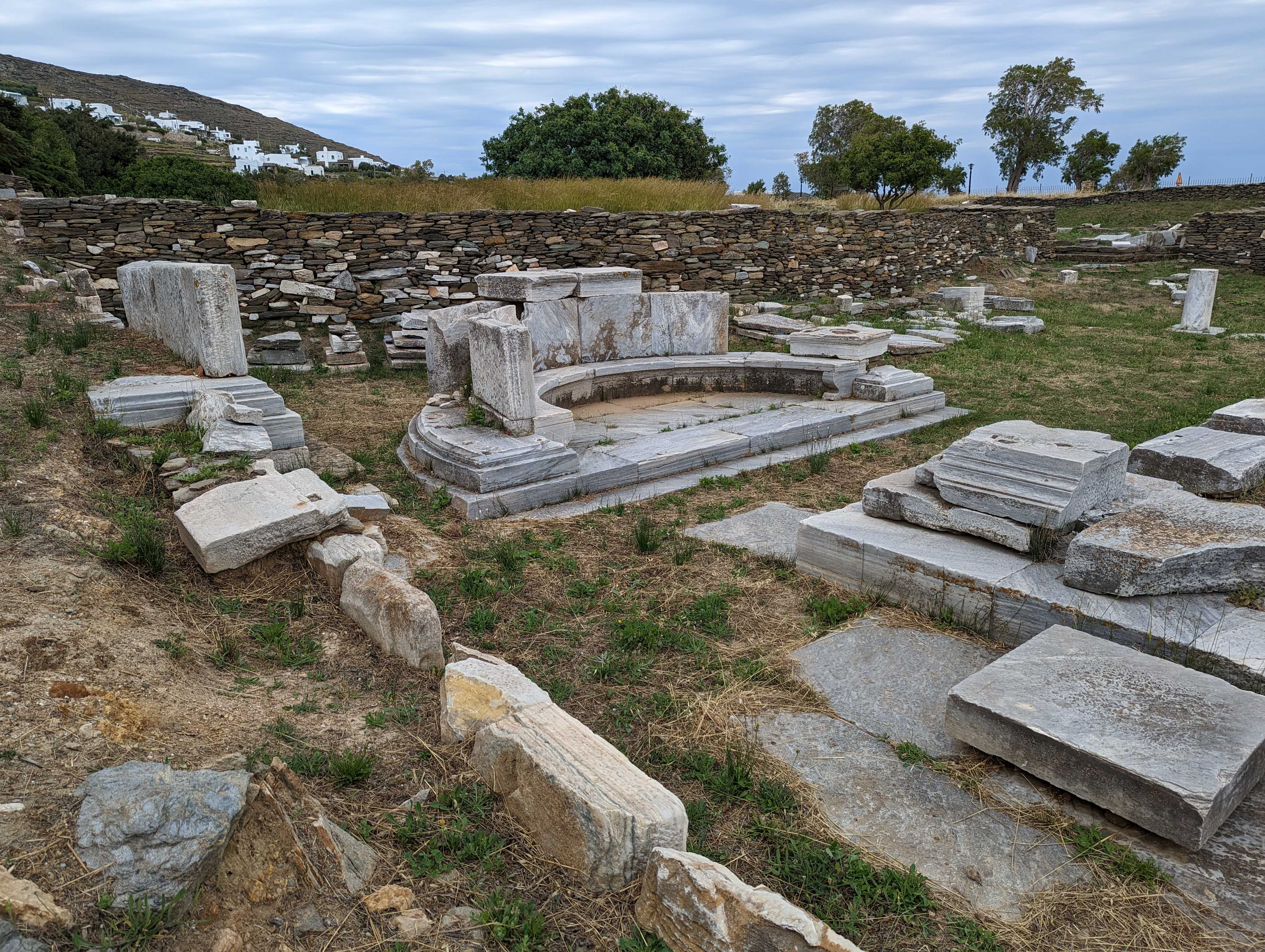
The Poseidon Sanctuary
Along the boardwalks I was delighted to discover, by chance, the Poseidon Sanctuary which, in its heyday, attracted pilgrims from beyond the borders of the Greece, as far away as Italy, Asia Minor, and Africa.
Therapy RoomsPoseidon Sanctuary
The Poseidon Sanctuary is believed to date from the 4th century or earlier, placing it in the Hellenistic Period. Dedicated to the sea nymph Aphrite (Amphitriti) and Poseidon, god of the sea, it was a place where visitors would come to clean and purify themselves. As a complementary therapist, I was particularly interested in the site of the former therapy rooms (above left).
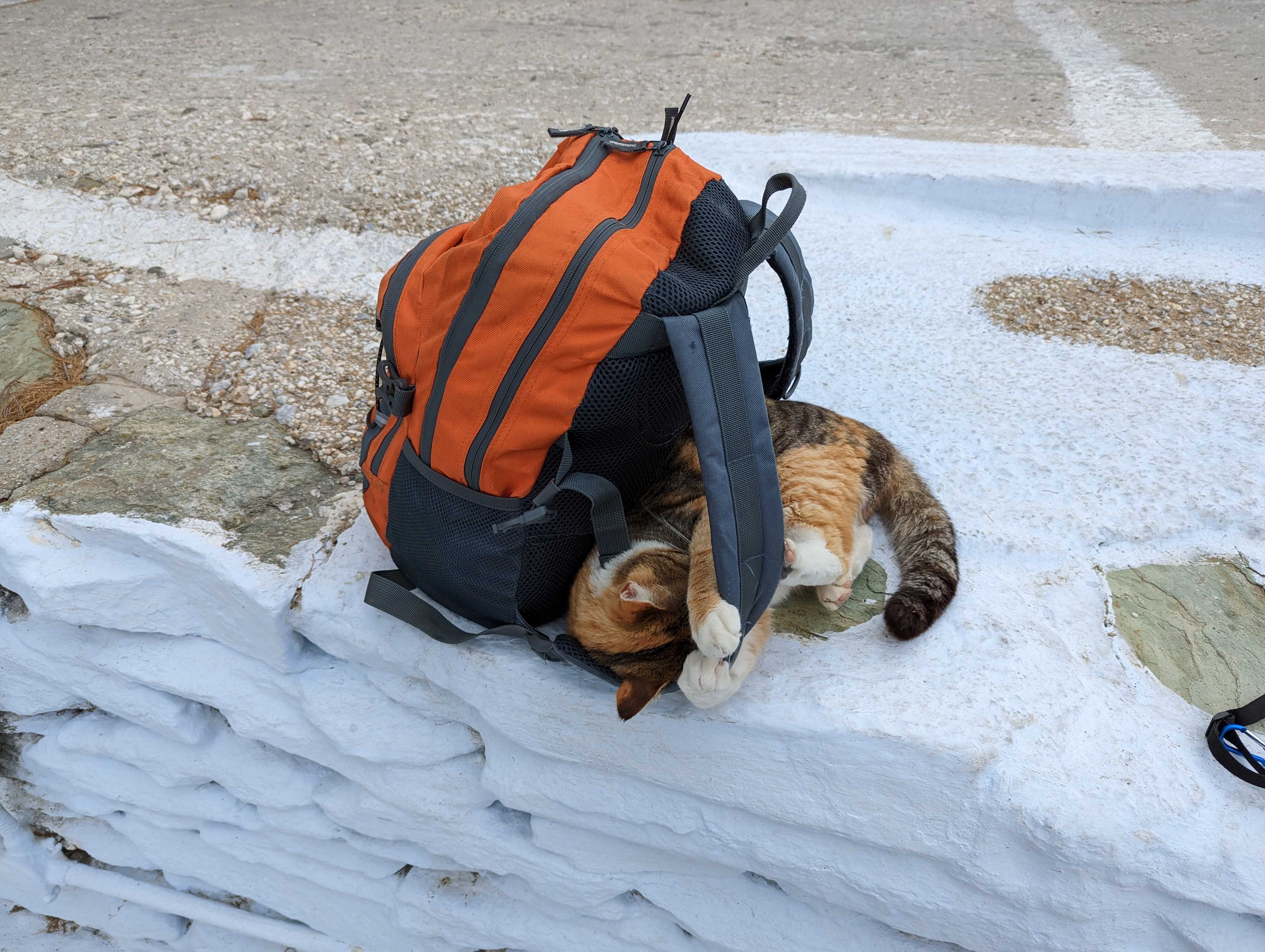
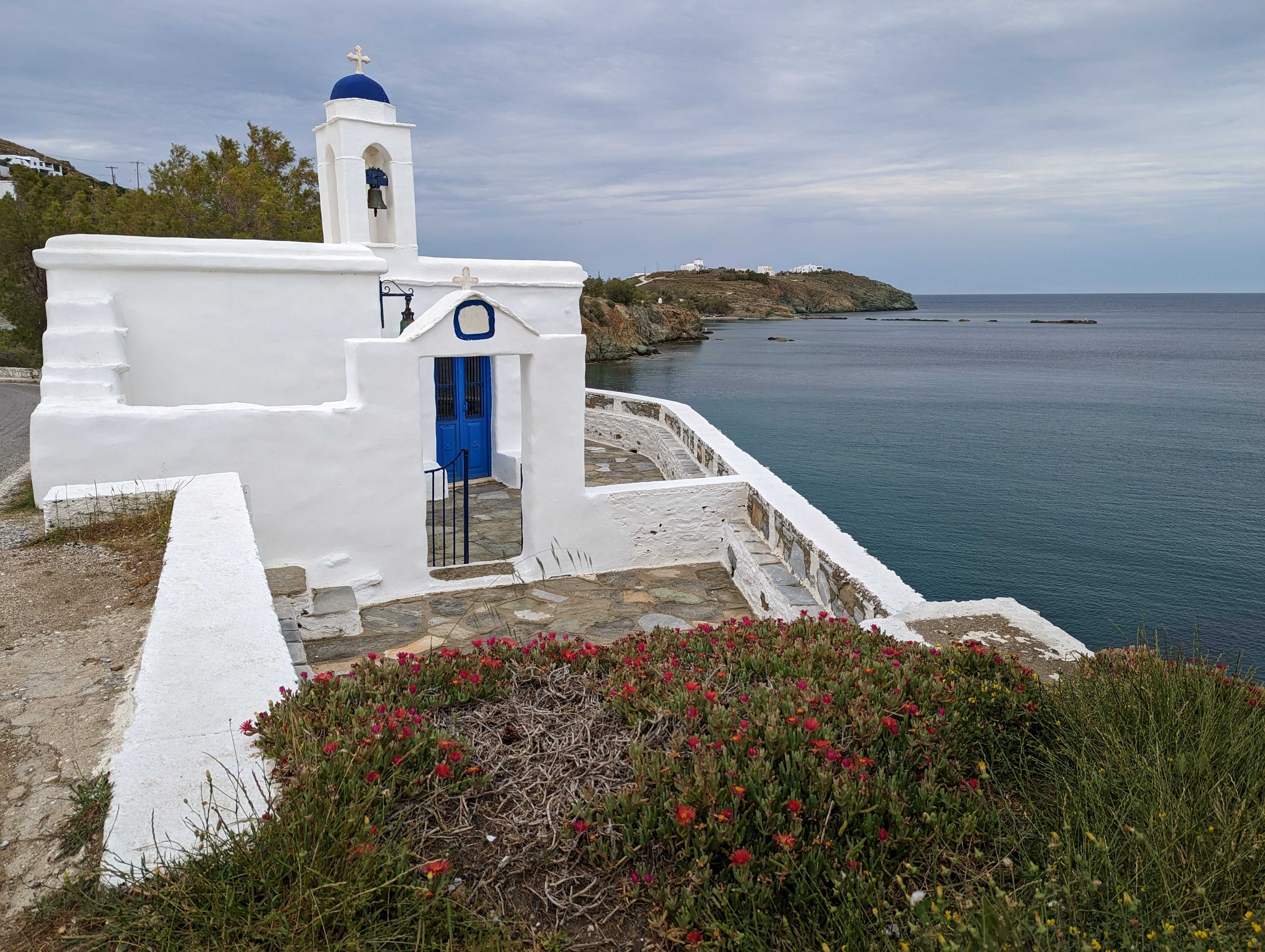
I gave Shiatsu to one of the artists I met, on the beach below this typical church while a kitten played with my rucksack, Kionia, Tinos, Greece.
I returned to Chora from Kionia, a walk of 40 plus minutes, along the main coastal road. Careful as there is no pavement in parts!
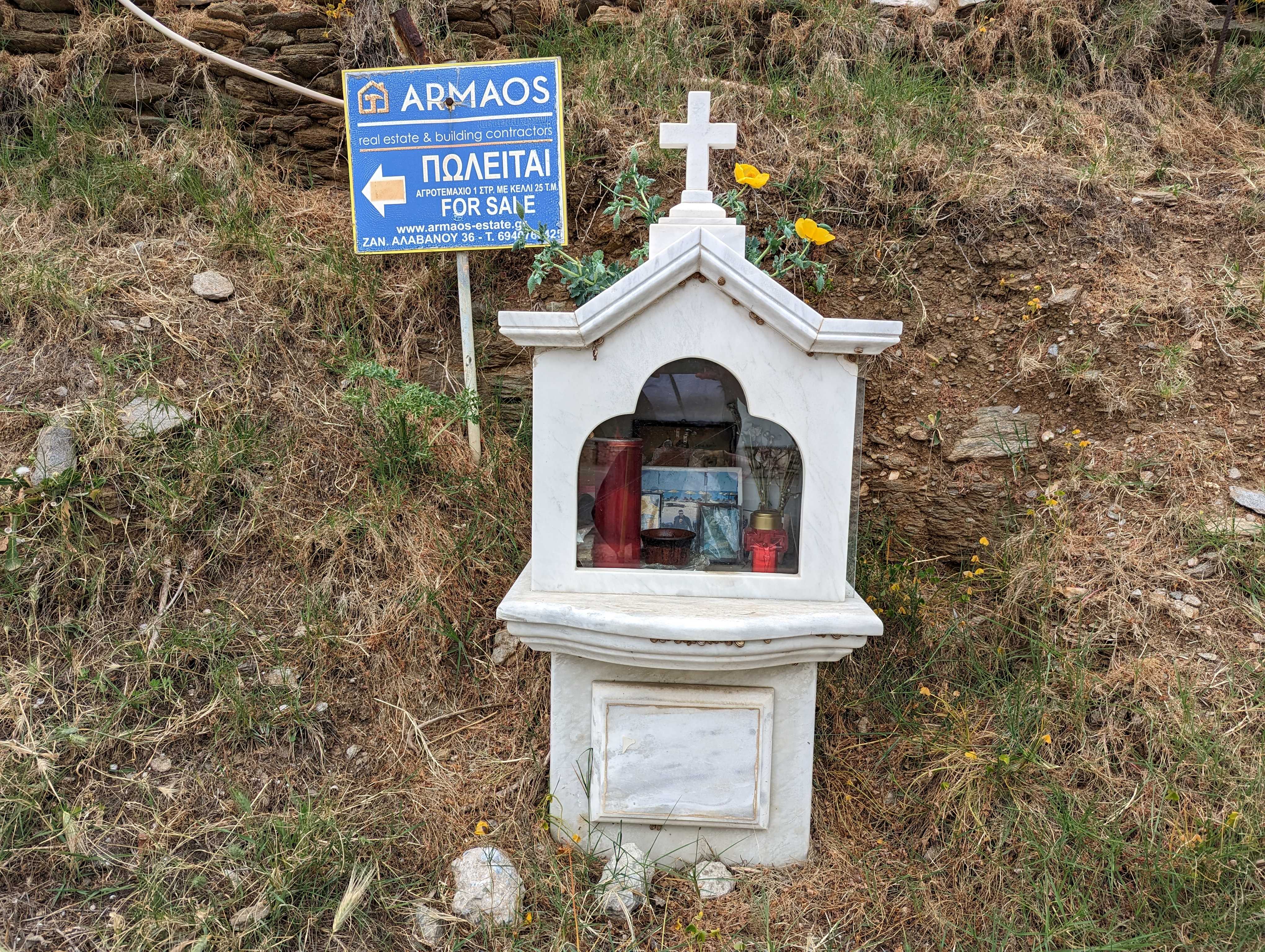
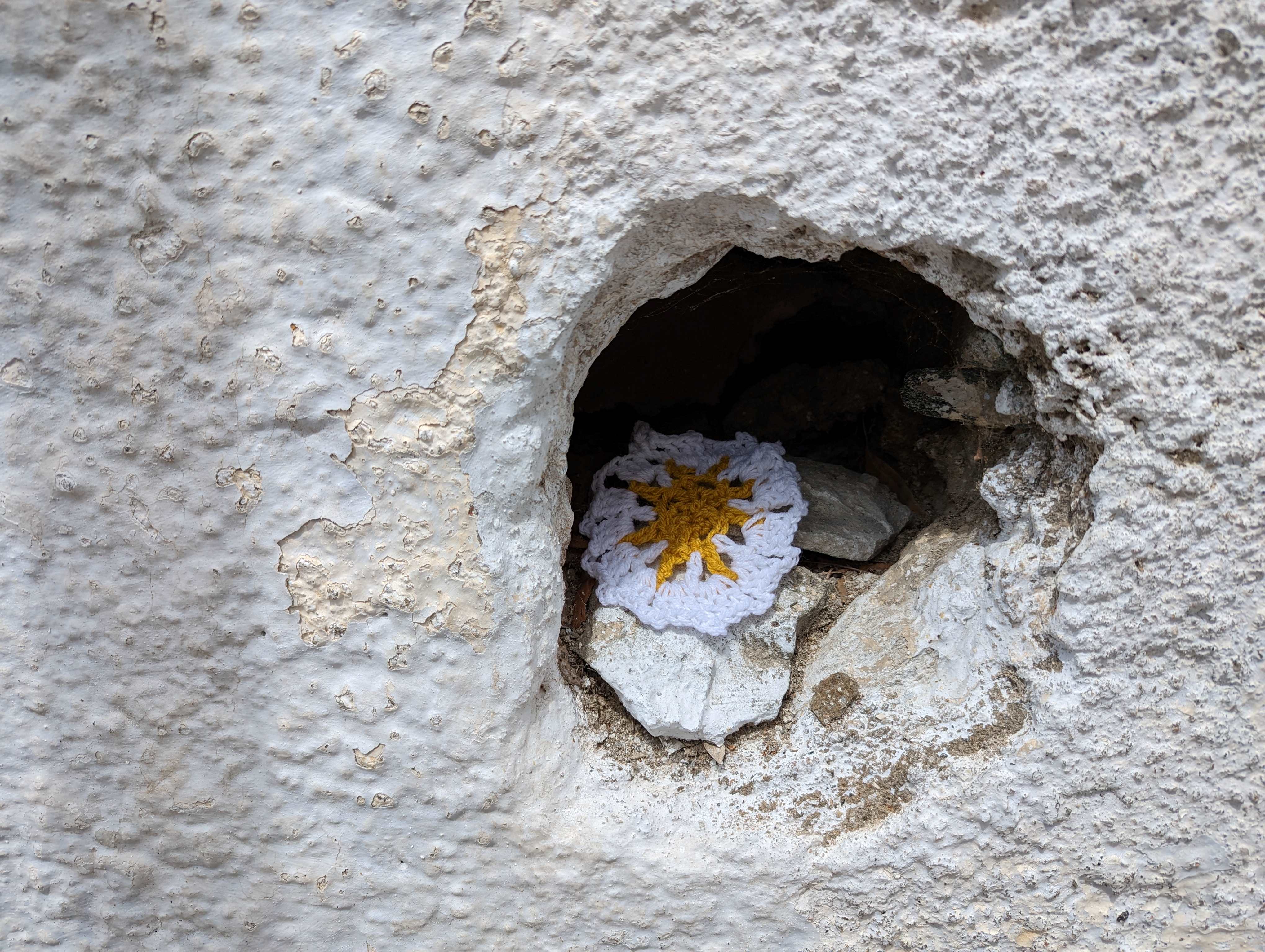
Traditional Wayside ShrineOffering
During my stay on Tinos, I crocheted wild flowers that I found as I walked and offered them in little niches by way of thanks for my experience on the island.
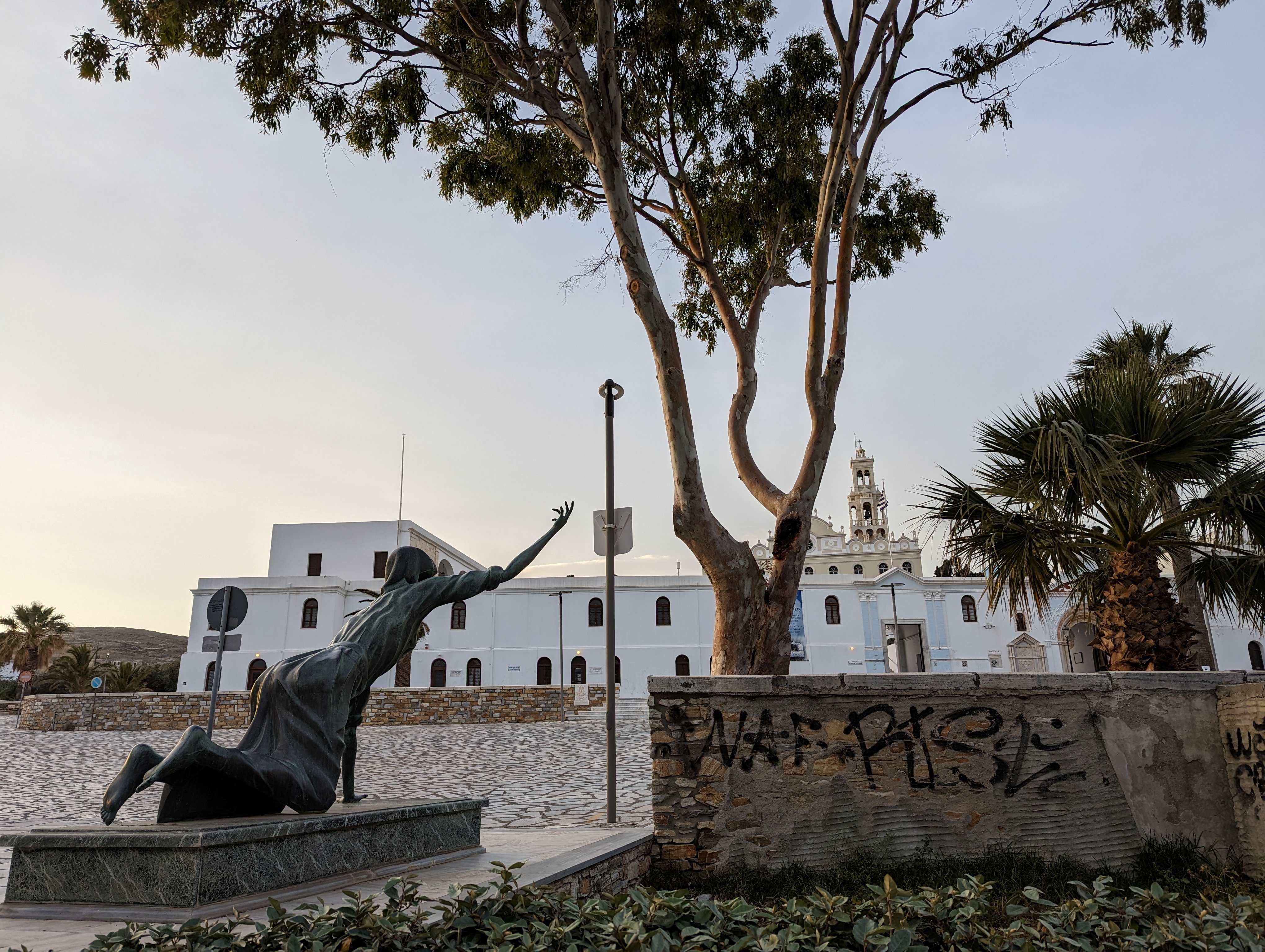
The title photo showing the peacocks, is of a plaque outside the Panagia shrine in Chora town. All images are my own.
I thought I might take a break after teaching Shiatsu and giving supervision in Athens, so I looked up islands which were easy to get to from the capital and typed the word ‘pilgrimage’ into the search engine as a starting point. Tinos came up immediately. It’s not only a vital place of pilgrimage for Greek people, but it’s also famous for its dovecots (see photo at the end of this blog), which I have been studying for a few years now. To Tinos I had to go!
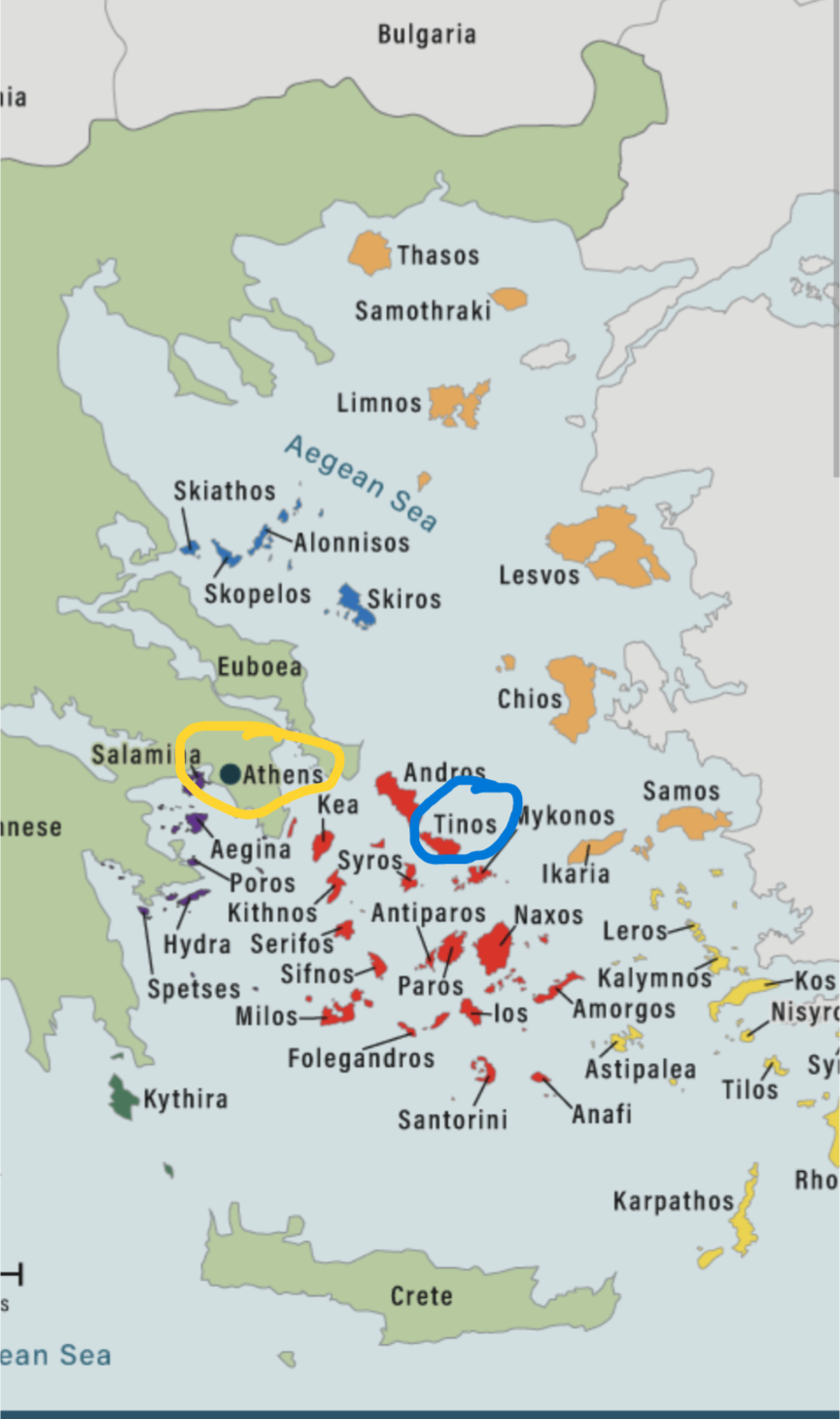
Map of Greece showing the location of Tinos in relationship to Athens
A sacred island of pilgrimage, Tinos is one of the Cyclades, and has a deep history that is crucial to Greece herself. Since the 7th century, a feast has taken place there in honour of the Dormition of the Virgin Mary (her passing from the earthly state). Then, in 1823, two years after the Greek War of Independence had started, a nun called Pelagia found the Holy icon of the Annunciation of the Panagia in a field. Considered a divine omen for the Greek Revolution, a shrine / church was founded to coincide with the agricultural calendar on the island, and a festival was established on 15 August to which women and men flock each year.
In the first [of several chapels at the Shrine] is a holy spring, where pilgrims collect water which has powers of fertility and cures sickness. According to tradition, the well was found during the excavations in search of the icon. The well was dry. On the day the church’s cornerstone was laid, it filled up with water. The source is seen as a miracle, and the chapel of the holy water is called the “Life-Giving Spring.”
Evy Johanne Haaland
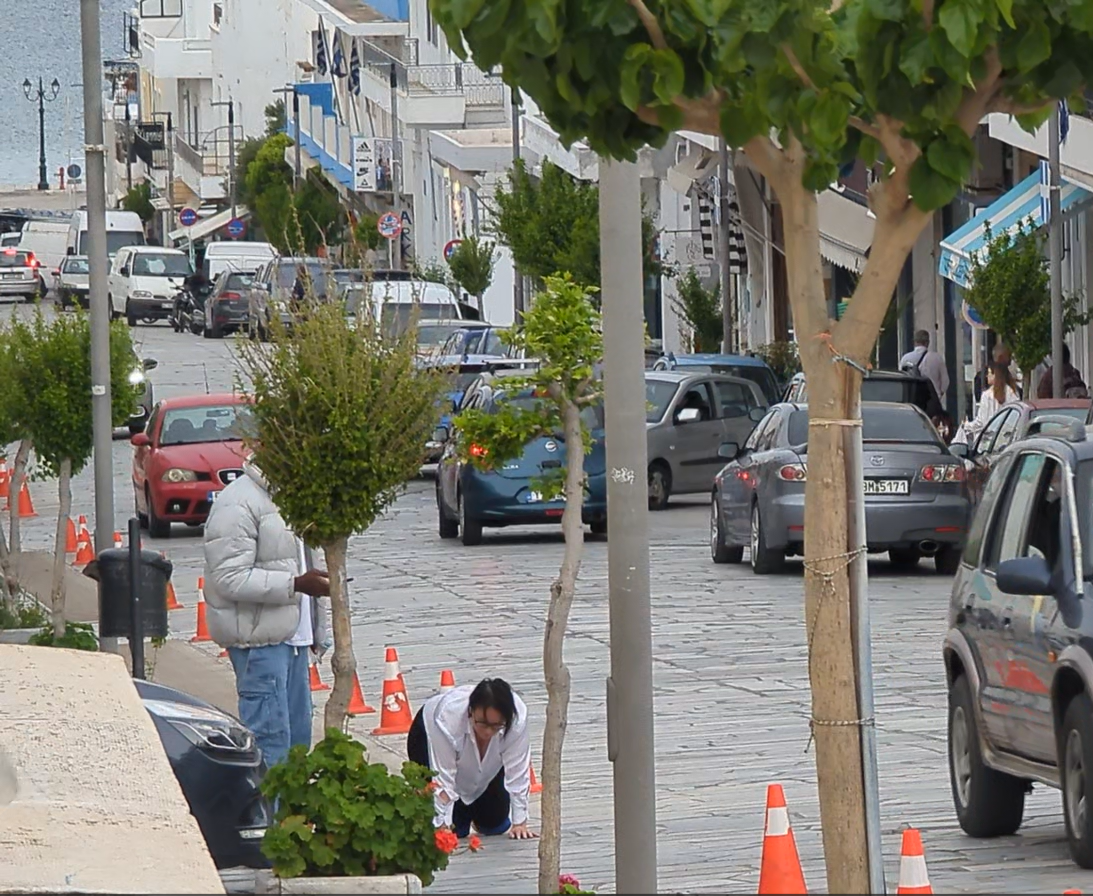
Evy Johanne Haaland, a Norwegian researcher (Dr/PhD, history) and government scholar, writes here about Palagia, and the ritual that women through the ages have performed – climbing up the steep hill from the sea to the shrine on their hands and knees, sometimes with a child on their back.
Greek women are strong and active persons …, thus paralleling the divine Panagia.
Evy Johanne Haaland
Shrine to the Panagia, Chora, Tinos, Greece
Practicalities
Chora is the main town of the island, also known as Tinos, and is where the ferry arrives and leaves from Athens. I took the ferry to and from Rafina (not far from Athens – take the inexpensive KTEL bus).
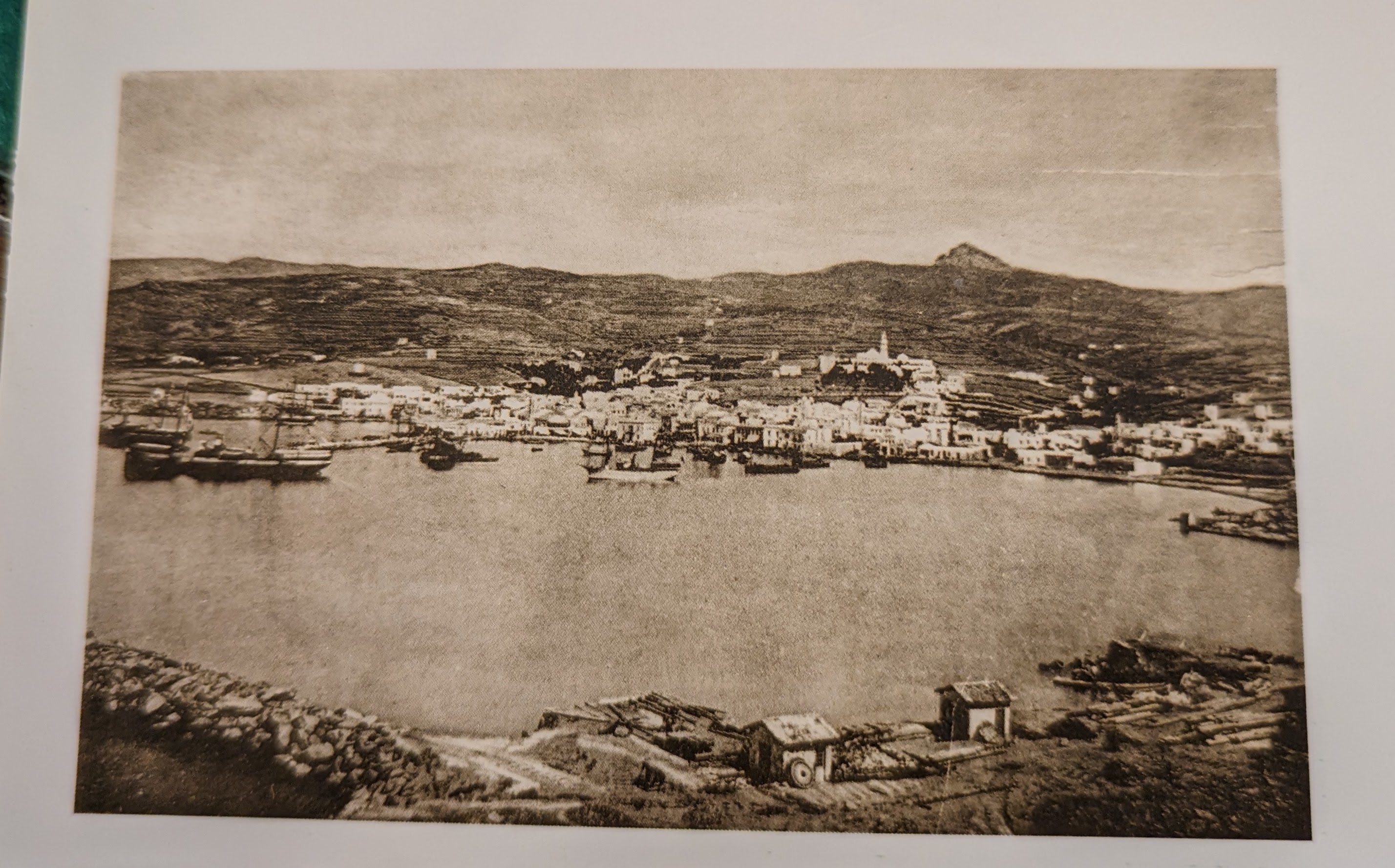
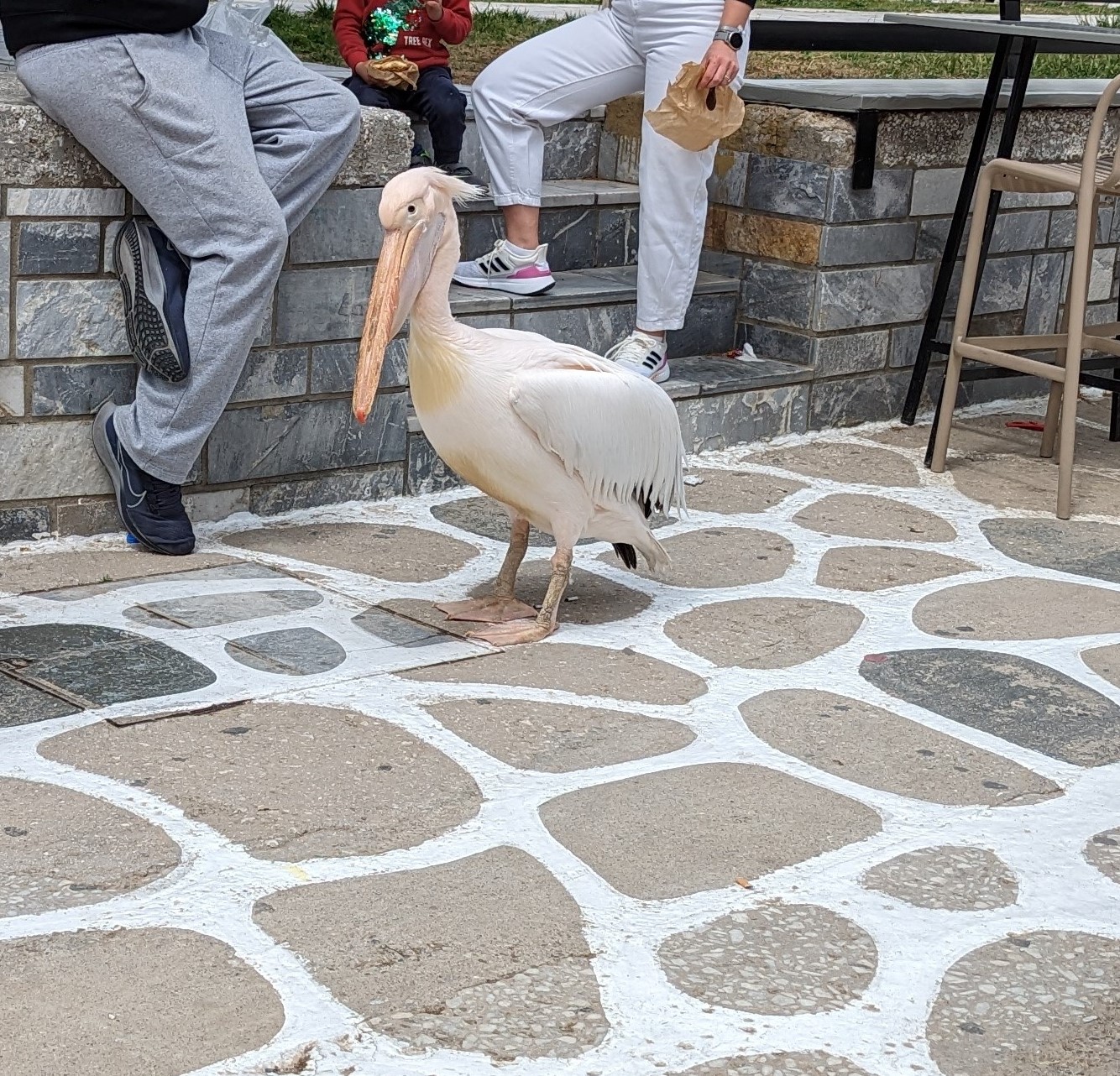
Old photo of Chora, Tinos, GreeceResident pelican, Chora, Tinos, Greece
The town is well stocked and bustling with pretty, narrow streets, a long waterfront (including the port) and steep climbs to the Panagia shrine.
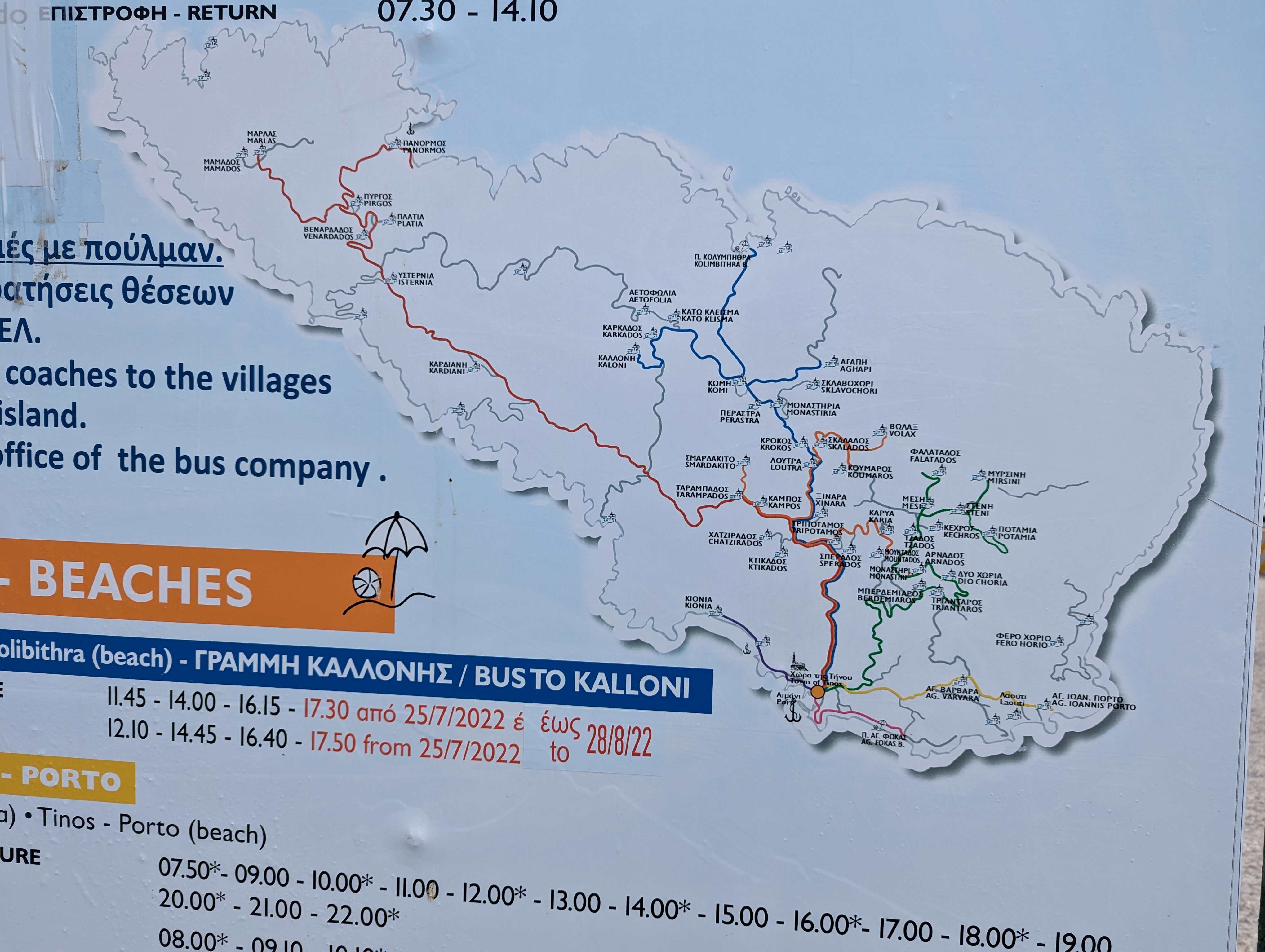
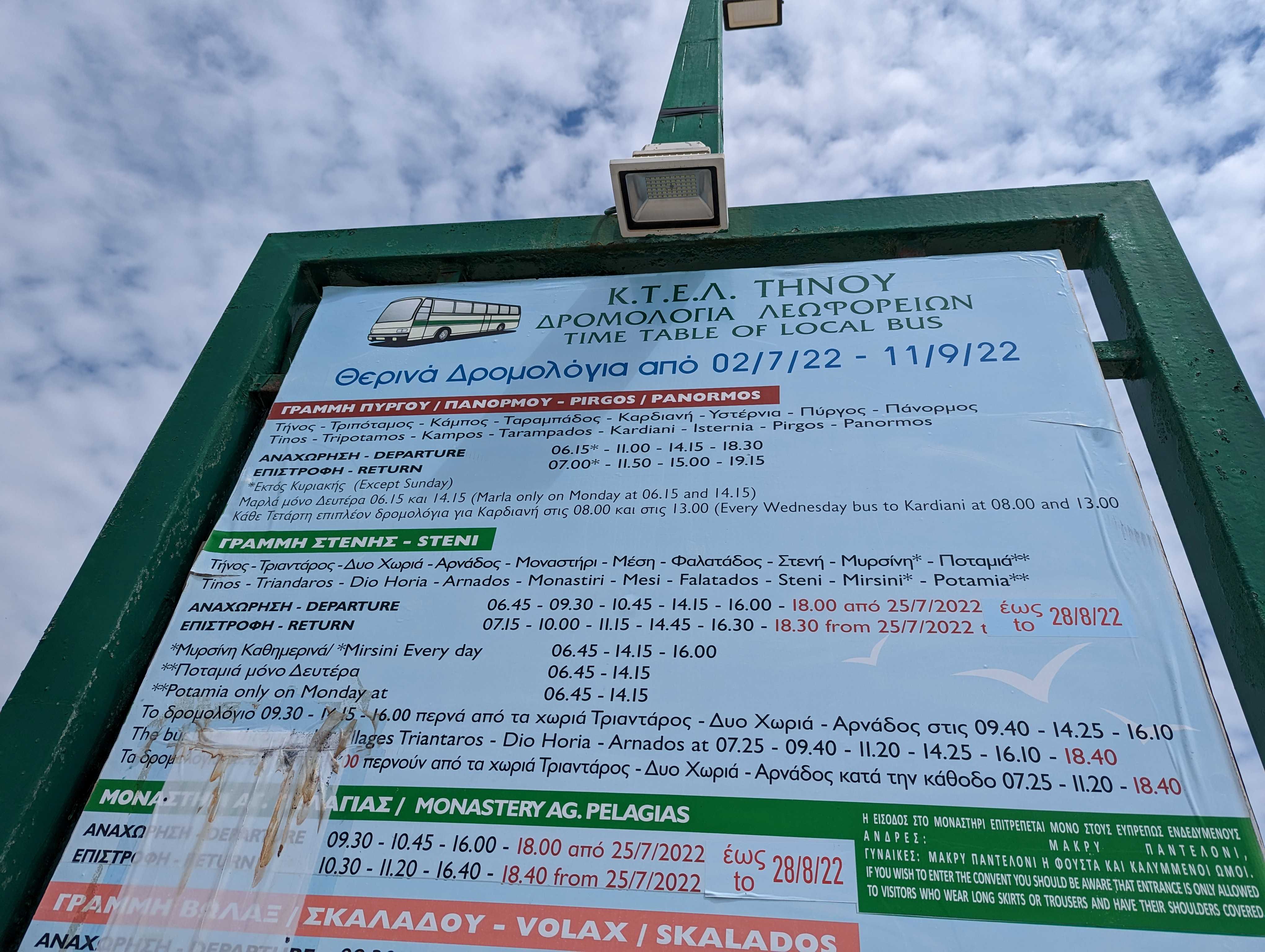
There is a good bus service across the island, but NOT on Sundays and I didn’t find it easy to get information about when they run.
Café
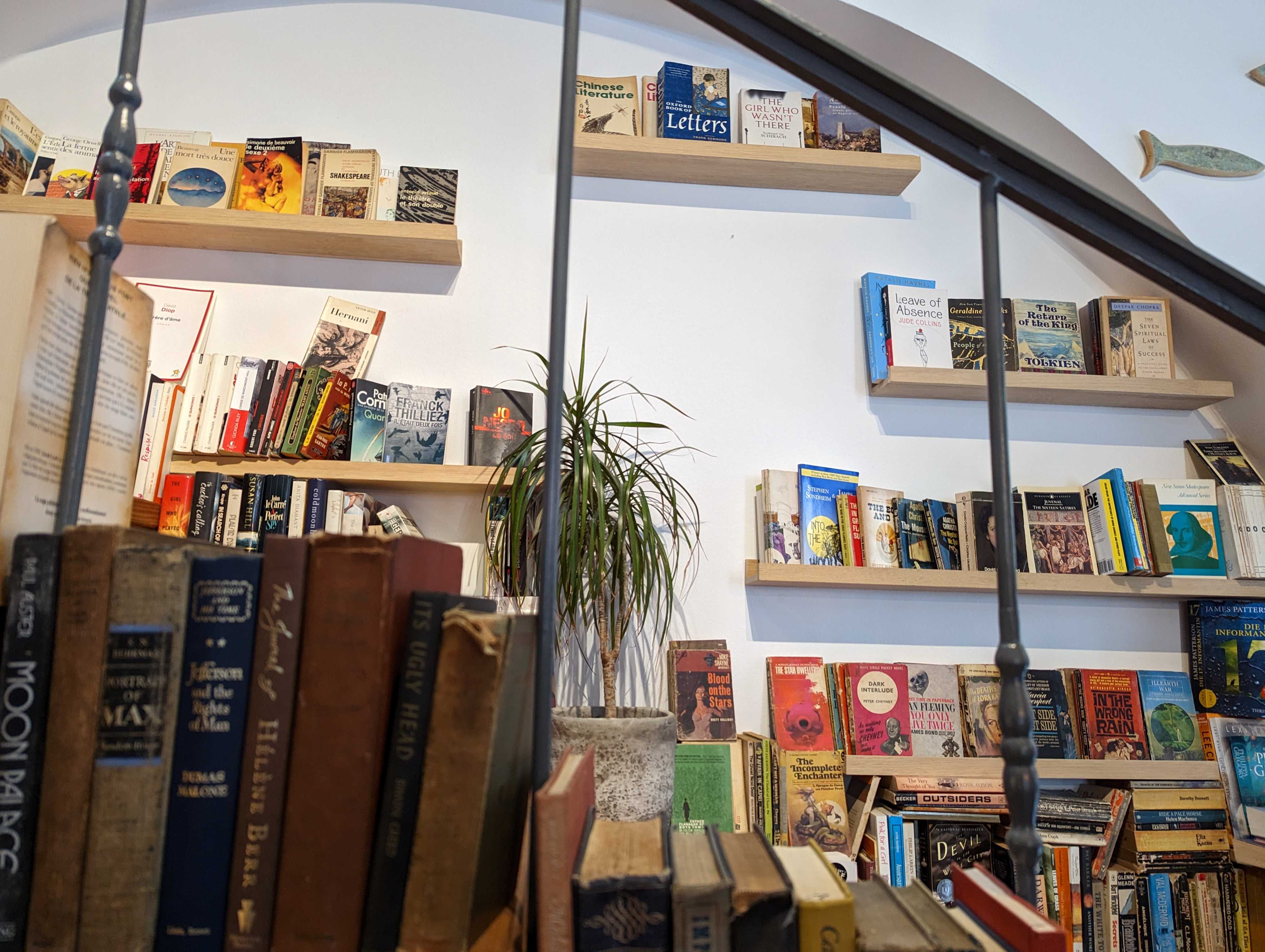
Recommended book café: Antilalos, Fr. Paximadi & Afentouli, 84200 Chora, Tinos. The owner and other staff were so very kind to me. I arrived on a Sunday and had booked an air bnb at the opposite end of the island – too far even for me to walk in one afternoon (though I walked from Pyrgos to Panormos which was wonderful). They made phone calls on my behalf and really helped me out. There were no taxis because, of course it was some sort of festival and so everyone was celebrating with family. I started to walk, but it was far too hot at midday, so in the end they arranged for a taxi driver they knew to come on his day off from another village and pick me up. He took me to Pyrgos – more than three quarters of the way there, and I was really grateful.
Antilalos Café in Chora, Tinos, Greece
Accomodation
I stayed at the Pension Selenti which I would recommend.
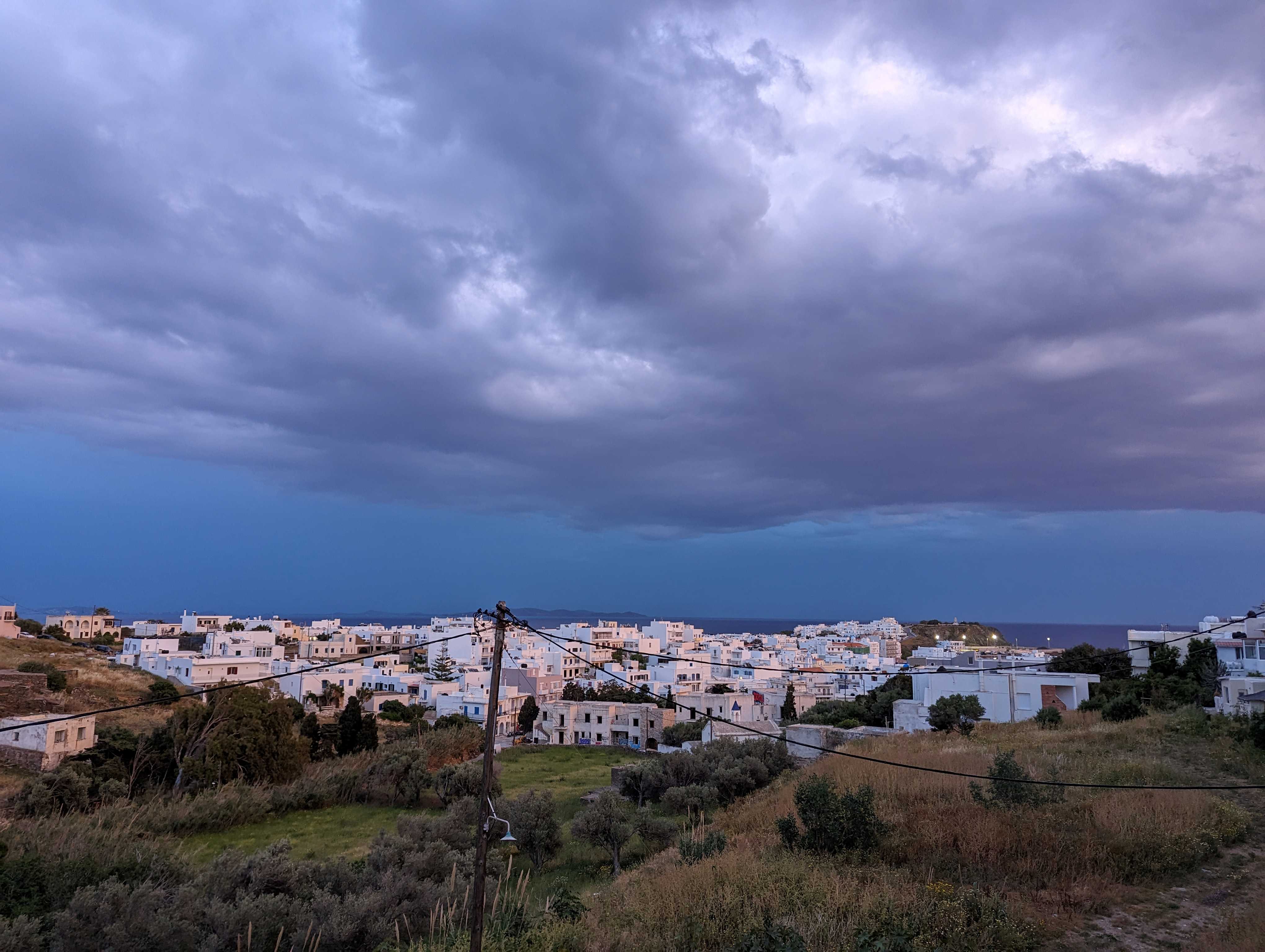
Evening view of Chora town from the Pension Selenti, Tinos, Greece
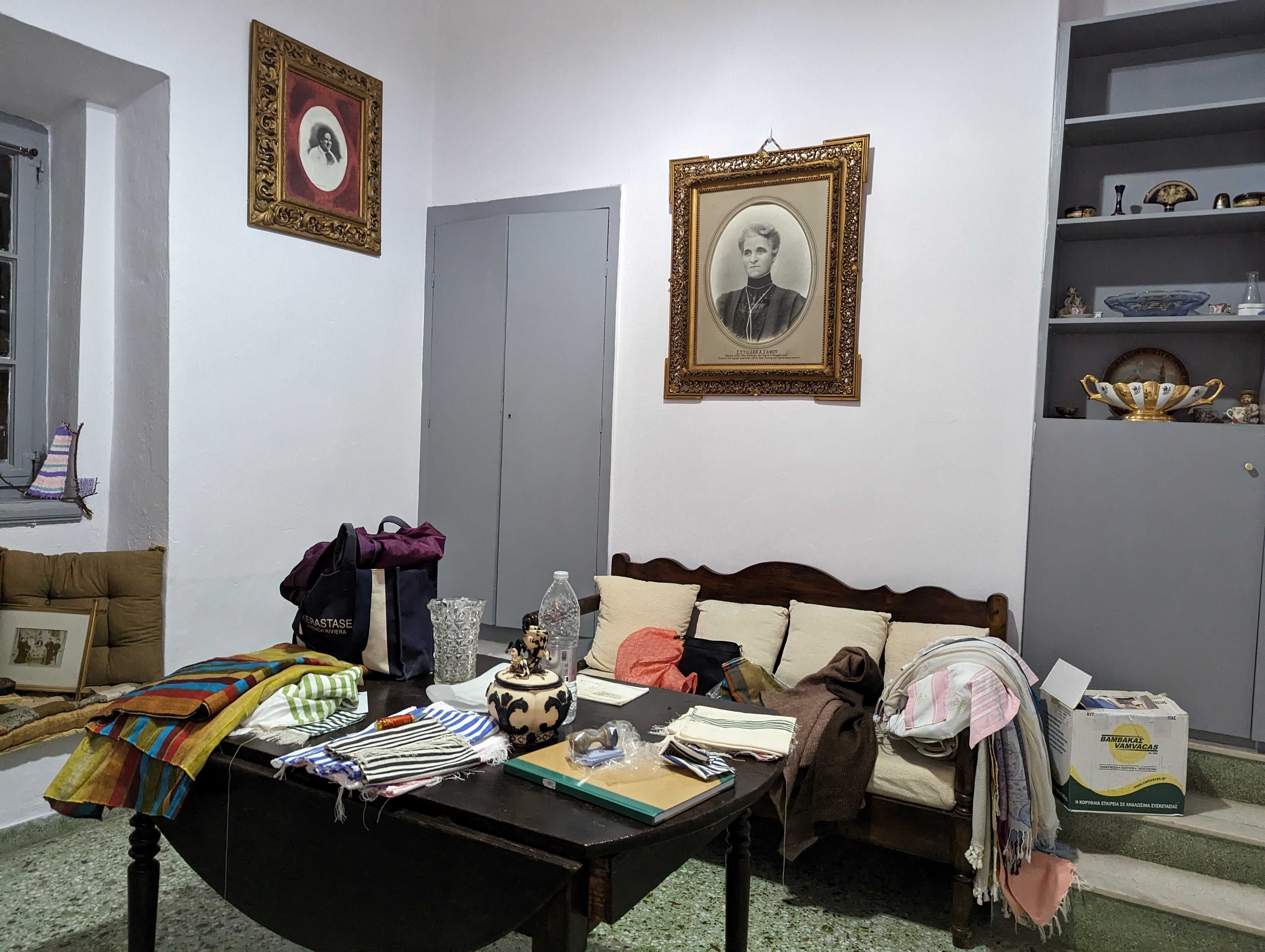
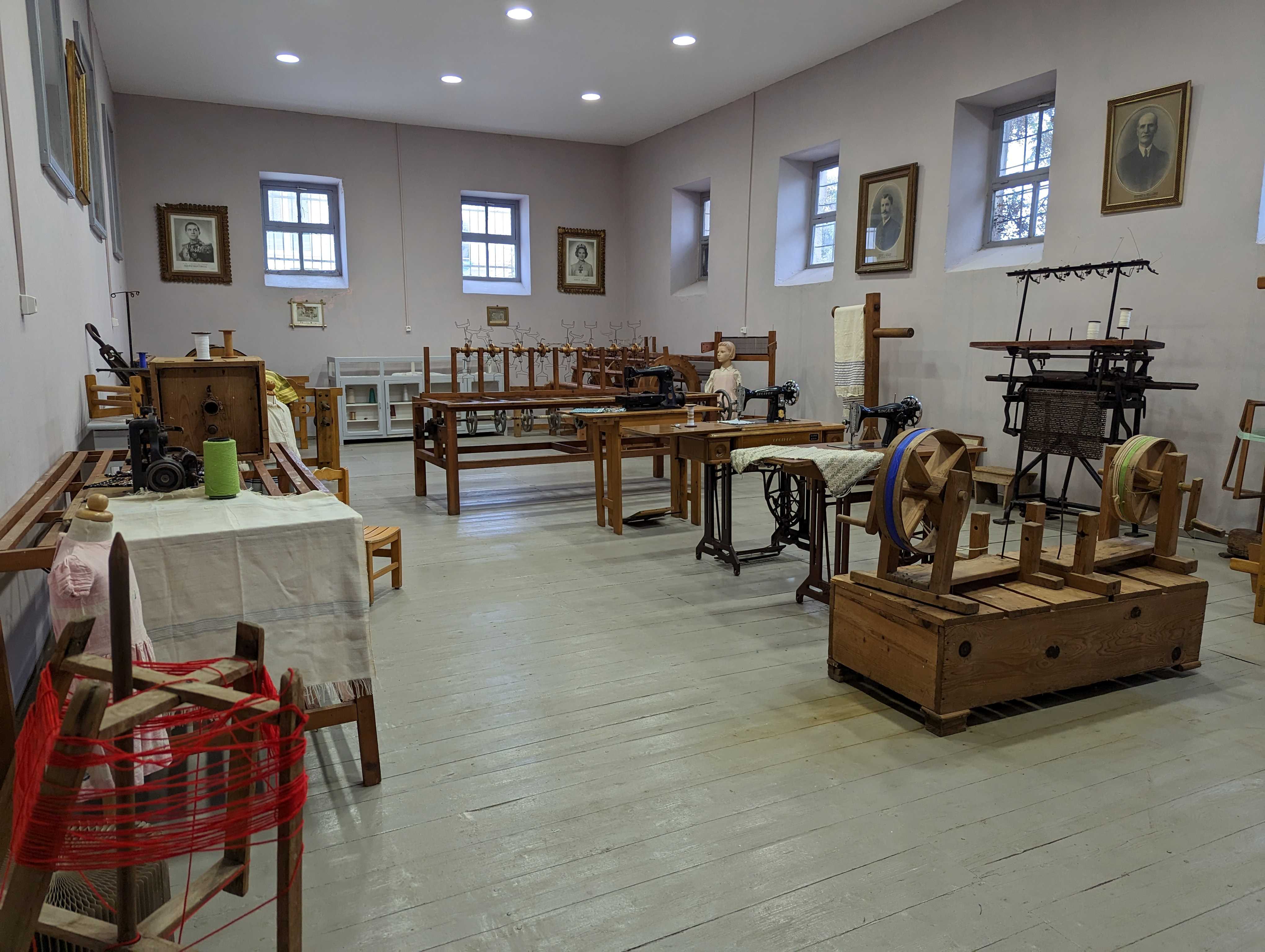
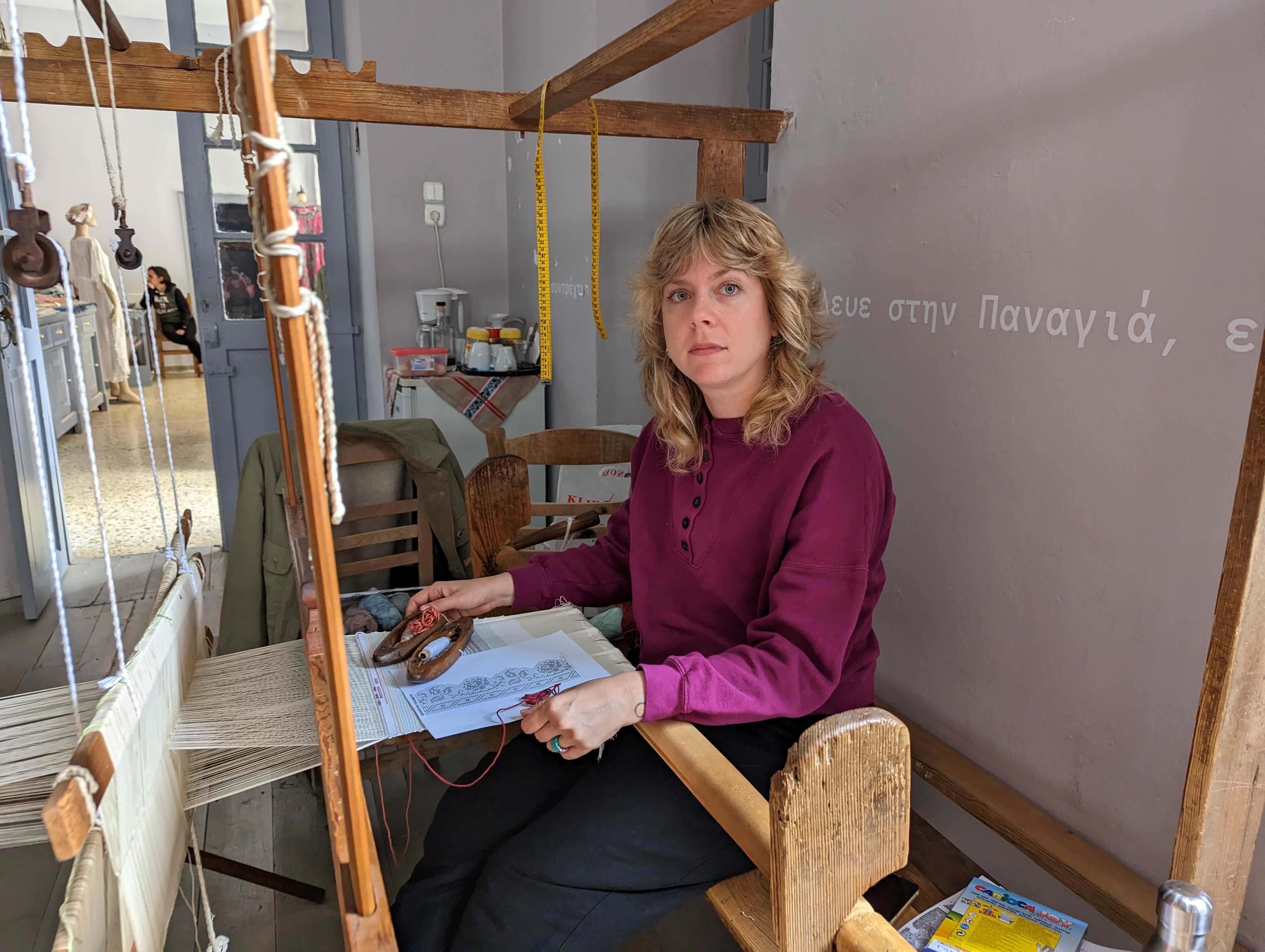
Old Weaving School, Chora
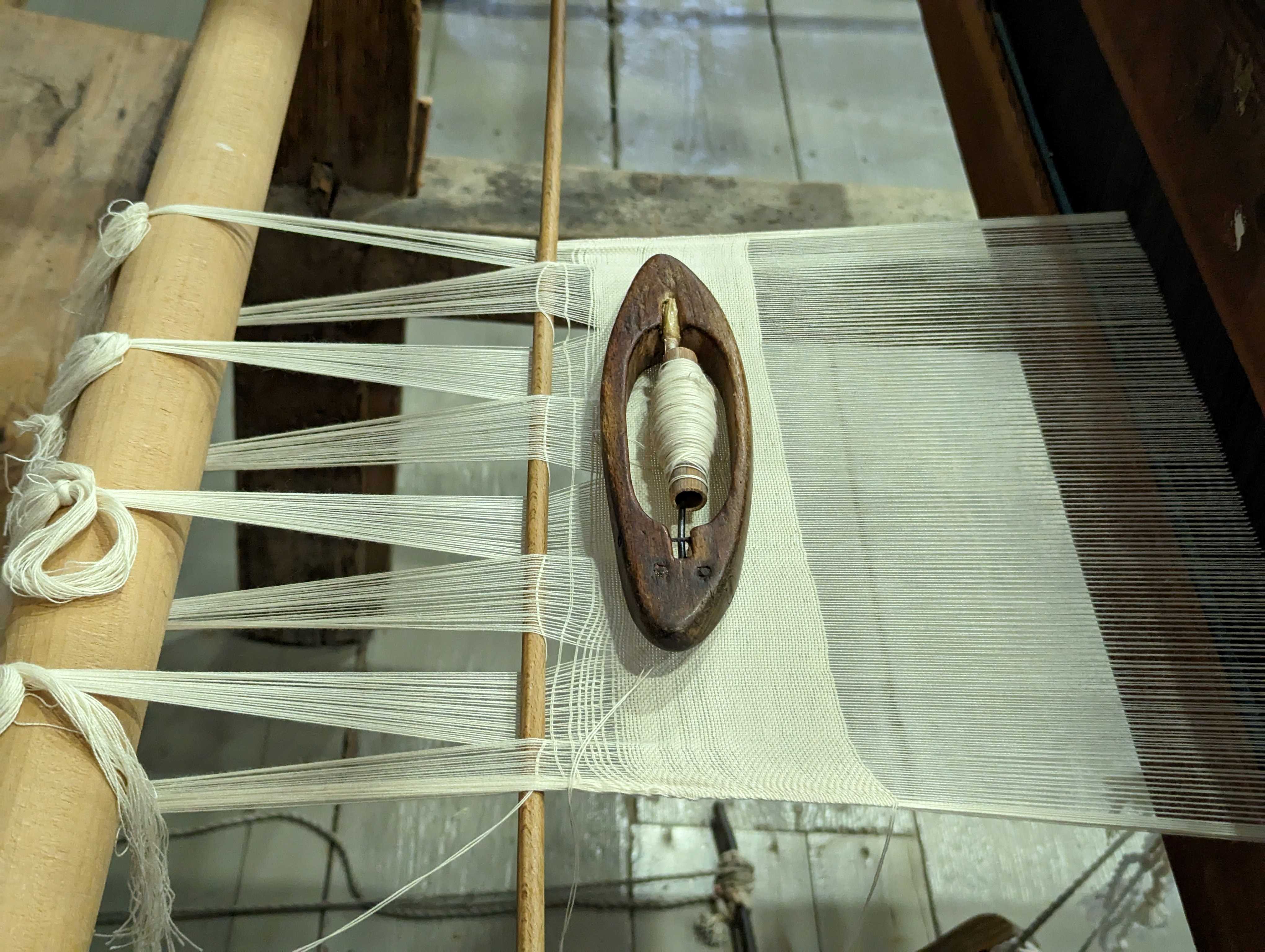
“Zarifios Vocational School (Βιοτεχνική Σχολή Τήνου Υφαντήριο) is a legacy of the Zarifis family originating from Constantinople. Since 1898, Zarifios School has been a reminder of the gratitude of the family of banker Nikolaos Zarifis towards the governess of his children, who took them to the safe environment of Tenos (sic), when riots broke out in the Constantinople. The school emphasized in the traditional weaving art supporting women and society in adverse conditions. Today, 200 years later, it still continues to have a presence by supporting the School and textile workshops.” Description from thehouse.gr website
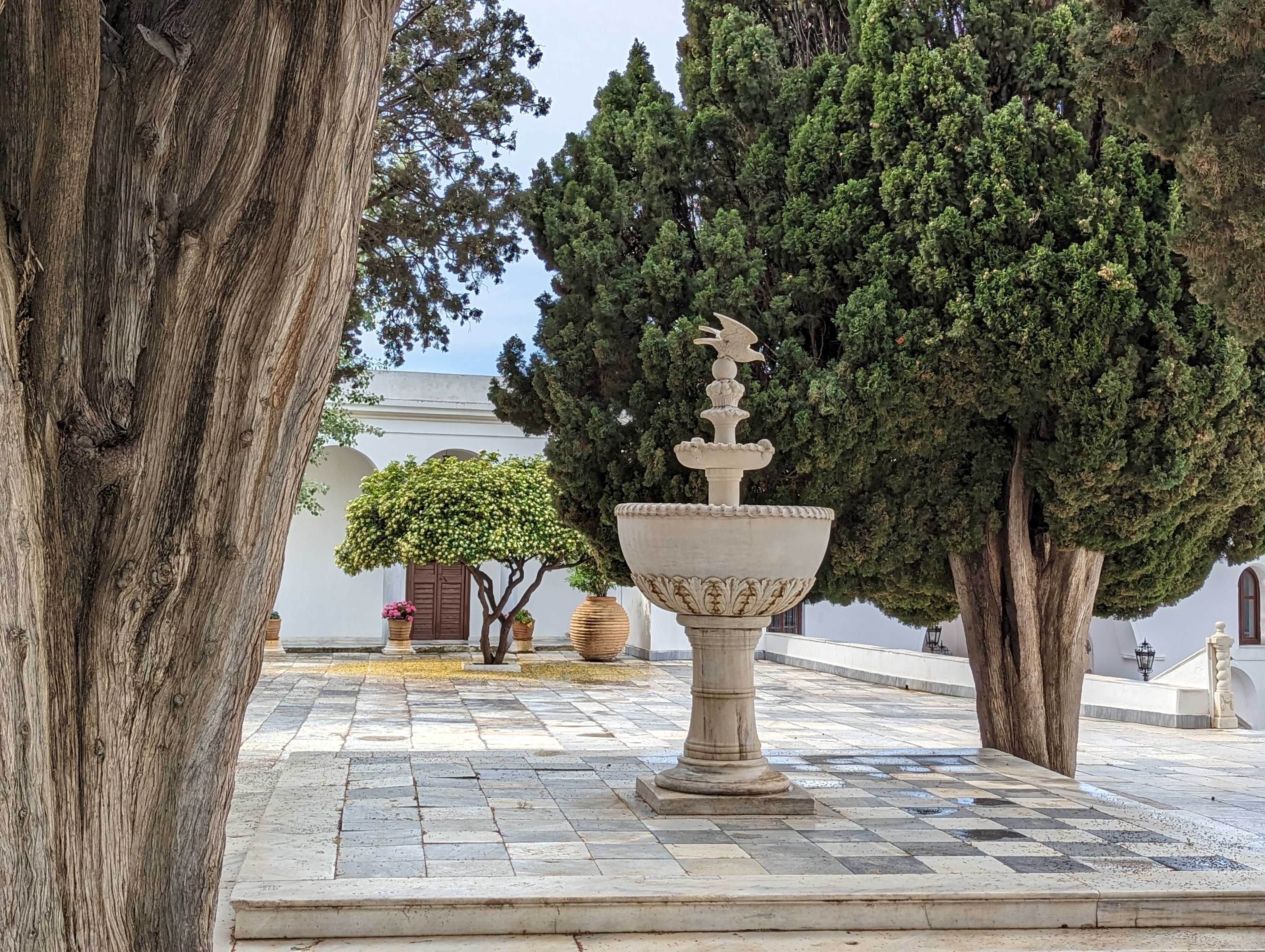
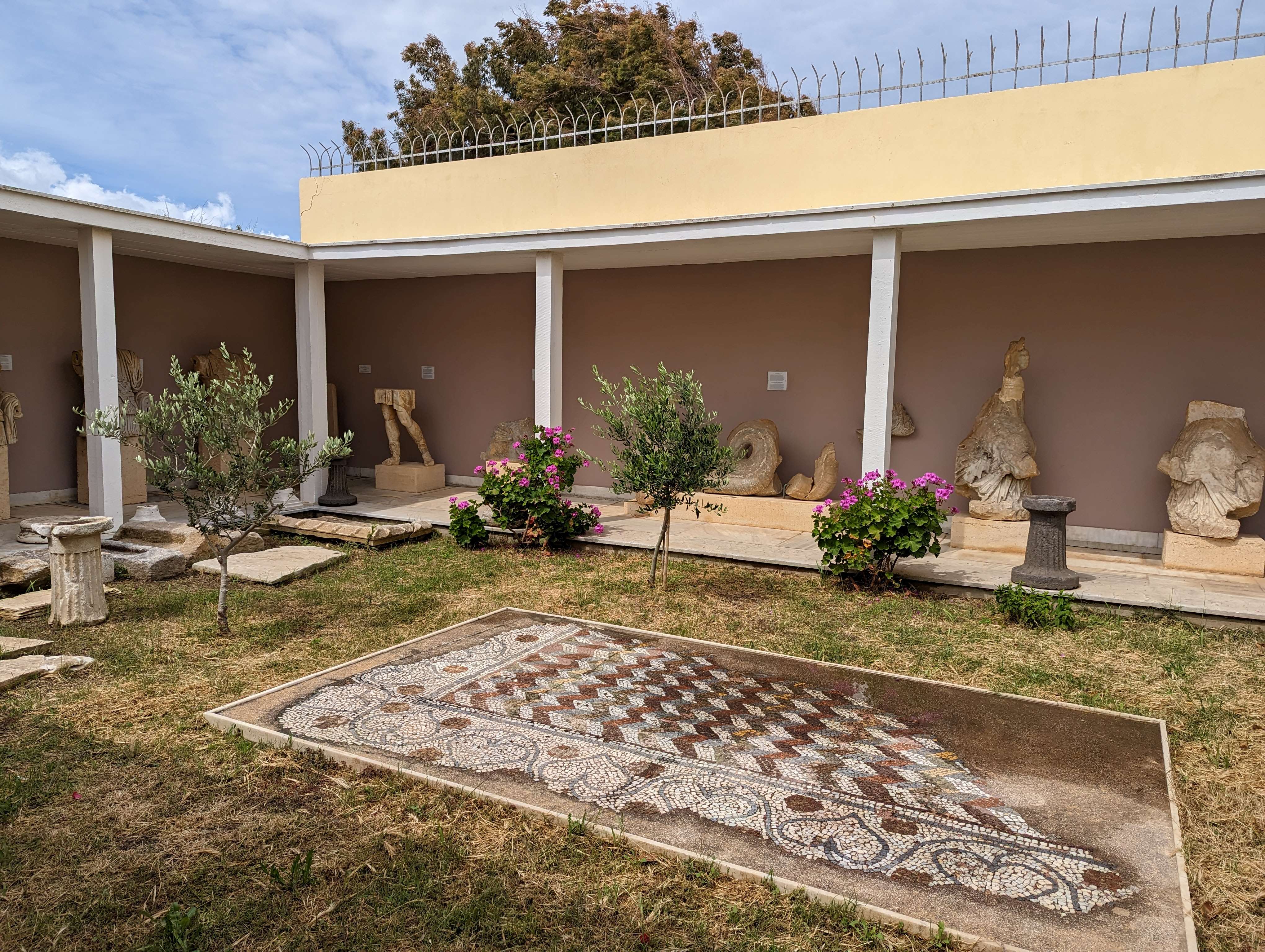
Built in the early 60s by the architect Charalambos Bouras, the Archaeological Museum of Tinos contains finds from Chora, the main town, as well as the hill of Exombourgo, local villages, and the Sanctuary of Poseidon. I particularly enjoyed the little courtyard with its bodyless legs and lace-like mosaic.
Archaeological Museum, Chora, Tinos, Greece
Artist’s Residency and Maria Valela
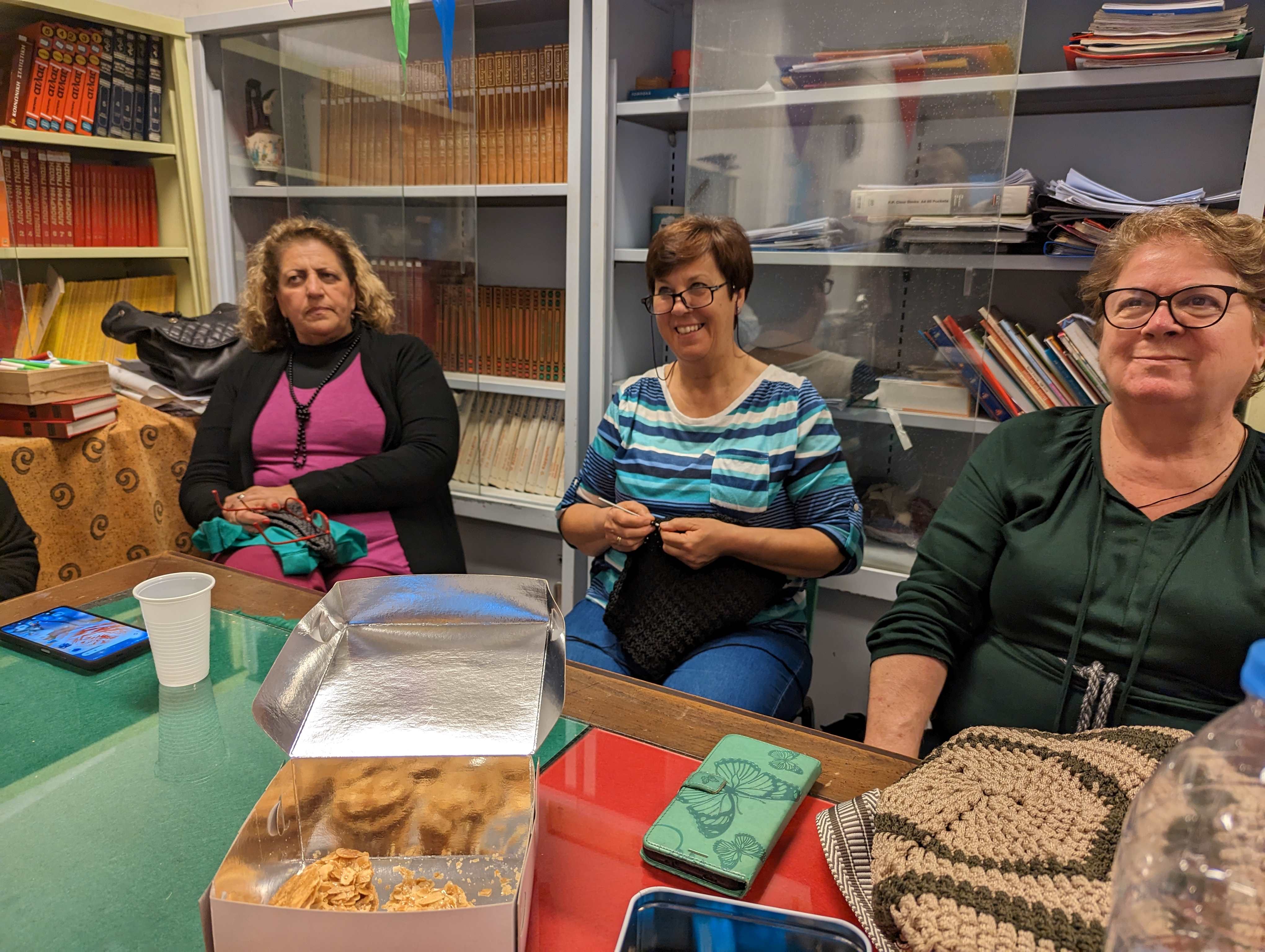
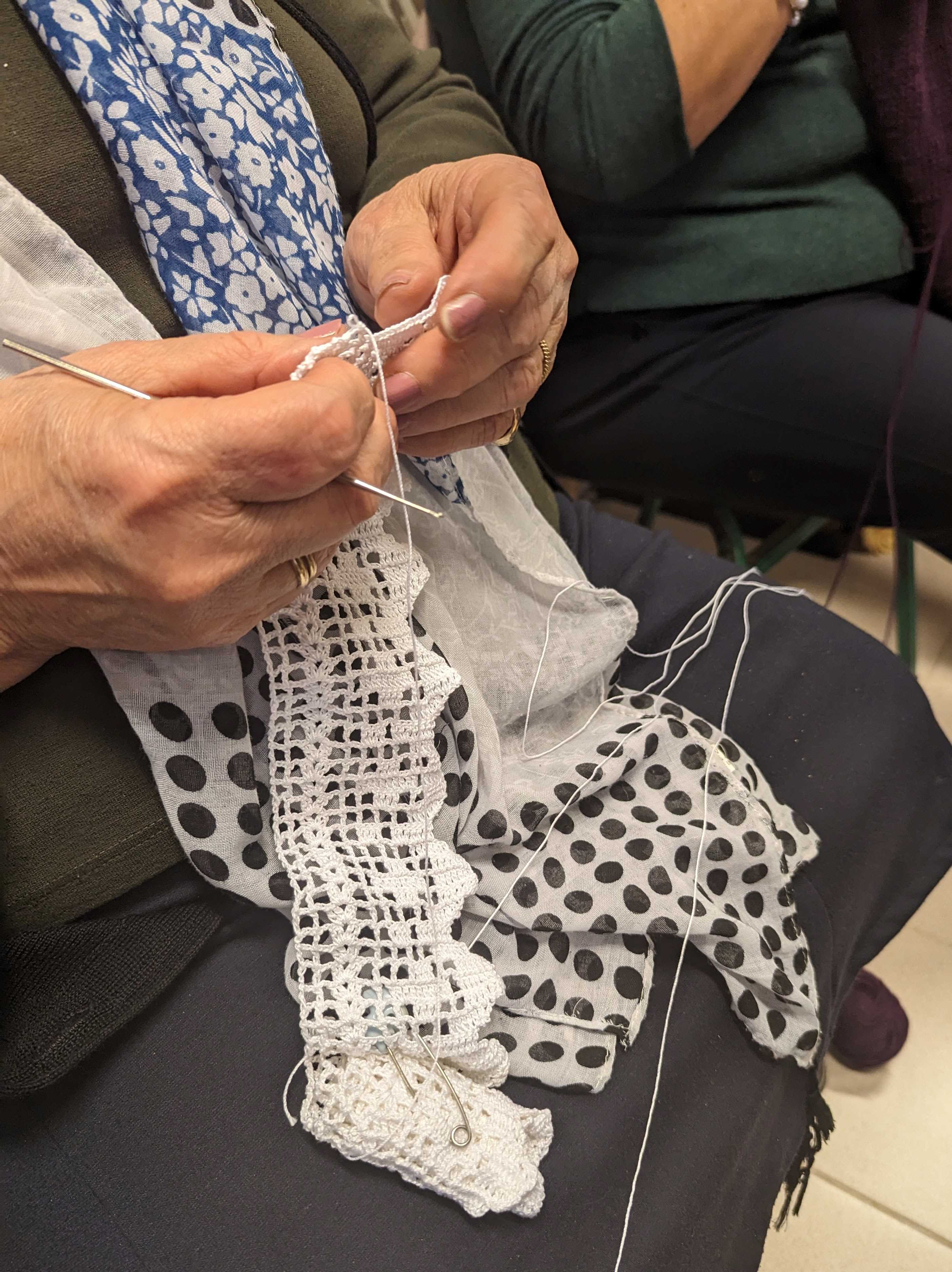
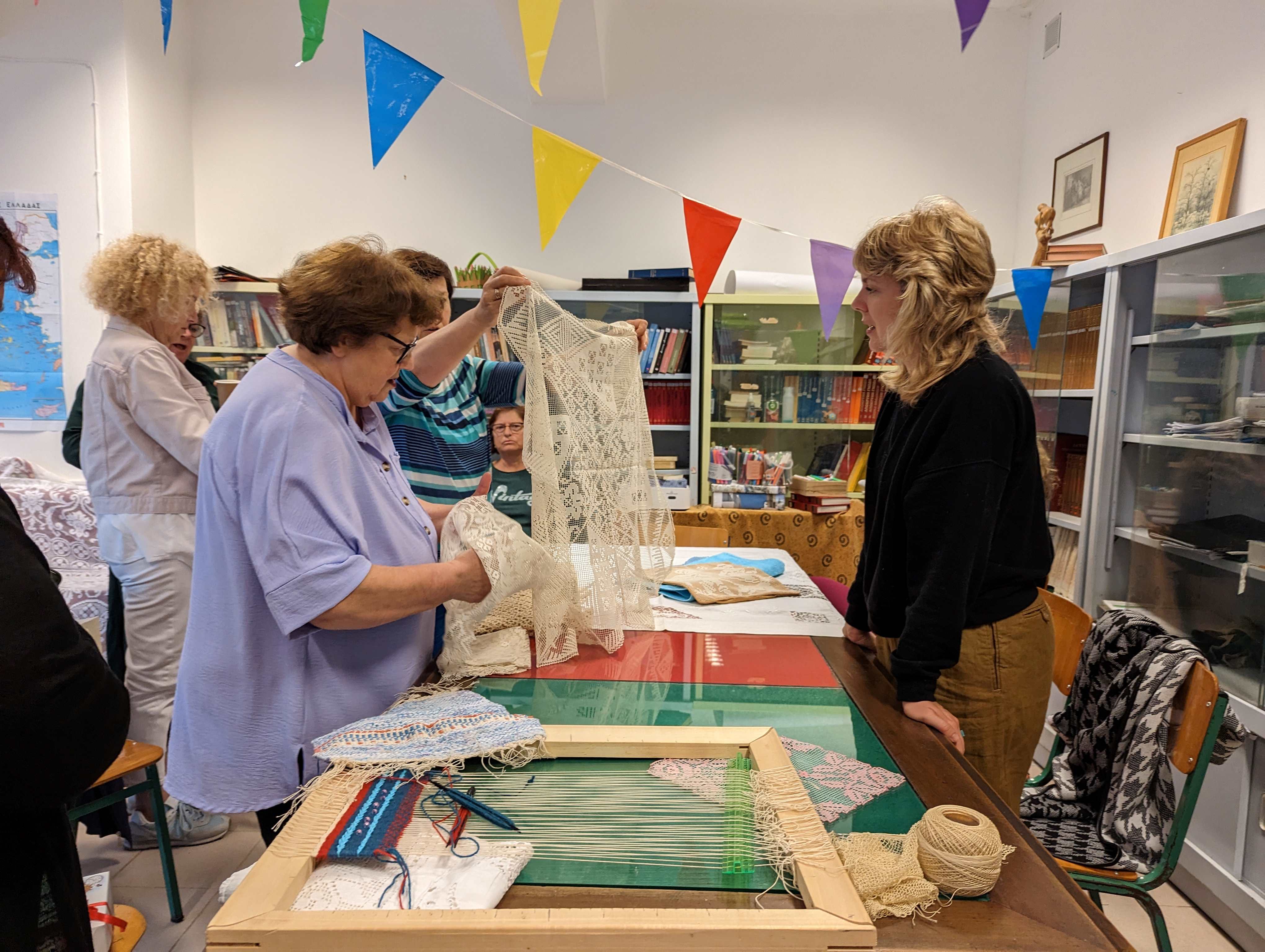
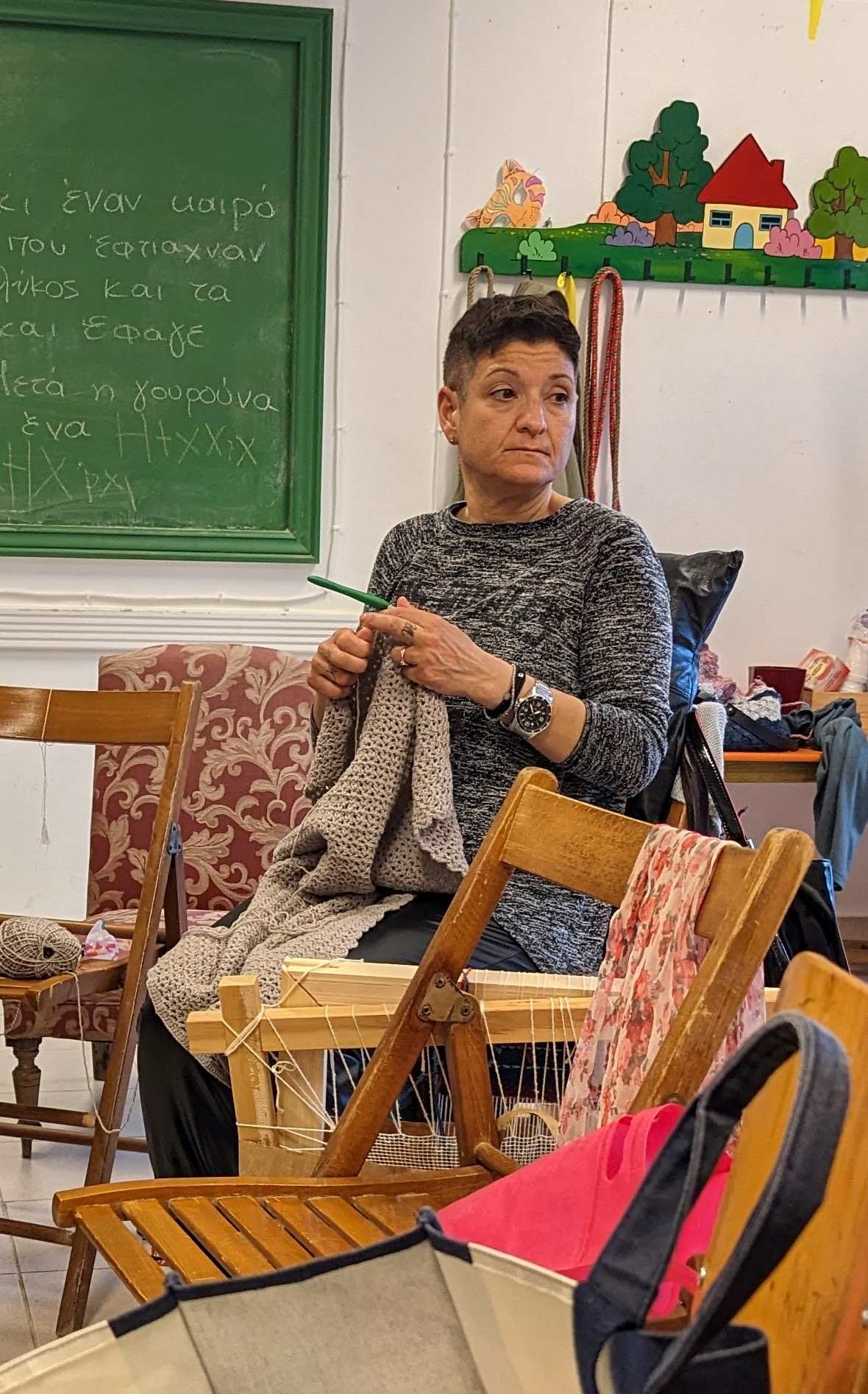
There was an Artist’s Residency taking place on the island when I was there, and I was particularly pleased to meet Maria Valela, a weaver, who gave an inspiring demonstration at the Old Weaving School in Chora, and invited me to accompany her to a local women’s knitting and weaving group that she was visiting. In return I offered her Shiatsu.
“The island is widely recognised for its marble tradition and was home to some of the most widely revered Greek artists of the 19th and 20th centuries.” from Kirki Projects page
Various photos of Maria and the knitting / crochet group, Chora, Tinos, Greece
The Inherited Earth artist residency programme was part of the Fe26 project a collective research program by the NWMW NPO team 2023. “The Fe26 project brings together an interdisciplinary group of people to exchange knowledge and practices around metal as matter, material, and object in conjunction with locus, crafts and identity. In this aspect, the NWMW team has envisioned along with curator Christos Artemis “The inherited earth” Fe26 residency.” ARTrabbit.com
Links
The second in this series of blogs about Tinos is Tinos and Kionia
This was the first of three mini-pilgrimages offered to delegates of the international meeting ‘Walking Art and Relational Geographies’ and others in Girona, Cataluña. 6 July 2022
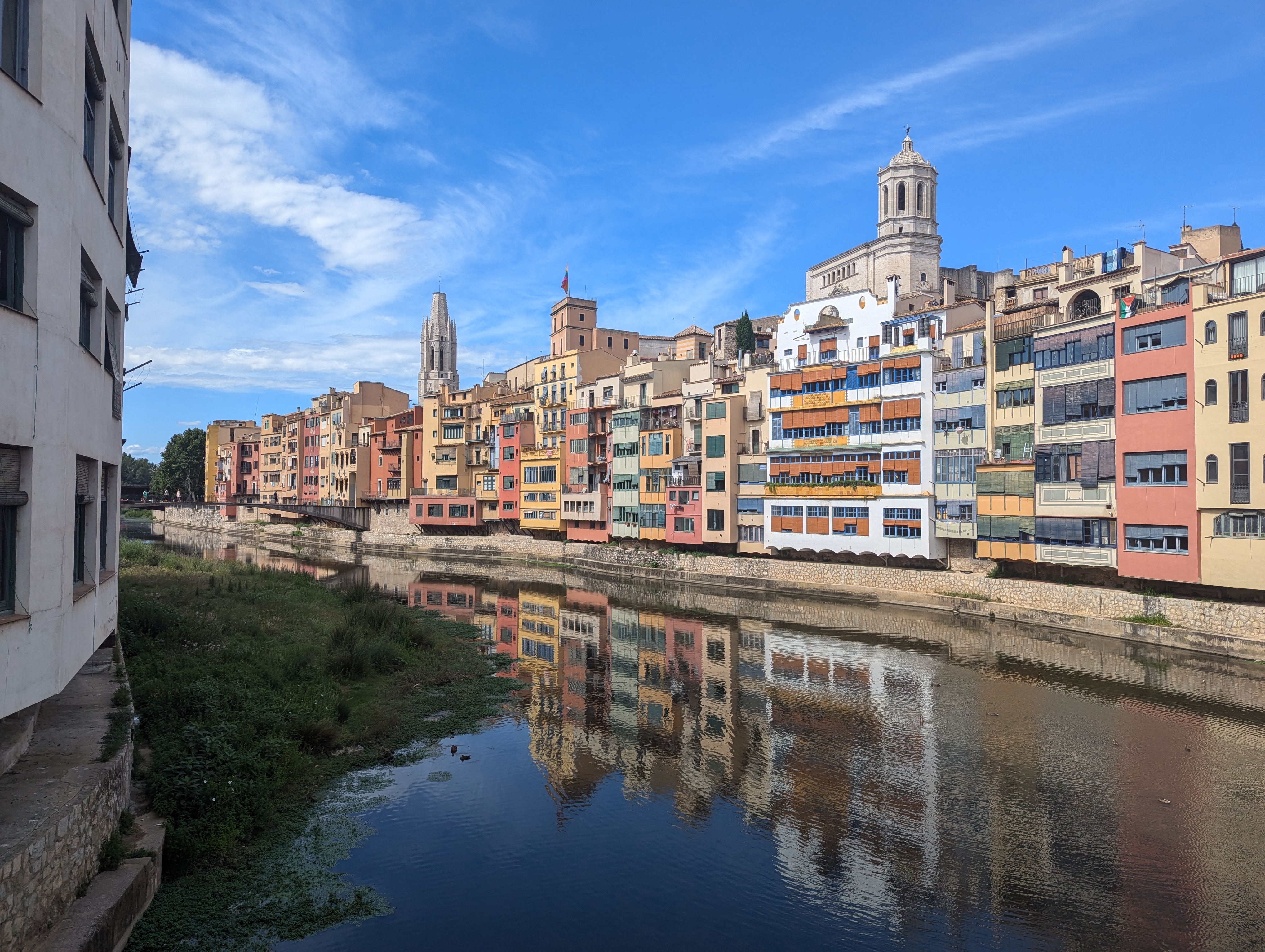
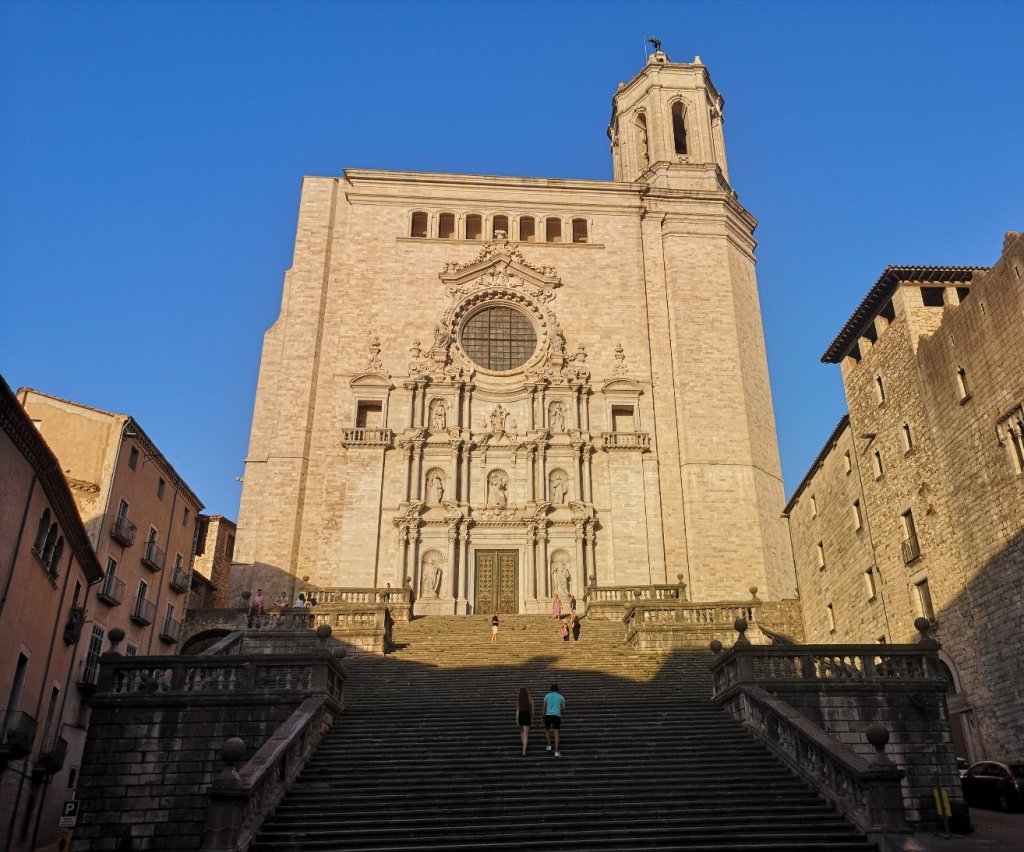
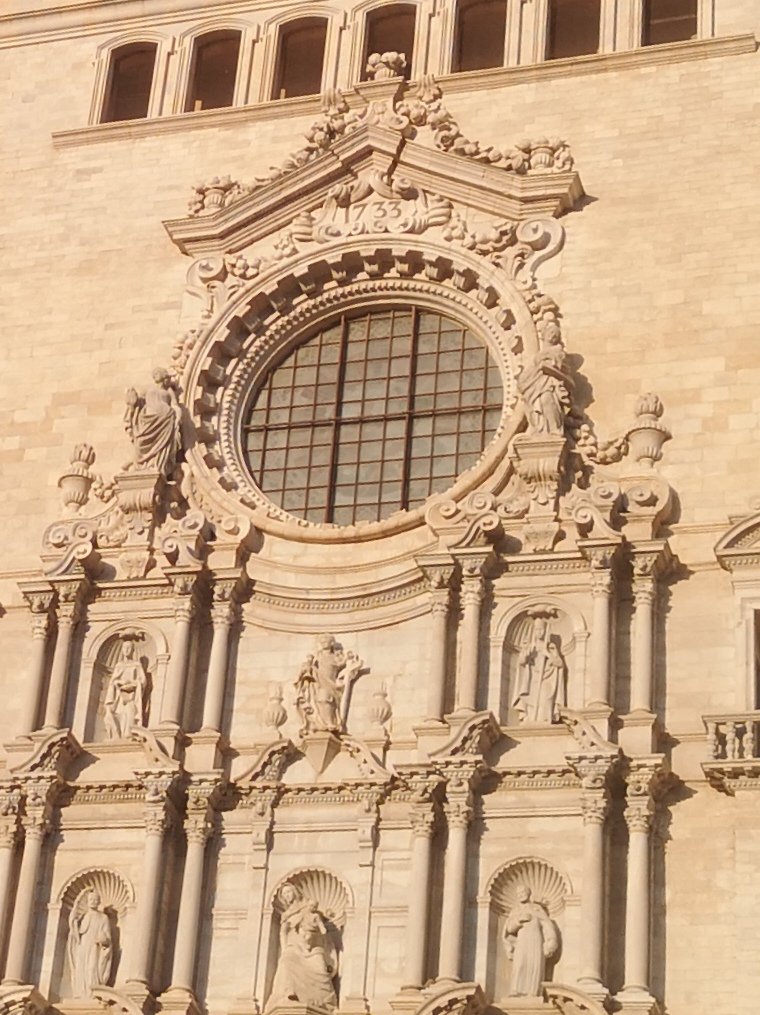
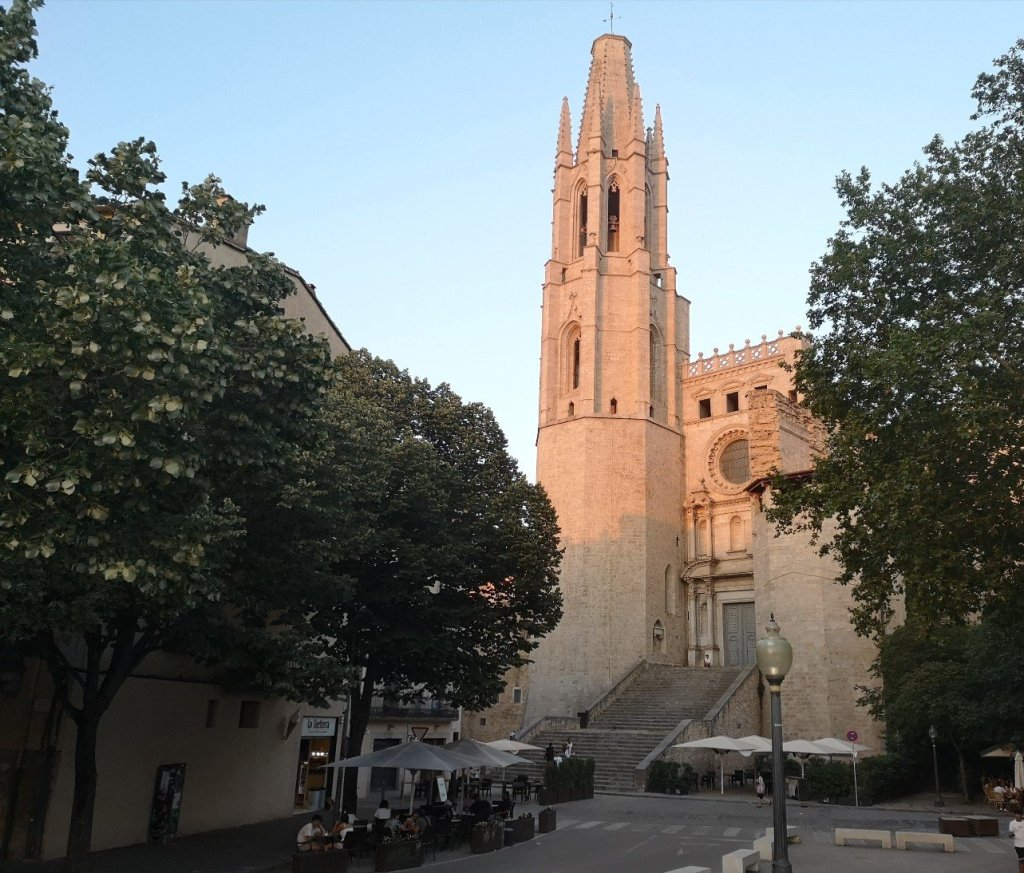
We met at the foot of the steps of the Catedral de Girona, a traditional location for the start of a pilgrimage. As we waited for the group to assemble, I asked, do you see any pilgrim signs?
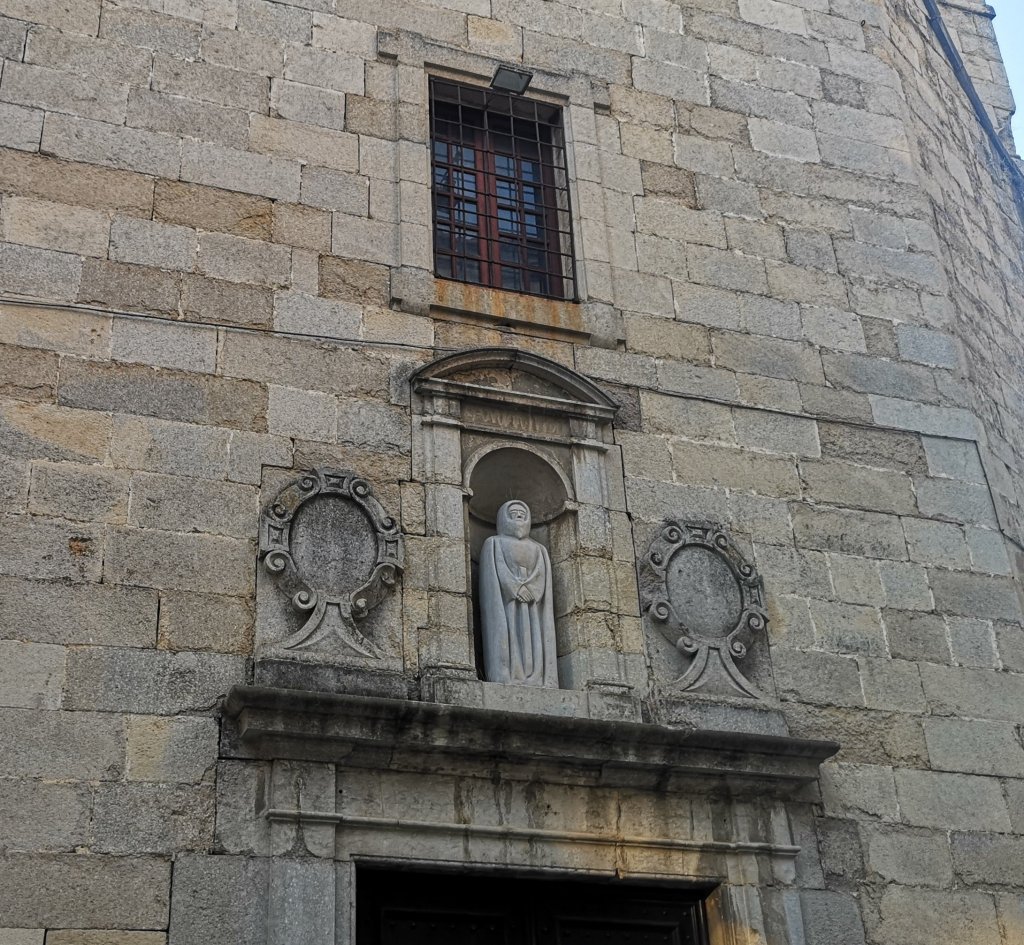
The statues at the front of the building are inset with the shell motif behind them – the iconic scallop being the emblem which pilgrims on their way to Santiago de Compostela sported.
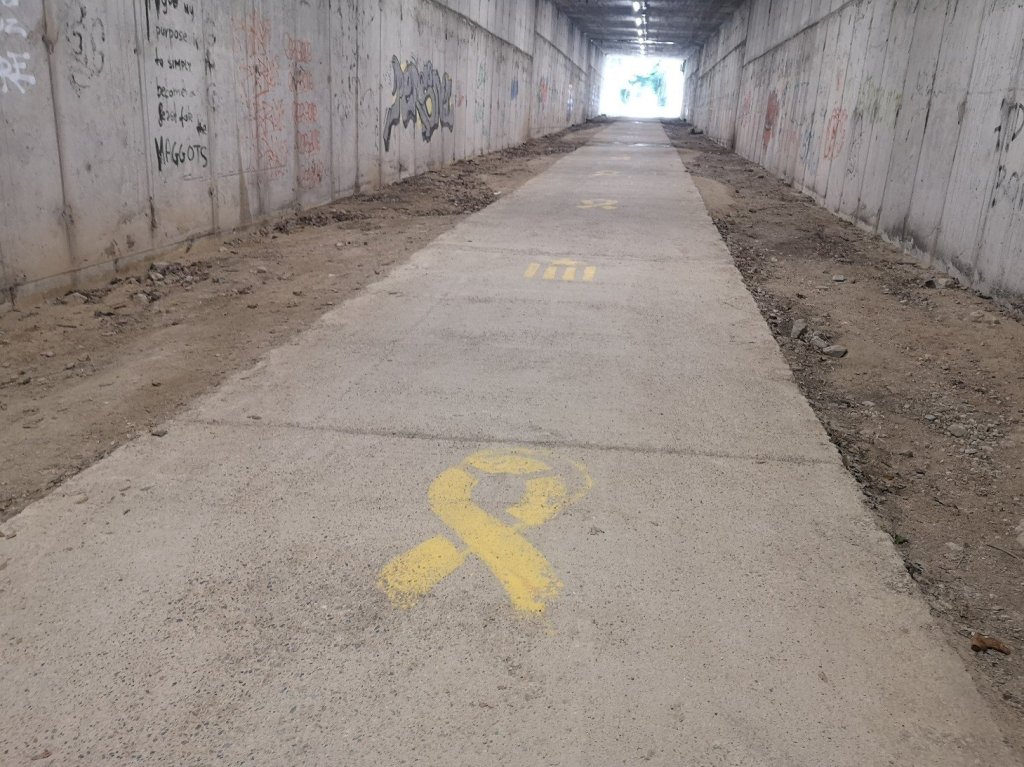
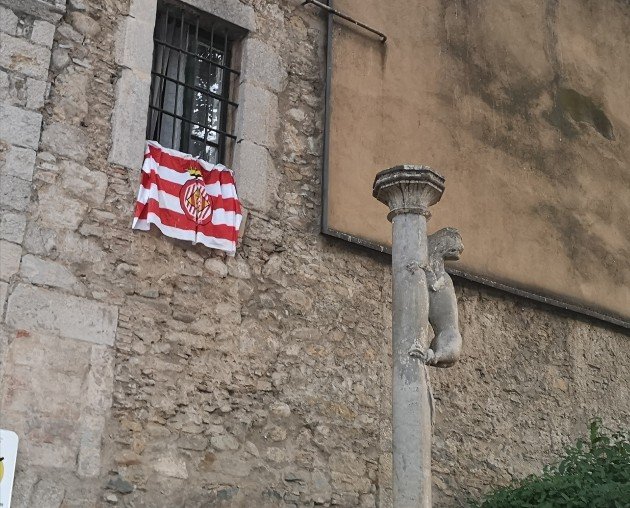
We searched for the yellow arrows which are used to indicate the path; instead we were surrounded by the yellow ribboned loops of the Cataluñan Independence movement.
Sign of the Cataluñan Independence Movement on the pilgrim path
We were a group of approximately twelve, and I explained that I had changed the place we were walking to once I knew the start time was 9pm (sunset is around 9.20 here), and now that the city and I had started to get acquainted in person, rather than virtually from Scotland in the initial planning stages.
The title of my walking project here is Separation and Unity, being aware of the political issues that concern Scotland and Cataluña, both, in their debates and attempts at achieving autonomy from England and Spain respectively.
We performed some simple experiential exercises: huddling close, noting that we were united in our interest in walking, turning outwards to acknowledge those people around us who were not in our group or who were in groups of their own.
We began some chi gung exercises, a method of grounding and centering in the body. It became clear that we needed to take more space for ourselves in order to move individually. We were moving together, separately and experimenting with breathing in unison.
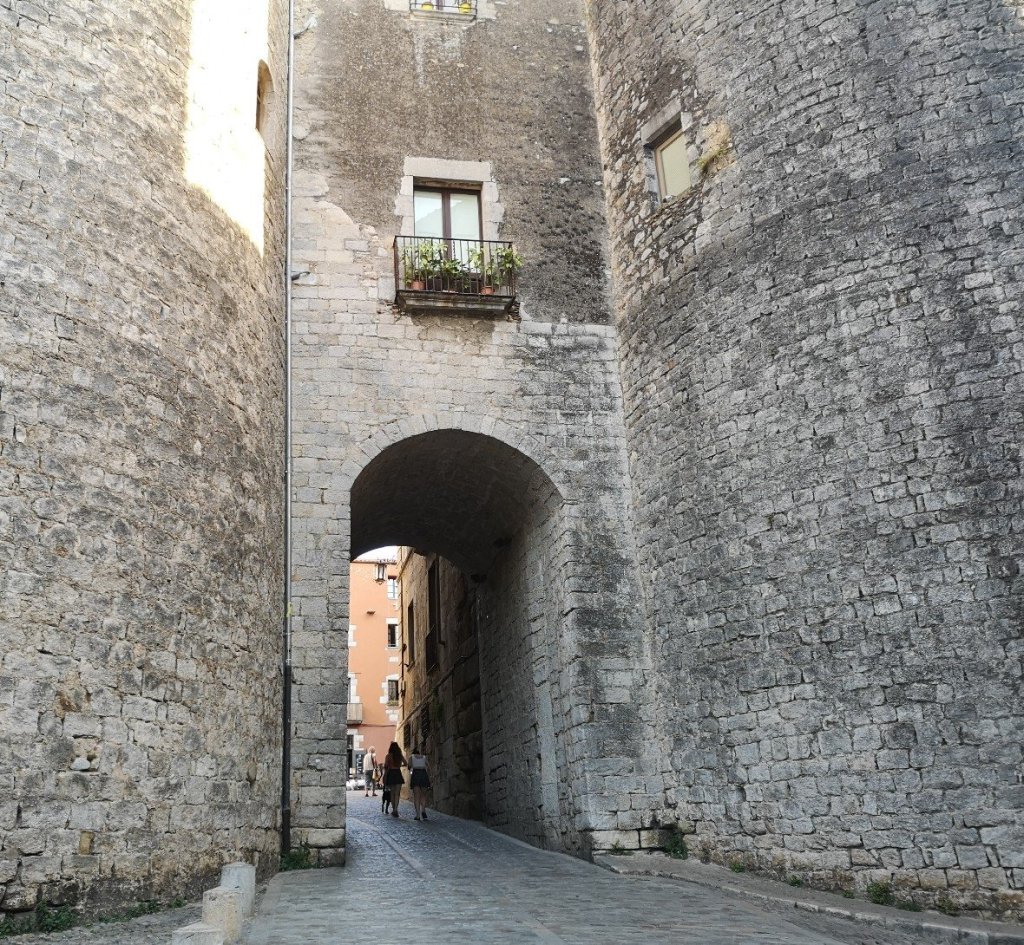
Through Girona’s city walls
Last week, I walked part of the Cami Sant Jaume alone, as a secular pilgrimage. I was on the path with others – dog walkers, cyclists, 2 hikers. Walking part of this age-old tradition, I knew there were others who went before me and who will come after.
Now our group traced a pilgrim path through the archway made by the city walls and, despite there being no external signs to guide us, we headed downhill to the river. We left the heavy, archetypal building behind and walked in silence, in single-file, with the thick, steep walls with religious iconography on either side.
As we walked down Reí Marti, we paid attention to our connection with the elements – the paved surfaces under our feet, the air and water – indivisible.
Also to the birds we could hear but not always see, the insects we only knew were there if we looked very carefully or when they bit us, the other folk milling around the city. We were a mass moving inside and outside the city walls.
We were aware of each other walking together. Our intention was clear.
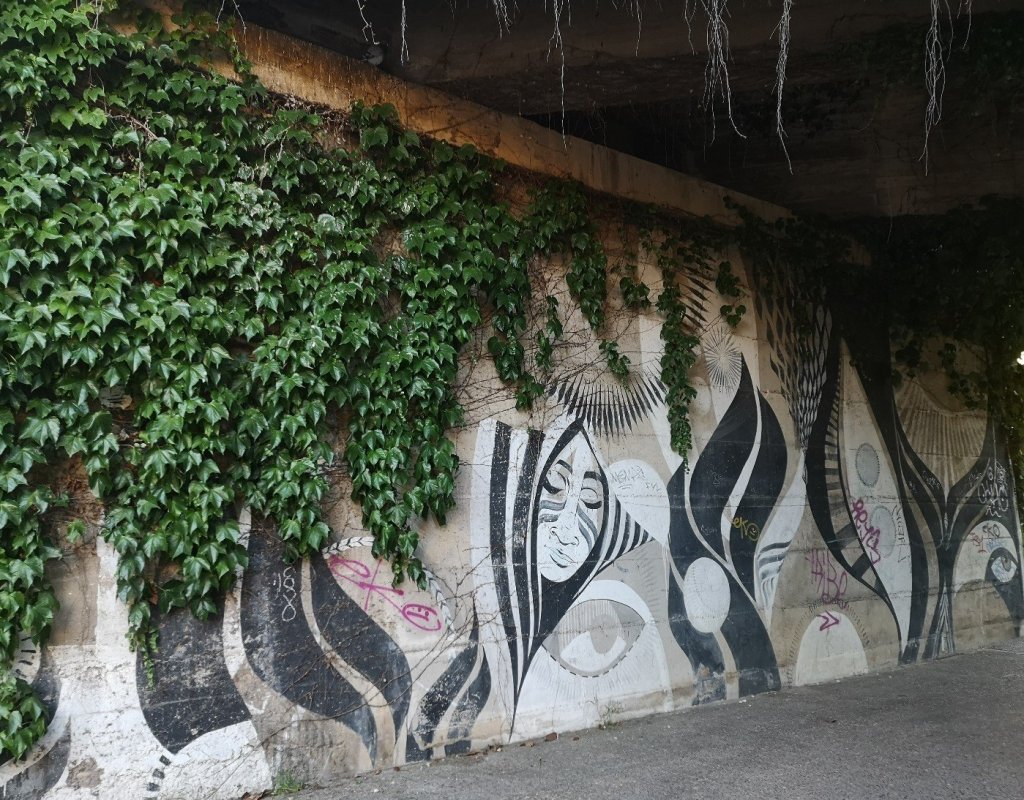
As the streets opened out, we turned left taking Carrer del Bellaire and heading straight for the river, passing once again, underneath, though by now we were amongst modern architectural constructs. The train line ran overhead.
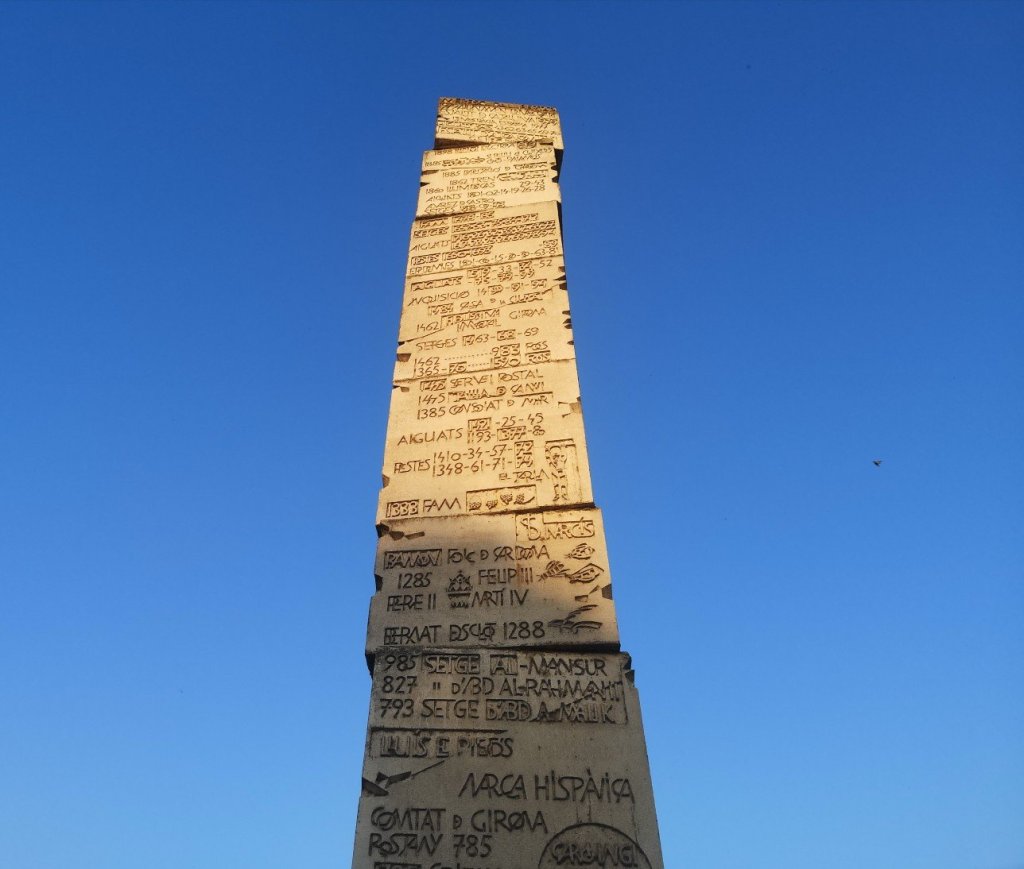
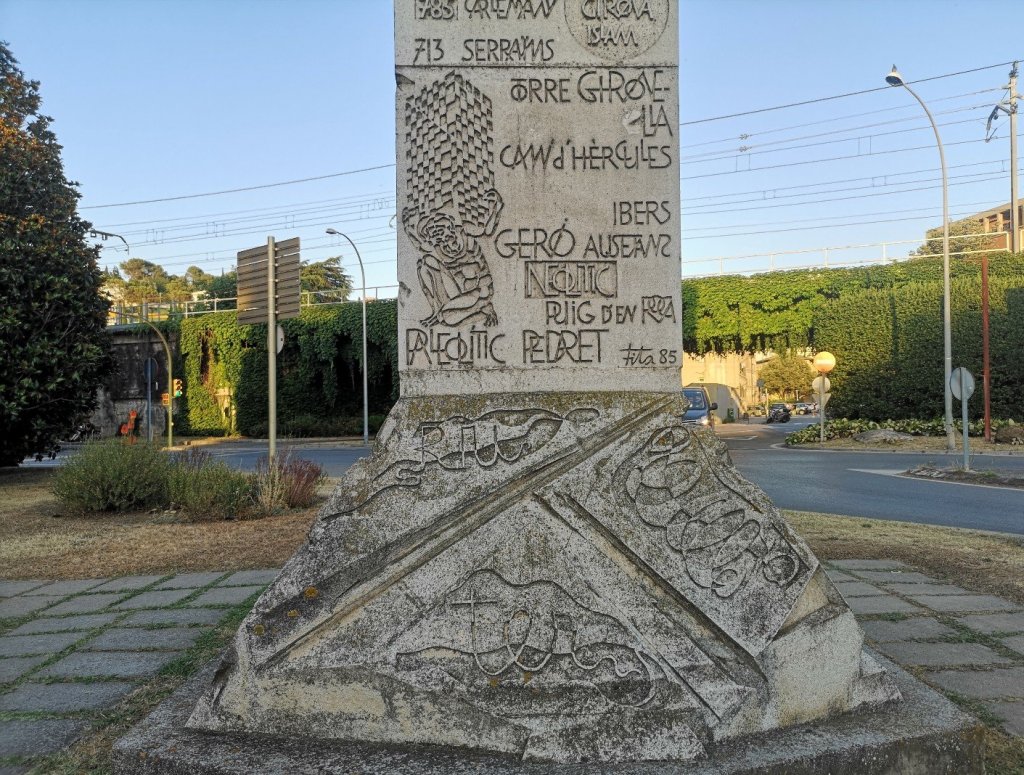
Around the cornerstone the left, was the Column of the History of Girona, a pillar of stone whose four sides depicted images and text saying this ancient settlement back to the Neolithic.
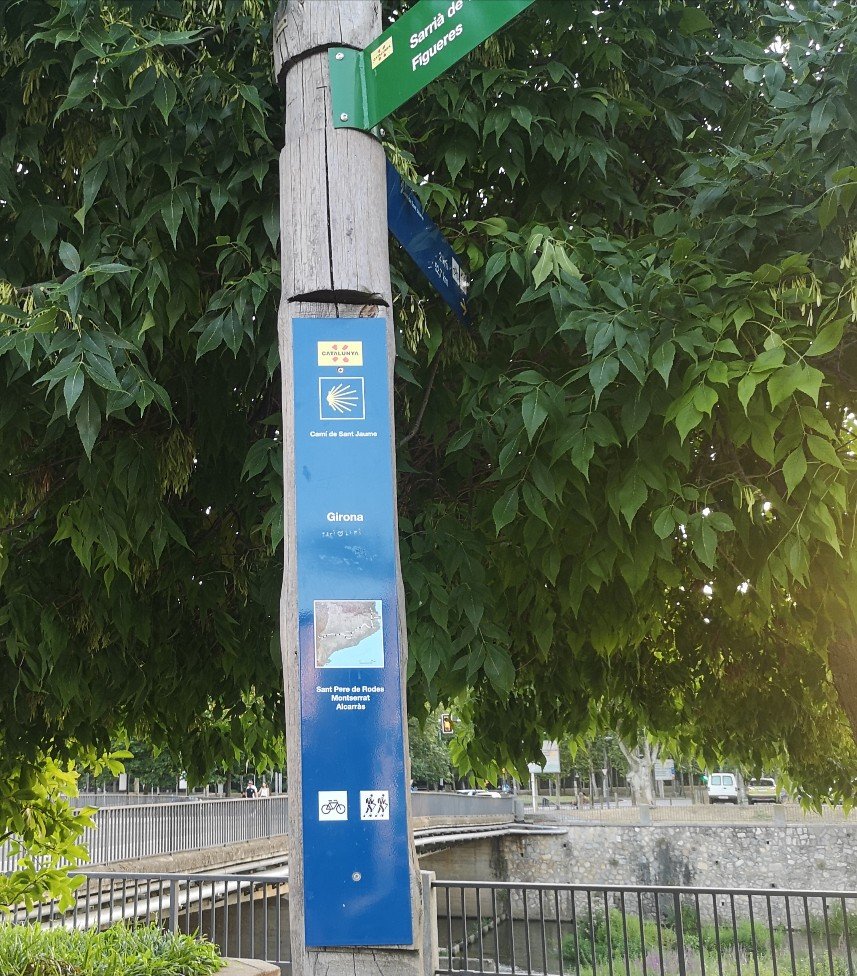
We were at the River Onyar and the Pont (bridge) de Pedret which formed a crossroads where the first Cami de Sant Jaume and other route signs were located.
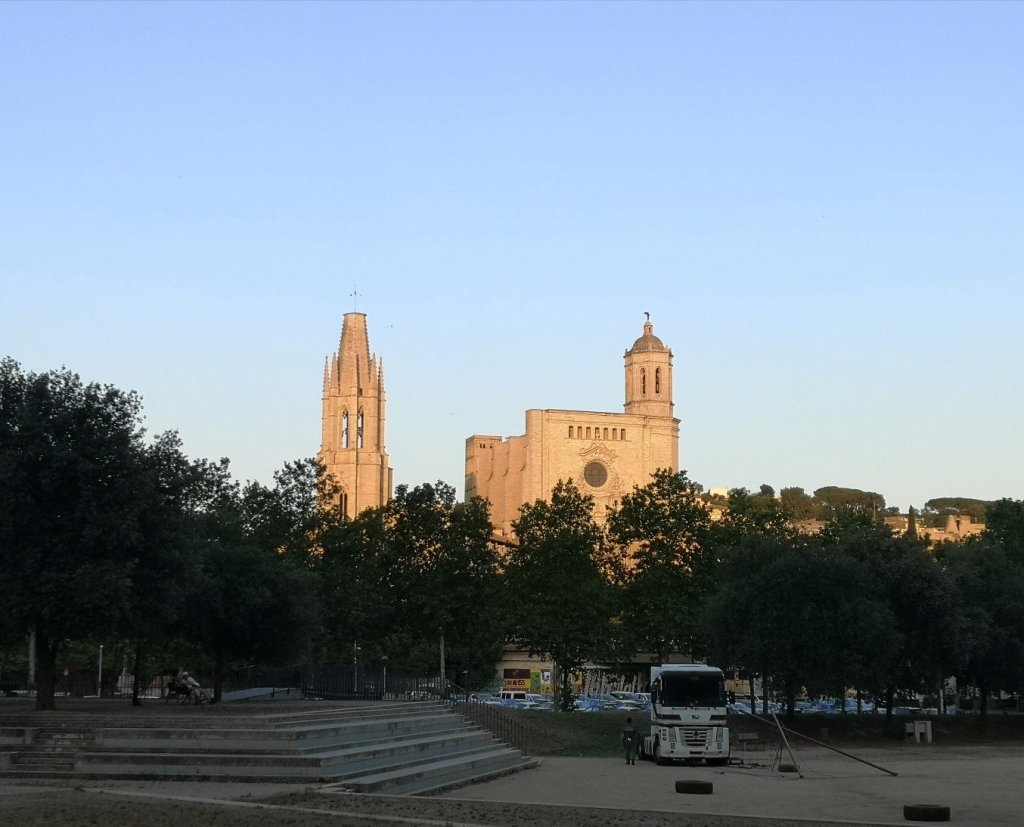
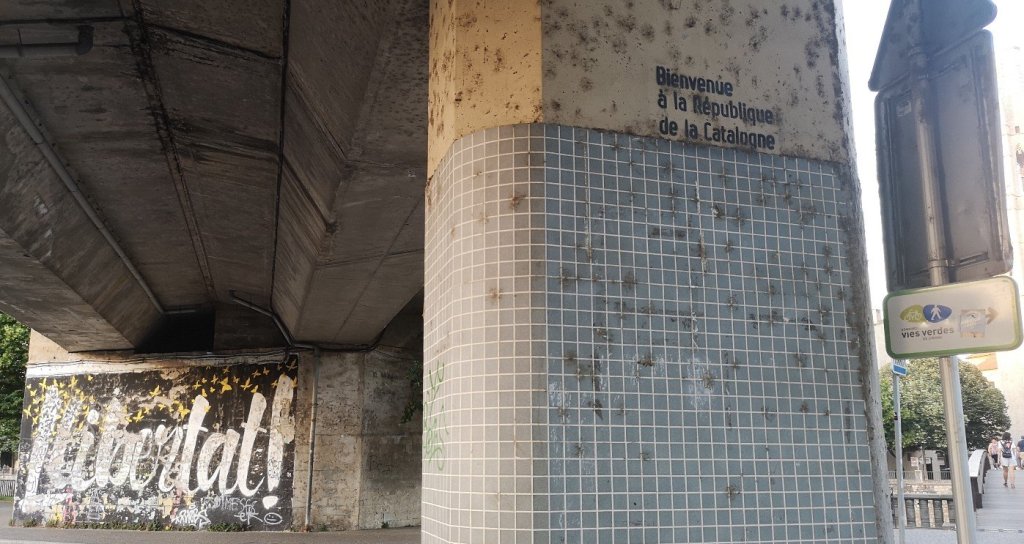
We looked back at CathedralThere are messages of separation ‘Libertat’, ‘Bienvenue a la République de Catalogne’ alongside the Vies Verdes (green cycling / walking ‘carrilet’ route (a modest narrow guage railway) I took out of the city last week
We glimpsed the La Devesa Park where we walked yesterday.
As I walked out of Girona, I moved from the urban environment, the edge lands where people were growing crops in their hueltas / allotments, and then out of town, walking between city and towns. There were people stringing these urban places together by walking between them to work and school.
I was carrying my clothes and sleeping mat with me, crossing the country, from Osona to La Garrotxa and into the Barcelona región.
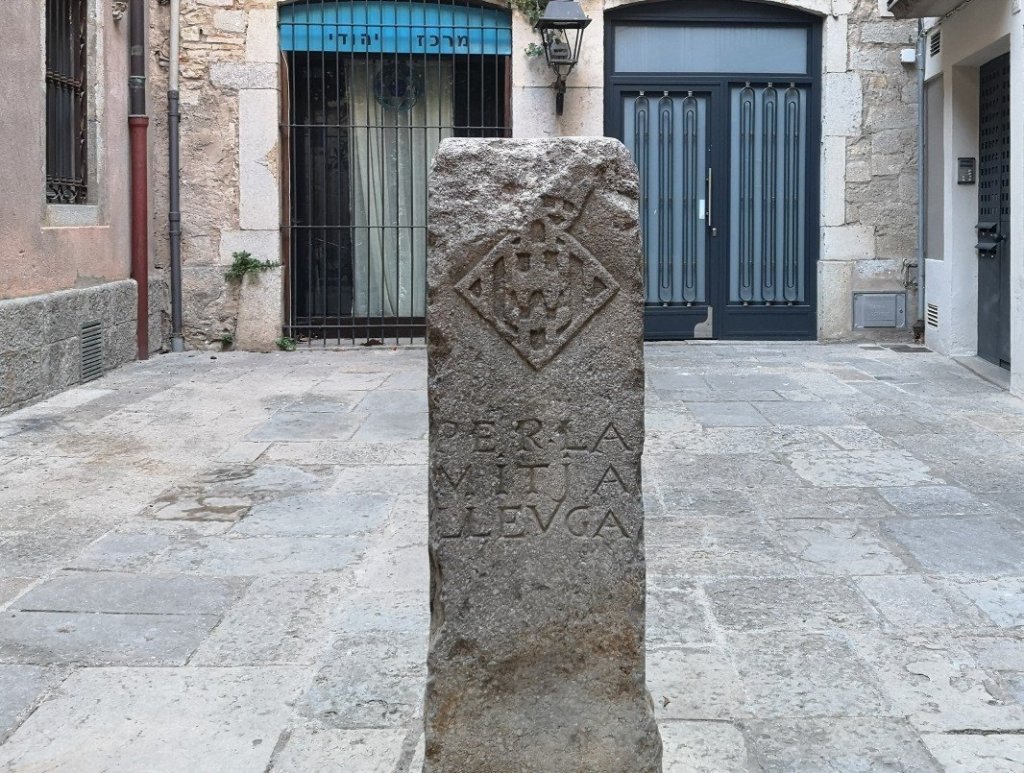
We completed our mini-pilgrimage at the foot of the steps of Basílica de Sant Feliu, a familiar way to end a pilgrimage. Close by is the statue of la Lleona (lioness) whose bottom/ass you are invited to kiss, an 11th century folk tradition.
Getting ready to set off from Bo’ness on day 10 of Pilgrimage for COP26
Industrial landscapes and ecological regeneration
The theme is Industrial landscapes and ecological regeneration, though the latter was going to be hard to focus on in the face of the intense piping, cooling towers and wot-not of the space-age area. There is nothing fantastic about it, but I am getting ahead of myself.
Bo’ness local history
We leave Bo’ness (formerly known as Borrowstounness) around 9am as usual, going downhill one more time, crossing the old Bo’ness to Slamannan railway to Glasgow and rejoining the edge of the Firth of Forth. (The line was usurped in 1842 by the intercity one we now use, and is used for the Bo’ness and Kinneil Heritage Railway. There is also a large Museum of Scottish Railways, and the facilities here were used for the testing of a new hyrogen train. More about the UK eco-train plans here).
Bo’ness in the Autumn: Dymock’s Building, a restored Merchant’s House and signposts to the many sights of the town
Here we are met by the day walkers who included Ian from the Friends of Kinneil House, built by the Hamilton Family. The Friends help to promote and develop the Estate and the foreshore of Bo’ness where we will be walking this morning.
Back at the Bo’ness Buoy where we have our first encounter of the day with the police, and where Ian and Billy join Willie (in the high vis) and us with their wealth of knowledge of birds and local history respectively
The port was recognised from 16th century, ranked as the third most important in Scotland in the 18th century, and the area was a hub of industry. Harbour construction started in 1707, and was closed in 1959 due to silting and the demise of the coal mining industry. Later, the port was the site of shipbreaking, with the ships being sailed as far up on the shore as possible, the bows nearly reaching Bridgeness Road, which must have been a sight.
There were 96 pits, one of which was connected across in Fife by mining under the river, and we are told about the bell pit that was sited in nearby Kinneil woods, now a nature reserve. The pits were closed by 1983 and lots of the remains were put in the river, including medical waste, and chemicals such as arsenic. There is a James Watt (b.1736, of steam engine fame) Supper at Kinneil House on Burns Night to look out for!
Maria Ford, the chair of The Friends, said: “Probably very few of us have a copy of Rabbie Burns’ Complete Works in our homes – but nearly everyone will have lightbulbs measured in Watts.
Mussels were gathered and eaten by our mesolithic ancestors, as evidenced by archeological finds near here, middens of oyster shells, for example, which have been found along these shores. Salt panning, ironstone and clay mines, potteries, whaling and gas were all local industries.
We started walking the Forth river Site of Special Scientific Interest (SSSI), stopping often to learn about the area, much of which is recently reclaimed industrial land, and we admired the lagoons and reed beds owned by the RSPB. Short-eared Owls, Kestrels and Buzzards have been sighted, reeling through the skies. We asked, what is needed to improve it for wildlife, and Billy replied, “Nothing, leave it alone. We hope that there is enough local interest to keep it like this.”
Looking across to Culross, Fife, the birthplace of St Mungo, patron saint of Glasgow, where we are headedStopping to appreciate, identify and learn about the birds of the Forth in light of climate change. With Billy and Gillian centre stageSoil Ceremony #1 with Cath as the Keeper of the Soils displaying the pockets which house the soil samples
There were two soil ceremonies today. This was the first and Liz read out a quote from Wendell Berry‘s The Unsettling of America:
the soil is the great connector of lives… Without proper care for it, we can have no life
Wendell Berry
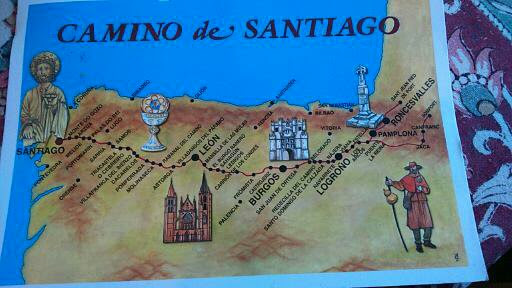
The Spanish camino directs pilgrims with large yellow arrows like these. I have my eye in for them still! Where would we go if we followed them I wonder?
You had to have a pass to walk in this area during WW2 as they were making torpedos here.
Early sightings of Grangemouth dominating the landscape
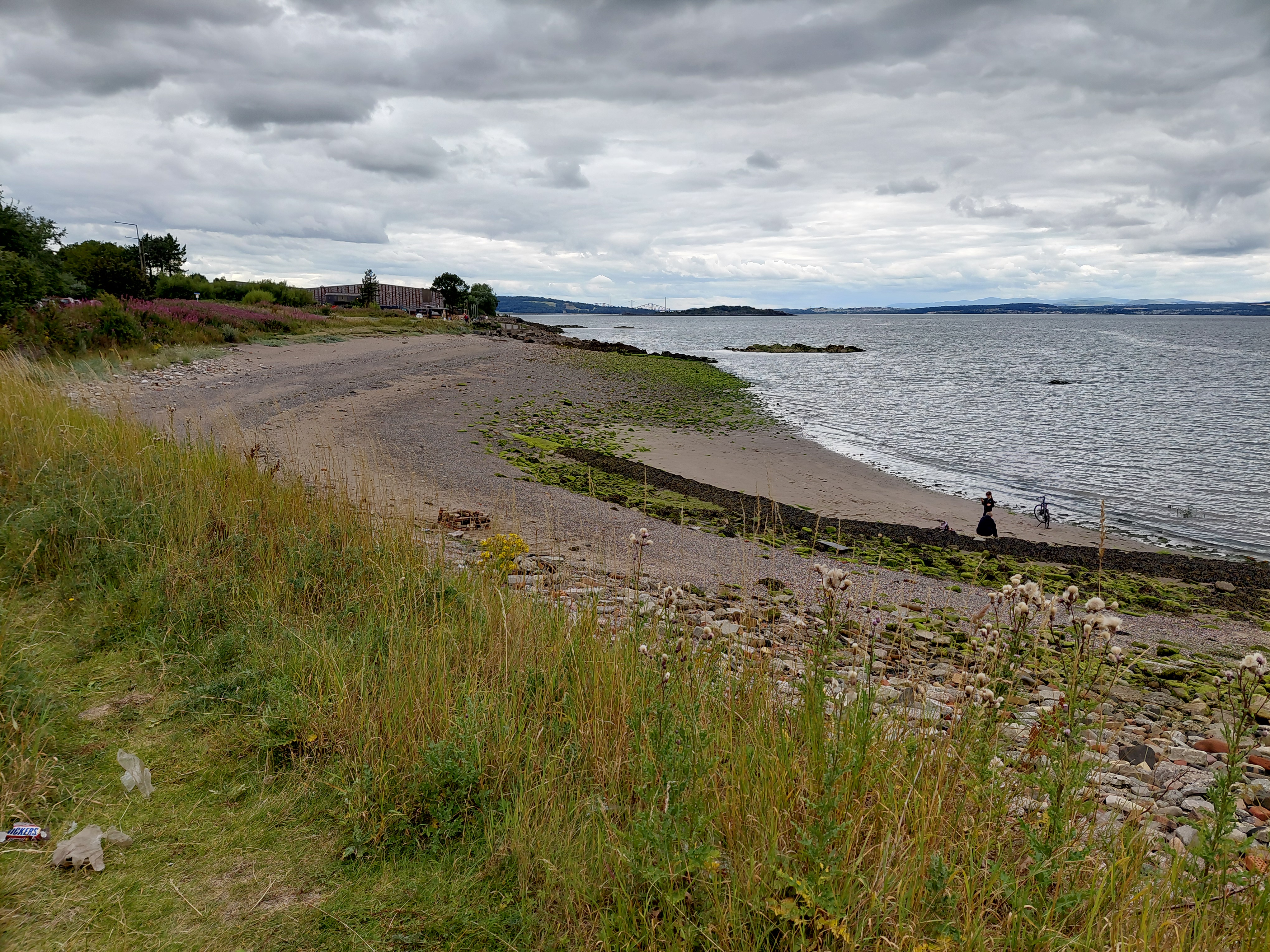
We come to the site of the former 18th century Bo’ness Distillery (almost at Kinneil Halt (station)) and are reminded that it, too, produced effluent, discharges which seeped into the Forth. The Pottery was nearby (at one stage in its long history, Alexander Cuming gifted it to his 12 year old nephew, James, and at another it was inherited by a 3-year old boy). We are told that it burned down in 1963. We could clearly see old bricks on the shore, as you can also see in Granton a few miles further east where we had walked earlier in the week.
We see Godwits reaching for worms deep in the sand with their long, scimitar-like bills, and hear the plaintive piping of Curlew (their bills curve downwards). We move past delicate grasses, moody bulrushes, and stems of orange sea buckthorn berries highlighted against pale, sage-green leaves. The intense silver-white softness of the rosebay Willowherb contrasts with its rusty foliage, and the slim Salix stream in the wind above Hypericum, wild Stawberries, Brambles, and spiky Teasle. The Gorse sports both dry black pods and bright yellow flowers on the same bush.
A system of moving water between the Firth and the inland wetland area to account for the tide.
The landfill attracts Redshanks, Lapwings and Shelduck, and the absence of people during the early Covid period was advantageous for them. It is noted that the Shelducks (brown necks) moult here, a sign that they are feeling safe (they can’t fly when that is happening). The bigger issues, now, as at the reclaimed land we walked over in Musselburgh, are uncontrolled dogs off the lead.
Scop or Scaup ducks, Chiswick Park, London
By way of explaining the change in wildlife in the local nature reserve as a result of cleaning up the waters, Billy explained about the Scop or Scaup (ducks) who used to live here alongside the molluscs and mussels. The sewage actually helped and now there is less, they have disappeared. However, when the refinery flares at night and the tide is at the right stage, Redshank feed at night, so there are more of them.
Today’s group of pilgrims walking to Glasgow COP26
Grangemouth Oil Refinery
And then we turn away from the water and head inland towards the Grangemouth Refinery. Grangemouth port was founded as a result of the construction of the Forth and Clyde Canal (which we are scheduled to walk beside later today), in 1768. Grain and timber came in there, and coal went out. The first factory in the area was making soap and glycerine (1897 Scottish Co-operative Wholesale Society), and paraffin started to be produced from shale or coal in 1919. Then, as the Polish oil wells opened up and the prices for Scottish products went down, treating and refining became the focus.
Grangemouth Refinery, a skyscape of sci-fi appearanceGetting close to the Grangemouth Refinery. There was a terrible smell and someone kindly lit a stick of incenseThe sloping metal and cooling towers of the Grangemouth Refinery, quite a contrast to the area of natural beauty we had just walked through
BP, former owners, sold up in 2004 when there were difficulties, and now the Plant is part-owned by a Chinese company and the greater part by Jim Ratcliffe, the richest man ‘in England’ (he lives in Monaco, “a move that it is estimated will save him £4 billion in tax”). Ratcliffe is the CEO of INEOS which includes Grangemouth as well as refineries in Italy, Germany, France, Belgium and Canada. Petro-chemical processing is a lucrative business, earning him an official Honour and wealth reputed to be worth £21.05 billion.
Leaving the estuary and heading inland
Wikipedia writes, “In February 2019 it was announced that Ineos would invest £1bn in the UK oil and chemical industries, to include an overhaul of the Forties pipeline system that is responsible for transporting a significant percentage of the UK’s North Sea oil and gas. On 1 May 2019, Ratcliffe criticised the current government rules which say fracking in Britain must be suspended every time a 0.5 magnitude tremor is detected, which has led to a de facto ban on fracking. He said: “I think the government has been pathetic on the subject.” In fact, although the Scottish government states “no support for unconventional oil and gas” (in a report which strongly resembles the spoofs in ‘Yes Minister‘), and has the reputation for banning, or at least not renewing or accepting new licences for shale (fracked) gas, it is important to note that it is still imported from the US (Pennsylvania) into INEOS right here.
One of several times that the police stopped their cars and questioned us
Before we entered Grangemouth, we were stopped twice more by police. One man told us, “I’ve been brought up from South of the border to join the COP26 security forces here. Are you the minister who’s going to bless the land?” Our reputation as a peaceful lot had proceeded us.
Road-walking in the mud and rainSite of a section of the Antonine Wall just as we are about to trun right and head through Grangemouth, West Lothian
We are reminded again of the Roman Antonine Wall which runs from Carriden, near Bo’ness, and which sports a 2nd century fort at the eastern end. It stood near this roundabout for 20 years, though it was supposed to be there for ever.
My last photo – we were asked not to take any after this
I am struck by the drear of the utilitarian and inanimate lengths of piping. Wide-diameter, above-ground conduits run the length of the road and the few desultory trees and mini-‘gardens’ don’t make up for the carbon that is produced in the petro-chemical works. These are not kilns for making beautiful pottery, not repurposed gas works recently used for art and music, but hydro-crackers involved in making products that most of us use in the form of health and pharmaceuticals, food and beverage packaging, and construction and utilities. Phasing them out means a change in what we expect to do and have, and we had plenty of silent walking time to ponder on that.
Blockade 23 October by Extinction Rebellion. From the Shropshirestar
In March 2019 INEOS said it would close its Middlesbrough manufacturing plant unless it was allowed to ‘defer compliance’ with EU rules designed to prevent air and water pollution. An analysis of data from the Environment Agency (EA) also reveals the plant clocked up 176 permit violations between 2014 and 2017. An EA spokesperson said: “air emissions are well over legal limits and this poses a risk to the environment”. INEOS director Tom Crotty said the firm “cannot justify” the investment required to comply with EU air and water pollution rules due to come into force in the coming years.
The World in Planisphere, from the Bo’ness Pottery circa 1800. The world is inscribed ‘From the Latest Discoveries’ and shows North and South America.
The engineering is, of course, state-of-the-art, but there is disparity between the shiny exteriors and the black-black oil which I knew was pumping inside, or the high-pressure gas contained within them. There were tin sheds and poles with what looked like guy-ropes stretched from their tips to the ground, and crows-nests at the top of them. I felt a sort of deadness in the air. The words of songs we had been singing sounded in my ears: We are a gentle, quiet people (1978, Holly Near), and our anthem for the Pilgrimage, Another world is not only possible (2021, Jane Lewis)
Granton Gas Works during the Hidden Doors Festival 2021
Tea, glorious tea
Wet and rather subdued, we were most grateful for a cup of tea and a sweet thing at St Mary’s Episcopalian Church in Grangemouth town. Thank you for those who made that for us, and in doing so, for counteracting the energy of the businesses that try to make even more money by changing pension rights for their workers.
Arriving for a very welcome and steaming cup of tea The bedraggled feather of the day. (I am collecting feathers and stories that connect walking and grief as I am on the pilgrimage)And we’re off again! Grangemouth
We put our wet clothes back on and set off for the 40 minutes’ hike to our next stop.
Crossing the South Bridge, Grangemouth Footpath beside the River Carron. The sky was crying.
The Lungs in Chinese Medicine are associated with grief and sadness, and it is said that our tears are like their melt water
Joyce Vlaarkamp
Heading towards the Helix and the Kelpies along the River Carron
They stressed that the way we manage our energy needs must change, but that it is vital that people are redeployed in equivalent level jobs once their current ones have gone.
Climate justice recognises that the industrialised countries of the ‘global North’ like Scotland have grown rich over the past few centuries through polluting the atmosphere while at the same time extracting resources from the ‘global South’ under colonialism. It recognises that those on the sharpest end of climate impacts in the global South have done least to cause the crisis, and are often without adequate resources and technologies to deal with its impacts. Therefore countries of the global North bear a far greater responsibility for addressing the climate crisis.
Along the Helix boardwalk (see Kelpies link above)Walking the glassy path. We had to do it over and over so the photographer could get a good shot for the local papers
Smiling despite the rain. Photo by Michael Gillen, courtesy of the Falkirk HeraldOlga dancing with Cath in the squelching. Photo by Michael Gillen, courtesy of the Falkirk HeraldThe Freedom of Mind community choir who waited for us and then sang so beautifully in the rain, Falkirk‘May Peace Prevail on Earth’ and the wonderful children who stood in the rain with the posters they had designed and made, at the HelixStitches for Survival banner at the Helix
It must be said that the final stretch in the dark, up and into Falkirk’s town centre, in the really, seriously pouring rain was a hard one.
Our doughty electric support vehicle which carried the bulk of the rucksacks and food to St Francis Xavier’s Catholic Church where we spent the night
Falkirk
We spent the night at St Francis Xavier’s Hall, arriving wetter than it is hard to imagine any group of pilgrims could be, and presenting quite a challenge to the very kind folk who welcomed us, provided hanging rails and upped the heating before preparing our evening meal.
Alisar made a contribution to our soil collection. She is a New Scot, Syrian by birth, and had gathered it from her mother’s garden in Falkirk. Our food was cooked and served to us by members of the Muslim and Interfaith community in Falkirk, and it was delicious.
Here are some of the replies to ‘What keeps me Walking?’ read out at the Pilgrim’s Ceilidh on 22 October 2021.
In 1972 I walked from Canterbury to Winchester, a kind of reverse Pilgrims Way,and we camped by the side of a wood. As we cooked our noodles, a wren sat in the bush and sang his heart out. I have remembered that wren for nearly 50 years.
What keeps me walking? Hope.
Freedom Come All Ye on the pipes with a lot of background noise. Footage of today’s walk
Later that night, there was a reflection circle and enjoyable, high-energy workshop about group dynamics.
We leave the Priory Church close to 9am and walk through the residential streets and warehouse area on our way out of South Queensferry, getting a good sight of the bridges from the other side.
A great view of the ‘new’ Fife Crossing from South Queensferry
Today’s walk is in the area that is part of the Inner Forth Initiative, a collaboration between the RSPB (Royal Society for the Protection of Birds); Scottish Heritage; Central Scotland Green Network Trust; Clackmannanshire, Stirling and Falkirk Councils; Sustrans; and Historic Environment Scotland. It reaches from Stirling at the Forth’s head to the Bridges at South Queensferry and takes in both sides of the estuary with beacons and markers celebrating the area’s history, wildlife and culture, including the John Muir Way which we are walking and the Fife Coastal Path on the opposite shore.
As well as the beauty and interest of the area, the Forth has many industrial sites, and as we near Grangemouth (its heart?) in a few days time, we are also getting close to areas in which fossil fuels are processed, received and disseminated.
Example of a mushroom ‘cloud’ flare from Mossmoran 13 November 2021 from top of Dundas Street, Edinburgh
The Mossmoran NGL (natural gas liquids) processing facility is located on the opposite side of the Forth. Owned by Shell and ExxonMobil, the former were fined in 2013, 2014 and 2015, with complaints made and investigated every year between 2017 and now (information source here). The plant is part of the North Sea Brent oil and gas field system, and should not flare, but does regularly, paying fines every time it does. The Mossmoran Action Group campaigns for safer communities in the area. The BBC reported that “up to 13,800 tonnes of CO2 could have been emitted from a Fife chemical plant during October 2020 flaring, according to figures from the Scottish Environment Protection Agency (Sepa).” It continued, “The Scottish Greens say that is equivalent to 9,140 people taking a return flight from Glasgow to New York. The Mossmorran flaring lasted three days from 4 to 6 October. Fife Ethylene Plant operator ExxonMobil said it was committed to minimising carbon dioxide emissions. It was the fourth period of elevated flaring at the ExxonMobil plant in 2020. Sepa receives over 380 complaints of plant flaring and Environment officers probe chemical plant flaring. Green MSP Mark Ruskell said it would take up to 13,800 trees 100 years to offset the same amount of carbon. He said the climate impact of the flaring was “catastrophic” and he renewed calls for a transition plan for the plant.”
The new Forth bridge is still just visible as we walk away from South Queensferry
We are veering between the depressing state of affairs which is evident in the form of coastal erosion and continuing CO2 emissions to name only two; and the sense that we are doing something significant by walking in this way. We are raising awareness, walking for those who also want to combat the effects of climate change but cannot leave their work / caring responsibilities, and taking the time to learn as much as we can about the reality of the situation, our place within the natural order, and what we need to do in the future. Most of us are taking annual leave or unpaid time off, simply not earning (many are self-employed) because we believe that we are doing something worthwhile. There is a history of this type of peaceful activism, and walking is one of the least injurious modes of transport, giving us time to feel, think, and discuss.
As citizens of the Earth, we have a responsibility to participate. As citizens massed together, we have the power to affect change, and it is only on that scale that enough change can happen.
Left or right? We did not carry on along the water’s side, but branched off here onto the Hopetoun Estate Sue was Keeper of the Soils today. She takes long walks with her horse. More information on such walks can be found in the Facebook group Saddle Tramping UKChatting to a local woman outside her house when she became interested in what we were all doing Hopetoun Estate, West Lothian
Hopetoun House and estate
We followed the John Muir Way and Cycle Path 76 through the Hopetoun Estate (6,500 acres including the villages of Abercorn, Winchburgh and Newton) where the house is home to the Earl of Hopetoun and The Marquis of Linlithgow lives too. The public are allowed to traverse certain parts.
Abercorn Church on the Hopetoun Estate, West LothianAbercorn Museum on the Hopetoun Estate, West Lothian
There is a cross from Lindisfarne (circa 7th century) and ancient burial monuments in the museum at the Abercorn Kirk. The chapel is said to have been the site of a monastery in 681, once the see of the Northumbrian King of the Picts. More information here, here and here.
Interior, Abercorn Kirk where we enjoyed a talk about the architecture and history.
Some random facts about the area:
In 545 it is known that there was a pre-reformation church here dedicated to St Serf
It has one of the oldest pagan festivals sites on the hill
Tam Dalyell, Scottish Labour Party politician, is buried here (d. 2017)
The Earl and Marquis are both known as Elders and they follow the ancient tradition of entering the kirk by a separate door and sitting high above the altar and the rest of the congregation in their own section called the Hopetoun Loft
There is a fine Romanesque Norman doorway with gargoyles.
Abercorn Parish Church, Hopetoun Estate, West Lothian. Stained-glass windows by Douglas Strachan, 1921; skulls look east and west and ward off the devil; and the tools of the trades of those buried underneath can be seen on the memorial stonesWe had a soil ceremony at the Abercorn Kirk
After a long stop to dry off, we walk on through misty riverscapes, along grand avenues of still very green Beech trees, by Sycamores which are changing colour and showing their ochre, marigold and tangerine leaves. Small stems of Ash are strewn over the path, emerald on one side and a paler pistachio on the other.
Through the greenwood past the Cornie Burn in the Hopetoun Estate, West LothianThe local landscape through which we walkedThe Rev Willie Shaw in his high-vis jacket about to brief us on the area we were walking through on the Pilgrimage for COP26
Blackness (nose of black rock)
Heading towards Blackness Castle, West Lothian
Nurdles are plastic ‘buttons’, little beads that all plastics are made of and which are found all over the beaches in this area. There is more information here on nurdlehunt.org.
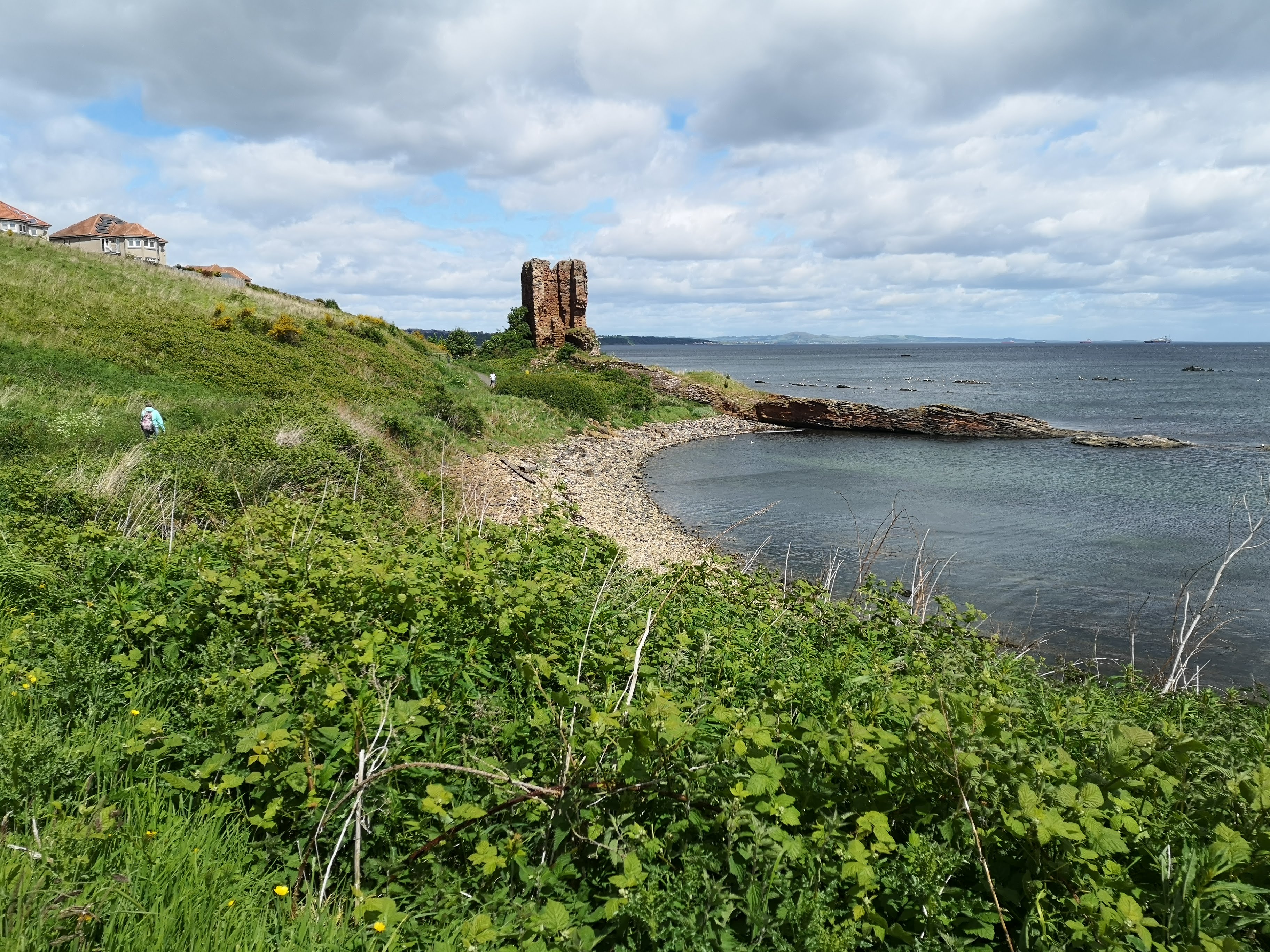
Along the Forth foreshore where the tide is out and the mudflats bleak, we walk to Blackness Castle, a 15th century fortress where Franco Zeferelli’s Hamlet was filmed. We have a wee seat and a cup of tea from our flasks just in time to avoid the rain. There’s a dovecot here, a 17th century pigeon house where the birds provided eggs and ‘fresh meat’ to the inhabitants.
Dovecot at Blackness
We look across to Charlestown, owned originally by the Earl of Elgin. Site of 14 massive limekilns, now preserved Grade A listed, it was one of the hubs of industrial Fife, and shipped goods to the Baltic. More information here on Fife Photos and Art.
Through the late C18 and C19, the kilns were part of a major industrial complex of the time, including coal mining, ironworking and salt extraction. Coal and limestone were brought in from the local quarries, also on the Earl’s estate. The adjacent harbour was as well built by the Earl and used for transporting the lime products, limestone and importantly coal.
Wikipedia
Just west of Charlestown are the three Crombie gantry cranes, easily seen from where we are. They are part of the Armament Royal Navy Ordnance Depot.
Blackness village – a toilet stop
Antonine Wall
We go near to the site of The Roman Antonine Wall (named after Antoninus Pius) which protected the province of Britainnia from the Caledonian tribes. It starts in Carriden near Bo’ness and runs westwards to West Kilpatrick on the Clyde (Glasgow). With 37 miles of ramparts (20 feet high), ditches (20 feet deep), roads, and approximately 20 forts, it was occupied for over 25 years. More information here (BBC).
The next day Ian tells us about the Carriden (Karedyn) Estate. 900 Years ago, the monks from Holyrood Abbey were granted a tithe, the right to collect a tenth of the coal from there, around the year 1200. The property went over to the Cockburn family in 1330.
The Corbie Inn has a replica of a sandstone slab recording the Roman army’s building work on the easternmost part of the Antonine Wall, Bridgeness, West Lothian, 142 – 143 AD. There is a dedication to their Emperor, and the original is in the National Museum of Scotland.
Matthew was wearing the Stitches for Survival bag as we neared the industrial outskirts of Bo’nessIt was very wet! Towards Bo’ness, West LothianAnd blustery, although the silvery trees are spectacularRuth and Tom (with his pink umbrella) by one of Ivar Struthers’ three metal artworks on the Foreshore
Bo’ness
David and MichelleThe Bo’ness Buoy where we collect for a final information session and to say goodbye to the day walkers and those who are leaving us here. Ewan, Willie and Olga
Salt and coal, trade and taxes once made the Bo’ness rich, but the pits and mine shafts are now quiet.
Oh, it is one steep climb up School Brae to St Catharine’s Episcopalian Church where we were spending the night at the end of a good day’s walking! There we are given another lovely meal – thank you.
Today’s feathers, relics collected along the way. Some of us had a carpet to sleep on by a radiator which was heavenly
Though some complain now that no-one has any reason to go to Bo’ness, in fact we find it a lively place with an Art Deco cinema, the Hippodrome, and an acclaimed, annual Silent Film Festival. A film had been arranged for us to see there later.
Stained glass window, St Catharine’s Church, Bo’ness
The film, in collaboration with Take One Action, is Anote’s Ark. Made in 2018 by director Matthieu Rytz, it tells of the impact of climate change on the island of Kiribati, found where the international dateline meets the equator. It is anticipated that Kiribati will entirely disappear as sea levels rise. Anote Tong is the former president and he has repeatedly lobbied the international community to do something. It is a chastening watch and our mood is subdued as we go to sleep.