A guest post by Marie-Anne Lerjen, a walking artist from Zurich (Switzerland). Her website is in German.
We walked a good long walk (24 kms) from Girona to Banyoles in Cataluña, setting off in a considerable heat (27 degrees) and finishing after dark. Here is Marie-Anne’s Sweat Mapping blog
It’s a quick but good listen on Soundcloud:
Featuring myself and many other walking artists from around the world who had congregated at the Art del Caminar conference.
El Grand Tour is an annual walk in the Pyrenees and its foothills which I joined this August 2023. It was organised by Clara Garí (Nau Côclea), Beatriz Aisa (geographer), and colleagues.
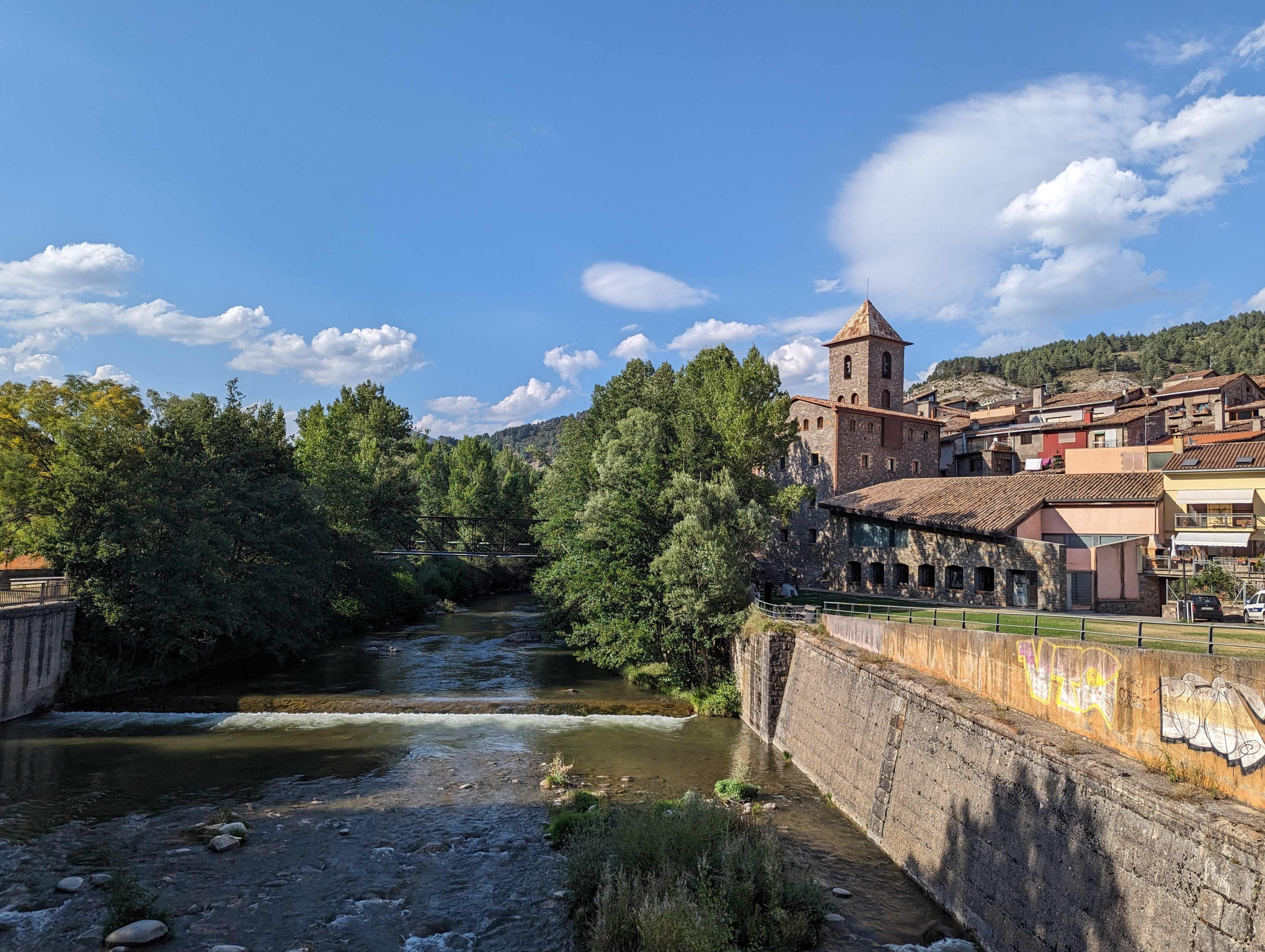
Pont de Suert, start of El Grand Tour 2023, on the border between Aragon and Catalunya
Every day we do a stage of about 15 km with artists who have projects and proposals to share with the walkers. On the way or at the destinations we will meet artists and other people from the territory every day, who often also accompany us. We look, feel, read, listen and participate in the proposals: poetry, dance, installations, performance, music. We also explore the territory through the hands of the people who live there.
Clara Garí
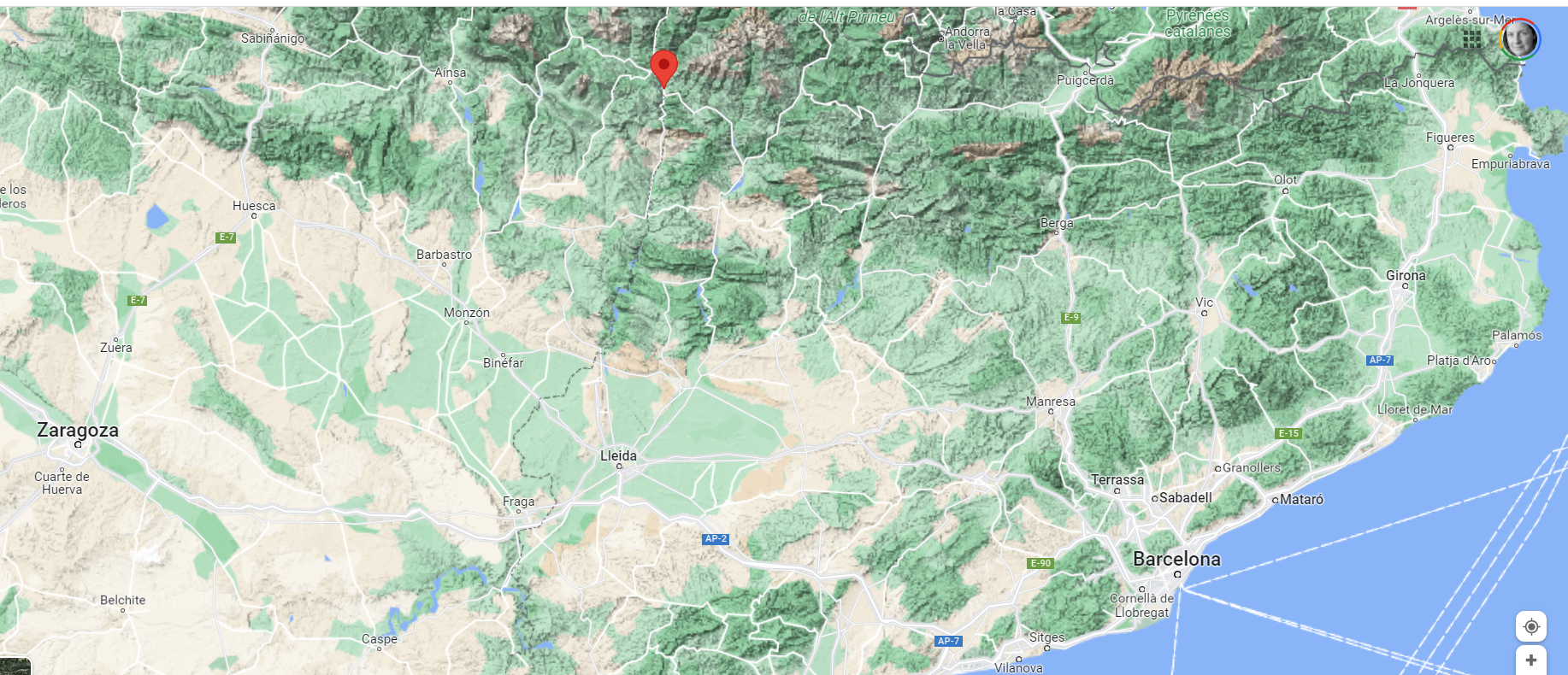
The route
The red marker is Pont de Suert in the Pyrenees mountains, with Barcelona bottom right, Zaragoza on the left, and the black dotted line of the Catalan / Aragonese border running down the middle
The trek began on August 12 at Pont de Suert and ended, 20 days later, at Cellers Bridge on 31st on the full moon. Each year the walk begins where it ended, more or less, and continues through this magnificent mountainous area. We started not far from Andorra and France on the border with the Aragon region of Spain, circled west and south, through Graus and Benabarre, before returning to the River Ribagorza and crossing, in an eastwards direction back into Catalunya via the magnificent Montfalcó.
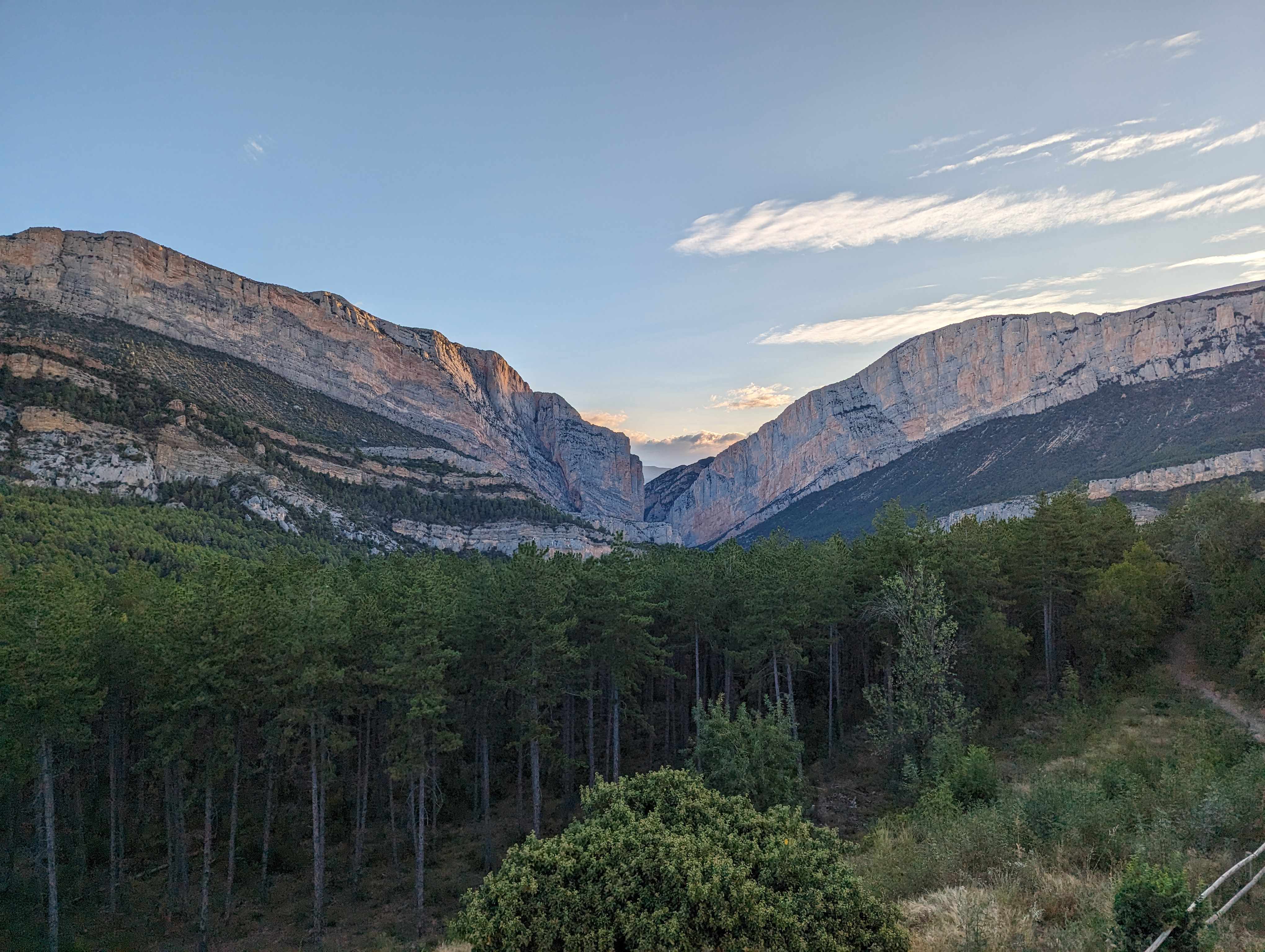
Montfalcó at the Catalan / Aragonese border
Pont de Suert (camping Balliera)
Laspaúles
La Muria (to La Turbon (peak))
Padarnieú
La Puebla de Roda
Molino near Centenera
Graus
Aguinaliu
Benabarre
Tolva
Montfalco (Mont Rebei)
Sant Esteve de la Sarga
Cellers
Terrain
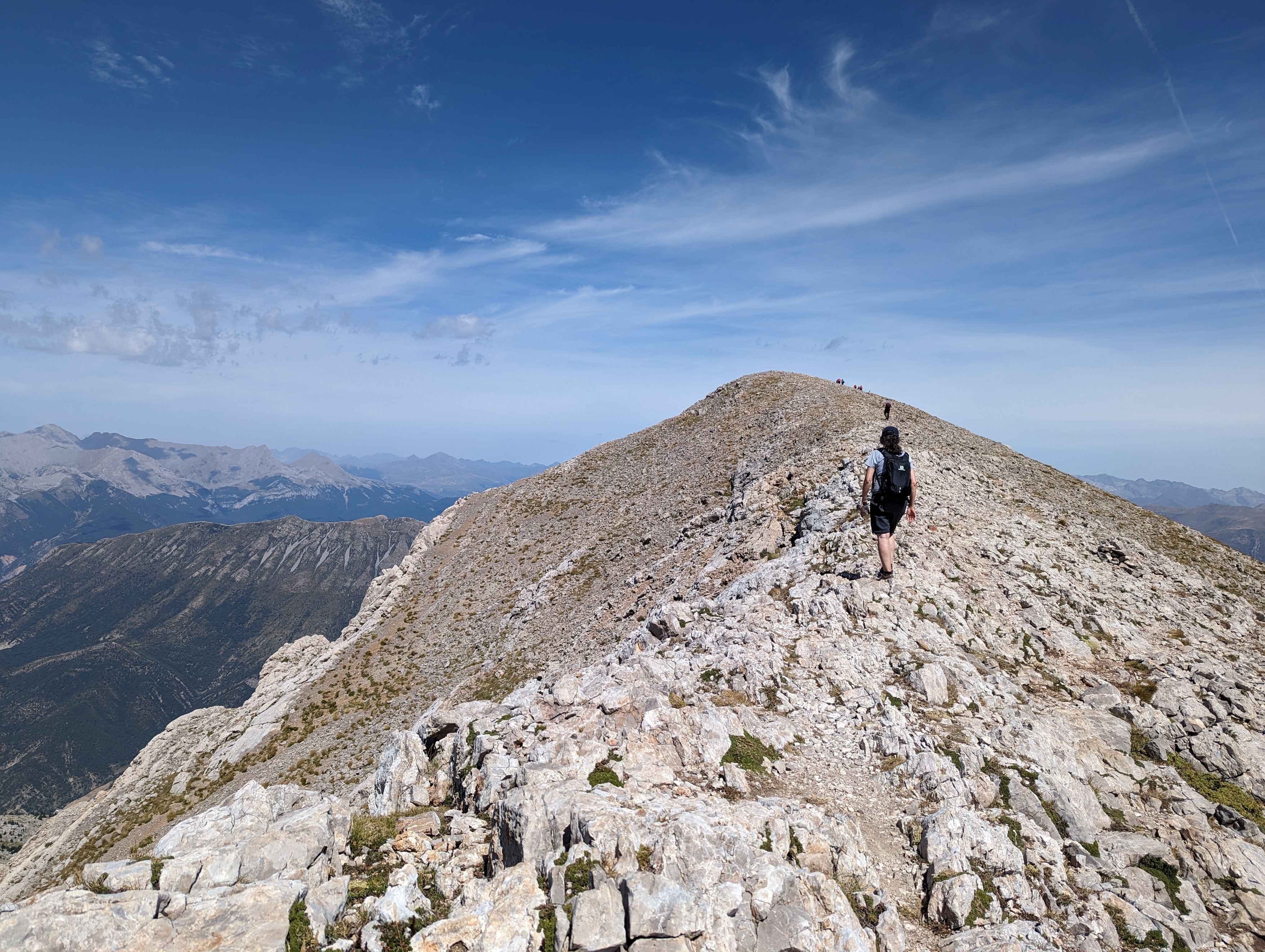
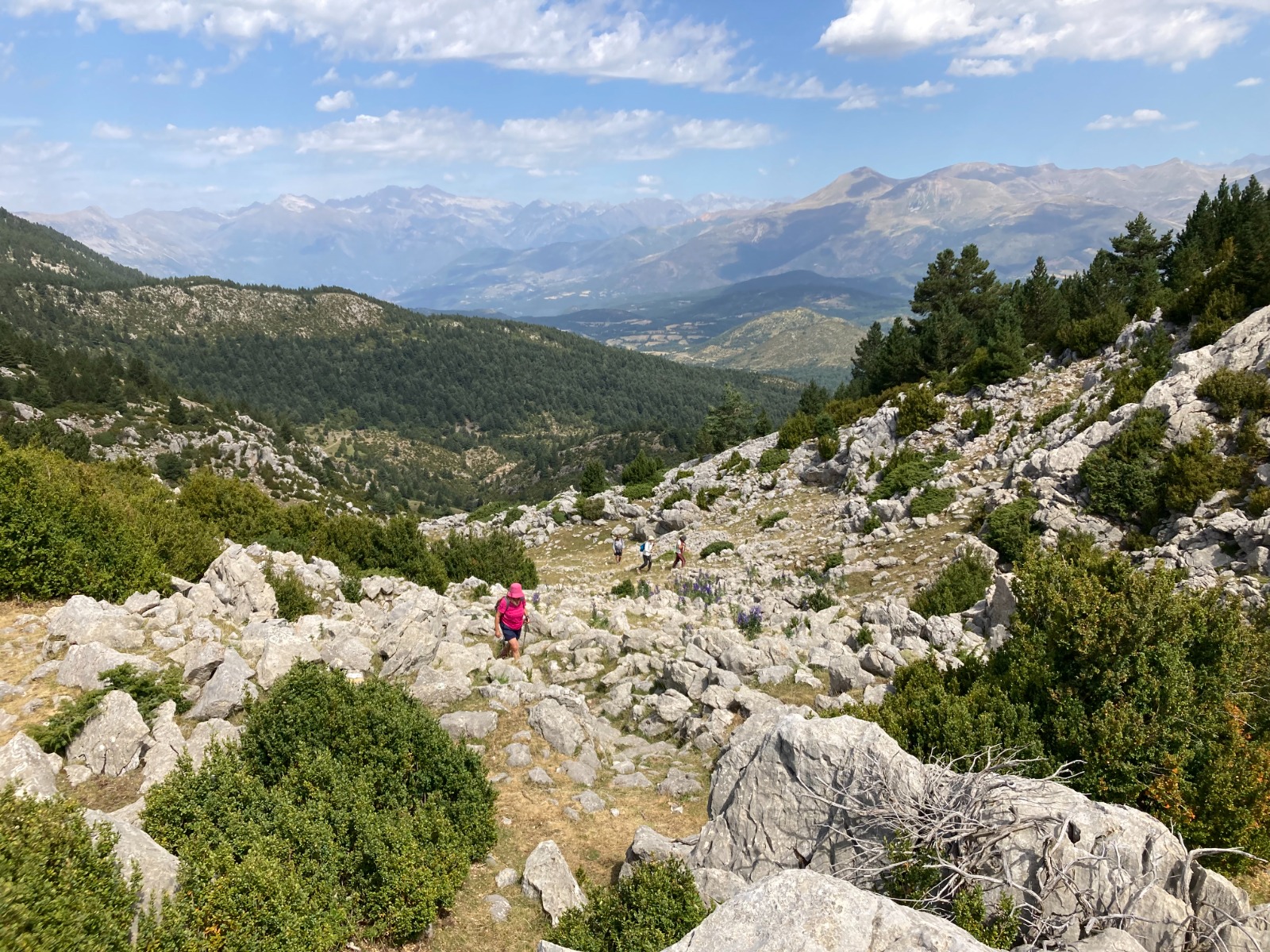
The first days were tough, with steep climbs and descents on paths which often consisted of a tumble of stones and rocks, so my fitness levels, particularly for climbing, had to improve rapidly, and frequent rest stops were vital. We climbed La Turbón (a massive rocky limestone outcrop standing on granite, horse-shoe shaped, which runs north-south for 6.3 kilometres and is just under 2500m high) in Huesca province on one memorable and very long day!
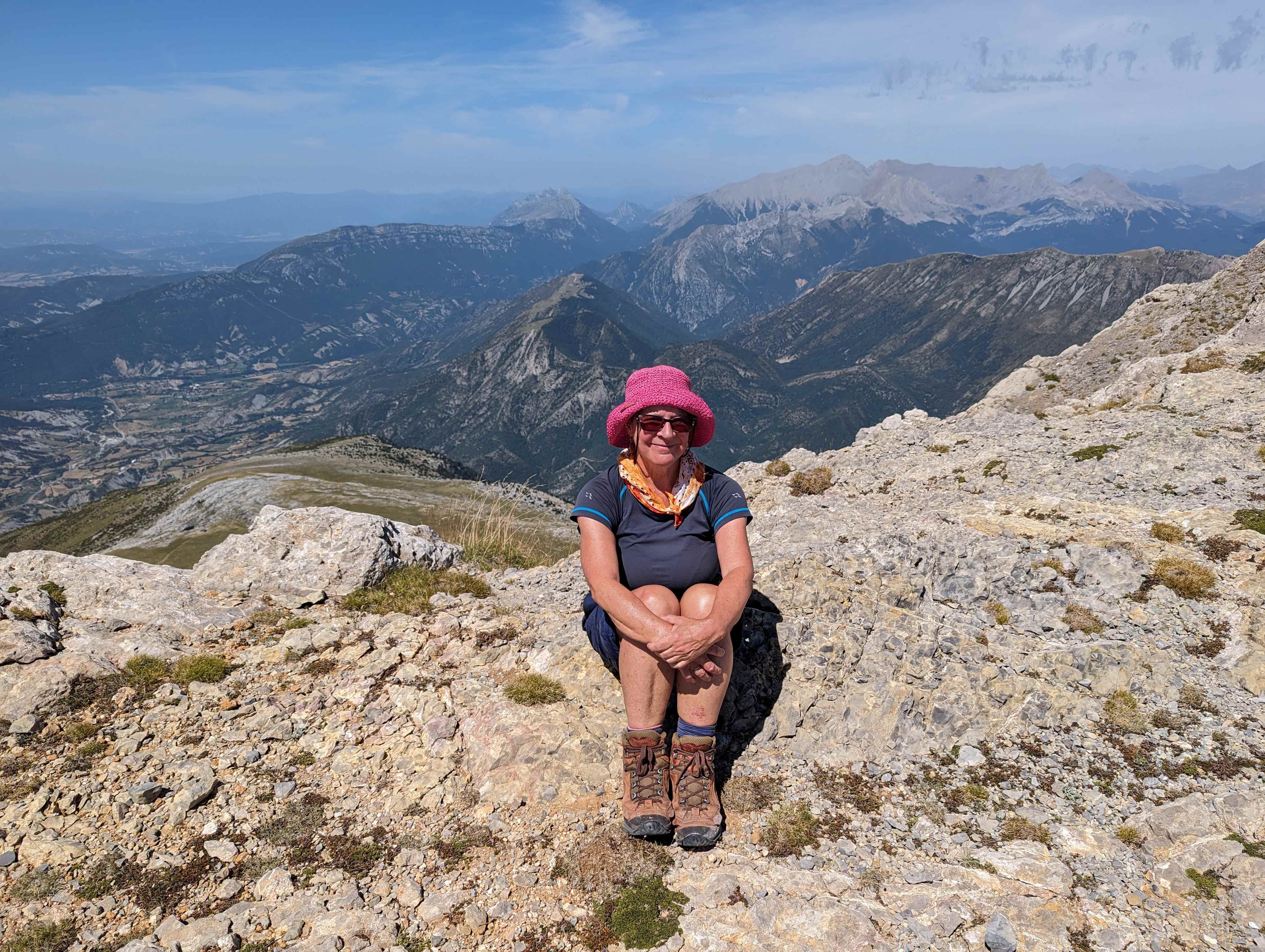
Walking up La TurbónI’m on top of the world
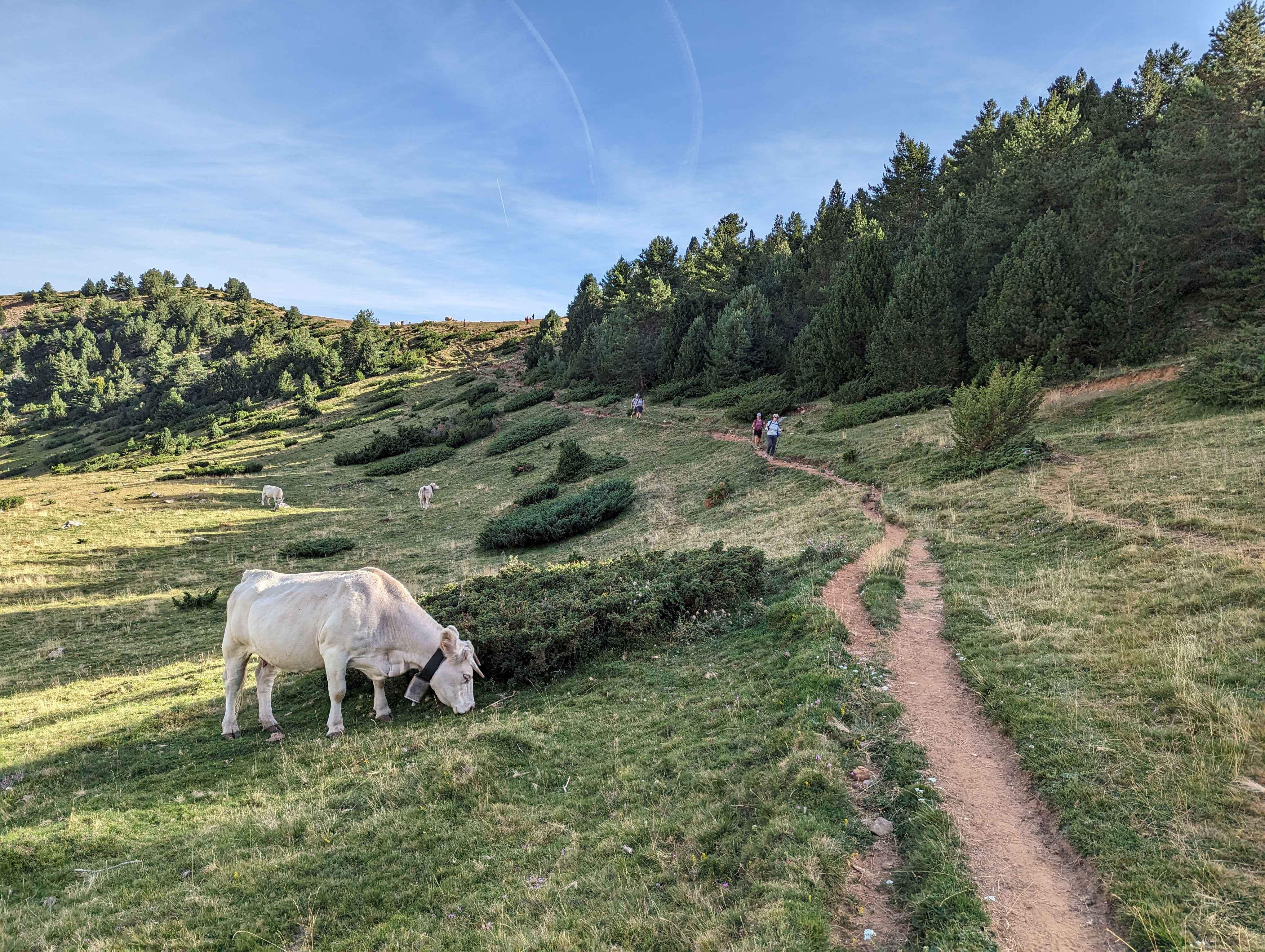
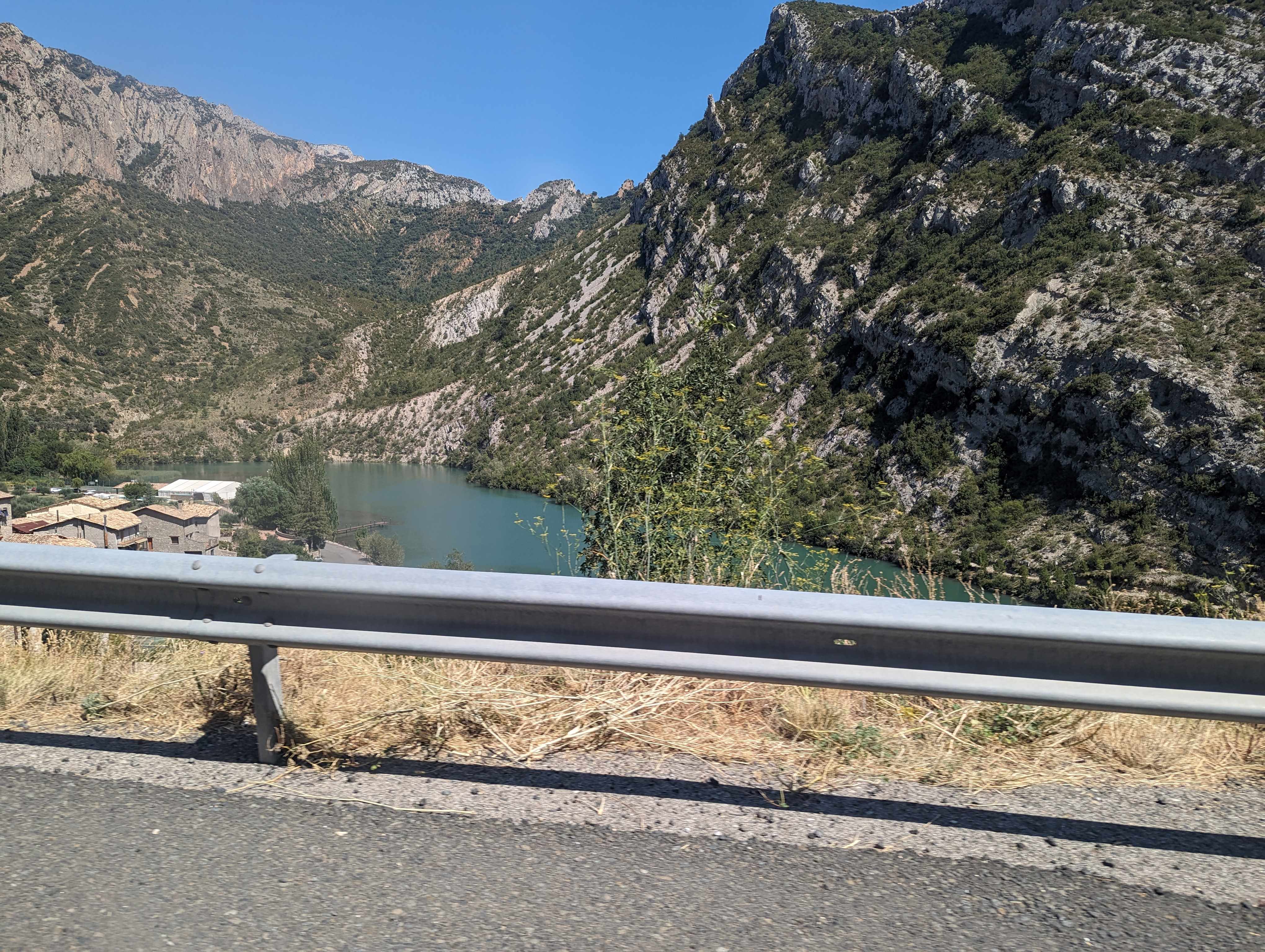
We also trekked through forests, up bare tracks, along a few roads, admired the best of views and visited fascinating places.
Who walked?
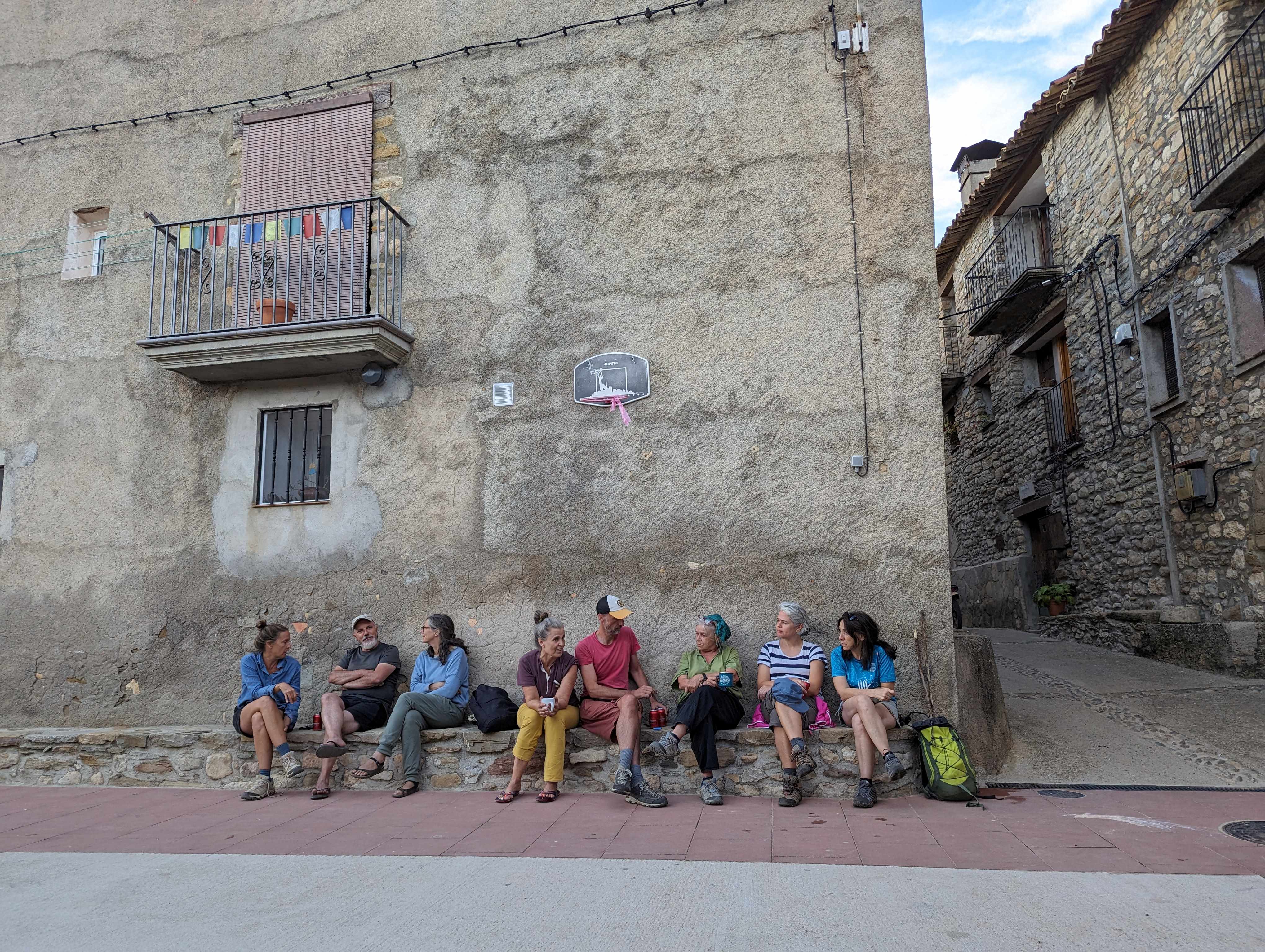
There was a core group of nine walkers who completed the tour, of which I was one, and around thirty others who joined us for two or more days. Dduring the period we were entertained by La Borda del Títere – Trapusteros (puppet) Theater in Aguinaliu, Javier Selva at his rennovated molino (water mill), and Eloy in Sant Esteve de la Sarga. Two artists travelled with us: Beatriz (see above) and Clara Nubiola who both gave workshops. There were also performances by Christina, Zoe, Anna, Quim and children, and others.
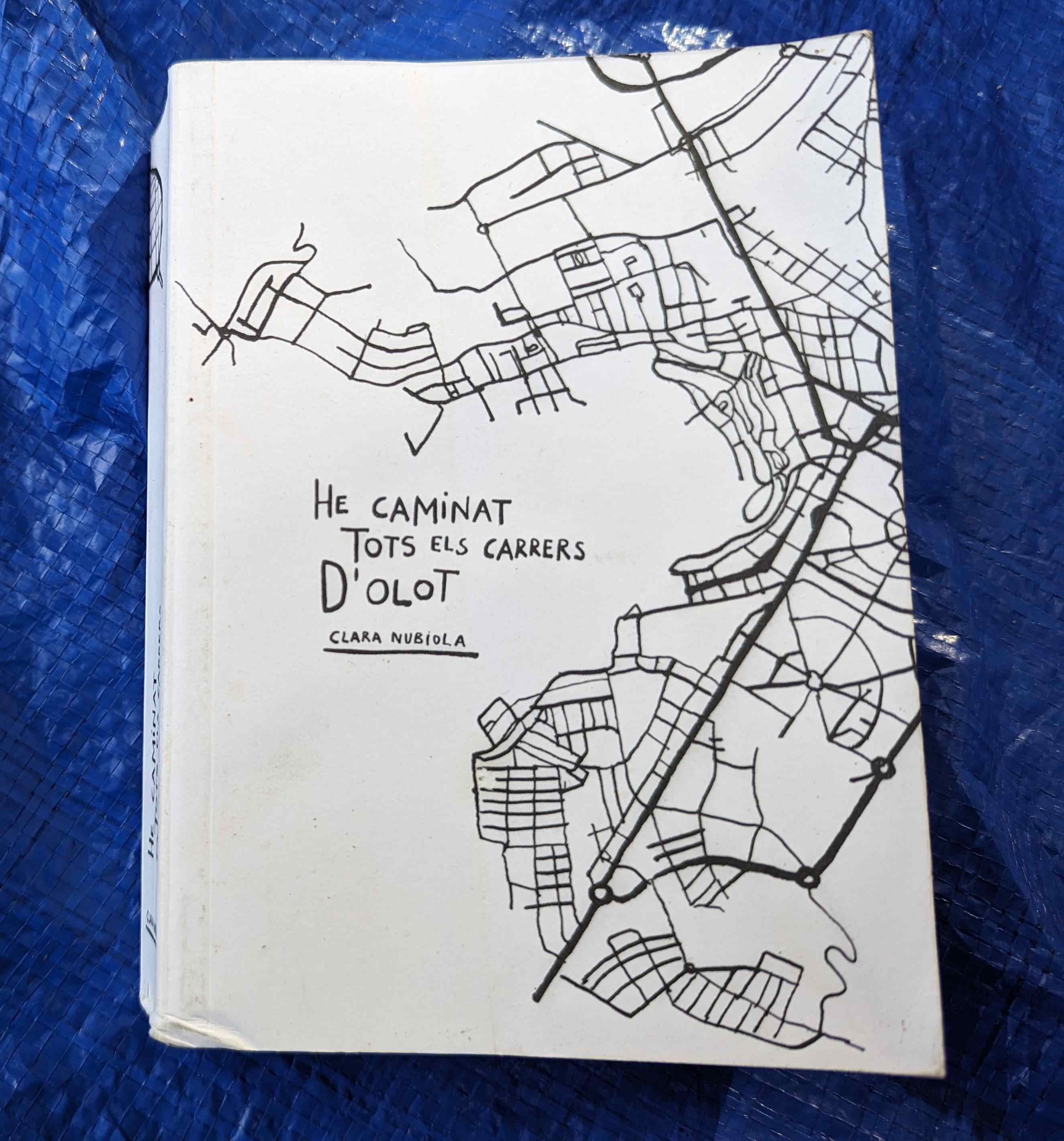
He caminant tots els carrers d’Olot by Clara Nubiola
Sleeping and Eating
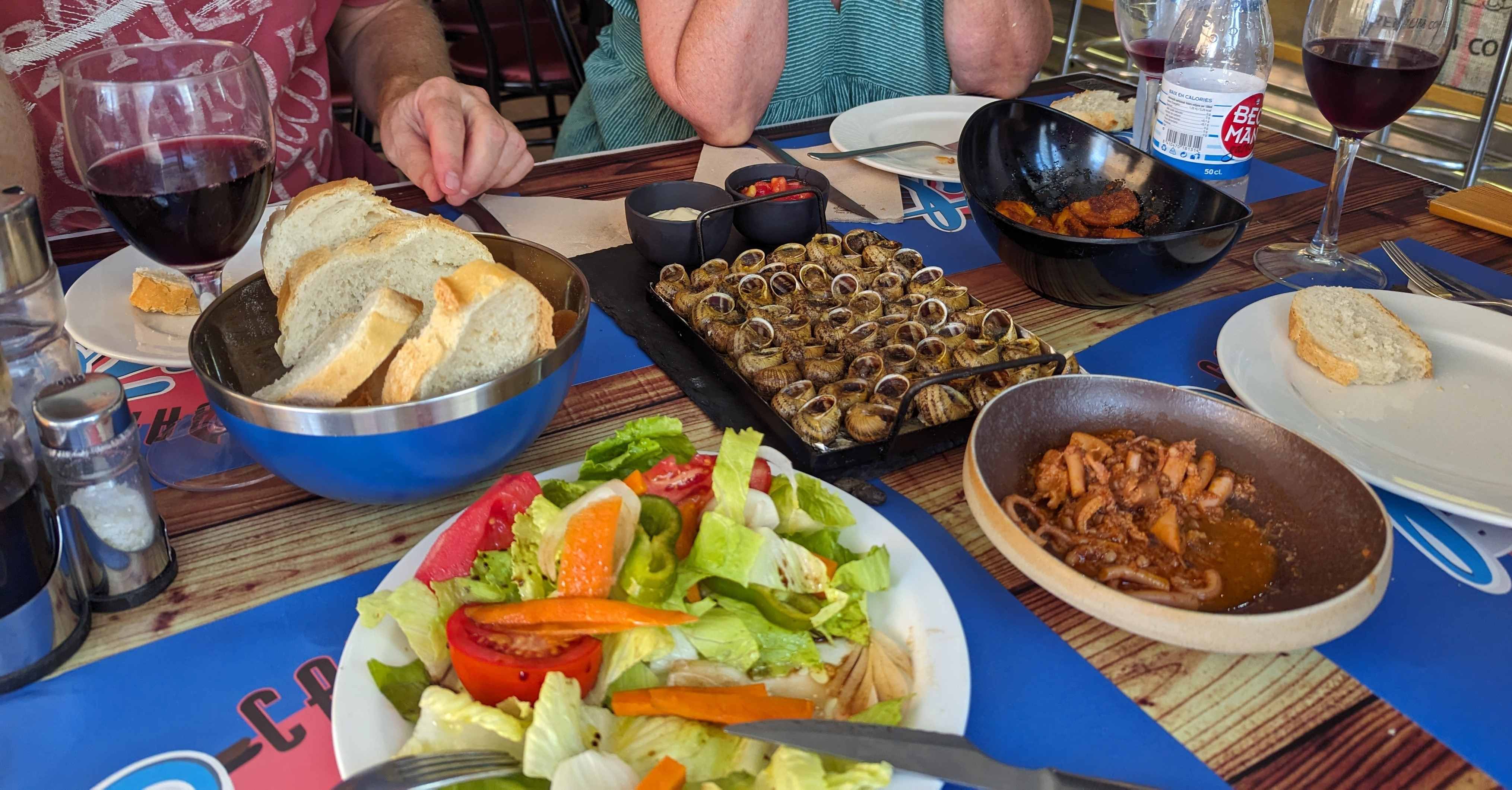
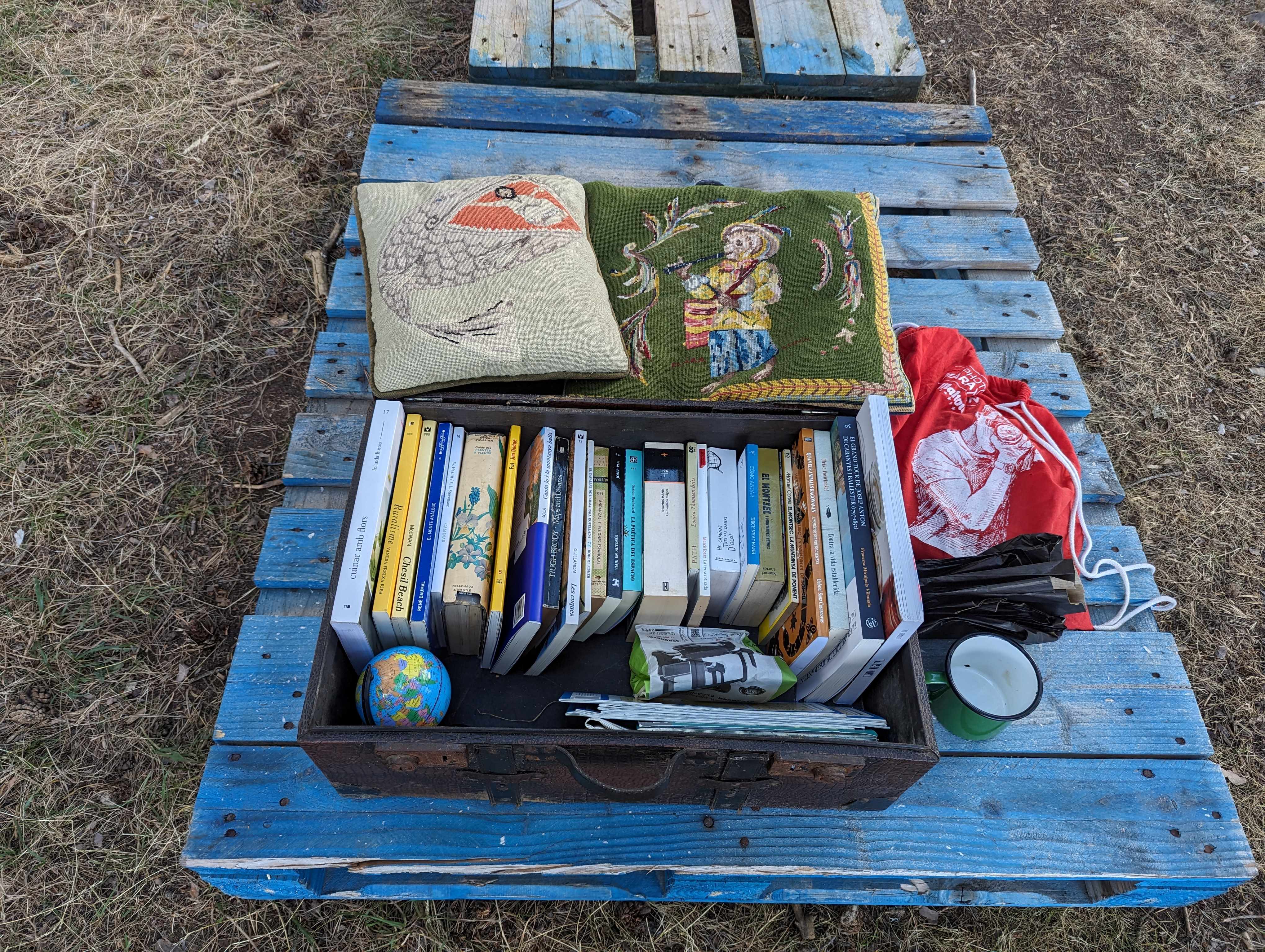
We usually stayed one night at each stop, but sometimes more, camping in fields and municipal sites, kindly housed by performers and those who had walked in previous years, as well as in an air BnB. Thankfully, our camping and other gear plus the Book Library were transported for us, and breakfast and delicious evening meals were prepared by Jordi Rallo, supplemented by others and the occasional cafe/restaurant.
Lunch at a cafe near TárregaAguinaliuHotel Lleida, GrausCasa Notari run by Nona Florensa, TolvaSant Esteve de la SargaThe library consisted of books chosen by the walkers, mostly in Catalan though a few were in English, which were given out at the end of the walk
Sing for water, dance for rain
River Ribagorza near Pont de SuertCamp site poolA river we came across at a time of needHailstonesCollecting water at a local fountainJavier’s molino
The weather was hot for most of the time, with occasional rain and hail. Temperatures cooled in the final week, but we always carried a lot of water and sometimes needed to find extra supplies along the way. Despite the on-going drought which was evident all around us (there has been almost no snow on the mountains this year) and low or non-existent river levels due to climate changes, we were always lucky with various water sources appearing just as we were getting desperate. We bathed and swam in them, soaked our head cloths and clothes to keep cool, and of course drank it gratefully. Once we even came across a lawn of sprinklers at the top of a hill at midday and danced in their spray until we were soaked through. Bliss!
Separation and Unity
My on-going multi-media project, Separation and Unity, was symbolised by small tartan ribbons which I made for my fellow walkers, and I was happy to be able to offer some Shiatsu (one-to-one), chi gung and meditation (small groups), a silent walk (for the participants who was there that day), and a Scottish reel (all together) as a dance of celebration on the last night. My thanks go to Anna and Quim for their help with the sound.
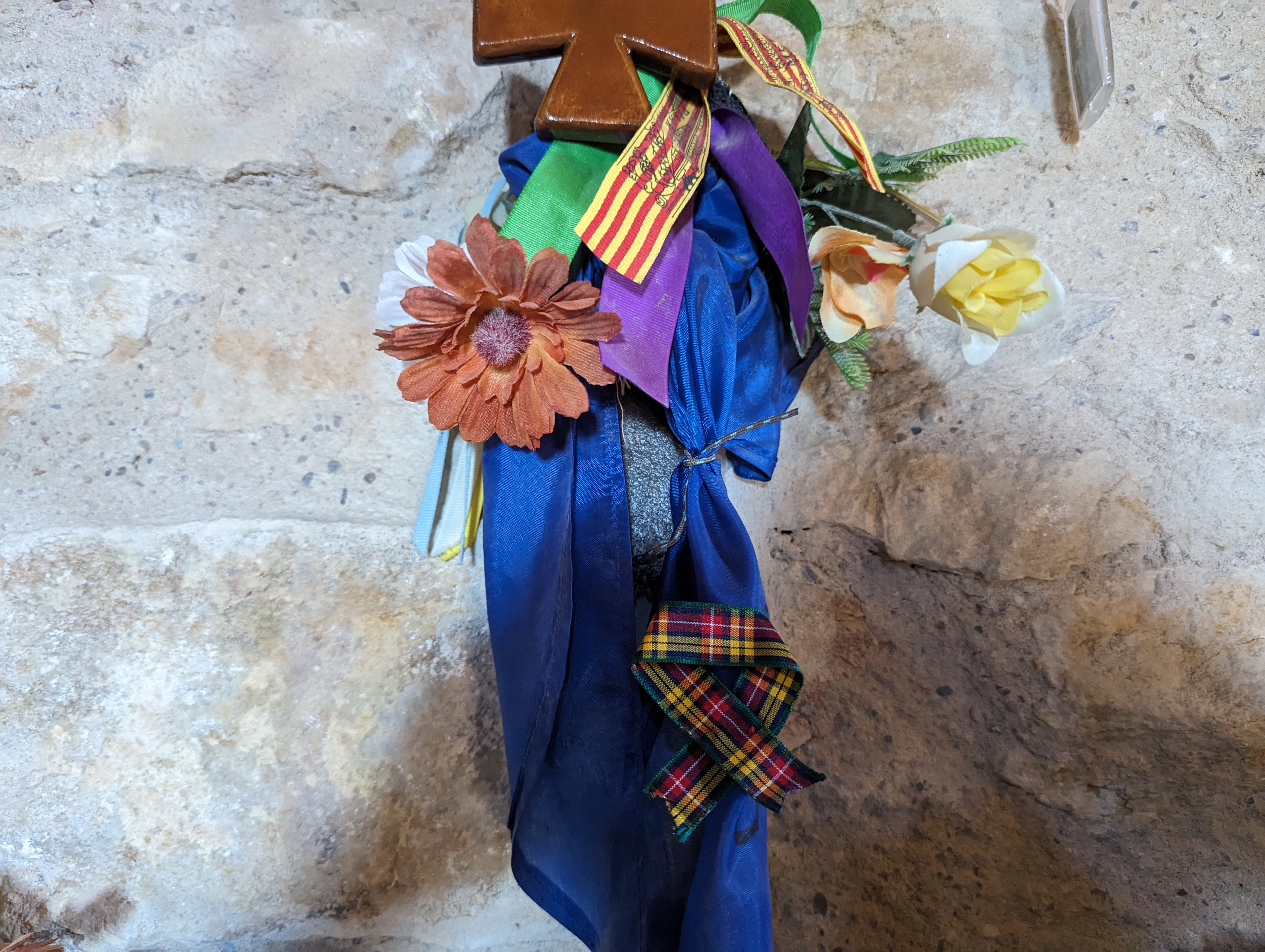
Above images: Left – Both Catalunya and Scotland have vigorous independence movements and my ribbons aimed to signify both unity with the loop, and separation, with the two ends. I used tartan which is a traditional Scottish material in the colours of the Catalan flag. Independence supporters in Catalunya use a twisted ribbon to raise awareness of their cause. I added one of these to a shrine at the Ermita de Santa Quiteria y Sant Bonifacio, Montfalco. Right – The Scottish and Catalan flags hanging side-by-side in Girona.
Separation and Unity is an on-going, walking art project. It began as a link between Scotland’s political bid for independence from England, and Catalunya’s from Spain, looking at the two struggles and identifying similarities and differences in the impetus and on-going situation. It asks what it is in us that wants to be recognised as part of a smaller nation rather than be part of a larger entity. More generally, it looks at our individual need to belong and, at the same time, for individuality.
Usually I walk alone through the landscape – separated from others and from my home life, and at the same time seeking some sort of unification with the people, villages and countryside I’m travelling through by using touch and mindful attention. Then, more lately, I walked the Pilgrimage for COP26 as one of a group, have led community walks, and am doing El Grand Tour.
El Grand Tour was, for me, a part of the Separation and Unity project. As a group we were visitors in the places we walked to, separate from them and united with each other, identified as a company. When we stayed somewhere, we became temporarily unified with our hosts as performers and residents. Within the ever-changing collection of people who walked El Grand Tour, we were individuals and at times formed small groups within the larger one. We brought our own interests to the Tour, and we also had a group identity. All of these roles and identities impacted differently on us and the way we behaved together.
I knew in advance that the predominant language spoken on the walk would be Catalan, and meant to learn it better before I went. I understood some, but it wasn’t enough to engage in deeper conversations as I had hoped. This meant that I often walked on my own, and although this is something I am used to, I focused on really feeling what it’s like to be separate from a group, to be a foreigner and not to understand, not to know what was making them laugh.
Lone walking
Sometimes it was a relief: I had space and time to immerse myself in the landscape without being rude and ignoring conversation, a valuable opportunity for reflection; at other times, I felt inevitably left out and lonely. My fellow trekkers were all friendly and generous, and many spoke English very well and were happy to translate for me. I am really grateful to Igor, Bea, Cristina, Oriol, Pau, Nuria and others for that – thank you.
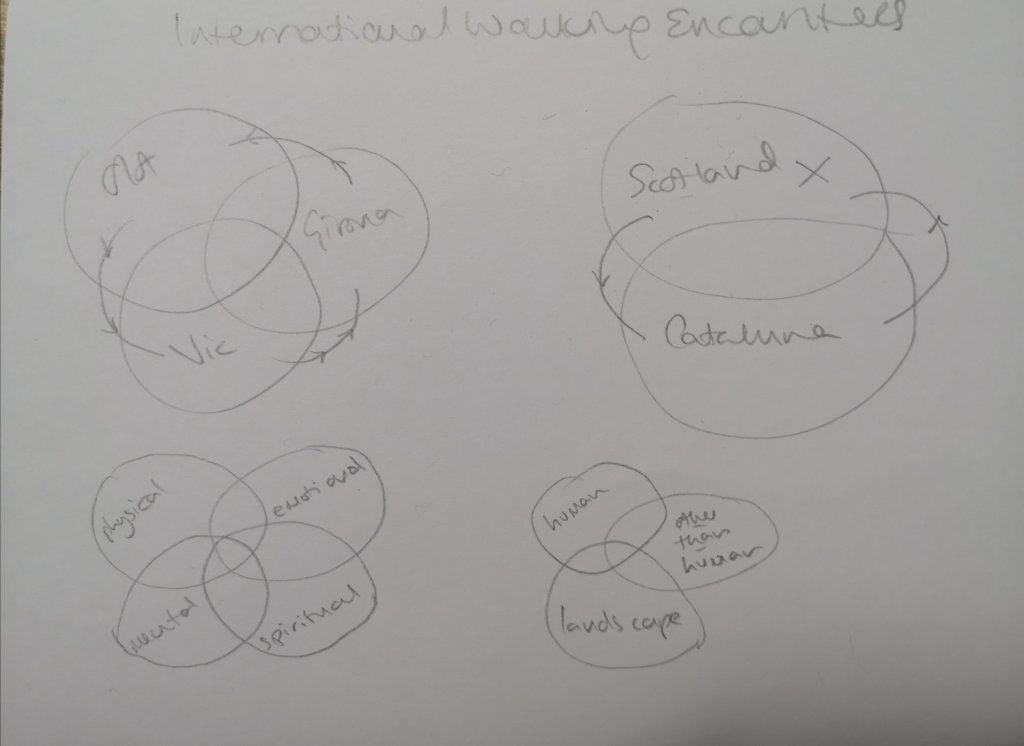
There is a spiritual-political-geographical link between Edinburgh, Scotland where I live, and Cataluña in the Iberian Peninsula where the Encounters are taking place (Girona, Olot and Vic). In both countries, we have long been engaged in matters of self-determination, with debates over separation and unity, community, national and inter-national relationships. Whilst primarily represented as a battle fought in law courts and parliaments, or between opposing protesters on the streets, this has often been a binary approach. It is necessary to spend time listening, sharing and making work with artists and members of the community in order to understand each other better and find possible ways forward.
Europe is defined, in many ways, by borders. They speak of crumbled empires, shifting boundaries – most of them, …. speak of unimaginable suffering.
Kerri ni Dochartaigh ‘Thin Places’ p17
As a walking artist, secular pilgrim, feminist and outdoor performer, I will carry the awareness of these issues from the Scottish hills to the Cataluñian mountains, from Edinburgh’s extinct volcanoes (Arthur’s Seat, Calton Hill and Castle Rock) to the volcanic land of Olot, and between the Oak Wood in Dalkeith Country Park and the oak trees of the Plain of Vic.
I have been walking the St Margaret’s Way through the carboniferous volcanic rocks of the Burntisland area in Fife, Scotland, and will be able to carry my experiences with me on the ancient spiritual path which unites each of the three conurbations where the Encounters are happening, the Camí de Sant Jaume (Camino Catalán).
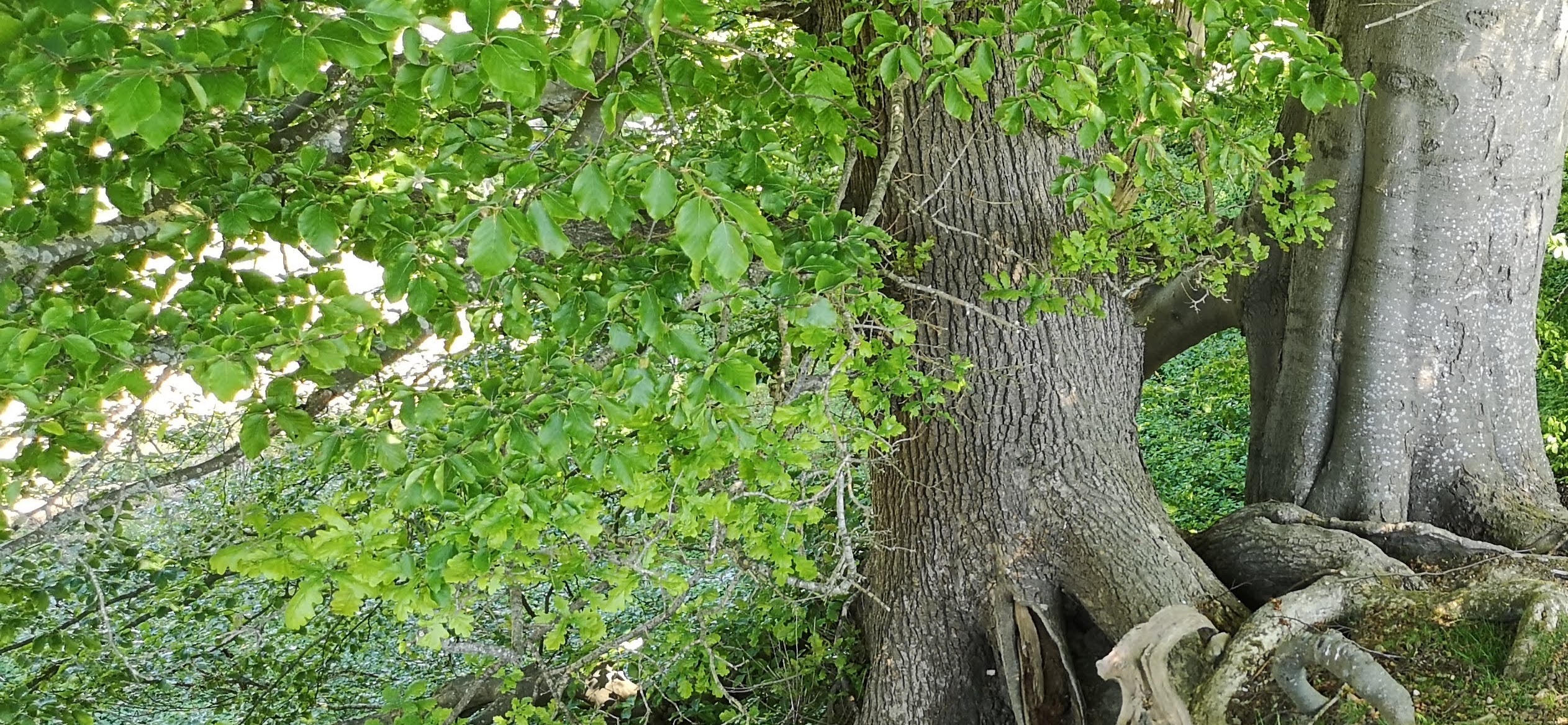
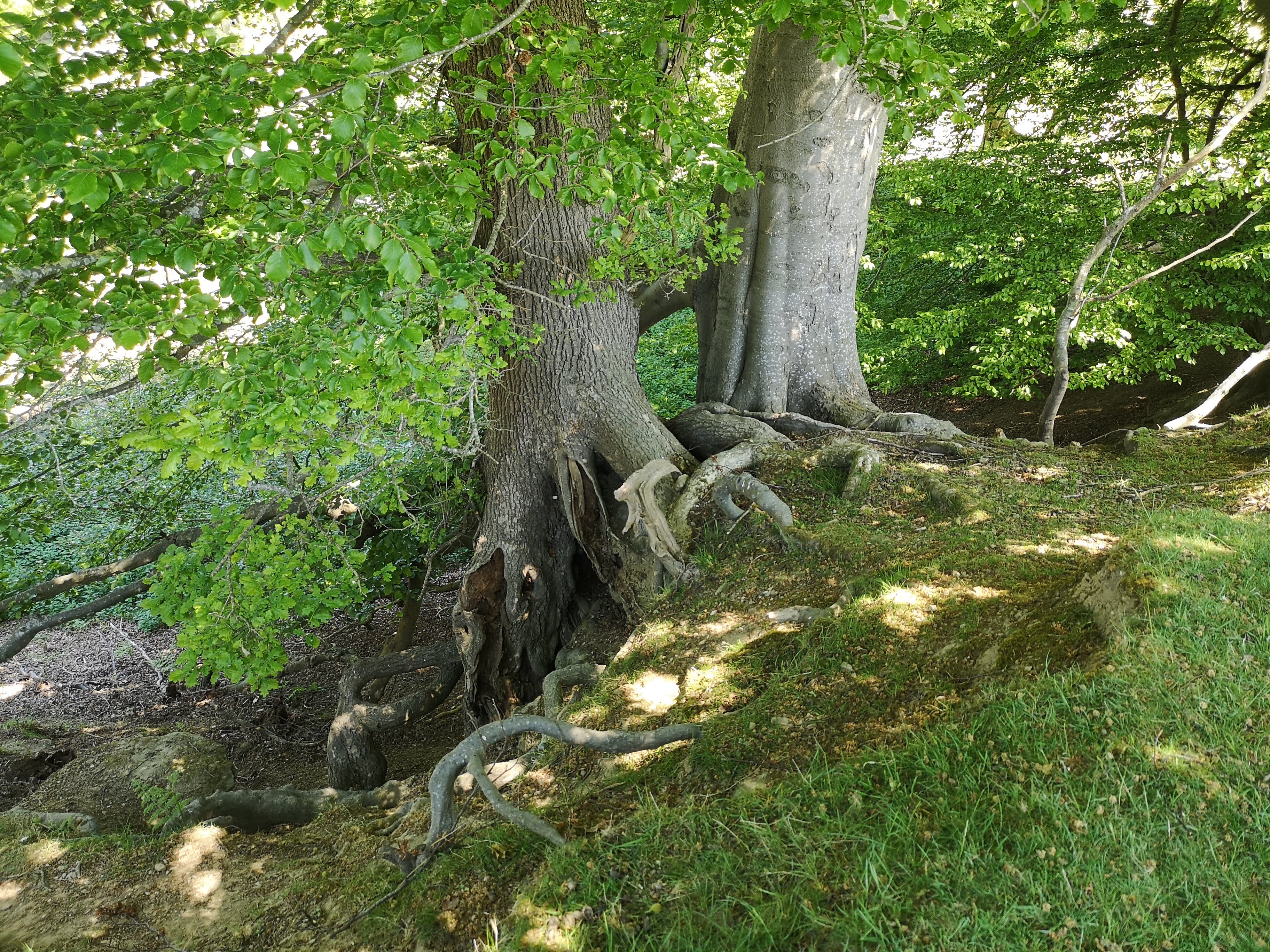
Co-mingling of Oak and Beech
Separation and Unity
This is the artistic focus
in the human experience (notions of belonging and alienation, shared feeling and dislocation)
consideration of the other-than-human and our relationship to that realm; and in the landscape
Documentation:
Impromtu performance
Collecting words, images, marks, and sound segments
Mapping
Film and pamphlet on return to Edinburgh
Collaboration with delegates during the International Encounters will take the form of walking sections of the urban camino together in each of the three locations. This ritual series of three mini pilgrimages will be a way of considering the spiritual aspect (in the widest sense of the word), and the trinity of psychogeographical outings will form a unity between the three sites for the purpose of comparing sensations, ideas and feelings. Each walk will start with an embodied exercise for individuals, a group game for unification, and prompt = one hour in each place:
Girona: starts at the Catedral de Girona to Pont de L’Aguia 9pm for 40 minutes
Olot: starts at Plaça Major to Pont de Sant Roc 6.30pm for 30 minutes
Vic: starts at Catedral de Sant Pere de Vic to L’Atlàntida Centre des Arts (35 mins 6.30pm
Co-existence and mutual reliance
I will be making contact with women for whom this focus is pertinent, both in Scotland and Cataluña. As always I will seek Shiatsu practitioners with whom to exchange.
Freiburg October 2017, a friendly, open-minded university town awash with complementary therapists.
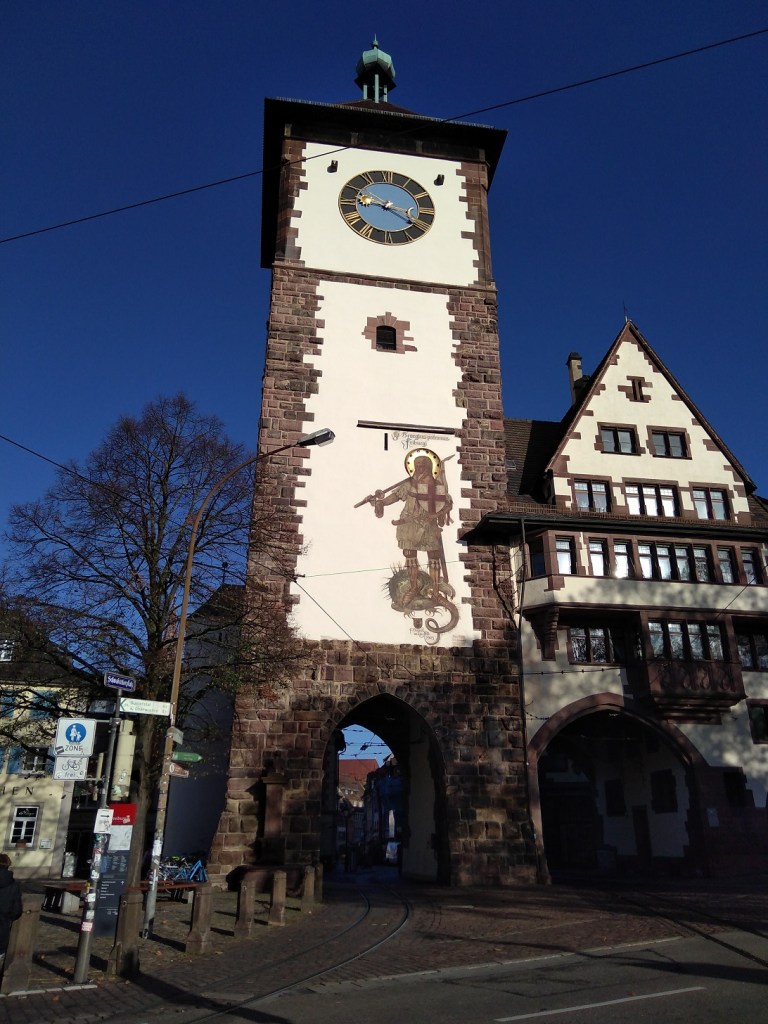
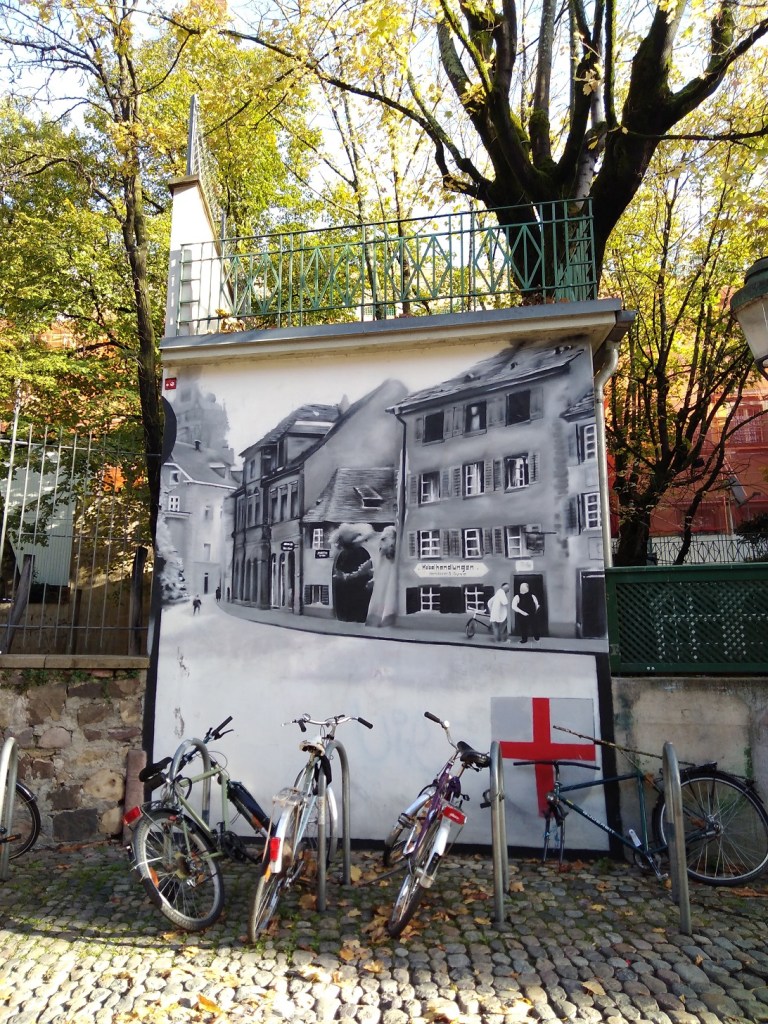
The town gate Martinstor, Freiburg
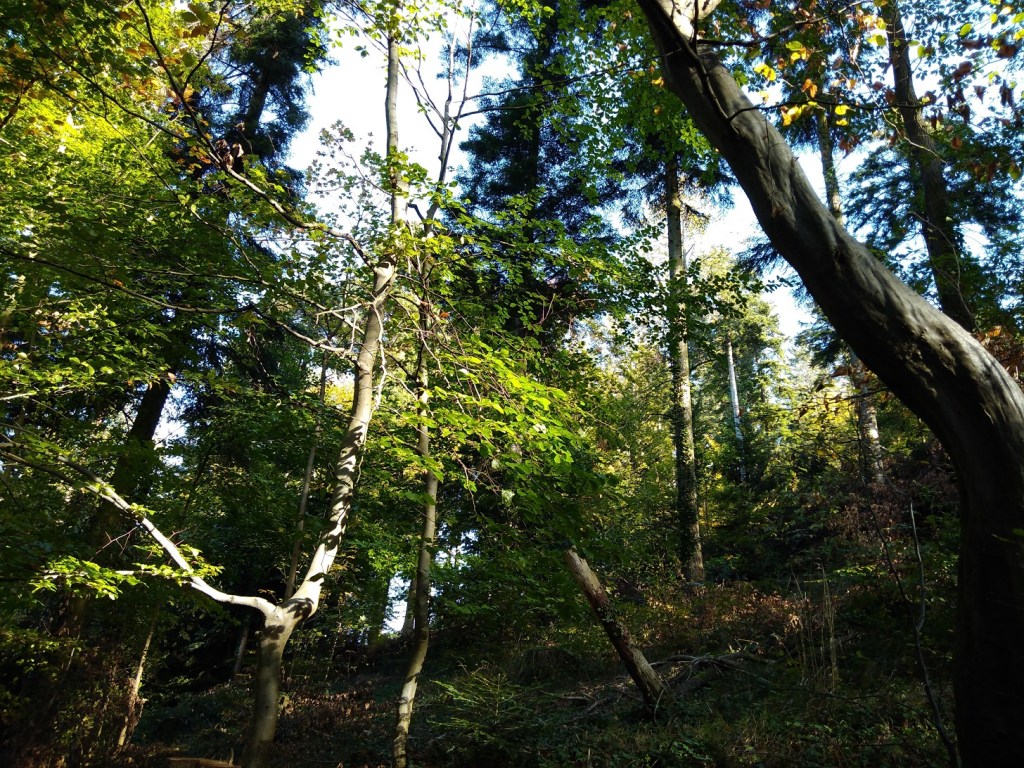
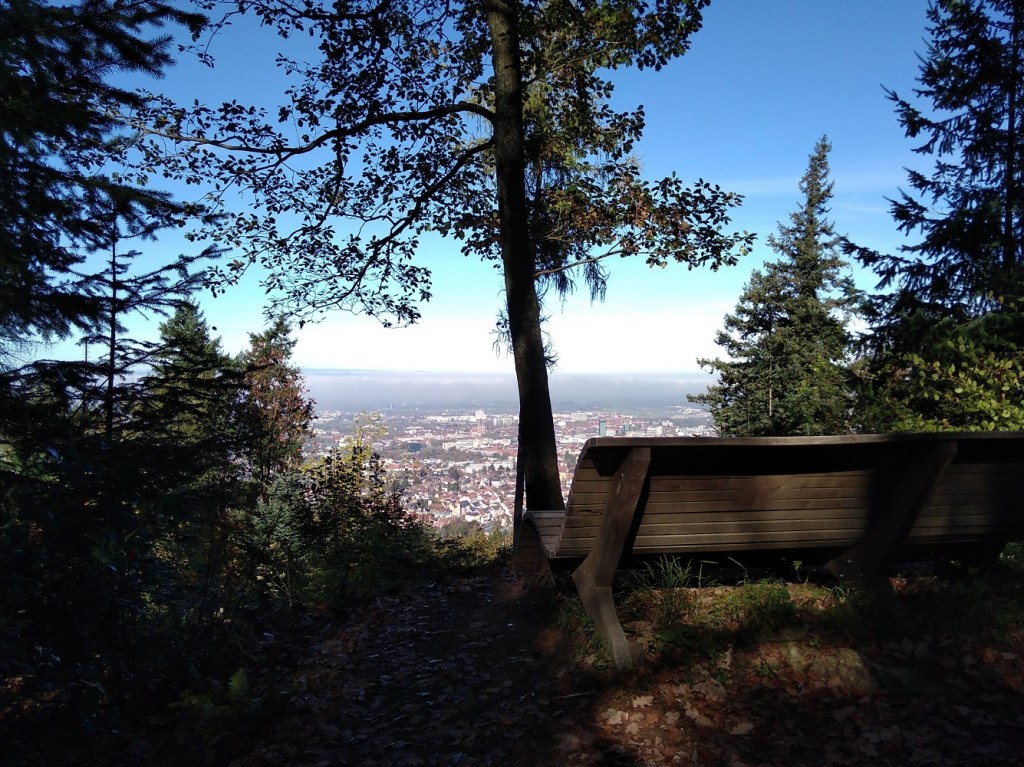
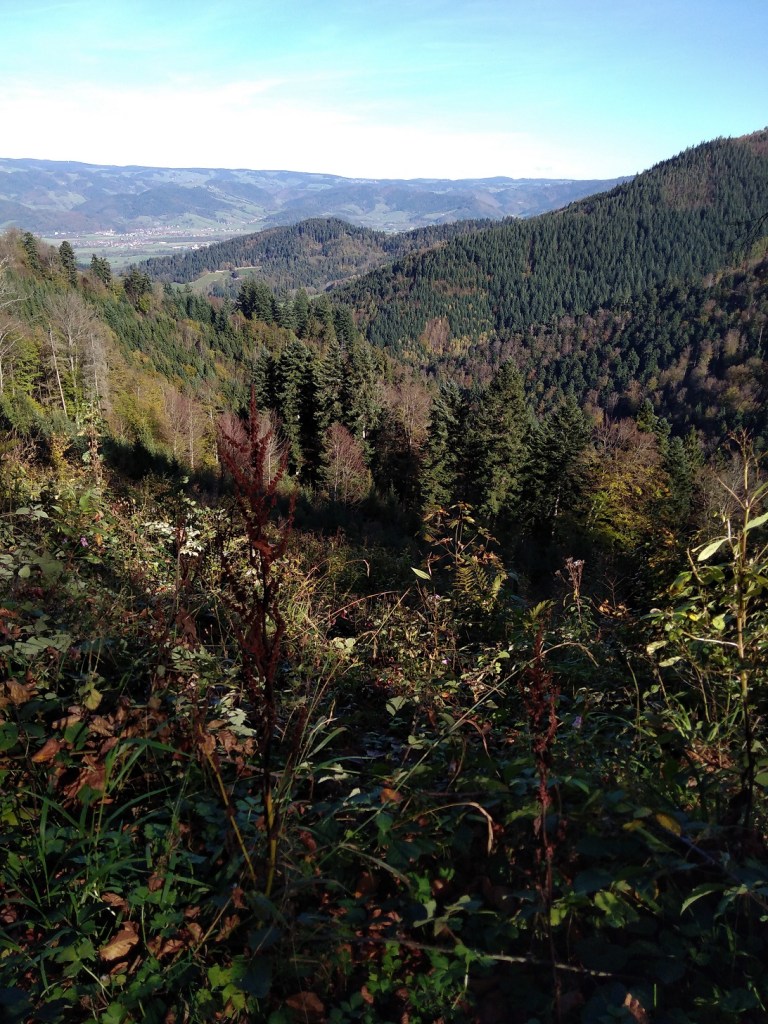
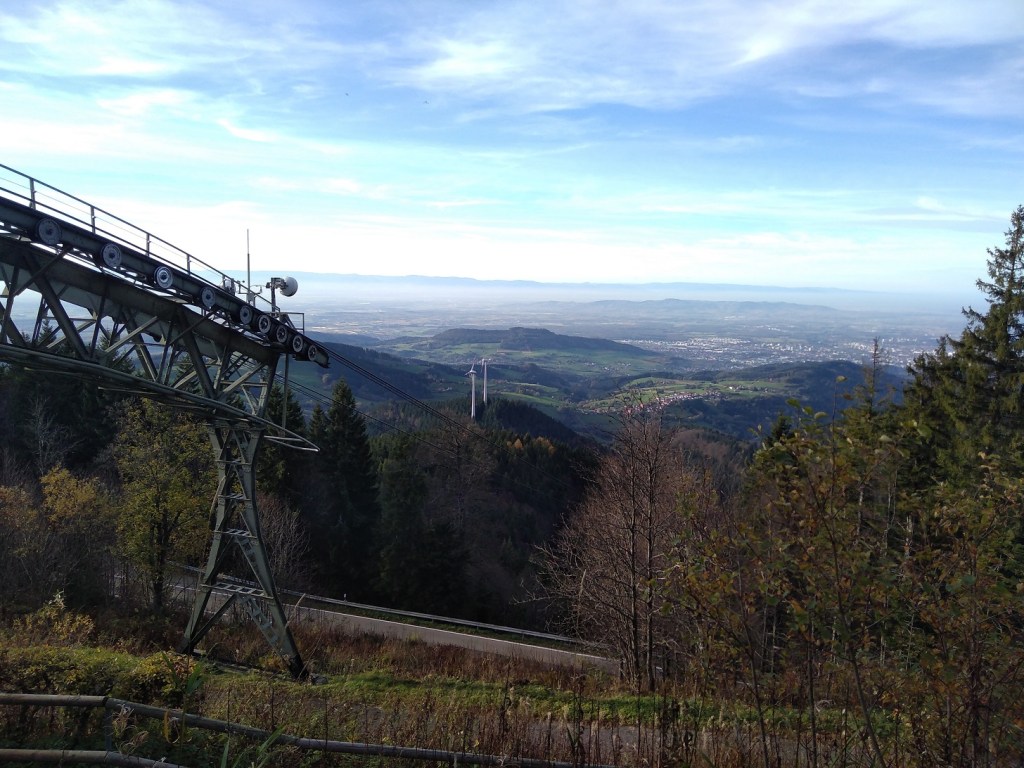
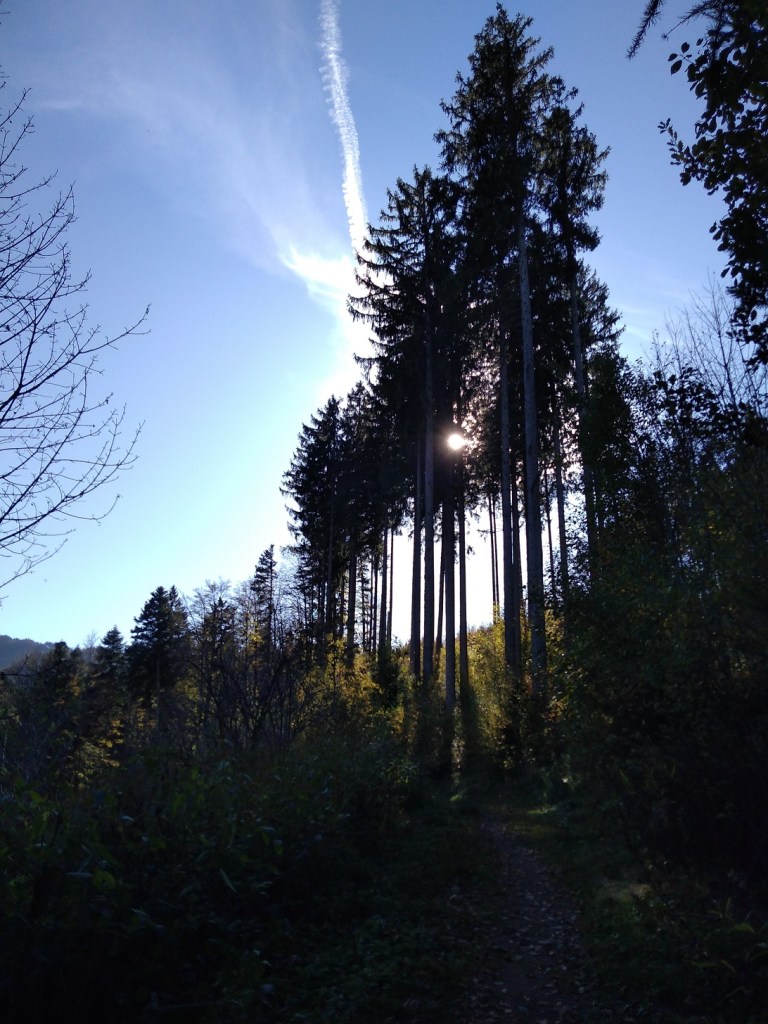
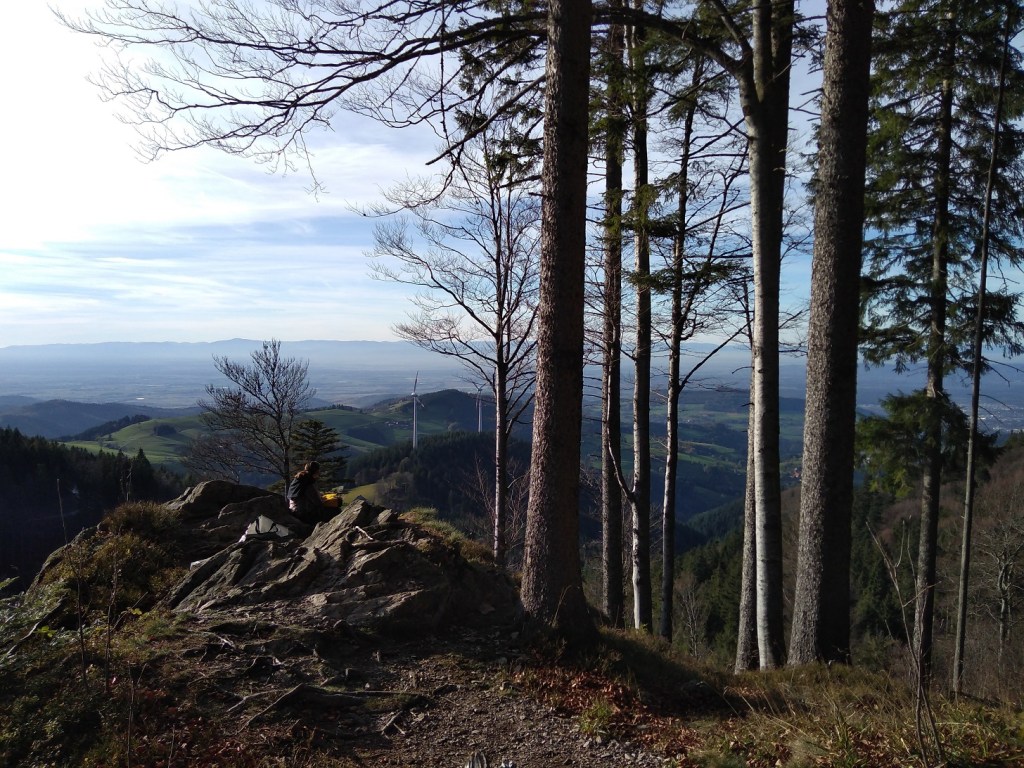
The highlight of my visit was the walk on Schauinsland, a mountain in the Black Forest with an elevation of 1,284m (4,213 ft) above sea level. I was lucky with the sunshine and wandered through leafy, cobbled suburbs before starting up the hill on the left.
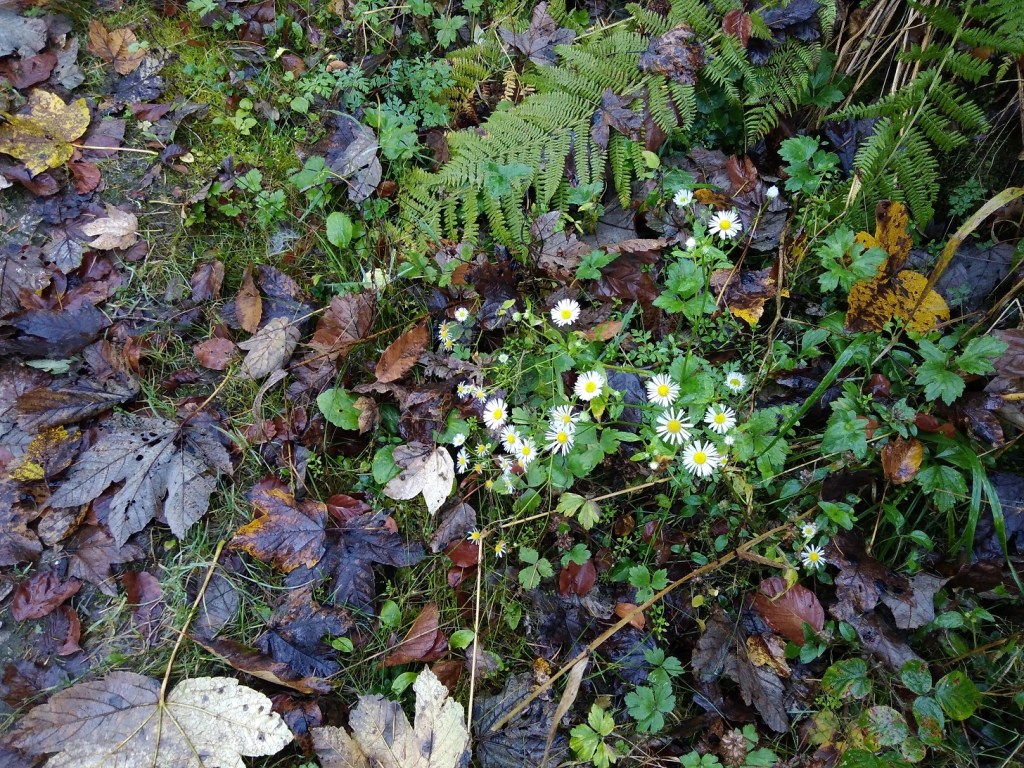
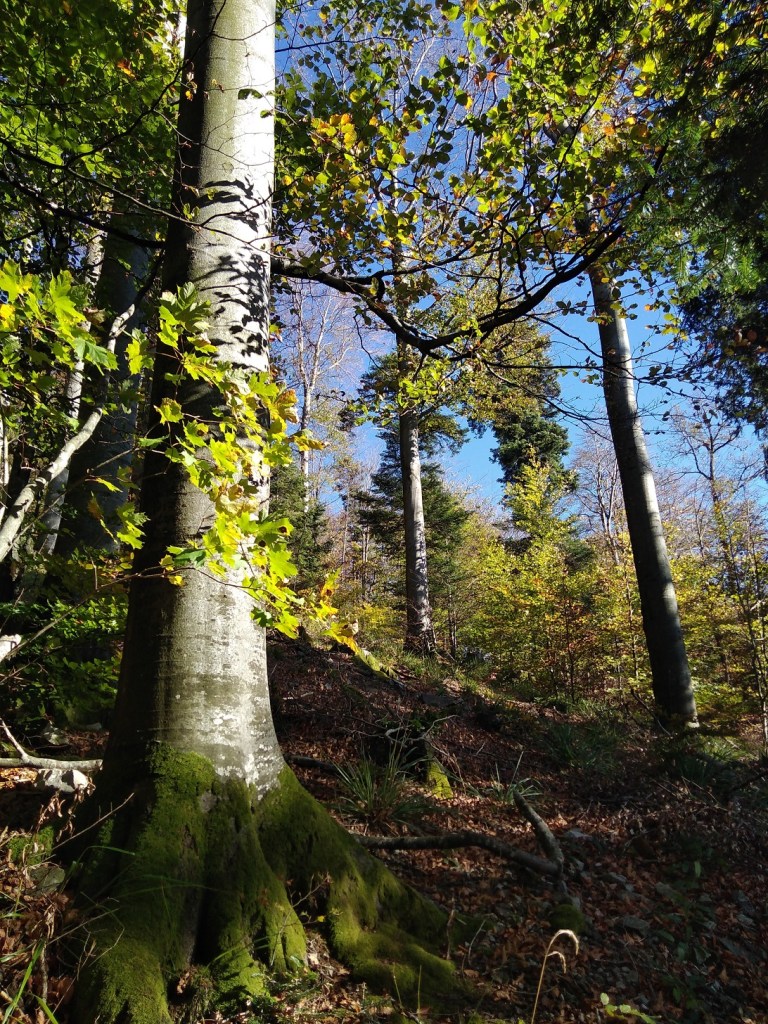
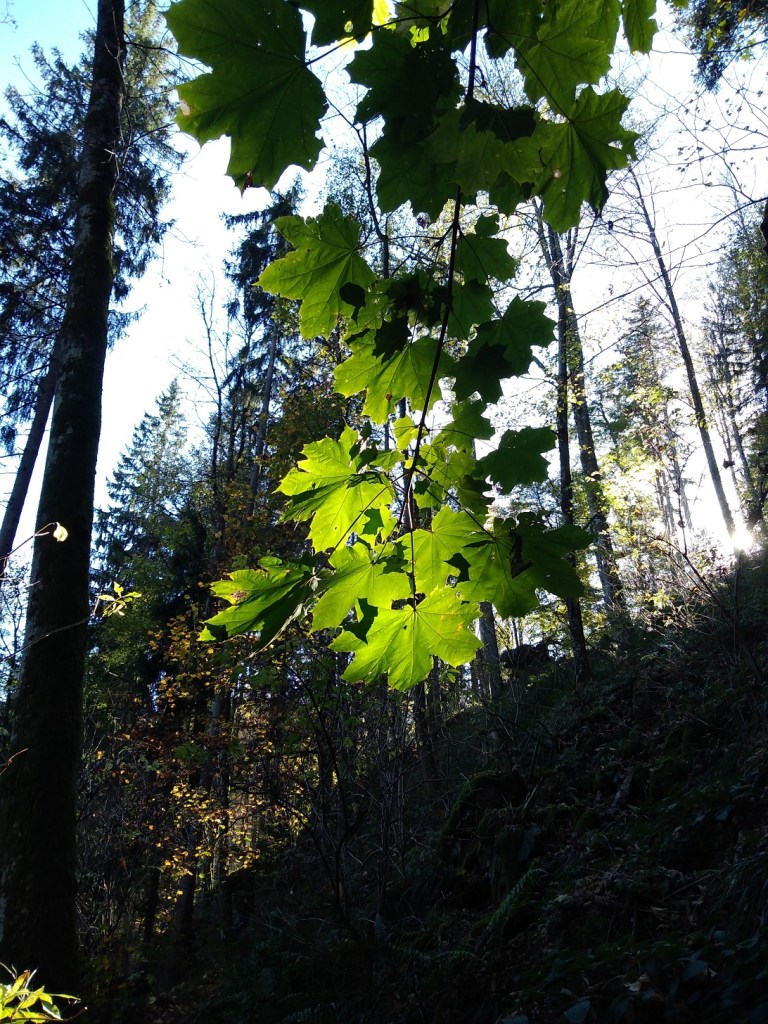
It was a sweaty start, stony underfoot, but some smiley ladies cheered me up. There were sweet chestnut trees and some fir. Later, a beech and the odd oak, silver birch and sycamore, delicate Michaelmas daisies delighted me, with scarlet berries heralding the winter season a few months away. The higher I got, the more wonderful the views.
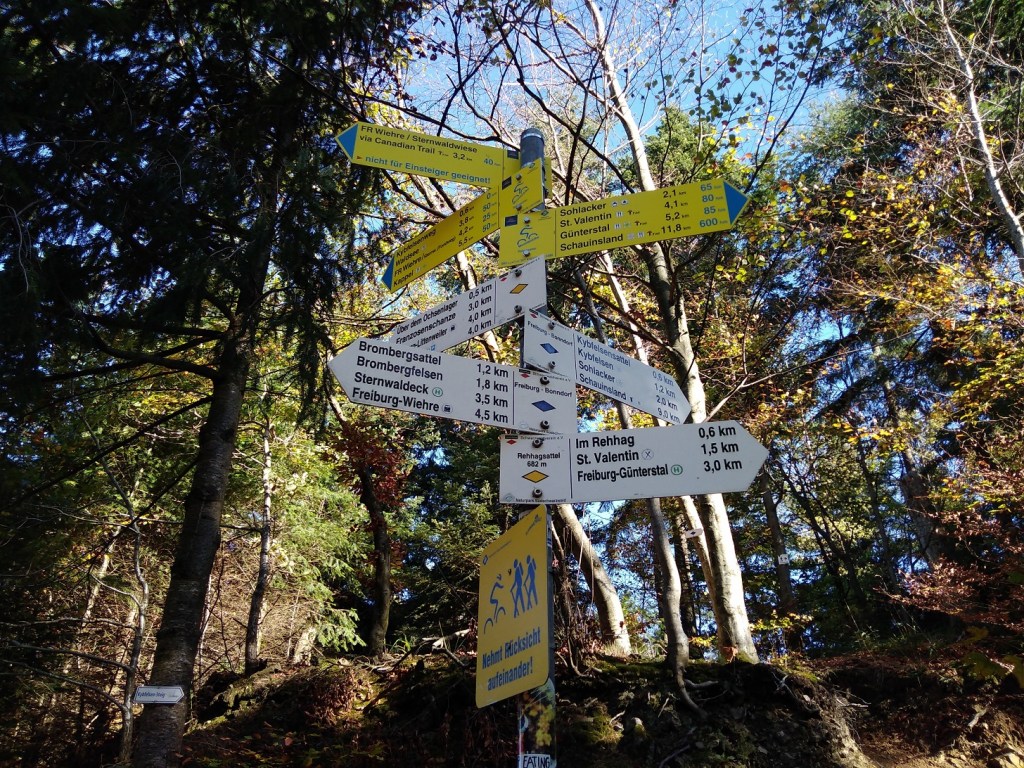
The Autumn leaves were falling and there was ample signage in places. A bird squeaked to get my attention – it was black with red under its tail, very smart. Then I heard knock knock – a woodpecker? Hmm, probably a European green if it was, with its red cap. There was the sound of cow bells and blue tits seemed to be playing. I stopped for a rest and a sun bathe, closing my eyes and taking in the peace. To start with I was a little overwhelmed with memories of other walks, but I breathed deeply and let other thoughts float in and out.
There are simply miles of wonderful strolling and one could easily get lost on purpose so that it never ended, although for that, I thought, everything would have to stay the same and inevitably my feet would tire and I would have to stop.
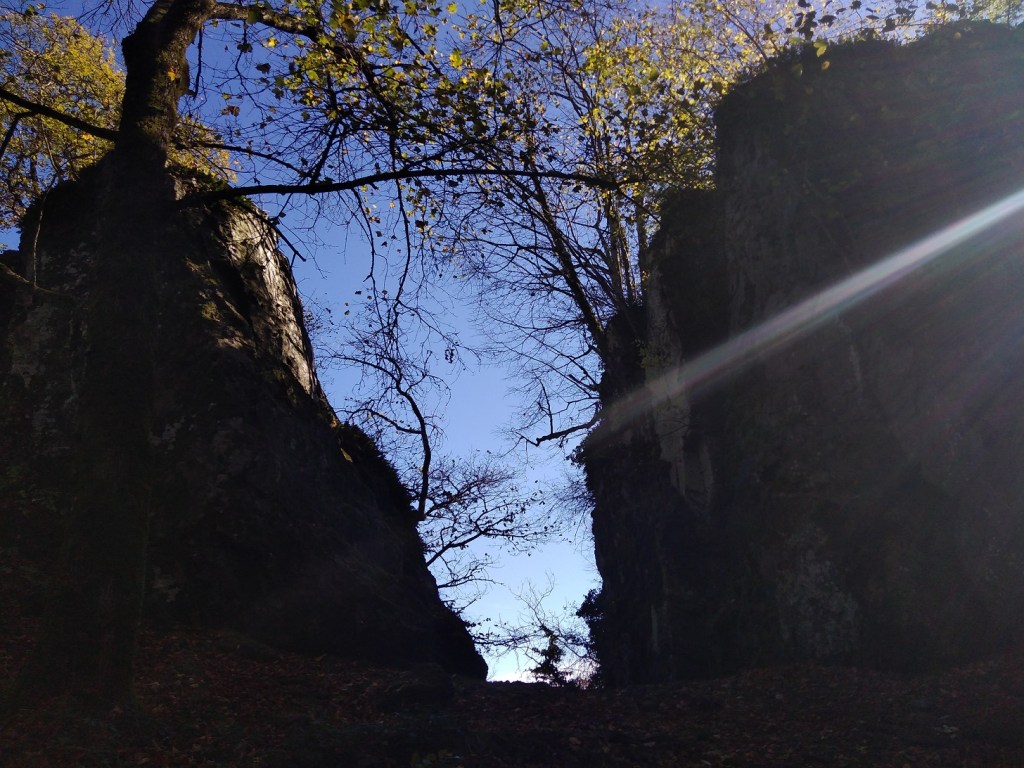
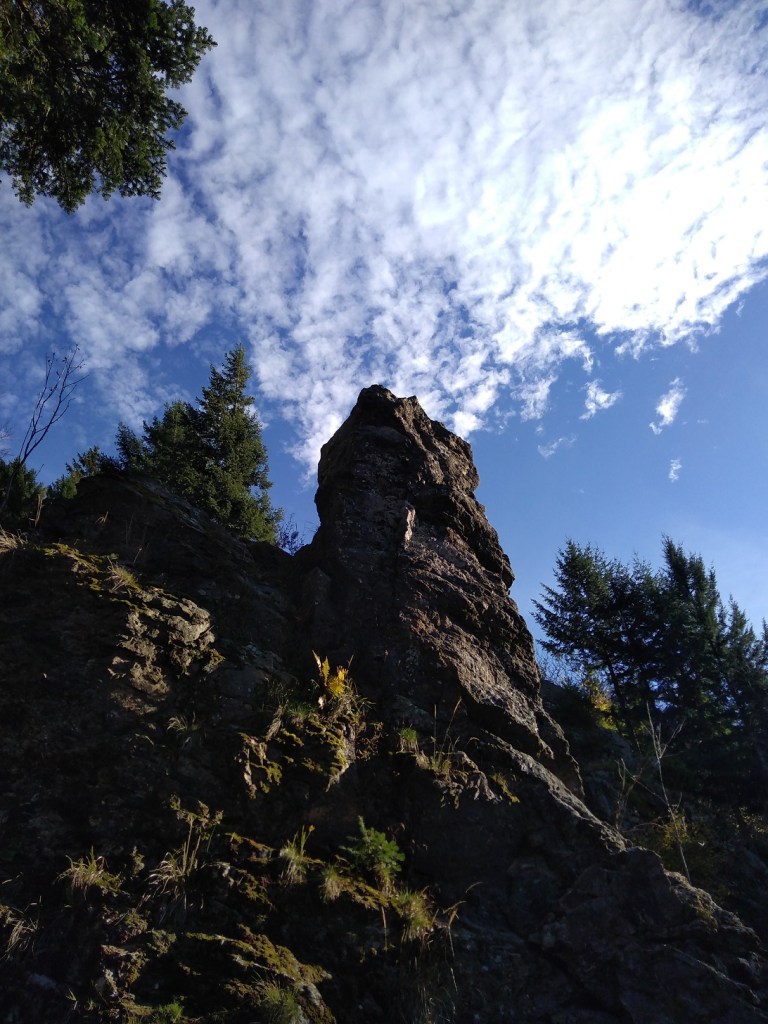
Crags and rocky passes, Schauinsland
I used my new staff, and my footsteps sounded hollow on the springy earth and piles of pine needles. Sometimes there were shush-dry heaps of fallen leaves, wind in the trees, and the slosh of water in the bottle in my rucksack.
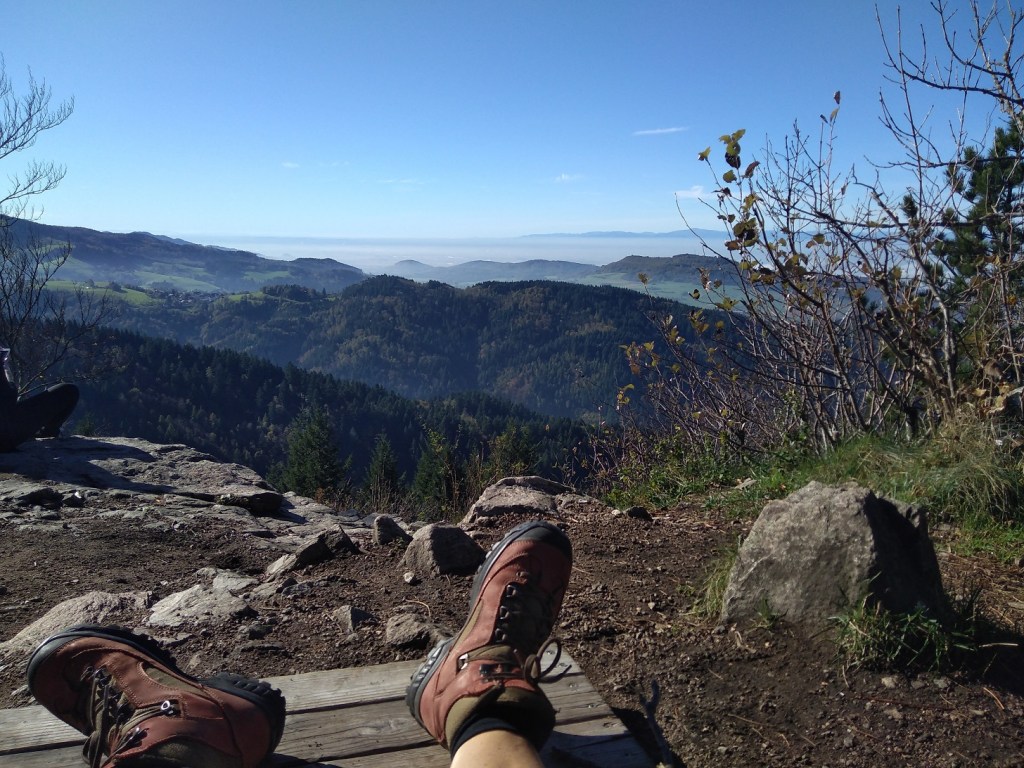
There were little huts to rest outside with your feet up. Schauinsland, Freiburg, Germany
The day had less light in it than I needed and I had to rush to get to the top so I could get back down before dark. In fact, there wasn’t time so I took 11 euros worth of gondola instead which was extremely steep and not for those who suffer from vertigo. It arrived at the official starting point where you can then take a tram into town rather than walk for two hours. I would recommend setting off at 9 am if you come during this beautiful season of the year.
Classic shot of the Black Mountains, Germany
More info: the drinks at the cafe at the summit are also really expensive but there are good, free toilets top and bottom. Find a way to avoid the motor bikes and serious male cyclists in all their gear as they zip past and are almost all unfriendly. You can drive or ride all the way or part of the way up. Tram #2 connects the town to Dorfstrasse. The 21 bus costs 9 euros.
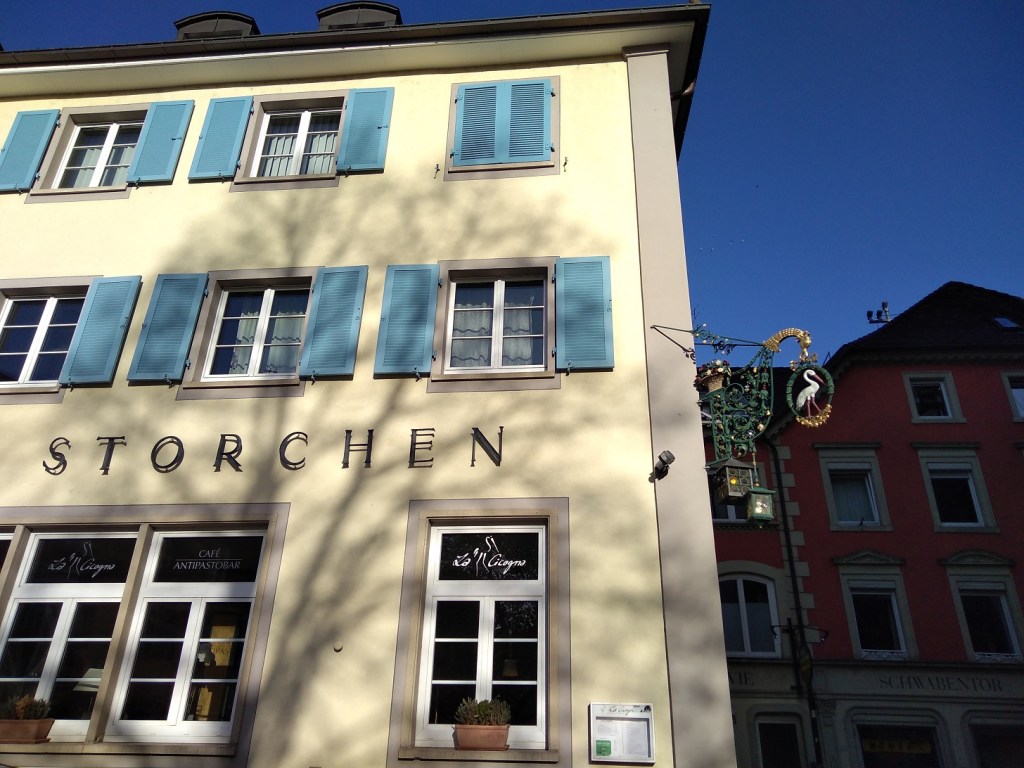
Late Autumn afternoonThere’s a pub with a beer garden at the bottom of the slope if you want it. I didn’t go in, so cannot say if it’s good or notI can vouch for the Storchen – warm, wi-fi and delicious pastries
I stayed at the Black Forest hostel in a 20 bed dorm for 17 euros. You need to provide your own pillow case and sleeping bag or pay extra for them. There is a good, small kitchen and friendly communal area with computers to share and board games. It wasn’t too far (20 minutes) from the bus station, but was full of football fans when I arrived. The staff at reception were very helpful.
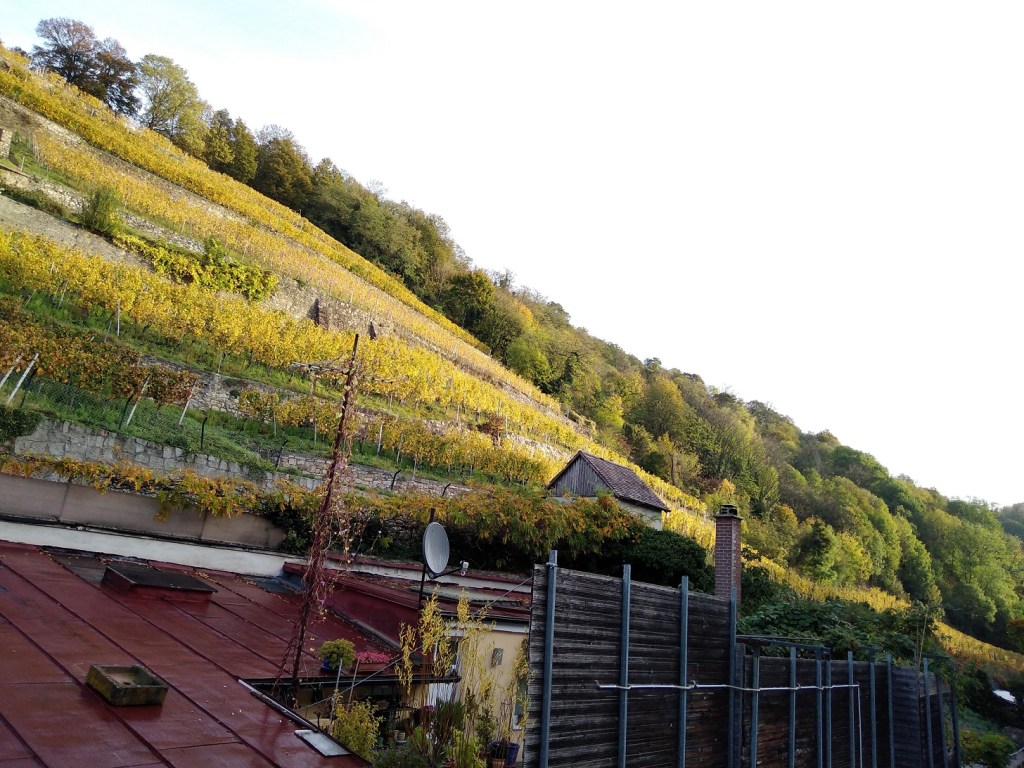
The view from the back of the hostel of vines growing on the hillside
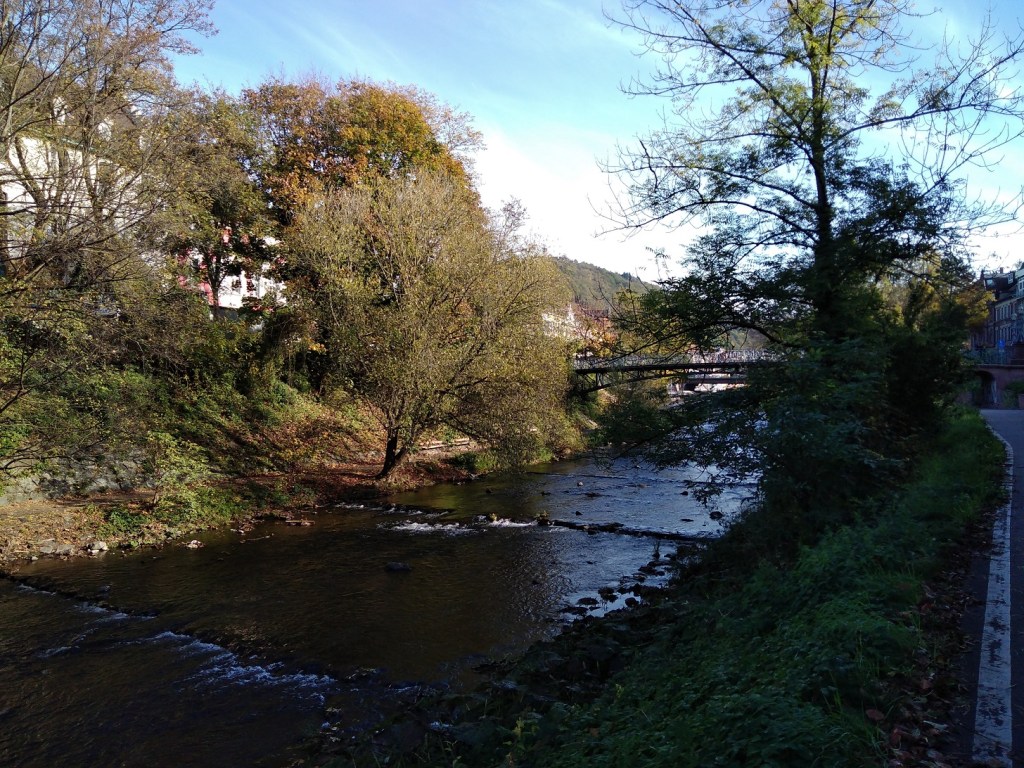
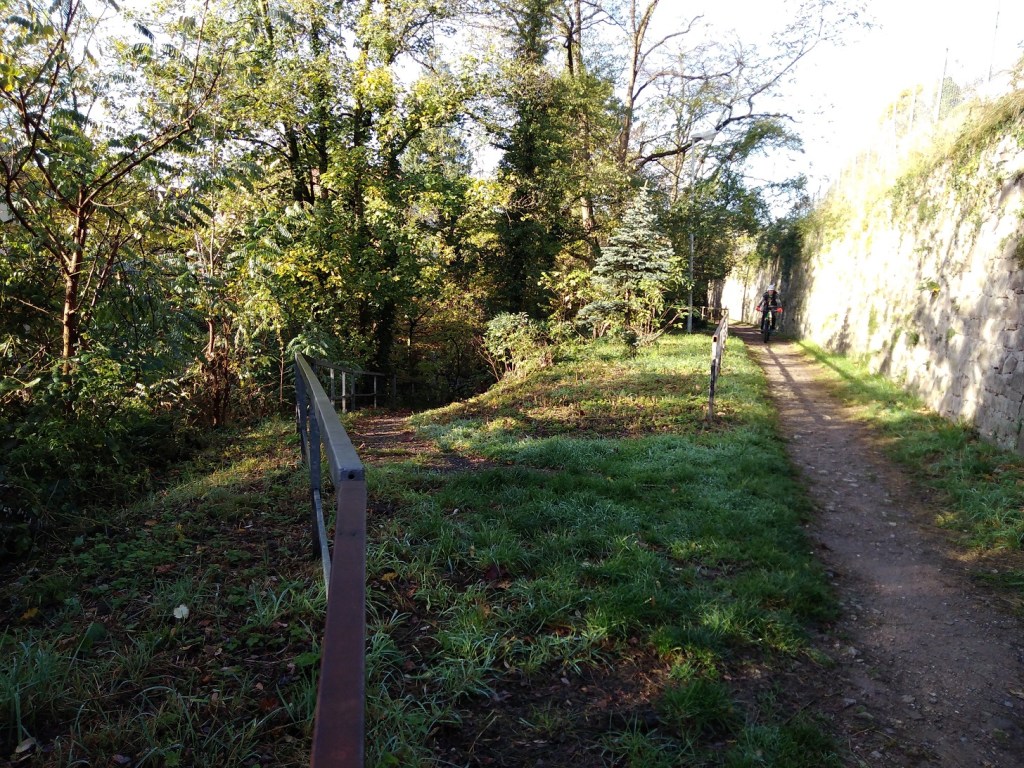
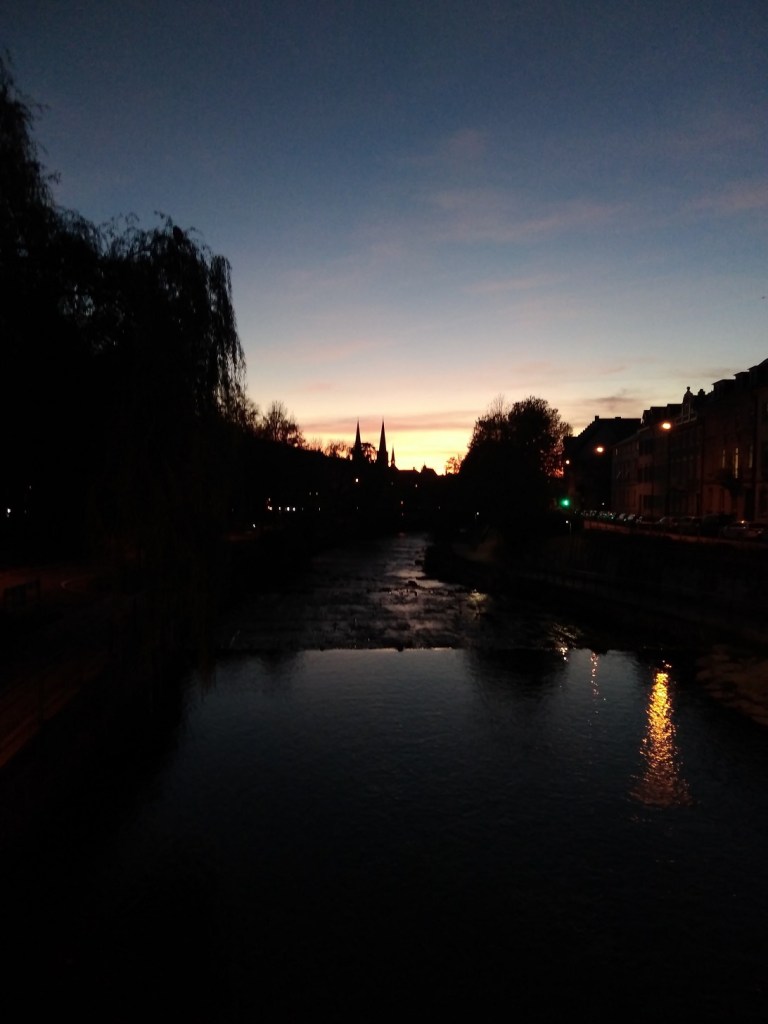
10 mins from hostel along the pretty River Dreisam under charming cast iron bridges was the supermarket.
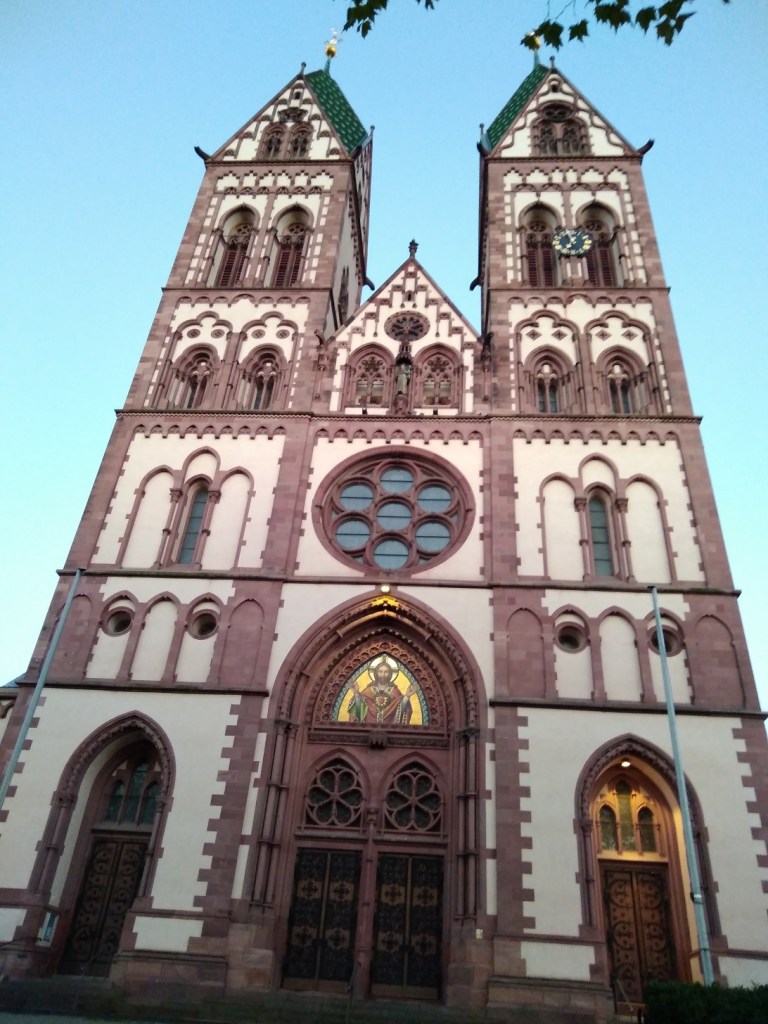
Cycle paths in the town of FreiburgJesus Sacred Heart Church, Freiburg
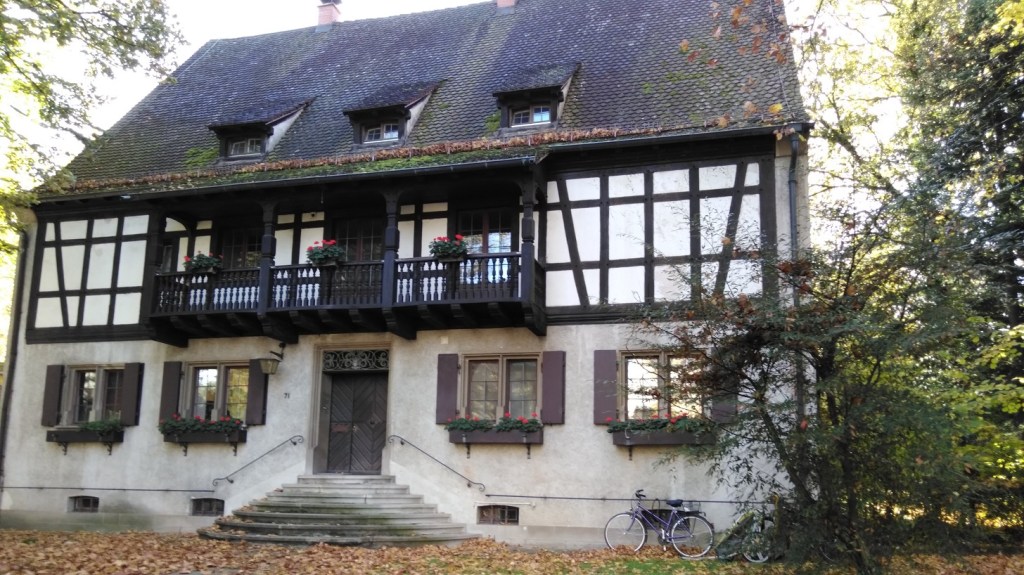
Typical architecture, Freiburg
From Freiburg you can easily reach Colmar in France on the Alsace wine route and Strasbourg, straddling France and Germany on the River Rhine. I highly recommend them all!
On the way to the train station
Beware – there are no buses between Basel airport and Fribourg in Switzerland, or at least there weren’t when I tried to get one. If you find one, do double check that it is to the west, into Switzerland and not the east into Germany. Because of the two languages spoken in Switzerland, Fribourg is also known as Freiburg, so you can see the confusion. That was how I got to visit this lovely place and I don’t regret it, but it was quite a big mistake!