Pilgrimage to COP26

Blog 3 Dunbar 17 October

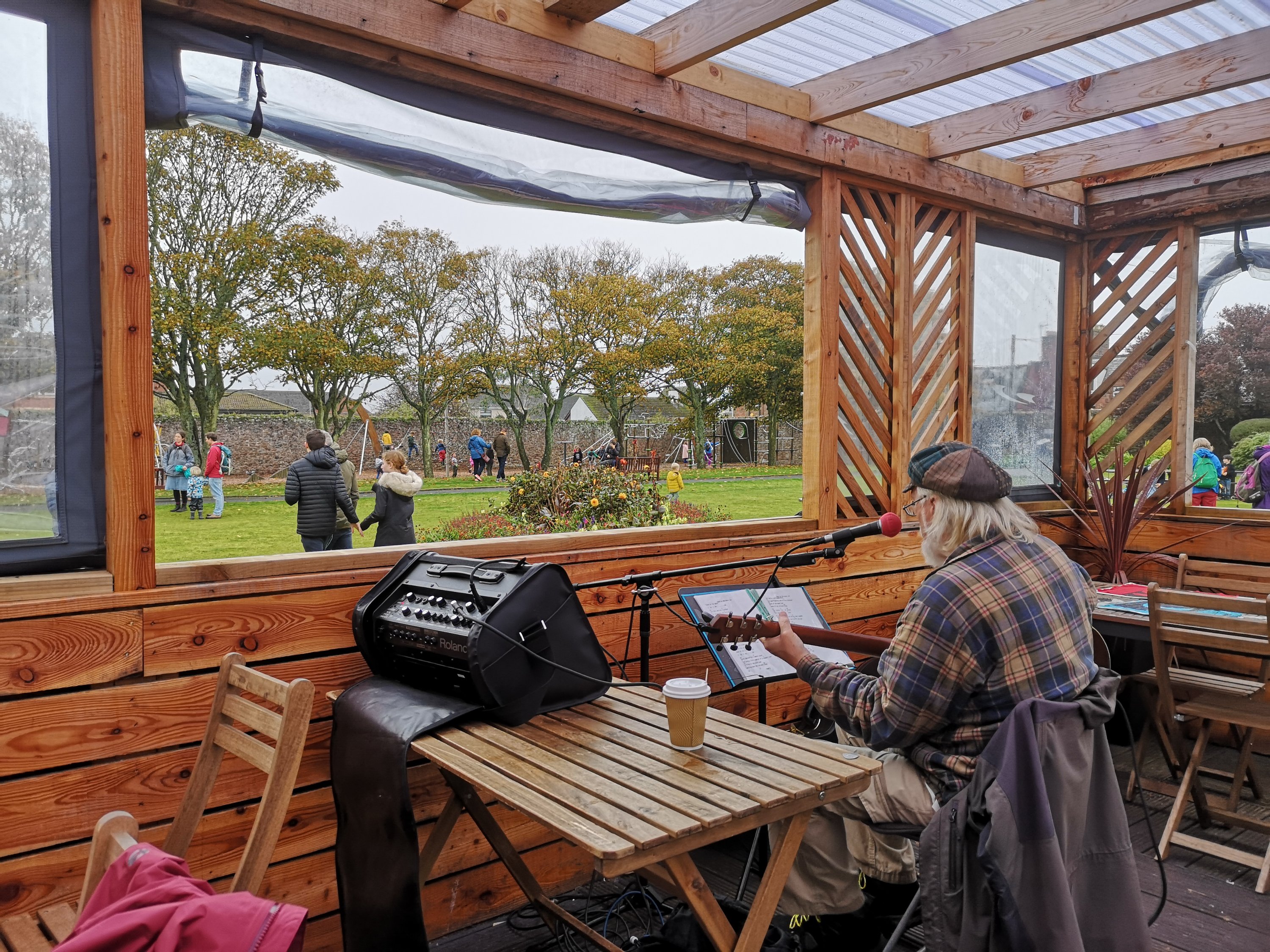
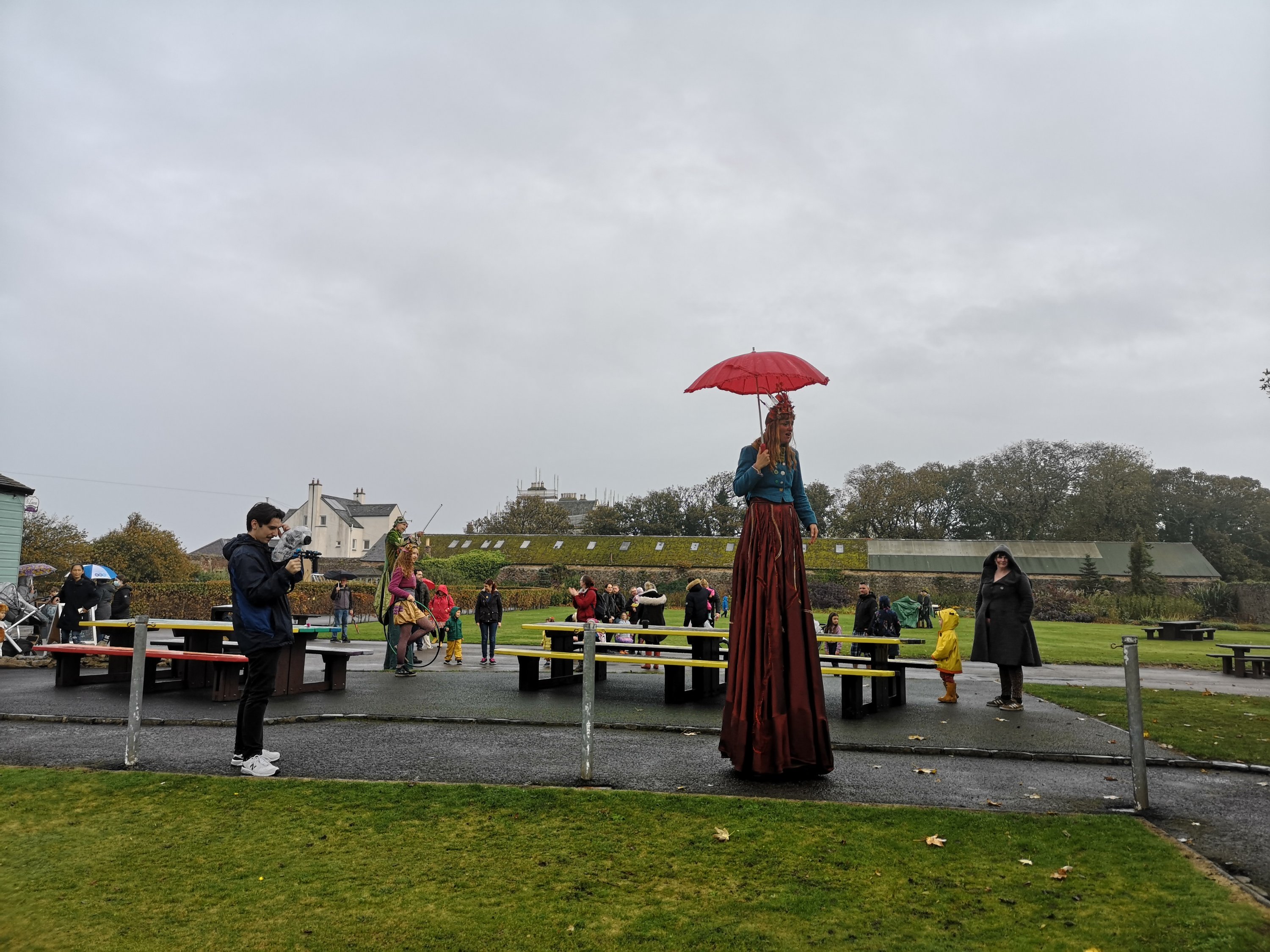
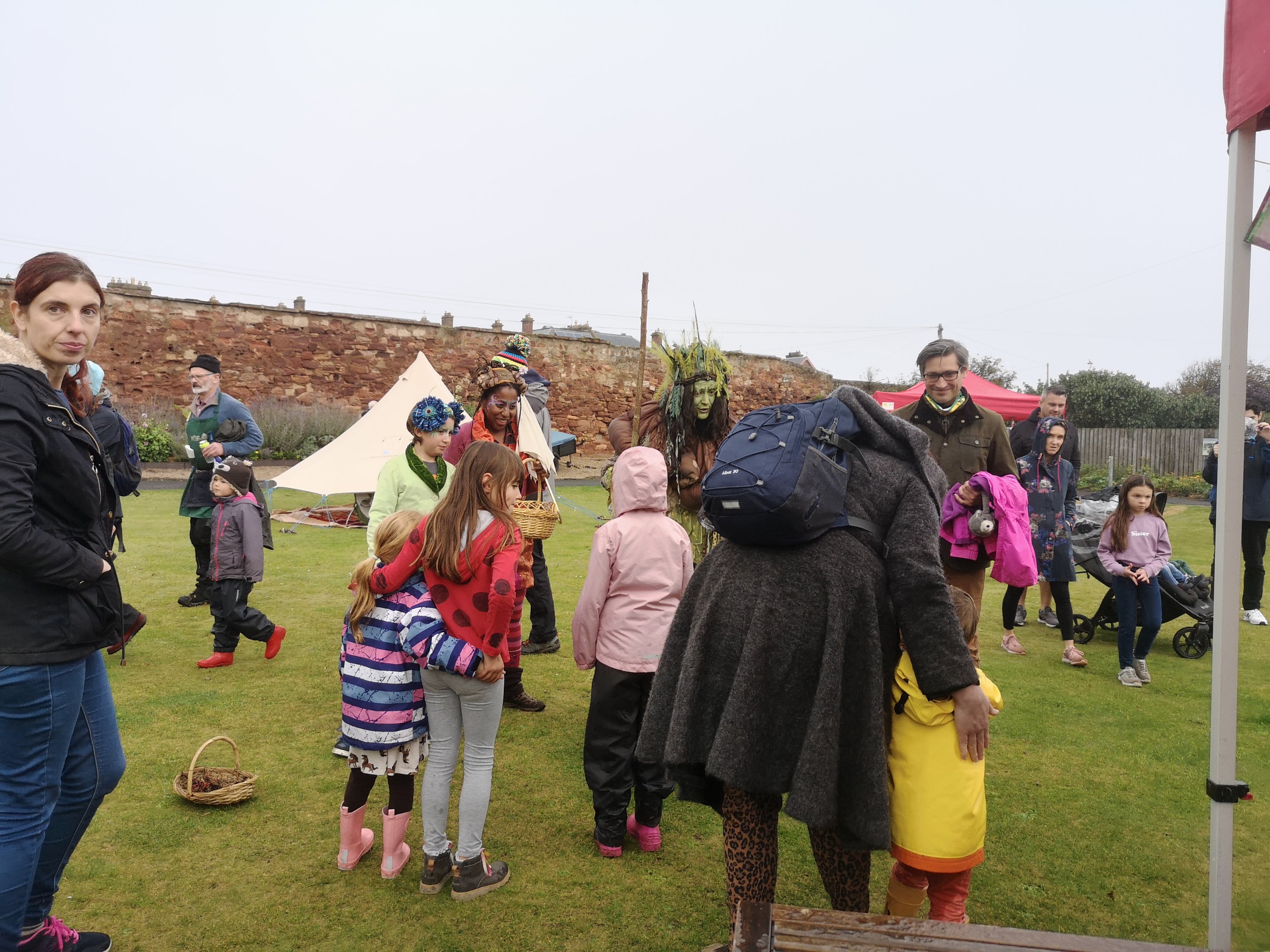
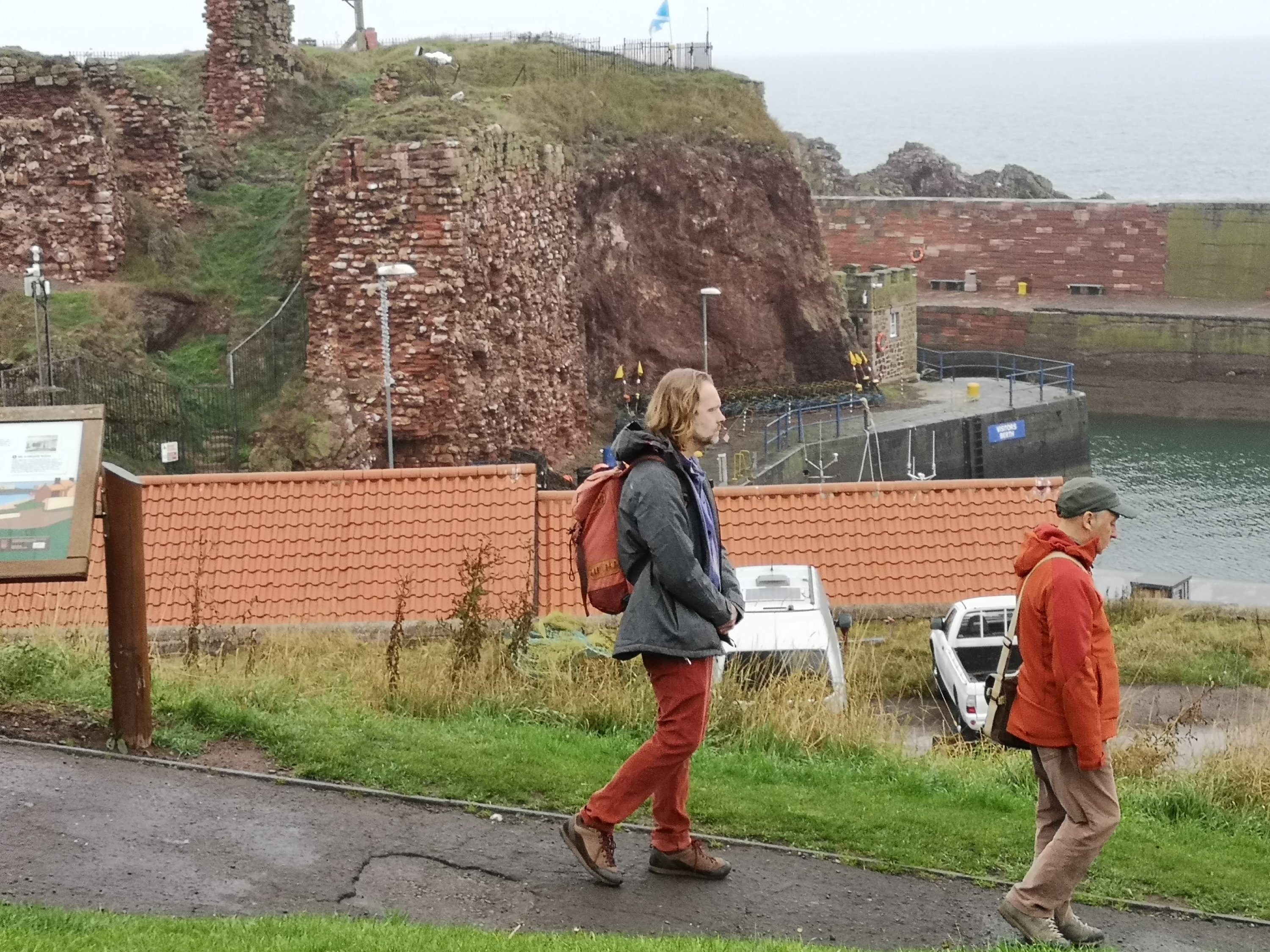
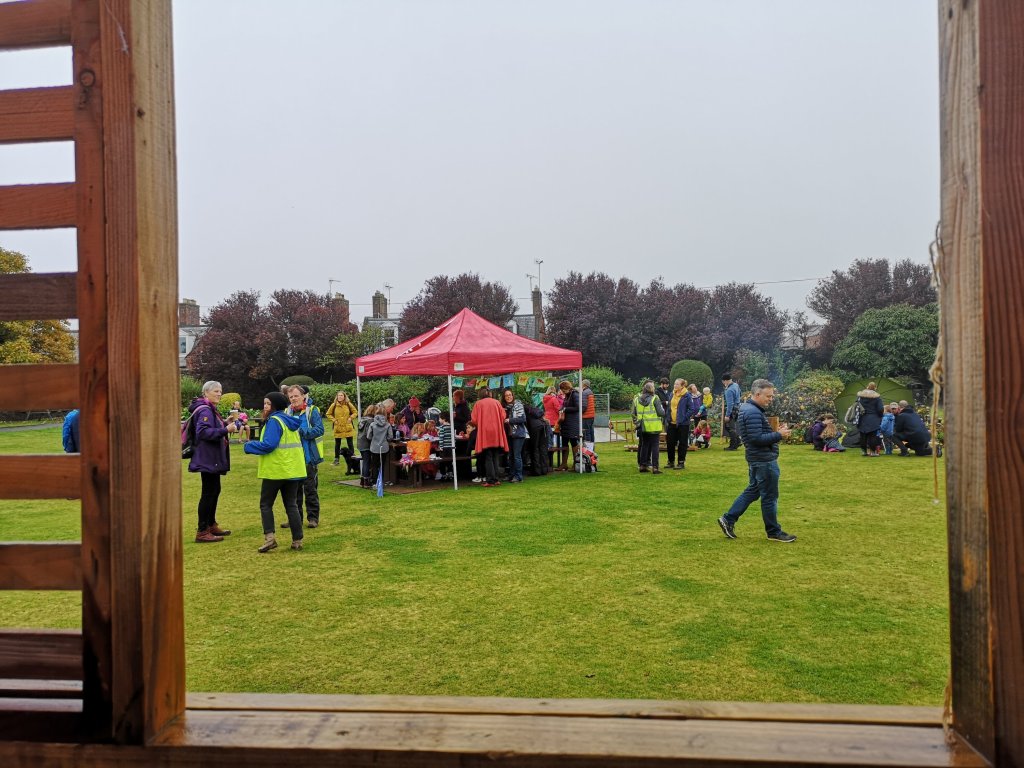
As two pilgrimages converged in Dunbar yesterday, the YCCN in relay from St Ives , Cornwall and this Pilgrimage for COP26, we merged happily with the people of East Lothian – women, children, men and umbrella-holding, violin-playing stilt walkers together with a green-faced witch.

The YCCN are calling on the government to lead the way on their climate finance pledges which have not yet been delivered in full, particularly for those countries who are suffering extremely from the climate crisis. It was announced that the
Labour party have agreed 3 out of 4 of the pledges on their website


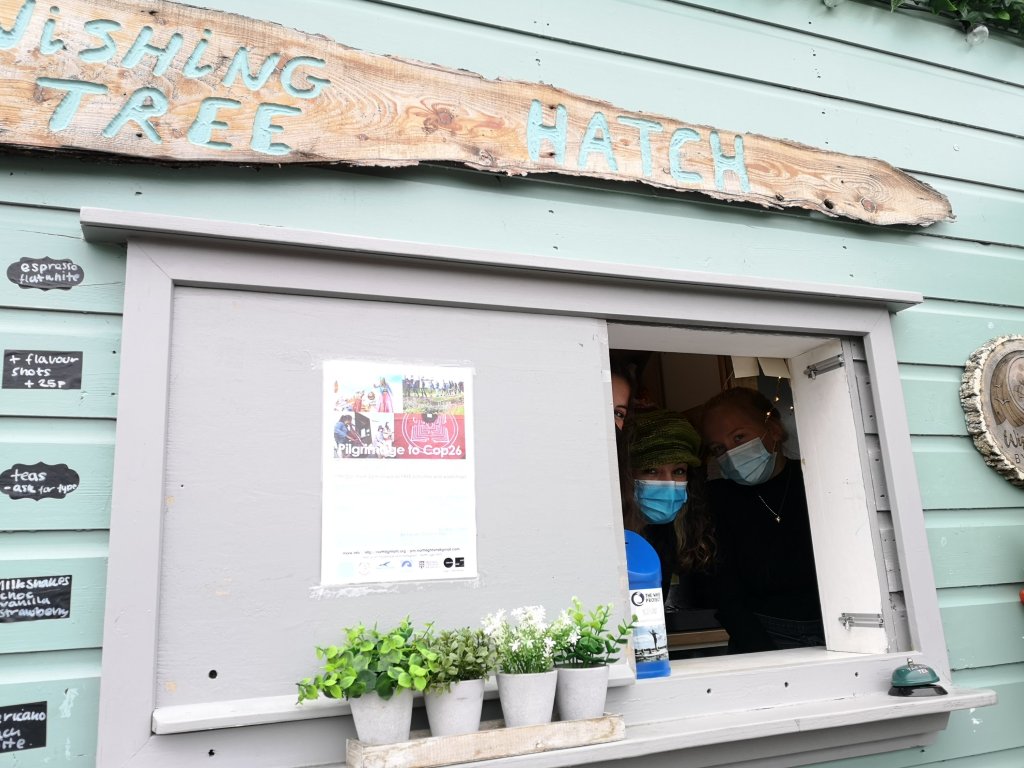
Climate change conversations erupted in the corners of fields, while waiting for delicious soup at the Wishing Tree by the Sea Cafe, and at the pizza oven.

 
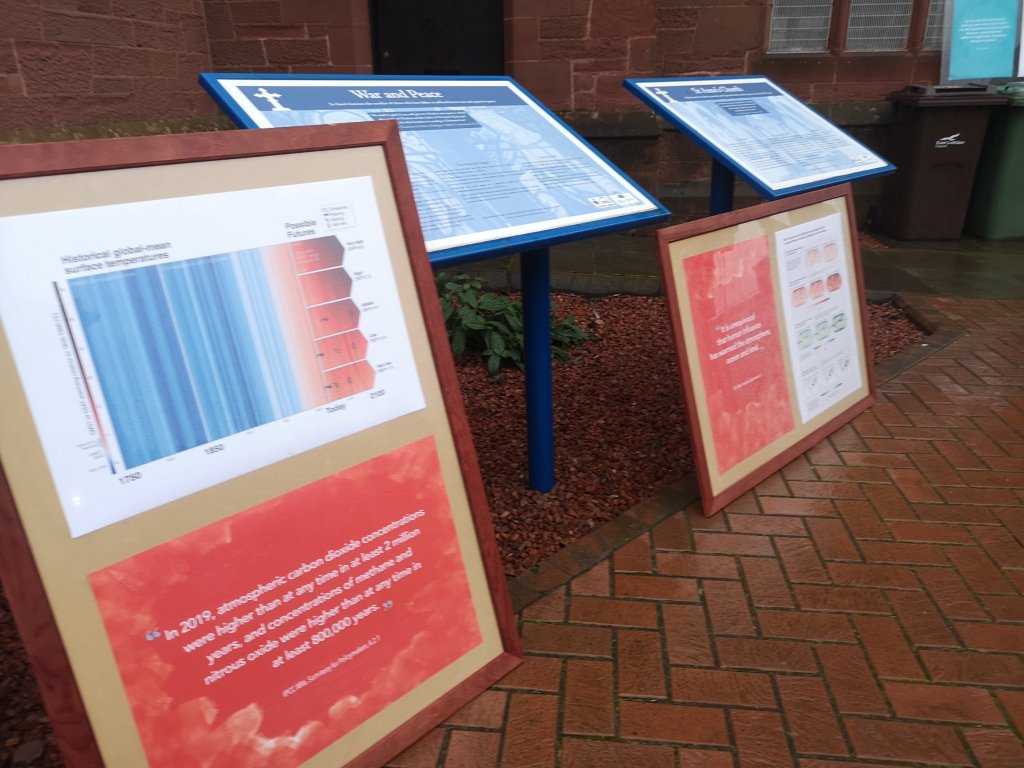
In the centre of town, we began a slow walk, lead by Karen (see yesterday’s blog), curving around the garden at the front of St Ann’s Church where we were read sections of the IPCC (Intergovernmental Policy on Climate Change).

We stopped the traffic.

Thousands of tired, nerve-shaken, over-civilized people are beginning to find out that going to the mountains is going home; that wildness is a necessity; and that mountain parks and reservations are useful not only as fountains of timber and irrigating rivers, but as fountains of life. Awakening from the stupefying effects of the vice of over-industry and the deadly apathy of luxury, they are trying as best they can to mix and enrich their own little ongoings with those of Nature, and to get rid of rust and disease.

John Muir, Our National Parks

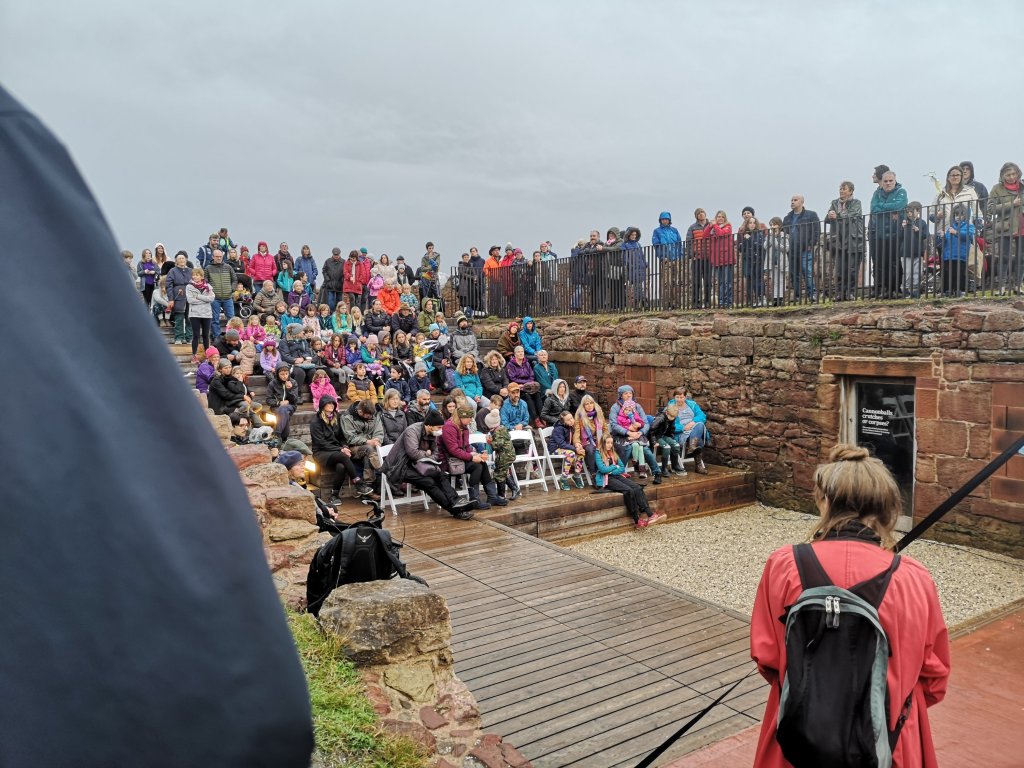
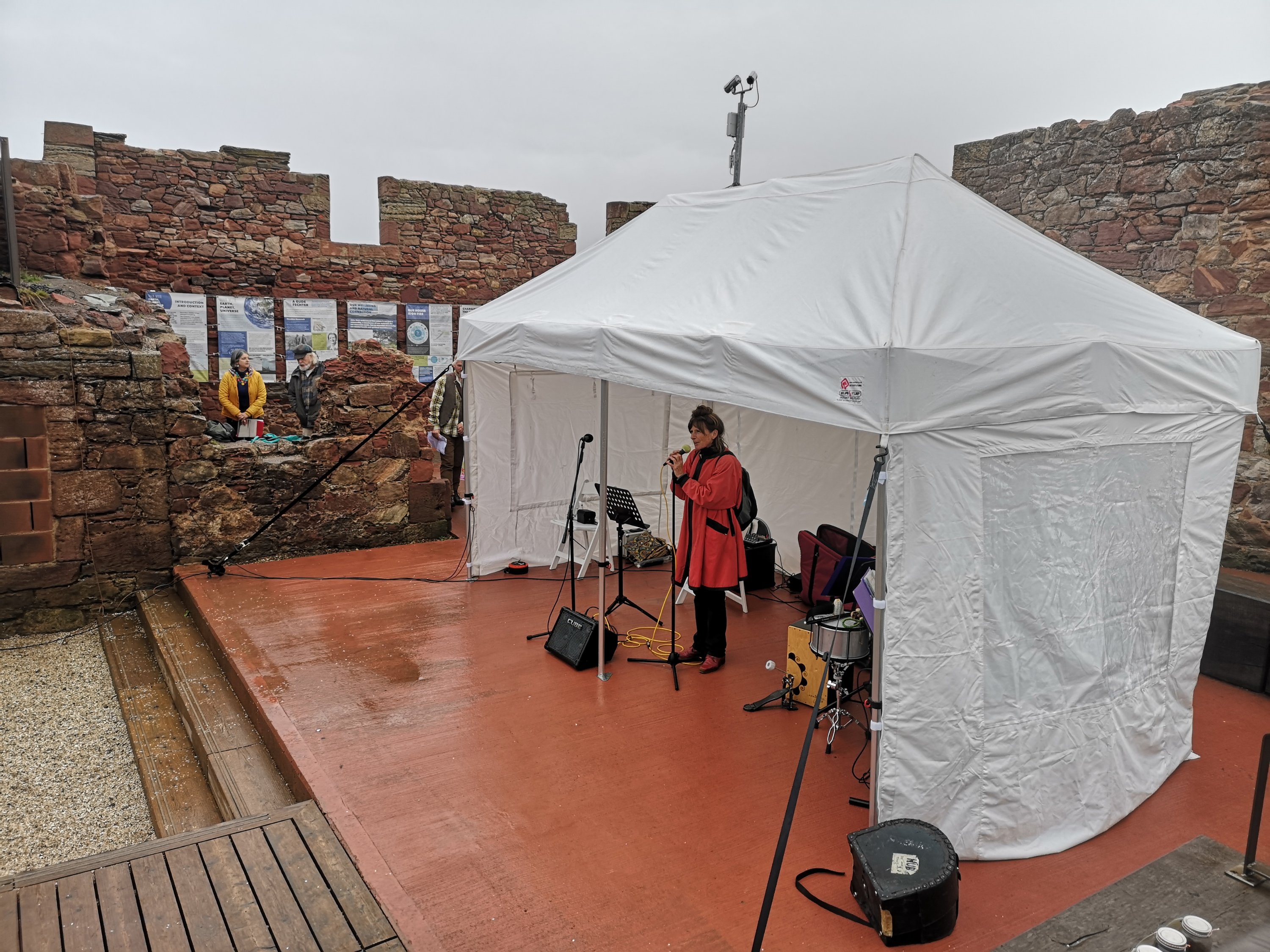
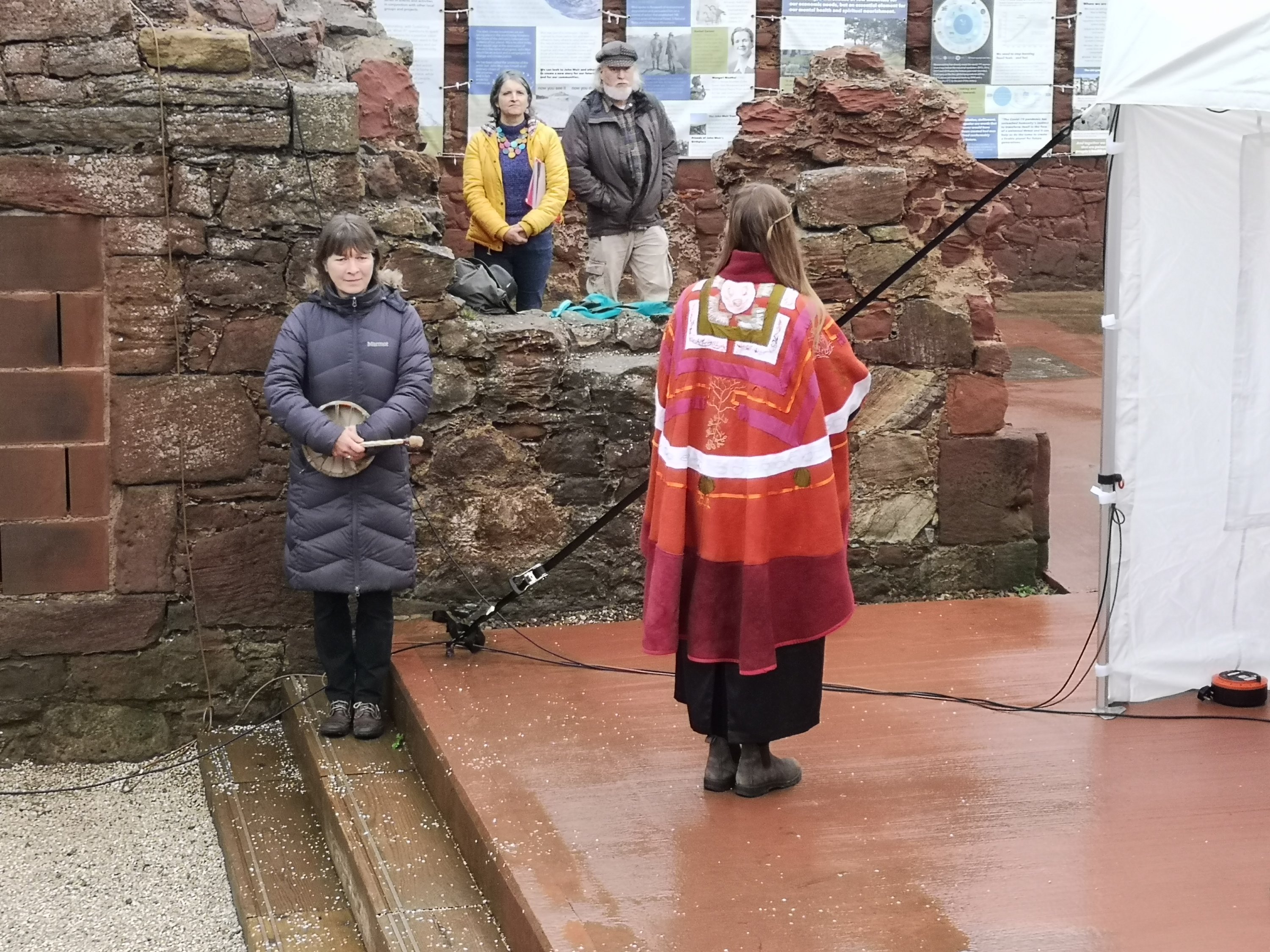
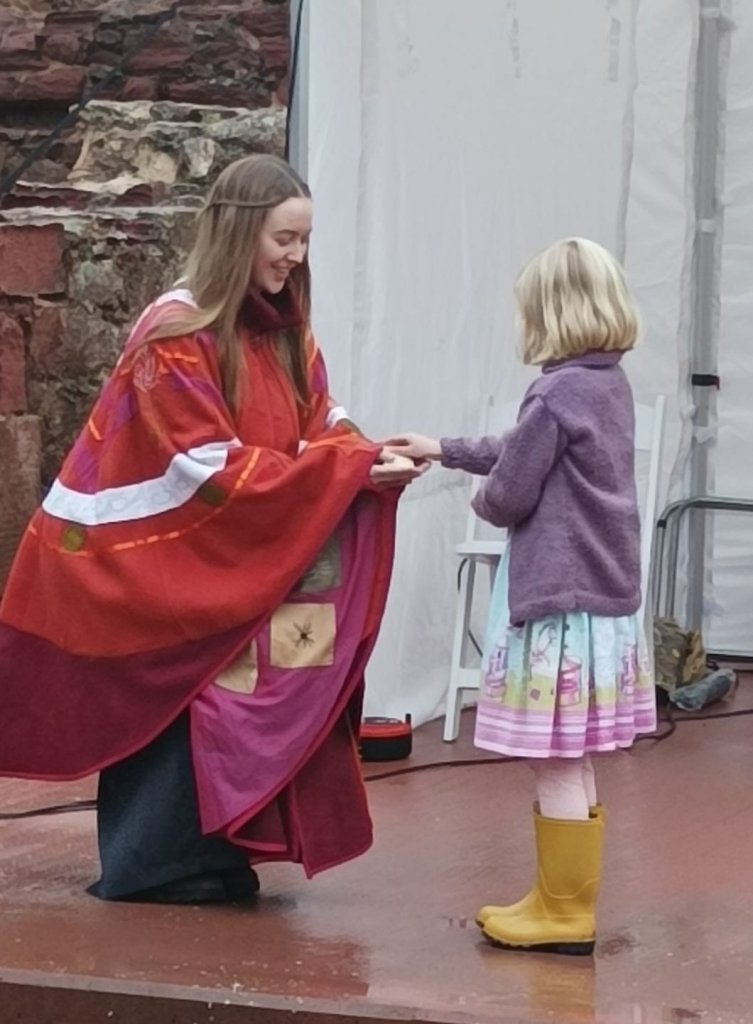
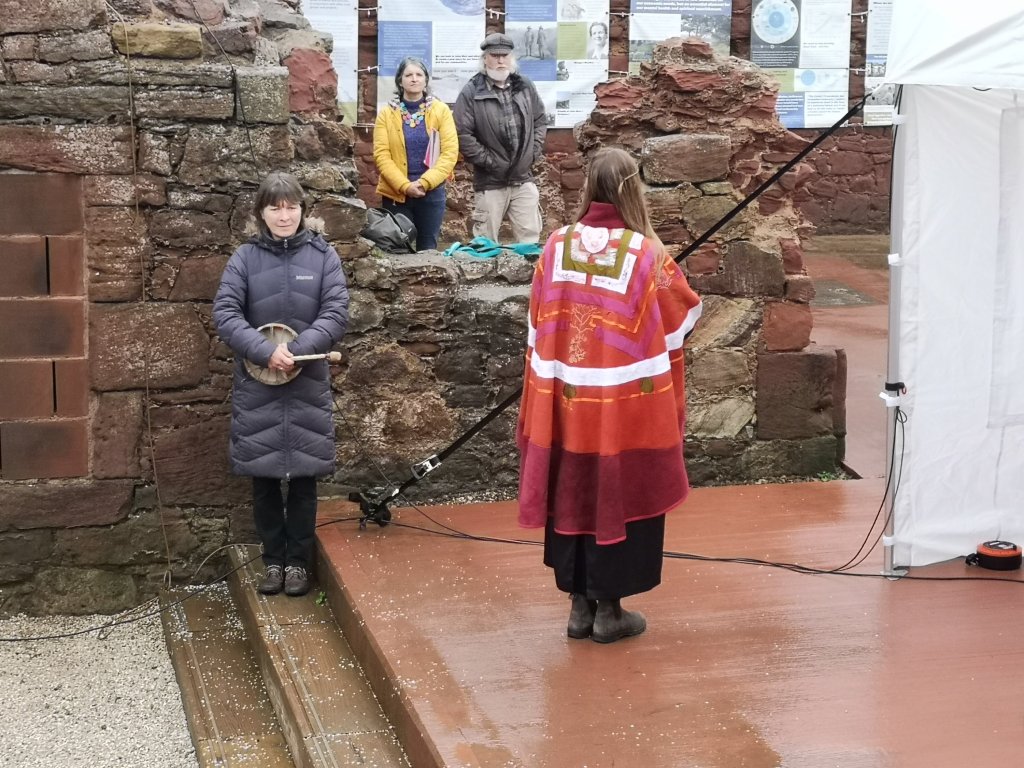
A huge crowd were waiting at the Battery at the sea’s edge for a ceremonious show. Representatives from John Muir’s Birthplace Trust and Friends opened proceedings. The Keeper of the Soil was gifted samples for the cape’s pockets, notably from land which Eve Balfour visited as a child. Founder of the Soil Association, she was one of the earliest women farmers, and the speaker, Chris Yule and his 6-year old daughter did her proud.

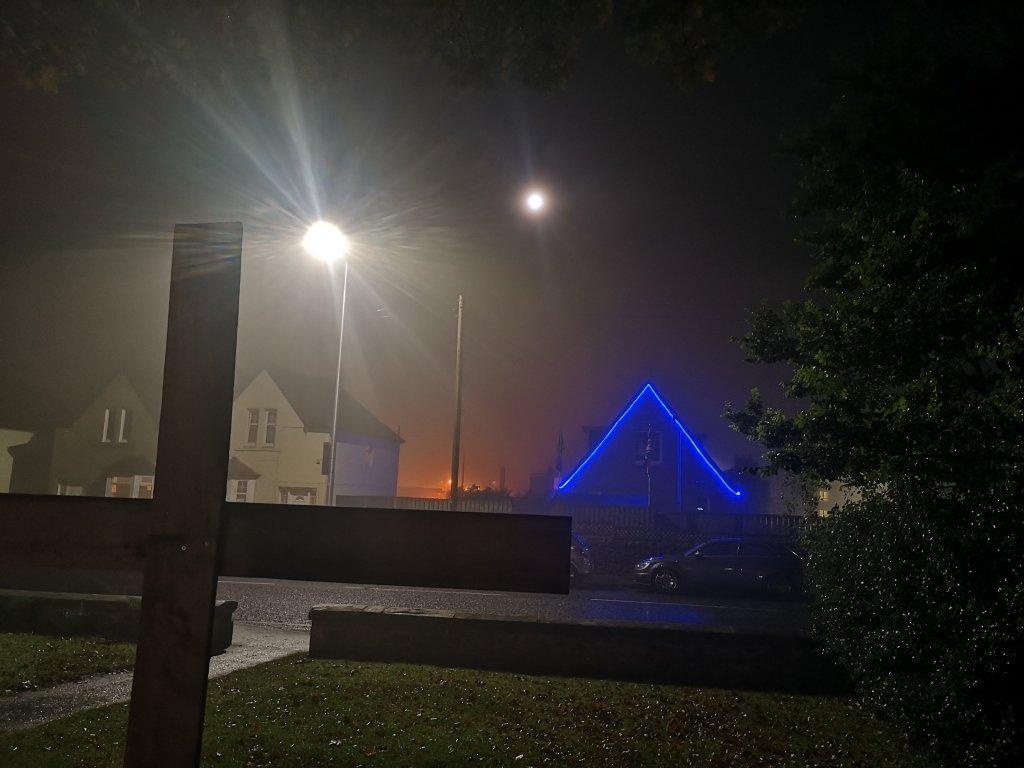
The beacon flashed as the nearly-new moon rose and we walked to the Belhaven Church for a Pilgrim’s meal arranged through Sustaining Dunbar with sourdough bread from the Station House Bakery.

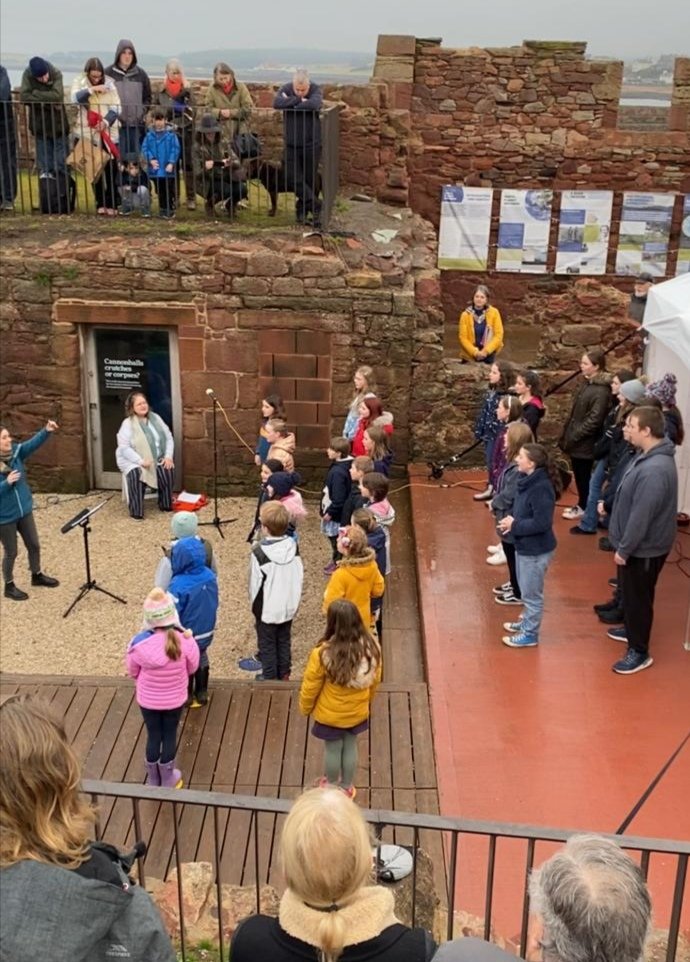
Karine Polwart wrote a song for the Dunbar Youth Choir which we all joined in with – smiles all round.

Tell me about despair, yours, and I will tell you mine

Mary Oliver, The Wild Geese

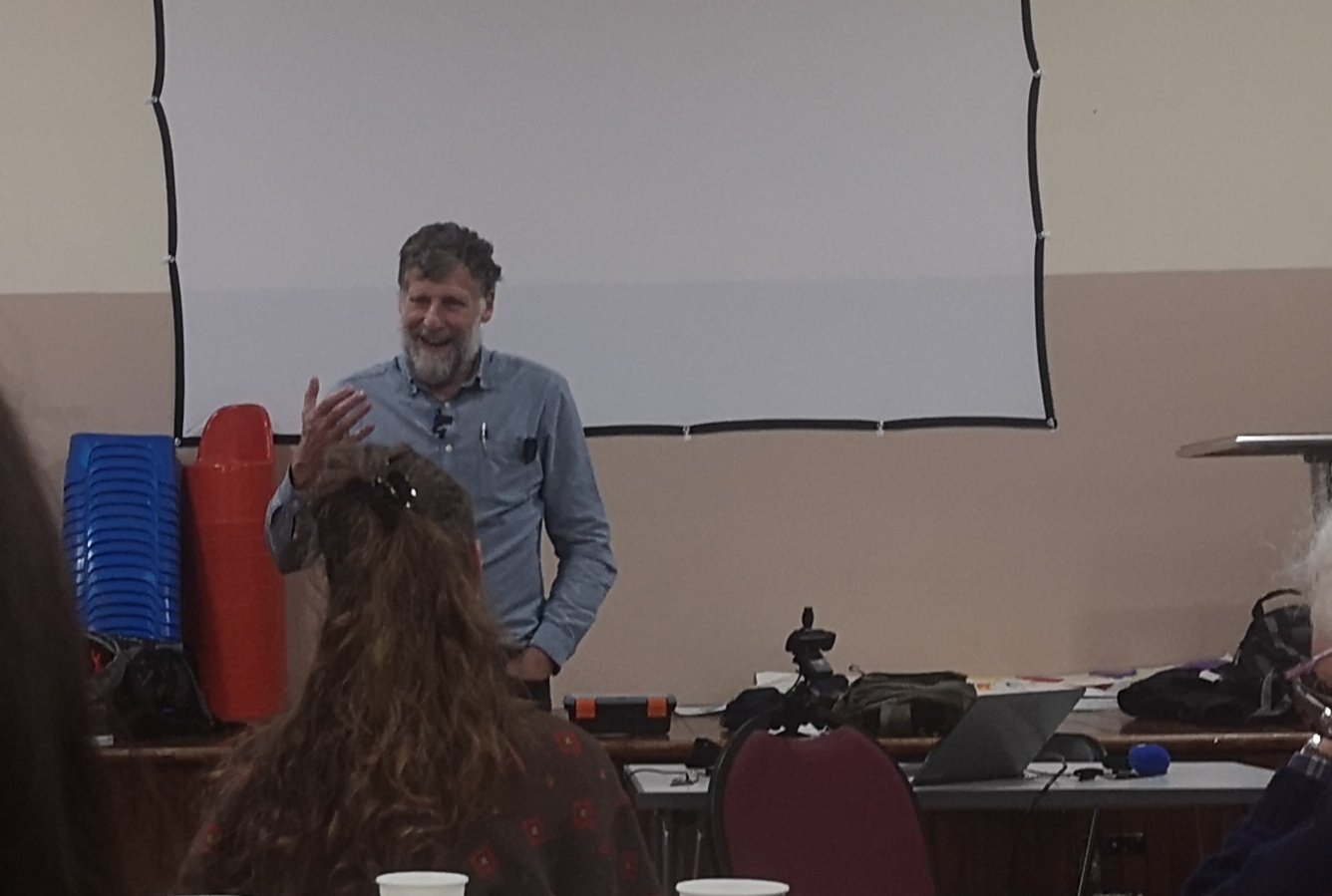
The highlight of the evening was a presentation by Alastair McIntosh who cautioned us to cease despairing, lamentation, yes, but not despair, and this chimed with the Mary Oliver quote which was shared on stage earlier that day.

Alastair quoted Alice Walker

Be nobody’s darling;

Be an outcast.

Take the contradictions

Of your life

And wrap around

You like a shawl,

To parry stones

To keep you warm

Alice Walker, from Everyday Life

Question from the floor: How do we make use of what we learn on pilgrimage when we get home?
Alastair’s answer: It’ll be in your presence. People sense if you’re connected spiritually. People share their stories with you because they intuit that you can hear them, it’s in your comportment and your bearing. Ask yourself, regularly, if you are still being honest, remember how you move to ground yourself, recognise the way it is and it isn’t.
He spoke about the phrase, Om mani padme hum, from the Hindu tradition, meaning ‘when mind and heart come together’, adding, when you do what you are doing from a spiritual place, ….. , that work is love made visible.

Pilgrimage for COP26 – why am I walking?

Blog 2 – Why am I walking? 17 October 2021

There are lots of things I could do to face up to the serious climate crisis I find myself part of. I could stay at home and recycle, join a committee and work towards political change, lie down on the M25 and get put in prison to raise awareness, I could throw myself in front of a horse to get attention.

Why walk instead of doing anything else? Why would I stop earning (I’m self employed), pay for someone to be at home to look after my cat, and walk in the unpredictable Scottish weather?

The statements of intent of Pilgrimage for COP26 are these:

  • We’re walking to raise awareness of the climate and ecological crisis. 
  • We’re reflecting on that crisis as it relates to our own lives, the communities we pass through and the lives of those already impacted; both human and more-than-human.
  • We’re building a community of witness and resistance committed to climate justice now and in the wake of COP26.

Yet still I find myself asking, but why walk? I could run or cycle and there are lots of other ways to raise awareness, to reflect, and build a committed community.

My answer: because walking is special.

  • It is very slow, a counterpoint to the speed of life. (Google tells me it would take me 1 hour and 24 minutes to drive from Dunbar to Glasgow now, but it will take us 8 days to walk).
  • It leaves very little trace; although I disturb undergrowth, probably inadvertently step on unsuspecting creatures, and leave my temporary footprints, it is the least destructive way of moving across the country.
  • Each step reminds me that I rely on the earth to hold me up and that the earth relies on me to stand on it – it’s reciprocal.
  • The vibrations that my stepping cause are not the same as the shaking of the ground by a lorry, say, rolling on tarmac. The moving through air I do at my pace (approximately 3 miles an hour) contrasts with the displacement a Boeing 737 makes.
  • Walking interacts with weather. Not knowing whether I will be walking through rain, sun or snow at the beginning of every day is, yes, not abnormal for this country at this time of year, but the attentiveness I have when I walk, and the fact that I have walked here before, means that I will notice the climactic differences. The skin on my cheek will be aware of the relative warming, my muscles of my back will sense the increased wind speeds in comparison to last year, the joints of my feet will register the dwindling peat they walk on.

The quality, and energy of walking is different, and it matches the quality of focus and the listening energy I want to apply to this issue.

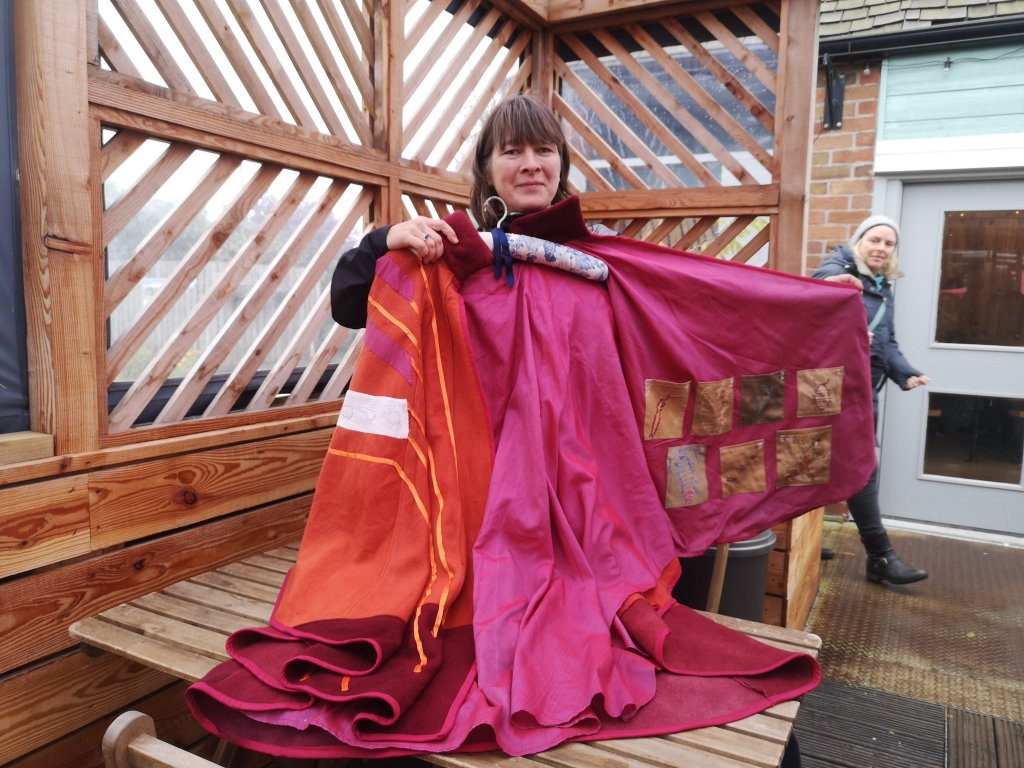
Natalie Taylor who devised the Keeper of the Soils cape and and Roxy Ambrozevich wearing it

What we have collectively wrought (most of us) upon the environment, is so very complex. There are strands of destruction, fibres of difficulties and damage which have become interwoven over centuries, a fabric of knots and snags and imperfections brought about by misinformation, neglect, greed and thoughtlessness. And when you pull one thread, it all starts to unravel and that’s scary and huge to see; it’s hard to know where to begin to stitch it all together again in a more durable and compassionate way.

Natalie Taylor with her Keeper of the Soils cape

Though I am not a religious person, my belief in the act of walking gently and kindly, allowing myself time to notice and reflect, is like the nun’s faith that sitting quietly and performing her daily duties mindfully will make a difference; that opening her heart to the way things really are and facing that, will affect change, that it will alter the fabric of life the way it is now.  I am a Shiatsu practitioner and those of us who give Shiatsu know that because the whole universe is made of the same stuff, chi, we can affect it with a thought, touch or word.

Or a step.


Walking for Water

Walking for water is not
going for a breath of fresh air,
a pilgrimage,
a stroll,
a hike.
It is not
a parade,
a protest march,
a sponsored whatever.
It is not a way
to stretch your legs,
or have that conversation.
Walking for water is not
to see an unmissable sight.
It is not on any body’s bucket list.

It is the flight of a migrating bird,
a cruel calculation of distance, fuel
and energy burned.

by Lydia Kennaway from A History of Walking (2019:25)

The Pilgrimage for COP26 has now begun.

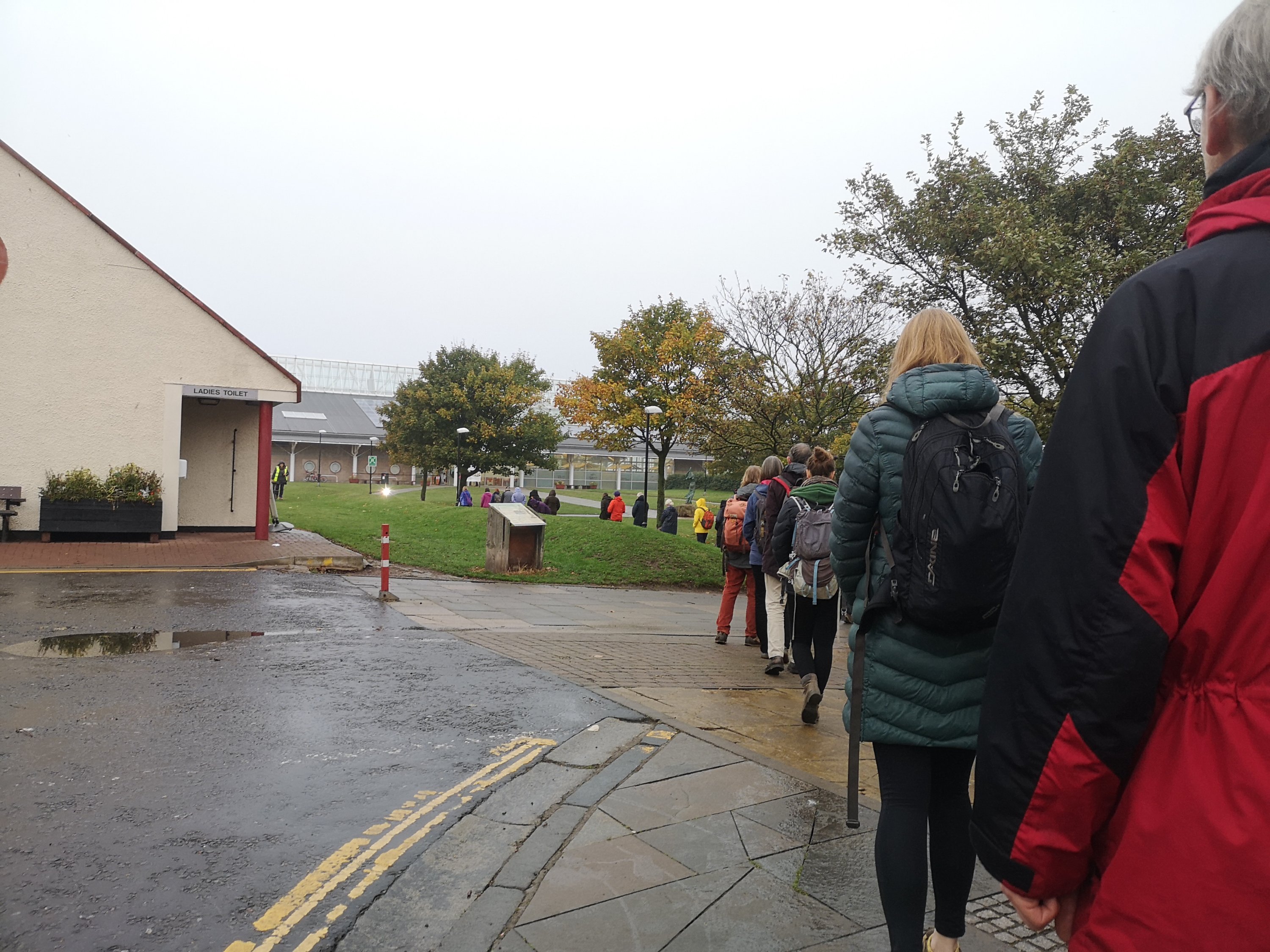
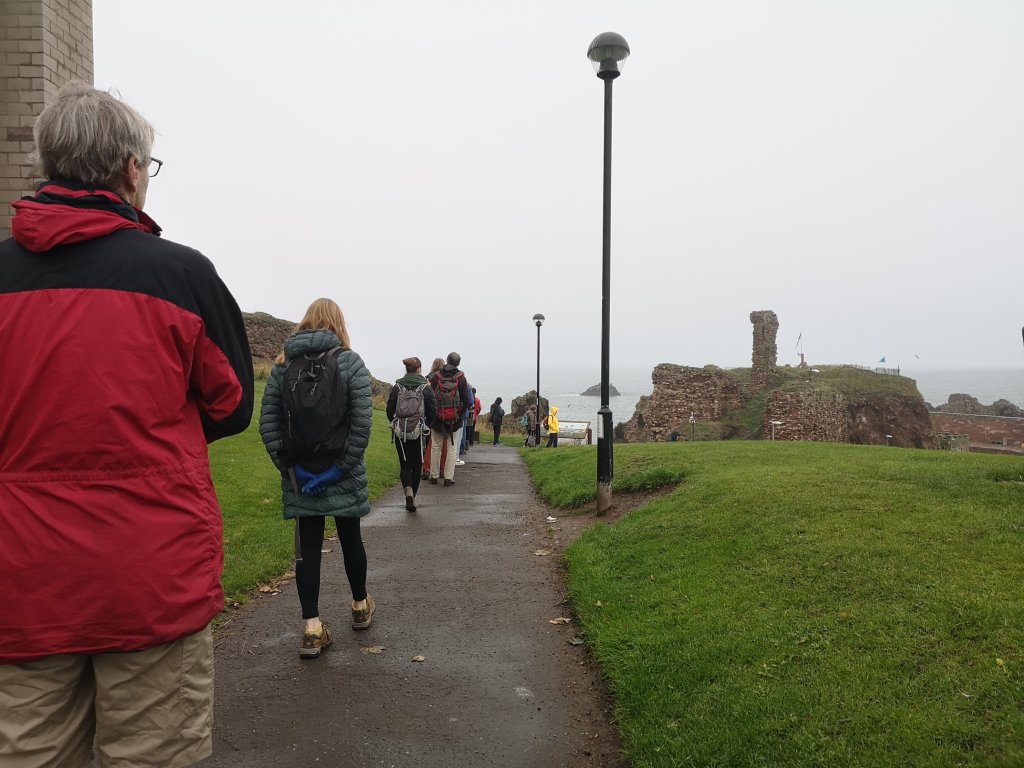
Slow Walk in Dunbar to launch the Pilgrimage for COP26 with Karen Gabbitas. 30 people participated

#pcop26 @pilgrimageforCOP26

Pilgrimage for COP26

Blog #1 for the Pilgrimage for COP26

On Sunday 17th October I will embark on the Pilgrimage for COP26 with a group of like-minded others. We will assemble in Dunbar for a celebration of Natalie Taylor’s the Keeper of the Soils, a speech from Alastair McIntosh (author of Poacher’s Pilgrimage), and other activities organised by North Lights Arts.

On 29th October, all being well, we will walk into Glasgow after travelling parts of the John Muir Way and St Ninian’s Way, on foot, in a collective effort. We will make “A walk and a learning journey … to reflect on the climate and ecological crisis in anticipation of the COP26.”

Our route visits

  • Dunbar
  • North Berwick
  • Aberlady
  • Portobello
  • Edinburgh (where we will stay on Saturday and Sunday)
  • South Queensferry
  • Bo’ness
  • Falkirk
  • Kirkintilloch
  • Glasgow

taking in coastal, cycle, urban, industrial, canal and river paths.

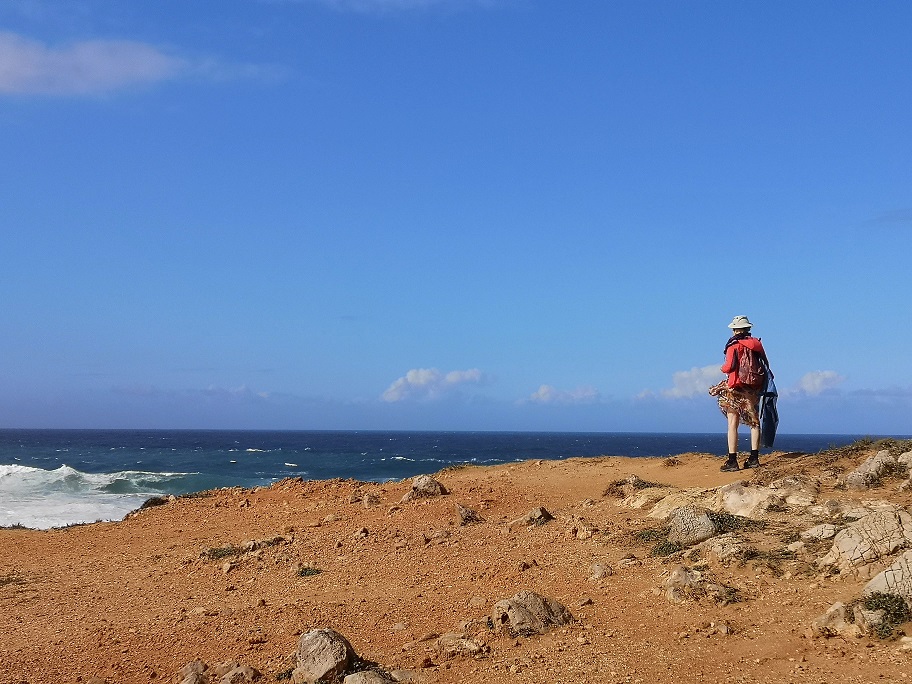
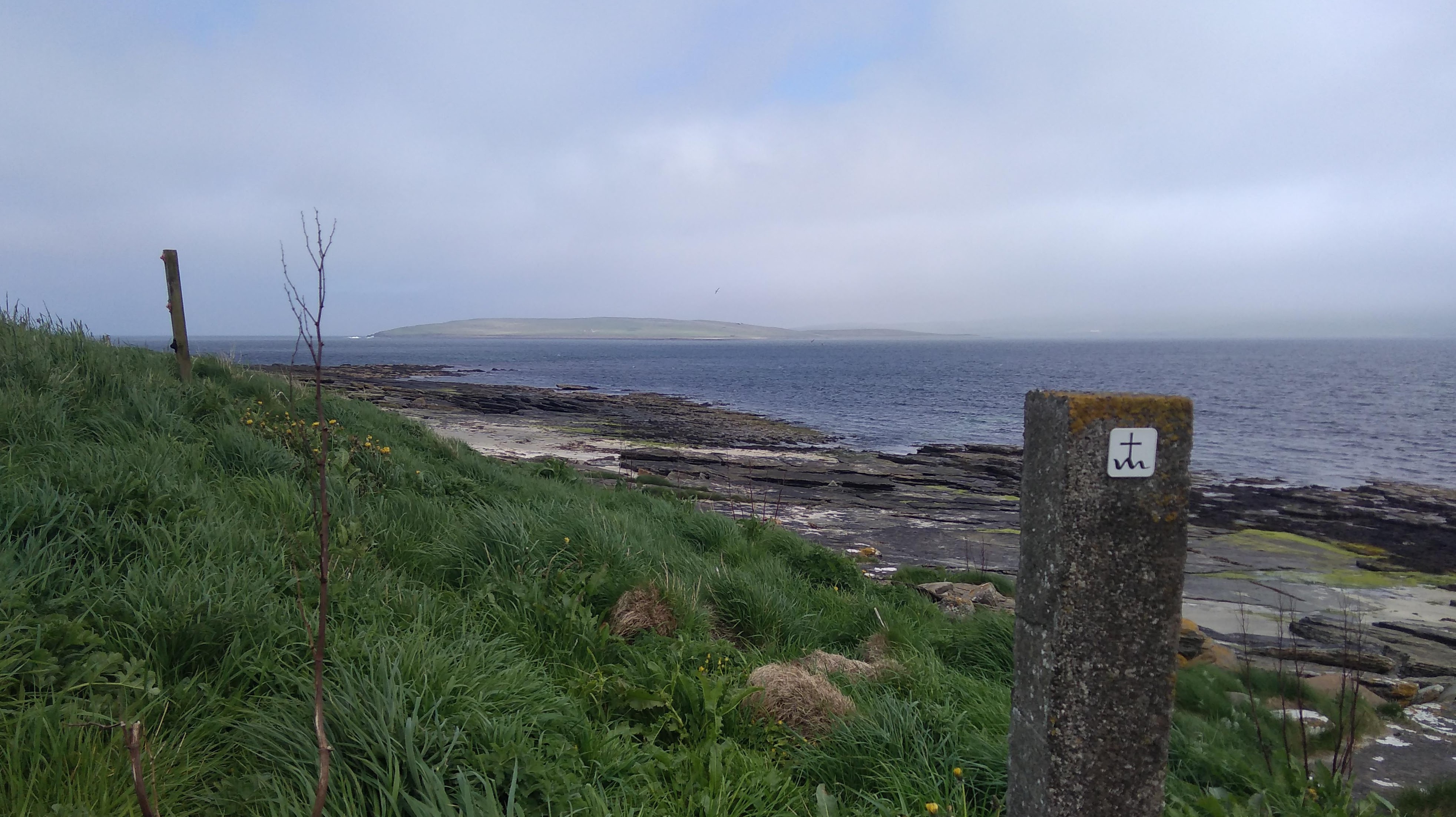
Many of you will know that I enjoy walking secular pilgrimage, that the act of stepping out each day with a simple pack on my back satisfies something vital in me. Walking sequential trails which connect town to country to village to city, whether the Camino de Santiago in Spain, the Via Sacra in Austria or the St Magnus Way in Orkney, is a way to reflect on, process and enliven my regular life.

This pilgrimage differs specifically from any of the others I have done before because it will be done in community. I am a solitary walker and I value my privacy highly, even though I do meet people along the path and enjoy their company at times. This COP26 pilgrimage, however, is a group activity. It invites people to walk together for a few hours, several days or the whole, and to be a part of a growing conversation about the many facets of the climate emergency in the light of the international meeting of world leaders at the beginning of November in Glasgow. We will discuss, think about, and inevitably come up with questions, maybe even solutions (practical or ideal) in the face of the situation we find ourselves in. Whatever happens we will be able to support each other in our feelings – grief, frustration, anger, hopelessness – in the face of what is happening to our beautiful world right now.

My focus for the pilgrimage is on the link between grief and walking, something that arises over and over, not just for me but for others as well (see the book Marram by Leonie Charlton for example). My enquiry will build on my previous writing (Working with Death and Loss in Shiatsu Practice’ (Singing Dragon 2020) and articles/blogs) and the Shiatsu client work I have been engaged in over the past 30 years, as well as my own personal rambles.

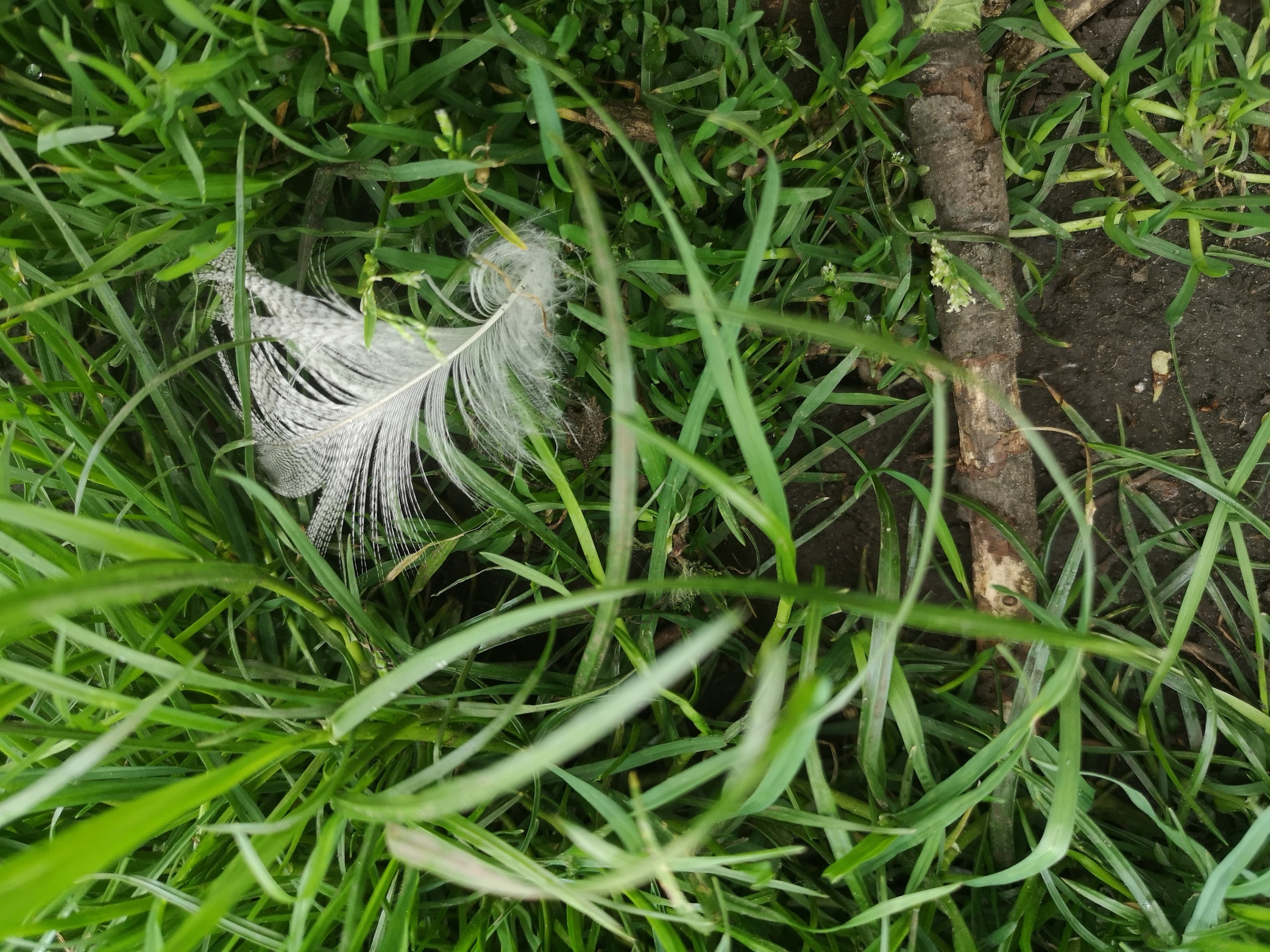
I will continue to collect a feather a day, usually the first I come across, as these long-time symbols of freedom and transcendence and their common use in ritual are often connected with the feelings we have when we are grieving or bereaved. It remains to be seen what the feathers will be used for or come to represent in the context of this pilgrimage.

If you would like to join us for some or all of this walk. Please read about it here and sign up here. You will be most welcome.

The In-Between

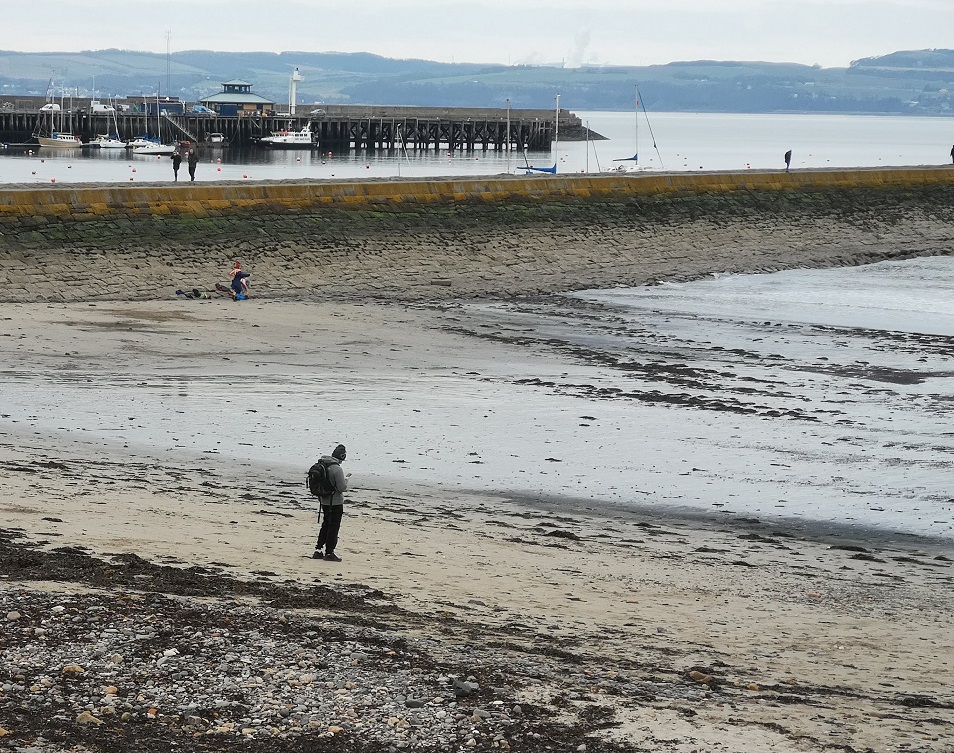
A First Friday Walk – March 2021. Wardie Bay, 5 minutes from home

“We lack – we need – a term for those places where one experiences a ‘transition’ from a known landscape … into ‘another world’: somewhere we feel and think significantly differently.” that exists “even in familiar landscapes: ….. Such moments are rites of passage that reconfigure local geographics, leaving known places outlandish or quickened,”

Robert MacFarlane

Can I help you find a term for those places? Shall we go somewhere where that happens and feel what it’s like, enquire into the difference between not-beach and beach, and see if we can come up with one?

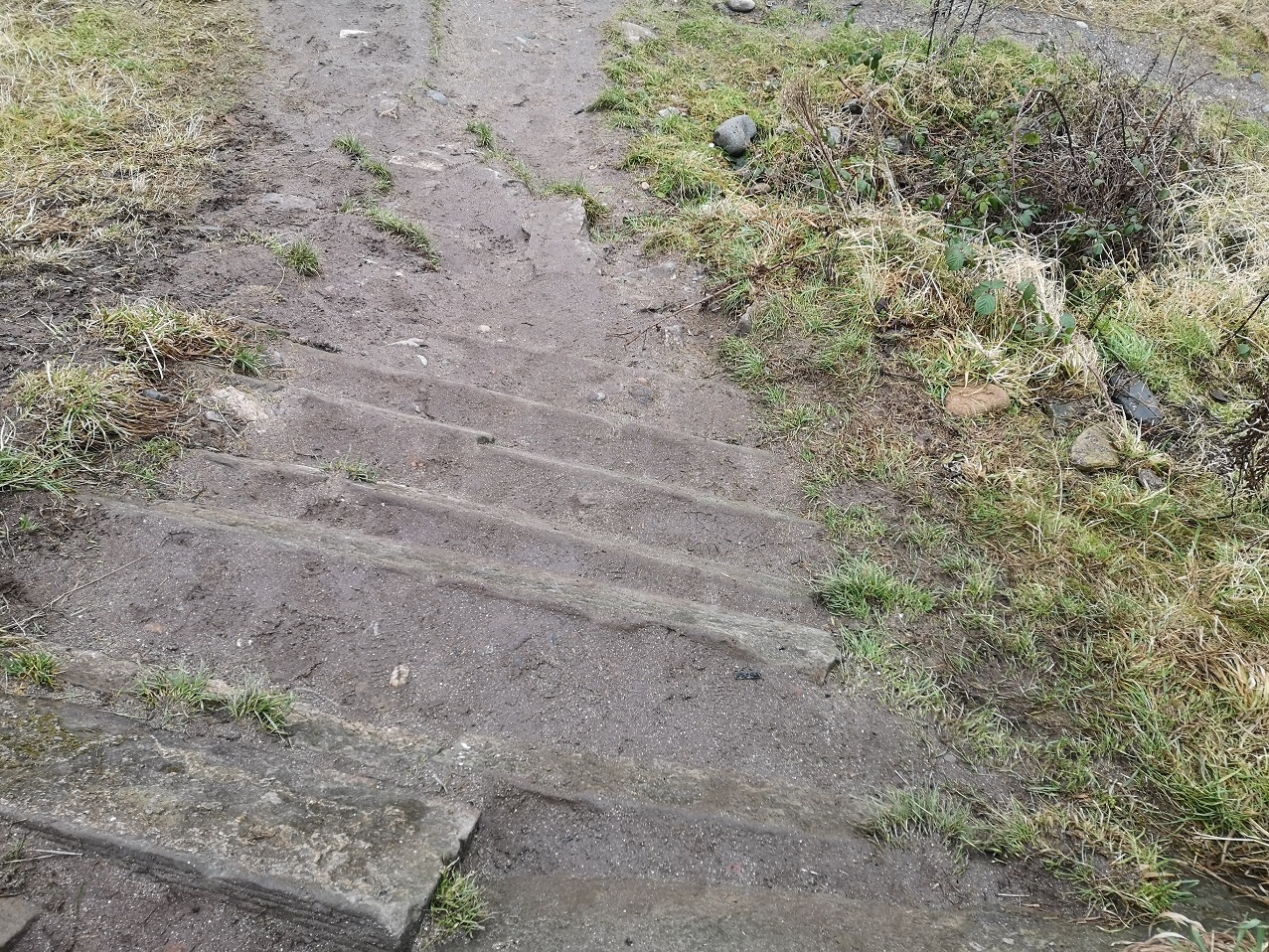
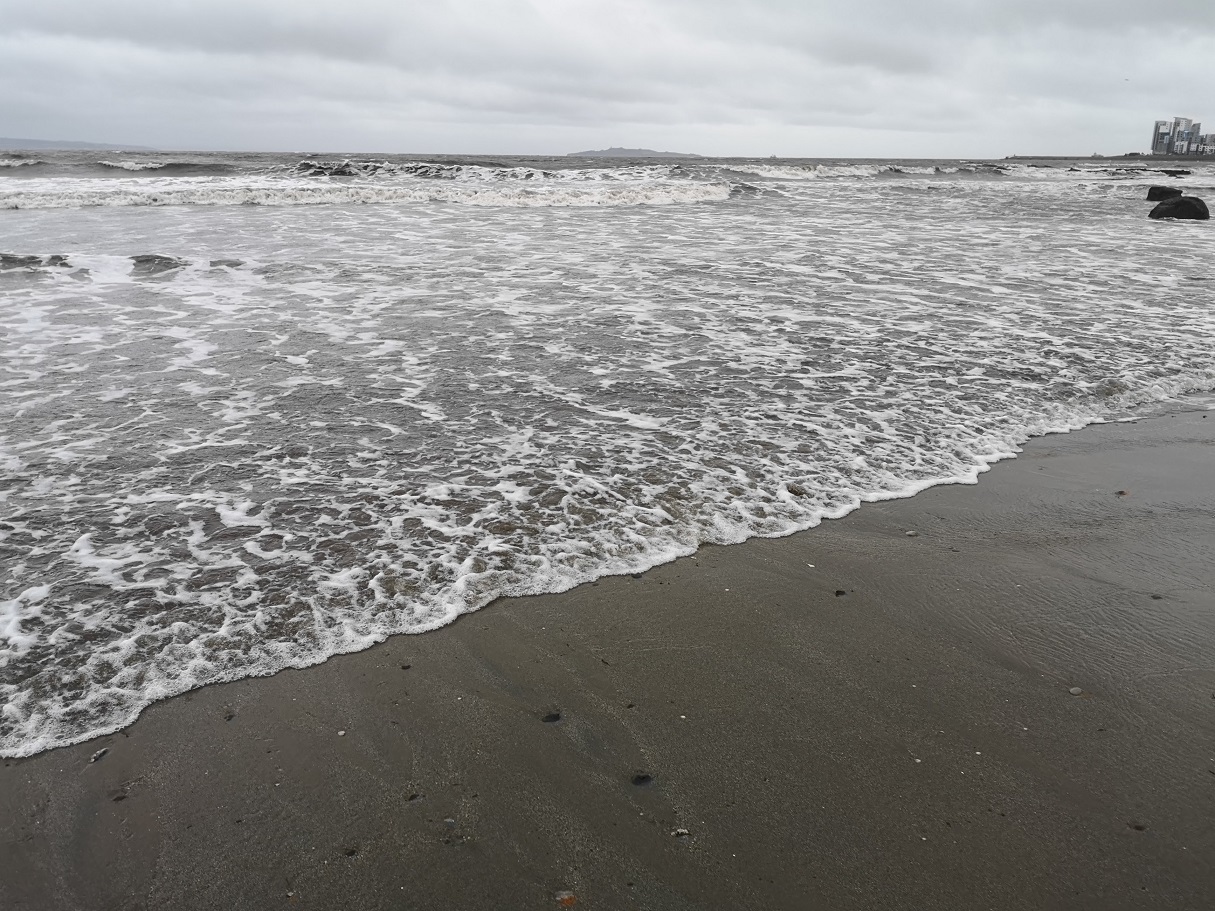
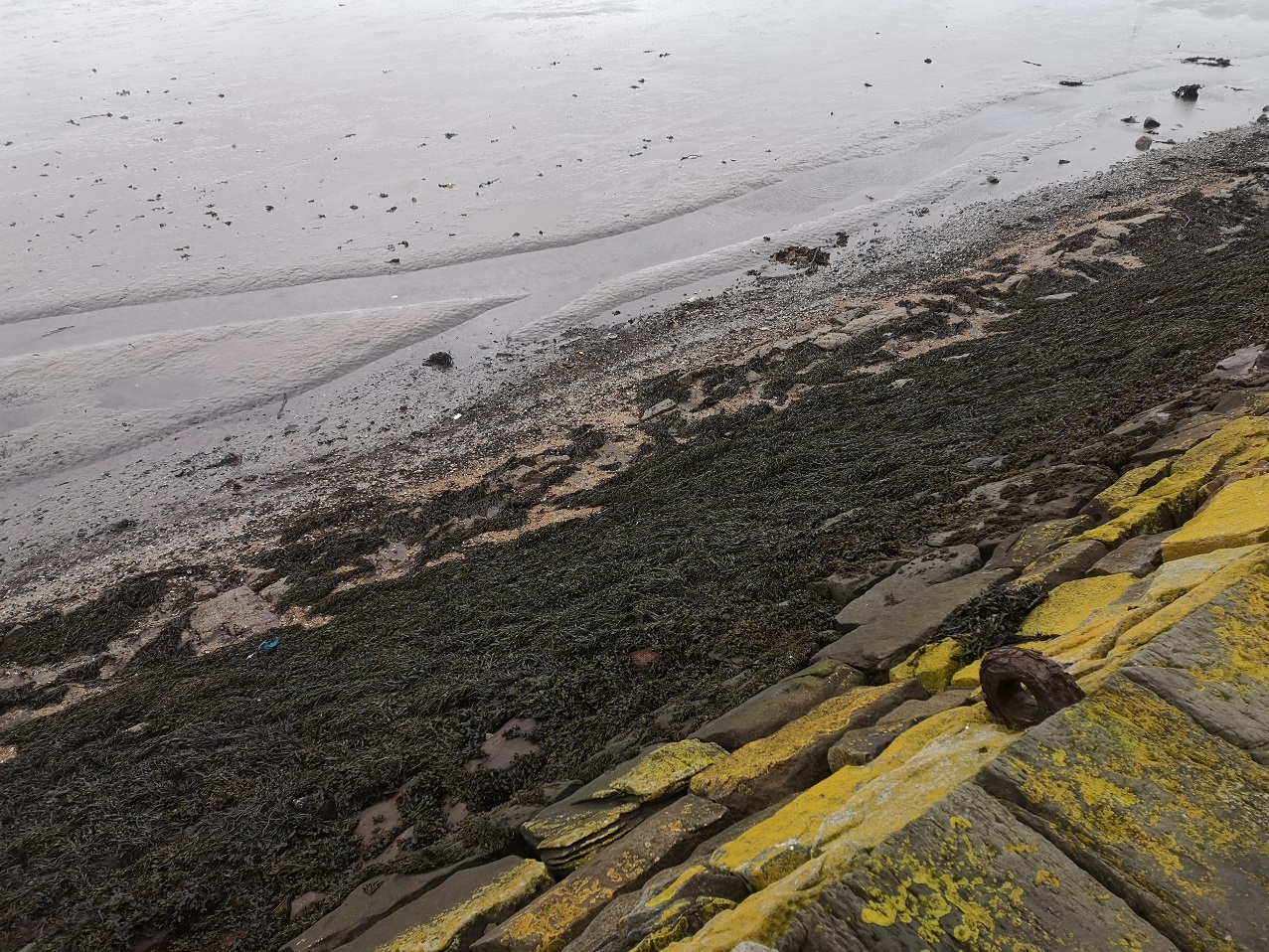
My usual way onto Wardie Bay is up the wee slope and though the stoneledges. I leave the busy road that’s been there for nearly 200 years, and has known me for 12, and at the top I get a salty blast to the nose which dismisses the fumes. I spy a man, a long way off on the sand. He has a big rucksack and he stoops, probably looking at his phone. He’s almost a silhouette against the-place-where-the-tide-is-out. I see and inhale where I am going.

I begin the transition carefully. I turn my shoes sideways, peering down to avoid slipping. Not looking at the beach or the man, I only see my feet, one by one. I fit the long sides of my trainers into the angles where the earthed slope meets the uneven stone strips.

For a second I still. Half way. I feel the presence of the sea on my shoulders, the sky touching my hat and the wind on my ungloved hands which are stretched out at the sides of me for better balance. Something is already happening.

I run the last bit at the bottom which means that my heartbeat matches the pleasure I feel at being there. I am assailed by the wave-sound, the sea-odour and, finally, with the soles of my feet as I step from the large-rasping-pebbles onto the little-grainy-sand – I sink slightly, tilt, halt.

Now it all embraces me in one big hug, the noise, scent and feel of the beach’s surface that I like. I look out to sea and my lungs take a great deep, heaving breath.

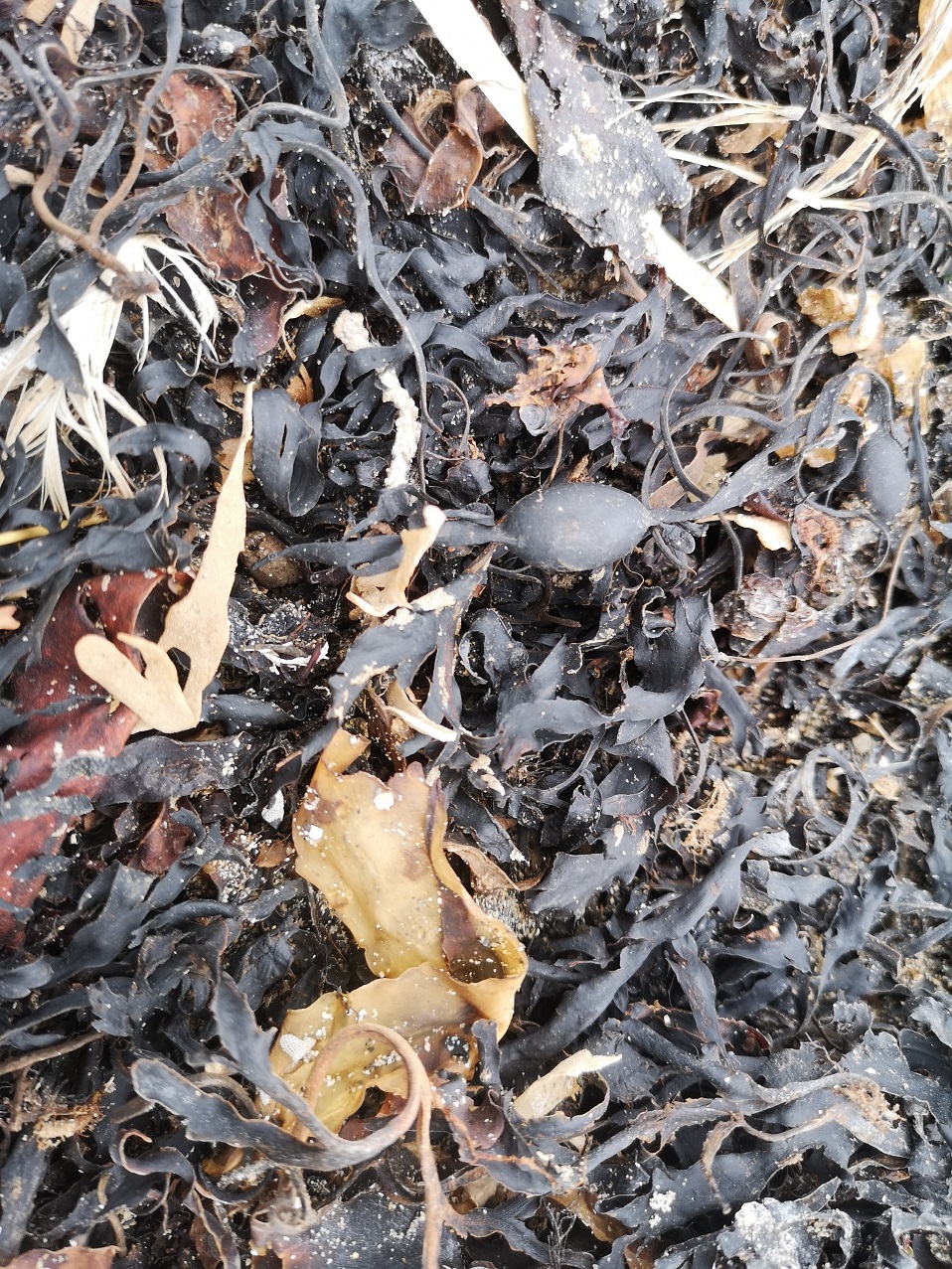
Quite soon I lie facedown to photograph the smell of crab in the seaweed. I screw up the skin at the nape of my neck where the cold gets in, to try and stop it doing that. The bladder wrack under my elbows as I balance the camera, is dry and brittle. I am in another world and I try to capture all the wonder but I know from experience that can be tricky.

Yes, the sand. When I stand again it reminds me of velvet. Through my trainers and two pairs of socks it’s delicious. I swivel and furrow and it’s like when you sink your hands into the strands of a ball of merino wool and squeeze the softness.

I am on an expedition to find something out, so I rewind – I stare at the horizon and in my mind I start again from home. When we go somewhere we bring our anticipation of that place with us, the idea of what it will be like. I brought the way the beach was before – all the befores – layers of previous times when I had visited – with me today. And in my body when I got to the top of the steps, were the traces of everything else I had lived through up until that moment. And not only that. The beach, itself, had an imprint on it, of all the people (including me), and activities and weathers that had happened there, all accumulated in that second when I entered. I suspect that this previousness influences the way that we feel and think when an ordinary place becomes ‘quickened’.

I lie down on the sloping, freezing rock, blue-sky with white-cloud above. I shut my eyes and smell the fish. Under my closed lids I can see the shells and stones I had been looking at before.

Tobacco….drifts….merges….with perfume. 

What IS that place called, not where-I-was, and not where-I-am-now ? We know about journey, about being in transition, skimming or flying across lands and high skies to get somewhere. What do we call that place we just missed, the one we whipped through unawares? My tummy flurries when I’m approaching, the ground underneath me is altered when I arrive, but in the blink of an eye I am here, not there.

Fingers fold over cold thumbs and how smooth my skin is. I nearly sleep but the chill interferes. I rest still, not wanting to get up but knowing I’m going to.

The name of the place where I make the ‘transition’ might depend on which direction I take to get here and how I arrived.

If I chose the flat way from the street, the stonewalls very tall at the sides of me and feeling very small going between them, I would be coming upslope. At the corner I would be on a level with everyone and their dogs, able to see diagonally across to the rocks. There, hovering, no-one would notice me. Then I would run off the cobble, do a hop, skip and turn cartwheel on the sand, and land in the middle of the ring with a flourish.

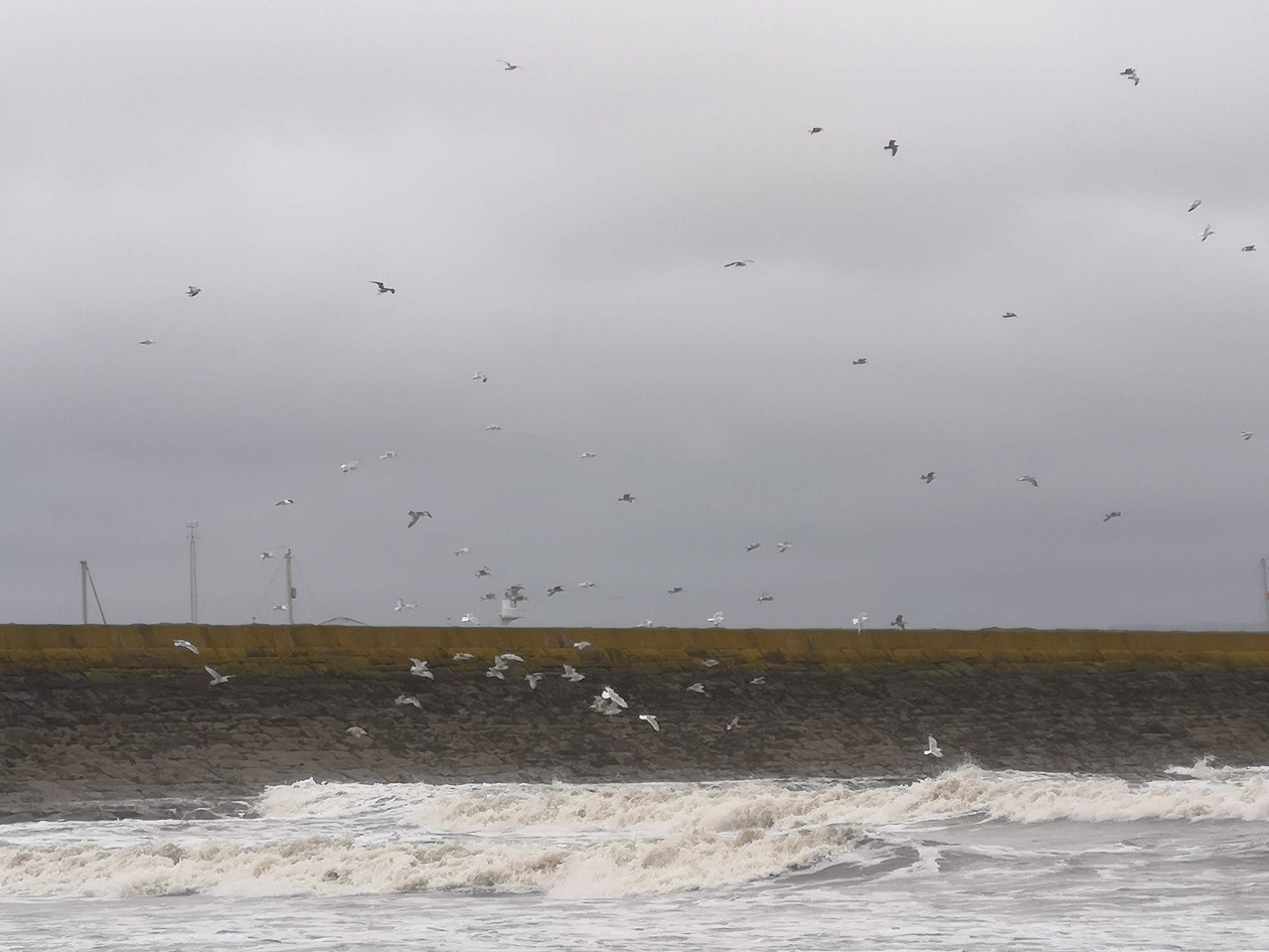
Propping myself up on my elbows to look, I think. It would not be the same if I approached from the air, if I was a gull flying down, folding my wings back and stretching my thin legs out, landing on both my webbed feet at the same time. Landing lightly, making hardly a mark, the wind at my back, I would run along and get on with my search until someone disturbed me. I can’t know if some places are more special for birds, but I do see when there are suddenly hundreds not three – something is exceptional or there wouldn’t be so many at one time, they wouldn’t be so excited.

If I were a wave from the north, I would turn over calmly, spreading, rolling, on to the strand. I would canoodle and stroke and she would offer up her treasures to me willingly. Or I might come faster, rising and rising then crashing. I would buffet and pummel and she would be covered with my offerings, and our meeting would be rousing.

Yes, I am sure that the direction we take and the way we enter, influences the magic when we get there. I launch up at last and stride towards the breakwater.

There are lots of stories about transitions into other worlds that might give us ideas for this place name we are seeking. They involve complex feelings which may help us focus: There is Mary’s secret garden, found through a door under some hanging plants; Lucy’s Narnia – she went through two rows of coats with her arms stretched out in front of her, so as not to bump her face into the back of the wardrobe; and Alice’s Wonderland which was of course accessed via a large rabbit-hole under the hedge.

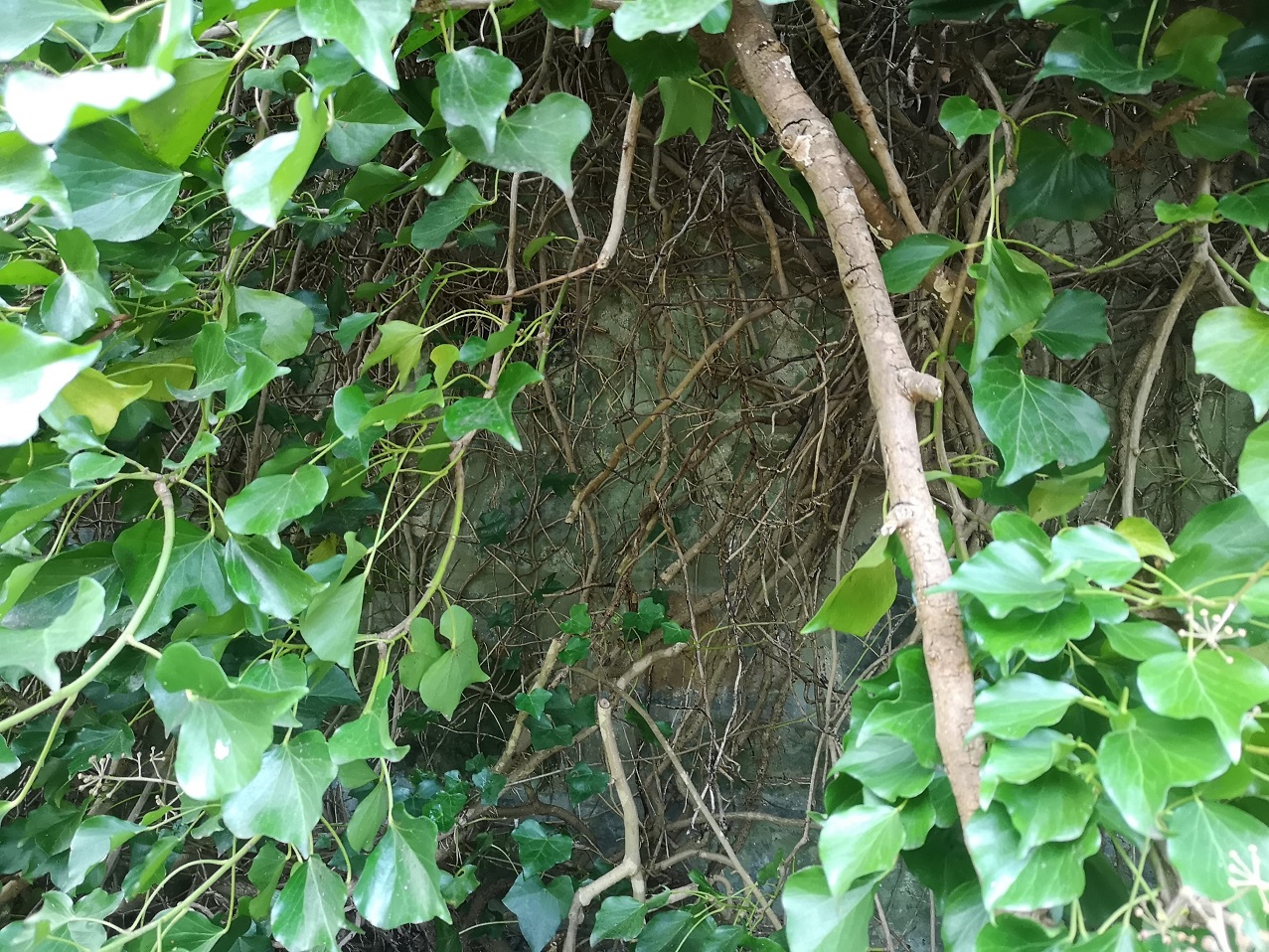
Mary, “… took another long breath, because she could not help it, and she held back the swinging curtain of ivy and pushed back the door which opened slowly—slowly. Then she slipped through it, and shut it behind her, and stood with her back against it, looking about her and breathing quite fast with excitement, and wonder, and delight.” (The Secret Garden by Frances Hodgson Burnett.)

Lucy, “… felt a little frightened, but she felt very inquisitive and excited as well.” When she felt snow under her feet and on her face, that was when she realised she was somewhere else. (The Lion, The Witch and The Wardrobe by C.S.Lewis.)

Alice has a long, slow-motion fall down “what seemed to be a very deep well”, meaning that we readers get to see, think and feel her transition. She was “not a bit hurt”. Indeed, it seemed to heighten her ‘outlandish’ response – things got much more curious as a result. Later, she got tearful when she couldn’t get through the too-small door to the garden. Her feelings on the threshold, and during the shift from one place to another, were different depending on whether it was a matter of choice or if she was catapulted there. (Alice’s Adventures in Wonderland by Lewis Carroll).

It seems that we might hold or expel our breath, run or move slowly across the divide, feel very inquisitive, excited or upset as we go. Time may pass quickly, so that we gloss over the feelings we have there, or slow right down, giving us a hyper-real sense of it, even space to ruminate.

The birds wheel and cry, a dog races past me and splashes after the ball. I have reached the other side and have to turn back.

When we are at the portal we are half one thing, half the other; leaving and approaching at the same time. We are momentarily inserted, midway. We are about to ……… .

So, it’s decision time. What will we call it? I am back home now, balancing on the edge of the bed-base in the attic room so I can reach the sill and look over it at the beach below. I can see the place where not-there bleeds into there, and I have vertigo with the strain of it all.

‘Crossing’ or ‘passing over’ has too much redolence of death, though there is always a sort of loss associated with leaving, and, like a pilgrimage, it is really the journey that is important, not what you call it. No, I have a suggestion. The name of the place I went through, where something changed so that my familiar beach became something other, is the in-between. What do you think?

Festival of Terminalia

23rd February 2021

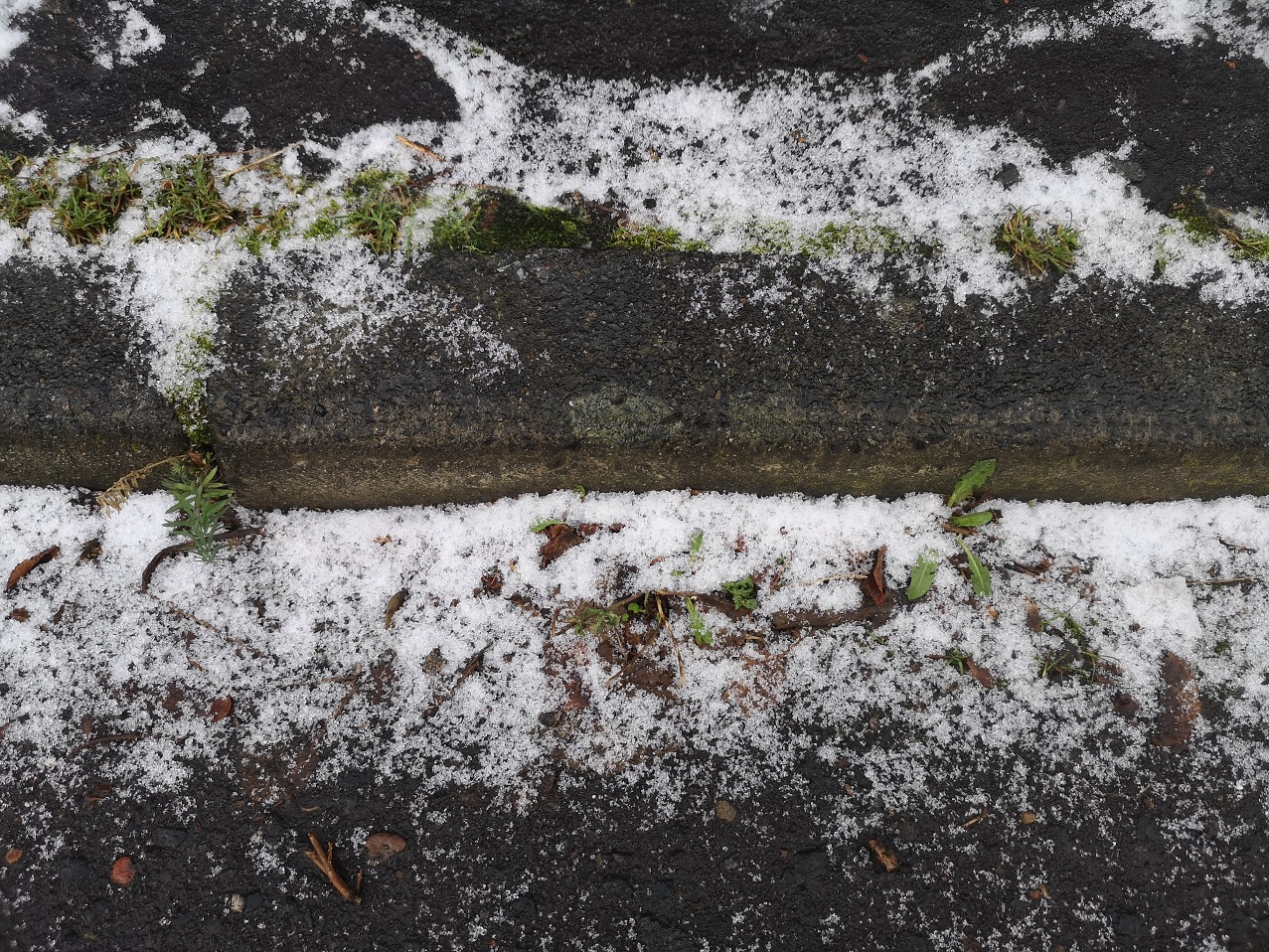
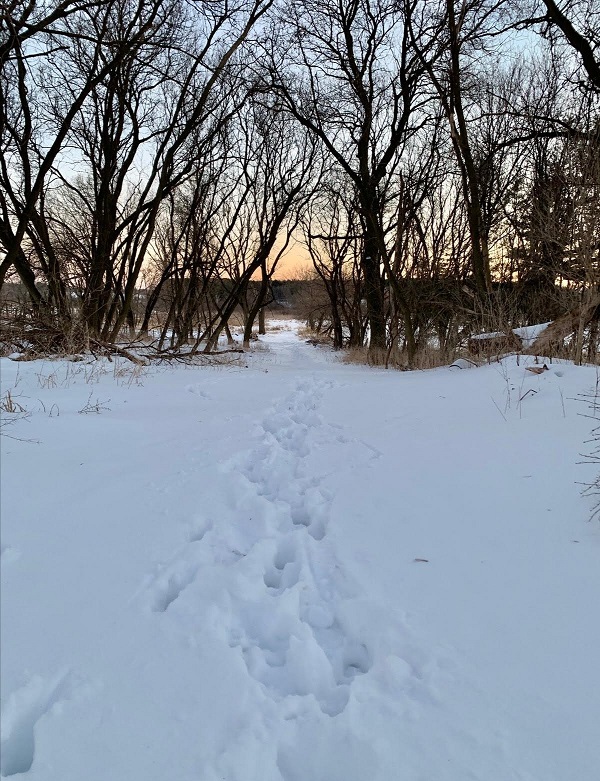
Today I walk an imaginary line around my house. My feet don’t leave indentations to show I have done it, not since the recent snow, and when that melted the trace was gone. Home and back, I pace and pound my boundary line, a pathway that returns to itself, reconnects, reattaches, and brings me back to the garden gate.

Snow prints. Photo by Sam MacLean

Terminalia is a one day festival of walking, space, place and psychogeography on 23rd Feburary. Terminalia is the festival of Terminus, Roman god of boundaries and landmarks so if there was ever a god and festival for psychogeography this would be it!

https://terminaliafestival.org/

They say that people walking somewhere can change a place, that the land alters because of us. Of course, it’s clear if we wear down the mountainside or trample wildflowers underfoot, or if we make a desire path, flattening the grass just enough that the next person who comes by can see it and tread the same way afterwards. But I’m talking about the idea that the nature of a place adjusts as many people cross it for a specific reason (such as pilgrimage, religious or secular), that an ordinary location becomes imbued with a special significance after it has been walked upon by people with a shared aim or sensibility. If that’s true, do my streets, the streets which bear my weight daily, still feel me when I’m gone? Do I rub off on them somehow? Can I say I belong there?
Or is it the air above a path that is disturbed by my body moving through it, affected by my presence, retaining a whiff of me? Then, what happens when the wind blows and displaces it – have I been whisked away, or am I still there? How exactly does it work, this treading of Terminus, deity of the marking of our territory?

The wind disturbs the top layer

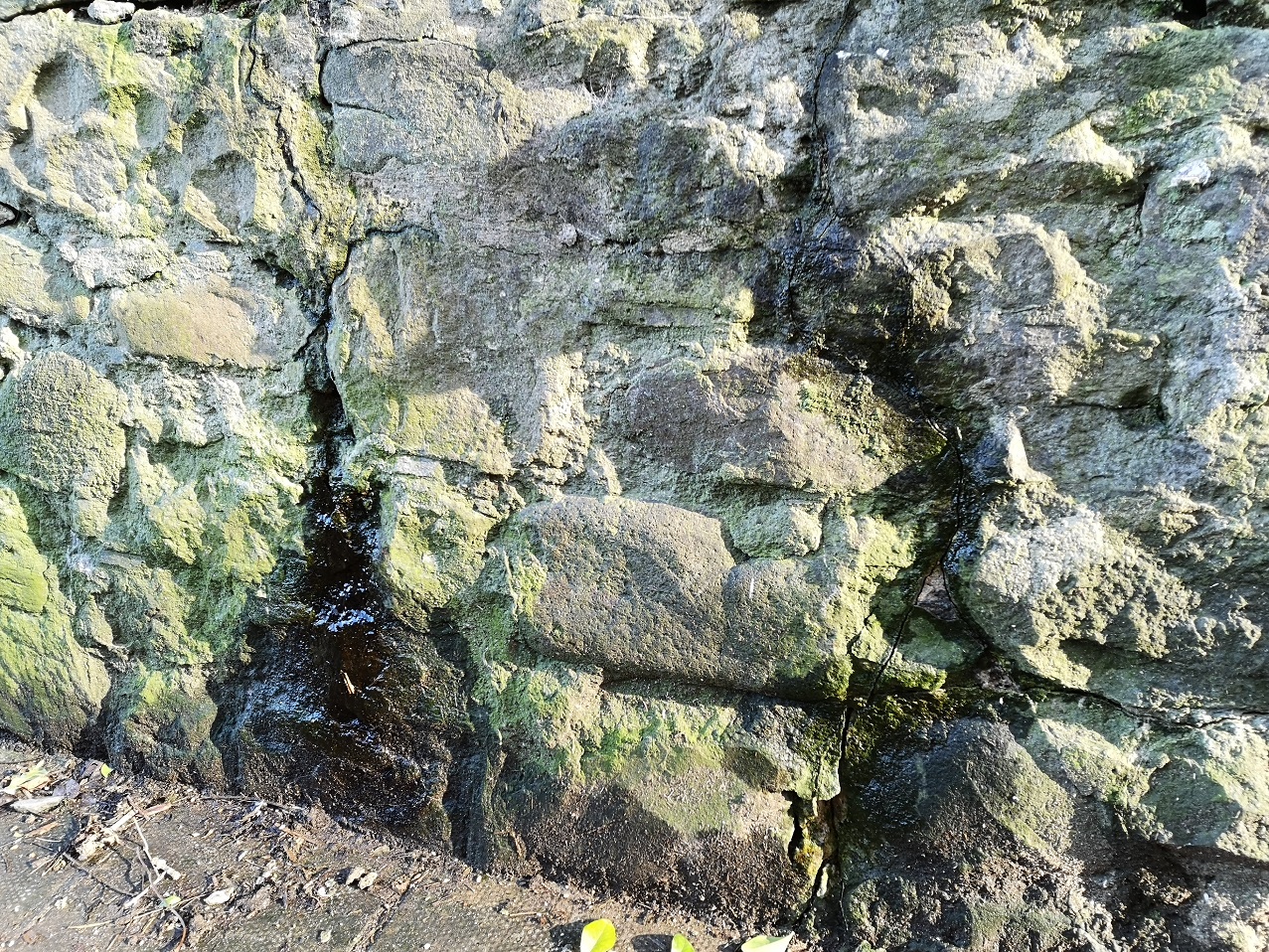
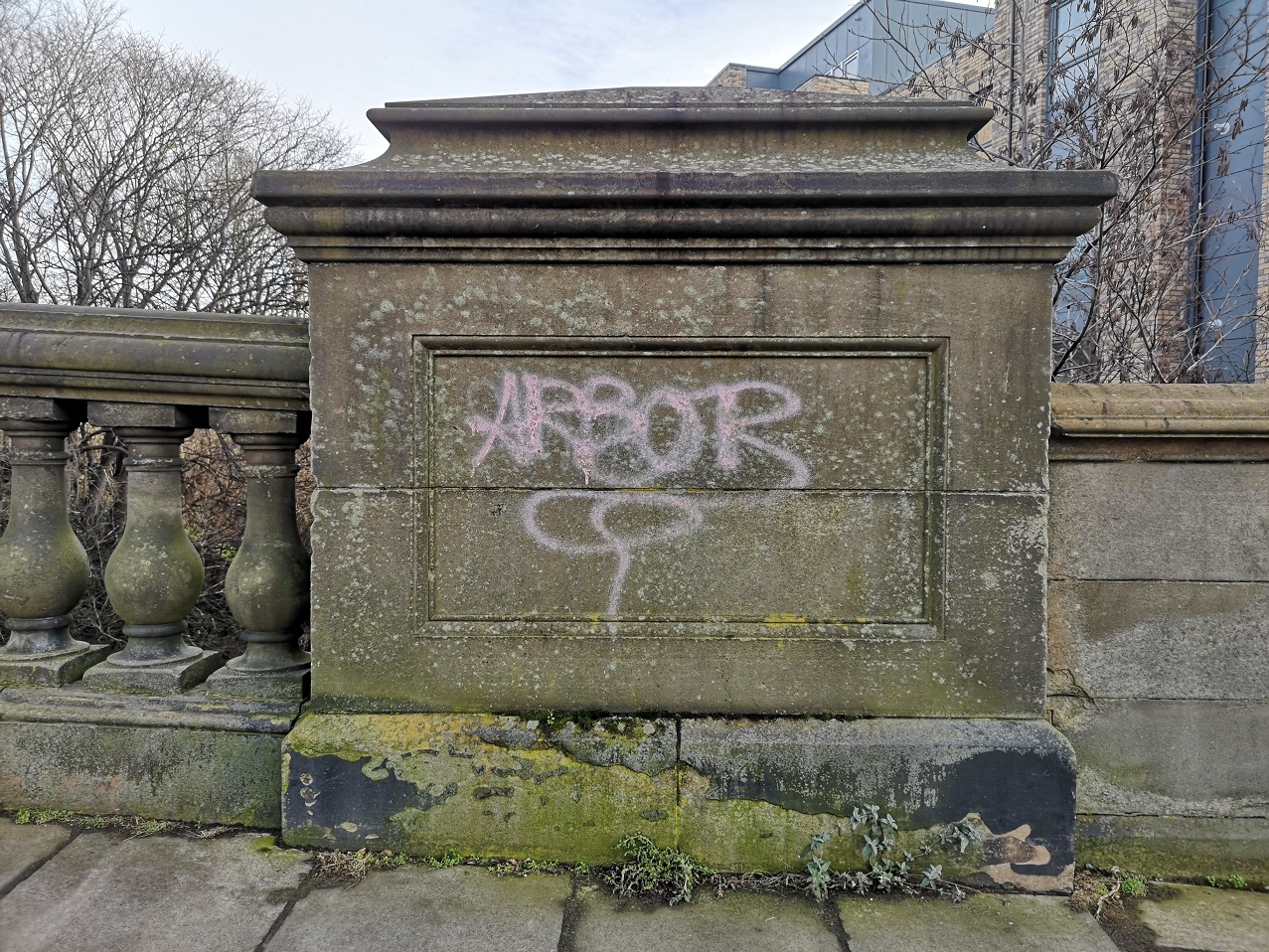
A crow breaks the quiet with a piercing caw on the turret, the wind finds crevices in my clothing, the odour of fish and chips invades my sense of propriety. Someone has etched into the tree’s bark and graffitied the bridge’s stone. A trickle finds a way through, waves breach the breakwater and ride roughshod over rocks. We must leave a gap or the wind will blow a solid fence over, or a river bring down a protective wall. In so many ways, boundaries seem to be there to be broken – at least that’s when we notice them.

Arborglyphs
Arbor graffiti

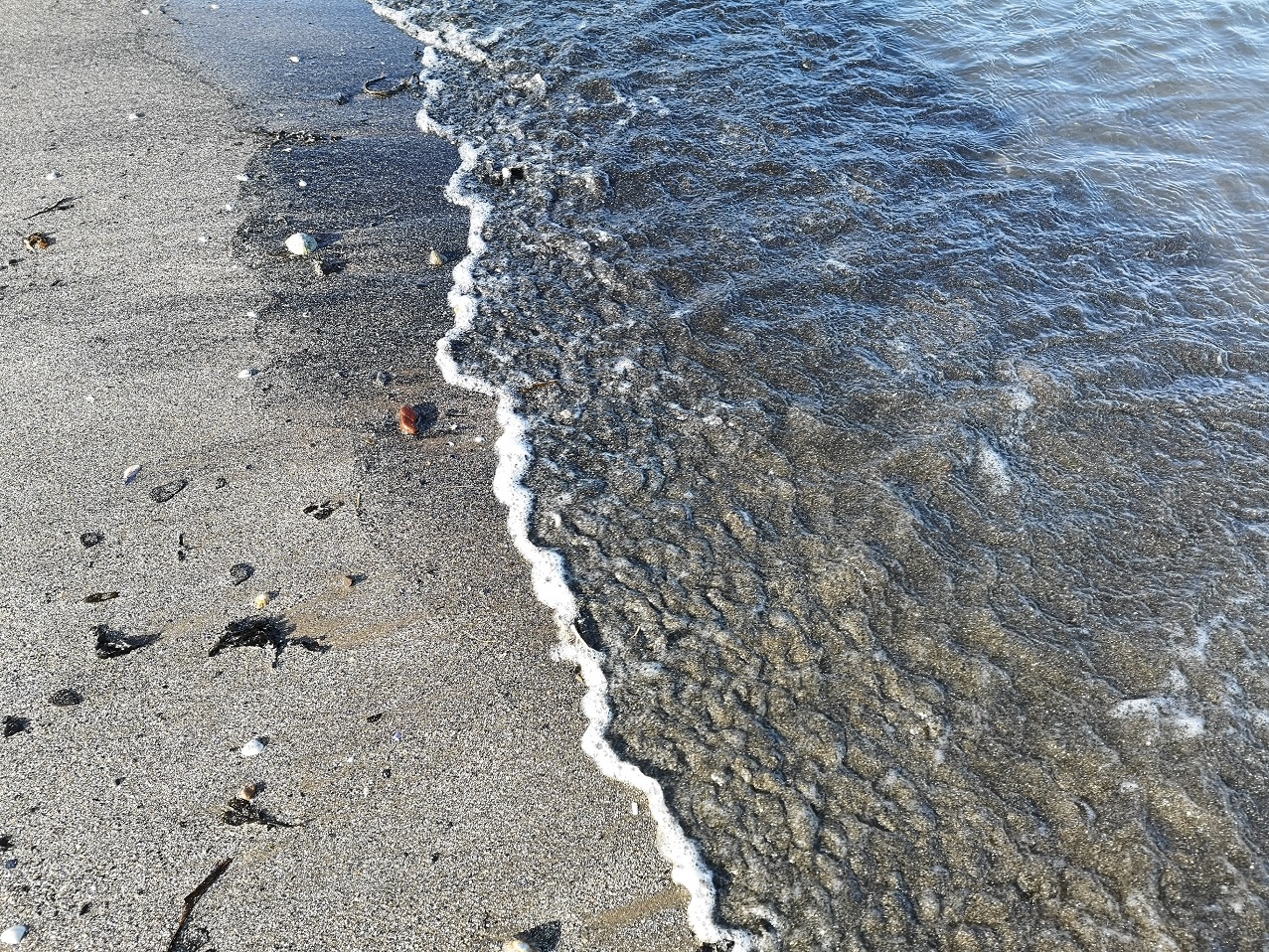
A few of us meander along the ribboned edge of the bay, the constant interruption of land by sea. We talk to no-one, we stand and watch the water. I feel sad, and the waves sound melancholy too. Only the other day it was like satin, now the surface darkens and shifts as the wind messes it into mackerel patterns. Sand clouds rush past me in such a hurry, disintegrating as they haste towards Fife. Uncharacteristic ripples sweep out to Inchcolm island where the disappearing rainbow arcs overhead (between real and unreal). While I was there I had that golden luck and the rain never reached me, I who have hot sun on my calves. One by one, we stoop and pick what catches our eye. I chase dry seaweed as it billows across the beach.

Inchcolm Island

Psychogeography describes the effect of a geographical location on the emotions and behaviour of individuals

https://www.tate.org.uk/art/art-terms/p/psychogeography

I am concentrating on my own boundaries of time (too little for my own projects) – noticing how they get eroded, how I let them, allowing myself less. And on the amount of space I have (too much room in my house now that the children and lodgers have gone) – somehow ending up with more than I need. As I pace, the liminal wetness, what I might call the sea/m, I mourn the freedom I didn’t have (I was raised to think about others before myself and it has stayed with me) and the shells I am inadvertently crunching underfoot. The sea doesn’t stick to its limit. I see it constantly pushing them. I stand close by until it unexpectedly breaks the rule and surges at me. I have to stumble back out of the way or get wet.

There are fewer birds than usual on the strand, though later I see them swarming, their blanched bellies catching the sun as they swoop en masse. Over the blue they go, alighting on the pontoon quickly, one after the other, then taking off just as swiftly, an avian Mexican wave.

I muse on how everyday habits break down fear by reassuring us what will happen; then equally how they cause it, how we become nervous about being spontaneous and managing sudden change. I have been at home so long now, moving steadily around my immediate area – 5 miles in each direction – that I wonder how I’ll manage to go further afield. Will we all spread out across national borders again, back and forth over timelines and zones, or will we be more circumspect, stay closer to home, on our own territory? I have no plans.

Related blogs: Walking Between Worlds series

Terminalia – Festival of Psychogeography site

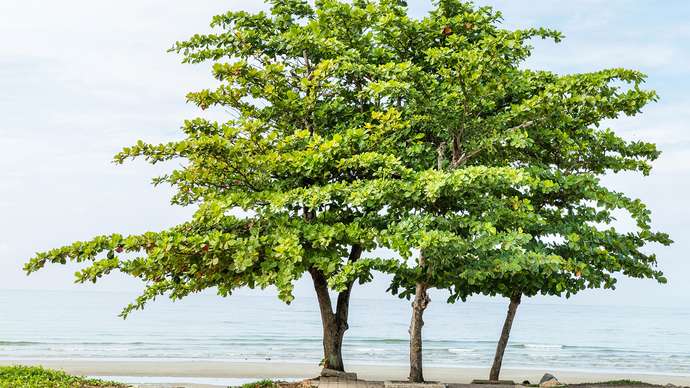
Incidentally, Terminalia is also a tree genus (upwards of 200 species) including the Terminalia catappa. Found in Madagascar, tropical and subtropical Asia and the Pacific (http://powo.science.kew.org/taxon/171034-1), the leaves are to be found at the very end – terminus – of the branches. Types of this tree (bark) are used in Ayurvedic medicine to treat heart conditions and diarrhoea.

Indian almond courtesy of https://www.britannica.com/plant/Terminalia-plant