Yalding – circular walk via Nettlestead

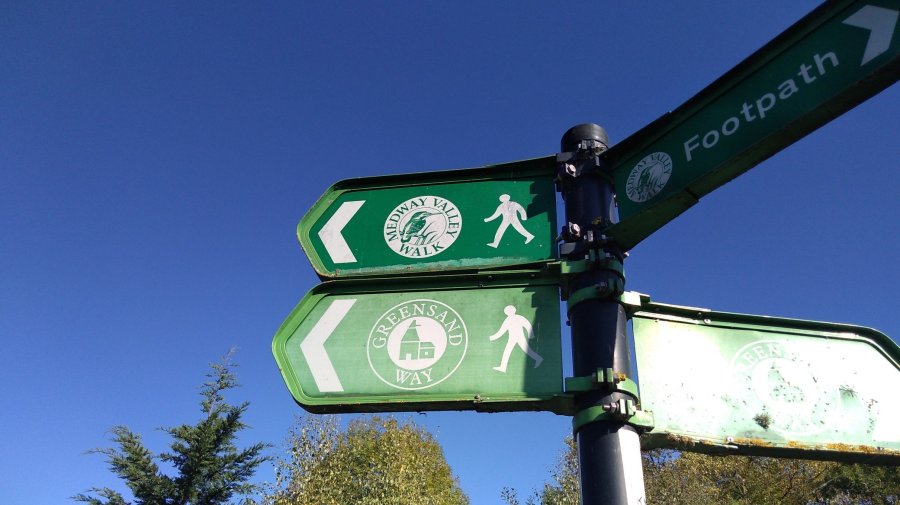
October 10 2018: Kent – parts of the Greensand Way and Medway Valley Walk.
wp-15391851255641612757381.jpg
A host of walks around the Garden of England, Kent

Distance: 6 miles / 9. 66 kms

Duration: 2.5 – 3 hours

Weather: glorious throughout
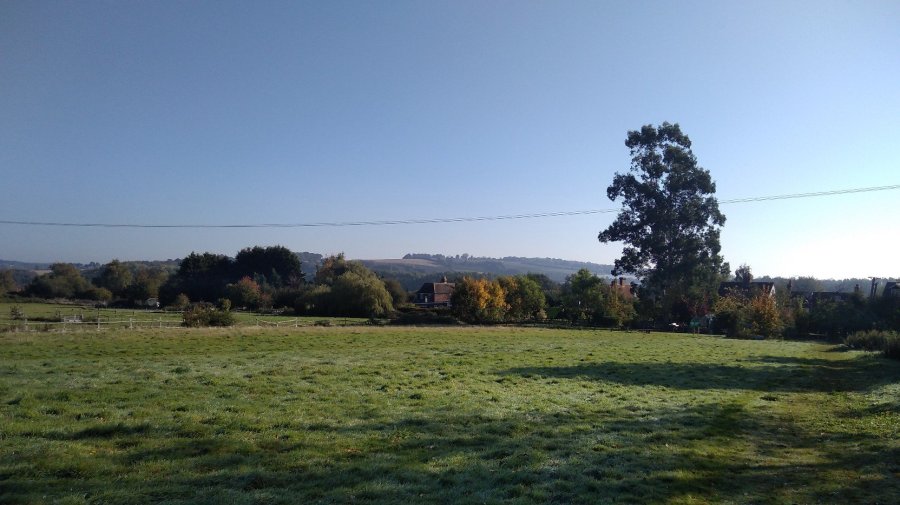
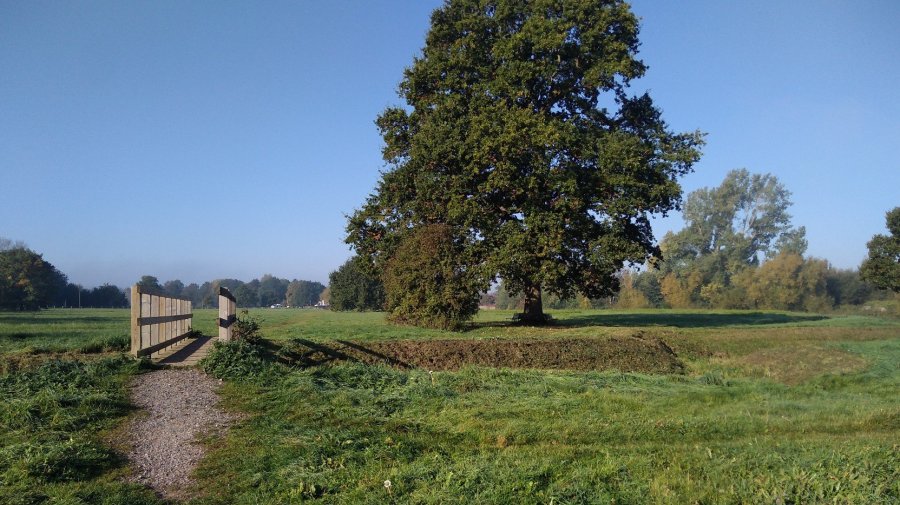
Green fields and the Downs in the distance, Kent

Stiles crossed: numerous

Railways crossed: 2

Boats sailing past: 3 yachts, 2 dinghies with outboard motors chugging away and 3 canoes

Churches: St Mary the Virgin, Nettlestead

Grand country houses : 2 – Roydon Hall and Nettlestead Manor
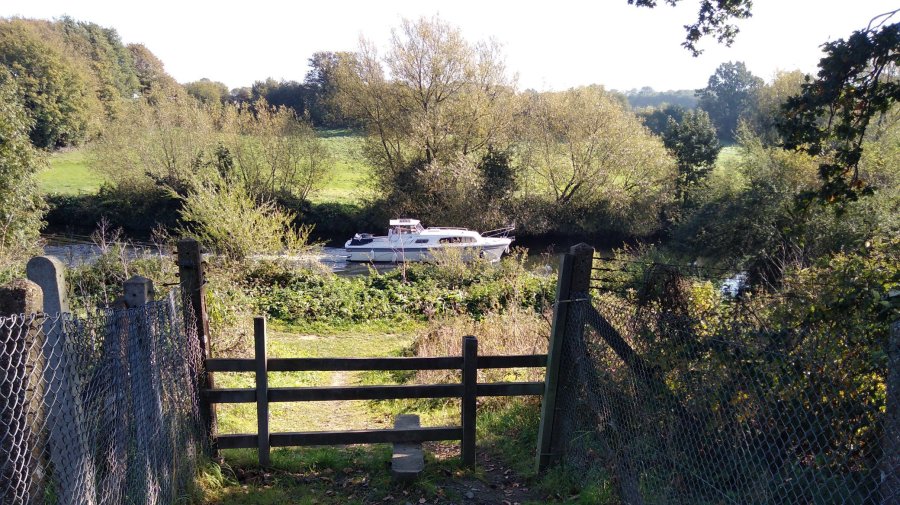
The River Medway, busy with water traffic, Kent

I started walking across the Lees in Yalding around 9.30 am after a starry night and a misty morning.

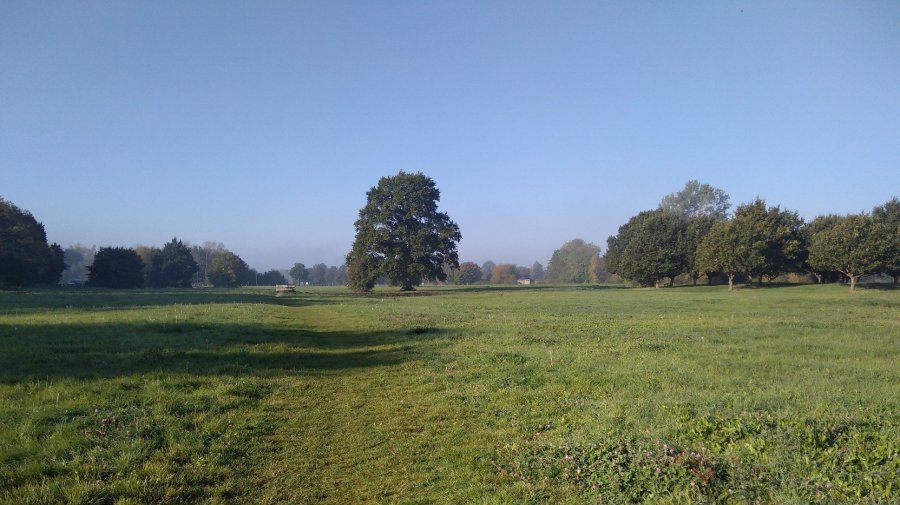
Crossing The Lees, Yalding, Kent
Over a tributary of the River Medway, Yalding, Kent

The Lees, a low-lying meadow, flood regularly caused by two rivers joining the Medway here – the Teise and Beult. Indeed my father once crossed the submerged road thinking he would be fine and became stranded, having to leave his car and wade back.
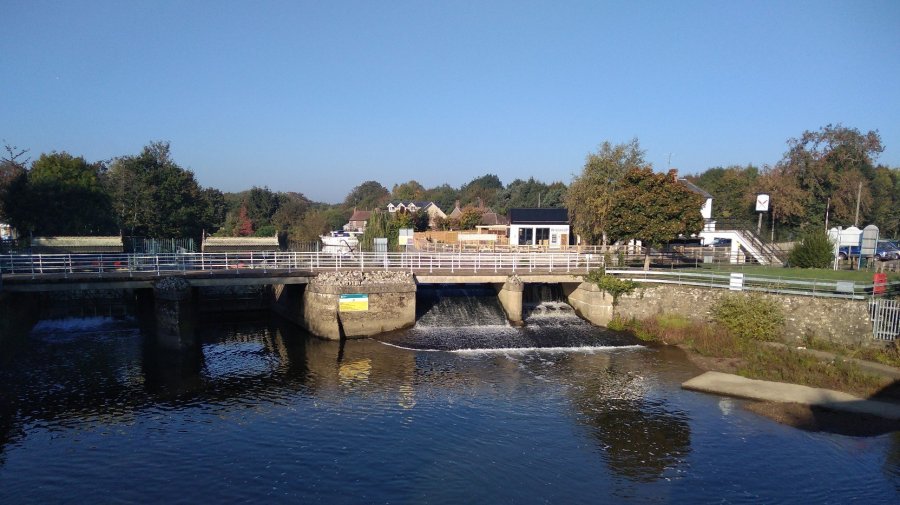
Hampstead Weir Bridge, Yalding, Kent

On a day like today, the water looked beautiful, producing stunning reflections on its smooth surface.
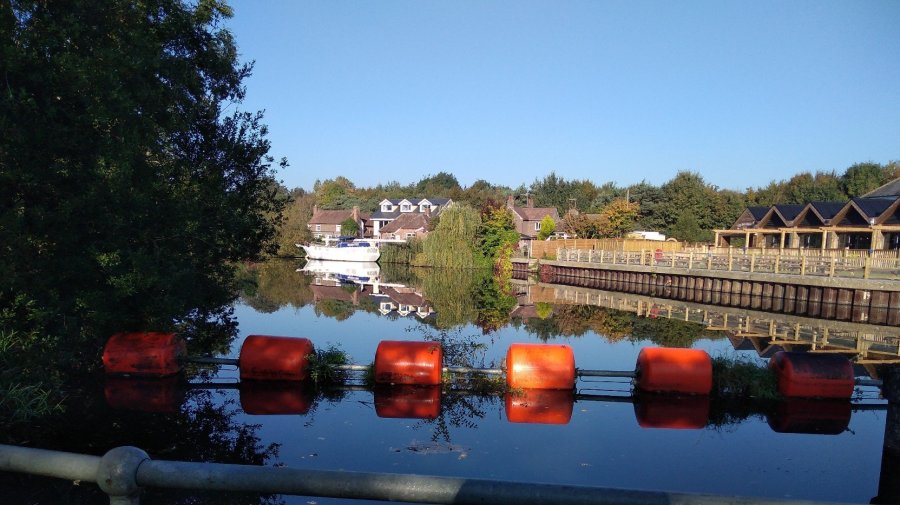
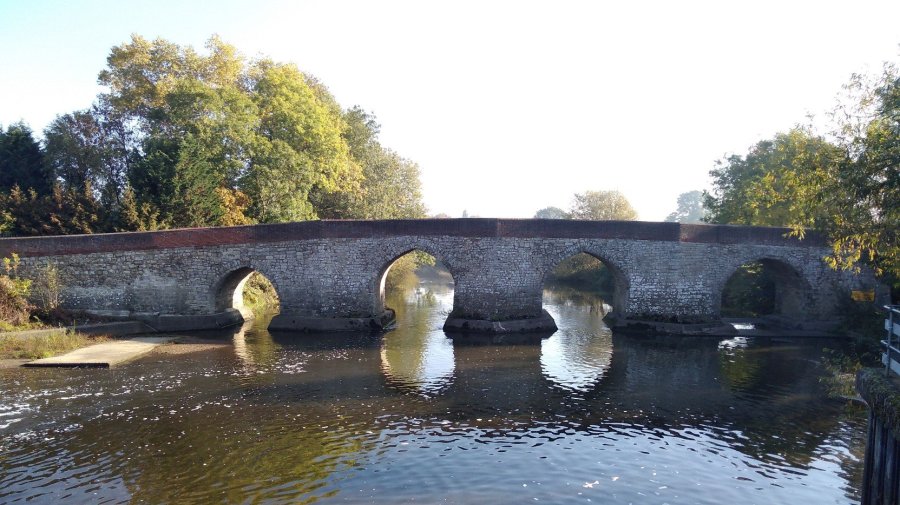
Hampstead Weir Bridge, Yalding, Kent
Where Hampstead Lane crosses the River Medway, Yalding, Kent

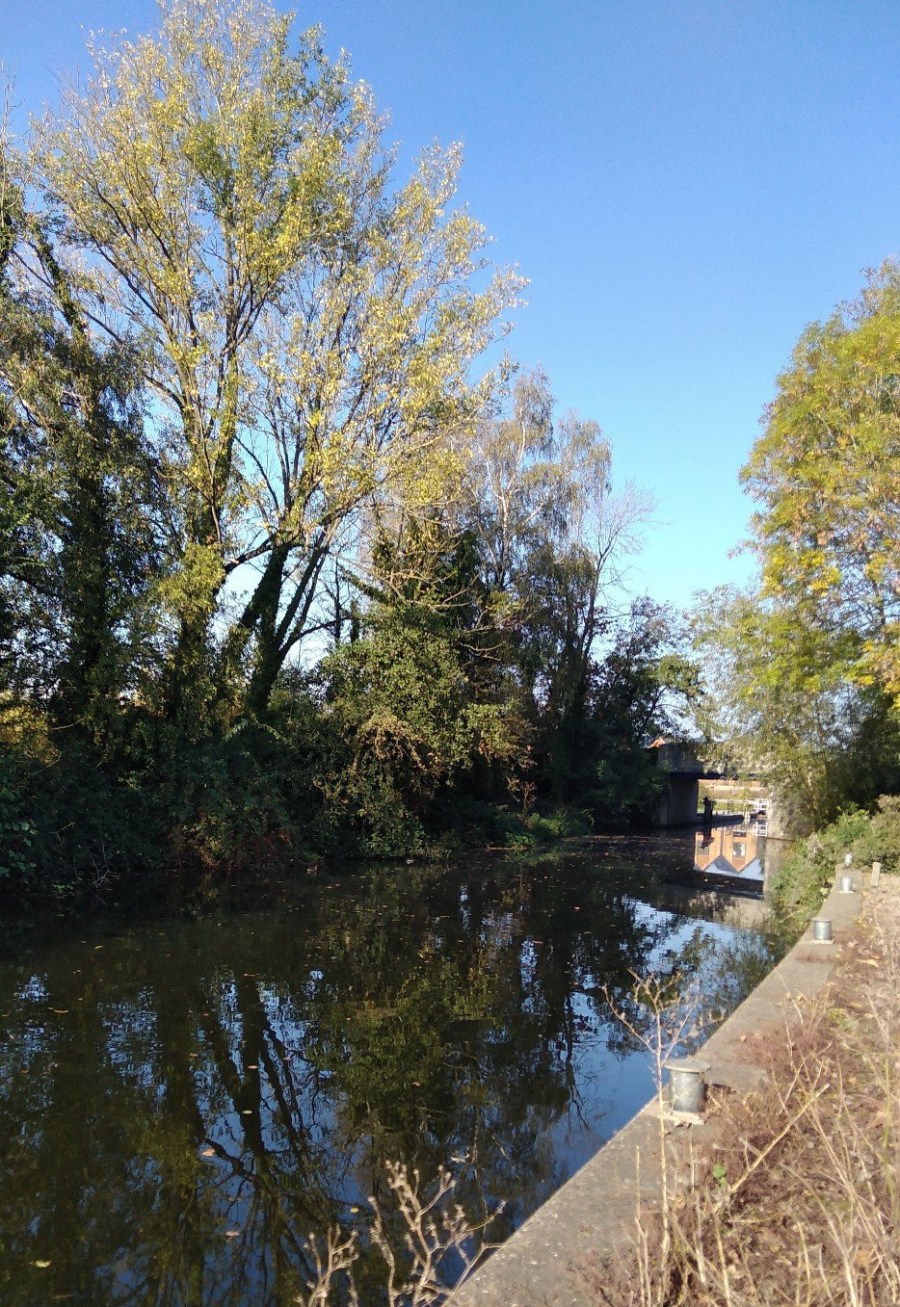
After some confusion caused by my thinking that the locks beside Teapot Island were the ones mentioned in the leaflet (details below), I set off along the pavement towards Yalding Station from where I walked a few days before using my phone torch in the pitch dark. With the canal on my left and the incongruous new wooden houses appearing upside down under the bridge, it was only a short way to the Marina and Hampstead Lock.
wp-1539185411669830439194.jpg
River Medway, the B2162, Kent


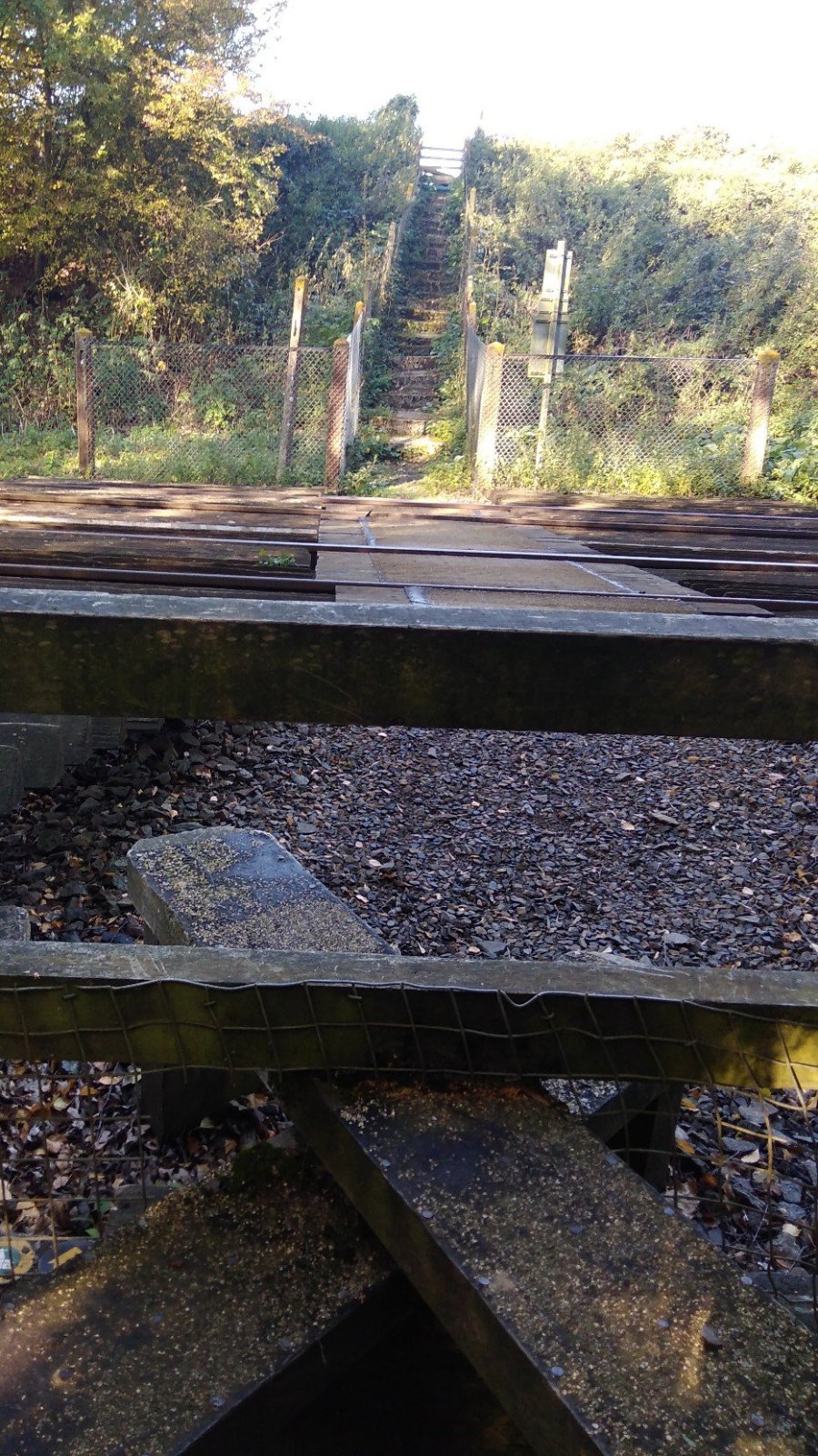
Skirting past the new building, I took the left fork and crossed the first railway line. Then a series of fields and woods, easily found for the most part.

wp-15391852816101151347440-e1549614946895.jpg
Camomile growing at ground level, and at the edge of a field were delicious windfall pears.

There was a path which is accessed beside a sweet cottage and that is hard to find but a kind woman noticed my confusion and pointed it out.
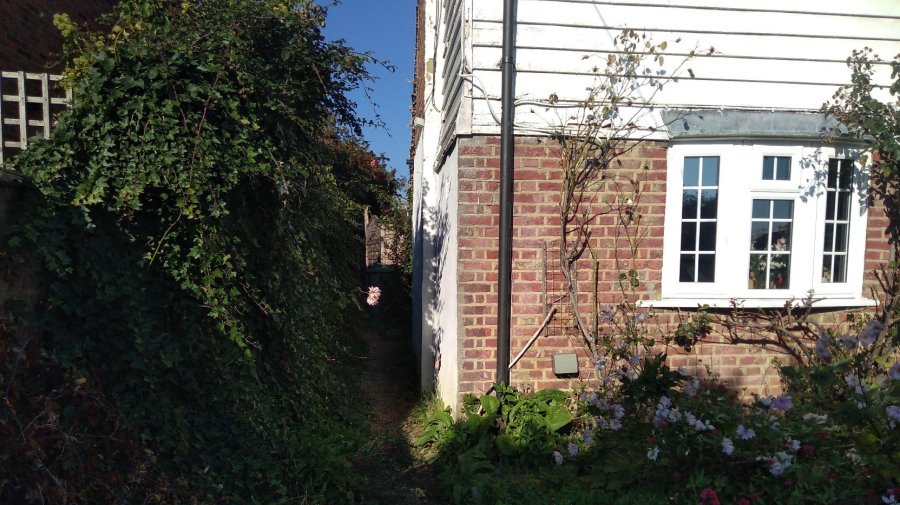
Walk to the left of this white cottage even though it looks as if you will go into its garden. If you are lucky, you too will enjoy the roses poking over the fence and the geese in the field beyond.
Crossing the railway near Yalding Station, Kent
wp-15391854113941469385923.jpg
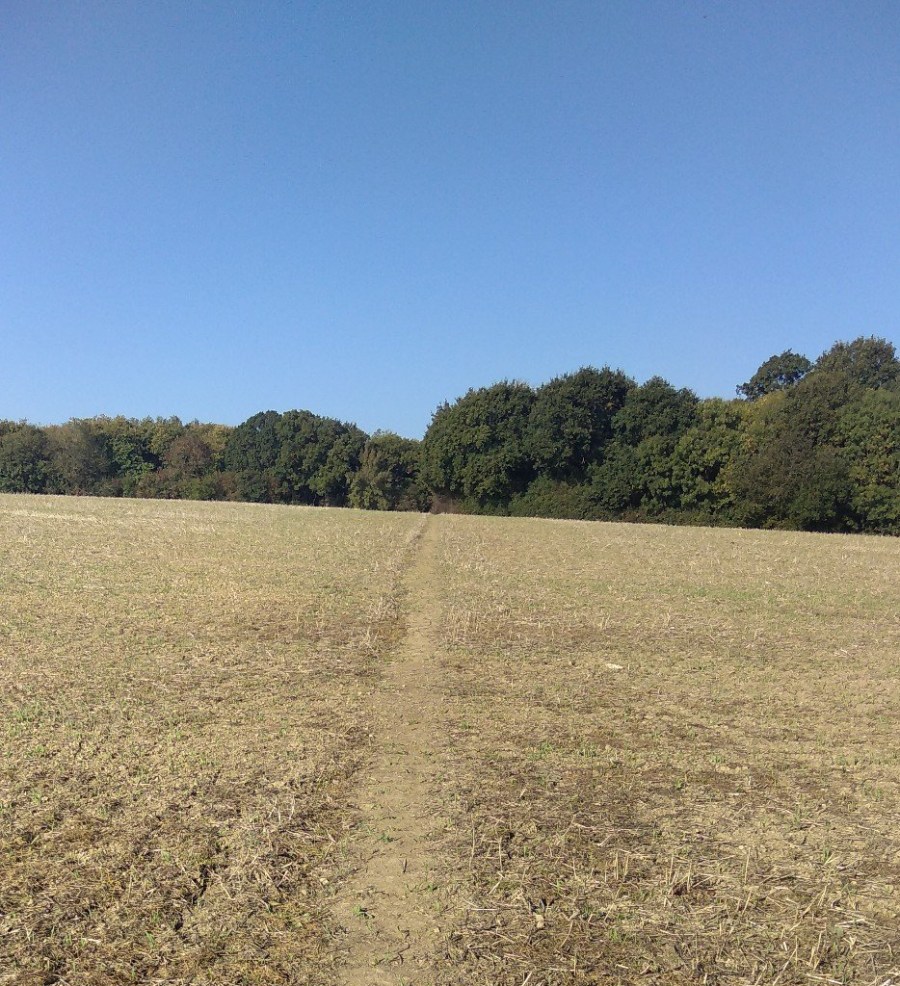
The walk takes us over the middle of a ploughed field, dry from the lack of rain and dangerously close to farmers spraying chemicals, Kent
Some sort of brassica had dew drops glistening on its leaves

The low point of the walk came when the leaflet directed me to cross straight through the middle of a huge field. It looked pretty but there was no obvious path as before and I spied a large red farm vehicle in the far corner, so I decided to skirt instead, through the long, wet grass. To my utter dismay the farmer was spraying green chemicals and went as close by me as he could without actually running me over. There was no way to avoid it and the smell hung in my nostrils for the next hour. (I arrived home with a most unusual headache and had to go to sleep. On waking I searched the Internet, discovering what they were and how harmful they can be up close. I showered and am hoping for the best).
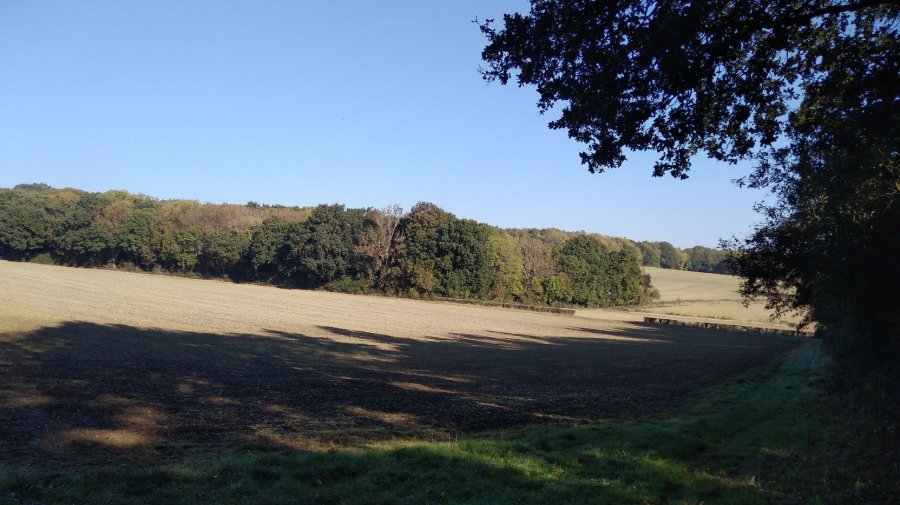
Traditional farming country, kent

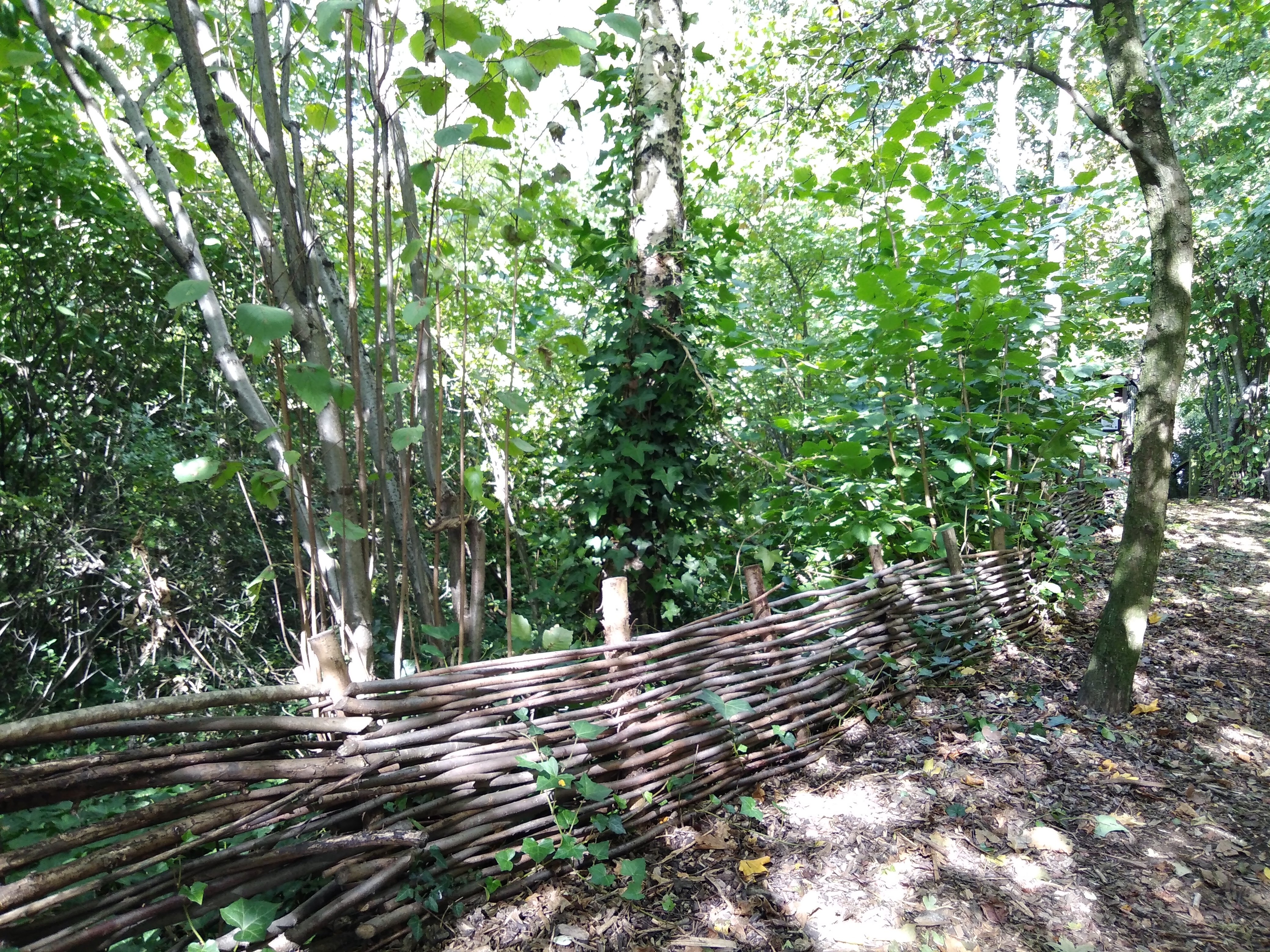
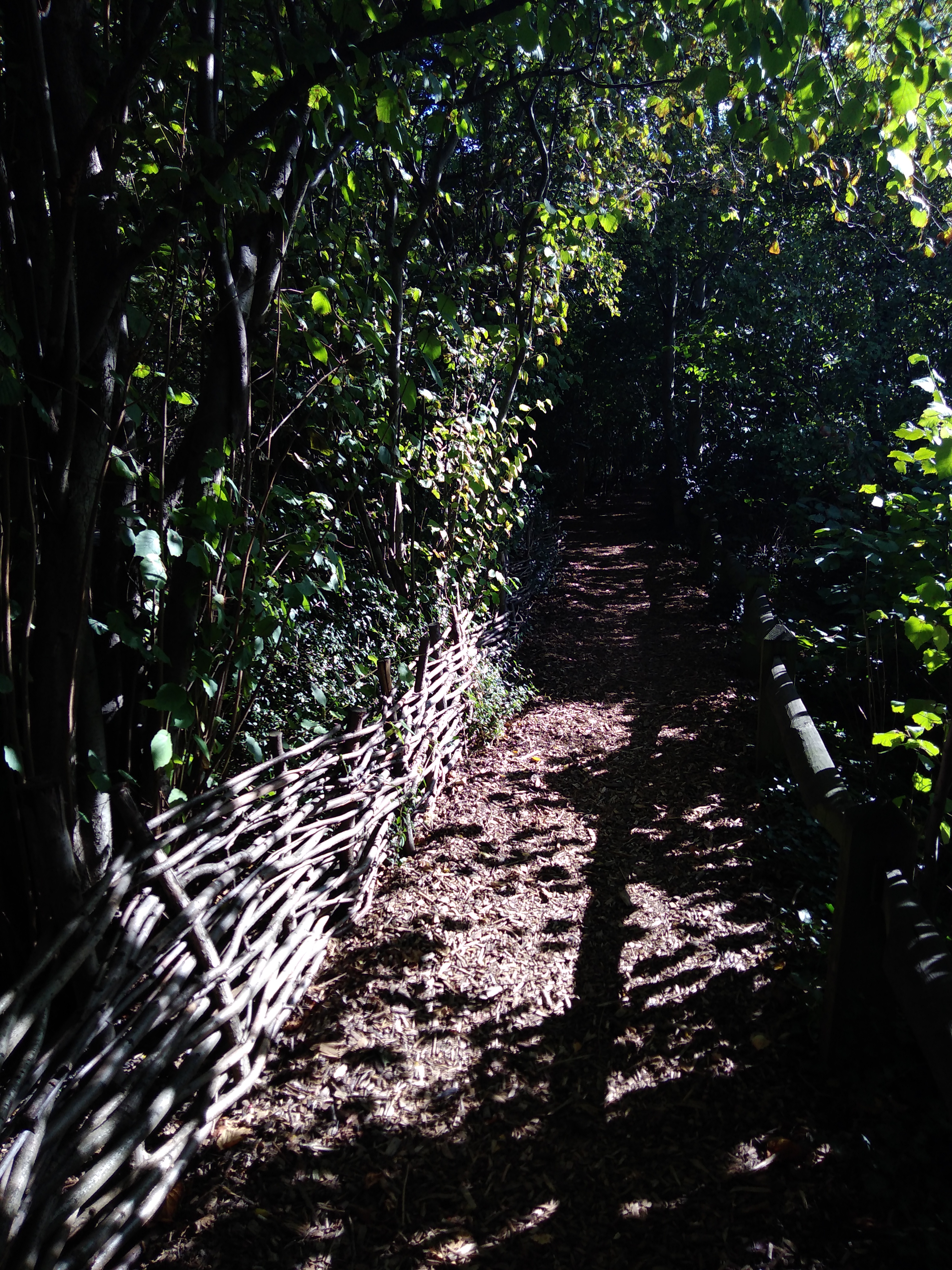
The noxious fumes abated temporarily as I made my way through the welcome cool woods, away from the acrid smell I thought, to the altogether sweeter scent of chestnuts. The fences made me wonder what they were protecting and brought to mind the small trucks I came across in the Austrian mountains where single men collected wood. There was no sun except in dapples and a grey squirrel leapt across the path. I could still hear the warning parp parp of the train as it came to level crossings in the distance and the drone of far-off traffic, but also the birds squawking and crawing and tweeting.
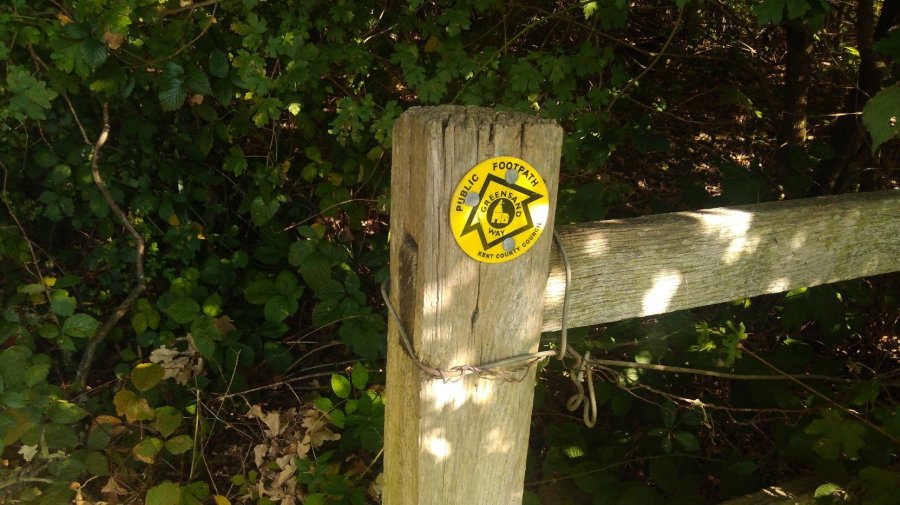
Public Footpath, Greensand Way, Kent
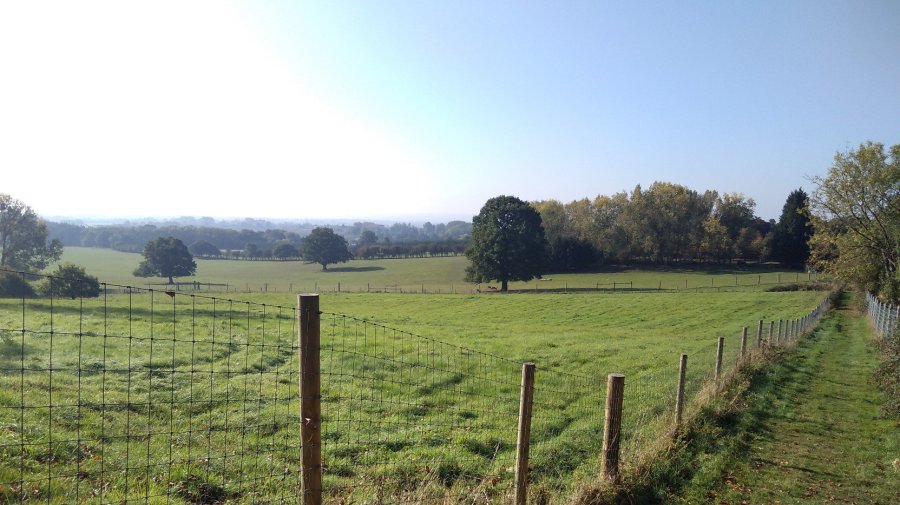
Soft and rolling (private) countryside, divided by landowner with barbed wire fences, Kent

Sadly, despite the wonderful view, once out of the trees the very strong fumes were evident for miles.
wp-153918528219238660335.jpg
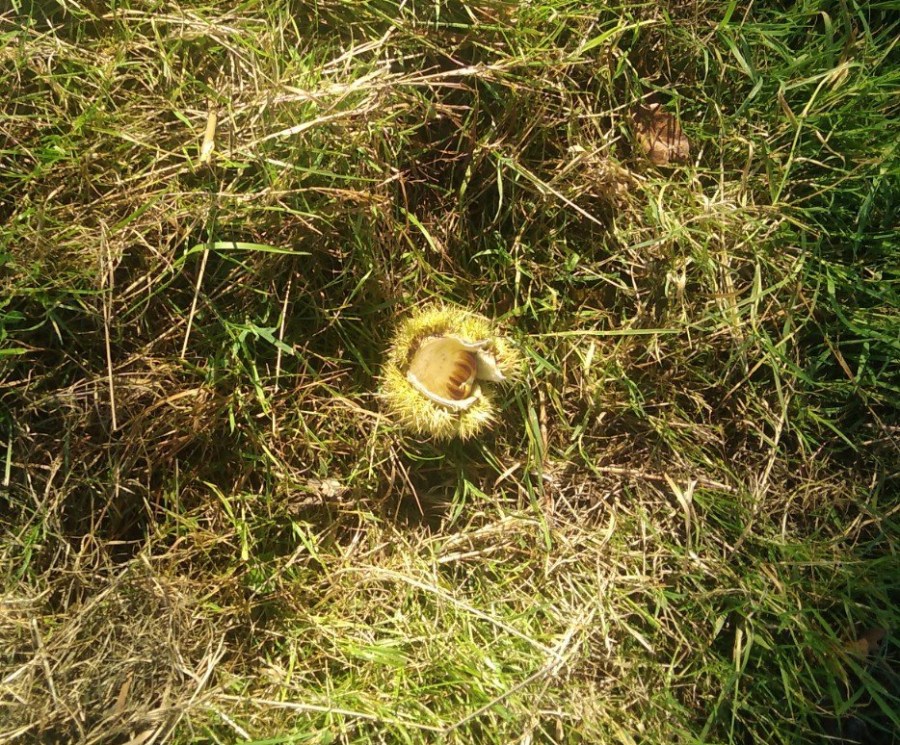
Sweet chestnut in its prickly cases, Kent
wp-1539185377688518546386.jpg
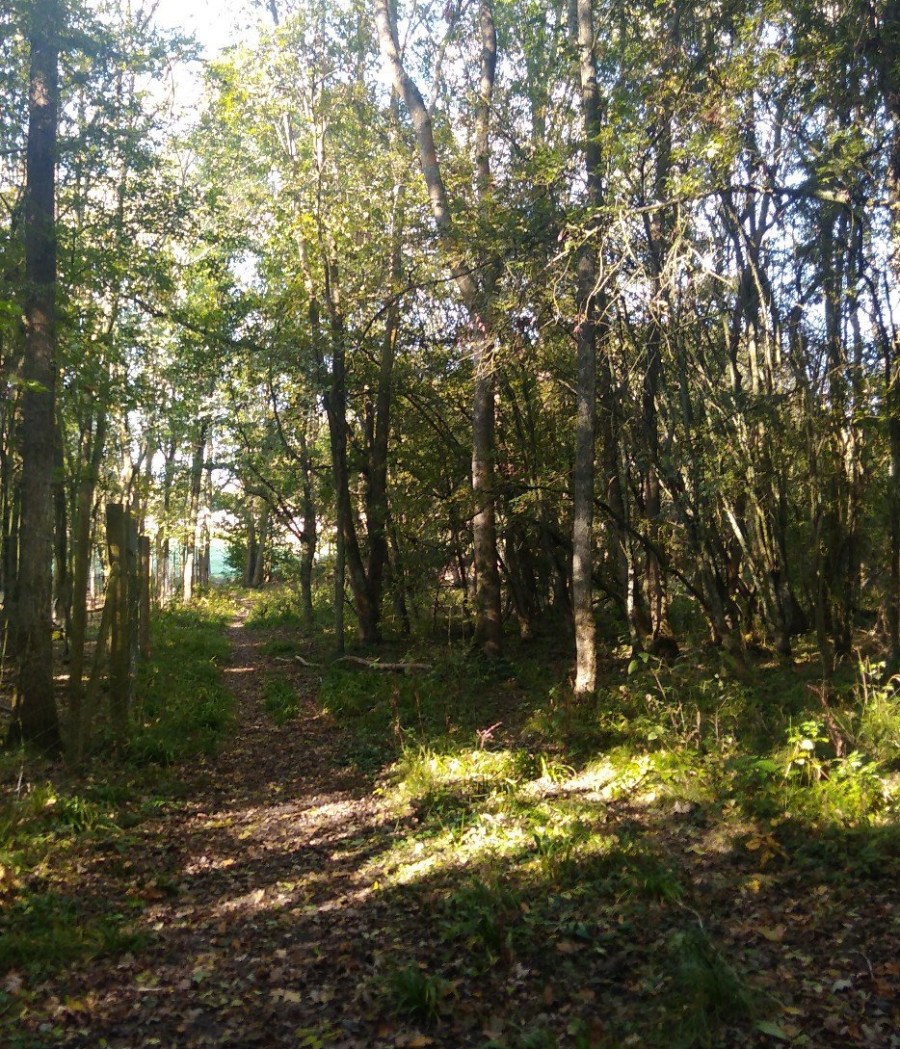
Beautiful native trees allow dappled sun to light up the first fall of autumn leaves, Kent

The fences became much stronger and the gates quite serious, when I came across the deer on my left standing still, observing me. I startled a reclining stag and away he bounded, taking off and landing from all four feet at the same time which always makes me laugh.
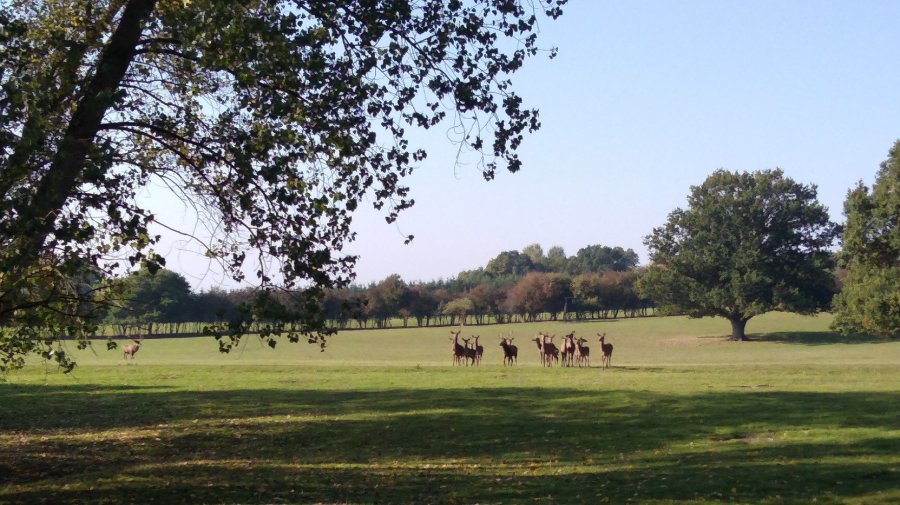
A herd of majestic deer with developing antlers, Kent

Then the flock of curious youngsters gathered and crept closer until one of the stags stretched forward his neck and bellowed, causing them to pause. He moved into the centre, whereupon the second, smaller male departed. The others continued to stare, their ears pricked. It reminded me of the grounds of Knole House in Sevenoaks where I grew up and where I first saw deer roaming like this. Further on, three more lazed in the shade of a great oak until I disturbed them. They had fawn spots on their backs and white bottoms with black stripes down the middle!
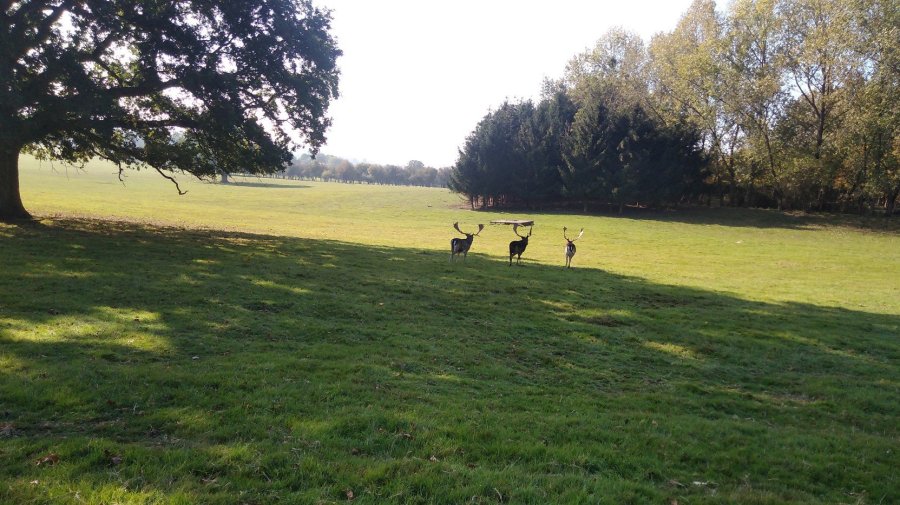
Three stags under an oak tree, Kent

The red brick Elizabethan Manor house, Roydon Hall was on my left now, with its stepped roof edges and old-fashioned chimneys. Apparently it has an escape route below the cellars, but it appeared to be boarded up although the the lawn was newly mown.
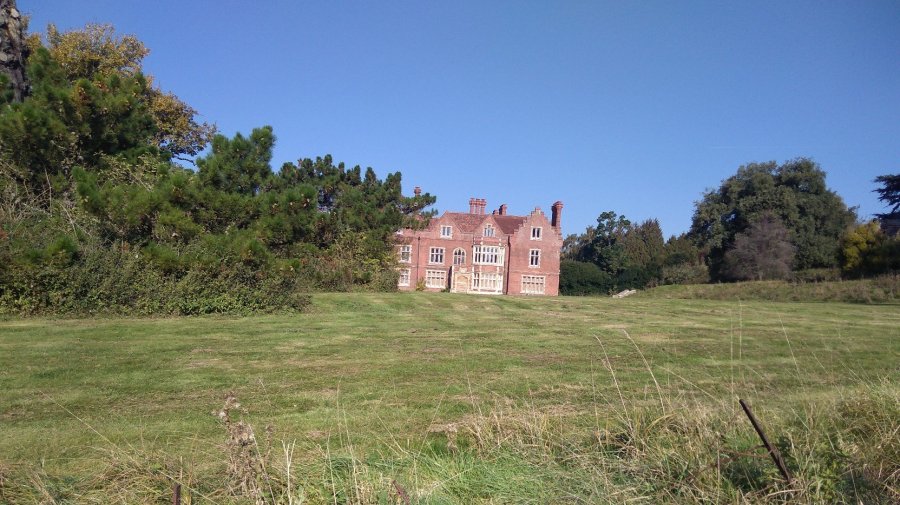
Roydon Hall, Kent

I expect they call this prison-like fencing, ‘managed land’.
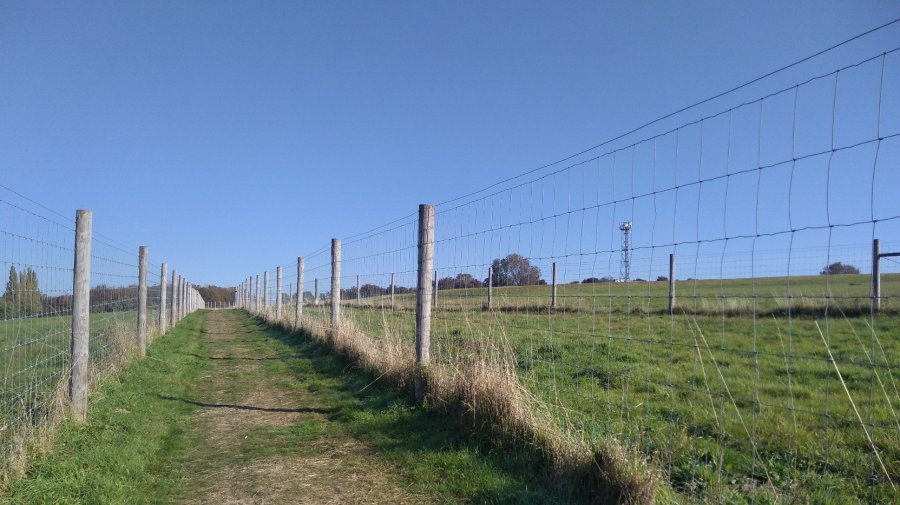
Keeping us off his land, protecting us from the deer maybe, Kent

There was a square tower with a turret and lake to my left (though later I thought perhaps it was plastic-covered crops) and satellite dish to my right.

This was the only slight incline and at the top was what I assume was a folly. Its yellow stone and Grecian columns were set amidst lush foliage in the midday sun.
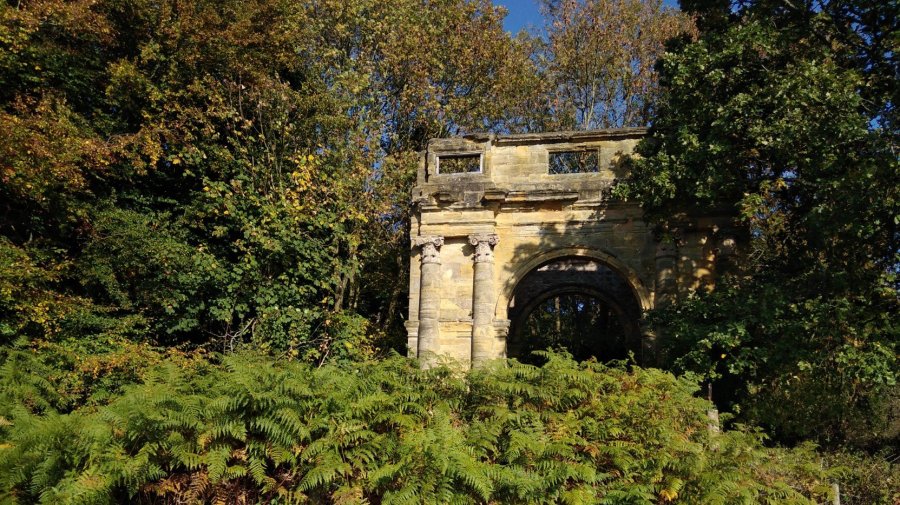
A bit of a folly amongst the foliage, Kent

As I strode down the lane, two women and four walking poles approached me to ask directions.
wp-15391852838092037191285.jpg
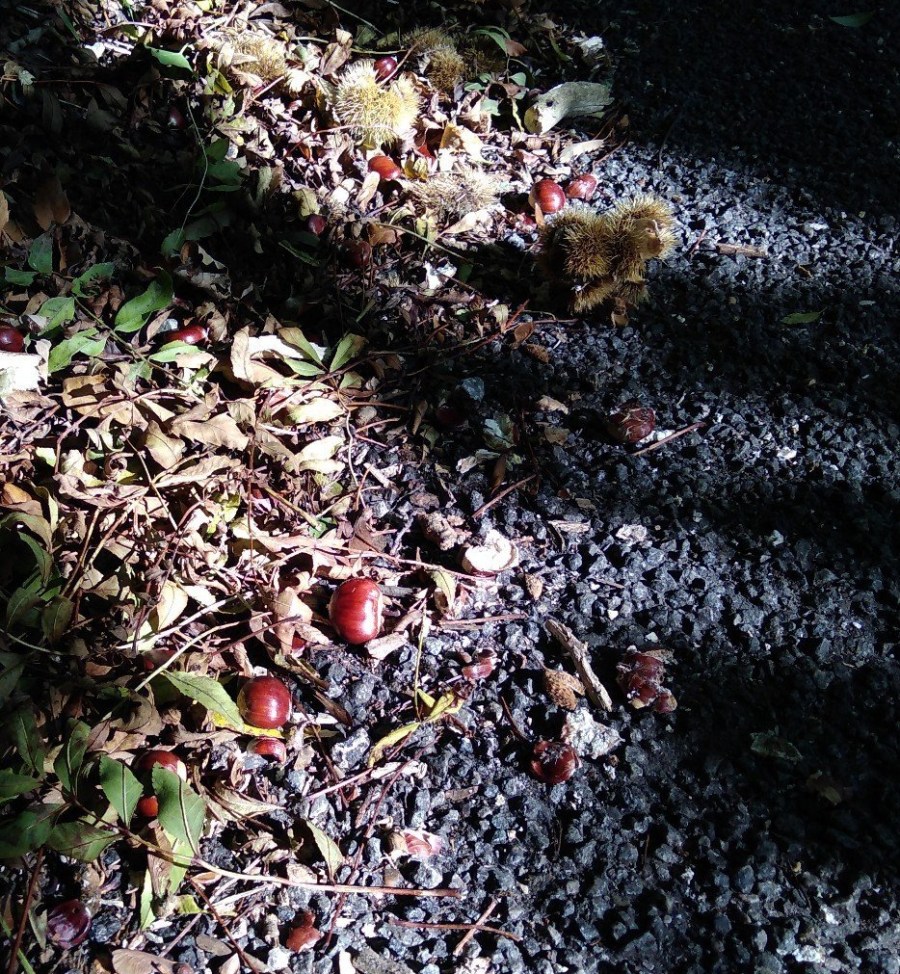
There were beech nuts and conkers on the asphalt.
wp-15391852841581259786156.jpg
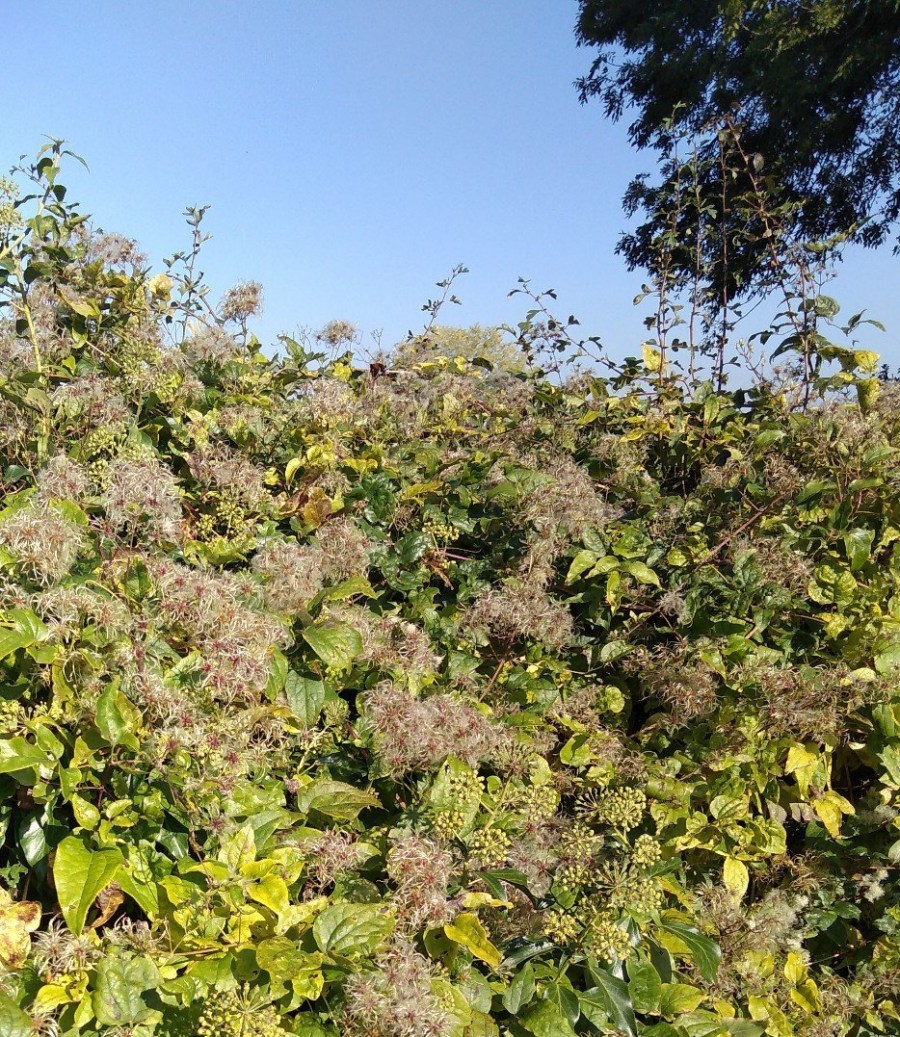
Wild clematis
Glorious Autumn colours

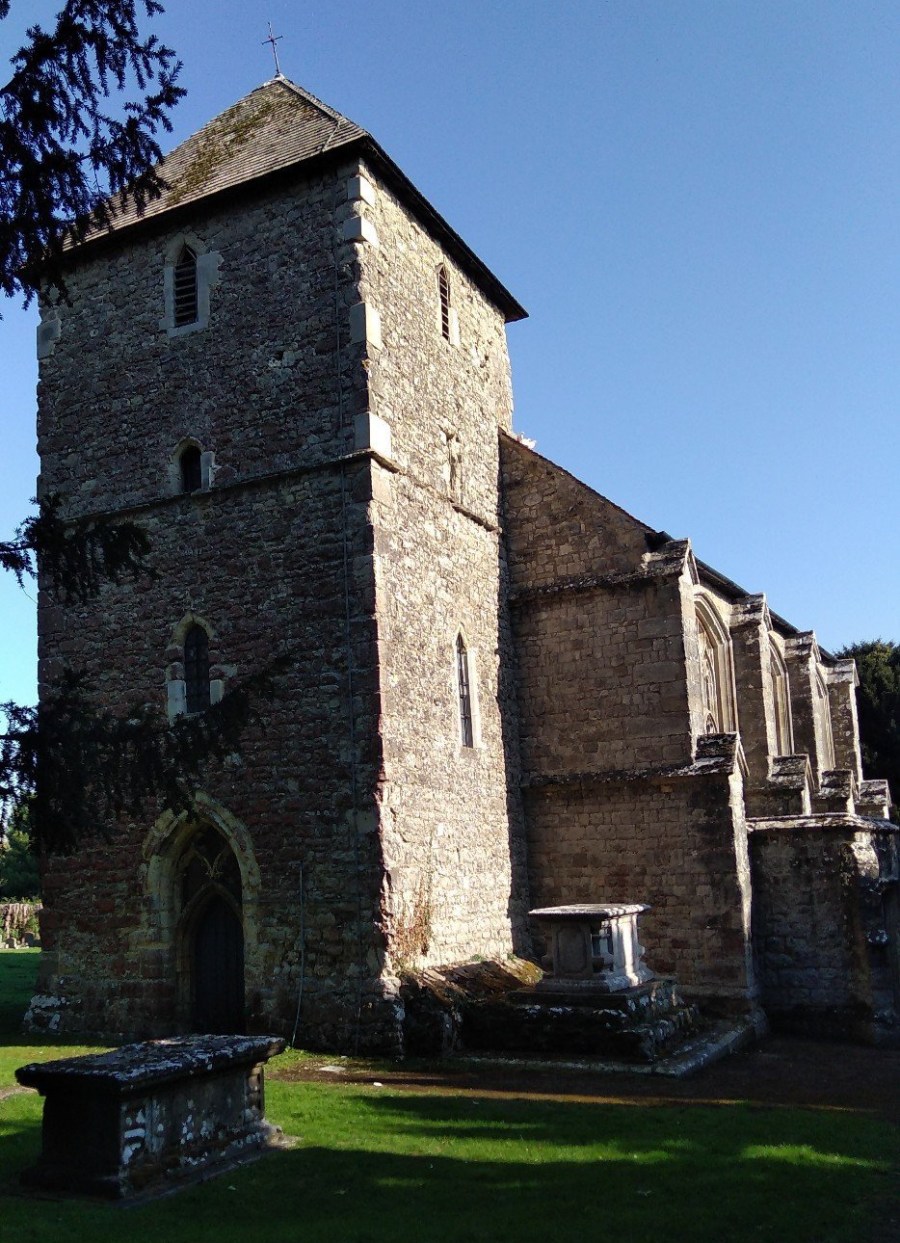
Several miles along the road took me to the St Mary the Virgin church at Nettlestead with its simple 13th century tower and possible Saxon foundations.
wp-15391852829951518083899.jpg
St Mary the Virgin, Nettlestead, Kent
wp-1539185125591273463672.jpg
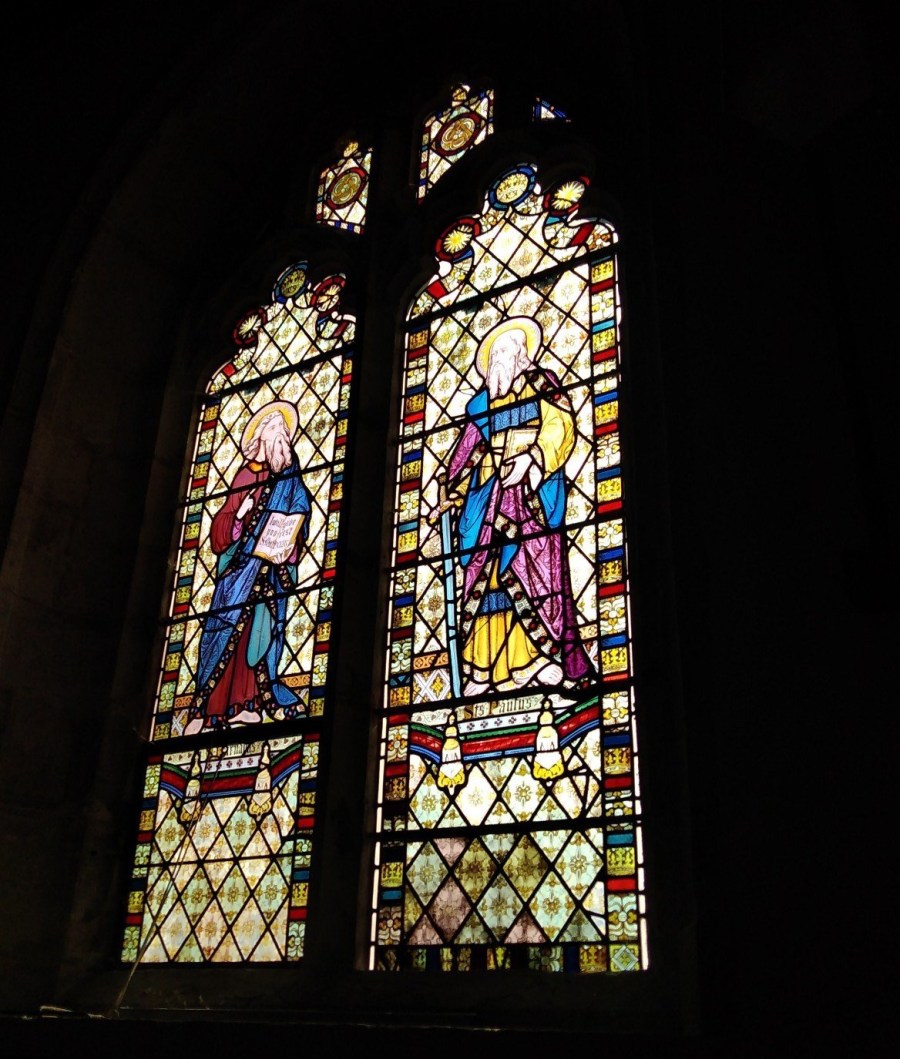
Stained glass at St Mary’s the Virgin, Nettlestead, Kent

Set in an equally charming churchyard, the building was started by the magnificently named de Pympe family. It has six notably large windows commissioned by Reginald de P.

At the top of each window stand angels with curiously feathered legs. (taken from the history leaflet)

In addition, I was shocked to read that

The original glass of this window with the rest of the 15th century glass in the church suffered damage by impious hands at a time unknown. (Taken from the plaque)

And furthermore, that the visit of the Archbishop of Canterbury in July 24th 1895

… was well nigh “a visit of surprise” so short was our prior notice… And here let me say at once how troubled I am to think that in the hurry of the moment some members of the Parish Church Committee were overlooked. (From an account in the church).

Not far away was an entrance to the Medway river path where I stood back as a cyclist whizzed past.

It was a gentle stroll back to the Hampstead Marina alongside various water crafts including one propelled by a man with a long white ponytail and no shirt, sitting behind an infant in a baby seat and a woman who talked incessantly.

Tall trees shushed a plane and helicopter and the smells were all fruity or woody, wet or damp.
wp-15391851256371626864719.jpg
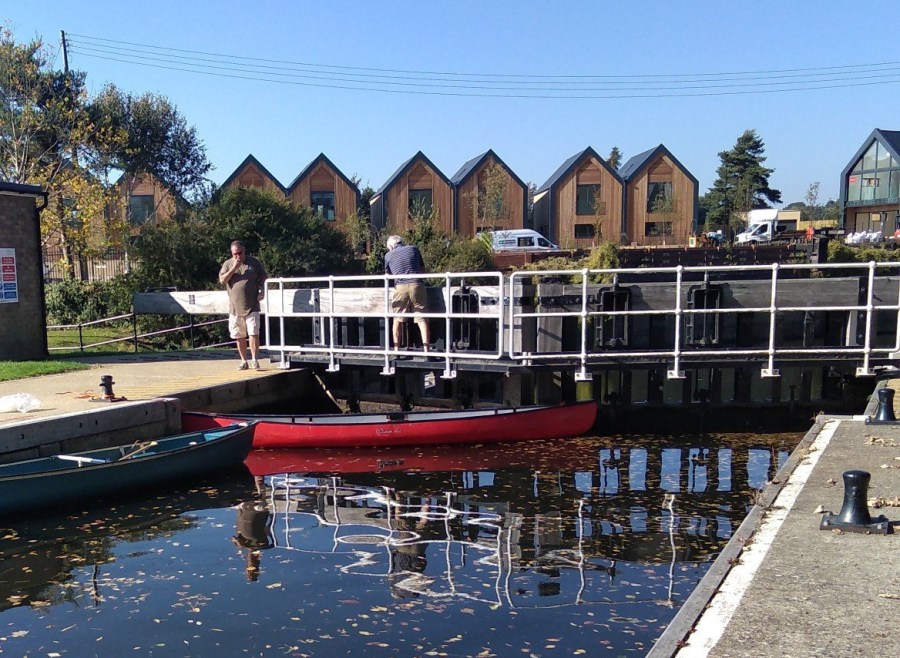
Hampstead Mariner, Yalding, Kent

On arrival there were three men with two boats watching as a fourth opened the lock. I joined them as the water slowly filled the space between the gates, fascinated as they floated through and boarded for “a couple of miles down and back, and then a pint!”
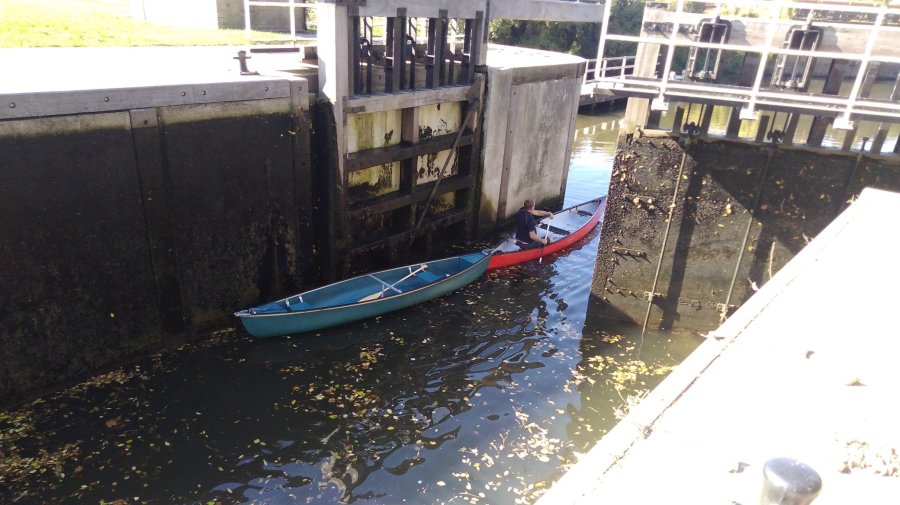
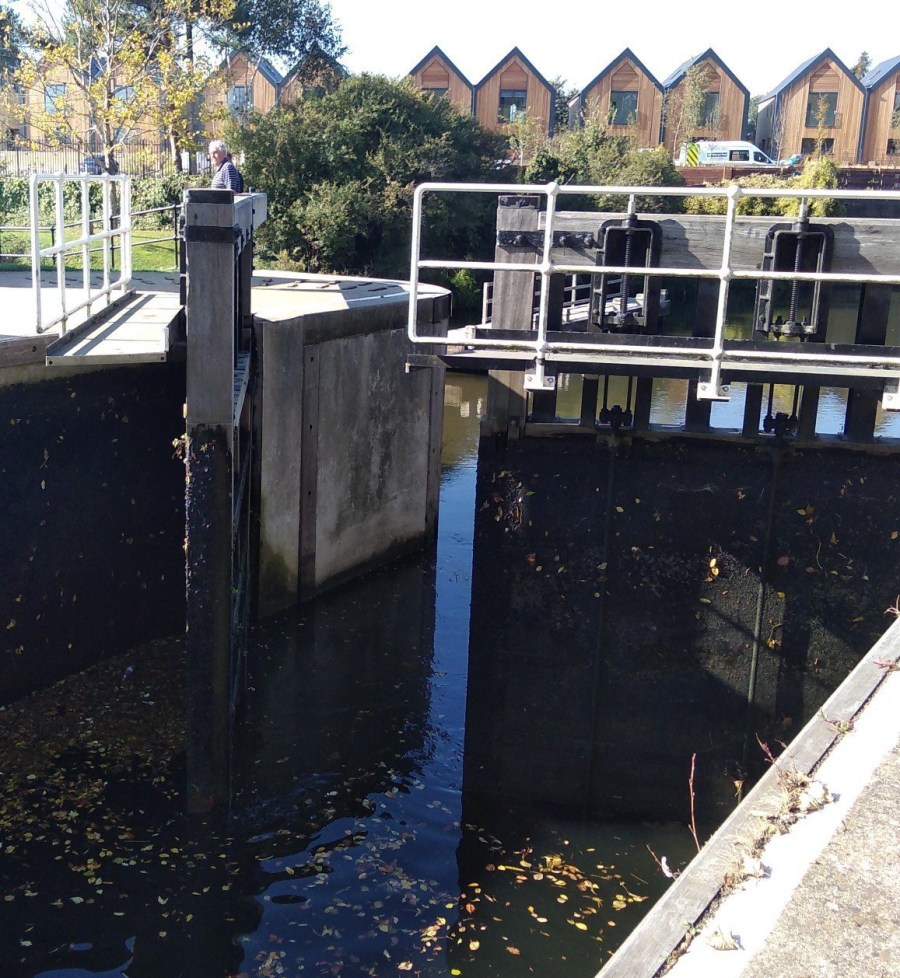
Hampstead Mariner, Yalding, Kent
wp-15391851255981834697237.jpg
New houses and the deep blue sky reflected in the water at Hampstead Mariner, Kent

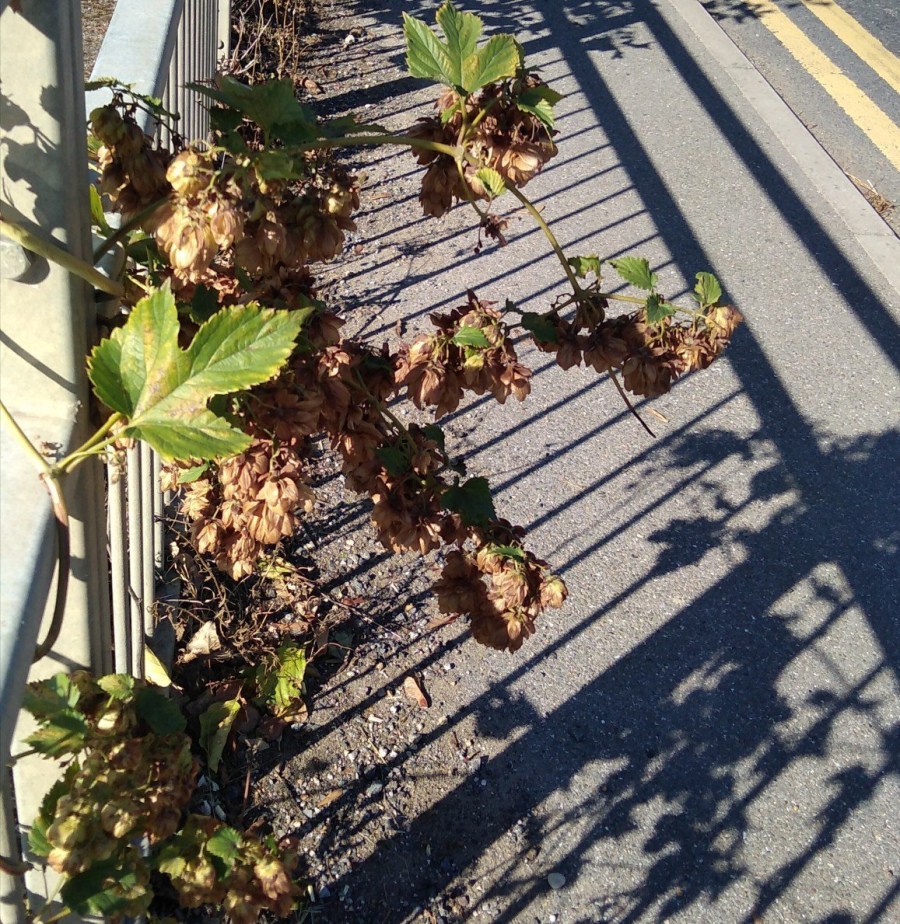
I retraced my steps to The Boathouse for a half of Shepherd Neame’s Autumn Ale. I was admiring the hops when a couple stopped to tell me what they were and that they had been hop pickers years ago. Hundreds used to come from London to join the workforce at the picking season.
wp-15391851256711238078862.jpg
Wild hops growing on the railings, source of the beer industry and more, Kent

The sign said,

Cheers! Yalding has always had a strong connection to alcohol! At one time it was producing more hops than any other parish in England. It is also famed for its cherry orchards and the (sic) remains of the Medieval Vineyards have been found in the area. The various crops have been used to produce wine, beer and cherry brandy..

It was a ‘driving with the top down’ sort of a day.

You can download the pdf of the walk leaflet here. It is pretty good and contains useful and accurate photos of fields with superimposed arrows showing where to go. The second paragraph of number 2 is a repeat so ignore this.

Roydon Hall info
London Photo Essay
I was born in England but have lived in Edinburgh, Scotland for over 30 years. Take a tour with me around some of the best known London sights. Discover parts of the UK capital that you might not know; and enjoy the architecture, the views and the detail of this fabulous city. It is my personal selection.

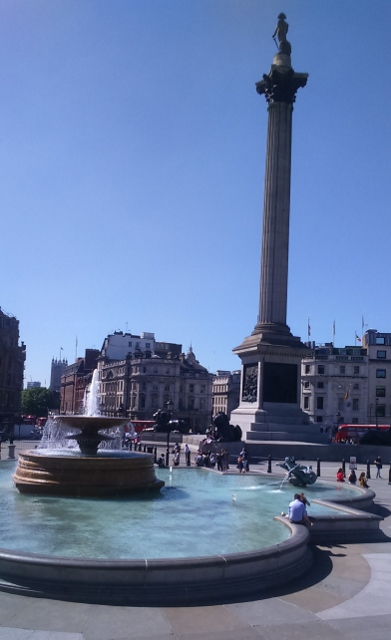
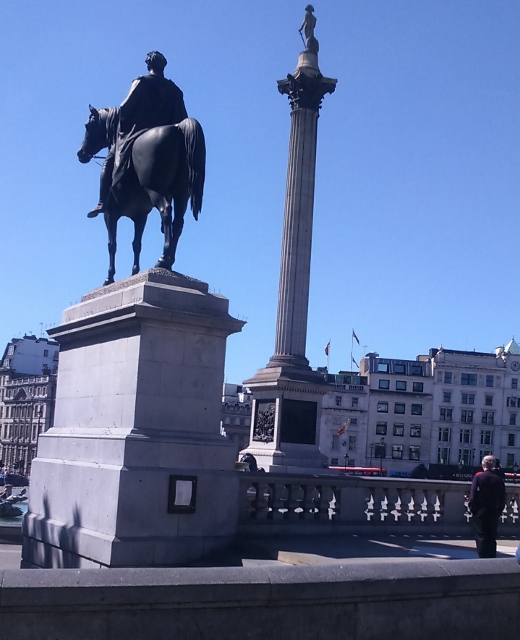
Trafalgar Square, Nelson's Column
Trafalgar Square, Nelson’s Column
Trafalgar Square with the fountains
Trafalgar Square with the fountains, London, England
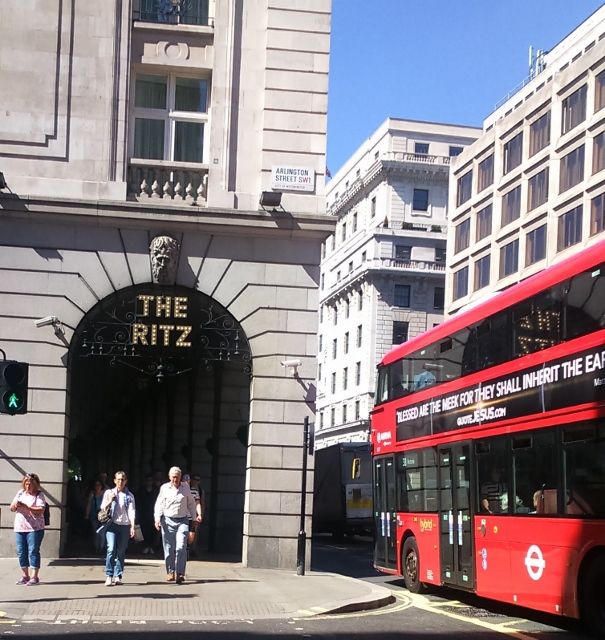
The Ritz hotal and a red London bus in the same shot.
The Ritz hotel and a red London bus in the same shot

The Ritz, featured in the wonderful 1999 film Notting Hill.

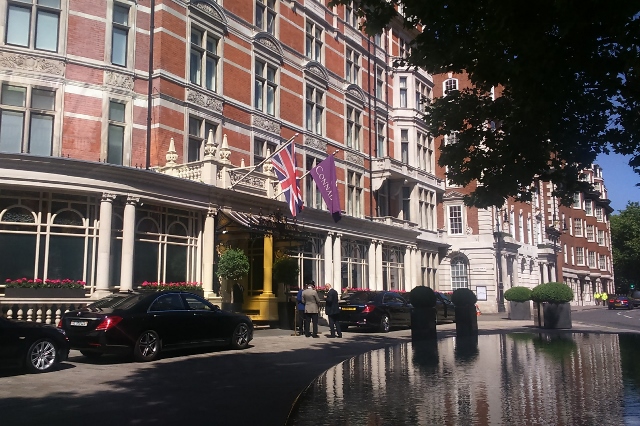
The Connaught Hotel - only for the rich
The Connaught Hotel – only for the rich
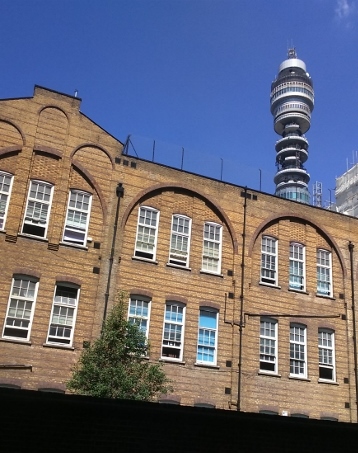
BT (formerly Post Office) Tower
BT (formerly Post Office) Tower, London
IMG_20170915_125042 (480x640)
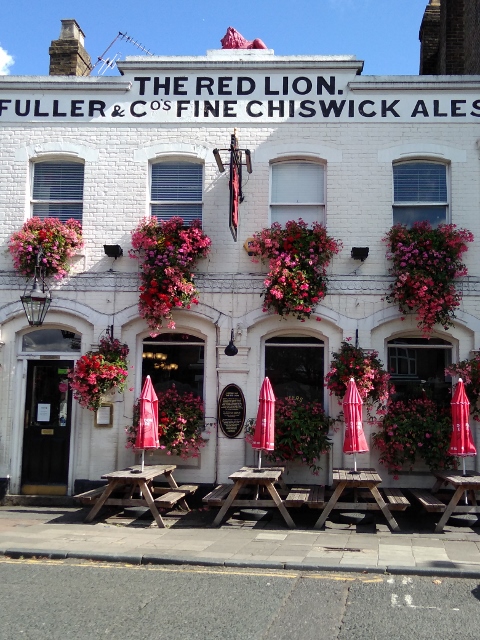
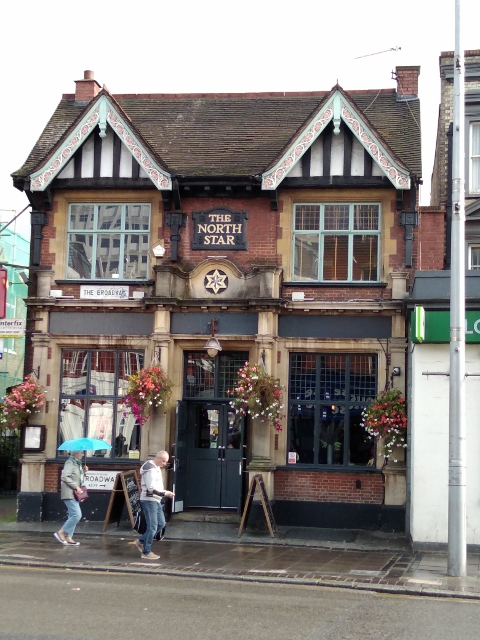
Typical London Pubs – purveyors of fine ale – Chiswick
IMG_20170915_161908 (480x640)
The North Star, Ealing
DSC_0002 (640x360)
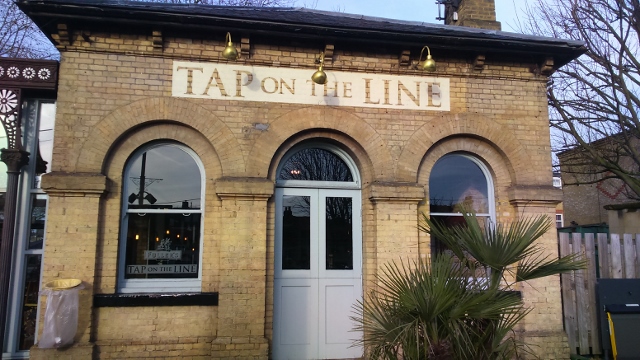
Kew Garden Station pub, Tap on the Line
IMG_20171024_130104 (640x480)
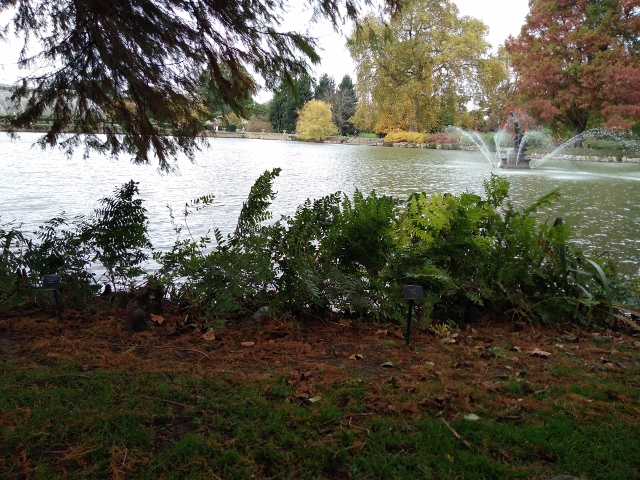
Kew Gardens, London
IMG_20171024_144539 (640x480)
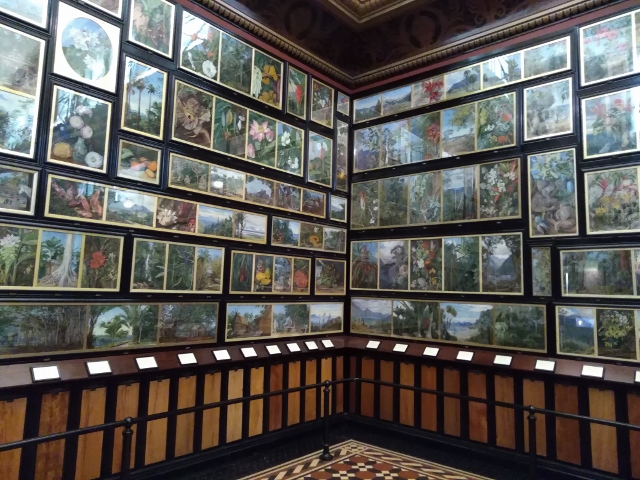
The amazing Marianne North Gallery,  Kew Gardens, London
IMG_20171024_133219 (480x640)
Detail, Kew Gardens, London

Do you like green spaces? Would you like to see more of London’s lush hidden corners?
IMG_20170922_143709 (480x640)
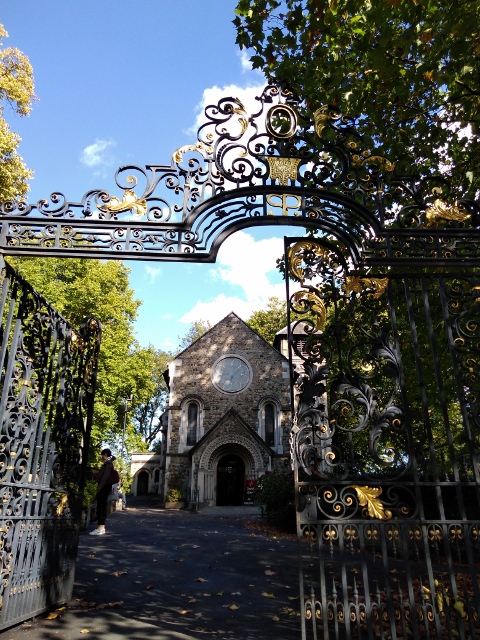
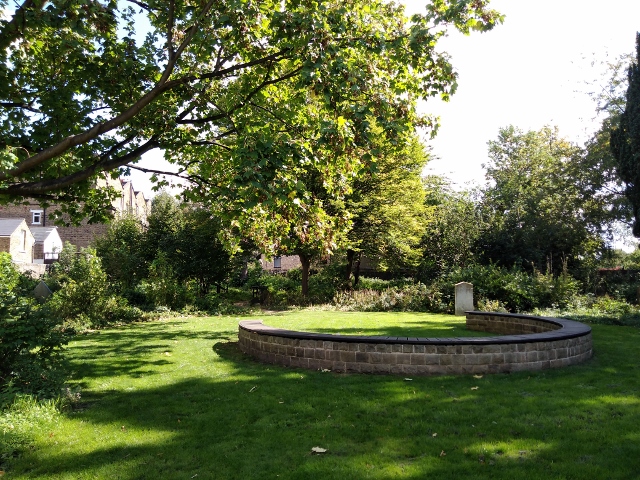
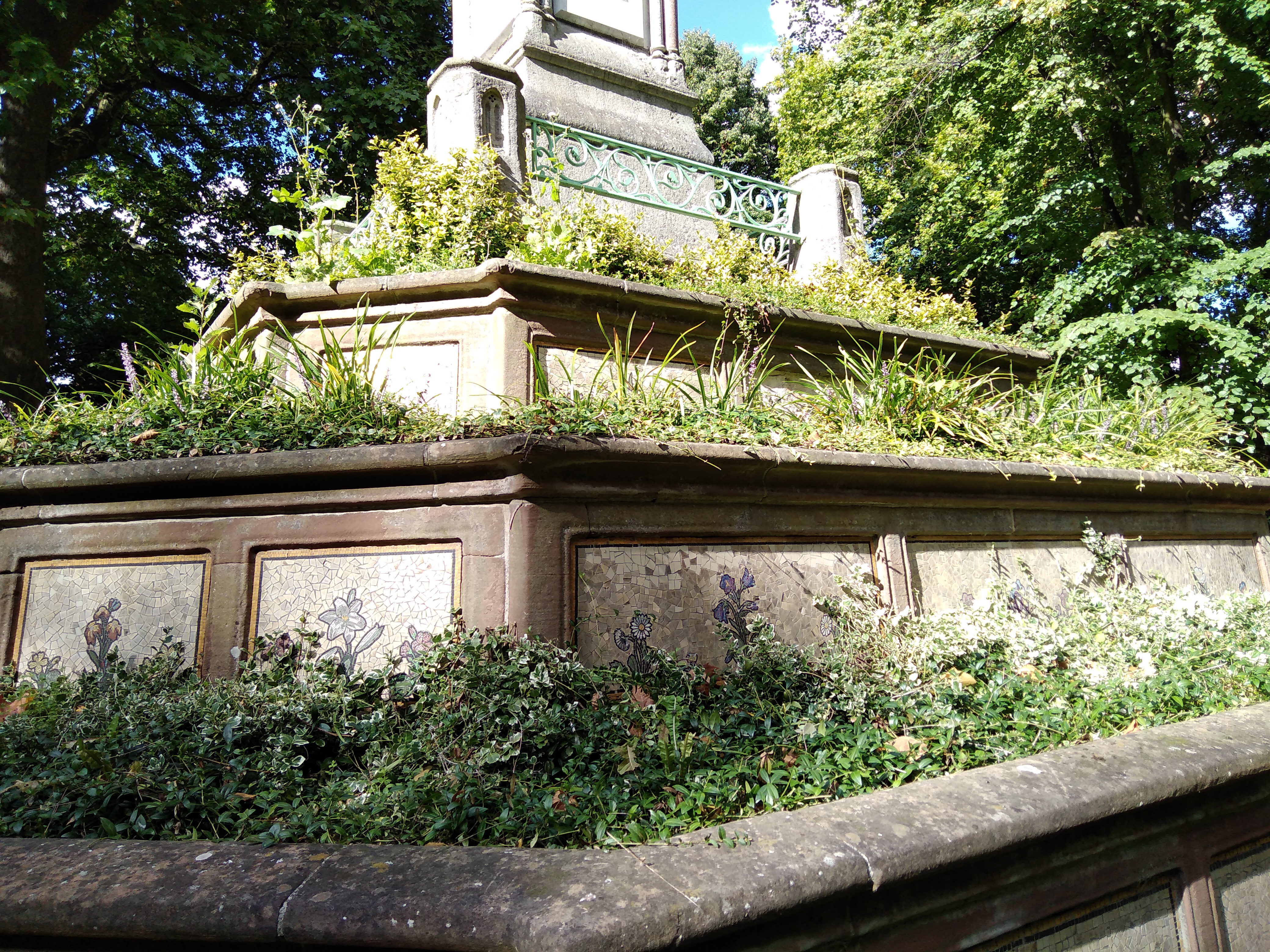
St Pancreas Parish Church and graveyard, London

My blog link: Camley Street Natural Park, St Pancreas Parish Church and graveyard, and Goldington Crescent, Camden.

IMG_20180206_083826 (640x480)
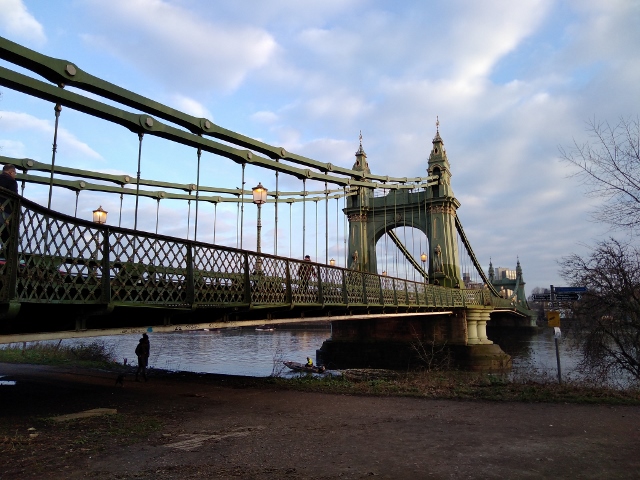
Hammersmith Bridge, London, England
IMG_2394 (478x640)
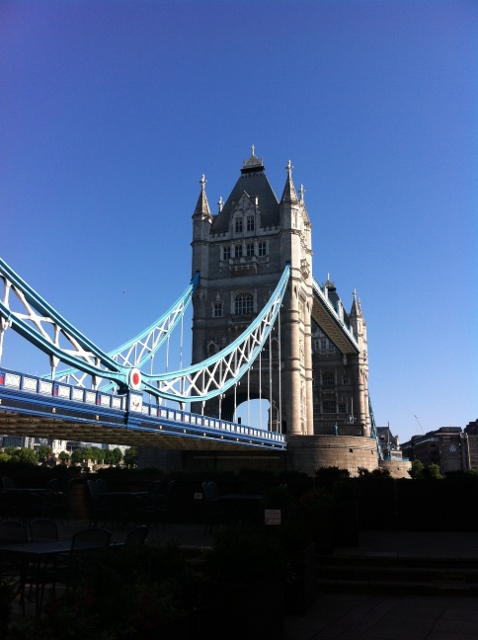
The iconic Tower Bridge, London, England
IMG_20180610_124430 (359x640)
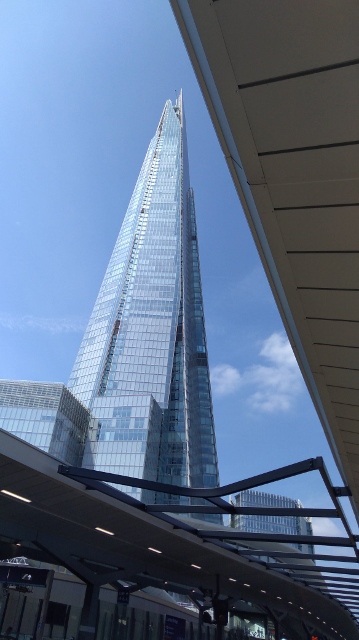
The Shard, near London Bridge
DSC_0029 (482x640)
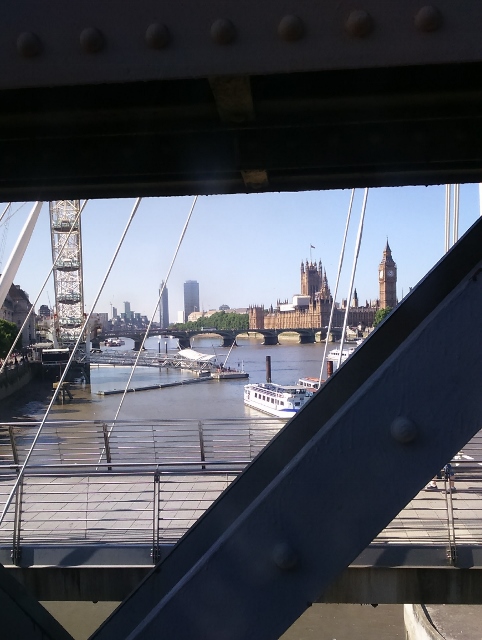
The Houses of Parliament and Big Ben (clock tower) from the train rolling over Hungerford Bridge


IMG_2479 (478x640)
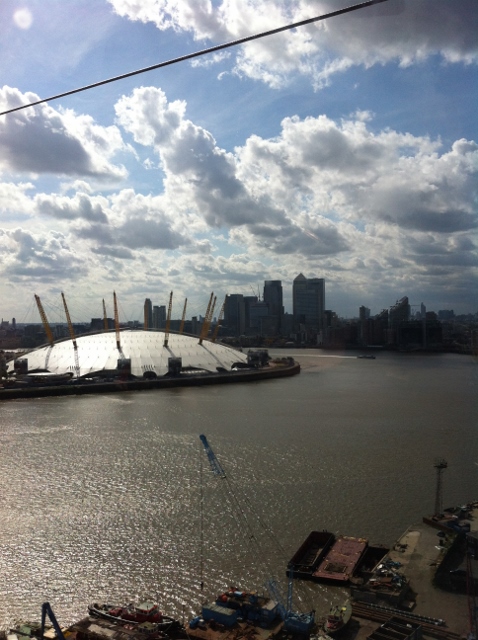
The O2 arena, London, England
IMG_2474 (478x640)
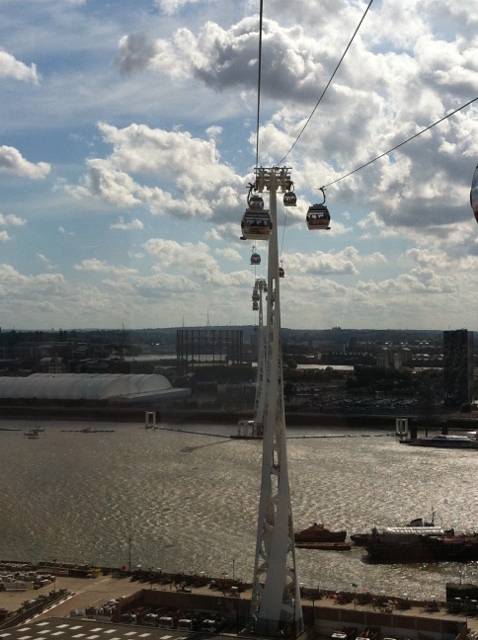
The Emirates Airline gondolas / cable cars across the Thames, London
DSC_0007_26 (640x360)
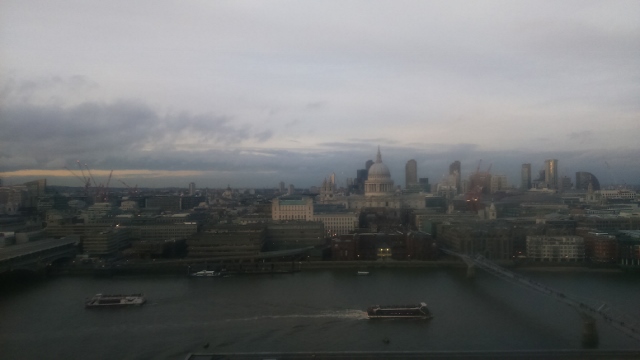
Atmospheric views from the Tate Modern Art Gallery: River Thames and St Paul’s Cathedral
DSC_0018_22 (640x360)
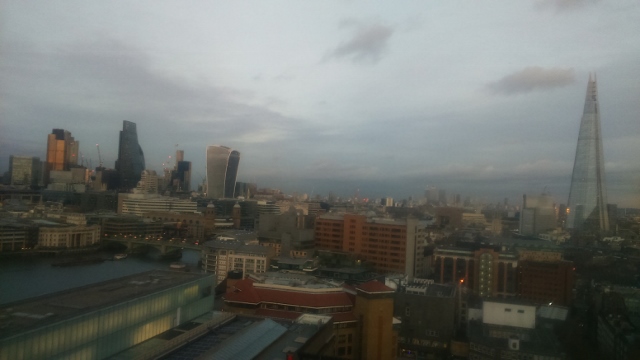
Again, from the Tate: The Shard and East London skyscrapers
DSC_0305 (360x640)
Through the new Tate Modern windows
DSC_0306 (360x640)
The new Tate Modern and views outside
DSC_0025_12 (640x360)
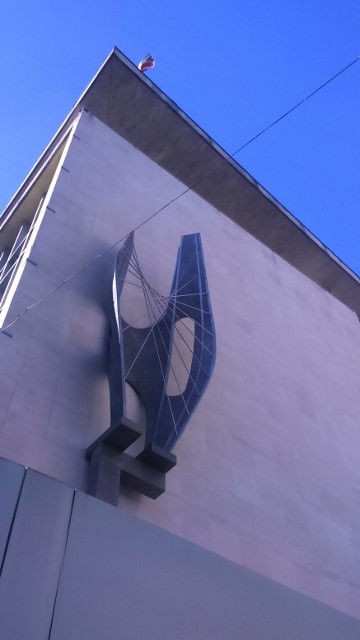
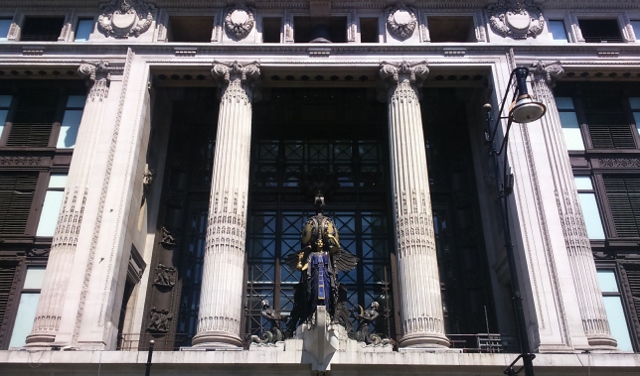
Barbara Hepworth’s Winged Figure on the side of the John Lewis Building, Oxford Street, London
IMG_20180206_092818 (640x480)
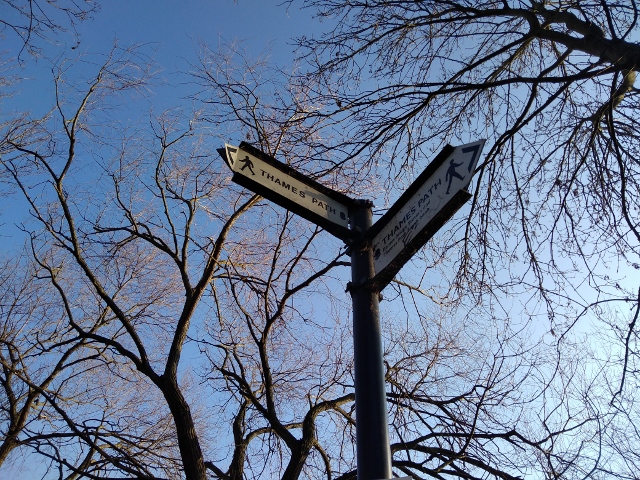
Take a peaceful walk along the River Thames – Hammersmith to Chiswick for example
DSC_0001 (640x360)
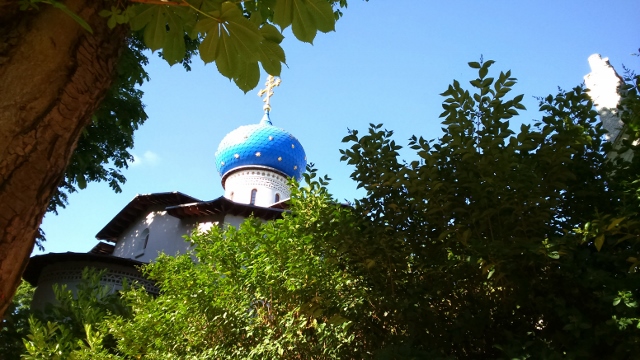
Mosque, Gunnersbury, London
photos aug 15 089 (640x360)
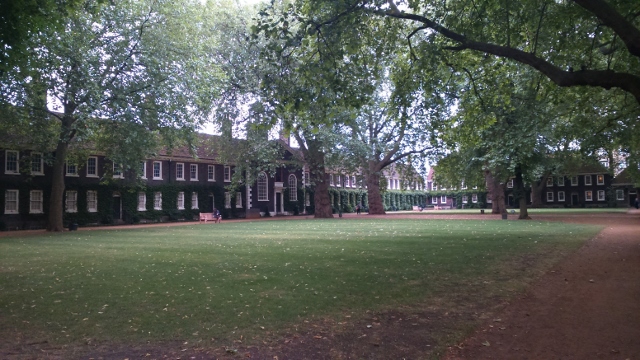
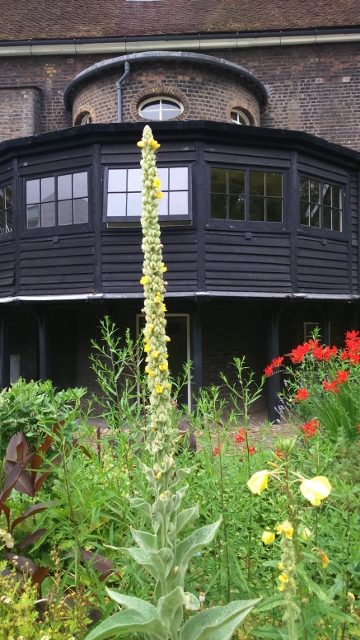
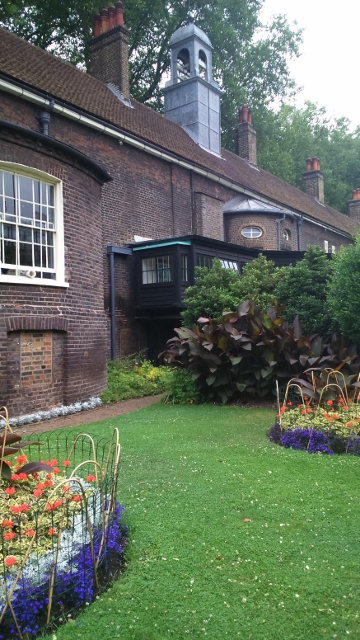
The Geffrye Museum of the House now called Museum of the Home currently closed for rennovation but the front garden is still open for picnics and games, London (near Hoxton Tube)
photos aug 15 113 (360x640)
and Agrimony and Evening Primrose in the gardens
DSC_0114 (360x640)
and more gardens
IMG_20170915_131841 (640x480)
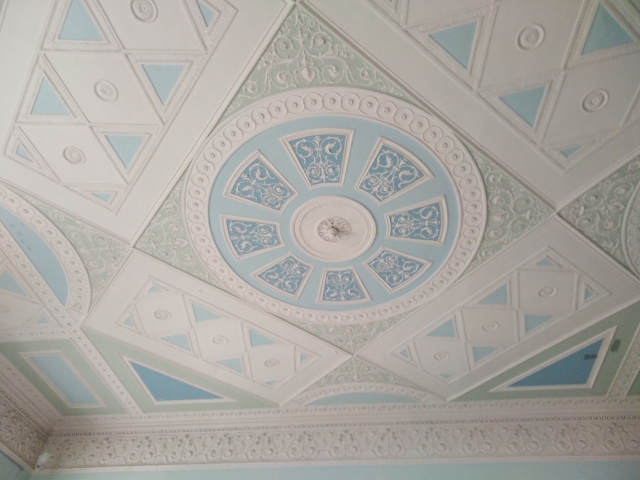
The newly rennovated Pitzhanger Manor,Ealing
IMG_20171112_142916 (640x480)
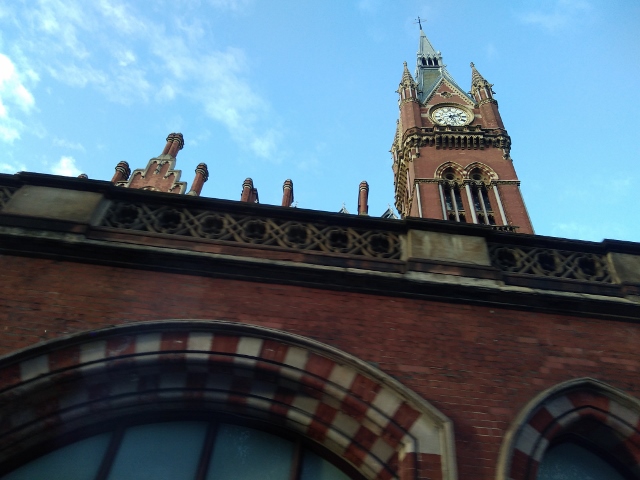
The elegant St Pancreas Station – outside
IMG_20180611_150444 (640x359)
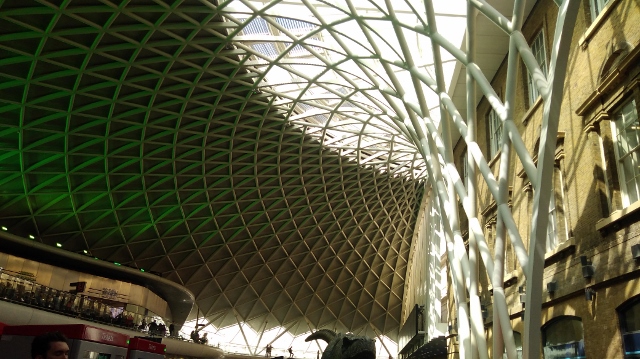
and inside (St Pancreas Station, London)
IMG_20171110_135032 (640x480)
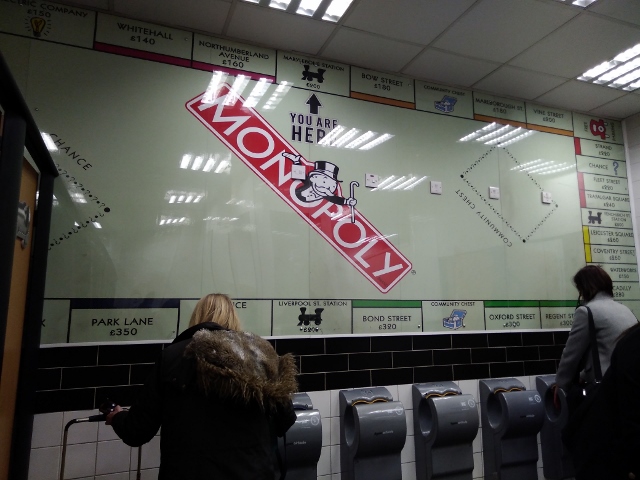
The Ladies Toilets at Fenchurch Street Station, London. Using the Monopoly game as inspiration
IMG_20170915_124327 (640x480)
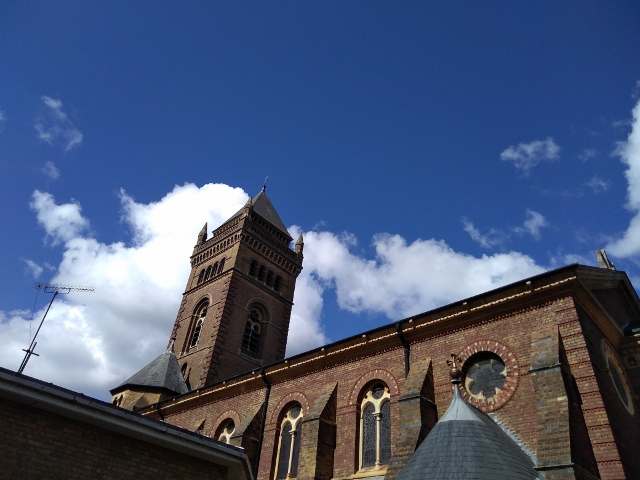
Walk between Chiswick and Ealing in south east London via Gunnersbury Park, and you will come across this church. Tell me if you know the name as I have researched it and cannot find it out!
IMG_20170915_124342 (480x640)
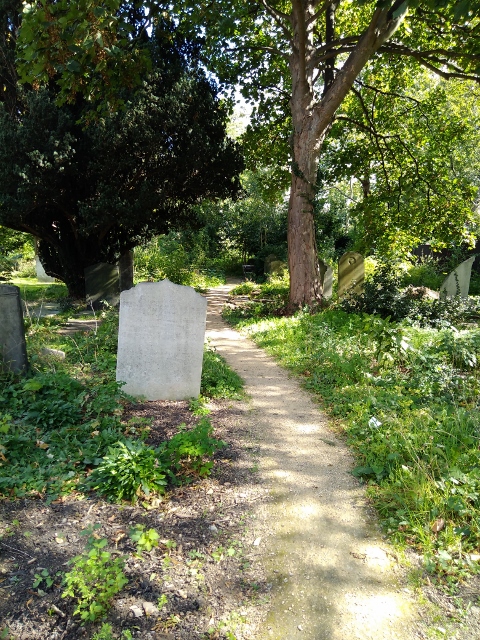
Its graveyard.
IMG_20170915_124431 (640x480)
and contemplative garden
DSC_0033_14 (640x360)
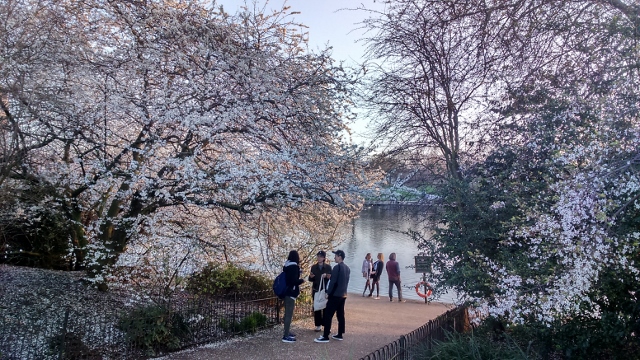
Hyde Park in winter, London.
DSC_0035_5 (640x360)
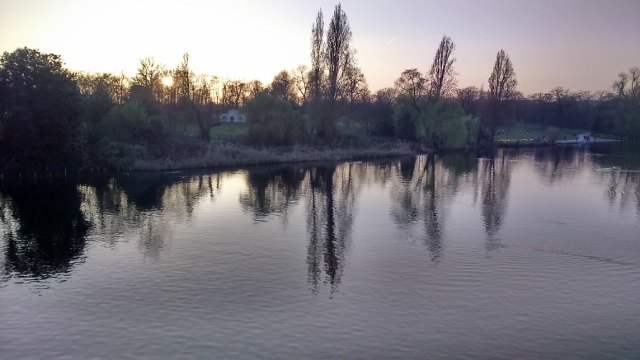
The Serpentine, Hyde Park, London
DSC_0030_12 (640x360)
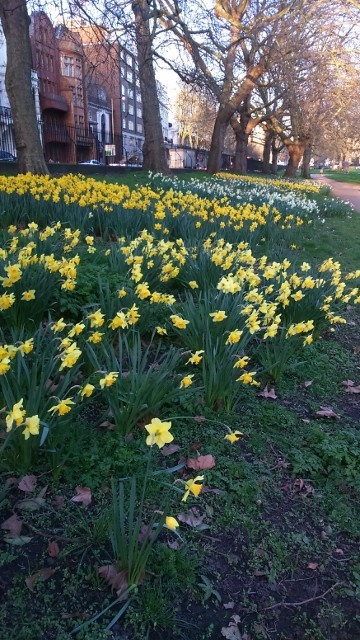
Spring daffodils – a classic feature of London’s parks – with the warm, red sandstone houses beside Hyde Park
DSC_0017 (640x376)
Selfridges, Oxford Street, London
DSC_0022_13 (640x360)
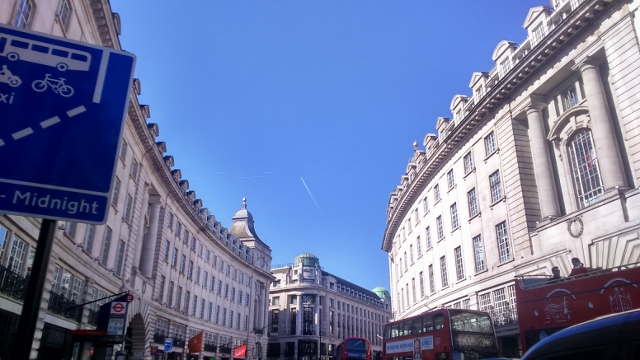
John Nash’s Regency sweep of Oxford Street, City of Westminster, London
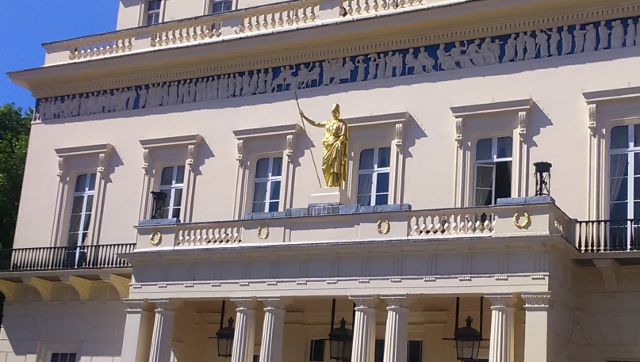
Britannia out front
Institute of Directors building, Pall Mall, London
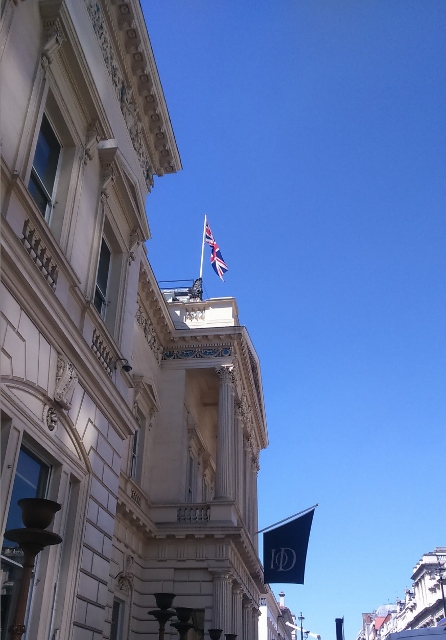
The Union Jack flying
The Union Jack flying near the Royal Opera Arcade, Pall Mall, London
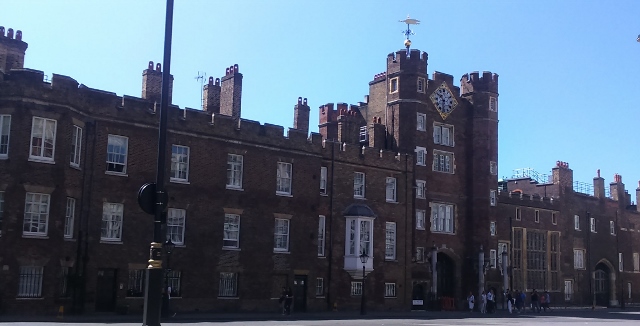
St James Palace
St James Palace, London
IMG_20171112_142734 (640x444)
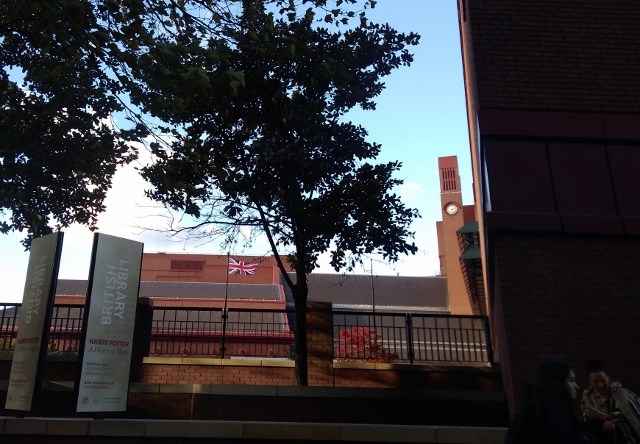
The British Museum, Euston Road, London
IMG_20170915_165830 (480x640)
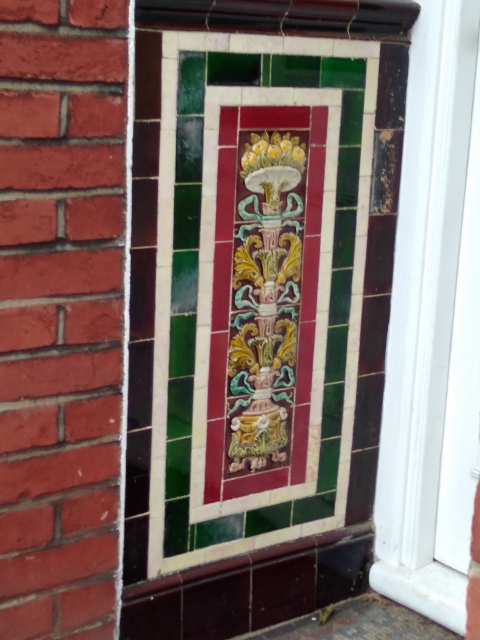
Tile detail – typical of south east London residential accommodation
IMG_20170915_170117 (640x480)
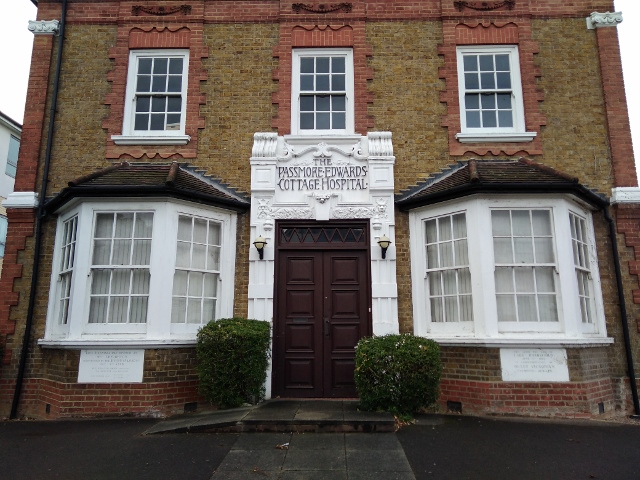
The Passmore Edwards Cottage Hospital, Acton, London
IMG_20180206_083637 (640x480)
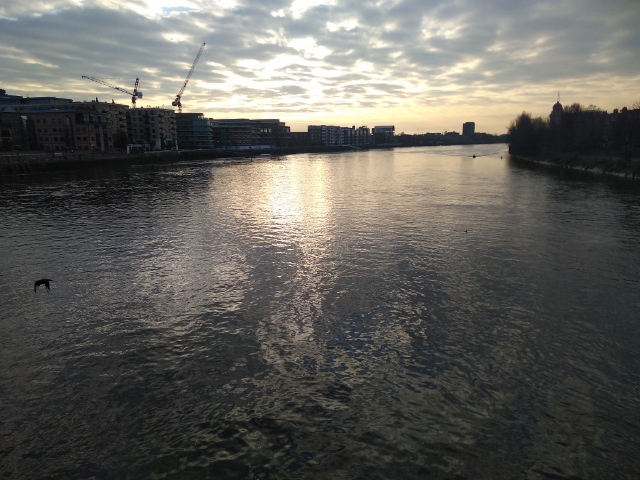
Sunset on the River Thames from Hammersmith Bridge, London.=

Check out this lovely blog which is also about hidden gardens and churches of London.

and this one too: Some of London’s best secret gardens.

If you are looking for pleasant paths to cross London and a network of quiet and interesting streets, you can always check out footways.london .

Downton and the New Forest

December 2017

I have written a before about Downton on the River Avon in Wiltshire, and the New Forest which is nearby. Here is a link to a map showing it outlined in red, and you can see that it crosses the three English counties of Wiltshire and Hampshire, very close to the Isle of Wight.

IMG_20171216_105826 (640x480)
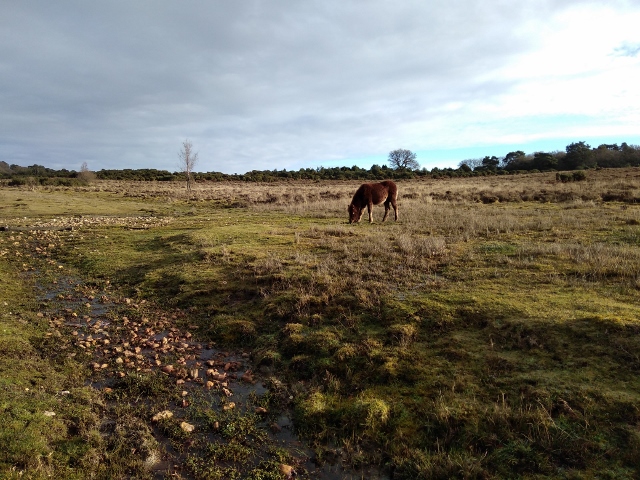
The 3000 New Forest ponies roam wild but are owned by the Commoners.

I stayed with kind and hospitable relatives in the village of Downton. It used to have a tan yard and still boasts the remains of a Saxon Moot (Mote, or meeting place) with a rarely surviving amphitheatre.  If you read the rather amazing novel ‘Perfume’ by Patrick Süskind you will get a graphic account of the scent that must have pervaded the town where they tanned the leather in those days. It also has an impressive range of trees; mainly beech, yew and elm.

10. seal-of-empress-matilda
Empress Matilda’s imperial seal. The inscription reads ‘Matilda Queen of the Romans’

Four Matildas and three Henrys – a little history

Situated on the edge of the New Forest (or Nova Foresta) it was William I, the Conqueror, Duke of Normandy and husband of Queen Mathilda (1032-1083 of Flanders) who created this 30 square miles of private hunting ground for their use in 1079.

‘William I was described as a tough, brave, inspirational and religious man. This invasion by the Normans changed much of the Anglo-Saxon way of life that was being established here. French became the language of the upper classes, cow meat became known as beef and swine became known as gammon; murder became a crime and slavery was abolished.’ from William the Conqueror and the New Forest

‘Empress Matilda’ was named Adelaide at birth in 1102. Daughter of Henry I and Matilda of Scotland, she was only aged 11 years when she was married to Henry of Germany, 20 years her senior. That was when she became Matilda. Her husband Henry was crowned Holy Roman Emperor which is why she became Empress Matilda. Made the first Queen of England by her dad but never officially known as that, she was nevertheless in charge of Normandy in Northern France and had claims to land and fortifications, namely Downton Castle.

Mother to Henry II of England by her second marriage to Henry of Anjou (at 15 years old he was 10 years her junior), she maintained her links with the church and the matter of pilgrimage by bringing the Hand of St James (titular head of the famous Camino de Santiago in Spain) back to England (now in Reading museum) and turned out to be great at supporting monasteries (eg Bordesley Cisercian Abbey, Worcestershire)

In the mid 12th century she was engaged in the civil war with Stephen her cousin, in and out of Oxford, incidentally married to another Matilda (of Boulogne), who then won Downton from her.

One of Empress Matilda’s good friends was Lanfranc, prior of her favourite religious house, the Abbey Bec-Hellouin in Normandy. He was her children’s tutor, and when she died (aged 65 years) she was originally buried there (later her bones were transferred to Rouen Cathedral where they remain).


IMG_20171216_105443 (640x480)
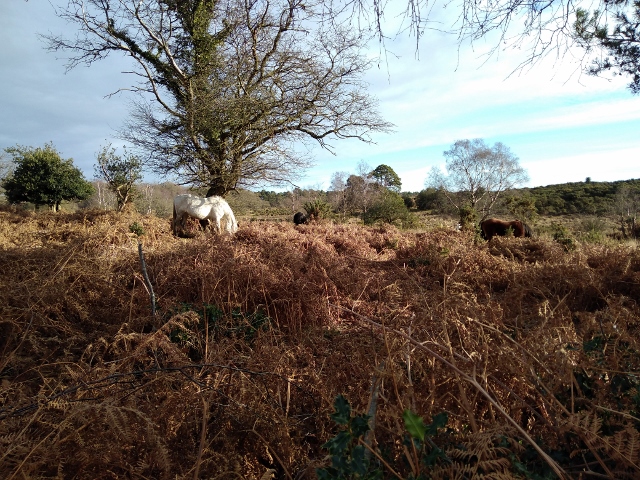
Grazing on the bracken and brambles.

Walk 1 featuring Eyeworth Pond

We began our first day’s walk at Telegraph Hill, the highest point of the New Forest and once the site of a beacon which was used ‘as a form of communication, in chains up and down the country to act as alarm systems in case the country was invaded. They were placed on elevated positions to make them easily visible for miles around.’ It was said ‘that in 1588 it took 12 hours for the news that the Spanish Armada had been sighted to travel from the south coast of England all the way to York.’ National Trust page.

There was ice in the puddles and streams, and wet squidge underfoot in places. Thankfully we were wrapped up warmly against the cold wind.

Sixty million years ago, I was told, this forest was a tropical sea and it sits today on a bed of chalk with flint, reminiscent of my native Kentish Downs and therefore hosting similar flora and fauna.

IMG_20171216_112041 (480x640)
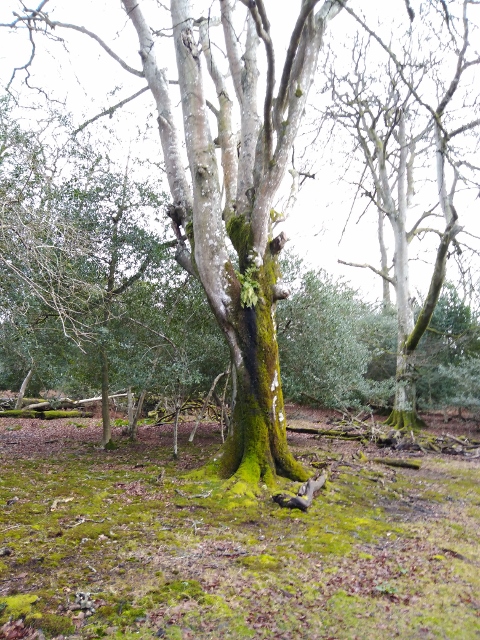
A beautiful, twisting beech tree. Alien-slime-coloured moss seems to be creeping upwards and enveloping the smooth grey bark!

It was fascinating hearing anecdotes from my hosts for whom the forest was the site of family parties when the children were growing up. Like all good adventure tales there was the game of Cargoes where teams have camps on either side of the burn and are charged with routing the other’s territory.

IMG_20171216_110132 (640x480)
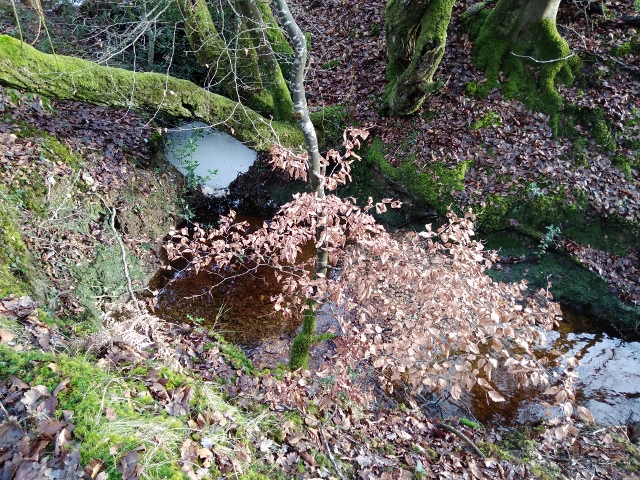
Frozen water and delicate foliage.

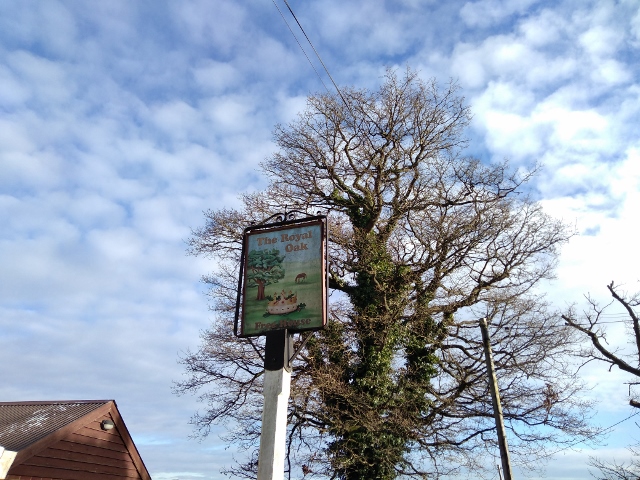
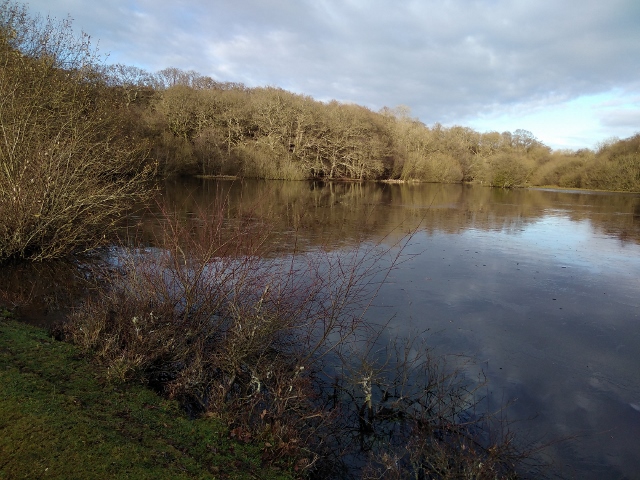
We sloshed our way across the landscape, past the Eyeworth pond to The Royal Oak in Fritham for a half of bitter and delicious lunch.

IMG_20171216_130519 (640x480)

Around the table stories were recounted, notably of the traditional Mummers Play (a medieval theatrical) which comes to this hostelry, ‘in which a champion is killed in a fight and is then brought to life by a doctor’. A scene was painted for me, of the play being performed with a glass of ale in one hand, and I could imagine it clearly in this traditional setting.


As a young teenager, I participated in a Mummers Play – back section of the dragon wearing swimming flippers and processing through the town. It was to celebrate the 300 year anniversary of our primary school, and resulted in terribly sore bits at the fronts of my ankles where I still have scars!

Walk 2, in which we came across Shetland ponies

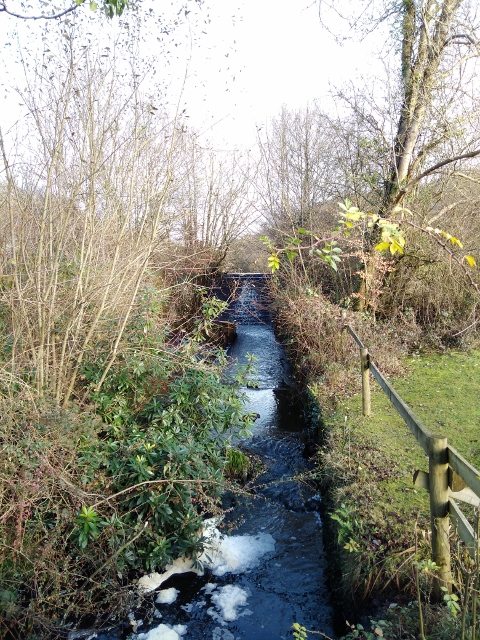
On day two we visited the wonderfully named Godshill Pit, this time in Hampshire. It was misty and raining with, once again, ice in puddles and between blades of grass. Copper water bubbled over orange flints beside bronze bracken as we leapt soggy brooks and landed on springy peat turf. Aside from this, it really was very deeply squishy under foot!

IMG_20171216_114512 (480x640)

Down country roads we walked, pitted with puddles; past ancient cottages with mud walls, pigs in oval-roofed huts, alpaca in fields, a delightful Shetland pony (why are they always so delightful?), and many elegant horses attended by adoring women in wellies.

We drove back through Braemore (say Bremmer) with its quaint bridge over several waterways, its dairy, railway station, working blacksmith and post-office. It is an extremely pretty village built of local stone and I was starting to get used to the crowds of donkeys perched by the roadside, tearing off brambles and bracken from the banks. The pub was closed today so hot soup was most welcome on our return.

IMG_20171216_131342 (640x480)
Eyeworth Pond where ponies can be seen sipping at the water’s edge.

Thanks go to Angela for preparing special vegetarian food for me; to Mike for cleaning my walking shoes – twice; to both for showing me this wonderful part of the world and telling me stories about it.

aunt fay
My Great Aunt Fay on her way to the Falkland Islands in 1931. She died aged 106 in 2017.

Downton Moot link and about the town

Queen Mathilda link

Empress Matilda timeline

Marjorie Morgan McCallum Chibnall OBE FBA was an English historian, medievalist and Latin translator. She wrote the first fully comprehensive biography of Matilda to be published in English in 1961.

Very interesting paper about Empress Matilda (A Study of Succession, Gender and Power in the 12th Century)

The seal above and some information was taken from the Reading Museum site

IMG_20171216_135256 (480x640)

New Forest ponies link

The Royal Oak pub link

Oxford, England

A photo essay: November 2017

Oxford is very crowded with students and tourists – the pavements are narrow so allow time to walk around the centre, but at every corner there is an architectural marvel. From the Colleges and their gardens, to the River Cherwell and its fascinating bridges, there is just so much to see.

Check out the expansive Port Meadow with its wonderful views; the cafes of the Cowley area; the Museum of Natural History on Parks Road (not shown here) for the inside decoration alone, never mind the collection (there are plenty of events for children); and the magnificent Blenheim Palace (very close to the city and easy to get to by bus) is an absolute must-see.

photos aug 15 346
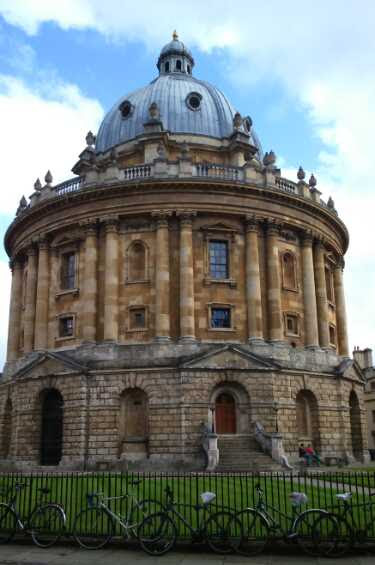
The Radcliffe Camera, part of the Bodleian Museum.

146 (640x360)
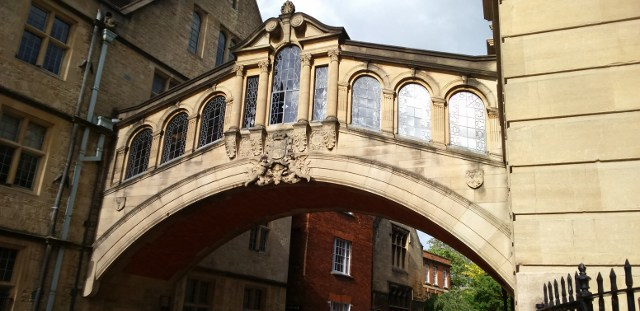
The Bridge of Sighs.

IMG_20171111_110758 (640x480)
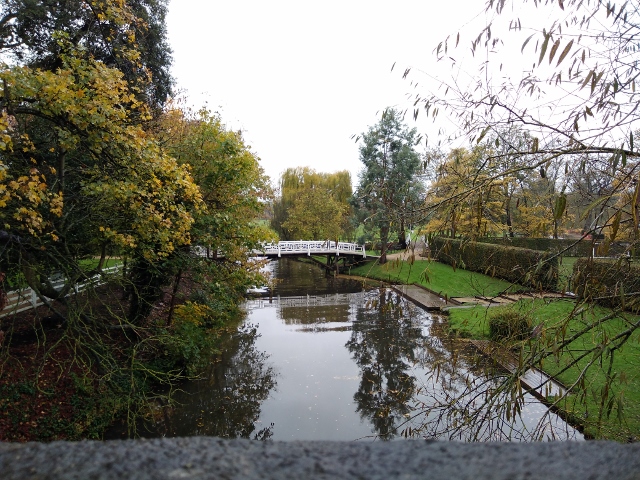
View from Magdalen Bridge.

IMG_20171111_111339 (640x480)
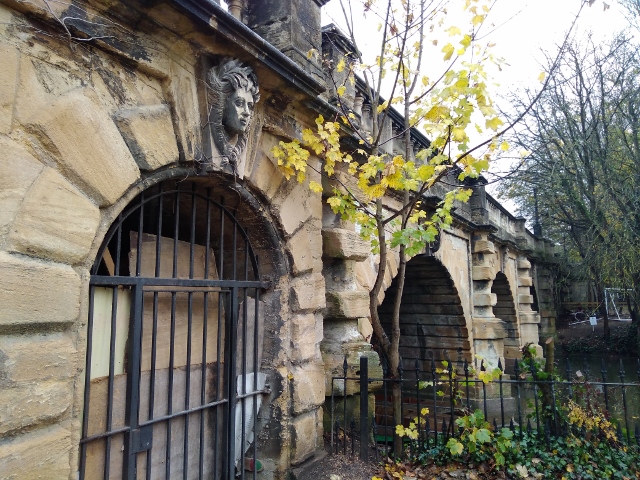
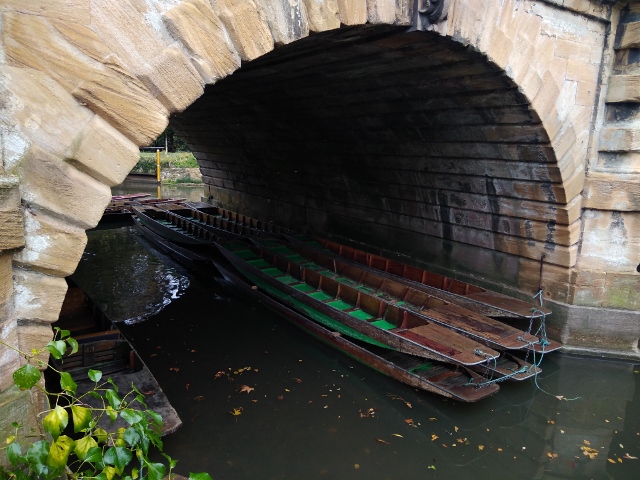
Detail of the underneath of Magdalen Bridge.

IMG_20171111_111409 (640x480)
Oxford punts in winter.

DSCF0810 (640x480)
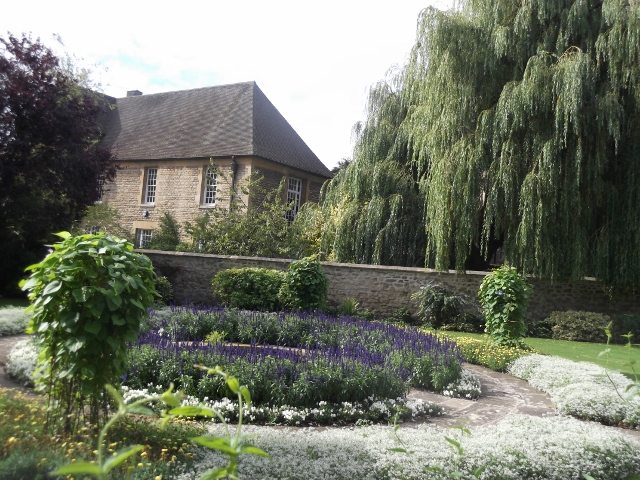
Wadham College gardens.

DSCF0808 (640x480)
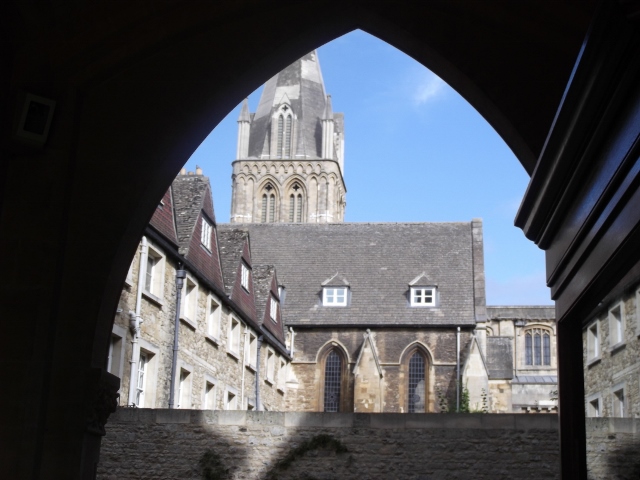
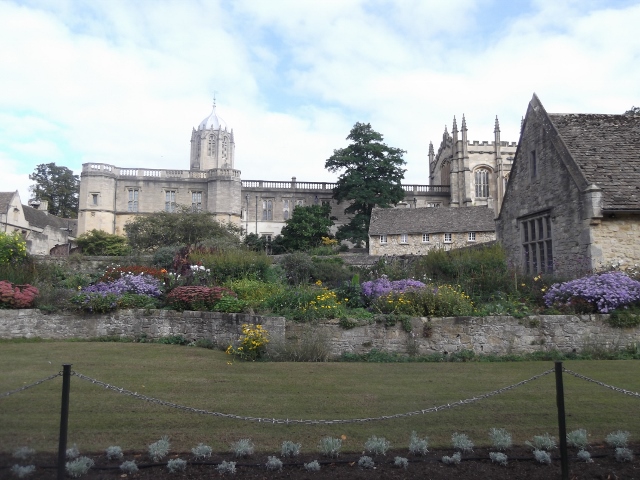
Christchurch College.

145 (640x360)
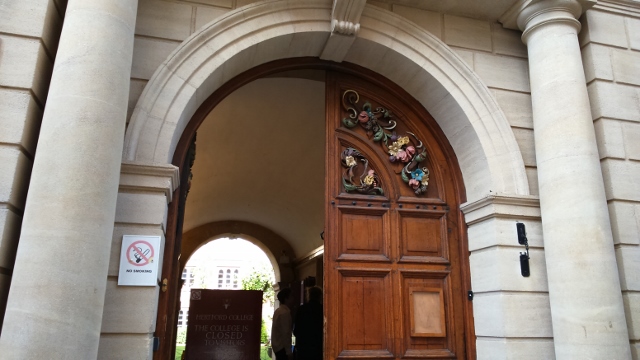
Hertford College.

144 (360x640)
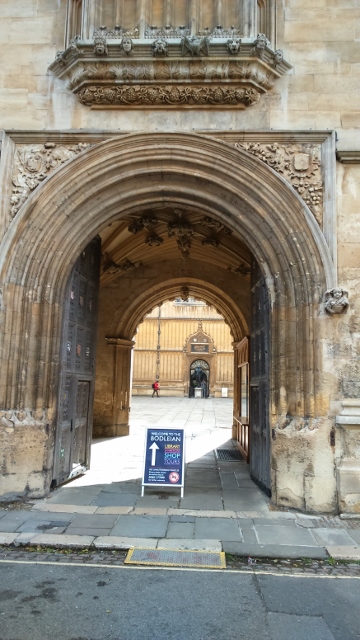
Entrance to the Bodleian Library.

140 (640x360)
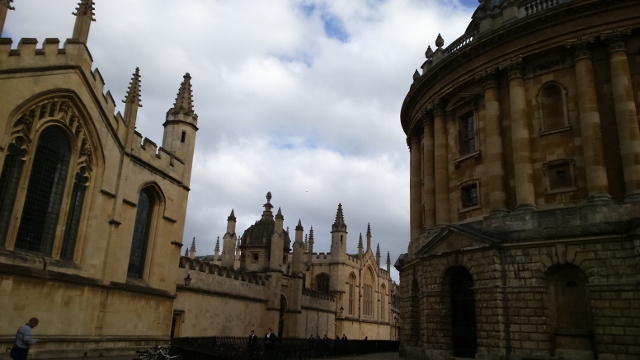
The famous spires of the Oxford colleges.

DSC_0007 (360x640)
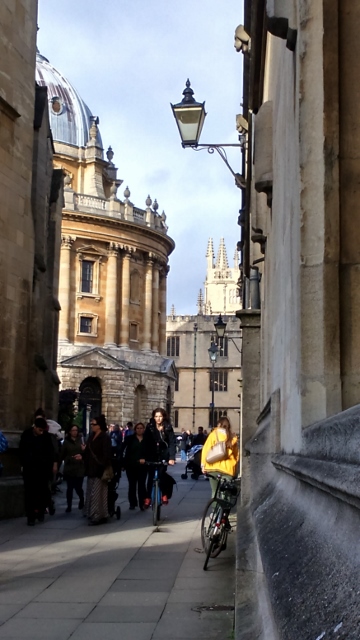
Bicycles everywhere!

DSC_0013 (360x640)

DSCF0801 (640x480)
Gardens, Christchurch College.

IMG_2811 (478x640)
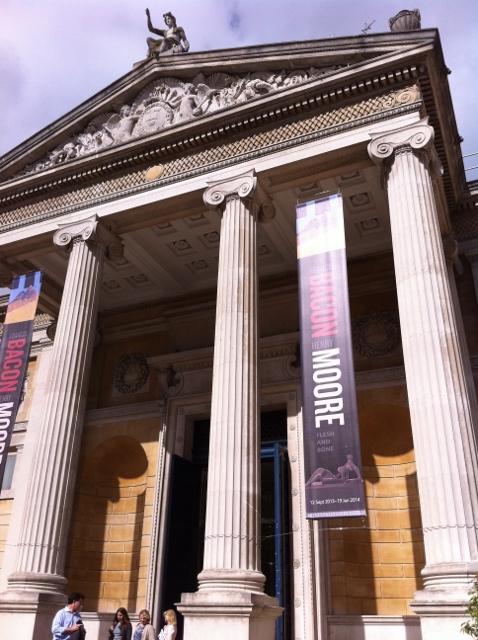
Ashmolean Museum, exterior.

IMG_20171111_134540 (480x640)
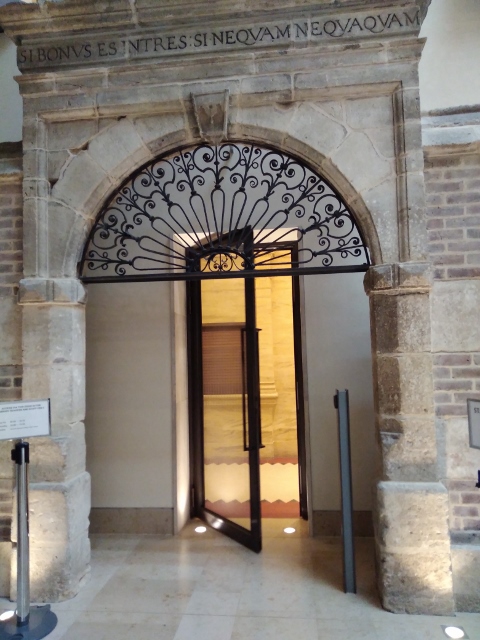
The Ashmolean, interior.

DSC_0013 (360x640)
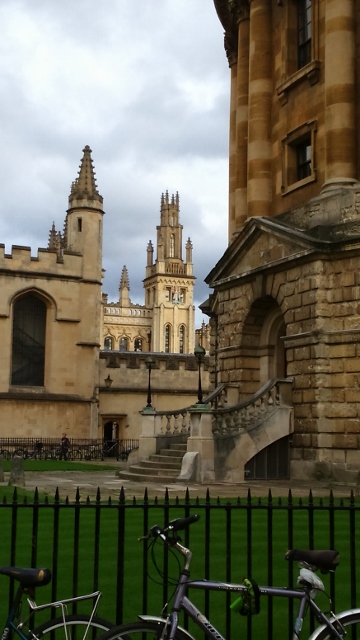
The sun shows up the glorious yellow stone towers.

IMG_20171111_150357 (640x480)
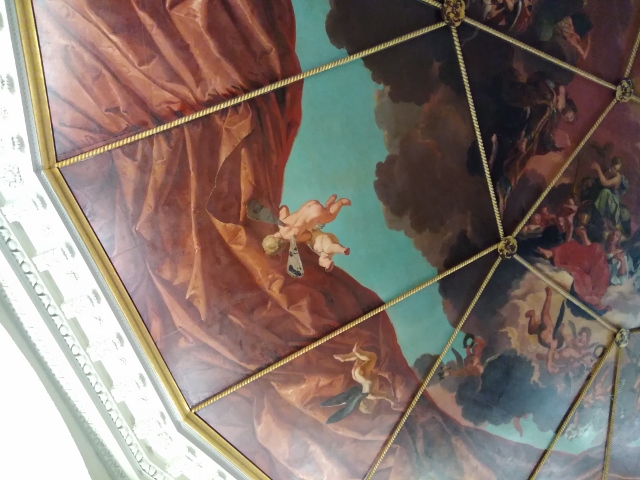
Cupid’s bottom – detail on ceiling of the Bodleian.

IMG_20171111_113148 (480x640)
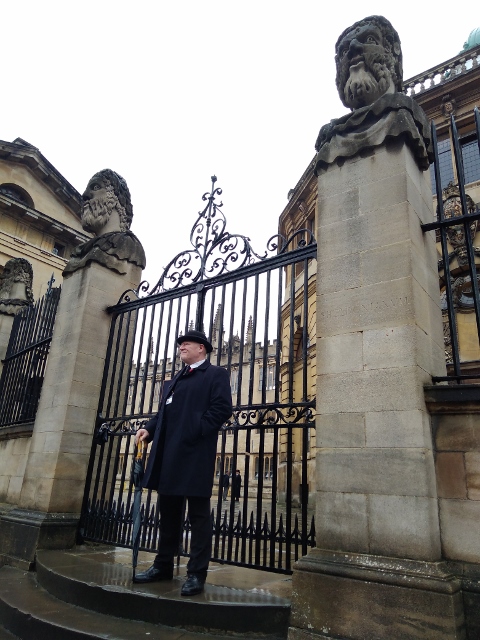
Standing guard at the Bodleian.

IMG_20171111_112350 (480x640)
A typical street showing residential architecture.

IMG_20171111_112214 (640x480)
Broad Street.

IMG_20171111_111623 (640x480)
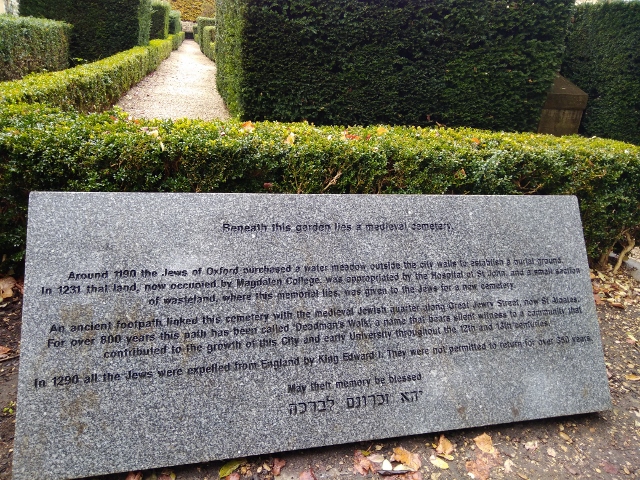
Beneath this garden lies a medieval cemetery. Located outside the Botanical Gardens.

IMG_20171111_112701 (480x640)
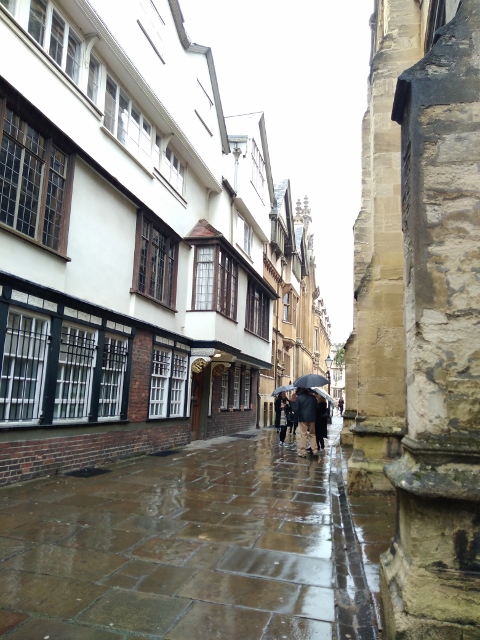
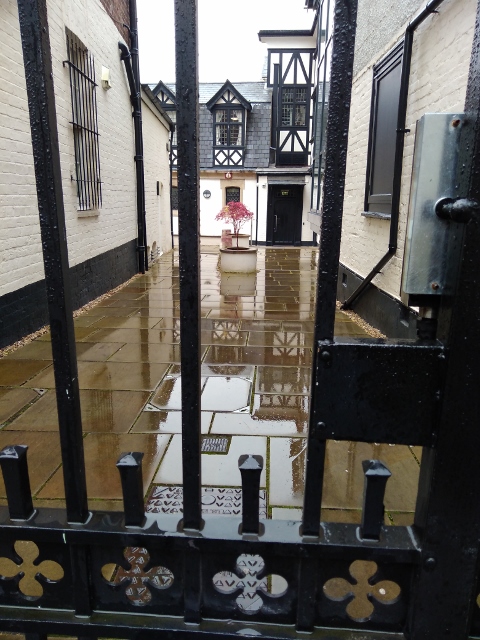
The rain shows up the black and white architecture to perfection.

IMG_20171111_164134 (640x480)
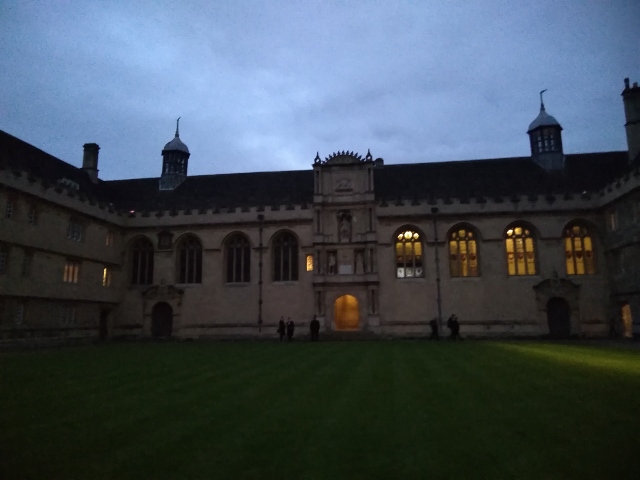
Wadham College courtyard at night.

IMG_20171111_114406 (480x640)
Wadham College – an inner courtyard.

IMG_20171111_113046 (640x480)
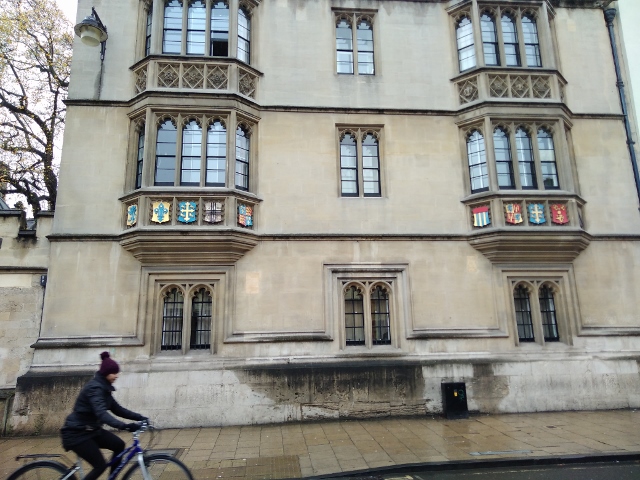
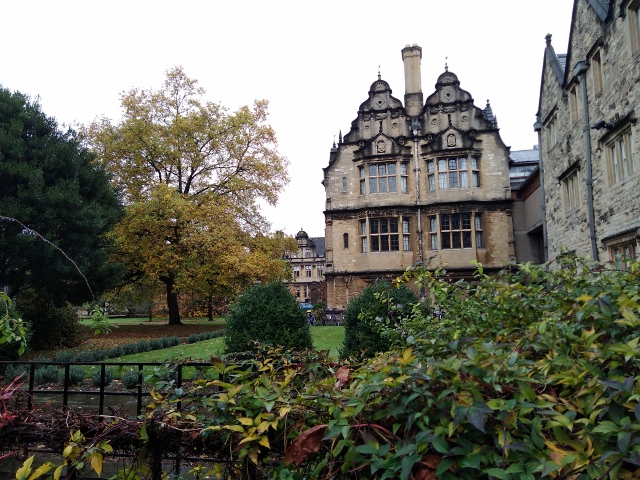
Astonishing gables.

IMG_20171111_110506 (640x480)
Cute cafe on St Clement’s St.

London and Paris – Green spaces

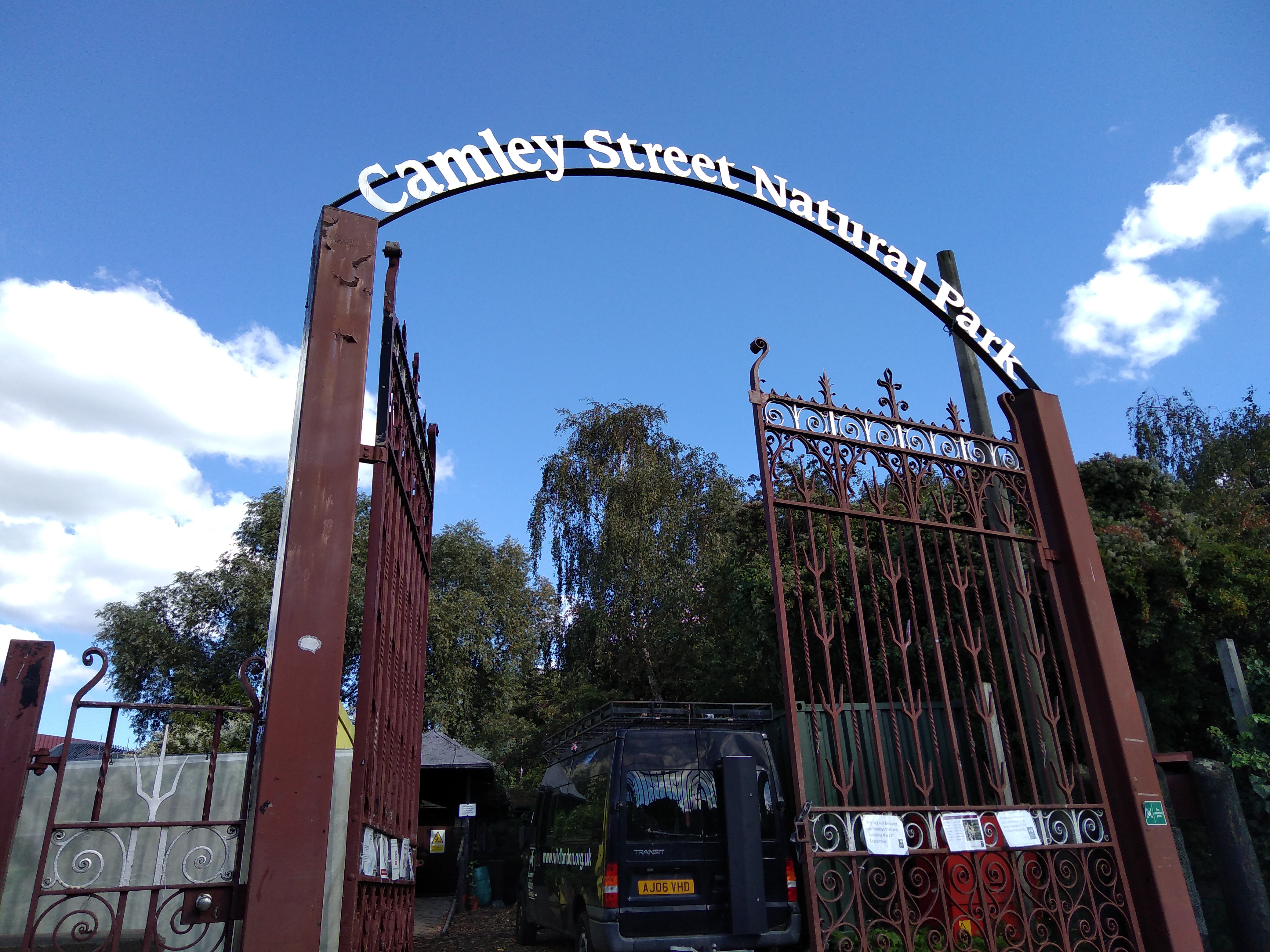
Camley Street Natural Park; St Pancreas Parish church and gardens; and Goldington Crescent Gardens, Camden London.

The entrance to Pitzhanger Manor (being restored – it opens in 2018) and an expansive patch of free – Pitzhanger Park, Ealing, London.

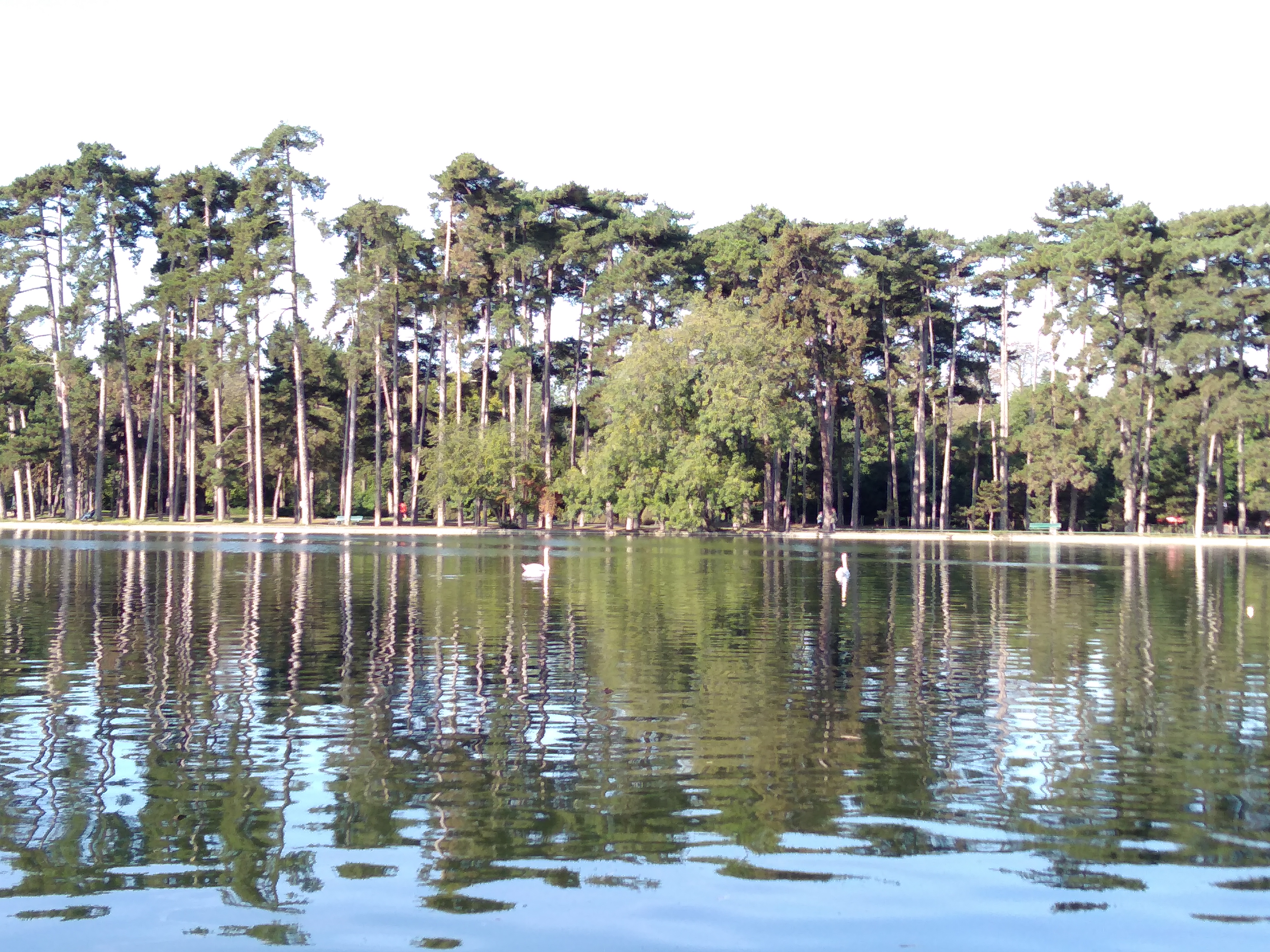
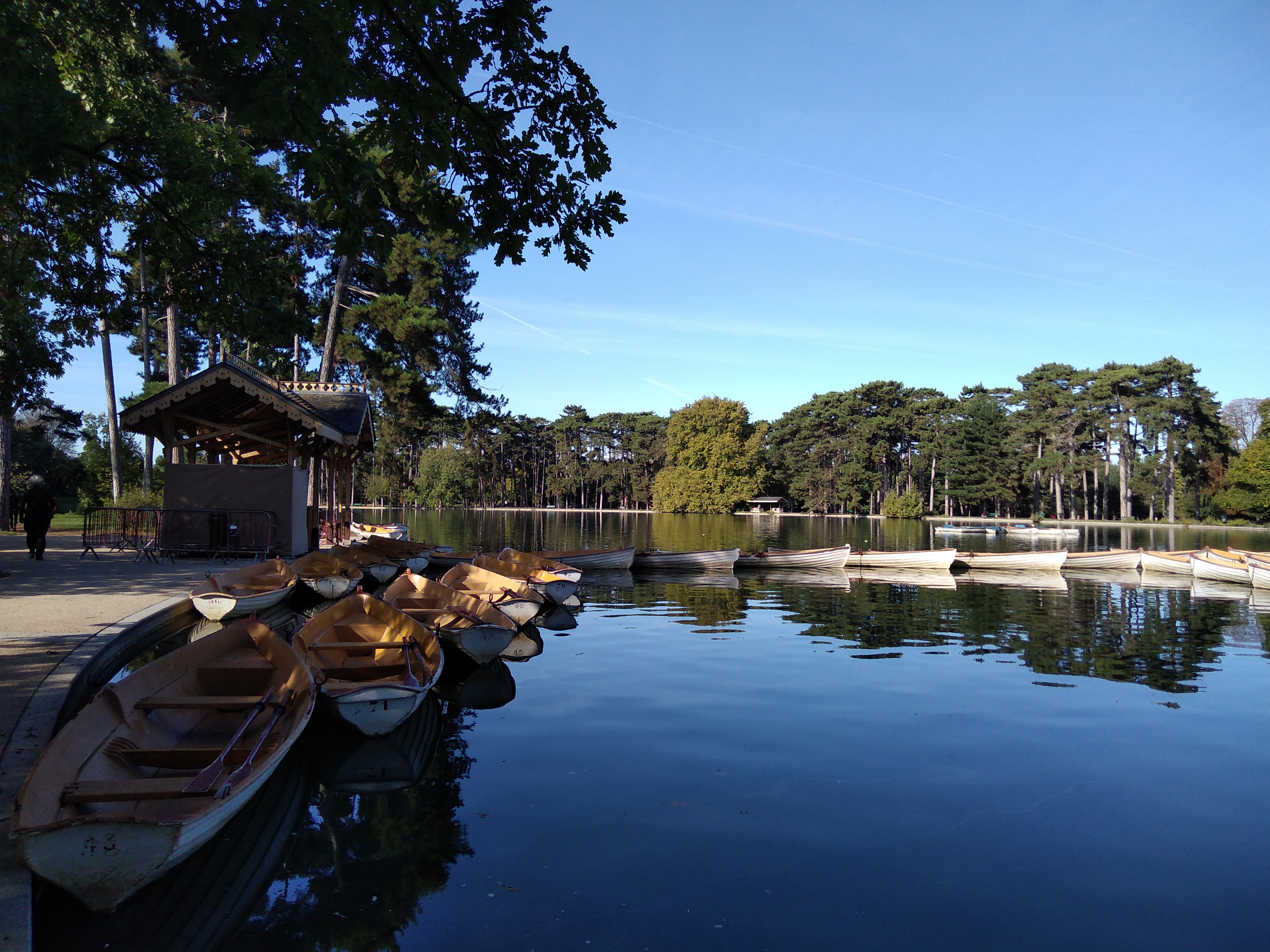
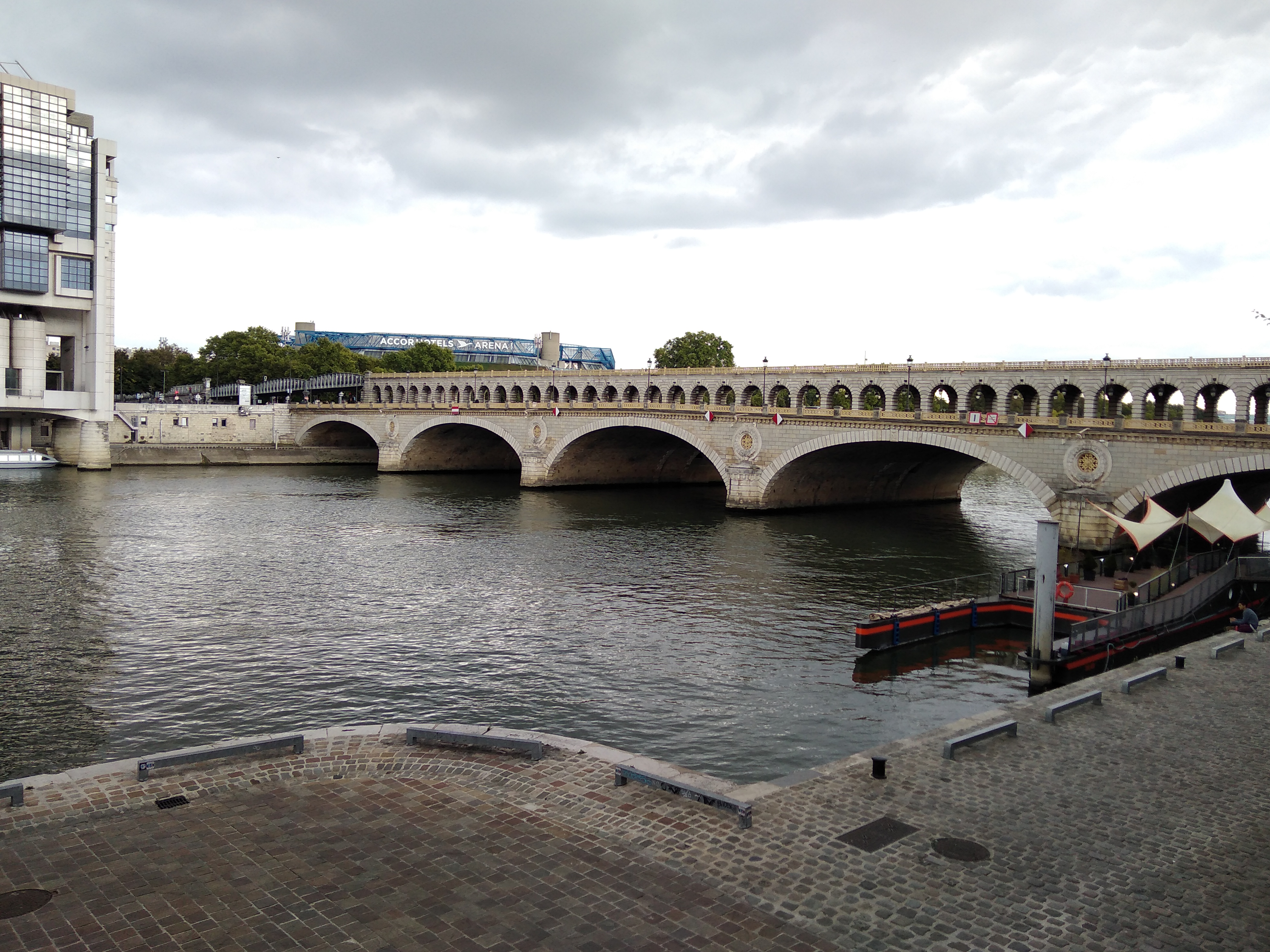
As I wander through European cities I find myself attracted time and again to the green spaces. Indeed, a few days ago, I traversed most of Paris from the Bois de Boulogne in the far east, to the Pont Bercy, and what a beautiful walk it was.

Bois de Boulogne
Bois de Boulogne
Bois de Boulogne
Pont Bercy, Paris

Today, I arrived off the Eurostar at St Pancreas London, weary in body and of spirit, but the sun shone, so I googled parks and gardens in the area. I made my way to the St Pancreas gardens, narrowly avoiding being run over by a London taxi due to the lack of pavement, and came across a community garden I had tried to enter twice before, Camley Street Natural Park – this time it was open.

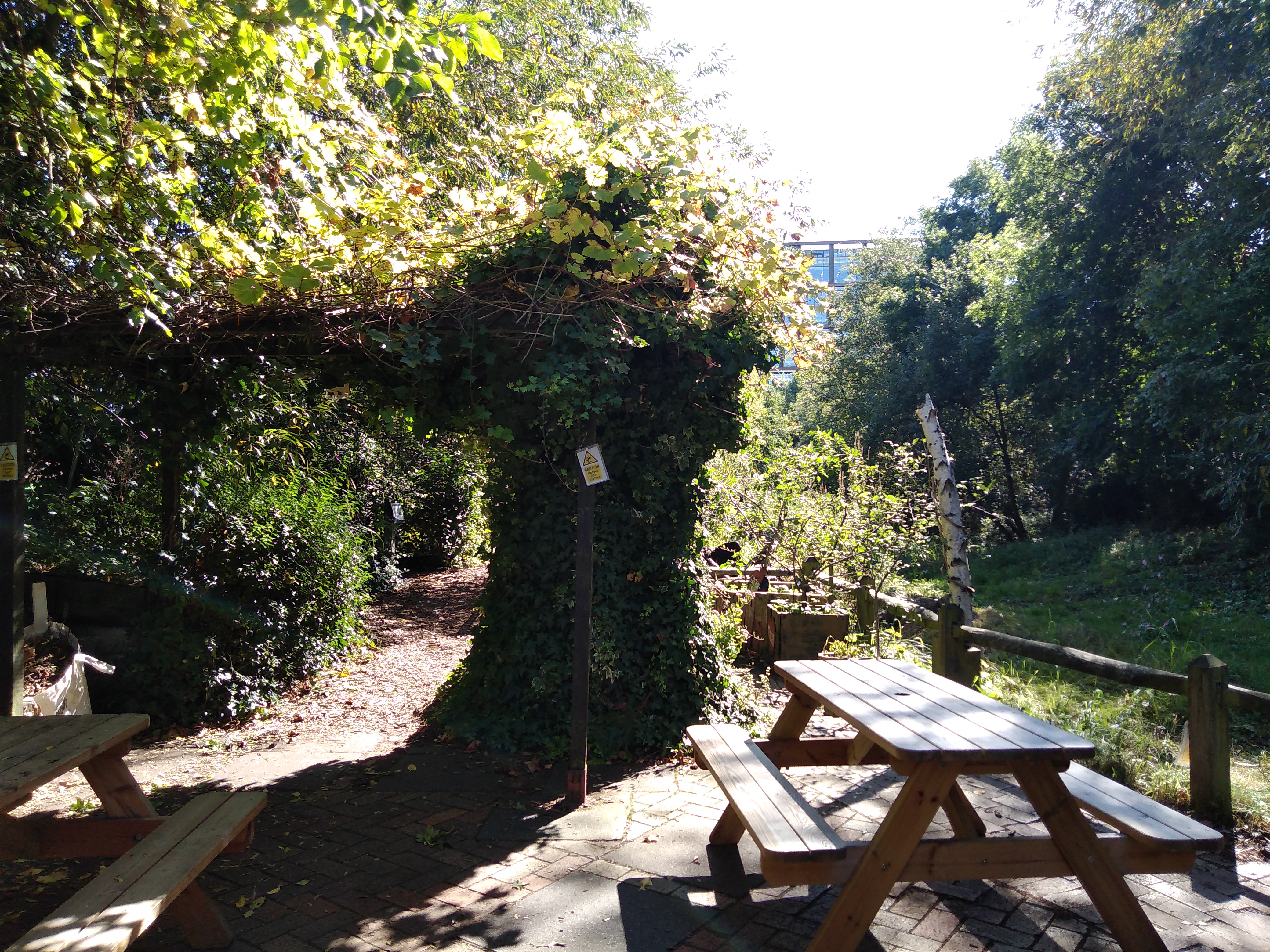
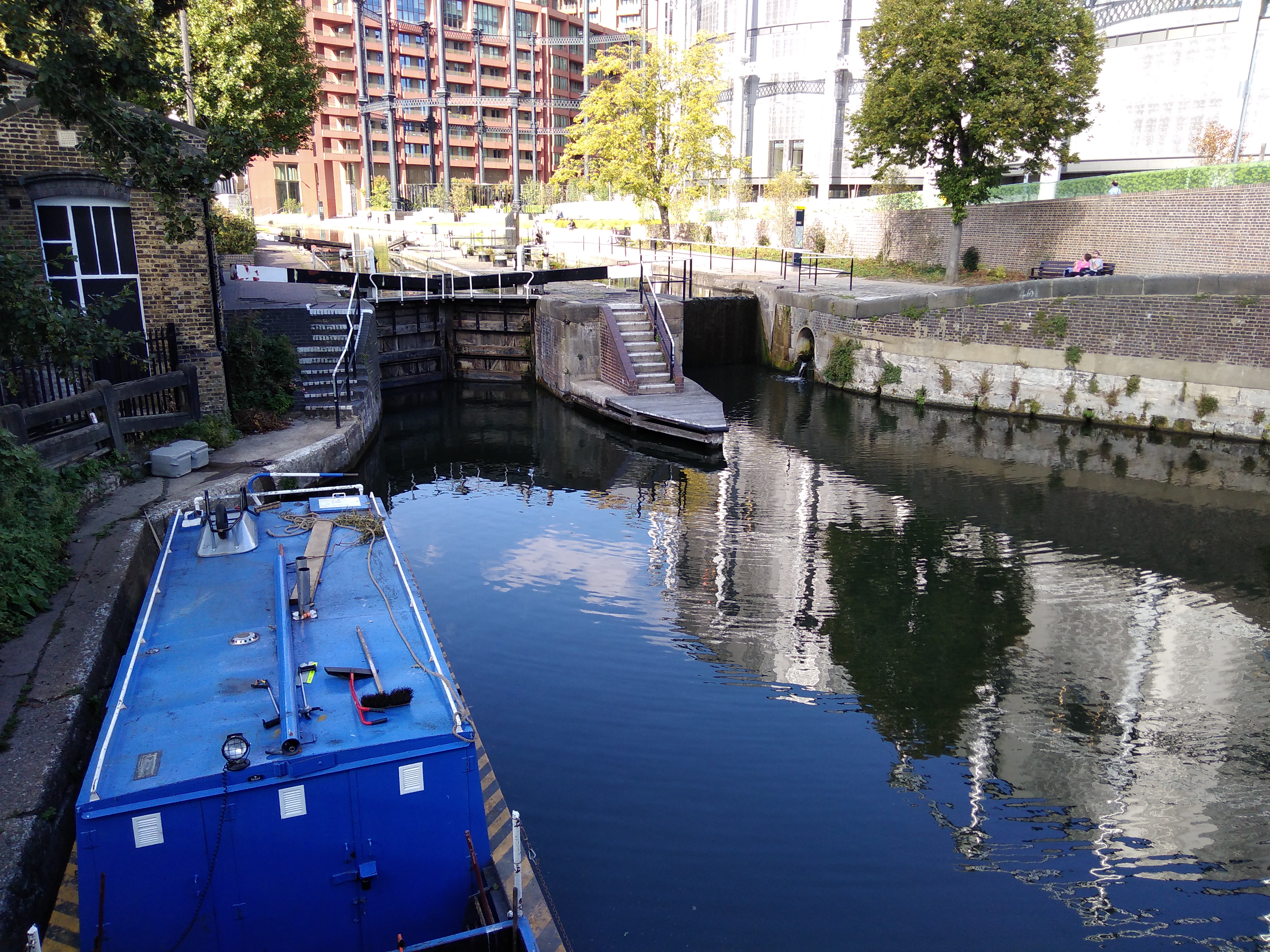
A slice of sylvan pleasure between railway, canal, and high rise buildings, I discovered that this London Wildlife Trust-funded oasis is an ideal place to picnic. Flower beds are constructed from railway sleepers and hunks of stone and bordered pathways are lined with bark pieces.

There is an extensive pond with a green membrane pierced by rushes, and a wild flower meadow with rose bay willow herb. It constitutes a very brief, windy way to the other side if you use it, as many suit-clad workers obviously do, as a thoroughfare; but you may also make a circuit and take in the bug-finding, log-pile place; the ‘fairy glade’ (where if I was not mistaken a counselling session was happening); and pond-dipping where a quiet volunteer was carefully cleaning the sign.

There are rustic benches in private nooks, and, luckily, a few tables in the cafe clearing because it was so densely wooded that there was almost no sun there this September noon.

Bring your little ones and they will have hours of down-to-earth fun – inside if the weather is inclement (there is an activities room and exhibition with nests and pine cones) or out, learning about bats and birds, recycling and natural landscaping. I saw willow, birch, brambles and cherry, and there were tourists in the Visitor Centre being helped by the member of staff.

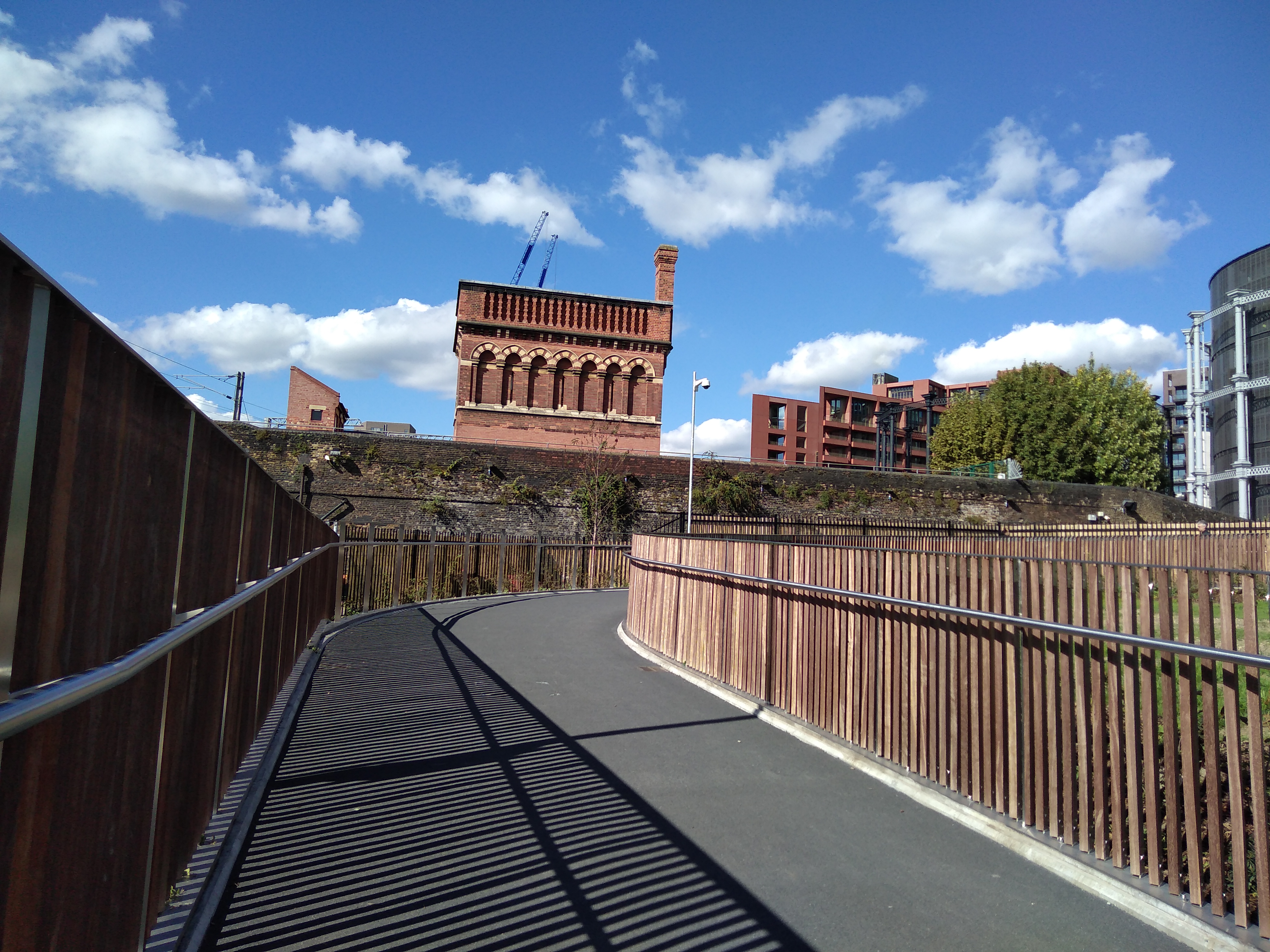
This old coal yard is located by the waterway which once transported the fuel to Yorkshire, where incidentally the next-door sliver of a bridge was formed before being placed in its current position in 2016. Unlike the uneven Park’s paths which absorb any sound (do not try with buggies, bikes nor suitcases), the bridge’s smooth surface resonates with and amplifies joggers’ footfall and cycle wheels.

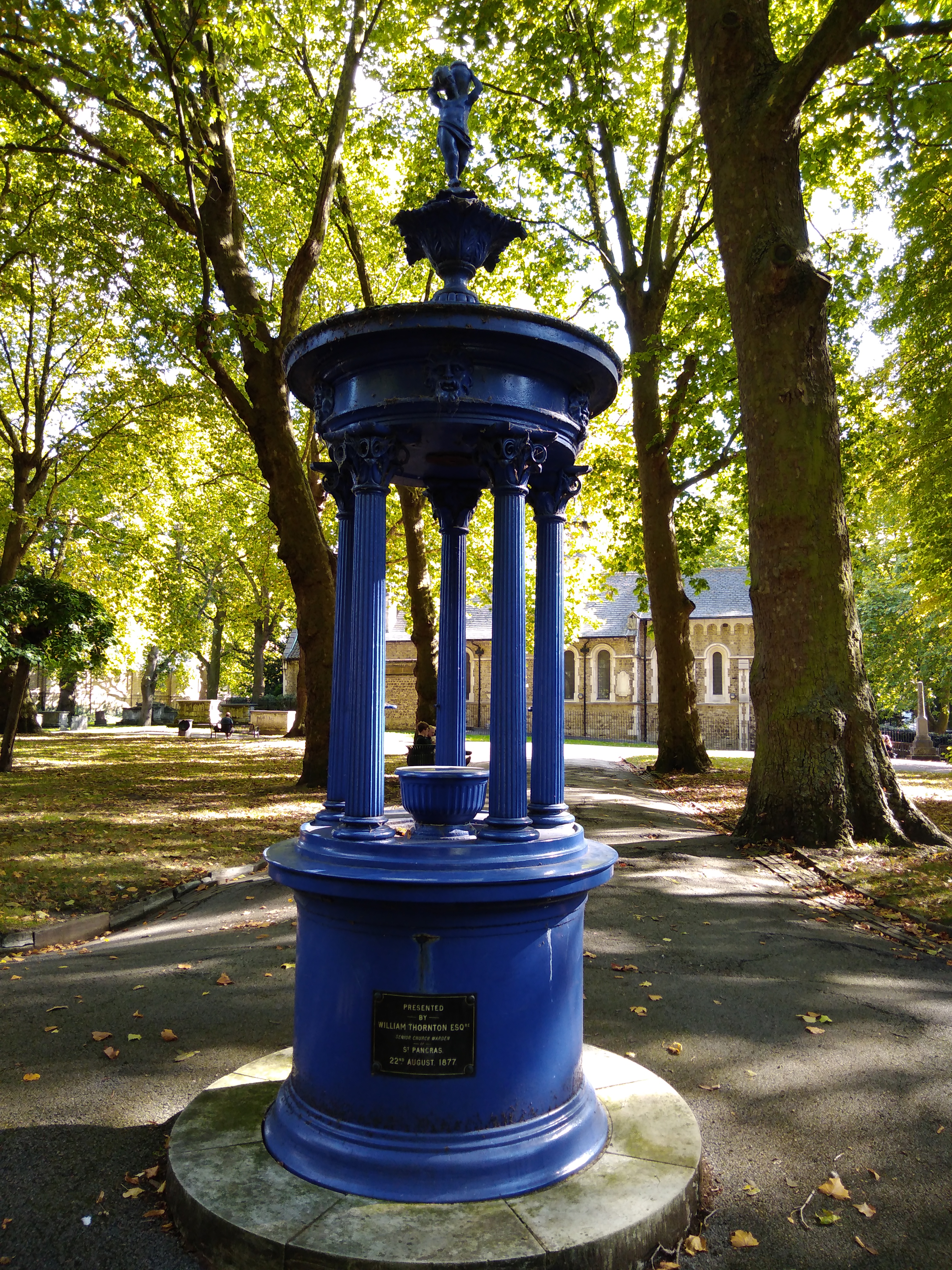
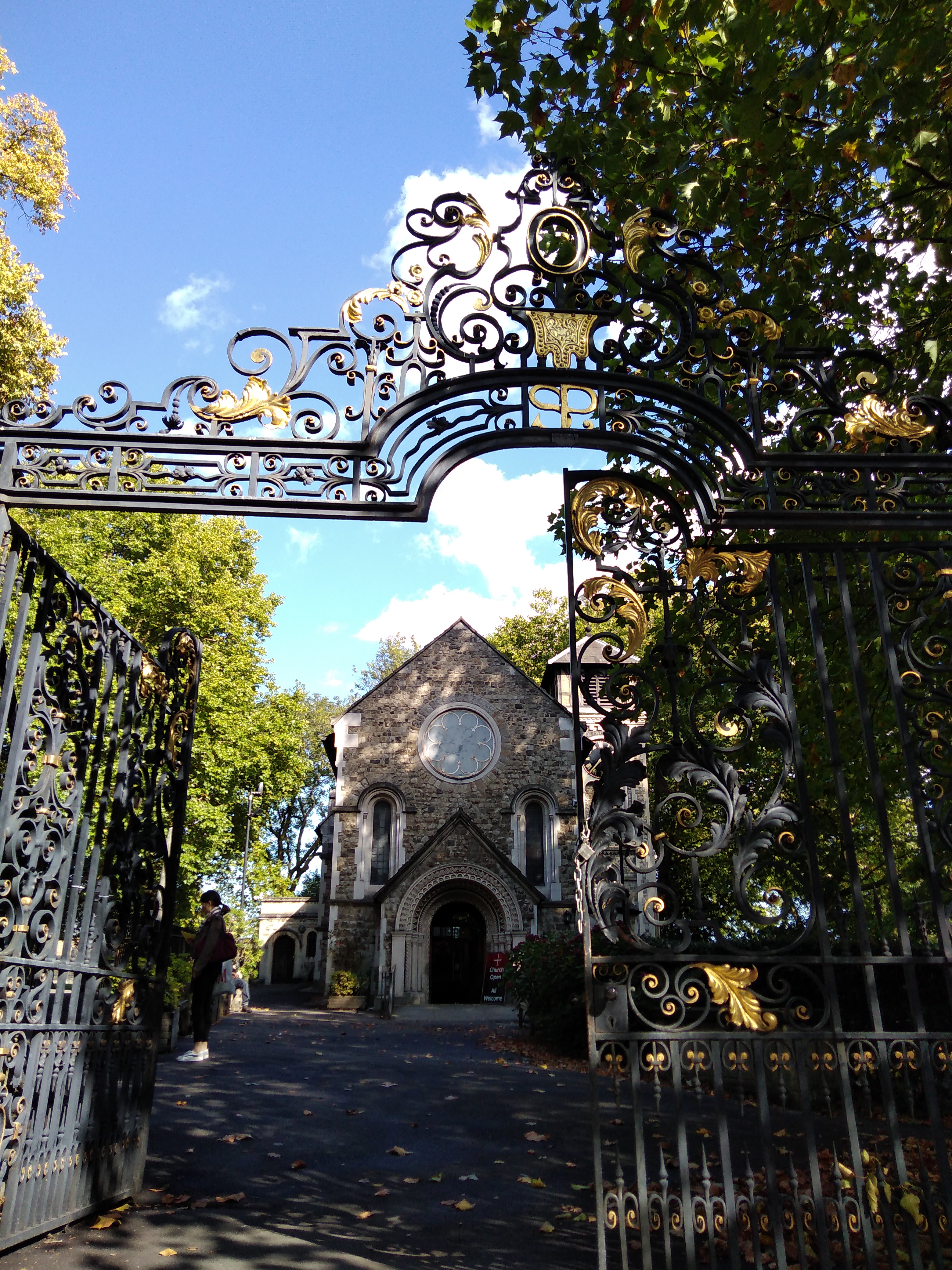
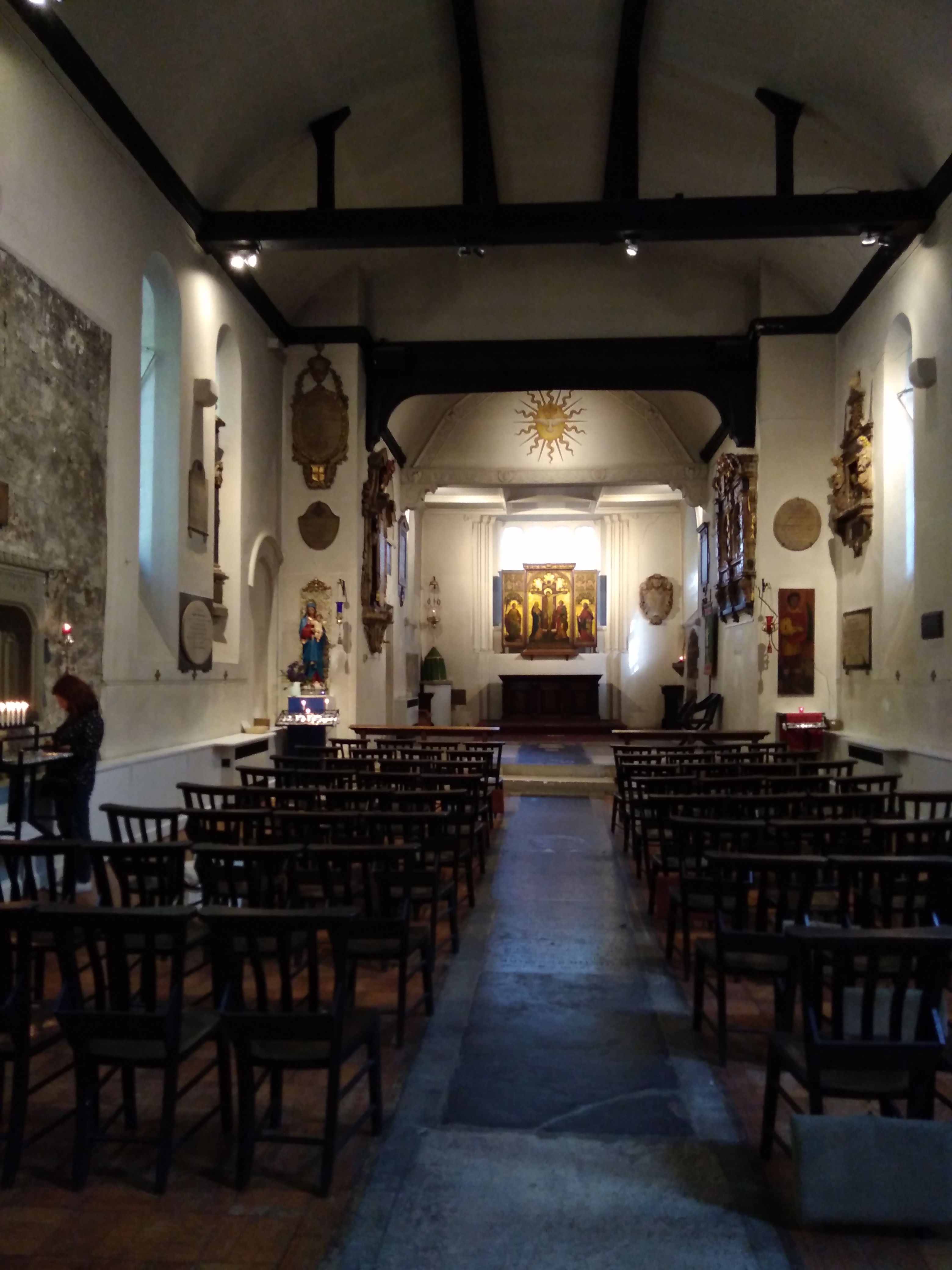
Just down the road is the St Pancreas old church and gardens, today shining in the sunlight and showing off its higgledy-piggleddy stones, working mortuary, royal blue water fountain (at least I think that is what it is), and unusual monument “especially dedicated to the memory of those whose graves are now unseen or the records of whose names may be …(could not read this word) obliterated”.

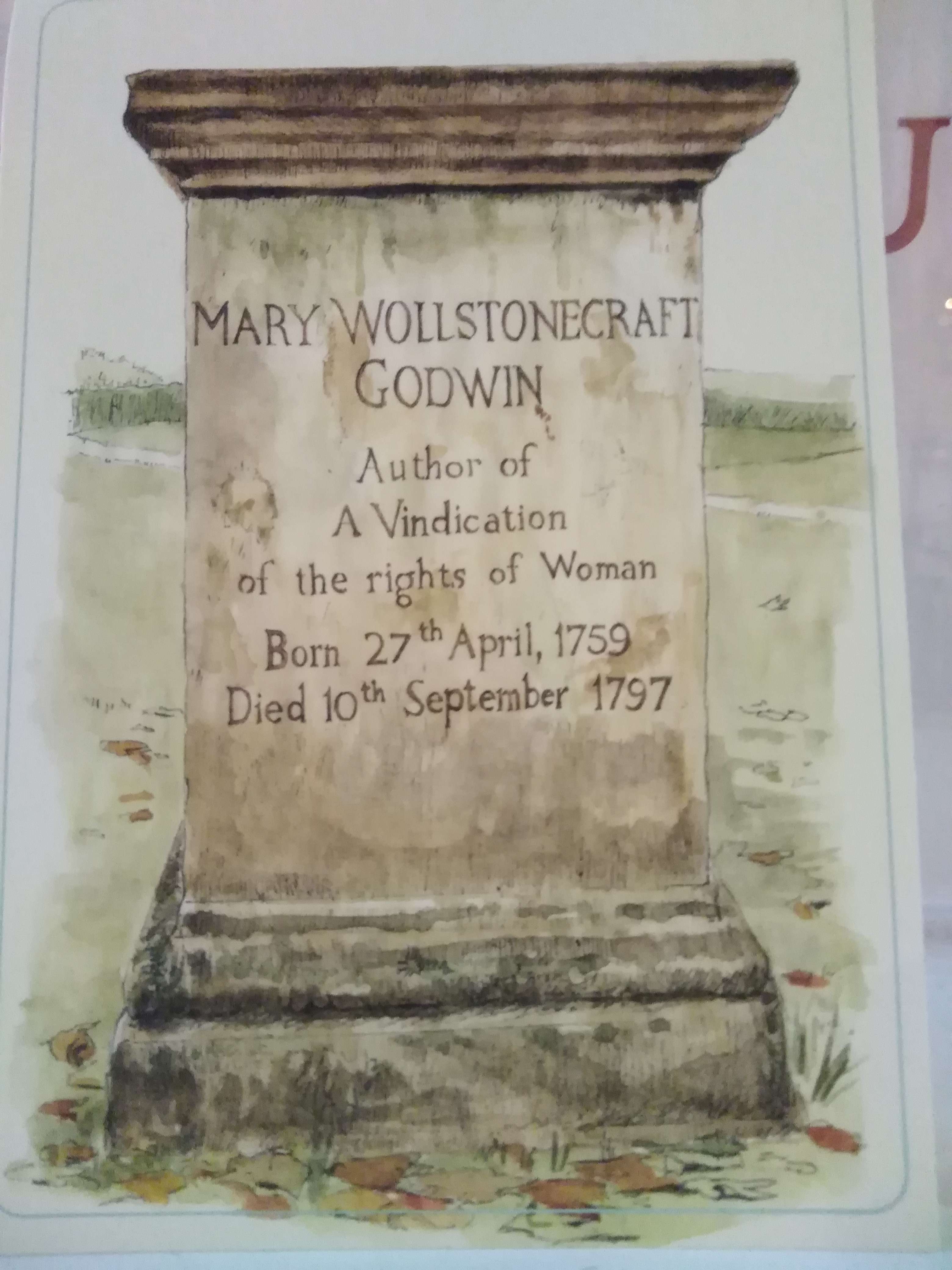
They have done a great job of bringing interesting facts and people to our attention in the wee church: the relationship of Thomas Hardy to the ‘consecrated burial ground’, and memorials to Mary Wollenstonecraft, activist, and John Soane, architect of the Bank of England whose main residence is in the area and whose ‘country’ house in Ealing (Pitzhanger Manor, see above) I coincidentally visited last week.

Under the trees sit study groups, lunching pairs and individuals reading or on their phones. What a contrast with the welcome smell of warm wax which filled the holy interior. I enjoyed the plaque ‘in memory of my dear husband Earnest Wiggins d 1975’ before drifting into my third bout of 60 winks sitting on a proud wooden chair at the back listening to the ponderous ticking of an unseen clock.

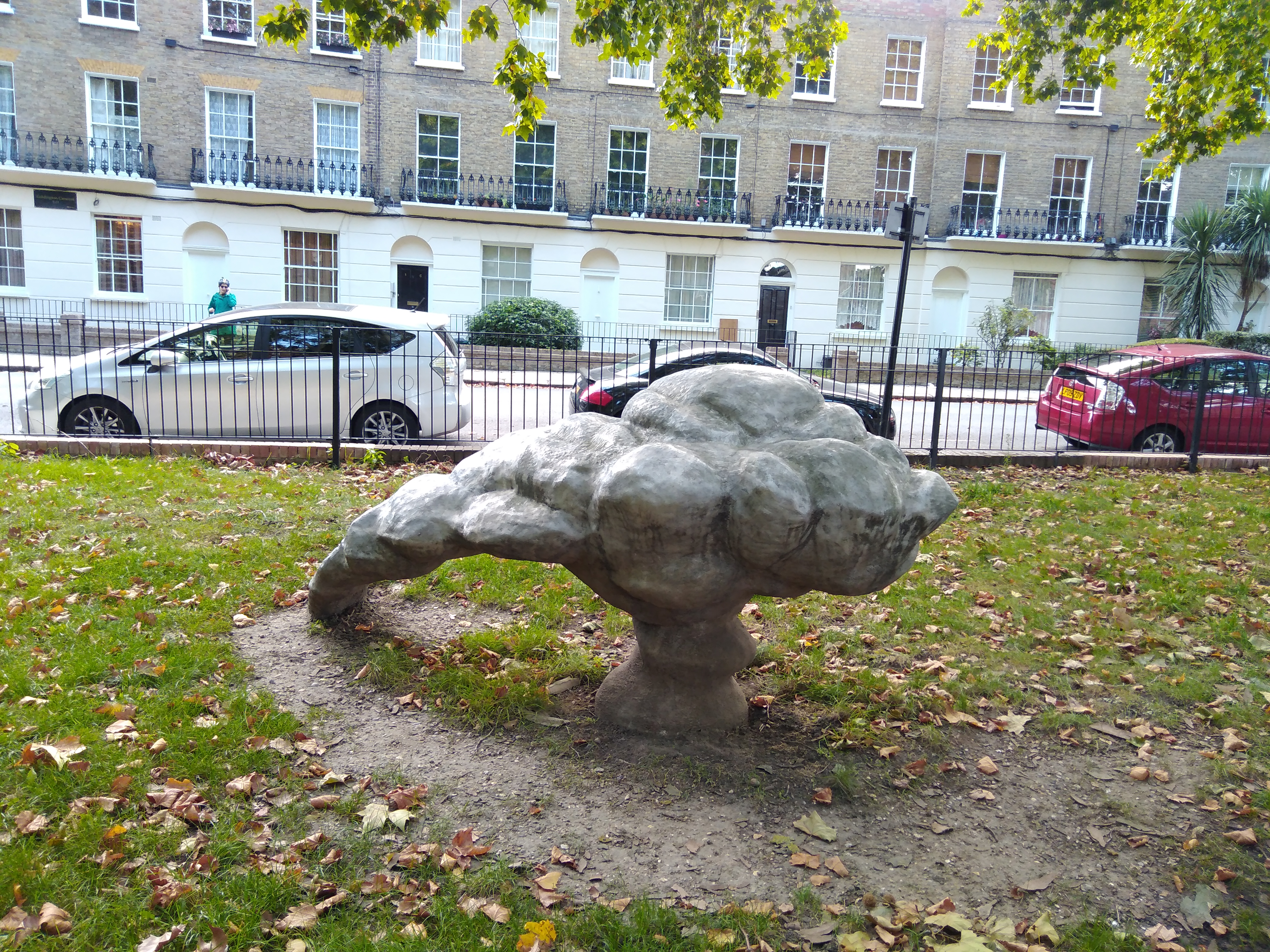
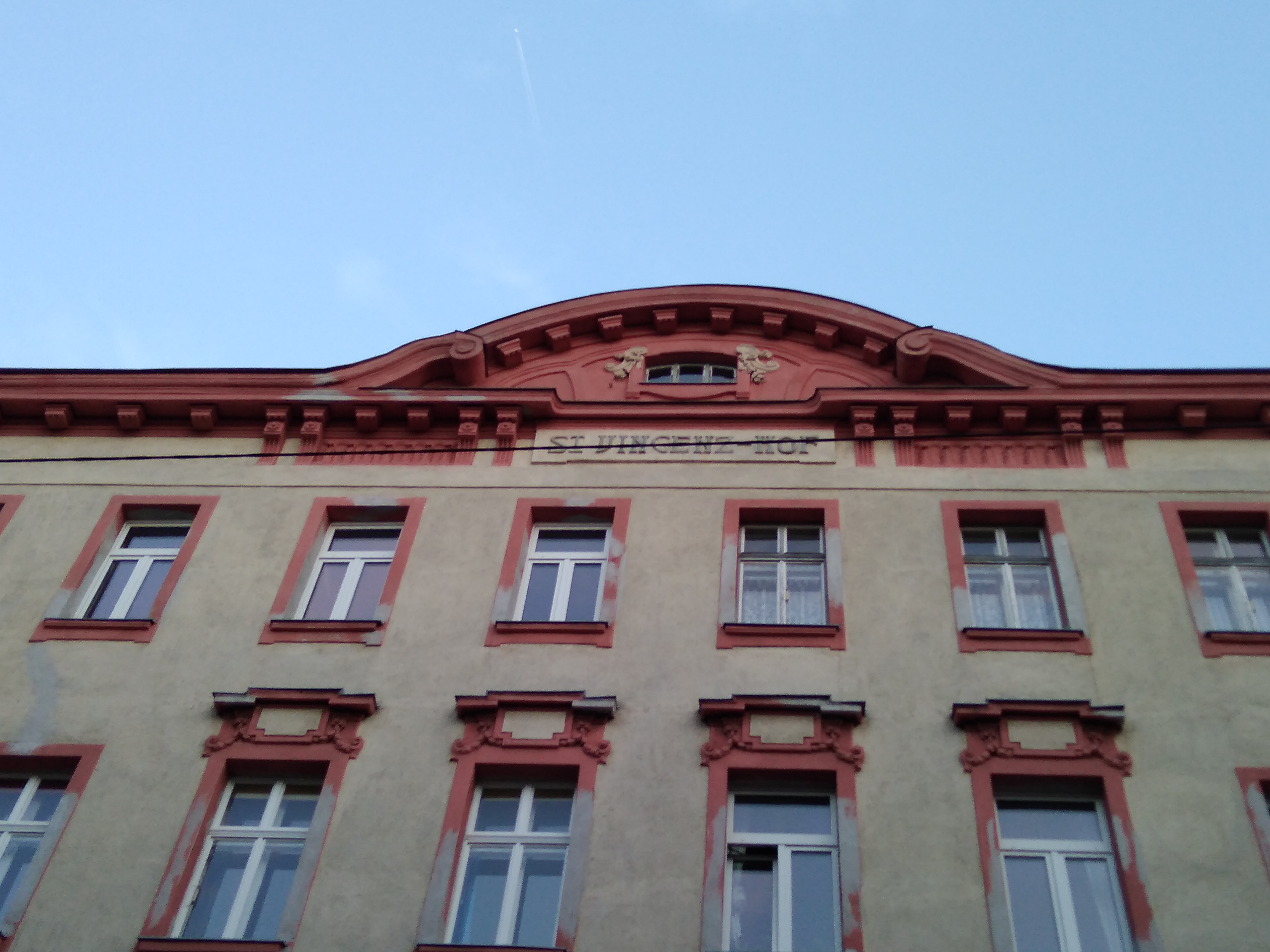
Making my way towards Mornington Crescent tube station, with its faint hints of Mary Poppins and WW2 popular songs, I come across Goldington Crescent Gardens. In the Autumn sun, causing the fallen leaves to glow and throwing strong olive green and top-hat grey shadows on the grass, there is a public sculpture. It is in three parts: one resembles a silver pile of unmentionable; the second an ant eater with its snout in the ground; and the third is a mystery. The artwork stands out starkly beside the pink and red brick 1903 Goldington Buildings opposite, which edges elegantly wrap around whatever is in its heart. Interesting fact: in Vienna they have a word for these buildings which conceal a space behind the facade, which is ‘Hof’.

Goldington Crescent, London.
St Vincenz Hof, 18th century, Vienna, Austria
Behind St Pancreas station, London.
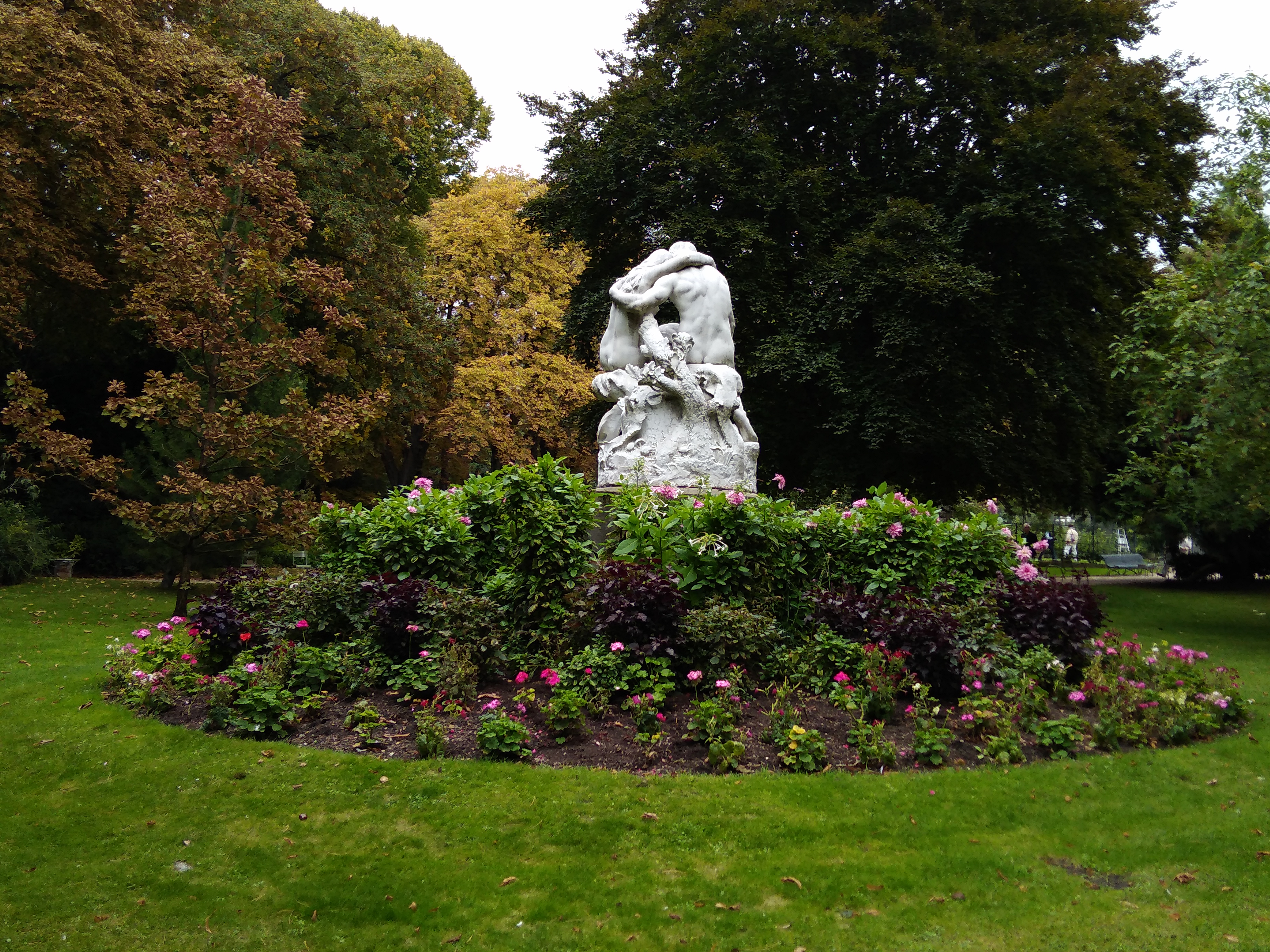
Love, Jardin du Luxembourg, Paris.
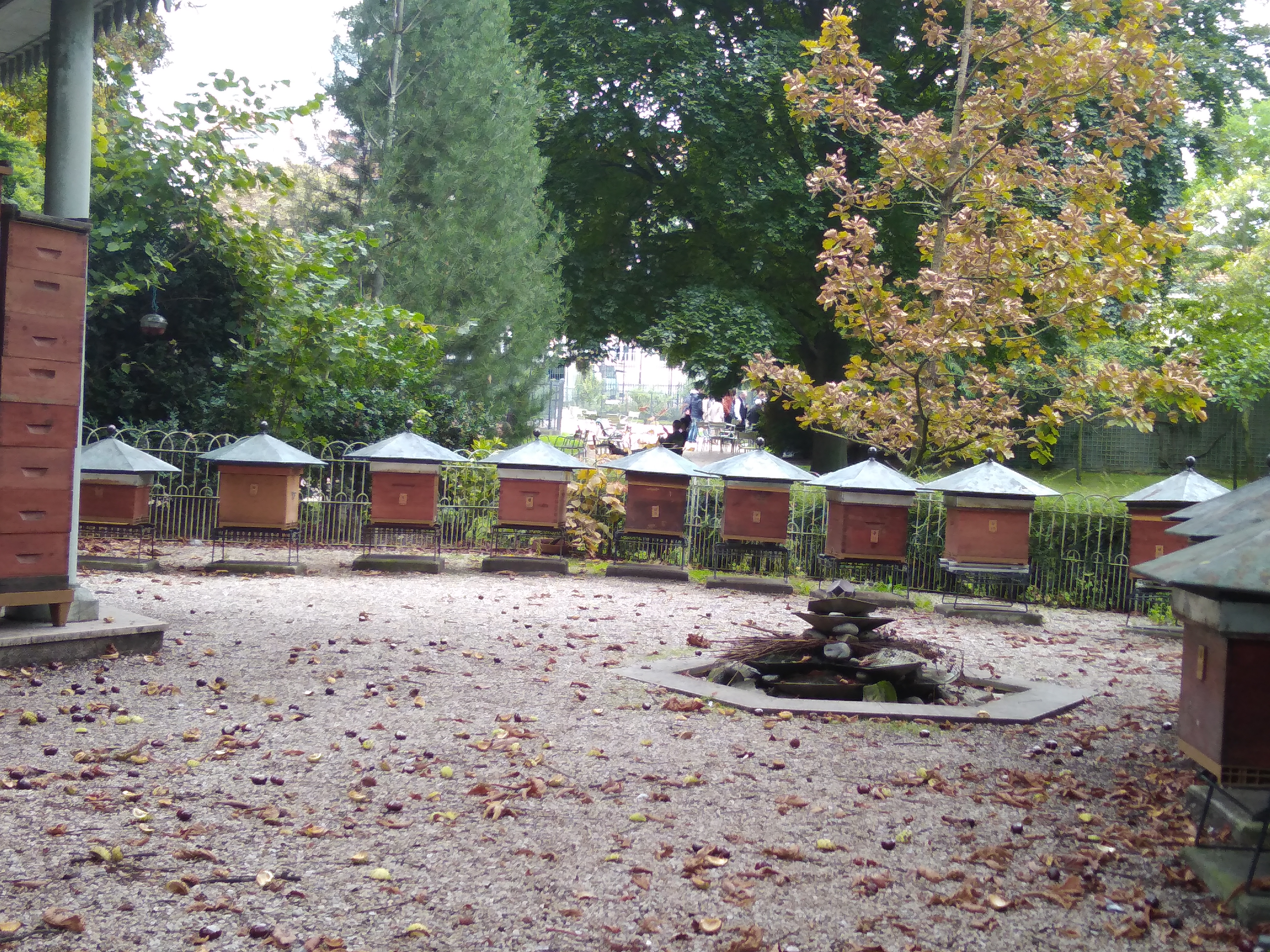
Beehives, Jardin du Luxembourg, Paris.

Always check out footways.london for pleasant paths to cross London, a network of quiet and interesting streets.