No Birds Land

A site-specific sound-art installation in the Trinity Tunnel on route 13 (Trinity to Granton) of the Edinburgh cycle path network where it goes under East Trinity Road #nobirdsland

August – November 2021
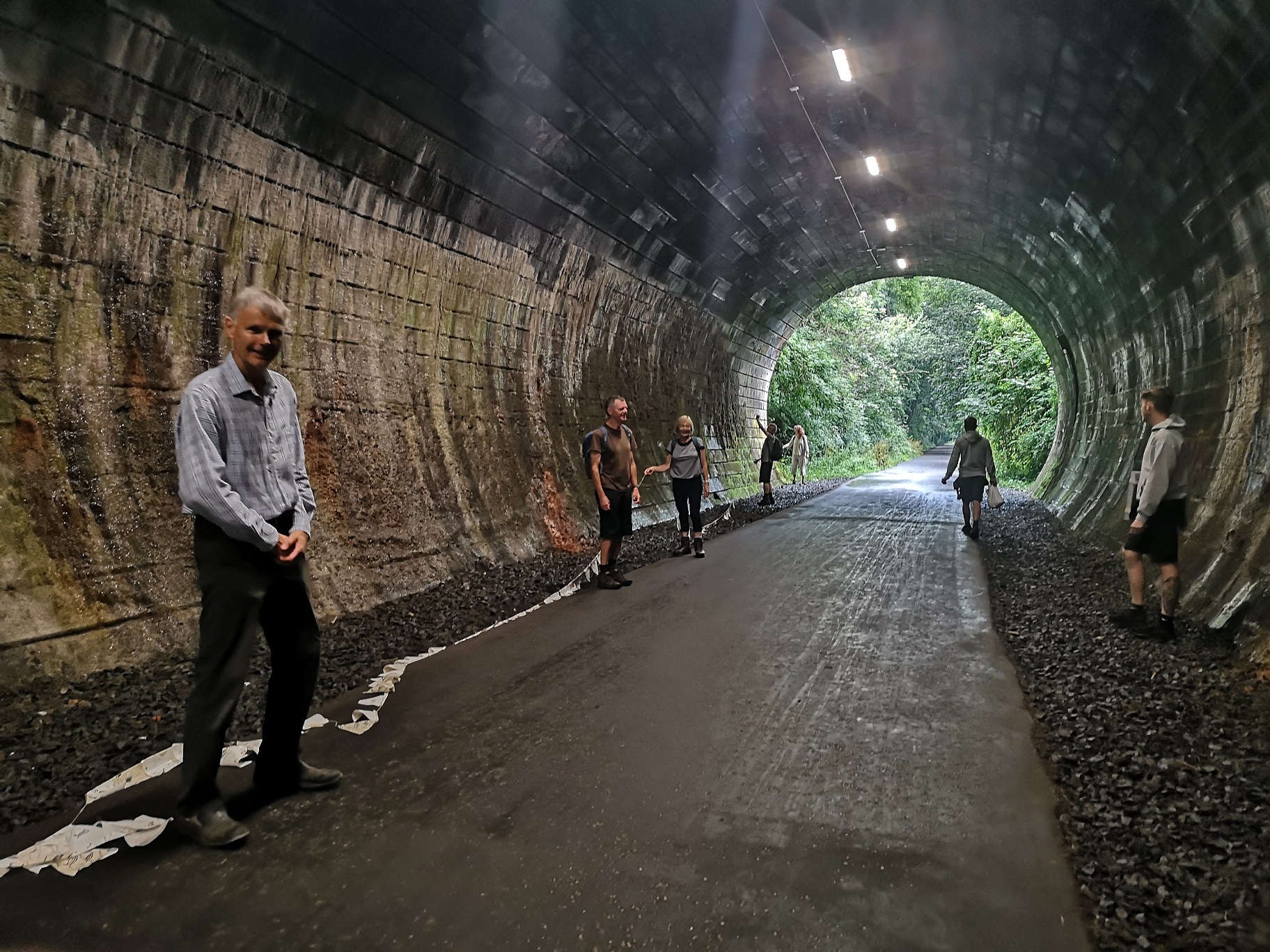
The installation team. Thanks to Andrew and the team who were taking a walk and kindly stopped to offer their assistance. It was much appreciated

Location

Find it here: ///hands.calculating.wiping (South end)
wins.trial.preoccupied (North end) 55.976045, -3.203276
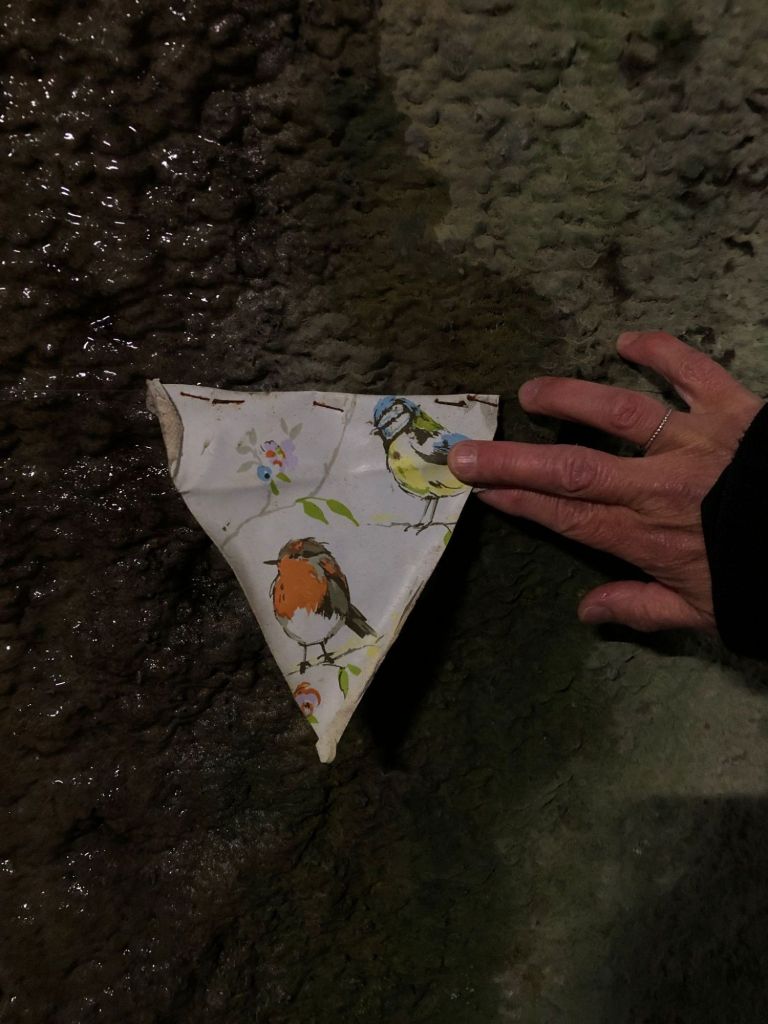
Photo of my hand and the bunting in Trinity Tunnel by Alba Bresoli

Sound poem

This is the link for the sound poem which you can listen to as you walk through the tunnel. You will need headphones to hear it. It is hosted by soundcloud and this link will take you there:

No Birds Land soundpoem on Soundcloud

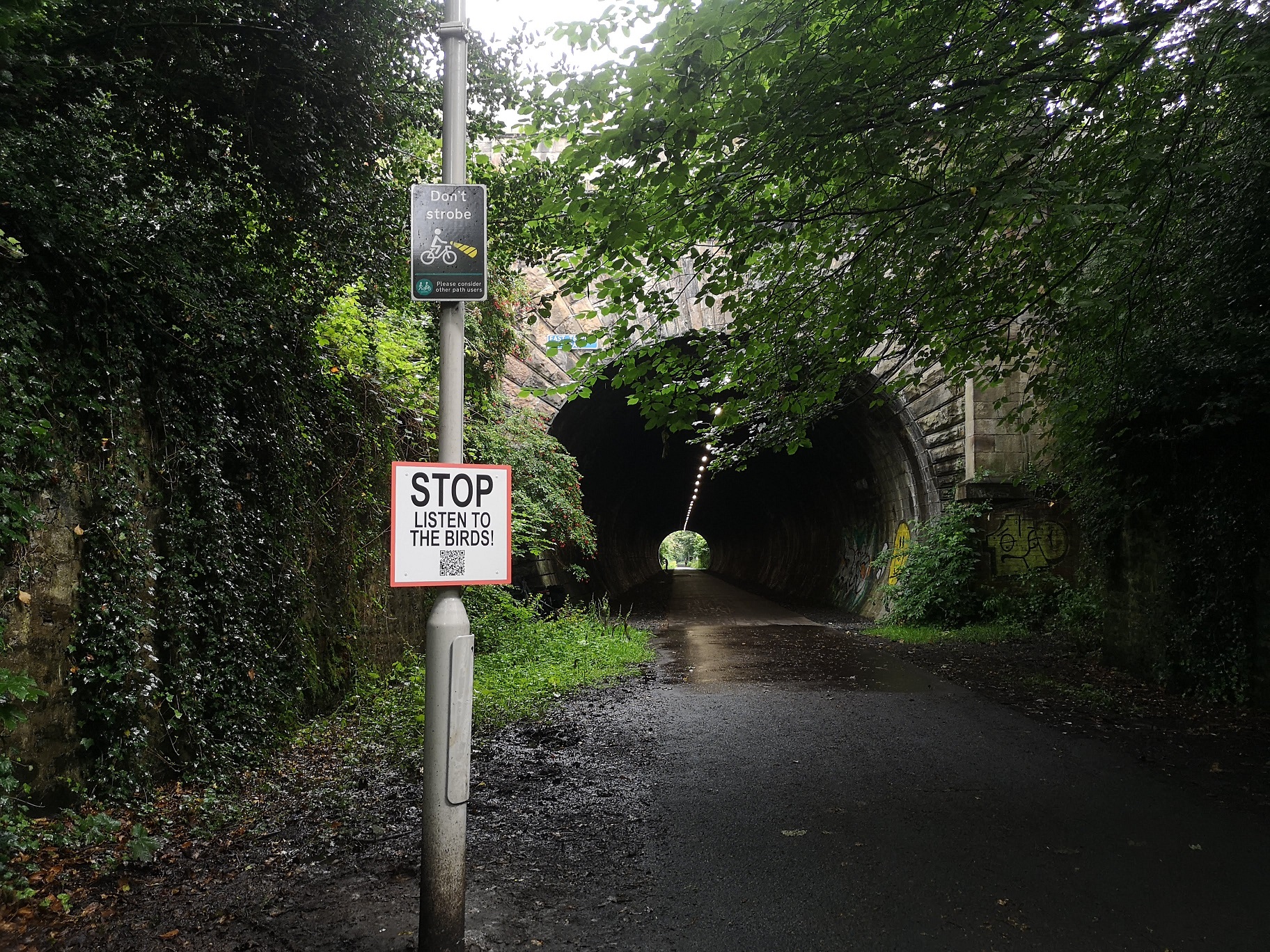
You can also access the sound poem from the QR code on the signs at either end of the tunnel if you have a smart phone.

Our wildlife is key to our environment, and, with so many of our iconic bird populations in decline, it’s vital that we invest in supporting and protecting them. It’s a unique piece of art and I’m looking forward to visiting it. I’m always excited in art that explores wildlife and our environment. I will be heading to the unlikely location of Trinity Tunnel where I will stop, relax and listen to the birds.

Scottish Greens MSP for Lothian, Lorna Slater
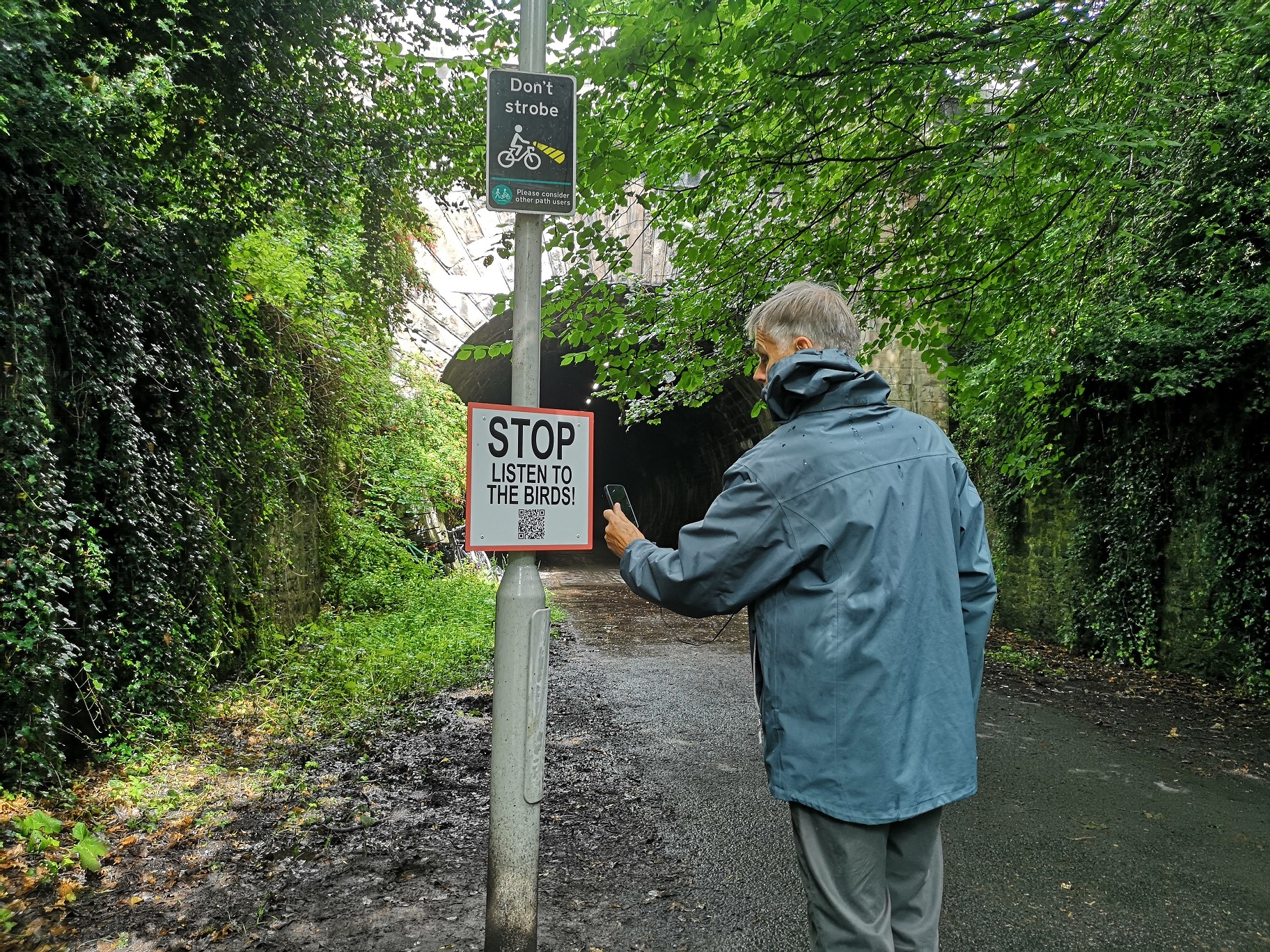
Downloading the sound poem onto his phone from the QR code at the entrances

In the poem, I am not pretending to be a bird, nor reproducing or emulating realistic bird sounds and song. I am acknowledging how easily we attempt to wield power over other species and appropriate others’ languages without their permission.

Sometimes it’s only when you don’t see them that you notice they’re not there.

Amanda Thompson

The Trinity Tunnel

The Trinity Tunnel is a disused railway tunnel that is now part of the extensive Edinburgh cycle path network. Before and after entering the tunnel, the air is full of birdsong; inside there is little or none. This sound-art installation recognises that no birds land or alight there (although occasionally one flies through), that it is a sort of ‘No Man’s Land’ for birds, though humans built the sandstone structure to transport goods and each other between Granton Harbour and the rest of the city.

No Man’s Land originally denoted contested territory between fiefdoms, even a place of execution. It is now often remembered as a WW1 area of land between two trench systems which neither side wished to cross due to fear of attack and death. Except, that is, on Christmas Eve of 1914 when it is known that British, French and German soldiers came together to smoke a cigarette, carry out joint burial ceremonies, and have a chat – somehow communicating in their different languages.

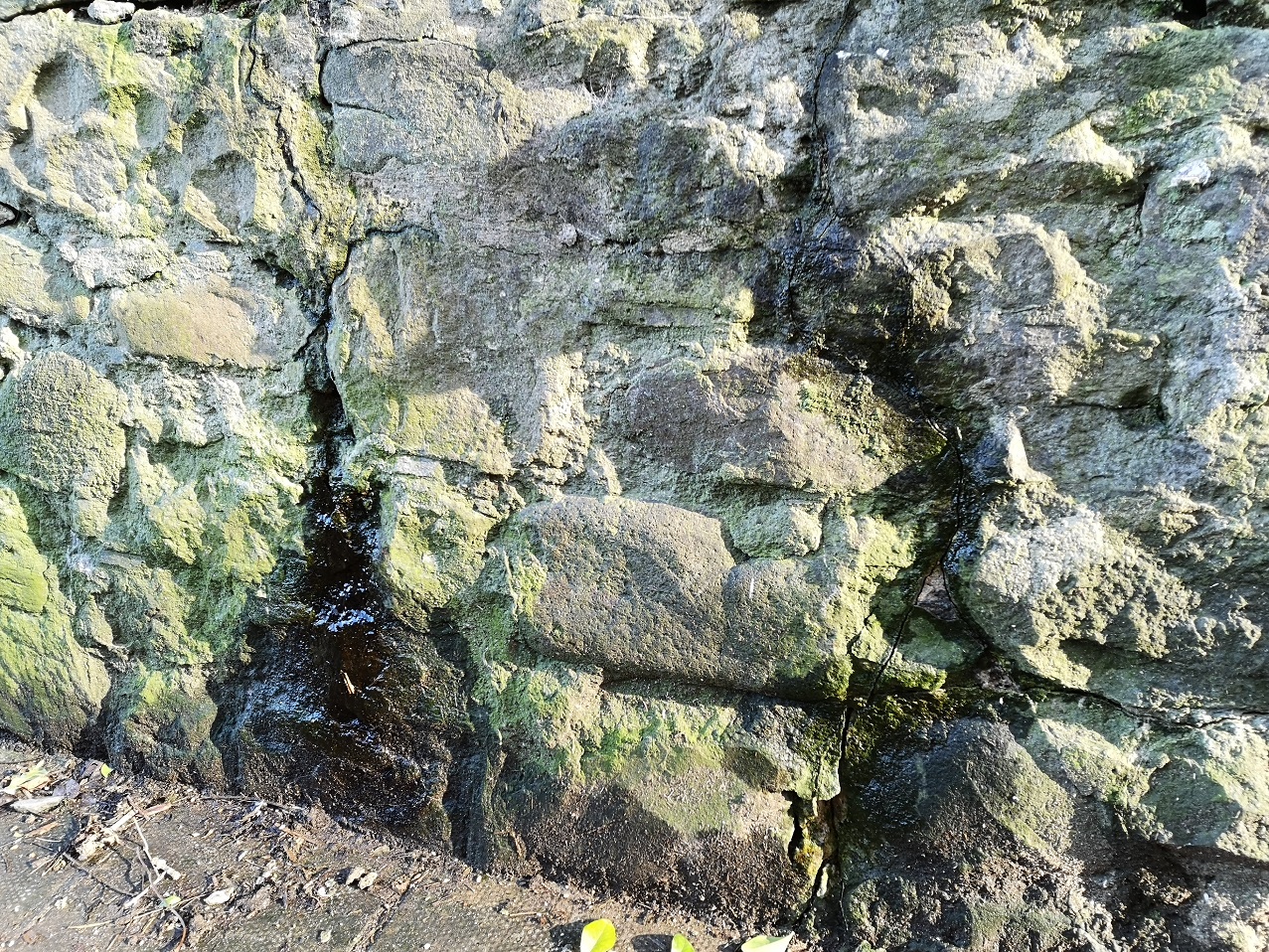
In this place of cold stone where moisture trickles and calcite forms weird shapes, no birds land and no birds sing.
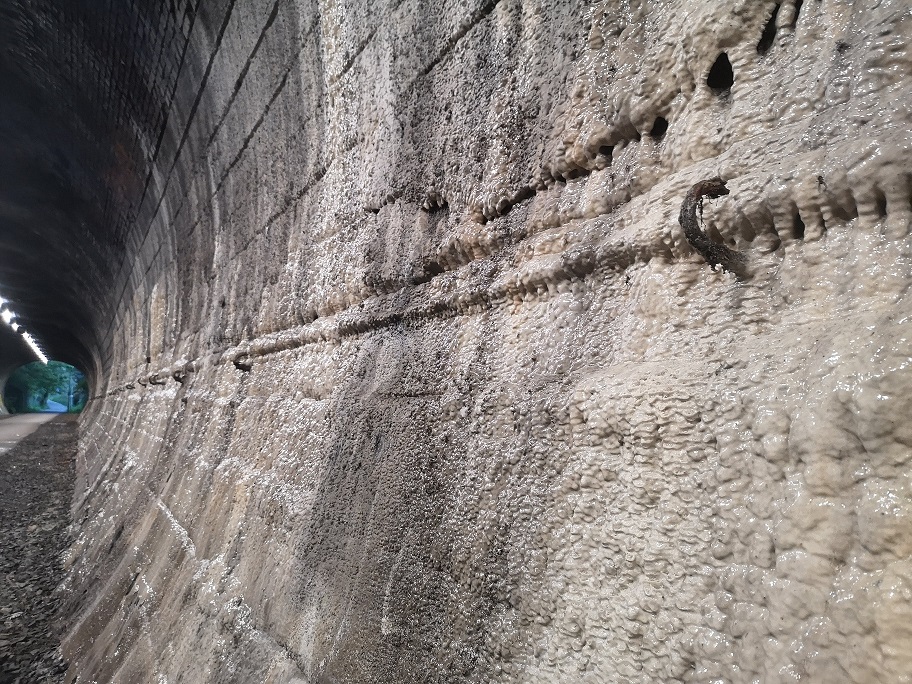
Hooks on the west wall of the Trinity Tunnel before the bunting was hung
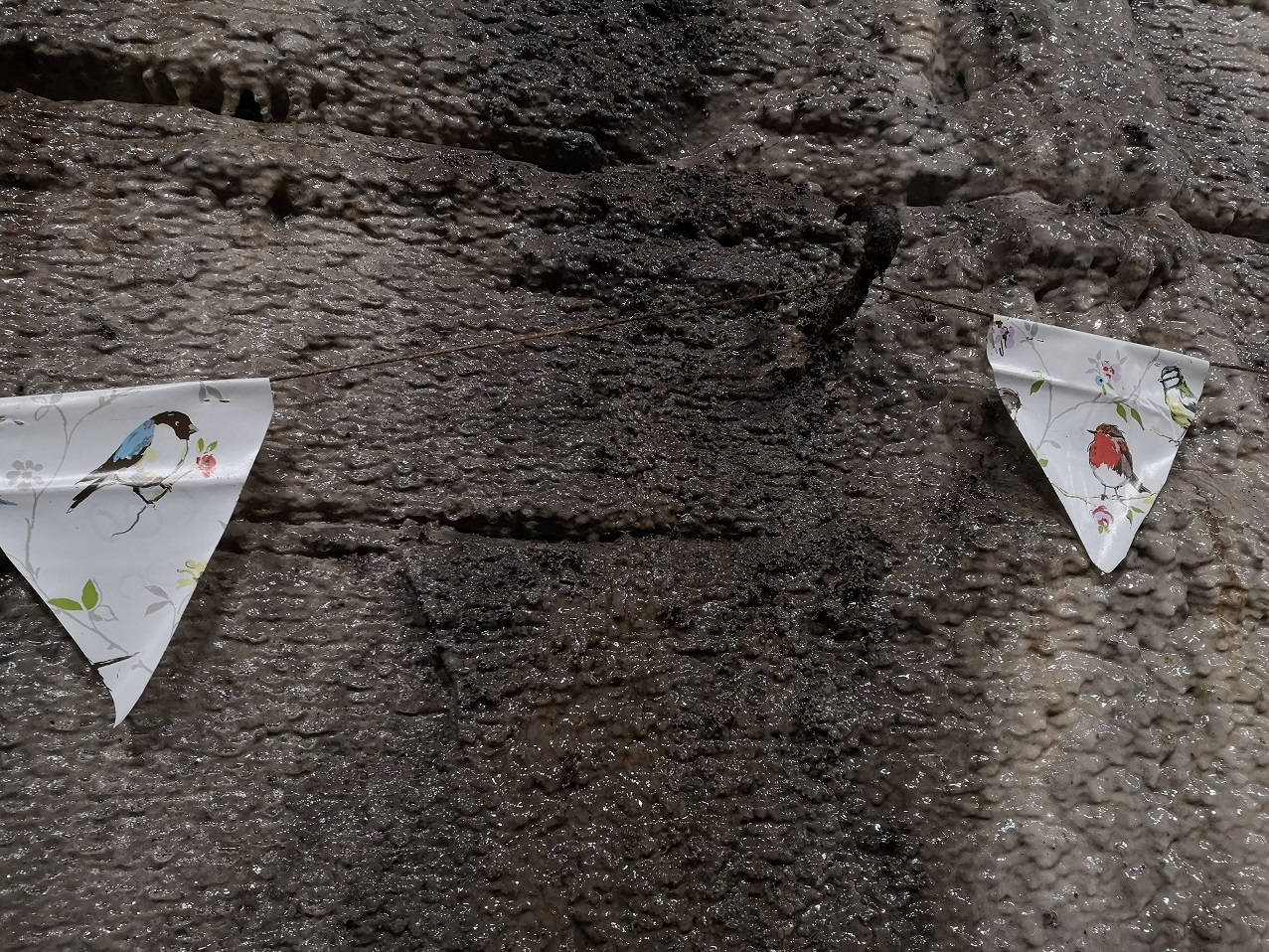
Bird bunting hanging over a metal hook on the inside of the Trinity Tunnel, No Birds Land Edinburgh. Lift the flaps -do they really say….tweet, tweet, caw, chirp, cluck?

You will find signs saying ‘Stop! Listen to the Birds! at the two entrances to the Trinity Tunnel which is 183 of my paces long (146 yards, 390 foot). A double track railway ran through here from 1842. Above your head is an elliptical or horse-shoe shaped roof with new, brighter lighting (thanks to the council).
In the tunnel itself there are a series of hooks on the west wall (as you are walking towards Granton), which were for cables and wires when the tunnel was used by the Edinburgh, Leith and Granton Railway before it ceased operations in 1986. Festooned along them is a length of bunting made of found materials with illustrations of birds. On the reverse of each pennant is a word which aims to recreate a bird sound, an explicit appropriation of an other-than-human ‘language’. A pennant is a commemorative flag, used historically, but I prefer to call it Bunting, a word that has been used since the 14th century for a lark-like bird which we know as yellow-hammers. Yellow hammers are said to sound as if they are saying ‘a little bit of bread and no cheese’. Try saying it fast!

All about the birds

RSPB Yellow Hammer info and song

The birds you see are sketches and impressions, they’re not real. The sounds you can read on the reverse of the pennants are rough translations of what are actually rich varieties of tone and timbre. They have been translated into the less melodious, simplistic human words. The only bird sounds you will hear in the tunnel are these approximations: tic tic tic tic – the Robin’s warning call, chiff chaff chiff chaff chiff chaff, tweet tweet tweet, you know how it goes – chirpy chirpy cheep cheep chirp. I cannot play you their songs in this place, even if, as in the Japanese shopping centres, they might calm you, bring a smile to your face.

This is no place for the birds; this land, like so much of the British Isles and elsewhere, is inhospitable and uninviting to them.

Over increasingly large areas of the United States spring now comes unheralded by the return of birds, and the early mornings are strangely silent where once they were filled with the beauty of bird song.

Rachel Carson from Silent Spring
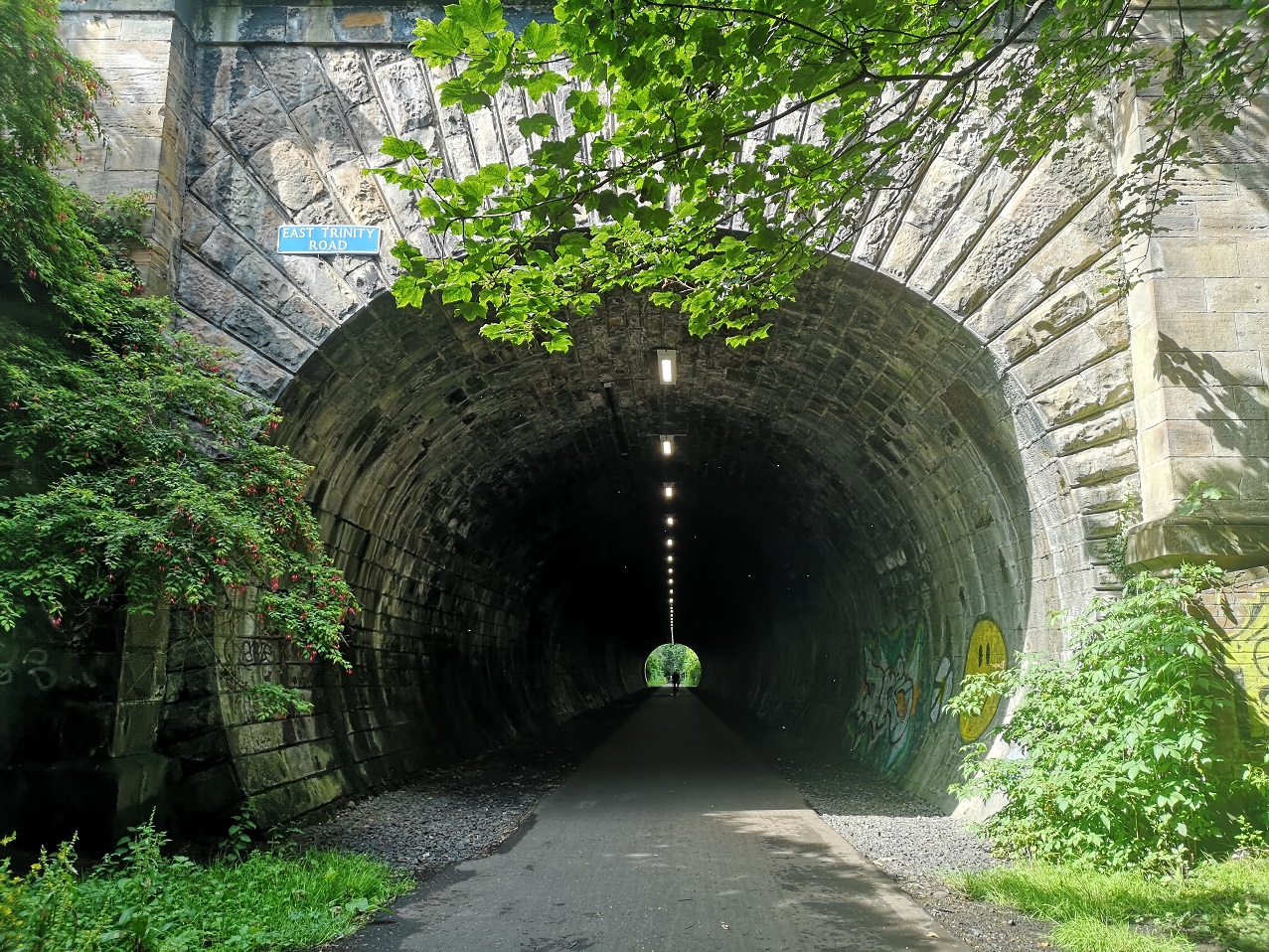
The Trinity Tunnel runs under East Trinity Road on route 13, and is easily reached on foot (approx. 10 mins) or by bicycle (approx. 5 mins) from the Granton end where it can be accessed from where trinity Road meets Lower Granton Road near the sea front

In the Trinity Tunnel there are no ledges nor perches, no nooks and crannies to nest in. There is nowhere here to stand and preen feathers or sing from. We are replacing old barns and houses which had eaves and rafters, with edifices of vast glass windows and metal corners, but birds cannot live or raise their young in and on them. We are clearing hedges, spraying pesticides and extending fields so far to the edges that birds natural habitats are destroyed and poisoned. In the UK, we have created places where birds used to, but cannot now thrive. This has resulted in drastic changes in avian behaviour and deaths. There is more info on the RSPB site here.

In the 2 minutes it takes me to walk through the tunnel, it is believed that 2 pairs of breeding birds will disappear. (See below for source).

If we listen, tune in to birds, we can learn. Mozambican people can whistle to honey birds (or honeyguide birds) and understand their calls. The birds tell them where the bees are, the people harvest the honey and this lets the birds get the wax and grubs afterwards. It benefits both – it really happens.

scientists have now discovered that the birds can be attracted out of the trees by a distinctive trilling sound that local hunter-gatherers use while looking for honey. According to the researchers, hunters are taught this special trilling noise by their fathers.

Jules Howard in The Guardian

In other parts of the world, women and men have learned to flute and trill like their native birds, so that their voices carry across dense forests. They are amplified, making sounds that are far bigger than we are (like wrens do closer to home).

There are some who recognise the difference between a warning call and a serenade – think of that! If we all knew and taught our children, we could choose to keep out of the way of birds when they are nesting, and delight in their courtship rituals. We could be warned, too, that a hawk is overhead or a fox on the prowl down below.
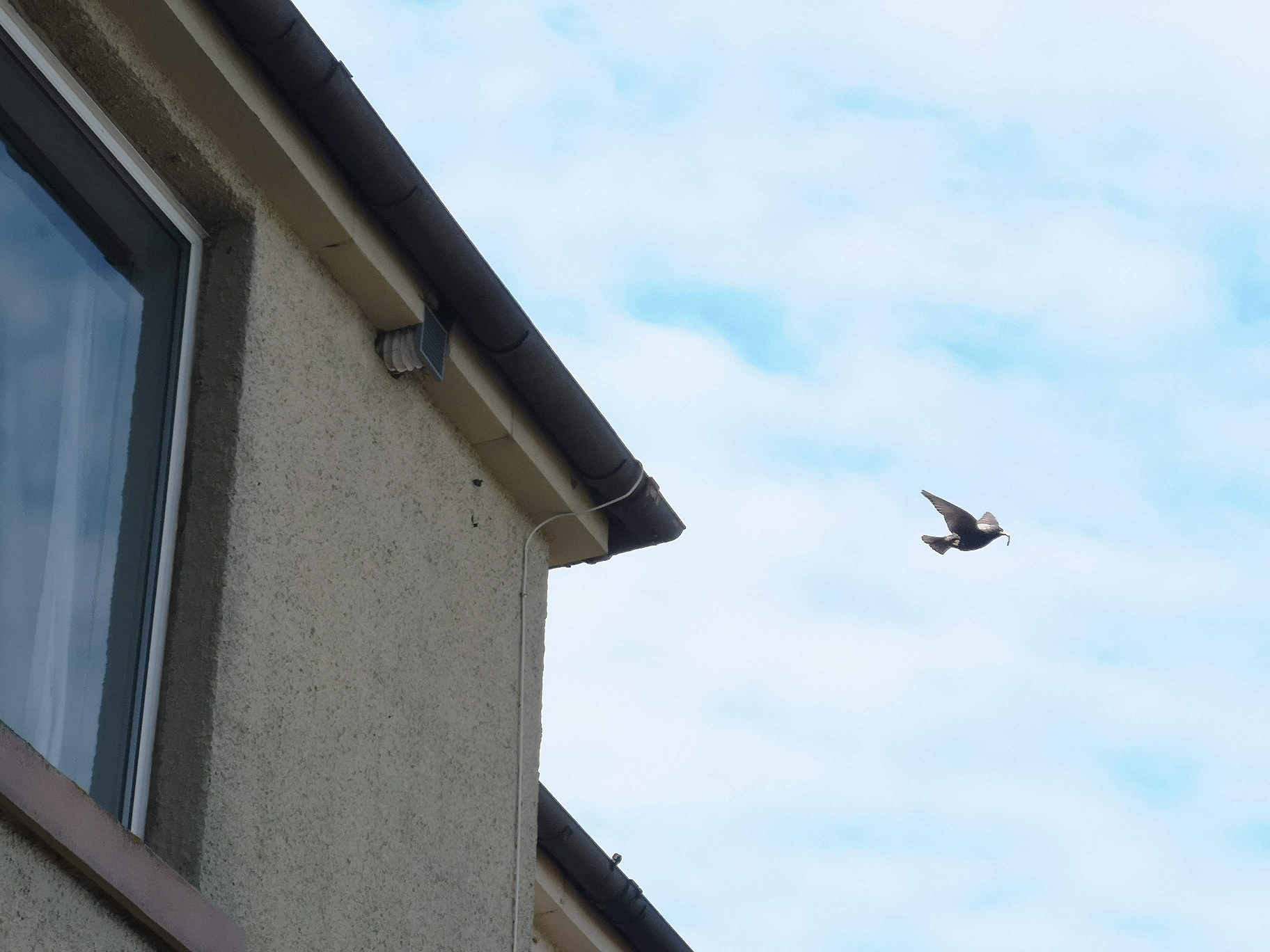
In the absence of birds, we would have to create them, to create our own version of them, their song, and appearance. But I ask you, how long will it be before we forget what they sounded and looked like, before we have to rely only on recordings and photos? Will we lose the memory of what delights us about them, will we forget our felt sense of how they really were, how it was to be in the same world as them?

In the silence of the Trinity Tunnel, you don’t have the privilege of being regaled with their songs.

No Birds Land on Vimeo

No Birds Land Video on YouTube

You may also be interested in:

A second art installation and sound walk on the Chancelot Path of the Edinburgh cycle path network: Is There a Place for REVOlution or Peace and Biscuits

Links

The sound poem was inspired by Gertrude Stein’s If I Told Him: A Completed Portrait of Picasso (1912) and the quotes are by Stein and Gail Simmonds’ in The Country of Larks

This project was shortlisted for a Sound Walk September award and can be found on Soundcloud.

The information about bird statistics comes from birdlife.org

Some of the tunnel information came from forgottenrelics.co.uk

Here is the Guardian source in the quote above

No Birds Land is in partnership with the RSPB and Sustrans.

With thanks to the City of Edinburgh Council and the following people: Ewan Davison, Ken Cockburn, Cosmo Blake from Sustrans, Erica Mason and Nick Hawkes from RSPB, Fiona Underhill of the City of Edinburgh Council, Eleanor Bird, Jim Campbell, Amy McNeese-Mechan, Logan Rutherford, Alan Moonie, Stephen Knox, Cammy Day, and Alice Cockburn.

If you enjoyed this, I think you will like this short film by Alba Bresoli about listening to birds and singing back to them.
The In-Between

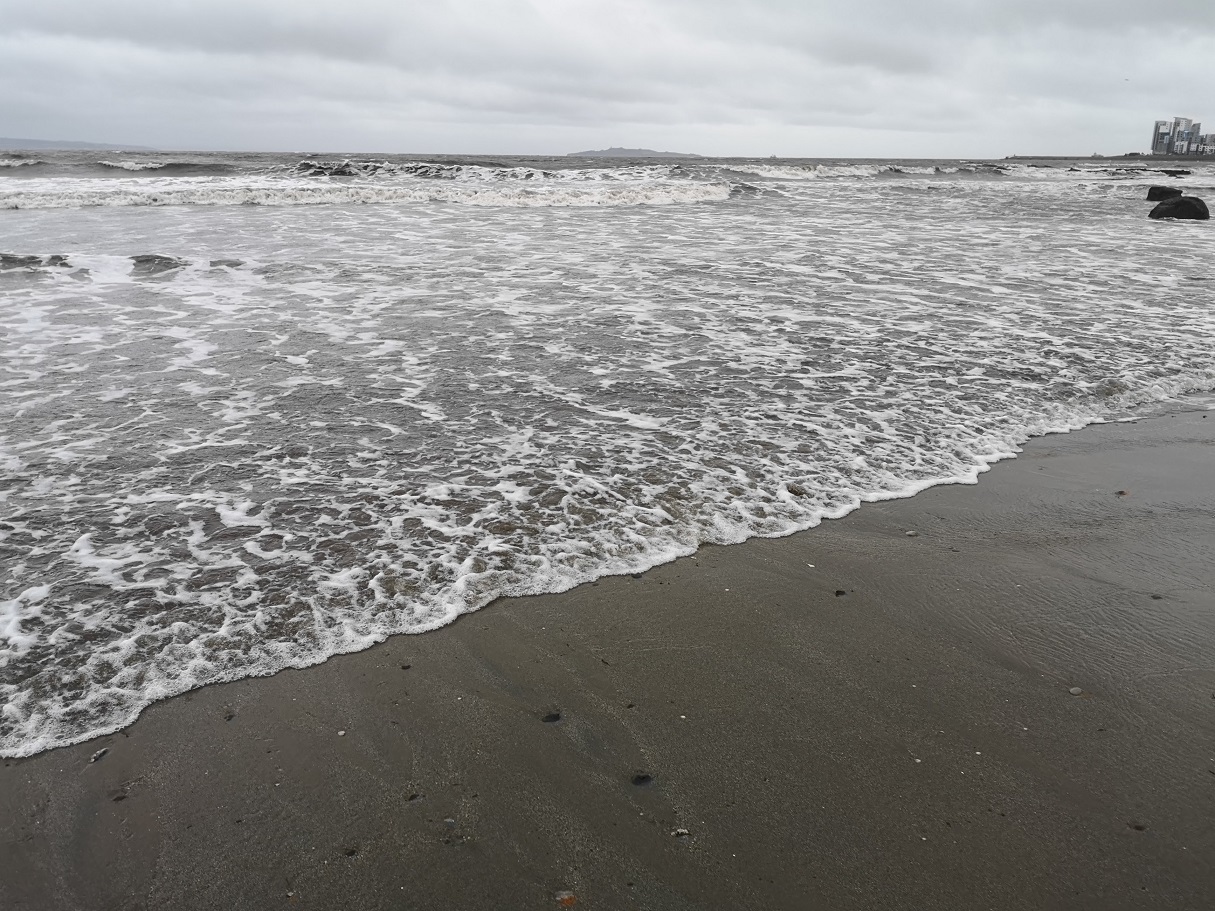
A First Friday Walk – March 2021. Wardie Bay, 5 minutes from home

“We lack – we need – a term for those places where one experiences a ‘transition’ from a known landscape … into ‘another world’: somewhere we feel and think significantly differently.” that exists “even in familiar landscapes: ….. Such moments are rites of passage that reconfigure local geographics, leaving known places outlandish or quickened,”

Robert MacFarlane

Can I help you find a term for those places? Shall we go somewhere where that happens and feel what it’s like, enquire into the difference between not-beach and beach, and see if we can come up with one?

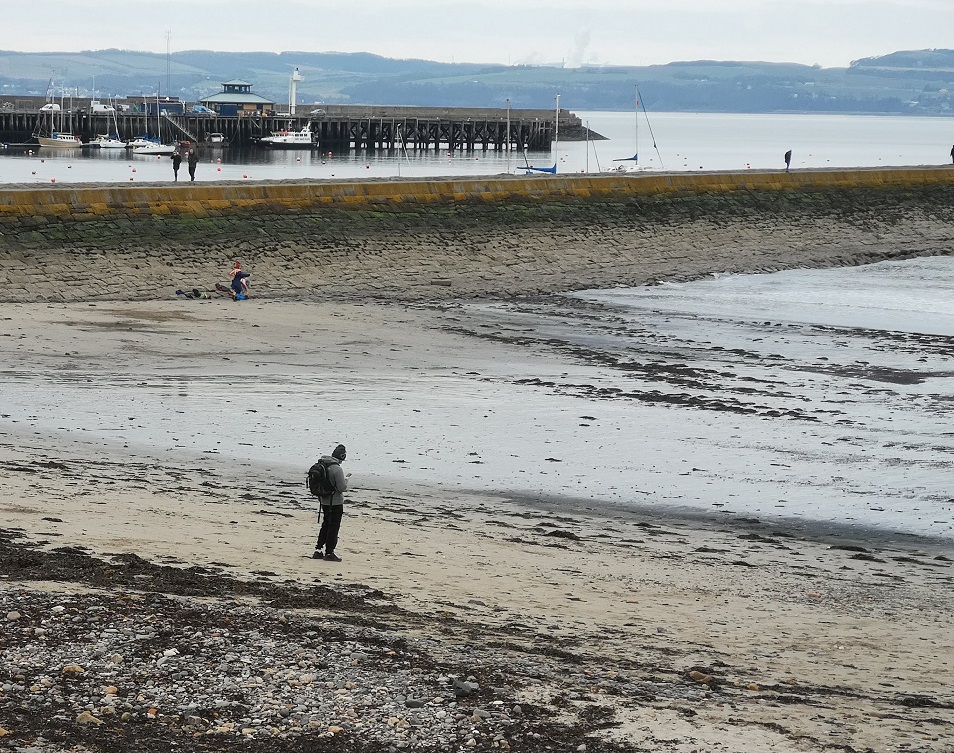
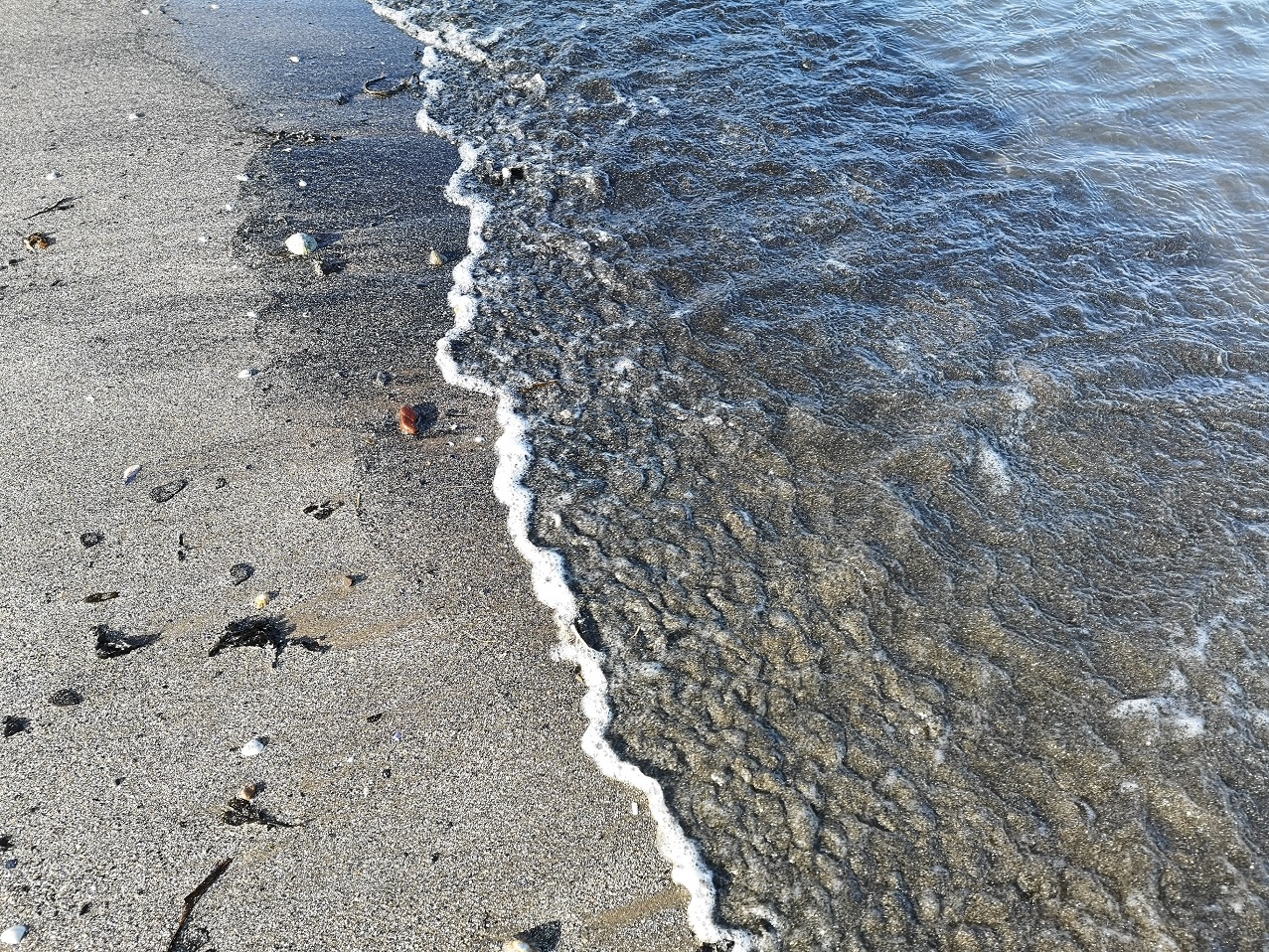
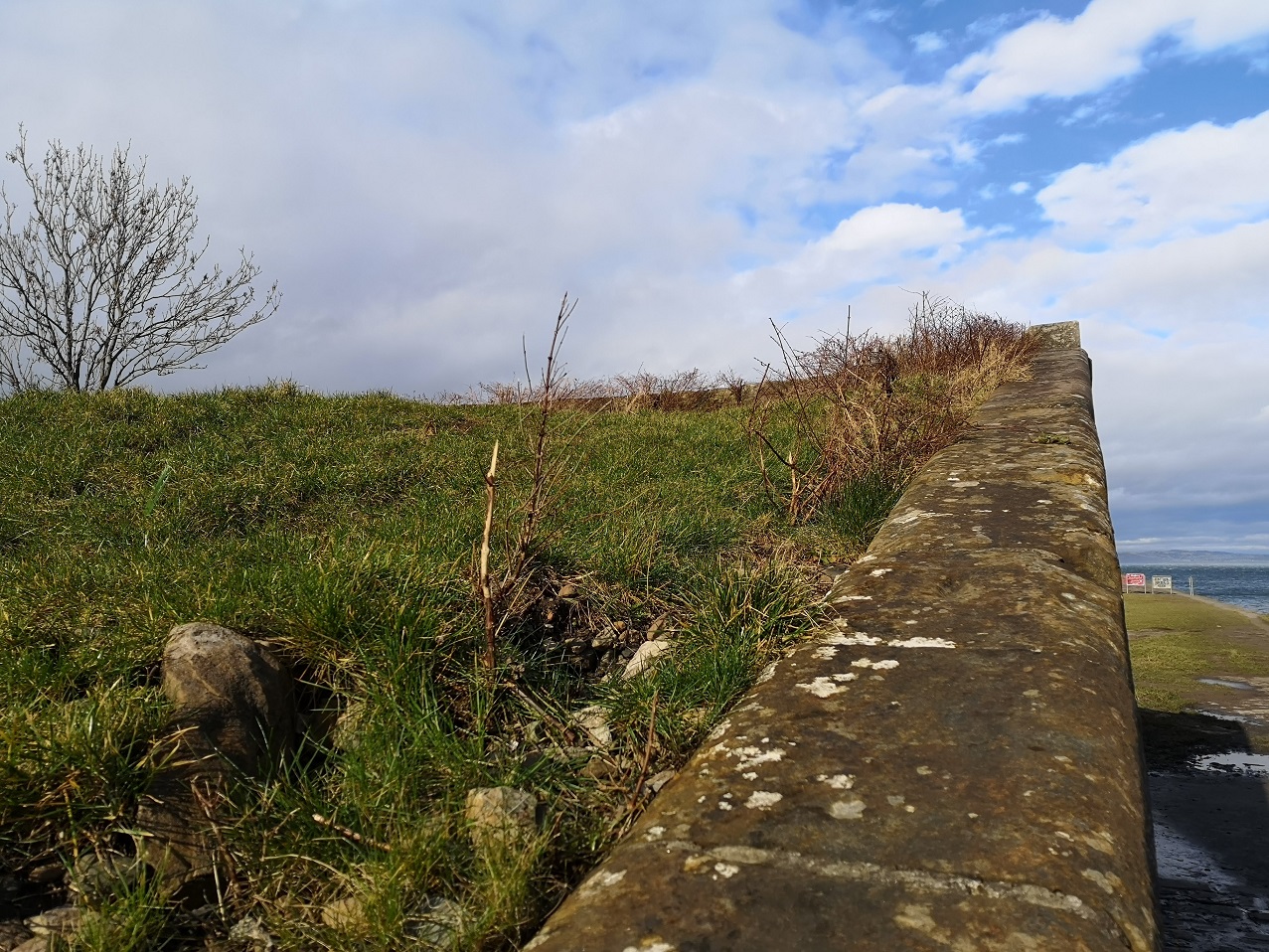
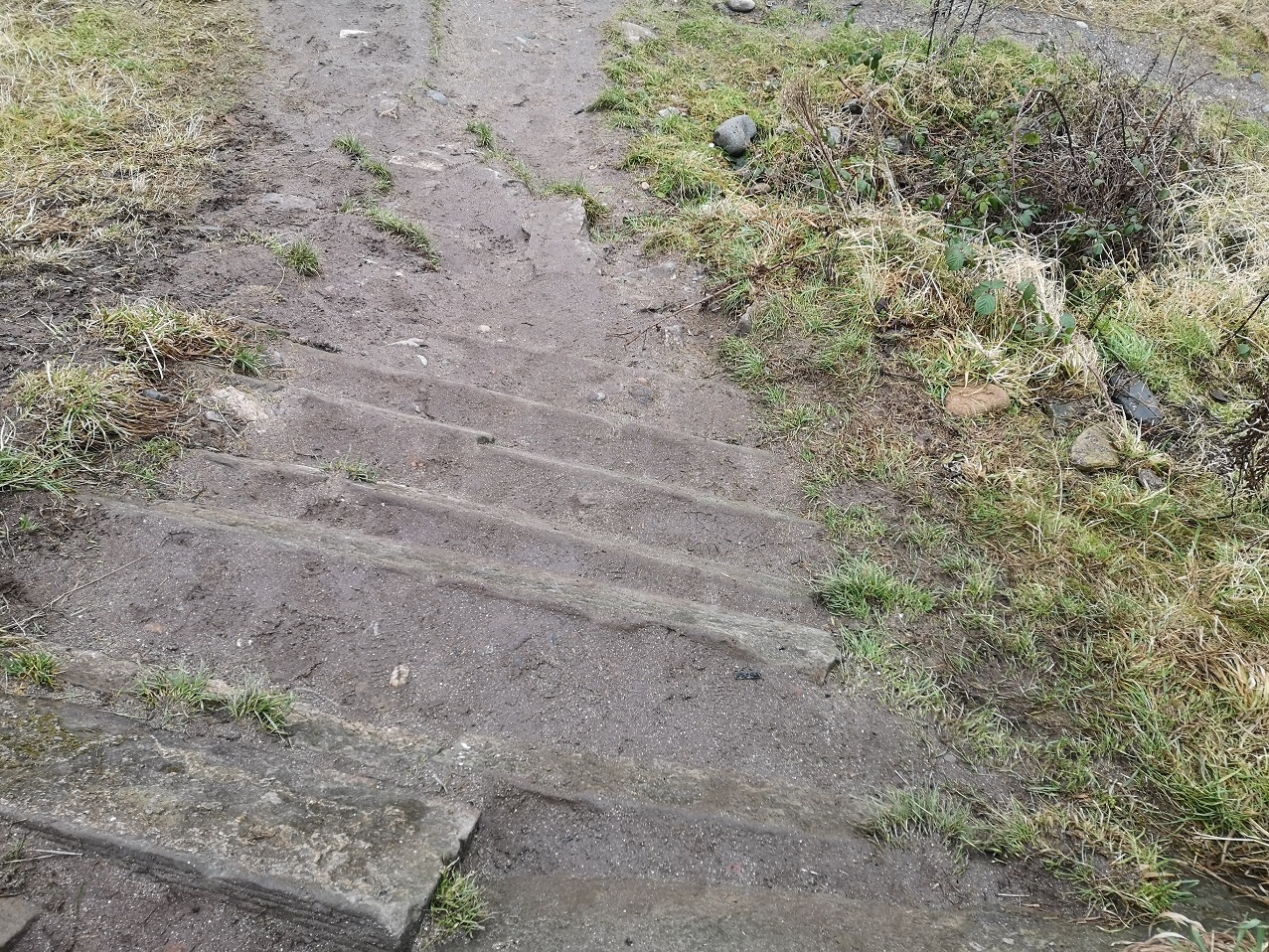
My usual way onto Wardie Bay is up the wee slope and though the stoneledges. I leave the busy road that’s been there for nearly 200 years, and has known me for 12, and at the top I get a salty blast to the nose which dismisses the fumes. I spy a man, a long way off on the sand. He has a big rucksack and he stoops, probably looking at his phone. He’s almost a silhouette against the-place-where-the-tide-is-out. I see and inhale where I am going.

I begin the transition carefully. I turn my shoes sideways, peering down to avoid slipping. Not looking at the beach or the man, I only see my feet, one by one. I fit the long sides of my trainers into the angles where the earthed slope meets the uneven stone strips.

For a second I still. Half way. I feel the presence of the sea on my shoulders, the sky touching my hat and the wind on my ungloved hands which are stretched out at the sides of me for better balance. Something is already happening.

I run the last bit at the bottom which means that my heartbeat matches the pleasure I feel at being there. I am assailed by the wave-sound, the sea-odour and, finally, with the soles of my feet as I step from the large-rasping-pebbles onto the little-grainy-sand – I sink slightly, tilt, halt.

Now it all embraces me in one big hug, the noise, scent and feel of the beach’s surface that I like. I look out to sea and my lungs take a great deep, heaving breath.

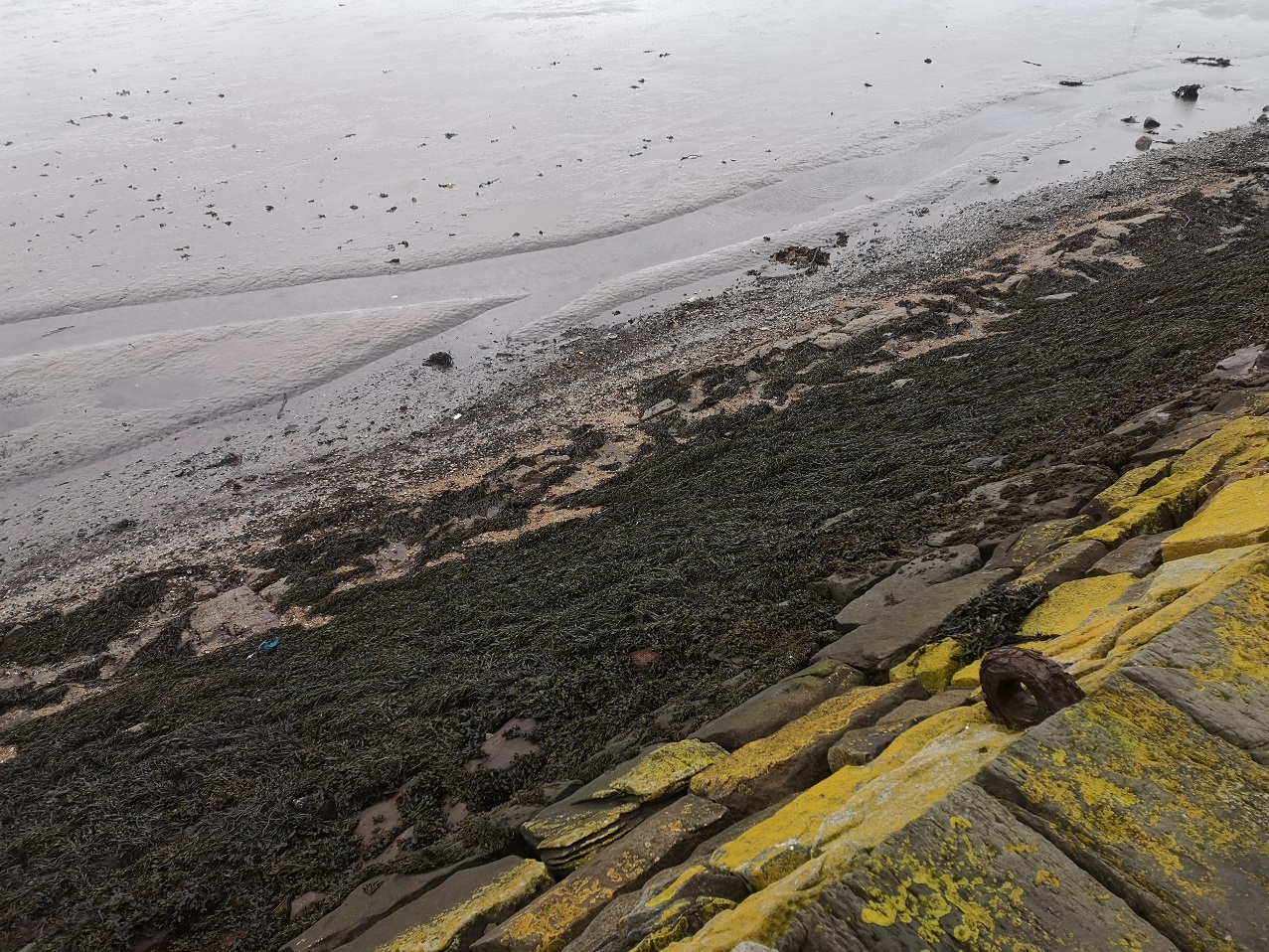
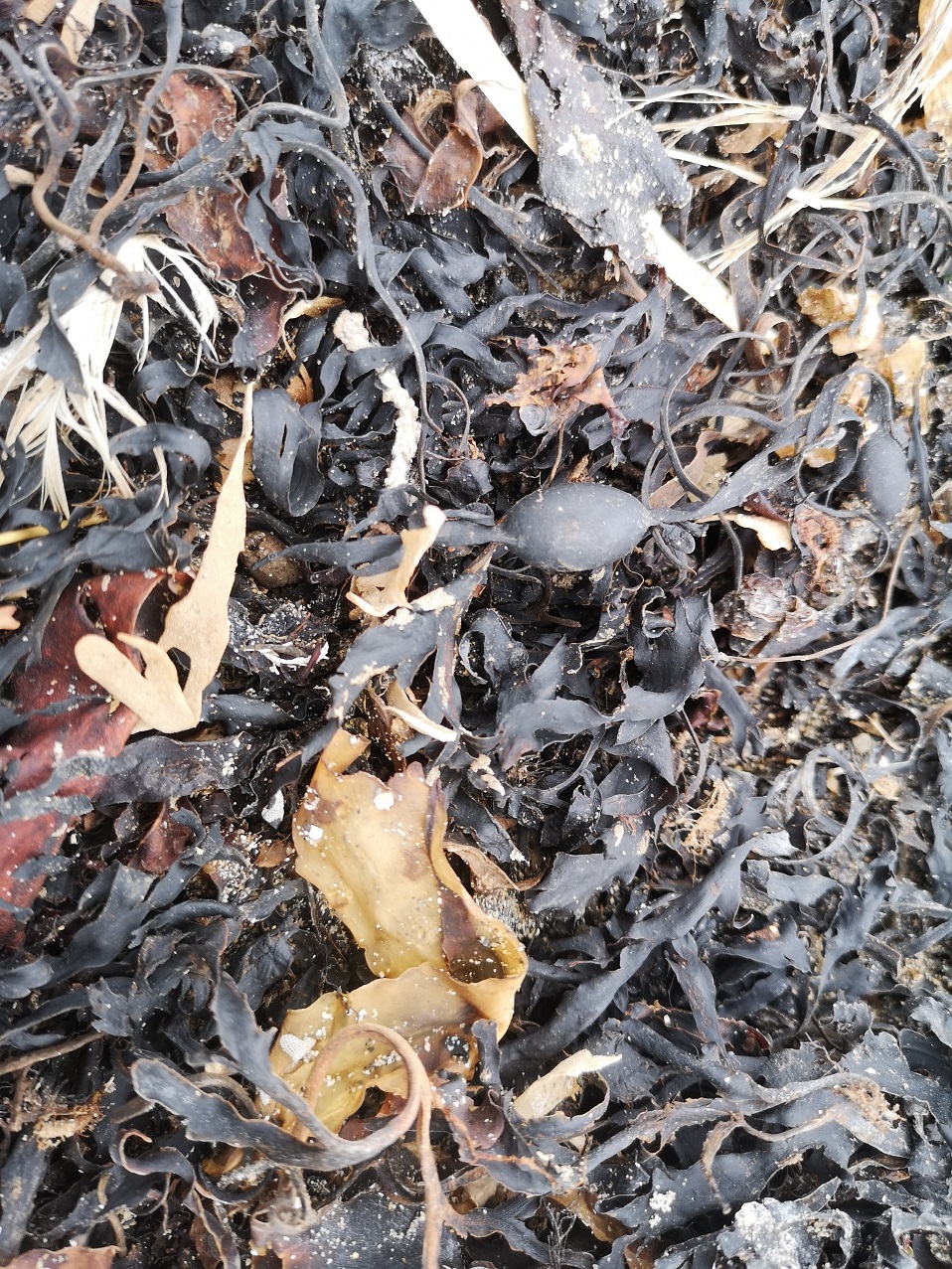
Quite soon I lie facedown to photograph the smell of crab in the seaweed. I screw up the skin at the nape of my neck where the cold gets in, to try and stop it doing that. The bladder wrack under my elbows as I balance the camera, is dry and brittle. I am in another world and I try to capture all the wonder but I know from experience that can be tricky.

Yes, the sand. When I stand again it reminds me of velvet. Through my trainers and two pairs of socks it’s delicious. I swivel and furrow and it’s like when you sink your hands into the strands of a ball of merino wool and squeeze the softness.

I am on an expedition to find something out, so I rewind – I stare at the horizon and in my mind I start again from home. When we go somewhere we bring our anticipation of that place with us, the idea of what it will be like. I brought the way the beach was before – all the befores – layers of previous times when I had visited – with me today. And in my body when I got to the top of the steps, were the traces of everything else I had lived through up until that moment. And not only that. The beach, itself, had an imprint on it, of all the people (including me), and activities and weathers that had happened there, all accumulated in that second when I entered. I suspect that this previousness influences the way that we feel and think when an ordinary place becomes ‘quickened’.

I lie down on the sloping, freezing rock, blue-sky with white-cloud above. I shut my eyes and smell the fish. Under my closed lids I can see the shells and stones I had been looking at before.

Tobacco….drifts….merges….with perfume. 

What IS that place called, not where-I-was, and not where-I-am-now ? We know about journey, about being in transition, skimming or flying across lands and high skies to get somewhere. What do we call that place we just missed, the one we whipped through unawares? My tummy flurries when I’m approaching, the ground underneath me is altered when I arrive, but in the blink of an eye I am here, not there.

Fingers fold over cold thumbs and how smooth my skin is. I nearly sleep but the chill interferes. I rest still, not wanting to get up but knowing I’m going to.

The name of the place where I make the ‘transition’ might depend on which direction I take to get here and how I arrived.

If I chose the flat way from the street, the stonewalls very tall at the sides of me and feeling very small going between them, I would be coming upslope. At the corner I would be on a level with everyone and their dogs, able to see diagonally across to the rocks. There, hovering, no-one would notice me. Then I would run off the cobble, do a hop, skip and turn cartwheel on the sand, and land in the middle of the ring with a flourish.

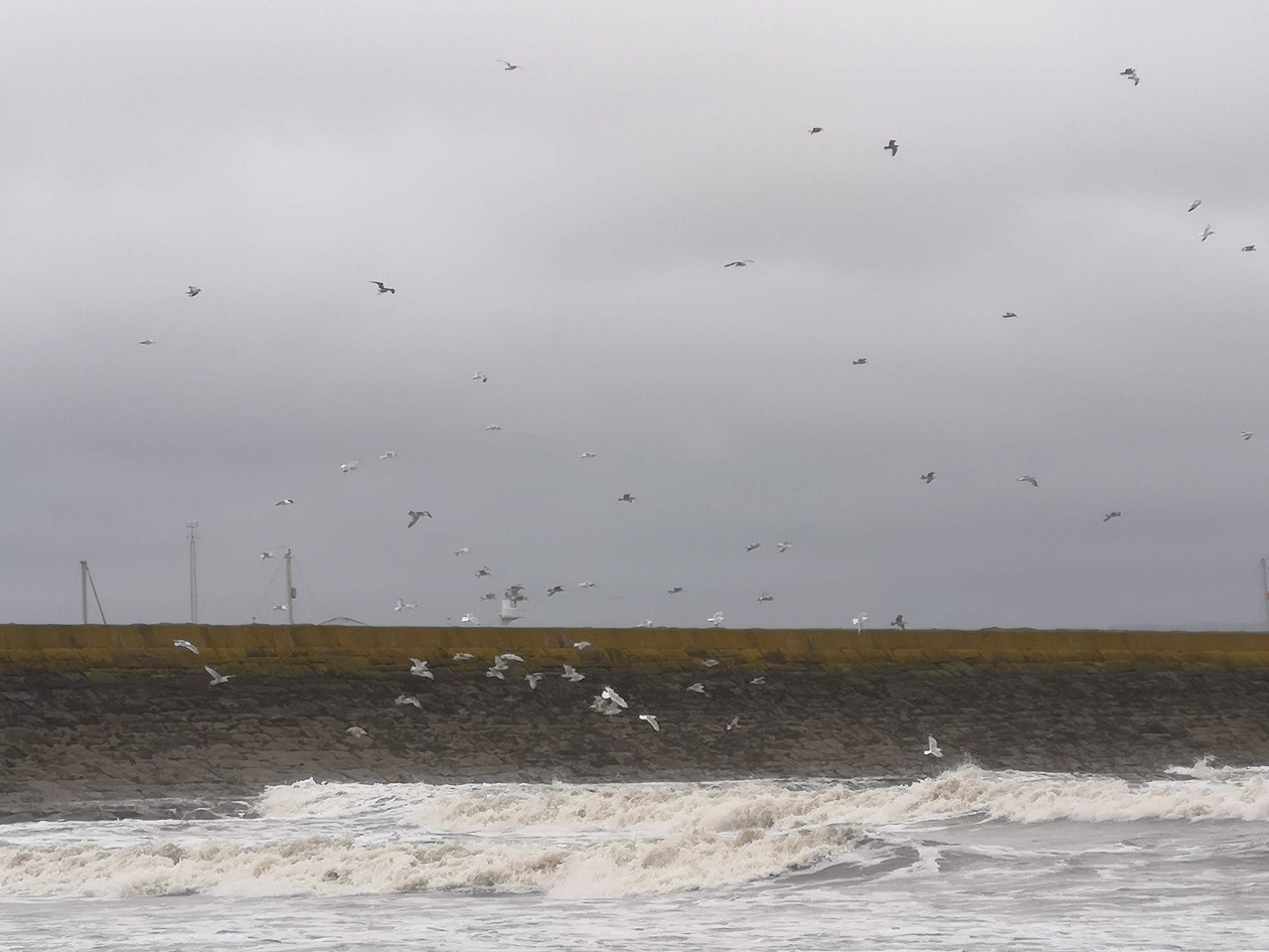
Propping myself up on my elbows to look, I think. It would not be the same if I approached from the air, if I was a gull flying down, folding my wings back and stretching my thin legs out, landing on both my webbed feet at the same time. Landing lightly, making hardly a mark, the wind at my back, I would run along and get on with my search until someone disturbed me. I can’t know if some places are more special for birds, but I do see when there are suddenly hundreds not three – something is exceptional or there wouldn’t be so many at one time, they wouldn’t be so excited.

If I were a wave from the north, I would turn over calmly, spreading, rolling, on to the strand. I would canoodle and stroke and she would offer up her treasures to me willingly. Or I might come faster, rising and rising then crashing. I would buffet and pummel and she would be covered with my offerings, and our meeting would be rousing.

Yes, I am sure that the direction we take and the way we enter, influences the magic when we get there. I launch up at last and stride towards the breakwater.

There are lots of stories about transitions into other worlds that might give us ideas for this place name we are seeking. They involve complex feelings which may help us focus: There is Mary’s secret garden, found through a door under some hanging plants; Lucy’s Narnia – she went through two rows of coats with her arms stretched out in front of her, so as not to bump her face into the back of the wardrobe; and Alice’s Wonderland which was of course accessed via a large rabbit-hole under the hedge.

Mary, “… took another long breath, because she could not help it, and she held back the swinging curtain of ivy and pushed back the door which opened slowly—slowly. Then she slipped through it, and shut it behind her, and stood with her back against it, looking about her and breathing quite fast with excitement, and wonder, and delight.” (The Secret Garden by Frances Hodgson Burnett.)

Lucy, “… felt a little frightened, but she felt very inquisitive and excited as well.” When she felt snow under her feet and on her face, that was when she realised she was somewhere else. (The Lion, The Witch and The Wardrobe by C.S.Lewis.)

Alice has a long, slow-motion fall down “what seemed to be a very deep well”, meaning that we readers get to see, think and feel her transition. She was “not a bit hurt”. Indeed, it seemed to heighten her ‘outlandish’ response – things got much more curious as a result. Later, she got tearful when she couldn’t get through the too-small door to the garden. Her feelings on the threshold, and during the shift from one place to another, were different depending on whether it was a matter of choice or if she was catapulted there. (Alice’s Adventures in Wonderland by Lewis Carroll).

It seems that we might hold or expel our breath, run or move slowly across the divide, feel very inquisitive, excited or upset as we go. Time may pass quickly, so that we gloss over the feelings we have there, or slow right down, giving us a hyper-real sense of it, even space to ruminate.

The birds wheel and cry, a dog races past me and splashes after the ball. I have reached the other side and have to turn back.

When we are at the portal we are half one thing, half the other; leaving and approaching at the same time. We are momentarily inserted, midway. We are about to ……… .

So, it’s decision time. What will we call it? I am back home now, balancing on the edge of the bed-base in the attic room so I can reach the sill and look over it at the beach below. I can see the place where not-there bleeds into there, and I have vertigo with the strain of it all.

‘Crossing’ or ‘passing over’ has too much redolence of death, though there is always a sort of loss associated with leaving, and, like a pilgrimage, it is really the journey that is important, not what you call it. No, I have a suggestion. The name of the place I went through, where something changed so that my familiar beach became something other, is the in-between. What do you think?

Festival of Terminalia

23rd February 2021

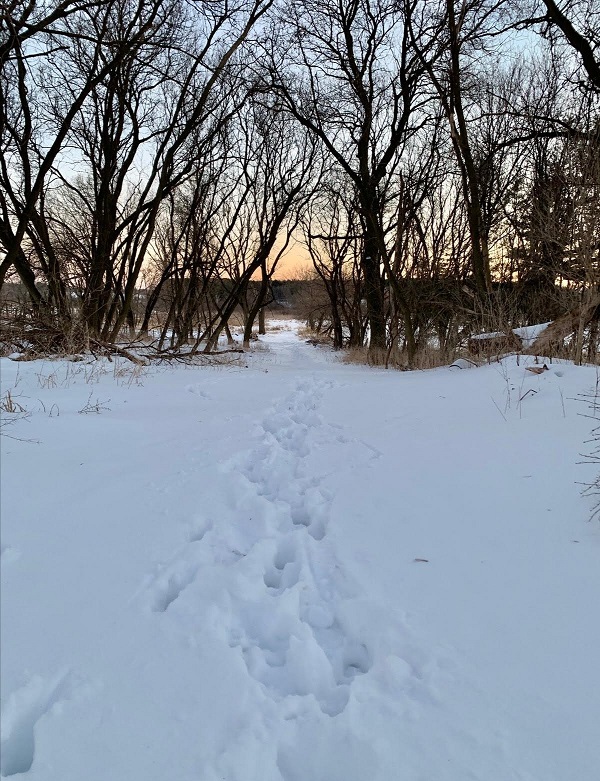
Today I walk an imaginary line around my house. My feet don’t leave indentations to show I have done it, not since the recent snow, and when that melted the trace was gone. Home and back, I pace and pound my boundary line, a pathway that returns to itself, reconnects, reattaches, and brings me back to the garden gate.

Snow prints. Photo by Sam MacLean

Terminalia is a one day festival of walking, space, place and psychogeography on 23rd Feburary. Terminalia is the festival of Terminus, Roman god of boundaries and landmarks so if there was ever a god and festival for psychogeography this would be it!

https://terminaliafestival.org/

They say that people walking somewhere can change a place, that the land alters because of us. Of course, it’s clear if we wear down the mountainside or trample wildflowers underfoot, or if we make a desire path, flattening the grass just enough that the next person who comes by can see it and tread the same way afterwards. But I’m talking about the idea that the nature of a place adjusts as many people cross it for a specific reason (such as pilgrimage, religious or secular), that an ordinary location becomes imbued with a special significance after it has been walked upon by people with a shared aim or sensibility. If that’s true, do my streets, the streets which bear my weight daily, still feel me when I’m gone? Do I rub off on them somehow? Can I say I belong there?

Or is it the air above a path that is disturbed by my body moving through it, affected by my presence, retaining a whiff of me? Then, what happens when the wind blows and displaces it – have I been whisked away, or am I still there? How exactly does it work, this treading of Terminus, deity of the marking of our territory?

The wind disturbs the top layer

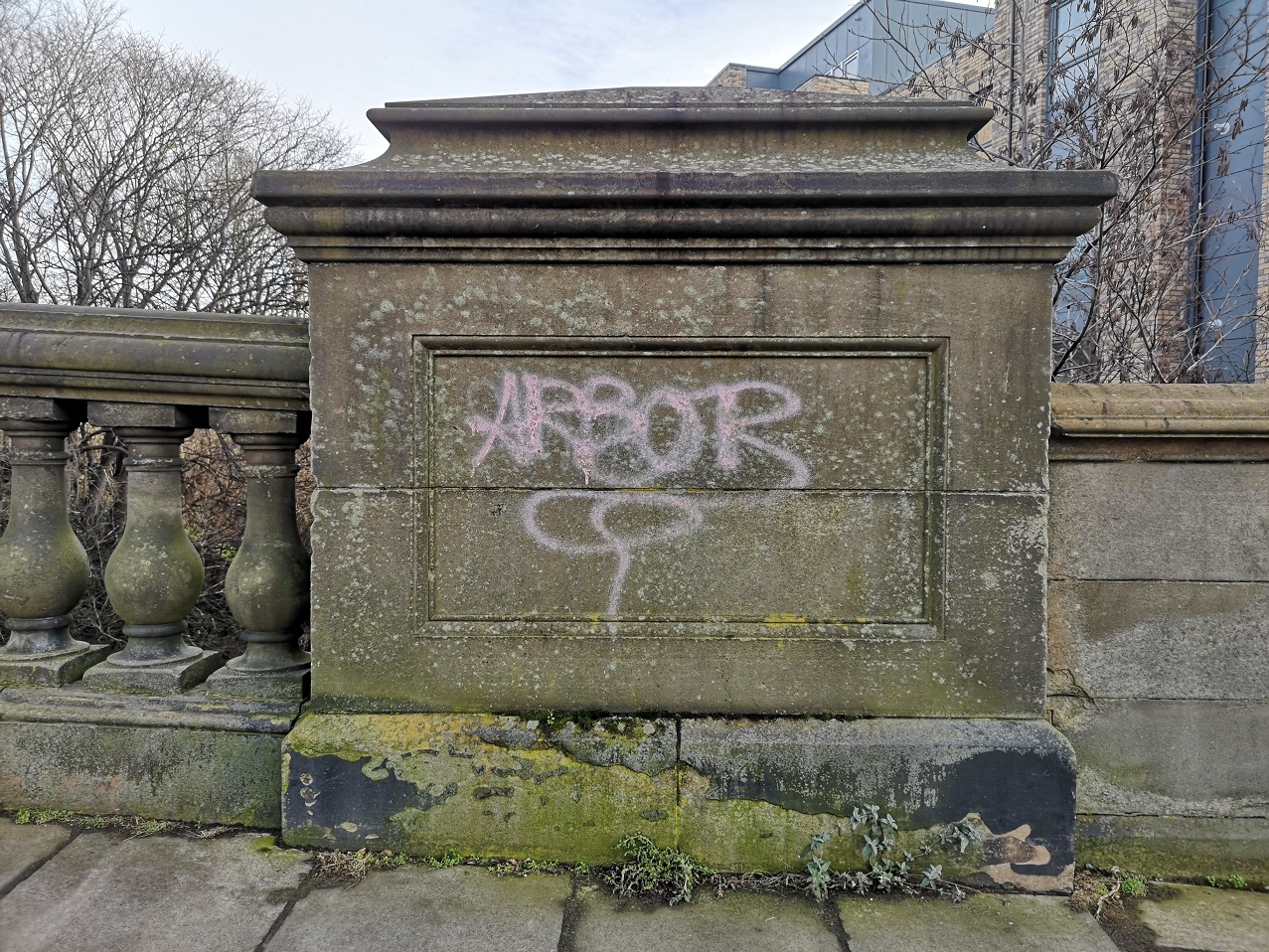
A crow breaks the quiet with a piercing caw on the turret, the wind finds crevices in my clothing, the odour of fish and chips invades my sense of propriety. Someone has etched into the tree’s bark and graffitied the bridge’s stone. A trickle finds a way through, waves breach the breakwater and ride roughshod over rocks. We must leave a gap or the wind will blow a solid fence over, or a river bring down a protective wall. In so many ways, boundaries seem to be there to be broken – at least that’s when we notice them.
Arborglyphs
Arbor graffiti

A few of us meander along the ribboned edge of the bay, the constant interruption of land by sea. We talk to no-one, we stand and watch the water. I feel sad, and the waves sound melancholy too. Only the other day it was like satin, now the surface darkens and shifts as the wind messes it into mackerel patterns. Sand clouds rush past me in such a hurry, disintegrating as they haste towards Fife. Uncharacteristic ripples sweep out to Inchcolm island where the disappearing rainbow arcs overhead (between real and unreal). While I was there I had that golden luck and the rain never reached me, I who have hot sun on my calves. One by one, we stoop and pick what catches our eye. I chase dry seaweed as it billows across the beach.

Inchcolm Island

Psychogeography describes the effect of a geographical location on the emotions and behaviour of individuals

https://www.tate.org.uk/art/art-terms/p/psychogeography

I am concentrating on my own boundaries of time (too little for my own projects) – noticing how they get eroded, how I let them, allowing myself less. And on the amount of space I have (too much room in my house now that the children and lodgers have gone) – somehow ending up with more than I need. As I pace, the liminal wetness, what I might call the sea/m, I mourn the freedom I didn’t have (I was raised to think about others before myself and it has stayed with me) and the shells I am inadvertently crunching underfoot. The sea doesn’t stick to its limit. I see it constantly pushing them. I stand close by until it unexpectedly breaks the rule and surges at me. I have to stumble back out of the way or get wet.
There are fewer birds than usual on the strand, though later I see them swarming, their blanched bellies catching the sun as they swoop en masse. Over the blue they go, alighting on the pontoon quickly, one after the other, then taking off just as swiftly, an avian Mexican wave.

I muse on how everyday habits break down fear by reassuring us what will happen; then equally how they cause it, how we become nervous about being spontaneous and managing sudden change. I have been at home so long now, moving steadily around my immediate area – 5 miles in each direction – that I wonder how I’ll manage to go further afield. Will we all spread out across national borders again, back and forth over timelines and zones, or will we be more circumspect, stay closer to home, on our own territory? I have no plans.

Related blogs: Walking Between Worlds series

Terminalia – Festival of Psychogeography site

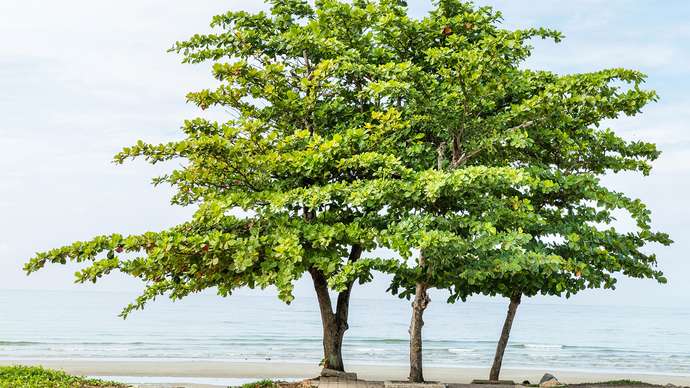
Incidentally, Terminalia is also a tree genus (upwards of 200 species) including the Terminalia catappa. Found in Madagascar, tropical and subtropical Asia and the Pacific (http://powo.science.kew.org/taxon/171034-1), the leaves are to be found at the very end – terminus – of the branches. Types of this tree (bark) are used in Ayurvedic medicine to treat heart conditions and diarrhoea.

Indian almond courtesy of https://www.britannica.com/plant/Terminalia-plant

Edinburgh – New College and Calton Hill

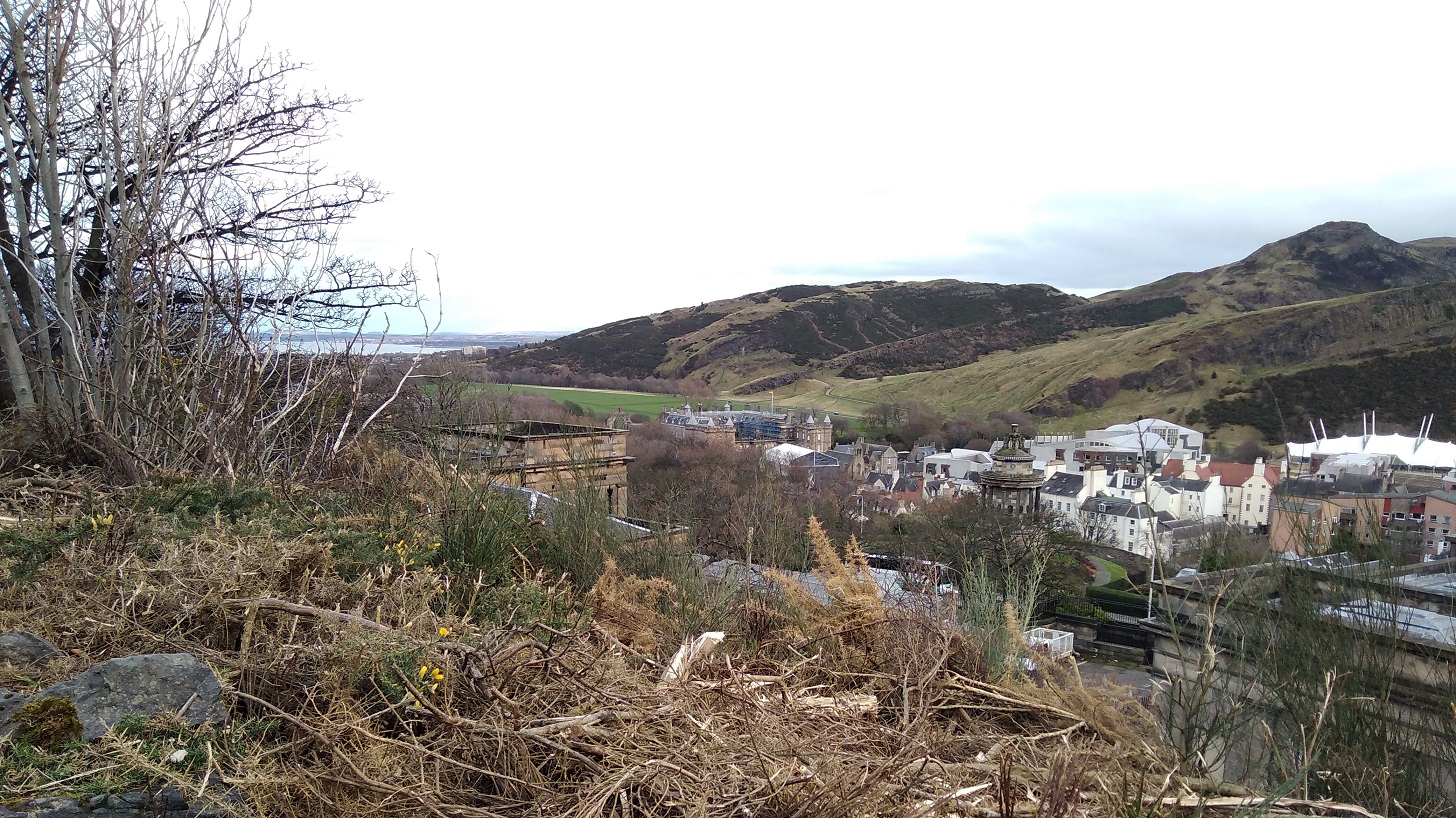
Here are some winter photos to wet your appetite for making a windy climb down from the Royal Mile and up Calton Hill for the fabulous views of Salisbury Crags, Arthur’s Seat and more.

IMG_20190308_160758

I took the Hidden Heroines Tour on International Women’s Day (8.3.2019) of places in the city centre where you can find out about famous Edinburgh women.

Carla Nebulosa was our tour guide and she and her team had researched and prepared the itinerary. Originally from Madrid, she delivered it in a personable, even exuberant manner. She has started to write a book of the same name and is looking for donations from the tours to cover her up-front costs.

IMG_20190308_161141
Carla (with the hat on, pointing) on the steps of Lady Stair’s Close and the back of the Writers MuseumEdinburgh

St Margaret (1070 – 1093) was an English princess: devout Catholic; charitable; mother of eight; wife to and good influence on King Malcolm; and, most importantly, she established a ferry across to Fife so folk could walk pilgrimage to St Andrews. She is further remembered because the oldest surviving building in Edinburgh, part of the Castle, is in her name.

The roots of the summer pilgrimage dates back to June 1250 when the relics of Saint Margaret were translated to a new shrine in Dunfermline Abbey following her canonisation that year by Pope Innocent IV.

crop_pilgrimage_2018_logo


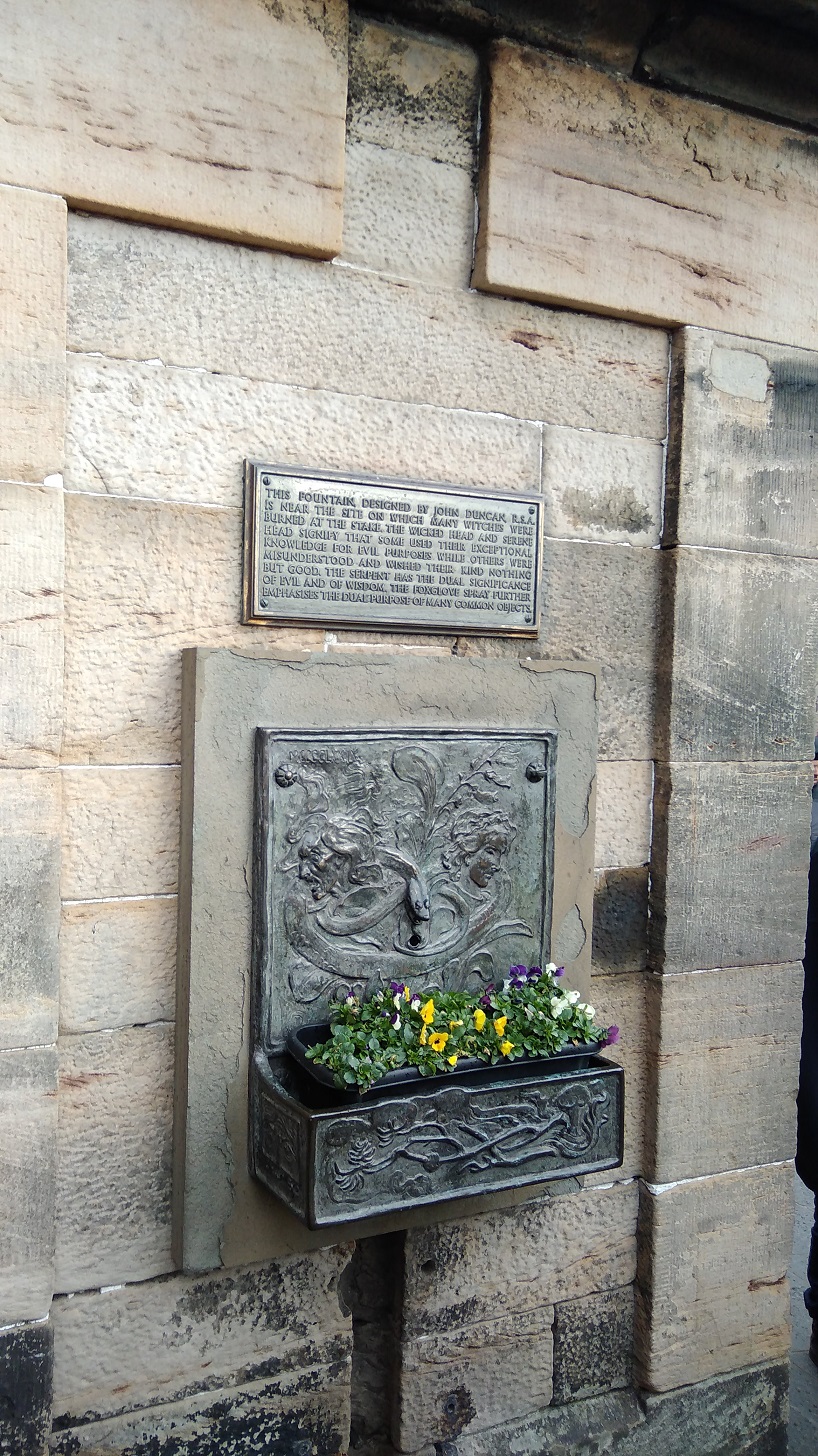
The Witches’ Well can be found at the entrance to the Castle Esplanade. It is a memorial to the women who died unnecessarily as a result of the 1563 Scottish Witchcraft Act

The Witches’ Well, a cast iron fountain and plaque, honors the Scottish women who were burned at the stake between the 15th and 18th centuries. It’s an easy site to miss for people only focusing on the castle that looms ahead. During the 16th century, more women were murdered at this site than anywhere else in Scotland. Each victim was denied a proper trial.

The Witches’ Well
IMG_20190308_155152
The Witches’ Well, Atlas Obscura, Edinburgh

We visited sites associated with Catherine Sinclair (novelist 1800 – 1864), Susan Ferrier (novelist 1782 – 1854), and Elsie Inglis (doctor and suffragist 1864 – 1917). Inglis was one of the first women to be educated at the Edinburgh School of Medicine for Women, though later she transferred to Glasgow to complete. I always remember her name as I went to visit my friend Tracy in the Elsie Inglis Memorial Maternity Hospital (1925 – 1988), the day she gave birth to her first daughter, Gemma.

IMG_20190121_125419
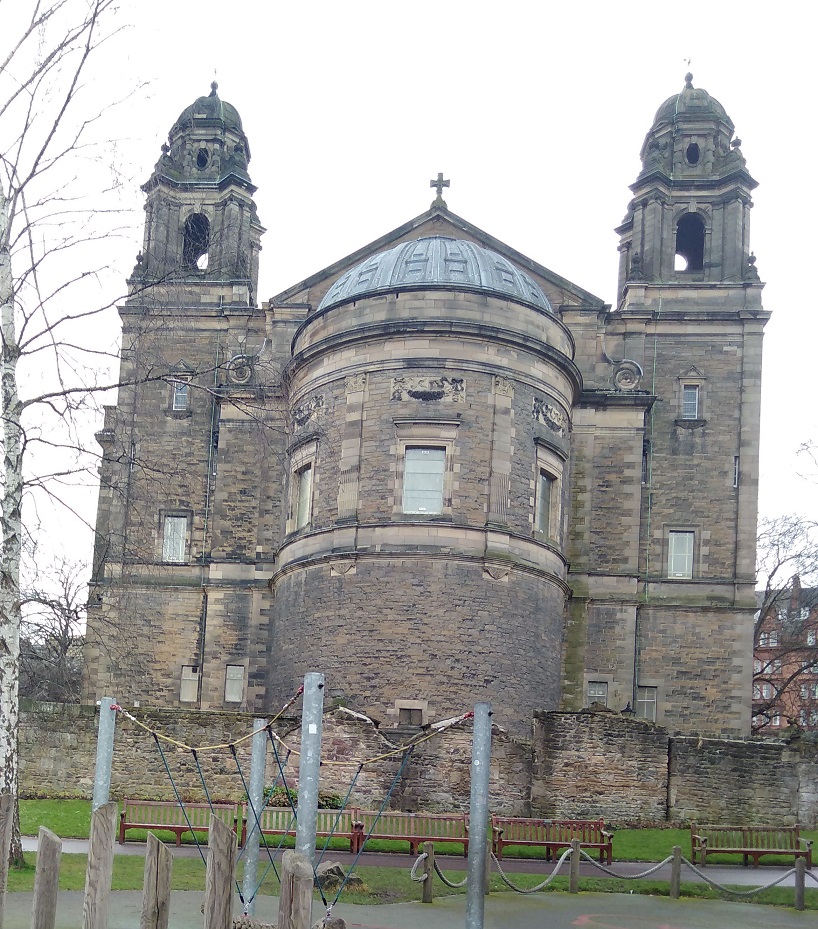
St Cuthbert’s from Princes Street Gardens where Susan Edmonstone Ferrier is buried, Edinburgh
IMG_20190308_165806
Looking towards Abbeyhill, site of the former Elsie Inglis Memorial Maternity Hospital, Edinburgh

Mary Somerville, featured on the £10 note, was a Scottish scientist (1780 – 1872) and she gave her name to one of the houses at my secondary school in Tonbridge, Kent, so I was pleased to hear her mentioned.

IMG_20180806_201952
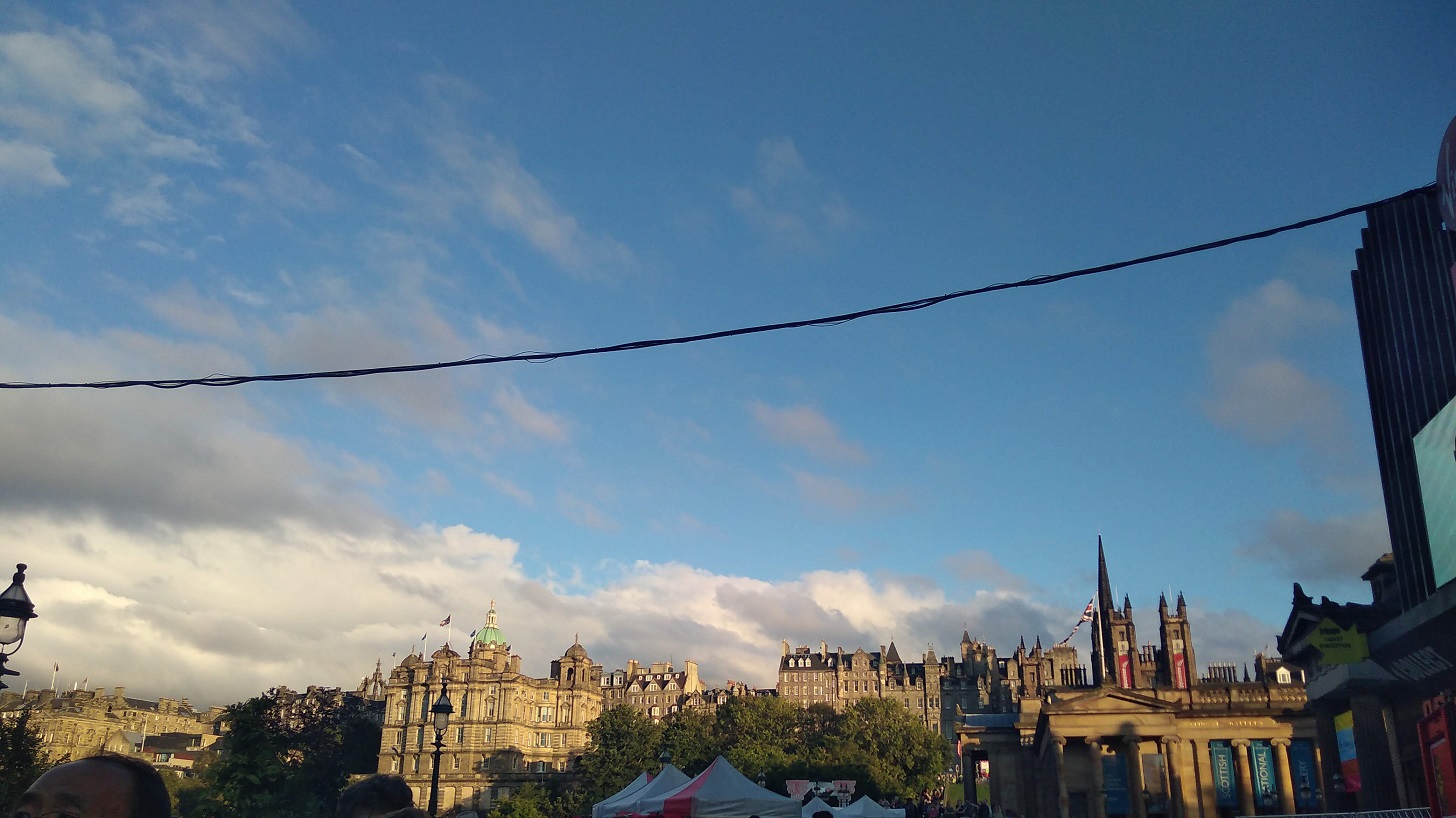
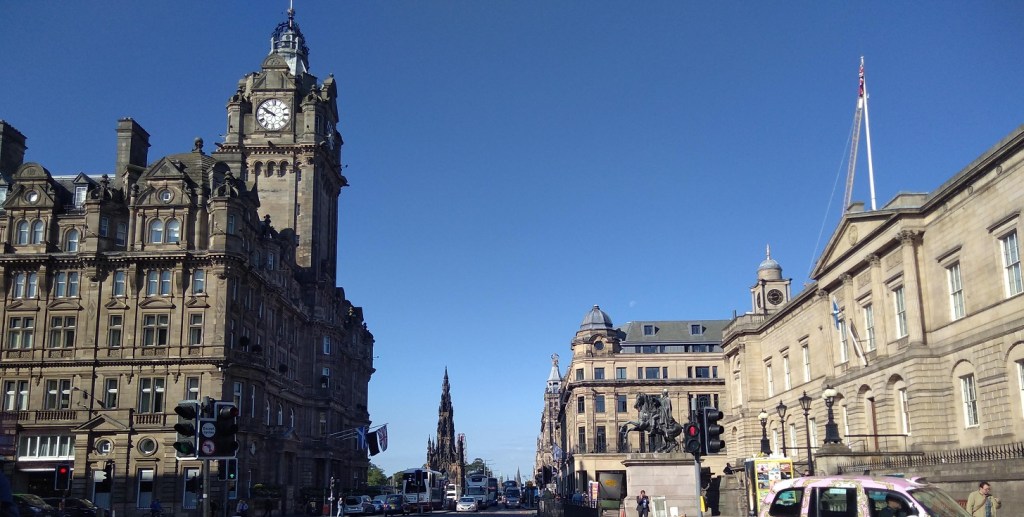
Bank of Scotland, The Mound on the left with the green dome, Edinburgh

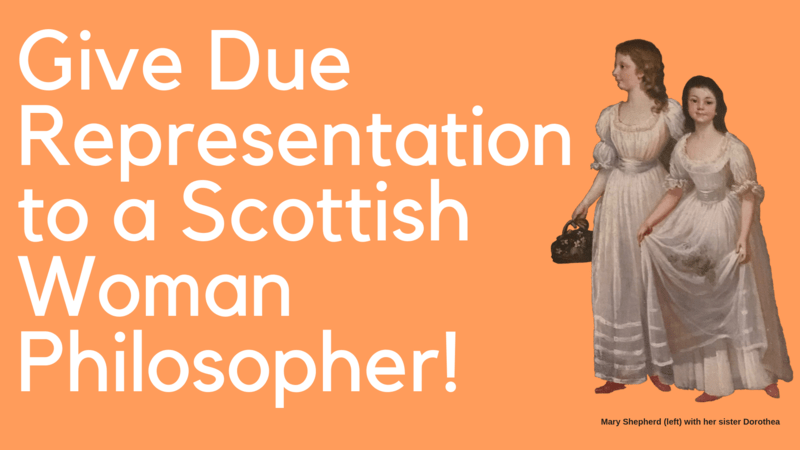
Lady Mary Shepherd was born to the Primrose family (1777 – 1847) just outside Edinburgh. A Scottish philosopher, she wrote two philosophical books (1824 criticising the views of David Hume, and 1827 on the perceptions of an external universe) which were influential in Edinburgh philosophical circles at the time. (thanks Wikipedia)


She finds them (the main tenets of the Scottish school) unable to sustain scientific inquiry, everyday practical reasoning, and belief in an almighty deity.

From the Stanford Encyclopedia of Philosophy 

You can add your signature to a petition here to get a statue erected to her, if you like.

Detail from painting by Alexander Nasmyth, depicting the family of
Neil 3rd Earl of Rosebery in the grounds of Dalmeny House.
Courtesy of Dalmeny Estates

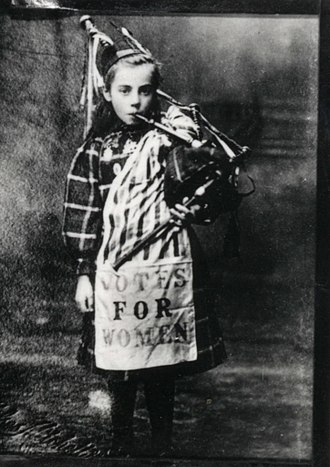
Bessie Watson was the youngest bagpipe playing suffragette! Born in Edinburgh in 1900, she was encouraged to play to strengthen her lungs as prevention against tuberculosis which ran in the family. Look at her little pale face! She joined the WSPU, the Women’s Social and Political Union, with her mother, marching down Prince’s Street in 1909 to celebrate ‘what women have done and can and will do’.

Bessie Watson
Princes Street, Edinburgh


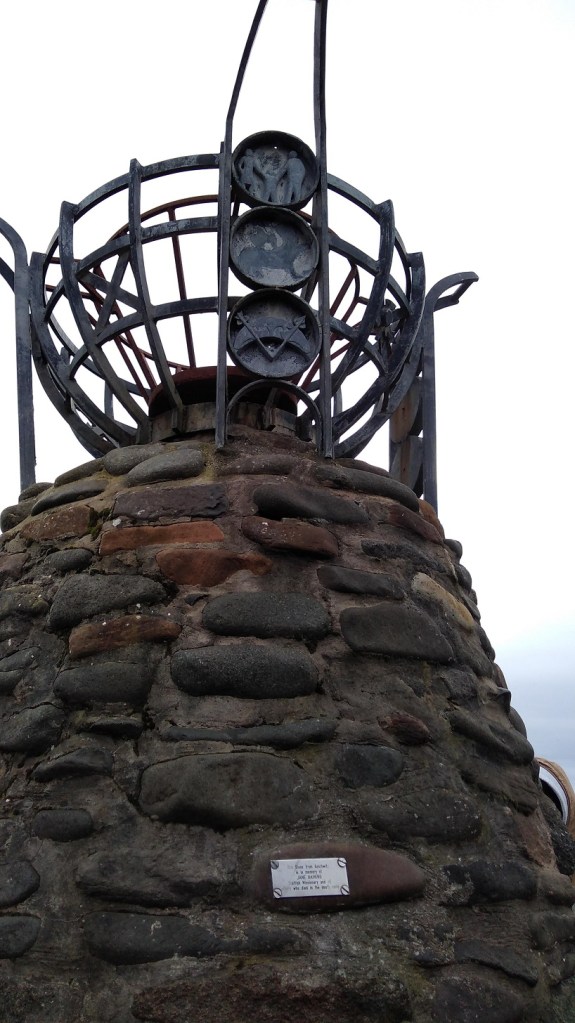
Jane Haining was ‘A farmer’s daughter from Galloway in south-west Scotland, Jane was a Church of Scotland missionary, and went to the Scottish Jewish Mission School in Budapest in 1932, where she worked as a boarding school matron in charge of around 50 orphan girls. The school had 400 pupils, most of them Jewish. Jane was back in the UK on holiday when war broke out in 1939, but she immediately went back to Hungary to do all she could to protect the children at the school. She refused to leave in 1940, and again ignored orders to flee the country in March 1944 when Hungary was invaded by the Nazis. She remained with her pupils, writing ‘if these children need me in days of sunshine, how much more do they need me in days of darkness’.” Her brave persistence led to her arrest in by the Gestapo in April 1944, for “offences” that included spying, working with Jews and listening to the BBC. She died in the Nazi concentration camp at Auschwitz just a few months later, at the age of 47.’ There is a fitting memorial to her on Calton Hill. There is a book about her, Jane Haining, A Life of Love and Courage by Mary Miller published by Birlinn.

Jane Haining memorial, Calton Hill, Edinburgh


Williamina Paton Stevens Fleming (1851 – 1911) was a Scottish astronomer active in the United States. During her career, she helped develop a common designation system for stars and cataloged thousands of stars and other astronomical phenomena. ‘One of nine children of a Scottish craftsman and his wife, she already knew the cold reality of family survival. Her father had died when she was seven; at 14, she had become a student teacher to help support her mother and siblings. At 20, she had married a Dundee bank employee and widower, James Orr Fleming, 16 years her senior—who would abandon her and their unborn child shortly after her arrival in the United States. Despite it all, “Mina” Fleming would rise to a key position in Harvard’s astronomy program and be hailed as the nation’s preeminent woman astronomer..(classifying) by far the most extensive star compilation of the era.’

The Edinburgh Observatory, now the Collective Gallery, Calton Hill, Edinburgh (not my photo)
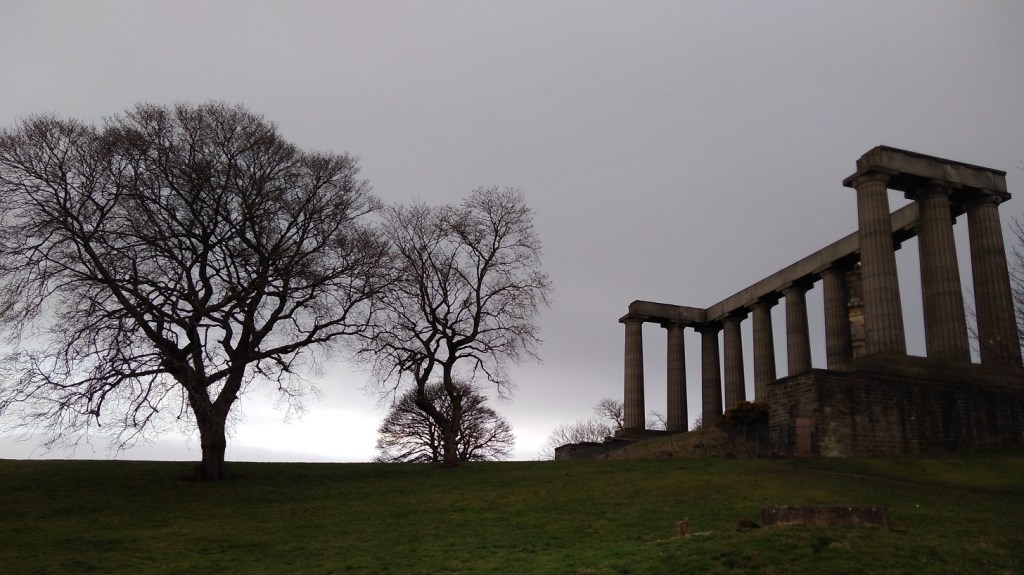
‘Edinburgh’s Acropolis’, Calton Hill, Edinburgh

The Hidden Heroines tour took in women of politics, literature, medicine, education, witches and business and I highly recommend it if it is ever held again.

Dalry Cemetery

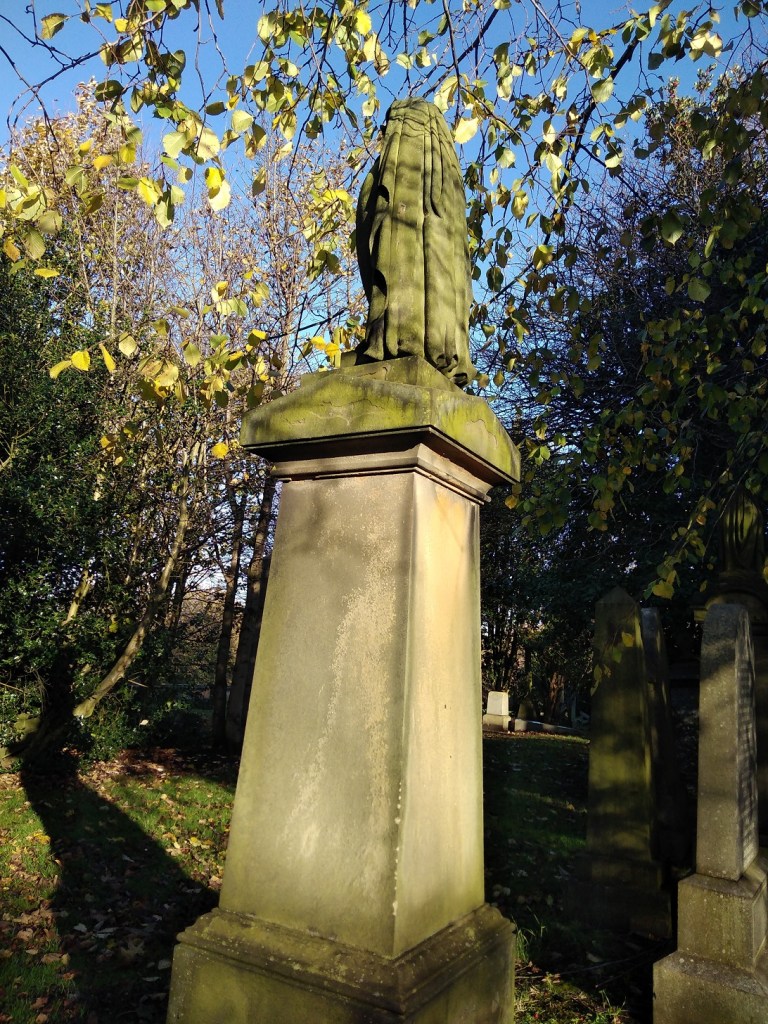
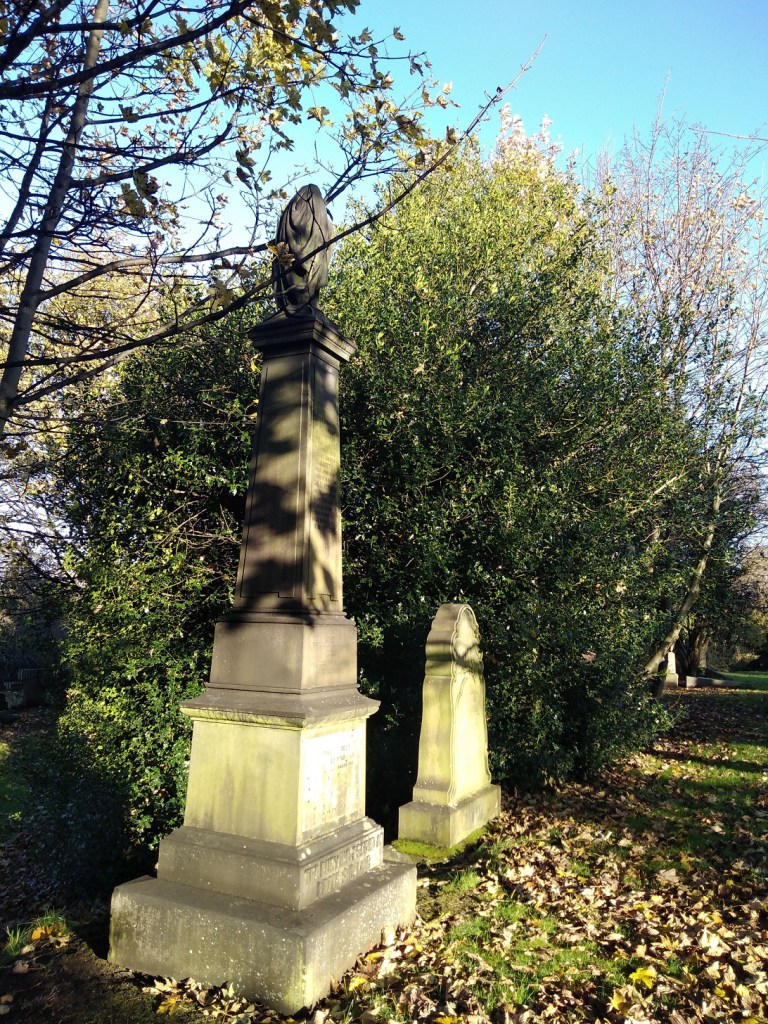
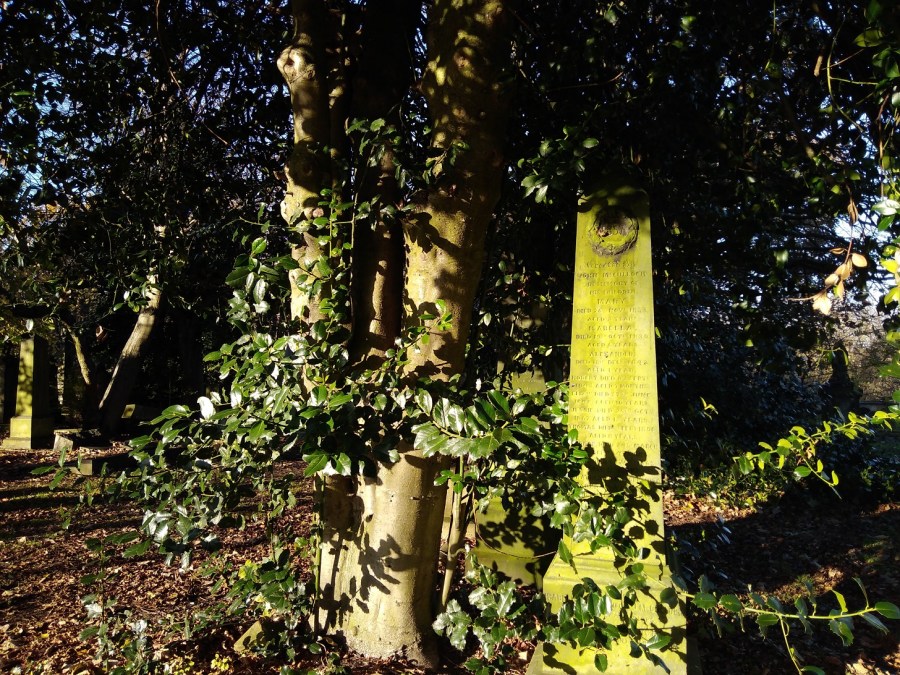
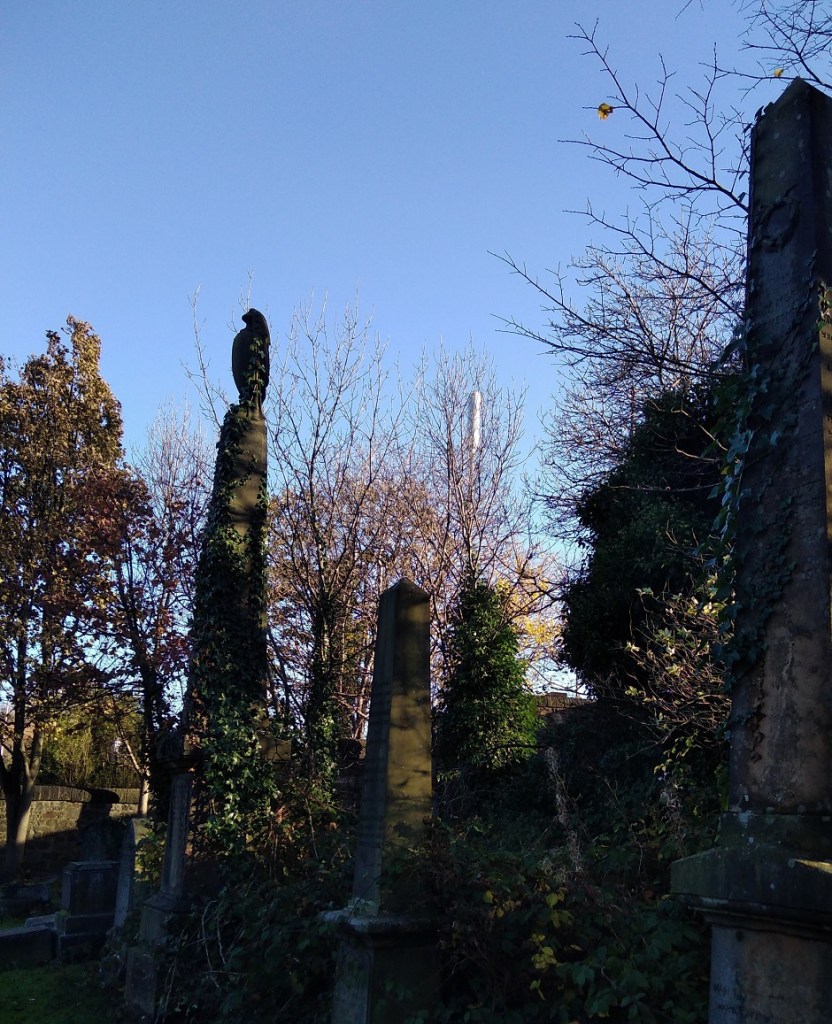
A photo essay – Dalry Cemetery, Edinburgh

Dalry Cemetery, Edinburgh ©TG

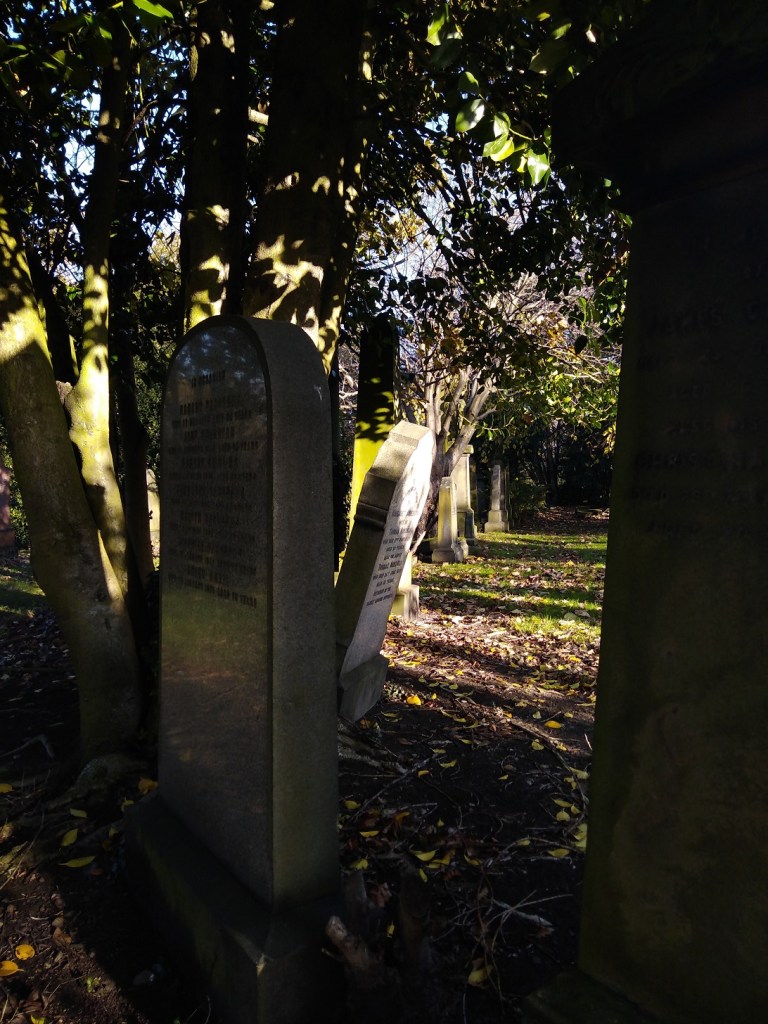
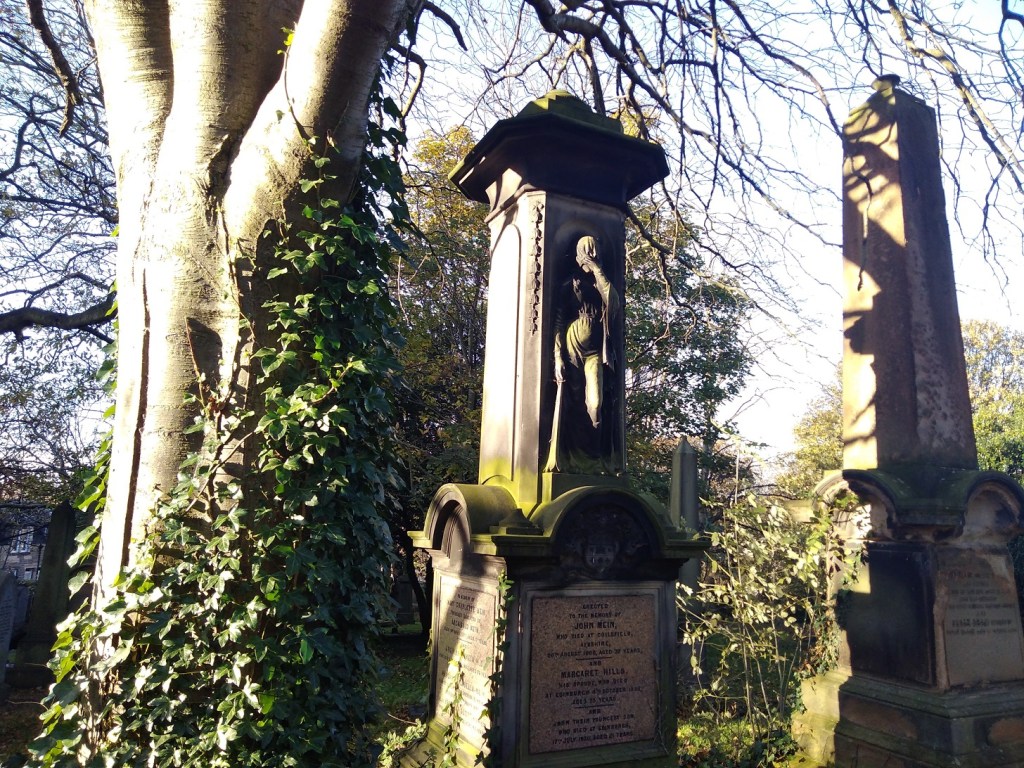
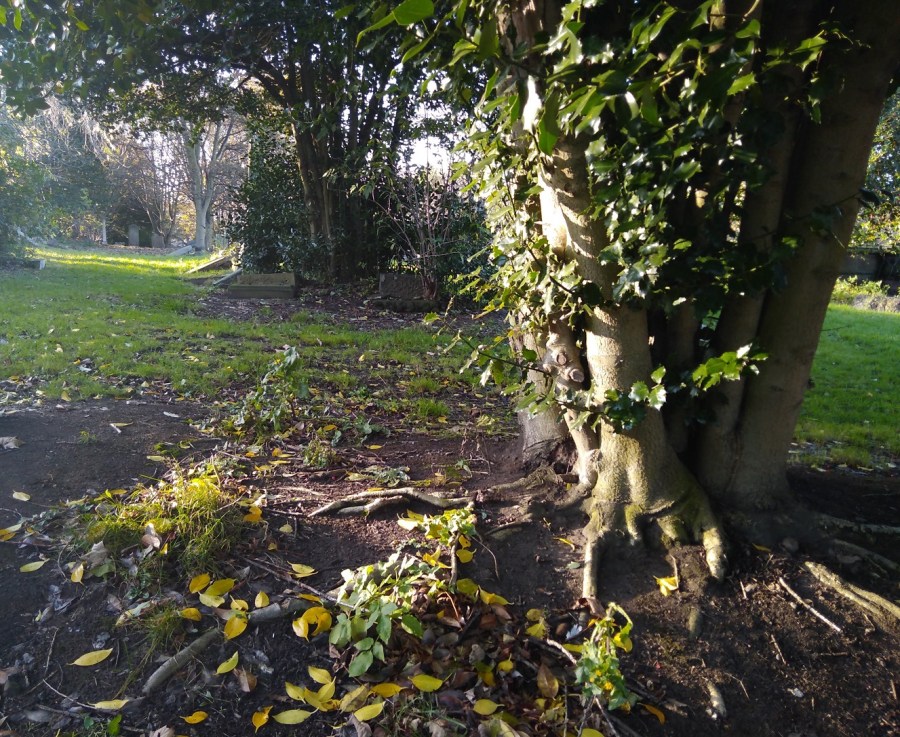
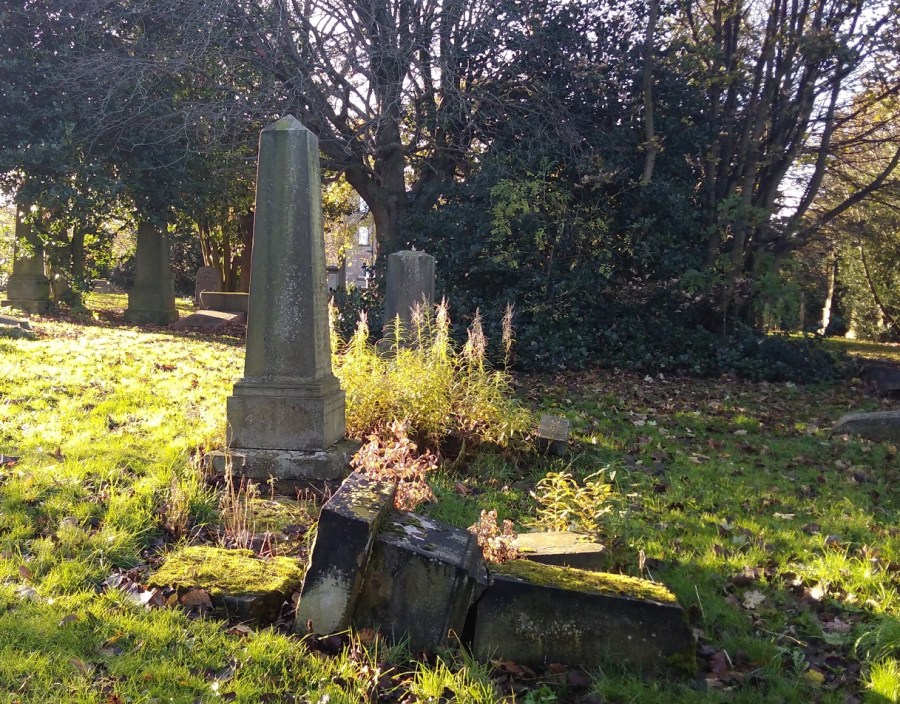
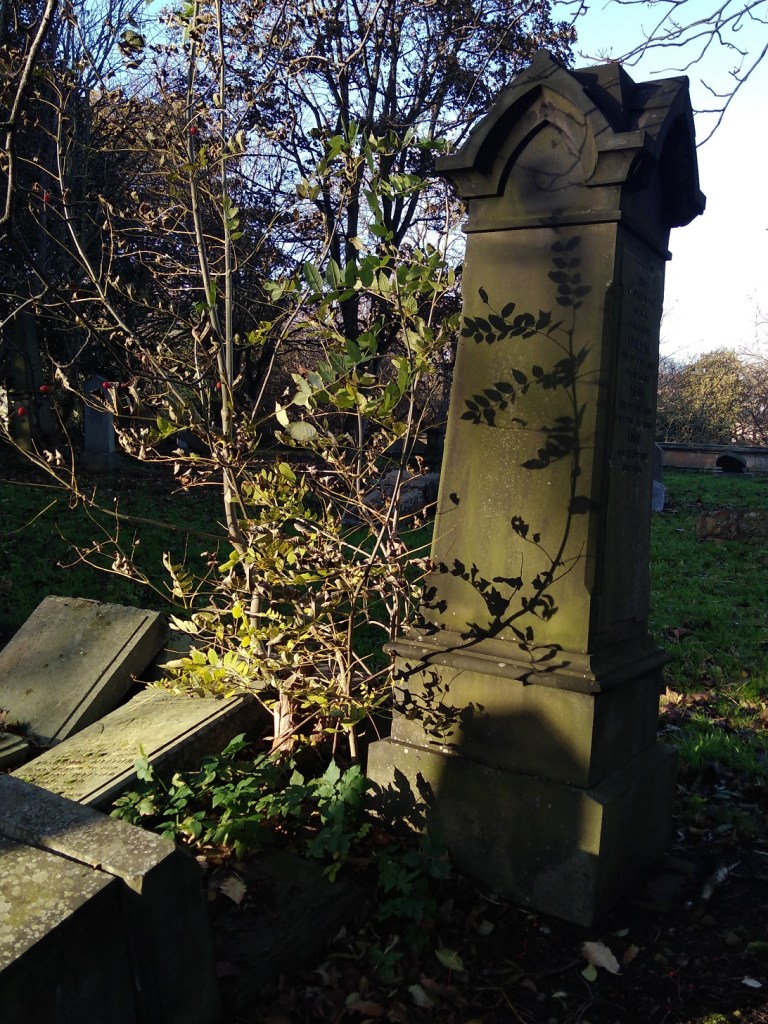
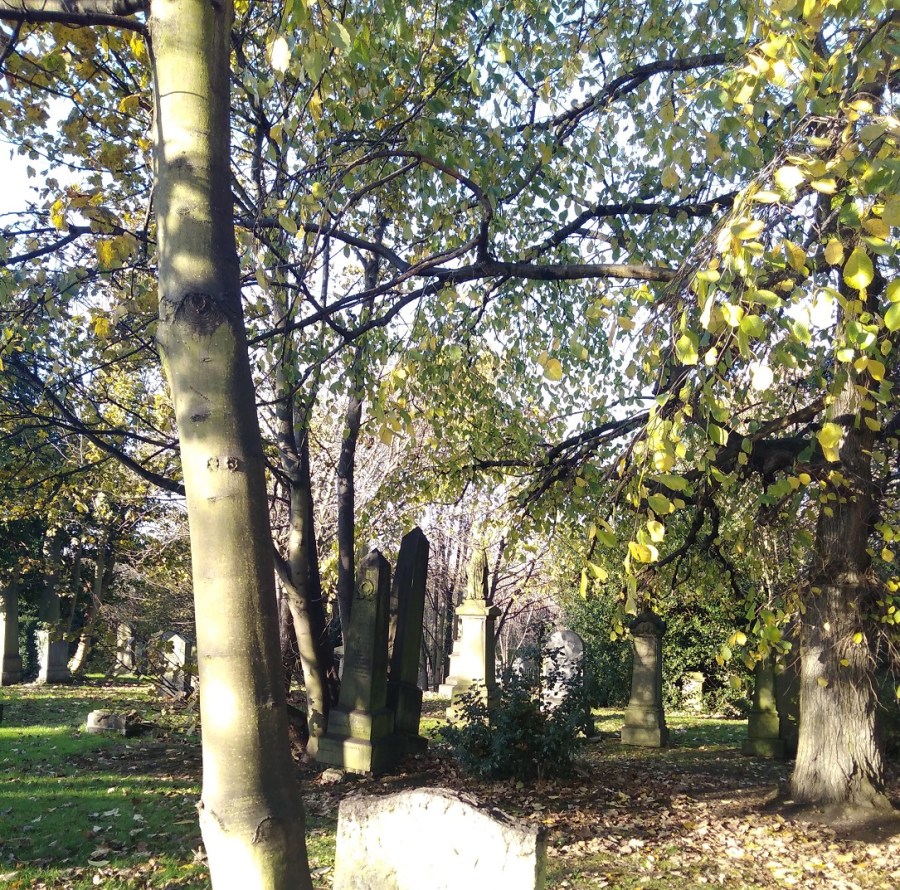
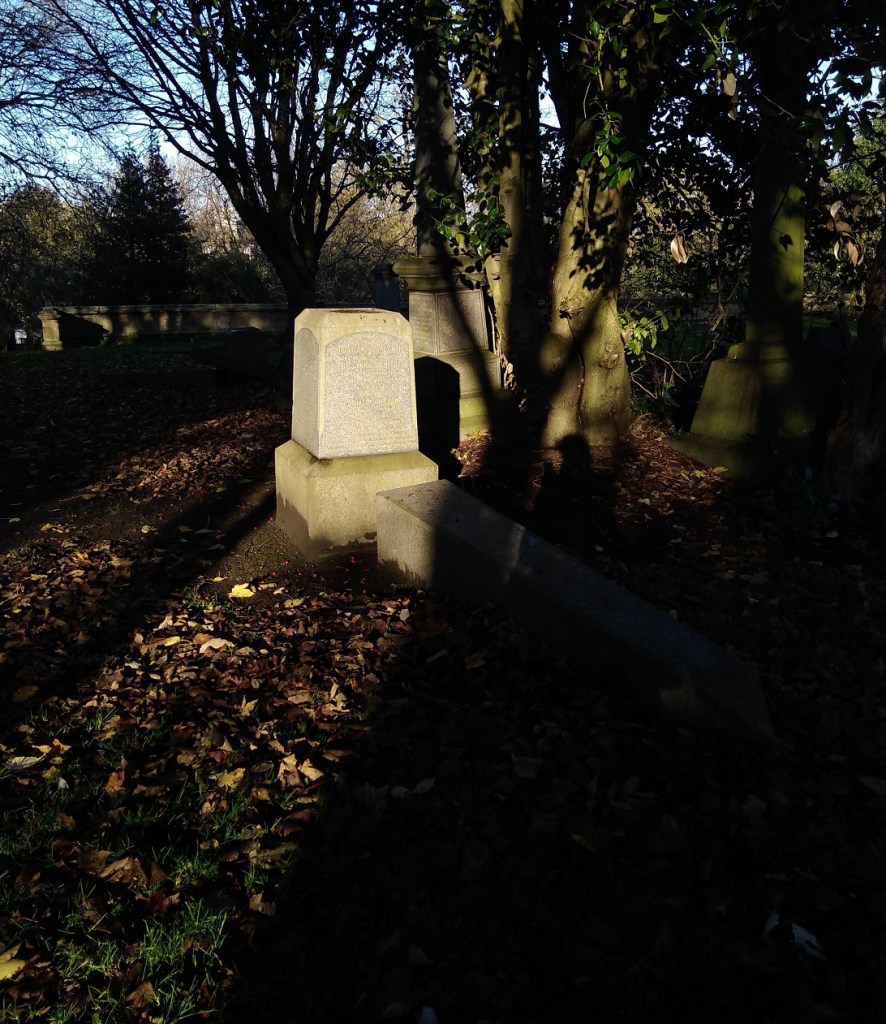
It was Autumn, season of the falling away of summer foliage and the start of nature’s melancholy. On the day I happened upon this place, on a walk from Slateford to Tollcross, rays of sunlight lit up corners and features of the deserted graveyard.

Dalry Cemetery, Edinburgh ©TG

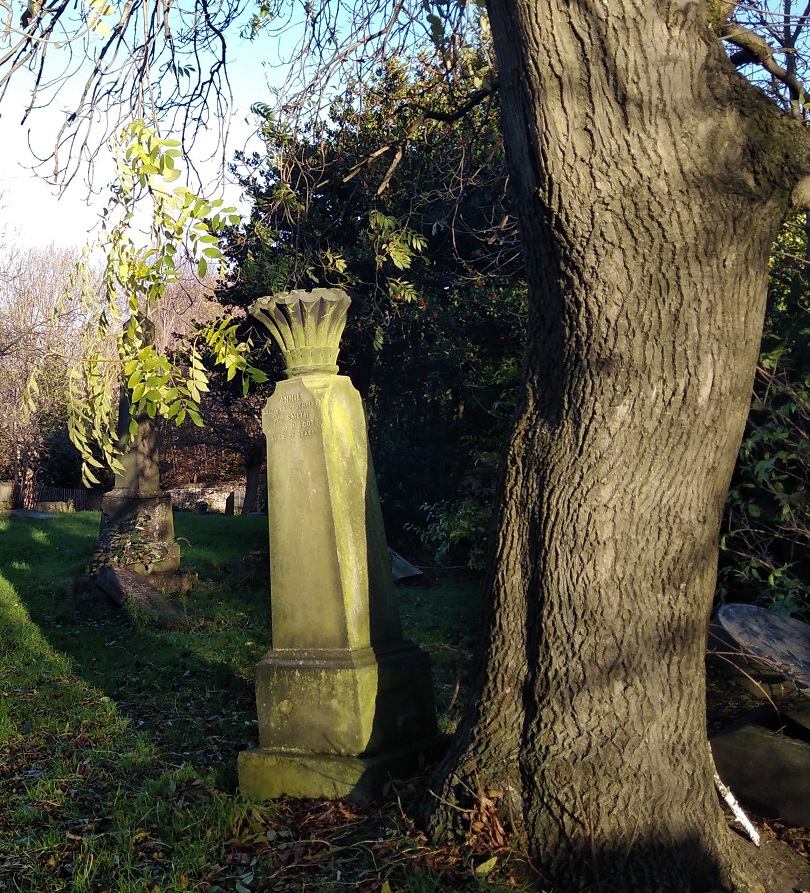
There was sadness there, of course, but also a lightness and positivity. I find beauty in every season, and the shift from one to the other, the inevitable transformation, often calls for contemplation on what is passing, and what may be to come.

Dalry Cemetery, Edinburgh ©TG

‘Death dismantled them’ (she was writing about Rumi, Christ, Yogananda). ‘It cannot be undone, it can only be carried’.

Megan Devine
Dalry Cemetery, Edinburgh ©TG

 ‘I looked up darkness on the Web…. there is always death. We say death is darkness; and darkness is death’.  

Because of the metaphorical dark, the death dark, we were constantly concerned to banish the natural dark’.

Kathleen Jamie pages 3 and 10 of ‘Findings’
Dalry Cemetery, Edinburgh ©TG

There are times when we feel that death is closer than usual, and very often the news is full of it, as it is today. Some block it out because it is too hard to face, others have no choice but to deal with loss and the complicated practicalities it brings. Still others will realise that the proximity of unexpected demise can be a good thing in some ways.

“A close conversing with death … would scum off the gall from our tempers, remove the animosities among us …”

Daniel Dafoe 
Dalry Cemetery, Edinburgh ©TG

For five thousand years we have used darkness as the metaphor of our mortality. We are at the mercy of merciless death, which is darkness. When we died, they [neolithic people who built Maes Howe] sent a beam of midwinter light in among our bones. What a tender, potent gesture. In the Christian era, we were laid in our graves to face the rising sun. ‘

Kathleen Jamie, ‘Findings’ p 24
Dalry Cemetery, Edinburgh ©TG

‘The people that walked in darkness have seen a great light: they that dwell in the land of the shadow of death, upon them hath the light shined.’.

The Bible, Isaiah

This is not a religious blog, I am not a church goer, but I do notice that when we know sorrow, it means we will also recognise happiness as its opposite when it returns; when we experience grief, then, too, we will recognise love. Living through the death of someone throws the light on these inevitable aspects of life.

Dalry Cemetery, Edinburgh ©TG

English poet and hymnodist, William Cowper, described grief itself as medicine. Grief cleanses the anguish from our souls and sets us back up on the path of life so we can dance. 

Bible Study Tools
Dalry Cemetery, Edinburgh ©TG

In these days of Covid-19 (we are still in lockdown in the UK as I write) there are a few more articles about death in the media than normal. The Guardian’s Yuval Noah Harari wrote, ‘Some might well argue that…the crisis should teach us humility. We shouldn’t be so sure of our ability to subdue the forces of nature…..While humanity as a whole becomes ever more powerful, individual people still need to face their fragility…We have to own up to our transience.”

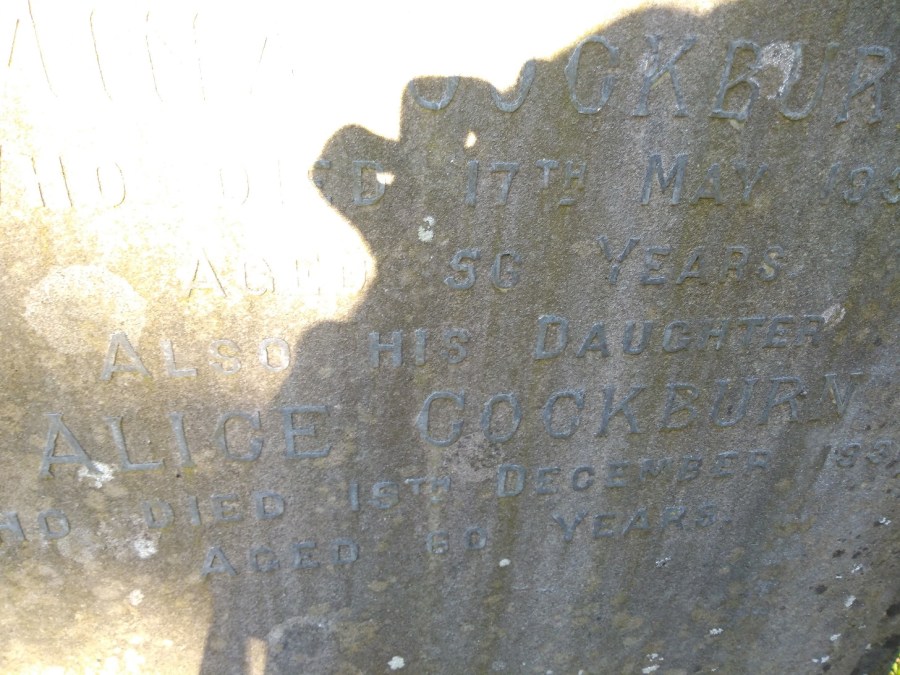
My greatest fear is that my daughters will die, so you can imagine what I felt when I found this grave stone with the eldest’s name on. Dalry Cemetery, Edinburgh ©TG
Dalry Cemetery, Edinburgh ©TG

‘the relentlessness of mortal lives. Even as we spoke the moments were passing.’

Circe, Madeline Miller P. 197
Dalry Cemetery, Edinburgh ©TG

For me, the acknowledgement that I do not know when I will die is something I remind myself of every day. It helps me put things into perspective. I might not live to a ripe old age, so I ask myself, ‘What is the most important thing right now?’

Dalry Cemetery, Edinburgh ©TG

Access to the Dalry Cemetery is on Dundee Street near its join with henderson terrace and it backs onto Dalry Road in Edinburgh. See Find A Grave dot com

You might also like this article about cemeteries outside Bradford and in Liverpool by Kenn Taylor