Fife Coastal Path: Leuchars to Wormit

Saturday 2nd February 2019. An extremely challenging day’s hike in the stunning, snowy Fife countryside. 8 hours (probably 6.5 – 7 if I had not got lost) = approximately 30kms (16.5 miles).

Beware – lots of snowy tree photos ahead!

Two weeks ago I finished at Guardbridge, just outside the town of Leuchars. Today my plan was to get the bus back there from Edinburgh to resume.
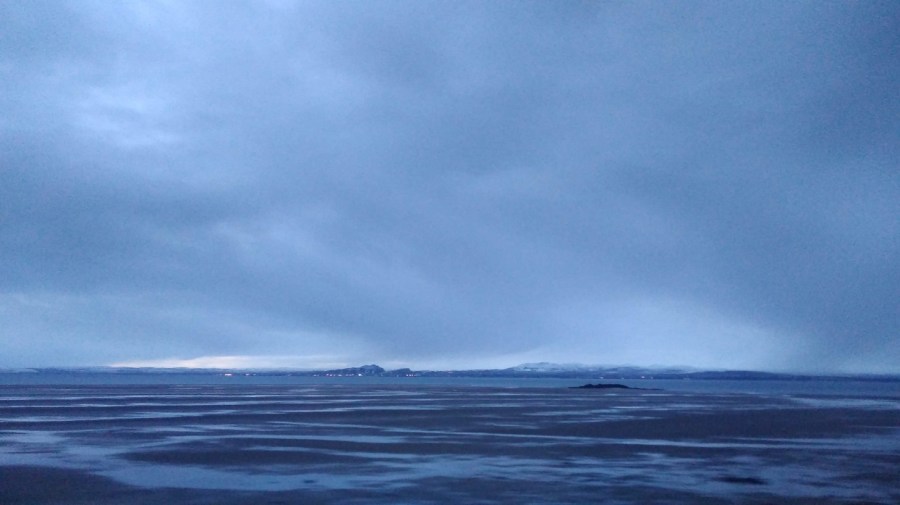
IMG_20190202_075551
Looking back towards Arthurs Seat and the snow covered Pentland Hills

There was snow last night and sleet was still pounding on my window in Edinburgh at 5.30am when the alarm went off. I was worried that I might not be able to make the journey, but I had booked my hostel and completed all the preparations, so I was determined. I did, however, change my mind and decided to take the train which is much quicker (and £2.50 more expensive). This meant I would miss the Guardbridge to Leuchars section (approximately 1 mile).
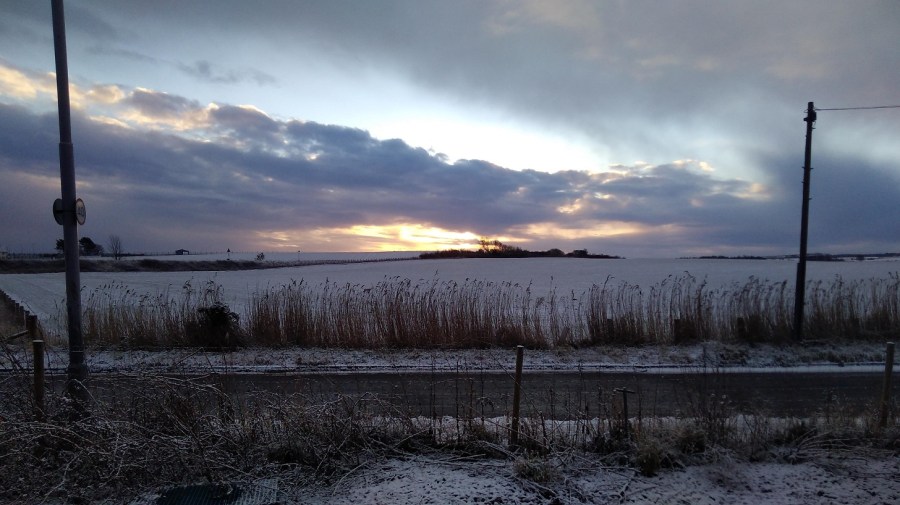
IMG_20190202_083400
Sunrise over Fife

From the train I watched the sun coming up over the horizon. All the fields were white and the buildings etched with a black line. There were fields of dome-shaped greenhouses, some covered and some simply skeletons in the middle of winter.

At 8.36 I left Leuchars Station. There was a heavy, dull grey cloud cover above, but between that and the ground there were bare branches of trees showing against a delicate bird-egg-blue sky. In that space were horizontal clouds touched with peach, apricot and a darker, bruised blue. The land was glowing white, everywhere was covered in snow, although the roads were clear. Oh! the air smelled so crisp as it passed through my nostrils.

 

br-logo

I turned left out of the train station. * Note that on Google Maps, ‘Leuchars Station’ is the Royal Air Force (RAF) Base. Make sure you look for the red train symbol if you are locating the railway station.


Although Leuchars is best known as the RAF base (which probably explains the amount of buses and the cost of the train), there must be others who live here because the out-of-breath man who ran up just as the train was pulling away had a cello with him.

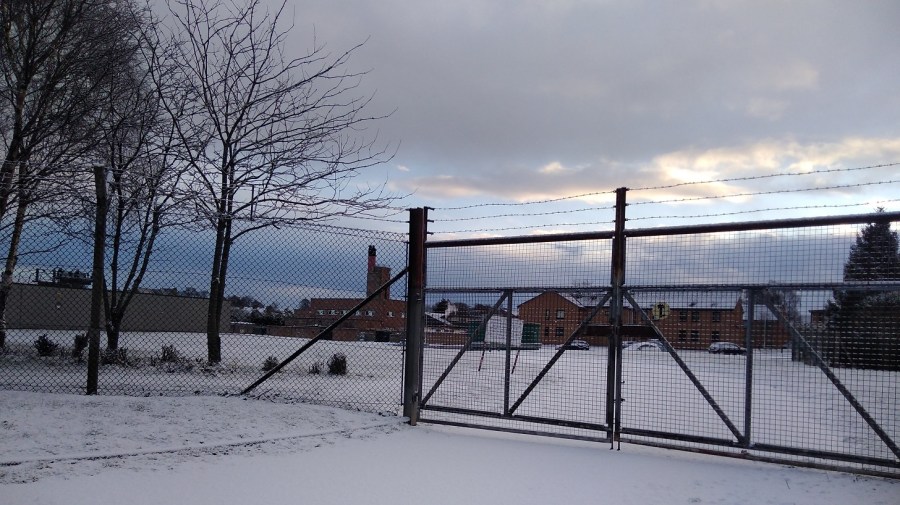
I made my way past extensive barbed wire fences, cars rushing past. There was just one other man walking and he had a white Scottie dog. (I have called my Scottish blogs Walking Without A Dog because although I do not have one, it sometimes seems as if everyone else does).
IMG_20190202_084349
Part of the Leuchars RAF Base, Fife, Scotland

I was setting off walking again and my tummy, which had been all excited for the previous two hours, turned over. My nose was sniffly from the cold. I found that I didn’t know which way to look when crossing the road, a throw back to all the hiking I have done on the continent! Here the temperature was a mere one degrees.

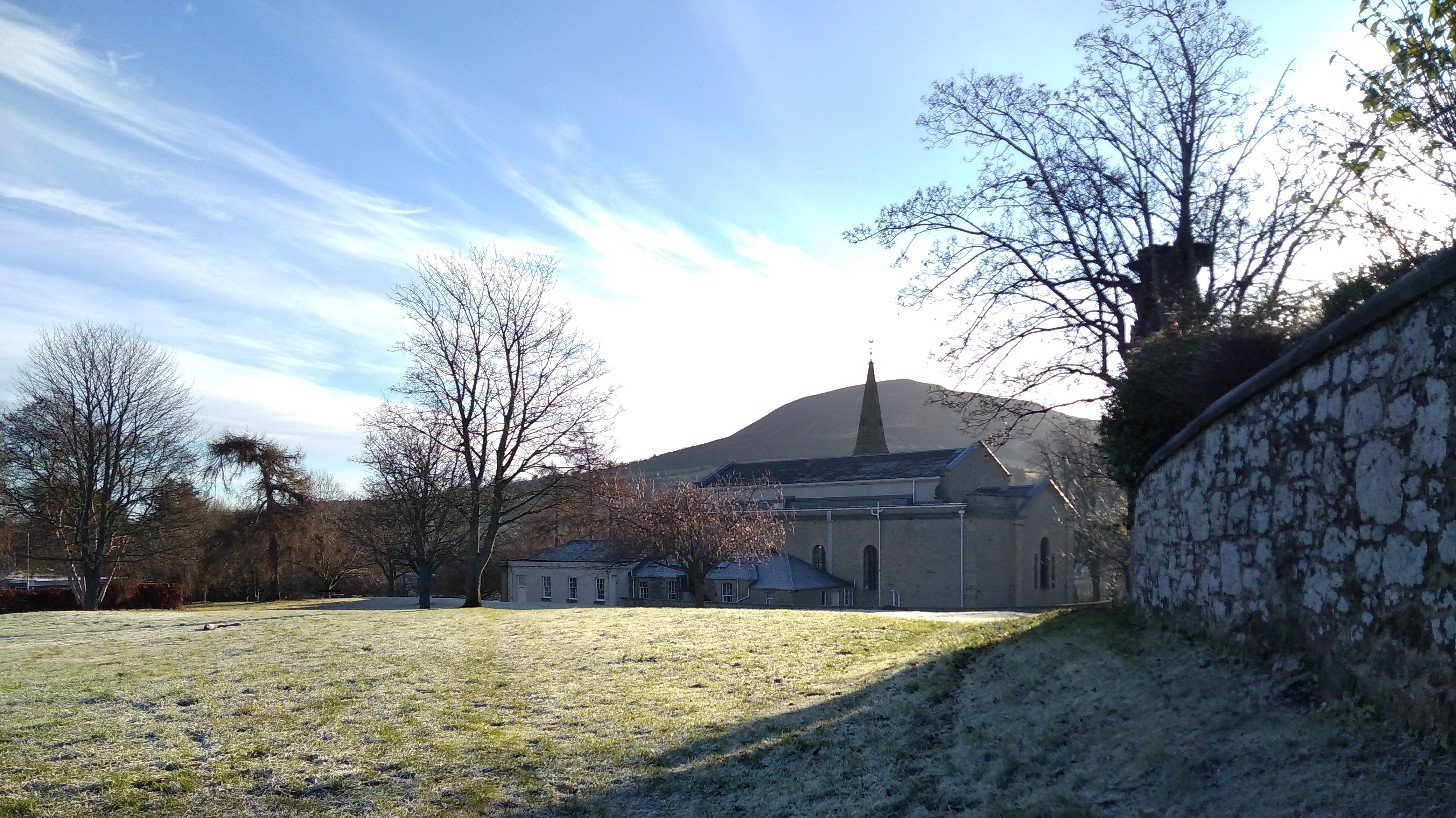
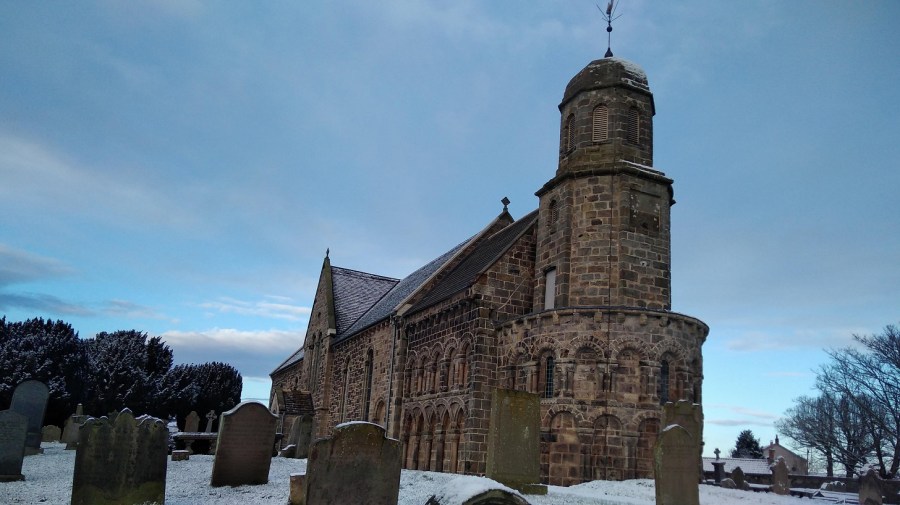
I was following signs to the Fife Coastal path (FCP) which took me by the road. On the right is a cluster of shops (a Spar supermarket with a butcher’s shop opposite) and a sign off to the left for it, but I recommend taking the left which goes steeply uphill for a few minutes to the beautiful Medieval church of St Athernase.
IMG_20190202_085512
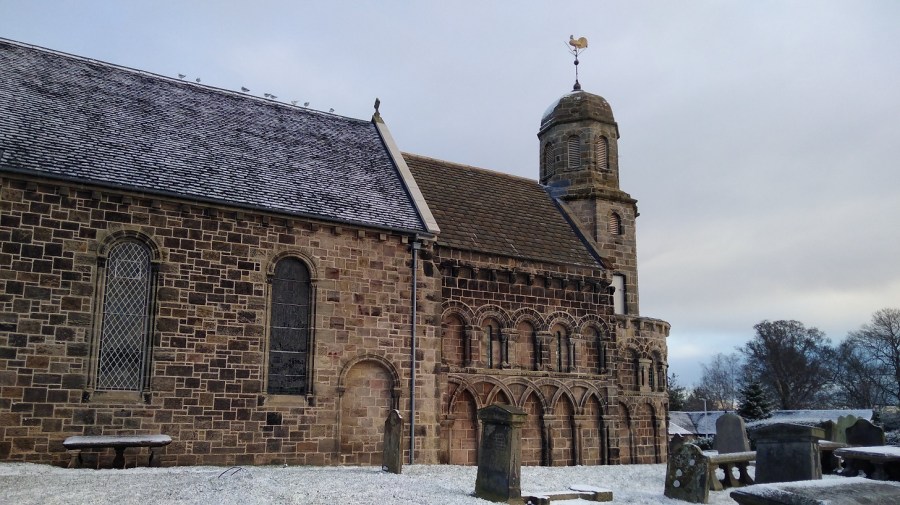
The Romanesque architecture (known in the British Isles as Norman) of St Athernase, a Church of Scotland with fine blind arched features and an half-round apse from 12th century
IMG_20190202_085343
Notice the weather vane – a golden cockerel

As usual it is hard to know where to find the way as you exit a town. There were clear signs for the cycle path and various ones for the FCP, but it was hard to know if they were for the cars or hikers. I headed off down School Hill / Pitlethie Road, hoping that was right. A merry hello was exchanged with two women. When I passed a slow lady with a stick afterwards which reminded me of my patients at the hospice, I felt grateful that I could walk.

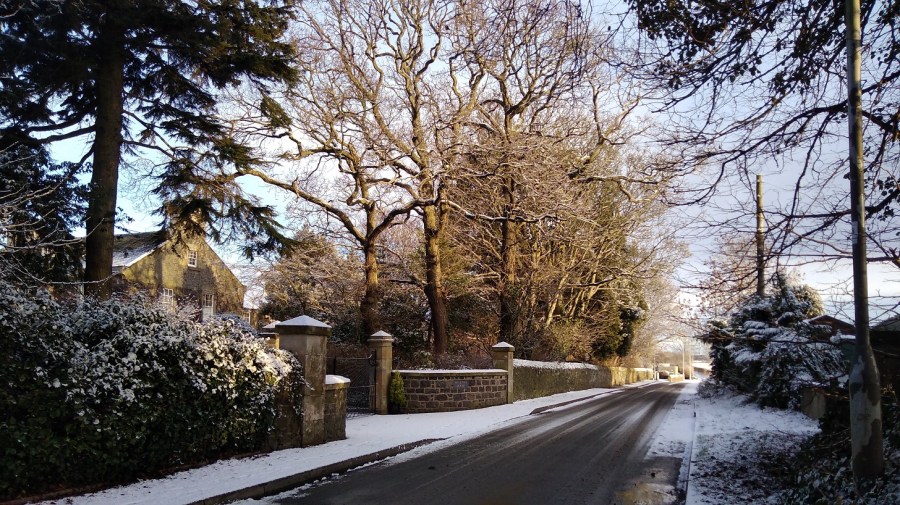
As I started getting into my stride and the town started to peter out, the sun was out and the birds were singing. More and more of the sky was blue. My shadow was so long that my head was right over the other side of the road on a field looking very funny. Past Castleknowe housing estate and Pitlethie House on the left, I understood why people wear gaiters because the snow was going down the back of my heel, inbetween my boot and foot which very chilly. A blackbird was foraging in the snow.
IMG_20190202_090617 (1)
Pitlethie House

Although I knew I was heading out of town in the right general direction and knew where the sea was, there were no official indications (a sure sign that I wasn’t right!) I was on a country road now with no pavements, but with fields on both sides and well shaved hedges in blobs – thorny and prickly with flat tops. Some of the tree trunks were going off at a very acute angles implying how strong the wind could be here. I could see the forest in the distance.
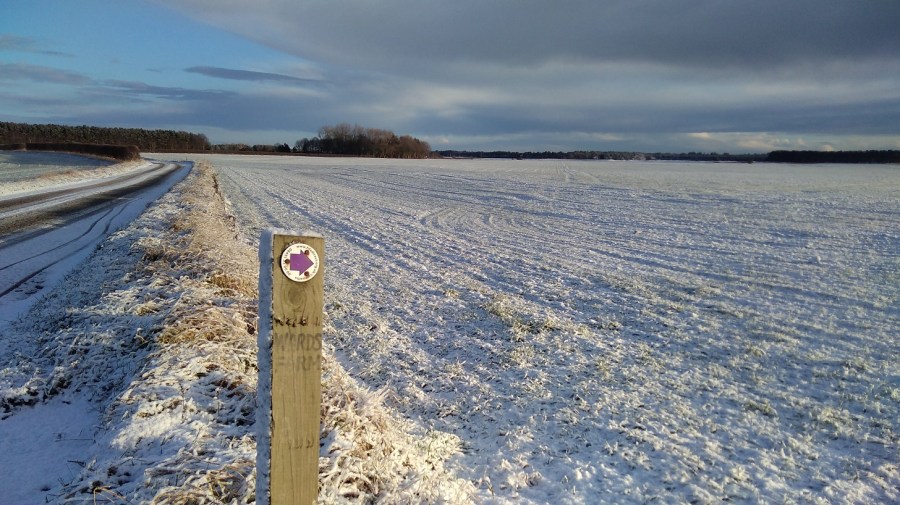
IMG_20190202_091207
Not the FCP one but still, a sign!

Then I turned right to cross on a path between the fields, heading towards the coast. There was incredibly bright sun on my right, making the snow sparkle, and lots of footprints and bike tracks on the snow ahead of me, even though it was only 9am.

I heard shots off to the left – hunting or soldiers practicing maybe? It was bumpy and the ground was ice hard underneath so my feet crunched.
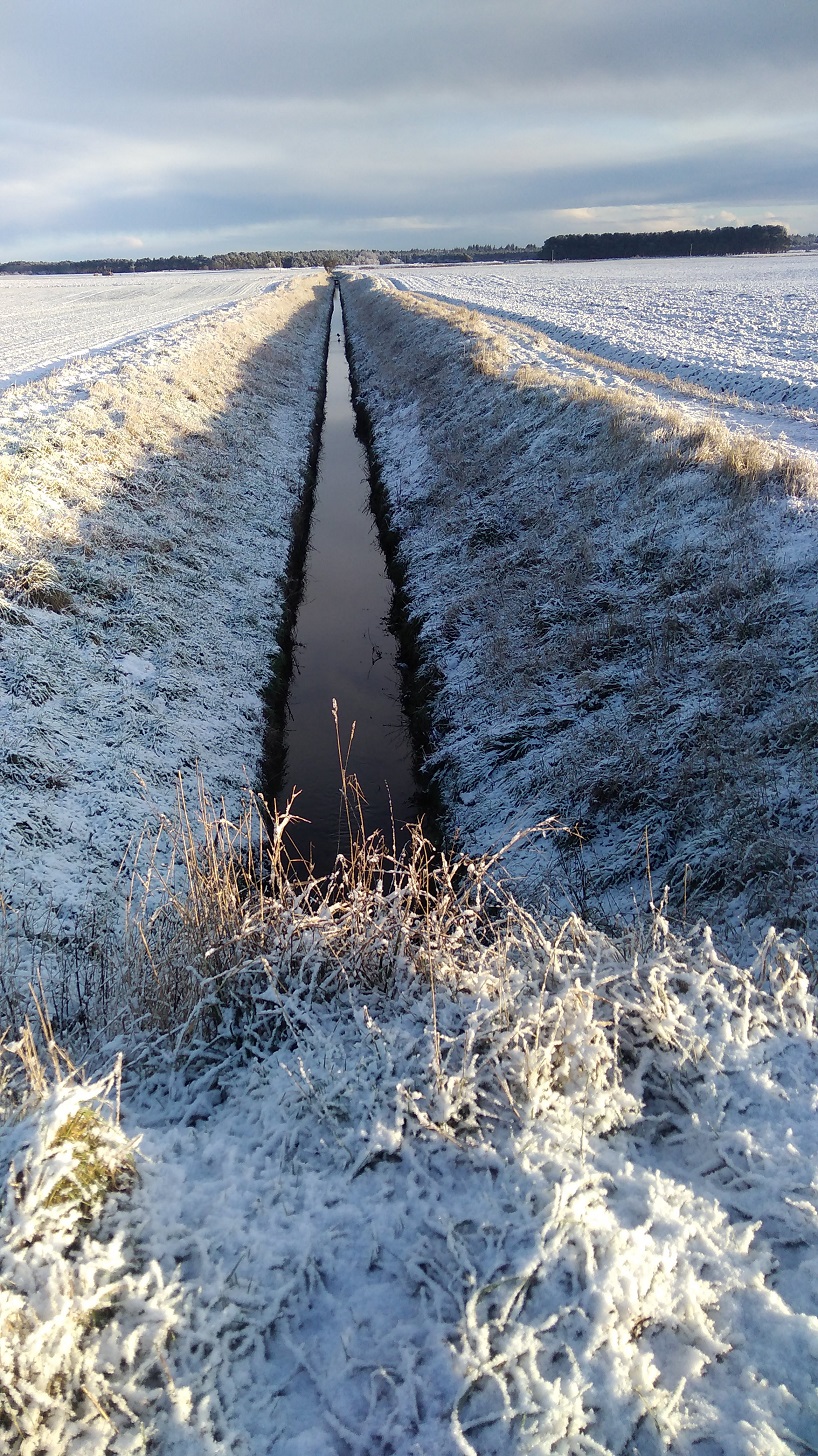
IMG_20190202_091540
Ducks majestically swam up a very narrow, but totally still, irrigation channel. Each individual blade of grass was carrying its own load of snow, the upper ones melting in the sun

There were engine sounds emanating from somewhere. It was deserted. A tower in the distance was topped with a slowly turning satellite; cubes of houses with pointy rooves were covered in snow; tractor tyre grooves  were clear; and shadows far, far longer than the height of the trees themselves.
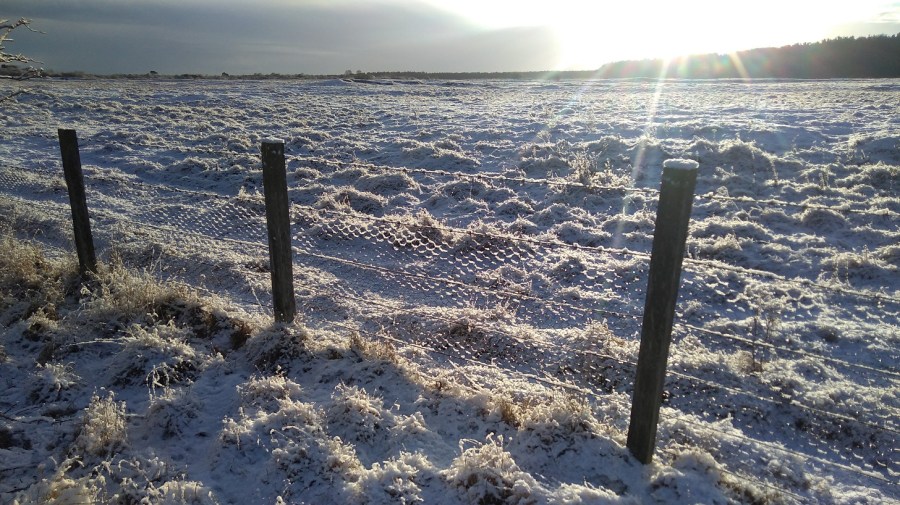
IMG_20190202_092049 (1)
Rabbit foot prints and a fence where the snow has settled on the pattern of the wire making it look like honeycomb

A helicopter came loudly into view as I turned the corner and passed between pretty Scots pines and snow-covered gorse. I took my gloves off. Yellow flowers showed through where the sun had exposed them; and the silverbirch trunks matched the fields behind.

I needed a pee, but was sure I would be seen by surveillance given the nearness of the Base.  When it became imperative, I imagined the soldiers having a laugh at the sight of me on camera. I left no trace.

Chaffinches sat on hawthorn bushes, tweeting and then swooping from top of bush to top of bush just ahead of me. There were sparrows too, and beehives on my left in a little clearing. The tree trunks were are all intertwining and covered in yellow lichen, positively glowing, one with its seedpods drooping and shiny.

My attention was attracted to the barbed wire strip at the top of the fence where each of the barbs had little piles of snow on them, softening the sharpness and making them look like embroidery, like a row of stitching with cotton knots at regular intervals.

Shush shush as I walked, a crunch at the end of each step as my toe pushed down into the packed snow. There was a constant sound of distant shooting and I realised that I was skirting the Base. I turned right at the farmhouse with the red door and went through a gate (remembering to shut it after me). There was a miniature thicket of trees which the sun didn’t reach so it was immediately cold, but not for long.

Then I was on the proper FCP with the correct signs. A gentleman dressed all in dark colours gave me a nice smile as he held the gate open and then briskly strode off with his head down.
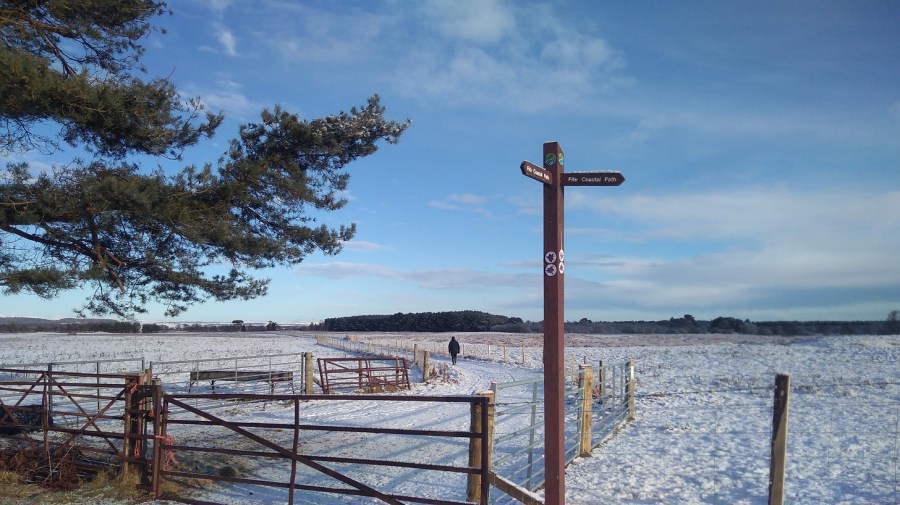
IMG_20190202_093945
Rejoining the FCP

Over a bed of pine cones I went, reflecting that that must have been some sort of detour I had taken. The FCP website said to allow 7 hours for this walk so even though some of it would have been from Guardbridge to where I started, nevertheless I didn’t really want to do any extra.
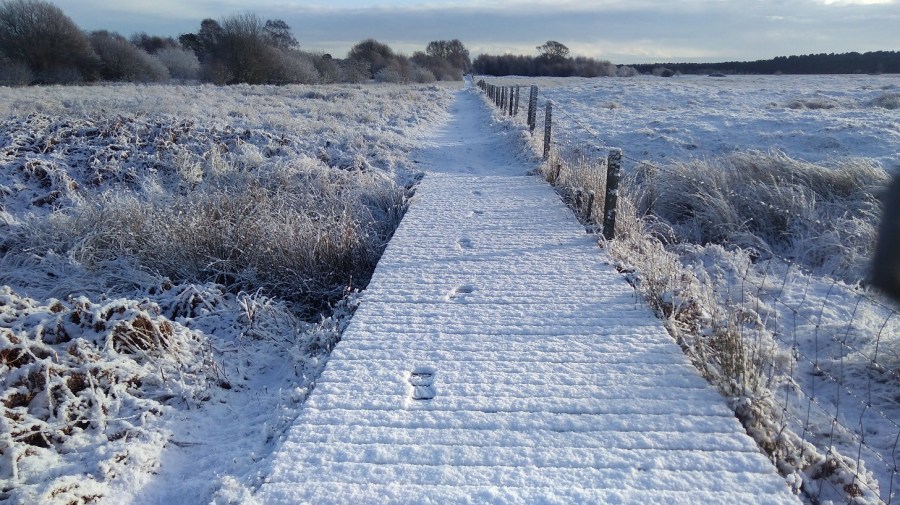
IMG_20190202_094540
My walking pole got temporarily stuck between the planks of the boardwalk but I was still glad that I had bought it with me this weekend! Fife Coastal Path, Scotland

I took a sharp left which was signposted. There were two gates – the first said push but you had to pull! I was heading towards the trees and hills covered in snow, but away from where I thought the coast was – the cold breeze on my left cheek helped me to orientate myself.
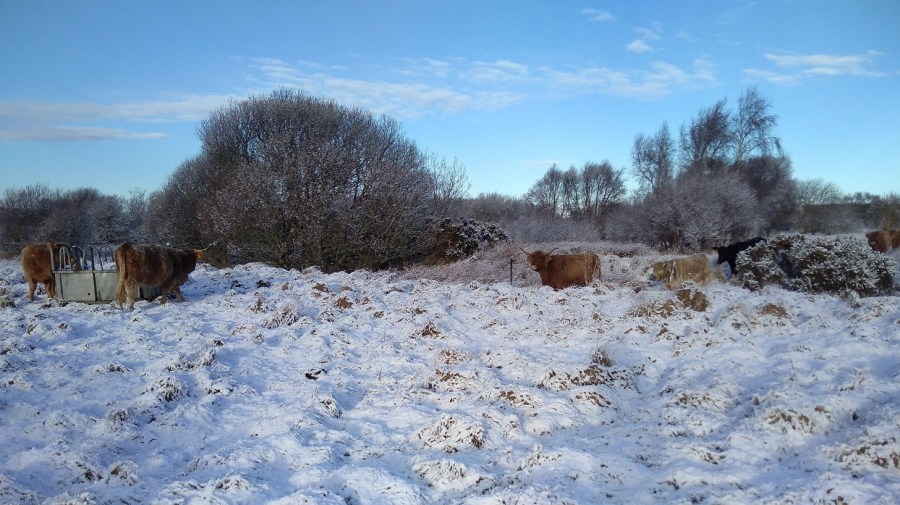
IMG_20190202_094923
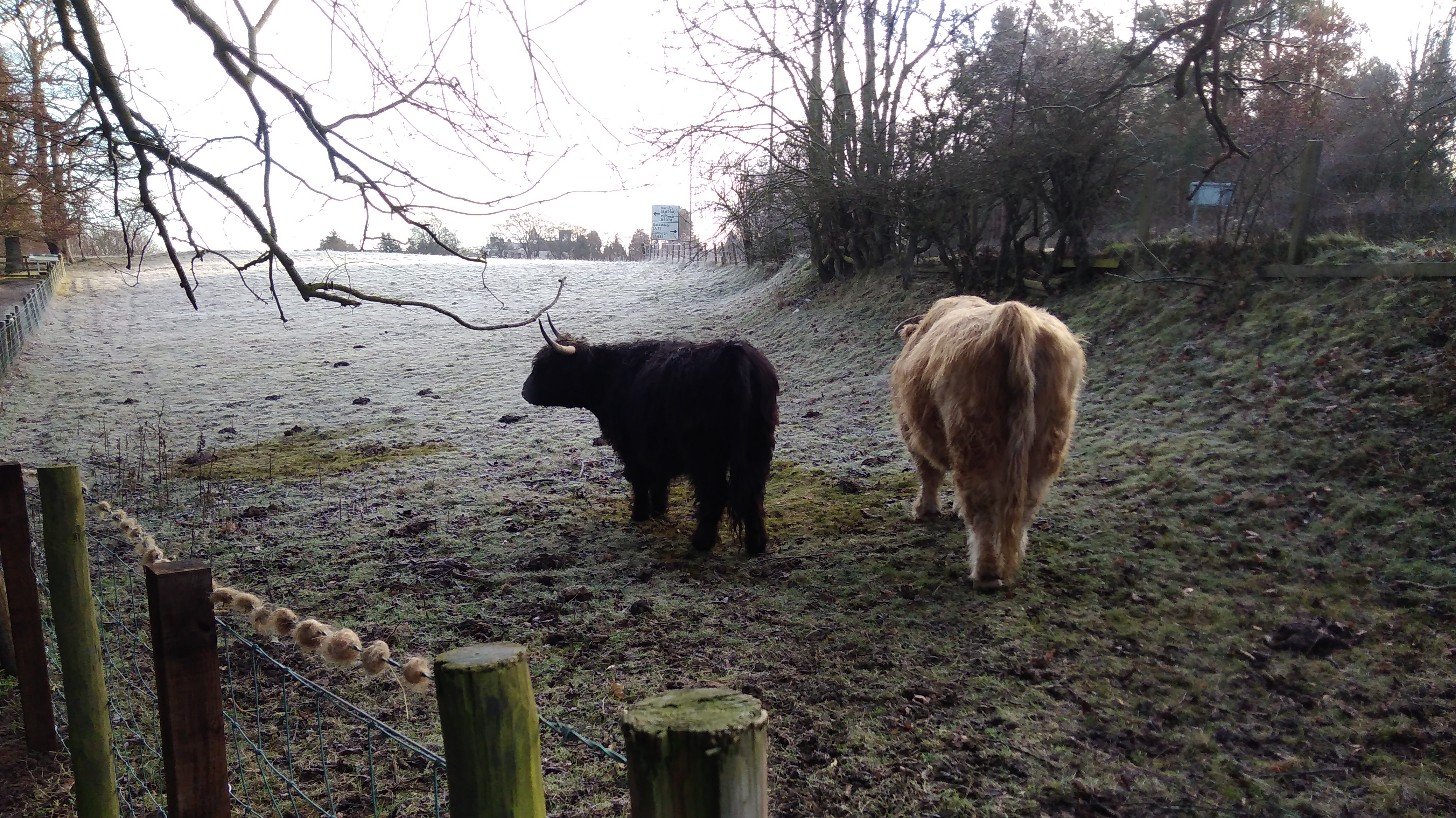
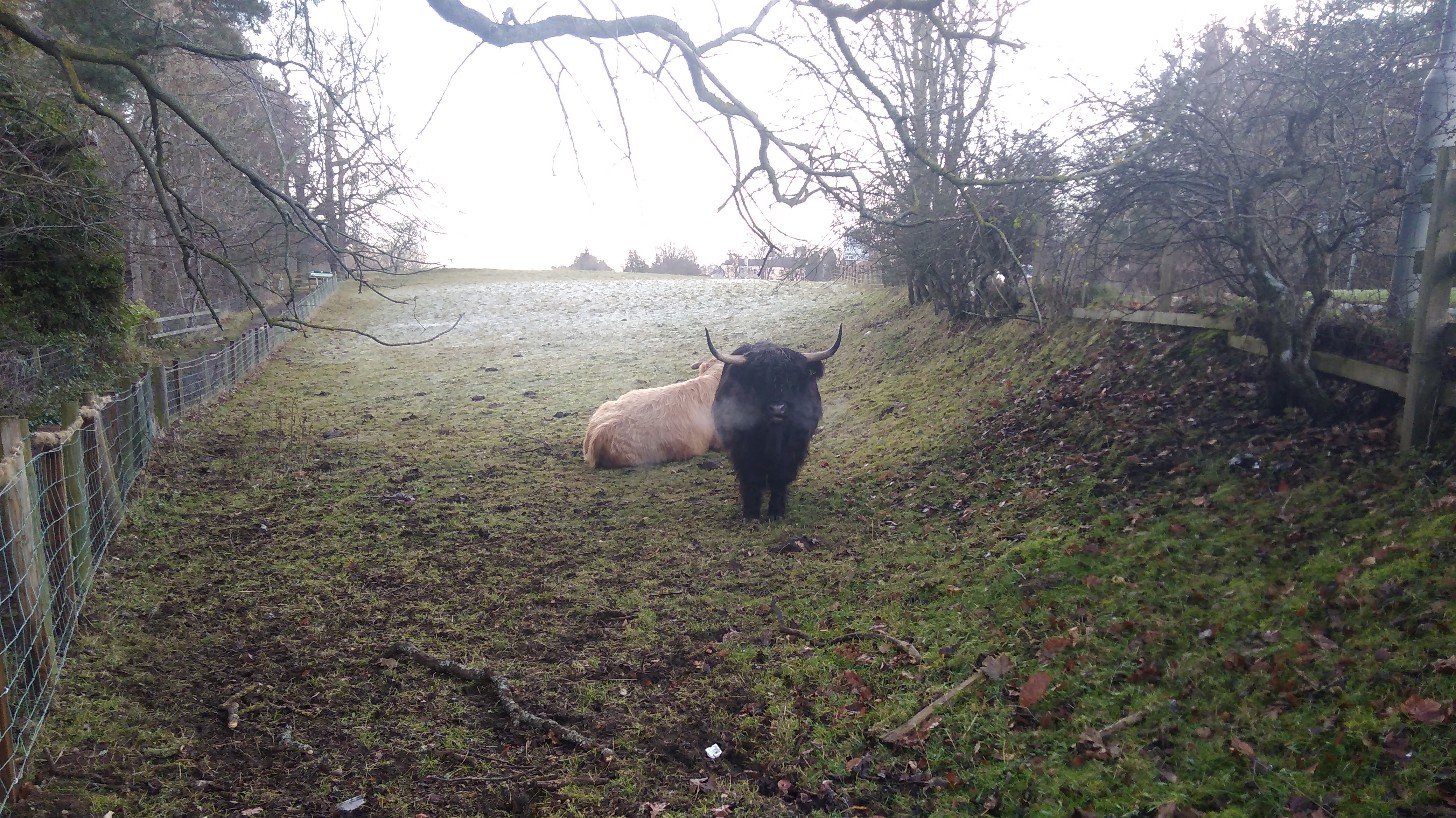
A sign warned of wild stock, and huge piles of manure testified to this – Highland Cattle with glorious horns were lowing loudly while they walked towards me, covered in blankets of snow

Up and down and curving around went the path. Only one set of footprints were ahead of me now, with a dog. I took two steps for every one of his! The path twisted and turned, slippery and very uneven. Everything was so very beautiful, clad in white.  The big trees were not covered in snow the same way as the small ones and the bushes were. There are fallen-down logs and the oh-so-delicate grasses carried their heavy loads – tilting and drooping with the weight of it all.
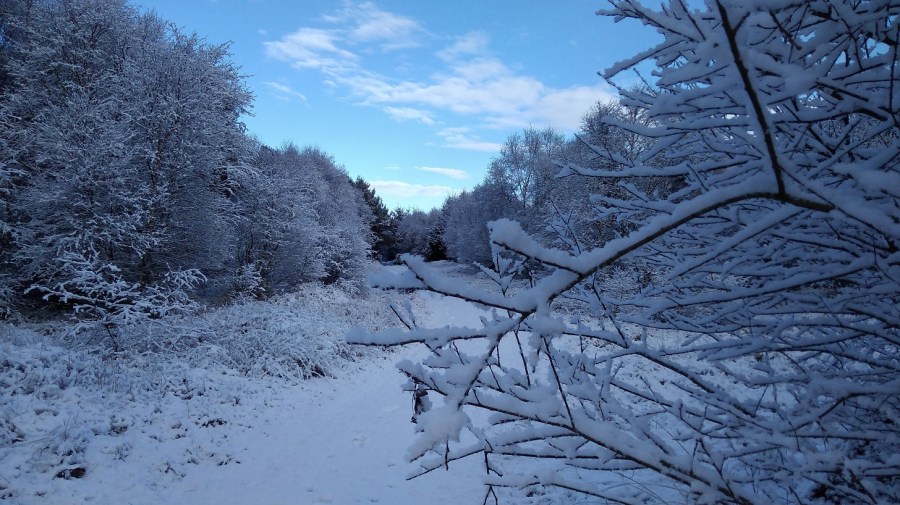
IMG_20190202_100354

I amused myself with the tracks in the snow – the guy I fancied I was following seemed to have lost his dog –  hmm interesting! It was useful to have the prints as it meant that I could see where the deep parts were.

The path wound between pine trees with various types of cones, rounder ones on the branches and long, thin ones on the ground.
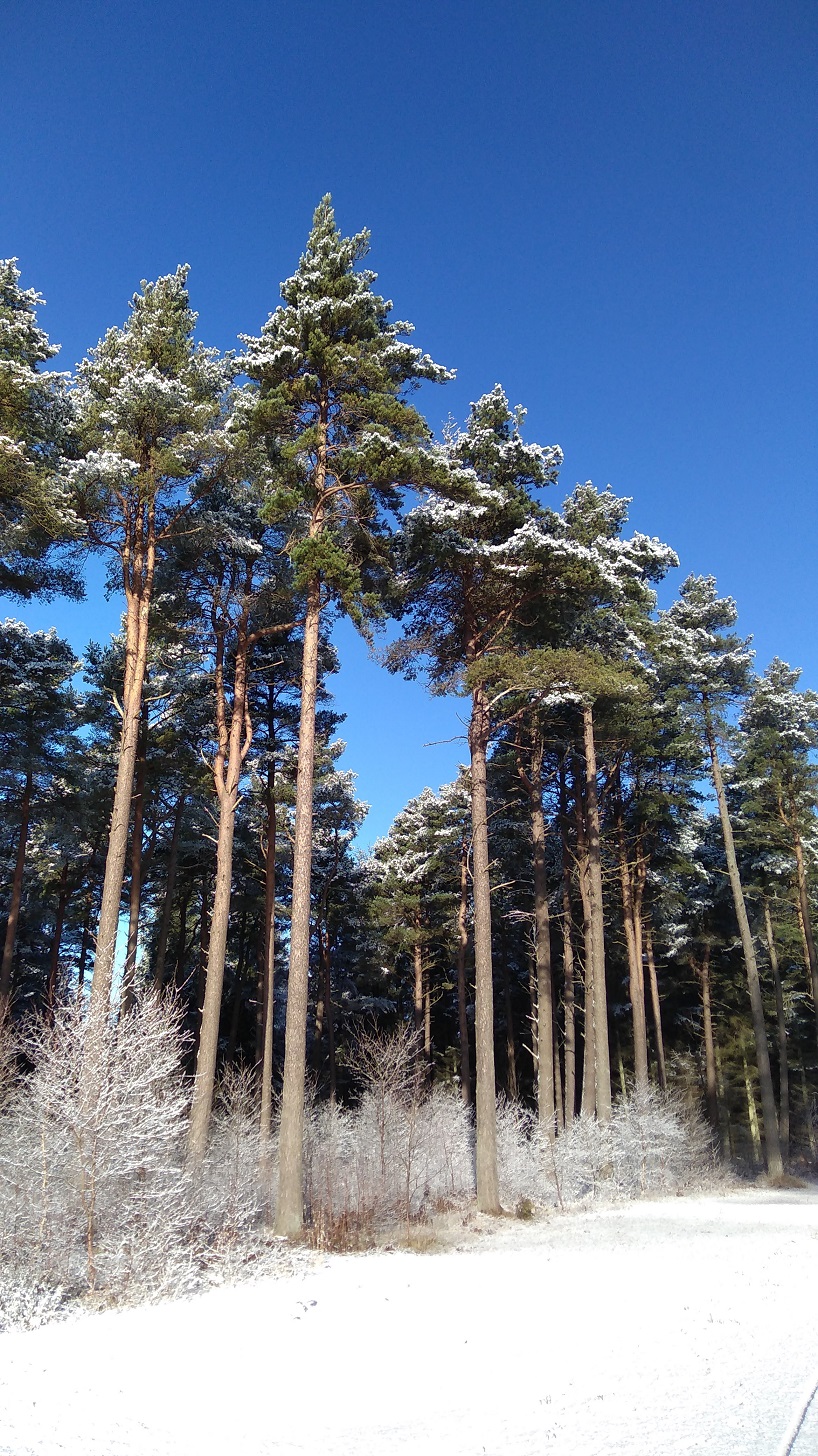
IMG_20190202_111743
See how the sun shines off the snowy ground even at 10am!

‘There are two species of native conifer tree that produce cones: Scots pine and common juniper. The non-native black pine can also be found in the UK. All of these trees have different shaped pine cones and will hold on to the cones for different lengths of time.’ From The Woodland Trust. The red squirrels love to eat them!
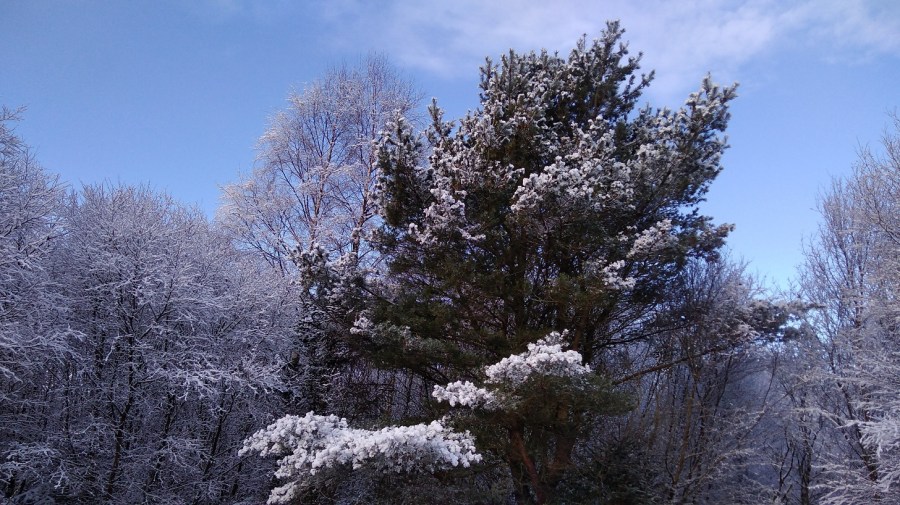
IMG_20190202_100446
The deciduous trees are white, the evergreens sprinkled

The snow got thicker and there were two sets of dog paws, or maybe another sort of animal trails alongside the man’s now – it must be very interesting to be able to read them properly.

Bracken stalks cracked over from the weight of the snow. Black broom pods showed up starkly against the white.
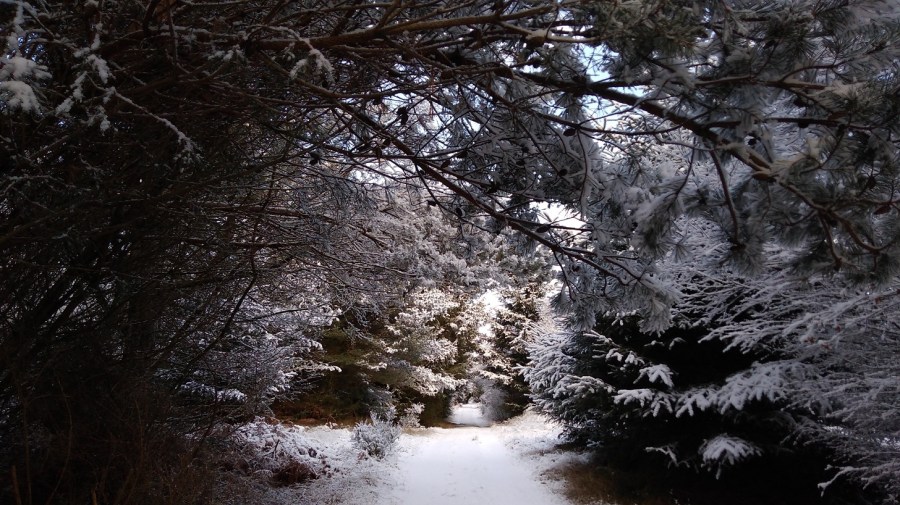
IMG_20190202_100525
The smell had changed from the one of snowy air and open ground to one of pine, and yes, it looked just like a Christmas Card!

I had a very quick stop – standing because there was nowhere to sit – for some absolutely delicious, warm jasmine tea. My pack was heavier than normal as I had bought enough food with me to last until Sunday night (two days). All I could think was, oh it is so beautiful!

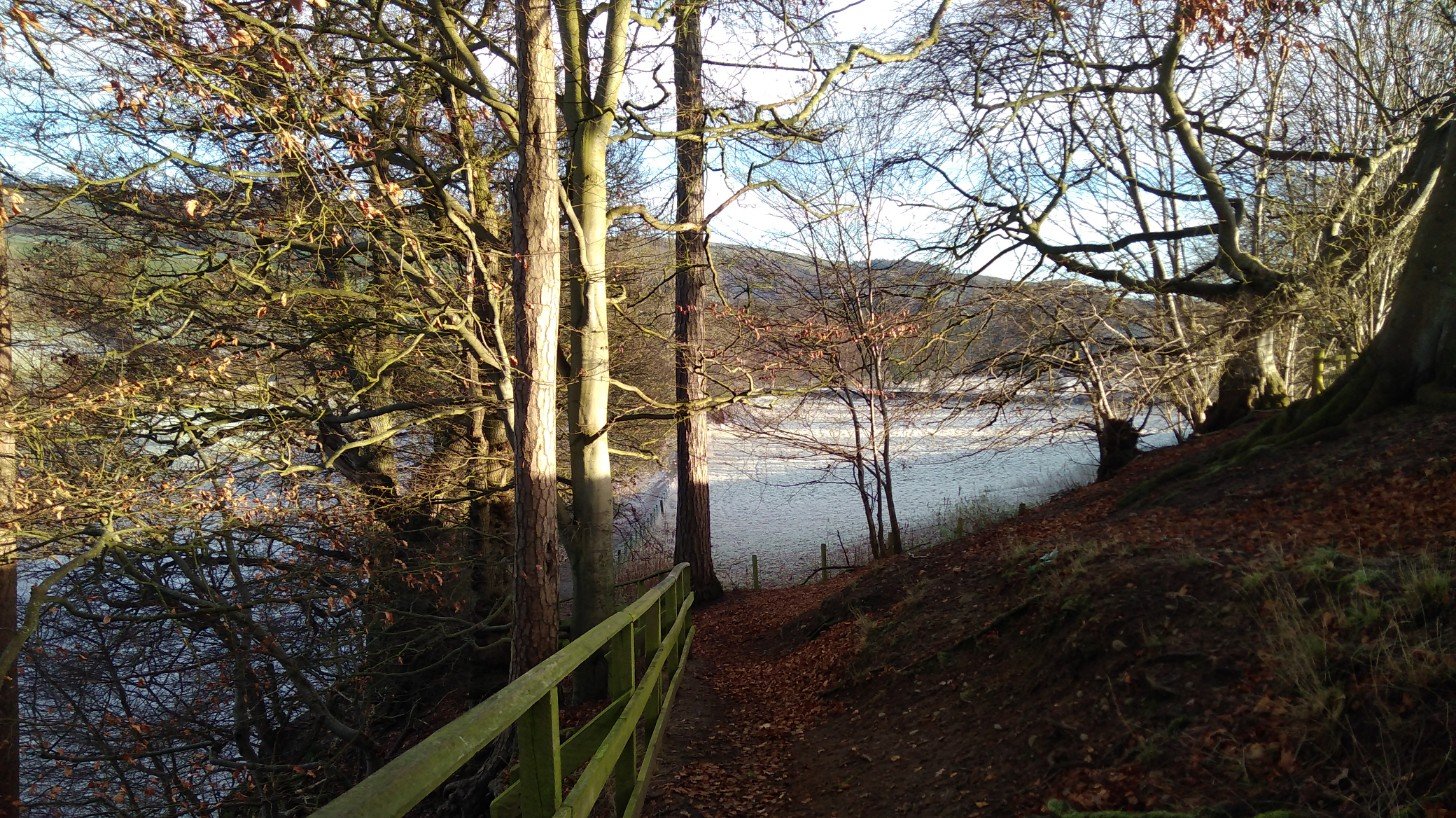
There were mini pine trees growing between the massive trunks and because they were covered in snow they were lit up and my eye was drawn to them, back and back, layer upon layer of undergrowth where there were tiny, fine branches and twigs. In some places there was no snow, and it looked bright green, marvellous next to the white. As I walked, the snow fell from the trees down the back of my neck while at the same time my feet were tossing up snow which was going down my ankles. Brrr – cold!
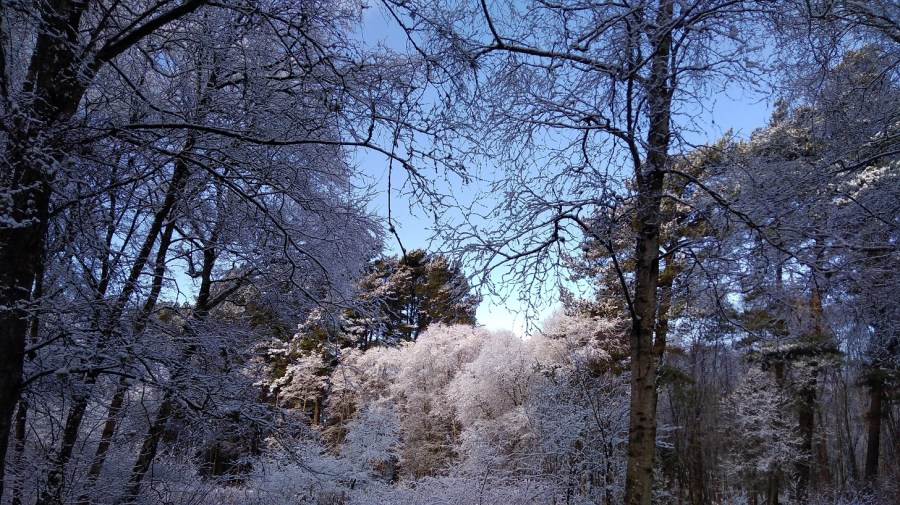
IMG_20190202_102123

I came to some sort of crossroads where there was a man with a bouncy spaniel, ears flying as he enjoyed the snow. I had a happy feeling and a sense of something, a sort of dropping down into my belly and a deep breath, like a much heavier lump, a weight. I was going along a road now, past the Polish Camp Road, and the signs seemed to be going straight on. There were cycles and cars ahead driving past. A woman with two great dogs assured me, yes, I was on the right track.

Beech woods now, a line of them and the smell had changed again, a different woody one. There were straplings, all bronzed and covered by the blanched quilt. Walking on the new snow rather than the slippy, packed stuff, I saw a light ahead like a fairy bower – silver and bright enticing me onwards.

Down a dip I tripped and went over on the same ankle I had sprained slightly in my Argentine Tango class a few nights ago. I felt it ricochet right through my system up to my neck, but thankfully there was no pain as I walked on.
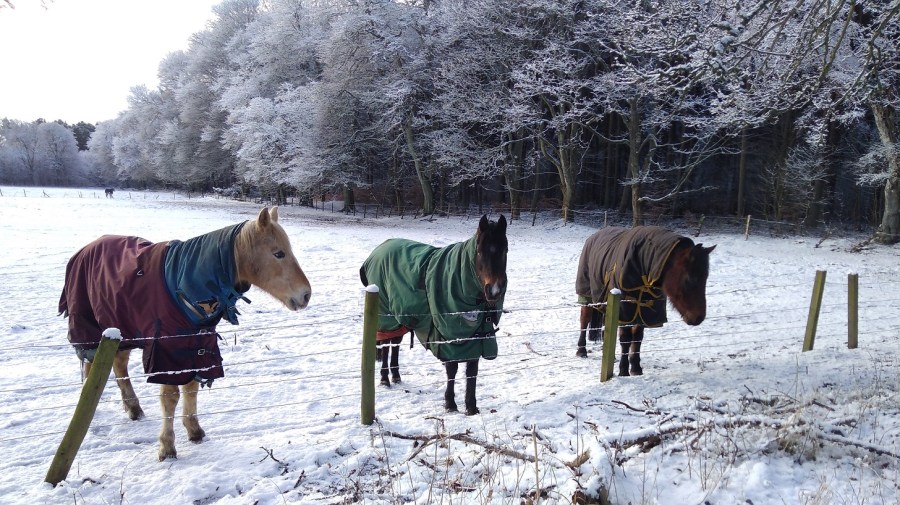
IMG_20190202_103315
The horses come to the fence to greet me and I scrape some grass to feed them

When I came to the Kinshaldy Riding Stables three more horses were being led by a man with a little dog who had an overcoat on. A series of paddocks each had another horse in and children looked as if they were running just for the joy of it.

At 10.45am I was at the Tentsmuir National Park Road, the edge of the Nature Reserve. Today I was recording on my phone, experimenting with the idea of a podcast. In fact, unable to splice and mix, I  transcribed them later at home. The sound of my heavy breathing on the recordings was off-putting apart from anything else! (It is not as easy as typing notes which can then be cut and pasted into WordPress. Maybe I could find an app which I can speak into which will transform that into the written word?)
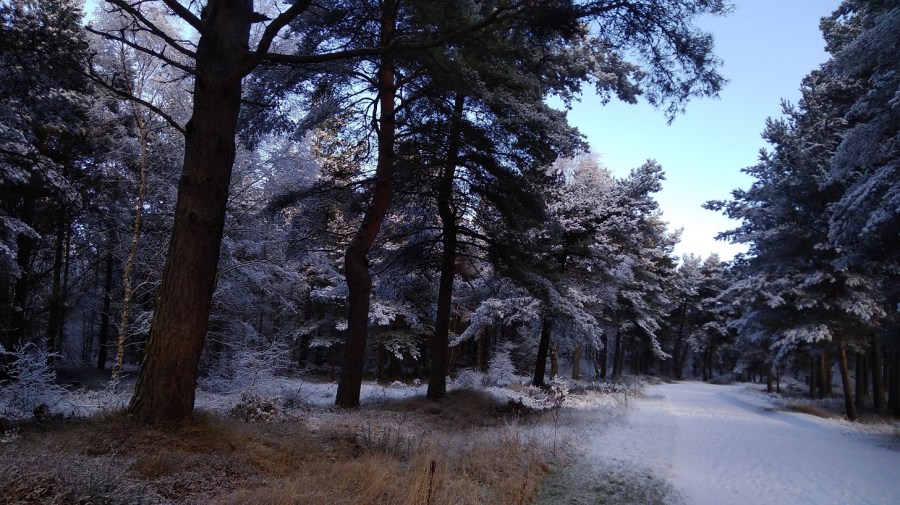
IMG_20190202_104722
Trunks looking black against the white backdrop

Of course the last time I was walking in the snow was in Greece in November where I was looking after horses.

Creak creak went my boots on the snow when suddenly, there was The Crêpe Shack  looking most incongruous after miles of nothing but gorgeous natural landscape. It was shut. There was also a playpark and picnic benches, so I sat down to have my elevenses. I was starving!

Traipsing between the dunes with a fuller stomach, I could not find any signs. I was pretty sure that in a few minutes I would see the sea and Kinshaldy beach so simply set off in that direction.
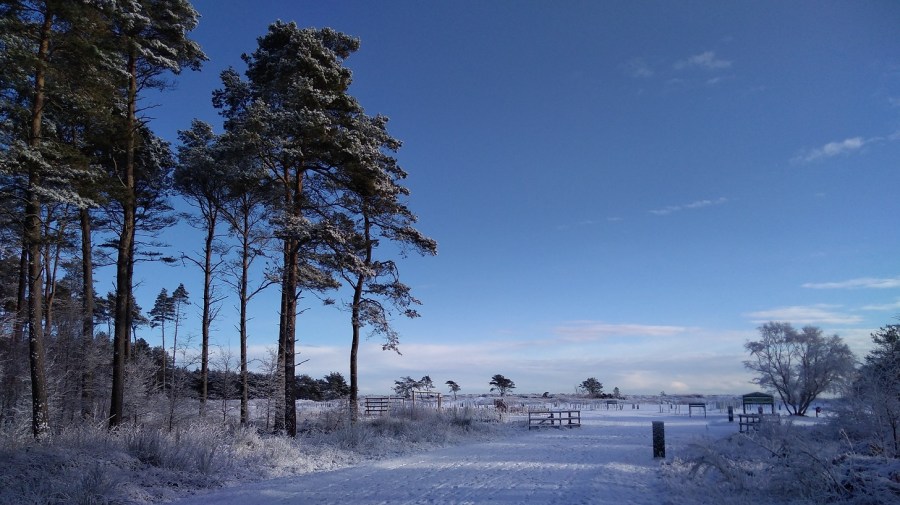
IMG_20190202_105245
The entrance to the car park and picnic area by Kinshaldy Beach and the Tentsmuir National Park, Fife

I get so fed up when I have to retrace my tracks, especially as deep snow is such hard work with a rucksack on. The path was not over the sand dunes (as the man with the horses had said), but back through the car park with spaces for coaches and where there are more playparks (so it is obviously very busy in the summer). I wiped away the snow and there was the sign I was looking for – heading back into the forest.

The snow was twice as deep: an inch (2 cms) rather than a half – solid and scrunchy. There was a sky blue as blue could be.

When I had stood up after my snack, I had a dizzy spell which was a first. The whole world span just like my clients described it to me, and the back of my left knee hurt.
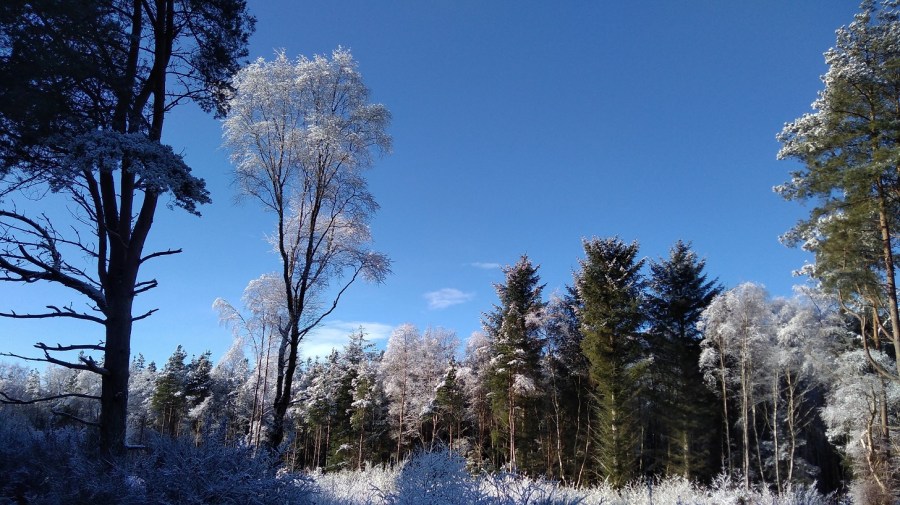
IMG_20190202_112259
This sort of scene is the reason why I walk in these places!

The birds were tweet tweeting high up in the pines. Four or five bikes had gone ahead of me, and some people with dogs. When I looked closely at the trees, it didn’t really look like they were covered in icing sugar but with dust, the same way that really thick dust clings to every surface, all the twists and turns of something, like some sort of growth. Some looked like cauliflower heads, white like they say people’s hair sometimes turns overnight from shock.

I was thinking that this must be an old forest because there was no evidence of tree felling. Gradations of vegetation: from the little tufts of grass at the path edges, to the taller ones just behind, then the saplings, which were in front of the medium sized trees, and behind them the absolute giants. All were different textures, some more vertical, others more horizontal, with the vista occasionally broken by waterways.
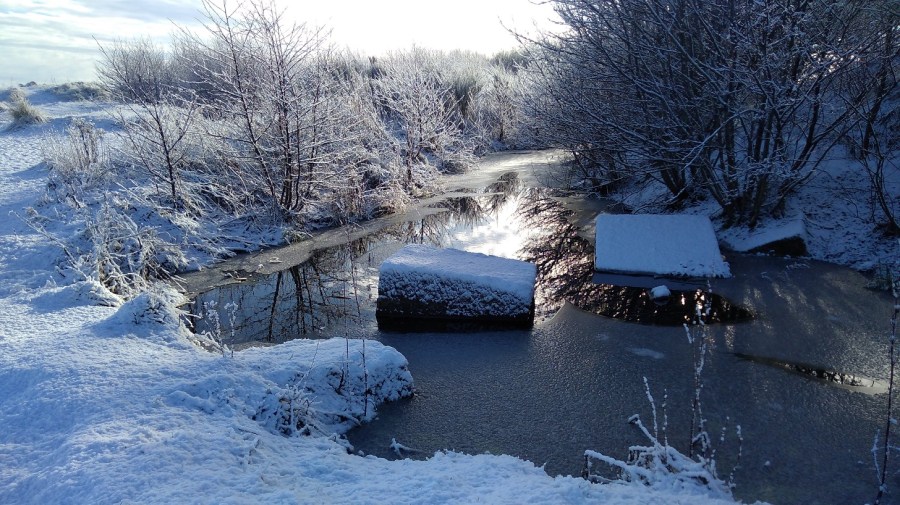
IMG_20190202_110751
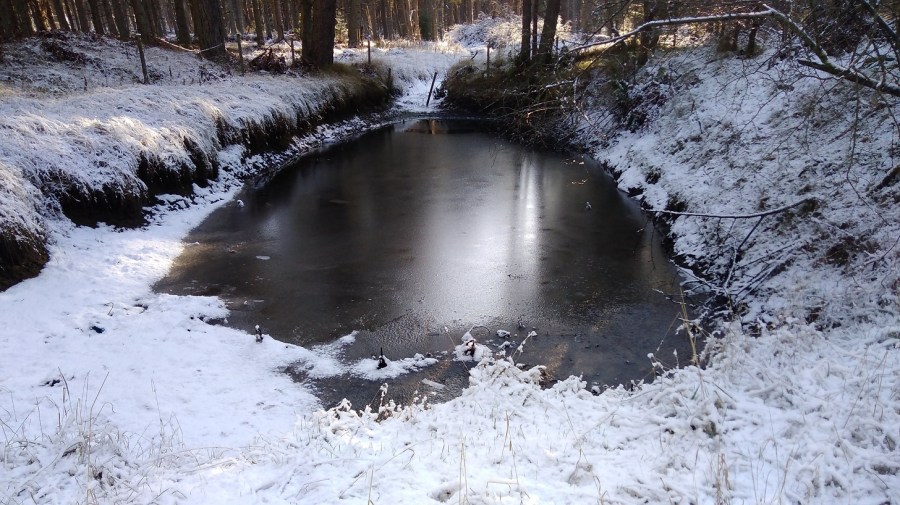
Frozen pond

It was unspeakably beautiful in the brilliant sunshine against the blue sky with no-one around – just amazing.
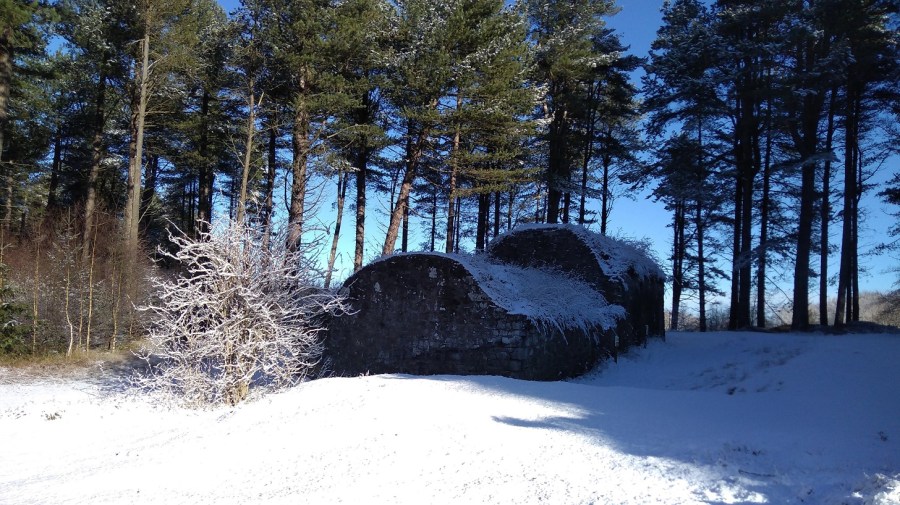
IMG_20190202_114818
The aptly named Ice House originally built in 1852 for keeping ice to freeze the salmon from the River Tay. The ice was taken from local ponds (as above). Layers of heather or straw were used to pack around it ,providing insulation like a deep-freeze. The salmon was shipped to the south

When I stopped and stood still there were only two sounds: distant waves that could have been traffic; and a sort of moaning, groaning, almost a woolf-type sound, but not at all scary. The latter was very difficult to reproduce and as I stood still it stopped. There were some logs which had been recently cut down in that part – I could smell the newly cut wood.

There were also paths off to the right at intervals, for access to the sea, but most of them were closed for building works.
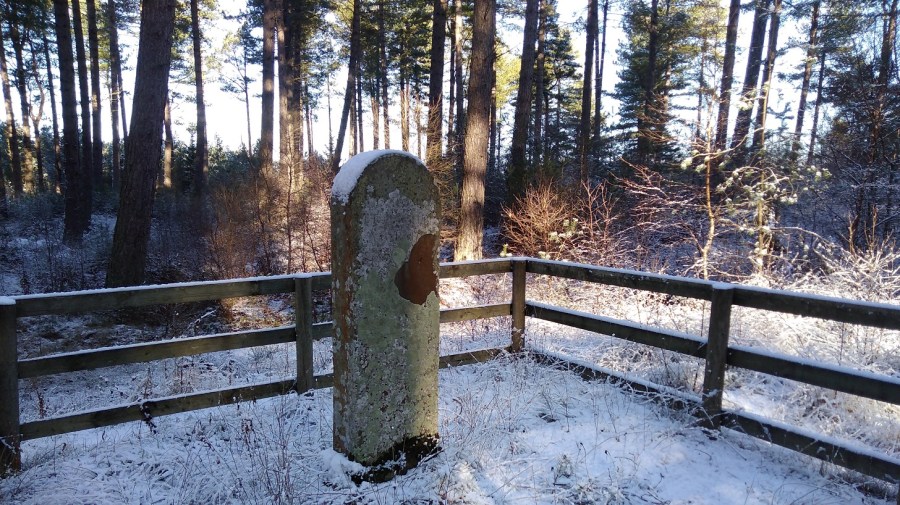
IMG_20190202_115818
The March Stone erected as a boundary marker for fishing rights in 1764. The word March denotes an area of land on the border, and this March was between the Shanwell and Old Muirs salmon fishing, making a straight line from Old Norman’s Law (a hill) which though it seemed ever so far away I was to find myself climbing the next day!

Then wow! Once again I emerged from a long wander through samey landscape, lulled with the regularity of putting one foot in front of another, and suddenly was out of the trees. There was the matching blue water – I had reached Tentsmuir Point at the edge of the promontory where the land turns around the estuary of the River Tay. I stopped to admire the city of Dundee spread out on the opposite bank.
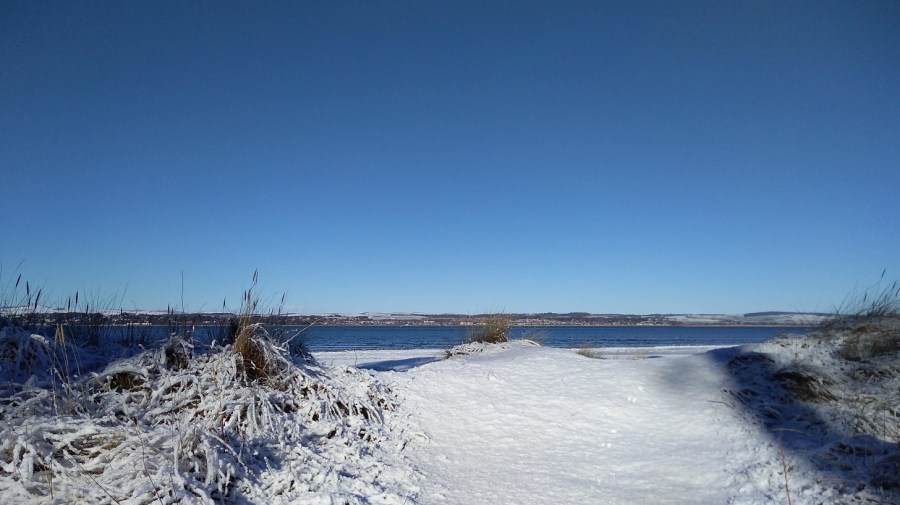
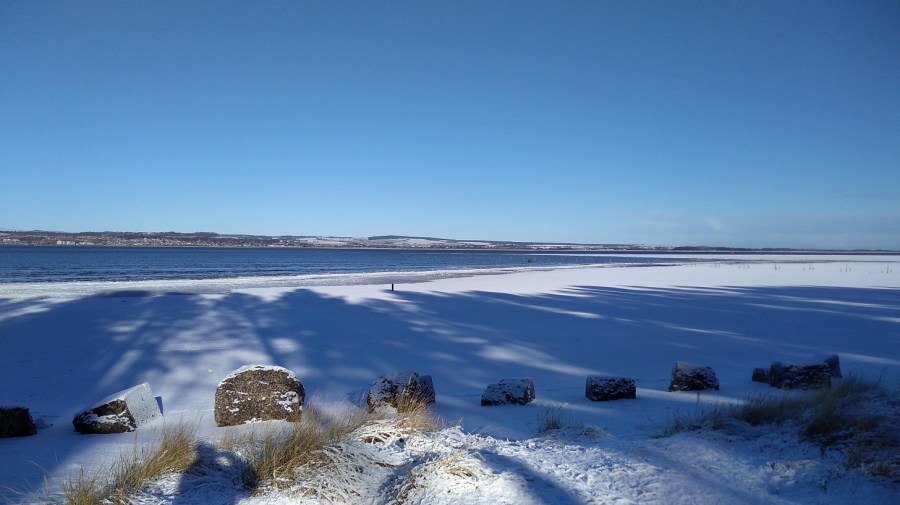
IMG_20190202_121343
Spectacular isn’t it!
IMG_20190202_121400
There is something surprising about sand covered with snow somehow

There seemed to be a area of ice where the land met the sea, and a sort of fence going out at right angles into the water. There were very gentle waves. Two gulls as white as the snow were catching the sun nearby, and hundreds more were floating miles away.
IMG_20190202_121808

I walked on: a wee pond opaque with ice; thoughts of past love; a train trundling by; and guns sounding. I was at right angles to the point and it was so icy that my pole clattered. I was tired and my feet were aching, although my knee wasn’t. My eyelid did the annoying fluttering thing it used to when I was a teenager. Ploughing on, I heard pee por pee por pee por – thin bird calls, and the almost-sound of snow falling.
IMG_20190202_121618
Really I should have known and stopped, because if there were no signs I must be wrong. And I was

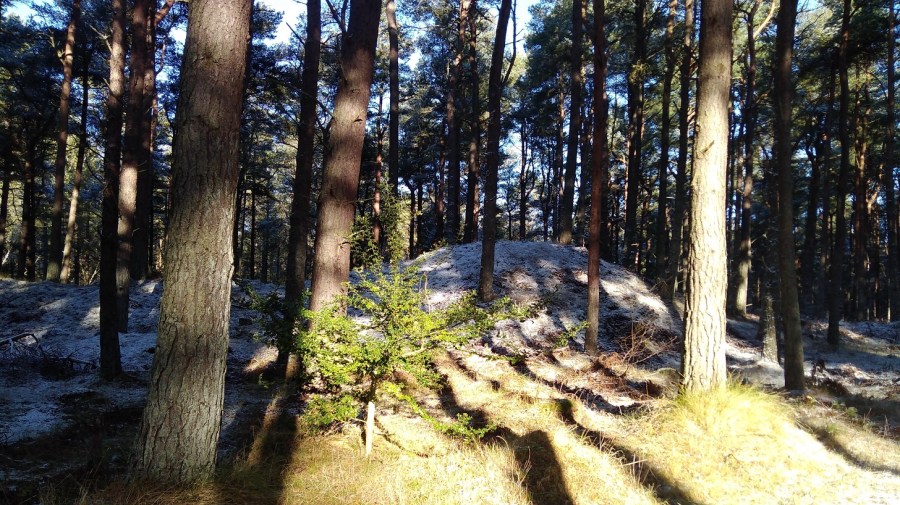
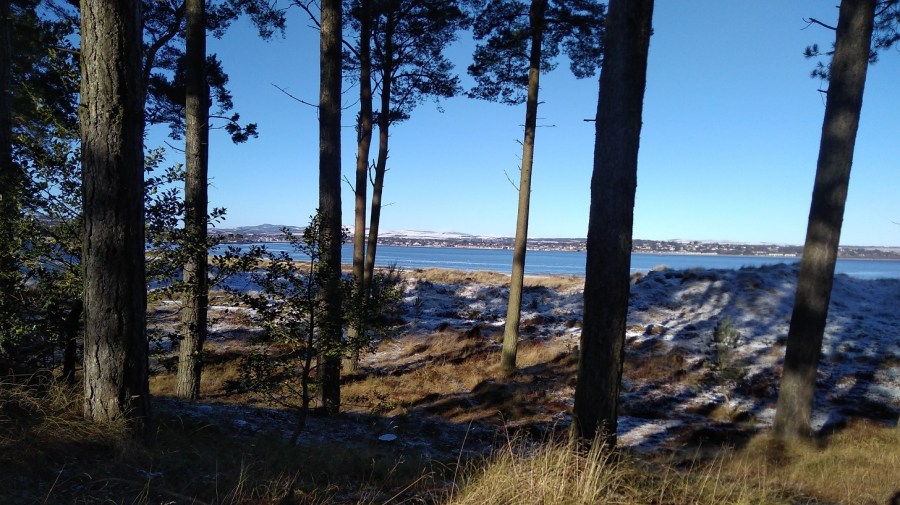
There were signs every now and then for the cycle path and forest trails but not for the FCP. A cyclist and women were coming towards me in pairs with hounds. I took a minute’s turn through the heather onto a hillock to get a view of the Tay . It was littered with gulls, and I admired the hills and wind turbines on Tayside. It was almost midday, so more melting was going on.
IMG_20190202_122436
To get a view of the Tay
IMG_20190202_124654
Snow on the hills opposite

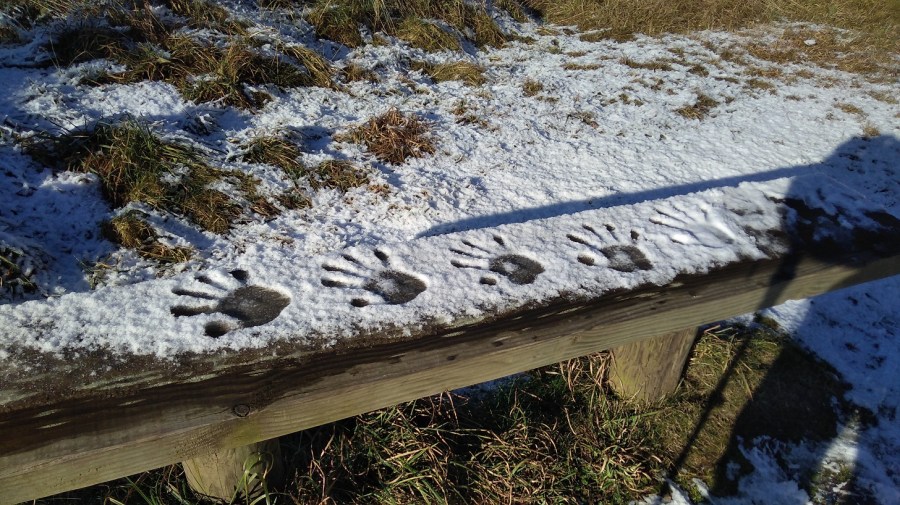
As I made hand prints in the snow I remembered a TV programme about the Pech Merle in Cabrerets in France perhaps 16,000 to 25,000 BC. Someone recreated them (maybe made by women), and they analysed why people were drawn to make these marks.
IMG_20190202_130032
Making my mark

It wasn’t easy to locate the signs. Here was Tayport Heath at the edge of the forest and I was coming up to Lundin Bridge – a map helped me to get my bearings. After another tea break I picked up speed, when a sudden lick on my left hand made me look down and there was a young brown greyhound. Bounding beside her mistress was a much older wolfhound with glassy eyes who was more afraid of me than me of him. They were easily overtaking me so I must have been going slowly, what with the rucksack and it being my fifth hour.

As the dogs receded into the distance, they were growling and playfighting. There was a horrible smell of chemical manure.
IMG_20190202_132757
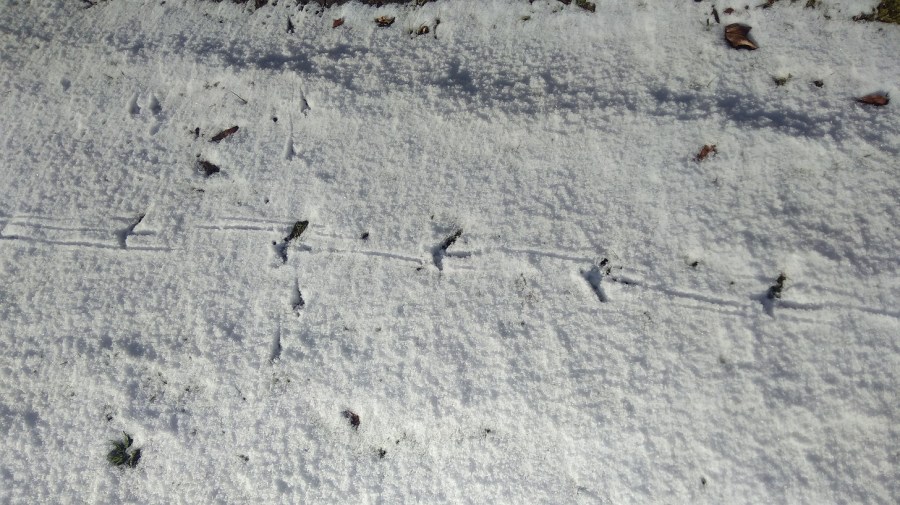
Bird tracks

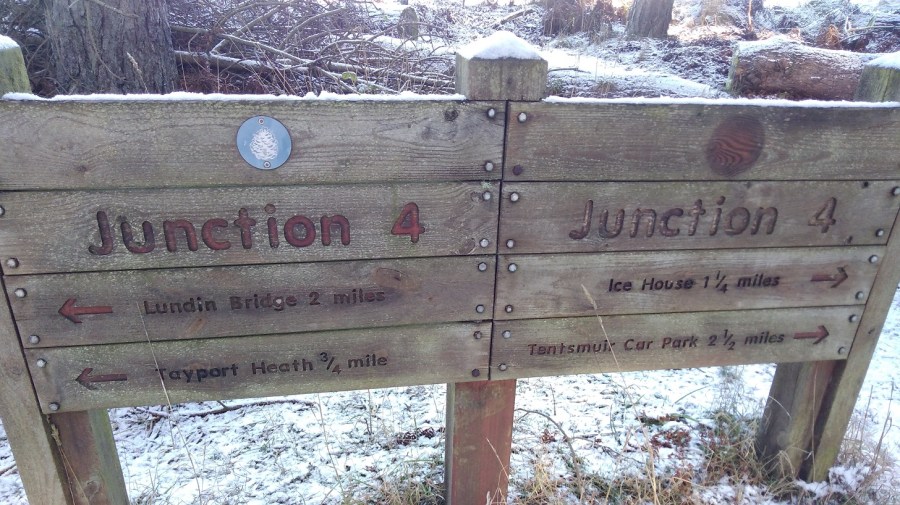
I found myself at houses and ponds and when I looked at the map I was right in the middle of the forest again. There were no signs and when I asked three men, they confirmed I was a long way away from where I was meant to be. I took a right, following their instructions, and came to a dead end with clear signs saying Private. I went left and the snow got deeper and deeper, my feet plunging down. At a gate I was unsure if I should go through. Away from any sort of path, I was only just able to negotiate and it was really hard going. Swearing away I realised I had done an enormous loop – extra trekking – and as a result I was tired and fed up. It was frustrating to the point of tears.
IMG_20190202_135916
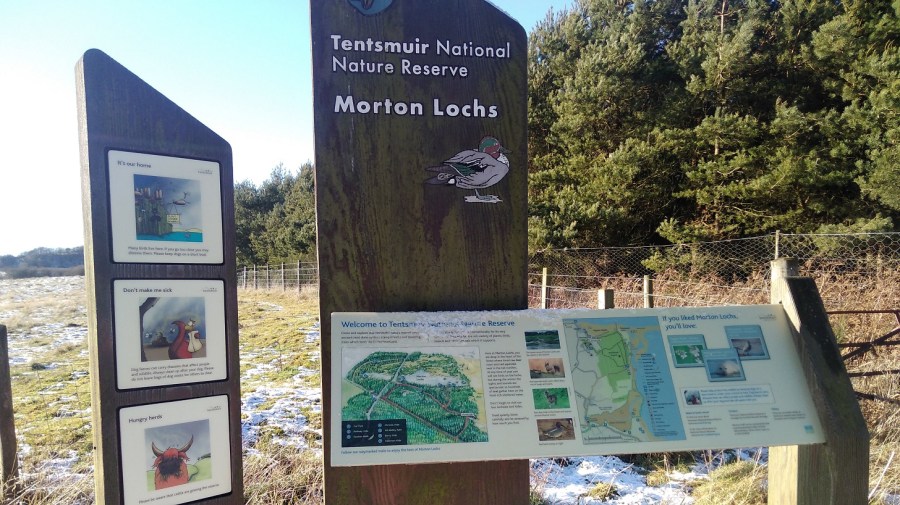
I was lost until I came across these signs

After my mini drama I spoke to Isobel on the phone by chance which gave me some perspective. I made my way out of the forest and into Tayport, stopping a woman and her bewildered daughter for directions, which were sound. I found a cafe very close to the sea (look left as you approach!) and fell in through the door to the amusement of a couple who wanted to know everything about what I was doing and why. Good question.
IMG_20190202_152146
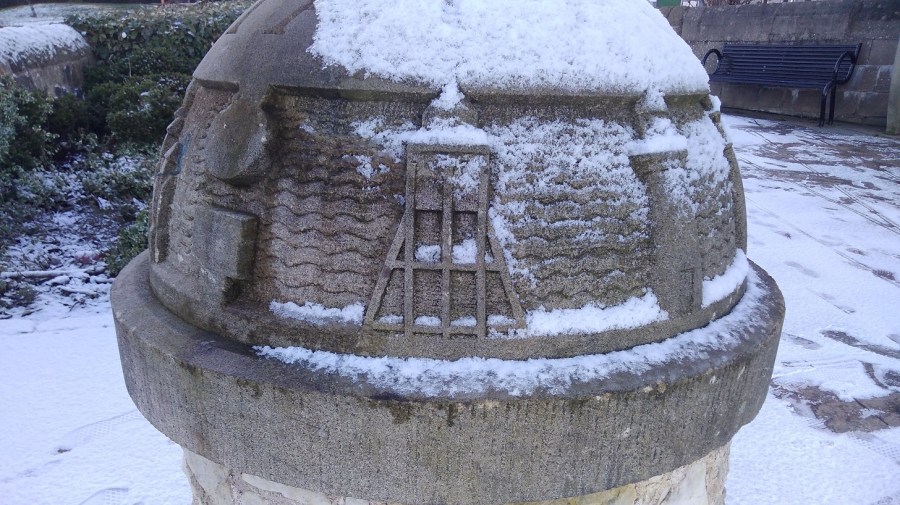
Detail of the fishermen’s monument, close to The Harbour Cafe in Tayport.

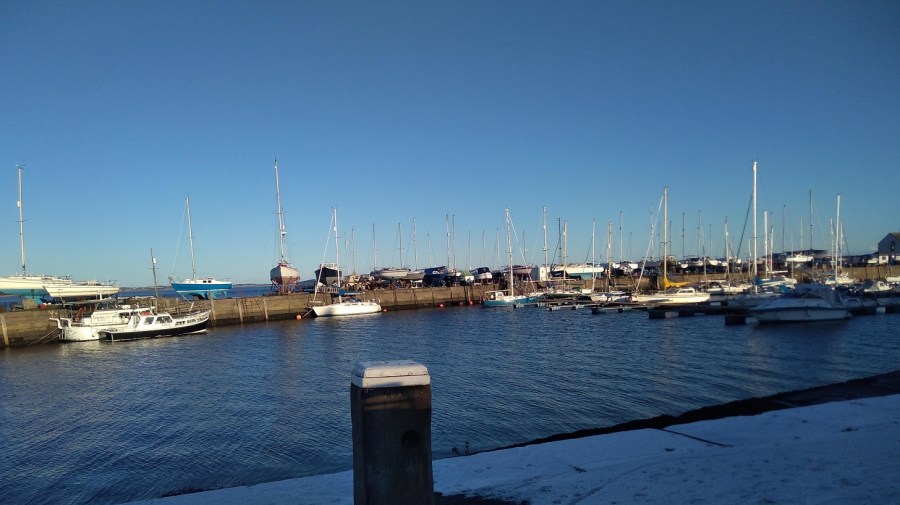
The Harbour Cafe was started 6 years ago as part of Tayport Community Enterprise. It is broadly run by volunteers and is amazing! It is just set back from the bijou working harbour which looked great in the sun when I emerged a while later, refreshed, to continue my walk.
IMG_20190202_152226
Tayport Harbour, Fife, Scotland

I went along the disused railway line. Right down by the water’s edge, a good way away from me, there was a strip of green where the snow had melted. A row of orangey grasses was punctuated occasionally by a single tree and this strip of sunlit green was absolutely beautiful in the evening sunshine. The bridge was in full view, cars whizzing past and lots of industrial buildings on the opposite side.
IMG_20190202_154147
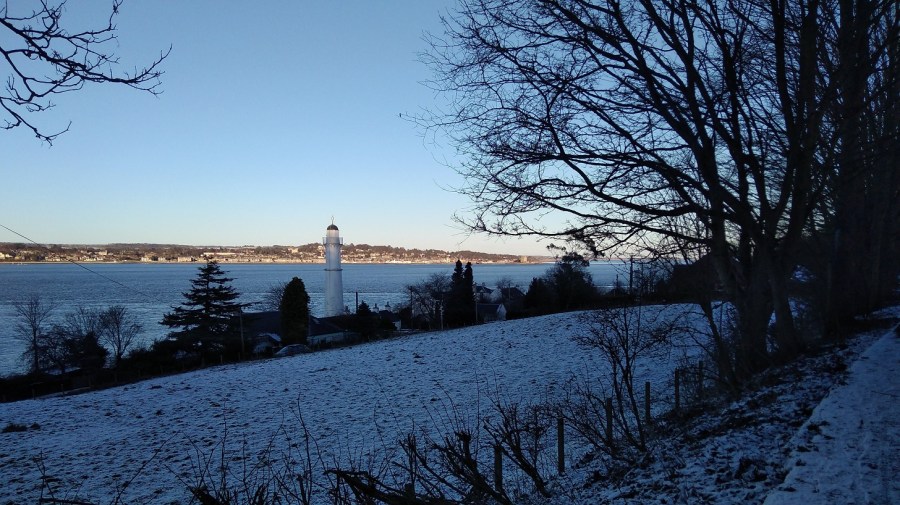
Looking past the lighthouse, across the River Tay to Dundee, Scotland

I had pain in my right hip – first time for ages – and sore feet. Overall, though, I was feeling much more balanced.
IMG_20190202_161002
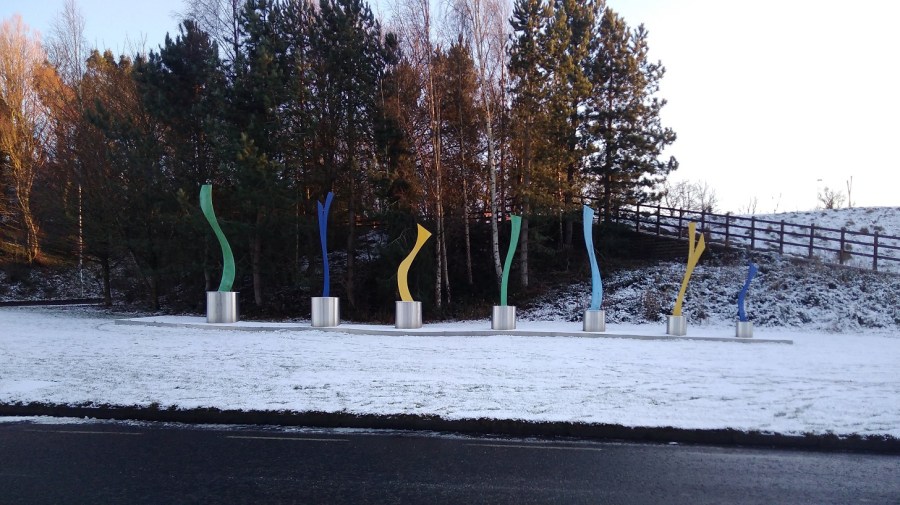
Modern sculpture by the entrance to the Tay Bridge, Fife, Scotland

Luckily I am separated from the road by a stone wall. There was a wren looping from fence post to fence post almost letting me catch up with her, causing me to smile. Wren song.

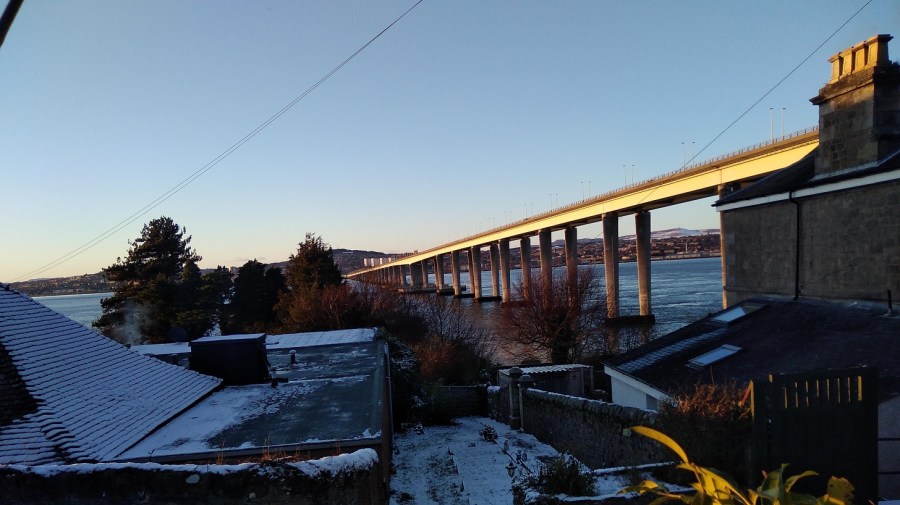
An hour’s walk to Newport, I went under the bridge. Weirdly, there were also signs up to the bridge – I didn’t know why unless it was for the view.
IMG_20190202_161459
The Tay (Road) Bridge still catching the sun although the rest was now in shadow, Scotland

Around a white golden orb that is the sun, almost directly ahead of me most of the time. preparing to sink below the hills which are tapering down into the Tay Firth. A lot of conurbation ahead which could be Newport or Wormit (the end), but I suspected the former. I was trying not to think about the end at this stage other than planning to be in bed for a long period of time when I got there!
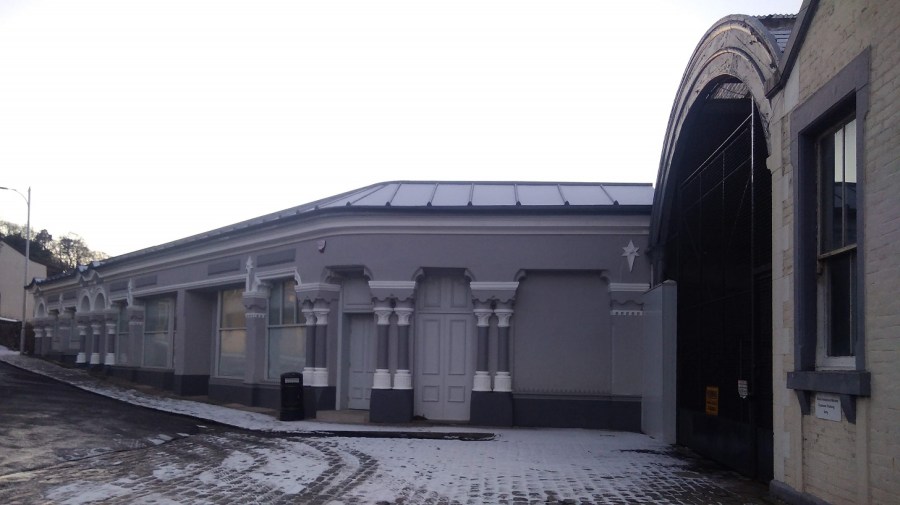
IMG_20190202_163648
The elegant architecture of the ferry terminal for the ‘Fifies’ (what Dundonians called the ferries), Newport-on-Tay, Scotland

‘In 1715 a new pier and inn were built, the work being funded by the Guilds of Dundee which resulted in the settlement being called “New Dundee”. Thomas Telford built a new harbour in the 1820s, and the town expanded and grew into a commuter suburb of Dundee as the prosperous jute manufacturers, industrialists and the middle and upper working class of Dundee established fashionable residences in Newport.’ from Wikipedia

It was very, very beautiful. The water was shimmering and trembling. There was a long line of gold cast by the sun and the completely clear sky was amazing and impossible to capture on my camera.
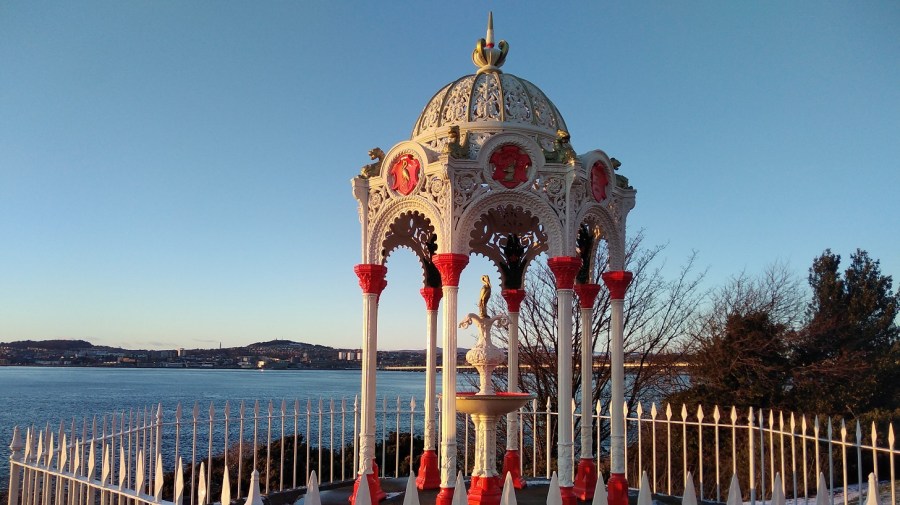
IMG_20190202_162423
This elaborate structure has golden herons, River Tay, Scotland

At 5pm the sun had all but gone down and I was probably 5/10 minutes short of where I should have ended, but it was very nearly dark and I knew a bus was due. I had been checking every stop as I walked through the residential area, all on pavement, amusing myself by looking at the gardens and architecture.
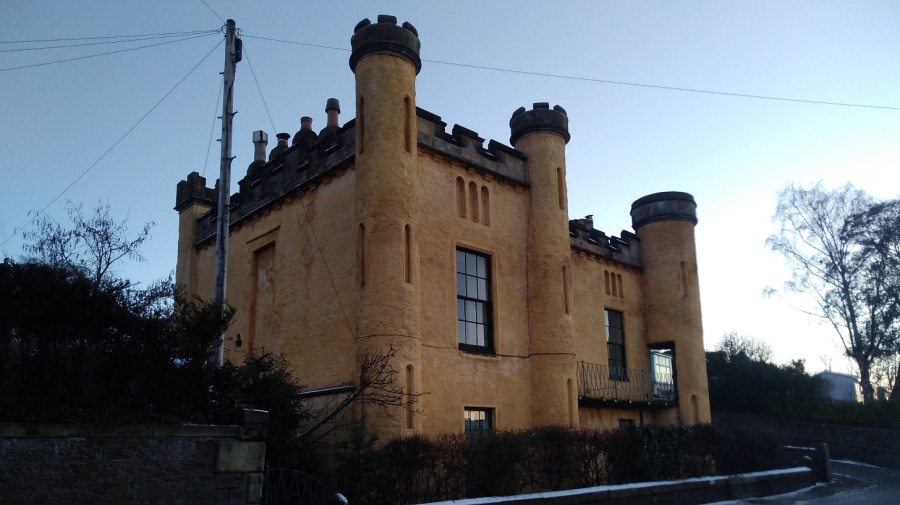
IMG_20190202_164707
Right on the main road from Newport to Wormit were impressive homes with a view across the water, Scotland

‘Beautiful Railway Bridge of the Silvery Tay! I hope that God will protect all passengers By night and by day, And that no accident will befall them while crossing…’ From The Railway Bridge of the Silvery Tay

‘But when the train came near to Wormit Bay, Boreas he did loud and angry bray, And shook the central girders of the Bridge of Tay On the last Sabbath day of 1879, Which will be remember’d for a very long time.’ From The Tay Bridge Disaster
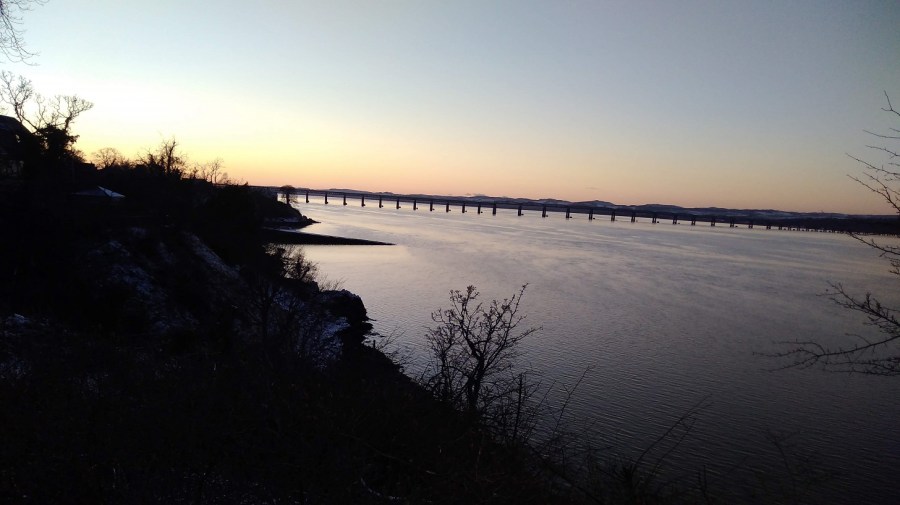
IMG_20190202_165148
A last sight of the Tay (Rail) Bridge before sunset. The original bridge which collapsed in 1879 six months after it was opened, with the loss of all 75 passengers and crew and was immortalised in William McGonagall’s poems (‘a notoriously unskilled Scottish poet’ Wikipedia  

Aahh – I sat down at last on the 92A bus from Southport Road, near Woodhaven to go back to St Andrews. The bus driver was really sweet: I was the only person on the bus and he explained that although it doesn’t go the bus station anymore, he would take me to the end of the route in the town, wait 3 minutes and then drop me off where I wanted to go.

It was only a short stumble to the hostel where I had booked a bunk a week of so earlier but when I arrived it was unavailable – there was some sort of booking mix-up which he said had happened before. I was more than crest fallen when he explained that I would have to go to Dundee to get a similar priced bunk – St Andrews is an extremely expensive place – but happy that he allowed me to use the facilities and have a hot shower.

I took another bus to Dundee and stayed in the Backpackers Hostel there instead.


Fife Coastal Path – Kingsbarns to Guardbridge

Sunday 20 January 2019

I am not exactly following the Fife Coastal Path (FCP) official map, partly because the daylight is too short to get to the starting place and walk the distance before it gets dark, and partly because of accommodation and transport difficulties. Judging by the website, the FCP people are guessing that folk will be doing it by car, although how they get back to their vehicles I don’t know unless someone picks them up at the end of each stage. I know one long-suffering wife who, together with friends, has been supporting her husband to walk around the whole coast of Scotland by ferrying him from Edinburgh, so perhaps this is more common than I thought! Be warned that although there are good places to stay if you look carefully, it requires quite some research and flexibility to do this.

IMG_20190120_084433
Due east of Cambo Estate, Fife

I recently came across a woman who pitched her tent approximately half way along the path and went back and forth with her car, so that’s another way of doing it, but it will still require the taking of buses and taxis of course. Here is her blog.

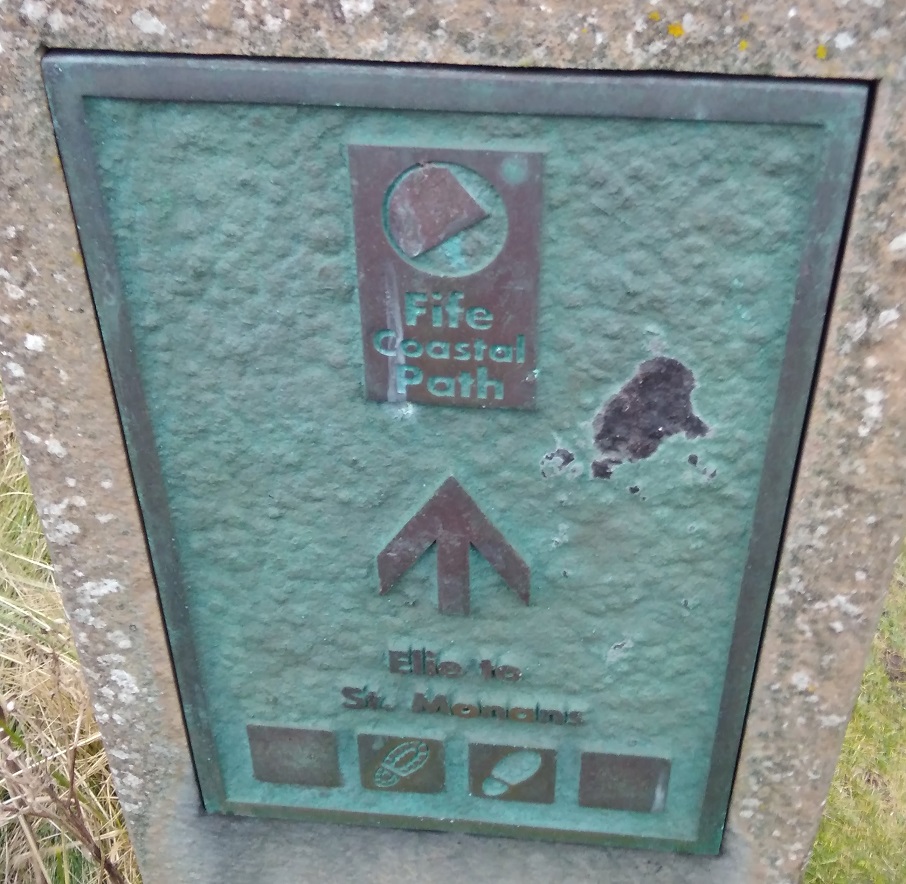
A Fife Coastal Path sign

I retraced my steps by taking the early Sunday morning bus from Anstruther leaving the hostel at 8.30am in the dark and waving goodbye to my dormitory companion who was making shorter stages. I watched her setting off with her head torch along the section I had taken the previous day.

Half an hour later I was set down close to the Cambo Estate entrance (the cafe opens at 10am), a place I would like to visit some time, and regained the Fife Coastal Path from the main road which took 20 minutes, passing the darkened kitchen window  where the kind woman had directed me 15 hours before. From there I completed the final part of the previous day: Cambo Sands to the Kingsbarns car park (where there are facilities: picnic benches and toilets). There were people asleep in their camper vans and lots of dog walkers, even though it was not yet 9am on a Sunday morning). There were signs to The Cheesy Shack, but I could not see it!

Kingsbarns to Boarhills (around 1.5 hours)

I knew from the instructions that today ‘may be the roughest part of the whole route’, and that it ‘should only be walked at low tide’, so I was against the clock which caused some stress, day light being at a minimum in February and the high tide being around 1pm.

It was definitely colder than the day before, maybe because it was earlier or maybe because there was a slight breeze coming towards me. I could see my breath. It was brighter than Saturday with lots of cloud, but also an area of pale blue showing inbetween.

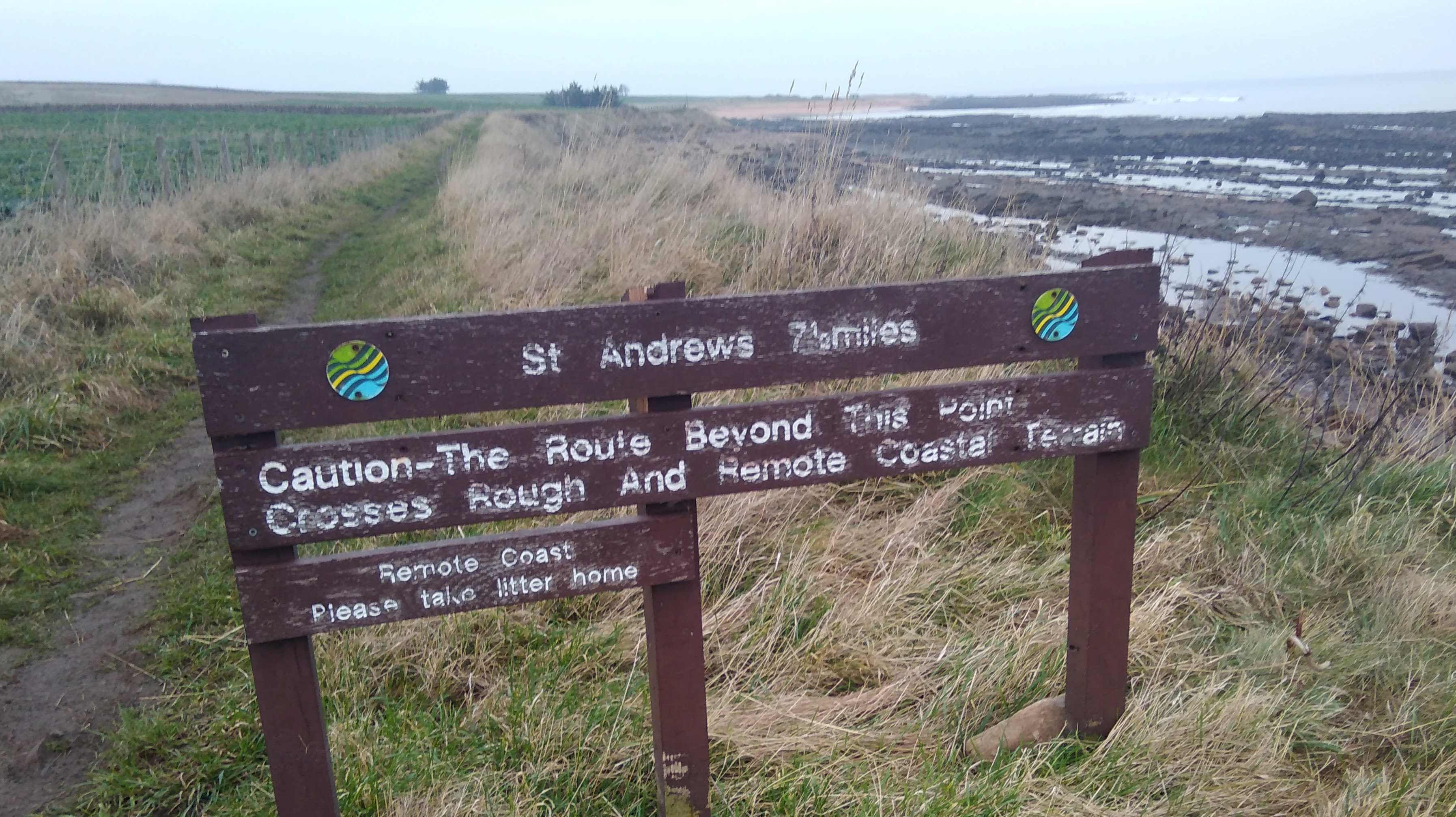
The first thing I passed was a warning of remote bumpy landscape beside a field with a very strong smell of brassicas which overwhelmed the sea scent.

Past the place of no return?

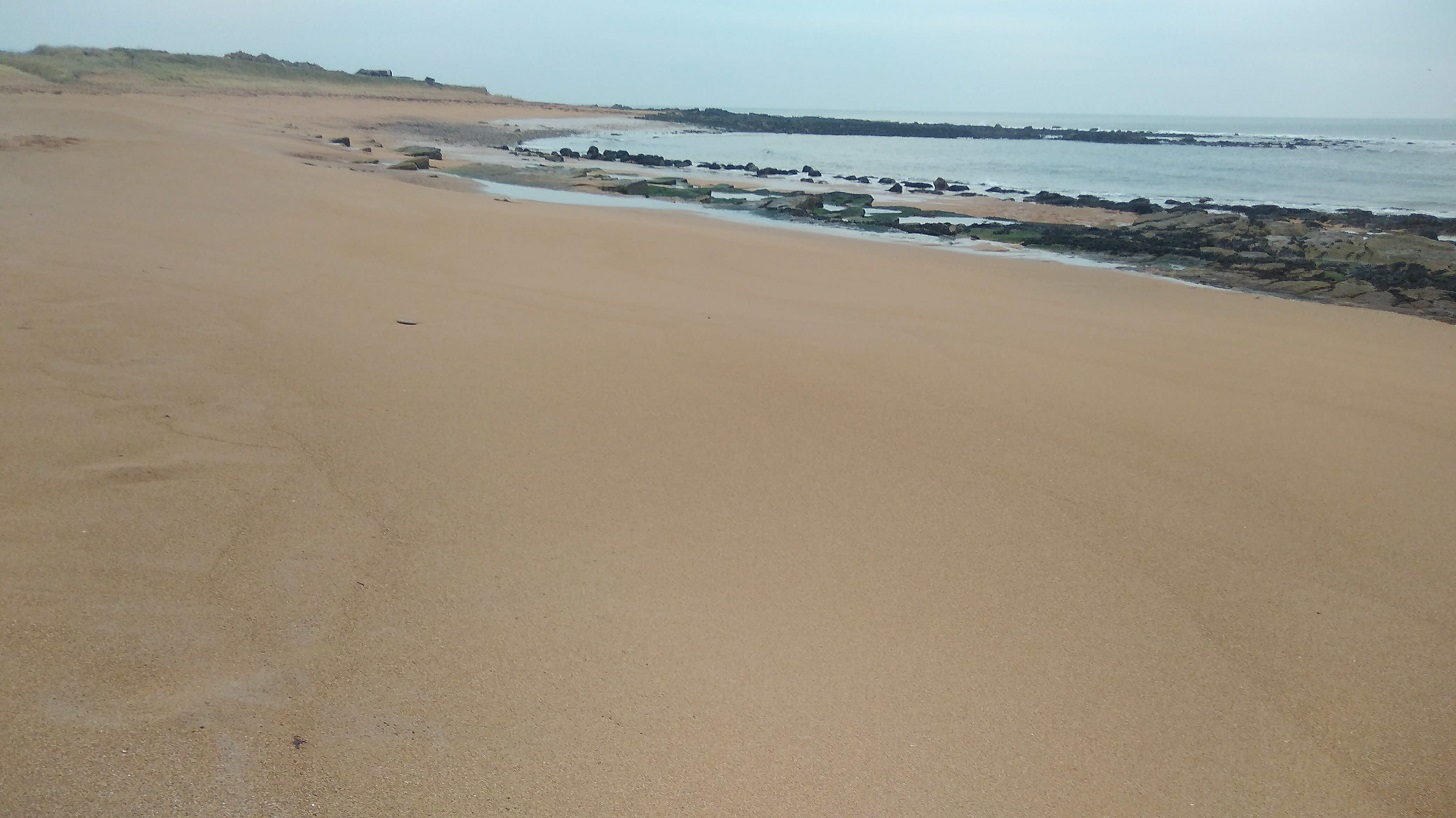
Another golf course and stretches of golden sands stretched as far as the eye could see. So far it was low tide, thank goodness, which was what I was going to need to manage the next part. There were little pillar-box-red poles all the way along, perhaps showing where you can get down to the beach.

IMG_20190120_091856
The sheer sands near Babbet Ness, Fife

It was hard going as they warned it would be, especially on the sand, beautiful though it was in colour and smooth surface. People and dogs had been there ahead of me. Then back on the scrubby grassland beside the shore, the path was very uneven. The water in my bottle was almost too icy for me to drink which showed how cold it was. Just to think that when most of us are in our cosy houses in cities and villages, the birds and cattle are here all through the night wheeping away, floating on the waves and managing the elements, whatever the weather!

IMG_20190120_094215
Flocks and flocks of black birds, alighting and taking off, swooping around, fighting and jostling to find their place, mostly on walls, fence posts, electrical wires and strand

Inland

There was a detour inland to Boarhills where I crossed the Kenly Water – a well-kept path beside mossy boulders where water bumbled over stones. It was well signposted across a metal bridge, and then there was a tarmac farm road followed by an equally long, straight grassy way heading back to the shore.

IMG_20190120_102113
The corn bunting or corn dumpling, the Fat Bird of the Barley can be spotted near here. A Red List species, it flocks in winter, fluttering its wings and dangling its legs in its identifiable fashion
IMG_20190120_103657

Boarhills to St Andrews

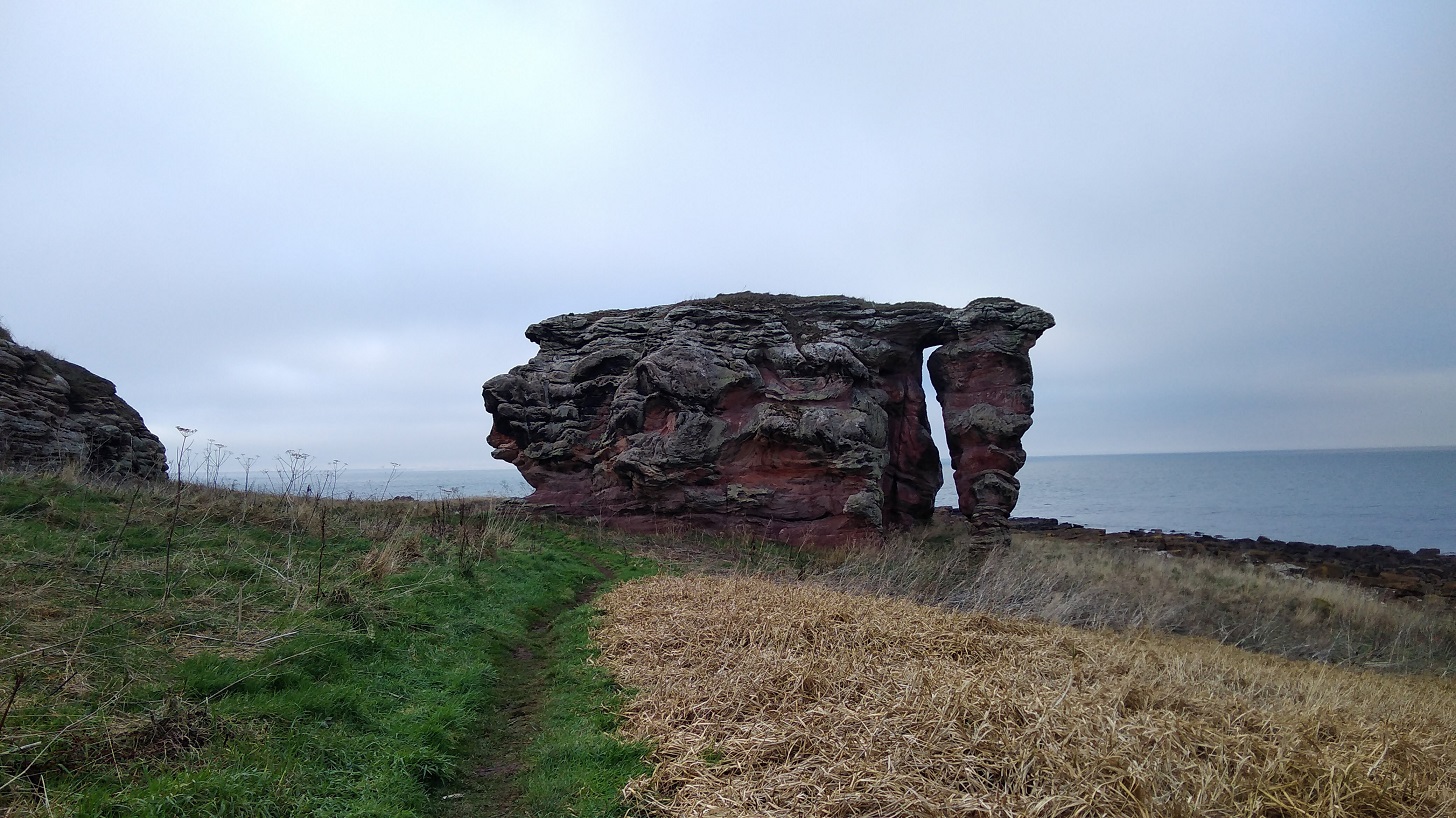
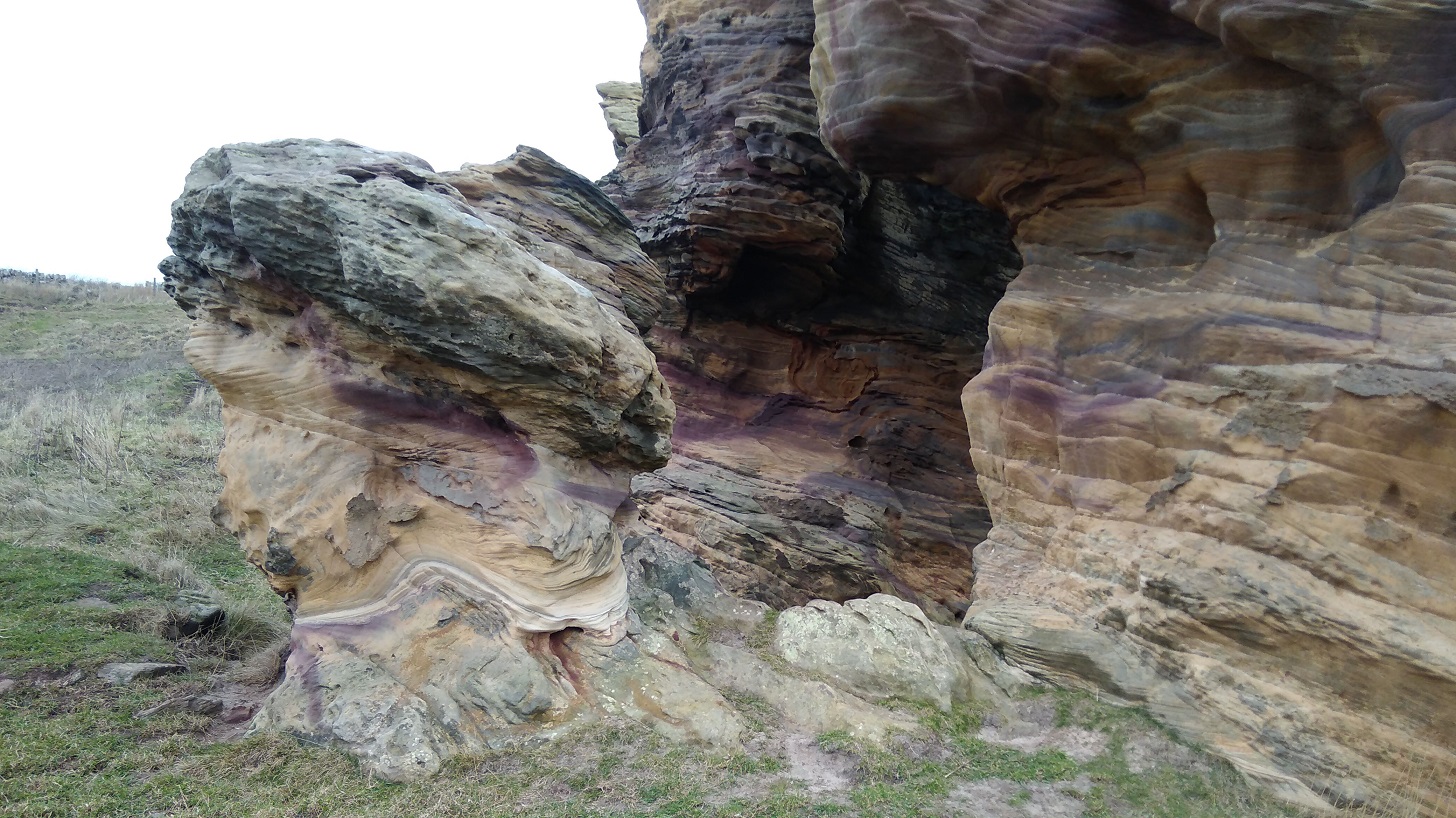
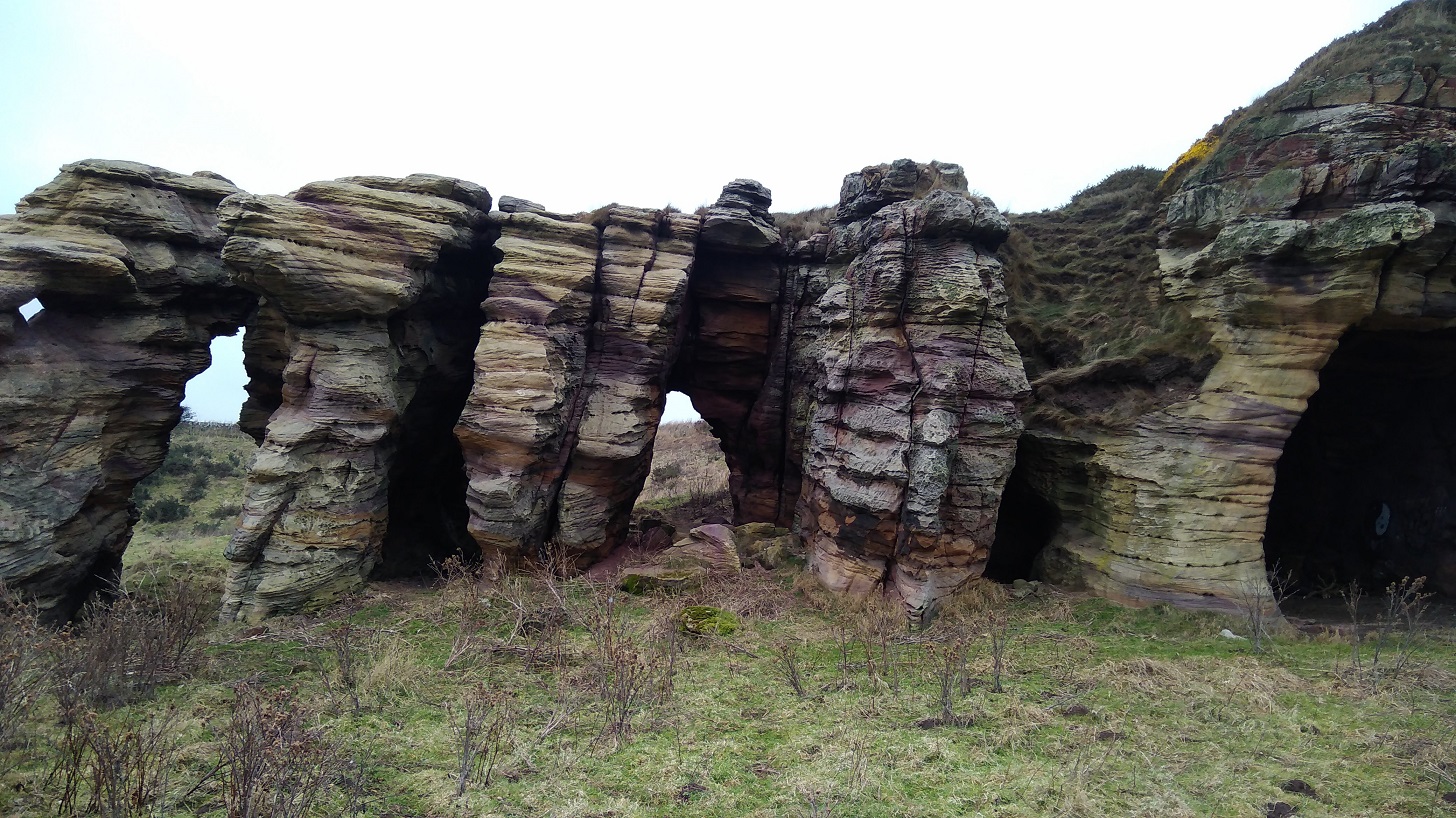
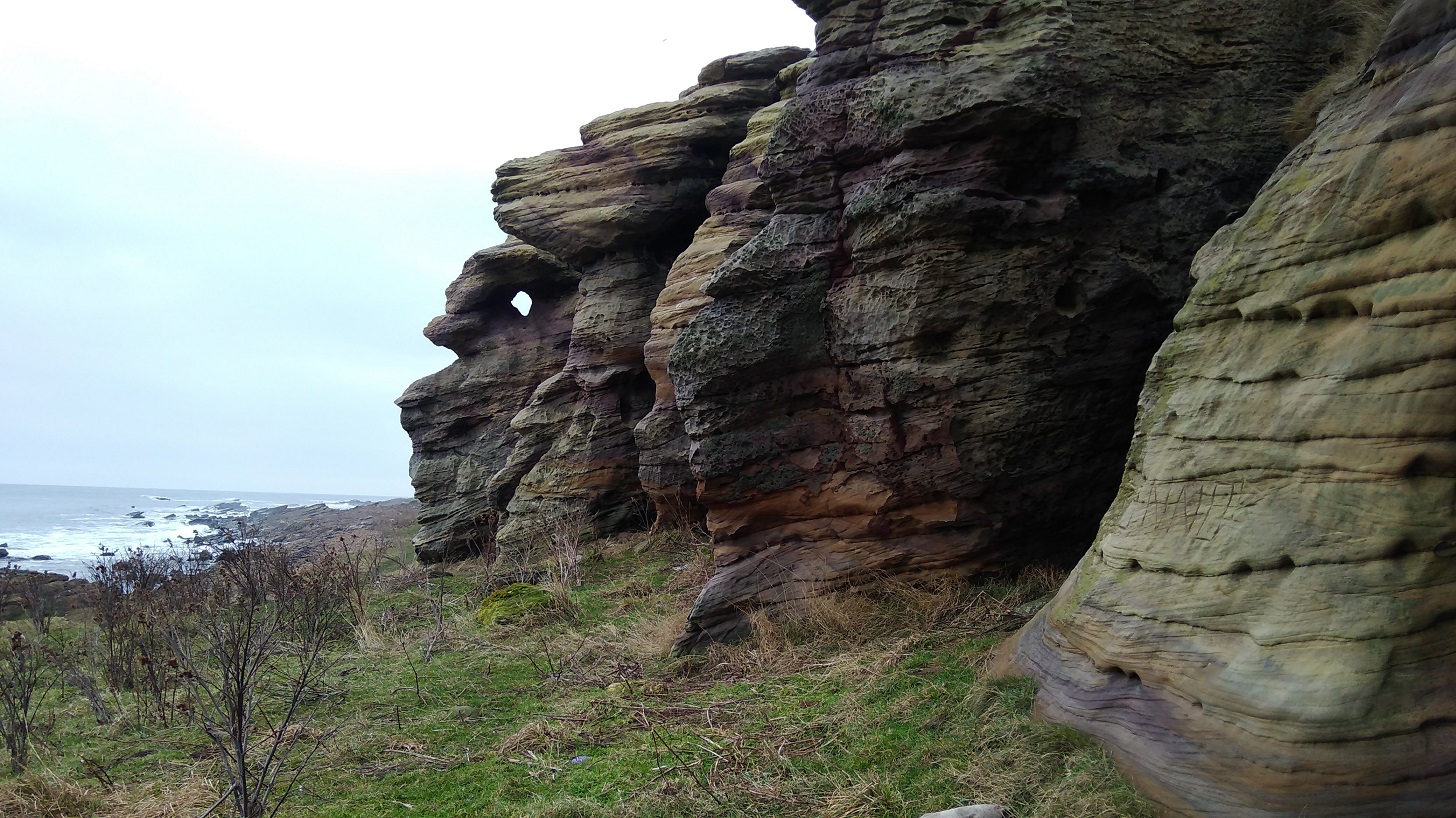
Next was a further geological treat: Buddo Rock, a stack of pink sandstone with a muted rainbow of organic colours and weathered into fascinating shapes and spaces.

Though time was galloping along, I had to stay a while and explore the nooks and crannies, gasp at the intricate patterns which had developed over centuries.

IMG_20190120_102947
The Baddo Rock in the deserted landscape where I was surprised by another photographer

It is gentle land, unassuming and quiet, seeing to itself. Nature and birds are simply doing their thing – a situation which allowed me to think about what I wanted and do what I wanted because it didn’t care.

IMG_20190120_103112
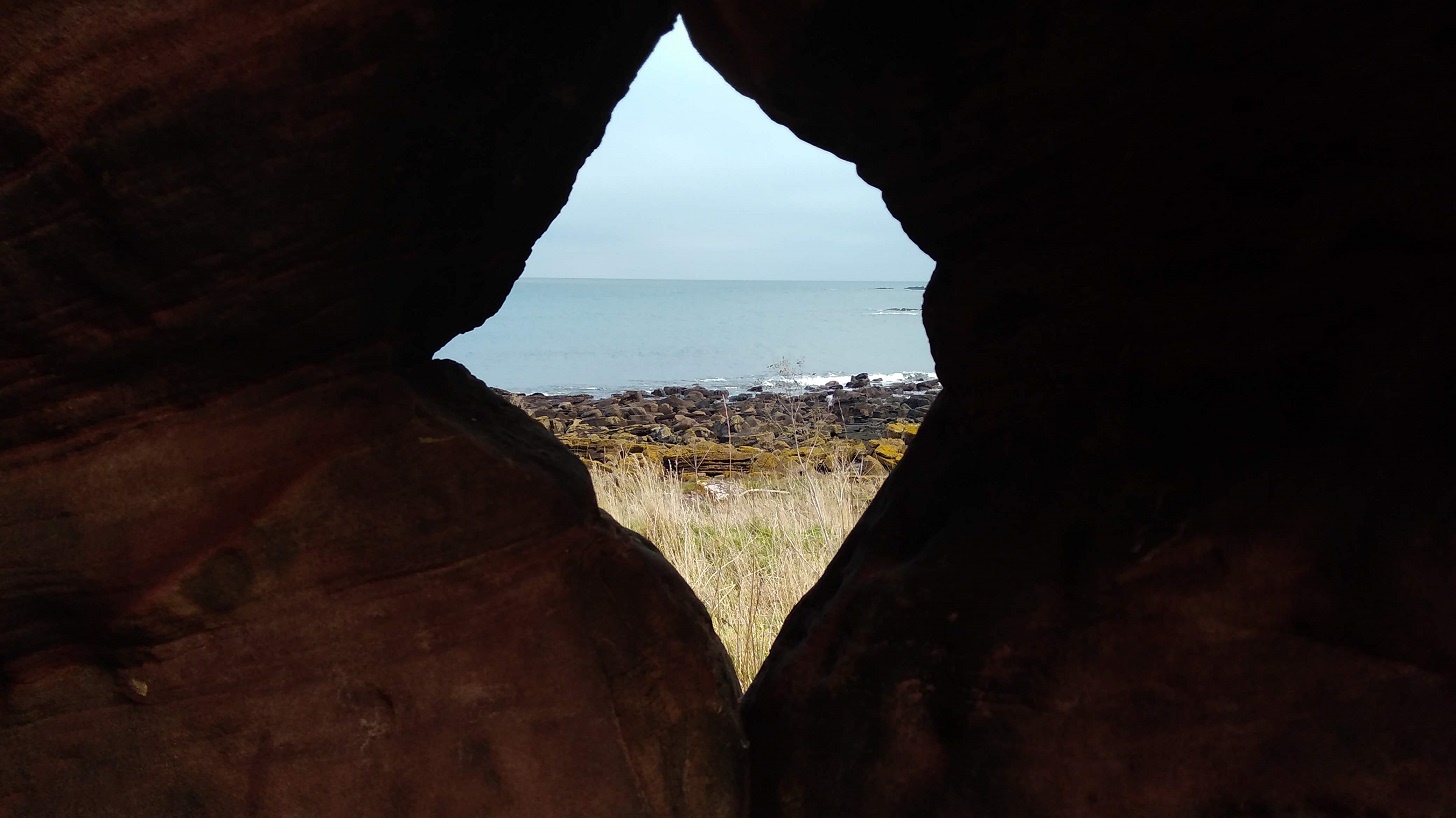
View through the rocks, Fife

Gorse and lichen, a matching yellow, were situated amongst twisted shrubs which were sharp and almost bare of leaves. I padded along soft paths at the sides of which the sun lit up swathes of bright beige grasses with lavender coloured seedheads. Drystone walls cut into the shoreline at right angles and the sea turned alternate shades of baby blue and slate grey depending on the cloud movement.

glowing grasses
St Andrews in the distance
St Andrews started to show, glowing in the distance while the coast behind me, when I turned round, was gloomy
IMG_20190120_105310
Up and down tons of steps, it was very steep and hard work. Then back on the shore before climbing again. Fife Coastal Path

A jogger ran past. A man was doing a pee, very embarrassed as he spied me.

IMG_20190120_105647
The sun went in and there was a definite sense that the rain might be coming on, then it cleared

There were more walkers than I had seen before on any of the FCP – there’s nothing like the Real Tough Part for attracting lots of folk! Both enthusiastic and uninformed walkers were there, I would have said, given what they were wearing on their feet. It sure was tricky in places: steep like a roller coaster, and a real scramble up jaggedy rocks at others. The water came very close, even before the tide turned, but I didn’t get my feet wet!

In one place there was a thin plank, the width of one foot, over a narrow chasm and a couple were in front of me. The man went first with the dog and held it as it growled at me. As I passed I heard him murmuring, ‘mummy’s coming, mummy’s coming’ as the woman with beautiful makeup stood still and wondered if she wanted to cross. She took her time – there was no other way.

Rocky coastline
There was a white bit of plastic to step onto but my short legs couldn’t reach it! Precarious with a rucksack

Further along was the Rock and Spindle – an eye-catching, rather thrusting geological feature standing separate from the crowd just off the main shore.

IMG_20190120_113019
Stones are set into the grass for climbing – sometimes with wooden hand rails and sometimes not. Pointing to the skies is the Rock and Spindle. See how the sea has eroded the land making semi-circular furrows which fill with water around it
IMG_20190120_113218
The Rock and Spindle closer up. Walking on pebbles, squelchy and noisy

St Andrews

High up on Kinkell Ness I stopped to ask directions from a very tall gentleman in an orange top with a beard with a petite woman and labrador beside him. Yes! 15 minutes over the high ground, he assured me, and I would be in St Andrews – I had done it, with a real sense of elation. I even laughed as the rain came down!

IMG_20190120_120602
St Andrews at last!

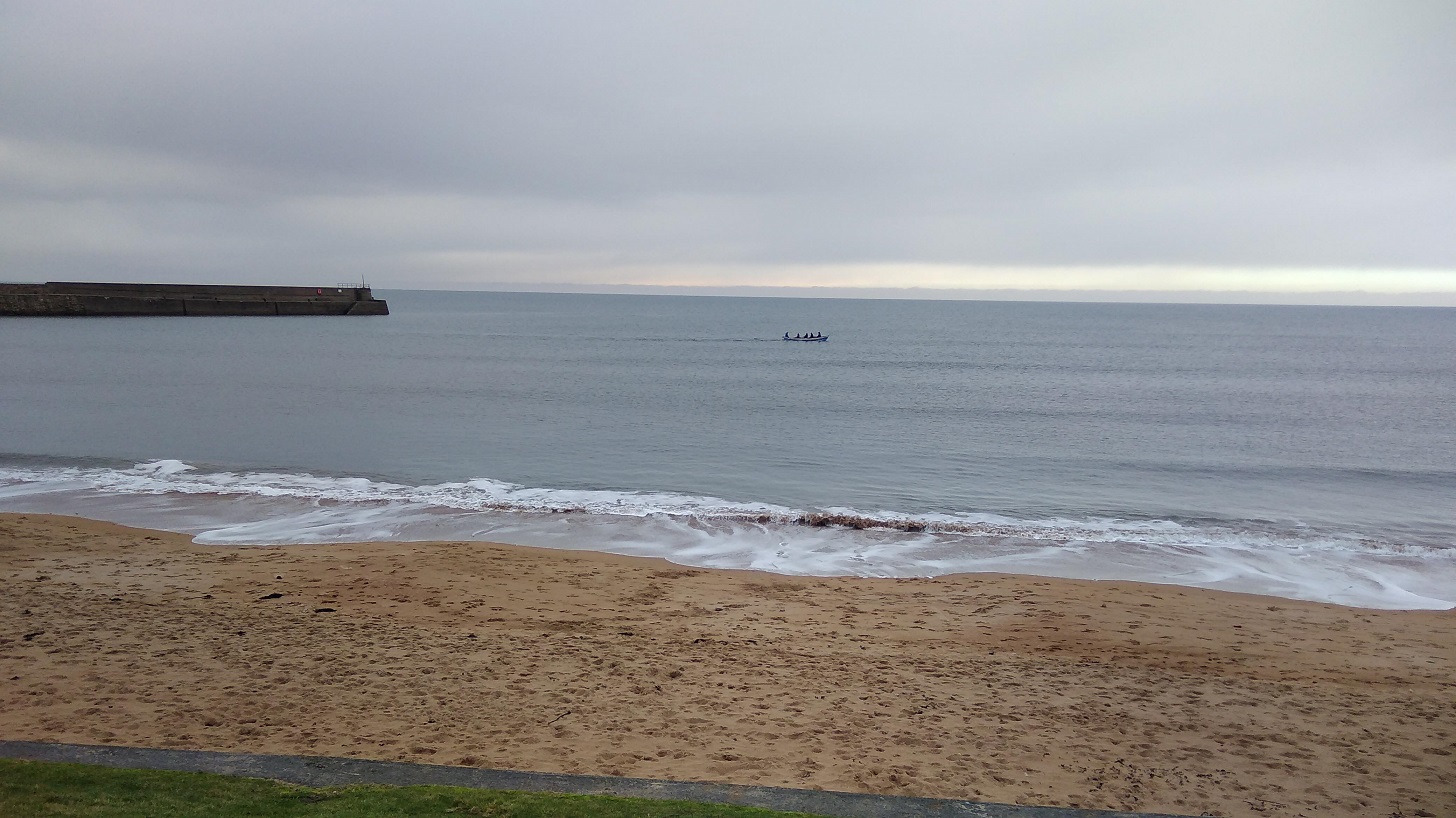
I heard children and looked down the steep cliffs to the beach, but no, it was a trick of sound over water – about 8 of them were in a boat out in the bay.

IMG_20190120_121733
East Sands, St Andrews

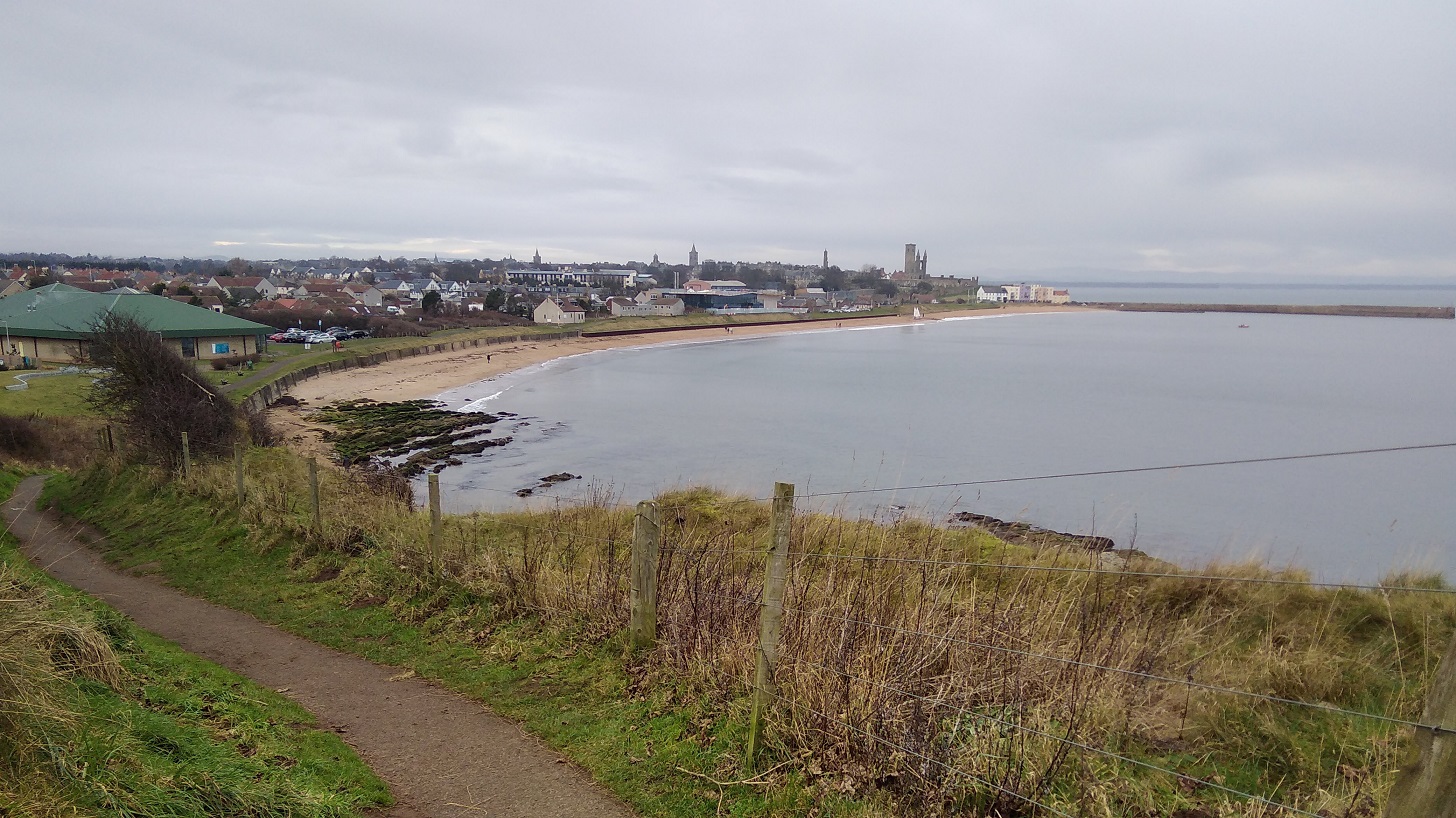
The astonishing thing is that you do actually get there, however exhausted your muscles are, Mine were all tense and brittle from yesterday’s exertion. On the East Sand, people wore trainers and sauntered with coffees, barking dogs and there were four white sails in the harbour.

IMG_20190120_120841
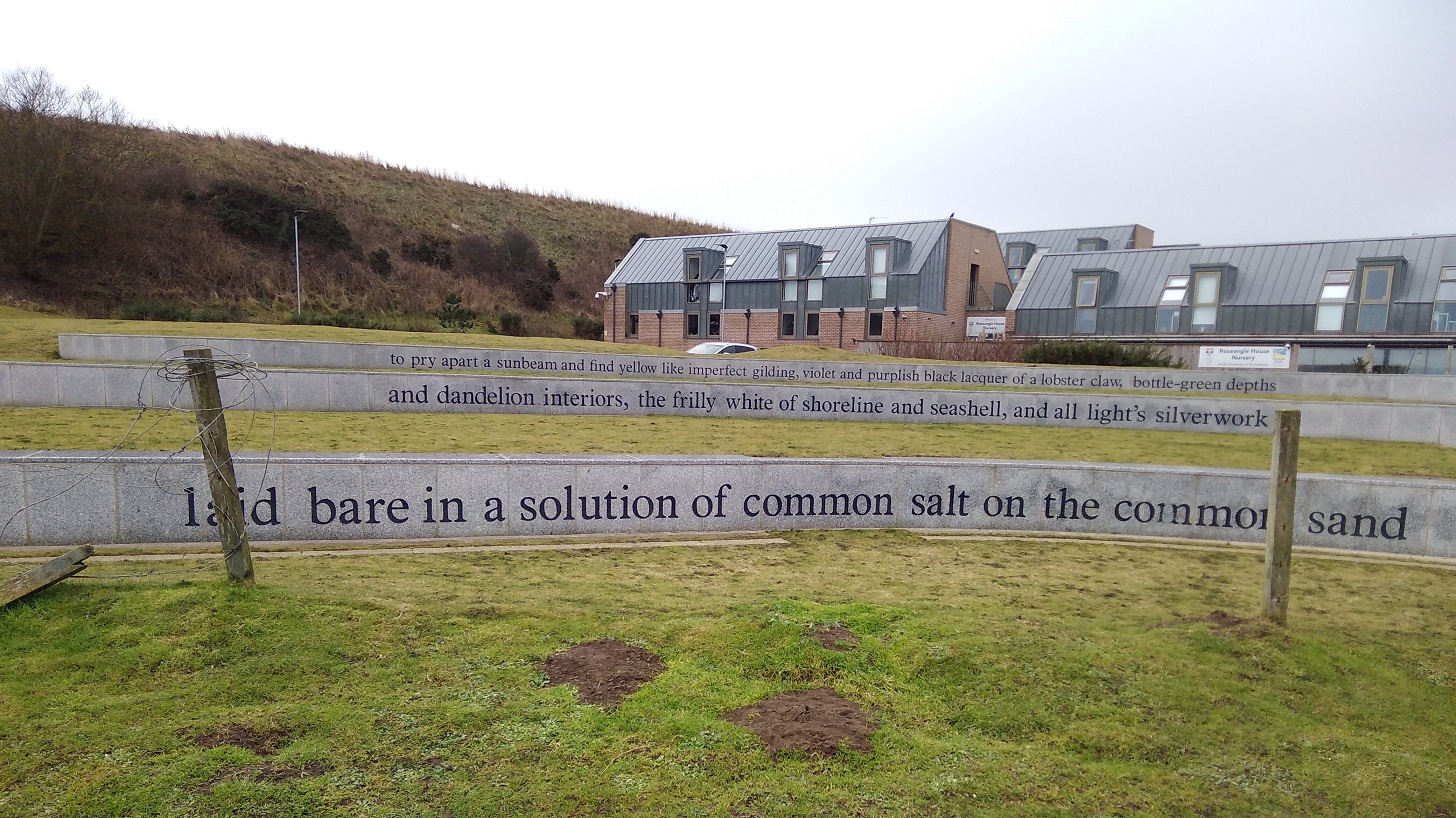
Jacob Polley’s poem, East Sands, Salt Prints winner of the TS Eliot Award for Poetry at East Shore, St Andrews

Reads, ‘to pry apart a sunbeam and find yellow like imperfect gilding, violet and purplish black laquer of a lobster claw, bottle-green depths and dandelion interiors, the frilly white of shoreline and seashell, and all light’s silverwork laid bare in a solution of common salt on the common sand.’

What did I find surrounded by a small crowd but the Cheesy Shack which I had seen advertised back at Kingsbarns Car Park!

There is the option here to carry on around the cliffs and past St Andrews Castle, or turn inland through the city. I did the latter. It was a bit of a walk as there are only a few places where you can cross the Kinness Burn and take the Pends into the city. I was pretty wet now and needed shelter.

IMG_20190120_122406
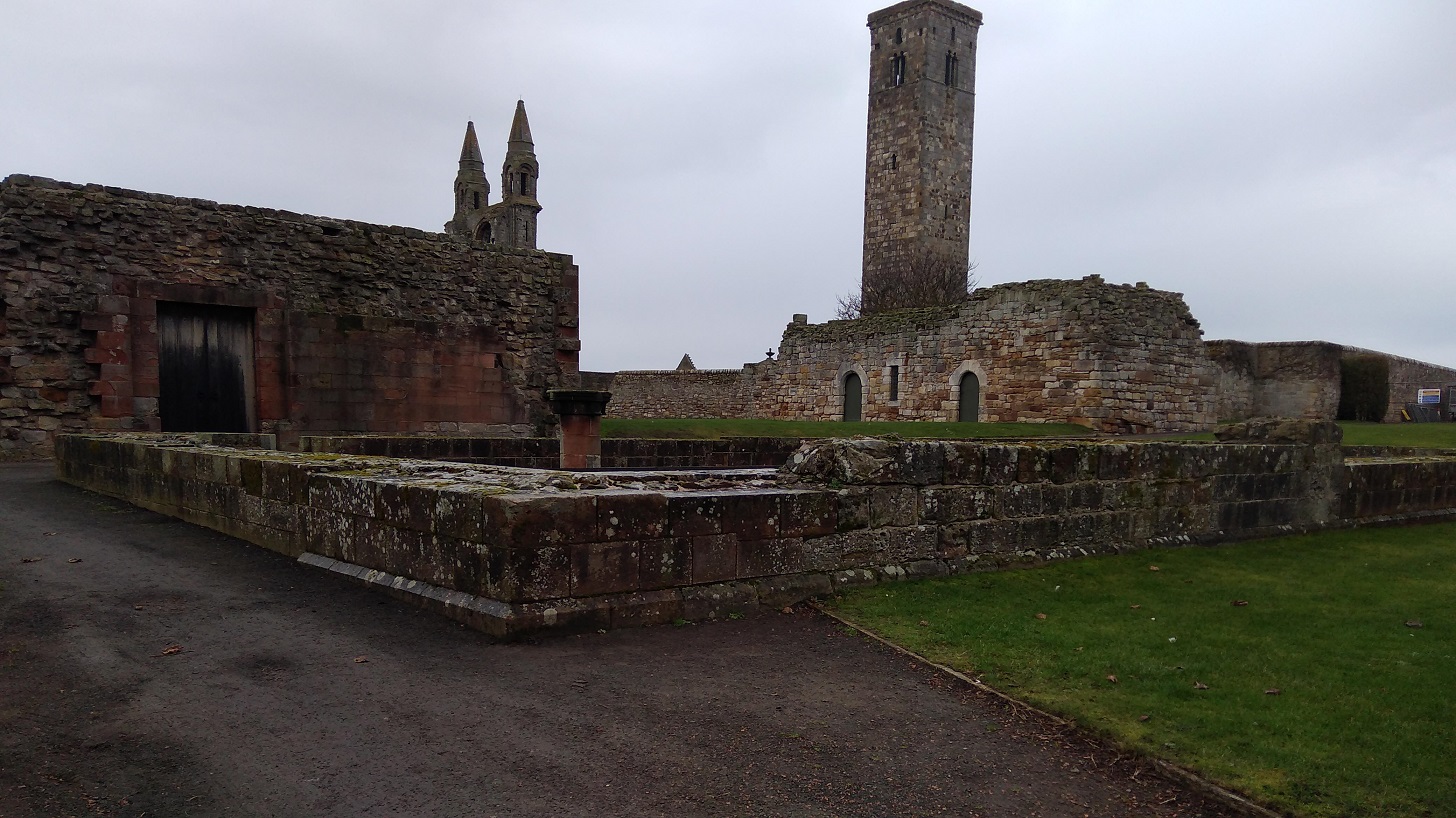
The Kirkheugh remains are near the Church of St Mary on the Rocks and St Andrews Cathedral on my right as I left the sea behind me
IMG_20190120_122547
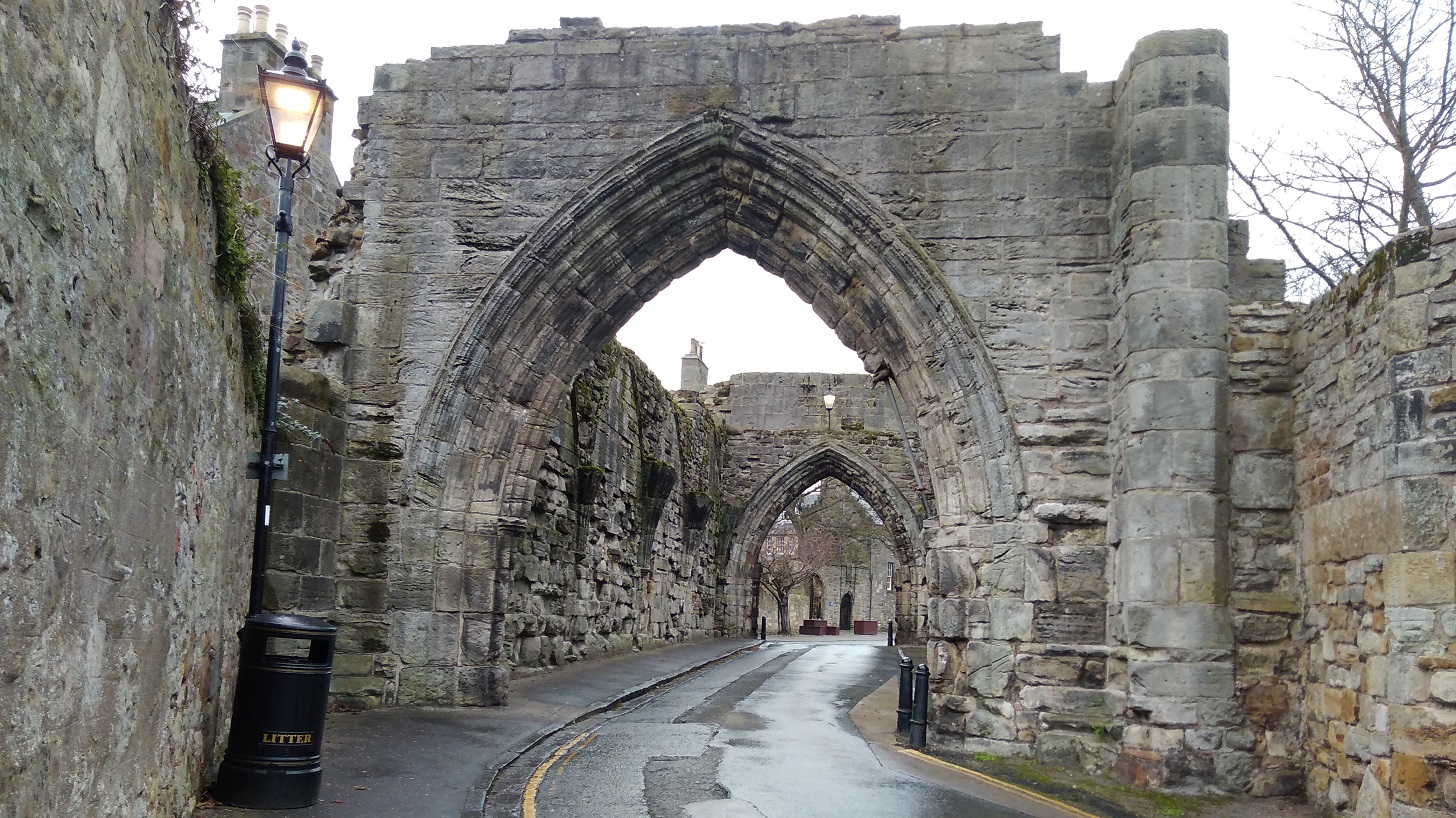
Under the arch of the St Andrews Cathedral Priory Gatehouse – Medieval ruins

I took a left along South Street to find somewhere to find hot food and somewhere to recharge my phone. The soup was spicy and warm at the North Point Cafe, an unsophisticated wee place where the staff were attentive.

Be very careful when picking up a path leaving a town – it is always one of the most difficult things on a trail like this. There is a massive and most famous golf course on the edge of St Andrews and in many places it is uncrossable, so do not skirt the sea (where the toilets were closed) or you will have a very long walk!

I eventually found my way into the club house and the receptionists were kind and let me use their sumptuous facilities!

IMG_20190120_135124
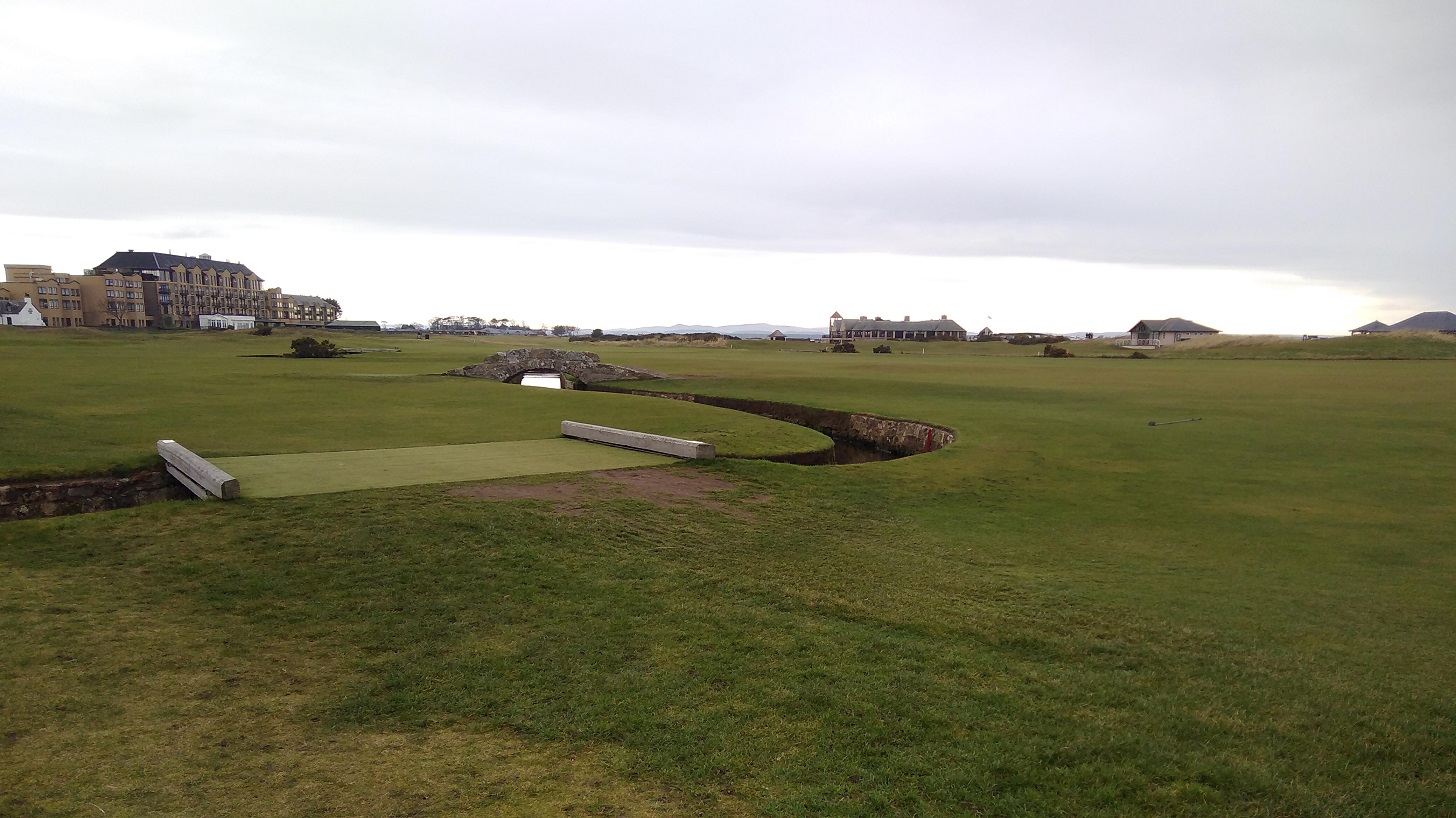
The St Andrews Old Course where the famous golfers play, with the Old Course Hotel on the left, in front of which the cycle path and the FCP runs to Leuchars

If you too stopped here for lunch here is my advice: find the main road A91 out of the city (the continuation of North street), direction: northwards. Alternatively you could ask for the Old Course if you dare (it is assumed you know where it is, as it is so well known!). Keep to the left of it ie do not follow the coast road through the car park (West Sands Road) even though it does say coastal walk, but instead head for the enormous hotel and the facade which is facing away from the sea, inland. You are looking for the tree-lined North Sea Cycle Path which goes to the left of the Tom Morris Building (turf on the roof).

cycle path
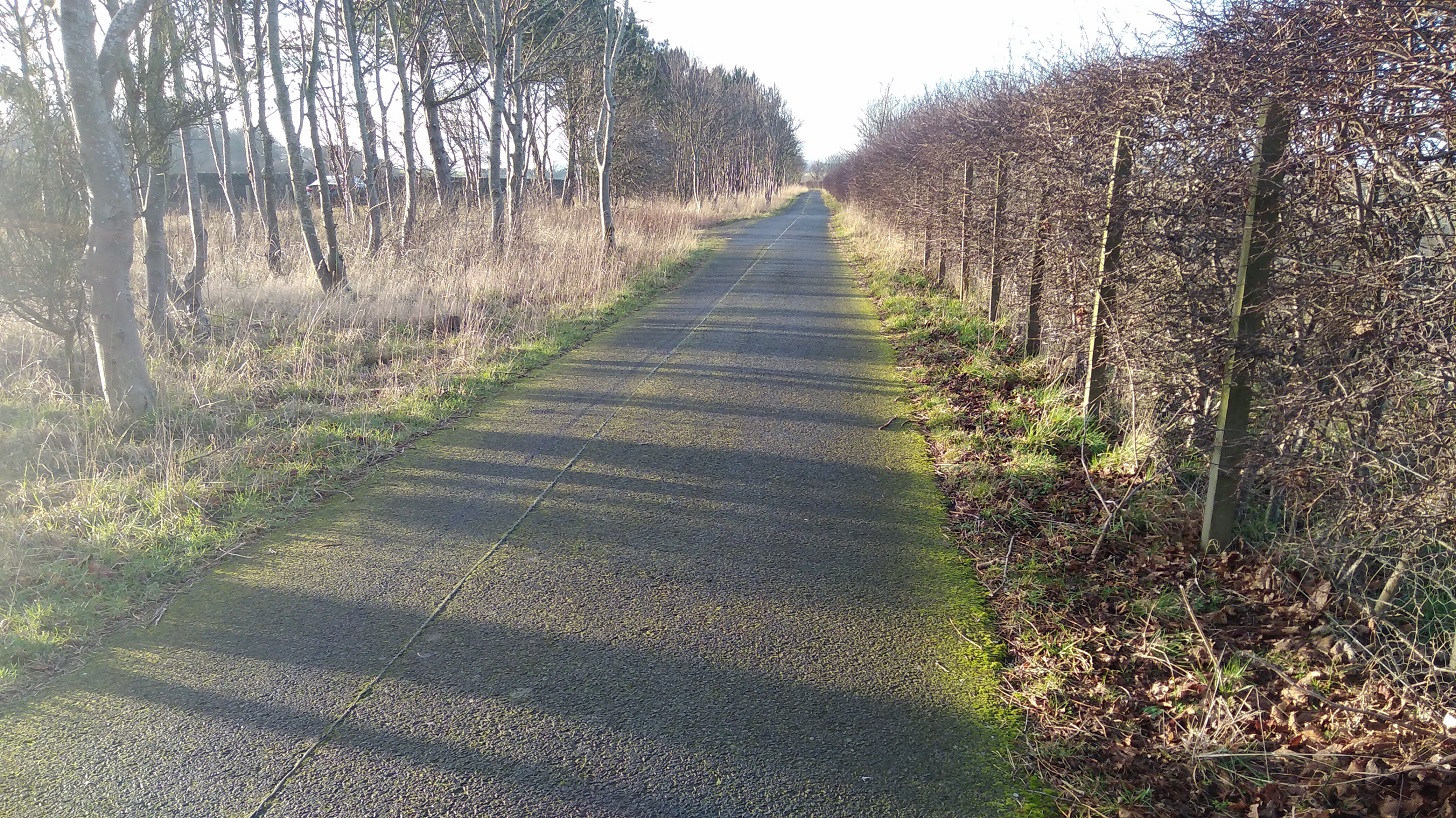
This straight path takes you from St A to Leuchars, the next village, and tracks the main road

It was a long haul on hard ground after such a challenging day and there is little to entertain you but traffic noise. I changed into my other shoes, but it felt like I was wearing slippers and my feet were sore. You could always take the bus as they are frequent and cheap.

IMG_20190120_151633
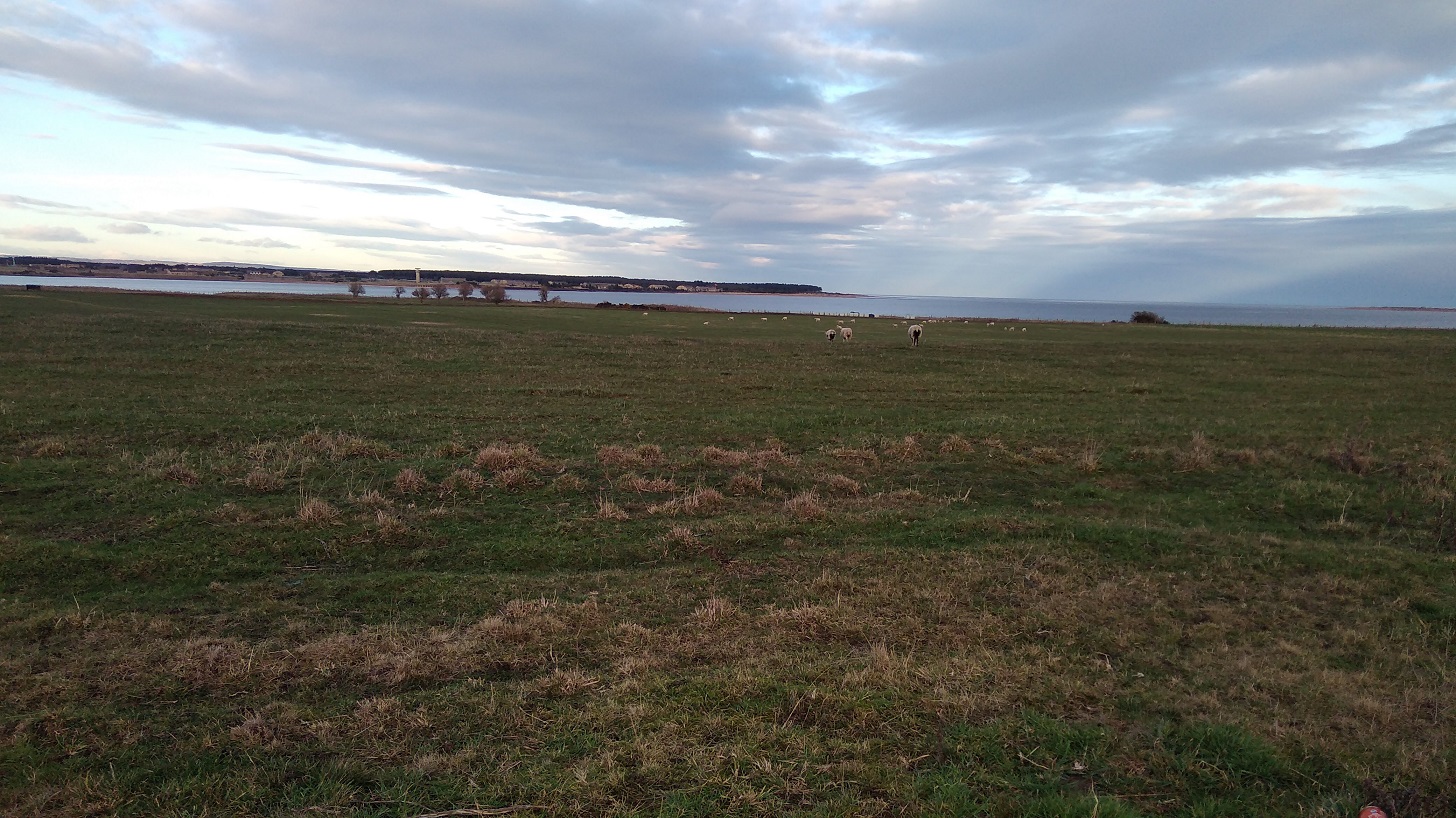
On the right is a Nature Reserve, close to Guardbridge and the mouth of the River Eden. Arable land (blackcurrants?) and pastures where sheep crop
IMG_20190120_153124
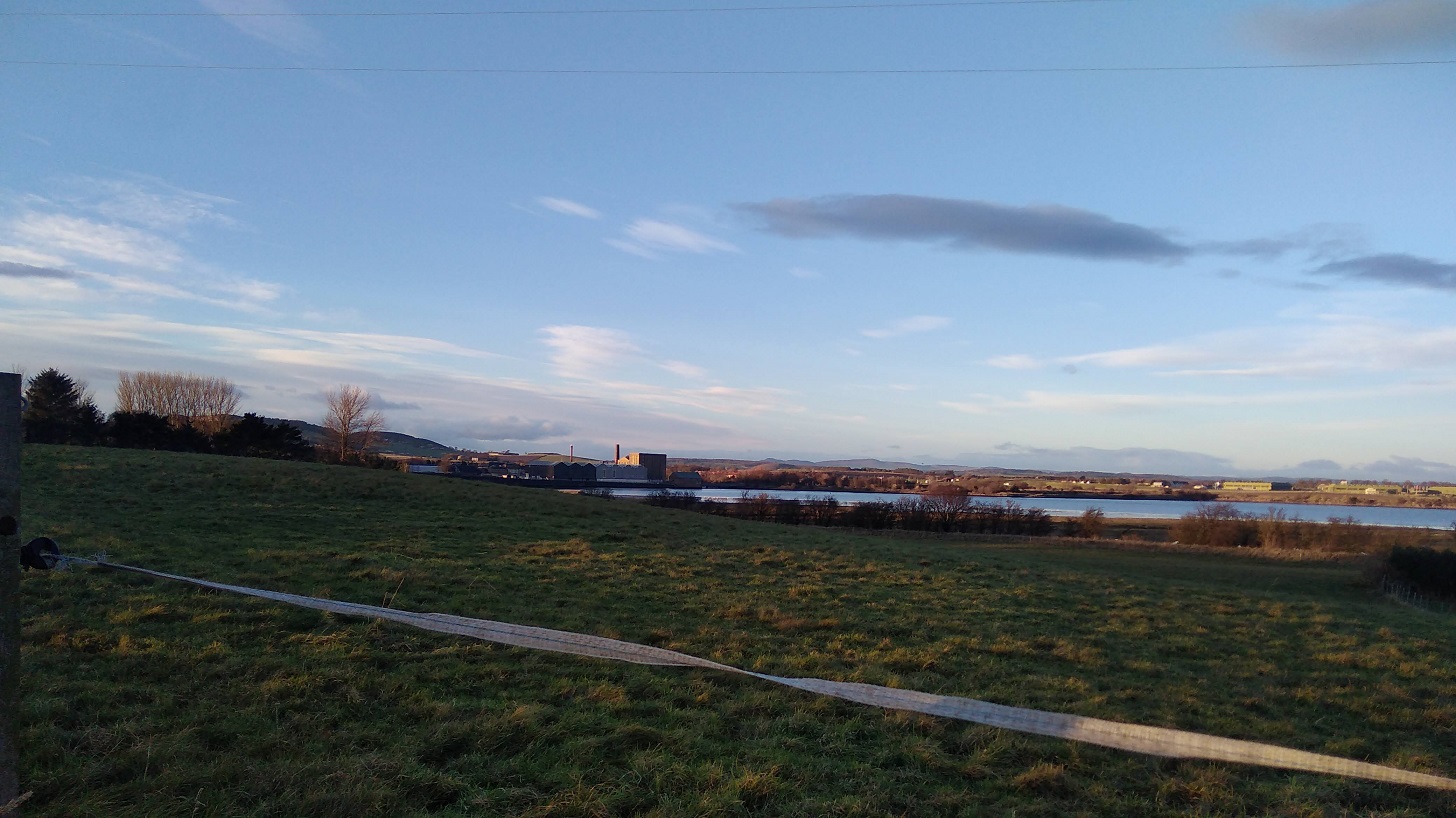
The evening light was low and the industrial warehouses and hills covered in snow in the distance were lit up

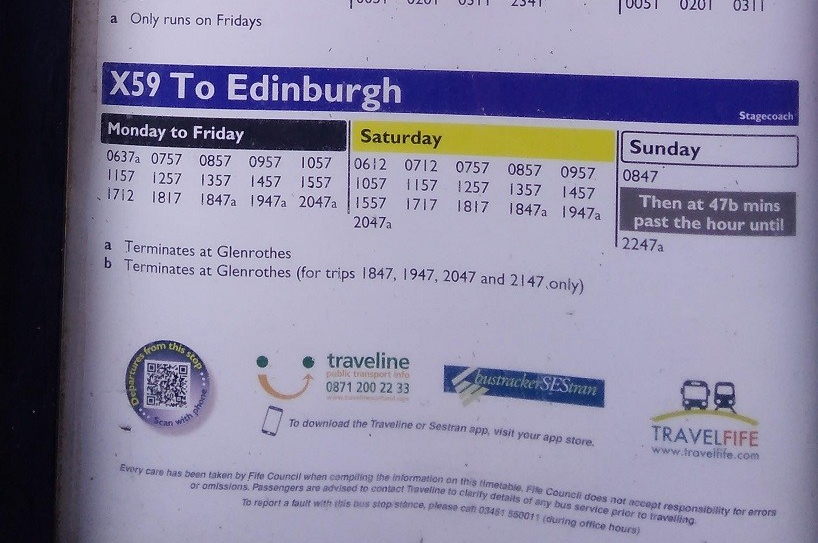
I was very tired and looking for the Guardbridge Hotel when I saw that I could get the X59 bus back to Edinburgh. I stopped and waited on the same side of the road where I had been walking until a local bus stopped and said I was on the wrong side!

Ten minutes later I was hurtling back across Fife, taking the route through Glenrothes towards the Forth Road Bridge and home in the dark. I hadn’t made it to Leuchars, the end of the day’s walk, but then again I had started at Kingsbarns instead of Cambo Sands.

IMG_20190120_154356
I have been reliably informed that Traveline (see the phone number at the bottom of the photo) is an excellent resource for buses all over Scotland.

You may be interested in:

Walking Scotland’s Coast blog

St Monans to Kingsbarns

Saturday 19 January 2019 (one year since the last leg of the journey). 26kms (16 miles)

IMG_20190119_083553

After last weekend’s walk on the Berwickshire Coastal Path I was aware of the short day-light at this time of year, so I set out in the dark with a rucksack that I found upstairs looking like it had never been used, telling myself:

  • It’s going to be harder than you think it’s going to be
  • You never know what’s going to happen

Slowly the sky lightened as I trundled through the countryside on the train from Edinburgh to Kirkcaldy, a blue glow over the misty fields. My phone registered one degrees.

IMG_20190119_084848
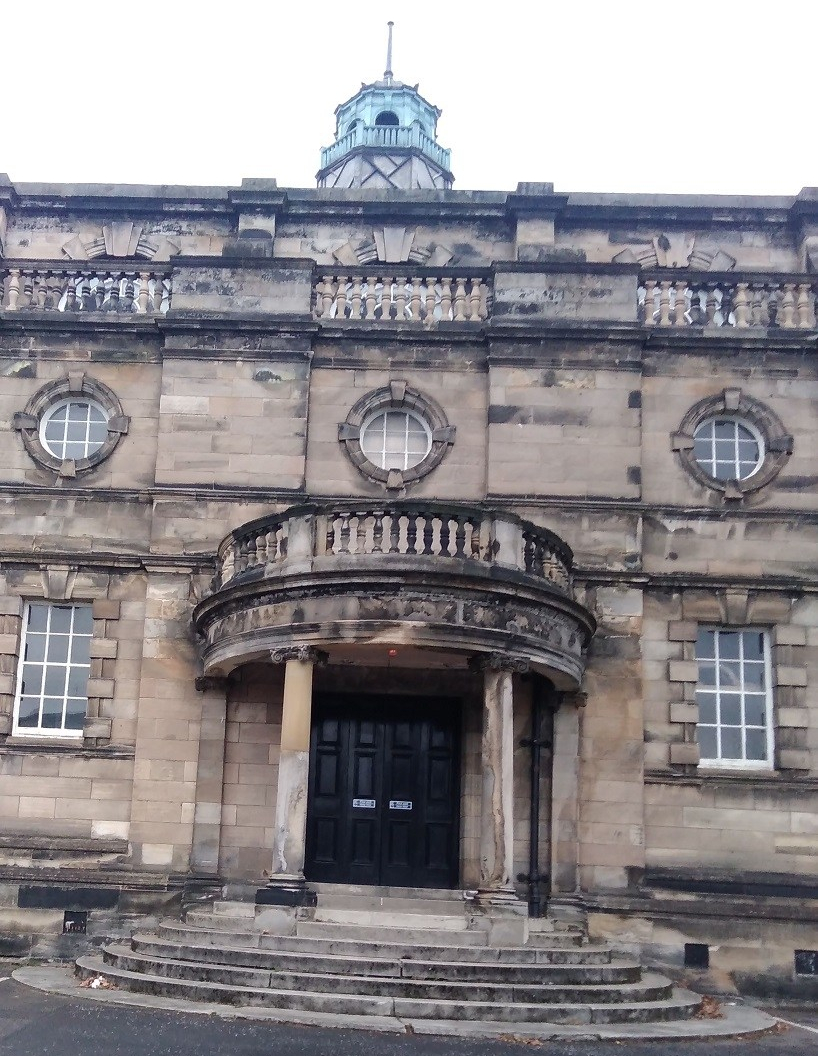
The majestic Adam Smith Theatre, Kirkcaldy, Fife

The X60 Stagecoach from Bennochy Road (close to Kirkcaldy railway station) dropped me off by the entrance to the Holiday Park with its puffin sign on the outside of St Monans and the memorial to George Hutchison 1945-90.

Time flies, Shadows fall, Love is forever, Over all.

By 10am I had walked through it and down the steps to the mirror clear water of the salt pans, the mini windmill, and onto the beach.

IMG_20190119_100033
On the sea side of the Holiday Park, St Monans, Fife

IMG_20190119_100354
The first of the salt pans where ‘at the end of the 18th century the dirty, smokey process of salt-making went on around the clock’ (public notice), St Monans, Fife

I heard the sea before I saw it as there was no wind. Somebody was ahead of me, somebody behind me.

IMG_20190119_100521
The windmill, another tangible reminder of the salt production industry, St Monans, Fife

IMG_20190119_100650
The remains of the St Monans pan houses where 6-8 tons of coal was needed to produce 1 ton of salt. Fife

Like last weekend, white waves rolled over themselves, but there were no cliffs just flat, jagged rocks the colour of sandstone. Closer to the water they were black, etched deeply, at right angles to the land making little coves of apricot sand. A yellow gorse bush was tucked under the eroding edge. A pair of mallards drifted, and the air was very still with the smell of smoked fish.

Big white birds perched on the outcrop and, looking closely, almost hidden, black-on-black, large dark ones as well, one standing up and opening its wide wings: cormorants.

IMG_20190119_100946
Water sliding over the rocks, slippery with weed in shades of teal

IMG_20190119_101334 (1)
The constant sound of the waves as the tide came in

IMG_20190119_101425

I could see Pittenweem’s orange roofs ahead but it was too early for a stop. I was hoping to find somewhere to buy something to eat later on though, as a picnic with my flask of (not very hot) Jasmine tea.

IMG_20190119_102407
The approaching view of Pittenweem, Fife

A bunch of friendly ladies all dressed in pink and purple left strong wafts of perfume as they chattered by, each saying ‘morning’ to me.

I had expected a cold bright sunny day like yesterday, but it was dull instead so I could not see into the distance and it was warmer as a result.

IMG_20190119_102928

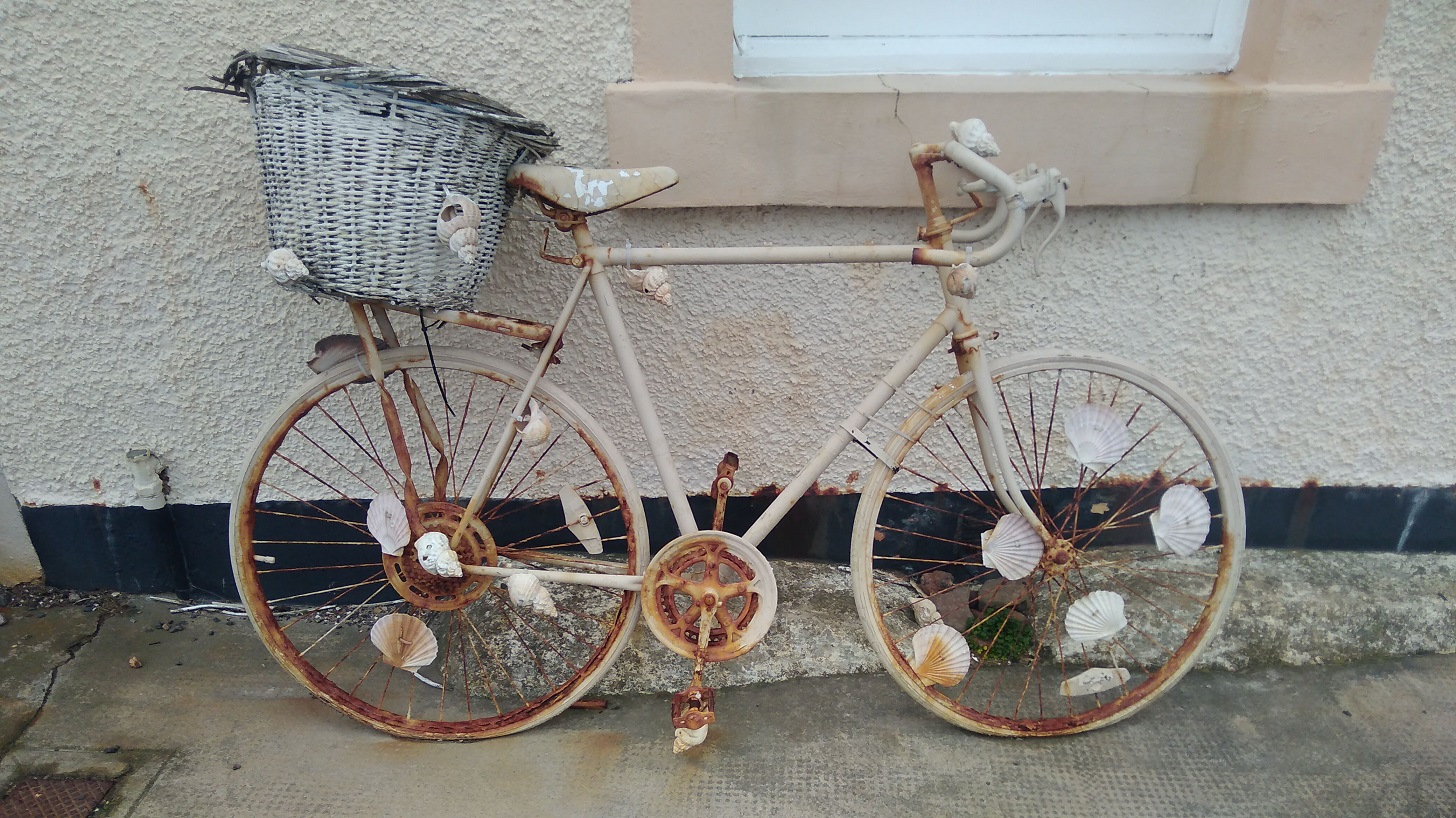
Here the stink of seaweed was palpable and friendly dog walkers were out and about. Pretty cottages, all marled in pale hues – beige, pumpkin, baby blue and the odd lavender – line the harbour. Wood smoke hung in the air and as I passed a bicycle decorated with scallop shells I wondered if it was owned by a fellow camino walker.

IMG_20190119_102828

In Pittenweem I could have tasted ice cream or supped on fish and chips, drank a dram at the Larachmhor Tavern or admired the arts and antiquities off to the left. Were the toilets open? Yes, and well supplied – warm, light and clean – excellent as public facilities go. What I couldn’t spot was a food shop. Pittenweem is an active harbour, however it being the winter months, the Dory Bistro and Gallery was shut and there were few people around considering it was a Saturday morning.

IMG_20190119_103647
Pittenweem harbour, Fife

Coming out of the village, I noticed that there were not many wild flowers – one or two orange marigolds (calendula) and a few with tiny dandelion-like heads to a stalk. The path goes along the back of what look like holiday cottages. Here pink mallow in someone’s garden, there a pinky-purple hebe, otherwise not much colour at this time of year.

IMG_20190119_104710
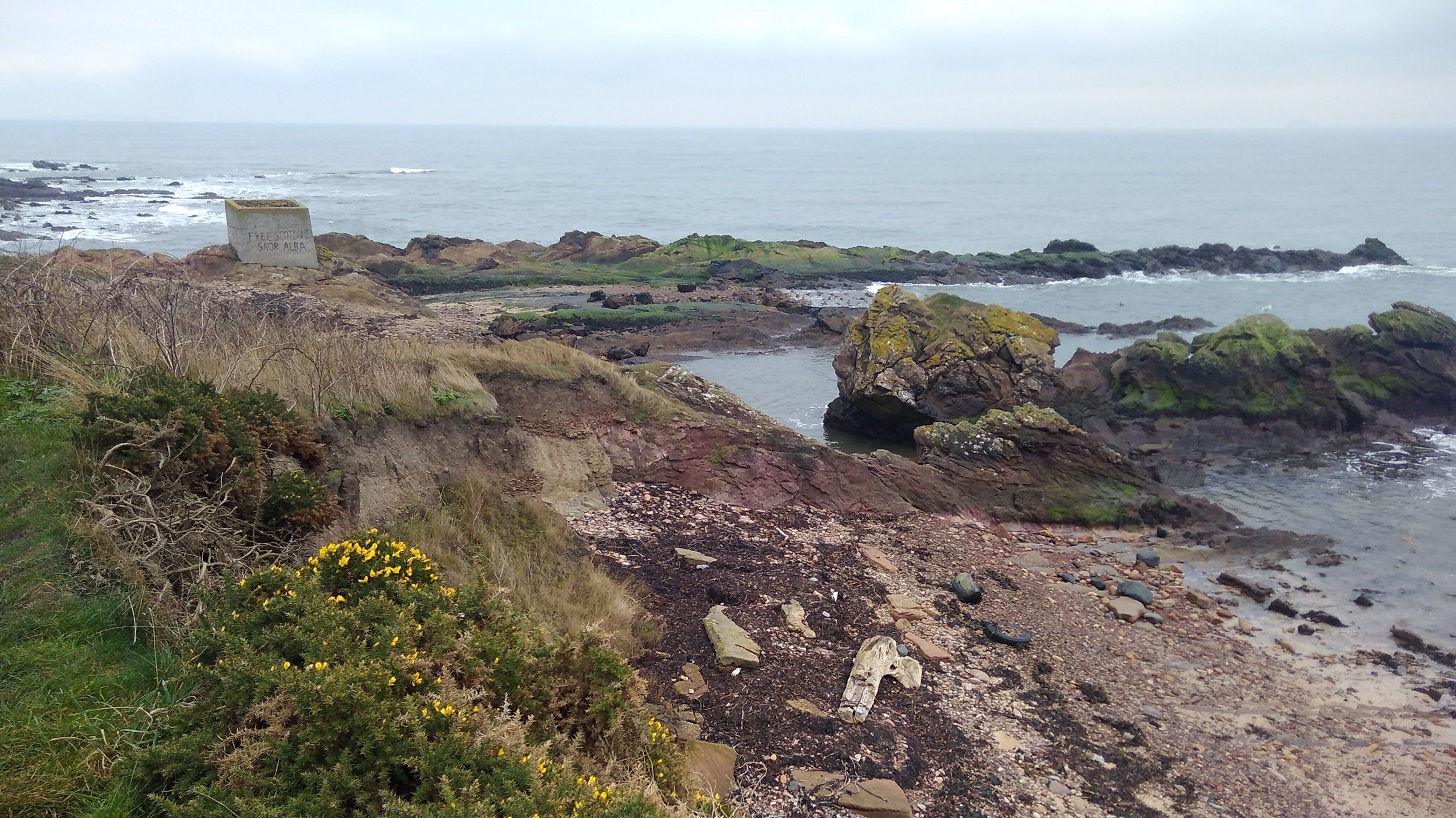
Found poetry: soar alba / free Scotland scrawled in Gaelic, and ‘bee (sic) happy’ written in shells on the rocks

I was walking higher up now above the sea and behind a fence. Down below, right by the shoreline were man-made concrete blocks, presumably the remains of WW2 battlements or look-out towers. On my other side were well manured and beautifully ploughed dark brown fields.

The cropped green of the well manicured links (golf course) contrasted with the improvised yellow lichen of the fence posts.

A cormorant’s proud neck and head were at right angles to its body and suddenly it dove down amongst the tumultuous waves.

IMG_20190119_105744

Then I too was right down by the beach, enjoying the lovely gentle colours of the rocks – threads of khaki and caramel with carmine underneath and black above.

Sparrows trotted along with pointy beaks dabbing amongst the blades. A single cormorant flew past, neck reaching, its body the shape of a black cigar remaining dead parallel to the sea, while both black wings flapped up and down simultaneously.

I passed a big group of hikers, some of them properly dressed to tackle the north face of the Eiger. A castellated tower had a list of names below it; a war memorial.

As I entered Anstruther I spotted a street labelled ‘Formerly Witches Wynd’. I thought wryly, that’ll be before they killed them then!

IMG_20190119_110800
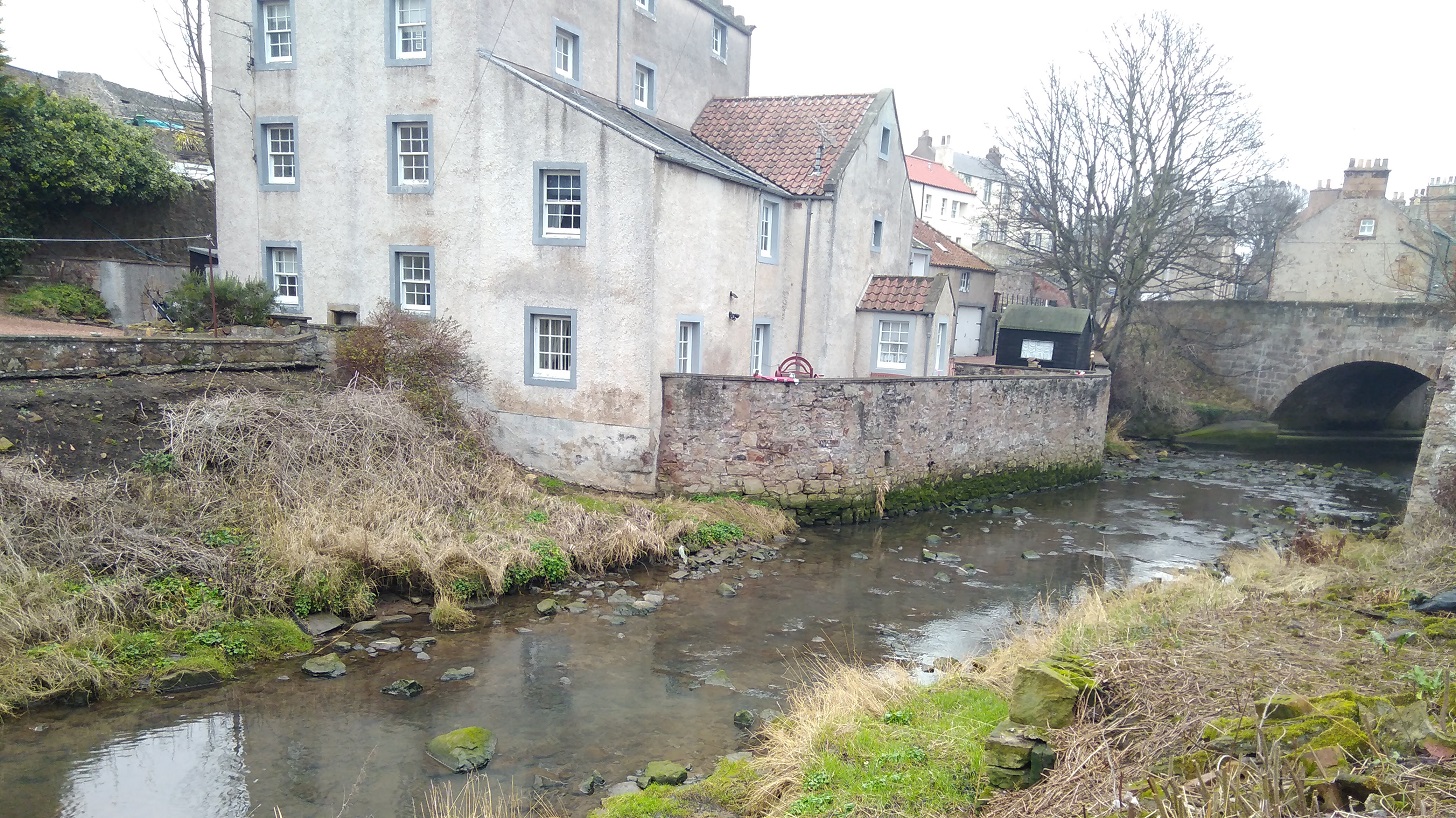
The Dreel Burn, Anstruther, Fife

A nearby sign read: ‘James V travelled incognito through Fife as the ‘Guid Man o’Ballengiech’, coming to the Dreel Burn and fearful of wetting his hose, he was carried across at this point by a stout gaberlunzie (beggar) woman, who was rewarded with the king’s purse.’

IMG_20190119_110956
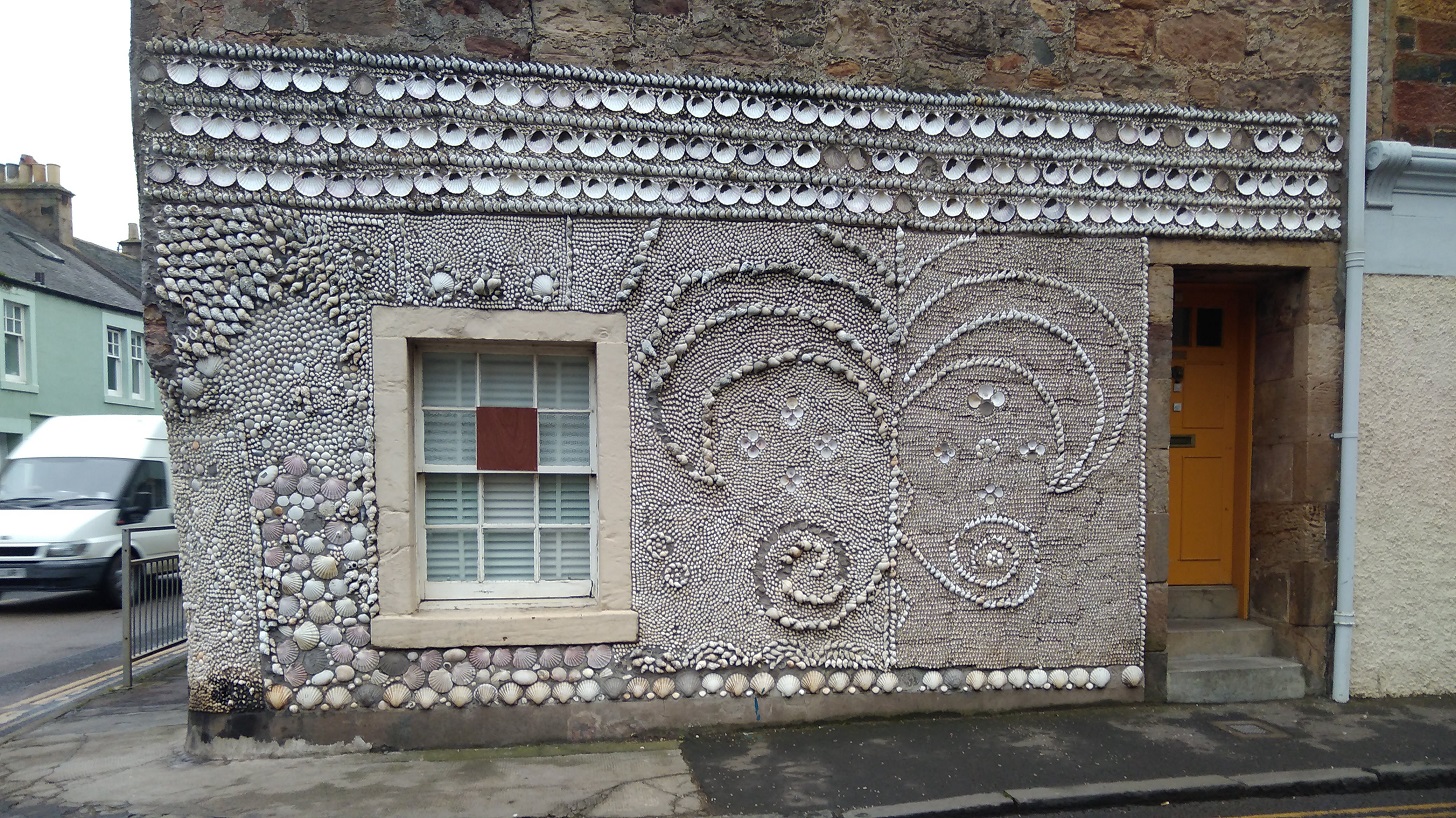
Shell House, Anstruther

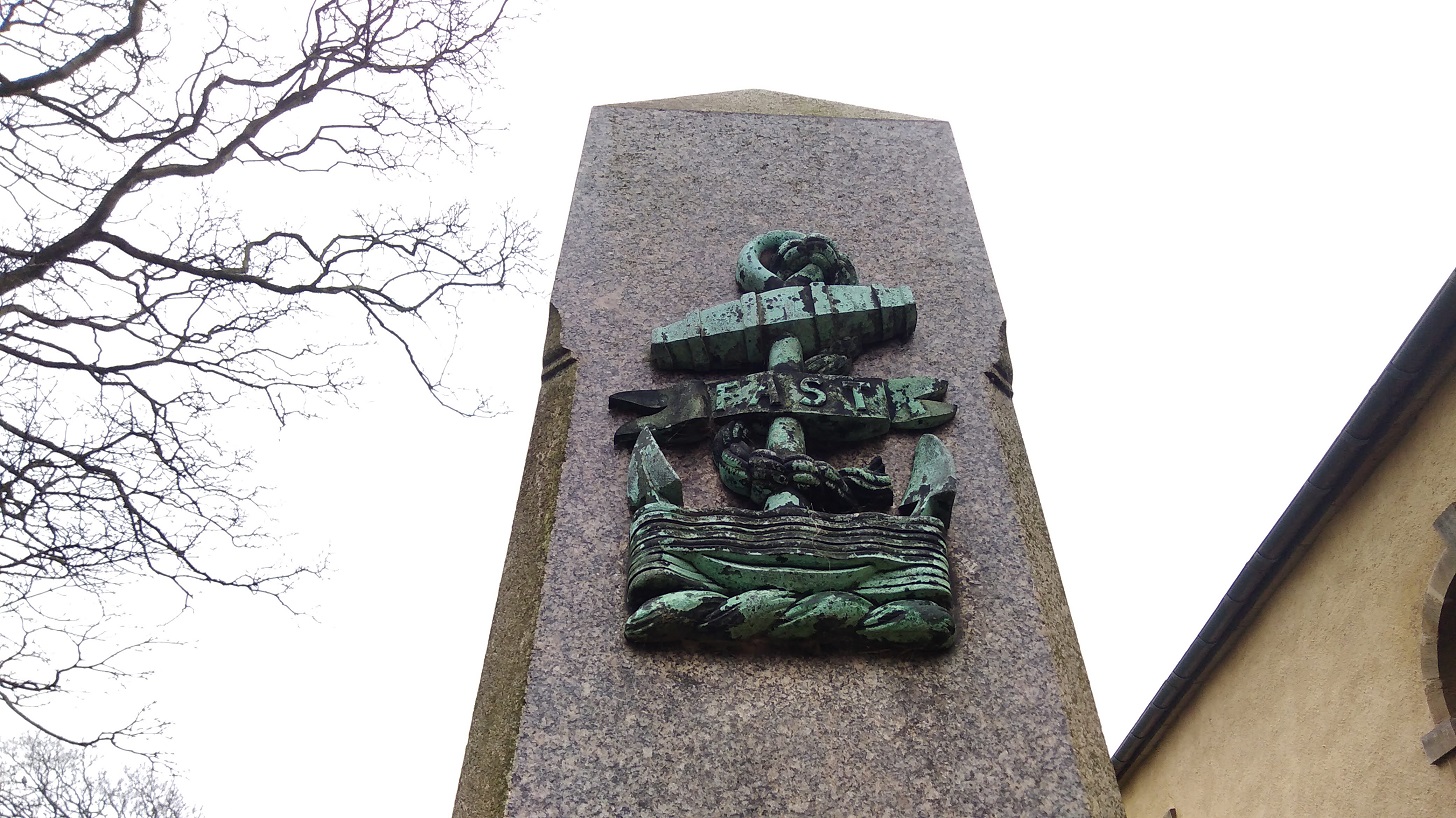
Around an extremely sharp and very dangerous bend with no pavement, was more coquille Saint-Jaques decorating a house and the Dreel Halls with a lot to see – the church architecture, its graveyard and various monuments and inscriptions.

IMG_20190119_111029
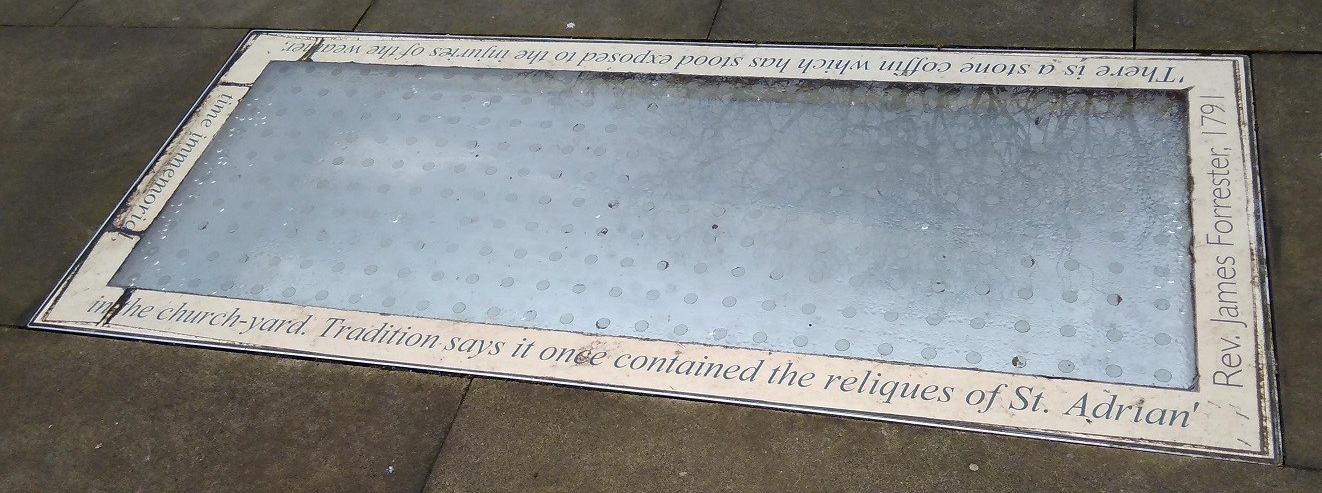
Concealing a casket, Dreel Halls, Anstruther, Fife

Around the glass the inscription reads: There is a stone coffin which has stood exposed to the injuries of the weather in the churchyard. Tradition says it once contained the relics of St Adrian. Time immemorial.

IMG_20190119_111118

Written on the stone is a poem about God:

‘…He drops into the kirk, and sits as sunlight on a rear pew. It is warm, the sermon’s mighty long.  He sucks a mint and dozes…’

Taken from ‘In Anster’, engraved on a stone in the yard, by Andrew Greig, 2013 who grew up in the town.

The path takes walkers into the town but remember to take a right turn at the wee shop, walking between the A & A Stores and The Bank hotel! The path turns quickly to the right down a very narrow wynd back to the sea.

IMG_20190119_113021

At the harbour there is the ubiquitous fish bar plus a post office, cash point and the Scottish Fisheries Museum (shut but the cafe was open and there were eco toilets that I have never seen before where the water for cleaning your hands fills the cistern after use).

You can learn about the desperate outcome of a collision in 1918 between submarine troops on an exercise who, due to the wartime blackout, collided with minesweepers, leaving 108 dead.

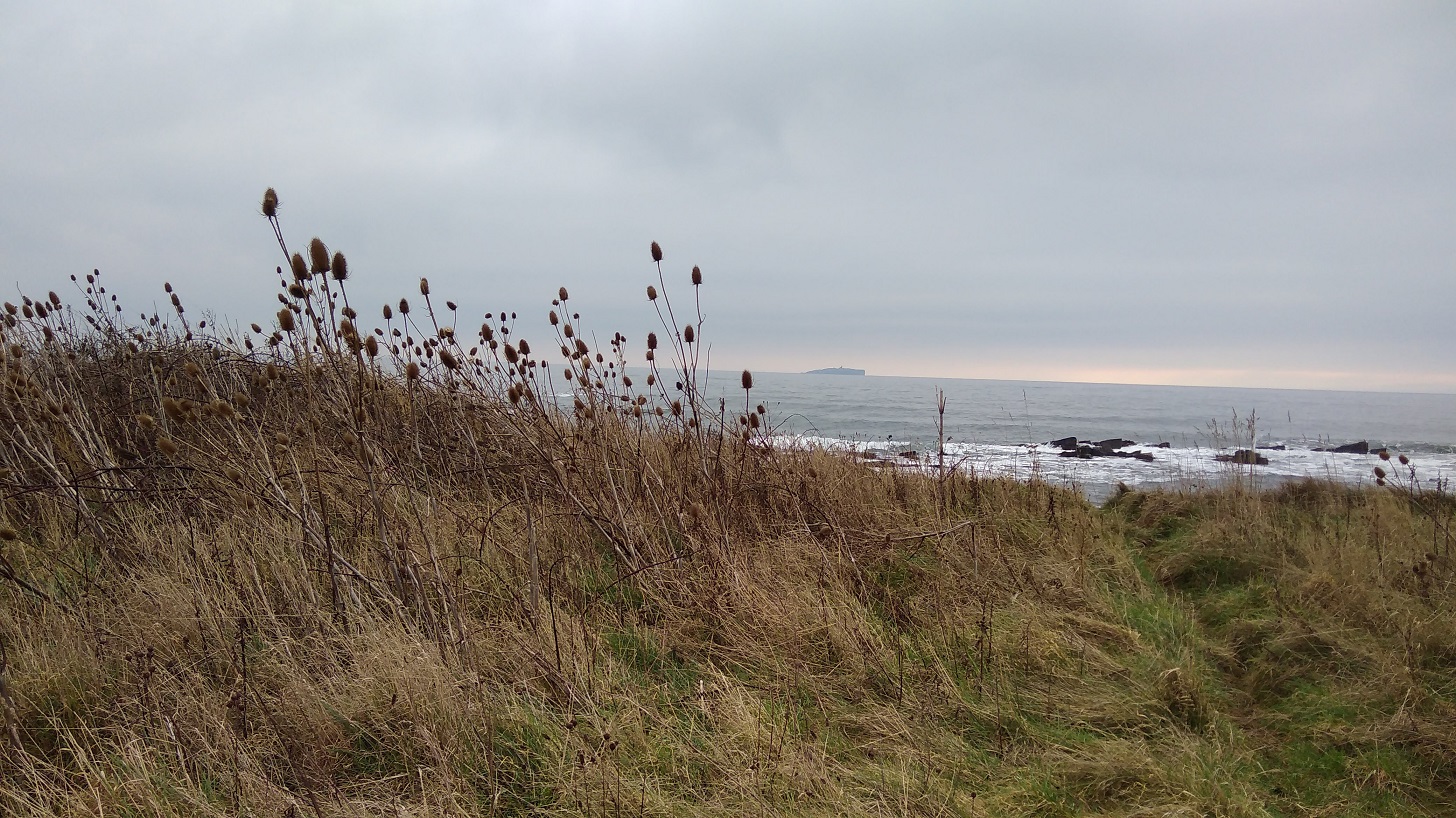
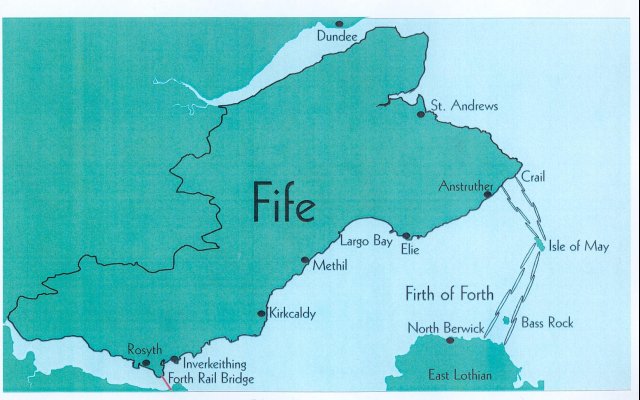
This is where one can take a trip to the Isle of May during the summer months.

IMG_20190119_122244
Teasal plants and an orange glow to the horizon where you can see the Island of May

Islands of the Forth

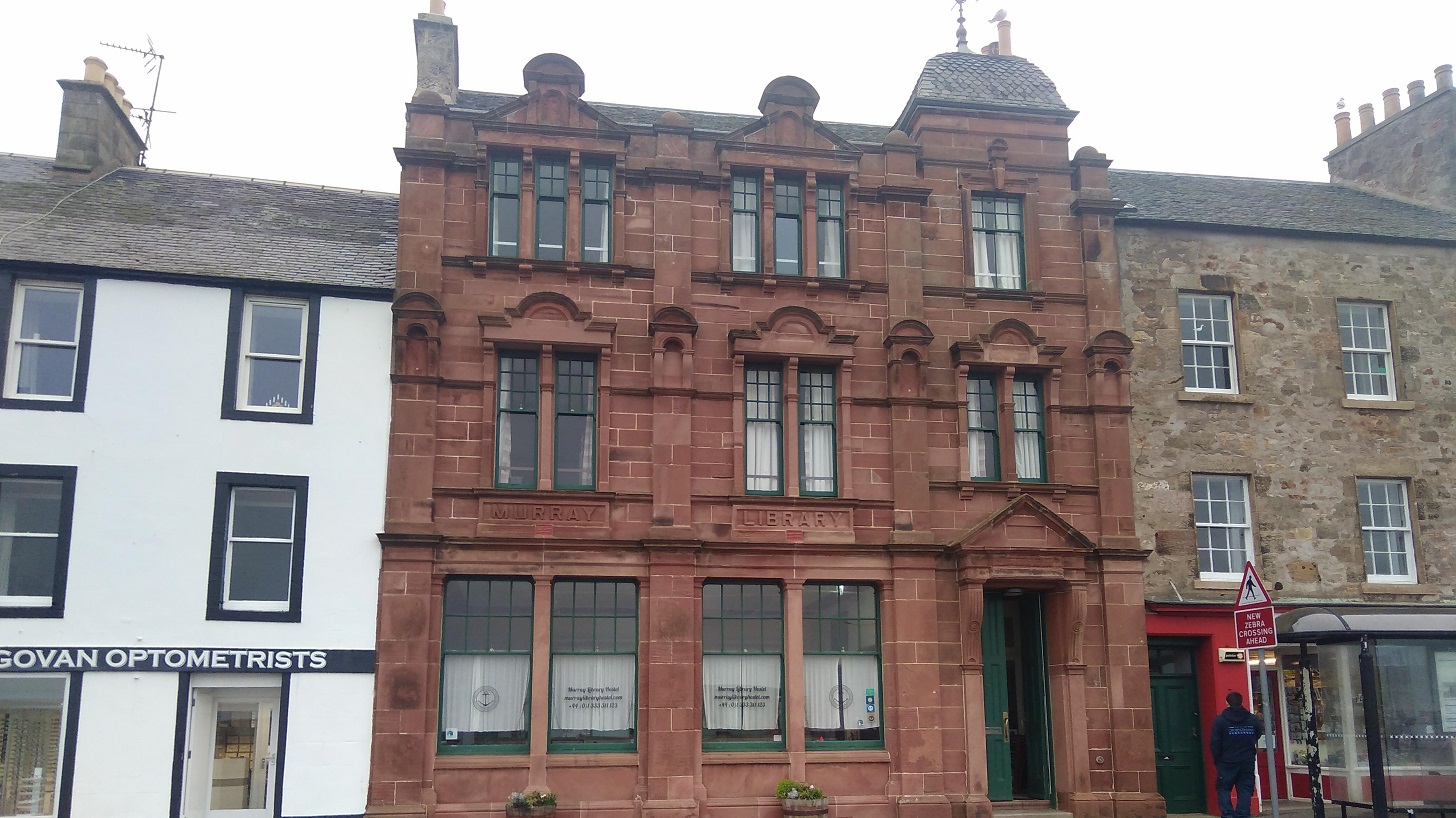
Anstruther is an extensive town made up of 3 or 4 boroughs (depending on which source you consult). It was bustling, and I happily spotted the elegant hostel where I would be spending the night.

IMG_20190119_111941
The Murray Library Hostel, Anstruther. I gave it 5 stars

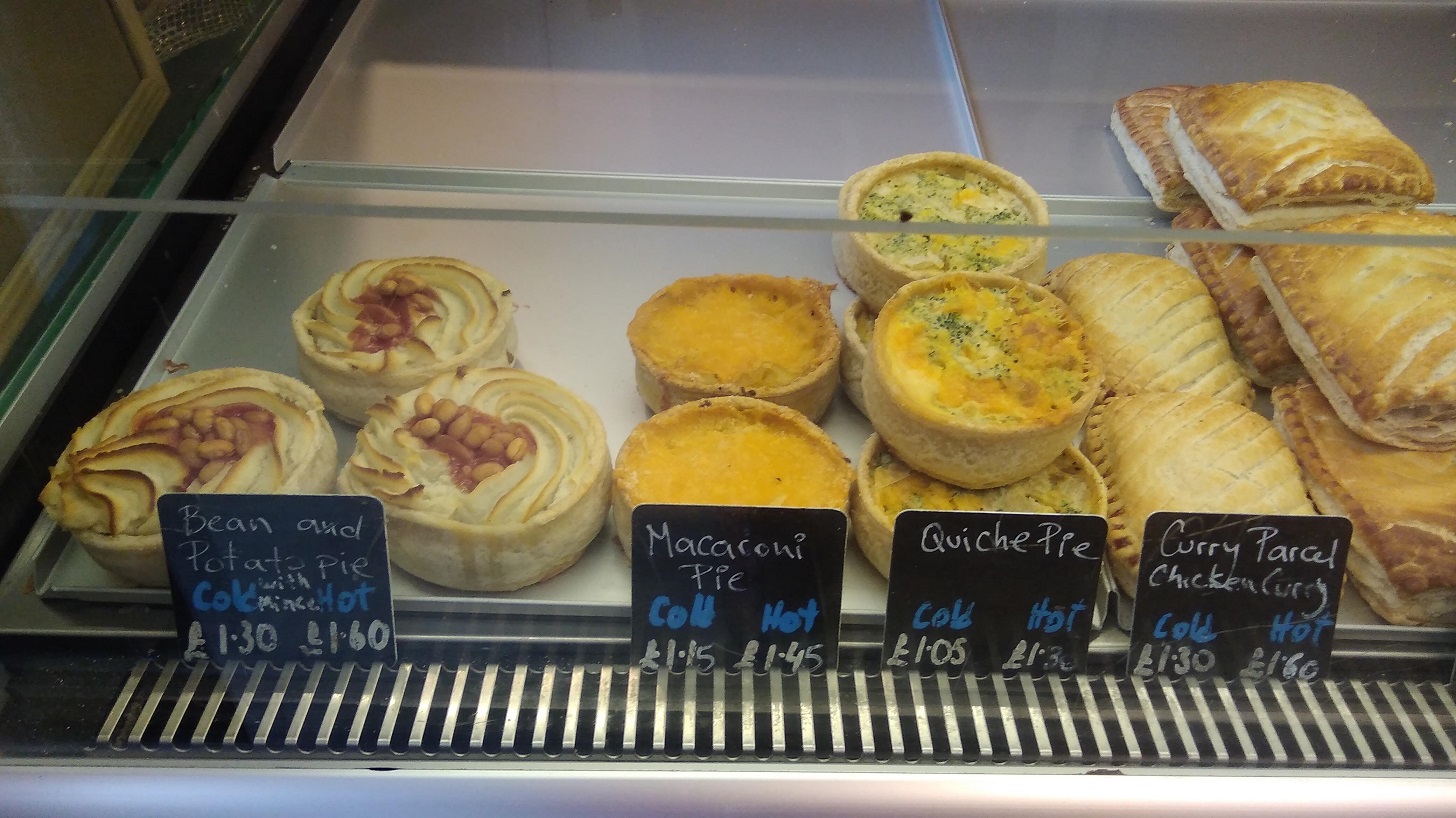
Nearby was an artisan bakery where I treated myself to an expensive packet of thick and chunky cheese oatcakes (made, so the board informed, of ‘Anster cheese crafted by Jane Stewart’) which came in very handy for the remainder of the trip (ie I ate them for breakfast, lunch and tea!)

IMG_20190119_112022
They were also selling traditional Scottish fare!

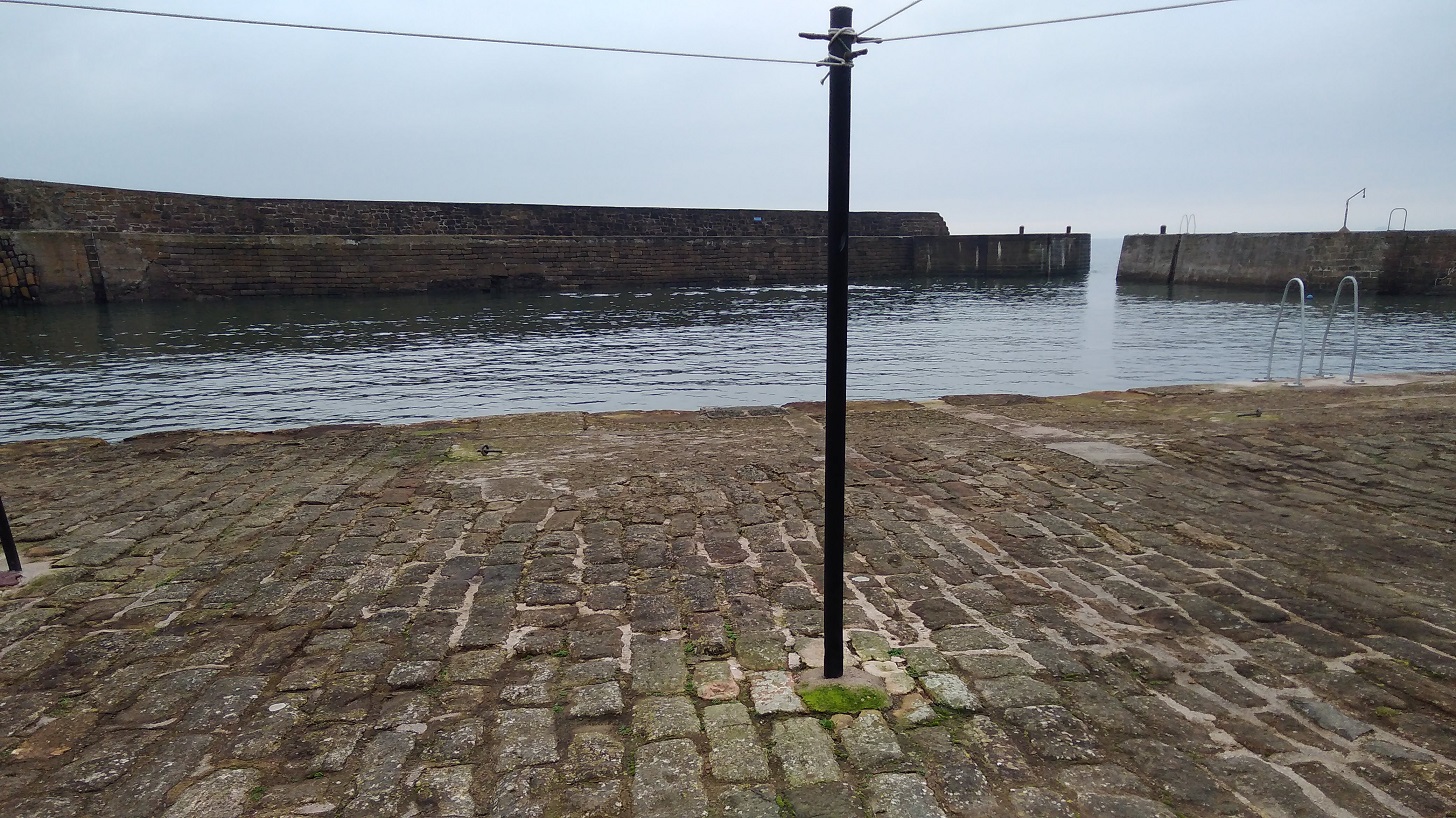
A wee way along was Cellardyke Harbour (known locally as Skinfast Haven created in  1452) with washing lines beside it. I sat down and supped my tea.

IMG_20190119_113600
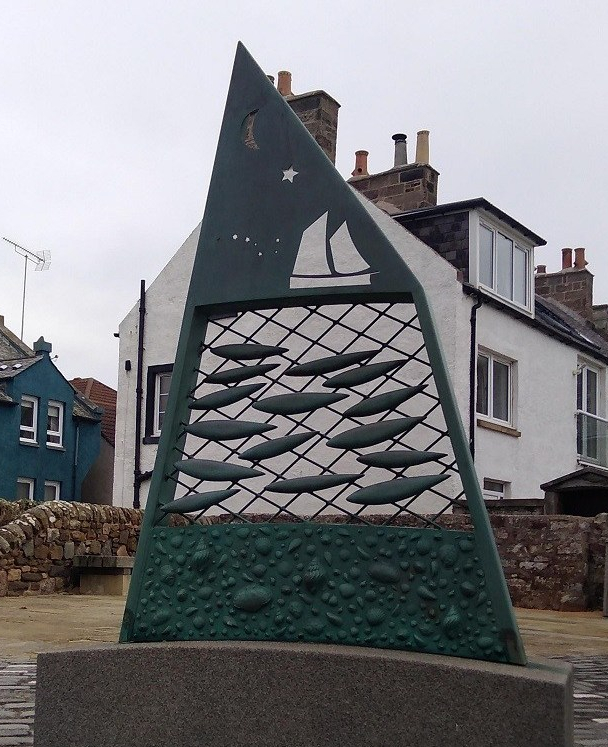
The Plough and the Reaper, Marion Smith. Anstruther, Fife

IMG_20190119_114707
Cellardyke harbour where there are washing lines to dry your clothes

IMG_20190119_114855
I sat a while here, looking out to sea and having a snack, Cellardyke, Fife

Oooh weep, oooh weep – big crowds of curlew with their long thin, curvy beaks. A stretch of uneven grassy path and it was definitely sniffly weather. A couple trundled ahead of me; the sea rolled and crashed close to my right shoulder; and then a kissing gate which I really had to squeeze through because I never want to take the rucksack off when I have got it comfy and settled on my back.

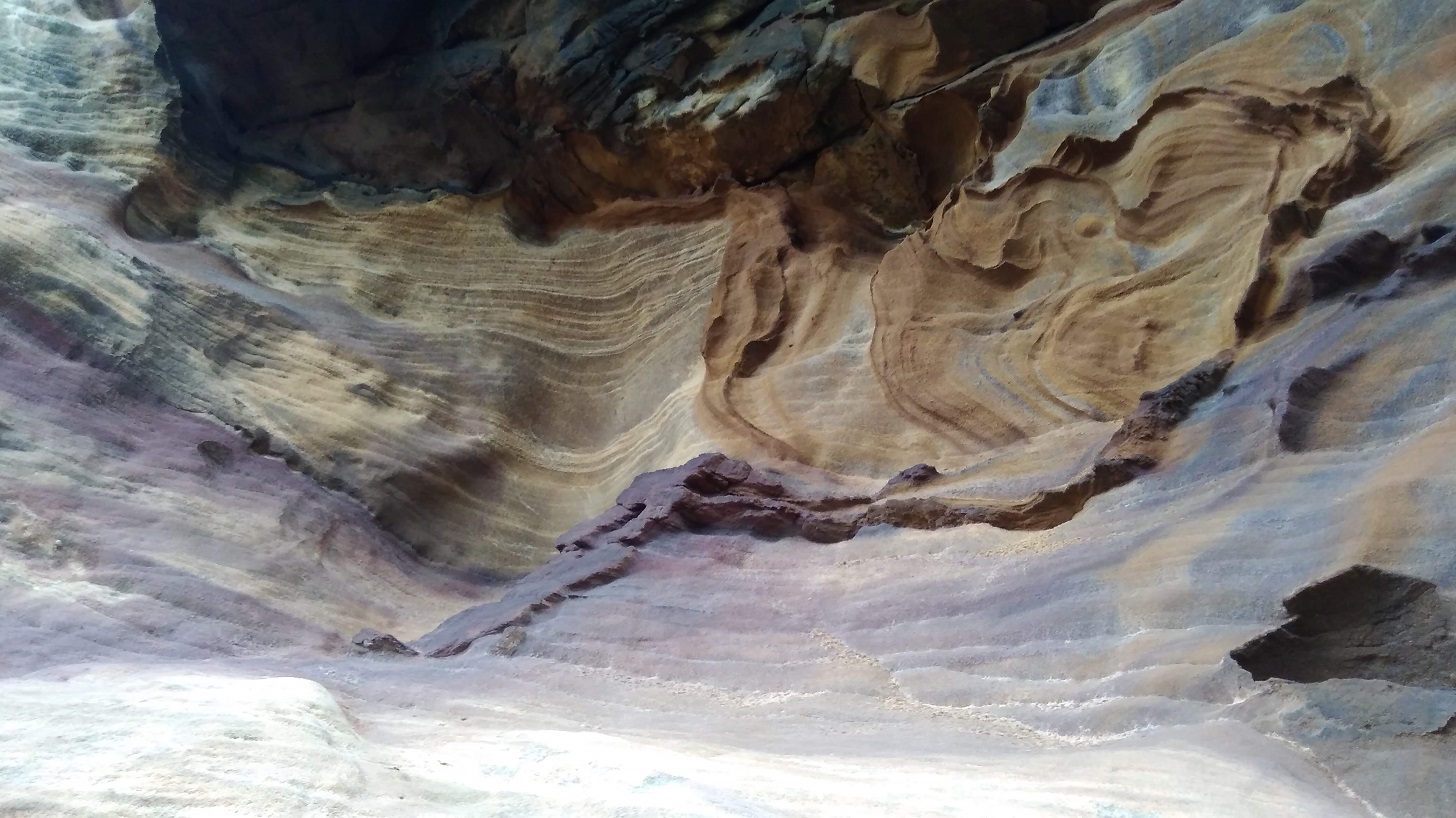
The high point of the day were the rocks. Sandy to the touch and with amazing colours, stripes, indentations, wave patterns and all manner of other shapes that you could make stories up about. I stood underneath them and looked up to the sky and out to the sea. There was something very powerful about the place.

IMG_20190119_124019
The colours (the camera did not do them justice)…

IMG_20190119_124147
… and patterns of these rocks amazed me

IMG_20190119_124502
Partly eroded, they create fantastic shapes, …

IMG_20190119_124630
… holes and arches to crane through

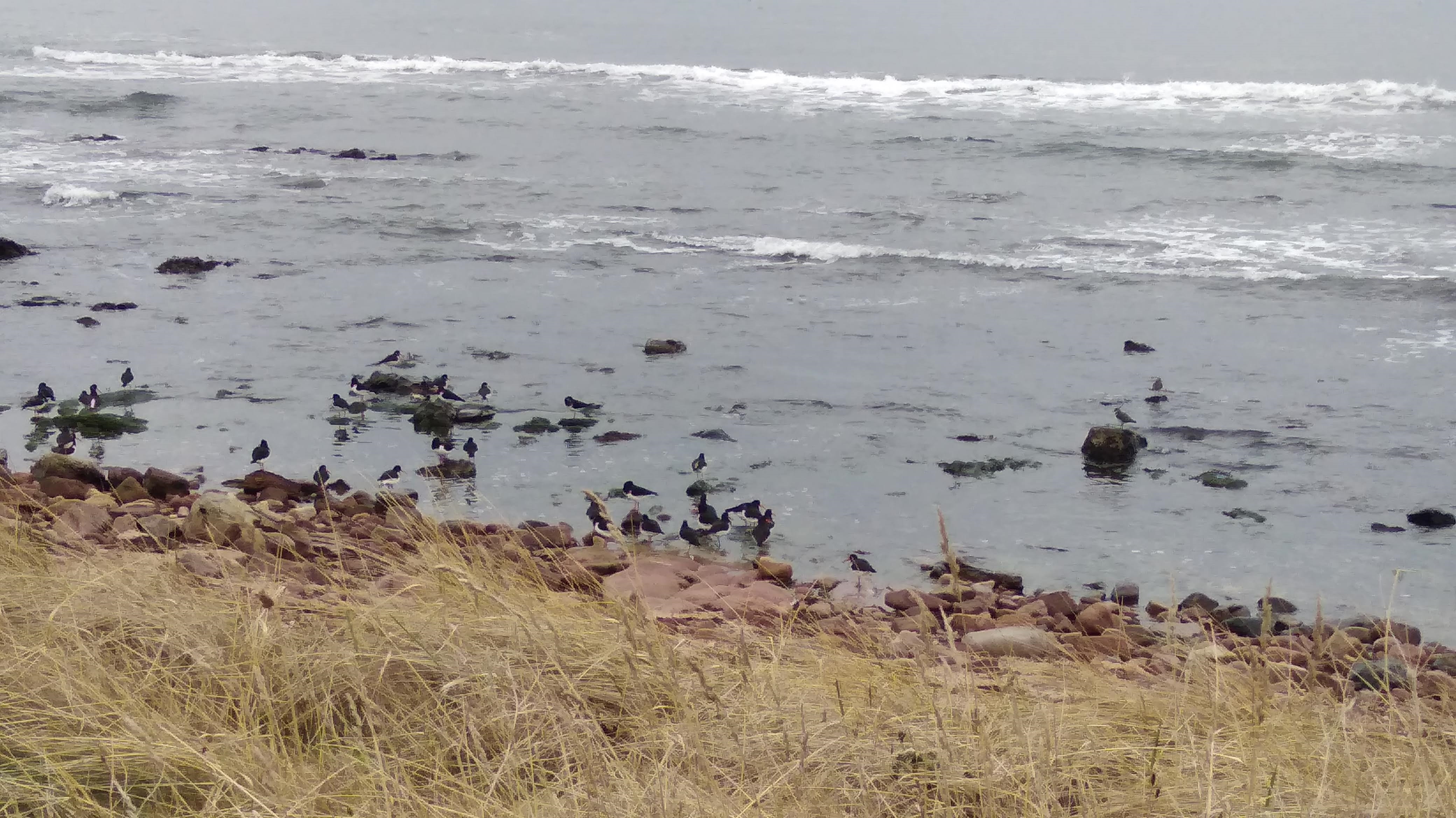
More cormorants seemed mammoths compared to the orange-legged oyster catchers beside them up to their knees at the water’s edge.

birds high quality
Taken with the zoom, this photo is blurred and no cormorants, but you can identify the oyster catchers paddling and, on a rock on the right, a lapwing

IMG_20190119_123050
The land tapering into the sea in the distance

IMG_20190119_125749
The Coastal Path sign warns of danger!

IMG_20190119_130857
Climbing up I snapped a bird in flight – there isn’t much uphill on this stretch

A stony beach meant that the withdrawing waves cause the rocks to clatter against each other and tufty puffs of white foam rise high between rocks. What’s left of the water in the pools had the setting sun reflected in them, even though it looks as though it’s way over to the horizon and nowhere near overhead.

IMG_20190119_122808
The sea was active, crashing and washing over the rocks

It was 1 o’ clock and I was already starting to feel tired and slightly anxious about the evening, a bit cranky as I came into Crail!

Crail
Crail, Fife

I lost the signs and asked a couple who directed me back the way I had come and they recommended the Golf Hotel where I duly stopped for a cup of tea and some ‘rocky road’. Report: very nice waitress, very slow service, not my sort of place.

Once out there was a clear sign downhill to the sea – I must have needed that boost!

IMG_20190119_132531
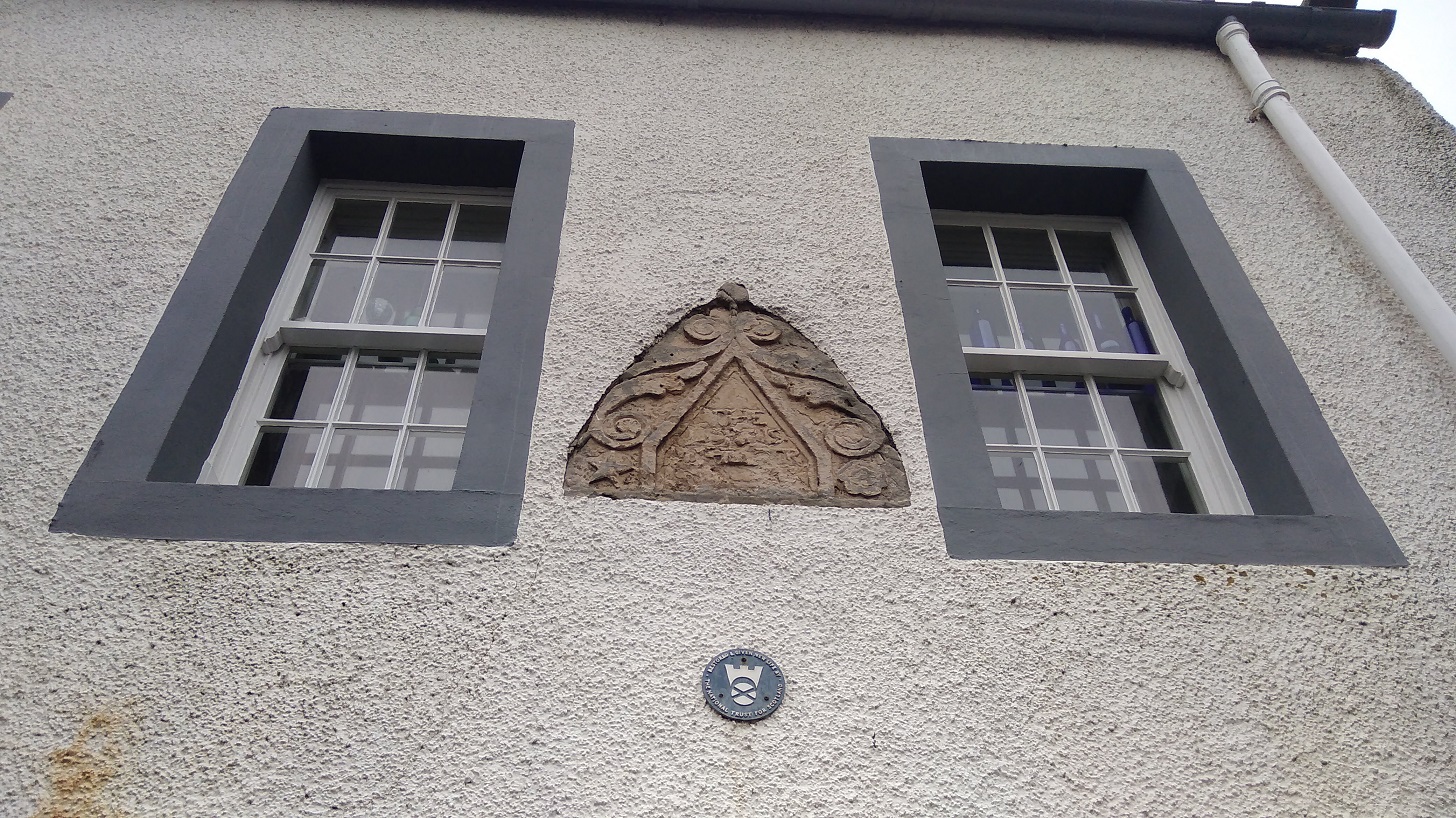
Crail coat of arms, Fife. The panel reads. ‘Restored and given new life by The National Trust for Scotland’ but if you search their site they have no results for this village!

IMG_20190119_141932
Sauchope Caravan Park, Fife

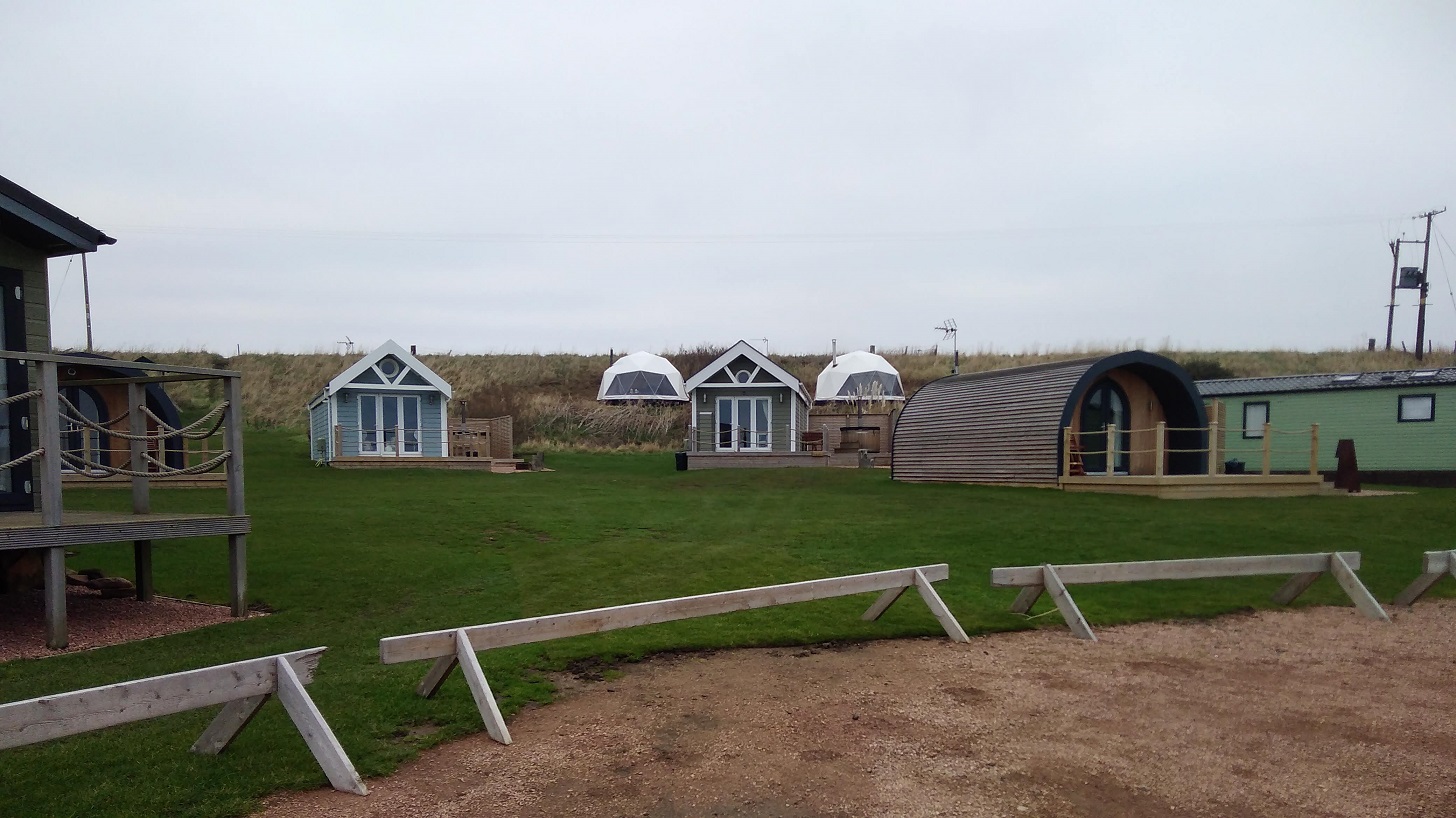
Roome Bay was next and caravan site #3: Sauchope Links. There is lots of space for visitors with little huts, white yurts with little chimneys coming out of the side and a swimming pool. One larger dwelling had a hot tub on its balcony, and overall it could not be closer to the sea. Like a spotlessly clean small village, everything is well kept and perhaps because only a few are inhabited at this time of year it seemed soulless.

Out to the ocean, I watched while banks of water gathered, dark on the forward slope, white bubbles teetering on the edge before crashing down and running into the bay. Sometimes when you think you get to the top of a mountain it turns out to be a false summit, and this was the same: that long wave was all over until it turned out that it wasn’t and there was another edge, and another beyond that, and…

IMG_20190119_124940
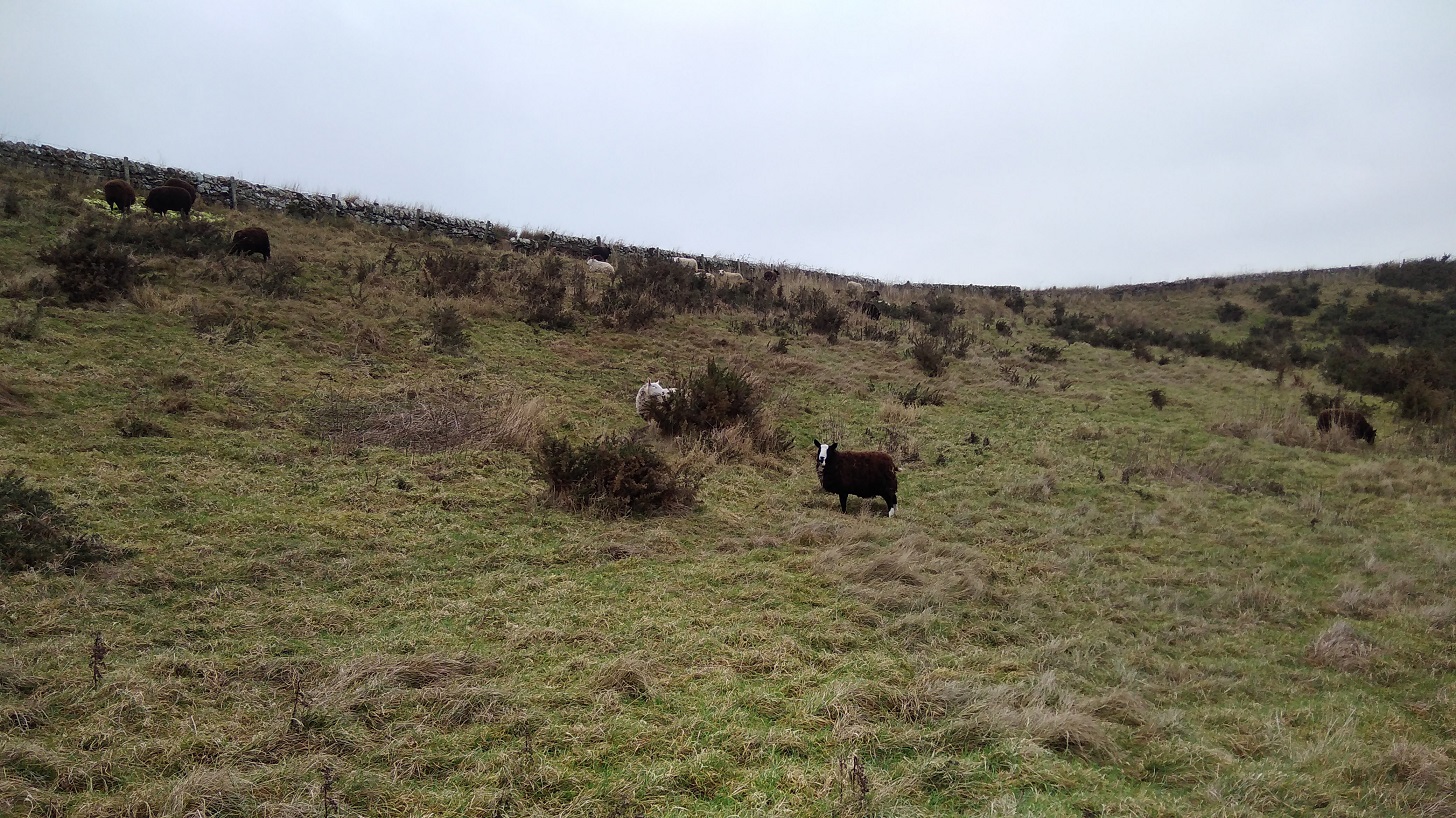
I looked at them and they looked at me!

My attention was attracted by baah and the sheep’s great thick ruffs of coat bunched up around their necks. When they have their heads down it looks as if you might be able to extend them, opening up those folds like a concertina.

IMG_20190119_143436
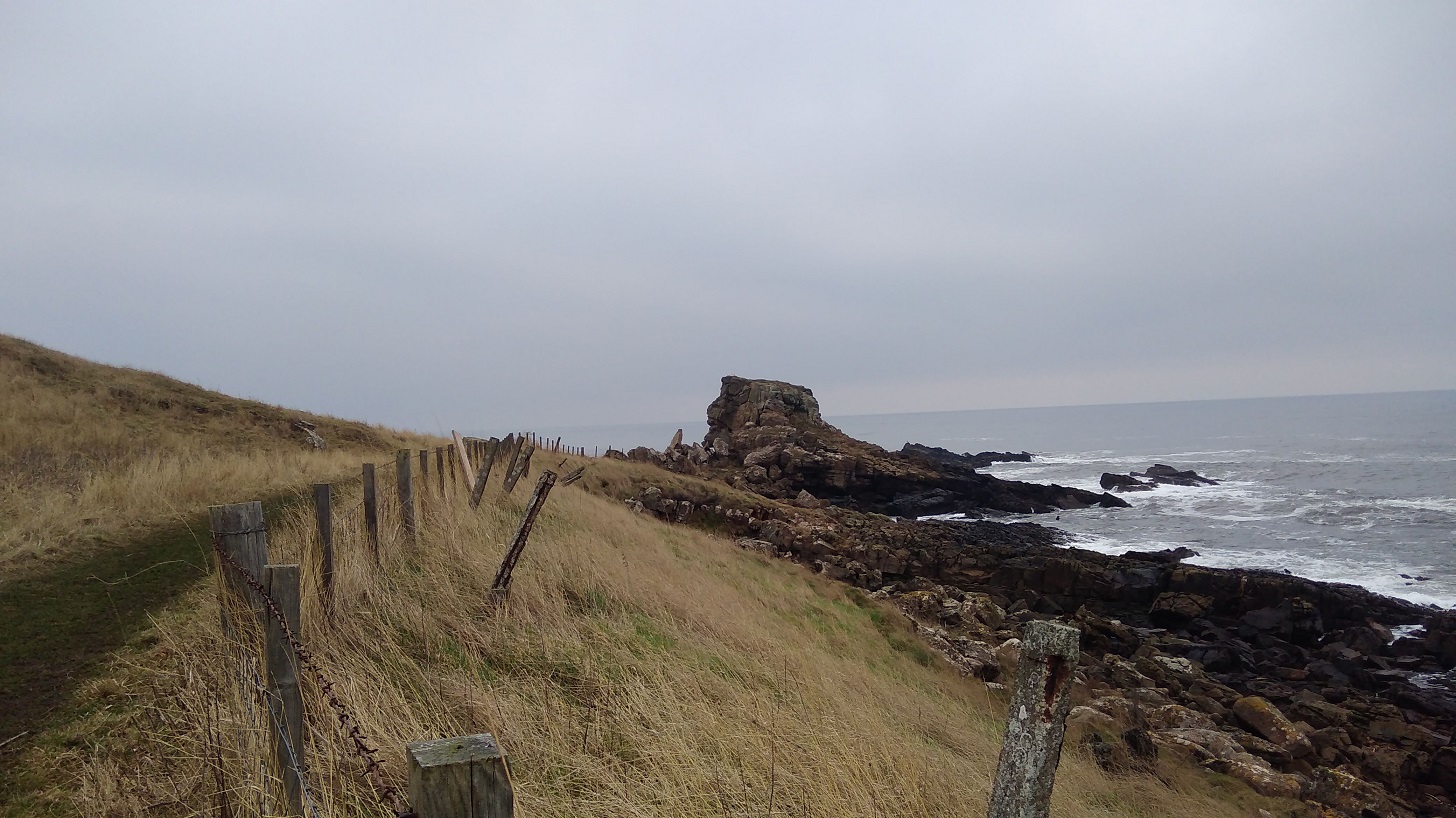
Kilminning Coast Wildlife Reserve, Fife and more rock stacks

IMG_20190119_123649
Symmetrical square and rectangular chunks lined up in a row

The massive rocks were sometimes triangular but never curved, gravity having squashed down the layers of the land. Even the vertical cuts and breaks were all at right angles.

IMG_20190119_145147
3pm saw me rounding the tip by the lighthouse and the Fife Ness bird watching hide

A little further on there were some demure cottages, more caravans and golf links. It was darkening now. The birds were in clusters and from a distance they looked as jaggedy as the rocks at very corner, battered by the waves, like dinosaurs’ backs across the peach sand to the sea.

IMG_20190119_150232

The odd quack came from ducks all settled down comfortably on the pungent seaweed interspersed with a squawk of ravens. As the cormorants were standing with their wings open but there was no sun, I could only conclude that they too were having hot sweats and needing to cool down!

Constantine’s Cave is just here. According to tradition, King Constantine I was killed in this place after a battle with Dubhghall (‘dark foreigners or Danes’) in 874.

IMG_20190119_163956

I was nervous of being stranded by the sea at night, so I took a left before I got to Cambo Ness. Although Kingsbarns village is covered up by a panel of writing on the Coastal Path map for stage 5, I had researched in advance and knew I could get a bus from there. I found my way across the corner of the golf course and up the beginnings of a small road where I spied a lit window where a woman was washing up. She kindly came to the door and advised me it would be quicker to stay by the sea. However, she is familiar with the area and I was not, so I took off up the farm track, through the yard, and narrowly missed the bus by about 3 minutes as it thundered past on the main A917. Then I had to do what she said I would and walk at the side of a very busy road, initially with no pavement, and into Kingsbarns by the church where I waited nearly half an hour for the 95 bus.

IMG_20190119_164321
I thought it looked like a member of the KKK!

Back I went to Anstruther and to the Murray House Hostel which I had seen earlier. The French hospitalier was extremely helpful and let me practice my French. The communal rooms are large, and I was put with the other solo woman Coastal Path walker in a 4-bed (usually more expensive) dorm which was very kind. Cost £14 (not including breakfast). I was told that I had to sample the famous fish and chips at the Anstruther Fish Bar and Restaurant which I dutifully did – I gave it 4 stars! The hostel has a very decent kitchen and a supermarket is not far away so there’s no need to eat out. Do book the hostel in advance during this time of year though, as it will open for 2 or more people but may be shut if you turn up on spec.

I had a very good, long sleep to prepare me for an early start to stage 6 the next day.

St Magnus Way – final reflections

St Magnus Way – reflections

Reflecting is a vital part of taking a walk. It helps to embed or integrate the walking experiences – where I have been, and what I have learned – in the hope that any changes wrought will last.

Most of all, though, I failed to comprehend that the best things in life aren’t things that are visibly sexy on the surface. They don’t scream for attention, and they rarely invite adrenaline. Rather they come from quiet commitment, respectful engagement, and a love of something greater than yourself.

Design Luck

Where lies the greatest learning?

Before a sitting meditation I start by acknowledging or noting any issues which are bothering me, either to clear my mind, to problem-solve, or create focus. Then I try to simply sit. I have been doing that for years. As a result I sometimes come up with creative ideas, solutions and greater understanding, or at the very least a recognition of patterns of behaviour.

Walking is a kind of meditation and the more I walk pilgrimage, the more I realise that simply doing it: starting, trekking, and managing to complete, I’m learning what I need to.

I have habits that I try to pretend aren’t there most of the time. However, when walking a pilgrimage they come to the fore. It’s in the planning and facing of the realities of the land and the practicalities of accommodation and food that I am brough face to face with myself.

St Magnus Church, Egilsay © Tamsin Grainger

Is walking pilgrimage synonymous with being religious?

I do not follow a recognised religion. I was christened into the Church of England by my parents and had to learn tracts of the bible overnight for reciting in primary school the next day. Joining in assembly every morning at secondary school was obligatory, and I sang and read lessons during services; went on a Sunday School holiday; and spent years in the Girl Guides where Christianity was important.

I was steeped in it – the tenets seem to be in my soul (or perhaps in my cells). When I was learning to speak, religion provided me with a moral and ethical language, and I have discovered that it’s hard to shrug off.

Maybe I’m on a mission to get rid of the destructive part of what I was taught in those early years. I was encouraged to feel guilty, it was assumed that I had Original Sin, and I was told that I was bad in my core as were all other humans. Perhaps I now take ecumenical walks to give myself the time to recognise the impact of this and to let go of what seem now to be unhelpful lessons.

I do visit churches sometimes and I certainly respect believers, but I do not take communion. I have read widely, listened, and discussed religion with friends, but I cannot follow a Faith which seems to exclude or criticise people for being the way they are or believing what they do.

Historically, pilgrimage was a religious practice, so it’s not surprising that people keep asking me why I walk pilgrimage.

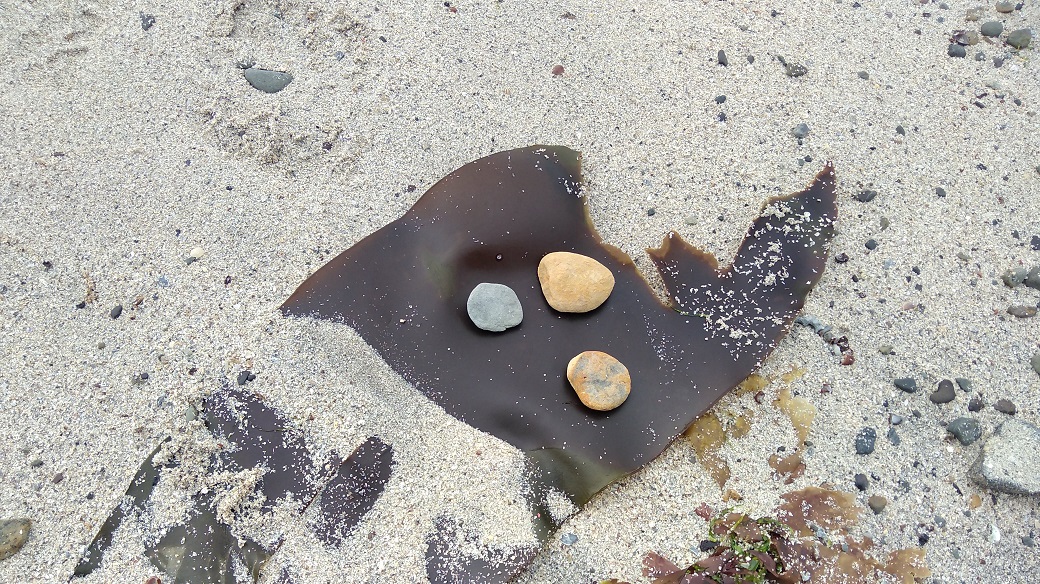
The three stones I found on Evie beach at the start of the St Magnus Way

Why pilgrimage?

For me, pilgrimage is more than a long-distance walk. It’s a walk with the added zizz of a specific intention, held to, and later reflected on. I’m walking in the fotsteps of others who were seeking enlightenment. Made with awareness and respect for tradition, there’s an in-built beginning, middle, and end, and it’s a project all in itself.

“The present, the present. It never stops, no matter how weary you get. It comes unstintingly, as a river does, and if you aren’t careful, you’ll be swept off your feet.”

Olivia Laing, To The River (p111)

Spirit, soul and understanding

In Chinese Medicine I was delighted to learn that there are a number of different ways to describe the spirit or soul. In Icelandic there are more words for snow than we have in English; in the Orient the parts of ourselves which relate to spirituality, to nature or to our innate relationship with other people are as important as our physical and mental aspects. Although the spirit is amorphous, hard to define, it is something I have a tangible sense of, particularly when I walk in nature. Although sometimes I am content to ‘be’, at other times I become curious and try to understand this puzzle.

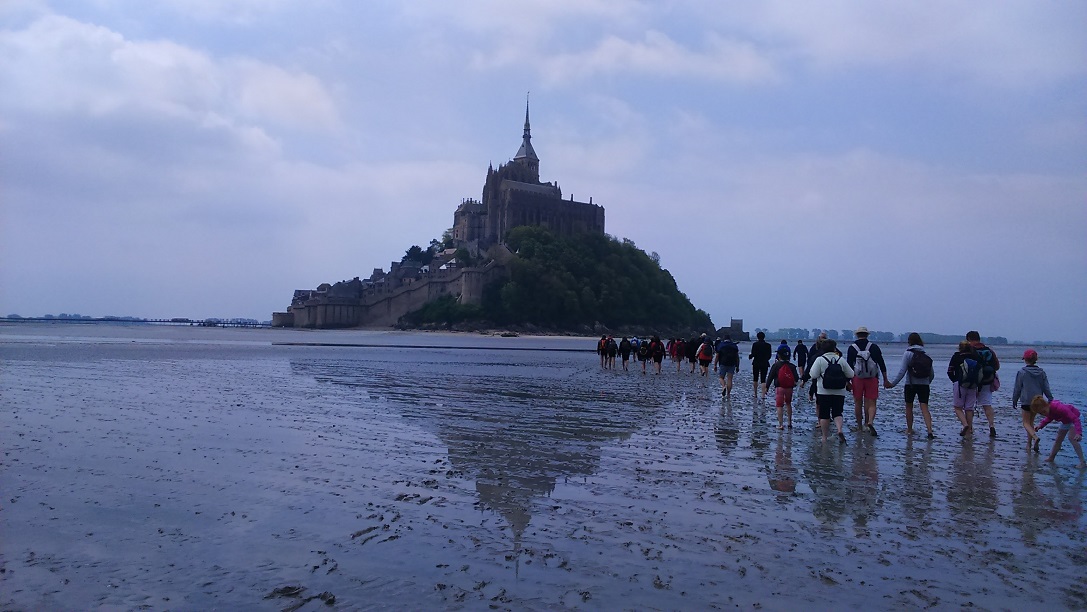
When I sit and meditate in my Shiatsu room in Edinburgh I can simultaneously be in Tibet or Japan or China. I don’t know why that is or how it happens and so I ponder on these things as I walk. I privately thought that at least one explanation was that I was a nun and a monk in former lives. It’s the best explanation I could come up with. The feeling I had, for example, when I crossed the sands, barefoot, to Mont Saint Michel was real – I ‘knew’ I had walked there before.

walking across the sands to mont saint michel
Walking across the sands to Mont Saint Michel, France May 2017

What is ‘knowing’?

We have discovered in the last 100 years or so that our physical cells destruct and reconstruct, so the ones I have now shouldn’t be the same ones I had when I was a baby, never mind the ones my mother or grandmother had. And yet we know that we share genetic material.

There is a theory that there is a collective knowledge which accumulates from the generations which came before. It could be this wisdom which tells me where to go to find what I seek, and what has got me here in the first place. However, current scientific methodology and outcomes deny me entry into this collective unconscious. It insists that I enter through the portal of logic and I am not sure that logic is the right way into that sort of understanding.

I have an intrinsic sense of the English phrase, ‘I know it in my bones’. My bones are made up of cells and that genetic material, yet in every text I read about pilgrimage something inside me recognises it. I seem to share the centuries of that collective knowledge, it is familiar.

Osteocytes

* . . . live inside the bone and have long branches which allow them to contact each other …https://depts.washington.edu/bonebio/ASBMRed/cells.html

There is my DNA and my body. There are my mind and my thoughts. There is my self, my soul, my spirit. In my work and my walking I am enquiring into the connections and (re)discovering dissociations between these.

It’s all about love

The more I listen to myself as I traipse, and the more I hear my clients in the Shiatsu room, the more I think that what we all seek is the connection to LOVE. It sounds like a familiar new-age thing to say, it’s straight out of the ‘all you need is ….’ 1960s, but I keep coming back to it.

I have a hunger for that ‘something for which we search’, and I know it isn’t just me, because when I tell folk what I do, they say, ‘Oh, I wish I could do that’ or, ‘I have wanted to do that for ages’. Or maybe they too have already started!

I seem to be part of a contemporary pilgrimage movement in which it is possible that we are seeking ways to integrate, comprehend and connect our-selves, personally and in community.

Pilgrims walking the Via de la Plata, Spain; Tourists flocking to the Sacre Coeur in Paris, France.

Restlessness

In addition to all this, I notice a compunction to move on, to save my soul, to find and to seek. The ‘thing’ I am looking for is at the same time inside me right now and just ahead of me. It is that towards which I reach or walk. It isn’t new. Everything I have done in my life so far is part of this instinctive movement towards being purer, ironing out the creases. That’s what I believe we are all doing wherever we are.

I know that inside me lies this knowledge, just as tangibly as I know my organs are there. I recognise that I am part of a continuum, a humanity of seekers. What is necessary is the time and space to better hear what is happening, and that is hard to find when I am at home looking after people and my surroundings, doing what most of us do in our adult Western lives.

The answer, it seems, lies in introspection. Without trying to be precious, I go quietly back inside myself when I walk, to hear the still, small voice.

Nan Shepherd wrote ‘These moments come… most of all after hours of steady walking, with the long rhythm of motion sustained until motion is felt, not merely known by the brain, as the “still centre” of being…

And so it appears I am descended from the ascetics and hermits of my history. I’m reborn into the liberated 21st century. I am, at one and the same time, part of a shared community – walkers and pilgrims, fellow monks and nuns, a group with shared values – and I am alone to ponder.

Some things are proving intractable and I expect that’s why I have to keep on doing it!

scapa beach
Scapa Beach, Kirkwall, Orkney. May 2018

Bone cells https://www.sciencefocus.com/the-human-body/why-cant-bones-grow-back/


Tweedbank Station to Melrose, walking the Scottish Borders

December 2018 – a rail journey from Edinburgh to Tweedbank and a short but stunning river pilgrimage walk to Melrose in Roxburghshire, where you will find the ruins of a magnificent Medieval Abbey.

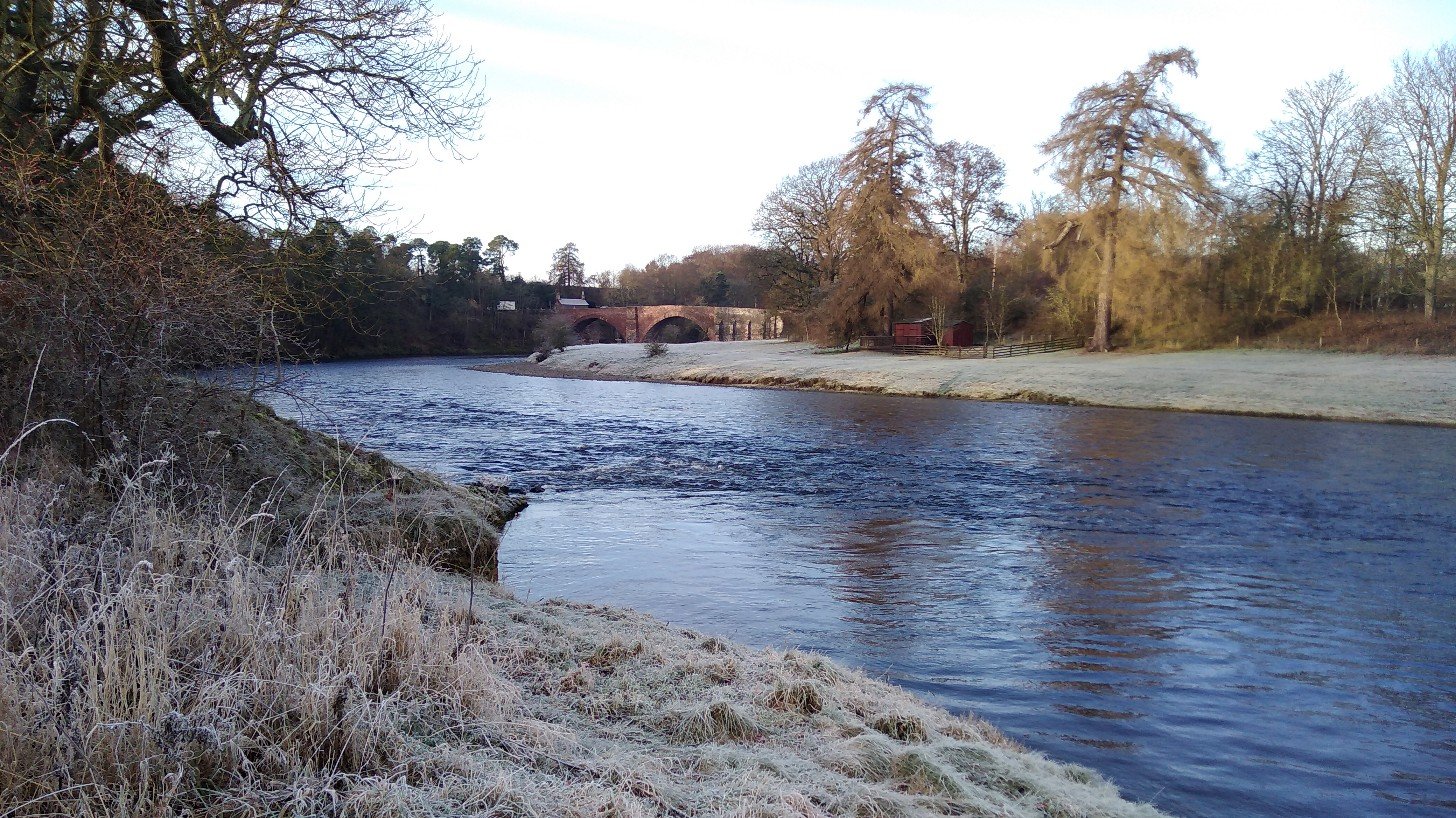
The Tweed River, Scottish Borders.

I took the train to Tweedbank in the Borders – it’s the end of the line. It takes 1 hr and the service runs every half hour. It costs £9.30 with an Over 50s Railcard ( I booked the ticket and renewed the rail card last night online through Scotrail for £15 for the year and it took about 5 minutes). Then it’s a 40 minutes walk each way into the town of Melrose, although that doesn’t allow for what I call ‘astonishment time’ ie time for stopping at intervals because, Oh my, look at that, oh I must take a photo, I just can’t believe it, it’s so gorgeous!

The Tweed River between Tweedbank and Melrose, Scottish Borders.

If you like you can stop reading this now and open YouTube or Spotify and find Fording the Tweed By Savourna Stevenson, so that you have something magical to listen to as you continue reading and imagining you are taking this journey with me.

Choose a day where it won’t go above 2 degrees celsius so that it stays white and hard underfoot. Wear thermals under your normal clothes, plus a coat, woolly hat and cosy gloves.

wp-1544547767086610293714.jpg
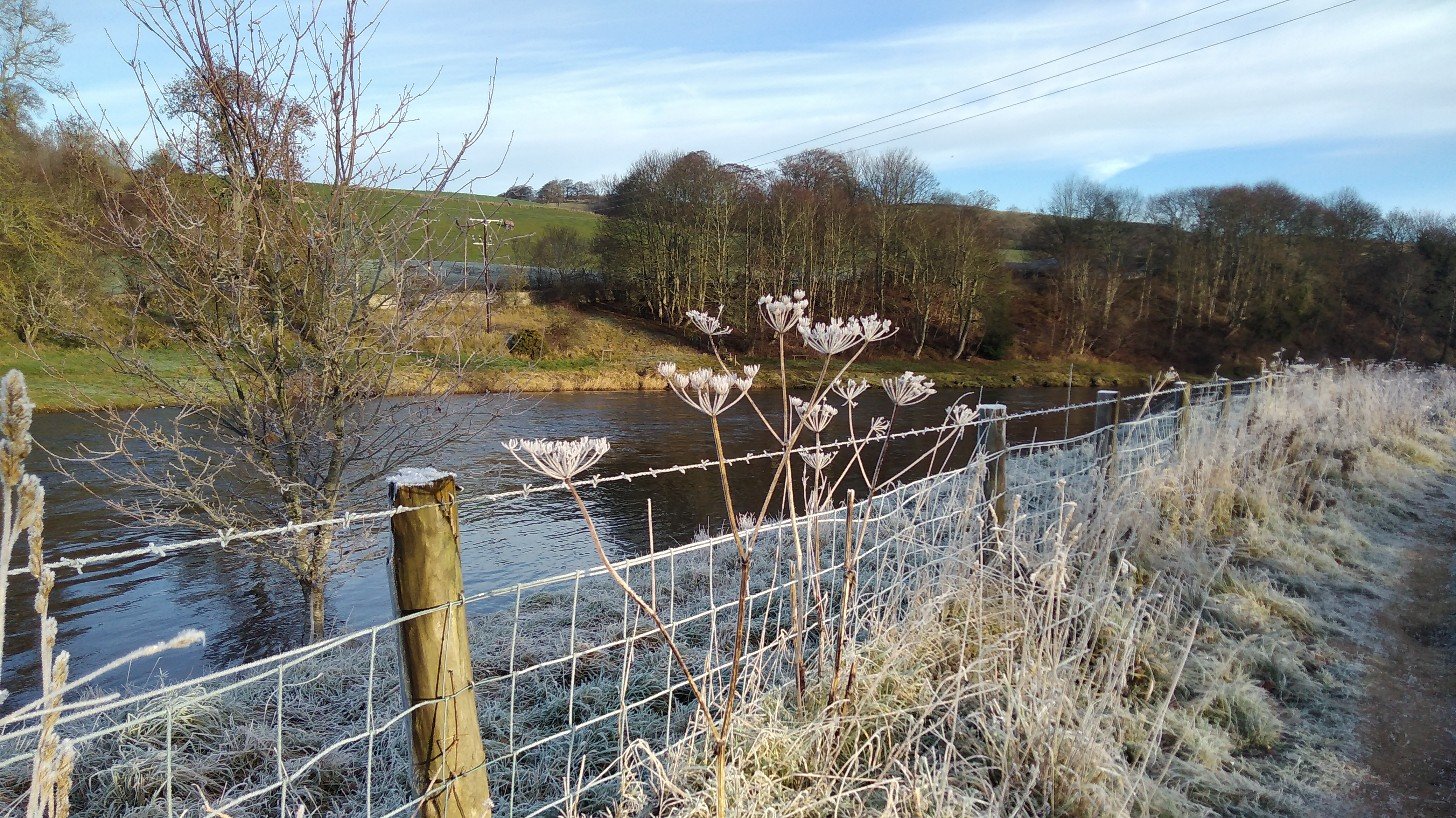
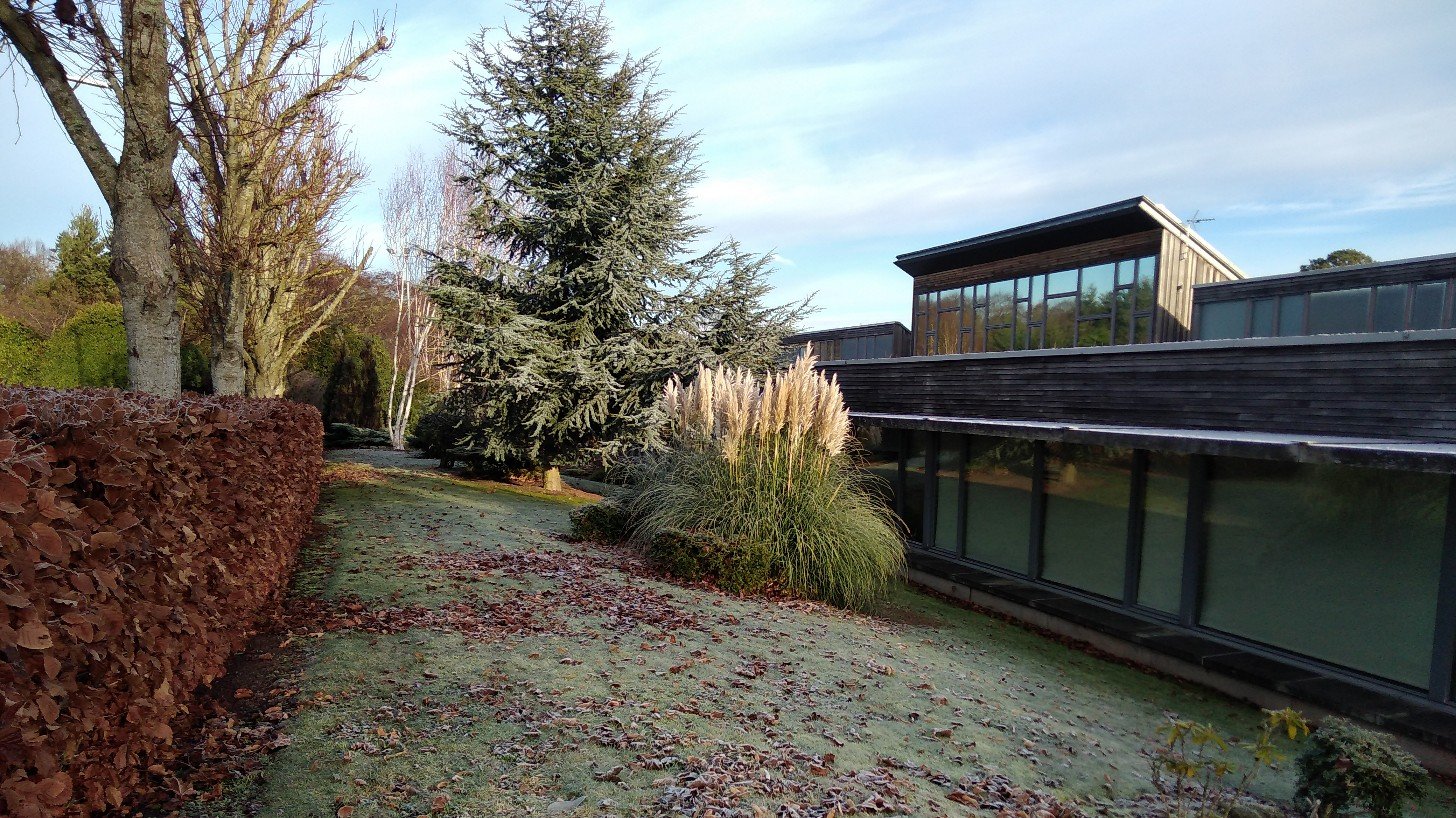
Jack Frost was at work overnight.

You know what they say, it’s not the weather that’s the problem in Scotland it’s having the right clothes! Not being able to bend your elbows because you have a thick jumper on under your not-quite-big-enough jacket is a small price to pay for all this beauty.

wp-1544547646736642284646.jpg
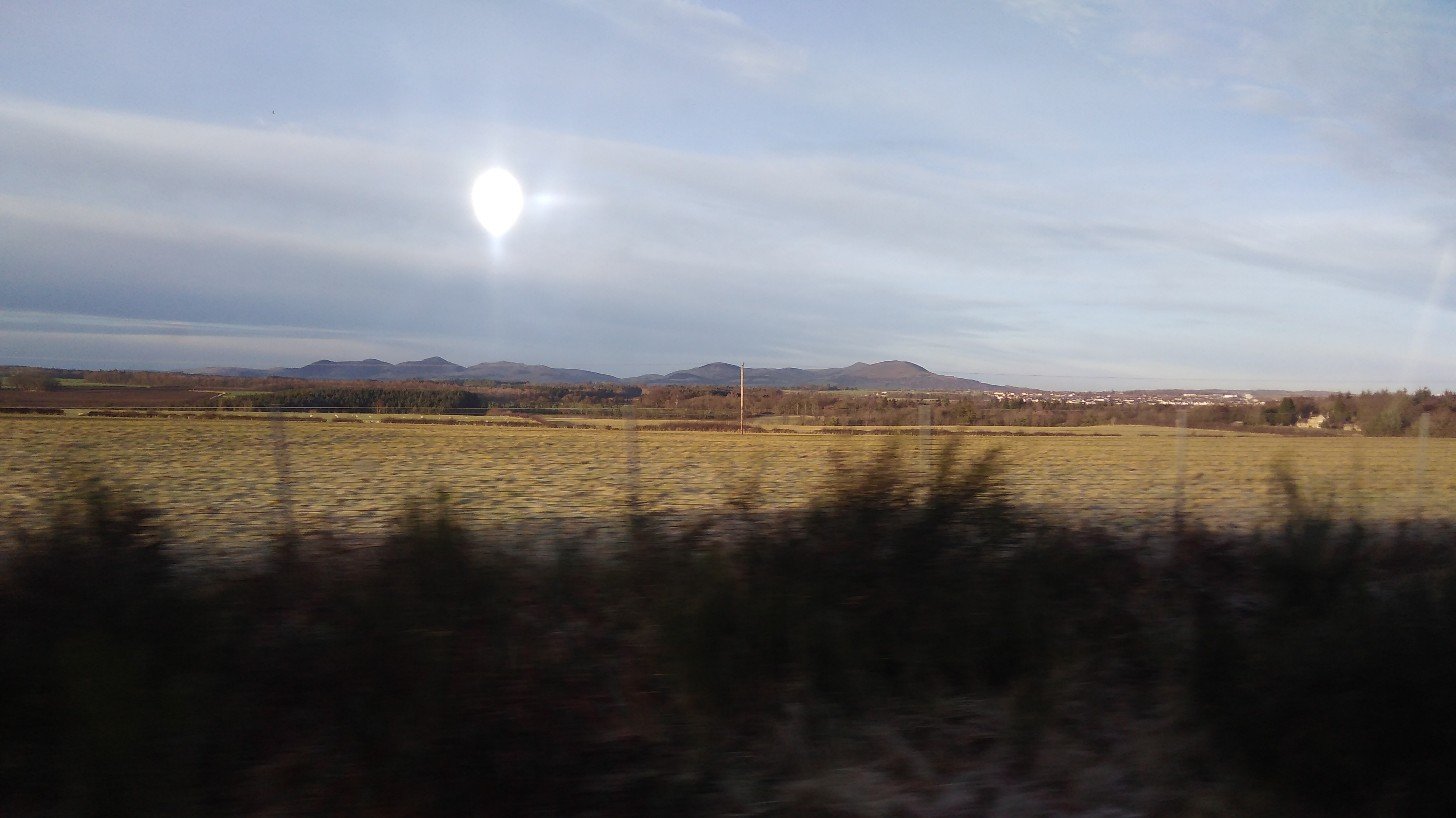
You can see Arthur’s Seat and the Pentland hills from the train.

You will travel on the Waverley Route, so called as it refers to Sir Walter Scott’s Waverley Novels. Start by facing in the direction you are coming from and sitting on the left. This way you will have wonderful views of Edinburgh – Arthur’s Seat. Ignore the rest unless you enjoy the industrial outskirts of cities.

When you hear the nice lady announce Gorebridge, change seats so that you are looking the way you are going and you can either plump for right or left (the views are equally attractive) or, like me you can leap from side to side because, well because the views are both enticing.

wp-15445455215541892656896.jpg
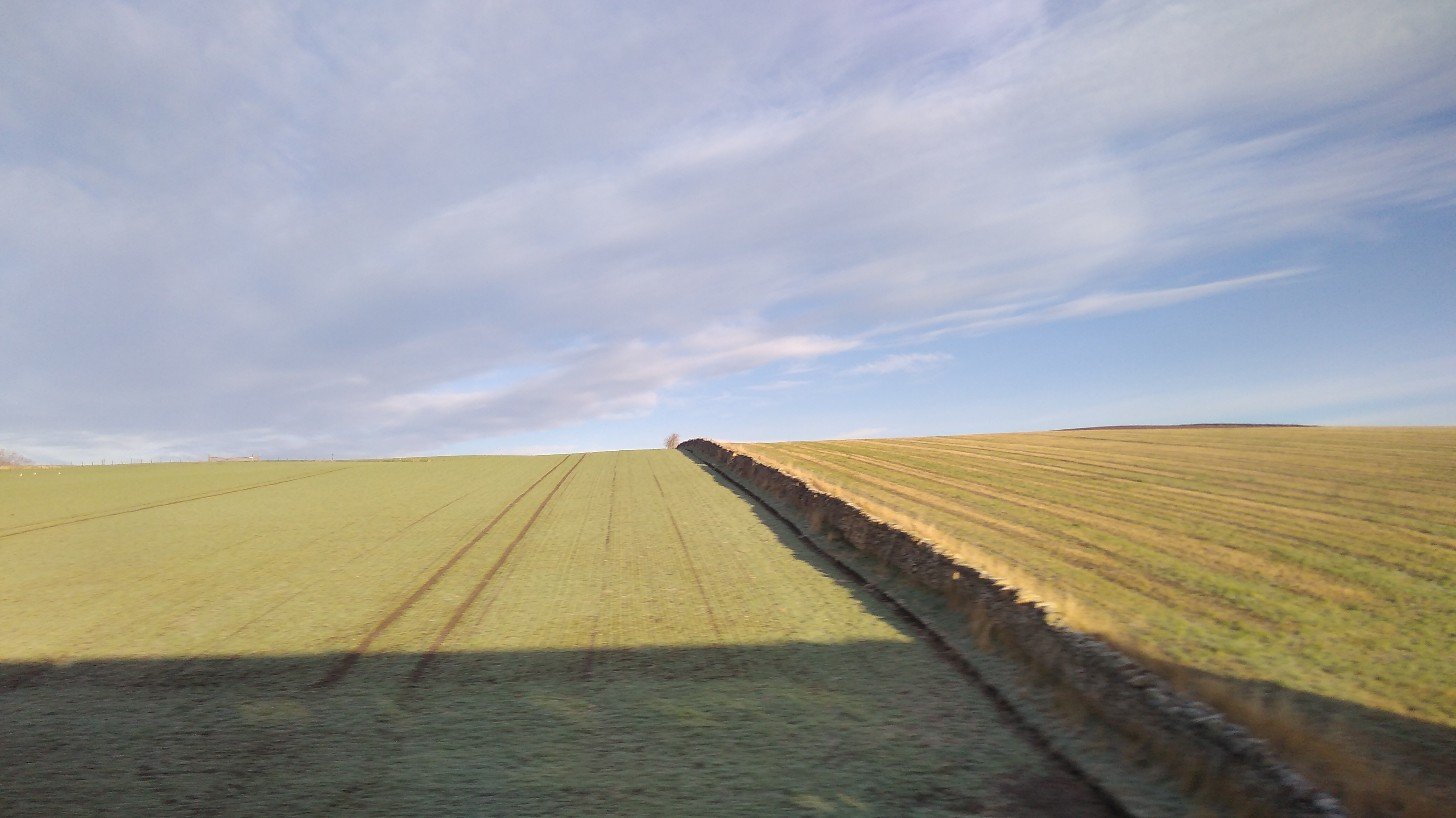
Expanses of farm land in the sun, Lothian Region, Scotland.

People seem to have it in for Galashiels, so I will blog separately about that. Suffice to say that it is impossible for a whole town to be boring and I know some lovely people who live there and they like it a lot. It has an excellent brass band for a start.

wp-15445475329381453192556.jpg
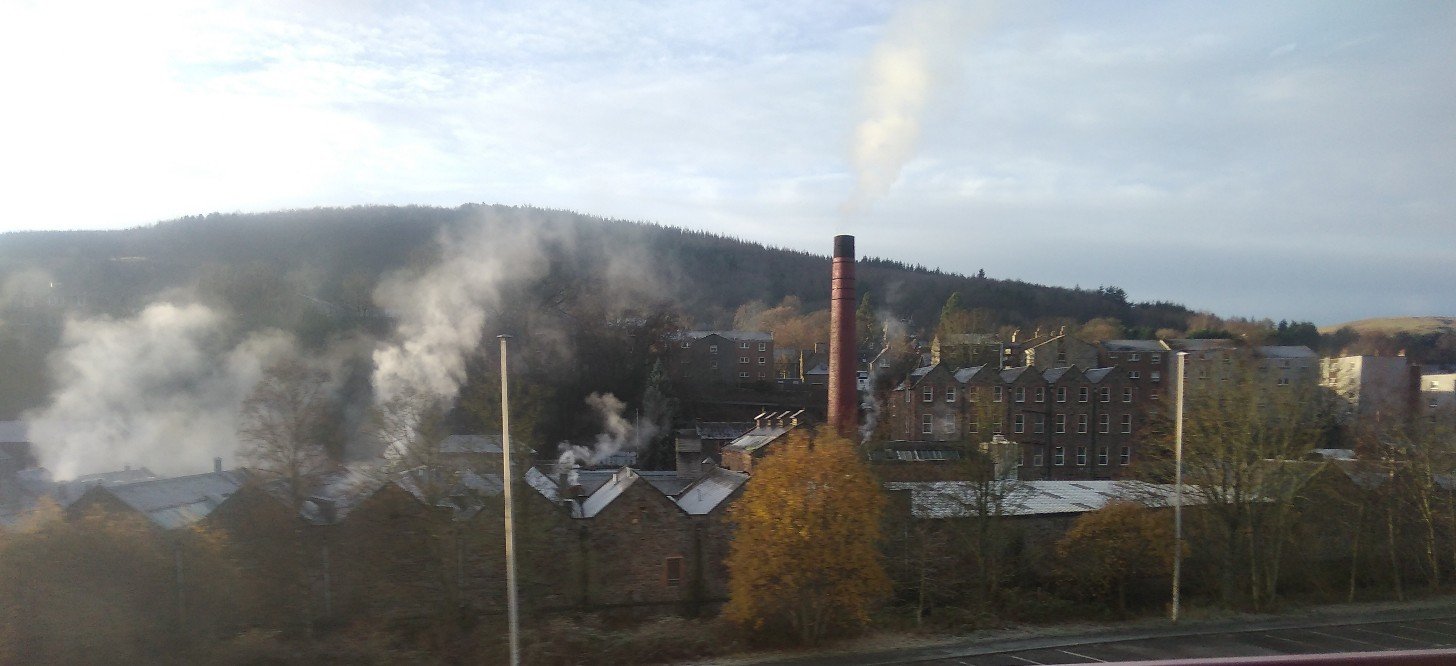
Leaving Galashiels. Straight out of the 19th century! Scotland.

You will not need a map nor must you look up the way in advance or use your phone. Believe me, if it’s possible to get lost I would have and it’s not. I promise. Sit back and relax. Feast your eyes on the hills, rivers, pretty houses, and majestic trees. Over on one side you will spy the traffic – be pleased that you are not driving, have a nice cup of tea and a comfy seat – you can just gawp.

wp-1544545521180985749088.jpg
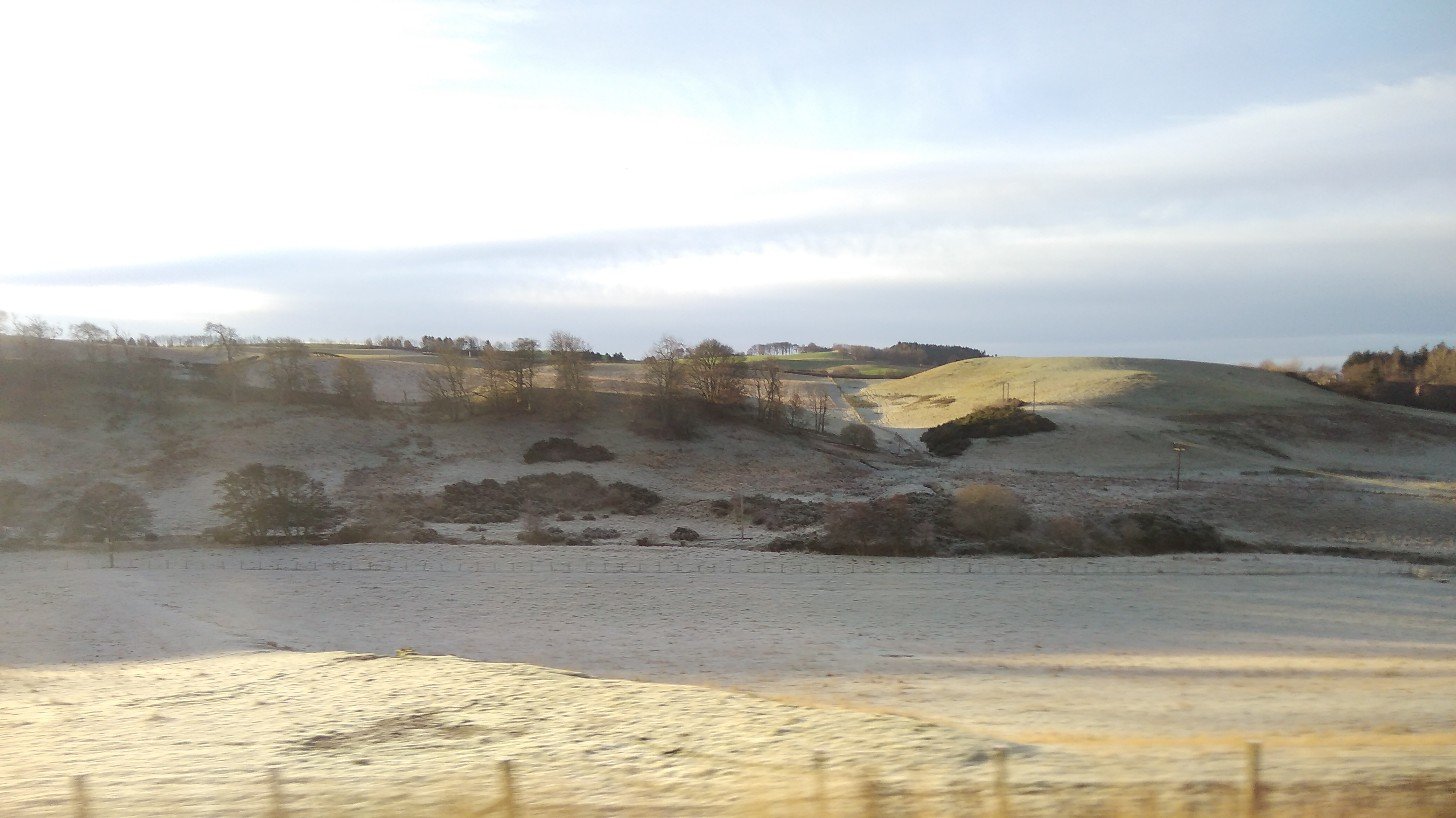
From the train window between Edinburgh and Tweedback on a chilly morning, Scotland.

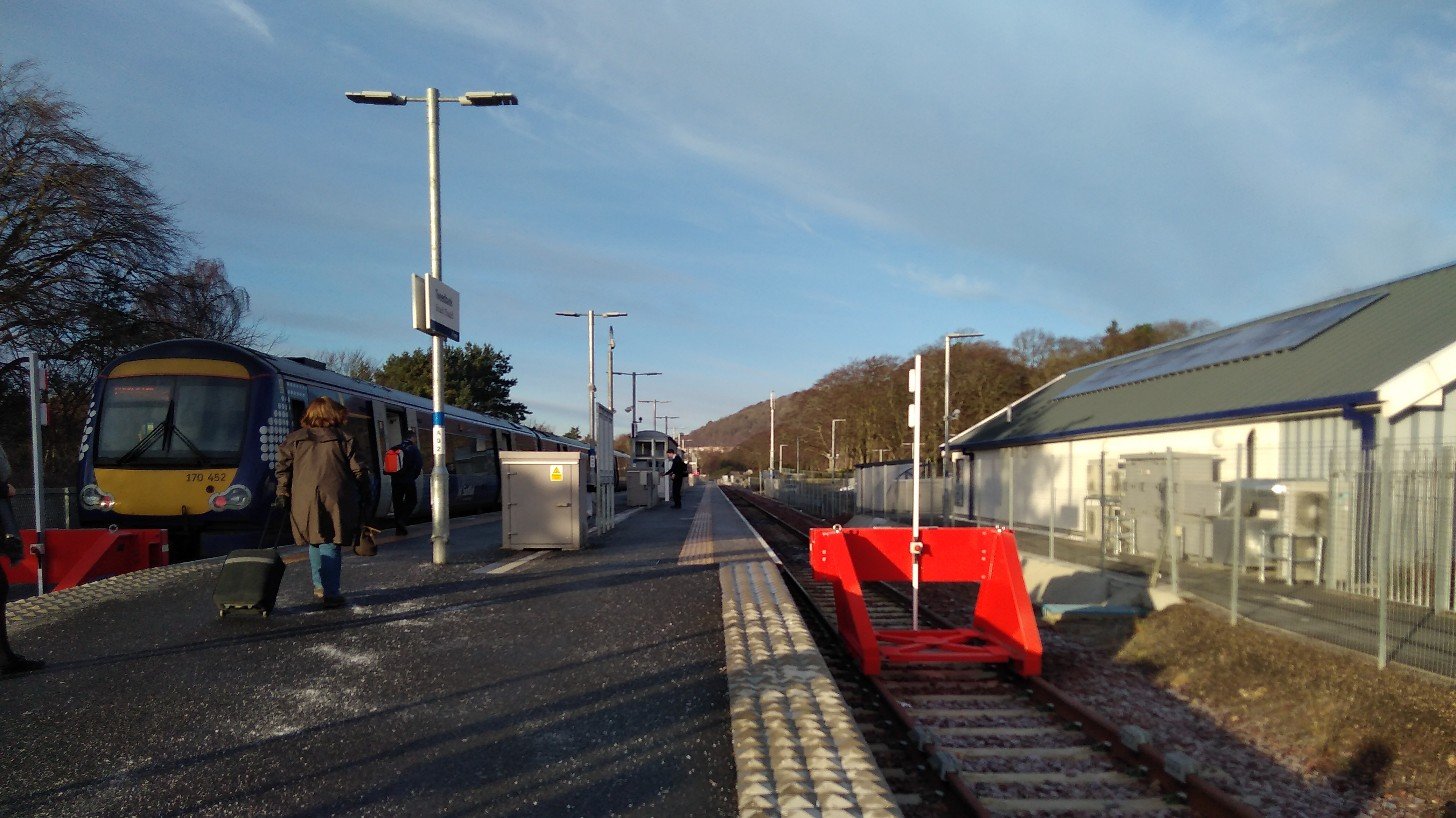
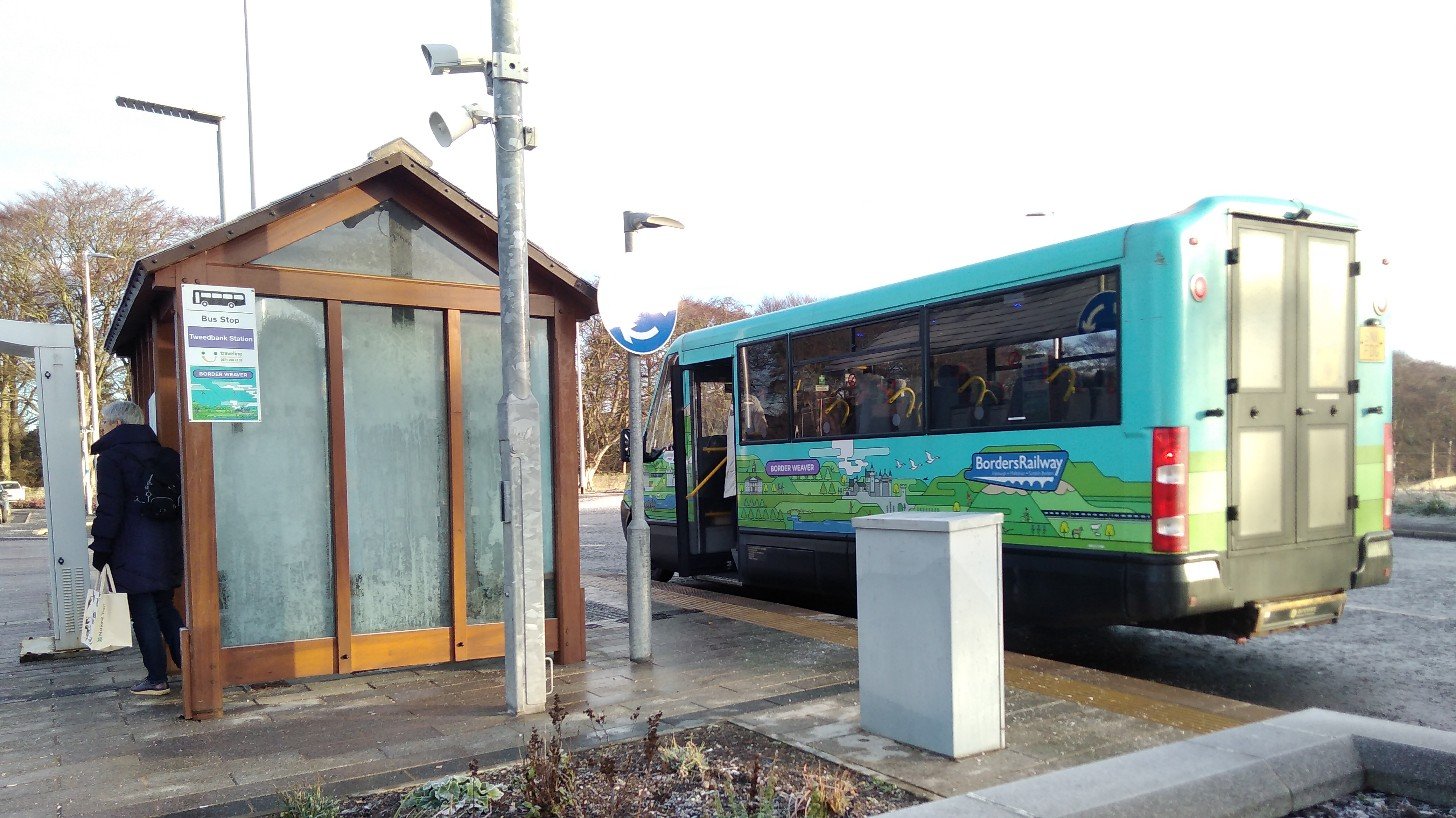
Tweedbank station is new and modern with a massive car park. There is one line, two platforms and everything is properly signposted. There is a bus if you prefer.

wp-1544545521877980376437.jpg
The end of the line, Waverley Route, Tweedbank Station. Waiting areas and ticket machines in the middle.

wp-1544545522083653913363.jpg
Connecting buses, Tweedbank Station, Borders.

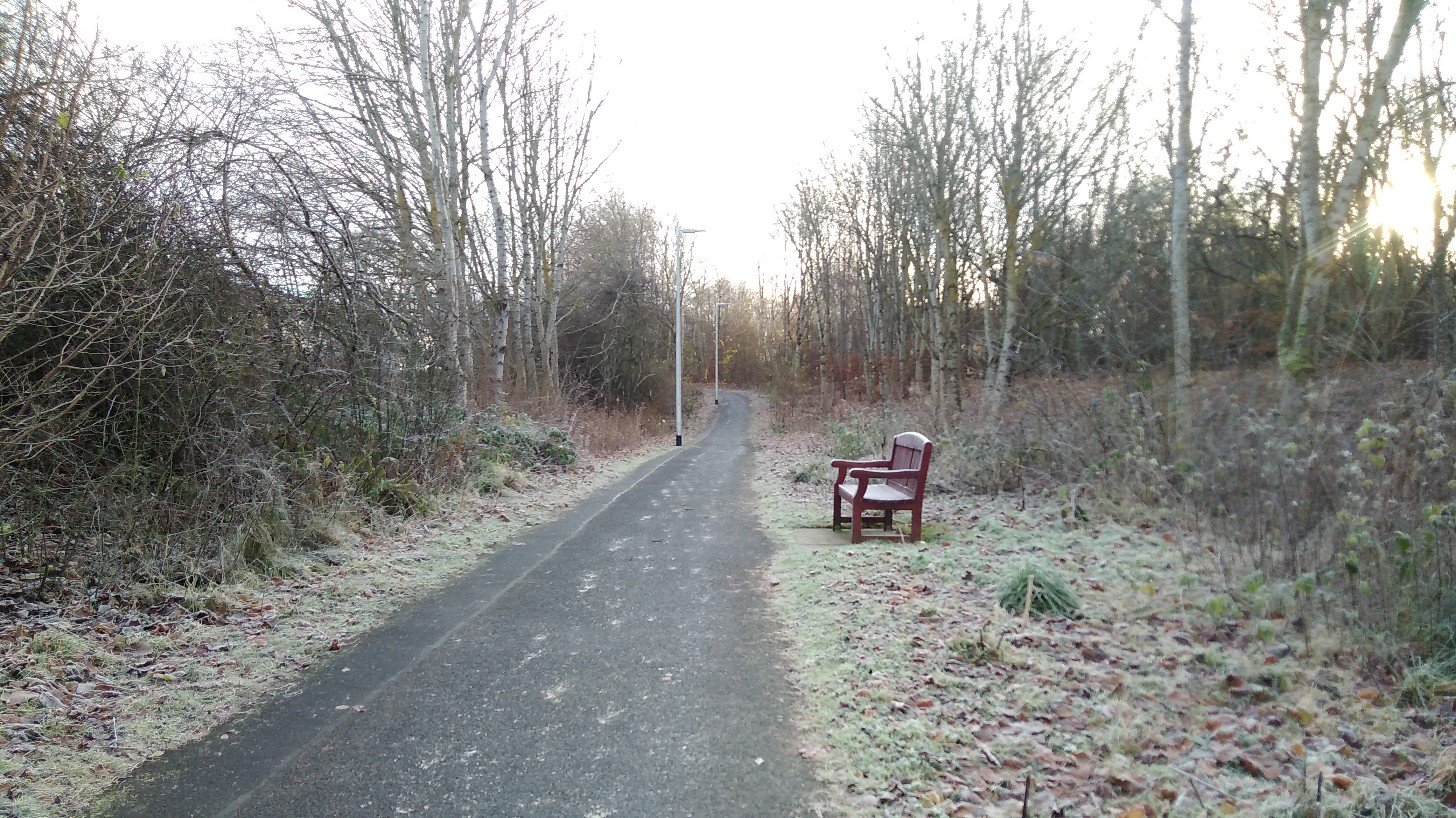
Otherwise, walk along the only way you can and straight ahead you will see the cycle path.

wp-15445456757802021841131.jpg
Cycle path from Tweedback Station towards Melrose, Scottish Borders.

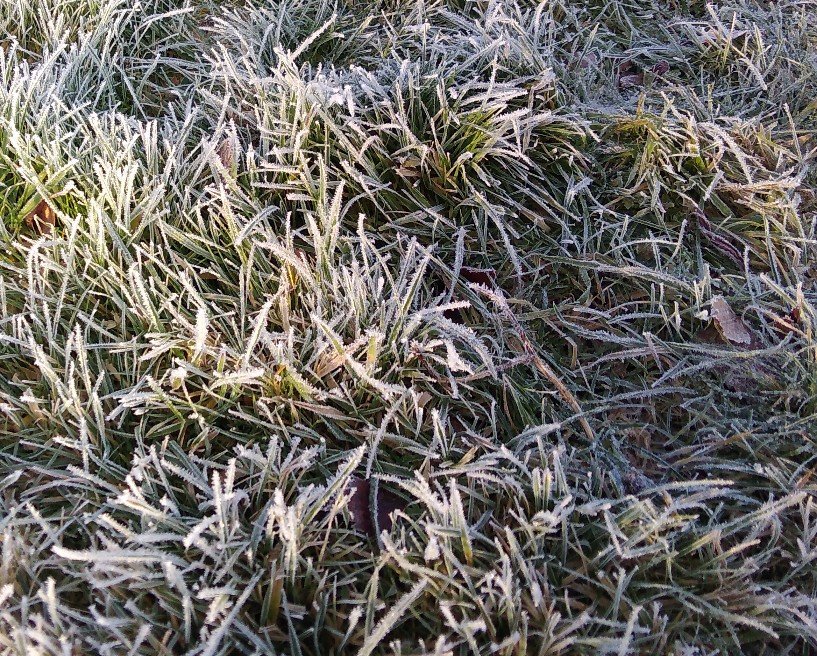
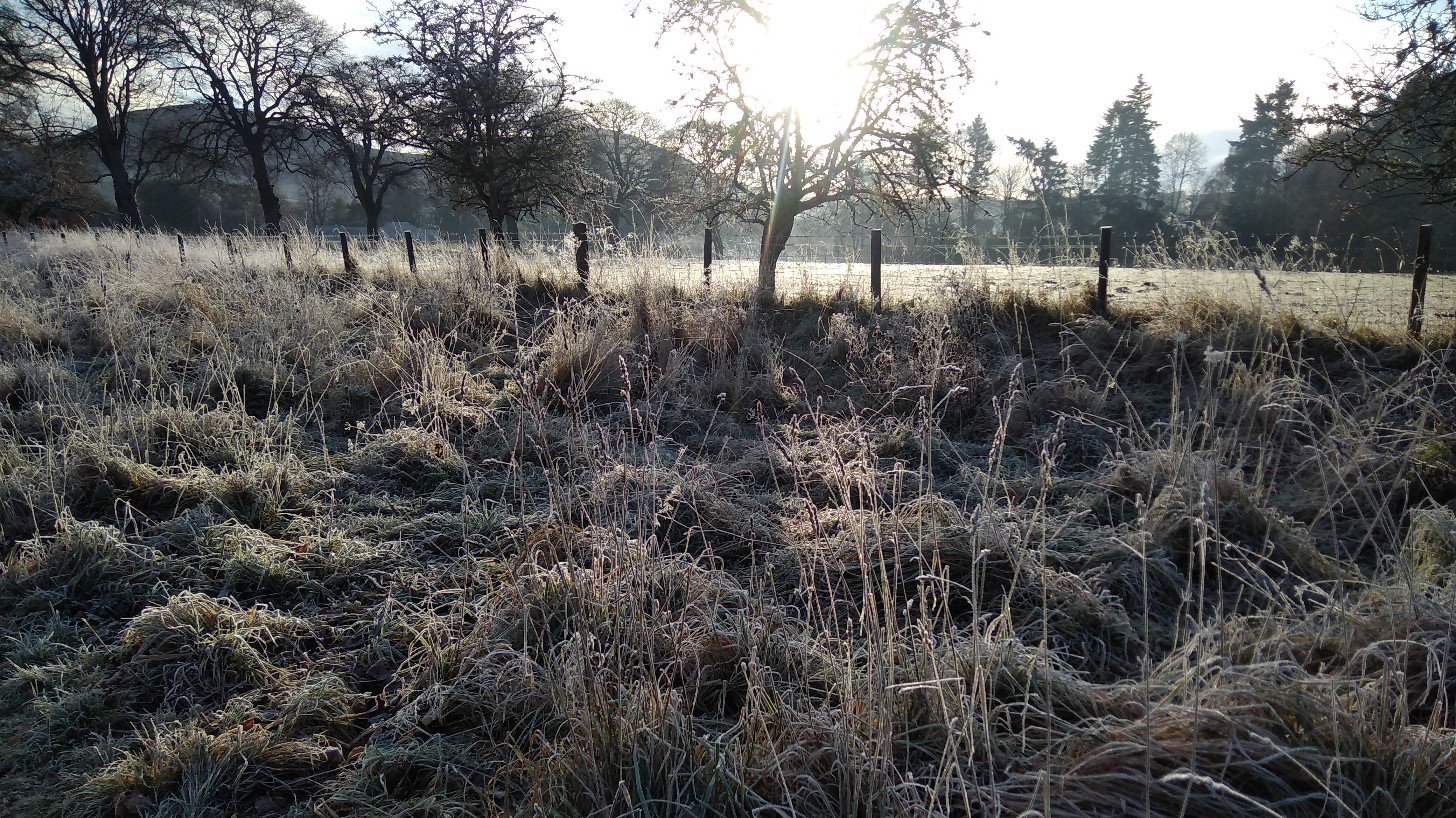
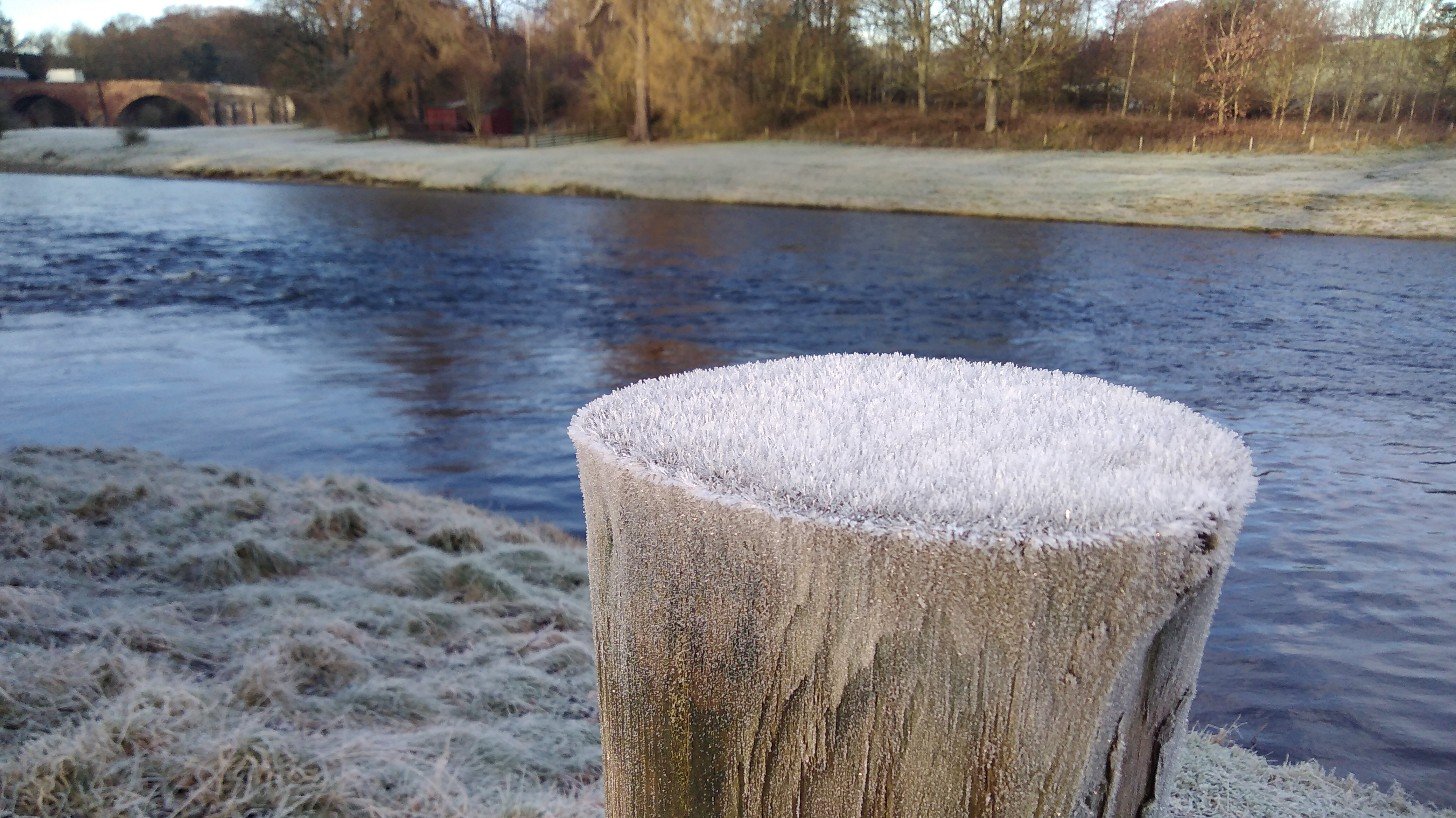
Today I was enchanted by the way the hoar highlighted the seed heads, fence posts, and each individual blade of grass.

wp-15445458456941462870446.jpg
The stalks were as tall as me, upstanding!

wp-15445699263181617288042.jpg

You won’t get lost – there are multiple signs: Melrose Link on the left; National Cycle Network on the right.

There will be aluminium buildings to your left. When the SPPA (Scottish Public Pensions Agency) is ahead, admire their gardens and peer at the poor folk inside working on such a wonderful day. Smile. Then walk to the right of them, following those signs.

wp-1544545675977892240472.jpg
The SPPA gardens.

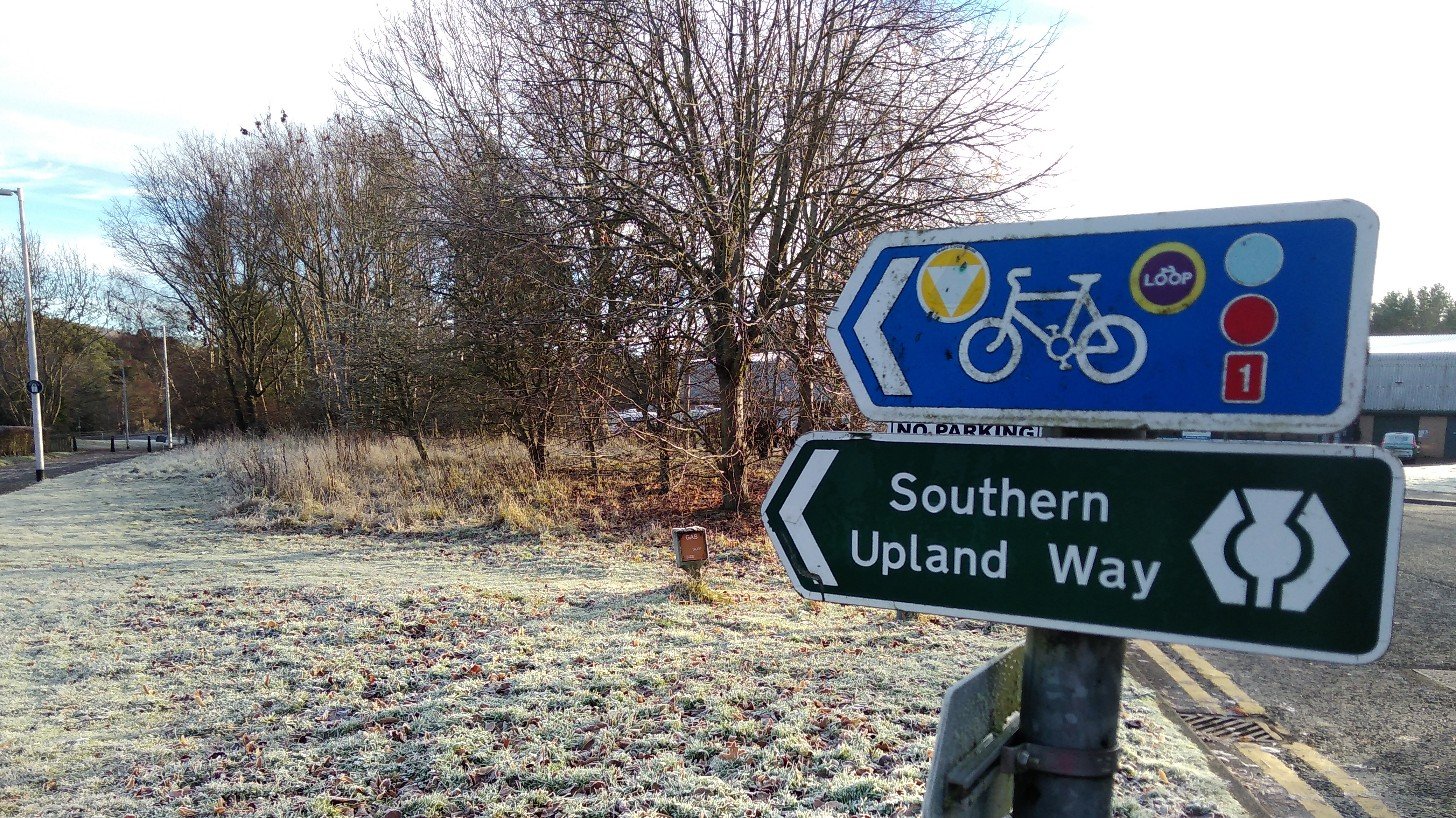
You will see that you are joining the Southern Upland Way.

wp-1544545675185680976713.jpg
This little walk forms part of the Southern Upland Way.

Very soon there is a road to cross and opposite, through a little wooden gate at waist height, is a path with steps going down and there is the Tweed River, burbling on your left.

wp-15445458465711946751879.jpg
Lowood Bridge over the River Tweed, Scottish Borders.

On the right you may be lucky enough to see two Highland cattle, and if it is cold enough it will look as if they are vaping with condensed air coming sideways simultaneously from both nostrils in opposite directions.

wp-15445656597091245617912.jpg
Highland Cattle, Scottish Borders.

wp-15445475323511646051939.jpg
Can you see him steaming?

I scraped the ice from the tourist board telling about the fantastically named Skirmish Hill where King James V’s men fought those of the Duke of Buccleuch and won. The 14 year old monarch is said to have watched from a safe place.

wp-1544545846774137723925.jpg
Skirmish Hill hidden behind the tree, Scottish Borders.

wp-1544546796230215875024.jpg
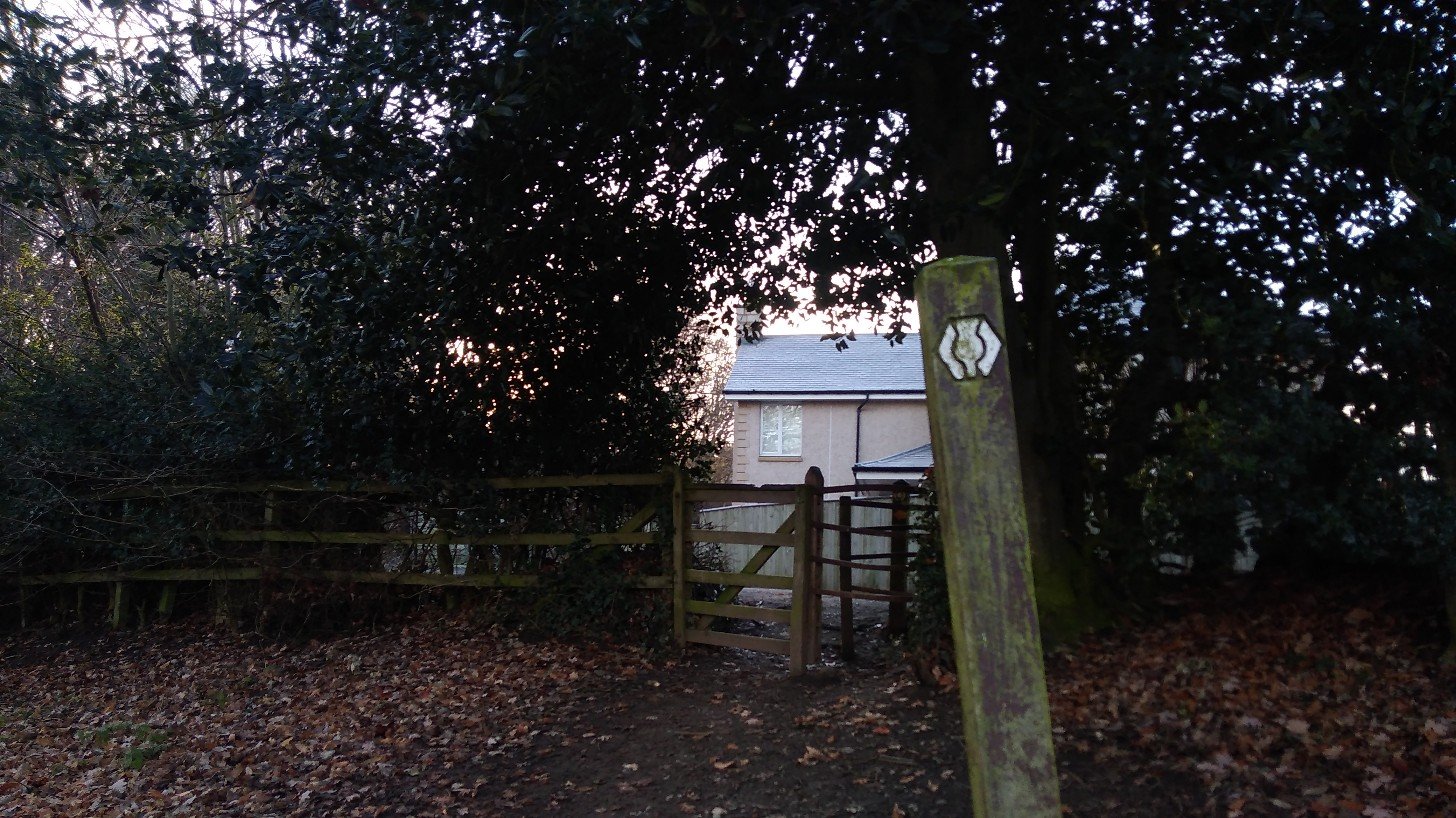
Follow the thistle signs!

At the kissing gate go to the left of the houses and you will see signs. Almost immediately continue through the woods to the left. The way goes uphill with a wooden handrail, green with lichen.

wp-15445665373311993467903.jpg

wp-1544546796830293396041.jpg
Holy Trinity Church, Melrose, Scotland with the Eildon Hills behind.

The ferns were all flattened by frost as I came into a clearing, going gently downhill. Here I spied more information, this time about fishing: grayling and salmon who make the courageous journey from sea upstream to fresh waters to spawn, often against all odds.

wp-1544546796429360555337.jpg
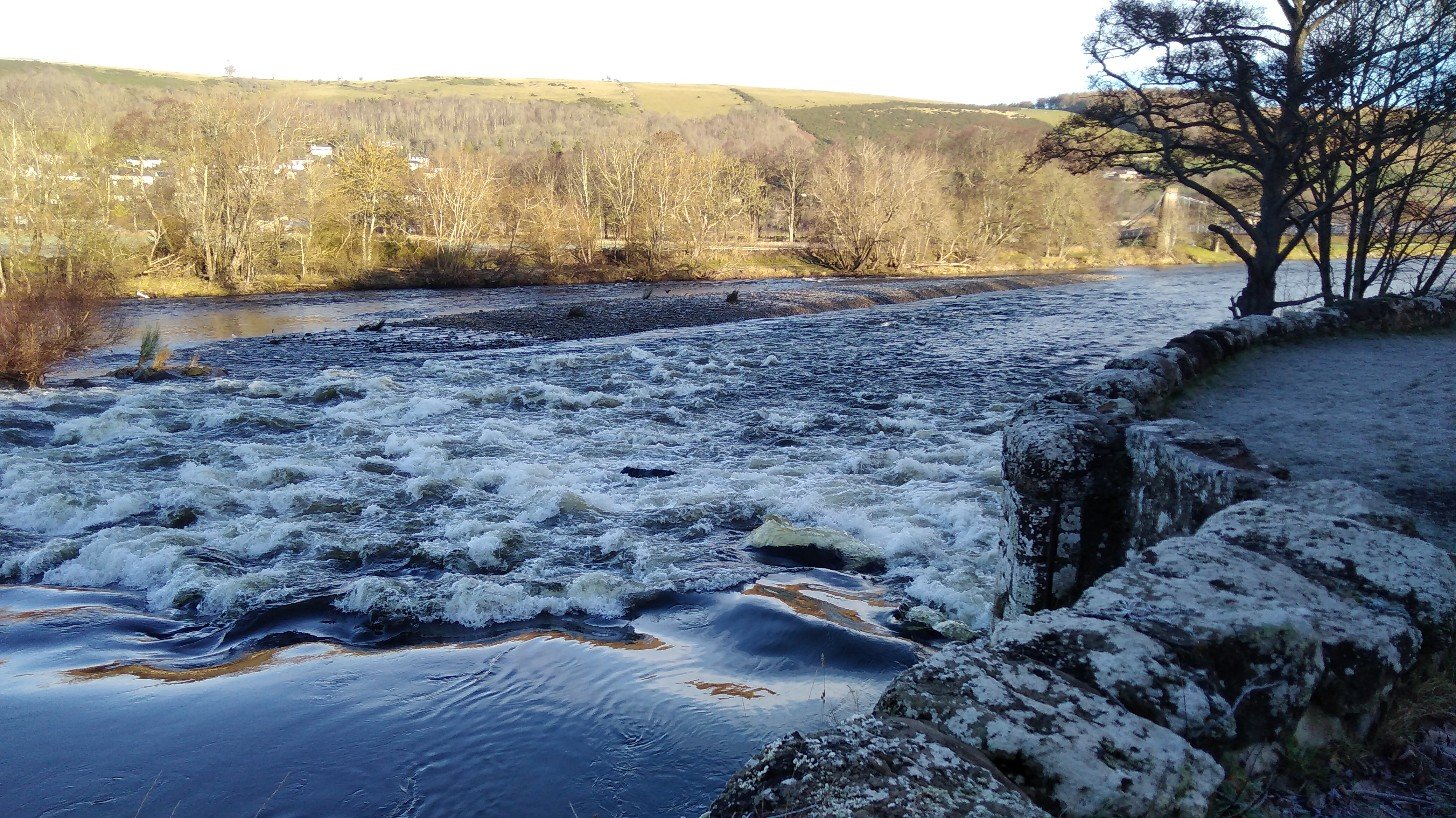
Honestly, the water did really look like this: shiny and luminous. Rver Tweed, Scotland.

There is a choice coming up:
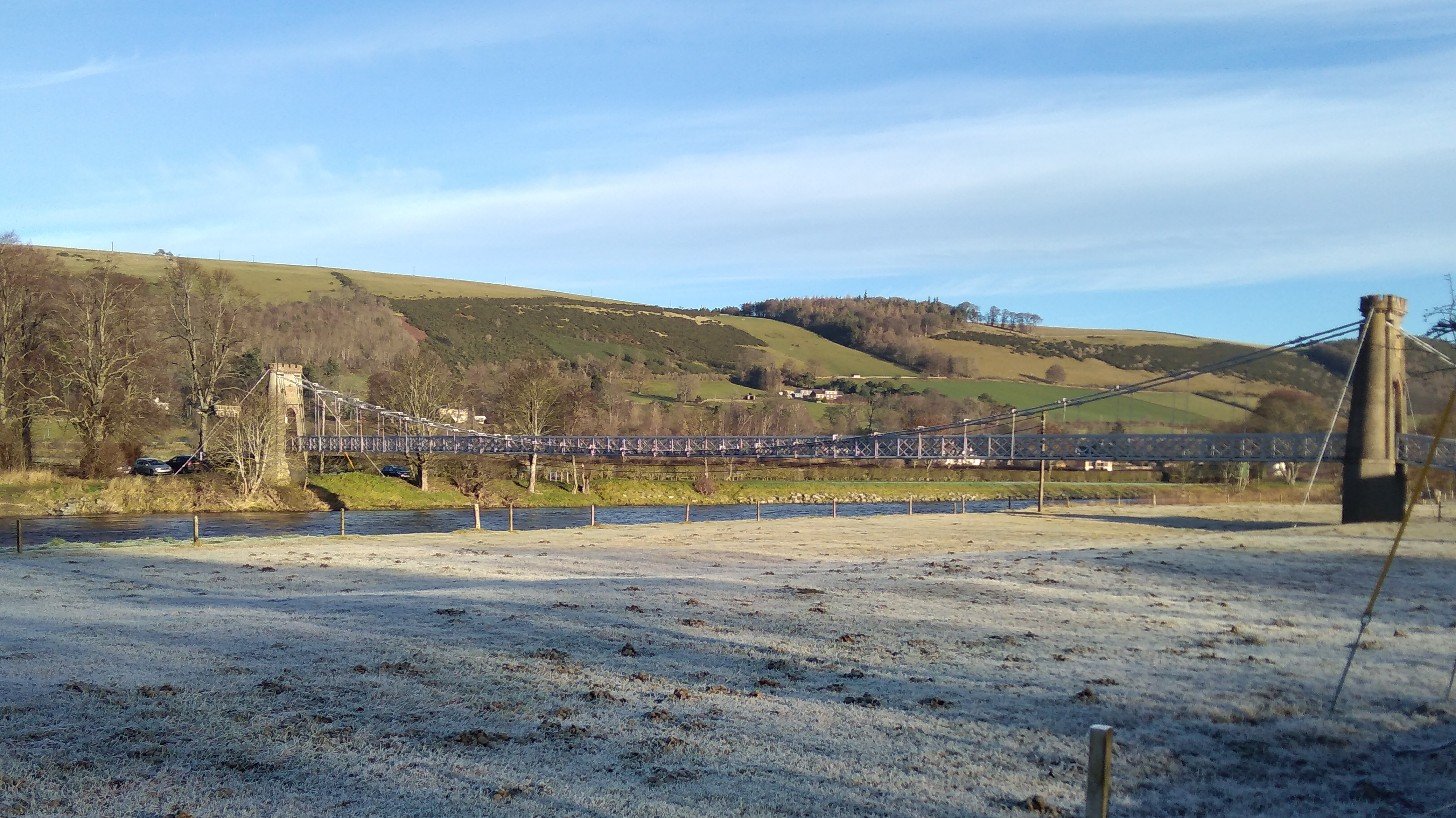
You can either go past the hedge which is too high to see over (I stood on one of the handy benches to get a shot), ignore the sign and keep on going for a while to see the Chain Bridge, but then turn back and take the Town Centre sign. This will take you between the rugby club (left) and the green park (right)

wp-15445475334372139025130.jpg
Taken on the way back when the sun was lowering, here is the bench mentioned above.

Or, keep walking past the church to the Chain Bridge and around behind the town centre coming in by the road directly to the Abbey.

wp-15445467973832097401635.jpg
The impressive Chain Bridge, near Melrose, Scotland. Ice still on the ground at 11am.

I took the second option because it was signed Abbey Walk.

Everyone is very friendly as are their dogs. A collie politely laid her pink ball at my toes, her nose flat along the ground, eyes expectant. The second time she came back she showed me the tricks she could do with it, presumably as encouragement and to distract from my muddy fingers. The third time, the gap between me and her owner having widened considerably, I informed her this would be the last, before hurling it behind me.

wp-1544545846986554497605.jpg

You can halt to admire the horses on the left, or perhaps the motorbikes on the right. (You can pick up a copy of their free magazine too.)

You will continue onto a small road. Turn left if you wish to visit Newstead.

Hang a right at the main road where the signs mysteriously disappear (sorry, I guess what I wrote above was wrong at this juncture).

Walk past the Abbey Woollen Mill shop, or visit if you like. Carry on by the houses and careful because it’s a busy road, but not for long.

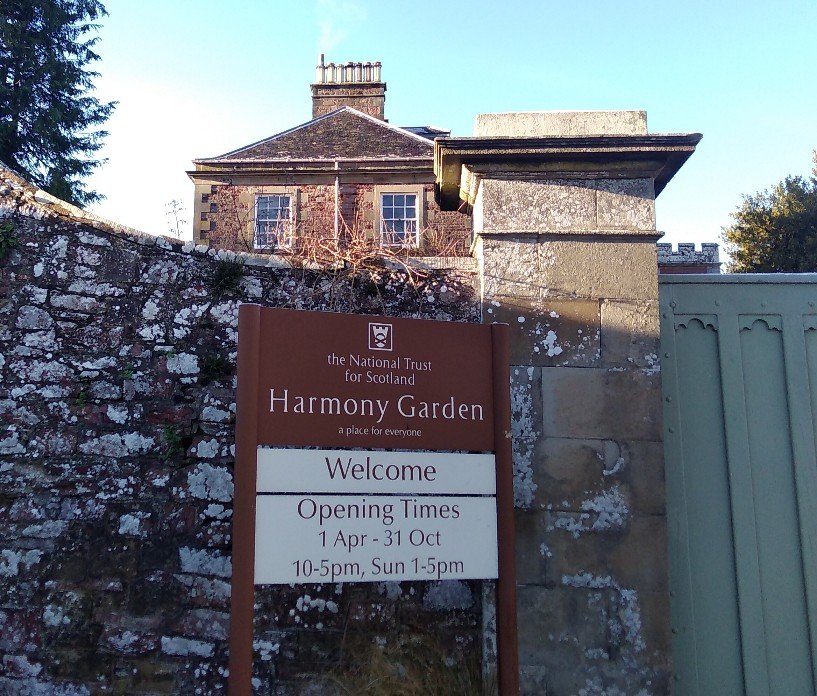
Don’t take the next right (St Marys Road) unless visiting the Harmony Garden. The nearby Georgian Manor House is available for holiday lets.

wp-15445699261831885540180.jpg

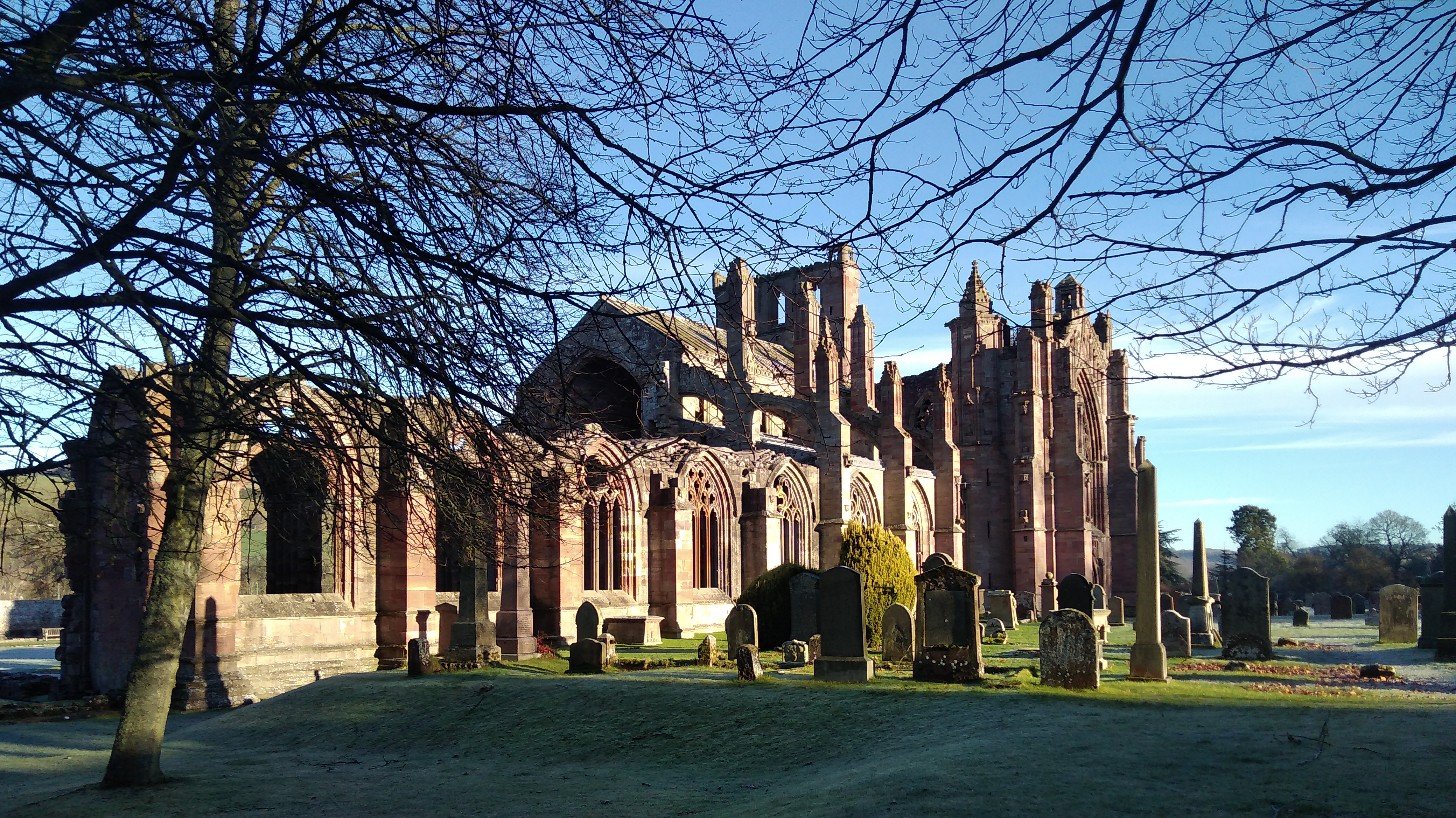
Instead go straight on see to see Melrose Abbey on the left, behind the wall. David I founded the first Cistercian Abbey in 1136. The heart of Robert the Bruce is believed to be buried in the chapter house there. The opening hours and link to the Historic Scotland page are at the end of this blog. The bus stop is to the right of the monument.

wp-1544546797015662201307.jpg
Public toilets, Melrose, Scotland.

wp-15445467971691433483706.jpg
The magnificent medieval Melrose Abbey ruins.

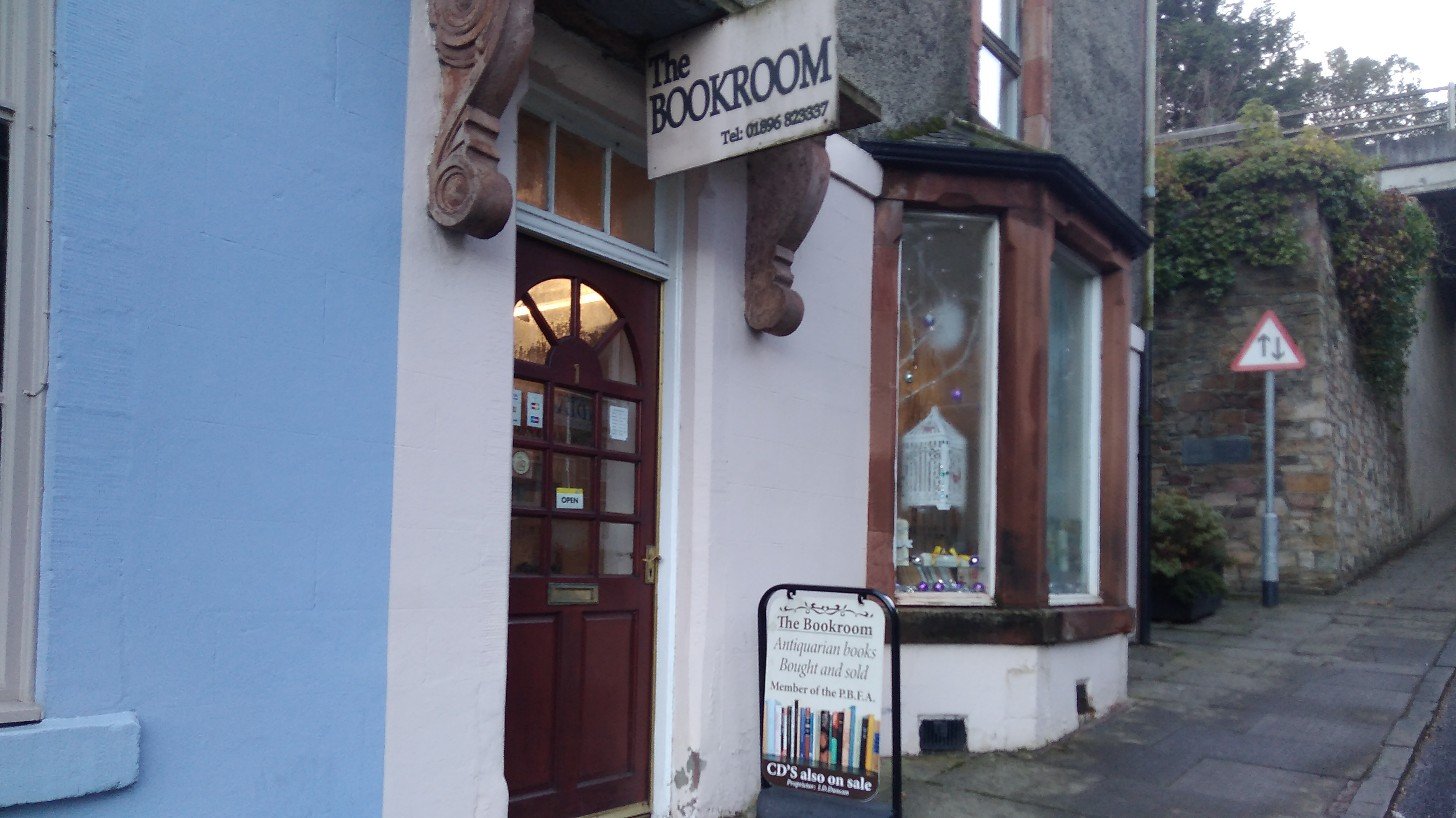
The town centre is in the middle of a triangle with a unicorn on an extremely high pillar in its middle. Originally this would have been the Mercat Cross where all typesiof goods wouldhhave been for sale, proclamations were made and criminals punished. The heraldic unicorn is the supporter for the Royal Arms. Here you will find a pharmacy, and library plus The Roman Centre. There are lots of hotels, cafés and nice independent shops, particularly bookshops, partly because the people who live there like to read, and there is also a Book Festival. Explore!

wp-1544546915232689821140.jpg
The Bookroom at the bottom of Dingleton Road, Melrose, Scotland.

wp-15445469150381218431911.jpg
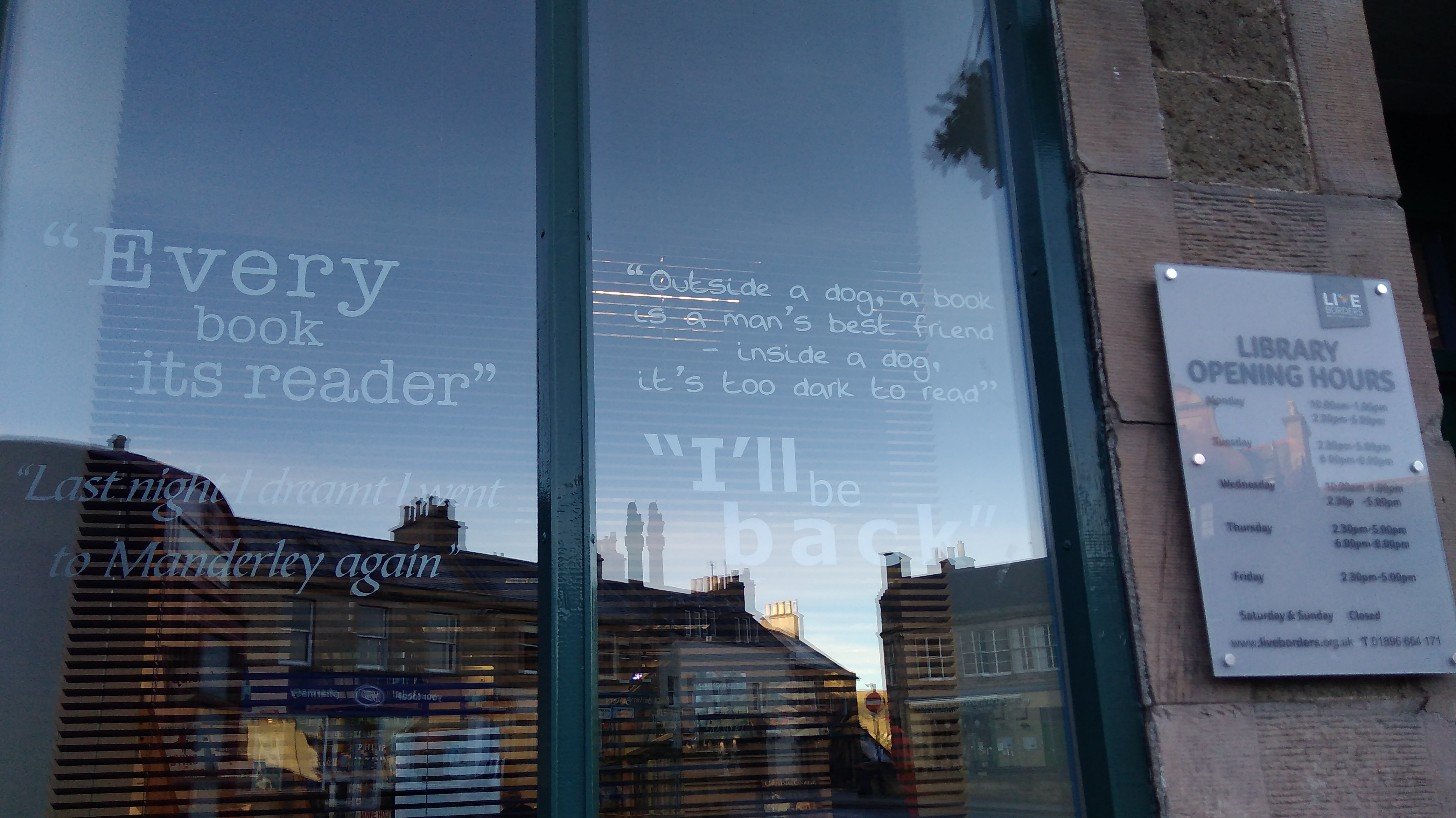
One of the inscriptions on this window is ‘Outside a dog, a book is a man’s best friend – inside a dog, it’s too dark to read!’ This is the local library, right in the centre of the town where it should be, Melrose, Scotland.

After your browsing and sightseeing, you can return the other way if you did what I did: to get back to the station, walk out of town along the A6091 road with the Co-operative store (food) on your right, and head towards the Melrose Rugby Club. Anyone will be able to point you in that direction as rugby is THE sport in the Borders.

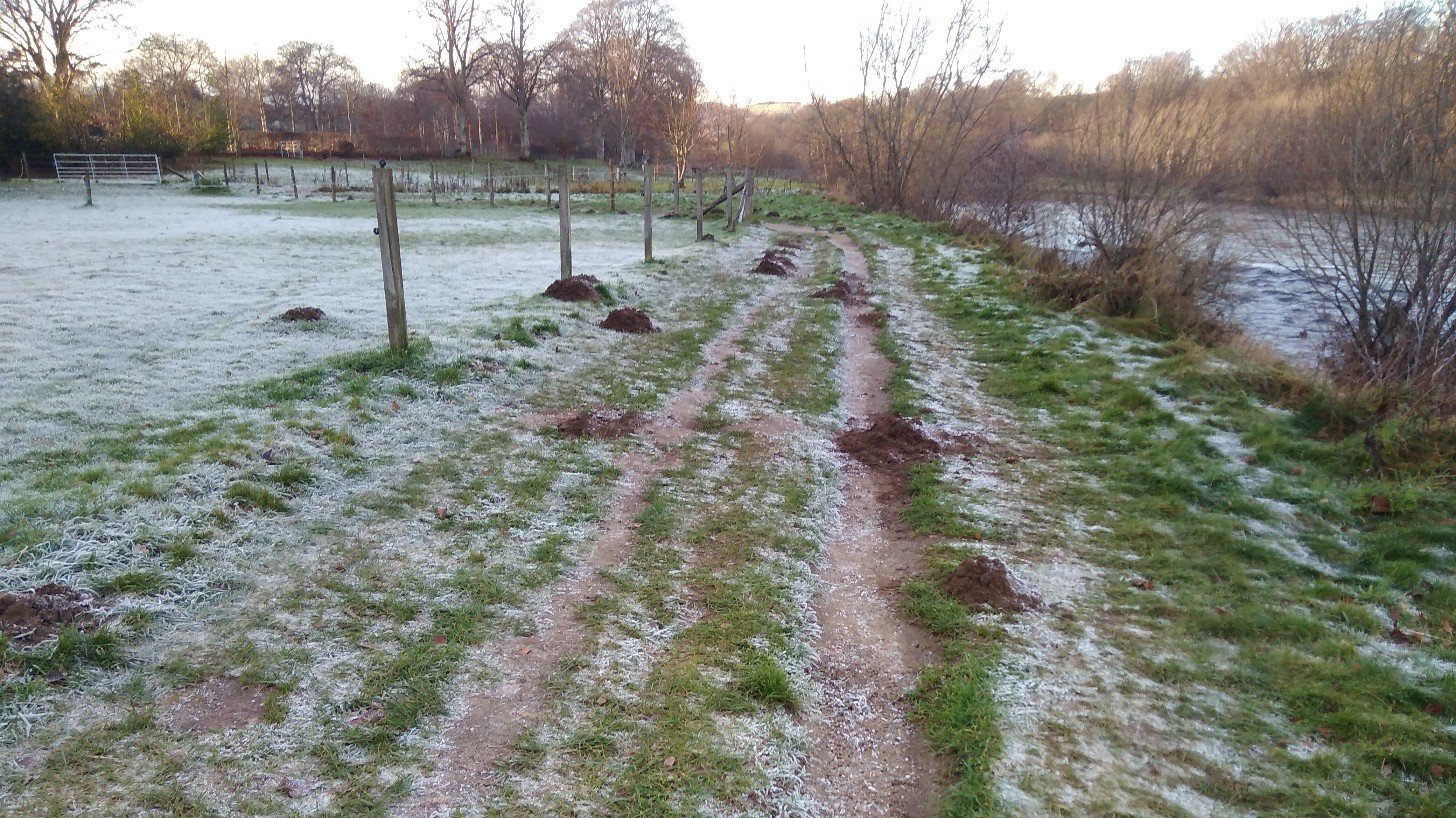
If it’s still light, enjoy the grand trees, admire the mole hills, and tune into the water as you wander.

wp-15445694639561949801093.jpg

A gentleman and I passed the time of day as we recognised each other from the morning when we were then also going in the opposite direction.

Remember that things look different when retracing one’s steps! You must cross two roads and keep both the SPPA and the aluminium buildings on on your right. Keep following the white Scottish thistles and yellow arrow. The final cycle path part is fully lit when it’s darkling (3.30pm at this time of year).

wp-15445456761851853380999.jpg

Birds twitched: robin, chaffinch, blackbird, pidgeon, crow, mallard and a heron unusually crouched by the riverbank. Luckily there were still plenty of berries available for them to feast on.

Station facilities:
There is a little shop at the station selling hot drinks, snacks and G’n’T. I was reliably informed that passengers usually buy it on the way up in the morning!

Don’t believe all the moaning complaints you might find on the internet. The trains are great. Well, we were only delayed 10 minutes homeward bound. I know I am not a commuter but.. take a leaf out of our school girl days (I took a daily return to school for 7 years) and if the train is cancelled don’t go to work, go for a walk instead. Look around you and inhale.
wp-1544546609966857000608.jpg
Silhouette of a beech tree in its winter glory.

Tweed walking: Peebles, Coldstream etc.

I went there to see friends and give Shiatsu. I might go back so if you live there and would like a session let me know. Many thanks to the Chris (designer of my lovely website) and Penny for lunch and chat.

wp-1544547532599733808412.jpg

Melrose Abbey is open all year round. April to September 9.30 – 17.30; October to March 10 – 16.00.
The McInroy and Wood Lecture featured Robert Peston in 2018.