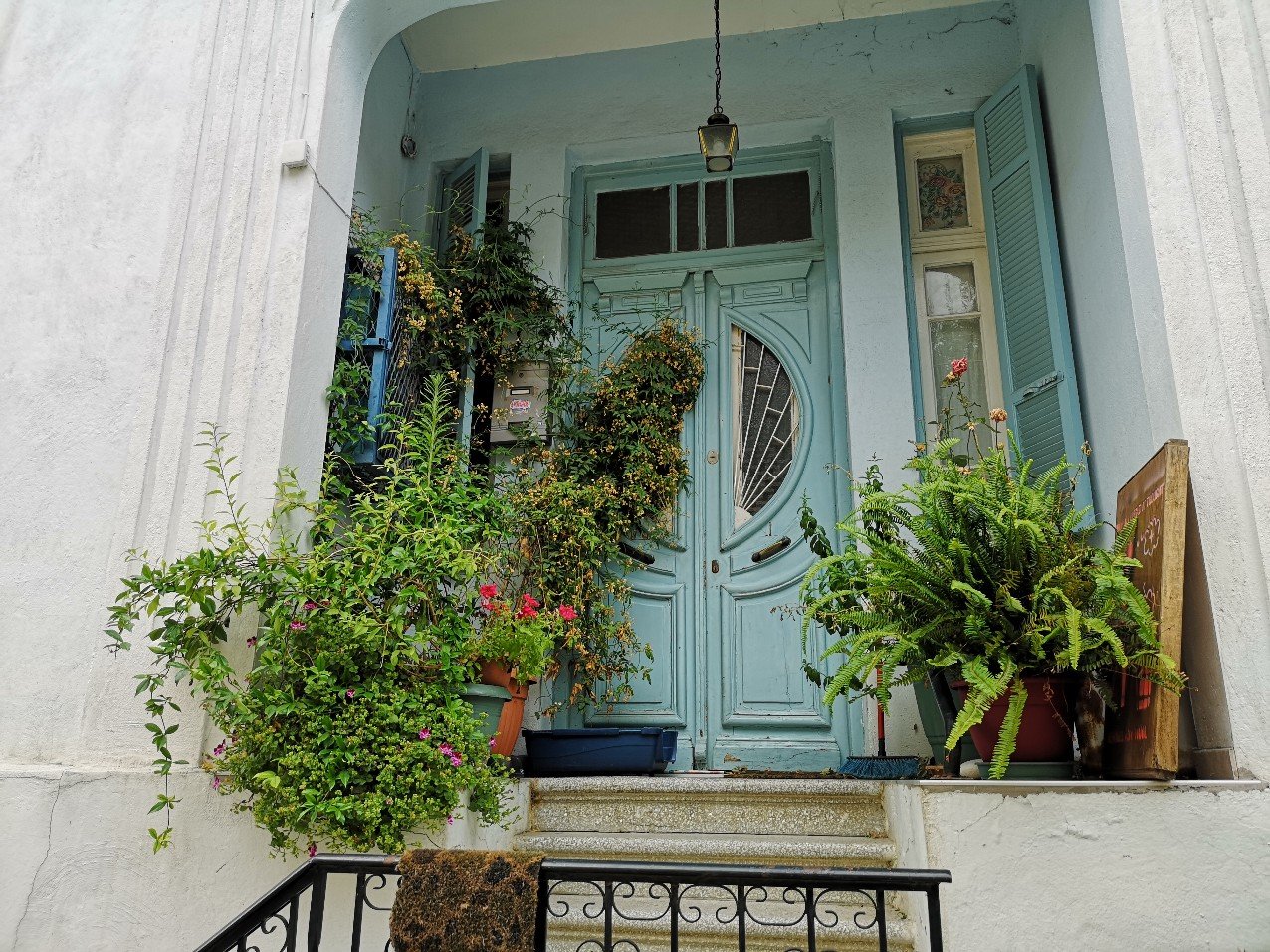
Athens to Edinburgh overland 1

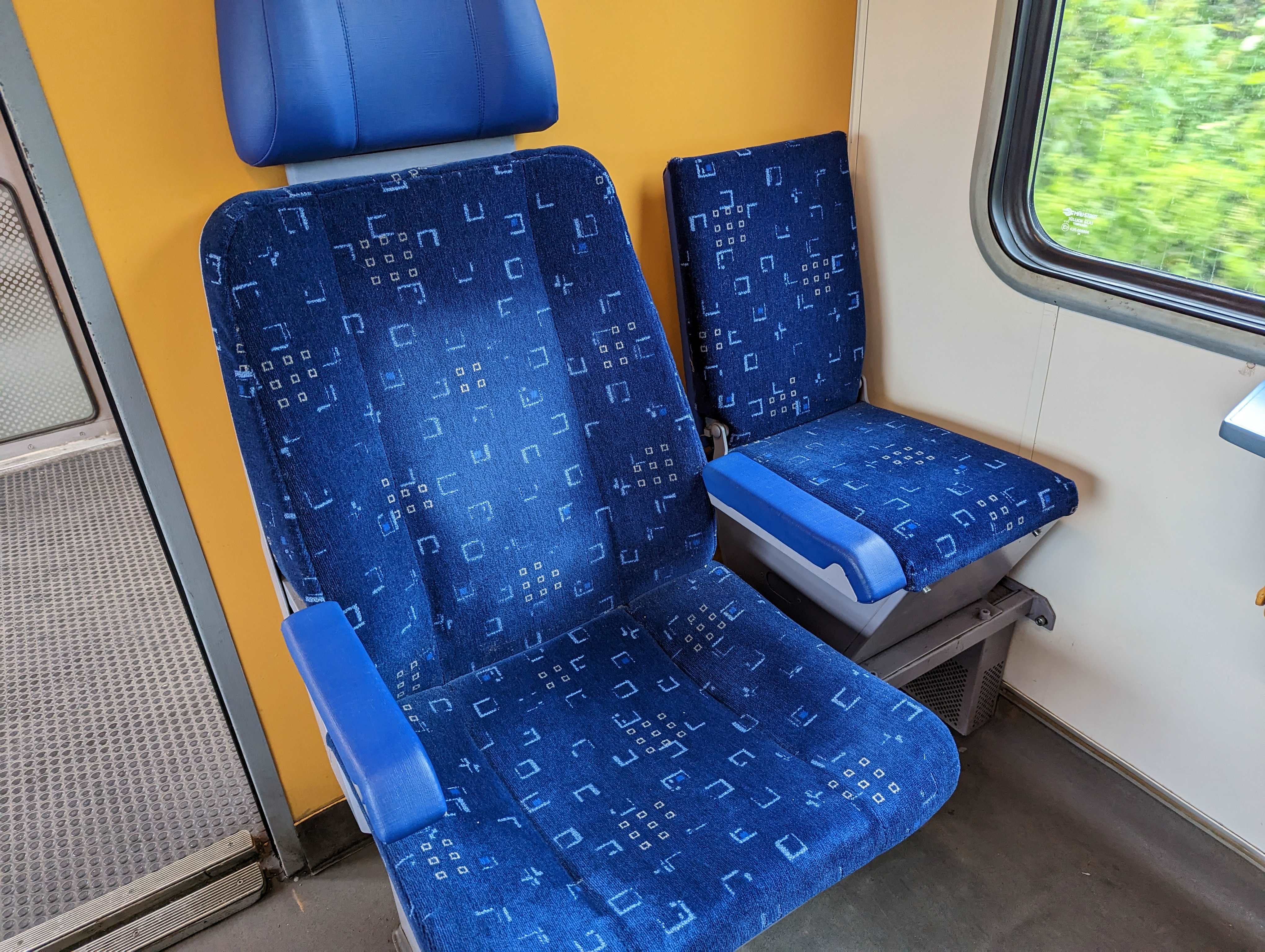
In early 2023, I made a vow not to fly unless it’s an emergency, not for pleasure nor work, and so I made my expeditions back and forth between Scotland and Greece overland. The first took 10 days, from Athens to Edinburgh, because I broke my journey many times to give Shiatsu and meet friends and family. I took the overnight bus, first to Budapest via Belgrade, then I travelled on to Berlin and The Hague (also by bus), Hook of Holland (tram), Harwich (ferry), London (train), and finally home (train).

I announced my potential route in advance on social media, asking if anyone wanted to do a Shiatsu-hospitality swap. The responses and invitations that I received resulted in an elongated trip; I went off on tangents and saw places I would not have visited otherwise. It meant that I didn’t get to Bratislava or Prague as I’d thought I might, but this collaborative approach to planning allowed for the unexpected, and was a way of letting go of a set itinerary. Along the way I made new friendships and re-newed others, gave gentle, therapeutic touch, and much more besides.

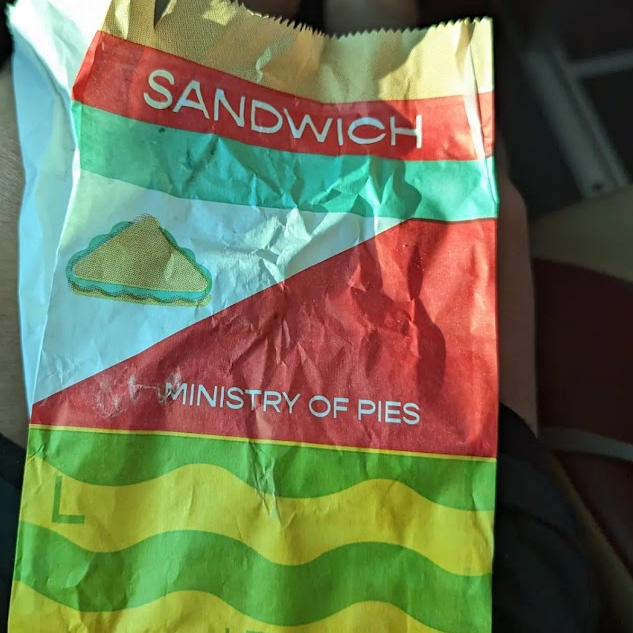
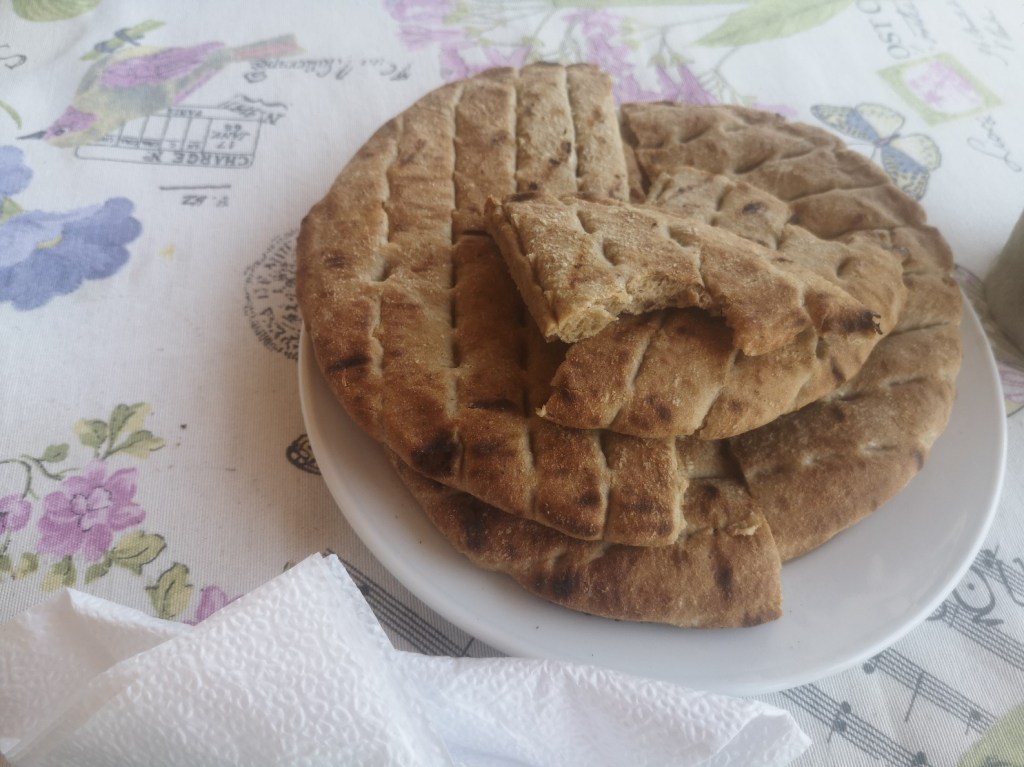
Travelling overland is so very different from flying: These were journeys of paths and mountains which were seen, but not walked. Of borders and boundaries, and The Ministry of Pies. Of the full moon at night and in the early morning. Of towers and rivers – fast glimpsed through windows. They were about fresh air in car parks after miles on the road, a 3am toilet break, new currencies each time I woke, and ‘thank you’s in different languages. Of waiting at yet another border where I whiled away time reading Margaret Forster’s biography of Elizabeth Barrett Browning in the sun (borrowed from one of those mini-book-swap boxes that can be found in public parks all over Europe and the UK, and returned at the next one, in the next city). Of T’ai chi and walking under trees dripping with rain as passports were checked, and of motorways and forests and wheels on solid ground.

Athens to Budapest
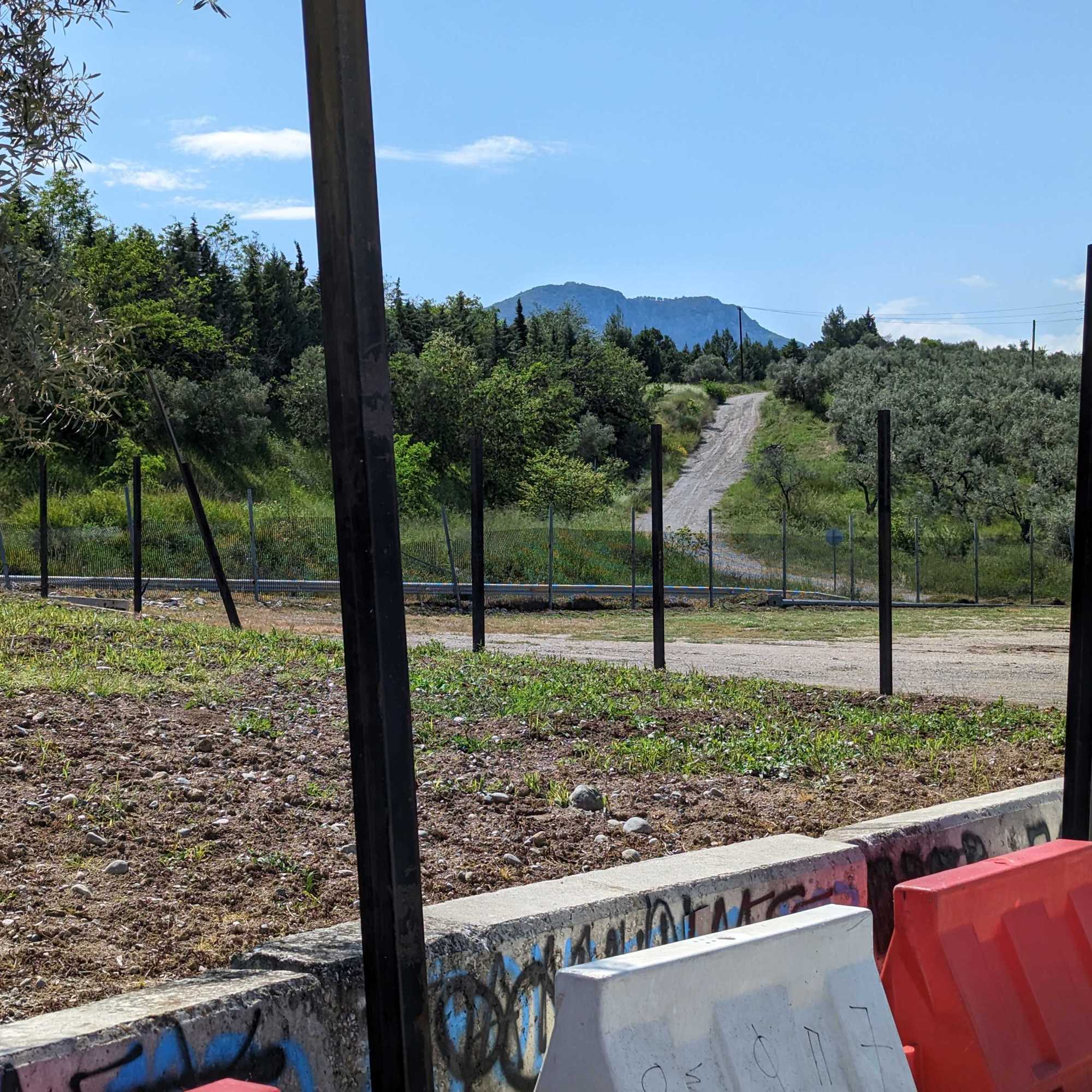
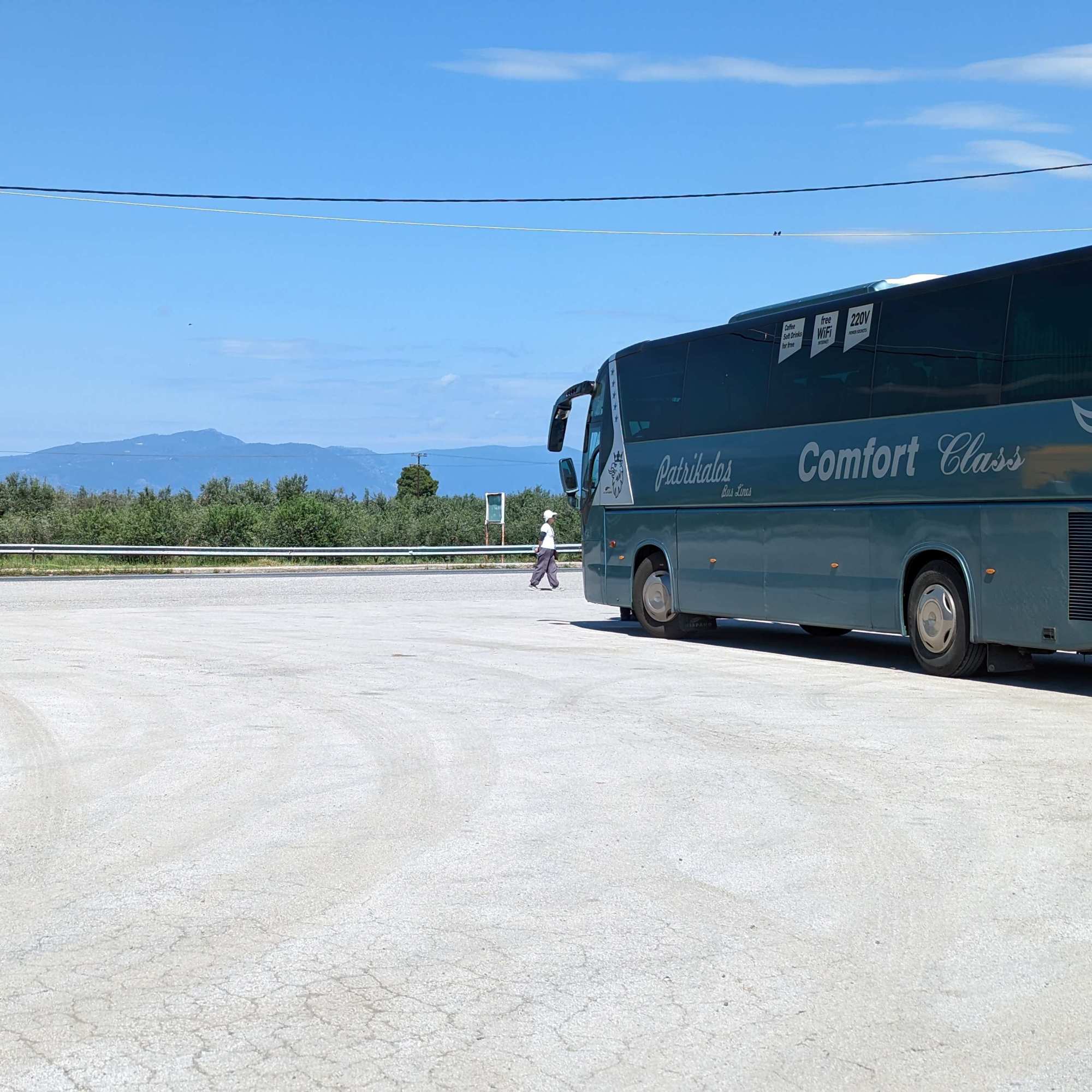
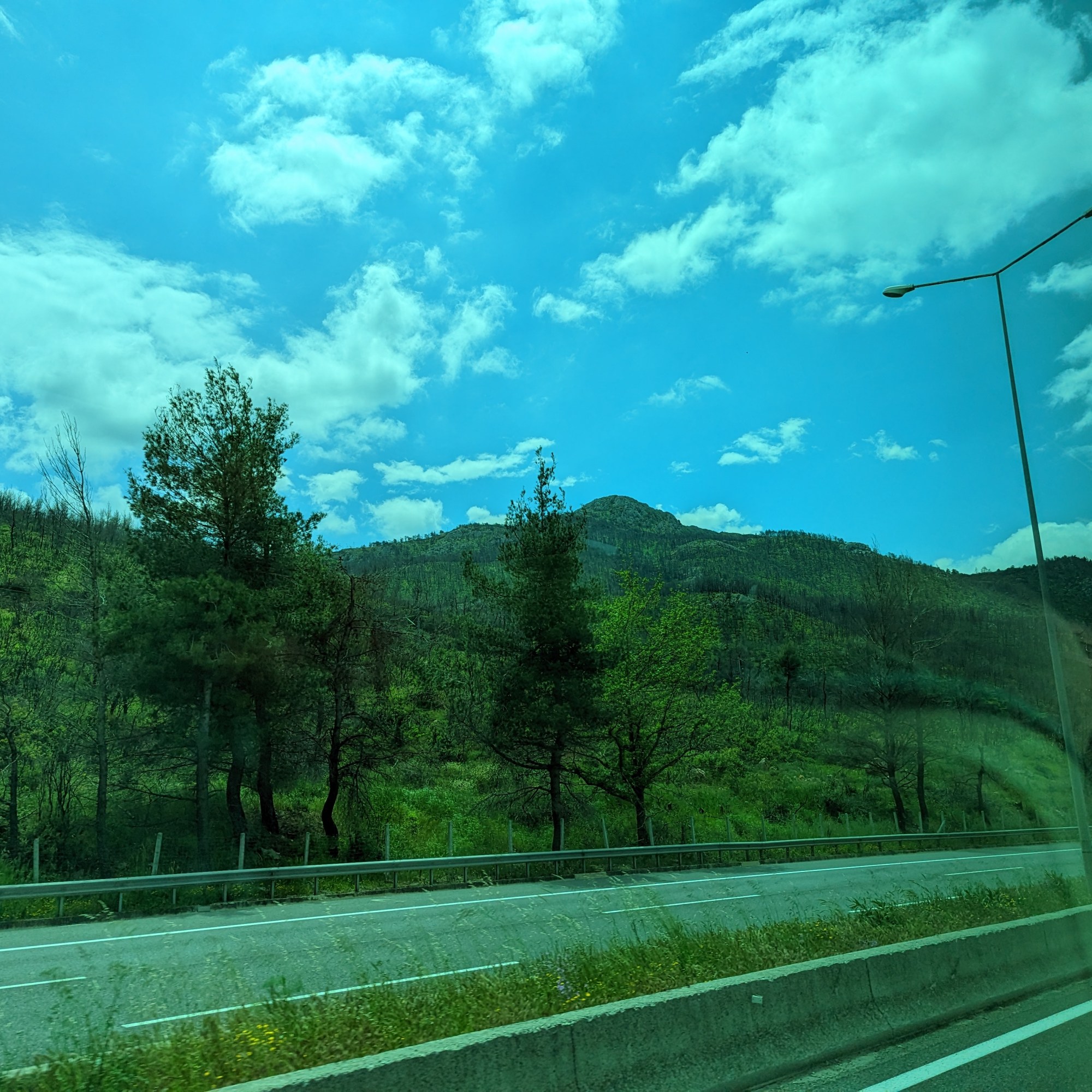
I left Athens at 12.30pm, went through Kifisia around 1.30pm, and the bus made toilet stops at Agios Konstantinos at 3.40pm, and passed by Mount Ossa (south of Kozani) around 6.15pm.
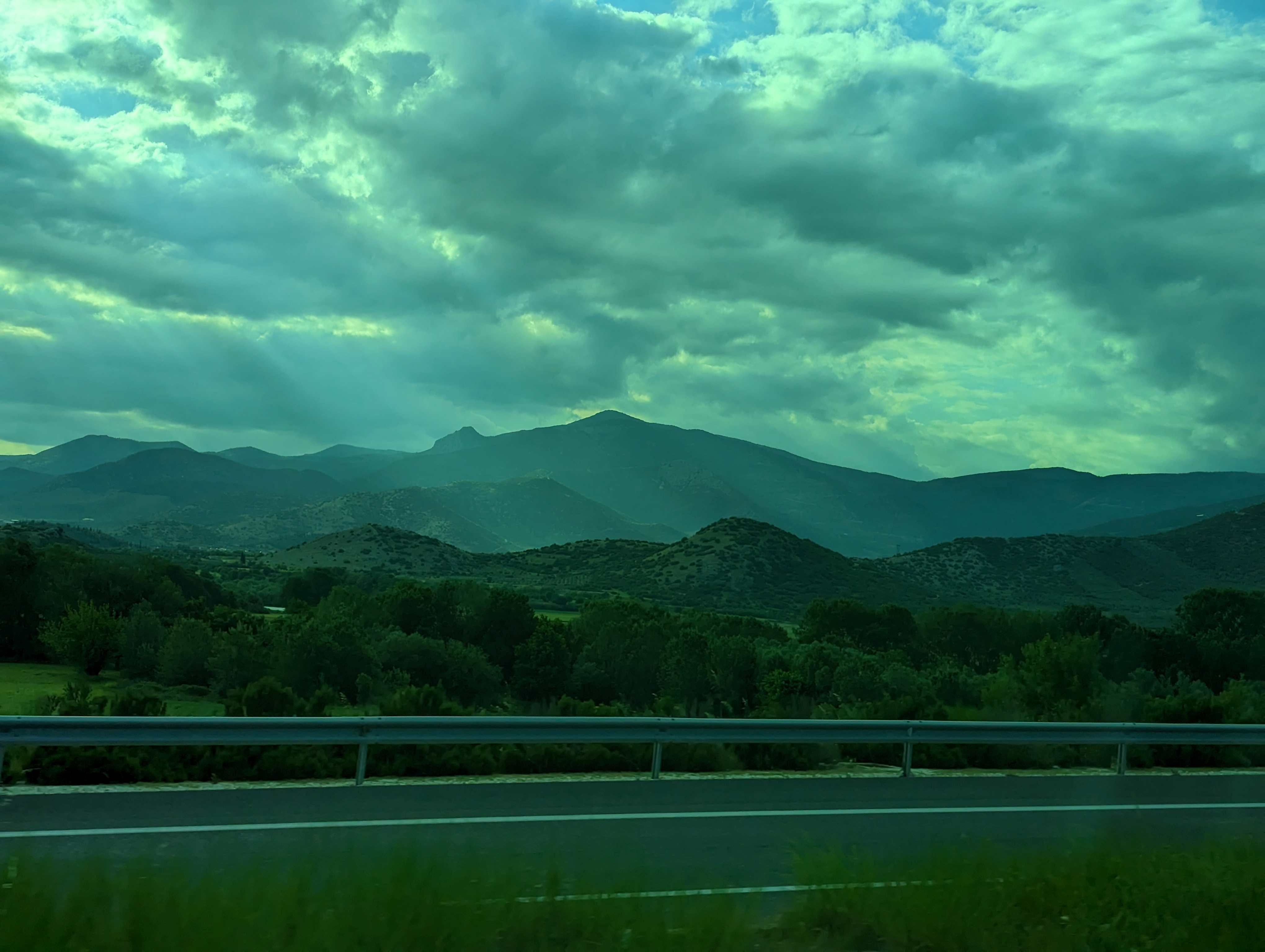
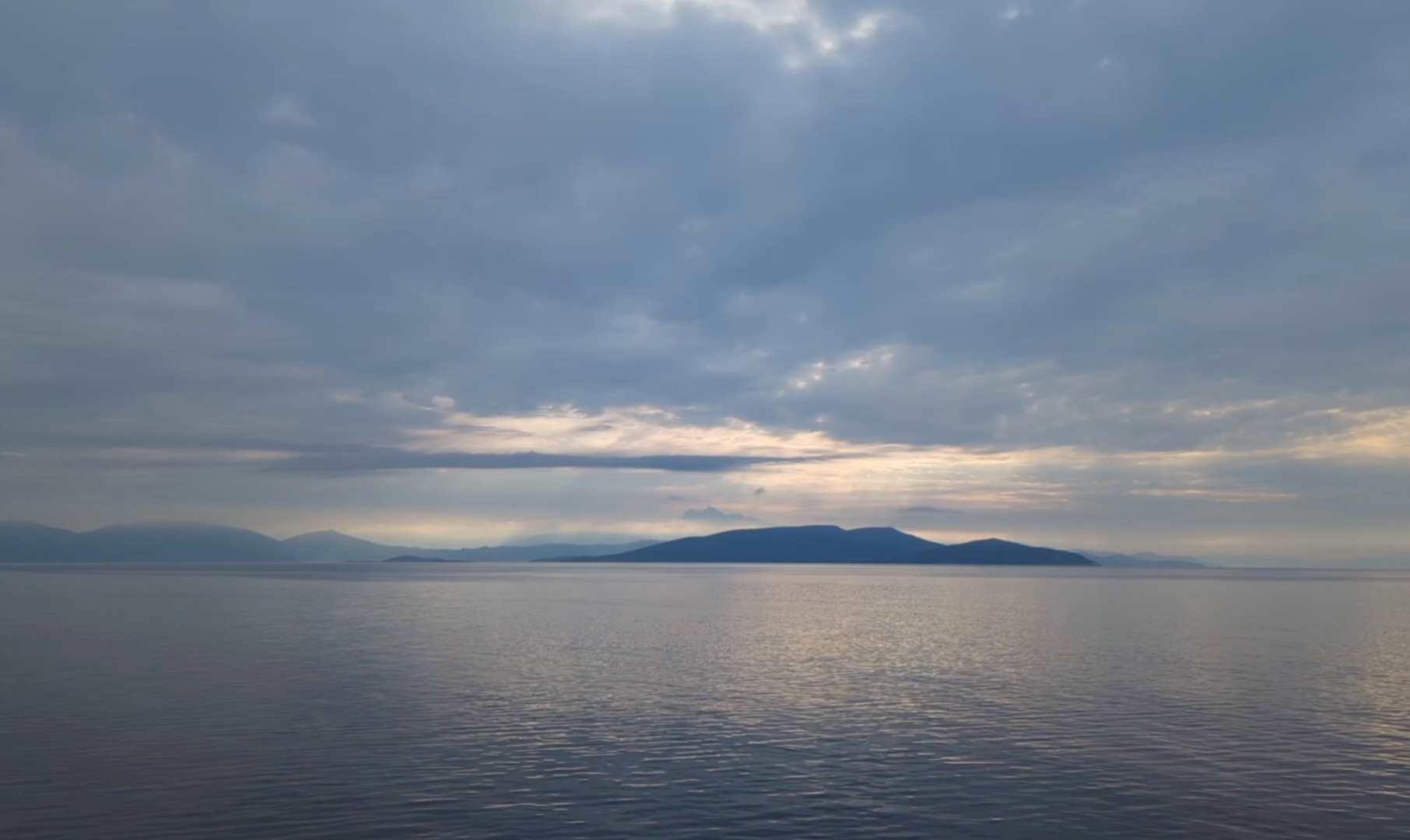
Mount Ossa in the distance
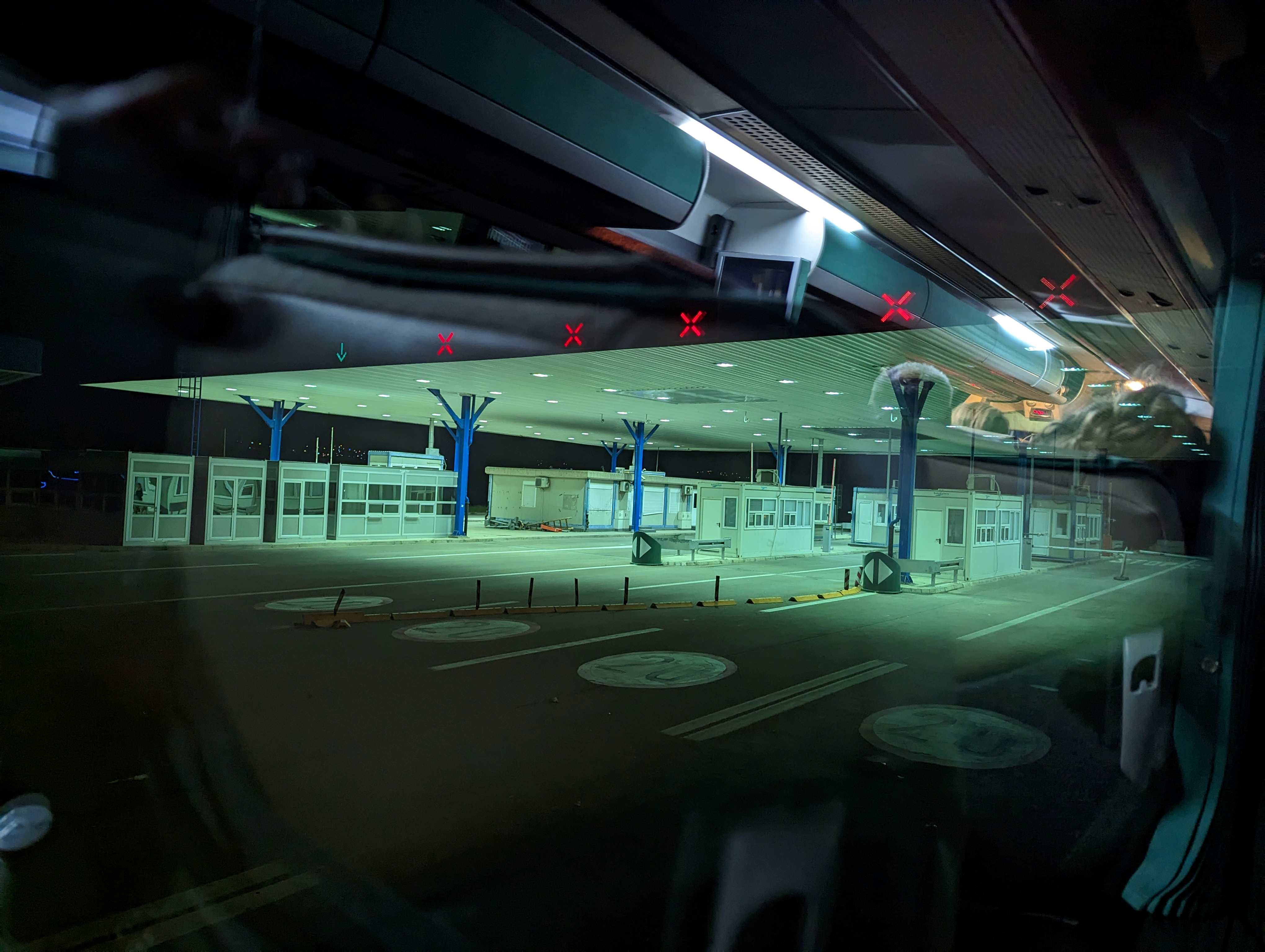
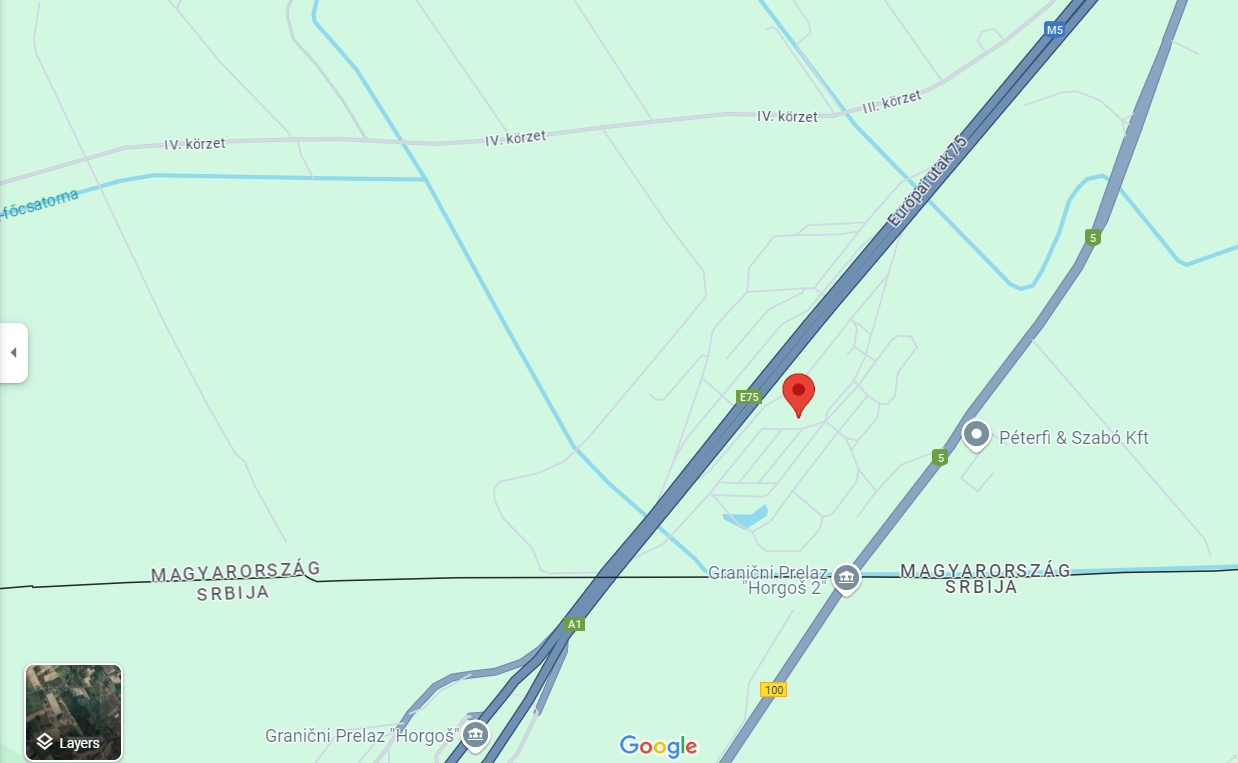
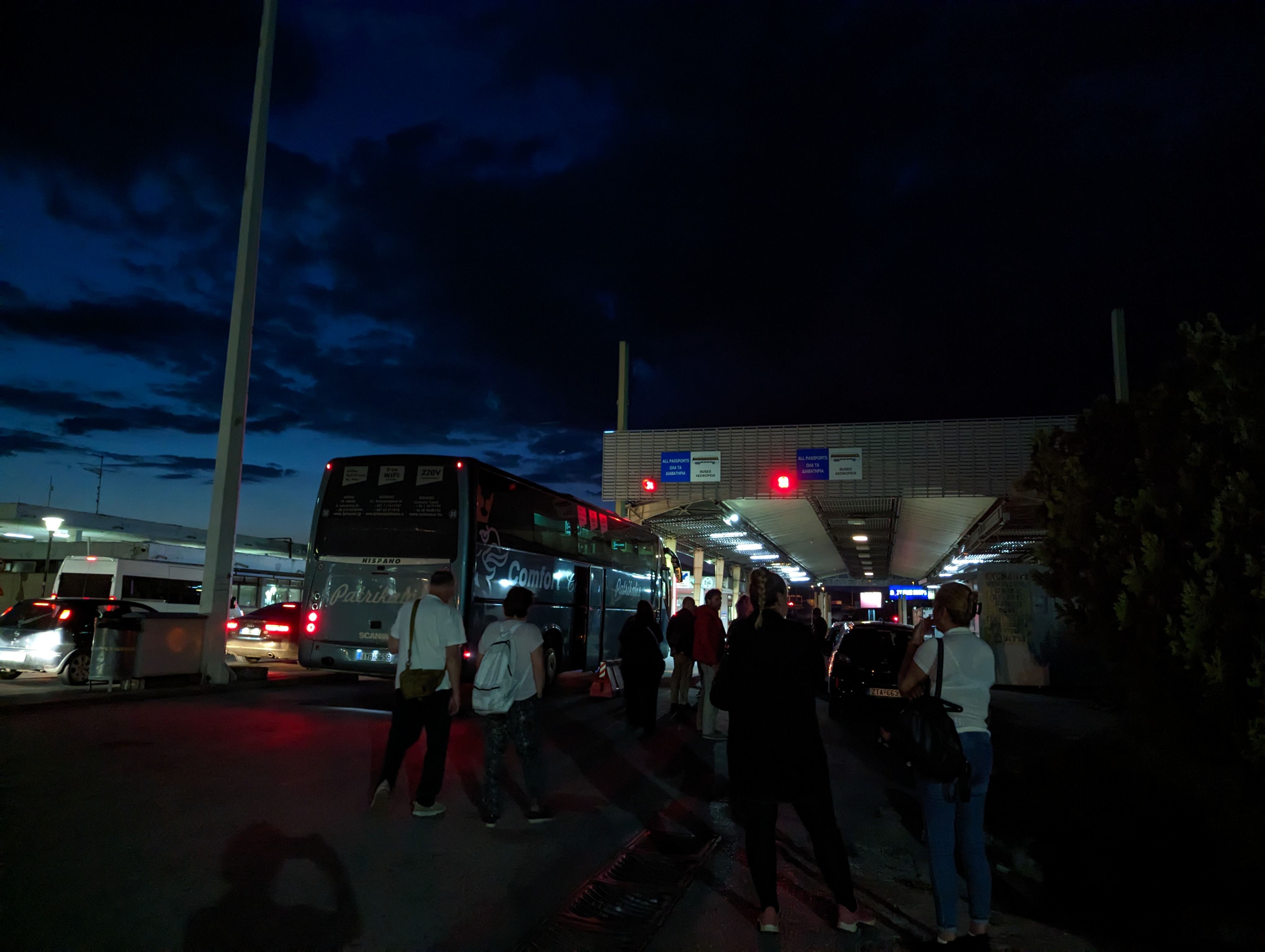
The Greek – North Macedonian border (Tsoiliades) 8.15pm
The North Macedonia – Serbian border (Preševo) 11.45pm
Borovac, Serbia 12.30am

Even nearer the North Macedonian – Serbian border at 3.30am

Tips: take a rolled-up sleeping bag and a blow-up pillow, stock up on food and water before you get on, don’t chose a seat near the toilet (if you have a choice), and always get out to stretch your legs and breathe deeply when possible

By 5.30am, we were in Belgrade.

Belgrade to Budapest: six hours
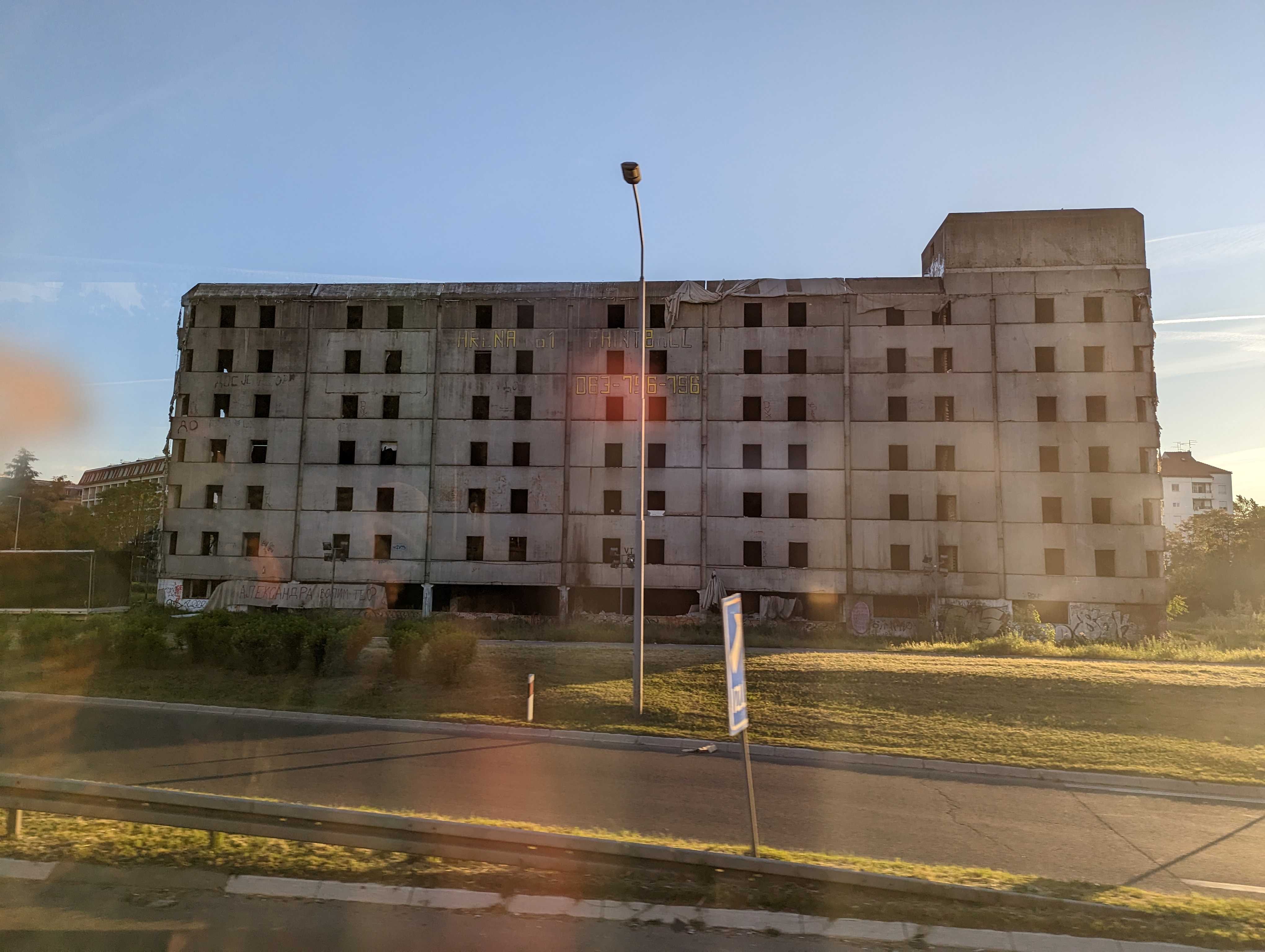
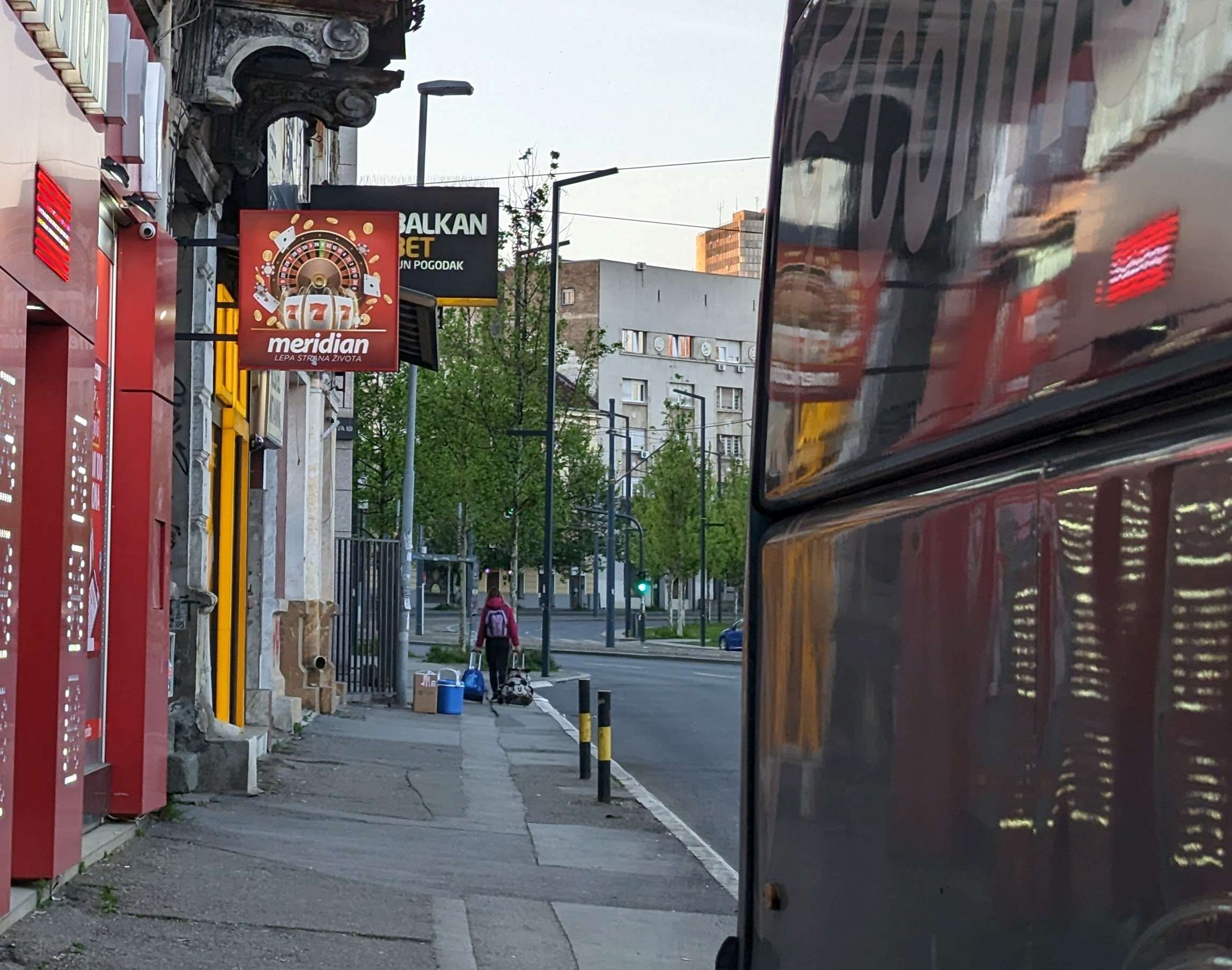
I decided that I must be ‘in the right place’ as our Belgrade stop where people and many boxes left the bus and boarded was called ‘Meridian’ (a key word in Shiatsu denoting the channels through which we image chi flows)

The worst thing about the journey was the smoking – both driver and passengers. I asked them if it was possible to stop and, reluctantly, there was a short hiaitus for the air to clear. It’s not always like this.
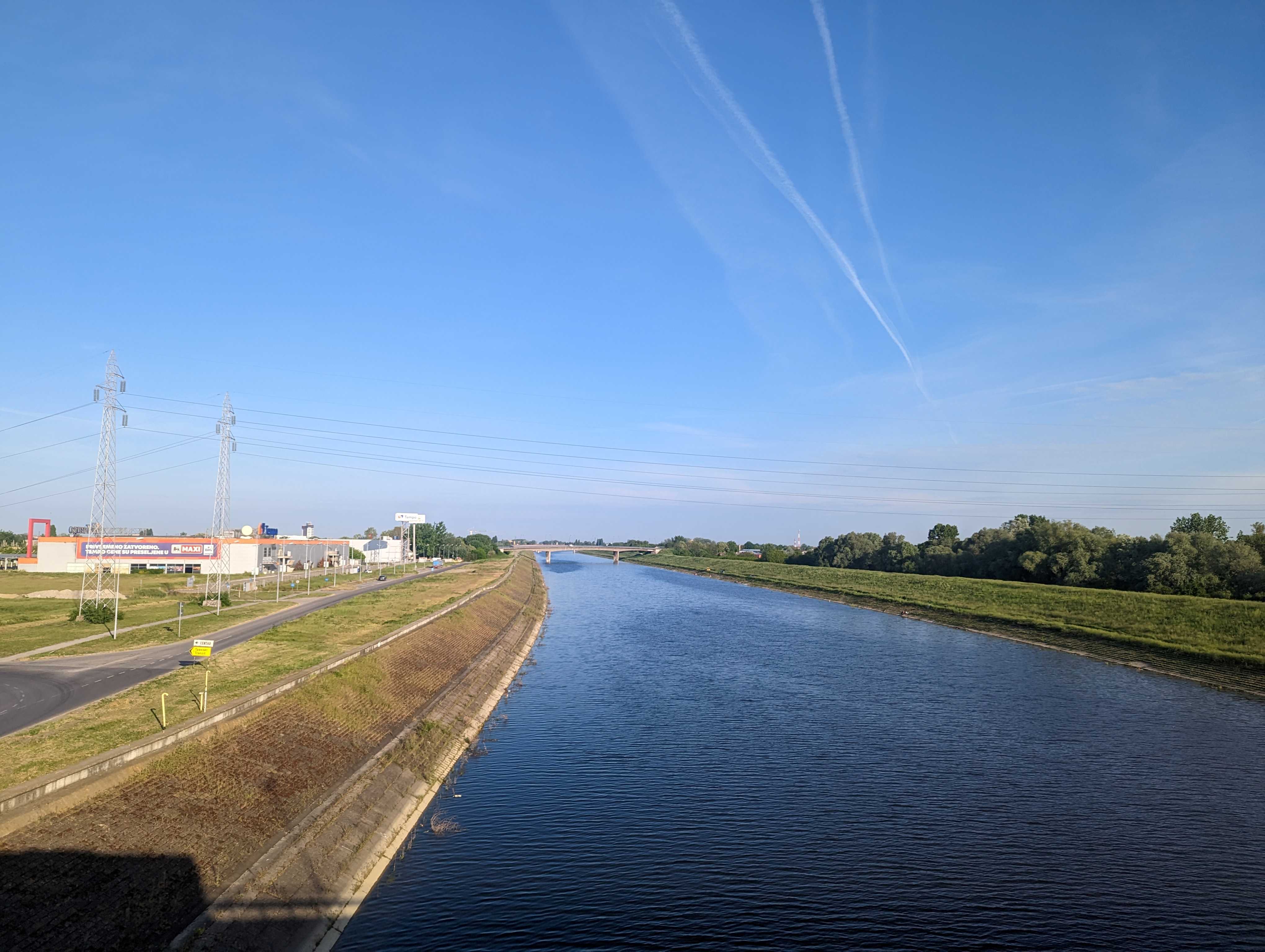
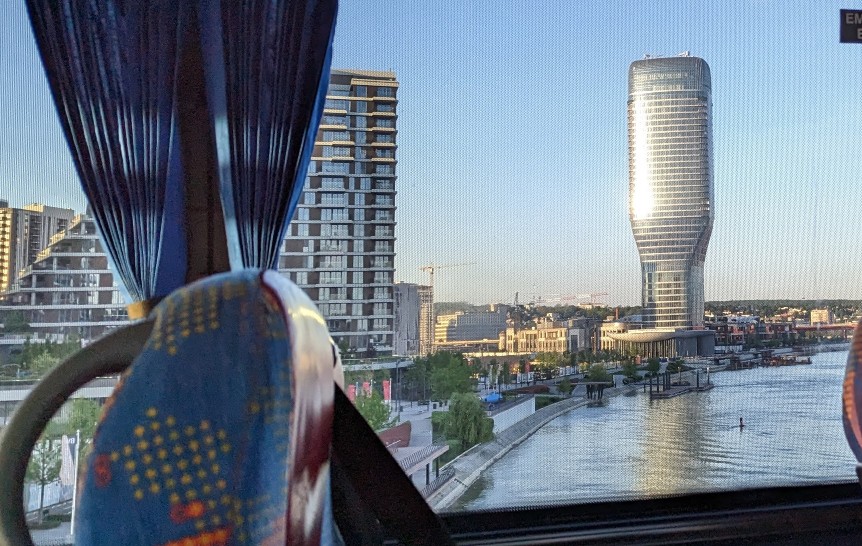
River Danube, Novi Sad, Serbia
Terra Travel bus company
Supska, Serbia
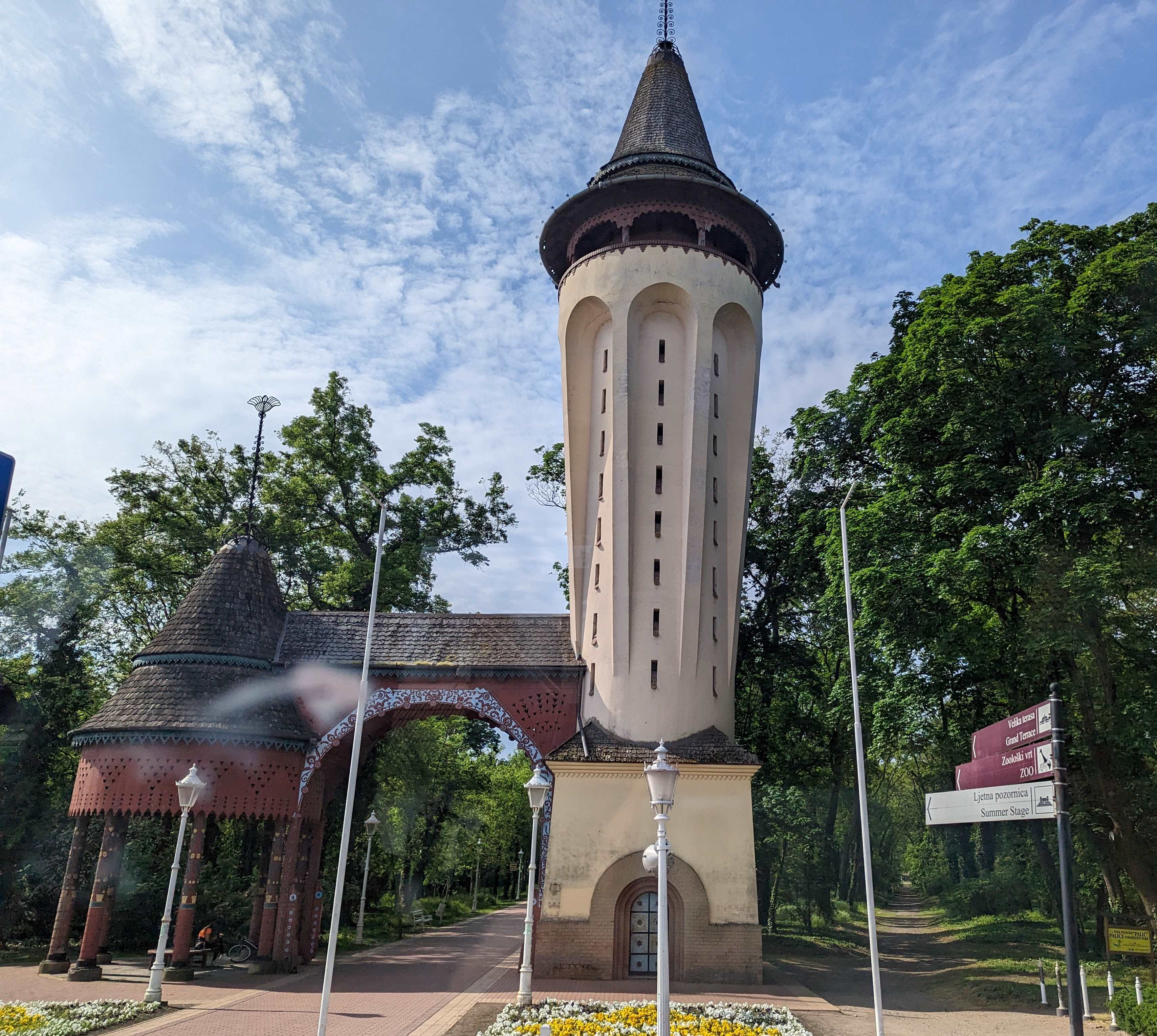
Through Palić, Serbia at 9.30am

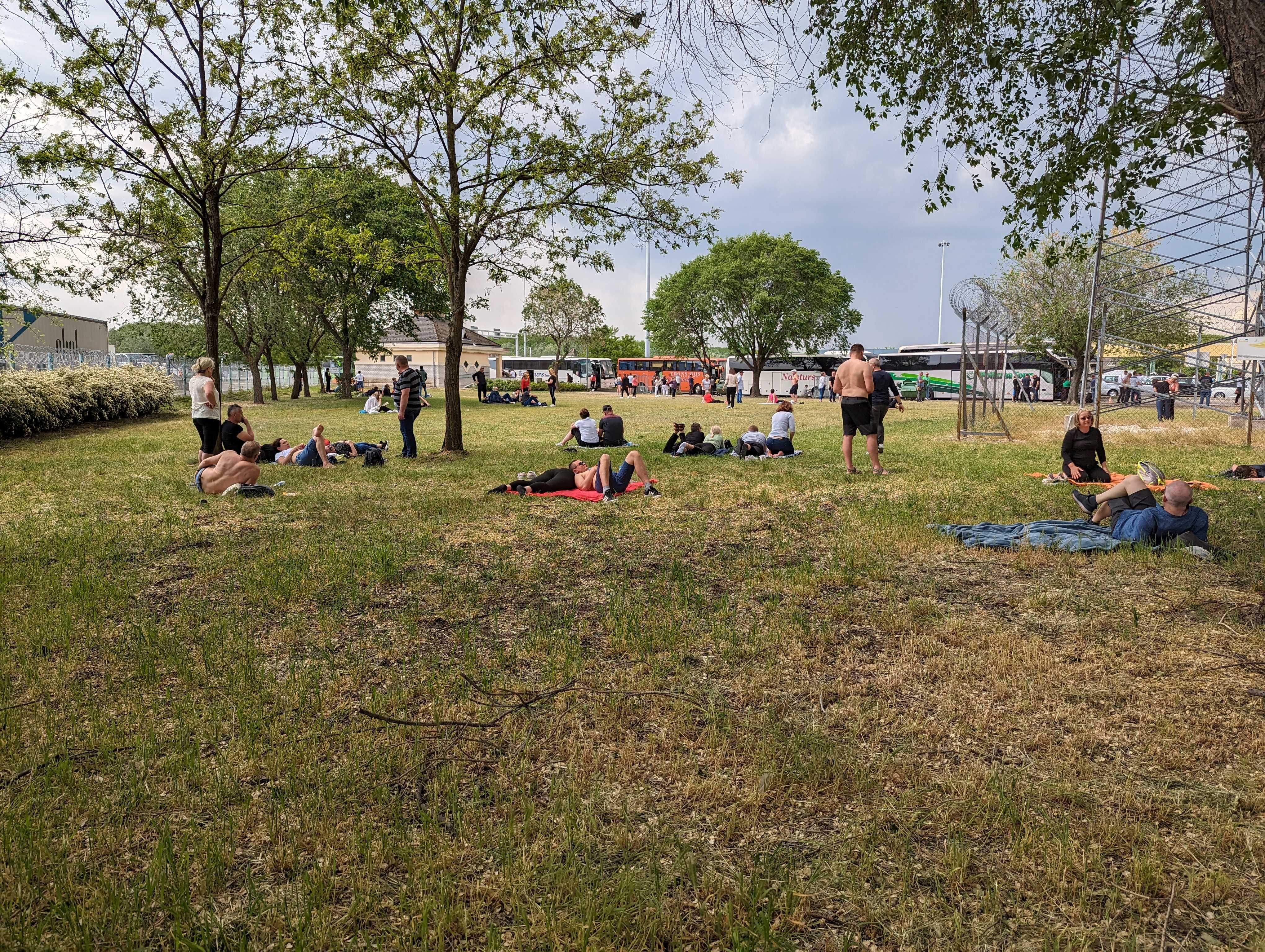
At Röszke, we waited at the border crossing from Serbia to Hungary, one of the 29 Schengan countries, arriving at 10am and staying until 3pm when we finally got moving again. Luckily the sun was shining and we all spread out. I was the only person doing T’ai chi under the trees (it felt good after hours of sitting on a coach), but not the only one meditating.
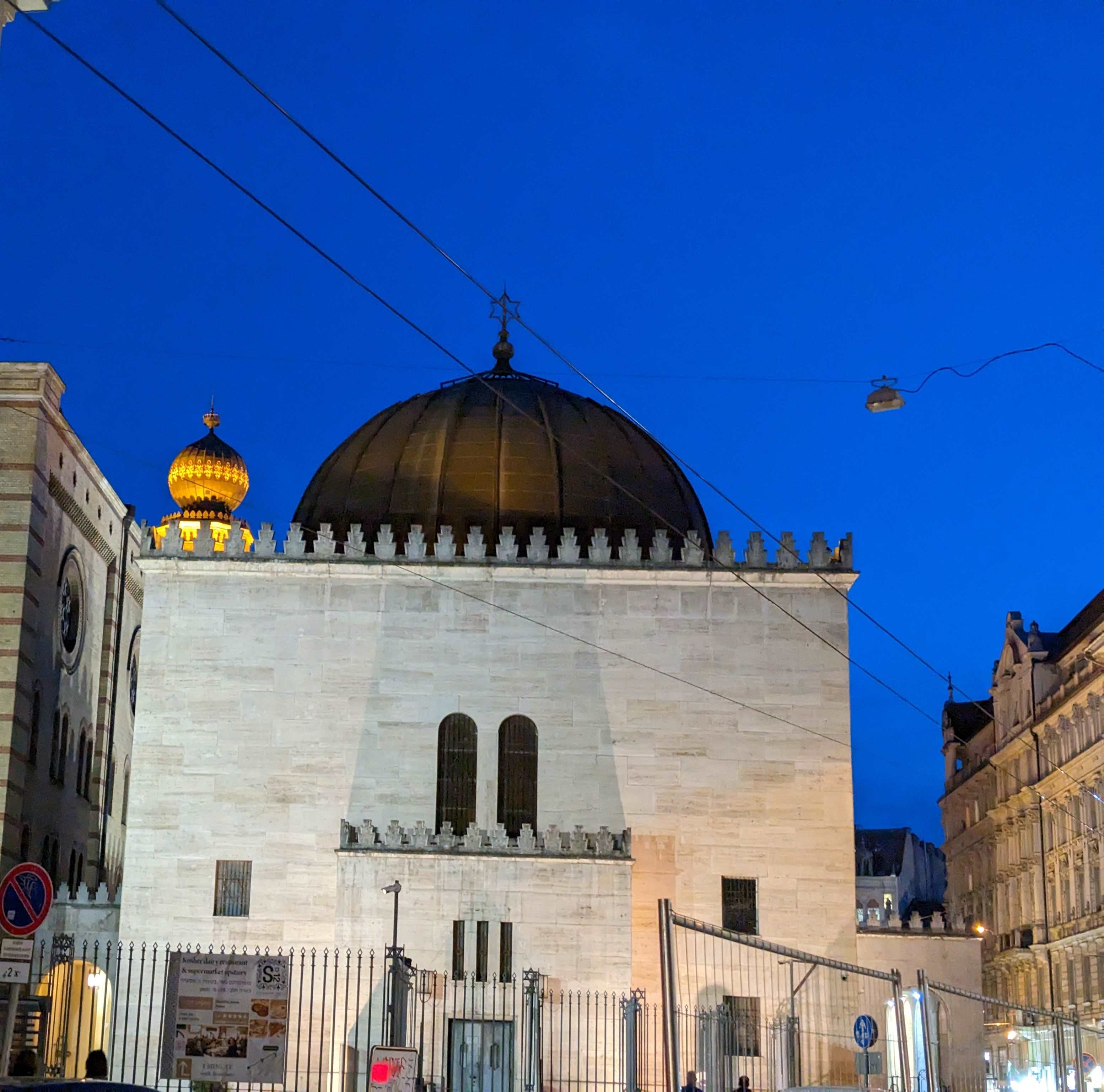
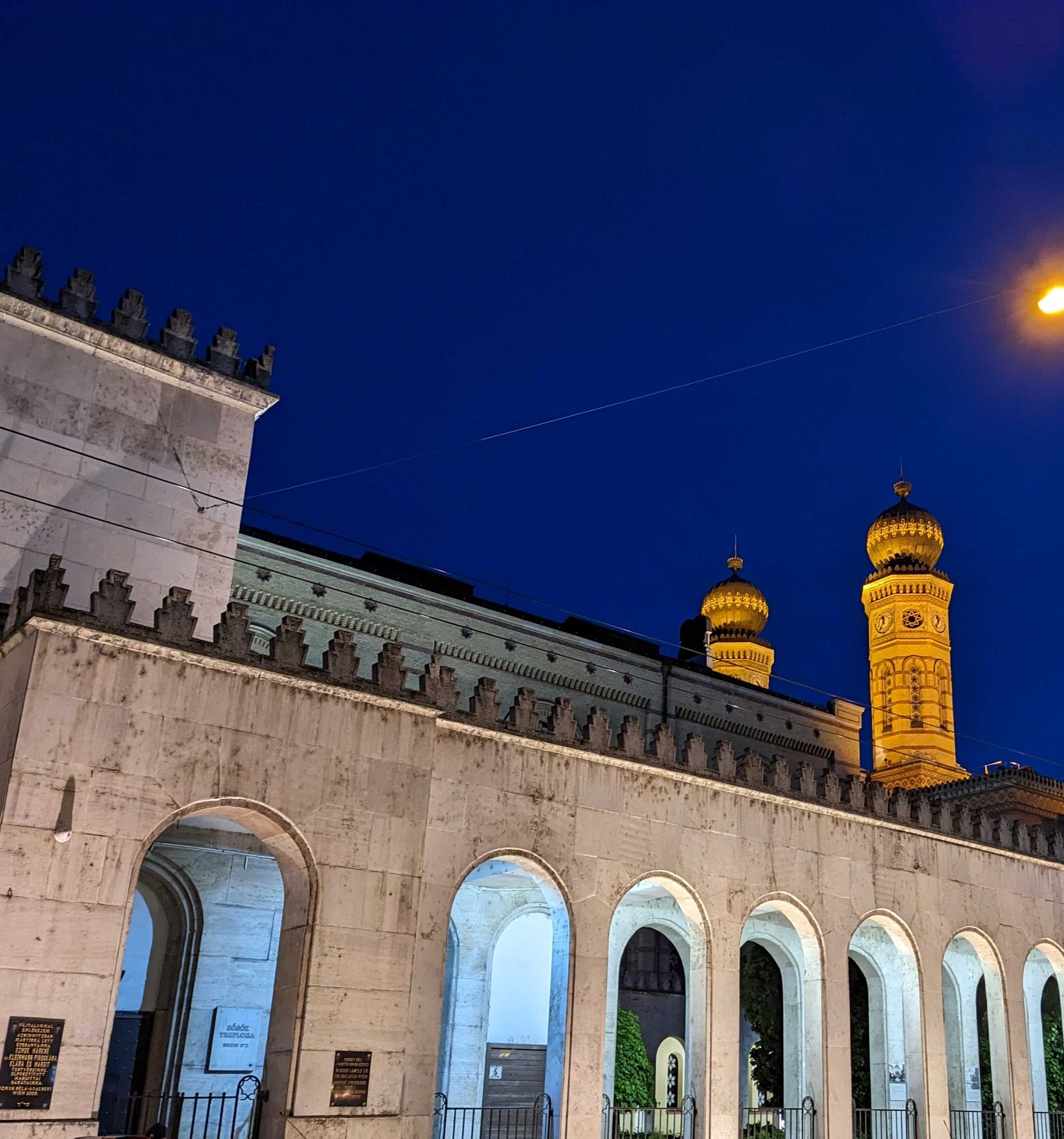
At 5pm, we eventually arrived at Budapest where they use the Hungarian Forint currency (1 HUF = £0.0023). There is much more information about accomodation and things to see via the link above. Below, two photos of the Dohány Street Synagogue from the Jewish Quarter where my hostel was located.
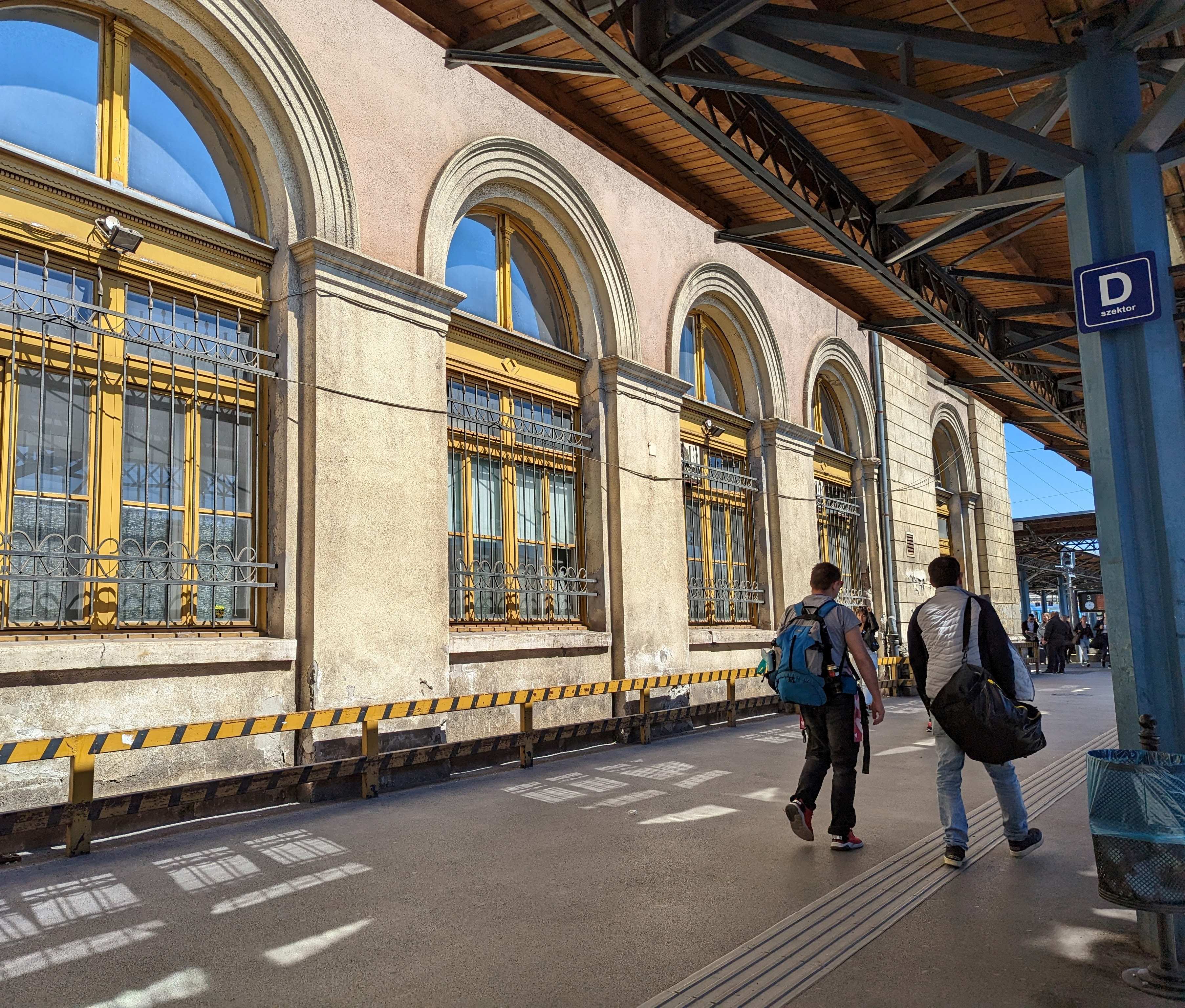
Budapest-Keleti train station
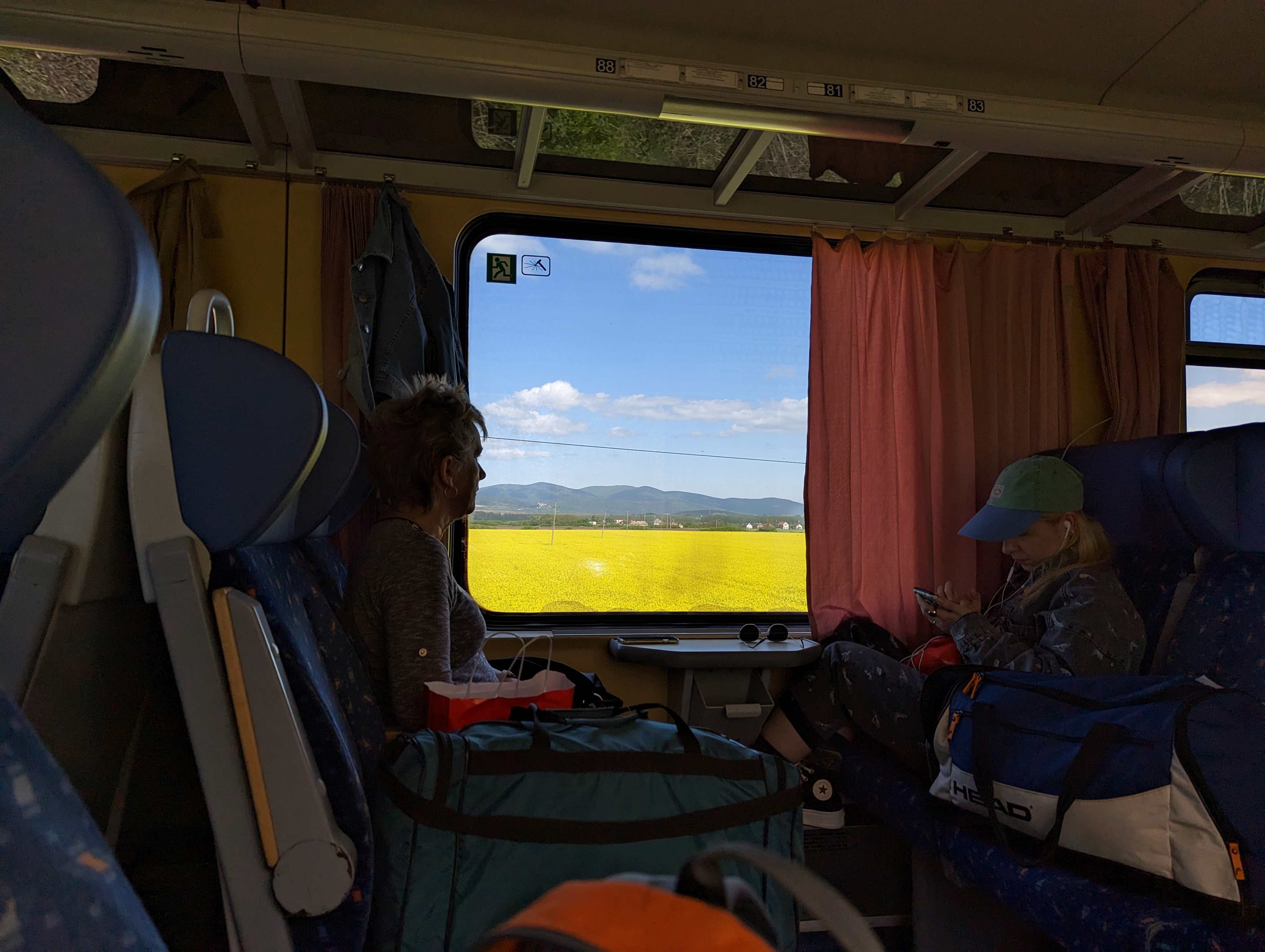
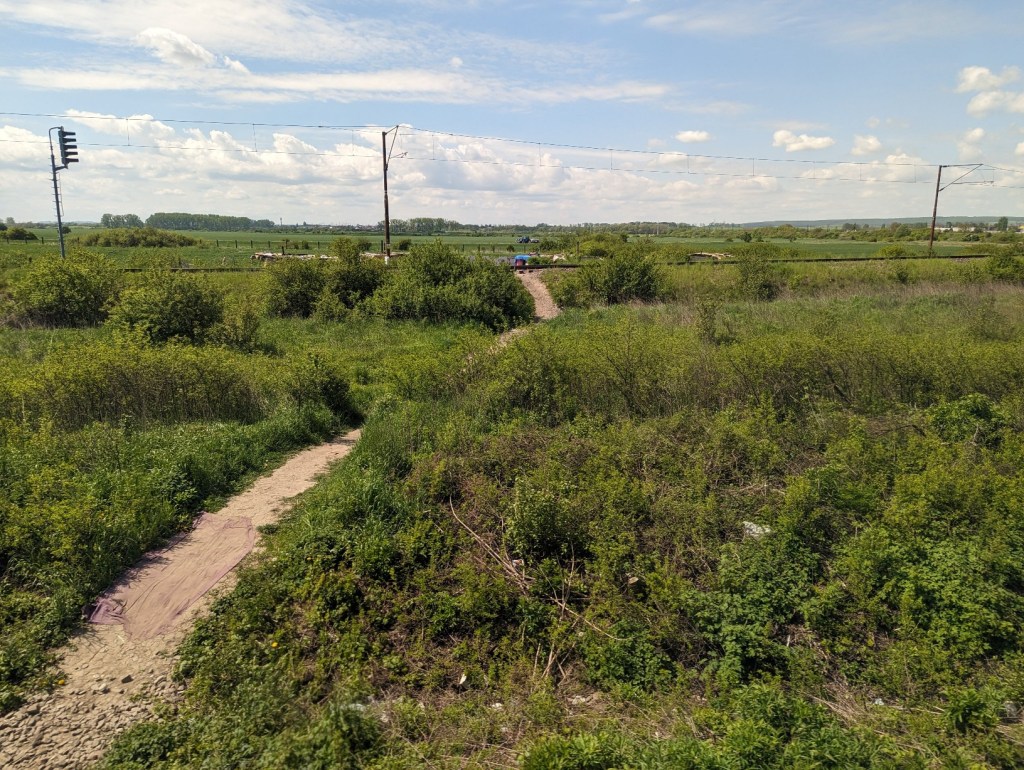
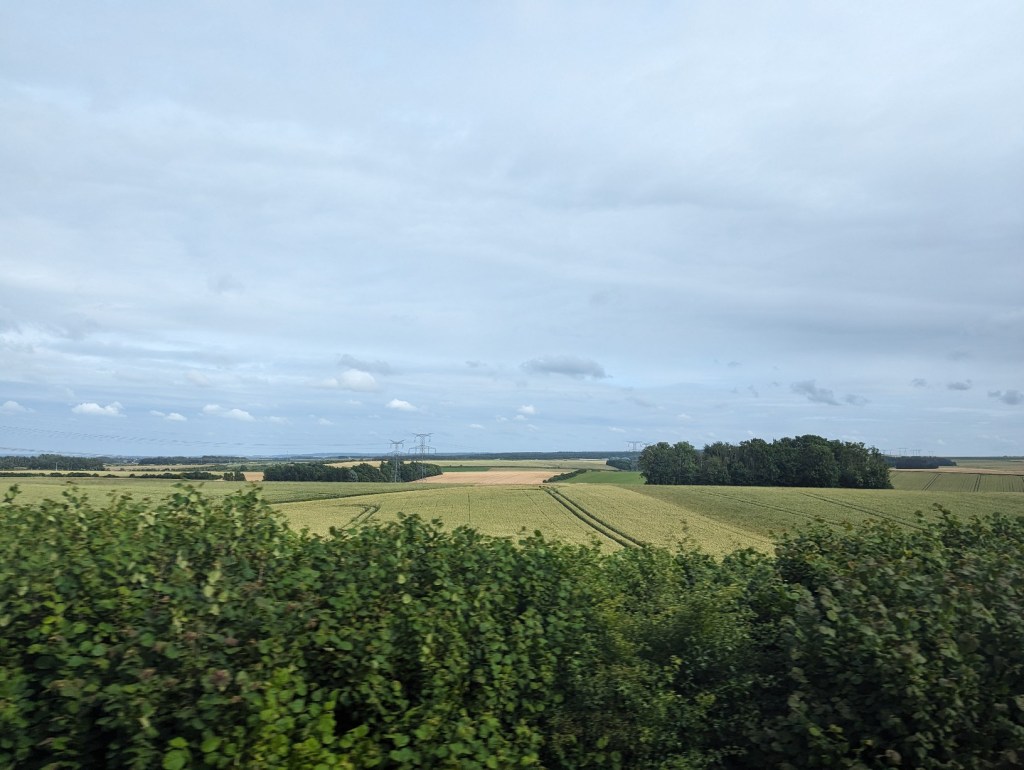
On the way to Slovakia from Hungary

Budapest to Trebišov (east of Kovice) Slovakia

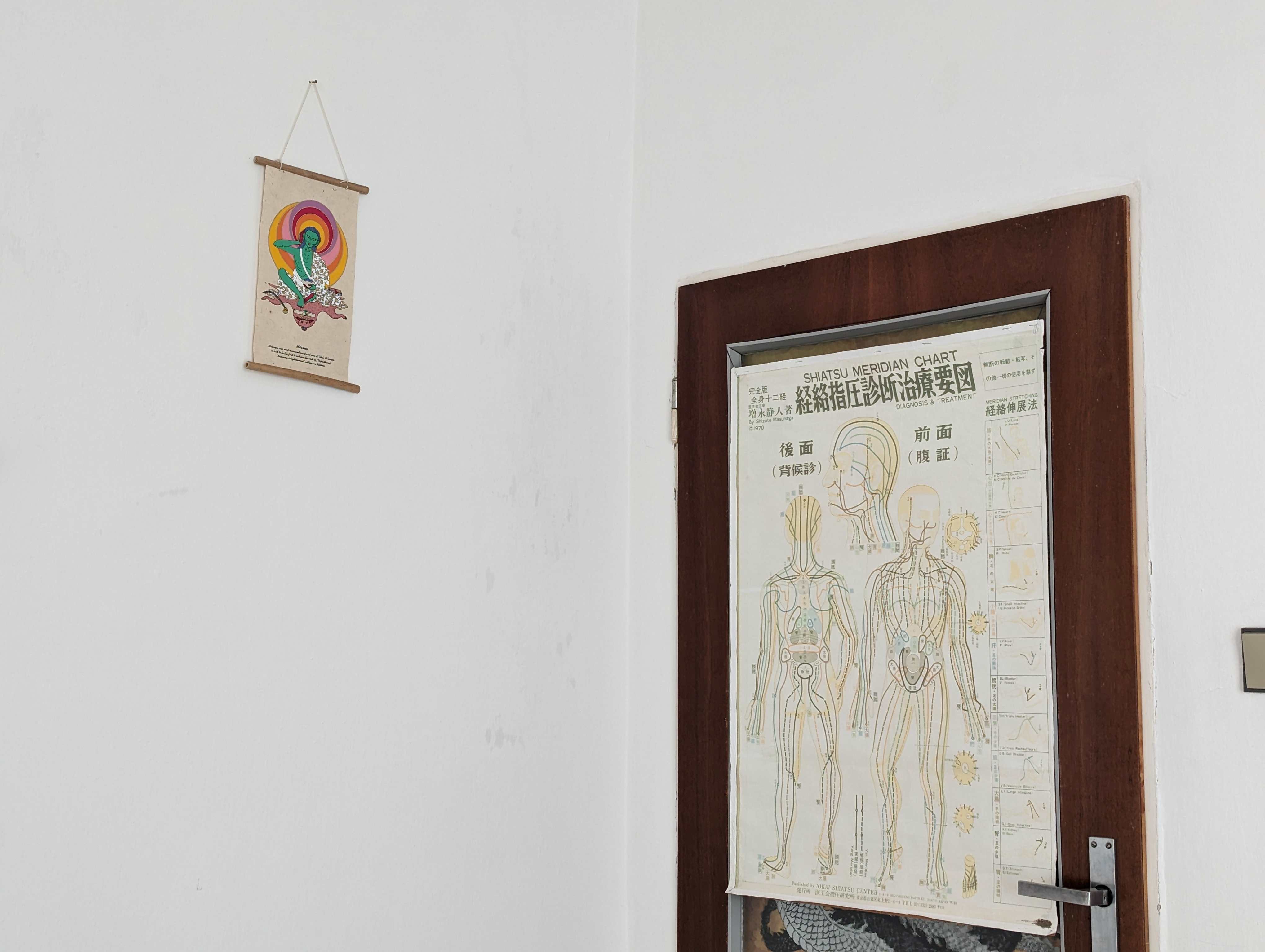
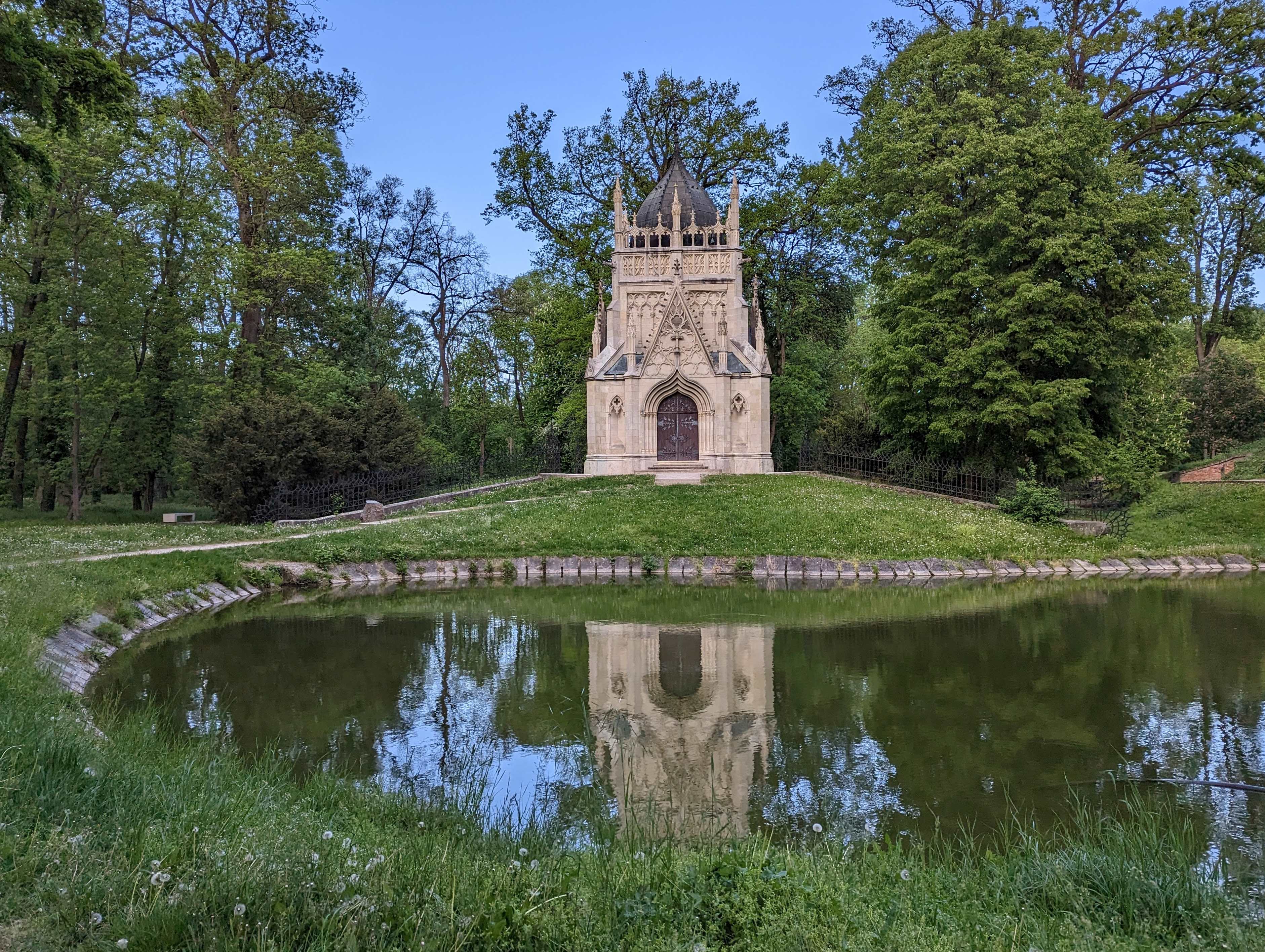
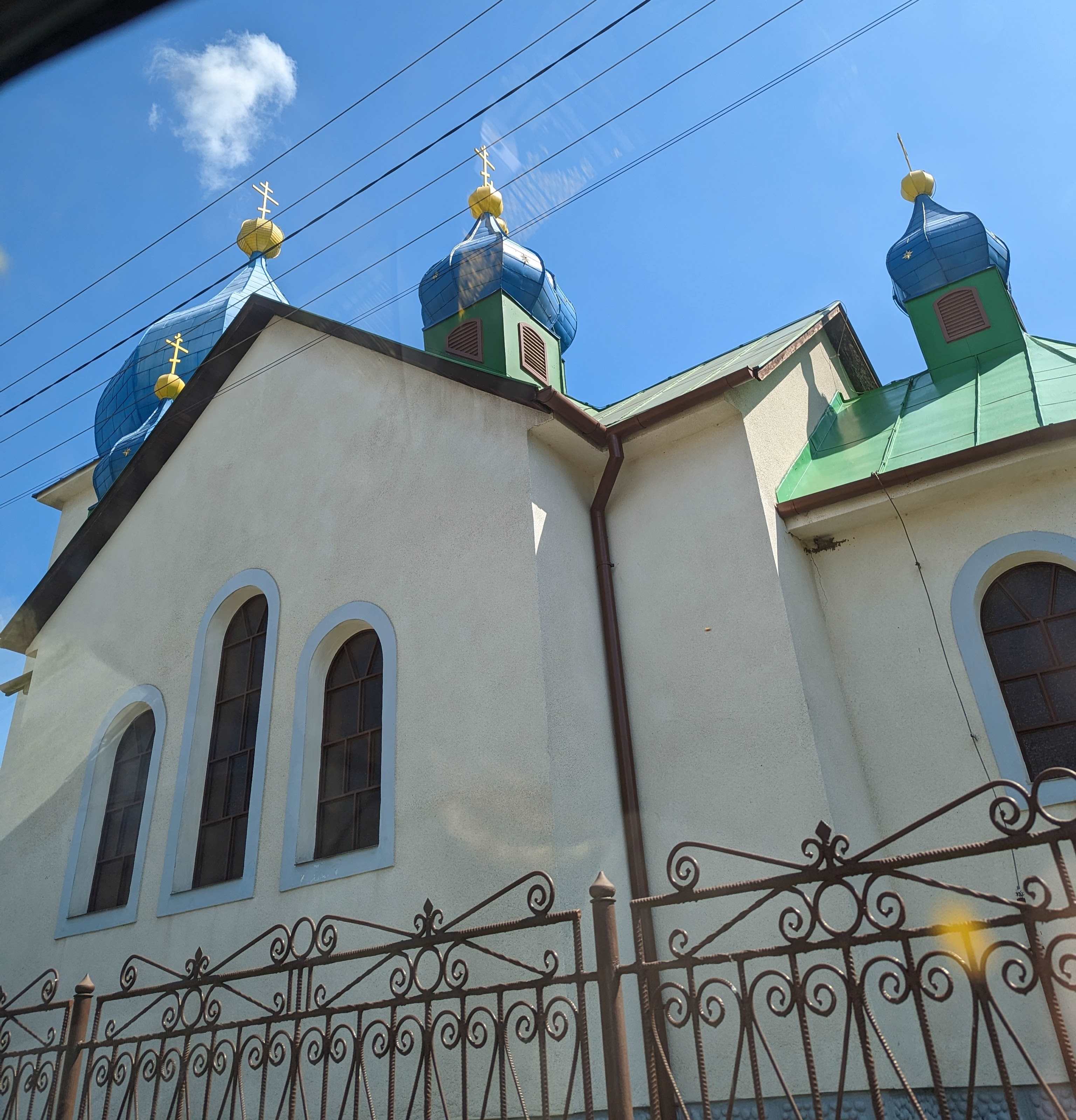
I went to stay with Patrik, one of the Shiatsu School Edinburgh graduates, and his family in Trebišov. They were really hospitable and I enjoyed the Shiatsu exchange, walks and talks we shared. The following three images are: the Milenecká ulička park (top), a traditional church (below left), and a Shiatsu room with a poster showing the Masunaga meridians (below right).
On the way back to Budapest, I changed trains at Kosice.
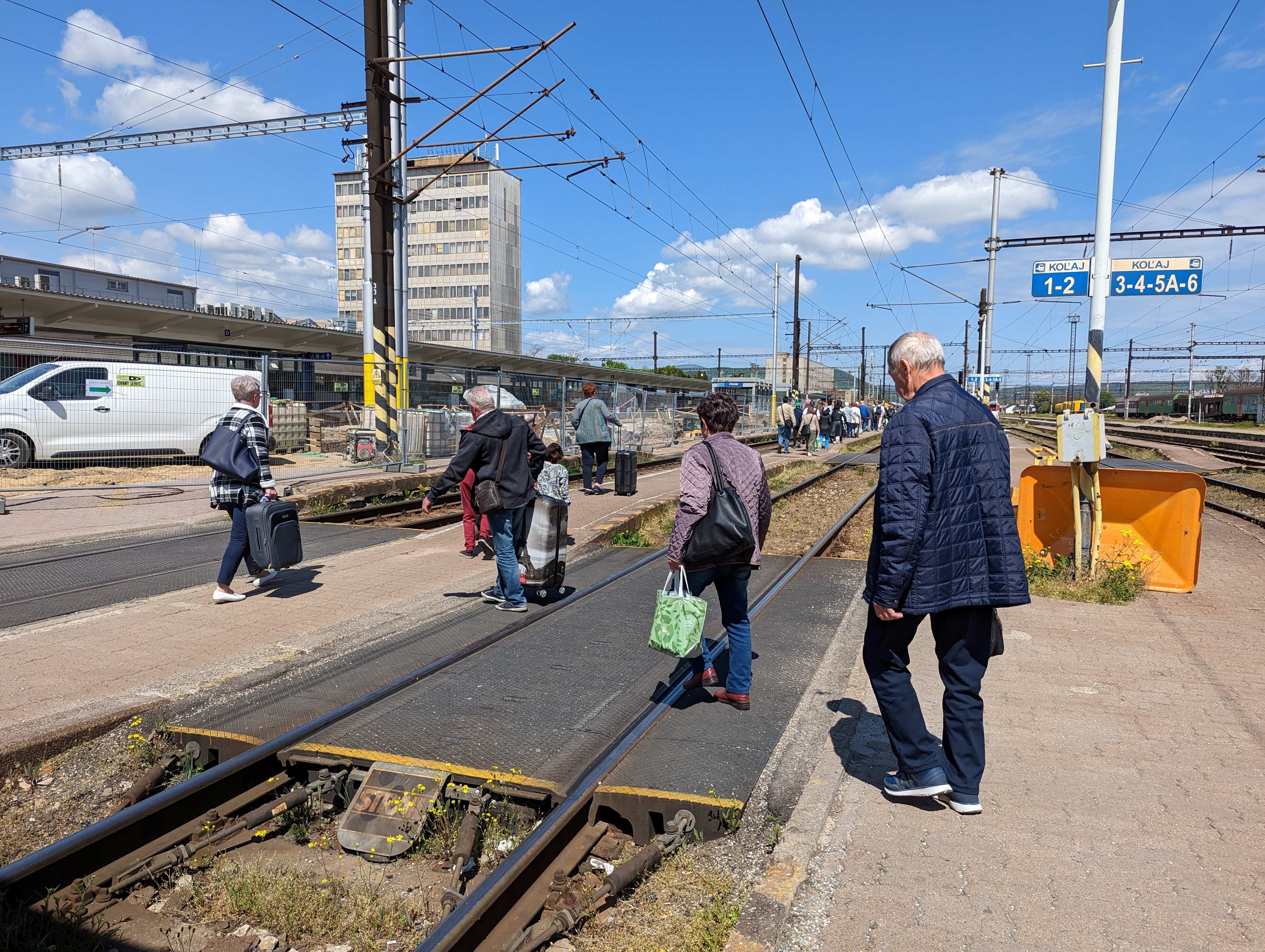
Kosice, Slovakia

Budapest to Balaton, Hungary

Budapest to Balaton, Hungary – adult and child

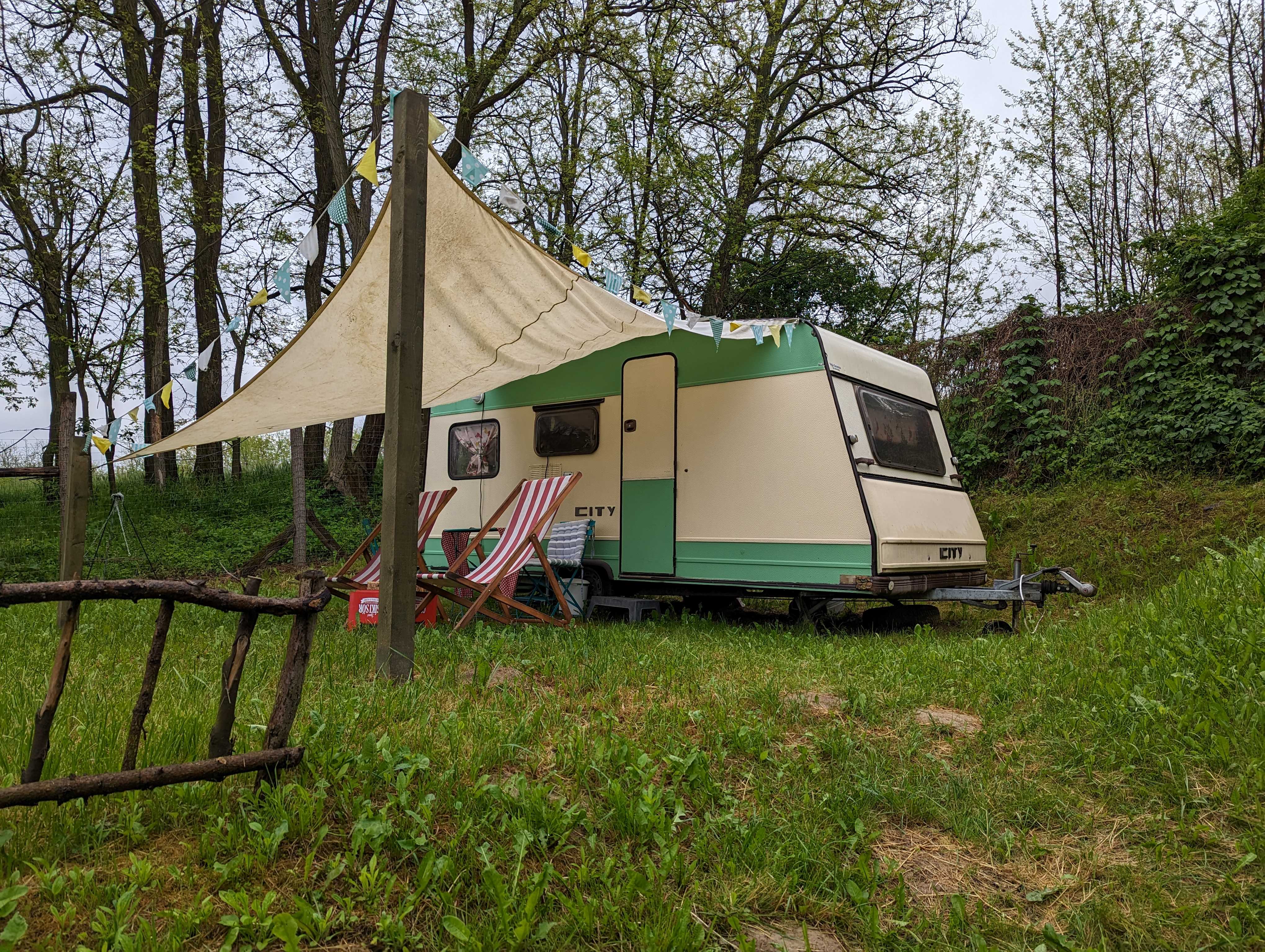
After staying another night in Budapest, I detoured to rural Hungary, travelling by train to Siófuk near Lake Balaton (south west of Budapest), from where I took a bus to Kopánnyszántó and walked to Koppány Pines to stay with Debs Tetlow (a fellow Juicy Crone). There, I exchanged Shiatsu with her and her husband who run a beautiful camp site, enjoyed walks and sat out the rain in the caravan they prepared so kindly for me.
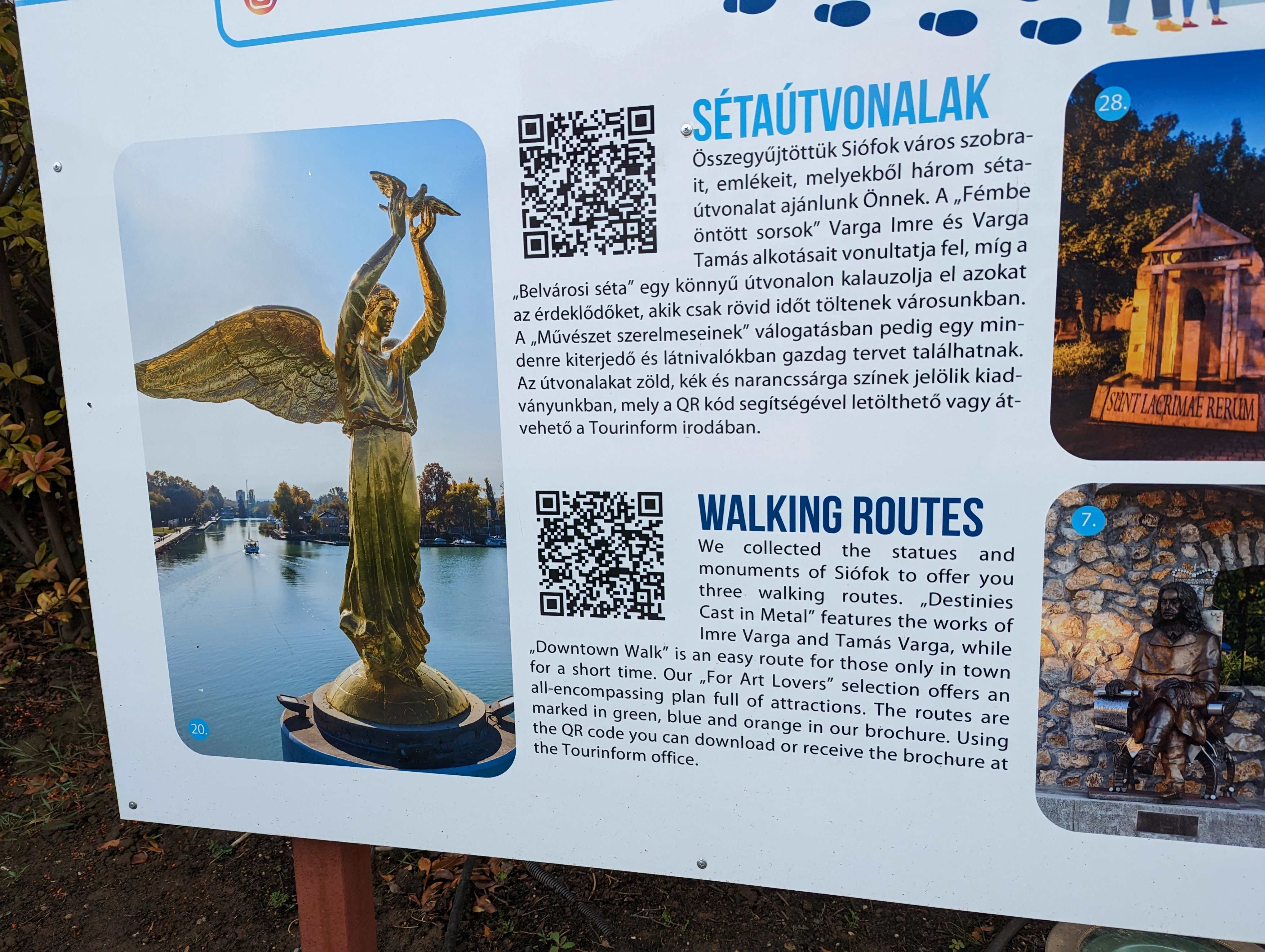
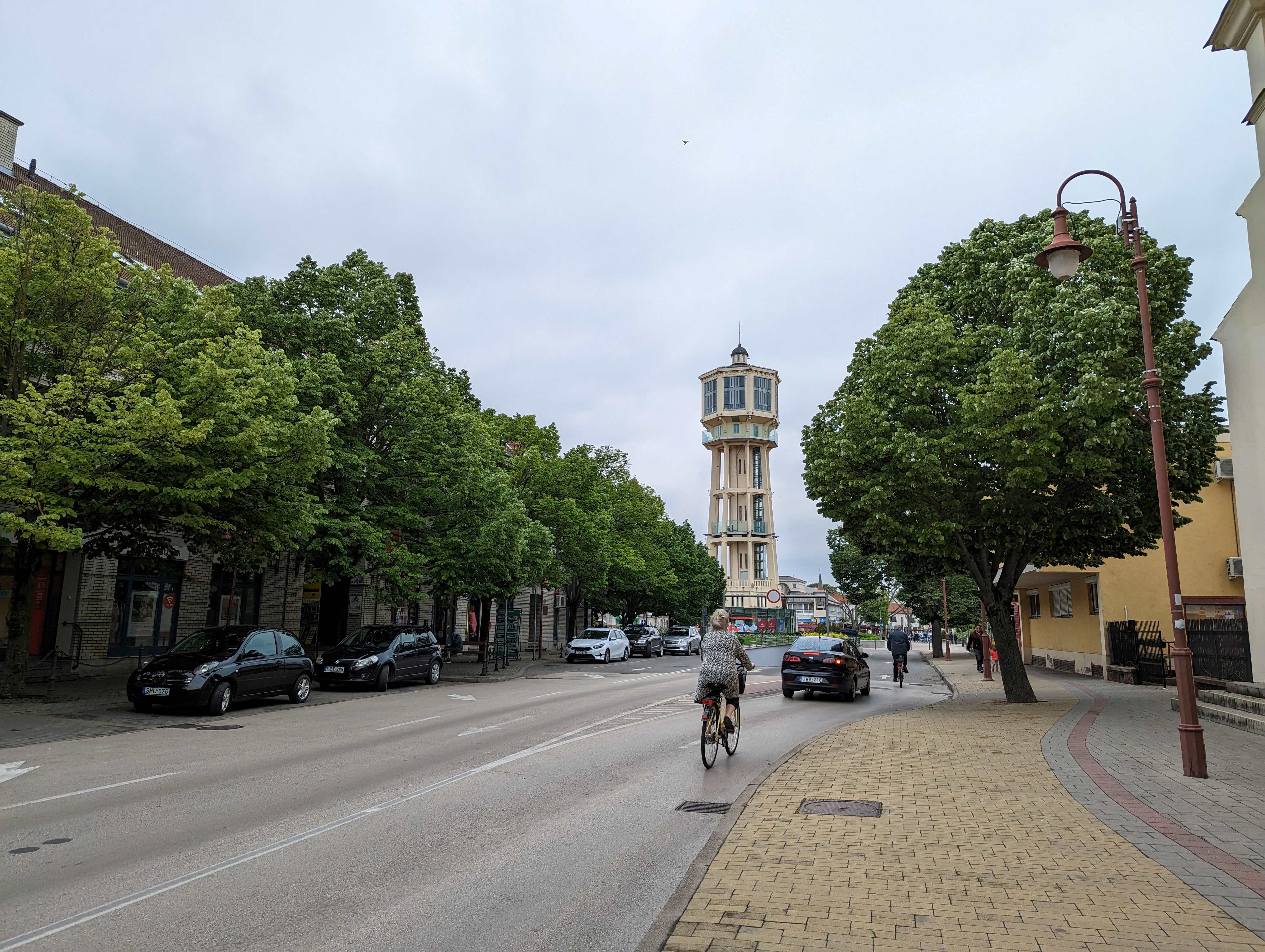
I stayed in their caravan at Koppány Pines. Hungary

Again, I was returning to Budapest. This time I got a lift in a car to Nagykónyi, and then took the bus back to Lake Balaton (where I visited the Mineral Museum at Siofuk, Kálmán Imre stny. 10 8600, which is recommended), and the train to the Hungarian capital (station Népliget).
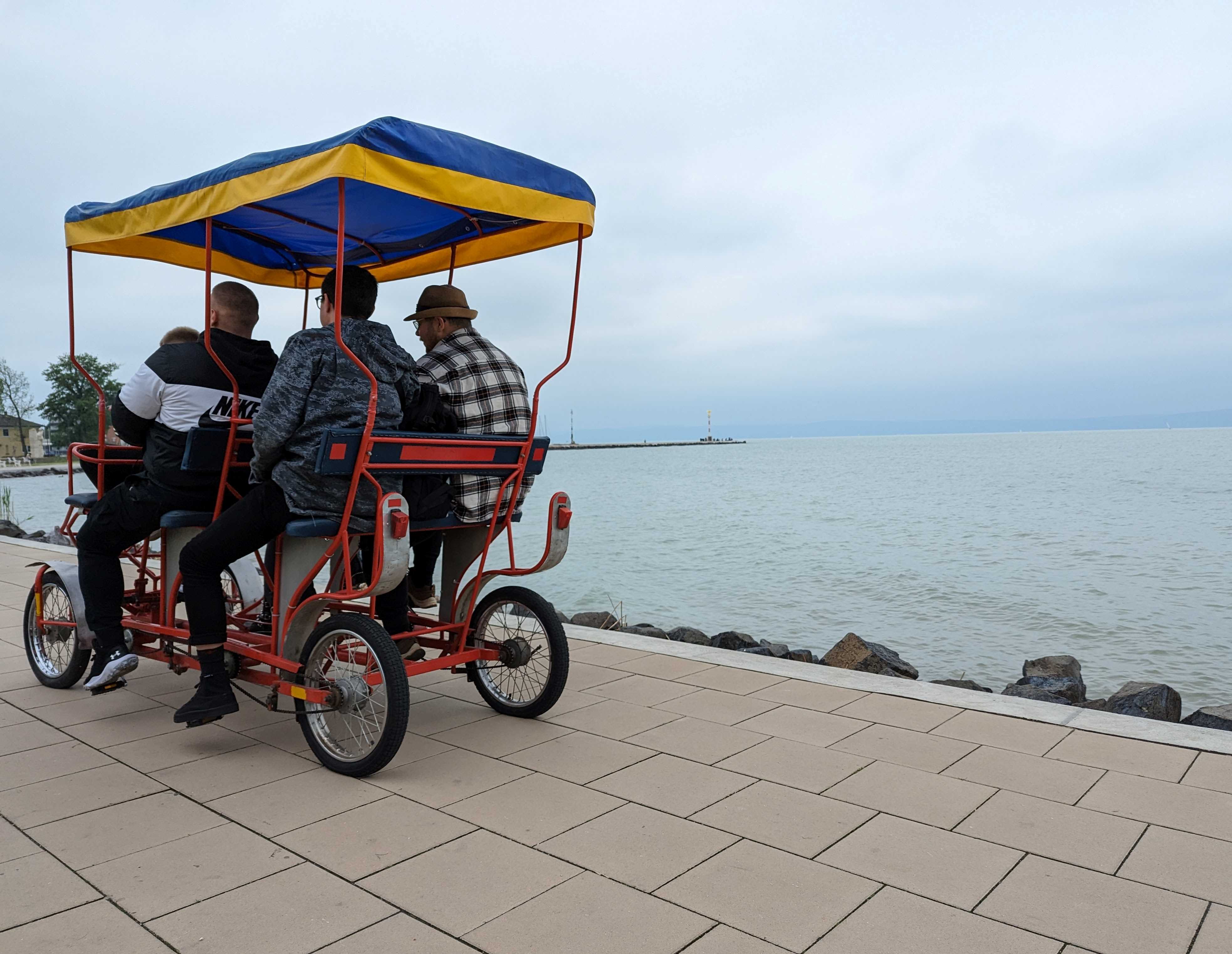
Lake Balaton, Hungary

Budapest to Berlin

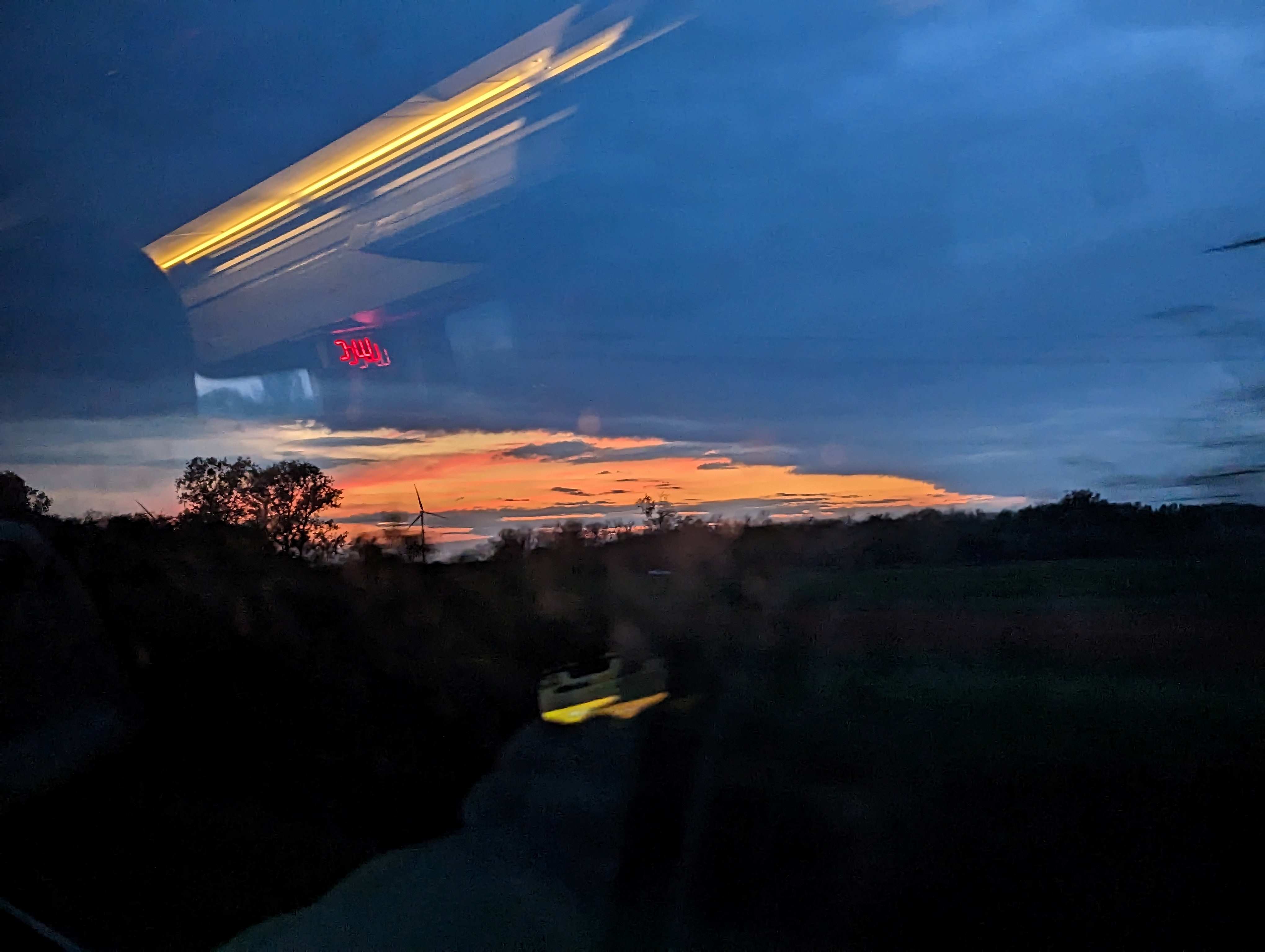
Soon after leaving Budapest: sunset from the bus

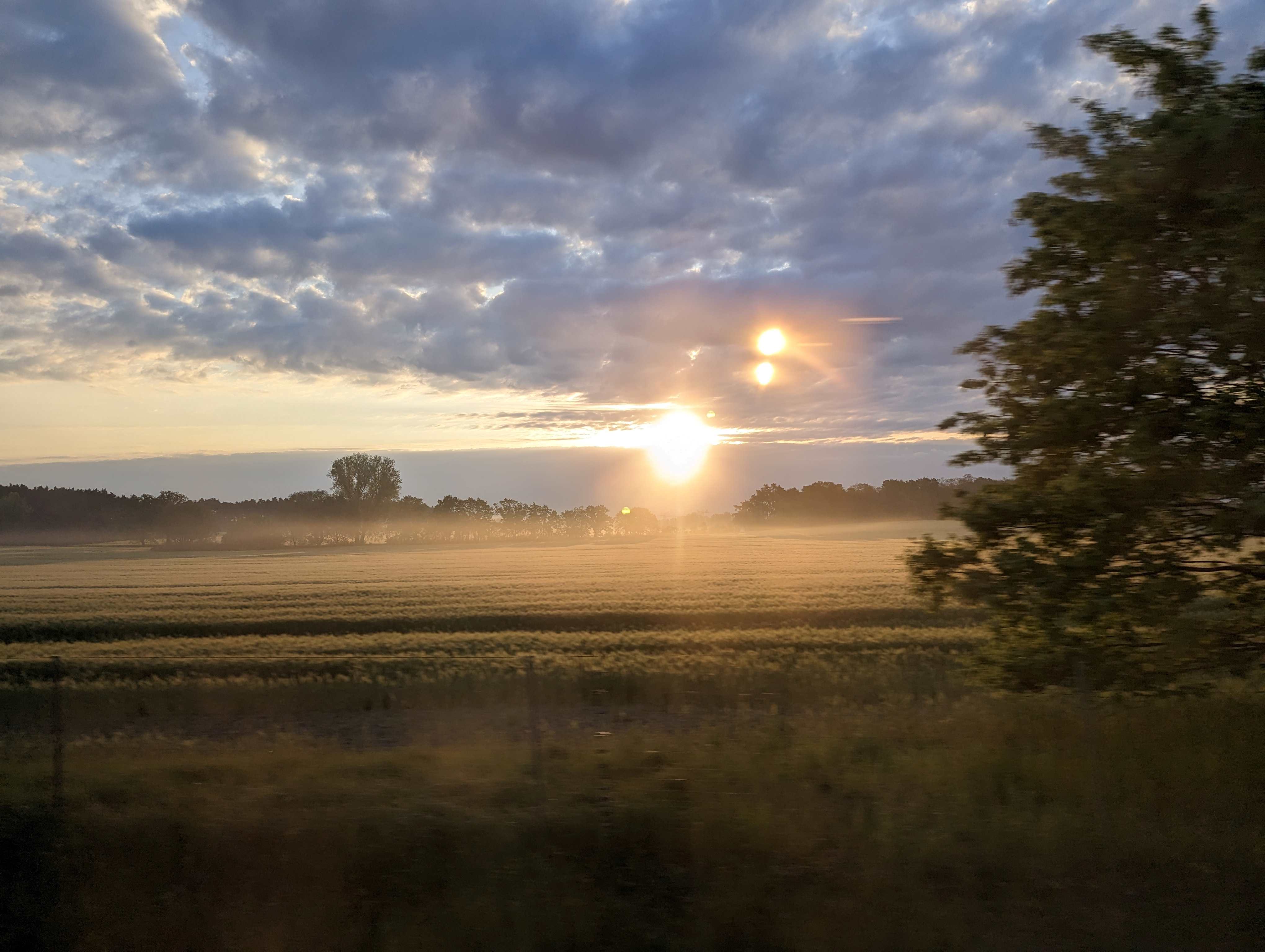
I left Budapest Nepilget at 7.30pm by bus, stopped somewhere for a break at 3.30am, and woke up in Germany at 5.30am to the most atmospheric dawn.
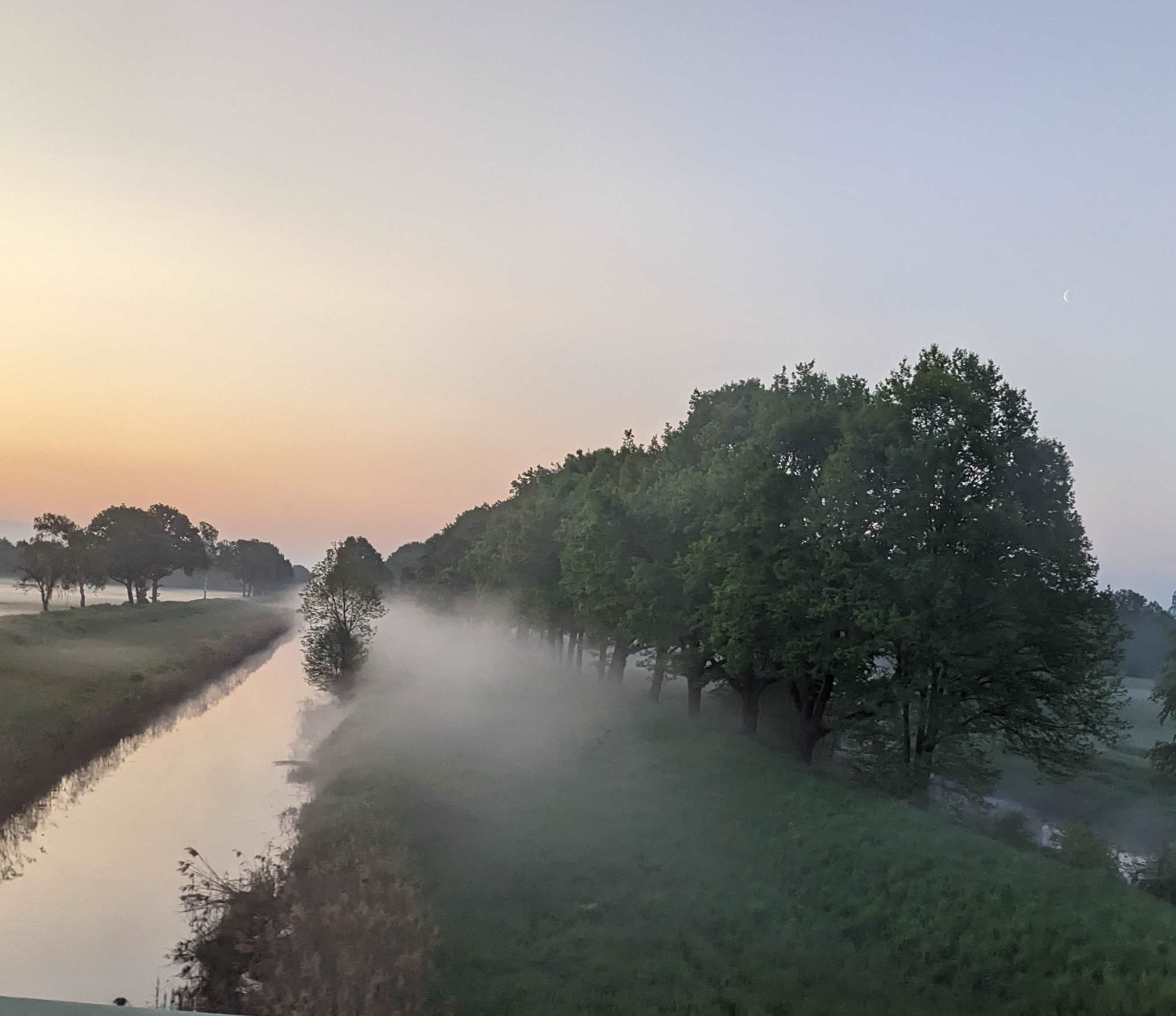
Sunrise Lübenau, Germany
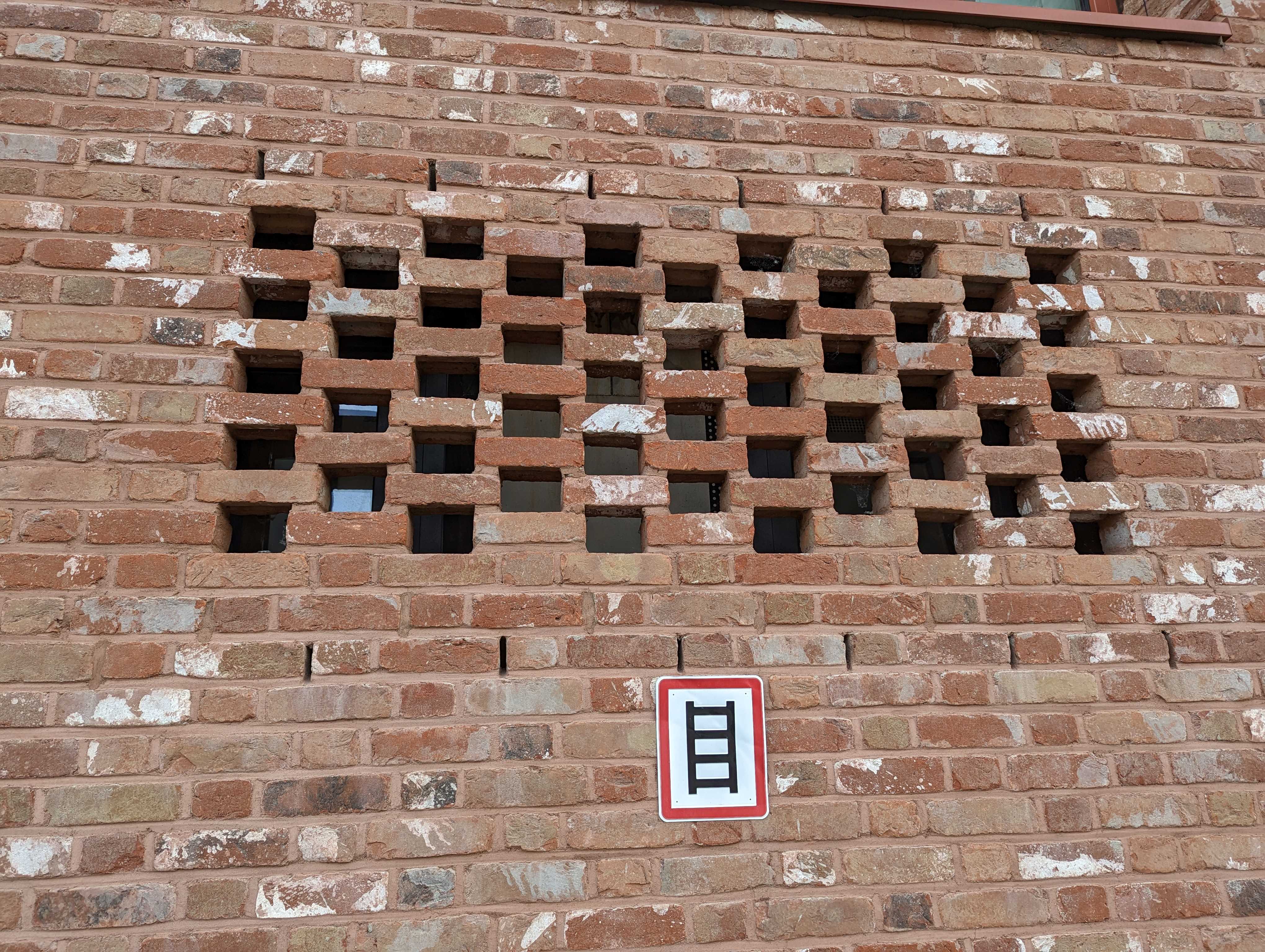
At 7.30 we drew into Berlin Südkreutz and I had a wonderful walk by New Tempelhof where the streets are named after plants: Jasminepfad, Magnoliapfad.
Berlin, Germany to The Hague, Netherlands
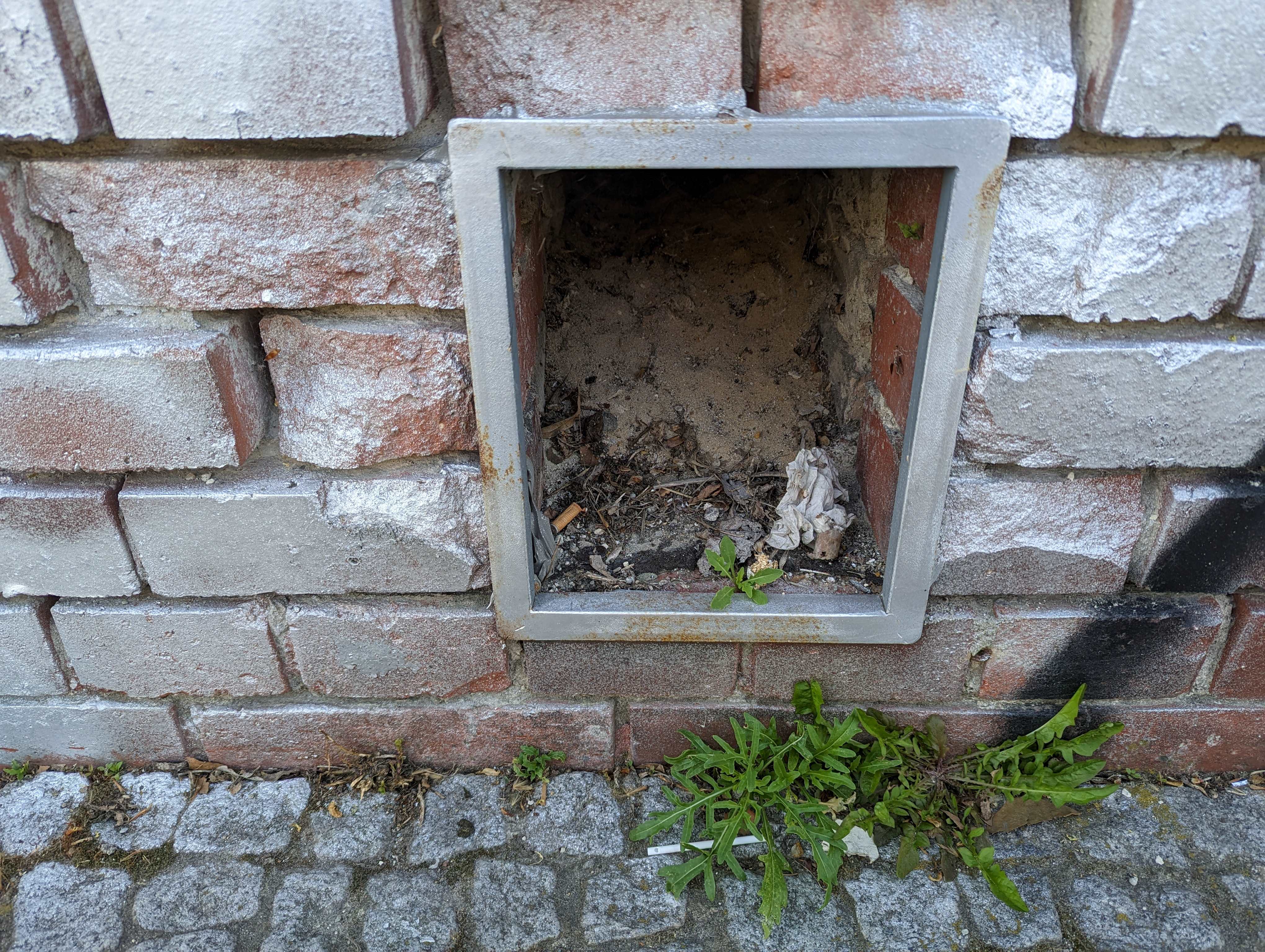
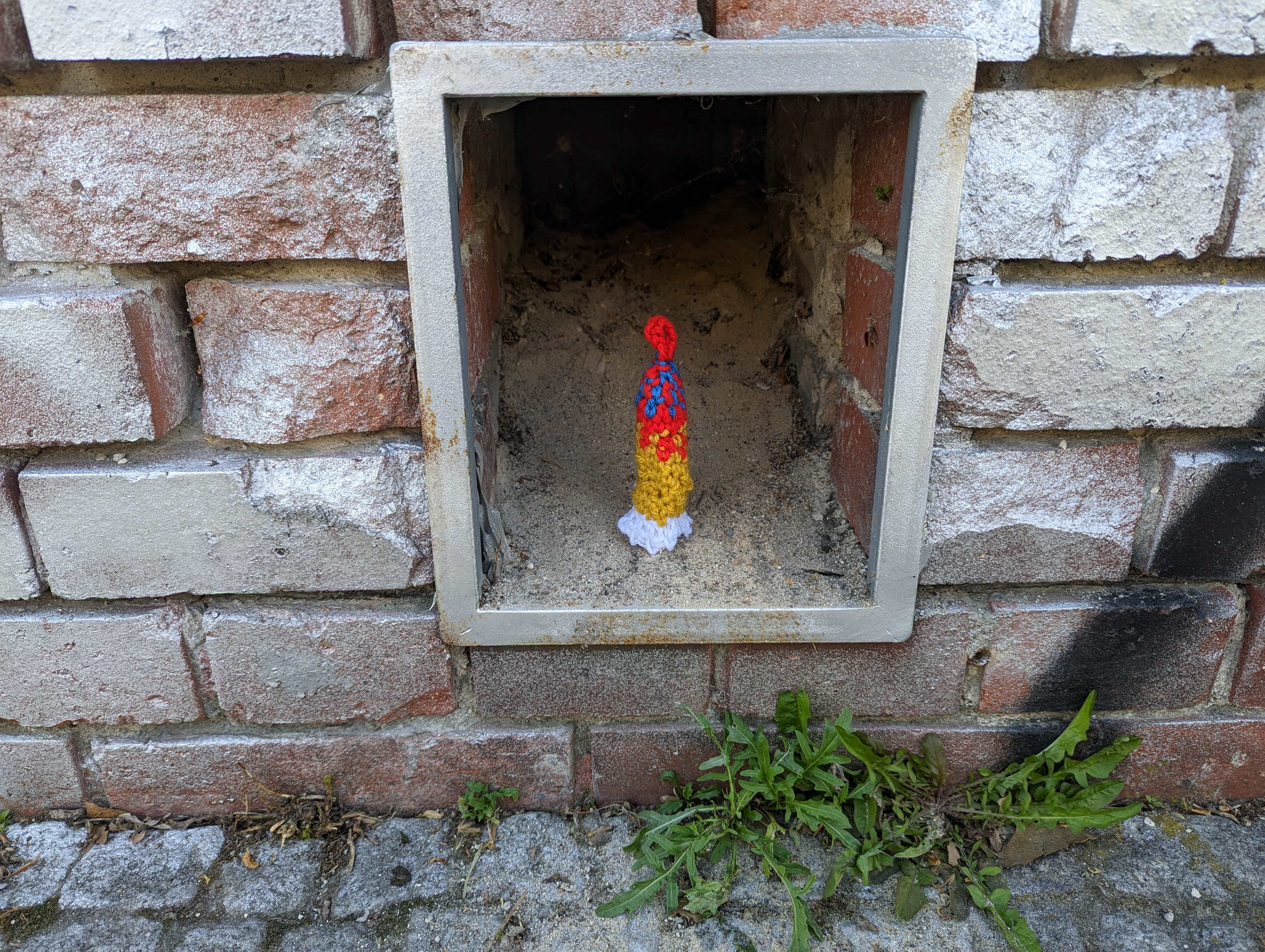
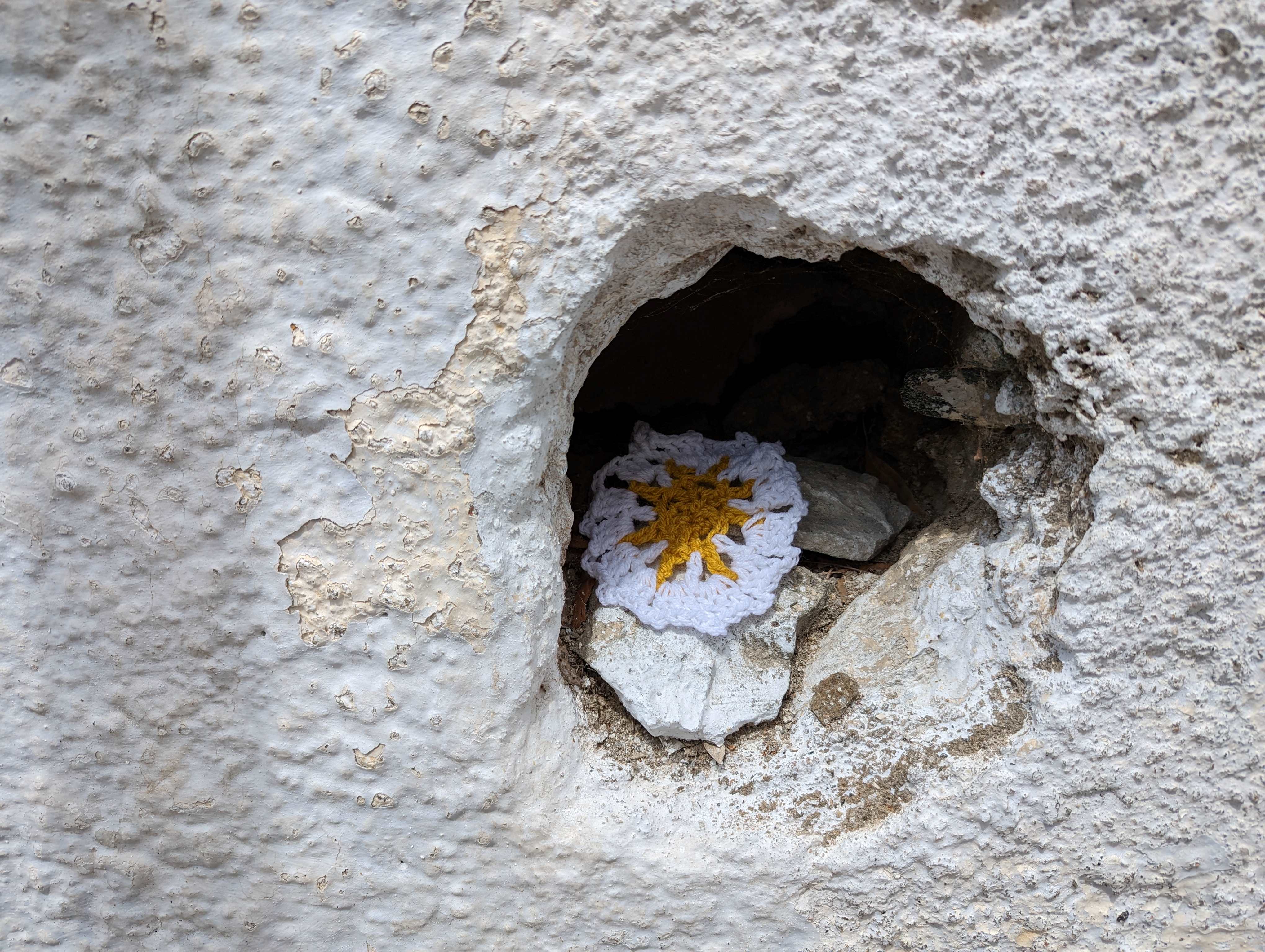
I still had a home-made crocheted flower left over from my time on the Greek island of Tinos and, on finding a make-shift altar space in a wall, cleared it and made a grateful offering to Abiona, Goddess of Safe Return.
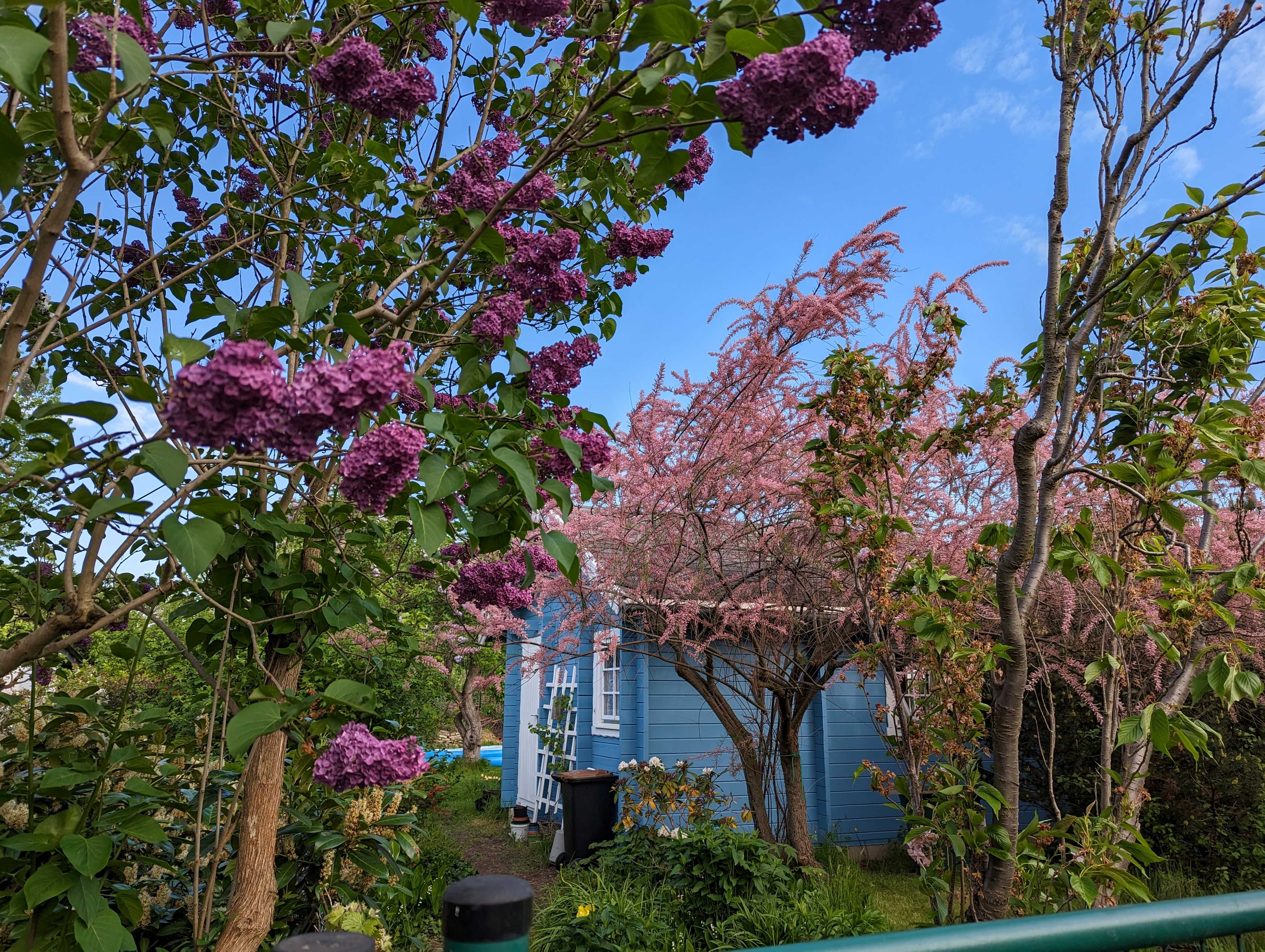
New Tempelhof

These allotment gardens (which I was told by a resident were like gold dust during the Covid-19 pandemic) were near to, and consciously contrasting with, the SA prison in General Papestrasse in Schöneberg.

I was in the German capital city for the first time. A few months earlier, I had been chatting with my mum and she said we had a relative living there who I had never heard about before. It was lovely to meet Helen and her daughter, and to find that we had interests, age and other things in common. It was she who recommended the Jewish Museum (it was a Monday and lots of the others were shut). I only had that one day to explore, and I was really impressed by the architecture and the exhibition both.
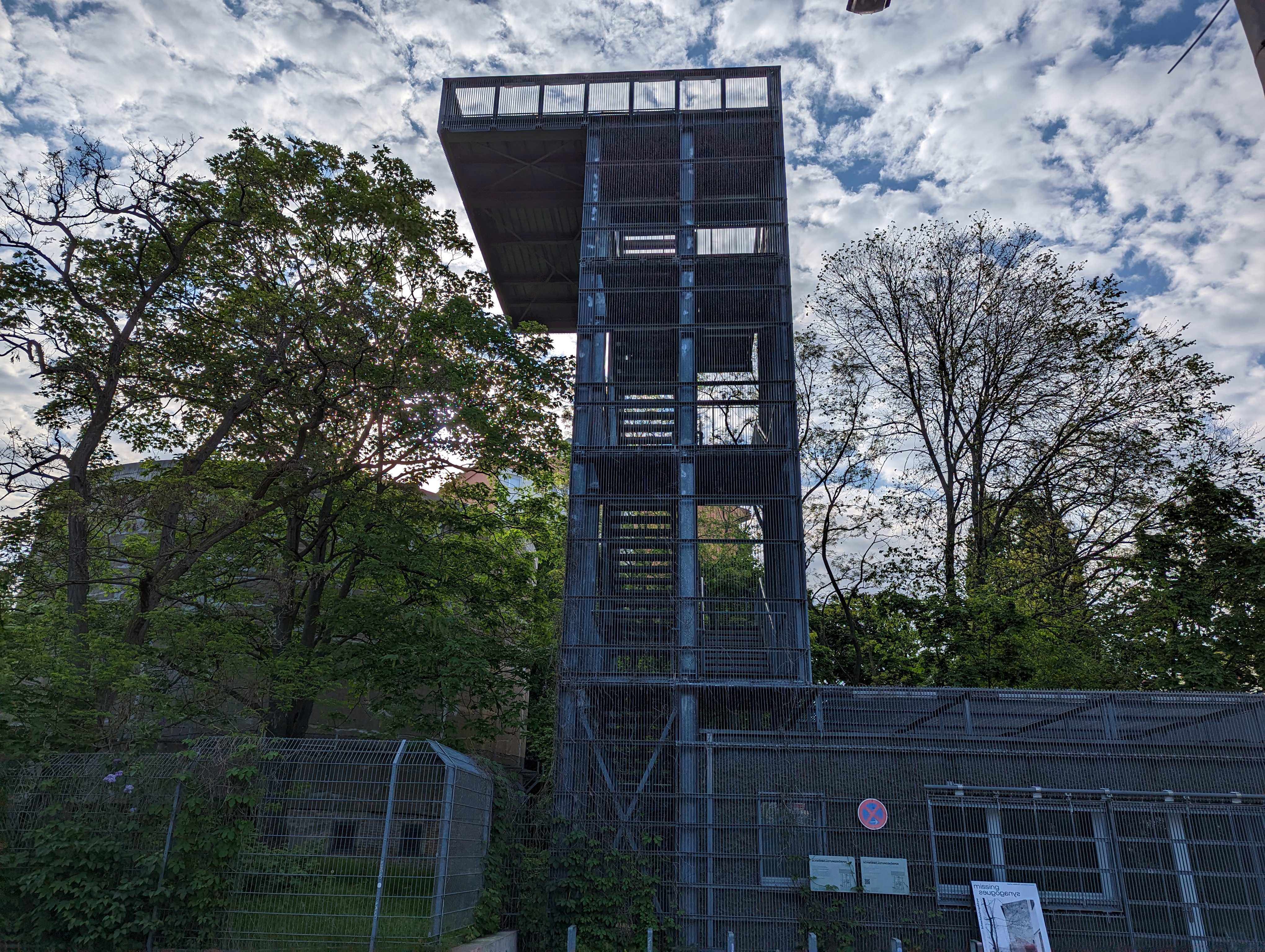
Repurposed Nazi watch tower, Berlin

“The cellar rooms used as prison cells have been preserved in their condition from that time, with inscriptions and dates carved into the walls. Since 2013 there has been an exhibition here documenting the history of the prison.” Papestrasse
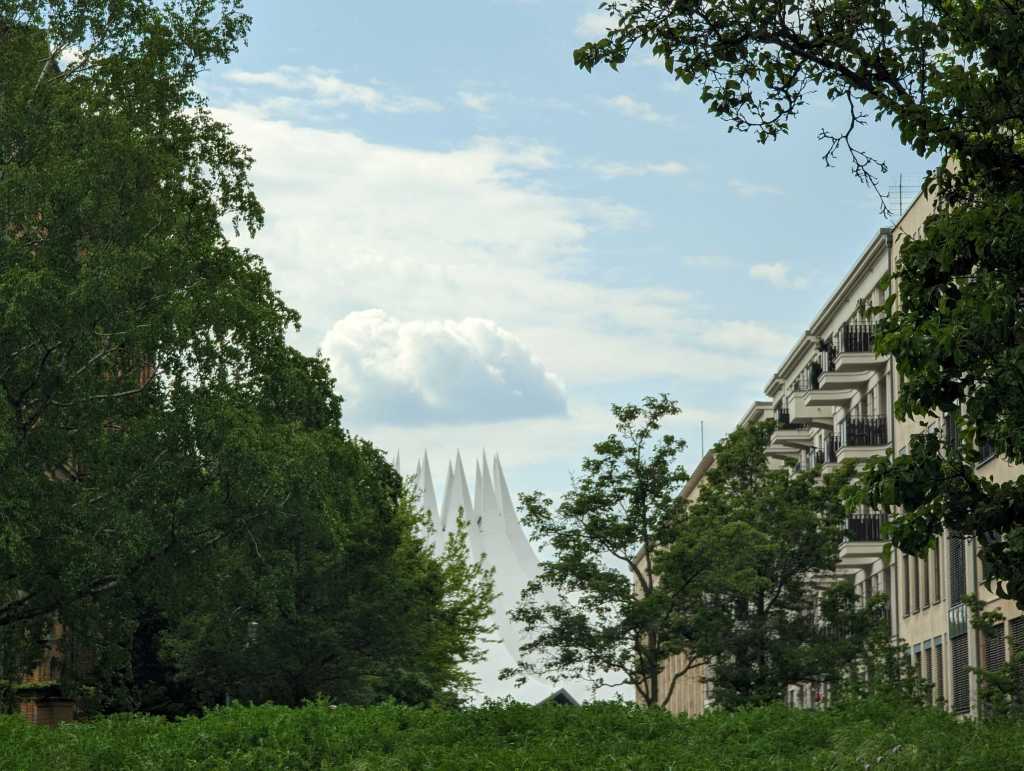
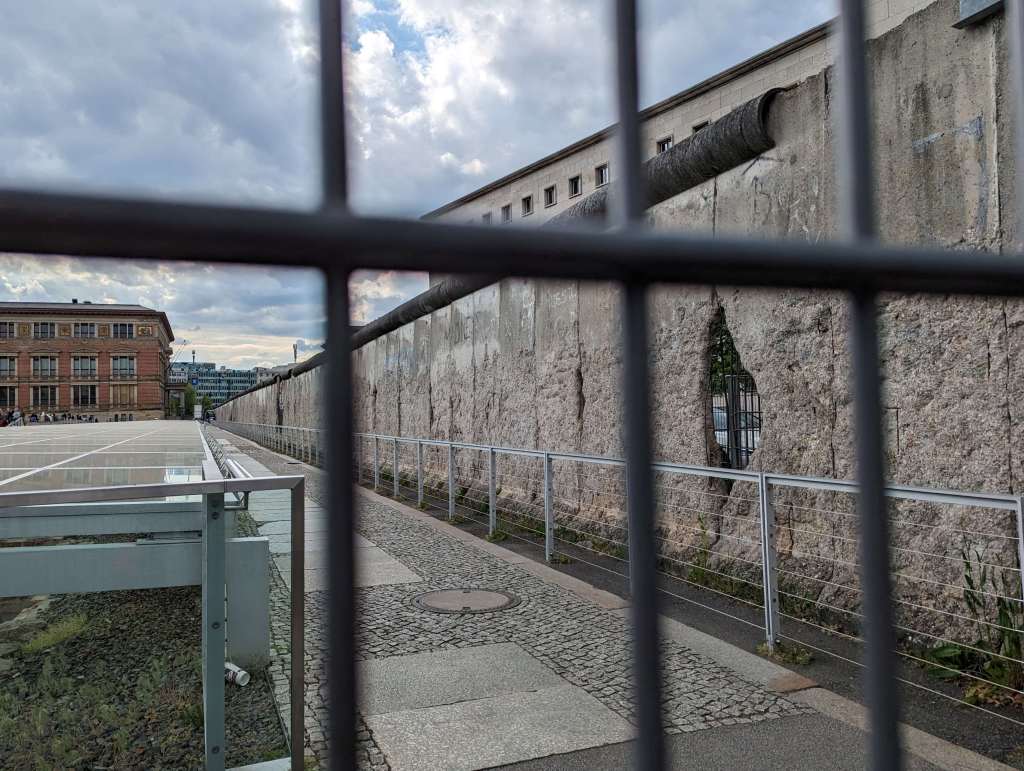
Walking out of Berlin City Centre, northwards
Berlin Wall

After my visit to the Jüdesches (Jewish) Museum, I walked a long way northwards, out of town, past the site of the Berlin Wall and Wilhelmstrasse. It was like walking through the history books. The end of this walk was the only time during my entire journey when I got scared and it was brief. There’s a section of very quiet streets and it was, by then, dark. I wasn’t sure I would be safe, but there seemed no option having got this far, so although the walk was really interesting, I would recommend getting a bus if you are leaving from the Flixbus stop on Berliner Strasse, Alt Tegel. I also didn’t find the stop very easily.

It was due to leave around 11pm, but was delayed by several hours. We waited and got cold, got random messages from the bus company, and eventually knew we had ages to wait, giving ample time to find somewhere warmer to sit and continue a lovely meeting with a Ukranian woman who was with her young daughter. She was understandably very worried about her husband and extended family back home. They were going to Amsterdam to try and sort out passport issues.

Berlin to The Hague to the Hook of Holland

Journey time: 9-9.5 hours Berlin to The Hague.
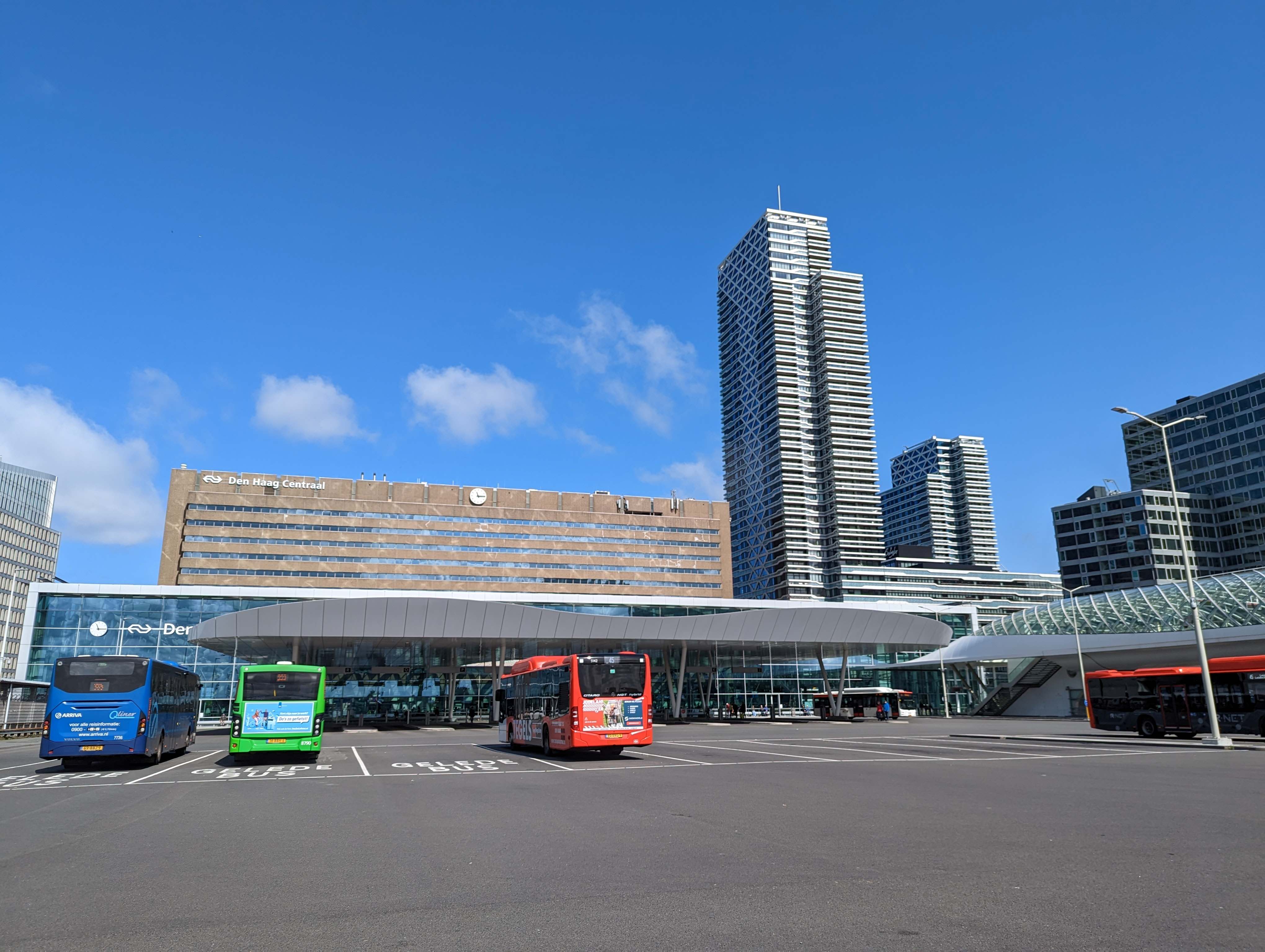
It was hard to find where to take the tram from The Hague (Den Haag) to the Hook of Holland (it takes just over an hour). There were lots of people wandering around looking and no-one knowing. When changing from the tram to the bus, the only place I could find to go the toilet was in a hospital (Haga Ziekenhuis)!
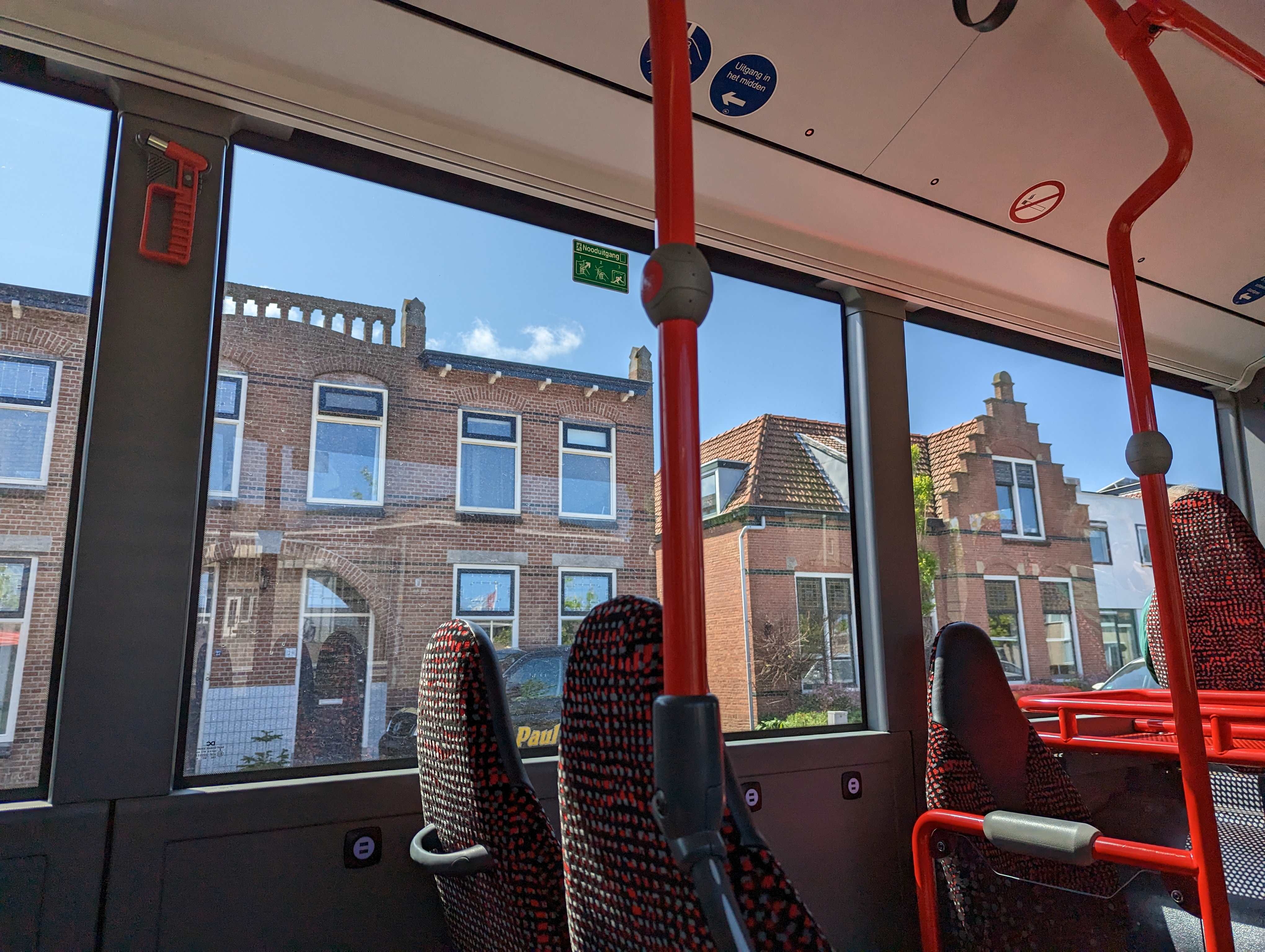
From the tram – Hague to Leyenburg, where I changed to a bus

The ferry terminal was almost empty. I was detained for quite a while as passport control flipped through my passport, looked at me, did it again and so on. In the end I asked what was wrong and they asked about going into the Schengan area and why I hadn’t got a stamp saying I’d gone out again. Presumably I was asleep. Thankfully, I had left myself plenty of time, and eveyrything went smoothly after that.
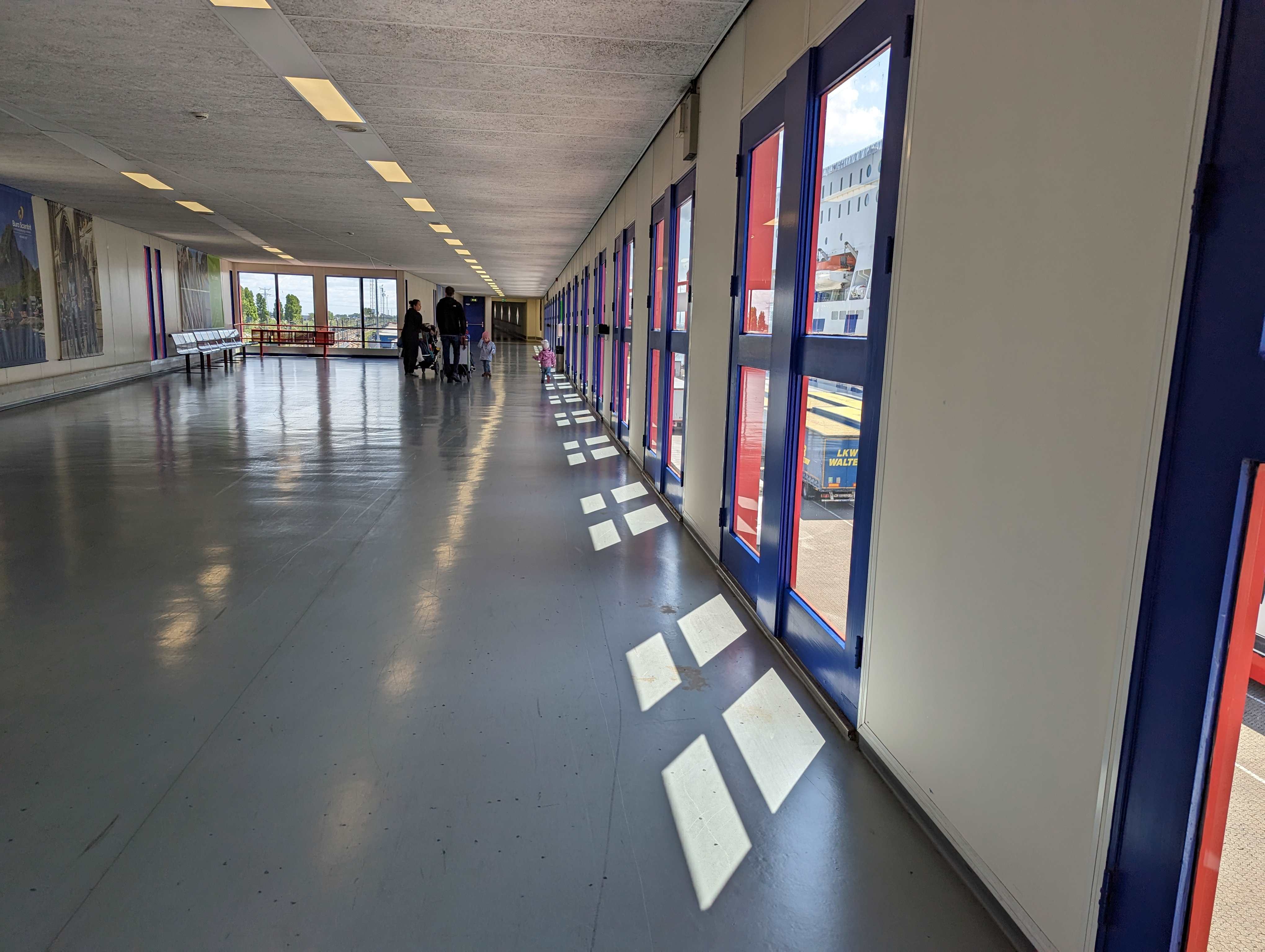
Hook of Holland ferry terminal, Netherlands

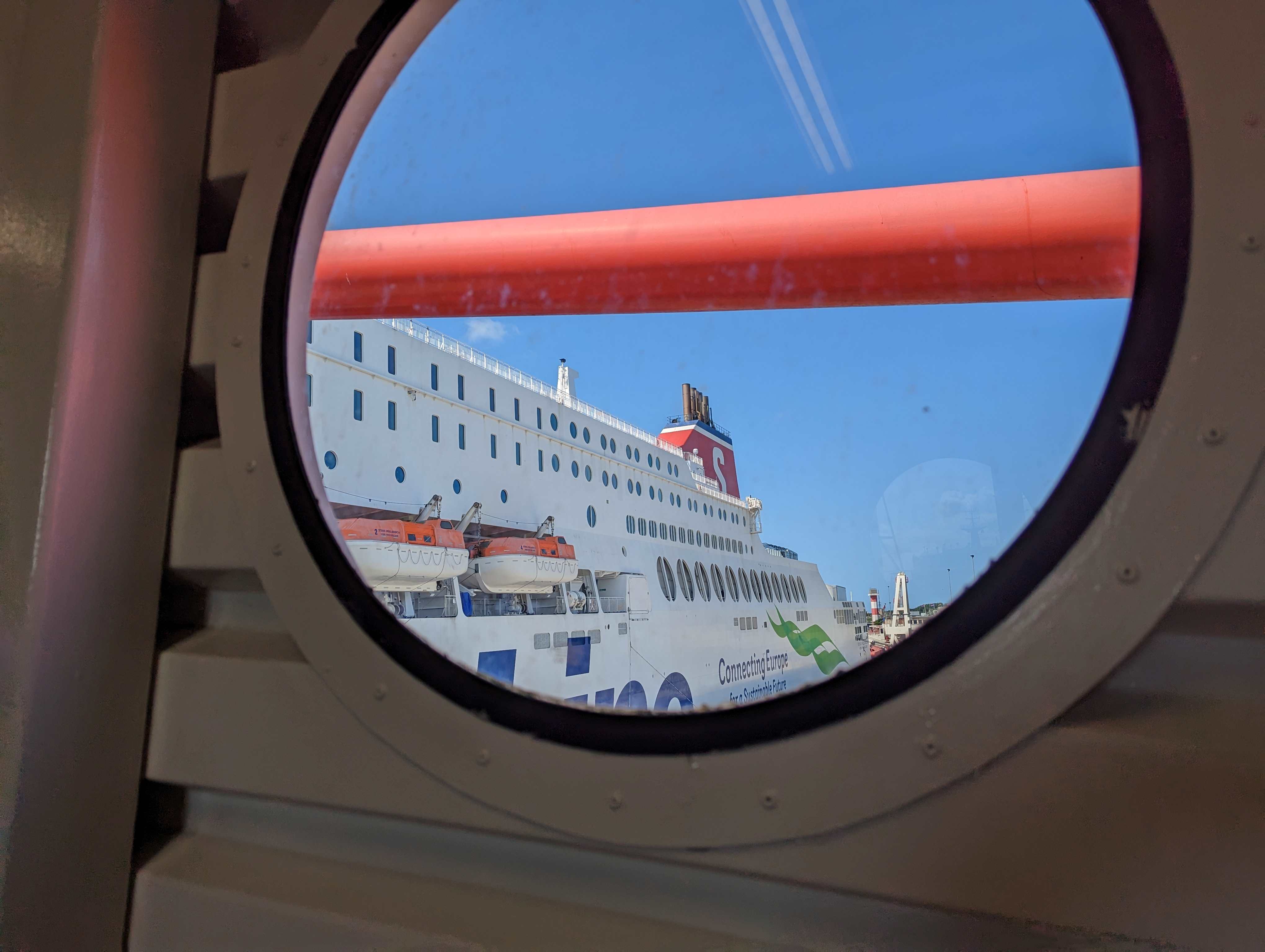
Photos above are of the Hook of Holland (Netherlands) ferry journey to Harwich, England

Harwich to London to Edinburgh

I took a late train into London using Greater Anglian Trains.
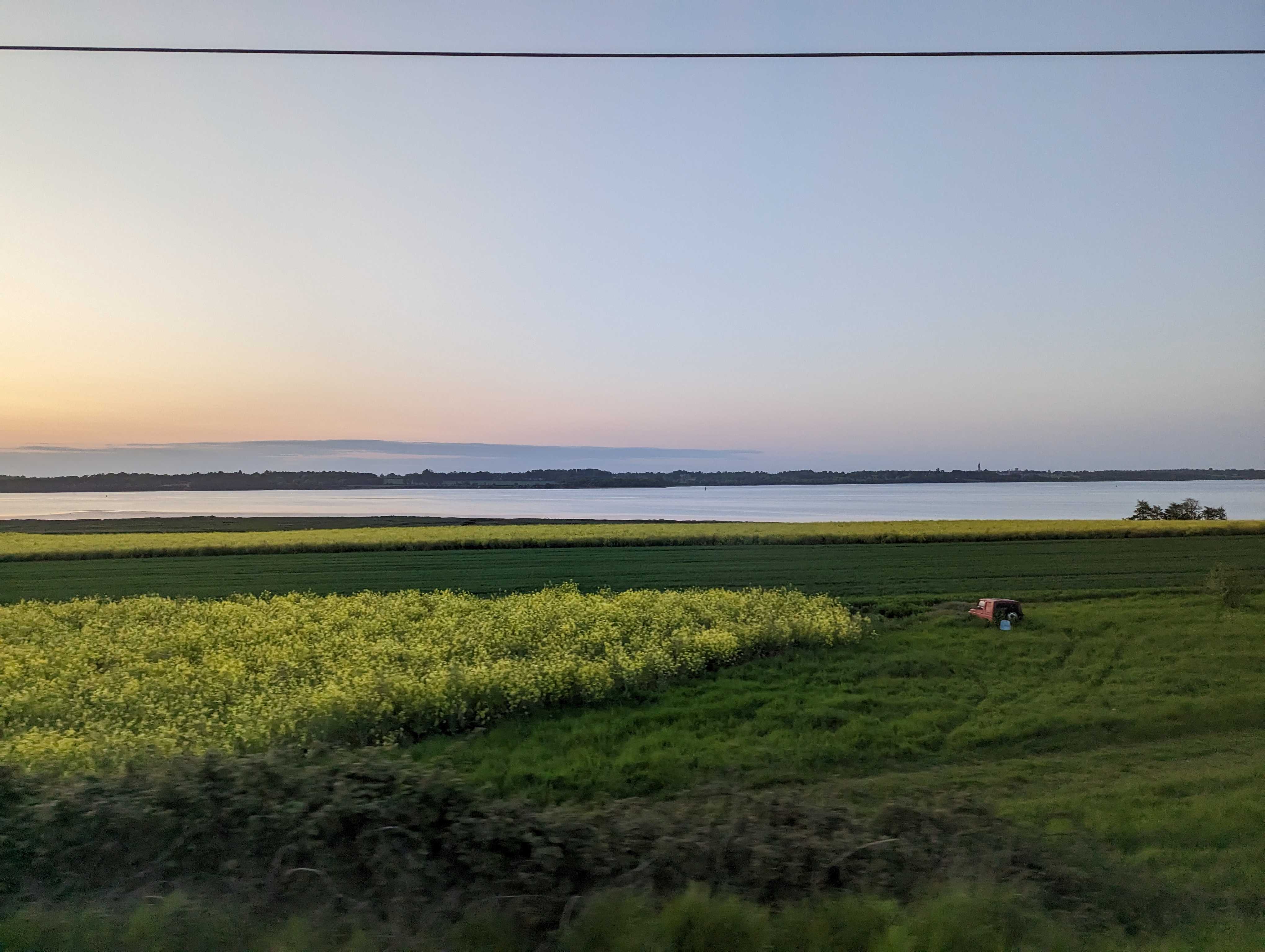
From the train between Harwich and London

And to Edinburgh via LNER (London and North Eastern Trains)
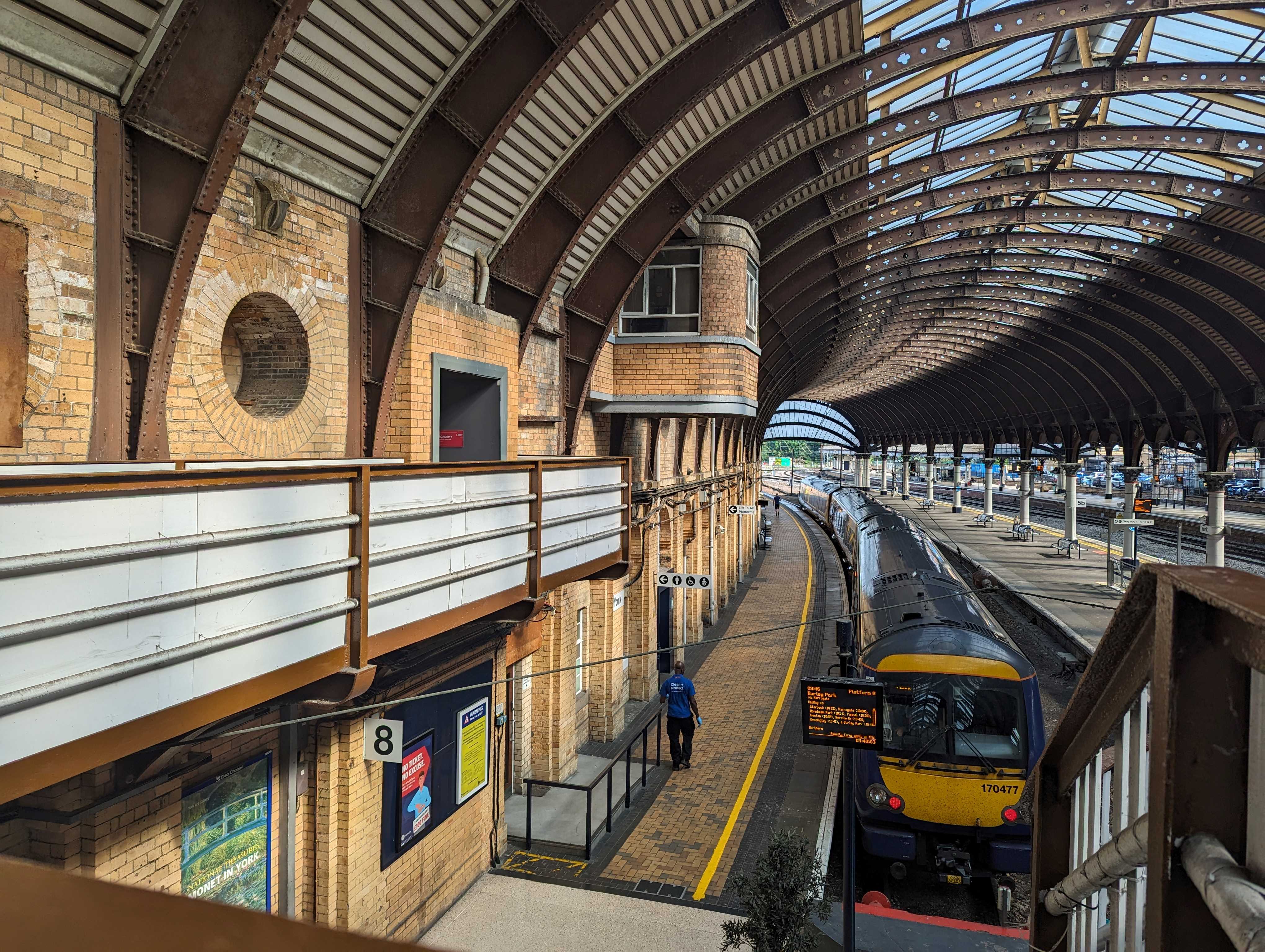
York railway station, England

Useful links, recommended reading etc

You may also like Overland Travel from Edinburgh to Greece 2

Travel websites: Infobus

Get By Bus

Flix Bus – beware they are very cheap, but there are very often delays and it’s hard to get any money back from them as recompense because they blame it on the roads and so on. If you have travel insurance (which I recommend if you are making complicated journeys like this – it’s not too expensive for a year – I used multitrip.com), it’s easier to claim from that.

Ride Sharing in Berlin

and into Kent from London – use South Eastern Trains

Recommended reading: Slow Living by Wendy Parkins and Geoffrey Craig (about the ‘slow’ movement of which this type of travel is a part); The Instant by Amy Liptrot (about her time spent in Berlin).

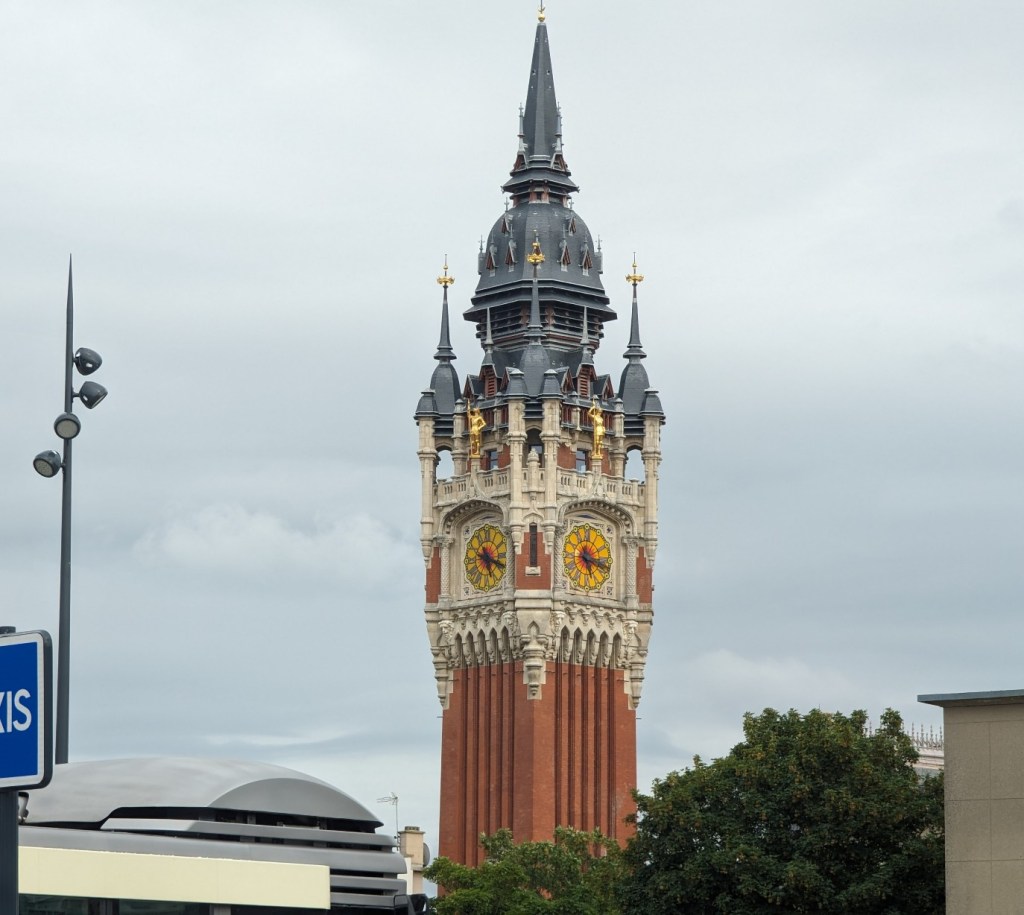
This trip was taken in May 2023. The title photo is of Keleti Station, Budapest. All images my own and are copyrighted to me.
Tinos and Kionia

May 2023

In this blog

T1A walk to Kionia, Poseidon Sanctuary, walk from Kionia to Chora (Tinos town).

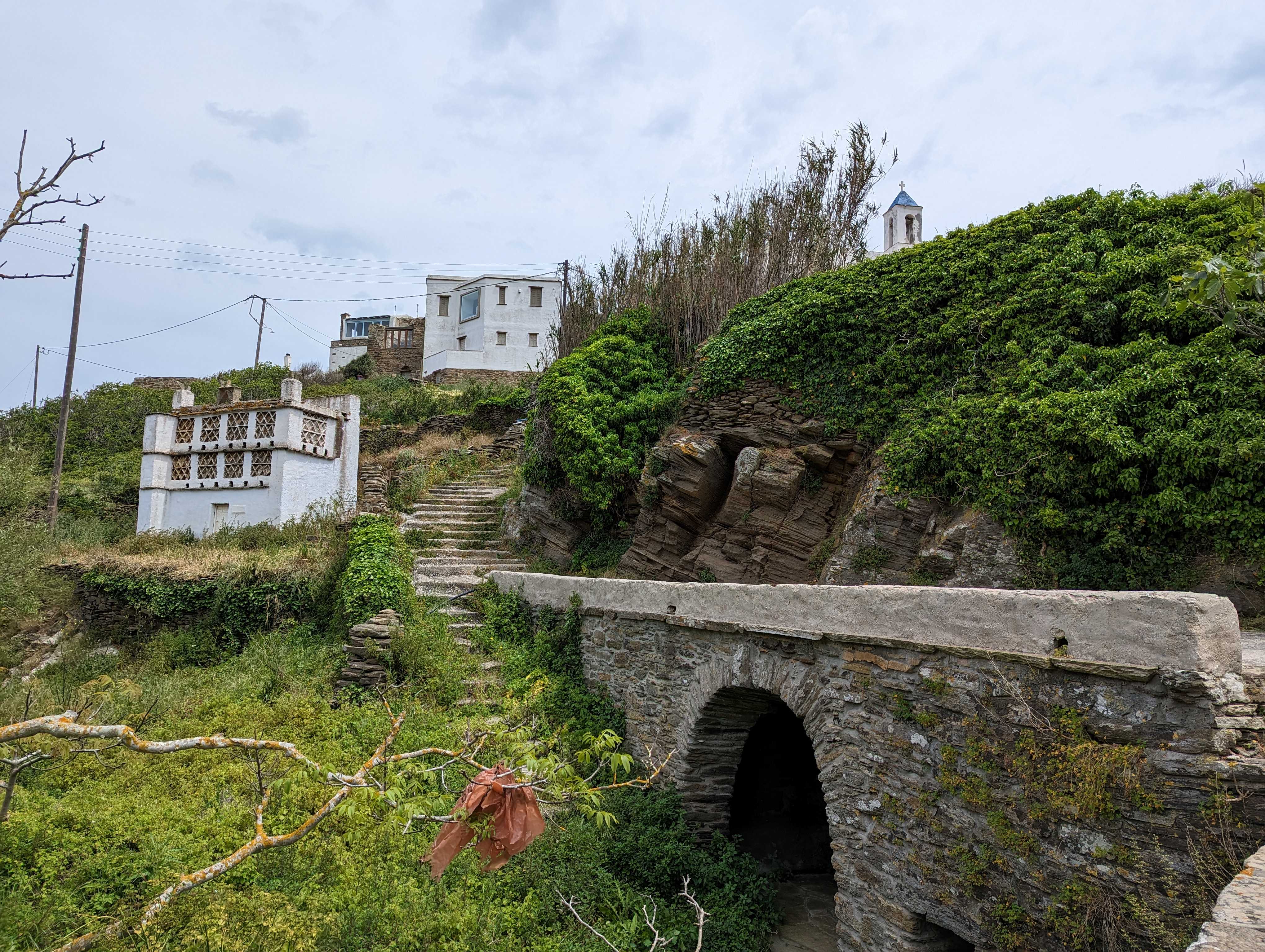
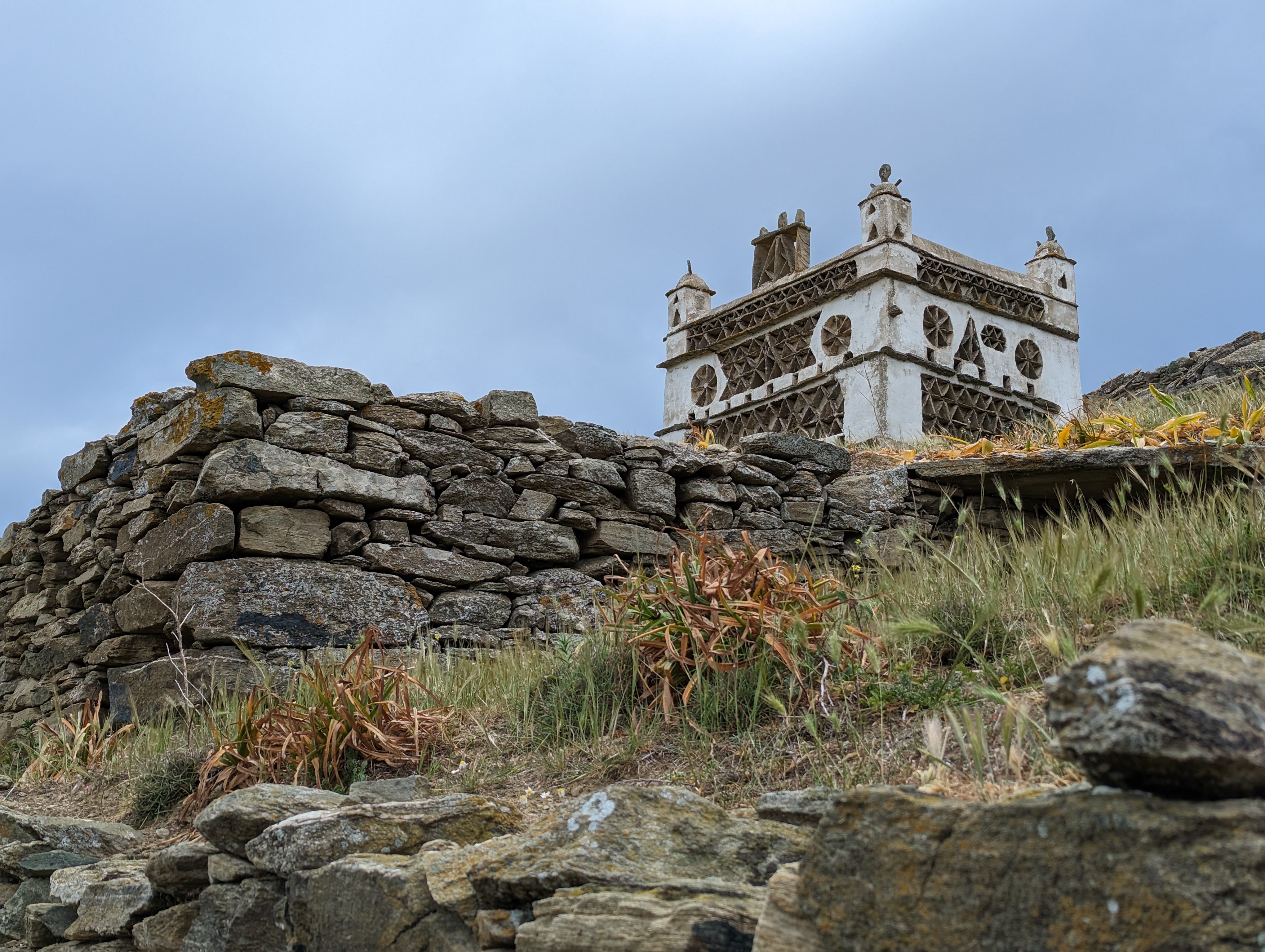
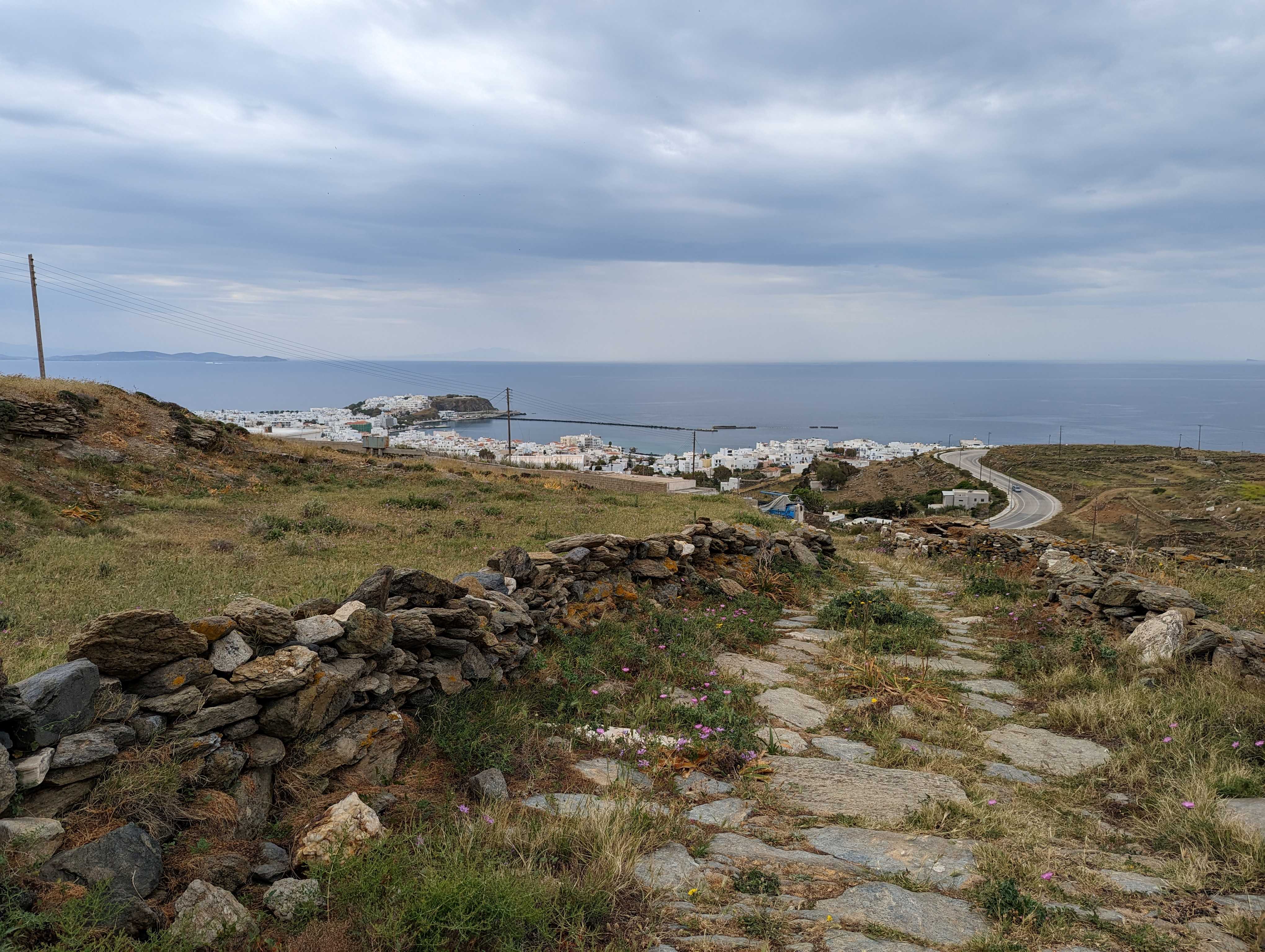
Dovcot of traditional design outside Ktikados, Tinos, Greece

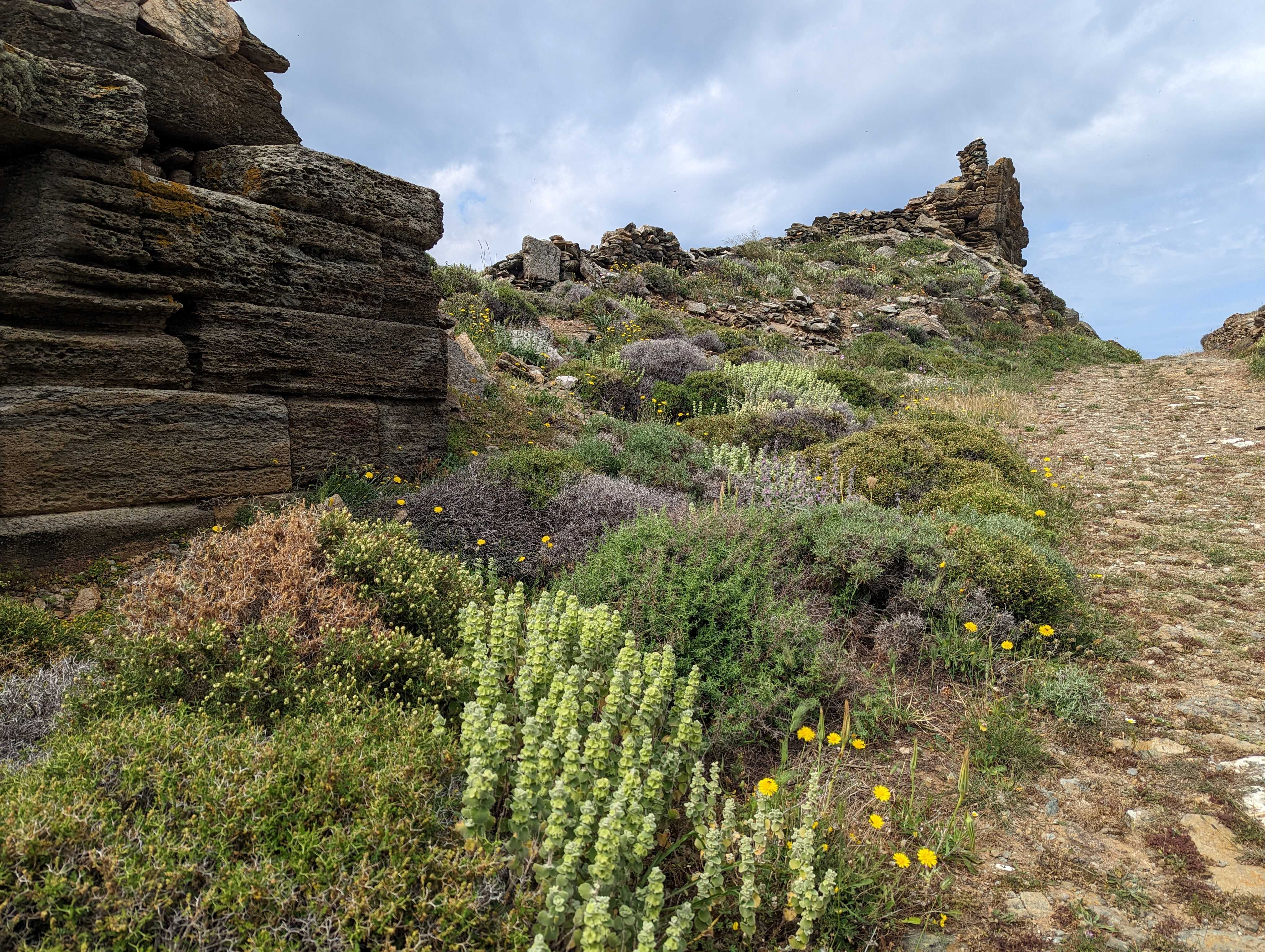
There are a wide range of walks around the Greek island of Tinos. Look out for wild goats, the most stunning variety of local flowers, and unexpected chapels with cool interiors, often with murals and other atmospheric images. On the whole the paths are quite well signposted, and the ones I made travelled through varied scenery, almost all taking in at least one of the famous dovecots. There are no high mountains, but there is some climbing and descending. Do look out for trails that can be dusty from lack of rain and slippery, also narrow and overgrown ones through lack of clearing, however, none of the ones I tried were impassable.

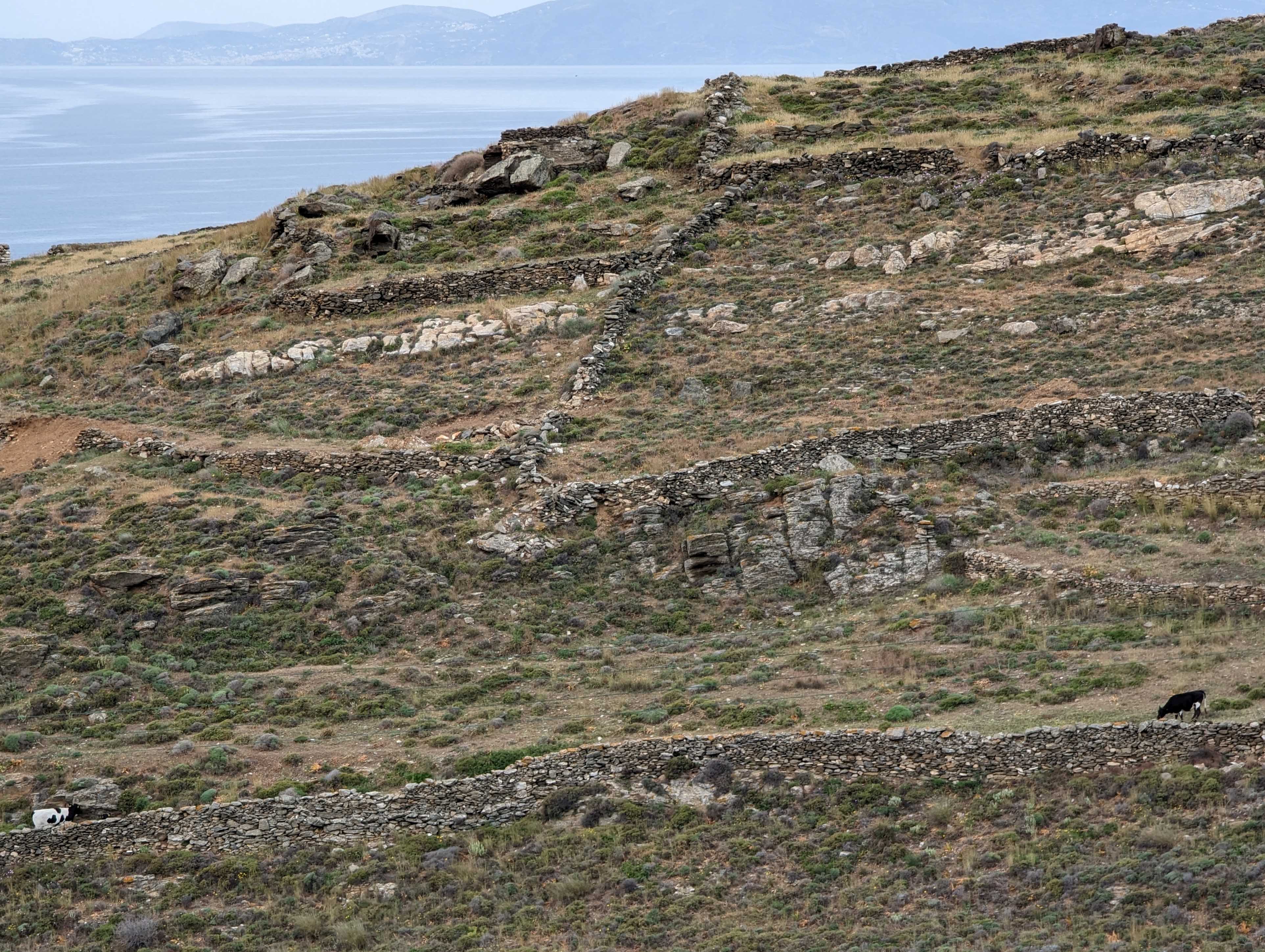
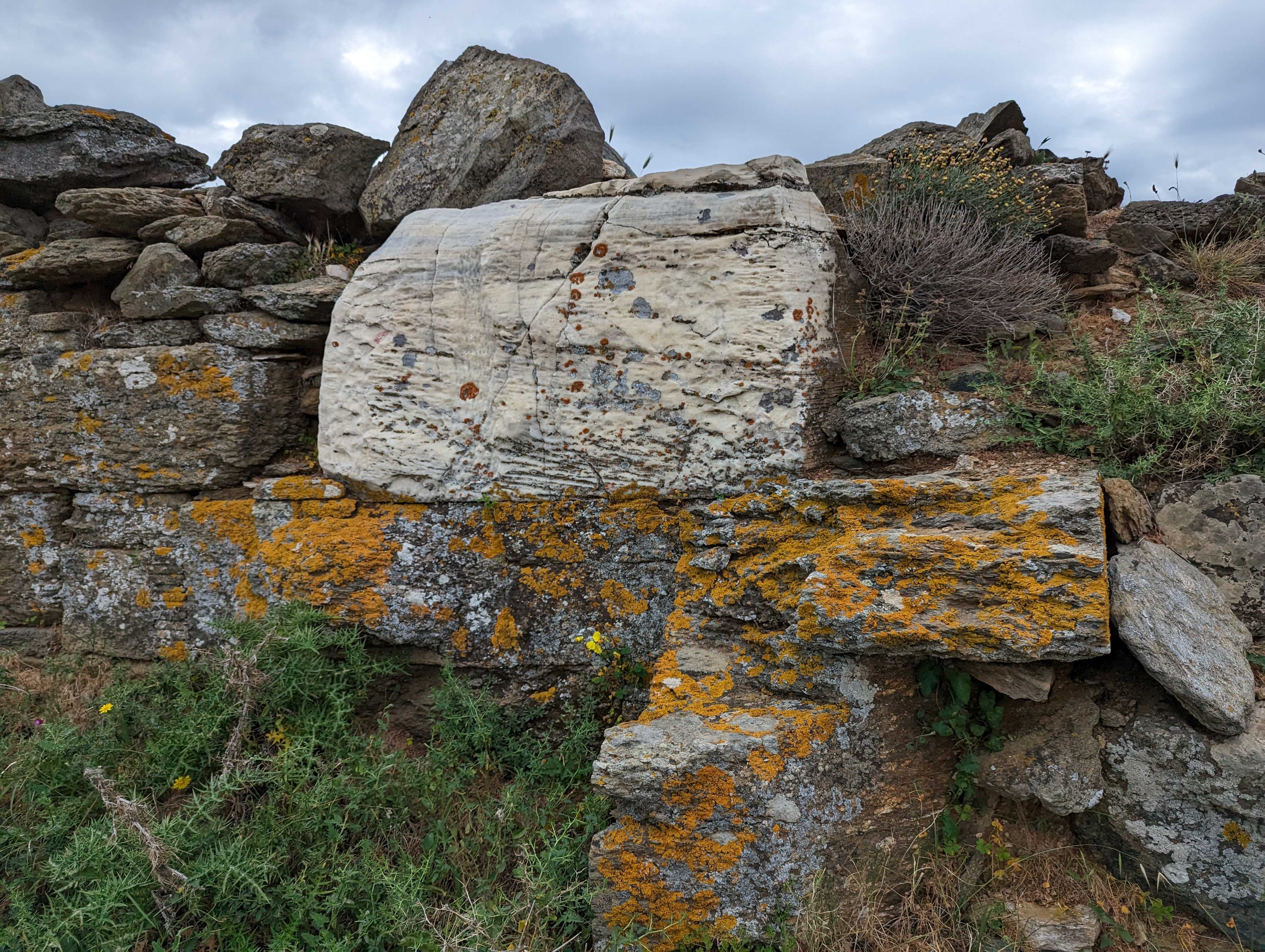
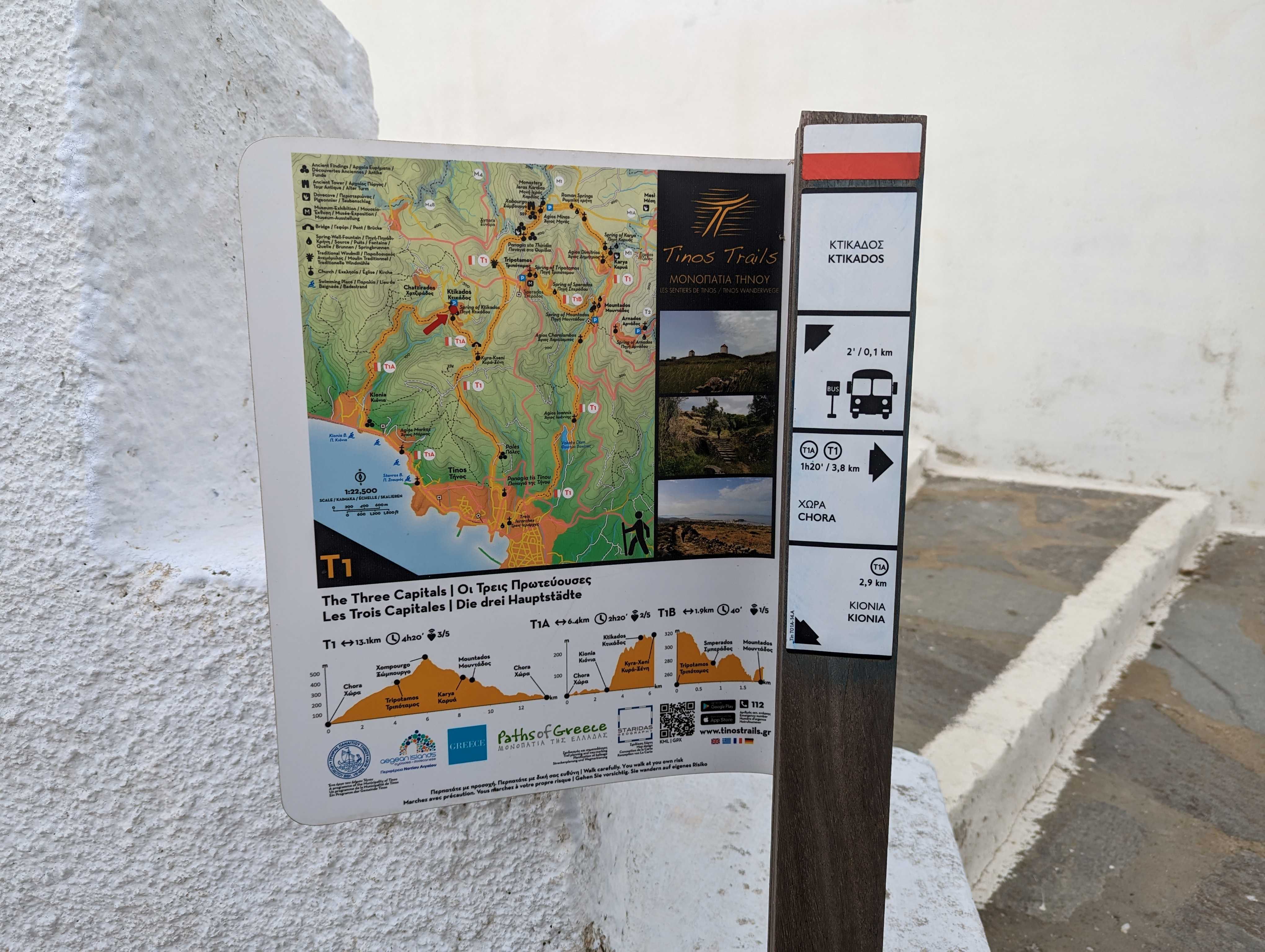
T1A trail – flora, Ktikados, chapel, and geology

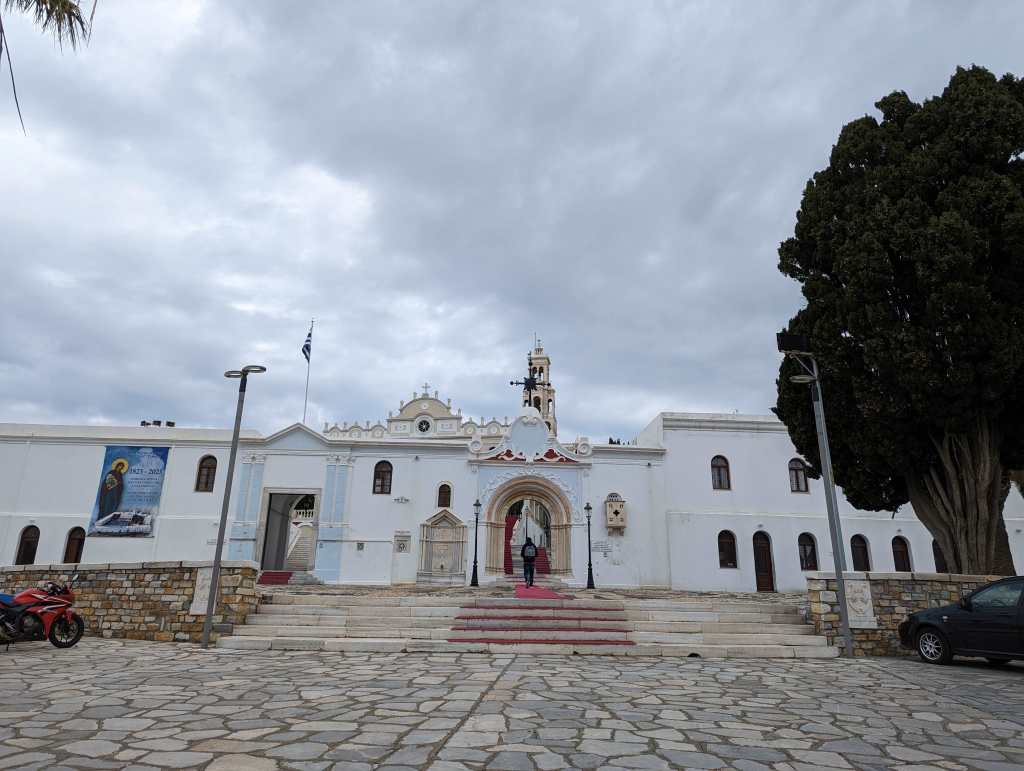
I started the T1 trail at the Panagia Shrine, Chora, Tinos, Greece

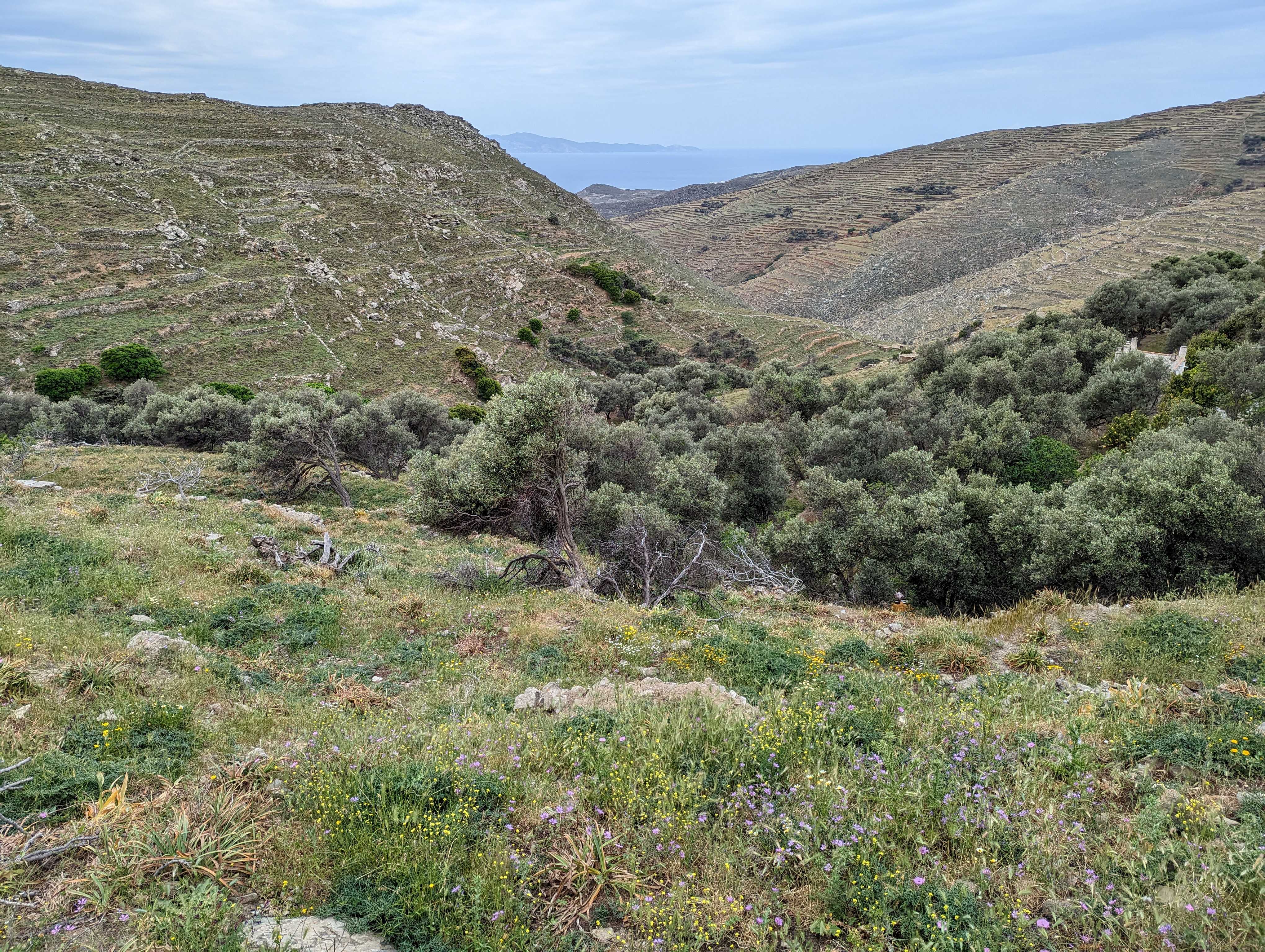
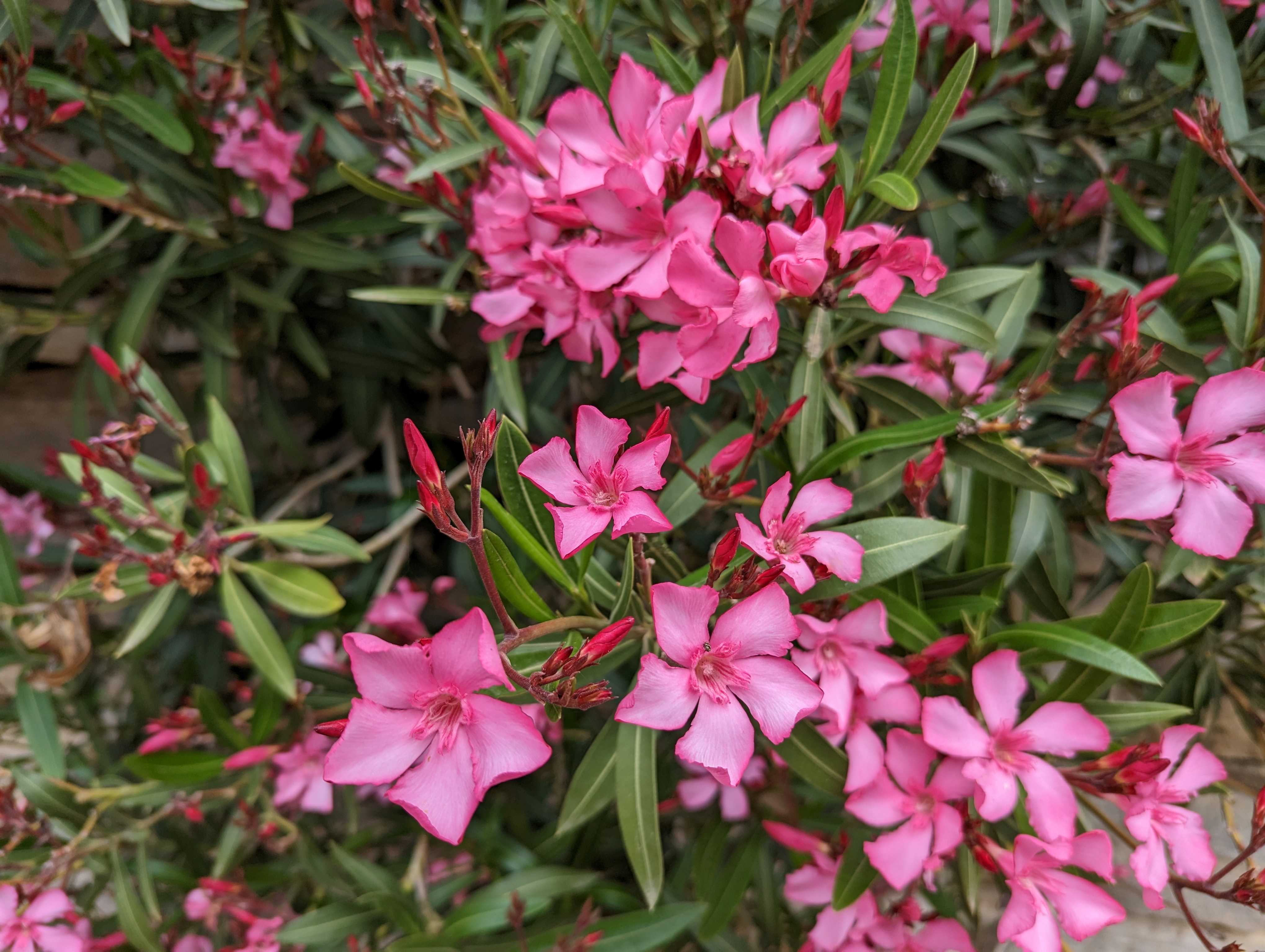
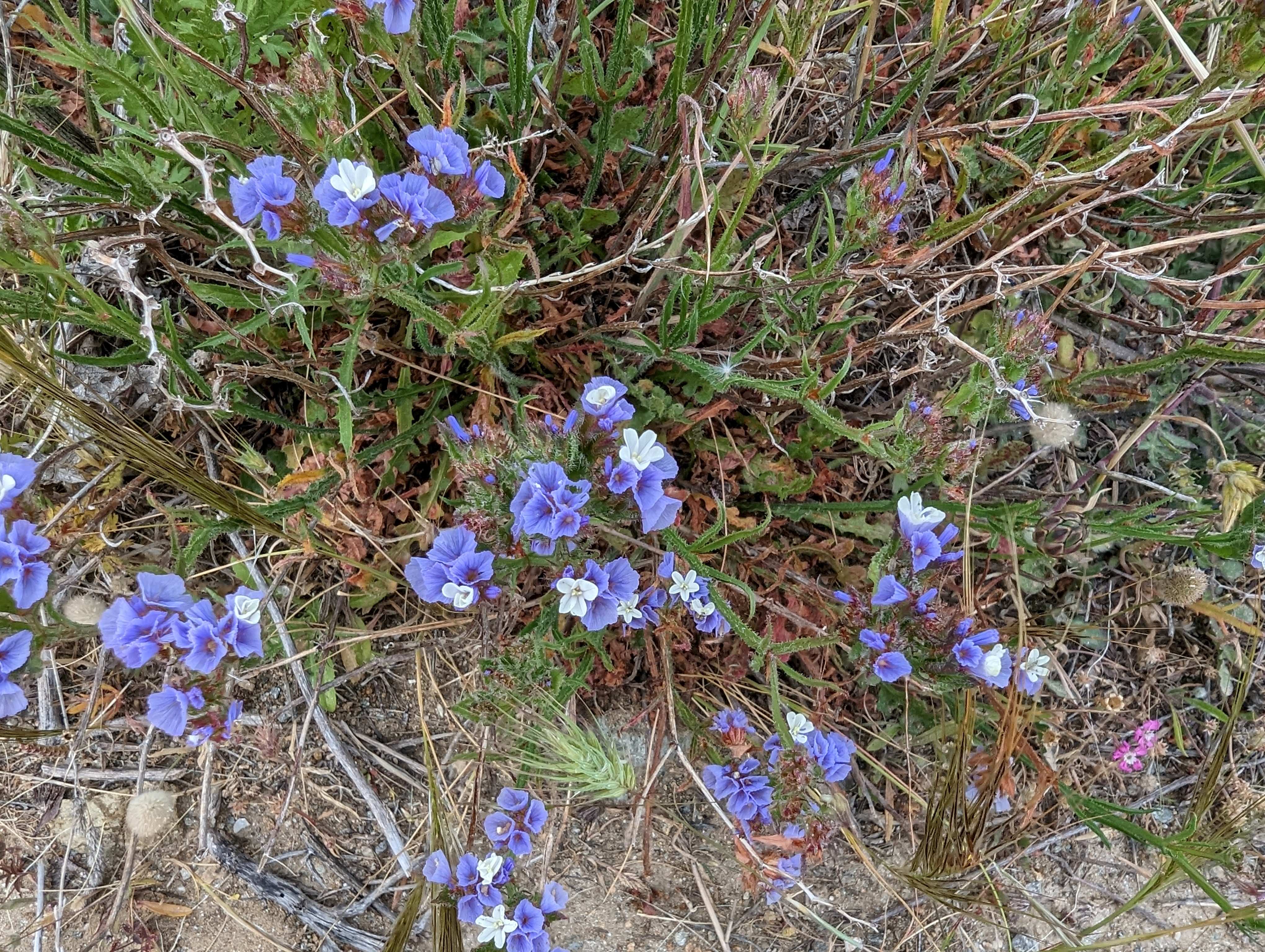
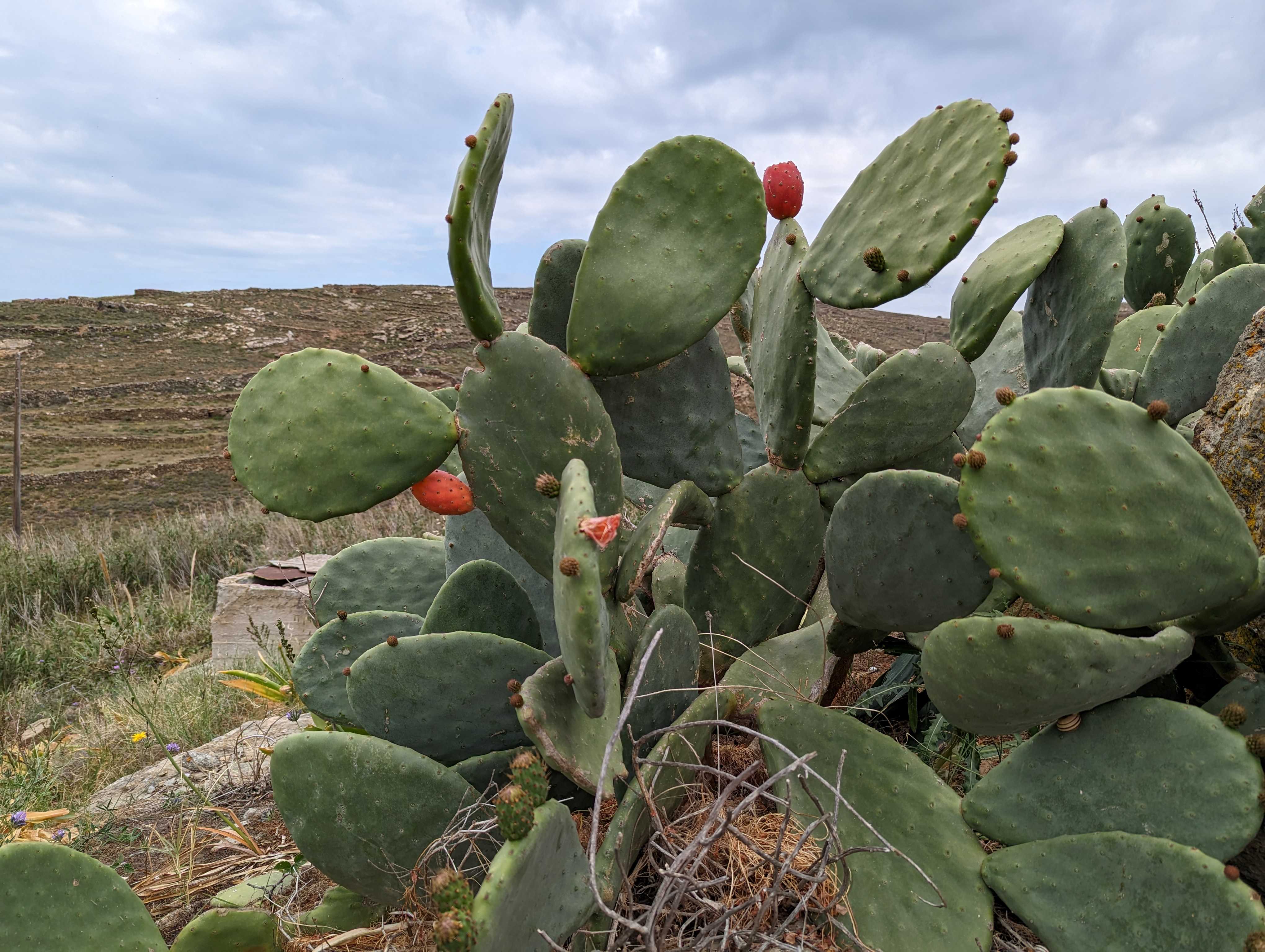
It was a wonderful day which took me steeply out of the city, hard by the Panagia shrine (Holy Monastery of  Virgin Mary Evangelistria) and an olive grove, past hens, goats and ladybirds in the fields, and a vast array of wild plants: pink and white oleander, fig trees, sea lavender, and a giant cacti replete with prickly pears. I meandered along crazy-paving paths with spectacular views of the sea, across slopes with small churches, and amongst giant geological specimens.

Oleander, sea lavender and prickly pears along the T1 trail, Tinos, Greece

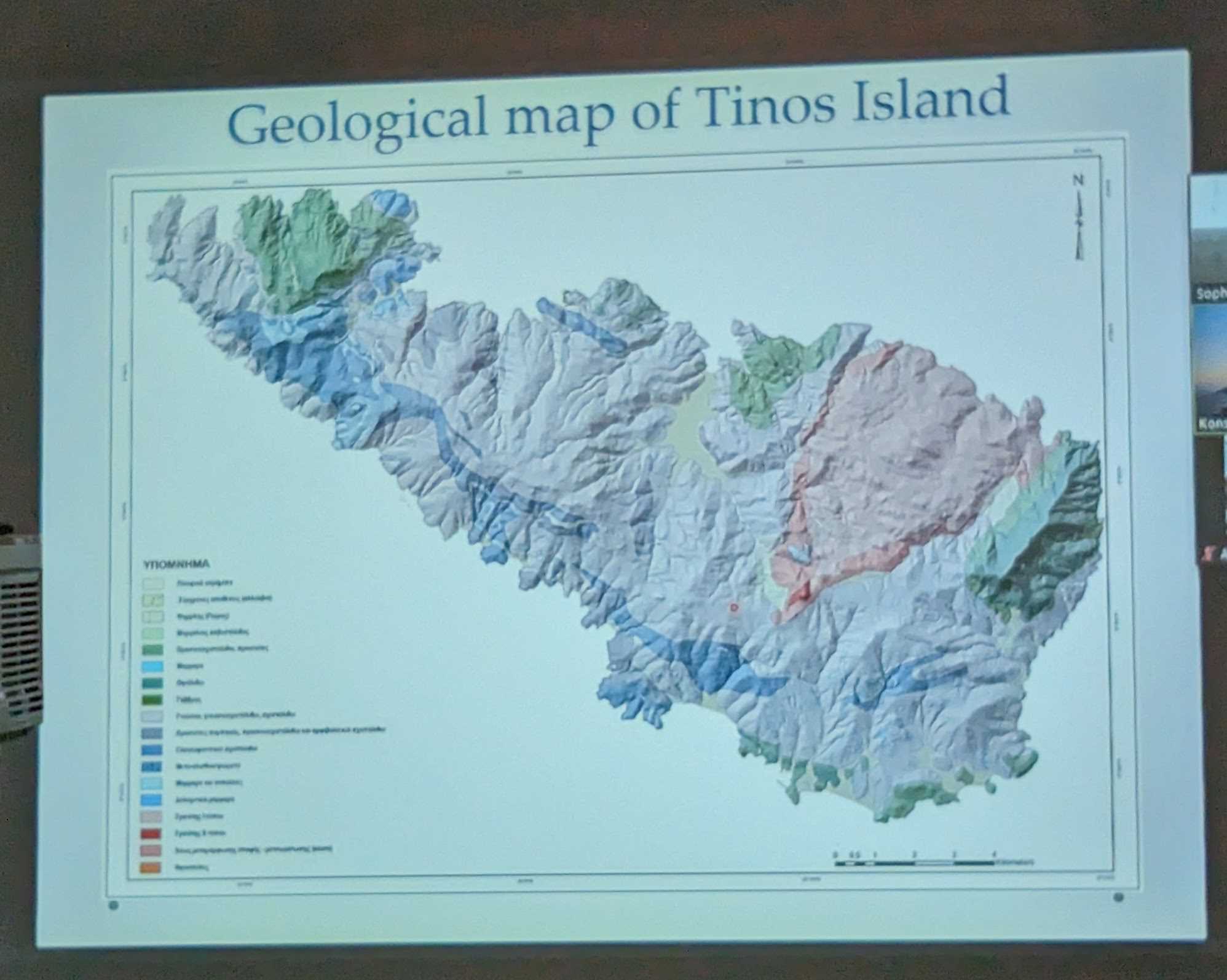
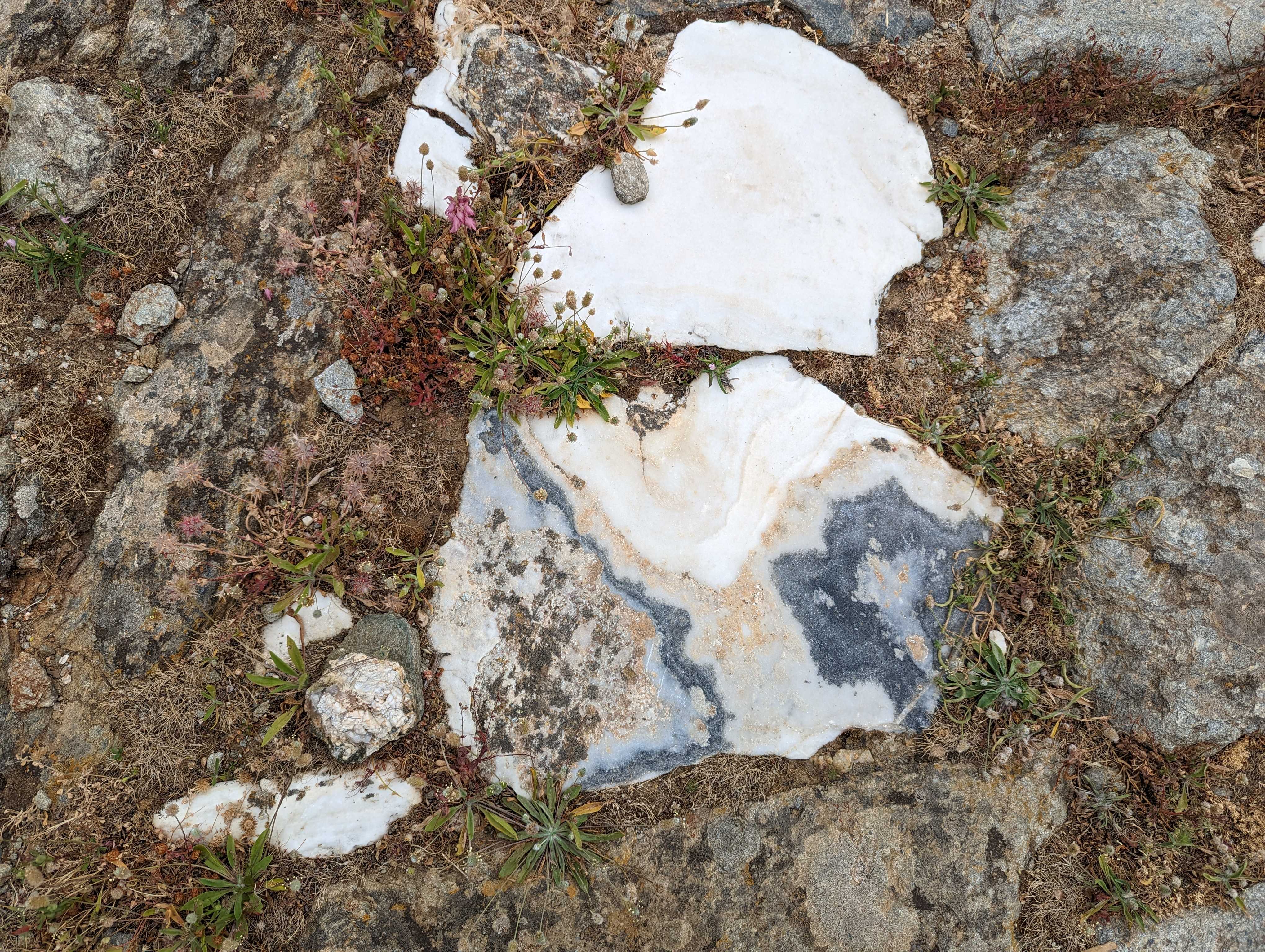
Geological map of Tinos from a presentation made as part of the Artist’s Residency, The Inherited Earth, part of the Fe26 project a collective research program by the NWMW NPO team 2023

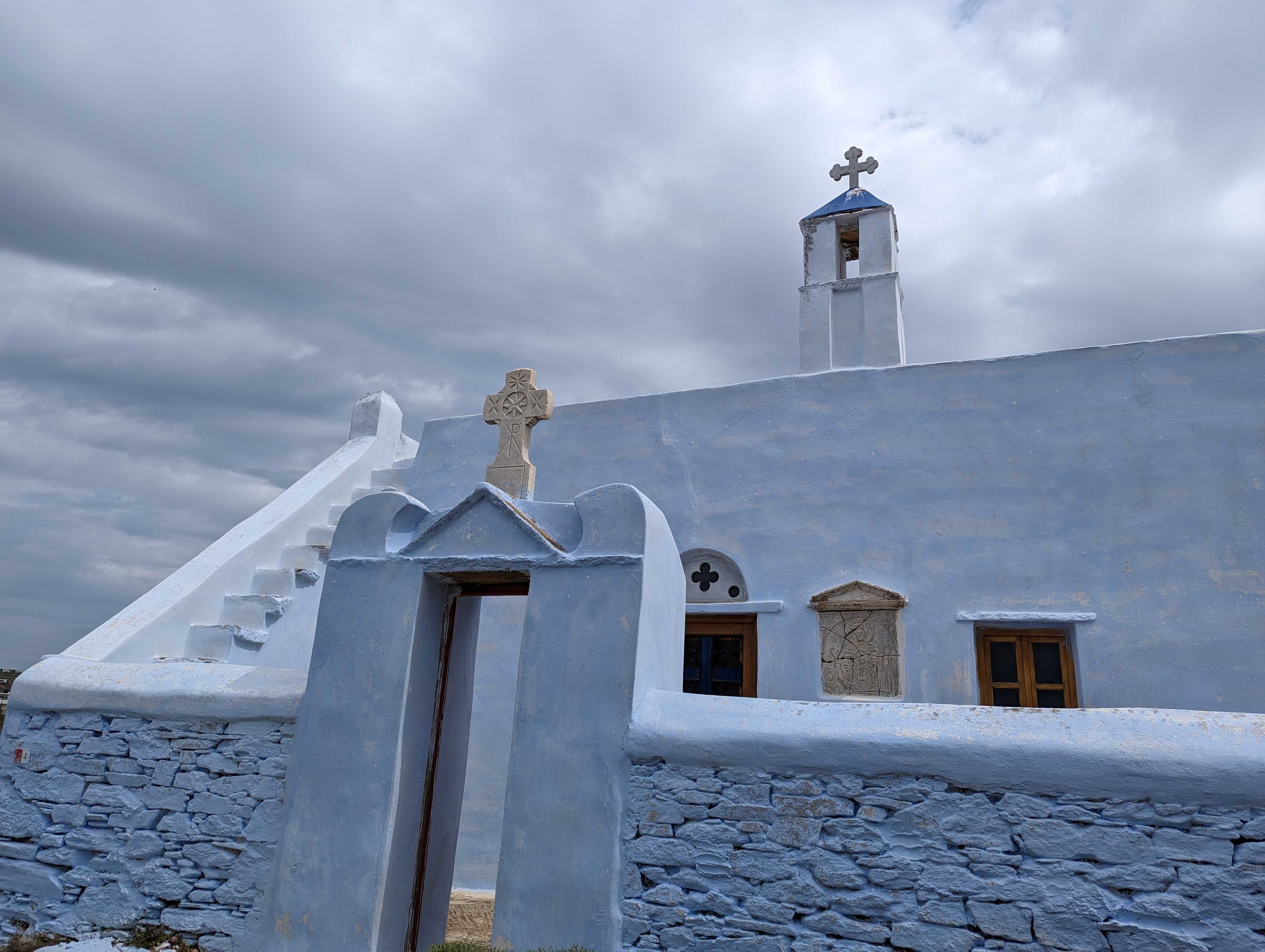
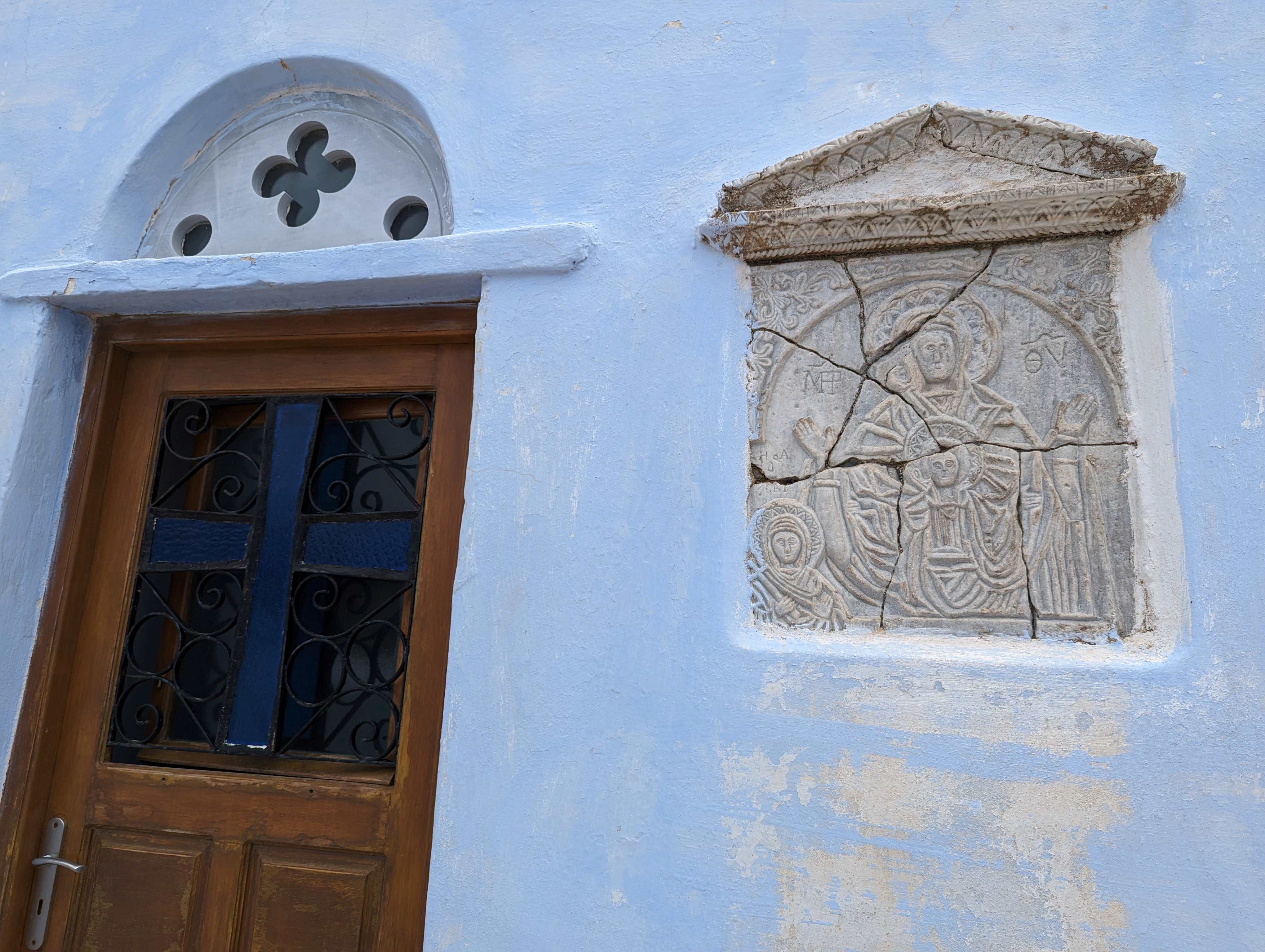
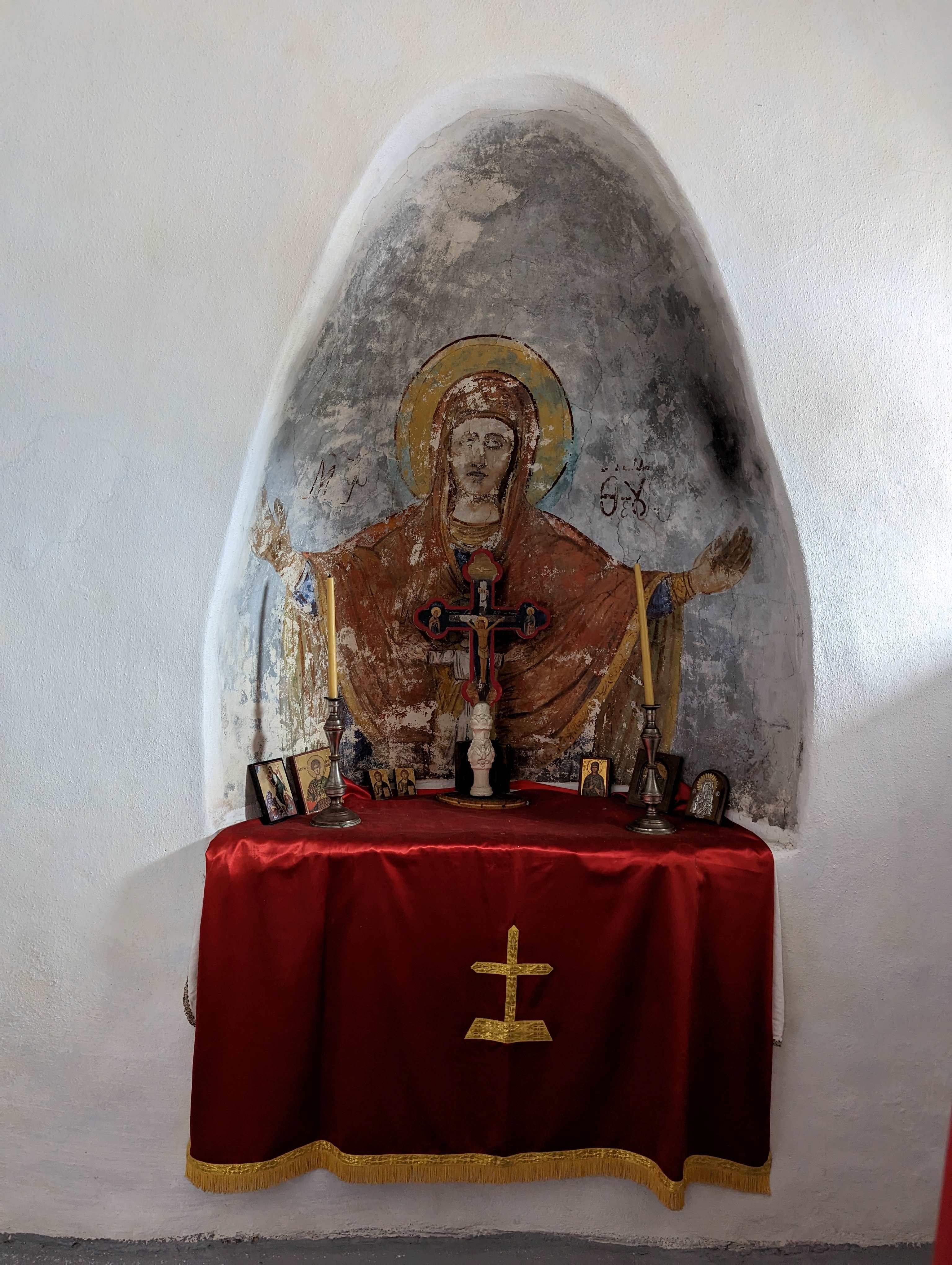
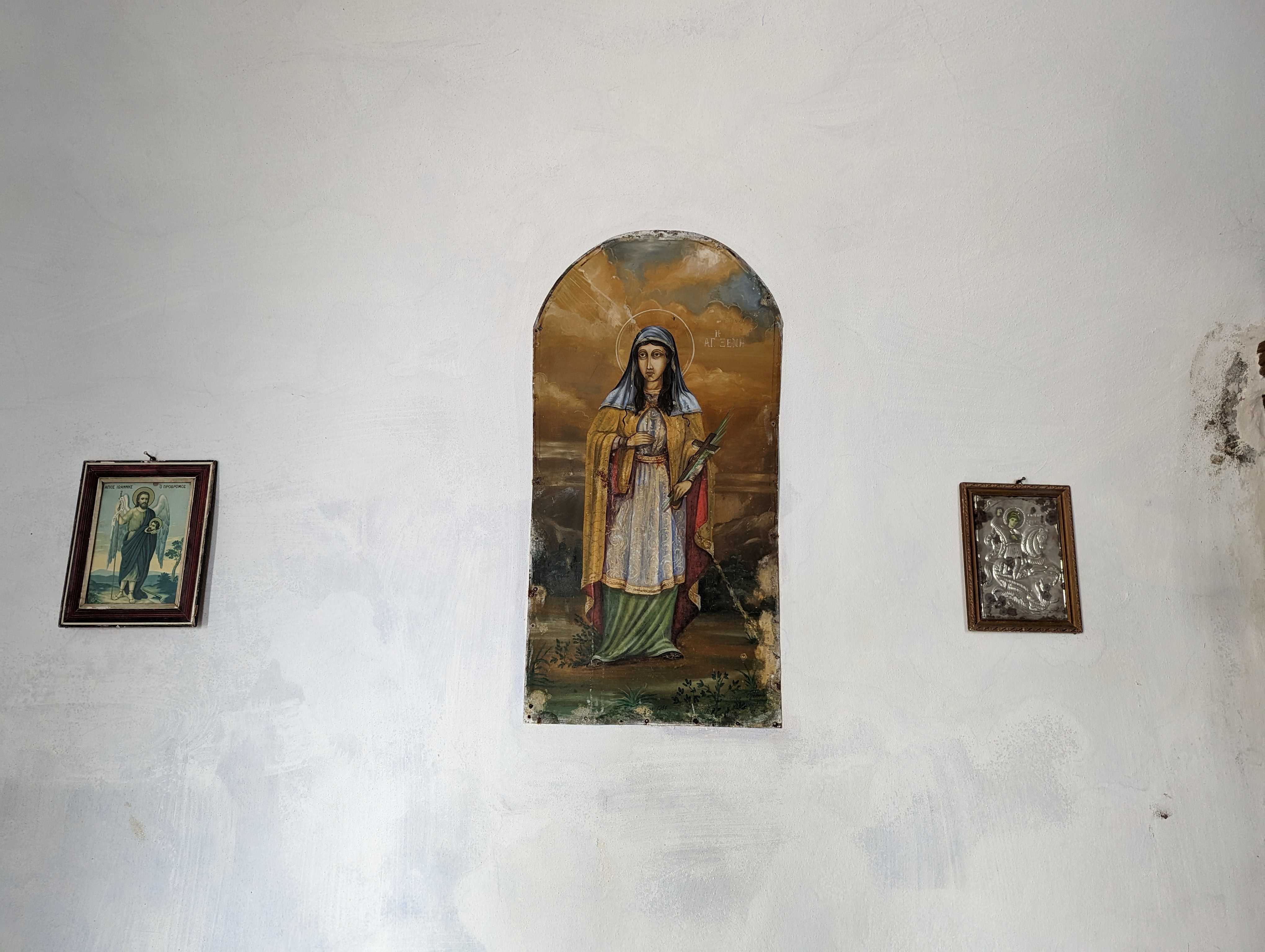
There was a small church open for me to visit. Co-ordinates 37°33’35.8″N 25°09’34.2″E

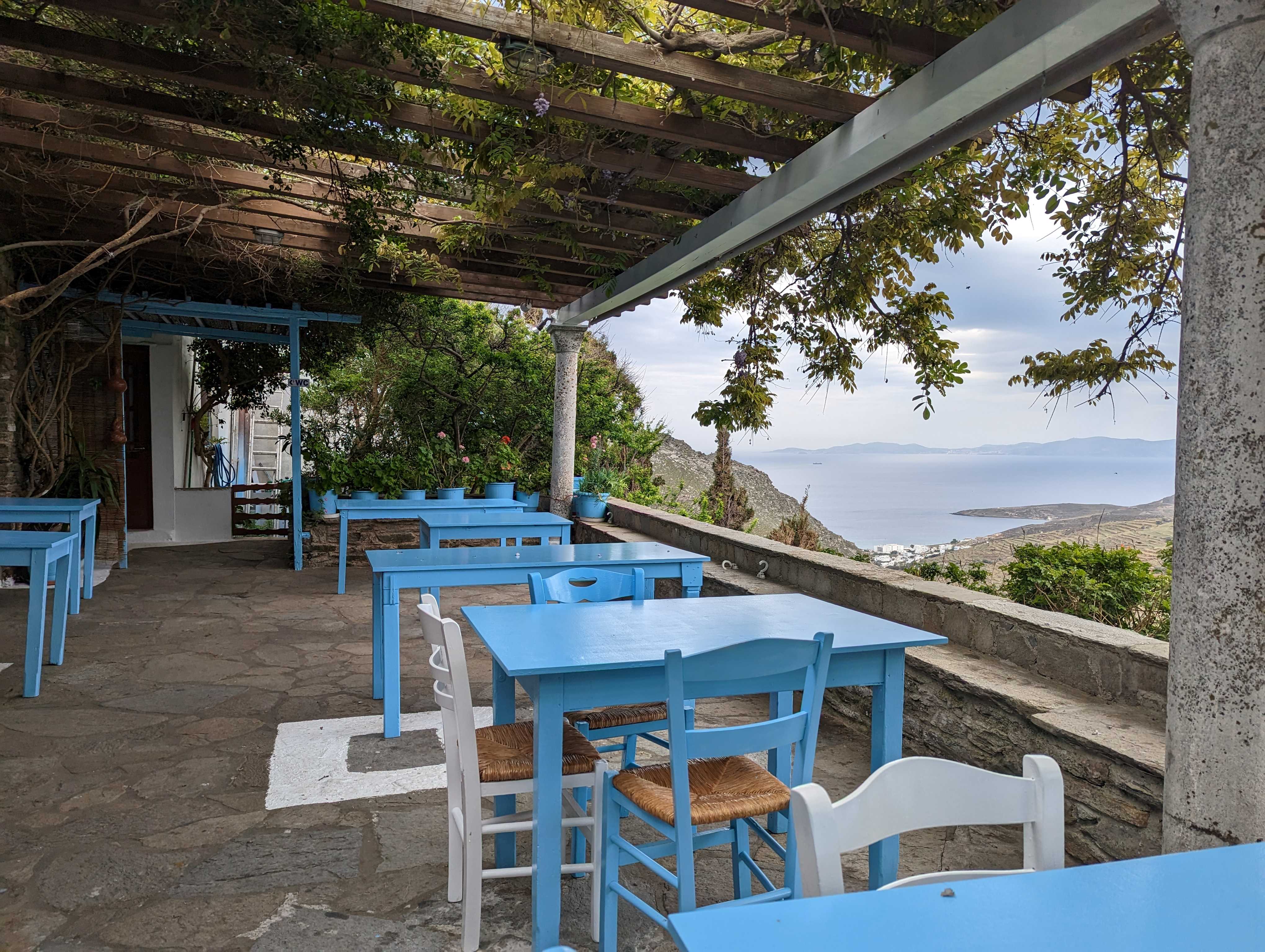
I stopped in the small village of Ktikados for a break, enjoying melizanosalata (baba ganoush / aubergine dip) and a cup of tea.

View from the Drosia Taverna, Ktikados, Tinos, Greece

This walk comes highly recommended.

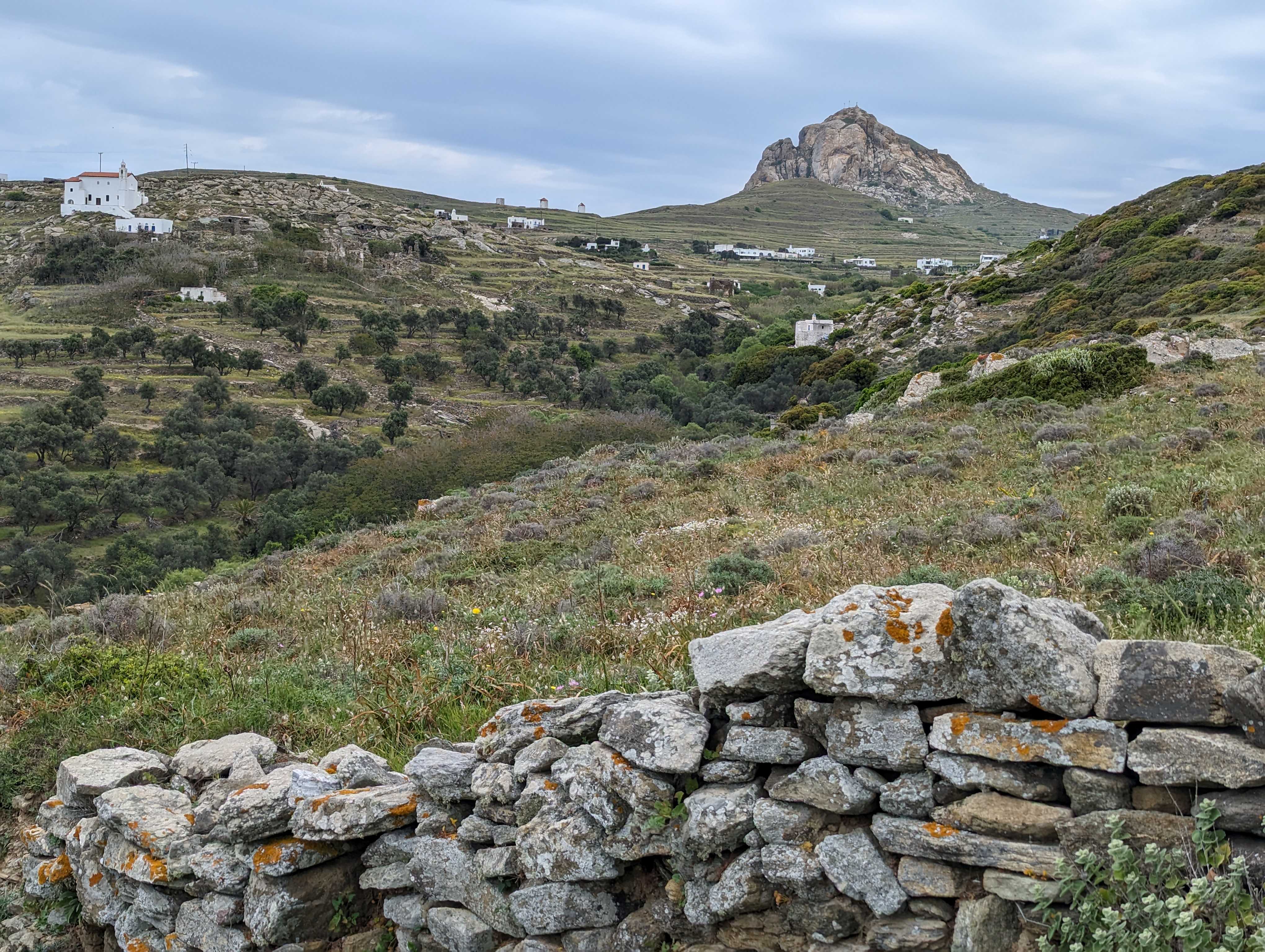
Great views of Exomvourgo (hill), Tinos, Greece
My offerings to the Panagia on the T1 trail, Tinos Greece
On the T1 trail

Eventually I descended to the beach in Kionia (see below) and had a refreshing swim.

The Poseidon Sanctuary

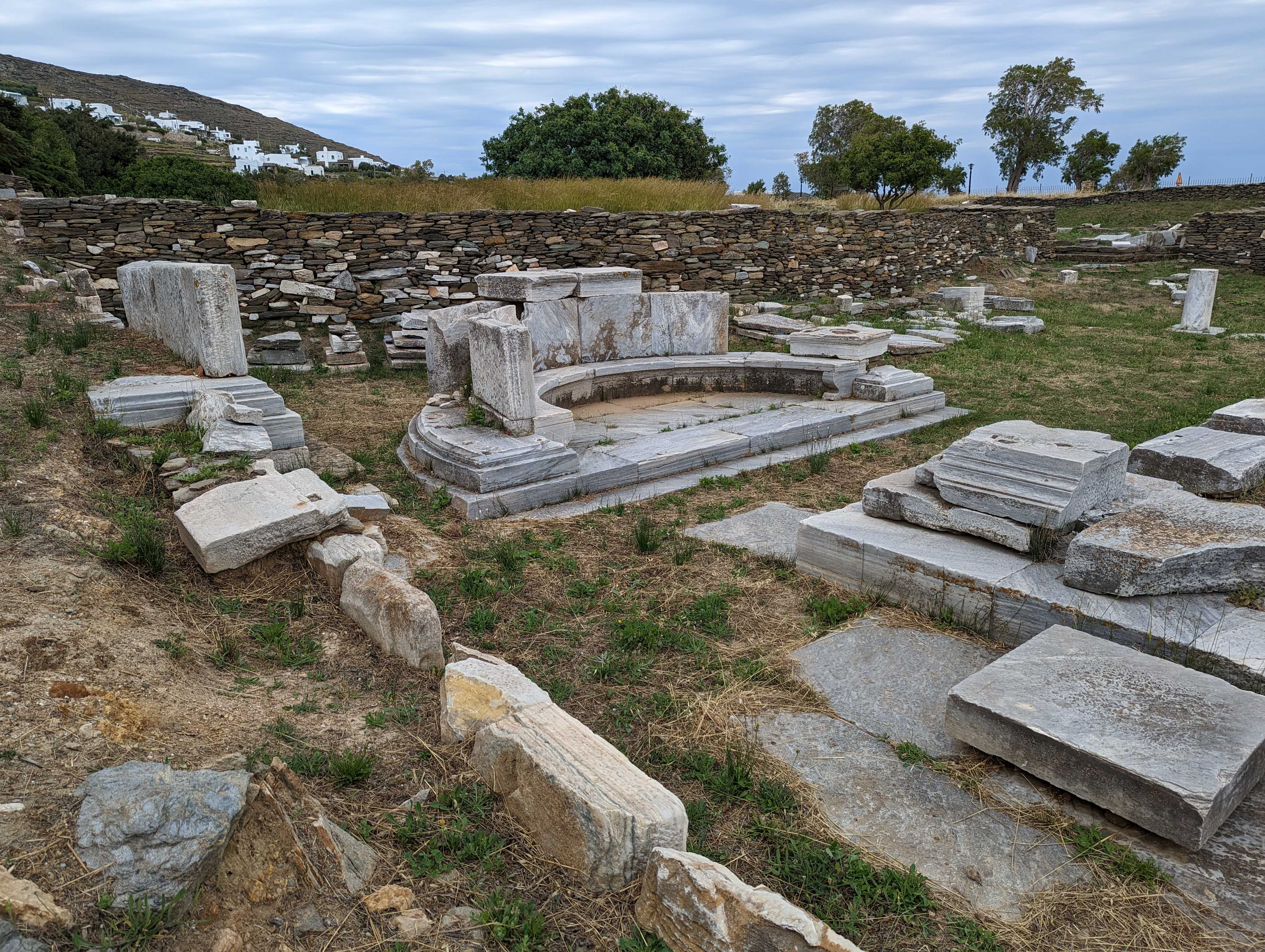
Along the boardwalks I was delighted to discover, by chance, the Poseidon Sanctuary which, in its heyday, attracted pilgrims from beyond the borders of the Greece, as far away as Italy, Asia Minor, and Africa.

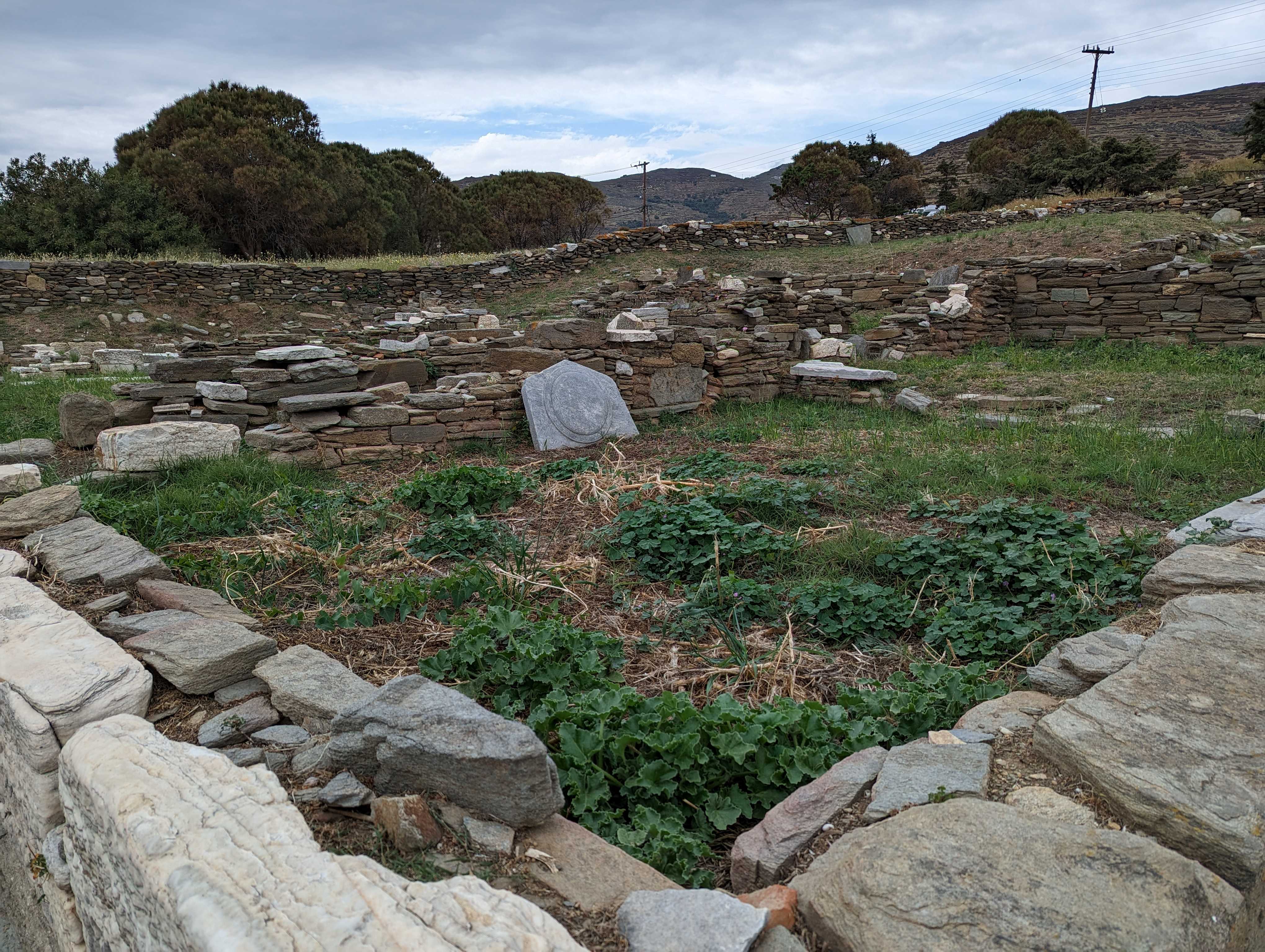
The Poseidon Sanctuary is believed to date from the 4th century or earlier, placing it in the Hellenistic Period. Dedicated to the sea nymph Aphrite (Amphitriti) and Poseidon, god of the sea, it was a place where visitors would come to clean and purify themselves. As a complementary therapist, I was particularly interested in the site of the former therapy rooms (above left).

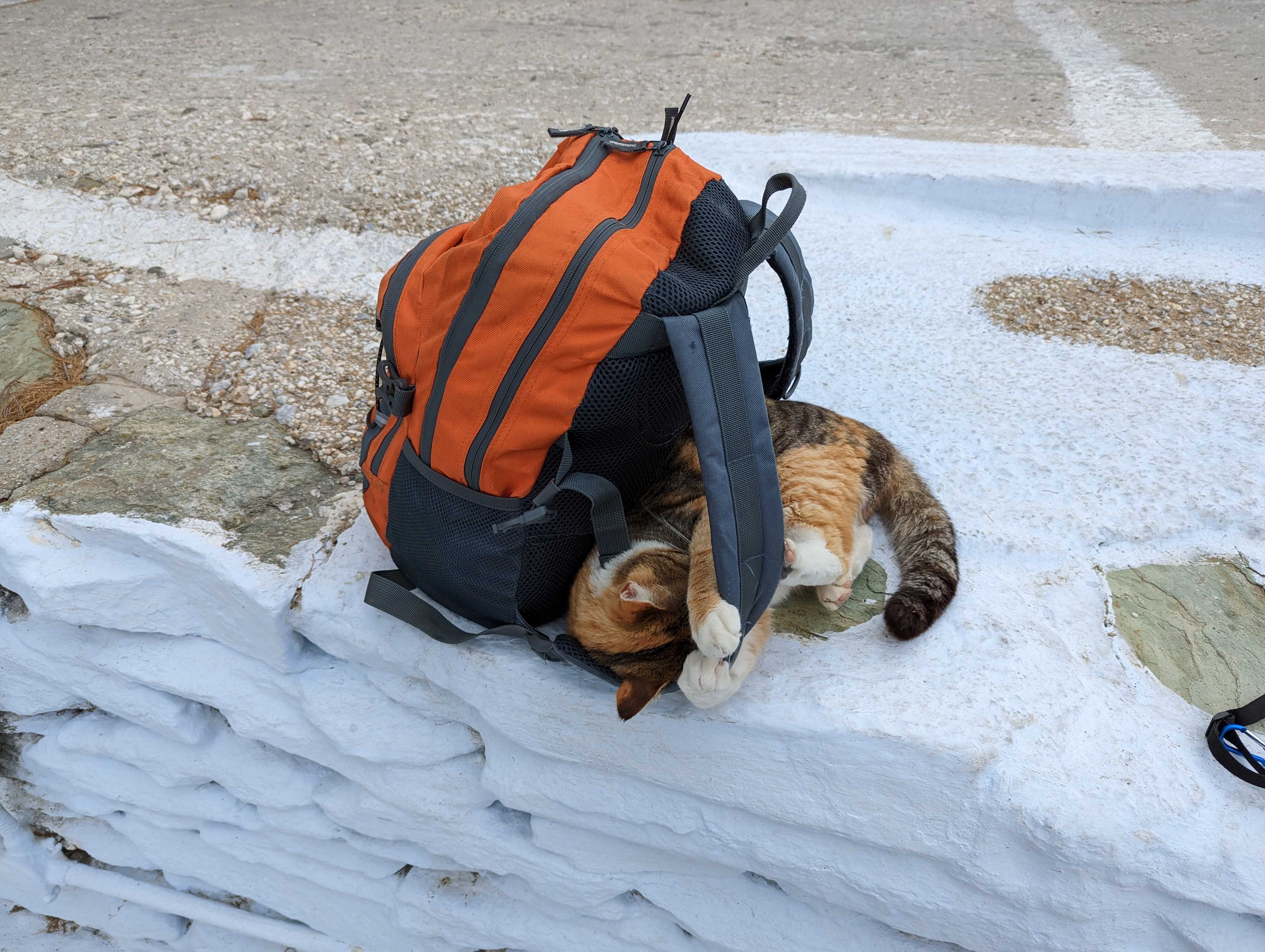
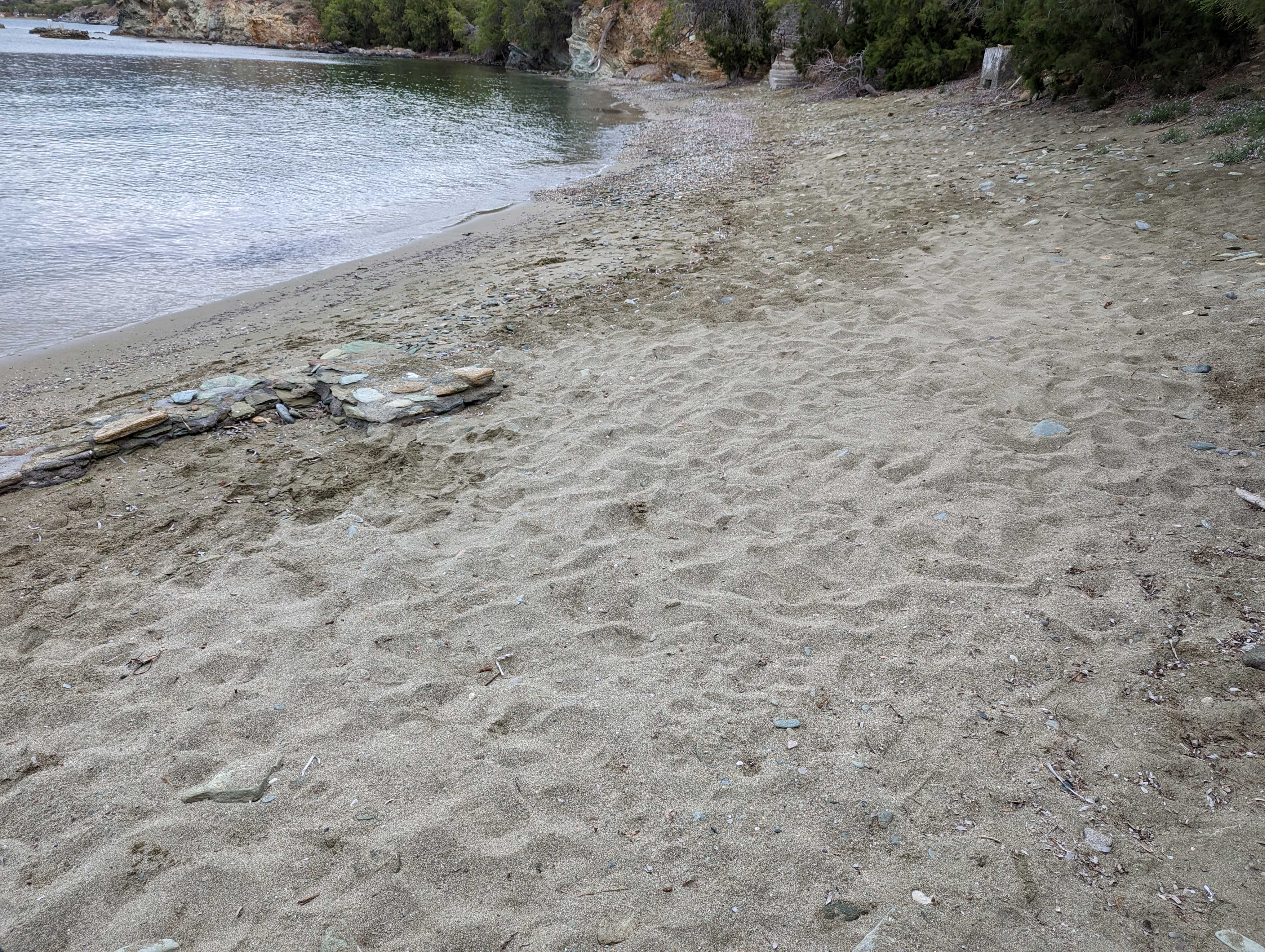
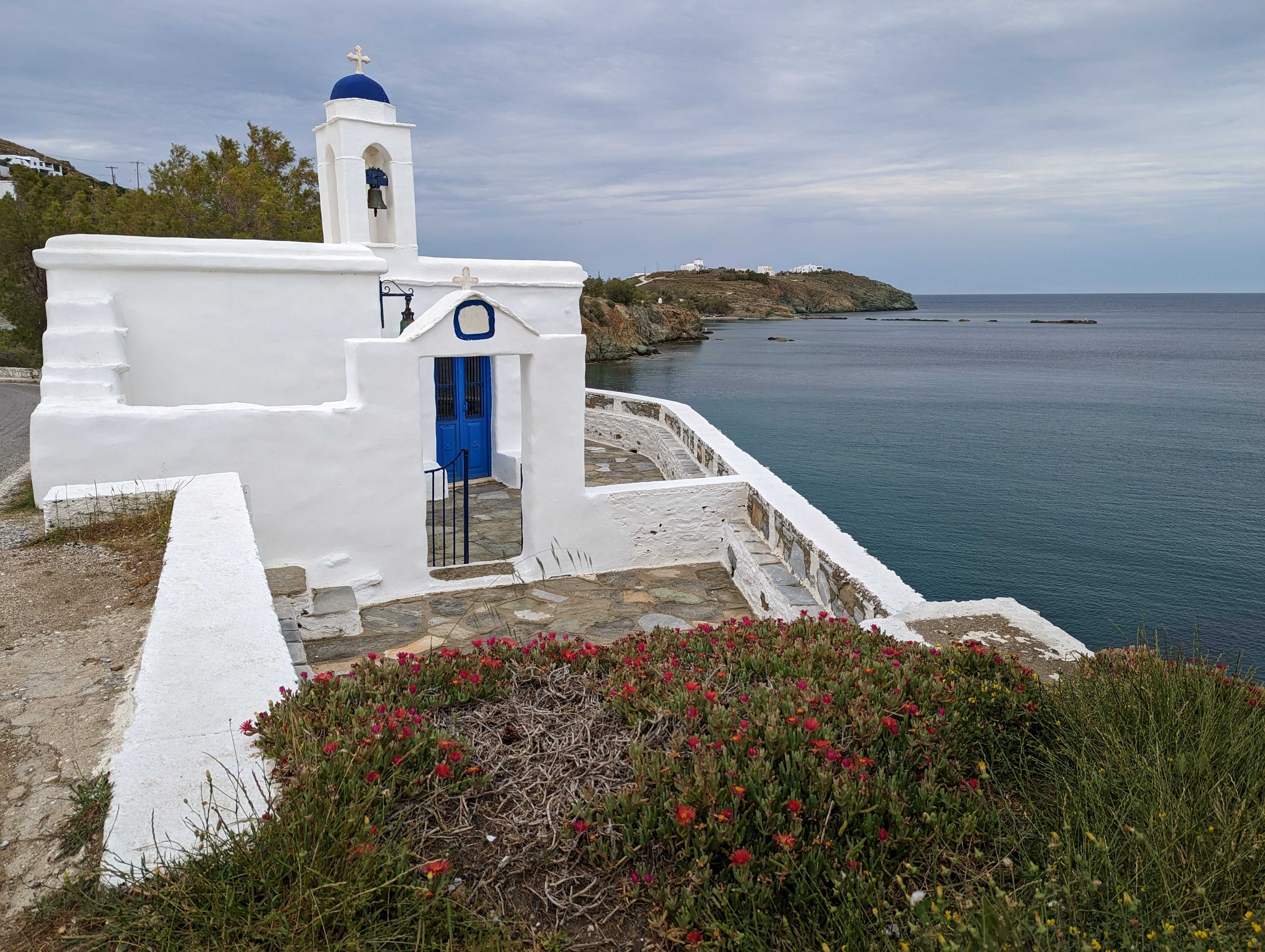
I gave Shiatsu to one of the artists I met, on the beach below this typical church while a kitten played with my rucksack, Kionia, Tinos, Greece.

I returned to Chora from Kionia, a walk of 40 plus minutes, along the main coastal road. Careful as there is no pavement in parts!

During my stay on Tinos, I crocheted wild flowers that I found as I walked and offered them in little niches by way of thanks for my experience on the island.

The title photo showing the peacocks, is of a plaque outside the Panagia shrine in Chora town. All images are my own.

Links

See also my blog: Tinos and Chora

Trails Tinos

Kirki Projects – about Tinos and artist’s residency

Map and walks by Desired landscapes

Poseidon Sanctuary on Secret Tinos site

Tinos and Chora town

May 2023

Introduction

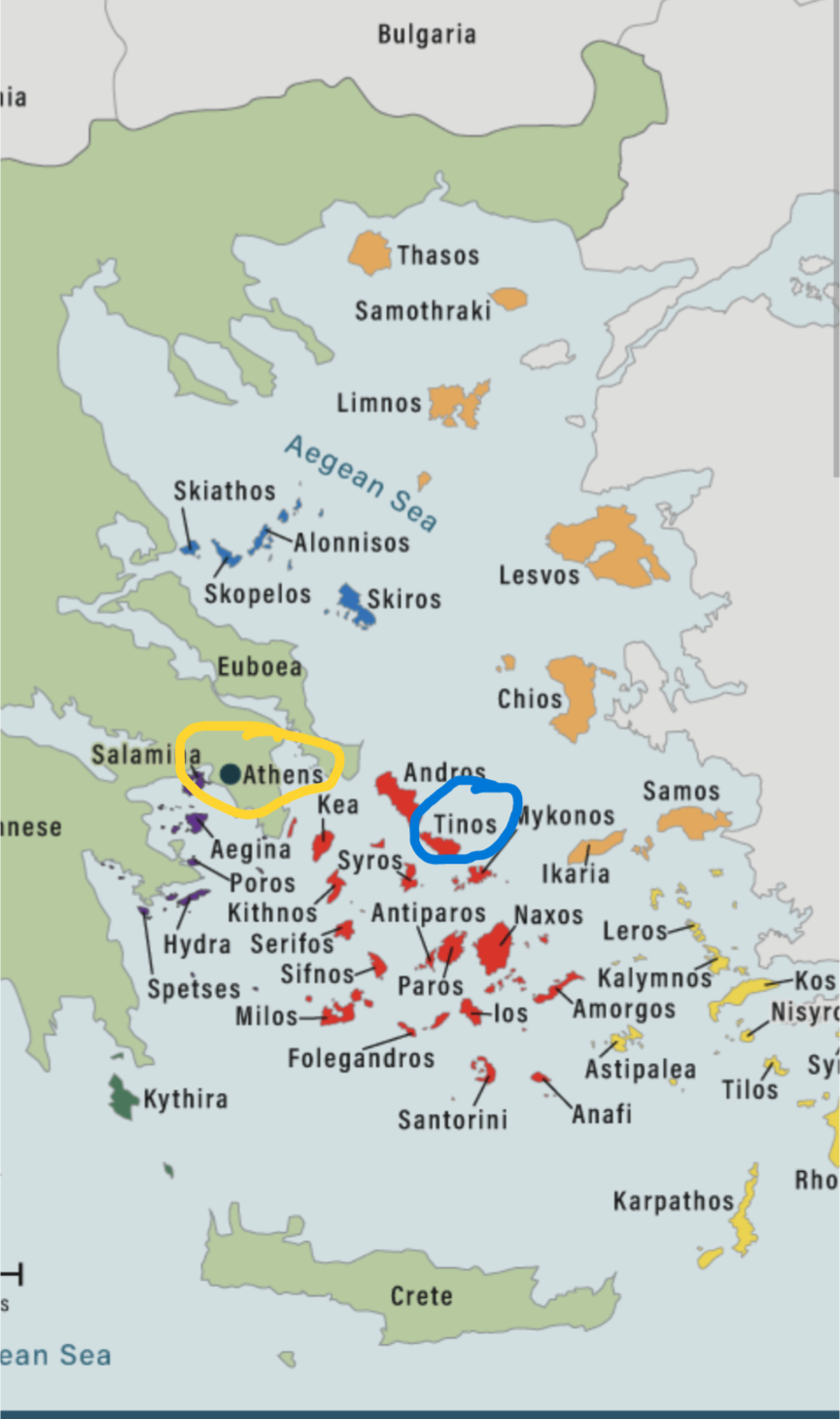
I thought I might take a break after teaching Shiatsu and giving supervision in Athens, so I looked up islands which were easy to get to from the capital and typed the word ‘pilgrimage’ into the search engine as a starting point. Tinos came up immediately. It’s not only a vital place of pilgrimage for Greek people, but it’s also famous for its dovecots (see photo at the end of this blog), which I have been studying for a few years now. To Tinos I had to go!

Map of Greece showing the location of Tinos in relationship to Athens

A sacred island of pilgrimage, Tinos is one of the Cyclades, and has a deep history that is crucial to Greece herself. Since the 7th century, a feast has taken place there in honour of the Dormition of the Virgin Mary (her passing from the earthly state). Then, in 1823, two years after the Greek War of Independence had started, a nun called Pelagia found the Holy icon of the Annunciation of the Panagia in a field. Considered a divine omen for the Greek Revolution, a shrine / church was founded to coincide with the agricultural calendar on the island, and a festival was established on 15 August to which women and men flock each year.

In the first [of several chapels at the Shrine] is a holy spring, where pilgrims collect water which has powers of fertility and cures sickness. According to tradition, the well was found during the excavations in search of the icon. The well was dry. On the day the church’s cornerstone was laid, it filled up with water. The source is seen as a miracle, and the chapel of the holy water is called the “Life-Giving Spring.”

Evy Johanne Haaland

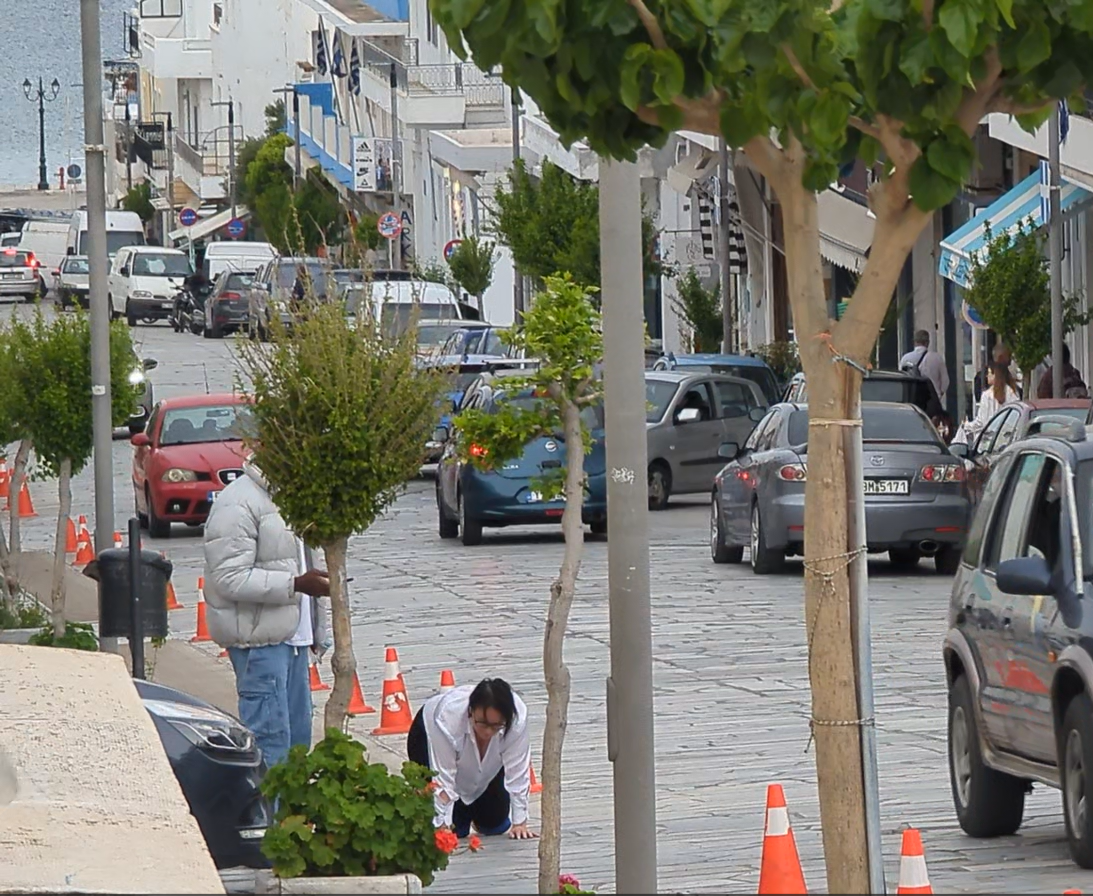
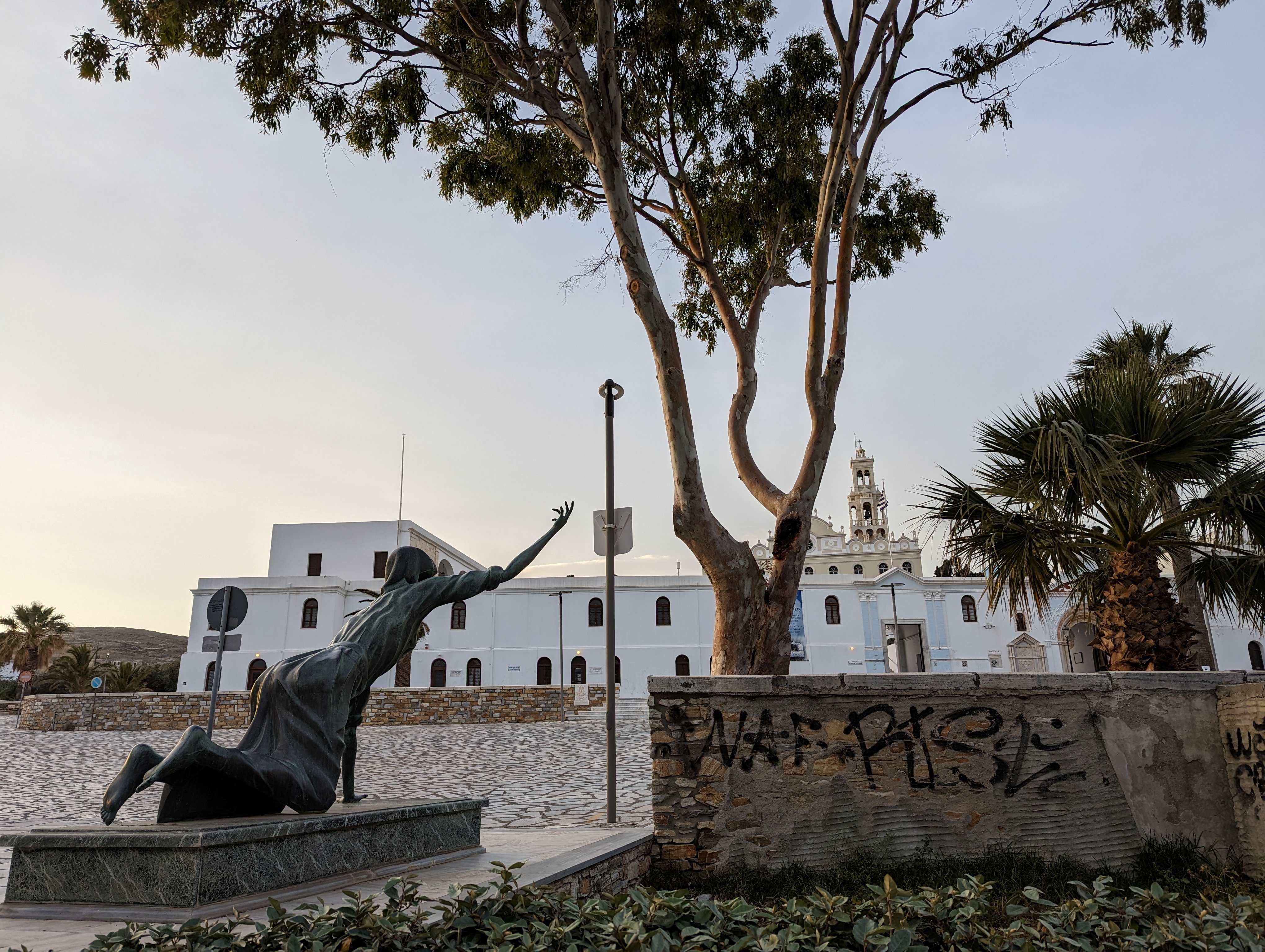
Evy Johanne Haaland, a Norwegian researcher (Dr/PhD, history) and government scholar, writes here about Palagia, and the ritual that women through the ages have performed – climbing up the steep hill from the sea to the shrine on their hands and knees, sometimes with a child on their back.

Greek women are strong and active persons …, thus paralleling the divine Panagia.

Evy Johanne Haaland

Shrine to the Panagia, Chora, Tinos, Greece

Practicalities

Chora is the main town of the island, also known as Tinos, and is where the ferry arrives and leaves from Athens. I took the ferry to and from Rafina (not far from Athens – take the inexpensive KTEL bus).

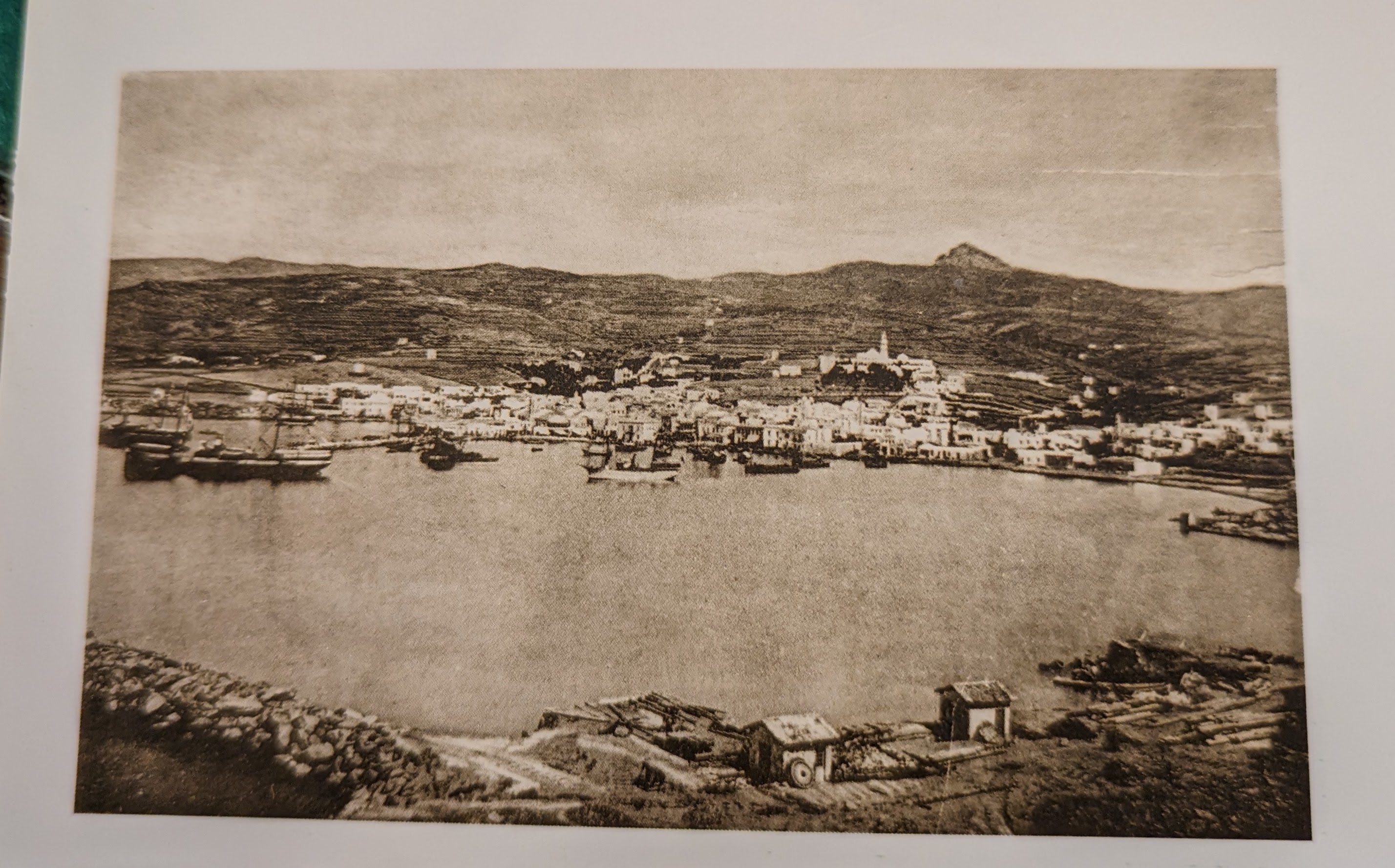
Old photo of Chora, Tinos, Greece
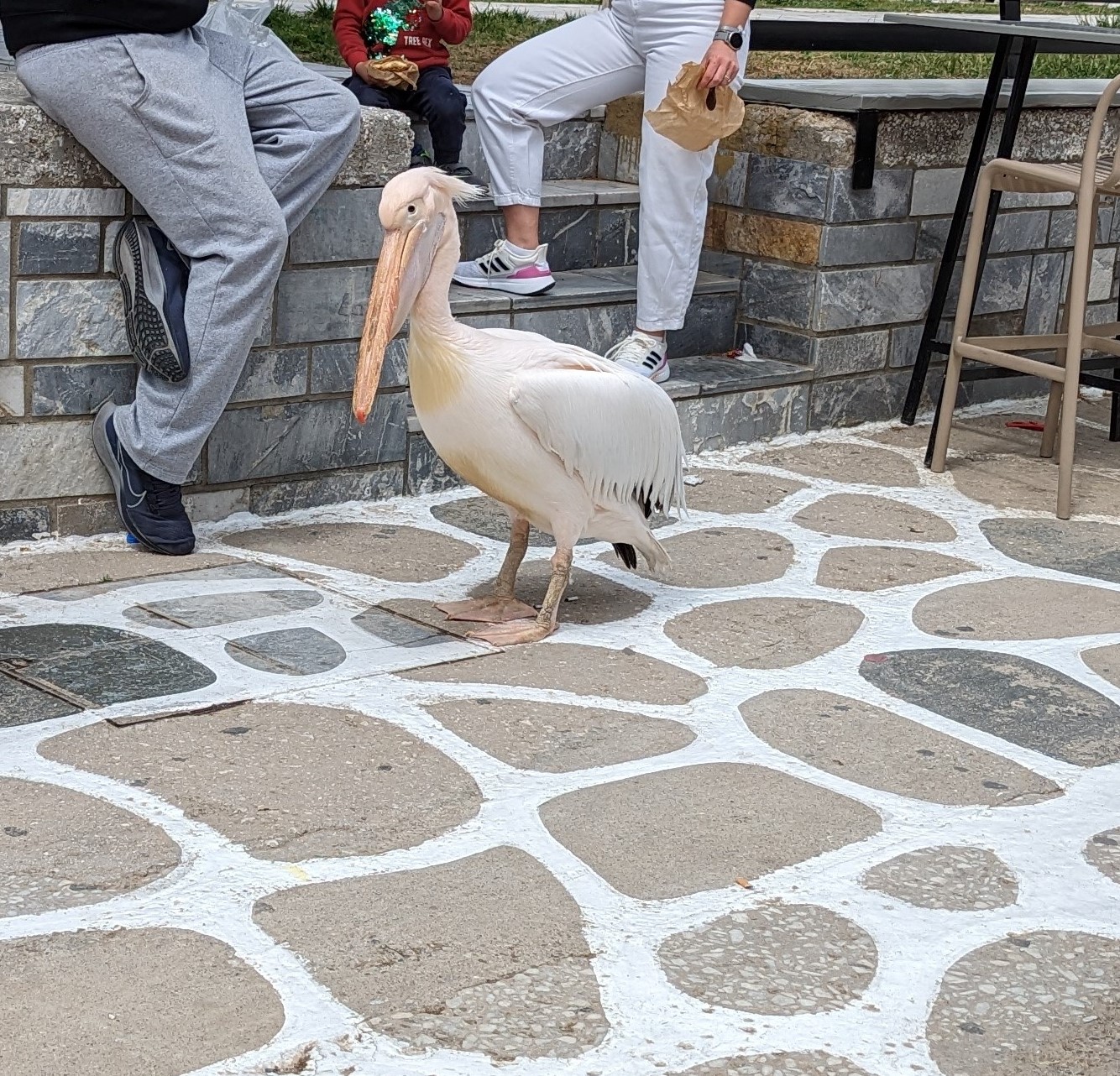
Resident pelican, Chora, Tinos, Greece

The town is well stocked and bustling with pretty, narrow streets, a long waterfront (including the port) and steep climbs to the Panagia shrine.

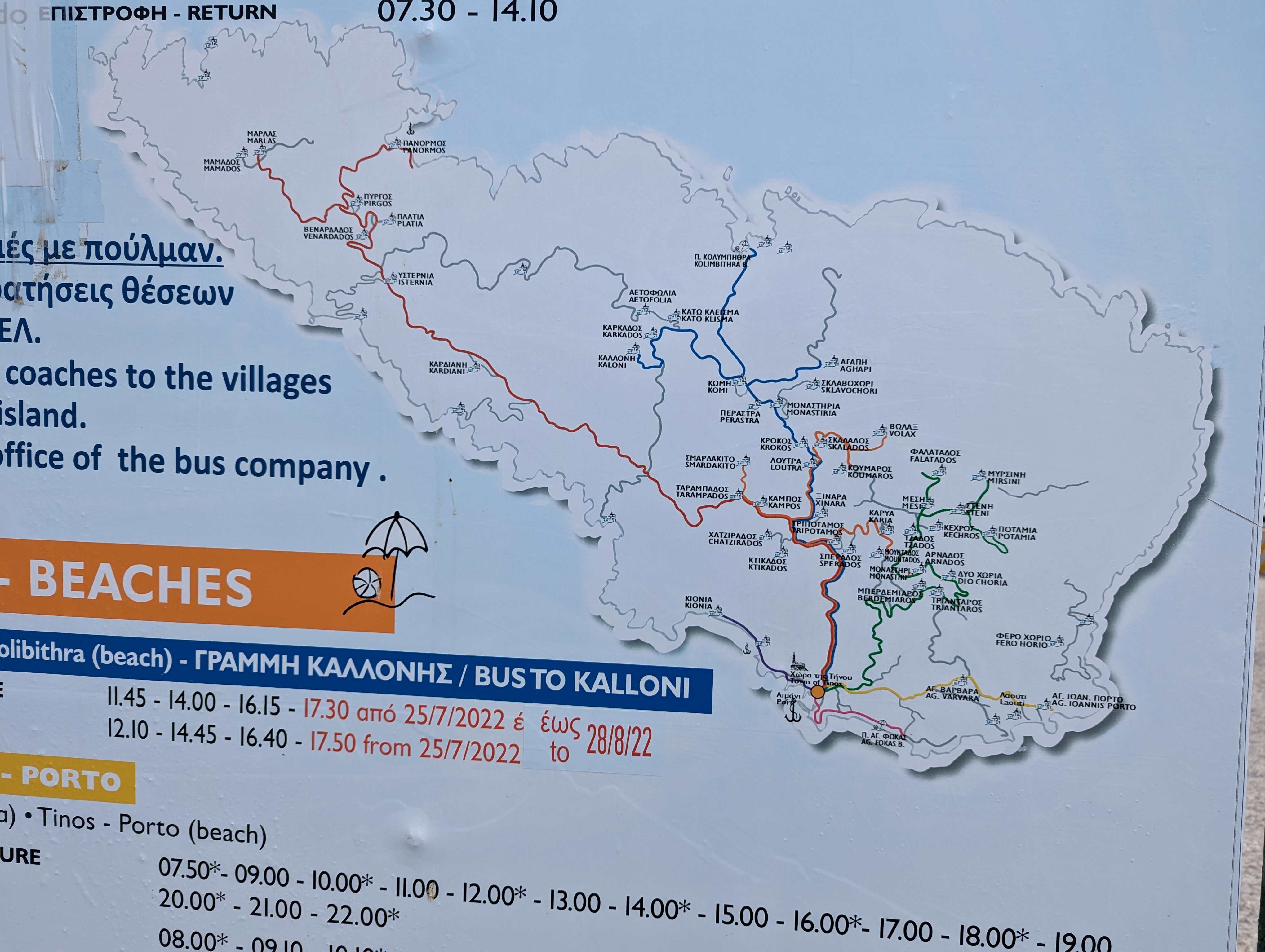
There is a good bus service across the island, but NOT on Sundays and I didn’t find it easy to get information about when they run.

Café

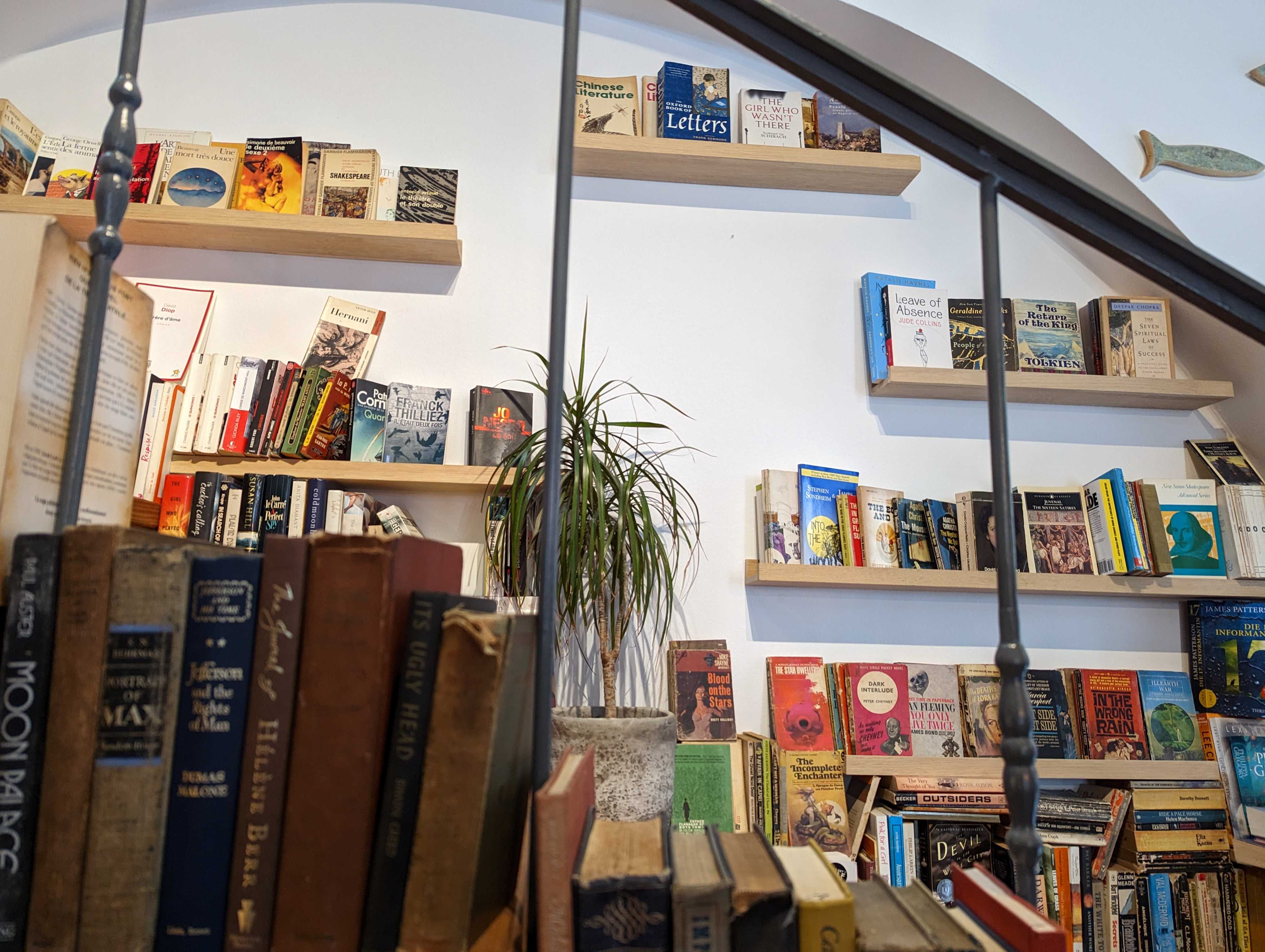
Recommended book café: Antilalos, Fr. Paximadi & Afentouli, 84200 Chora, Tinos. The owner and other staff were so very kind to me. I arrived on a Sunday and had booked an air bnb at the opposite end of the island – too far even for me to walk in one afternoon (though I walked from Pyrgos to Panormos which was wonderful). They made phone calls on my behalf and really helped me out. There were no taxis because, of course it was some sort of festival and so everyone was celebrating with family. I started to walk, but it was far too hot at midday, so in the end they arranged for a taxi driver they knew to come on his day off from another village and pick me up. He took me to Pyrgos – more than three quarters of the way there, and I was really grateful.
Antilalos Café in Chora, Tinos, Greece

Accomodation

I stayed at the Pension Selenti which I would recommend.

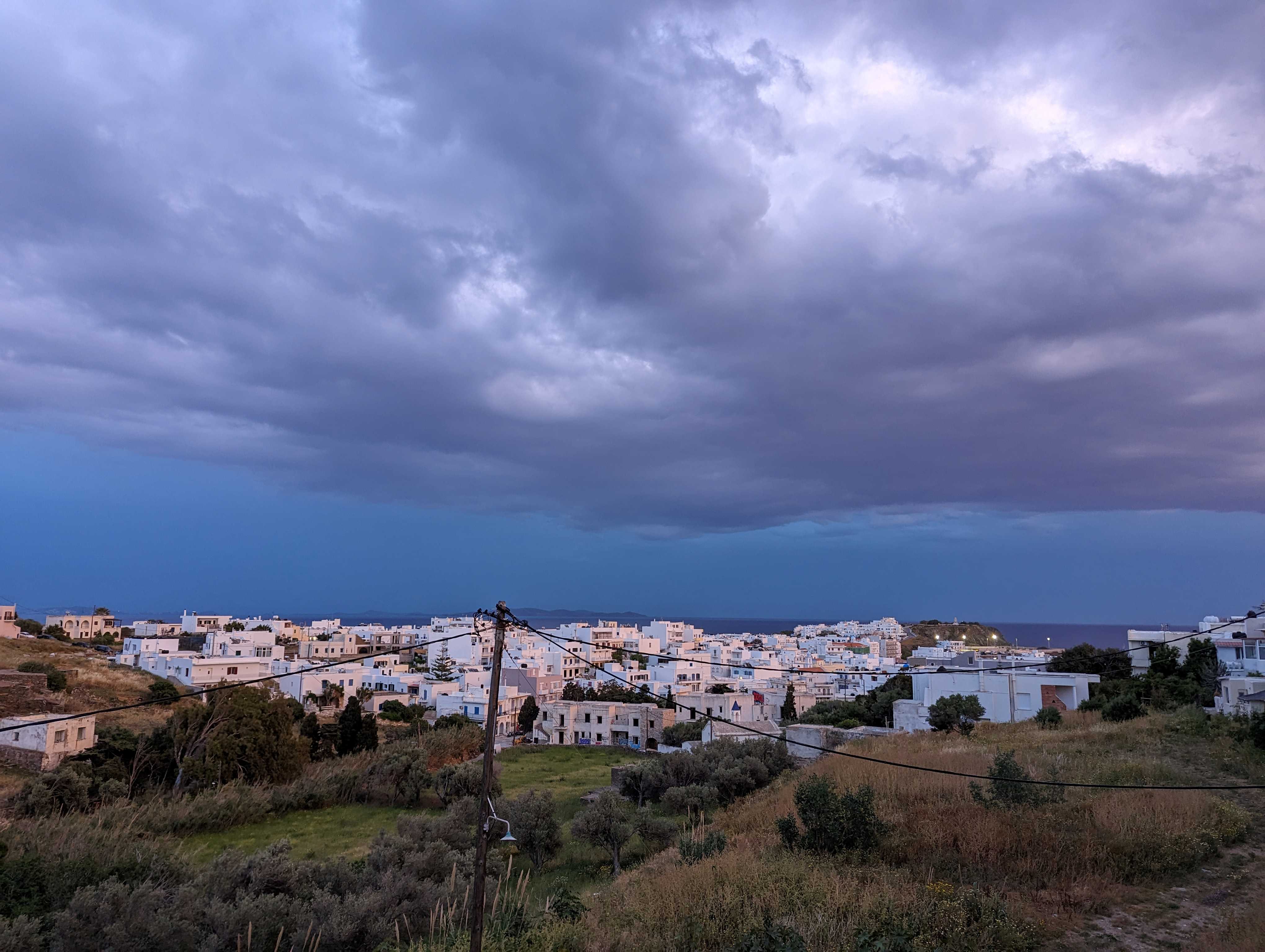
Evening view of Chora town from the Pension Selenti, Tinos, Greece

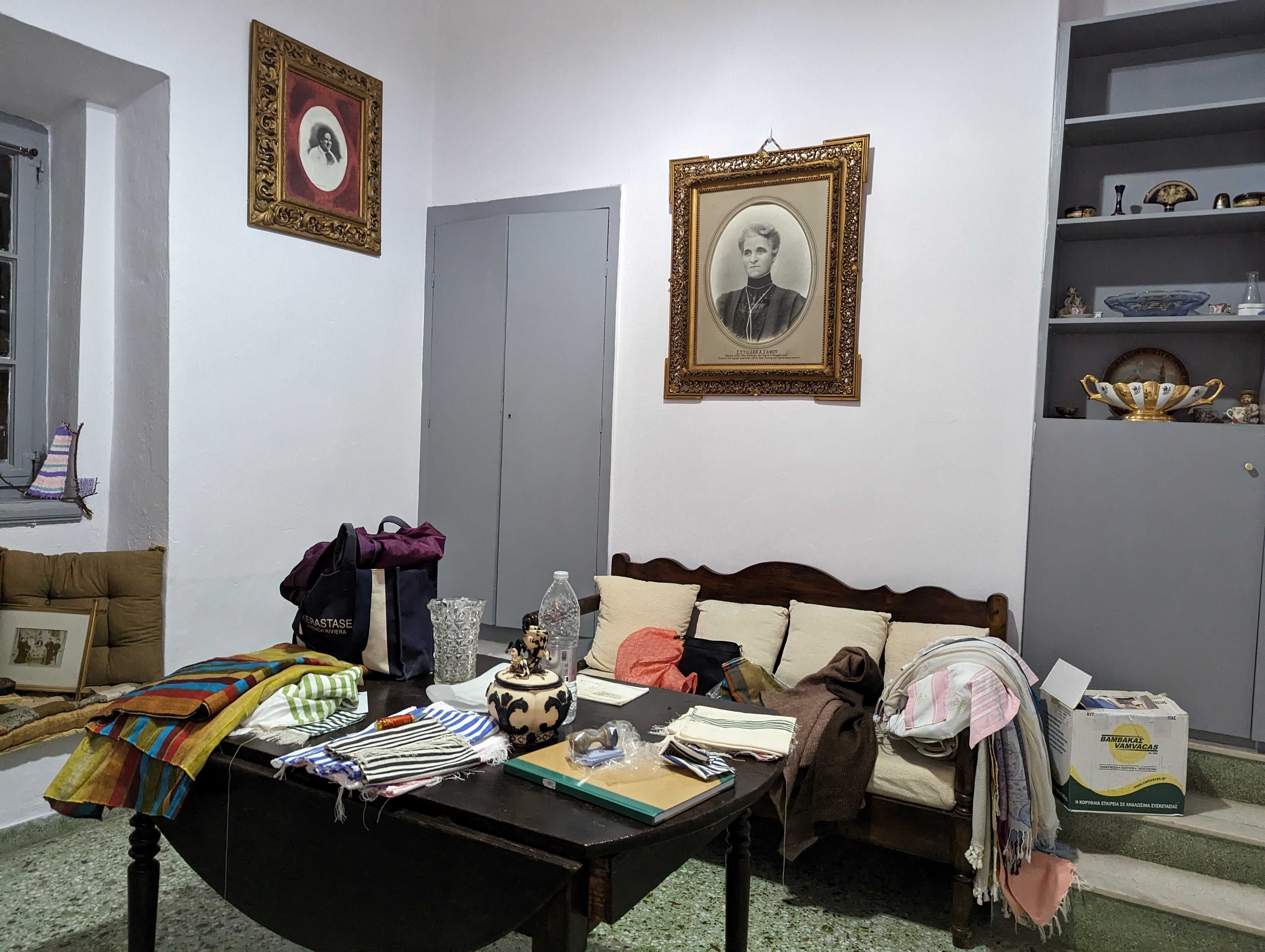
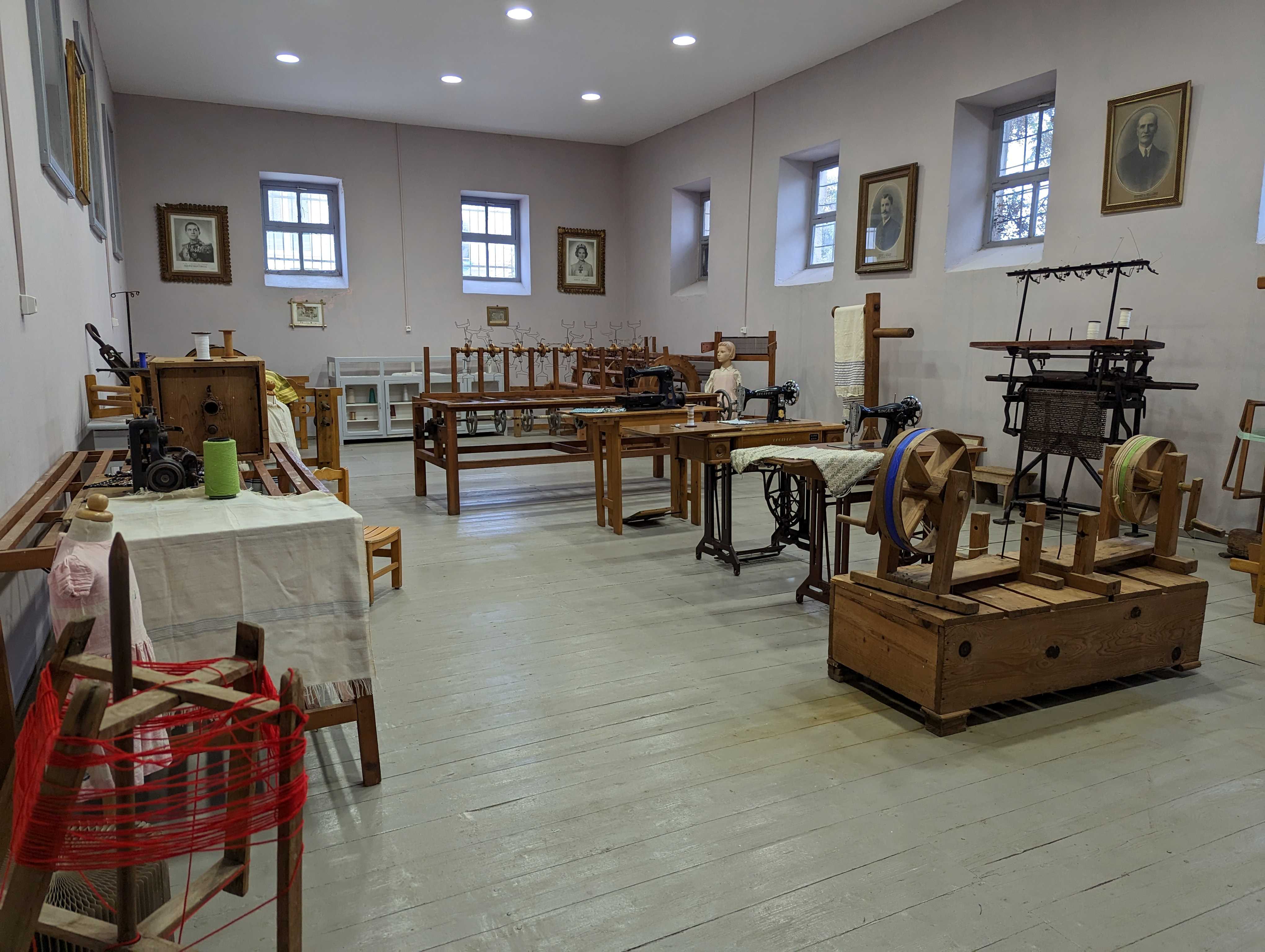
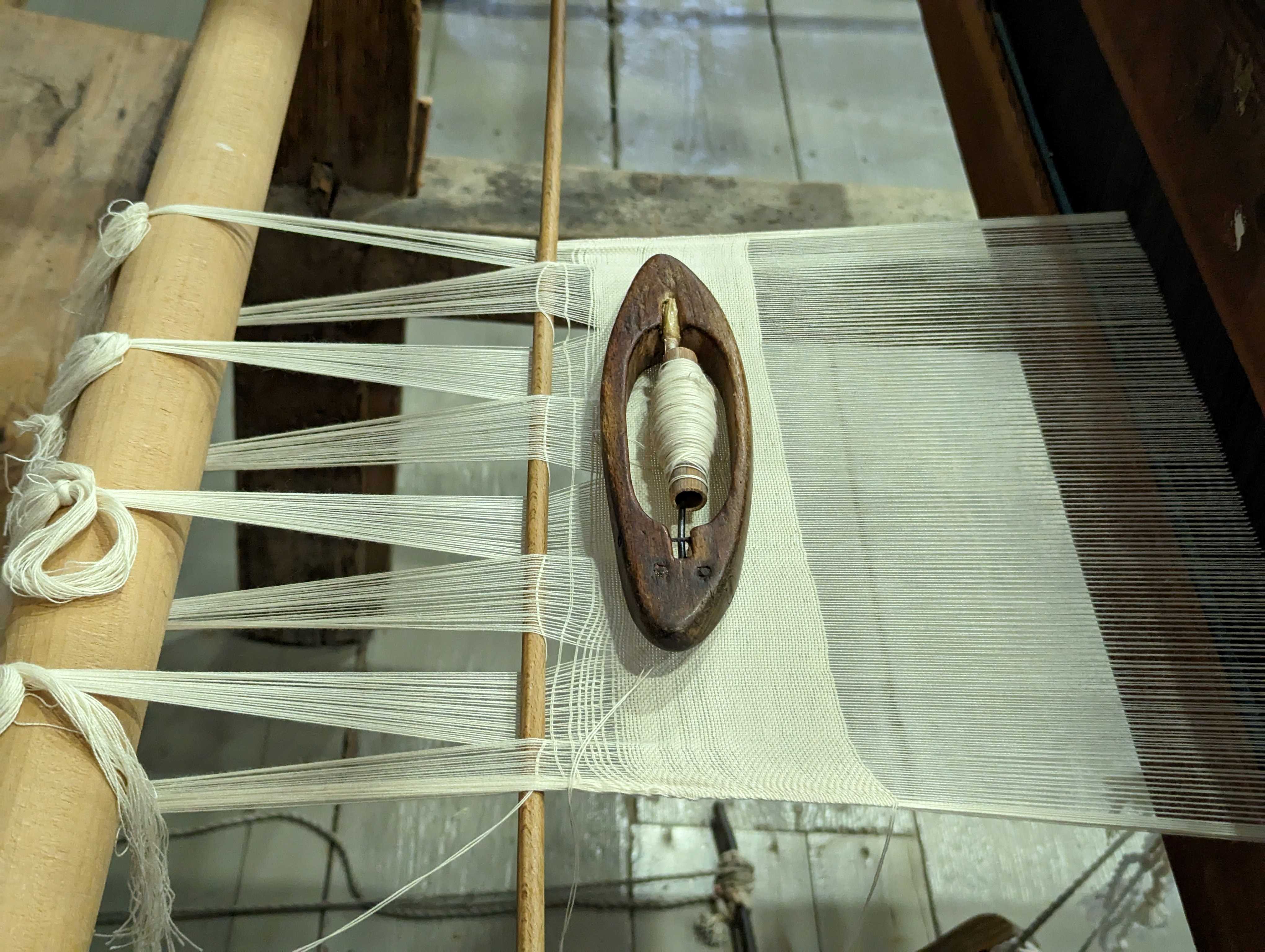
Old Weaving School, Chora

Zarifios Vocational School (Βιοτεχνική Σχολή Τήνου Υφαντήριο) is a legacy of the Zarifis family originating from Constantinople. Since 1898, Zarifios School has been a reminder of the gratitude of the family of banker Nikolaos Zarifis towards the governess of his children, who took them to the safe environment of Tenos (sic), when riots broke out in the Constantinople. The school emphasized in the traditional weaving art supporting women and society in adverse conditions. Today, 200 years later, it still continues to have a presence by supporting the School and textile workshops.” Description from thehouse.gr website

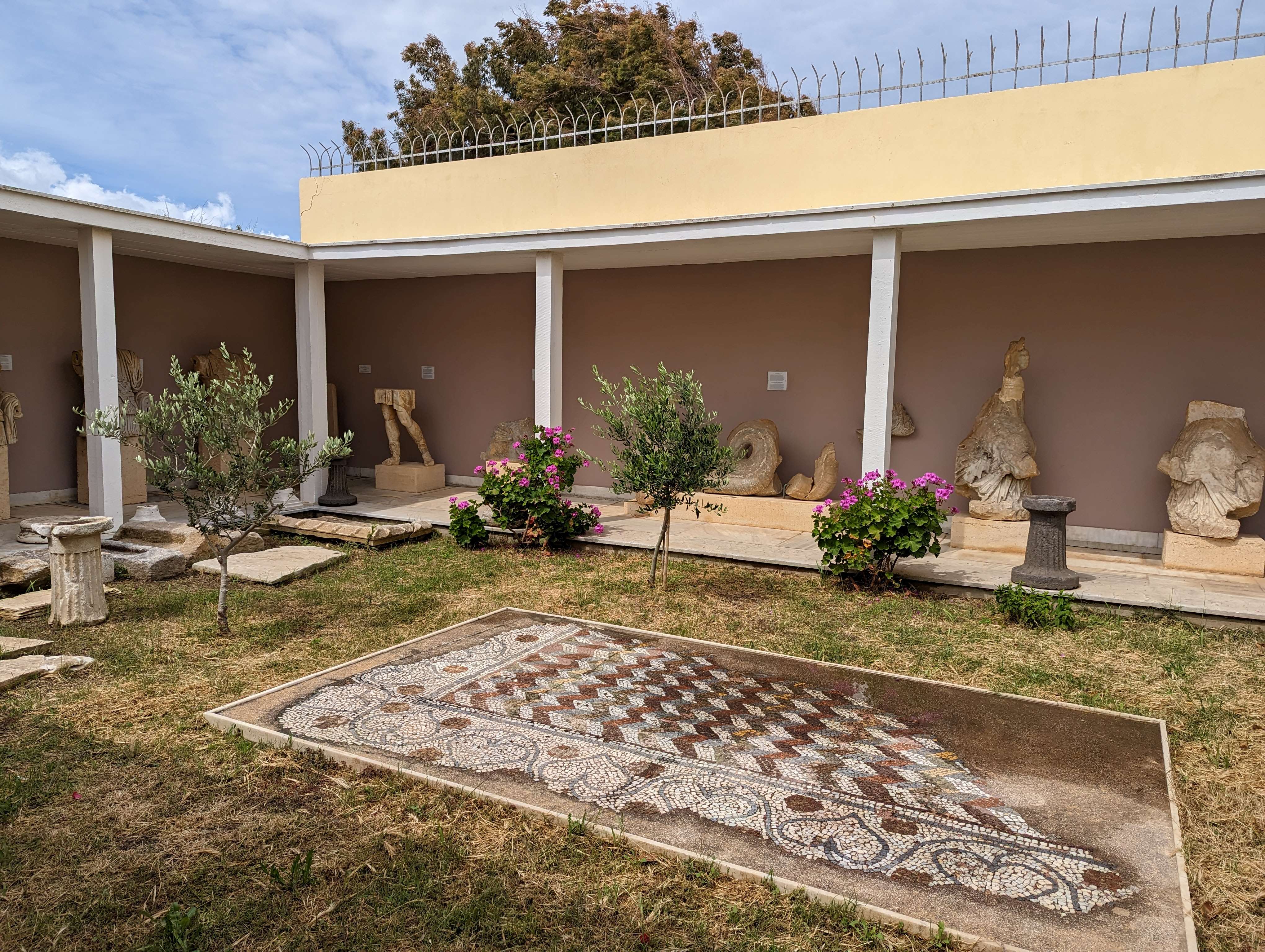
Archaeological Museum

The Archaeological Museum is worth a visit.

Built in the early 60s by the architect Charalambos Bouras, the Archaeological Museum of Tinos contains finds from Chora, the main town, as well as the hill of Exombourgo, local villages, and the Sanctuary of Poseidon. I particularly enjoyed the little courtyard with its bodyless legs and lace-like mosaic.

Archaeological Museum, Chora, Tinos, Greece

Artist’s Residency and Maria Valela

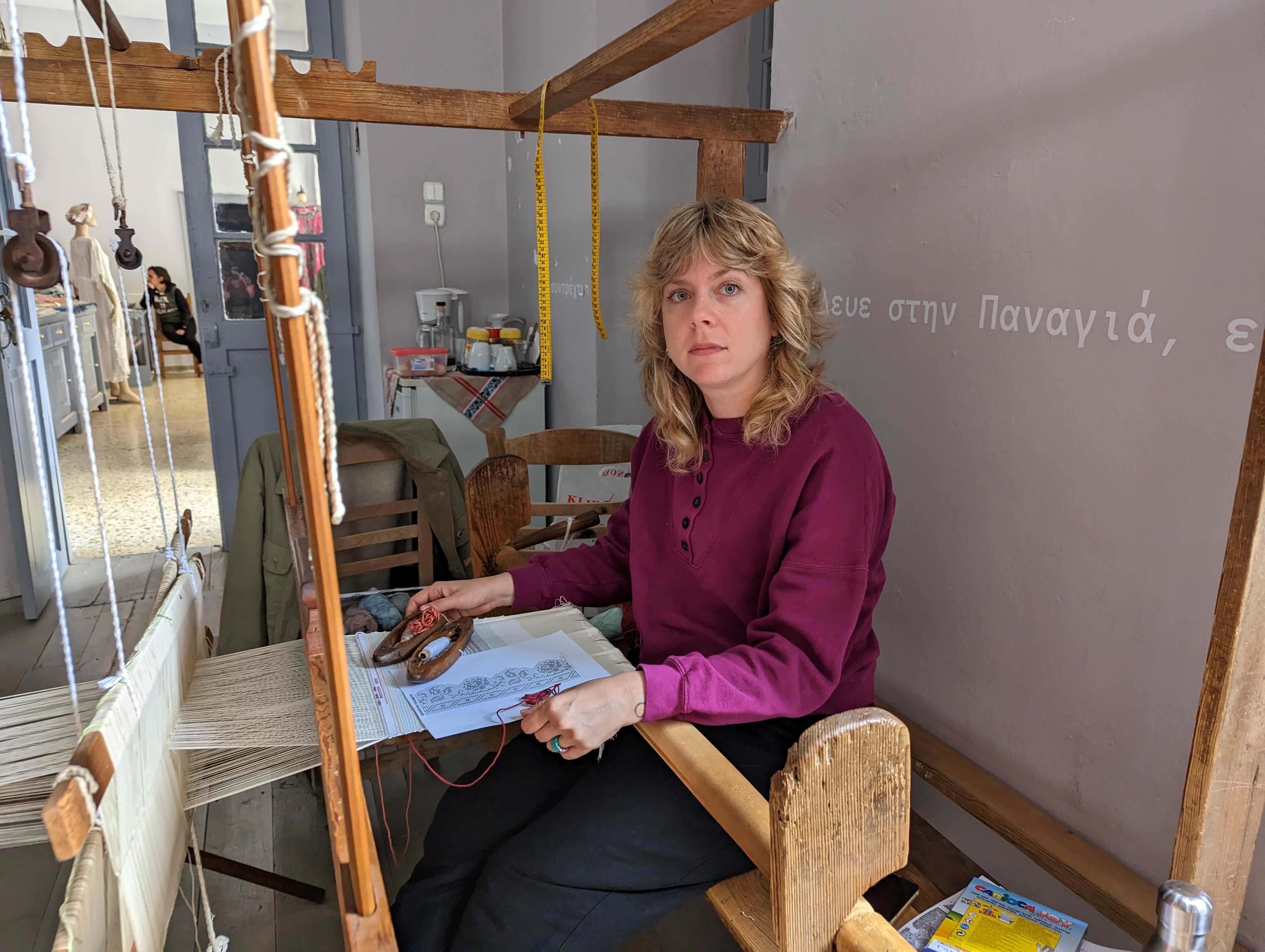
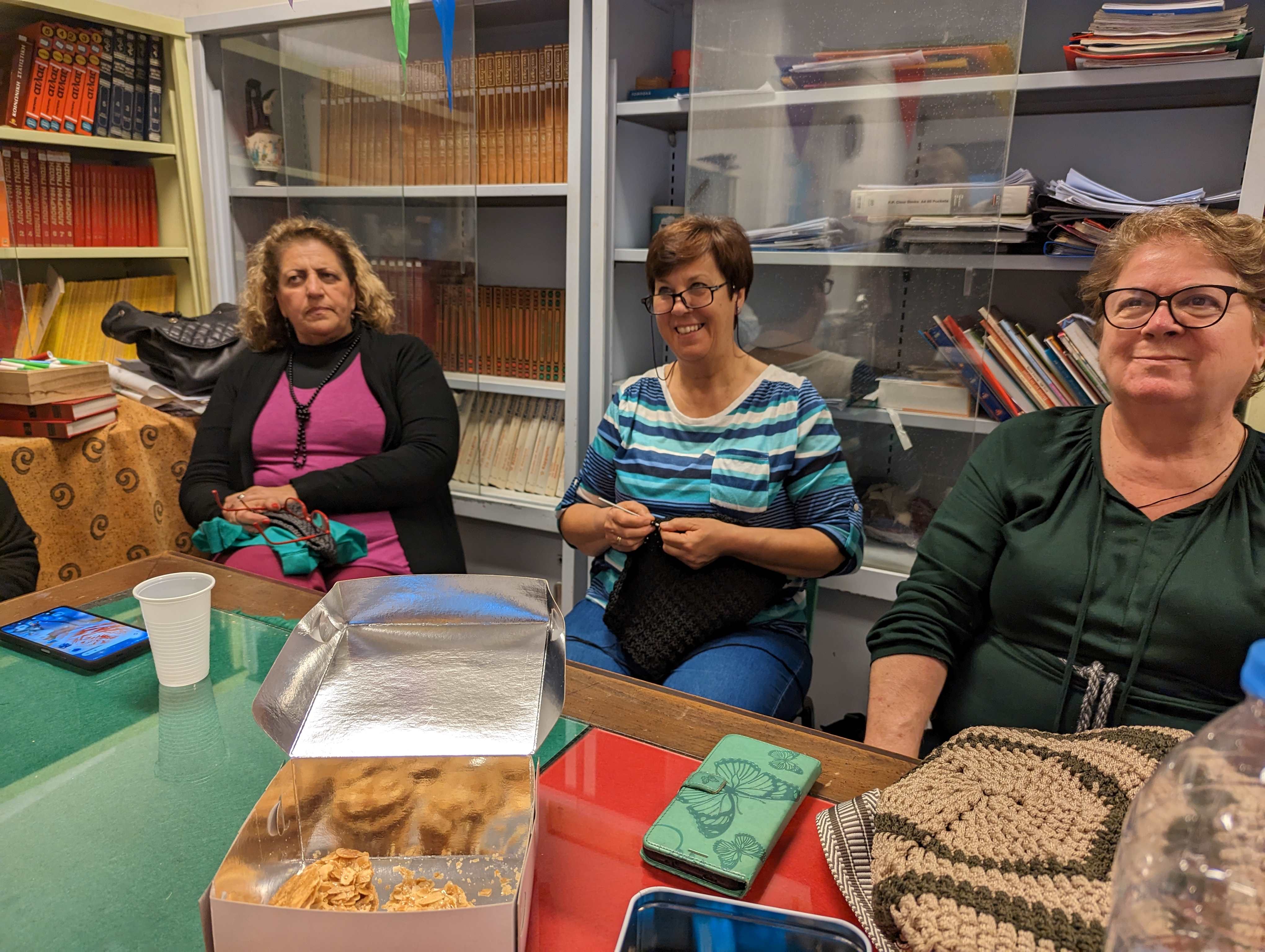
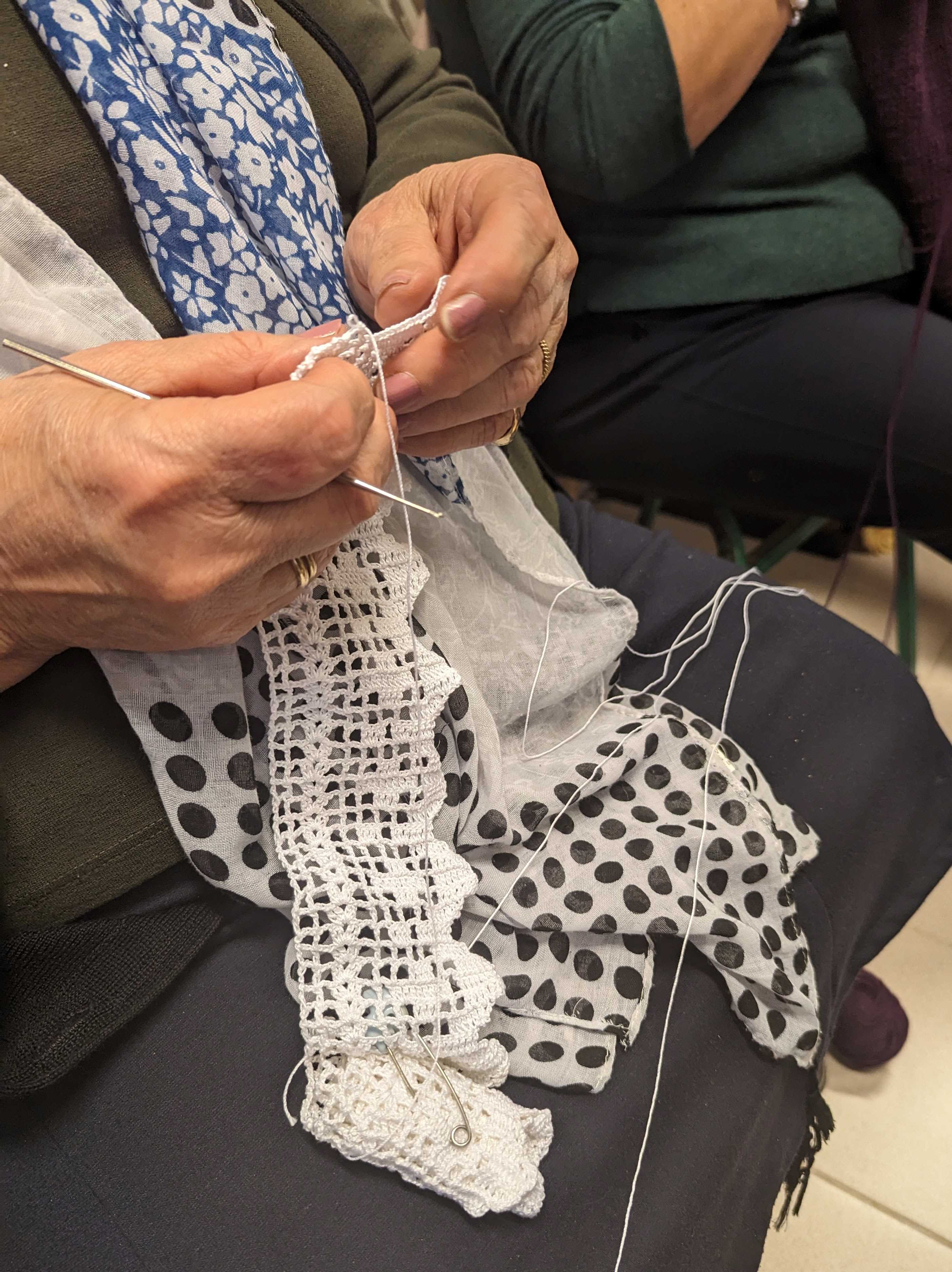
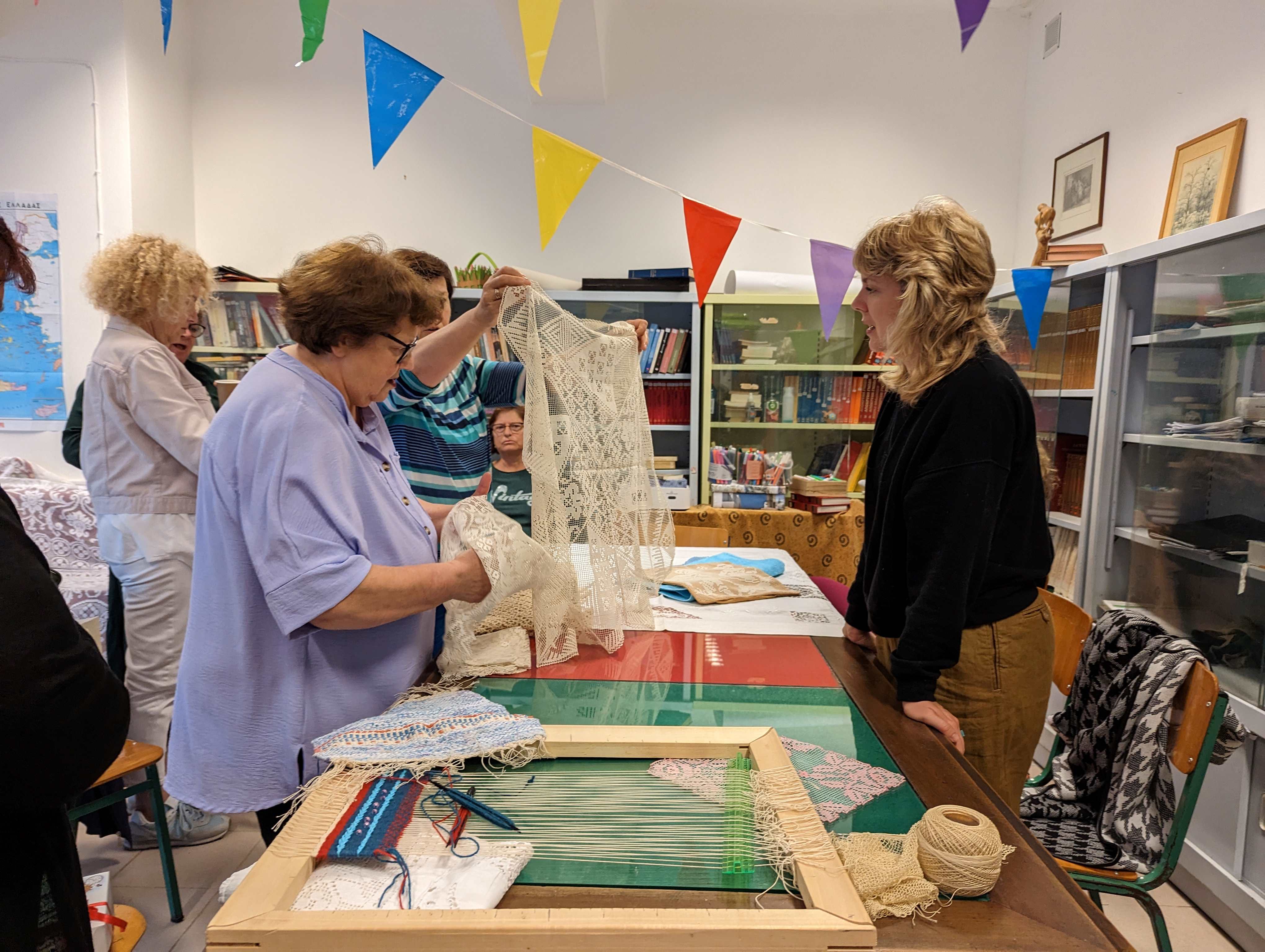
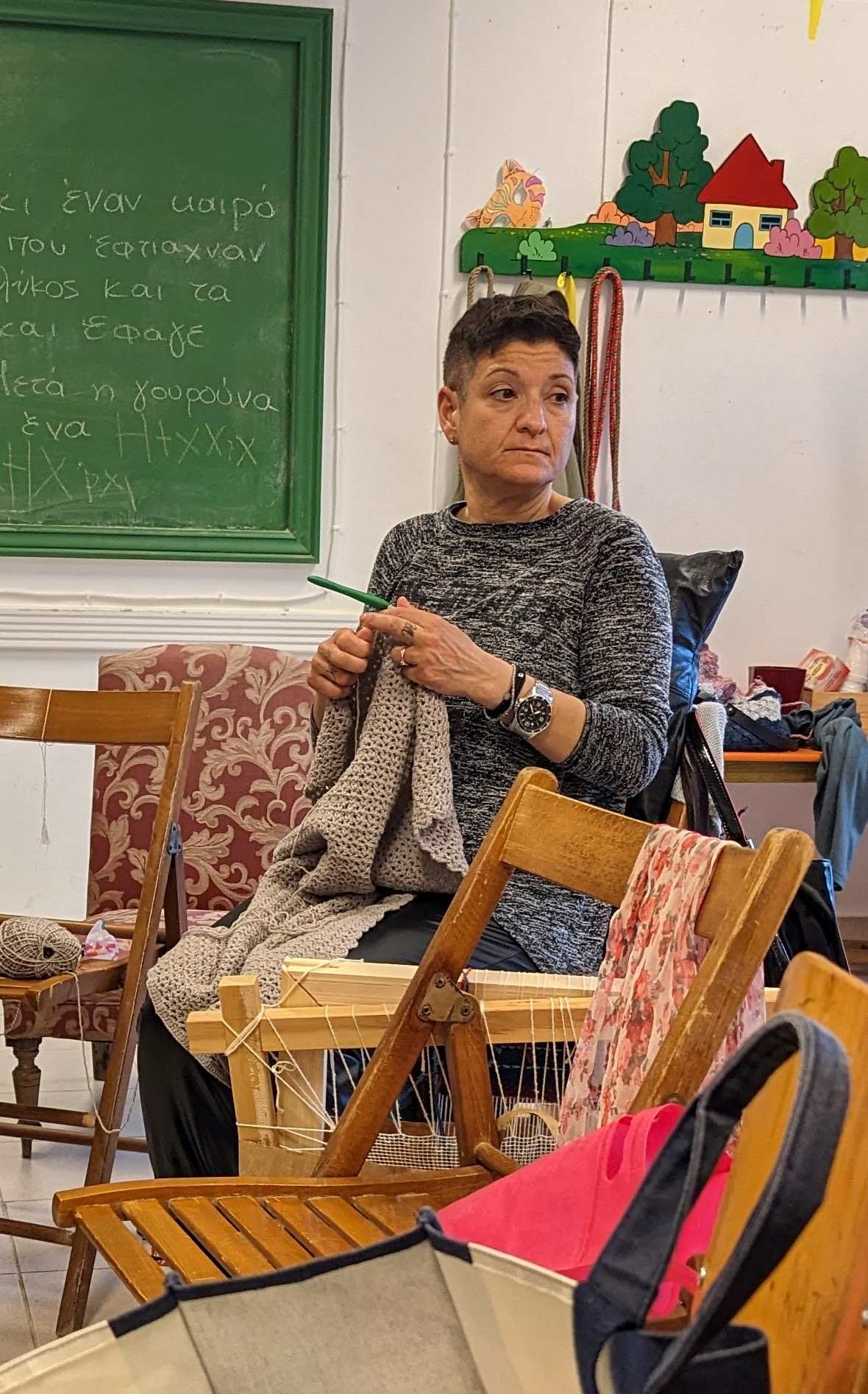
There was an Artist’s Residency taking place on the island when I was there, and I was particularly pleased to meet Maria Valela, a weaver, who gave an inspiring demonstration at the Old Weaving School in Chora, and invited me to accompany her to a local women’s knitting and weaving group that she was visiting. In return I offered her Shiatsu.

Maria Valela, weaver, artist

“The island is widely recognised for its marble tradition and was home to some of the most widely revered Greek artists of the 19th and 20th centuries.” from Kirki Projects page

Various photos of Maria and the knitting / crochet group, Chora, Tinos, Greece

The Inherited Earth artist residency programme was part of the Fe26 project a collective research program by the NWMW NPO team 2023. “The Fe26 project brings together an interdisciplinary group of people to exchange knowledge and practices around metal as matter, material, and object in conjunction with locus, crafts and identity. In this aspect, the NWMW team has envisioned along with curator Christos Artemis “The inherited earth” Fe26 residency.” ARTrabbit.com

Links

The second in this series of blogs about Tinos is Tinos and Kionia

Map and walks by Desired landscapes

Secret Tinos blog

Typical dovecot, Tinos, Greece

Overland travel from Edinburgh to Greece 2

July 2023 Backpacking

Nowadays, I travel overland. This is a personal choice based on the the current state of the climate. We know that air travel contributes so much to the amount of carbon which is in the atmosphere, and I’d rather not add to it unless absolutely necessary.

The first time I went to Greece this year, it took me 10 days to travel back to Edinburgh from Athens, though I broke my journey many times. I went from Athens, overnight by bus, to Budapest via Belgrade, then to Berlin (by bus), Amsterdam (bus), Hook of Holland (metro), Harwich (ferry), London (train), Edinburgh (train). I announced on social media that I was doing this and asked if anyone wanted to do a Shiatsu-hospitality swap. I received invitations in reply, so the journey took longer and I was able to renew friendships, give Shiatsu, see new places and much more besides.

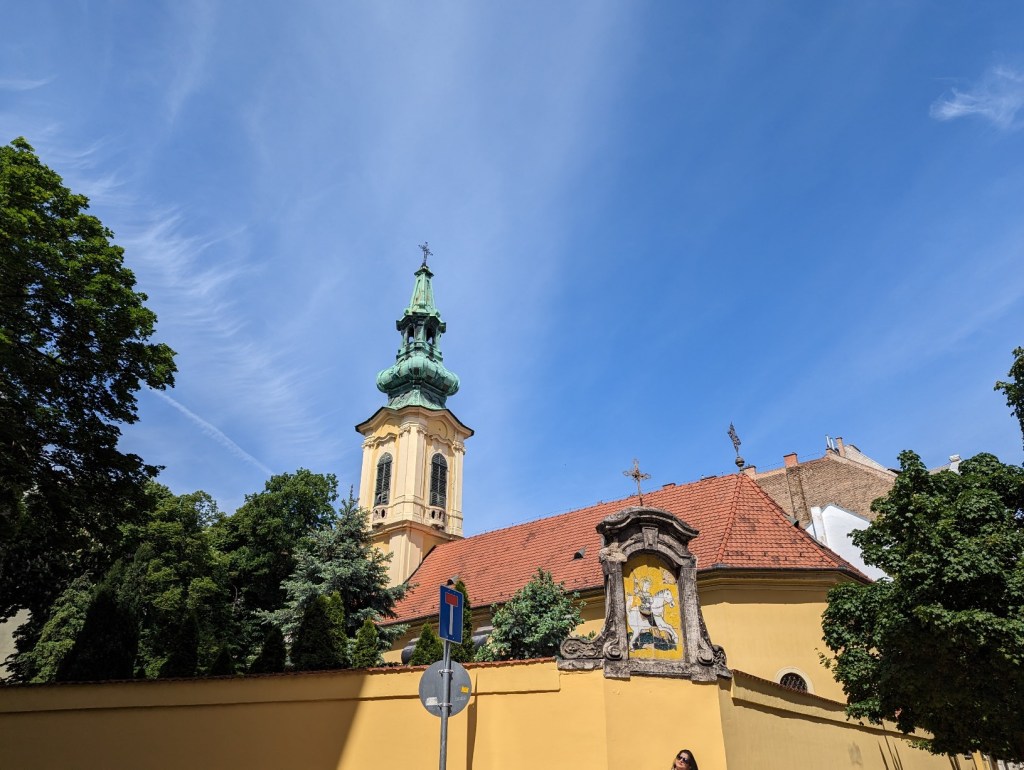
Church, Hungary

It was more expensive, but more fun than flying, when I’m picked up and put down without seeing the places I am travelling through and am discombobulated by the speed and height.

Some people go slow because their body doesn’t go fast, or because they have small children who wander and stop a lot to smell the roses. I tend to walk slowly a lot of the time though I’m lucky to be relatively fit. I meander and follow my fancy, heeding the landscape ‘s call as psychogeographers have a habit to. You can’t rush easily with a huge rucksack anyway, not unless you want to rupture something!

Slovakia

It’s a privilege and a choice. I do usually travel as cheaply as possible, exchanging as I go where possible, and I give up work to do it, hoping that I will find a way to live somehow. One day, who knows, my book will get published and I’ll make some money with it. In the meantime, I consider myself to be lucky.

Belgrade from the bus

There is plenty of time for rest, reflection and reassessment when you travel this way, which is vital for a satisfying life. Instead of rushing from one place to another, there is time to look and smell, to have good conversations.

Reflecting time on long bus journeys

Overland from Edinburgh to Greece, return.

The second time I made the journey, I went by train and ferry through Italy.

I bought an Interrail ticket: 7 days used within 1 month costs £352. In retrospect I suspect it was not worth it. It’s a great deal of hassle trying to understand the system and negotiate the website, plus I turned into a Senior traveller in the middle of this period and they were unable to cope with that. It’s cheaper if you’re older or younger. Others I have spoken to since then, have also used this type of ticket and found it worked well for them.

Day 0 Edinburgh to London

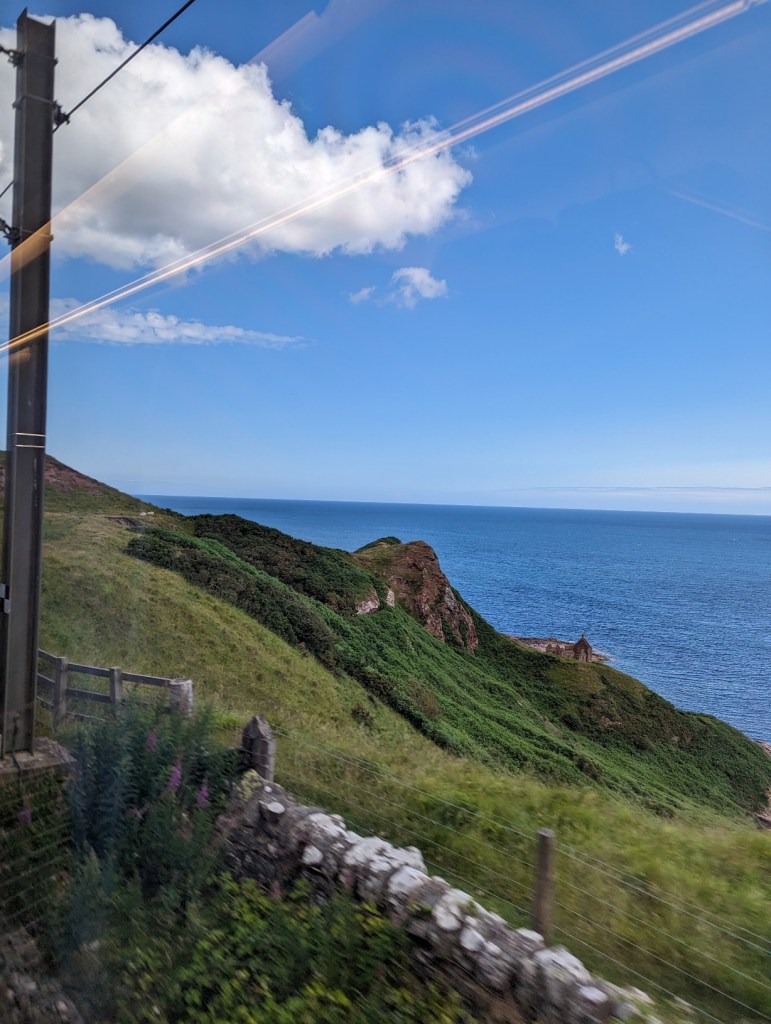
Edinburgh to London – the Northumbrian Coast

Edinburgh Waverley – London Kings Cross by LNER train (not included). Prices vary. Website: easy to use.

Day 1 of the interrail ticket: London to Paris

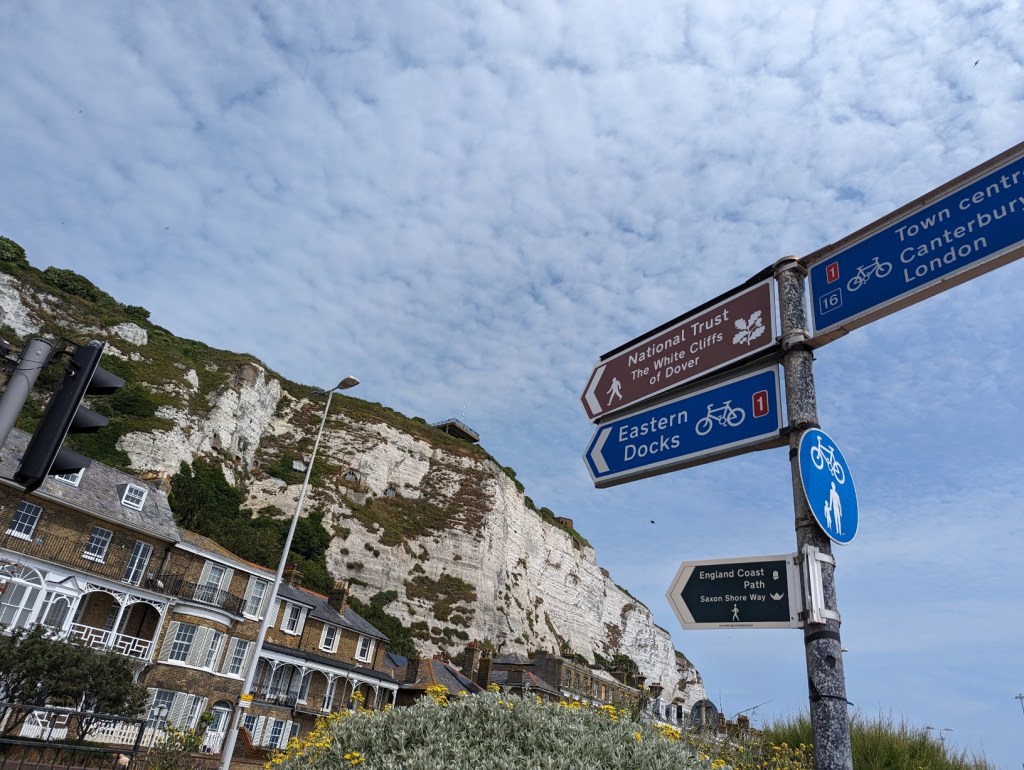
London St Pancras – Dover by South Eastern Trains (free). On time. It takes 30 minutes + to walk to the port, though there is a big Marks and Spencer food shop on the way (just a little detour) and you ghet a great sight of both the castle and the sea.
Dover, England

Dover – Calais by P&O (free) on time. Cost: £30 one-way, for foot passengers.
Calais, France

You can, of course, take the Eurostar train which is efficient, but to use the interrail, you must book months in advance. It can also be very expensive if you don’t manage to get one of the advance, cheaper tickets, and beware of their promise of ease of cancellation and transfer to another journey. It is easy, but can only be transferred to a journey in the same direction, and is very expensive (a last minute change I had to make due to a bus delay (see below) cost an extra £130).

Calais – Paris Est (East) by SNCF train (free with the Interrail ticket) delayed

Calais to Paris through the train window

I stayed overnight with a friend; very many thanks for the bed and patience at the lateness of my arrival, Helena.

Paris métro

Day 2 Paris to Bari

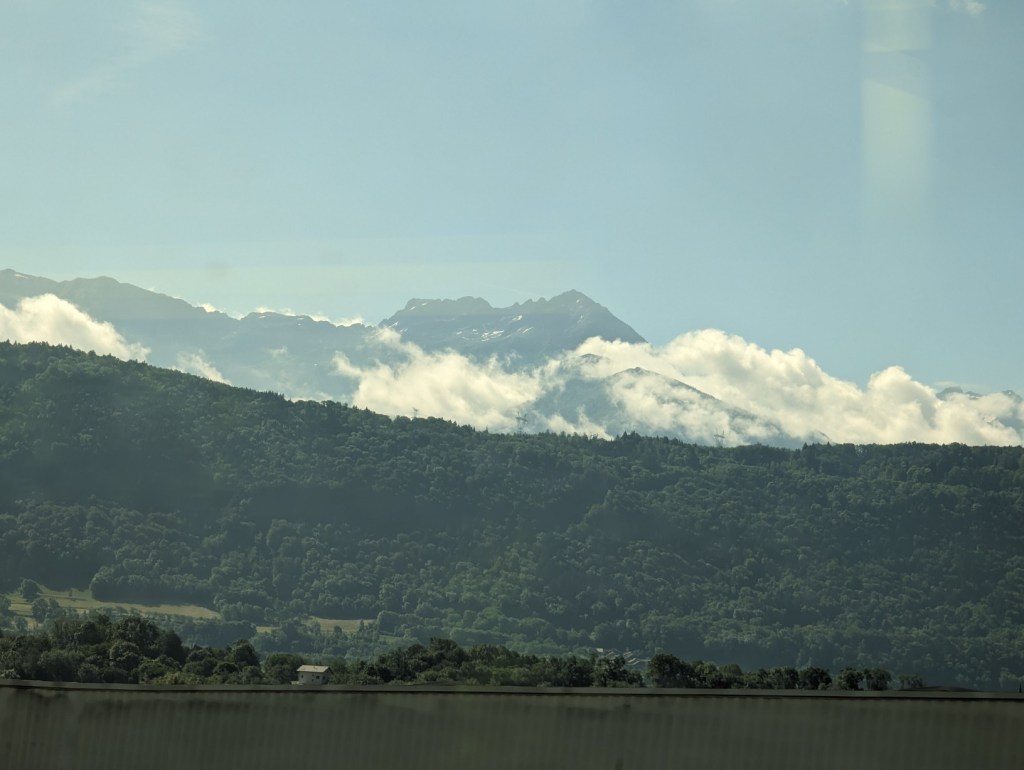
The Paris to Milan journey is scenic and spectacular

Paris Nord (France) – Milan (Italy) – Bari (Italy) by SNCF and Trenitalia trains, all booked in one ticket, but BEWARE the interrail website did not allow enough time to cross from one side of Milan to the other, so I missed the connection. Remember to check in advance! Happily, there is a Last Minute Ticket Booth at Milan, and after quite a time in the queue, the woman managed to book me onto the later train without charging me a second seat booking fare, for which I was immensely grateful. People are always so kind to me when I travel and it is such a wonderful antidote to some of the things I hear about in the news.

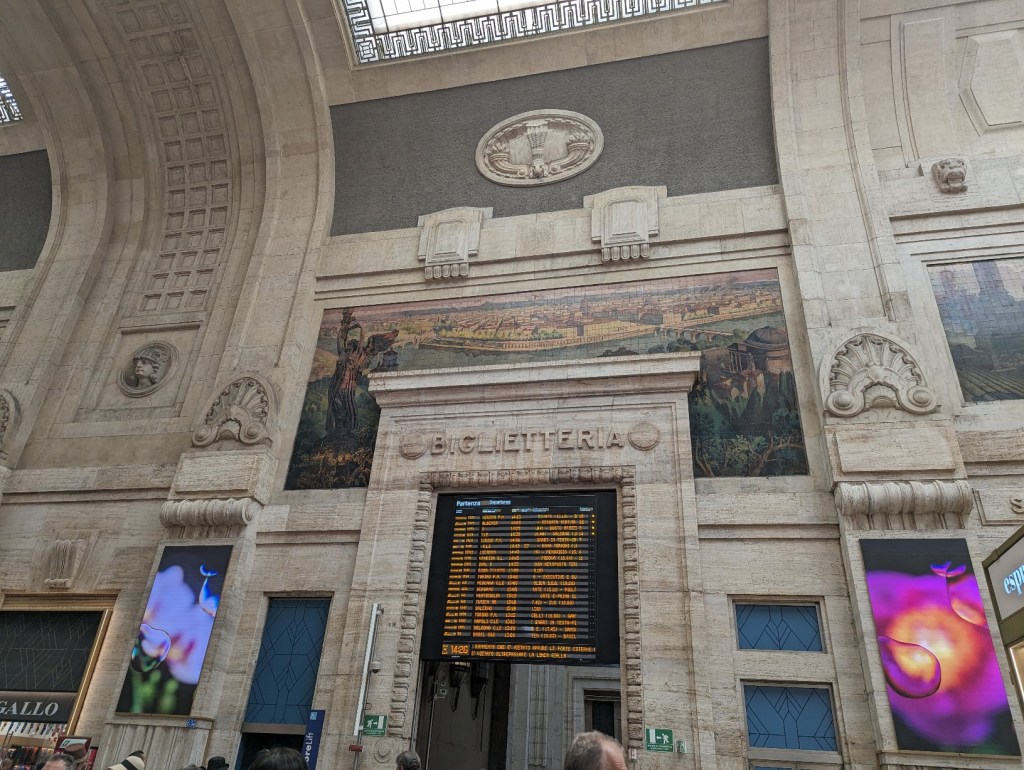
Milan Centrale (station)

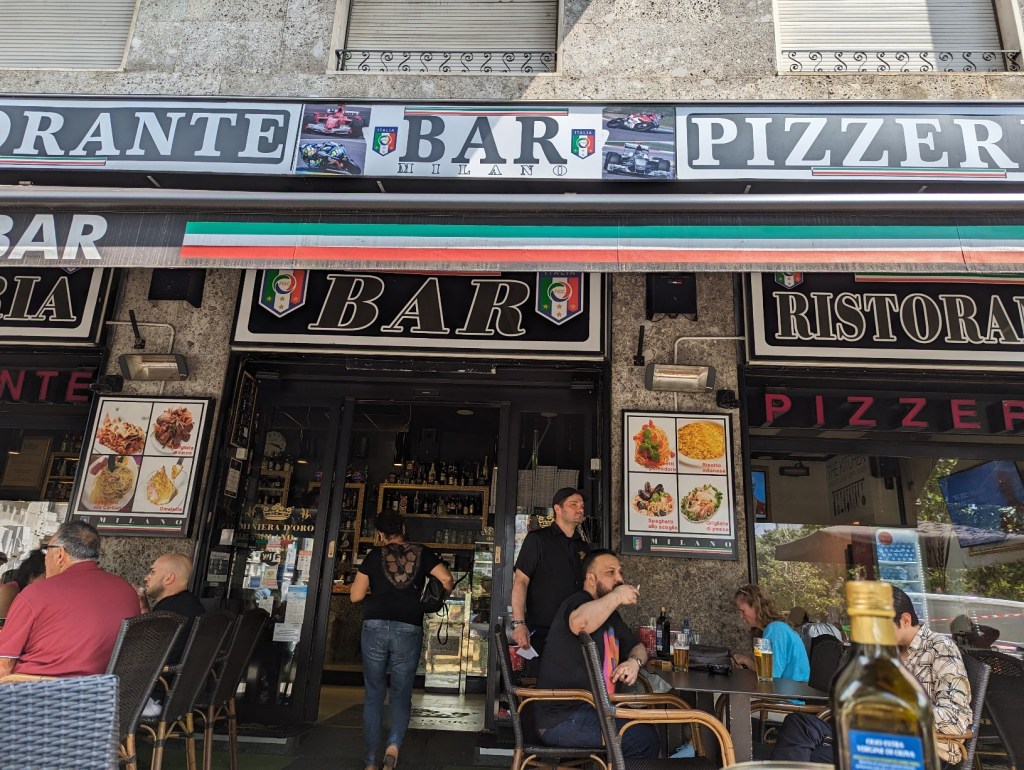
What you can do in Milan: bask in the sun, fill up your bottle using the safe drinking water fountain in the square outside the station, eat a tuna salad at the Pizzeria near the station (good salad, stale bread, patchy service).

Not highly recommended
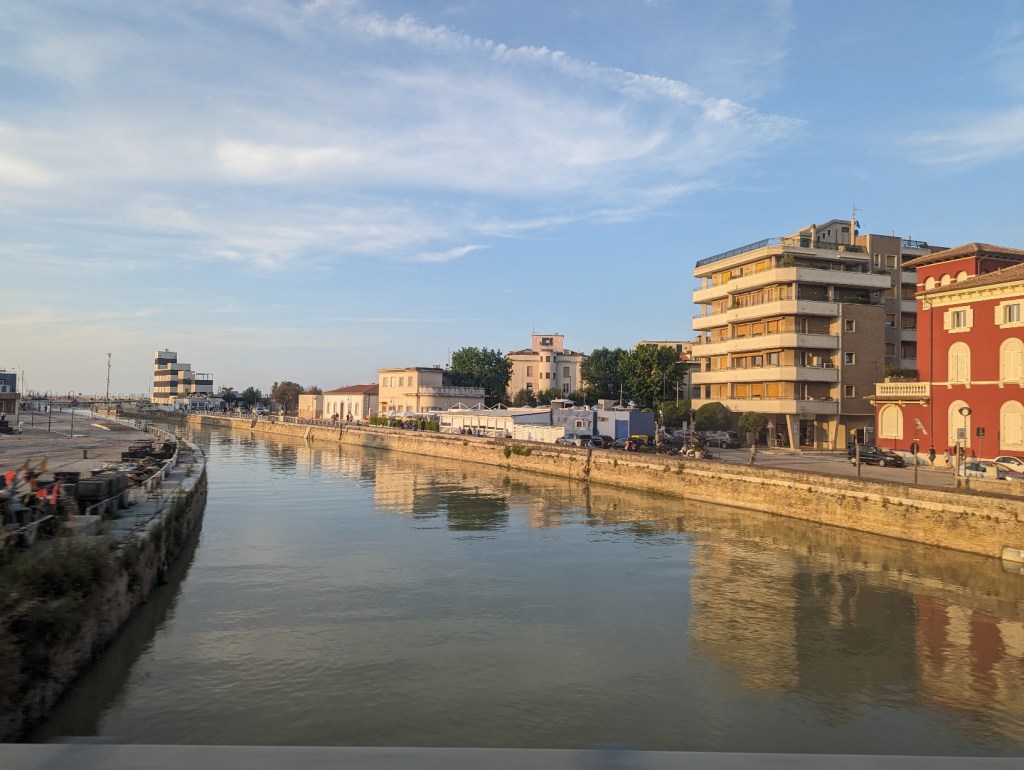
The Milan to Bari train also has great views, especially the second half which travels down the coast
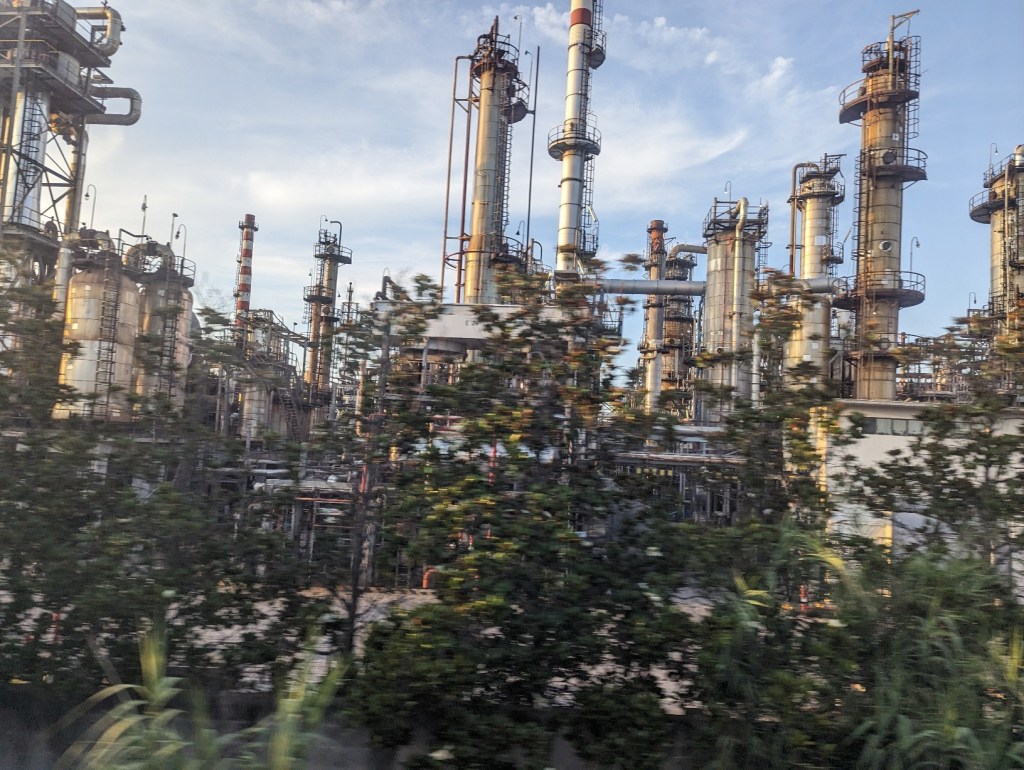
There are industrial attractions on the Milan to Bari route too
The Movida Blablabla hostel, Bari, Italy

I recommend Movida Blablabla, a hostel for €35 in a 6-bed, all-female dorm. They accepted my very late arrival (after midnight) when I explained that it was due to the train delay though they did ask for €10 extra. Positives: kitchen, dining room decor, better than normal toilets and shower (hand-held in the bath). Negatives: the usual heat and noise from a dorm-sleeping situation.

Day 3: Bari, Italy to Igoumenitsa, Greece

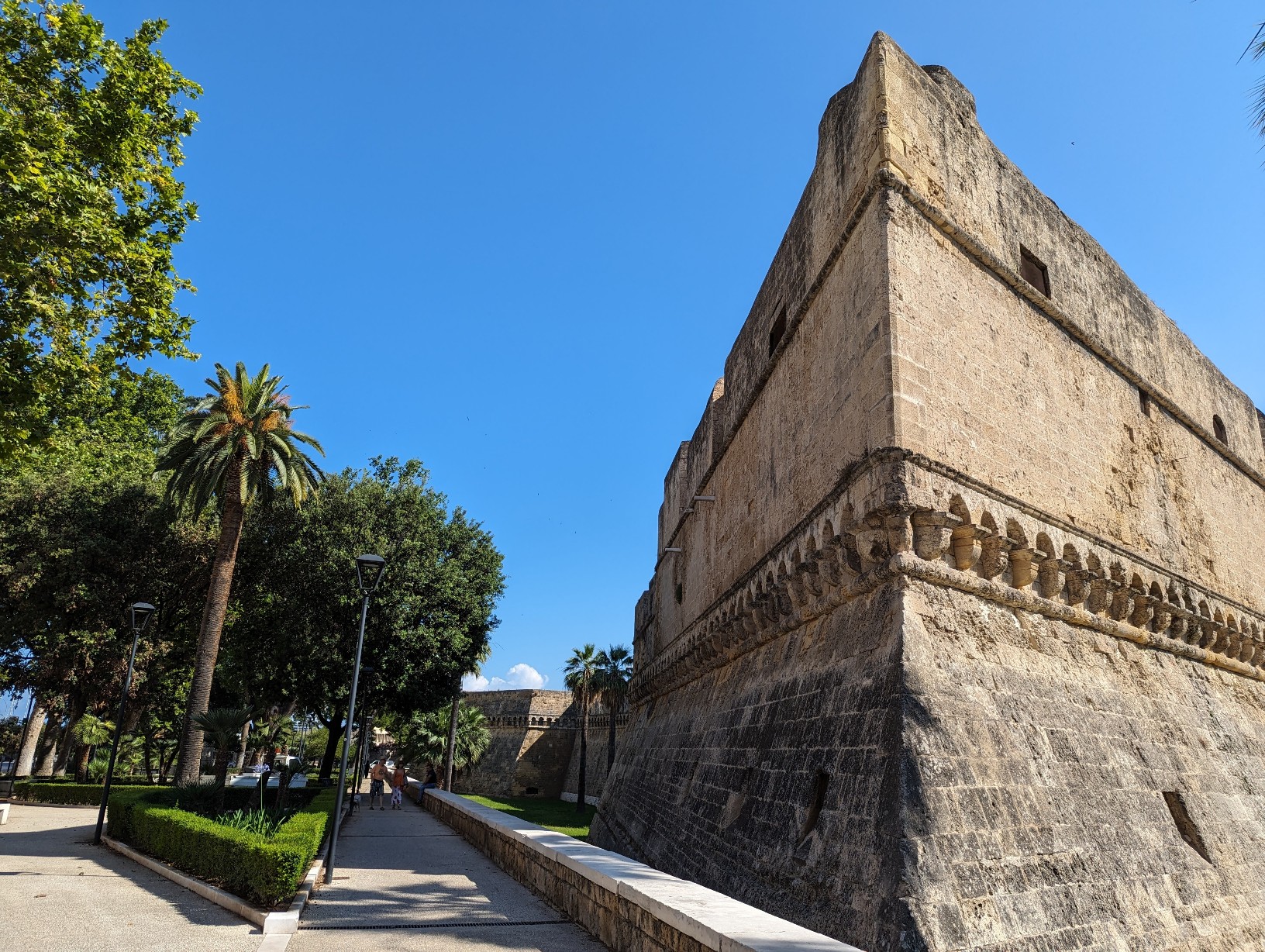
Castle, Bari, Italy

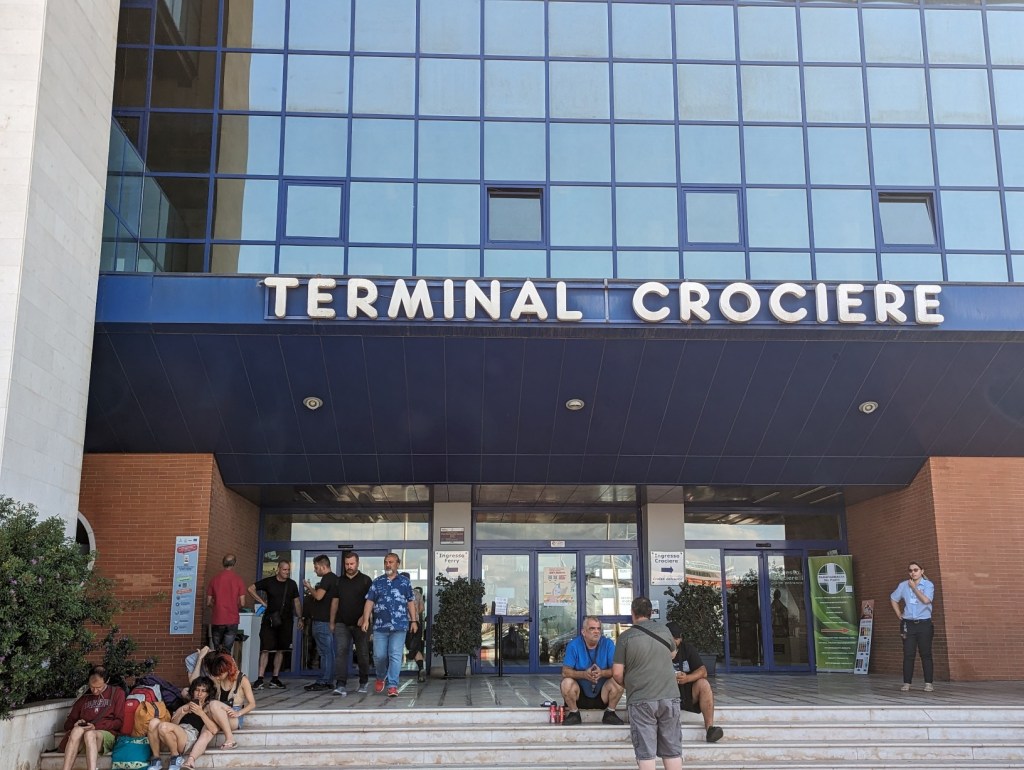
There was a repeat of previous difficulties I have had in finding the right booking office to transform my online ticket into a paper one. It was even worse this time as I hiked in seriously hot sun (despite the early time of day) and walked for 1.5 hours before having to go part way back. It might be worth knowing that there is a free shuttle bus from the Albanian ticket office (where I somehow found myself) to the Greek one, but it’s hard to find out when it comes. There’s also a little cafe and toilets very near the same Albanian ticket office in the port, but otherwise it’s a great big, busy car park with no pavements. Though the ferry leaves at lunchtime (the summer timetable has a Sunday crossing), there was no time for sight-seeing in Bari in the morning, although, instead of walking you could look for a bus from the centre of Bari to the enormous port.

This is the building you are looking for in Bari, Italy, to get the boat to Igoumenitsa, Greece

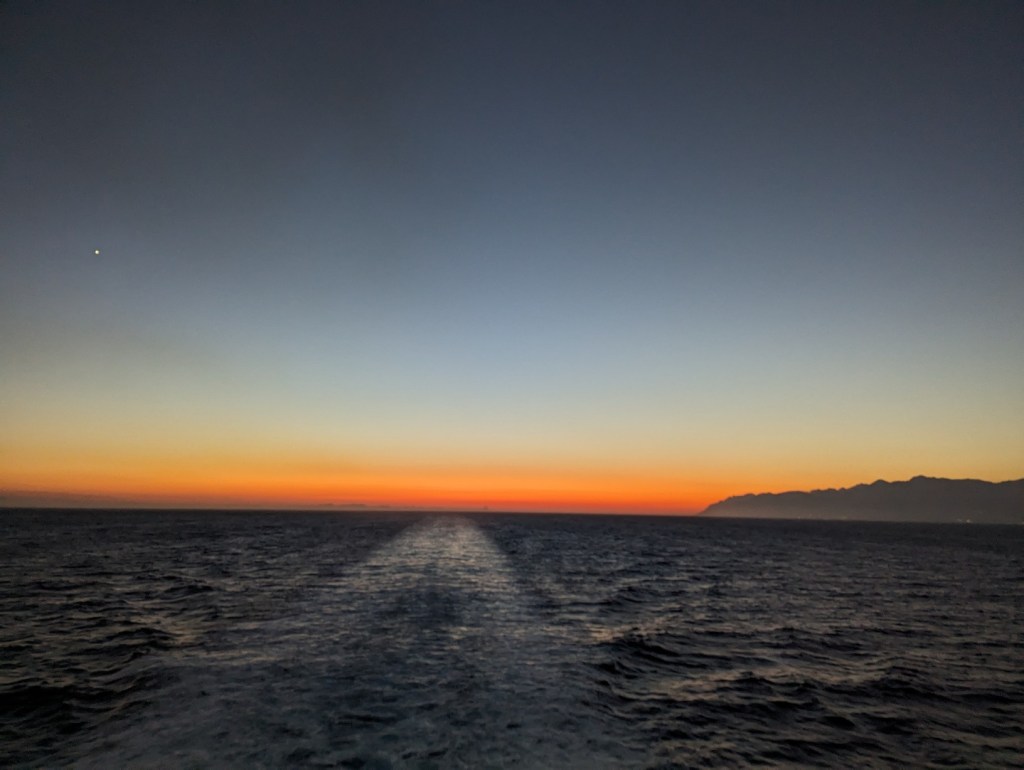
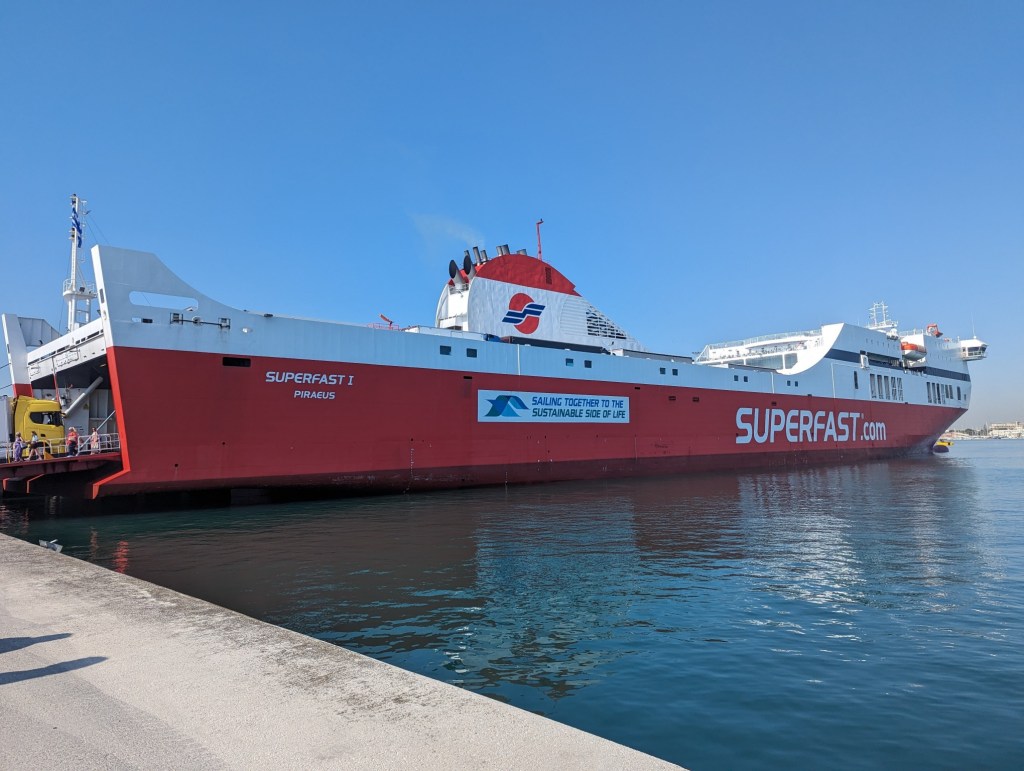
Bari – Igoumenitsa by boat with Superfast Ferries. The outgoing route was paid via Interrail, the return not, as the over 60s fare was cheaper so I paid for that separately. It was severely delayed. I booked a Deck Seat (you have to book somewhere and it’s worth noting that a cabin works out as more than a posh cruise ticket!) Deck seats are not on deck, they are inside. A shower (not clean) is available – ask at reception and a man will take you there with the key and wait until you finish. There’s a cafe with stressed staff and two restaurants which open later: one self-service (decent prices), and one more expensive. It is worth staying awake for the sunset.

Sunset from the Bari to Igoumenitsa Ferry. I didn’t see a whale, nor a dolphin

In Igoumenitsa, I stayed overnight at Maria’s rooms, Chantzara Spyropoulos Flats to Let-City Center via booking.com. I don’t like the site (I had a bad experience that was never addressed in Finistere and there is excessive advertising), but they have a monopoly. Remember to check every detail you can think of and read the reviews before booking. Cost: €45.57. Positives: it has its own kitchen and balcony, and it was clean and has Wi-Fi. Negatives: when I arrived there was no-one there and although it was clearly marked, I couldn’t initially find it in the dark and was slightly discombobulated. The host arrived soon afterwards. He understood why I was late, but it was awkward.

Maria’s Apartments, Igoumenitsa, Greece

Day 4: Igoumenitsa to Psarades

Igoumenitsa, Greece

I was due to meet someone at Ionanina (say, Yo-an-ina) to take me onwards into north eastern Greece. It was only at this juncture that I realised I had made a big mistake thinking that Ionanina was an alternative name for Igoumenitsa. It seems really stupid now, but I didn’t doubt myself and so didn’t think to check. This meant that I had to take a bus to Ioannina and there aren’t that many of them, so the woman who was kindly driving me from there to Psarades had to wait and we were both late arriving as a result. I was so embarrassed by the situation that I went into shops in Igoumenitsa asking if anyone knew how I could get there more quickly, having visions of myself travelling in a fish delivery van or something, but to no avail. Thank you so much to Korina for her kind acceptance of the situation and the great conversation during the journey.

There’s a very nice, cool bar opposite the Igoumenitsa bus station where you can wait for ages if you need to, with a spacious toilet, and thoughtful staff. Note: it’s an uphill walk from town.

Western Macedonia

View of Lake Prespa from Psarades village

I was in Greece for the Walking Arts Encounters in Psarades (also known as Prespa and Prespes) which is a very small village by a big, beautiful lake in an Area of Outstanding Natural Beauty. It’s surrounded by mountains and has lots of cafés / restaurants, a church, a small shop with gifts for sale, and some air bnb / B&B / hotel rooms. There’s no public transport, but there is a branch of the University of Western Macedonia in the old station building. Swimming: fantastic. Bird life: amazing. Walks and trails abound.

Return journey

Prespes – Florina by taxi. €75 divided between 3 people, but the price changes randomly and it’s recommended that it be negotiated with the driver before he starts driving.

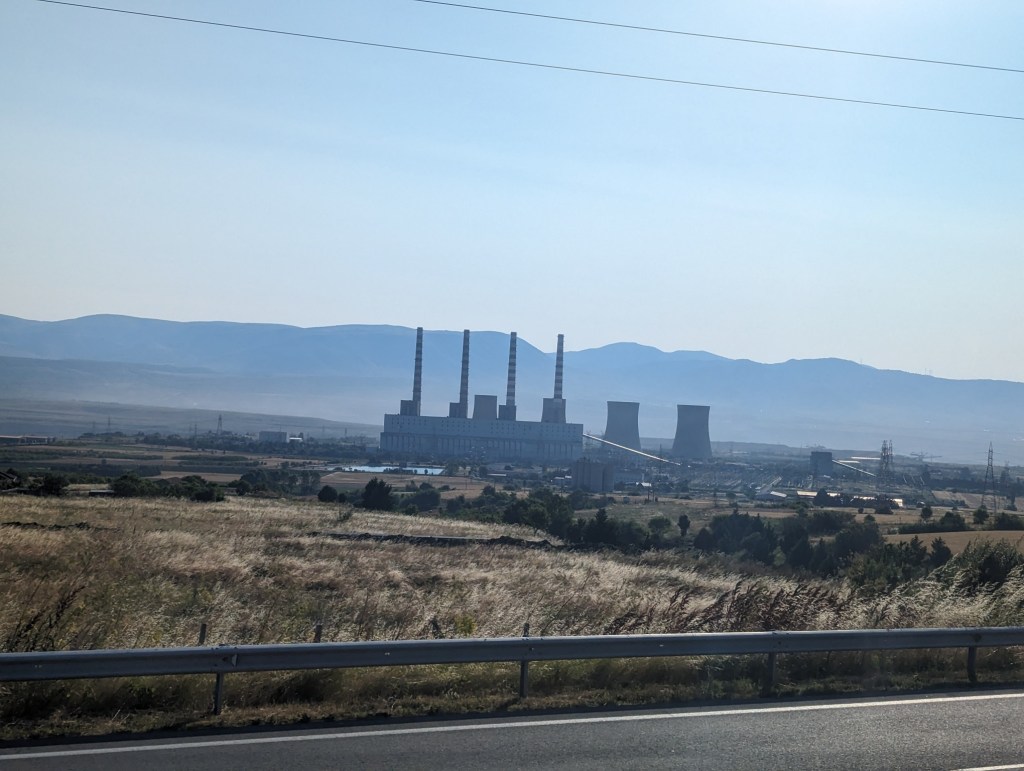
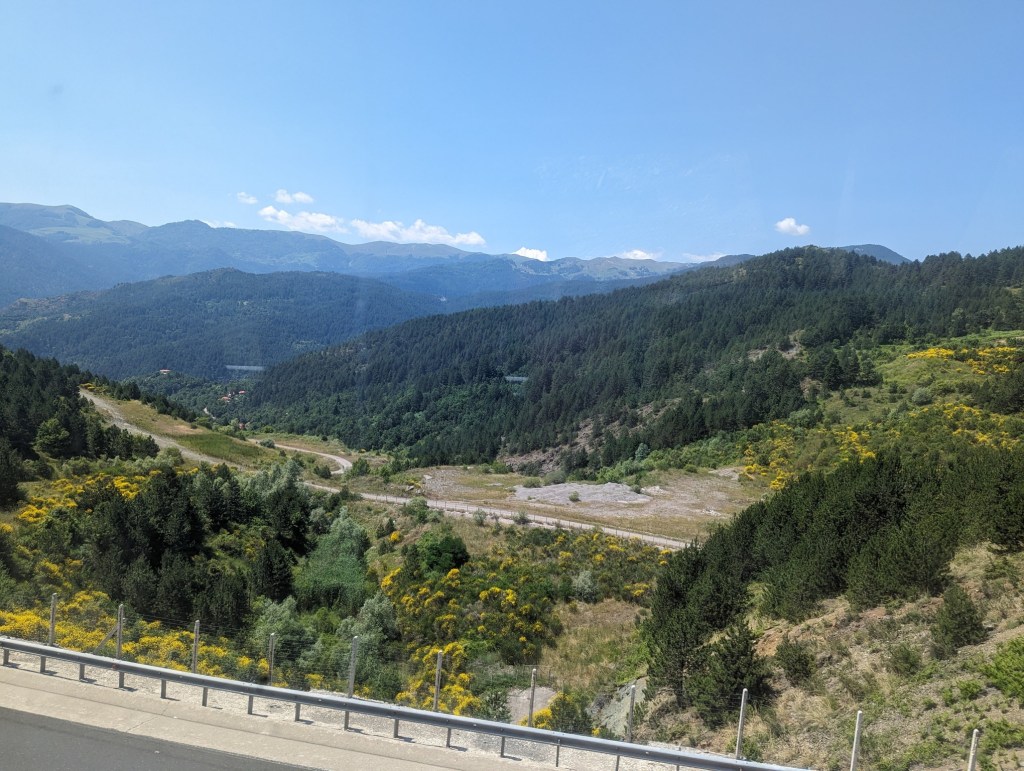
Greek countryside

Accomodation: Filareti Hotel, Florina. A clean double room for €28, booked at the very last minute on booking.com. Positives: a comfy bed, kind staff, clean, fluffy white towels, soap and shampoo, air con, great location, balcony, Wi-Fi . Negatives: the drains were smelly and there are no kitchen facilities.

Florina – Kozani by KTEL bus. €8.70, 7am. Takes approx. 1 hour.

The alternative route from Psarades to Igoumenitsa is via Kastoria and Ioannina which cuts down 3 buses to 2. The taxi, however, is even more expensive from Psarades to Kastoria. Alternatively, you can go via Thessaloniki which is a very long was round, but it’s a good place to visit.

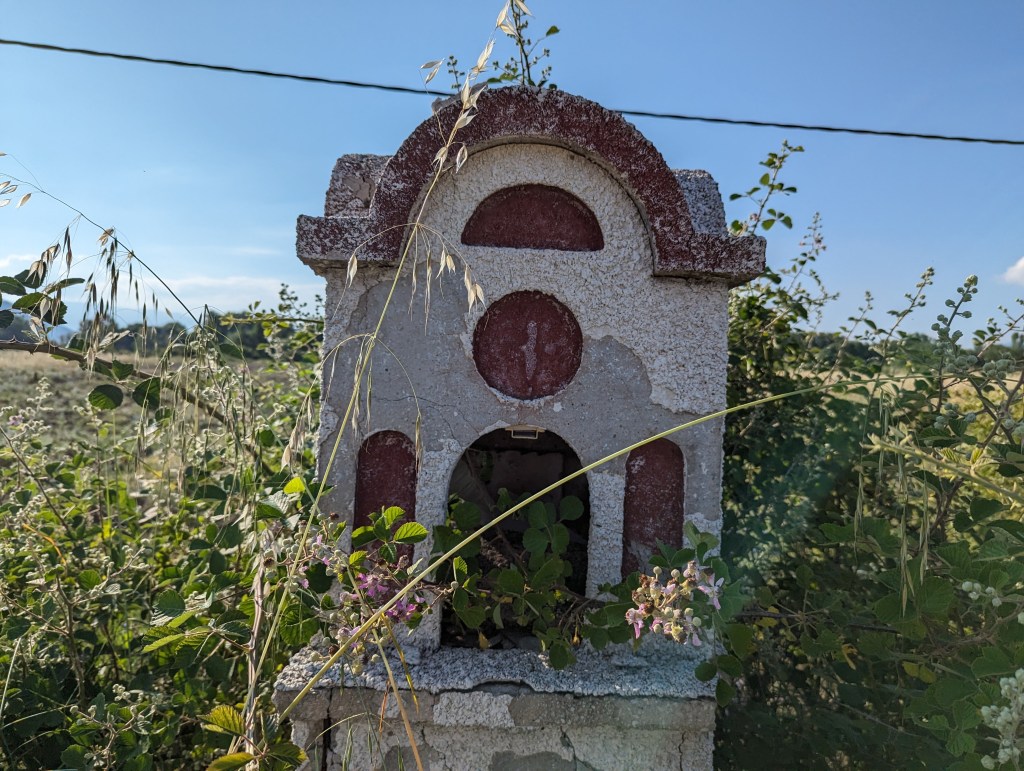
Typical roadside shrine, Greece
KTEL

You cannot book tickets online with a UK bank card and don’t bother emailing as they don’t answer. If you know someone who speaks Greek, you could ask them to phone on your behalf to get the times, or even possibly to book tickets. They are open on Sundays. See below before you do this.

KTEL buses and website: Although the website translates some information into English, it doesn’t cope with English variations of place names or days of the week. Note: D=Monday and so on. One way is to look up the place names with a translate app so you recognise them in Greek characters (even better learn Greek before you go), and then look at their drop-down menu. If you cannot find a place you are looking for, that is probably because you’re on the wrong version of the site. Each bus station/place has its own version, so I suggest you put ‘KTEL Kozani to Ioannina’ into Google for example, and go from there. The same applies to their phone numbers: you must phone each individual bus station for the place of departure if you want information and/or to book tickets.

Lodochori, Greece

Overland travel is certainly more complicated and whole lot more fun than going by air. If you plan to take the bus, check how long a particular journey is using Google maps, and then allow an extra hour each side. Then, go to the first bus station in your journey and buy a ticket there, in person (everyone seems to speak some English), and so on down the line. Take (in other words) one step at a time, poco a poco as they say in Spain. This is slow travel; there’s no point in going overland if you want to get there quickly; there are too many variables. Until all the different countries decide to co-operate and work out a way to make an efficient website which allows us to book all of this, it will be SLOW!

Note: there are no phone chargers, toilets or WiFi on KTEL buses as far as I can tell. They do stop to let folk on/off, so if you were desperate for the toilet they might oblige.

Kozani – Ioannina by KTEL bus €20.40 10.45 am. Takes approx. 1.5 hours. Lunch in Ioannina (see below) opposite the bus station (a kebab place: Greek salad, good wholemeal bread, a beer and a very clean WC.)

Ionanina – Igoumenitsa by KTEL bus €9.80, 14.15 (2.15pm). Takes approx. 1 hour 45 mins. I arrived far too early (8 hours) for the midnight ferry, although remember that you need to book-in for the ferry early – see your ticket email for details.

There is good ferry port info. for Igoumenitsa (and more) here.

Milan, Italy

If you are also travelling overland in Europe, rather than flying, and have information you’d like to share, please add a comment below.

Athens to Edinburgh overland 1

Thessaloniki

June 2019

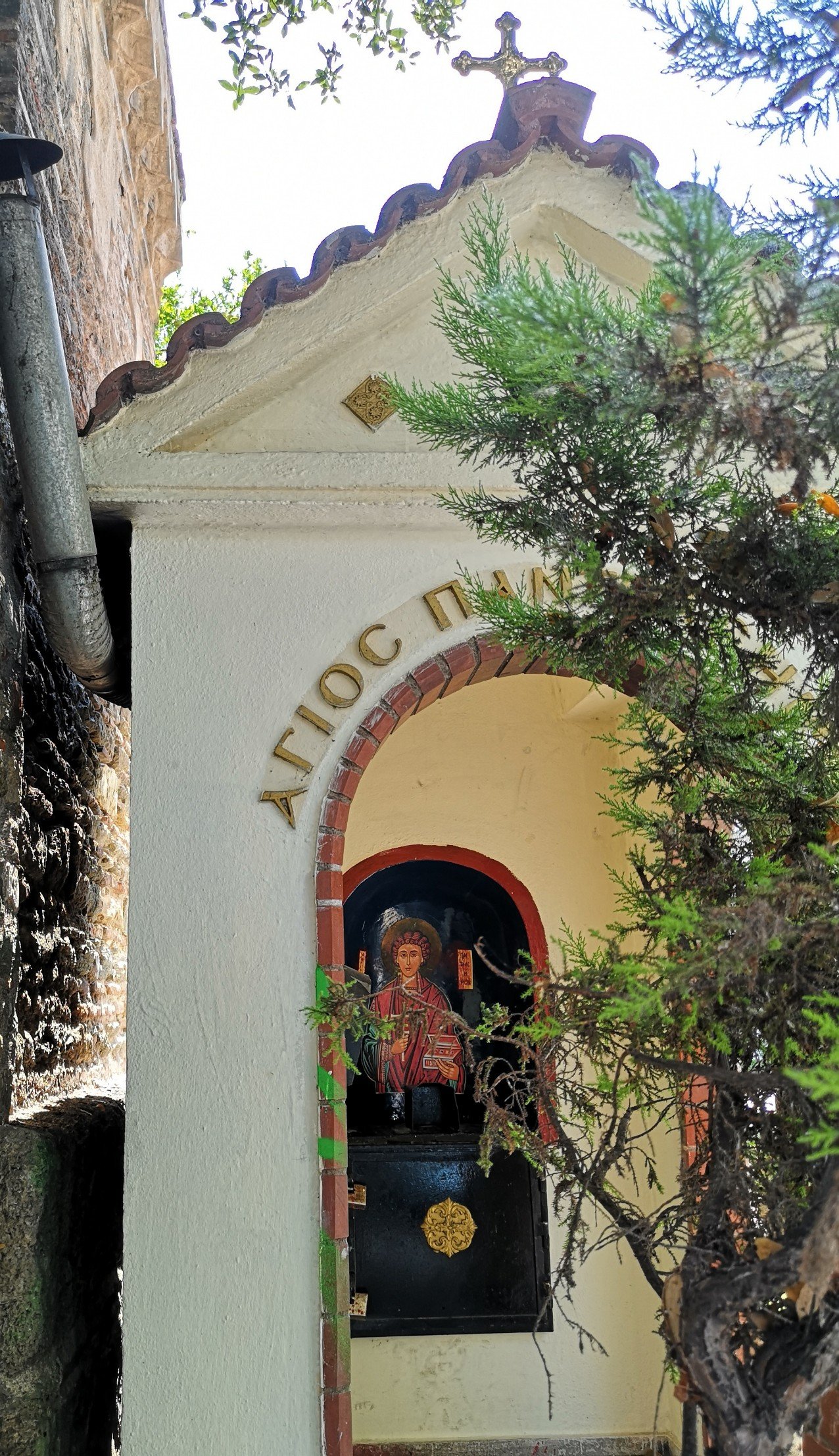
Icon in a little hut
Greek Orthodox religious street shrine, Achiropitos Church, Thessaloniki, Greece

I liked Thessaloníki. It’s a mixture of dusty urban streets with shops selling beach umbrellas, interesting portals, attractive heritage sights, a glittering seafront, and varied cultural delights.

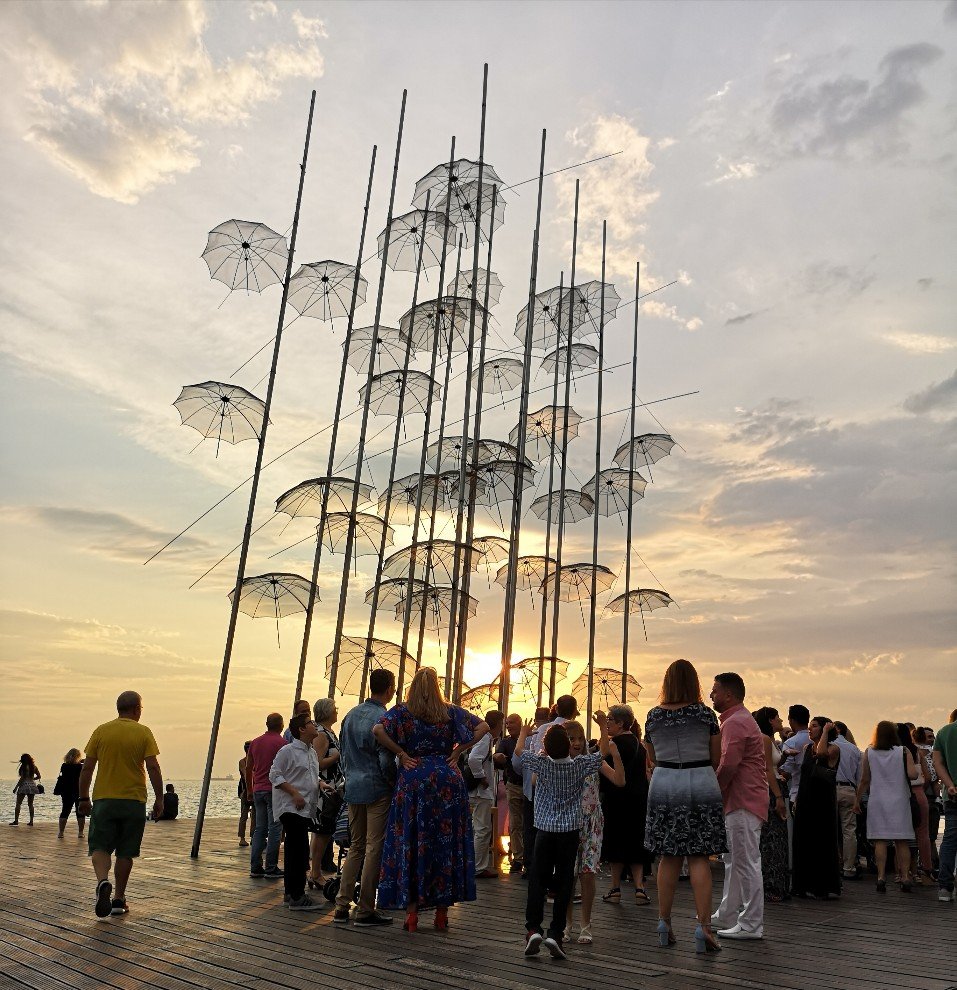
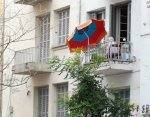
People standing under tall metal umbrellas
Captivating umbrella sculpture being used for community gathering

One minute I was standing surprised in front of a shop that seemed to be only selling beach umbrellas, the next I spotted a woman behind one on a far away balcony.

I stopped off here partly to break my journey to the north, but mainly to meet Shiatsu practitioners and teachers.

Daphne, head of the Shiatsu Academy Thessaloníki

The Shiatsu Academy

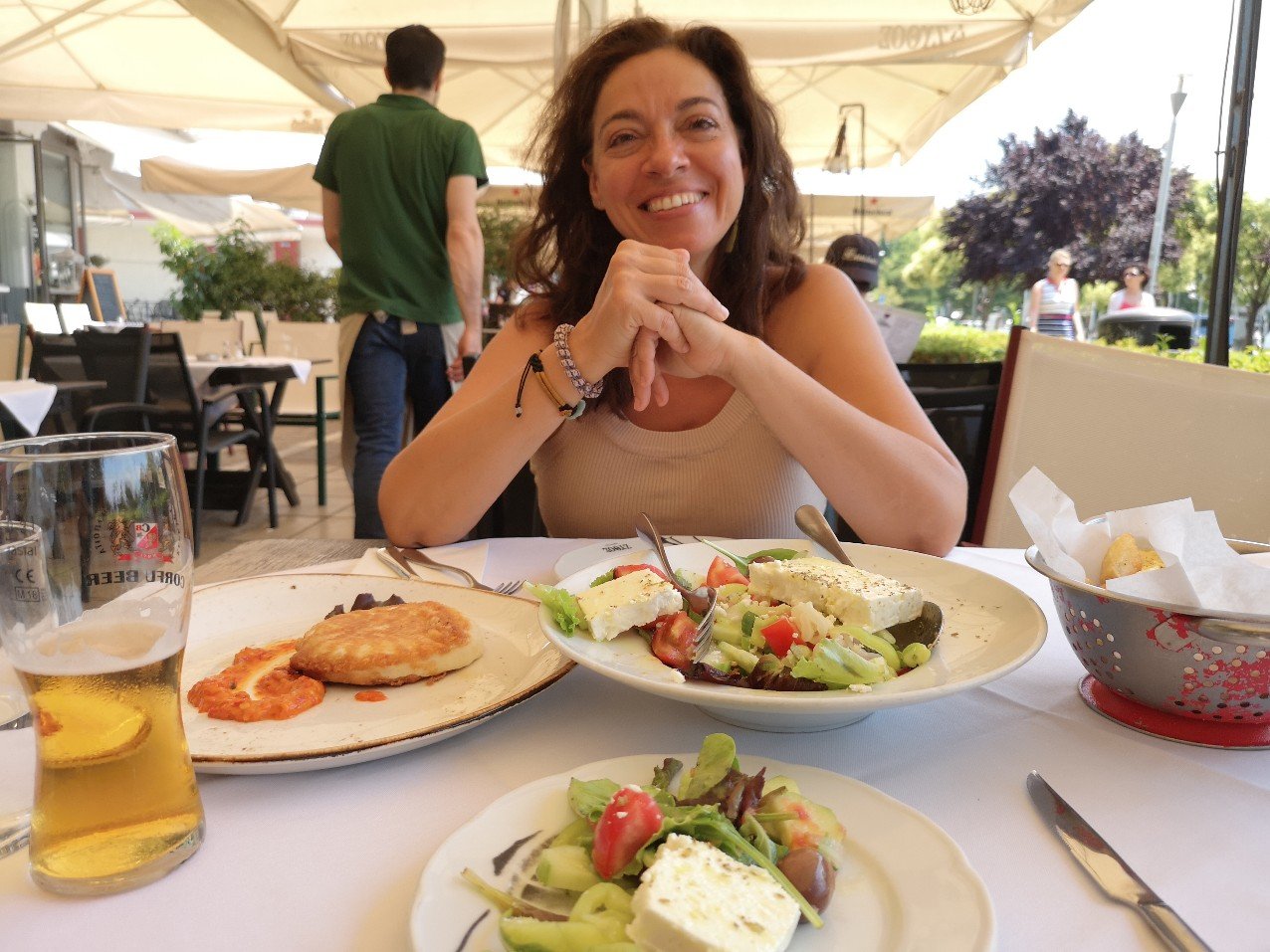
Evening drinks with Marie-Helene and a yummy lunch with Daphne were both really satisfying exchanges. The joy of meeting others in my own, rather niche profession and being able to talk shop, knowing they speak the same language (Shiatsu I mean! I spoke French with one and English with the other) was delightful.

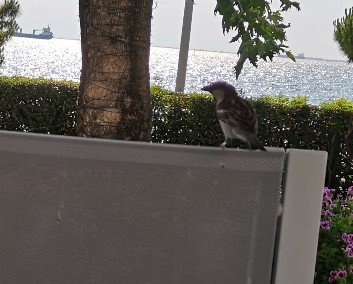
Sparrow perched on chair back
I had a chirpy visitor as I sipped my fizzy mineral water, and gazed at the shining sea over the top of my laptop

Doorways

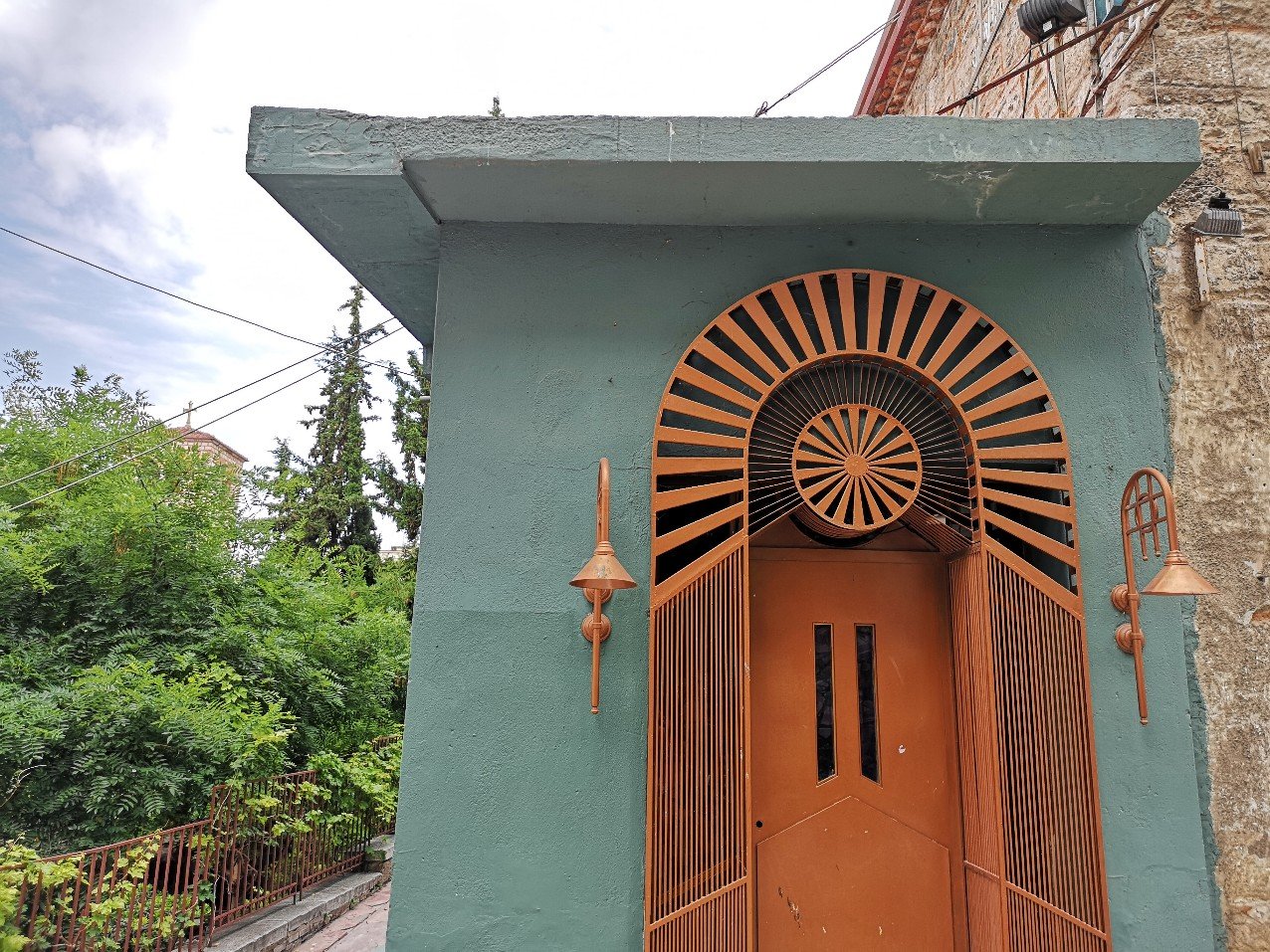
Beautiful doorways abound.

Ornate orange door in a green wall with lamp outside
Copper bells outside a bar

I thought it was a church, but it turned out to be a night club! Thessaloniki, Greece

Door, steps and flowers
Someone’s front door – care and attention to detail make for everyday beauty here

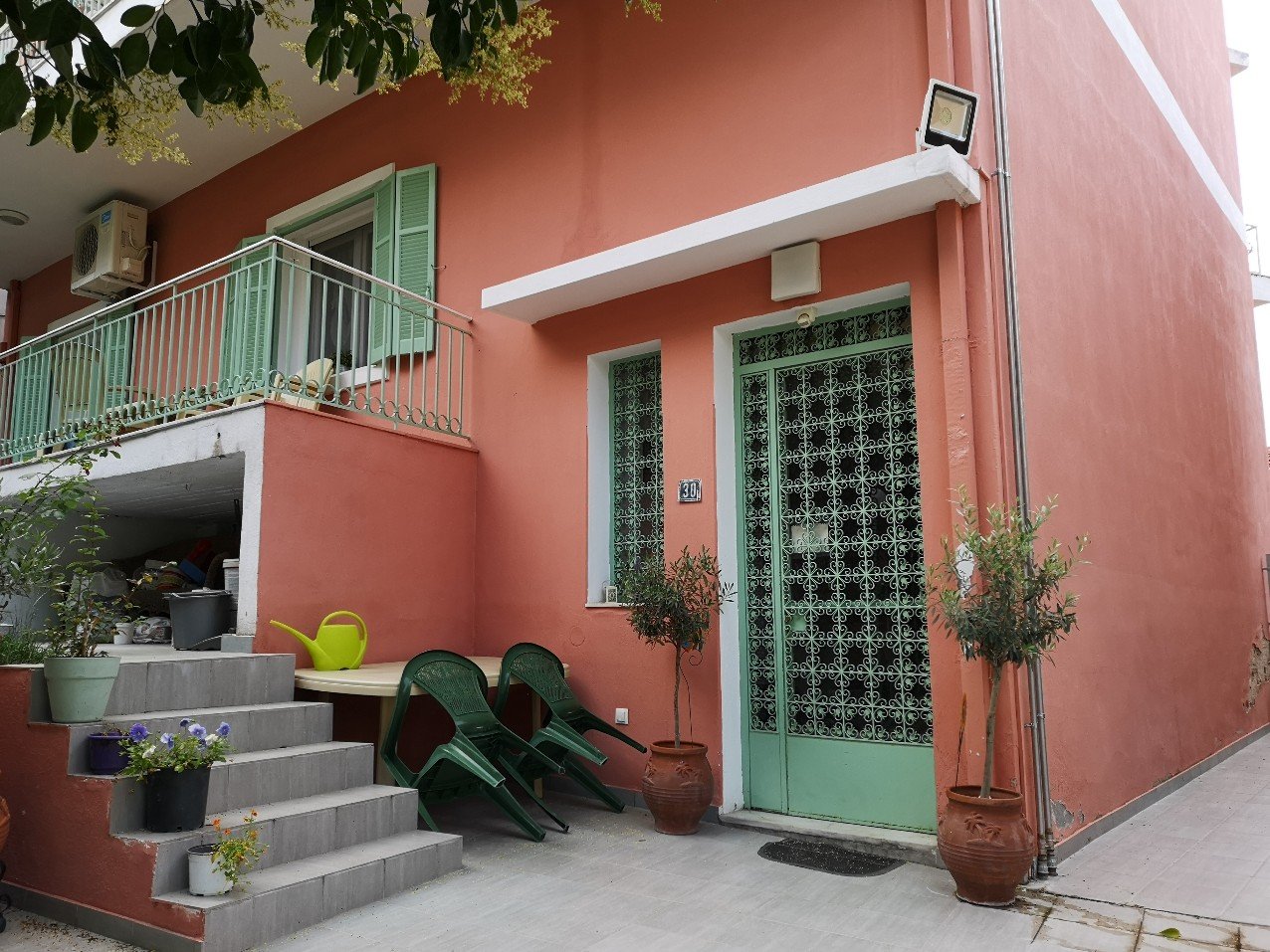
Pink walls and green lattice doorway
A domestic front garden of contrasting colours

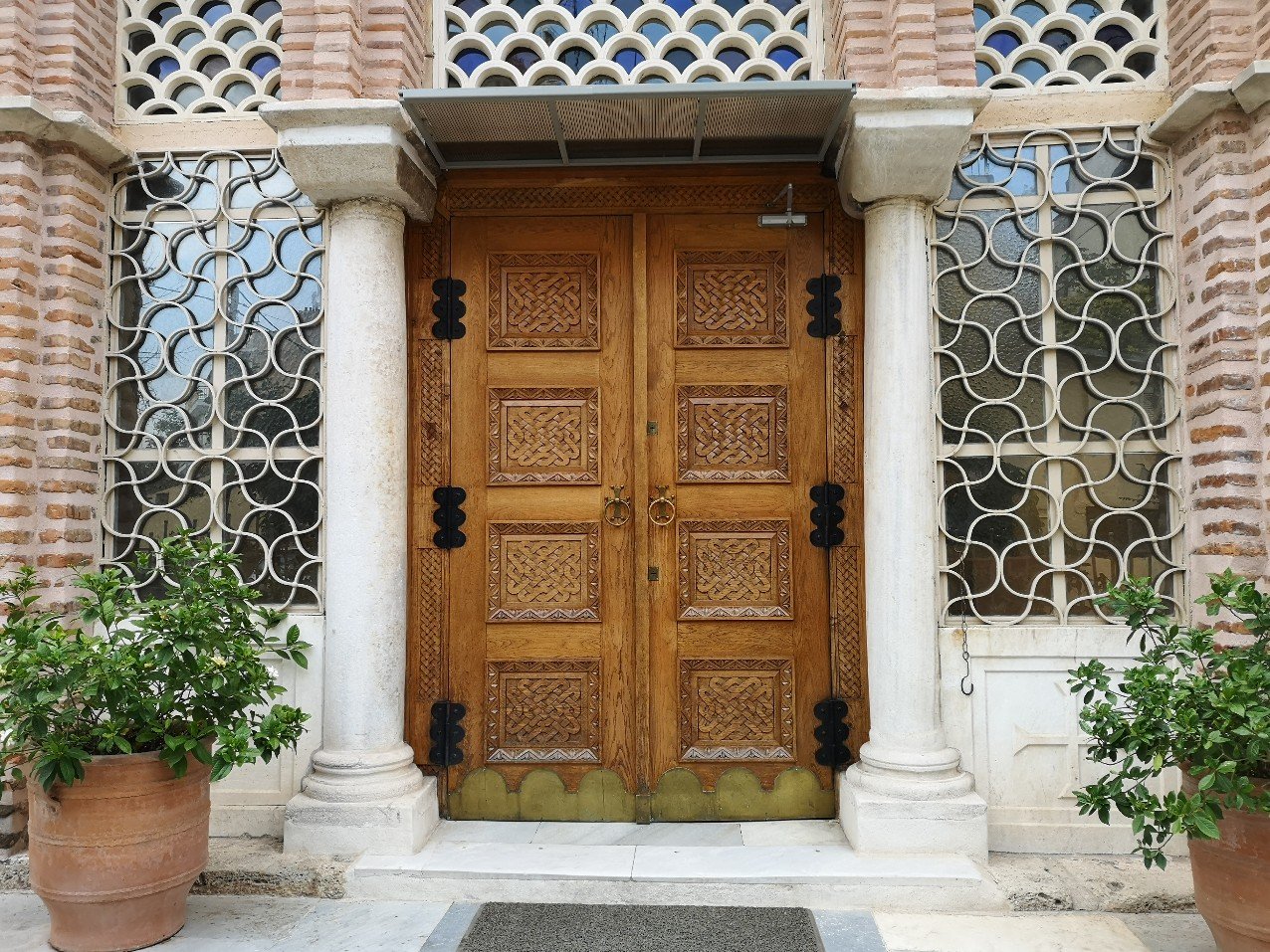
2 White columns with lattice work
Doric columns adorn this frontage. Thessaloniki, Greece

Hostel accommodation

There was WiFi at the Studio Arabas hostel where I stayed for 2 nights, on Satchouri. I booked through Hostelworld. It is steeply uphill and I didn’t have time to explore the Old Town that it is in because I was meeting people in the part nearer the sea where most of the monuments are – that’s a good trek down and climb back up so be warned.

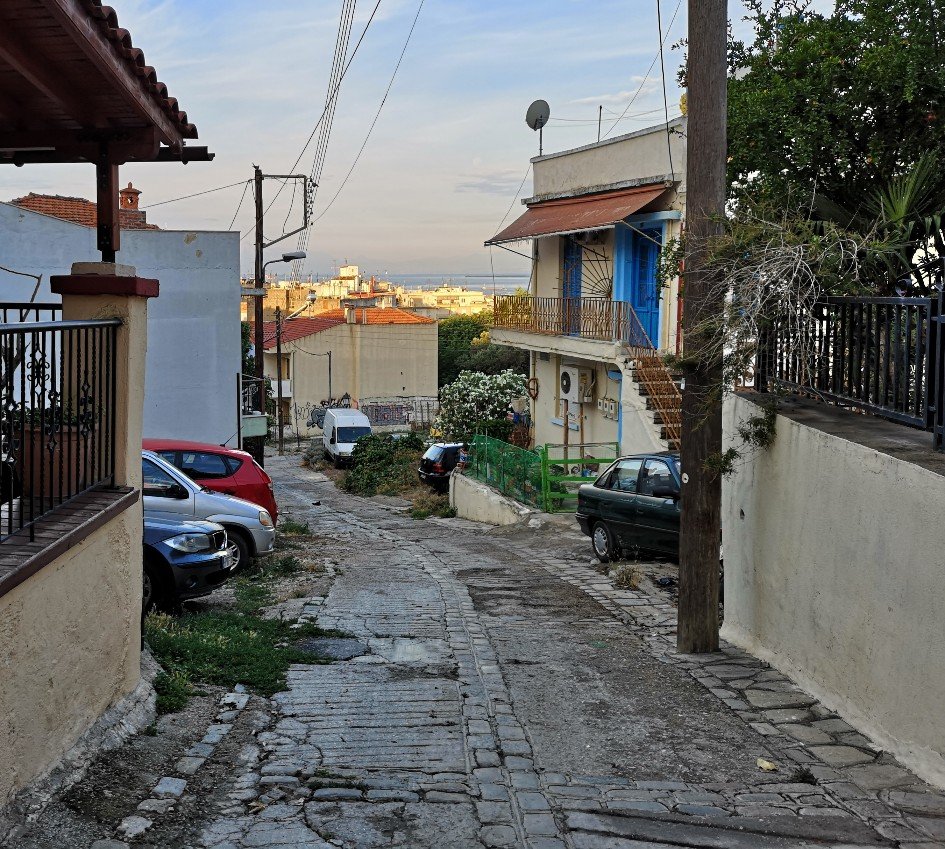
Early morning street sceneI left early to walk the hour to the bus station and caught the morning sunlight, Thessaloniki
The hostel was clean, but not in a squeaky clean sort of way. I got some advice from the lovely Charlotte while I was there. Although you can’t do this at her place…

Tip

… It is always worth booking a hostel by phone or in person because you often get money off or a free breakfast. They save money on the fees they have to pay to the third party, the booking website.

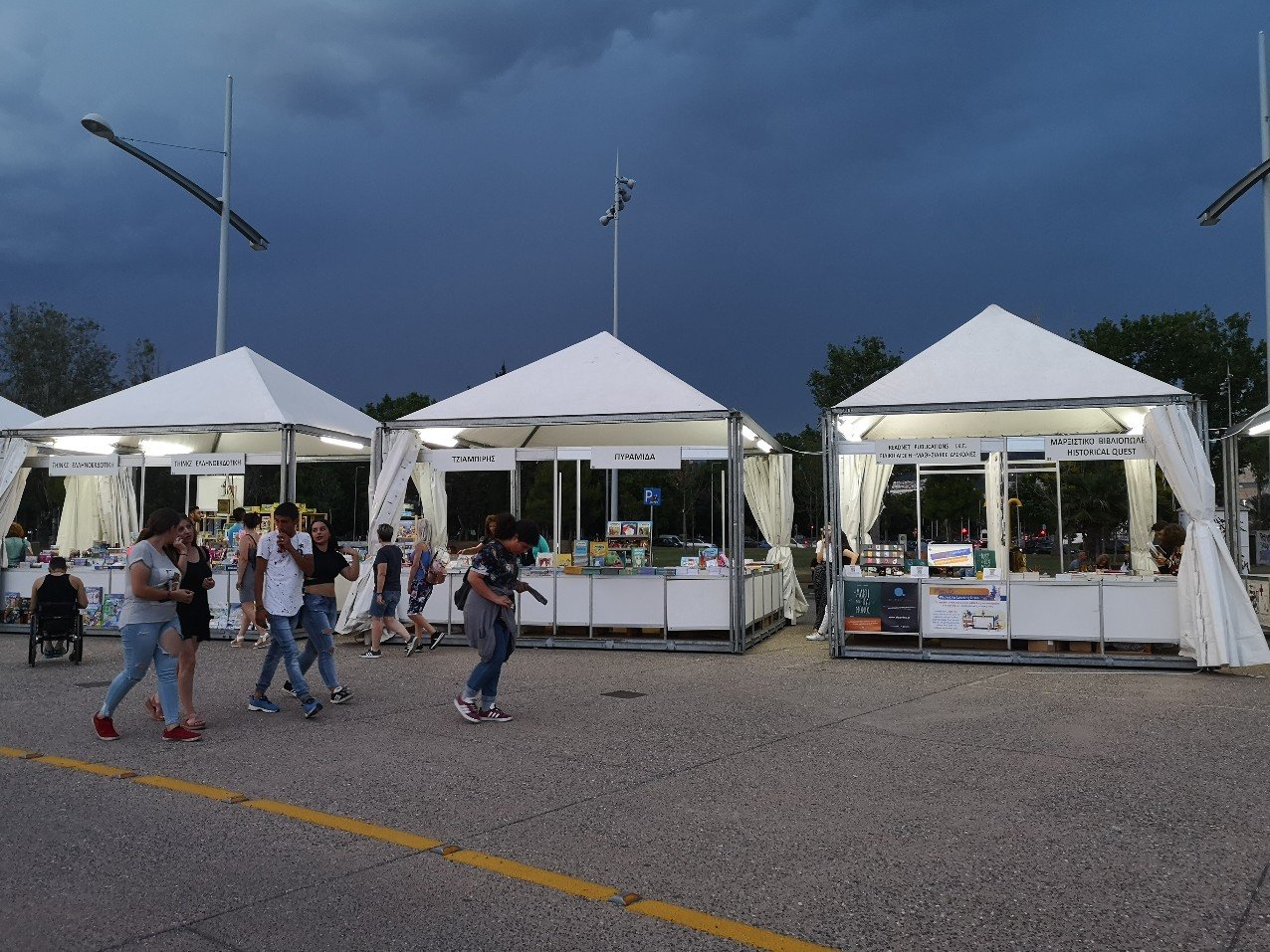
White tents with book stalls

The book fair was on that day, Thessaloniki, Greece

Cafés

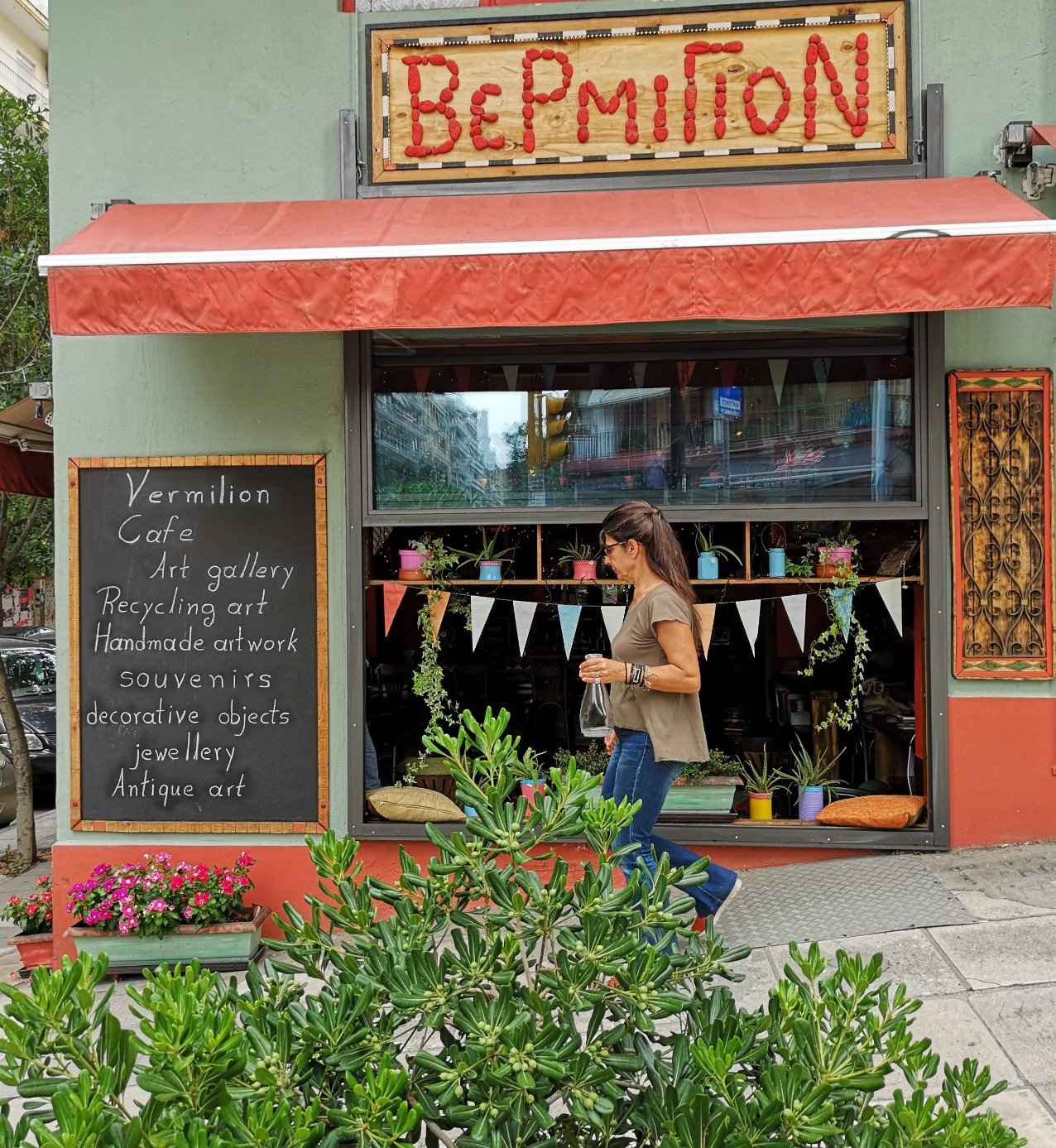
I was on my way to a meeting but needed a cup of tea. It was going to be an hour’s walk. Until, that is, I spied Vermilion.

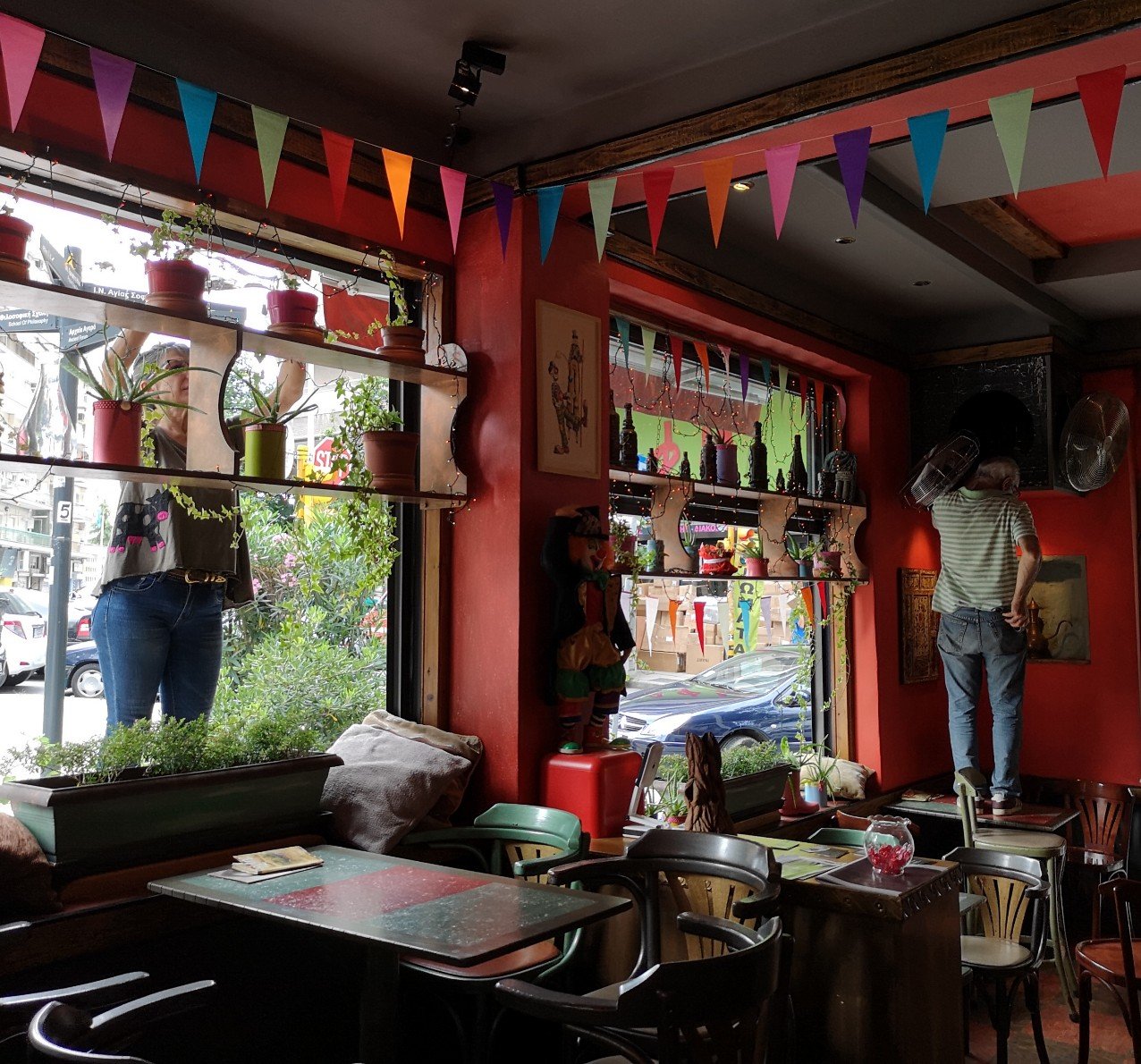
Just my sort of place. Creative and friendly, good WiFi and recycled jewellery.

I was early and they were cleaning and preparing for the day, Vermilion, Thessaloníki, Greece

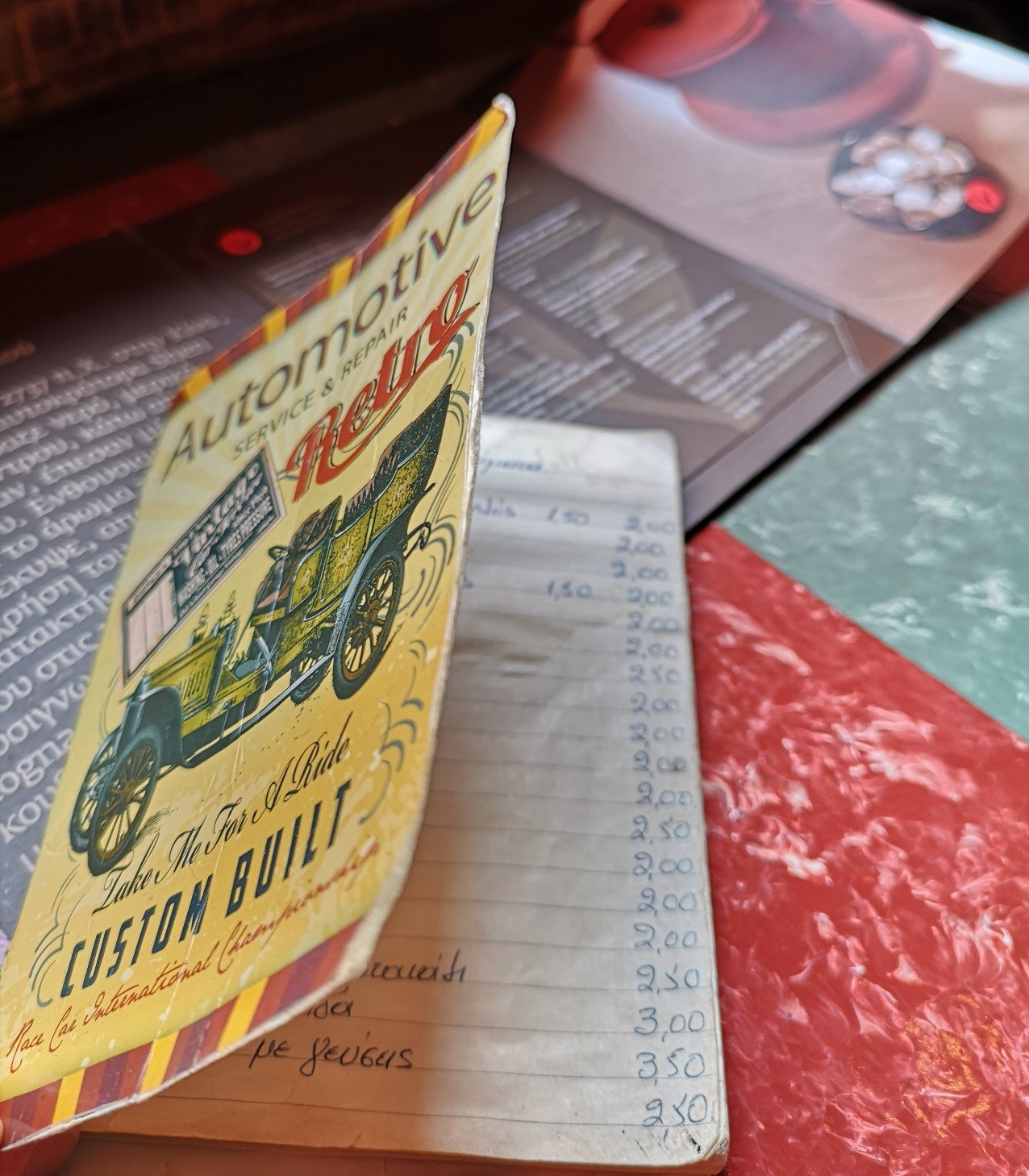
Old car on front of paper menu
The menu was handwritten in the front of an exercise book

Nearby are other nice places – a bakery, cheese shop and more.

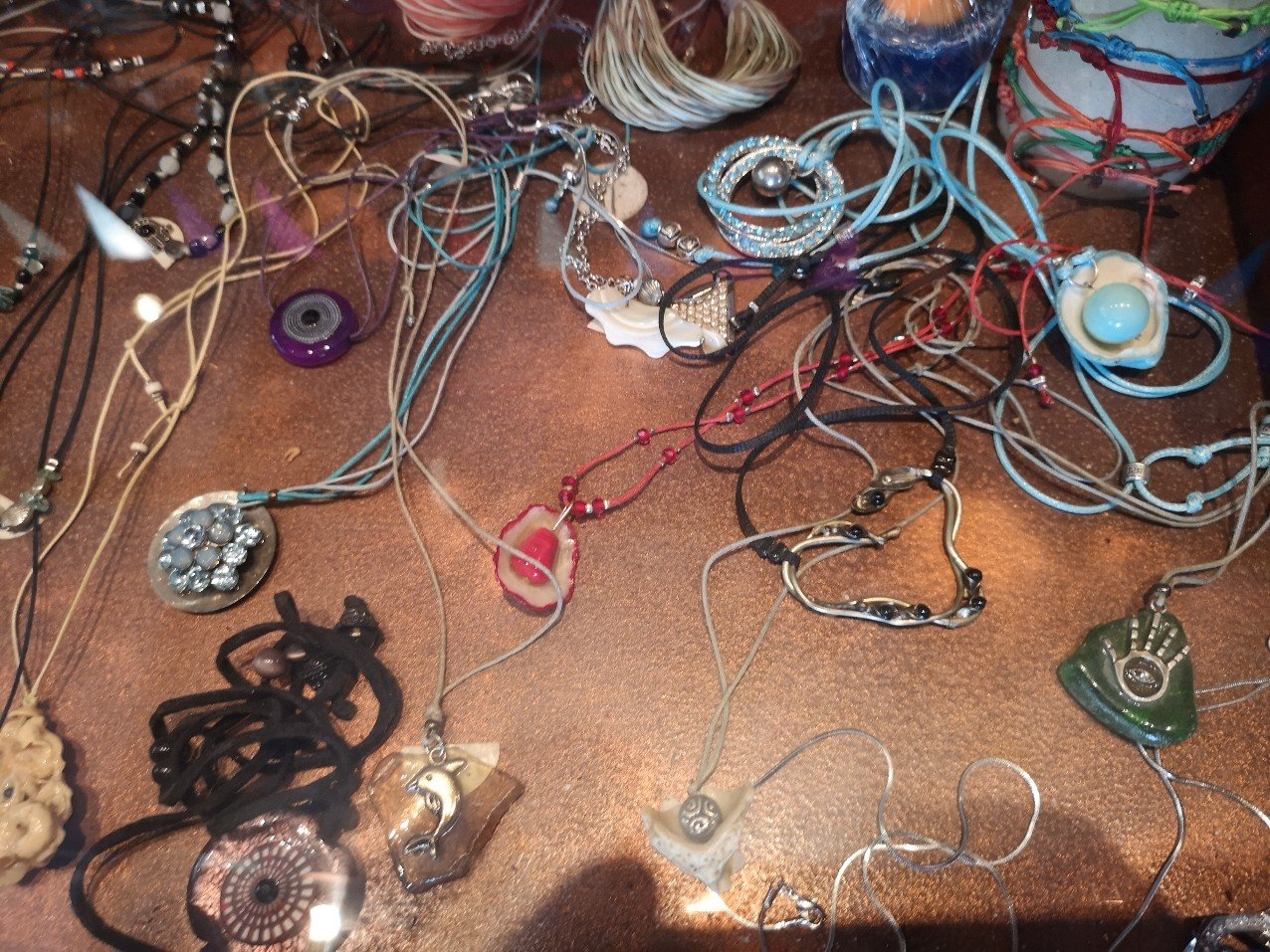
Rings and necklaces

Recycled jewellery made by the owner

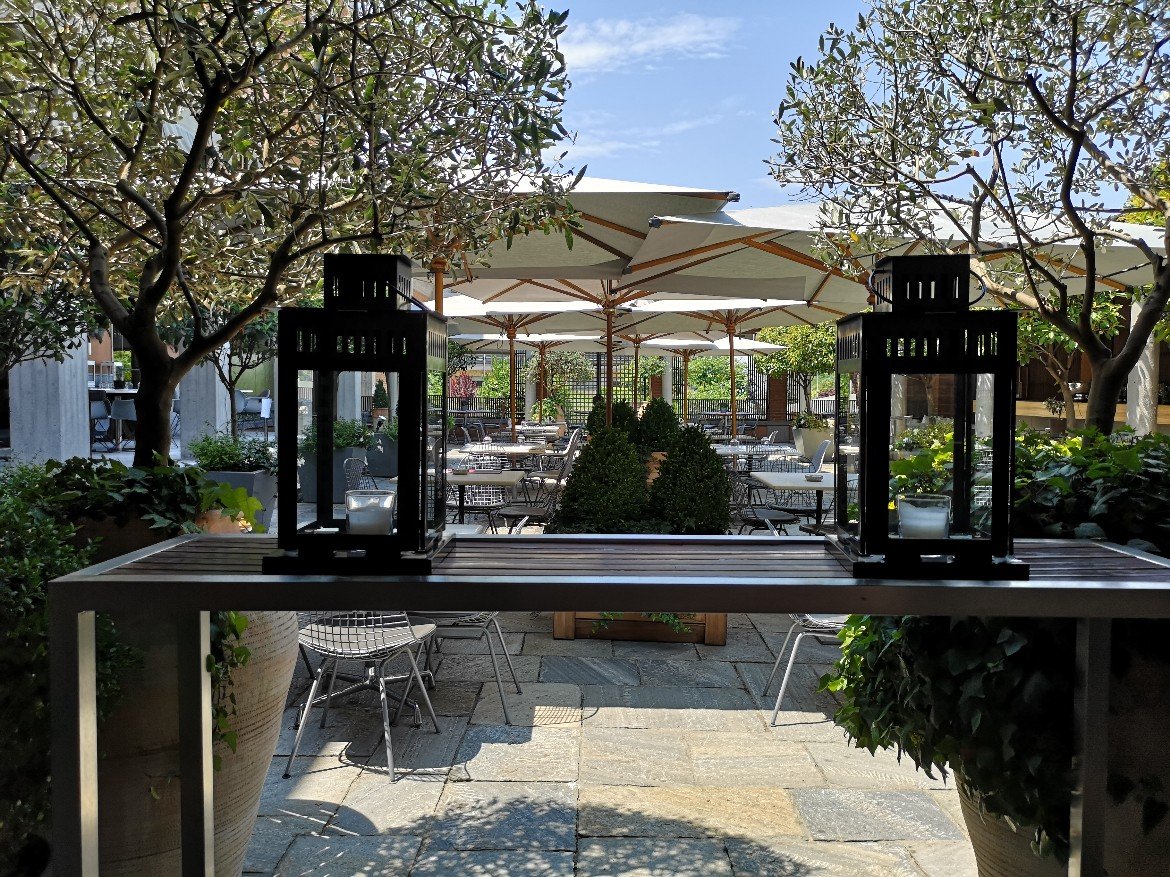
Outdoor restaurant with foliage
B café

People sitting at tables with drinks
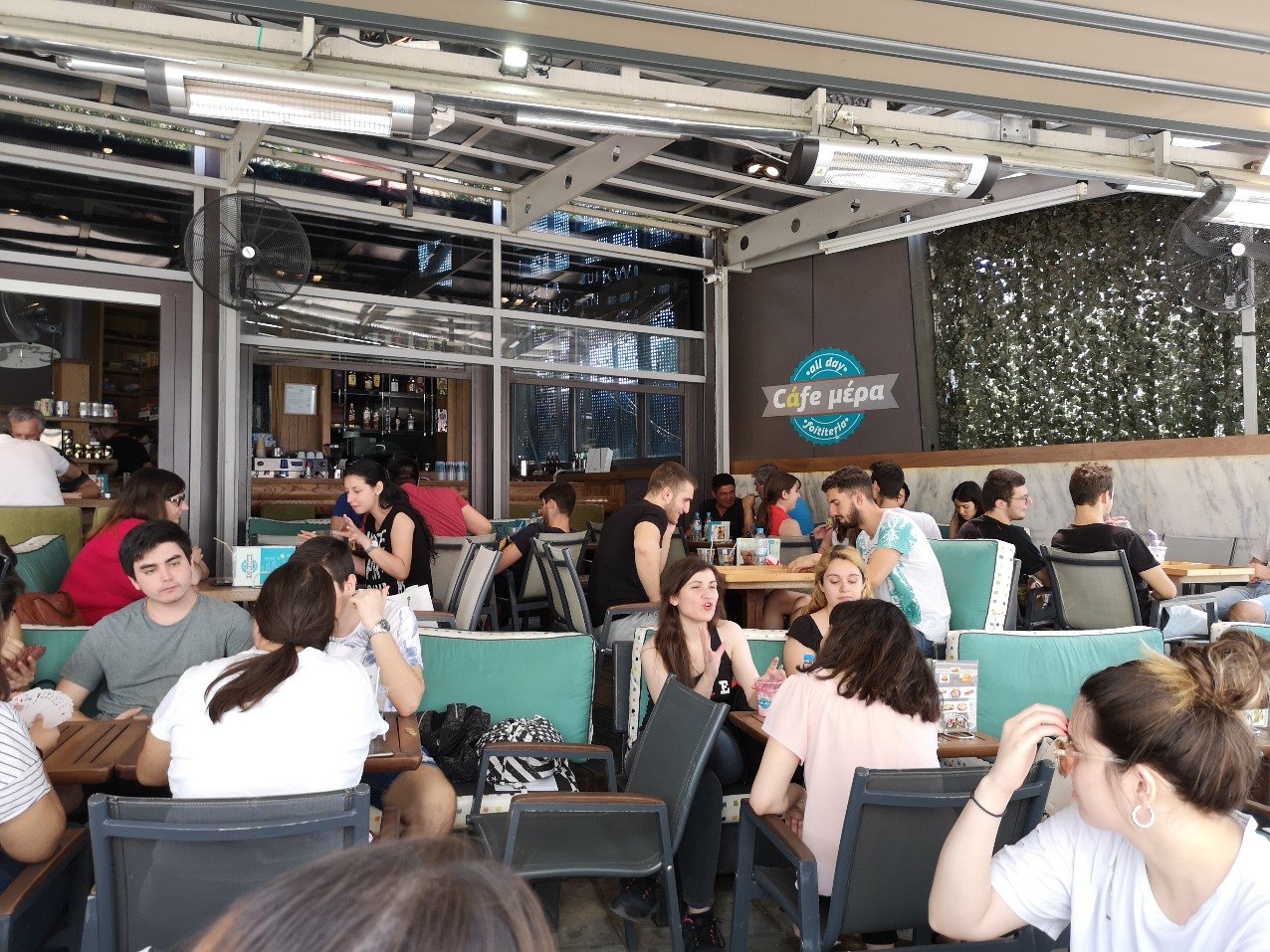
Café full of young people including women playing backgammon

Local people resting in the shade

I was fascinated to glimpse women sewing and men and women sharing a drink in the shade.

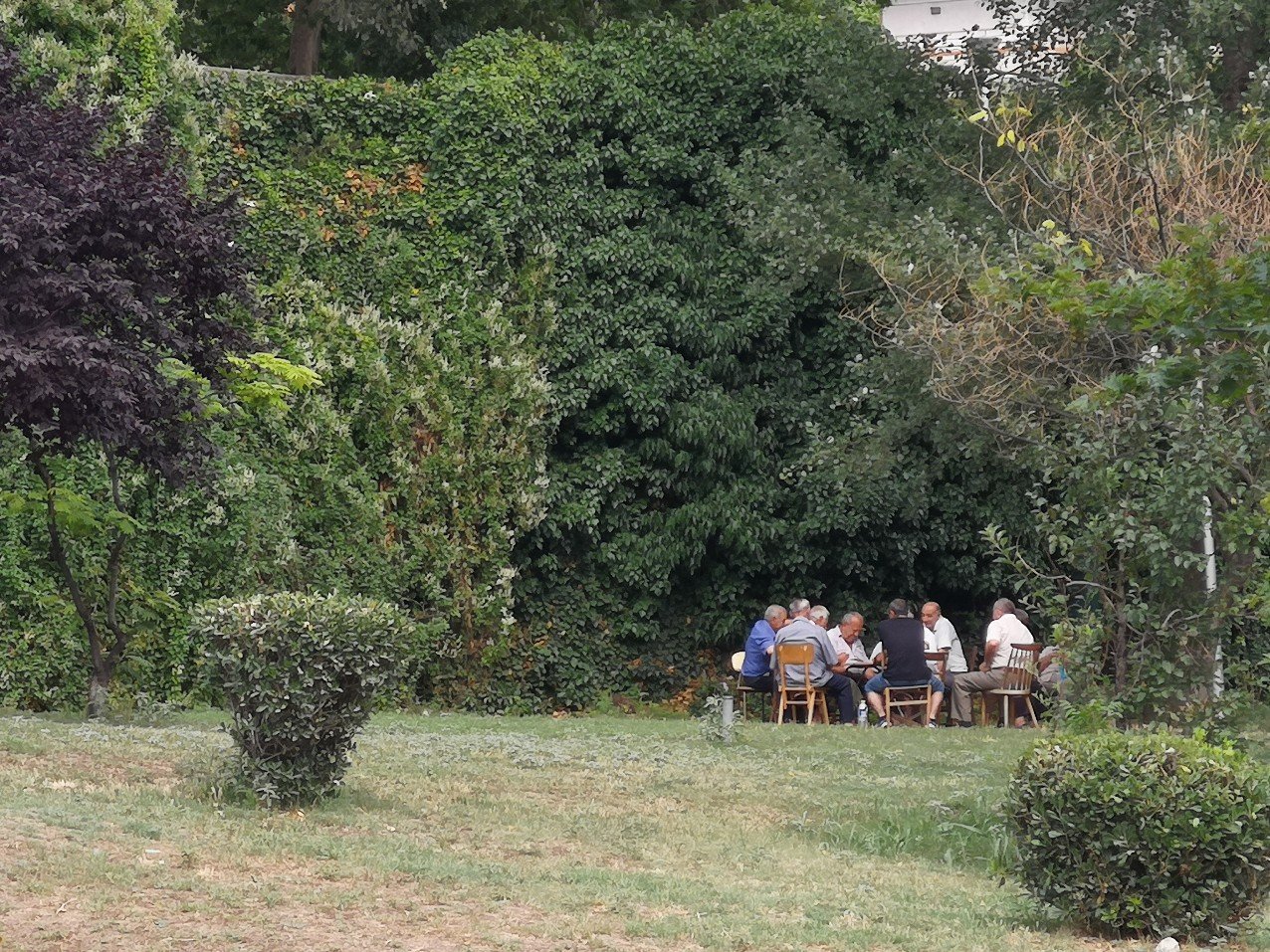
10 men sit around a table

A group of men in the distance, taken with the zoom. They went back and forth through a door in the wall behind – I was so curious!

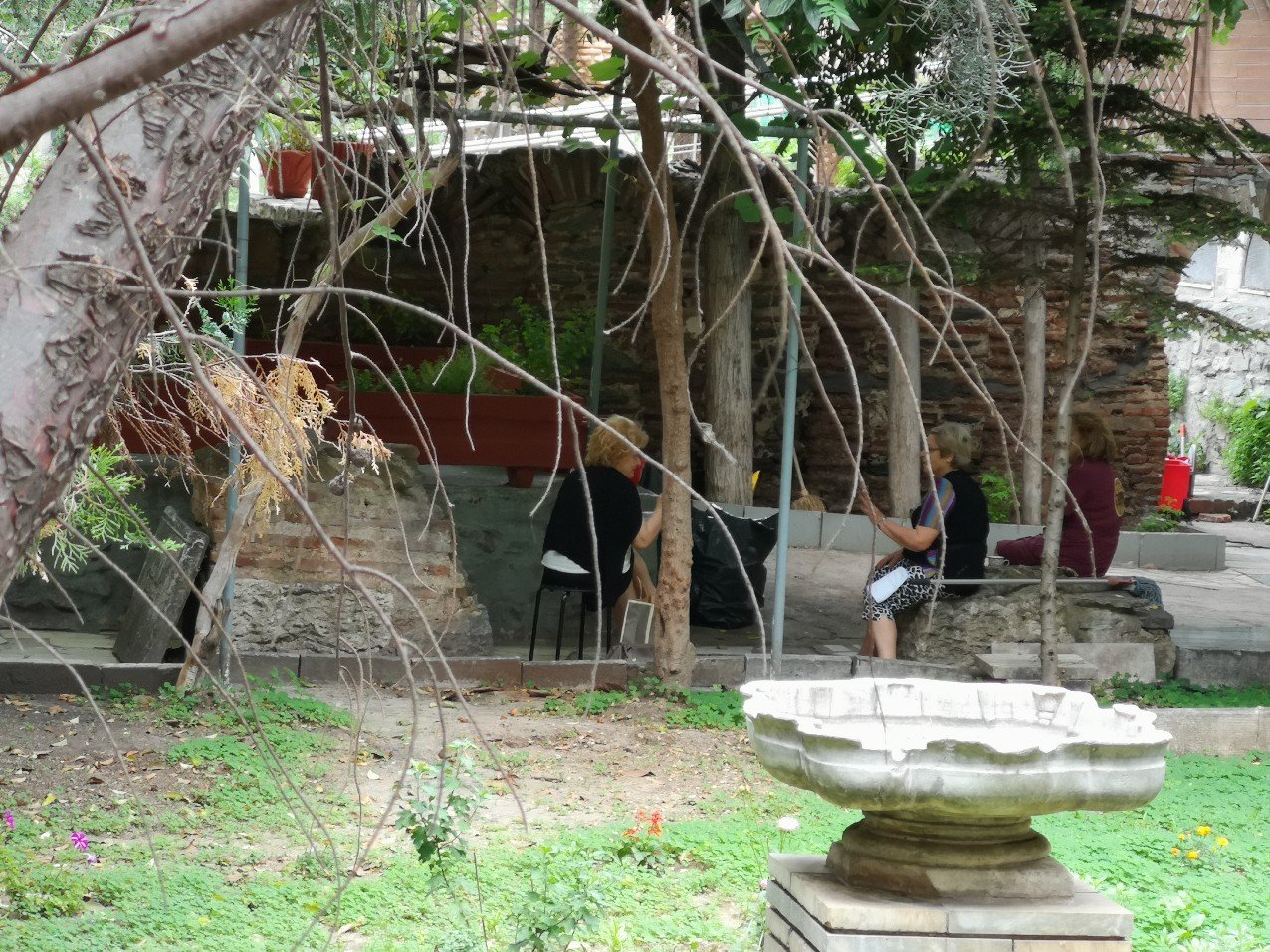
Women in black clothes chatting by trees
You can just about make out the women who had been keeping the church yard spic and span, taking a welcome break

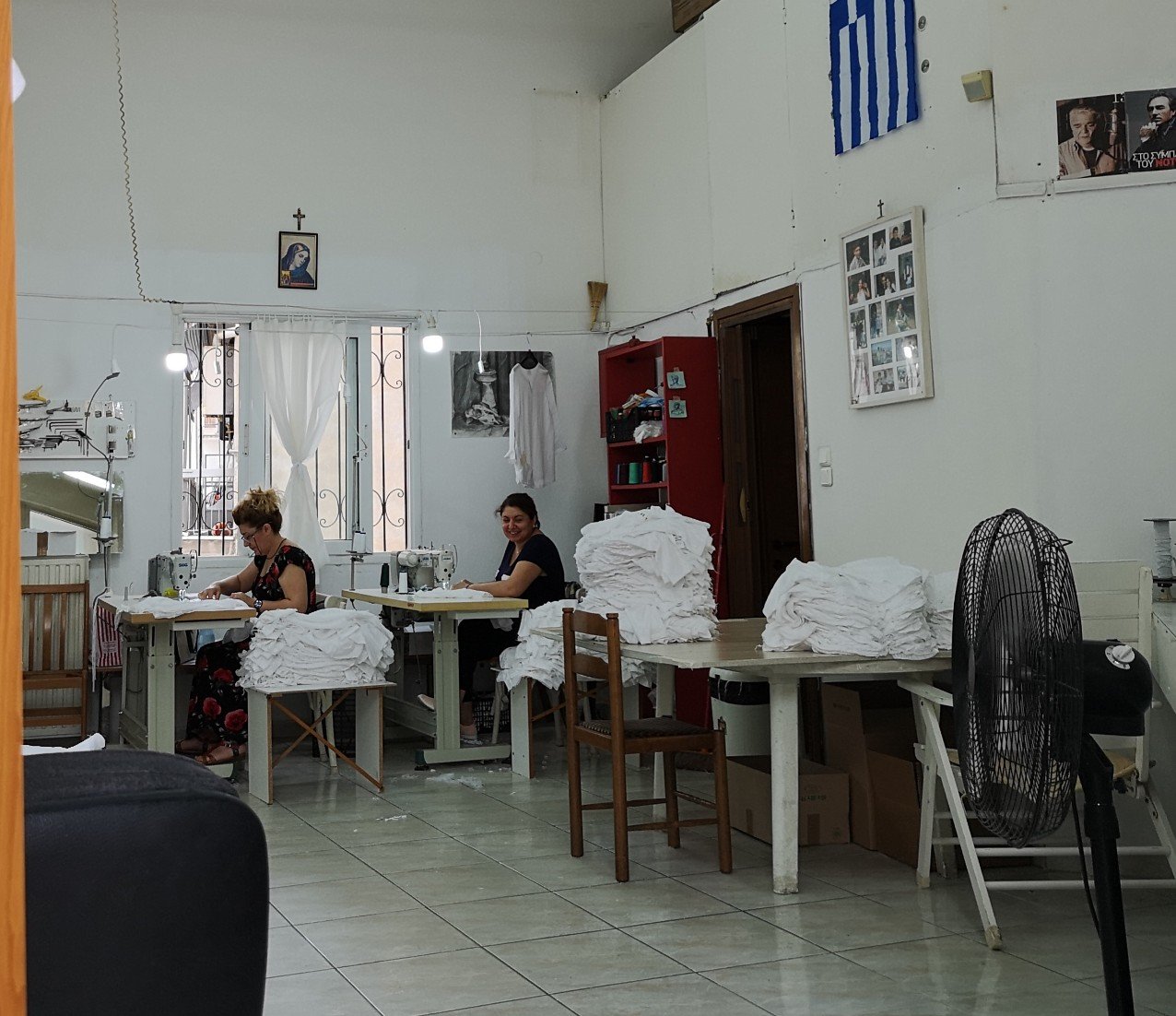
Sewing shop women
She turned round and gave me a huge smile so I asked permission to snap

Churches

In Greece many people draw a cross on themselves when they see a church. A woman on the train did it as we whizzed past one. Later I saw a man walking a dog, doing the same thing .

Church steps and plants

The priest was just emerging as I crept around the lovely church near my hostel

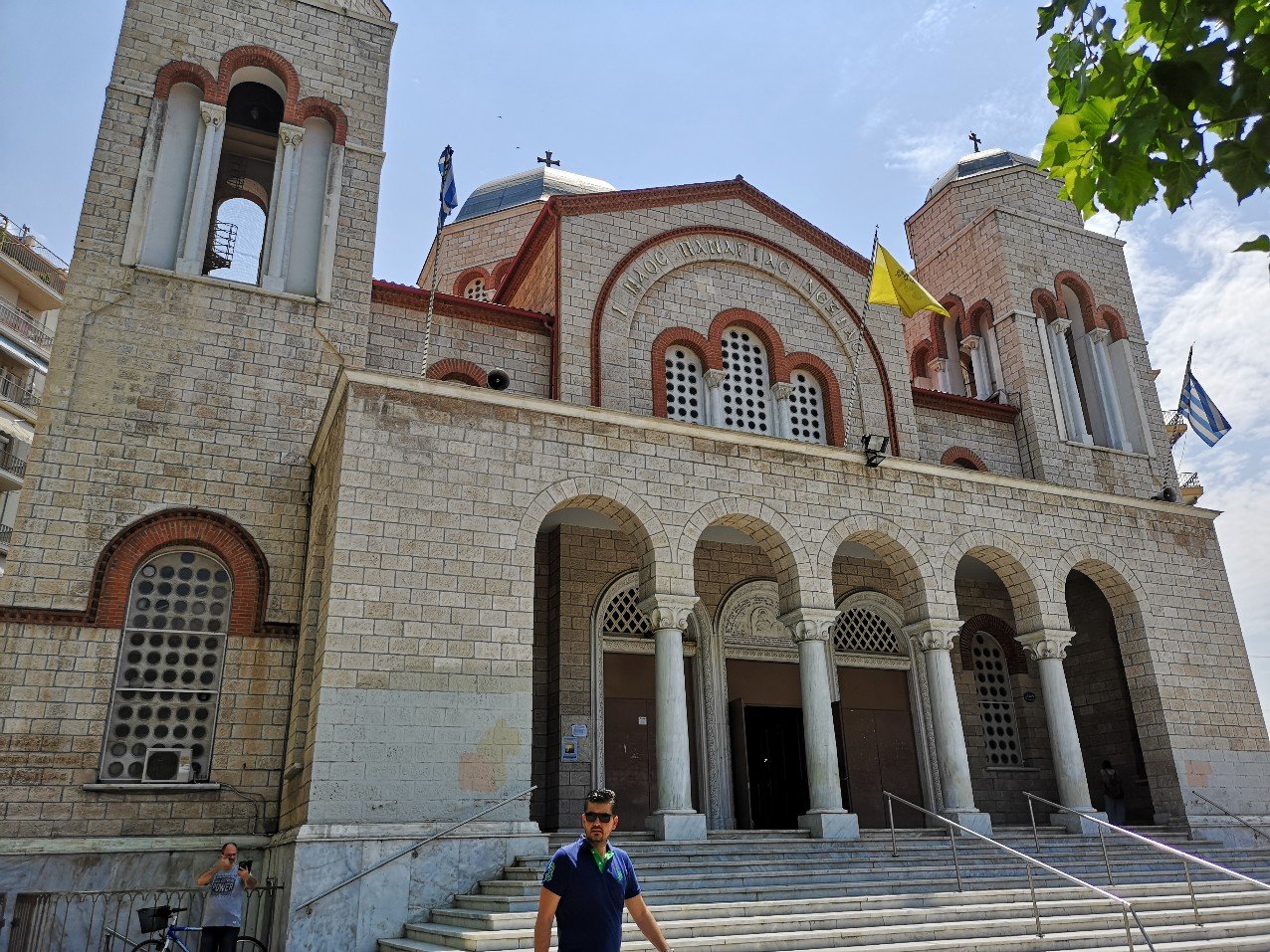
Greek Orthodox Church, Thessaloniki, Greece

Columns

There are Classical Greek columns everywhere in Thessaloniki.

White fluted uprights above flight of steps

Ionic columns add finesse to the Cathedral, Thessaloniki, Greece

Ruins

Decorated brick arches
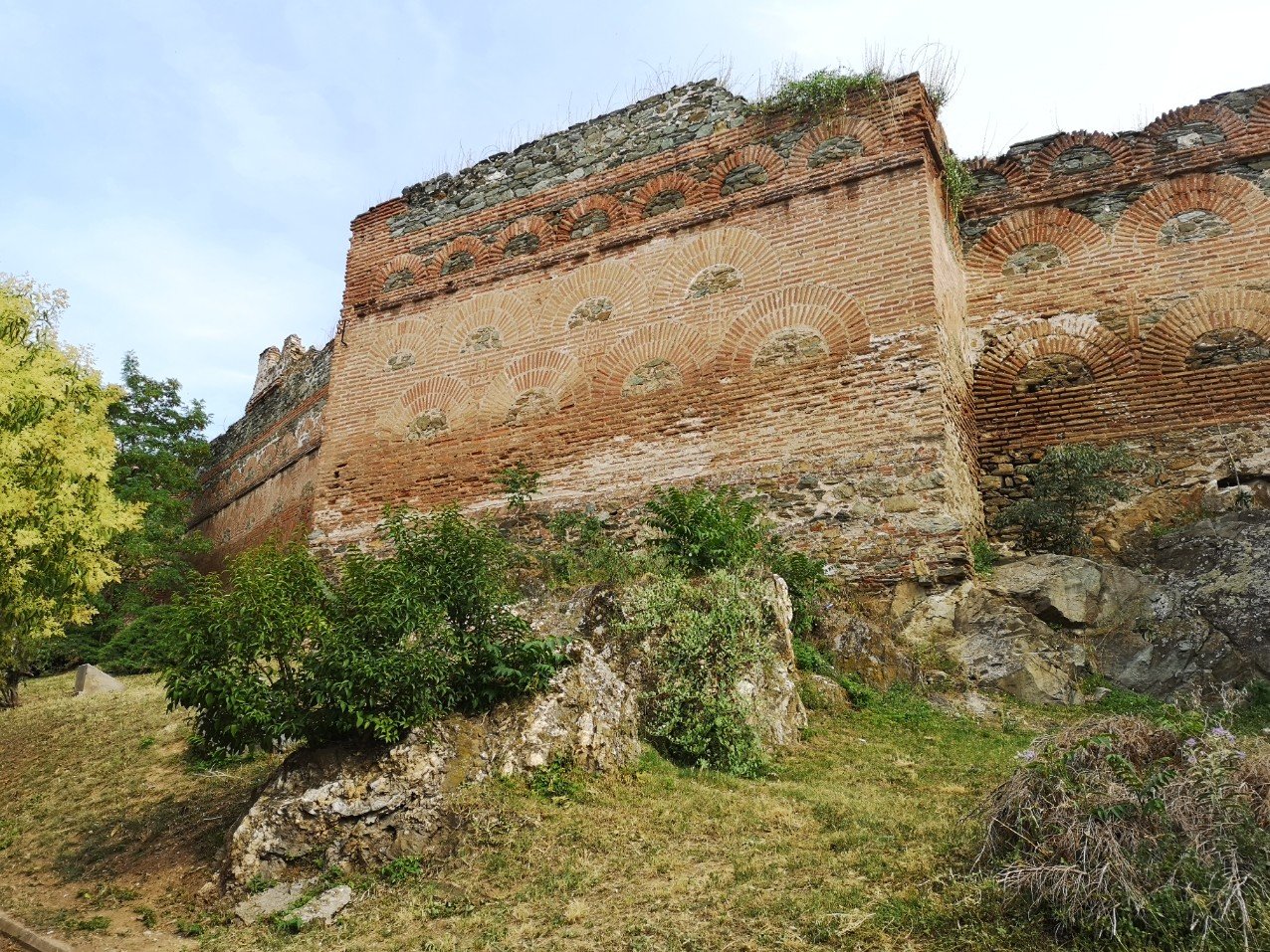
City walls

Soft coloured stone arch with blue sky and buildings visible through
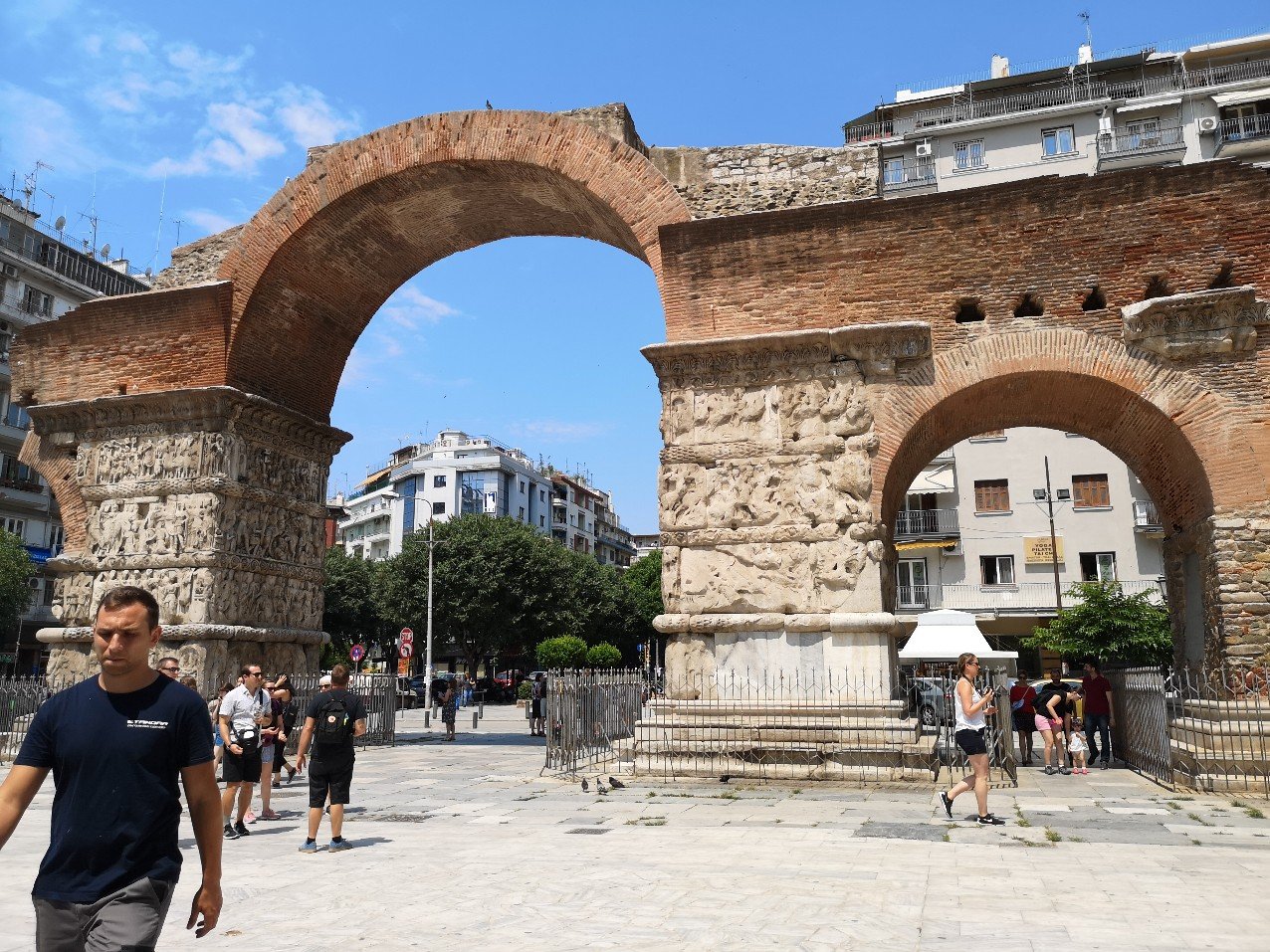
Arch of Galerius, Thessaloniki, Greece

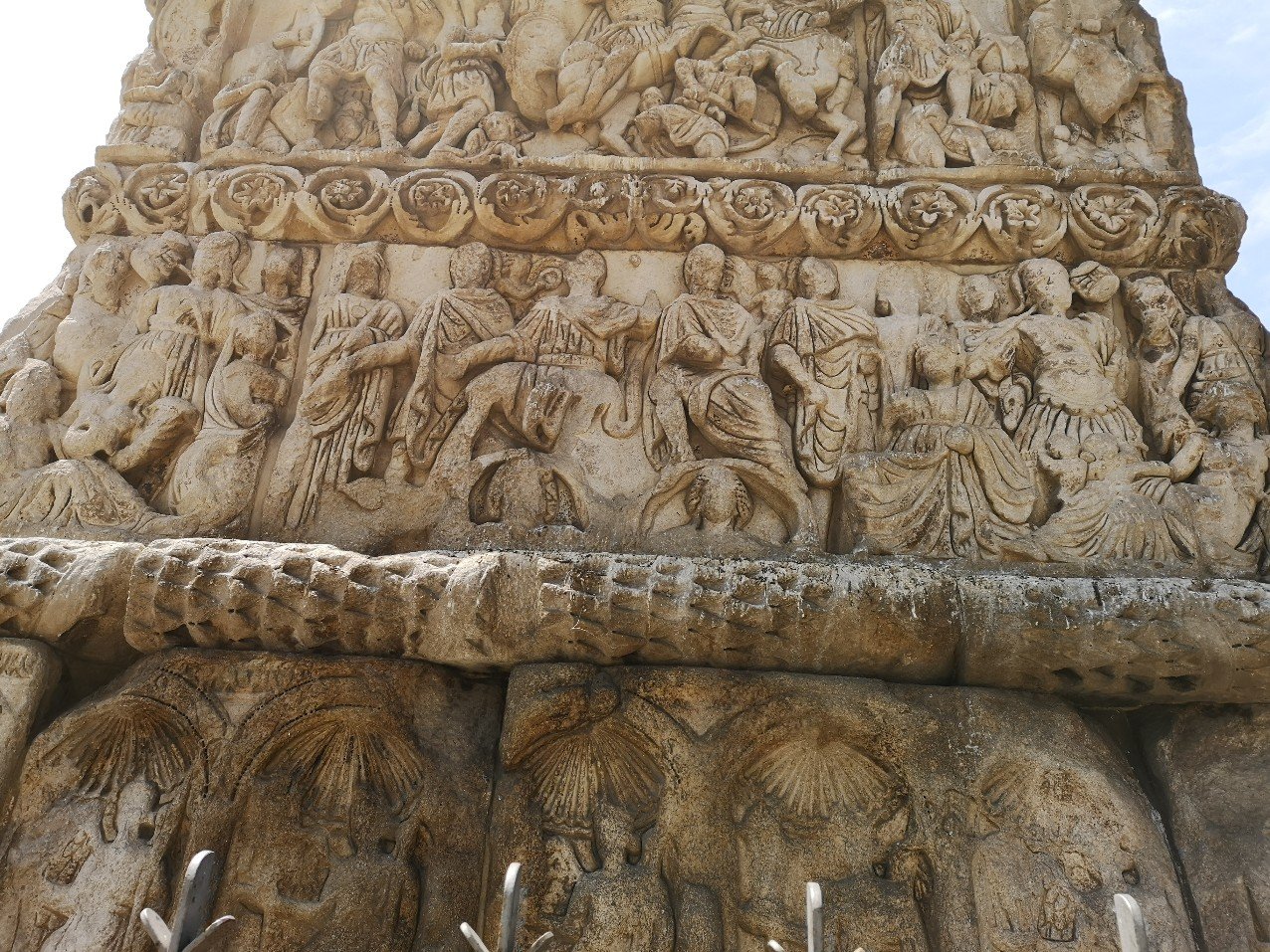
This ancient monument was built in 305 AD following the final victory of Emperor Galerius against the Persians.

Greek women dance around the pediment

Carvings from the arch

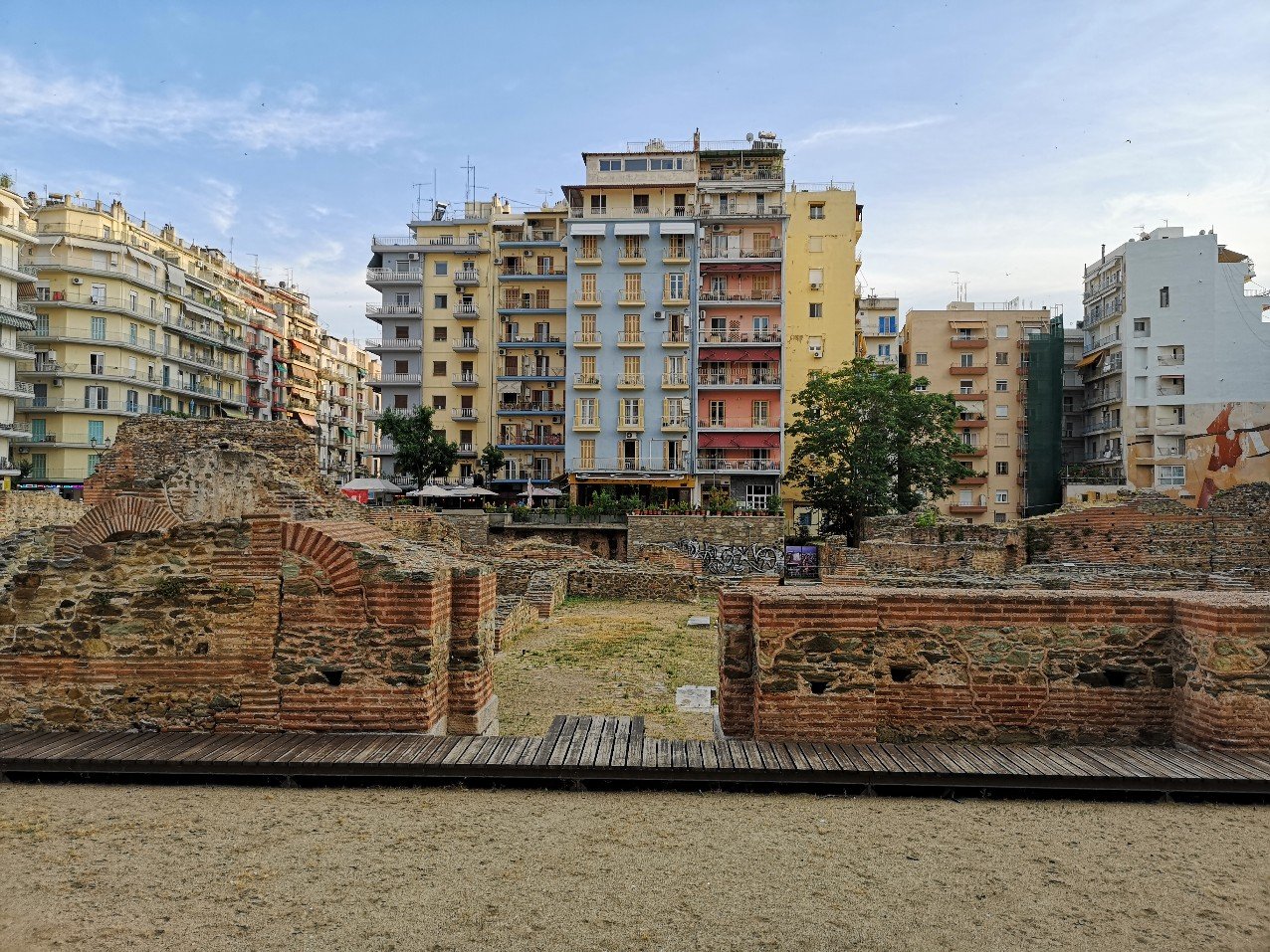
Apartment blocks and ancient walls

I liked the apartment blocks cheek by jowl with the ancient stone

Gardens

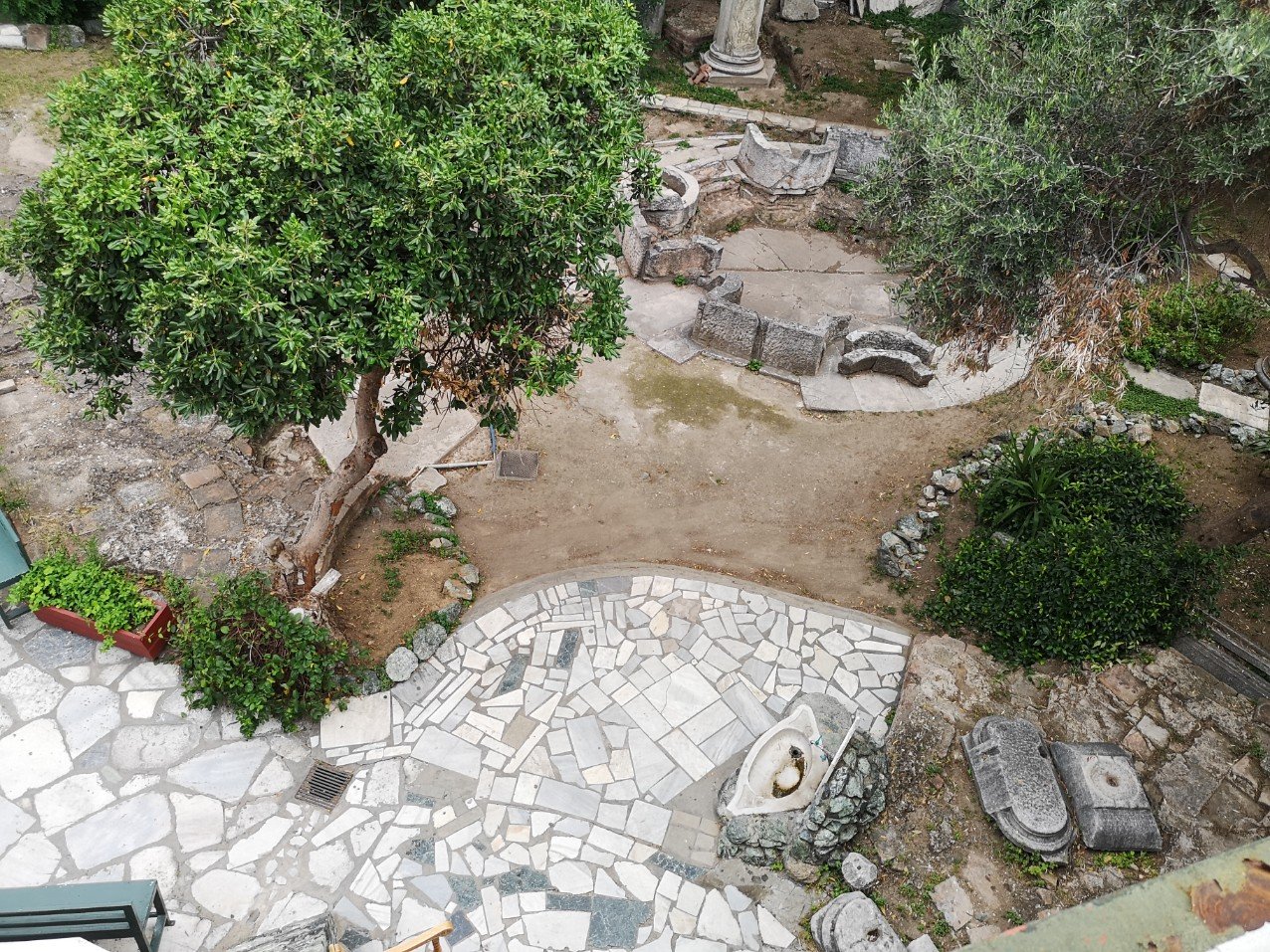
The sunken garden of the Greek Orthodox Church of St Demetrios

Everywhere there was marble – walls, floors, and columns of course!

Table and orchids
The marble basement of the B cafe at the Museum of Byzantine Culture

Other sights

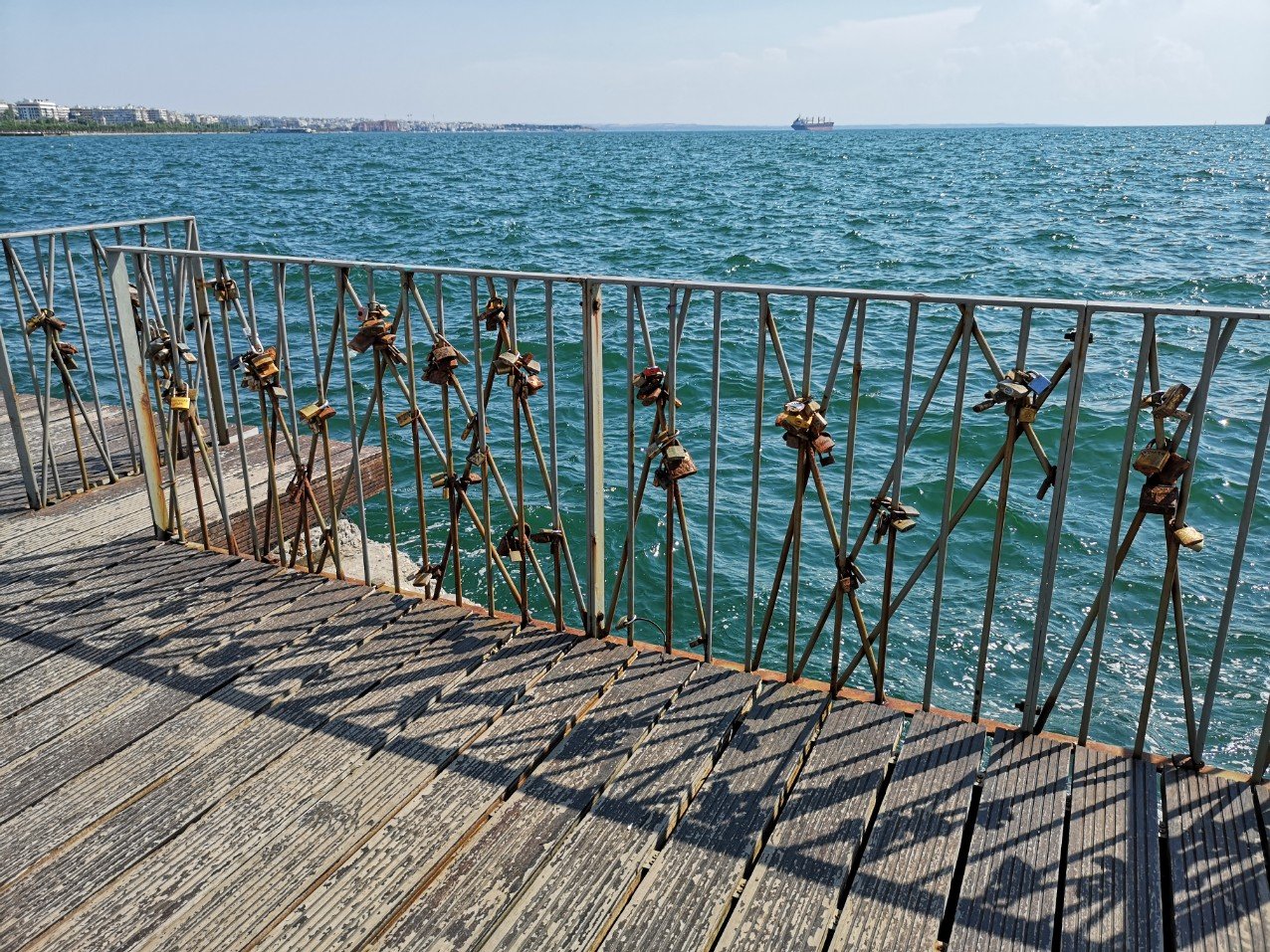
Railings by the sea
Padlocks for peace

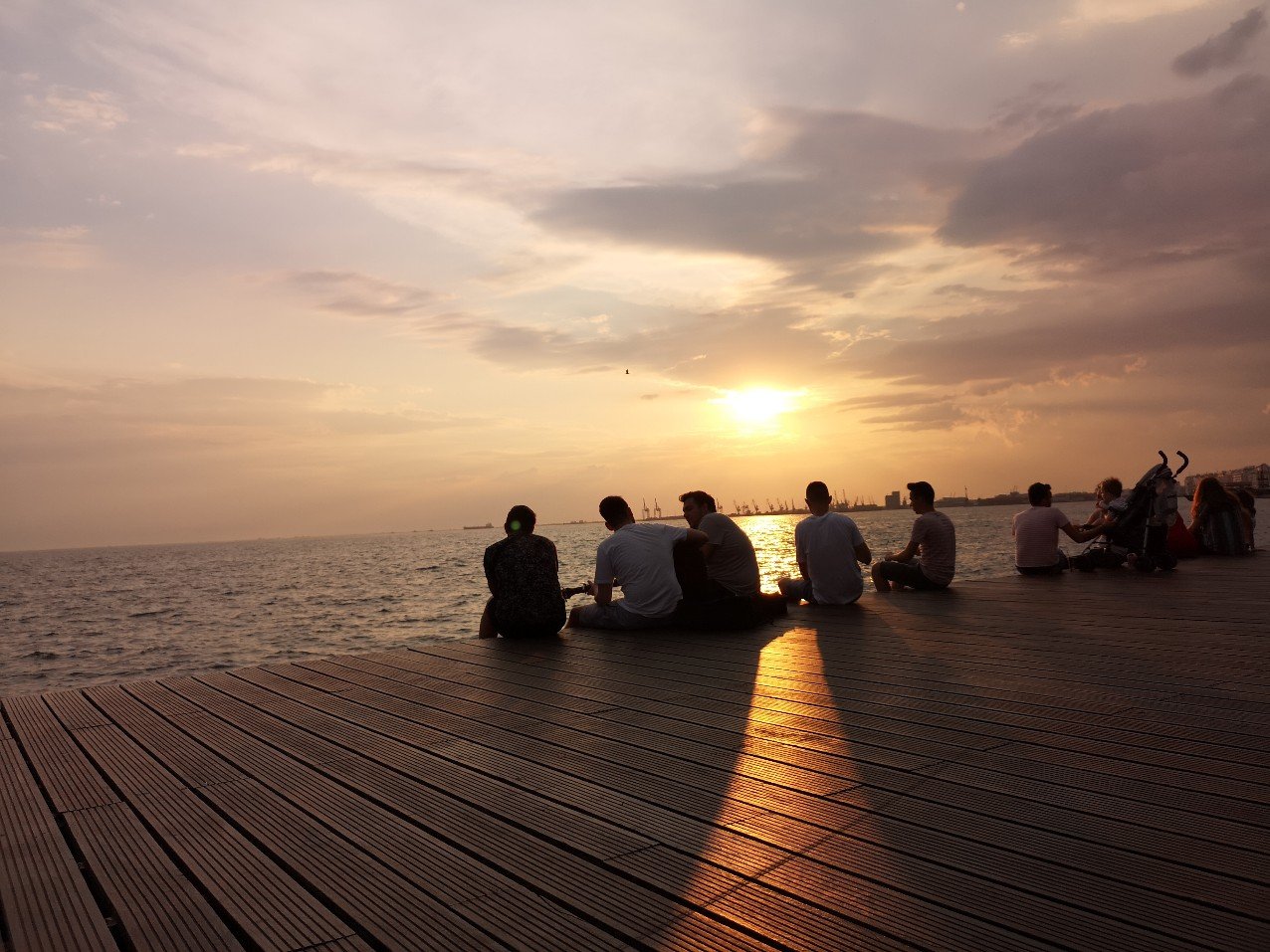
Men sitting on edge sea
Enjoying the sunset together

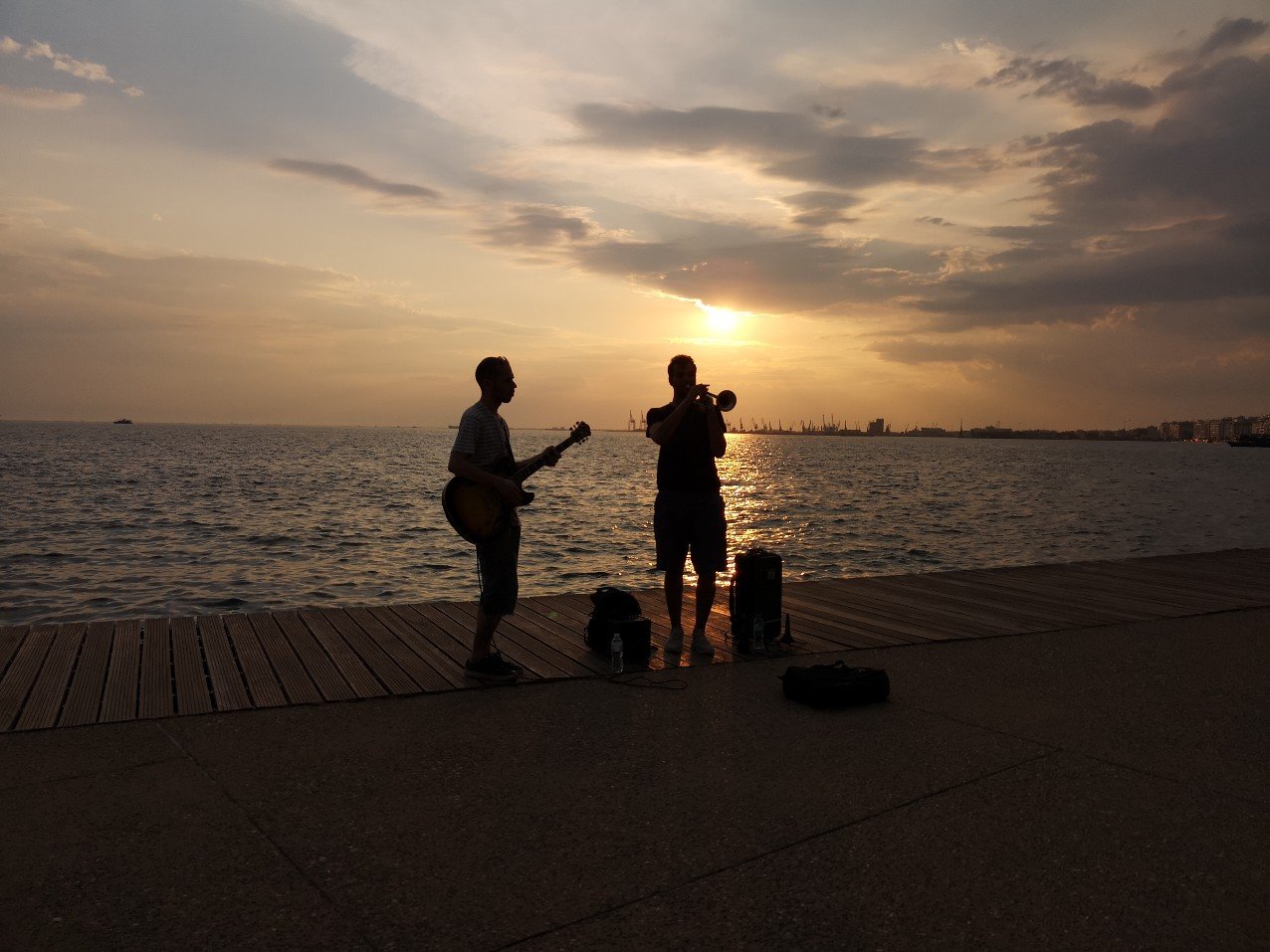
Musicians against setting sun
Trumpeter in silhouette

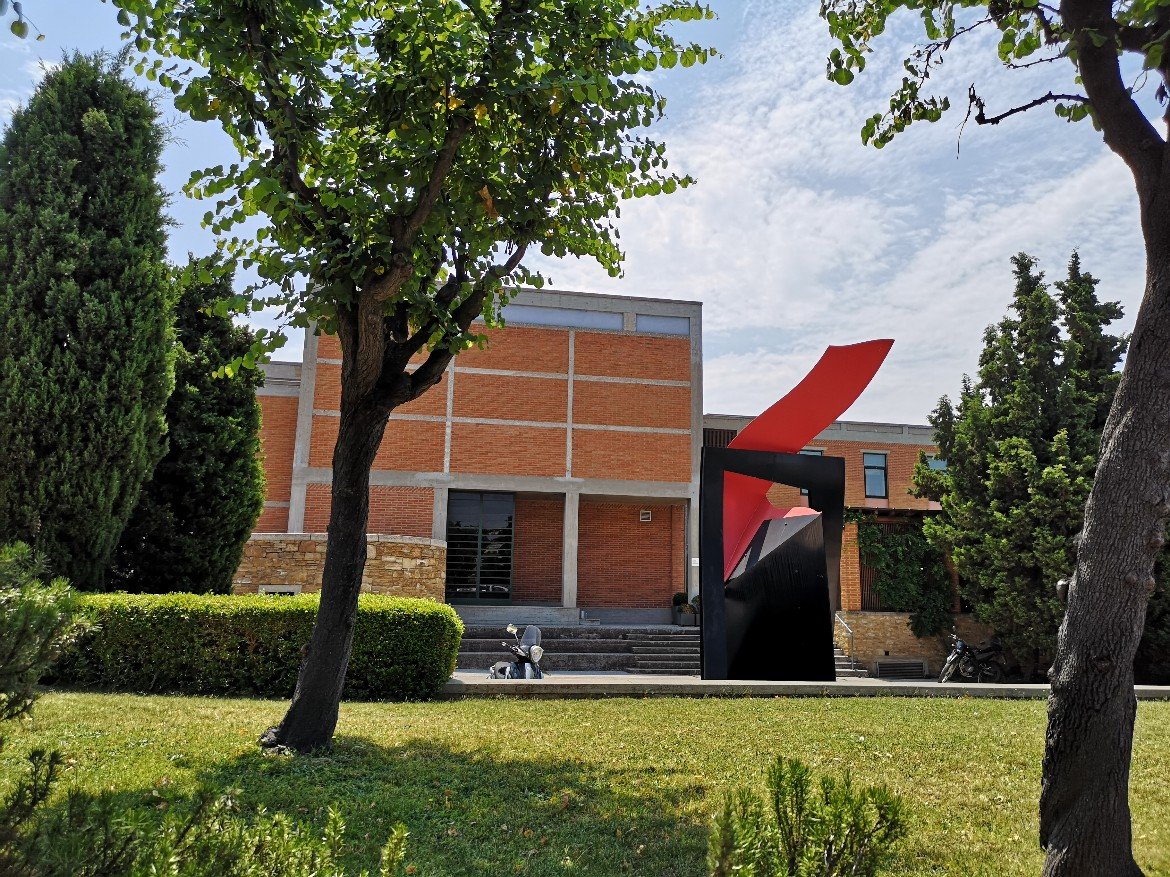
Red sculpture in front of building
Museum of Byzantine Culture

Reclining Greek figure
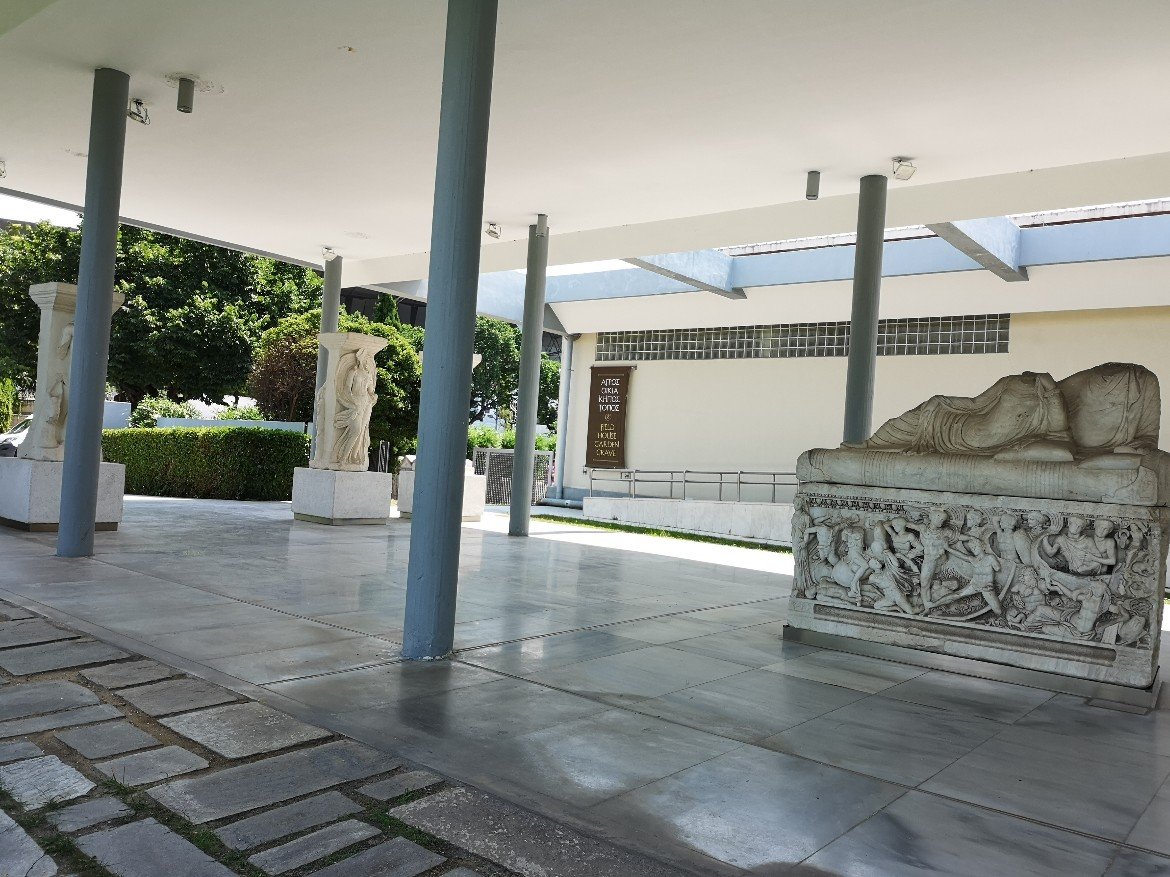
Greek Archeological Museum

Whitened stone memorial
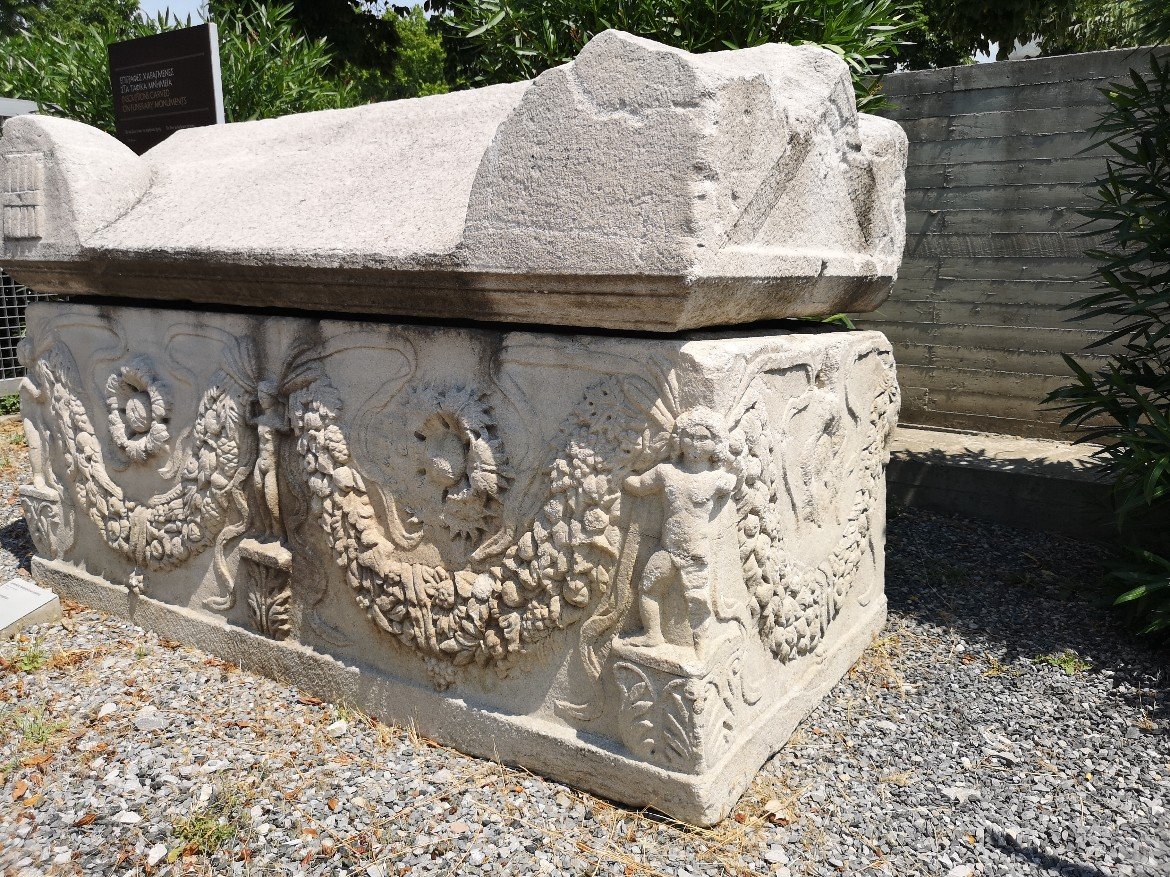
Sarcophagus, part of the Field, House, Garden, Grave exhibition at the Archeological Museum

Trees and religious building
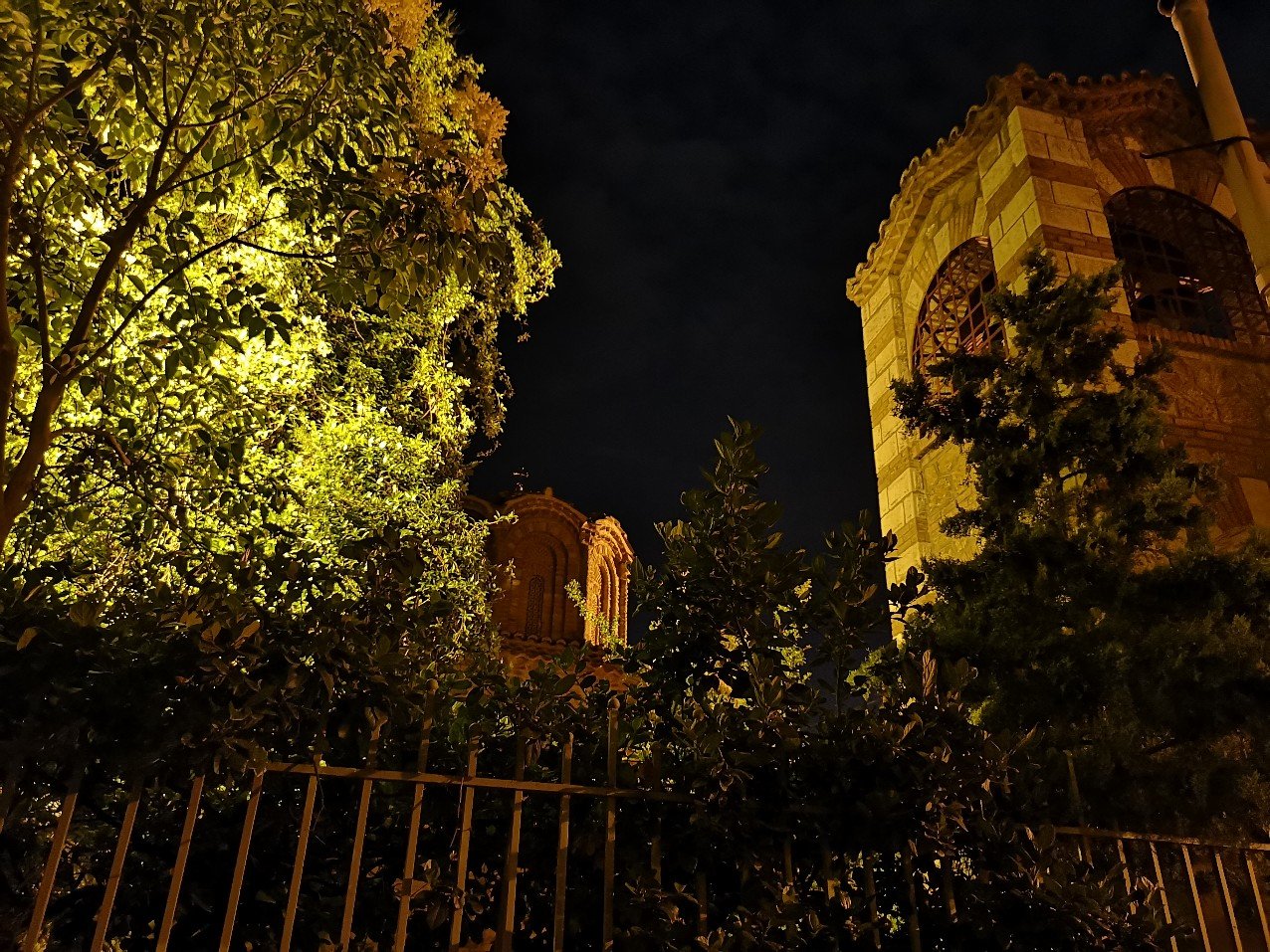
Church at night

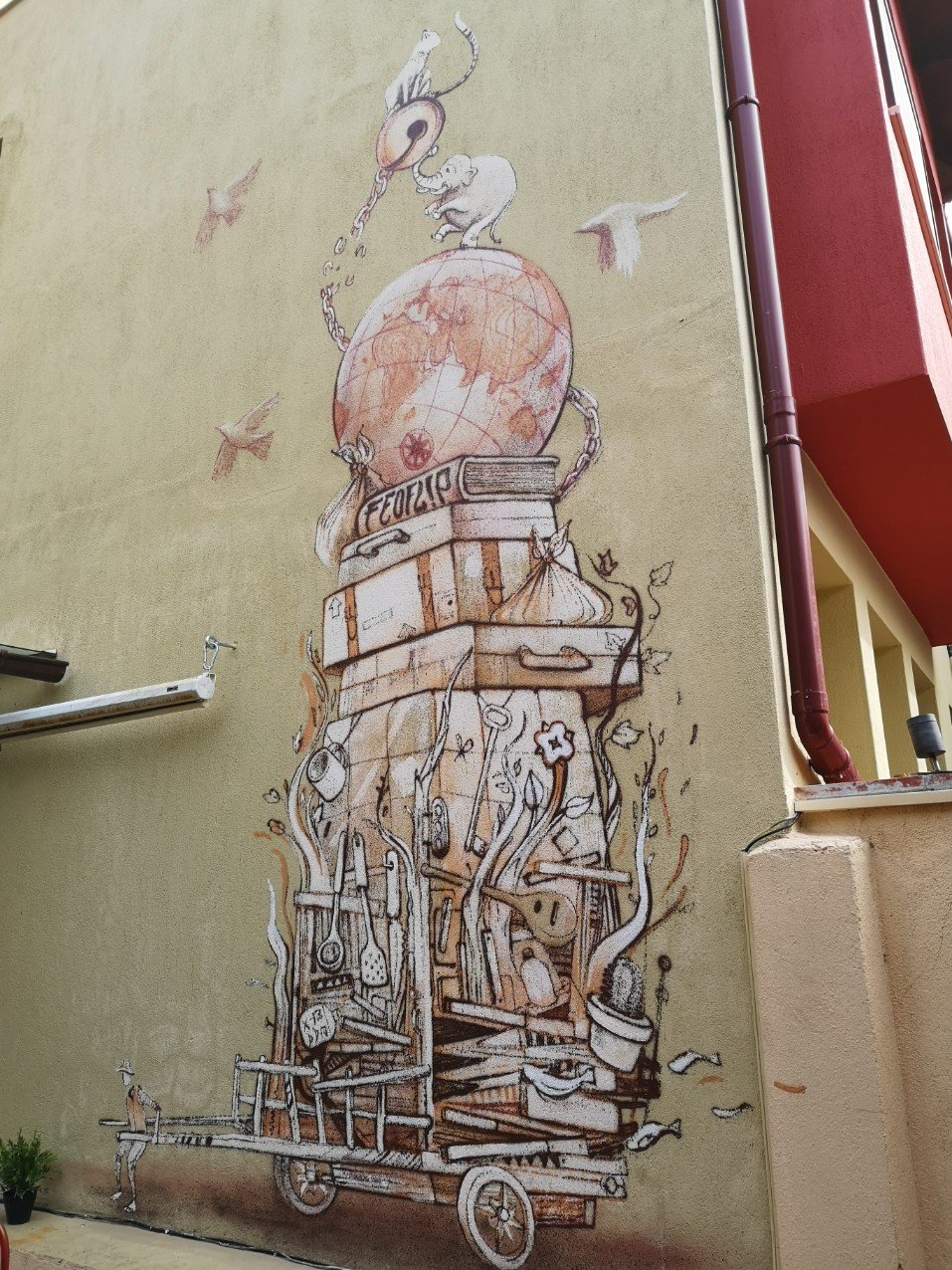
Humorous street art
Graffiti

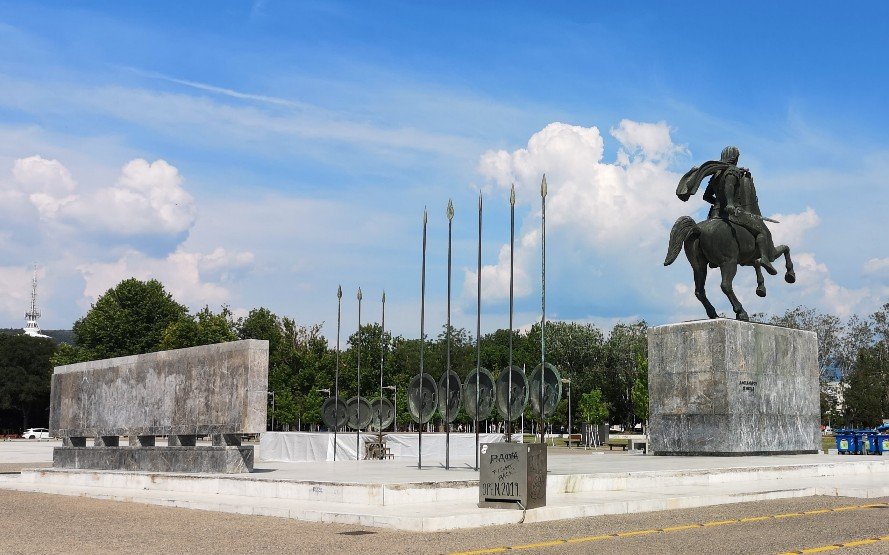
Man on horse on plinth
Alexander the Great. The spears are arranged in the formation from his best known battle

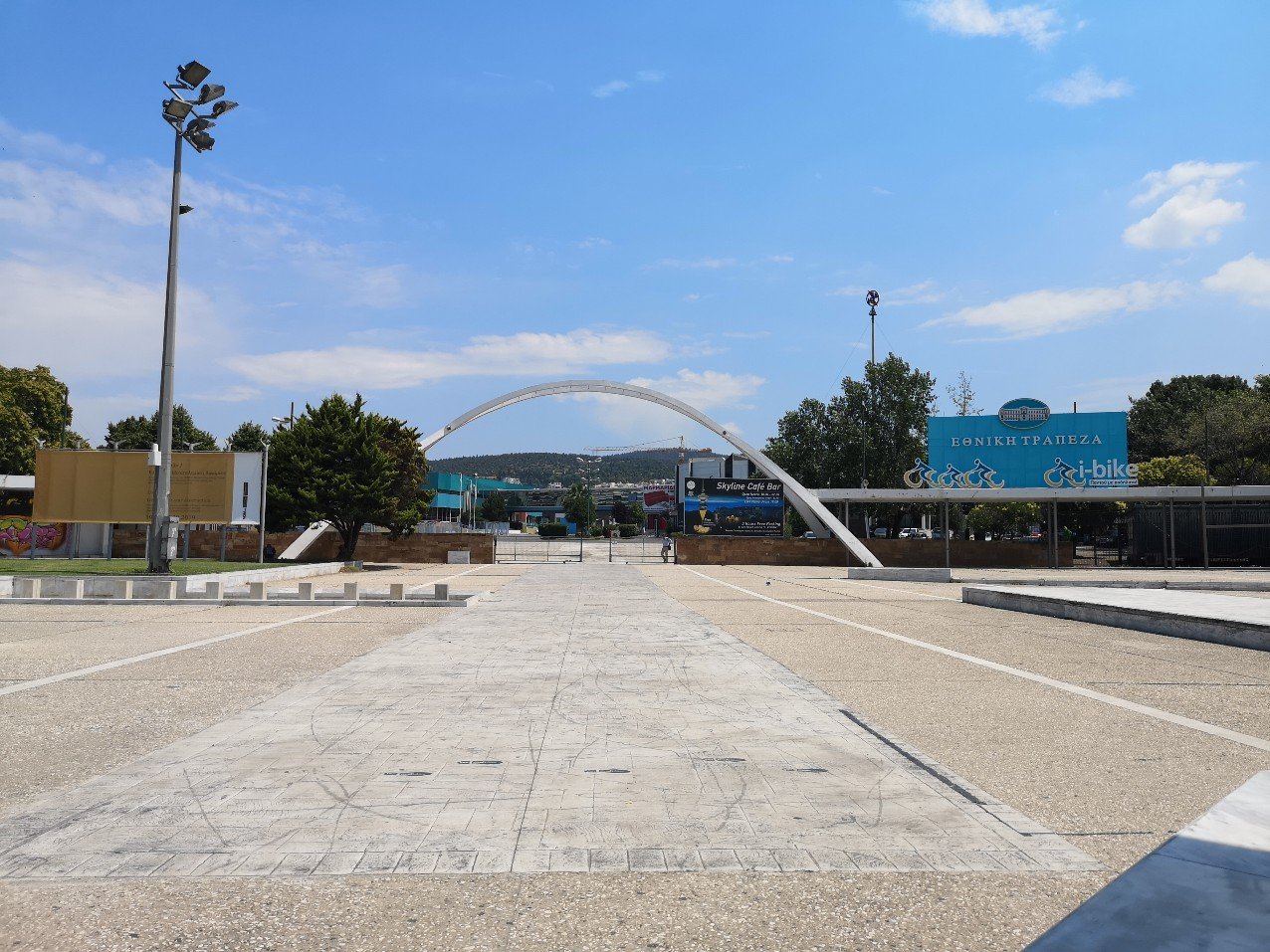
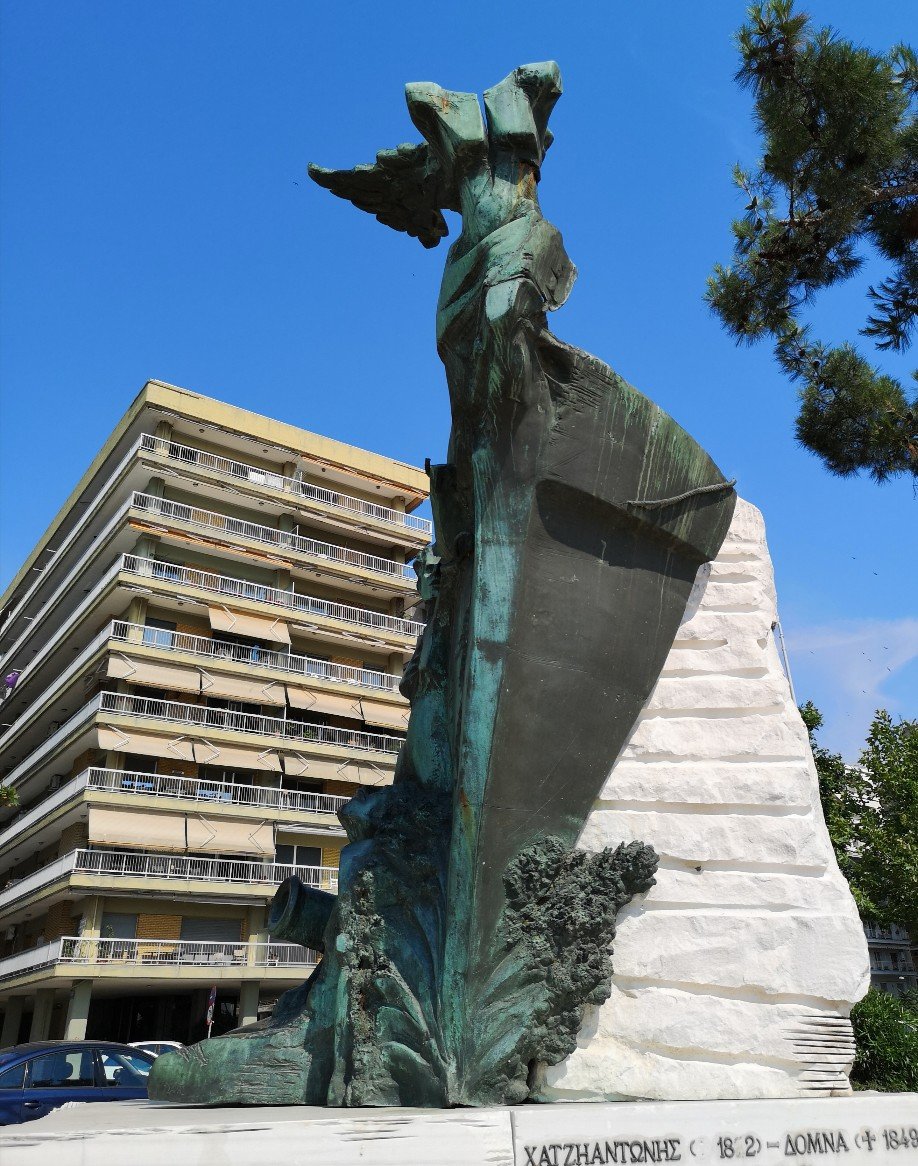
Monument
Woman of Pindos, 1940

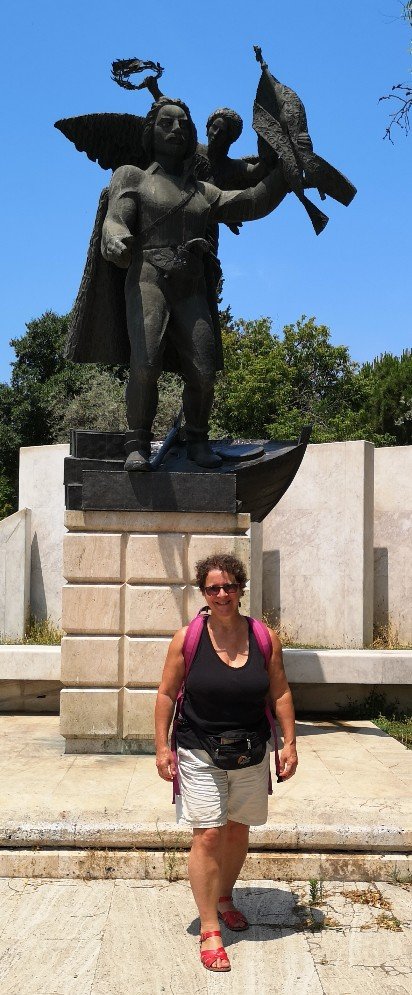
Statue and author
An undressed version Emanuel Pappas (1772- 1821) and me with my clothes on. He was the leader of the Greek War of Independence.