Sweat mapping

A guest post by Marie-Anne Lerjen, a walking artist from Zurich (Switzerland). Her website is in German.

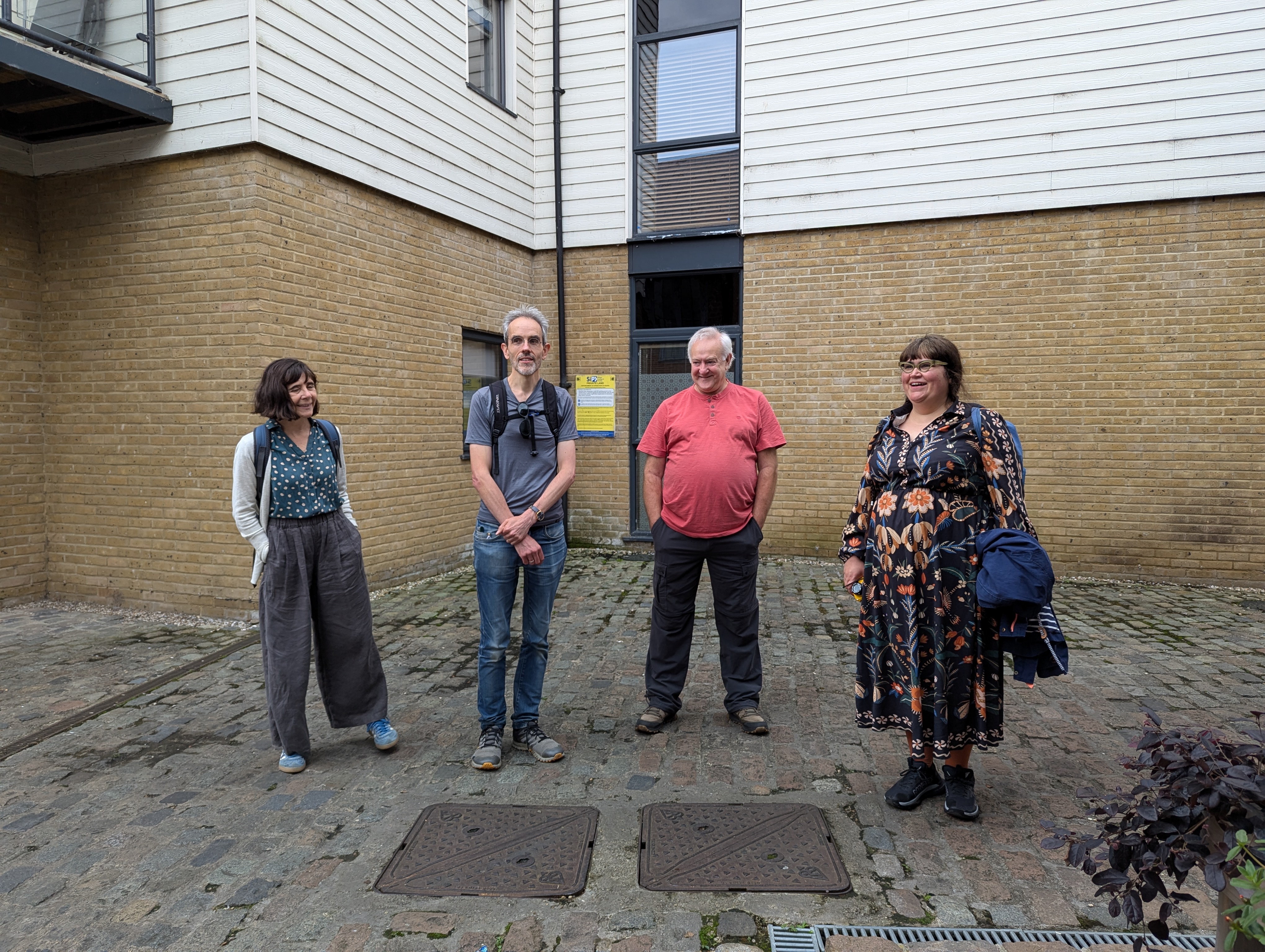
We walked a good long walk (24 kms) from Girona to Banyoles in Cataluña, setting off in a considerable heat (27 degrees) and finishing after dark. Here is Marie-Anne’s Sweat Mapping blog

It’s a quick but good listen on Soundcloud:

Featuring myself and many other walking artists from around the world who had congregated at the Art del Caminar conference.

Swift Moves

Live participatory Performance event by Tamsin Grainger and Natalie Taylor

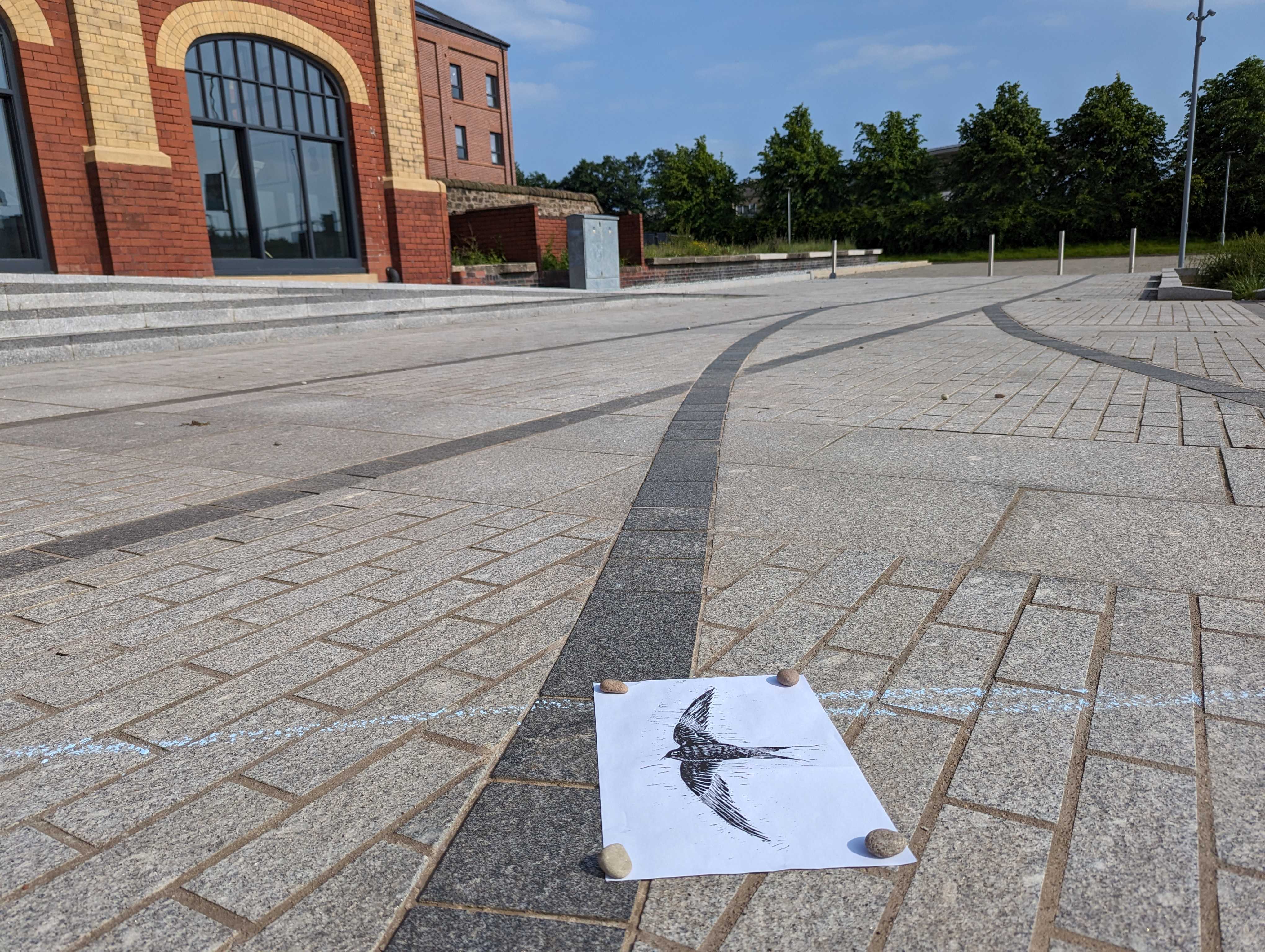
The artwork of Natalie Taylor in front of Granton Station, Edinburgh

This event took place on Friday 31st May 5-6pm at the Granton Station Plaza – outside the front of the new Granton Station (formerly Granton Gasworks Station).

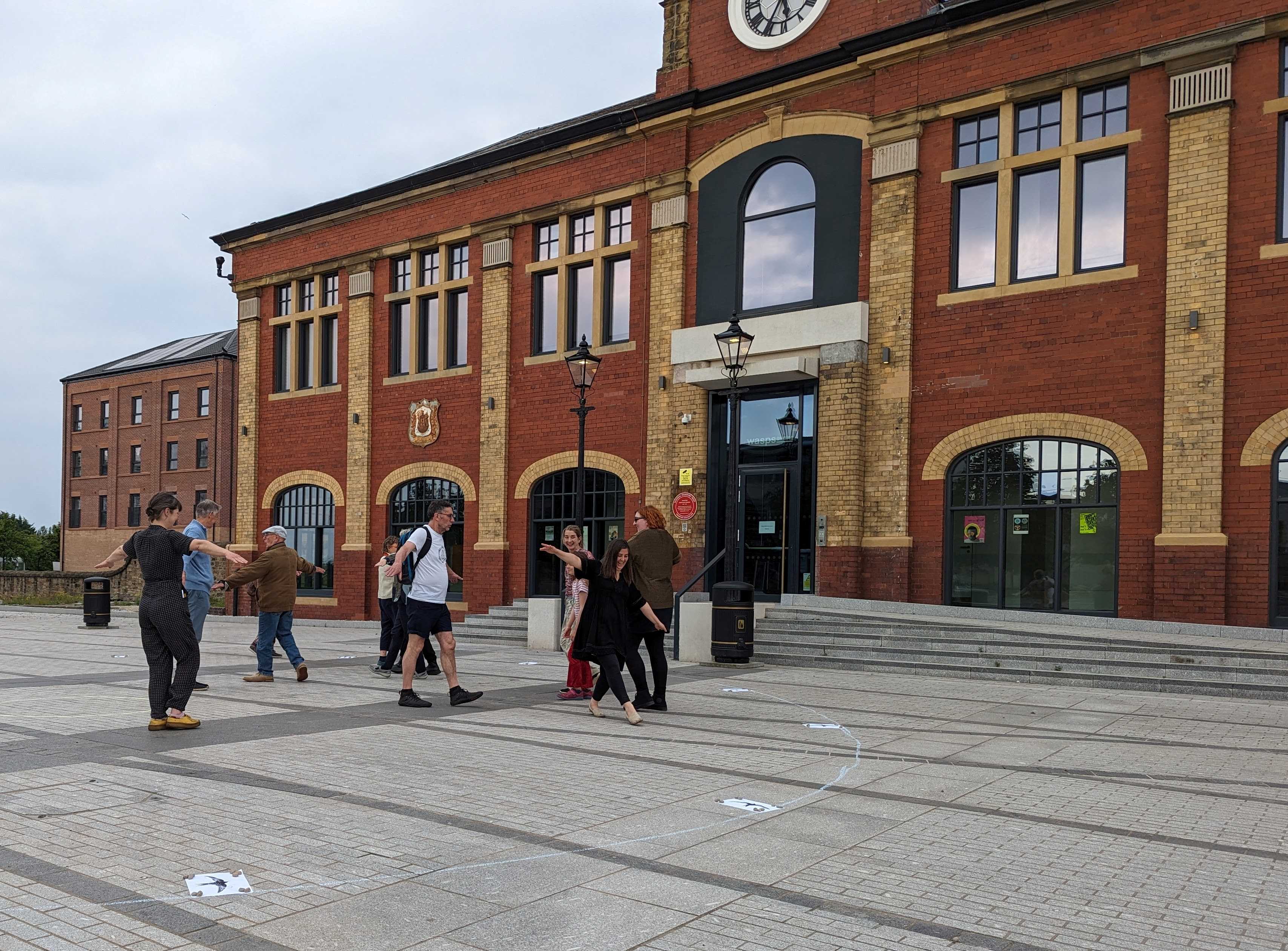
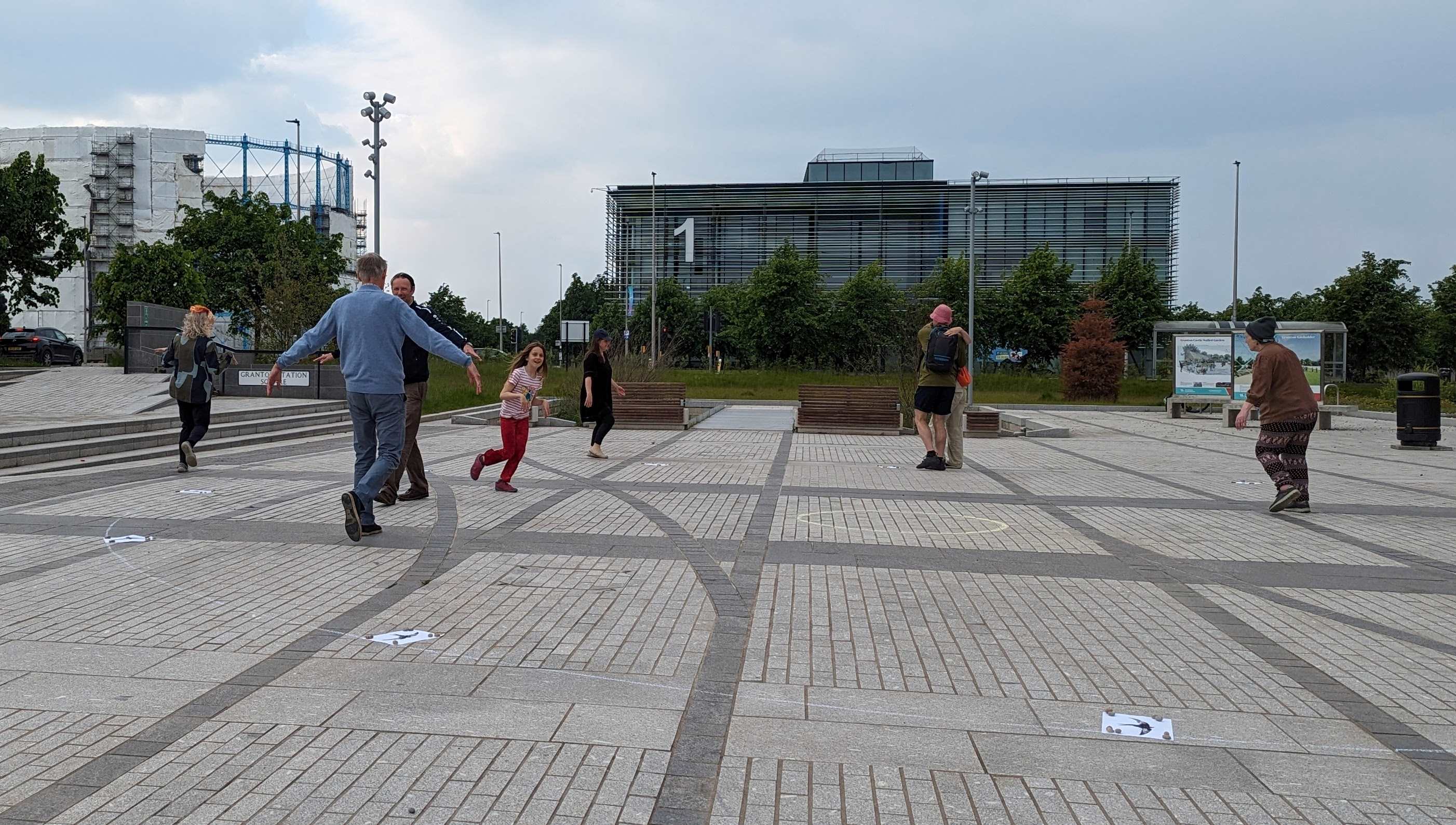
We explored the migratory patterns of birds and how it felt to walk alone and together in a ‘flock’ in a structured improvisation. No experience was necessary and everyone was welcome. It was accessible for wheelchair and mobility aid users.

Participants of Swift Moves, Granton Station, Edinburgh

This event was part of the Granton Gas Tower art commission design proposal, and took place on Waterfront Broadway, Granton , Edinburgh EH5 1FU W3W///groom.honest.apples (what 3 words)

Being swifts, Granton Station ,Edinburgh

Funded by the City of Edinburgh Council.

May Day, a provocation

I’m happy to be part of Kel Portman’s May Day project, an assemblage of artists’ work made on 1 May 2024.

I made a ritual sea swim with women from Granton, Edinburgh then walked from Granton https://w3w.co/porch.asks.rocky to Portobello https://w3w.co/land.fuel.middle

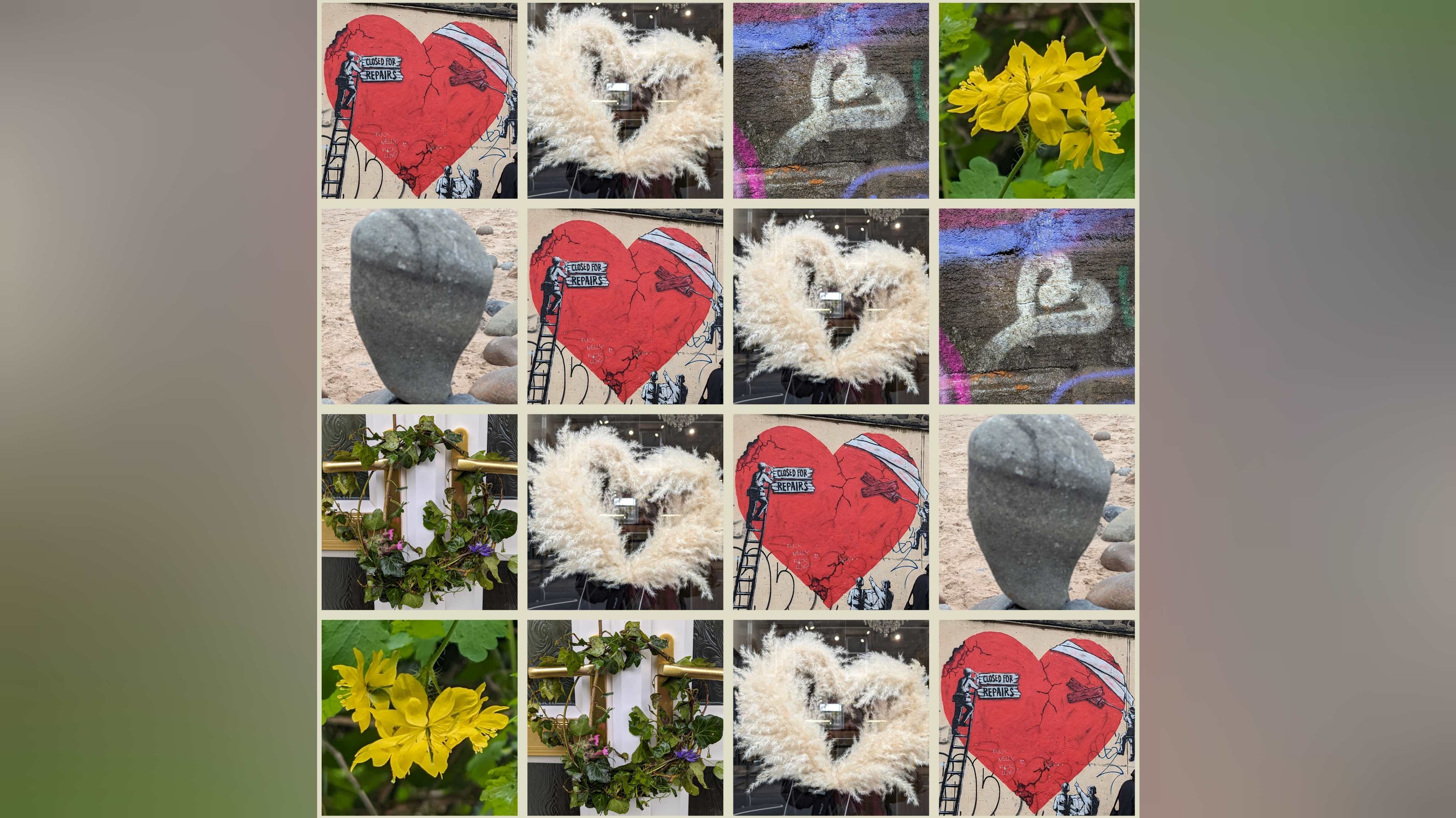
Inspired by Kel’s prompts, I had researched the goddesses associated with this time of year and incorporated them in my words and images.

Mayday Walking
Though Floralia dawned turquoise and pink, the haar cloaked us in grey.
wearing wreaths of bluebell and campion, we swam in the lace-edged estuary,
Flora, goddess of flowers, Aphrodite,
subtle of soul and deathless, of dove and seashells,
And Àine, the radiant.
Convinced that the sea is a restless woman and she an ordinary person,
She circled from home seeking celandine and comfrey in the hedgerows,
Smell of coconutty gorse and scent of scorched air,
By Stedfastgate, through The Quilts,
Collecting hearts as she went.
Love walked behind her, not quickly following,
Venus, didn’t catch her up.
Kneeling by the water where the stones were stacked,
Nut, sky goddess of the four directions, poured libation,
Isis, her daughter, offered healing,
And Wingéd Ma’at stood for justice, incandescent.
Notes:
A haar is a sea fog
'subtle of soul and deathless' is taken from Sappo’s Ode to Aphrodite
'a restless woman' comes from ‘Hagstone’ by Sinead Gleeson
Nut is an Egyptian sky goddess
Isis is Nut’s daughter, invoked in healing spells to benefit ordinary people

With thanks to Natalie Taylor @natalietaylorartist

With me, Suze Adams, Sabine Crittall, Jaqui Stearn, Amanda Couch, Kate Roberts, Therese Livonne and Kel Portman

Knock on Wood

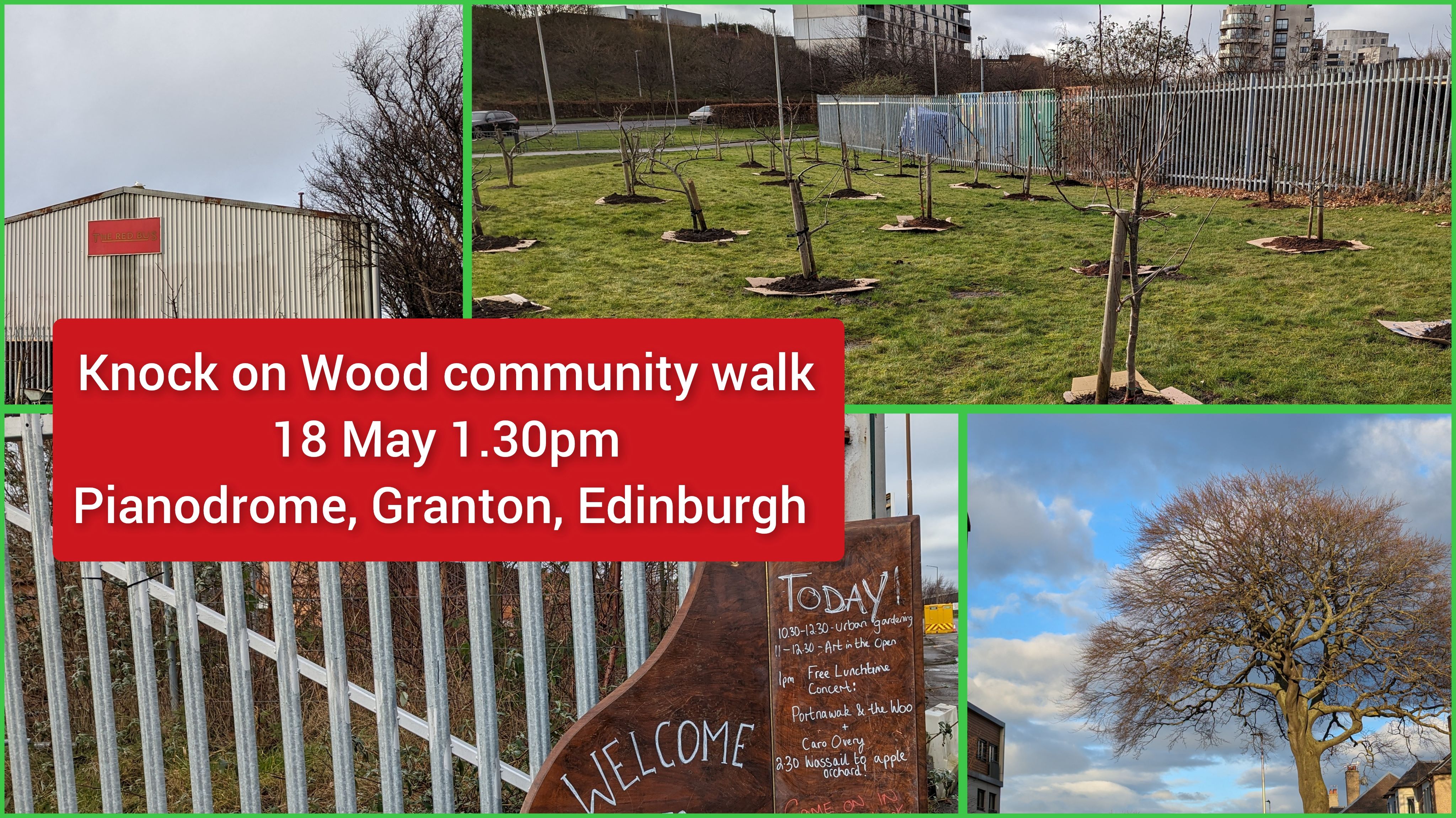
May 18th 2024 1.30-3.30 Gather at Pianodrome, Granton, Edinburgh. Book via Eventbrite

Listening to the tree types we will visit (from top left around down and across bottom right to left:

American Sycamore, Rowan (leaves, bark/trunk), Apple, Whitebeam, Hazel, Wych Elm, Wheatley Elm (whole tree), Willow, Hazel, Cherry, Alder, Wheatley Elm (leaf and bark), fir (unknown name), Himalayan Birch.

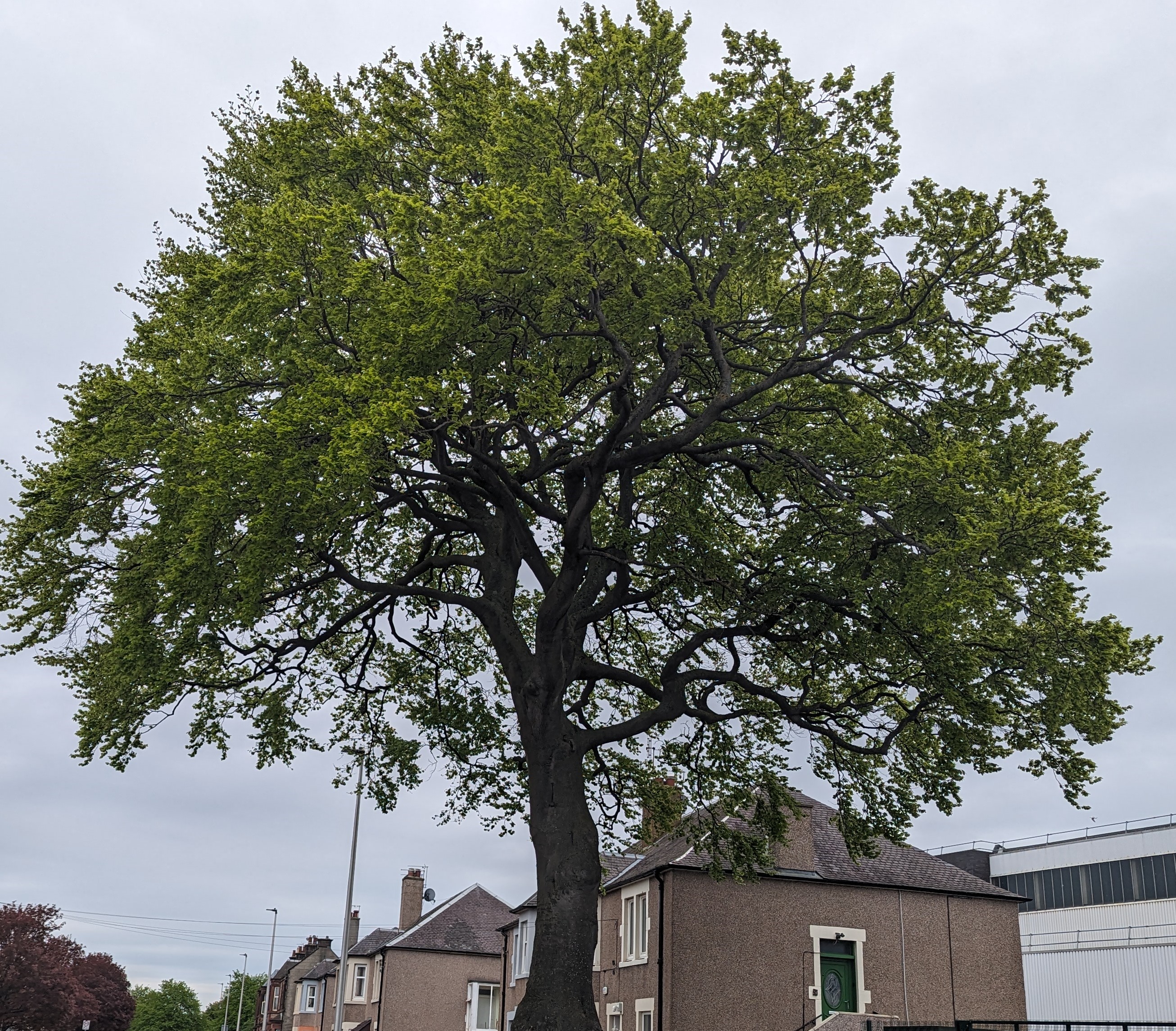
We will also see Whitebeam, Silver Birch, Oak, Scots Pine, Copper Sycamore (or is it Maple?), Beech, and the Pianodrome / Granton Apple Orchard.

Pauline Oliveros

We will be practising Deep Listening, as developed by Pauline Oliveros, which:

explores the difference between the involuntary nature of hearing and the conscious nature of listening. It cultivates a heightened awareness of the sonic environment, both external and internal, and promotes experimentation, improvisation, collaboration, playfulness, and other creative skills vital to personal and community growth.

https://www.deeplistening.rpi.edu/deep-listening/ 

See also the full Knock on Wood story here

Nearby:

The Wall sound walk also by Tamsin Grainger

Knock on Wood – urban tree festival

I’m inviting you to walk with me to Knock on Wood, making a collective sound walk to celebrate the Urban Tree Festival in Granton, Edinburgh on 18th May 1.30 – 3.30 pm. This event is free of charge. Save the date!

Hammers made from the insides of pianos for knocking on trees gently

Starting and ending at the Pianodrome, Granton. Refreshments will be available at 3.30pm (by donation). Accessibility: For everyone – mostly pavement walking, so wheels will be as welcome as feet – human, dog or other.

Book via Eventbrite

Birch tree

As well as being a song by Amii Stewart, the title for this walk Knock on Wood comes from a description of what people do when they’re looking for suitable trees to make pianos with. They knock on them and listen to the tone to see if they’re suitable. 

We will walk together, to and around trees in Granton, knock on them and record the sounds, making a collective sound walk. 

If you have a sound recorder or a recorder app on your phone, please bring it with you. Remember to charge it first! I will compile the recordings after the walk and hope we will have some material to make something of it. If walkers wish to be involved afterwards, that would be great. You will also be welcome to bring sketch books, draw, paint or respond in other ways to the trees we visit in the urban setting.

Hopefully we can visit some of the types of trees (using the Edinburgh Tree Map – link below) that are sometimes used to make pianos – spruce (Norway and Sitka), beech, rock maple, Douglas fir, walnut, cherry, alder, ash, holly, hornbeam, oak and Pippy (cat’s paw) oak. If you know the location of these trees in the vicinity of the Pianodrome, please let me know and I will divert the walk to include them if I can.

Wood used in piano making

The type of wood used for the acoustic part of Pianos is called Tonewood. This is the Wood that can be tested through knocking. It comes from the ‘European’ spruce tree, but it must be grown under very special circumstances. There must be sufficient altitude and I’m told that there’s nowhere in the UK high enough. Oak is an excellent tonewood, though it is rare to find it in commercially-available instruments. It has a warm, mellow resonance and is particularly suitable for an heirloom quality English piano. 

The density of wood is based on how quickly the tree grows. When a tree grows slowly, the rings within are packed tighter together and when a tree grows quickly, the rings are further apart. Because trees grow at different rates based on the weather, temperature, soil and no end of other external factors that might affect them, the common, everyday tree has a variation in the size of rings within it meaning that it will ‘sound’ inconsistent.

With thanks to Adam Cox of Cavendish Pianos, Jamie of British Hardwoods and Millers Music (Cambridge)

Holly

As some of you know, I have made walks before about Absent Trees of Granton – trees taken down to make way for the extensive new housing, so the Knock on Wood sound lyrics seem appropriate:

“I don’t want to lose you, this good thing
That I got ’cause if I do
I will surely
Surely lose a lot

You better knock, knock on wood, baby
You better knock, knock knock, knock, knock”

Amii Stewart, Knock on Wood song lyrics
Would this wood sound inconsistent?

Knocking on wood (also phrased touching wood or touch wood) is an apotropaic (a type of magic intended to turn away harm or evil influences, as in deflecting misfortune or averting the evil eye) tradition of literally touching, tapping, or knocking on wood, or merely stating that one is doing or intending to do so, in order to avoid ‘tempting fate’ after making a favourable prediction or boast, or a declaration concerning one’s own death or another unfavourable situation.

Wikipedia

Pianodrome address: Pianodrome Warehouse Granton, The Red Bus Depot, 28 West Harbour Road, Edinburgh EH5 1PN.

Sweet Chestnut Tree

Find the Pianodrome near the crossroads of Chestnut St (Granton Middle Harbour), Waterfront Avenue and West Harbour Road, 10 minutes walk westwards from Granton Square.

Nearest transport links: There is parking at the Pianodrome. Buses: the 9 passes very close to the venue. Granton Square: 16, 19, 22, Airport 200. Good cycle paths in and out of the area though the West Harbour Road can be busy so take care.

W3W/// cried.emerge.gift

An official part of the Urban Tree Festival 2024 programme

See also Knock on Wood

Collaborating with:

Urban Tree Festival https://urbantreefestival.org/

Pianodrome (piano experts and custodians of the community orchard) https://www.pianodrome.org/

Edinburgh tree map http://edinburghtreemap.org/

City of Edinburgh Council Forestry Service

Granton Community Orchard

Important documentation you might like to read:

City of Edinburgh Council Forestry Services https://www.edinburgh.gov.uk/downloads/file/34091/forestry-service-standards-performance-indicators

Trees in the City

https://www.edinburgh.gov.uk/downloads/file/34092/trees-in-the-city-tree-management-policies

Scottish Government on our trees: https://forestryandland.gov.scot/

Title photo: the magnificent oaks of Dalkeith Country Park

Thanks to Ewan Davidson for his help in identification and checking.

Book via Eventbrite