There are lots of things I could do to face up to the serious climate crisis I find myself part of. I could stay at home and recycle, join a committee and work towards political change, lie down on the M25 and get put in prison to raise awareness, I could throw myself in front of a horse to get attention.
Why walk instead of doing anything else? Why would I stop earning (I’m self employed), pay for someone to be at home to look after my cat, and walk in the unpredictable Scottish weather?
The statements of intent of Pilgrimage for COP26 are these:
We’re walking to raise awareness of the climate and ecological crisis.
We’re reflecting on that crisis as it relates to our own lives, the communities we pass through and the lives of those already impacted; both human and more-than-human.
We’re building a community of witness and resistance committed to climate justice now and in the wake of COP26.
Yet still I find myself asking, but why walk? I could run or cycle and there are lots of other ways to raise awareness, to reflect, and build a committed community.
My answer: because walking is special.
It is very slow, a counterpoint to the speed of life. (Google tells me it would take me 1 hour and 24 minutes to drive from Dunbar to Glasgow now, but it will take us 8 days to walk).
It leaves very little trace; although I disturb undergrowth, probably inadvertently step on unsuspecting creatures, and leave my temporary footprints, it is the least destructive way of moving across the country.
Each step reminds me that I rely on the earth to hold me up and that the earth relies on me to stand on it – it’s reciprocal.
The vibrations that my stepping cause are not the same as the shaking of the ground by a lorry, say, rolling on tarmac. The moving through air I do at my pace (approximately 3 miles an hour) contrasts with the displacement a Boeing 737 makes.
Walking interacts with weather. Not knowing whether I will be walking through rain, sun or snow at the beginning of every day is, yes, not abnormal for this country at this time of year, but the attentiveness I have when I walk, and the fact that I have walked here before, means that I will notice the climactic differences. The skin on my cheek will be aware of the relative warming, my muscles of my back will sense the increased wind speeds in comparison to last year, the joints of my feet will register the dwindling peat they walk on.
The quality, and energy of walking is different, and it matches the quality of focus and the listening energy I want to apply to this issue.
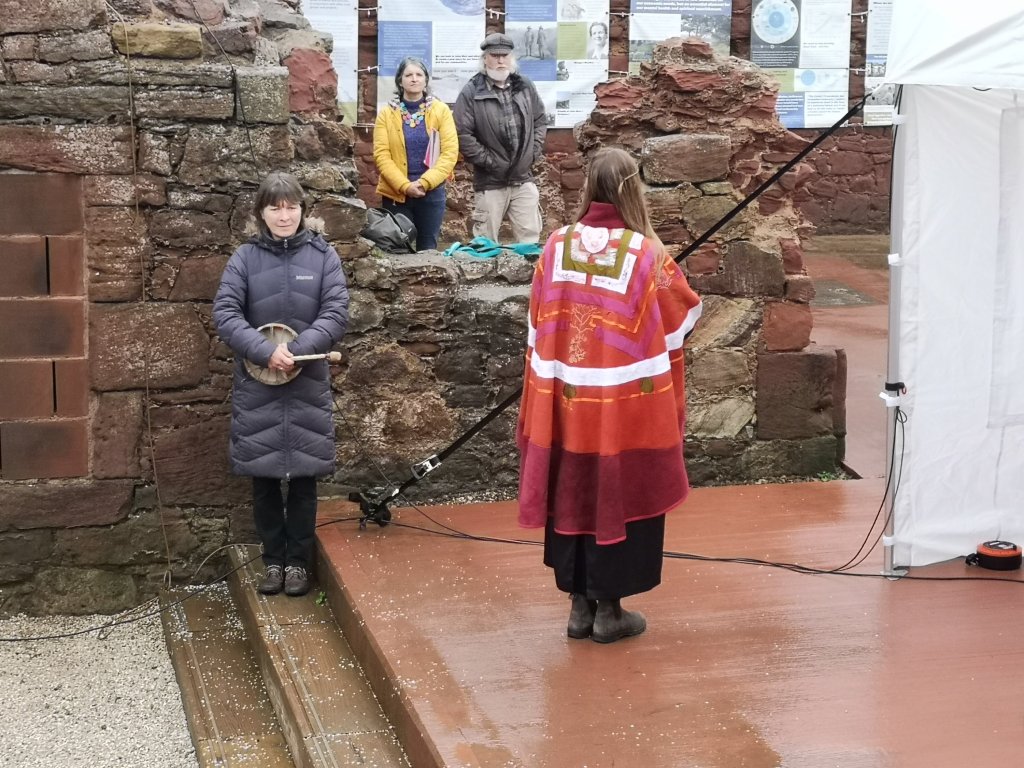
Natalie Taylor who devised the Keeper of the Soils cape and and Roxy Ambrozevich wearing it
What we have collectively wrought (most of us) upon the environment, is so very complex. There are strands of destruction, fibres of difficulties and damage which have become interwoven over centuries, a fabric of knots and snags and imperfections brought about by misinformation, neglect, greed and thoughtlessness. And when you pull one thread, it all starts to unravel and that’s scary and huge to see; it’s hard to know where to begin to stitch it all together again in a more durable and compassionate way.
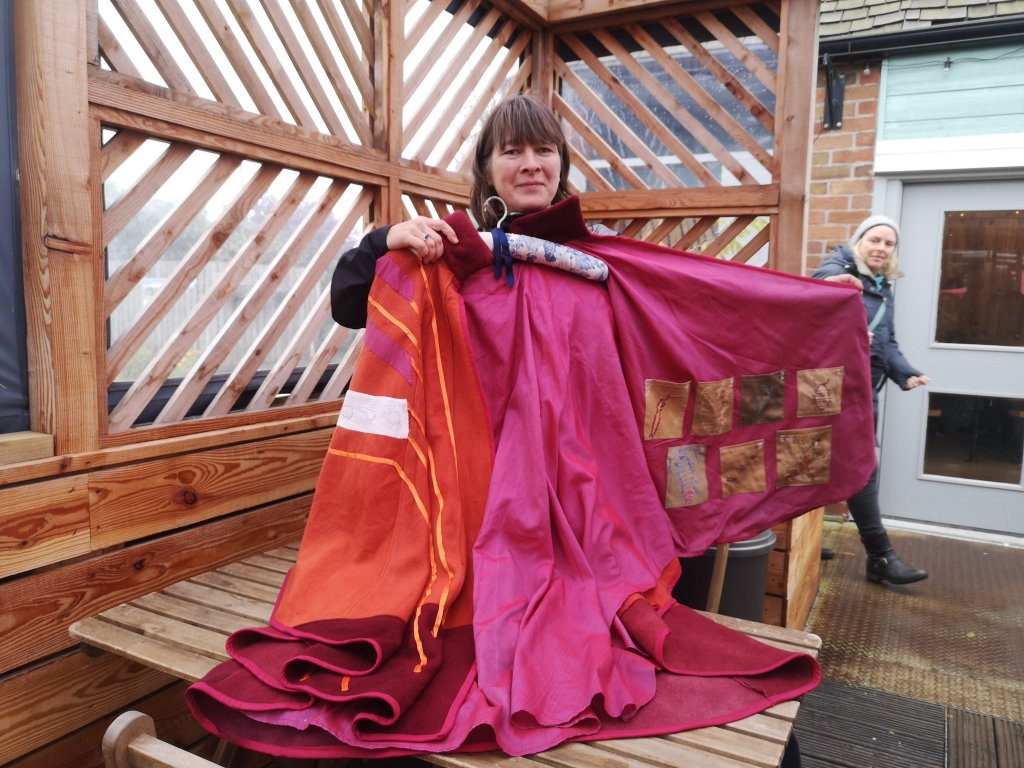
Natalie Taylor with her Keeper of the Soils cape
Though I am not a religious person, my belief in the act of walking gently and kindly, allowing myself time to notice and reflect, is like the nun’s faith that sitting quietly and performing her daily duties mindfully will make a difference; that opening her heart to the way things really are and facing that, will affect change, that it will alter the fabric of life the way it is now. I am a Shiatsu practitioner and those of us who give Shiatsu know that because the whole universe is made of the same stuff, chi, we can affect it with a thought, touch or word.
Or a step.
Walking for Water
Walking for water is not going for a breath of fresh air, a pilgrimage, a stroll, a hike. It is not a parade, a protest march, a sponsored whatever. It is not a way to stretch your legs, or have that conversation. Walking for water is not to see an unmissable sight. It is not on any body’s bucket list.
It is the flight of a migrating bird, a cruel calculation of distance, fuel and energy burned.
by Lydia Kennaway from A History of Walking (2019:25)
The Pilgrimage for COP26 has now begun.
Slow Walk in Dunbar to launch the Pilgrimage for COP26 with Karen Gabbitas. 30 people participated
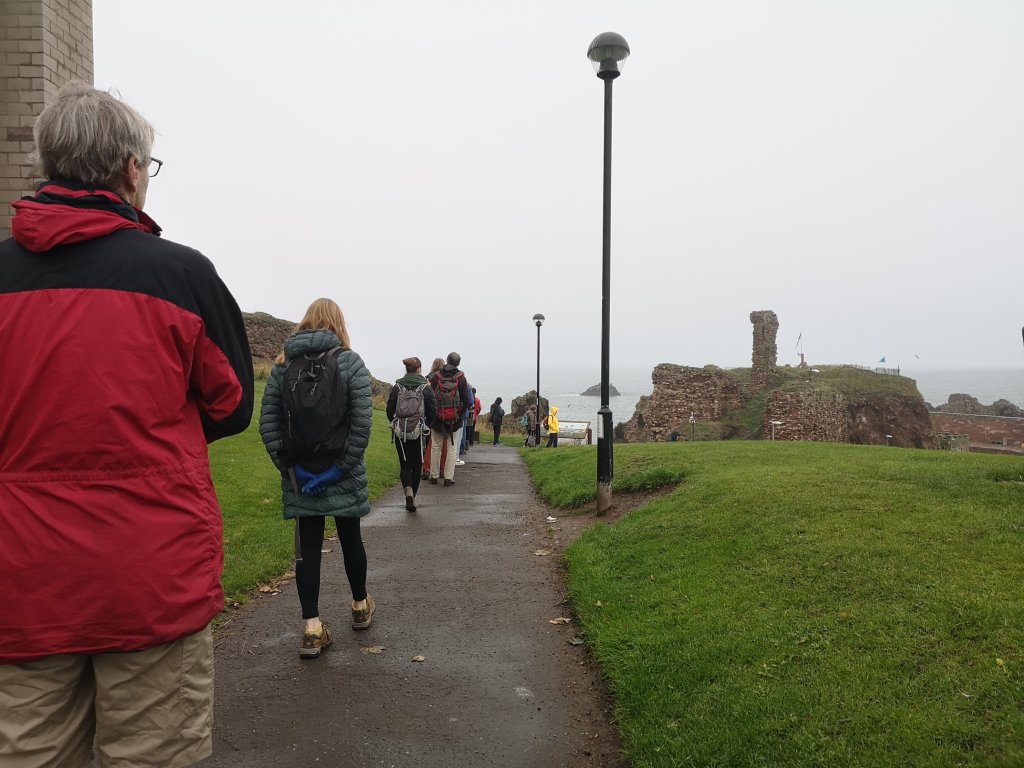
On 29th October, we walked into Glasgow after travelling parts of the John Muir Way and St Ninian’s Way, on foot, very wet, in a collective effort. We made “A walk and a learning journey … to reflect on the climate and ecological crisis in anticipation of the COP26.”
Our route visited:
Dunbar
North Berwick
Aberlady
Portobello
Edinburgh (where we will stay on Saturday and Sunday)
South Queensferry
Bo’ness
Falkirk
Kirkintilloch
Glasgow
taking in coastal, cycle, urban, industrial, canal and river paths.
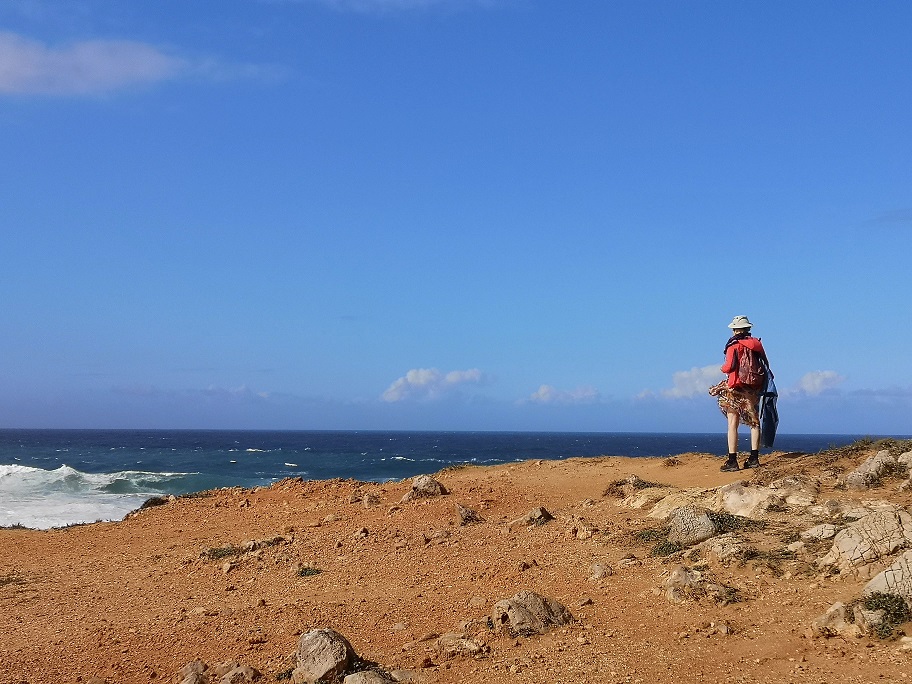
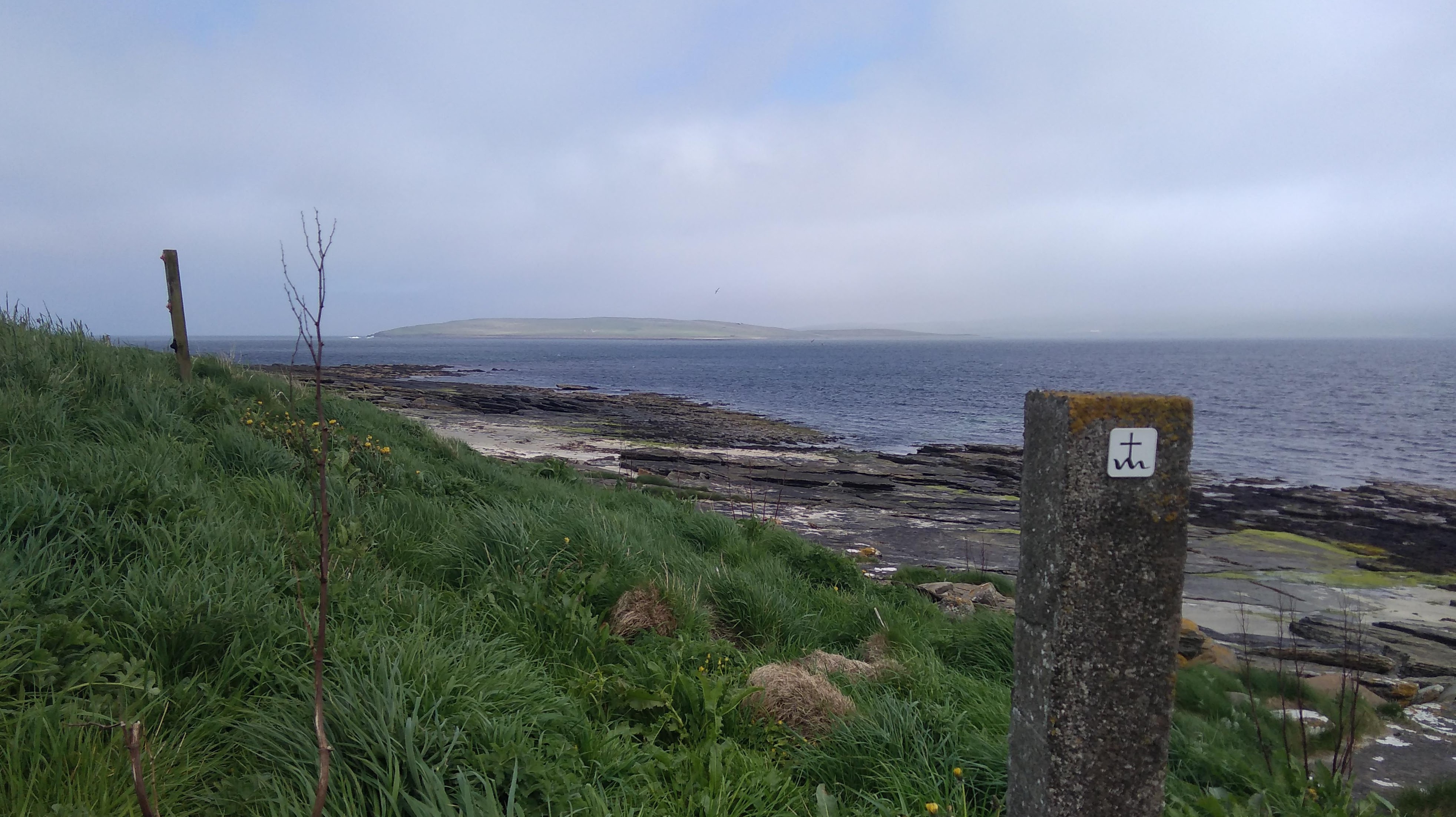
Many of you will know that I enjoy walking secular pilgrimage, that the act of stepping out each day with a simple pack on my back satisfies something vital in me. Walking sequential trails which connect town to country to village to city, whether the Camino de Santiago in Spain, the Via Sacra in Austria or the St Magnus Way in Orkney, is a way to reflect on, process and enliven my regular life.
This pilgrimage differs specifically from any of the others I have done before because it was done in community. I am a solitary walker and I value my privacy highly, even though I do meet people along the path and enjoy their company at times. This COP26 pilgrimage was very much a group activity. It invited people to walk together for a few hours, several days or the whole, and to be a part of a growing conversation about the many facets of the climate emergency in the light of the international meeting of world leaders at the beginning of November in Glasgow. We discussed, thought about, and inevitably came up with questions, maybe even some suggested solutions (practical / ideal) in the face of the situation we found ourselves in. Whatever happened we were able to support each other in our feelings – grief, frustration, anger, hopelessness – in the face of what was happening to our beautiful world and, sadly, still is.
My focus for the pilgrimage was on the link between grief and walking, something that arises over and over, not just for me but for others as well (see the book Marram by Leonie Charlton for example). My enquiry built on my previous writing (Working with Death and Loss in Shiatsu Practice’ (Singing Dragon 2020) and articles/blogs) and the Shiatsu client work I have been engaged in over the past 30 years, as well as my own personal rambles.
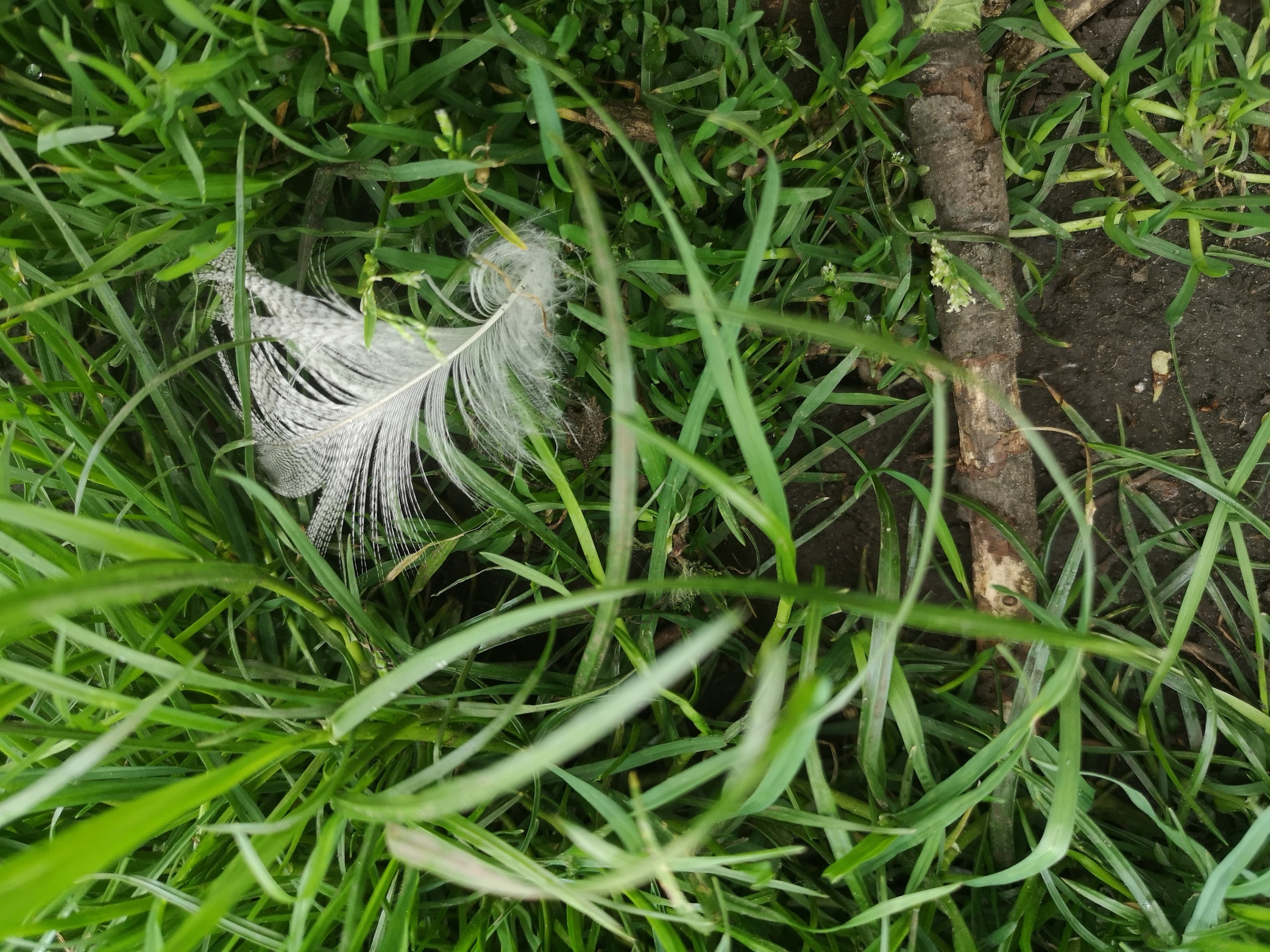
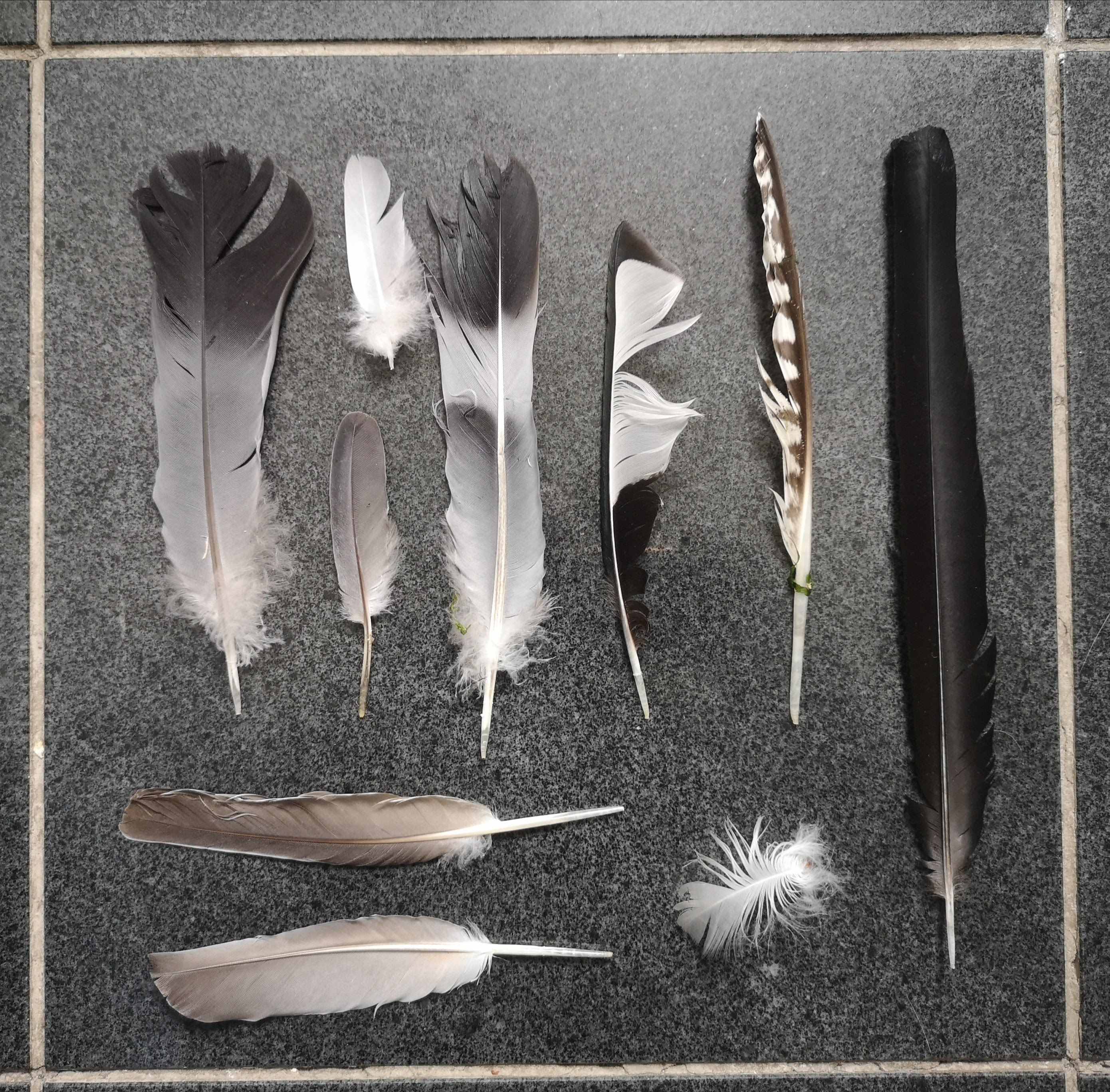
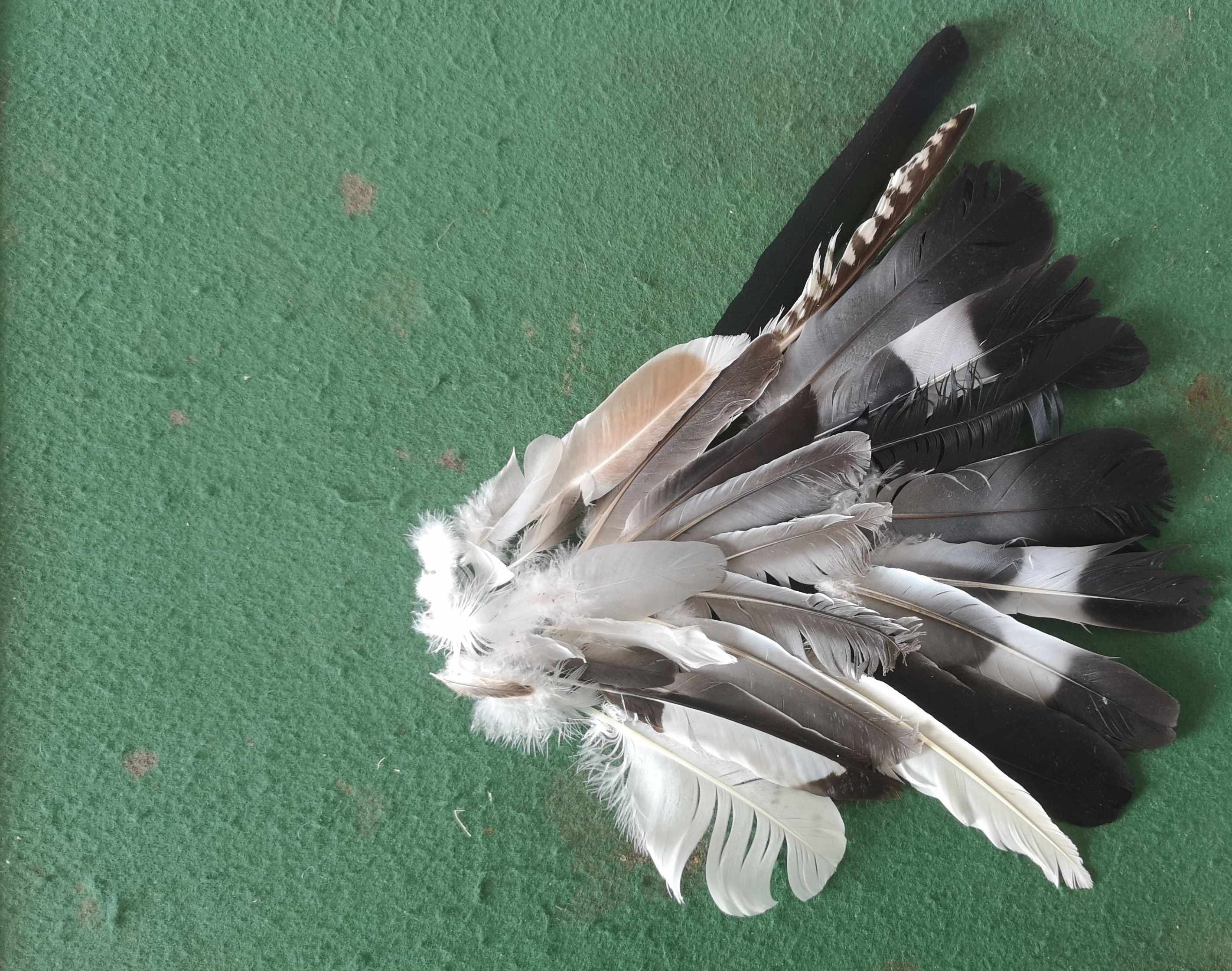
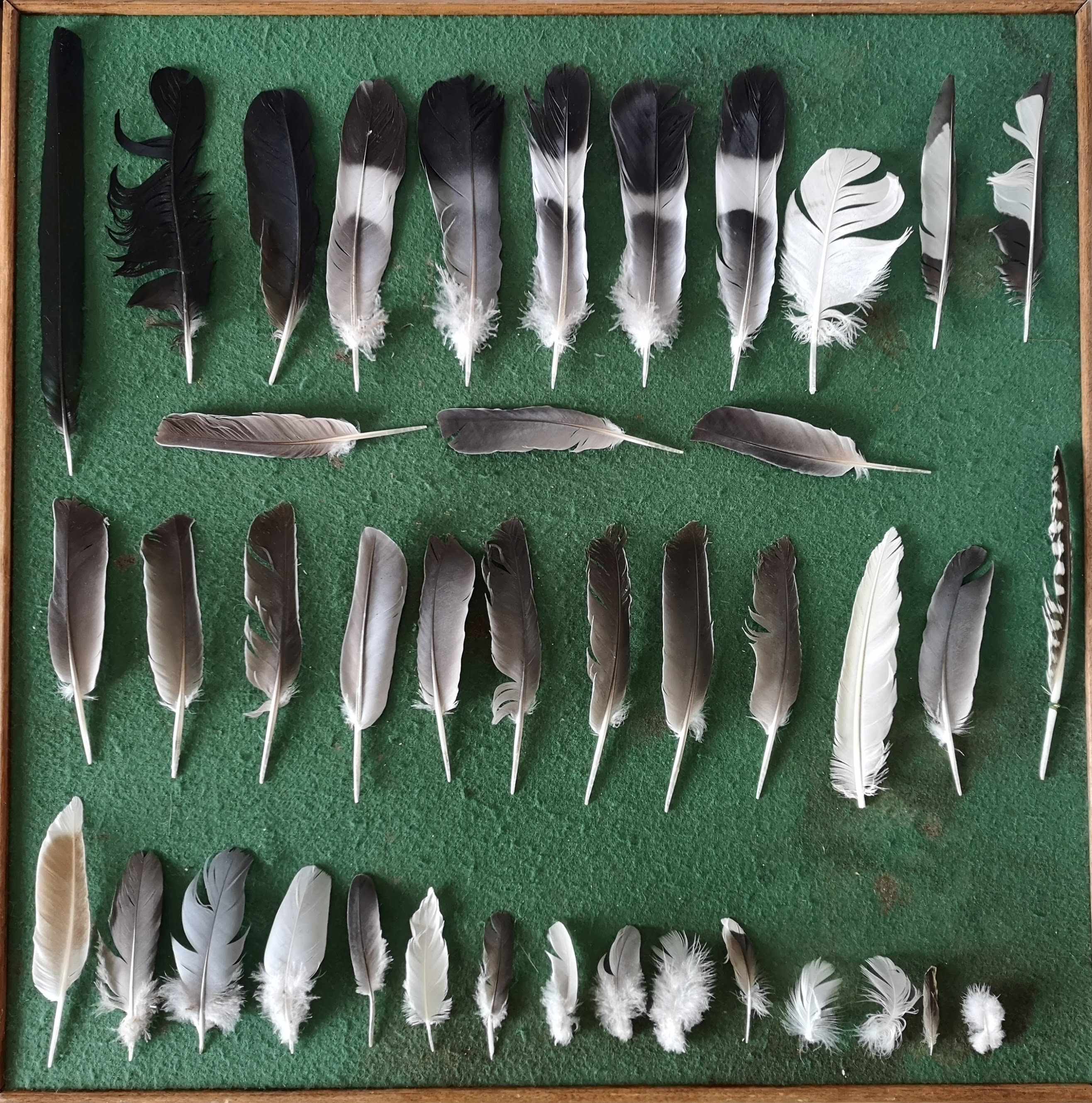
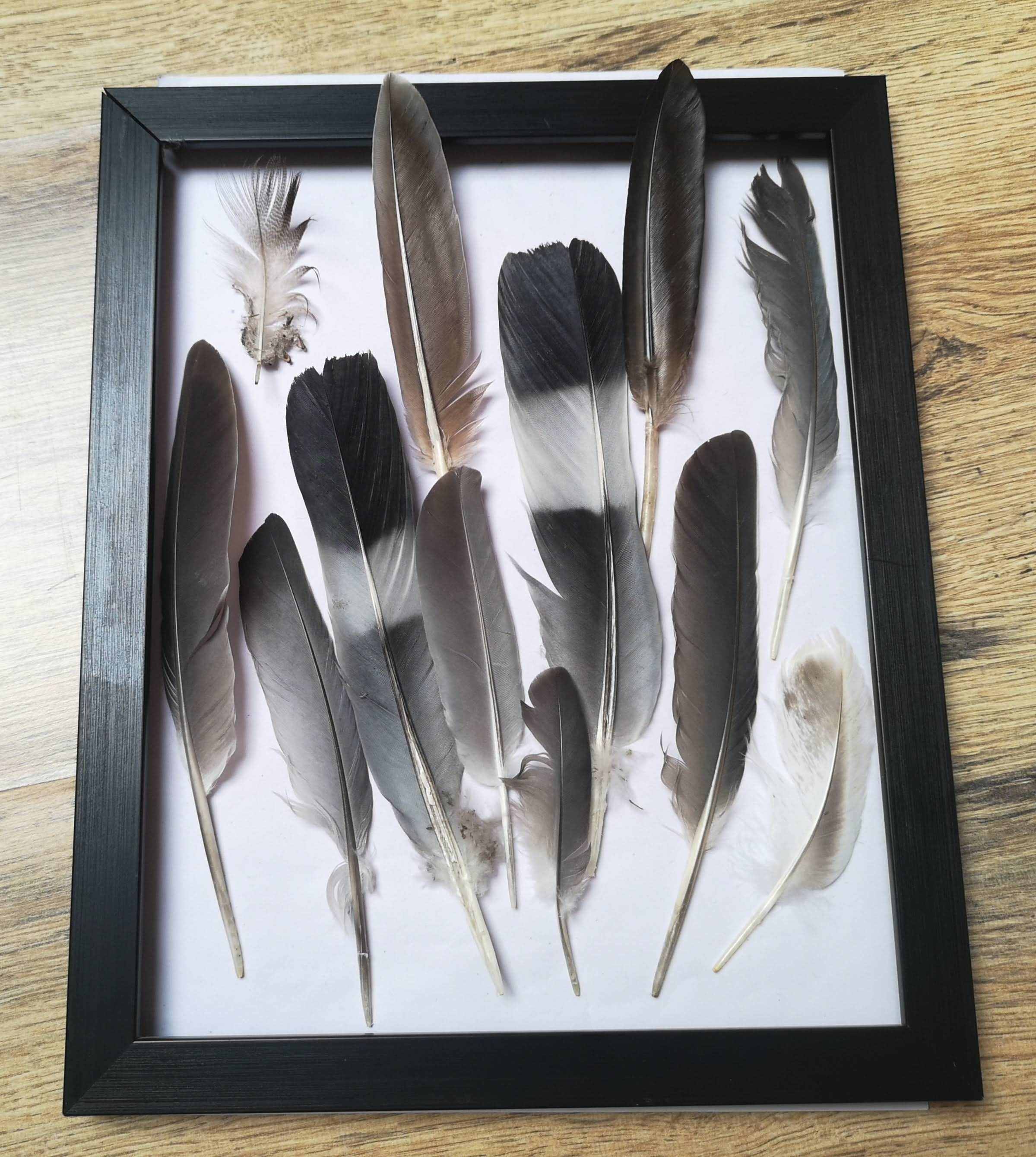
I collected a feather a day, usually the first I came across, as these long-time symbols of freedom and transcendence, and their common use in ritual, are often connected with the feelings we have when we are grieving or bereaved.
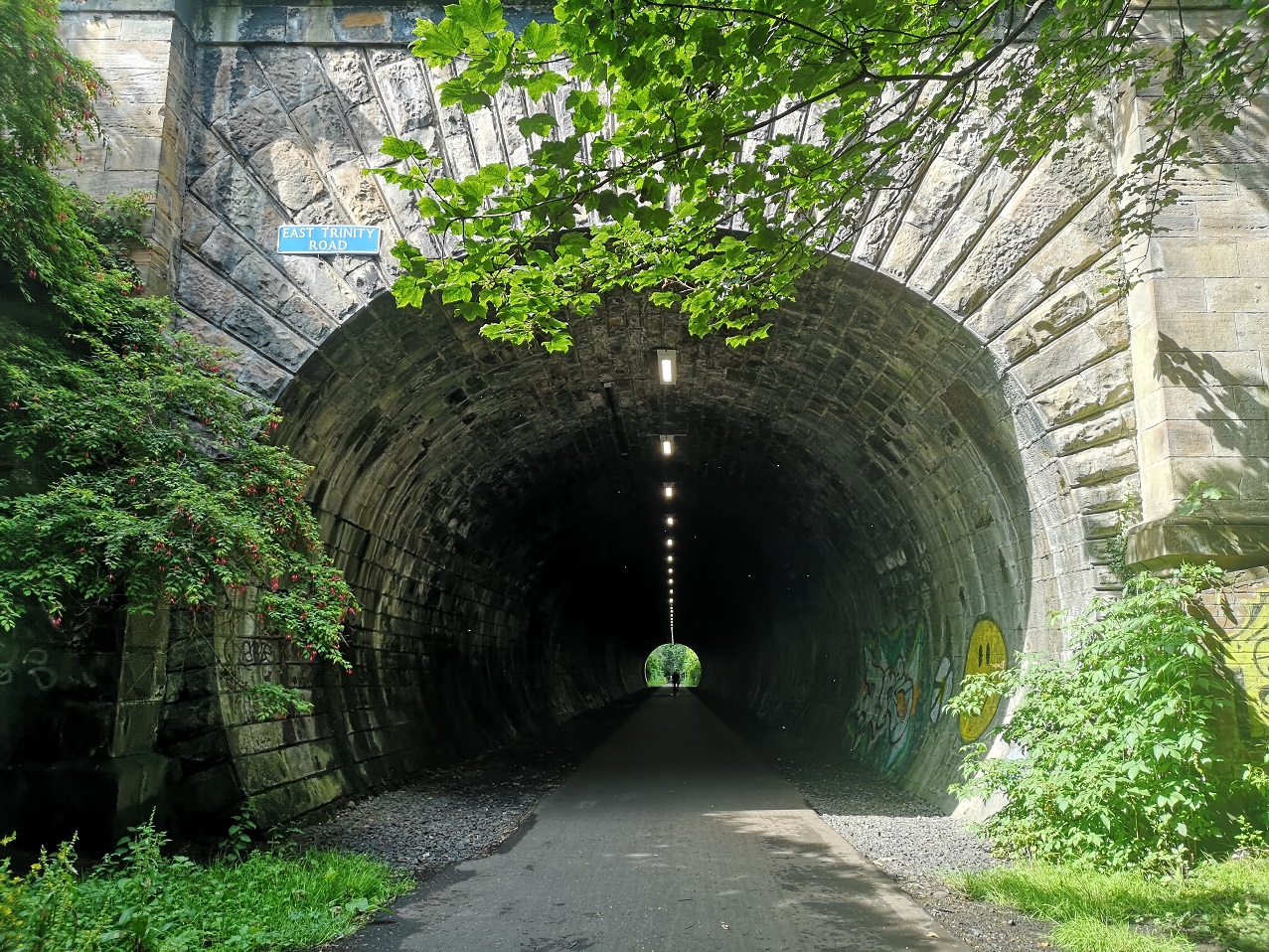
A site-specific sound-art installation in the Trinity Tunnel on route 13 (Trinity to Granton) of the Edinburgh cycle path network where it goes under East Trinity Road #nobirdsland
August – November 2021
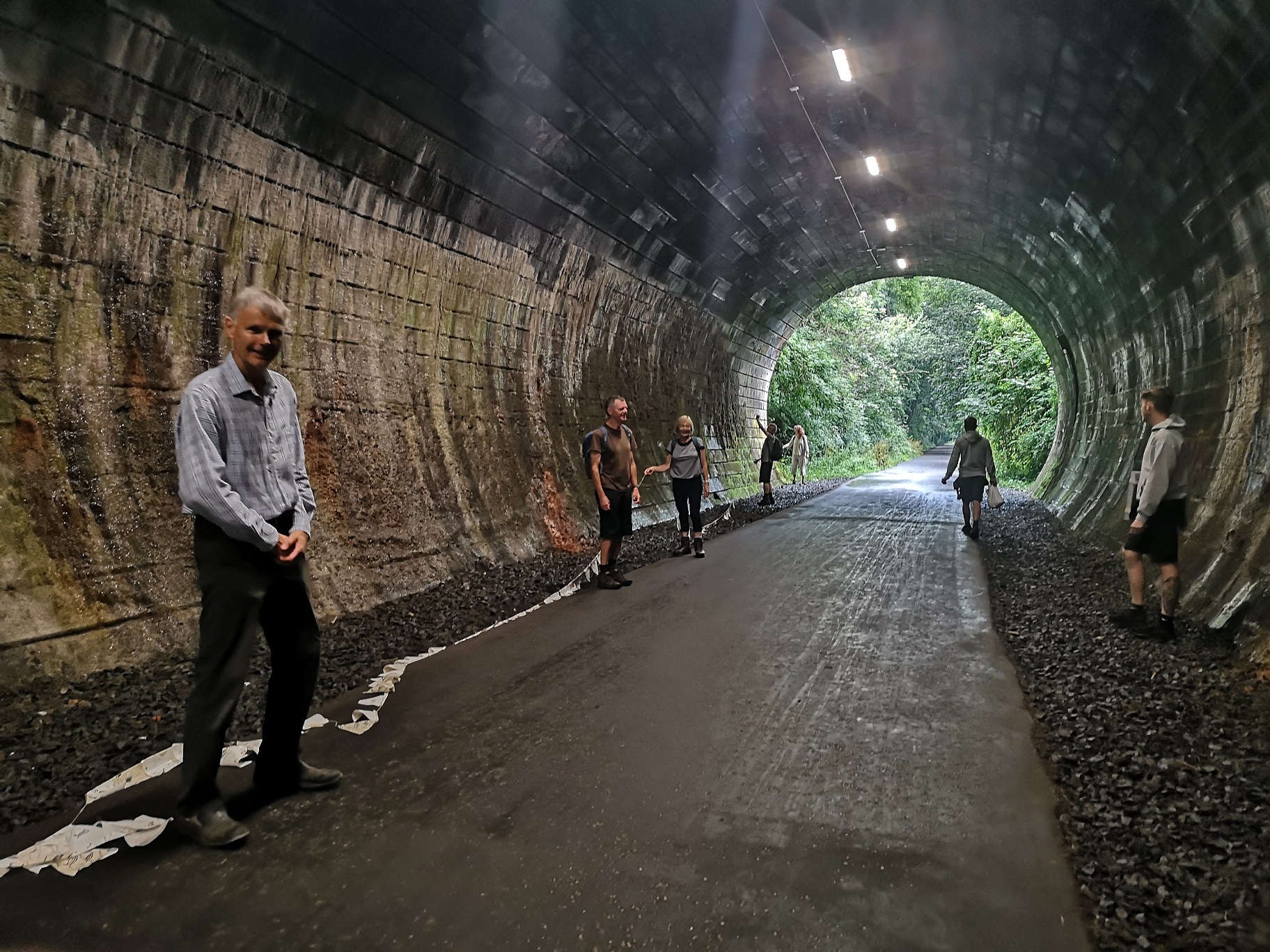
The installation team. Thanks to Andrew and the team who were taking a walk and kindly stopped to offer their assistance. It was much appreciated
Location
Find it here: ///hands.calculating.wiping (South end) wins.trial.preoccupied (North end) 55.976045, -3.203276
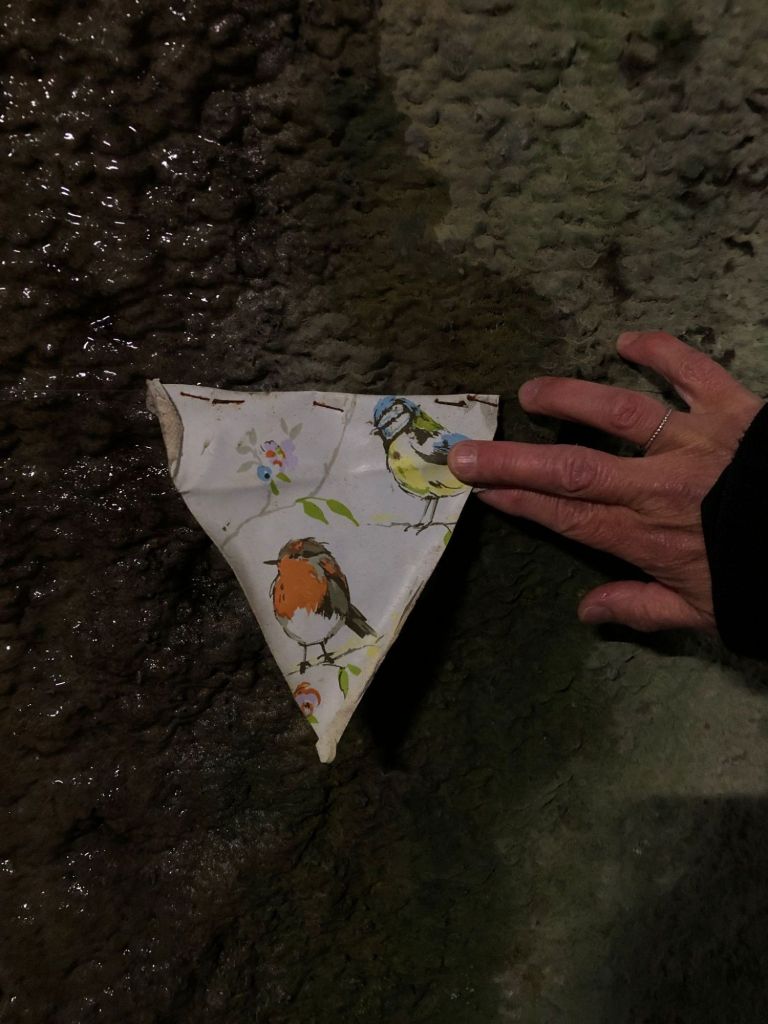
Photo of my hand and the bunting in Trinity Tunnel by Alba Bresoli
Sound poem
This is the link for the sound poem which you can listen to as you walk through the tunnel. You will need headphones to hear it. It is hosted by soundcloud and this link will take you there:
No Birds Land soundpoem on Soundcloud
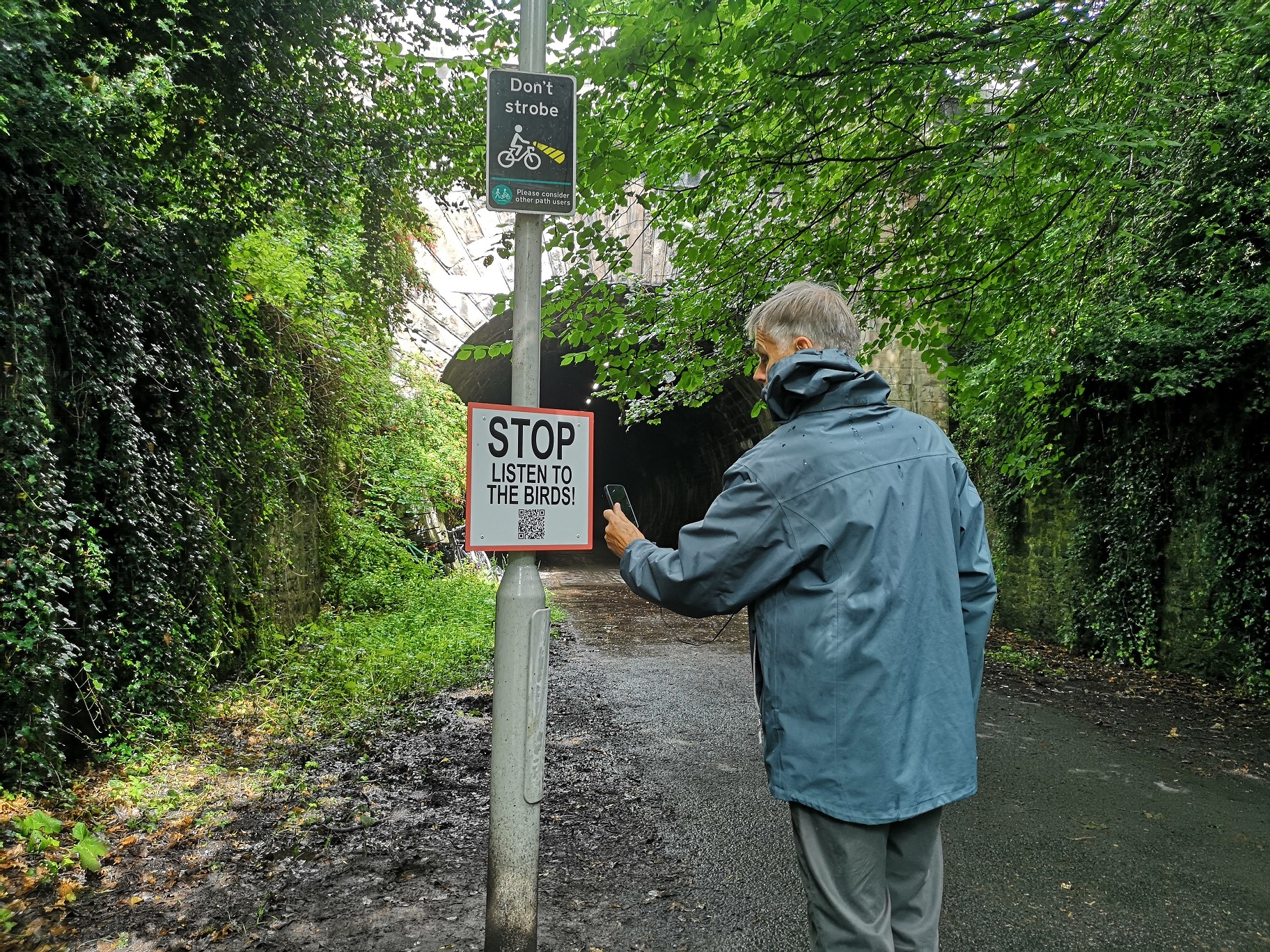
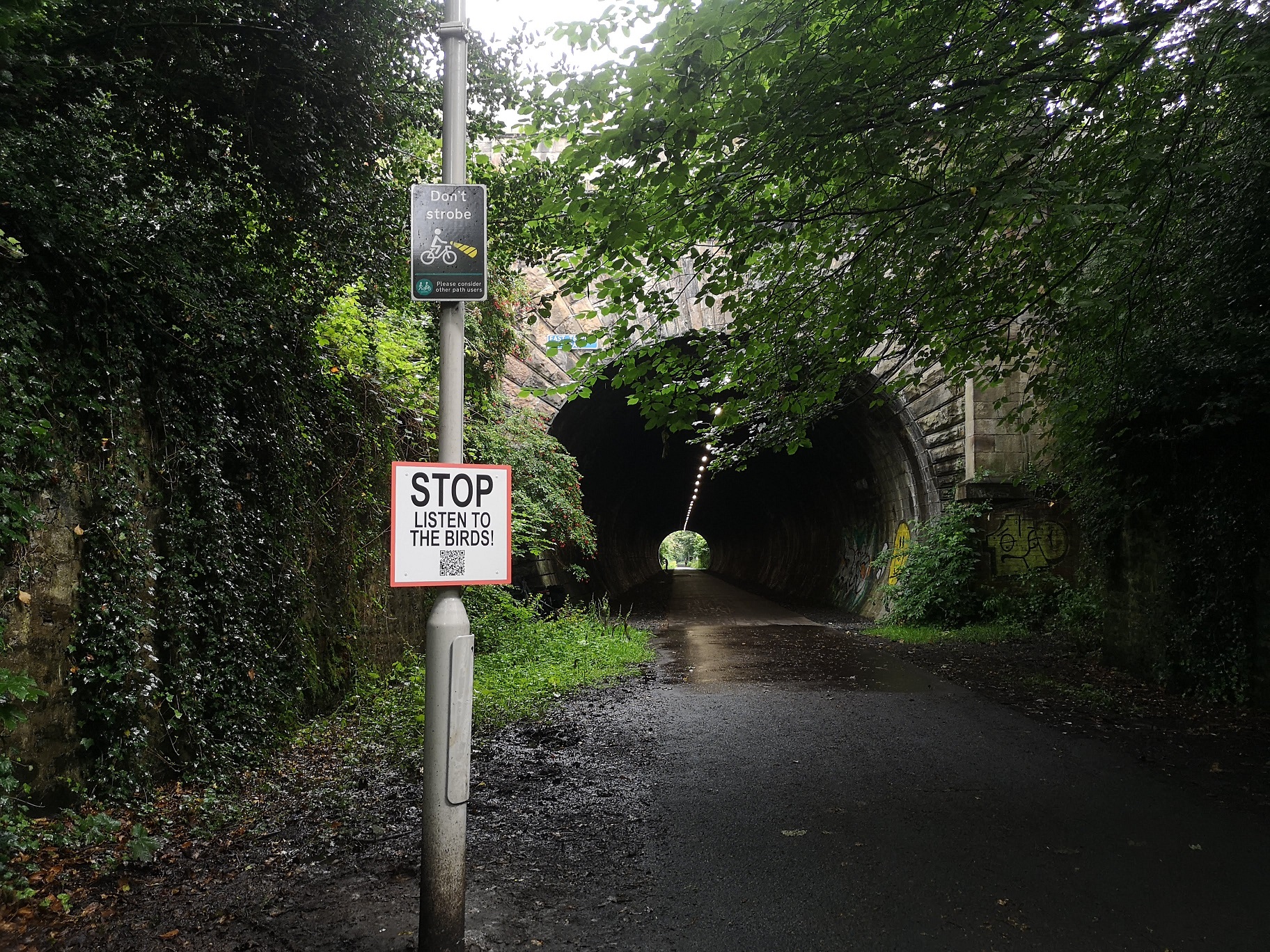
You can also access the sound poem from the QR code on the signs at either end of the tunnel if you have a smart phone.
Our wildlife is key to our environment, and, with so many of our iconic bird populations in decline, it’s vital that we invest in supporting and protecting them. It’s a unique piece of art and I’m looking forward to visiting it. I’m always excited in art that explores wildlife and our environment. I will be heading to the unlikely location of Trinity Tunnel where I will stop, relax and listen to the birds.
Scottish Greens MSP for Lothian, Lorna Slater
Downloading the sound poem onto his phone from the QR code at the entrances
In the poem, I am not pretending to be a bird, nor reproducing or emulating realistic bird sounds and song. I am acknowledging how easily we attempt to wield power over other species and appropriate others’ languages without their permission.
Sometimes it’s only when you don’t see them that you notice they’re not there.
Amanda Thompson
The Trinity Tunnel
The Trinity Tunnel is a disused railway tunnel that is now part of the extensive Edinburgh cycle path network. Before and after entering the tunnel, the air is full of birdsong; inside there is little or none. This sound-art installation recognises that no birds land or alight there (although occasionally one flies through), that it is a sort of ‘No Man’s Land’ for birds, though humans built the sandstone structure to transport goods and each other between Granton Harbour and the rest of the city.
No Man’s Land originally denoted contested territory between fiefdoms, even a place of execution. It is now often remembered as a WW1 area of land between two trench systems which neither side wished to cross due to fear of attack and death. Except, that is, on Christmas Eve of 1914 when it is known that British, French and German soldiers came together to smoke a cigarette, carry out joint burial ceremonies, and have a chat – somehow communicating in their different languages.
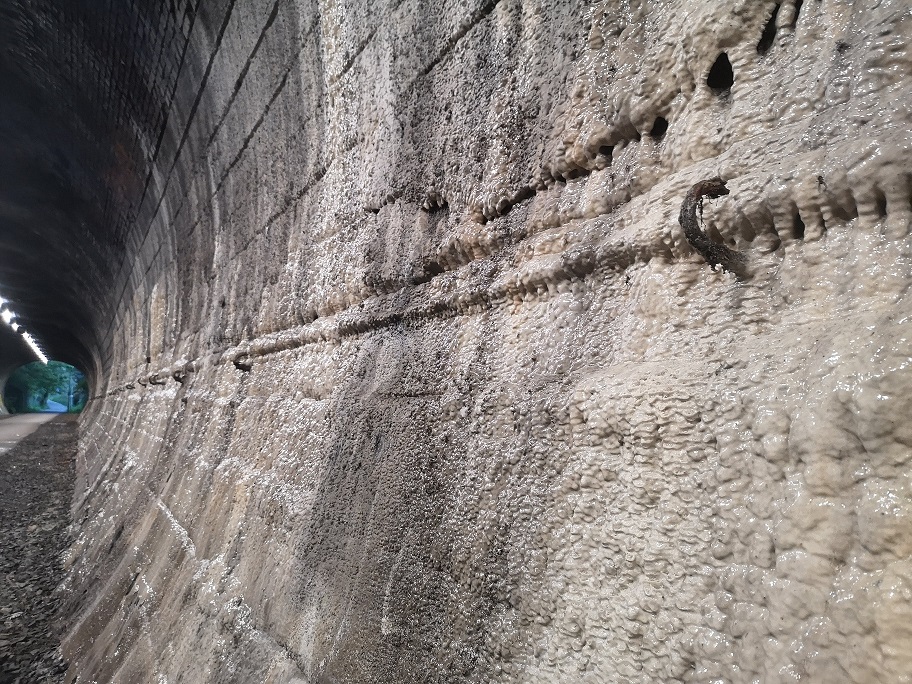
In this place of cold stone where moisture trickles and calcite forms weird shapes, no birds land and no birds sing.
Hooks on the west wall of the Trinity Tunnel before the bunting was hung
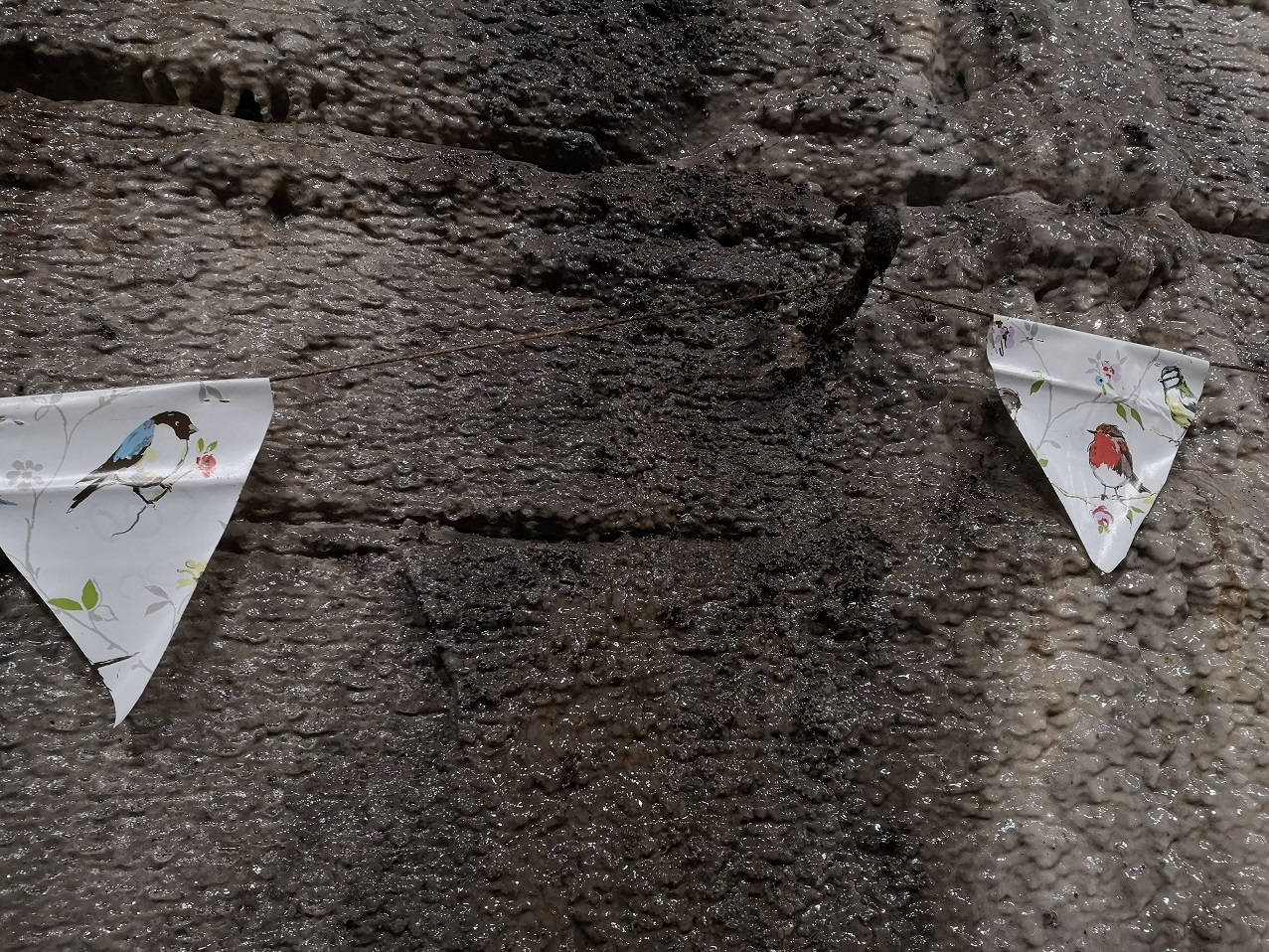
Bird bunting hanging over a metal hook on the inside of the Trinity Tunnel, No Birds Land Edinburgh. Lift the flaps -do they really say….tweet, tweet, caw, chirp, cluck?
You will find signs saying ‘Stop! Listen to the Birds! at the two entrances to the Trinity Tunnel which is 183 of my paces long (146 yards, 390 foot). A double track railway ran through here from 1842. Above your head is an elliptical or horse-shoe shaped roof with new, brighter lighting (thanks to the council).
In the tunnel itself there are a series of hooks on the west wall (as you are walking towards Granton), which were for cables and wires when the tunnel was used by the Edinburgh, Leith and Granton Railway before it ceased operations in 1986. Festooned along them is a length of bunting made of found materials with illustrations of birds. On the reverse of each pennant is a word which aims to recreate a bird sound, an explicit appropriation of an other-than-human ‘language’. A pennant is a commemorative flag, used historically, but I prefer to call it Bunting, a word that has been used since the 14th century for a lark-like bird which we know as yellow-hammers. Yellow hammers are said to sound as if they are saying ‘a little bit of bread and no cheese’. Try saying it fast!
The birds you see are sketches and impressions, they’re not real. The sounds you can read on the reverse of the pennants are rough translations of what are actually rich varieties of tone and timbre. They have been translated into the less melodious, simplistic human words. The only bird sounds you will hear in the tunnel are these approximations: tic tic tic tic – the Robin’s warning call, chiff chaff chiff chaff chiff chaff, tweet tweet tweet, you know how it goes – chirpy chirpy cheep cheep chirp. I cannot play you their songs in this place, even if, as in the Japanese shopping centres, they might calm you, bring a smile to your face.
This is no place for the birds; this land, like so much of the British Isles and elsewhere, is inhospitable and uninviting to them.
Over increasingly large areas of the United States spring now comes unheralded by the return of birds, and the early mornings are strangely silent where once they were filled with the beauty of bird song.
Rachel Carson from Silent Spring
The Trinity Tunnel runs under East Trinity Road on route 13, and is easily reached on foot (approx. 10 mins) or by bicycle (approx. 5 mins) from the Granton end where it can be accessed from where trinity Road meets Lower Granton Road near the sea front
In the Trinity Tunnel there are no ledges nor perches, no nooks and crannies to nest in. There is nowhere here to stand and preen feathers or sing from. We are replacing old barns and houses which had eaves and rafters, with edifices of vast glass windows and metal corners, but birds cannot live or raise their young in and on them. We are clearing hedges, spraying pesticides and extending fields so far to the edges that birds natural habitats are destroyed and poisoned. In the UK, we have created places where birds used to, but cannot now thrive. This has resulted in drastic changes in avian behaviour and deaths. There is more info on the RSPB site here.
In the 2 minutes it takes me to walk through the tunnel, it is believed that 2 pairs of breeding birds will disappear. (See below for source).
If we listen, tune in to birds, we can learn. Mozambican people can whistle to honey birds (or honeyguide birds) and understand their calls. The birds tell them where the bees are, the people harvest the honey and this lets the birds get the wax and grubs afterwards. It benefits both – it really happens.
scientists have now discovered that the birds can be attracted out of the trees by a distinctive trilling sound that local hunter-gatherers use while looking for honey. According to the researchers, hunters are taught this special trilling noise by their fathers.
Jules Howard in The Guardian
In other parts of the world, women and men have learned to flute and trill like their native birds, so that their voices carry across dense forests. They are amplified, making sounds that are far bigger than we are (like wrens do closer to home).
There are some who recognise the difference between a warning call and a serenade – think of that! If we all knew and taught our children, we could choose to keep out of the way of birds when they are nesting, and delight in their courtship rituals. We could be warned, too, that a hawk is overhead or a fox on the prowl down below.
In the absence of birds, we would have to create them, to create our own version of them, their song, and appearance. But I ask you, how long will it be before we forget what they sounded and looked like, before we have to rely only on recordings and photos? Will we lose the memory of what delights us about them, will we forget our felt sense of how they really were, how it was to be in the same world as them?
In the silence of the Trinity Tunnel, you don’t have the privilege of being regaled with their songs.
No Birds Land is in partnership with the RSPB and Sustrans.
With thanks to the City of Edinburgh Council and the following people: Ewan Davison, Ken Cockburn, Cosmo Blake from Sustrans, Erica Mason and Nick Hawkes from RSPB, Fiona Underhill of the City of Edinburgh Council, Eleanor Bird, Jim Campbell, Amy McNeese-Mechan, Logan Rutherford, Alan Moonie, Stephen Knox, Cammy Day, and Alice Cockburn.
If you enjoyed this, I think you will like this short film by Alba Bresoli about listening to birds and singing back to them.
Walking as a Question took place simultaneously in the Prespa area of north western Greece and internationally, online.
The Walking Conference asked: What questions does walking pose? What questions can walking be used to explore? Who walks? Who chooses to walk? Who is forced to walk? Who can walk? Who cannot?
And stated: In raising walking as a question in itself, we invite critical and artistic engagement with the limits and possibilities of this most everyday of modalities. Borders and checkpoints curtail walking. Dog companions stimulate a stroll. People have been forcibly marched to new territories. People have walked across enormous distances in search of refuge, asylum and freedom. Some use parks and hiking trails for their regular exercise; others walk miles to work; still others must contend with walls or constricted spaces such as in a prison yard or camp.
I took part in these projects in Edinburgh, Scotland as the Covid pandemic was restricting travel at that time:
Deirdre McLeod and Stephanie Whitelaw with Artwalkporty (Scotland), who are also connected with the new walking app Walksy which is free to download from your app store – easy and fun to use
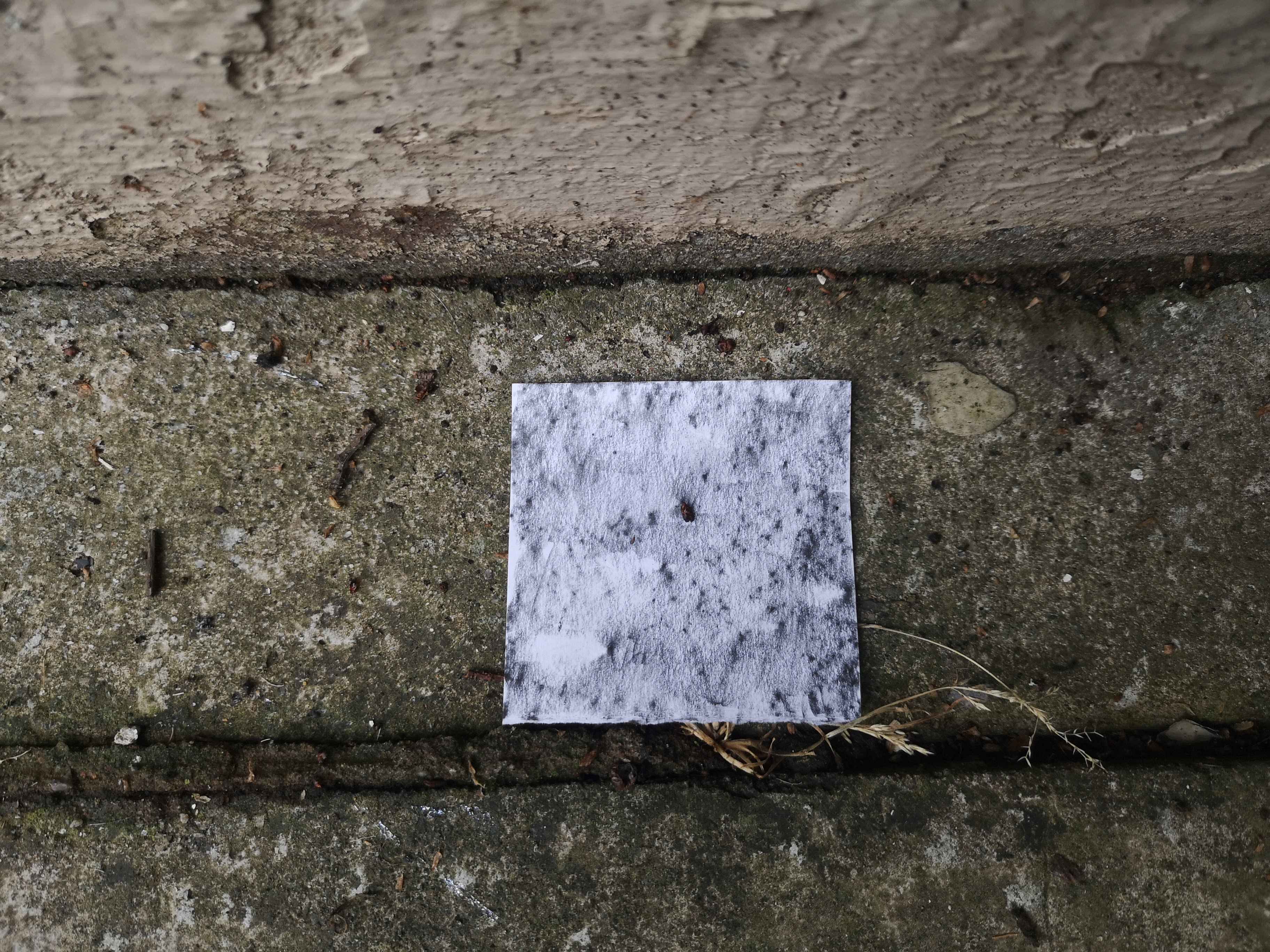
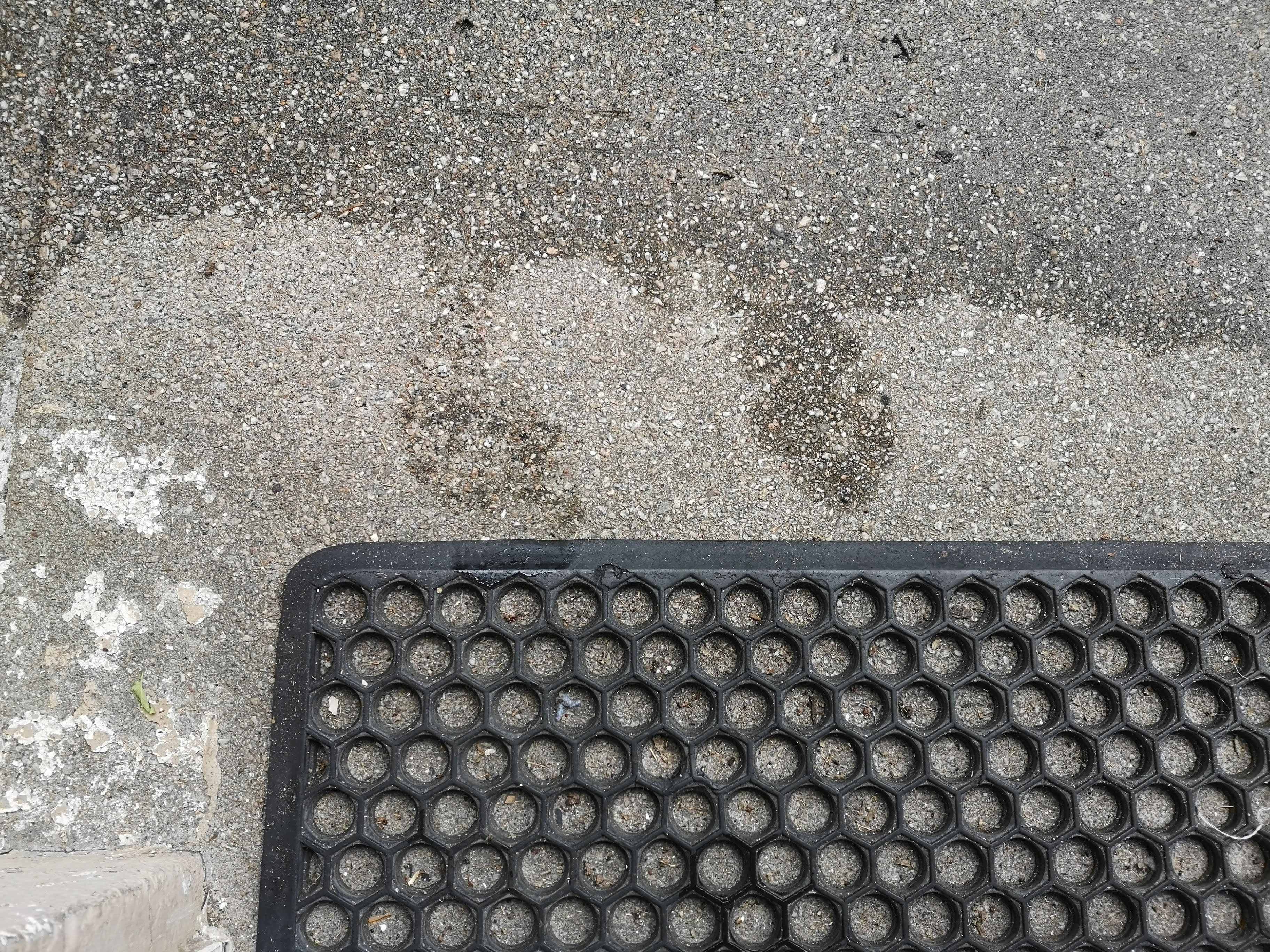
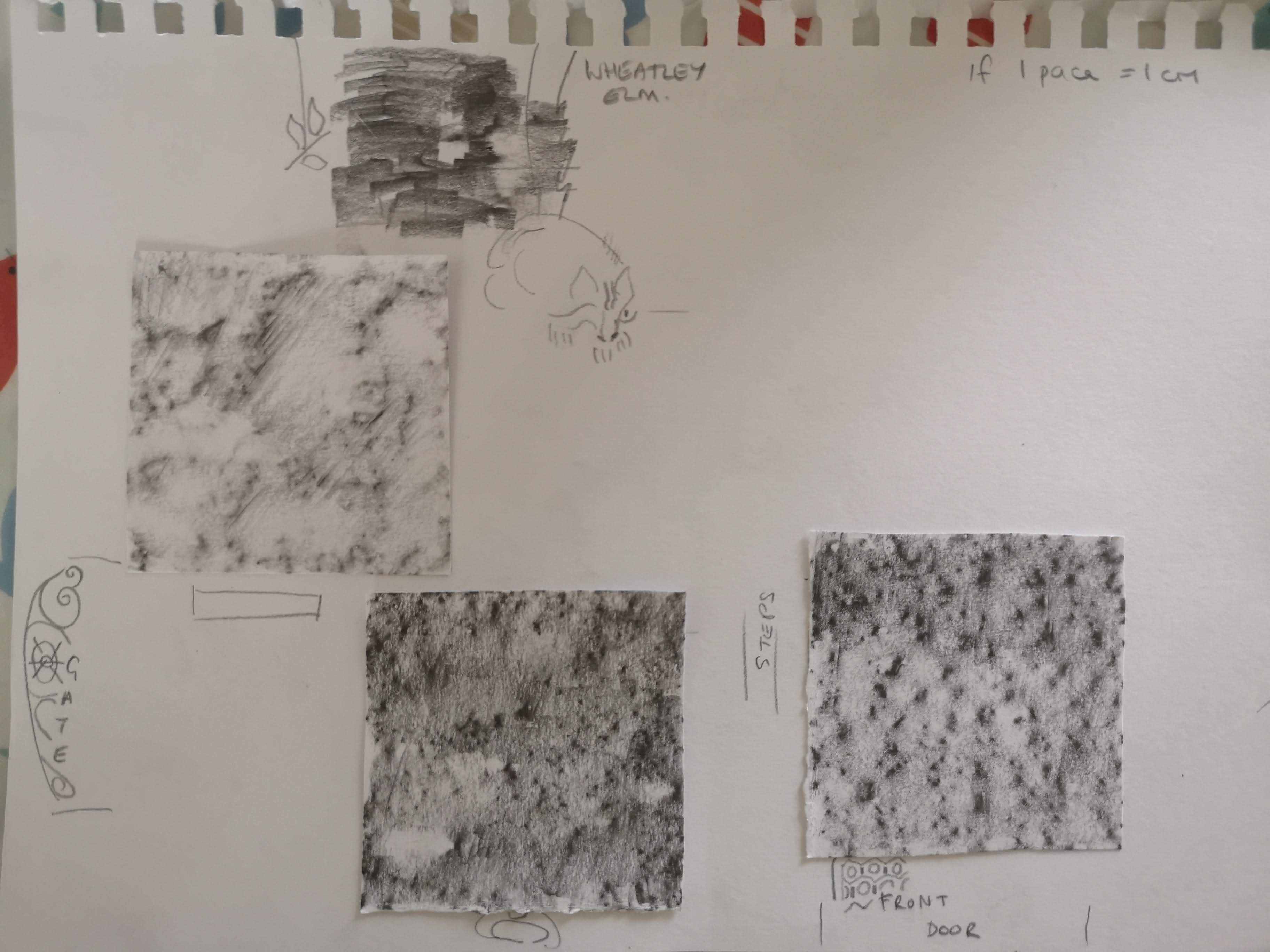
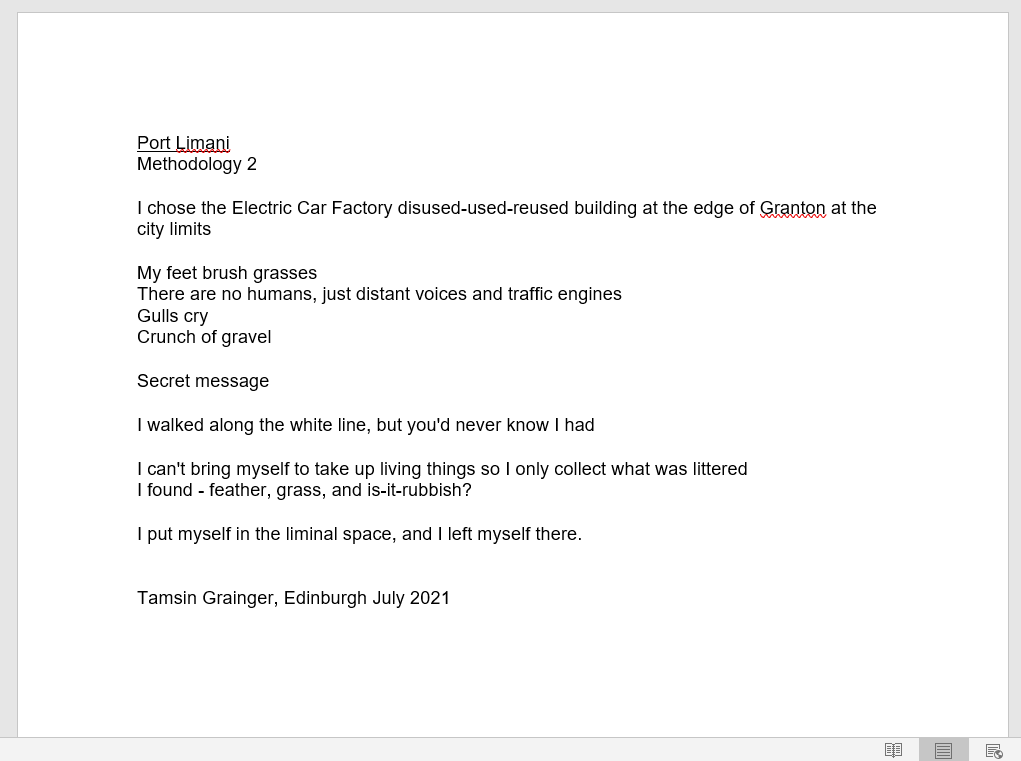
Port Limani
Wunderkammer
These are some of my wunderkammers, inspired by Fay Stevens (Walkeology)
My event was Body Walking which culminated on July 17th 2021 with an online sharing and discussion with those who tried ‘walking in someone else’s footsteps’. You can find out more information on my website tamsingrainger.com here:
What do we feel about urban trees? A psychogeographic survey
This event is in two parts:
First, a walk – together or alone, wherever you are
Then, an online meet-up
There is a transcript of the soundcloud walking guide for your Tree-Feeling Walk here and a pdf.
Location: If you are in Edinburgh, you have two options:
You can walk with me at Inverleith Park, Edinburgh (East Gate opposite the Botanic Gardens, Arboretum Place EH3 5PA googlemap coordinates: 55.964412, -3.212967 ///power.factor.trace)
If you are not in Edinburgh, you can also walk alone or organise a group in your urban area and walk with them.
You can choose whether to walk at the same time as we do (walking together in time if not space) or at a time of your own choice before the online meeting.
Age and ability: You can do this walk and the associated activities whatever your age and ability. Please adjust it to fit you and your circumstances. You may need to find a proxy to walk your route for you, directing them to certain trees and talking with them about what you are feeling.
Making a record of your tree-feelings: Throughout this walk you will be encouraged to record your tree-feelings using any medium you want. Please choose the ones you like, or want to experiment with. Further down this page you will find a list of ways to record.
The online meeting
We are part of a tree’s ecosystem. What does the tree offer us? What do we offer it? We will have a conversation about this and refer to our feelings and sensations to do so.
What will the online meeting involve? We will listen, talk to, and share our tree-feelings with each other. We will start with ‘Standing Like a Tree’ a very simple chi gung exercise (2 minutes) to root ourselves and a few moments of sitting quietly to recall our tree-time. Then we will have a conversation about:
Our symbiosis with trees: the interaction between trees and us, organisms which live in close physical association, to the advantage of us both
Our relationship with them: the way in which we are connected
How we cohabit with trees: the state or fact that we live and exist at the same time and in the same place
Our co-dependency: how we both need each other, sometimes to the detriment of the other
Our reliance: how we depend on or trust in trees and them in us, how we depend on each other
And then the plan is to draw some conclusions about the value of feelings when it comes to our respect and protection of trees, something to add to the better-known ways of relating to them – counting, describing, naming and classifying.
The overall aim of the event is
To get up close and cosy with an urban tree or trees
To find out whether and why we value them
To use our own felt, visceral, bodily experience to do this, rather than information from a book, screen or expert
To creatively broaden the remit for collecting data by using a wider variety of methods to find out their effect on us, including our sensual and personal reactions
Please keep all your information, artwork, videos and so on handy or uppermost in your mind so that when we meet online, you can share what you felt and found. We will be talking about what tree or trees you visited and sharing descriptions and images of them, and we will focus specifically on how you felt when you were with it/them.
Ways to record
Words – prose, poetry, traditional data collection methods, mind map. You can type on your phone in an email to someone you know or to the whats app or facebook group You can ask someone else to transcribe for you. You can tweet using #Treefeelingwalk and #urbantreefestival
Visual images – draw, photograph, paint, sculpt or visually depict in another way. Materials: clay, plasticine, pencil, paints, crayons, chalks, charcoal, paper, canvas
Sound – record your feelings and findings on your phone, or say them out loud to the tree or to someone else. If you don’t know where the sound recording app is on your phone, try Tools. Or you can probably download one for free
Film – video yourself speaking your feelings and thoughts, or the tree and the sounds around it
Dance
Music – sing, play a musical instrument, listen to the rhythm inside yourself or the tree and tap or drum it out (you may want to record it)
Mapping or GPS record of the route
Please note that if you want to collect found materials, please respect the tree and its natural surroundings. Don’t break parts off or remove something that another organism might need and rely on!
What to record
The tree itself: its girth, height and age – You can measure on the spot using a tape measure or a long piece of string/wool/rope that you measure when you get home. You could try pacing around it, measuring with your hands, embracing it and seeing how big the circle you make is (maybe you have to join hands with someone else). If it is tall, stand back and look up, if small stand beside it. Use metaphors! Is it ‘like’ you or someone or something else? For example, as big as a barrel, as tall as a street lamp, as small as your finger, 60 times bigger than you, as tall as that house over there, like a crane…..
Here is a pdf to help you measure and find out the age of trees pdf
The tree’s identification: If you want to know its scientific or vernacular name, you could try the Leafsnap app or other suitable one which can be downloaded onto your phone
Or look in a book. Here is a booklist published by the Tree Council
The Area Tree Composition: Describe the geographical area where your tree is situated – note how many trees there are, how close they are to each other, write their names if you know them or do a drawing of them altogether in a group (eg 2 birch, 4 ash all about 3 paces apart, planted in holes in the pavements outside people’s houses).
Other activities
Draw a map of your walk, or download the route and mark or draw the trees on it.
In the trunk of the tree(s) you have drawn, note down a feeling that you had while you were there (don’t judge yourself, be instinctive!). Growing on and hanging from the branches, write the thoughts you had while you were there. Here is an example on the webpage.
Compile a ‘fact’ sheet of trees in your immediate area using some of the methods above
Make a sound walk of your route and upload it to https://walklistencreate.org/ Look for Sound Walk September (the address is on the webpage)
And use the hashtags #FeelingTrees #urbantreefestival on twitter or instagram
Please note that if you share photos, images and/or words via social media, I will collect and share some of them for the online meeting. I will ask you first to give me your permission to do so.
Thanks to Ewan Davidson, the Urban Tree Festival and the 2020 contributors and presenters who inspired me, and to i-tree-eco-edinburgh.
Tamsin Grainger
Tamsin Grainger is a writer, bodyworker and walking artist living in Edinburgh. She holds online workshops and events, including On Death and Life, Death Cafes, and Walking and Chinese medicine.



 Walking without a donkey