Pilgrimage for COP26

25 October 2021

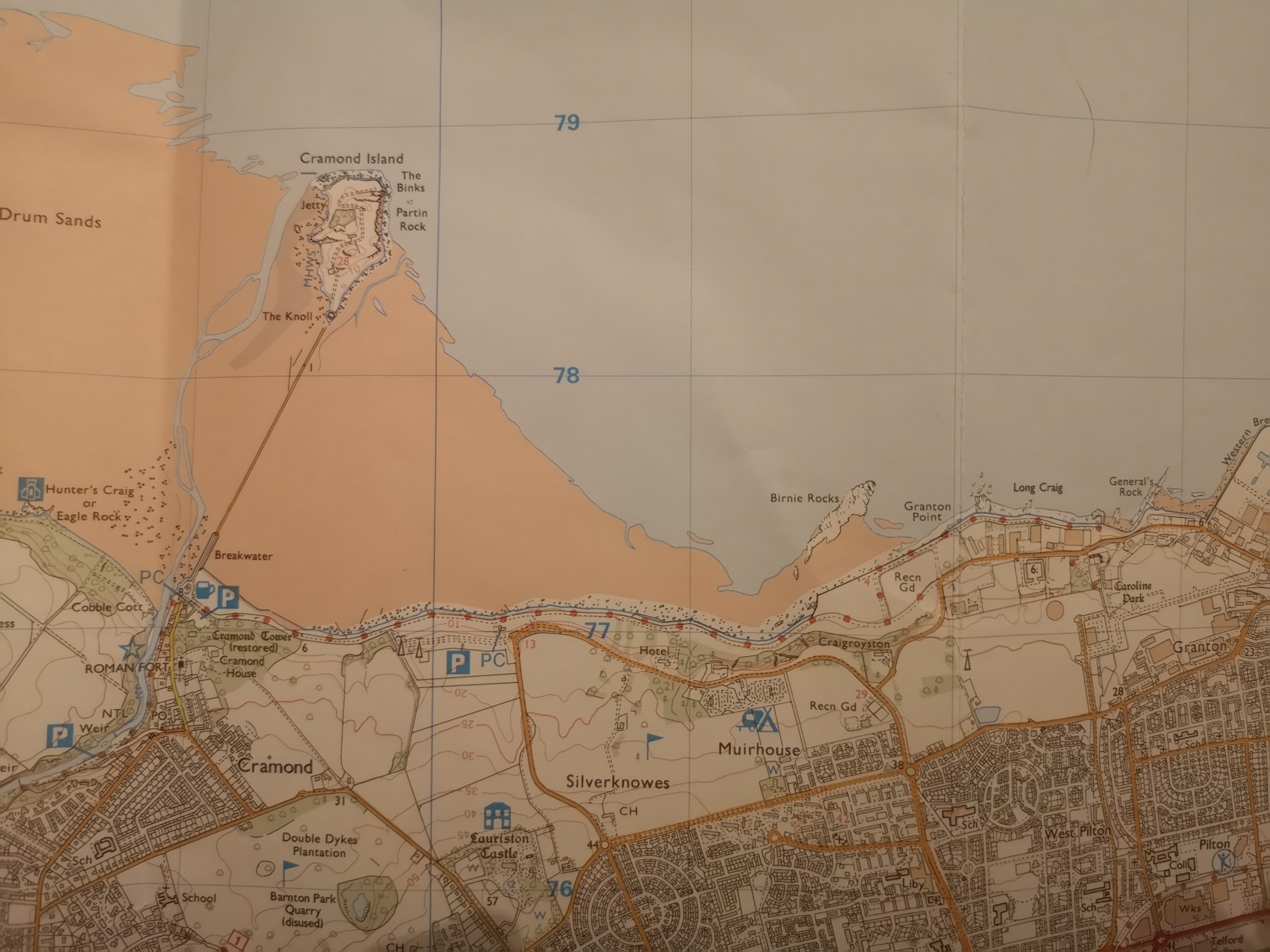
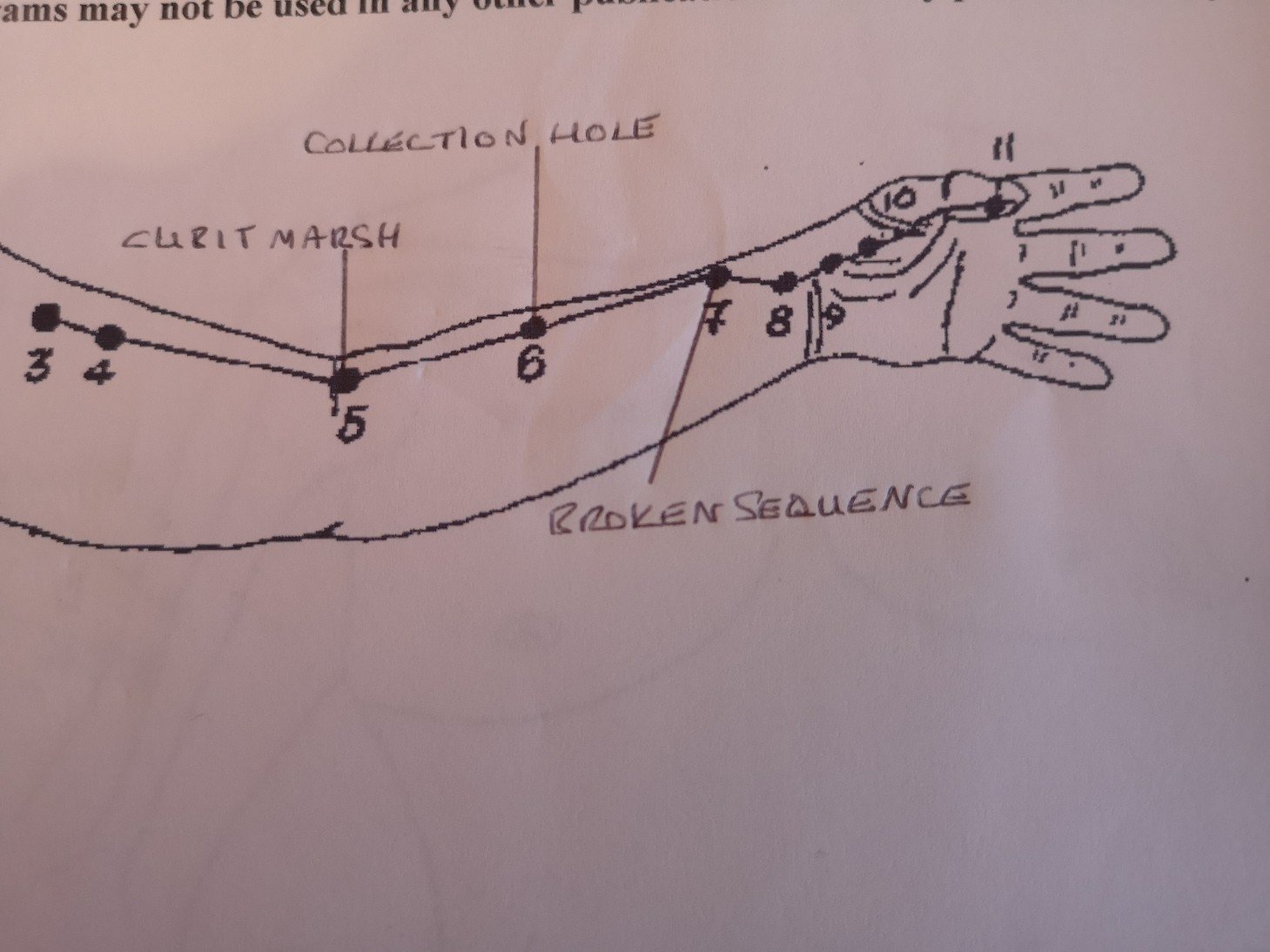
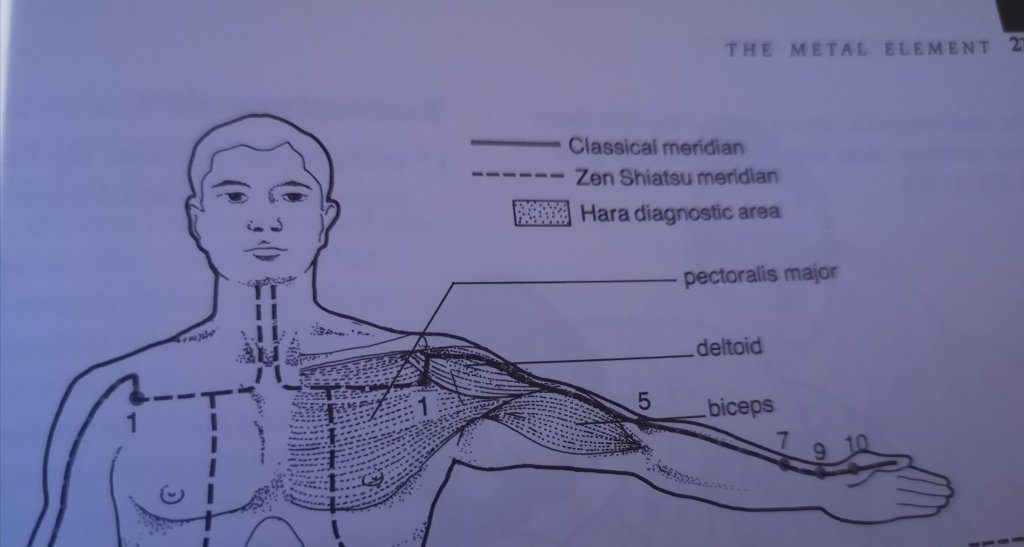
Today I am leading the Pilgrimage for COP26 walk from the Sculpture Workshop in Leith, Edinburgh to South Queensferry. The theme is ‘The Five Phases and the Ecological Crisis – a walk using the five elements of East Asian medicine to reimagine what it means to be ecological’.

Pilgrimage for COP26 at the Sculpture Workshop, Leith. Photo Olga

There is a brief introduction by Jonathan Baxter, the organiser of the pilgrimage, to the Keeper of the Soils, the carrier of the Stitches for Survival (you can read about the latter two here), and to my walk supporters, Natalie and Ewan. Then a brief introduction to YinYang which underpins Shiatsu theory.

  • I explain how the circle represents the cyclical nature of things, a circumference of continual existence, whether in this form or another
  • The curving line which divides the circle, symbolises the dynamic interplay between Yin and Yang and the transformation of one to the other to maintain balance – the rise of those who favour respect and listening over those who opt for profit and power, for example
  • The black and white sections reminding us that we must address both sides of ourselves and our planet if we are to achieve balance, both the angry and the peace-loving, the scientific and the artistic
  • The small black and white spheres which sit in the opposite sides showing that the law of nature says there are no absolutes.

Stage 1 / the Metal Phase

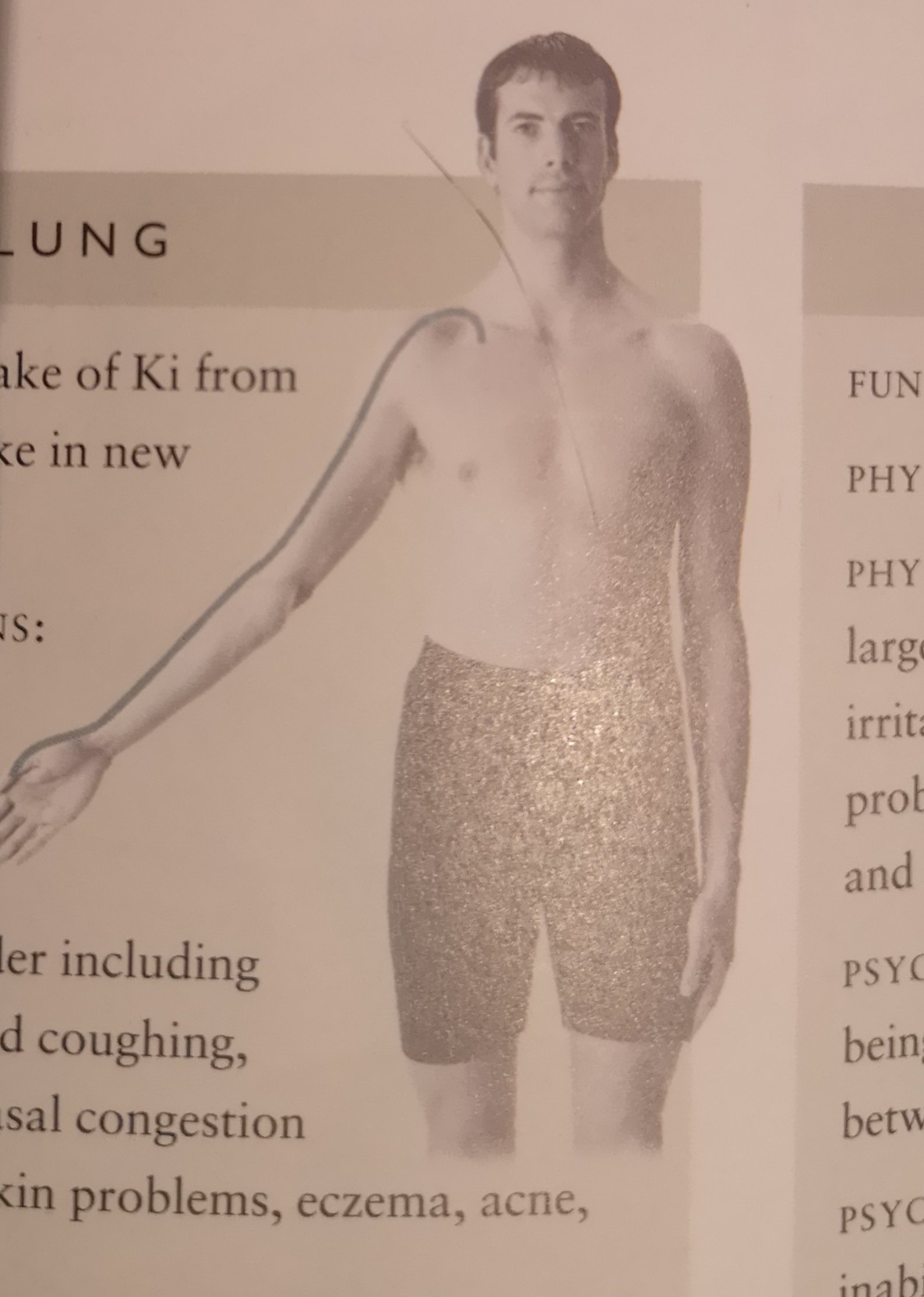
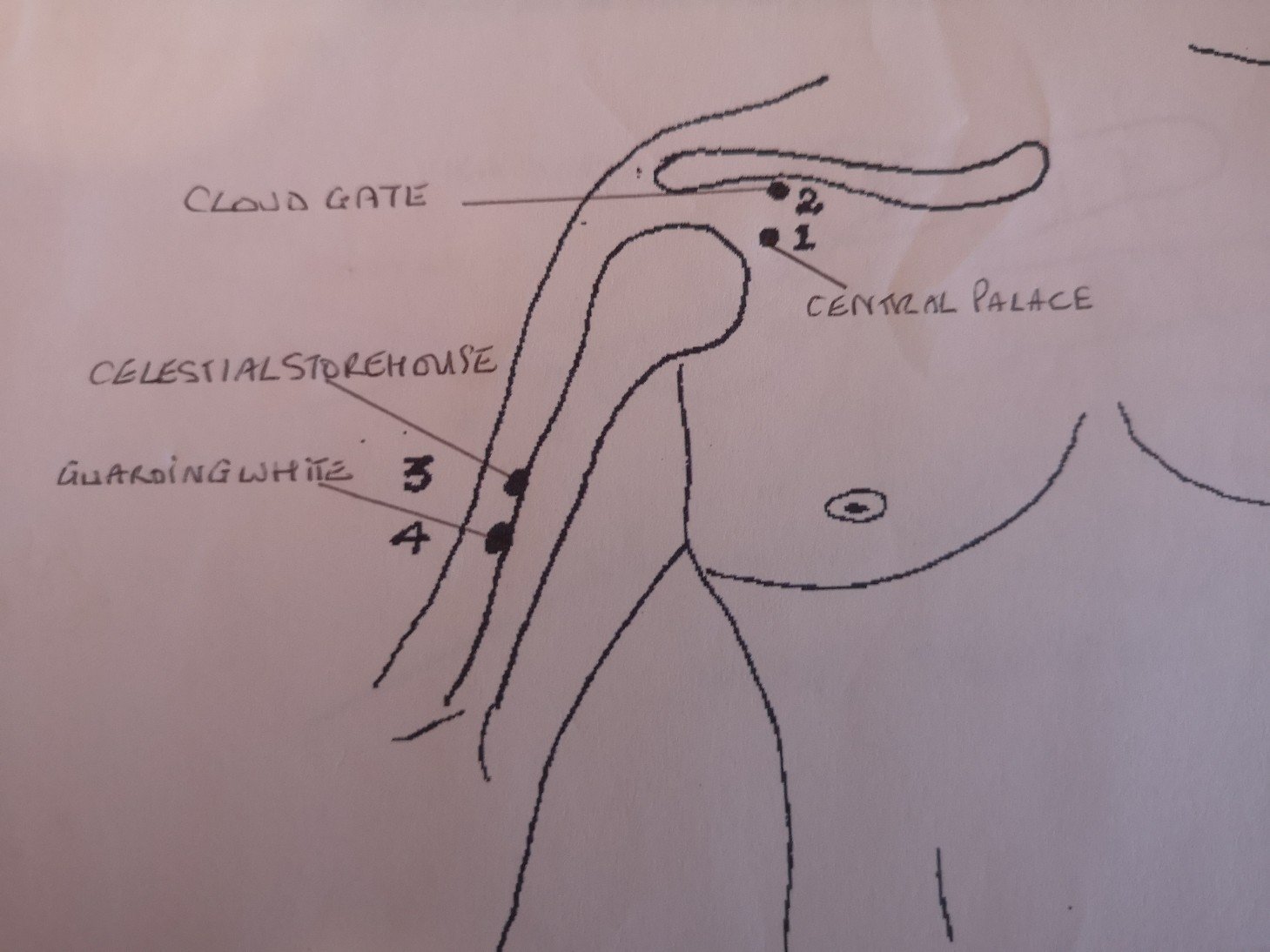
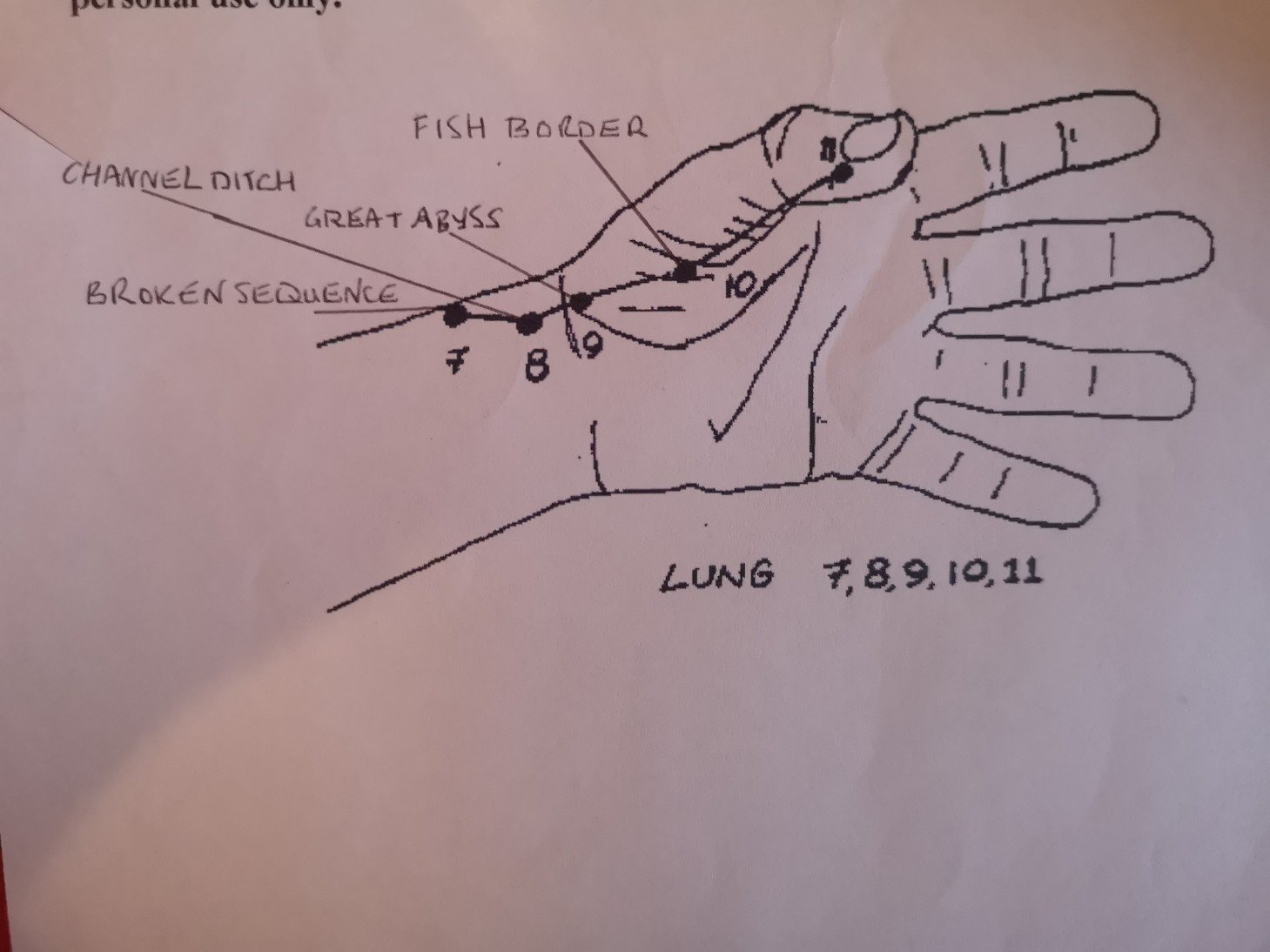
We start with the Metal Phase which encompasses the lungs and exchange of air in humans and with the wider environment. The Edinburgh cycle path is sometimes thought of as the city’s lungs and we take the branch from Leith to the Trinity Tunnel, Active Travellers focusing on air pollution and how we would like it to be.

The Trinity tunnel is where my sound/art installation, No Birds Land, is situated. Sadly, on arrival it was clear that it had been vandalised while I was walking the first week of the pilgrimage and the bunting was all broken and in the mud. My pilgrim friends tried to help, but we didn’t have much time to repair.

Phyllis from the Edinburgh Reporter was walking with us and wrote about the Keeper of the Soils and No Birds Land. Her article, with links to video and audio, is here.

Many thanks to my friends Lesley and Andrew who went along the next day to repair and rehang.

We stop briefly at Granton Harbour as our numbers swell. The core group are joined by others who will come all the way to Glasgow with us and there are many day walkers too. What a jolly bunch, particularly as there was no rain!

Granton Harbour

We continue along the coast of the Firth of Forth, through the industrial outskirts and past the entrance to the Granton Walled Garden where the cape was dyed. A small group peel off to collect a soil sample before rejoining us further on.

Stage 2 / the Earth Phase

Our next stop is for tea and coffee in the corner of the Lauriston Farm, kindly donated free of charge. We are immensely grateful to Lisa, Toni and Dave for their time and generosity.

Lisa serving us much needed tea and coffee, Lauriston Farm, Edinburgh. Photo Liz.

Transforming an existing farm into an urban food production and community hub that benefits, supports and regenerates the environment and all those connected to it.

Lauriston Farm website
Second soil ceremony of the day with Natalie Taylor wearing the cape and Dave, at Lauriston Farm. Photo Liz.

Here we pause to consider the second of the 5 Elements: Earth. There is a soil ceremony and the small sample is put in one of the cape’s pockets to be carried to Glasgow. The focus for the next stage is the physical awareness of our feet on the ground, reflecting on the ‘give and take’ which is happening on this walk – the kindness and generosity of others, and what it means to be able to accept that; and the nourishment and nurturing between us and the earth. We have our first silent period and muse on the role of sympathy and empathy in the climate crisis.

The next section is along the sea front at Silverknowes and on the beach to Cramond.

Silverknowes, Edinburgh. Photo Liz.
Having a snack and taking it in turns to use the public conveniences
At Crammond. Photo Liz

Stage 3 / the Water Phase

Here we pause to immerse ourselves in the Water Element with thought, emotion and physical exercises. We focus on harnessing the sea’s power and thinking about other renewables as we flow along the River Almond path. Recapping the first week of the pilgrimage, there is reflection on the fear engendered by the climate crisis – for ourselves, our children and other-than-humans.

The River Almond approaching the Cramond Brig

We wait for even more walkers to join us, say goodbye to others, and continue past the hotel, back down the other side of the River Almond through the Dalmeny Estate. Here we eventually have our picnic lunch. Thanks to Ewan for the delicious, home-made oatcakes.

Stage 4 / the Wood Phase

Moving into the woods, we take the chance for a second period of silence. In single file we appreciate the trees, the lush undergrowth and occassional glimpses of a wider landscape between boughs.

Through the woods. Photo Olga

Later, there is more dynamic discussion and expression of any anger we feel about HS2 and other developments which have involved felling trees. We attempt to harness and direct it towards decarbonising action plans.

The sun is low at this time of year, but there’s so much to appreciate when we stop to allow everyone to catch up and regroup

Everything is going well and someone makes a suggestion for a little detour. I think, why not, we’re making good time. However, we lose half the group and that means there are rather stressful phone calls back and forth as we try to find each other. Note to self: stick to the plan!

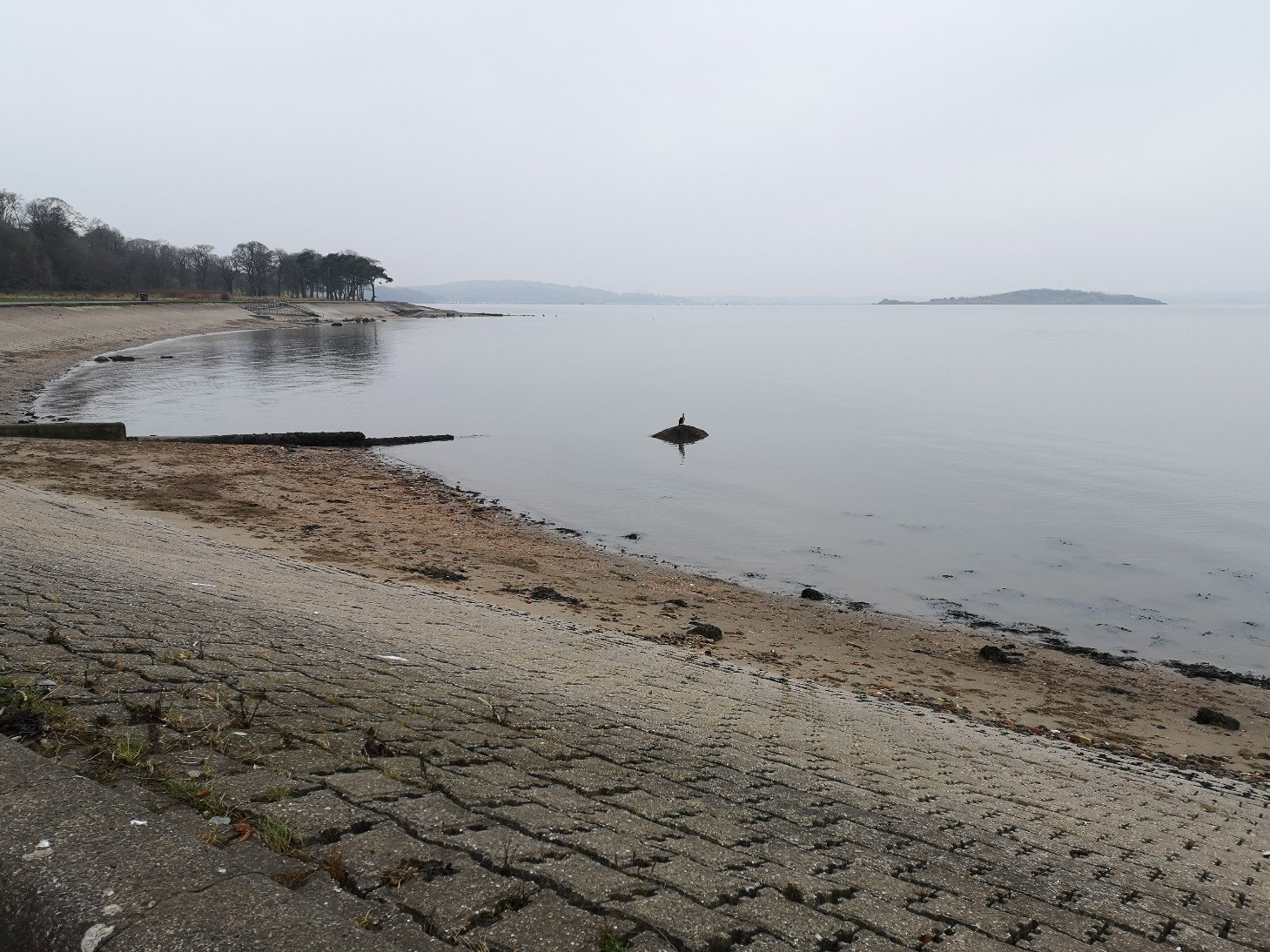
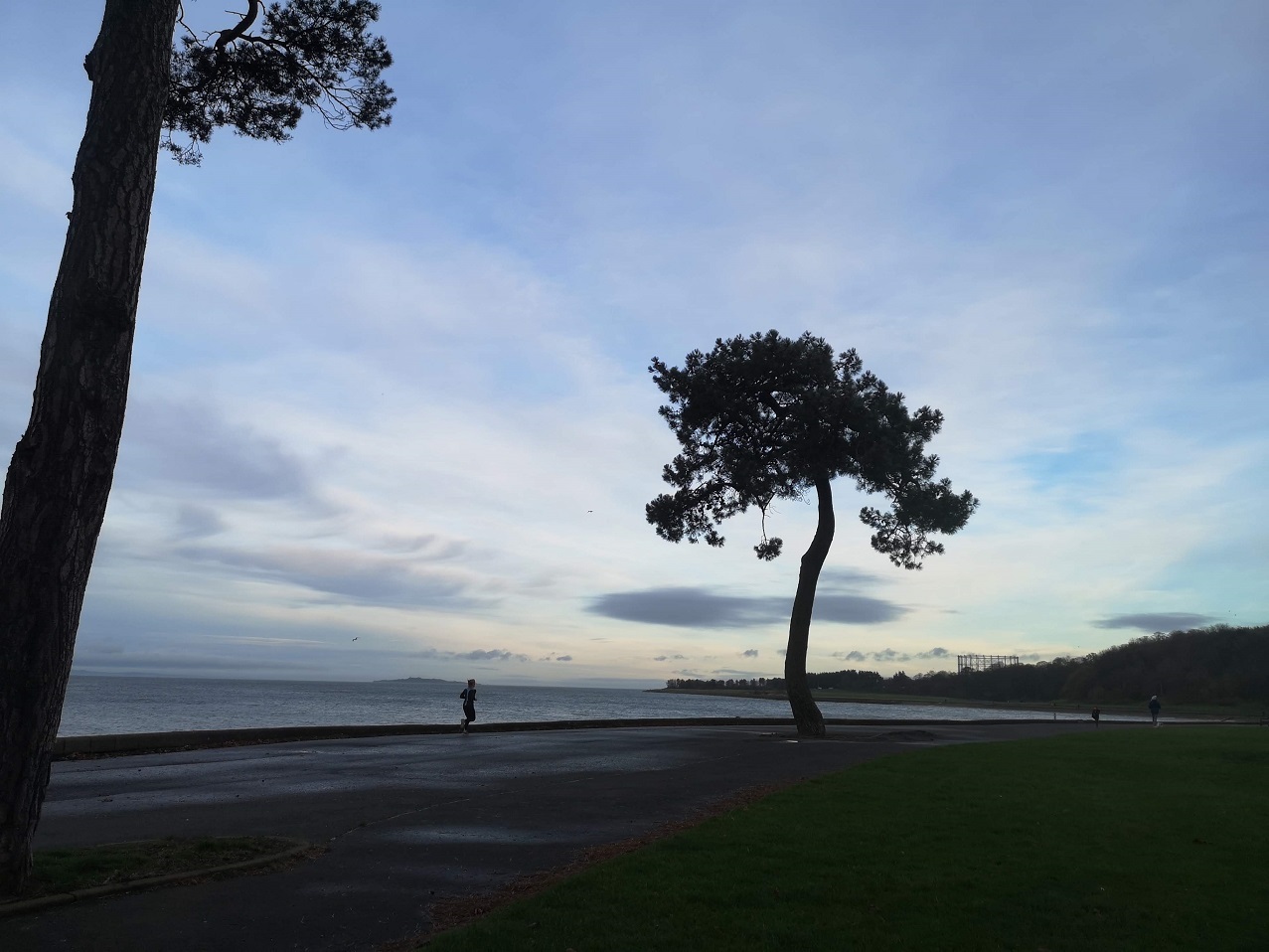
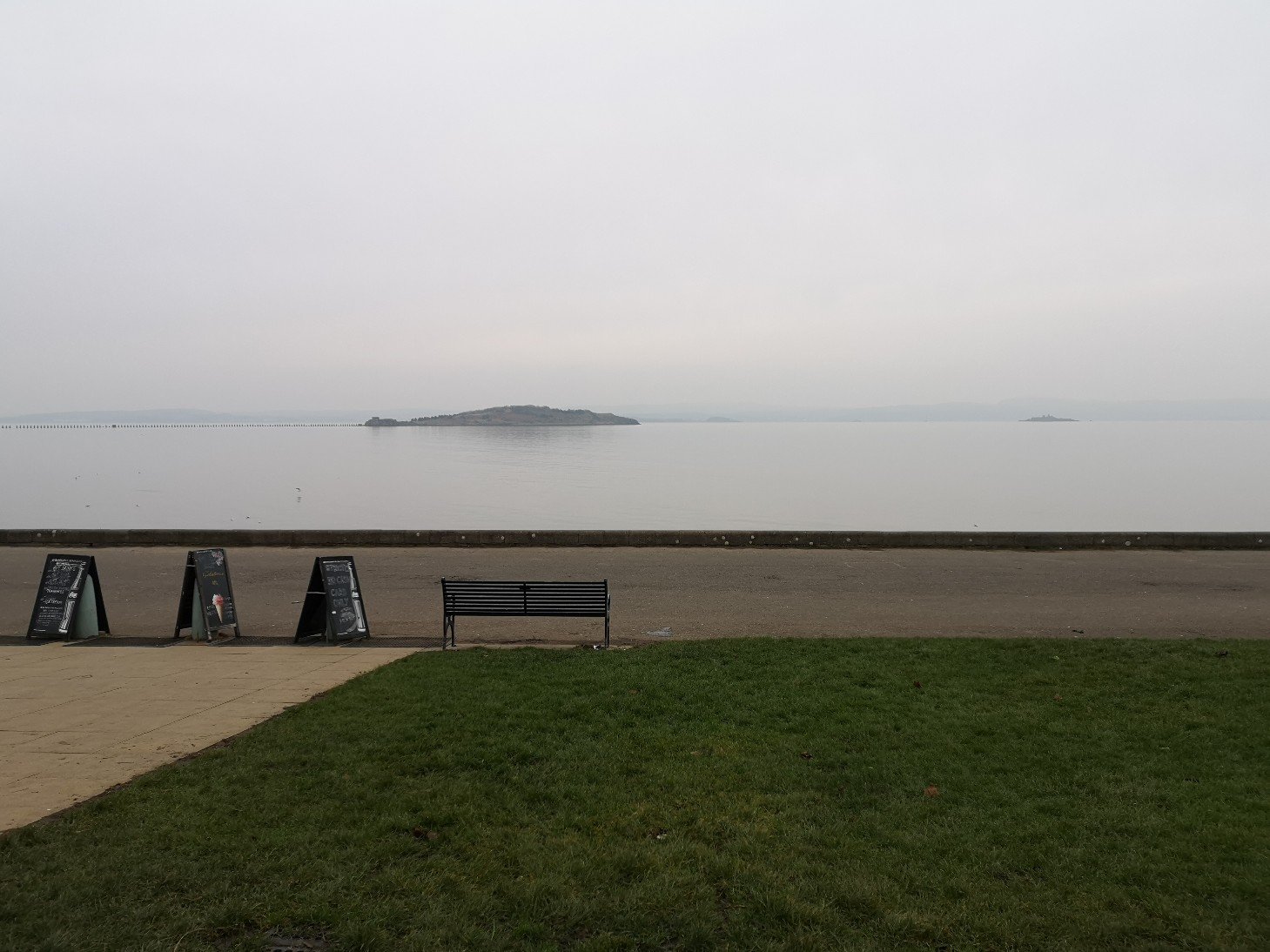
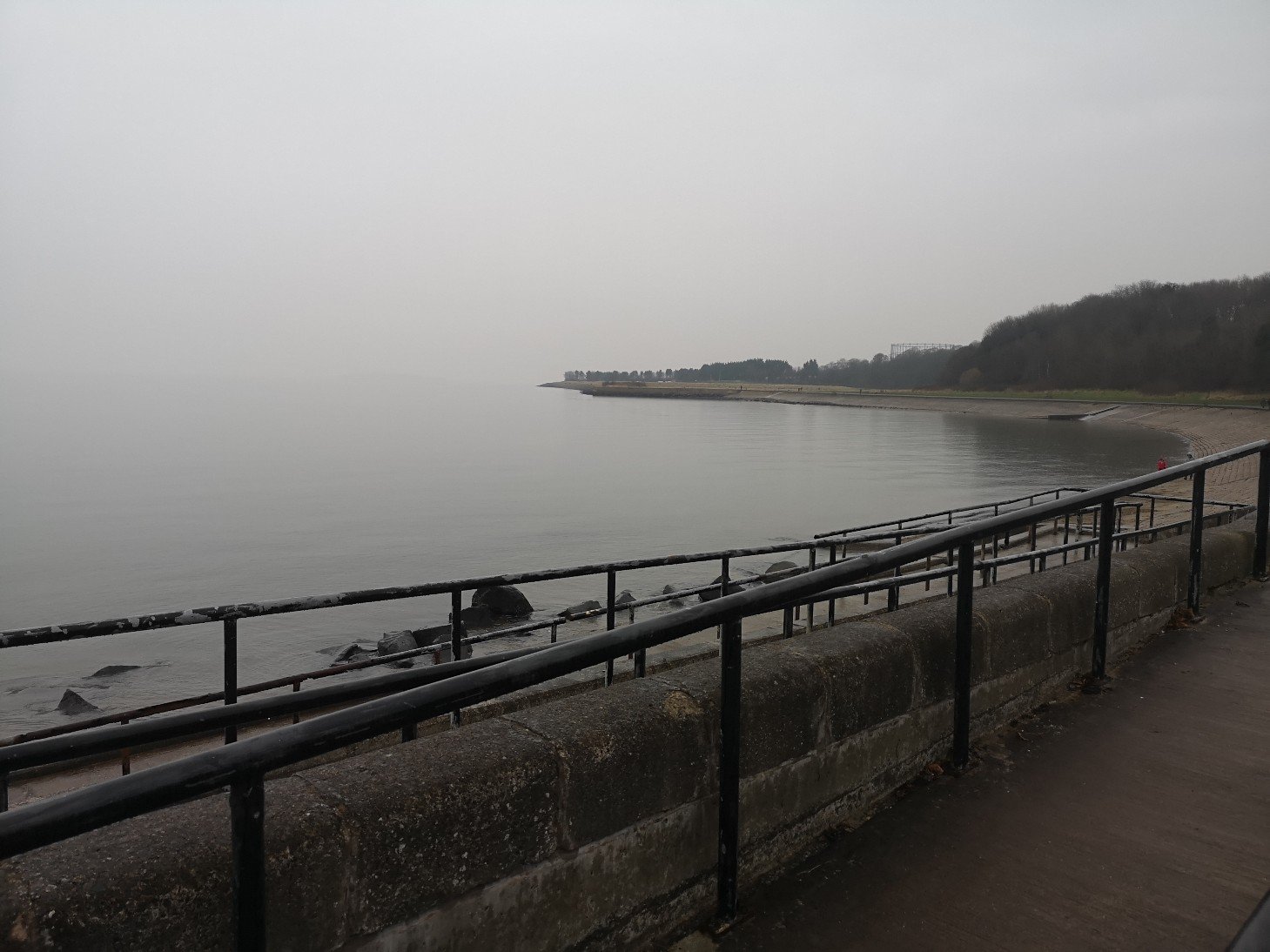
Stunning landscapes along this stretch of the Firth of Forth

Stage 5 / the Fire phase

Our final phase is the Fire element and we are very close to our South Queensferry destination.

Renewing our community spirit with a song, we practise smiling in the face of difficulty as we swing into South Queensferry with open hearts and hope for the future. Many thanks to the pilgrim who sings for us so we can join in.

We are staying at the Priory Church, but we are too early and it’s started to rain. Bidding farewell to the day strippers, we retreat for a well-earned drink to warm up and dry off.

The Priory, South Queensferry

What a wonderful welcome we get at the Priory! Although there is only one toilet and no showers for us all, local people open their homes. There is a fascinating presentation about the Chapel and its history, a sumptuous meal, and we are very happy to bed down on the church floor at the end of the day.

Once part of a medieval Carmelite Friary at the centre of life in the Royal Burgh of Queensferry, the Church is situated very close to the Binks where the St Margaret’s Ferry used to take pilgrims across the water to Fife, so they could walk on to St Andrews. That was before the bridges were built, and is what gives the town its name.

It is thought that there was a building here in the 11th century. Certainly, the Carmelites were in the area around 1330, a monastery was in operation in 1440, and that’s when this ancient church dates from.
St Margaret on the screen, Priory Church, South Queensferry

When I was planning the day, I tried to find someone to row us over the foot of the Almond. There used to be a boatman there who lived in the cottage opposite, but no longer. It would have meant that we missed the gorgeous river walk, but would have shortened the day. As it was, we all seemed to have coped well with the distance.
Reimagining what it means to be ecological

At the heart of the philosophy which underlies Shiatsu and East Asian medicine is the innate relationship between humans and other-than-humans. We are all one, all made of the same Chi, and intrinsically linked.
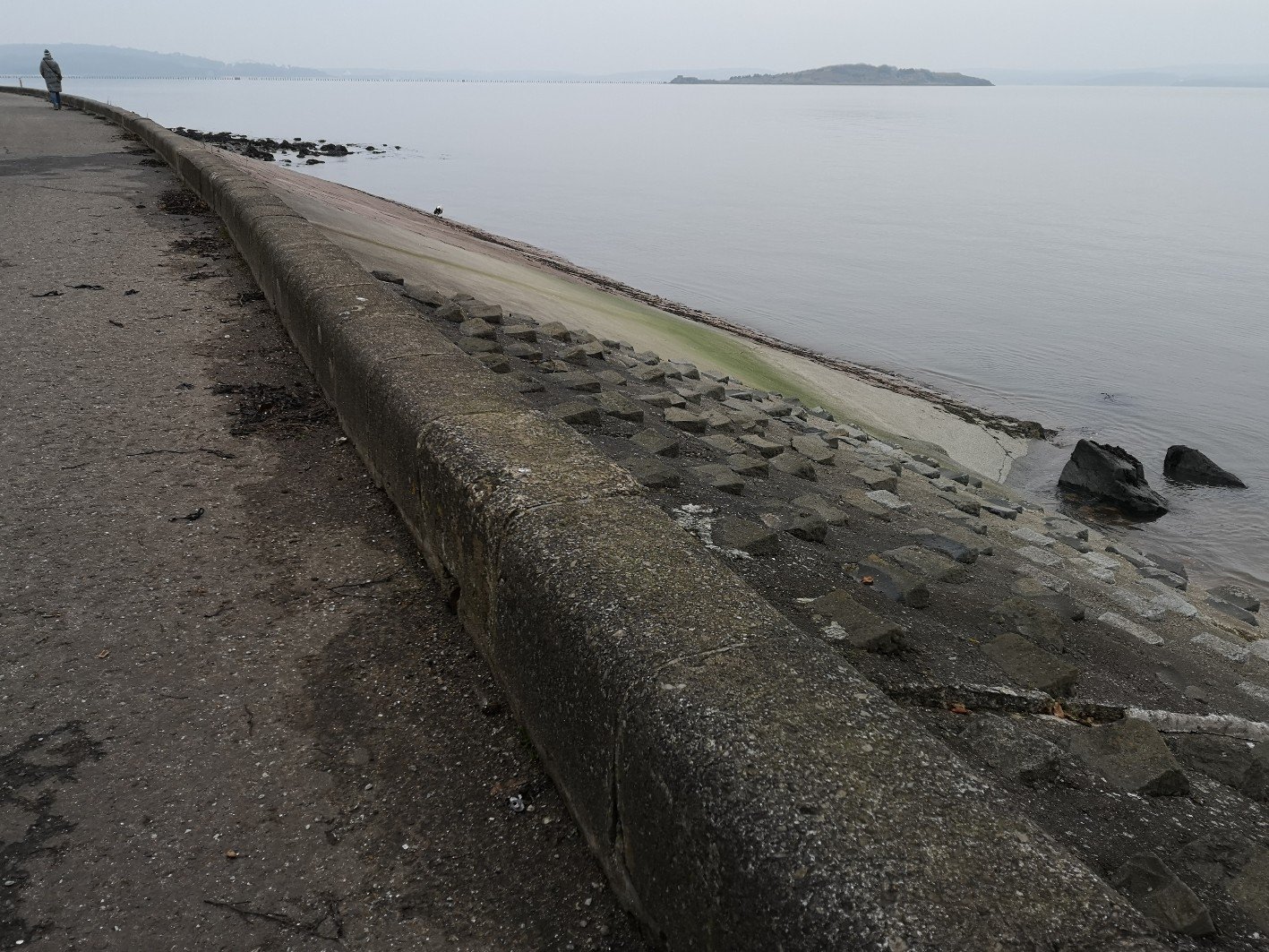
The cyclical and interdependent relationship inherent in YinYang means that it is impossible to imagine one part of nature separate from another. Every thing morphs and melds into the other, particularly in extreme situations such as the current climate change scenario. We can see this happening: the more we pollute the atmosphere, the faster and stronger the winds are having to move the air around in order to preserve its quality, so that we can all continue to exist. Balance happens, or at least the natural system is trying very hard to achieve that.

We must, of course, do our bit: notice what is happening and see where we are needed, work alongside our companions in nature and those who are trying desperately to put things right. We must listen to the messages, and this is easier to do if we walk rather than run, reflect as well as act, and connect with compassion, as well as protecting our own.

The system we are part of offers hope in this way, and although it can be hard to hear, we can console ourselves that if things do worsen, we are participants in a very grand cycle. We will be composted along with the potato peelings, sooner or later, ready to sprout again, so in the meantime, let’s pledge to do the best we can while we’ve still got time.

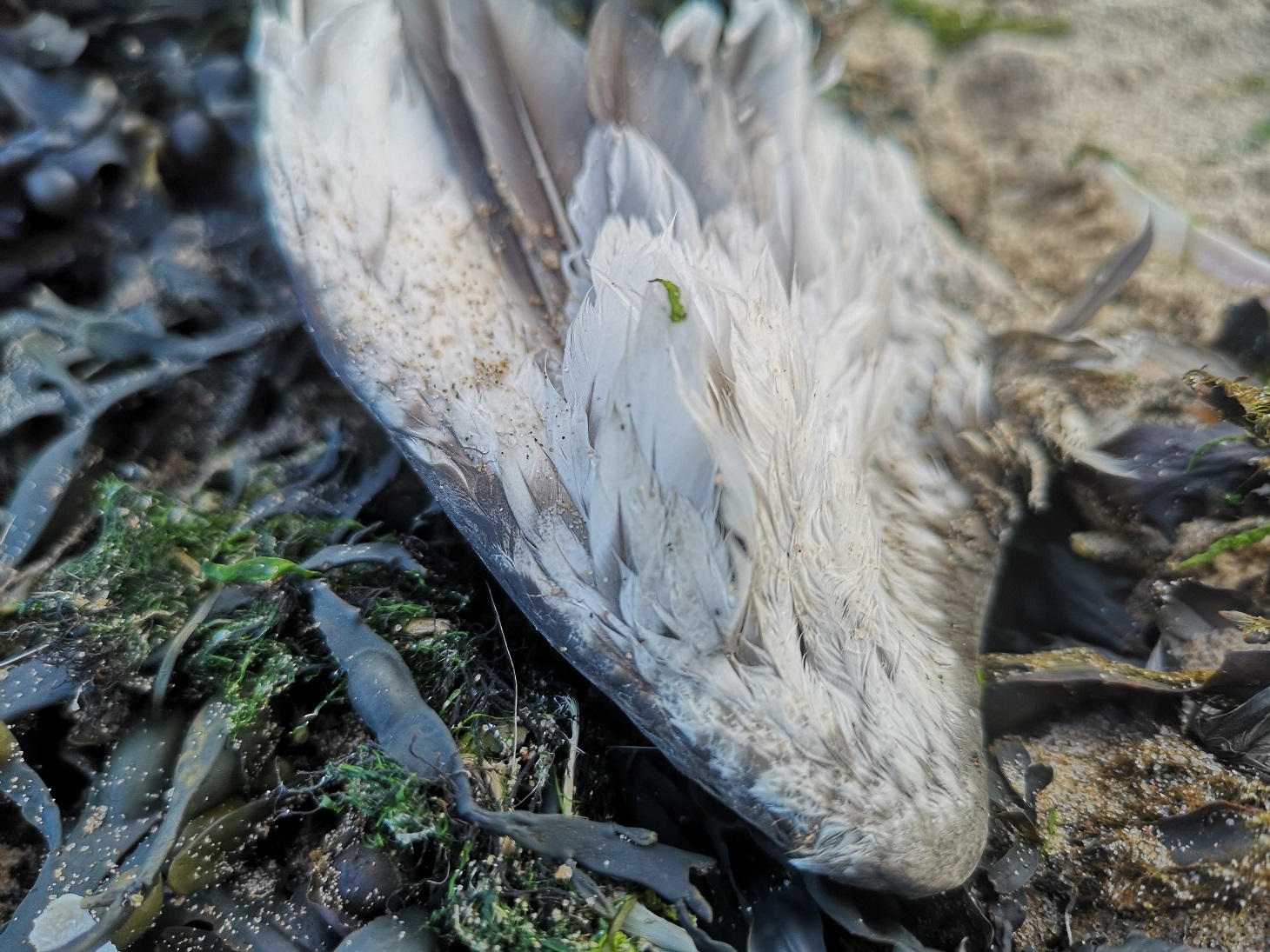
Today’s feather

All photos by me unless otherwise stated.

South Queensferry to Bo’ness.

Lost Species Day 2020

A Remembrance Day for Lost Species collaboration with Ewan Davidson, November 30, 2020

In response to lostspeciesday.org – a chance each year to explore the stories of extinct and critically endangered species, cultures, lifeways, and ecological communities. An opportunity to make or renew commitments to all who remain, and to develop creative and practical solutions.

Inspired by Hagar Vardimon’s New York Times front cover 2019

Lost! – House Sparrow, passer domesticus, last seen in any significant numbers in 1977. (There were 372 counted in 1983, according to Valerie M Thom’s Birds in Scotland p324.

A recent study concluded that the number of sparrows in Edinburgh’s Princes Street Gardens [in Scotland] was falling because the birds were unable to hear their own songs through the thunder of traffic

John Burnside, The Environment in Rachel Carson’s Silent Spring Ed Gary Wiener p56

We invited folk to join us in Princes Street Gardens to remember the House Sparrow on Lost Species Weekend 2020, Saturday 28 November, 12-2pm.

There was no need to book – you could have just come along.

We cut out sparrows from white dissolvable paper and put the cut-outs on the bushes, denoting absence and offering the chance to consider their loss.

Did you know that if you are a sparrow:

  • You like to be in communication with your extended family at all times
  • You are more comfortable if you are overhung or protected
  • You have your eyes on the side of your head, and you use your peripheral vision to look out for cats and sparrowhawk
  • You like hedges and bushes to roost in, and nooks and crannies for nesting
  • You have an irrational hatred of yellow flowers which you tear to pieces…. you probably ‘know’ why, but no human does
  • You eat seeds, mainly on the ground, and you prefer to hop around rather than fly if you can
  • You were formerly one of the commonest birds in the world, but your numbers have dramatically crashed in some places. In the UK, your numbers fell by 69% between 1977 and 2010
  • You are on the Red List of Conservation Species
  • The main threats to your life seem to be changes in agricultural practice, insecticides and pesticide residues, pollution in towns, changes in construction practices, and lack of invertebrate food for your young

Lost Species Day events were hosted on Facebook

Ewan Davidson is a blogger and self-identified psychogeographer. His recent wanderings have taken back into familiar territories, those of ecology, natural metaphors and causality, he first visited as a student thirty years ago. He is also really fond of lichens and birdwatching.

Michelle made a sparrow out of bird food which attracted this robin

Hagar Vardimon is known for her threads and paperworks and won an award for her New York Times cover, Inside was the piece, Should some species be allowed to die out?

2021 is the 10th anniversay of Remembrance Day for Lost Species and the theme is Interdependence. Events include: Onca Gallery’s various presentations and Borrowed Time’s.

Here is a link to Luke Jerram’s Extinction Bell at the Royal Museum of Scotland

Lost Species Day 2021

Lost Species Day 2022

Remembrance Day for Lost Species

Pilgrimage for COP26

Blog 8 – Walking into Edinburgh and staying for a day 22/23 October 2021

Hope’s Walk

This morning’s route begins at St Marks Portobello where we had spent two nights (see blog 7 for details of the Portobello waystation), and we are joined by daily walkers. Jonathan Baxter who conceived of the Pilgrimage, Cath who is carrying the Stitches for Survival bag, and members of the YCCN (the Young Christian Climate Network, who made a grand relay from to Glasgow between June and October 2021) speak before we leave.

In years to come, we want to be able to look back and say “we did not sit at home while unjust decisions were made on our doorstep, we set sail towards a just future”. 

YCCN website
Stitches for Survival are a mass-craftivism volunteer organisation who are gathering all the knitted, crocheted and sewn panels which people have been making around the country, and joining them together to make 1.5 miles of climate messages for COP26 to encourage politicians and others to put the earth centre-stage
One of the Stitches for Survival panels. Photo Gareth

Hope

The theme that we come back to time and again on our pilgrimage is hope. On Sunday, Alistair McIntosh advised against despair, perhaps the corollary of hope, and advocated lamentation (see this earlier blog). Now, at the end of the first week of walking and learning together, we are making the Hopes Walk and on Sunday held a Deep Time, Wonder and Grief Circle in which hope and hopelessness were both expressed. In between these two events was a Silent Meditation on the Mound and an Interfaith Pilgrimage which visited Christian, Buddhist, Muslim and Hindu meeting places.

Jonathan addressing the Pilgrimage for COP26, Edinburgh

Walking itself is an act of hope – hope that the ground will be there the next time you depend on it, hope that you will be alive and able when your instinct is to step forward, hope that you will reach your destination and not die doing it. Every time the ball of your foot pushes off and the ground simultaneously launches you from itself, you sail through the air in the unspoken belief that you will land somewhere safe. Yes, walking is an act of faith; it is inherently hopeful.

Several groups were represented by walkers in our number

You may well ask:

What do we have to be hopeful about at this time of climate crisis?

…and it seems to me that it is this very act of walking together which is creating hope. If we all care enough to make the journey by taking this time out of our lives, putting up with sleeping on wooden floors and getting soaked in the rain; if we put aside our busy schedules and join up for a day’s march; if we bother to comment on blogs, toot our car horns when we see a group walking past with a banner – Pilgrimage for COP26 – and send messages of encouragement and solidarity, then it seems that the making of this pilgrimage, the doing of it is galvanising hearts and minds, educating and setting an example. This walk says, together we are moving, together we are doing something to bring about change.

We walked through Figgate Park between Portobello and Abercorn.. This is Figgate Park pond – is that algae?

No, and neither is the water stagnant! The Friends of Figgate Park facebook page states that the covering is Duckweed, a fast growing, thin-layer of plants which grows in nutrient-rich water (much like algae does), especially in areas where lots of bread may be thrown in (despite the signs, duck-feeders still do this). It is not harmful, there are even some benefits: Waterfowl like Mallard Ducks and Moorhens absolutely love it, and the Mute Swans have been eating it too. As it’s such a thin layer it doesn’t impede them moving around (notice the trails in the photo above), can shelter small fish, and is possibly one of the reasons the latter seemed to do so well last year.

We know that species adapt, that people care enough to look after parks and ponds, and that plants respond ‘intelligently’. Here there is a balance between human and other-than-human (for want of a better collective term) and that gives me hope. The environment is finding ways to cope and now that more and more of us are determined to stop hindering it and start supporting, things are beginning to move in the right direction. Albeit slowly, I know.

Another body of water in the Figgate Park, Edinburgh

The Duckweed does mean that certain species such as Kingfishers can’t hunt, so they’ll be restricted to the burn elsewhere in the park, and the otters are less likely to visit, but if the fish are helped by the covering then next year we may well see more frequent appearances than this. There is a Grey Heron around, and it seems to be able to hunt despite the growth.

We traipsed up the steep hill and into the Queen’s or Holyrood Park. The Keeper of the Soil cape, walkers carrying banners and Beach of Dreams flags are shown here. Holyrood Park, Edinburgh

North Light Arts commissioned Natalie Taylor to make the cape, asking ‘Earth – is soil alive? It was coloured using natural dyes such as madder, grown by Kirsty Sutherland at the Granton Walled Garden. The hues of these dyes reflect the soils of Central Scotland that we are walking through and from which samples are being gifted to be stored in the inside pockets. Every aspect of the design has been considered, from the panels depicting a soil food web in which four of the world’s key crops are shown, to the almost-undecorated front indicating how between 30-40% of global soils are unusable for the cultivation of food, depleted of its nutrients. I was lucky enough to visit during the dying process and witness the huge cauldron of red-burgundy water heated over a burner with the good-witch stirring the blanket samples into it for hours.

Heading down towards the St Margaret’s Loch, Holyrood Park, Edinburgh – overcast
Once again we stop the traffic – apt considering that we are walking to the COP26 climate conference in Glasgow where it is hoped (there’s that word again!) that world leaders and business owners will determine to reduce carbon levels
Natalie Taylor, John Muir Fellow, artist and today’s wearer of the Keeper of the Soil. She’s wearing the cape she made with the help of other stitchers in Dunbar
Heading up the Royal Mile with St Giles on the horizon, Edinburgh

En route interpretation and peer-learning will be provided by an emerging community of peer-educators and cultural partners. These include arts and cultural organisations, interfaith communities, educational institutions, and grass roots community activists.

https://artandecology.earth/cultural-partners/
At the foot of the Mound with the National Galleries in the background
We walked through Princes Street Gardens with Edinburgh Castle looking over us and the trees still very green despite it being mid October
We met a woman from the Pilgrimage for Nature whose walk began in London. Princes Street Gardens, Edinburgh

At this time of unique peril for our planet and all its inhabitants our plan is to deeply connect with and listen to the land we travel through, the species we encounter on the way and the communities living along the route. Our walk is a uniquely hopeful, creative and reverential kind of activism.

from the A & E website

There were a group of families (10 children and 10 adults) waiting to join us in Edinburgh. They had been hanging around for a long time, but the kids were well entertained.

Coat of Hopes

Another pilgrimage is being made by the Coat of Hopes group. This other garment is made of patchwork, and carrying it is described as performance craft. It is being worn and added to between the starting point of Newhaven on the south coast of England near Brighton, and Glasgow (500 miles). It carries stitched griefs, remembrances, prayers and hopes connected to the landscapes they pass through, as well as stories of migration. The coat pilgrims will take 62 days with twice weekly stitching stops and songs while it builds connections between people and communities.

Here is the Coat of Hopes when it arrived in Glasgow in all its glory

Pilgrimage is a journey of transformation, states their website, and that means change. It’s another hopeful statement. As I walk, I become clearer that it is a sense of respect for people, plants and animals that I hope for. Respect underpins the basic adjustment which needs to happen if we are to turn this crisis around. Respect is about listening and supporting, and that cannot be done by staying ‘at arms length’. The closer we get to others, the more likely we are to hear their needs and know what has to be done. That is part of the function of this pilgrimage, to move through towns and countryside and listen.

Peace Cranes

Peace Cranes – detail. St John’s Church, Princes Street, Edinburgh

The Peace Crane project by artist Janis Hart was open for us to see in St John’s Church at the foot of Lothian Road. It consists of approximately 140,000 origami cranes (miniature birds) of peace and hope, made by people from all over the world. This vast number represents not only the people who were killed when the nuclear bomb was dropped on Hiroshima, Japan in 1945, but also those who lost their lives to Covid-19 and the many other-than-human species which are now extinct or endangered, such as the red-crowned crane.

Peace Cranes – detail, St John’s Church, Princes Street, Edinburgh
St John’s Church – exterior, Princes Street, Edinburgh

St Mary’s Episcopal Cathedral

The St Mary’s Cathedral Website

John Conway, Provost of St Mary’s Cathedral, Palmerston Place, Edinburgh who is granted the cape during the soil ceremony which takes place when we arrive
The spectacular Gothic arch of the main entrance to St Mary’s Cathedral, our destination

Fun fact: Did you know that the twin spires pf St Mary’s Cathedral are called Mary and Barbara? They are named after two women from the Walker family who funded the building of the Cathedral in the 1870s. (Thanks to Edinburgh Tourist for that information).

There is an afternoon of workshops including flag making with Ali Pretty of Kinetika (see above), and in the evening, a celebratory ceilidh. It isn’t possible to dance (what? no dancing at a ceilidh!) which is sad, but we are regaled with poetry, stories, a slide show, music, and eat fantastic food (thanks to Robin and co of the Ceilidh Collective). We are also shown the choir’s practice room which has paintings by Phoebe Anna Traquair.

Inspiration from sorrw and renewal of spirit, Phoebe Anna Traquair panel found in the Choir Practice Room at St Mary’s Cathedral, Palmerston Place

I know of the church at Bellevue (Mansfield Place) which is decorated with Traquair’s murals dating from the 1890s, and have seen exhibitions of her work at the Gallery of Modern Art, but the Choir is a hidden gem. It is a working space, the Provost proudly tells us, used for daily practice and so not ordinarily open to the public. Here is a procession of creation, of angels and church men interspersed with famous writers, artists and politicians of the artist’s time. Like our motley crew of pilgrims, they traverse the walls of the small room alongside birds and plants, and the work aims to take inspiration from sorrow, for the renewal of spirit.

I am happy to see that the common pigeon which is featured in my recent exhibition, Clipp’d Wings, is here beside the mallard and eagle
Our very own Olga at the Ceilidh

Silent Meditation at the Mound

Run by Earth Holders Edinburgh (which organises new moon gatherings at the Salisbury Centre, Edinburgh) an hour of contemplation on Saturday is greatly needed. Despite the cold and noise, it is vital that we engage in reflection using a variety of different metgods. Silence and stillness is an equally useful opportunity to allow thoughts and internal activity to settle, in order to hear ‘the quiet voice’. It is during meditation that hidden ideas and impulses surface, where connections can be made.

Inter-faith pilgrimage

At New College for speeches before the Interfaith Pilgrimage began

For over thirty years, EIFA has diligently and effectively sought opportunities to cultivate and promote interfaith progress in the City of Edinburgh. During these three decades, EIFA has been continuously recognised by other interfaith organisations throughout the world as an outstanding role model and best practice in terms of developing and delivering positively impactful interfaith programmes for our wider community.  

from the Edinburgh Interfaith Association website
Apple sharing outside the Temple

Pilgrimage is often a walk which moves, like ours, across long distances, however that doesn’t have to be the case. Indeed, there was an increase in the number of stay-at-home pilgrimages developed during the Covid19 lockdowns – from walking around your garden to following a route online. Our afternoon one is organised by the Edinburgh Interfaith Community and takes us through the city – from New College where we listen to speeches from a Pagan celebrant (“To protect and restore the world’s biodiversity”), Ani Rinchen from the Kagyu Samye Ling Tibetan Buddhist community (“To continue to take responsibility for our actions. We will solve the problems, so we must look after our minds so that we can act wisely, and wisely elect our leaders”), and Jewish community leaders, among others, to visit the Baha’i community, the Hindu Mandir (“We are all the same, we all have the same nose, two eyes and a mouth” Neela Joshi), and various venues, ending at the Sikh Guru Nanak Gurdwara (“No one group, no one faith can do it alone.”) where we are treated so attentively and fed a delicious langar, a community meal which is prepared daily for anyone who needs it.

Edinburgh Interfaith for Climate Justice – the group smiling

Deep Time Walk

On Sunday we go on a Deep Time Walk using the app below.

Deep Time Walk is a transformative journey through 4.6bn years of Earth history via a 4.6km guided walk. It is an invitation to view the world differently, encouraging positive action and advocacy for a regenerative Earth. Our vision is to empower an ensemble of geographically specific and culturally nuanced Deep Time Walks, providing a unique intercultural platform that helps bring about a diverse, flourishing ecological civilisation.

from the app page
Salisbury Crags, Edinburgh

Quaker Meeting House – reflection

Our final Edinburgh experience is the Deep Time, Wonder and Grief Circle at the Quaker Meeting House where we were able to share our thoughts and feelings about our place in the deep time of things, our fears for the future, and sadness at the prospect that not enough is being done by government leaders and big-business owners. We were again treated to a generous meal by members of the Quaker community for which we were very grateful.

The violence at the heart of the system is something we need to address

Jonathan Baxter, Pilgrimage organiser

Thanks to all those who hosted and fed us, and to the St James community who organised house stays for some of us while we were in Edinburgh.

Pilgrimage for COP26

Blog 7: Portobello. 21 October 2021

Beach of Dreams

The public highlight of our Portobello stay was the Saturday morning Beach of Dreams installation by Kinetika, led by artist, Ali Pretty.

Beach of Dreams, Ali Pretty and Kinetika, Portobello, Edinburgh

This art installation is made up of 500 silk flags flying from poles which were planted on the beach, each representing a mile of the Essex coastline. A new pennant was created for each of these miles by Kinetika artists in response to photos or other images which were produced by people living in this edge-country, people who are witnessing the disintegration of the ground on which their houses are situated.

Setting up Beach of Dreams, Portobello, Edinburgh
Preparing for the installation of Beach of Dreams, Portobello, Edinburgh

Beach of Dreams was an epic journey to walk 500 miles over 35 days (June to August 2021) along the east coast of England. The purpose – to explore how we can take care of the environment, take care of the coast, take care of the community and ourselves.

from the website

The flags were initially positioned in lines parallel to the Portobello breakwater, but as the sea came in, volunteers hurriedly moved them, re-sinking them in the sand higher up the beach and creating a tide of people and artworks rushing away from the approaching waters.

In danger from the incoming tide, Portobello, Edinburgh

These flags represent the dreams of the people of Eastern England for the future. Like urgent messages to us here on the east coast of Scotland, they tell of the vulnerability of our coastlines as sea levels rise. Moving, literally and emotionally, they are fragile, though steady, ephemeral but made of real stuff. They flutter and flap in the wind, prompting questions, ‘What’s blowing away? What are we losing?’ 

‘What’s blowing away? What are we losing?’ Portobello, Edinburgh

The poignant sound, as we lay under the flags and watched their subtle colours – lemon and rose – move against the cerulean sky, was a constant reminder that things are changing. The irregular flick-flack of the fabric responding to the capricious breeze wouldn’t let us drift away contentedly. Their beauty contrasted with the reminder that the sea levels are constant rising due to climate change.

View from underneath, the Beach of Dreams Portobello, Edinburgh

Hospitality

We stayed for two nights at St Mark’s Church where we were cared for with much-appreciated heat and facilities. Even a short walk like this focused our minds on the luxury, the privilege of having a roof over our heads and a floor to sleep on.

Portobello, Edinburgh

Walking the labyrinth

The full programme of events continued with a labyrinth. Set up by Ali Newell with red candles and autumn leaves, we were first given a short introduction to their origin and useage over the centuries. Then we were invited to take something from her basket and enter, one by one.

Labyrinth, Ali Newell

The minute I started, I felt such sorrow. Was it the music by Arvo Pärt, or the accumulated feelings of the group? Was it my grief at the state of our world, or a more personal sadness rising up into my throat? One stained glass window showed a man with his arm around a child, another depicted men embracing, with the words: ‘The soul of Jonathan was knit with the soul of David’ as a caption. That tenderness was one trigger for my weeping.

I lived in Estonia for a short time, where Pärt was born, and memories of those times bubbled up. I was writing a book about death and loss, and each day I walked the forest paths. I remembered the shock of turning a corner and coming across a large area of deforestation with trunk stumps all jagged and broken.

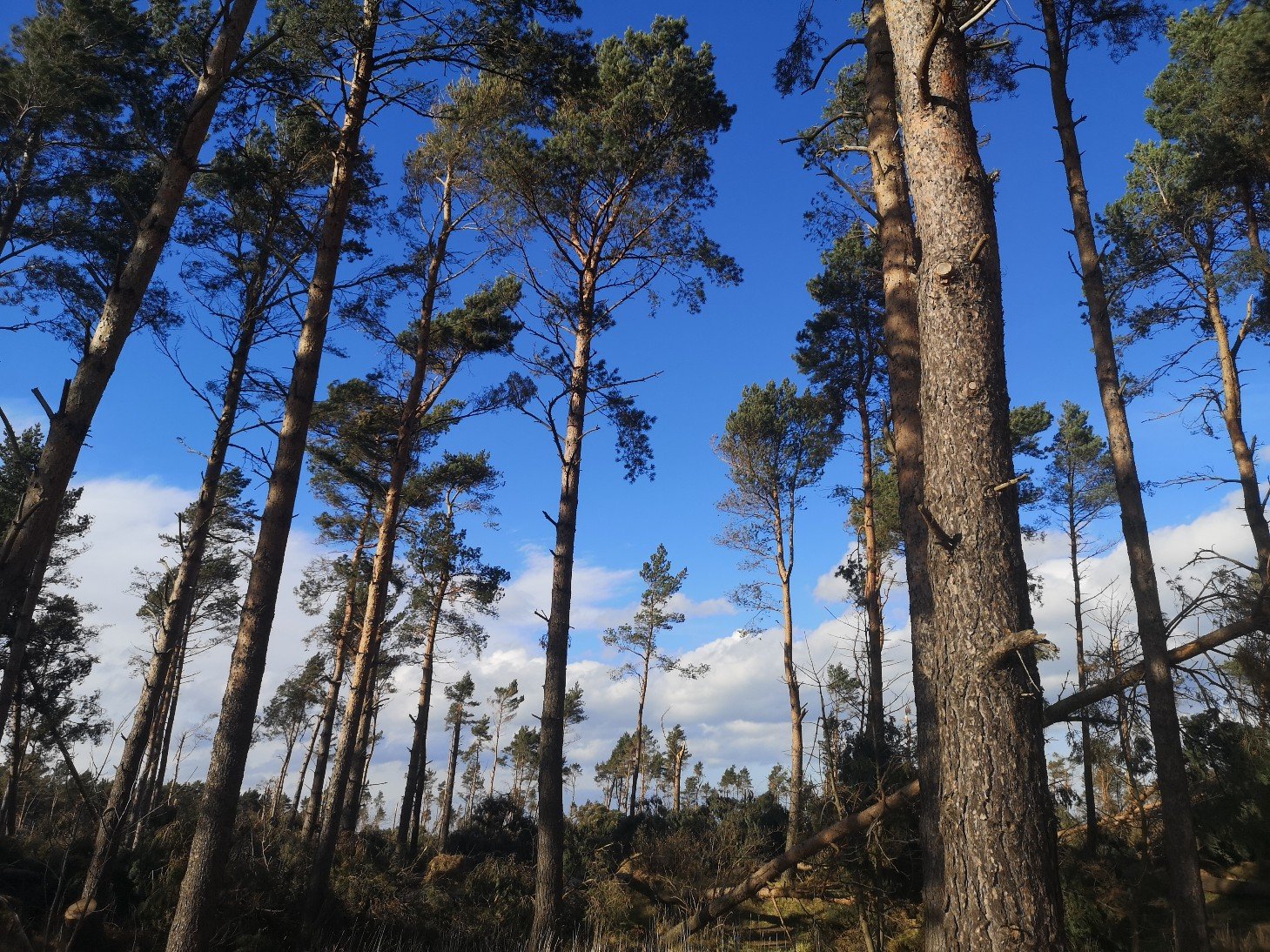
Pines interspersed with silver birch because the foresters know that these trees grow better in community than alone, Estonia
The trees are grown to be cut down, but that doesn’t make the sight any less distressing when you come across it. Estonia

Around the labyrinth I slowly walked, doubling back on myself, at once facing centre, then away from it, moving nearer, then seeming to be distanced. The narrow channel between the lines gave a sense of safety and the golden leaves which were scattered around, encapsulated the passing of the year. Eventually the tears dried up and there was something like peace, or at least calm as I continued. The sun was shining and it threw shadows across us and the room. I was conscious of passing shoulder-to-shoulder with friends on a similar journey to mine,  others with wet cheeks. Someone walked with her arms crossed over her chest, another with his hands cupped in front of him, a woman with arms raised up, palms to the ceiling. In this way, we almost-met, though we didn’t stare or speak. We were all in it together.

And then I saw, ahead of me, the entrance, not the centre. I stopped dead. I must have made a mistake because I was almost back where I started. I traced the way in with my eyes; how had that happened? I hadn’t crossed a line, hadn’t cheated.

I decided to step out of my passageway into one which would take me on, along the way I had been going, and then, no! That wasn’t possible somehow. So I followed the direction my path was taking and found myself right where I began, ready to start over again. There, at my feet, was a battered magpie feather.

Magpie feather

I hadn’t seen it earlier, even though I am collecting one per day (see my first blog of this series) and so it was somehow special to find it at the moment that had I been ‘sent’ back. I picked it up, took a deep breath, turned around and carried it with me as I re-negotiated the labyrinth. Though I walked faster the second time, there was another onslaught of grief. It reminded me that we walk round our lives, spiralling outwards from our birth, but coming back through key elements of it. We are given the chance to go through stages again with our accumulated wisdom. I hoped I was wiser after the event.

The spiral of life

Many of the fallen leaves had wafted onto the paths. They seemed to represent people I have known. Sometimes, unwittingly, I stepped on them, sometimes over and left behind. The person following me picked each one up and put it back in a safe place. I began to feel so weary, I wobbled, even once overbalanced into an adjoining track and had to step back. There was a small, wooden African sculpture in a corner, on the piano, of someone reaching down to touch a baby. It was similar to one I had at home. Again, it touched me deeply. Would this emotion go on for ever? I realised I needed ‘stamina, endurance, resilience’ which were Liz’s words, if I was to complete this Pilgrimage for COP26.

Entrance and centre of the labyrinth, Ali Newell

As I got closer to the centre, I feared I might not make it and I noticed that I wanted to get to the end as soon as possible. It was like my relationship to death; in the past I have willed it, later I decided against it and pleaded that it wouldn’t happen soon.

I did eventually get there, knelt and placed my stone, and, as Liz said afterwards, it was hot from my hand. Of course, it wasn’t an end at all, it was a mid point. It also wasn’t the way I experienced it when sitting beside the dying – a dwindling, a merging into another place and state – rather, it was part of the whole process of life and it was on-going.

As I walked out, I was coming in the opposite direction to others who stood aside to let me pass. Or sometimes I did that for them. It was a smooth, mindful journey, and I was changed at the end of it.

We set off one by one, but as we walked we kept coming into contact with each other. It was like a metaphor for life; people you see once and never again all moving in the same direction, all inspired by love and hope. We acknowledged each other as we passed. We were not alone.

Gareth
Front door, Portobello, Edinburgh

Even more kindness, and a change of perception

I went for a swim in the sea after that. Margaret who knows the seas, watched over me, signalling to keep away from the pipe which I had not noticed. Ruth offered me a shower at her flat, the first since leaving Dunbar on Monday, four days before, and I was really grateful for the hot water and her hospitality.

Coming back, I was struck by the frivolity of the home decoration items outside the shops on the High Street, items I usually enjoy, even covet. I was walking through such a familiar place, but my Camino shell dangled from my rucksack reminding me I was in the stream of the pilgrimage, and I felt like a different person.

Camino shell symbolising that all paths lead to the same destination, eventually


Thanks go to members of the congregation of St Mark’s for a most delicious meal, particularly as the oven failed and food had to be ferried next door and back for warming – a much appreciated effort.

Community choir

And as if all that wasn’t enough, Jane Lewis led a singing circle on the beach under the almost-full moon. She exhorted us, ‘ If we listen to the earth breathing, then we will know what to do’, and we learned her new rendering of Arundhati Roy’s words (from Capitalism, a ghost story). 

Portobello Beach, Edinburgh under the almost-full moon

Another world is not only possible, she is on her way. On a quiet day, I can hear her breathing. Can you hear her breathing?

Arundhati Roy / Jane Lewis

Protest in Harmony choir Another World link

A very blurry singing circle with Jane Lewis, Portobello.

Though a hiatus from the long-distance walking, this day was full of opportunities to reflect on our journey, to learn from the communities we were passing through, and to receive.

We were nearly half way through the Pilgrimage for COP26 from Dunbar on the east coast of Scotland to Glasgow, where the COP26 Climate Change Conference is now taking place. It was organised by A+E and many volunteers.


Pilgrmage to COP26

Blog 6: From Aberlady Bay to Portobello via Musselburgh

Listen to The king of the faeries by Matthew Crighton on the tin whistle on #SoundCloud recorded on the beach at Aberlady, round the campfire.

https://soundcloud.app.goo.gl/jHju3

Sunrise as we walk away from our camping spot at Aberlady Bay, 7am
It’s only just over an hour but we have all our camping gear and what’s left of the food and water paraphernalia, and it’s very uneven ground. We walk in silence

At the car park, the electric support vehicle and day walkers are waiting for us. The group had split into two the previous evening with the others sleeping at the village hall in Aberlady. They visited Prestongrange Museum where they received a lovely welcome.

After a standing-up breakfast and use of the public conveniences (thanks to East Lothian Council for keeping them open for us), we set off for the day’s trek. The coast was stunning.

Longniddry Bents, East Lothian, Scotland
East Lothian

The weather was changeable – a cool wind with sun, light then heavier spells of rain, never for too long, thank goodness.

Coral skeletons

We passed coral skeletons (tubes) which have been squashed into limestone making ‘spaghetti rock’ which date from the Carboniferous period (350-300 million years back). Craigielaw point fossils gives more information.

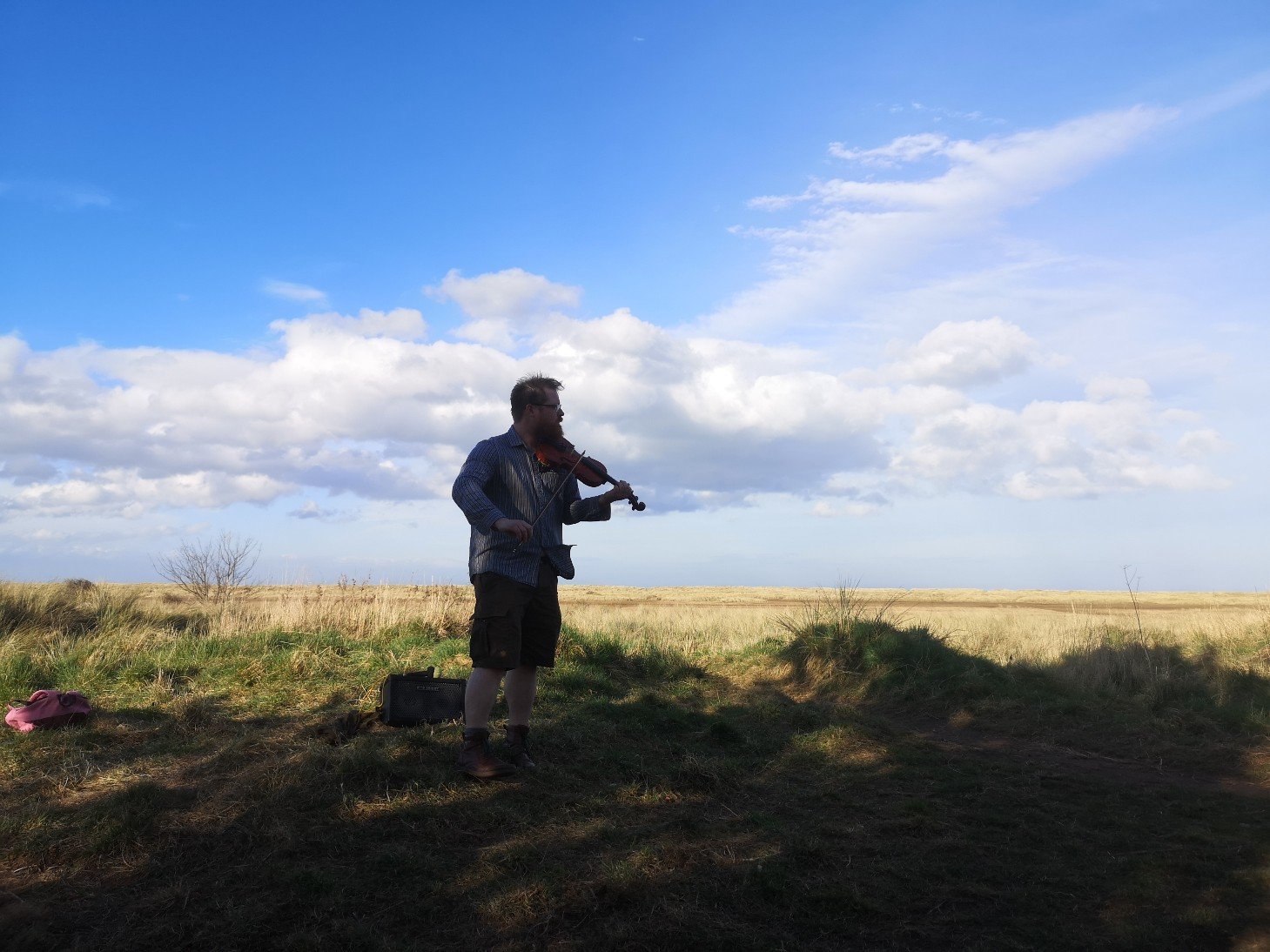
Cameron played the violin for us, though it was dark and drizzly then
We were invited to walk amongst the sycamore copse, to listen to the particular song of those trees and admire their personal designs
Some had fallen, revealing their age
Wandering through the sycamore glade
Francesco
Beth
Port Seton

We regained the main road through Port Seton with all the hustle of normal life – quite a contrast to the meditative pacing at the shore. The Harbour Takeaway served a good green tea and peppermint slice and the sun was warm on my back for 5 minutes before we had to walk on.

Towards Prestonpans

At Musselburgh, we had an extended stop where volunteers had been preparing a meal for us at the Brunton Theatre. We were shown a film. ‘Local Food Roots’ (trailer on Pinterest) which featured various UK projects which grow and distributed vegetable boxes (Riverford) and innovative organisations which cooked with produce from their own communities (Nottingham Hospital – yes, it can be done. They argued that buying in food that had travelled many 100s of miles from South America and Africa was not only less nutritious but also added to the already dangerous limits of carbon in the atmosphere). Sheila Dillon from the BBC Radio 4 Food Programme was a contributor. This was another example of our learning about the various ways the climate crisis can be addressed, as we wend our way to Glasgow.

Naomi Barnes, Sustaining Dunbar
We were met by rowers from Musselburgh (you can see the boat in the middle of the picture beyond the flowers) Prestonpans, East Lothian

It was hoped that the Portobello crew would be there too, but at the last minute they were short of a member, so two of them ran to meet us here, and then walked back with us (see below) with their Resilient, Sustainable banner.

The pipe band from Loretto School were also there to welcome us. Marianne was the Keeper of the Soils for the day

People seem to really understand what we are doing: they thank us and wave as we go by, and messages of encouragement are coming in all the time.

As the sun was lowering, we walked along the prom into Portobello

Keeper of the Soils cape: Natalie Taylor, artist, North Light Arts

The Pilgrimage for COP26 programme is here https://artandecologyearth.files.wordpress.com/2021/10/pilgrimage-for-cop26-programme-04.10.21-edit.pdf

@pilgrimageforcop26 #pcop26