1st October 11am – 4pm; 2nd October 2022 10am and 12noon and 2.30-4.30pm at the Granton Hub (Madelvic House), Granton Park Avenue, Edinburgh EH15 1HS.
We are inviting artist submissions for the Re:living Exhibition that address themes of Death, Grief, Loss, and Re:living. There is no prescribed media for submitted work, and can include art/design/craft.
All work submitted should be suitable for this Granton pop-up Community Centre setting. You can see details of the room here https://grantonhub.org/ including the Sphinx Room which size is 8.75m x 4.7m. The ceiling is 3.3m high.
Please send a digital image / brief description of the submitted artwork (no more than 3 items per person) with related web address (including contact details and social media), suggested selling price, and short bio (50 words max). Publicity photos/short video of you and your work will be required if selected.
A 20% commission will be taken by Granton Hub on all individual works sold, and fees payable for the work sold will be made by bank transfer within 2 weeks of the close of the exhibition.
Your work should be no bigger than A2 size (or thereabouts) and will be either wall, table (a basic refectory type table), or floor-mounted (note: there is a carpet, so no water, earth, sand etc unless completely contained). If wall-based, work should be framed and include mirror plates or D rings.
Please include the running time (in minutes) for video and audio works, and a short description of the piece. If video or audio work is selected, artists will need to supply playback equipment and ensure that it is PAT tested, with proof of compliance PRIOR to the exhibition opening.
We have a screen and moveable seating available for public showings. Artists will need to bring their own plinth(s) if needed.
If your work is selected, it must be delivered directly to the venue on Friday 30 September at 1pm or 6.30pm, and collected on Sunday 2nd October between 4.30 and 6.30pm. Please note that this is a group exhibition of mixed media work in a non-formal gallery setting (blue carpet, walls painted either pale green or white), and will be exhibited between on Saturday 1st and Sunday 2nd October only. You are encouraged to attend and engage with the public during these times.
It is your responsibility to insure your work and neither we, nor the Granton Hub, can take any liability for its loss or damage.
It will be assumed that the organisers will be able to take photos during the event which can be used on social media and websites. Credits will be included where feasible.
We regret that Madelvic House is not fully accessible. We do have a portable ramp to allow wheelchair and powerchair users to get into the building, which you will have access to, and once in the building there is level access, but no there is no wheelchair accessible toilet.
Deadline for submissions: 9th September 2022
We will make our decision by: 16th September 2022
Final photos and other information will be required by: 23rd September 2022
Address for submissions: tamsinlgrainger@gmail.com
Part of the Separation and Unity Project, Cataluña, July 2022
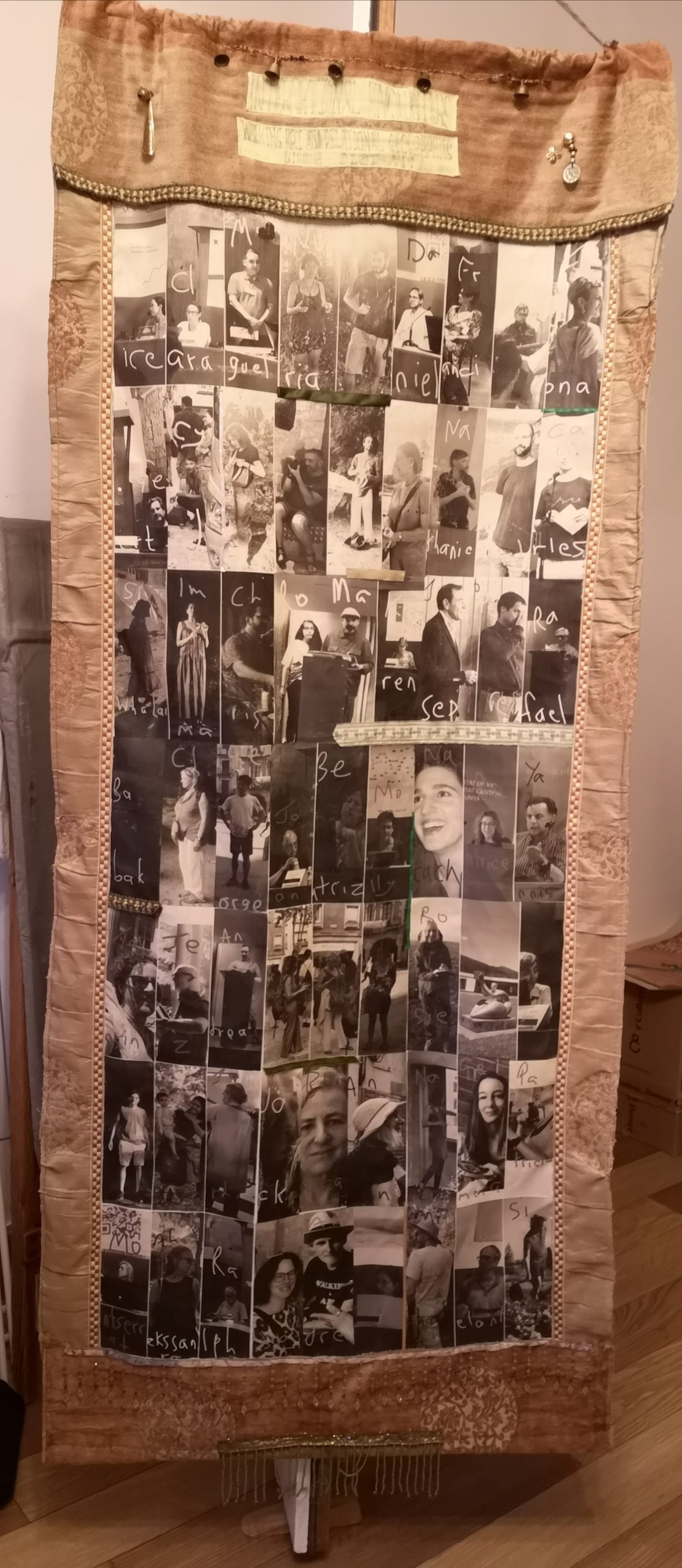
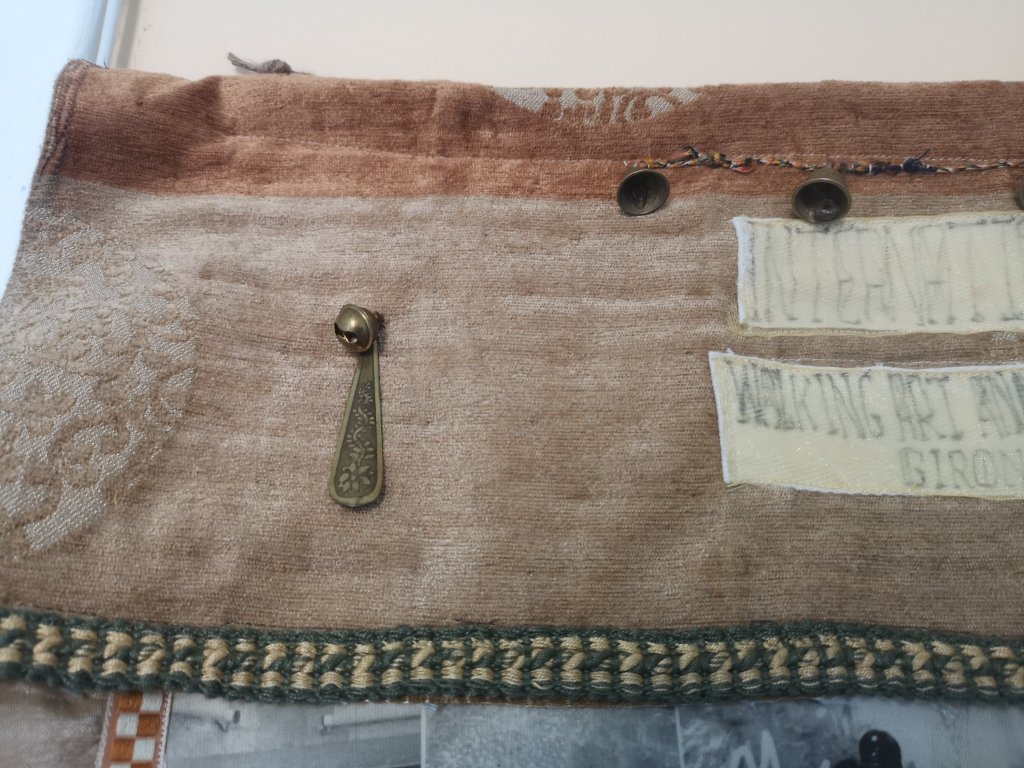
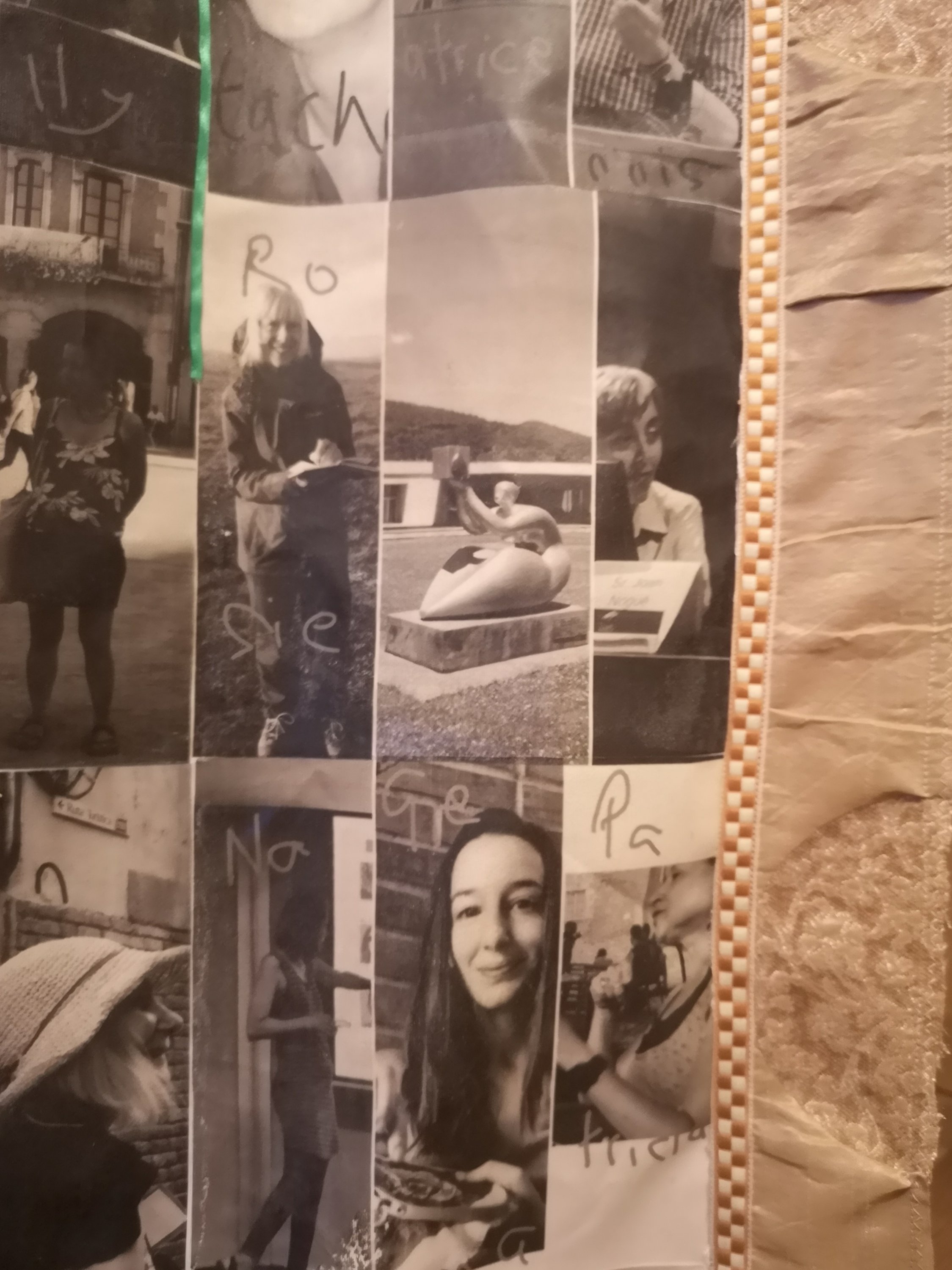
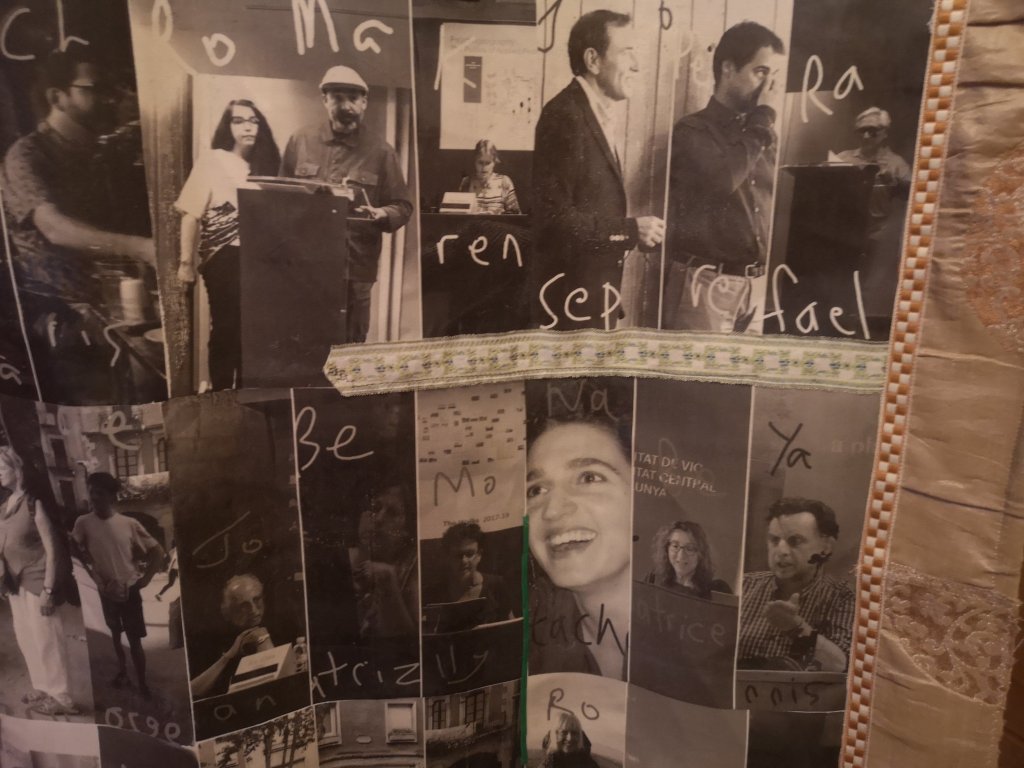
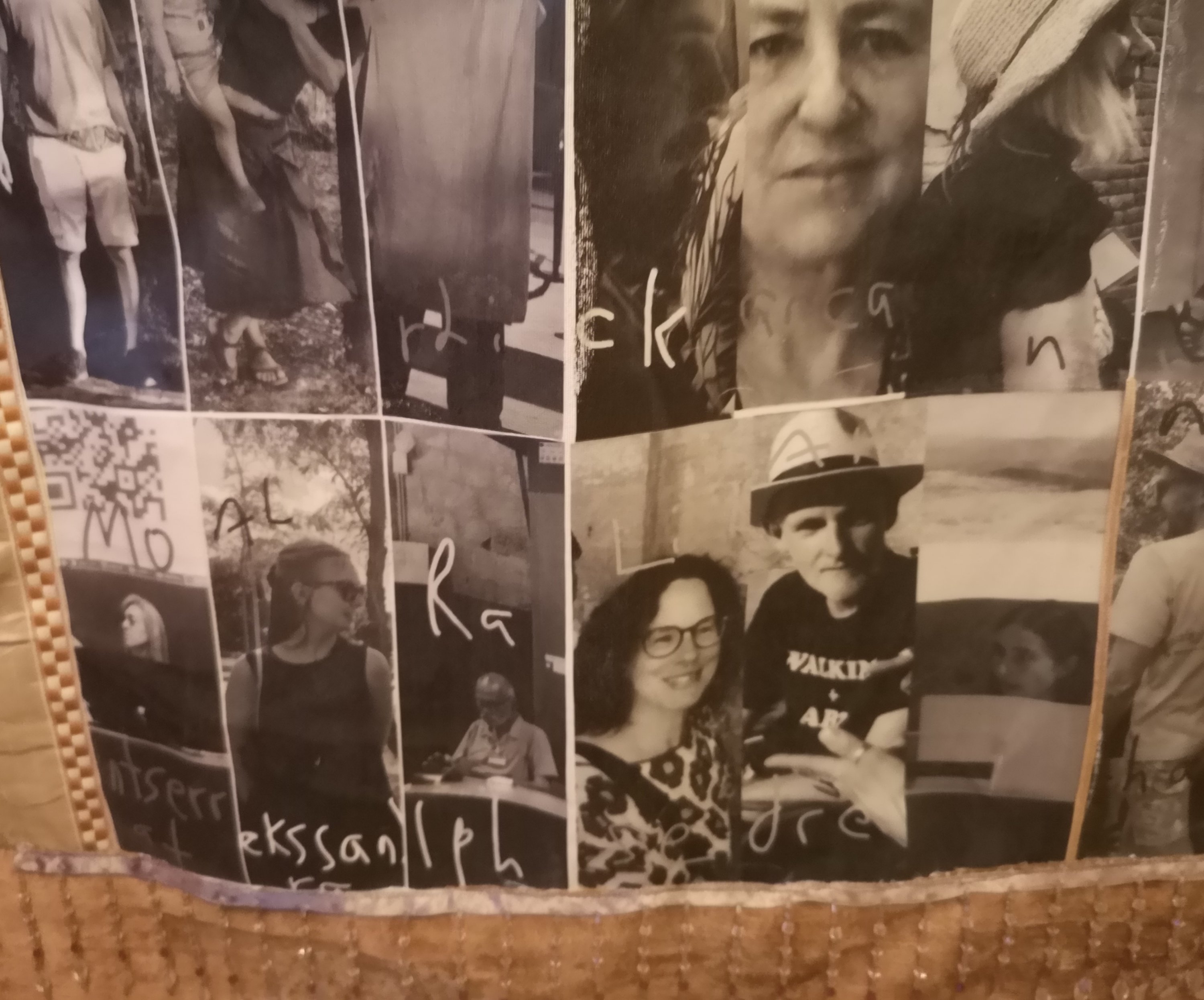
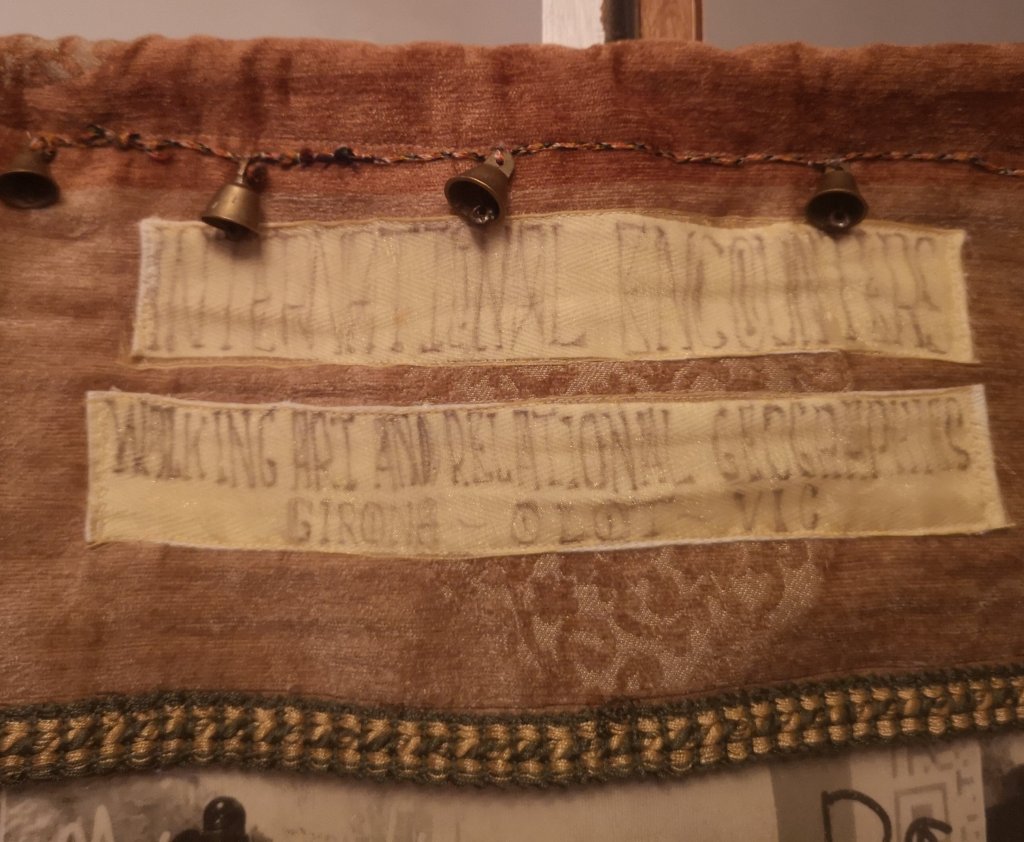
This wall hanging, ‘Festivities and Delegates’ represents an act of unity, the bringing together of many of those who attended the Walking Art and Relational Geographies International Encounters conference in Cataluna in July 2022. Planned for several years, but thwarted by the pandemic, delegates were at last able to travel from Australia, South Africa, Brazil, America and Europe to the conference in Girona, Olot, and Vic to share walking art and community projects via presentations and walkshops over a period of a week.
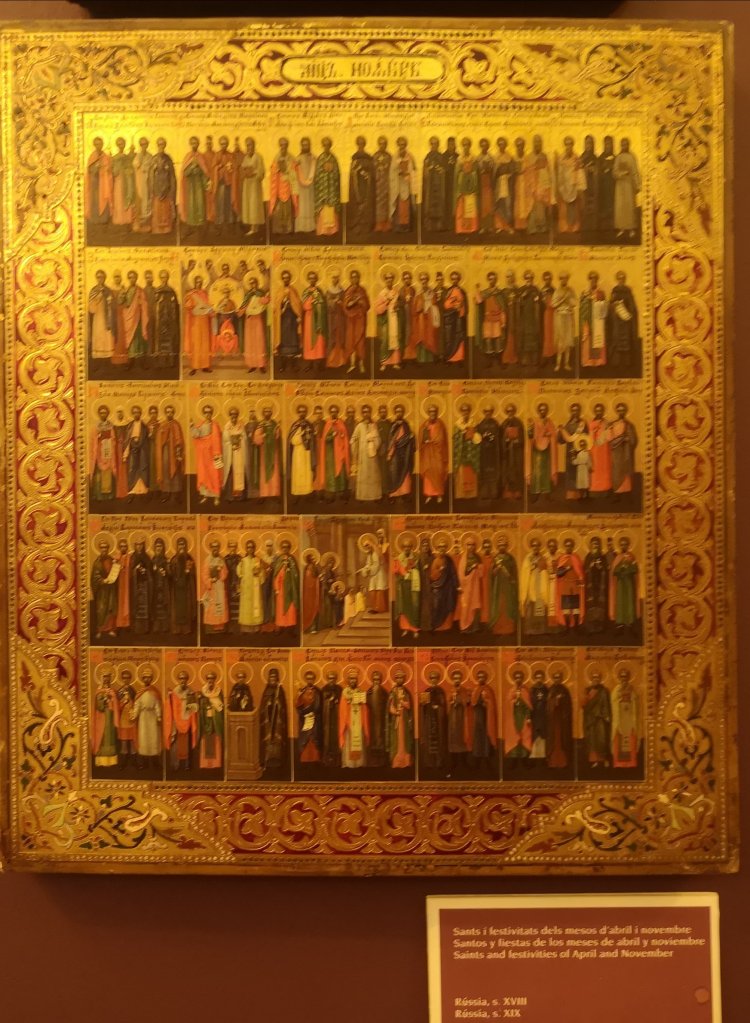
This work was inspired by the 18th /19th century ‘Saints and Festivities for the months of April to November’ in the Museu Montserrat. I climbed up there after attending the conference. The ornate Russian ‘menologion’ is a calendar featuring rows of saints, above which are their names and the dates of the days on which they are honoured, in cyrillic script.
This would have been a visual reminder of the annual Masses of the Orthodox Church which celebrated many different saints.
A menologion (menologium, menology, menologue, menologia) was sometimes a liturgical ‘office’, an ecclesiastical, Eastern Orthodox service book or martyrology; a long list of saints and the details of their lives arranged according to the months of the year.
It is not dissimilar to the secular mural at the National Portrait Gallery in Edinburgh depicting key figures and events in the history of Scotland. The Separation and Unity Project is interested in the movements towards and away from independence by Scottish and Catalonian peoples, at what urges us to separate from, or join with each other.
I am also referencing Buddhist and Hindu mandalas, and other celebratory depictions used to inspire their followers and remind them of the true path. Mandalas come in many shapes and sizes, often using geometric arrangements. They can represent the whole universe, and be used as a way to separate from everyday existence and focus on what is important for greater knowledge. The Vajrabhairava mandala, for example, is a silk tapestry woven with gilded paper depicting lavish elements like crowns and jewelry.
The human mind is like “A microcosm representing various divine powers at work in the universe”
John Ankerberg and John Weldon (343:1996) via Wikipedia (see below)
Process and production of Festivities and Delegates
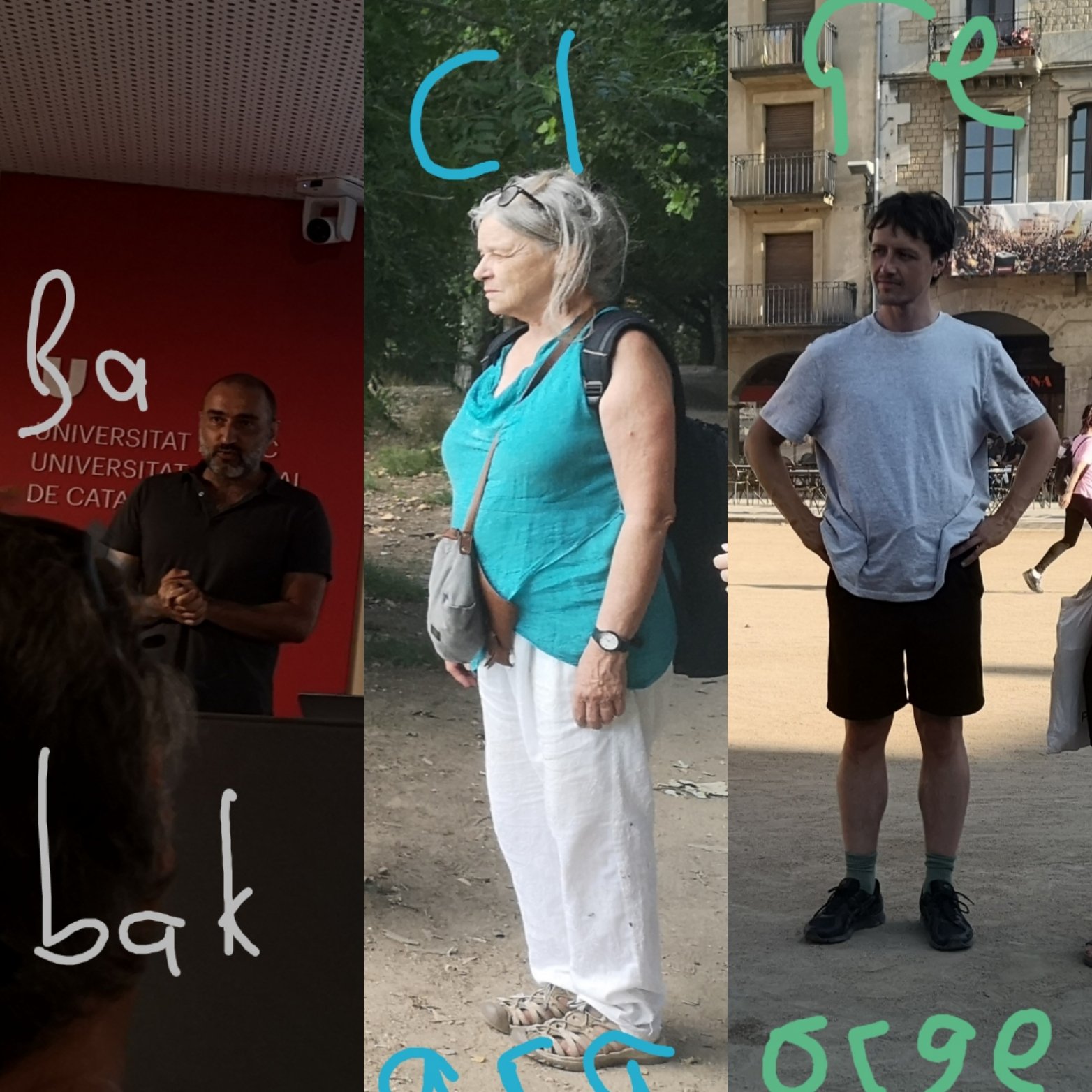
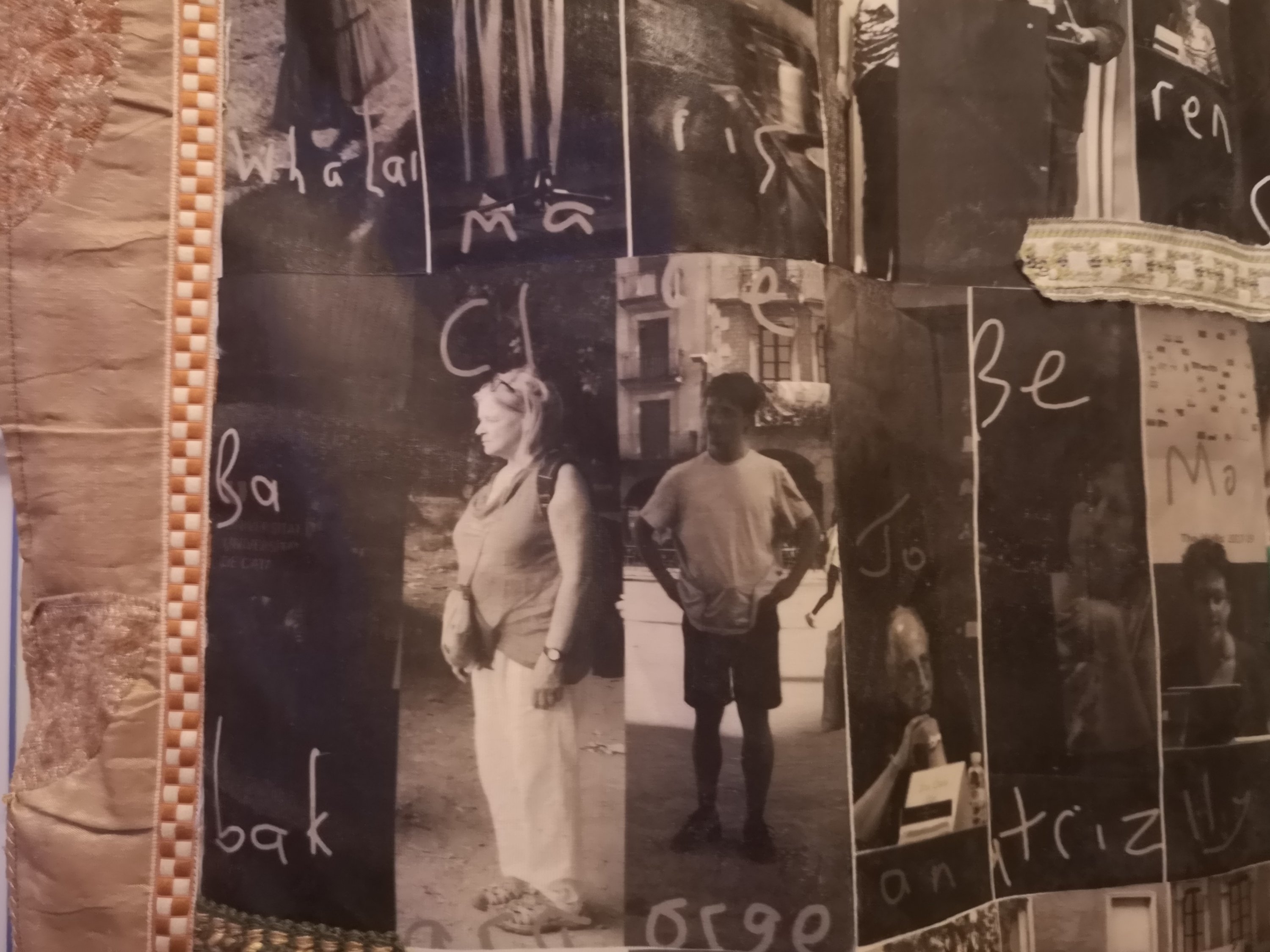
I took digital photos and video stills from my phone documentation of the conference and the social time we spent together, and manipulated the images using free Layout software. In some cases I used social media images. Instead of the elaborate calligraphy that you can see on the Russian ‘Festivities…, I wrote free-hand with my finger or with a biro.
Details: 160cm long and 70cm wide, mixed media – sewed from scraps of upholstery fabric which came from free sample books. Ribbons, tapes and sundry, shiny objects such as bells, earings which have lost their pairs, and sequins. Iron-on paper was used to transfer the photographs onto the fabric.
It incorporates a number of small brass and other metal bells, with reflective totems. These were/are often used to ward off evil spirits, to bring ones attention into the moment, to reflect the devil’s face back to him, and, contrastingly, even to represent the sound of the Buddha’s ‘voice’ spouting wisdom. The protective aspect would also traditionally have been as much from the ‘monkey mind’ and other natural inner temptations, as from what might be attacking us from the outside. Tantric mandalas would have been an aspect of separation and protection from the outer Samsaric world.
Quote: from their ‘Encylopedia of New Age Beliefs: The New Age Movement’, (p. 343, ISBN 9781565071605 archived from the original on 2016-06-03, retrieved 2015-11-15)
Where can you go to walk along and listen to The Wall?
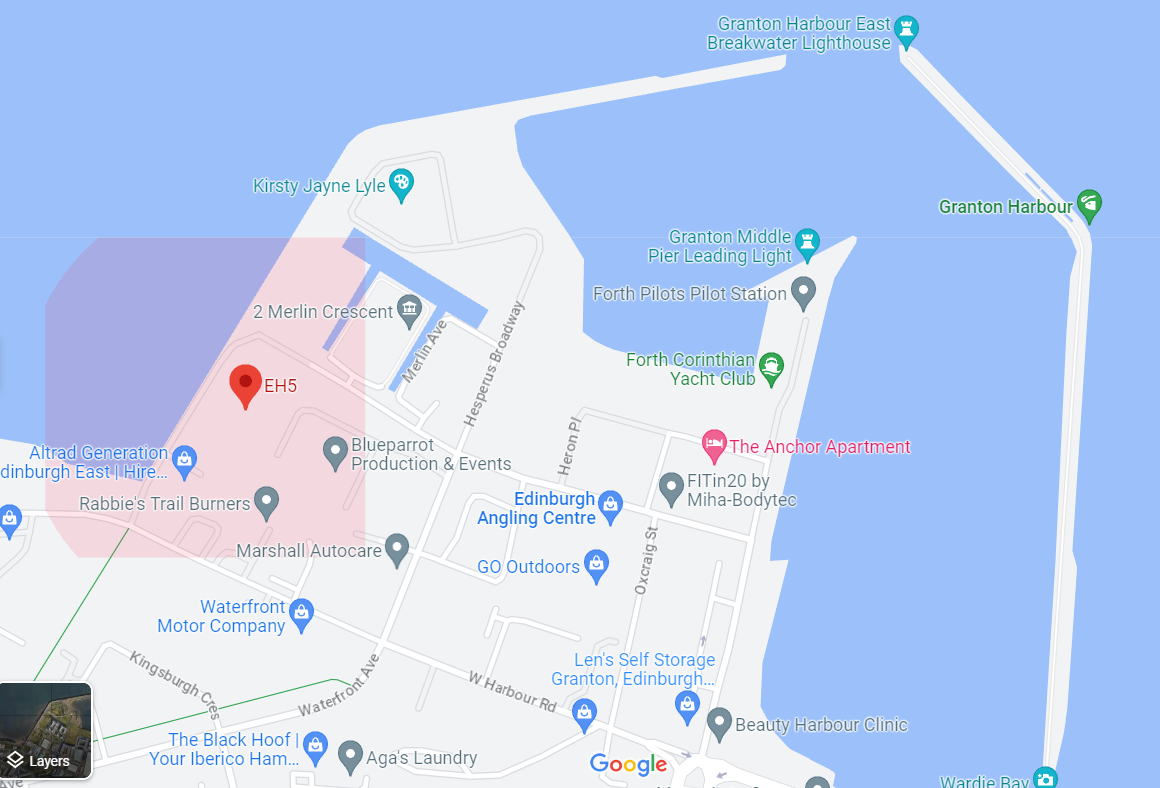
Here are the co-ordinates: 55.984877, -3.232373
What 3 words: ///piles.cargo.whips
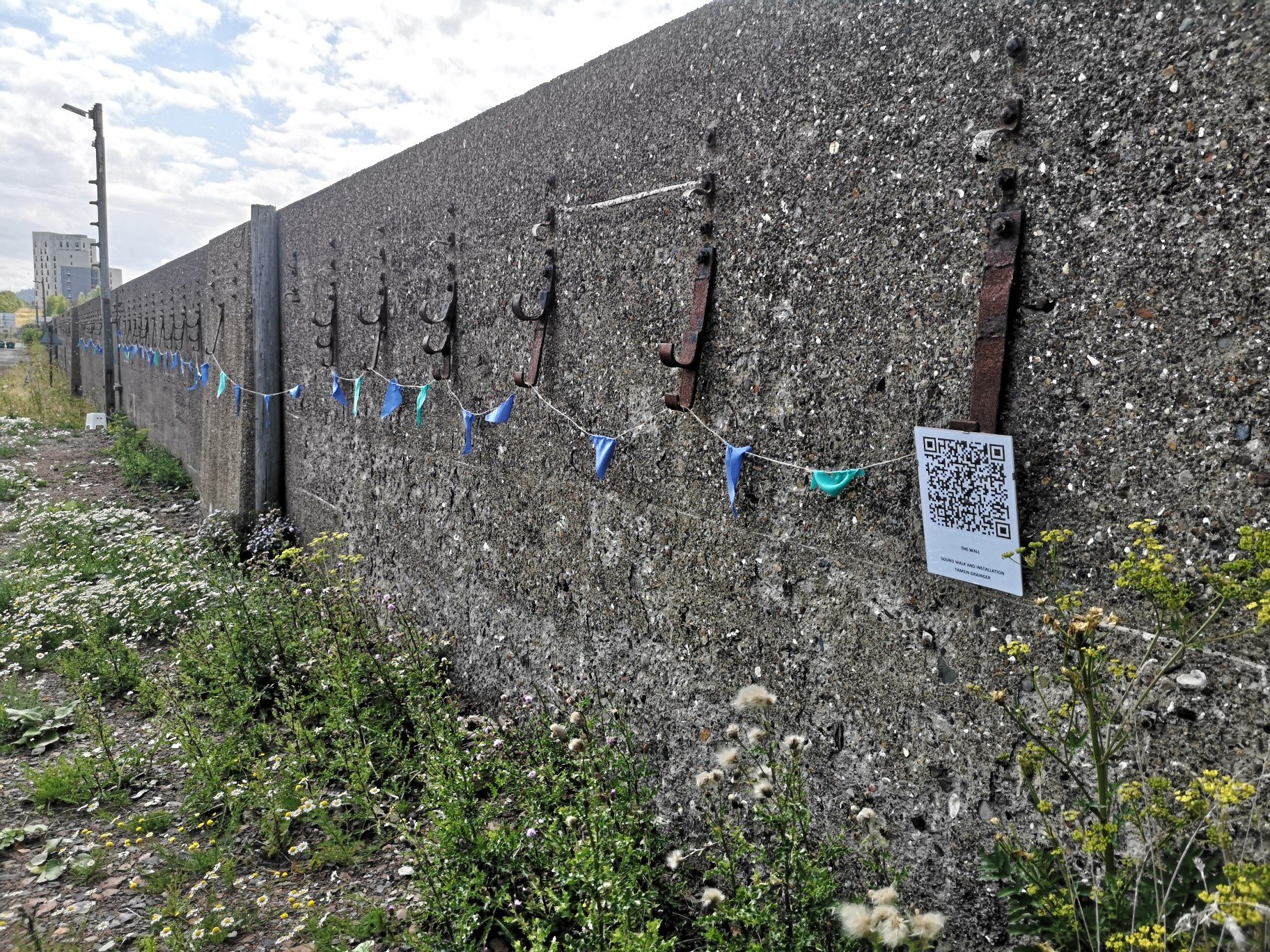
Enter Chestnut Street, turn left along Hesperus Crossway and at the end of the street, walk straight ahead. It may be necessary to find a gap in the fence. You will see the wall in front of you and the QR code should be hanging on a bracket in the section to the left of another wire fence. Otherwise, you can access the Soundcloud recording using the link below and it will tell you what to do and when.
So-called common ground
The developers regularly shut off the area (which is ironic (see below)) and it’s sometimes hard to get to this installation. However, if you are unable to, you can listen below, look at the photos, and imagine you are walking!
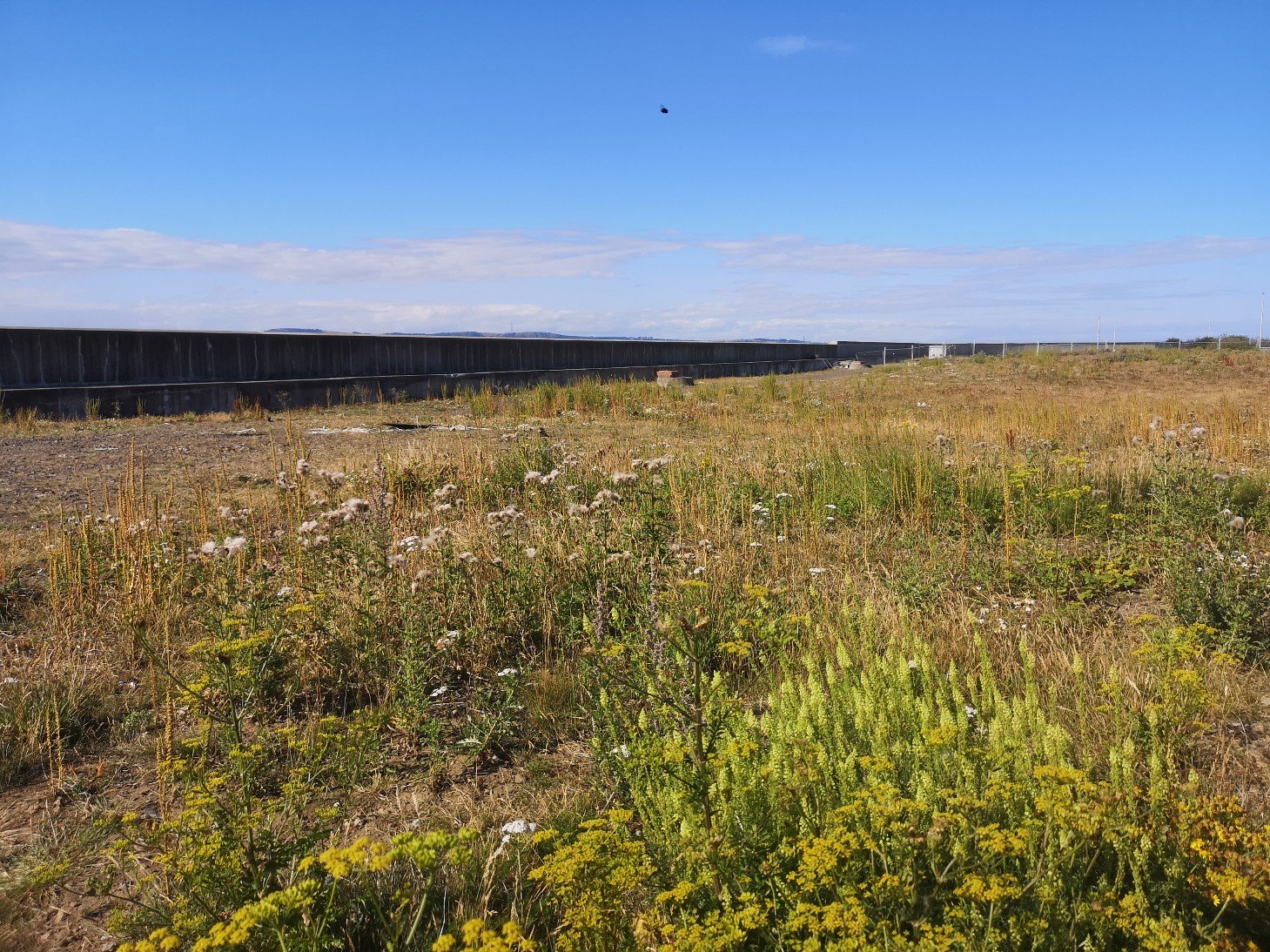
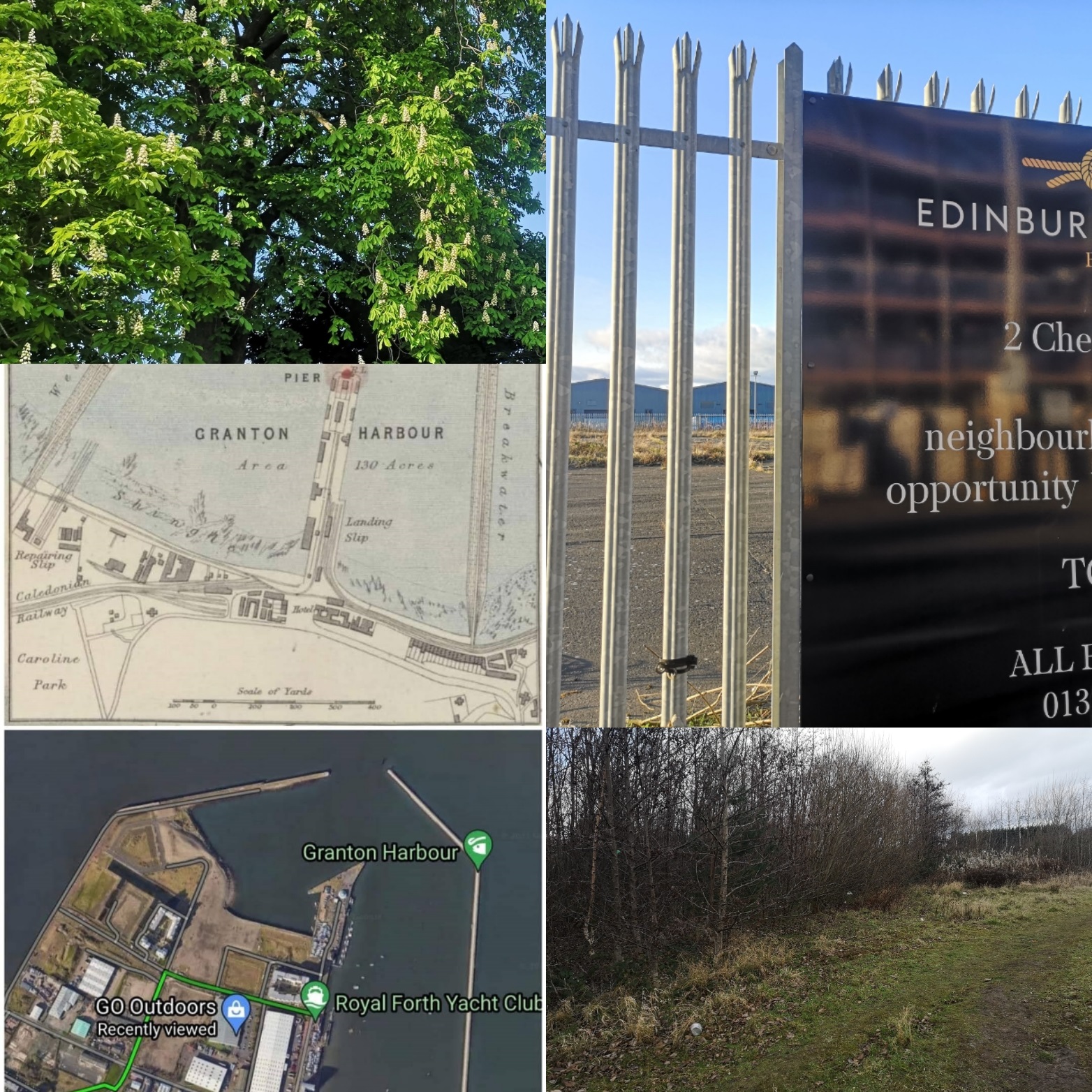
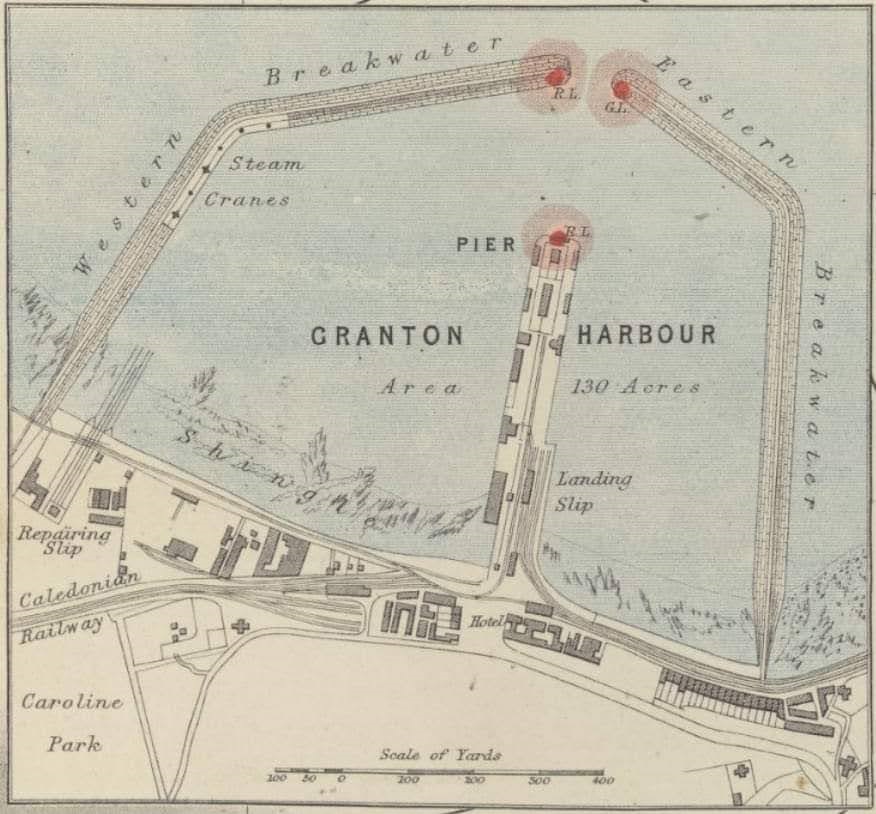
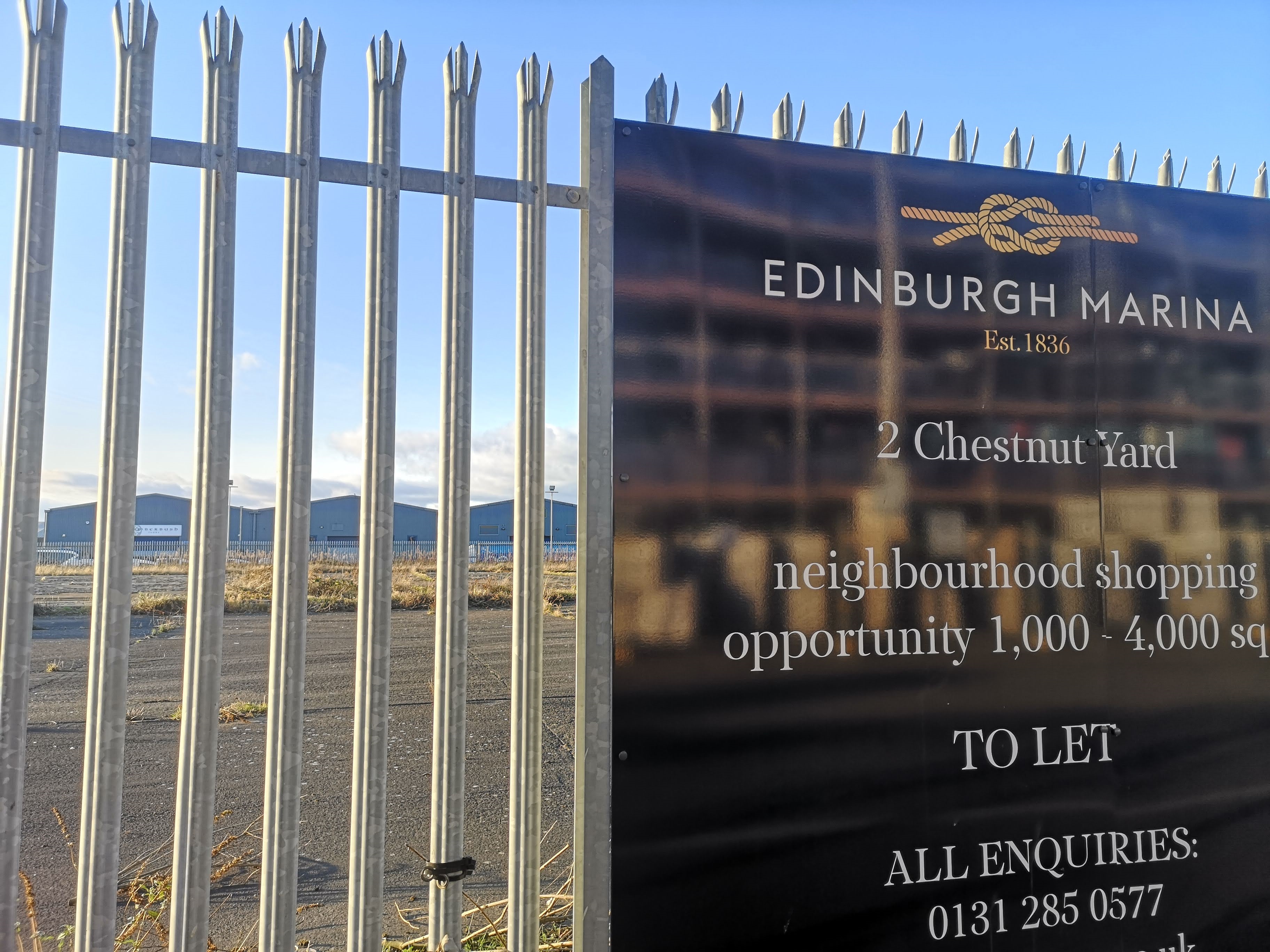
At the very edge of the harbour, bordering a piece of scrubland whose time is nearly up – it won’t be long before it is ‘developed’ – is a tall wall separating the reclaimed land from the sea. It’s hard to find out who built it and why, but I have a pretty good idea. It’s marked as Granton Breakwater on google maps, although there are in fact three ‘arms’ to the harbour: the best known is Eastern Breakwater (note that the beach, Wardie Bay, is to the east side of that); the Middle Pier (recently renamed Chestnut Street – why?); and the Western one where the soundwalk is located.
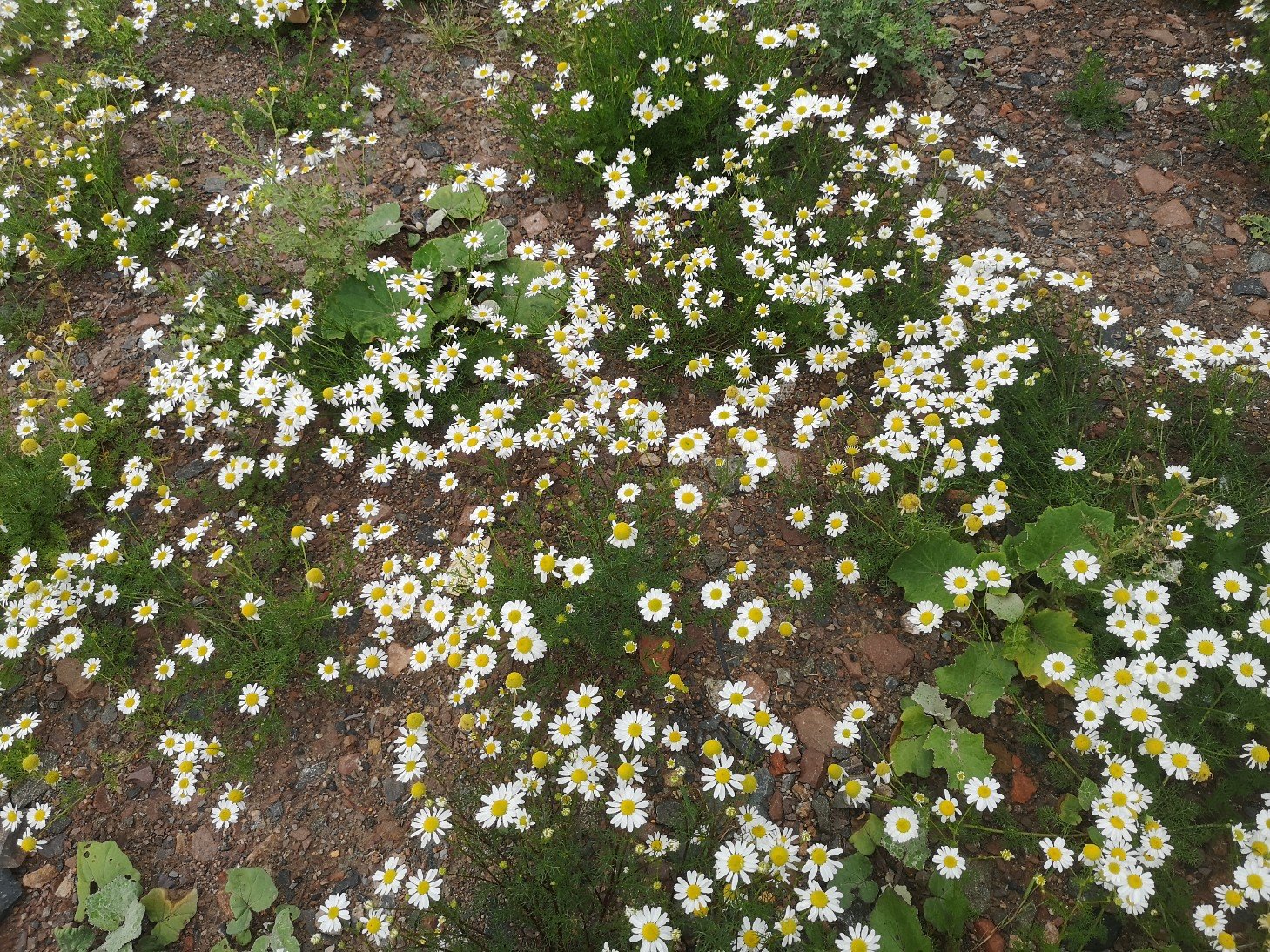
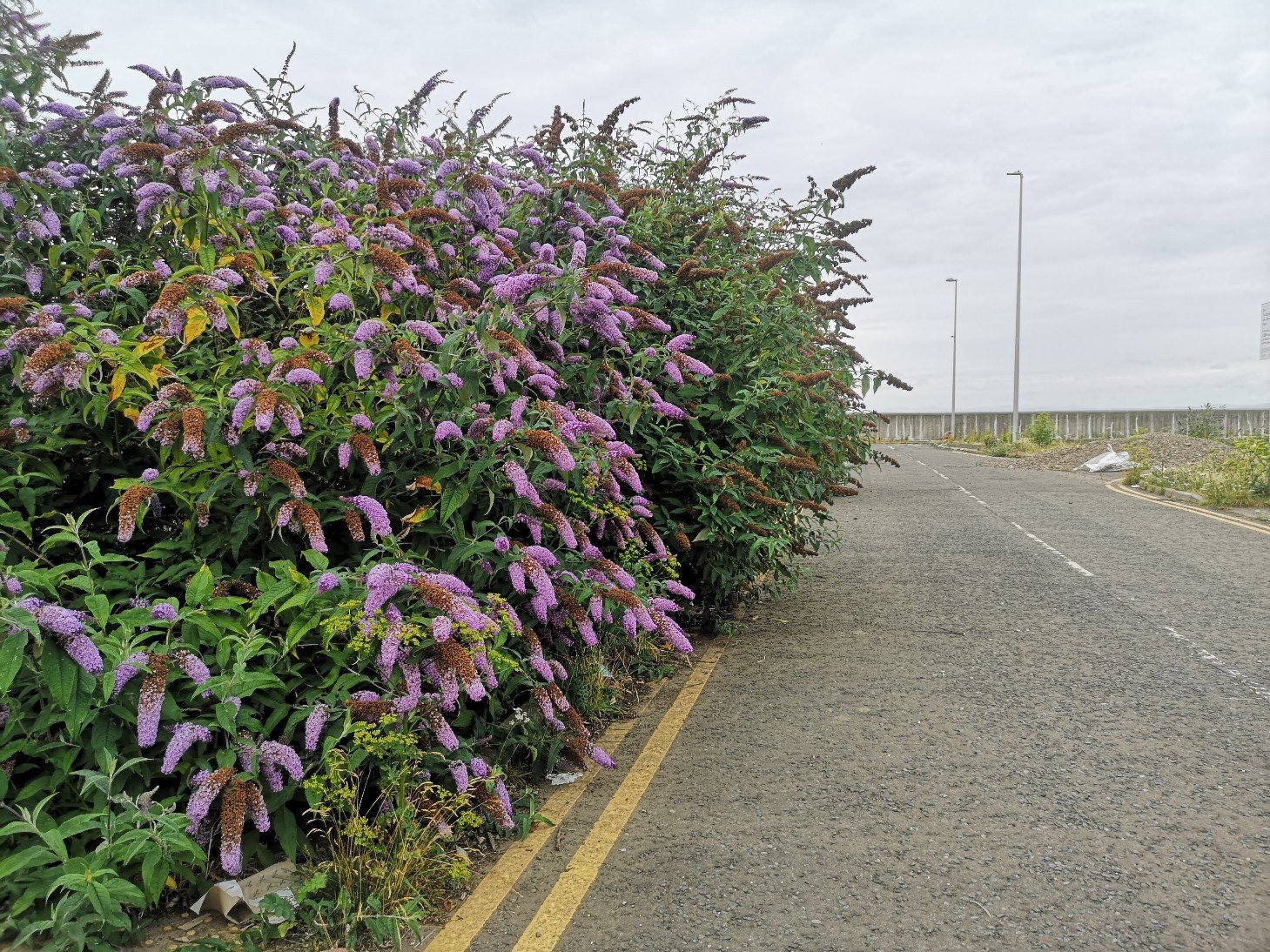
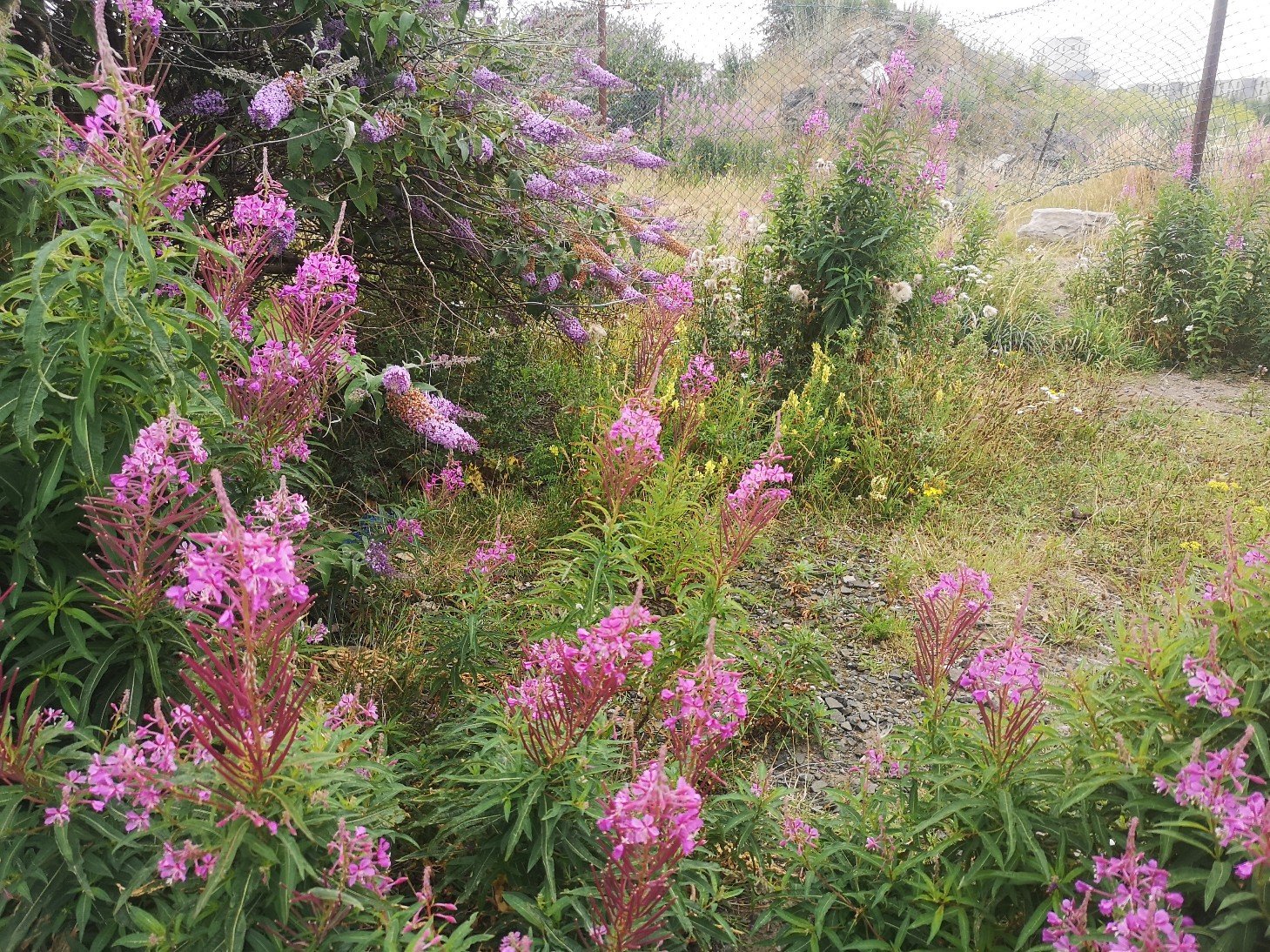
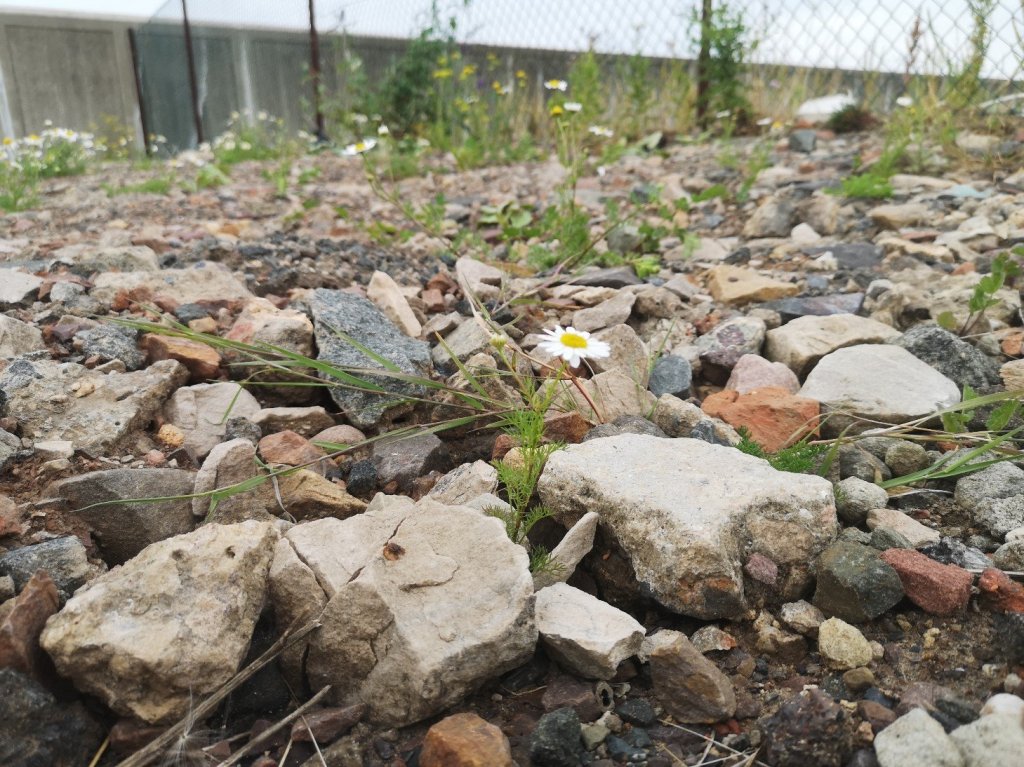
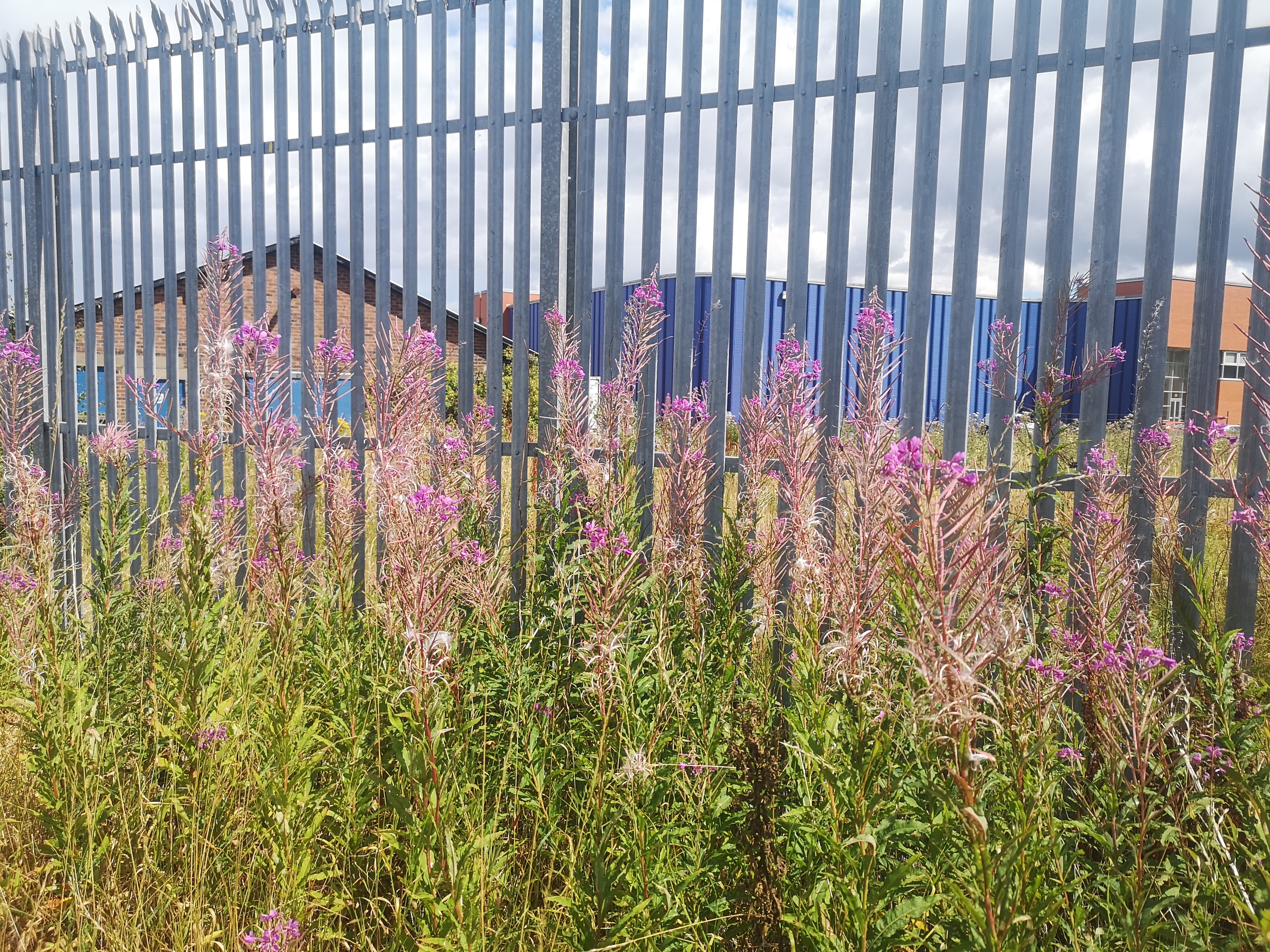
chamomileBuddleiaRose Bay WillowherbThe land has been allowed to get on with flourishing
This is a spot of ‘guerilla art’, in the same vein as guerilla gardening!
Walls have been in the news in recent years and this unprepossessing one tends to go unnoticed, with the general exception of dogs and their companions. It borders the area which is, as I say, undergoing intense development, most of it for the luxury market. The plans show that there will be concrete walkways and a communal ‘garden’.
Walls serve complex functions and produce varying effects on the socio-geographical aspects of an area, an area in this case which has a rich history. The Granton community used to work and play here every day, it was alive with industry, and their voices can still be heard if you listen carefully.
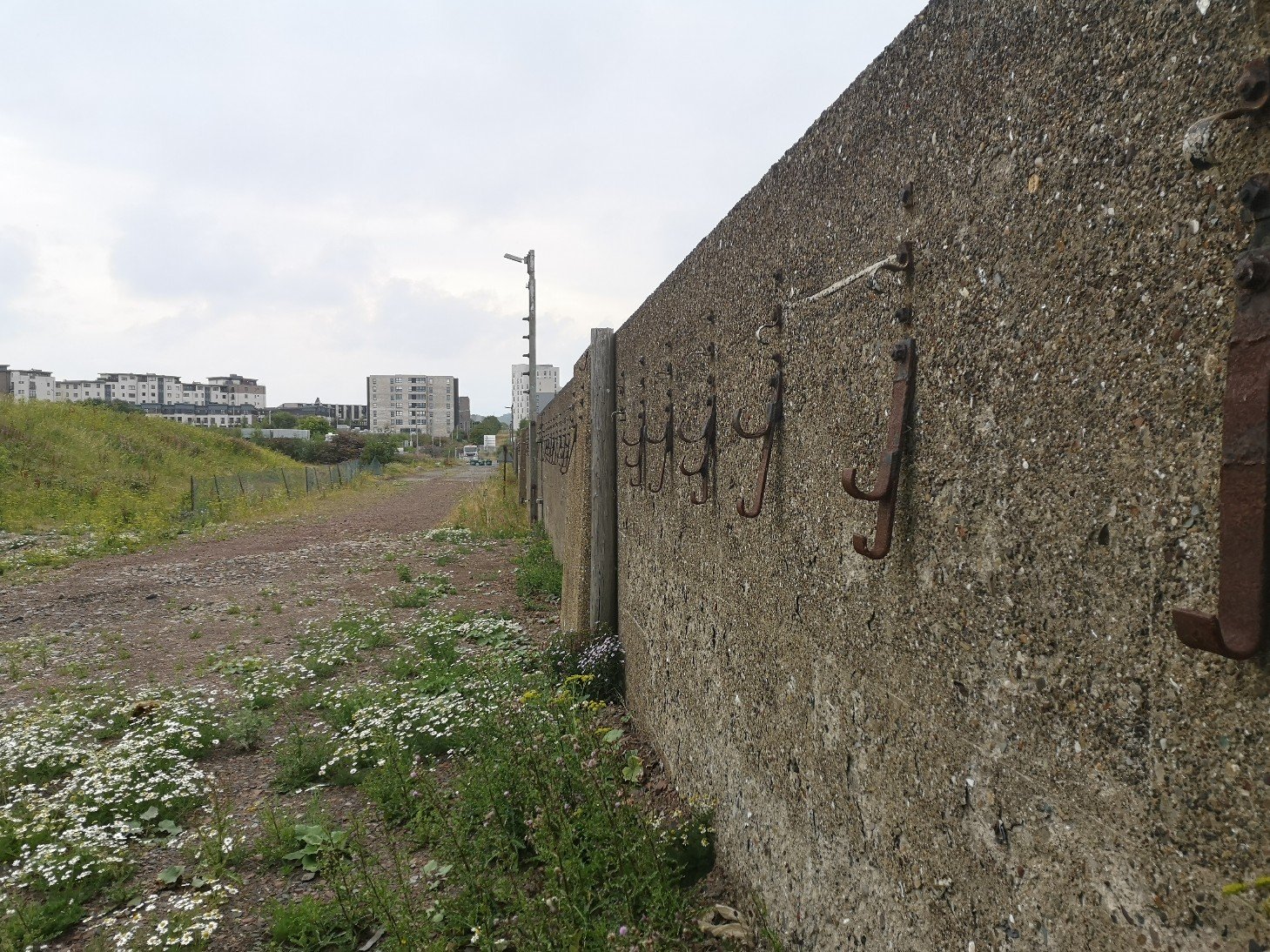
Before – the site of an old railway with hooks for cables
In the meantime, small parts of the harbour have been returned to straight channels of water, and the railway line and its attendant buildings have, in the most part, disappeared.
It is a psychogeographer’s dream!
After
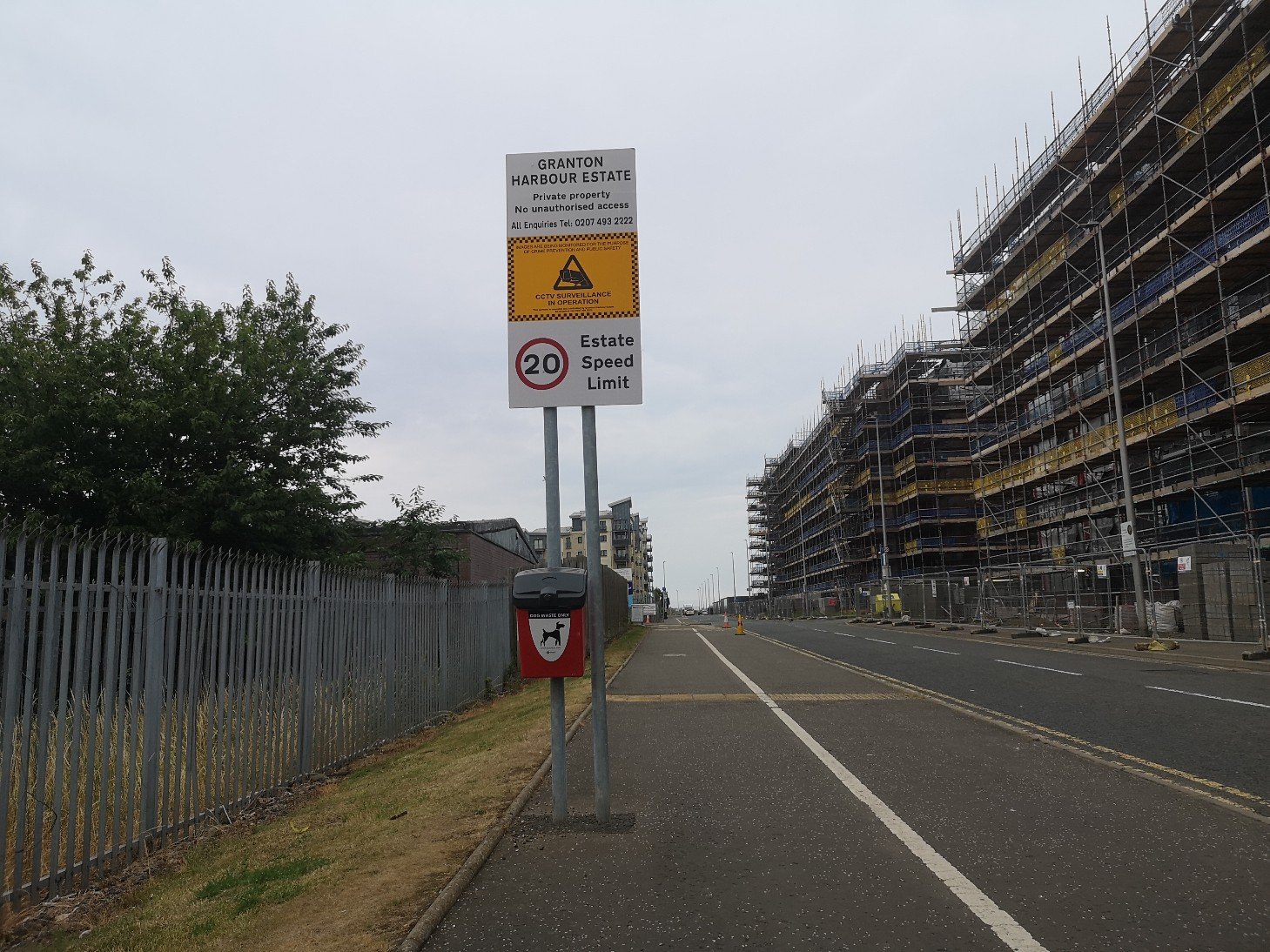
Keeping people in check – restrictions
The wall has a distinctive voice. It is not shy to speak, indeed it wants to be heard, it has something to say. After all, it’s another of those structures, like trees and the sea, which is always in one place, come rain, come shine, and has therefore witnessed a lot of what goes on over the ages. The southern end is still covered with roughcast, a sort of pebbledash, and if you look carefully there are fragments of crockery and other interesting hints of these lives.
(Beware the thistles! And try not to crush the chamomile, although if you arrive before midday you can gingerly remove a handful of flowers for a tisane which will taste quite delicious compared to the tea bags you can get in Lidl. The plants will simply send out more blooms in response, and their days are numbered).
Chamomile
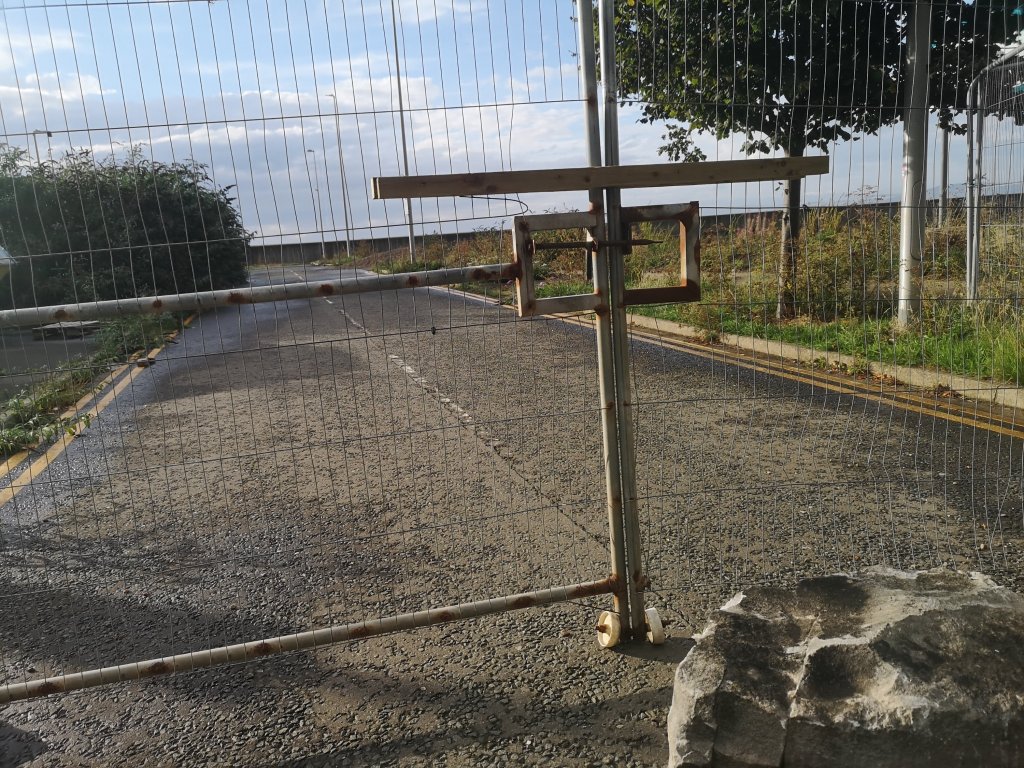
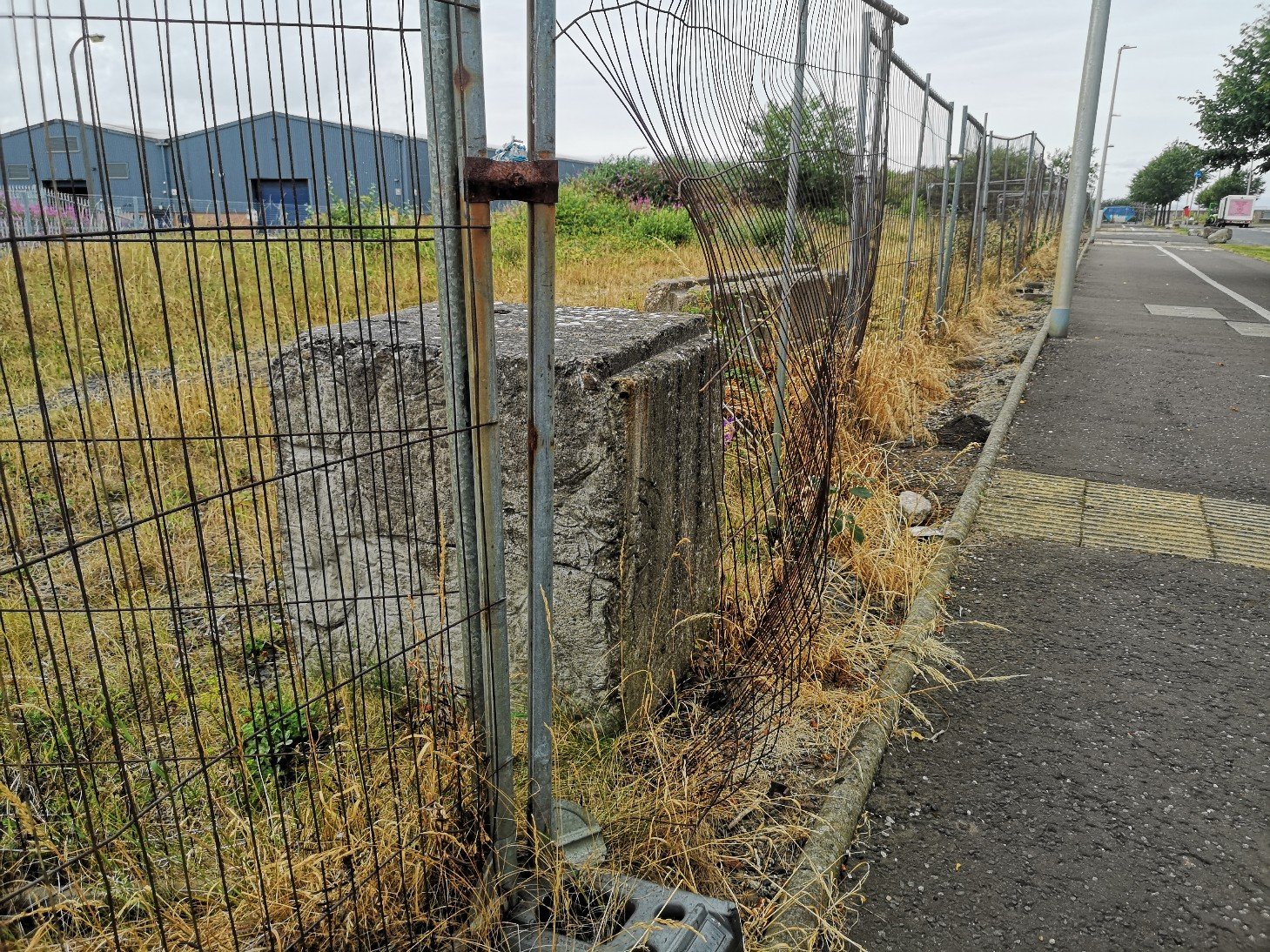
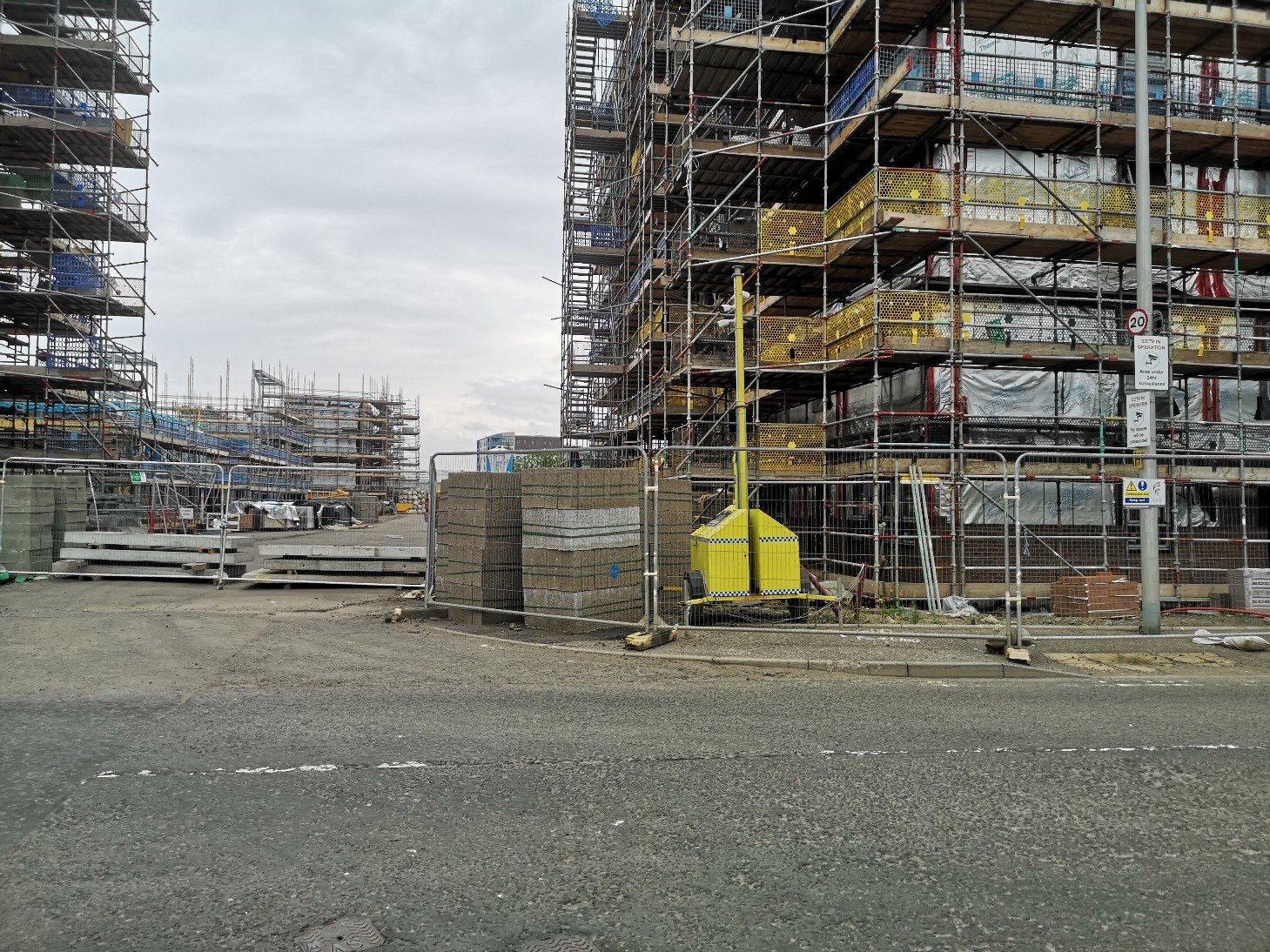
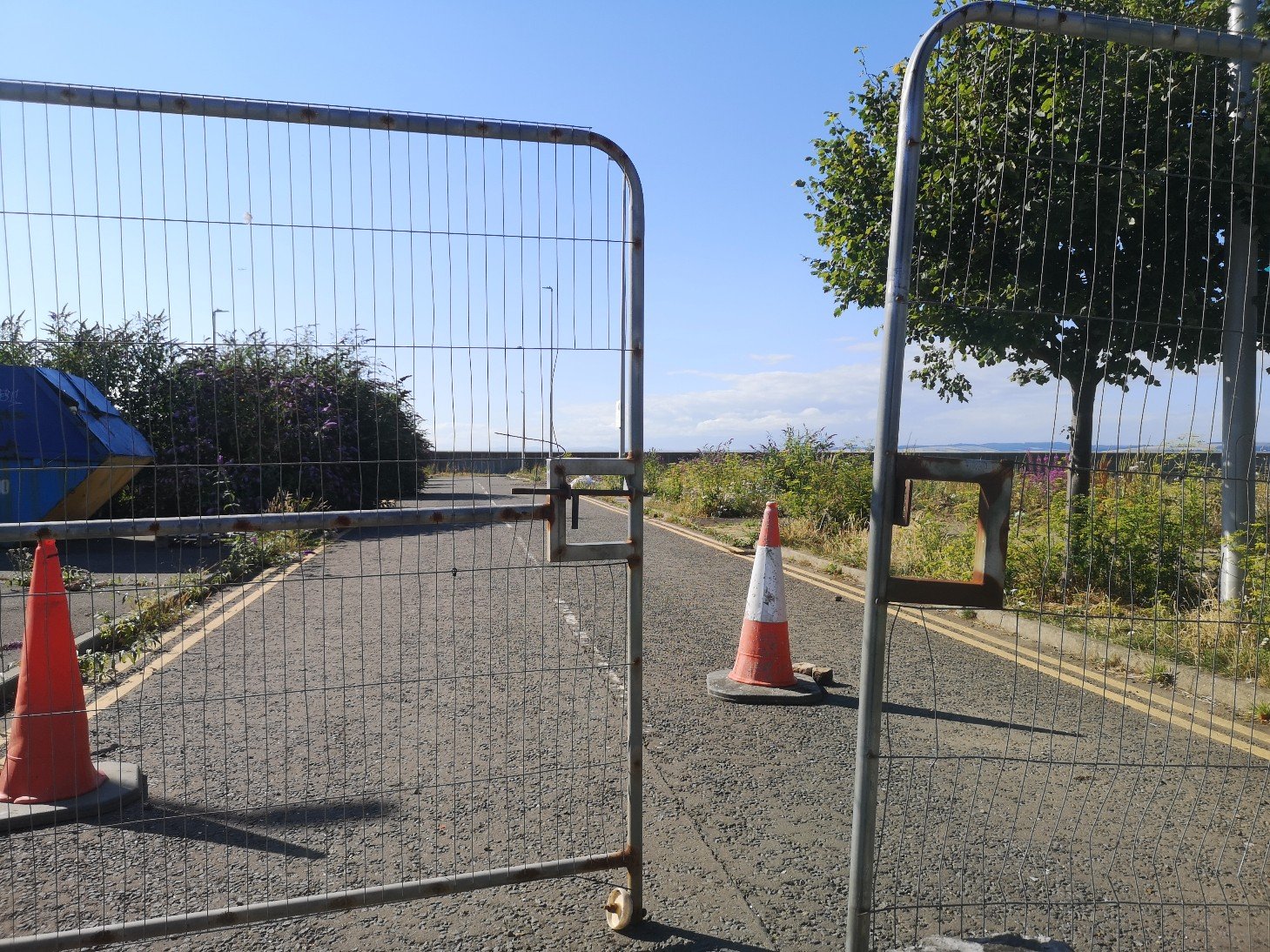
This is a land of fences, and as fast as ‘they’ put them up, people have found ways through. Mostly. This was, after all, common ground for nearly 200 years. However, there are two places now where access / exit is impossible, making it necessary to approach the installation the long way round, past security cameras, and for no discernible reason.
Hesperus Crossway
During the past few years, place names have been changed, walls have been smoothed over, fittings removed, and ‘messy’ buildings have been redecorated so as to almost wipe out any hint of their former daily functions. The result is a gentrification and appropriation (in the name of regeneration), which erases most external reminders of the past. It must be remembered, though, that ‘the past’ was made by people, and many of those people still live in the area. Their memories are part of who they are; this past is a valuable part of their lives.
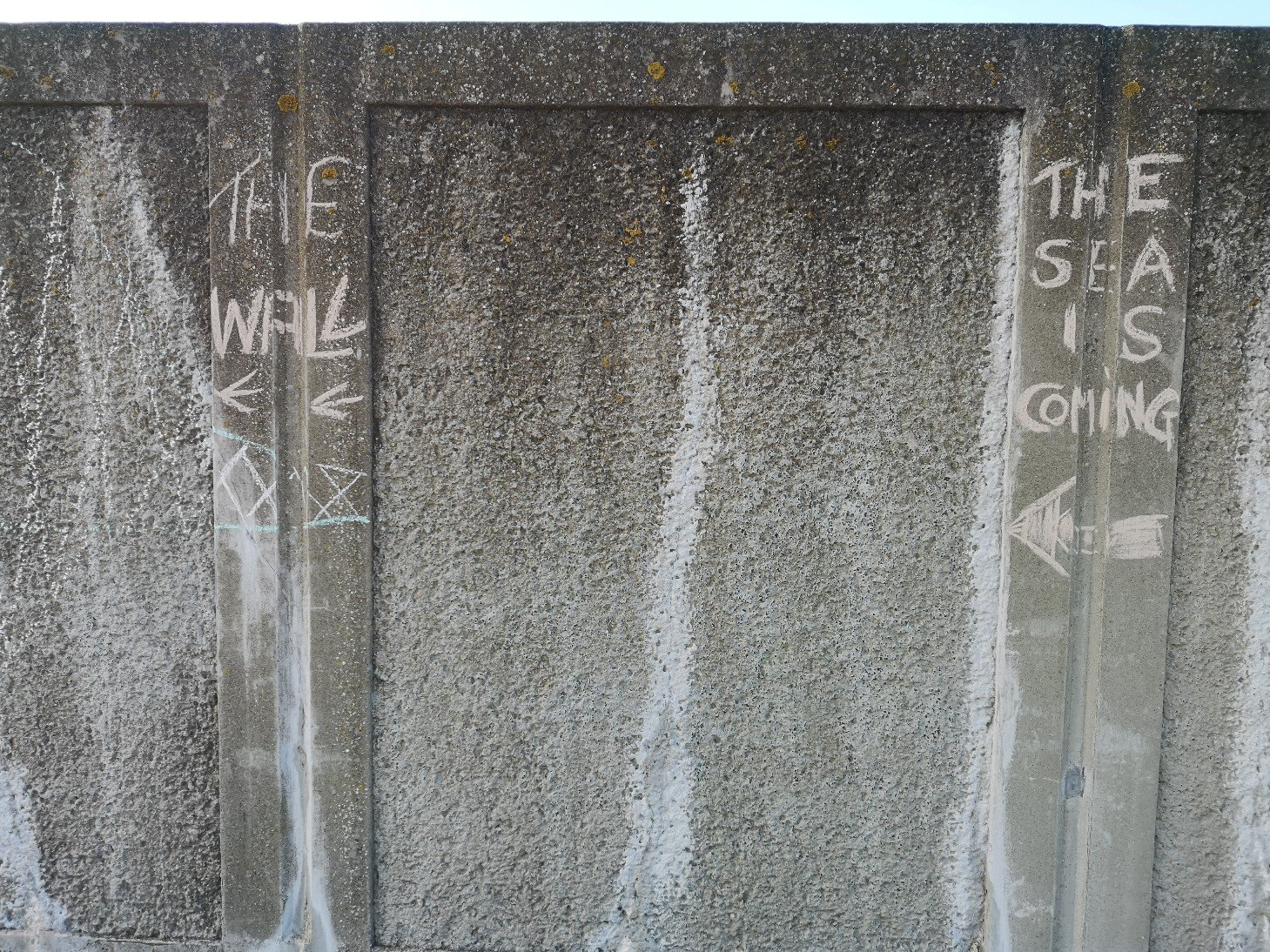
The chalk mural will disappear over time, and if a previous installation, No Birds Land is anything to go by, it may also be vandalised. These changes will be part of the duration and time-based aspects of the piece. It will be difficult to know who walks, hears and sees the installation, but by pacing the edgeland like this, learning about this liminal area and feeling the effect it gives, it is hoped that you and it will be stimulated. (Since then I have used spray chalk to redo the mural which should last longer in the weather.)
The Wall
You can locate this soundwalk and installation by taking the West Harbour Road, and turning onto Chestnut Street. There is a ‘Private’ sign. Turn left onto Hesperus Crossway, and go to the very end of the road.
what 3 words: ///voted.cycles.impose
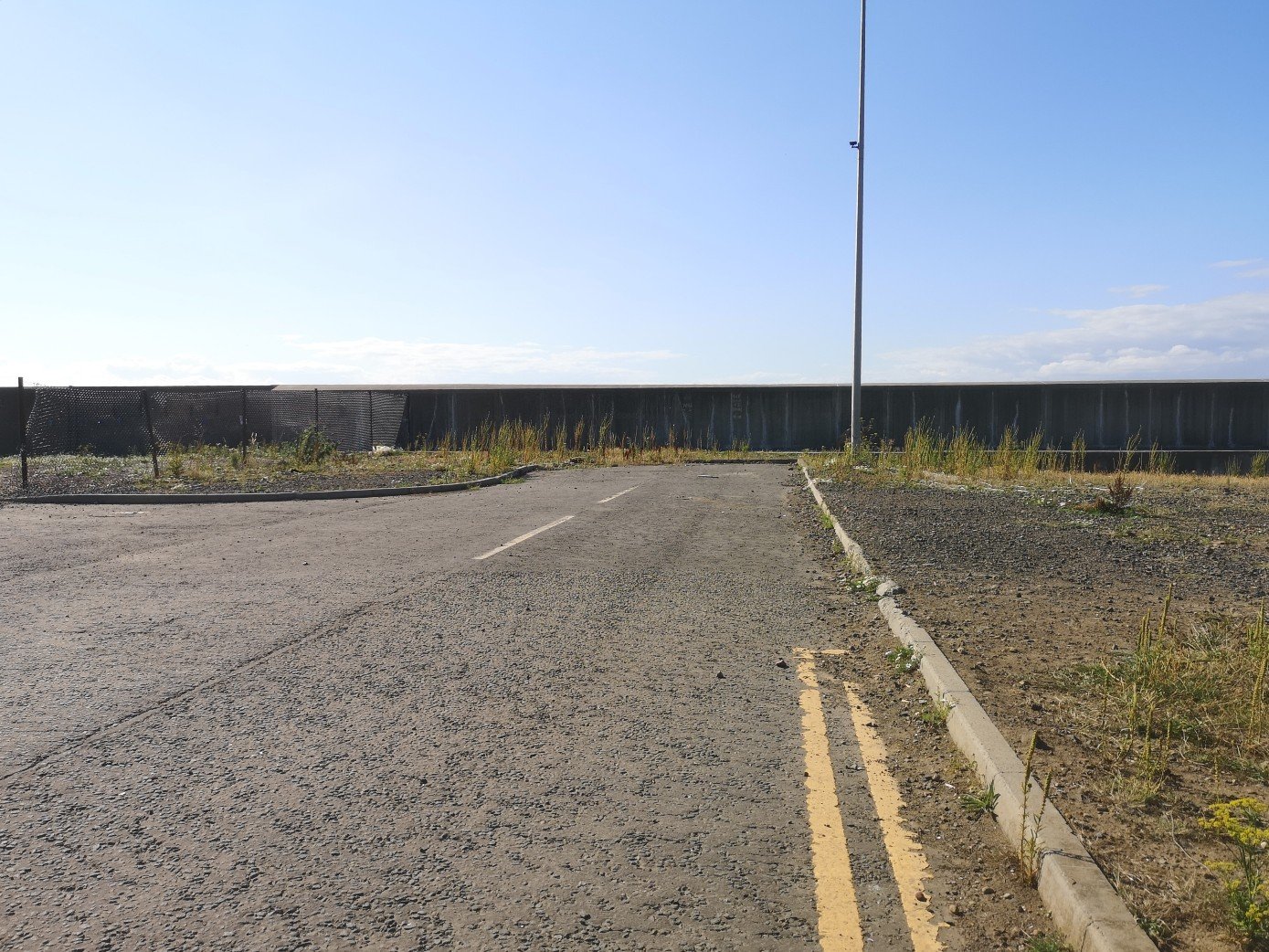
Slip through the fence and walk forwards. It is a dead end, and in front of you is The Wall.
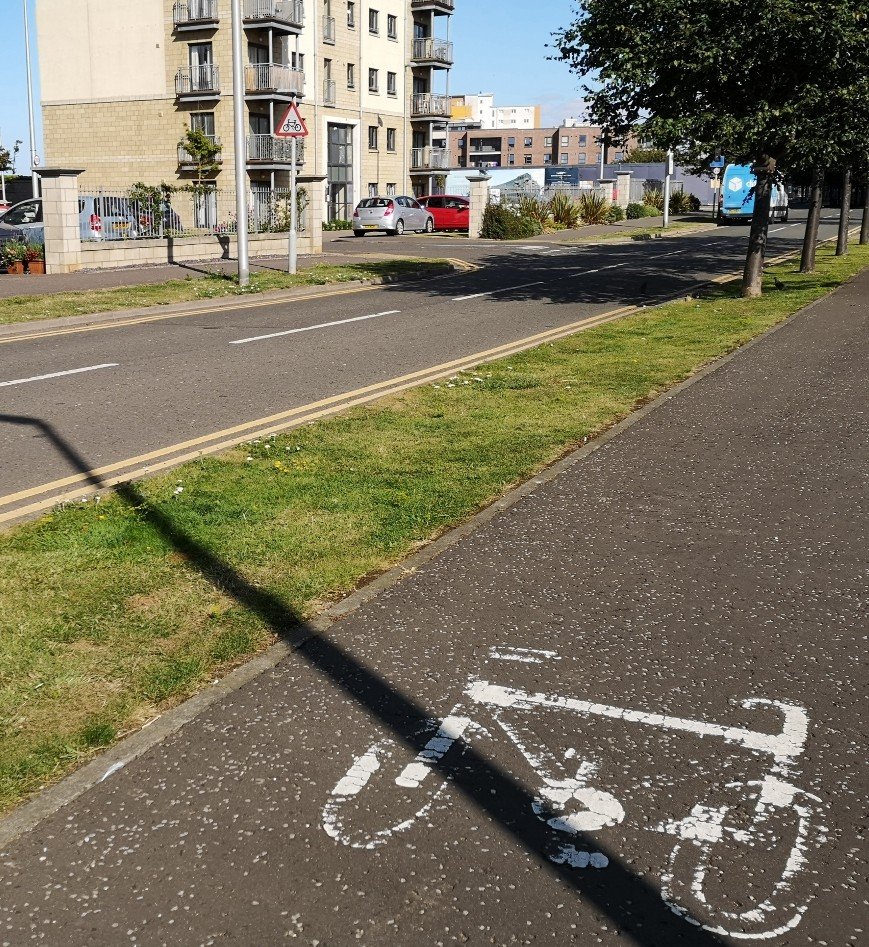
The sign says that this land is privateSecurity camerasNote the cycle lane opposite a ‘no cycling’ sign!
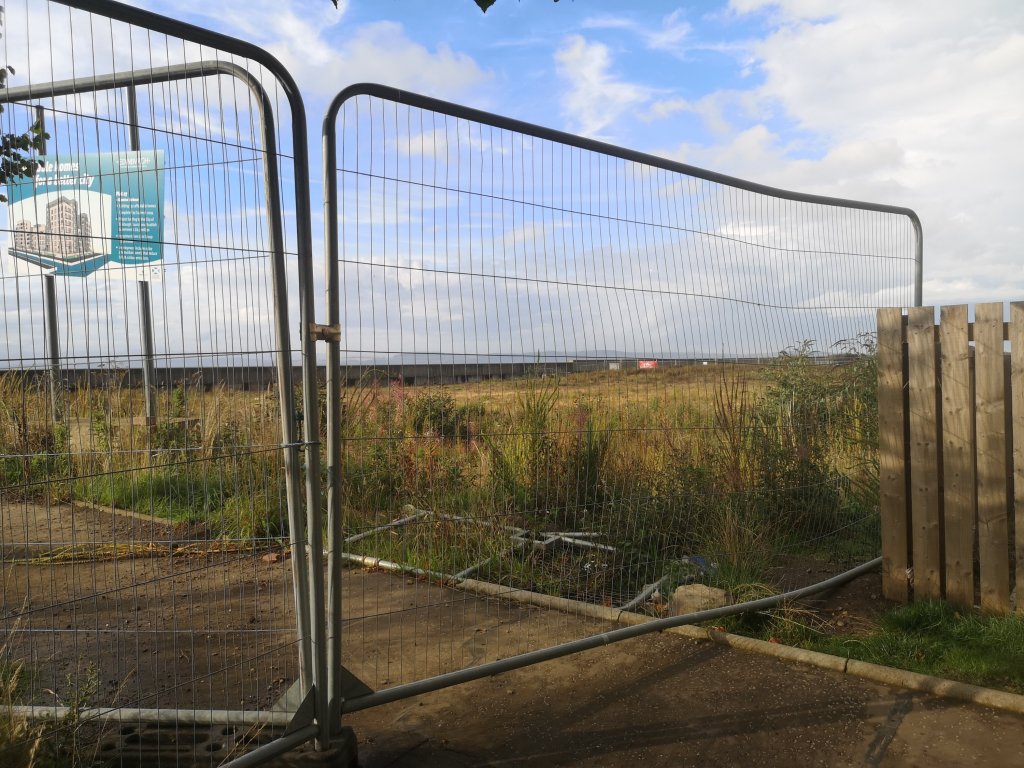
There is a new fence to your left, meeting the wall at right angles, part of which has been pushed down. You can go over that into the section of scrub land and walk towards the wall. There you will see the QR code to scan with your mobile phone and can then listen to the walk (headphones will probably be best).
Slip through the fenceIt’s a dead end with a wall. There is also a new fence at right angles on the left
You will see some of the chalk drawing ahead of you, and the wall (made of sandstone from the Dukeof Buccleuch’s quarries on the Granton Estate, ashlar and some of the larger facing blocks were quarried in Fife) stretches to both sides with the main part of the installation to the left. Once you are listening to the audio, you can walk in each direction according to the instructions, or make your own choice. In total the sound walk is 13 minutes 44 seconds, and it could take you around half an hour to 45 minutes to explore the whole.
You can walk south, inland towards the cityYou can also walk north, towards Fife
Please note that there is nowhere to park except on West Harbour Road, so it’s best to cycle or walk. Or, you can get a bus to Granton Square (16, 47, 19, 200) and walk from there – it will take you around 10 minutes.
If you are not in Edinburgh or cannot get to the harbour, here is a link to the audio part.
Quotes and references are from/to
Henry Wadsworth Longfellow, The Wreck of the Hesperus
Rachel Carson Under the Sea Wind
RLS ‘From a Railway Carriage’
Local street names
I have tried to upload the walk to the Echoes app but it has been unsuccessful. I will try again later.
You may also like to download the Curious Edinburgh app, which will take you to other aspects of the harbour and tell you all about it. Also the Granton History and Railscot websites.
This was the first of three mini-pilgrimages offered to delegates of the international meeting ‘Walking Art and Relational Geographies’ and others in Girona, Cataluña. 6 July 2022
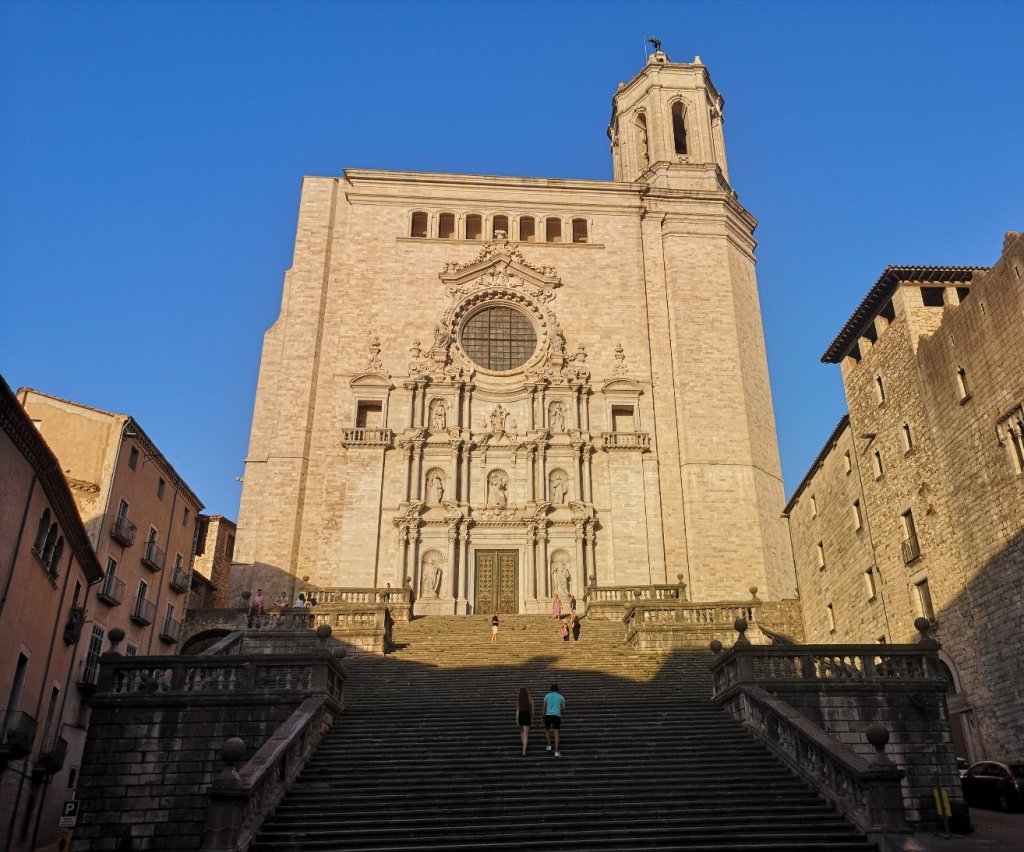
We met at the foot of the steps of the Catedral de Girona, a traditional location for the start of a pilgrimage. As we waited for the group to assemble, I asked, do you see any pilgrim signs?
Catedral de Girona, Cataluna
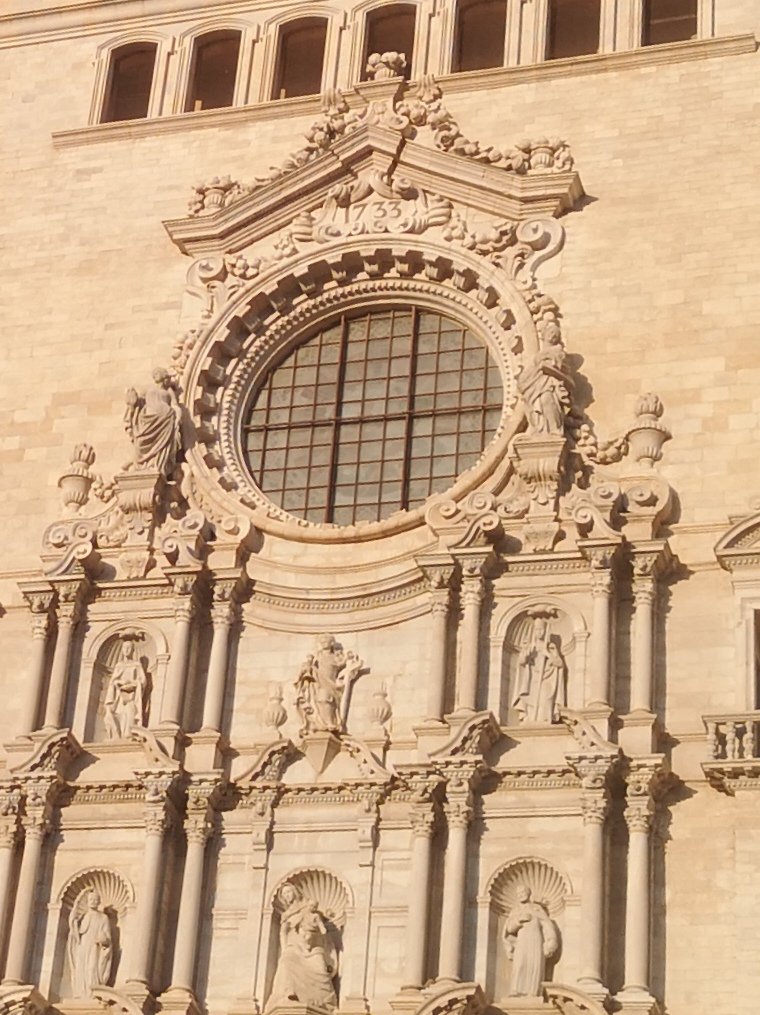
The statues at the front of the building are inset with the shell motif behind them – the iconic scallop being the emblem which pilgrims on their way to Santiago de Compostela sported.
Catedral de Girona, Cataluna
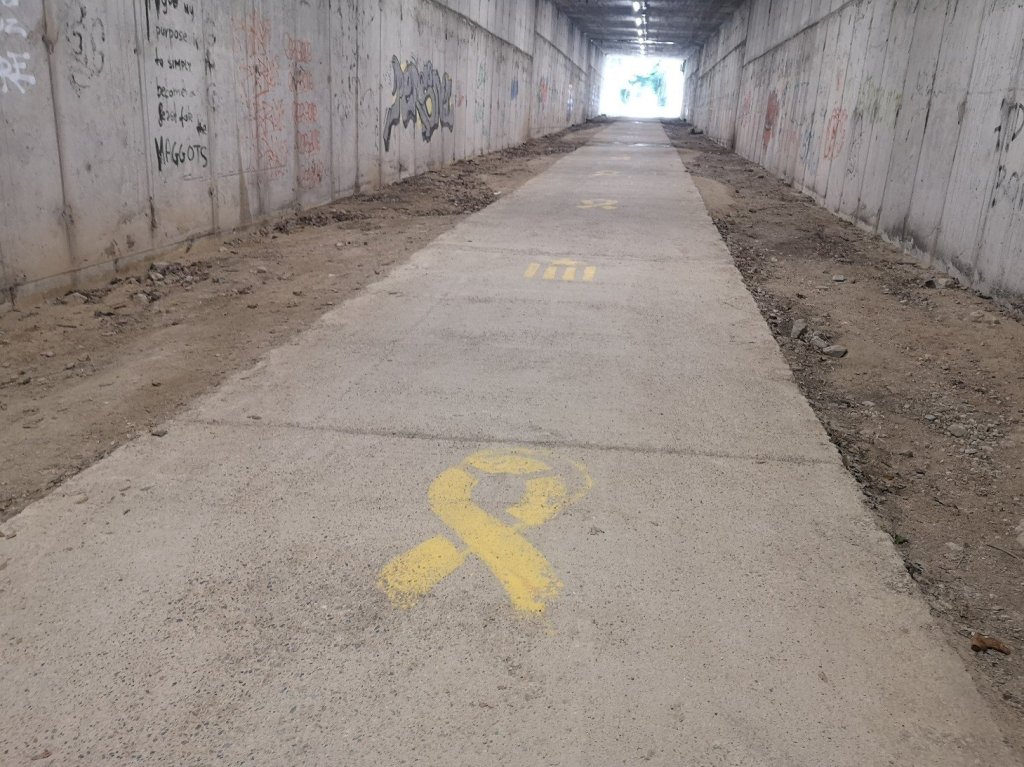
We searched for the yellow arrows which are used to indicate the path; instead we were surrounded by the yellow ribboned loops of the Cataluñan Independence movement.
Sign of the Cataluñan Independence Movement on the pilgrim path
We were a group of approximately twelve, and started at 9pm when it was a little cooler (sunset 21.20).
The title of my walking project here is Separation and Unity. I am aware of the political issues that concern Scotland and Cataluña, in their debates and attempts at achieving autonomy from England and Spain respectively.
We performed some simple experiential exercises: huddling close, noting that we were united in our interest in walking, turning outwards to acknowledge those people around us who were not in our group or who were in groups of their own.
We did some chi gung exercises to ground and centre ourselves. It became clear that we needed to take more space in order to move individually. We were moving together, separately, and experimenting with breathing in unison.
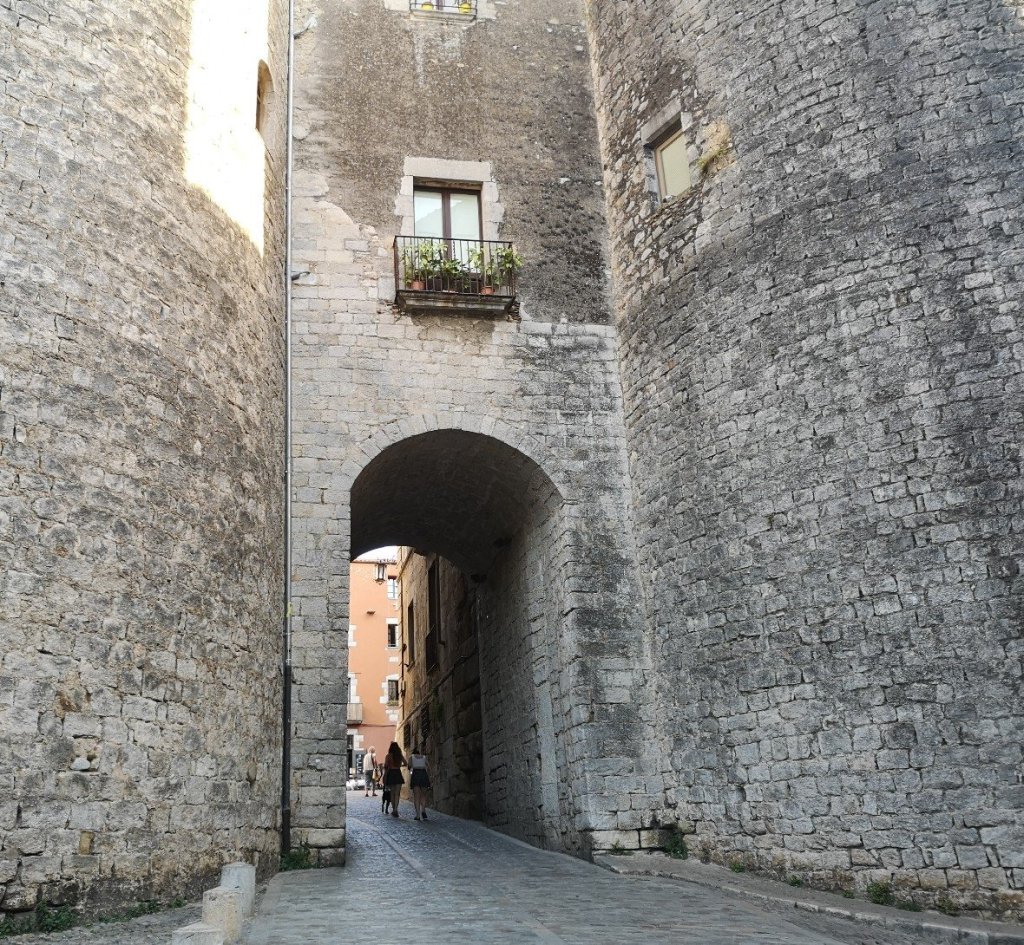
Through Girona’s city walls
Last week, I walked part of the Cami Sant Jaume alone, as a secular pilgrimage. I was on the path with others – dog walkers, cyclists, 2 hikers. Walking part of this age-old tradition, I knew there were others who went before me and who will come after.
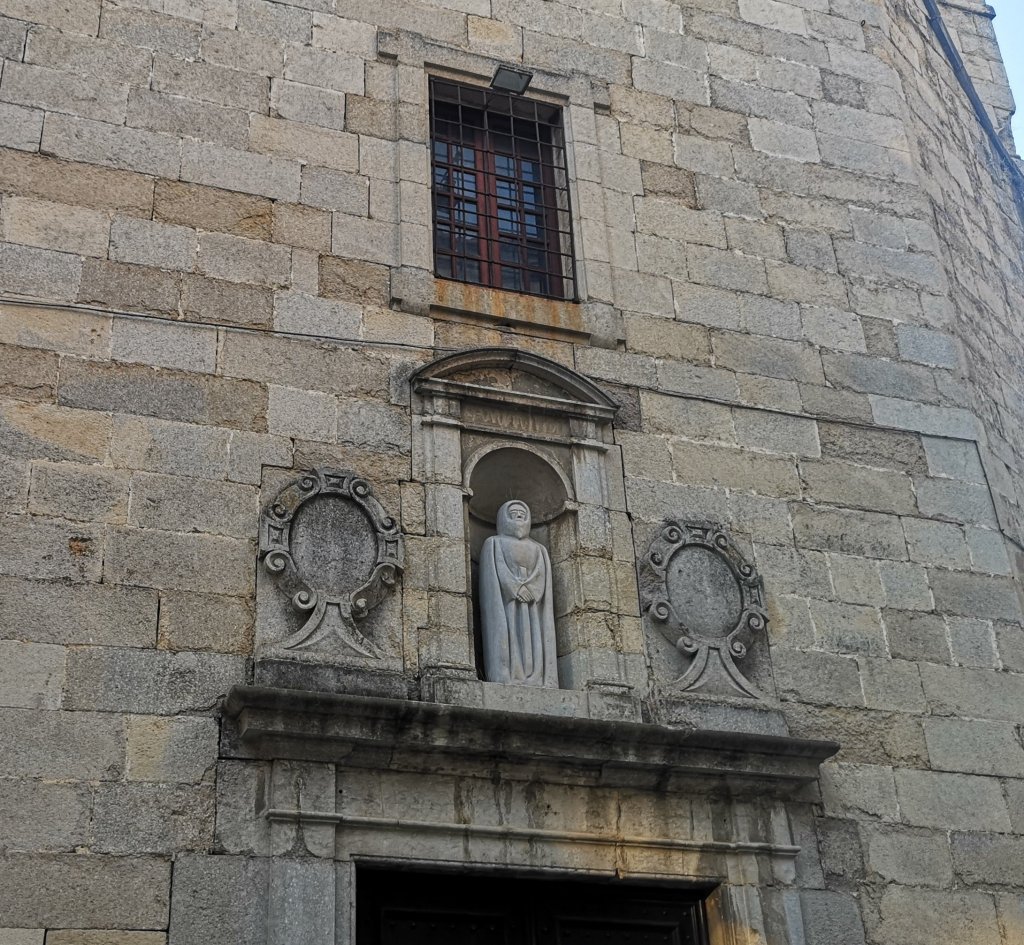
Now our group traced a pilgrim path through the archway made by the city walls and, despite there being no external signs to guide us, we headed downhill to the river. We left the heavy, archetypal building behind and walked in silence, in single-file, with the thick, steep walls with religious iconography on either side.
Walking in silence, Girona, Cataluna
As we walked down Reí Marti, we paid attention to our connection with the elements – the paved surfaces under our feet, the air and water – indivisible.
Also to the birds we could hear but not always see, the insects we only knew were there if we looked very carefully or when they bit us, and the other folk milling around the city. We were a mass moving inside and outside the city walls.
We were aware of each other walking together. Our intention was clear.
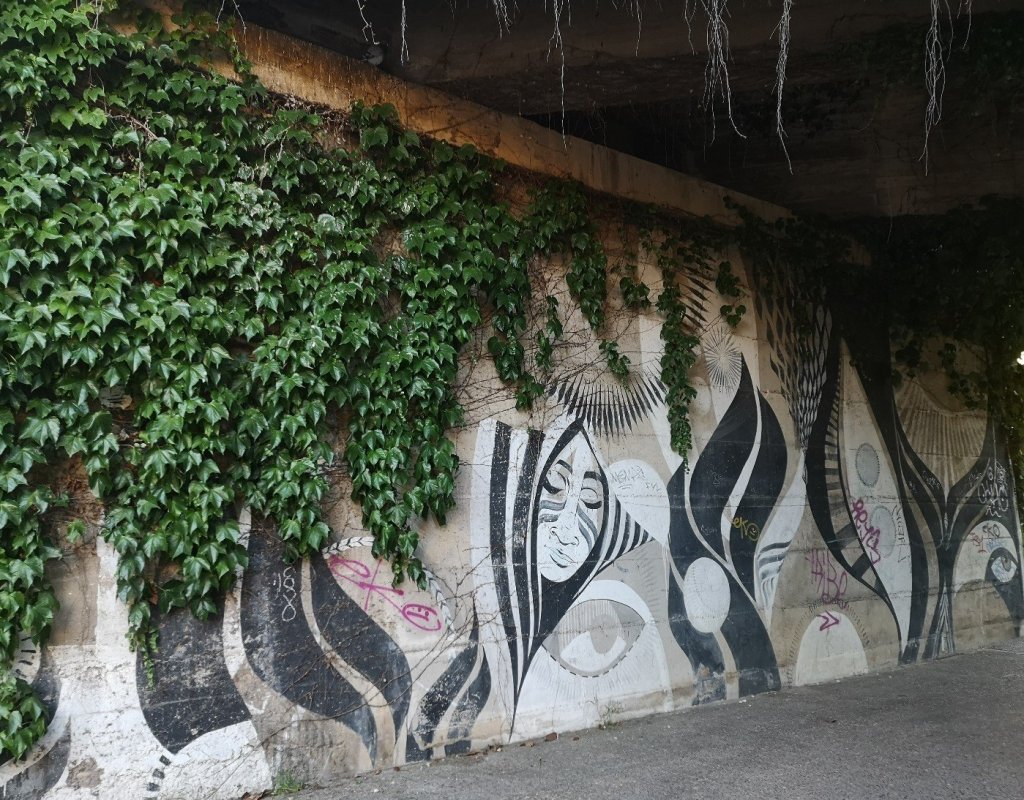
Graffiti, Girona, Cataluna
As the streets opened out, we turned left taking Carrer del Bellaire and heading straight for the river, passing once again underneath the train line which ran overhead. By now we were amongst modern architectural constructs.
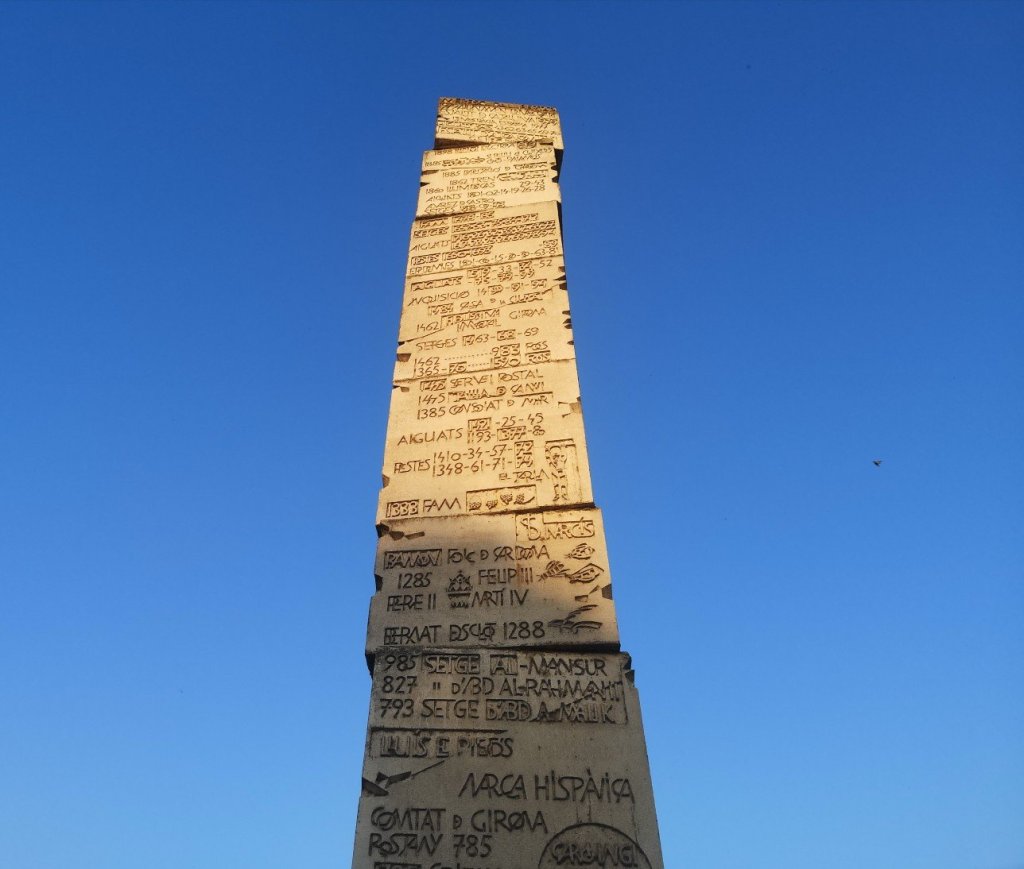
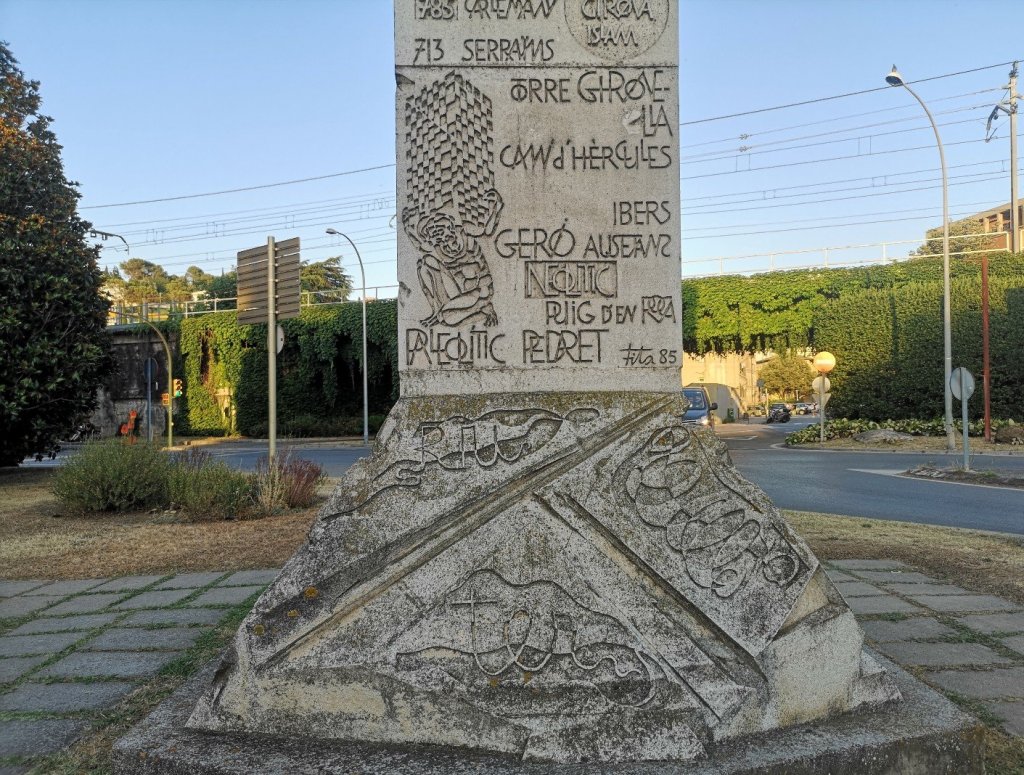
Column of the History of Girona, Cataluna
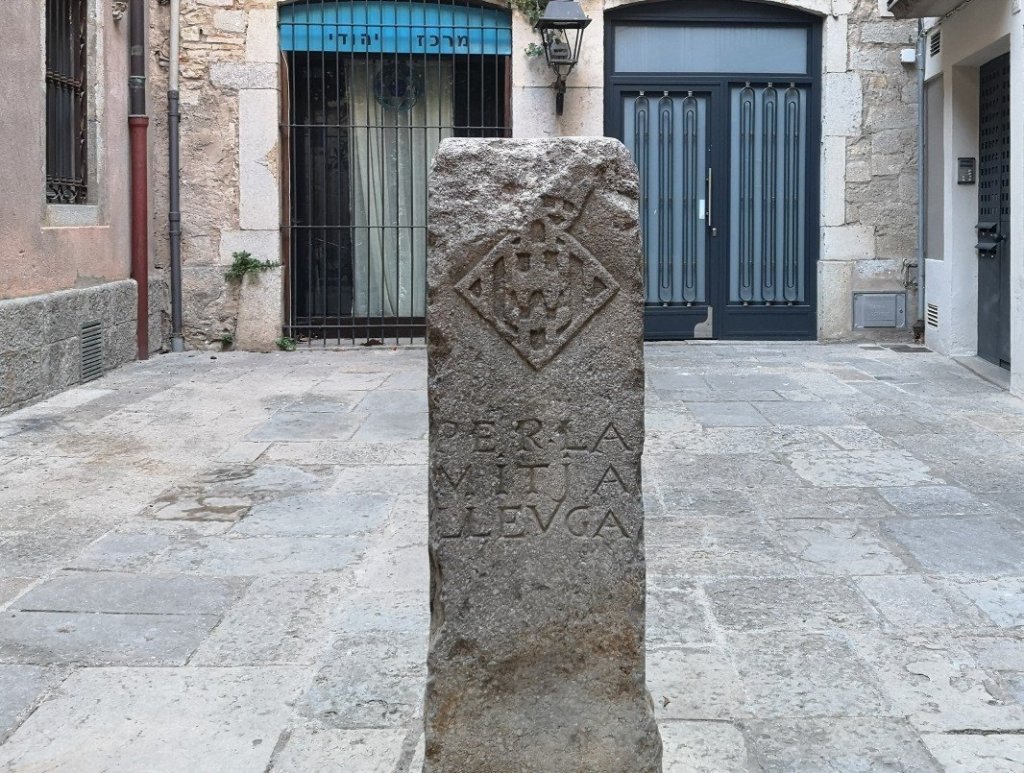
Around the corner on the left was the Column of the History of Girona, a pillar of stone whose four sides depicted images and text saying this ancient settlement dates back to the Neolithic.
Column of the History of Girona, Cataluna
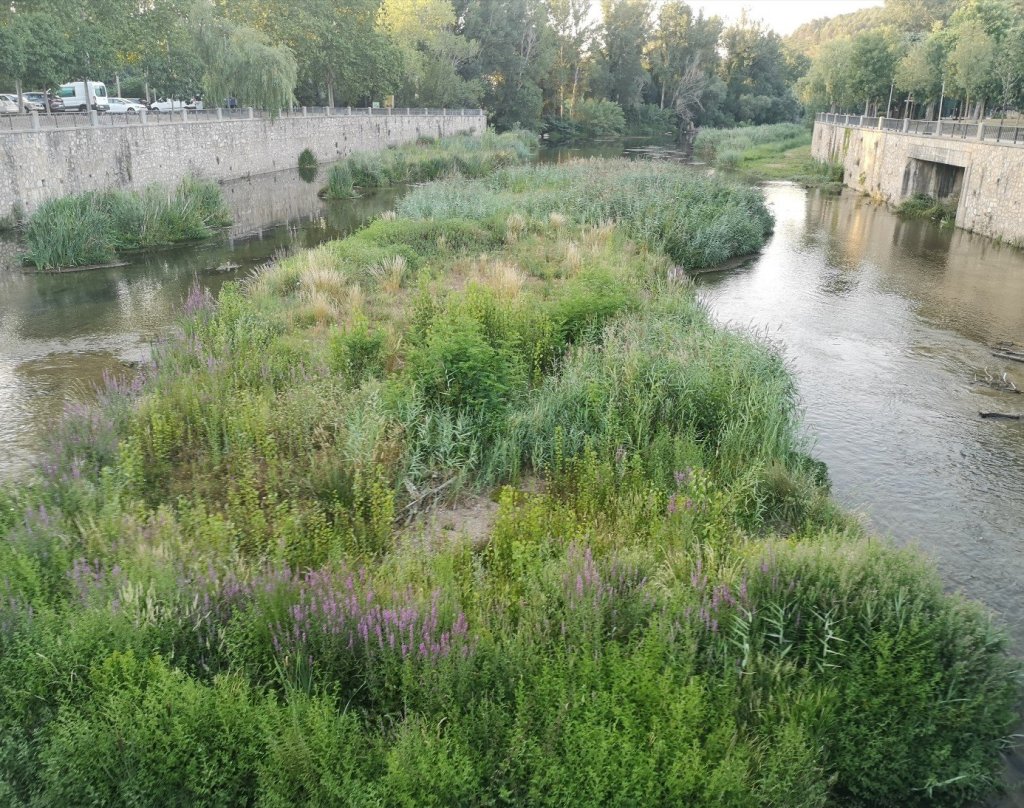
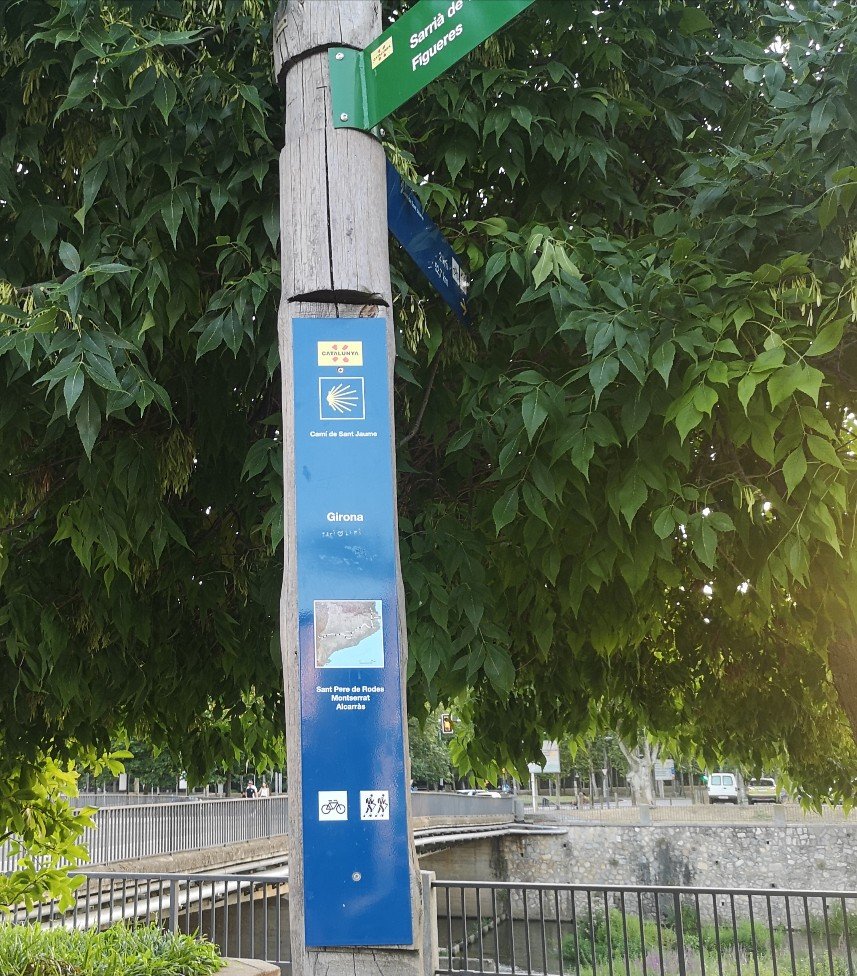
The we arrived at the River Onyar and the Pont (bridge) de Pedret which formed a crossroads where the first Cami de Sant Jaume and other route signs were located.
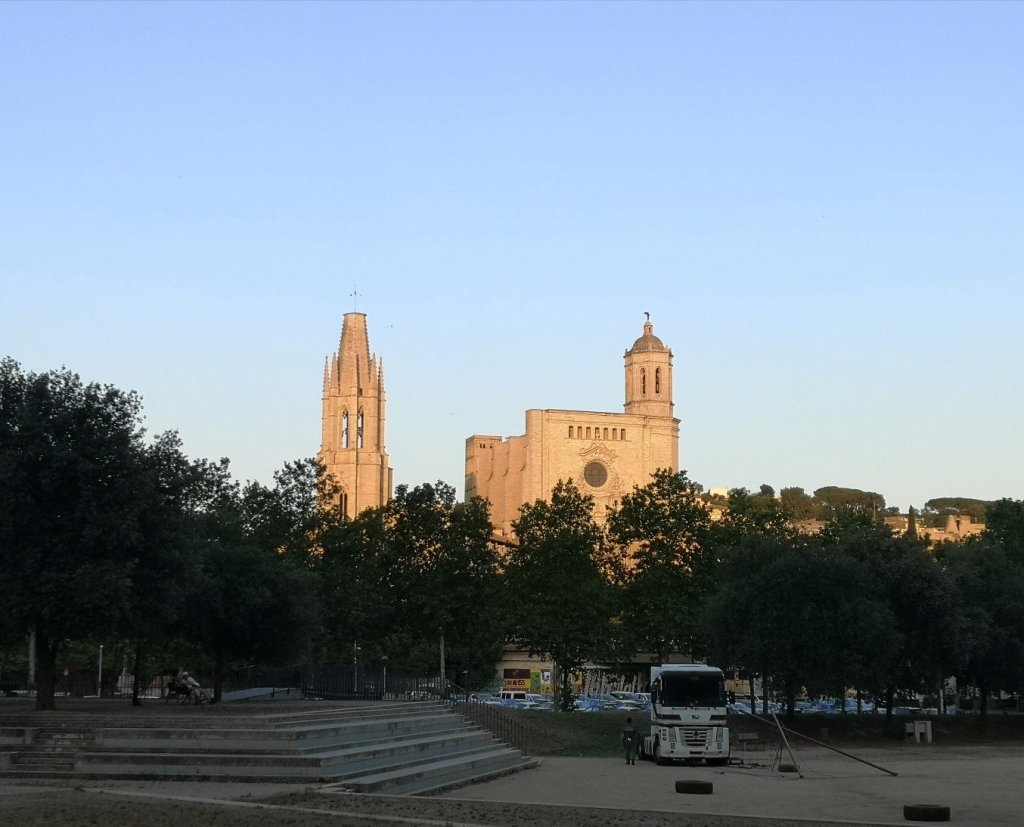
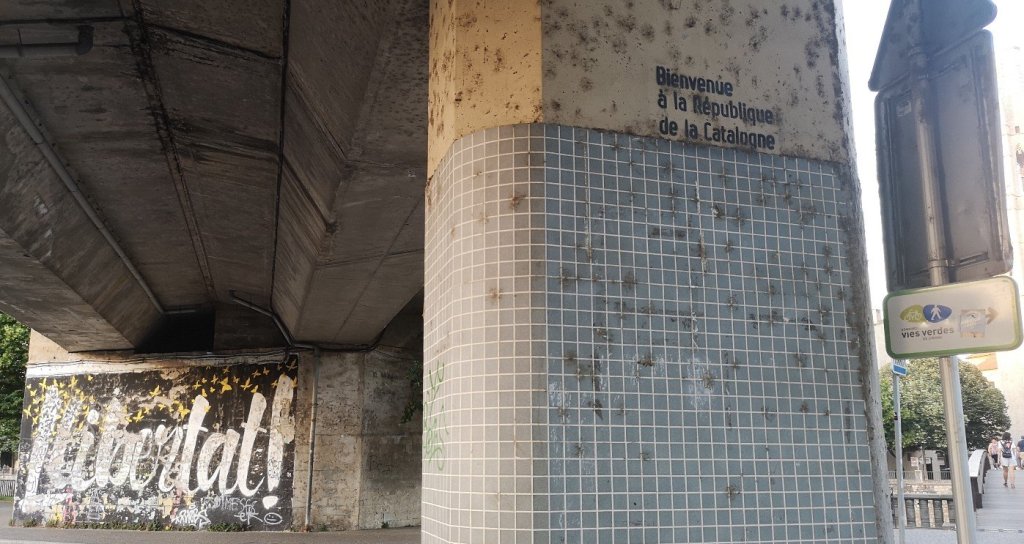
River Onyar, Girona, CatalunaSignpost for the pilgrimage Camino, Girona, CatalunaWe looked back at CathedralThere are messages of separation: ‘Libertat’, ‘Bienvenue a la République de Catalogne’ alongside the Vies Verdes. This is the green cycling / walking ‘carrilet’ route described as ‘a modest narrow guage railway’ I took out of the city last week
We glimpsed the La Devesa Park where we walked yesterday.
As I walked out of Girona, I moved from the urban environment, the edge lands where people were growing crops in their hueltas / allotments, and then out of town, walking through the landscape between city and towns. There were people threading these urban places together by walking between them to work and school.
I was carrying my clothes and sleeping mat with me, crossing the country, from Osona to La Garrotxa and into the Barcelona region.
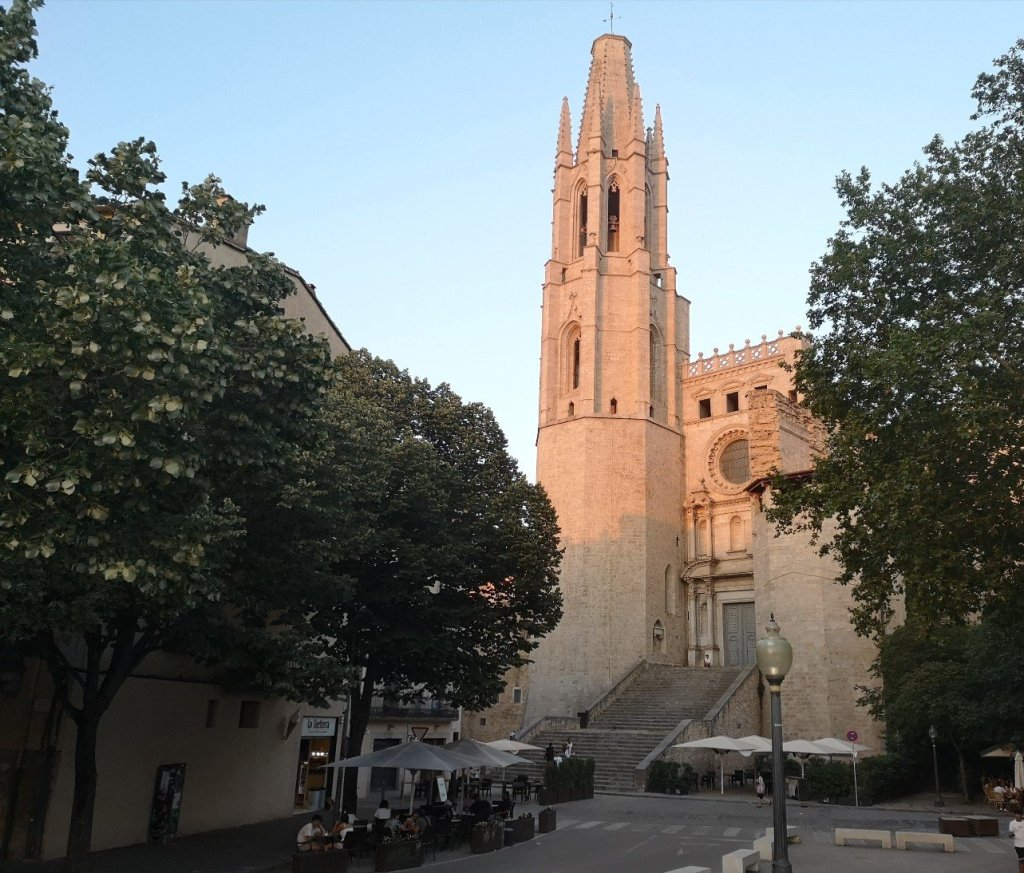
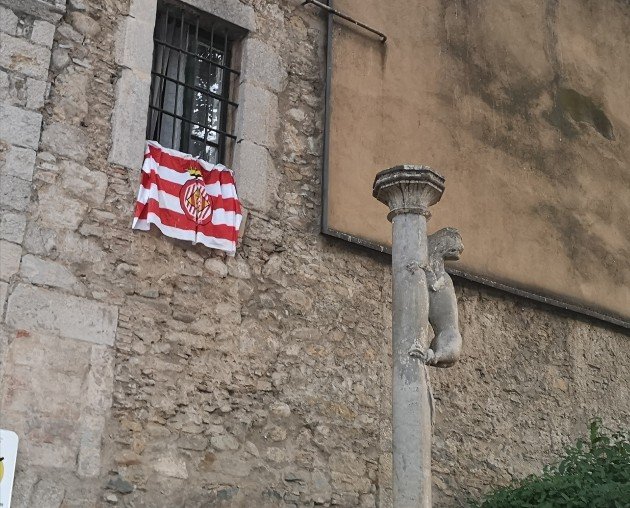
We completed our Girona mini-pilgrimage at the foot of the steps of Basílica de Sant Feliu, a familiar way to end a pilgrimage. Close by is the statue of la Lleona (lioness) whose bottom/ass you are invited to kiss, an 11th century folk tradition.
Basílica de Sant Feliu La Llona
Further mini pilgrimages took place in Olot and Vic with participants of the Walking Arts Encounters.
The walks took place, in-person and virtually, on 4 / 5 August 2022, 1pm
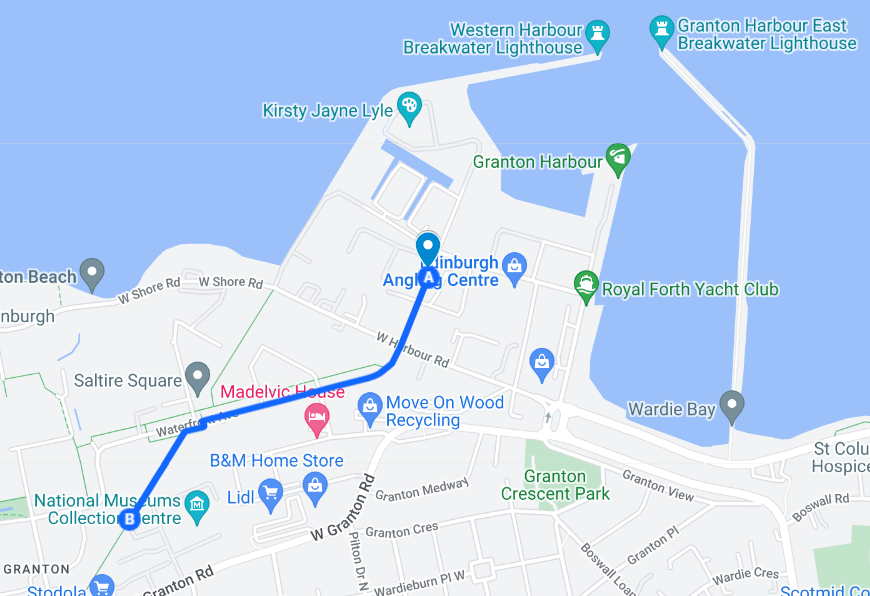
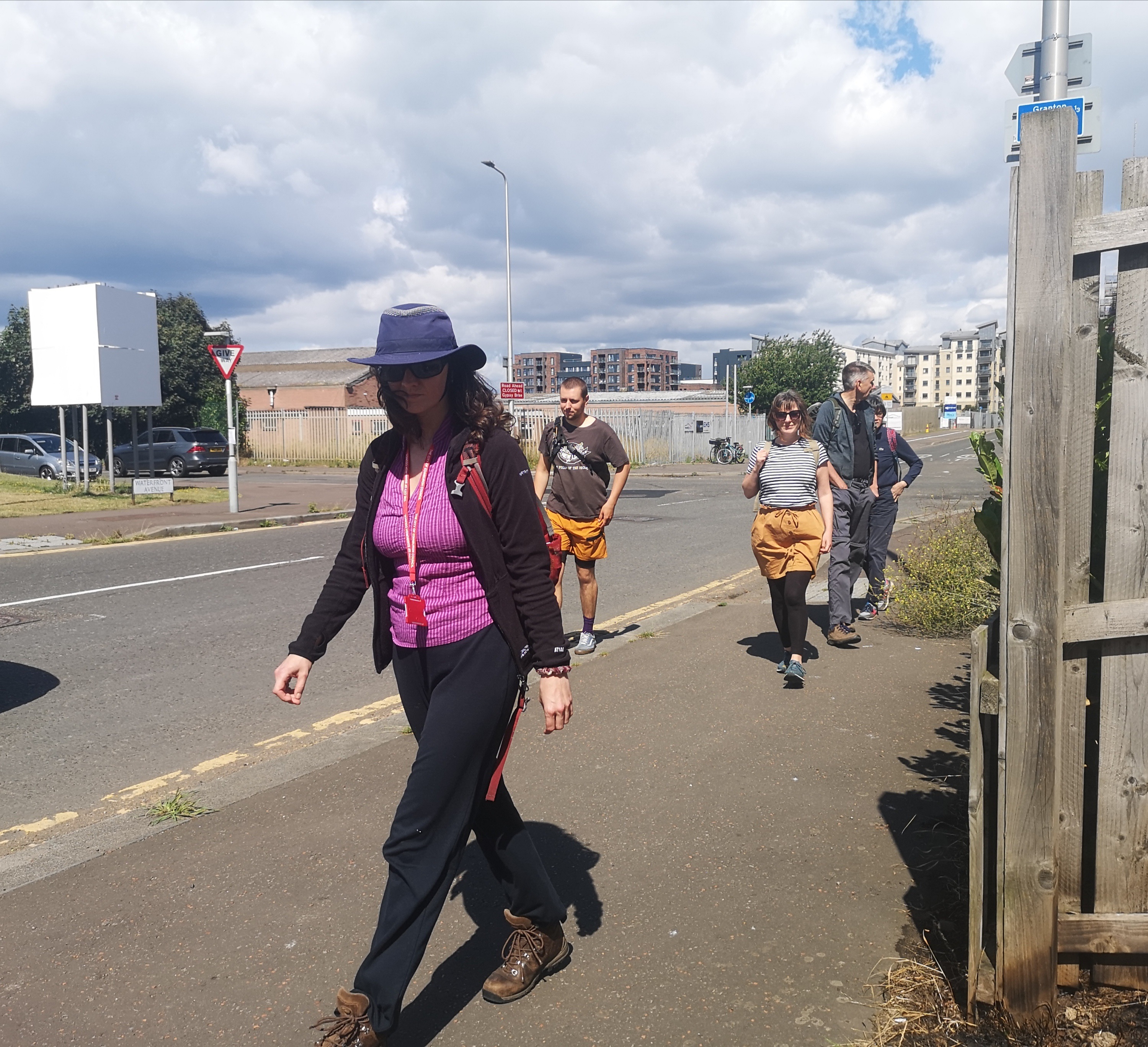
At Chestnut Street, Granton Harbour, Edinburgh, walking to Waterfront Avenue. (The exact meeting place was What 3 Words: ///talent.dads.dots and co-ordinates: 55.983248,-3.229066) and around the world.
The Absent Trees of Granton cordially invited you to walk without them.
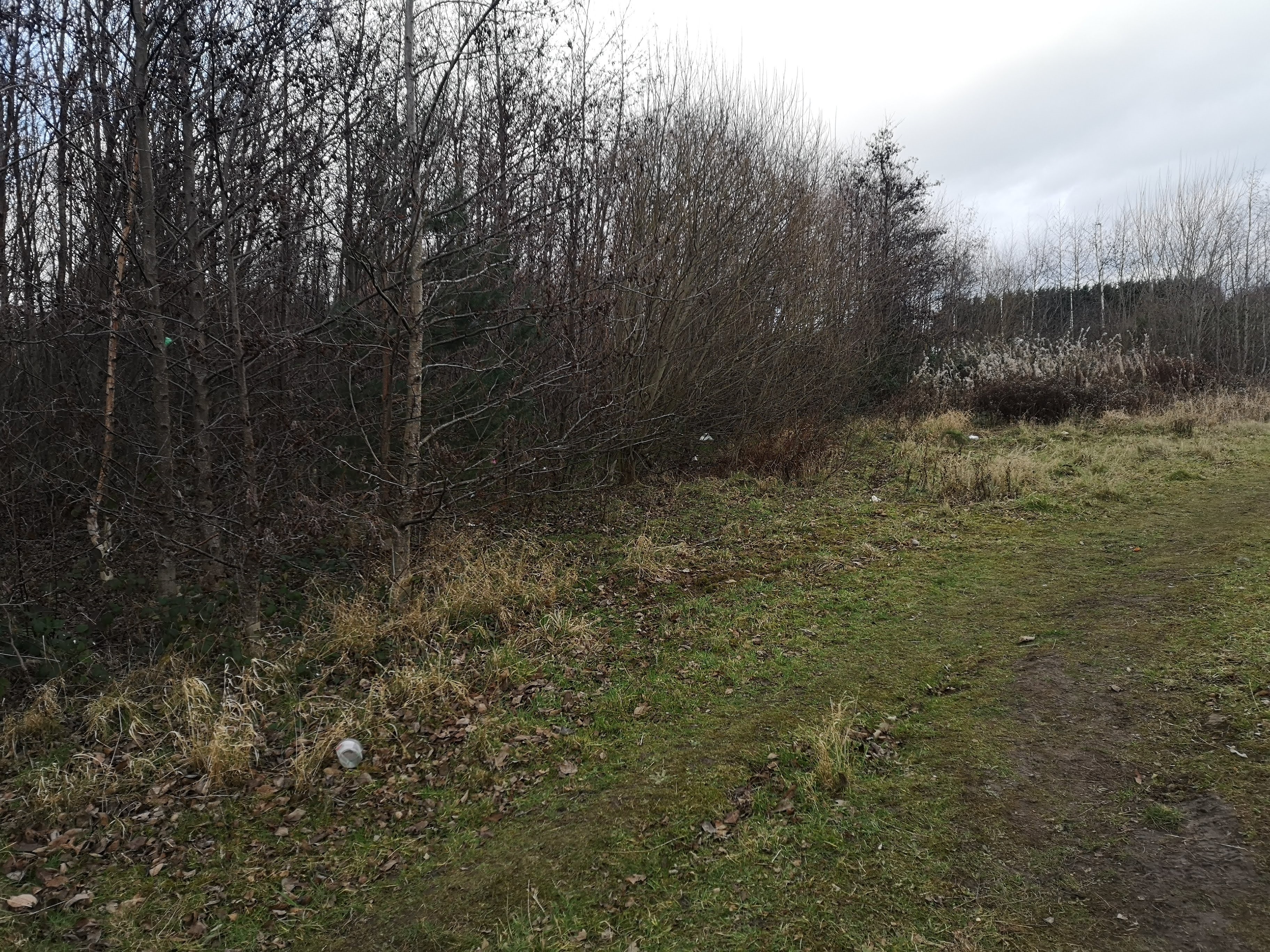
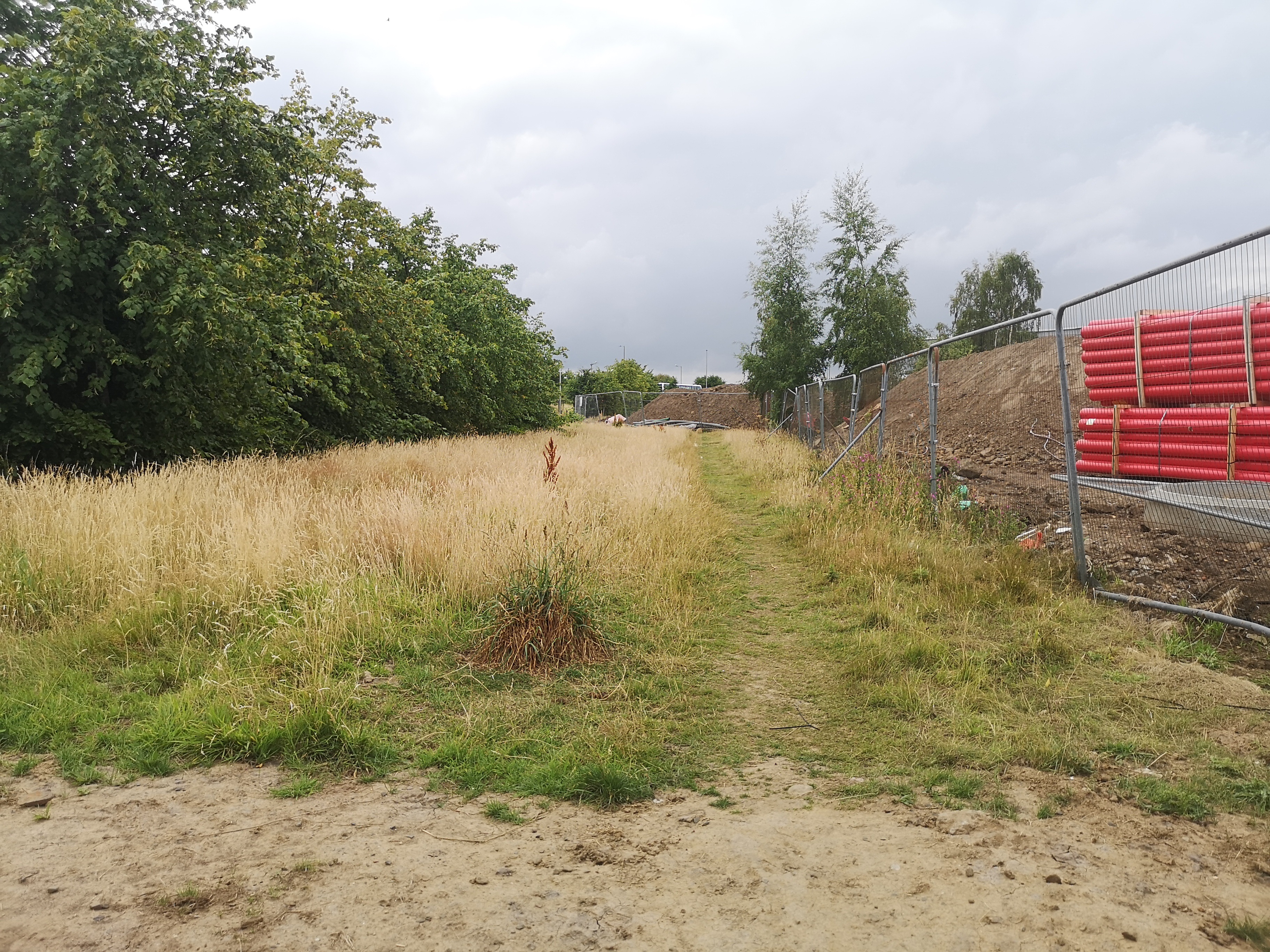
Your presence was requested on a walk from the reclaimed wastelands of Middle Harbour, Edinburgh (“Million Tree City”[1]) where trees grew before development, to the building site of Waterfront Avenue where trees have been felled for housing. We Wish We Were Here. We are in spirit. Or are we?
Once it was water then a hive of industrial and human activity. Cargo was shipped in from all over the globe, and transported out by rail to the city, Lothians and beyond
Our in-person route
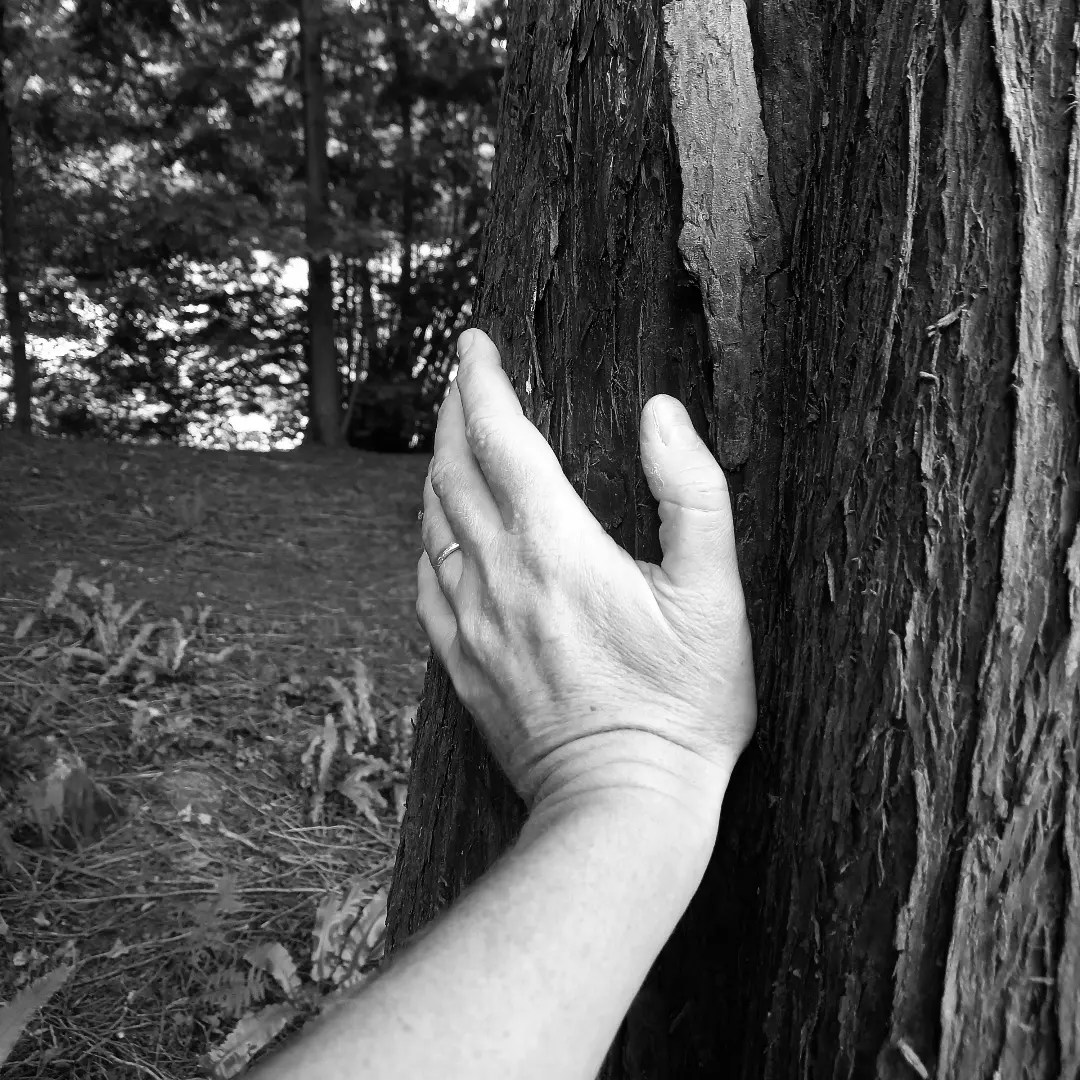
I co-led with Charlotte Rooney and group activities focused on the touch, smell and taste of trees.
Charlotte Rooney
In her blog (see link above) Charlotte wrote about:
Symbiosis
Reciprocity
Listening
“My breath feels grubby today, a bit noxious, and it’s uncomfortable, until I remember that this is exactly what the tree needs. My breath is a treasure.”
Charlotte Rooney
Looking back towards the harbour – Waterfront Avenue
What happens when you change the name of a place?
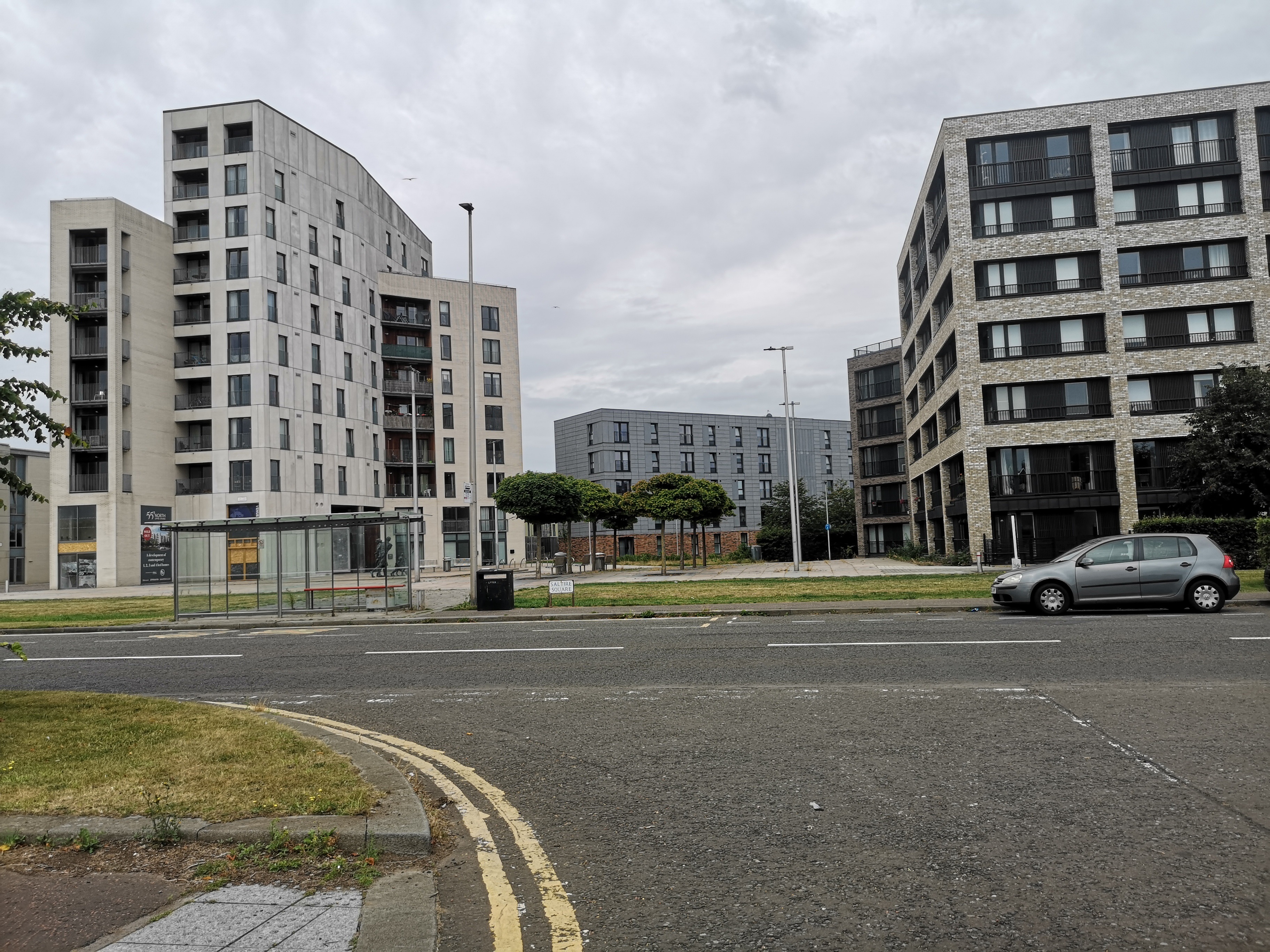
Posing questions about the importance of naming and local history in ‘belonging’, we walked streets that had other names before now. Their new ones come from the City Council’s list, so Chestnut Street has no relationship to Chesnut (sic) Rock which is shown on the old maps, and Granton Station is not where it once was; its name has been given to a different building entirely, thoroughly confusing local people who once played there as children.
Exactly how much earth is needed?
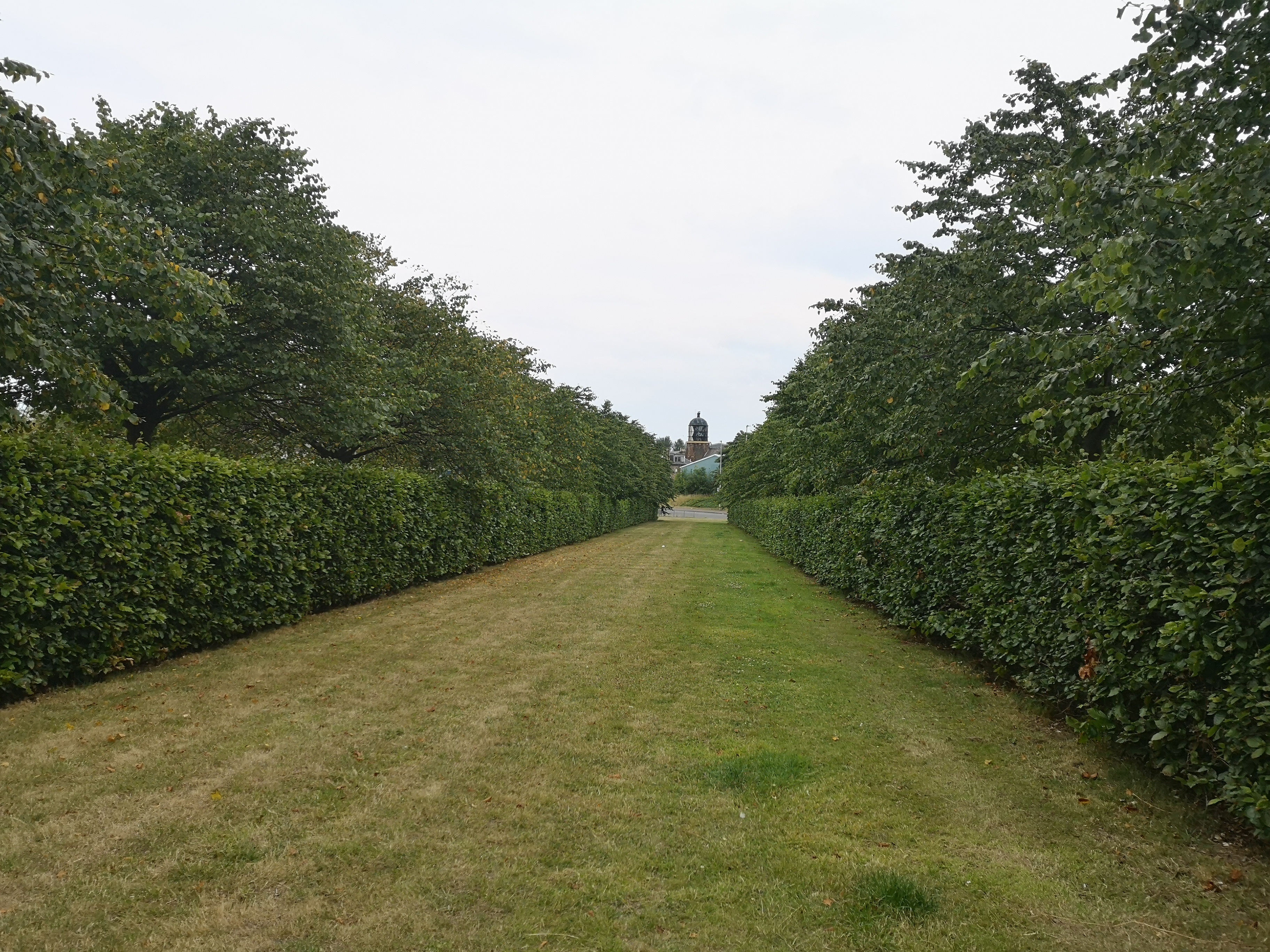
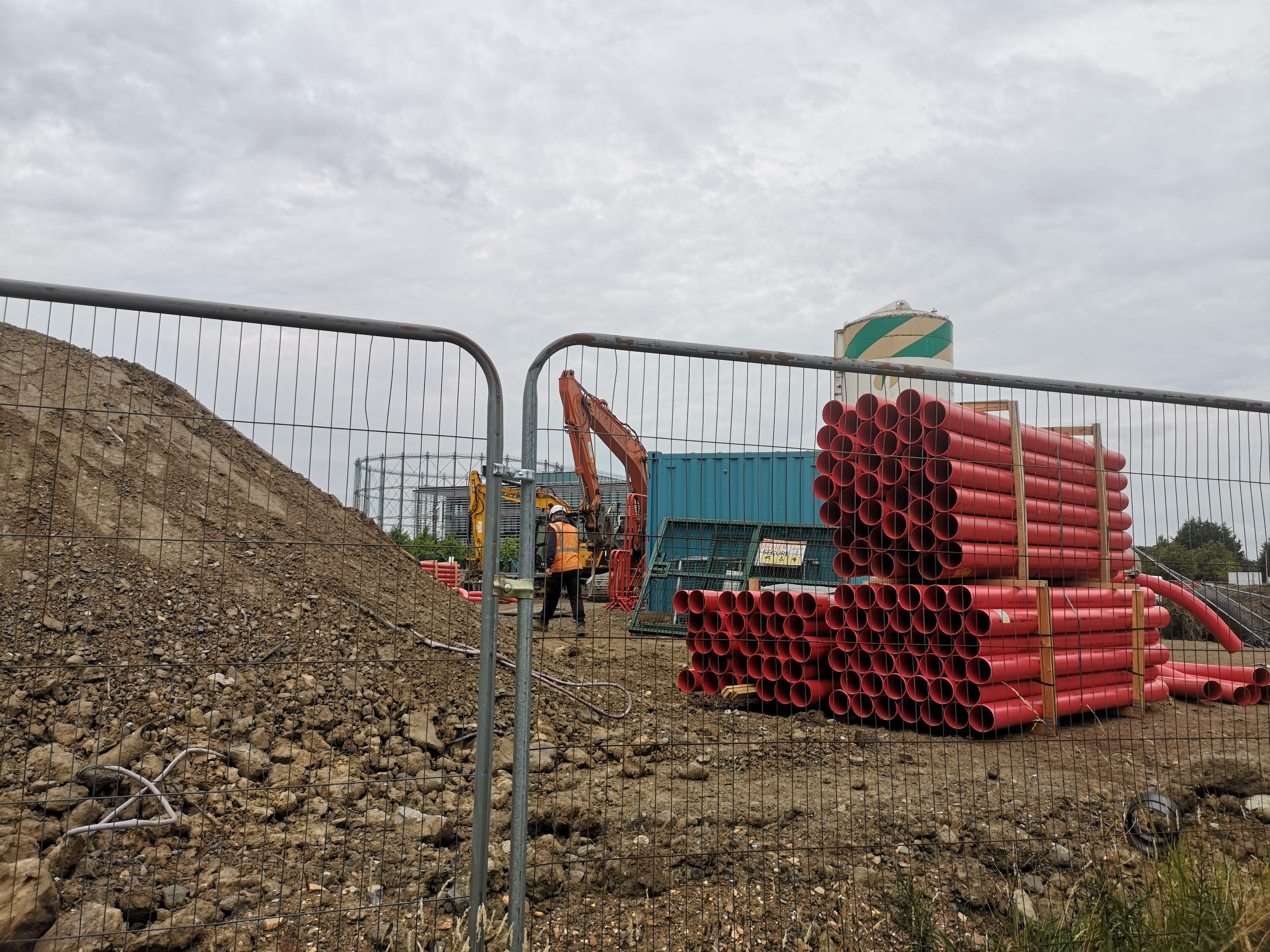
We asked how much earth we all need to thrive on, and this question brought about tension between the need for new housing and the necessity of trees. 20 per cent of the new Harbour development is planned to be affordable, but the rest includes a 4 star spa hotel and luxury flats with free dog washing facilities. Is that a good balance? Architectural plans show that new trees will be planted in pots, and a development which took place 10 years ago now sports rows of quite established Limes and substantial manicured hedges. The trees which have been ripped up against local people’s wishes have left raw land behind the new Granton Station. Is all this enough – for repairing the environment, for our need of a little ‘wildness’, for the psychogeographer’s bent towards some chaos in an otherwise geometrical world?
Artists from Scotland, Australia and England RSVP-ed
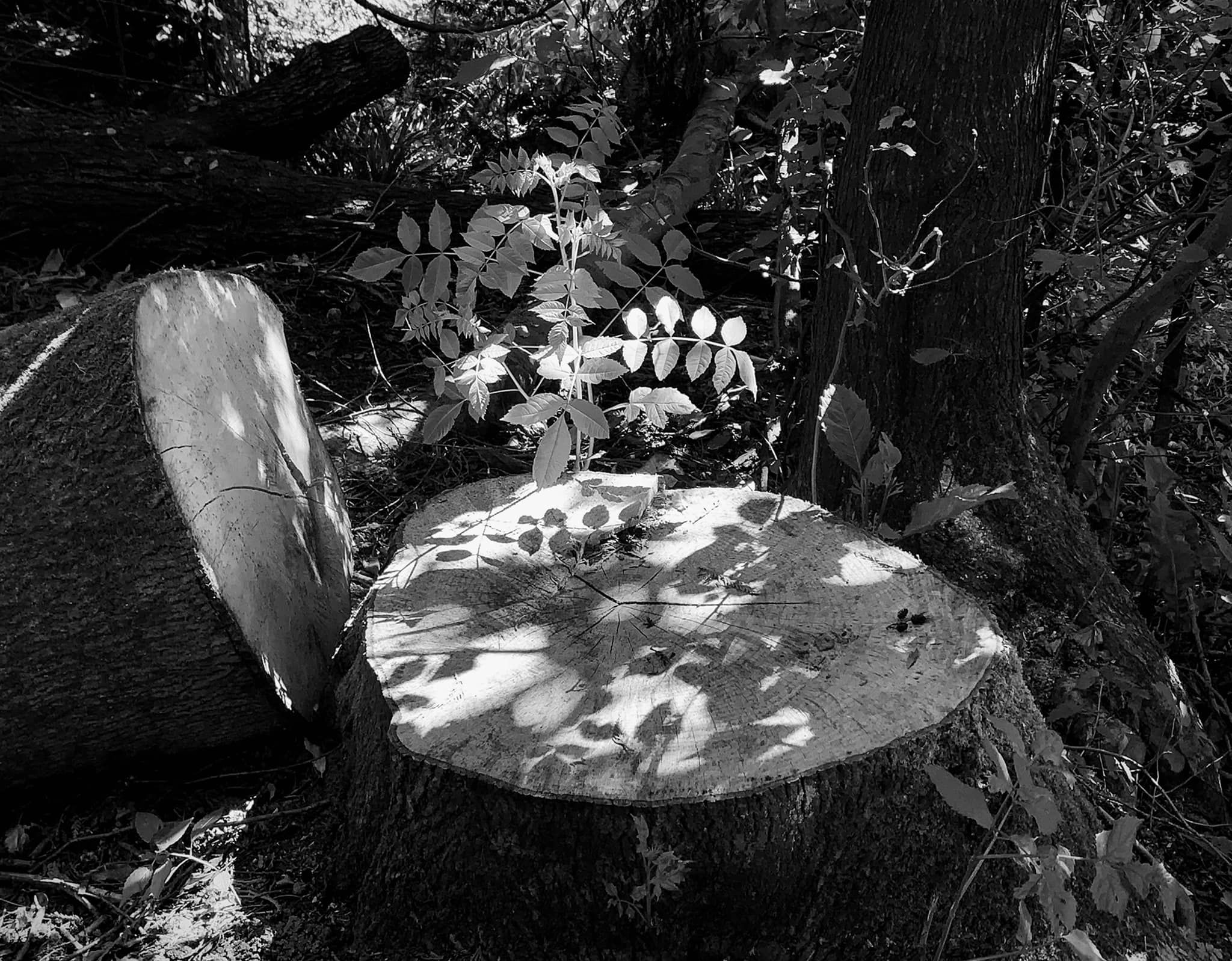
Deborah Roberts, Sophie Cunningham Dawe, and Richard Keating posted or sent me images
Deborah Roberts – New shoots growing from a felled ash
Richard Keating
what happens in the mysterious space/place between gaze and subject of gaze, observer/participant?
Richard Keating
Sophie Cunningham DaweSophie Cunningham Dawe
Your project offered me a simple way to spend time with my mother’s beautiful tree… I am grateful for the drawings I made, simple gestures/ memento artefacts, a gentle marking of a significant time/place/memory
Sophie Cunningham Dawe, Melbourne, Australia
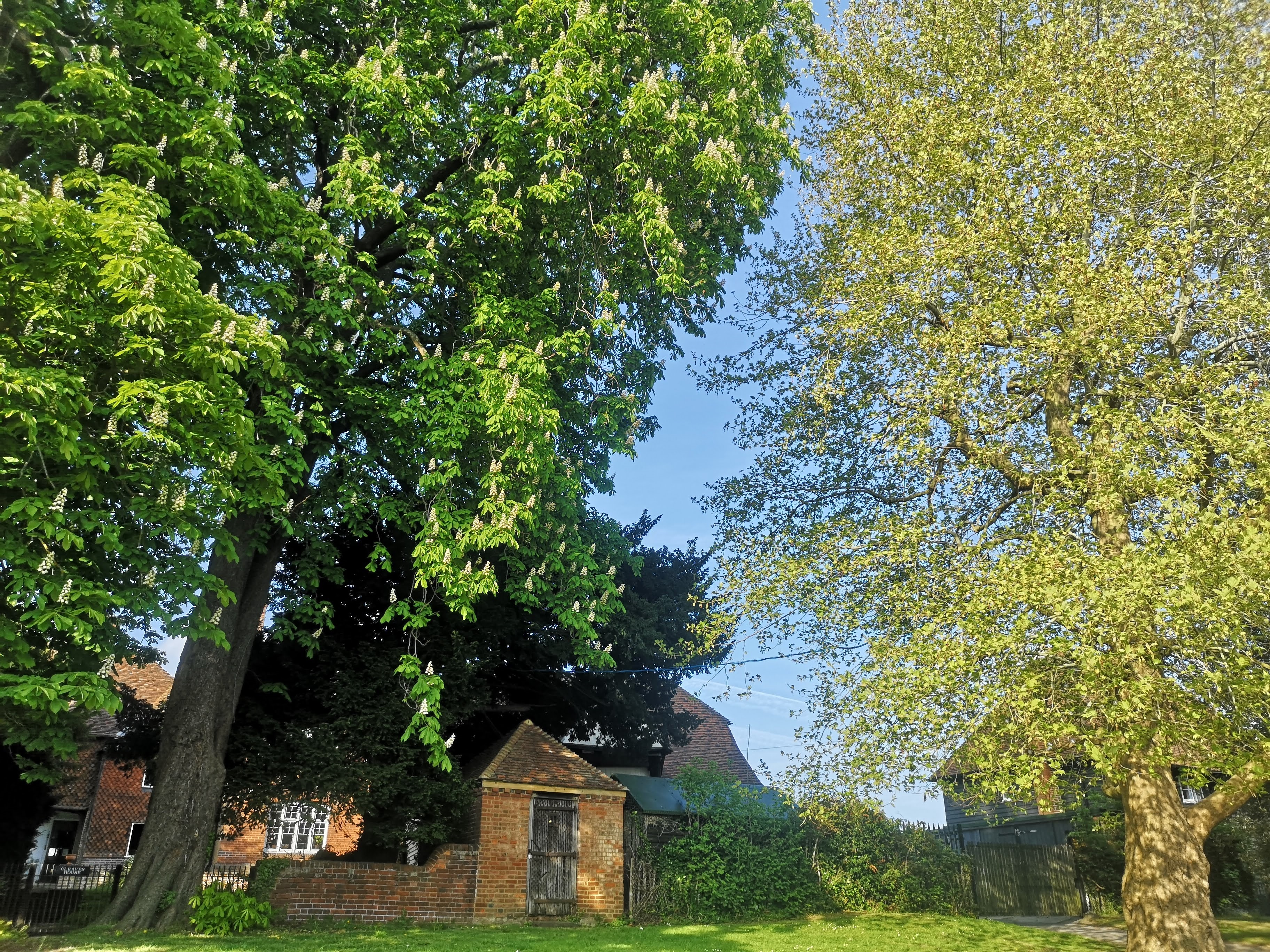
But where are the Chestnut Trees?Quite a contrast from this chestnut tree in a leafy Kentish village
This was a community event with Tamsin Grainger and guests, and we were happy to have Ruthe, Arboricultural Officer at the City of Edinburgh Council with us to hear our concerns and offer her expertise. No-one from the new Granton Development answered the invitation.
From….to…
Disorientating, shocking, disrespectful
Now we were here, now we are not
Ffrom one minute to the next, such immense changes, such age and service, uprooted overnight


 Walking without a donkey