Inspired by Kel’s prompts, I had researched the goddesses associated with this time of year and incorporated them in my words and images.
Mayday Walking
Though Floralia dawned turquoise and pink, the haar cloaked us in grey.
wearing wreaths of bluebell and campion, we swam in the lace-edged estuary,
Flora, goddess of flowers, Aphrodite,
subtle of soul and deathless, of dove and seashells,
And Àine, the radiant.
Convinced that the sea is a restless woman and she an ordinary person,
She circled from home seeking celandine and comfrey in the hedgerows,
Smell of coconutty gorse and scent of scorched air,
By Stedfastgate, through The Quilts,
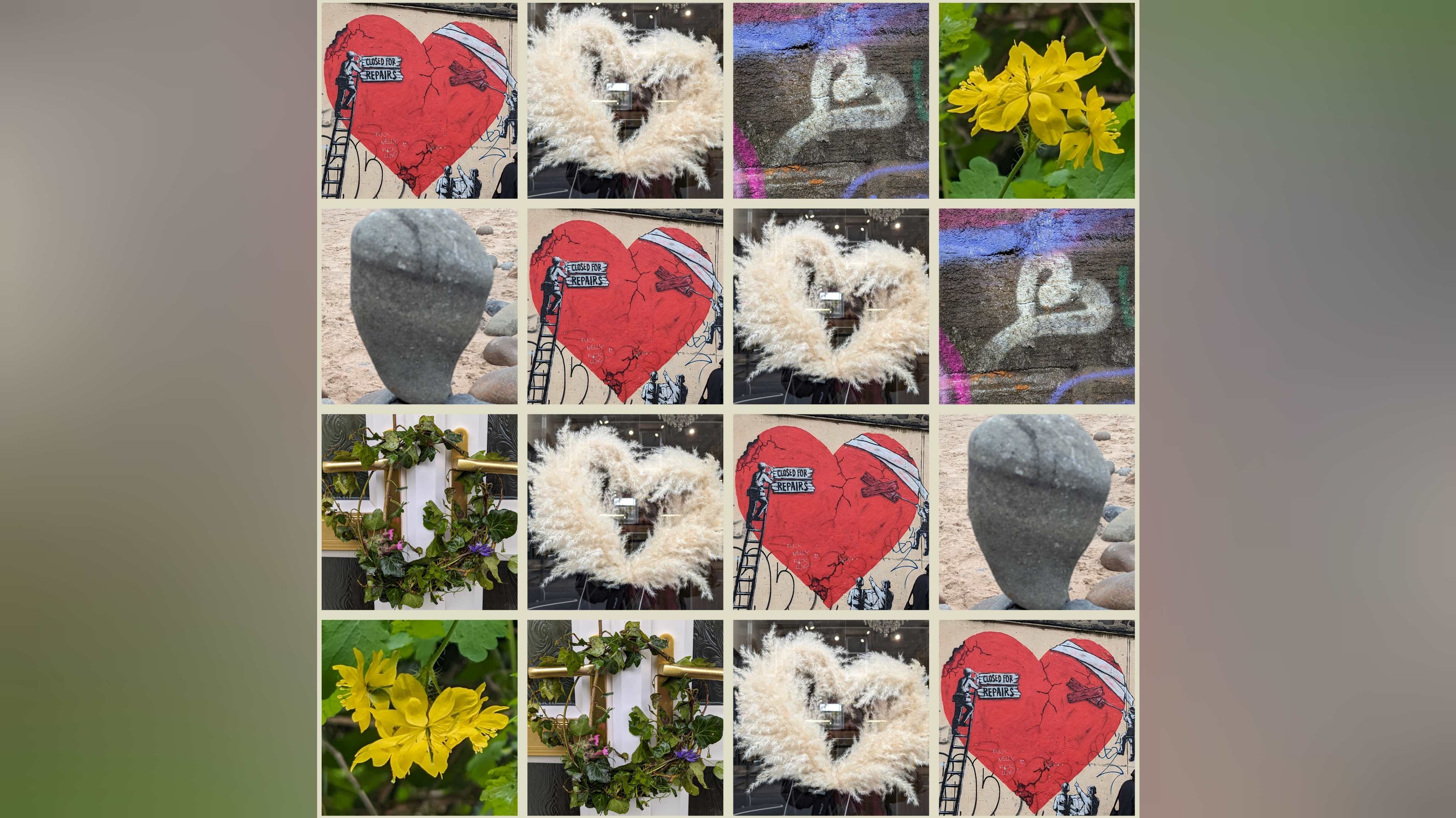
Collecting hearts as she went.
Love walked behind her, not quickly following,
Venus, didn’t catch her up.
Kneeling by the water where the stones were stacked,
Nut, sky goddess of the four directions, poured libation,
Isis, her daughter, offered healing,
And Wingéd Ma’at stood for justice, incandescent.
Notes:
A haar is a sea fog
'subtle of soul and deathless' is taken from Sappo’s Ode to Aphrodite
'a restless woman' comes from ‘Hagstone’ by Sinead Gleeson
Nut is an Egyptian sky goddess
Isis is Nut’s daughter, invoked in healing spells to benefit ordinary people
With thanks to Natalie Taylor @natalietaylorartist
With me, Suze Adams, Sabine Crittall, Jaqui Stearn, Amanda Couch, Kate Roberts, Therese Livonne and Kel Portman
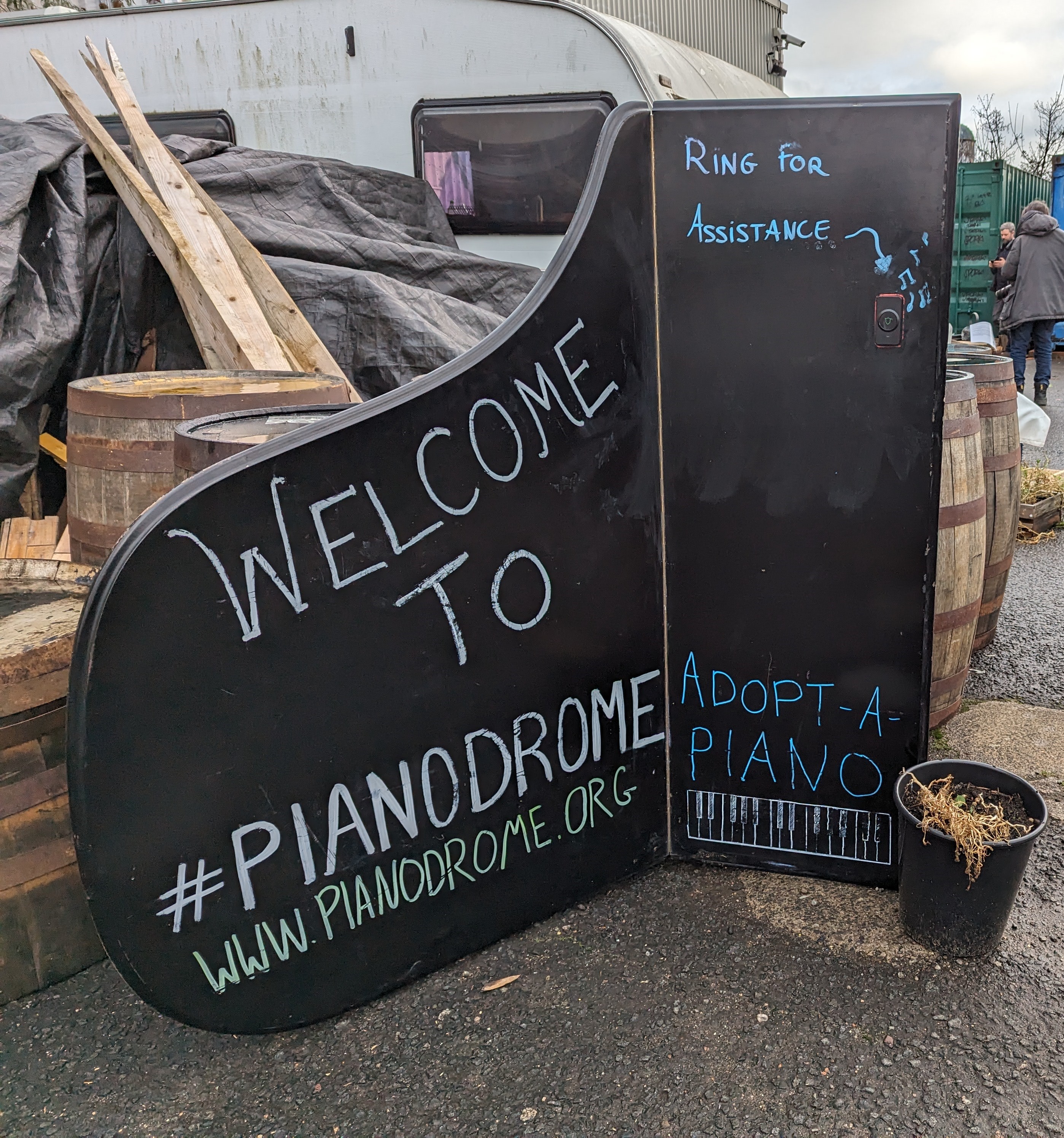
May 18th 2024 1.30-3.30 Gather at Pianodrome, Granton, Edinburgh. Book via Eventbrite
Listening to the tree types we will visit (from top left around down and across bottom right to left:
American Sycamore, Rowan (leaves, bark/trunk), Apple, Whitebeam, Hazel, Wych Elm, Wheatley Elm (whole tree), Willow, Hazel, Cherry, Alder, Wheatley Elm (leaf and bark), fir (unknown name), Himalayan Birch.
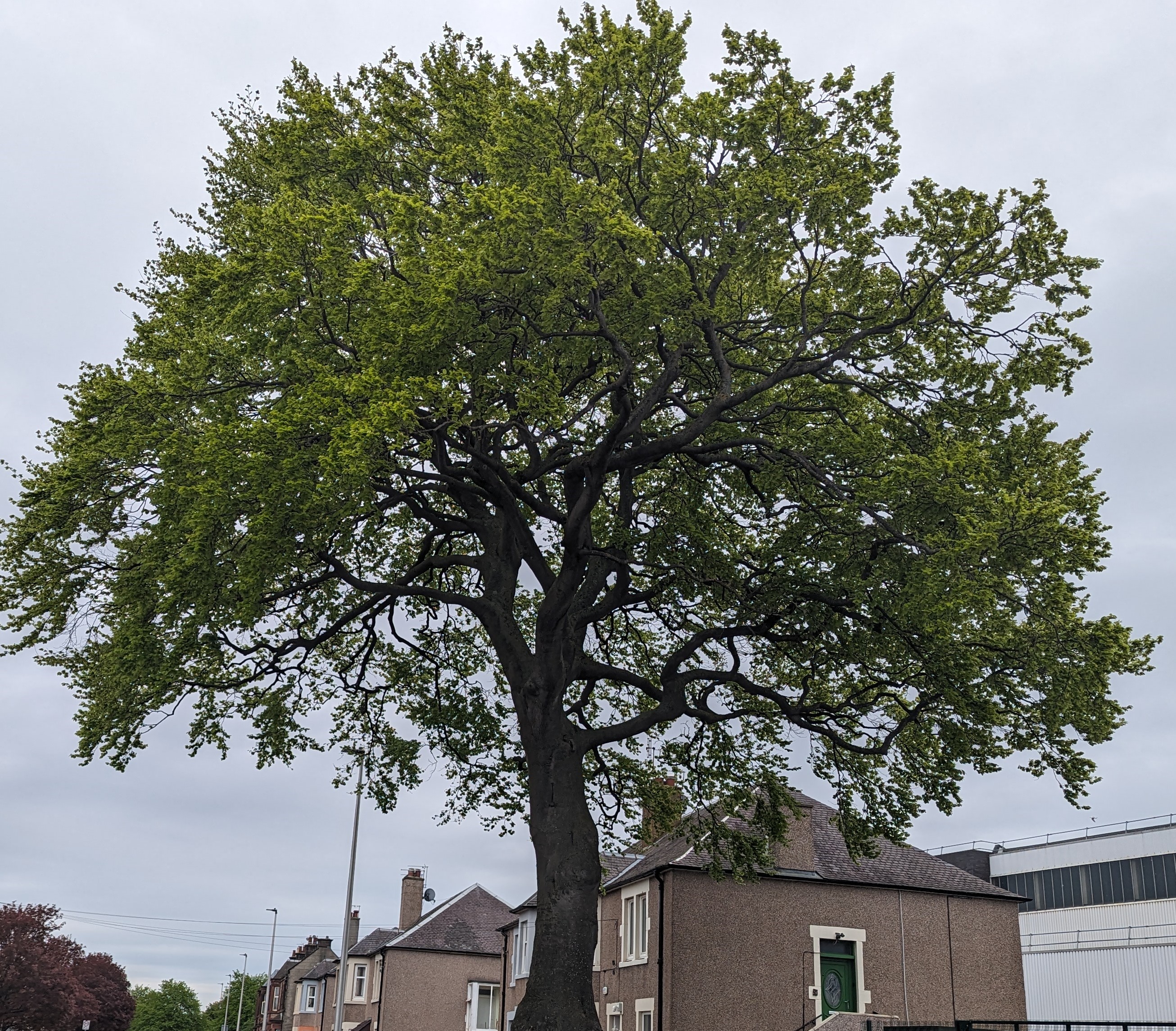
We will also see Whitebeam, Silver Birch, Oak, Scots Pine, Copper Sycamore (or is it Maple?), Beech, and the Pianodrome / Granton Apple Orchard.
Pauline Oliveros
We will be practising Deep Listening, as developed by Pauline Oliveros, which:
explores the difference between the involuntary nature of hearing and the conscious nature of listening. It cultivates a heightened awareness of the sonic environment, both external and internal, and promotes experimentation, improvisation, collaboration, playfulness, and other creative skills vital to personal and community growth.
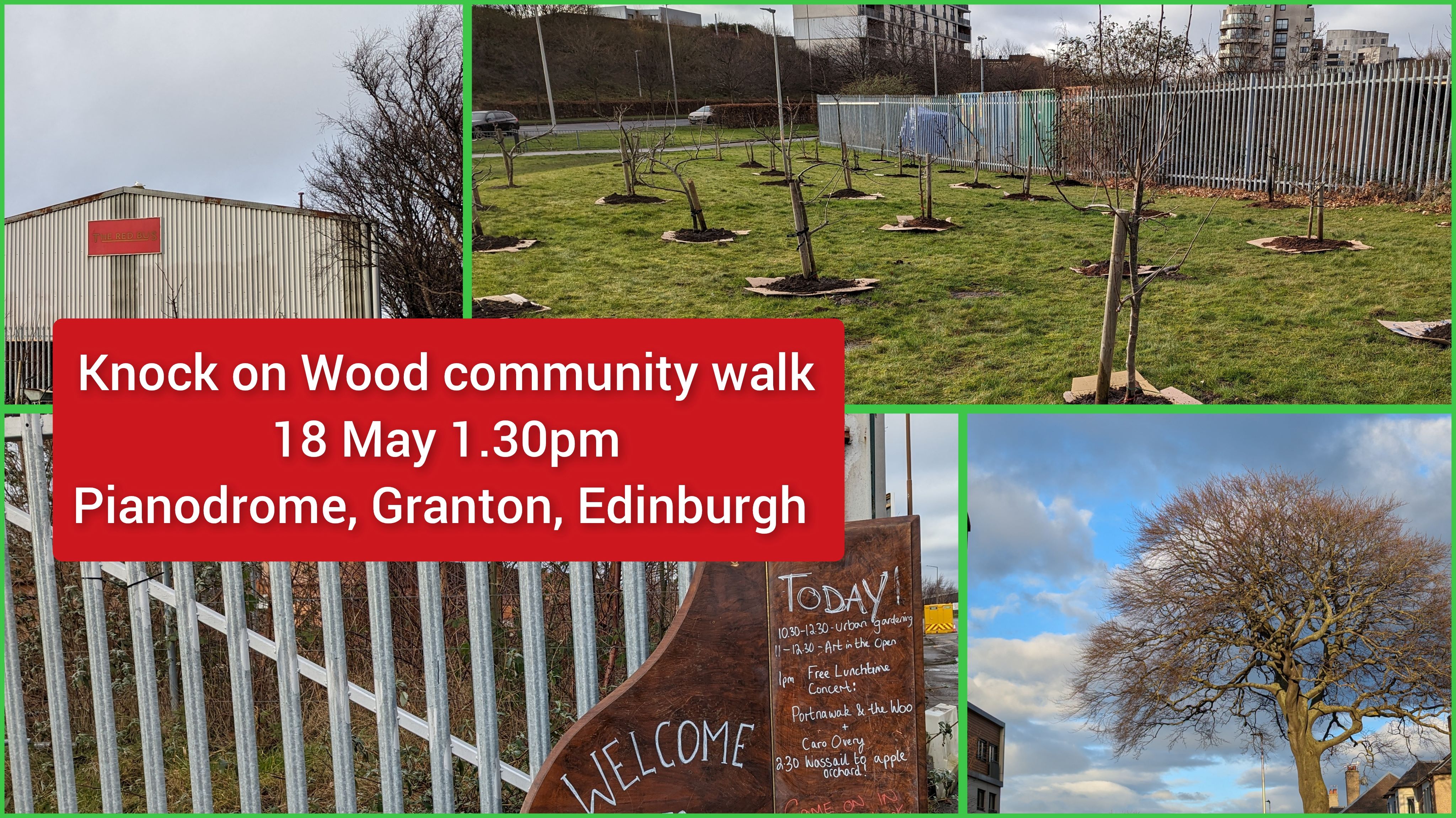
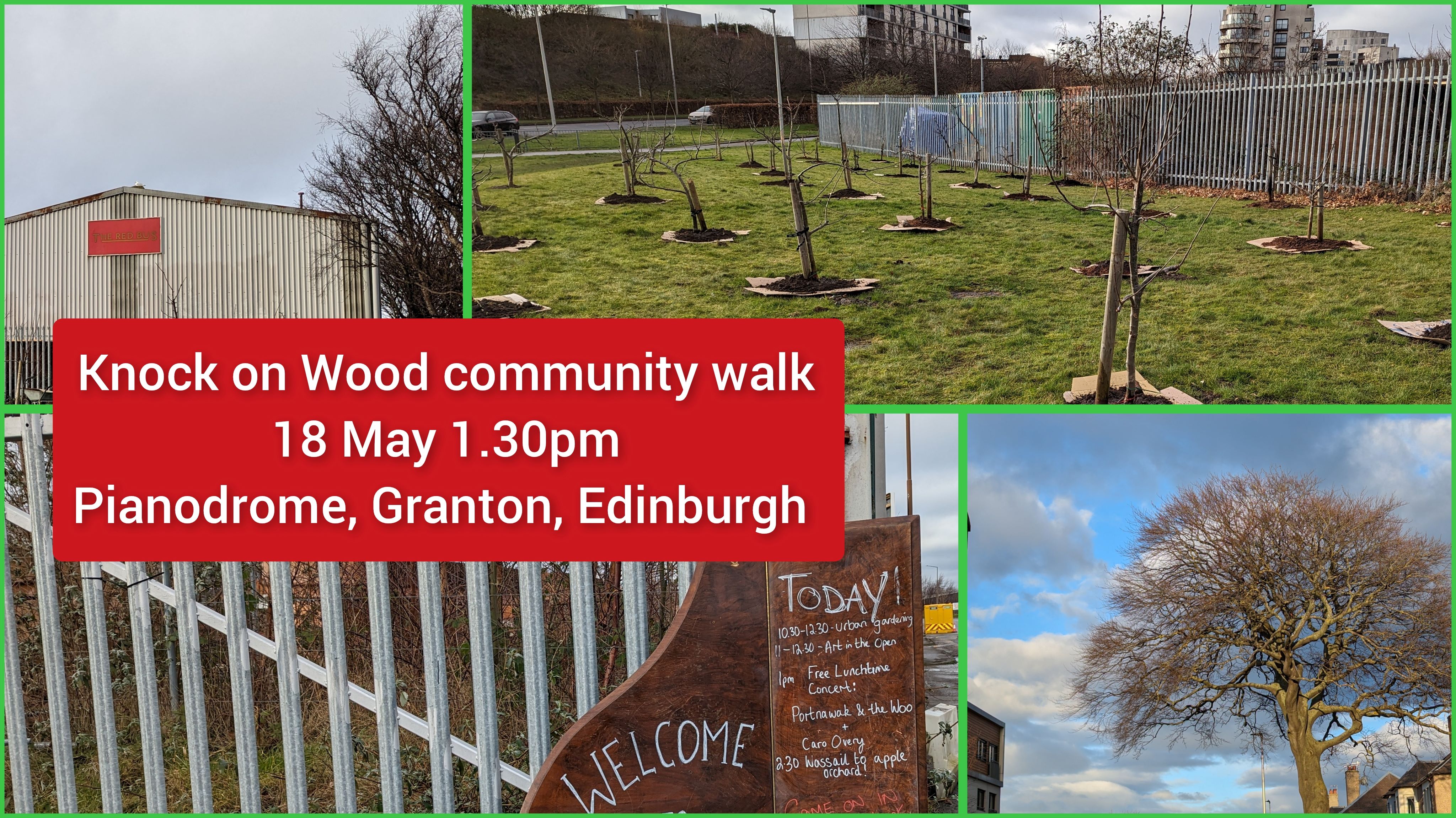
I’m inviting you to walk with me to Knock on Wood, making a collective sound walk to celebrate the Urban Tree Festival in Granton, Edinburgh on 18th May 1.30 – 3.30 pm. This event is free of charge. Save the date!
Hammers made from the insides of pianos for knocking on trees gently
Starting and ending at the Pianodrome, Granton. Refreshments will be available at 3.30pm (by donation). Accessibility: For everyone – mostly pavement walking, so wheels will be as welcome as feet – human, dog or other.
As well as being a song by Amii Stewart, the title for this walk Knock on Wood comes from a description of what people do when they’re looking for suitable trees to make pianos with. They knock on them and listen to the tone to see if they’re suitable.
We will walk together, to and around trees in Granton, knock on them and record the sounds, making a collective sound walk.
If you have a sound recorder or a recorder app on your phone, please bring it with you. Remember to charge it first! I will compile the recordings after the walk and hope we will have some material to make something of it. If walkers wish to be involved afterwards, that would be great. You will also be welcome to bring sketch books, draw, paint or respond in other ways to the trees we visit in the urban setting.
Hopefully we can visit some of the types of trees (using the Edinburgh Tree Map – link below) that are sometimes used to make pianos – spruce (Norway and Sitka), beech, rock maple, Douglas fir, walnut, cherry, alder, ash, holly, hornbeam, oak and Pippy (cat’s paw) oak. If you know the location of these trees in the vicinity of the Pianodrome, please let me know and I will divert the walk to include them if I can.
Wood used in piano making
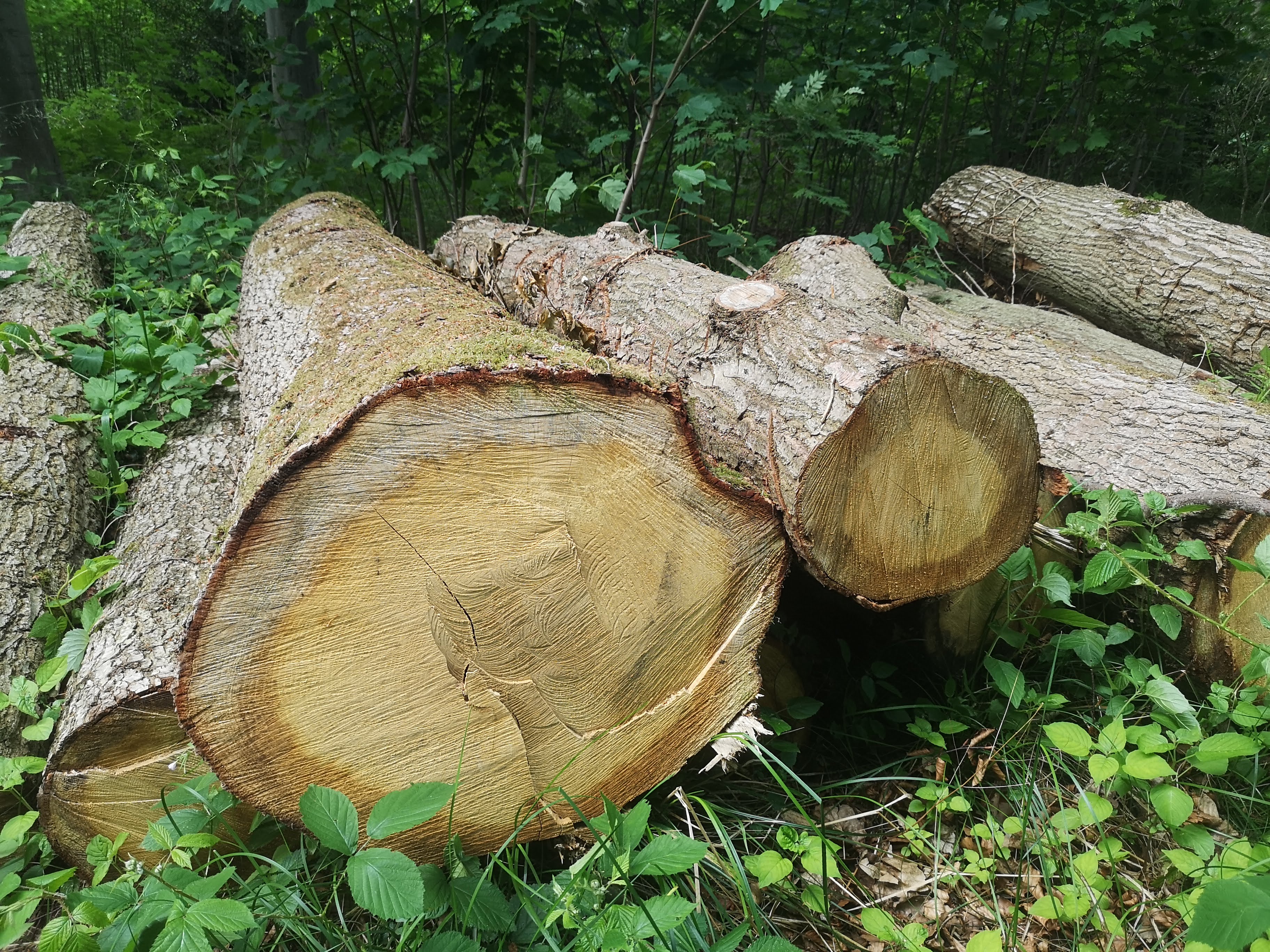
The type of wood used for the acoustic part of Pianos is called Tonewood. This is the Wood that can be tested through knocking. It comes from the ‘European’ spruce tree, but it must be grown under very special circumstances. There must be sufficient altitude and I’m told that there’s nowhere in the UK high enough. Oak is an excellent tonewood, though it is rare to find it in commercially-available instruments. It has a warm, mellow resonance and is particularly suitable for an heirloom quality English piano.
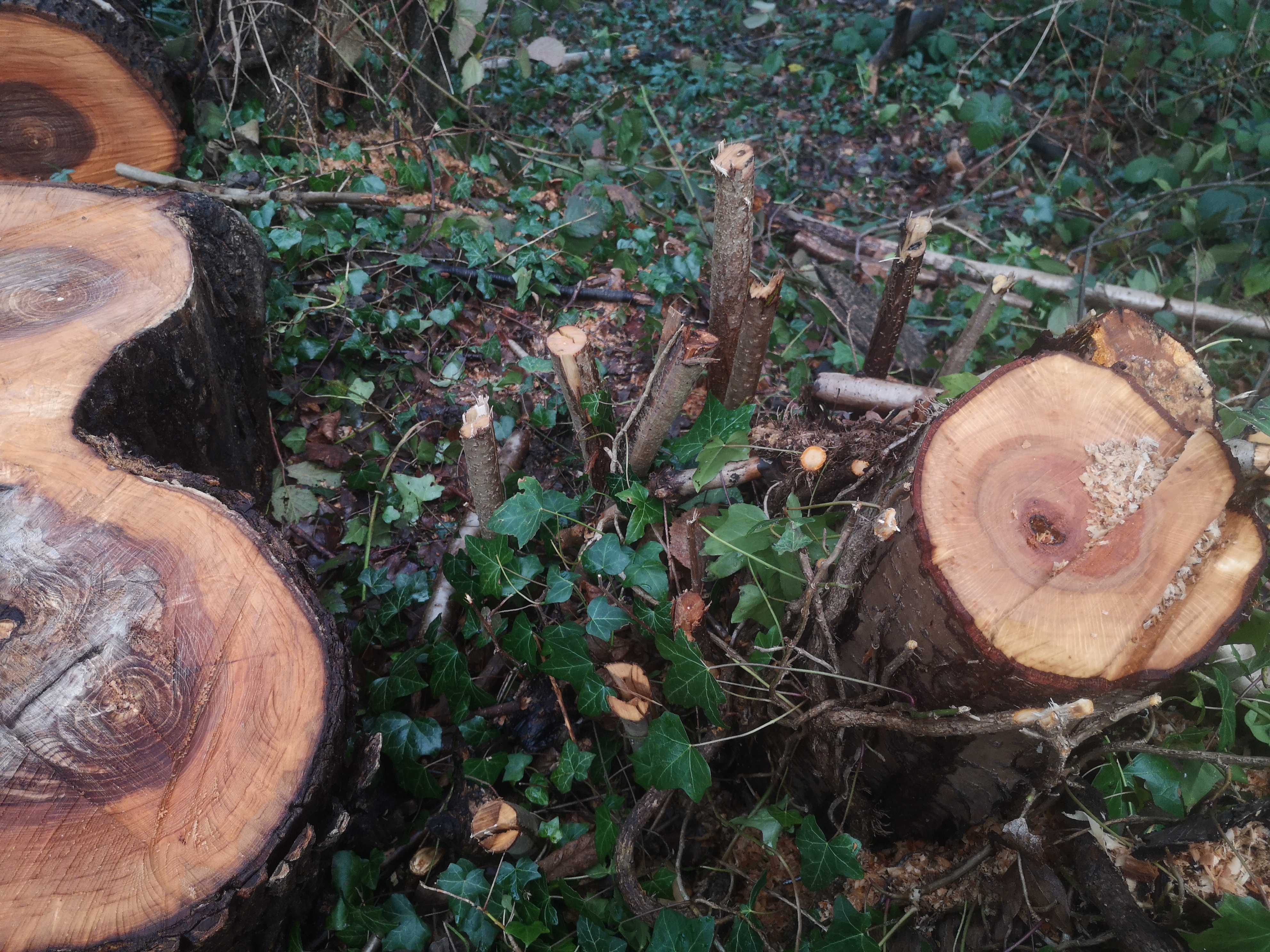
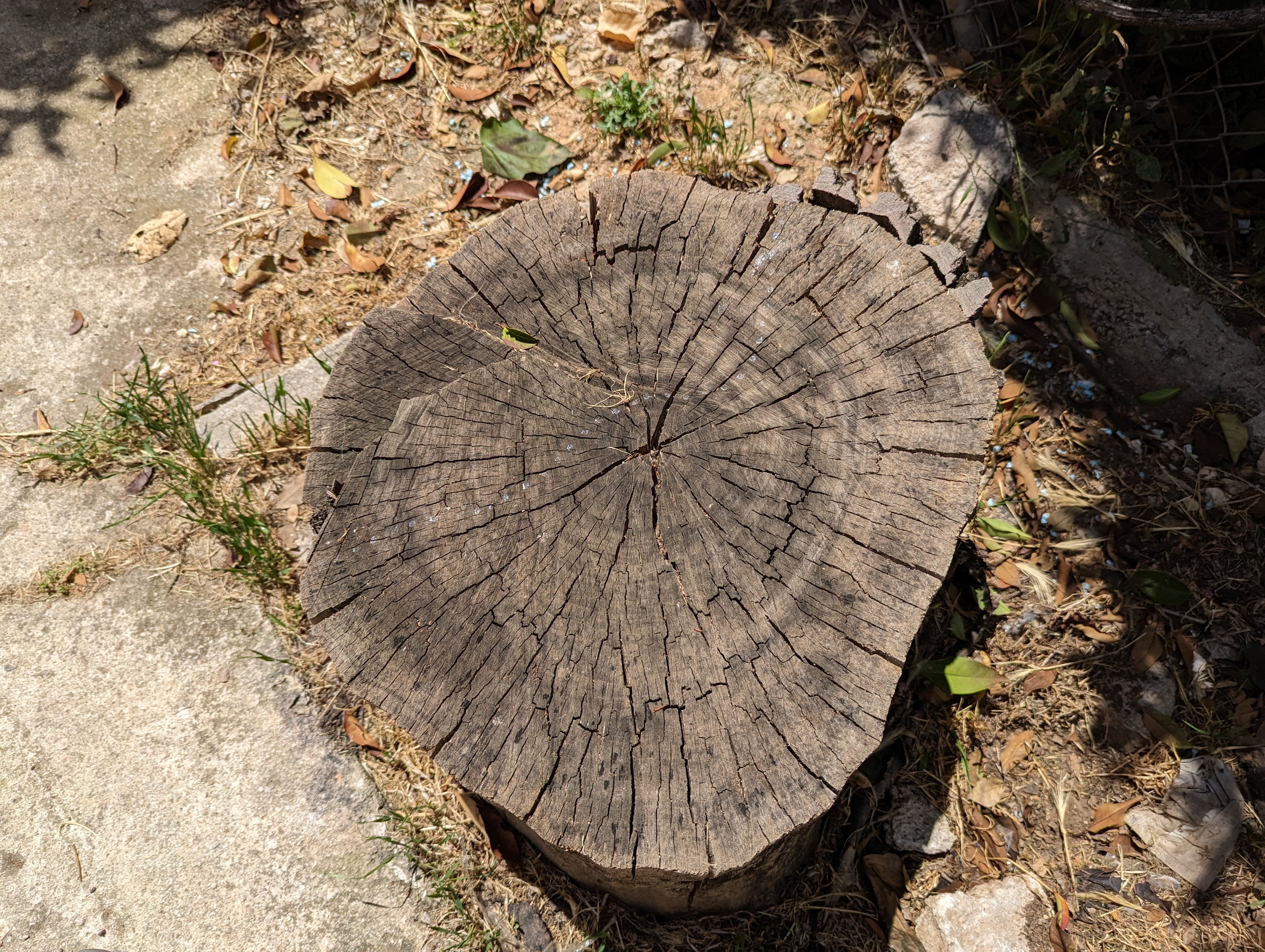
The density of wood is based on how quickly the tree grows. When a tree grows slowly, the rings within are packed tighter together and when a tree grows quickly, the rings are further apart. Because trees grow at different rates based on the weather, temperature, soil and no end of other external factors that might affect them, the common, everyday tree has a variation in the size of rings within it meaning that it will ‘sound’ inconsistent.
As some of you know, I have made walks before about Absent Trees of Granton – trees taken down to make way for the extensive new housing, so the Knock on Wood sound lyrics seem appropriate:
“I don’t want to lose you, this good thing That I got ’cause if I do I will surely Surely lose a lot
You better knock, knock on wood, baby You better knock, knock on wood, baby You better knock, knock knock, knock, knock”
Amii Stewart, Knock on Wood song lyrics
Would this wood sound inconsistent?
Knocking on wood (also phrased touching wood or touch wood) is an apotropaic(a type of magic intended to turn away harm or evil influences, as in deflecting misfortune or averting the evil eye) tradition of literally touching, tapping, or knocking on wood, or merely stating that one is doing or intending to do so, in order to avoid ‘tempting fate’ after making a favourable prediction or boast, or a declaration concerning one’s own death or another unfavourable situation.
Wikipedia
Pianodrome address: Pianodrome Warehouse Granton, The Red Bus Depot, 28 West Harbour Road, Edinburgh EH5 1PN.
Sweet Chestnut Tree
Find the Pianodrome near the crossroads of Chestnut St (Granton Middle Harbour), Waterfront Avenue and West Harbour Road, 10 minutes walk westwards from Granton Square.
Nearest transport links: There is parking at the Pianodrome. Buses: the 9 passes very close to the venue. Granton Square: 16, 19, 22, Airport 200. Good cycle paths in and out of the area though the West Harbour Road can be busy so take care.
Walking event as part of Harbour Connections: 25 September, 5-6.30pm starting 13 Hesperus Crossway EH5 1SL (w3w///fats.inch.wrong) and walking to this patch of wasteland. With poet Tessa Berring, and Professor Catharine Ward Thompson from Edinburgh College of Art who is a researcher of green spaces and their beneficial effects on us. Book on the link above or here via eventbrite.
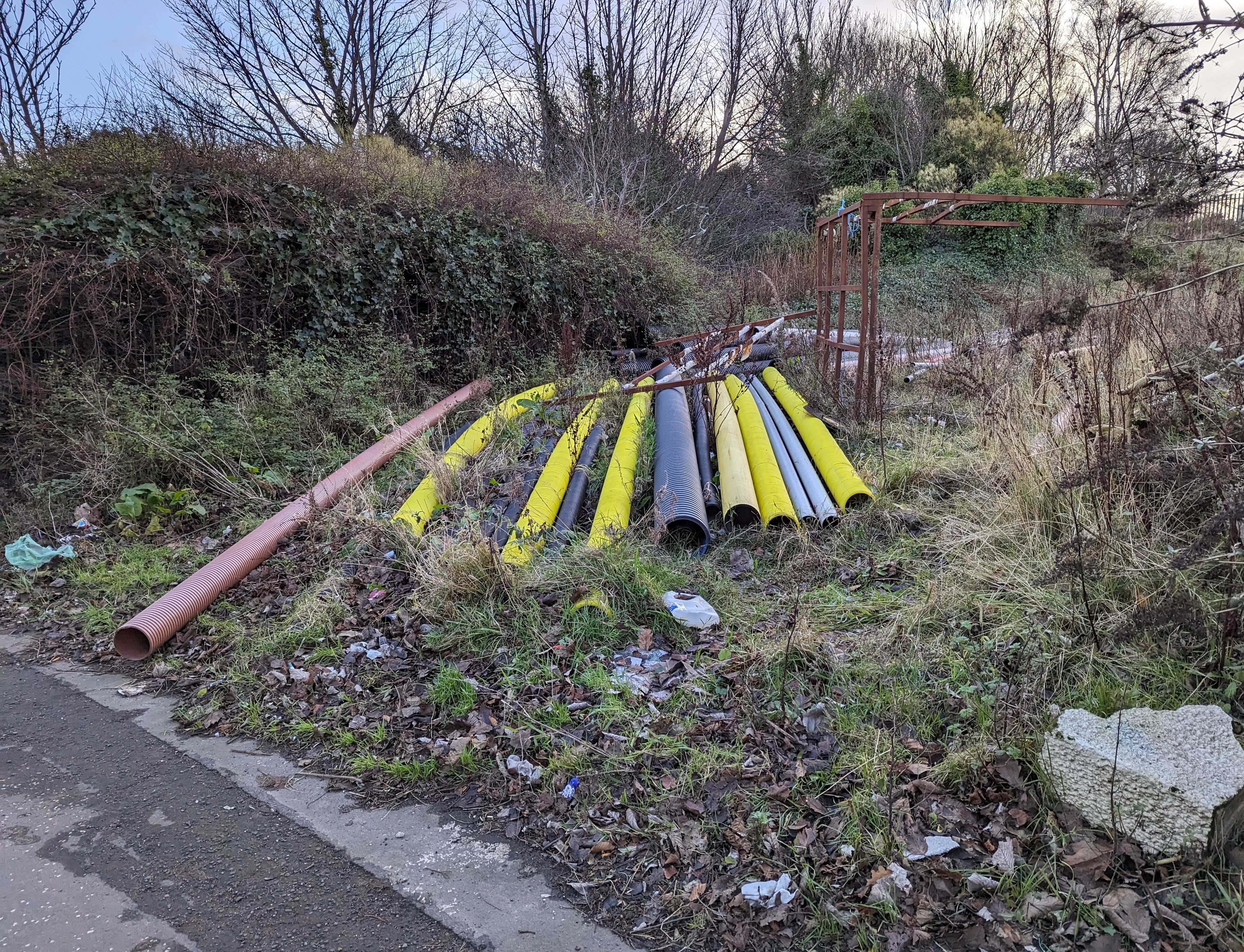
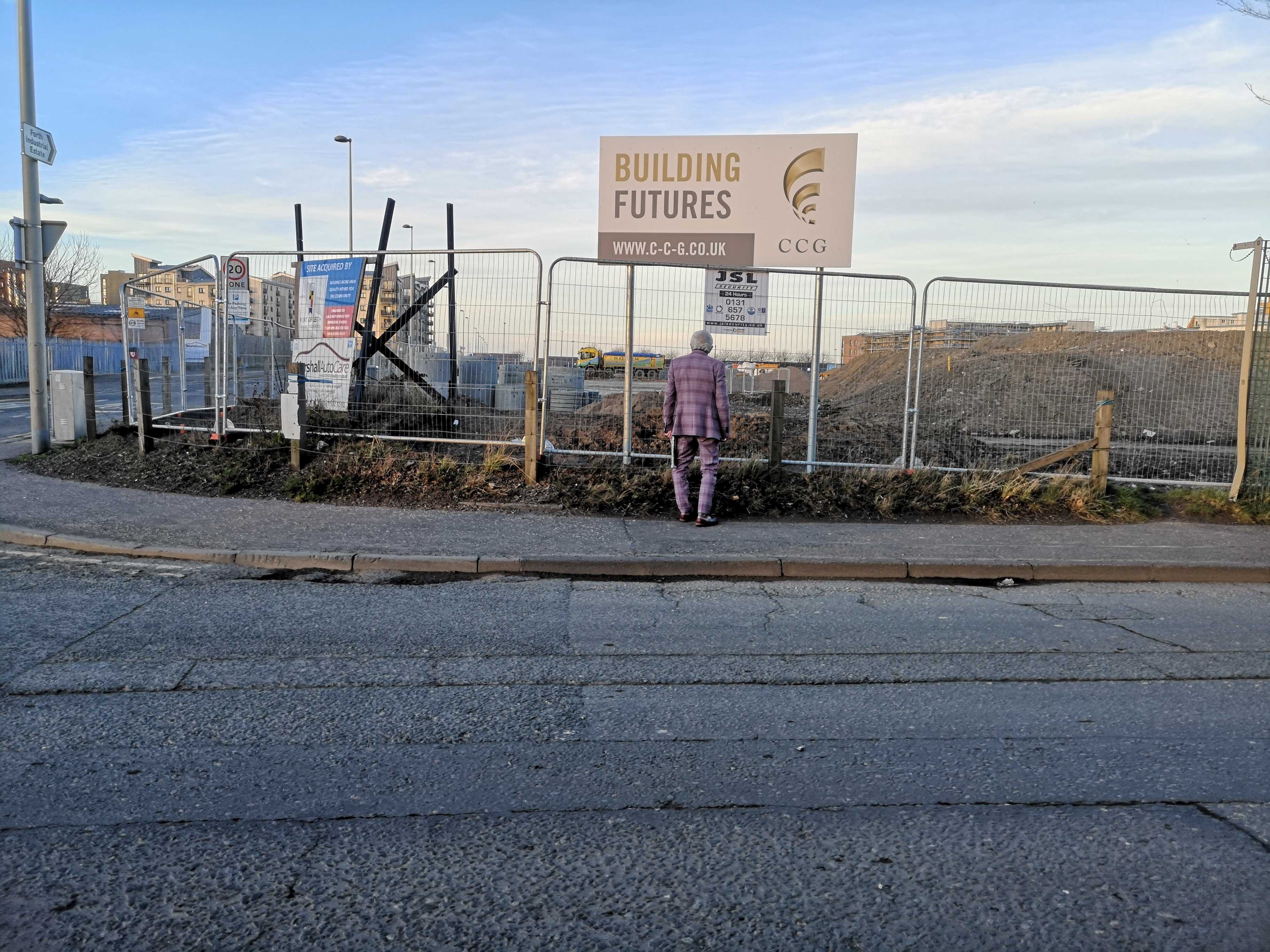
There’s a piece of wasteland at 2 West Granton Road, Edinburgh ///dock.entertainer.lazy which used to look like this:
Wasteland at ///dock.entertainer.lazy
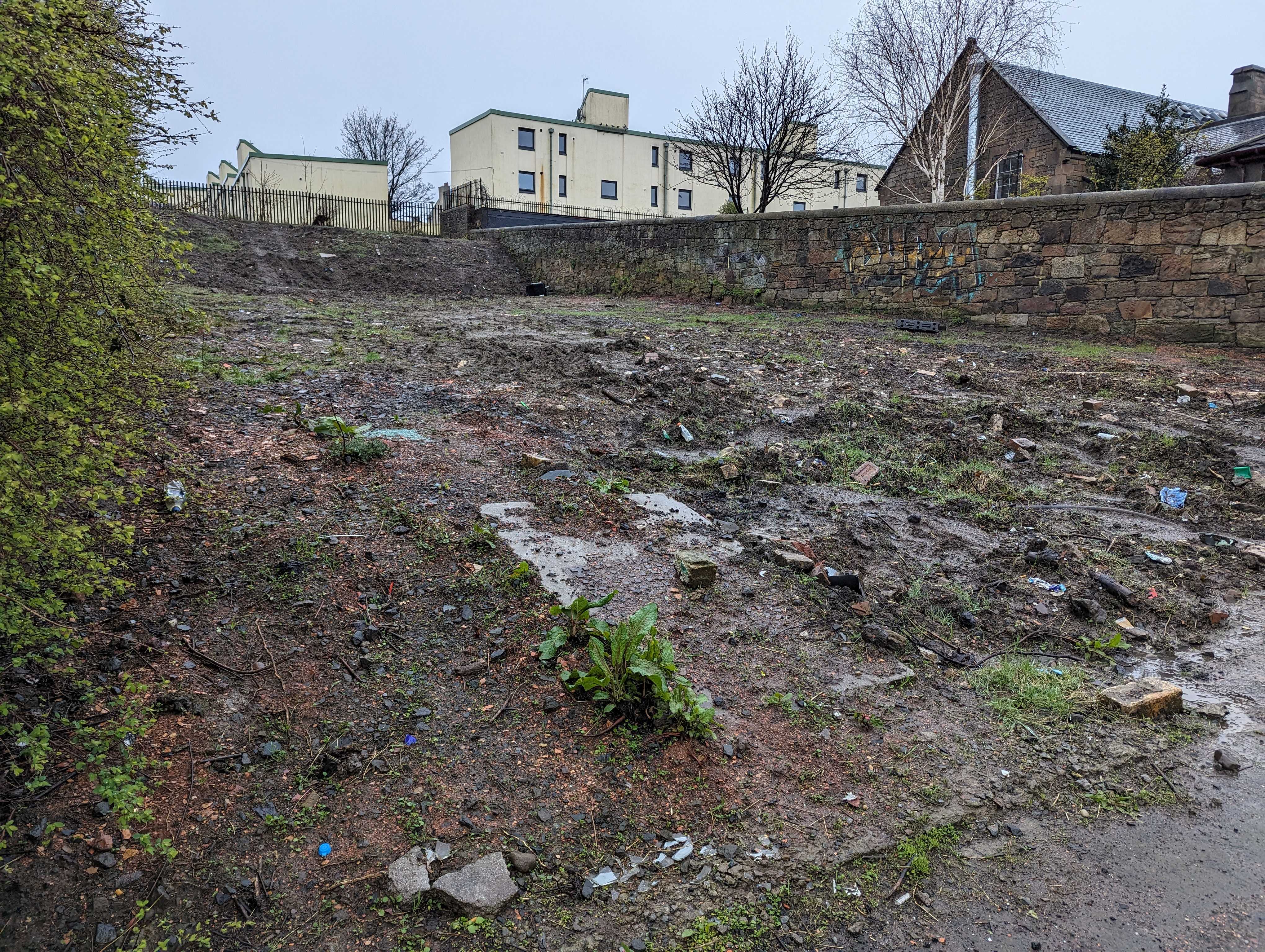
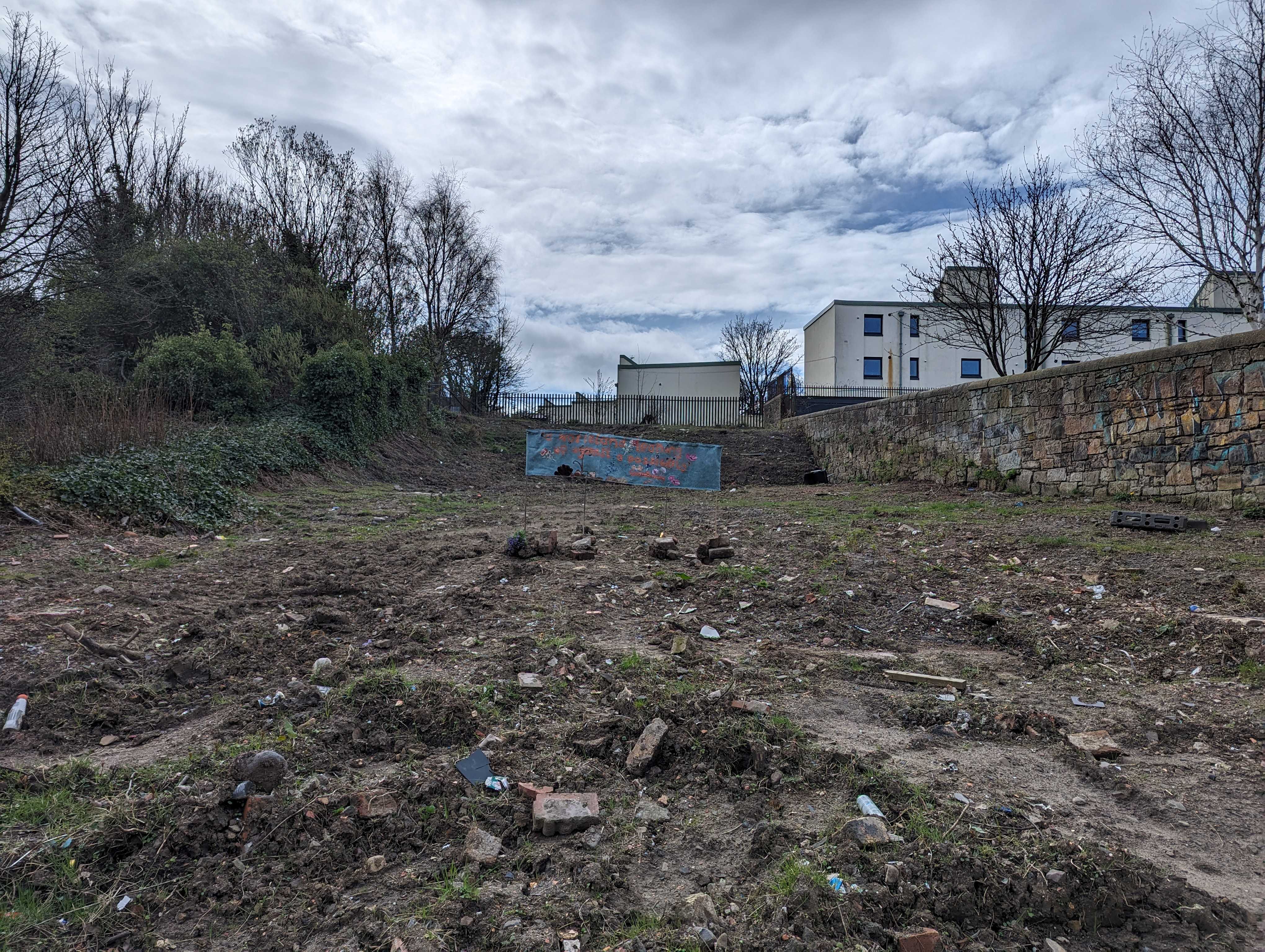
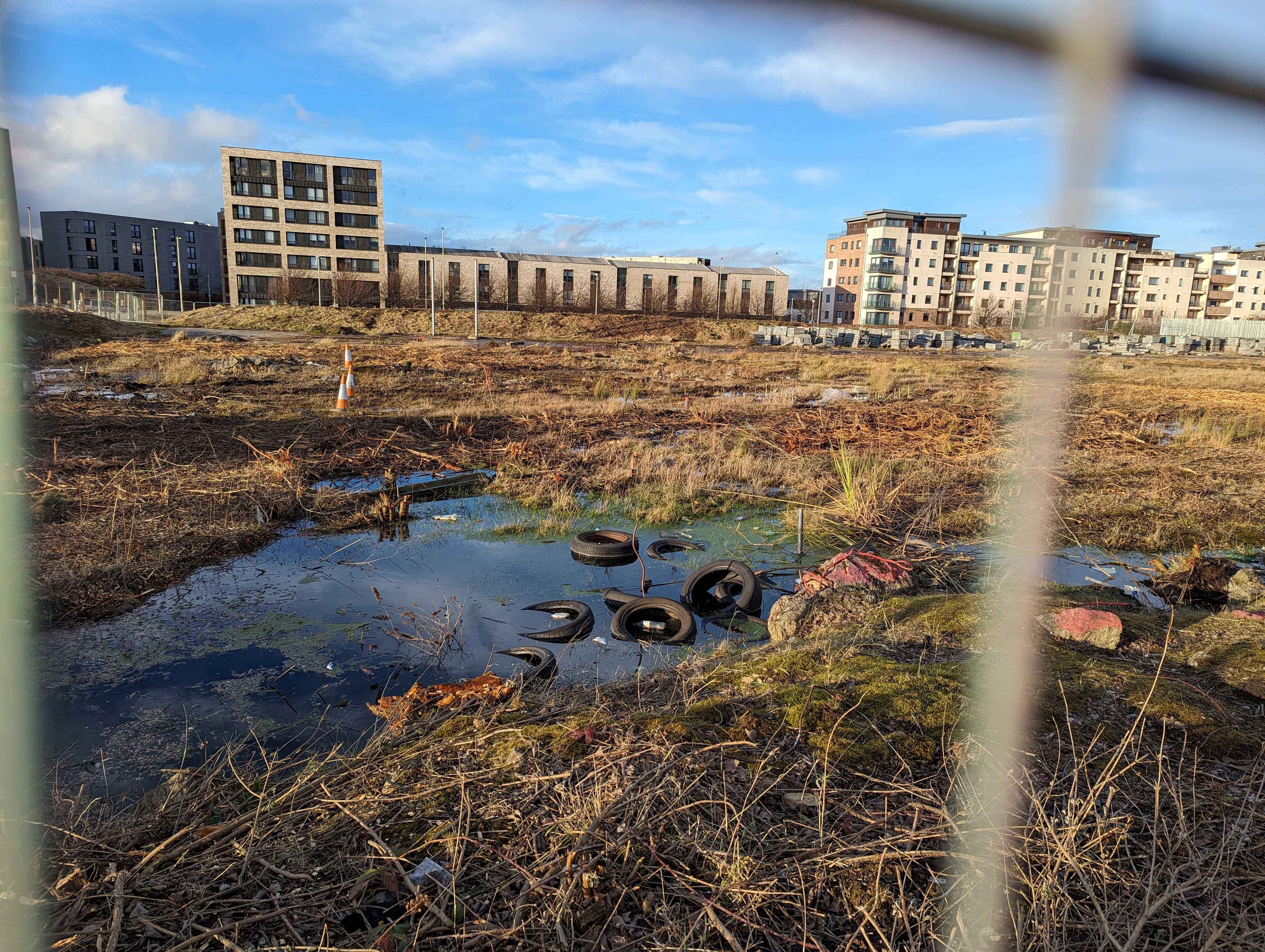
Then someone cleared all the naturally wilded plants as well as the rubbish and left it looking like this.
Cleared wasteland in Granton
It’s been bothering me every time I walk past (most days). I wish it was a community garden, a beautiful place where we could grow things together and sit and enjoy each other’s company.
Later, I was at a poetry reading by members of 12, a collective of women writers at the National Library. They were reading from their book: ‘Spaces Open’ written in and about the lovely West Port Garden in the Grassmarket which was originally designed by Norah Geddes. I’d seen an exhibition about it at Central Library earlier in the year.
Spaces Open by 12 a collective of women writersPoem China Sheep by Tessa Berring
Making socially engaged art
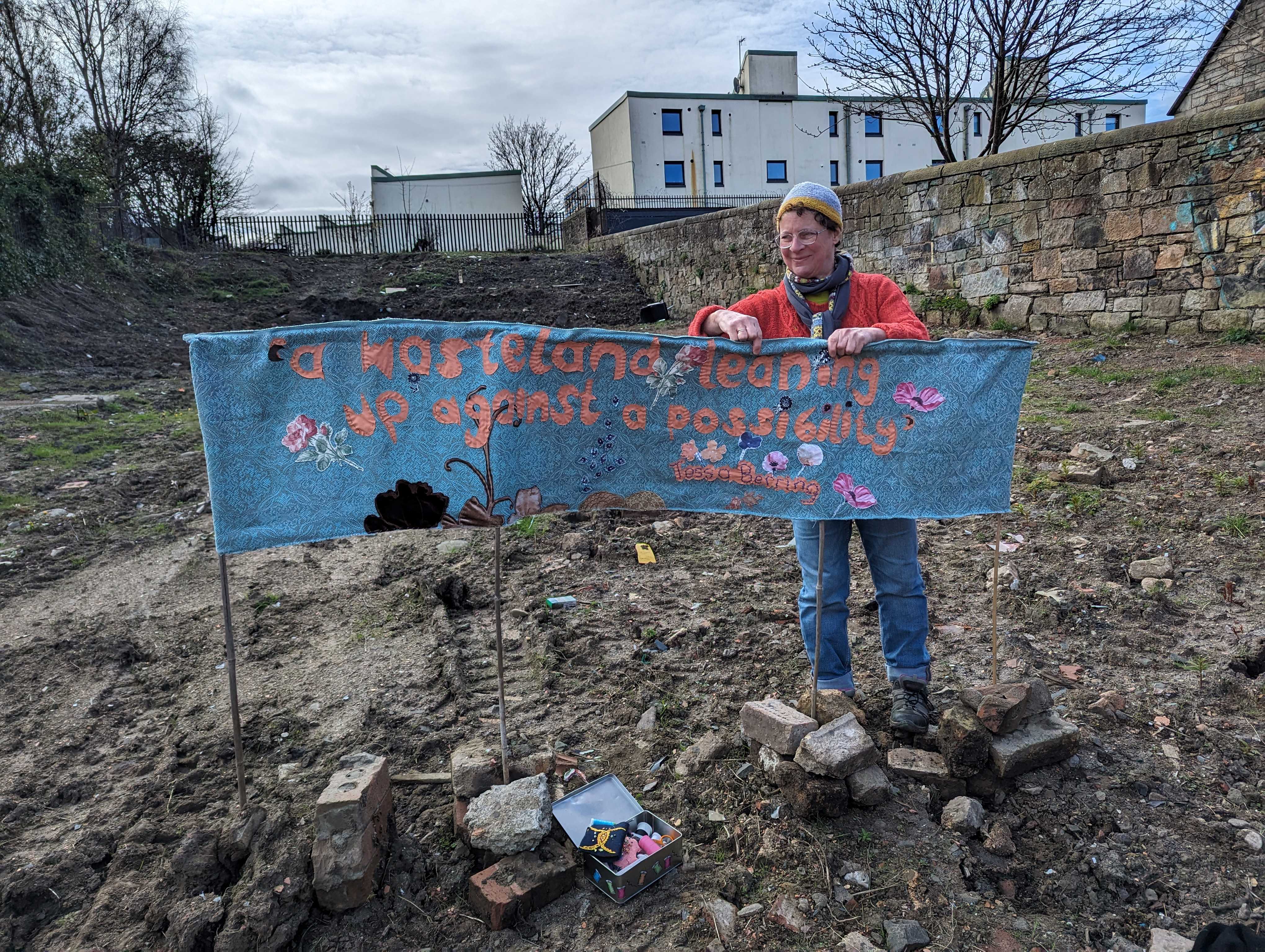
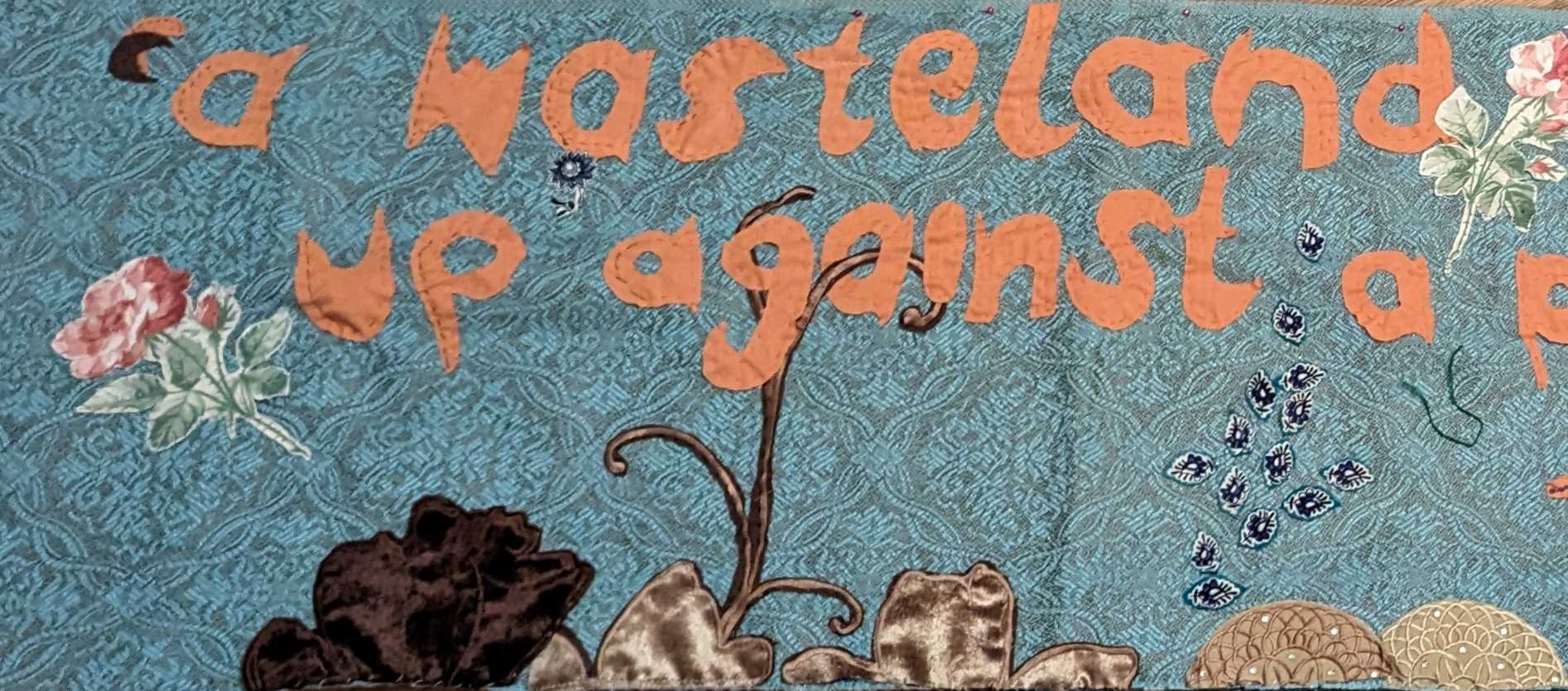
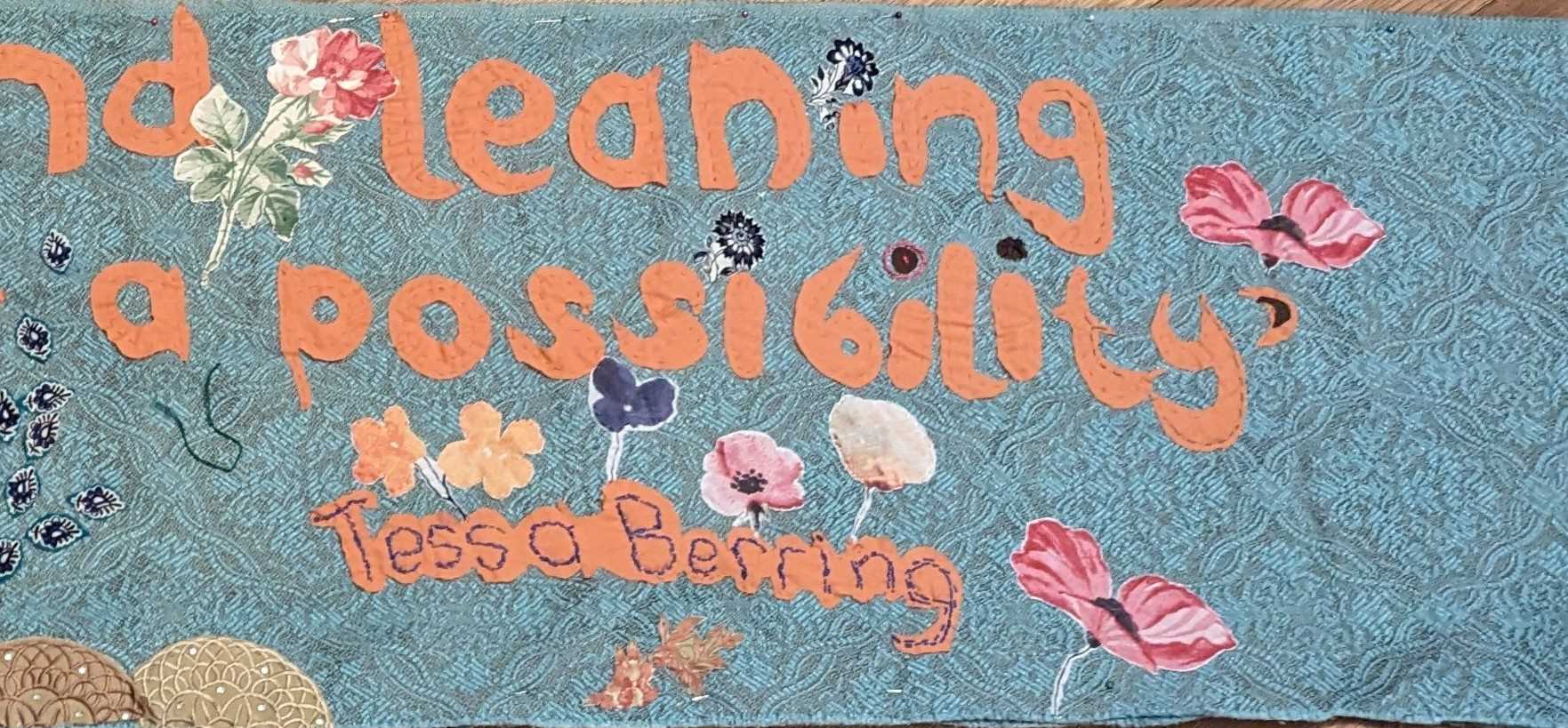
A phrase in Tessa Berring’s poem ‘China Sheep’ caught my eye when I was reading it on the bus on the way home – ‘a wasteland leaning into a possibility’. It seemed so appropriate, that I went home and stitched it into a banner which I have put up on the Granton plot.
I used fabric from the Granton Scrapstore which used to be at Granton:hub.org courtesy of Toni Dickson, project manager of Lauriston Farm (an urban farm growing food for people and wildlife) fame.
Location
The site is next to Empty Kitchens, Full Hearts who are doing amazing work relieving poverty in Edinburgh by providing meals – made using surplus food – and follow-up support for people across the city of Edinburgh, free of charge and without judgement. Please note, they are always needing volunteers.
Empty KitchensFull HeartsThanks to Tom and Stuart for coming over from volunteering in their vegetable plot when I was sinking the bamboos into the ground and being so encouraging when I was putting in the final stitches. Tom took this photo
The images above show the stitched banner by Tamsin Grainger in place with the quote, ‘a wasteland leaning up against a possibility’ by Tessa Berring
It looks a bit small, doesn’t it, and may not last long given the weather we’ve been having and the history of vandalism in the area, but if it gives a few people some pleasure and something to think about, then I’ll be happy. It’s hand-made work, stitched with care, in an area that needs as much TLC as it can get.
… islands of abandonment (are) not only big, structured conservation projects that offer a return to the wild, but the scrappy abandoned car park [or other such plot] at the end of your road.
Islands of Abandonment, Cal Flynn (p326)
Dedicated to my friend and socially engaged artist Natalie Taylor who is my inspiration. See her Scran Fir Bees and other work in the area.
Did you know that the Roseburn Path is under threat? If you support and use the Edinburgh cycle paths, you might like to check out this website: Save the Roseburn Path
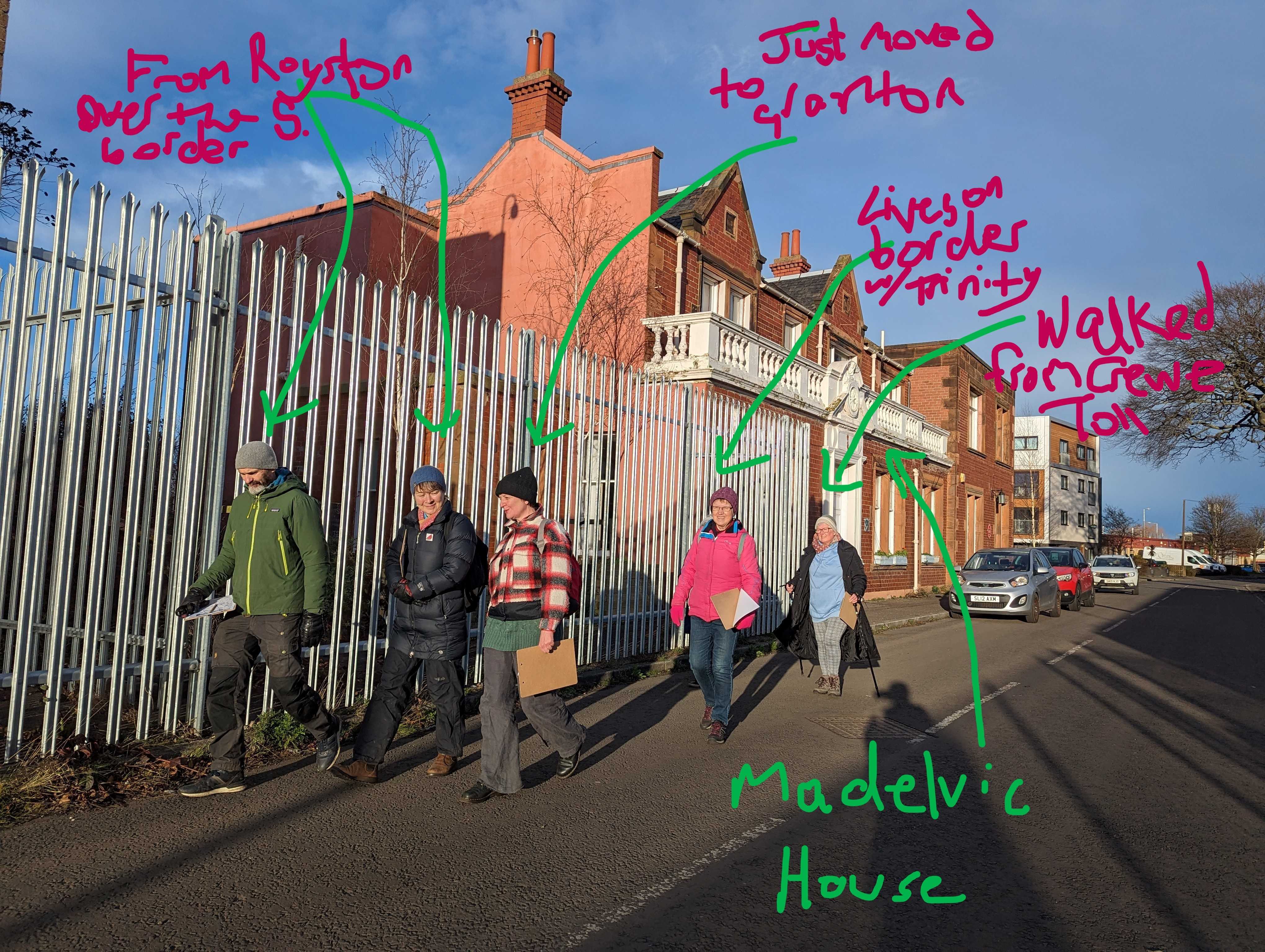
A community walk from the Granton:hub, Madelvic House w3w: wished.visit.silver
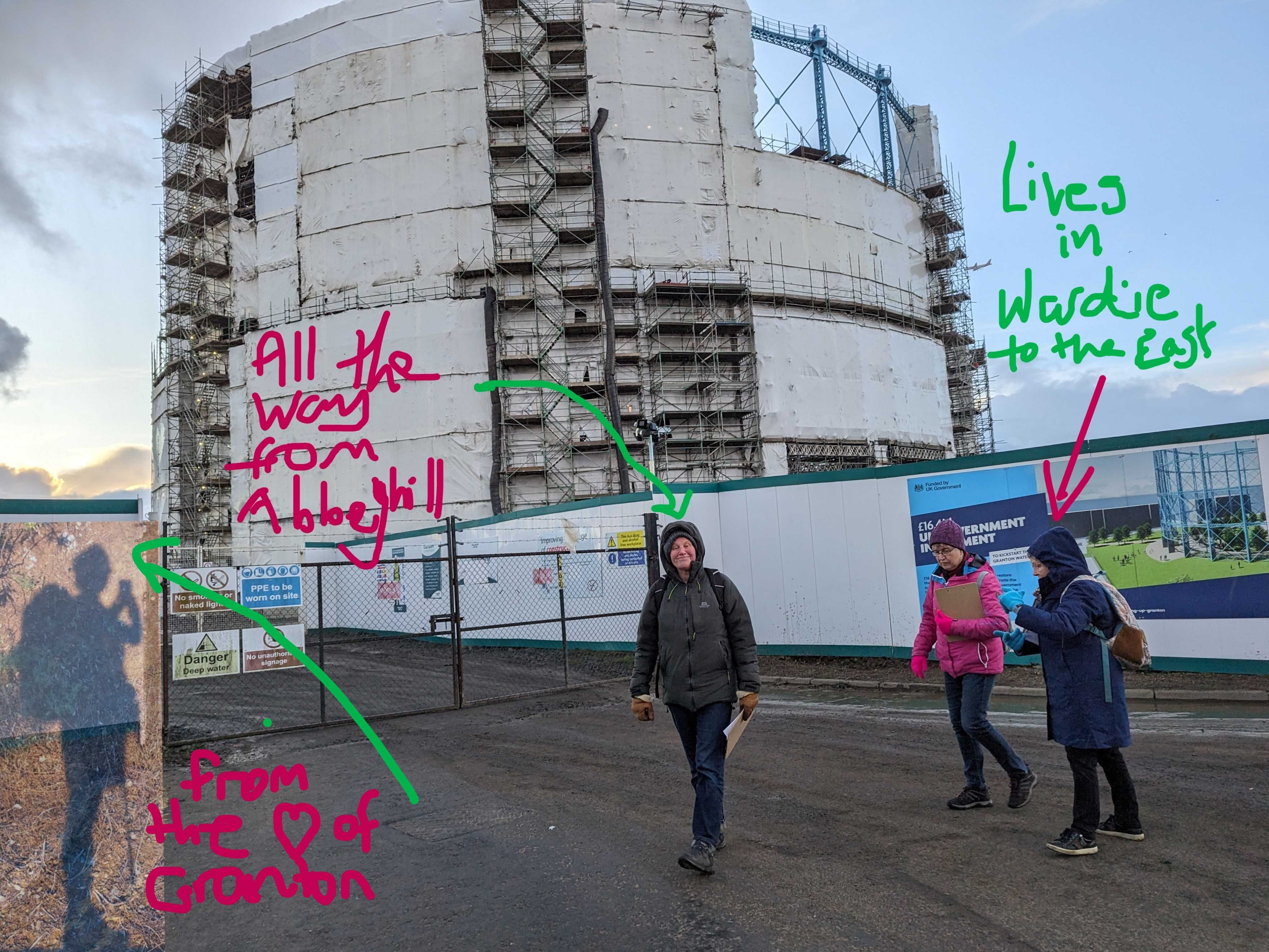
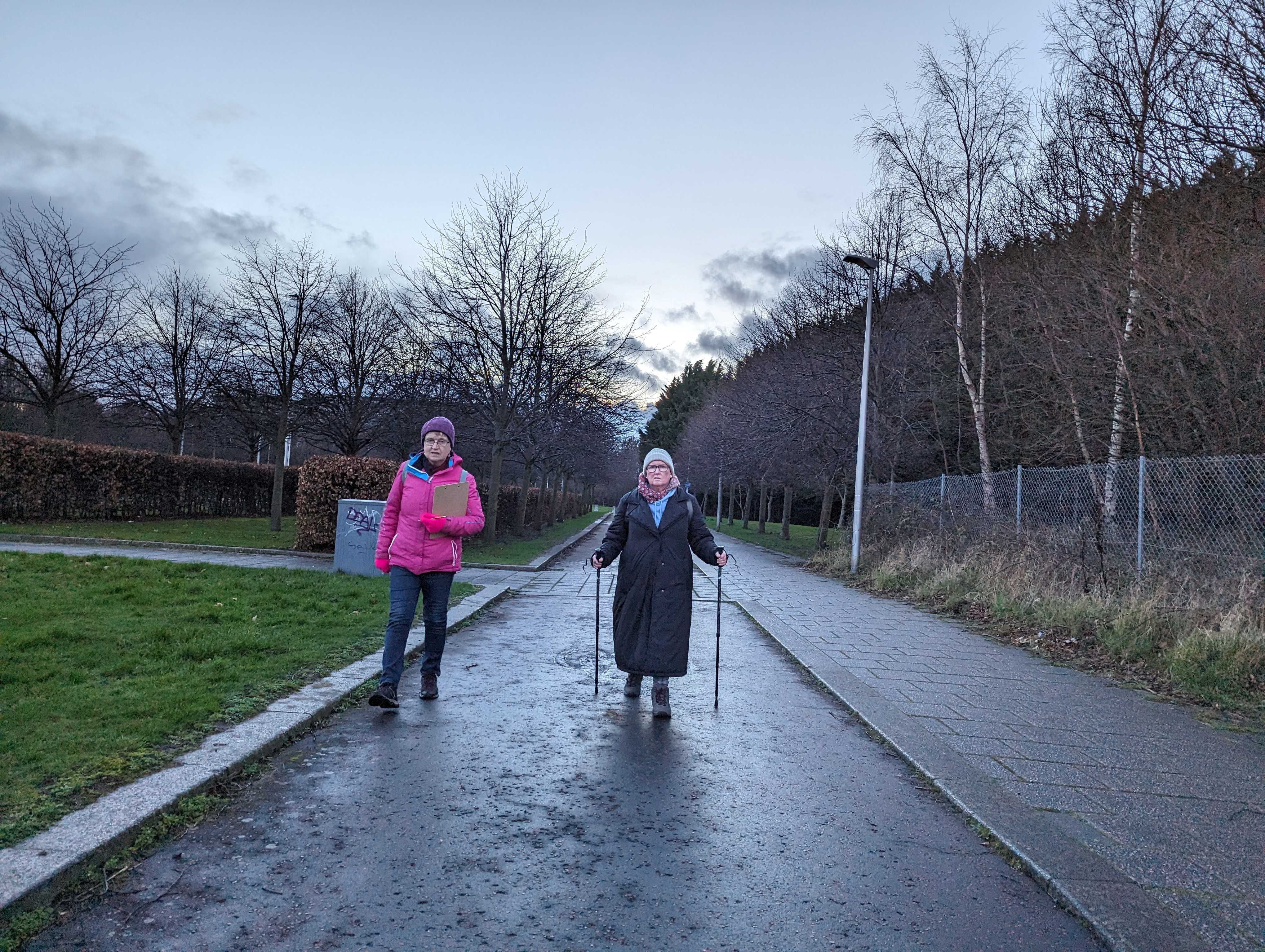
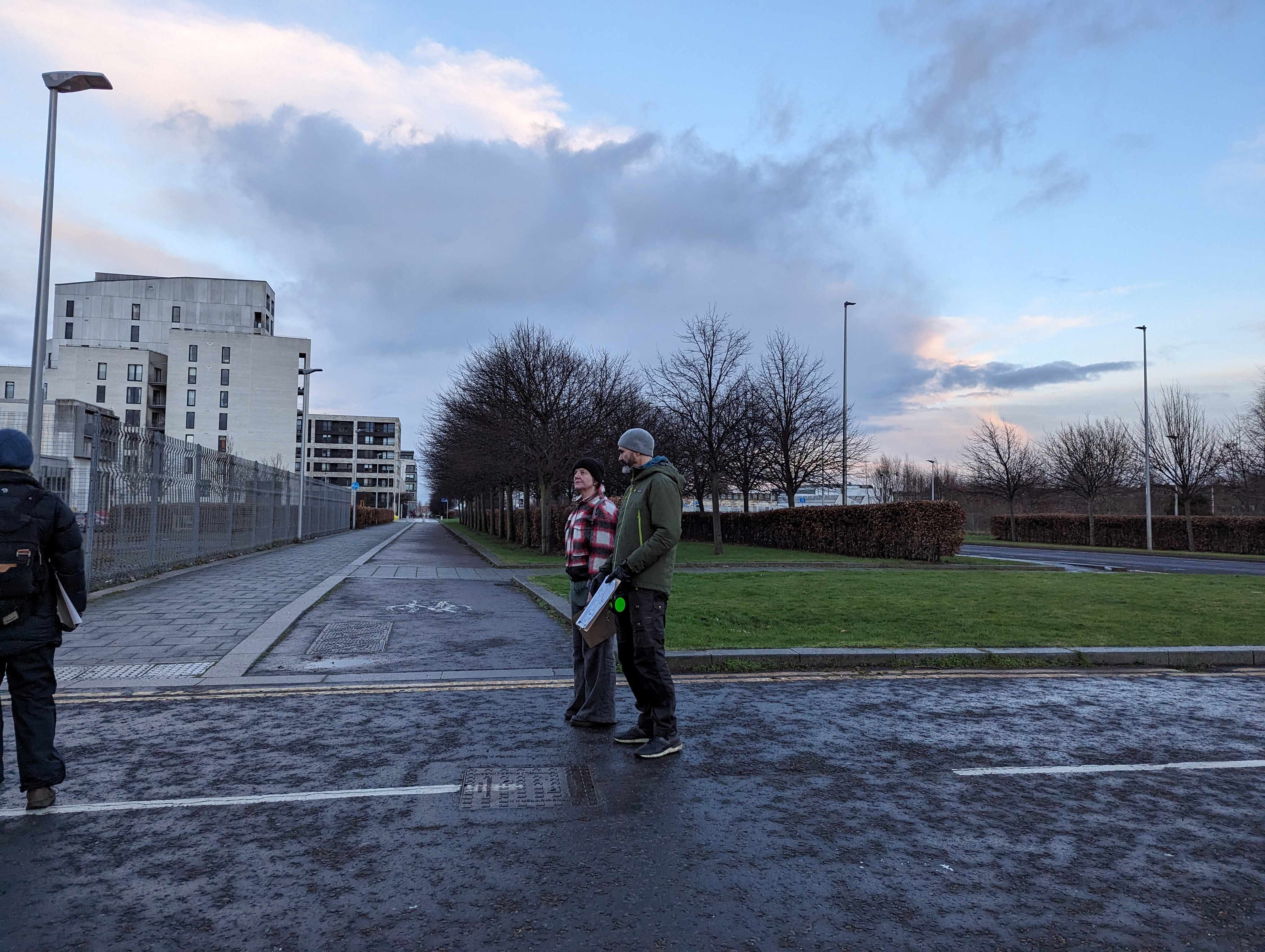
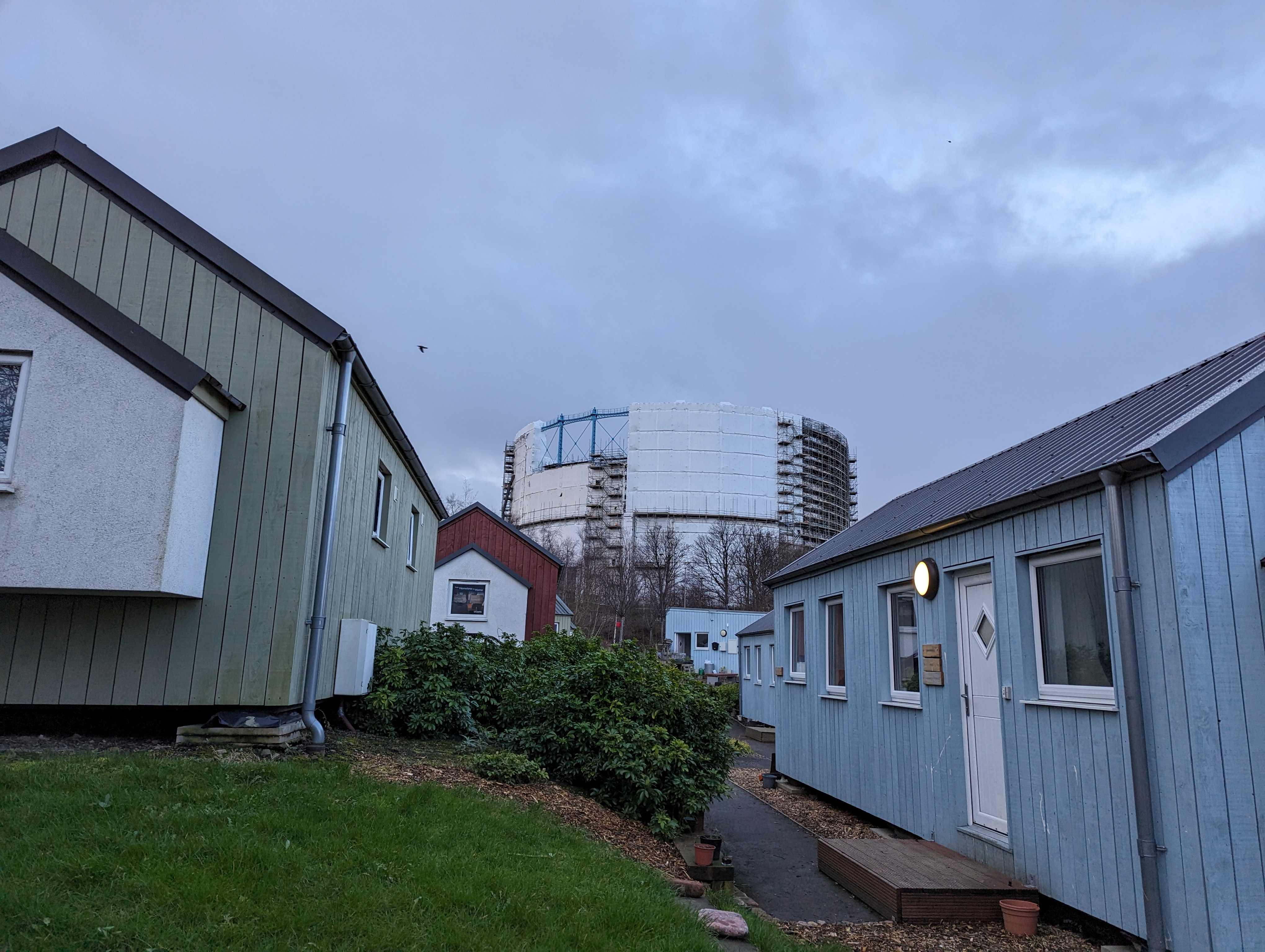
Captions for the images above: Left – The group, some from inside, some outside the Granton Boundary; Right – The group, checking out the wrapped-up Granton Gasholder, building site for new housing
At the edges of pavements, the walls of dilapidated buildings, the join between the land and the sea, and between homed and homeless, we wandered to mark the Festival of Terminalia on 23 February 2024.
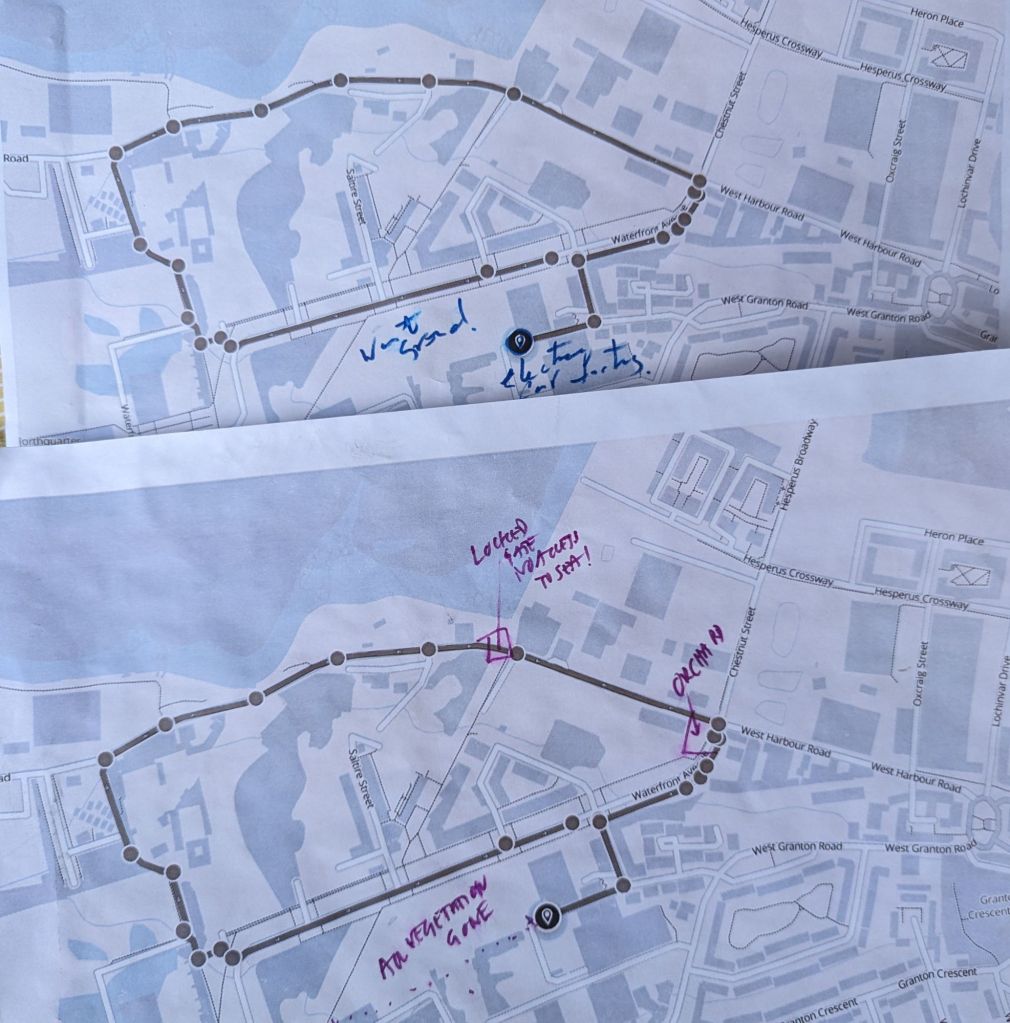
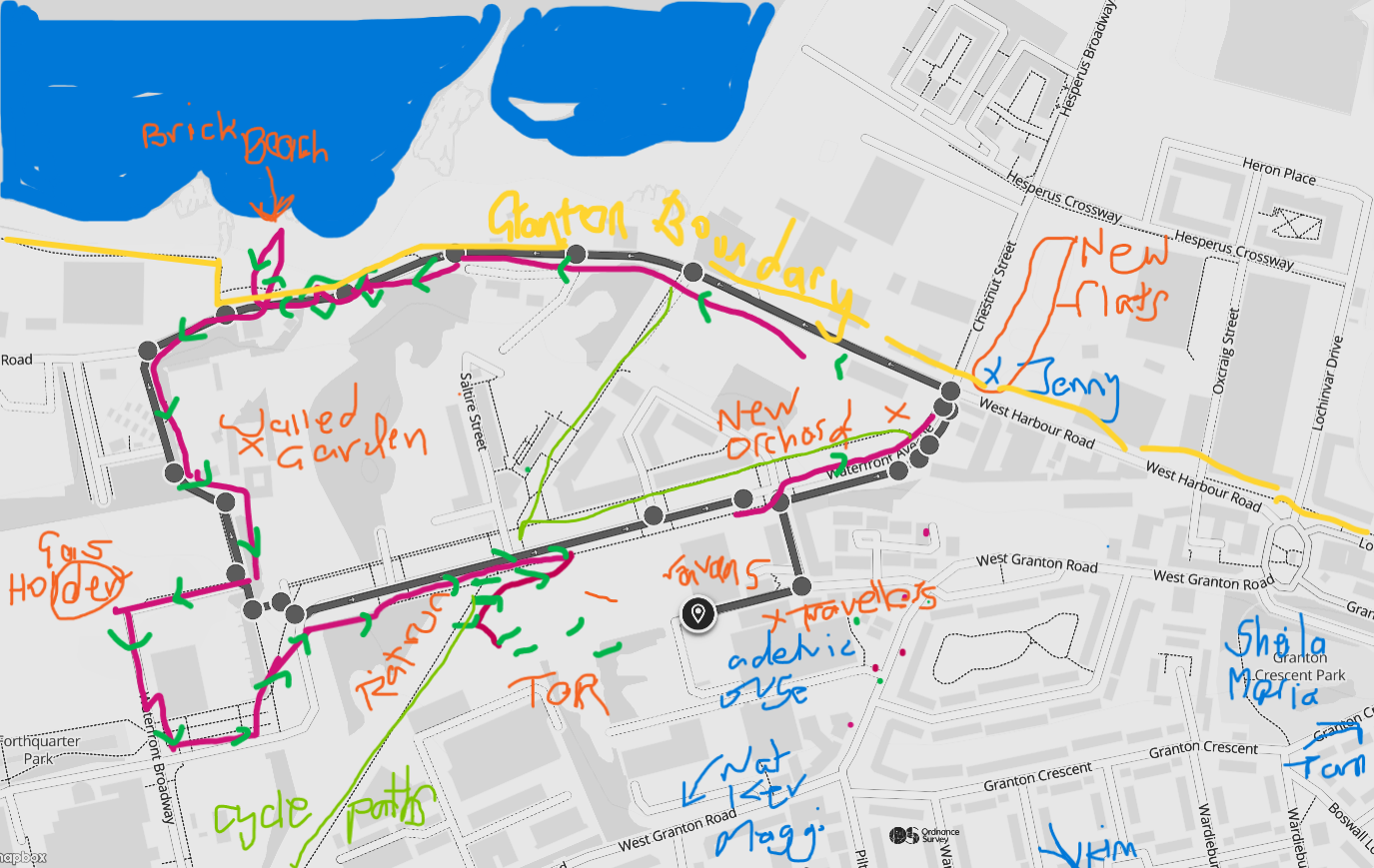
Maps annotated by group members
We walked a route familiar to some and unfamiliar to others, according to a path previously visited 4 months earlier in order to make comparisons. Mapping as we went, we strayed off that path occasionally, moved across the boundary several times when the sea or a plant drew us, and noted changes wrought in the natural and urban landscape over such a short time.
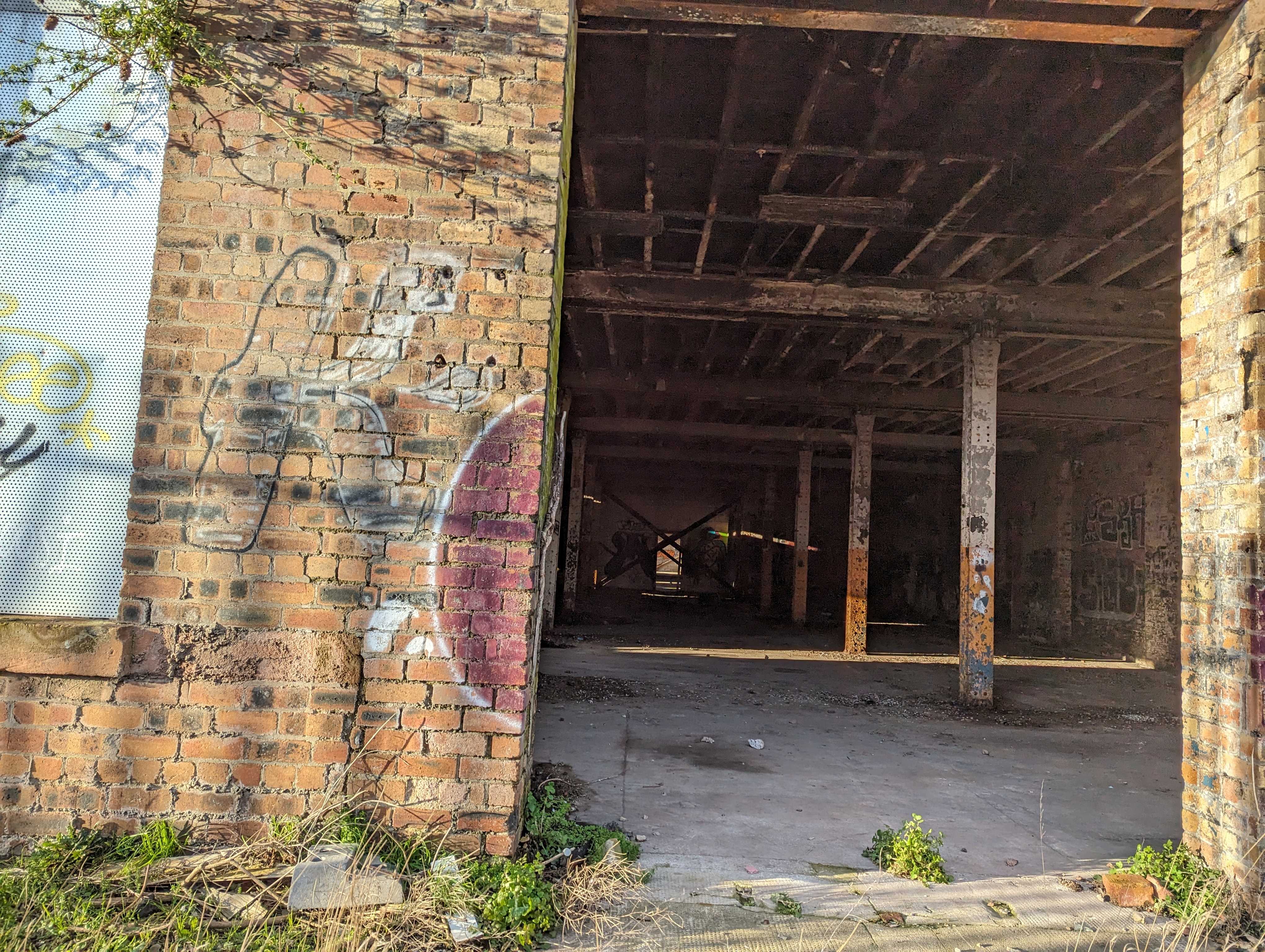
Captions for above photos: Left – Electric Car Factory. Planning permission has been gained for housing. Middle – Where Granton Harbour meets the Brick (Granton or Royston) Beach at the Western Breakwater. Right – Sheila and Margaret.
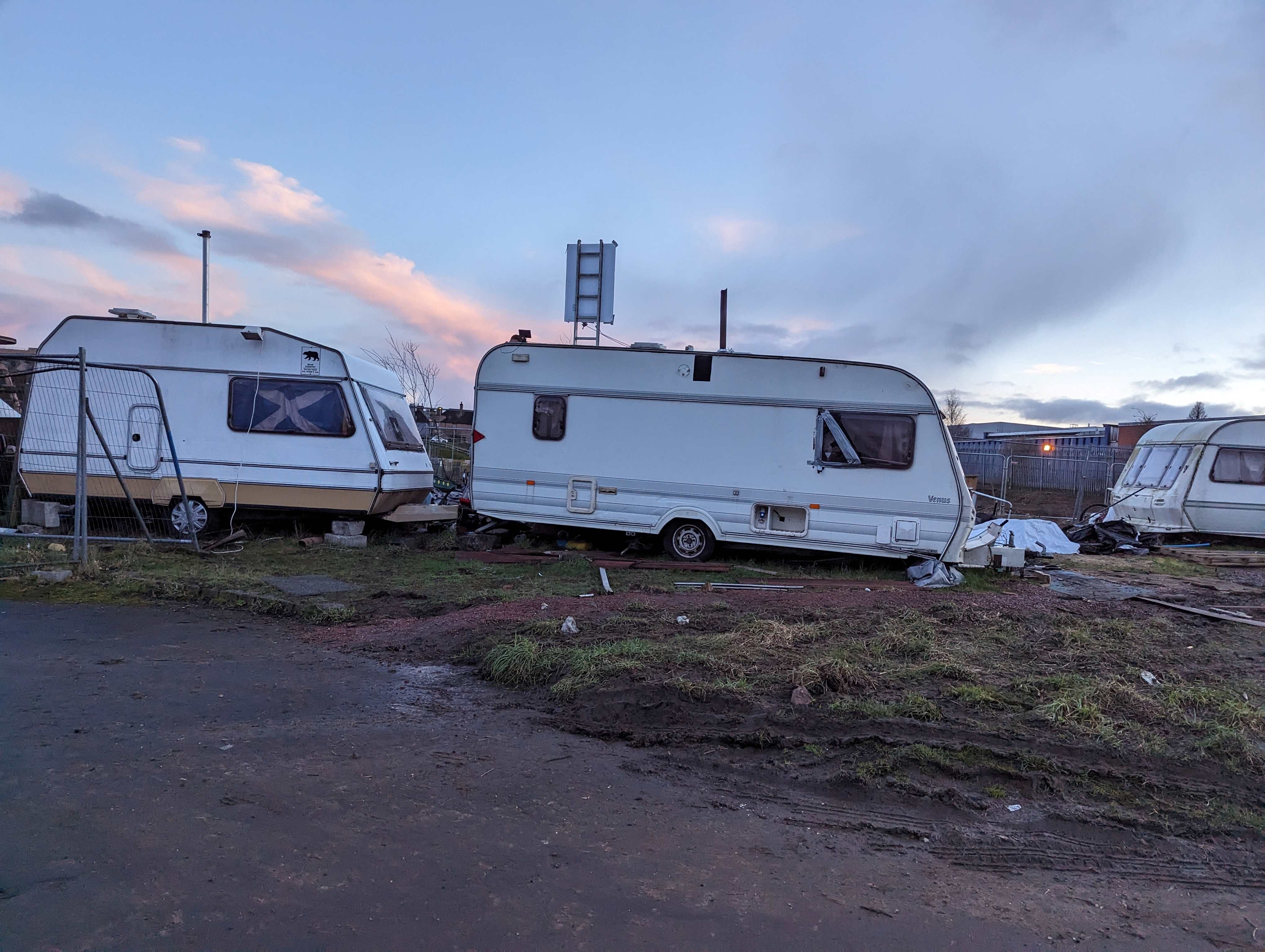
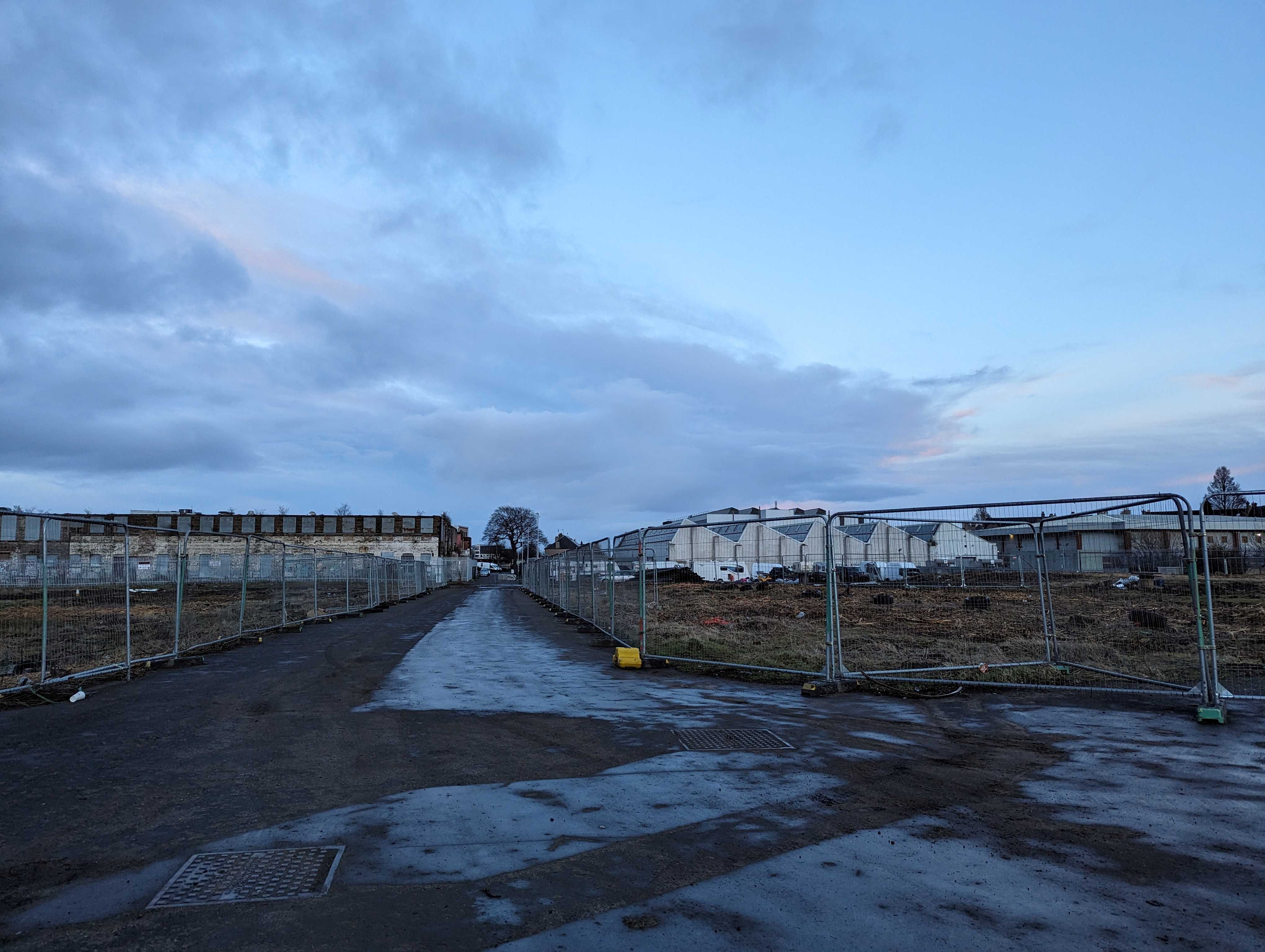
Leaving the Granton:hub / Madelvic House, we started off through the wasteland area behind, past the old Electric Car Factory which was, unusually, open. We passed the travellers’ community who were building a big fire of tyres and other rubbish; the caravans housing the community which has found its way here in 1s and 2s over the last 5 years (maybe), surrounded by dismembered trees; a couple of renegade trailers where men were working – one a local barber who was known to one of our party so we stopped for a chat – between fences newly erected and ground scraped clear of its soil.
Nat pointed out the copse of silver birch which have been cordoned off for keeping, the result of our extensive lobbying of the developers. Here, an art repository is planned by the National Galleries of Scotland, way down the line. It was also the site of our community orchard (at the Tor), once upon a time.
Captions for above photos: Wasteland area behind Madelvic House where people and more-than-humans live, soon to be developed into an Arts Centre
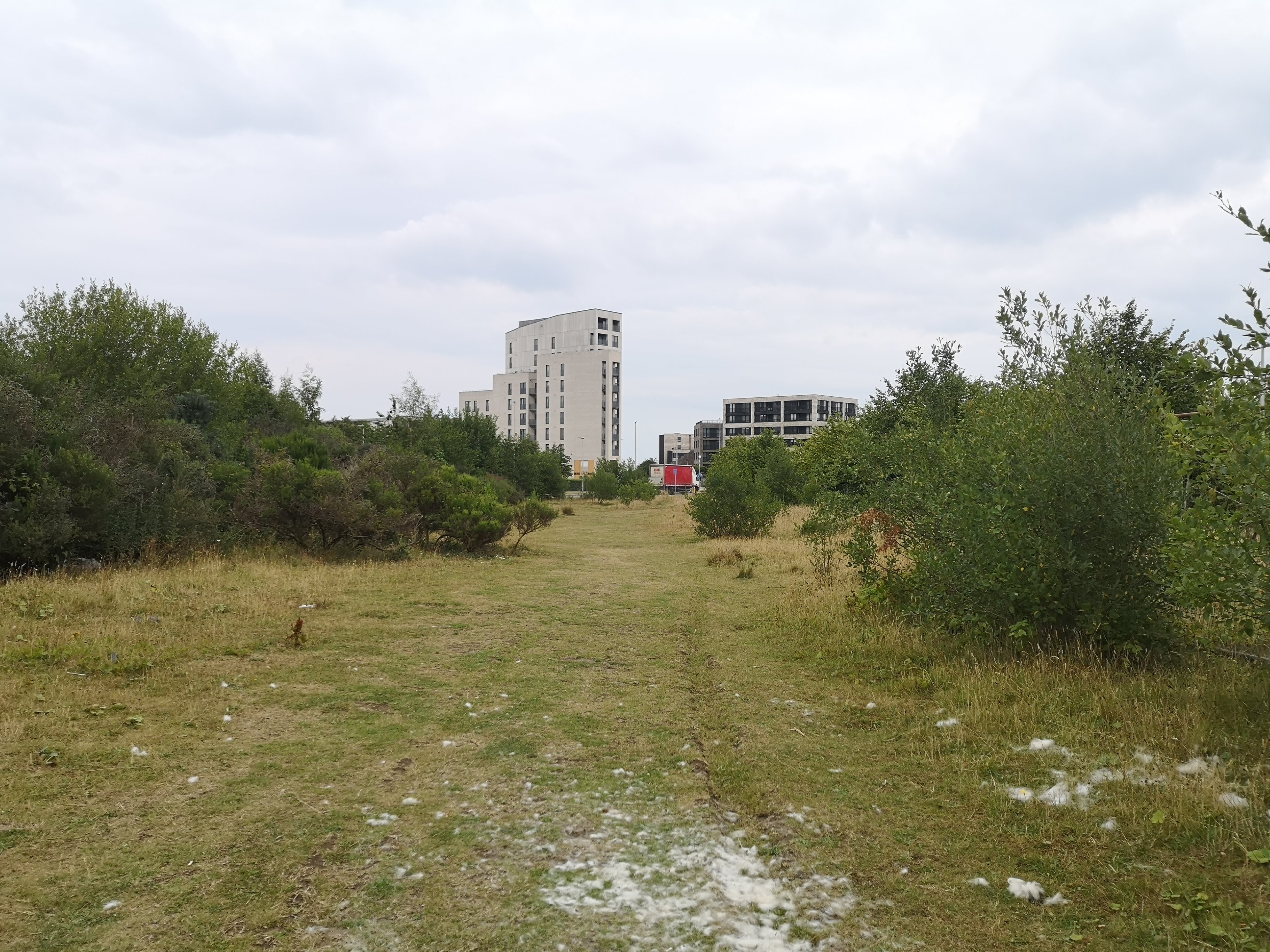
We skirted ‘The Rabbit Run’ closely bordered by towering new blocks and also threatened to be raised to the ground, and turned down towards the sea along Waterfront Avenue – created, named and planned to be this wide, so we are told, to accommodate the trams, though there is, thankfully, no sign of them as yet.
Waterfront AvenueRabbit Run
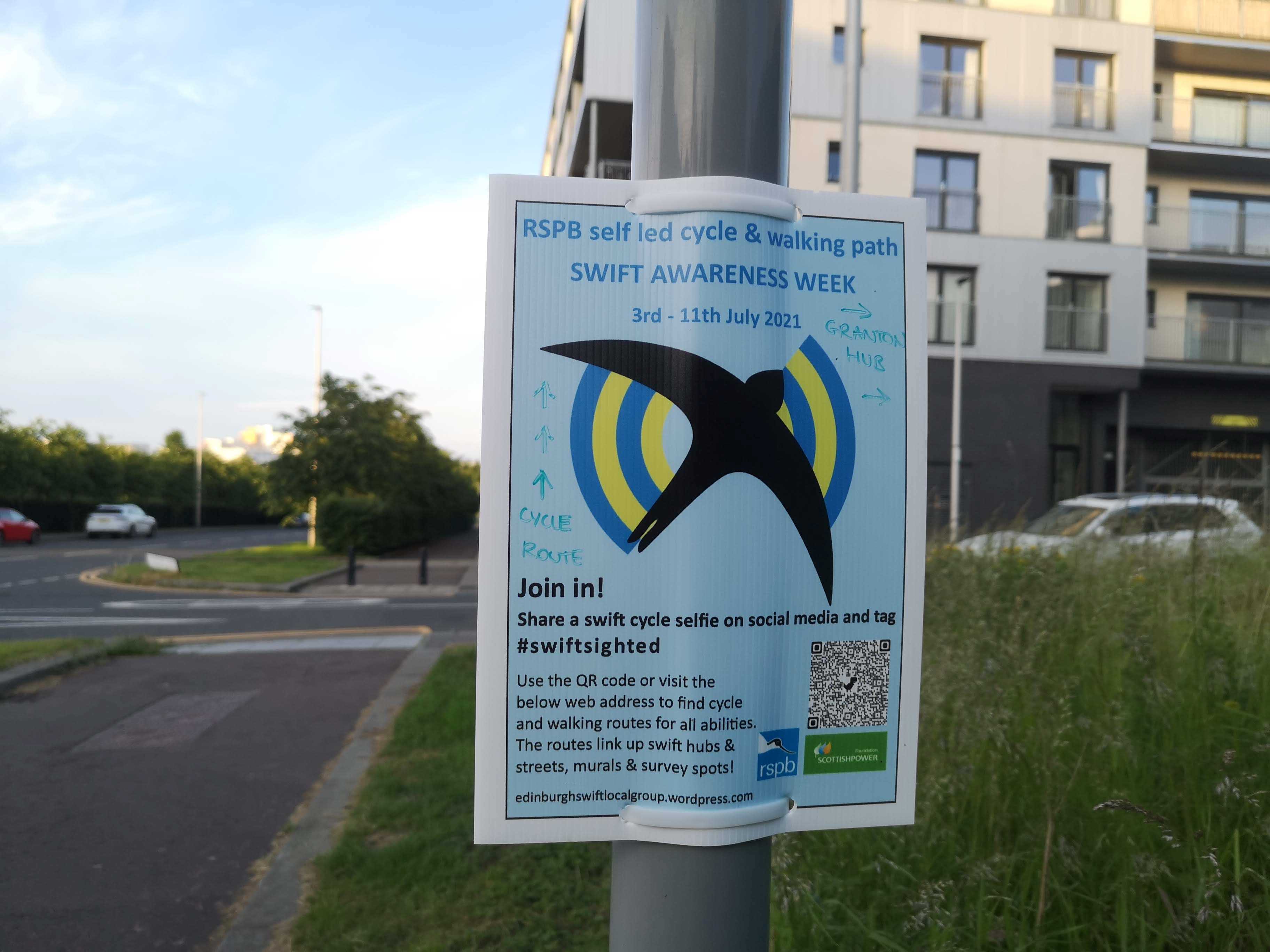
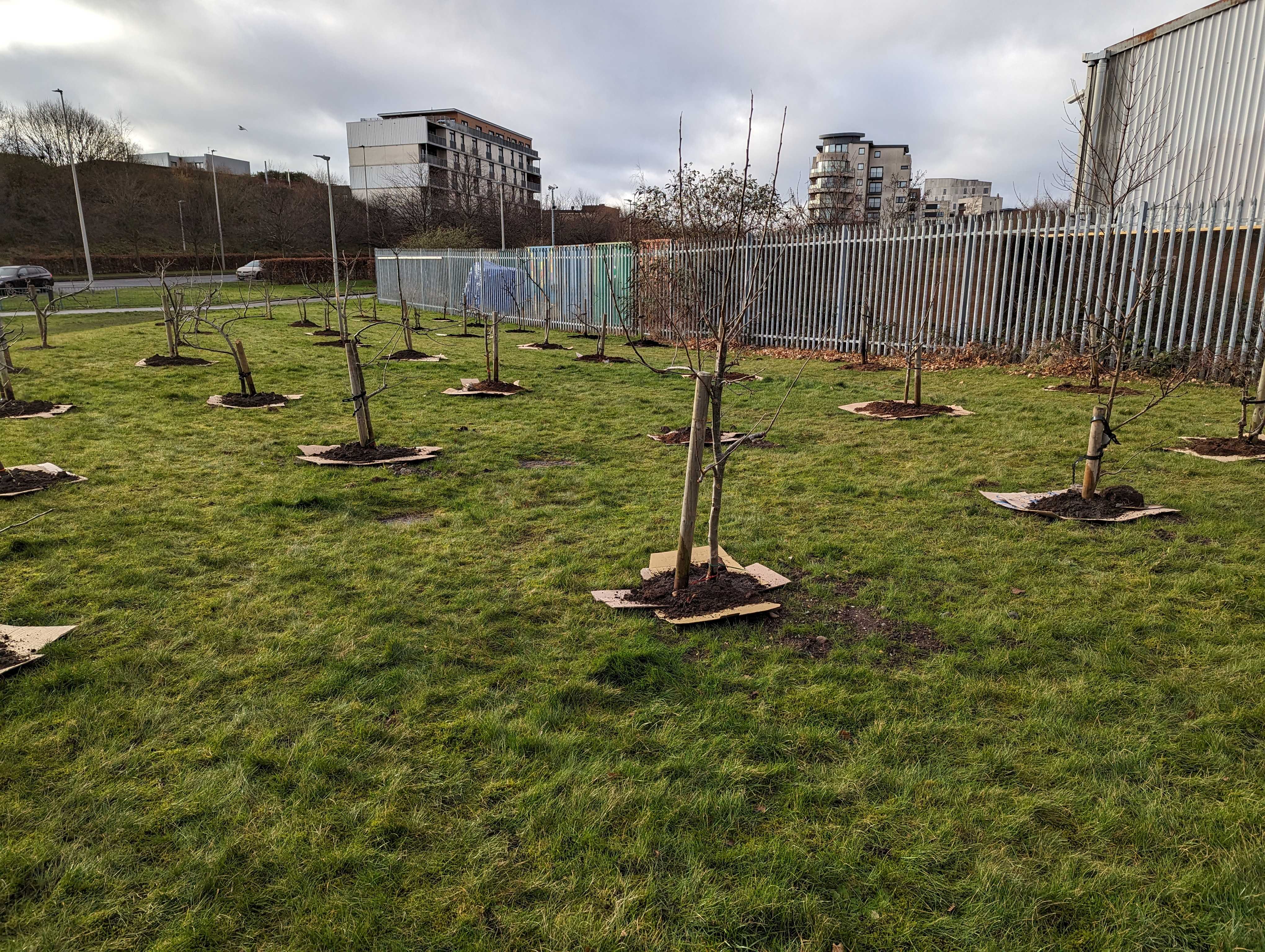
Stories were told as we hovered at the corner: of the swift boxes often erected on lamp posts next to the Swift business sign (coincidence); of Jenny’s tenacity – spending an officially homeless year visiting the housing association and getting to know them until she was allocated an apartment in the community ahead of us; and of the day we planted the orchard (from up the road) on the grassy bank by more newbies to the area, The Pianodrome.
“With the dog, we went to the rabbit run, behind that Beech Hedge; I know it will all dramatically change very soon.”
Nat
Captions for above photos: Left – Swift poster, Middle – Where Jenny lives now (before the block was built). Right – The new orchard at The Pianodrome
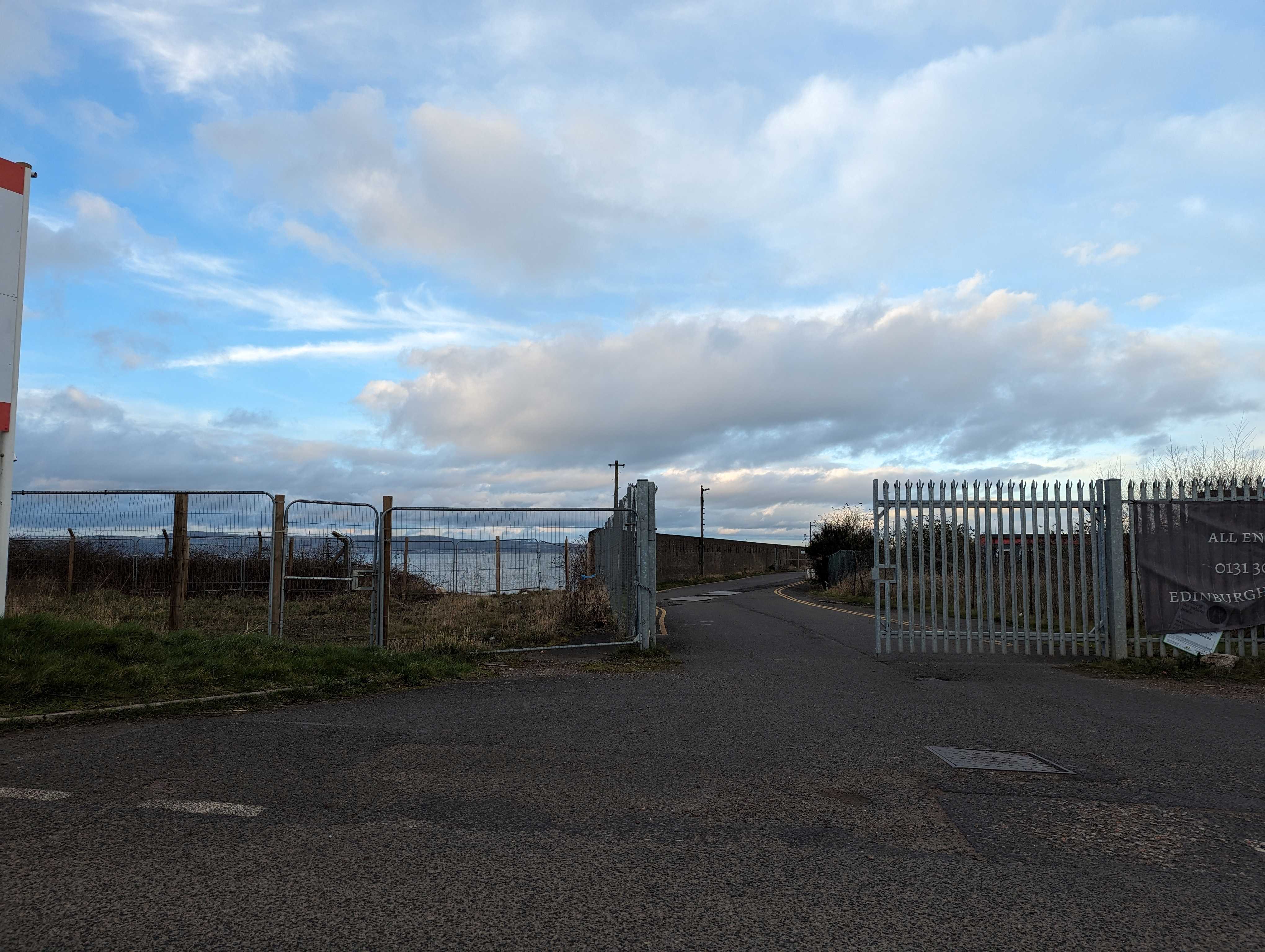
Now we were on the far northern boundary of both Edinburgh as a whole and Granton, whose territory we were beating the bounds of. Many of us bemoaned the lack of access to the Brick Beach, but then a desire path was spotted which turned out to be a thoroughfare. Jubilation!
“for a while I’ve not been able to get through (the wasteland between West Shore Rd and the sea / brick beach) That’s been irritating, having that little cut through blocked off. That used to be on my route so I could get a seat and watch the sea for a while, undisturbed. Tonight we were able to walk through for the first time in ages.”
Kev
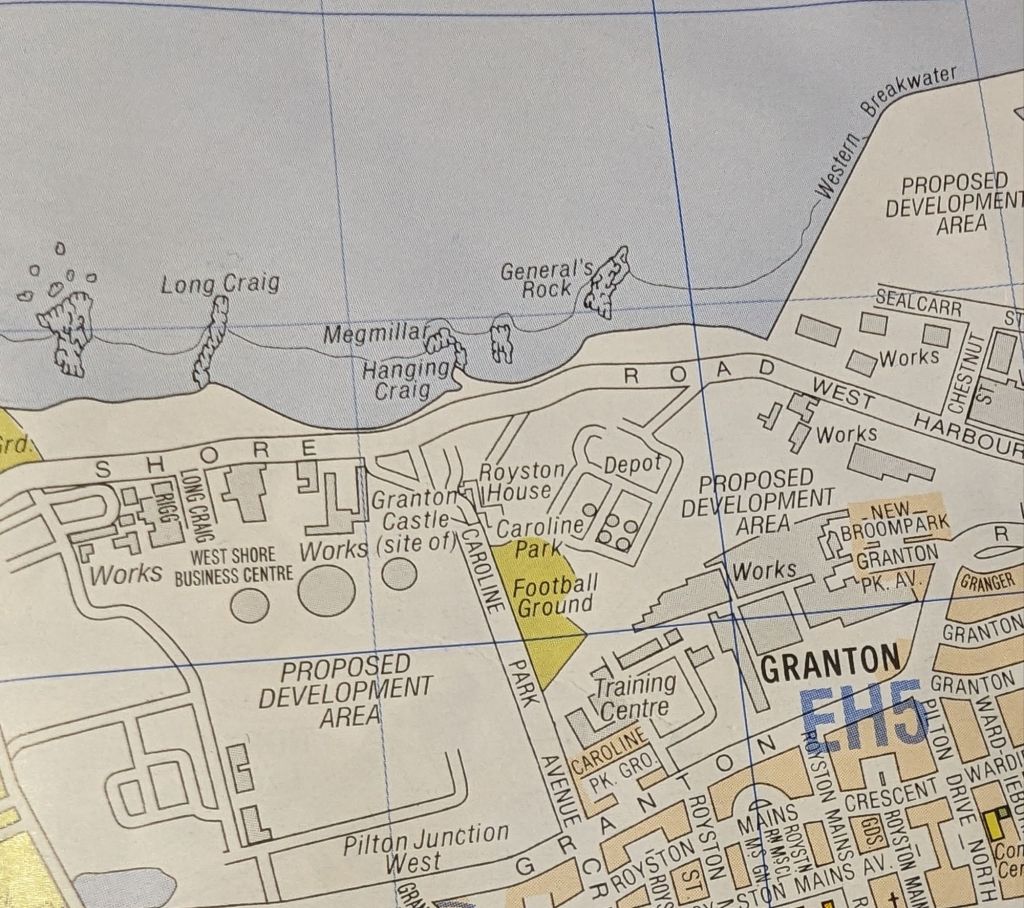
The day was at its evening cusp and it was darkling, so we continued along West Harbour Road which becomes West Shore Road, past the new-to-the-area Edinburgh Palette (what we hope will be new artist studios and home for a weekend Street festival), and turned left onto the Speirs Bruce Way (more stories of Antarctic adventures and explorers are linked to this place). We went hard by what’s left of Granton Castle where the Walled Garden is hidden (a citizen success story as it was saved from developers and now houses countless allotments, natural dye- and community soup-makers), with the Social Bite village opposite.
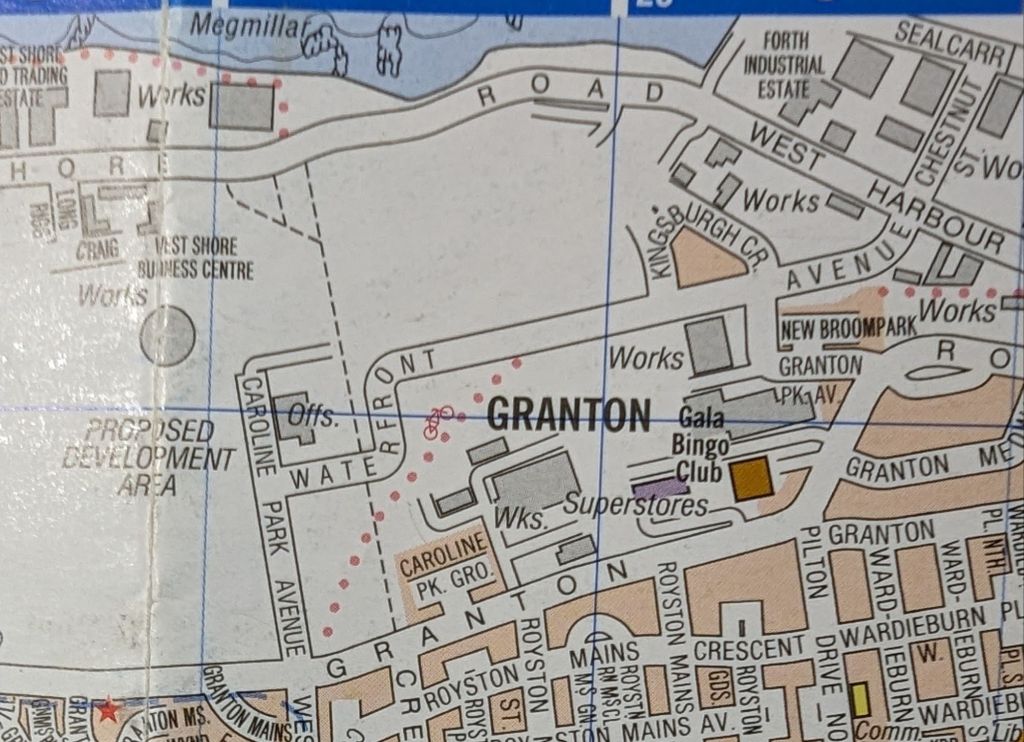
Captions for photos above: Two A-Z maps of Granton – 2004 on the left showing one gas holder, and 1999 on the right showing three as there used to be
I’m new to the area and walking is a way of feeling the local, recent history
Jenny
Uphill we traipsed, viewing the space for the new Granton Mural (end March 2024) and regaining the Gasholder. We stood in the rain to wonder why Caroline Park Avenue has become Waterfront Broadway, and returned to our starting point just as the fire engine arrived to douse the fire, now emitting acrid black smoke.
We’re from slightly outside the area. I’ve been down here a LOT walking the dogs so it’s very familiar, but it’s interesting to do it in a group because different people see different things. [Did you notice the changes?] Oh definitely.
Sheila
Toasting with a libation (warm apple juice), as is customary at this Festival, we swapped experiences, hopes and fears. Our discussion focused on the place where the inner landscape met the outer.
I used to like going there because of the nature around the gasworks. Because there was such a high fence and nobody could get in, it was undisturbed and there were wild orchids. To see it all demolished and a building site … it’s sad.
Maria
Along the bread line, the coast line, and the invisible lines between here and there, and us and other, we walked. It’s a time of great change in this area: trees taken down, blocks of flats going up, buildings repurposed and roads renamed (no-one knows why, though we suspect so-called ‘gentrification’).
The fire engine arrives just as we return to Madelvic House












 Walking without a donkey