Travels in Spain

I have just discovered that deleting photos from my media library at WordPress, the people who host these travel blogs, has meant that those deleted photos do not now appear in past blogs. The recent ones are fine.
I had no idea of this and am hoping that WordPress will contact me shortly to offer a solution. In the meantime, you will find blogs (eg about the Camino Frances in 2016) with text but no photos and I apologise for this.
Tamsin 24.7.17

This is a general introduction to my Spanish walking.

‘I travel not to go anywhere, but to go. I travel for travel’s sake. The great affair is to move.” R . L. Stevenson, Travels with a Donkey in the Cevennes

Time spent in Spain: 4.10.16 – 17.12.16; 12.5.17 – 24.5.17.

Some of these blogs were written ‘on the spot’, some soon after the event, and others when I returned to Scotland. What a joy to compile them!

At the 2016 Edinburgh International Book Festival, I heard Jean-Christophe Rufin explain (and these are my own words from the memory of that event), that all the walkers he saw seemed to be scribbling or typing a blog at every stop of the way, but that he decided not to do that and to rely instead on his own memory afterwards. But I am a 53 year old woman who has had 2 kids and has a head which is already very full of experiences, so I didn’t want to rely on mine!
received_10157991429210640.jpeg
I began to walk the Camino Frances in Pamplona, Spain.

Writing has been a good way to assimilate and integrate my experiences, to make sense of where I have travelled, what I was thinking, and the conversations I had with people. It enabled me to tell my family, friends and colleagues what I was up to (similar to one of those news letters you sometimes receive in Xmas cards!), and, I now realise, to keep the spirit of my wonderful adventures alive.
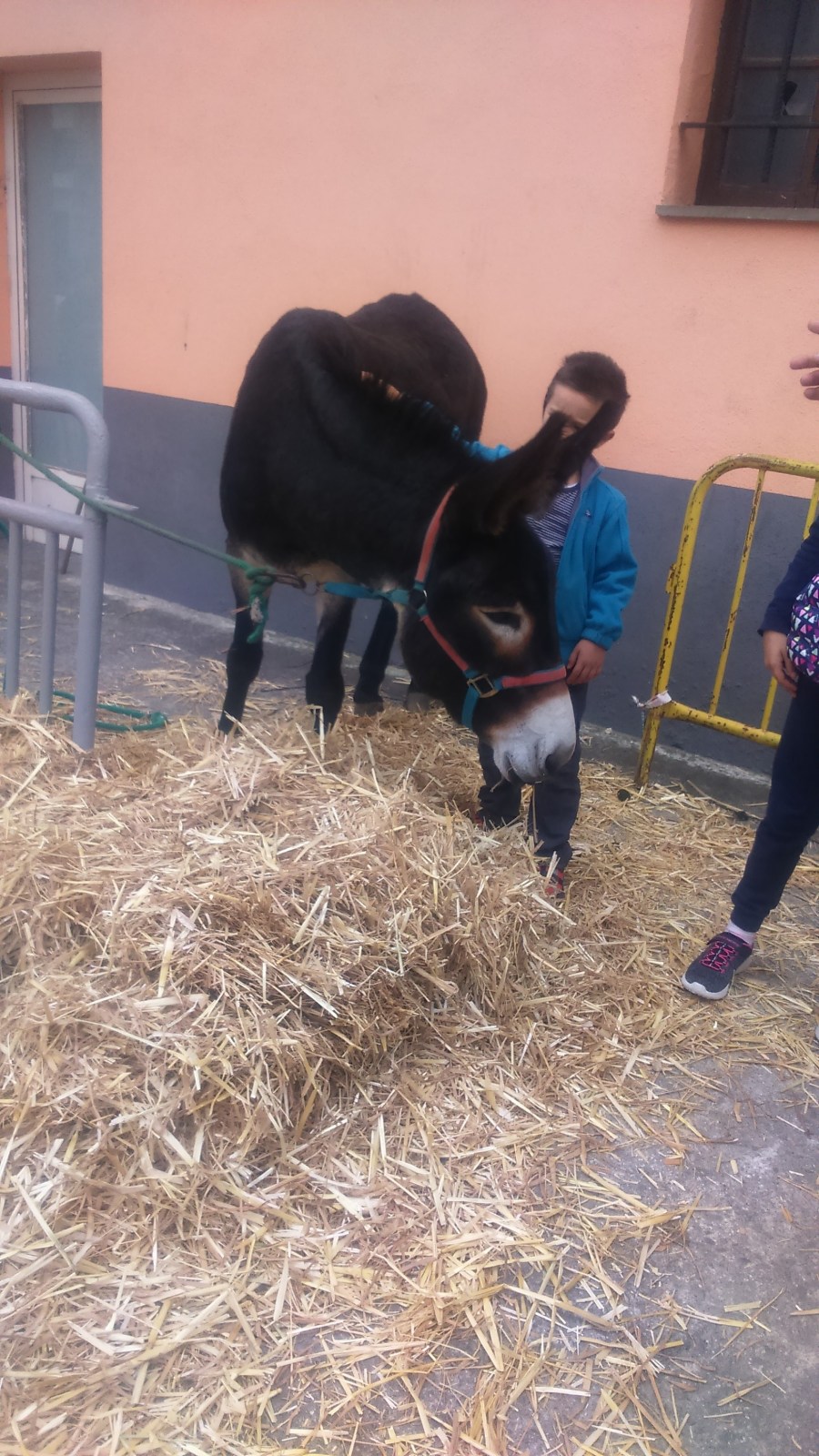
spain-autumn-2016-phone-886
Donkey in a temporary street stall, Feria, a Basque county fair.

Origin of the blog name: There is a book by Scottish writer, Robert Louis Stevenson “Travels with a Donkey in the Cévennes”, and there is a French Camino  named after him which has a personal, family connection for me. Just as it is possible for campers to stay in a site where a tent is provided, ready-erected with a camp-bed in it; so there are many who take treks and have a mule or a person to carry their bags.  I walked around Spain with a rucksack on my back (containing what I needed for a 3-month stay, summer – winter), rather than having a donkey carry it for me.

“Whenever I was asked: ‘Why did you go to Santiago?’ I had a hard time answering. How could I explain to those who had not done it that the way has the effect – if not the virtue – to make you forget all reasons that led you to become involved in it in the first place.” Jean-Christophe Rufin, The Santiago Pilgrimage

So I won’t explain here why I decided to do this, although there is some explanation in later blogs.

But I will say that there were two distinct parts to my journey: one where I visited fellow Shiatsu (acupressure massage) and complementary therapy practitioners, giving sessions in return for bed and board. The other where I walked the Camino Frances and part of the Via de la Plata (‘o contrario’, backwards), staying in different hostels and hotels every night.
received_10157991437945640.jpeg
Burgos, a major town along the Camino Frances, Spain.

The former came out of finding a way to stay in Spain without spending too much money. The latter was inspired by friends Phyllis and Liz, by books, programmes I heard on the radio, and the film, ‘The Way’. It turns out that walking the Camino suits someone like me, a normally busy person, active, and perhaps tending towards being workaholic or at least feeling full of responsibilities. I trained myself years ago to sit and meditate, but it could be that walking is more appropriate to my character.

“that fine intoxication that comes from much motion in the open air, that begins in a sort of dazzle and sluggishness in the brain, and ends in a peace that passes comprehension.” R.L. Stevenson, taken from various blogs (see below in English & French).

Camino: A walk, or track, often trodden for religious and spiritual reasons since the Middle Ages, by ‘peregrinos’ (Spanish for pilgrim). The best known is The Way of St James of Compostelle, or Camino Frances. All paths are signposted by the coquille Saint Jaques shell which walkers also carry to symbolise their journey. ‘The Camino de Santiago comprises a lattice of European pilgrimage itineraries which converge at Santiago de Compostela in north-west Spain.’ (Michael Murray, for ref. see below). They can begin in Jerusalem, Rome, and Paris, famously at Sean-Jean-Pied-de-Port in France; and are travelled across Spain, Portugal, France, England and elsewhere in Europe.
spain-autumn-2016-phone-2732
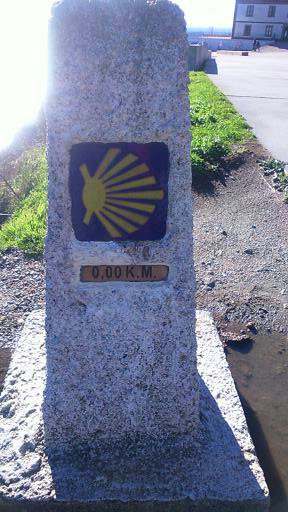
The final way marker of the Camino Frances, Finnisterre, Spain.

The shell sign alongside the number of km still to travel. This one indicates I have arrived in Santiago de Compostella, November 23rd 2016 after walking from Pamplona.

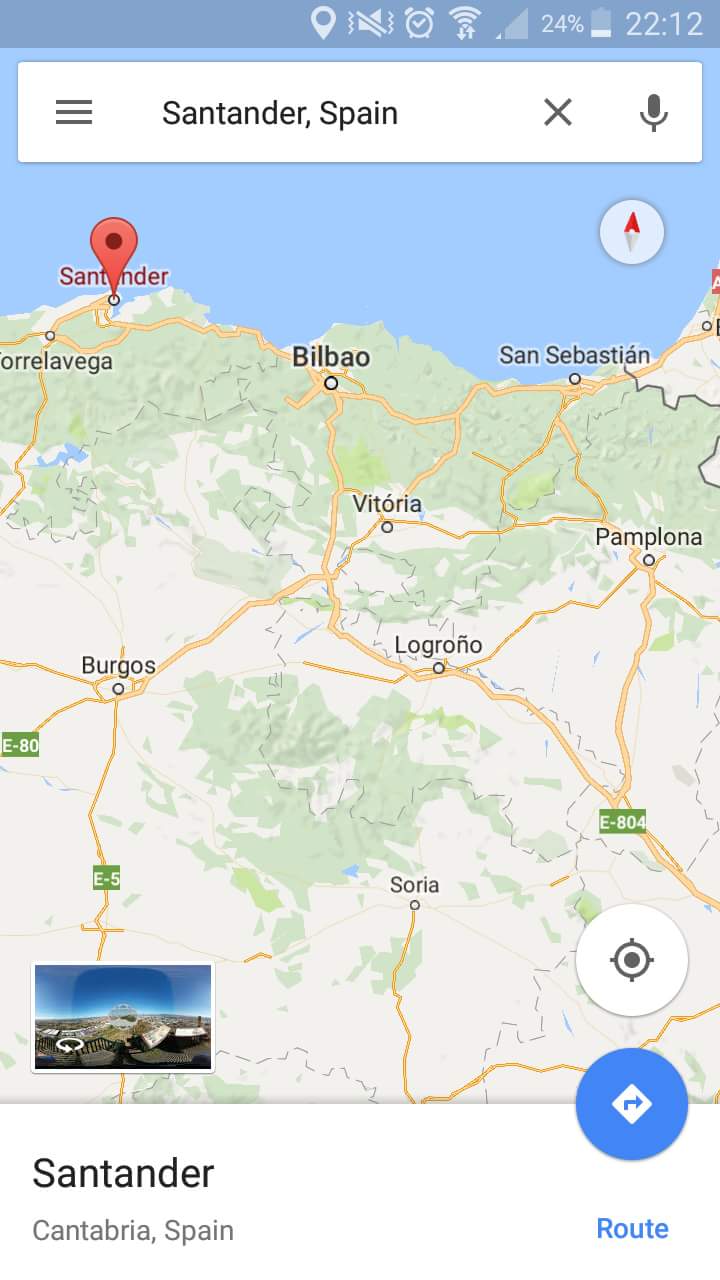
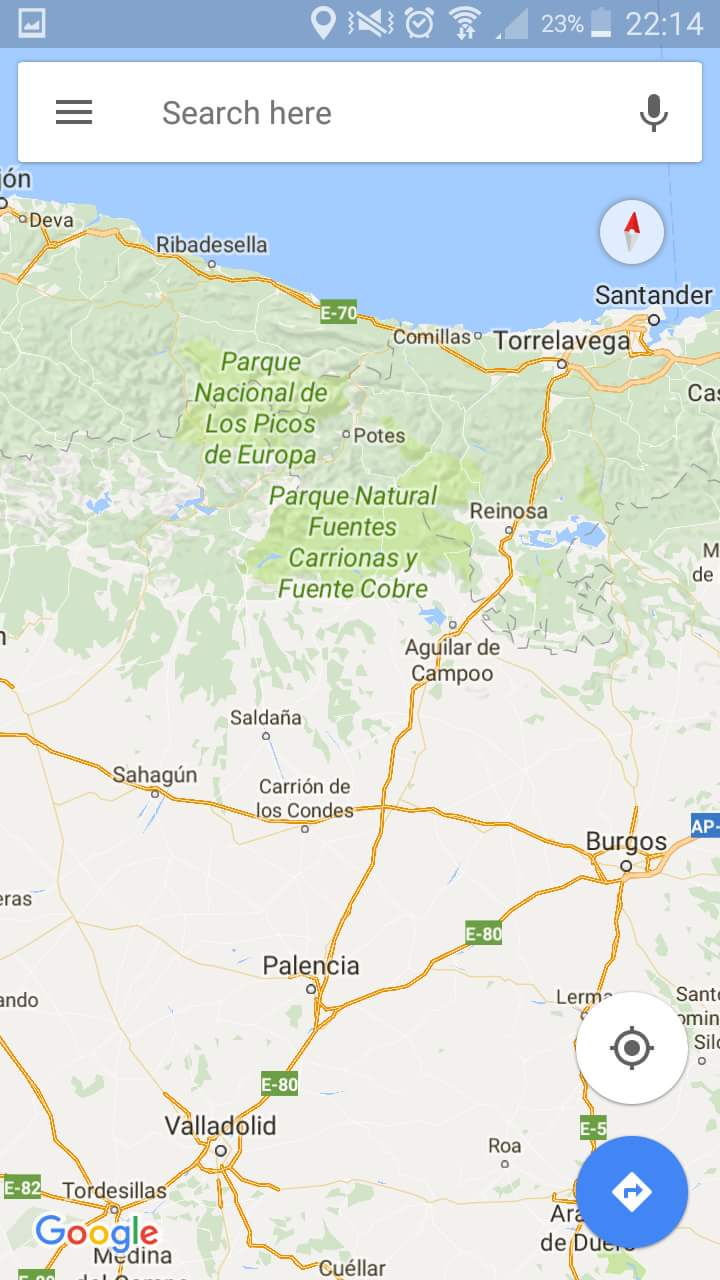
This is where I went, in the order I visited: October – Downton (New Forest, Hampshire, England), Santander (by boat from Portsmouth), Salinas, Aviles, Oviedo, Bilbao, Egileor, Vitoria Gastiez, Feria, San Sebastian, Pamplona. Camino Frances 1 (Urtega (by bus from Pamplona) to Najera). Cortiguera, Aranjuez (via Madrid). Camino Frances 2 (San Juan de Ortega to Carrion). November – Madrid. Camino Frances 3 (Leon to Santiago de Compostella), Finnisterre, Santiago.
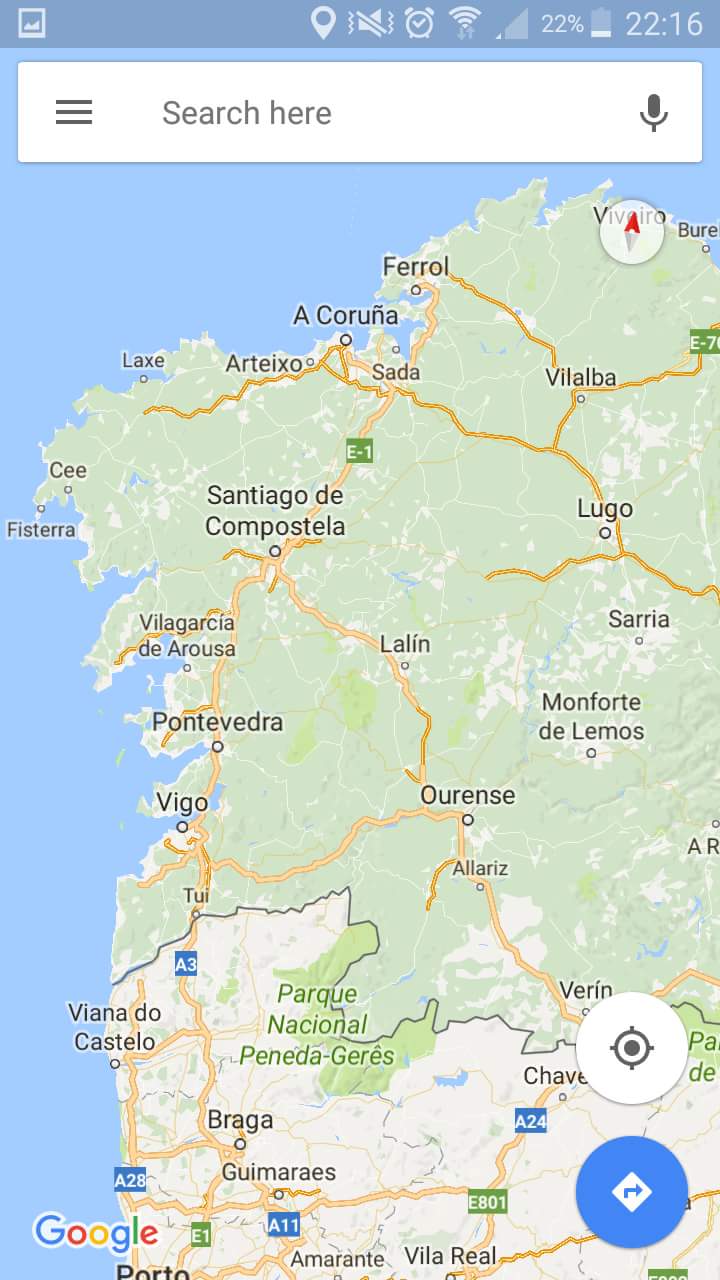
received_10157991446825640.jpeg
Map showing Santiago de Compostella in north western Spain, the home of the Tomb of St James, final destination of pilgrims from all over the world.

December – Camino Via de la Plata (Santiago to Vilar de Bario). Xinzon, Ourense, Las Matas (via Madrid), Valencia (via Madrid), Olocau and Sierra Calderona, Barcelona, Edinburgh (by aeroplane).

I keep being asked whether I suffered from the walking, and I understand the question because I, too, was very worried about this, and allowed it to put me off starting. I did have a week or so of blisters at the start, but I had researched what to take with me before going, and had plasters, cream and a sewing kit with me (yes, we sew a thread through the part with the fluid and let it drain out over time to stop it getting infected!). The other pilgrims were really helpful and showed me how to look after my feet, so I didn’t have to stop, and my skin hardened up soon enough.
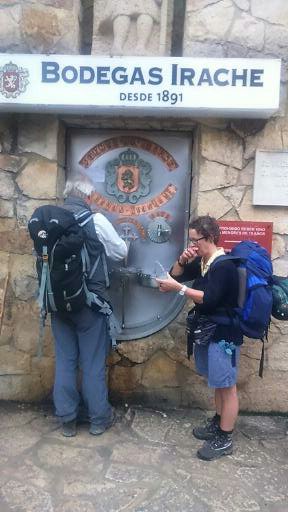
spain-autumn-2016-phone-3179
Early on the Camino Frances, Spain.

My main concern had been my back and the load. I carried approximately 18kg (which was more than the recommended 5th of your body weight) and although it felt very heavy after 32km, there was no pain. All that yoga before I left, and my daily ‘Salutations to the Sun’ helped. I did have to pay to get it home on the aeroplane at the end, which was a nuisance and might have been avoided. Next time I will take a new-style, light-weight sleeping bag and towel to lighten my pack.

I trained as a professional dancer in my teens and early twenties, and am therefore used to daily class, working through the pain and stiffness of the night and previous day’s exertions. This probably helped me to deal with the numerous small physical difficulties which arose when I walked, especially at the start of the day. I used my Shiatsu and other training to identify the source, relax into the areas I was holding tension, and, lo! they disappeared as quickly as they came.

There were many other people who suffered and some who had to give up. I helped with Shiatsu where I could: feet, hands, ankles, backs etc, in the evenings at the hostels. It was good to meet travellers I had massaged later along the way, and particularly in Santiago on the final day to know they had been able to complete.
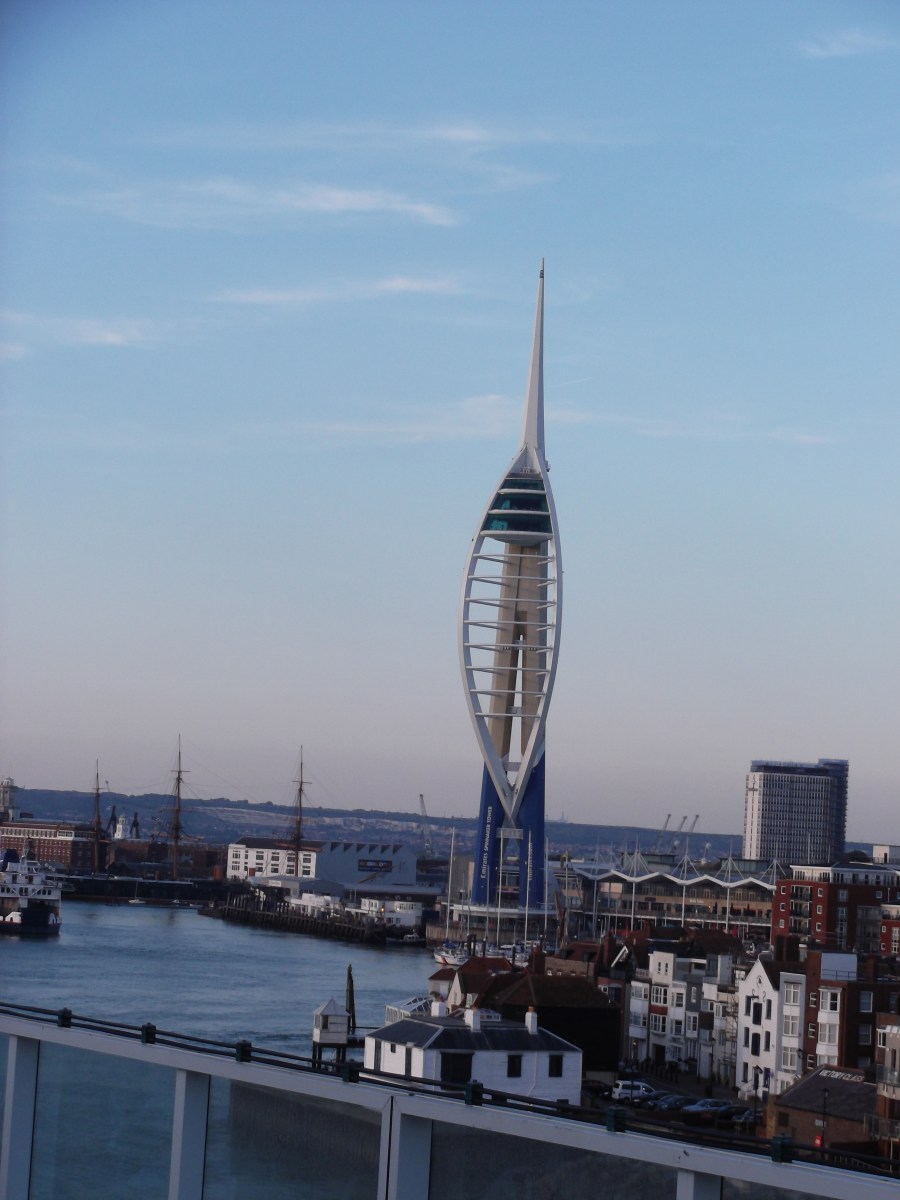
spain-2016-001
Leaving Portsmouth, by sea, October 2016.

Kilometres walked: 700+ (Caminos), not including Sierra Calderona, Egileor, Aviles-Salinas, walking friends’ dogs, walking to school near Valencia, all the cities…
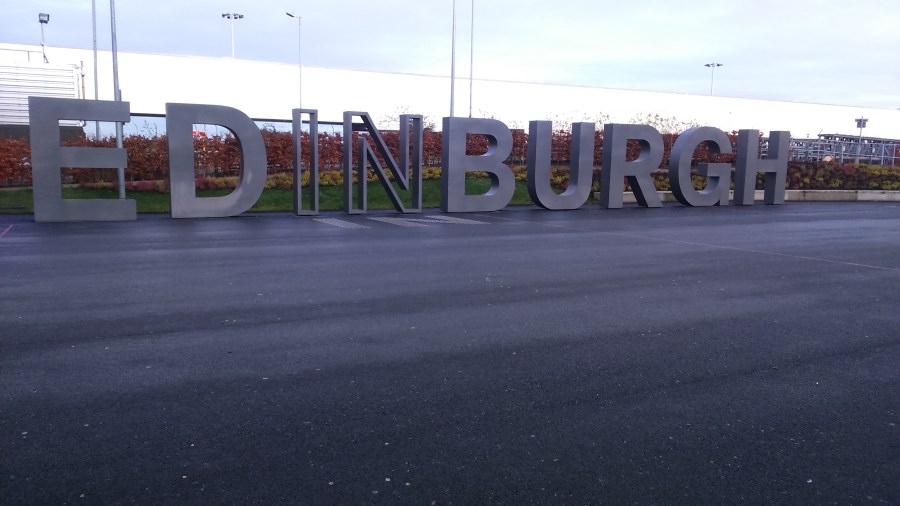
dsc_0030_10.jpg
Home by aeroplane, December 2016.

Walking without a donkey – Travels in Spain. Starting with blog 1 in England

The Stevenson Camino blogs I have enjoyed:

http://stevenson.canalblog.com/

http://walkinginfrance.info/short-walks/r-l-stevenson-trail/

Travel stories by Teri White Carns https://roadtripteri.com/2012/10/16/first-day-of-walking-pamplona-to-urtega/

M. Murray’s research into Caminos: https://www.qub.ac.uk/research-centres/TheInstituteofSpatialandEnvironmentalPlanning/Impact/WorkingPapers/FileStore/Filetoupload,432512,en.pdf

https://www.caminodesantiago.me/

Fantastic book: A Philosophy of Walking, Frederic Gros
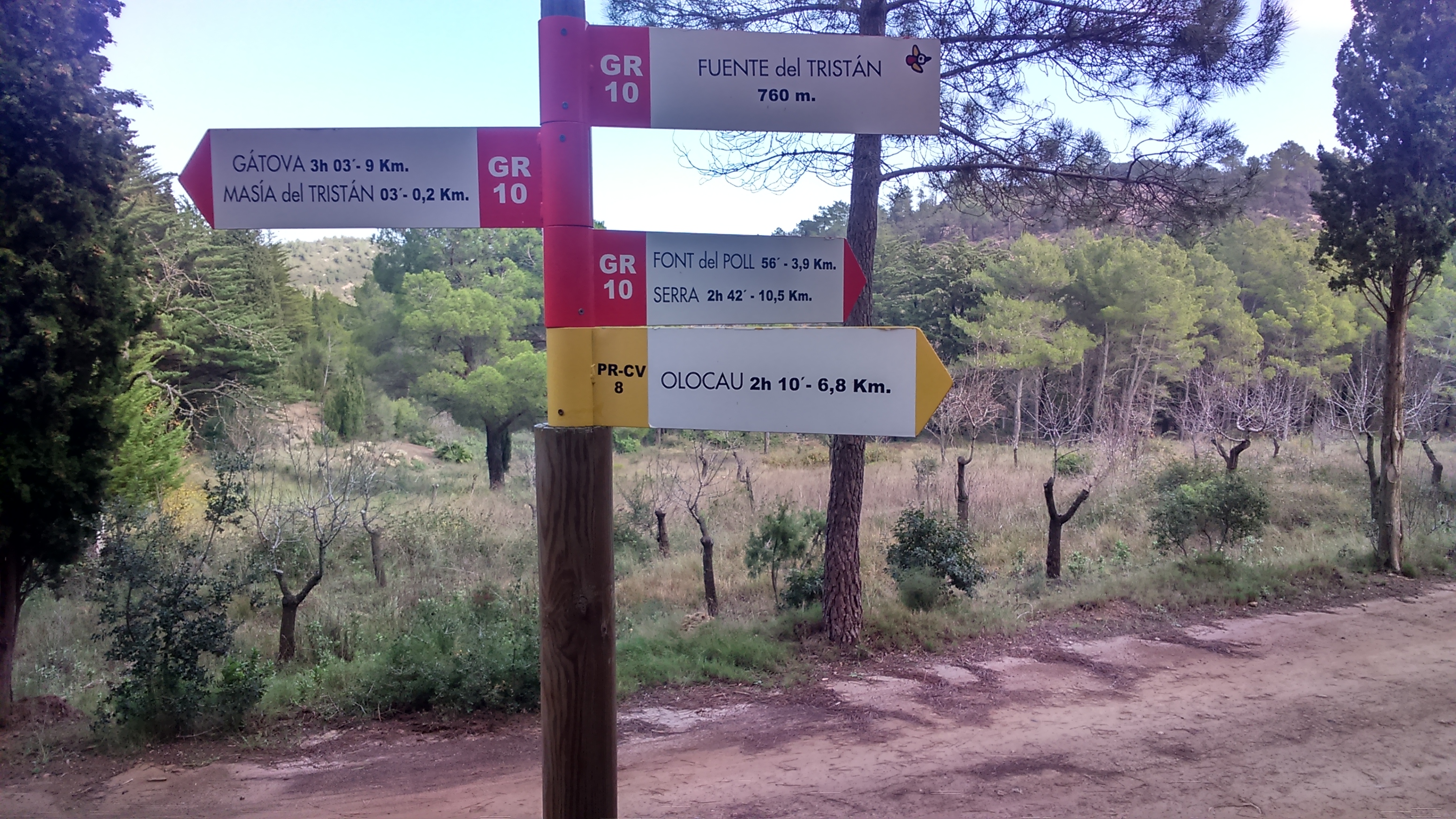
Olocau and Sierra Calderona: Part 2, Spain

Olocau, 12-14.12.16. Part 2

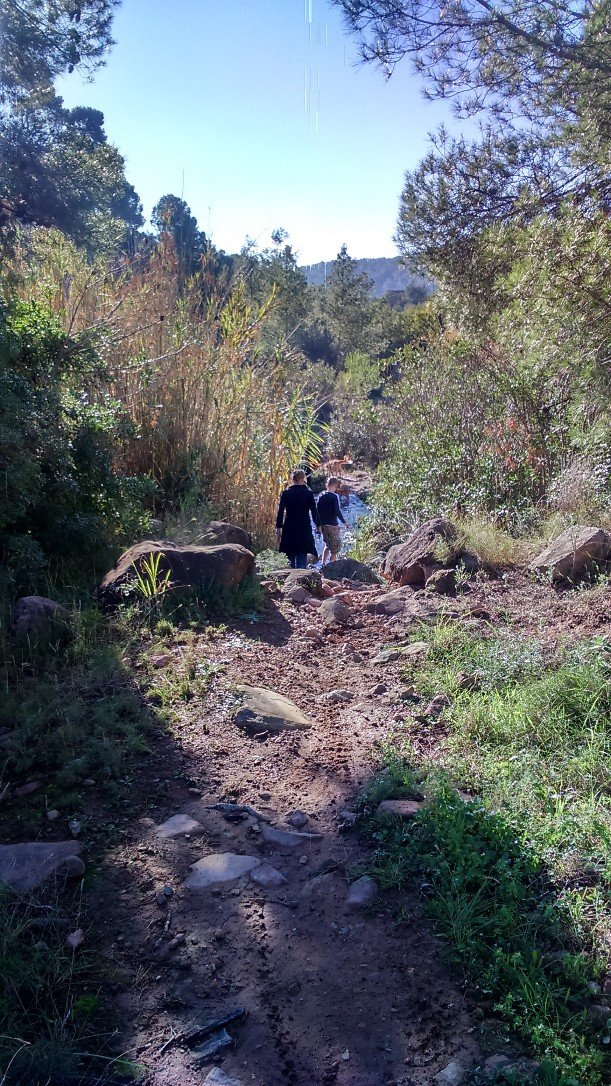
We walk in and out of the village taking Theo to school, picking our way over the stepping stones across two streams. I am so hot and sweaty, despite it being so late in the year, that I change into shorts and vest top with sunglasses when we get back. The golden dogs appreciate the shade.

dsc_0069_4.jpg

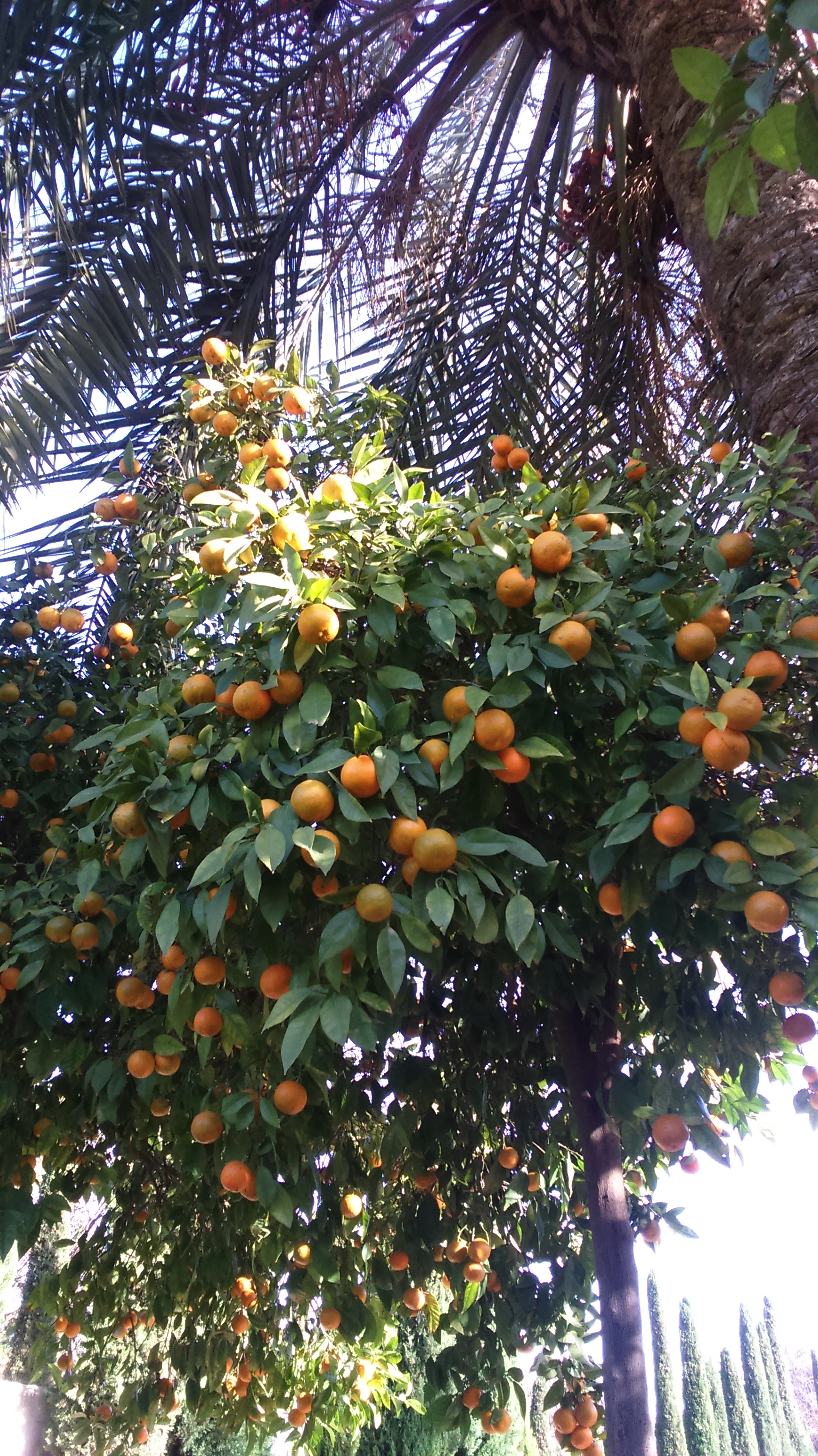
We eat delicious oranges that lie under the tree as we walk. At the local bar we are served bitter local olives, quick-cooked sardines, and peanuts in their shells which they grow in the garden – all free tapas with our beers.

The house sits on the edge of this protected area of natural beauty and the daily T’ai Chi is in the shadow of this marvellous scenery.  My host helps me plan the next day’s walking on his GPS which is invaluable once I get used to it.

dsc_0061_4.jpg

Duration: 8 hours. I went slowly to eke out the wonderfulness.

‘Walking: it (silence) hits you at first like an immense breathing in the ears. You feel the silence as if it  were a great fresh wind’. p.59 A Philosophy of Walking, Frederic Gros.

Of course it is not silent really. If it is not birds; insects; leaves hushing, it is my brain’s noticings and internal conversations.

dsc_0073_2.jpg

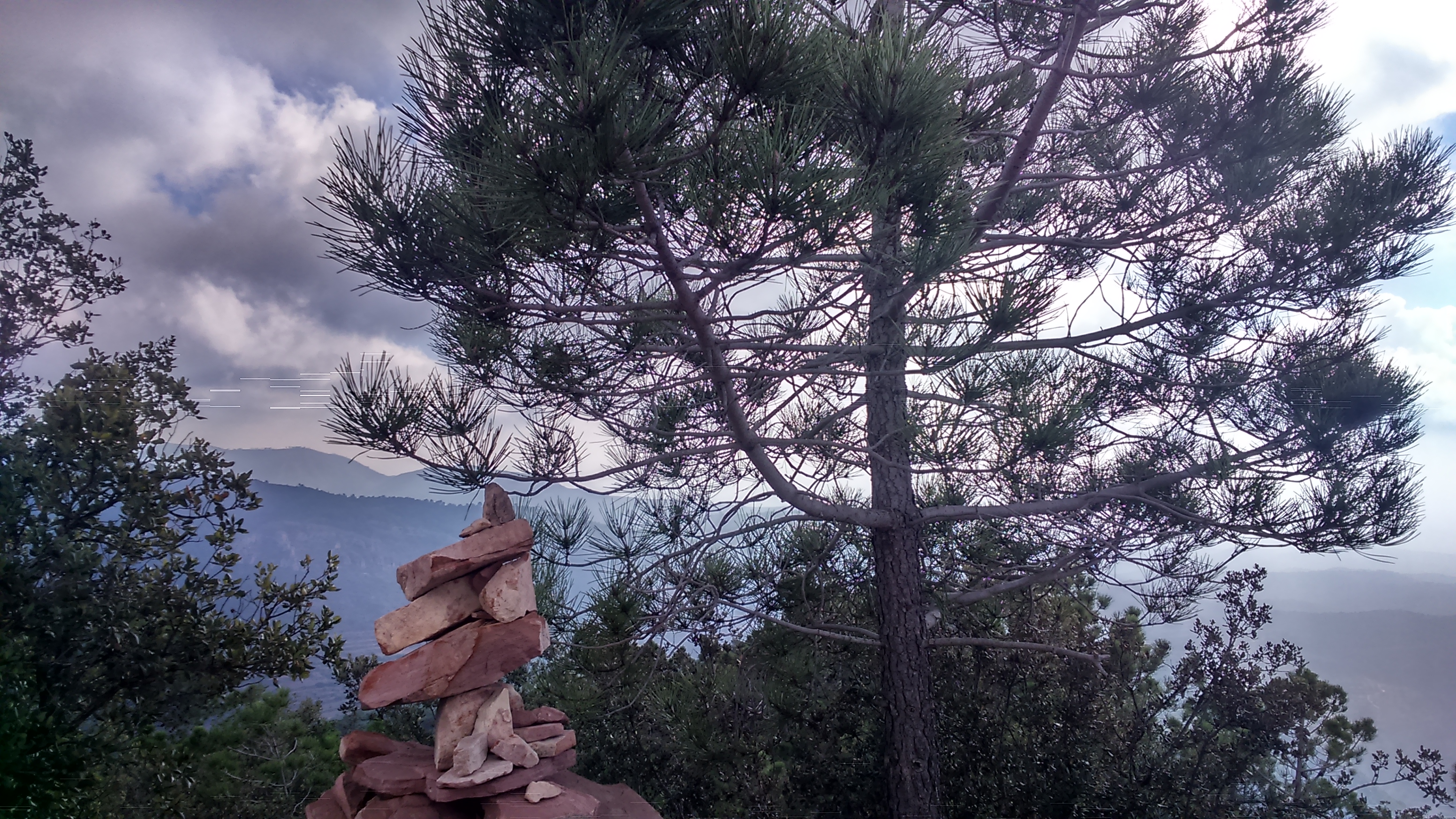
As on the Caminos, it’s not unusual to find small cairns or piles of stones in significant places. 

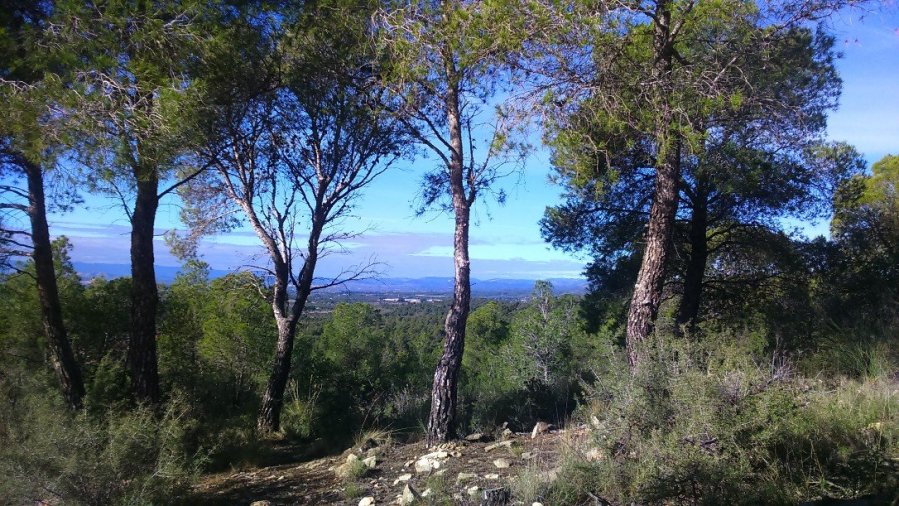
There’s the smell of pine, and it’s a very cold 5 degrees as I start. The only sounds are the very high-pitched, fine bird song; the buzzing of insects; tutting of grasshoppers; and wind in the trees. Later there’s a period of hunters shooting, which seems to go on and on. When I am out of the sun, the cold air penetrates my clothes and hair.

Number of others I encounter: A pair of cyclists who I hear before I see them. Then they pass me and it’s only the birds again. There are only two walkers who happen along when I am lost and help me back onto the right track. My luck hasn’t run out.

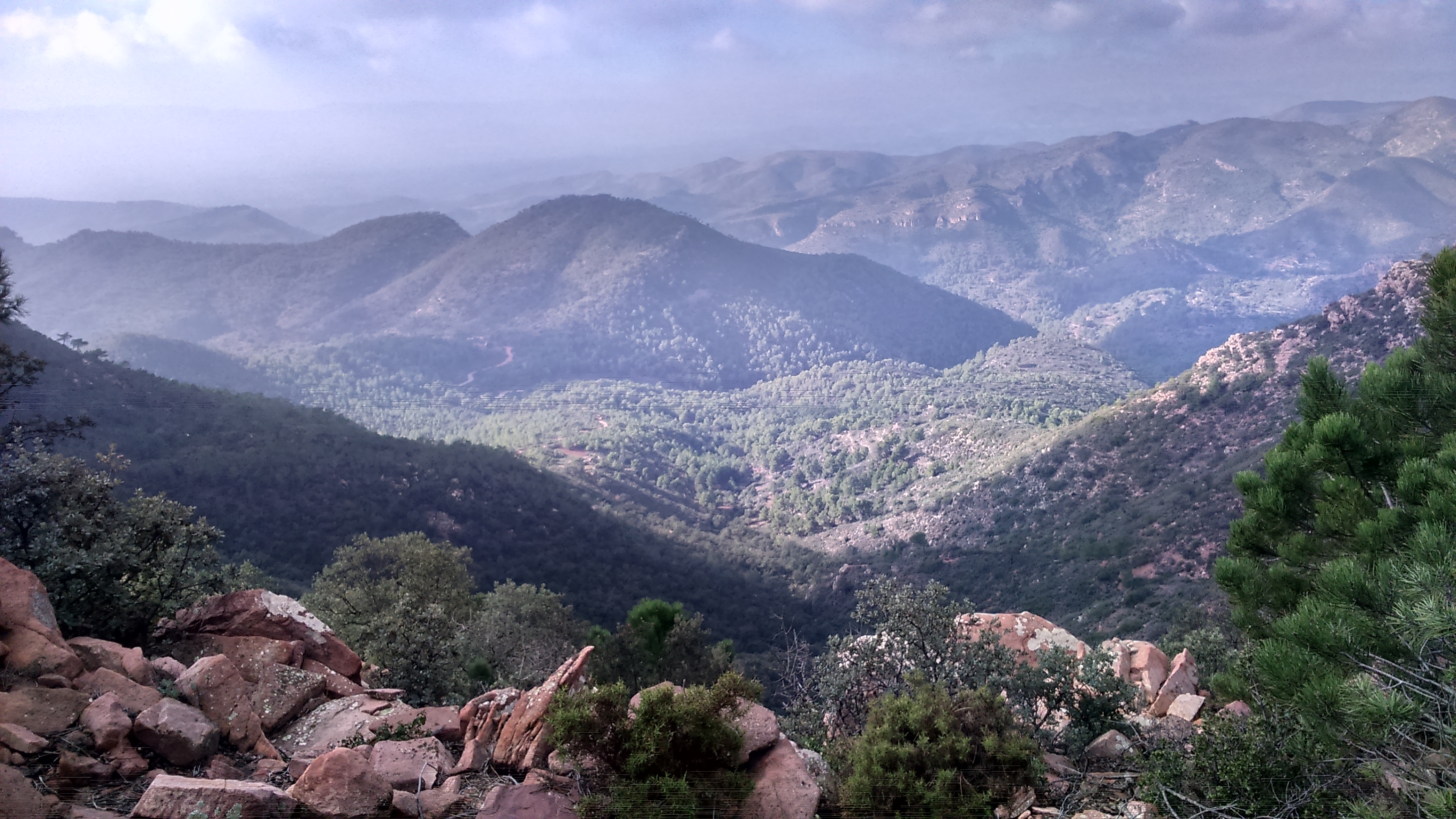
As I climb, the Valencian plain comes into view, and I look down the rocky slopes to the mountains, so far in the distance that my phone camera can’t pick them up very well.

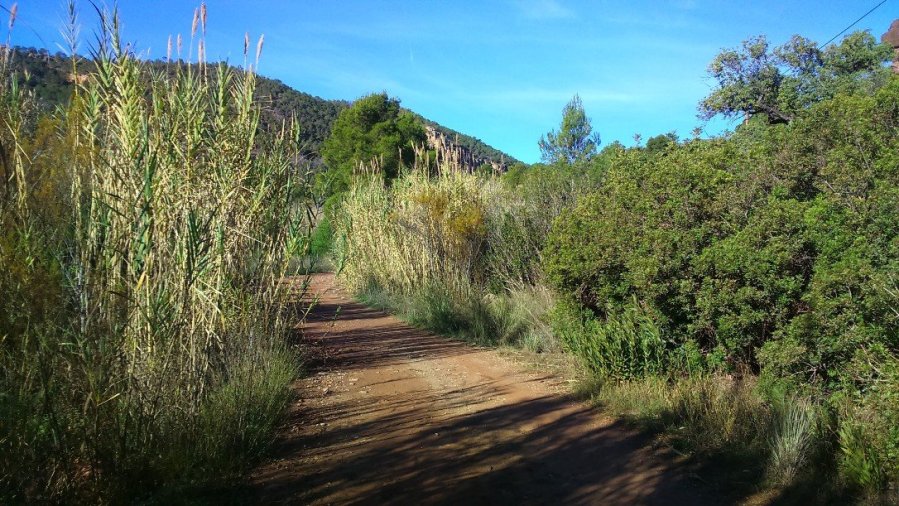
I walk along a smooth, wide, red-clay track which changes after a couple of hours to brown, yellow and sometimes gold. I am struck how different the colours are from Northern Spain. All around me are trees and shrubs of grey-silver, yellow-green, spring-green, brown, and a whitish pink.

It is really quiet. Twice I hear a noise which makes me turn, and it’s a red admiral butterfly’s wings moving – truly. I imagine this is how the wilderness might feel. I change into my shorts when it gets too hot and feel like a boy exploring exciting lands when I should be in school.

dsc_0080_3.jpg

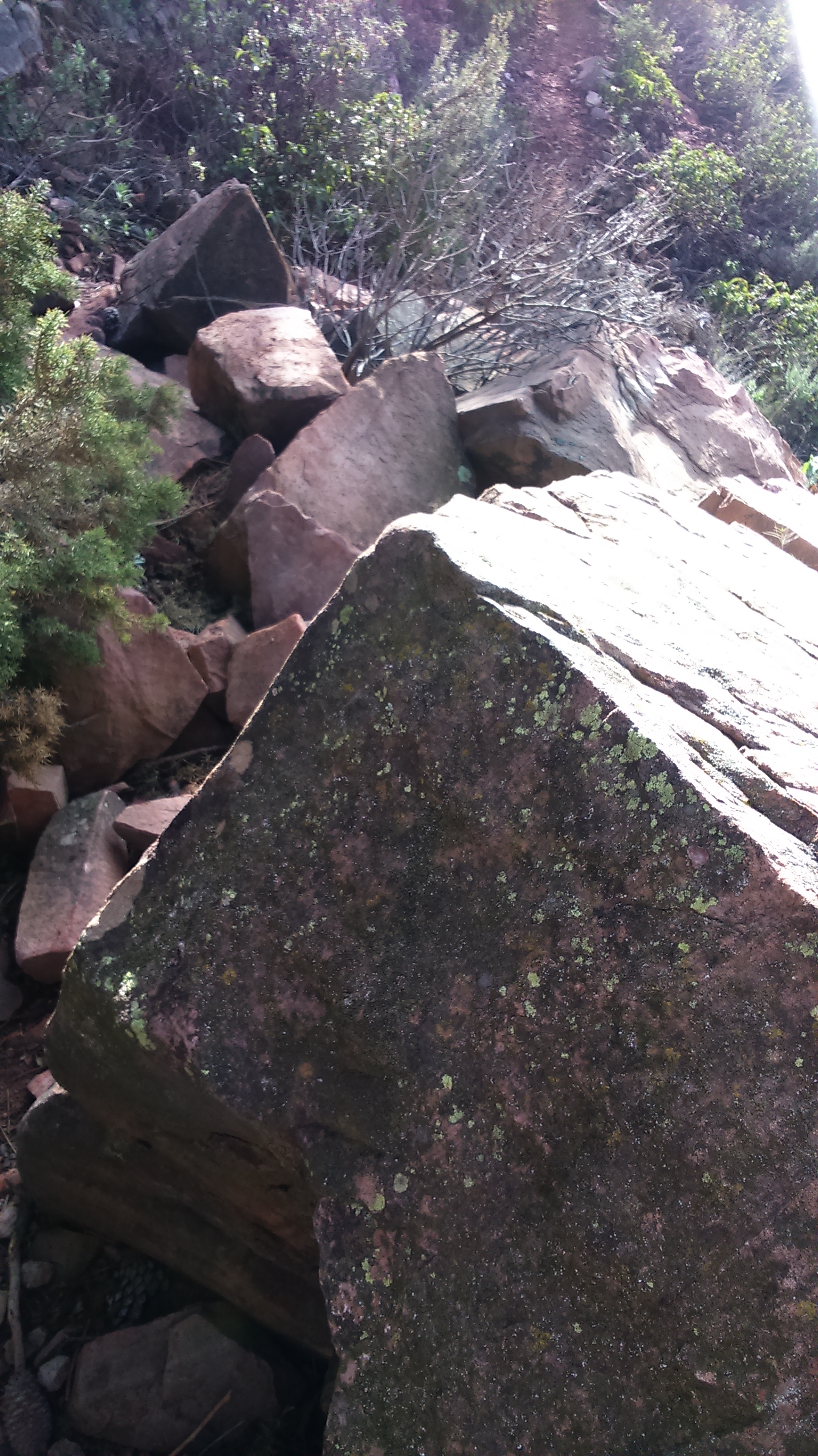
Great big boulders blocking the path. 

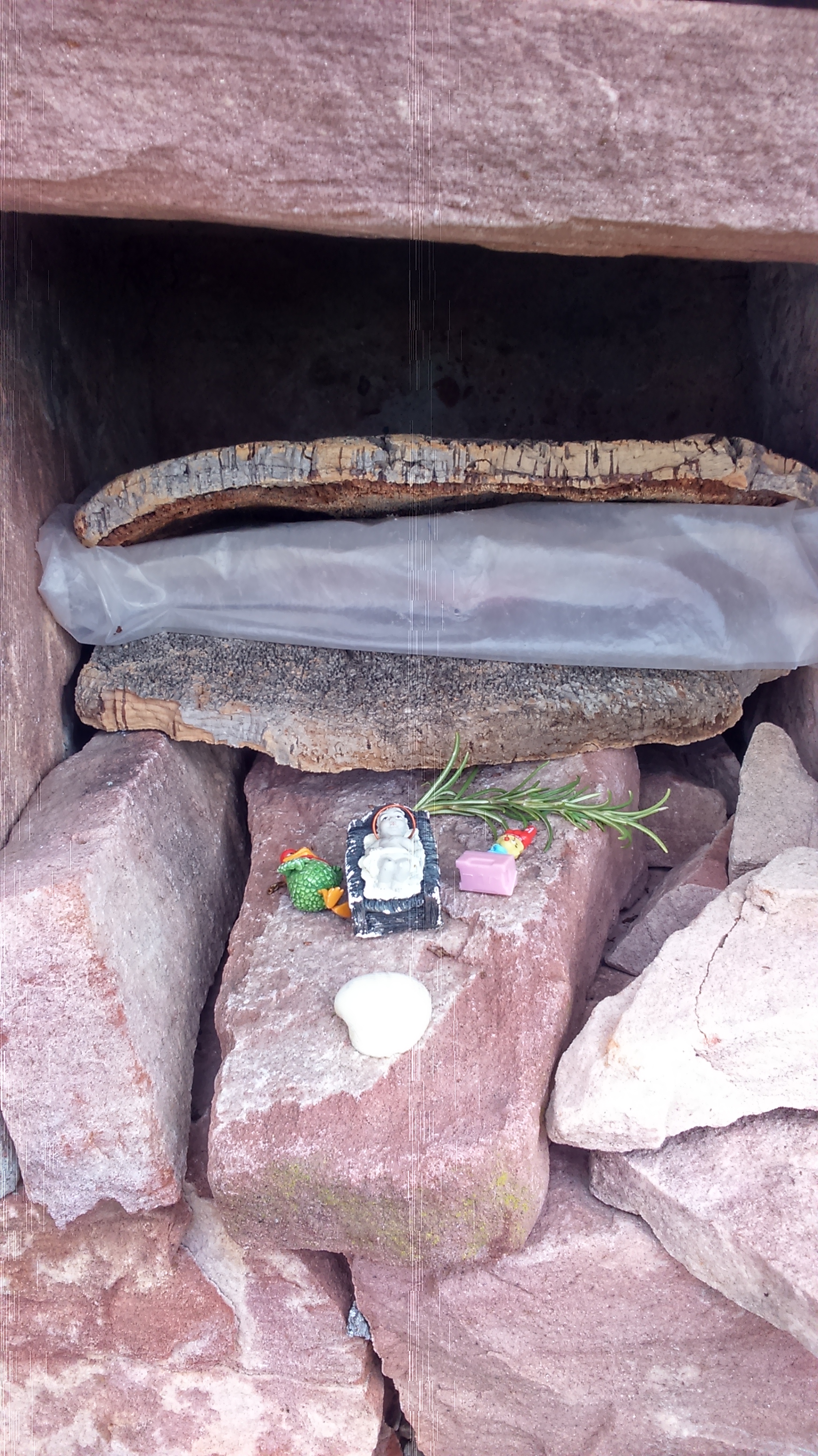
I think there might have been recent rock falls, perhaps in the torrential rain I missed last week, because the path was all but blocked with giant boulders at times. I found myself clambering up to the summit, the Pico, on my hands and feet. There’s a little ‘altar’ at the top with a visitors’ book in which I write. I add a small white shell from the beach in Finnistere, which I have in my pocket.

dsc_0078_3.jpg

And then it was worse coming down, dangerous, and I often slipped and fell. Later as I rested, I heard rocks falling and saw movement of the undergrowth on the opposite slope. There was a wild boar, a large, heavy, dark animal which I had been often told about – so exciting!

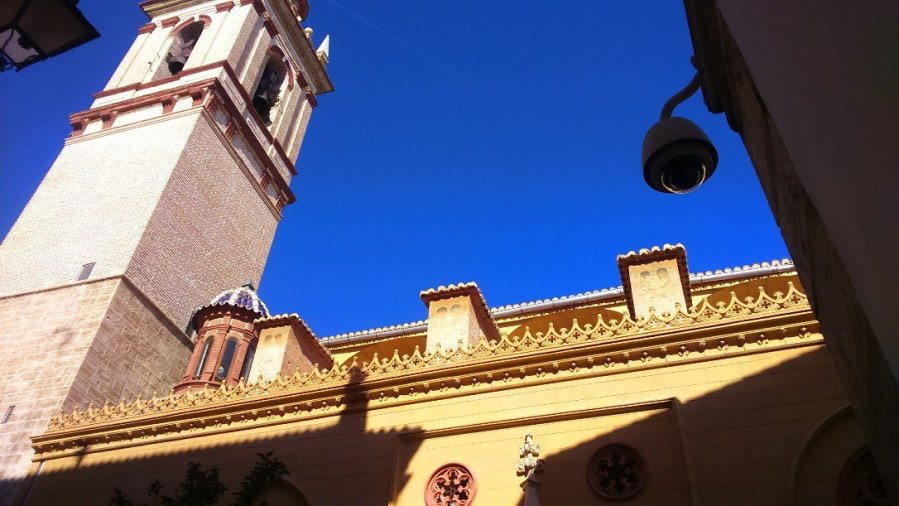
Afterwards I visited the village for a welcome beer and wandered around. A beautiful church, an interestingly decorated house (with Charlie Chaplin),  and an alternative zebra / pedestrian crossing, all caught my eye.

I extended my stay an extra day to have one last wonderful walk in the tranquility, and thank my hosts Georgie and Phil for their generous hospitality. I hope the Shiatsu and other help I gave around the house conveyed my gratitude.


Valencia and Sierra Calderona: Part 1, Spain

Olocau, 9-11.12.16. Part 1

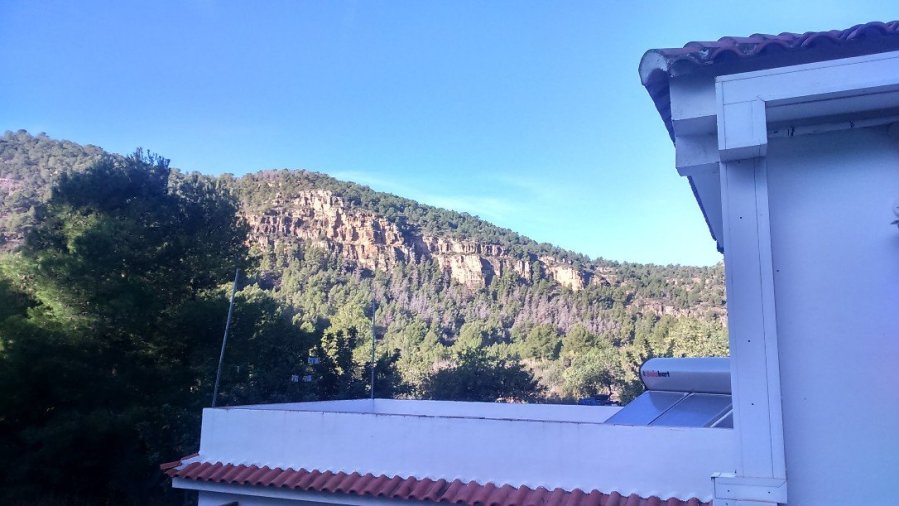
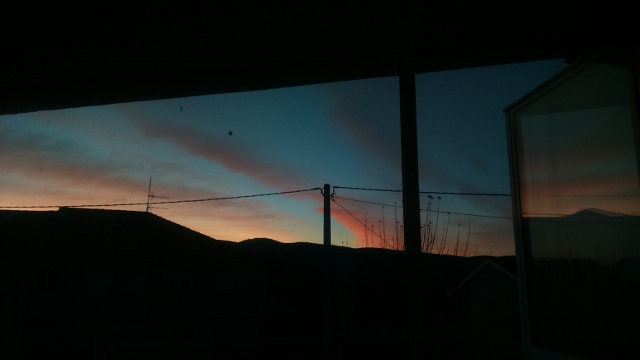
View from the house

My wonderful hosts, family Anniss, live in the small village of Olocau on the edge of the stunning Sierra Calderona national park.

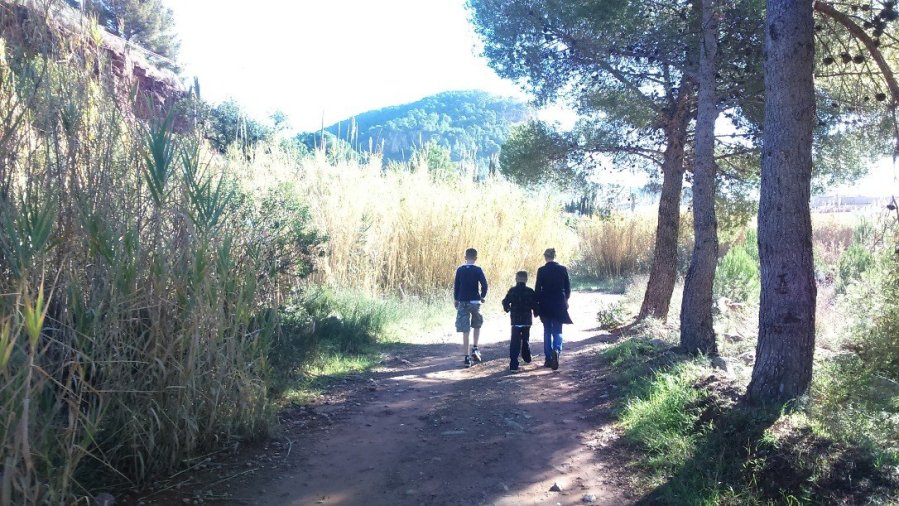
The walk to school – stepping stones.

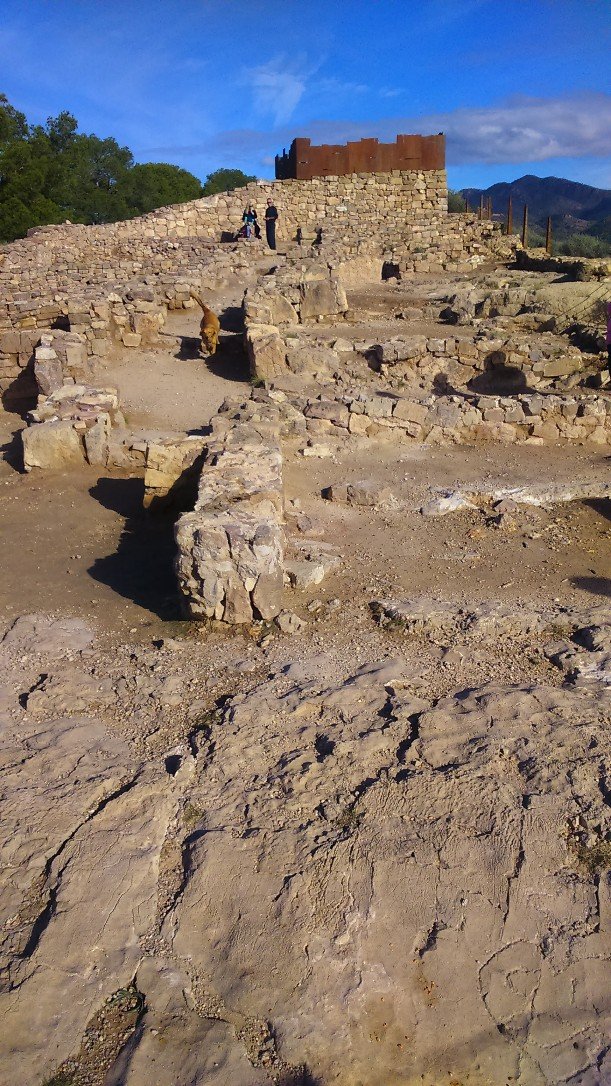
On my first day (Saturday) we walked to the nearby Iberian settlement which has recently undergone major smartening for the tourists (signs, wifi, new dark brown metal safety fences on top).

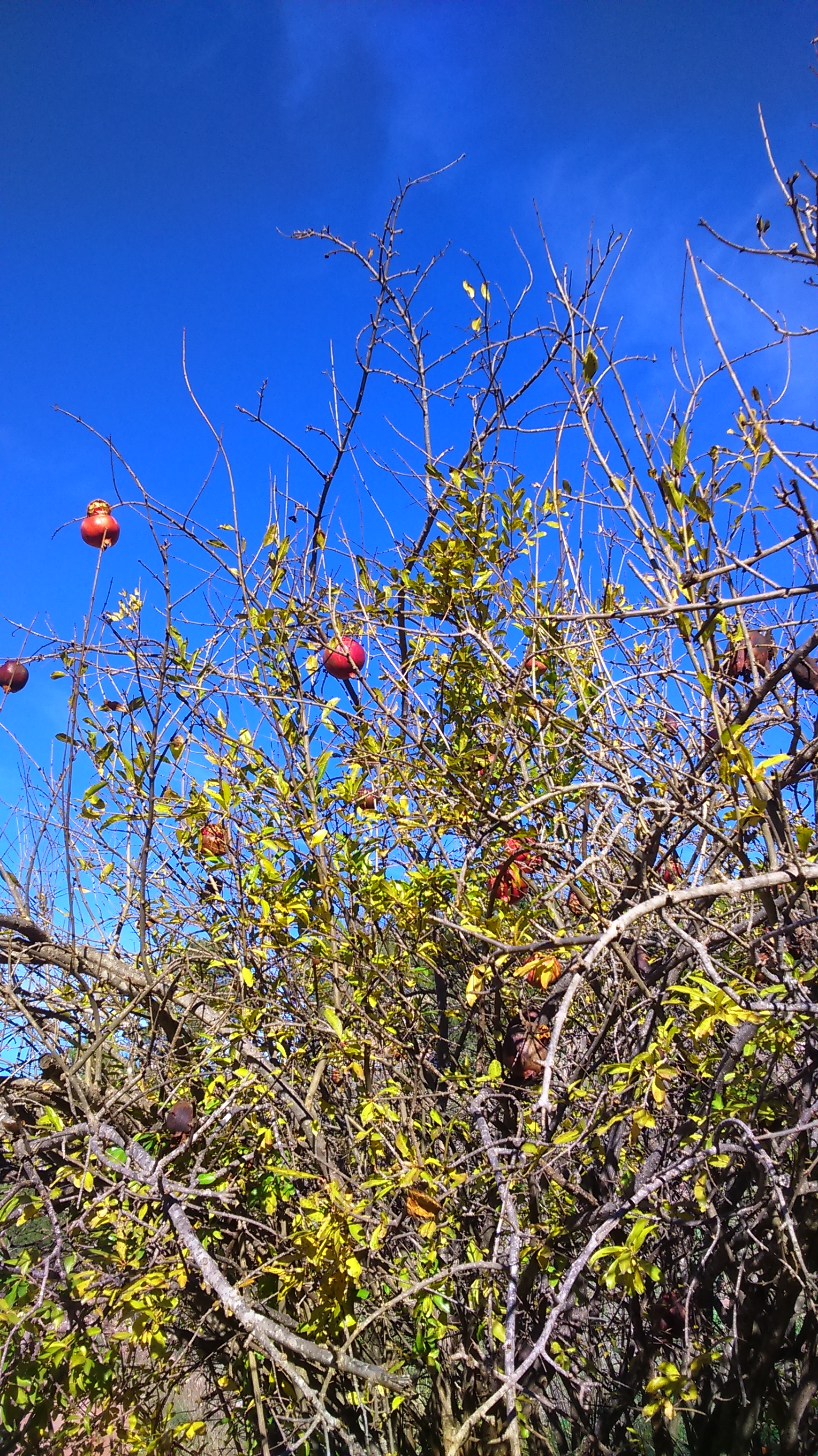
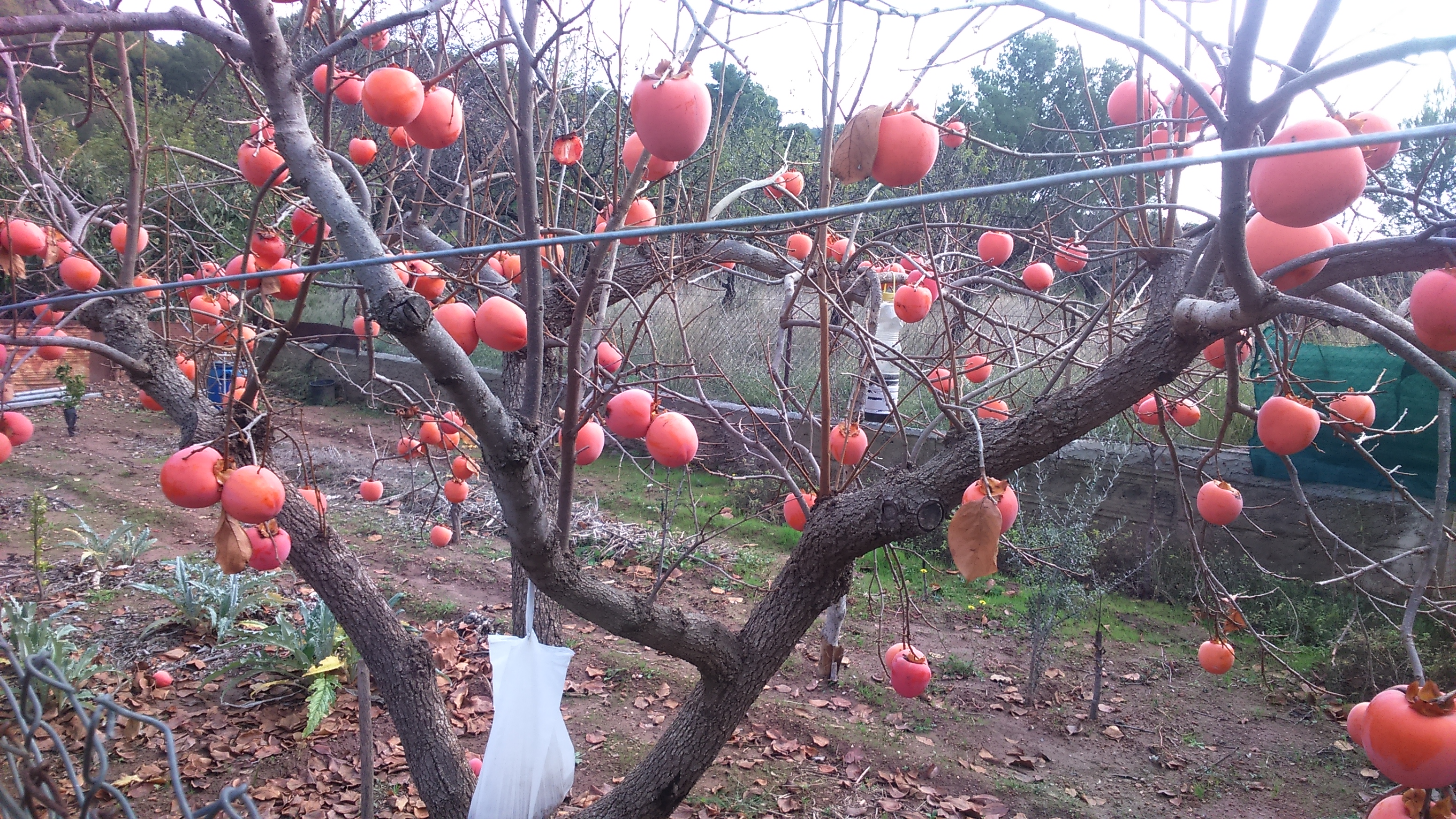
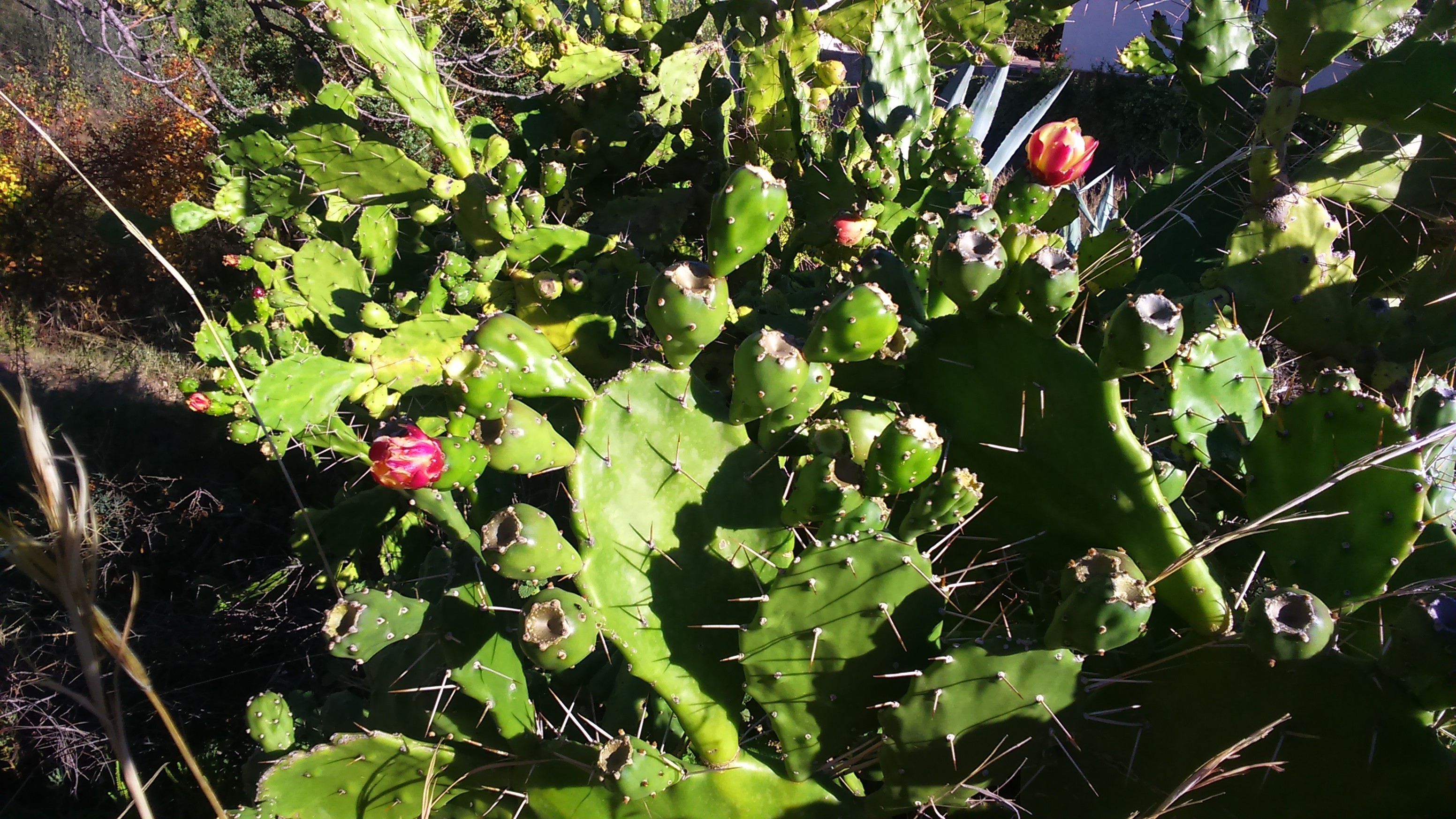
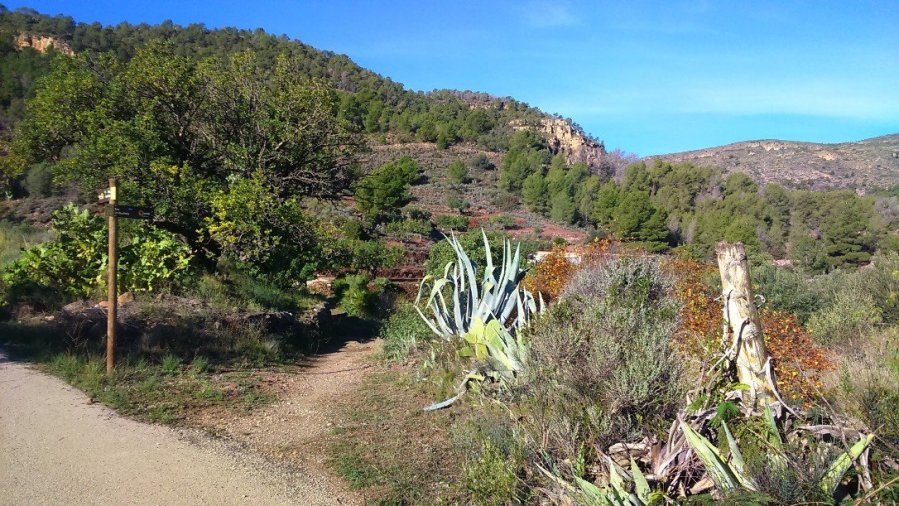
There were trees I have never seen before: carob, persimmon, pomegranates, plus oranges and lemons, and flowering cacti.

dsc_0064_1.jpg

Pomegranates

dsc_0096_2.jpg

Persimmon

dsc_0024_8.jpg

dsc_0069_2.jpg

And the higher we climbed, the more magnificent the views.

There are bulrushes and giant versions of my house plants!

The sun shone (although they had recently suffered 2 weeks of unusual and torrential rain and were to have a repeat after I left).

On Sunday we sunbathed on the terrace and put up Xmas decorations…outside!

On Monday I visited the elegant and colourful city of Valencia, and once more the sun kept me company.

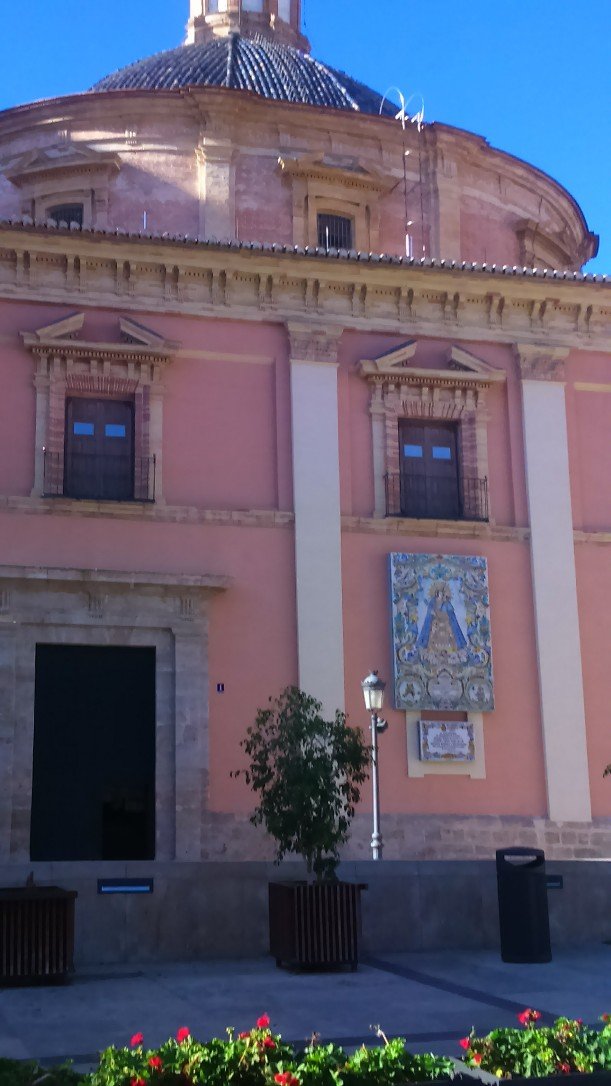
Nuestra Señora de los Descamparados

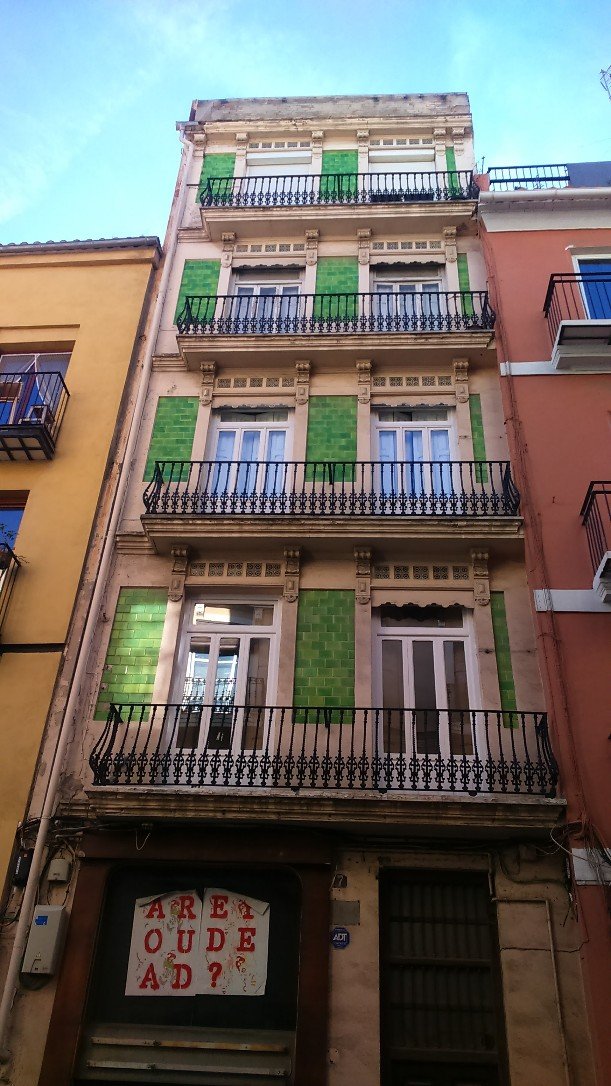
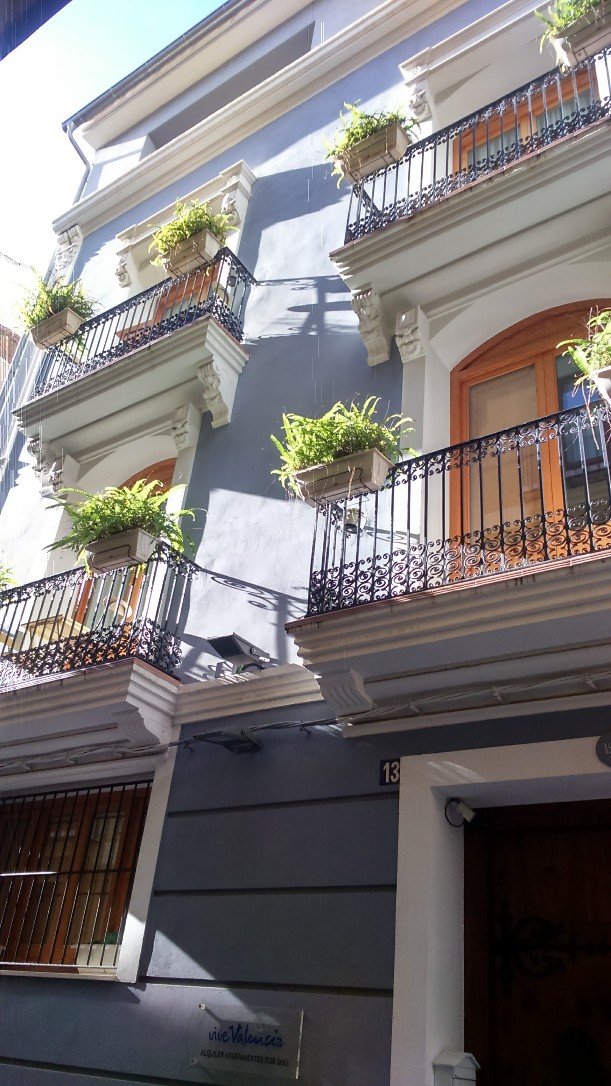
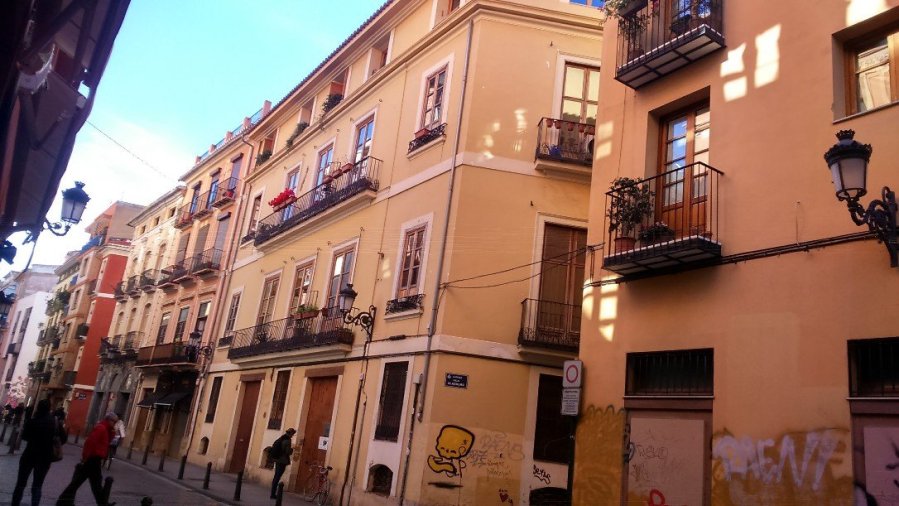
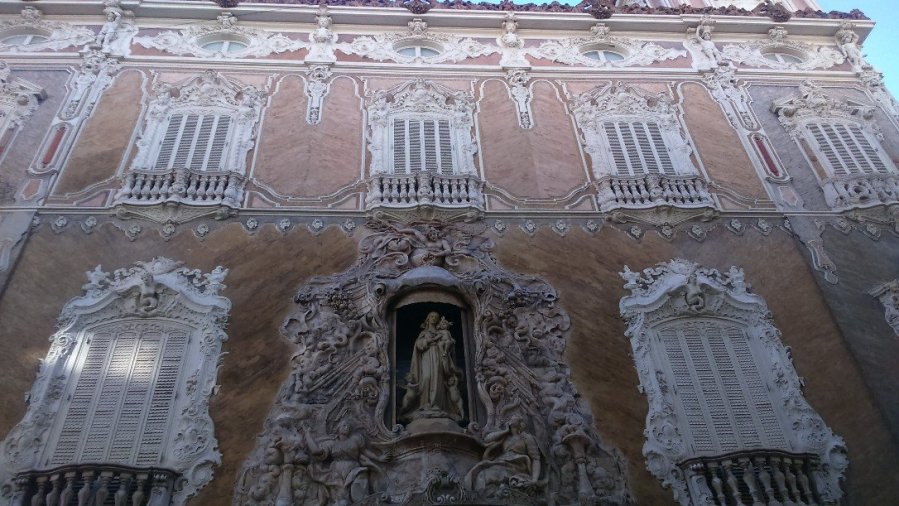
The facades are particularly attractive.

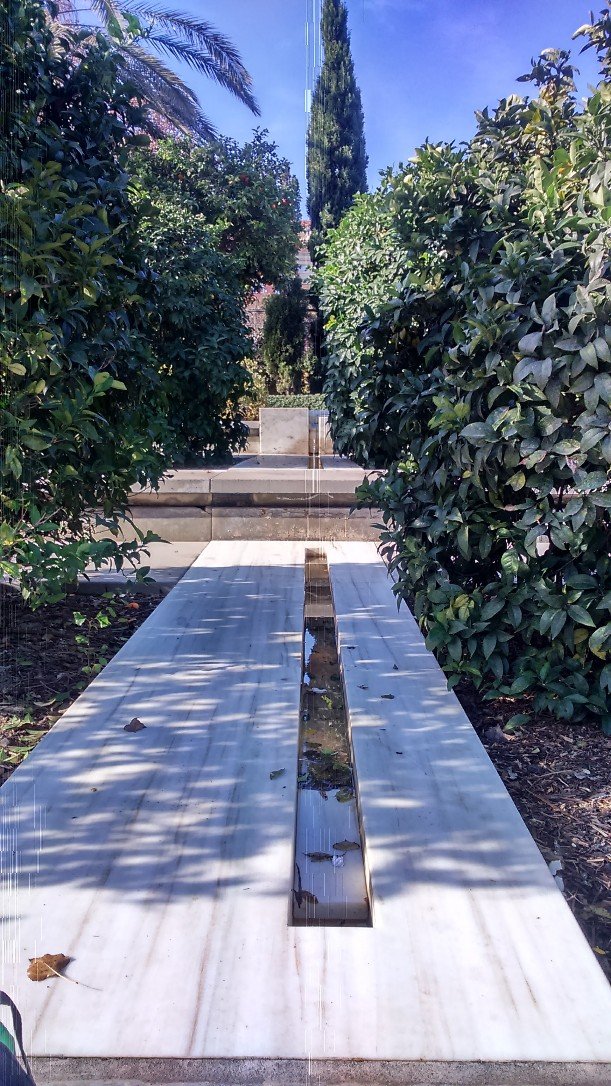
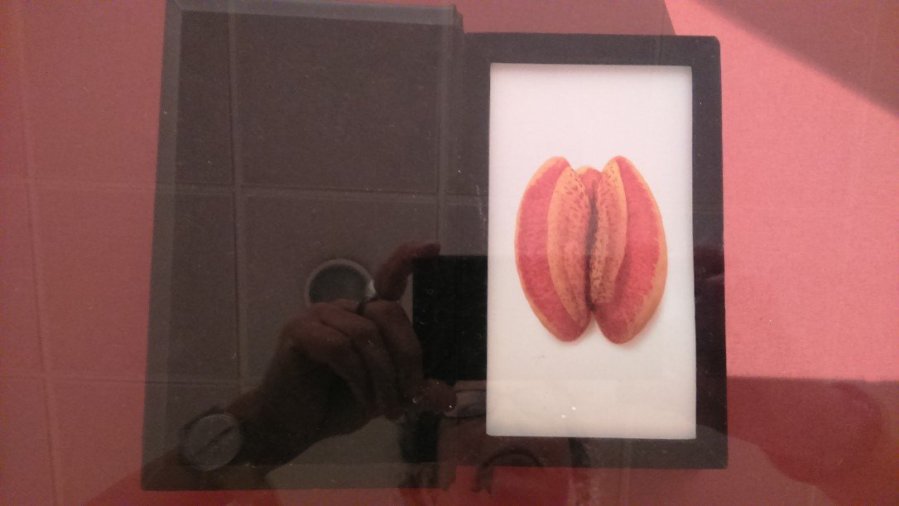
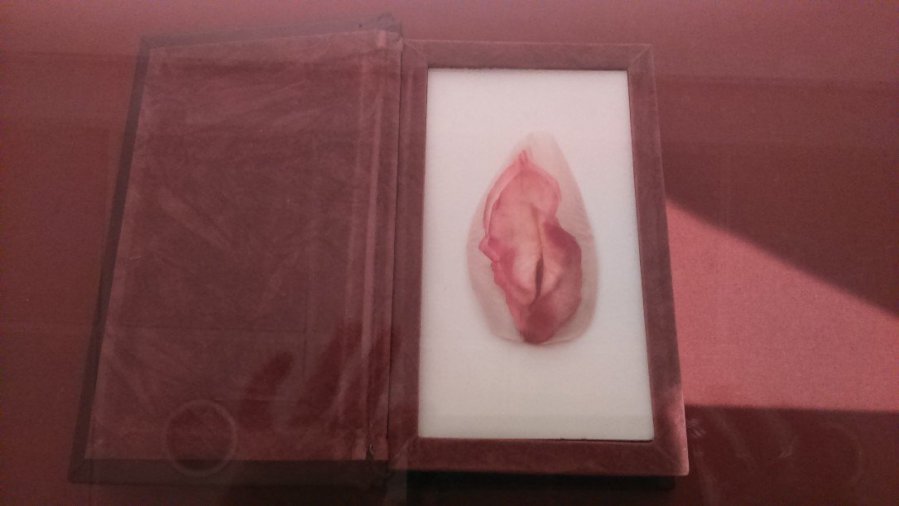
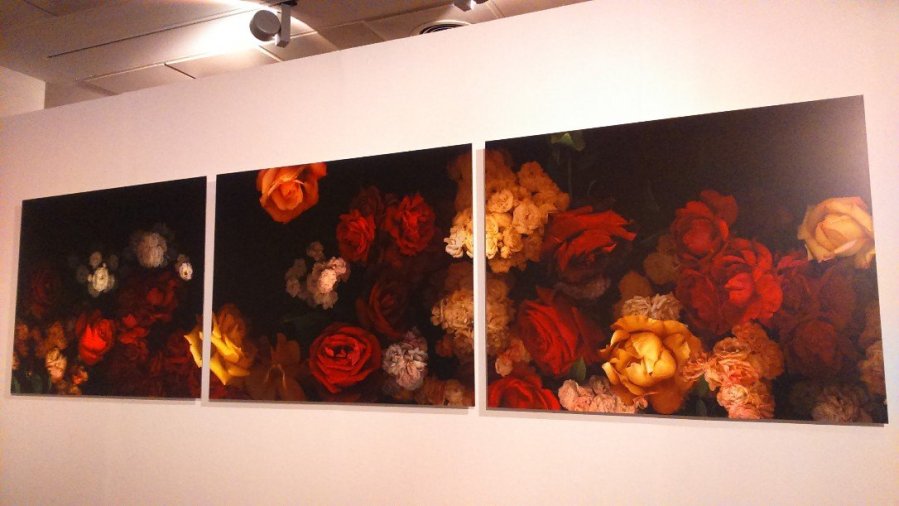
I loved the Jardin de las Hésperides (free to enter), beside the Botanic gardens (which you have to pay for – how I appreciate the Edinburgh ones being free), and an interesting exhibition (also free), in which I particularly enjoyed the work of Carmen Van den Eynde and Toya Legido.

Toya Legido

El origen del mundo

Carmen Van den Eynde

Triptico con rosas

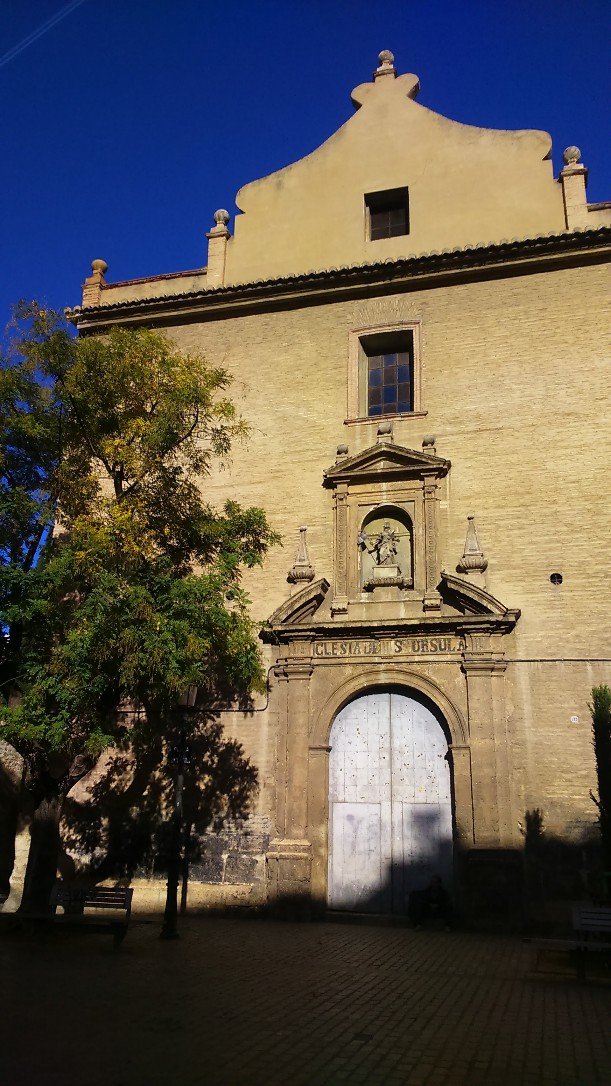
I liked the simple churches:

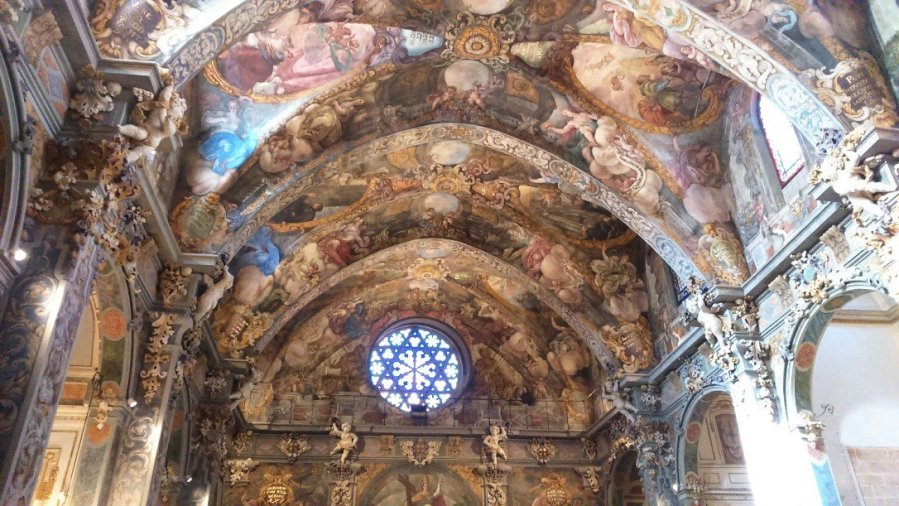
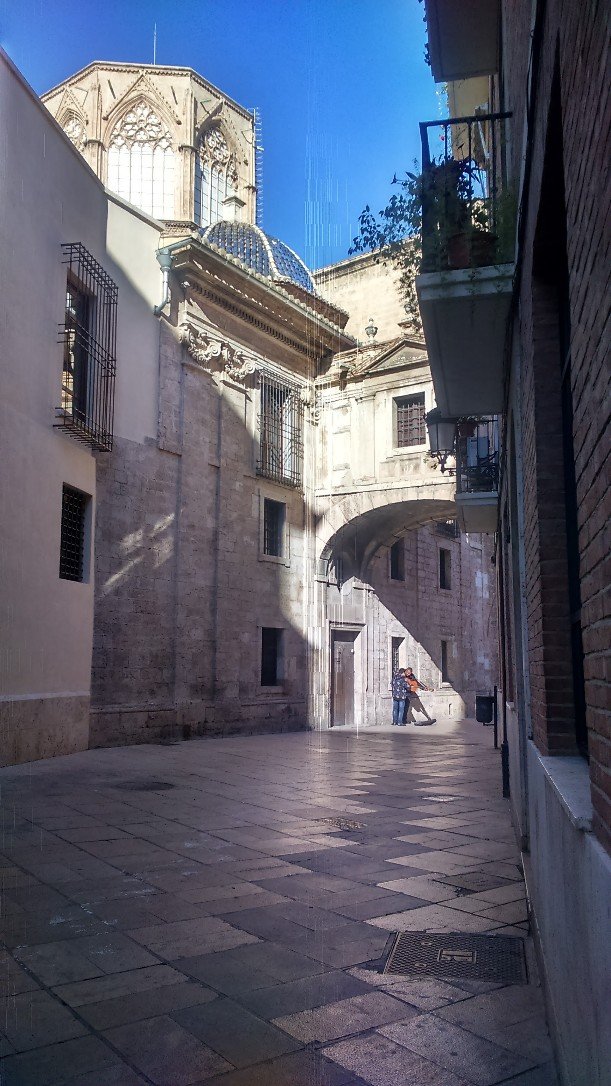
Although I had to admire the interior of San Nicolás and the small part of the Catédral which I didn’t have to pay to see.

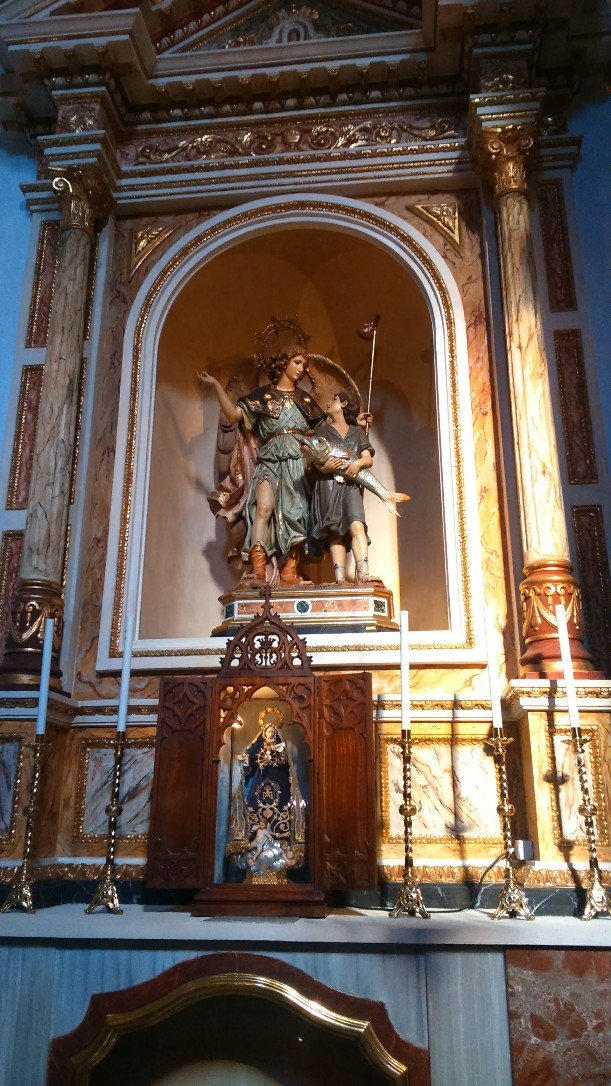
The fisher of men and elaborate ceiling of San Nicolás


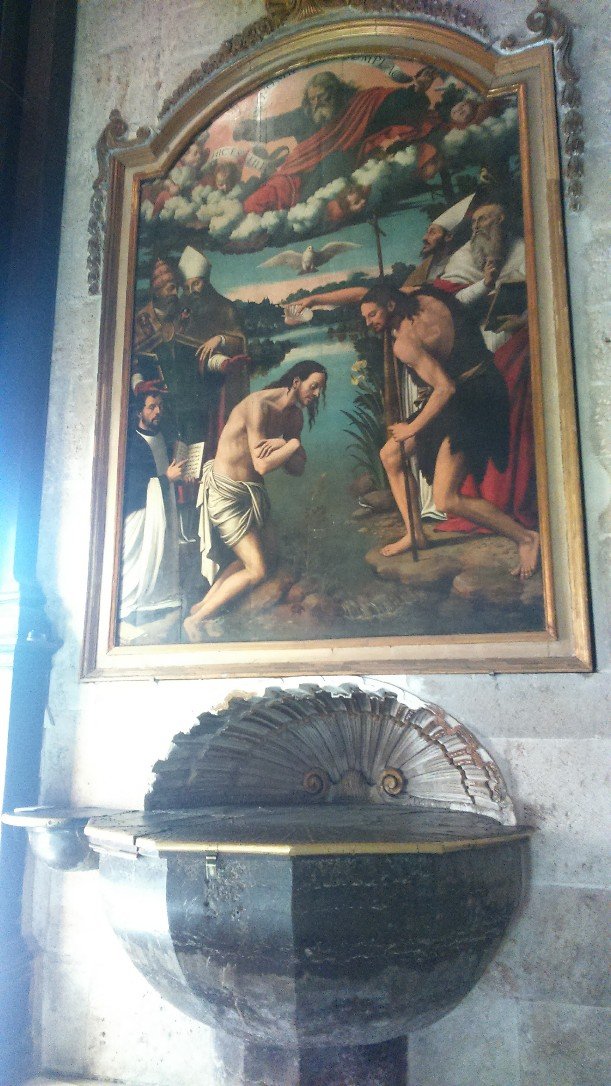
And the font and artwork of the Catédral

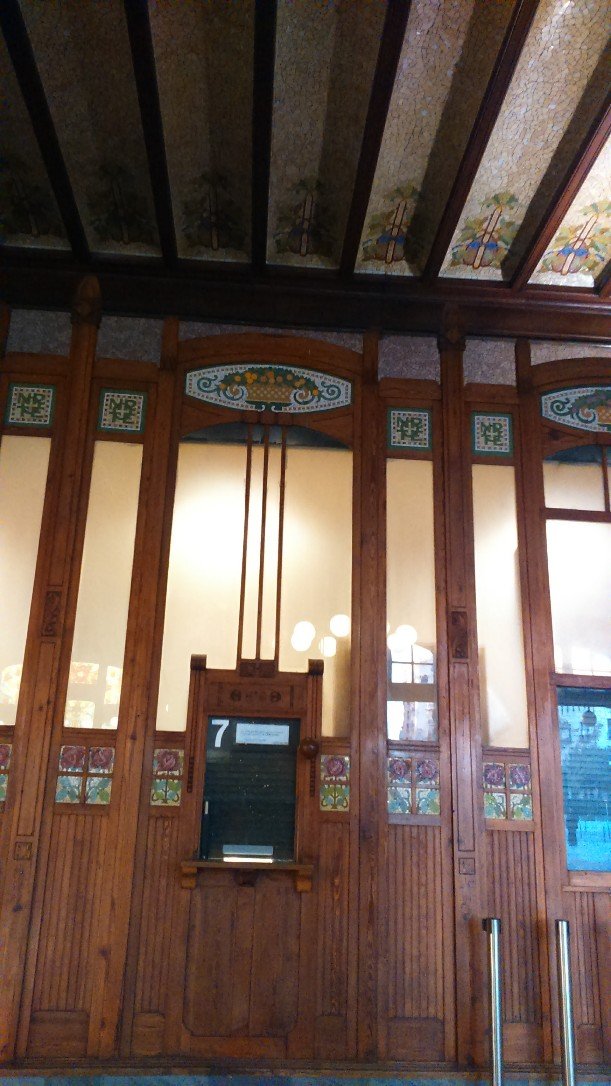
Even the ticket office at the art deco station is impressive.

Here I sat in repose, with my tin of mussels for lunch.

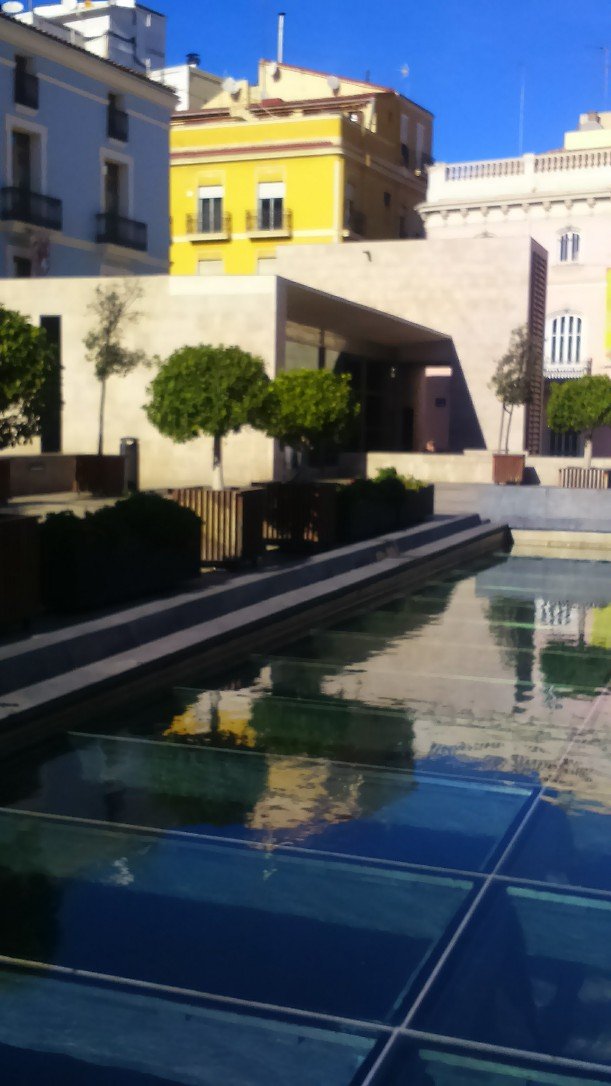
I came across the Ceramic museum towards the end of the day. It is so close to the cafés and other buildings surrounding it, that it’s hard to get a good photo.

Overall one very attractive city!

The ruins above Olocau

Las Matas, Spain

Happy days with Barry and Maria José just north of Madrid (Las Rozas area) 7.12.16, 8.12.16

dsc_0022_3.jpg

Beautiful Madrid scenery. 

I arrived in Madrid at 6am after a broken night on the bus. (We stopped at services at 2, lights on and announcements made!). When I arrived it was dark, and I whiled away a few hours in a just-opened câfé until kind Lucia had woken up and I could collect my bag which she had been guarding for weeks.

Of the many journies I made, only one Spanish bus (Madrid-Léon) was late (and I was so keen to get there early). All the others I took on my many trips up and down the country, were on time, relatively affordable, and efficient. Many had a toilet, and also free wifi so I could write my blog while I was between stages. Indeed,  if I’d been able to work out the logistics, I could have watched films, and charged my phone on board too! I took one Bla Bla Car but generally found them very difficult to book online, and the driver didn’t say more than one word to me. The trains were all modern and made announcements in English as well as Castillian and the local dialect. Passengers on British trains eat constantly, but here there are no food trolleys or buffet car, not on the Vittoria-San Sebastian or local trains anyway.

dsc_0023_3.jpg

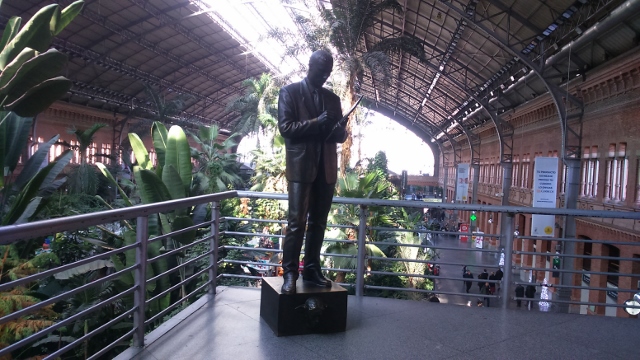
Rather disturbing sculpture by Antonio Lopéz outside Estación Sur / Atocha Madrid.

I was invited to stay at Lucia’s house in Madrid for a while and have a cup of tea, which I gratefully accepted and then left to meet Barry at Atocha / Estación Sur. He’s a South African Shiatsu practitioner who has been living in Spain for quite a while, and a contact given to me by Rebecca.

dsc_0024_6.jpg

dsc_0025_7.jpg

More public art at Atocha (can’t find name of sculptor). 

We met beside the tropical garden inside the station and I was fascinated by the turtles swimming, climbing, and sitting on top of each other.

dsc_0001_8.jpg

Hard to see in this photo, but there are 100s of small, swimming turtles in an indoor pool.

Barry and I went on a local train (like the Cercanias shuttle to Aranjuez, this was cheap and stopped at all stations), and he pointed out the herds of deer standing proud in a park on the left as we made our way north in the same direction I had come a few hours earlier.

dsc_0008_8.jpg

I am so lucky to be staying at friends’ houses with beautiful grounds and pools.

We arrived in the sunshine and walked to their gorgeous and predominantly self-built house which is big enough for a large Shiatsu room AND a teaching hall.

dsc_0005_8.jpg

During the time I was with Barry and his partner Maria José, we had satisfying, long discussions about the positive effects of Shiatsu; Barry’s interesting life (born Kirkcaldy, bought up in South Africa, moved to Bulaweyo, travelled to London with £100 in his pocket…works as a magician as well as Shiatsu assistant /teacher etc); language (Maria José is a linguist and Spanish literature tutor, now learning Greek); Spanish politics and much more.

We had a fascinating walk in Torrelodones (I left my camera in the house so no photos) along what was planned to be a coast-to-coast waterway. There were sweet smelling shrubs, wild asparagus, and the chunky rocks I was going to become familiar with when walking in the bottom half of Spain, but which landscape is so different from the verdant Galician countryside I was used to.

We visited an artisan deli and bought manchego and Portuguese custard tarts; and I sampled the most delicious food: fresh tomato salad, pumpkin soup, pasta made from an ancient form of wheat (not spelt) and homemade pesto, all sourced locally from farms they have visited. I exchange Shiatsu for these necessary comforts.

dsc_0018_9.jpg

Las Matas station – photographed for the sake of contrast with the countryside I prefer. 

Two days later I was back ‘on the road’ through Madrid to Valencia. Every time I moved between places, I found the numbers of people and vehicles, the noise and busyness, very hard to manage. What I hoped were old anxieties and prickly, protective behaviour, resurfaced quickly in response.

dsc_0012_10.jpg

Sunrise from Las Matas

To be sure I was leaving with more stimulating memories. It’s amazing that all the people I have stayed with so far were unknown to me beforehand. Bar one, they have been Shiatsu contacts from many sources and more kind people you couldn’t meet.

dsc_0021_7.jpg

Taken from the bus – beautiful scenery through the tinted window at top speed. 


Via de la Plata Camino – Day 9, Spain

Vilar de Barrio to Xinzon (Xinzo de Limia) and Ourense (again) 6.12.16 16km

Aim: to focus on what I have, not what I do not.

Stops: One, to charge my phone and ‘recharge my batteries’ on the outskirts of Xinzon.

Getting lost: I thought I was, but then discovered that there is only one straight main road between Vilar de Barrio and Xinzon!

Other pilgrims: I was not on the Camino, so none.

Weather: Beautifully sunny. Of course.

Lesson learned: Just because there are huge signs indicating a train station and also a bus stop in the centre of a village, it doesn’t mean there are any means of public transport in or out.

DSC_0005_5 (640x360)
View from the municipal albergue, Vilar de Bario, Galicia, Spain

A beautiful sunrise from the window of the albergue. It was cold outside until mid morning.

Having spent time planning my route into the mountains the previous night, I was surprised to find myself debating whether to continue. I was about to embark on the steepest climb into the mountains to Laxa, but I slept badly and had been sent various messages telling me of snow and rain further down the line. I realised that once I was at Laxa I would have to continue at least one more day as I would be in the middle of nowhere. I realised that I was really quite tired, and that the pain at the back of my knee, though not bad now, might get worse.

So, I took the tricky decision to stop walking and take a bus to a town where I could get a connection to Madrid. I had promised my hosts I would be with them on 27th November (10 days before), and cancelled at the last minute which seemed to be becoming a bit of a habit. It was not something I had ever done in the UK and was therefore very uncomfortable. Each time I was acting on strong, strong urges to continue walking.

However there were no buses (later I discovered it was a holiday), no trains (they don’t stop at the very well advertised and signposted station!), and the taxi was going to be between €25-30. I tried asking about a school bus or anyone going to somewhere who could give me a lift, but it transpired that I would have to walk.

There were more kindnesses from the man who charged my phone behind his counter, and another in the petrol cubicle who drew me a map, and they fortified me in my resolve. Off I set, back along the way I had come the day before and a particularly hard 3 hours’ walking. I even tried, weakly, to thumb a lift for the first time in my life (before the motorway junction to Madrid) but no-one stopped and I made it to Xinzon by lunchtime.

DSC_0014_5 (640x360)

Where Xmas preparations were in full swing.

Spain autumn 2016 phone 4433 (360x640)
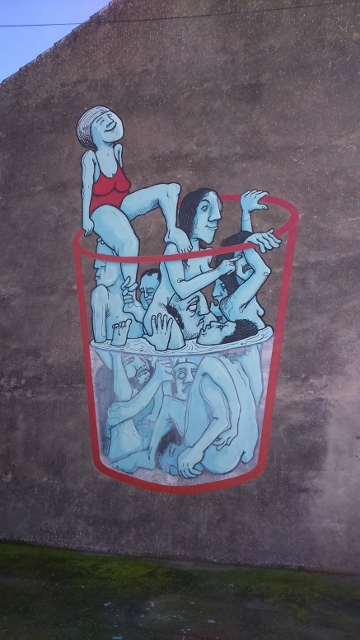
Graffiti in Xinzon / Xinzo de Limia, Spain.

I only had half an hour between arriving at the bus station on foot, and leaving by public transport, but it was enough time to be sent on a wild goose chase to buy a ticket that I actually had to buy on the bus itself! I sat in the sun for the 10 minutes it was late, soothed by the warmth. I debated where I would stay the night.

DSC_0009_8 (640x360)

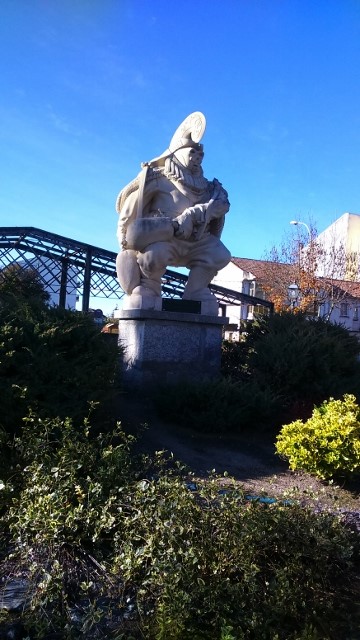
I don’t know what or who this is a statue of but I liked it. Xinzon / Xinzo de Limia, Spain.

On arrival in Ourense, I booked the first bus I could afford to the capital and that took care of where to stay overnight. Then I shamefacedly contacted the folk in Las Matas and Barry kindly invited me for the following 2 nights. (I have noticed before that if I stop pushing myself when I am tired, and take an easy way, my plans start flowing again and decisions come easier).

The first time I visited Ourense I had promised myself that I would come back one day to go to the natural hot springs. Here I was, back sooner than I imagined and a happy 5 minutes from the out-of-town ones. So, with plenty of free time before the 24.15 bus, I went to laze in sulphur waters, and what an experience: one of the best of my trip.

DSC_0013_5 (360x640)
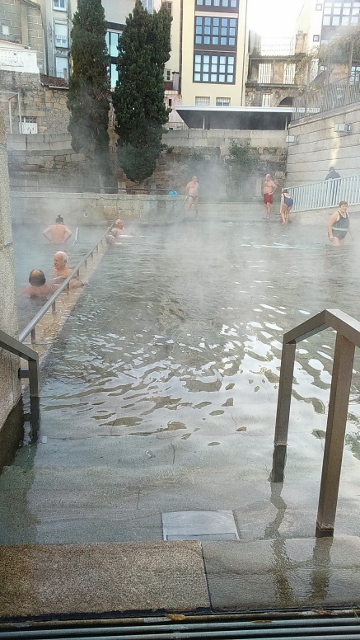
These are the hot baths in the centre of the city. The ones I went to are on the outskirts, but I didn’t get a photo of them. There are special rates for pilgrims.

For €4 there are 3 pools made from magnificent slabs of granite that glitter by the Miño Rive (river) and motorway. The delicate sliver of a half moon was initially suspended in a bright blue sky in which the sun was setting. Then the moon got brighter and stronger as the sky darkened to inky blue, until it was totally black. In contrast I was red from the heat!

One and a half hours of bliss and steam, lying back, intermittently leaving one pool for a freezing plunge, before entering a hotter one. I could feel my scratches, bites, muscles and joints being eased by the healing waters. The relaxation room has even got hot slabs to lie on.

This life is full of unexpected, new experiences.

DSC_0016_5 (640x360)
I had to negotiate motorway underpasses to get down to the river from the bus station – there must be a better way but I didn’t find it! Ourense, Spain.
DSC_0019_7 (640x291)
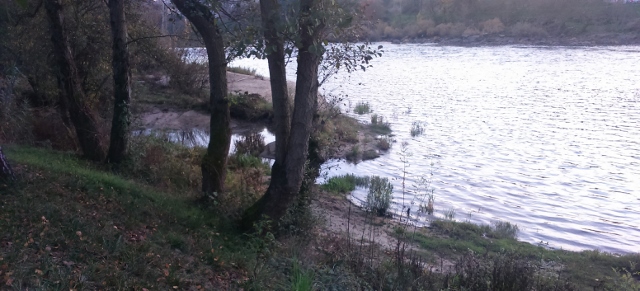
River Miño, Ourense, Spain.

I met a woman on her way down who showed me where to go. She had her empty plastic bottle and showed me her poor sore leg. There was a group of older people with their feet in what looked like a sewer (and smelled a bit like it) collecting the water. She said it works for her.

The lovely baths were followed by a walk along the previously really busy river path. I only passed one or two people. Tracing and retracing my steps in the pitch dark I searched for the complicated way back through unlit undergrowth, camper-van parking lots, disused industrial buildings and bulrushes.

What with clambering over railway lines, across dual-carriageways, under motorway passes, and jumping across rivers, I guess I’ve been taking a few risks lately. With my rucksack on my back, my phone torch in my hand, and my heart in my mouth, I was thankful I lived to tell the tale.

DSC_0024_6 (640x360)
Madrid Atocha Railway Station where I arrived the next day, Spain.