Via Sacra pilgrimage – Day 1, Austria

5th October 2017 Day 1 Hinterbrühl to Heiligenkreuz, Austria. On foot, 5.5 hours.
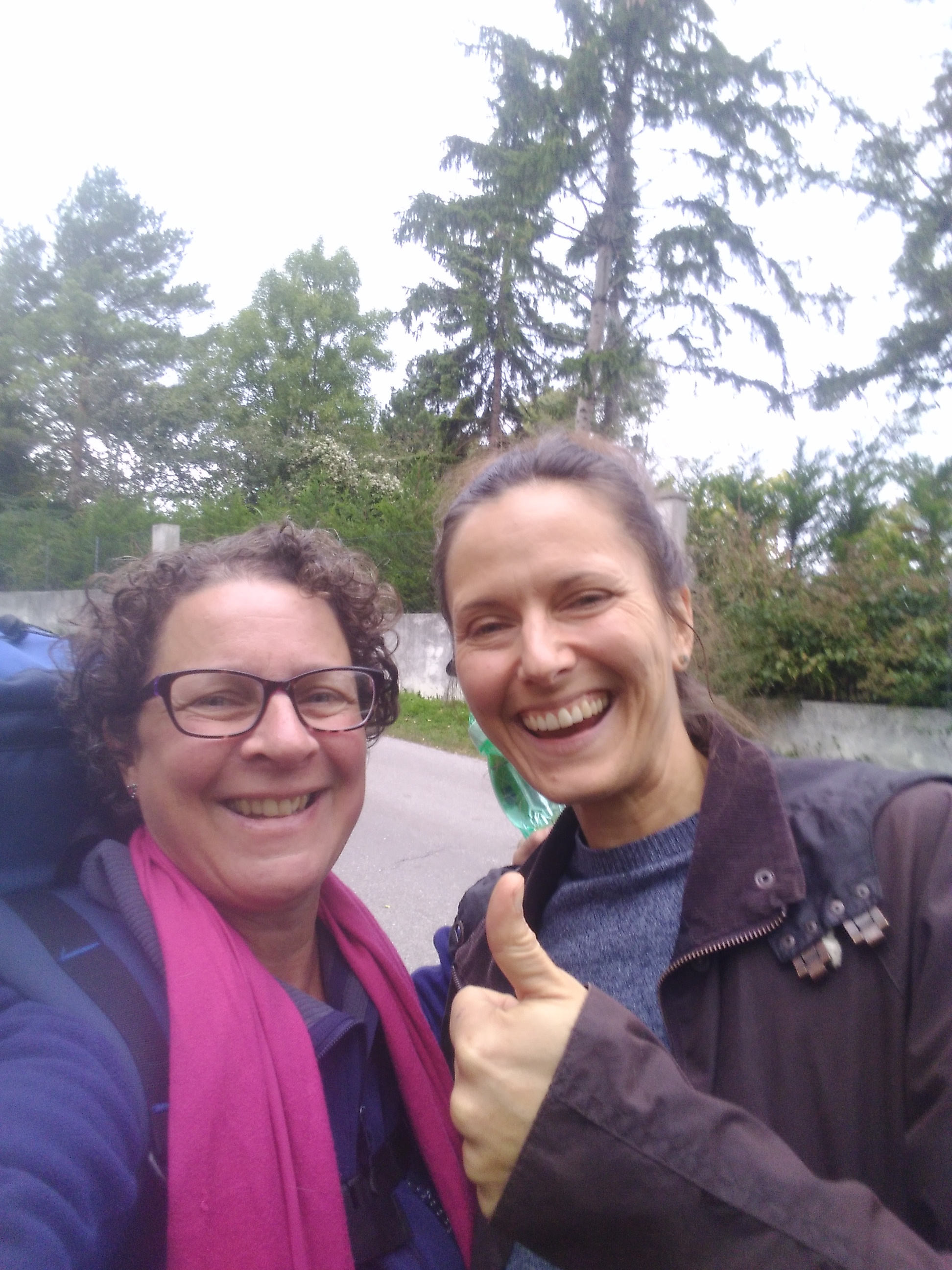
The wonderful Sabine drove me from Andlersdorf to Hinterbrühl through Viennese traffic jams and what threatened to be an endless search for the start of my pilgrimage.
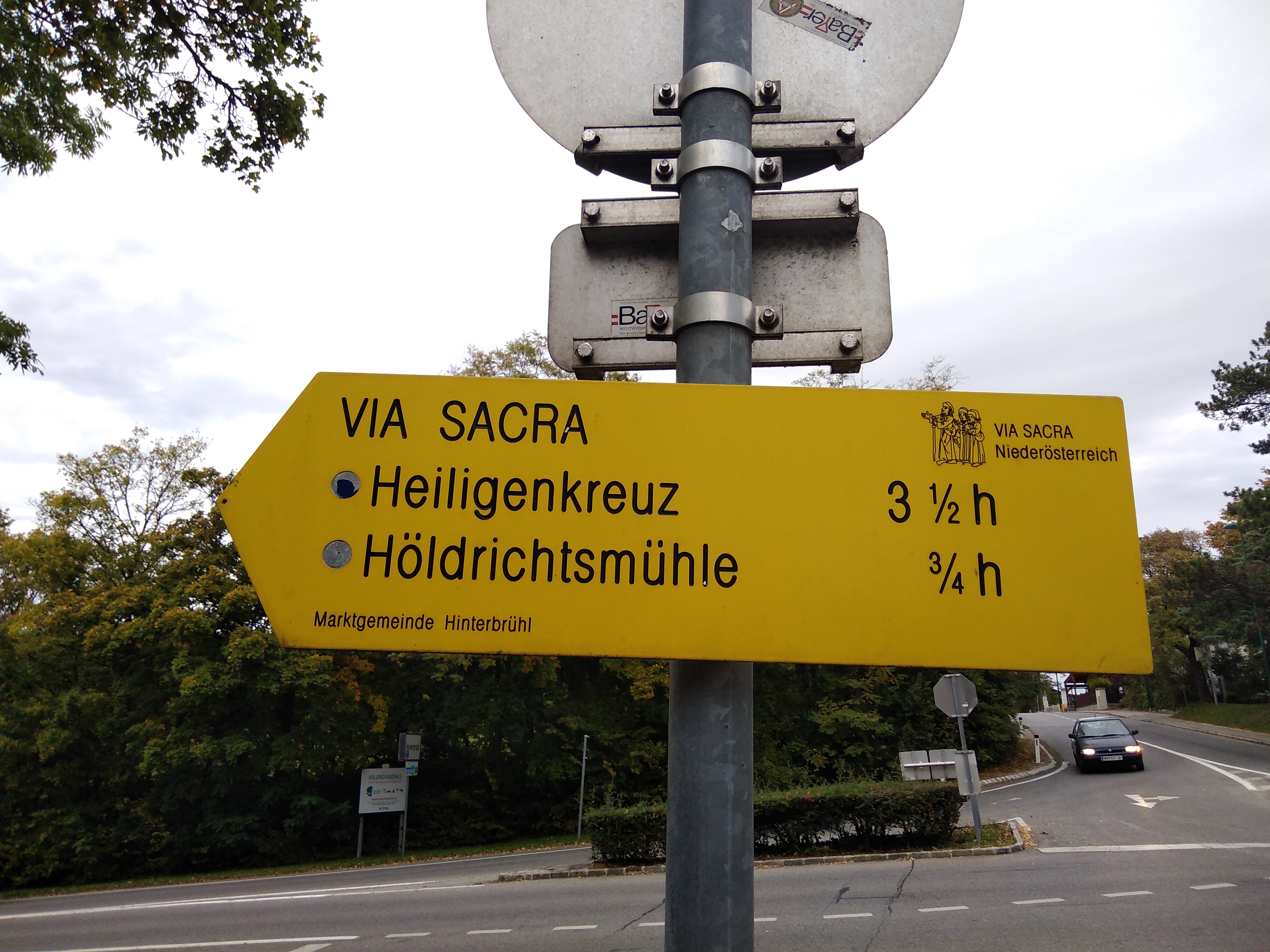
After asking several people it turns out that the yellow sign was like a street one at the crossroads, and that confusion over signage was to be the order of the day.
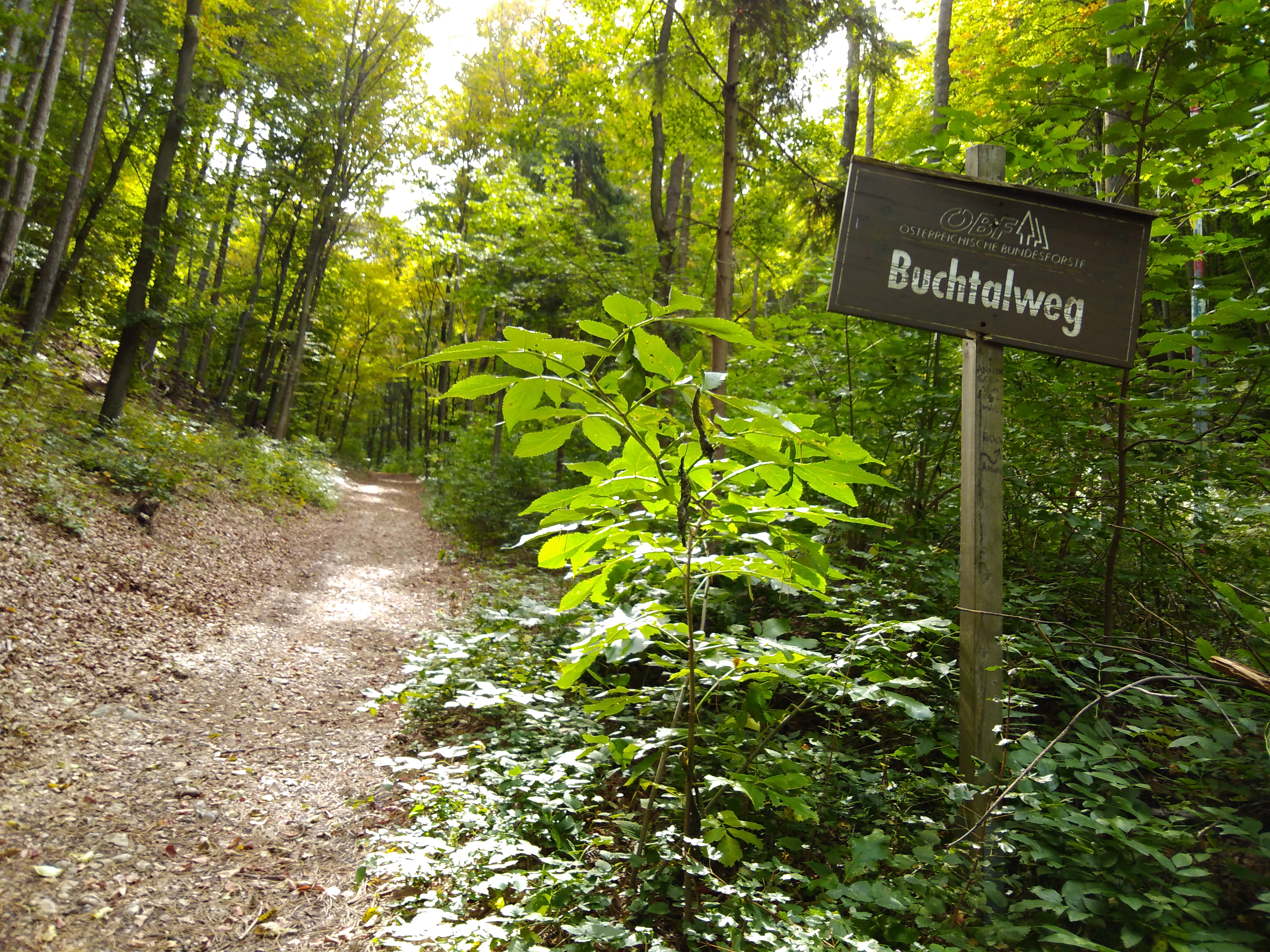
It started well with a downhill hike. A gentle man spotted me minus a boot and administering a plaster. He sympthised with my blister condition, though I was reminded at every turn, by the wayside Christ figures, that any suffering of mine was minor.
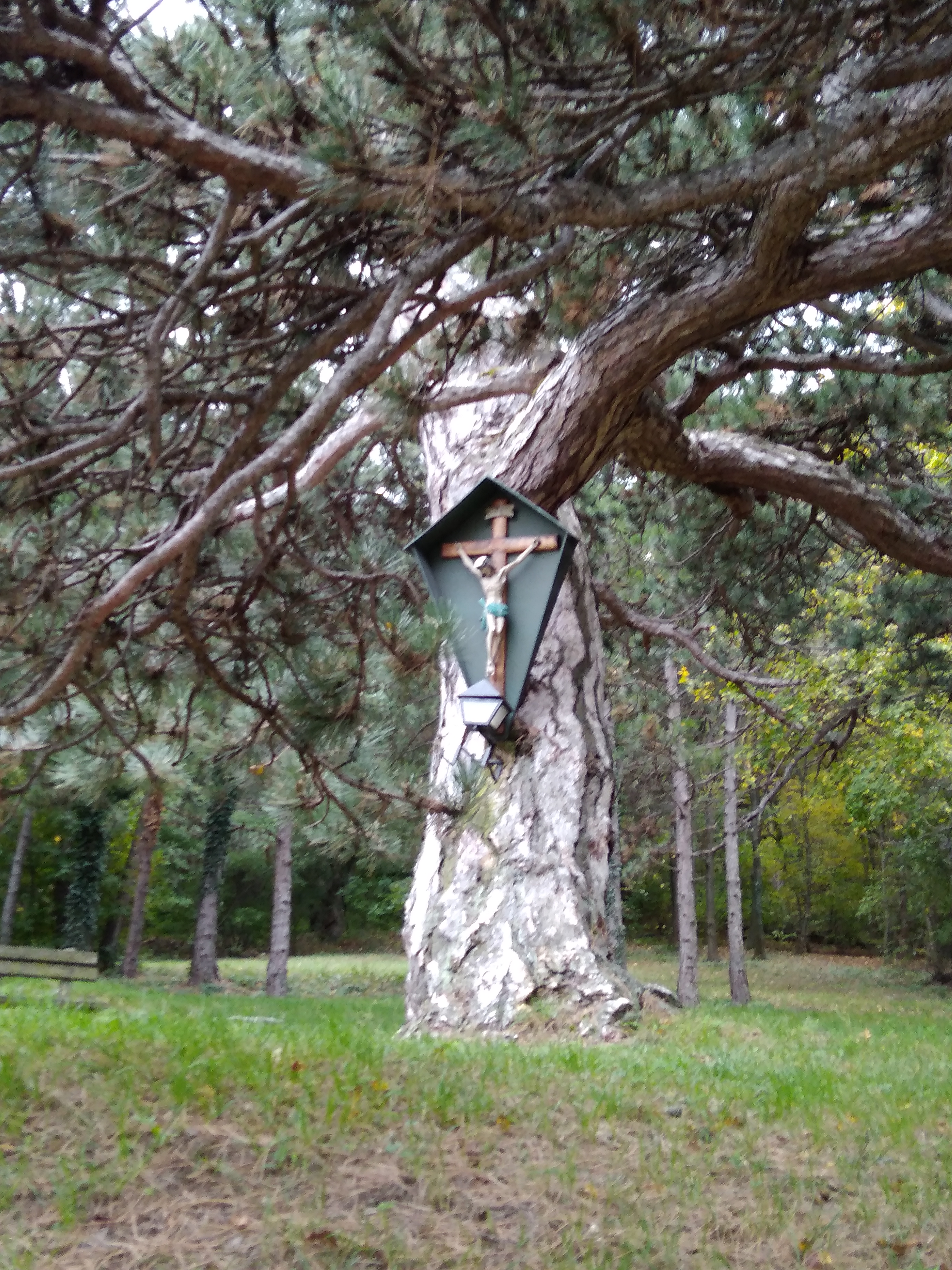
I was continually returned to my Spanish caminos, what with barking dogs, and chestnut hulls littering the paths, their earthy smells as they start to decompose were so familiar. There were Harebells and Chinese lanterns in the woods as I began to climb steeply, and golden and tan beech leaves in heaps by the paths.
It was very hot at the top when I eventually emerged from the trees, and I passed a few people along the way who did not know about the path I was searching for. I had followed yellow signs, but it turned out that they were not the ones I needed.
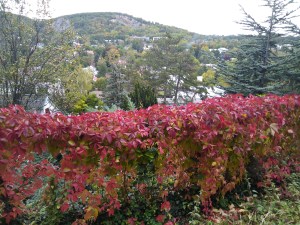
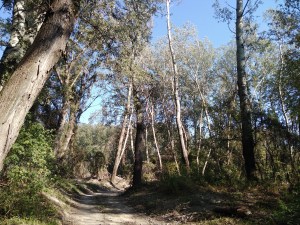
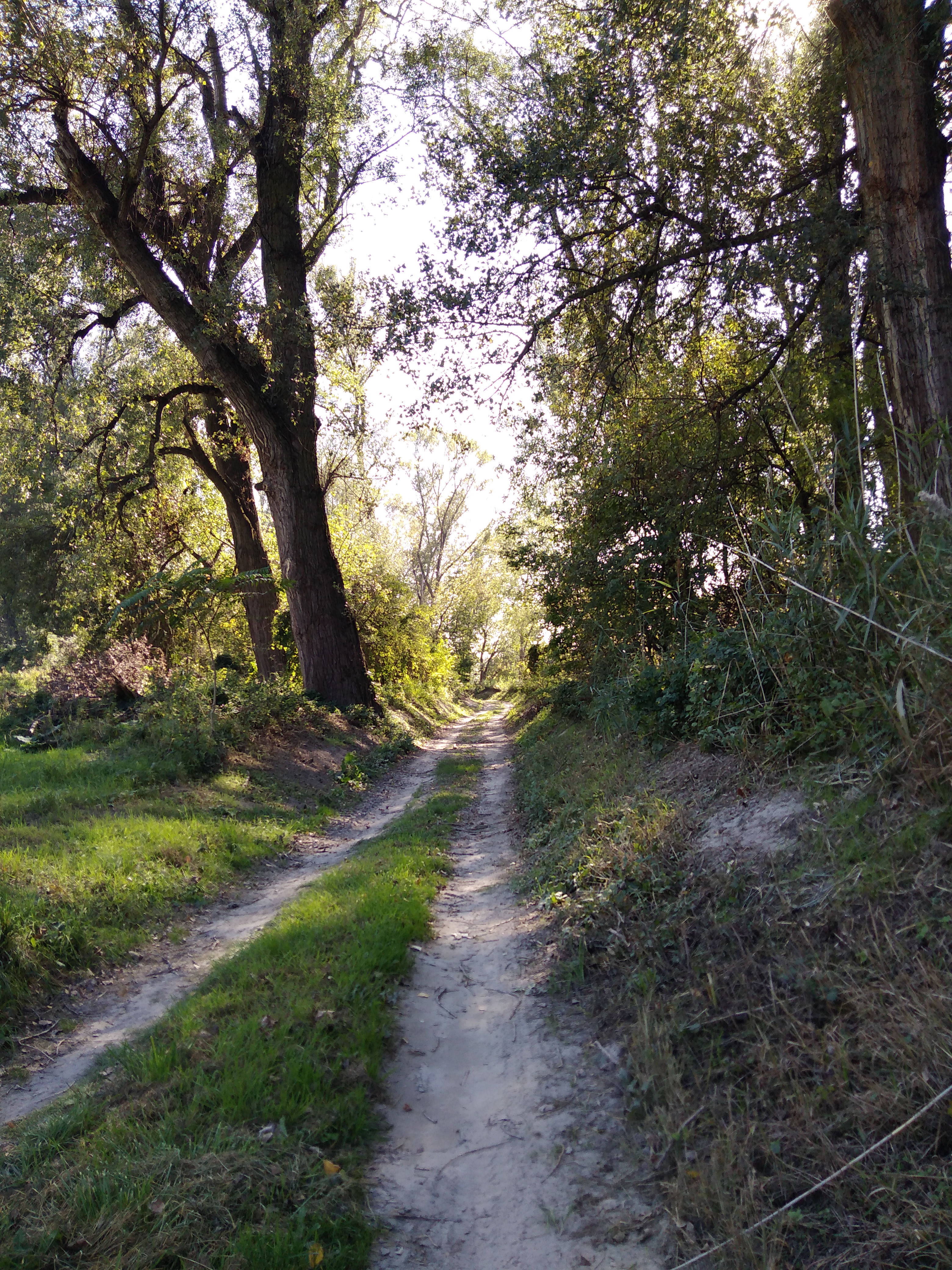
The forest was absolutely beautiful. The next day a monk was glad for me to have taken this route, pointing out that much of the way is otherwise by the main road.
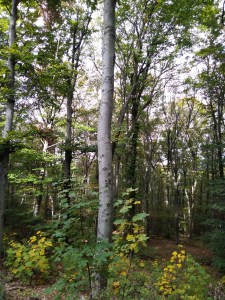
If I had been so inclined I could have dined and drunk to my heart’s content at the two large ‘gasthaus’ in the middle of the forest.
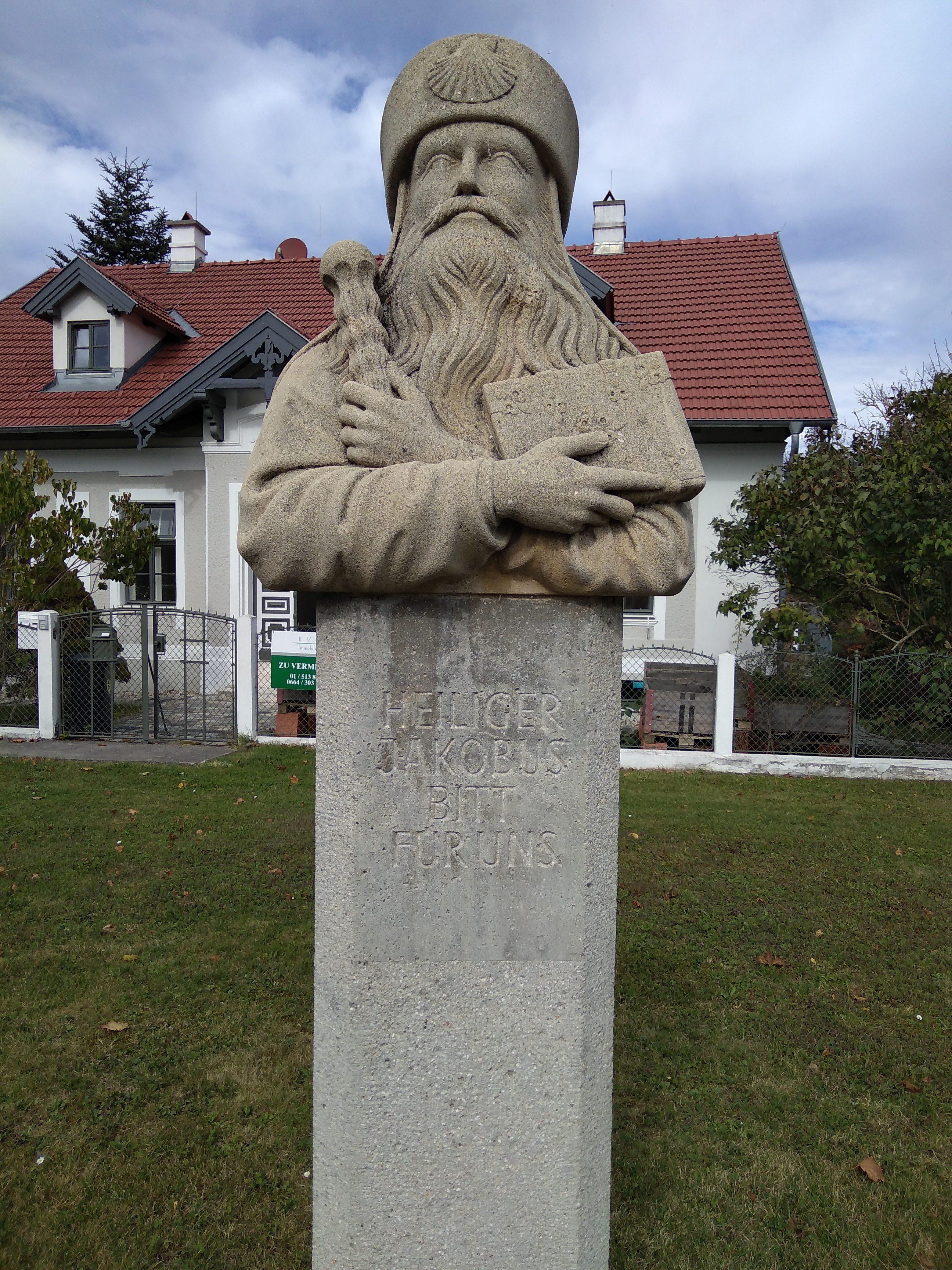
Nearing Gaaden, on the way down.

I had departed at 9am and finally arrived in Gaaden at 12 having taken a wrong turn early on, it transpired, and after adding 2.5hrs and 600 metres of very steep climb up and tottering down to a usually flatter path.
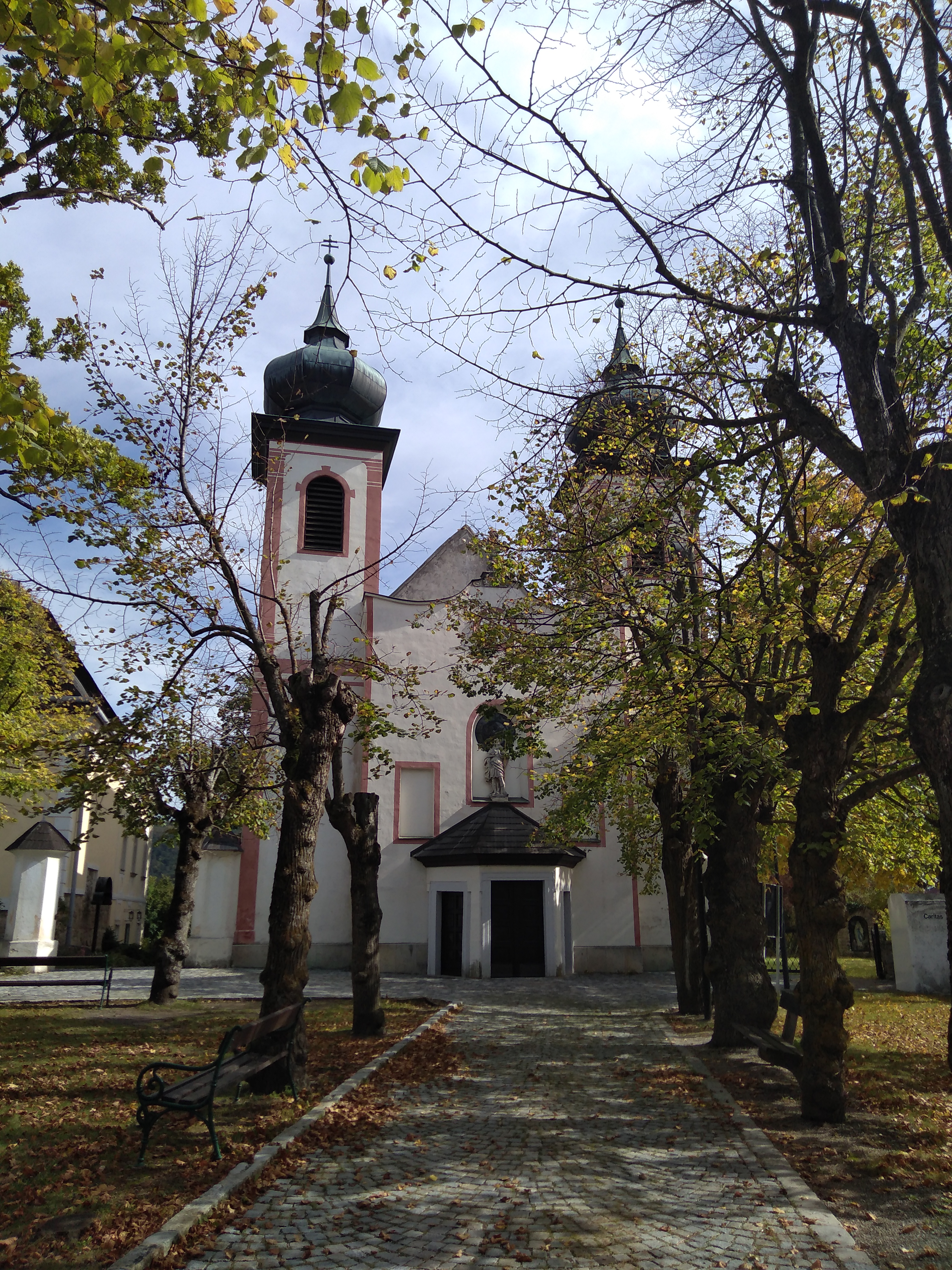
Carrying my hefty backpack like that used up most of the day’s energy. I managed a little further after a 20 minute lunch break, but on getting lost again my spirits plumetted.
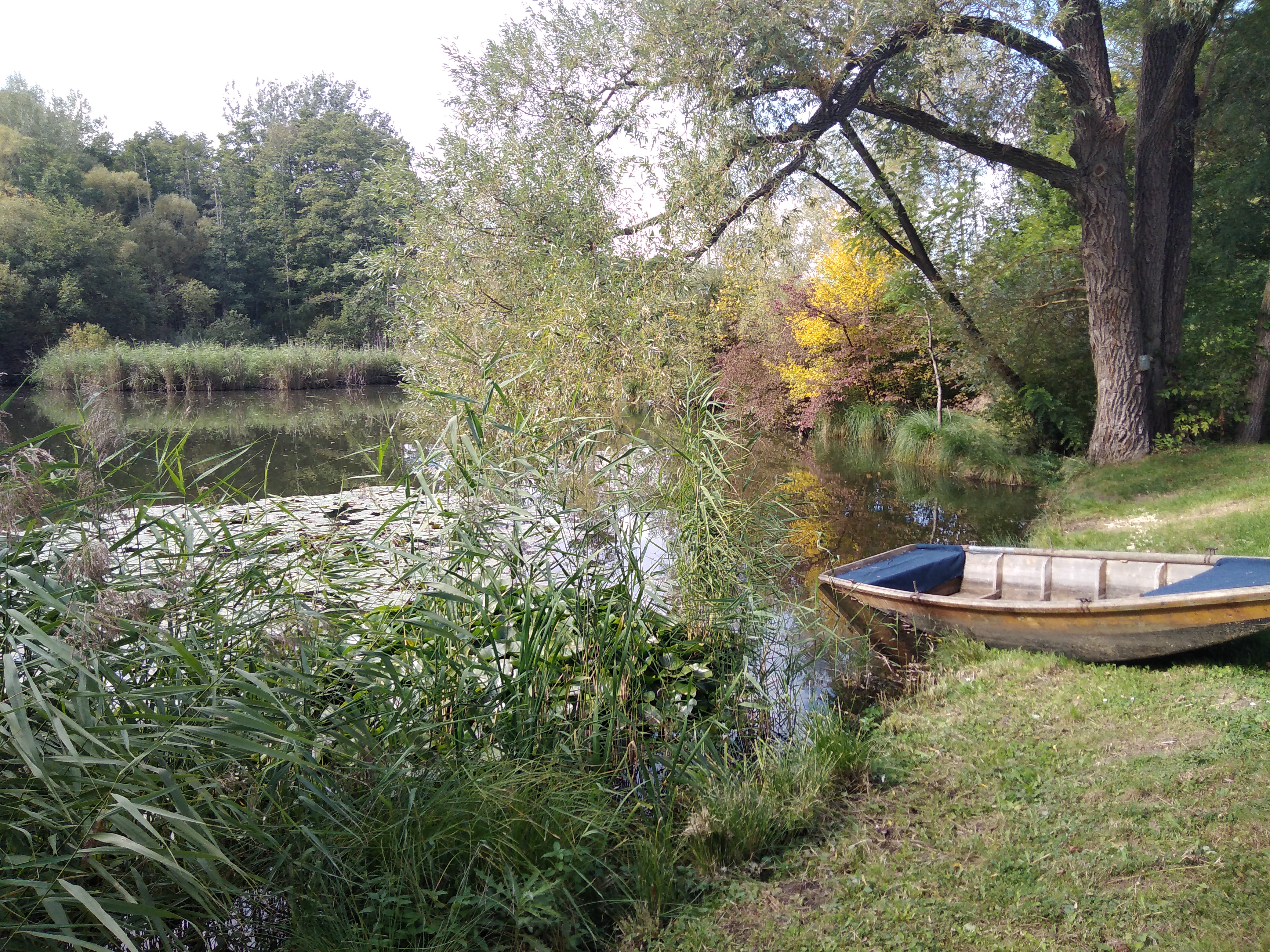
Once more in a forest without the requisite arrows, I sought advice from a couple of walkers with a big bag. They were mushroom foragers returning to their car with a grand haul, all smiles. Luckily, they offered me a lift to the next village and I gratefully accepted as I was at the end of myself.
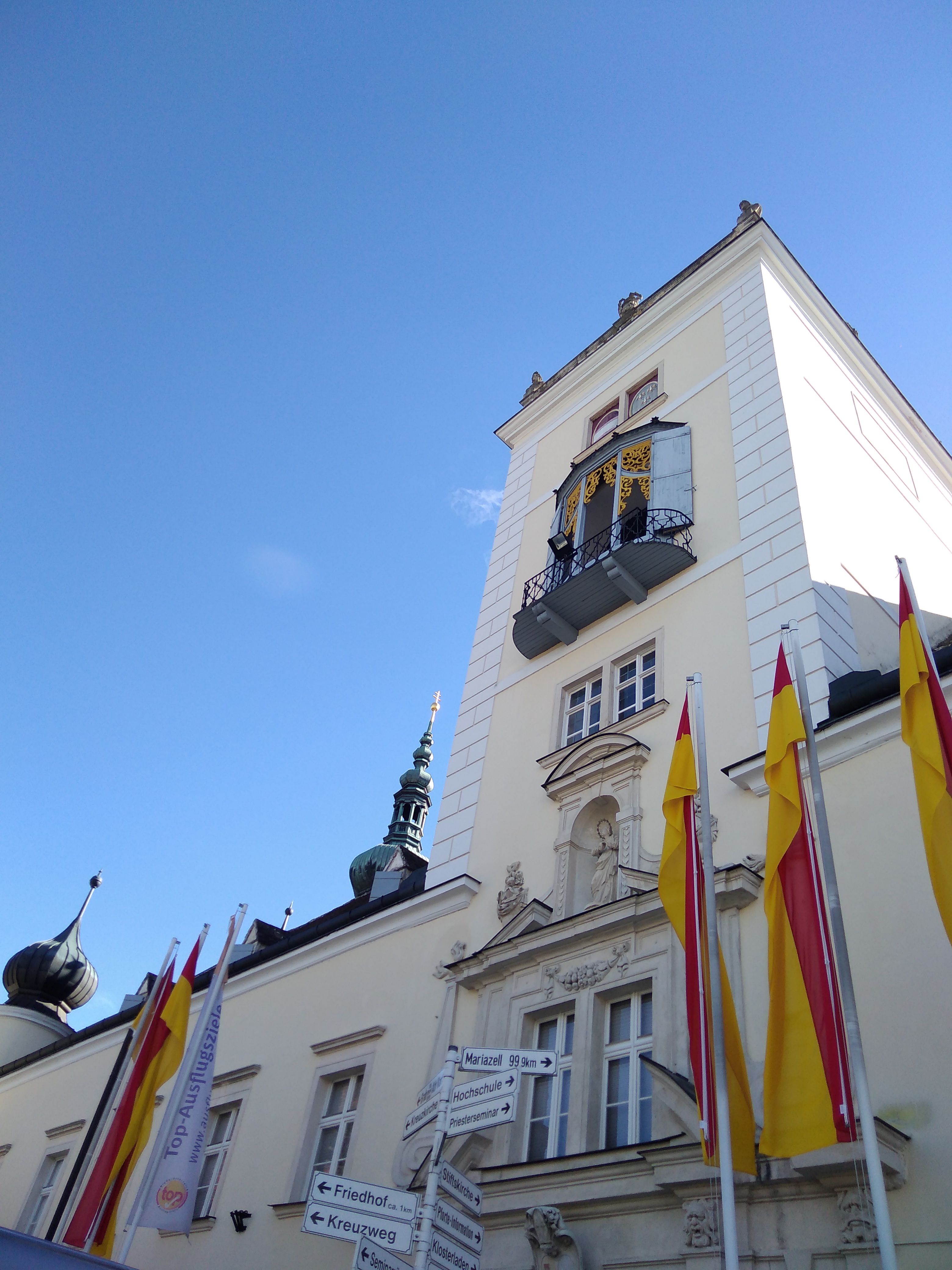
As we passed the famous Heiligenkreuz Monastery, I asked to be put down there. I entered for a look and wondered if they might allow pilgrims to stay. Once again I was lucky.
I rested in the sun beside the trickling fountain until 5.30pm, then attended both the 6pm vespers and 7.50pm ‘komplet’ or compline. Traditionally the same three psalms are prayed each night: 4, 90, and 133. They contain clear references to the night, going to rest, dwelling in the shelter of the Most High, protection of the angels etc, and so are perfect for the end of the day.
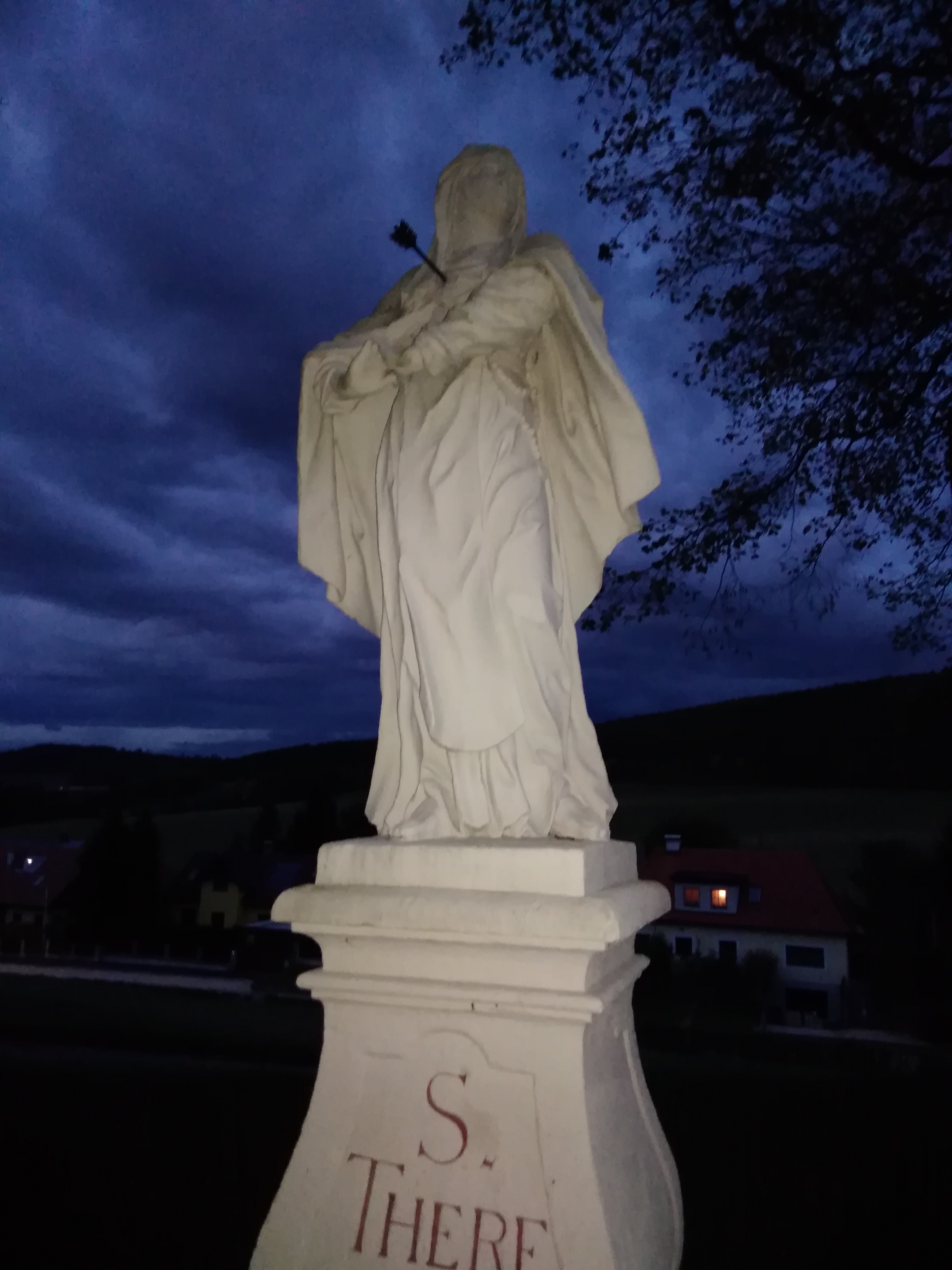
Saint Teresa in the dusk

The Heiligenkreuz monks are renowned for their Gregorian chanting which was why I was happy to attend (I am not a church goer). Dressed in their white robes, half on one side and half on the other side of the wooden choir stalls which were exactly the same colour as the beech leaves in the woods, the sound of the choir was both haunting and eerie.
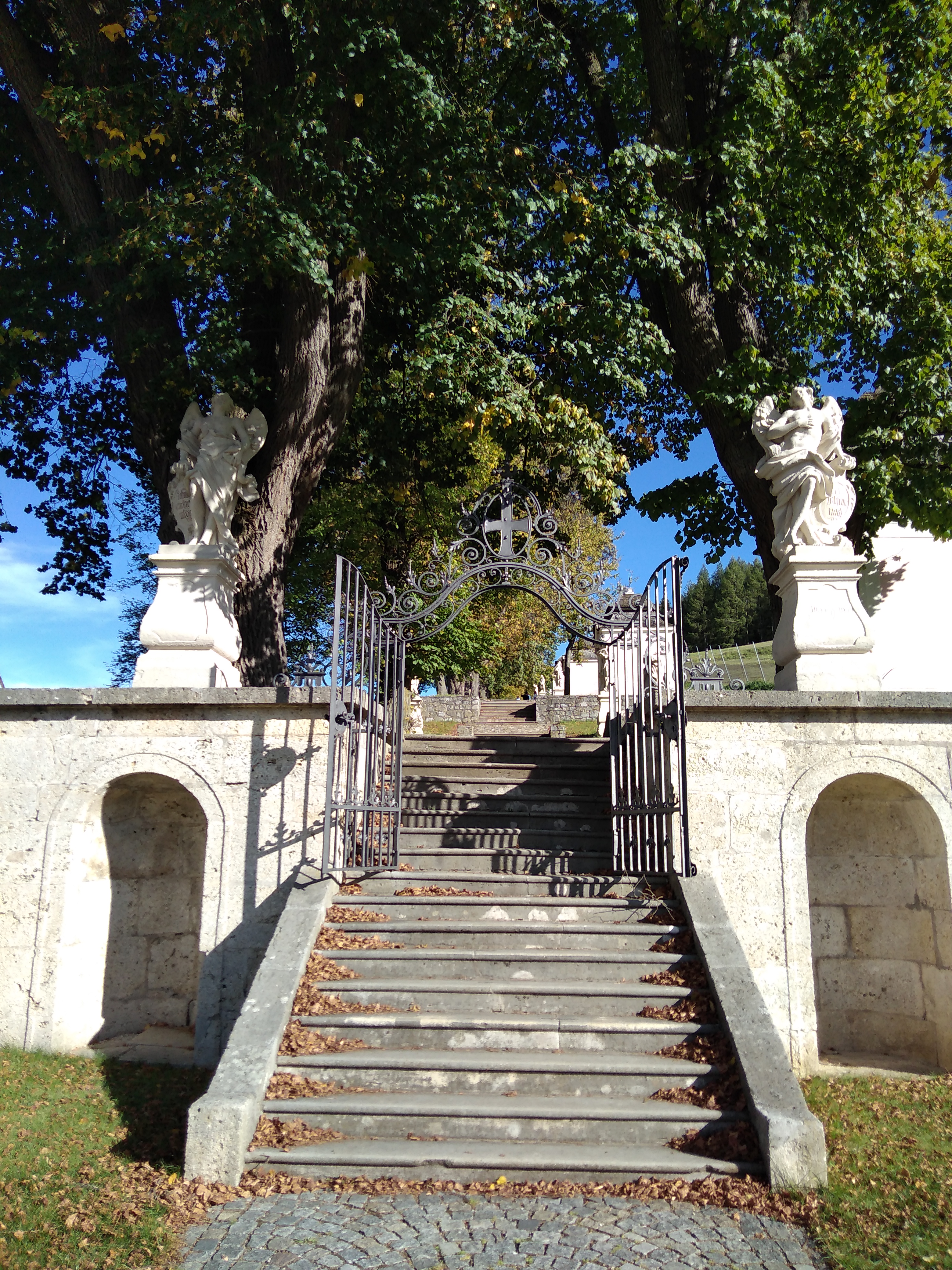
The entrance to the Stations of the Cross outside the Monastery gates

The final service of the day consists of them first lighting candles, then extinguishing the altar lights. At the end, the bells toll for five minutes, rolling through the valley, and the candles are finally blown out leaving us in near darkness while the Fathers begin their silent period from 20.00 hours until 05.00 the next morning when we reconvened for the first prayers of the day.

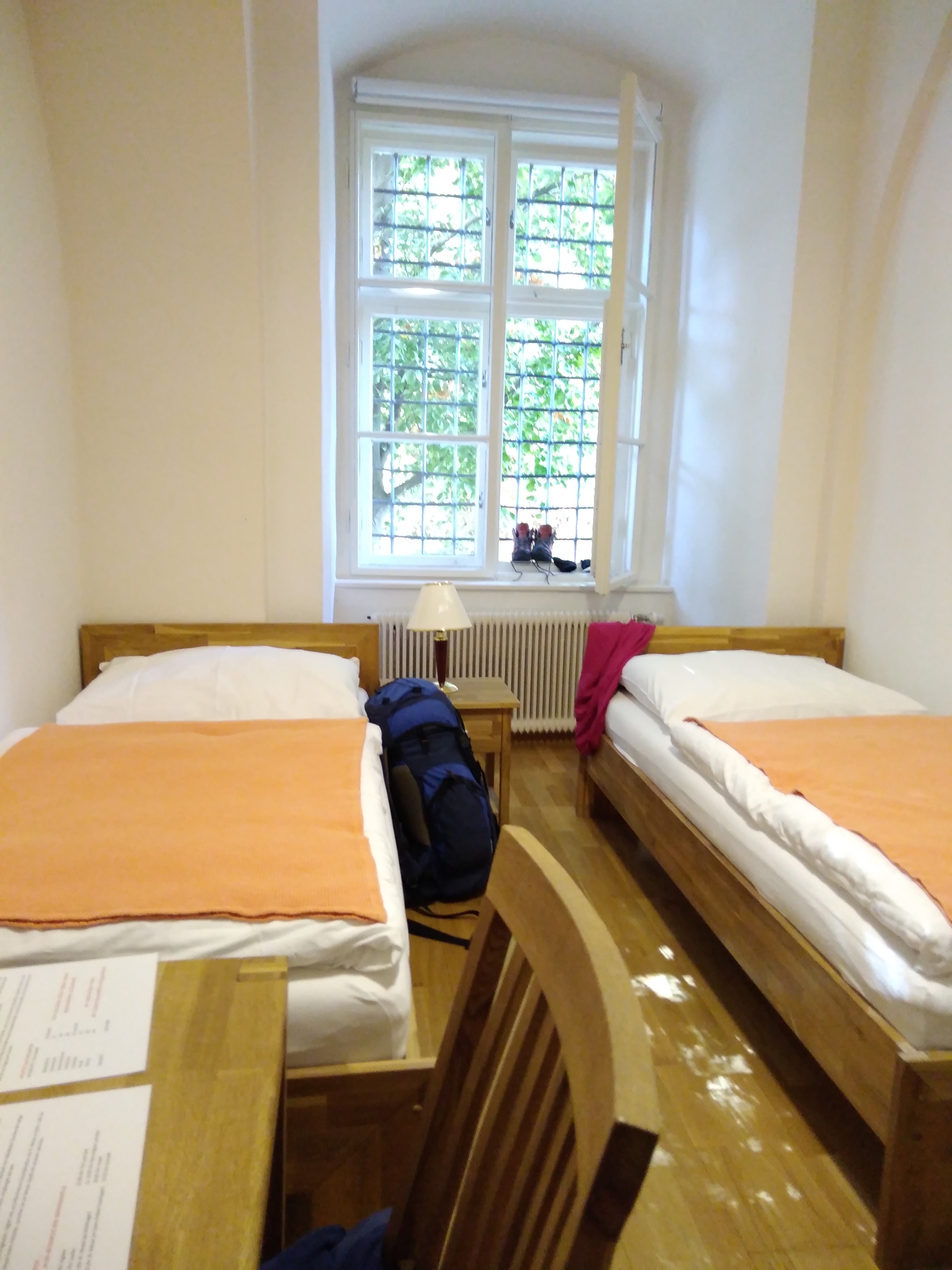
I took a brief dusk walk beside the deer to commune with any spirits who might have been at large and find the full moon, but it was not to be seen behind the rain clouds. Instead, I climbed along the path of the Twelve Stations of the Cross and watched the remnants of the sun turn the sky a bruised orange.
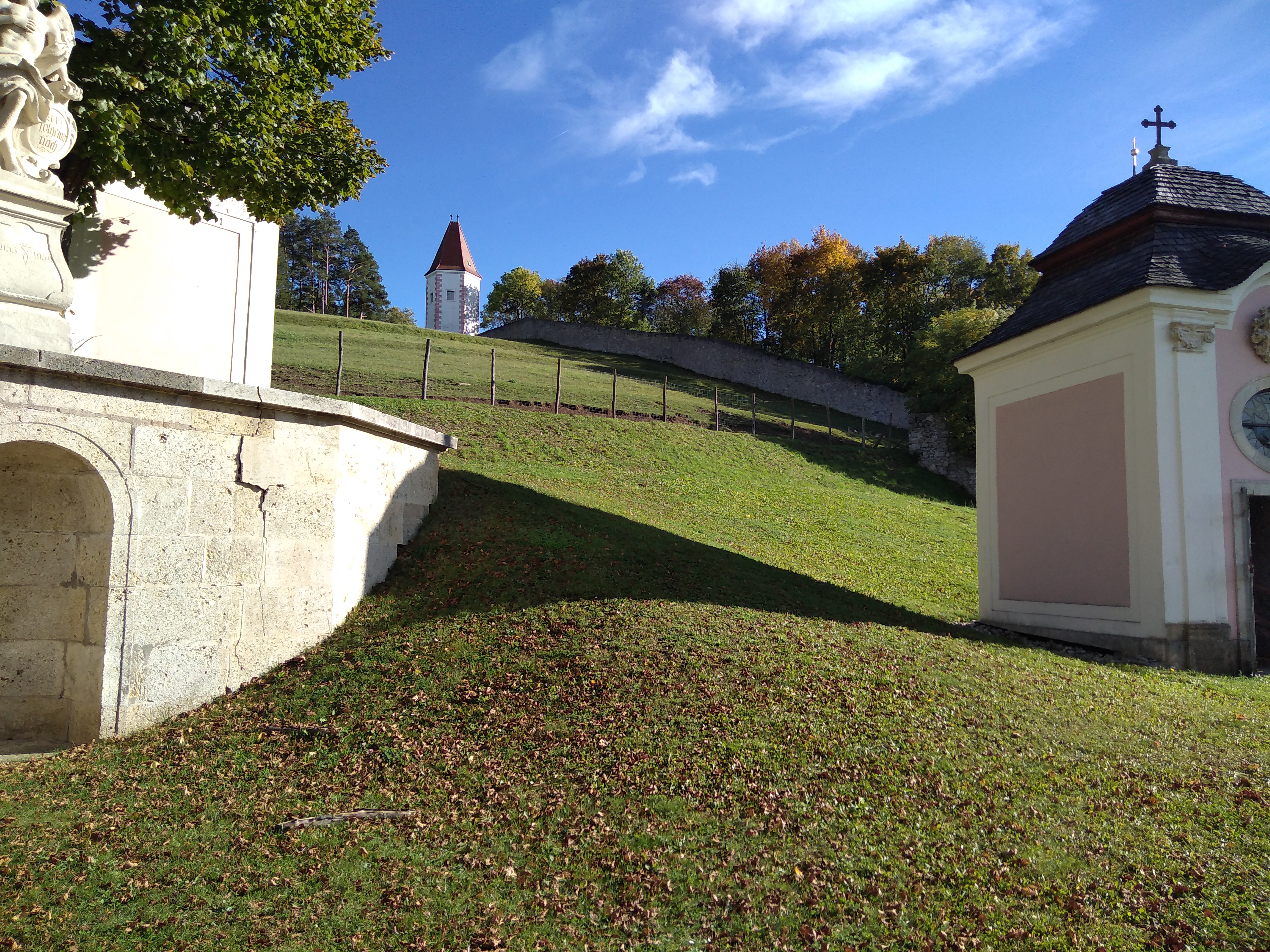
Private accommodation in a simple room with two beds with a sink cost 26 euros including evening meal, lunch, breakfast and copious mugs of tea to rehydrate myself before a very early night.
Vienna to Andlersdorf

Walking Donaustadtbrüke to Schönau an der Donau. 30 kms.

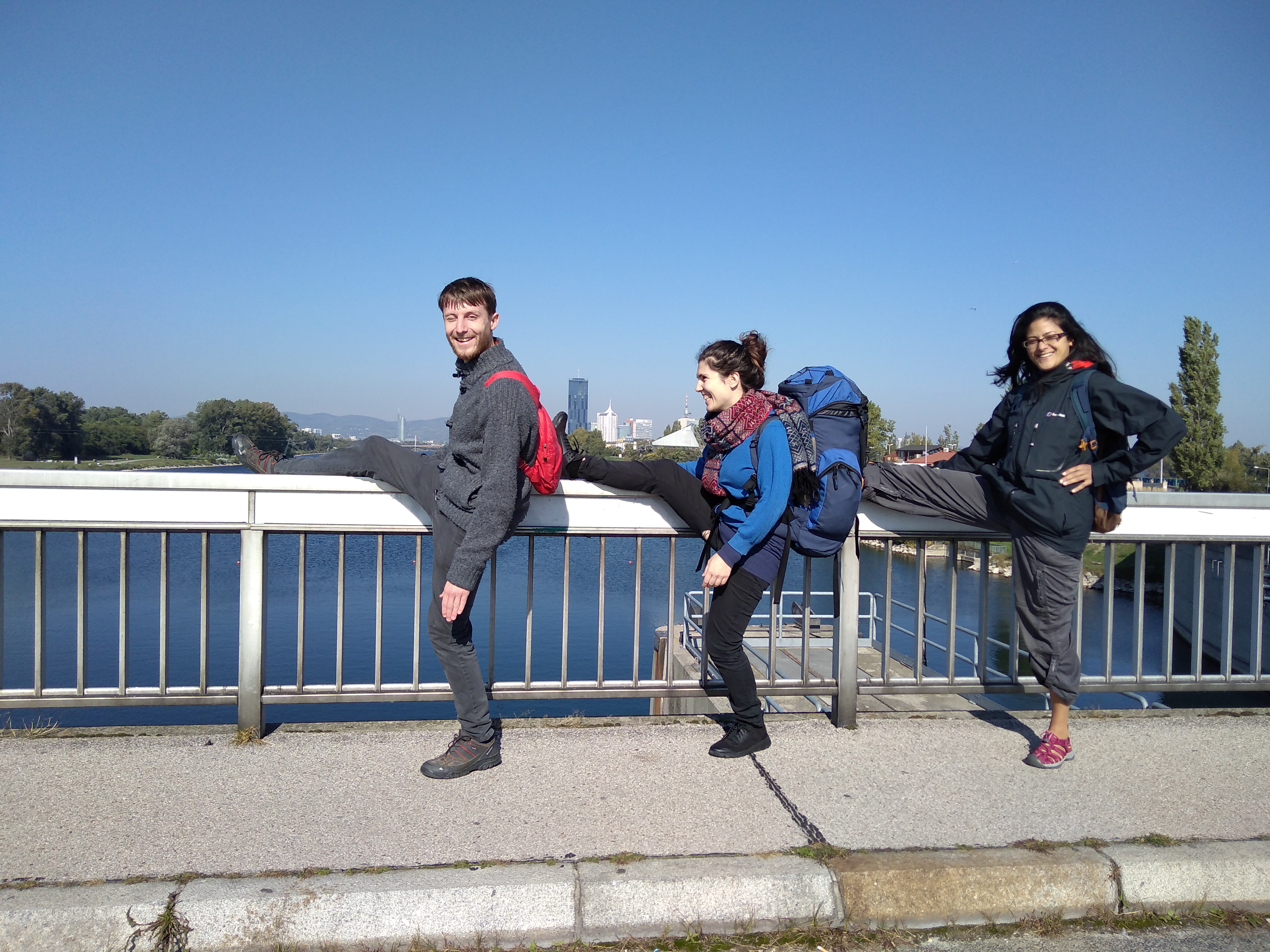
Carla, Karen and Nicolas.

I took the U2 metro line to Donaustadtbrüke which means the bridge over the river Donau (Danube),  from the town side to the island.

I had the pleasure of some unexpected company in the form of 3 pals from the European Shiatsu Congress I had lately attended. They even carried my heavy rucksack for me in relays for the first hour and a half. That’s what friends are for! We sung Lets Go Fly a Kite from the film Mary Poppins and we fair swung along together.

It was great to be out of the city after a hectic and action packed week. It is a wide waterway with extensive tributaries making for divers intermediary land masses with little to distinguish them except that they are basically green and not built-up.

Having left nearly 2 hours later than planned, we crossed to the southern bank earlier than the map showed. There were toilets there and what looked like a good place to eat and drink.

The sun was still shining with a strong wind when I struck out alone, having hugged my goodbyes.


A walk along the Danube from Vienna 

What with new boots (which broke slightly when I put them on that morning) and it being my first long walk with a back pack since June, it took me a while to get into my stride. When I did – with a big deep sigh – I rediscovered the joy!

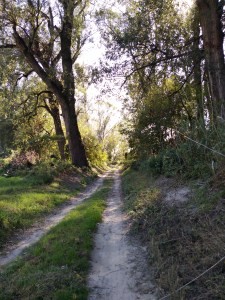
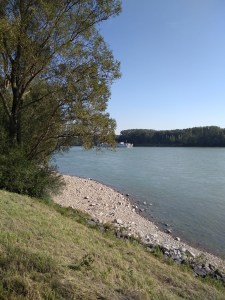
I was on green paths beside flowing blue waves, amidst wild flowers of purple, pink, blue, white and yellow with butterflies to match. They seemed to appear by magic from the ground they were camouflaged by as I trod on it.
A walk along the Danube from Vienna 

I had to negotiate the oil refinery which smelled very unpleasant, complete with loud machinery. Up until now I was on cycle paths with the bikes tinkling their bells or skimming past, but once clear of the industrial area, dragonflies played around me, walnut shells crackled underfoot (reminiscent of the Camino Francés), there were ducks, swans and swathes of happiness.
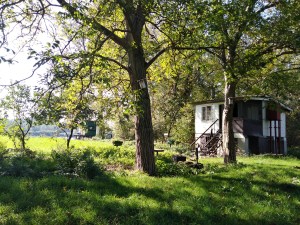
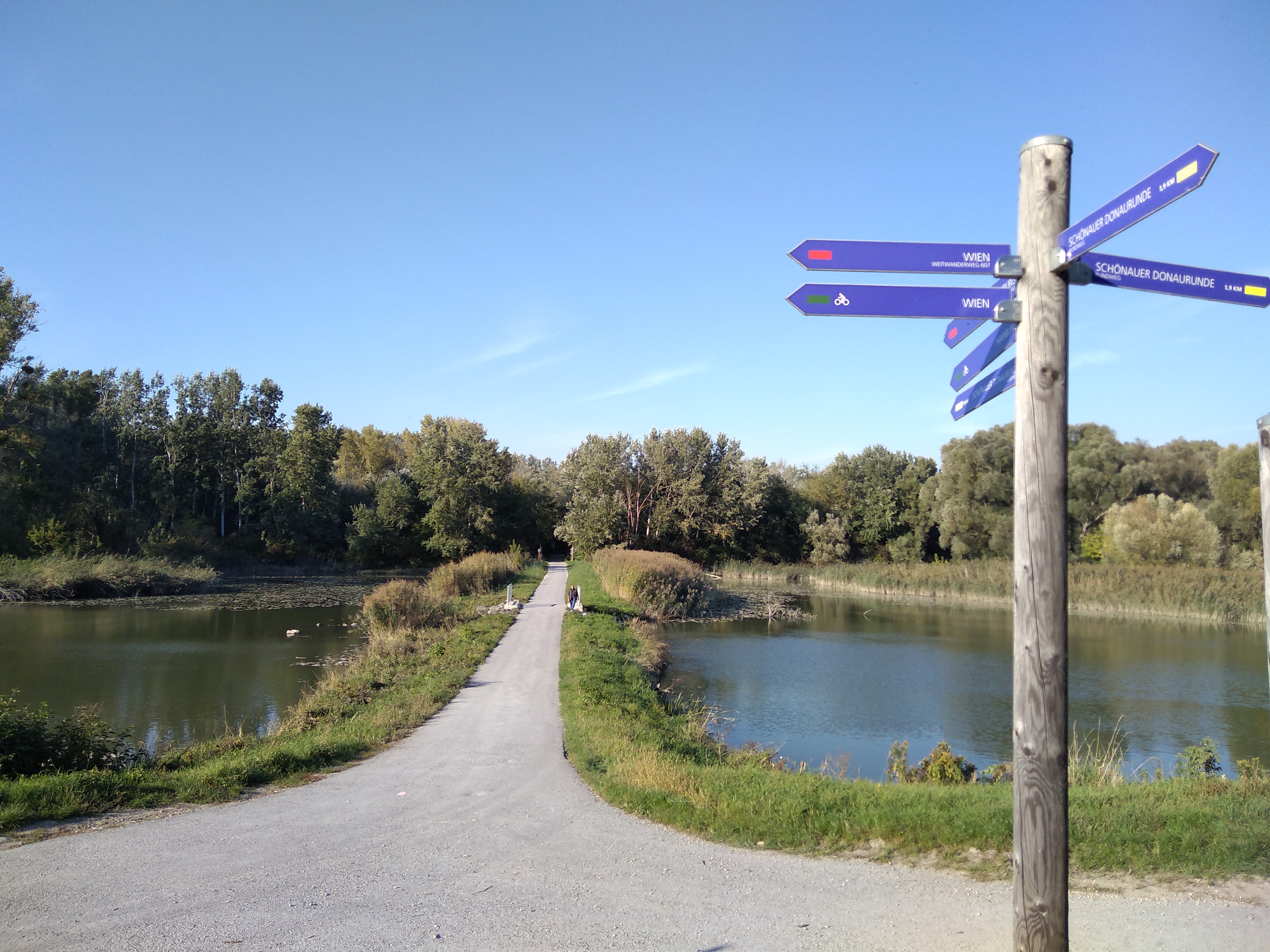
The path moves through a Natural Park and there are attractive wooden dwellings on stilt legs at regular intervals. Many of them have the same bucket fishing nets I saw along the coast of Brittany in France in May 2017.

A walk along the Danube, not far from from Vienna 


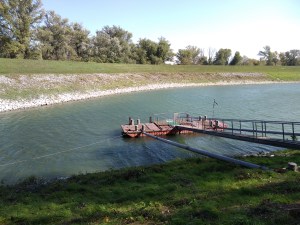
It was beautifully quiet and I caught myself exhaling again. A heron took off from the pool’s surface, dragging its webbed feet out of the water with sheer determination on the way to a better spot.

A walk along the Danube from Vienna 

Having changed to sandals to give my new blister some air, I enjoyed the soft white sand between my toes.

There were 2 men on the opposite bank when I stopped for my picnic. Other than that I saw no walkers until I changed back into my boots several hours later. I was sitting by a pool on the bleached stones when a couple of experienced looking hikers came by and were able to point me in the right direction for what turned out to be the final half hour.

A walk along the Danube from Vienna 

I thought I was three quarters of the way there and would have to just stop in order to avoid being on the path when it got dark, and so I stopped at the pleasant looking cafe to ask the way to the nearest town. Someone overheard me and said I could get a bus. I had 5 euros on me so had to forgo a cup of desperately needed tea when I spotted the sign Schönau an der Donau. Wow I had made it to the end of the walk without a donkey, without even knowing it!  I was elated and full of sun.

In fact I needed 2 buses which collectively came to more money than I had, but the second driver waved me on anyway. What a great sense of achievement I felt!

Late afternoon in Schönau an der Donau.

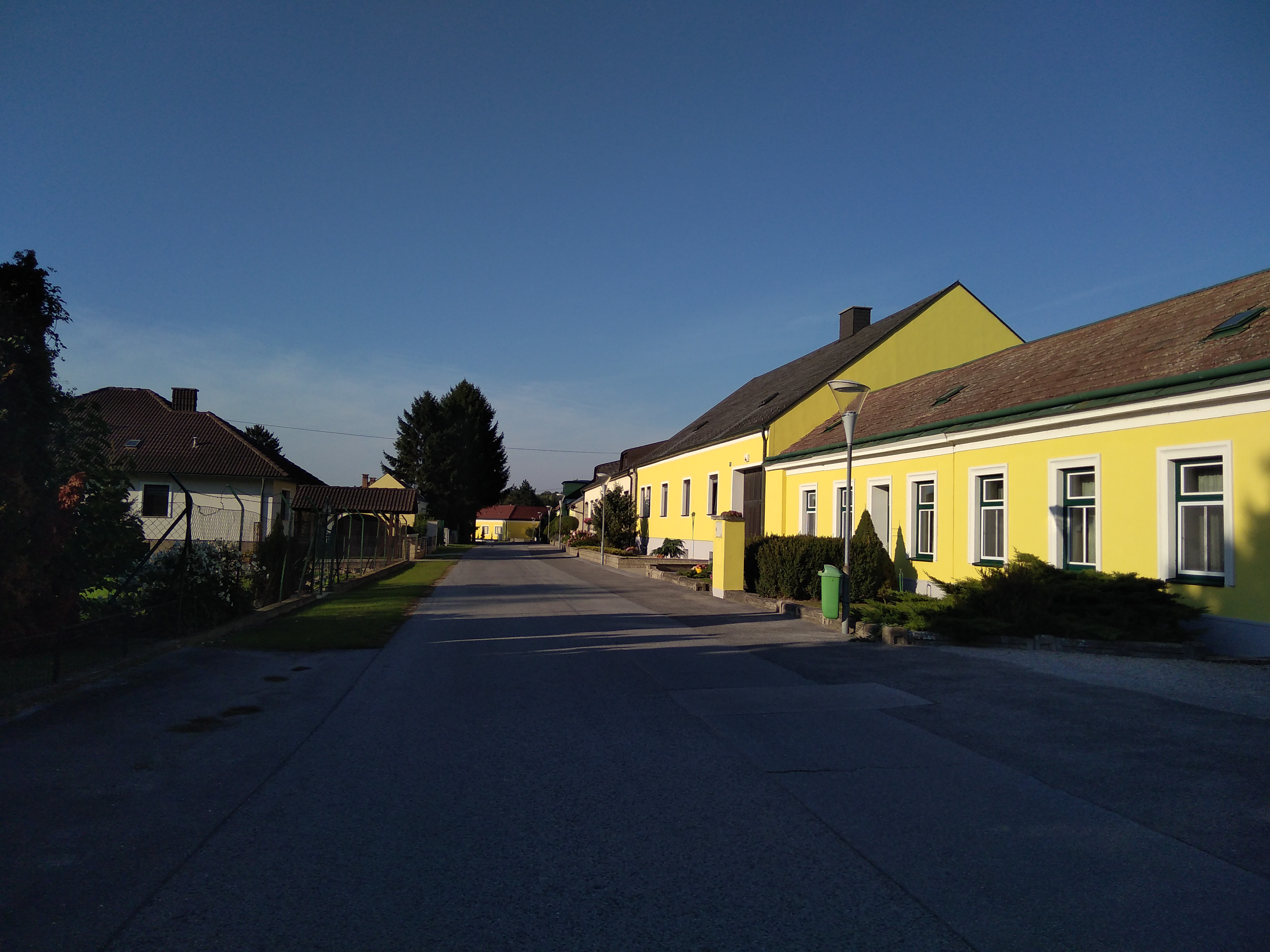
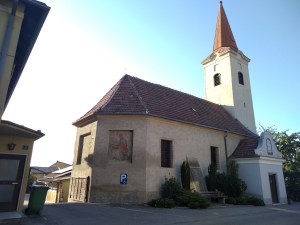
Schönau has pretty, pastel-coloured bungalows, a church and fire station amidst flat and fertile farm land full of serious farm machinery as it is harvest time. The post bus was full of giggly school girls and posturing boys tossing back their fringes and feigning disinterest.

Schönau an der Donau

Here is the link to the walk:

It is a flat, easy walk. The map looks like an ancient one, but the walk is simpler to follow than you might expect. There are hardly any arrows or signs (just one or 2 red and white horizontally striped ones after you cross the river), but as long as you stay close to, and on the right side of the Donau (Danube) you can take the footpaths with confidence. Skirting around the oil refinery is the least enjoyable stage, however what follows is glorious.

Woods near the Danube

Beware of Google maps! It does not cater for hikers, taking us on main roads and over busy junctions. It is great for getting your bearings, for orientating yourself when lost, but not for footpaths and tracks.

Both the map and Google need Internet. I have not yet found a suitable offline map but am working on it and will share when I find it.

Vienna 2, Austria

A second blog about Vienna – photos, food, safety for women, tourist services and more.

I was visiting this elegant, dolls-house city for the first time for the purposes of attending the largest European Shiatsu Congress ever held. There were over 600 participants from very many countries including Greece, Norway, the Netherlands, Italy, Scotland, England, Germany, Switzerland and of course Austria.

It was truly wonderful to meet up with friends I made in France and Spain during the last year; spend time with colleagues from previous meet-ups; and forge new acquaintances.

In the same way that Gill, fellow practitioner, helped me find friends and hosts in Spain, Sabine was my guide and support here. I am grateful to her, her mother and Ursula for their kindness, generosity and friendship.

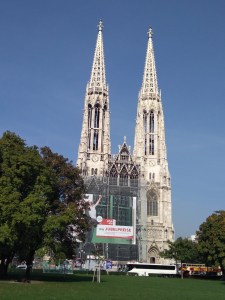
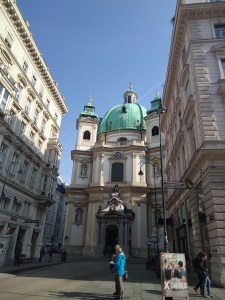
The Votifkirche.
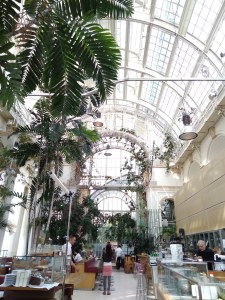
Palmenhaus (palm or glass house) for overwintering plants years ago, now a cafe.

Trying to find the Tourist Information I was drawn to a certain loudness which turned out to be a slightly pop version of Gloria In Excelsis Deo. On October 31 1517 Martin Luther nailed 95 theses on the gates to the Wittenberg Castle Church. Thus began the Reformation whose 500th anniversary was this year. I had stumbled across the preparations for this event.


Useful facts: The ITI Tourist Information in Schmerlingpl. 3 is not the one you want, despite what Google maps tells you. Find the website for the right place and follow the link from there. And note that they cannot tell you anything about anywhere outside Vienna, including treks which leave the city or well-known pilgrimages.

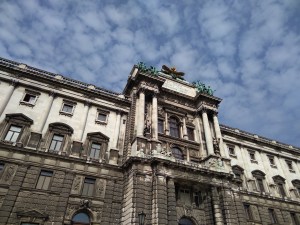
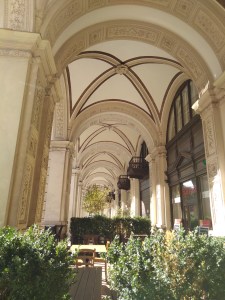
All very grand and gold but the sun cannot usually get down to street level.

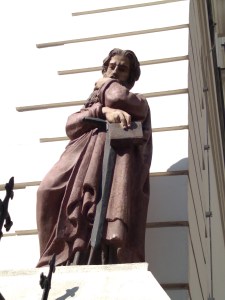
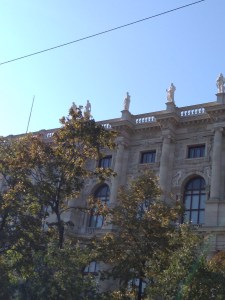
There are a lot of men in statue form standing high on rooves looking down at us mortals.

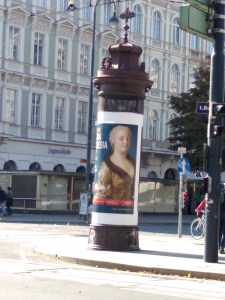
Maria Teresa had 16 children.

She was the only female ruler of the Habsburg dominions and the sovereign of Austria, Hungary, Croatia, Bohemia, Transylvania, Mantua, Milan, Lodomeria and Galicia, the Austrian Netherlands and Parma.

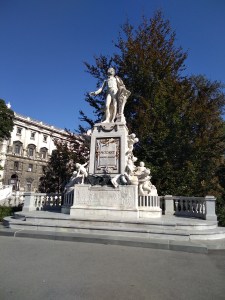
Mozart cuts a fine figure.
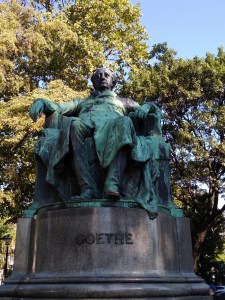
Whereas I thought Goethe just looked fed up and resigned.
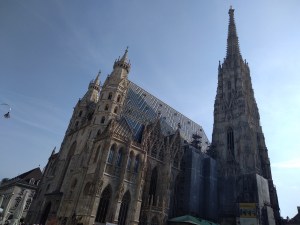
I liked the patterned roof of St Stephen’s Cathedral.
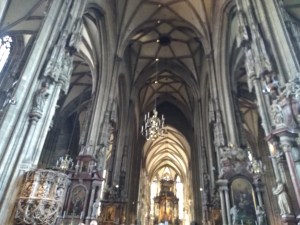
And the interior was impressive.
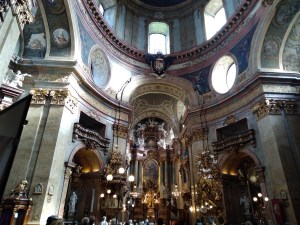
But the roccoco church of St Peter was altogether in a different league.
Exterior of St Peter’s Catholic church.

I walked all over the city day and night and believe it is safe for solo women. I even made one very early walk alongside the metro line U6 which is raised up above the road level, and there were many men who looked ‘down at heel’, but no-one bothered me at all.

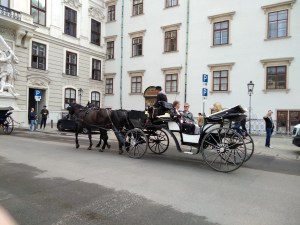
Controversial tourist carriages. There are rules in place to protect the horses from the heat and boredom but not everyone is convinced.

The Viennese speak great English which made it tricky to try my schoolgirl German. There are 1000s of tourists so most people you stop to ask the way have no better idea than you!

Jesuit church.
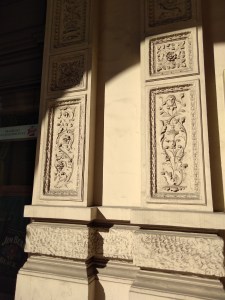
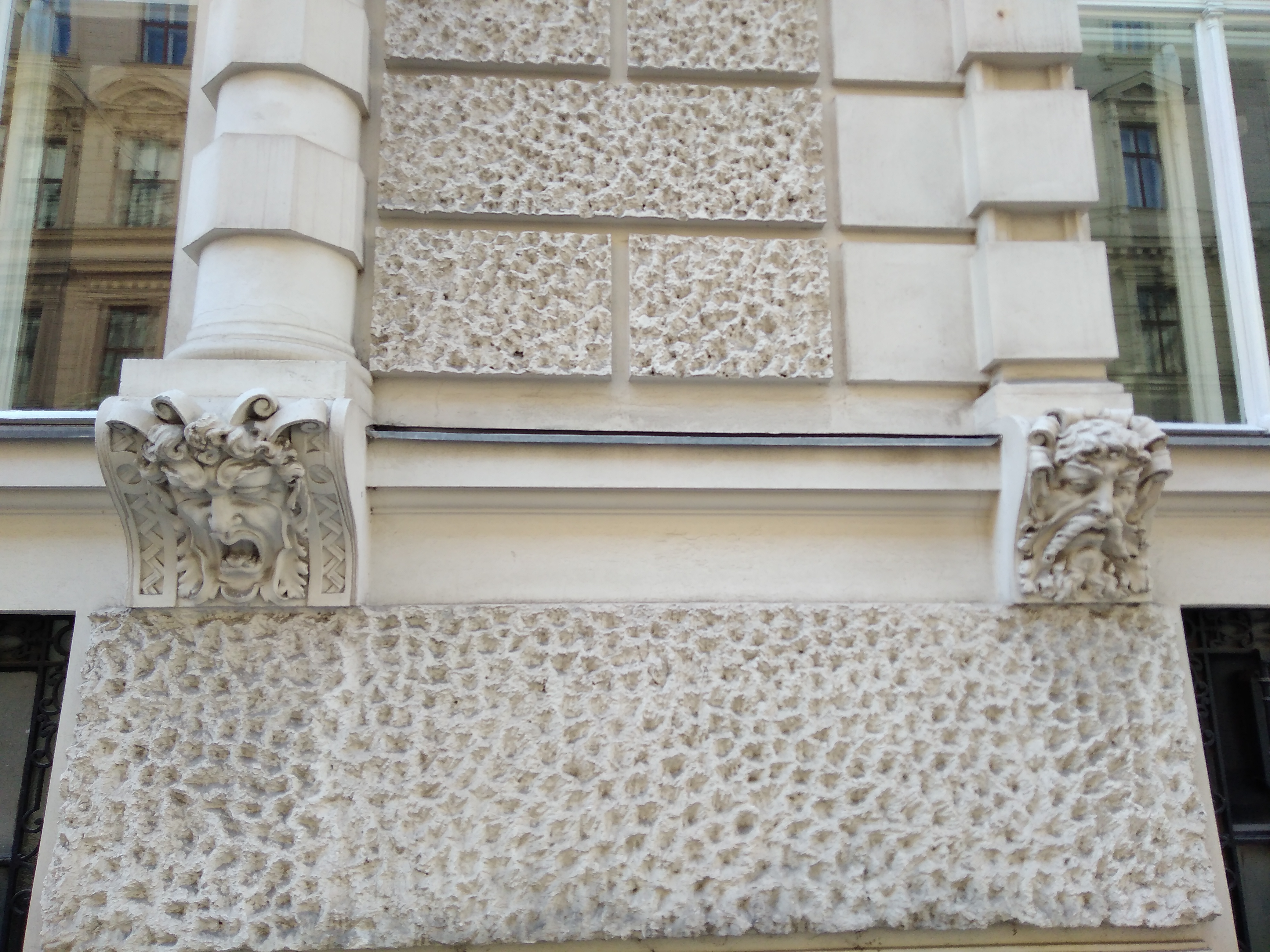
Fine stonework.
A screaming gargoyle.
Grumpy burghers.

I was taken to the Nachtsmarkt (market) where I sampled olives and dried fruit, chocolate, and was given free soap. The vegetarian restaurant was amazing. Details below.

Nachsmarkt: so many stalls and wonderful arrays of round-the-world delicacies.  https://www.wien.gv.at/freizeit/einkaufen/maerkte/lebensmittel/naschmarkt/

Chocolate, and especially the pistachio, that is sustainable as well as delicious http://www.zotter.at

Lovely soap with natural scents: http://www.allesseife.at

Recommended deli (veg and vegan) in Mariahilferstrasse main shopping area: http://www.freiraum117.at/Startseite_m

Evening vegetarian restaurant with charming service at Opernring: https://veggiezz.at


London and Paris – Green spaces

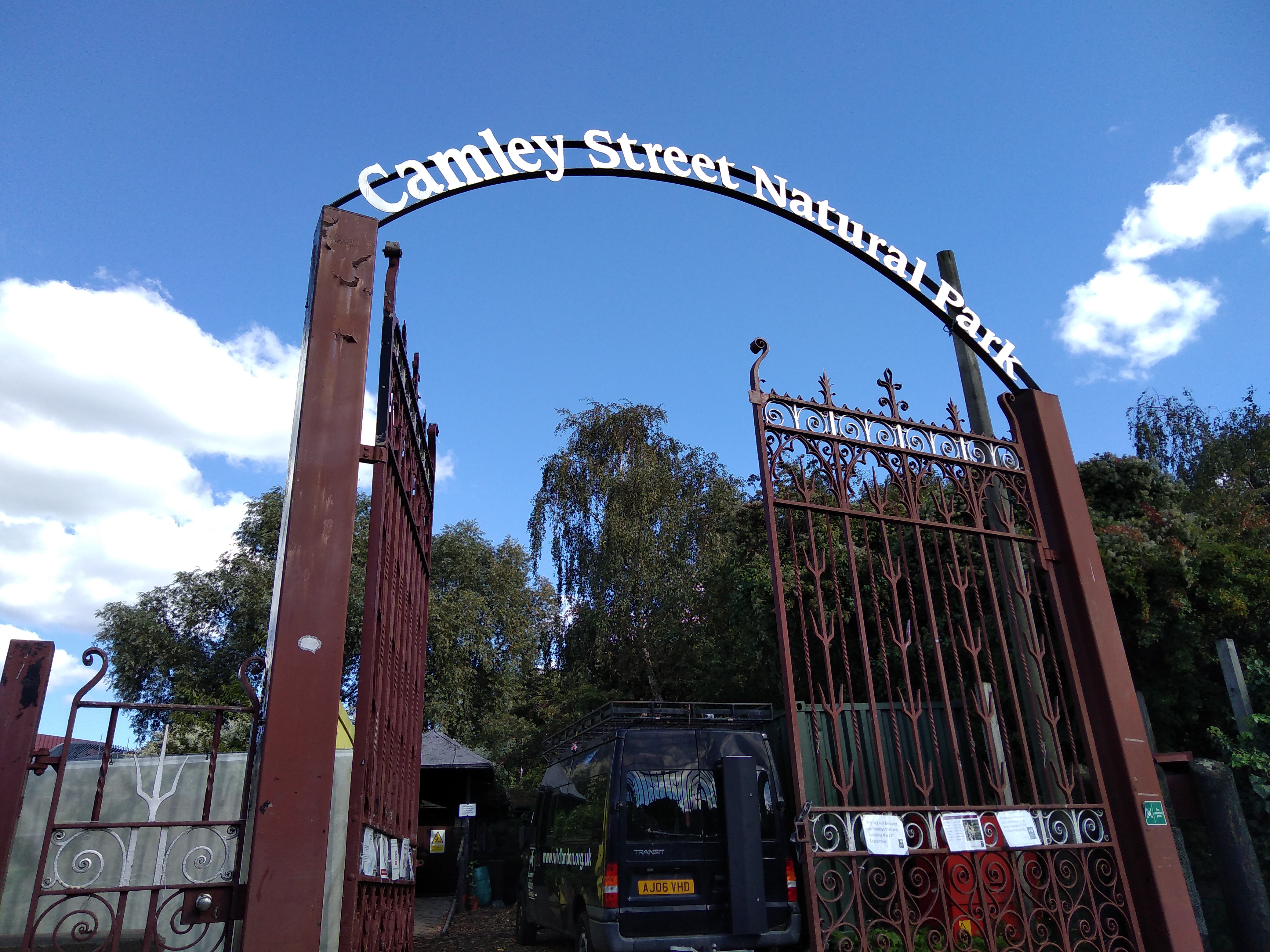
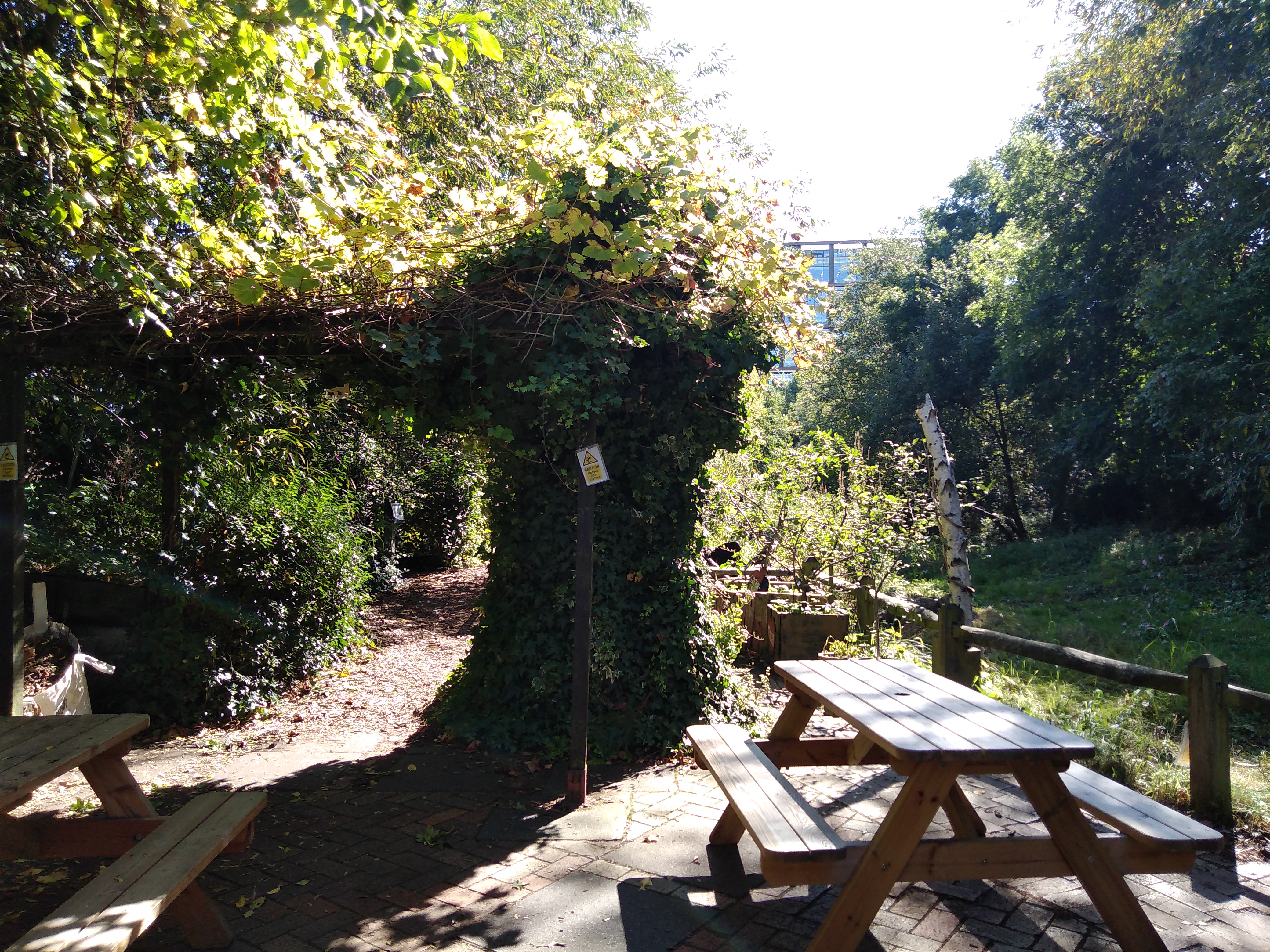
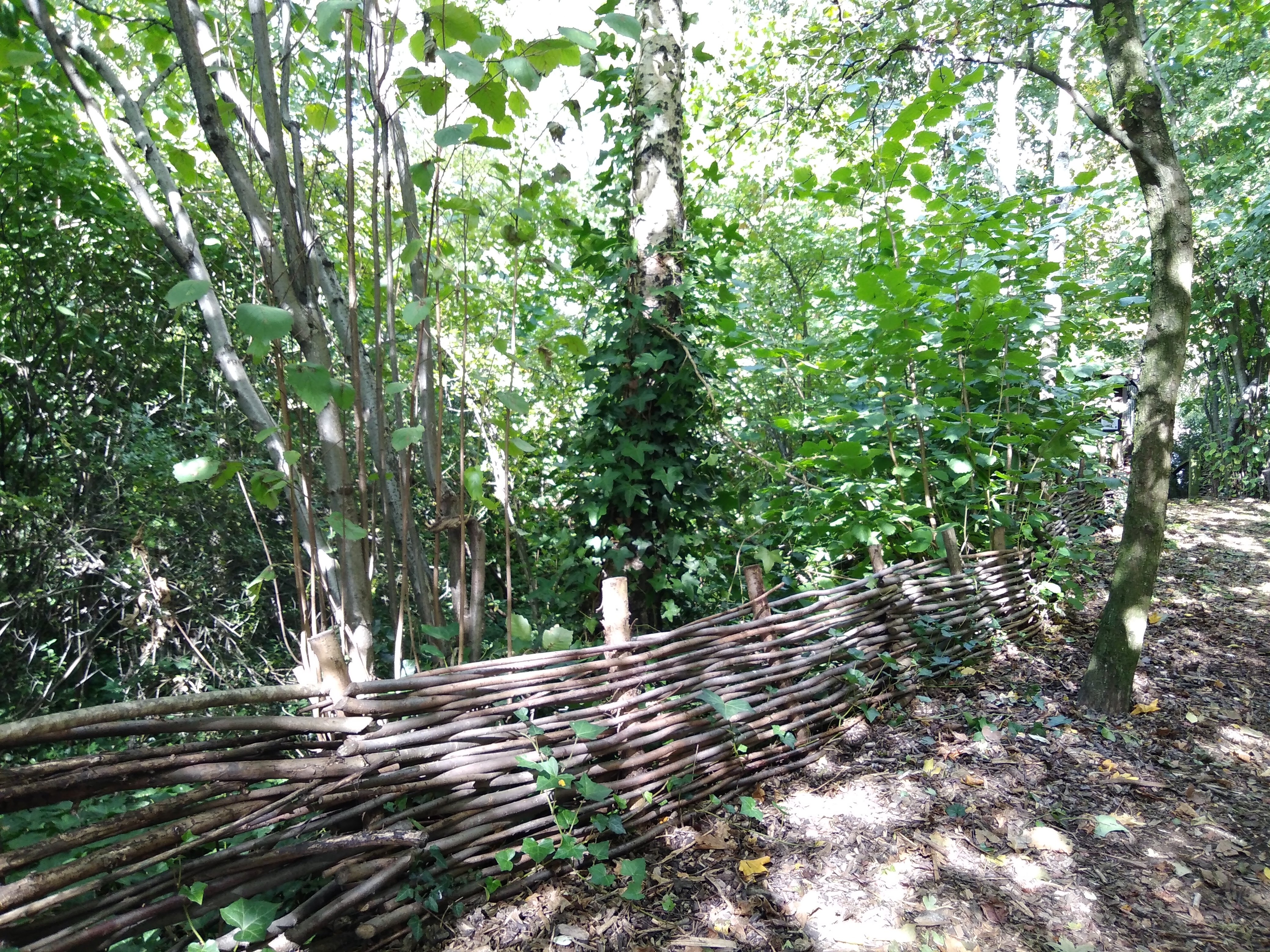
Camley Street Natural Park; St Pancreas Parish church and gardens; and Goldington Crescent Gardens, Camden London.

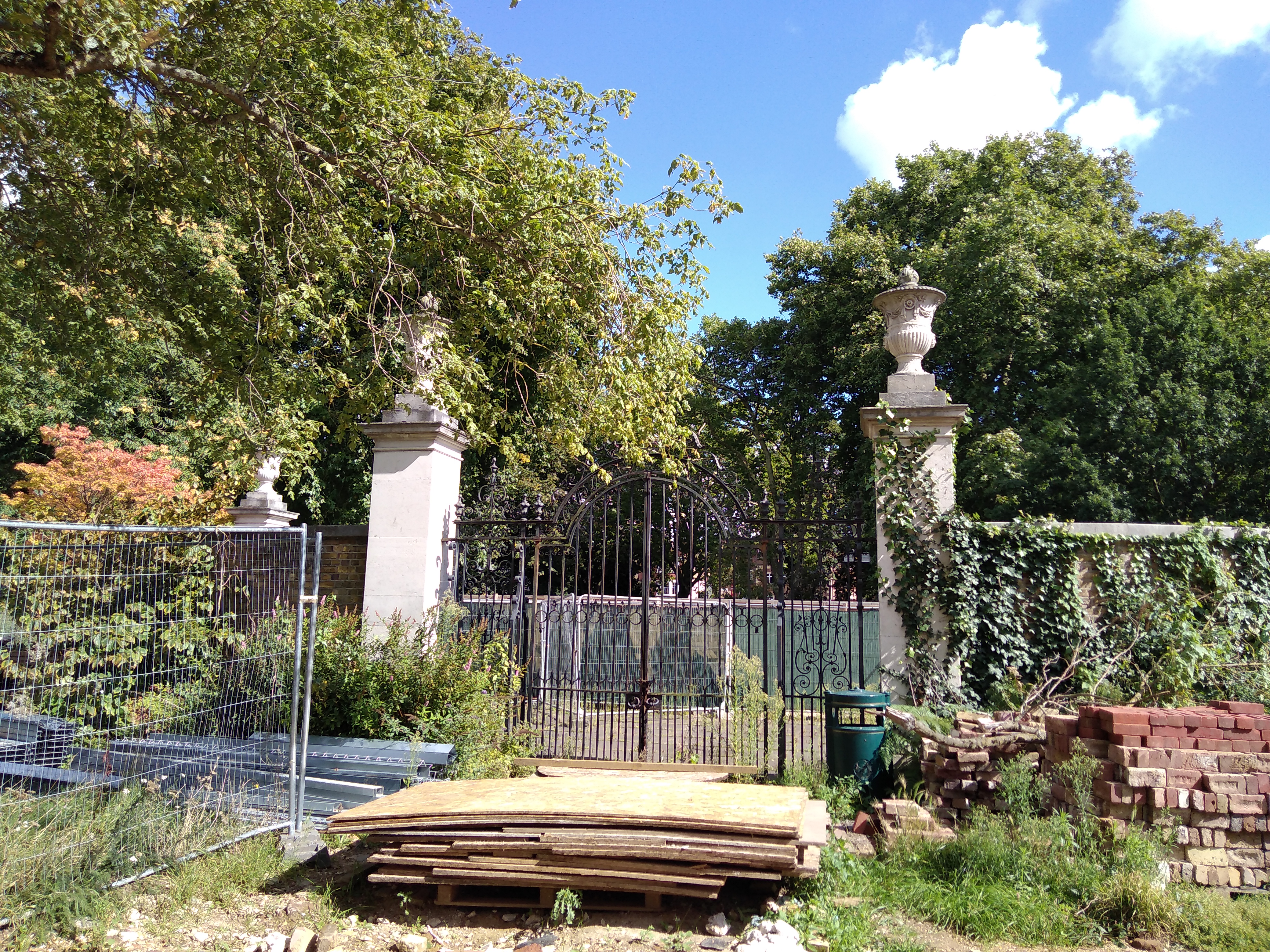
The entrance to Pitzhanger Manor (being restored – it opens in 2018) and an expansive patch of free – Pitzhanger Park, Ealing, London.

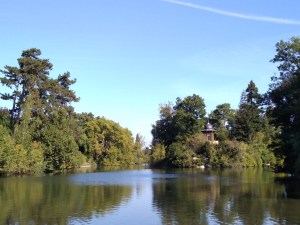
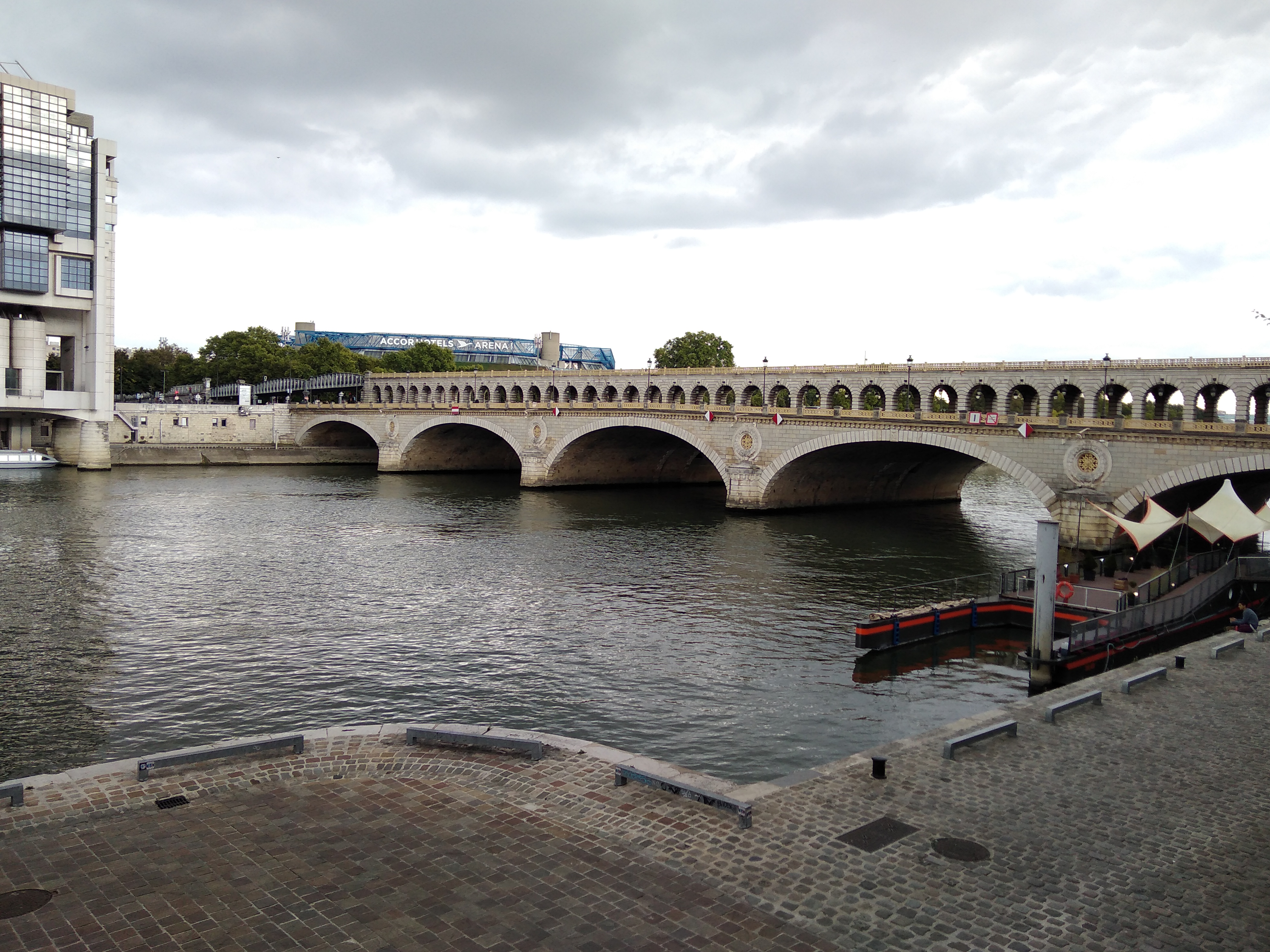
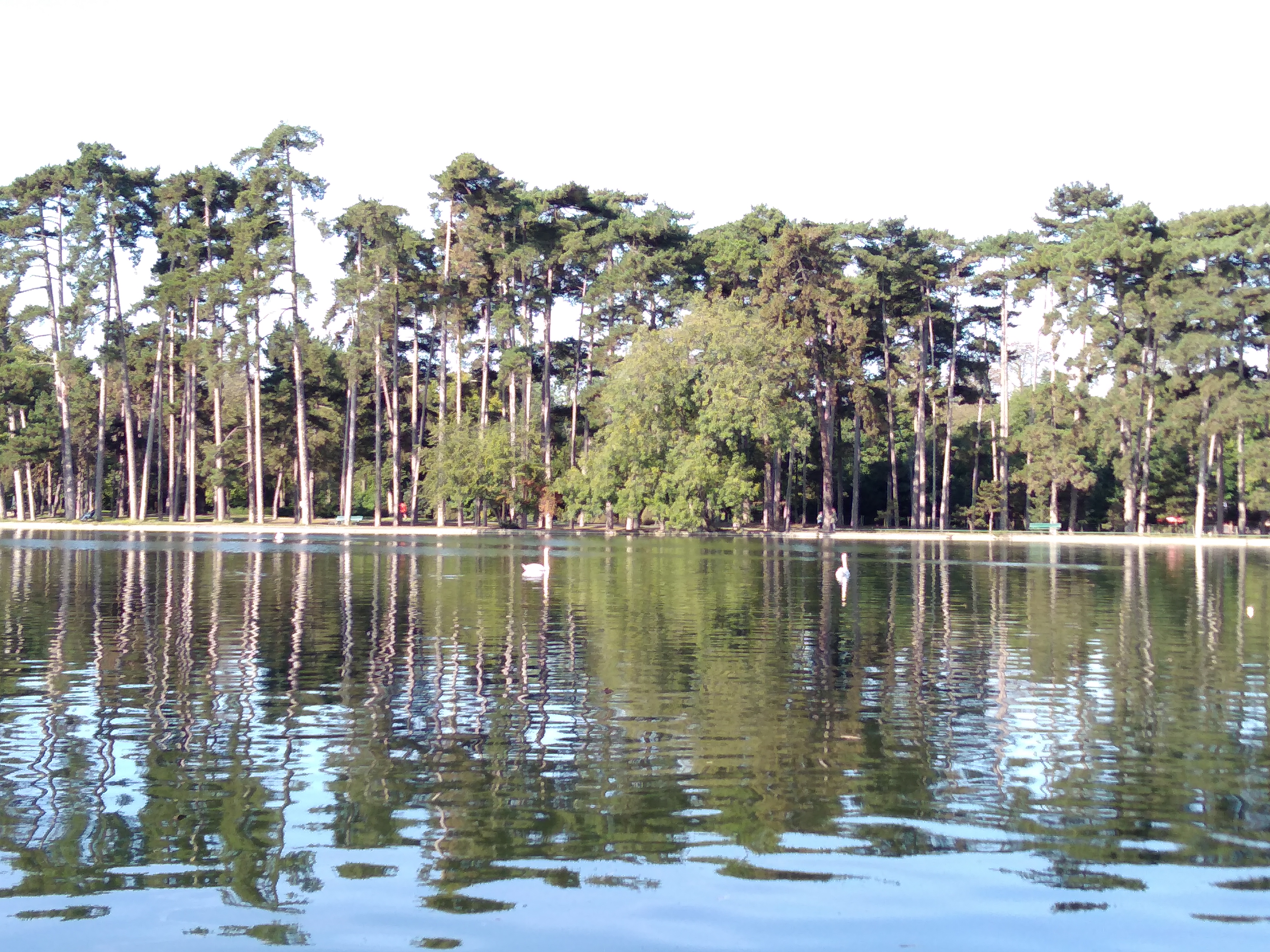
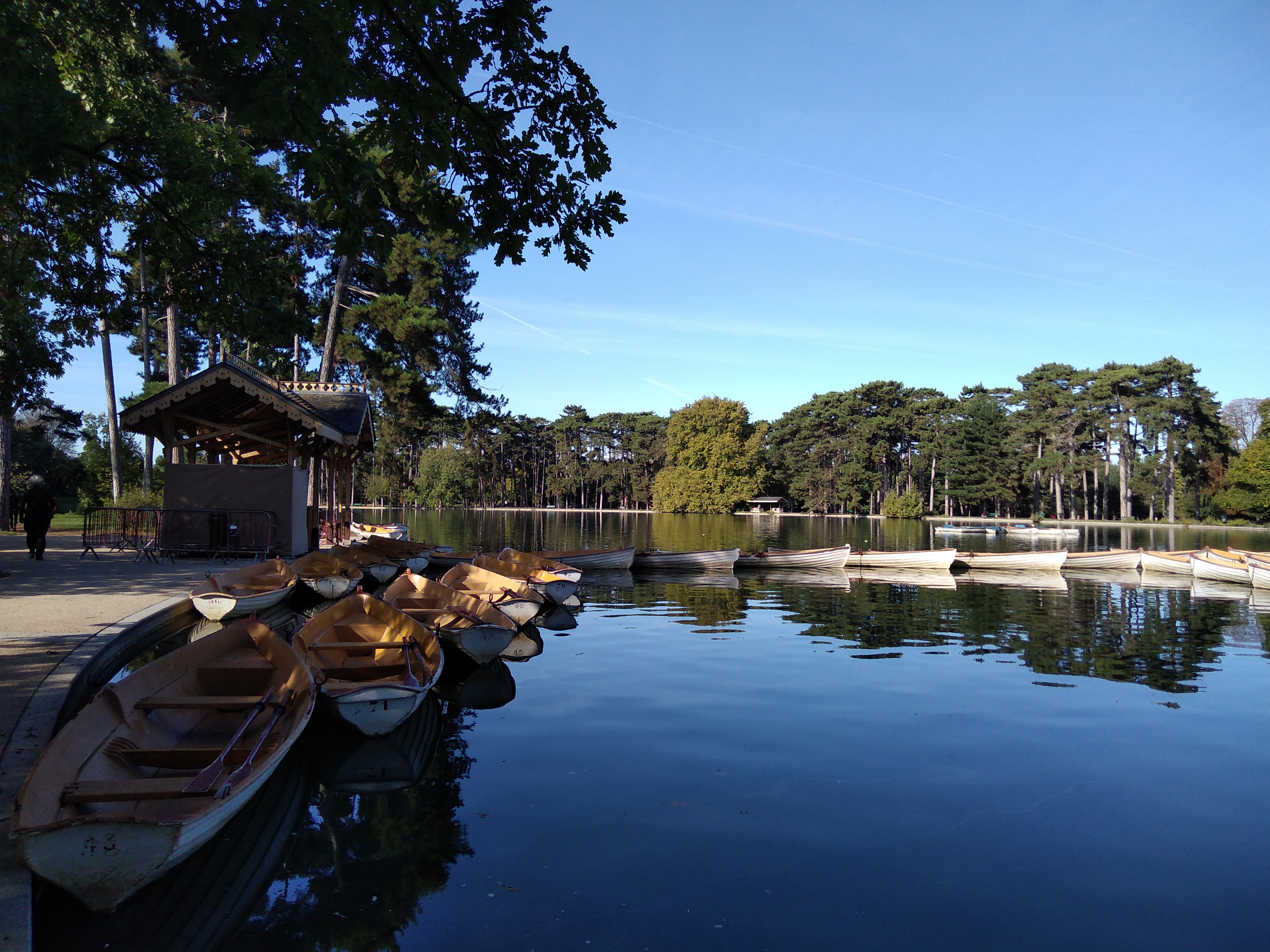
As I wander through European cities I find myself attracted time and again to the green spaces. Indeed, a few days ago, I traversed most of Paris from the Bois de Boulogne in the far east, to the Pont Bercy, and what a beautiful walk it was.

Bois de Boulogne
Bois de Boulogne
Bois de Boulogne
Pont Bercy, Paris

Today, I arrived off the Eurostar at St Pancreas London, weary in body and of spirit, but the sun shone, so I googled parks and gardens in the area. I made my way to the St Pancreas gardens, narrowly avoiding being run over by a London taxi due to the lack of pavement, and came across a community garden I had tried to enter twice before, Camley Street Natural Park – this time it was open.

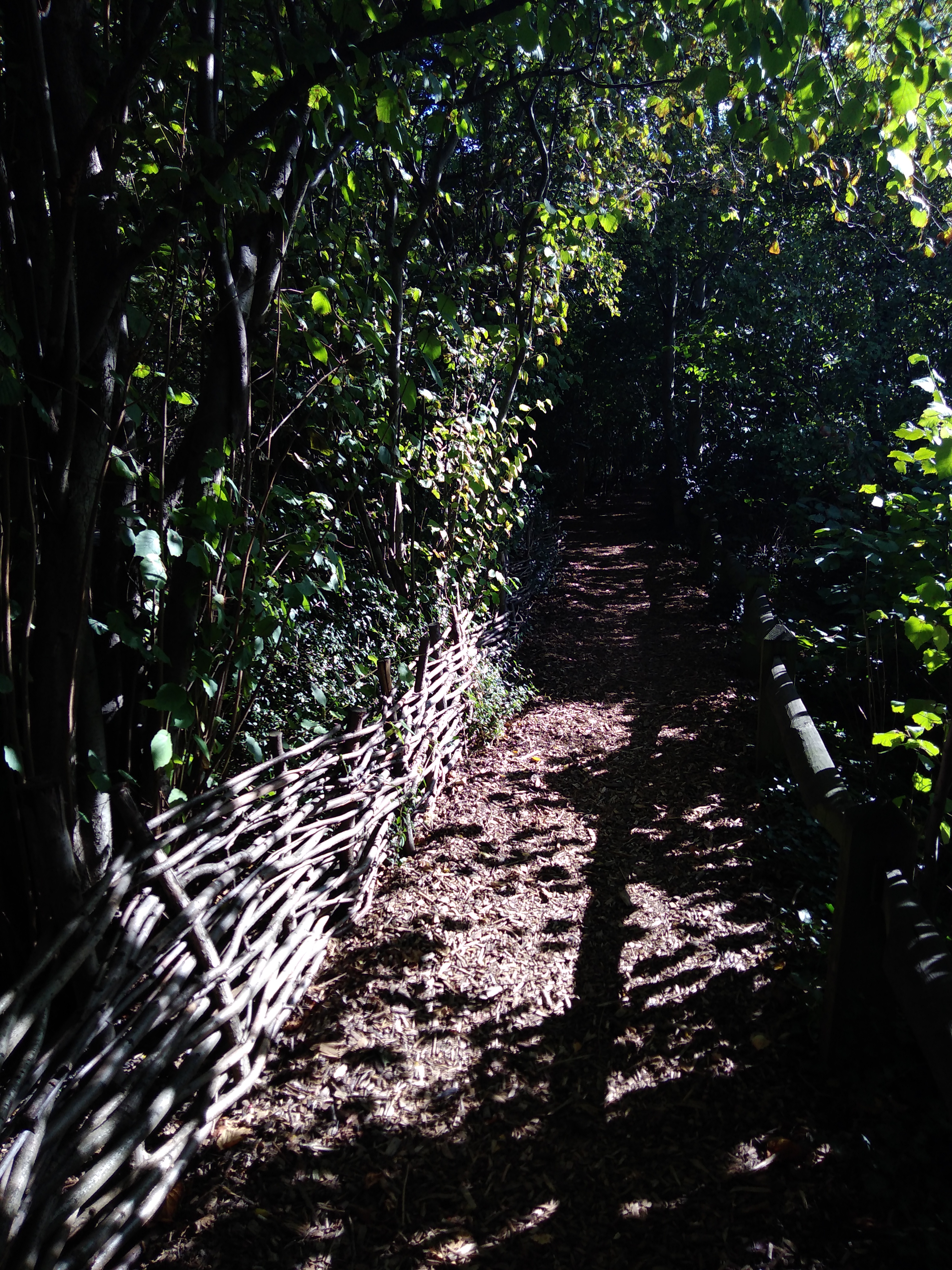
A slice of sylvan pleasure between railway, canal, and high rise buildings, I discovered that this London Wildlife Trust-funded oasis is an ideal place to picnic. Flower beds are constructed from railway sleepers and hunks of stone and bordered pathways are lined with bark pieces.

There is an extensive pond with a green membrane pierced by rushes, and a wild flower meadow with rose bay willow herb. It constitutes a very brief, windy way to the other side if you use it, as many suit-clad workers obviously do, as a thoroughfare; but you may also make a circuit and take in the bug-finding, log-pile place; the ‘fairy glade’ (where if I was not mistaken a counselling session was happening); and pond-dipping where a quiet volunteer was carefully cleaning the sign.

There are rustic benches in private nooks, and, luckily, a few tables in the cafe clearing because it was so densely wooded that there was almost no sun there this September noon.

Bring your little ones and they will have hours of down-to-earth fun – inside if the weather is inclement (there is an activities room and exhibition with nests and pine cones) or out, learning about bats and birds, recycling and natural landscaping. I saw willow, birch, brambles and cherry, and there were tourists in the Visitor Centre being helped by the member of staff.

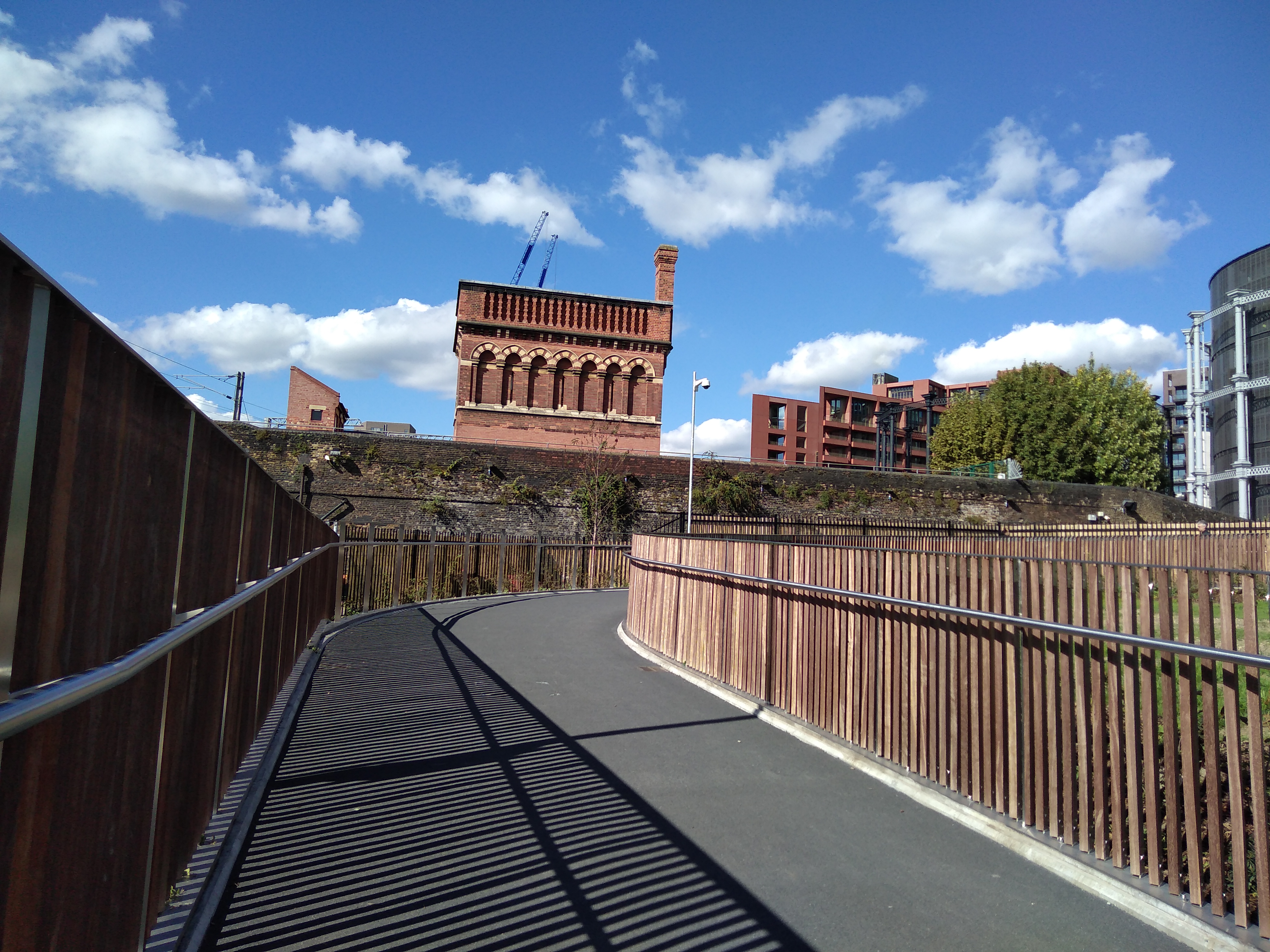
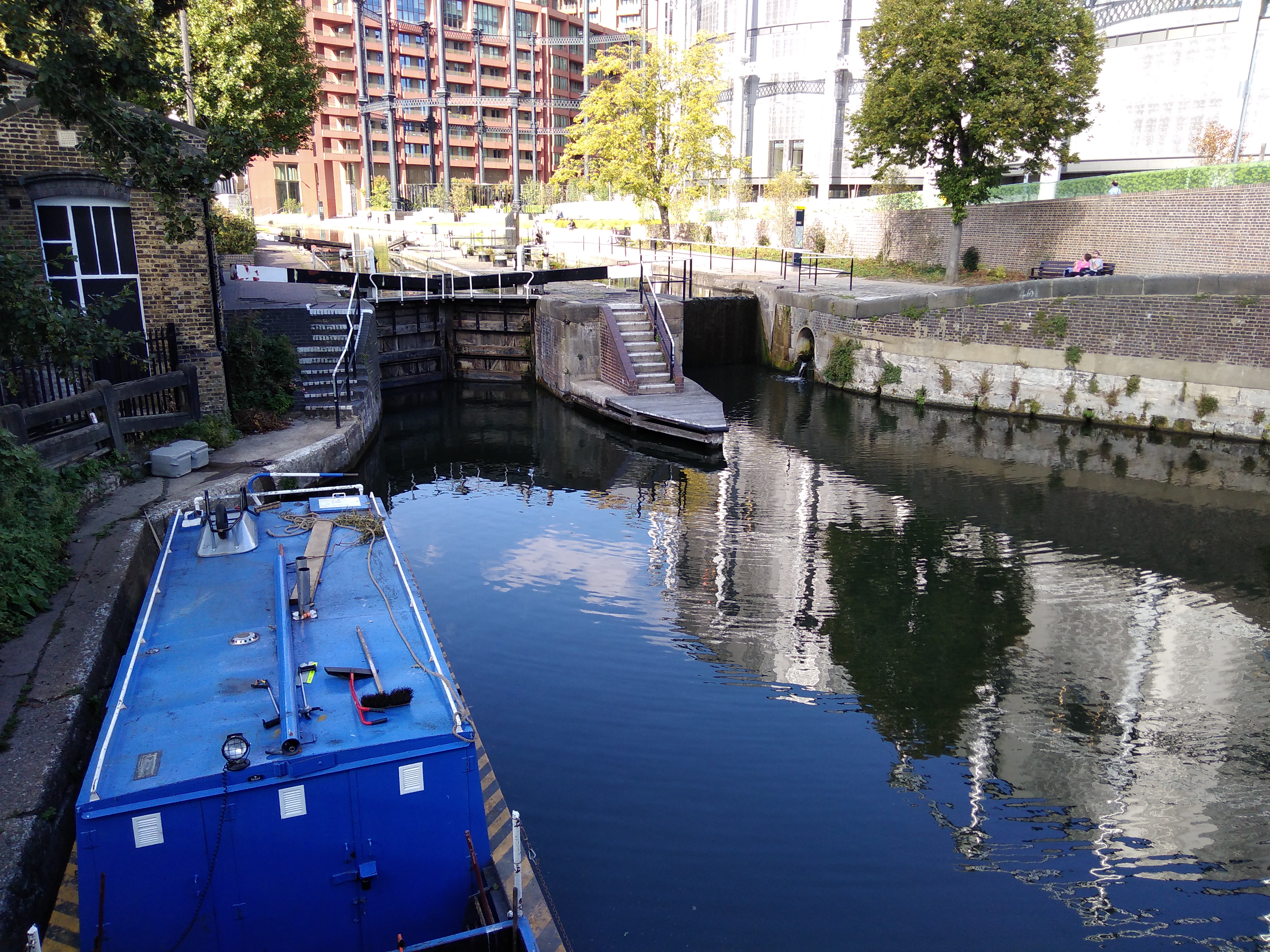
This old coal yard is located by the waterway which once transported the fuel to Yorkshire, where incidentally the next-door sliver of a bridge was formed before being placed in its current position in 2016. Unlike the uneven Park’s paths which absorb any sound (do not try with buggies, bikes nor suitcases), the bridge’s smooth surface resonates with and amplifies joggers’ footfall and cycle wheels.

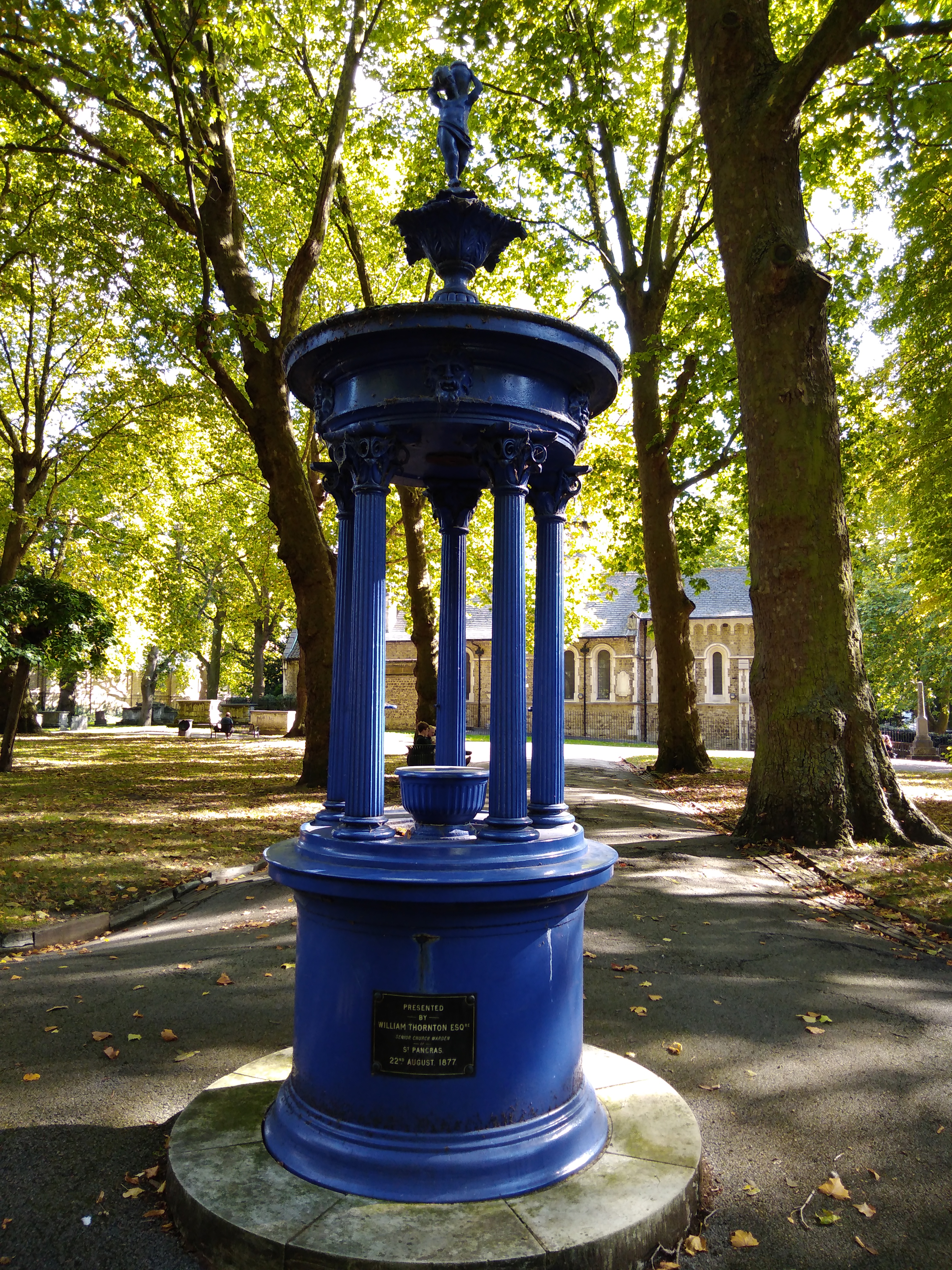
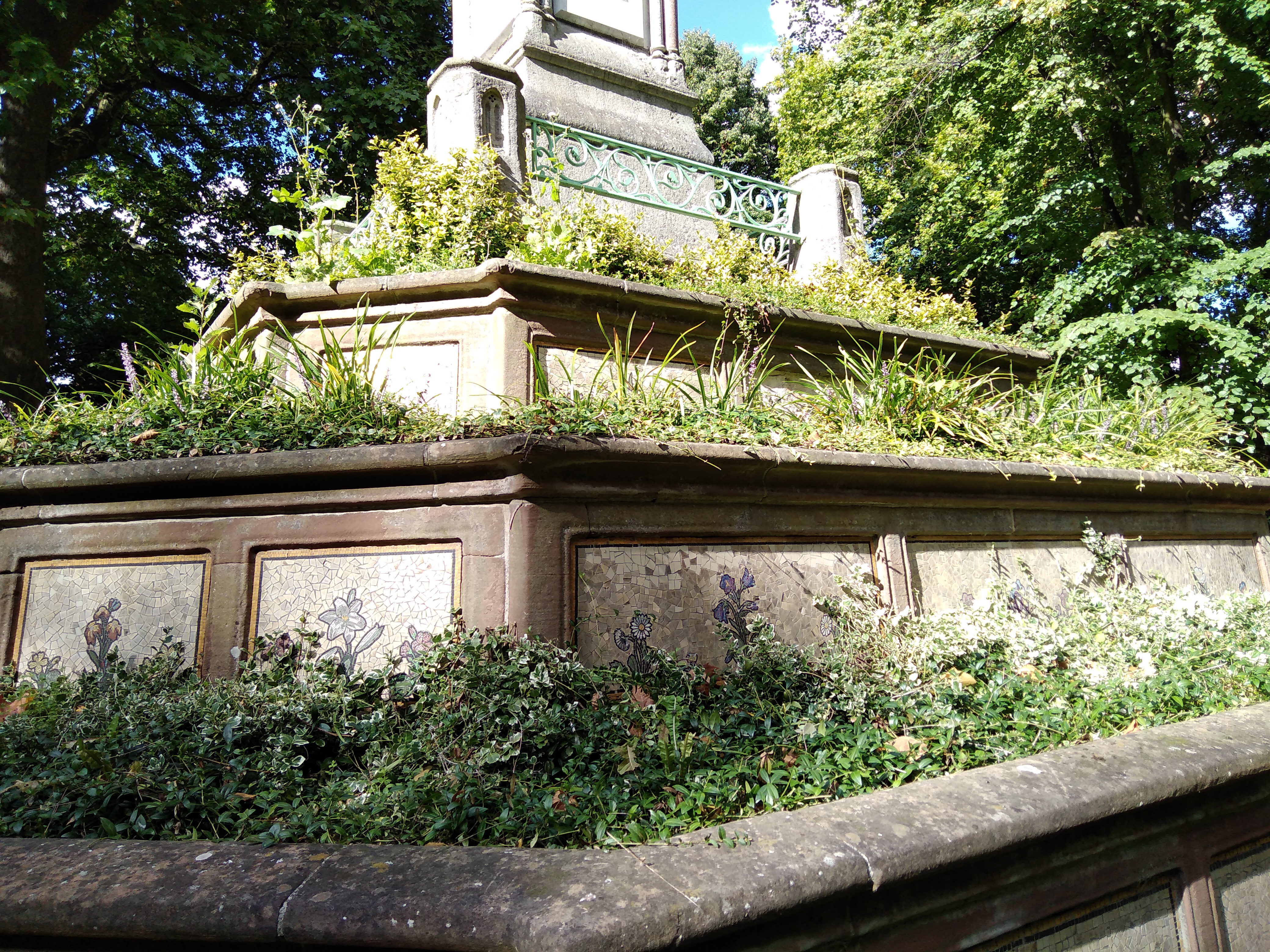
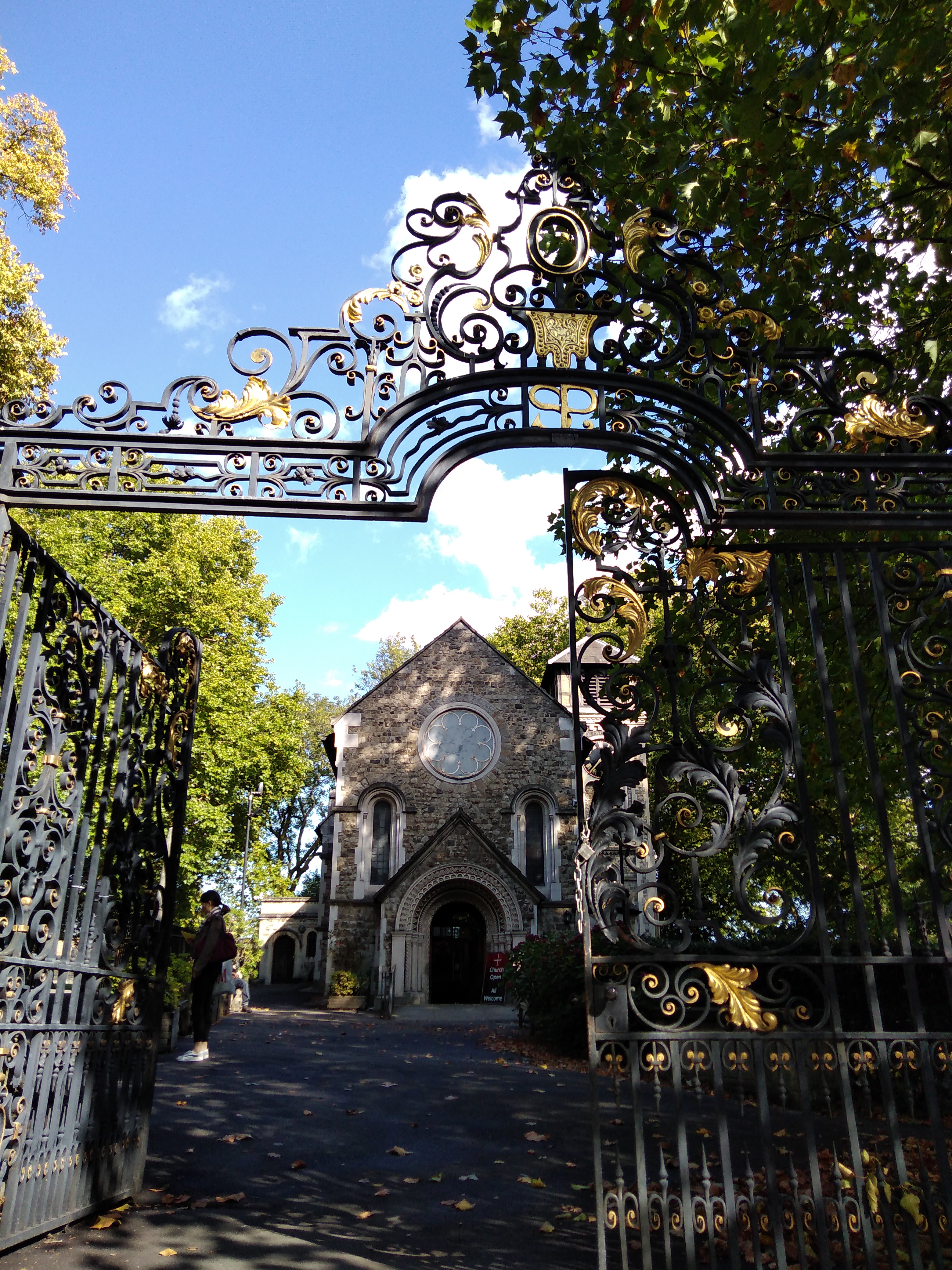
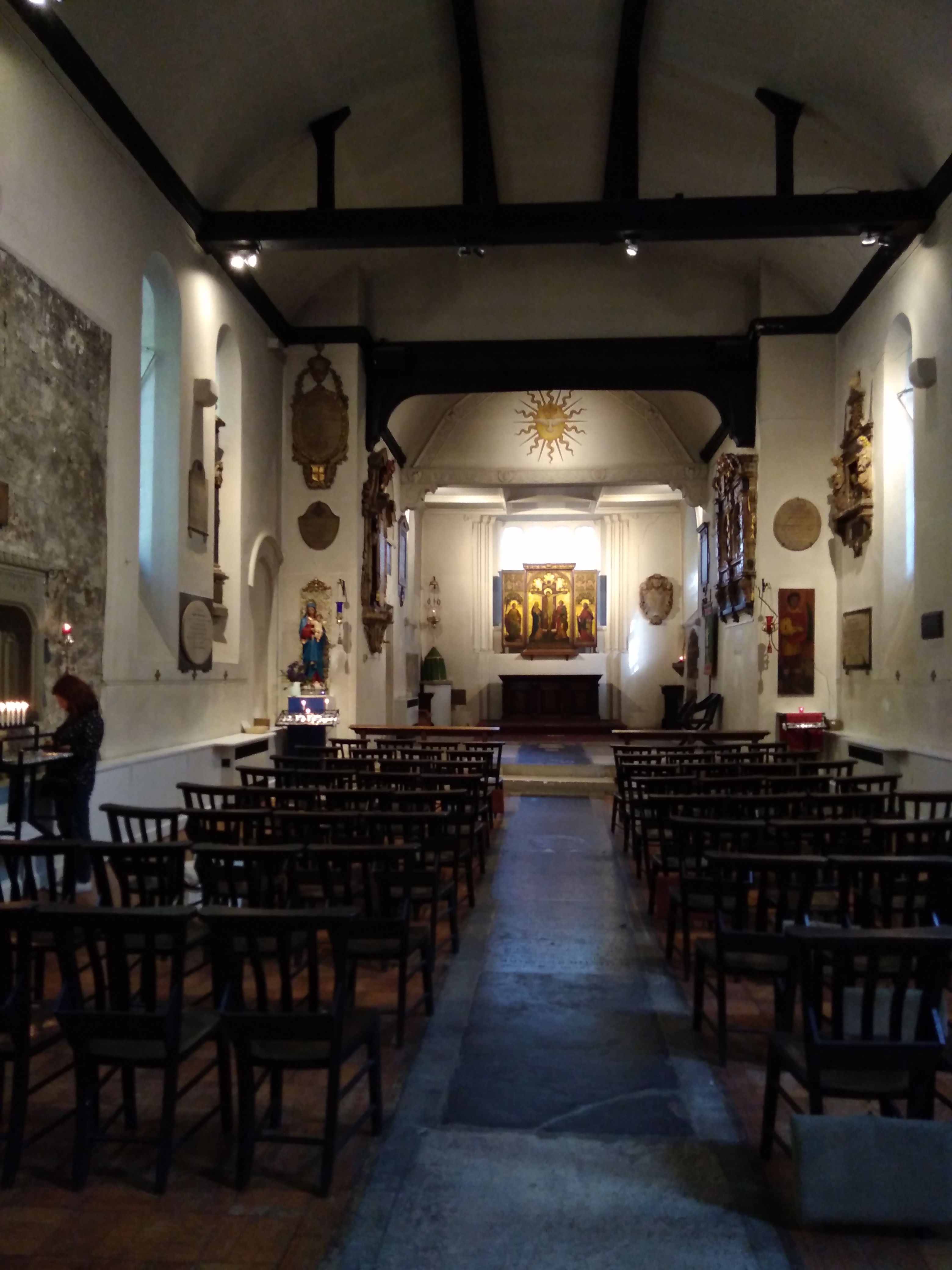
Just down the road is the St Pancreas old church and gardens, today shining in the sunlight and showing off its higgledy-piggleddy stones, working mortuary, royal blue water fountain (at least I think that is what it is), and unusual monument “especially dedicated to the memory of those whose graves are now unseen or the records of whose names may be …(could not read this word) obliterated”.

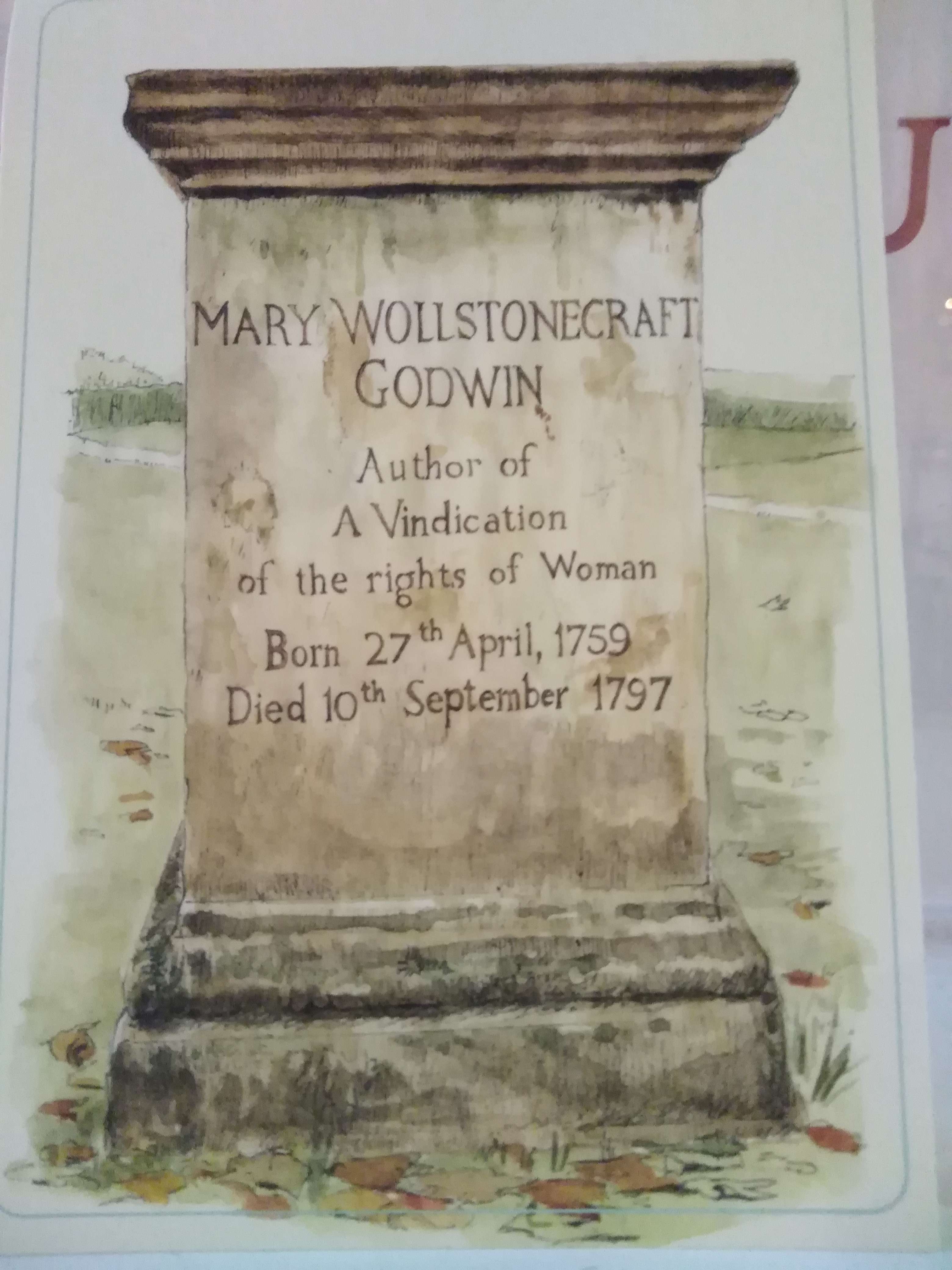
They have done a great job of bringing interesting facts and people to our attention in the wee church: the relationship of Thomas Hardy to the ‘consecrated burial ground’, and memorials to Mary Wollenstonecraft, activist, and John Soane, architect of the Bank of England whose main residence is in the area and whose ‘country’ house in Ealing (Pitzhanger Manor, see above) I coincidentally visited last week.

Under the trees sit study groups, lunching pairs and individuals reading or on their phones. What a contrast with the welcome smell of warm wax which filled the holy interior. I enjoyed the plaque ‘in memory of my dear husband Earnest Wiggins d 1975’ before drifting into my third bout of 60 winks sitting on a proud wooden chair at the back listening to the ponderous ticking of an unseen clock.

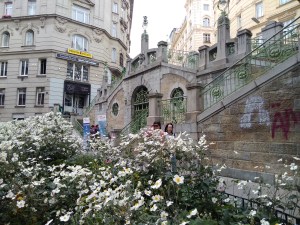
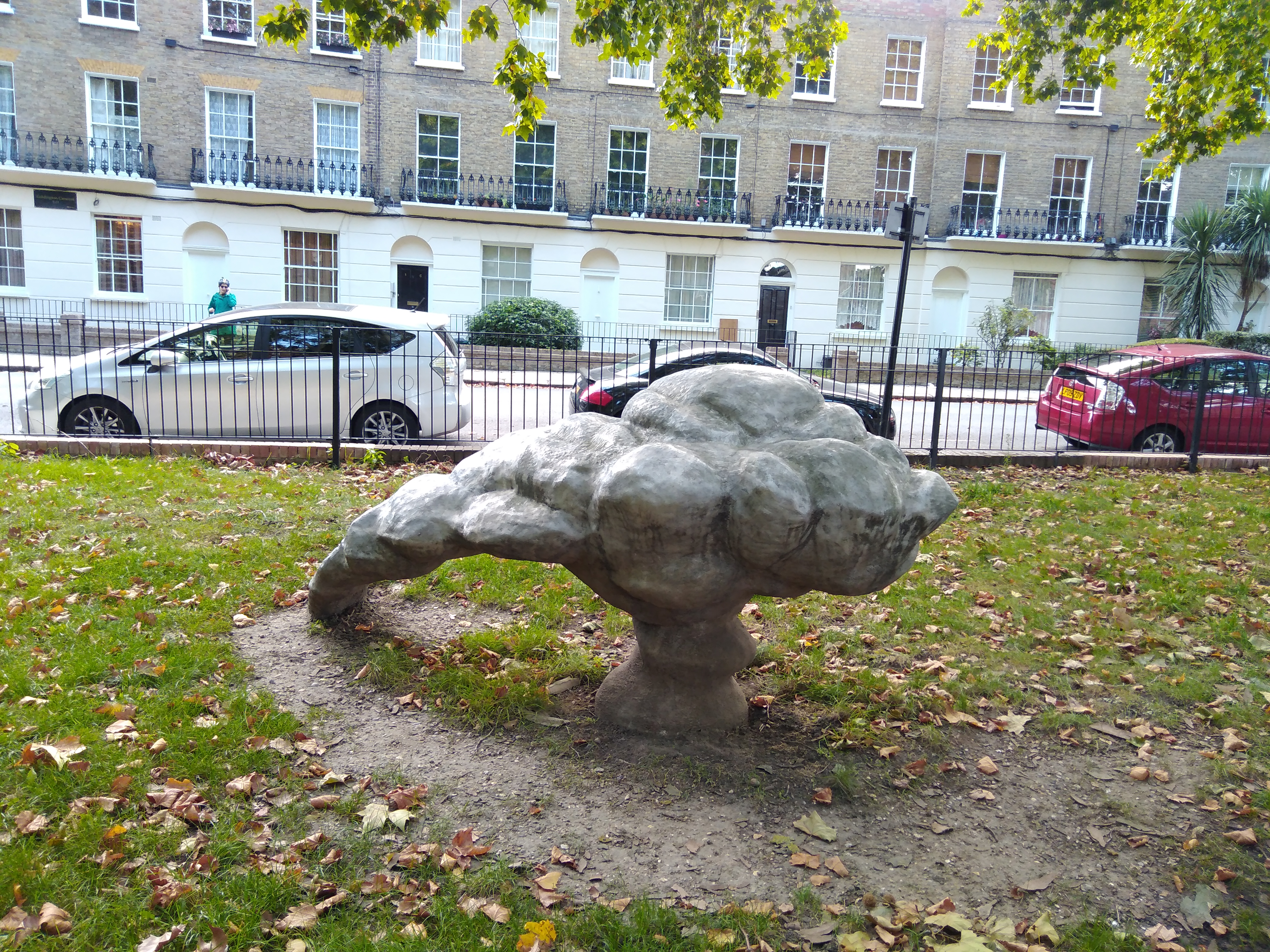
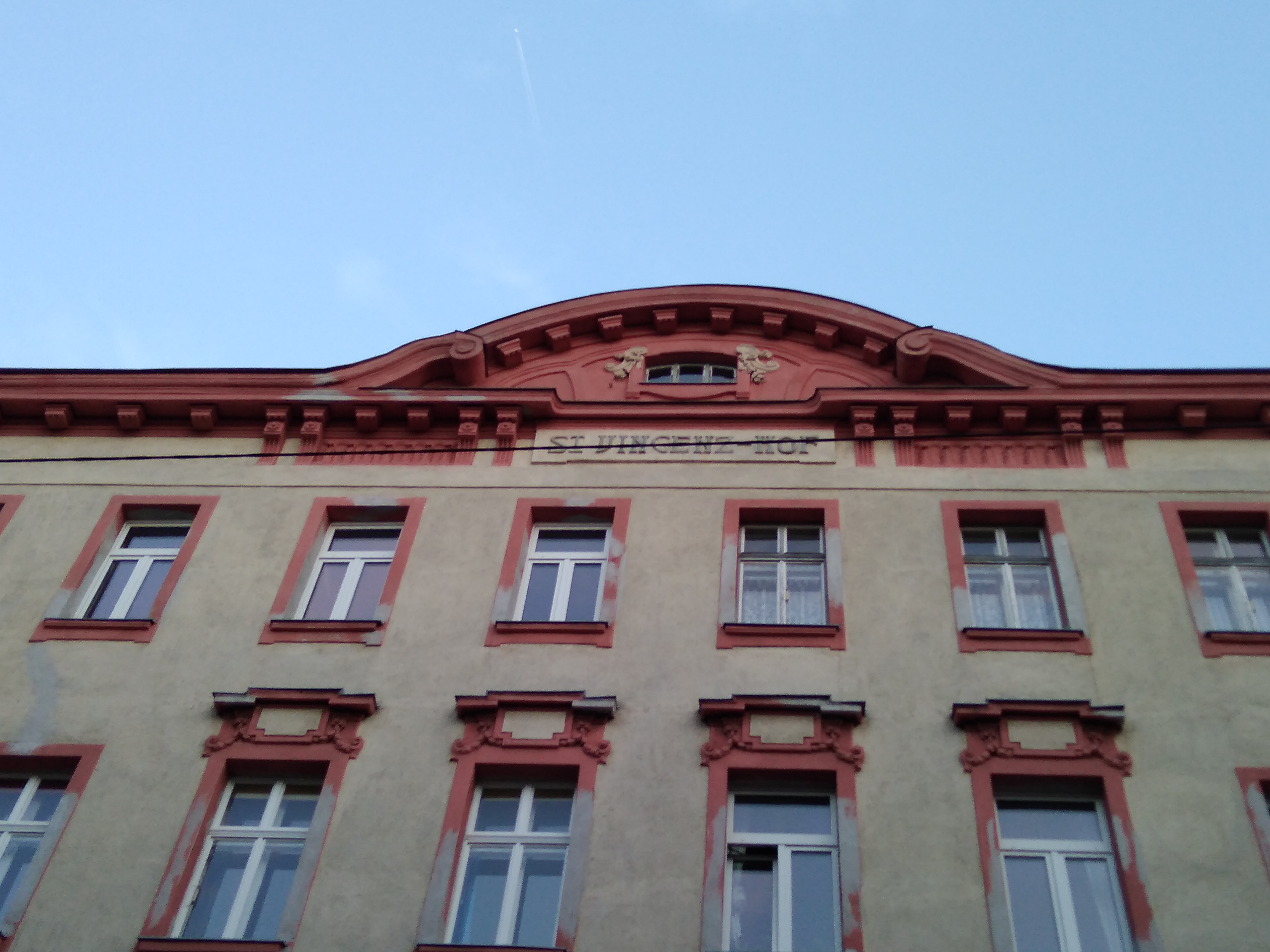
Making my way towards Mornington Crescent tube station, with its faint hints of Mary Poppins and WW2 popular songs, I come across Goldington Crescent Gardens. In the Autumn sun, causing the fallen leaves to glow and throwing strong olive green and top-hat grey shadows on the grass, there is a public sculpture. It is in three parts: one resembles a silver pile of unmentionable; the second an ant eater with its snout in the ground; and the third is a mystery. The artwork stands out starkly beside the pink and red brick 1903 Goldington Buildings opposite, which edges elegantly wrap around whatever is in its heart. Interesting fact: in Vienna they have a word for these buildings which conceal a space behind the facade, which is ‘Hof’.

Goldington Crescent, London.
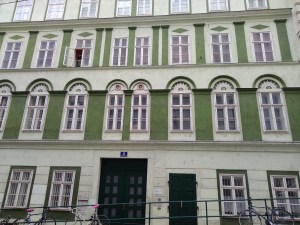
St Vincenz Hof, 18th century, Vienna, Austria
Behind St Pancreas station, London.
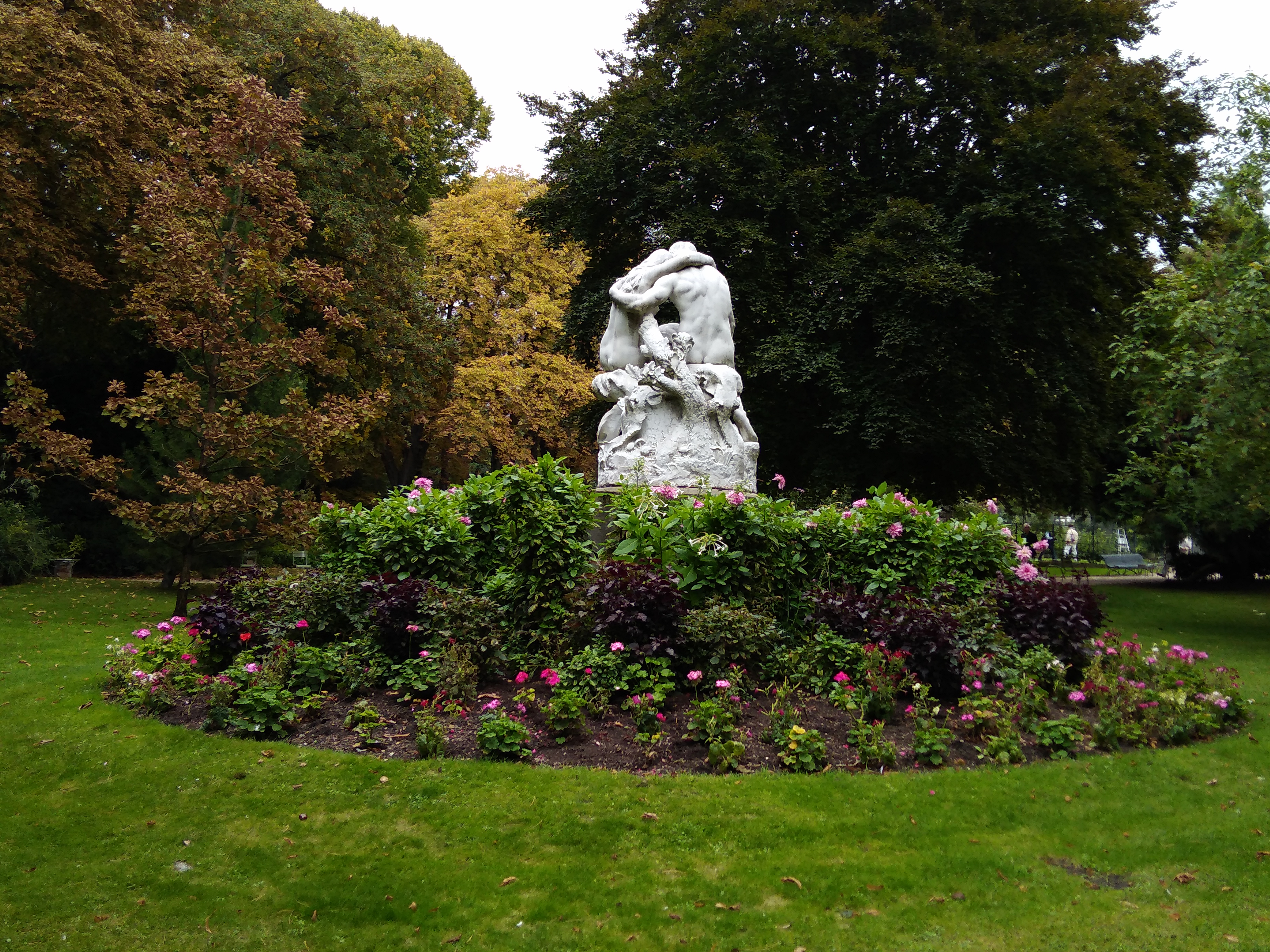
Love, Jardin du Luxembourg, Paris.
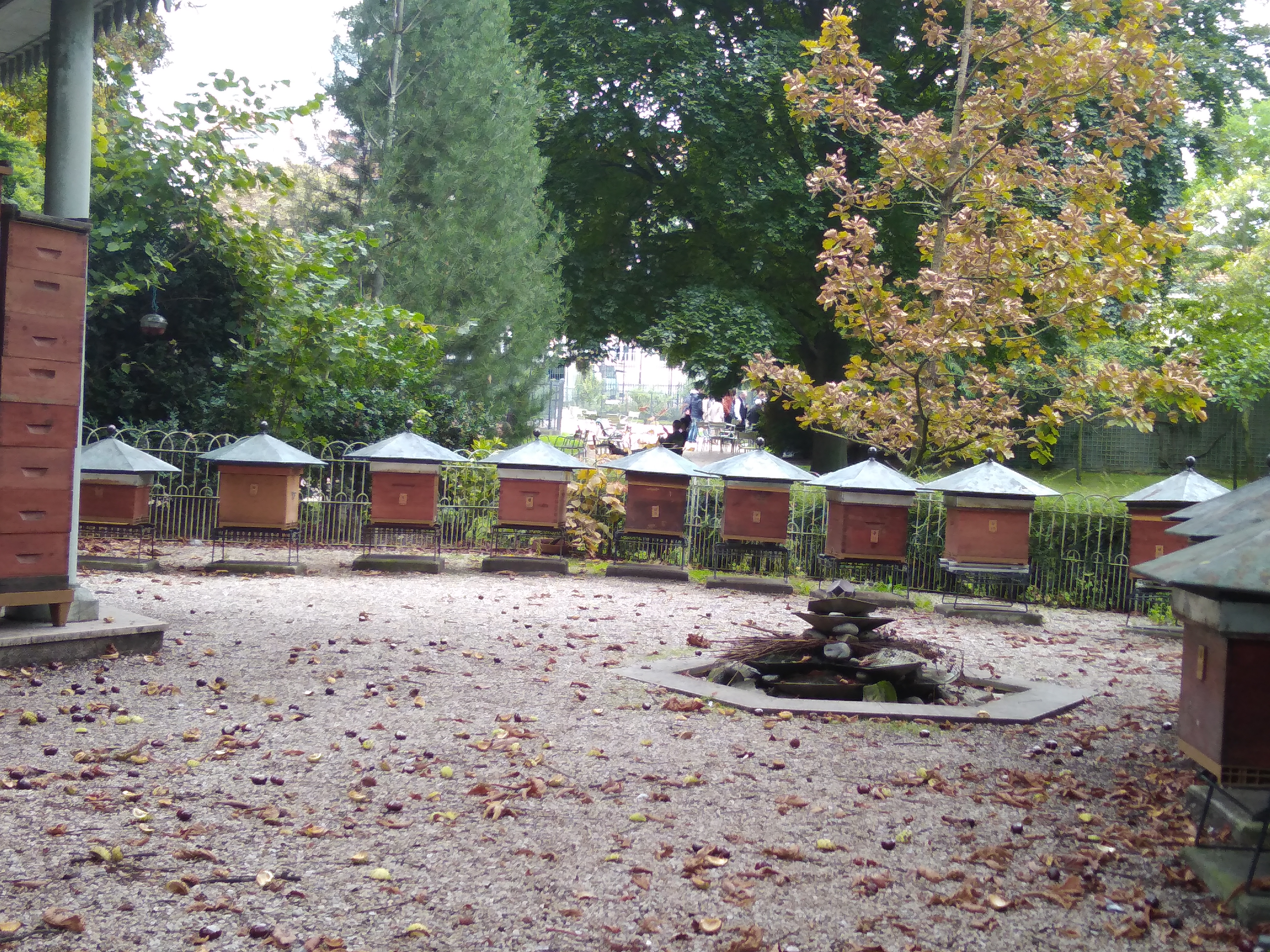
Beehives, Jardin du Luxembourg, Paris.

Always check out footways.london for pleasant paths to cross London, a network of quiet and interesting streets.

Spain, Olocau 2

Living in Olocau for a few weeks: July 2017

I flew from Edinburgh at lunch time without any incidents, and had time to spare in Stanstead where I have never seen so many people in short shorts in such a small place!

My plane was arriving in Alicante at 9.30pm and I needed to be in Valencia by the morning. I had researched many different ways to make the transfer, and as previous readers of my blog will know, I have had adventures with Bla Bla Car in the past, so I went with that option. However, this time it backfired: the driver cancelled a few minutes before boarding for Spain and that left me without any way to make the journey that night as the final bus between the cities leaves at 9.30pm.

I remembered how people have turned up to help me when I have had challenges before, so when I was in my seat before take-off I asked the woman, Ana, in the next chair if she could check my Spanish translation, and she was a honey! As we were delayed on the runway (yes, Ryanair), she was invaluable in helping me search and book an Air bnb,  as well as an early morning bus, so by the time I was in the air I had plans. Then we had time for stories of family and travel, cake decorating, and common kindness. The sun set like an inside out blood orange.

Of course arriving in Spain in July, even in the late evening is a hot thing to do. But I managed the bus into town smoothly (2 euros 70) and made the journey on foot to Pilar’s. Oh, to exist was to be covered in a smooth, thick, sheen of sweat! 

I had not brushed up on my Spanish before leaving as I meant to, and so was rather pleased to hear myself finding accessible vocabulary which I thought I had forgotten. Pilar and I swapped walking stories and tales of a knee which won’t allow her to climb. I managed about 5 hours sleep.

Walking through dark Alicante at 4am I marveled at the ink black sky and waning moon. Bored Guardia Civil were on their phones, and divers back packers on the edge of the pavement or draped over rucksacks with black eye masks. Me? this time I had a suitcase and smaller rucksack so I did not belong to that itinerant group.

I managed to dissuade a random man from linking up with me, and on the bus Spanish radio voices rattled away, and girls made excited phone calls as I drifted in and out of sleep. I was so tired that a stiff neck and hips did not deter me.

And in no time at all there was Valencia, its sun rising in pastel colours of baby blue and pink with old gold at the edges and it was already 25 degrees at 7am. I had been warned!

And so I arrived in Olocau, and the market was in full swing as we drove through the village (see previous blog).

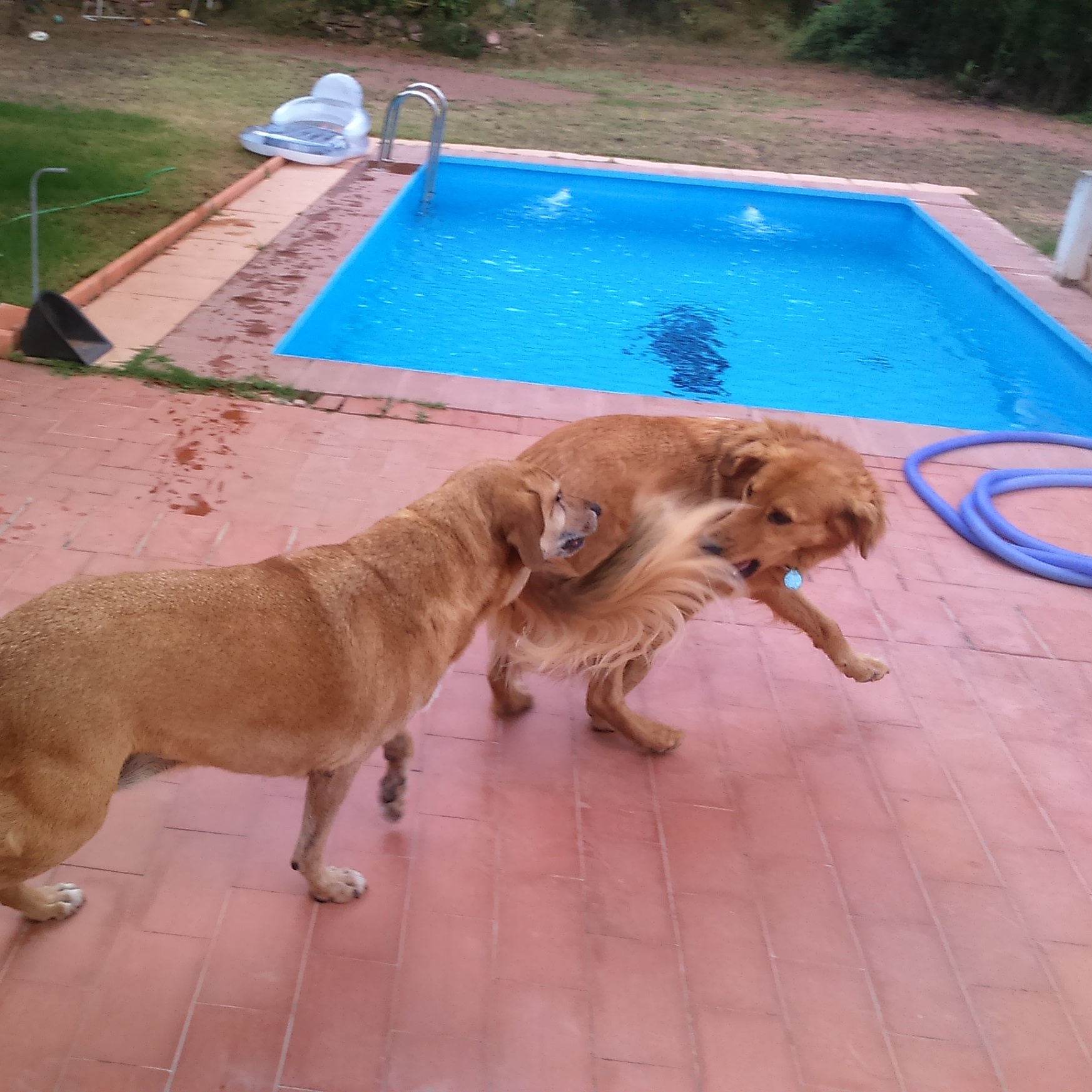
The first thing I noticed was the wonderful aroma of lemony pine.  I was welcomed by the dogs Pollo (chicken in Spanish) and Louis who were to be my companions for the next three weeks. 

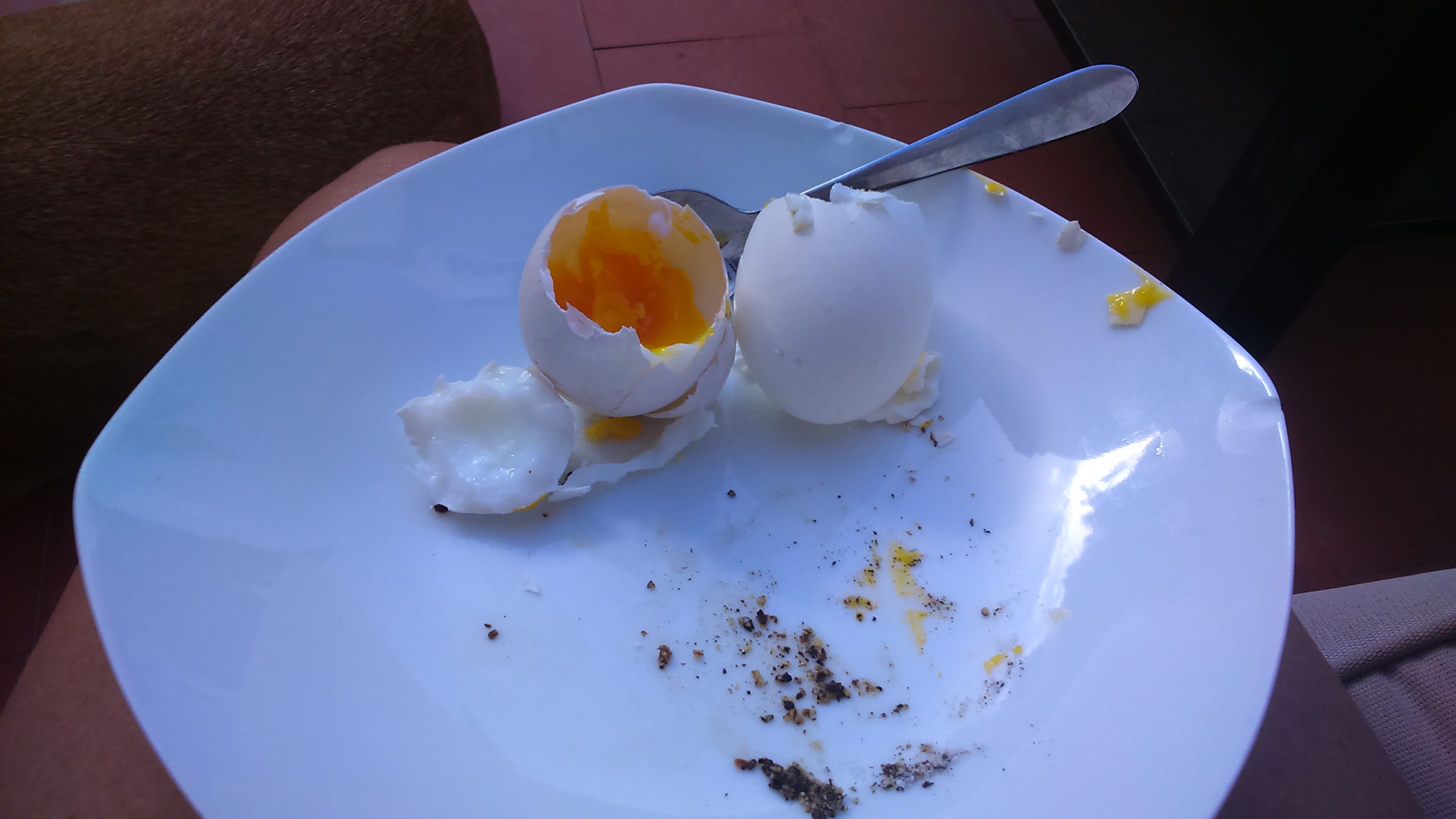
First I had free range eggs from their chickens for breakfast, and later I was  shown how to feed and care for them. 

There was sort of surround sound, a constant zzzzz, that might be mistaken for electricity but was of course cicadas.

DSC_0058

Inside there was the sound of trickling water from the goldfish tank, outside the swimming pool jets, and occasional renting of the peace by the dogs’ warning barks. 

Actually there was plenty of quiet between it all for my meditation, and although in the Sierra Calderona at this time of day the sun was around and above, in the valley was a very green cool. 

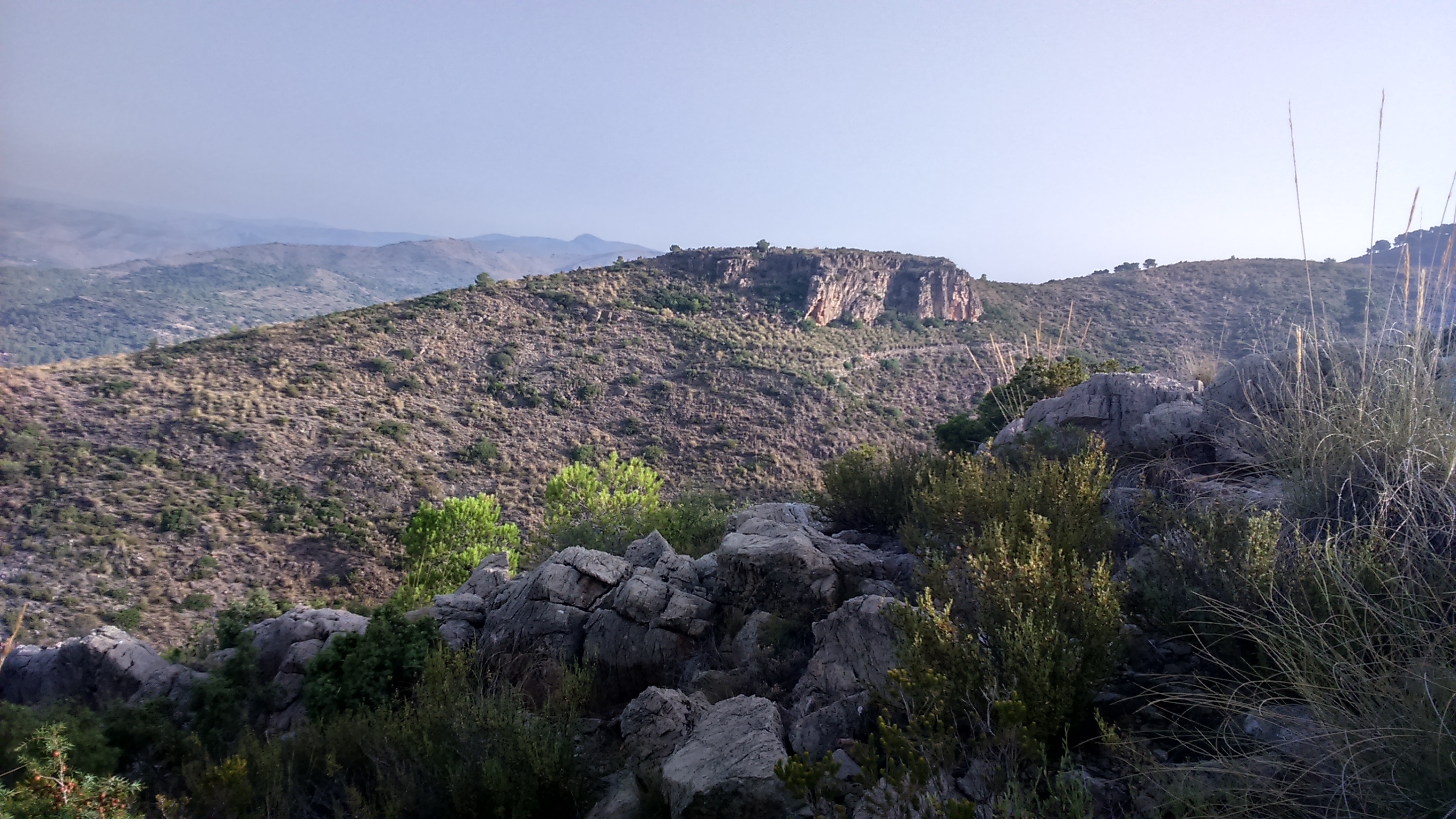
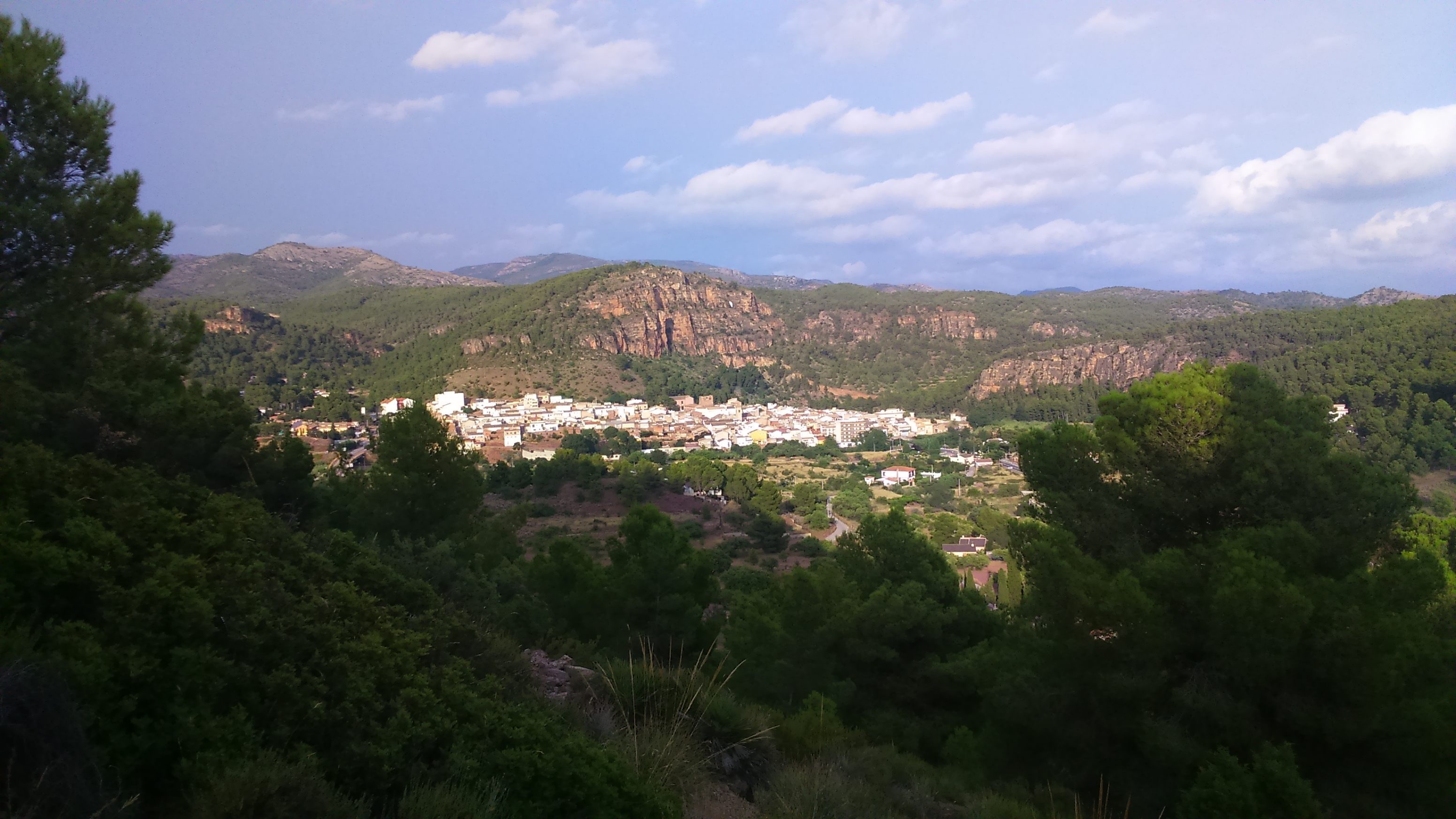
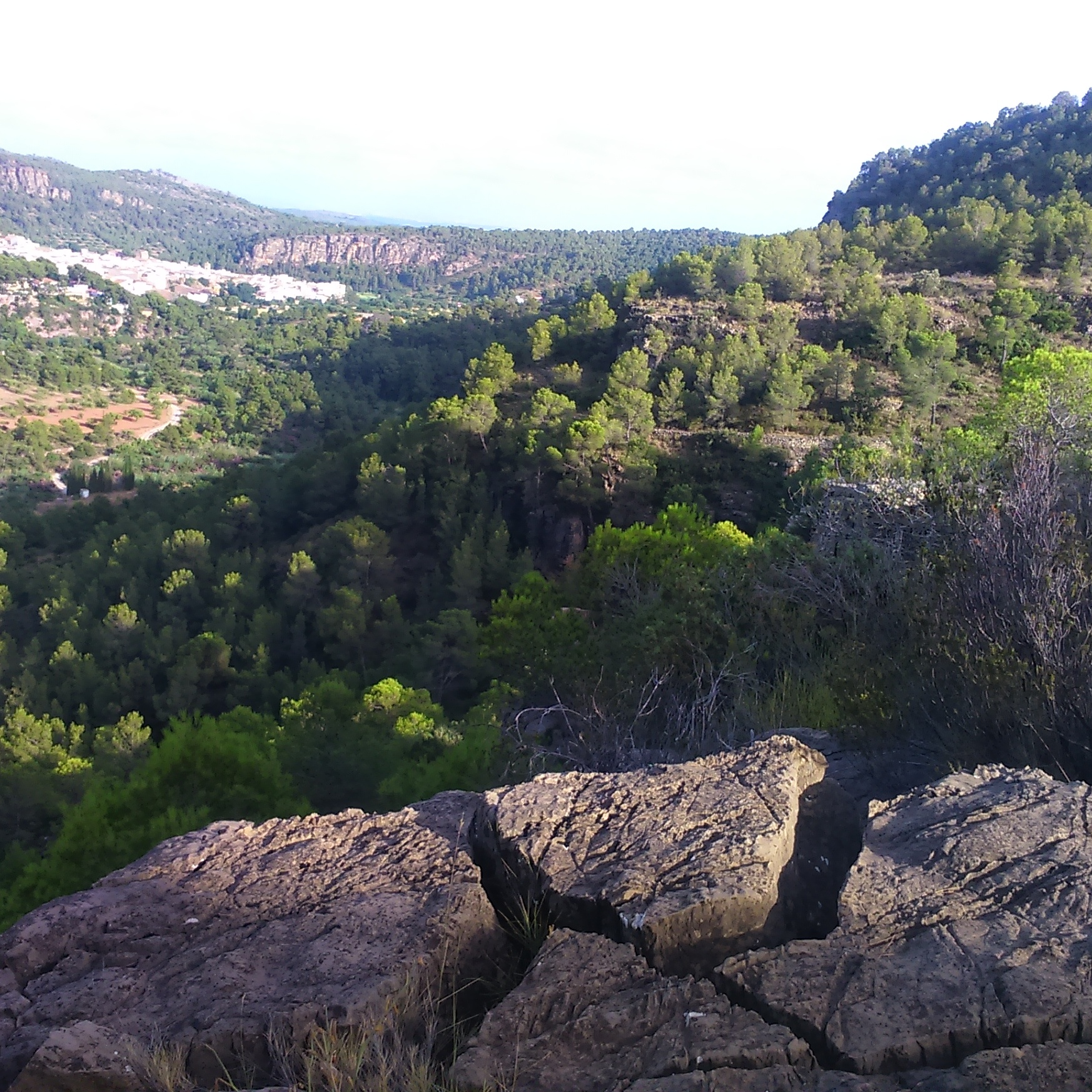
Above the house and village are grand cliffs and I half expected the heads of American presidents to morph out of them.

DSC_0047_6

DSC_0006_9

My first proper walk was wonderful for the first 3 hours, but then I became aware that the sun was still on my right (it was about 10.30am) and that therefore I was heading north. I should have curved around and started to head for home before this, so I must have missed the path. Eventually I discovered I was in Antigua Marines. The scale of the map was too small for me to find paths through the mountains, and the only way google showed me home was by road. That was when I discovered that the dogs were not traffic savvy and I could not control them. In the end I hit upon phoning Sue, a woman I had not even met yet, to be collected in the car. What a disaster!

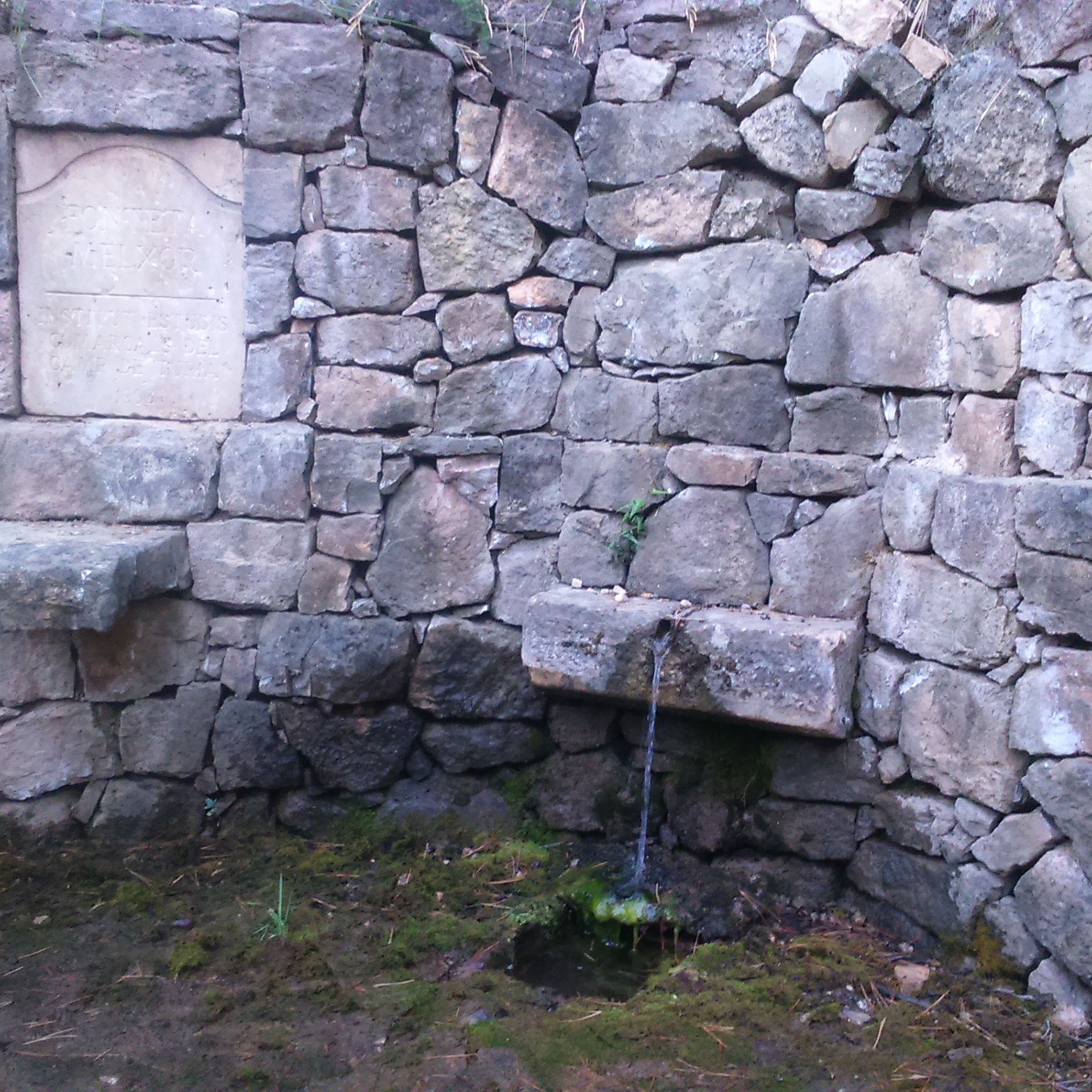
Other walks I made during the following week were frequently in 30 degrees, with warm golden evening light, and I got lost a lot: I came across a fountain that way (photo at top of page); I admired the goats which were multi-coloured with twisted horns, bells tinkling, and ear tags – they were nervous of me but not of the dogs; and the magnificent variety of greens.

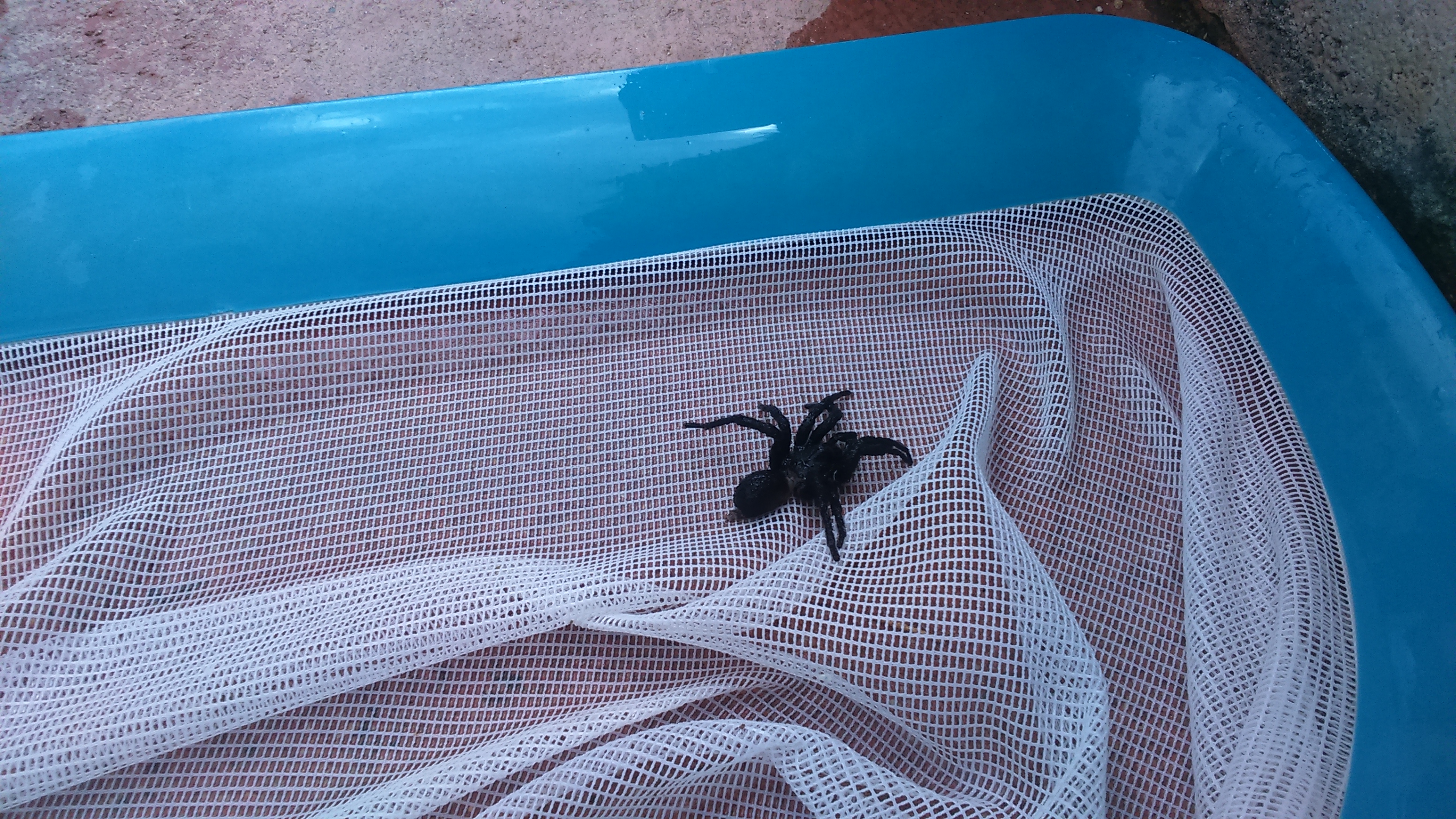
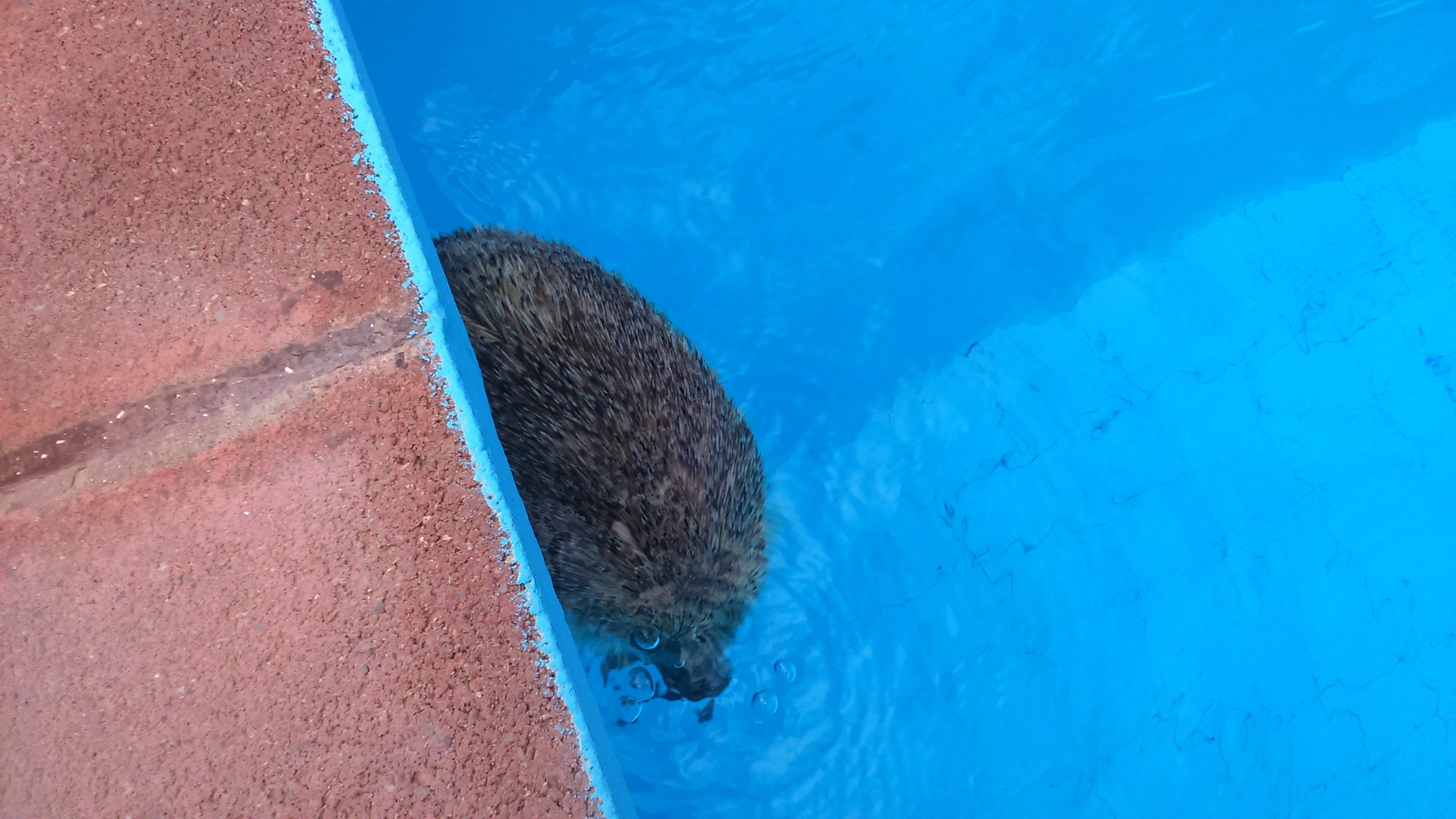
Today I removed a tiny bloated frog from the bottom of the pool, yesterday more than one whopping great spider, and the day before a courageous hedgehog. I do not know how long he had been there, and I know hedgehogs love to swim (so it says on the internet anyway), but then I saw him going under and so I hoiked him out with the dustpan which I had been using to clear the patio. He just stayed put on the grass for ages, breathing but not even hiding his snout. Eventually I wrapped him in a towel, put him in a box and placed the box in the flower bed. I thought he might be starving if he had been in the pool for hours (or even all night). An internet site suggested he might like scrambled eggs and green beans, but by the time they had cooked and cooled he had left.