Shetland – south mainland

A retrospective blog in the series about a virtual visit I made to Shetland in 2019. I had booked my ferry, planned my itinerary, and, most importantly, arranged a series of walks and talks with Shetland women on the theme of ‘A sense of belonging’. Then the lockdown happened.

NorthLink Ferries cancelled my ticket so as to keep residents safe, and I had to be creative. Happily, the women I was looking forward to meeting agreed to walk and chat with me by telephone and Zoom instead.

Kathryn Spence
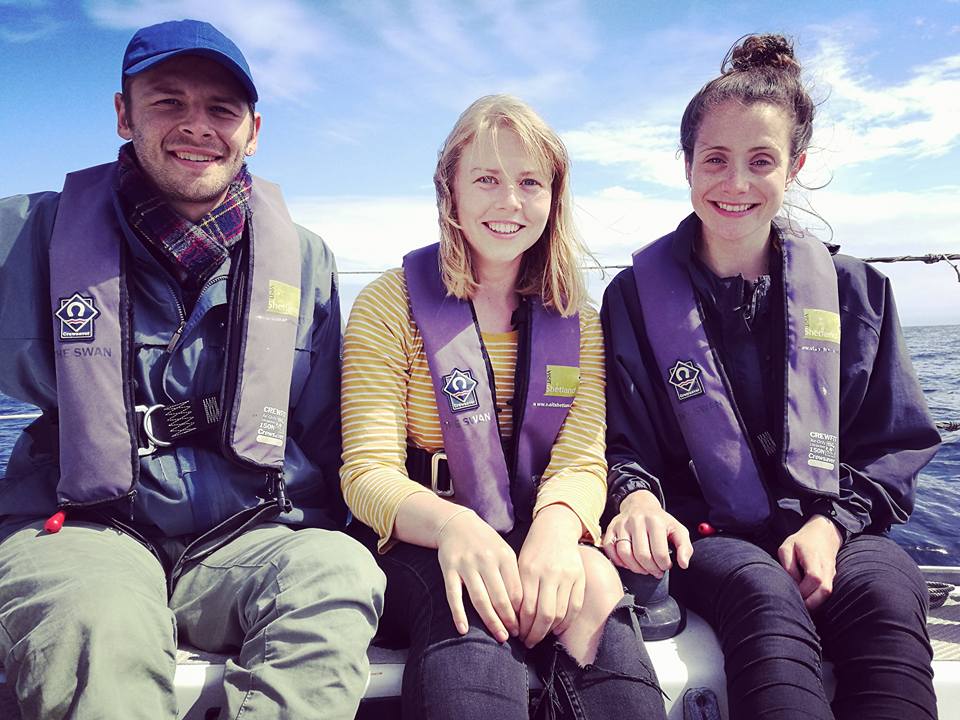
Kathryn Spence (centre) and company, while working on ‘Just Dance’ shown at The Mareel, Lerwick, Shetland 2017

Kathryn Spence works for Shetland Arts as their Creative Projects Manager, as well as being a freelance artist, professional contemporary dancer and choreographer. She started by telling me about herself when we walked and talked together, she in Shetland and I in Kent, England. ‘There is quite a young community here on Shetland, though not in the Highlands of Scotland. Boys did apprenticeships (in the oil industry especially) straight after school, and many of the girls stayed to be with them.’

‘I didn’t know there was such a thing as being a dancer when I was young; there wasn’t that provision available. I was away for 12 years, in Glasgow, and then London to train. Then I worked in the Highlands with Plan B, and in Edinburgh where there are lots of opportunities to climb the ladder, but I kept in touch with my school friends every summer, and so when I returned ten years later I slotted back in.’
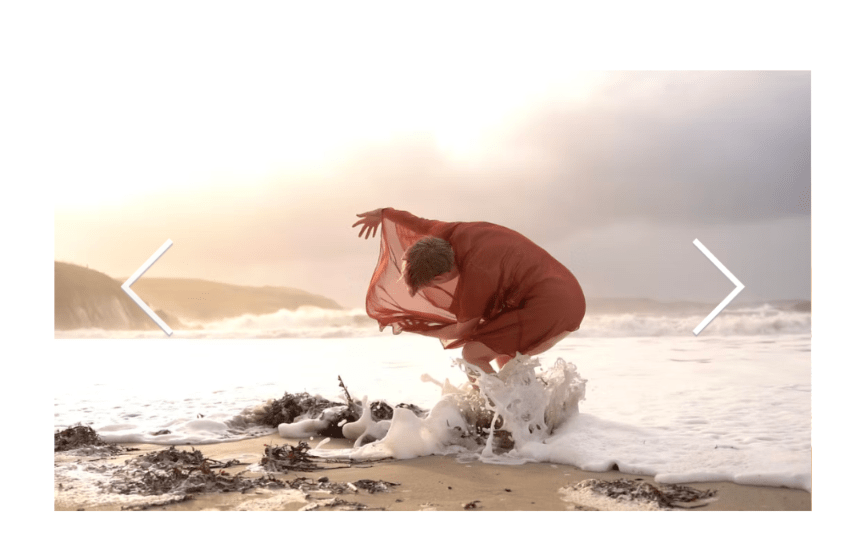
Kathryn Spence, ‘Beneath the Movement’ currently available on BBC iplayer

I’ve always known that I’m from here. It’s such a homely place, a community of all ages, and the landscape, the slow pace of life compared with other places I’ve lived; these are all reasons I’ve always known I wanted to come back.

Kathryn explained that living ‘in the country’ means living as part of a small and close-knit community. In Shetland, as in many other Scottish island communites I have visited (eg Orkney) people seem to depend on each other more than on the Mainland. She said that, in her opinion, it’s not even the same as living in the Highlands of Scotland, which are also sparsely populated. Her husband grew up there, on a farm near Invergordon, and therefore imagined they would be living in a secluded cottage when they moved to Shetland, far away from others, but in fact they are well connected. Amy Liptrot, author of The Outrun and herself an islander (from Orkney) understands. She writes (in her review of Tamsin Calidas’ ‘I am An Island’) that ‘the reality of island life requires more interaction with, and support from, neighbours than anywhere else … it’s made of community and culture’ (The Spectator).
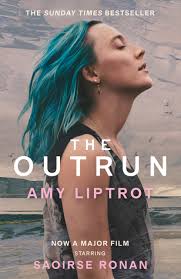
The Outrun book cover. Published by Canongate Books

‘A sense of belonging and a sense of community is instilled in us from a young age’ says Kathryn. ‘There are a lot of high profile celebrations and festivals (see below) which makes Shetland quite individual, and when you’re growing up you’re told that your dialect is different from anyone else, plus we are far away from everywhere in the middle of the North Sea, which is spoken about an awful lot, and so that is another thing to be quite proud of.’
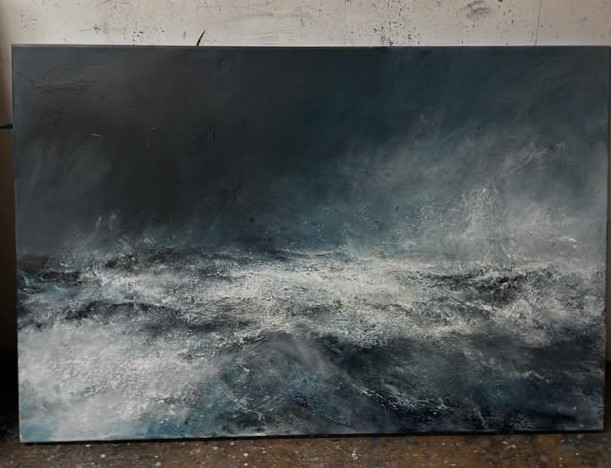
Painting by Janette Kerr that is currently (May 2025) on the walls of the Kilmorack Gallery in Inverness-shire as part of her exhibition ‘Flow’. Janette lives and paints in Shetland.

Kathryn cites the landscape as contributing to her sense of belonging, as do the other Shetland women I spoke with. ‘I have lived in other very beautiful places, but I love the land here and I am drawn to it. What I like is the extreme: one minute you’re at the cliffs, the next at the beach, all condensed, closer. I think that all these things help to create a sense of community.’

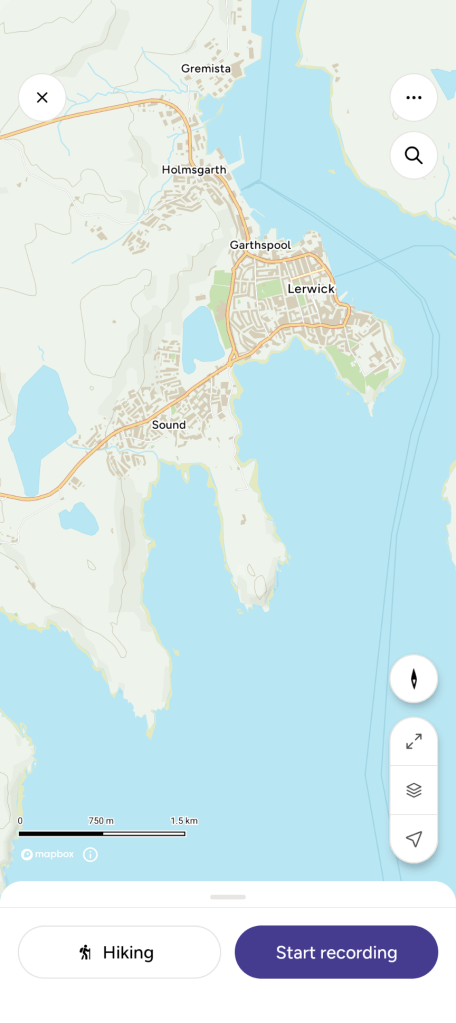
Lerwick, the capital
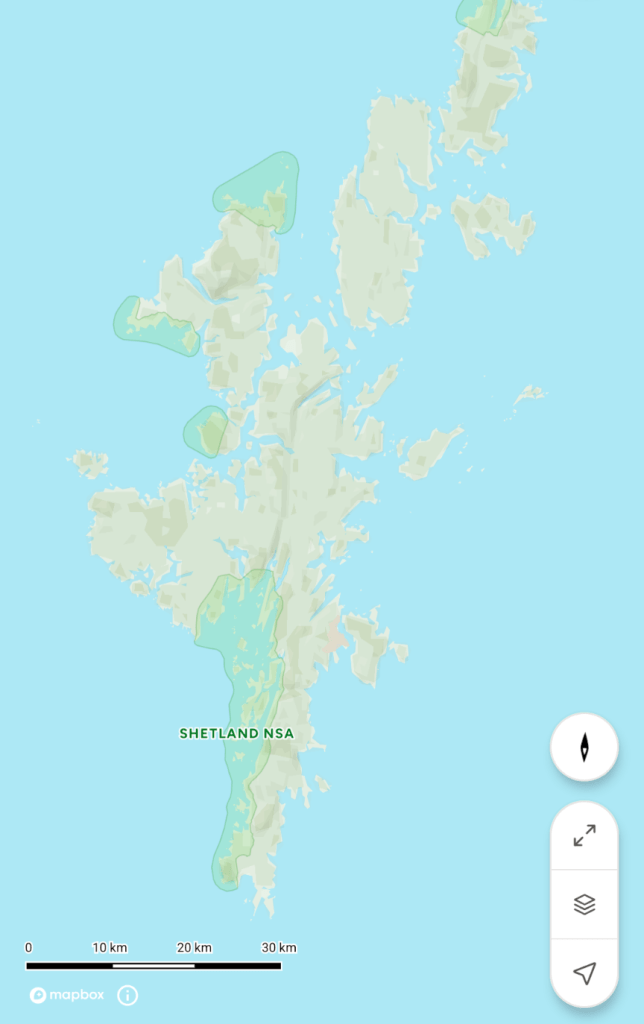
Kathryn works in Shetland’s capital, an 18 minute car commute from her home. ‘Lerwick is similar in size to Invergordon in the Highlands – a small Scottish port town and not much happens there – but there’s an awful lot happening in Lerwick. It’s partially because it’s a capital. Invergordon is near Inverness so it doesn’t have to have everything, but Lerwick is far away from everywhere else you do have to have everything.


It is very small, but convenient, and now we have the Mareel where bigger dance companies can come and perform which is great. If I want to spend a night there I can either get a bus and be dropped off at my doorstep at midnight (there’s a really good service in the south part of the island because of the airport in Sumburgh which is half an hour’s drive from Lerwick, or even take a taxi if it’s a special occassion, which is dear at £40, but that’s £20 each and down south it would be the same cost for much less distance.’ (Spoken in 2019).
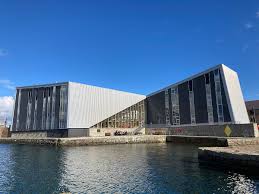
The Mareel, taken from Wikipedia

We talked about people being flexible in order to be and stay in work all year round, another theme that came from my conversations. ‘That is something that comes from the islands – as soon as you put roots down anywhere you have to be prepared to be adaptable. I work in the arts and there’s just the one arts organisation here [Shetland Arts], so if I was to lose that income I would need to diversify.’ Consequently, she teaches some dance classes and has trained as a yoga teacher to help her stay fit – what with her choreography and this, she has quite a few strings to her bow! ‘It’s always about connecting with people through movement, the language of movement.’
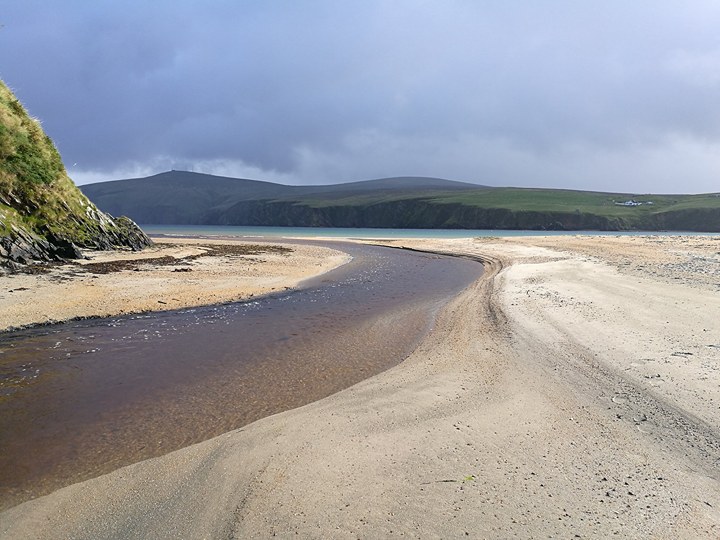
Kathryn’s Shorestation Residency with sculptor Tony Humbleyard. Photo by Kathryn Spence

This was not the only fascinating conversation I’ve had with local women which covered the topics of ritual – celebrations like weddings, festivals and funerals (the latter, sadly, were very tricky during of the Coronavirus pandemic.) There was mention of long-standing traditions like the famous Up-Helly Aa Viking fire festival (in Lerwick and other sites across Shetland), but I won’t write much about that as there is a lot of information available on the internet. Suffice to say that some women were very keen ‘to be allowed’ to join in the all-male shindig back in 2019.
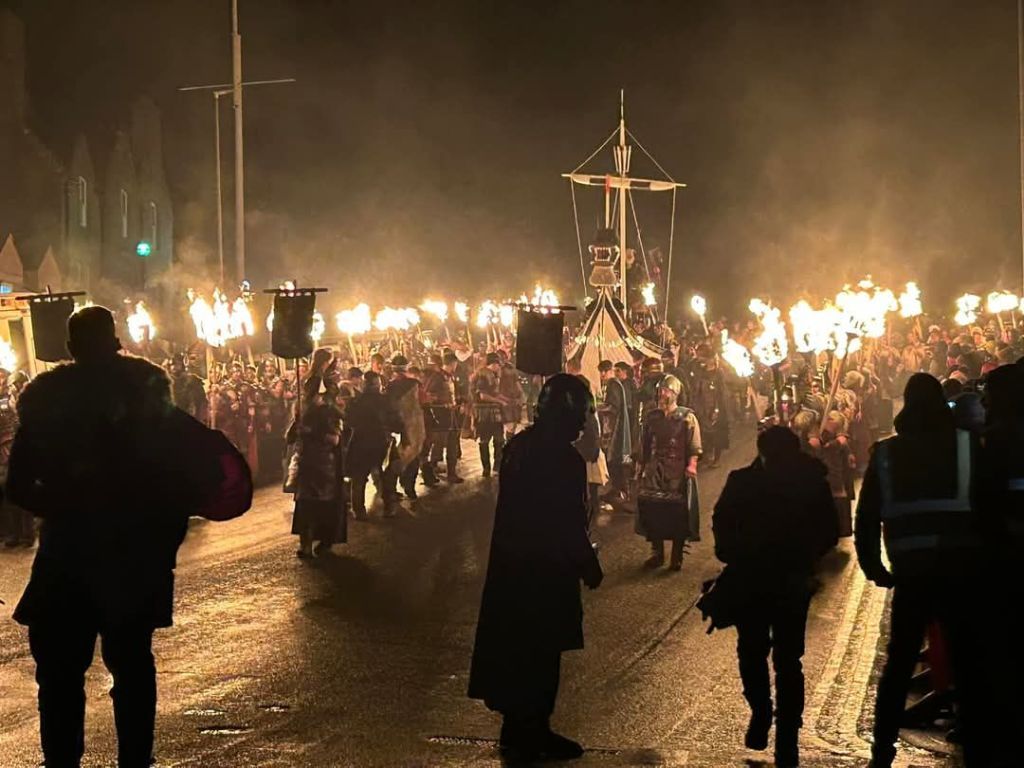
Up Helly Aa fire festival January 2025 Photo Janette Kerr

Update: In January 2024, the BBC’s Ken Banks reported that, ‘Shetland’s famous Up Helly Aa fire festival has seen the traditional dramatic burning of a replica Viking galley. For the first time in the event’s 143-year-old history, women and girls joined the main “squad” at the head of the torchlit procession through Lerwick. Up Helly Aa – the biggest fire festival in Europe – is held on the last Tuesday in January. The annual event sees people celebrate Shetland’s Norse heritage.’

Thank you to Kathryn for telling me about belonging in Shetland, and to Janette Kerr for giving me permission to use her photos. A separate blog will be dedicated to my upcoming visit and meet-up with Janette.

I will be in Shetland between 12-22 May 2025. Please let me know if you would like to do a Shiatsu / hospitality exchange. tamsingrainger.com
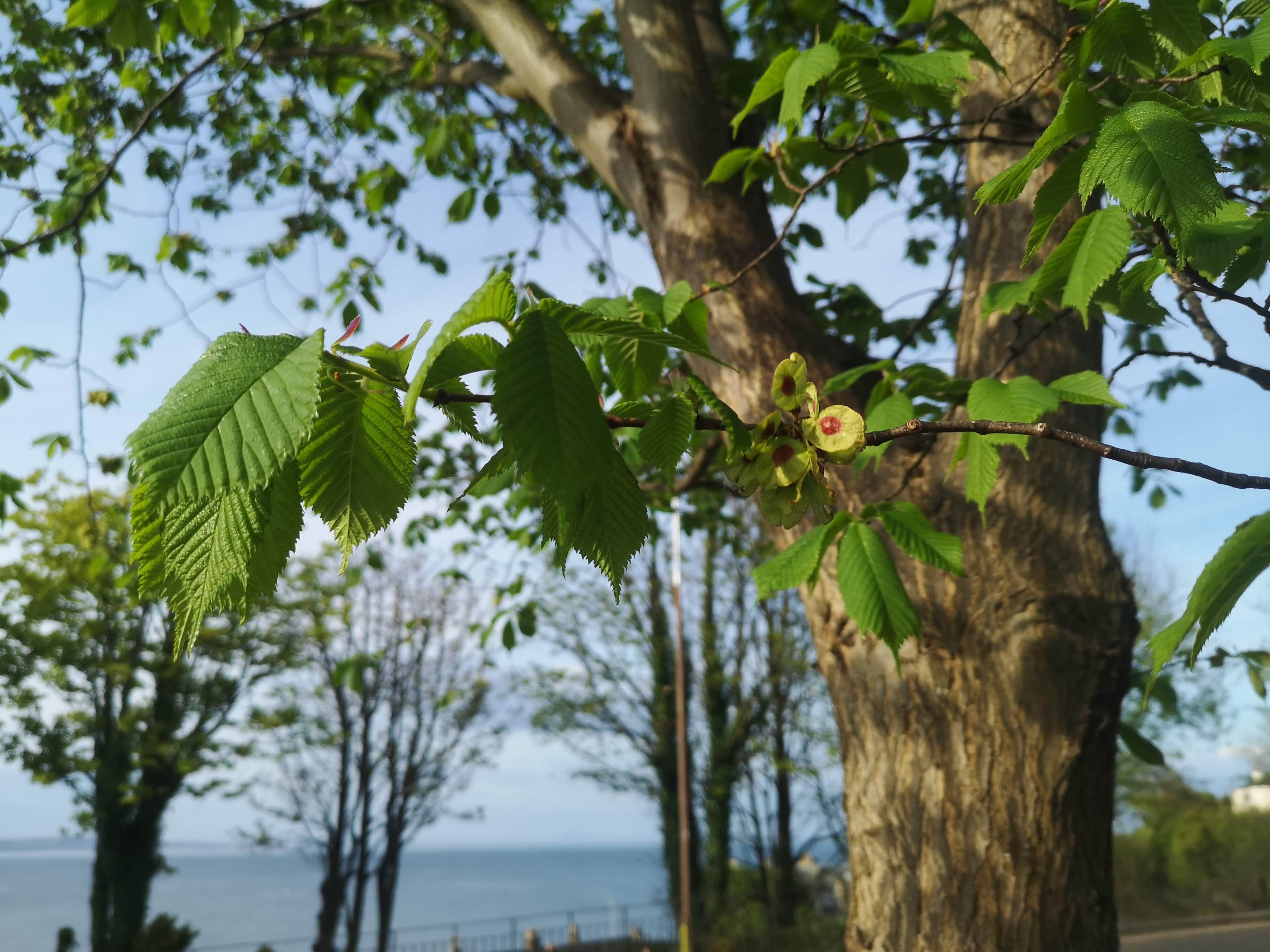
Wheatley Elm Wellbeing Walk

Wheatley Elm Wellbeing Walk, May 10th 2025 (2-3.30pm).

Wheatley Elm (detail)

A free community event beginning at Granton Crescent Park with some walking, art activities and gentle exercises. Part of the country-wide Urban Tree Festival, it focuses on our local trees, ones we go past everyday, and celebrates how brilliant they are.  

Booking Link: https://urbantreefestival.org/wheatley-elm-well-being-walk

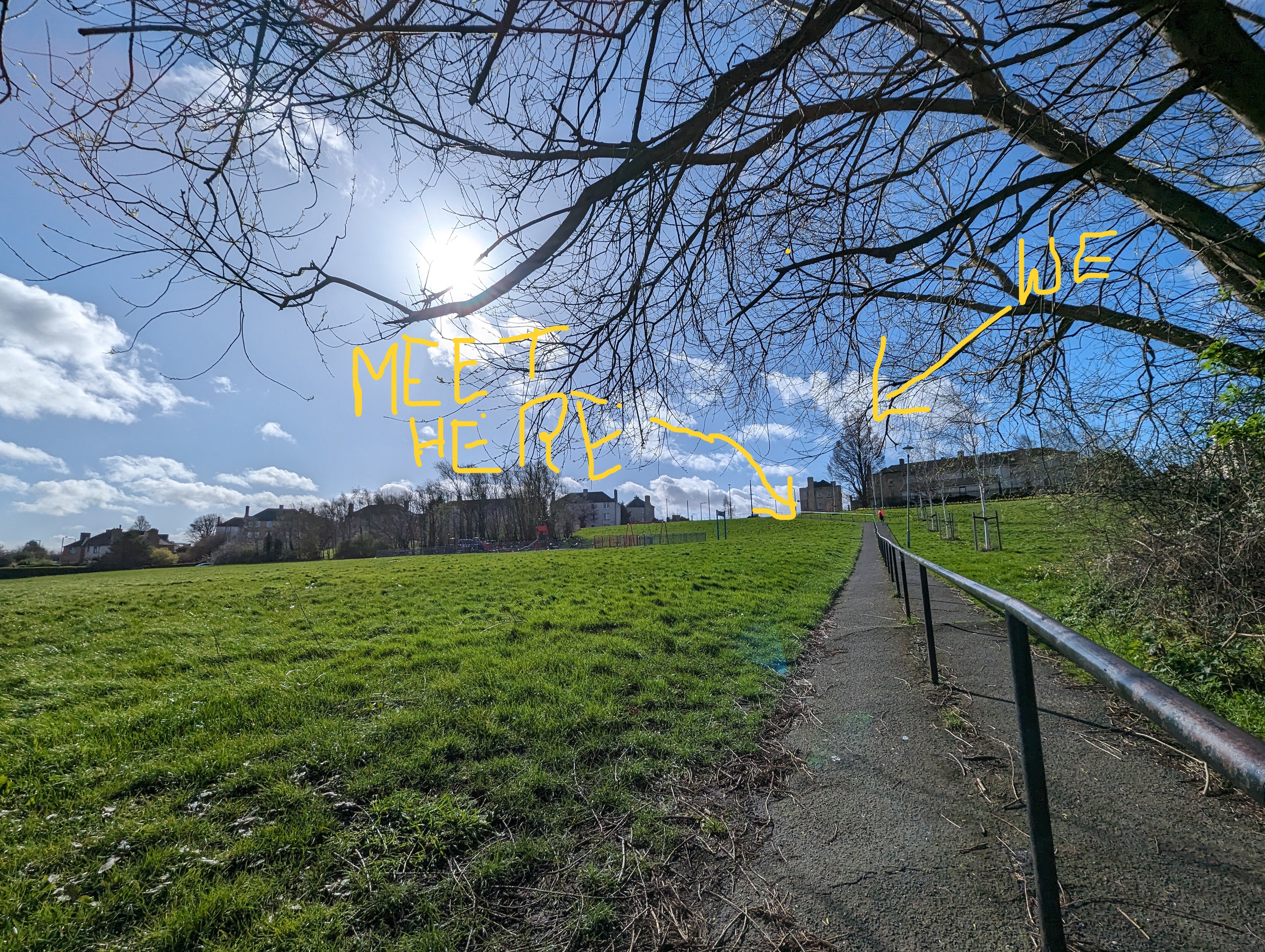
Meet here: There is a bench just inside the gate at the top of the path which runs between Granton Crescent and the bottom of Granton View and we will gather there. What3Words: ///skips.bets.aspect

Meet at Granton Crescent Park

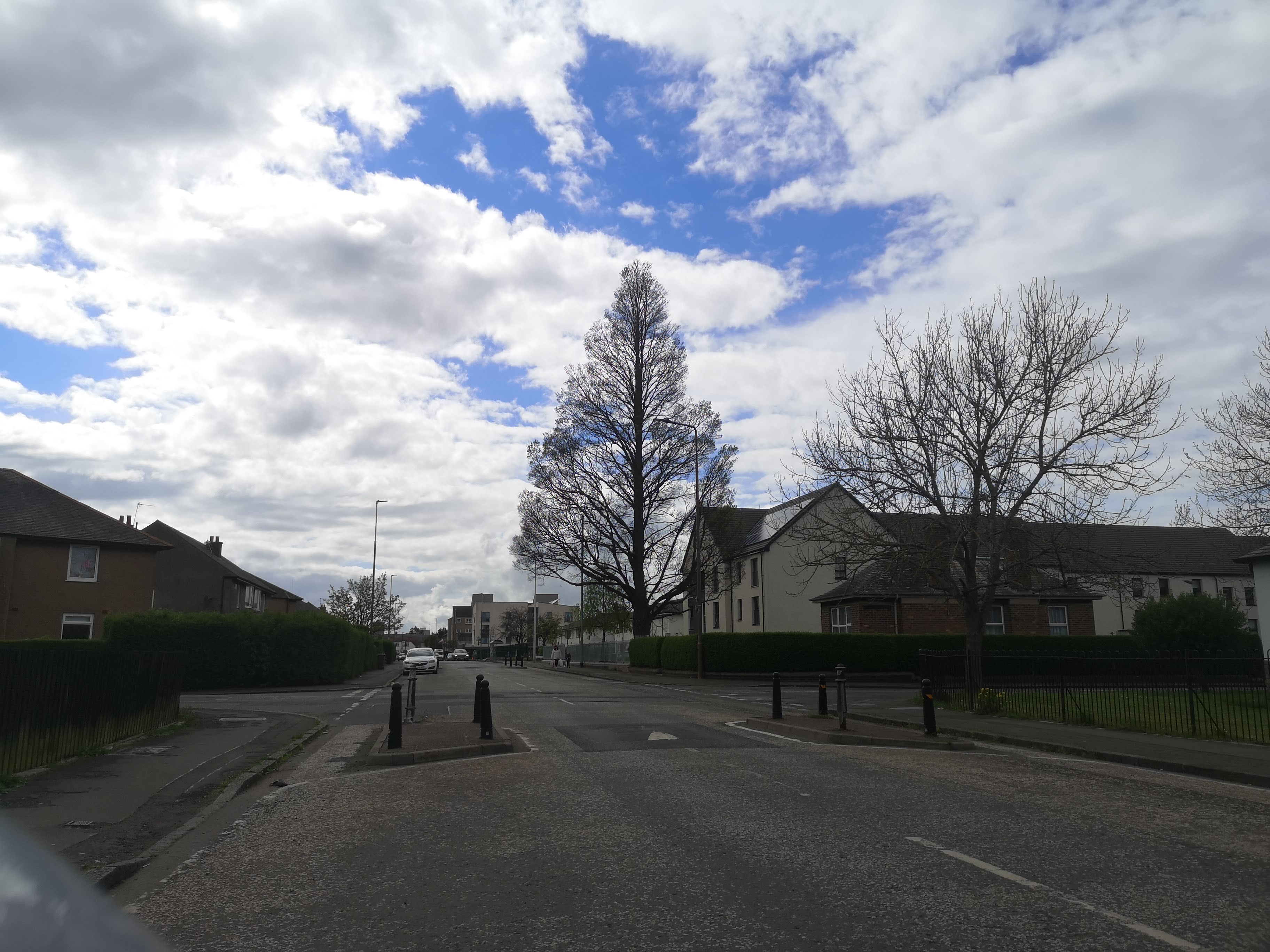
We will visit some of the resilient and versatile Wheatley Elms in Edinburgh, find out more about this unusual species which is only found in 2 places in Britain, Edinburgh being one of them, and identify how we can benefit our sense of wellbeing besides.

A Granton Wheatley Elm

Walking, well-being ‘exercises’, art, talking and learning about the Wheatley Elm trees in the city.

All welcome – adults, children and dogs, prams and wheelchairs. Bring water and wear sensible footwear. Chocolate provided.

Contact me if you have questions. tamsinlgrainger@gmail.com

Connected links:

‘Hi, Wheatley Elm, nice to meet you…’

The Forest of Dean

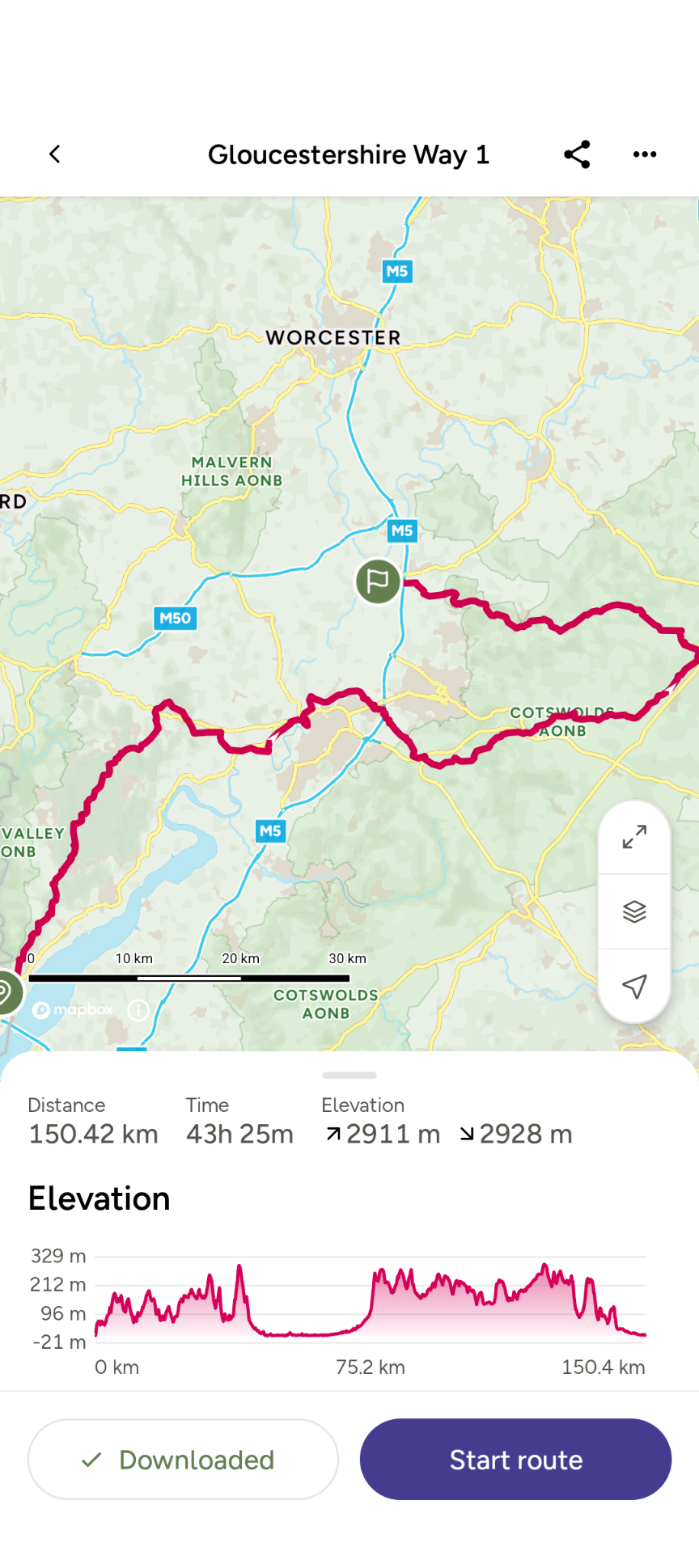
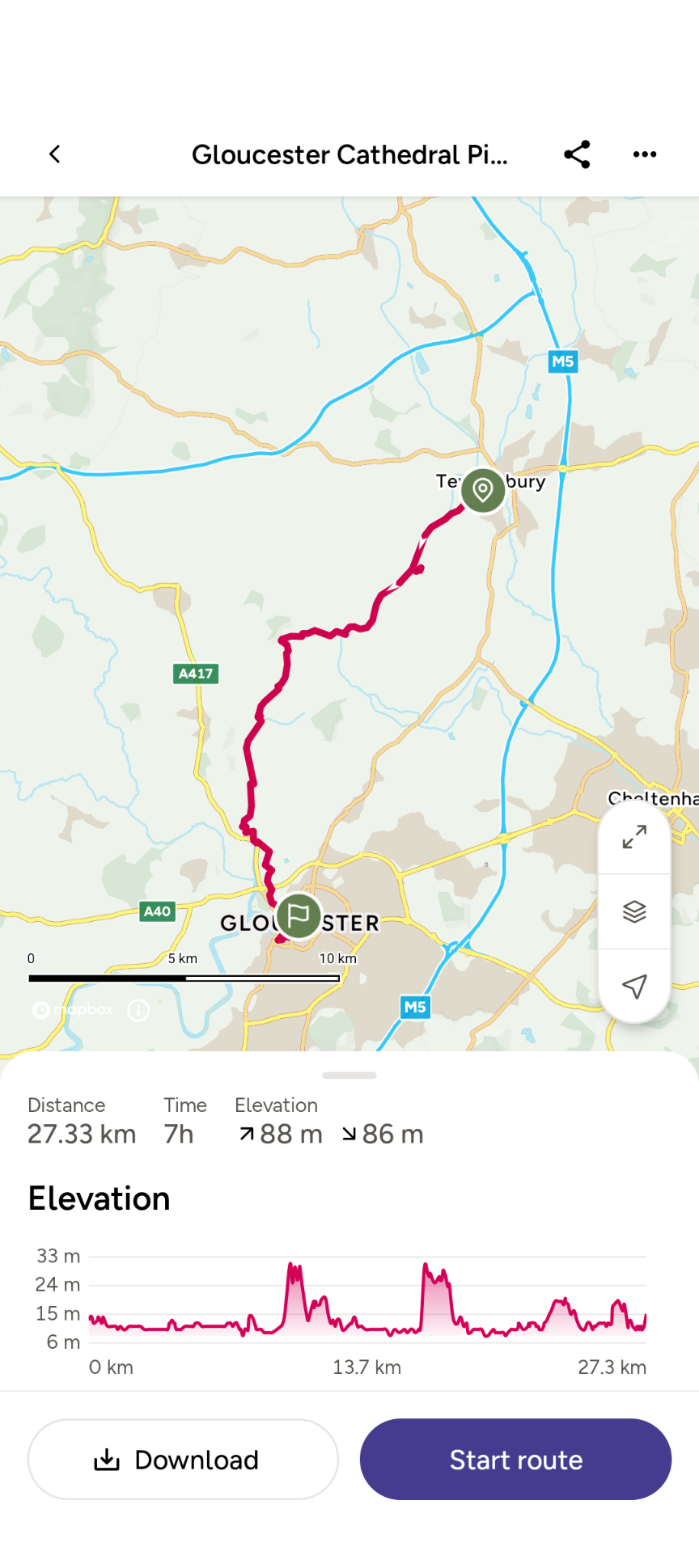
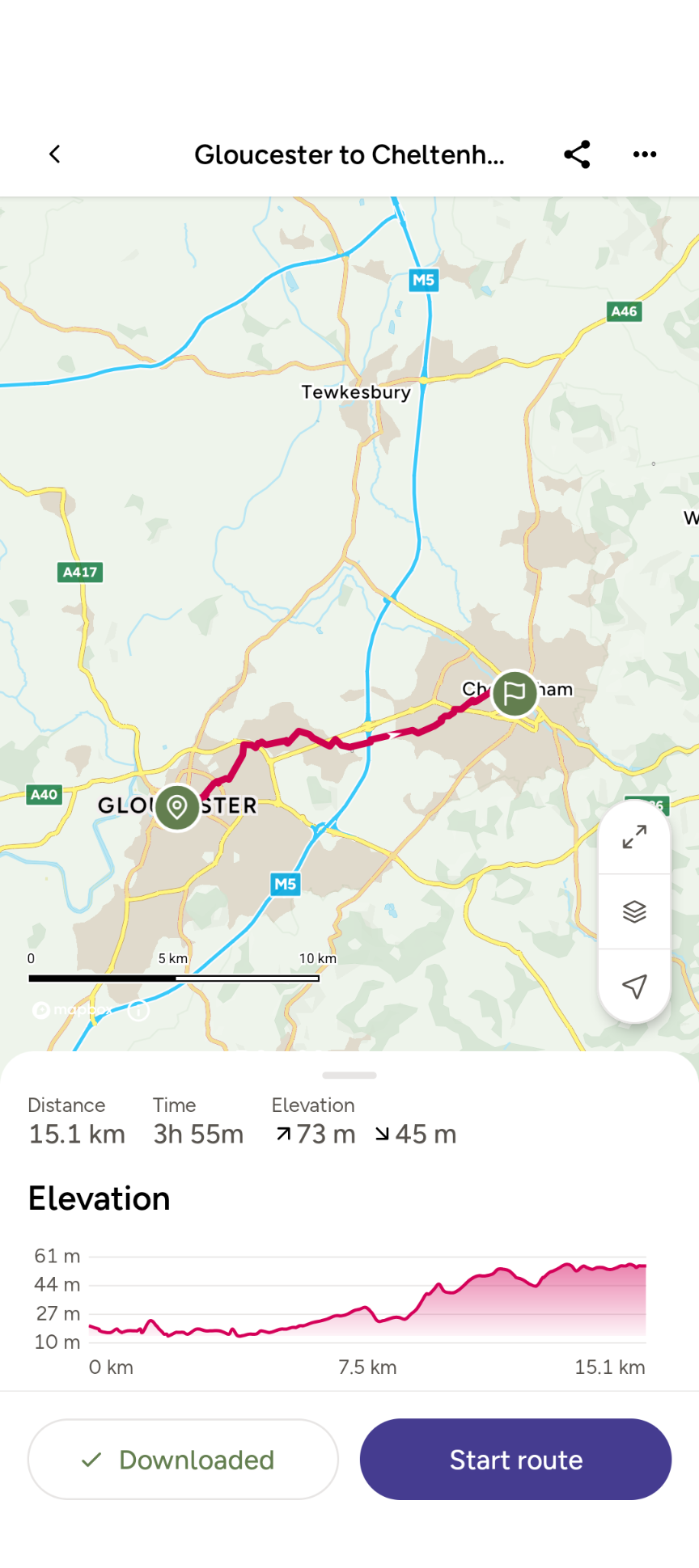
Chepstow and the Forest of Dean were at the beginning of my walk along the Gloucestershire Way (see below), the British Pilgrimage Trust’s Tewkesbury Abbey to Gloucester Cathedral, and the Slow Ways UK route from Gloucester to Cheltenham. The whole project was a political, ecological and artistic walk ‘for the small things-often unseen or unnnoticed-to celebrate their importance in our ecosystem’. The theme grew out of my research for the Line(s) of Enquiry Walking the Land group exhibition which was at the Hardwick Gallery, University of Gloucestershire in Cheltenham between 3 and 27 March, and from the actual stitching of tiny insects. (This blog , Walking with Ants, explains what I did.)

Three Ordnance Survey map app screenshots of the maps I used for the walk: The Gloucestershire Way (GPX from the Long Distance Walking Association), the British Pilgrimage Trust’s Tewkesbury Abbey to Gloucester Cathedral, and the Slow Ways UK route from Gloucester to Cheltenham

Day 1

I am fascinated with borders, the shared edges of places. Though they are a line on a map, they are also complex political divisions. Chepstow, or Cas-gwent, being on the Welsh side of the English border, shares the languages of Welsh and English and is at the cross-over point between cultures. I knew it a little, in my early twenties, when I lived and worked in the Forest of Dean as a Dance Animateur (someone who animates people about dance in a specific geographical area). It seemed right, somehow, to start my walk on the Old Bridge very shortly after sunrise, at the meeting of night and day. Long walks are always significant for me, they mark the boundary of the way I was and of a new way to be.

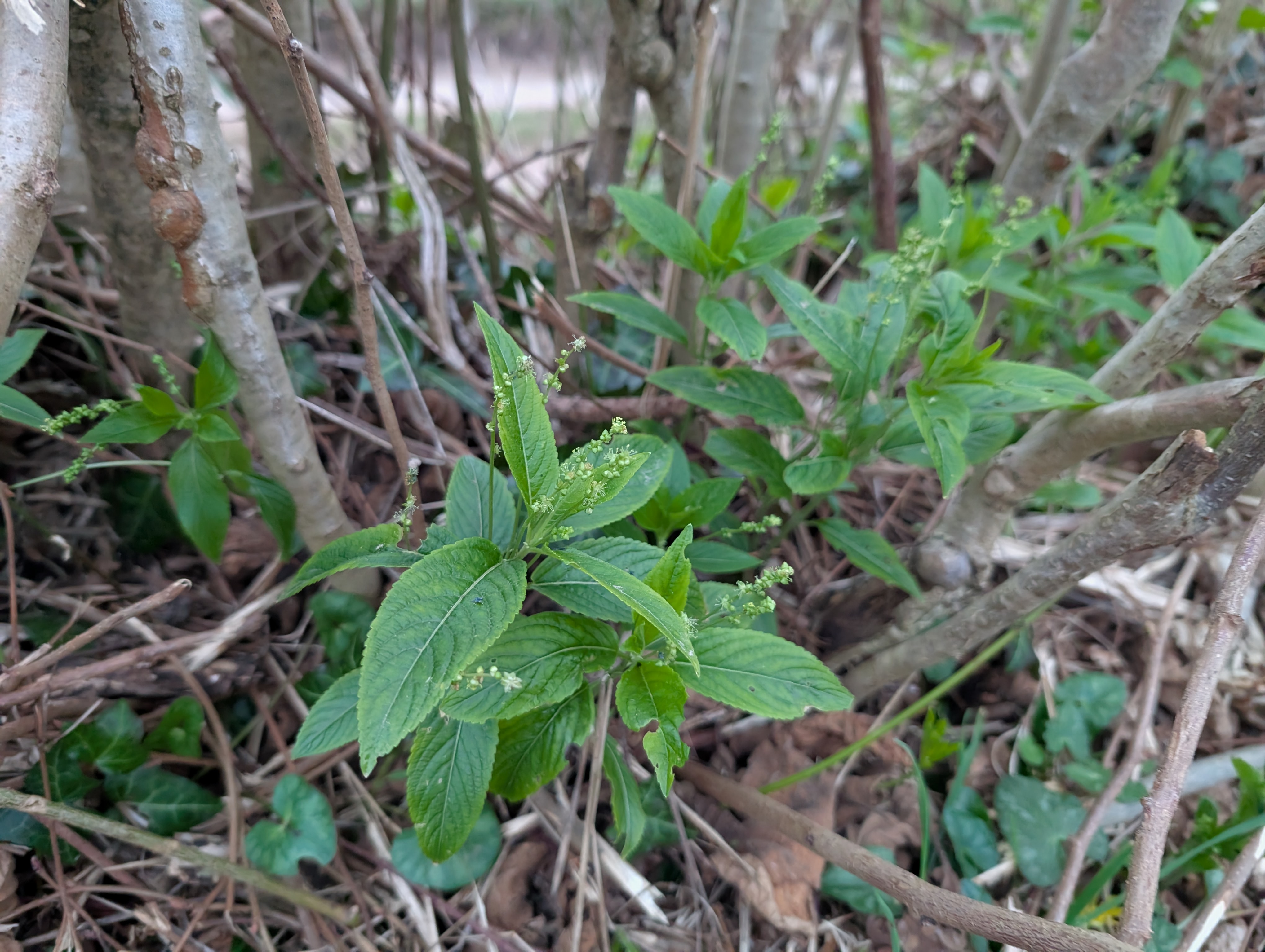
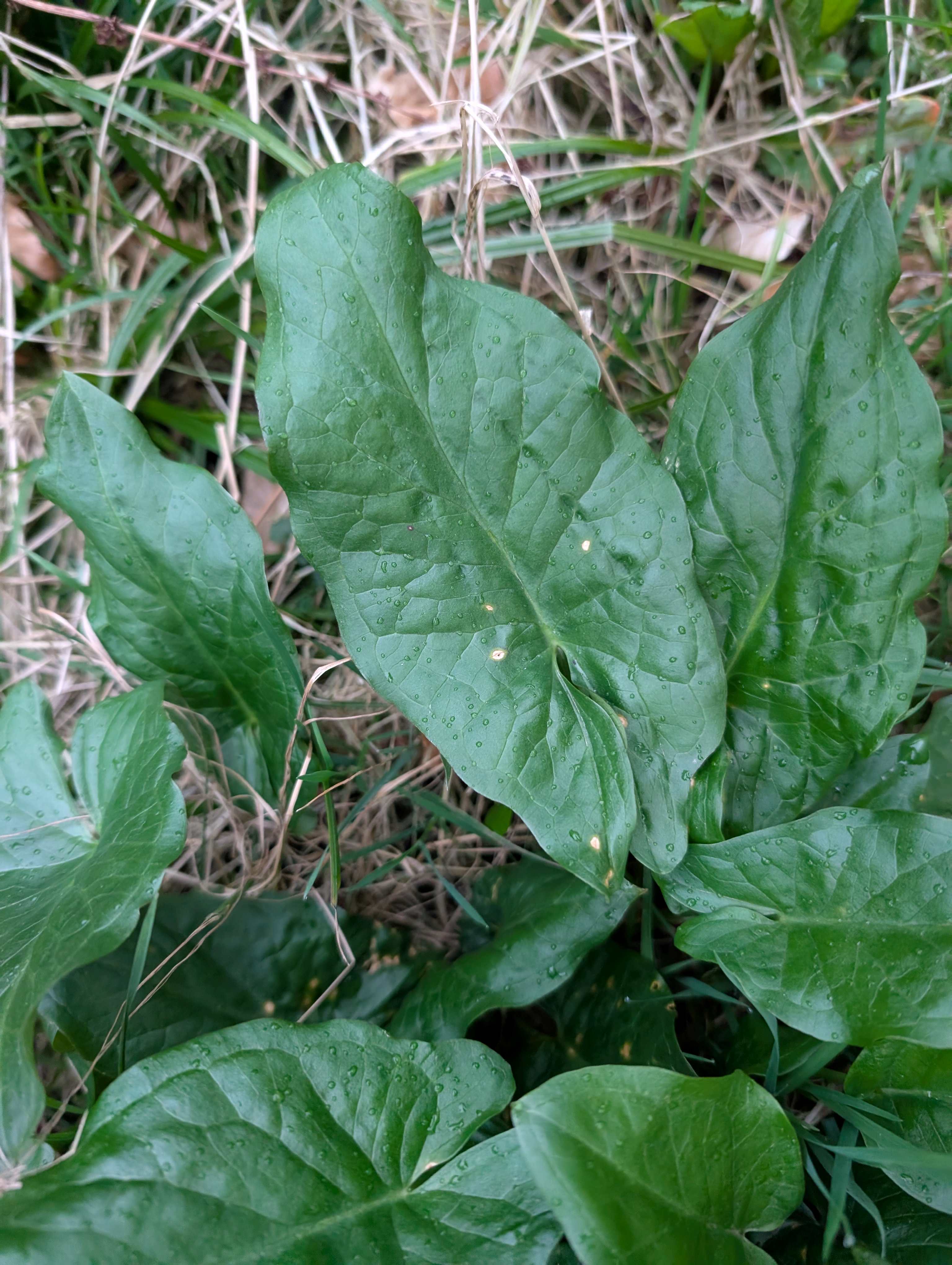
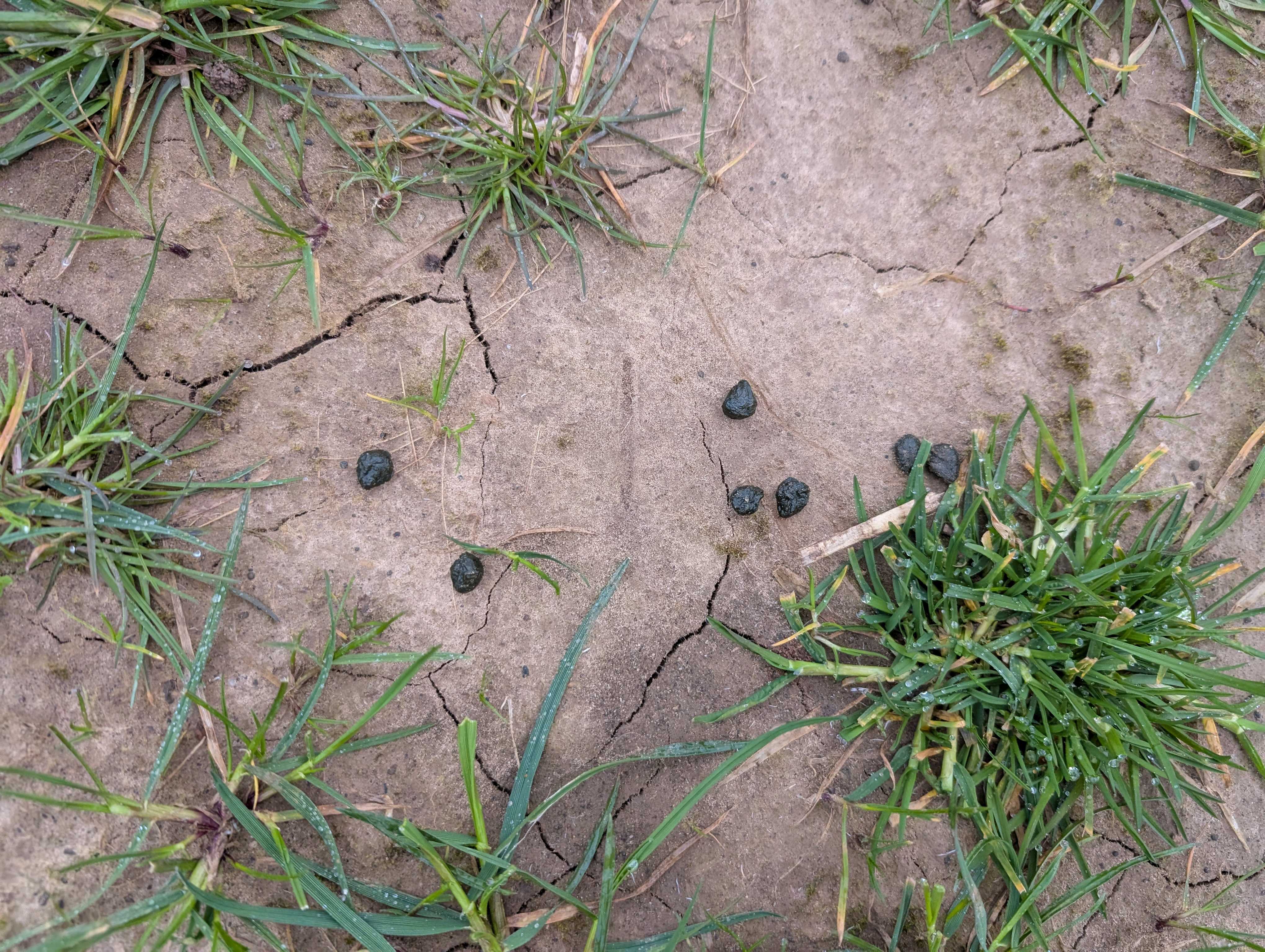
Captions for the images above: Some of the small things that I met on day 1, that make up and contribute to our ecosystem: Dog’s Mercury / Bingelurt or Mercuralis perennis (highly poisonous) found on ancient woodland floors; White spots on Lords and Ladies / Cuckoo pint or Aurum maculatum, perhaps indicating minerals in the water. It is also poisonous; Deer droppings that will feed the soil when it rains.

Before I left Edinburgh for Gloucestershire in England on 6 March 2025, I had felt under increasing pressure to produce intelligent ideas and write about what I intended to do. I felt sure it was not enough to ‘go on a walk and look at the landscape through the eyes of an artist’. I was worrying myself over not being sufficiently learnèd because I haven’t been to Art School or done a PhD, as so many of my erudite friends and colleagues have. I wonder, now, whether that worrying had something to do with what happened on the walk, with the injury I sustained which took a long time to get over and which still causes me pain at times.

… that the brain’s left hemisphere is designed to help us apprehend and thus manipulate the world, and the right hemisphere to comprehend it, to see it all for what it is.

Dr Iain McGilchrist from The Matter with Things (intro)

Using both sides of the brain

My different interests have always engaged me with both sides of my brain. At dance college we were being trained to become ‘thinking dancers’, effectively doing 2 degrees in one by mastering the practical application and delving deeply into the academic subjects which underpinned it.

Shiatsu, which I started to learn in 1989, is a hands-on subject. I was taught and have practised for many years, how to touch the body effectively and appropriately; it was essential that I deepened my intuition about the Chinese / Japanese notions of chi and qi. However, we also studied the theoretical and philosophical aspects of this complex complementary therapy.

Now I’m making walking art: simple perambulation in its application, plus reflection and enquiry coming duraing and after. With this latter, though, I was constantly worried about my ability and whether I should be doing something more in-depth and sophisticated.

Day 2

Captions for the images above: Going up May Hill, Forest of Dean March 2025, and the view from the top

I’d looked at the map for the second day, seen that there was a steep hill at its end, and told myself I did not have to do that, what with the heavy rucksack and it being only the end of day 2 (traditionally, one of the most challenging when doing a long-distance hike as you are not used to the hours of exercise, haven’t yet built up the relevant muscles to cope with it). When I got to Longhope though, I felt good. It was such a beautiful evening that I broke my resolve and went up anyway. Almost immediately, I had to stop every 11 paces, to rest and breathe, and then my foot slipped from under me and the weight on my back toppled me over. I was, as I had intuited the night before, too tired. It did not feel not serious, but by the time I started going down, I was hobbling. The back of my left knee was already hurting a lot.

The result of straining a tendon was that I had to focus in minute detail on my body sensations and how the surrounding landscape effected them. I could not use my brain to figure intellectual things out or puzzle over the meaning of what I was doing. I had to sink into my physical system to find ways to mitigate the damage and minimise any further harm to my soft tissues. This meant watching the ground, not only for the small things which often reside there, but for any slight undulation. Equally mindful of the internal as well as external beings I was meeting, I was forced into a different sort of balance.

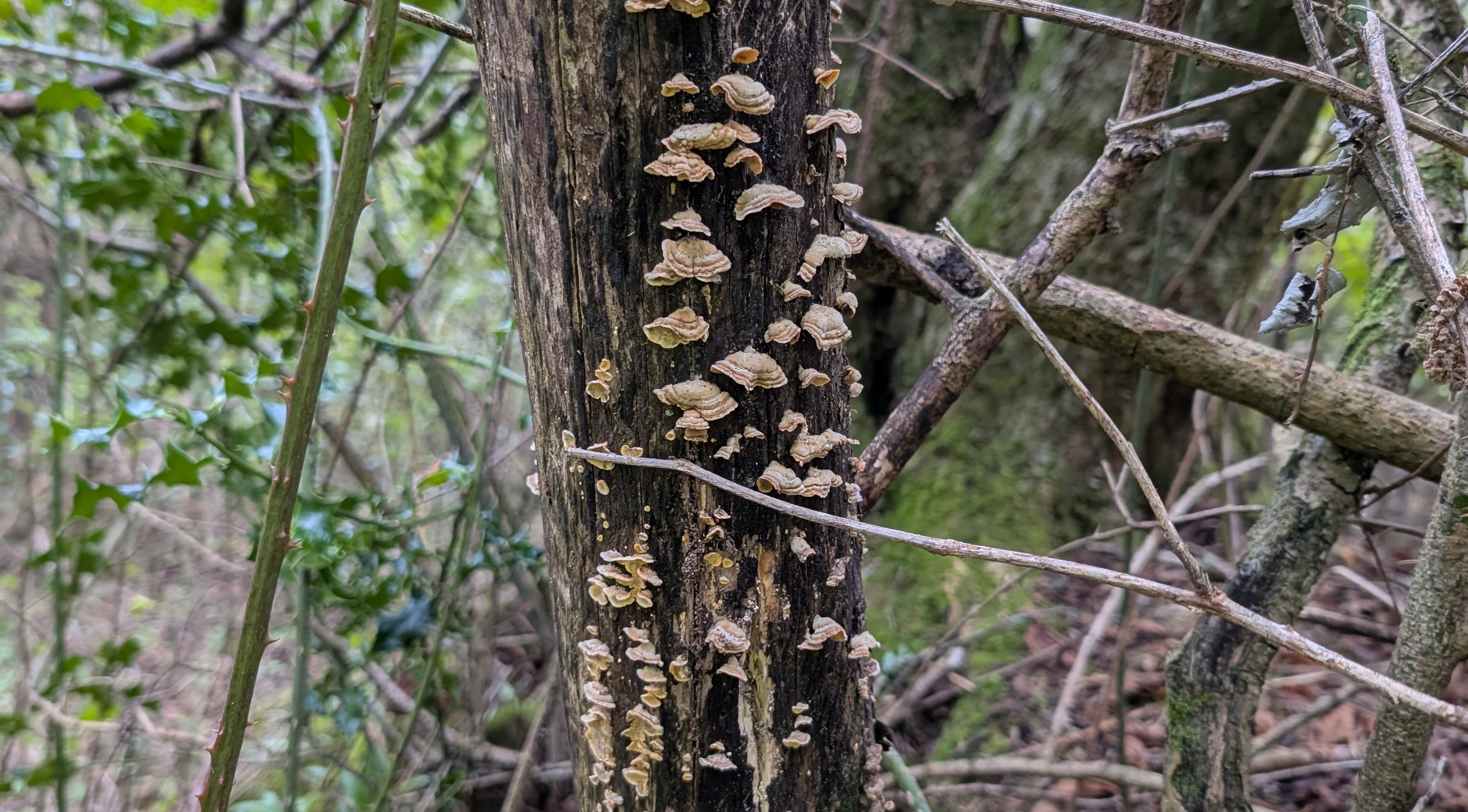
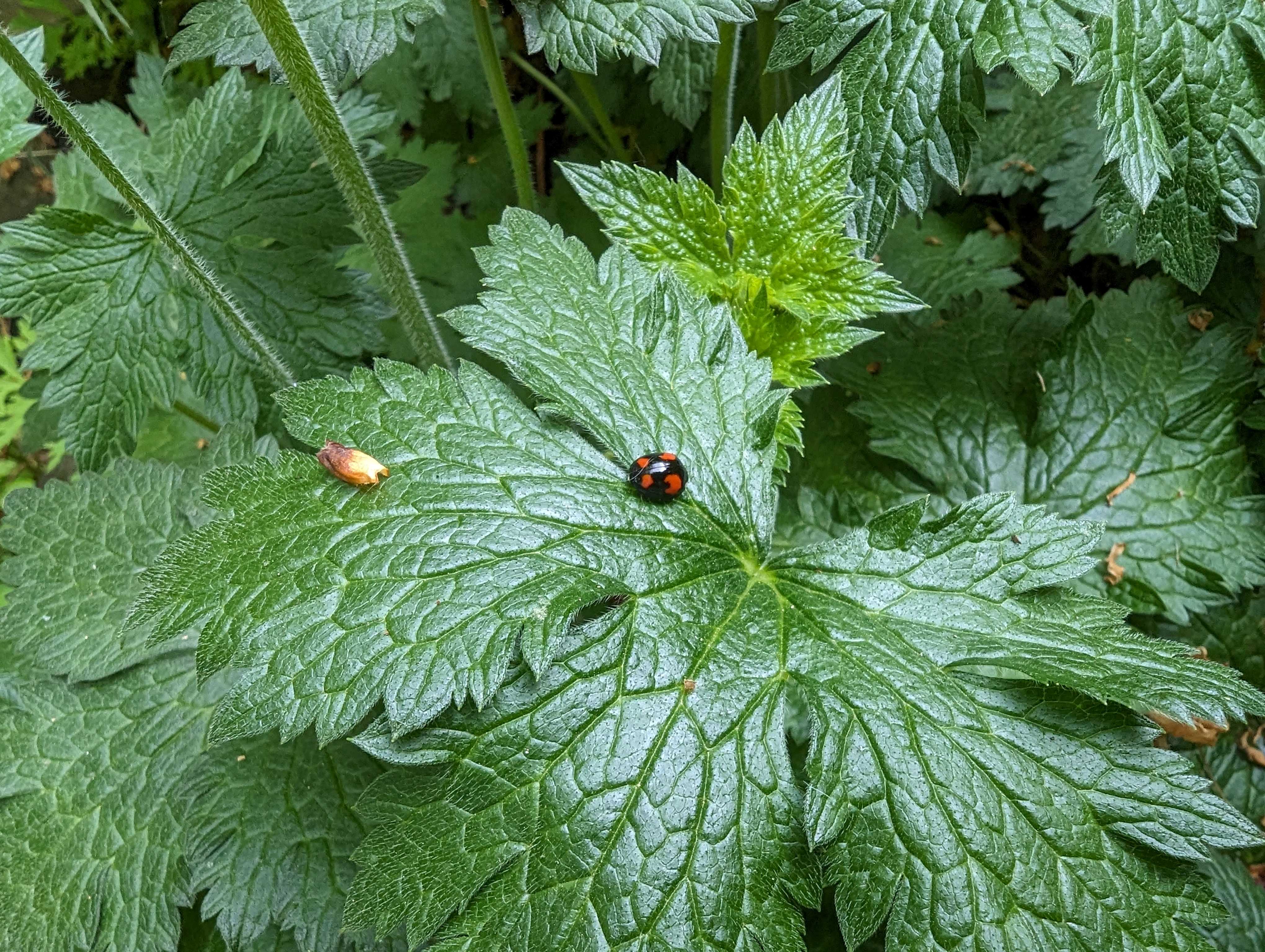
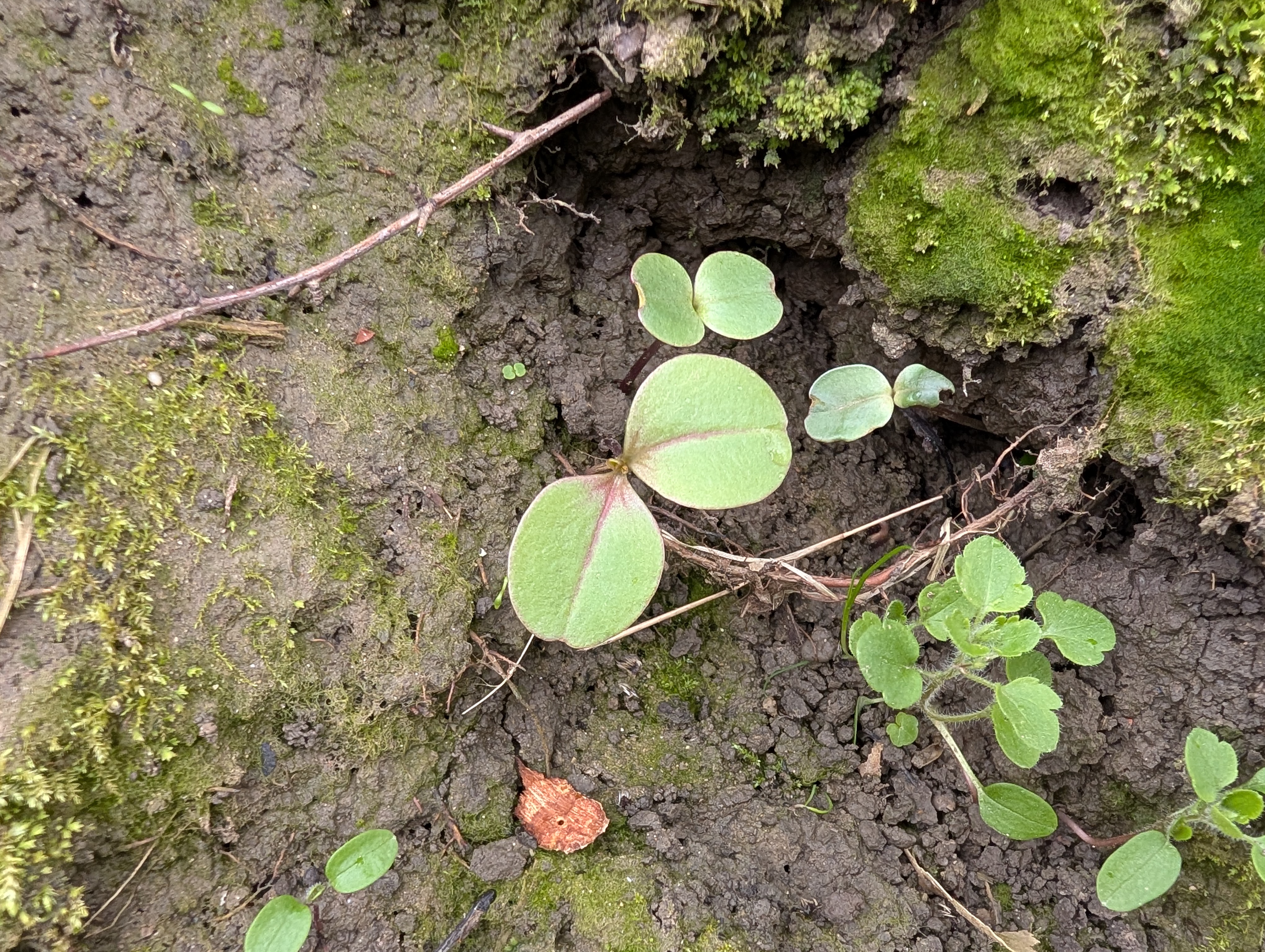
Captions for the images above: fugi growing on a log, Harlequin ladybird, cotyledons growing on a molehill

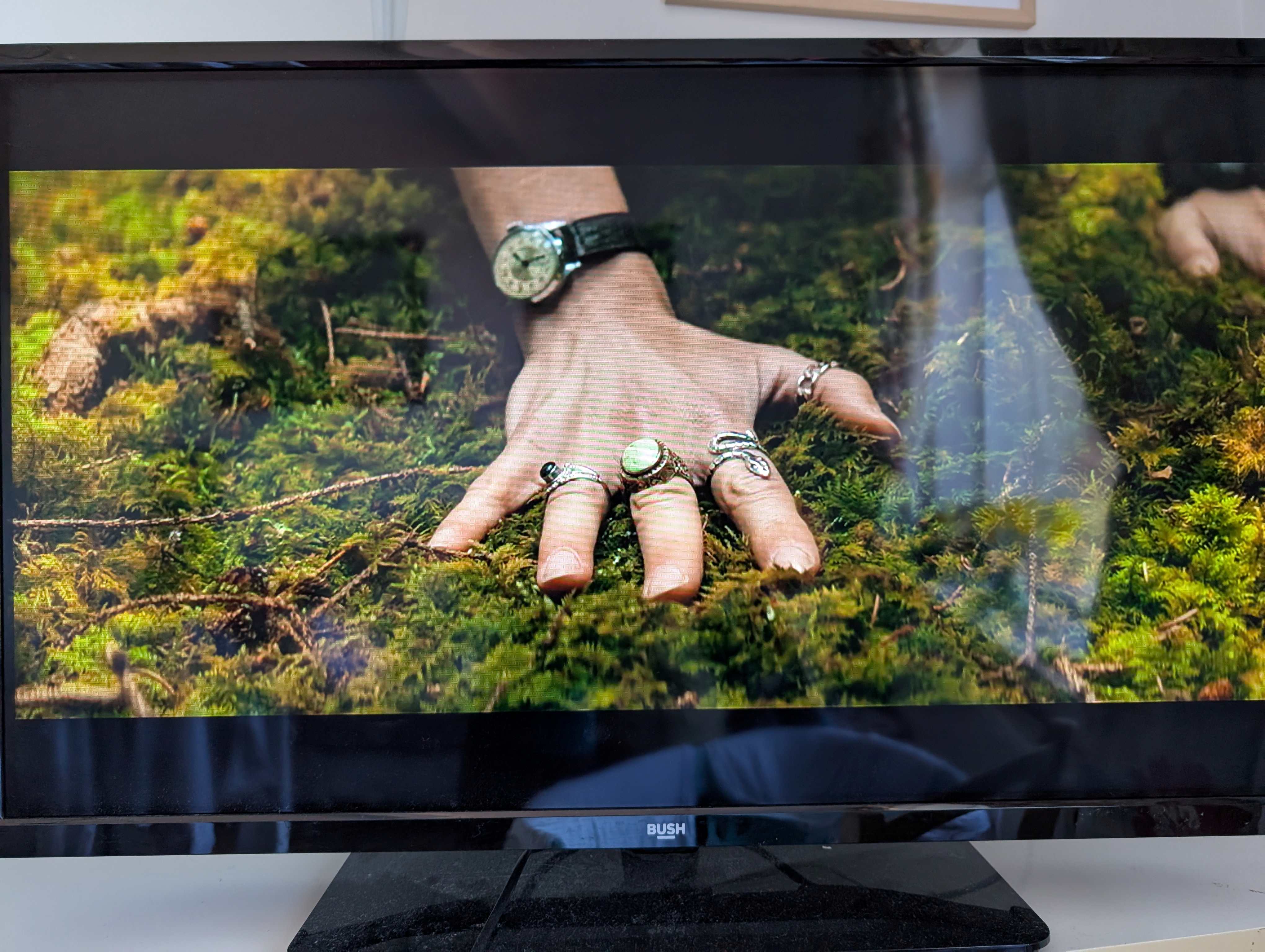
Just before I left home, by chance, I came across the drama deries, The Change (Channel 4) by Bridget Christie. It’s about a woman who leaves home and goes to the Forest of Dean ‘to find herself’. I could hardly believe the syncronicity. After my return, nursing my poor leg and unable to walk far at all, I watched series 2. It is full of shots of the small things: a beetle slowly crawling, mushrooms sticking out of a log, and seedlings starting to sprout. It is suggested that the more Linda, the main character, starts to feel rooted, and things start to drop into place for her, the more she starts to hear what is going on in the landscape around her; even the mycelium growing and connecting underground.

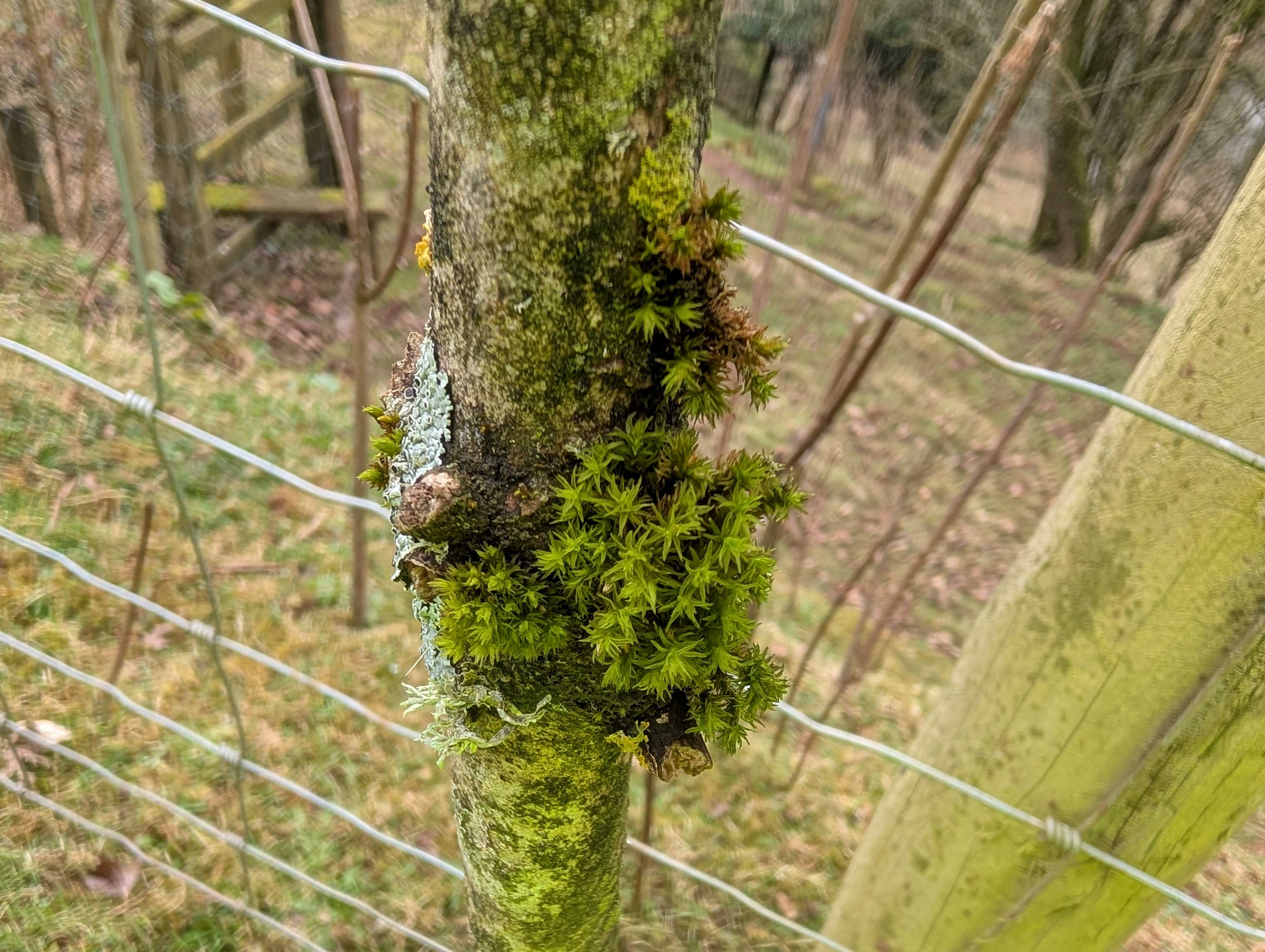
Moss and lichen on a fence post, Forest of Dean
Hand on moss: still from ‘The Change’ by Bridget Christie on Channel 4

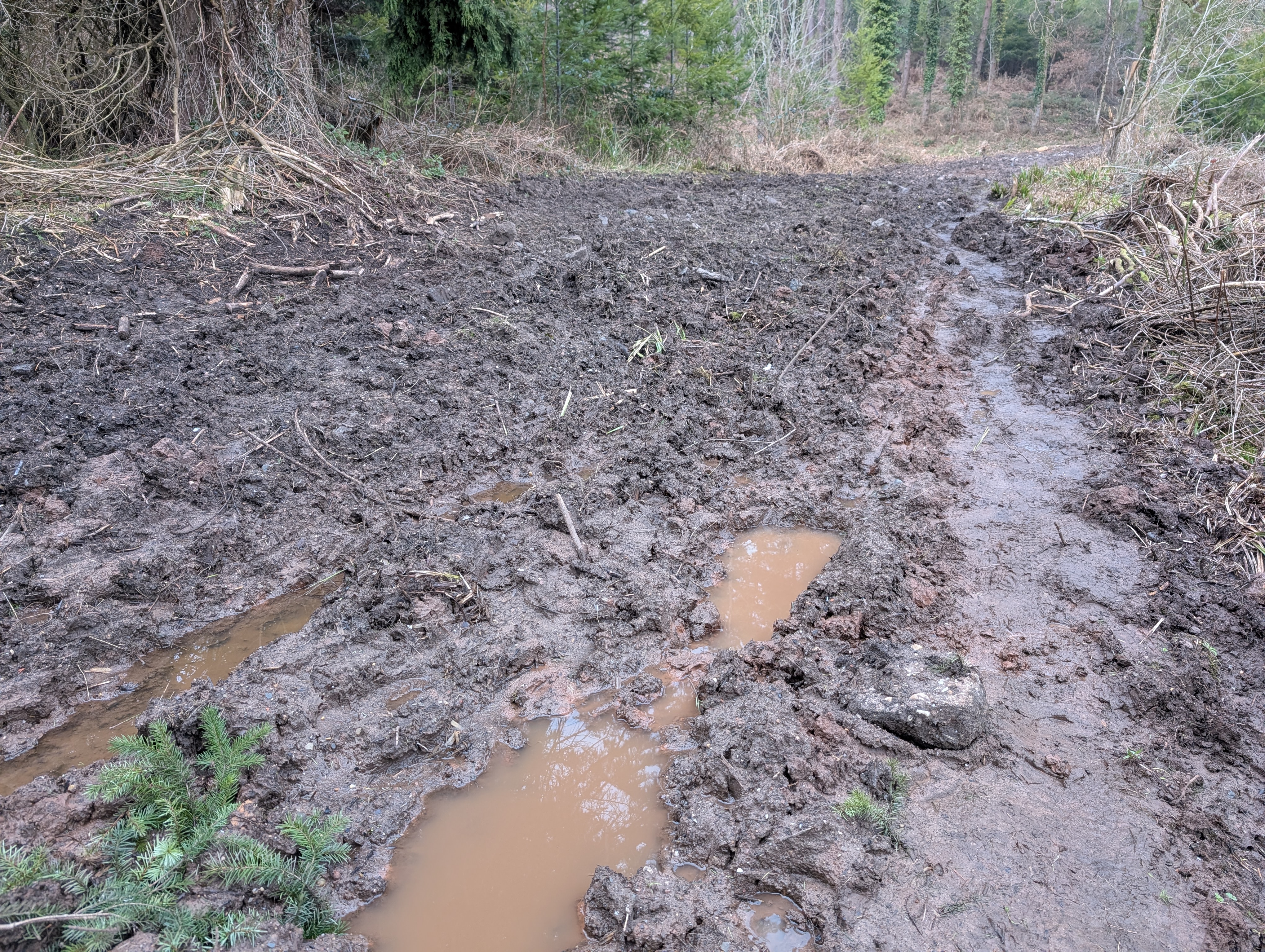
These early days of the walk were idications of how the whole was going to be: fascinating in the detail, a deep learning and balancing experience, and muddy, so very muddy.

So many of the paths, the majority of them, were extremely muddy, very slippery and practically impassable

To be continued/

Slow Ways -Gloucester to Cheltenham

This walk as taken in March 2025. It was the penultimate day of a 10-day hike from Chepstow, on the Welsh-English border, to Cheltenham. My artwork was in the Walking the Land’s Line(s) of Enquiry exhibition at the Hardwick Gallery, which opened on 7 March, and I was attending a Symposium at the University of Gloucestershire there on 21st.

You may be interested in this companion blog post: Walking with Ants

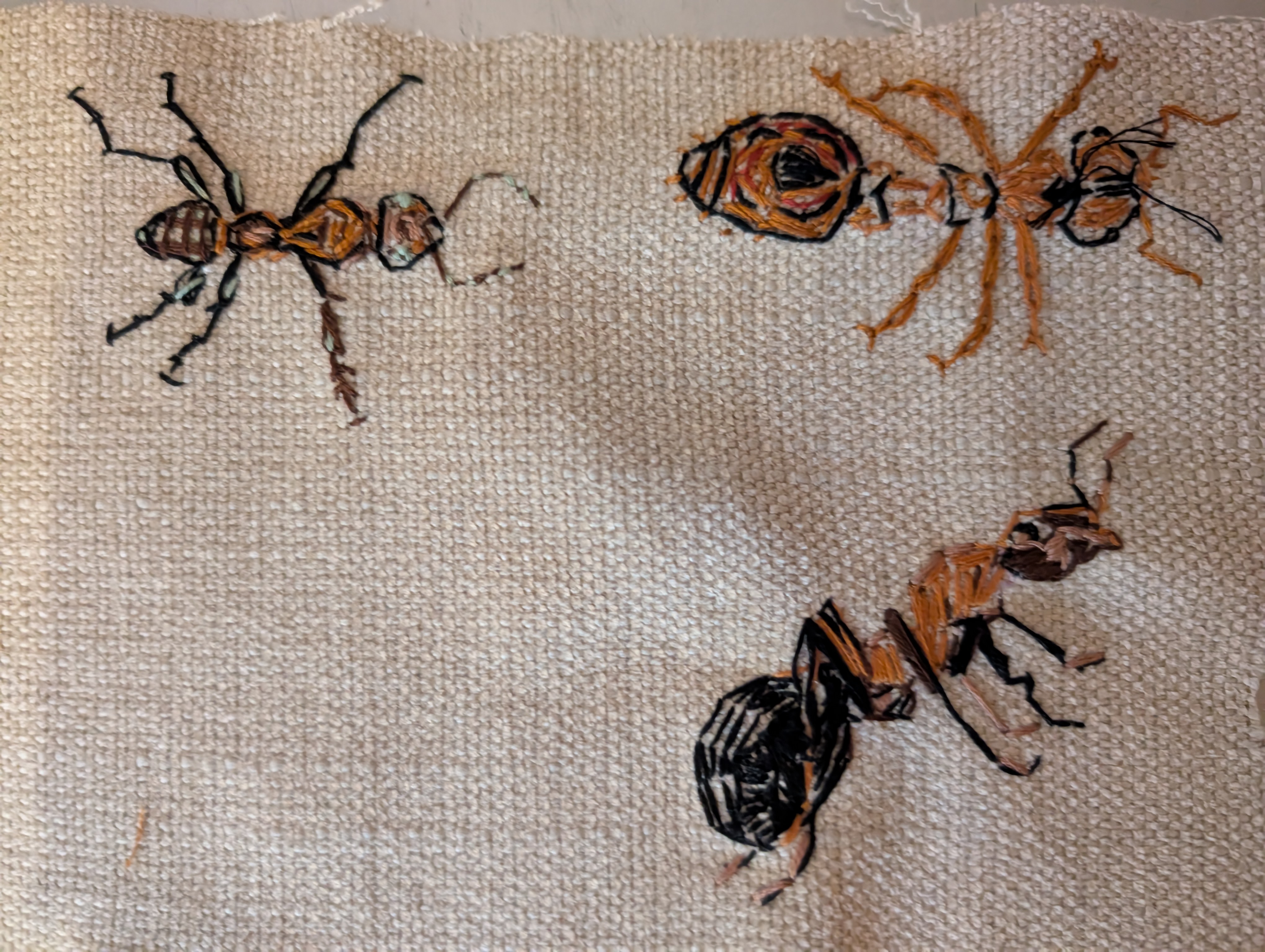
Detail, The Honeydew Line, by Tamsin Grainger (embroidery). I was walking for the small things, celebrating and honouring them as vital participants in our ecosystem