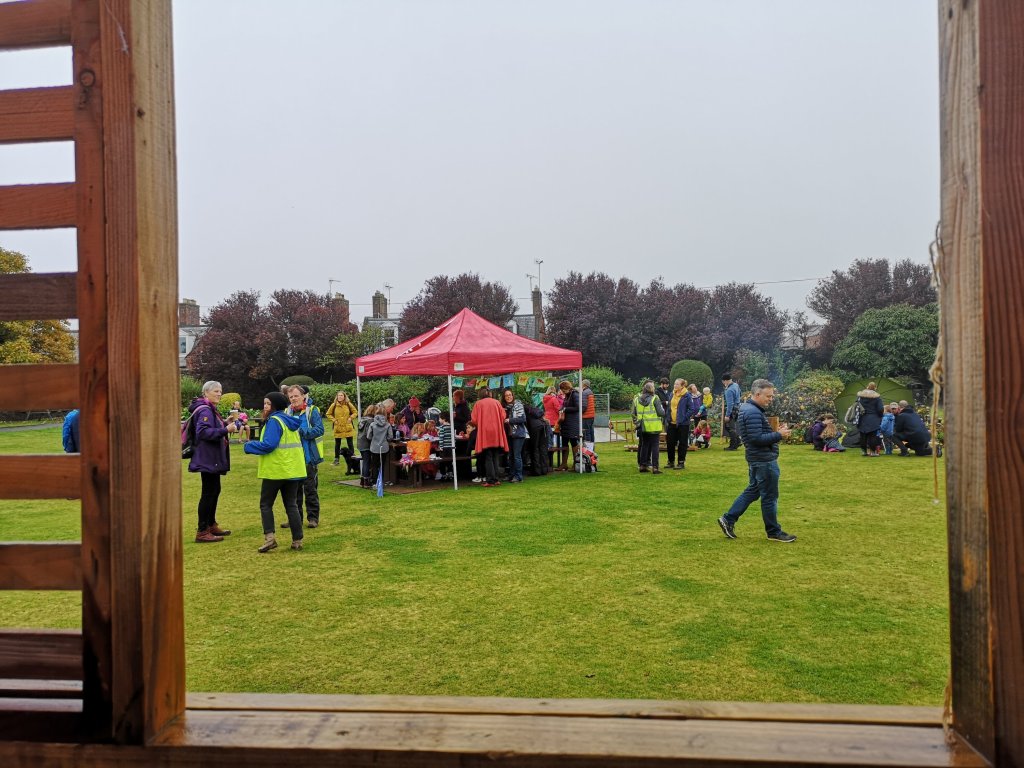
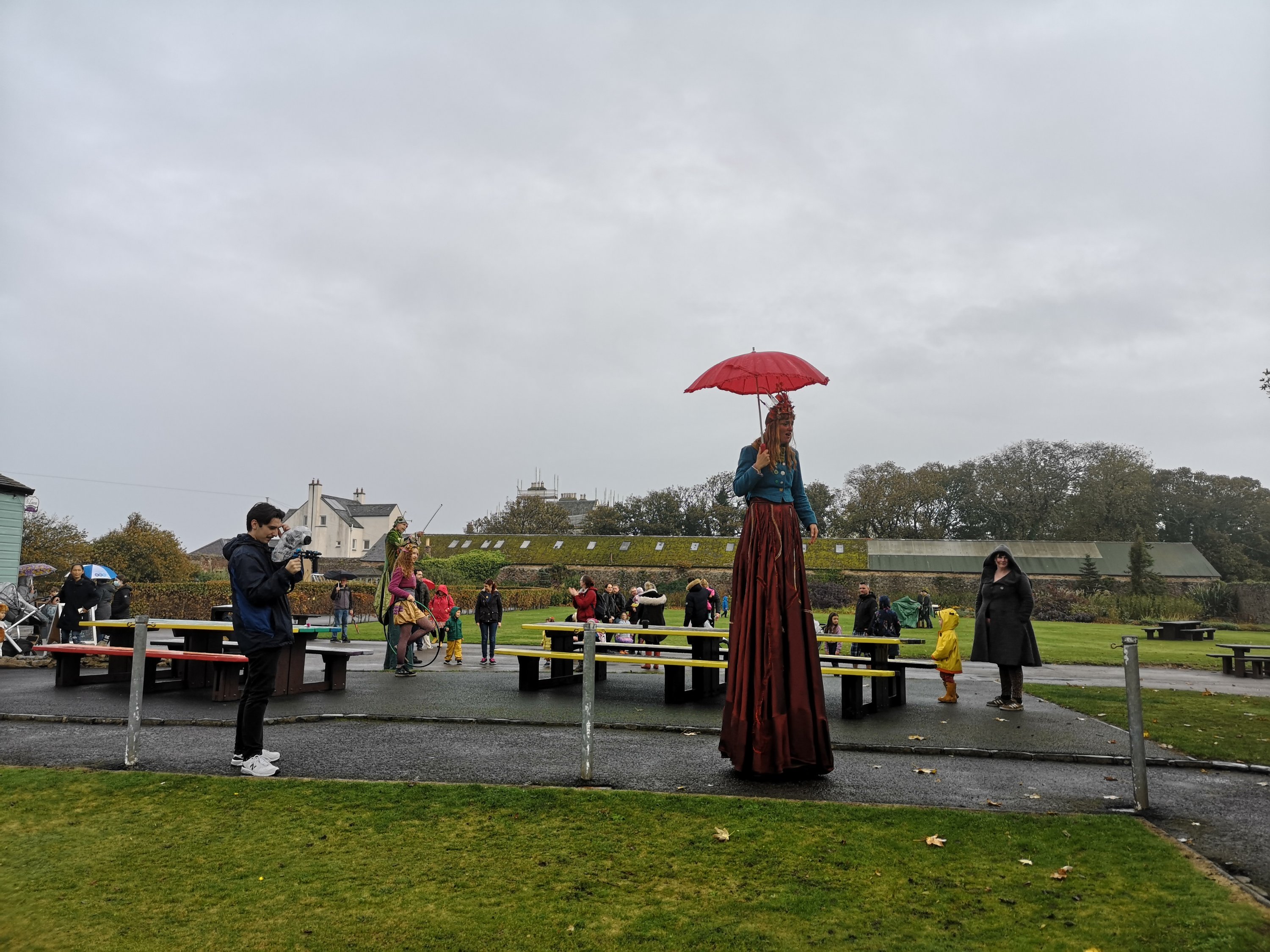
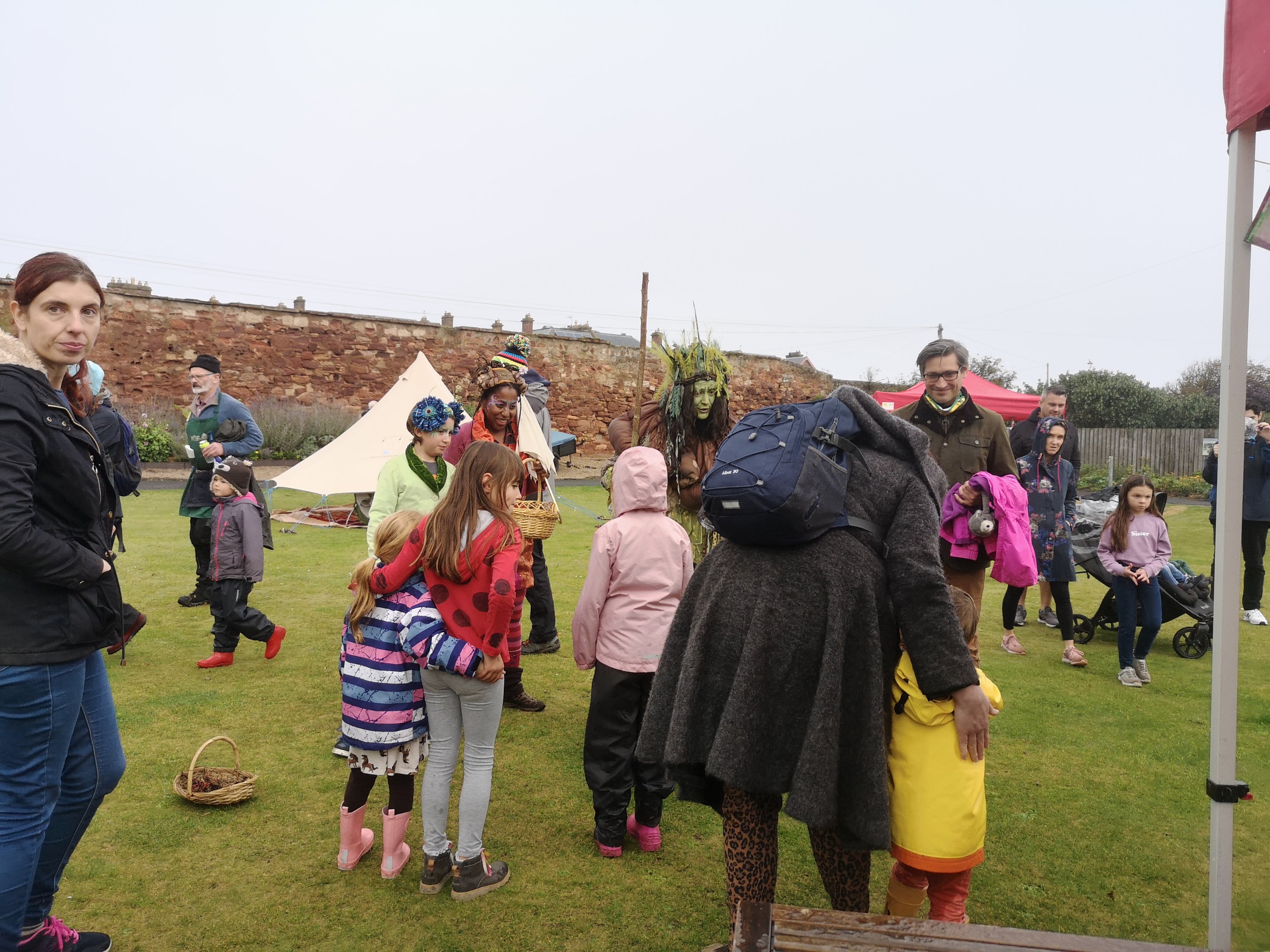
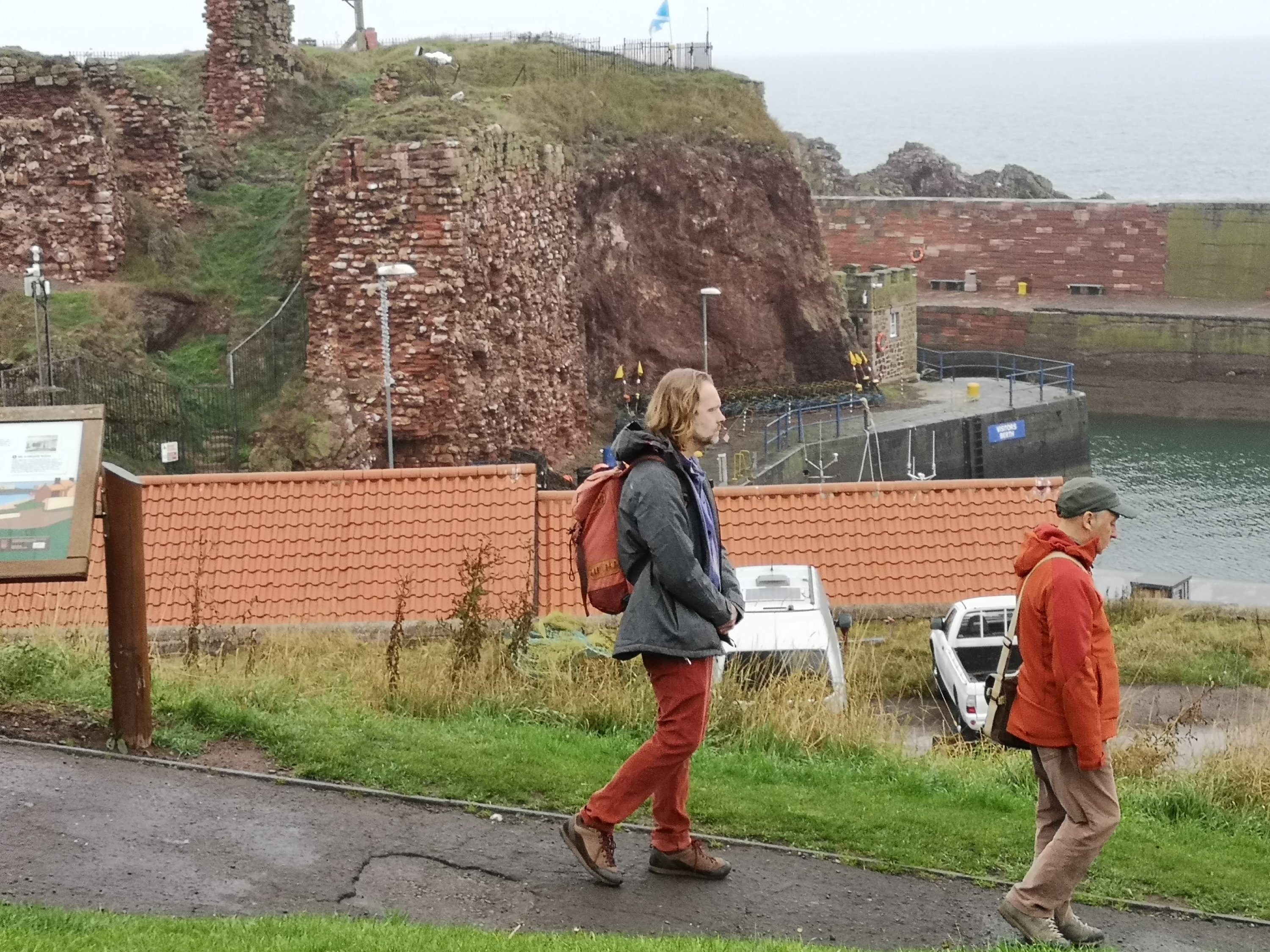
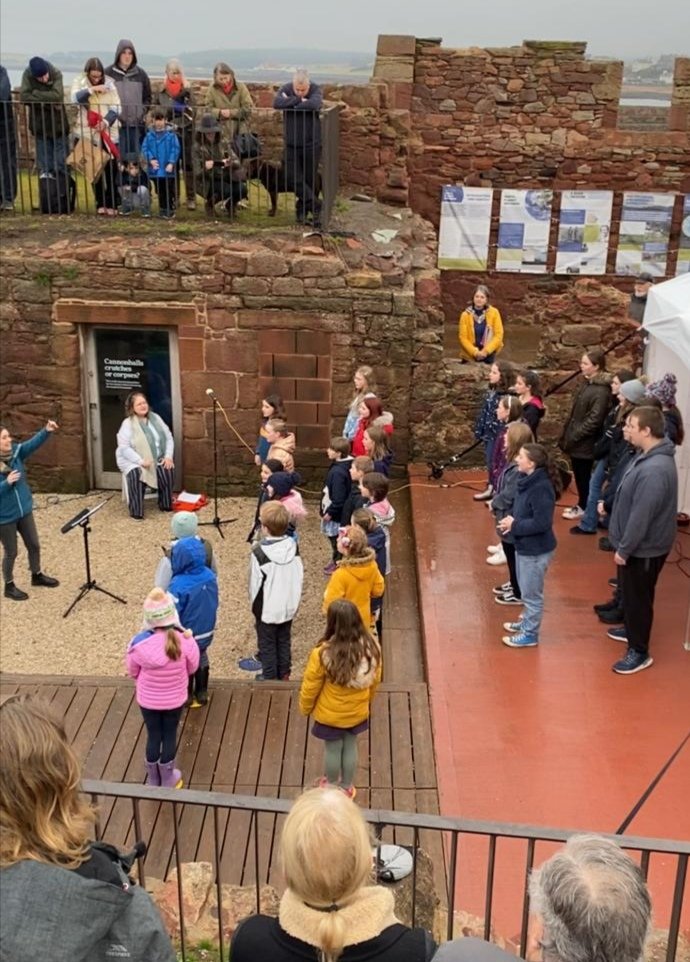
As two pilgrimages converged in Dunbar yesterday, the YCCN in relay from St Ives , Cornwall and this Pilgrimage for COP26, we merged happily with the people of East Lothian – women, children, men and umbrella-holding, violin-playing stilt walkers together with a green-faced witch.
The YCCN are calling on the government to lead the way on their climate finance pledges which have not yet been delivered in full, particularly for those countries who are suffering extremely from the climate crisis. It was announced that the Labour party have agreed 3 out of 4 of the pledges on their website
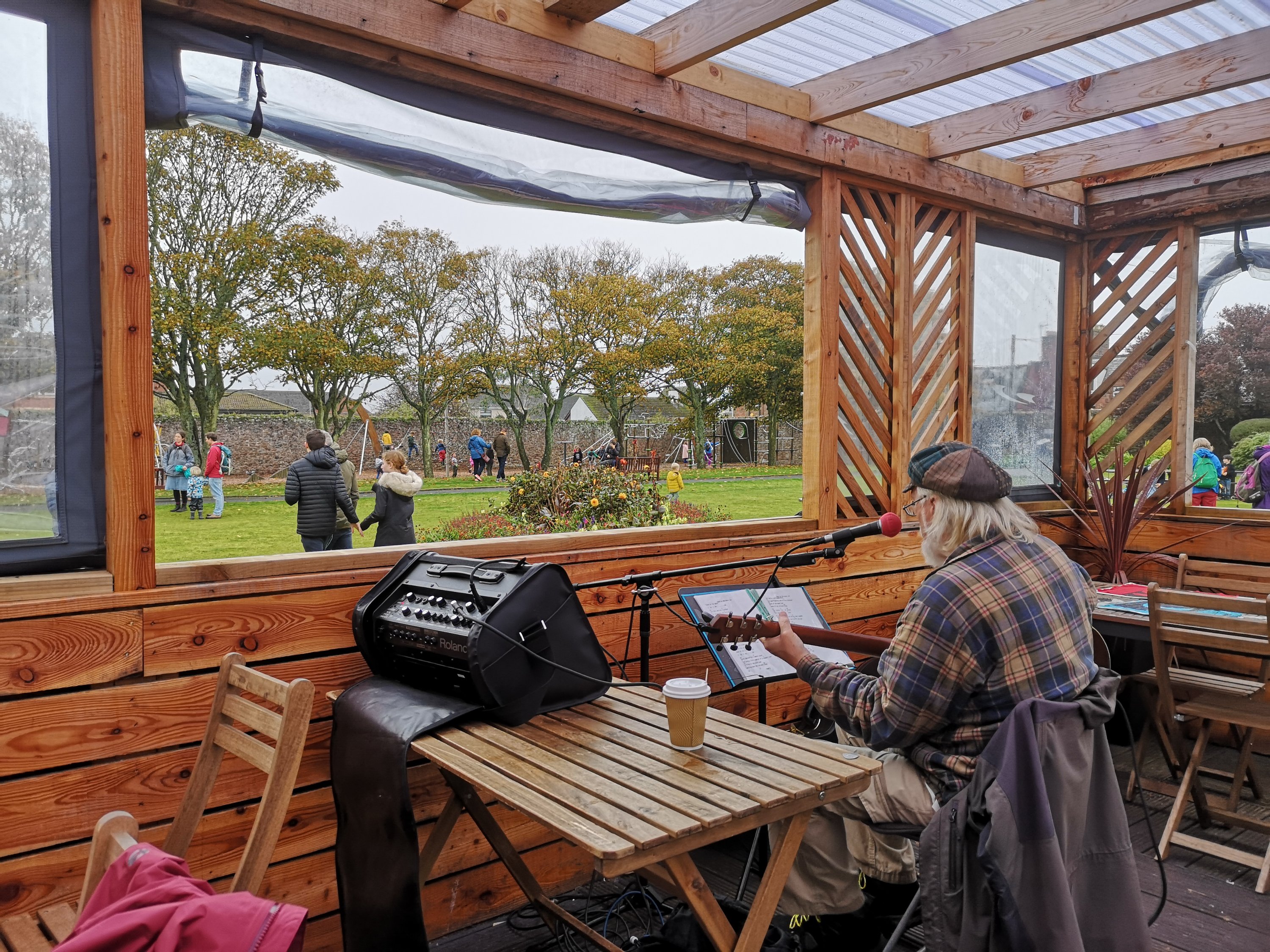
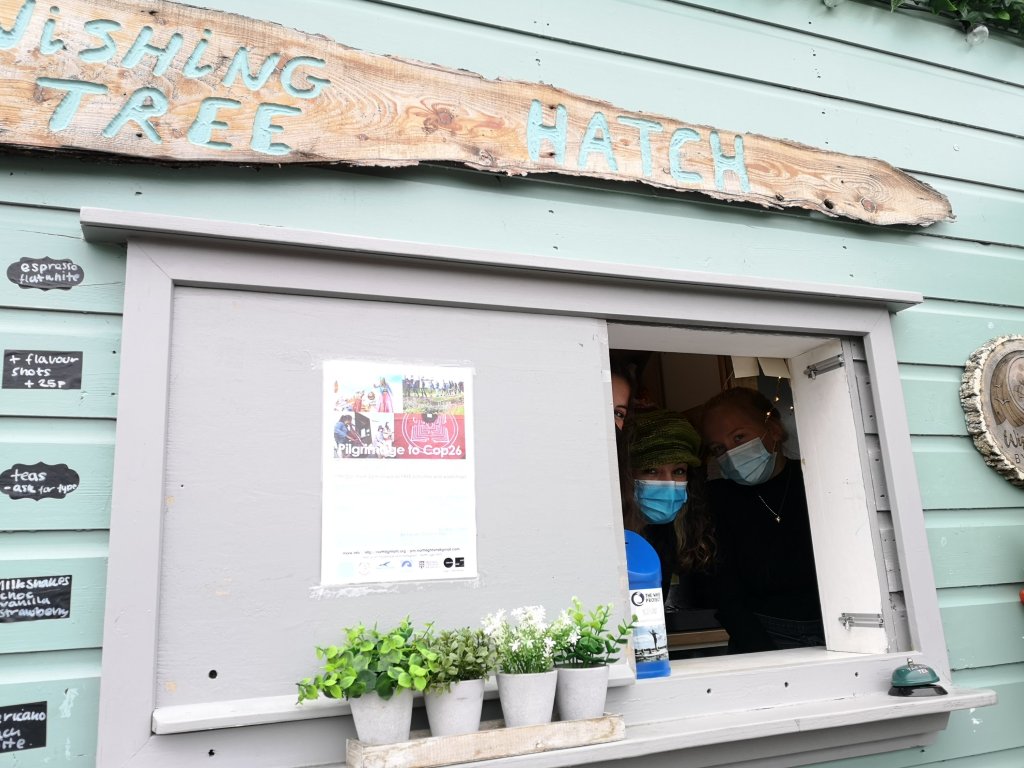
Climate change conversations erupted in the corners of fields, while waiting for delicious soup at the Wishing Tree by the Sea Cafe, and at the pizza oven.
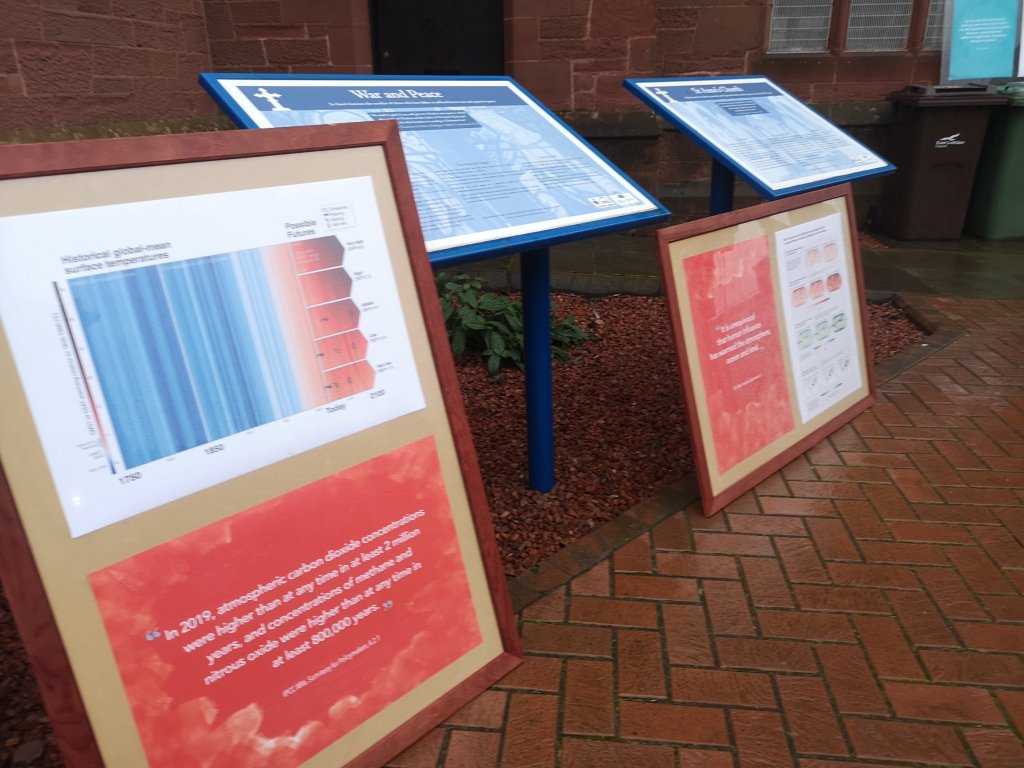
In the centre of town, we began a slow walk, lead by Karen (see yesterday’s blog), curving around the garden at the front of St Ann’s Church where we were read sections of the IPCC (Intergovernmental Policy on Climate Change).
We stopped the traffic.
Thousands of tired, nerve-shaken, over-civilized people are beginning to find out that going to the mountains is going home; that wildness is a necessity; and that mountain parks and reservations are useful not only as fountains of timber and irrigating rivers, but as fountains of life. Awakening from the stupefying effects of the vice of over-industry and the deadly apathy of luxury, they are trying as best they can to mix and enrich their own little ongoings with those of Nature, and to get rid of rust and disease.
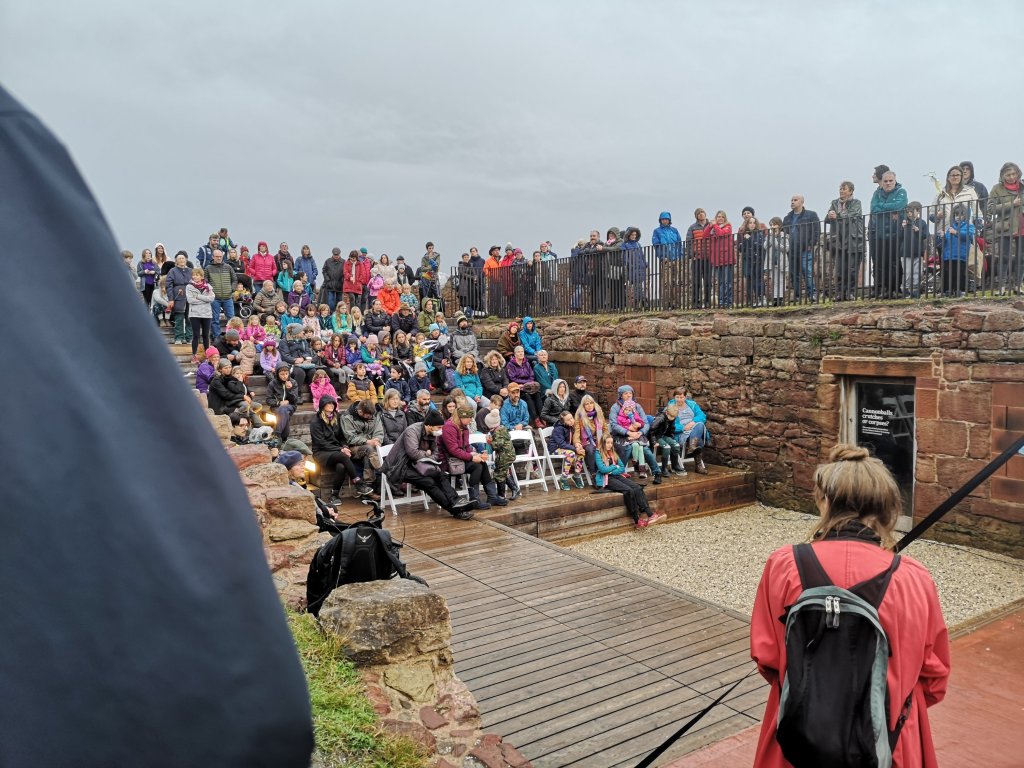
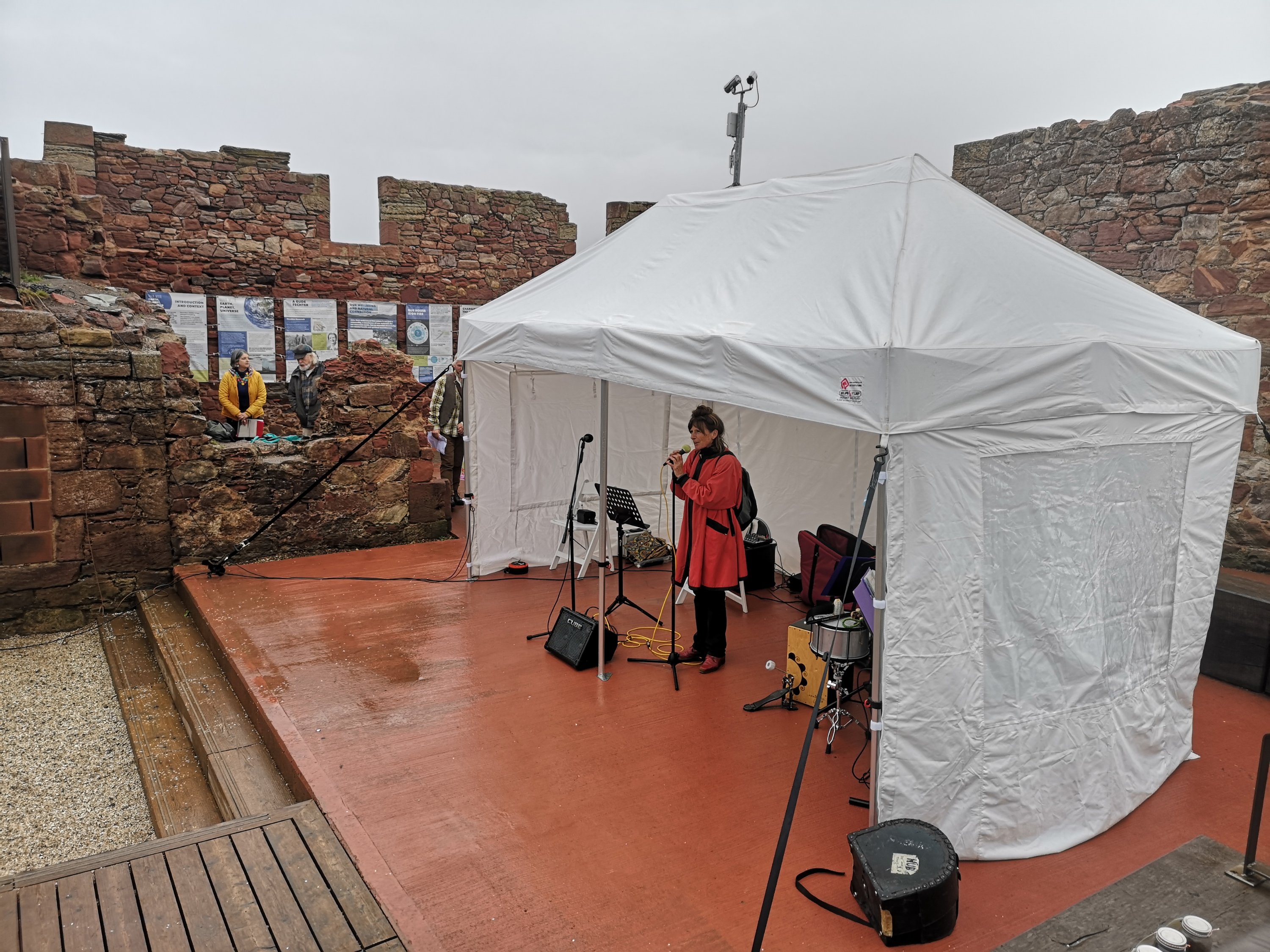
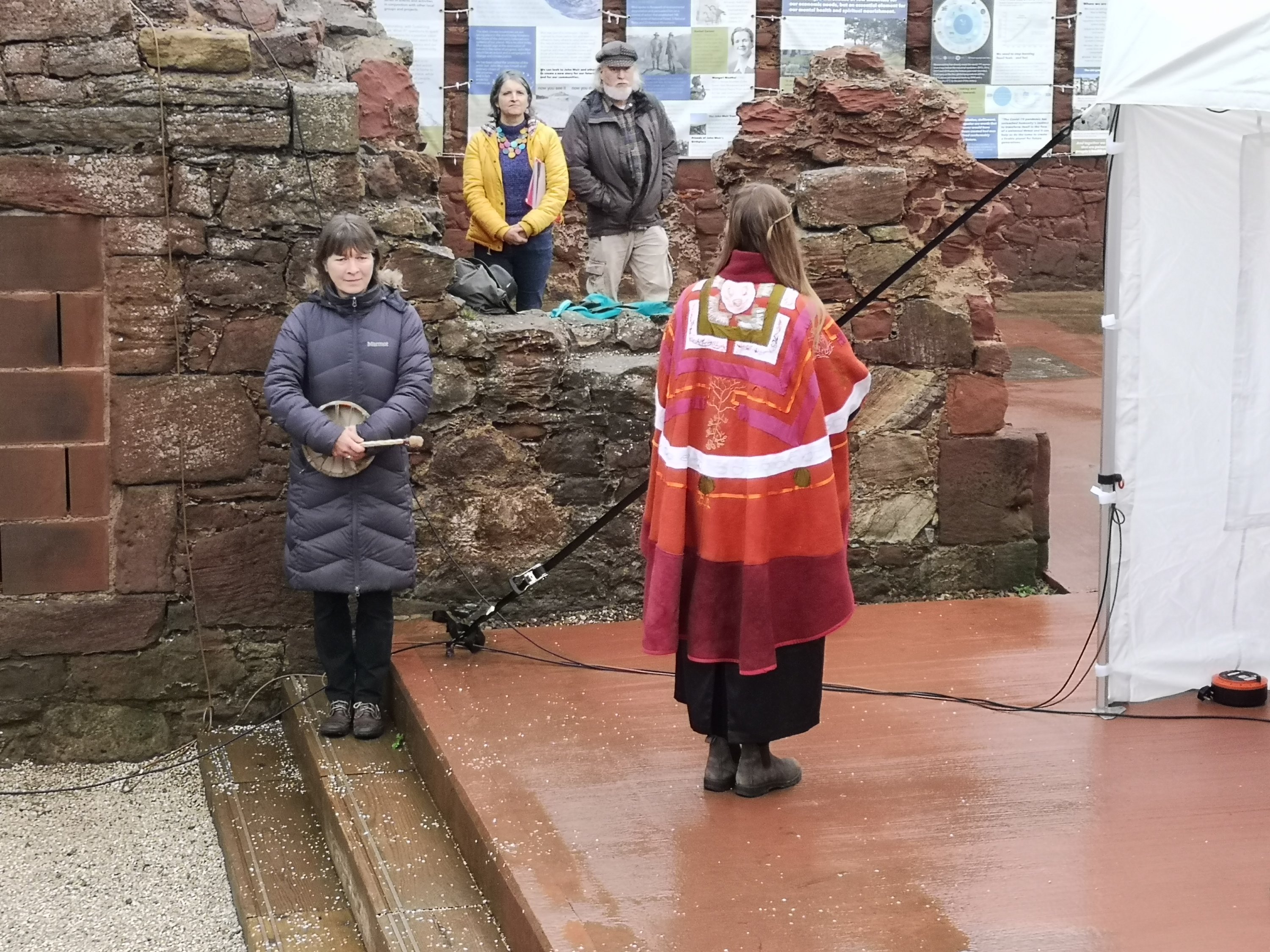
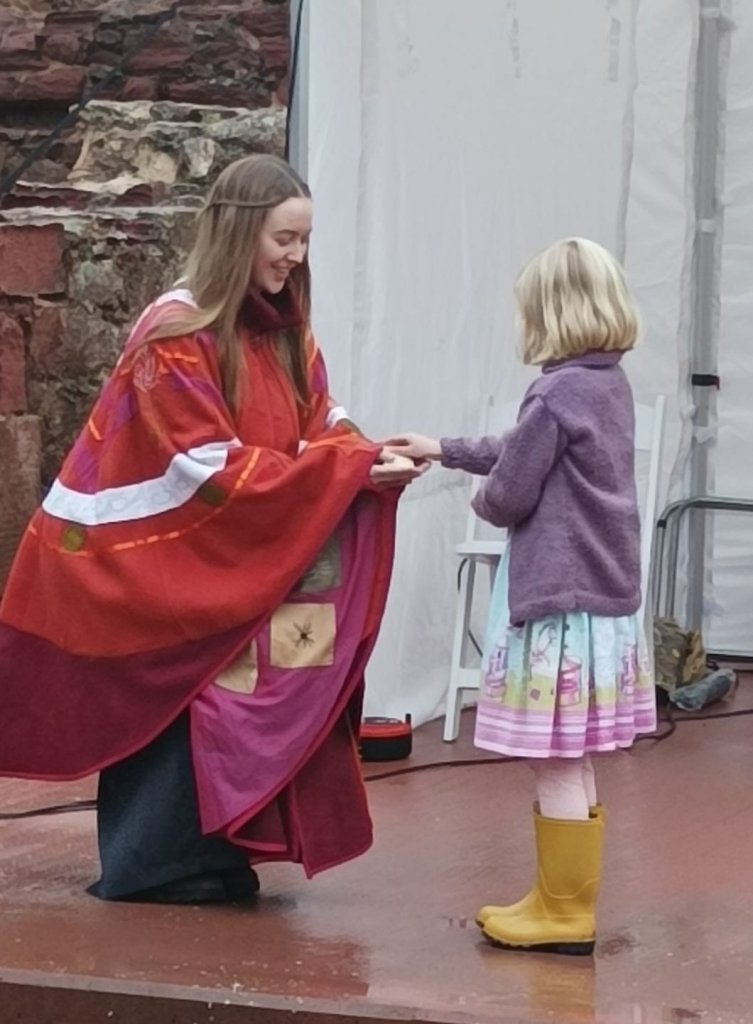
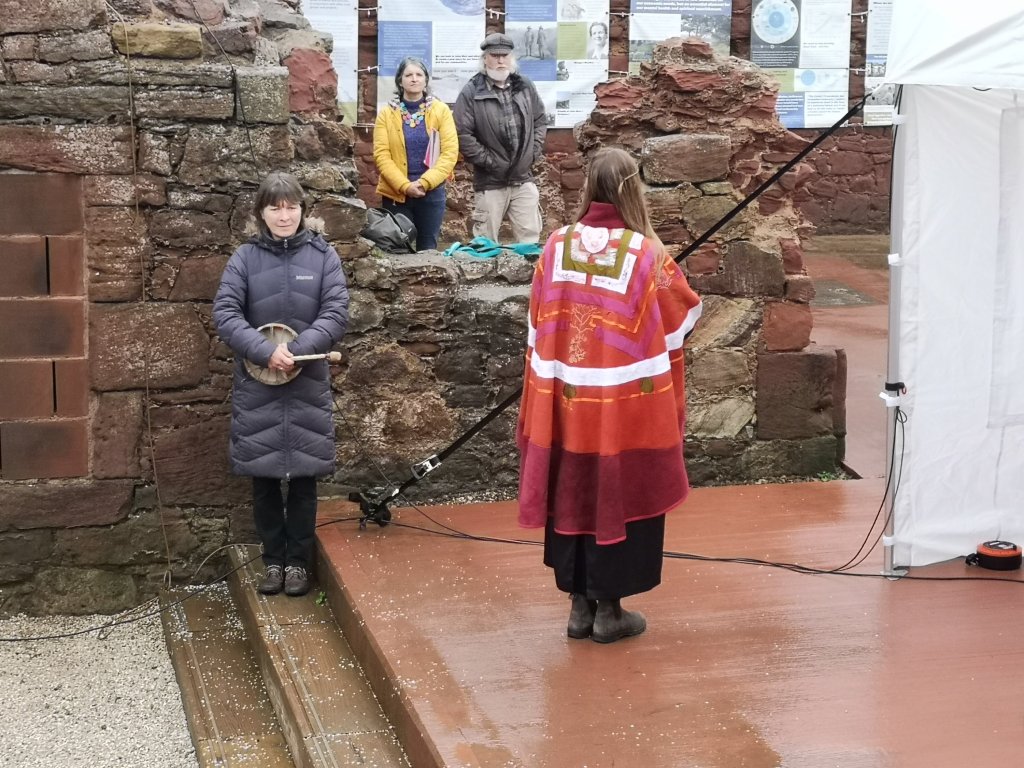
A huge crowd were waiting at the Battery at the sea’s edge for a ceremonious show. Representatives from John Muir’s Birthplace Trust and Friends opened proceedings. The Keeper of the Soil was gifted samples for the cape’s pockets, notably from land which Eve Balfour visited as a child. Founder of the Soil Association, she was one of the earliest women farmers, and the speaker, Chris Yule and his 6-year old daughter did her proud.
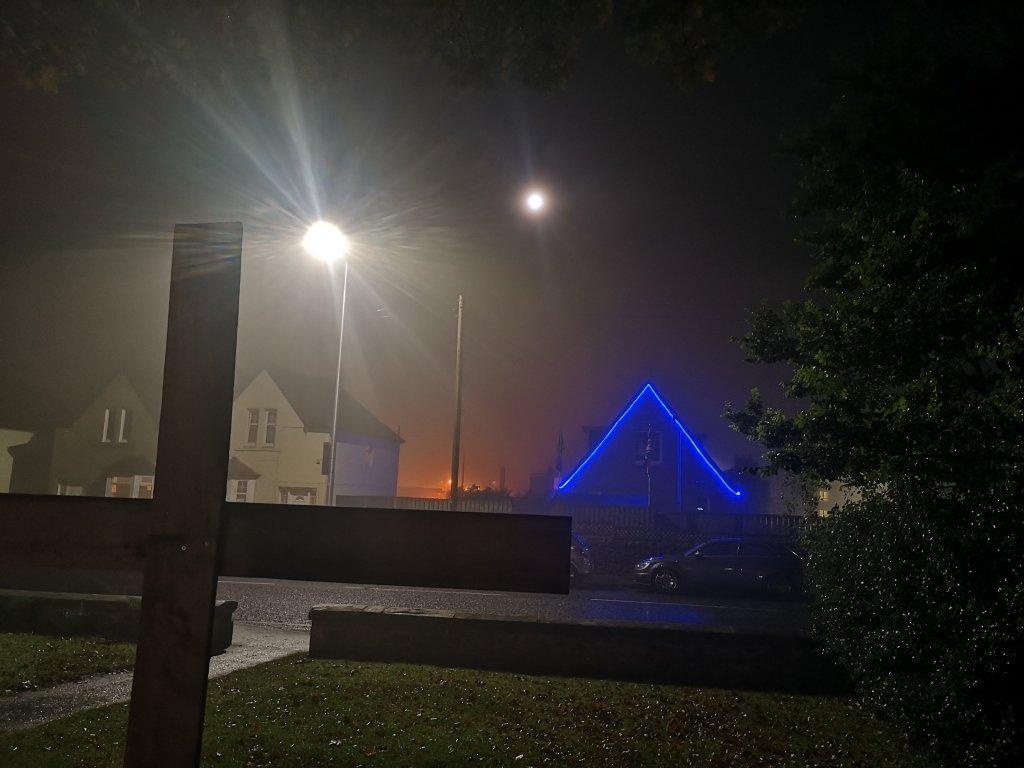
The beacon flashed as the nearly-new moon rose and we walked to the Belhaven Church for a Pilgrim’s meal arranged through Sustaining Dunbar with sourdough bread from the Station House Bakery.
Karine Polwart wrote a song for the Dunbar Youth Choir which we all joined in with – smiles all round.
Tell me about despair, yours, and I will tell you mine
Mary Oliver, The Wild Geese
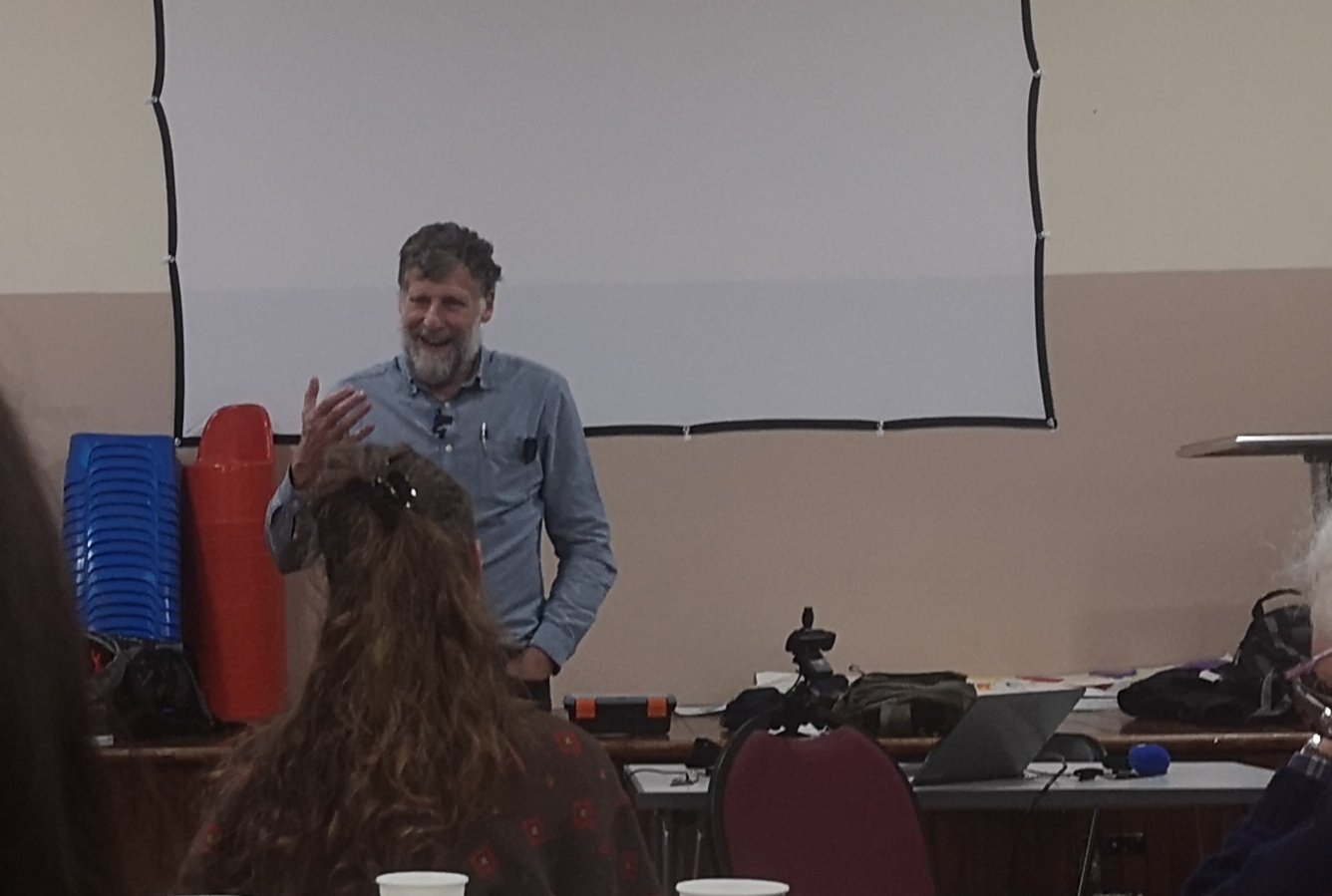
The highlight of the evening was a presentation by Alastair McIntosh who cautioned us to cease despairing, lamentation, yes, but not despair, and this chimed with the Mary Oliver quote which was shared on stage earlier that day.
Alastair quoted Alice Walker
Be nobody’s darling;
Be an outcast.
Take the contradictions
Of your life
And wrap around
You like a shawl,
To parry stones
To keep you warm
Alice Walker, from Everyday Life
Question from the floor: How do we make use of what we learn on pilgrimage when we get home? Alastair’s answer: It’ll be in your presence. People sense if you’re connected spiritually. People share their stories with you because they intuit that you can hear them, it’s in your comportment and your bearing. Ask yourself, regularly, if you are still being honest, remember how you move to ground yourself, recognise the way it is and it isn’t. He spoke about the phrase, Om mani padme hum, from the Hindu tradition, meaning ‘when mind and heart come together’, adding, when you do what you are doing from a spiritual place, ….. , that work is love made visible.
There are lots of things I could do to face up to the serious climate crisis I find myself part of. I could stay at home and recycle, join a committee and work towards political change, lie down on the M25 and get put in prison to raise awareness, I could throw myself in front of a horse to get attention.
Why walk instead of doing anything else? Why would I stop earning (I’m self employed), pay for someone to be at home to look after my cat, and walk in the unpredictable Scottish weather?
The statements of intent of Pilgrimage for COP26 are these:
We’re walking to raise awareness of the climate and ecological crisis.
We’re reflecting on that crisis as it relates to our own lives, the communities we pass through and the lives of those already impacted; both human and more-than-human.
We’re building a community of witness and resistance committed to climate justice now and in the wake of COP26.
Yet still I find myself asking, but why walk? I could run or cycle and there are lots of other ways to raise awareness, to reflect, and build a committed community.
My answer: because walking is special.
It is very slow, a counterpoint to the speed of life. (Google tells me it would take me 1 hour and 24 minutes to drive from Dunbar to Glasgow now, but it will take us 8 days to walk).
It leaves very little trace; although I disturb undergrowth, probably inadvertently step on unsuspecting creatures, and leave my temporary footprints, it is the least destructive way of moving across the country.
Each step reminds me that I rely on the earth to hold me up and that the earth relies on me to stand on it – it’s reciprocal.
The vibrations that my stepping cause are not the same as the shaking of the ground by a lorry, say, rolling on tarmac. The moving through air I do at my pace (approximately 3 miles an hour) contrasts with the displacement a Boeing 737 makes.
Walking interacts with weather. Not knowing whether I will be walking through rain, sun or snow at the beginning of every day is, yes, not abnormal for this country at this time of year, but the attentiveness I have when I walk, and the fact that I have walked here before, means that I will notice the climactic differences. The skin on my cheek will be aware of the relative warming, my muscles of my back will sense the increased wind speeds in comparison to last year, the joints of my feet will register the dwindling peat they walk on.
The quality, and energy of walking is different, and it matches the quality of focus and the listening energy I want to apply to this issue.
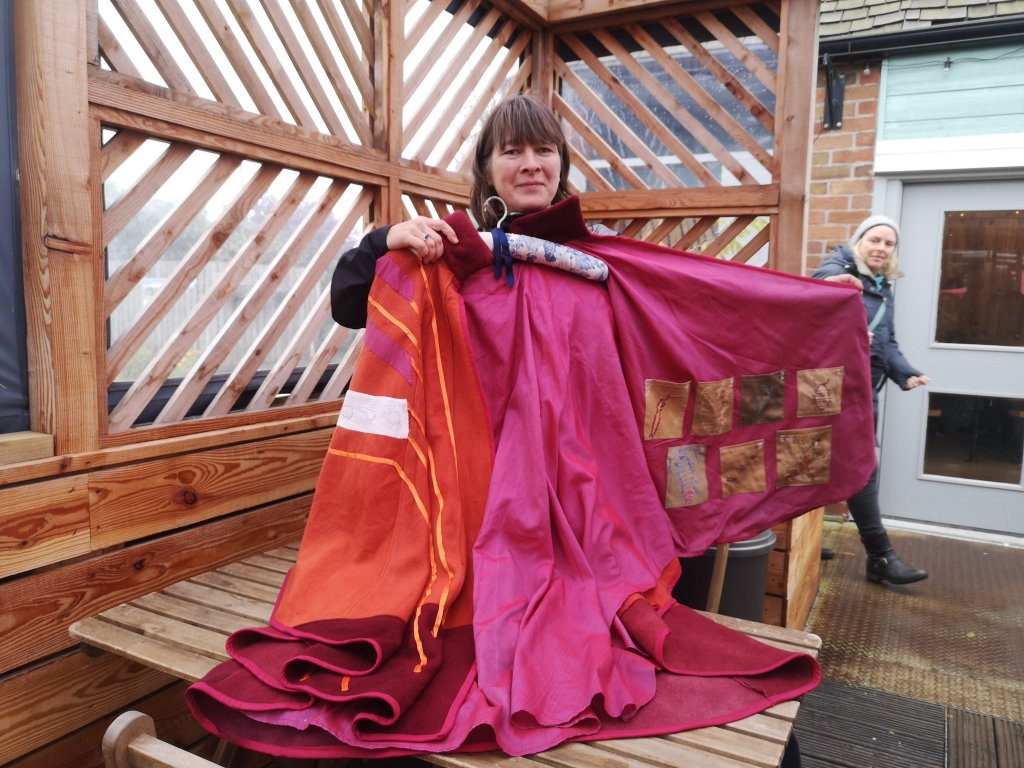
Natalie Taylor who devised the Keeper of the Soils cape and and Roxy Ambrozevich wearing it
What we have collectively wrought (most of us) upon the environment, is so very complex. There are strands of destruction, fibres of difficulties and damage which have become interwoven over centuries, a fabric of knots and snags and imperfections brought about by misinformation, neglect, greed and thoughtlessness. And when you pull one thread, it all starts to unravel and that’s scary and huge to see; it’s hard to know where to begin to stitch it all together again in a more durable and compassionate way.
Natalie Taylor with her Keeper of the Soils cape
Though I am not a religious person, my belief in the act of walking gently and kindly, allowing myself time to notice and reflect, is like the nun’s faith that sitting quietly and performing her daily duties mindfully will make a difference; that opening her heart to the way things really are and facing that, will affect change, that it will alter the fabric of life the way it is now. I am a Shiatsu practitioner and those of us who give Shiatsu know that because the whole universe is made of the same stuff, chi, we can affect it with a thought, touch or word.
Or a step.
Walking for Water
Walking for water is not going for a breath of fresh air, a pilgrimage, a stroll, a hike. It is not a parade, a protest march, a sponsored whatever. It is not a way to stretch your legs, or have that conversation. Walking for water is not to see an unmissable sight. It is not on any body’s bucket list.
It is the flight of a migrating bird, a cruel calculation of distance, fuel and energy burned.
by Lydia Kennaway from A History of Walking (2019:25)
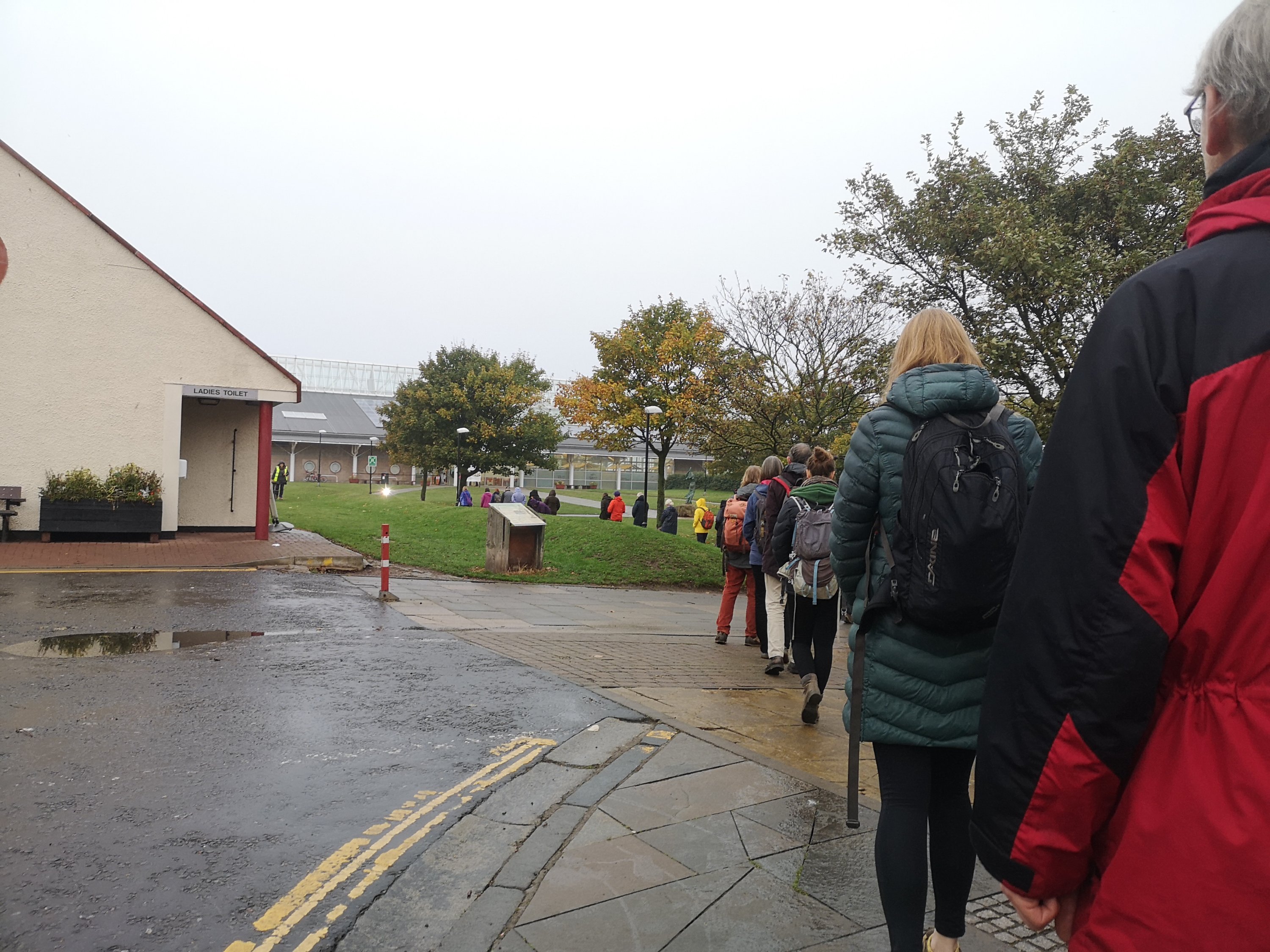
The Pilgrimage for COP26 has now begun.
Slow Walk in Dunbar to launch the Pilgrimage for COP26 with Karen Gabbitas. 30 people participated
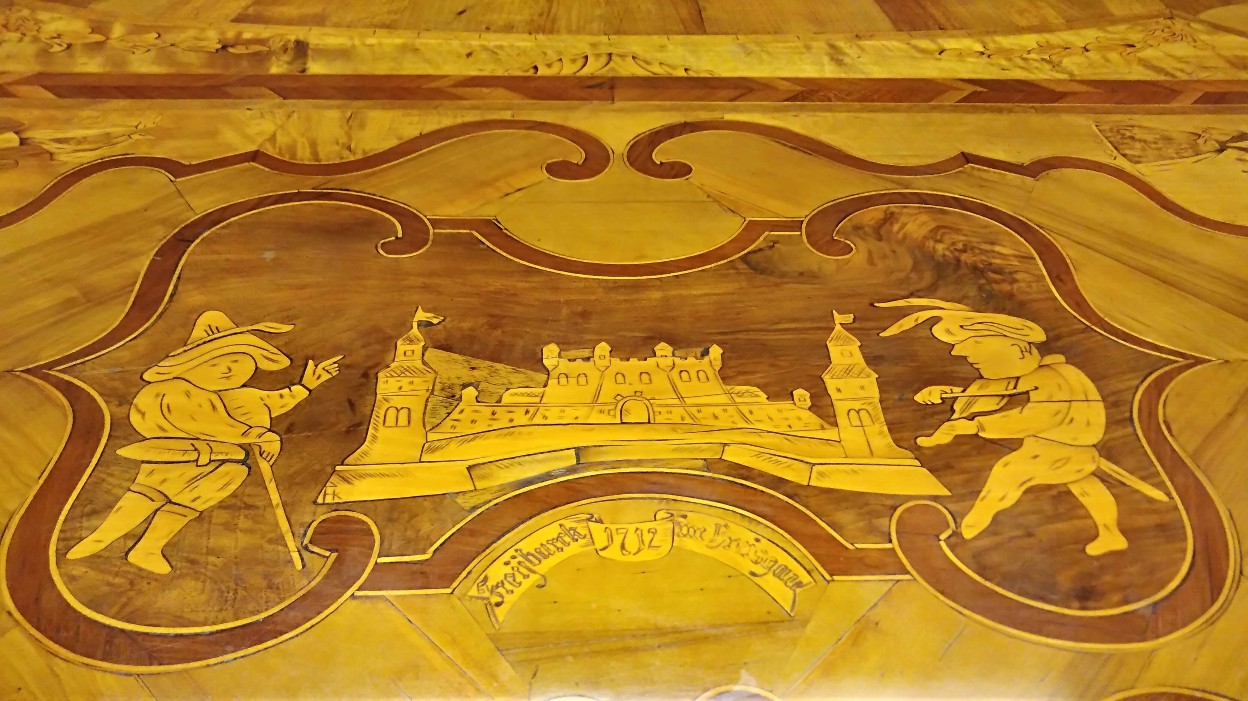
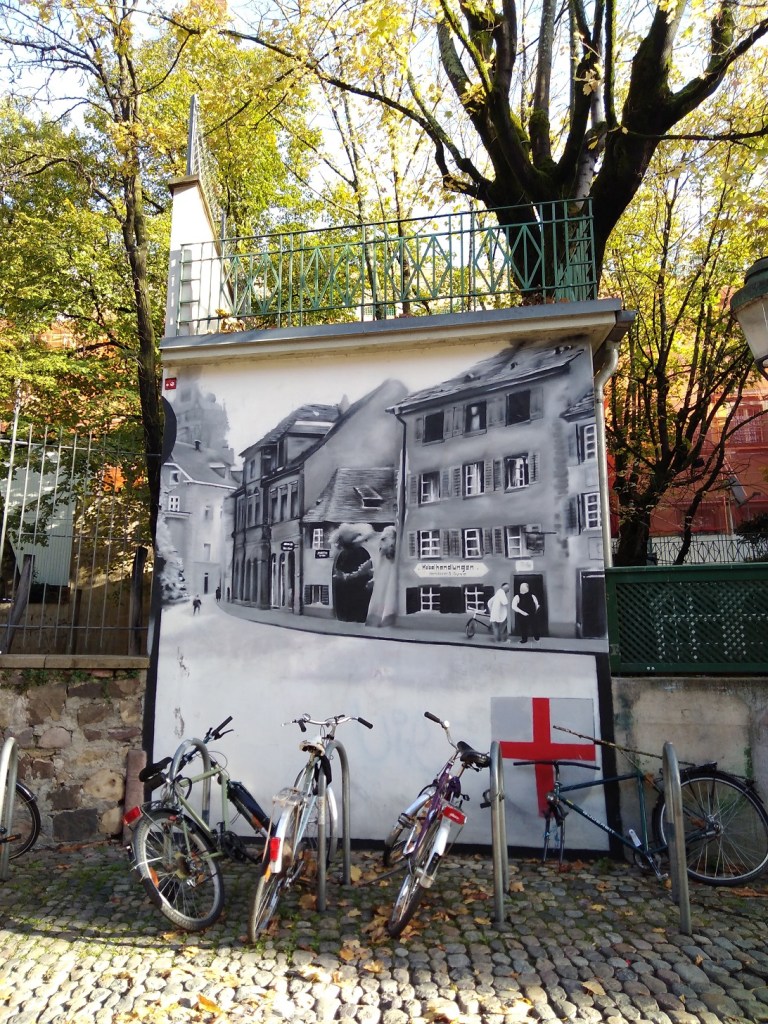
Freiburg October 2017, a friendly, open-minded university town awash with complementary therapists.
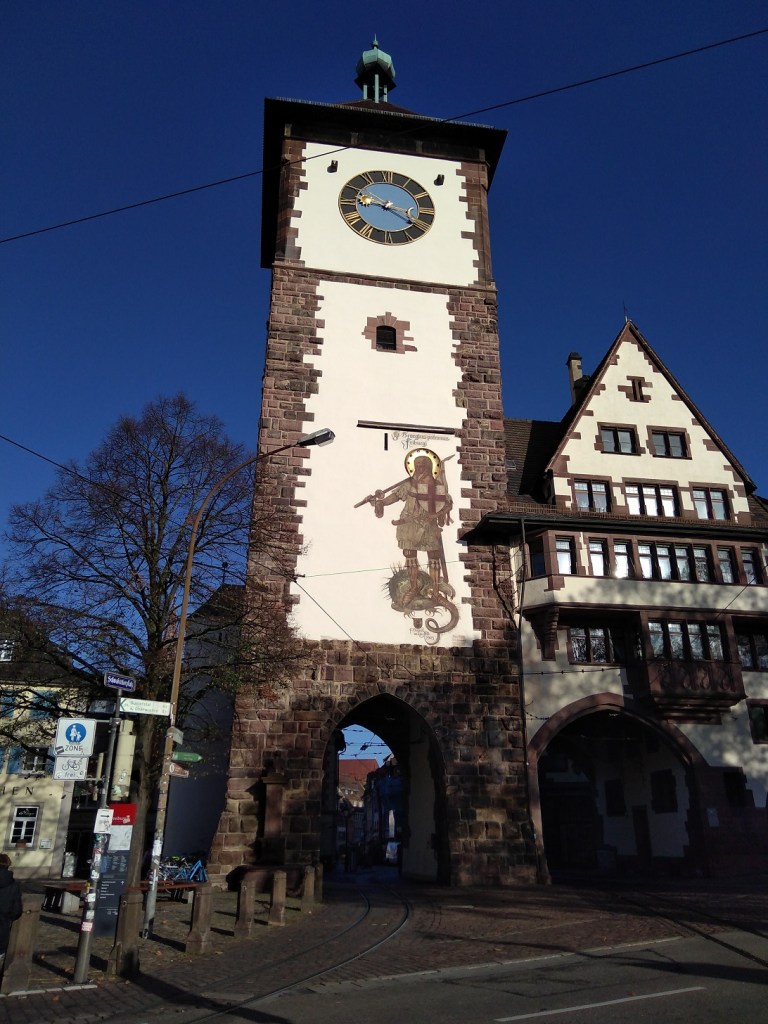
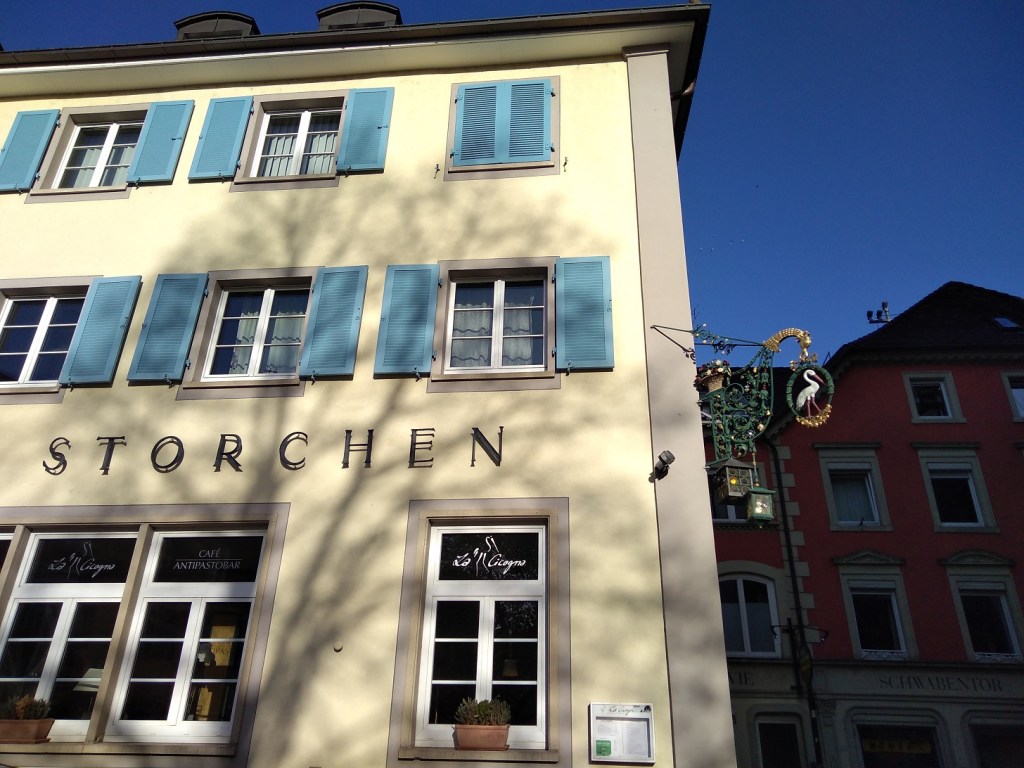
The town gate Martinstor, Freiburg
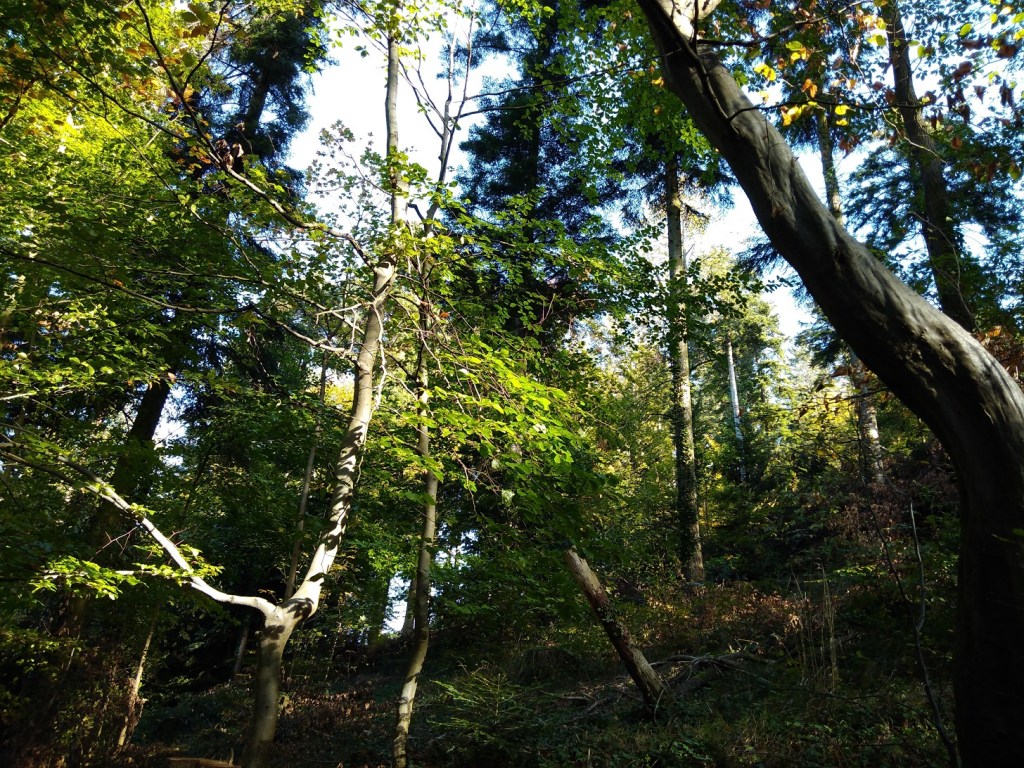
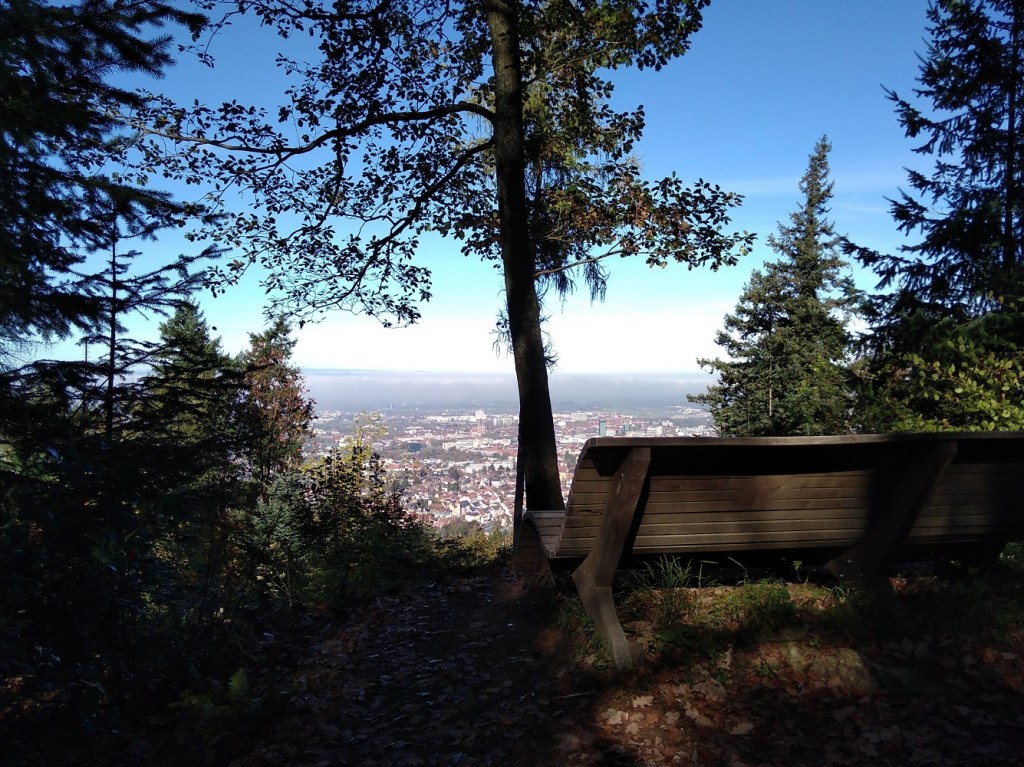
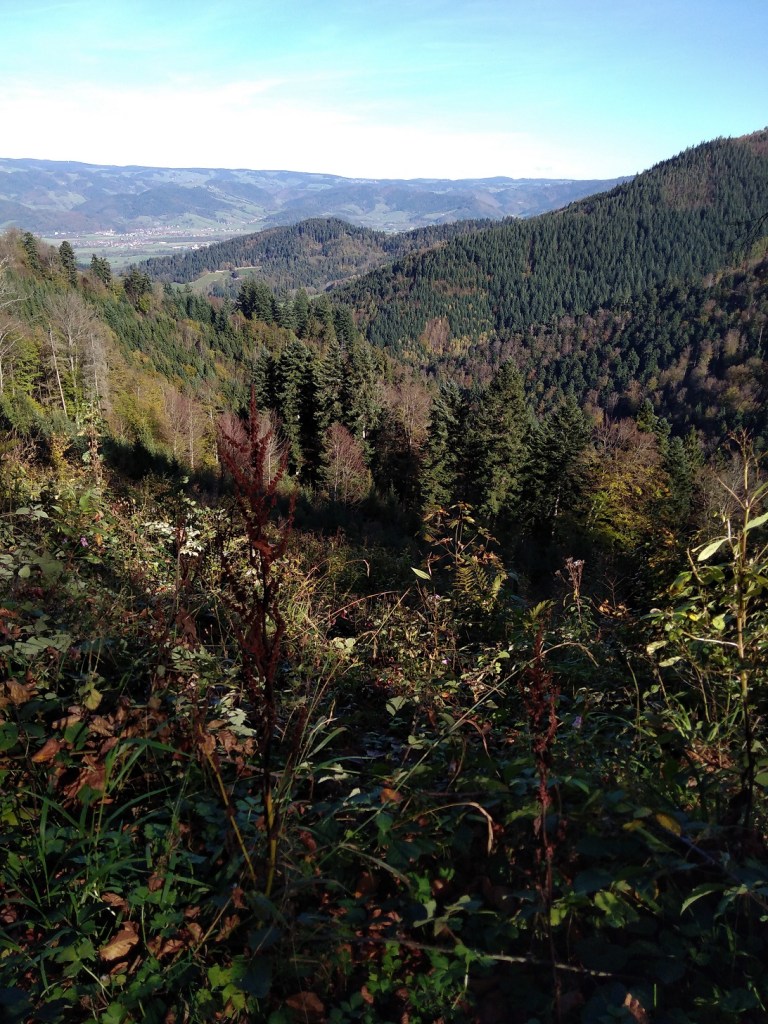
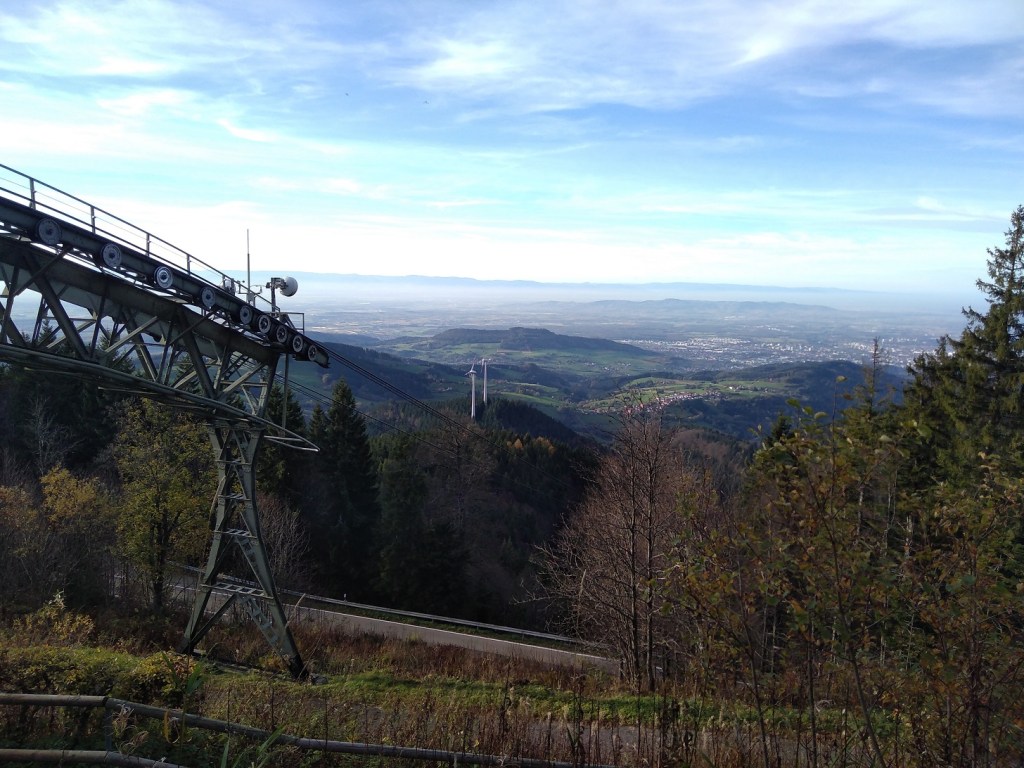
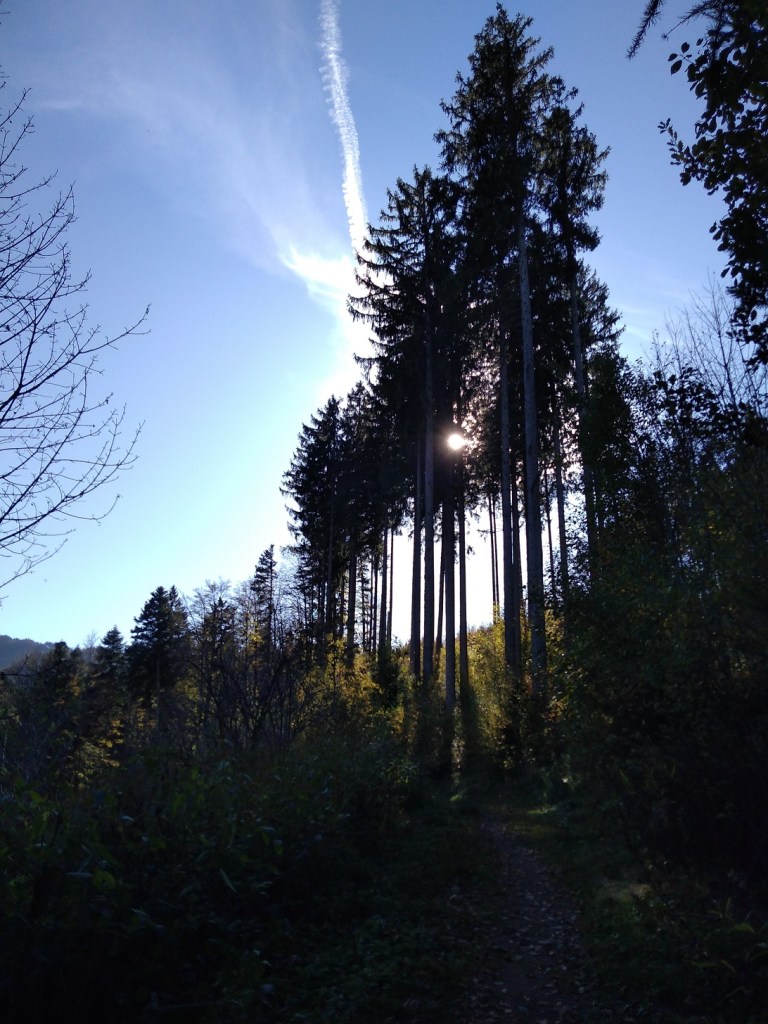
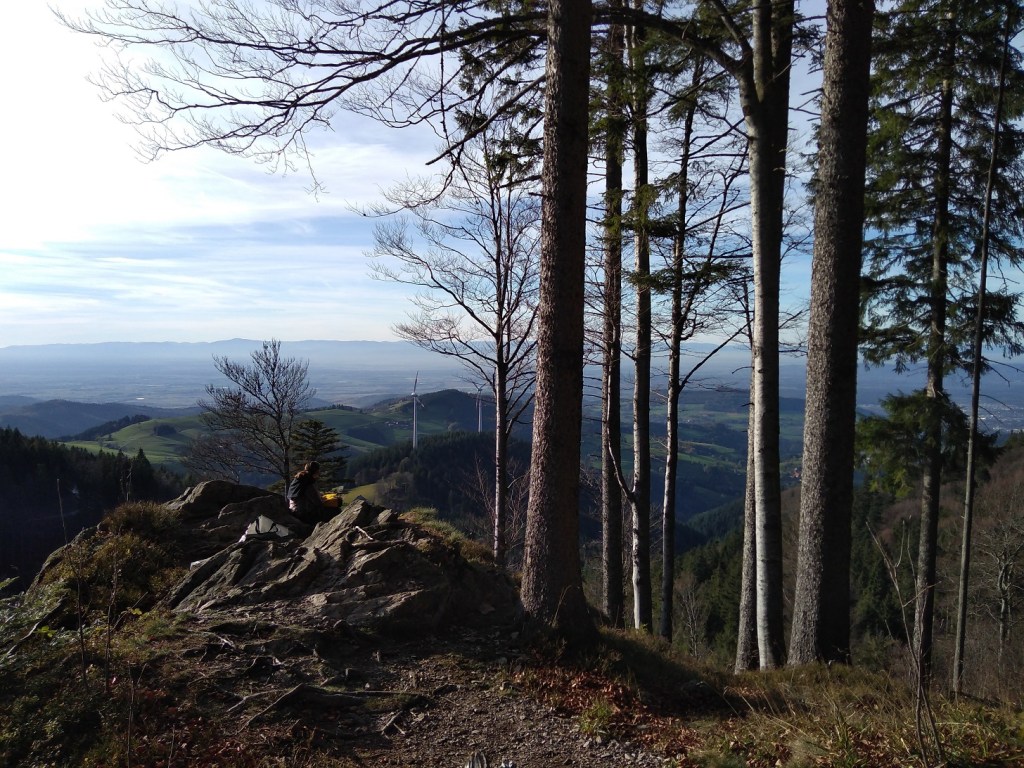
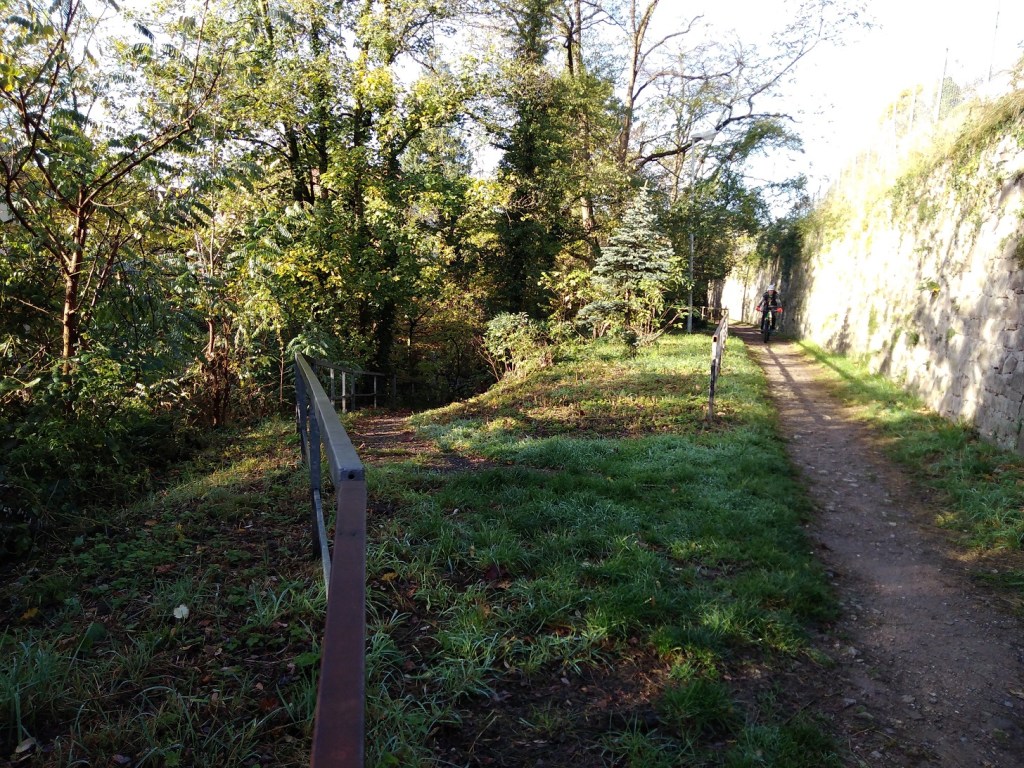
The highlight of my visit was the walk on Schauinsland, a mountain in the Black Forest with an elevation of 1,284m (4,213 ft) above sea level. I was lucky with the sunshine and wandered through leafy, cobbled suburbs before starting up the hill on the left.
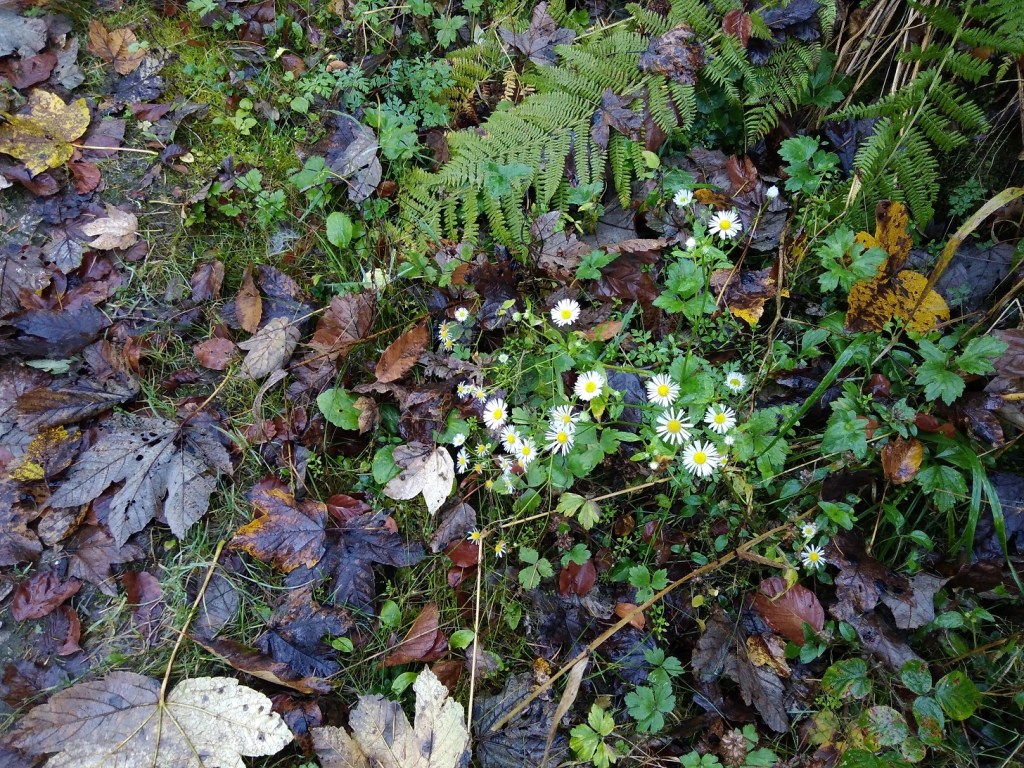
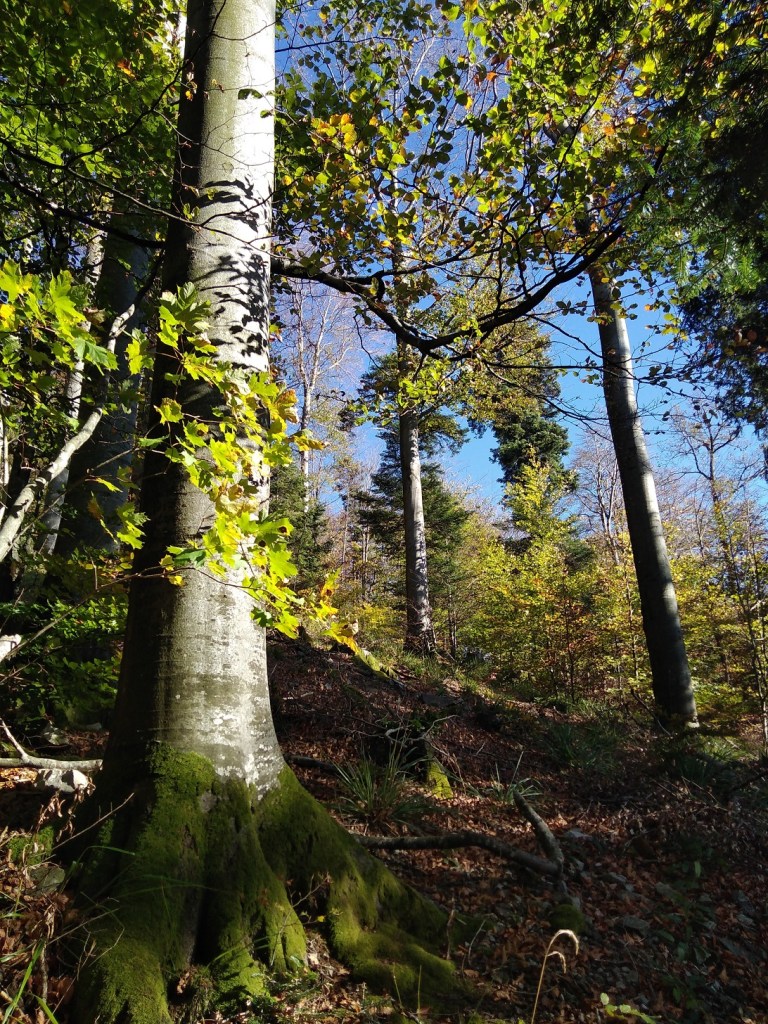
It was a sweaty start, stony underfoot, but some smiley ladies cheered me up. There were sweet chestnut trees and some fir. Later, a beech and the odd oak, silver birch and sycamore, delicate Michaelmas daisies delighted me, with scarlet berries heralding the winter season a few months away. The higher I got, the more wonderful the views.
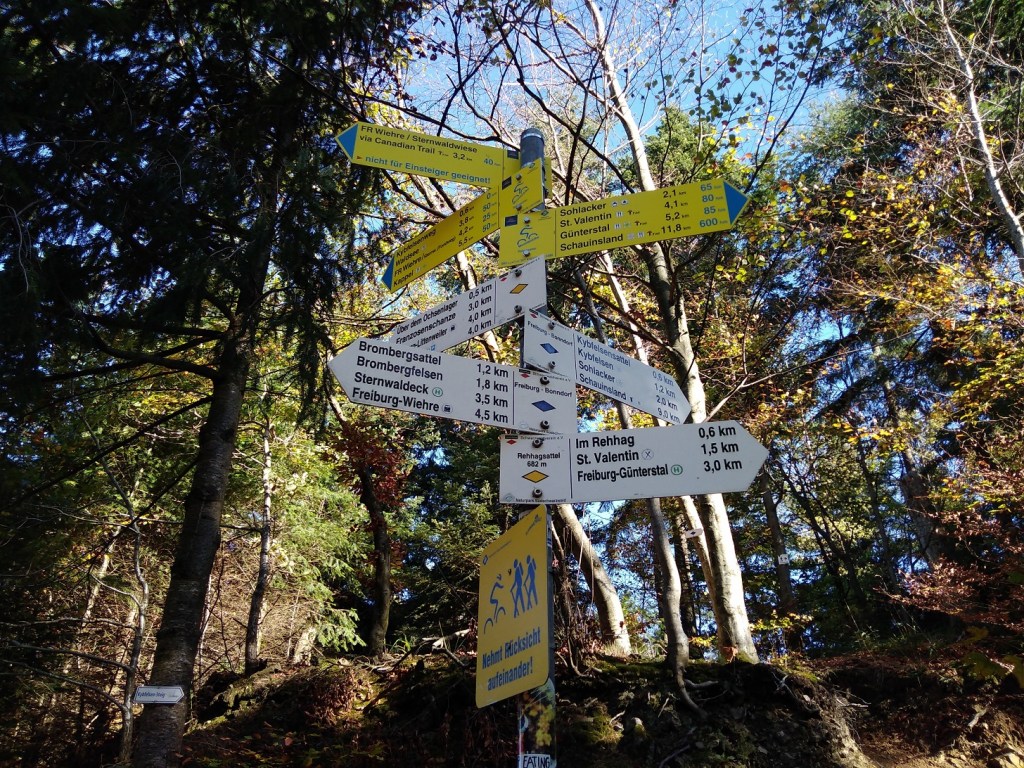
The Autumn leaves were falling and there was ample signage in places. A bird squeaked to get my attention – it was black with red under its tail, very smart. Then I heard knock knock – a woodpecker? Hmm, probably a European green if it was, with its red cap. There was the sound of cow bells and blue tits seemed to be playing. I stopped for a rest and a sun bathe, closing my eyes and taking in the peace. To start with I was a little overwhelmed with memories of other walks, but I breathed deeply and let other thoughts float in and out.
There are simply miles of wonderful strolling and one could easily get lost on purpose so that it never ended, although for that, I thought, everything would have to stay the same and inevitably my feet would tire and I would have to stop.
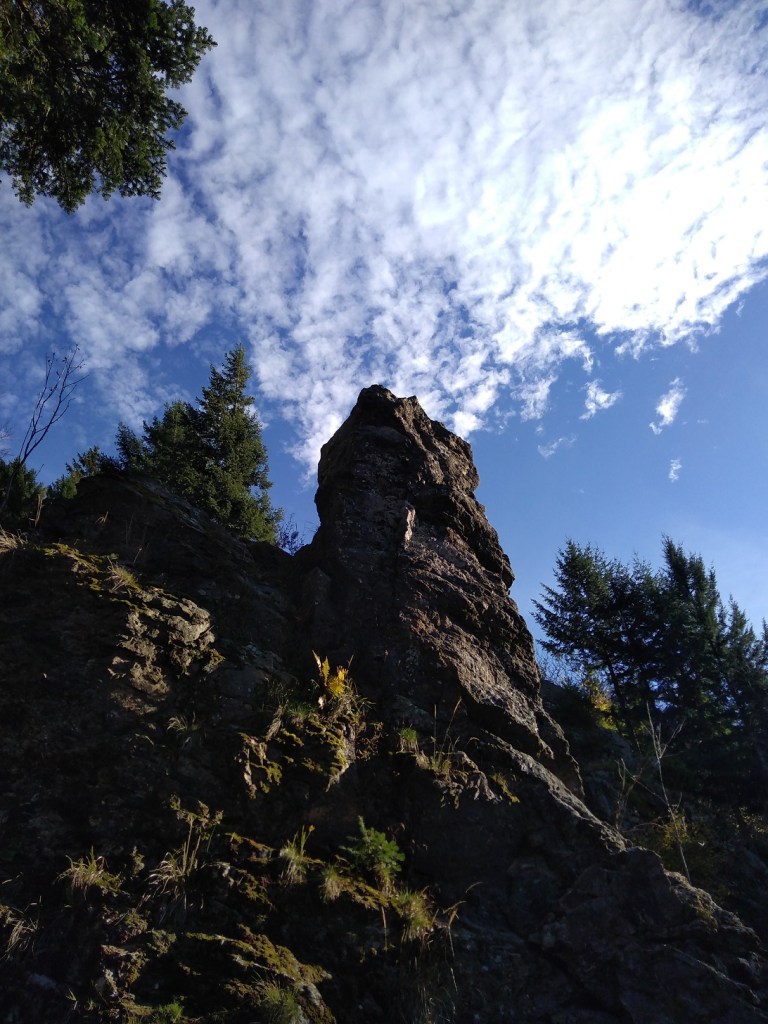
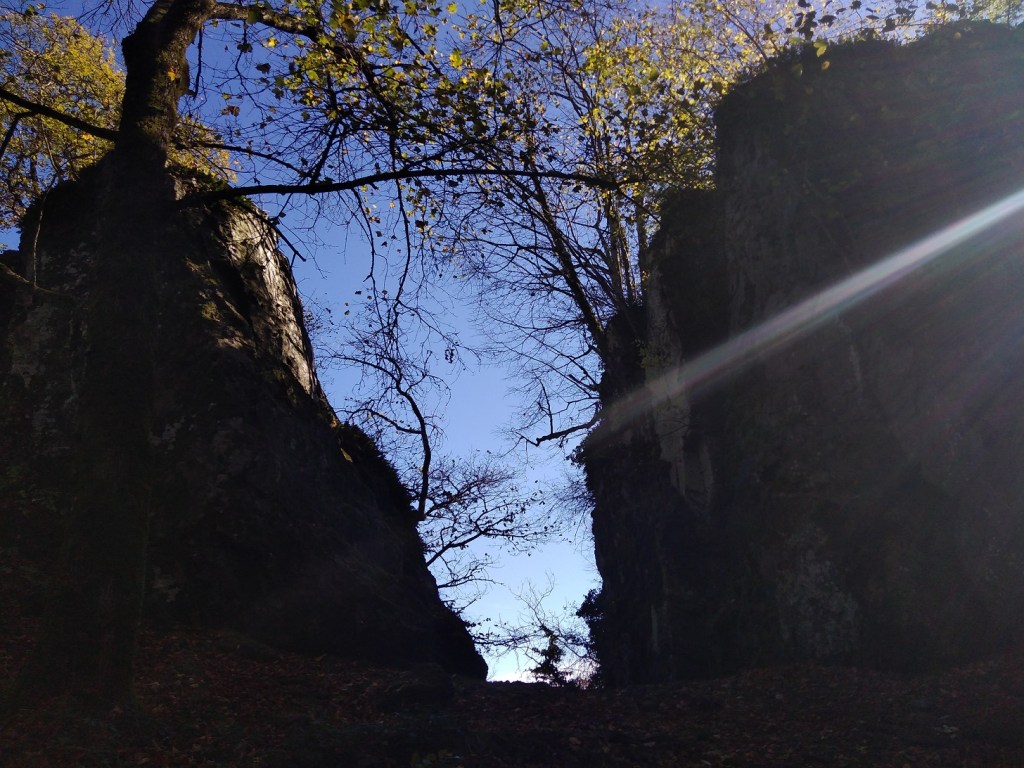
Crags and rocky passes, Schauinsland
I used my new staff, and my footsteps sounded hollow on the springy earth and piles of pine needles. Sometimes there were shush-dry heaps of fallen leaves, wind in the trees, and the slosh of water in the bottle in my rucksack.
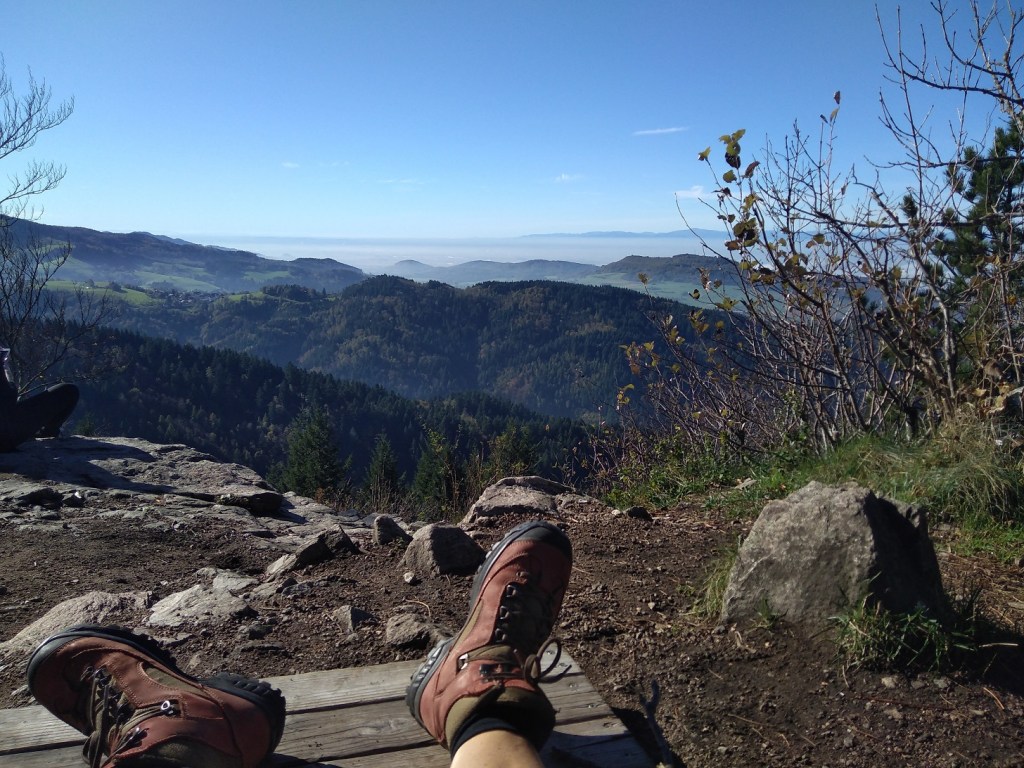
There were little huts to rest outside with your feet up. Schauinsland, Freiburg, Germany
The day had less light in it than I needed and I had to rush to get to the top so I could get back down before dark. In fact, there wasn’t time so I took 11 euros worth of gondola instead which was extremely steep and not for those who suffer from vertigo. It arrived at the official starting point where you can then take a tram into town rather than walk for two hours. I would recommend setting off at 9 am if you come during this beautiful season of the year.
Classic shot of the Black Mountains, Germany
More info: the drinks at the cafe at the summit are also really expensive but there are good, free toilets top and bottom. Find a way to avoid the motor bikes and serious male cyclists in all their gear as they zip past and are almost all unfriendly. You can drive or ride all the way or part of the way up. Tram #2 connects the town to Dorfstrasse. The 21 bus costs 9 euros.
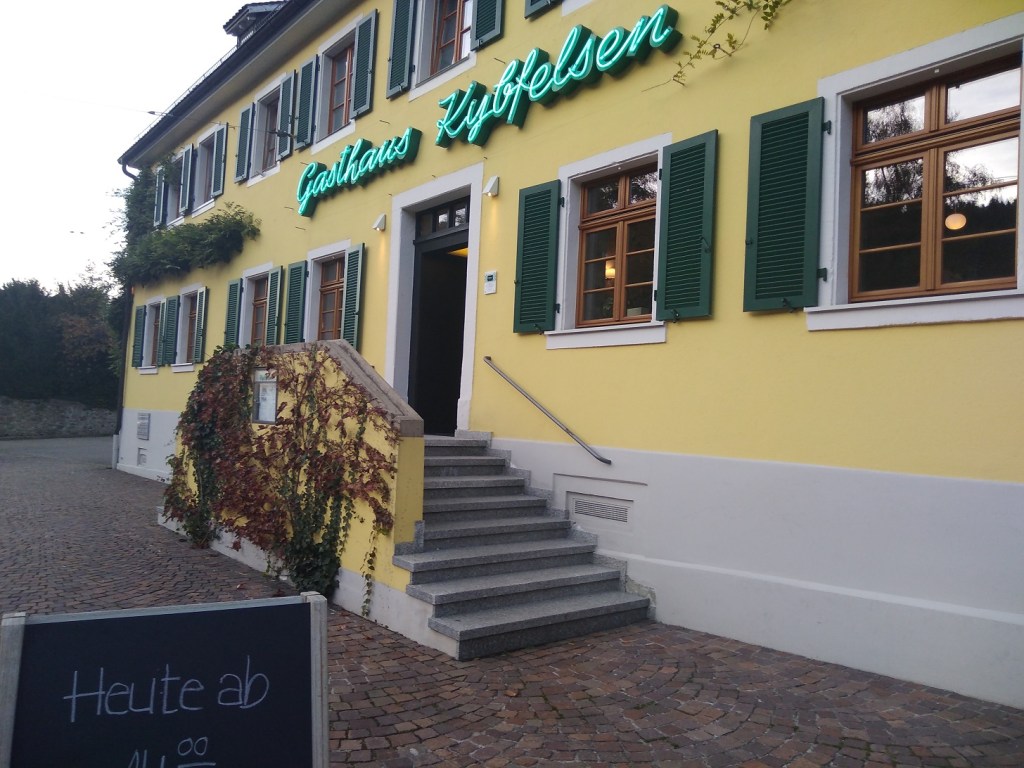
Late Autumn afternoonThere’s a pub with a beer garden at the bottom of the slope if you want it. I didn’t go in, so cannot say if it’s good or notI can vouch for the Storchen – warm, wi-fi and delicious pastries
I stayed at the Black Forest hostel in a 20 bed dorm for 17 euros. You need to provide your own pillow case and sleeping bag or pay extra for them. There is a good, small kitchen and friendly communal area with computers to share and board games. It wasn’t too far (20 minutes) from the bus station, but was full of football fans when I arrived. The staff at reception were very helpful.
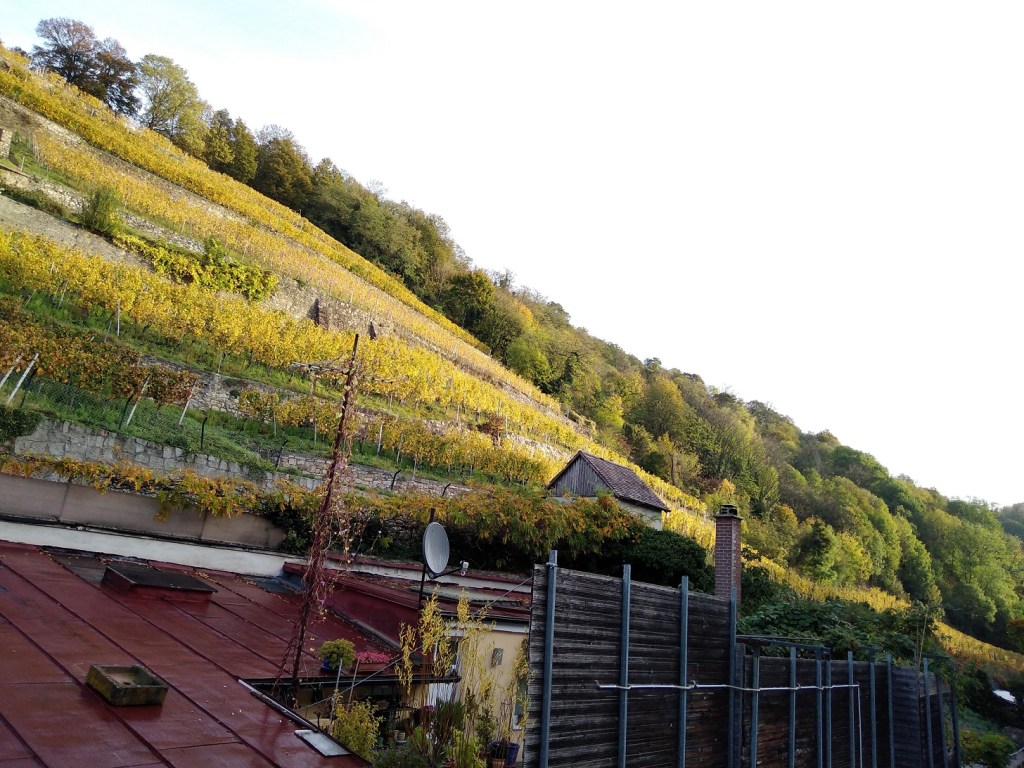
The view from the back of the hostel of vines growing on the hillside
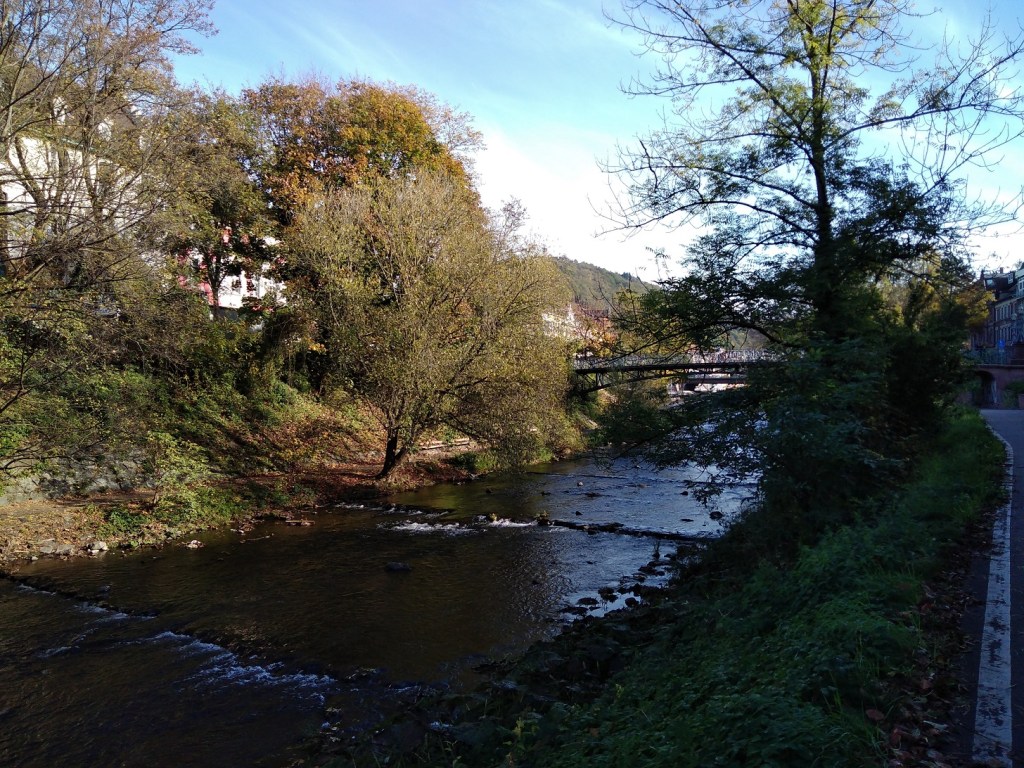
10 mins from hostel along the pretty River Dreisam under charming cast iron bridges was the supermarket.
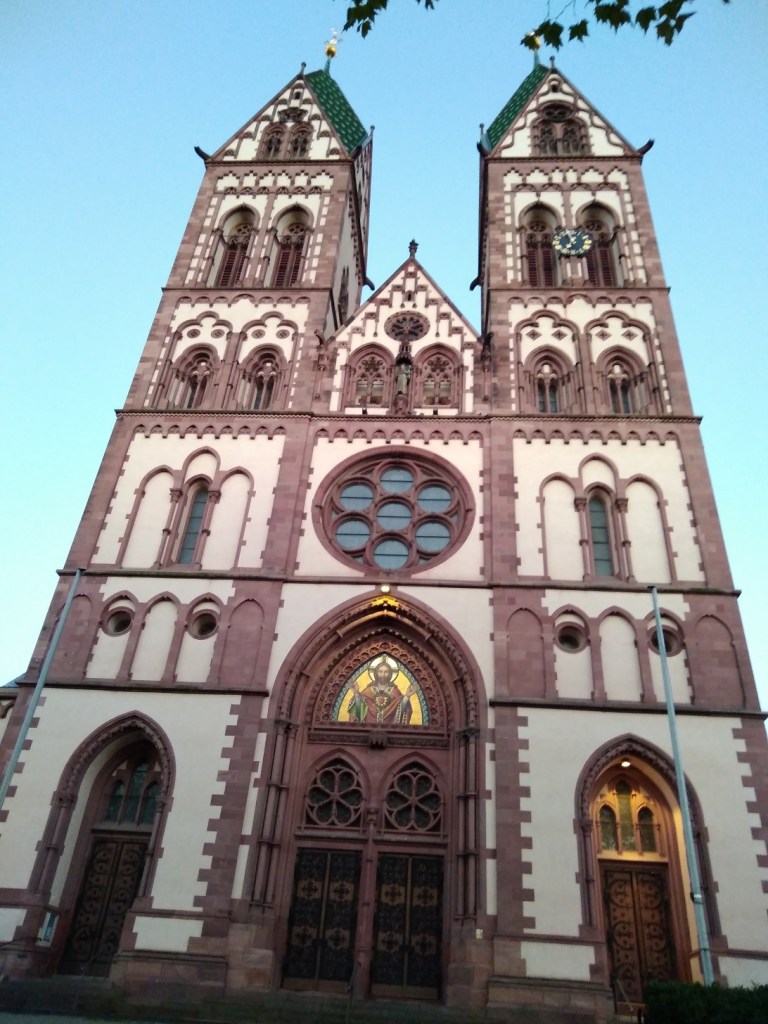
Cycle paths in the town of FreiburgJesus Sacred Heart Church, Freiburg
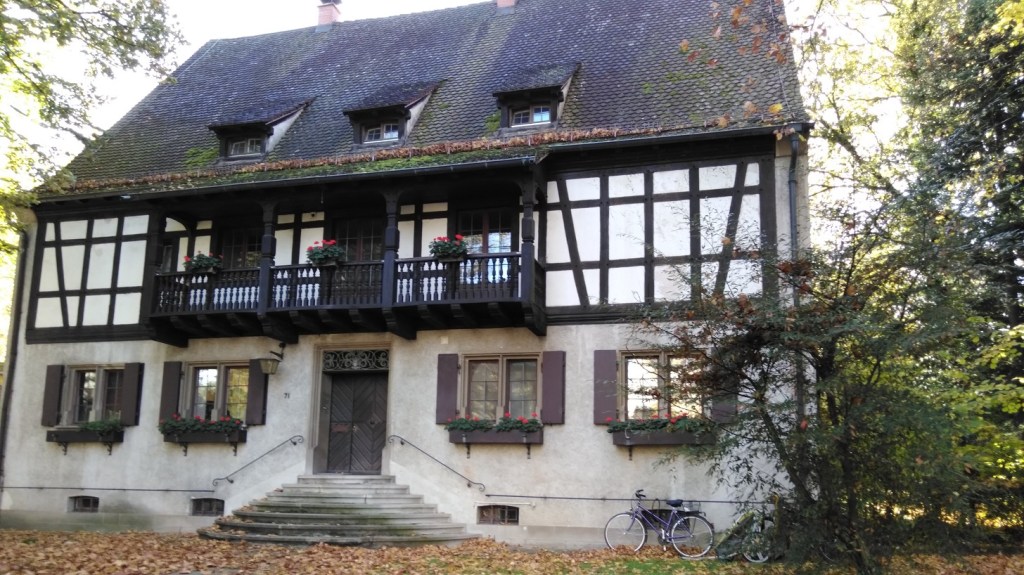
Typical architecture, Freiburg
From Freiburg you can easily reach Colmar in France on the Alsace wine route and Strasbourg, straddling France and Germany on the River Rhine. I highly recommend them all!
On the way to the train station
Beware – there are no buses between Basel airport and Fribourg in Switzerland, or at least there weren’t when I tried to get one. If you find one, do double check that it is to the west, into Switzerland and not the east into Germany. Because of the two languages spoken in Switzerland, Fribourg is also known as Freiburg, so you can see the confusion. That was how I got to visit this lovely place and I don’t regret it, but it was quite a big mistake!
The last few days, which I walked first going backwards from Santiago de Compostella – Outerio – Bandera – Laxe. In the direction of Seville (north to south)
This walk was inspired by a prompt from Alisa Oleva and The Resident’s Association which went like this: ‘Go out on a walk, take photos of all the things and surfaces you would like to touch, but don’t touch them.’
I tried, I really did, but I failed at the first and last hurdles (and several in between if I’m honest). Who would have thought it would be so difficult? Although, given I touch for a living it’s not so surprising. I can’t give Shiatsu because of the Covid-19 virus restrictions, so this brief is apposite.
It was my phone I touched at the off – to take photos. Smooth and cool and about the weight of a nice big juicy apple, it quickly heated up in my hand. I was on a walk I have done once before which ended on a road (link) so I wanted to find a better way back.
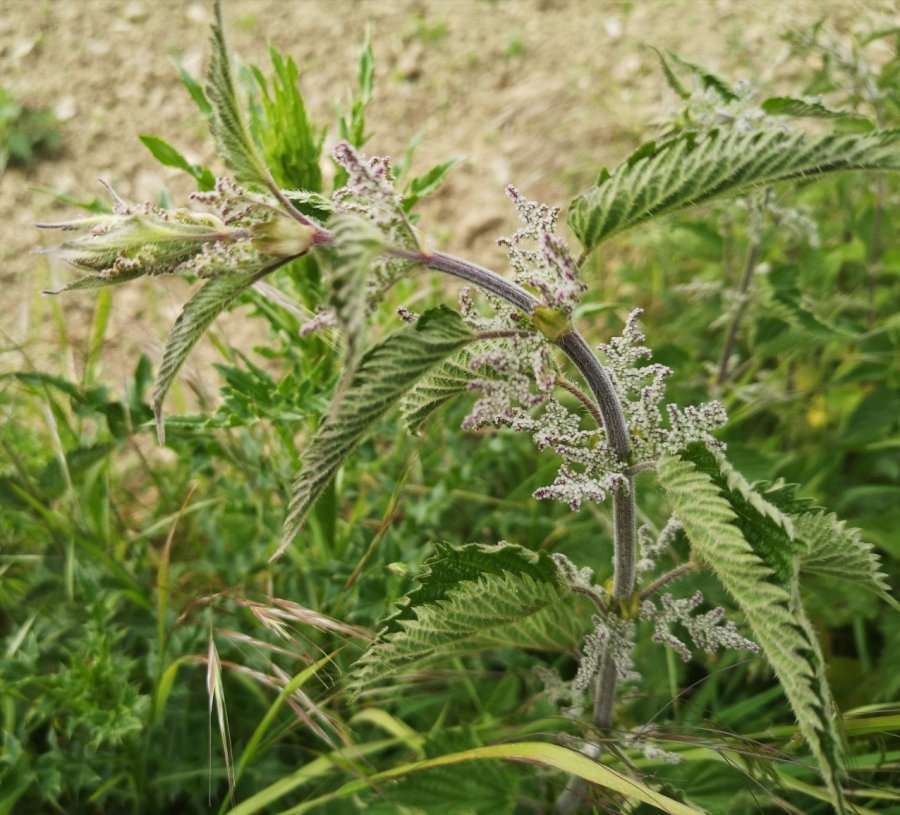
Stinging nettles
As soon as I started I wanted to reach out and feel the difference between the nettles and the dead nettles, even if one sort would surely sting me. It didn’t take long for my toddler instinct to kick in – ‘But I want to touch!’ I resisted.
When a wall reared up in front of me, my protesting teenager was taunted – ‘Just cos you say I shouldn’t touch, doesn’t mean I can’t!’ Though I was grown up and I didn’t.
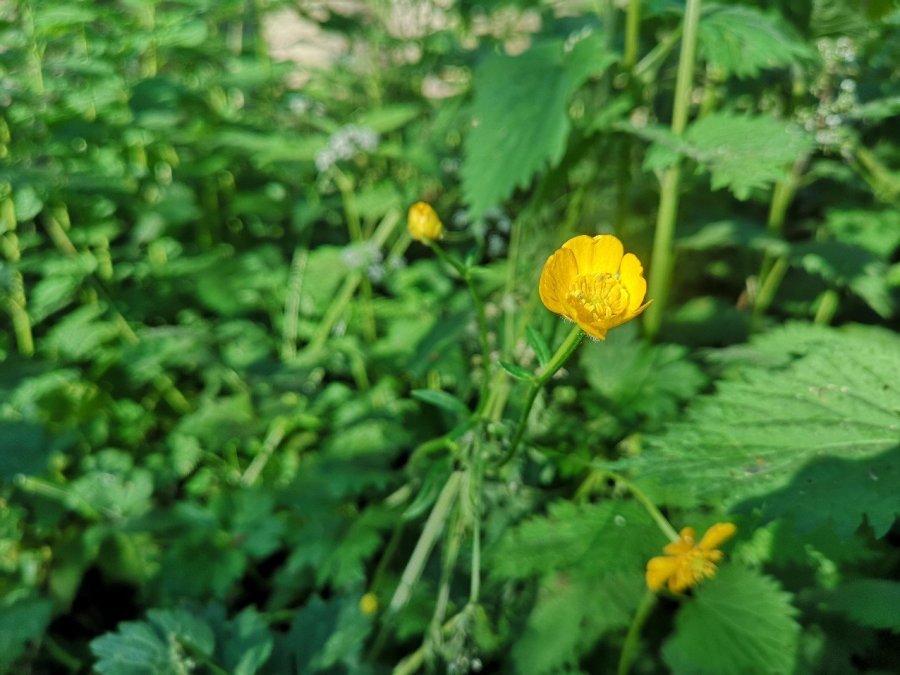
Buttercup (Ranunculus)
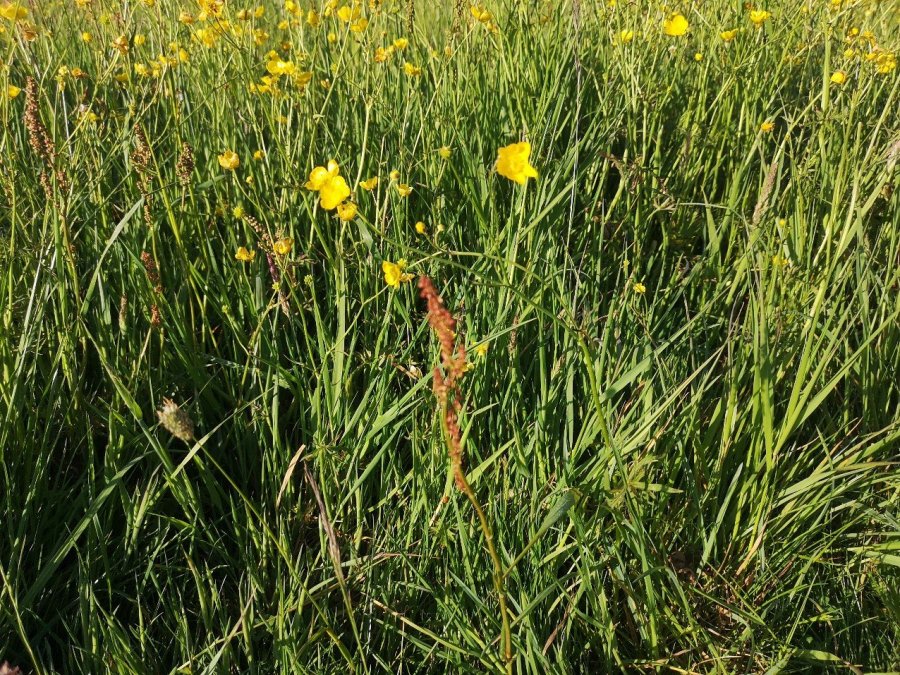
As I passed the buttercups I could imagine the smooth, silky petals. I’m a tactile person. I have honed my sense of touch to a very sensitive degree over tens of years. The mere sight stimulated the part of my brain which remembered the feel from before (as it does with most people) – my brain’s sensory cortex.
“When asked to imagine the difference between touching a cold, slick piece of metal and the warm fur of a kitten, most people admit that they can literally ‘feel’ the two sensations in their ‘mind’s touch,’” said Kaspar Meyer, the lead author of a study into touch.
“The same happened to our subjects when we showed them video clips of hands touching varied objects,” he said. “Our results show that ‘feeling with the mind’s touch’ activates the same parts of the brain that would respond to actual touch.”
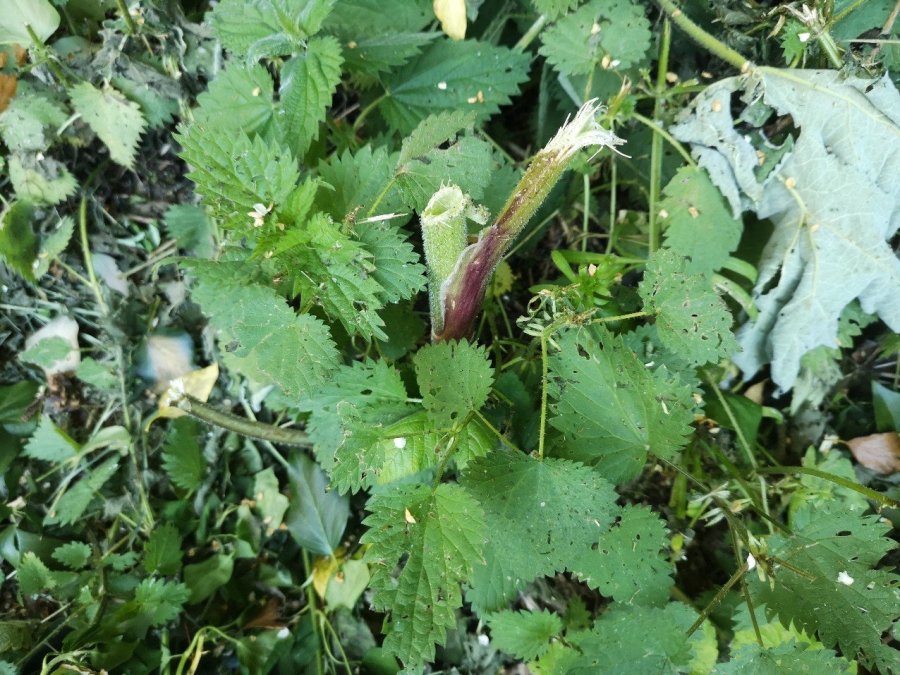
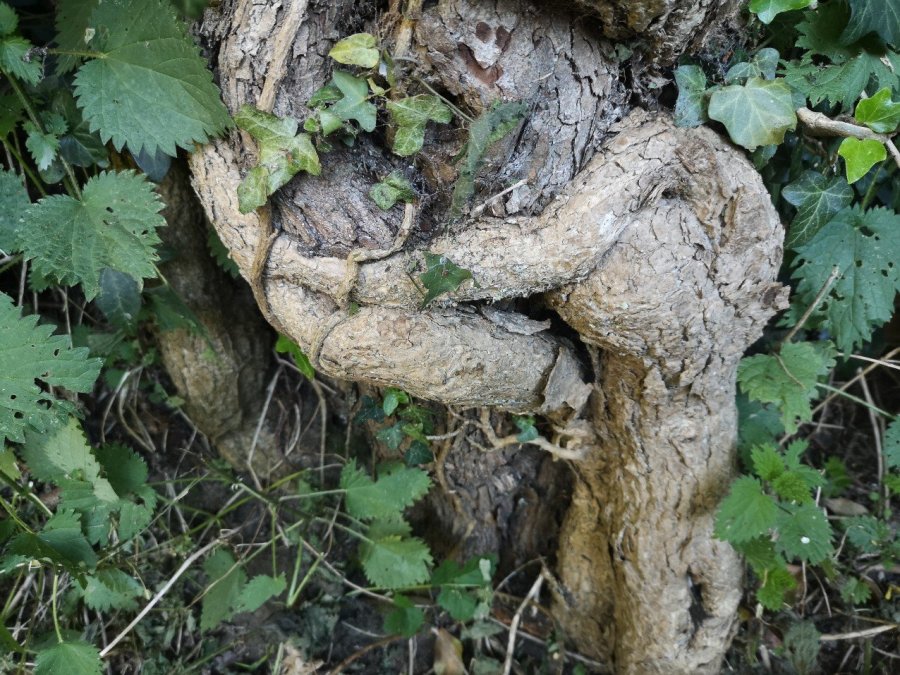
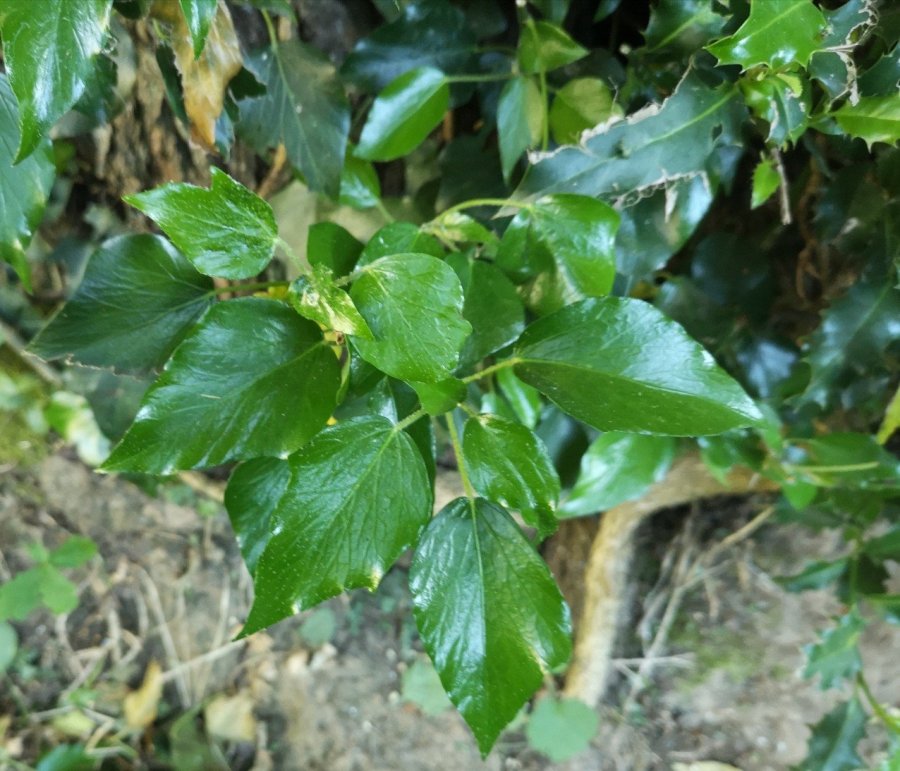
I saw stalk ends which I was convinced would be dry and rough. The torn-off strands might feel like threads, but I couldn’t be sure. The gnarled tree, all crooked and twisted, must feel just as dessicated, I conjectured, but harder. I was pretty sure I could lean into it and it wouldn’t fall over whereas the stem would have, of course. Colder than the trunk, the Hedera helix (a better monica than ‘common ivy’ in this case) would feel the least substantial, but the shiniest. Isn’t it fascinating that we use visually descriptive words like ‘shiny’ to describe the feel of something?
While it is customary to assert that we see with our eyes, touch with our hands, and hear with our ears, we live in a simultaneous universe where sensory events and their constituent elements have a natural tendency to overlap.
Undergrowth still covered in dew where the sun hasn’t yet touched
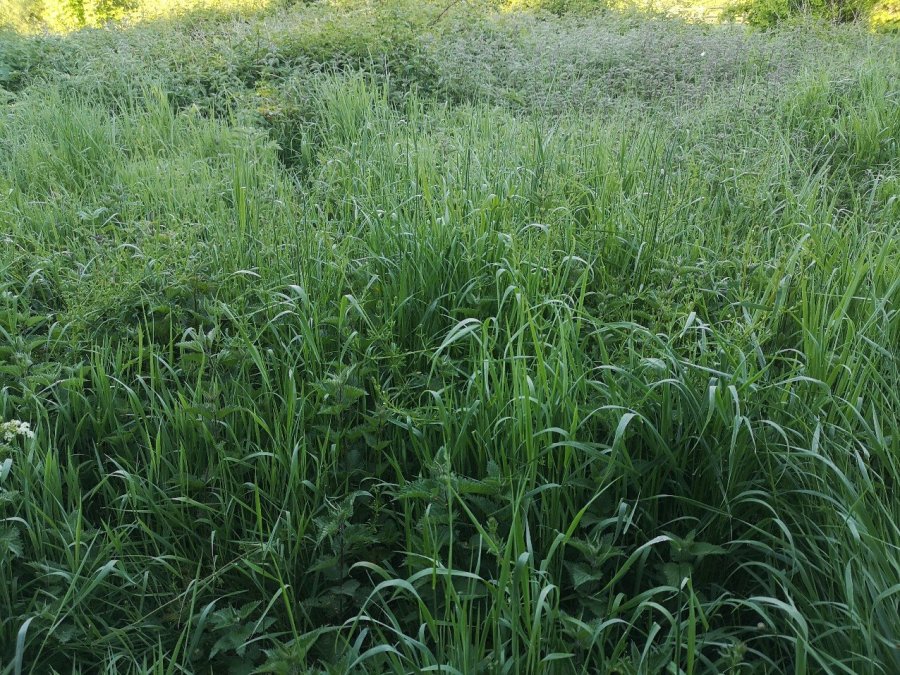
The undergrowth to my right was still opaque with dew, its wetness indistinguishable from its colour. But I didn’t touch; my eyes just feasted. (There’s another of those sensory comminglings). As I wandered on, I wondered, can you feel a colour? Would that pale grey-green feel the same as the vibrant gloss-green of that ivy I had just passed? It would be impossible to subtract the wetness from one in order to compare I reckoned.
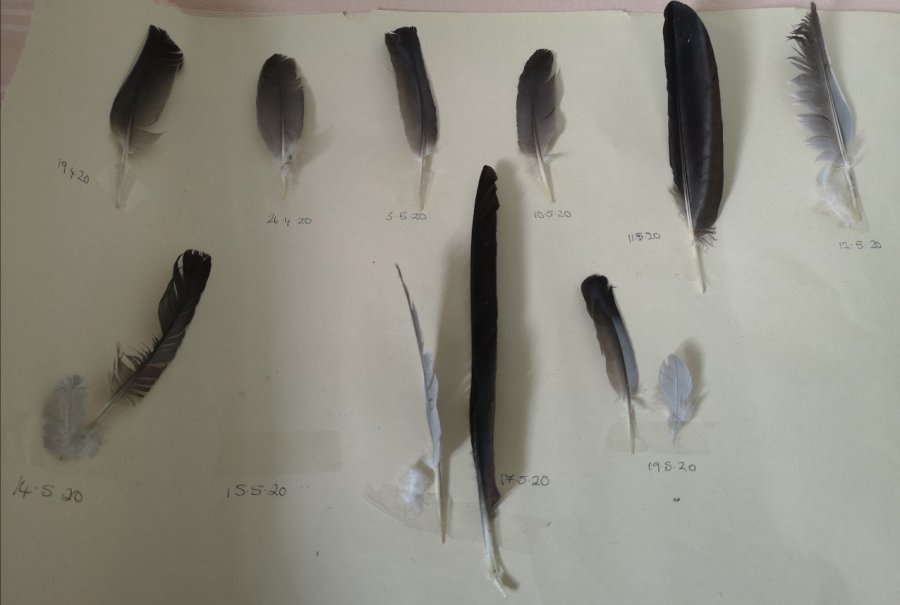
My feather collection
In this part of the countryside, the cascades of hawthorn are over now, their slightly feathery, petally droplets have fallen. Black crows were feeding, sharp-beak first, in the field. I would certainly like to touch their glossy feathers – I have been collecting feathers every day on my walks. If I hold the white tubular calamus, or hollow shaft of a long corvid’s plumage and twiddle it, the vane catches the light and gleams. There was a matching black horse lying down nearby and she observed me, haughtily. I might not have been brave enough to touch her.
Common sorrel (Rumex acetosa) or ‘Sour Ducks’, red-brown between the buttercups
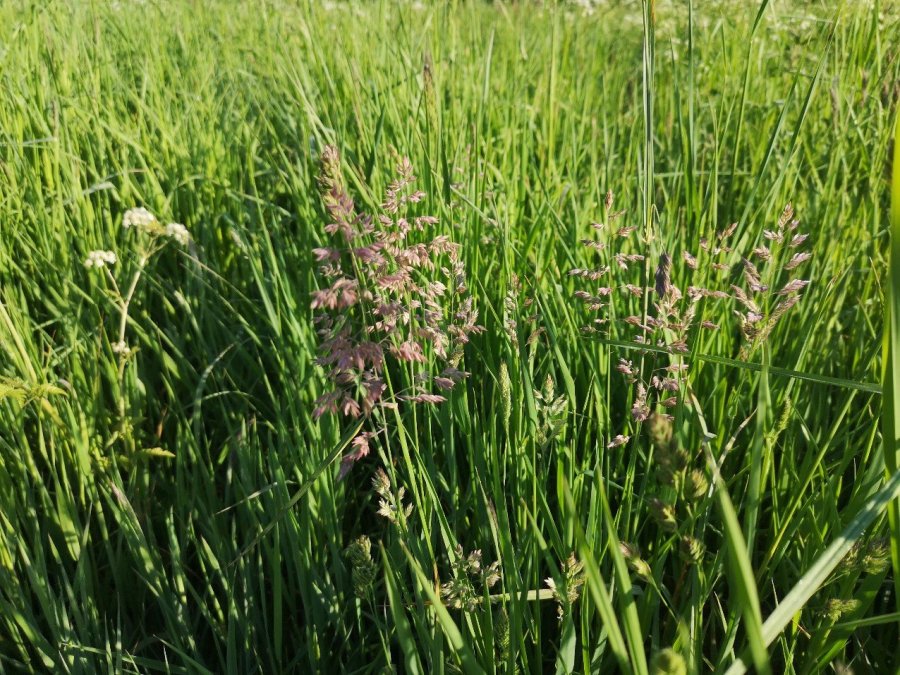
Yorkshire Fog
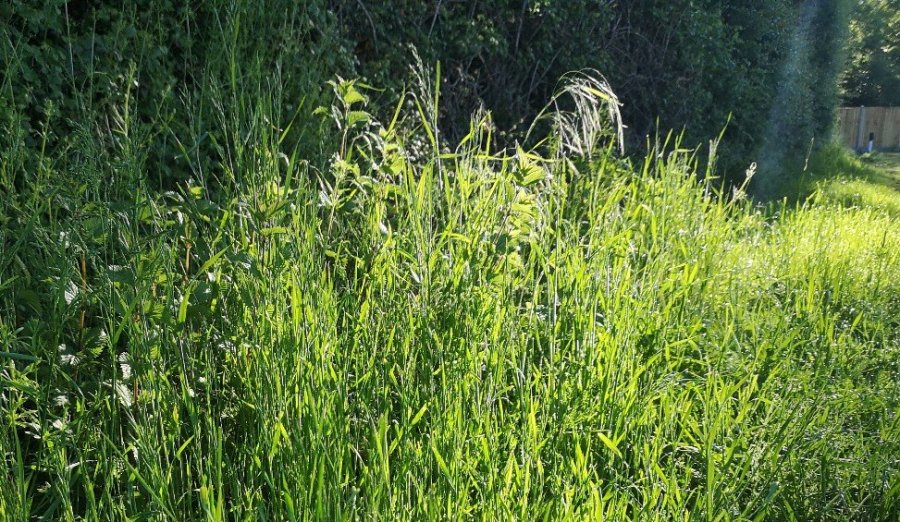
The wet grass touched my boots – I could see, but not feel. My legs brushed past the seedheads and they tickled my shins. They touched me, I didn’t touch them. In the same patch, I was alive to the contrast between the sorrel, which I knew would be bitty like toast crumbs between a thumb and forefinger, and the emery board, might-cut-you blades of grass. I remembered how I like to slide up the sheath of the softer Yorkshire Fog, just turning to seed now, gathering a mini bouquet before spilling the seeds up in a fountain and spraying them all around. I could just ‘feel’ the imprint of it on my fingertips.
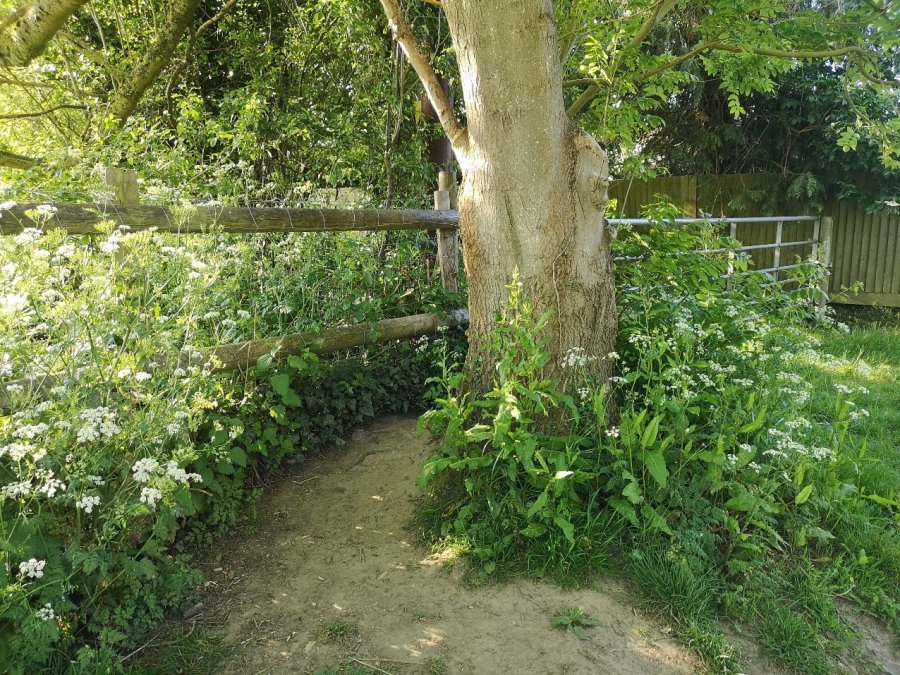
I had to edge behind the tree with my arms in the air
I crossed the first stile which I’ve been not hand-touching for weeks anyway, so I am practiced at that. I had to steady myself for a moment or two at the top before ‘jumping’ down off the second. Then at the next hurdle, I had to slip around behind the tree because the gate was shut. It was, I admit, impossible not to touch the trunk with the edges of myself, but I lifted my arms up as I squeezed through.
There was the familiar parp of the train as it approached the first of a ring of level crossings, making its announcement. I couldn’t touch that train even if I wanted to. I spotted the first chamomile and stooped to collect a feathery stem and have a sniff, transported back to my allotment where I grew swathes of it for medicinal purposes. It was not until the end of the walk when I scanned back that I realised that that had been a touch I didn’t even think to forgo.
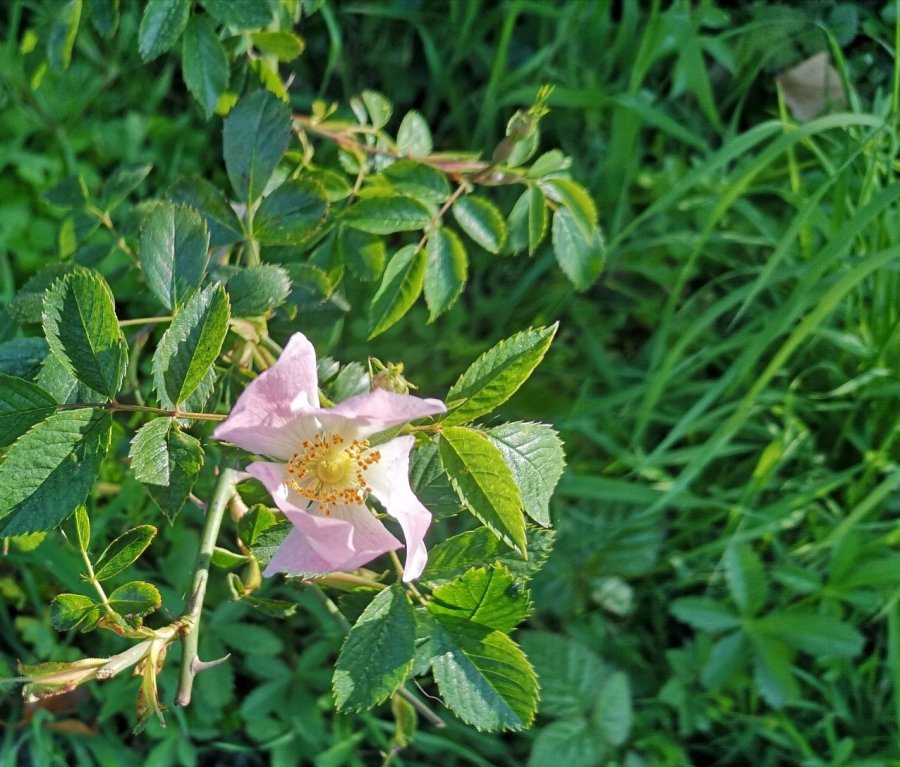
Wild dog rose (Rosa canina)
I feared to reach out to the wild roses in case I dislodged their fragile petals, so that was no problem. Before I knew it, I scratched my nose because it felt like a fly was crawling there. Damn! Turns out that I’m not great at this game.
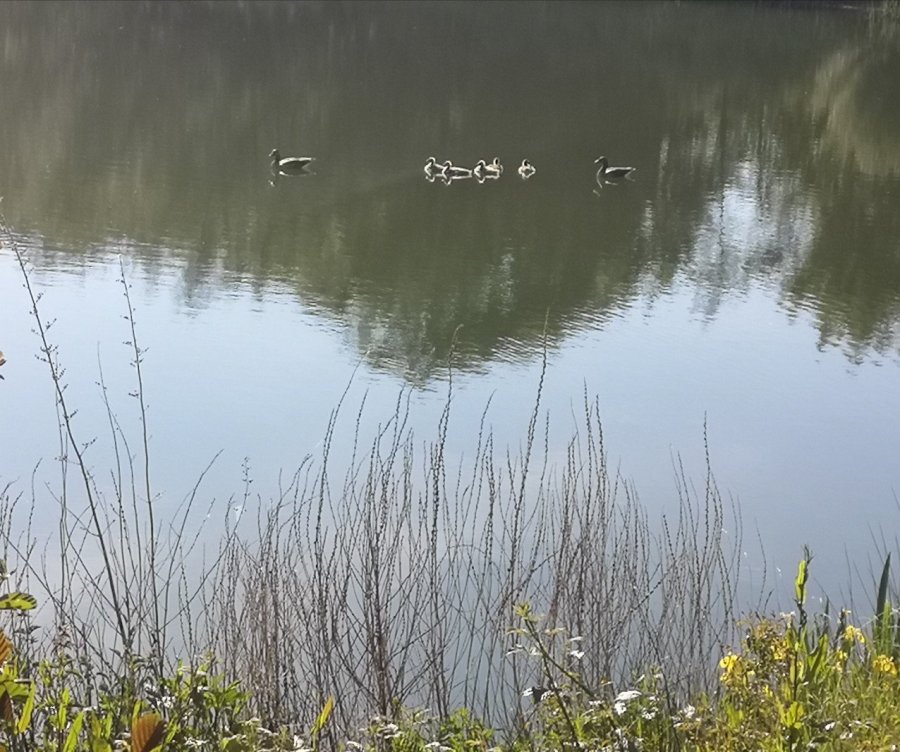
Goslings and their parents
I took a detour and there were the goslings, much more grown up, motionless on mirrored water. So still were they, that I assumed they were asleep, but then a parent dipped her beak and very slowly rotated to face her brood. The sun was behind, low, and I saw a drop dripping off. Mid way, it sparkled as the light shone through it, refracting into a star as it fell. Without actively moving she sailed closer to them, the space narrowing, and then she nudged the nearest chick.
It was the second hour and others were waking up and walking their dogs: a puppy scampered towards me and jumped up, so there was a wet-tongue touch without a by-your-leave. The owner and I forgot to move to opposite sides of the path two metres apart. Not so the woman with the stick – she avoided me like the plague as we have been instructed to do.
Pendulous Sedge (I think)
The birds were busy weeding in the arable fields, their heads bobbing. No doubt some seeds hadn’t yet germinated. A bramble scraped my upper arm leaving a long, bloody slash. Grasses caressed me and wind swept my sweaty brow – I felt it.
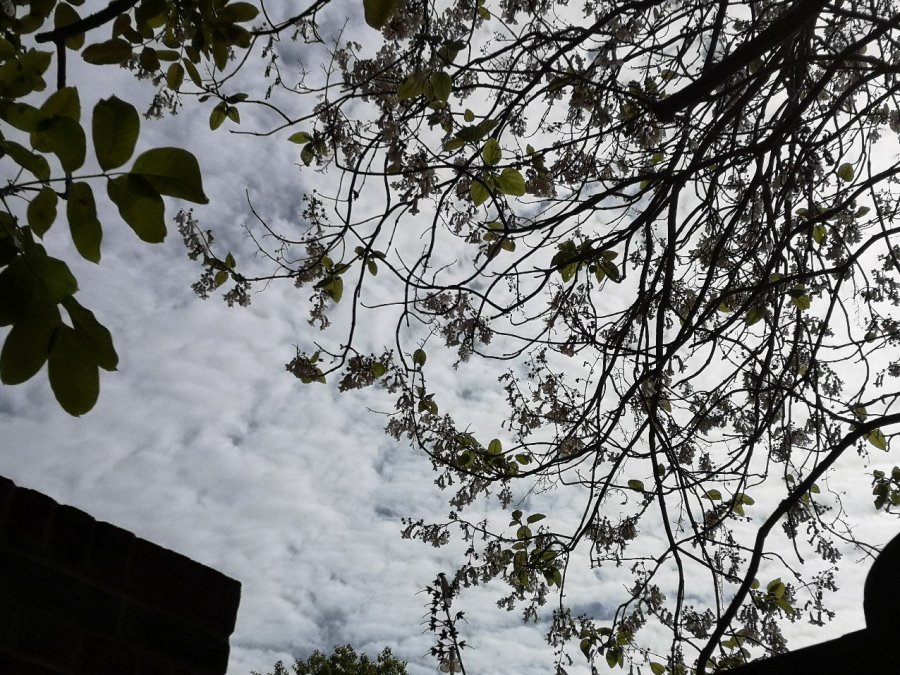
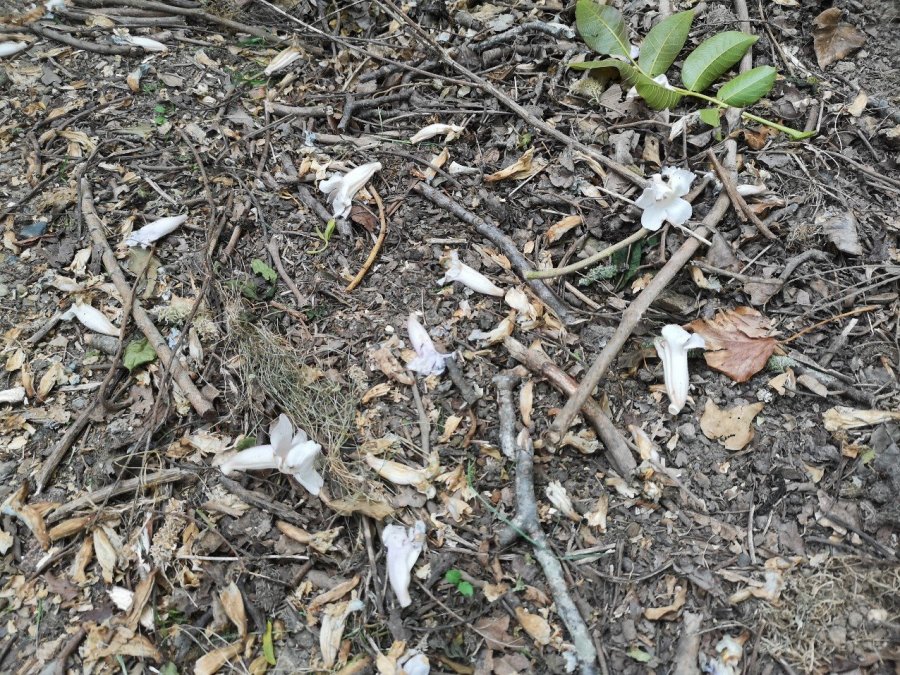
A fully grown tree with clusters of small, white traumpet shaped flowers (below)
What is the name of the tree (not a shrub) these sticky flowers came from?
I stood under an unknown tree admiring its flowers. I flipped through my mental filing system, took a photo, and then the tree seemed to go ‘here you are’ and one white trumpet floated to the ground. There it lay amongst 10s of others! I picked one up (again, I didn’t even notice this touch until I started writing this) and carried it uphill. After some time I relegated it to my pocket for later perusal and it was, ooh, 5 minutes before I worked out what had caused the stickiness in my palm.
Impossible not to stroke
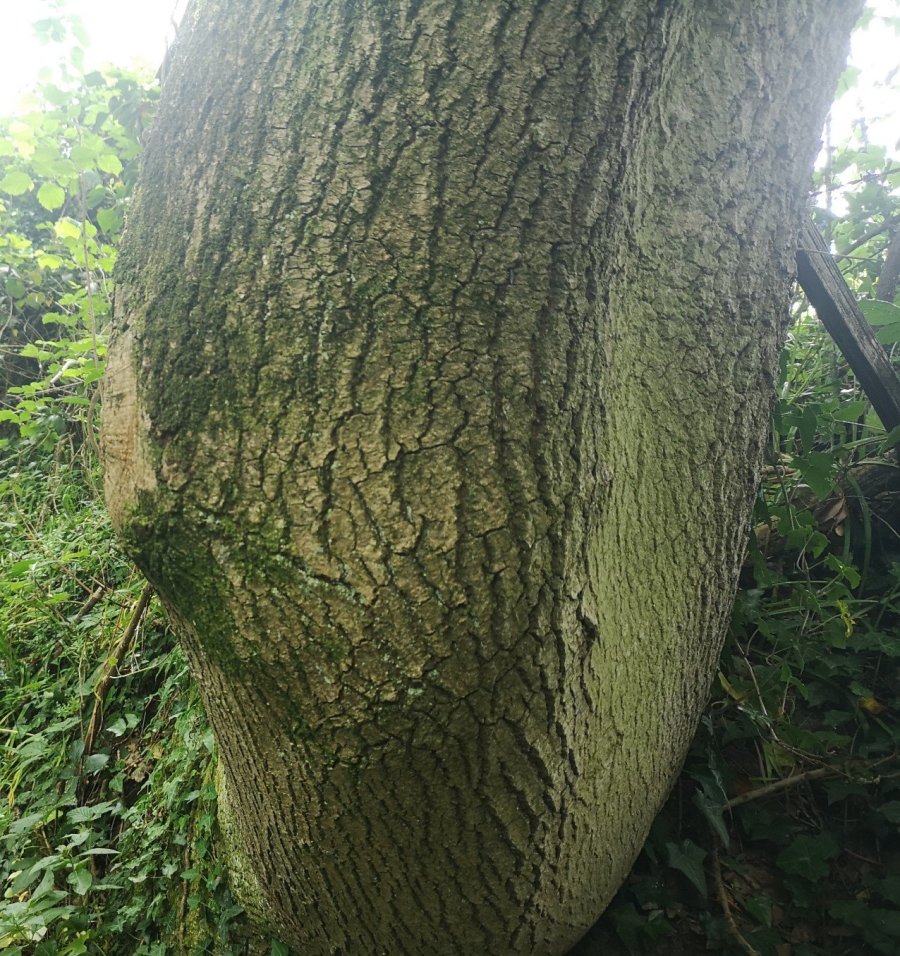
I did find an alternative route towards the end and as I squelched through the mud (there has been no rain for weeks but was some sort of stream running down the bridle path) and surveyed the broken branches from recent winds, I instinctively stroked the burl (a knotty growth) of a nearby tree, I caught myself at it and withdrew my hand sharpish, but it was too late.
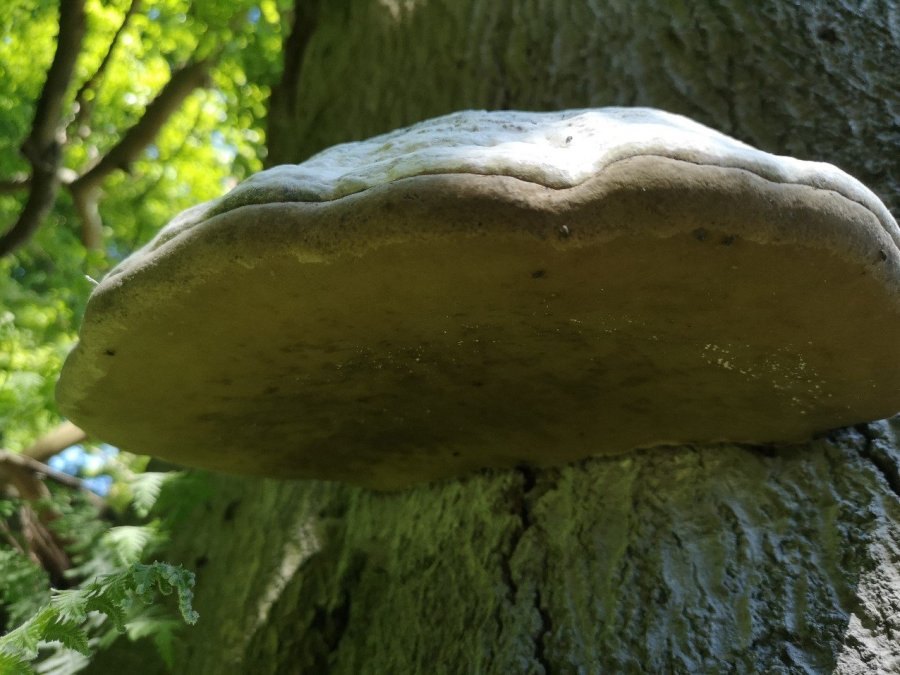
A fine specimen of Bracket fungus
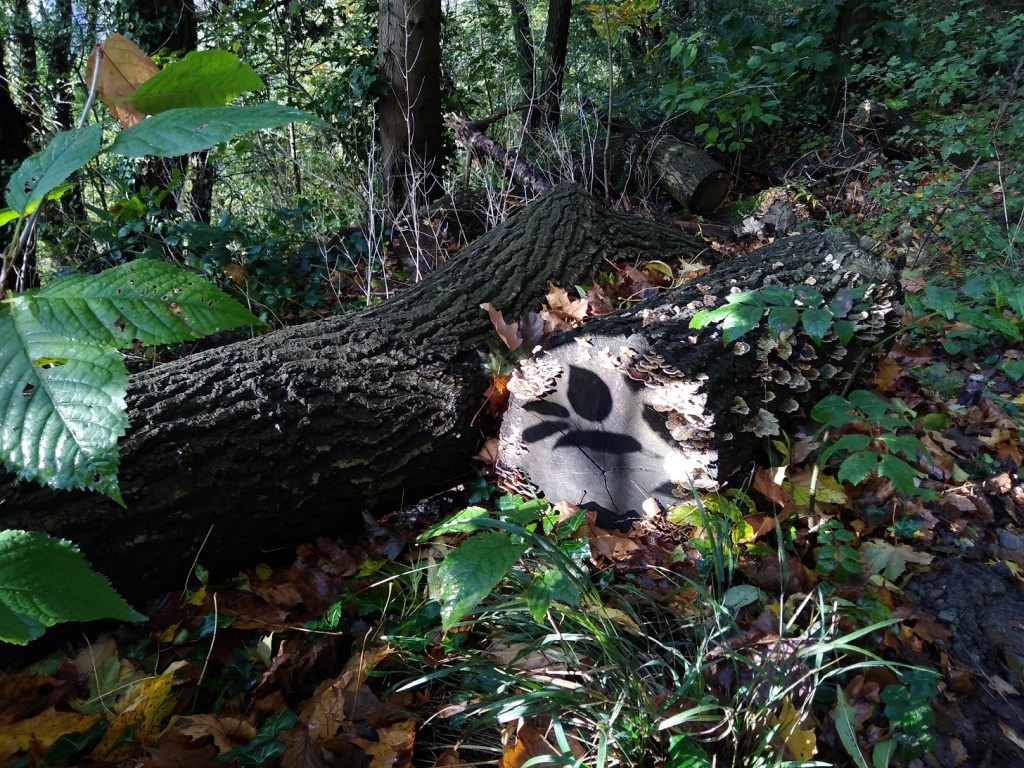
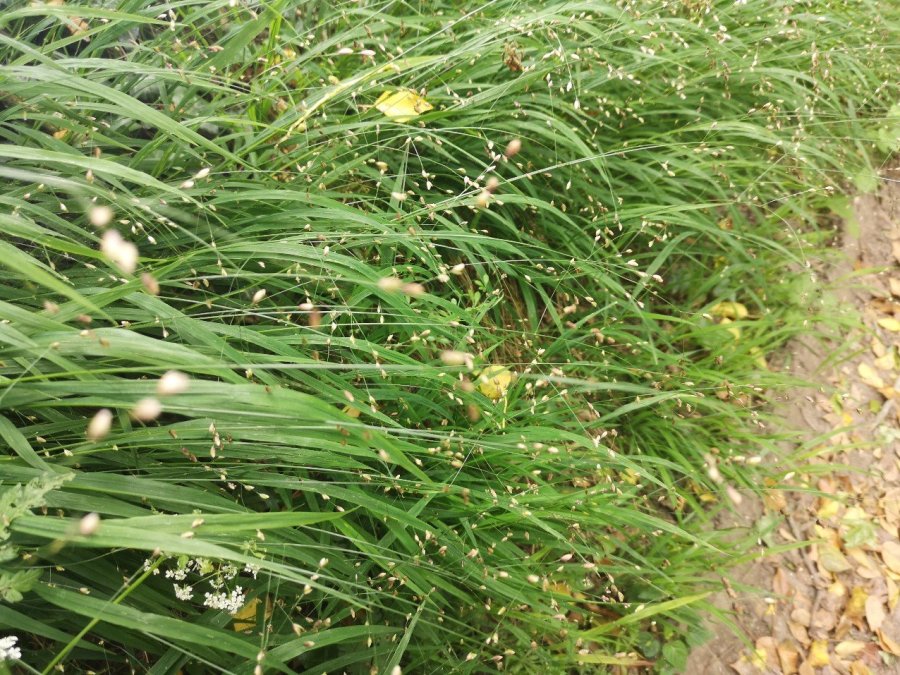
The whole thing was pretty tricky. I wanted to know if the bracket fungus was hard or squashy. I wanted to warm my hand on the wall. I was curious whether the temperature of the inside of the log was different from the outside. I would have liked to swish through the Quaking grass. However, I particularly enjoyed the newfound awareness of how much my senses interact. And I had a beautiful walk.
Quaking Grass
If you ever see something in one of my blogs that is wrongly named, please do let me know. I do a lot of research but it isn’t always easy to get it right and I would be very grateful to learn.
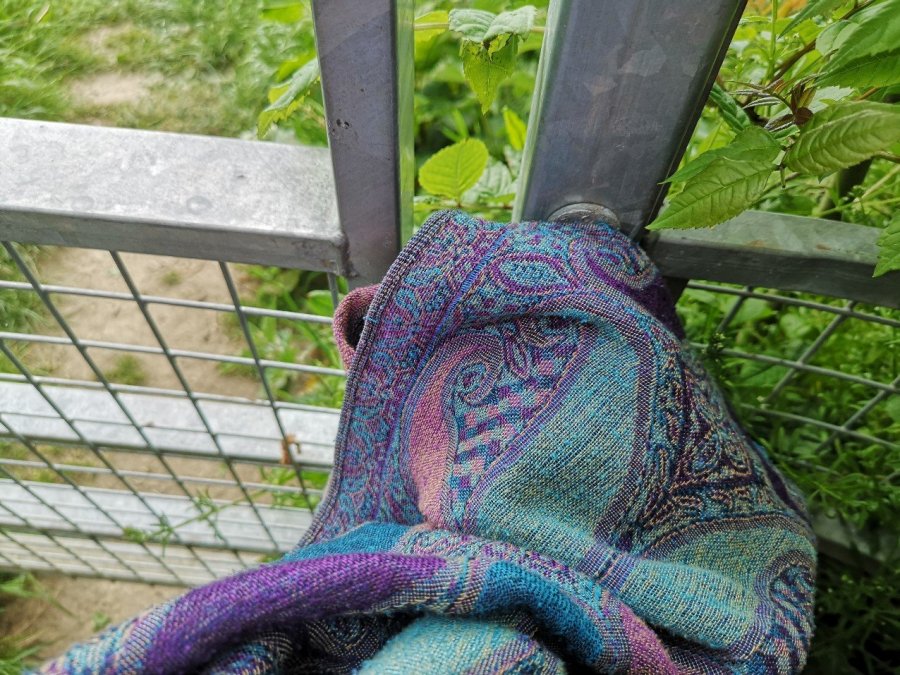
Uing the soft fabric of my scarf to open the metal gate to avoid cross-contamination from ‘the virus’- there was no other way to open it



 Walking without a donkey