Camino Francés – Foncebadon to Molinaseca to Pieros, Spain

12.11.16 – 13.11.16 Foncebadon to Molinaseca 19.5km; Molinaseca to Pieros 21.1km
dsc_1380.jpg

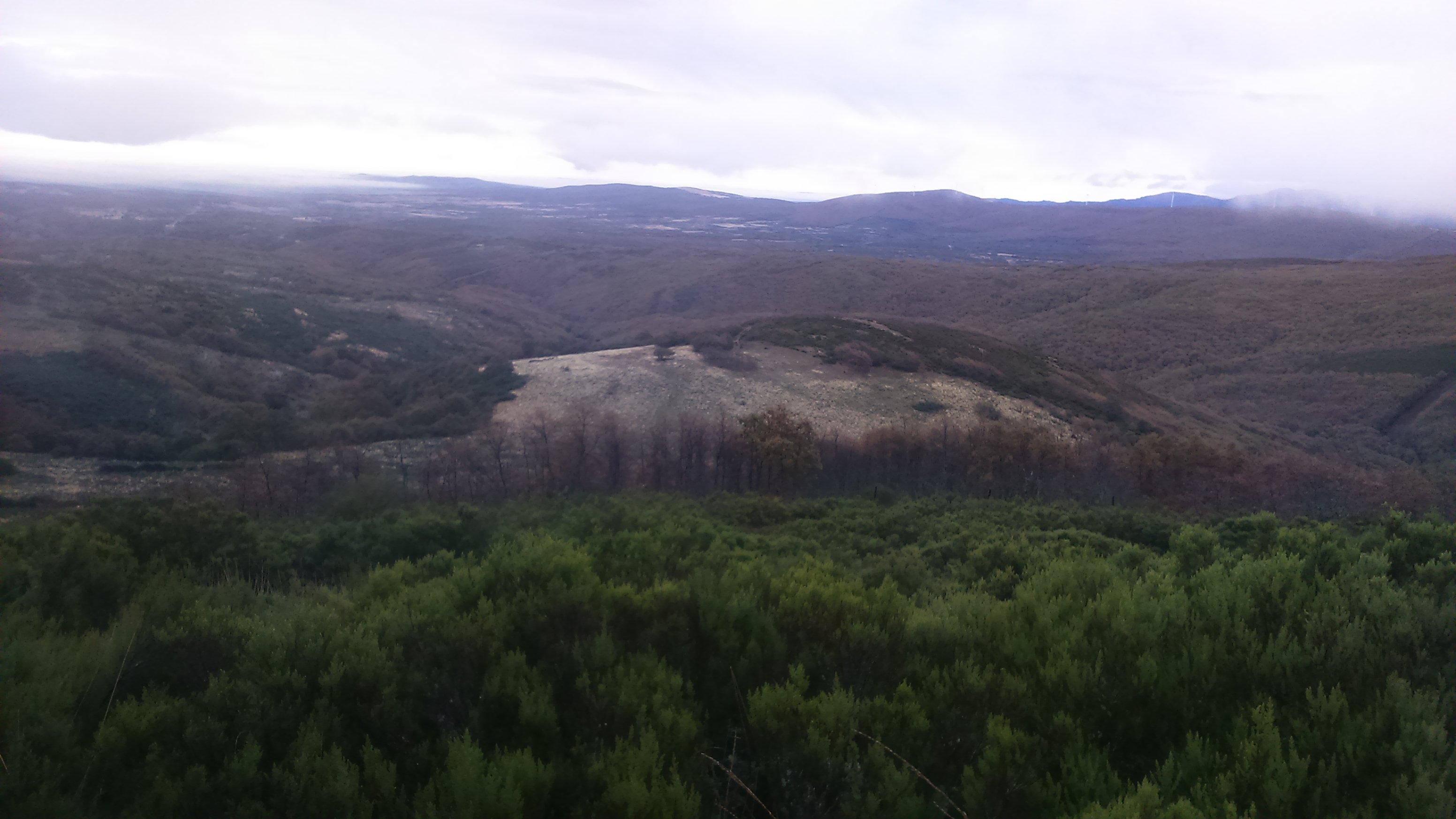
It was a cloudy start from Foncebadon this happy Saturday.

‘Daytime never starts with an act of will: it arises in unworried certainty. To walk in the early morning is to understand the strength of natural beginnings.’ (p.98).

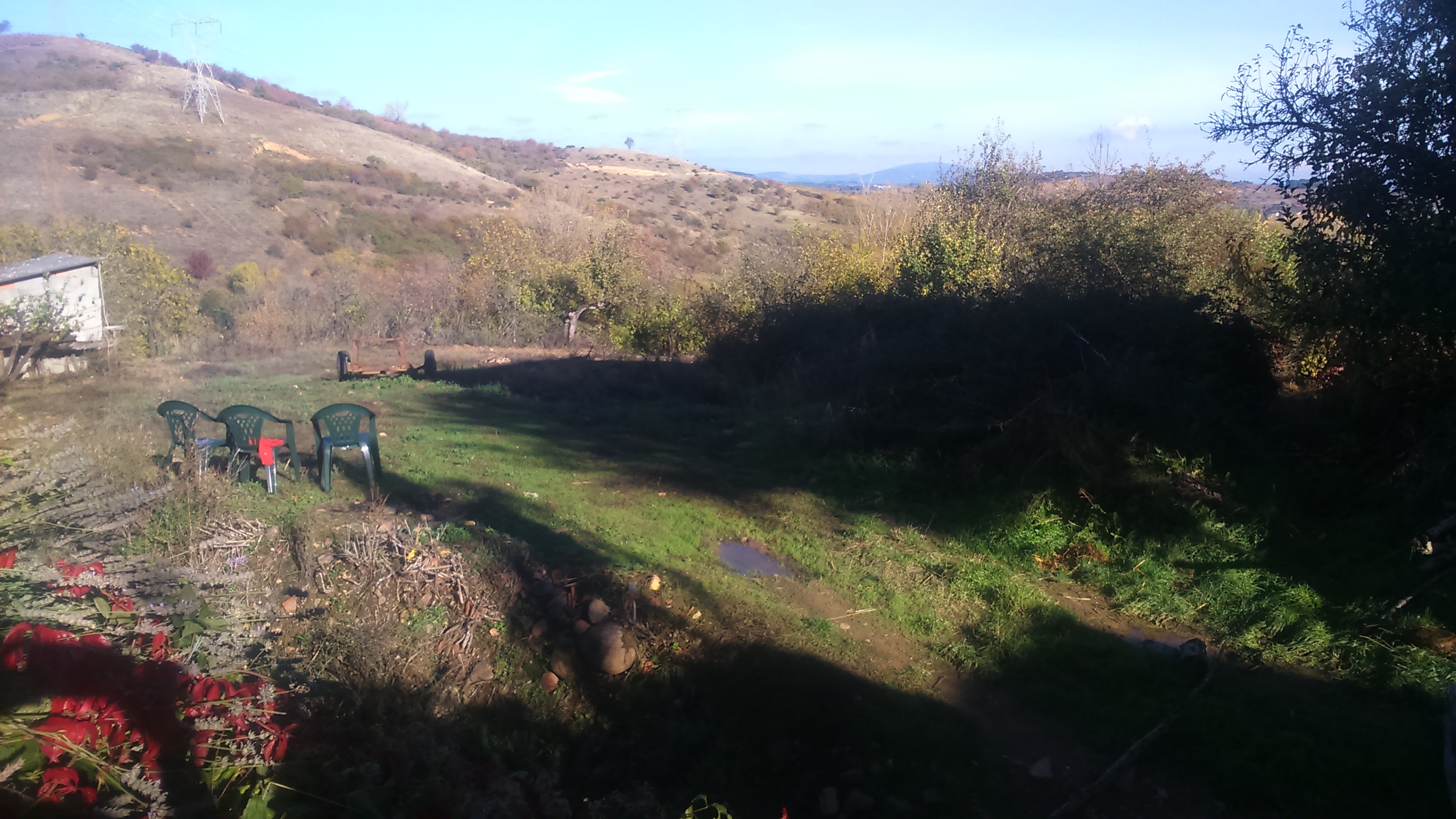
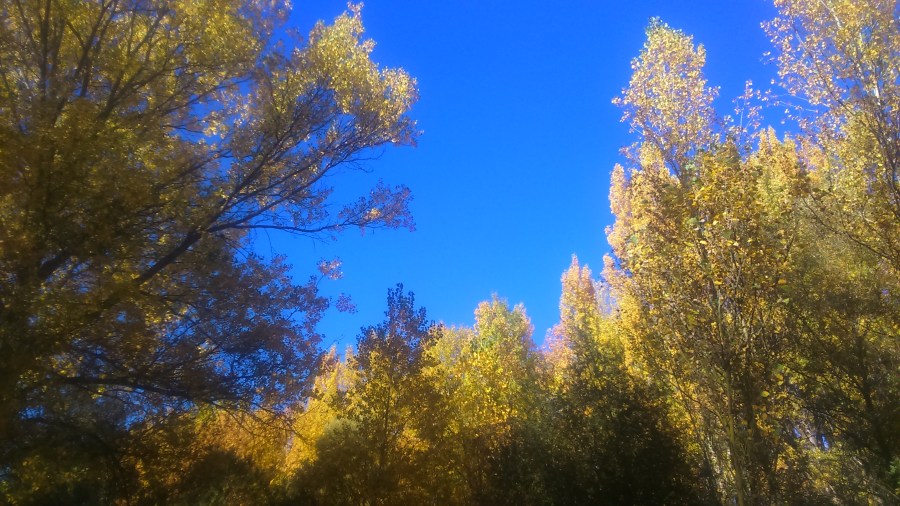
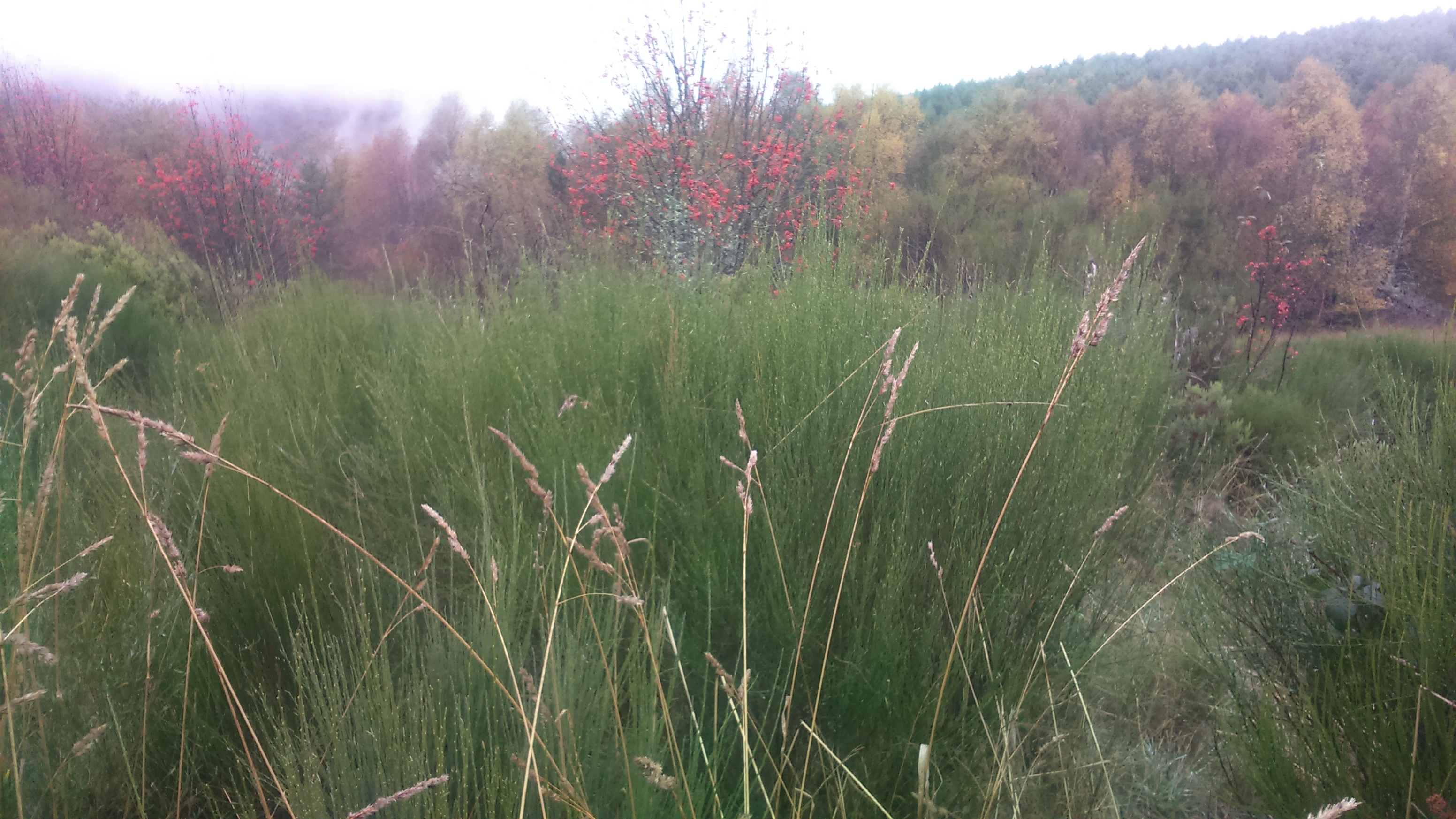
I relished in the green lushness after the rain, which highlighted the autumn reds and orange.
dsc_1381.jpg

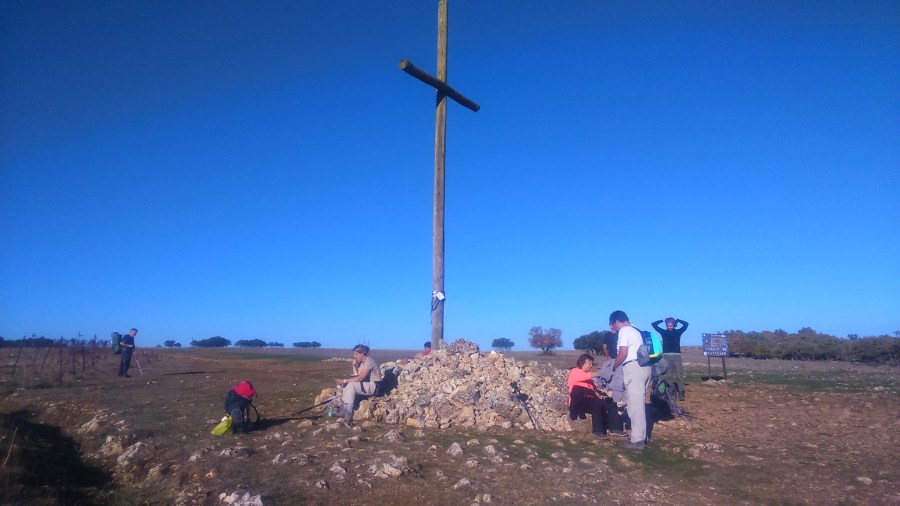
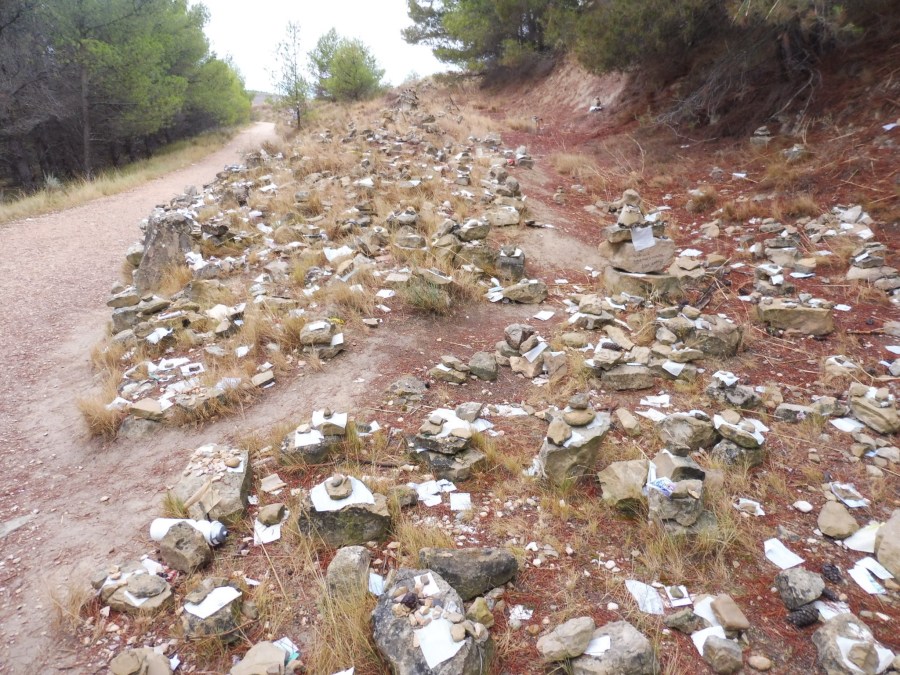
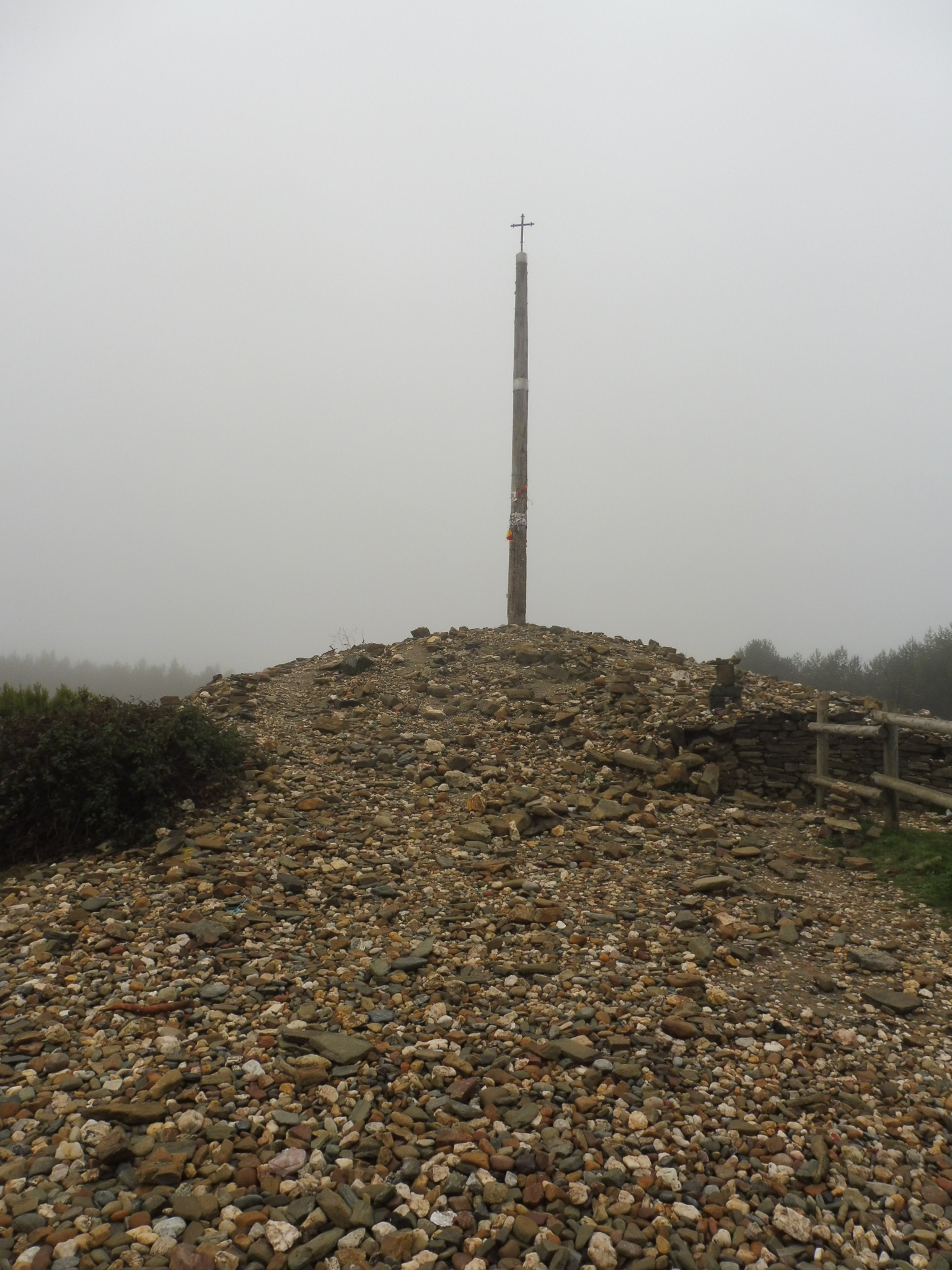
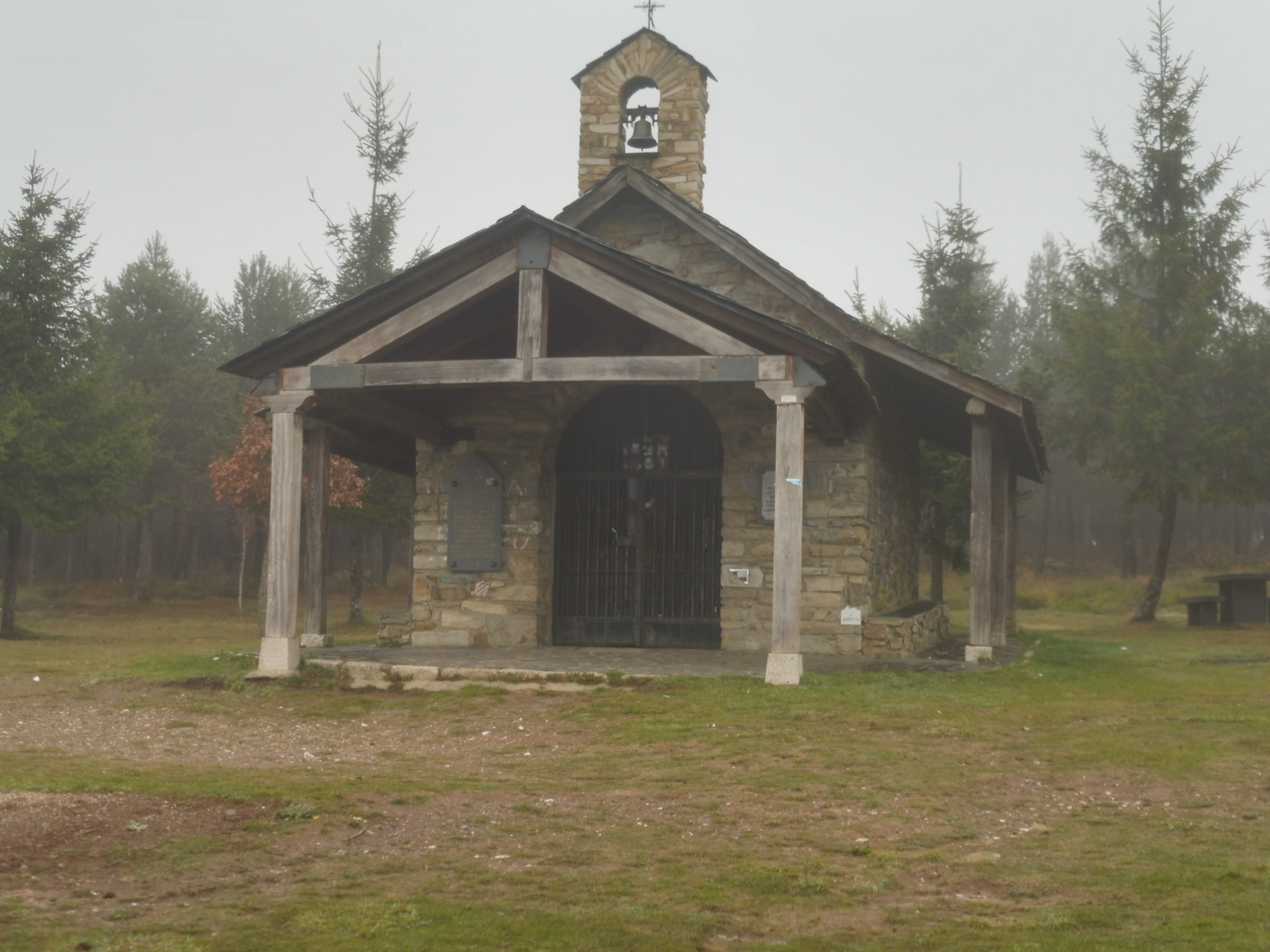
Cruz de Ferro (Hierro) is an important cross marking the highest point of the Camino Frances at 1517m, with its little chapel and enormous pile of meaningful stones, placed by pilgrims over the years. There are no public toilets along the path, and long gaps between bars (where you must buy something in order to use the facilities), so, sadly, there is always white paper behind these charming buildings.
camino-frances-1794
Cruz de Ferro
camino-frances-1795
The highest point of the Camino Frances. The altar could be glimpsed through the bars of the entrance.

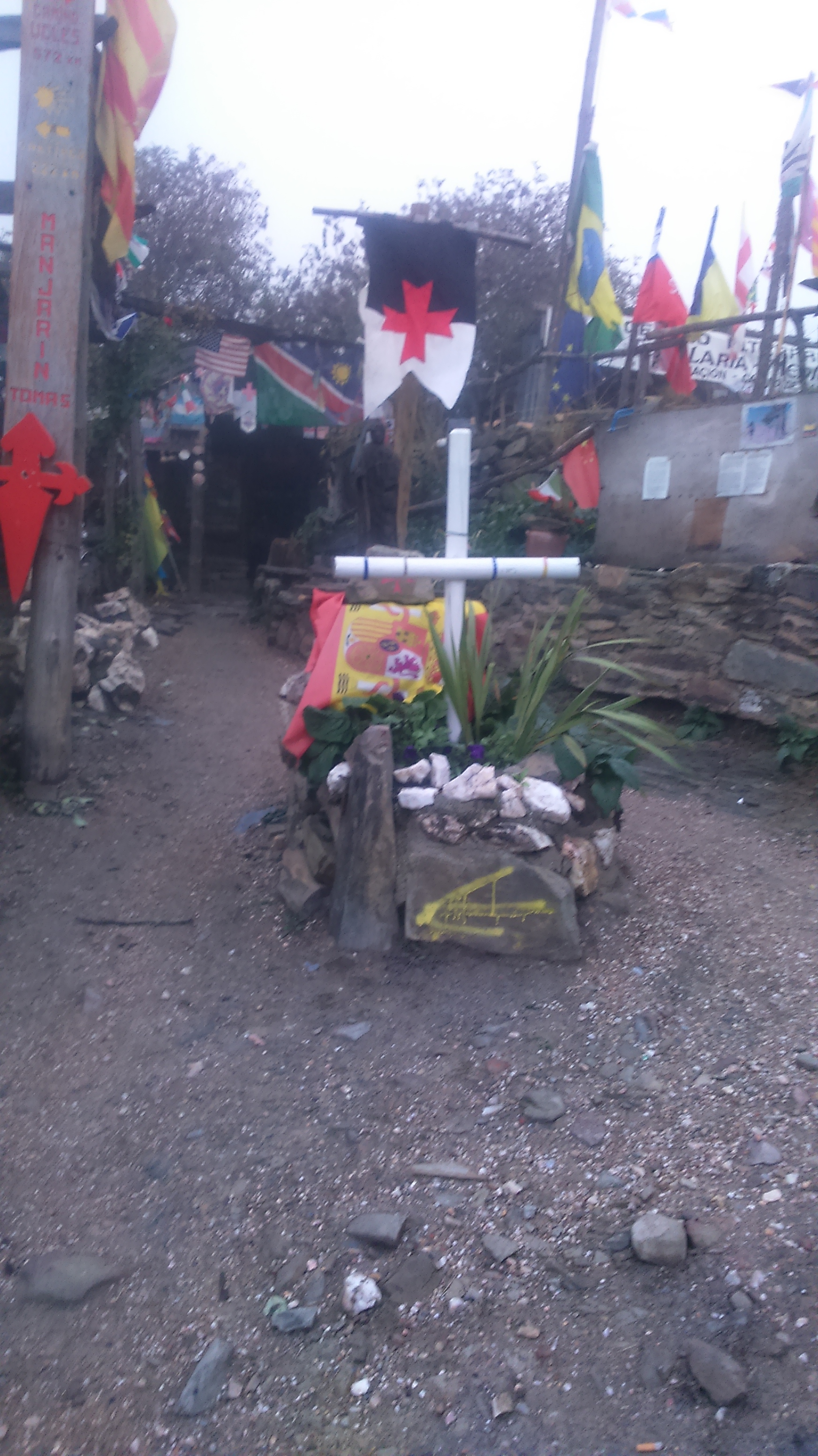
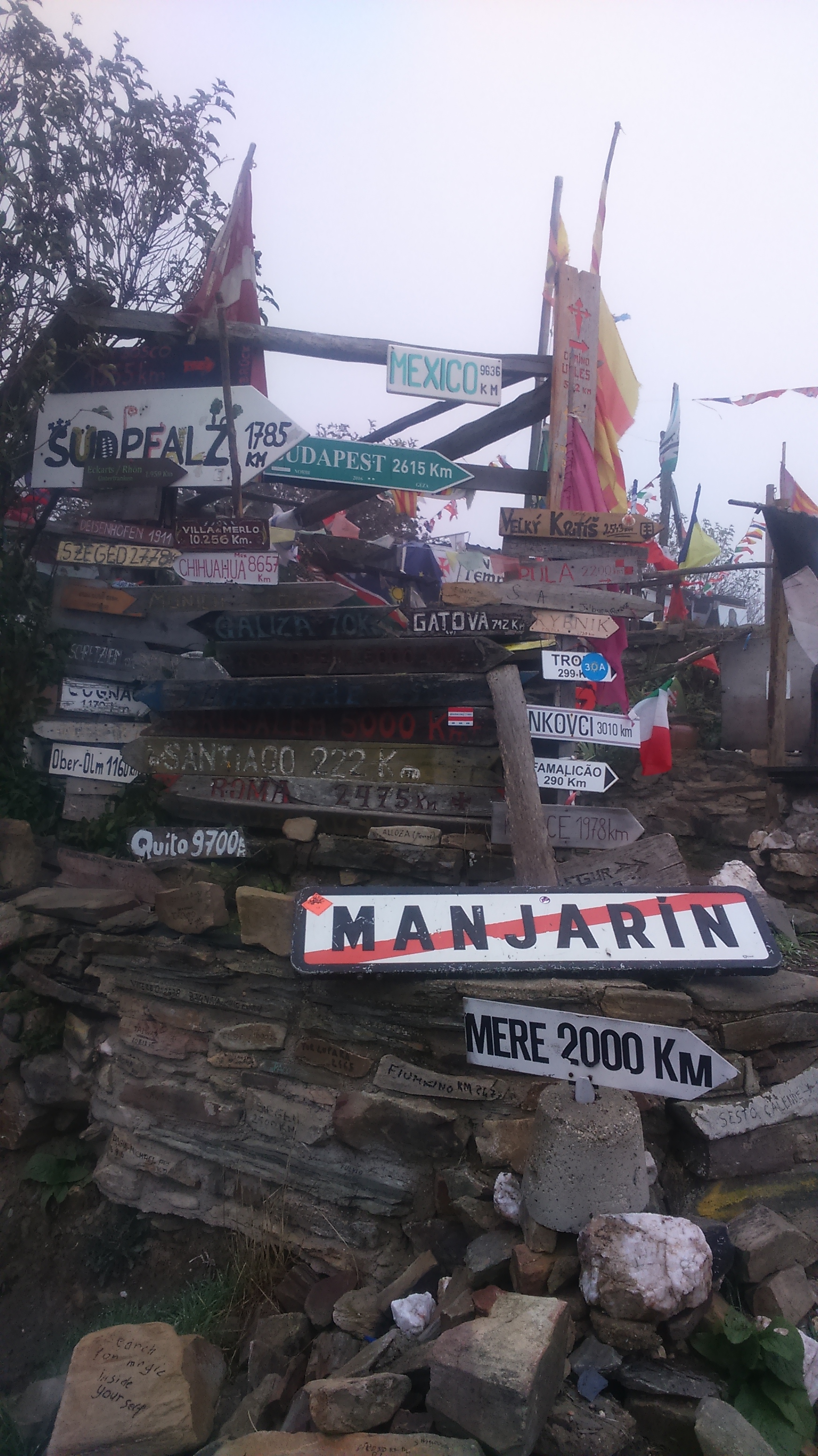
It was to be a smaller number of kilometers that day, but a steep ascent to Manjarin, with quite a surprising welcome when we arrived. In fact, quite one of the most unusual situations I have ever been in.
dsc_1383.jpg

dsc_1384.jpg

dsc_1385.jpg

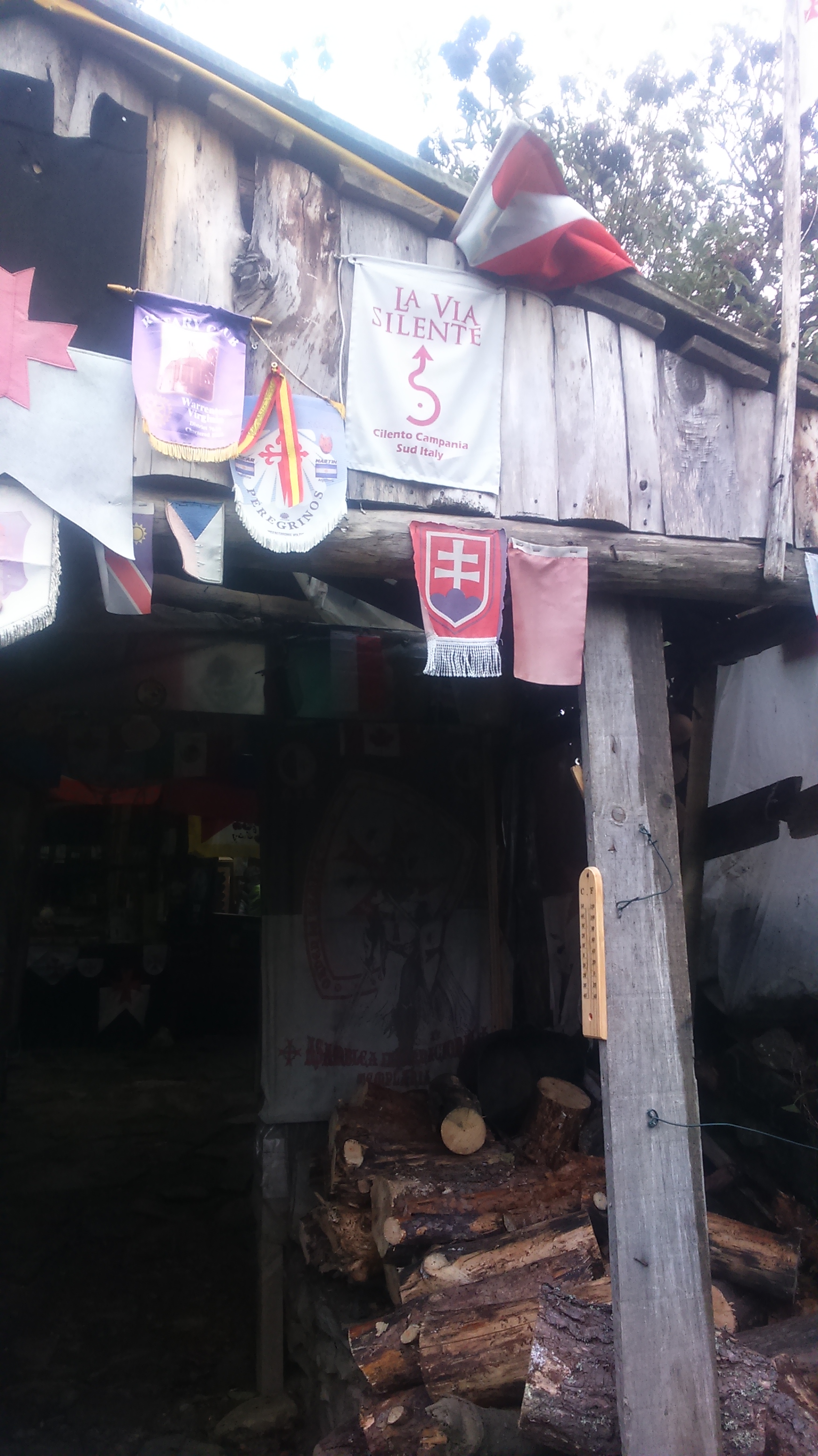
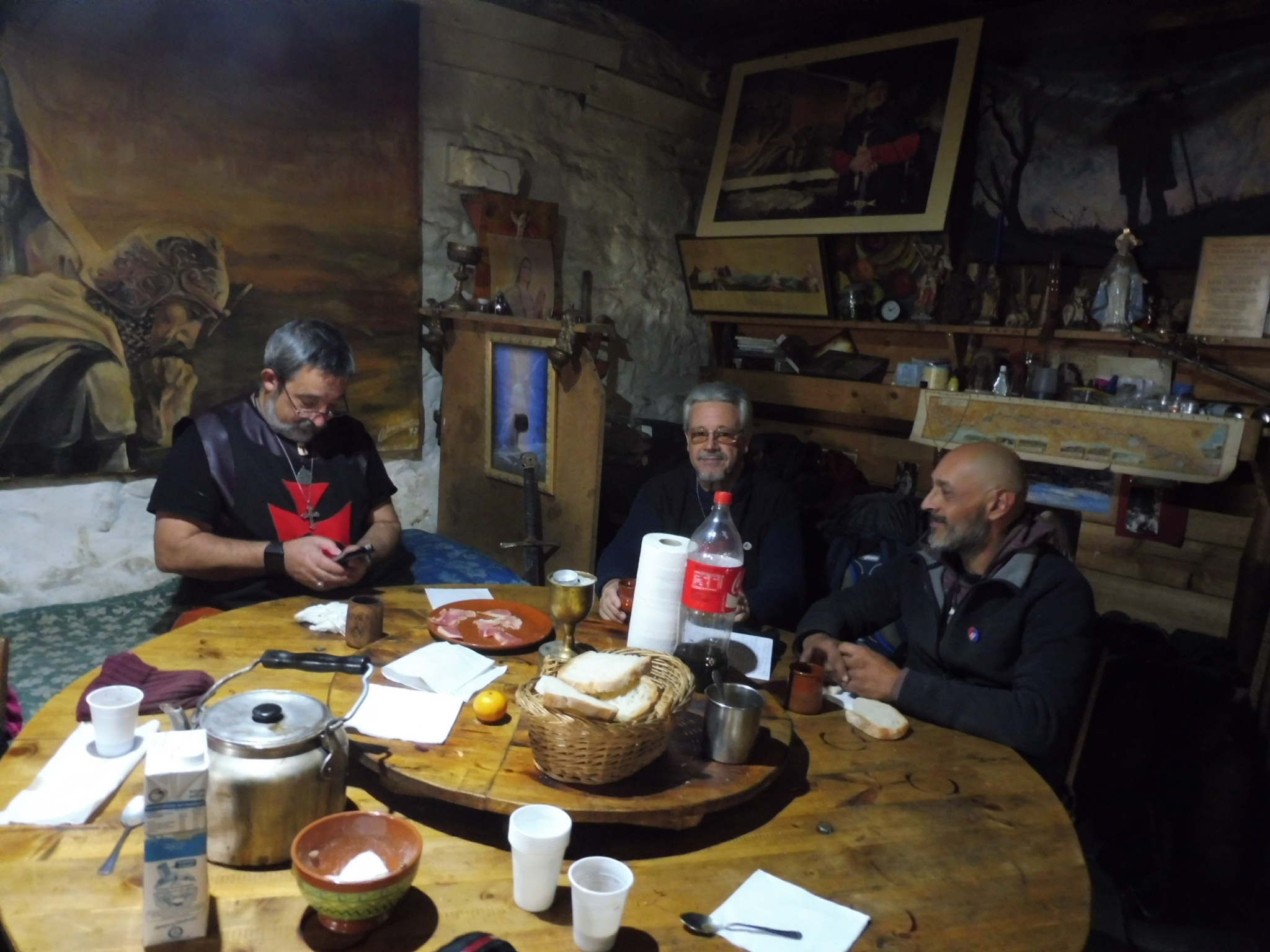
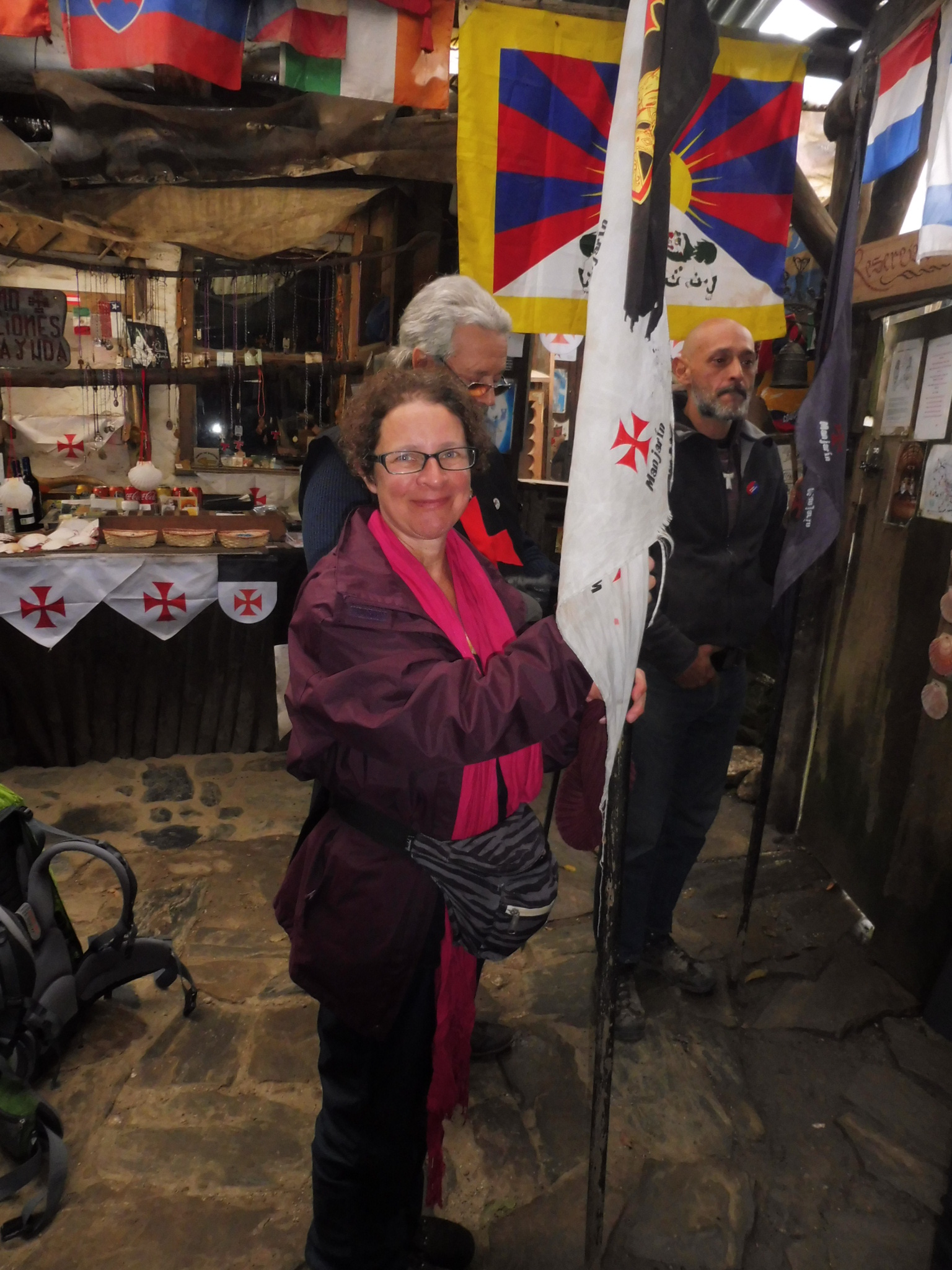
An (almost) abandoned village, Manjarin has one inhabitant, and his abode is decorated with insignia from all over the world, prayer flags, and messages in many languages. He welcomes walkers in to his warm ‘cave’. Leaving the light and moving into the dark, it’s initially impossible to see and there’s a musty scent. Then the passage opens out into a wide room, like something out of Robin Hood, with a rustic, bright fire and circular, wooden table, around which sit two men dressed as Knights with the red Templar cross on their tunics.
camino-frances-1807

We are offered, and I drink, for the first time in perhaps 25 years, a (caffeinated) coffee. There are snacks and as our eyes get accustomed to the dimness, there is plenty to see around the walls. We listen to their chatter as they incongruously show each other photos on their mobile phones.

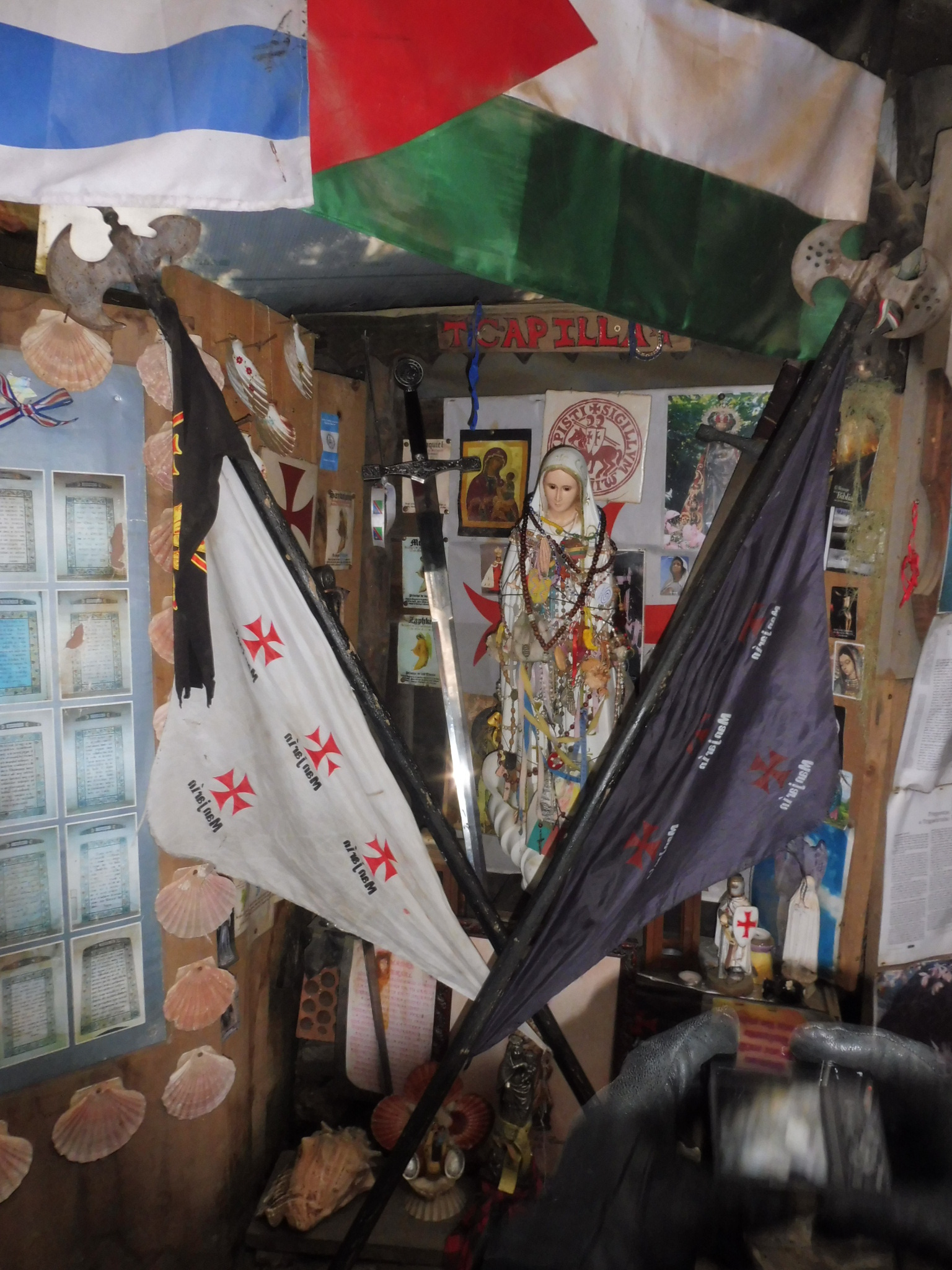
On the way out, we are invited to join a ceremony at the altar containing a statue of the Virgin and lots of Camino shells, and I am given a flag to hold, while one man reads a moving prayer (in Spanish) for peace and harmony amongst all peoples.
camino-frances-1814

camino-frances-1815

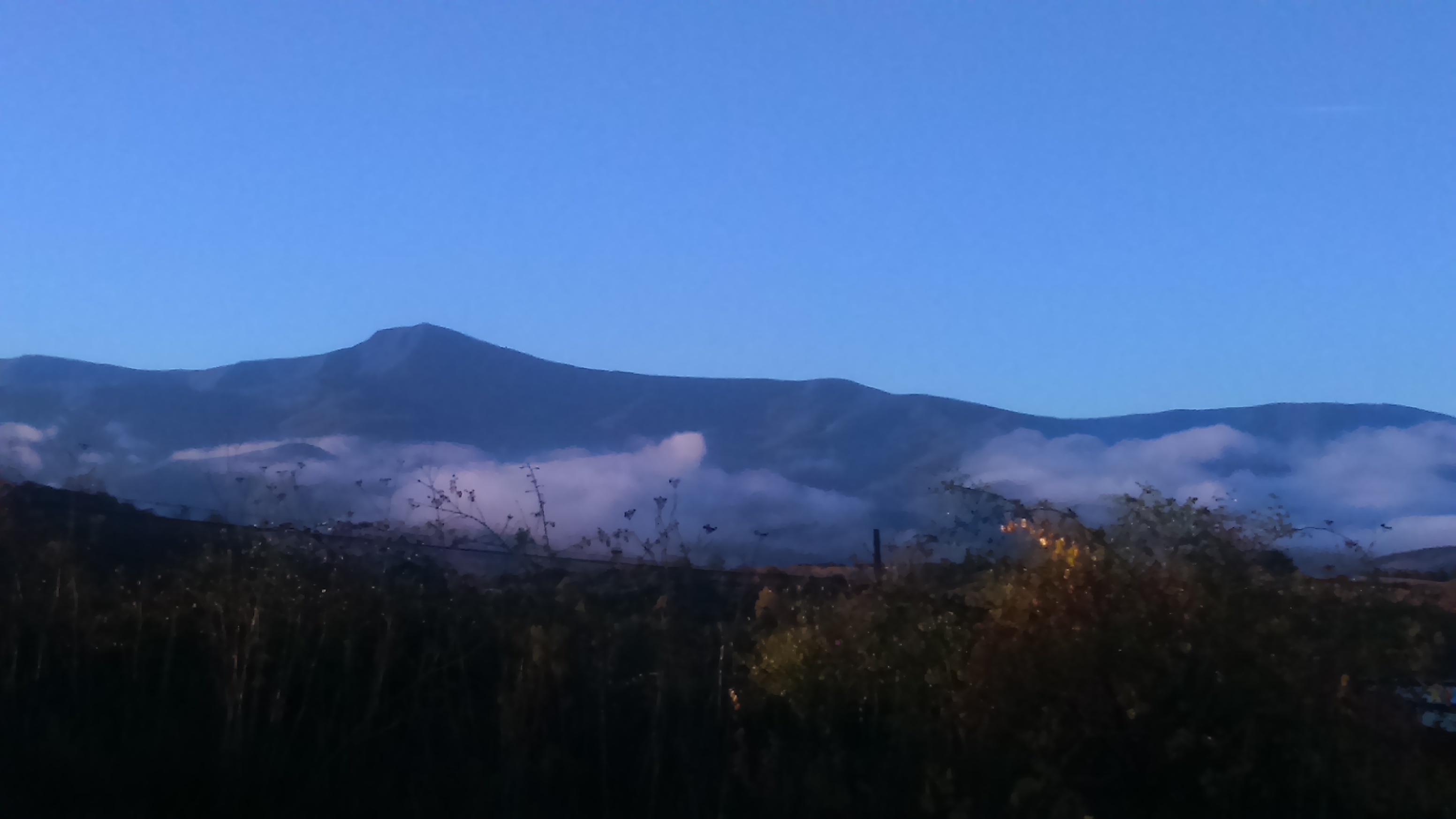
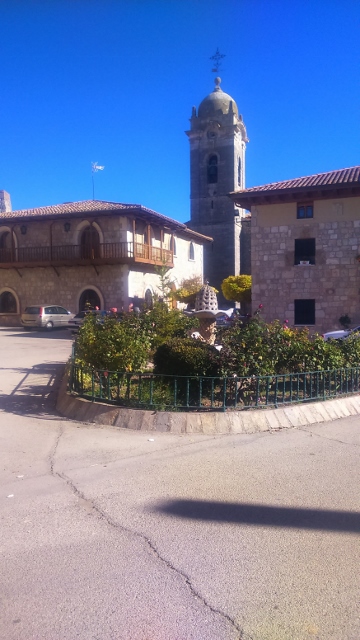
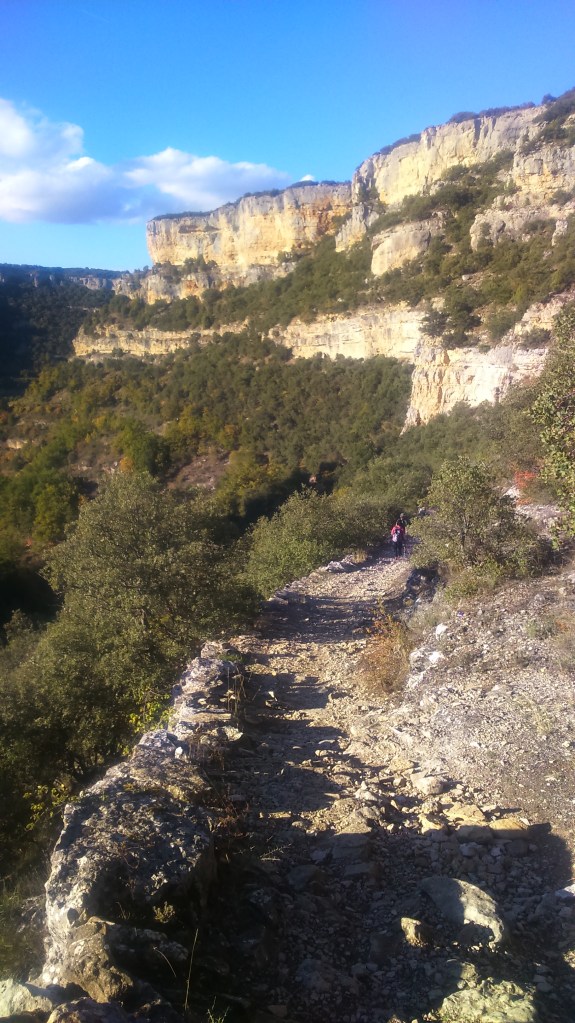
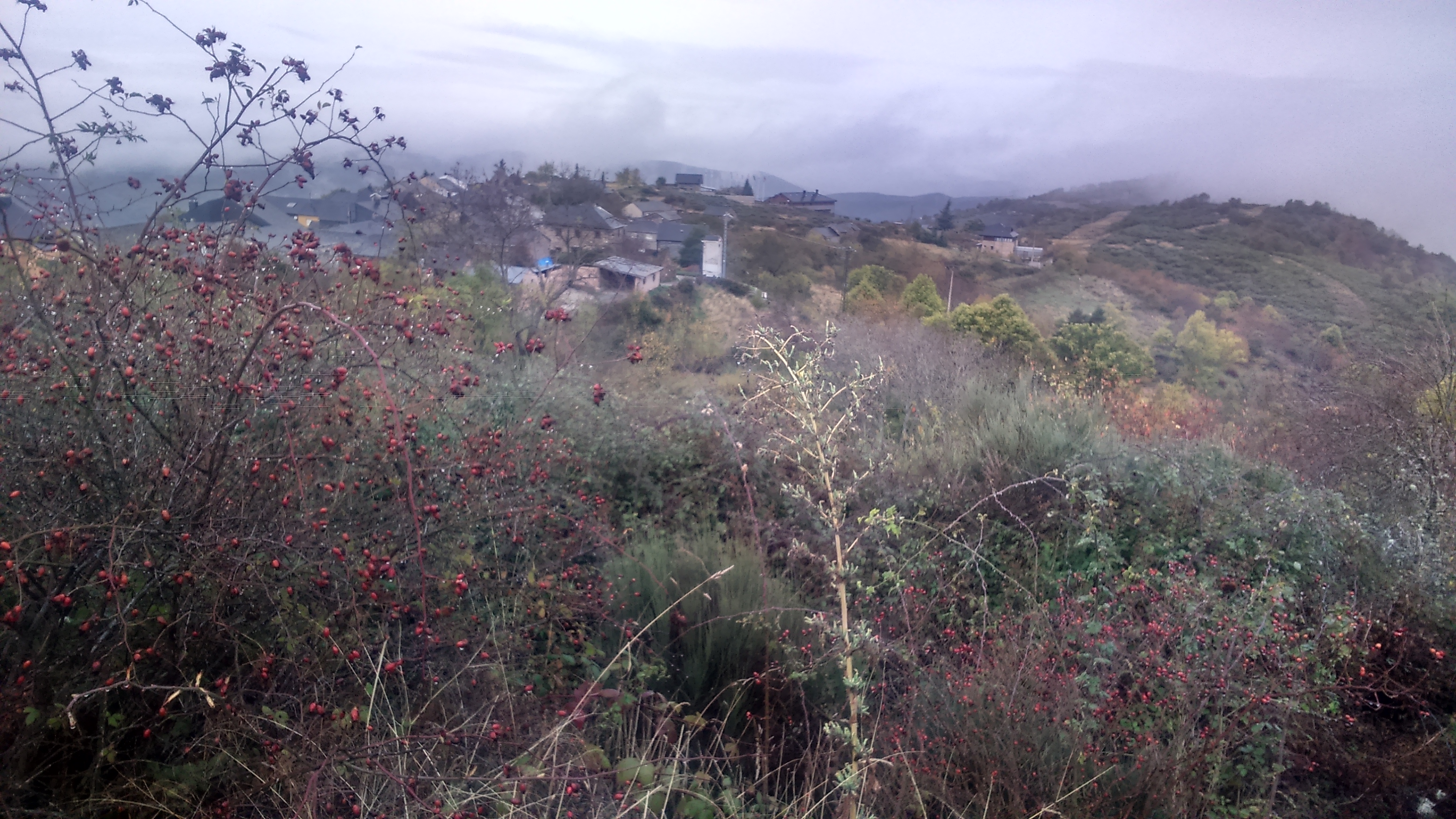
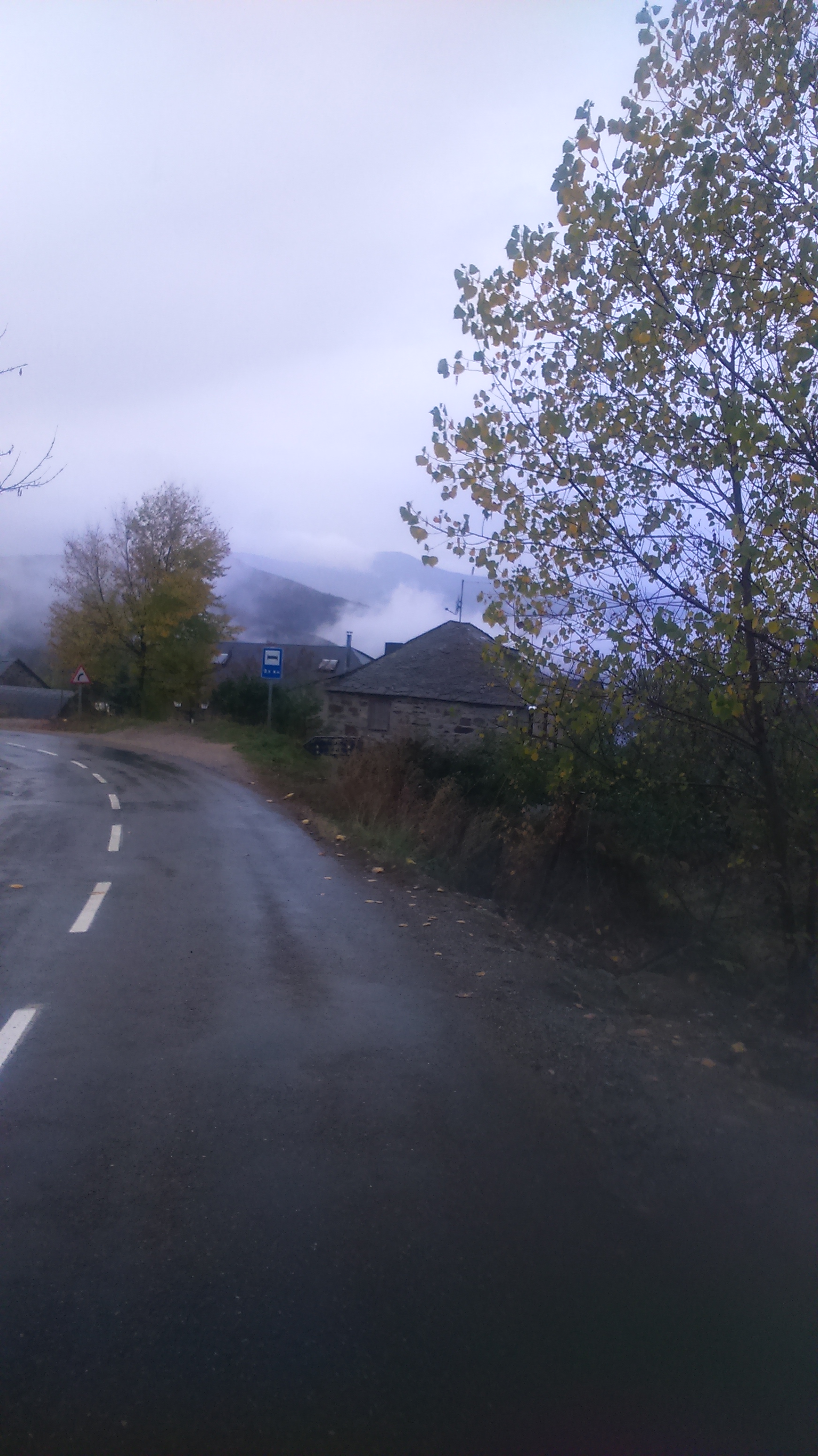
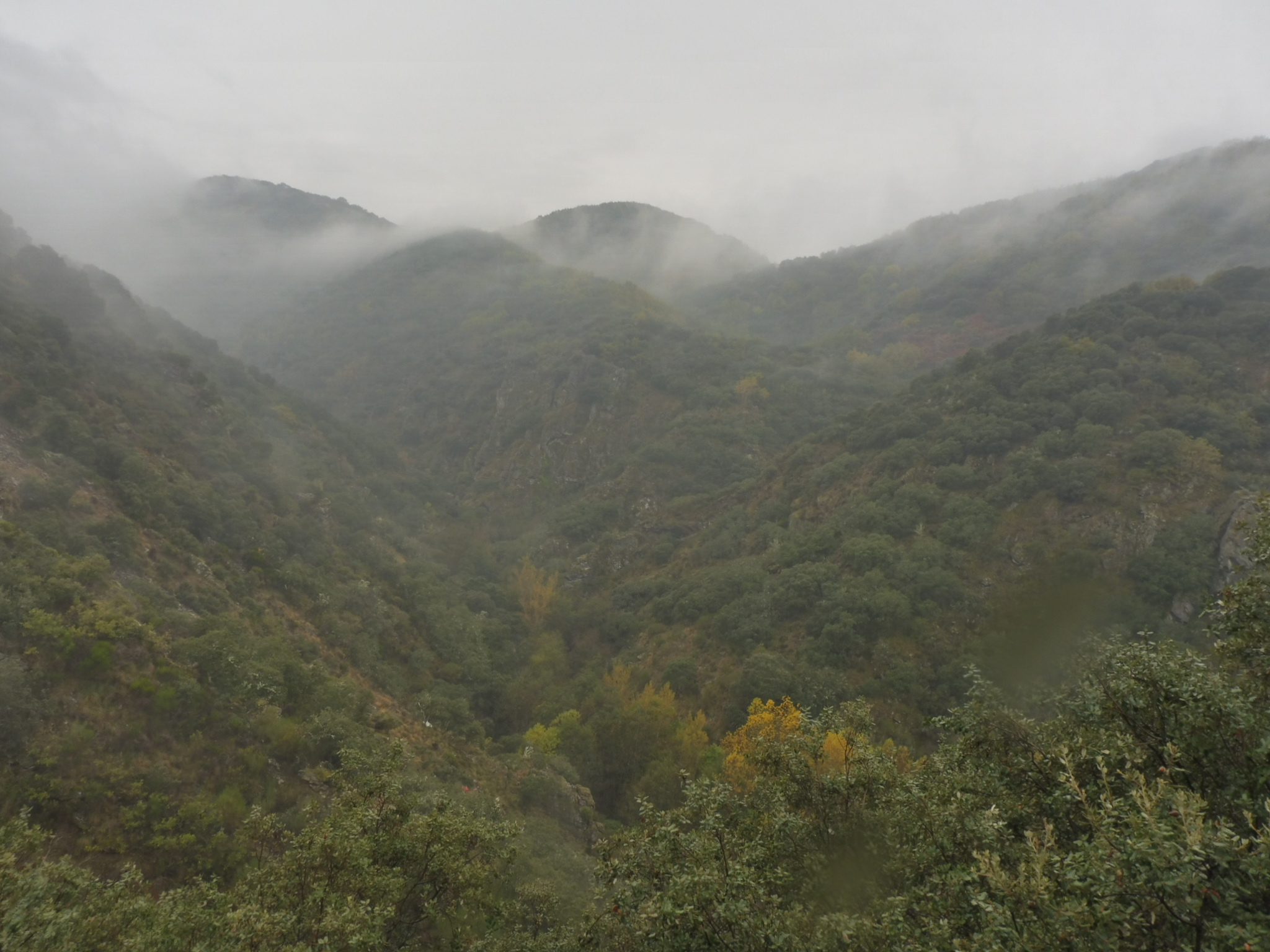
We descend almost 500m that afternoon, mist swirling around, with breath-taking views, through the mountain village of El Acebo de San Miguel (means, Saint Michael’s holly) in upper El Bierzo, and down to Molinaseca. I can smell the damp, decaying landscape, and feel the droplets on my face as I tramp. There’s the dry shush of copper leaves as I keep to the softer edges to avoid the tarmac. My feet have become so sensitised that I fancy I can feel each stone through my soles, but at least after all this time my feet have hardened and are blister-free. Most of the trees have lost their leaves at this altitude, although withered blackberries remain on the brambles.
dsc_1387.jpg

dsc_1389.jpg

There were trees with silver lichen and scarlet, rotund seed heads; and dry, beige grasses reminiscent of the Scottish hills. Village streets wound round stone dwellings with sturdy wooden balconies, seemingly deserted except for, here and there, washing hanging out to dry in the grey day. Even without the sun, the wooded slopes of the valleys were spectacular as the clouds hung among them.
camino-frances-1829

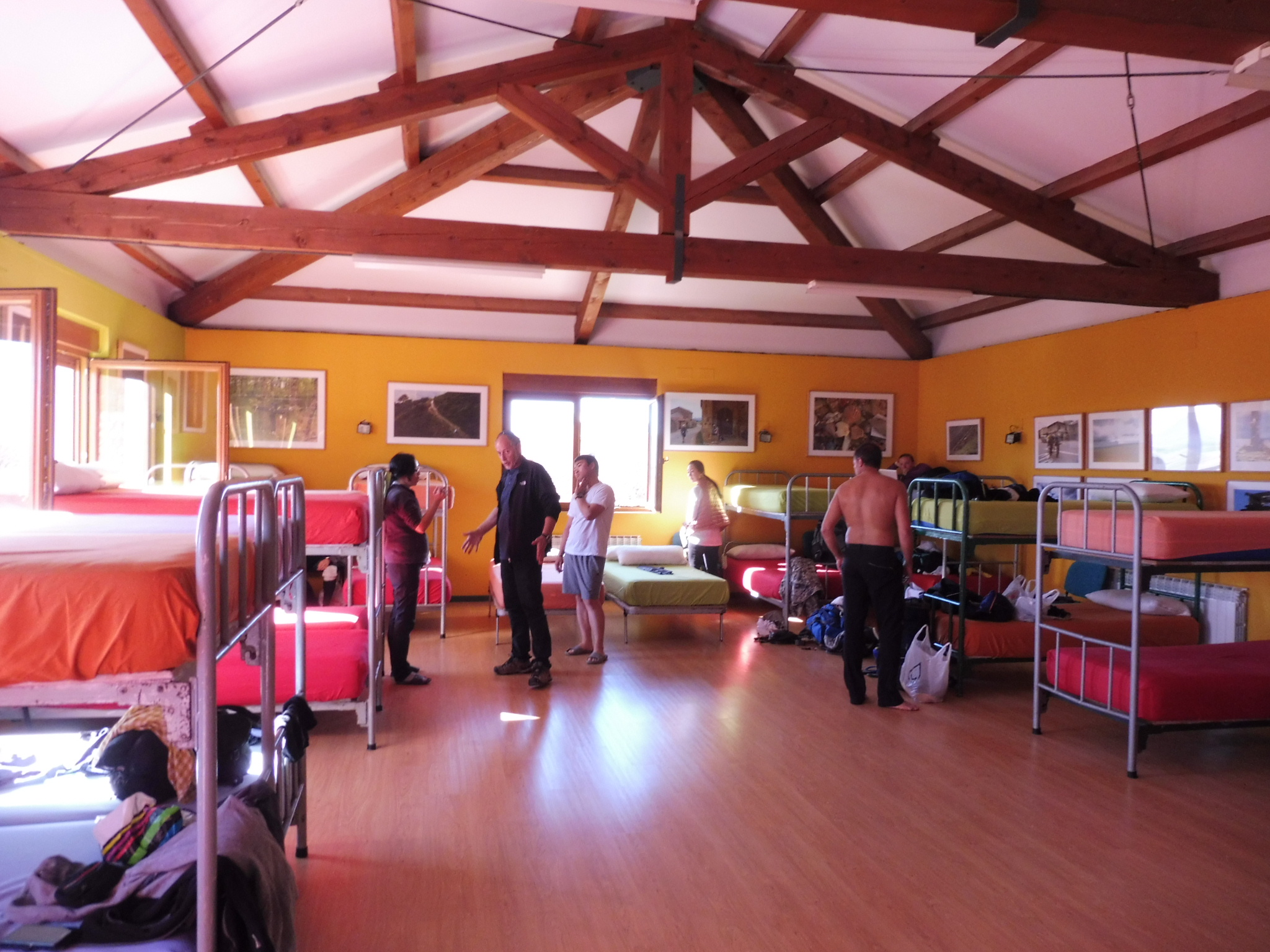
Molinaseca has a comparatively large population of  800, surprising after the day’s rural walk, with it’s handsome church and bridge, and where we stayed at the municipal dormitory as usual, with its bunks, wooden floor and steel beams.

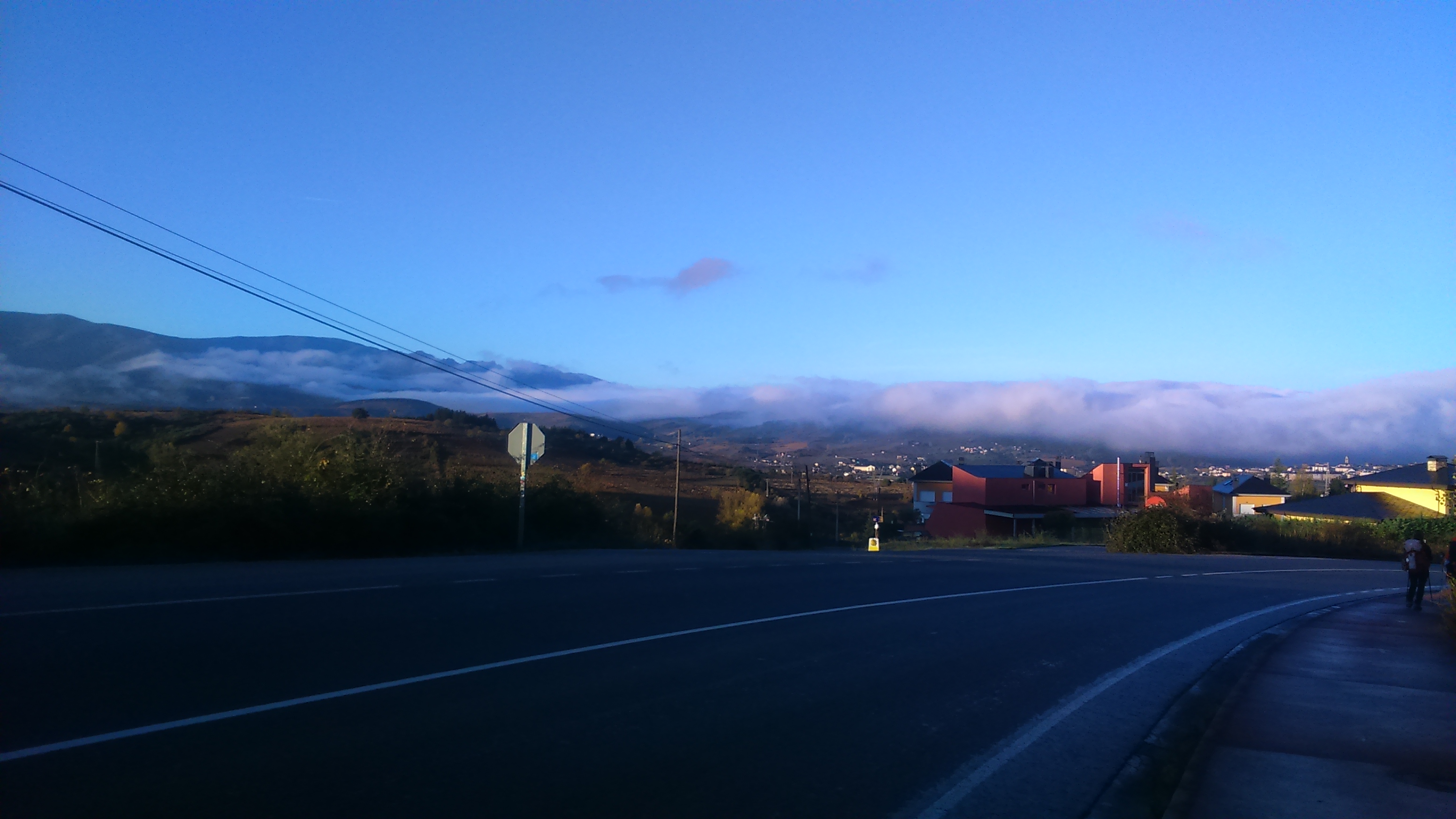
The sky cleared as we slept, revealing a blue morning.
dsc_1391.jpg

dsc_1392.jpg

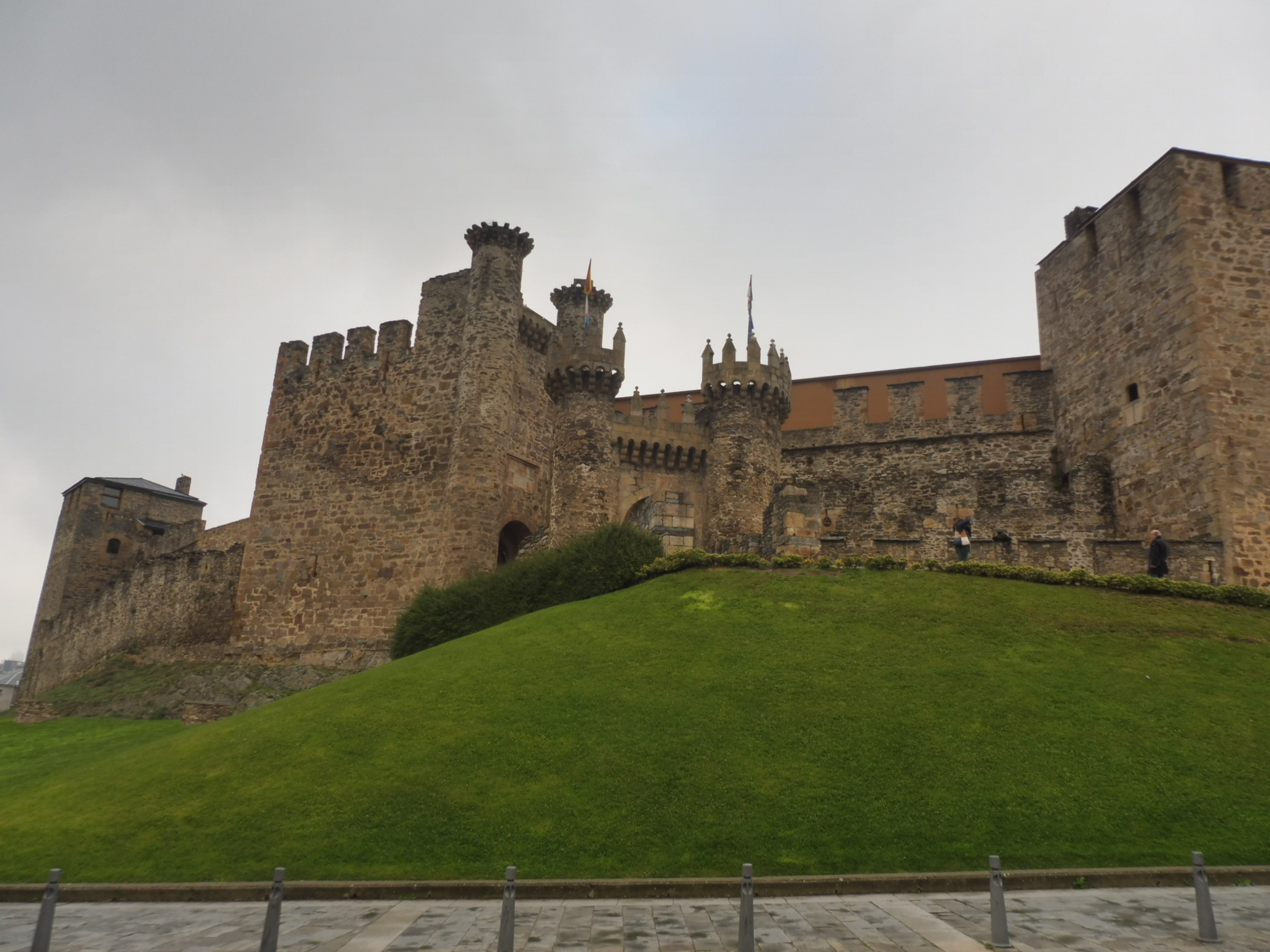
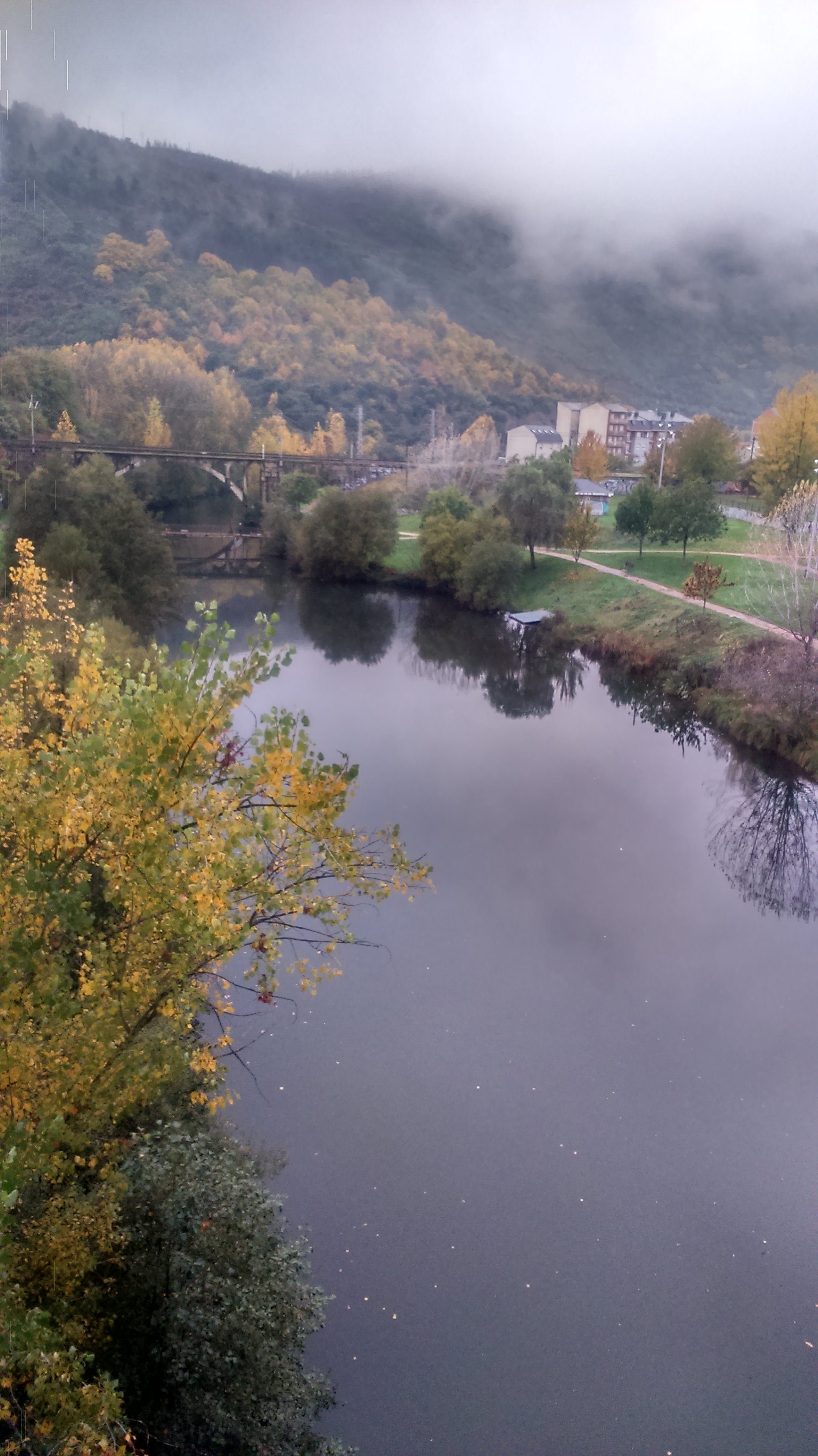
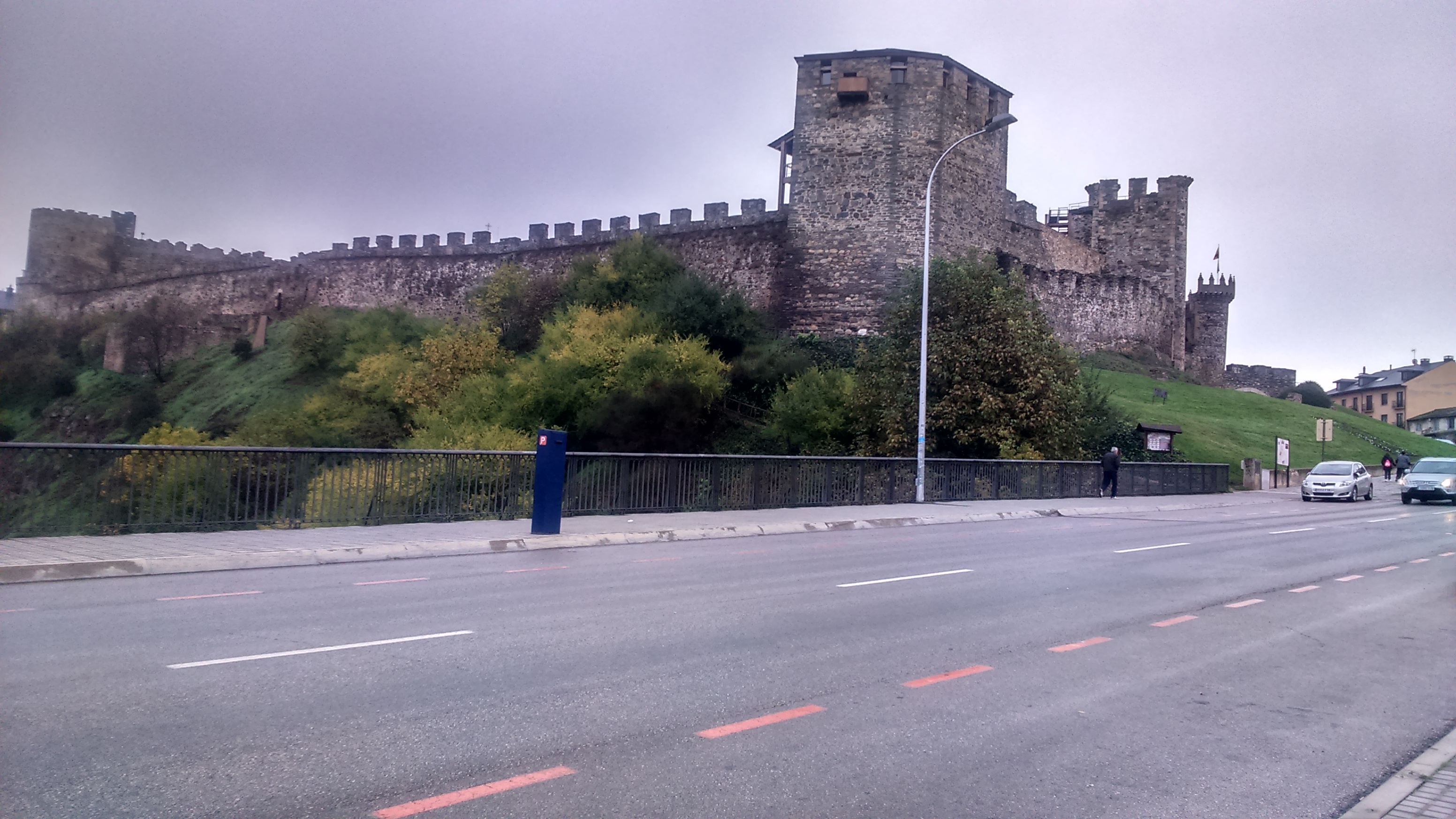
And an hour later we entered Ponferada, on the river Sil, with its imposing monastery, castellated and turreted. It’s the official end of the Camino Frances and the start of the Camino Santiago, but you would not know that as you walked through.
dsc_1393.jpg

dsc_1396.jpg

camino-frances-1837

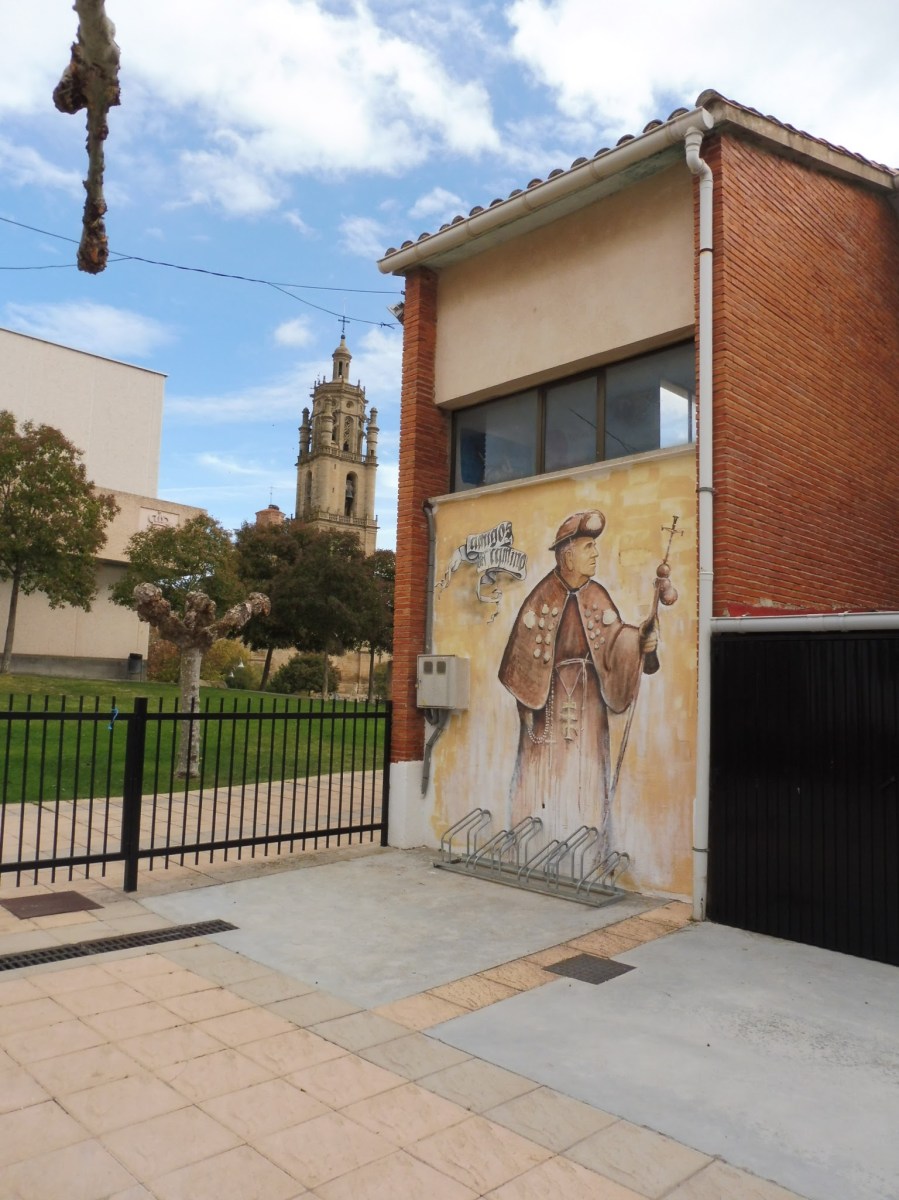
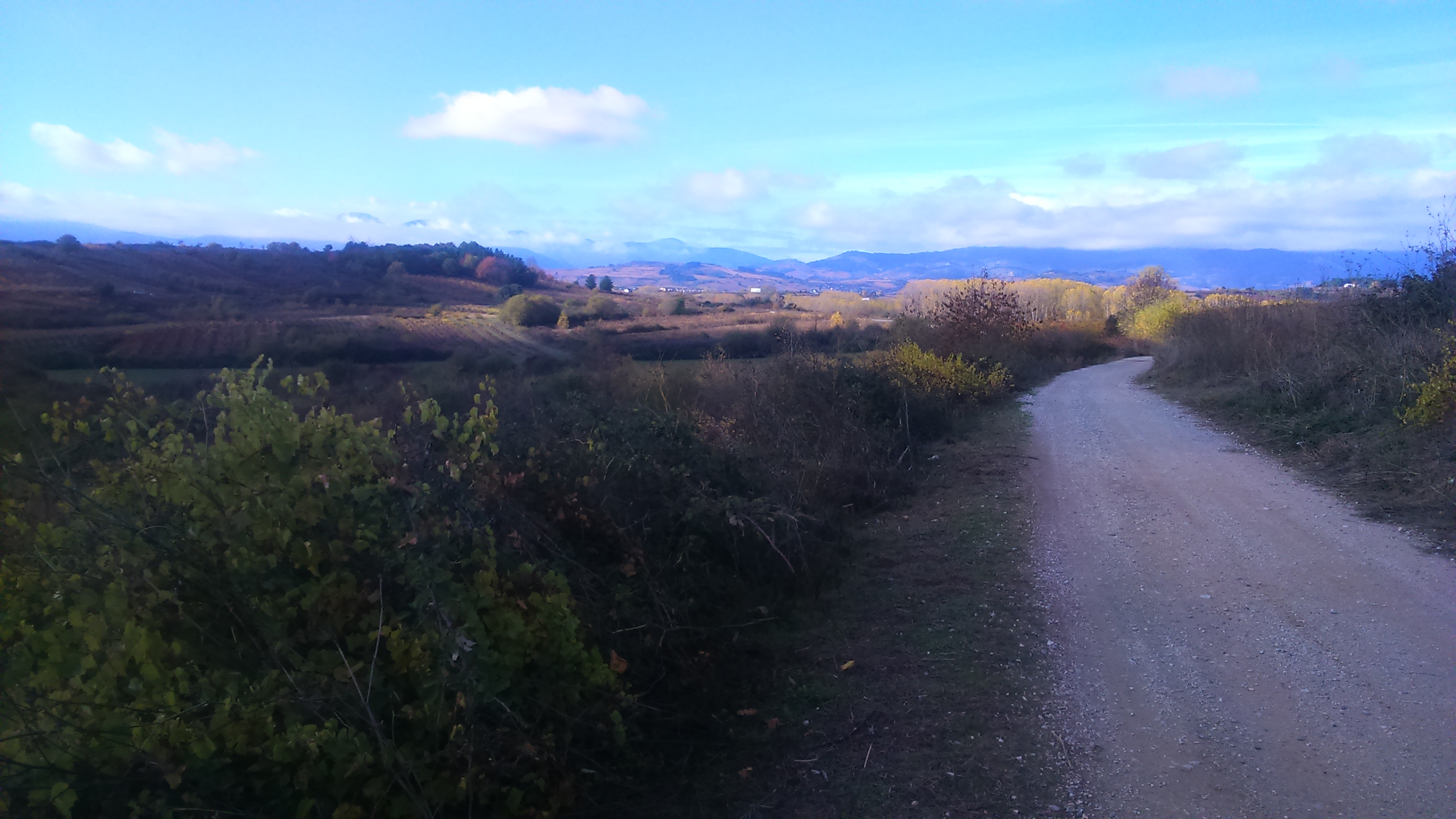
The road continued through yellow glades, over ancient stone bridges, and past single storey, white stone, one-room buildings with dark grey slate rooves. There were more cranes nests on top of council-erected poles, and ‘authentic’ murals showing monks and pilgrims striding out. The path widened and flattened, and the mountains were once again in the distance. We passed through Cacabelos without stopping, the end of the day’s trek now nearby, and up another very steep incline, to Pieros.
dsc_1397.jpg

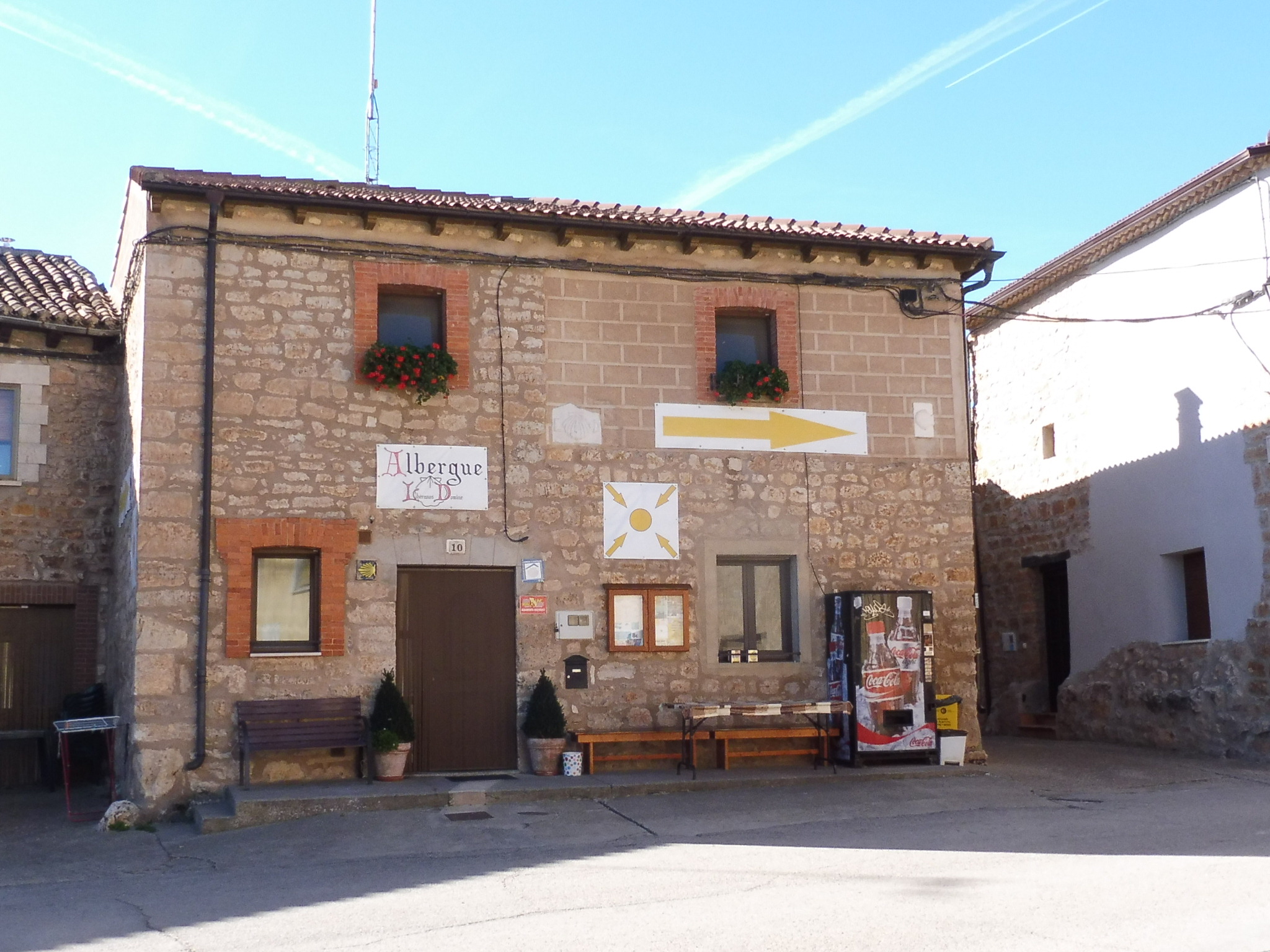
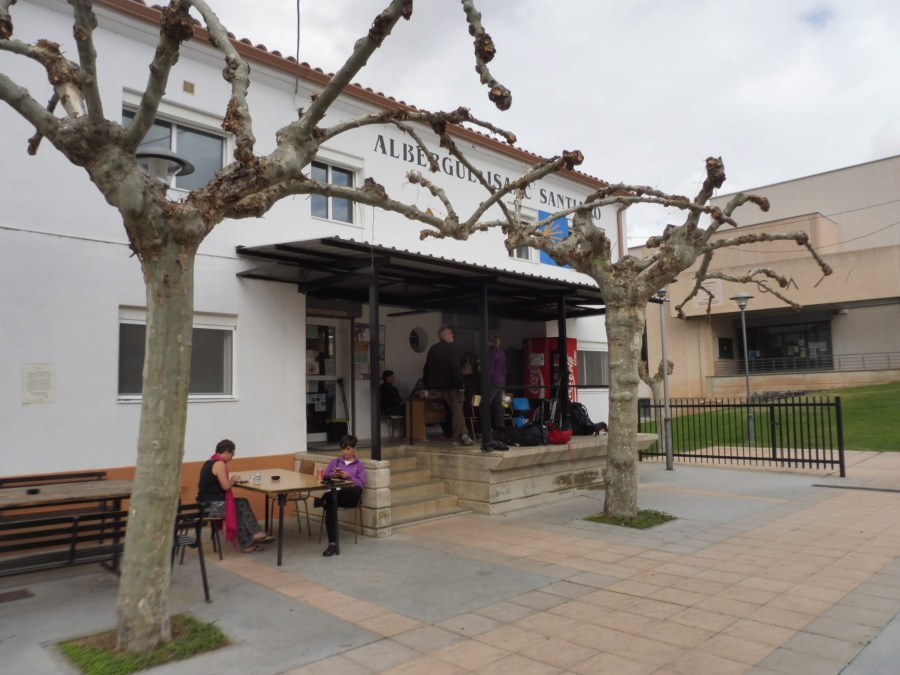
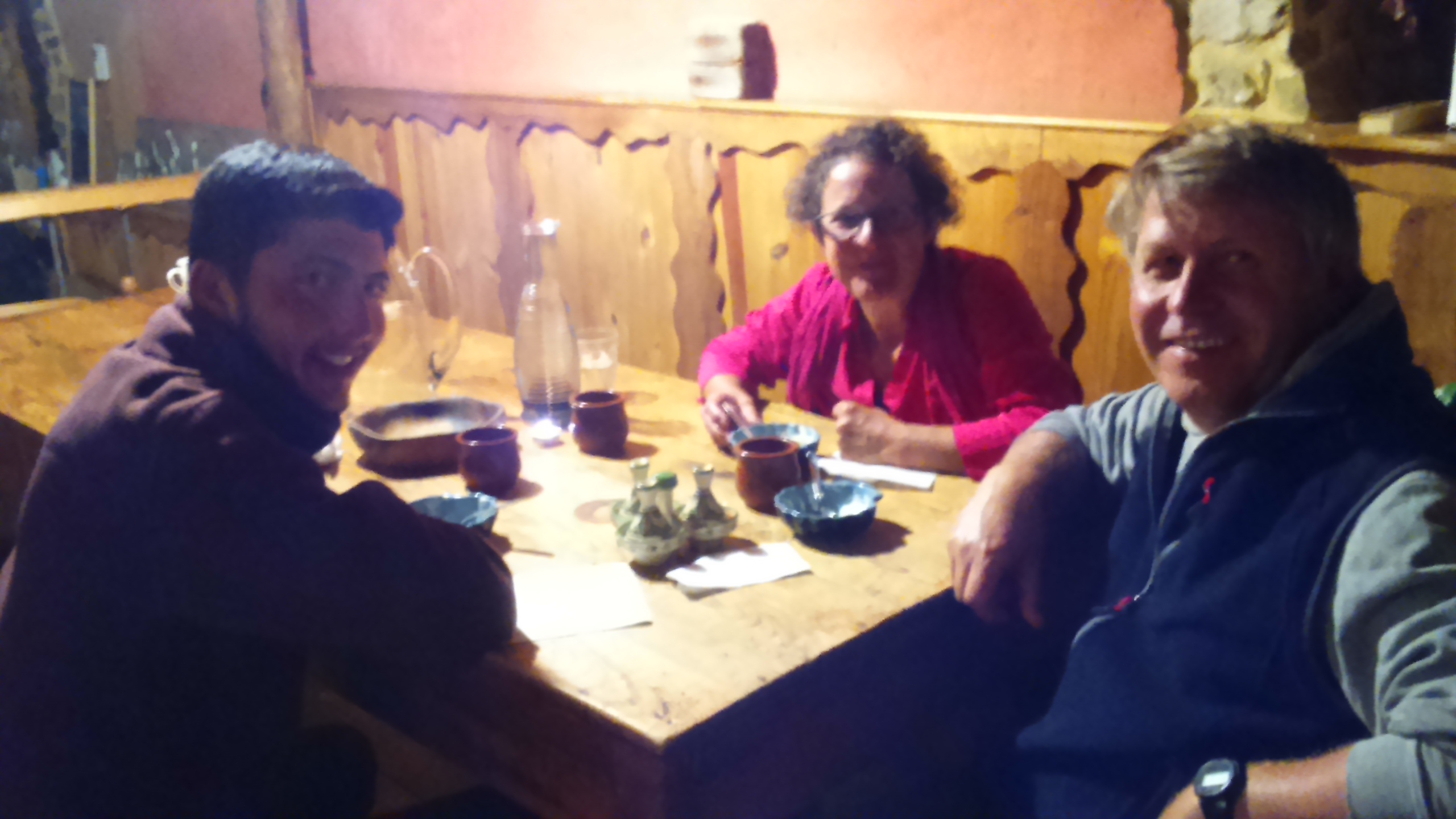
This tiny hostel Casa Sol y Luna was an alternative to the norm, with it’s meditation room upstairs and cosy dining room down. The hospitalier was most attentive, drying my knickers in front of the stove, and accompanying me to see the massive harvest moon I had seen heralded on Facebook  (but impossible to photograph with a mere phone camera)!

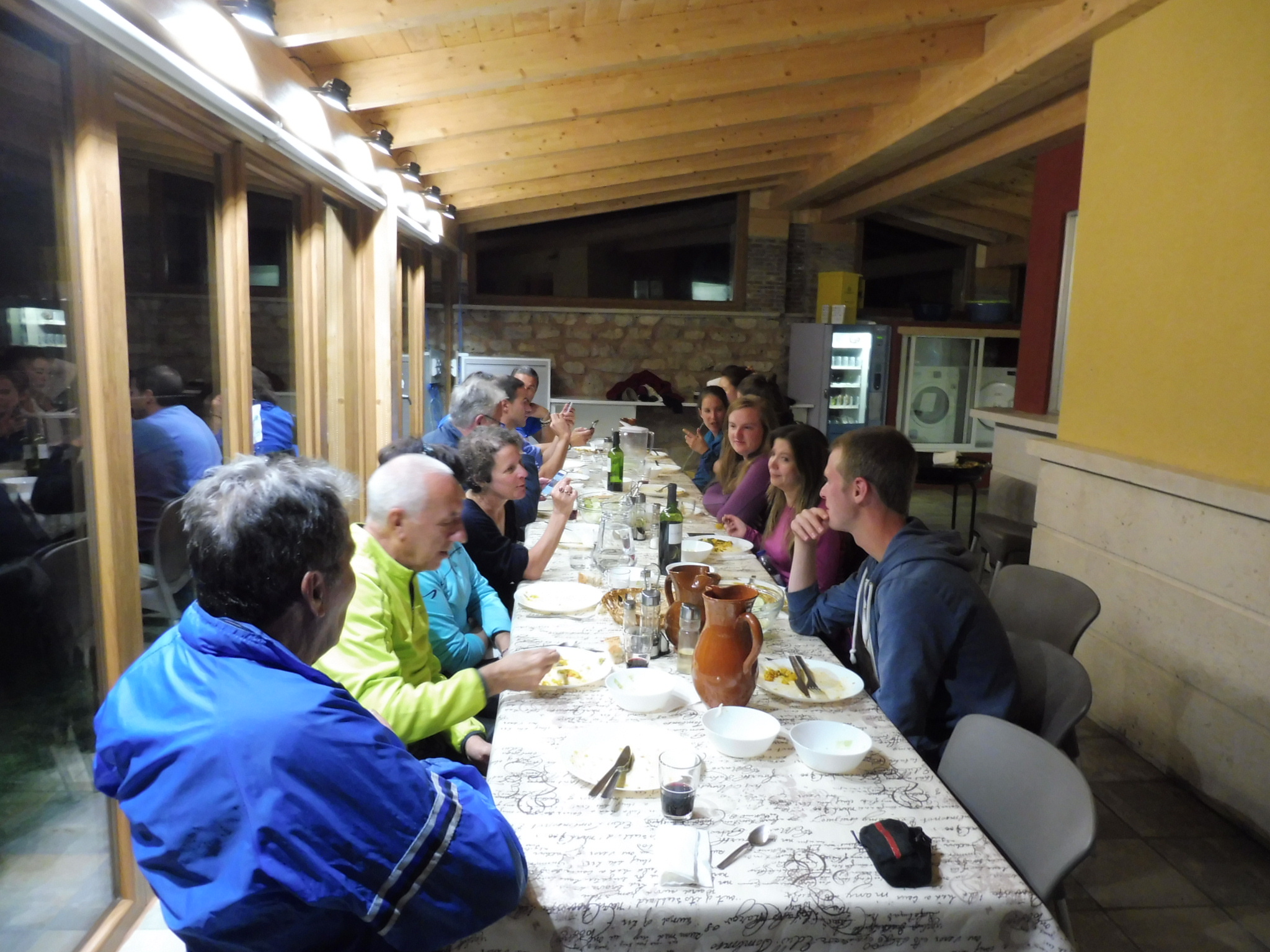
The walls of the small dorm were like outdoors indoors, where you can see the grouting between the stones. We spent time gossiping over which enthusiastic youths lived here, who was sleeping with whom (was she creeping off in the middle of the night to avoid the snoring, or for a tryst with the lascivious gentleman?), and I translated the gushing messages in the visitor’s book for the owner (all about stars and angels – it was that kind of place). We had a delicious vegan meal with wine in situ as it was a Sunday (no shops open), and there was much warmth, song and laughter at the table that night.
dsc_0057.jpg

dsc_1400.jpg
Hostal Casa Sol y Luna, Pieros. View from the garden.

All quotes taken from A Philosophy of Walking by Frédéric Gros.

Thanks to Alain for taking beautiful photos.
A fellow walker’s blog

Walking without a donkey 15: Camino Francés (Burgos to Castrojerez).

30.10.16 – 31.10.16 Burgos to Hornillos to Castrojerez

camino-frances-1557

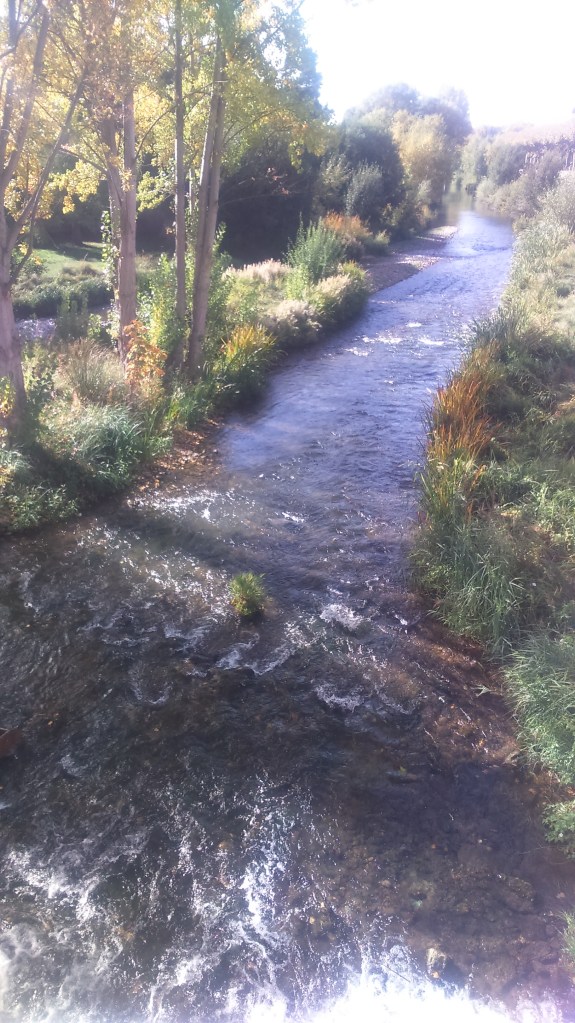
This photo looks as if it was taken in the countryside, but is part of Burgos. I visited a number of places where the local councils have provided beautiful pathways in and/or out of their cities, and after 28kms walking from San Juan de Ortega, it eased the weary end-of-day-feeling. 

The next morning, it didn’t take so long to get out of the urban environment I had spent the night in, and thankfully I was back into the countryside before too long, even if there were a few wrong turns to start with! It’s lucky that a friendly walker always seems to be there just as I am standing around looking bewildered, viewing first one, then a second possible turning, and somehow missing the yellow arrow.

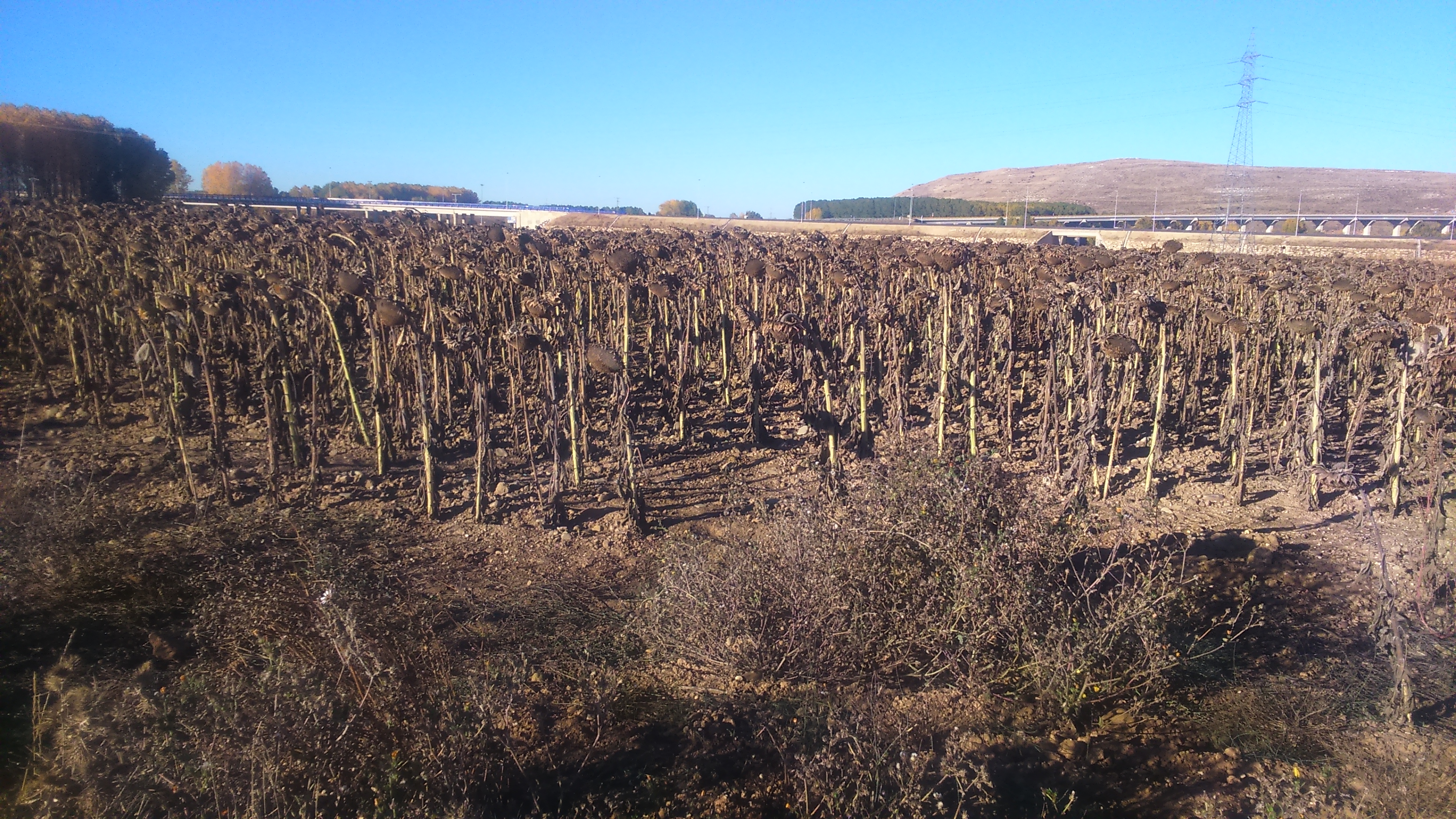
Not long afterwards I started traversing km after km beside fields of dead sunflowers. They were a bit creepy, and sad. Maybe, I ponder, the seeds will be harvested later rather than all going to waste? But I discover through research on the web when I get home, that there are situations where this is not the case. Due to EU subsidies the farmers do not actually  need the crop. What a dreadful waste.

dsc_1155.jpg

We walk through villages where the Camino is their main livelihood, and so some decorate their houses in blue and yellow with the familiar logo,  making sure we walkers feel welcome, and presumably encouraging us to spend money in the bars.

dsc_1157.jpg
A blurred picture, but you can see the flags and colours of the Way of St James.

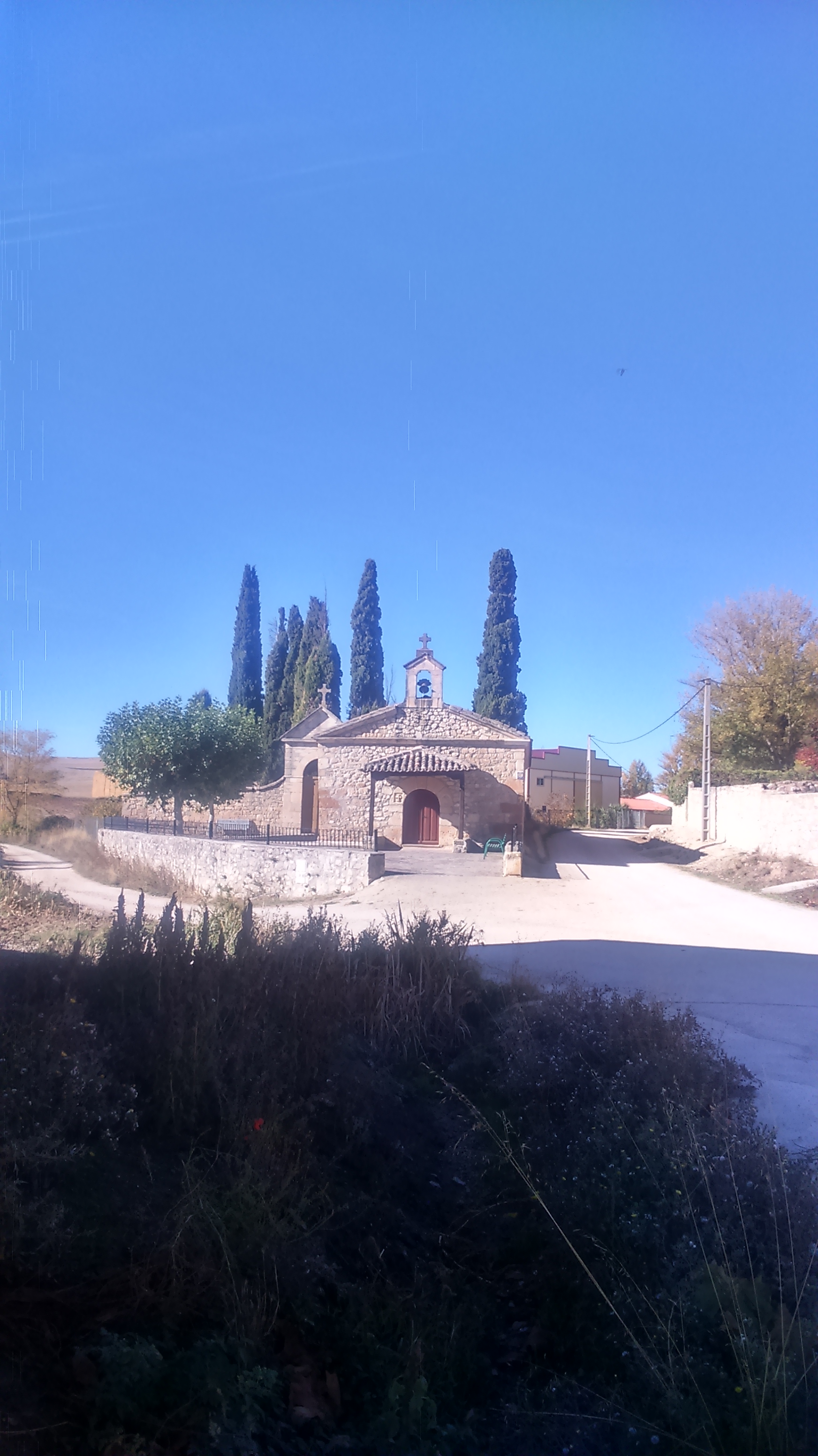
We pass delightful churches. Many are very simple with a single tower and entrance, charming in their structural naivety, and so attractive against the blue sky. They are not usually open, and when there is a long way to walk, we don’t often stop and view the interiors. They contribute to the overall spiritual atmosphere, reminding us that we tread in the footsteps of pilgrims through the ages. Their presence encourages silence.

dsc_1160.jpg

A largeish town, Hornillos del Camino (see that the name reflects its dependence on the Path), is in the region of Burgos, Castille y León. It is a well-kept and sturdy town, with wide streets of grey/yellow local stone, a Catholic church tower, and wooden balconies, and will be full of travellers in the summer months.

DSC_1158 (360x640)

camino-frances-1561

The atmosphere was convivial that evening at the albergue: I shared a ‘pilgrim menu’ (3 courses with wine for 10 euros) with the others, and a good time was had by all!

camino-frances-1568

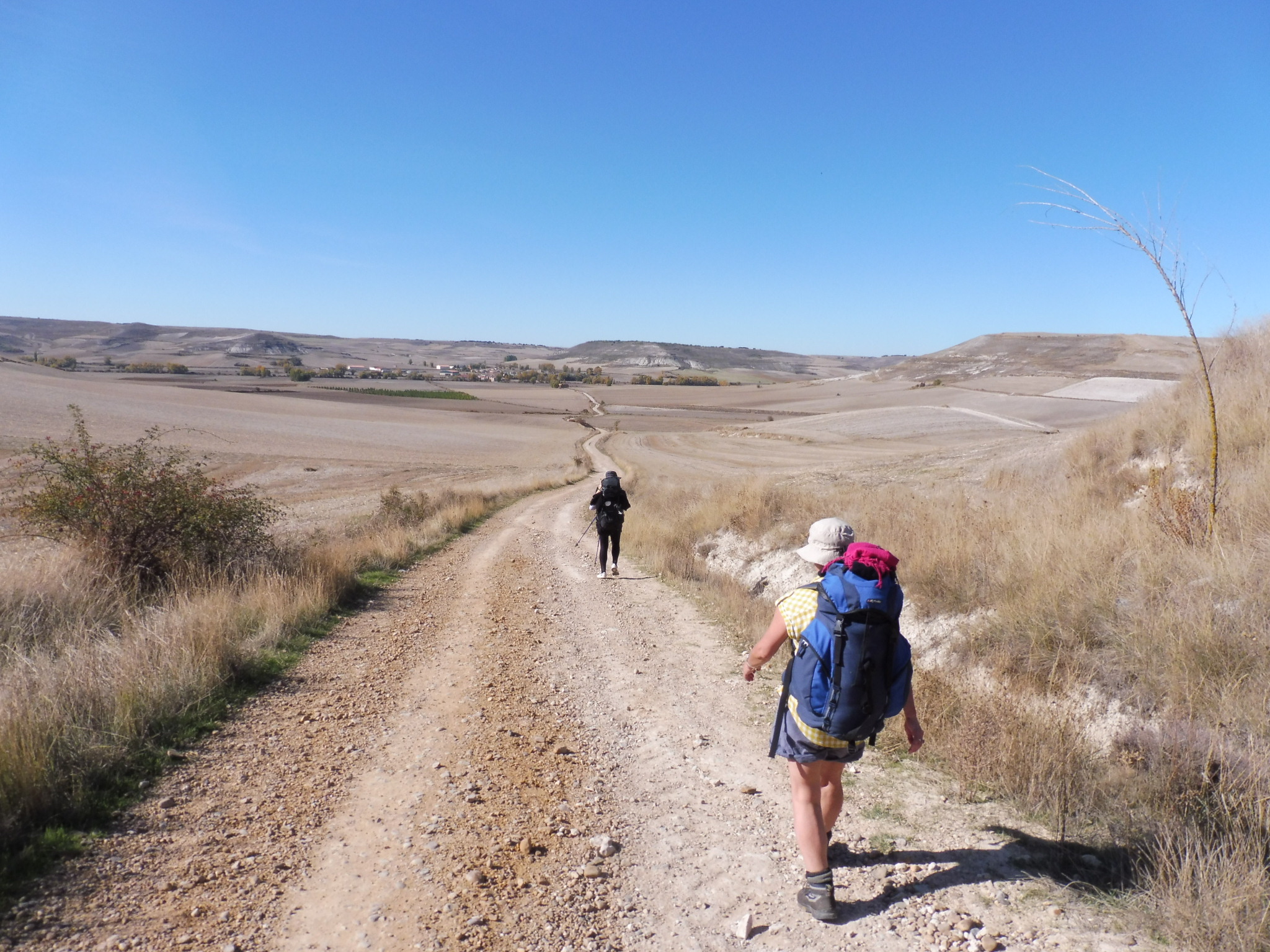
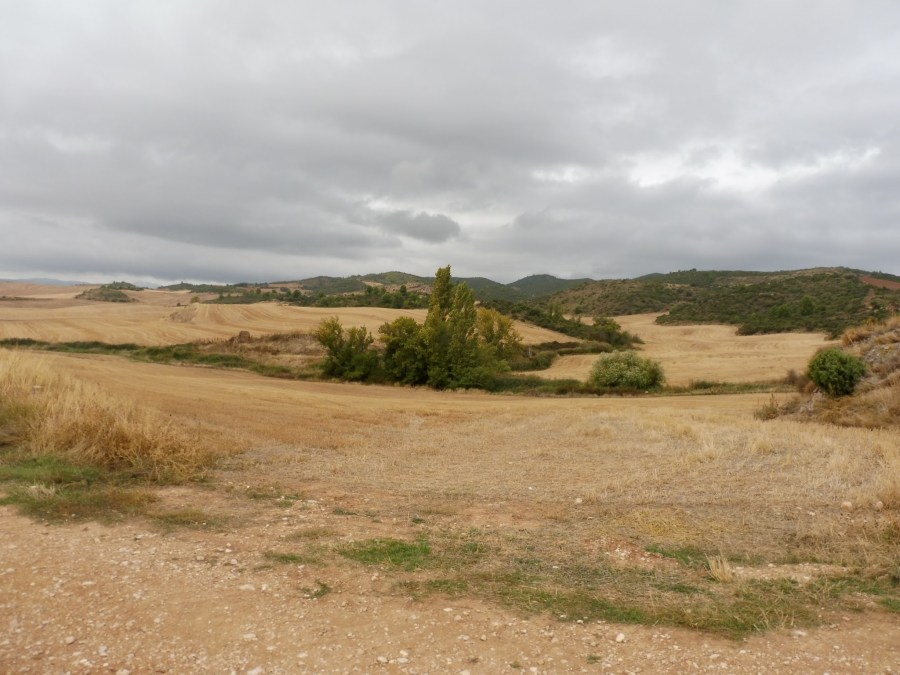
Hornillos has a backdrop of hills, which does not prepare you for the meseta, the flat and open countryside which follows for several days. Not having to watch for boulders or strive uphill does mean that one km merges into another, and that releases the Mind.

‘Think while walking, walk while thinking, and let writing be but the light pause, as the body on a walk rests in contemplation of wide open spaces.’                                                                                                                                                              p.20 A Philosophy of walking, Frédéric Gros

camino-frances-1567

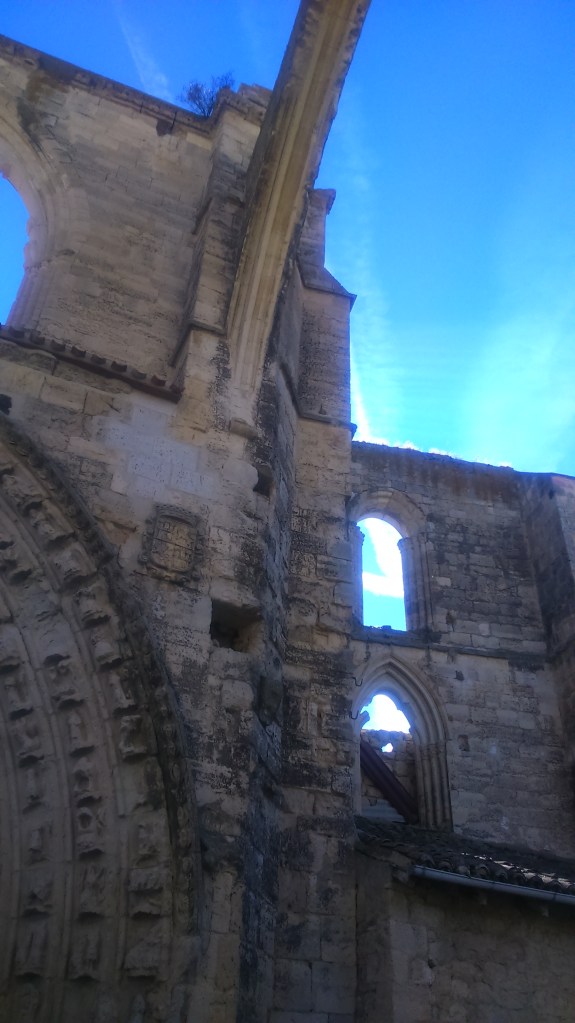
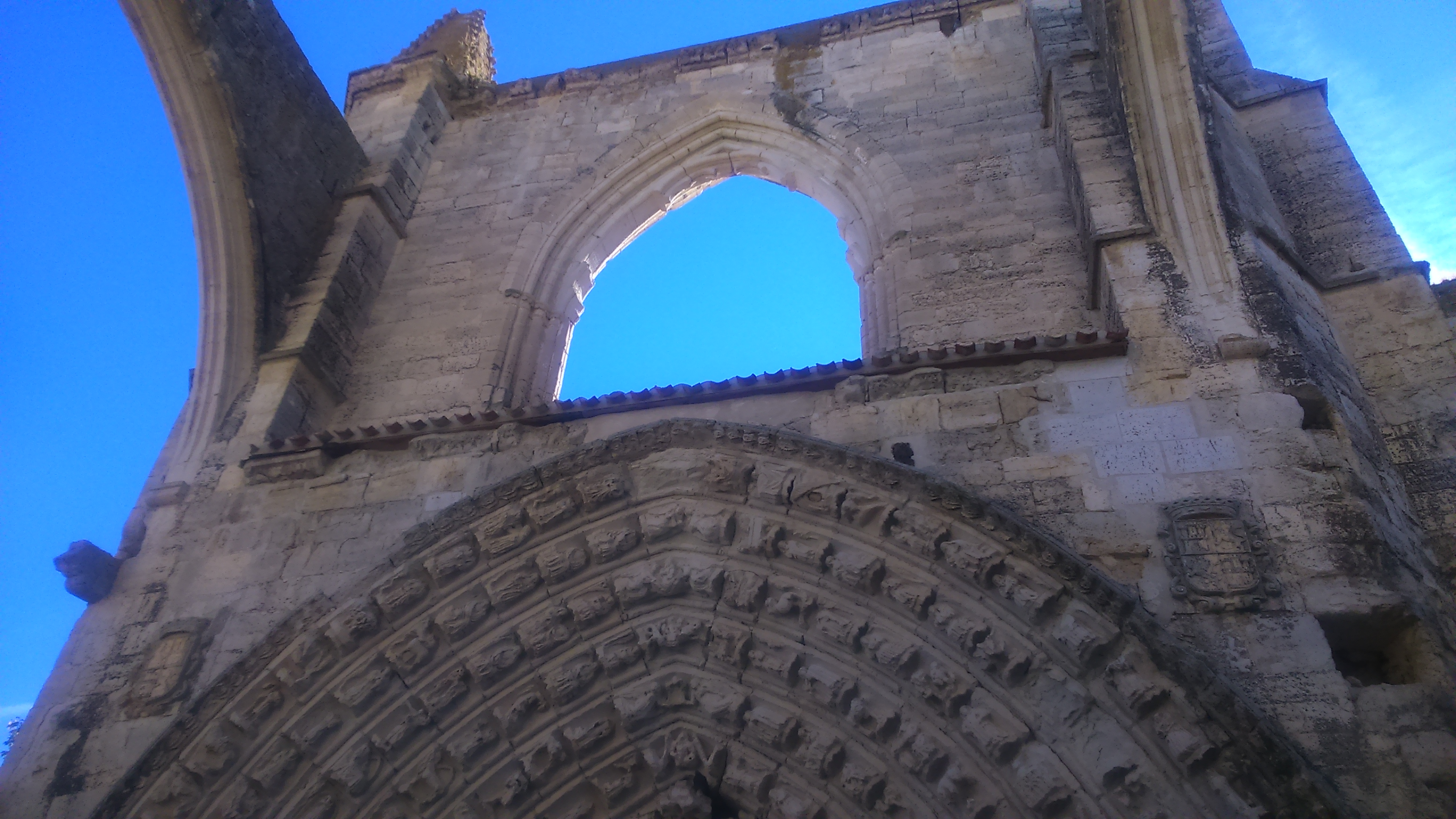
I only just get used to being able to see my destination an hour ahead, when something very unexpected happens: The sign to the ruins of the Convento de San Antón is unasssuming, suggesting to me that it will be another small religious building. But there is the sound of heavenly music, and it gets louder and louder, until I round a corner to be faced with astonishing flying buttresses right across the pathway.

dsc_1163.jpg

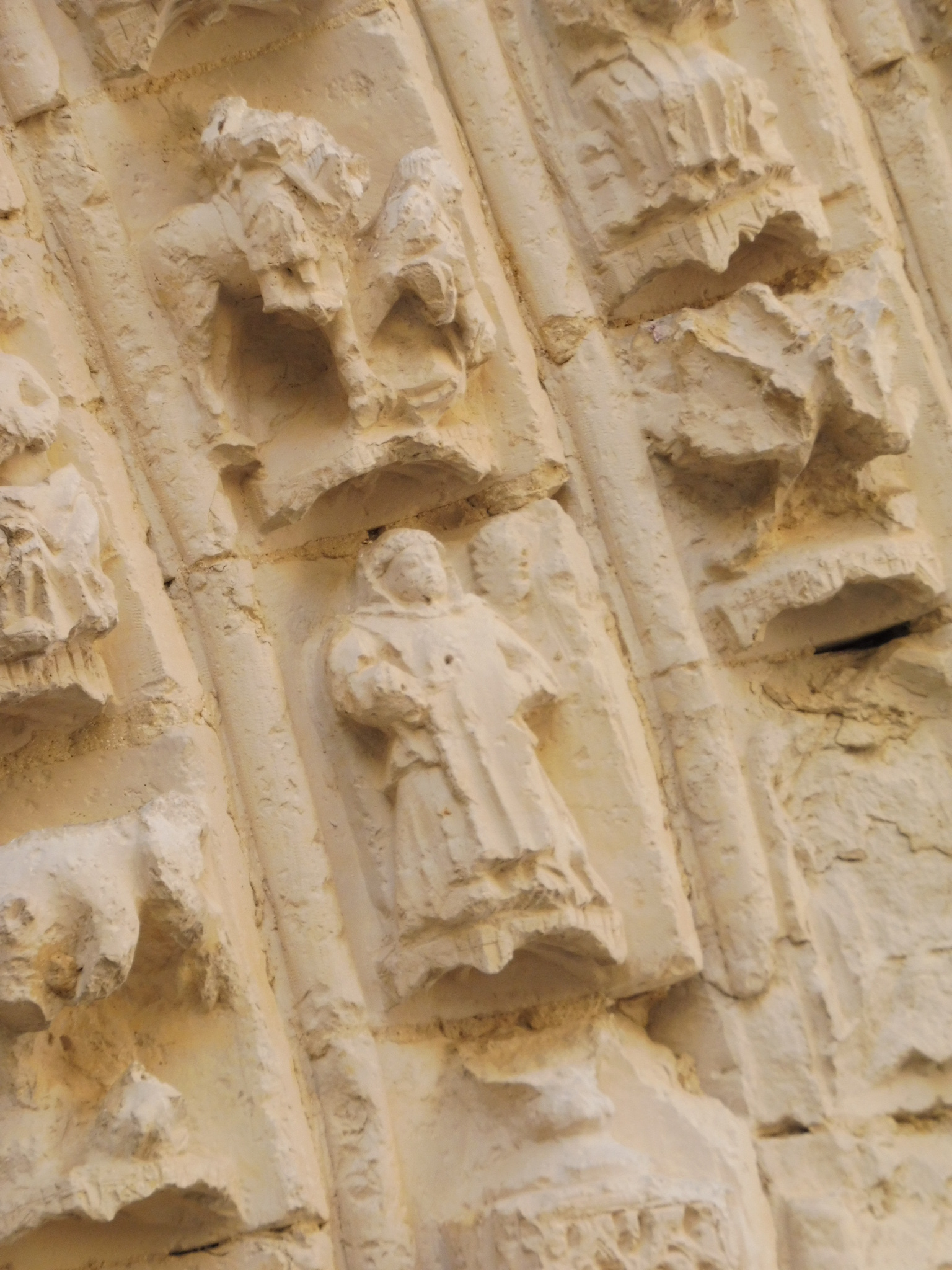
It is an architectural spectacle! I have to stop and gaze at the most detailed and highly carved archway, replete with stone figures many of whose heads are missing due to the ravages of time, and there, there’s a donkey (or is it a camel?).

dsc_1161.jpg

camino-frances-1601

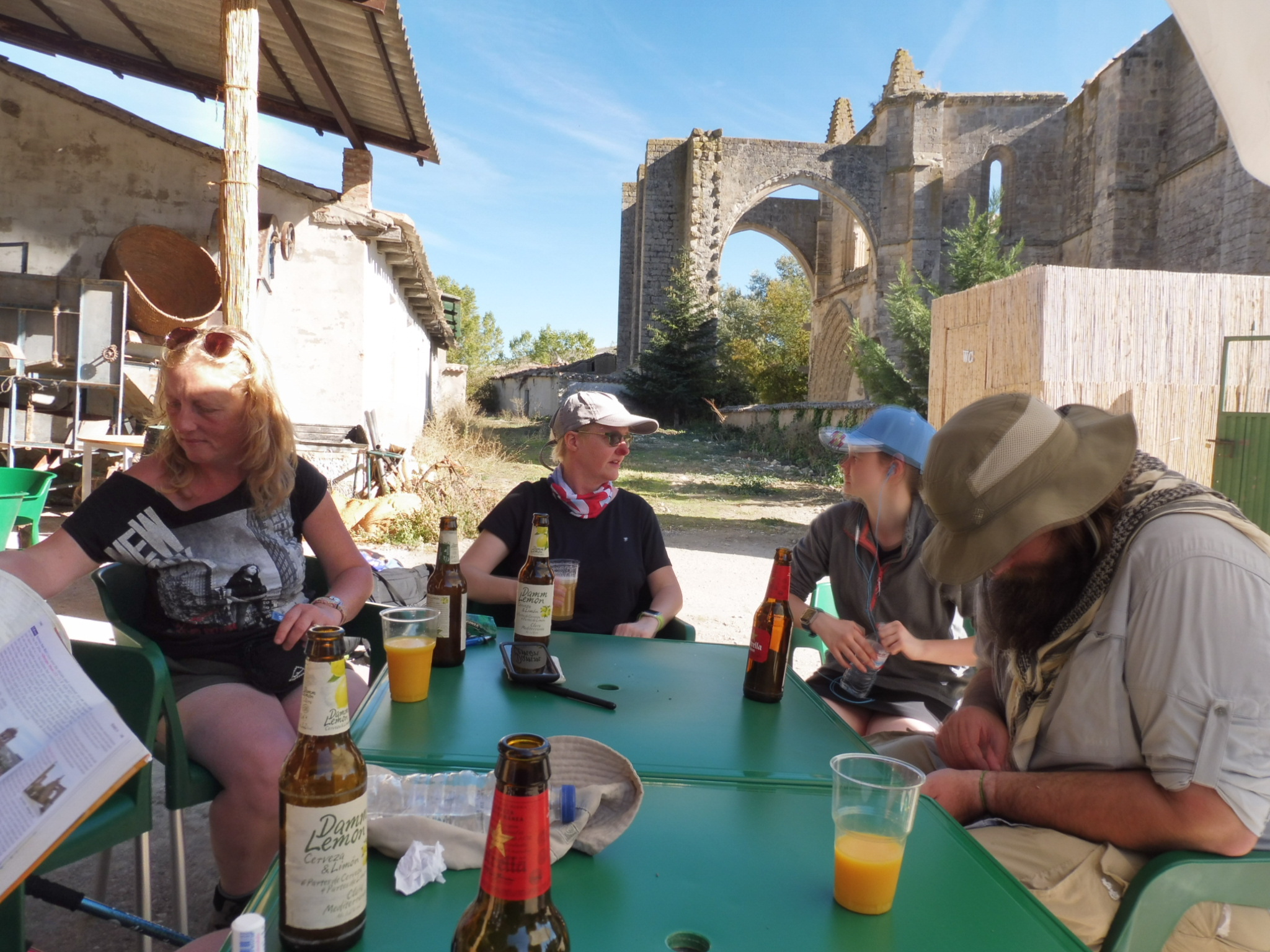
In addition, on the right is a courtyard from which I discover the music emanates, together with familiar faces enjoying drinks and a toilet break. It turns out to be one of those amusing tourist interludes where the barman produces a ‘bag’ with a long, thin spout, full of wine, that you hold up high and pour into your mouth (or all over your face if you aren’t careful!).

camino-frances-1592

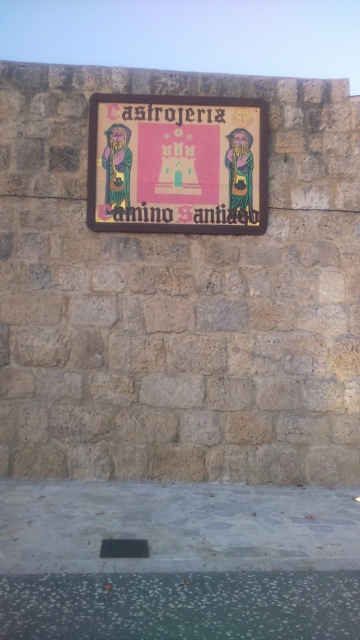
After these antics, we once again split into various groupings, and make off on the trail to Castrojerez with its idiosyncratic signage, and large shared dormitory for another night of snoring!

DSC_1166 (360x640)

camino-frances-1609

Thanks to Randall St. Germain  for sharing the Castrojerez website

A camino blog I recommend


Walking without a donkey 14: Camino Frances, San Juan to Burgos

29.10.16 San Juan de Ortega to Burgos, on foot

camino-frances-1532
San Juan de Ortega

Why did I come back to the Camino? I think I had already fallen in love! Walking out into a day like this, who would not?

dsc_1156.jpg

Certainly the world had that glow about it.

camino frances 1543.JPG

The simplicity of walking out at dawn with only the immediate to think about. Holding hands with the landscape, falling into step with the climate, walking alongside the smells and tastes of each region as I passed through. Sharing only the necessary things of life: food, sleep, moving forwards.

dsc_1152.jpg

Kissing the colours of Autumn, embracing the opportunities that waited for me; arriving in a new place, and exploring the unfamiliar streets, churches, shops and cafes; resting on my bunk simultaneously listening to music; exchanging stories in unfamiliar tongues. The looked-for love affair that took me out of myself, and at the same time dropped me right into the essence of my being.

dsc_1150.jpg

As well as resting places, the many crosses and cairns (the Scottish word for a pile of stones often found in the hills and along paths), serve as locations for carefully selected rocks, placed by walkers to mark the spot. We give thanks for what has come to us. That we are still on our feet and continuing to walk the beautiful Camino.

spain-autumn-2016-phone-1213

In Scotland, in summer, we often say to each other how lovely that the warmth brings people out of their houses, out of their thick, protective clothing, and liberates their chatter and laughter. Here I was in a seemingly perpetual summer, sun on my bare arms and legs, with the energy flowing up from the ground I was pacing, liberating me, and lightening my heart.

‘..the call of the great outdoors…the need to provoke…transgressions, to give substance at last to folly and dreams’. p.5 A Philosophy of Walking, Frederic Gros.

dsc_1153.jpg

(Such a contrast to walking in Edinburgh in January! No-one smiles or gives a cheery ‘Buen Camino’ as I stride past. My nostrils are full of exhaust fumes so I can barely notice the smells of the hedges and herbs in the gardens I walk past. If it wasn’t for last night’s snow highlighting the fields and hills of Fife over the water, which I can thankfully see through the skeleton trees at the end of the road, there would only be cars and rushing people.)

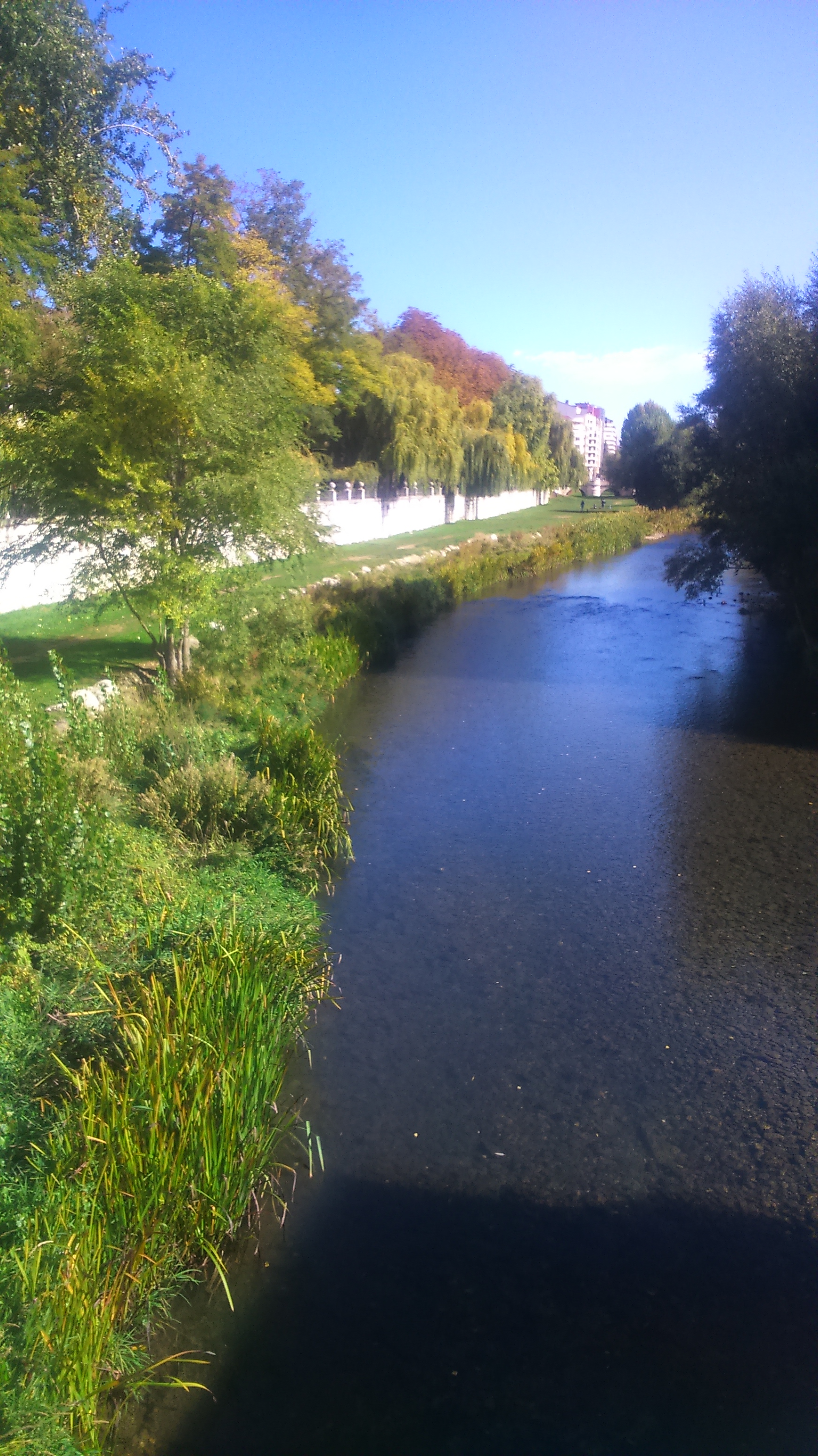
As I have seen Burgos, which is today’s destination, twice already, I walk through and out towards the other side. This way I avoid the crowds in the centre, and sashay along the glorious river bank, discovering the outskirts later that evening.

spain-autumn-2016-phone-1160

Walking without a donkey 13: Camino Francés

Days 5 and 6. 28-29 October 2016. Nájera (Camino Francés) – Burgos – Cortiguera – Madrid – Aranjuez – San Juan de Ortega (back on the Camino)

dsc_1075.jpg
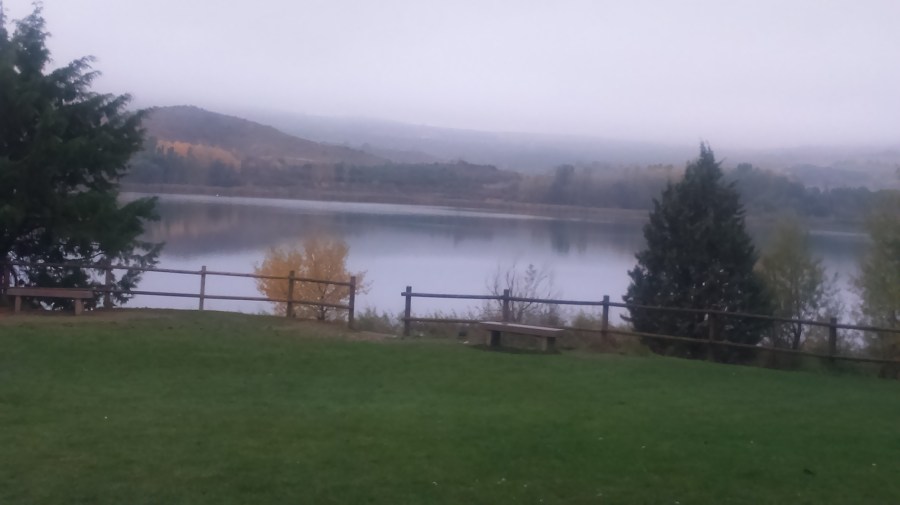
Pantano Reservoir, Logroño on the way to Najera 28 October 2016

I made a promise to visit Gill (who had already put me in touch with so many lovely Shiatsu people to stay with) in Aranjuez, which is 50km south of Madrid, before the end of October. So I left the Camino at Nájera, after only 5 days of walking (blog posts 9, 10, 11), and went there via Burgos (90km, 1.5 hours by bus), Cortiguera (blog post 12, 70km north of Burgos), and Madrid (250km, 2.5 hours back down south) – a very long way round!

dsc_1084.jpg

dsc_1085.jpg
River Arlanzon, Burgos

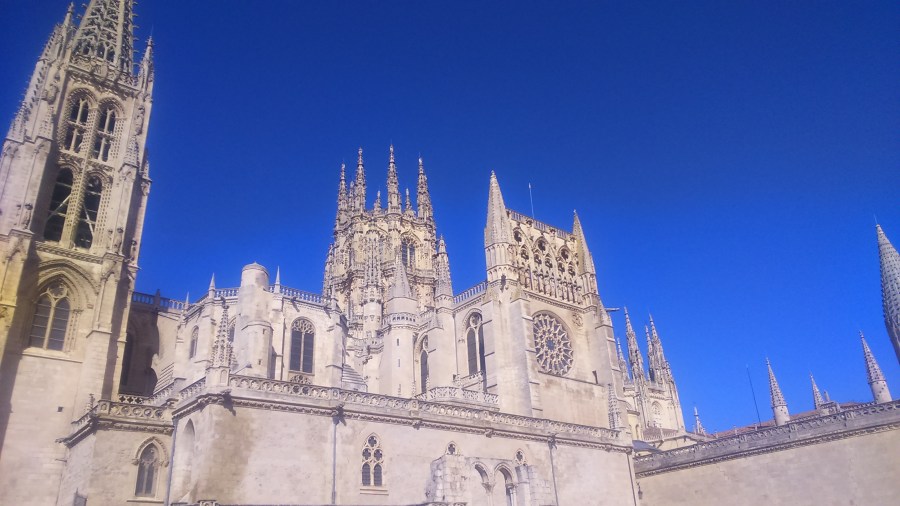
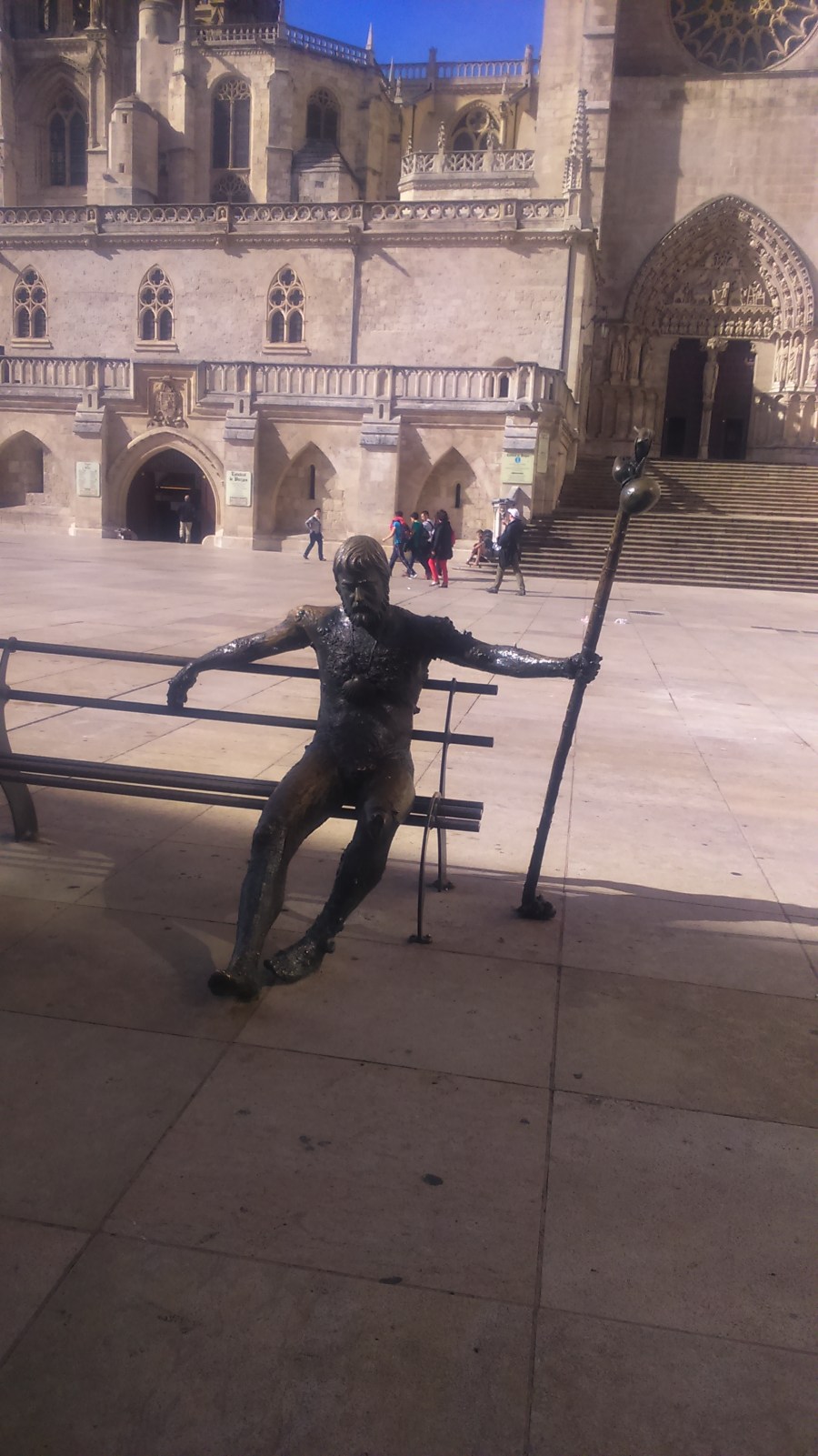
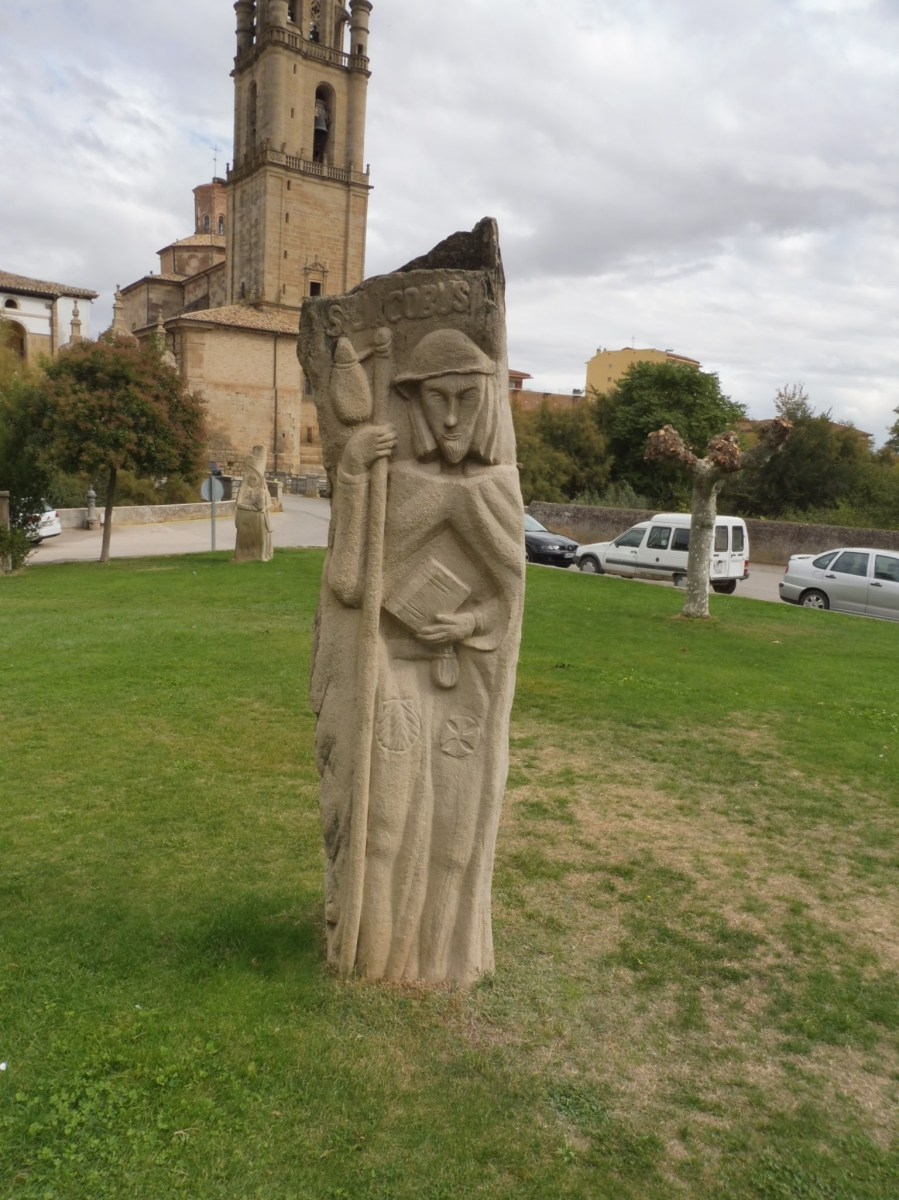
I only spent a little time in Burgos this time, but the sun shone and the bus station is central, so I was able to walk across the river, into Cathedral Square where I sat and ate my sandwiches, walked around the adjoining streets, visited a cafe for a green tea and wifi, and photographed the famous pilgrim statue.

dsc_1087.jpg

dsc_1091.jpg

dsc_1094.jpg

Afterwards I returned to get my link to Cortiguera to see Dirk and Charo.

This was where I saw a group of vultures circling at eye level in front of majestic rocks above the slit of river far below.

dsc_1125.jpg
On the way to Cortiguera

I wrote in my diary on the bus: ‘This time the ‘bird’ I see as I approach the city is a silver plane rising in the blue sky. After the outdoorsy life I’ve been living in the country and small villages, I’m nervous about entering the capital city for the first time.’

I was right, it was a serious contrast, and I found travelling across Madrid a terrible strain. After calmly walking through the regions of La Rioja and Cantabria, with their expansive silence and disinterested wildlife, the thoughtful travellers at a regular pace, the noise, the numbers of people, the difficulty in negotiating the ticket machines at the underground stations – it was all an onslaught to my system – and I couldn’t take any photos.
On arrival at Aranjuez, I partook of a glass of wine and settled myself. Later I was treated to a pizza (urban food!), and taken to Gill’s amazing kitchen garden. Here she grows fruit and vegetables, and bakes delicious bread in an open oven which she shares with her neighbour. Alongside giving and teaching Shiatsu, hosting visiting tutors, leading chi gung classes, and generally keeping a large sector of the Spanish Shiatsu community connected, she delivers this fresh produce to people in the local area.

I had not bargained for the power of the Camino, and the next morning I overturned my plans to stay south for 5 days, and returned to the north, via Madrid and the bus station I was getting to know and love, back to Burgos and the Way. Thank you Gill and Jorge for being so understanding.

camino-frances-1541
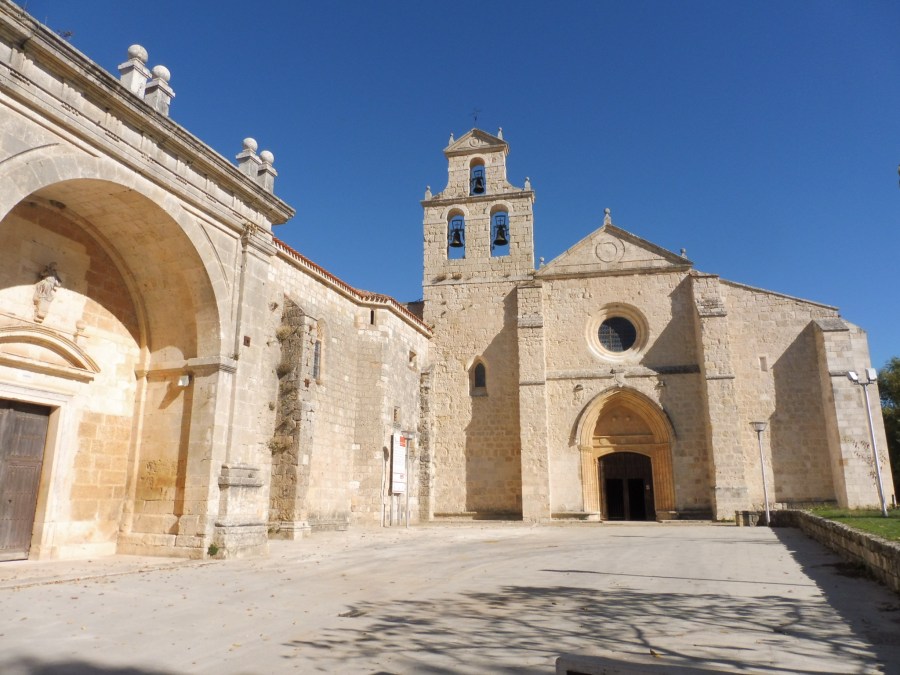
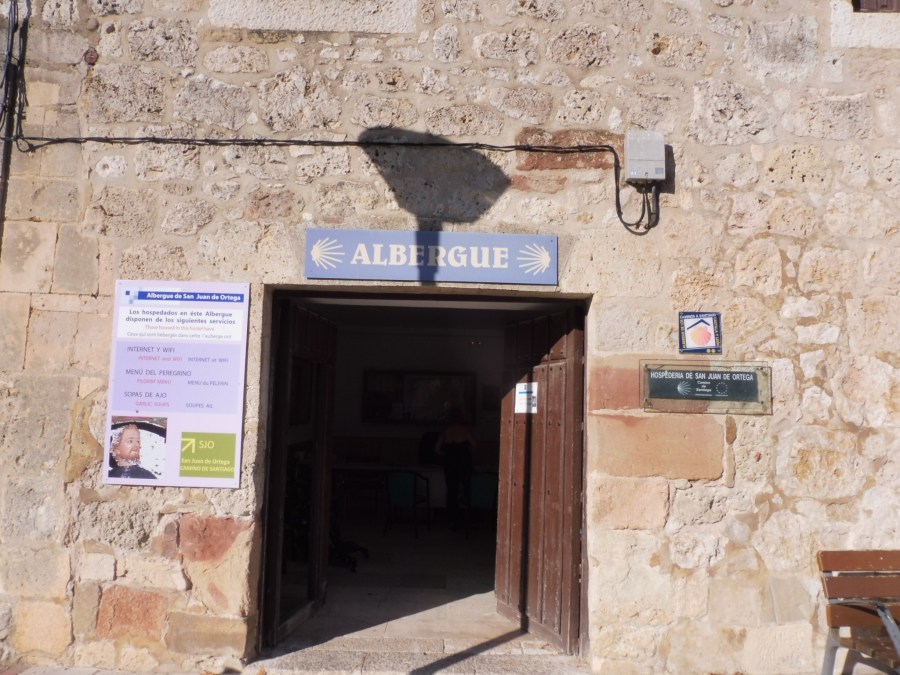
Hostel at San Juan de Ortega

It turns out that getting to San Juan de Ortega in the evening is tricky. It was hard to get information and a taxi would have been extortionate, so I waited 4 hours (witnessing drunken fisticuffs in the street), before joining a local bus service which several people had told me would go there and for which I had a ticket. Needless to say I was the only foreigner. The large family group which made up the majority of the other passengers, were friendly and interested in me and why I was there. They chattered loudly, not seeming bothered by my pigeon Spanish, offering to share their snacks with me, and laughing hilariously at my escapades up and down the country.

When I was the only one left, and we were driving through the pitch dark (by now three quarters of an hour late), the driver asked me where I was going and ‘Si, si’, he pointed into the distance. He told me all about his wife and kids, and where he was going on holiday, and eventually deposited me in front of the former monastery, where I was met by a kind, but rather worried, fellow walker. He had been told that the bus usually drops folk off at the previous village and was ready to come out and escort me in case I met wolves walking through the night forest. Apparently the bus had made a detour especially for me. Being so late meant there were no beds left, but this same kind man had negotiated an alternative – in the library – as well as having supper waiting for me. I always knew I would get there safely, but those around me were not so sure until I actually arrived!

camino frances 1532.JPG
San Juan church

The next day we walked to Burgos!

Last 2 photos courtesy of A. Bec

Walking without a donkey 11: Camino Francés

Days 3 – 5. 23 – 25 October 2016

Sometimes I walk to get from a to b, sometimes because I am in training for a trip (eg when I was preparing to walk in the alps), and sometimes simply because the day is beautiful and I need to be outside.

I have been taking walks here and there in Spain – between towns, along beaches, on plains, up hills, through forests – and now I am getting hooked on the Camino Francés (the best known) of the Camino de Santiago pilgrimages, The Way of St. James.

My day three takes me from Estella (Navarra) to Los Arcos; on day four I reach Logroño; and at the end of day five I sleep in Nájera (La Rioja), all in northern Spain, moving east to west.

For me the process of walking day-by-day engenders prosaic observations, deep thought, and empty mind. For example, it strikes me as I stride that once you have decided on your path you just have to keep going until you get there. And if you take a wrong turn you can either retrace your footsteps, or choose a new way. What you can’t do is make the end come sooner than it does. There just are that many miles between you and where you are going.

On the other hand, although walking along the flat is good, when there’s nothing for miles around it’s impossible to find somewhere to snuck down for a private pee.

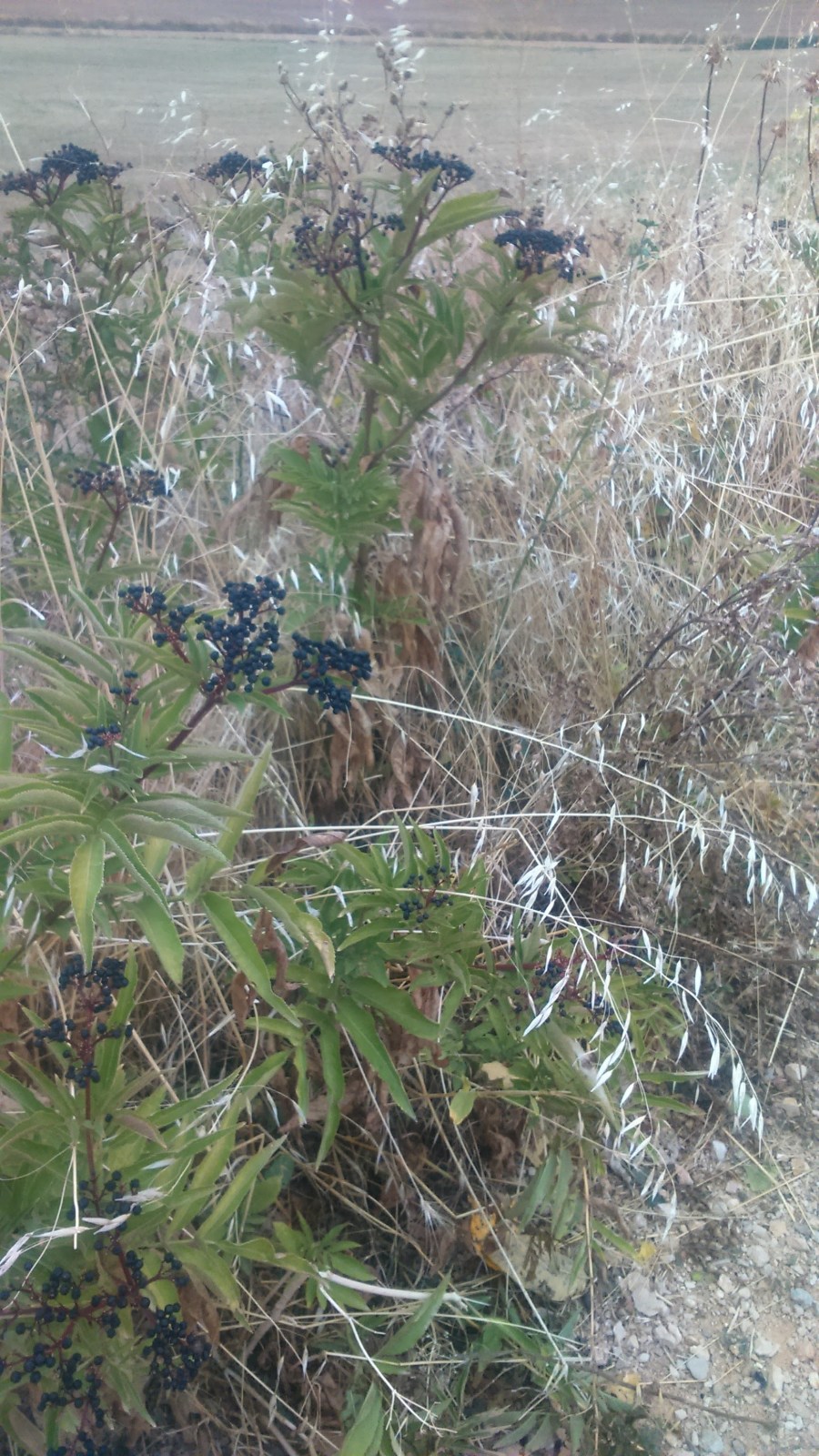
Because it’s hard not to look at the ground when you walk, you do get to see the little things which live down there. Flowers, butterflies, bugs, and an iguana basking on the dry, bleached path. People who know the hedgerows of Britain, my mother being the best amongst them, and from whom I learned most of what I know about flora and fauna, will recognise many of the flowers and bushes along this section of the Way: fennel, brambles, vetch, ragwort to name a few.

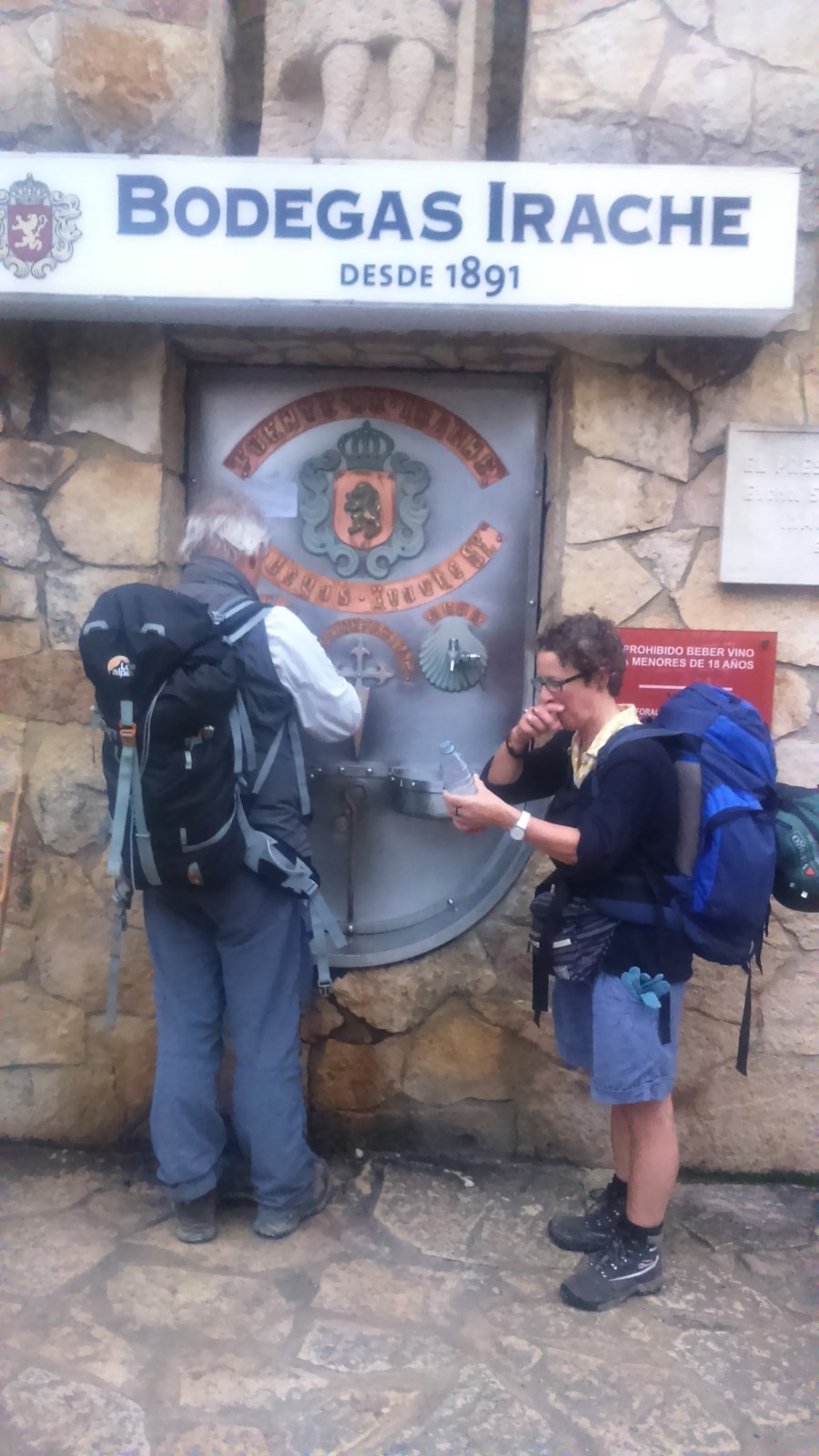
Not far out of Estella we come to the Bodegas Irache with it’s free wine fountain from which, tradition has it, you fill a small bottle and carry it to Santiago de Compostella as an offering. Needless to say most people drink it there and then, and I share a laugh with the other peregrinos (pilgrims) at this alcoholic alternative.

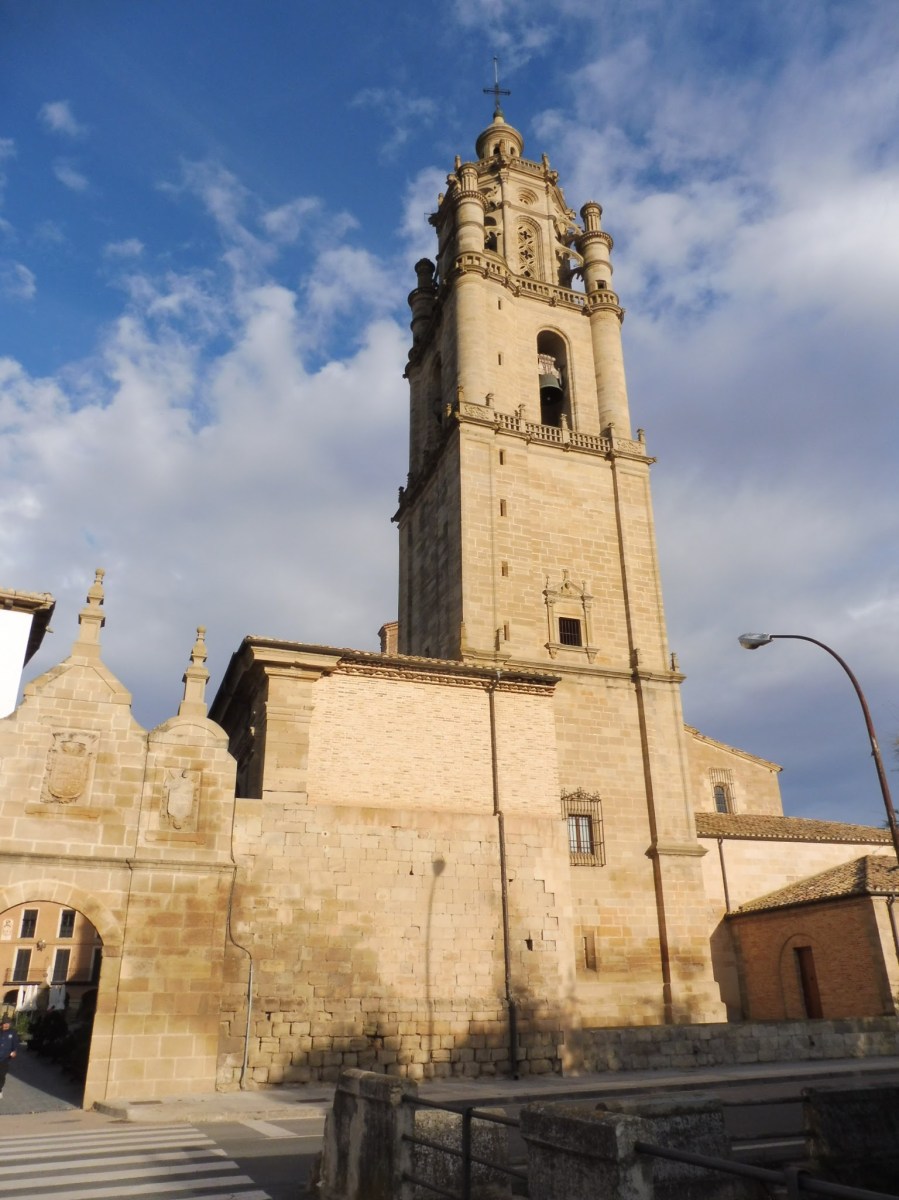
Further along, outside the ancient Benedictine Capuchin monastery and church, there is a large group of all ages, from little ones who are carried on their father’s shoulders, to teenagers and parents, singing the old English folk song Greeensleeves. Apparently they are members of the same extended family who are doing part of the Camino every school holidays.

There’s a strong wind today and I have more contact with others from all over the world, perhaps to take my mind off it – 2 strong American women with lots of experience; a Polish priest; a Frenchman who started on 4 September in Paris and has had barely a drop of rain in 6 weeks; a cigar seller from Alabama (a giant of a man with an impressive beard and booming voice); and many other interesting people who are all walking for their own individual, personal, and spiritual reasons.

Advice: If you fancy trying this, do remember to bring walking sticks to take some of the weight off your feet, waterproof footwear, and a cover for your back pack. I didn’t!

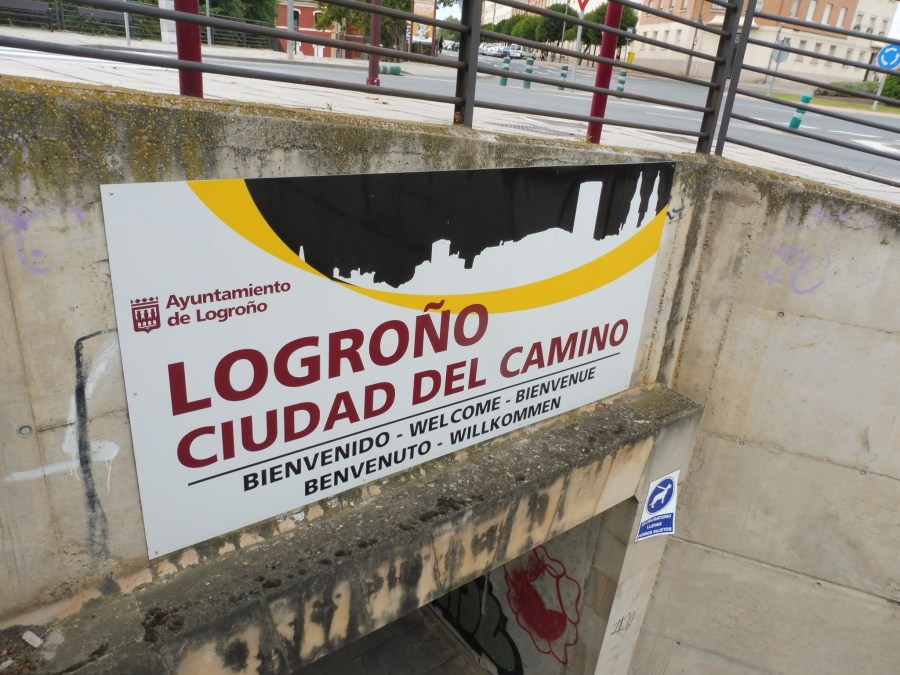
Logroño, a Camino city.
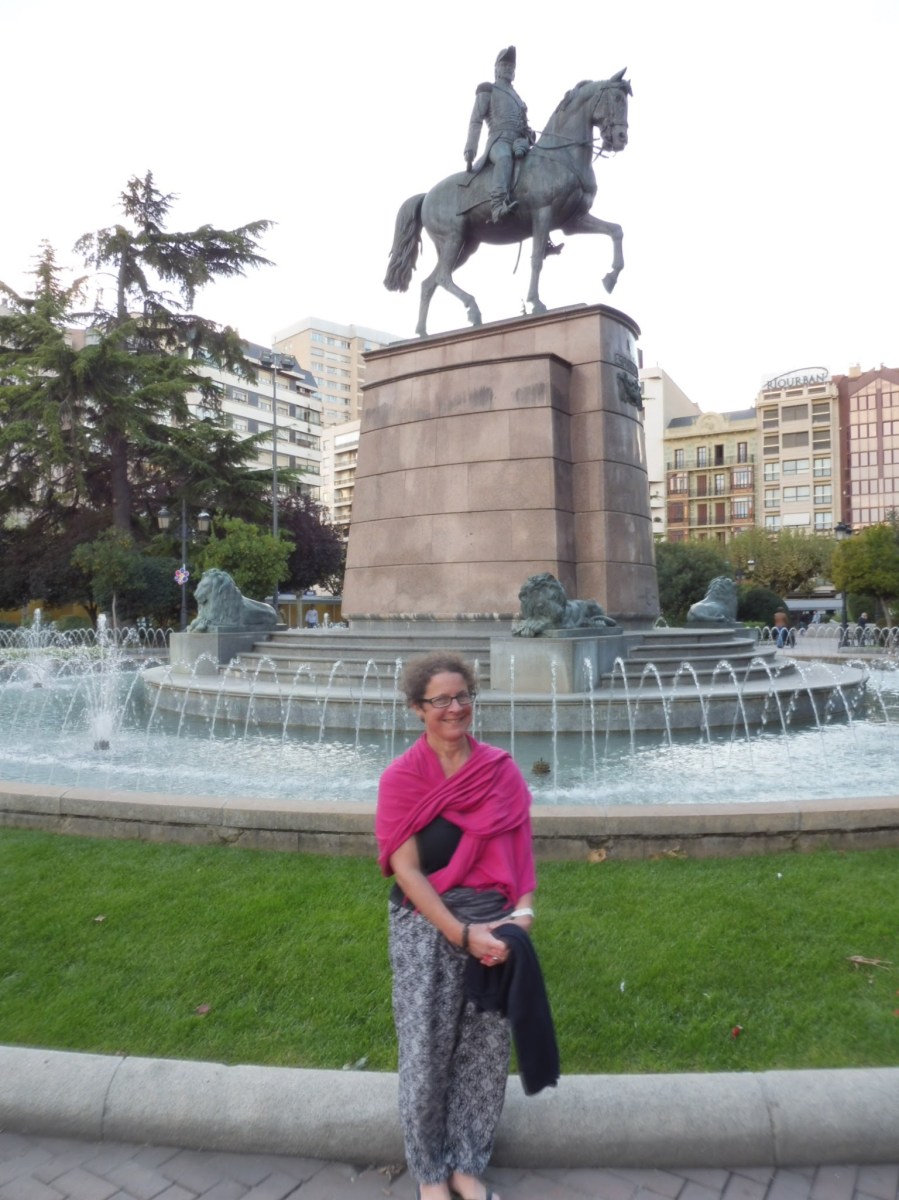
Logroño with my magenta scarf.
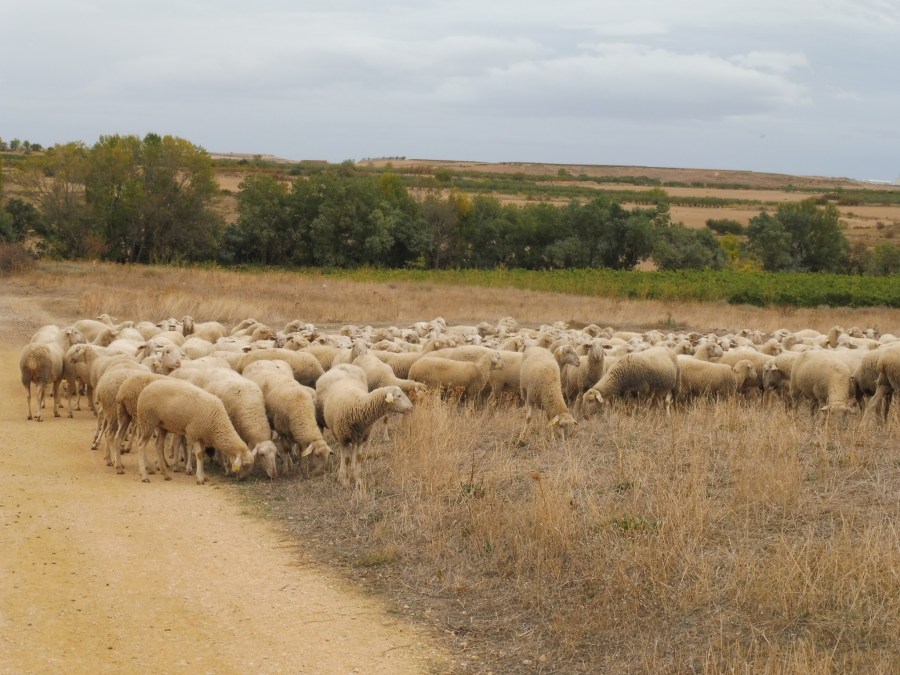
Typical rural landscape of the Rioja region.
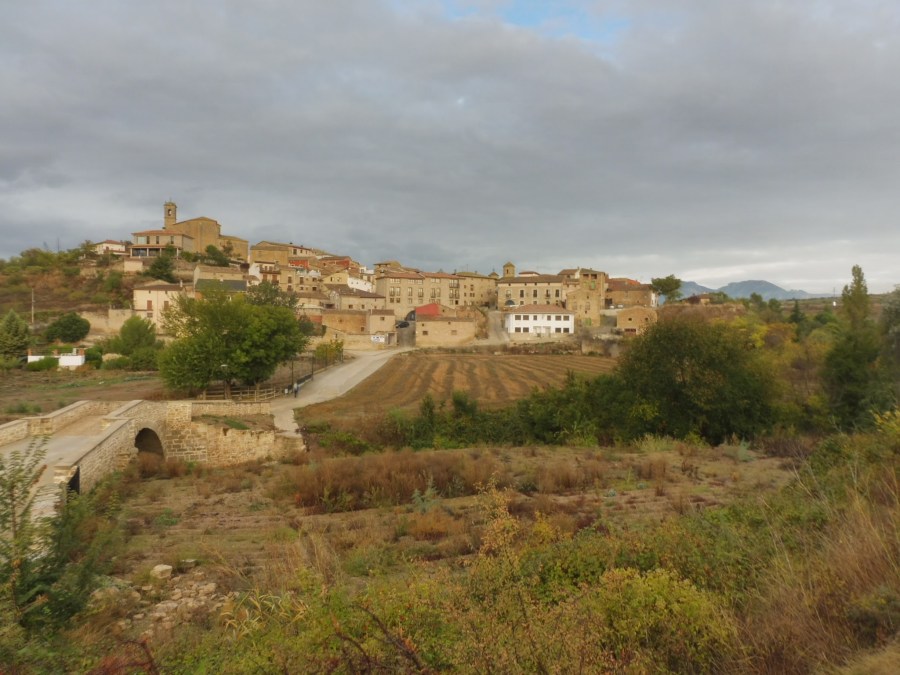
Los Arcos.
Los Arcos – you can see pilgrim murals like this all along the Camino Francés.
Albergue, Los Arcos where I gave an impromptu early morning Chi Gung class for about 8 people.
This blog is dedicated to my friend Liz (who I have worked with for many years, and who came into Edinburgh especially to lend me her book and share her Camino with me), and to Edie, who helped me keep the dream alive, although she was unable to accompany me.