A film made during and in response to the January 2026 First Friday Walk, prompted by Lucy Guenot.
She wrote, “Let’s think about the walks and the paths and tracks that are most familiar to us: the comfort of taking a well-known route where you don’t need to think about directions or following a map.”
“Reflect also on the history of old tracks, made by centuries of walking:
"These are old paths, designed

And kept alive by feet

For whom walking was

The only way of going.

These are the treads of workers,

Plodding early with their bait

To quarries, mills, farms …"

From 'Wotton Walks’ by U A Fanthorpe."
I was booked on the train from London to Edinburgh on January 2nd, so I could not walk. Instead, I filmed the countryside, cities, and full moon through the window as we rushed past. To make the work, I slowed the footage down and juxtaposed it with the sound of me walking a familiar walk between my home and the nearby beach.
On the train, I didn’t need to think about directions or following a map, I was simply carried along. This was a ‘comfort’ of sorts, though walking is better for my hips than sitting down for long periods. I had time to think that the train tracks between Scotland and England were laid down over the same earth that drovers walked on from the Highlands to the Lowlands in the 18th and 19th centuries. These epic walks were with dogs, sheep, and ‘hardy black cattle’.
By contrast, I walked on striped LNER carpets, bumping into the seats on my way to the buffet, loo, or the end of the carriage to stretch. Standing looking out, I remembered the old school trains which had windows which opened. I used to lean out as far as I could and feel the fast air on my cheeks.
I am very pleased that my walking art videos are part of the film assemblages of Kel Portman
Solstice. Winter 2025
By Tamsin Gainger and Kristina Rothstein
And, below, as part of the whole alongside other artists who followed the same brief.
Equinox. Spring 2025
Terminalia 2025
Walking towards the Light / To the Sea to Celebrate the Morning Summer Solstice 2024
Terminalia 2024
Winter Solstice 2023 / The Walkers
Equinox (Autumn 2022)
Winter Solstice 2022
And I was a participant in Jenny Staff‘s walking art event which was part of the Walking Arts Encounters in Prespa 2023. It was documented by Kel Portman and can be seen here.
The Bluebird Call by Mal Pelo at Bòlit, Centre d’Art Contemporani, Girona. In two parts: Bosc Tancat (‘Dense/Enclosed Forest’) in Bòlit_LaRambla, and Taller-Memòria in Bòlit_PouRodó.
“If the main driving force of our dynamic is walking then that of our identity is asking questions.”
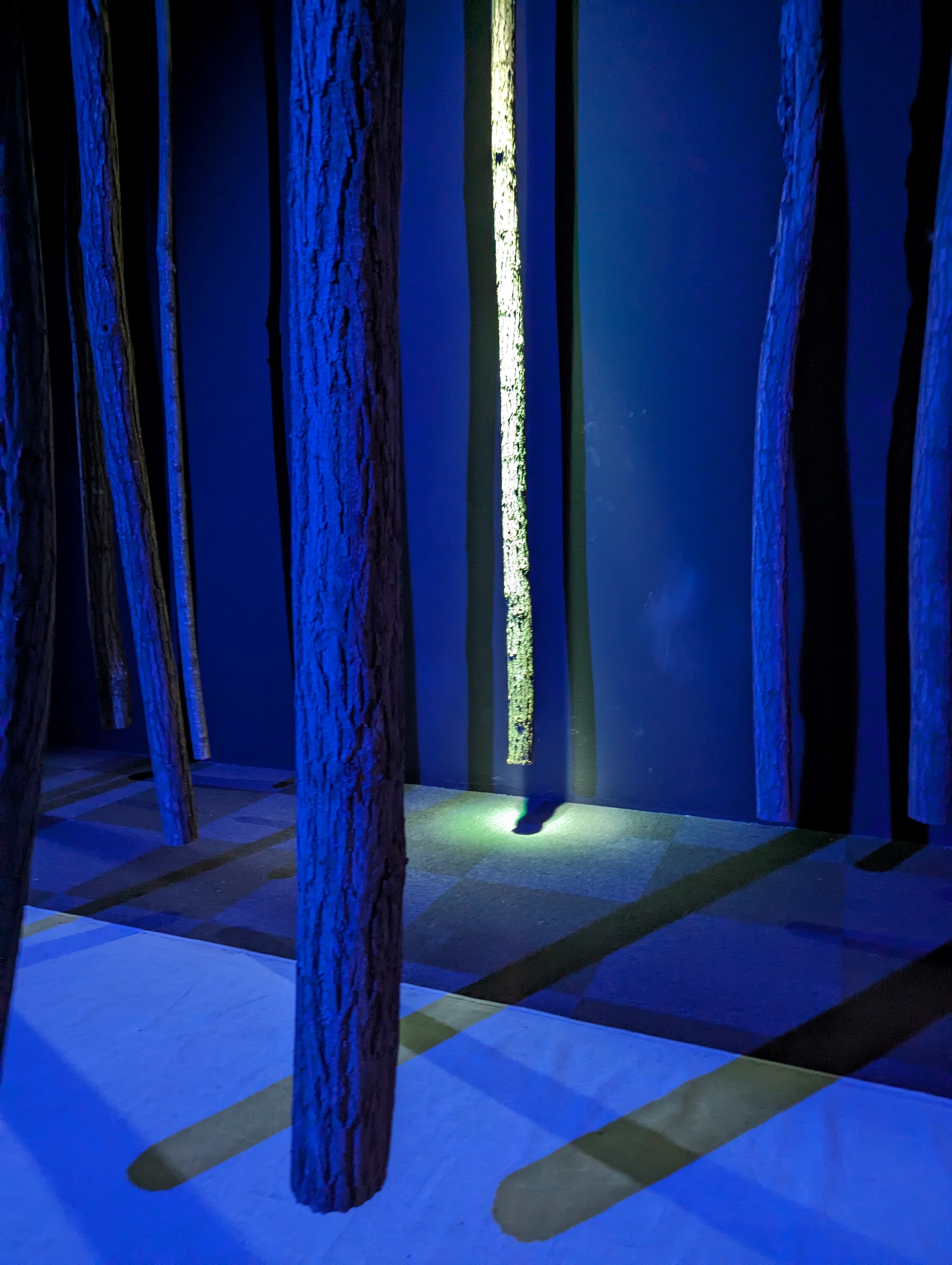
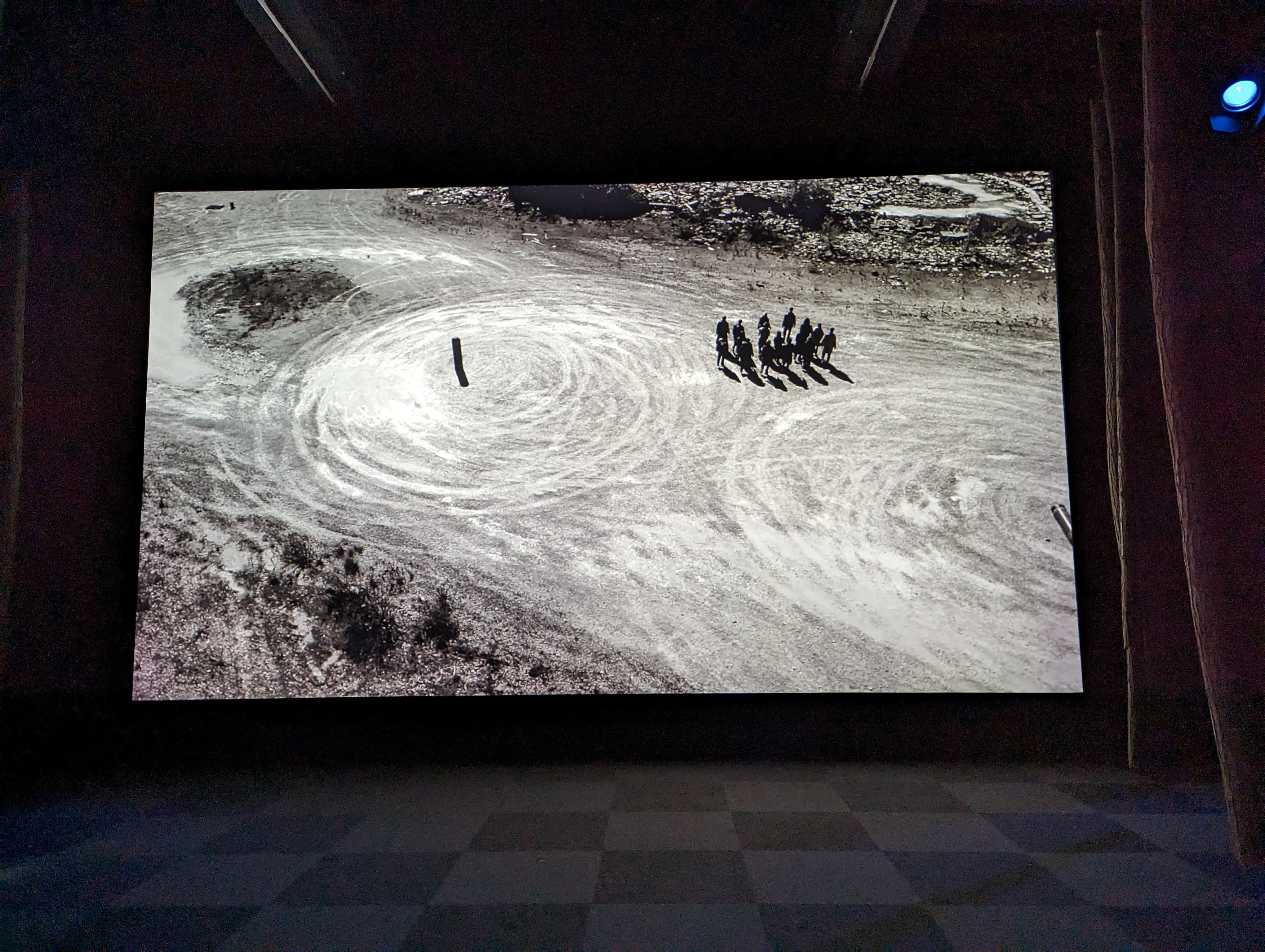
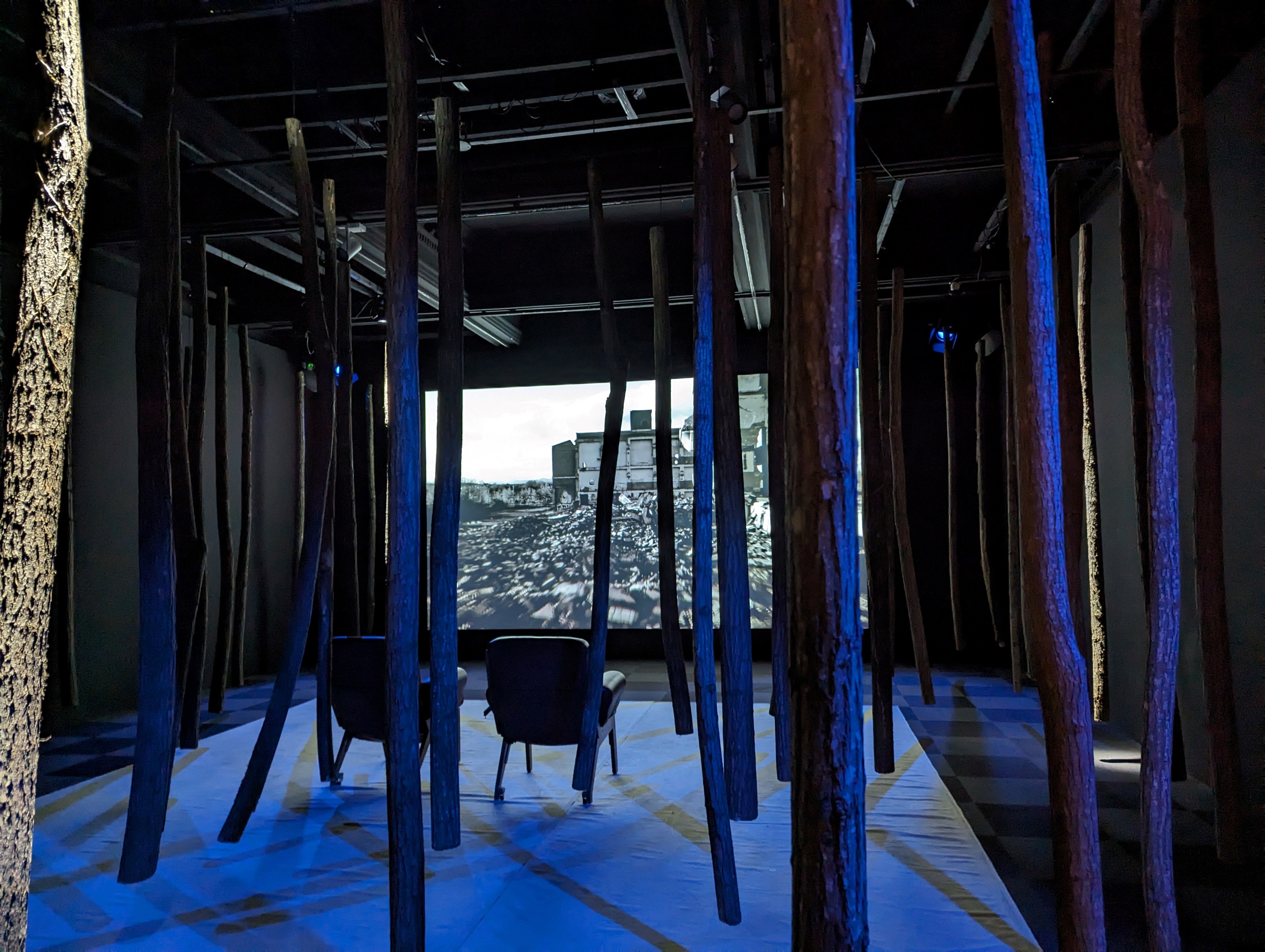
In this video-art-light installation at the Bólit, Centre d’Art Contemporani in Girona, tall, straight tree trunks are suspended. Hanging off the ground without roots, they exist in an other-worldly, ghostly light in front of a large screen showing a black and white film. On that screen, people swarm slowly, alone and blank-faced, in step with each other. They walk rhythmically, turning at random intervals, sometimes in concert with others in the group. They walk and walk.
Based on a poem, Separation, by art critic, painter and writer, John Berger, the company state that the work is “about the ambivalence of the individual and the community”. Using the medium of contemporary dance in the broadest understanding of that word, and highly respected within the artistic community (they were directorial collaborators in the extraordinary Falaise by company, Baro d’evel, for example), Mal Pelo are the artistic co-directors, dancers and choreographers Maria Muñoz and Pep Ramis based in Girona.
Their film is set in bleak forests and abandoned industrial and rural wastelands where an assembly of overcoated, beanie-hatted people walk together. With arms swinging naturally or hands in pockets, they carry nothing, though we see them sharing sliced bread, offering it to each other when they make a meal stop. In Separation, Berger writes, “… in our hearts we carry everything …”.
Afterwards, they wind between trees, something we must do to get to one of the two chairs which invite us to sit and watch. There’s a sense these humans — for there is a homogeneity about them — are searching, and yet they seem aimless. Are they a tribe? An extended family? They wander individually, collect for a moment like a flock of ground-based birds arcing en masse, still moving, before separating again.
Stylistically, the collaborative choreography is reminiscent of the early pedestrian experiments of the Judson Dance Theater in the New York lofts of the ‘60s, harking back to the very early work of Simone Forti, Steve Paxton and Yvonne Rainer. This work marked an important departure from the dark auditoria, proscenium-arch theatres, in which dance had almost exclusively existe
d before that, to more quotidian spaces, to the studios and pavements of America. The participants often had no training, they were ‘ordinary’ people who were simply interested and willing to experiment. There was an anarchic spirit about the period.
The filming in Bosc Tancat is often from above, inverting our ground-based habit of looking up to see a skein of geese flying in formation, our normal way of seeing. At other times, the walkers move directly at the camera, passing by without acknowledging it. Walking away from us without pausing, they continue to walk as if forever, pacing without stopping. Are they in harmony? Are they moving away from home or life or land, or towards it?
The haunting, instrumental score in Dense Forest by Fanny Thollot, is interspersed with Berger’s poem, gently spoken. There are occasional silences, too, as if the wind has momentarily ceased though the movement is ever onwards.
Sitting amongst the ‘Dense Forest’ close up to the wall which is filled with this film, I am carried along the paths with the chorale, as if lacking a sense of autonomy. I feel as if I am slowly floating and looking down even when the lens is not, my wings outstretched, my seeing and hearing alert, but when the company eventually come to the end, it is at an edge. They collect at the top of a cliff, a vista ahead of them and there they sit with their backs to me, still, at last, and I am left, melancholy.
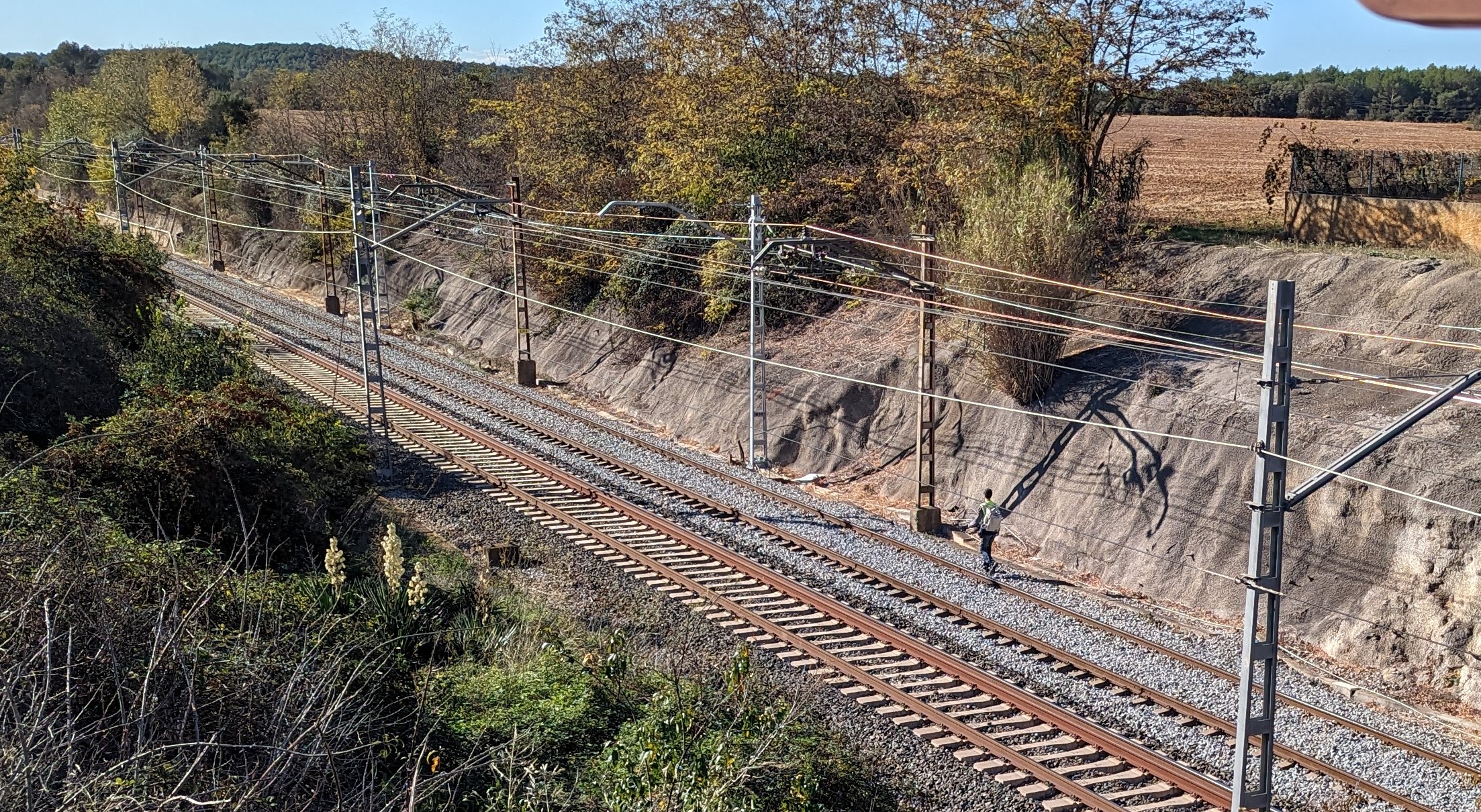
I am suddenly taken back to two occasions when I have witnessed single men walking along train tracks with no luggage. Once, in 2018 in north eastern Greece not far from the Turkish border, I was in a car witnessing through the window as we passed him walking into the distance. The other time was just last week in Cataluña when I stood on a bridge and looked over and down watching this tiny figure recede.
The actions, the behaviour of the performers in the carefully chosen landscapes of Bosc Tancat have a timelessness and as I leave I feel a deep connection to them.
The walks took place, in-person and virtually, on 4 / 5 August 2022, 1pm
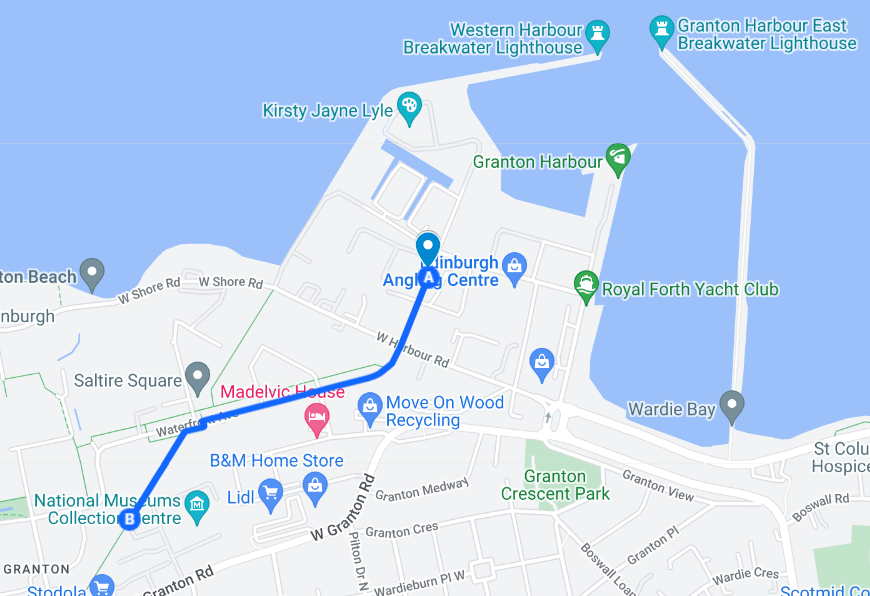
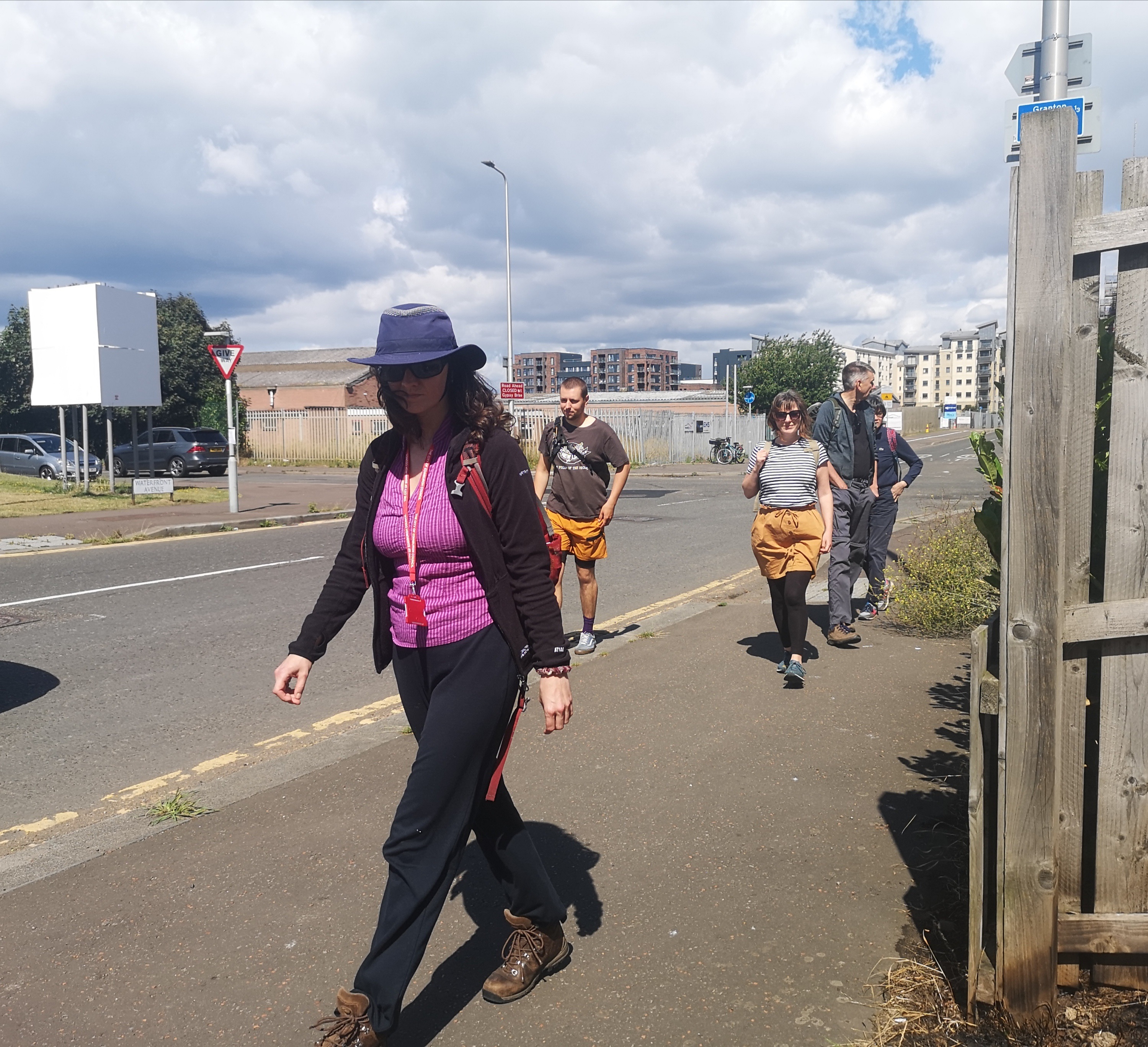
At Chestnut Street, Granton Harbour, Edinburgh, walking to Waterfront Avenue. (The exact meeting place was What 3 Words: ///talent.dads.dots and co-ordinates: 55.983248,-3.229066) and around the world.
The Absent Trees of Granton cordially invited you to walk without them.
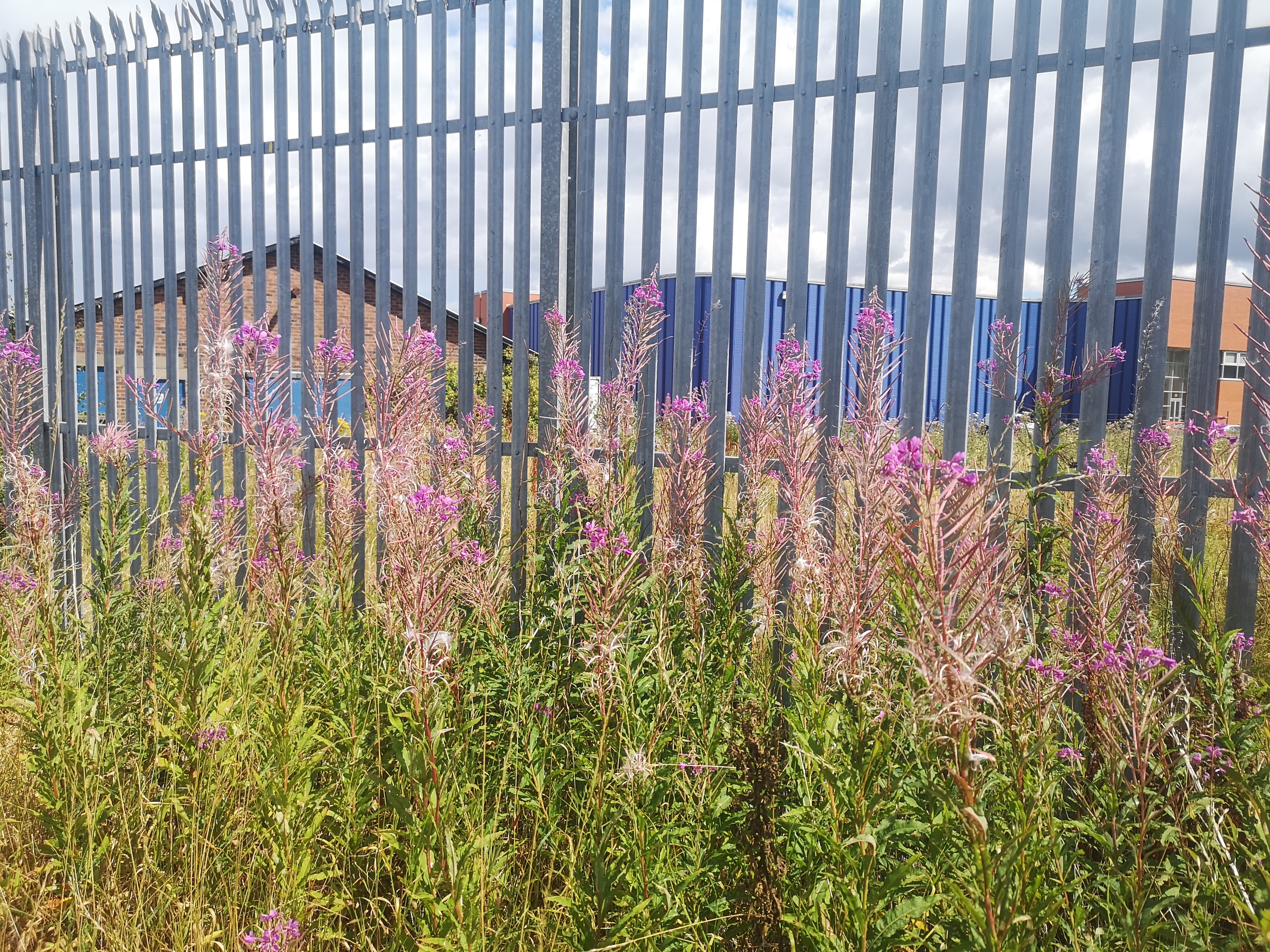
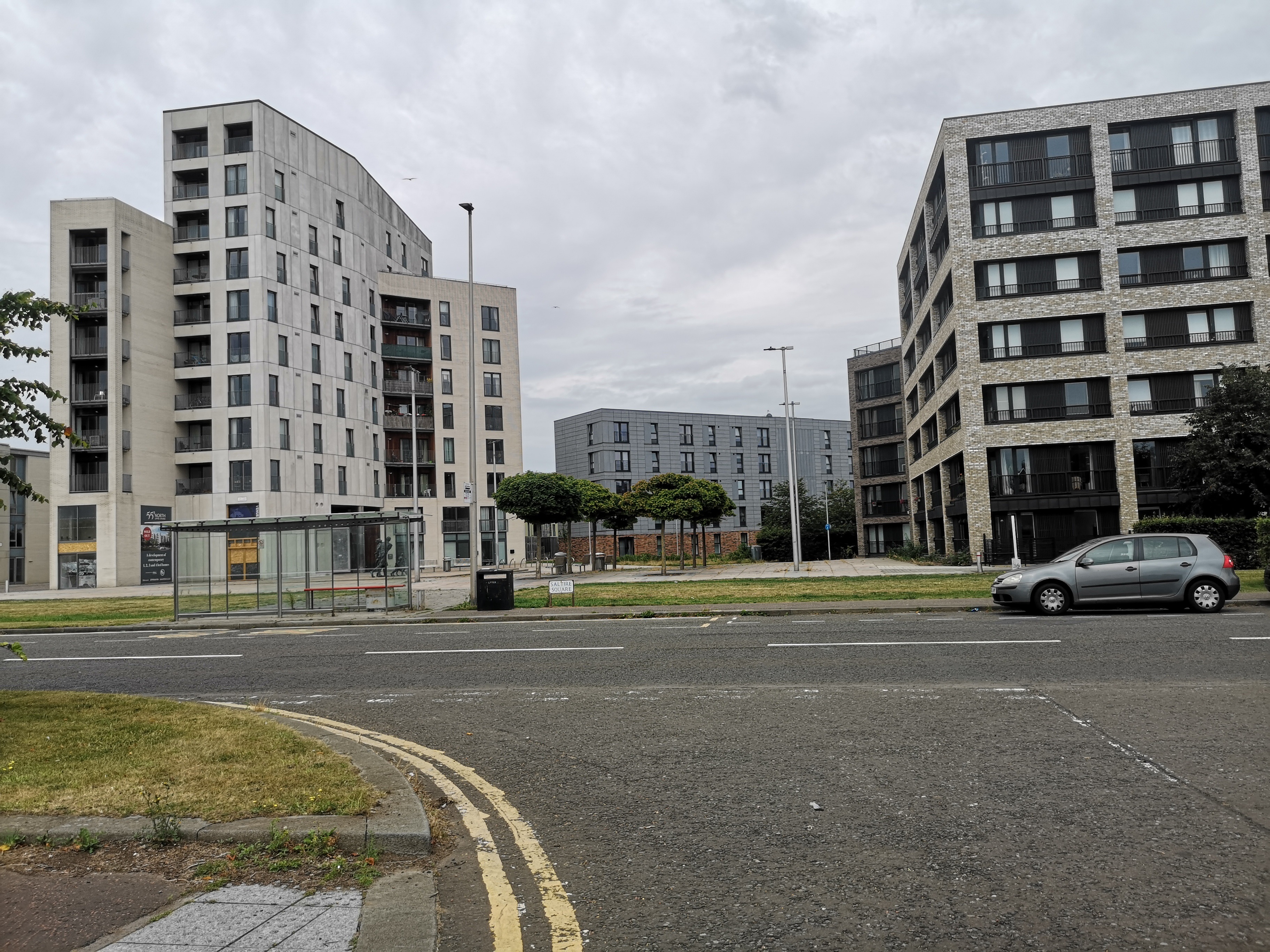
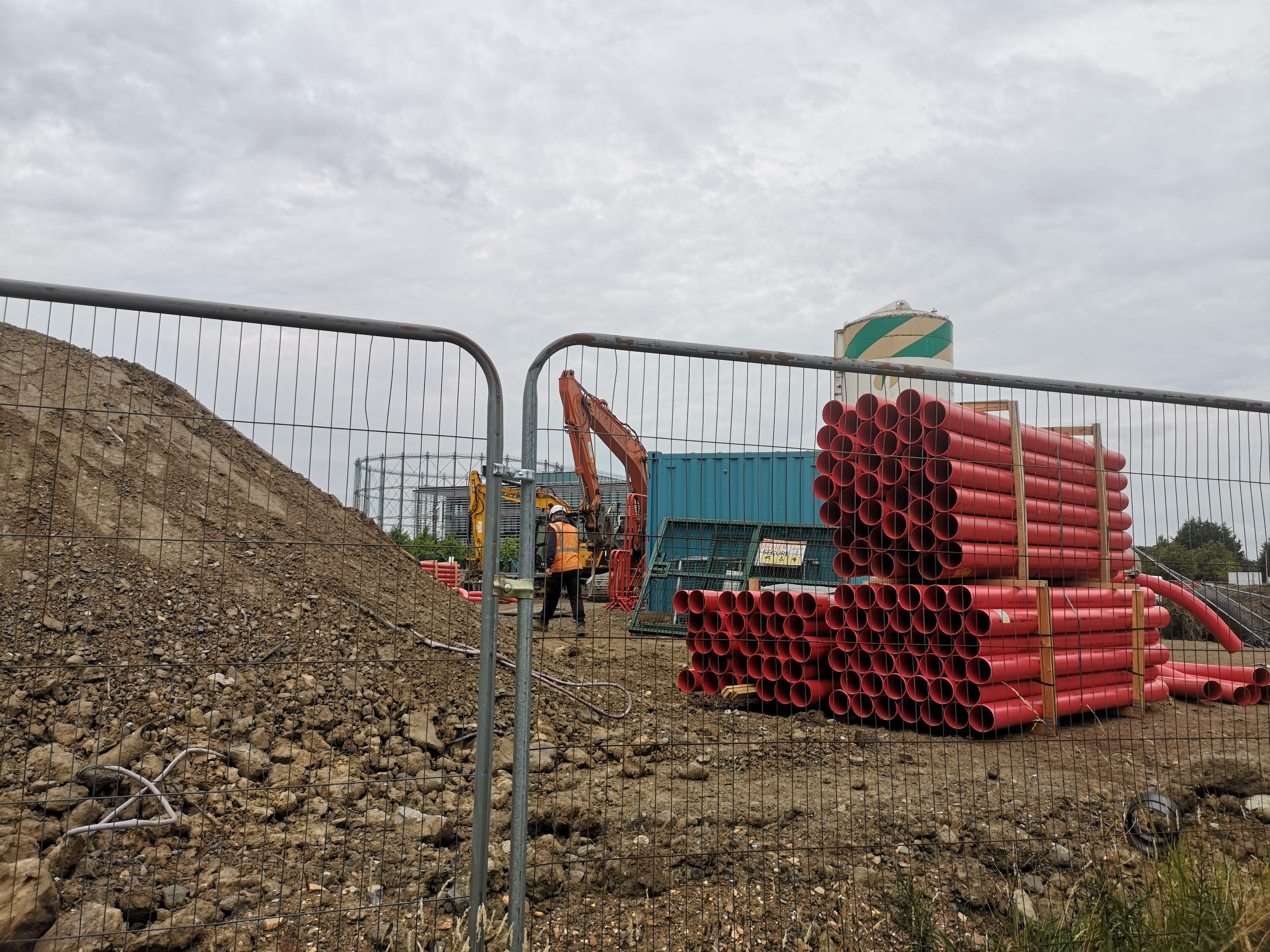
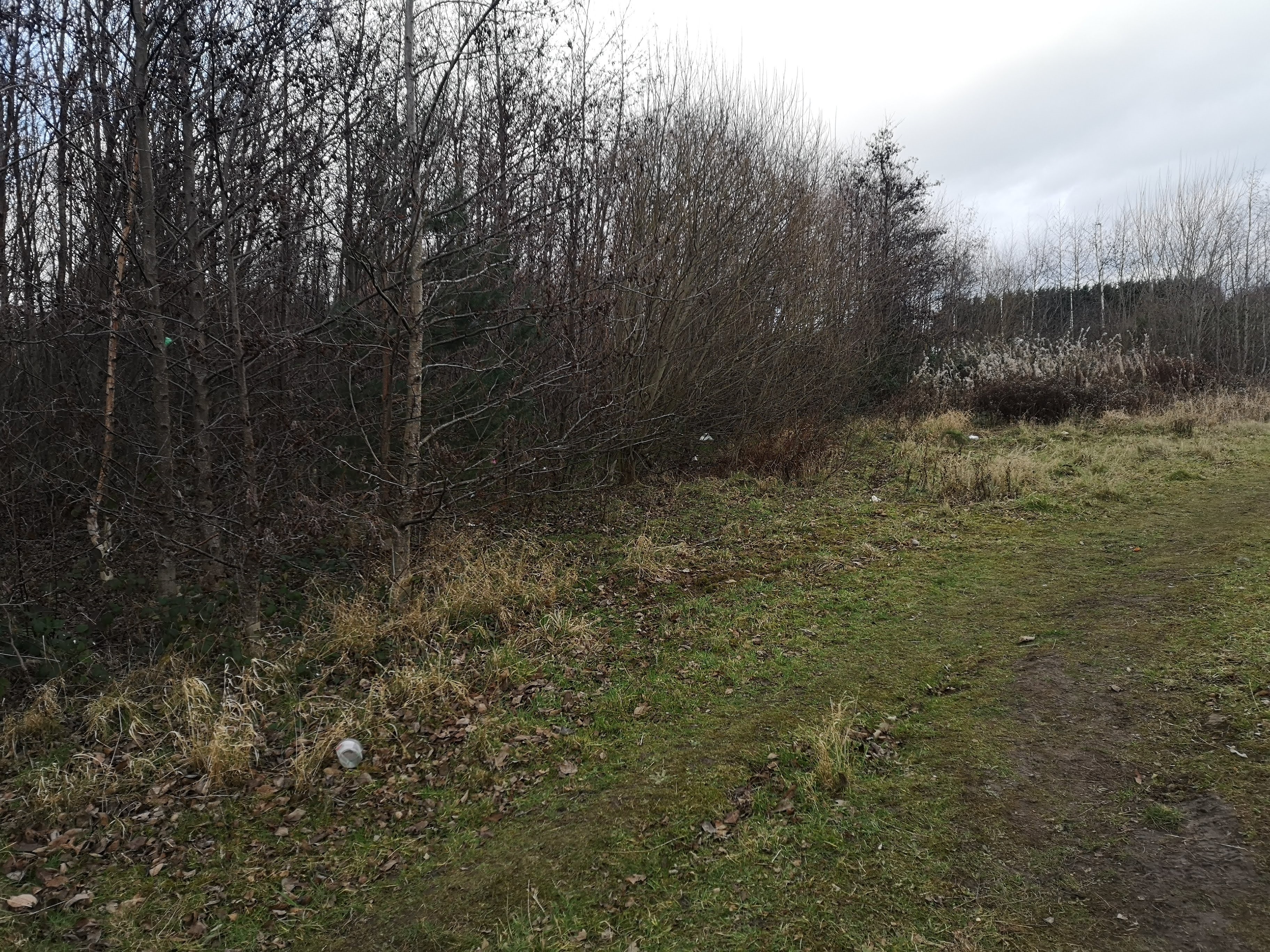
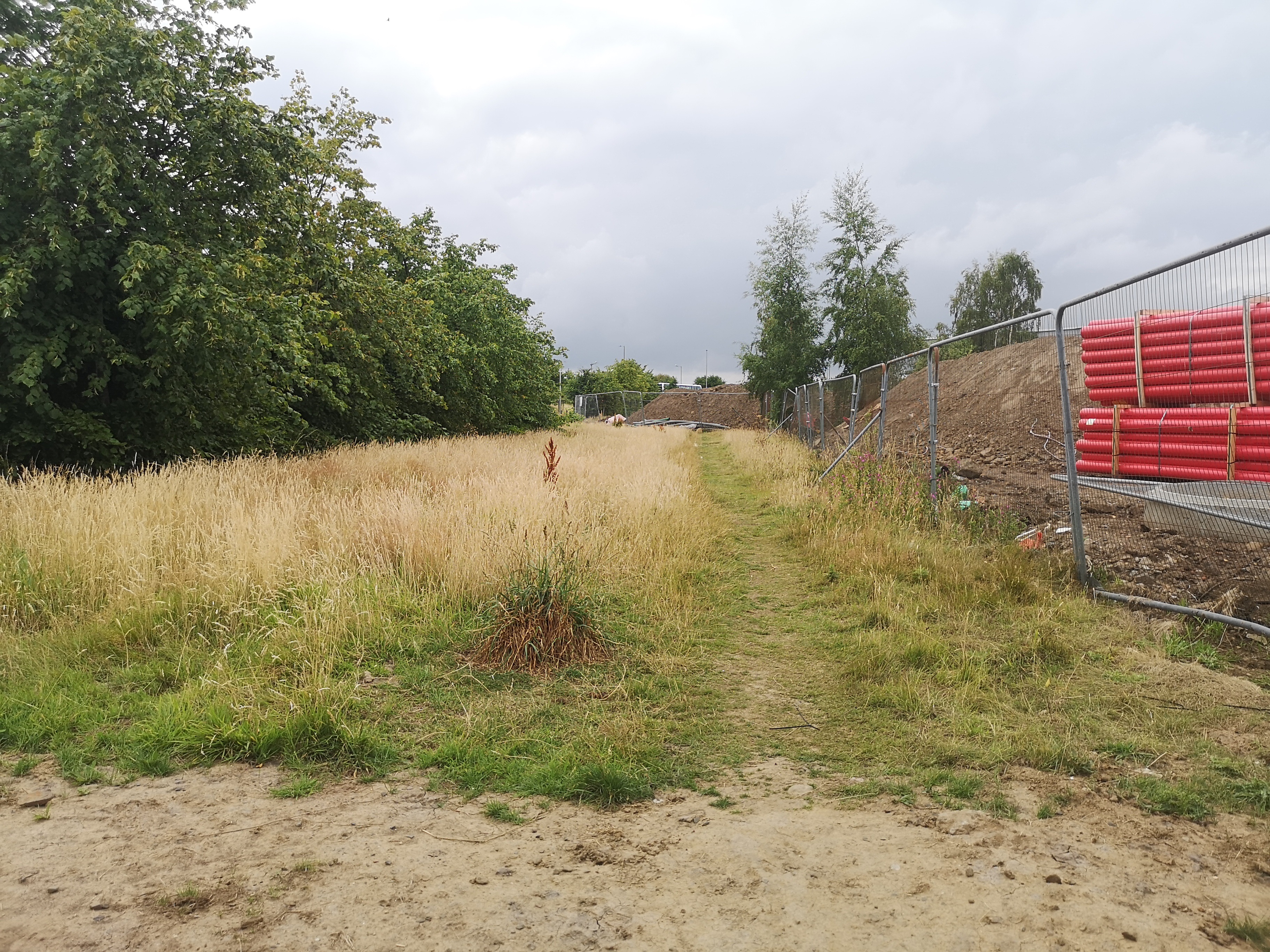
Your presence was requested on a walk from the reclaimed wastelands of Middle Harbour, Edinburgh (“Million Tree City”[1]) where trees grew before development, to the building site of Waterfront Avenue where trees have been felled for housing. We Wish We Were Here. We are in spirit. Or are we?
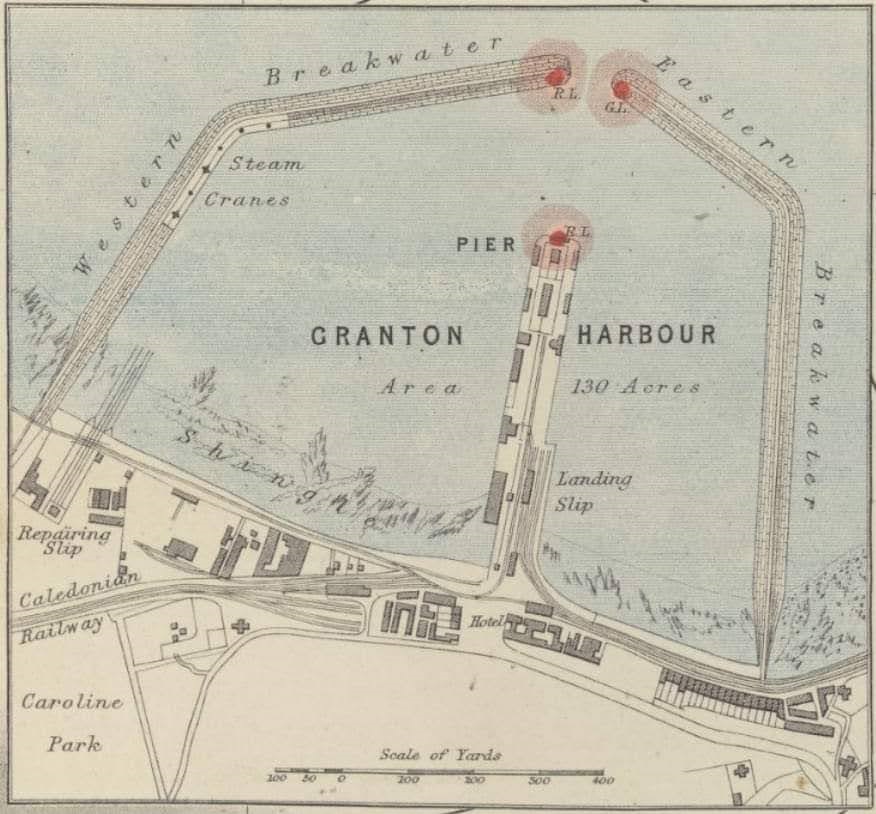
Once it was water then a hive of industrial and human activity. Cargo was shipped in from all over the globe, and transported out by rail to the city, Lothians and beyond
Our in-person route
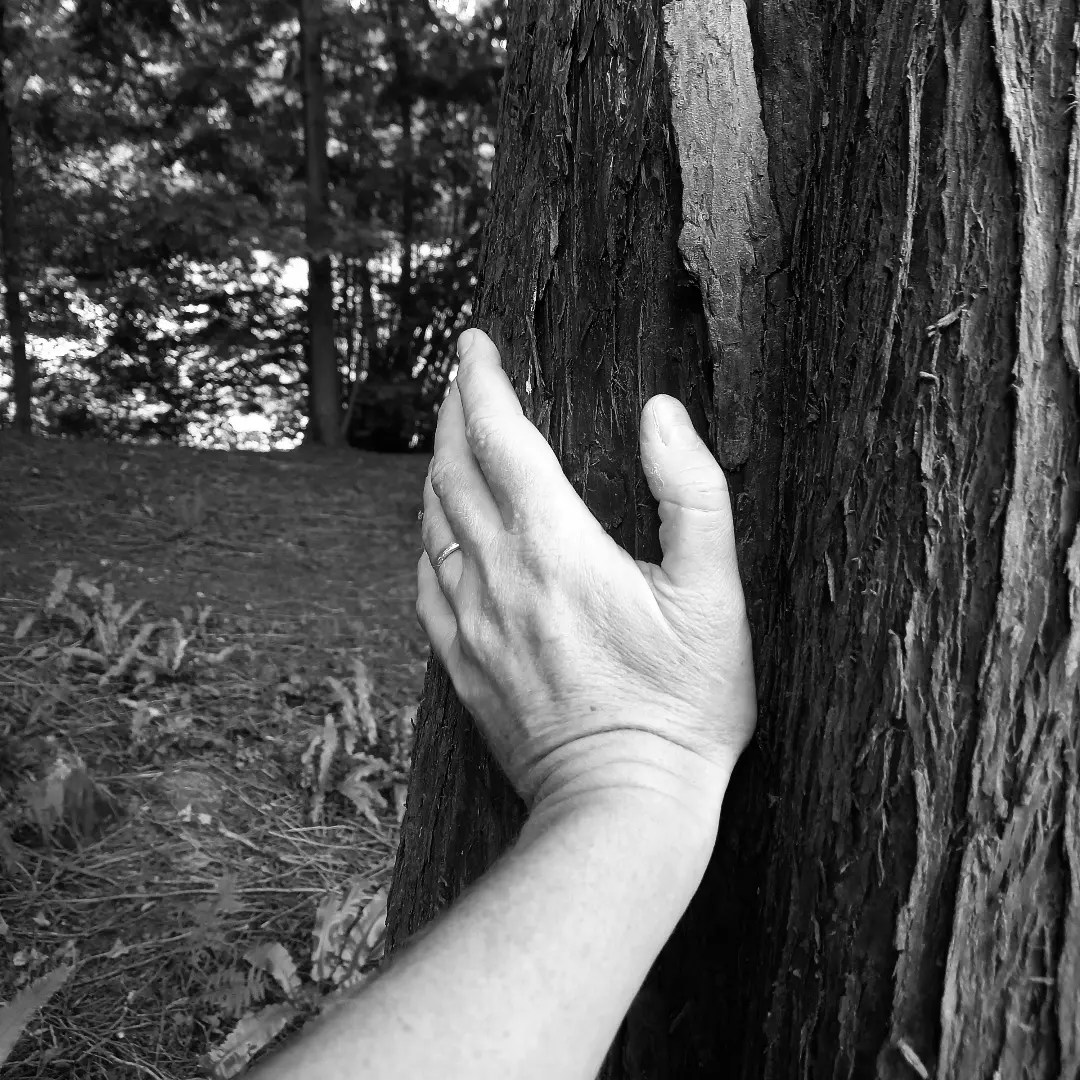
I co-led with Charlotte Rooney and group activities focused on the touch, smell and taste of trees.
Charlotte Rooney
In her blog (see link above) Charlotte wrote about:
Symbiosis
Reciprocity
Listening
“My breath feels grubby today, a bit noxious, and it’s uncomfortable, until I remember that this is exactly what the tree needs. My breath is a treasure.”
Charlotte Rooney
Looking back towards the harbour – Waterfront Avenue
What happens when you change the name of a place?
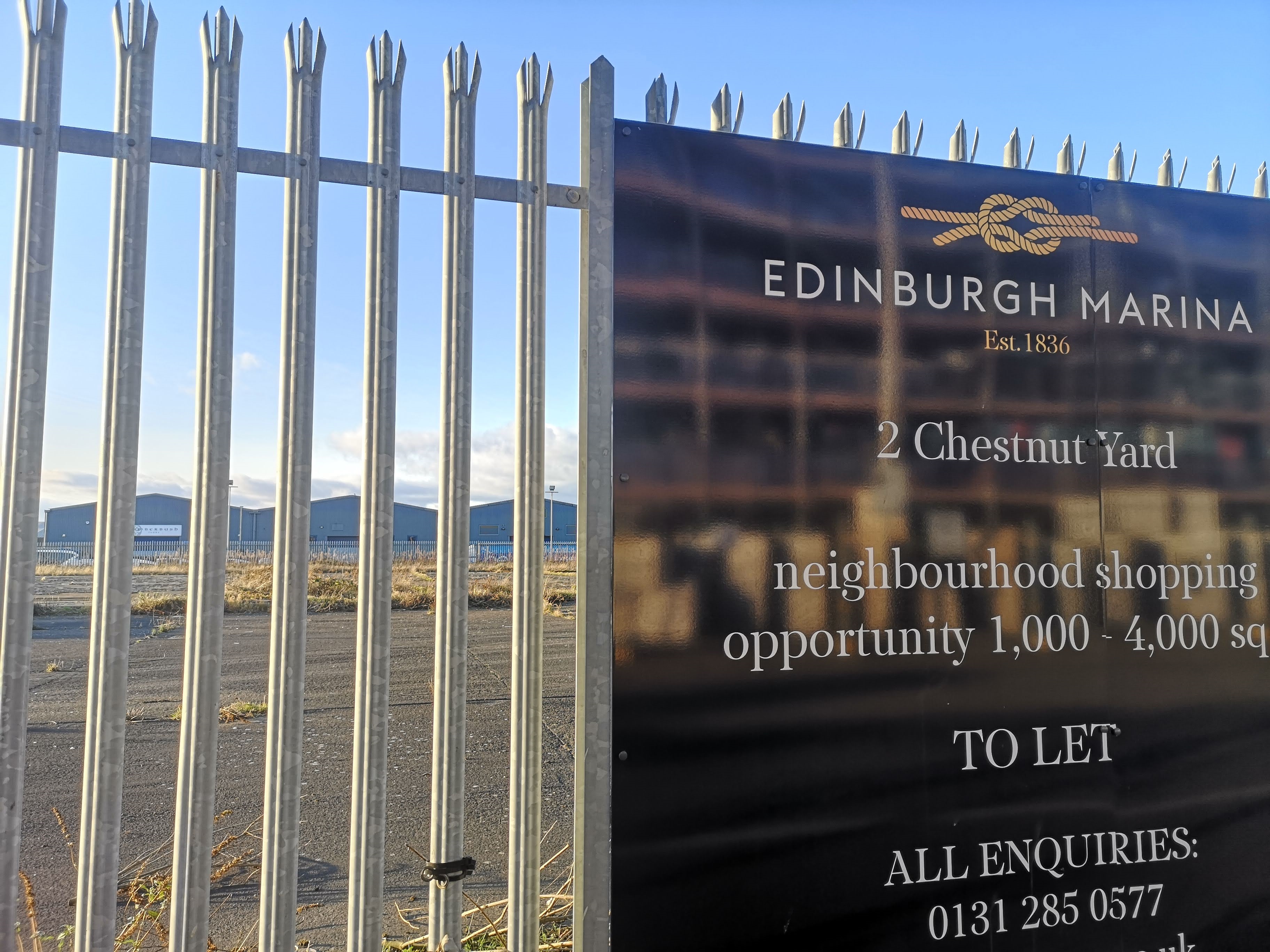
Posing questions about the importance of naming and local history in ‘belonging’, we walked streets that had other names before now. Their new ones come from the City Council’s list, so Chestnut Street has no relationship to Chesnut (sic) Rock which is shown on the old maps, and Granton Station is not where it once was; its name has been given to a different building entirely, thoroughly confusing local people who once played there as children.
Exactly how much earth is needed?
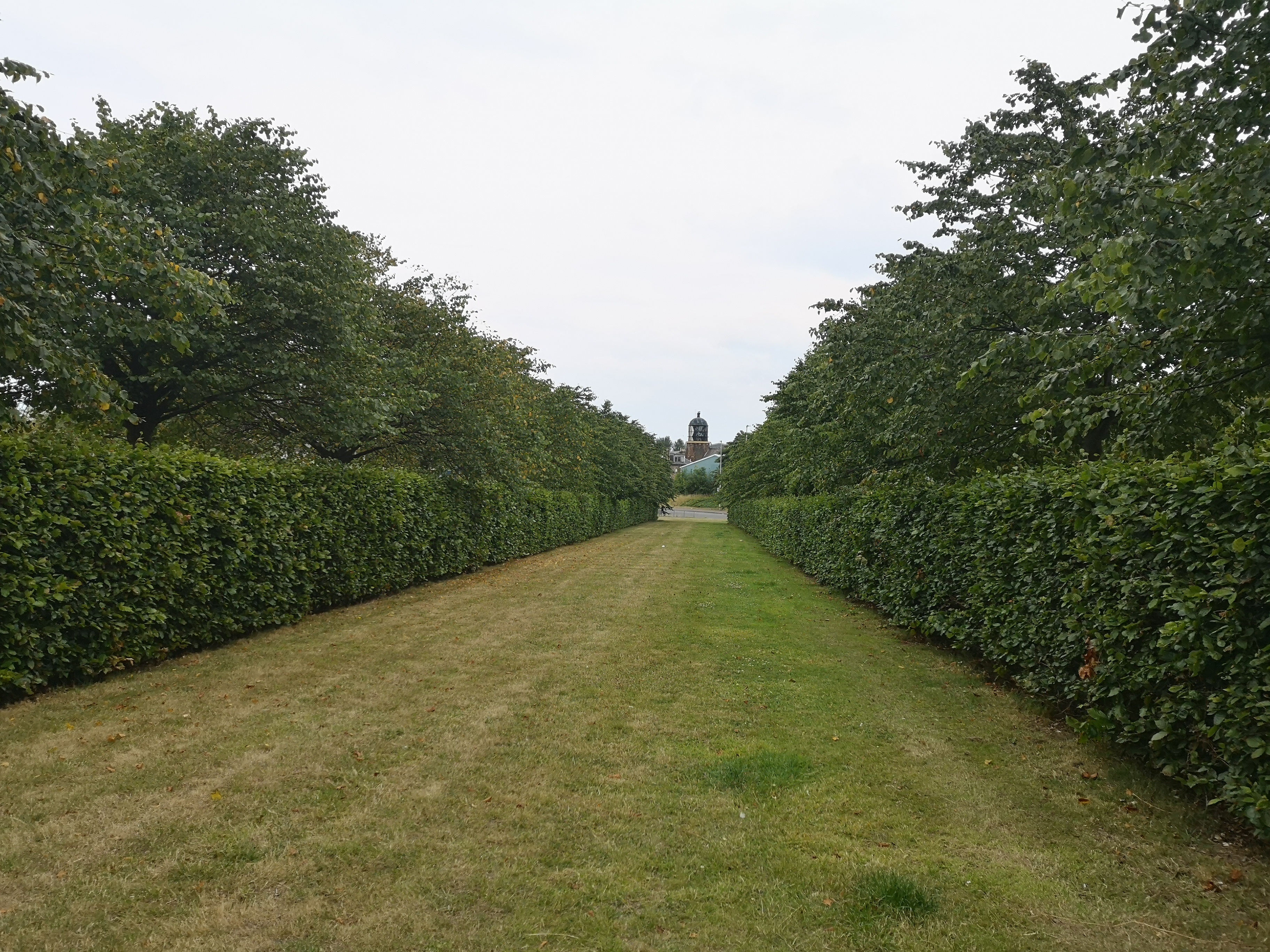
We asked how much earth we all need to thrive on, and this question brought about tension between the need for new housing and the necessity of trees. 20 per cent of the new Harbour development is planned to be affordable, but the rest includes a 4 star spa hotel and luxury flats with free dog washing facilities. Is that a good balance? Architectural plans show that new trees will be planted in pots, and a development which took place 10 years ago now sports rows of quite established Limes and substantial manicured hedges. The trees which have been ripped up against local people’s wishes have left raw land behind the new Granton Station. Is all this enough – for repairing the environment, for our need of a little ‘wildness’, for the psychogeographer’s bent towards some chaos in an otherwise geometrical world?
Artists from Scotland, Australia and England RSVP-ed
Deborah Roberts, Sophie Cunningham Dawe, and Richard Keating posted or sent me images
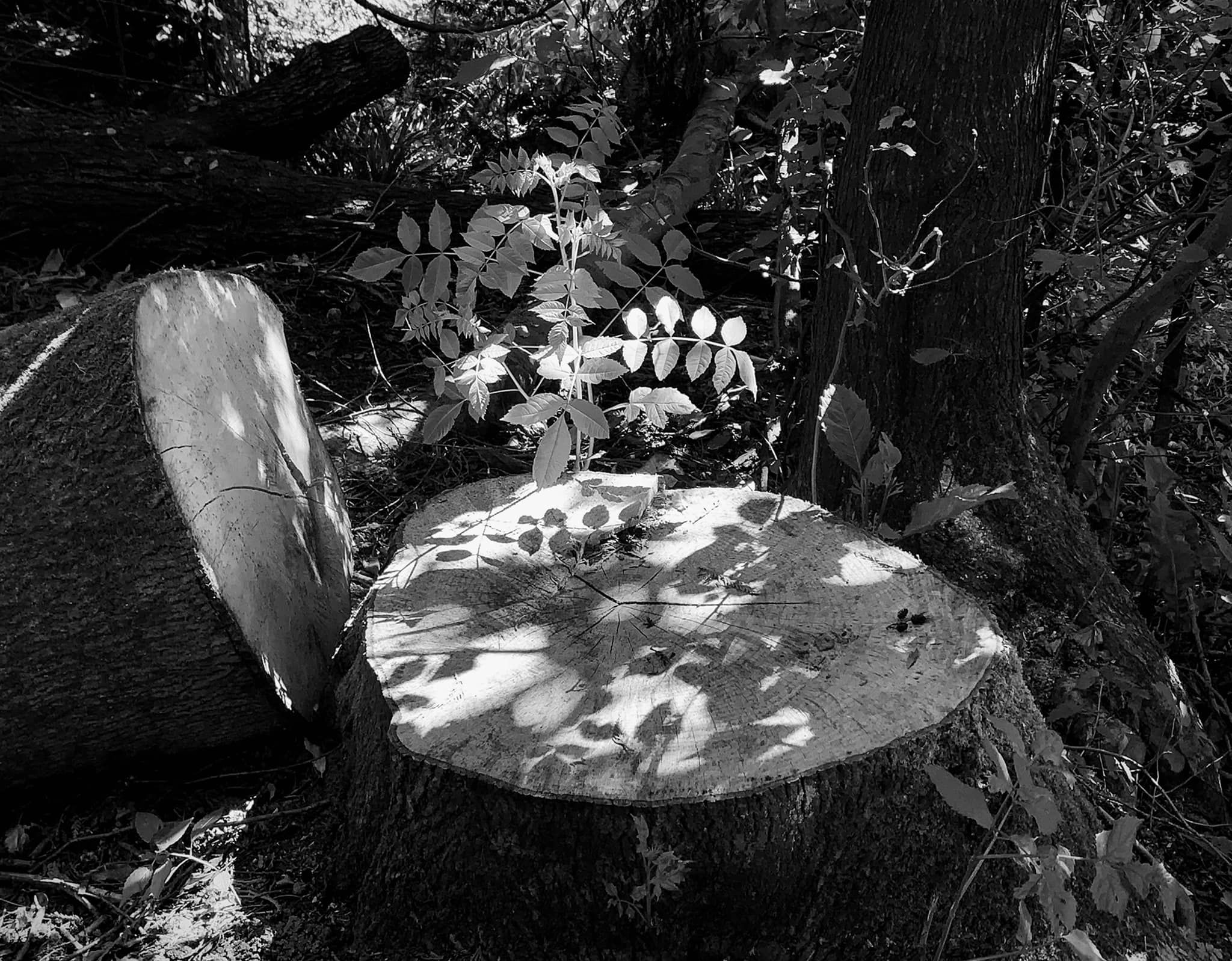
Deborah Roberts – New shoots growing from a felled ash
Richard Keating
what happens in the mysterious space/place between gaze and subject of gaze, observer/participant?
Richard Keating
Sophie Cunningham DaweSophie Cunningham Dawe
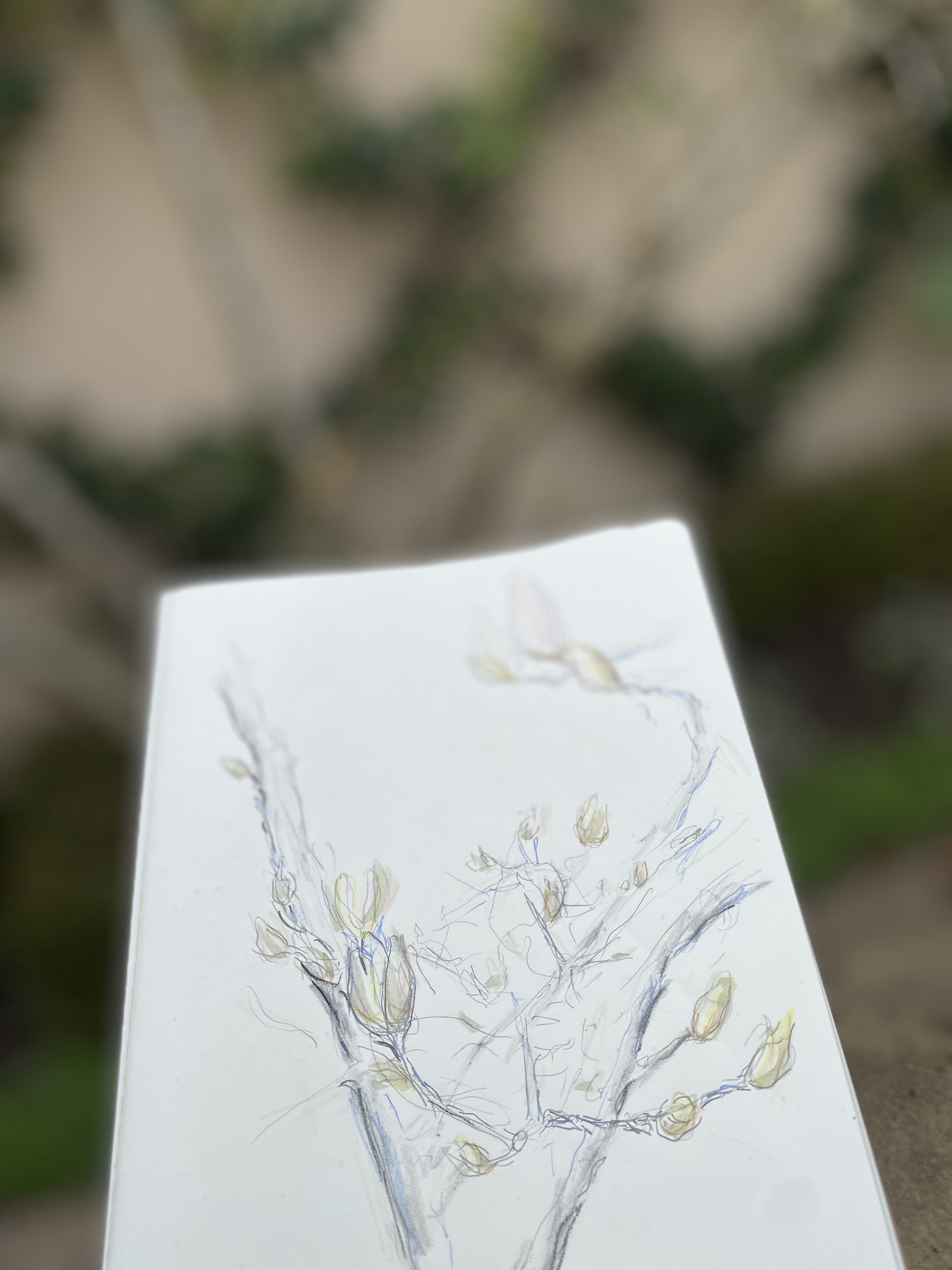
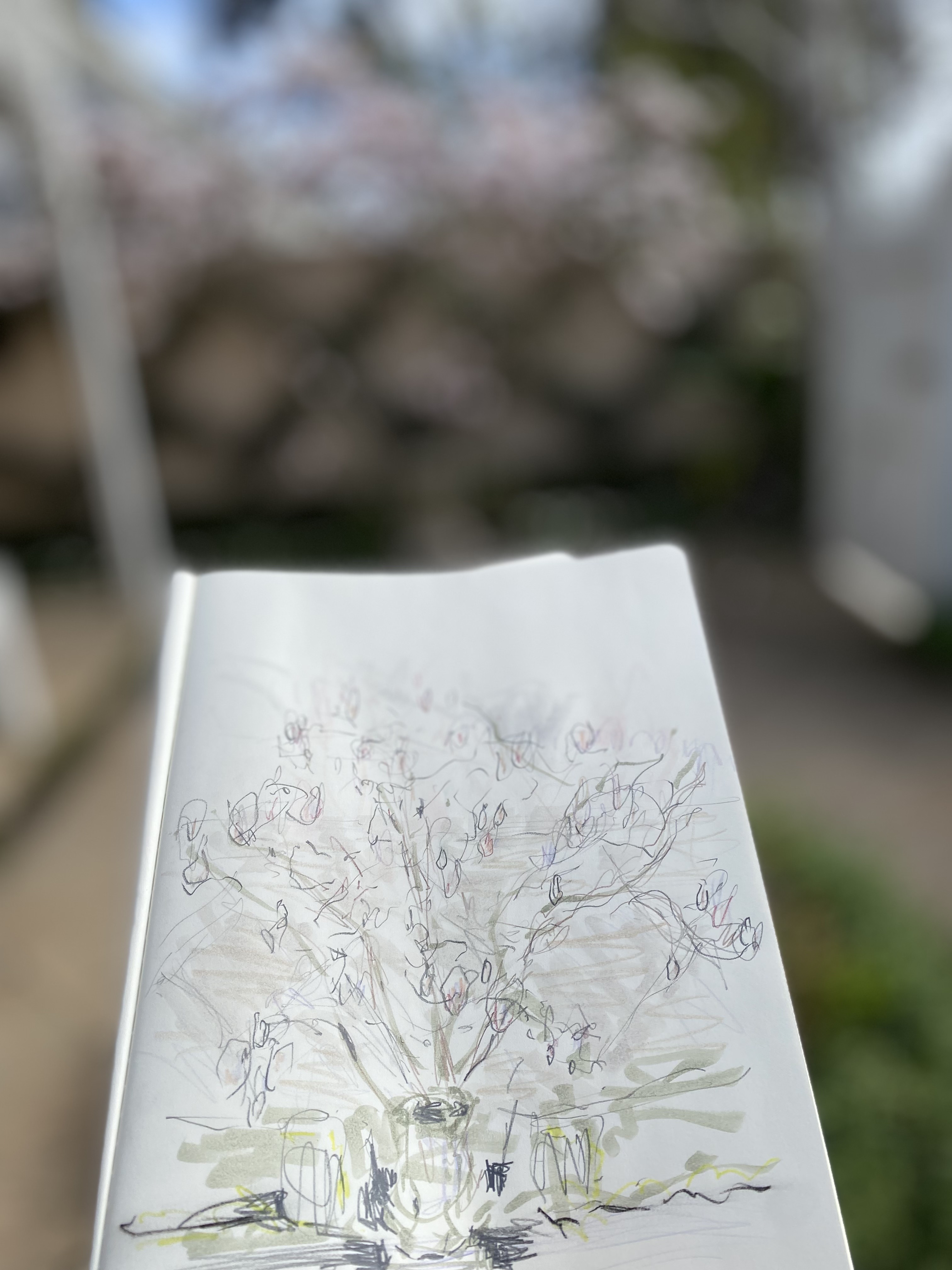
Your project offered me a simple way to spend time with my mother’s beautiful tree… I am grateful for the drawings I made, simple gestures/ memento artefacts, a gentle marking of a significant time/place/memory
Sophie Cunningham Dawe, Melbourne, Australia
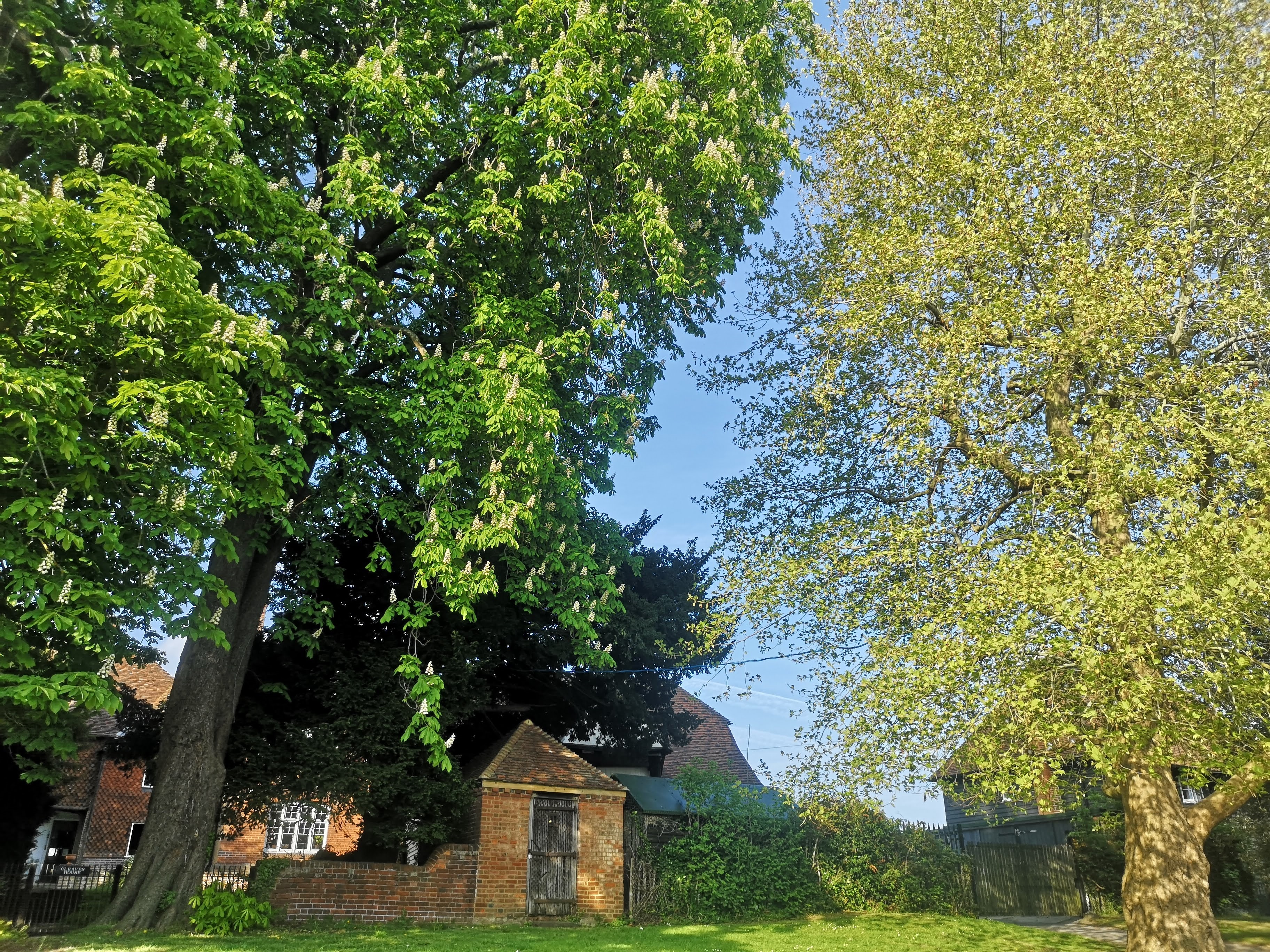
But where are the Chestnut Trees?Quite a contrast from this chestnut tree in a leafy Kentish village
This was a community event with Tamsin Grainger and guests, and we were happy to have Ruthe, Arboricultural Officer at the City of Edinburgh Council with us to hear our concerns and offer her expertise. No-one from the new Granton Development answered the invitation.
From….to…
Disorientating, shocking, disrespectful
Now we were here, now we are not
Ffrom one minute to the next, such immense changes, such age and service, uprooted overnight


 Walking without a donkey