Camino Portuguese da Costa – Day 14, October 2nd 2019
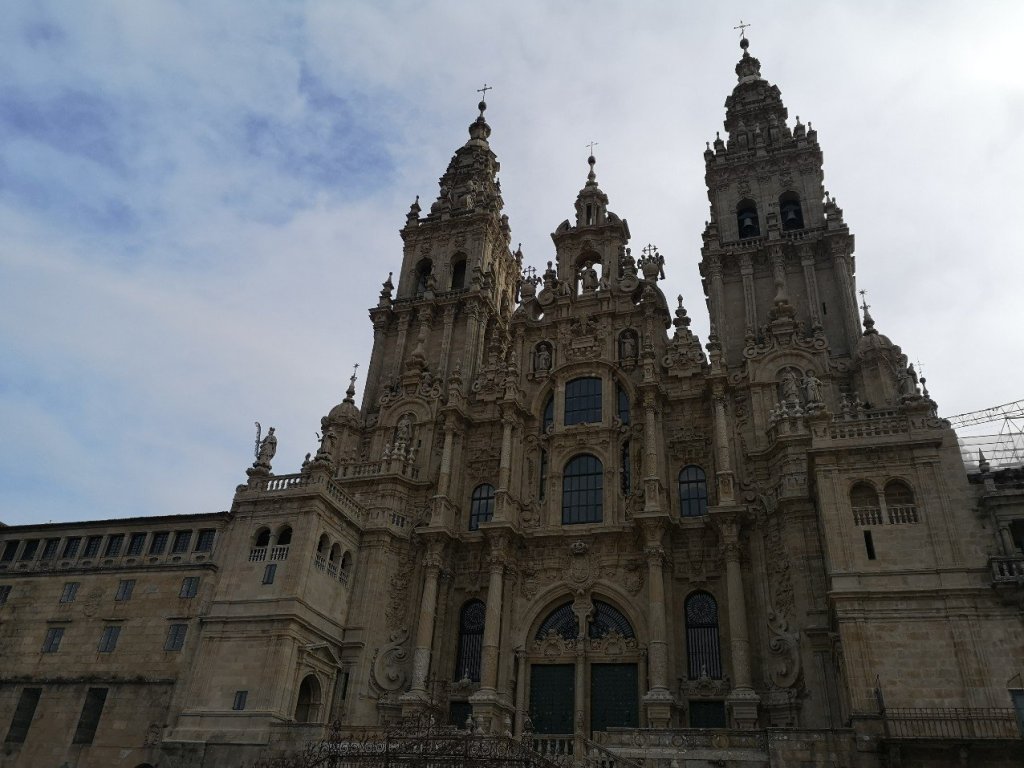
It is 25 kms from Padron to Santiago and I was not confident I would manage that with the extra 3.2 kms from Herbón to Padrón, so I decided to break my journey in Teo, making two, admittedly short, days out of one longer one.
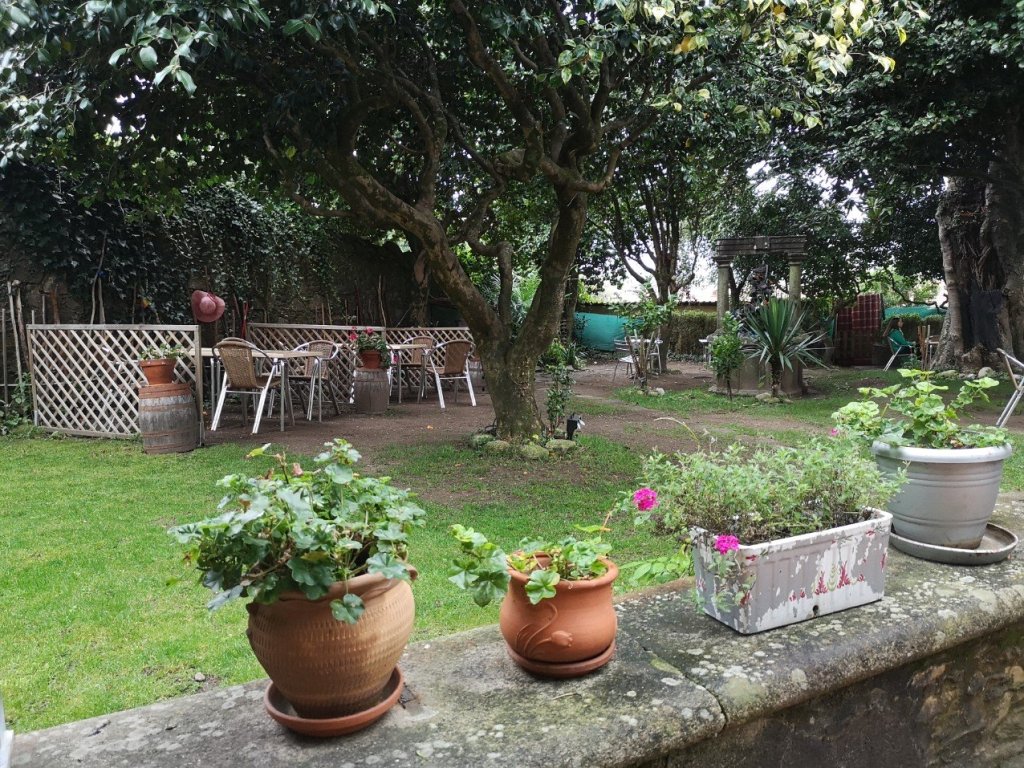
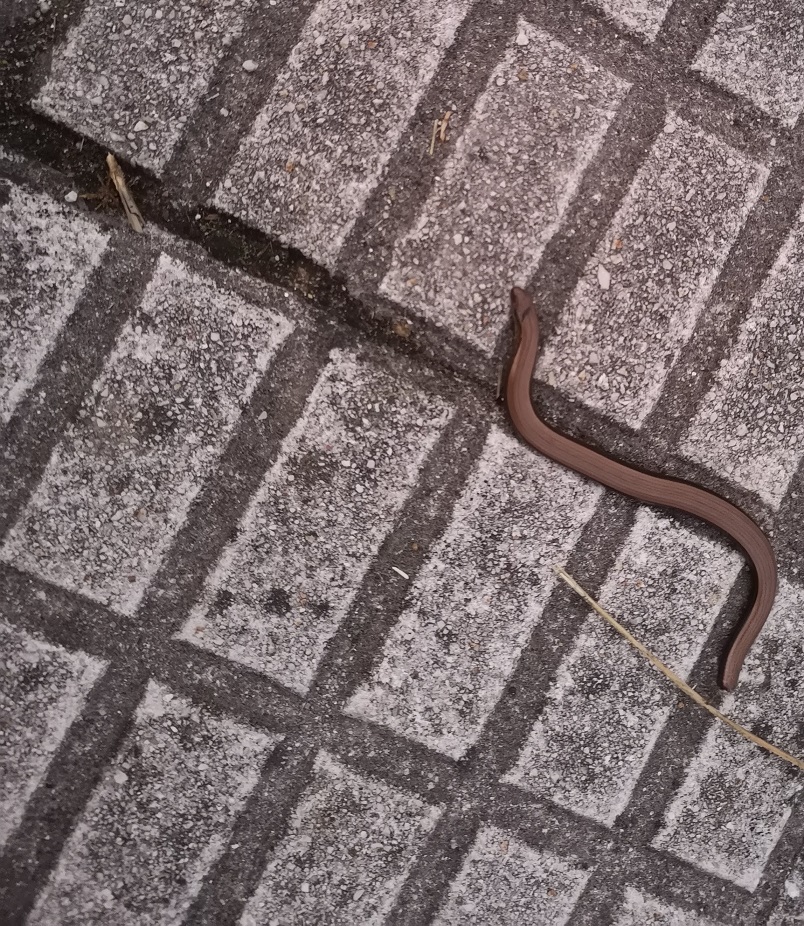
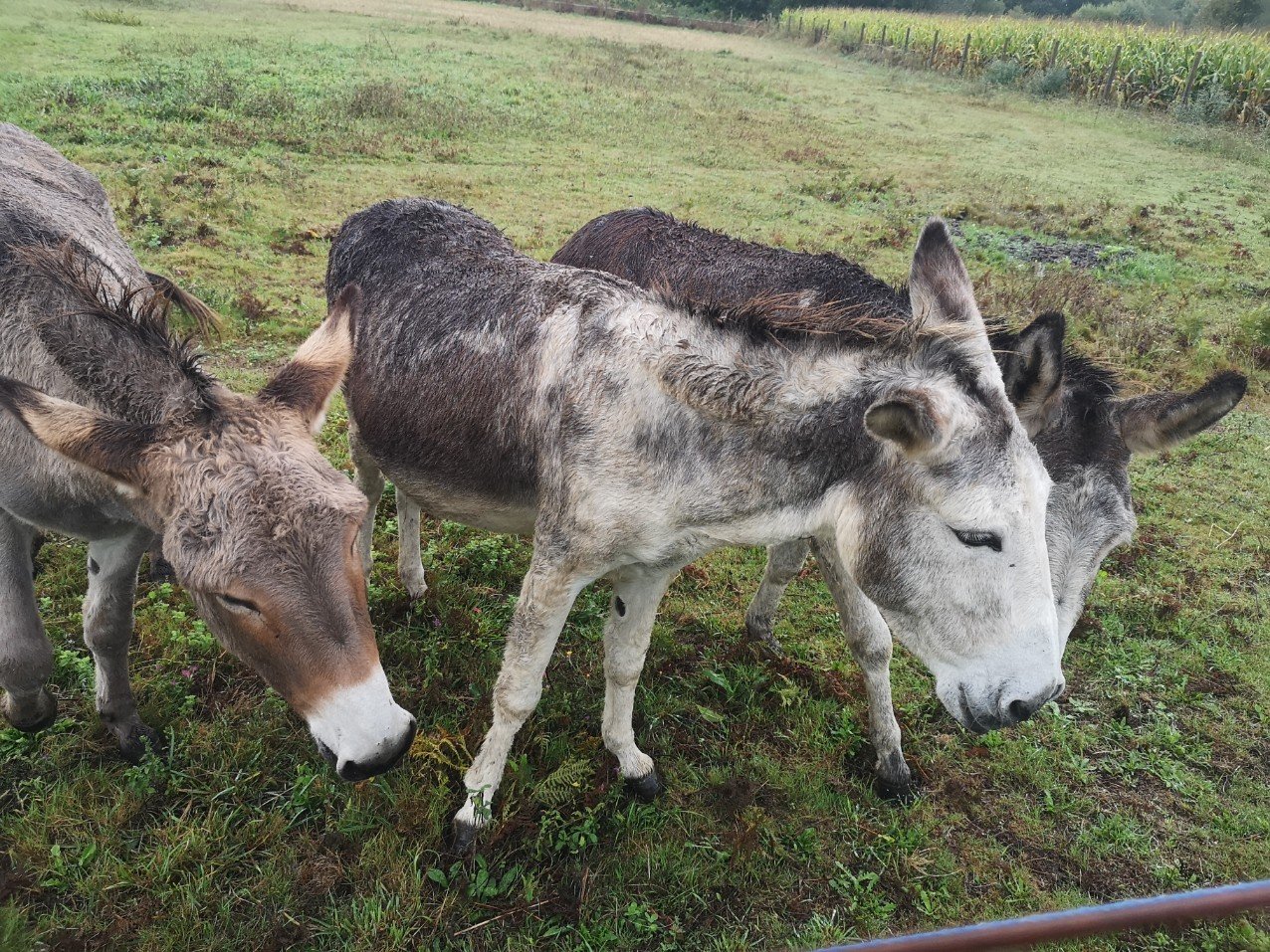
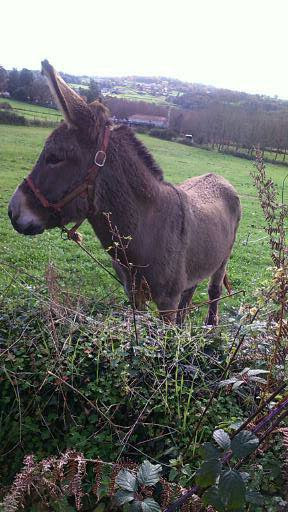
I took a last look at the gardens of the monastery of Herbón, Spain and spotted this little critter slinking its way amongst the stones
They played music to wake us up at the Herbón monastery and then there was a return to the large dining room for a shared breakfast. Although we had arrived through countryside, the path out, towards Padrón, was almost immediately into a village and then along a main road.
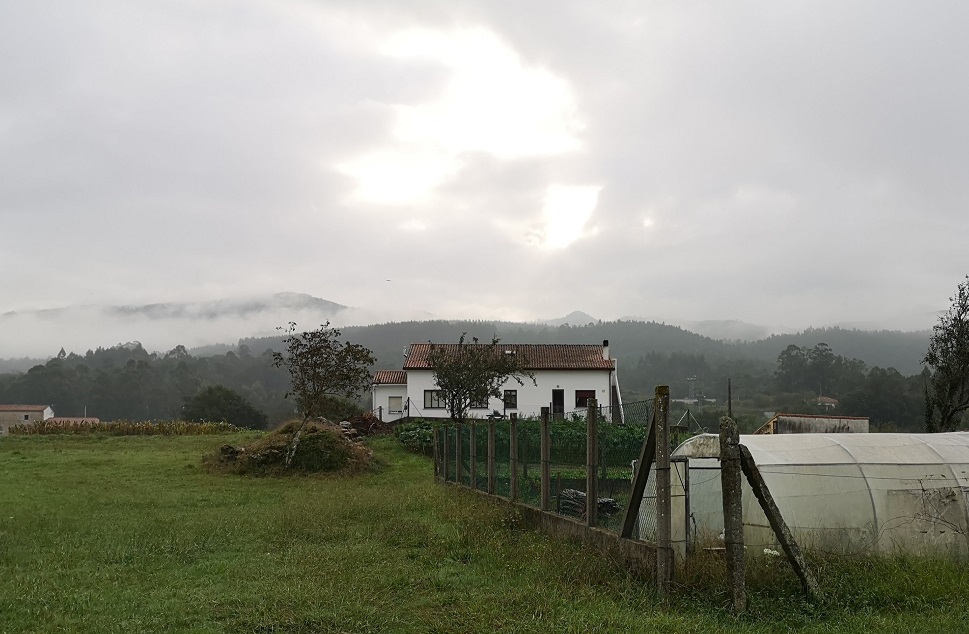
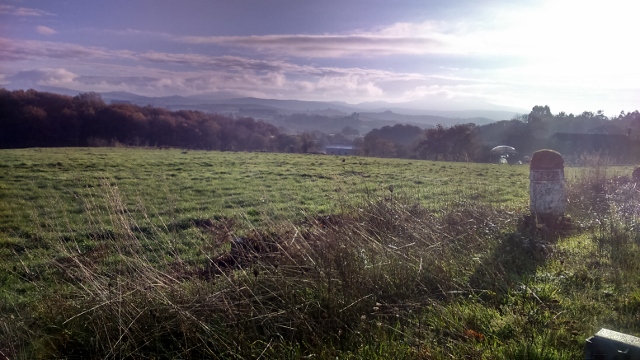
A typical Galician scene with terracotta rooves, fruit frames and misted mountains in the background, Spain
I was on the Ruta dos Xardins da Camelias, heading towards the home of padrón peppers which we had been told the previous evening didn’t really emanate from Padrón at all. It doesn’t stop them being one of my favourite dishes.
Crossing the River Sar with a wonderful view of the Iglesia de Santiago de Padrón. Still dark enough to merit headlights. Spain
I waited in a bar for the pharmacy to open so I could get some anti-inflammatories for my left foot which was still very painful.
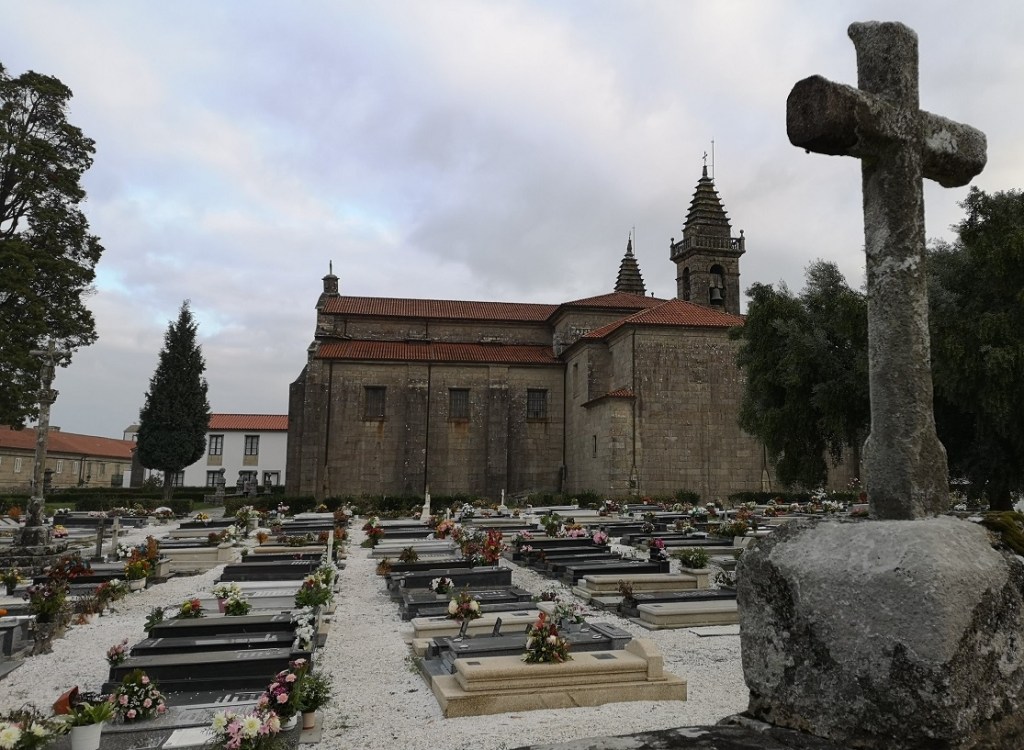
Flattened graves surrounding a traditional Galician church, Padrón, Spain
Perhaps that is Monte Meda (1454 feet) in the distance, half hidden by low cloud cover, the sun trying hard to shine through, Galicia
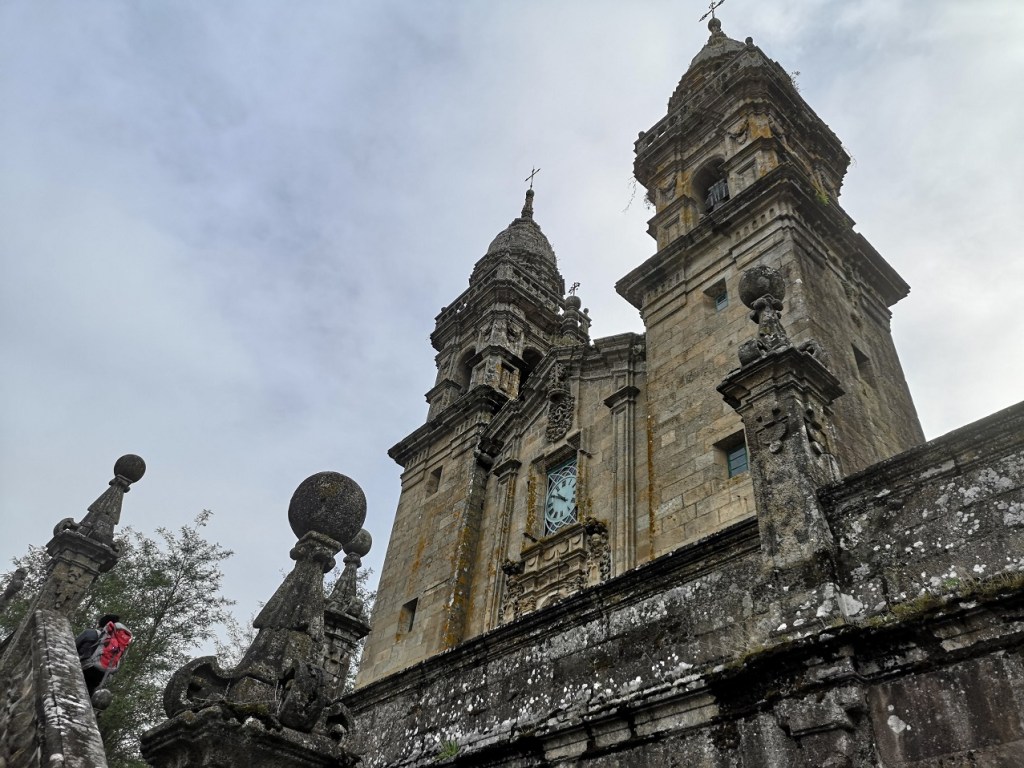
Approximately half way there and I came across the Santa Maria de Cruces Church with its ornate twin steeples, A Escravitude, Galicia
I heard them before I saw them! Hunting dogs keen to get a look at the pilgrims
One was really determined – squeezing sideways under the fence!
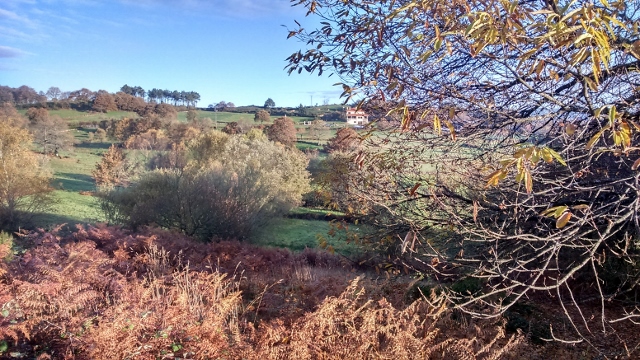
And then I was in the rural landscape I love so much. Grass and sheep, scarlet willows with yellow branches stemming from a single point, just a few green leaves left now as winter approaches – nothing too carefully kept.
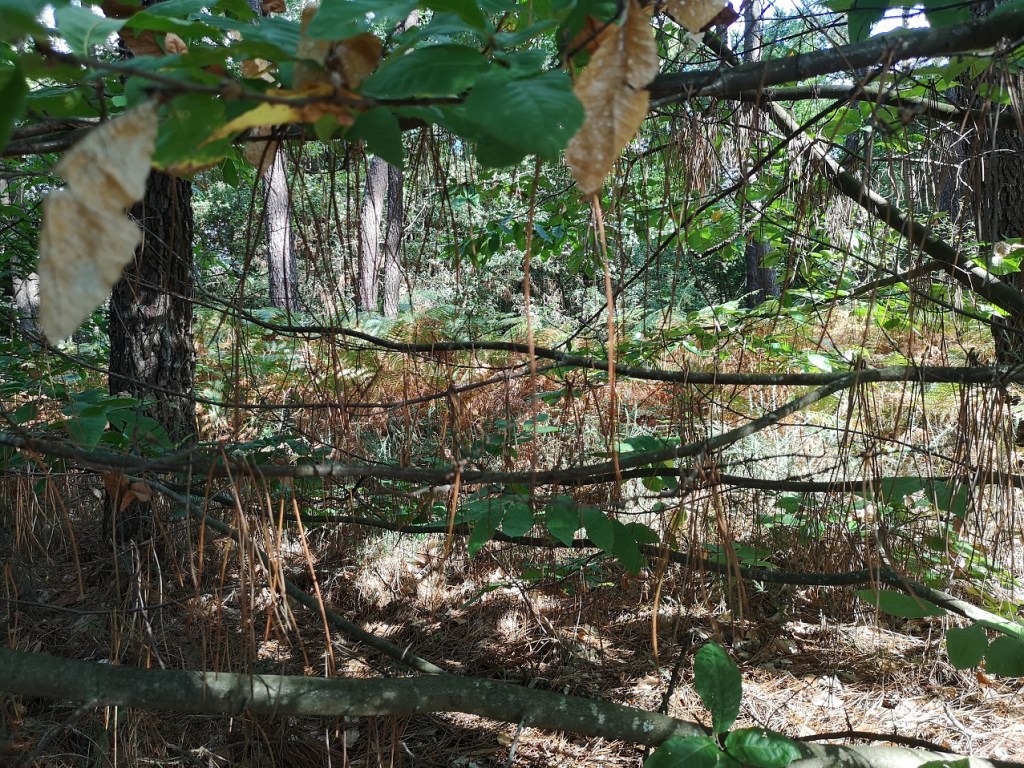
It’s when the pine needles turn brown and fall. They catch on branches below and create this chopstick effect
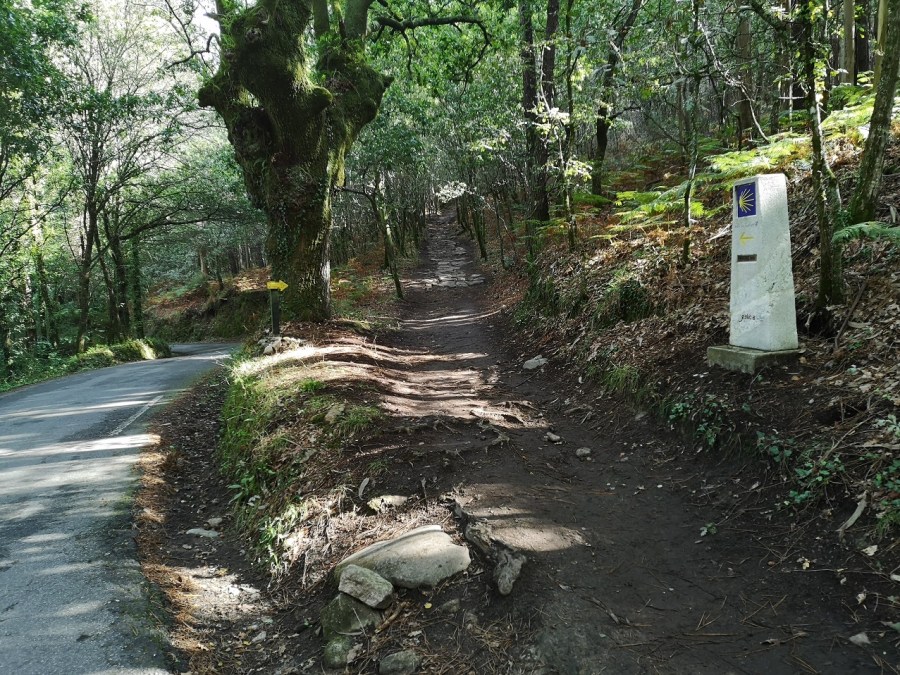
Look carefully and you will spot the yellow arrow on the tree in the centre. Getting close to Santiago de Compostella now – ‘the end of the road’, Galicia
Onto the Ruta Saudable de Teo, the healthy route, where you cannot pick flowers or frogs, but you can hike!
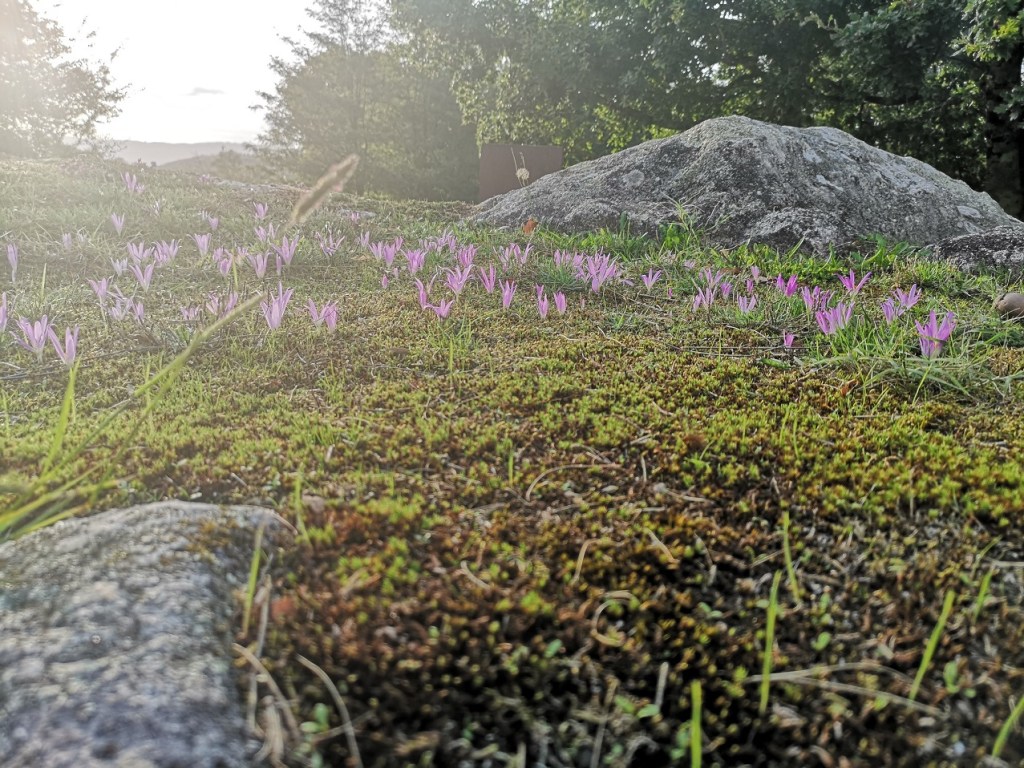
Autumn crocus in hazy sunlight
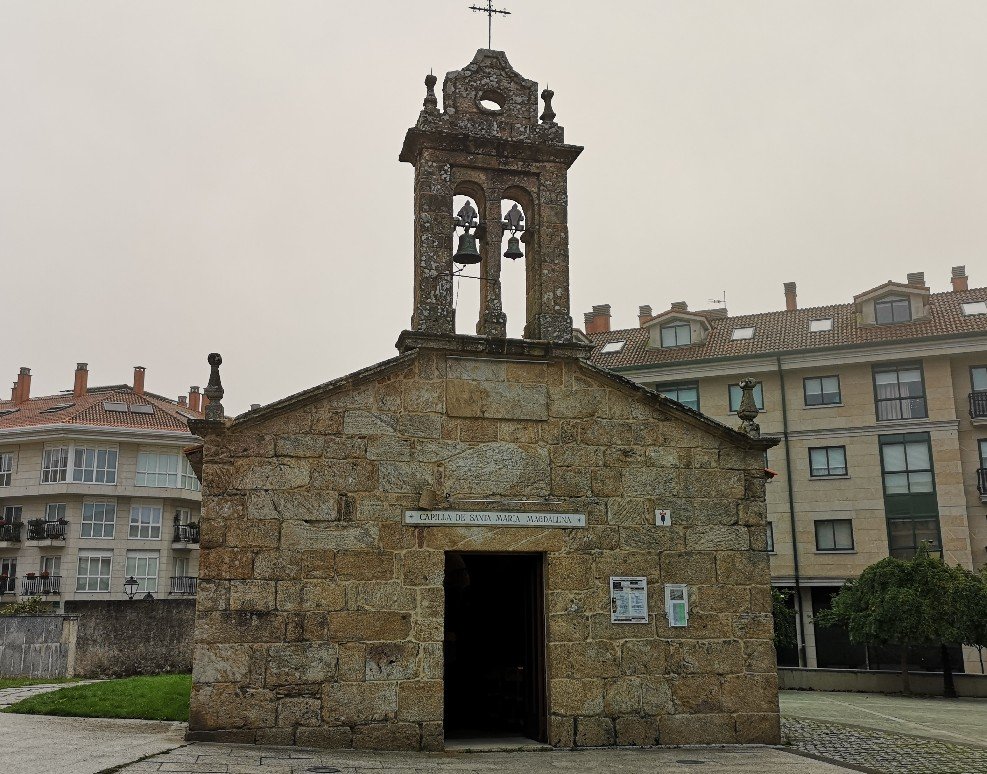
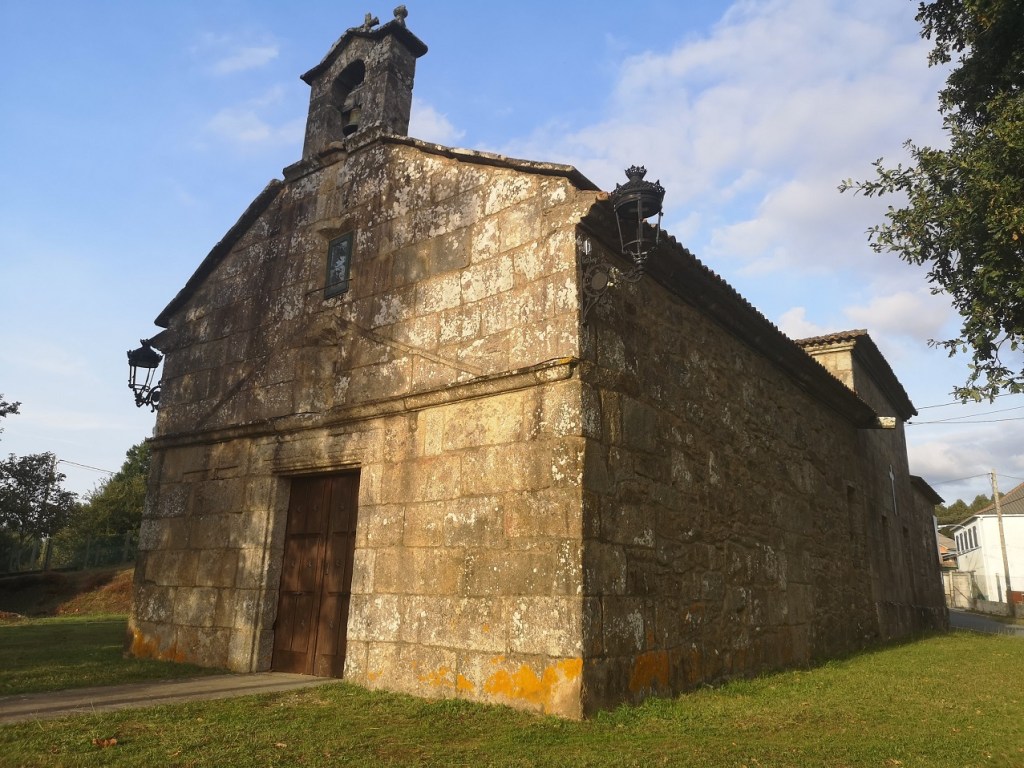
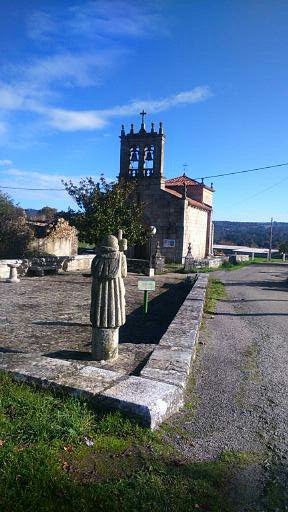
Capela de San Marino de Ruta de Francos: modest, solid, ancient, Galician
The country roads were lined with almond trees, almost neon in their greenness, and forming a backdrop to lush undergrowth, rough-stalked bracken. I happily trotted along, constantly overtaken by others rushing to the finish line.
The albergue Xunta de Teo (municipal albergue at Teo) is in a beautiful spot, a drop down from an extremely busy main road, but accessed by the walkers from the opposite, safe side. There are cafes both down and uphill, and they are equally idiosyncratic. Shops can be found even further on: the one at a service station is often open, the much smaller village store is shut for hours at lunch time.
The albergue was closed on arrival, only opening much later (4pm) with a queue, and filled up very quickly, so that many were turned away. It is run in a haphazard sort of a way and there are no utensils in the kitchen.
While I waited for it to open, I sat under a plastic awning and wrote and read and ate p. peppers and drank beer and it was expensive, in comparison to other places.
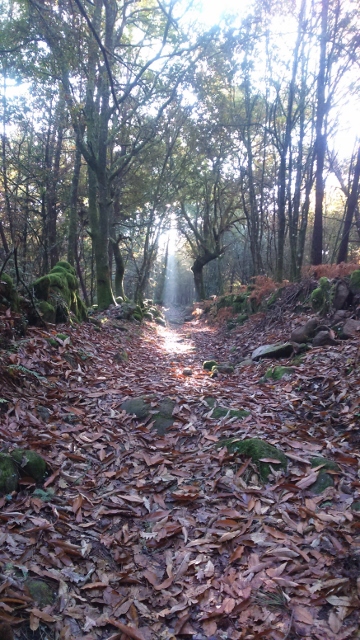
In all I went up and down that road a few times, eventually getting supplies for the evening meal, and then wandered back through the forest, past the church and other very smart looking buildings, several of which were supposed to be a restaurant and up-market accommodation, but both looked uninhabited. It was like a rekkie for the next day (in the opposite direction), very pleasant, and I returned to sleep when it was almost dark.
Camino Portuguese da Costa – Days 11 and 12, September 29th – 30th 2019
How many kilometers between Pontevedra and Santiage de Compostella?
Pontevedra to San Mamede de Portela
I left the Casa A Grade air bnb (see my previous day’s walk for details) in the almost-dawn, and continued along the Rio Tomaza into Pontevedra, a 40 minute walk.
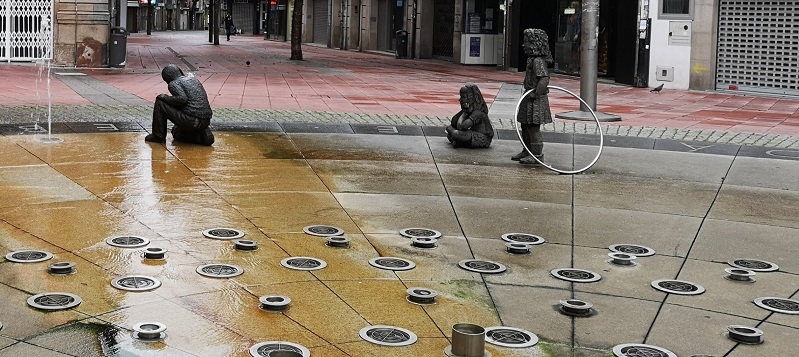
Glorieta de Compostella – Fuente de los Niños (Fountain of drinking children) at the interseccion (intersection) Rúa (Road/street) Peregrina con (with) Rúa Fray de Navarette 36001 Pontevedra, Spain
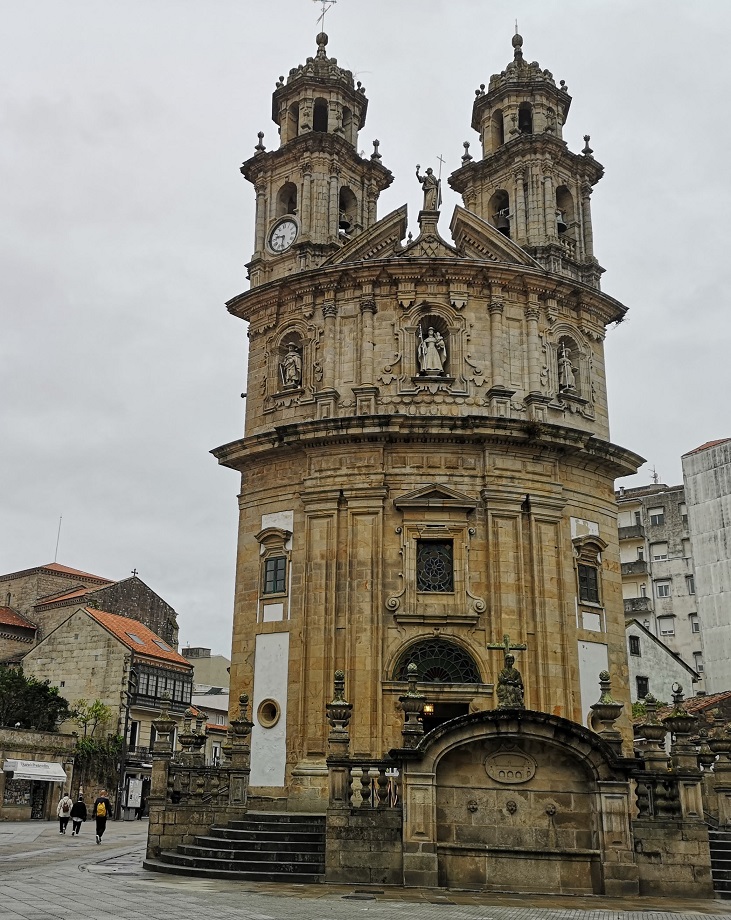
The Capela (chapel) de Peregrina (of female) pilgrims, Pontevedra, Spain
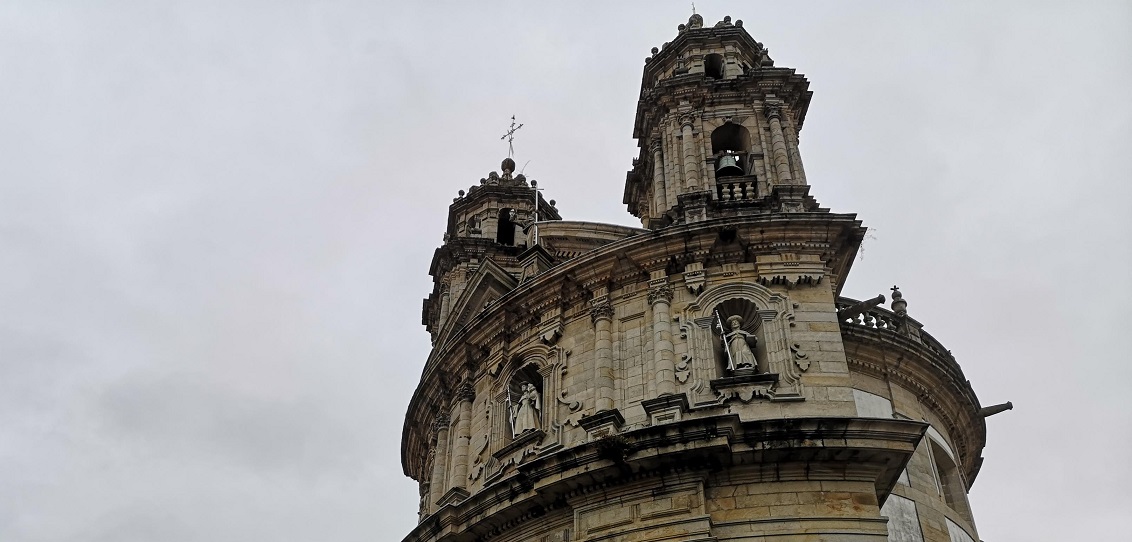
Detail showing St James, The Capela (chapel) de Peregrina (of (female) pilgrims, Pontevedra, Spain
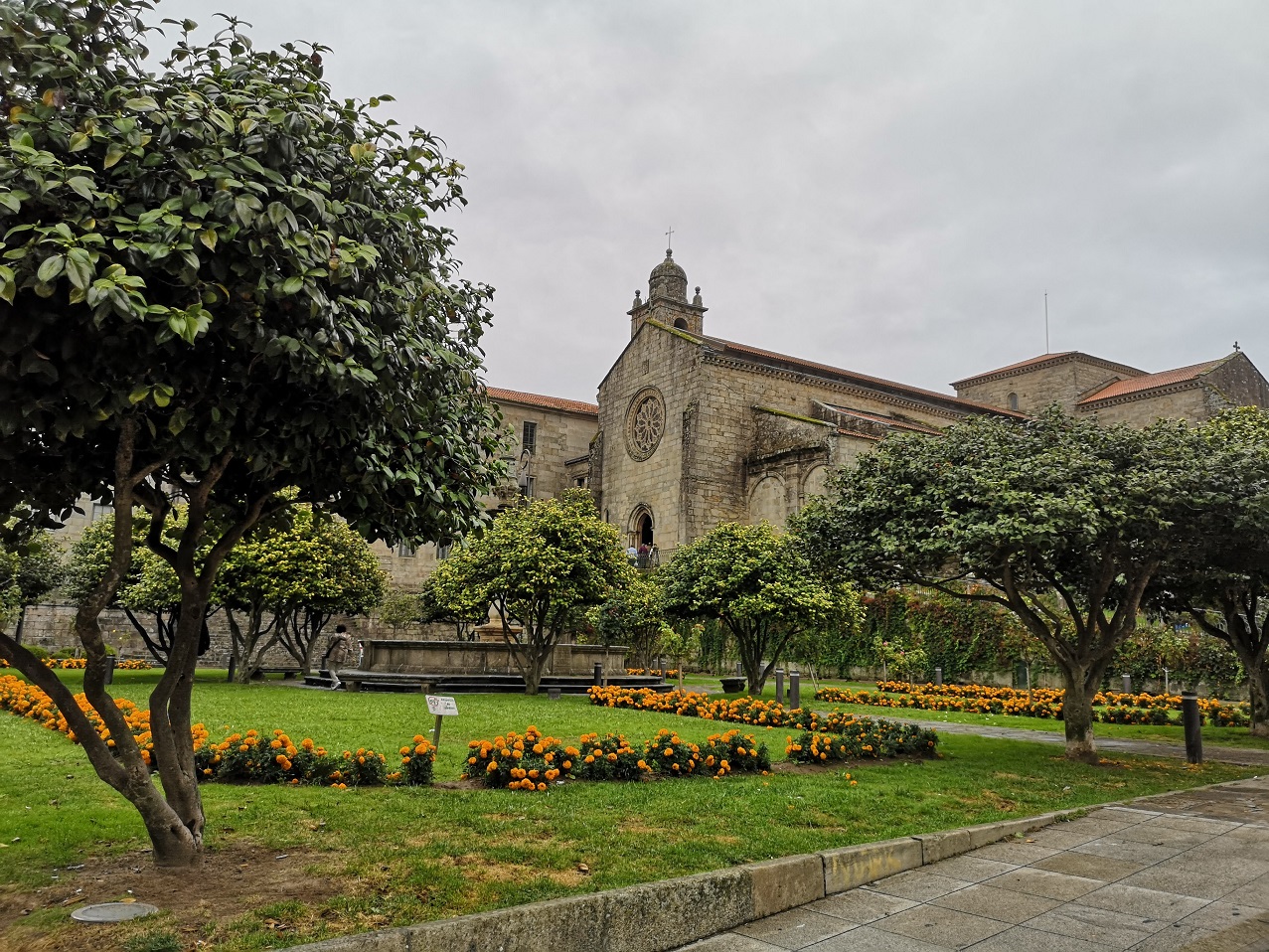
Convento (convent) do San Francisco, Pontevedra, Spain
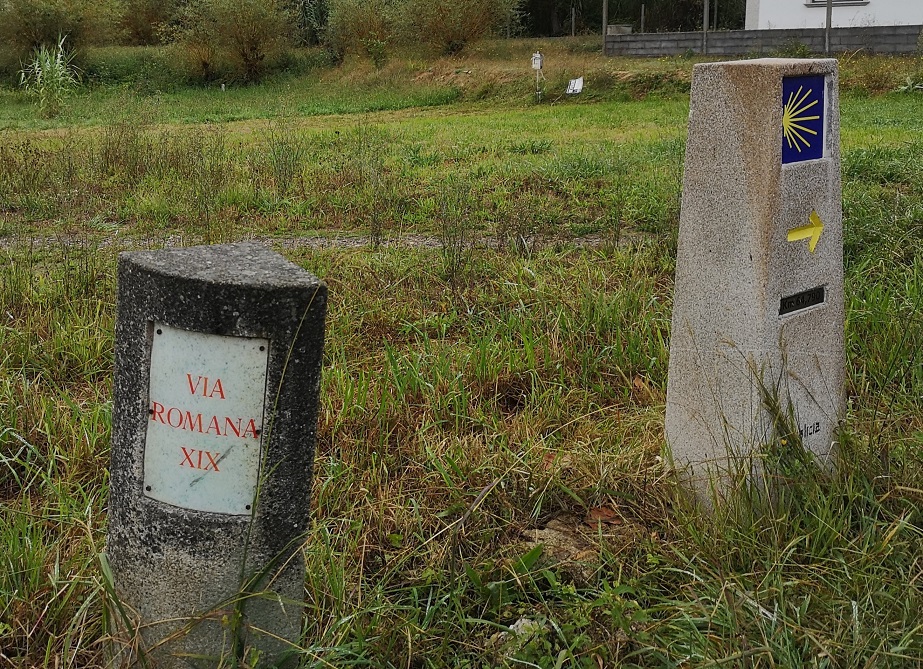
Leaving the city, I once again rejoined the Via Romana / Portuguese Camino
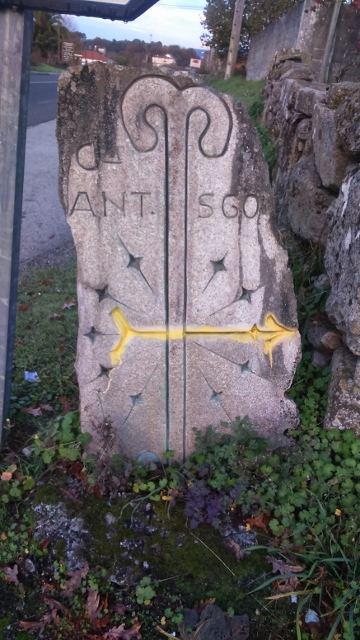
Via Romana XIX and yellow arrow / iconic signposting for the Camino de Santiago, Spain
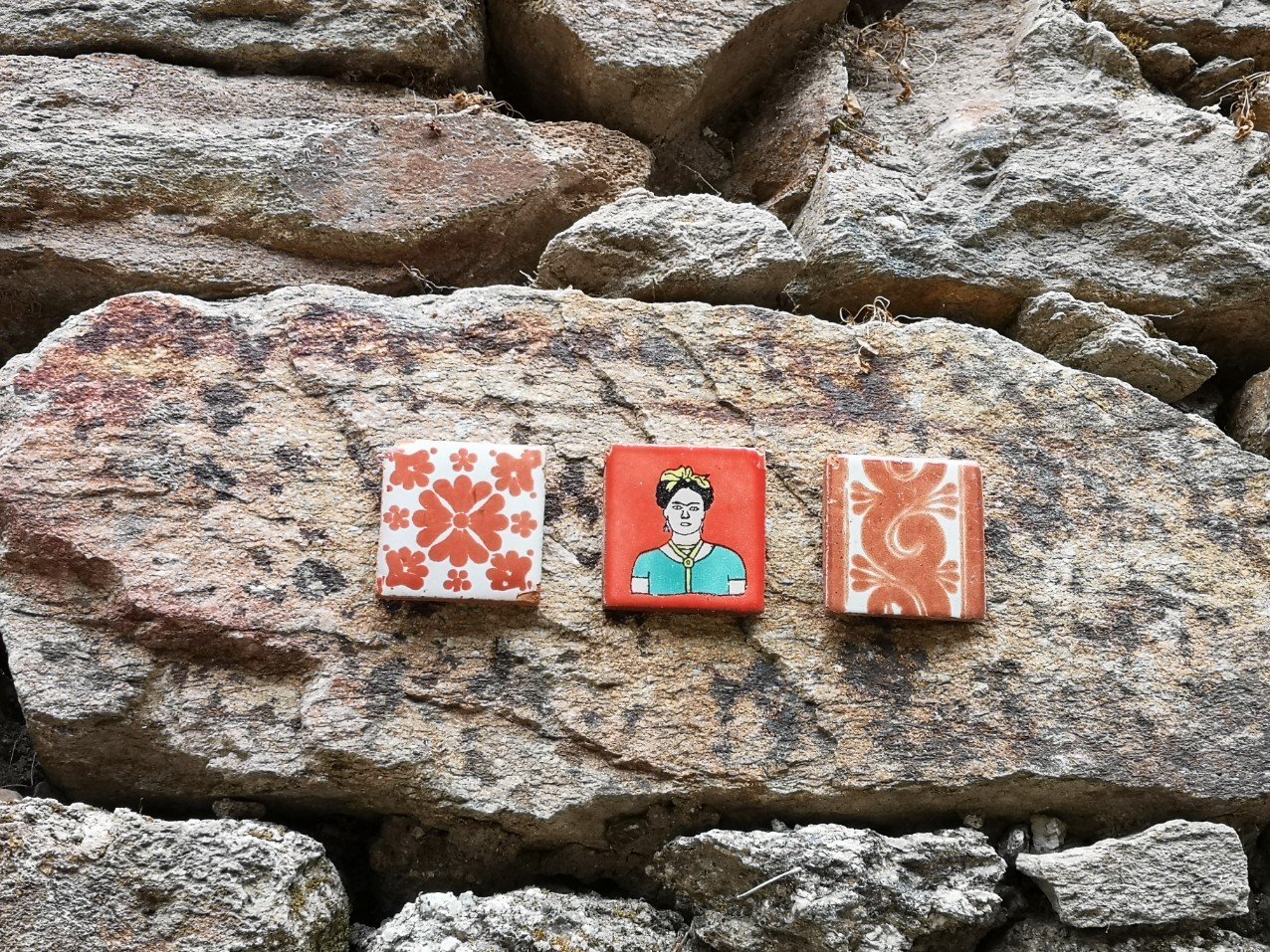
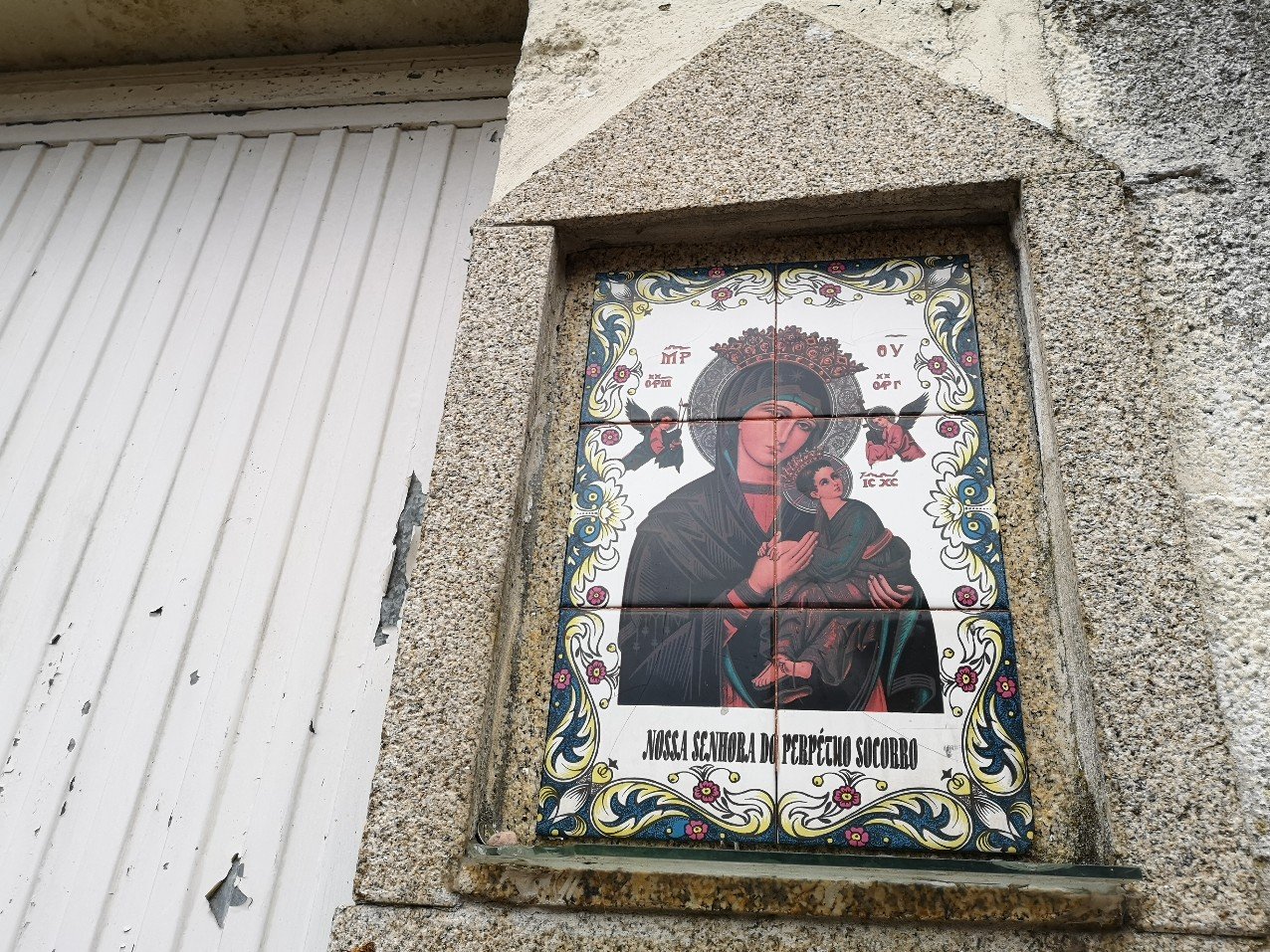
The Virgin on decorative tiles, Spain
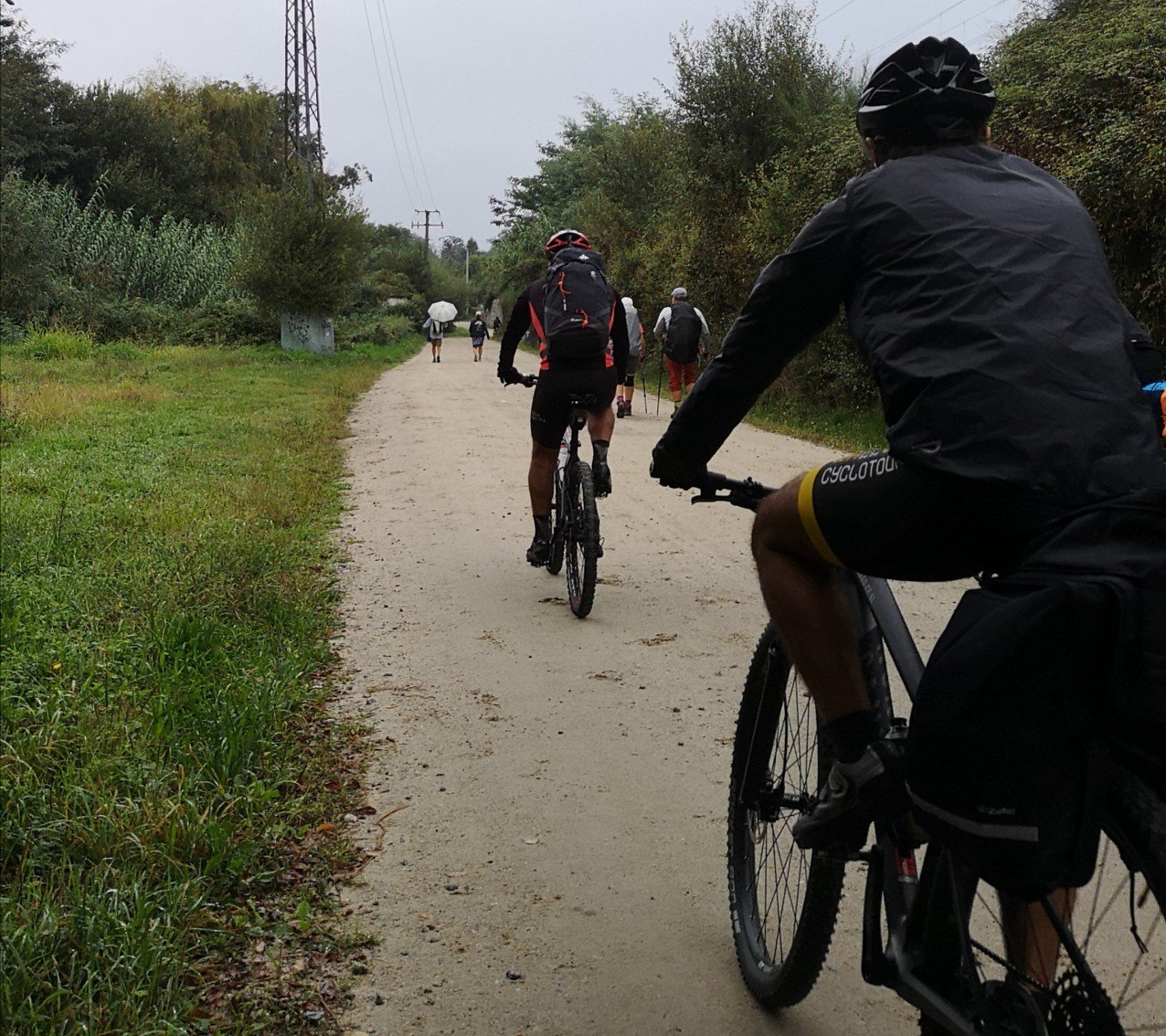
Being a Sunday, the cyclists were out. When you are walking quietly, focusing on the way your feet meet the ground, allowing thoughts to meander in and out, and then a cyclist shoots past your left elbow with a whoosh and, very occassionally, a Buen Camino, it is a shock. When it happens over and over again, it’s more akin to a small trauma and there is no possibility of resting in your rhythm and pace, you must stay alert.
Sunday cyclists on the Camino Portuguese, Spain
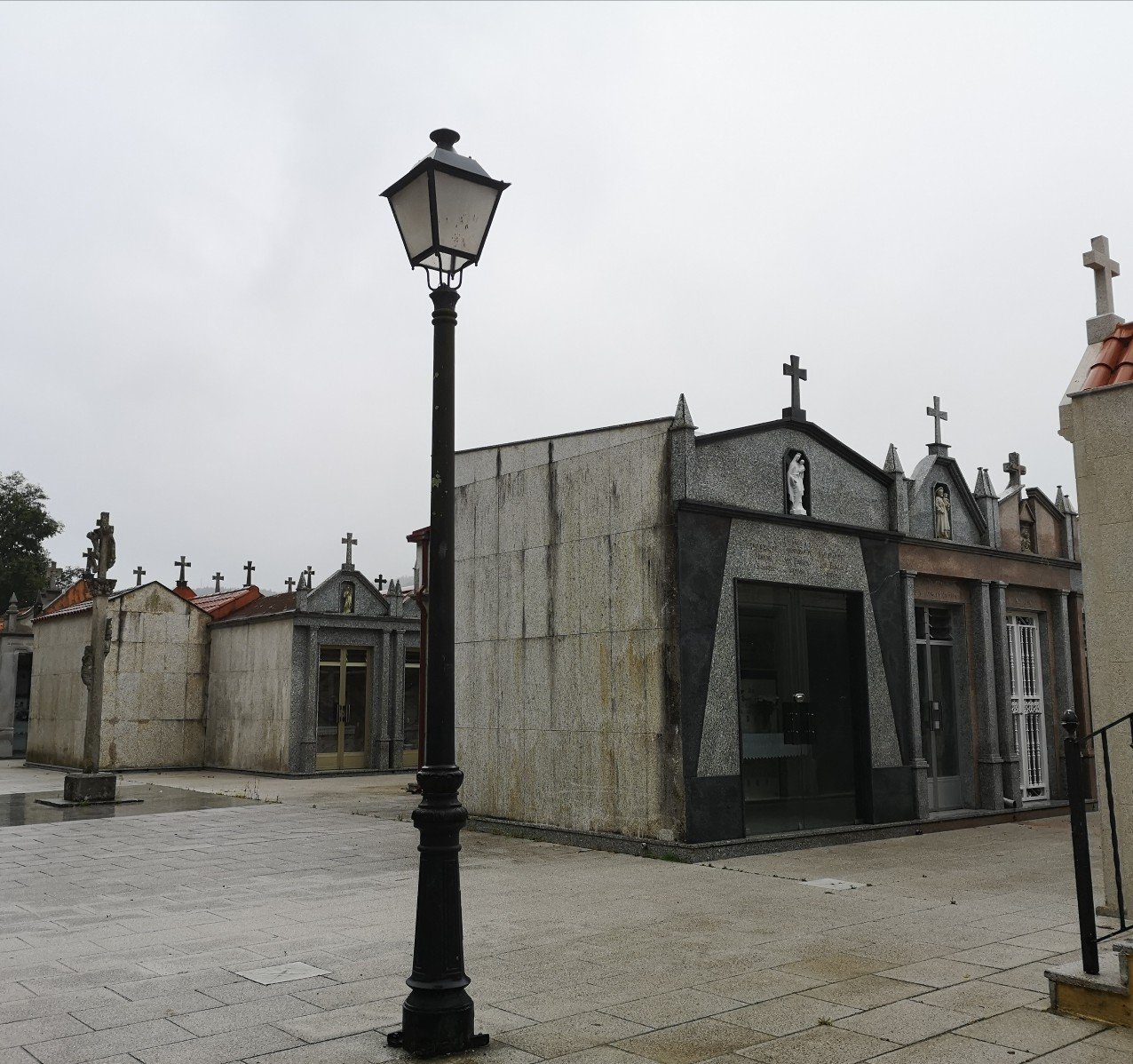
It rained on and off as I passed a cemetery, near San Mamaede de Portela, Spain
Shortly afterwards, it poured and it was not possible to take photos. Arriving at the hostel of San Marmede de Portela in the middle of the countryside, there was no-one to greet me, just a couple already drying off. Thank goodness the door was open! I was soaking, wet through. It was a large dormitory and I chose a corner away from the door, not knowing that there was no heating and that by the end of the day the room would be completely full to overflowing (there were pilgrims sleeping in the eating room etc). It was also very dark and although some of us tried to open windows, they were always immediately closed by others.
Wet walking clothes are stinky, especially when there is no drying room or anywhere to hang clothes / store boots except narrow corridors. If you sleep on the bottom bunk and they are like drapes all around you, there is no getting away from the smell. People were using one hair drier between 20 or more, but it takes a long time to dry sodden socks with one. There is a big garden and other buildings outside, but the weather was too terrible to contemplate unless you arrived very late in which case I did see folk sloshing across, seemingly with no other opton, but I didn’t know where they were going.
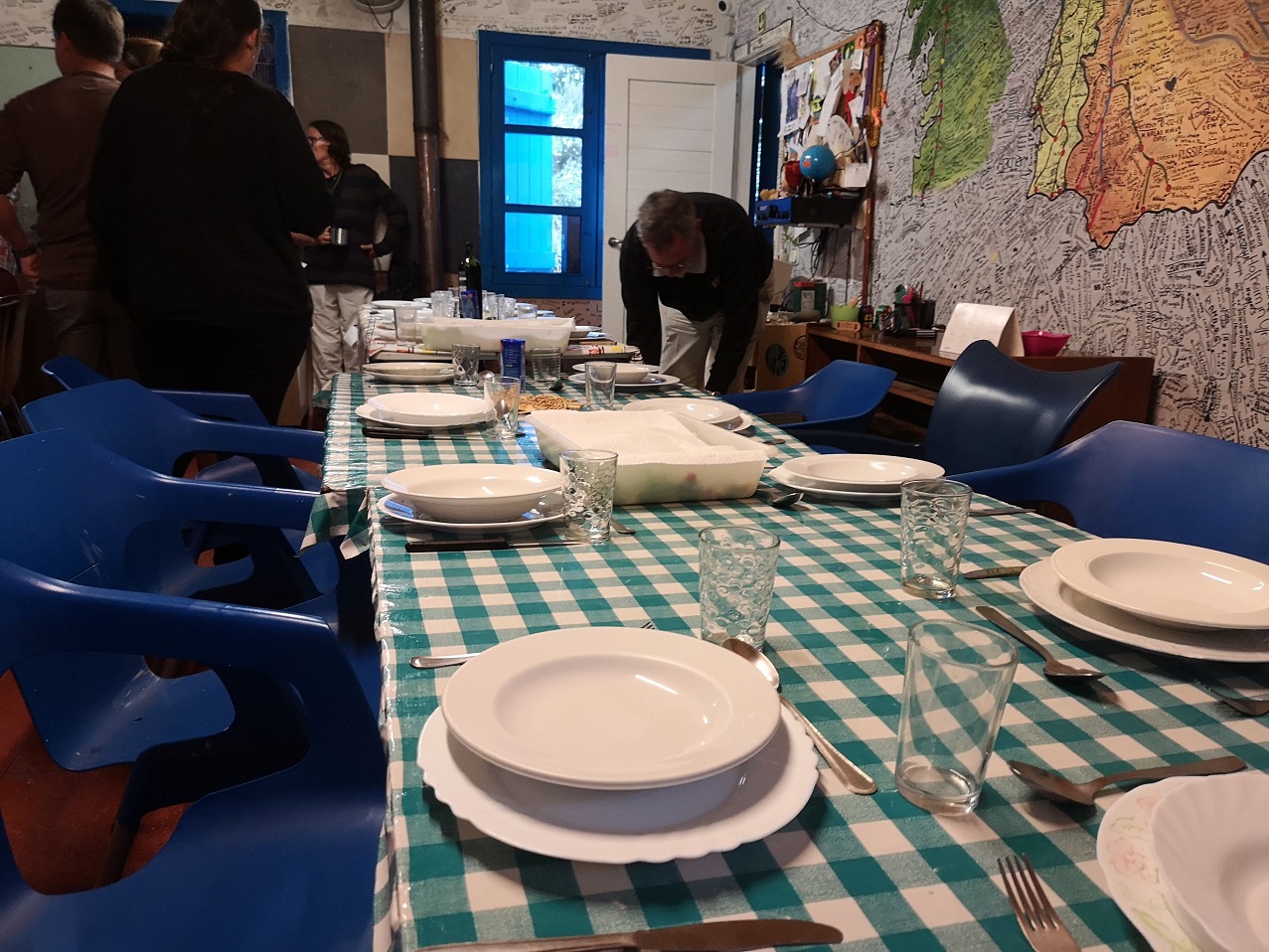
I am not good at these sorts of photos but you can see the world map on the wall on the right and the numbers of hikers who have written on it, plus the table laid and the scrum of diners waiting to eat
Run by volunteers, this is a donativo hostel and the men who came along later knew what they were doing and were well prepared. Being well away from shops or restaurants, a great meal was produced and tables and chairs arranged and rearranged to fit everyone in. Sitting alongside all nationalities, it was a jolly occassion (there was nowhere to get away from it if you had wanted privacy). There was wine and hot soup, vegetarian tortillas with salad and, if I remember rightly, a desert too. Clearing up was a communal event and the partying went on, as ever, late into the evening.
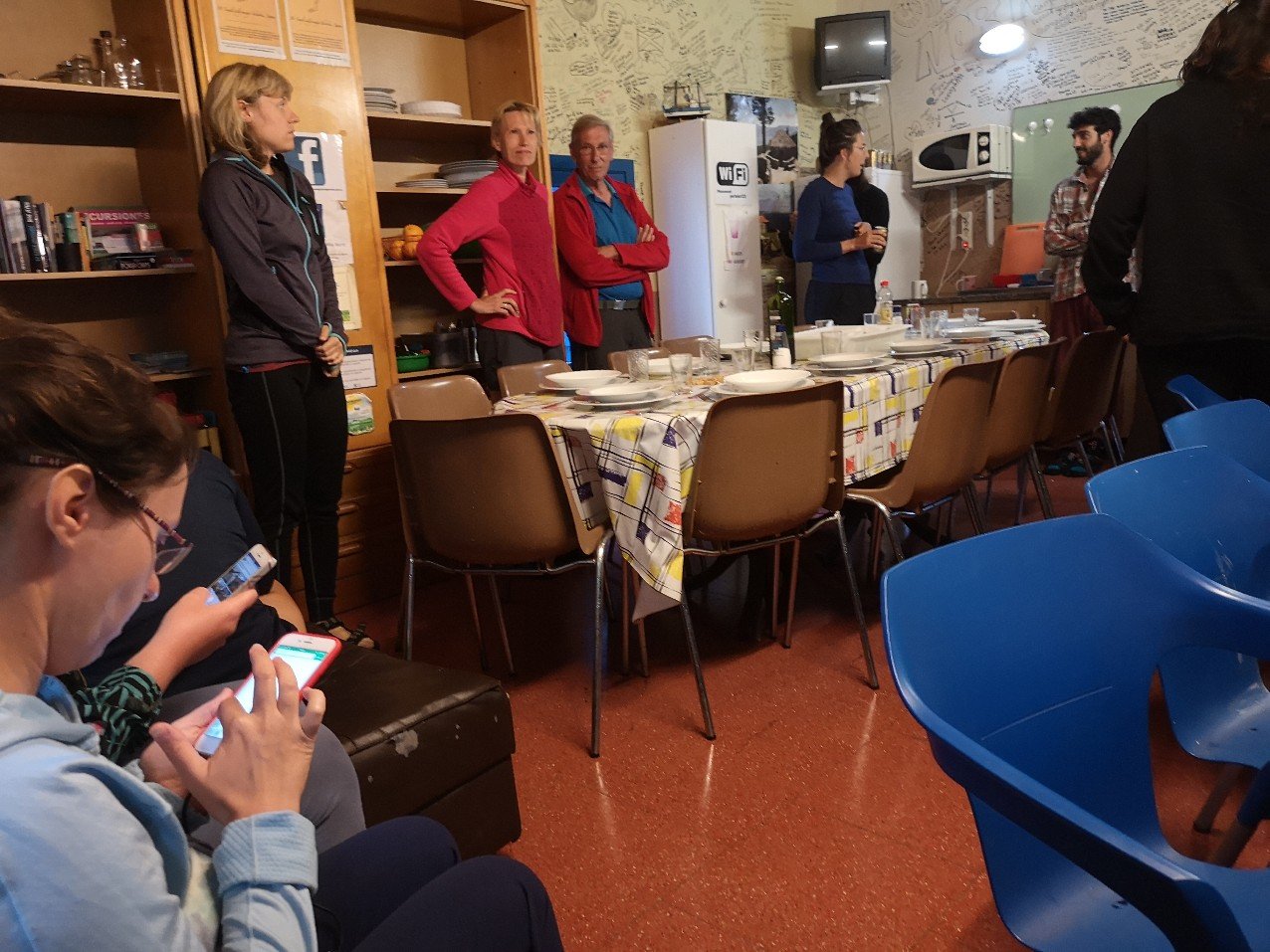
All ages, all nationalities, many fixed on screens. Other than the bunks, there was nowhere else to sit until we were given permission to be at the table. Hostel San Marmede de Portela
San Marmede de Portela to Caldas de Reis
The next day it was still raining, but luckily it cleared. Ugh, putting on wet boots and clothes is one of the worst things after a broken night!
I walked through Santa Maria de Alba, A Cancela and Albergue de Briallos.
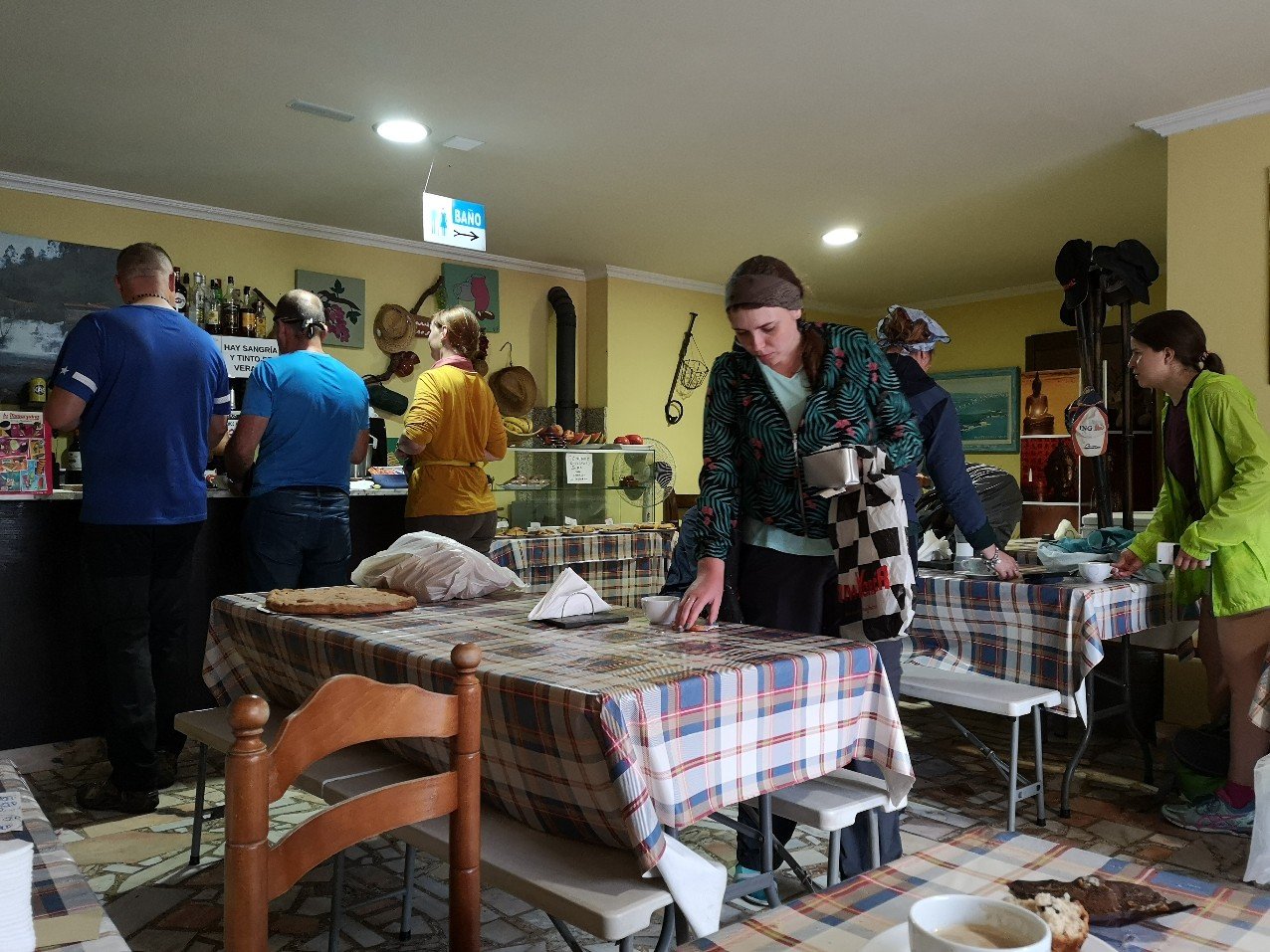
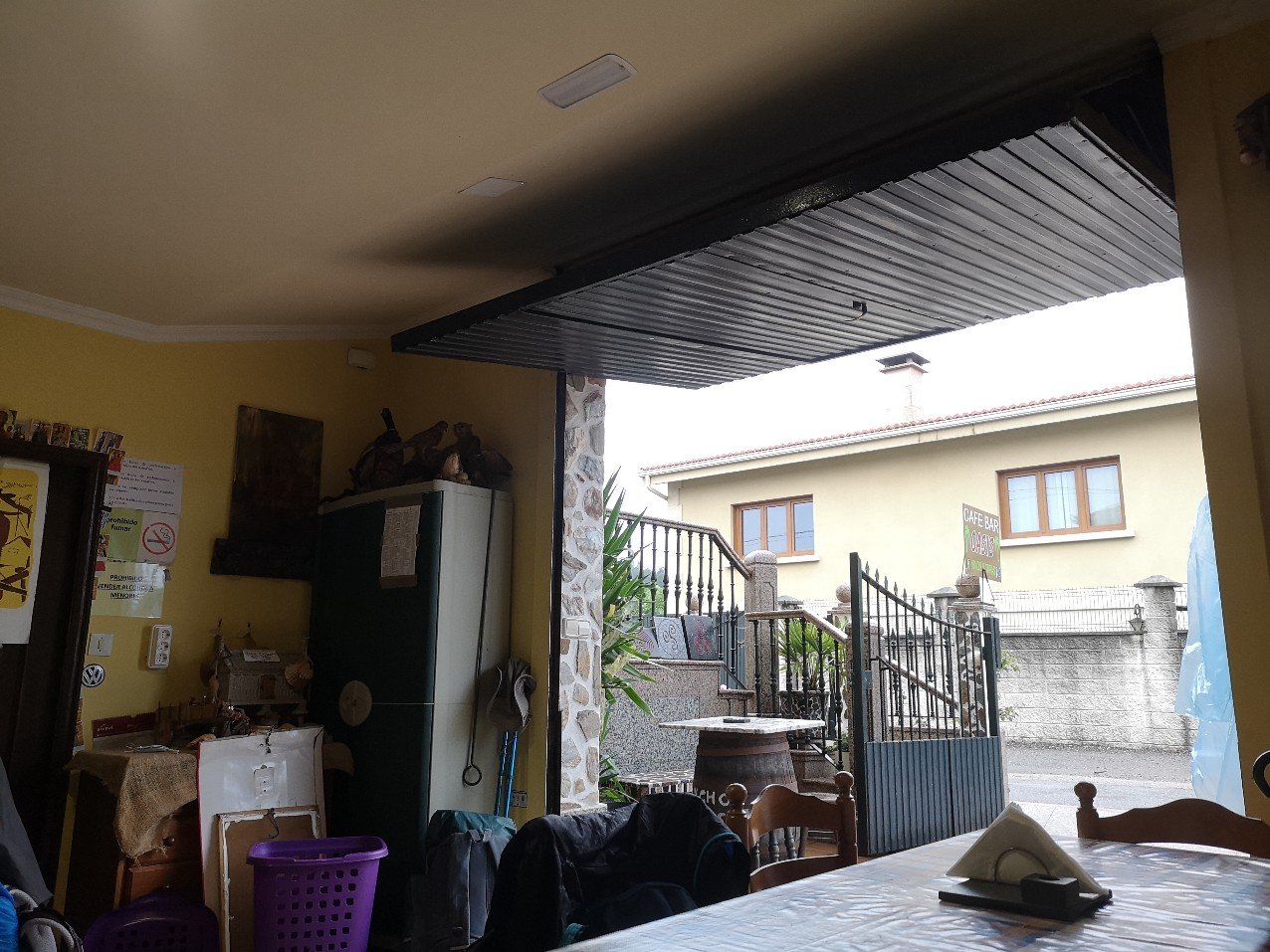
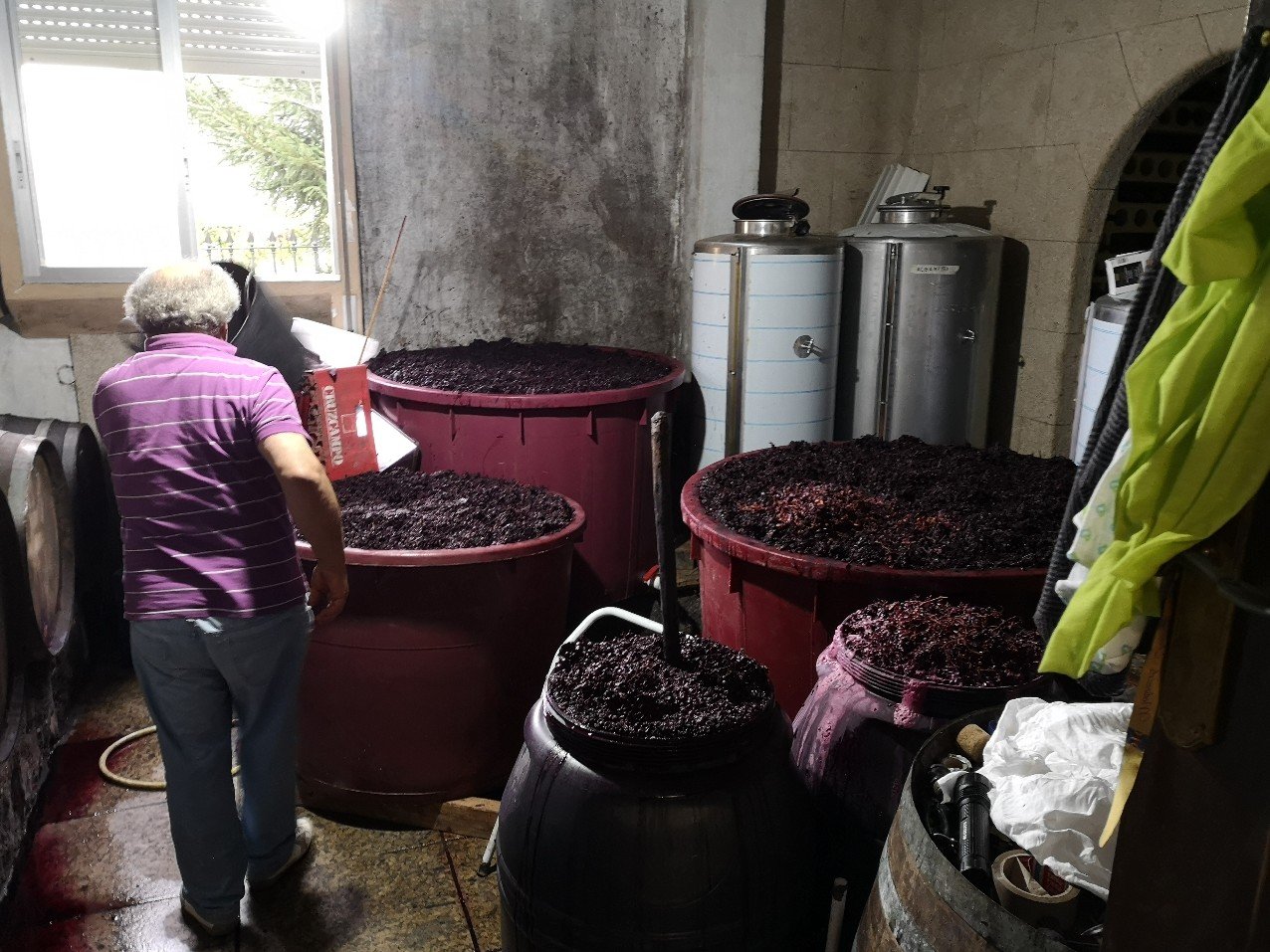
There was a most unusual cafe where many of us stopped for a hot drink that morning (some were taking shots of orujo (a sort of grappa) with their coffee, perhaps a way of warming up from the inside). There was only one, older and innovative man serving us all. It looked as if he had used his garage for this purpose and, after serving us, I noticed that he disappeared through a side door. On further investigation, I spied huge vats of grapes steeping.
Crowded with pilgrims ready for morning coffee, A Cancela, Spain
A garage reimagined as a cafe, A Cancela, Spain
And winery in a side room – the smell was amazing as he stirred the great vats releasing the aroma of rotting and ripening grapes. A Cancela, Spain
I am always coming across dead animals on the camino, but today’s fox was still alive. I crouched down and whispered to it, knowing that it would not live long, wishing it well on its journey.
I thought perhaps you would not want to see a photo of the fox, but this was nearby, always a reminder, Spain
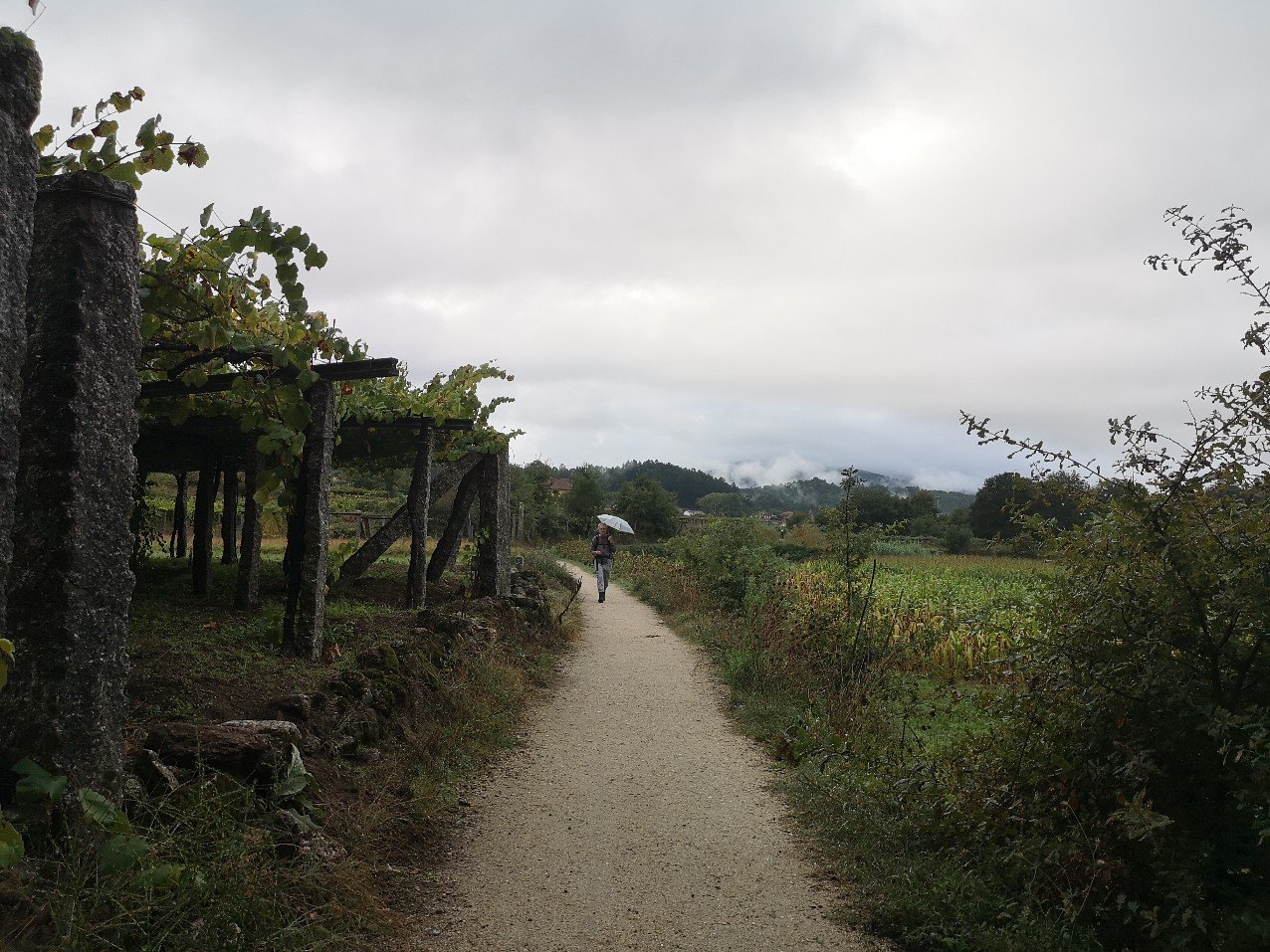
It continued to drip and drizzle, puffy rain clouds on the horizon, some walking with umbrella, past vines heavy with fruit
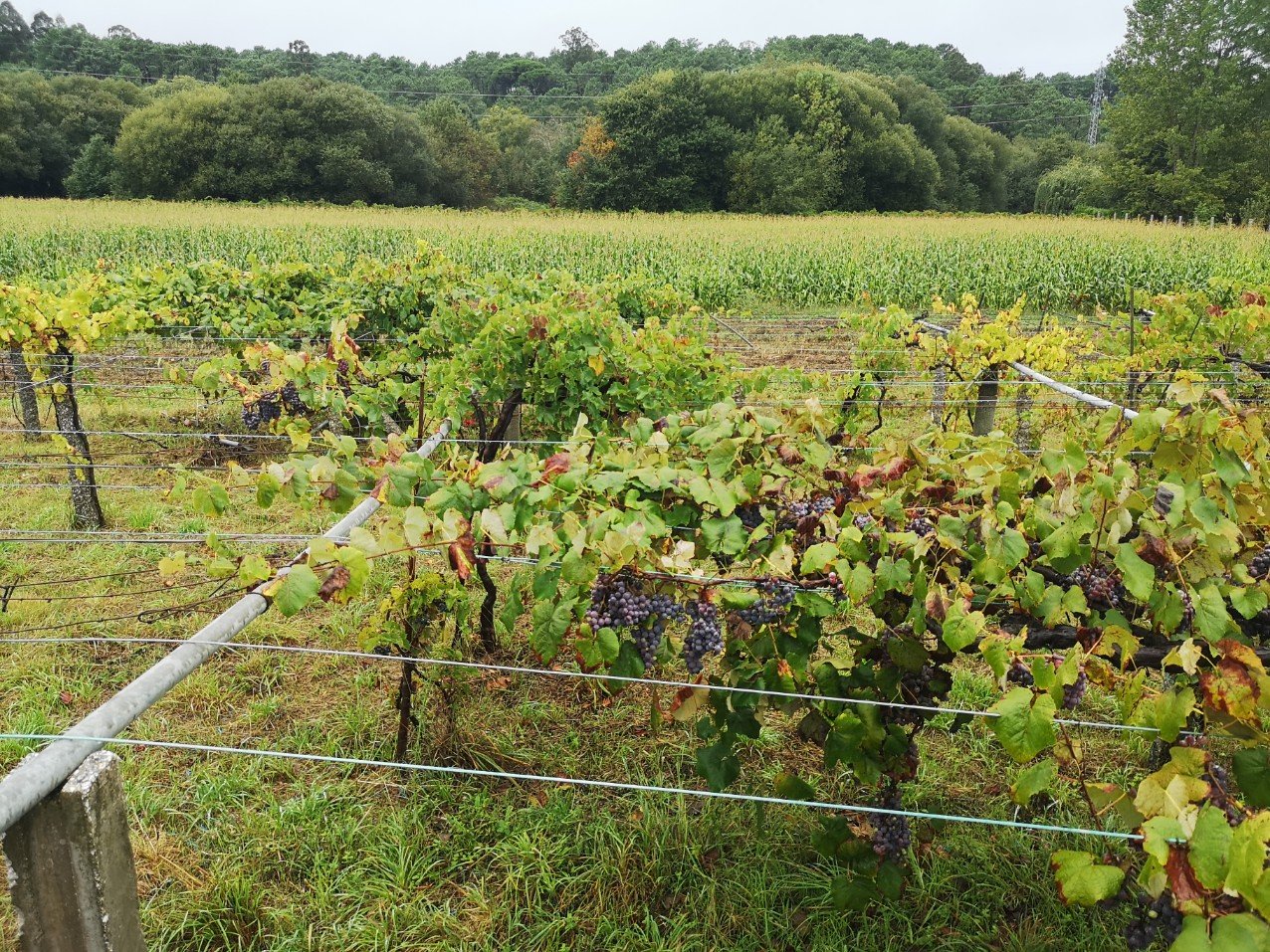
Black grapes heavy on the vines, Camino de Santiago, Spain
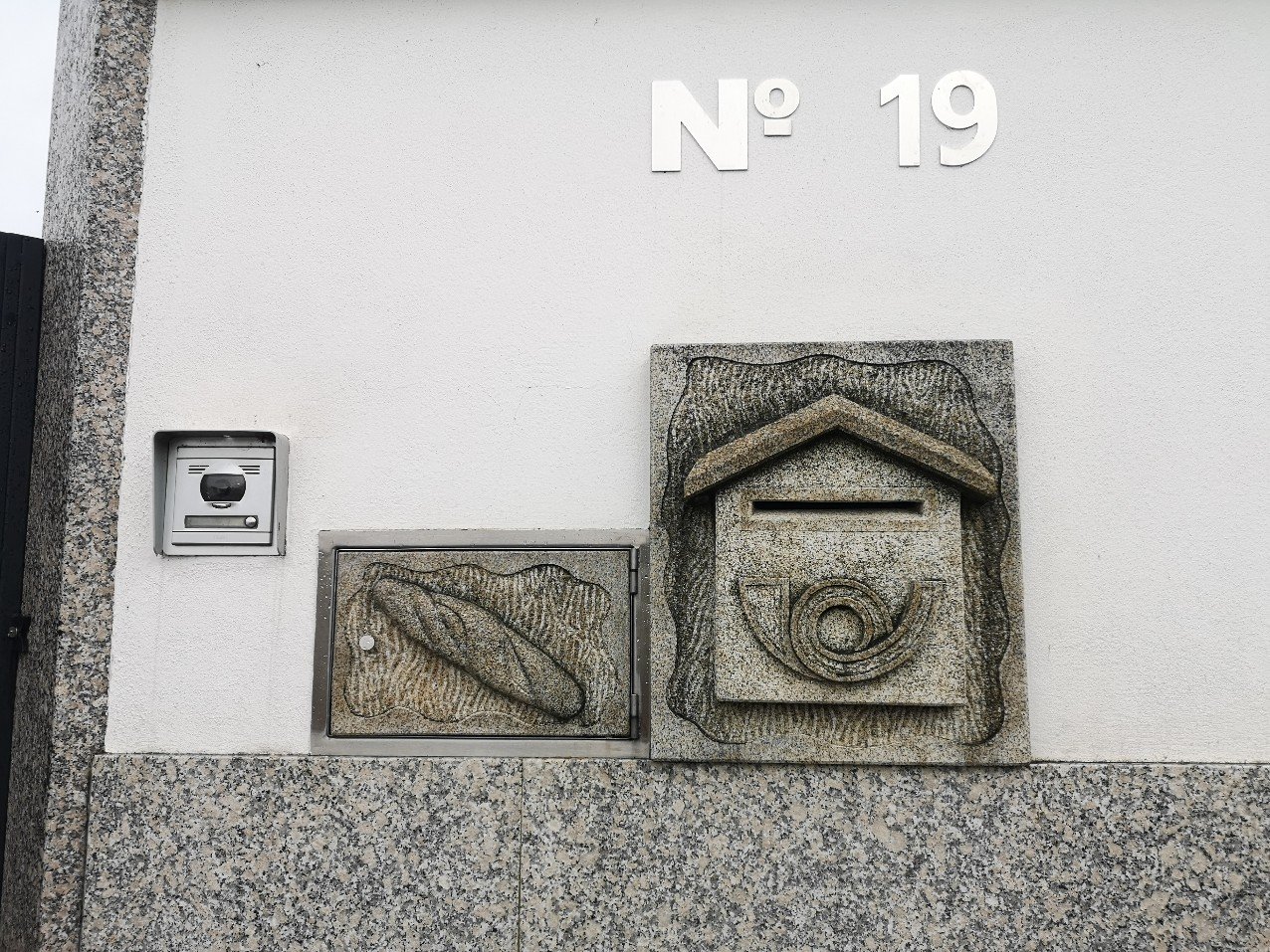
Letter box and bread slot
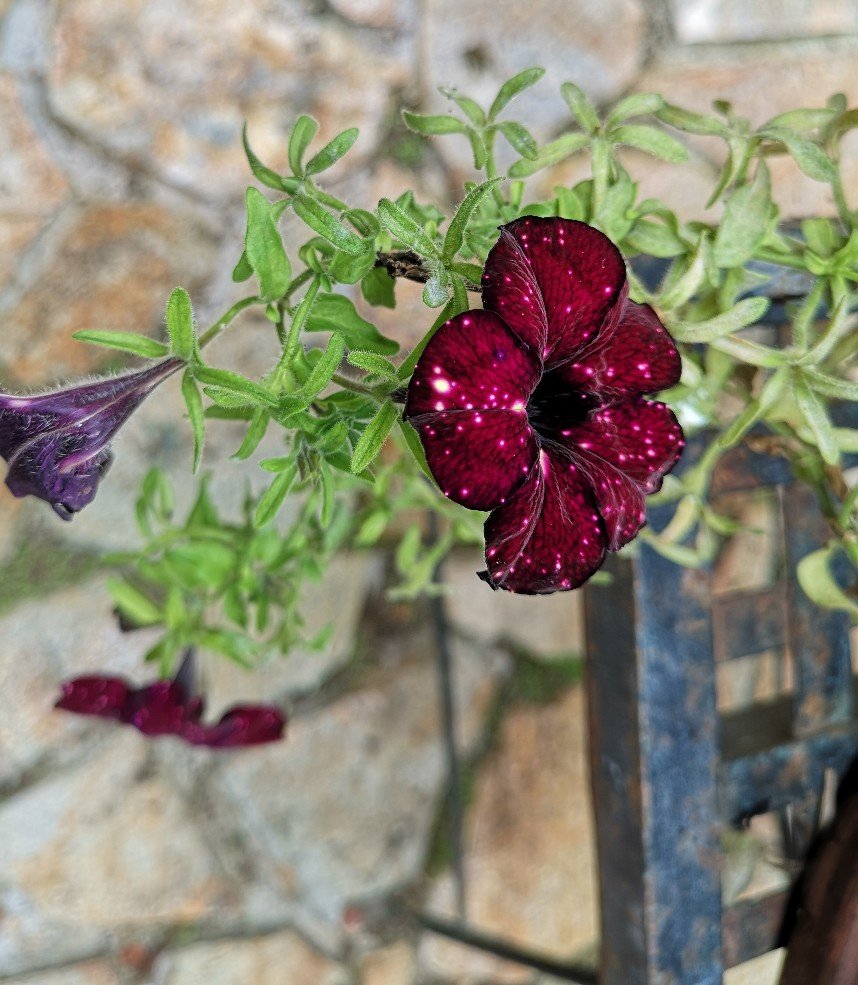
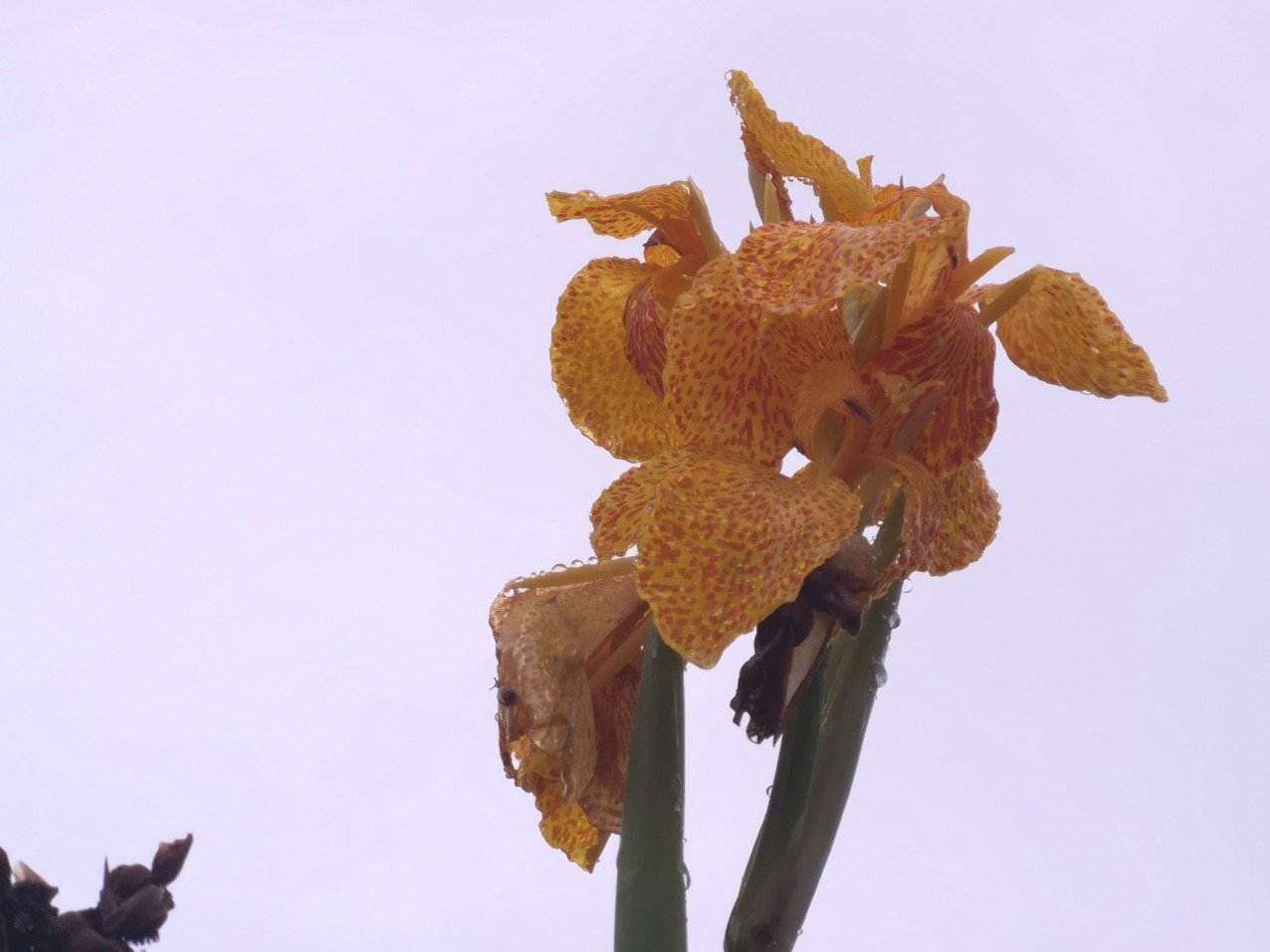
A speckled, camouflage-yellow canna resplendent against a dull sky
Caldas de Reis, a most attractive place at the confluence of the Rivers Bermaña and Umia, Spain
I stayed in the private Albergue Peregrinos Posada Doña Urraca and I do not recommend it, despite the fantastic location. It was dirty and crowded, the rooms are almost at the front door so anyone can walk in and out. The photos on the website do not show it as it is – do not be deceived. It is not a municipal one – I have never seen a government-run hostel be filthy like this.
Accumulated dirt in one of the 2 tiny bathrooms at the private Albergue Peregrinos Posada Doña Urraca, Caldas de Reis, Spain
There was some lively conversation around the table, however, from the US as well as Germany, and a crowd of Polish pilgrims (I have not met people from Poland much at all on the Camino) at the hostel.
Caldas de Reis, Spain
It’s a busy and normal town despite all of us traipsing through, with friendly local people and lots of facilities – a big supermarket, cafes and loads of banks. I tried the three cashpoints in one street – one was charging 3.50 euros, one 1.50 and the third nil, so watch out for this when getting cash out. It wasn’t my bank which charged me, nothing to do with getting money from a British finance organisation, it was the cashpoint machine company and I found this all over Portugal and in some parts of Spain. (I use a Post Office Travel Money Card via an app on my phone which charges for the exchange, but doesn’t have an additional service charge like the Bank of Scotland does if I use my everyday debit card when I am abroad).
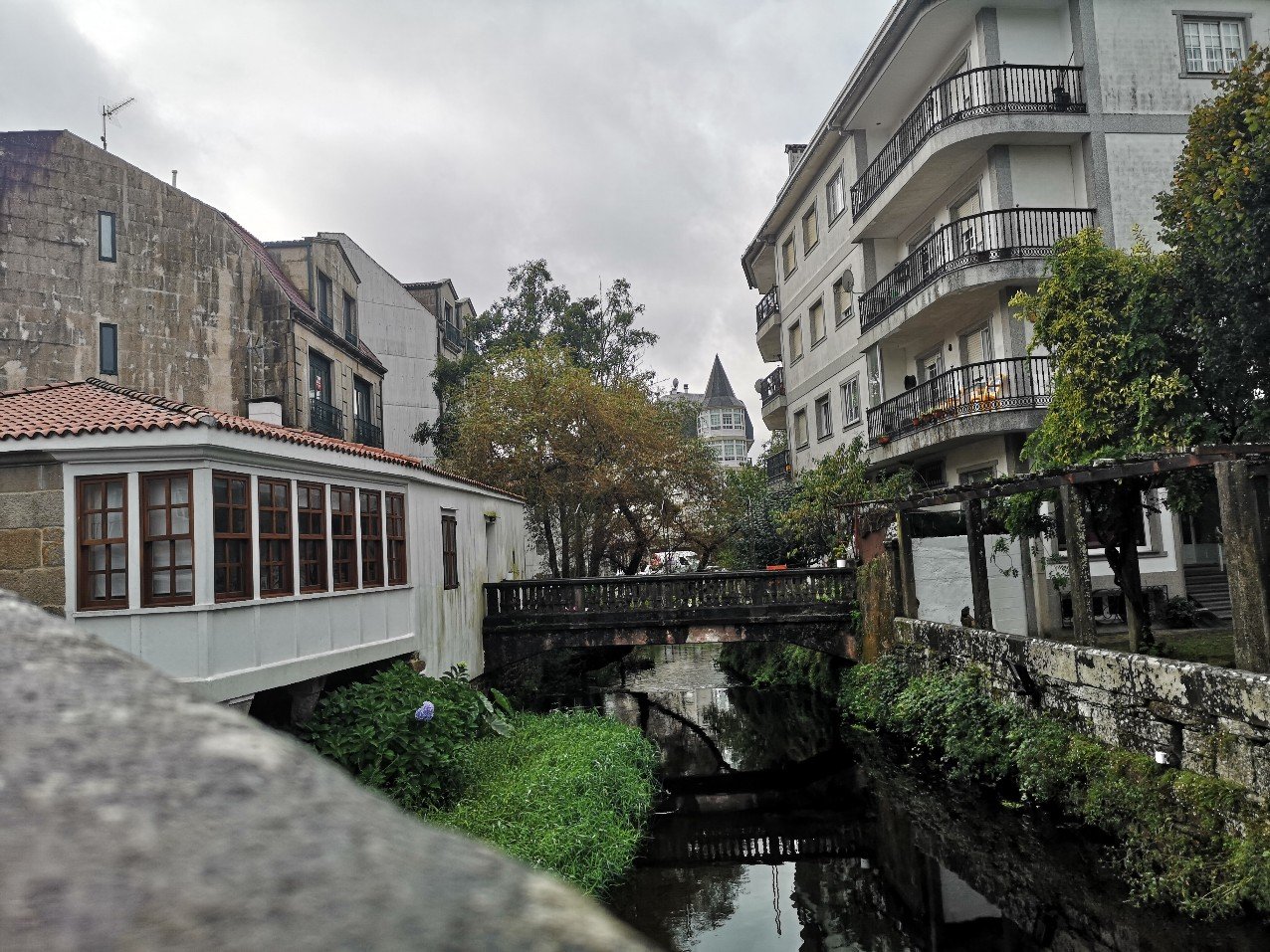
Stunning bridges, some reminiscent of Oxford or Venice, and clean rivers in Caldas de Reis, Spain
Have you walked the Portuguese Camino? Maybe you are planning to? Leave me a comment to let me know 🙂
Monte Gozo – the last stop before Santiago de Compostella, Spain
What does camino mean?
Camino means both the act of walking and path in Spanish. There are many caminos and they all end up at Santiago de Compostella in the top left hand corner of Spain.
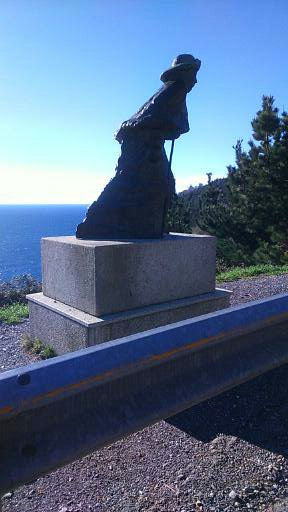
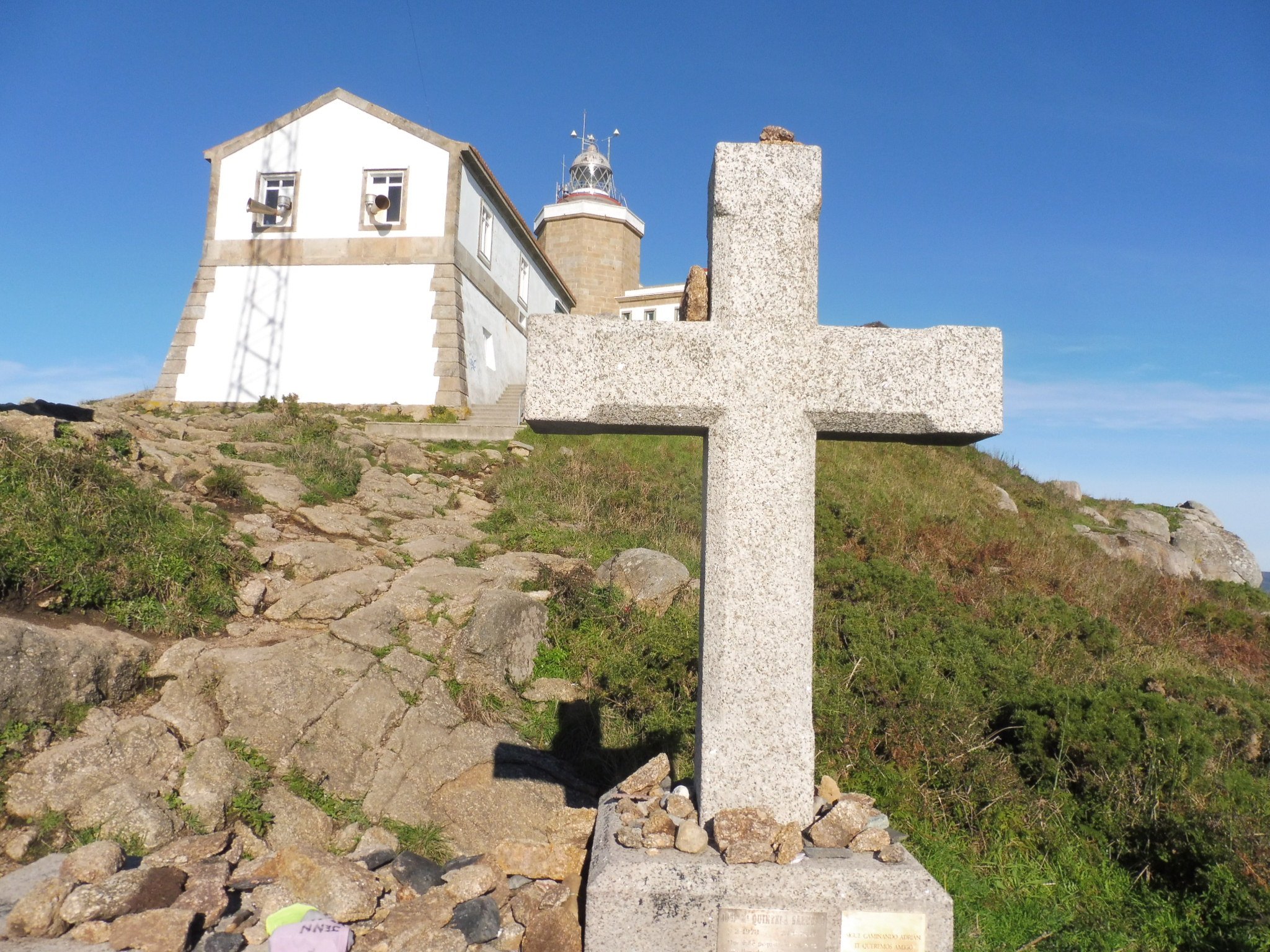
Traditional pilgrim statue, Finisterre
Where is the camino?
When you hear someone talking about walking the Camino they usually mean that they are following all or part of the east to west route called the Camino Francés, the most popular.
Following the yellow arrows is easy – you don’t even need a guidebook for the Camino Francés
In what part of Spain is the camino?
This camino starts in France at Saint Jean Pied de Port (Saint John at the foot of the pass) in the Pyrénées-Atlantiques region, crosses the Pyrénées mountains to Roncesvalles, passes through the Basque Country, Cantabria, Asturias and Galicia, ending at….. you have guessed it, Santiago. You can start anywhere along this route.
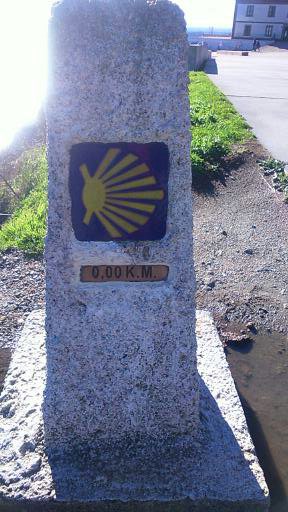
The final way marker of the Camino Francés, Finisterre, Spain.
Sorry, what is it called again ?
Also known as The Way of St James (Sant (saint) Iago (James) in Spanish), The French Way, or The Camino de Santiago, it is 500 miles long (near enough 800kms), and takes between 25 and 50 days hiking. You can also cycle it which is quicker, but that’s another story.
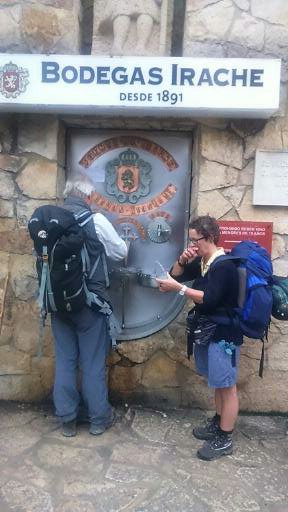
Free wine – early on the Camino Frances, Spain.
Pilgrimage
The Way is a pilgrimage and those who walk it are traditionally known as pilgrims – peregrinas (female) or peregrinos (males) in Spanish.
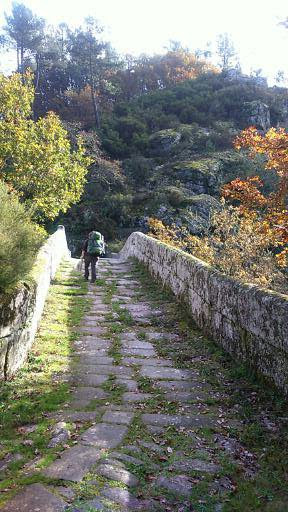
Carrying everything you need. Pilgrim crossing an ancient stone bridge in Galicia, Spain
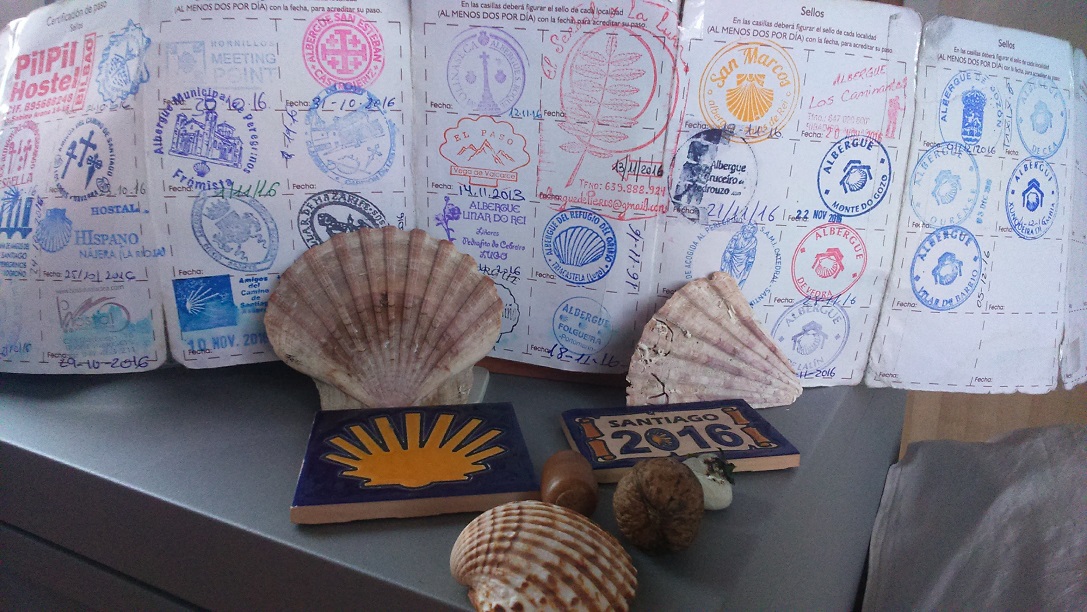
Pilgrim Passport / scallop shell
Carrying a pilgrim passport or Credencial del Peregrino which gets stamped every time you stop for the night is a great way to keep a record of your hike. Hanging a scallop shell, symbol of Saint James, on the back of your rucksack is a proud way to indicate your sense of belonging to this famous confraternity.
A record and mementoes of my first camino in 2016
Who can walk the camino?
People of all ages and nationalities make this trek and they do so for many reasons: religious (especially Catholic); social (it is a great way of making friends); fitness (sensible walking is good for your breathing, circulation and musculo skeletal system); and personal (at times of major life changes, or for the benefit of their mental health).
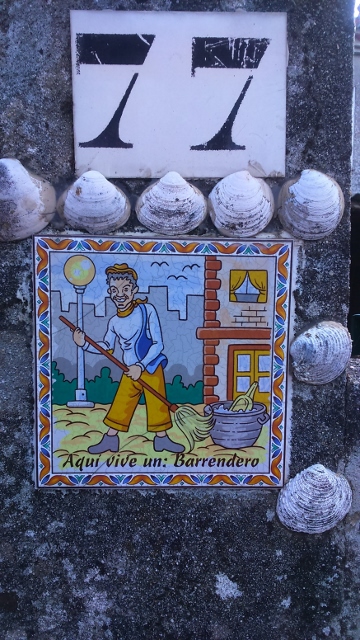
Jolly Spanish house sign
Do I have to walk ALL of it?
You can walk as much or as little as you like. Some go the length and others do sections several times a year or year-by-year. The most popular part is the final 69 miles (111 kms) from Sarria to Santiago which earns you a Compostella, a certificate in Latin. Aficianados come back time and time again.
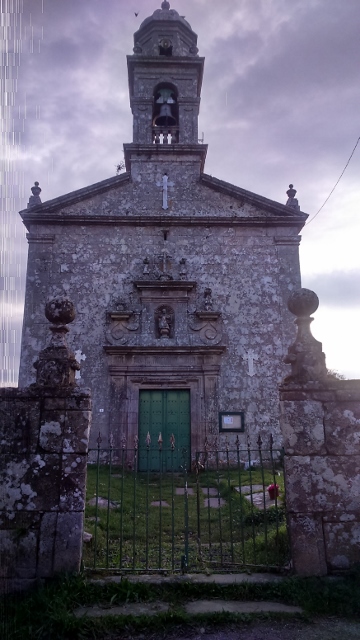
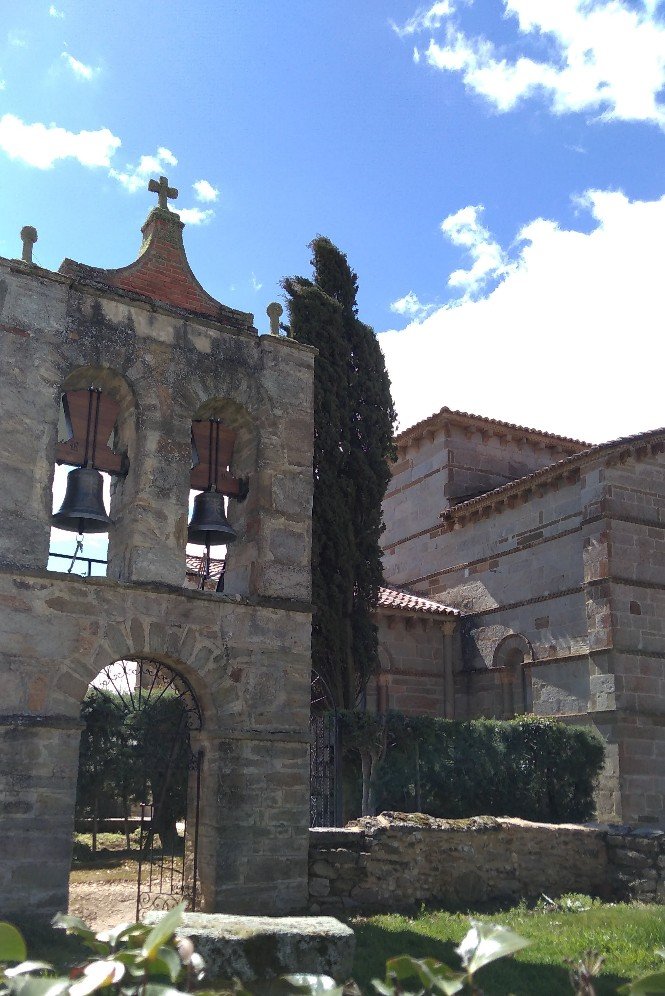
A typical rural chapel on the camino, Spain
How far will I walk every day?
I highly recommend that you take it easy, at least to start with, whether you are young or old, male or female. This means 9 – 12.5 miles (15-20 kms) at the beginning. Even if you are fit and feel fabulous in the glorious Spanish sun, beware! You will almost certainly get blisters and a sprain or strain if you walk too far too soon (unless you honestly walk 9 miles (15 kms) or more every day at home in the same shoes or boots which you intend to wear).
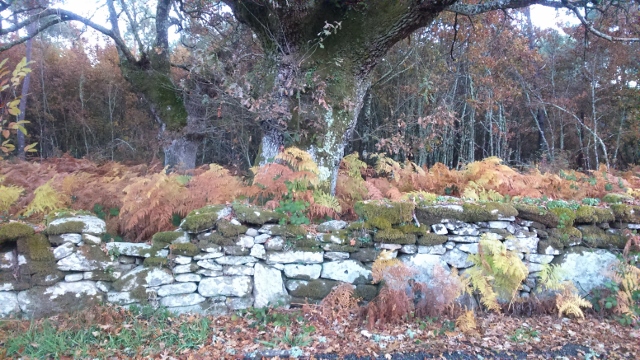
Autumn colours along the Way, Spain
Where do I sleep?
Most pilgrims stay in hostels or albergues. Their facilities vary, but almost all offer a basic bunk in a dormitory for between 5 and 12 euros (£4.50 – £11) per night. You do not have to book in advance, indeed sometimes you cannot. There are also hundreds of hotels and private hostels, usually at a higher cost with greater luxury.
Statue of Saint James whose relics are supposed to be buried in the Cathedral of Santiago de Compostella
What do I take with me? How much do I have to carry?
Historically everyone would have carried their own clothes and equipment in a backsack. (see What to Put in Your Rucksack). Nowadays there are many companies who offer to transport your stuff from hostel to hostel so that you can walk with a daypack and water only if you choose. You can even hire a donkey!
Many hostels offer a basic breakfast, and shared meals in the evenings can be a highlight. Kitchens, with (or sometimes without) utensils are the norm. There are cafes, bars and restaurants all along the way and at every stop where the food is often delicious and cheap. There are plenty of shops which will sell you most things you need such as suntan lotion or a single egg wrapped cleverly in a paper cone.
Space for thinking quiet thoughts on the camino in winter
Time of year to walk the camino
All times of the year are good for walking the camino! It is hot in the summer (and crowded); cooler in the Autumn with great natural colours (it can also be really warm but with cold nights); pretty with wild flowers in the Spring (lots of daylight); and peaceful in Winter (though some of the albergues will be shut).
The wonderful chestnut woods of Galicia
Speaking Spanish. Yo hablo espanol.
It really helps if you speak some Spanish. It’s polite, respectful and fun to be able to communicate with the local people. You are also more likely to be served what you have ordered.
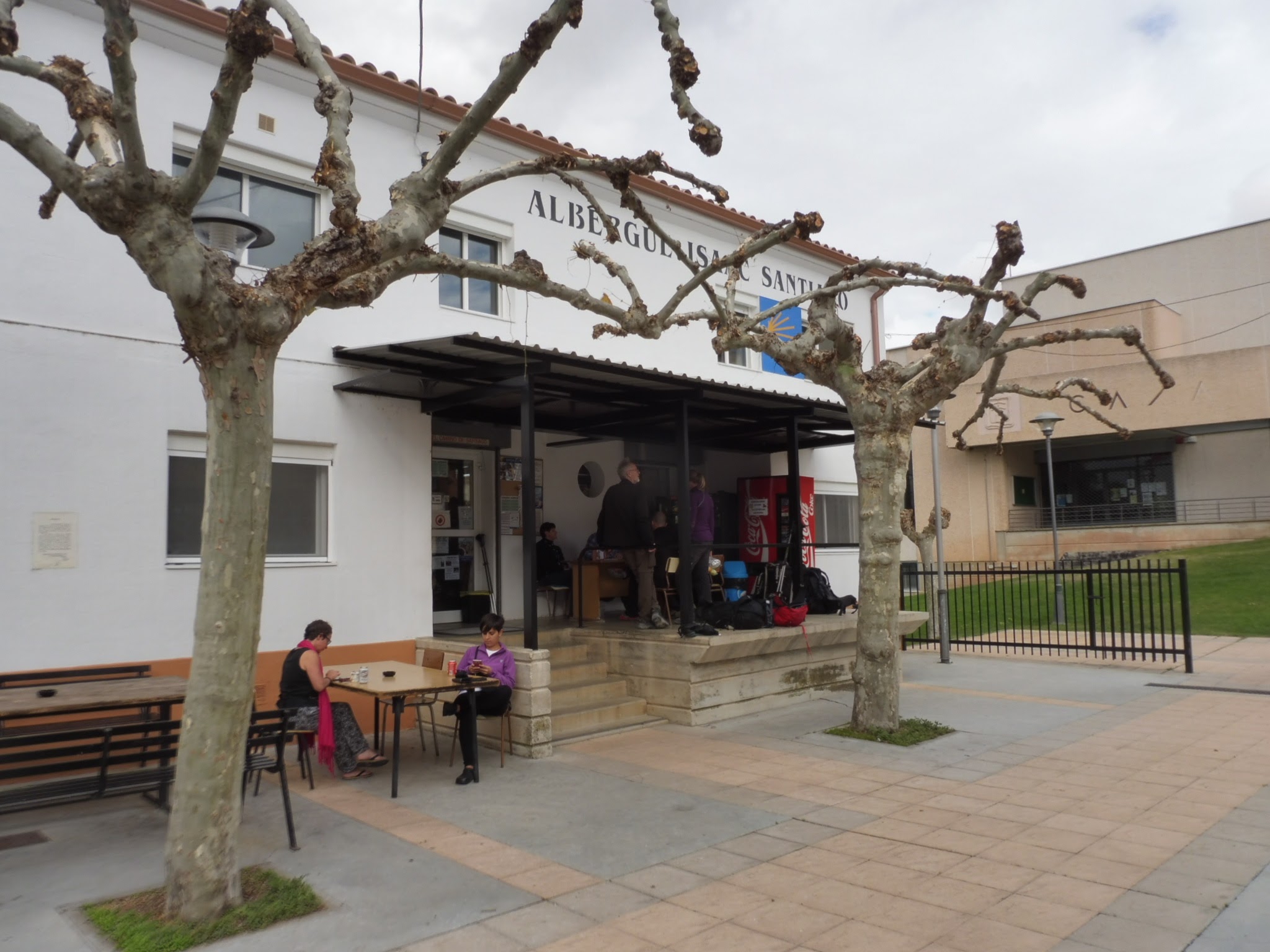
The familiar sign of the Galician albergues, Spain.
Travel from the UK
You can take a boat to Santander (71.5 / 155 kms to Burgos) from the UK; There is an airport in Santiago itself (from there you can take a bus back east to the place where you want to start walking) itself, as well as La Coruna (82 miles / 132 kms from Sarria). Also, Asturias airport for Leon (from Stansted only), Bilbao (from Edinburgh, Manchester and others) for Pamplona, and Biarritz (33.5 / 54 kms from Saint Jean from Birmingham and others); Overland, there are trains taking 5 hours from Paris (4 per day, approx. 35 euros) and the Eurostar from London is smooth and efficient (around £50 and just over 2 hours). You can also take Alsa (long distance) buses or try Bla Bla Car (car pooling).
You can tack on an extra 3 days of walking after Santiago and to to the sea at Finistere.
There are many books and online guides to help you find your way, pointing towards places to stay and eat. Gerald Kelly and John Brierley’s are the best known in English. Using this guide means that you will inevitably walk the same steps (stages of the walk) as other English speaking folk and will therefore have pals to walk and share meals with before long. The municipal hostels at the end of these stages are the busiest.
There is wifi and places to charge your phone at most hostels, Spain
Top tip!
Start slowly, in short stages, do not be too ambitious until the second week, and that way you will avoid going home early and in pain (I have seen this happen many times). It doesn’t matter if other people are going further. You will either catch up with them later or you will find new companions instead, ones who are enjoying the scenery as much as you.
Misty mornings herald a hot day, Spain
There are also other caminos in Spain: The Via de la Plata which starts in Seville and goes through Salamanca; the Camino Norte along the coast passing through San Sebastian; the Inglés from A Coruña; Mozarabe through Malaga and Cordoba, and many others. Criss crossing this stunning country, the walking is delightful, the people colourful, and the experience one which you will remember for the rest of your life.
Getting into my stride – the Camino Francés 2016
Have you walked the Camino Francés or any of the other ones in Spain? Leave a comment and share your experience.
Via de la Plata Camino – Day 22 (Tábara to Santa Marta de Tera). Wednesday 11 April 2018. 22 kms.
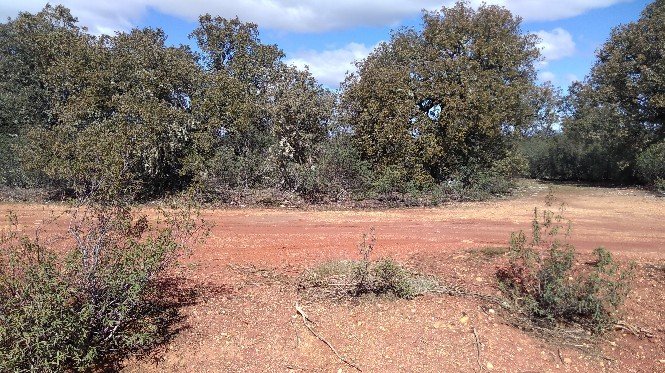
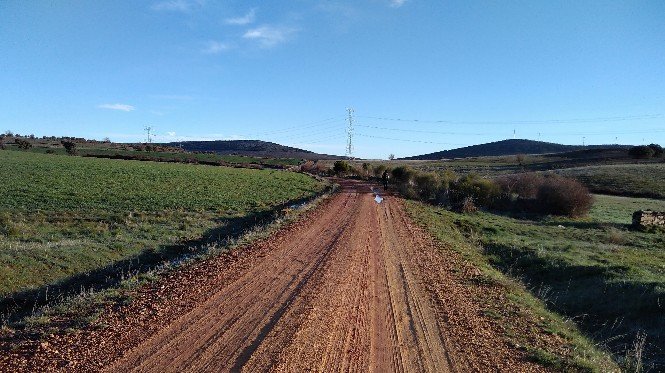
The red earthed path of the Via de la Plata, Castille y Léon, Spain
‘And what’s best is that you are always received without fuss, welcomed, as if they had been expecting you to come. ‘ From Ursula le Guinn’s Left Hand of Darkness
Not in Oliva de Plasencia! I was reading le Guinn on my Kindle while I travelled because it was the Leith Bookworms book and my friends were reading it at the same time. I liked to keep up even if I couldn’t attend the meetings. It can be a good challenge to follow the list because I read books I wouldn’t usually choose for myself, move out of my comfort zone. In this case I had never read sci-fi before but I knew that le Guinn was extremely well thought of (after all she is used as an important part of the plot in the decidedly mainstream Jane Austen Book Club film!)
José / Almeida
There was a photo session at the front door with José / Almeida (his pen name), the hospitalero who had looked after us so well, and then I set off with my friend Marie Noëlle and her pals Sascha (Luxembourg) and Maria (Switzerland) under a white sky. Sometimes we all three walked alongside each other, but more often I held back and took a quieter way, meeting up at intervals for coffee and wee chats.
Sascha, Maria and Marie Noëlle
We left the town of ridged terracotta rooves and telephone poles behind, and headed quickly into open country. There is an alternative way to regain the camino by retracing your steps back the way you came, perhaps for shopping before leaving. For me, it was too early for them to be open and I was keen to get off the tarmac asap.
Looking back at Tabara
As I walked I reflected on the things I wished I had brought with me: my swimming costume which I left on the line in Caldzada, a pair of flipflops to protect my feet from dirty floors and ideal for wet and dry (though uncomfortable with socks), clothes pegs (there are often a few at the hostels but not enough to go round), a plastic tupperware pot to put food in (although I was able to buy one for a few euros), and ointment for bites.
The beautiful contrasts between the orange houses, silver-dry grass and Spanish sky
I was keeping a list of topics for the teaching I had been engaged to do later in April. It was for the Shiatsu Society whose biennial congress was being held in Edinburgh. Topic: people watching – most apt given how many new people I am meeting and walking behind every day, and how lovely it is to sit in Spanish cafes with tired feet and gawp at passers by.
April blooms
The Galician hills in the distance
A blanket of blossom like snow
Just in case it rains
Sparkling over the rocks and tempting for hot feet
The Rio (river) Tera, Spain reflecting the sumptuous sky
There’s a sort of charm in the delapidation
The others walked by without noticing these houses with their distinctive yellow walls, built into the hill – grass roofs with chimneys poking through
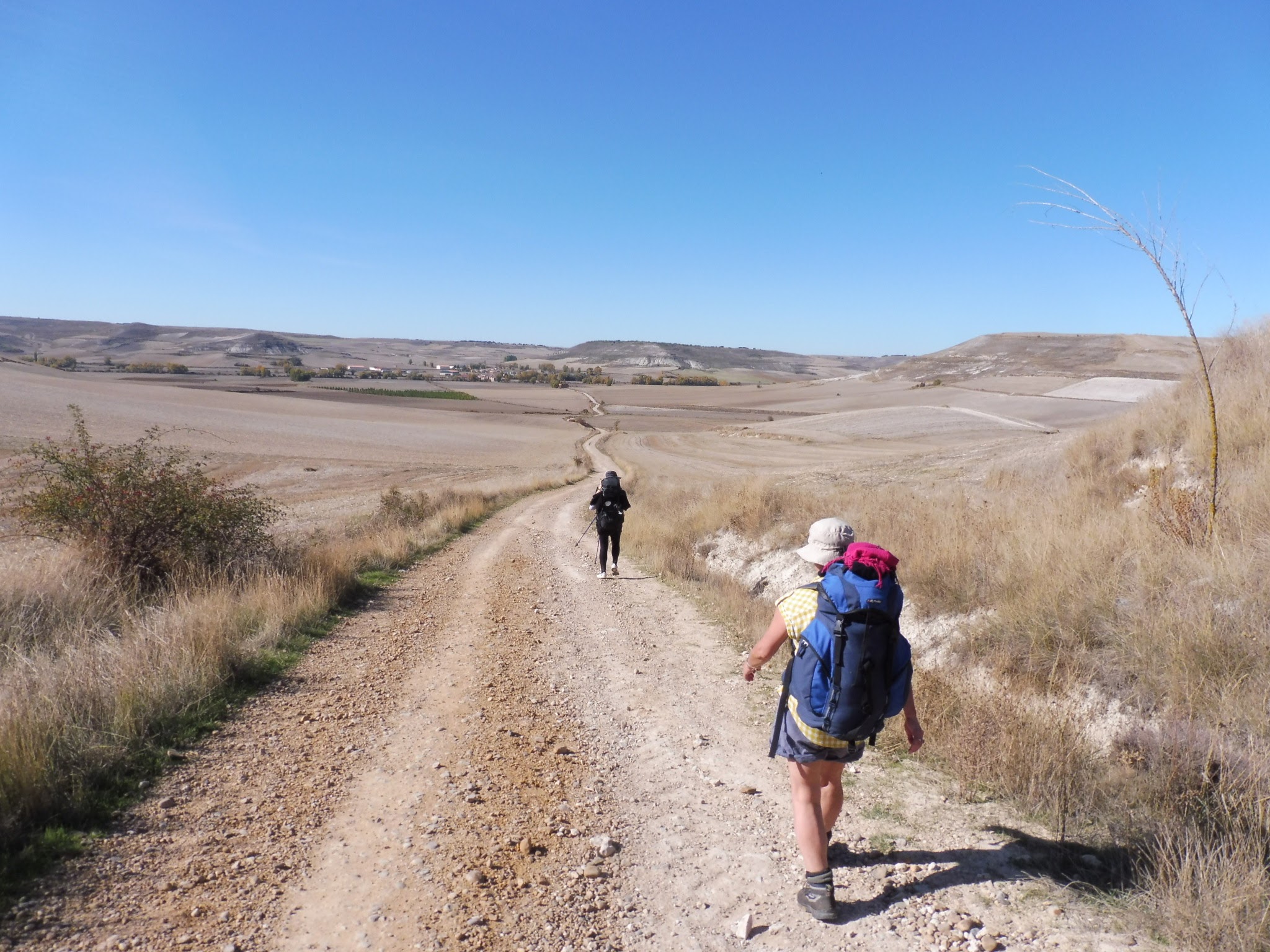
Flat expanses of farmland, Spain
There are almost never any pavements. Cotton wool balls of clouds
From the bridge at Santa Croya de Tera (the last small village before our destination) where the Casa Anita private hostel is situated. Castille y Léon, Spain
Via de la Plata Camino – Day 21 (Montamarta to Tábara). Tuesday 10 April 2018. 27.5 kms.
I took the Camino Sanabrés rather than passing back through places on the Camino Francés (Astorga etc) which I had visited the year before.
The best view of the day – unless you count the sight of the albergue in Tábara when I eventually got there.
Telling you all about Montamarta – not somewhere I ever want to go back to I must say.
Just like yesterday, except duller.
Yep, under another motorway tunnel.
I took the right, turned back and went straight on, then retraced my steps and went around the motorway flyover.
Kilometer after kilometer on the tarmac with road works as a view.
Spring primroses amongst the rubble and stones.
There was a small village strung out along the road, not so far from Tábara, with a cafe. I sat on the bridge and sunbathed – it was glorious.
Once I got going again it started to rain and I stopped, de-rucksacked and covered up. Then there was a rumble and a thunder and it got dark. The lorries were roaring past and spraying and I was ducking in and out of the ditch at the side of the road to avoid it when there was a fork of lightning at my left shoulder. I have never been so close. I wondered what I should do. Looking around there was nothing and nobody – just trees. I did think perhaps the metal batons weren’t such a good idea, but I couldn’t exactly abandon them and they had rubber handles and tips to earth me. I hoped. (Two days afterwards I met up with the American women and one of them did throw her sticks into the fields because she said she was so scared of being struck.)
Then the hail started and brought about a total landscape transformation.
In two seconds flat the road was covered in white, the traffic had completely ceased and a hush came over the world. I walked on, telling myself ‘it will be over soon’.
It did stop eventually and on and on I went, every part of every mile seeming an age. I was very wet, too sopping to be able to get the map book out. Then again, there was only the one road to choose from.
There was a service station on the outskirts of Tábara and I stumbled in to get some cover and ask for directions to the albergue. There was pandemonium in there because the electric storm had shut down the till and no-one could pay for their petrol. I waited with heaviness on my back and realised how exhausted and hungry I was. And I waited.
In the end, I did something I have never done before: I took a chocolate bar off the shelf, sunk to the ground, sat with my legs splayed out in front of me like a rag doll, and devoured it without paying for it first. It was wholly necessary.
To my horror it was a further 30 minutes walk to the hostel and I had thought I was at the complete end of my energy. Hey, I simply had to find more.
It was uphill and a very long road, and just as I was despairing that it would not end, there was a shriek and who should I see coming towards me but Marie-Noelle and her smile, someone I had not seen for several days. She gave me a big and welcome hug on her way to the bar.
The hospitalero made me a cup of tea when I needed it most, and proceeded to cook for us all that evening. He describes himself as a ‘spiritual author’, is resident at the hostel all year round, and something of a Camino VIP.
There were 10 people round the table drinking wine and eating simple fare. Some I had met before, some I had not, each of us from a different country, and of course we made ourselves understood – a true camino experience at the end of a most trying day.