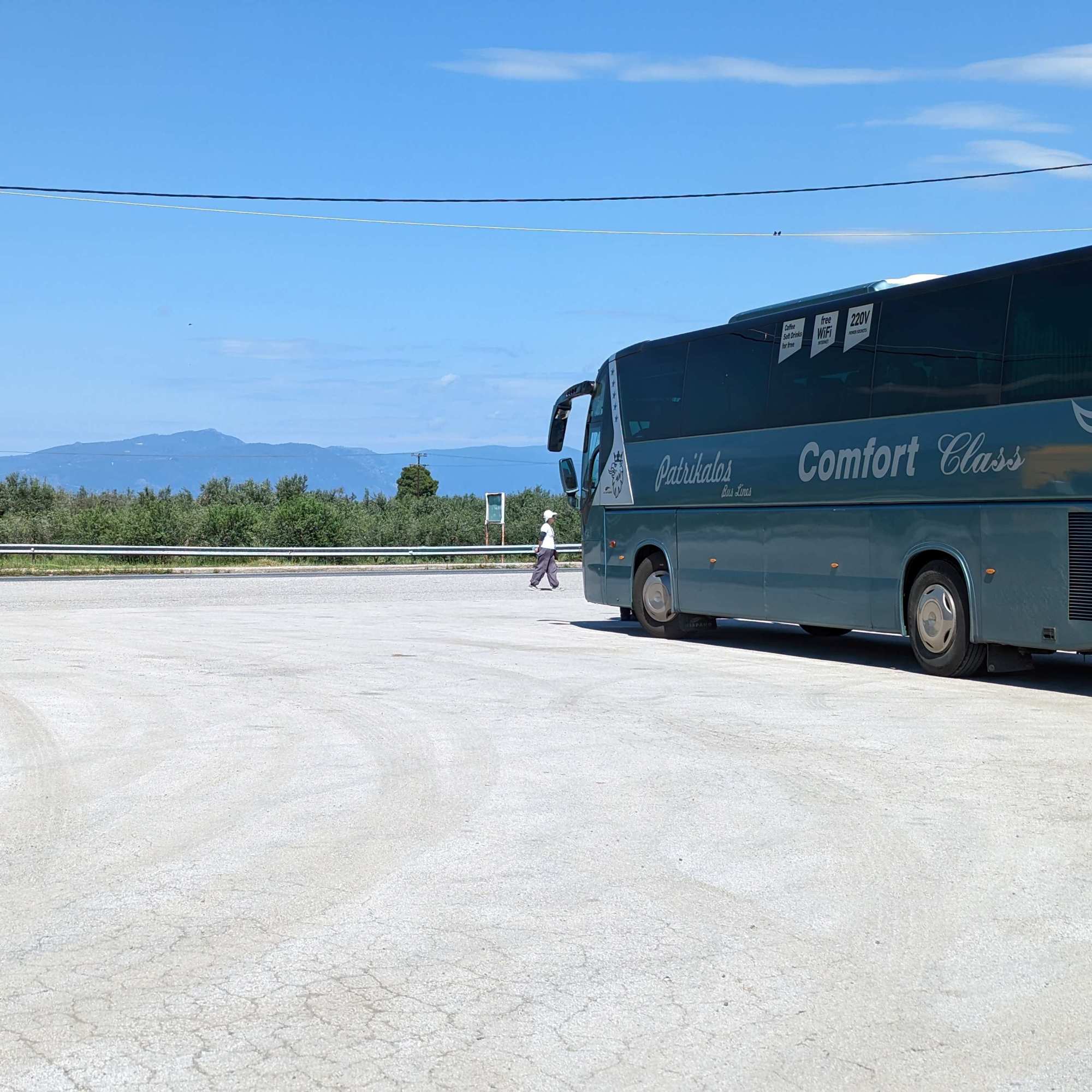
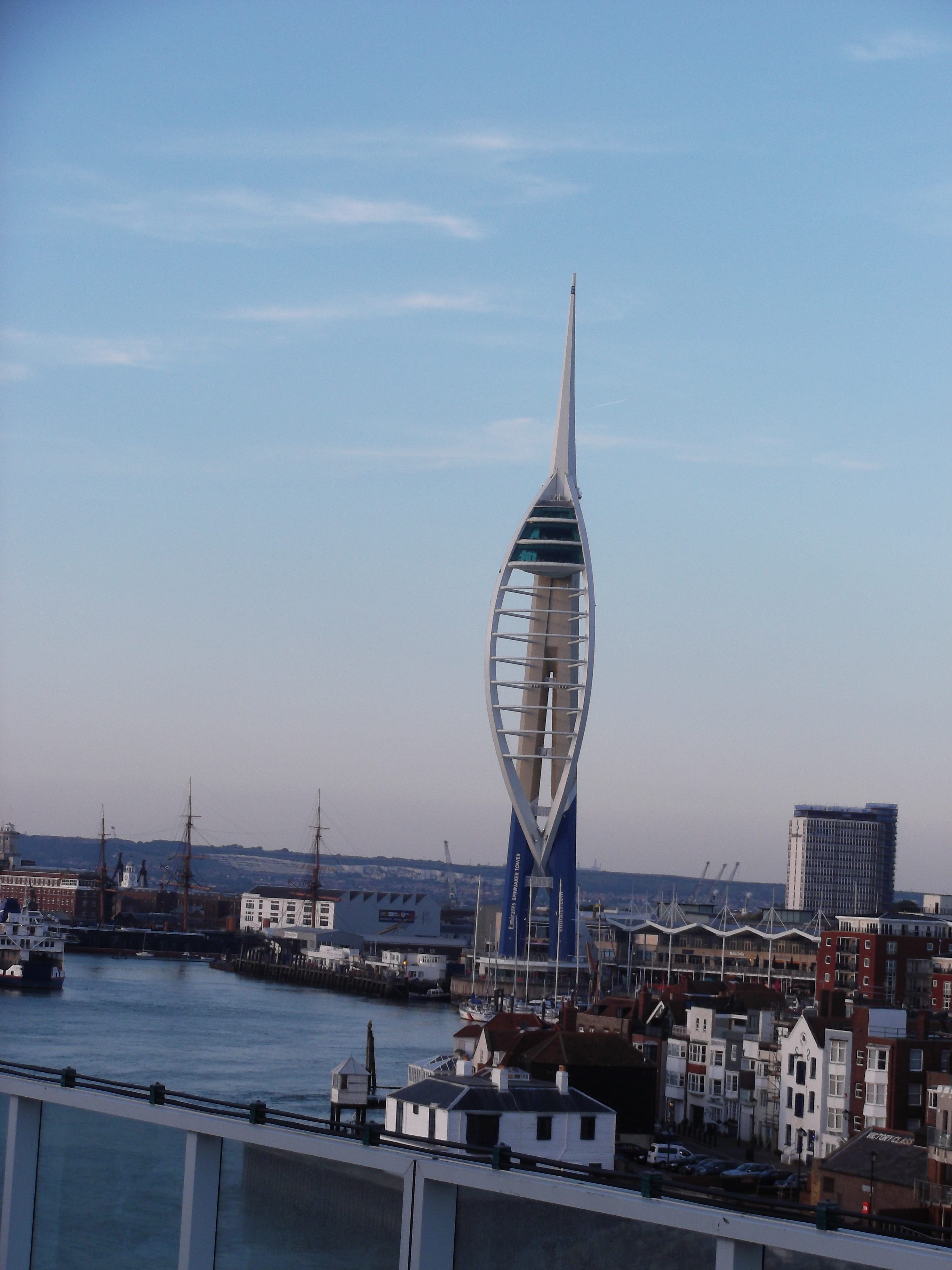
Athens to Edinburgh overland 1

In early 2023, I made a vow not to fly unless it’s an emergency, not for pleasure nor work, and so I made my expeditions back and forth between Scotland and Greece overland. The first took 10 days, from Athens to Edinburgh, because I broke my journey many times to give Shiatsu and meet friends and family. I took the overnight bus, first to Budapest via Belgrade, then I travelled on to Berlin and The Hague (also by bus), Hook of Holland (tram), Harwich (ferry), London (train), and finally home (train).

I announced my potential route in advance on social media, asking if anyone wanted to do a Shiatsu-hospitality swap. The responses and invitations that I received resulted in an elongated trip; I went off on tangents and saw places I would not have visited otherwise. It meant that I didn’t get to Bratislava or Prague as I’d thought I might, but this collaborative approach to planning allowed for the unexpected, and was a way of letting go of a set itinerary. Along the way I made new friendships and re-newed others, gave gentle, therapeutic touch, and much more besides.

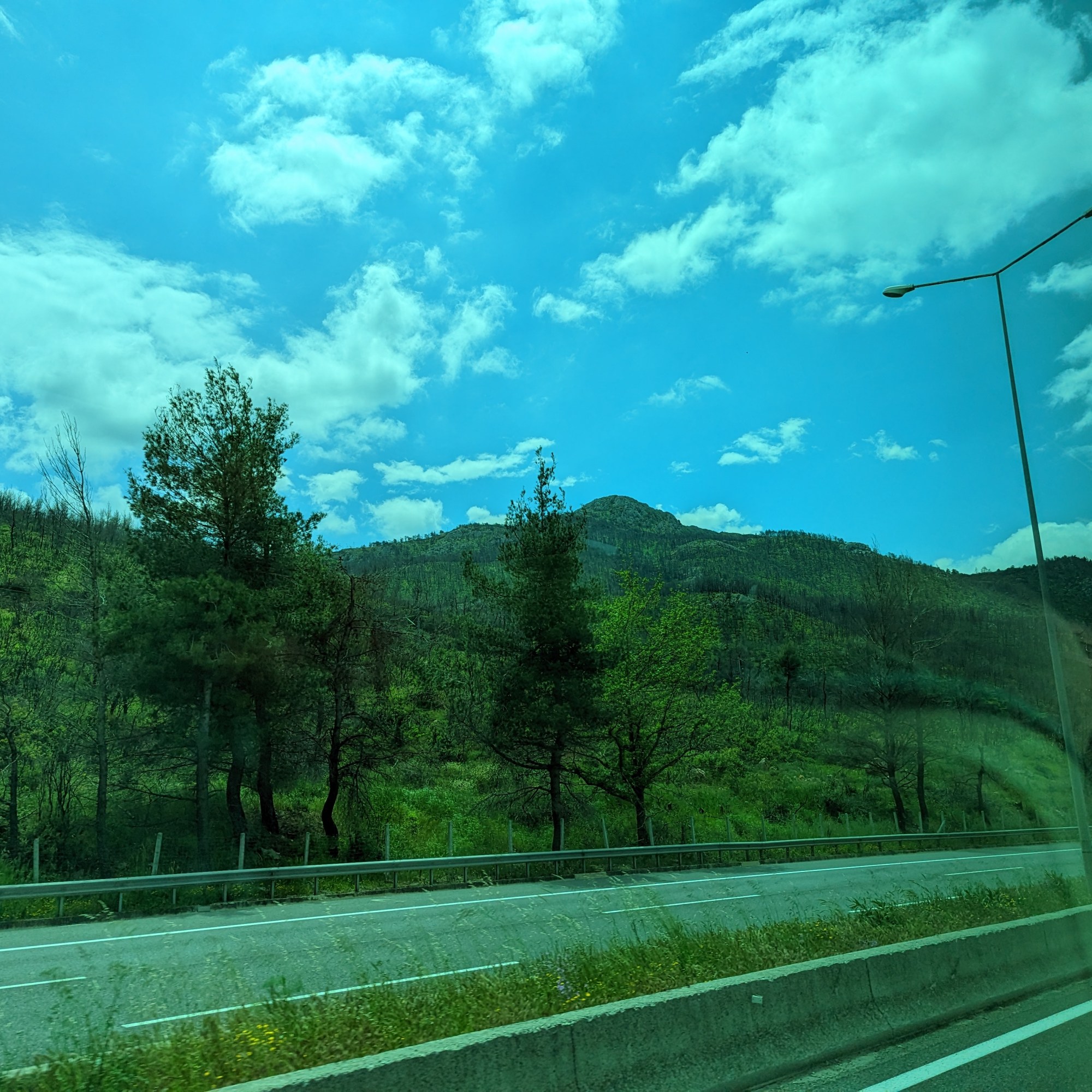
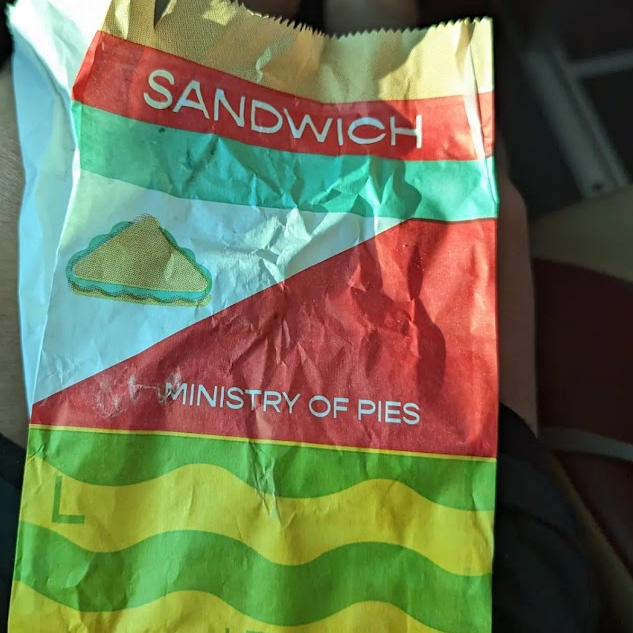
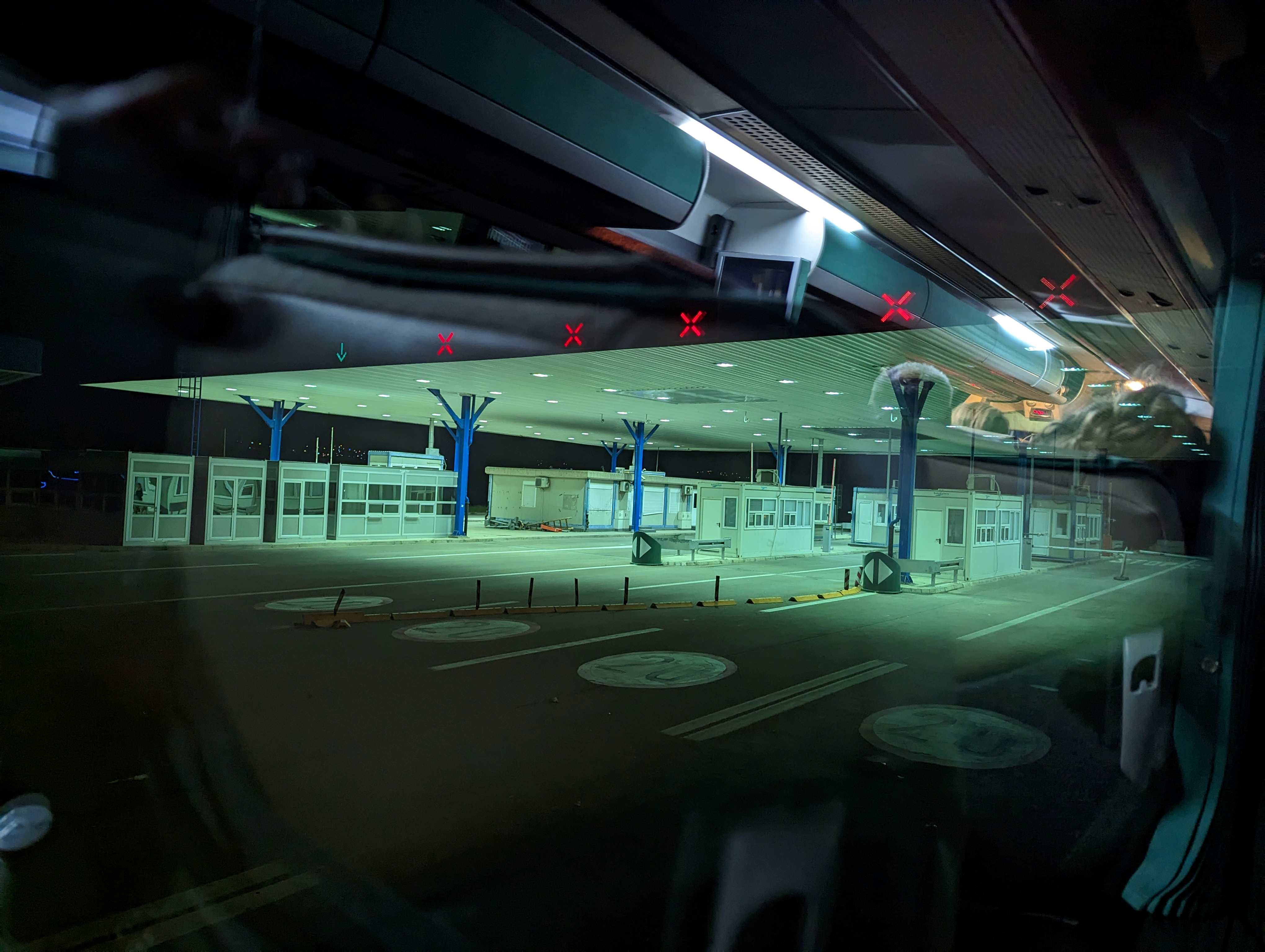
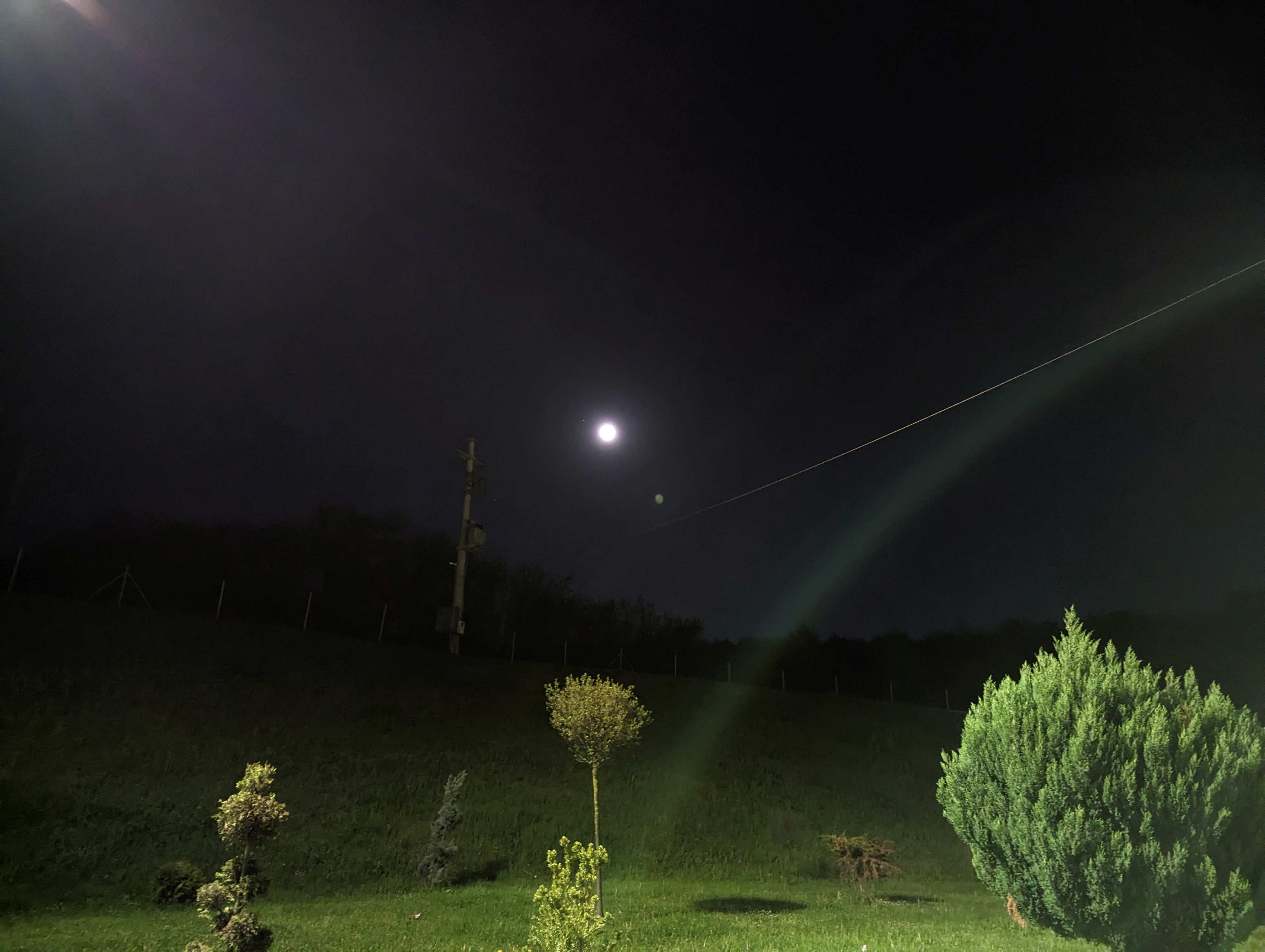
Travelling overland is so very different from flying: These were journeys of paths and mountains which were seen, but not walked. Of borders and boundaries, and The Ministry of Pies. Of the full moon at night and in the early morning. Of towers and rivers – fast glimpsed through windows. They were about fresh air in car parks after miles on the road, a 3am toilet break, new currencies each time I woke, and ‘thank you’s in different languages. Of waiting at yet another border where I whiled away time reading Margaret Forster’s biography of Elizabeth Barrett Browning in the sun (borrowed from one of those mini-book-swap boxes that can be found in public parks all over Europe and the UK, and returned at the next one, in the next city). Of T’ai chi and walking under trees dripping with rain as passports were checked, and of motorways and forests and wheels on solid ground.

Athens to Budapest
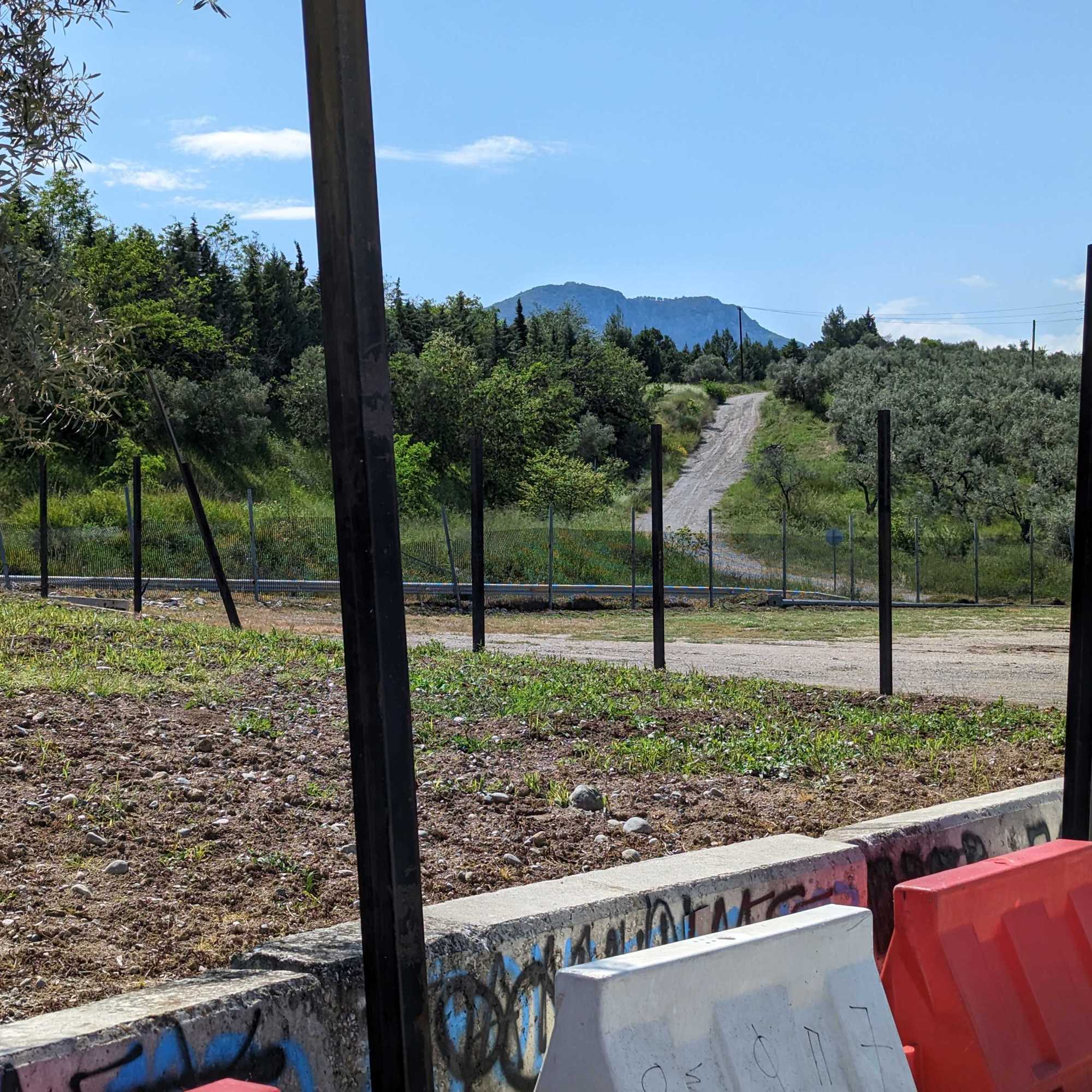
I left Athens at 12.30pm, went through Kifisia around 1.30pm, and the bus made toilet stops at Agios Konstantinos at 3.40pm, and passed by Mount Ossa (south of Kozani) around 6.15pm.
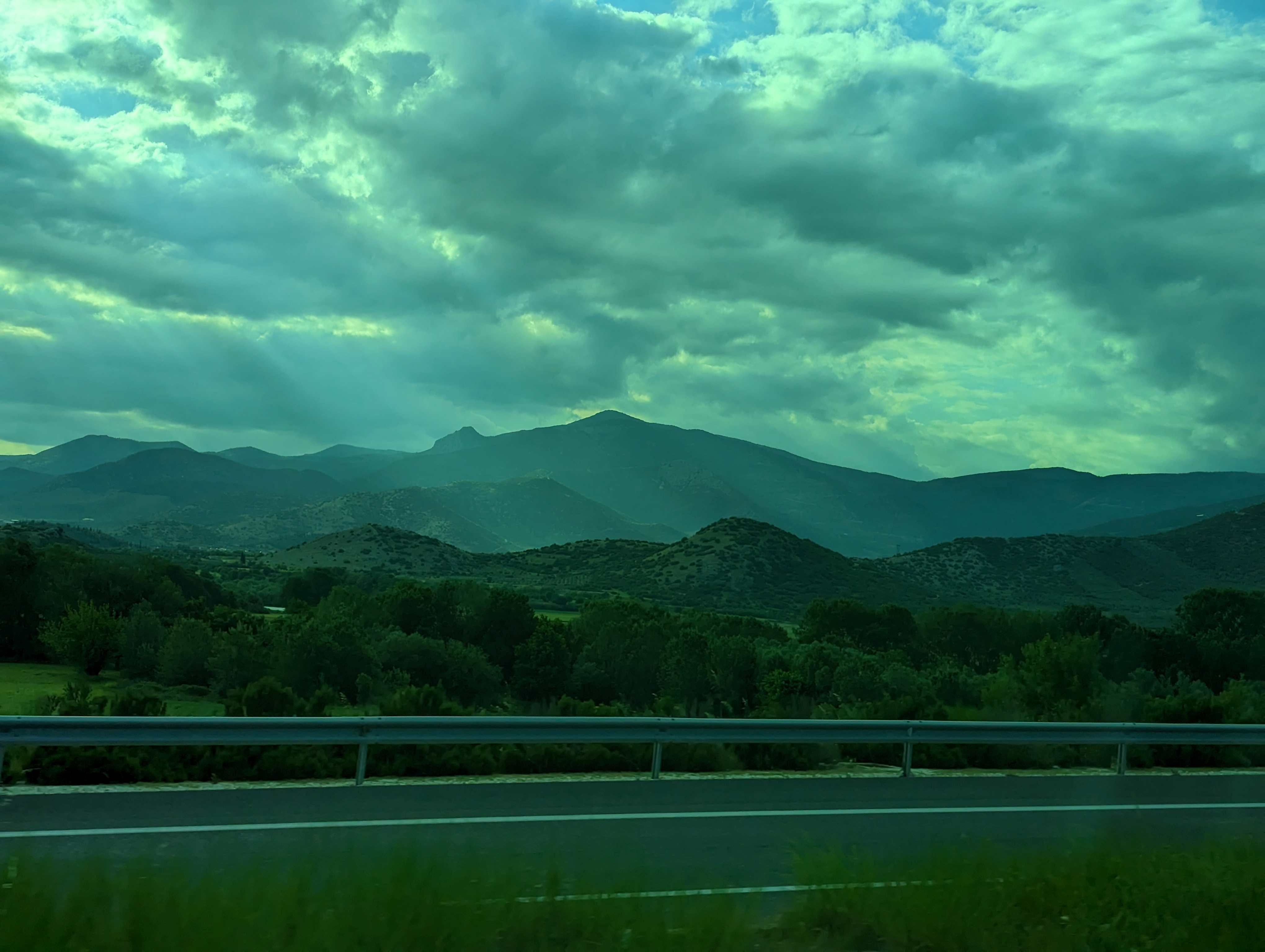
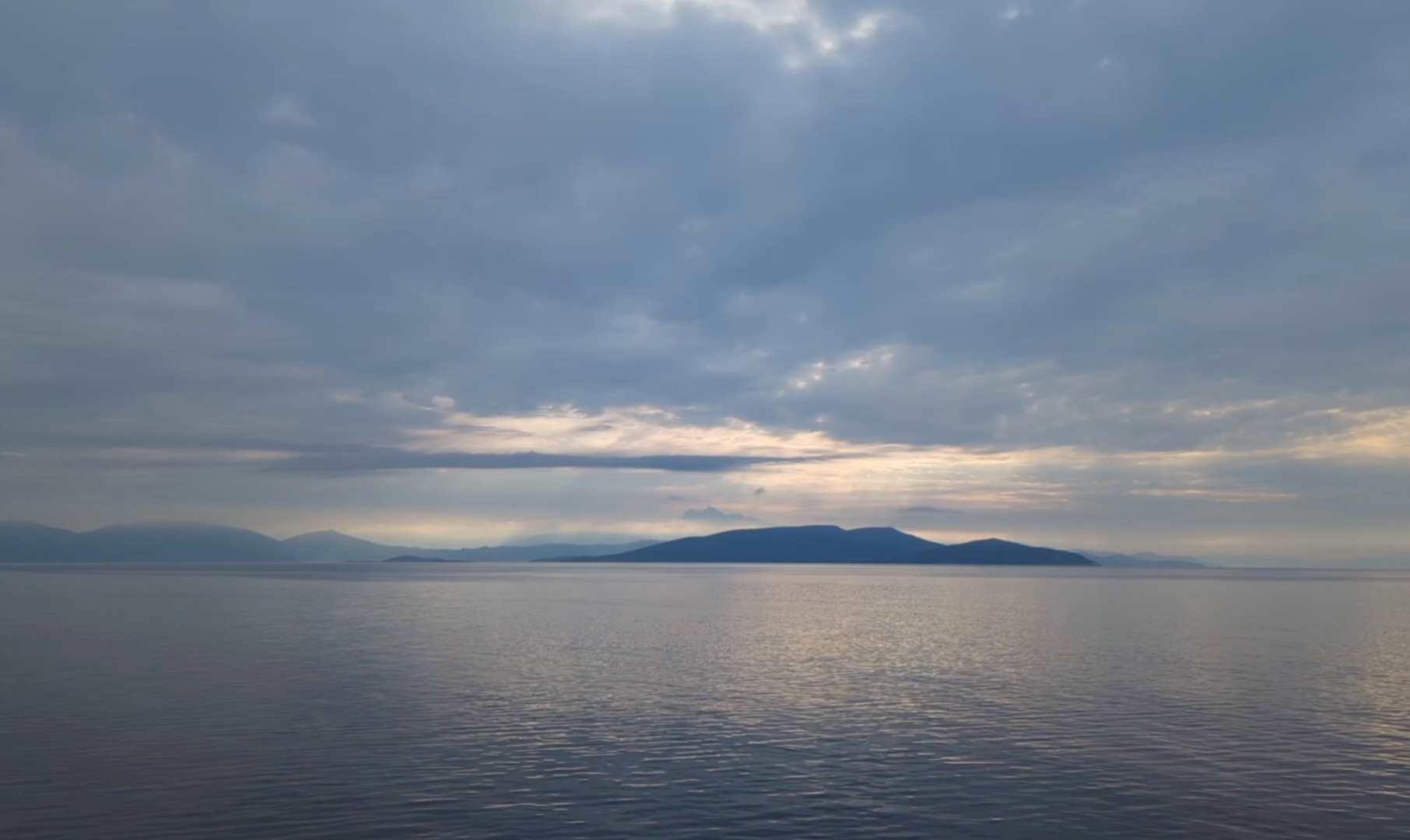
Mount Ossa in the distance
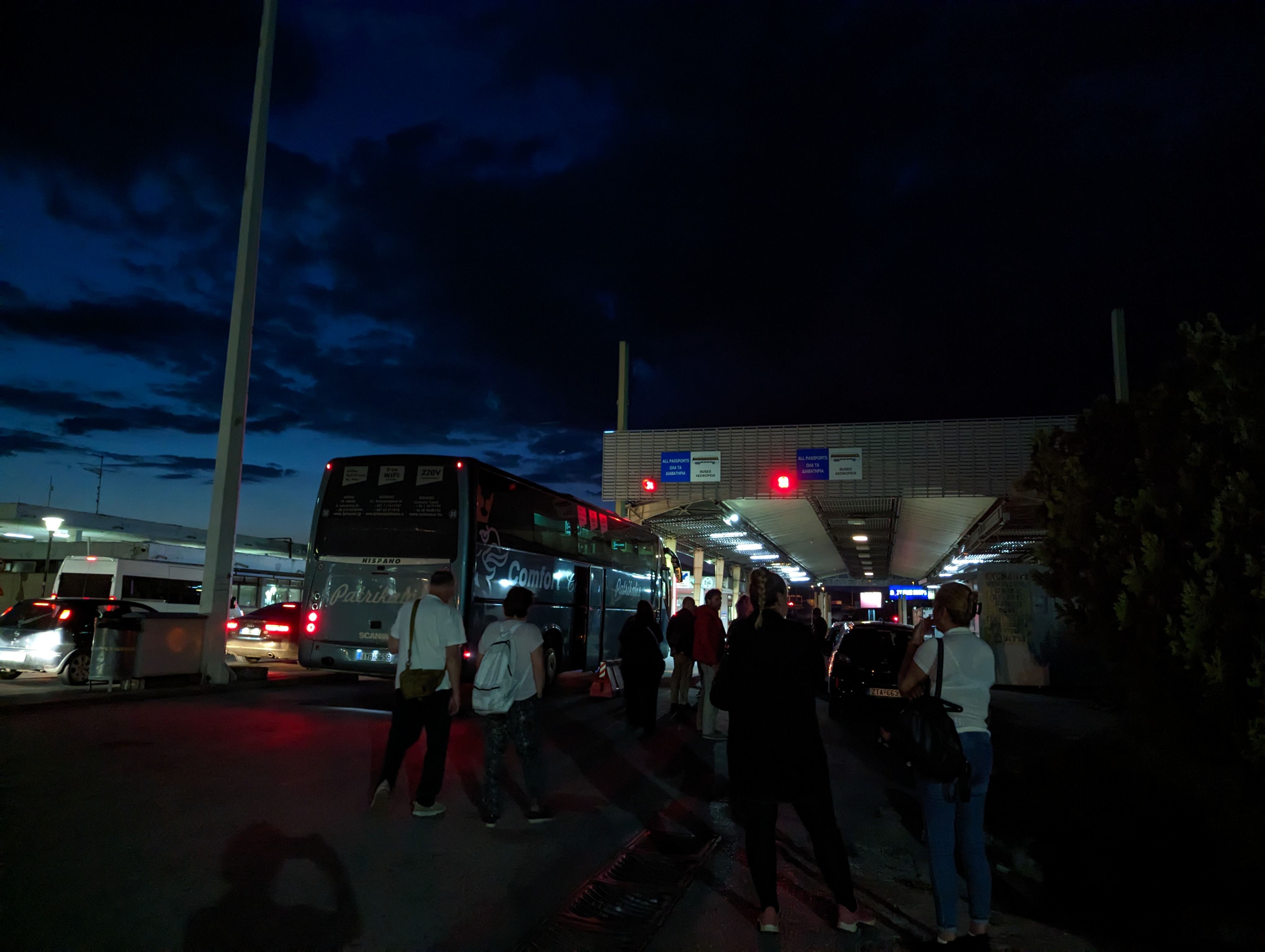
The Greek – North Macedonian border (Tsoiliades) 8.15pm
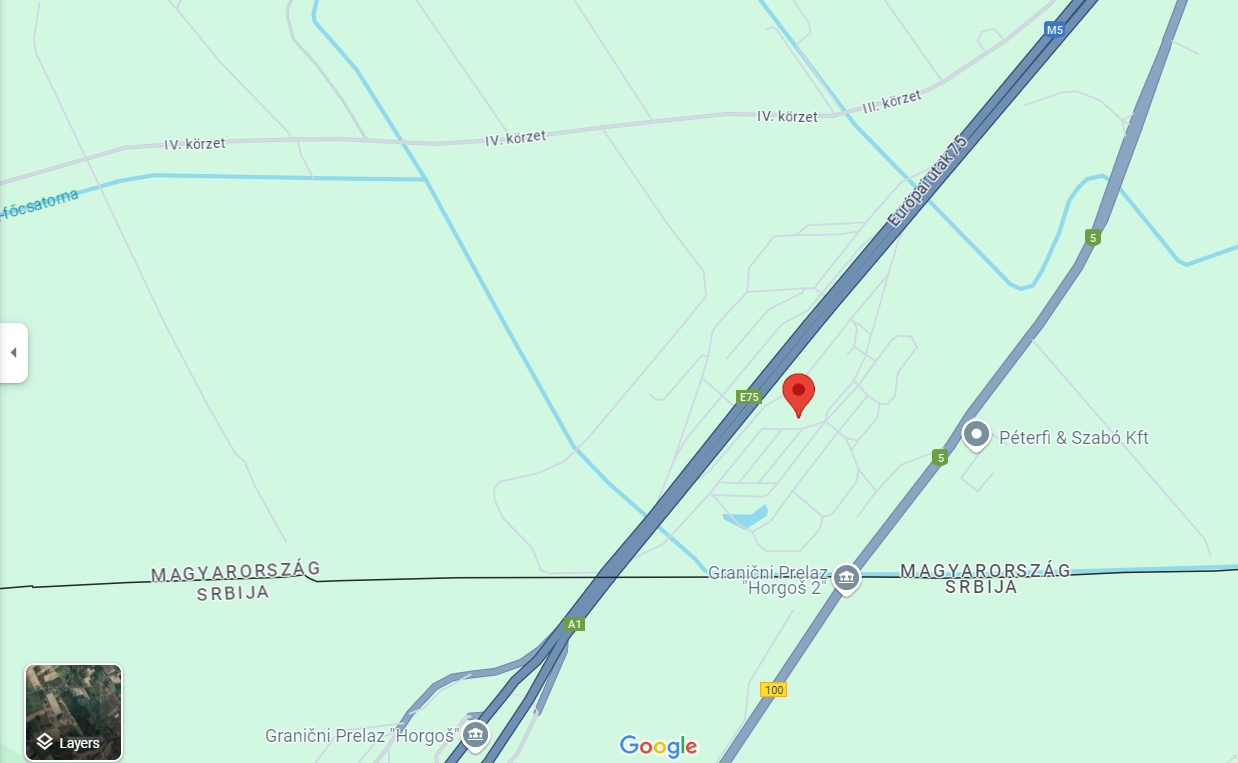
The North Macedonia – Serbian border (Preševo) 11.45pm
Borovac, Serbia 12.30am

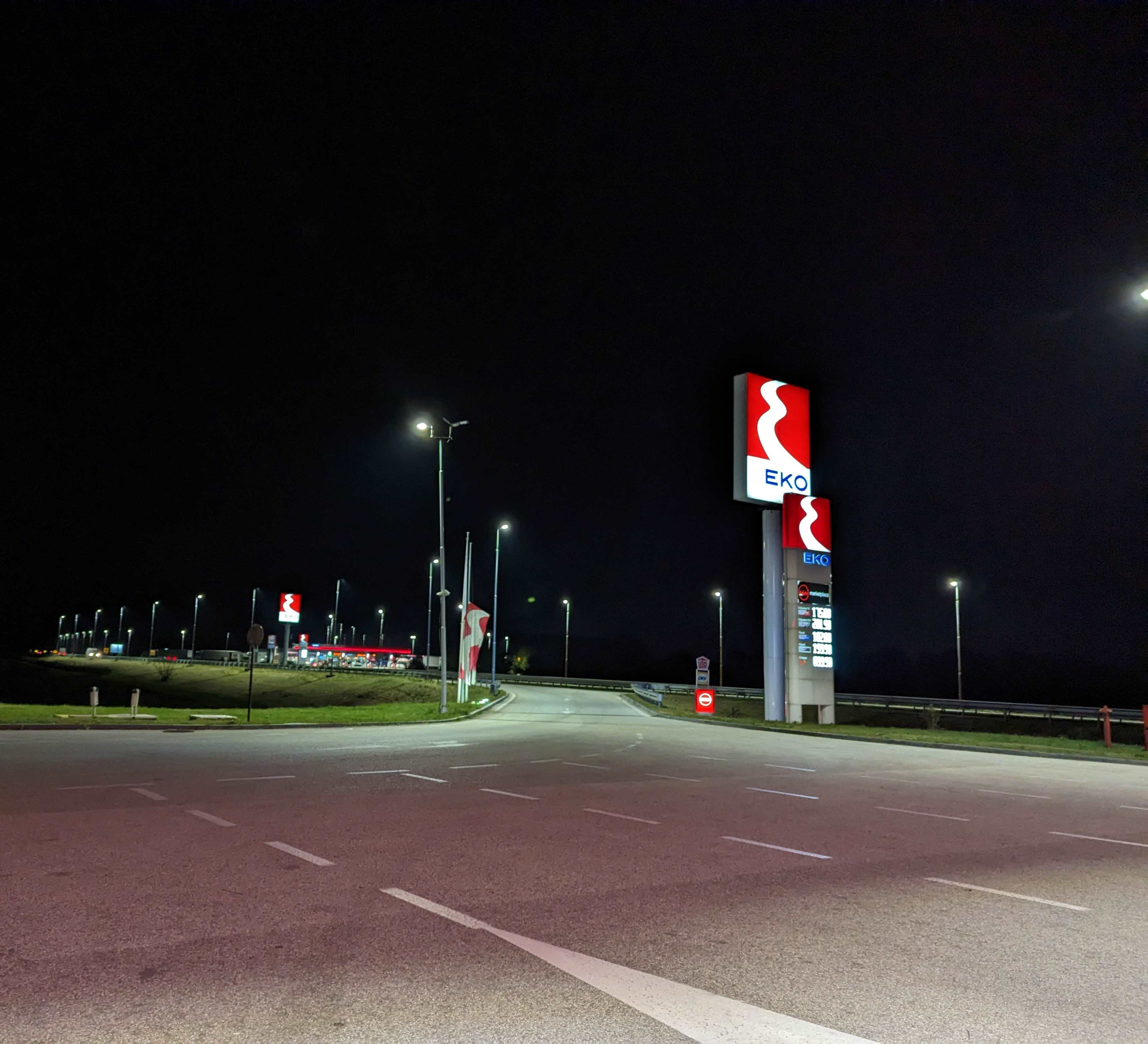
Even nearer the North Macedonian – Serbian border at 3.30am

Tips: take a rolled-up sleeping bag and a blow-up pillow, stock up on food and water before you get on, don’t chose a seat near the toilet (if you have a choice), and always get out to stretch your legs and breathe deeply when possible

By 5.30am, we were in Belgrade.

Belgrade to Budapest: six hours
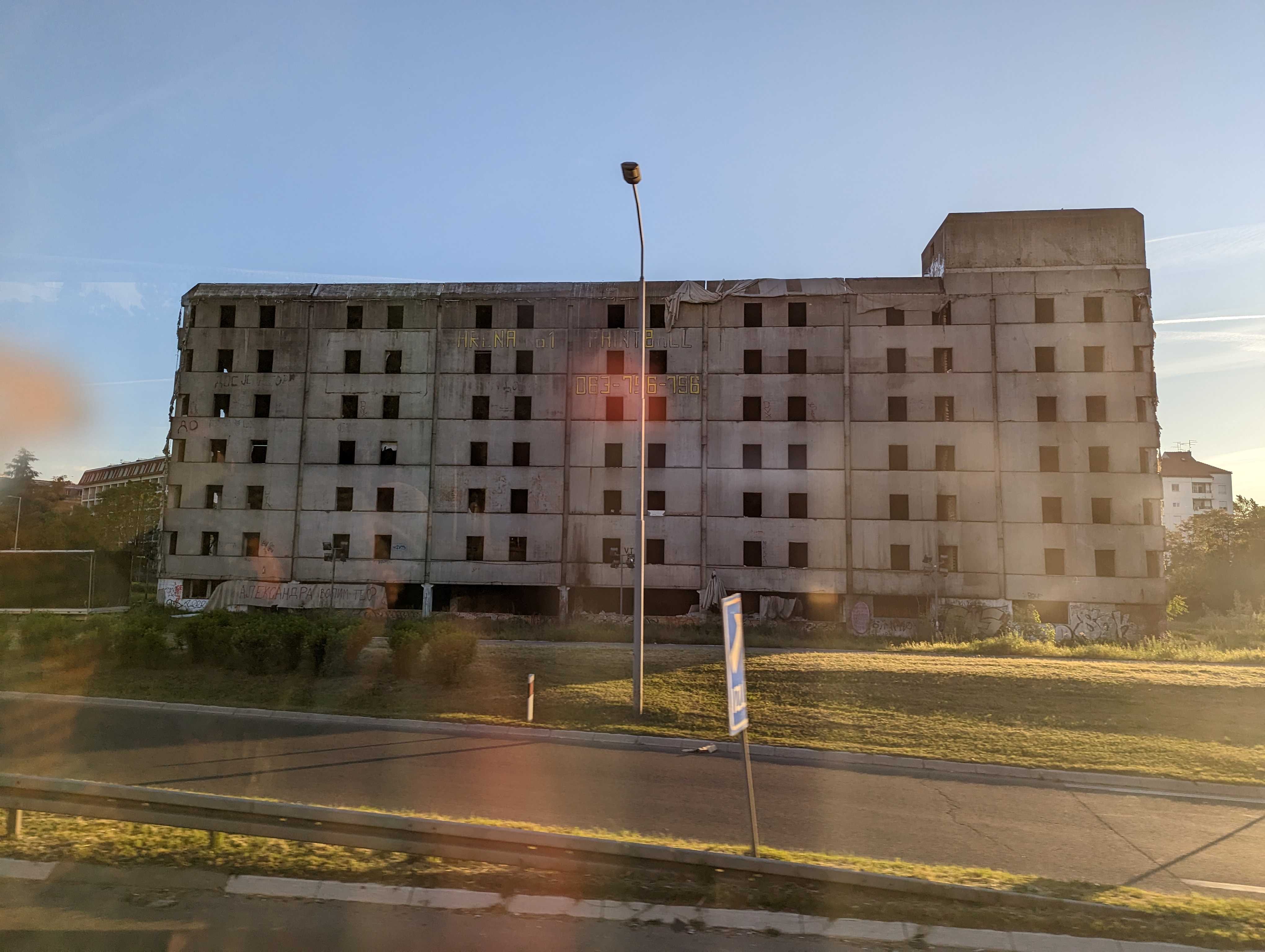
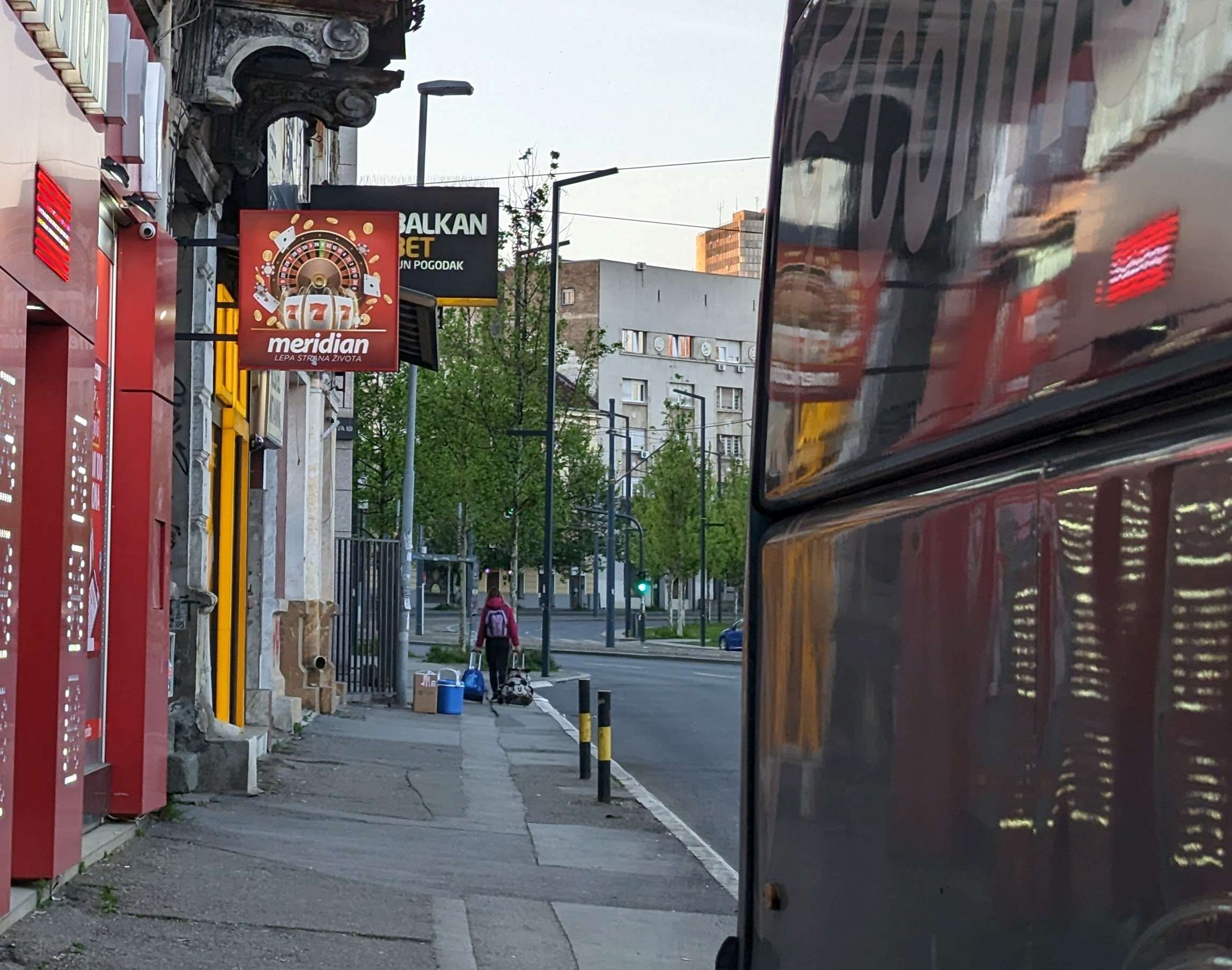
I decided that I must be ‘in the right place’ as our Belgrade stop where people and many boxes left the bus and boarded was called ‘Meridian’ (a key word in Shiatsu denoting the channels through which we image chi flows)

The worst thing about the journey was the smoking – both driver and passengers. I asked them if it was possible to stop and, reluctantly, there was a short hiaitus for the air to clear. It’s not always like this.
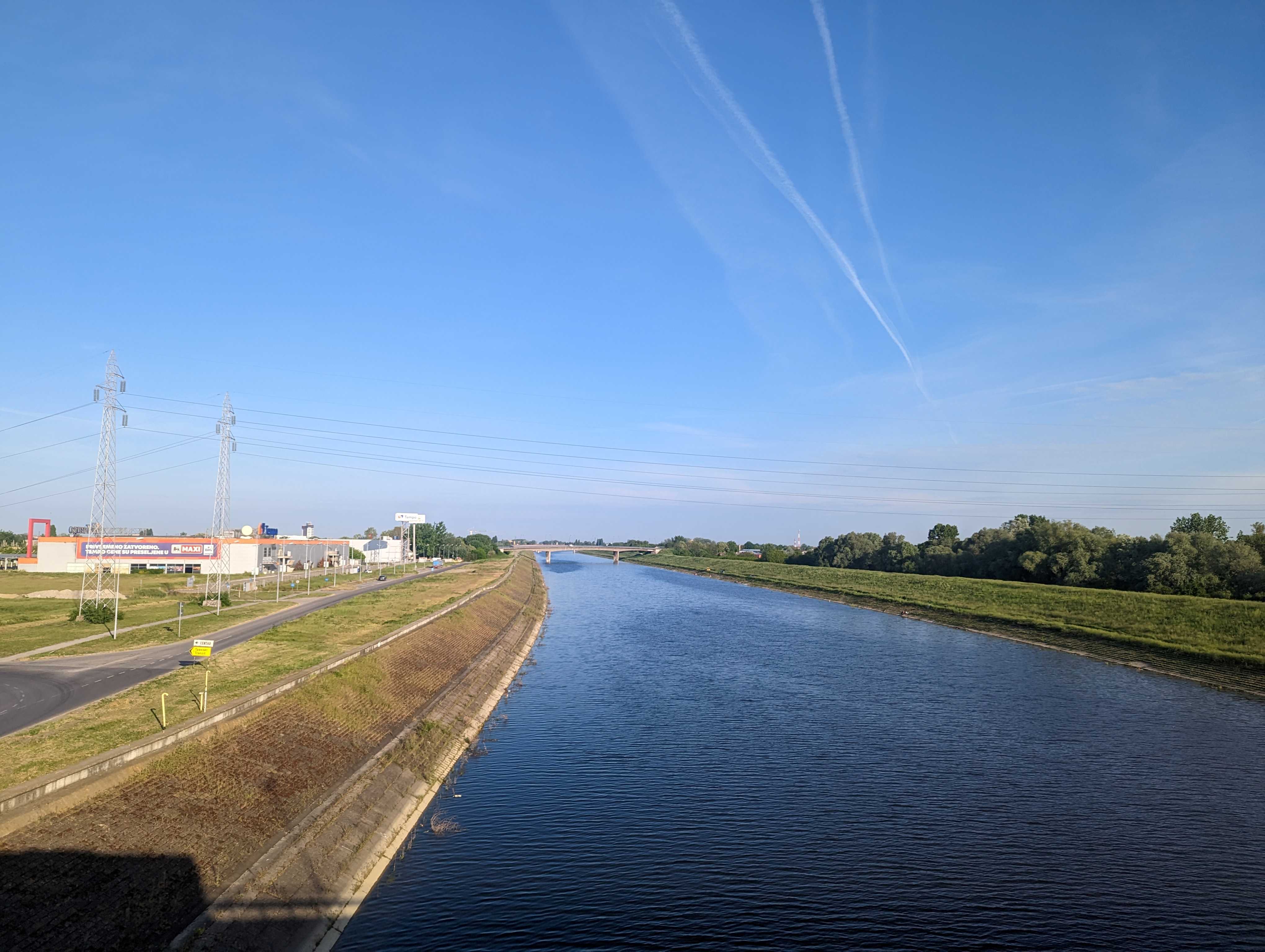
River Danube, Novi Sad, Serbia
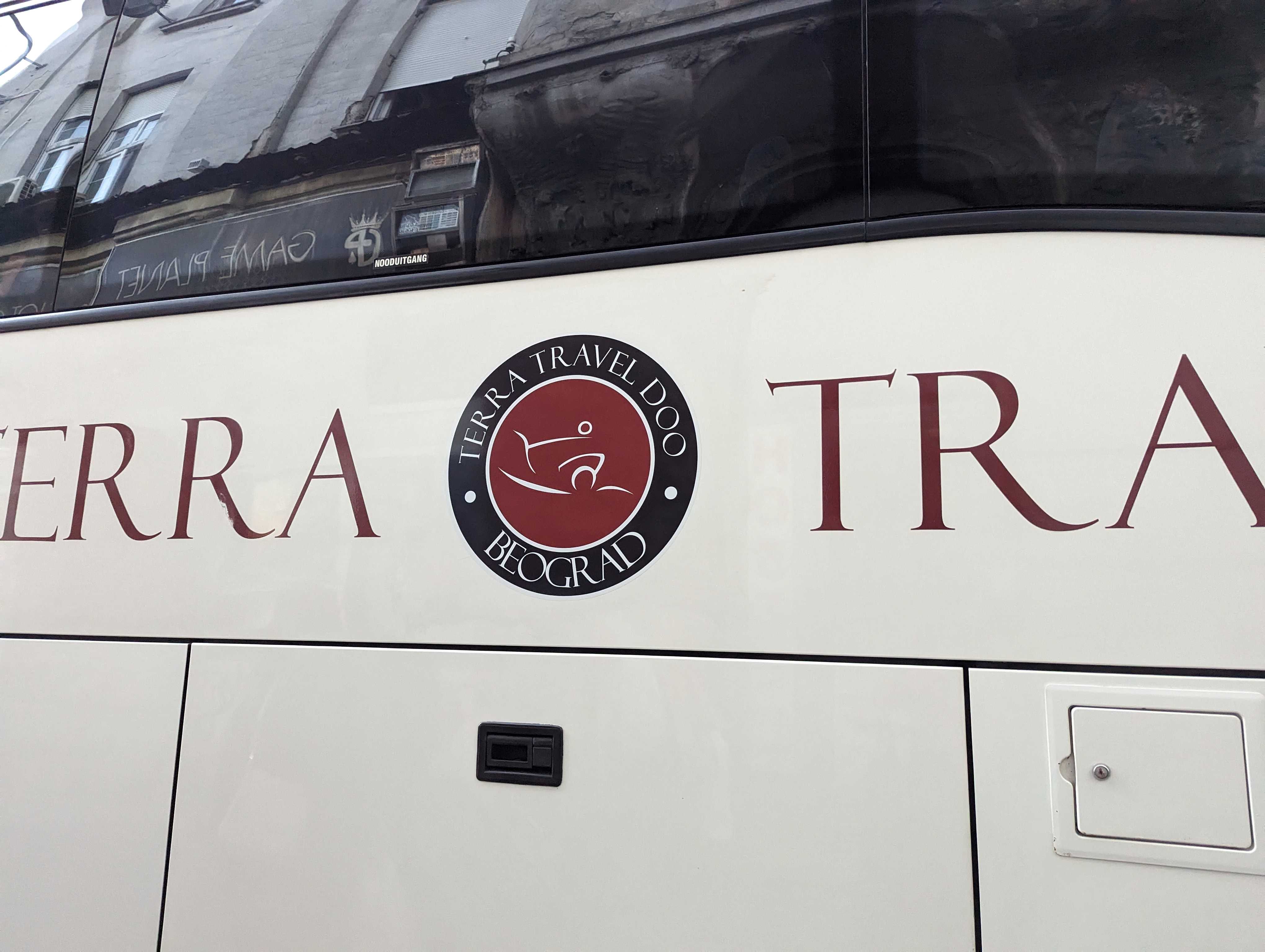
Terra Travel bus company
Supska, Serbia
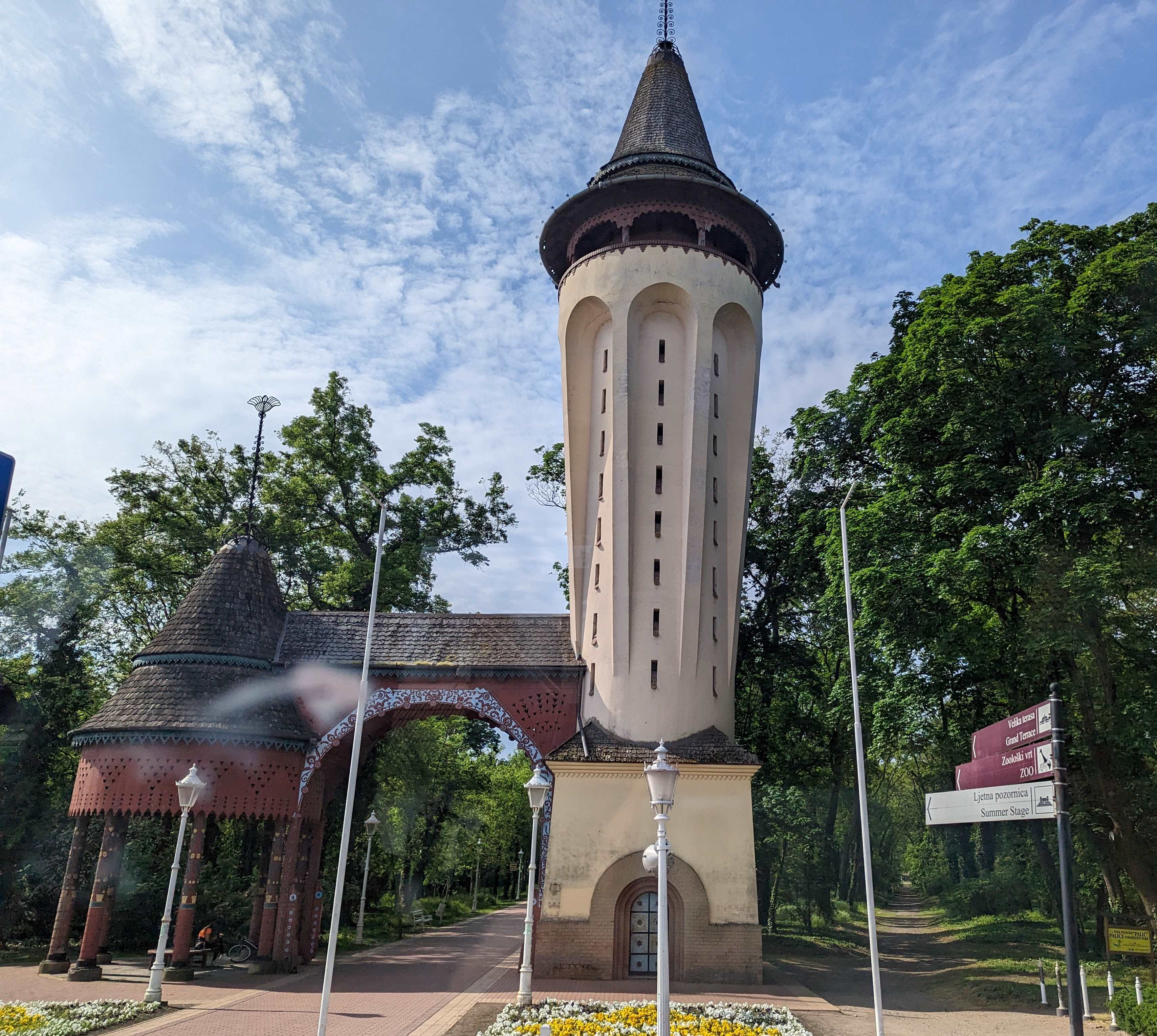
Through Palić, Serbia at 9.30am

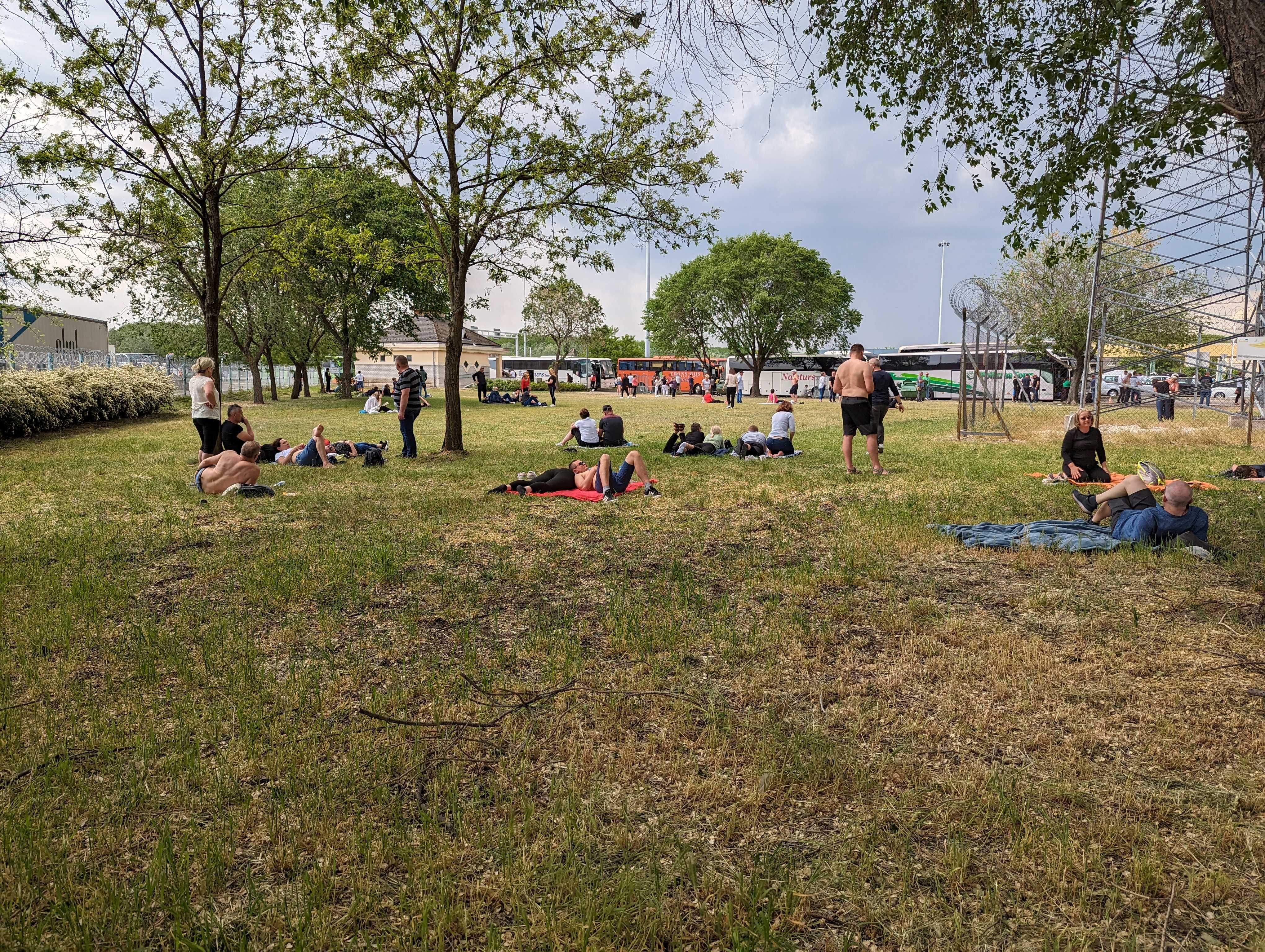
At Röszke, we waited at the border crossing from Serbia to Hungary, one of the 29 Schengan countries, arriving at 10am and staying until 3pm when we finally got moving again. Luckily the sun was shining and we all spread out. I was the only person doing T’ai chi under the trees (it felt good after hours of sitting on a coach), but not the only one meditating.
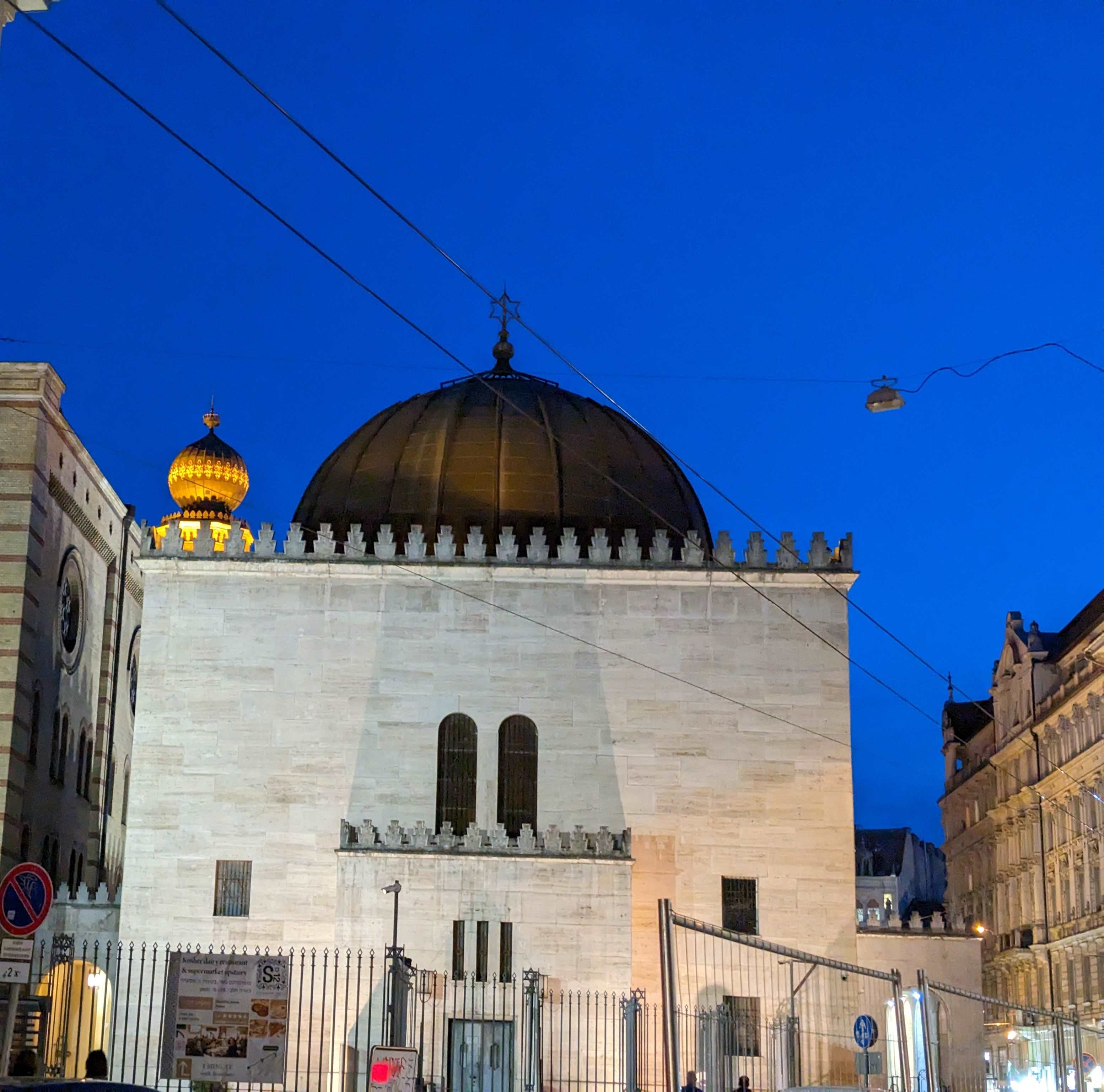
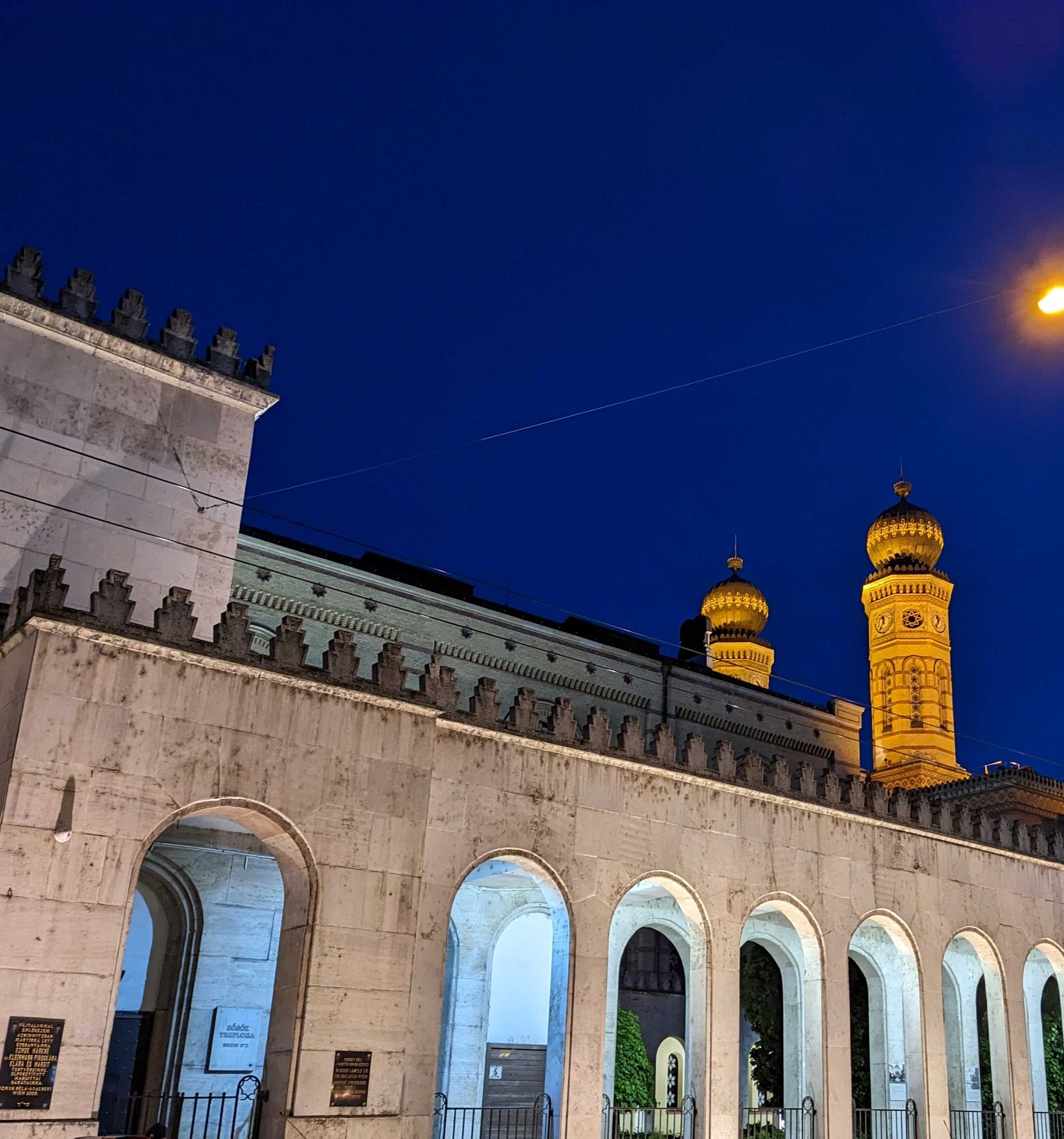
At 5pm, we eventually arrived at Budapest where they use the Hungarian Forint currency (1 HUF = £0.0023). There is much more information about accomodation and things to see via the link above. Below, two photos of the Dohány Street Synagogue from the Jewish Quarter where my hostel was located.
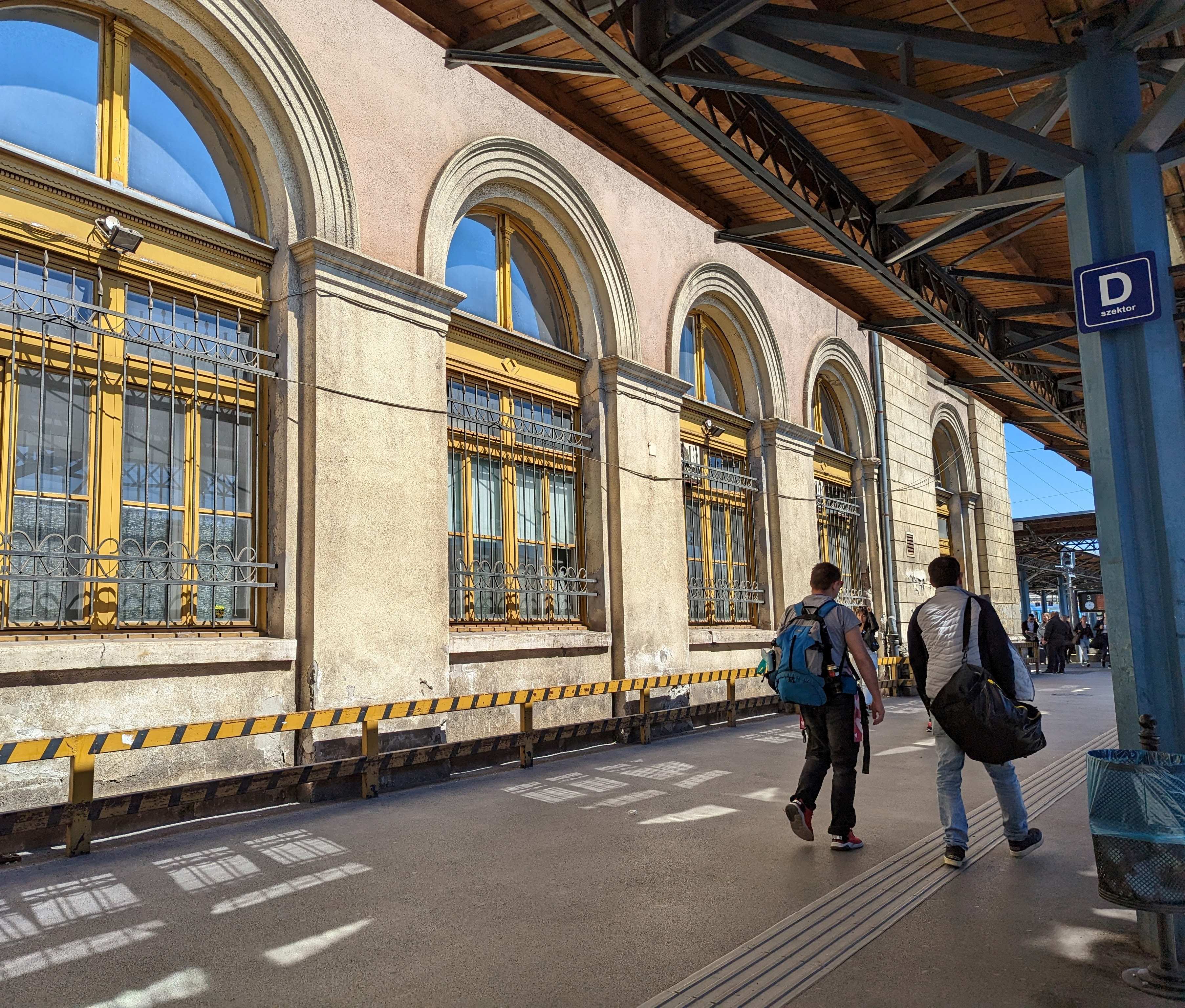
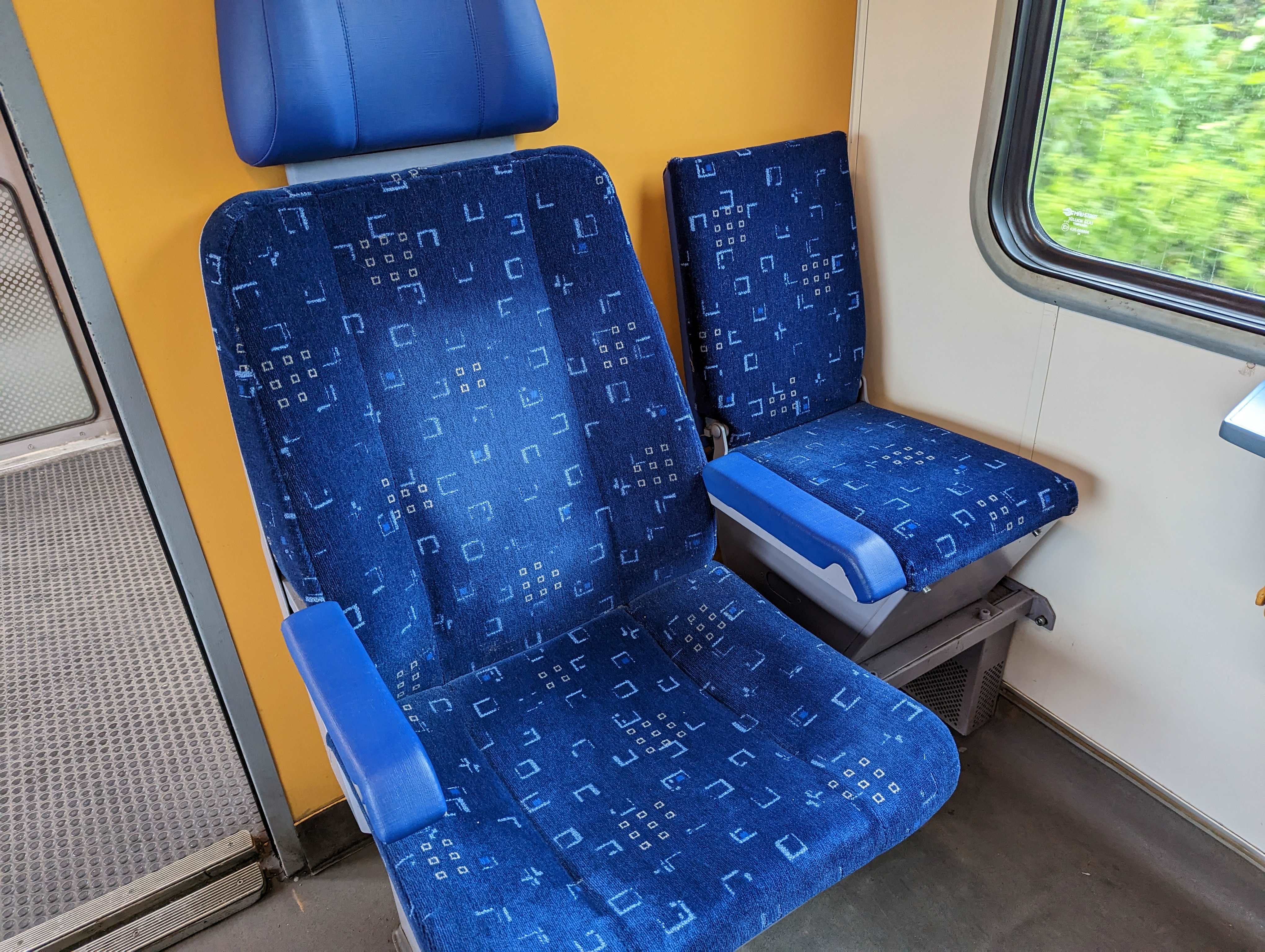
Budapest-Keleti train station
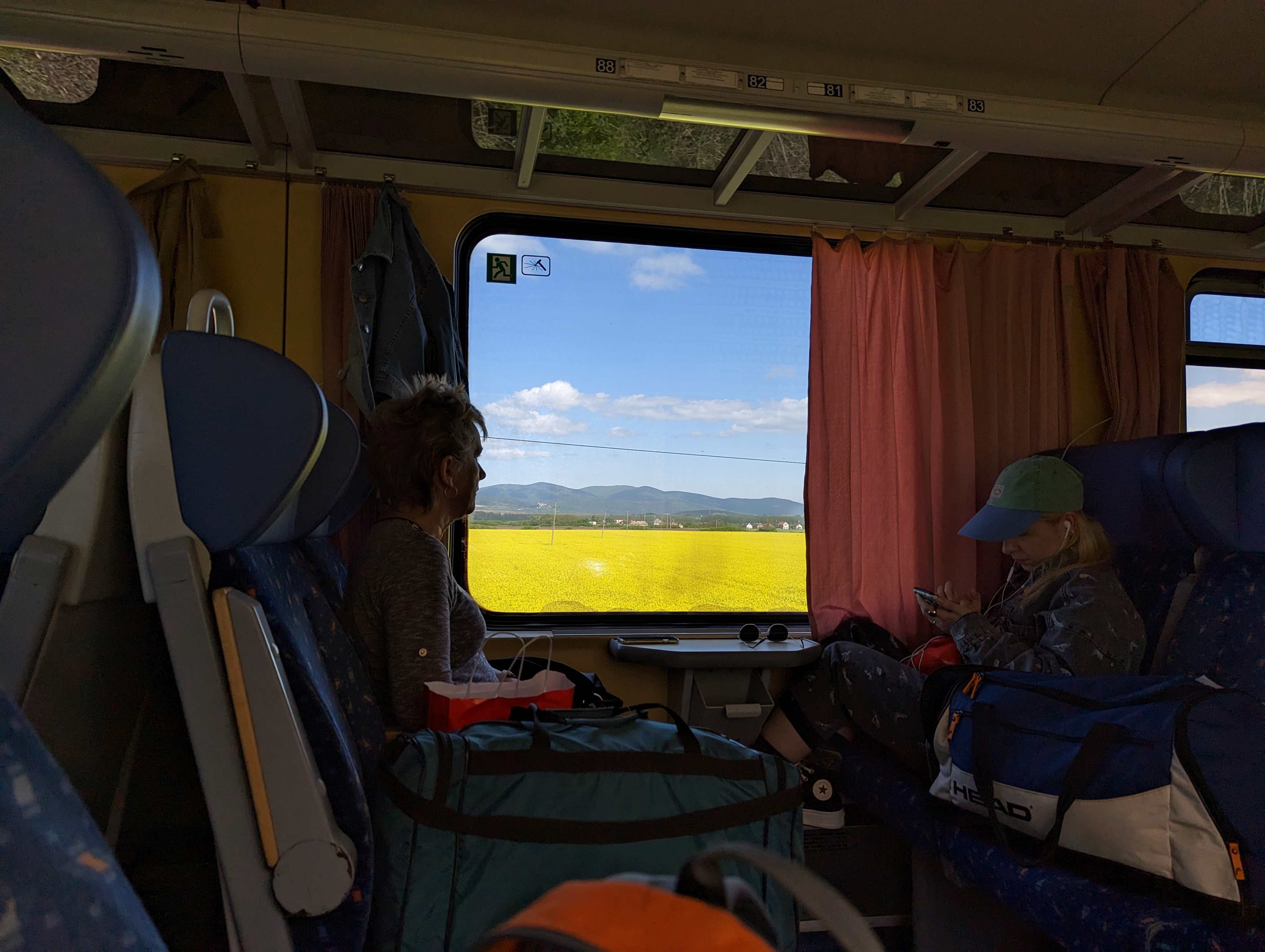
On the way to Slovakia from Hungary

Budapest to Trebišov (east of Kovice) Slovakia

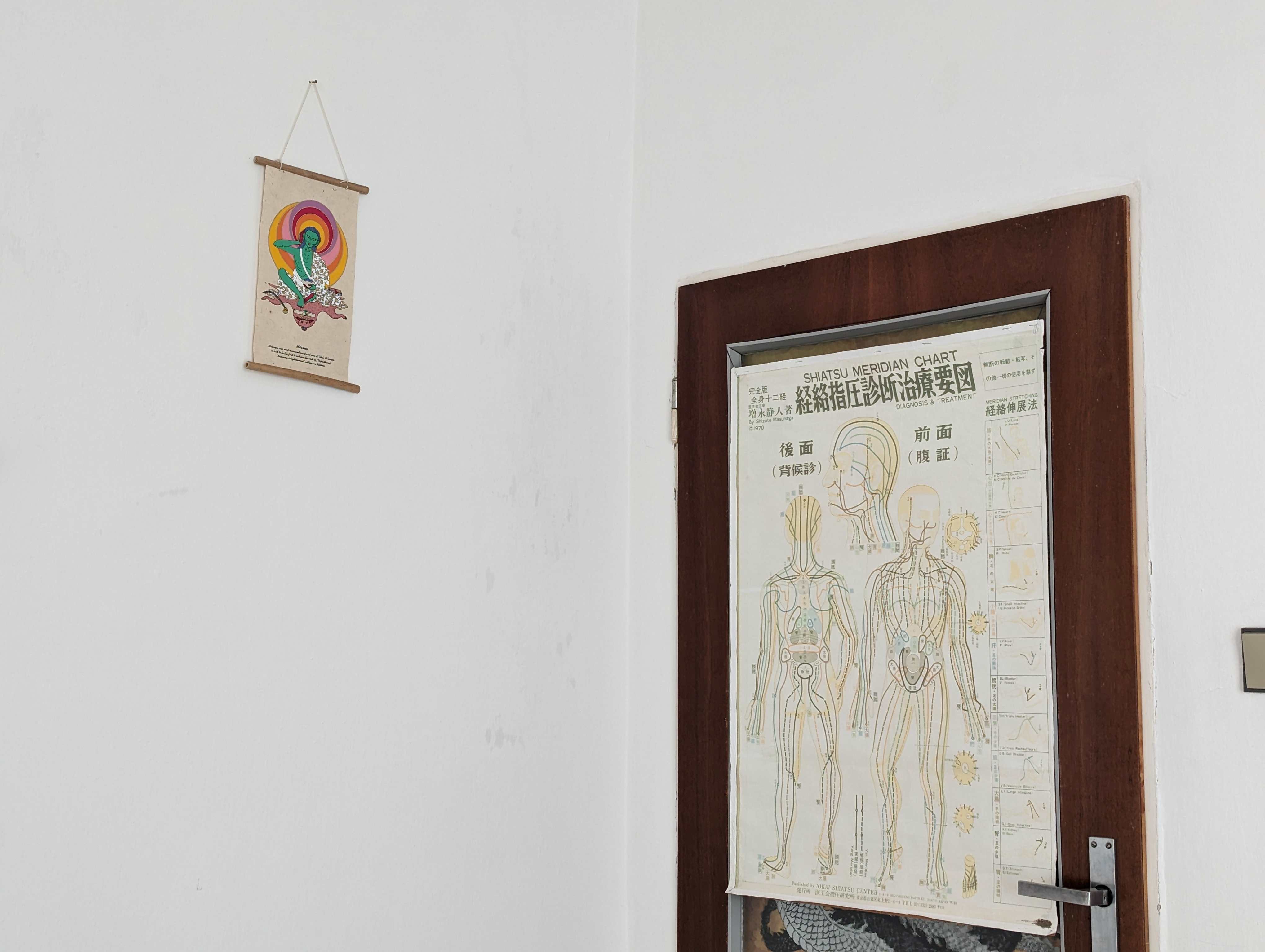
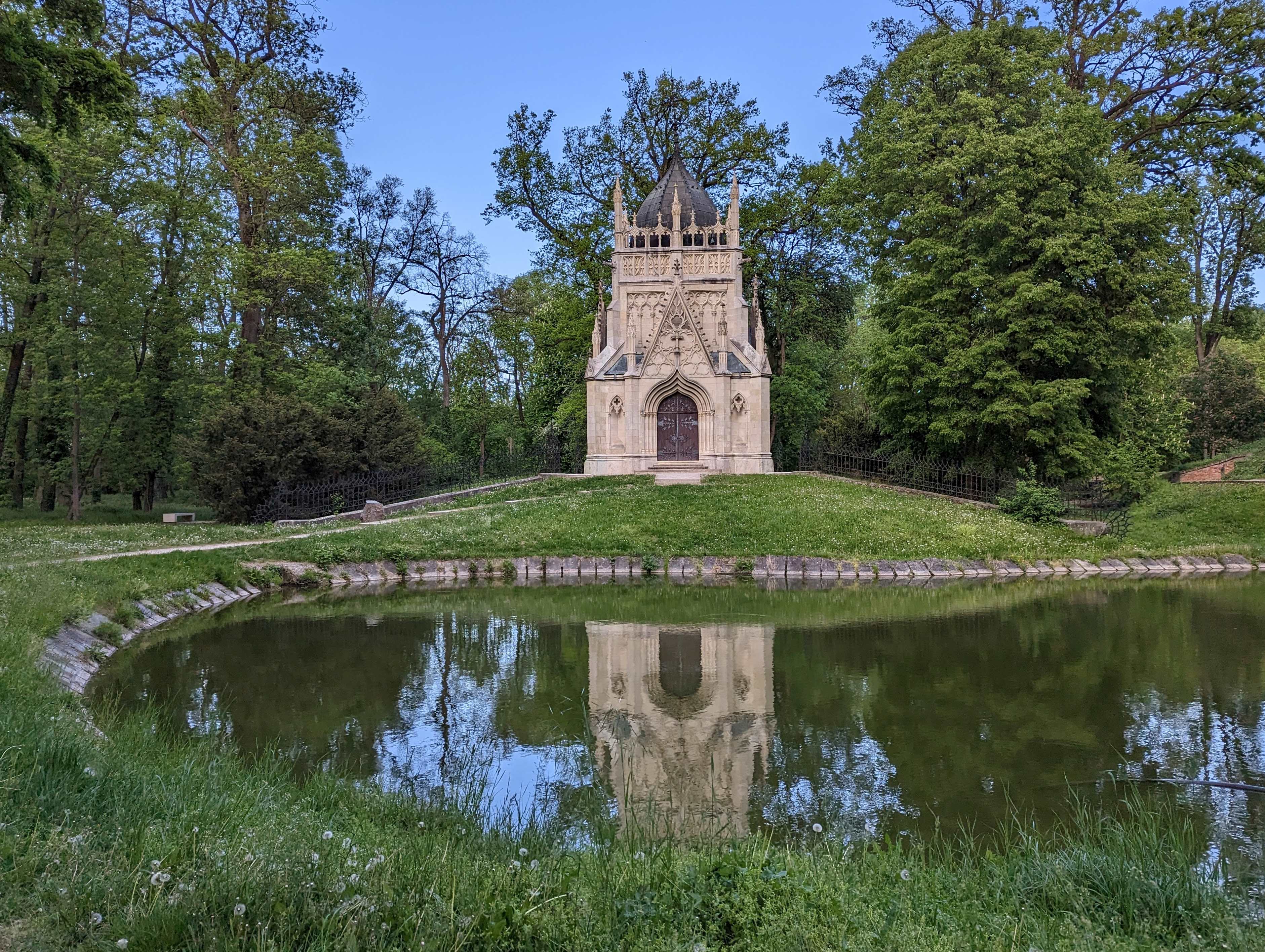
I went to stay with Patrik, one of the Shiatsu School Edinburgh graduates, and his family in Trebišov. They were really hospitable and I enjoyed the Shiatsu exchange, walks and talks we shared. The following three images are: the Milenecká ulička park (top), a traditional church (below left), and a Shiatsu room with a poster showing the Masunaga meridians (below right).
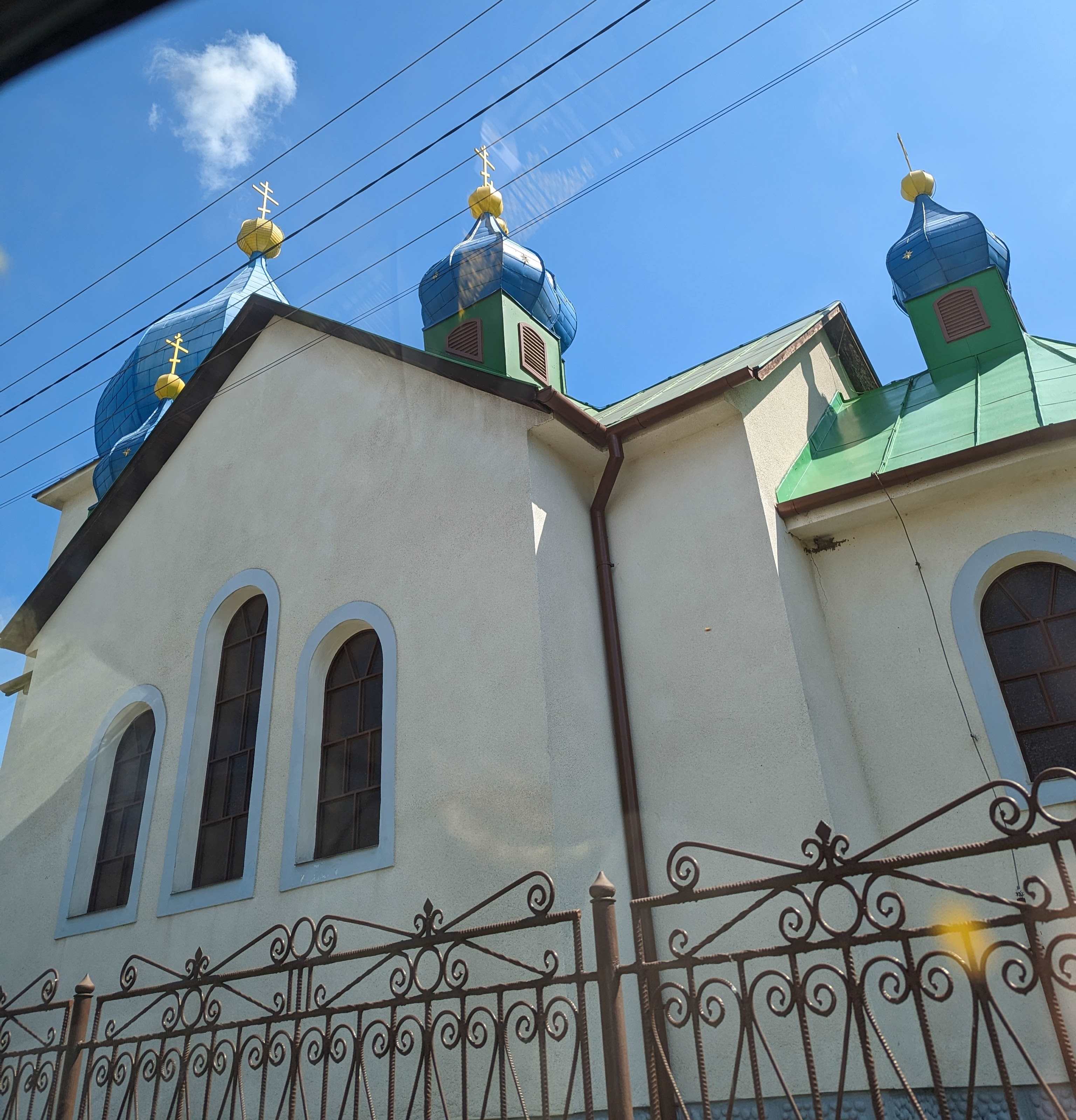
On the way back to Budapest, I changed trains at Kosice.
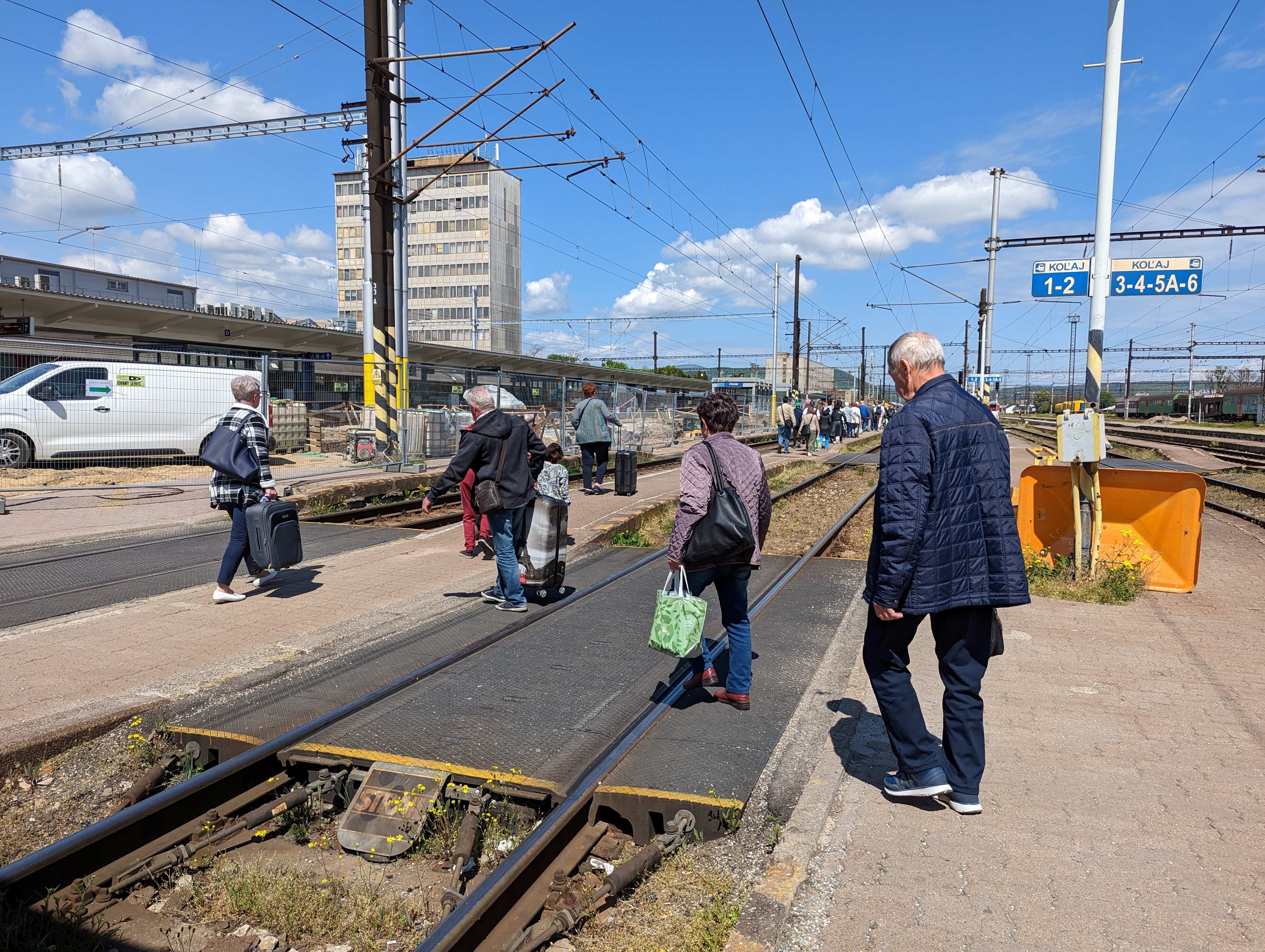
Kosice, Slovakia

Budapest to Balaton, Hungary

Budapest to Balaton, Hungary – adult and child

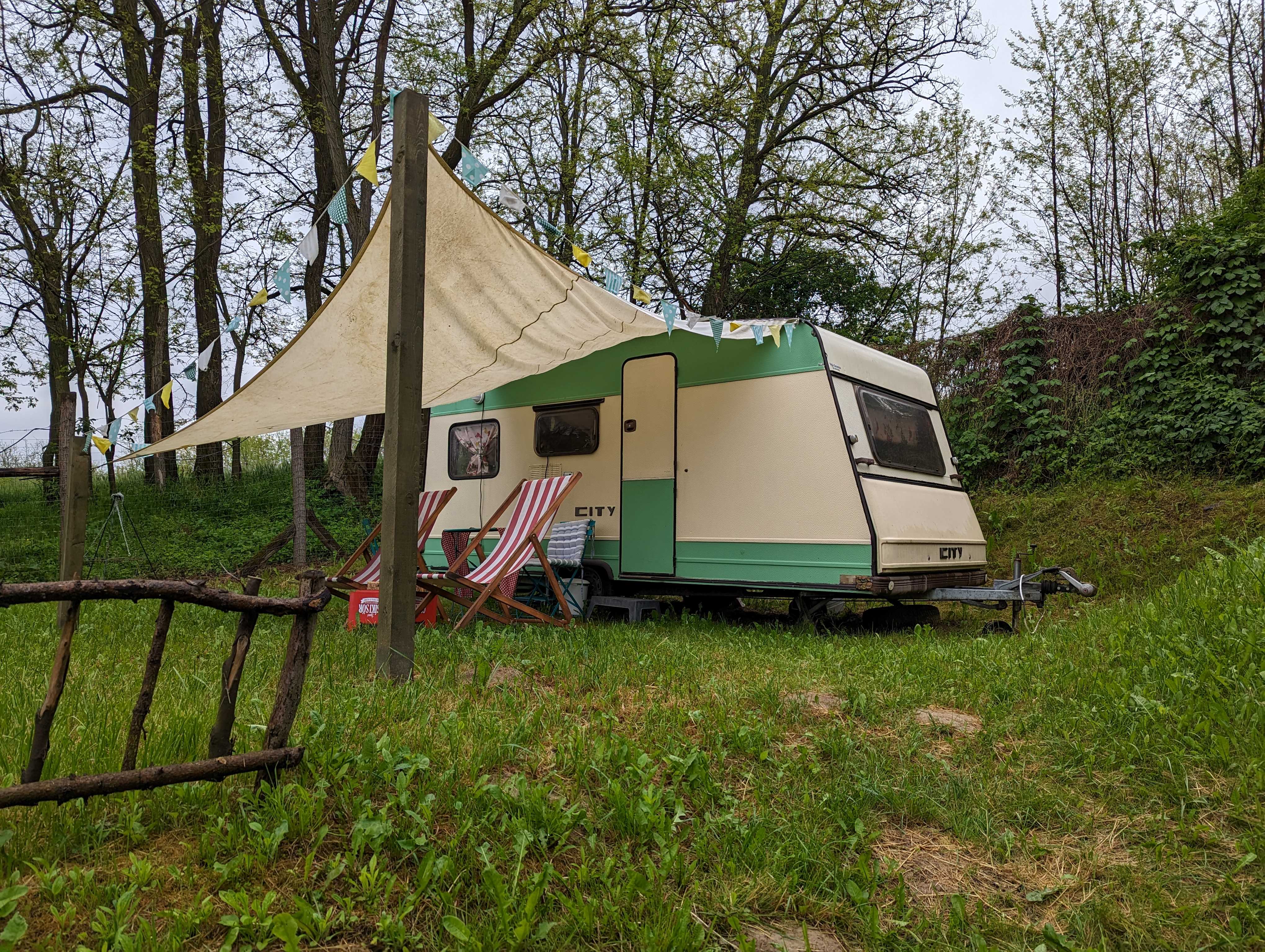
After staying another night in Budapest, I detoured to rural Hungary, travelling by train to Siófuk near Lake Balaton (south west of Budapest), from where I took a bus to Kopánnyszántó and walked to Koppány Pines to stay with Debs Tetlow (a fellow Juicy Crone). There, I exchanged Shiatsu with her and her husband who run a beautiful camp site, enjoyed walks and sat out the rain in the caravan they prepared so kindly for me.
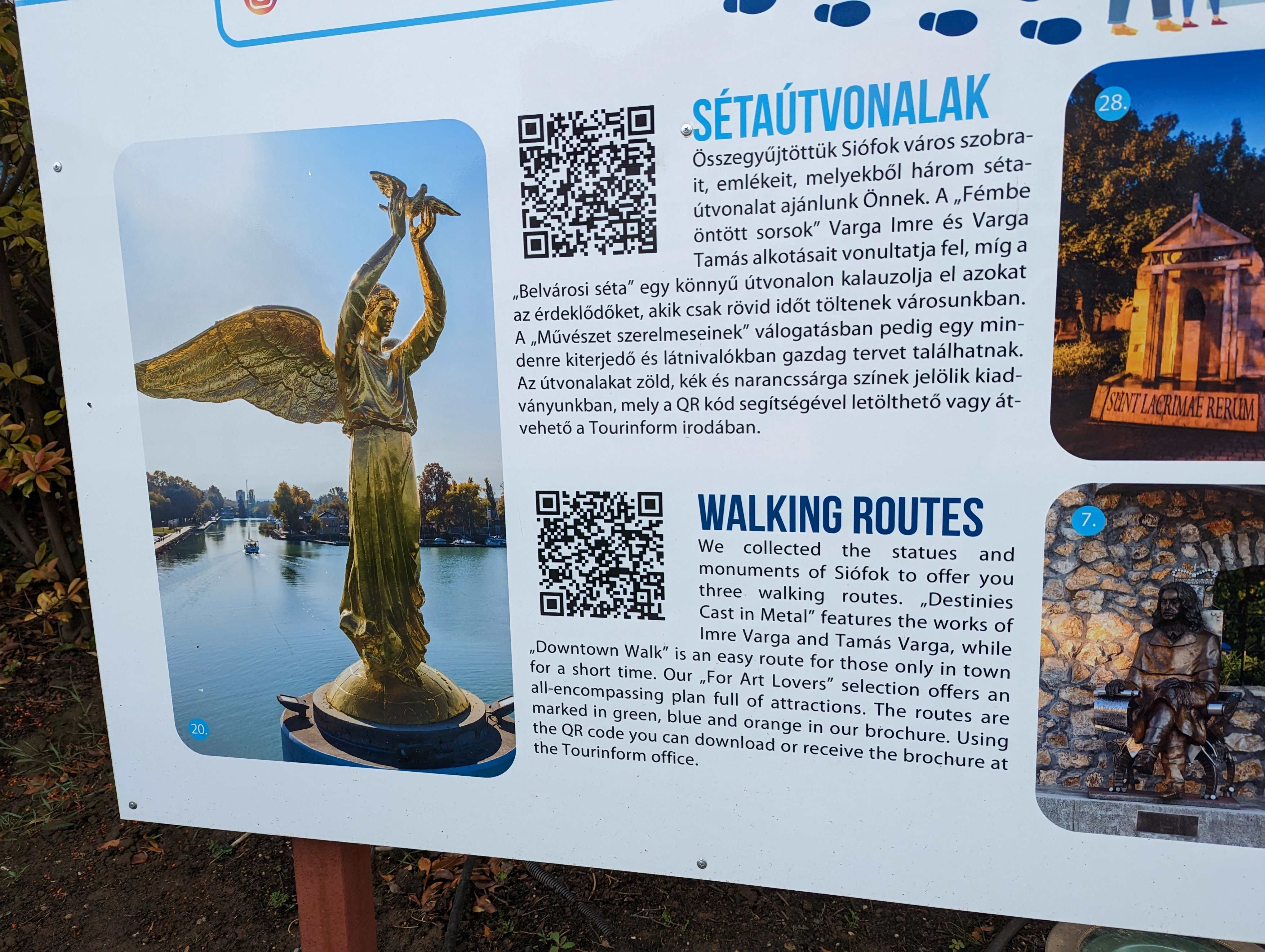
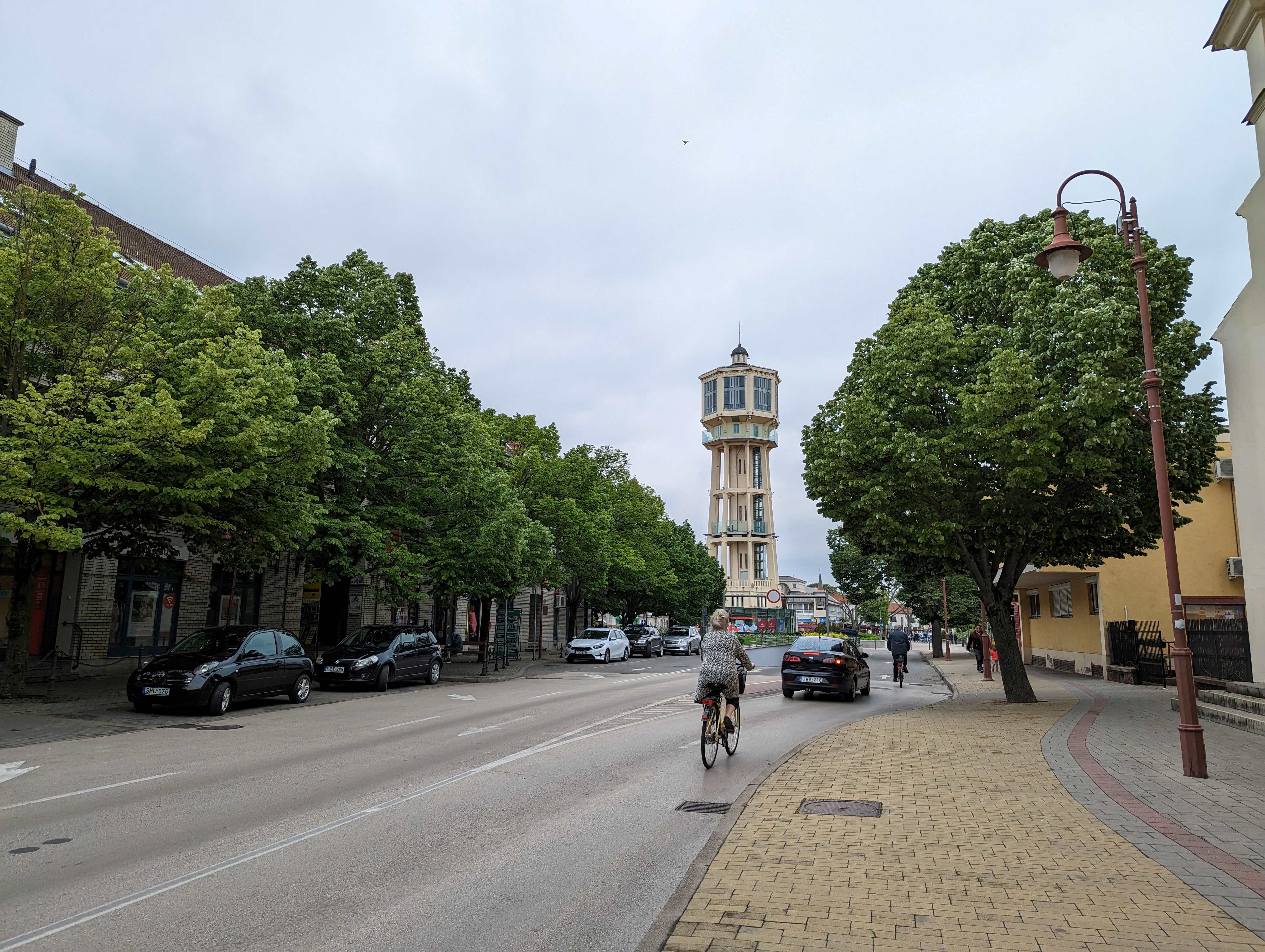
I stayed in their caravan at Koppány Pines. Hungary

Again, I was returning to Budapest. This time I got a lift in a car to Nagykónyi, and then took the bus back to Lake Balaton (where I visited the Mineral Museum at Siofuk, Kálmán Imre stny. 10 8600, which is recommended), and the train to the Hungarian capital (station Népliget).
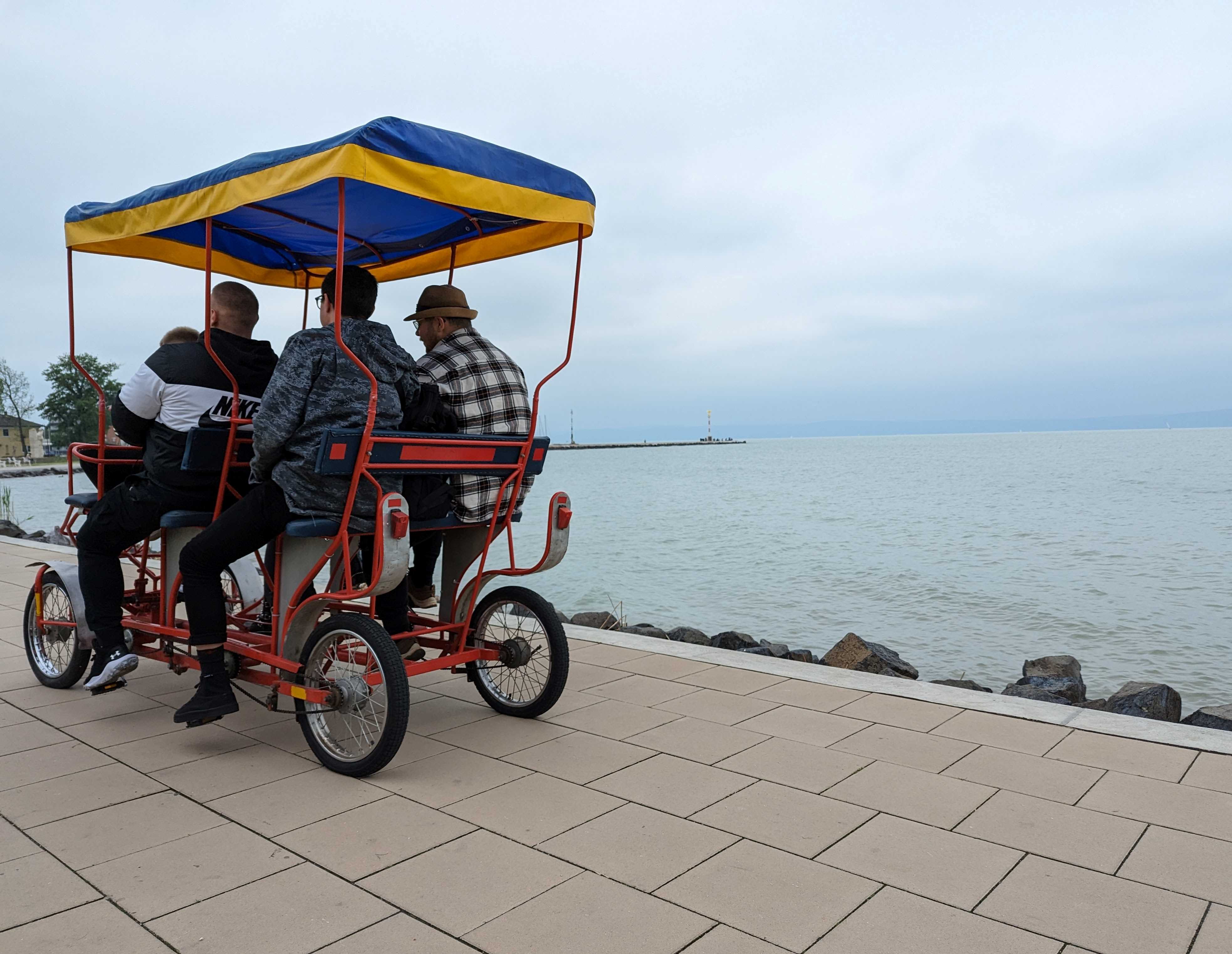
Lake Balaton, Hungary

Budapest to Berlin

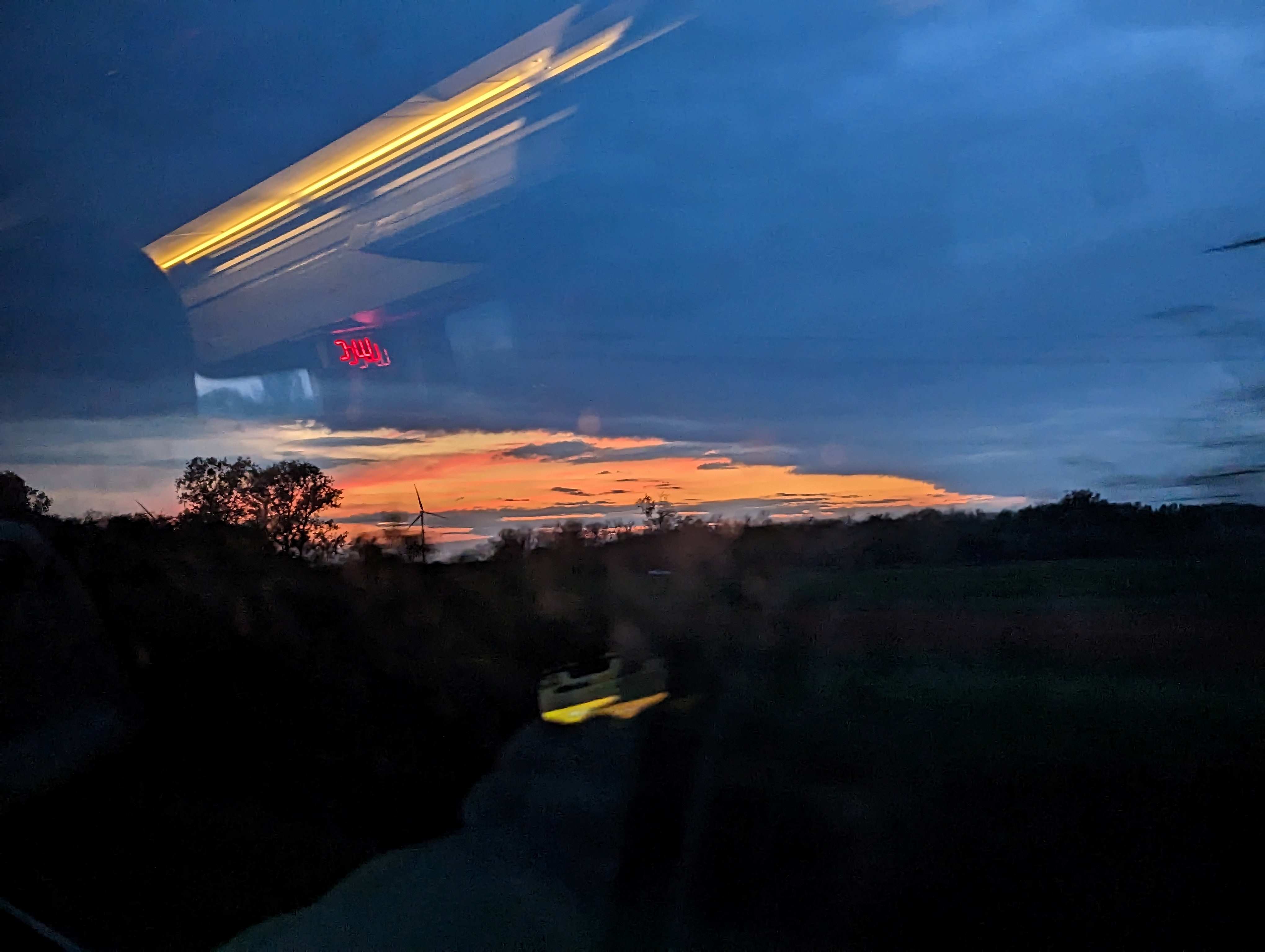
Soon after leaving Budapest: sunset from the bus

I left Budapest Nepilget at 7.30pm by bus, stopped somewhere for a break at 3.30am, and woke up in Germany at 5.30am to the most atmospheric dawn.
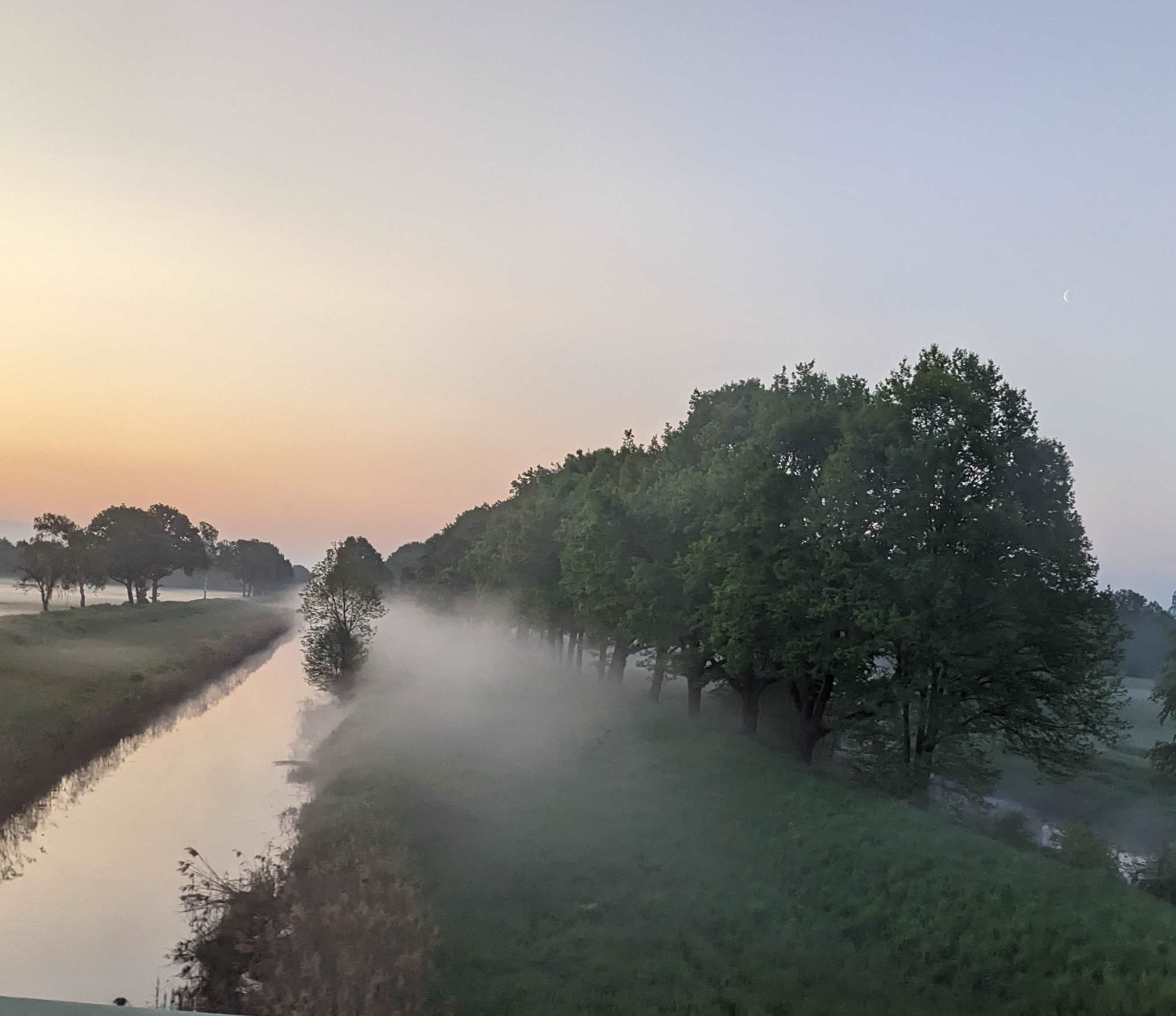
Sunrise Lübenau, Germany
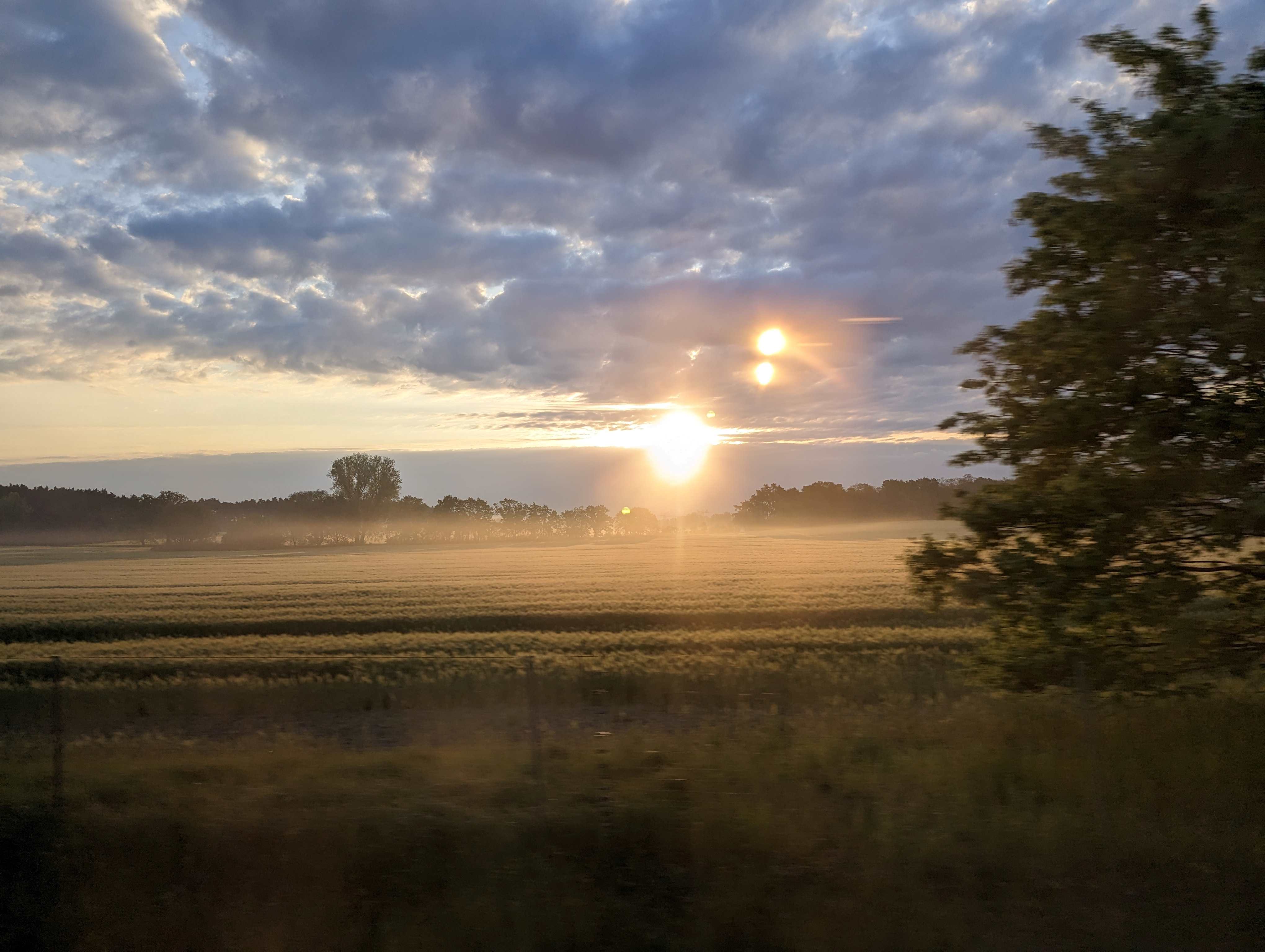
At 7.30 we drew into Berlin Südkreutz and I had a wonderful walk by New Tempelhof where the streets are named after plants: Jasminepfad, Magnoliapfad.
Berlin, Germany to The Hague, Netherlands
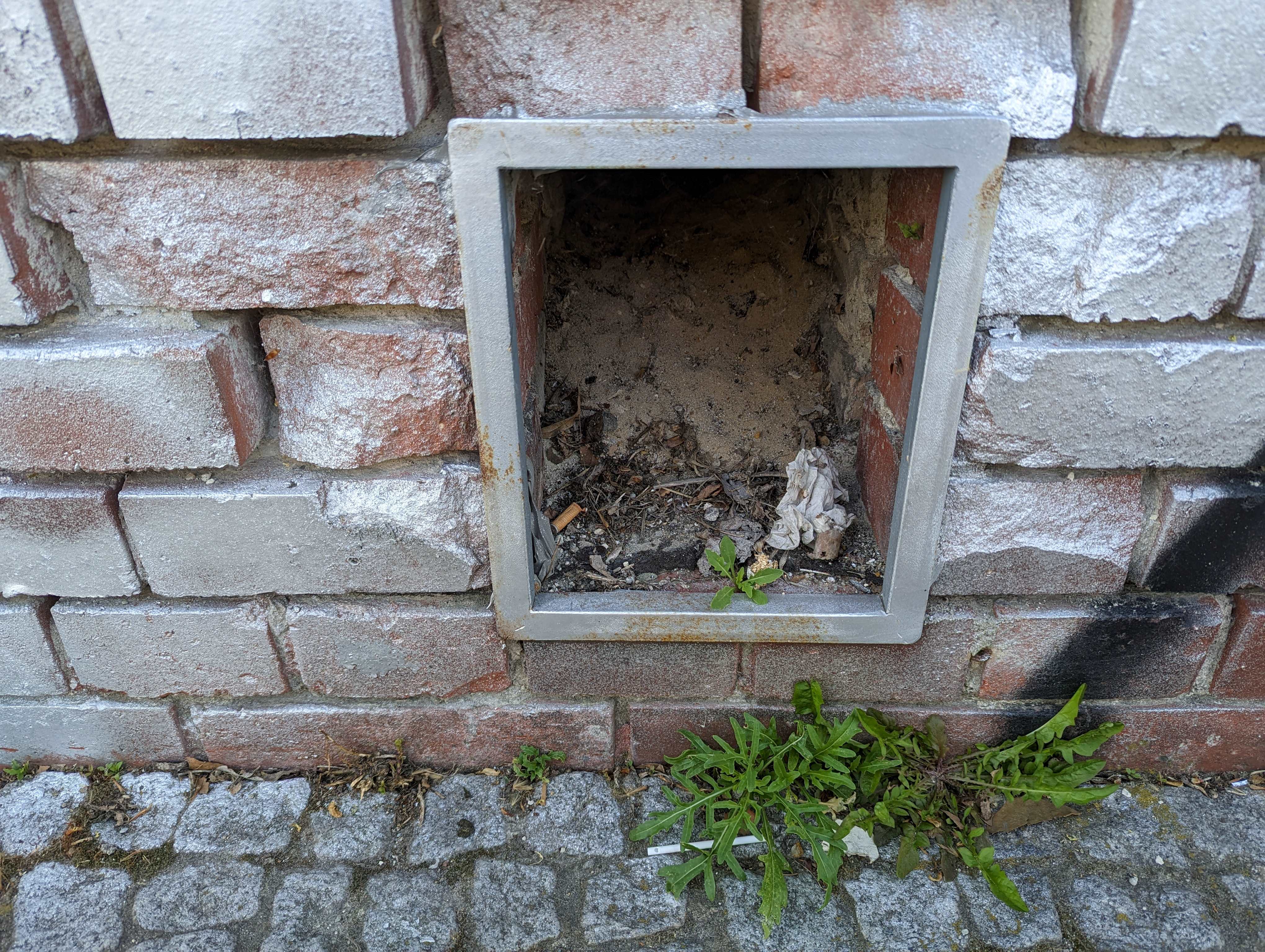
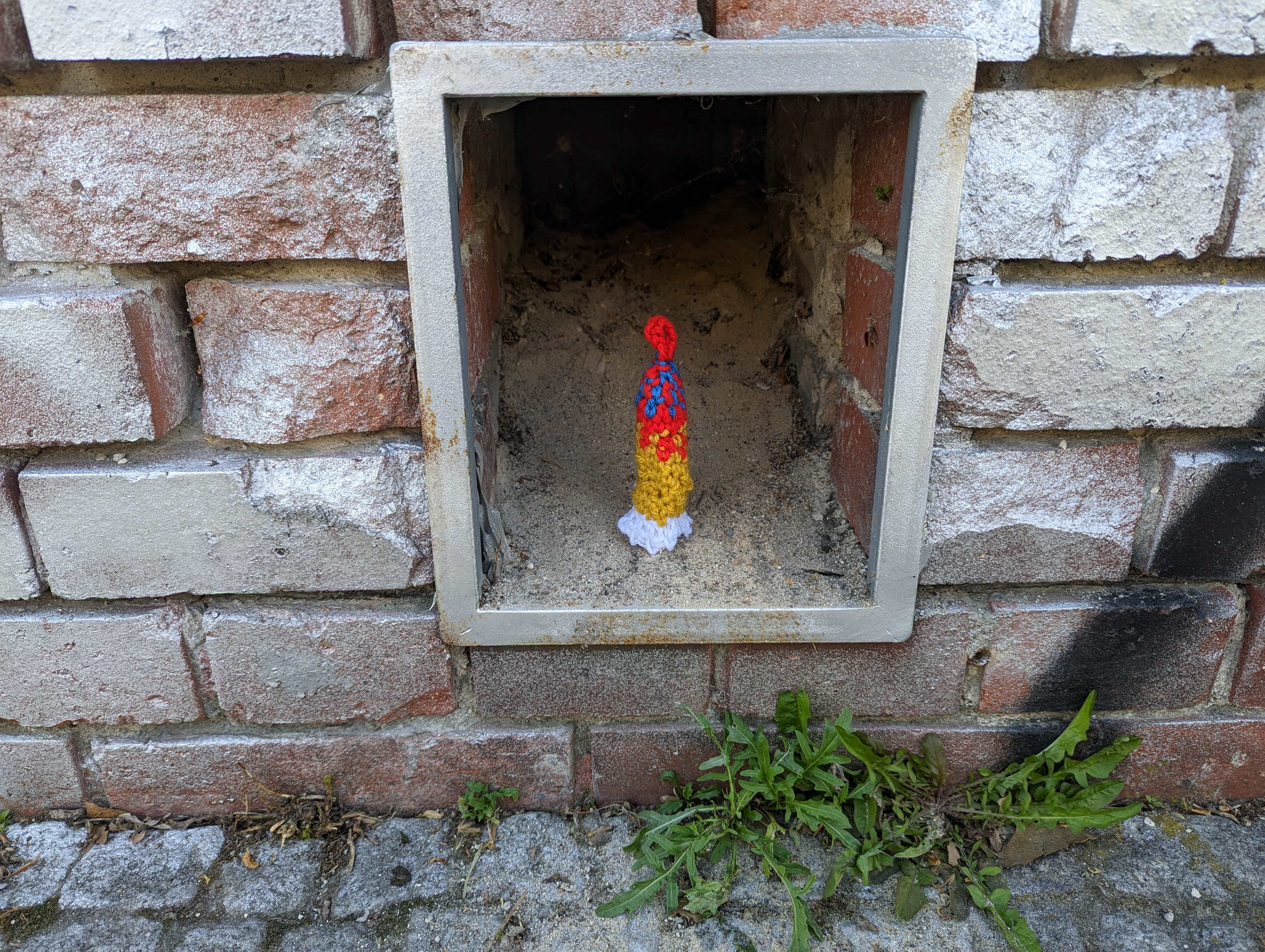
I still had a home-made crocheted flower left over from my time on the Greek island of Tinos and, on finding a make-shift altar space in a wall, cleared it and made a grateful offering to Abiona, Goddess of Safe Return.
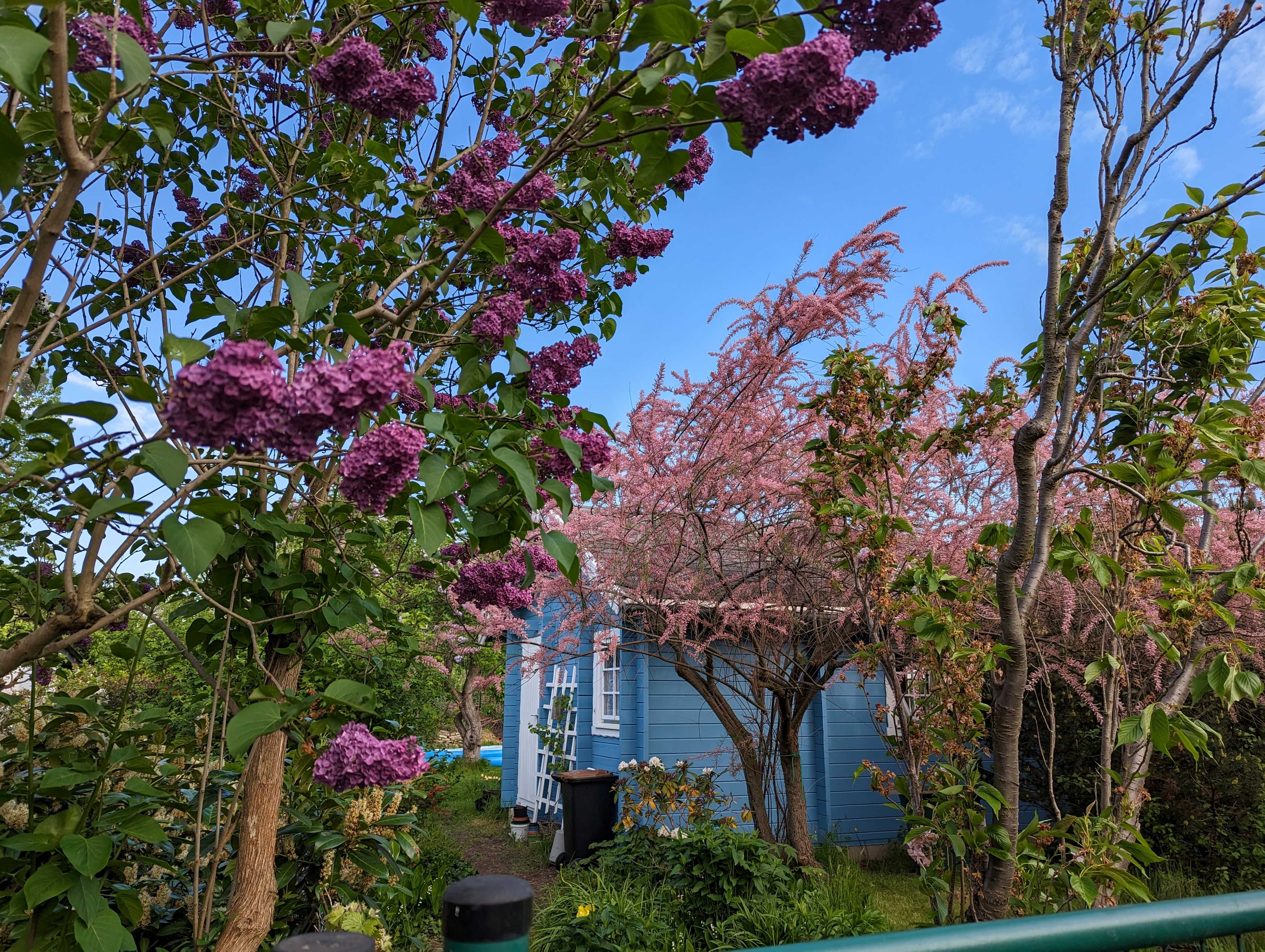
New Tempelhof

These allotment gardens (which I was told by a resident were like gold dust during the Covid-19 pandemic) were near to, and consciously contrasting with, the SA prison in General Papestrasse in Schöneberg.

I was in the German capital city for the first time. A few months earlier, I had been chatting with my mum and she said we had a relative living there who I had never heard about before. It was lovely to meet Helen and her daughter, and to find that we had interests, age and other things in common. It was she who recommended the Jewish Museum (it was a Monday and lots of the others were shut). I only had that one day to explore, and I was really impressed by the architecture and the exhibition both.
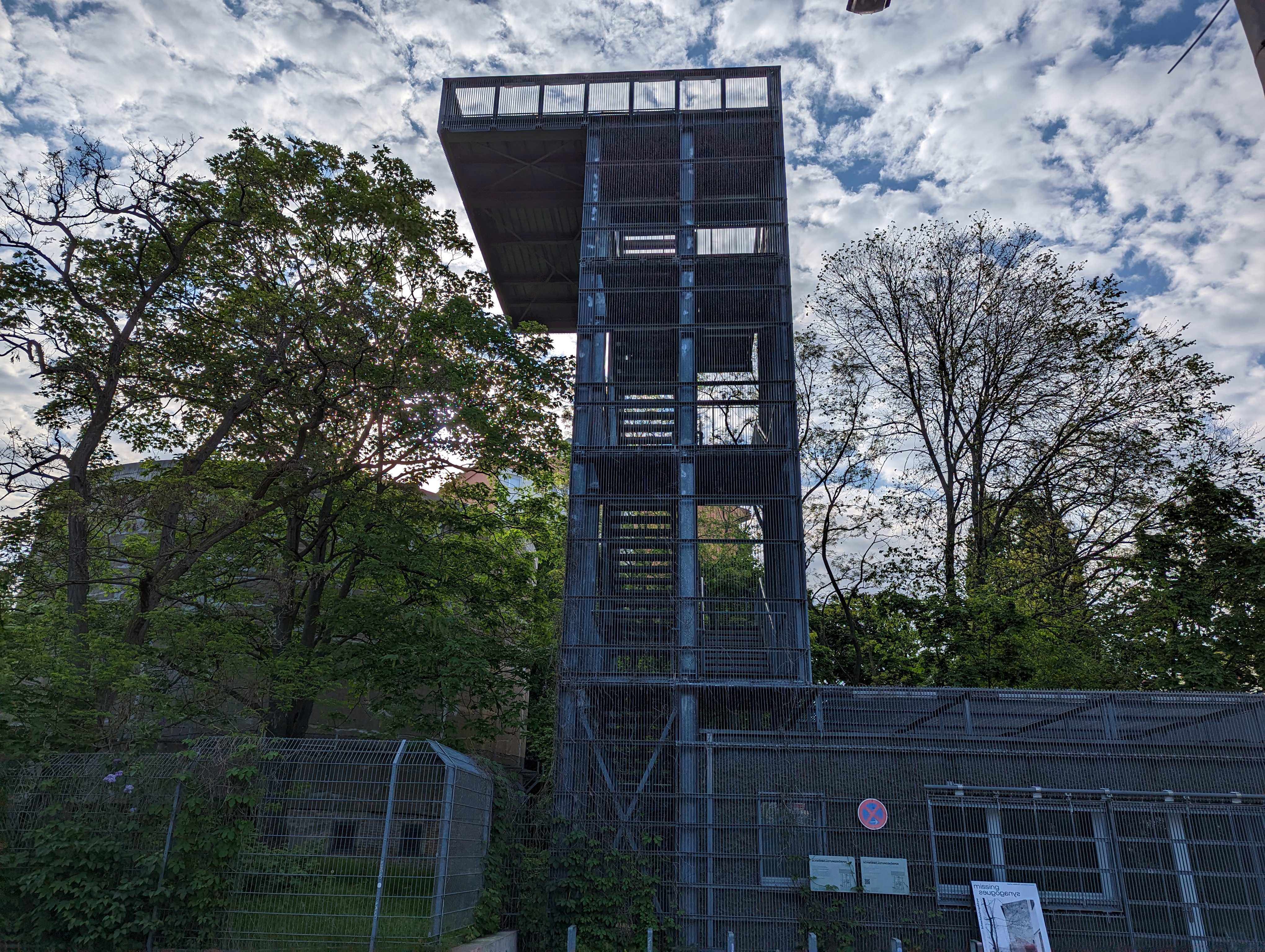
Repurposed Nazi watch tower, Berlin

“The cellar rooms used as prison cells have been preserved in their condition from that time, with inscriptions and dates carved into the walls. Since 2013 there has been an exhibition here documenting the history of the prison.” Papestrasse
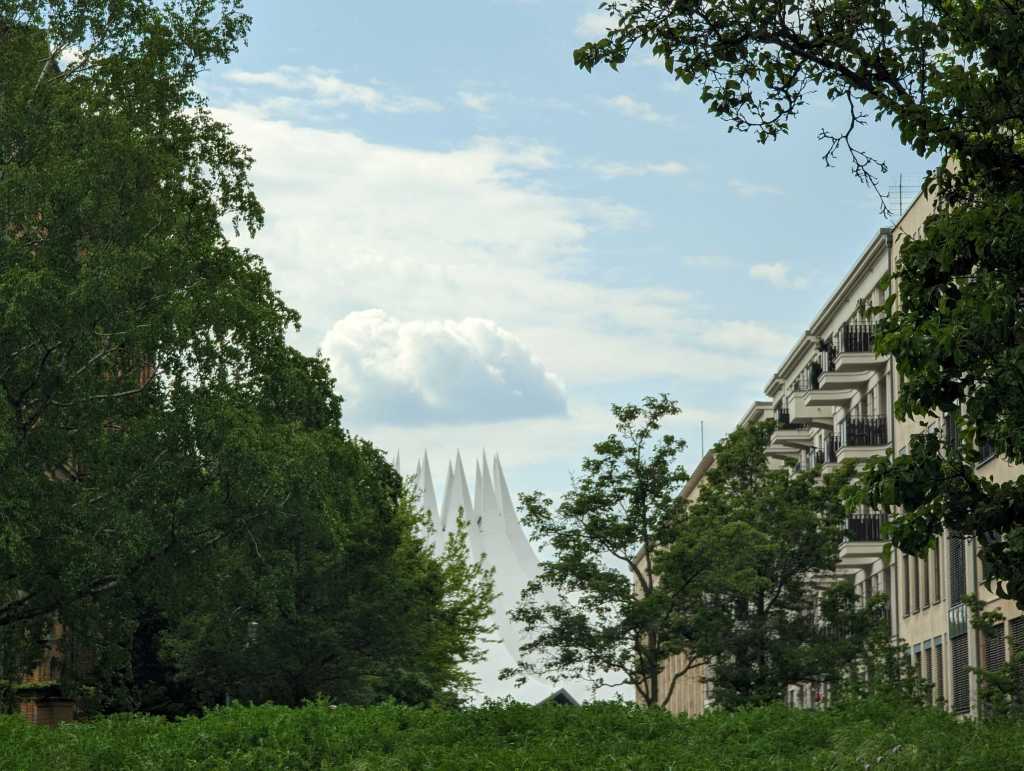
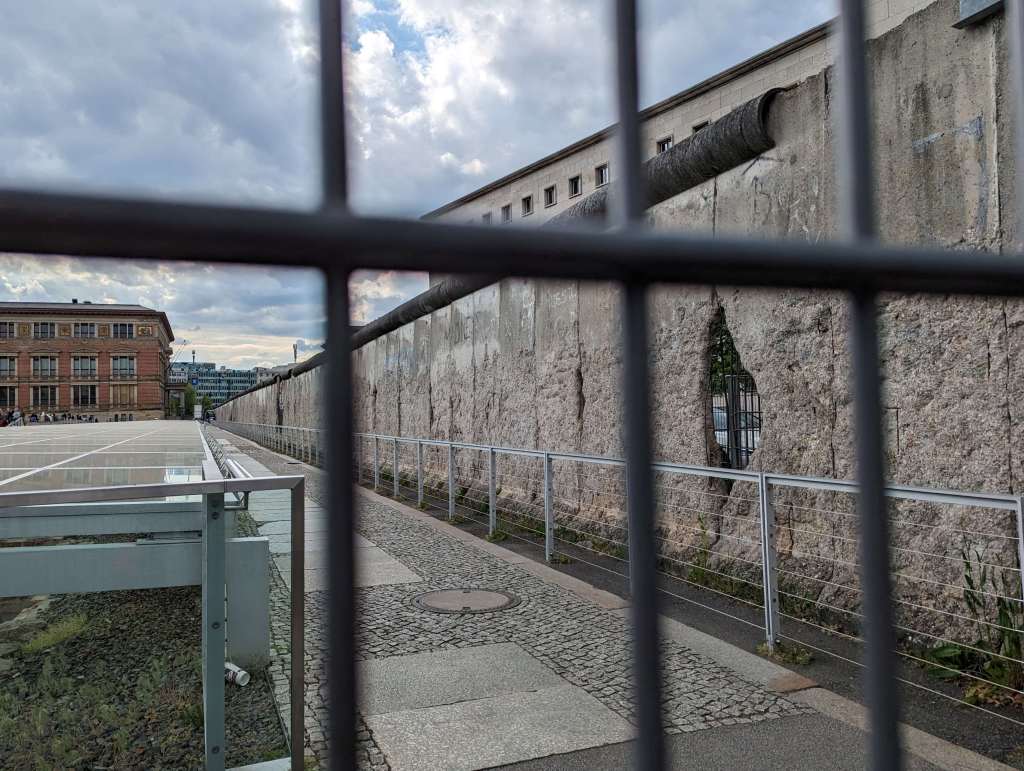
Walking out of Berlin City Centre, northwards
Berlin Wall

After my visit to the Jüdesches (Jewish) Museum, I walked a long way northwards, out of town, past the site of the Berlin Wall and Wilhelmstrasse. It was like walking through the history books. The end of this walk was the only time during my entire journey when I got scared and it was brief. There’s a section of very quiet streets and it was, by then, dark. I wasn’t sure I would be safe, but there seemed no option having got this far, so although the walk was really interesting, I would recommend getting a bus if you are leaving from the Flixbus stop on Berliner Strasse, Alt Tegel. I also didn’t find the stop very easily.

It was due to leave around 11pm, but was delayed by several hours. We waited and got cold, got random messages from the bus company, and eventually knew we had ages to wait, giving ample time to find somewhere warmer to sit and continue a lovely meeting with a Ukranian woman who was with her young daughter. She was understandably very worried about her husband and extended family back home. They were going to Amsterdam to try and sort out passport issues.

Berlin to The Hague to the Hook of Holland

Journey time: 9-9.5 hours Berlin to The Hague.
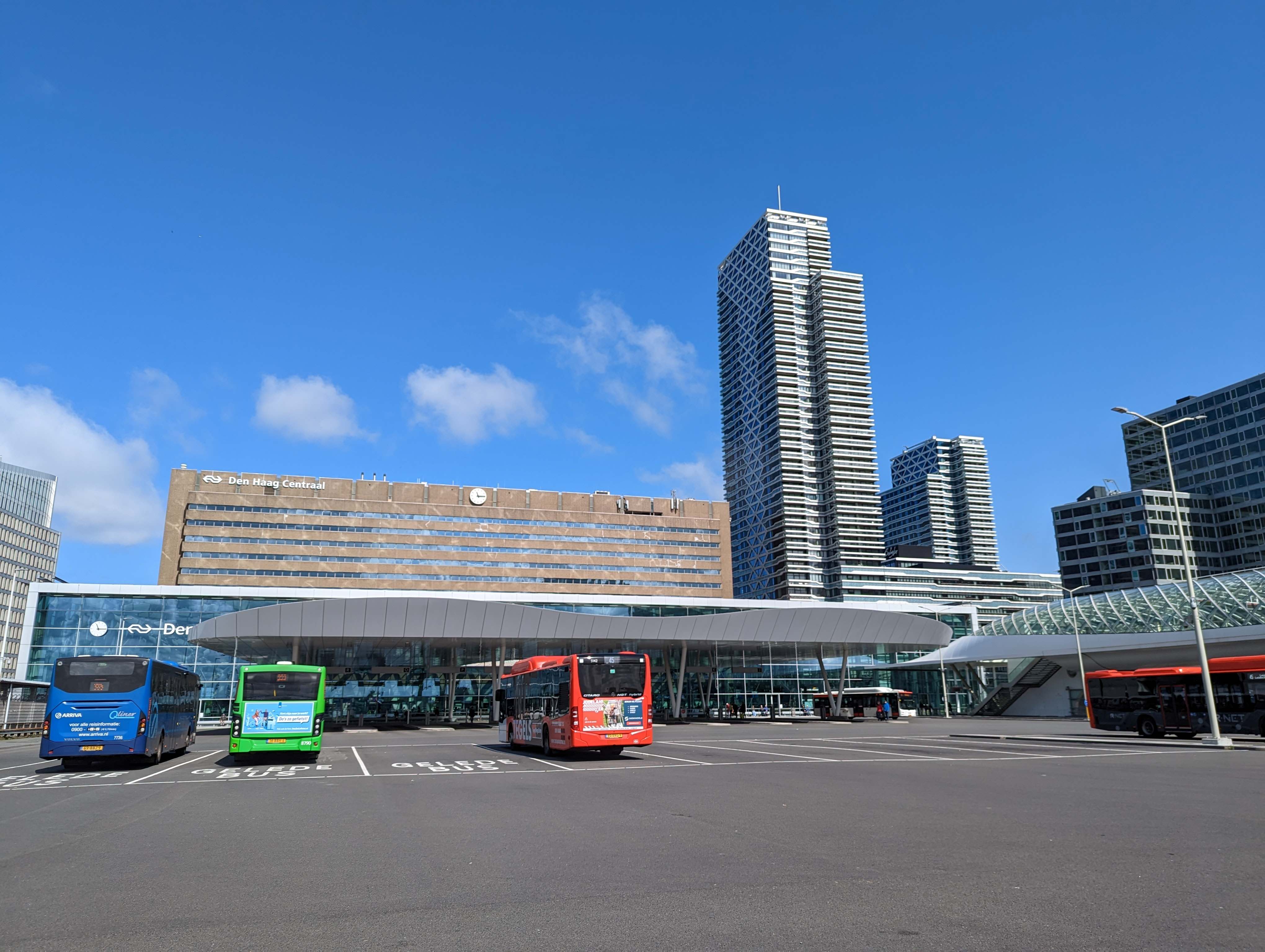
It was hard to find where to take the tram from The Hague (Den Haag) to the Hook of Holland (it takes just over an hour). There were lots of people wandering around looking and no-one knowing. When changing from the tram to the bus, the only place I could find to go the toilet was in a hospital (Haga Ziekenhuis)!
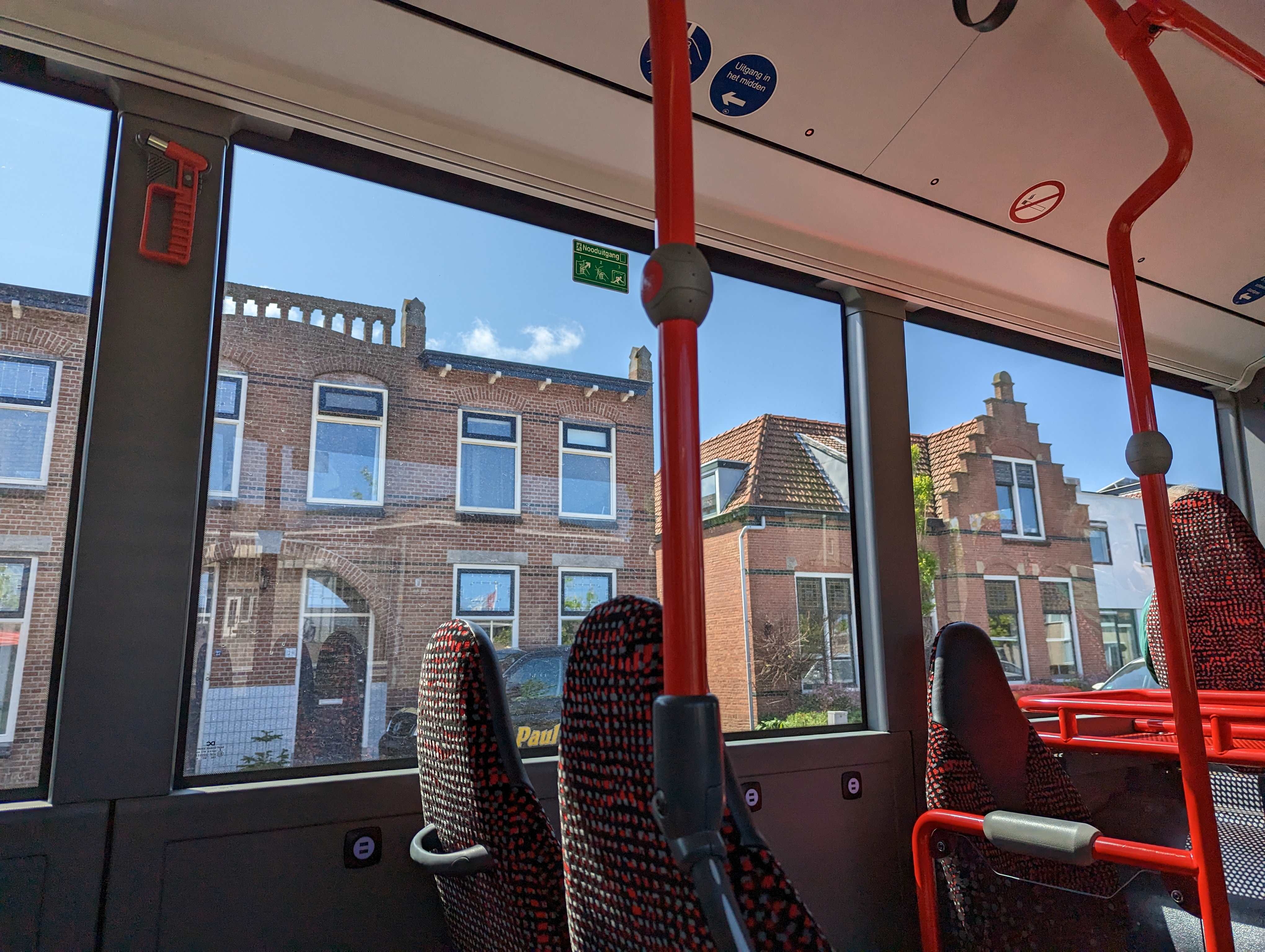
From the tram – Hague to Leyenburg, where I changed to a bus

The ferry terminal was almost empty. I was detained for quite a while as passport control flipped through my passport, looked at me, did it again and so on. In the end I asked what was wrong and they asked about going into the Schengan area and why I hadn’t got a stamp saying I’d gone out again. Presumably I was asleep. Thankfully, I had left myself plenty of time, and eveyrything went smoothly after that.
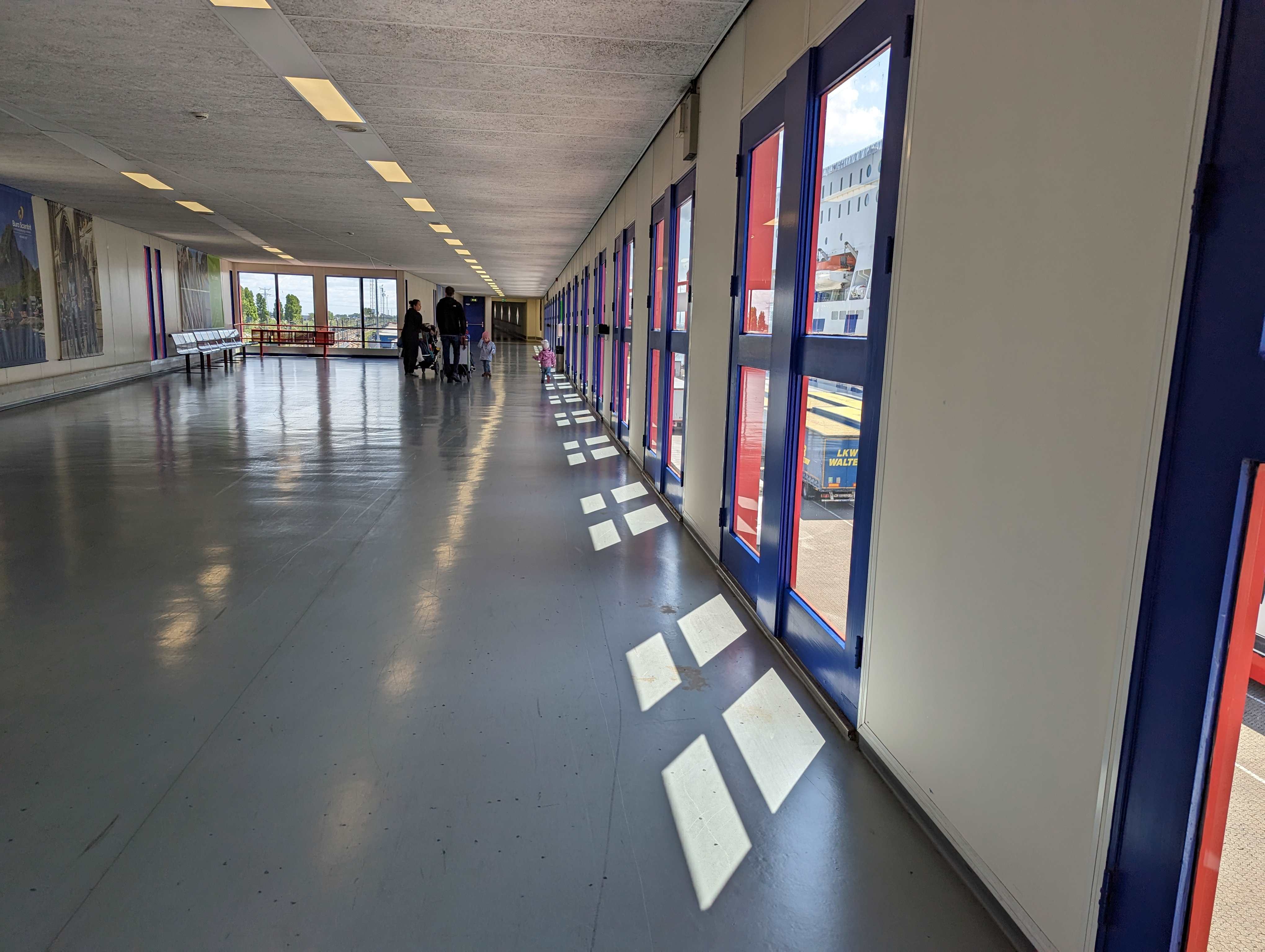
Hook of Holland ferry terminal, Netherlands

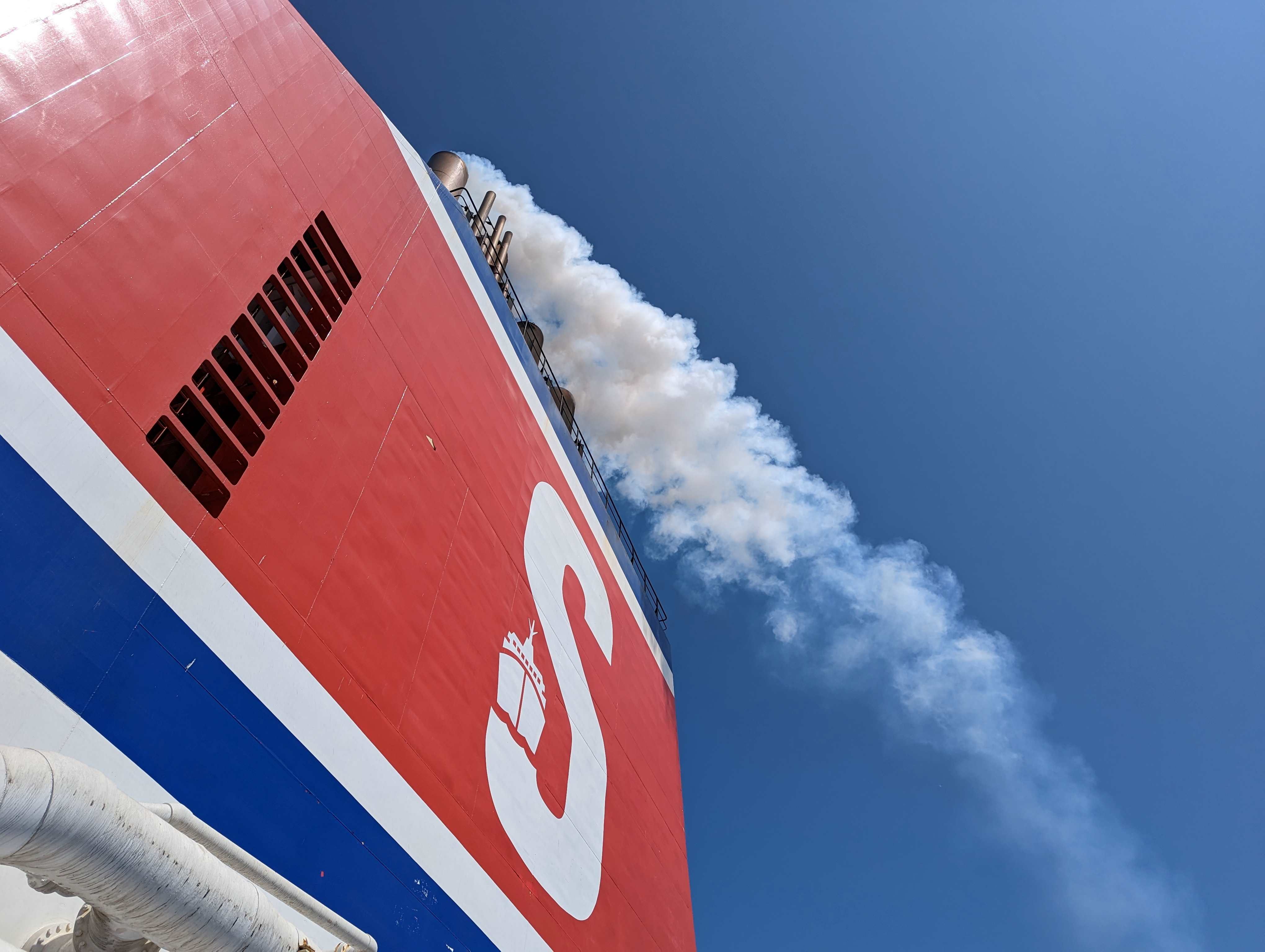
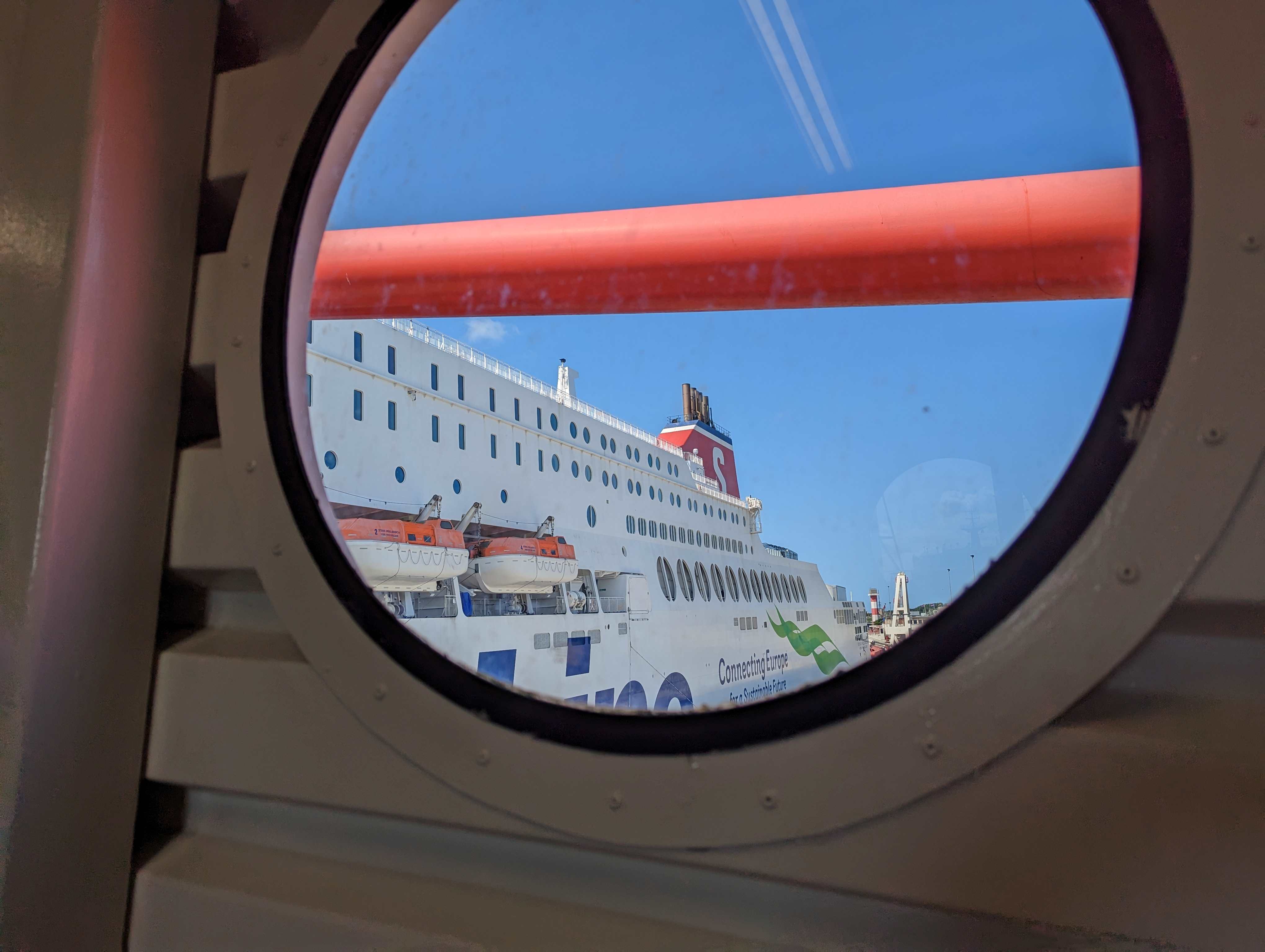
Photos above are of the Hook of Holland (Netherlands) ferry journey to Harwich, England

Harwich to London to Edinburgh

I took a late train into London using Greater Anglian Trains.
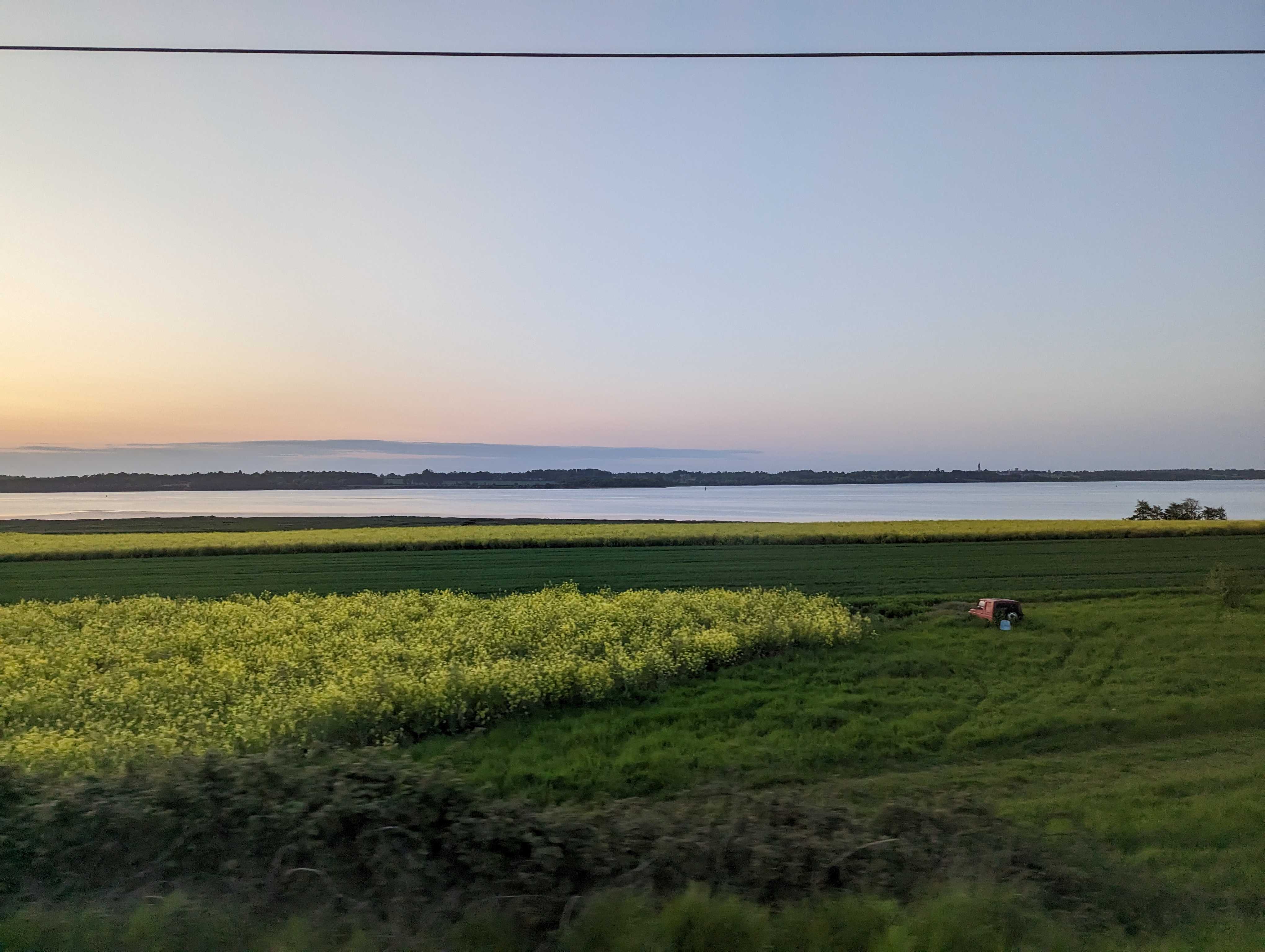
From the train between Harwich and London

And to Edinburgh via LNER (London and North Eastern Trains)
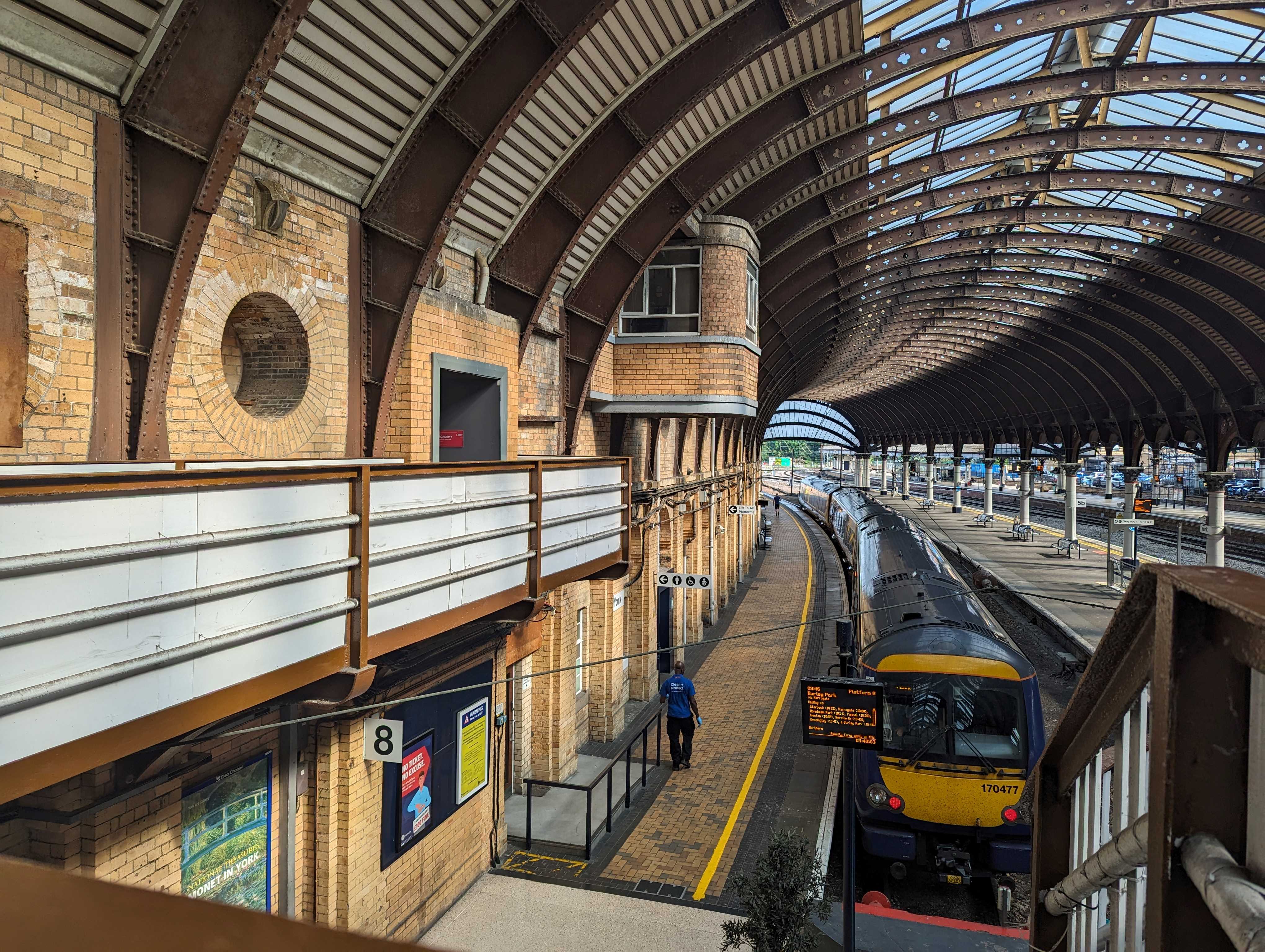
York railway station, England

Useful links, recommended reading etc

You may also like Overland Travel from Edinburgh to Greece 2

Travel websites: Infobus

Get By Bus

Flix Bus – beware they are very cheap, but there are very often delays and it’s hard to get any money back from them as recompense because they blame it on the roads and so on. If you have travel insurance (which I recommend if you are making complicated journeys like this – it’s not too expensive for a year – I used multitrip.com), it’s easier to claim from that.

Ride Sharing in Berlin

and into Kent from London – use South Eastern Trains

Recommended reading: Slow Living by Wendy Parkins and Geoffrey Craig (about the ‘slow’ movement of which this type of travel is a part); The Instant by Amy Liptrot (about her time spent in Berlin).

This trip was taken in May 2023. The title photo is of Keleti Station, Budapest. All images my own and are copyrighted to me.
Styria, Austria

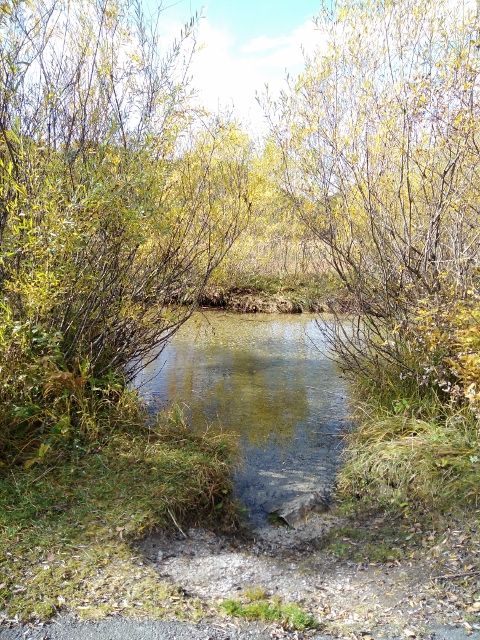
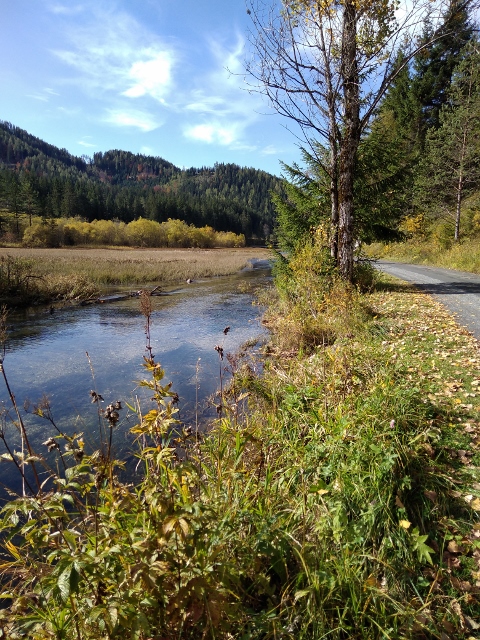
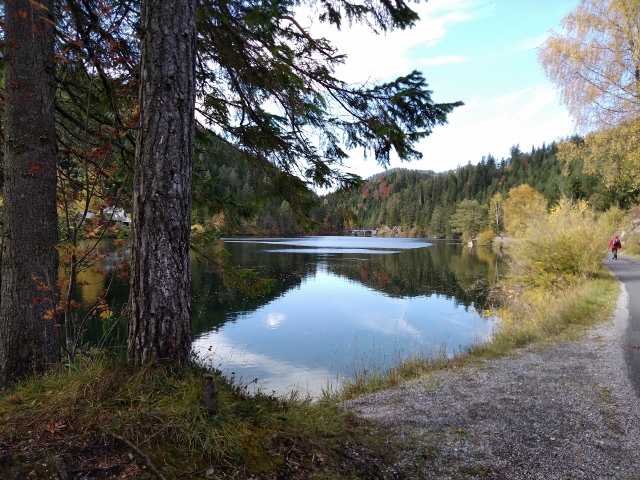
Day 8, 12th October 2017. A detour: Der Hubertussee – wohlfuhl wege (feel-good ways or paths).

IMG_20171012_114400 (640x480)
These places are sublime.

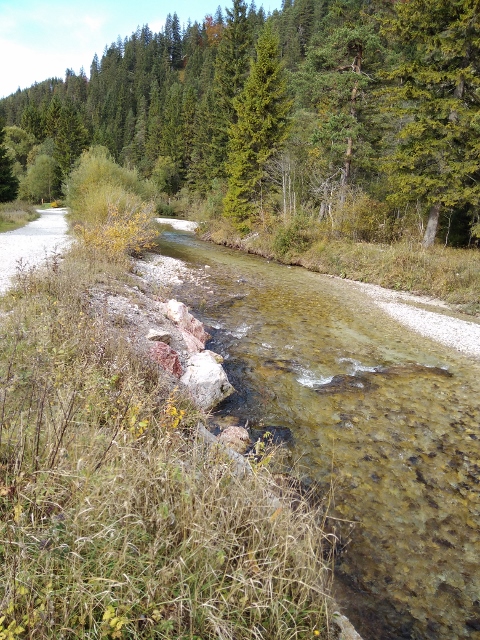
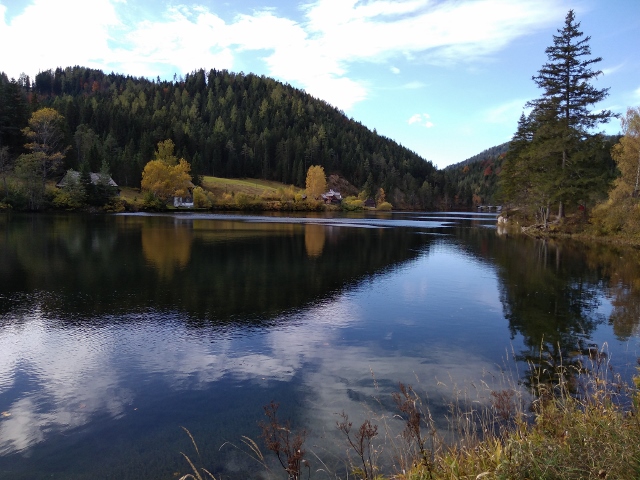
Yesterday I walked from Lower Austria into Styria and I was all prepared to carry on to Mariazell, the final leg of the Via Sacra pilgrimage, but my kind hosts persuaded me to stay longer. Thus, close as I was, I took a walk around the luminous Lake Hubertussee, along the river Walster and many of its arterial tributaries, through the surrounding forests and back to Mitterbach.

IMG_20171012_112323 (480x640)

I had woken at 6.30am and done some writing before fresh-air T’ai chi in their garden by the River Erlauf.

Be not afraid of going slowly, be afraid only of standing still
Chinese proverb thanks rob_shiatsu.

When we were all ready, I was driven to Lake Hubertussee where two partook of a sugary breakfast, and Gudrun and I shared cheese and red pepper on rye bread.  Amor, the toddler, played while we sat in the sun.

IMG_20171012_114236 (640x480)
This lake is beautiful from every angle. A place to sit and contemplate. I was not the only one to appreciate it – there were many hikers that morning.

I walked away from the ‘family’ group around 11am, past the statue of the Imperial Kaiser Franz Joseph hunting. He was Emperor of Austria and King of Hungary (amongst other titles). I guess he must have come here for sport, but it is such a special place it is hard for me to imagine that.

IMG_20171012_113830 (640x480)

There was the moon again, in the day sky, like one of those off-white, grapefruit jellies.

IMG_20171012_115157 (640x480)
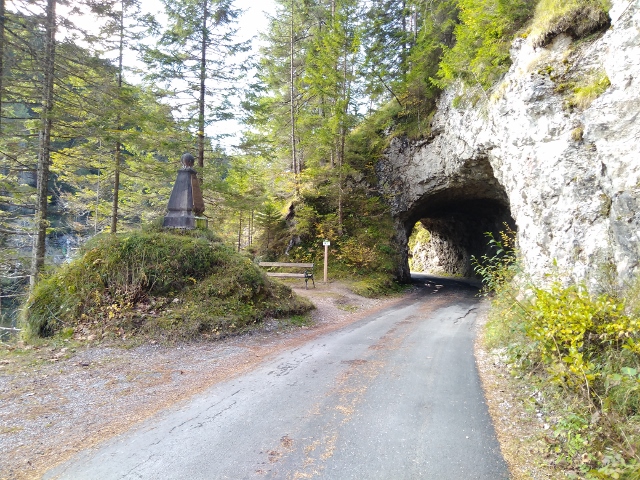
The road wound under a tunnel in the rock next to the Carl Ulrich von Bulow war memorial (1914).

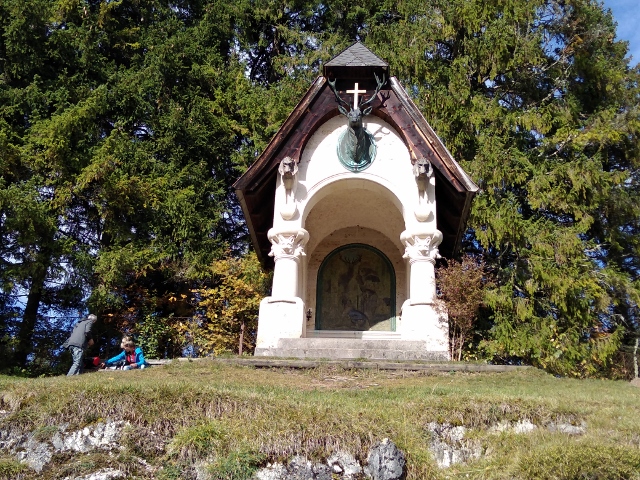
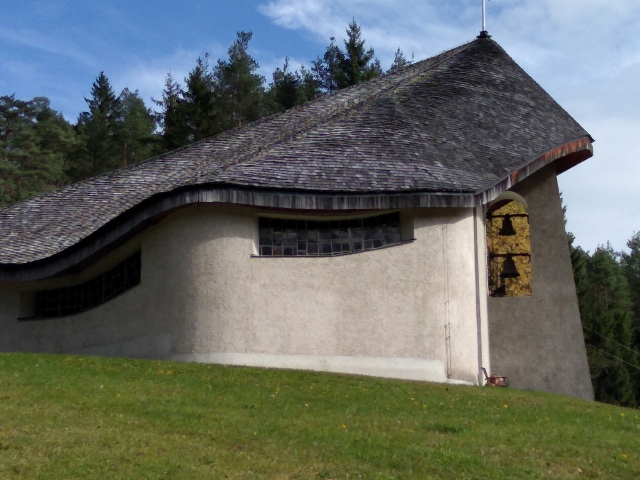
I spotted the Hubertskapelle (chapel), every sight more magnificent than the last. I thought it had a golden window but it was the gilded autumn leaves in the sun through the gap. Weed and sky-white cloud hung under the surface of the lake; gentle air caressed my arms.

IMG_20171012_114527 (640x480)

Walking gives me the time to question things and here it was the ethics I have been raised with in the light of the unorthodox relationships I had encountered during my travels. Being an outsider and therefore able to witness the repercussions of them, I needed time to muse on the difference between opening to what might be possible thereby bringing new experiences, a way of challenging the norm; and at the same time asking myself whether it is possible to avoid being taken advantage of. I thought about ‘truth’, when or where it is important to tell it; if it is always necessary to do so; and if yes, to whom?

Then I became aware of the geese honking, taking my attention away from my thoughts and back into my surroundings. I continued, mindfully.

IMG_20171012_115436 (480x640)
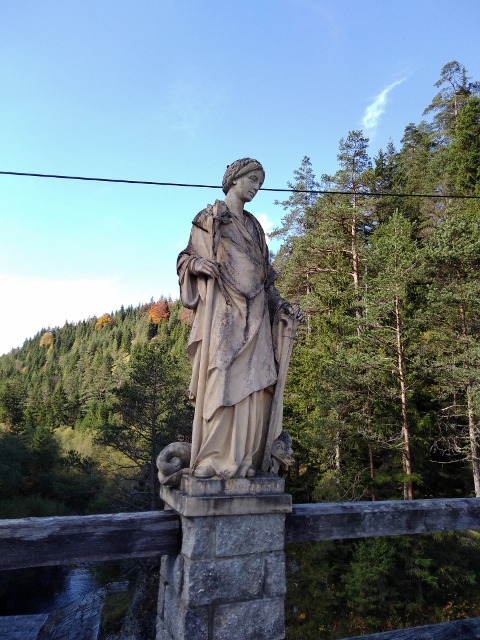
I passed the gentle St Margareta a few times as I was searching for the way, standing as she was, between the lake and the river.

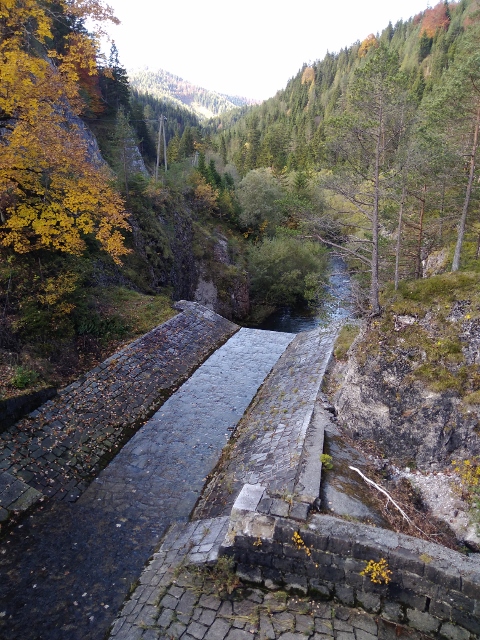
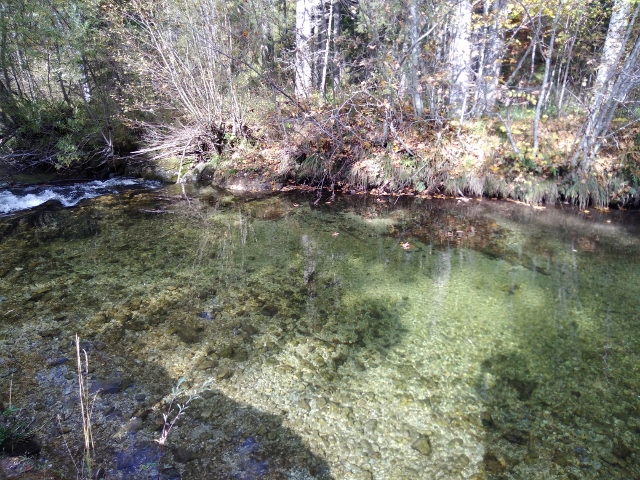
At the top, of course, I took the path down again, alongside the river which was diverted through attractive grey stone walls, channelling the water where man wanted it to go, and into yet another wonderful lake downstream.
IMG_20171012_115323 (480x640)
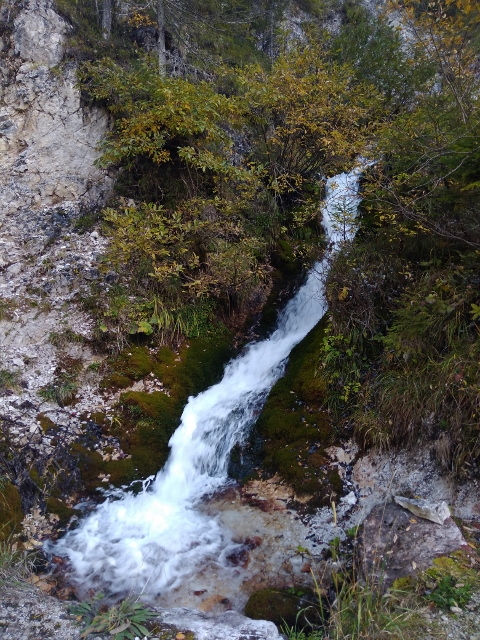
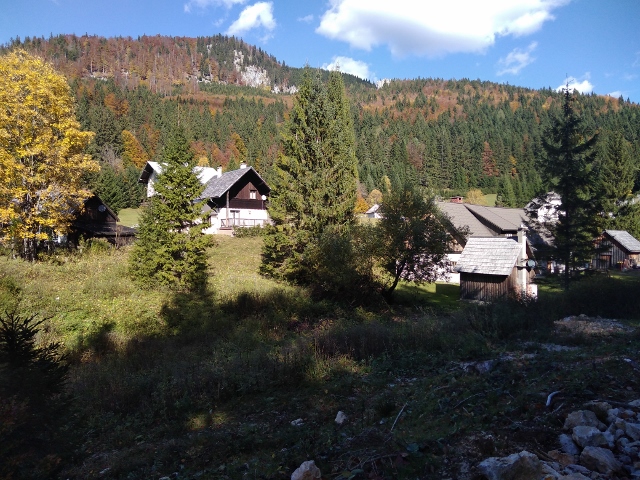
There were brown-planked houses with simple pointed roofs which matched the pines, poised for take-off on the mountainsides opposite; virgin-white water cascaded between mossy cushions and knobbles of silver escarpment; sparkling orange, autumn foliage illuminated it all – it mesmerised me.
IMG_20171012_131401 (480x640)
Once away from the lake one can walk and walk this trail and not see a soul, and it is to be relished.
IMG_20171012_113221 (480x640)
There are lots of signs at some junctions (the red and white signs with numbers indicated the cycle routes), but then again there are places soon afterwards with none. Which way should I turn? My phone (Google) maps were OK, but in the middle of the countryside there is rarely coverage. I discovered that the best way to know when there was a signal was to leave my data and sound on. That way when I happened to walk into a zone, some message pinged in which alerted me to check the location. Otherwise, it did not drain my allowance or disturb my peace because it was so very rare.
IMG_20171012_113318 (480x640)
Occasionally, unexpectedly, a village, no, not really that big, a collection of houses, appeared out of nowhere and helped me find myself on my GPS.

IMG_20171012_130211 (640x480)
I think this was Filzwieser. Or Faldental. It is all ‘She’ll be coming round the mt when she comes’, territory!

 It was a mighty, majestic landscape of grey crags, dark brooding firs, and flaming beech atop: stimulating sights. I went slowly, I sat and watched the grasshoppers, stretching out this gorgeousness because I did not want it to end. The sun connected the sky and the earth, and created pin-prick stars for a moment on the water, and then they were gone as I rounded the corner into the shade. It was all so sensual and I felt alive to every sound, smell and feeling.
I get filled up with space when I come here.
Karine POLWART from ‘Wind’.
IMG_20171012_112820 (640x480)

IMG_20171012_133120 (640x480)
I had a rest and meditation here with the sound of water trickling.

I went up and over and round a small mountain and had a bit of an epiphany at the summit. It was that sort of a day. It seemed to be the summation of this Via Sacra pilgrimage. I had very clearly set out my aim in advance: to help others while I travel, and I realised that I must then trust that all the encounters I have are beneficial to those I meet as well as to me, even if I do not understand how or why; that the time we spend together is enough for them and me.
IMG_20171012_113004 (640x480)
 I wrote down what I could use on a leaflet to give out as I make pilgrimages: ‘I am an experienced bodyworker. I am walking from place to place offering a moment of touch. You do not take your clothes off to receive and we do not need to be in private. If you are tired or in pain, sit down and I will give you some support. There is no fee or charge. I can be what your energy needs to know itself better. For the time we are together.’
And I reflected that to do this I have to arrive in a calm state – I have to have some energy left after the walk, which is another reason why I must pace myself. It is important that I treat myself like that, that I experience the joy of the ‘camino’, take time and rest in nature, so that people can tell I am trustworthy (in therapy speke, I am being congruent) and believe that I can help them. And that is it. It was all clear, there, in that magical place.

IMG_20171012_152655 (640x480)
I got back to Mitterbach around 4pm as the sun came out again. I was full up.


I gave some Shiatsu, of course, while I was staying in Mitterbach, by way of exchange for my bed and board. I also joined in Spanish and creative dance classes, and I shared some baby Shiatsu with two of Paula’s clients while she sat in and watched.

‘If you take seven steps to help one patient, it is the same as circumambulating all the Buddhas. If you give medicine one time to one patient, it is the same as having made charity to all sentient beings. When you fulfill the wishes of one patient, it is equal to having made offerings to all the worthwhile objects.’ Thanks to Max P.

IMG_20171012_141400 (480x640)
For Gudrun.


Oslo 2, Norway

A rural walk: Hammeren to Frognerseteren via Ullevaalseter, November 2017

IMG_20171124_152206 (640x480)
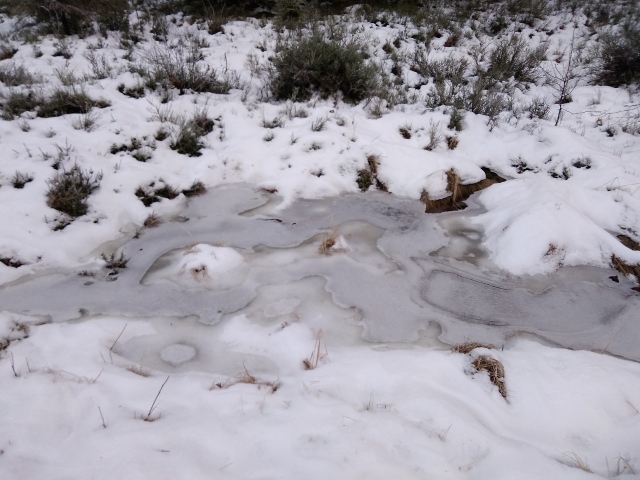
The ice making beautiful patterns.

I stayed a night with Sarah Huby, a Shiatsu School Edinburgh graduate and Oslo Shiatsu practitioner specialising in mothers and babies; and the rest of the time with Guro and Chris with whom I renewed acquaintance after many years. I was pleased to give Shiatsu sessions to say thanks for all the hospitality which came my way, and I particularly enjoyed the conversation, delicious meals, Zen morning meditation and the countryside walk.

IMG_20171124_144428 (640x480)
There are many routes out of this area to the north including the St Olafs Way.

Oslo is the capital city of Norway, with a centre which wraps around the edge of the fjord rather than in the middle of the sprawl. Did you know that there are 40 islands within the city limits?

IMG_20171124_160748 (640x480)
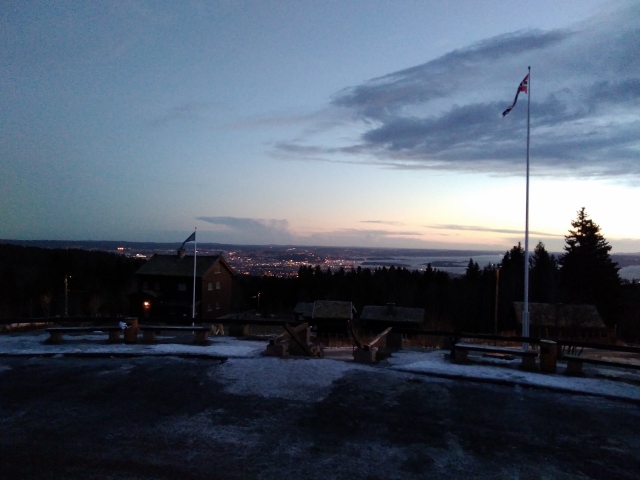
In the distance you can just see the city centre beside the fjord with some of its islands.

That is where I sat the only other time I visited, on my 25th birthday (or thereabouts), before a women’s theatre ‘Magdalena Project’ took me to Porsgrunn where I stood on a bee.

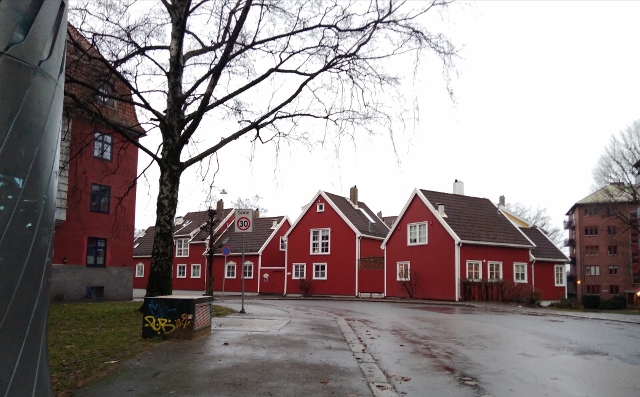
More than 25 years later I spent 5 days here and I took simple ‘a to b’ utilitarian walks for visiting purposes or to the workshop venue, appreciating the scarlet houses, exposed millefeuille banks of rock on which the city rests, and a spectacular waterfall which is part of the Akerselva River.

IMG_20171124_183248 (640x397)

IMG_20171124_133813 (640x480)

IMG_20171125_092007 (640x480)

The countryside walk began with a gentle pavement climb from the flat along the bus route and, though freezing, the sun lit up the primary colours making a real contrast with Austria’s pastel shaded buildings.

IMG_20171124_122248 (640x480)

Once uphill we entered the forest, slipping on ice, inhaling the freshest air, and ‘putting the world to rights’ in compulsive conversation. It is not often I take a walk with others and I enjoyed the informed companionship of friends who could enlighten me about local customs and show me the way.

IMG_20171124_154755 (640x480)
Chris up ahead.

Others jogged by at quite some speed and made fascinating crunching noises leaving me wondering how they were not ‘coming a cropper’. Later, as I donned a pair of crampons for the first time (so simple – they just stretch and hug on to the toes and heels of walking boots), I realised why these athletes were safe: the tiny spikes on the soles break through the ice and hold you steady. I was like a child discovering something everyone else knew.

IMG_20171124_160345 (640x480)

I had been promised ‘rubber pancakes’, so we stopped half way at a large, warm hostelry with a great many dead beasts’ heads on the walls – moose and the like, as you would expect. It transpires that the local delicacy is so called because they are made in the morning and are considerably less fresh by 4pm! They are thicker than crêpes but not as deep as Scottish drop-scones. Served cold, they are pasted with butter and jam and I would not recommend them. The apple cake, however, was yummy.

IMG_20171124_145011 (640x480)
Guro putting on her crampons after ‘rubber pancakes’ and hot chocolate.

In the airport, everyone said ‘hi hi’ to me and were very pleasant, but as a rule Norwegian strangers do not smile easily at strangers. My friend tells me it is out of respect for ones privacy and space. It is weird for me when I am used to smiling and exchanging a greeting when walking in the Scottish or Spanish countryside.

IMG_20171124_131122 (640x480)
The sun catches the trees on its way down.

IMG_20171124_153533 (480x640)
The pathways are lit, so many Norwegians walk after work in wintertime, despite the dark.

IMG_20171124_151823 (640x480)
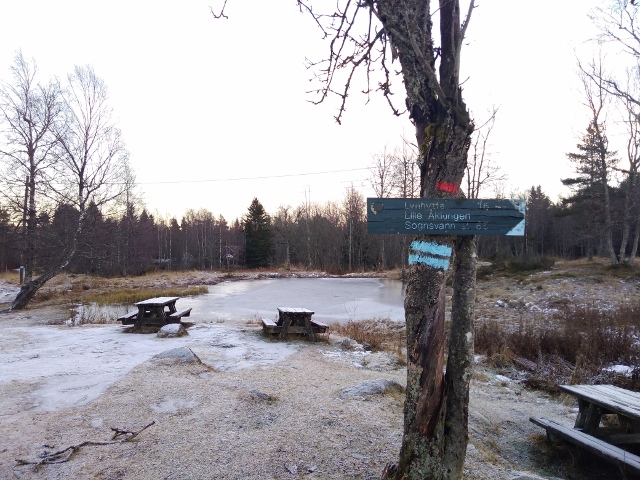
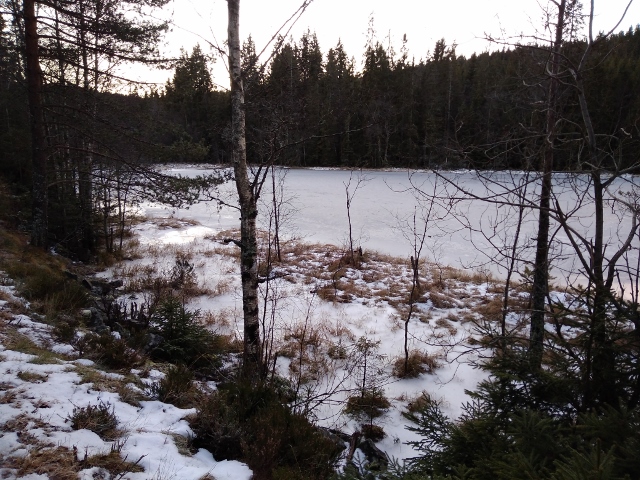
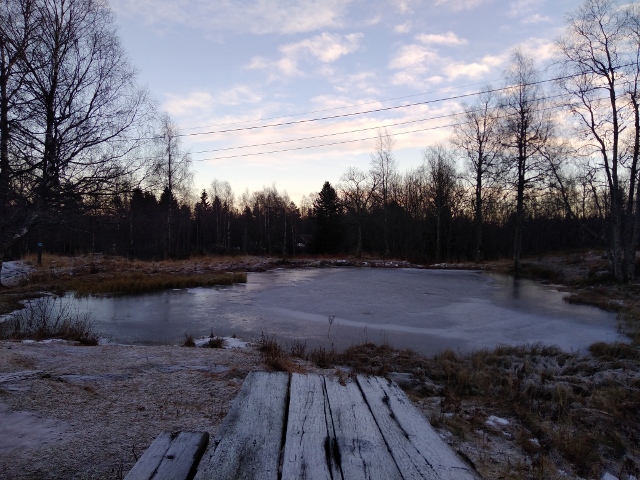
Frozen lakes.

IMG_20171124_144452 (640x480)

As I left Oslo, the flakes were falling once again, children in the playground had their tongues out to catch them, the edges of the motorway were edged with icing sugar, and I admired the neat pink and yellow gable-ended flats and very tall pointed trees. Of course the Norwegian people are very tall too, compared to me. The Oslo temperature was raised to a high 4 degrees, matching the Edinburgh weather we were flying into.
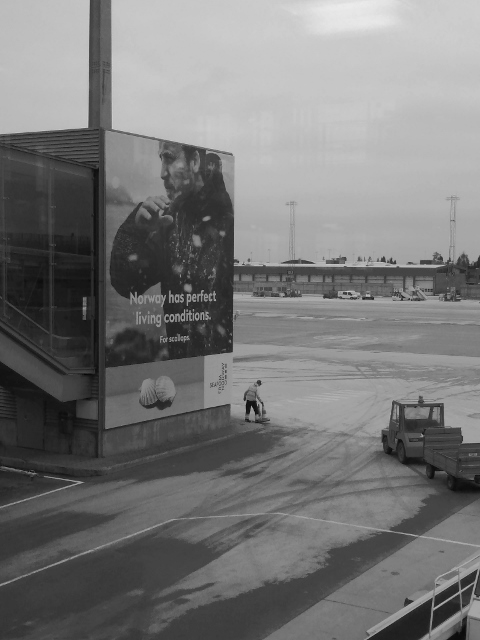
IMG_20171127_134712 (480x640)
Norway has perfect living conditions.

Gardermoen Airport (Oslo) is a peaceful and calm place: no-one seemed to be rushing or stressed. I wondered why and came to the conclusion it was because there was no canned music – fantastic. I had 50 NOK for refreshment which turned out to be very little, so in case you are in the same situation here is my advice: have a personal stock of tea bags and get a cup of free hot water which is available in all the kiosks (cold is available to fill your bottle too – after all this practice, I now remember to empty it before security). Add to your hot drink, a bag of nuts (29 NOK), a bread roll with chocolate bits (I thought they were sultanas) 17 NOK, and a piece of fruit (4 NOK) and you will have a feast.

Note: In the duty free shop you can use £ sterling but any change will be given to you in NOK so try to be exact.

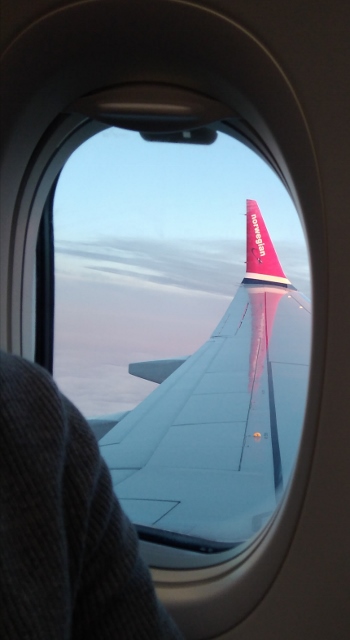
I just cannot resist taking photos through windows when I travel.

I have to report that the Edinburgh Airport loos were for the first time cleaner than those of the country I had recently visited. And I am also proud to say that our Airlink buses have tourist information on video in BSL sign language. (Take bus number 100 to the city centre; 200 to Granton, Newhaven and Leith; 300 to Ingleston, Gyle, Saughton etc for £4.50 single, £7.50 open return (have the exact cash ready or download the m-ticket app (minimum £10 spend)).

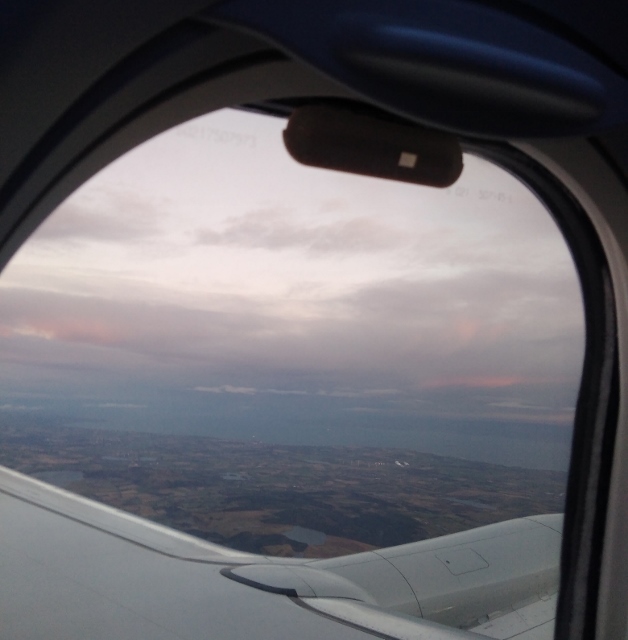
IMG_20171127_165348 (628x640)
The Pentlands set against a backdrop of smog-like clouds and deep orange sky lent an eerie glow to the Forth and my home below as we descended.

I flew Norwegian.com which was affordable because I booked months in advance.

IMG_20171127_164516 (350x640)
Links

Sarah’s classy Shiatsu website (she speaks English): https://www.shiatsupunktet.no/

Norwegian Shiatsu Society website: Norges shiatsuforbund shiatsuforbundet.no

Search Shiatsu Norge for courses in Oslo with Ane Grimsaeth on Facebook or Twitter.

The Magdalena Project, Norway https://themagdalenaproject.org/en/content/background

Norwegian houses blog http://mylittlenorway.com/2009/05/norwegian-houses/

Free things to do in Norway, National geographic   https://www.nationalgeographic.com/travel/city-guides/free-oslo-traveler/

St Olaf’s Way, a long hike from Oslo to Trondheim http://stolavway.canalblog.com/

Vienna 2, Austria

A second blog about Vienna – photos, food, safety for women, tourist services and more.

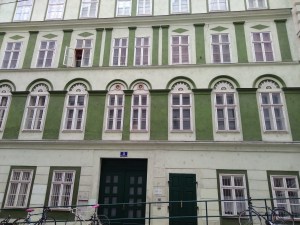
I was visiting this elegant, dolls-house city for the first time for the purposes of attending the largest European Shiatsu Congress ever held. There were over 600 participants from very many countries including Greece, Norway, the Netherlands, Italy, Scotland, England, Germany, Switzerland and of course Austria.

It was truly wonderful to meet up with friends I made in France and Spain during the last year; spend time with colleagues from previous meet-ups; and forge new acquaintances.

In the same way that Gill, fellow practitioner, helped me find friends and hosts in Spain, Sabine was my guide and support here. I am grateful to her, her mother and Ursula for their kindness, generosity and friendship.

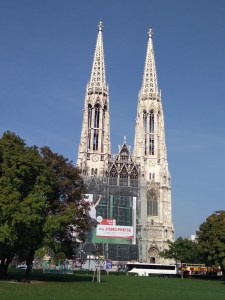
The Votifkirche.

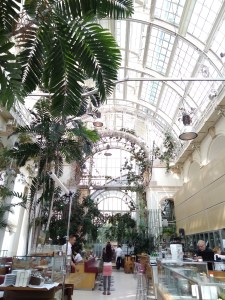
Palmenhaus (palm or glass house) for overwintering plants years ago, now a cafe.

Trying to find the Tourist Information I was drawn to a certain loudness which turned out to be a slightly pop version of Gloria In Excelsis Deo. On October 31 1517 Martin Luther nailed 95 theses on the gates to the Wittenberg Castle Church. Thus began the Reformation whose 500th anniversary was this year. I had stumbled across the preparations for this event.


Useful facts: The ITI Tourist Information in Schmerlingpl. 3 is not the one you want, despite what Google maps tells you. Find the website for the right place and follow the link from there. And note that they cannot tell you anything about anywhere outside Vienna, including treks which leave the city or well-known pilgrimages.

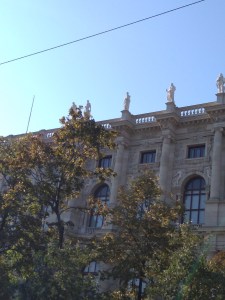
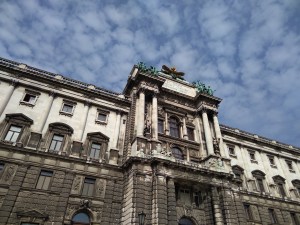
All very grand and gold but the sun cannot usually get down to street level.

There are a lot of men in statue form standing high on rooves looking down at us mortals.

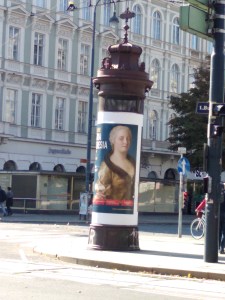
Maria Teresa had 16 children.

She was the only female ruler of the Habsburg dominions and the sovereign of Austria, Hungary, Croatia, Bohemia, Transylvania, Mantua, Milan, Lodomeria and Galicia, the Austrian Netherlands and Parma.

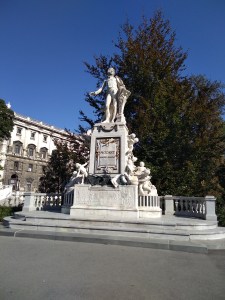
Mozart cuts a fine figure.

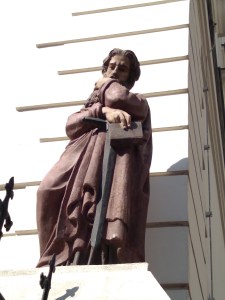
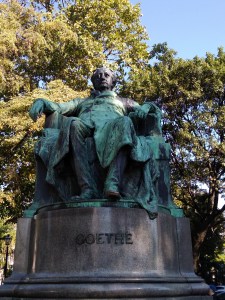
Whereas I thought Goethe just looked fed up and resigned.

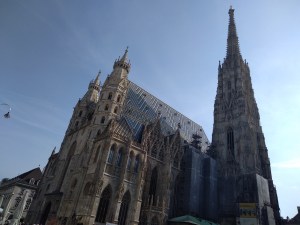
I liked the patterned roof of St Stephen’s Cathedral.

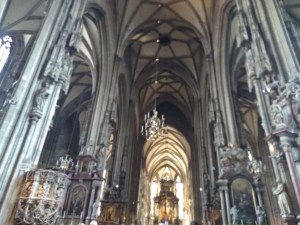
And the interior was impressive.

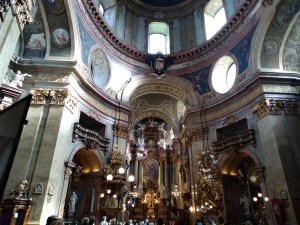
But the roccoco church of St Peter was altogether in a different league.

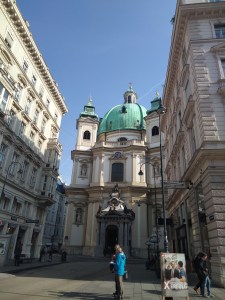
Exterior of St Peter’s Catholic church.

I walked all over the city day and night and believe it is safe for solo women. I even made one very early walk alongside the metro line U6 which is raised up above the road level, and there were many men who looked ‘down at heel’, but no-one bothered me at all.

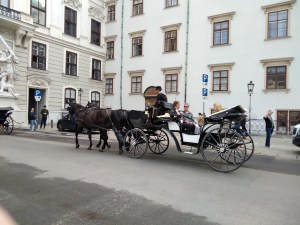
Controversial tourist carriages. There are rules in place to protect the horses from the heat and boredom but not everyone is convinced.

The Viennese speak great English which made it tricky to try my schoolgirl German. There are 1000s of tourists so most people you stop to ask the way have no better idea than you!

Jesuit church.

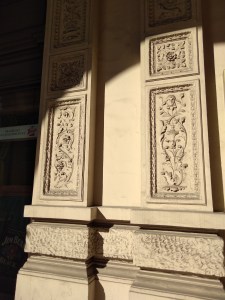
Fine stonework.

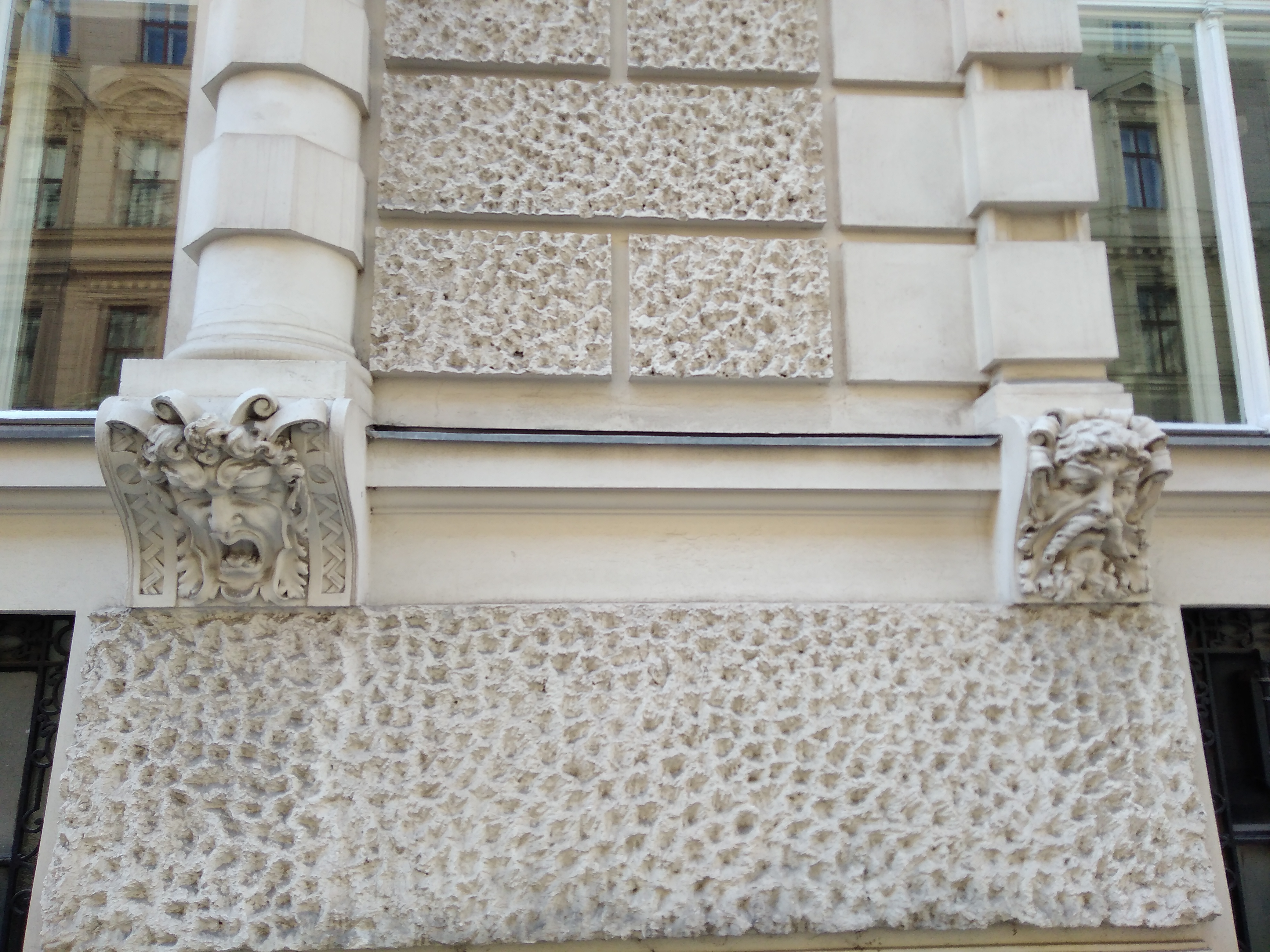
A screaming gargoyle.

Grumpy burghers.

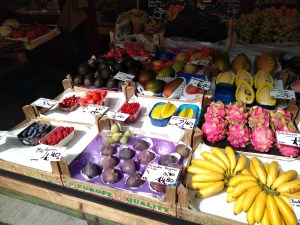
I was taken to the Nachtsmarkt (market) where I sampled olives and dried fruit, chocolate, and was given free soap. The vegetarian restaurant was amazing. Details below.

Nachsmarkt: so many stalls and wonderful arrays of round-the-world delicacies.  https://www.wien.gv.at/freizeit/einkaufen/maerkte/lebensmittel/naschmarkt/

Chocolate, and especially the pistachio, that is sustainable as well as delicious http://www.zotter.at

Lovely soap with natural scents: http://www.allesseife.at

Recommended deli (veg and vegan) in Mariahilferstrasse main shopping area: http://www.freiraum117.at/Startseite_m

Evening vegetarian restaurant with charming service at Opernring: https://veggiezz.at


Travels in Spain

I have just discovered that deleting photos from my media library at WordPress, the people who host these travel blogs, has meant that those deleted photos do not now appear in past blogs. The recent ones are fine.
I had no idea of this and am hoping that WordPress will contact me shortly to offer a solution. In the meantime, you will find blogs (eg about the Camino Frances in 2016) with text but no photos and I apologise for this.
Tamsin 24.7.17

This is a general introduction to my Spanish walking.

‘I travel not to go anywhere, but to go. I travel for travel’s sake. The great affair is to move.” R . L. Stevenson, Travels with a Donkey in the Cevennes

Time spent in Spain: 4.10.16 – 17.12.16; 12.5.17 – 24.5.17.

Some of these blogs were written ‘on the spot’, some soon after the event, and others when I returned to Scotland. What a joy to compile them!

At the 2016 Edinburgh International Book Festival, I heard Jean-Christophe Rufin explain (and these are my own words from the memory of that event), that all the walkers he saw seemed to be scribbling or typing a blog at every stop of the way, but that he decided not to do that and to rely instead on his own memory afterwards. But I am a 53 year old woman who has had 2 kids and has a head which is already very full of experiences, so I didn’t want to rely on mine!

received_10157991429210640.jpeg
I began to walk the Camino Frances in Pamplona, Spain.

Writing has been a good way to assimilate and integrate my experiences, to make sense of where I have travelled, what I was thinking, and the conversations I had with people. It enabled me to tell my family, friends and colleagues what I was up to (similar to one of those news letters you sometimes receive in Xmas cards!), and, I now realise, to keep the spirit of my wonderful adventures alive.

spain-autumn-2016-phone-886
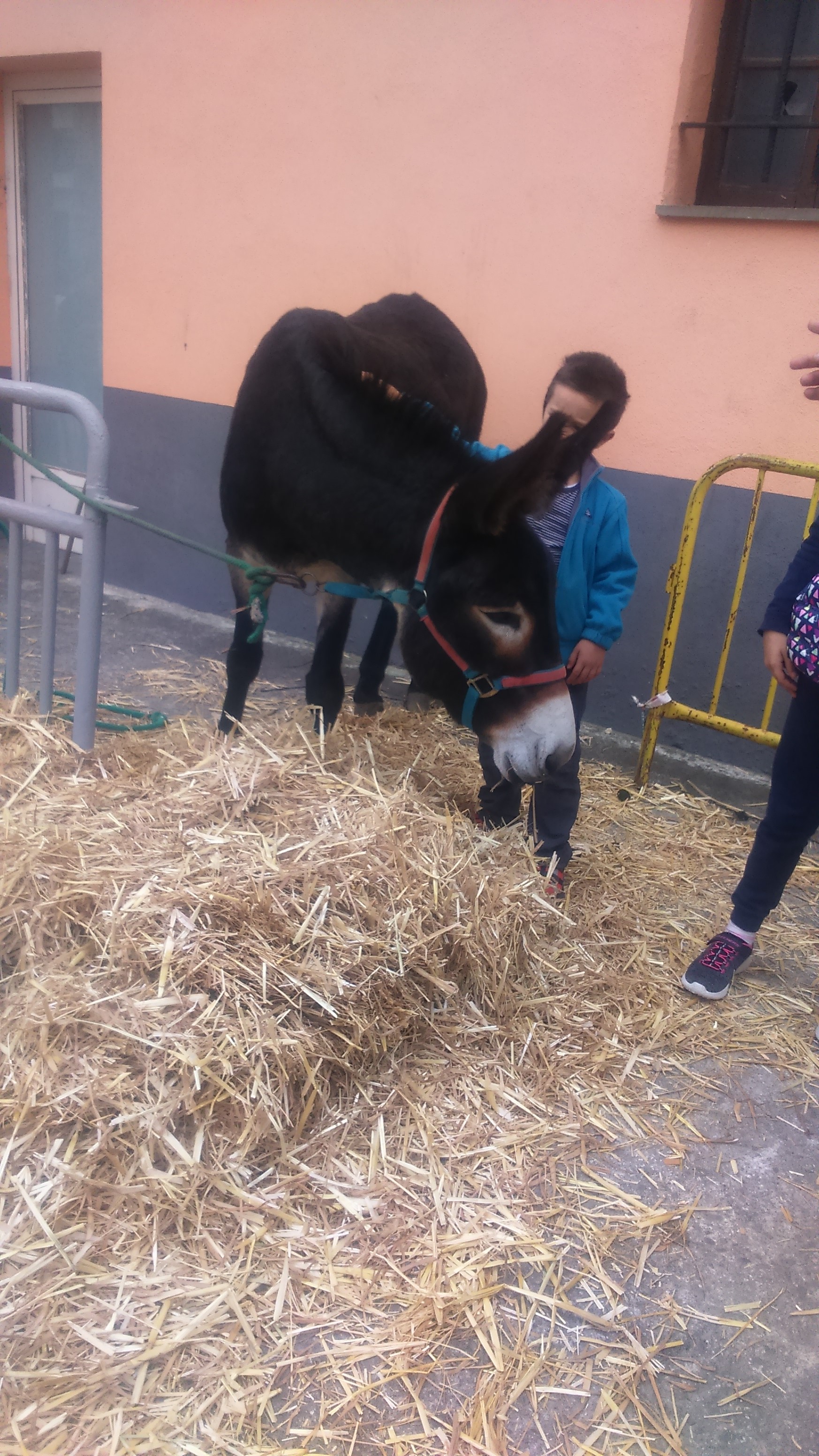
Donkey in a temporary street stall, Feria, a Basque county fair.

Origin of the blog name: There is a book by Scottish writer, Robert Louis Stevenson “Travels with a Donkey in the Cévennes”, and there is a French Camino  named after him which has a personal, family connection for me. Just as it is possible for campers to stay in a site where a tent is provided, ready-erected with a camp-bed in it; so there are many who take treks and have a mule or a person to carry their bags.  I walked around Spain with a rucksack on my back (containing what I needed for a 3-month stay, summer – winter), rather than having a donkey carry it for me.
“Whenever I was asked: ‘Why did you go to Santiago?’ I had a hard time answering. How could I explain to those who had not done it that the way has the effect – if not the virtue – to make you forget all reasons that led you to become involved in it in the first place.” Jean-Christophe Rufin, The Santiago Pilgrimage

So I won’t explain here why I decided to do this, although there is some explanation in later blogs.

But I will say that there were two distinct parts to my journey: one where I visited fellow Shiatsu (acupressure massage) and complementary therapy practitioners, giving sessions in return for bed and board. The other where I walked the Camino Frances and part of the Via de la Plata (‘o contrario’, backwards), staying in different hostels and hotels every night.

received_10157991437945640.jpeg
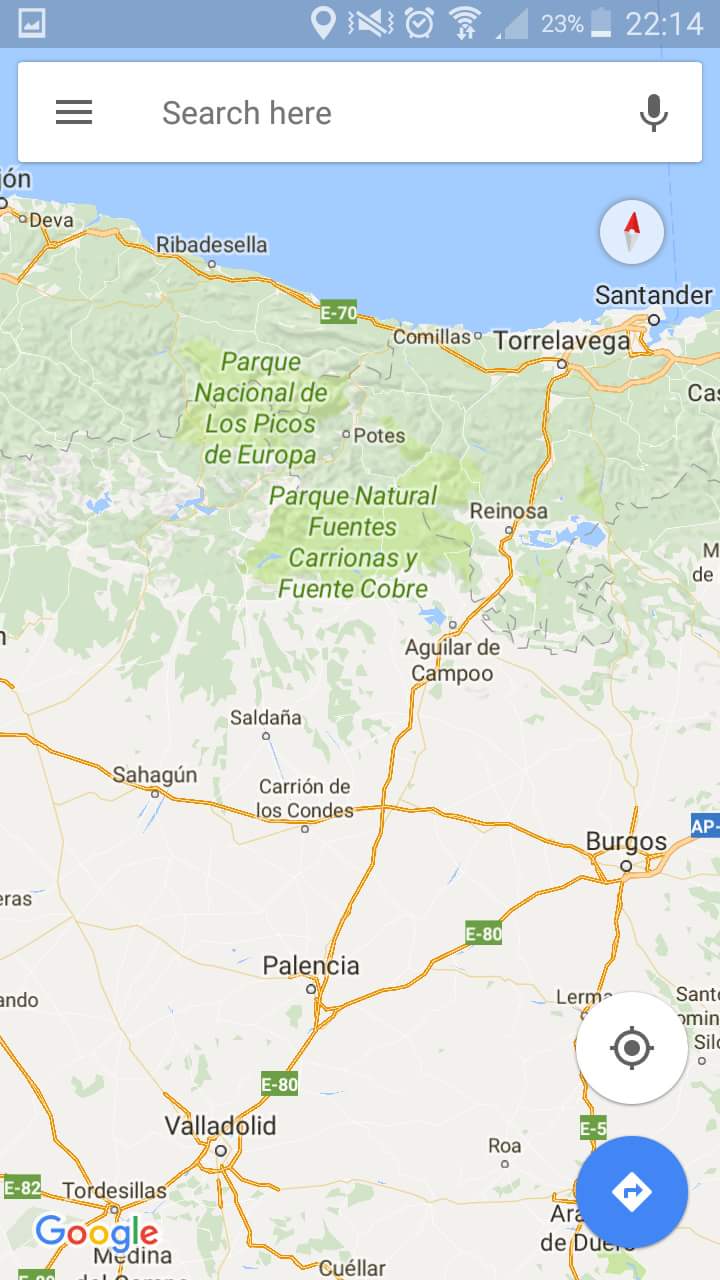
Burgos, a major town along the Camino Frances, Spain.

The former came out of finding a way to stay in Spain without spending too much money. The latter was inspired by friends Phyllis and Liz, by books, programmes I heard on the radio, and the film, ‘The Way’. It turns out that walking the Camino suits someone like me, a normally busy person, active, and perhaps tending towards being workaholic or at least feeling full of responsibilities. I trained myself years ago to sit and meditate, but it could be that walking is more appropriate to my character.

“that fine intoxication that comes from much motion in the open air, that begins in a sort of dazzle and sluggishness in the brain, and ends in a peace that passes comprehension.” R.L. Stevenson, taken from various blogs (see below in English & French).

Camino: A walk, or track, often trodden for religious and spiritual reasons since the Middle Ages, by ‘peregrinos’ (Spanish for pilgrim). The best known is The Way of St James of Compostelle, or Camino Frances. All paths are signposted by the coquille Saint Jaques shell which walkers also carry to symbolise their journey. ‘The Camino de Santiago comprises a lattice of European pilgrimage itineraries which converge at Santiago de Compostela in north-west Spain.’ (Michael Murray, for ref. see below). They can begin in Jerusalem, Rome, and Paris, famously at Sean-Jean-Pied-de-Port in France; and are travelled across Spain, Portugal, France, England and elsewhere in Europe.
spain-autumn-2016-phone-2732
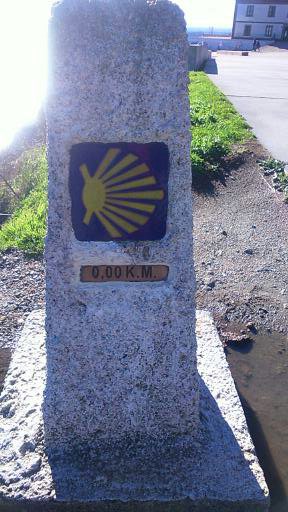
The final way marker of the Camino Frances, Finnisterre, Spain.
The shell sign alongside the number of km still to travel. This one indicates I have arrived in Santiago de Compostella, November 23rd 2016 after walking from Pamplona.

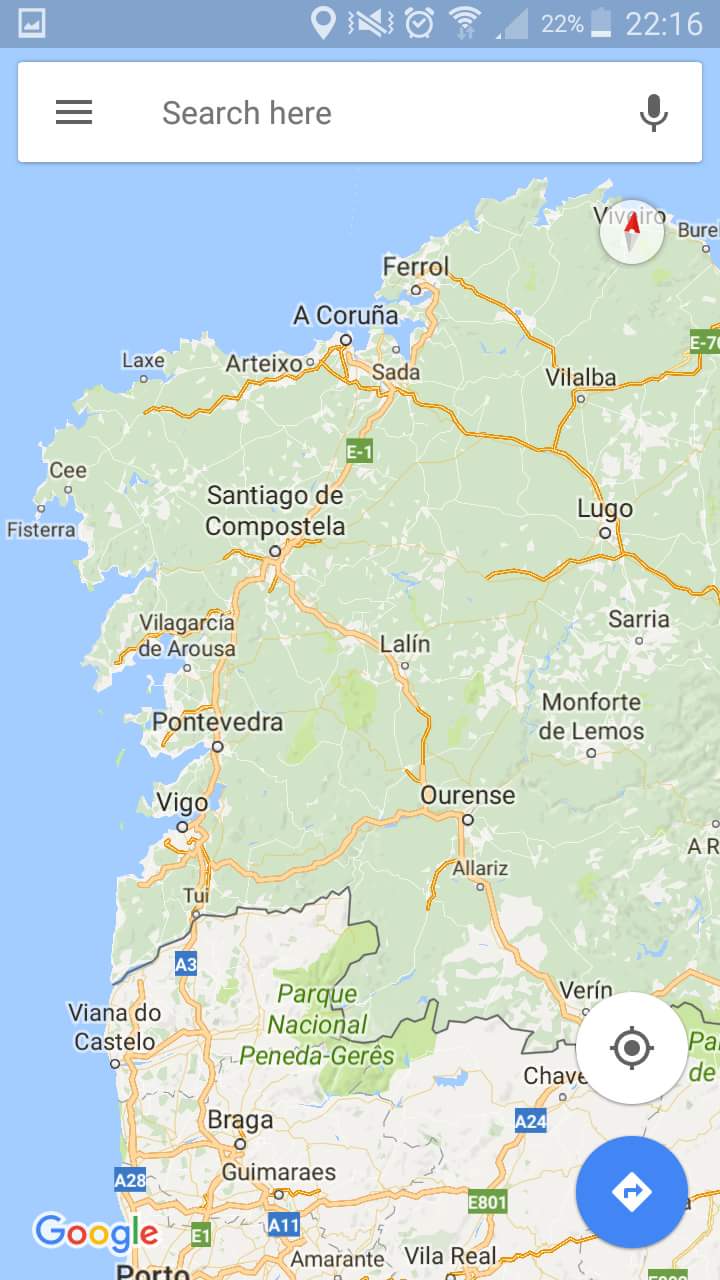
This is where I went, in the order I visited: October – Downton (New Forest, Hampshire, England), Santander (by boat from Portsmouth), Salinas, Aviles, Oviedo, Bilbao, Egileor, Vitoria Gastiez, Feria, San Sebastian, Pamplona. Camino Frances 1 (Urtega (by bus from Pamplona) to Najera). Cortiguera, Aranjuez (via Madrid). Camino Frances 2 (San Juan de Ortega to Carrion). November – Madrid. Camino Frances 3 (Leon to Santiago de Compostella), Finnisterre, Santiago.

received_10157991446825640.jpeg
Map showing Santiago de Compostella in north western Spain, the home of the Tomb of St James, final destination of pilgrims from all over the world.

December – Camino Via de la Plata (Santiago to Vilar de Bario). Xinzon, Ourense, Las Matas (via Madrid), Valencia (via Madrid), Olocau and Sierra Calderona, Barcelona, Edinburgh (by aeroplane).

I keep being asked whether I suffered from the walking, and I understand the question because I, too, was very worried about this, and allowed it to put me off starting. I did have a week or so of blisters at the start, but I had researched what to take with me before going, and had plasters, cream and a sewing kit with me (yes, we sew a thread through the part with the fluid and let it drain out over time to stop it getting infected!). The other pilgrims were really helpful and showed me how to look after my feet, so I didn’t have to stop, and my skin hardened up soon enough.

spain-autumn-2016-phone-3179
Early on the Camino Frances, Spain.

My main concern had been my back and the load. I carried approximately 18kg (which was more than the recommended 5th of your body weight) and although it felt very heavy after 32km, there was no pain. All that yoga before I left, and my daily ‘Salutations to the Sun’ helped. I did have to pay to get it home on the aeroplane at the end, which was a nuisance and might have been avoided. Next time I will take a new-style, light-weight sleeping bag and towel to lighten my pack.

I trained as a professional dancer in my teens and early twenties, and am therefore used to daily class, working through the pain and stiffness of the night and previous day’s exertions. This probably helped me to deal with the numerous small physical difficulties which arose when I walked, especially at the start of the day. I used my Shiatsu and other training to identify the source, relax into the areas I was holding tension, and, lo! they disappeared as quickly as they came.

There were many other people who suffered and some who had to give up. I helped with Shiatsu where I could: feet, hands, ankles, backs etc, in the evenings at the hostels. It was good to meet travellers I had massaged later along the way, and particularly in Santiago on the final day to know they had been able to complete.

spain-2016-001
Leaving Portsmouth, by sea, October 2016.

Kilometres walked: 700+ (Caminos), not including Sierra Calderona, Egileor, Aviles-Salinas, walking friends’ dogs, walking to school near Valencia, all the cities…

dsc_0030_10.jpg
Home by aeroplane, December 2016.

Walking without a donkey – Travels in Spain. Starting with blog 1 in England

The Stevenson Camino blogs I have enjoyed:

http://stevenson.canalblog.com/

http://walkinginfrance.info/short-walks/r-l-stevenson-trail/

Travel stories by Teri White Carns https://roadtripteri.com/2012/10/16/first-day-of-walking-pamplona-to-urtega/

M. Murray’s research into Caminos: https://www.qub.ac.uk/research-centres/TheInstituteofSpatialandEnvironmentalPlanning/Impact/WorkingPapers/FileStore/Filetoupload,432512,en.pdf

https://www.caminodesantiago.me/

Fantastic book: A Philosophy of Walking, Frederic Gros