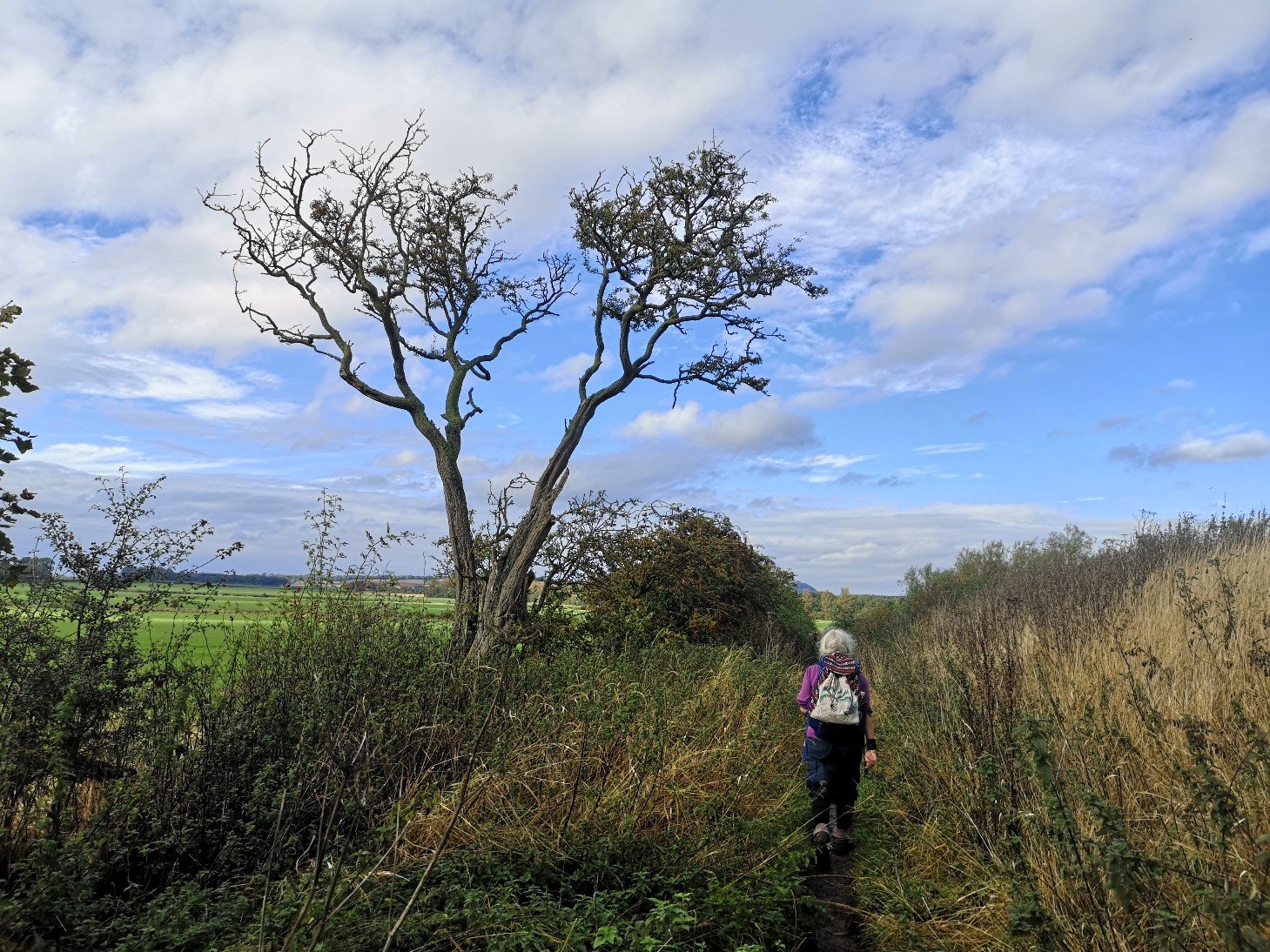
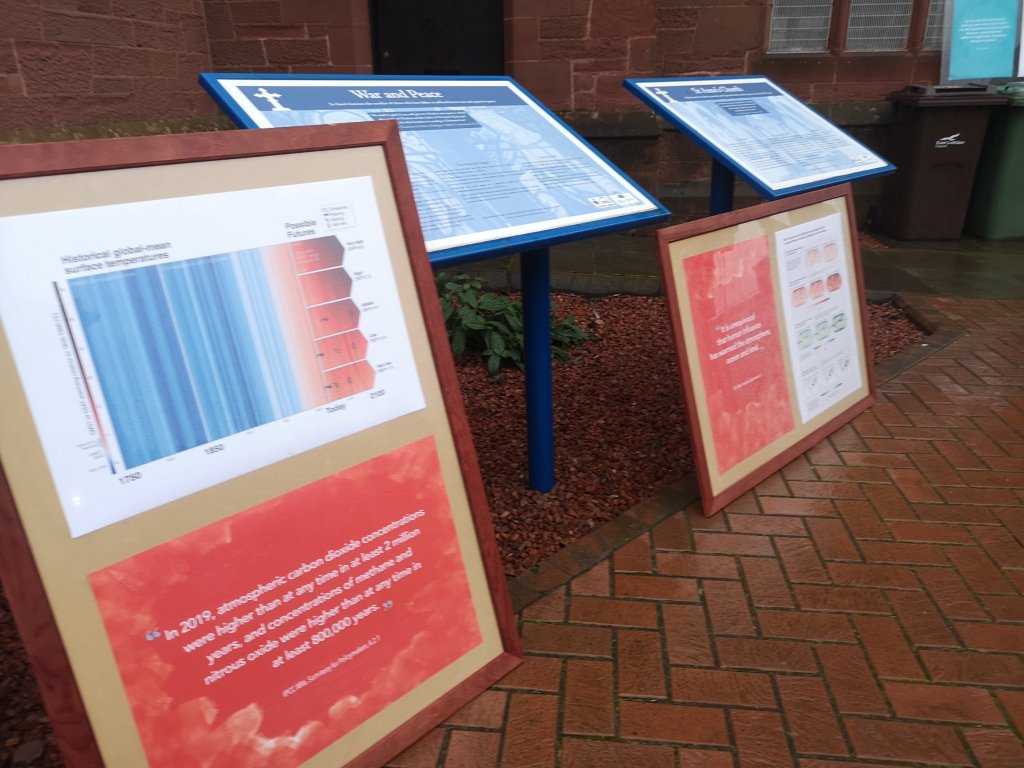
There are lots of things I could do to face up to the serious climate crisis I find myself part of. I could stay at home and recycle, join a committee and work towards political change, lie down on the M25 and get put in prison to raise awareness, I could throw myself in front of a horse to get attention.
Why walk instead of doing anything else? Why would I stop earning (I’m self employed), pay for someone to be at home to look after my cat, and walk in the unpredictable Scottish weather?
The statements of intent of Pilgrimage for COP26 are these:
We’re walking to raise awareness of the climate and ecological crisis.
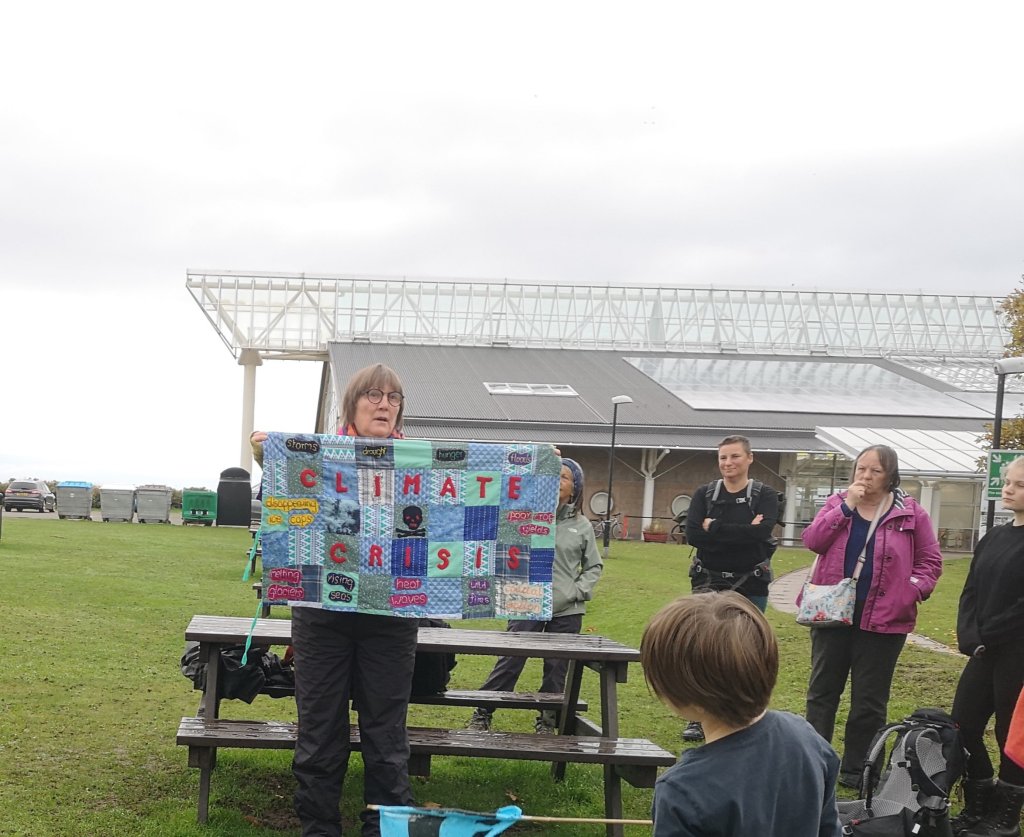
We’re reflecting on that crisis as it relates to our own lives, the communities we pass through and the lives of those already impacted; both human and more-than-human.
We’re building a community of witness and resistance committed to climate justice now and in the wake of COP26.
Yet still I find myself asking, but why walk? I could run or cycle and there are lots of other ways to raise awareness, to reflect, and build a committed community.
My answer: because walking is special.
It is very slow, a counterpoint to the speed of life. (Google tells me it would take me 1 hour and 24 minutes to drive from Dunbar to Glasgow now, but it will take us 8 days to walk).
It leaves very little trace; although I disturb undergrowth, probably inadvertently step on unsuspecting creatures, and leave my temporary footprints, it is the least destructive way of moving across the country.
Each step reminds me that I rely on the earth to hold me up and that the earth relies on me to stand on it – it’s reciprocal.
The vibrations that my stepping cause are not the same as the shaking of the ground by a lorry, say, rolling on tarmac. The moving through air I do at my pace (approximately 3 miles an hour) contrasts with the displacement a Boeing 737 makes.
Walking interacts with weather. Not knowing whether I will be walking through rain, sun or snow at the beginning of every day is, yes, not abnormal for this country at this time of year, but the attentiveness I have when I walk, and the fact that I have walked here before, means that I will notice the climactic differences. The skin on my cheek will be aware of the relative warming, my muscles of my back will sense the increased wind speeds in comparison to last year, the joints of my feet will register the dwindling peat they walk on.
The quality, and energy of walking is different, and it matches the quality of focus and the listening energy I want to apply to this issue.
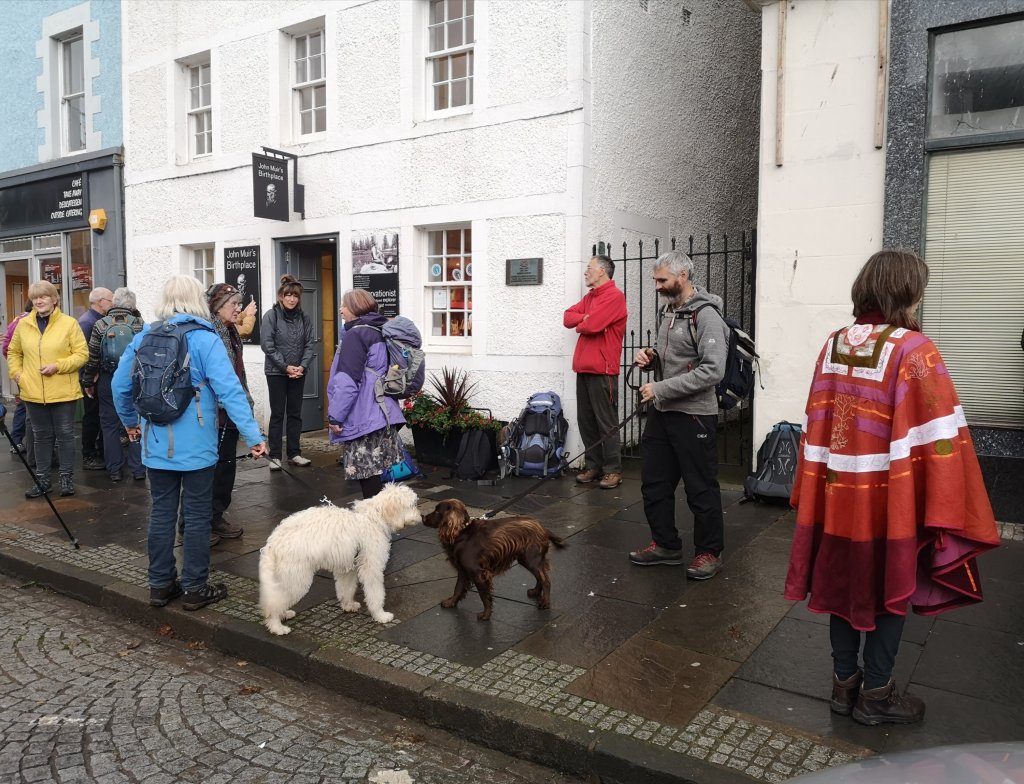
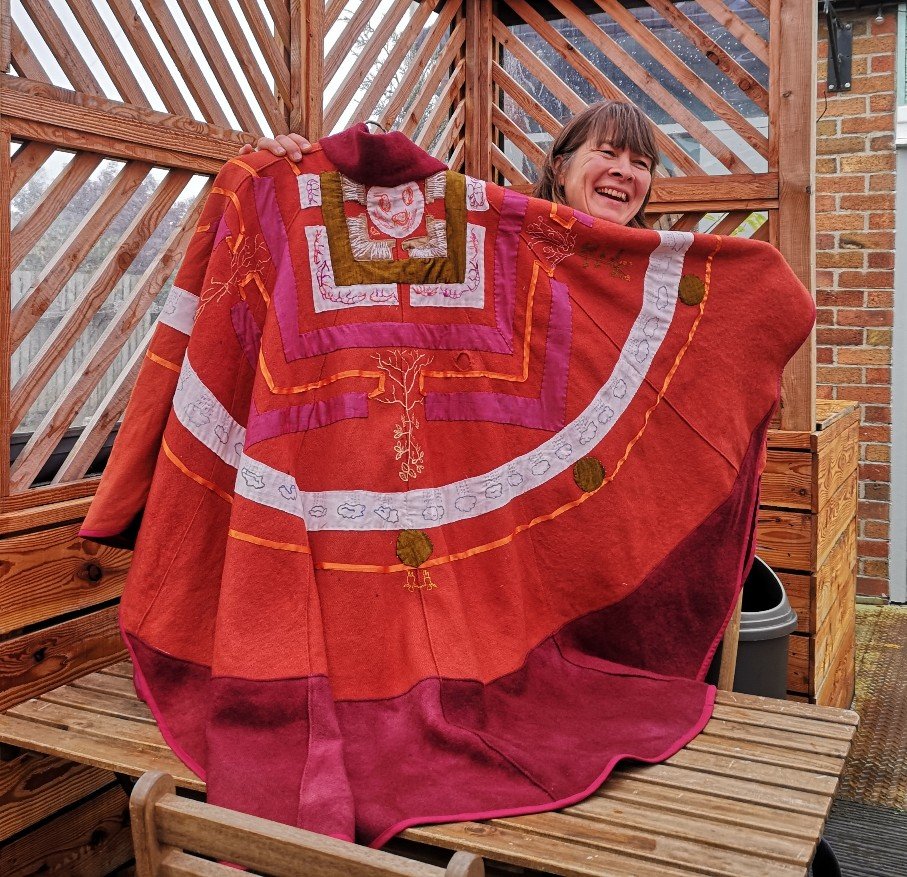
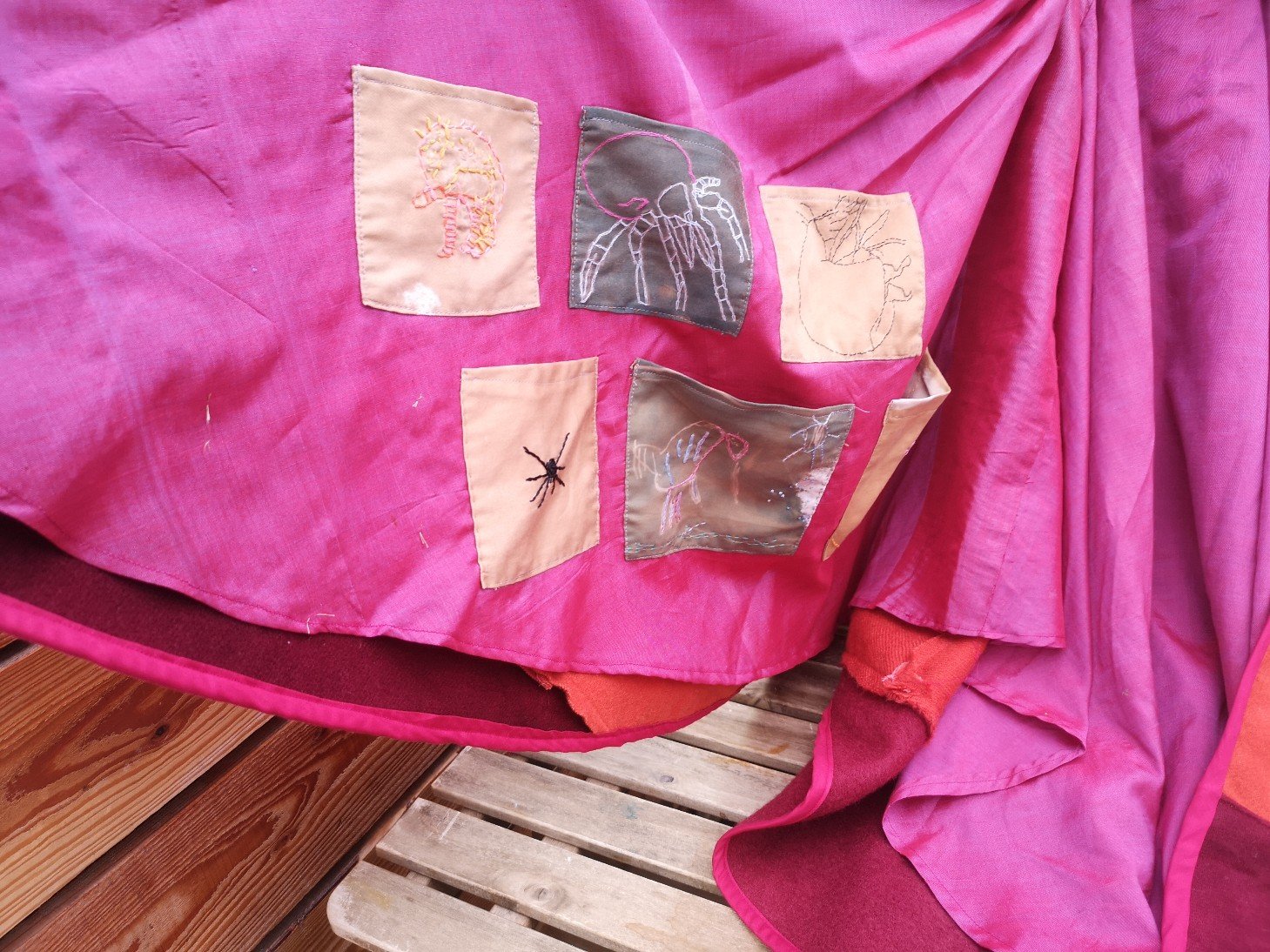
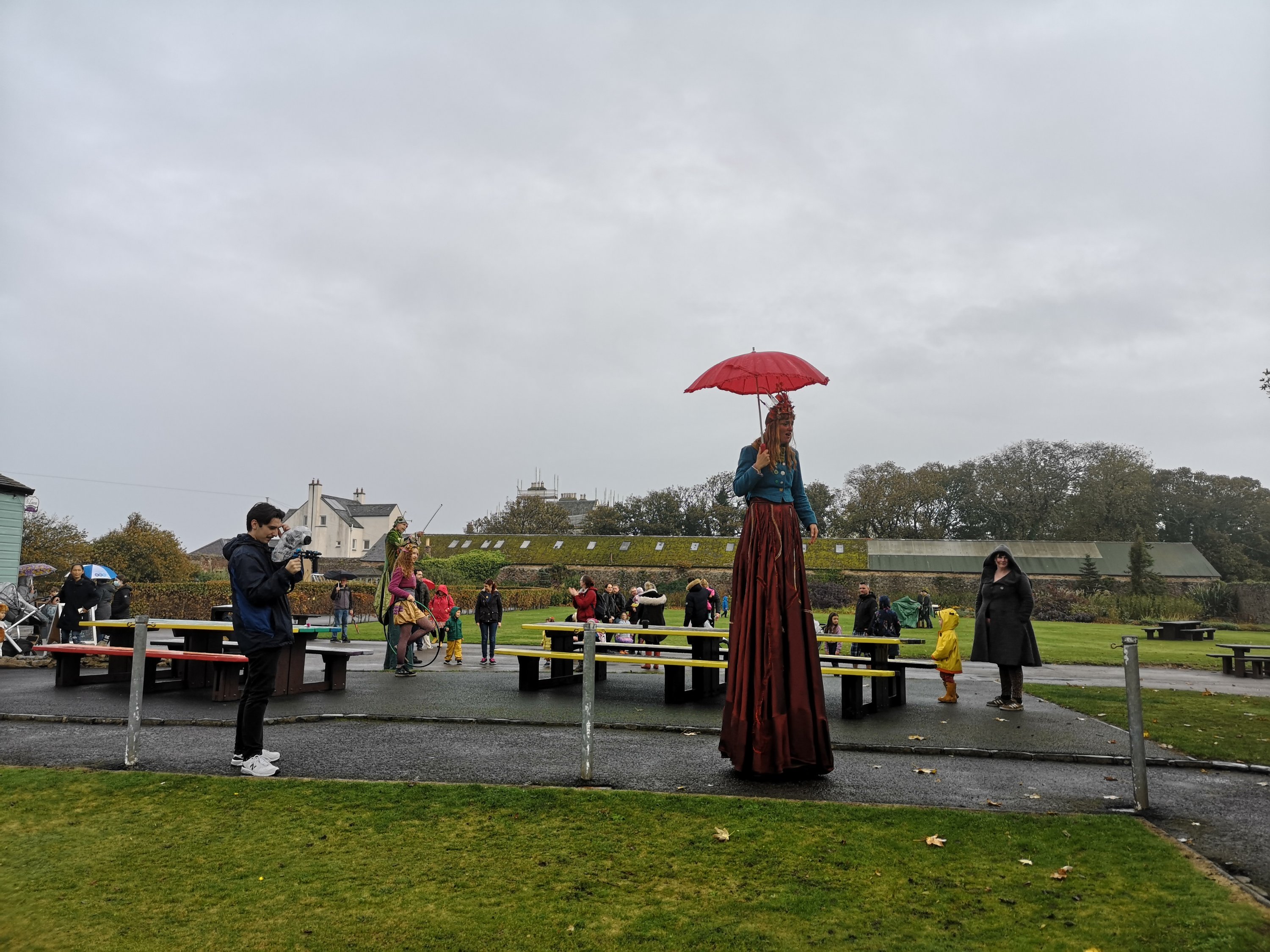
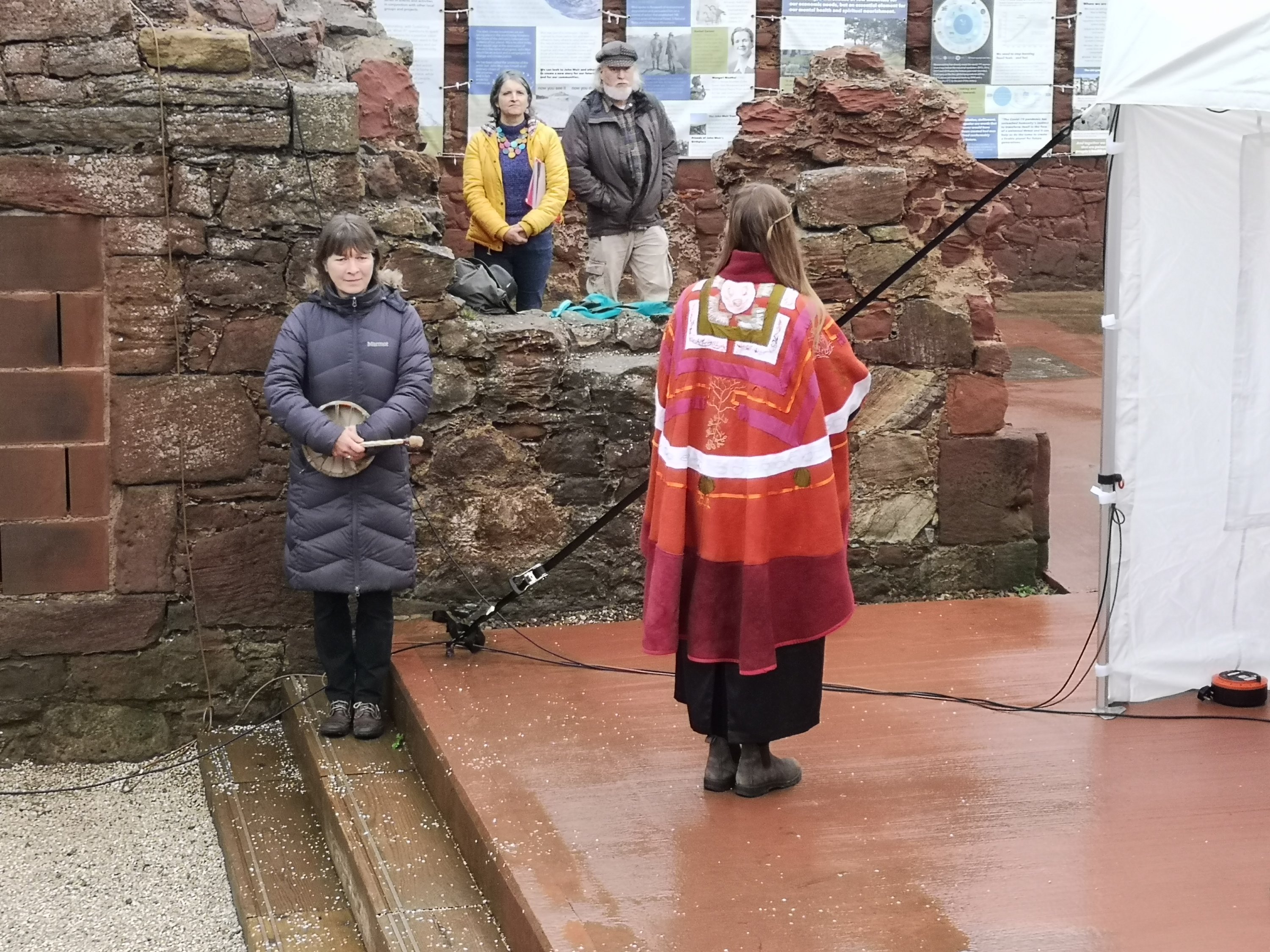
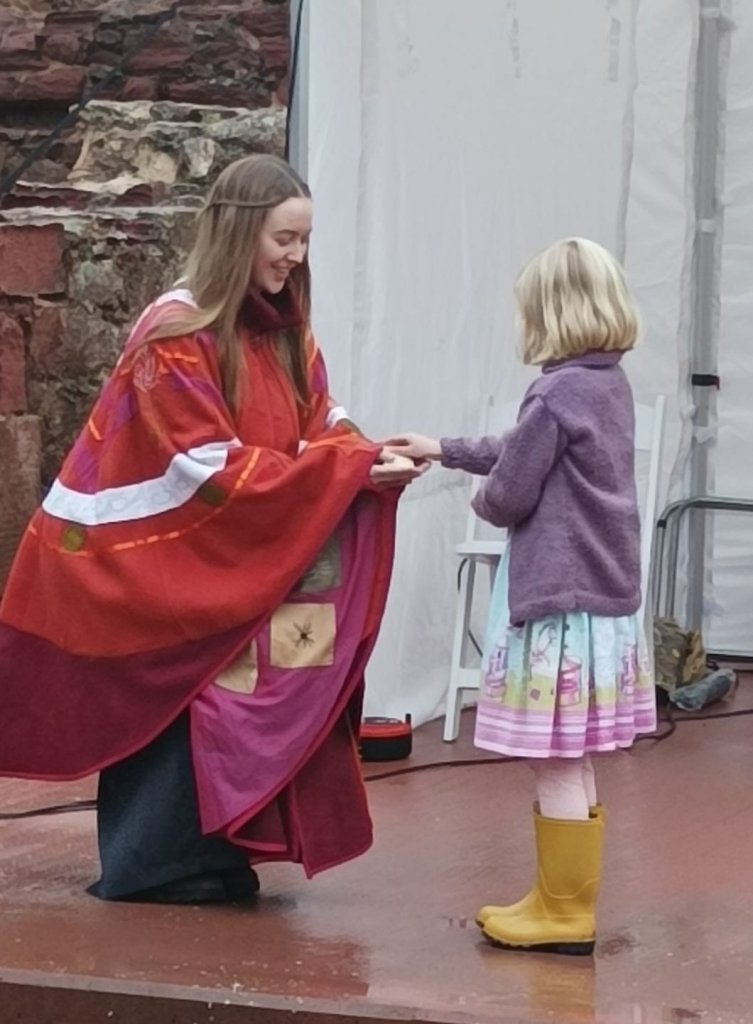
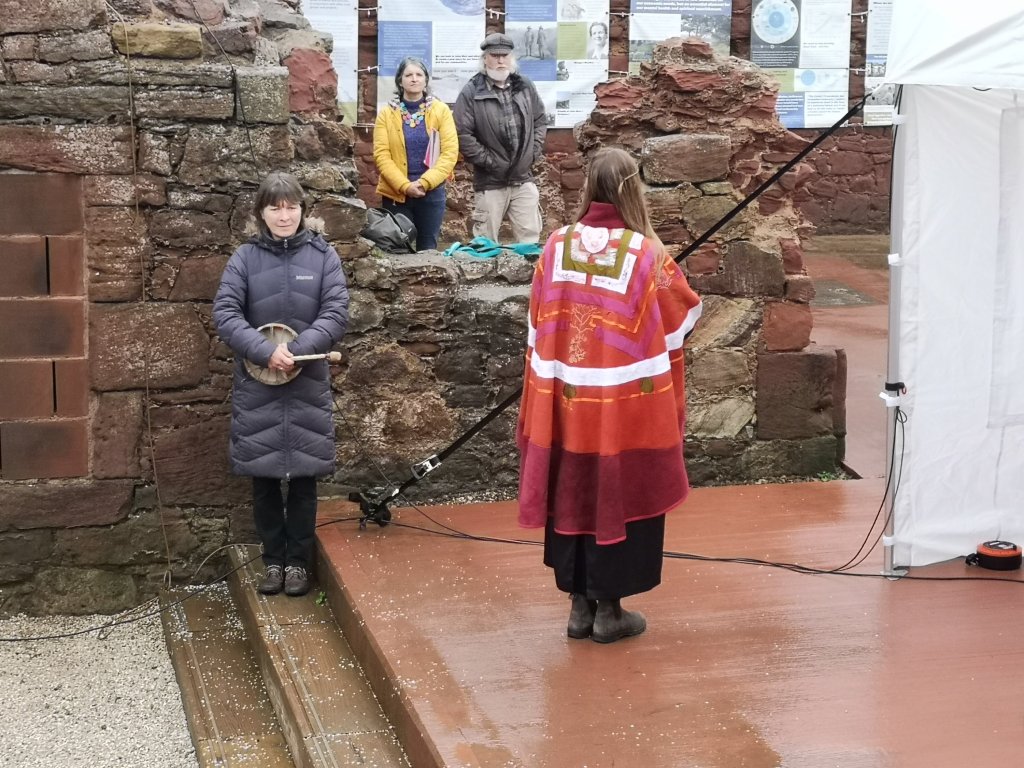
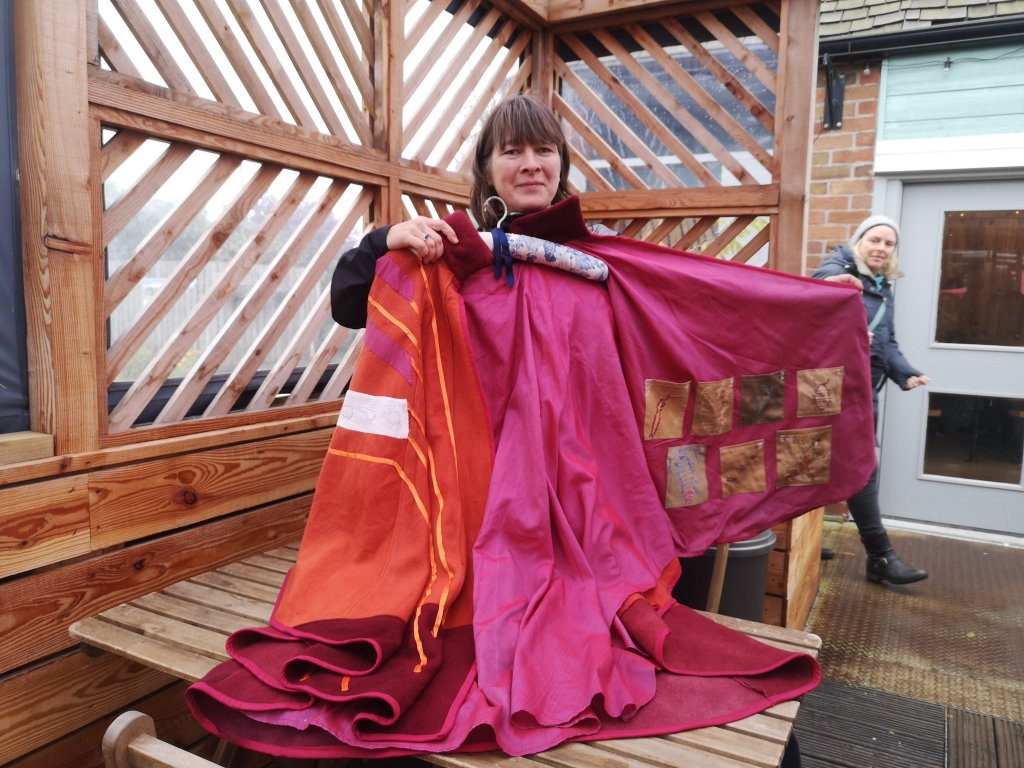
Natalie Taylor who devised the Keeper of the Soils cape and and Roxy Ambrozevich wearing it
What we have collectively wrought (most of us) upon the environment, is so very complex. There are strands of destruction, fibres of difficulties and damage which have become interwoven over centuries, a fabric of knots and snags and imperfections brought about by misinformation, neglect, greed and thoughtlessness. And when you pull one thread, it all starts to unravel and that’s scary and huge to see; it’s hard to know where to begin to stitch it all together again in a more durable and compassionate way.
Natalie Taylor with her Keeper of the Soils cape
Though I am not a religious person, my belief in the act of walking gently and kindly, allowing myself time to notice and reflect, is like the nun’s faith that sitting quietly and performing her daily duties mindfully will make a difference; that opening her heart to the way things really are and facing that, will affect change, that it will alter the fabric of life the way it is now. I am a Shiatsu practitioner and those of us who give Shiatsu know that because the whole universe is made of the same stuff, chi, we can affect it with a thought, touch or word.
Or a step.
Walking for Water
Walking for water is not going for a breath of fresh air, a pilgrimage, a stroll, a hike. It is not a parade, a protest march, a sponsored whatever. It is not a way to stretch your legs, or have that conversation. Walking for water is not to see an unmissable sight. It is not on any body’s bucket list.
It is the flight of a migrating bird, a cruel calculation of distance, fuel and energy burned.
by Lydia Kennaway from A History of Walking (2019:25)
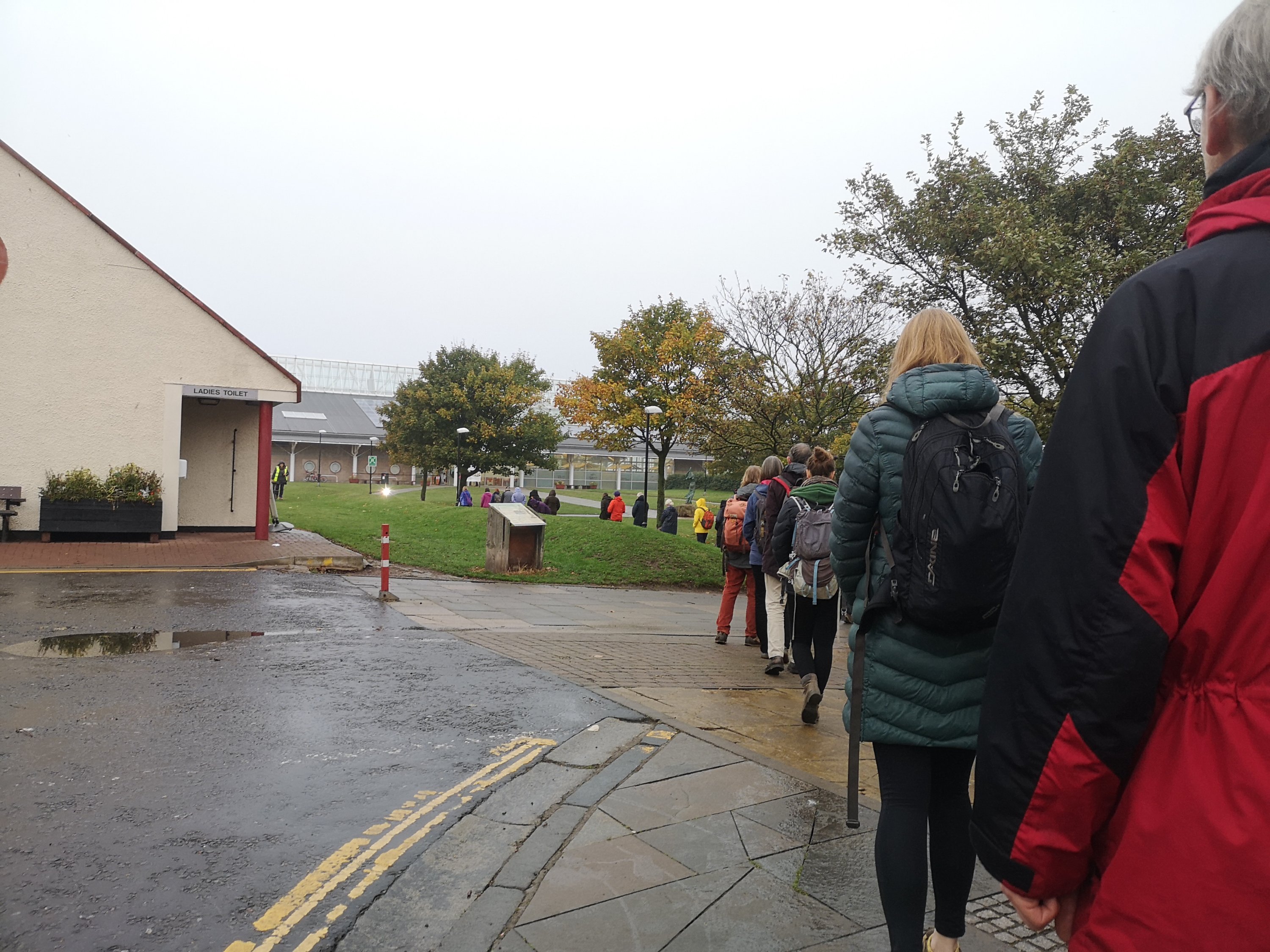
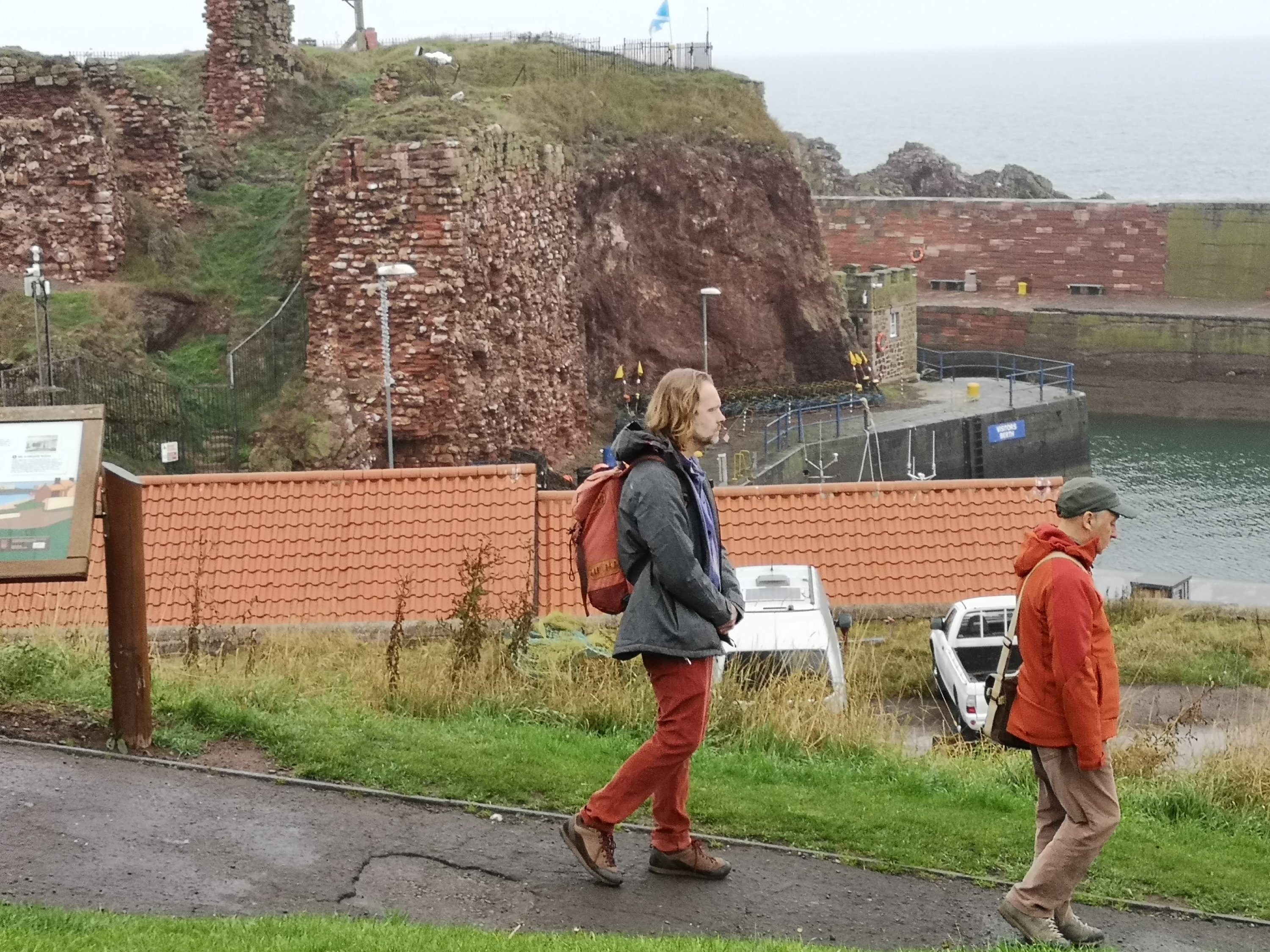
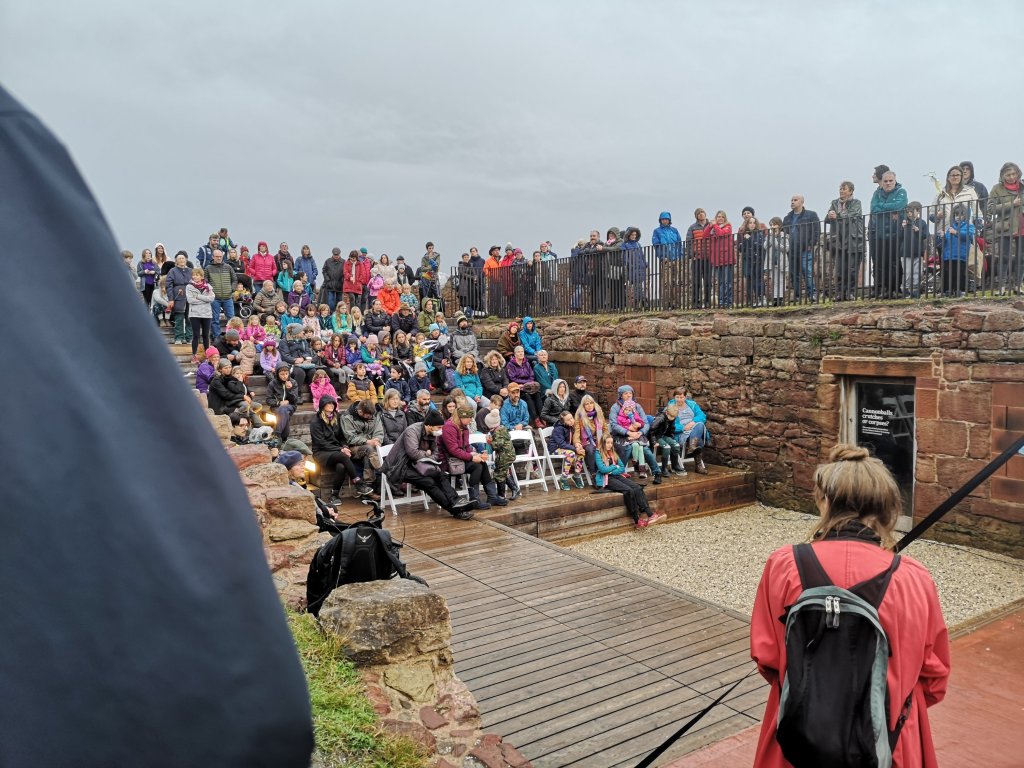
The Pilgrimage for COP26 has now begun.
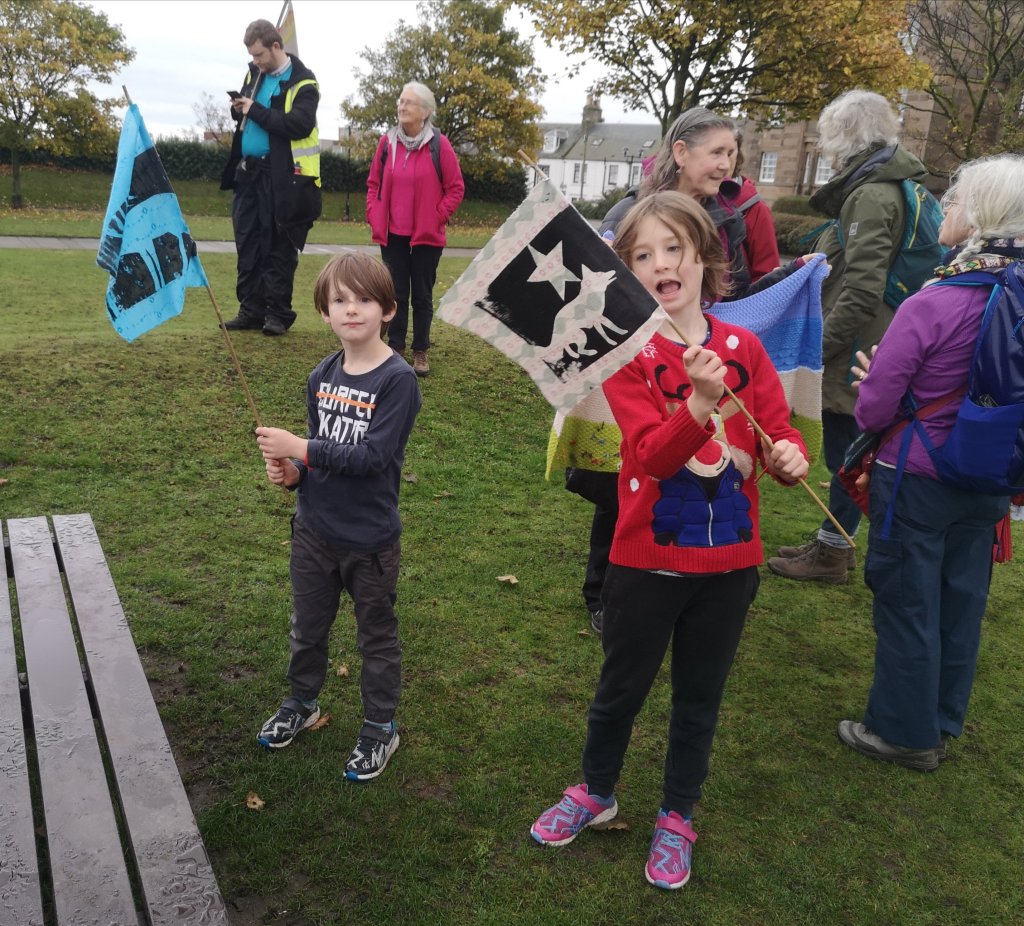
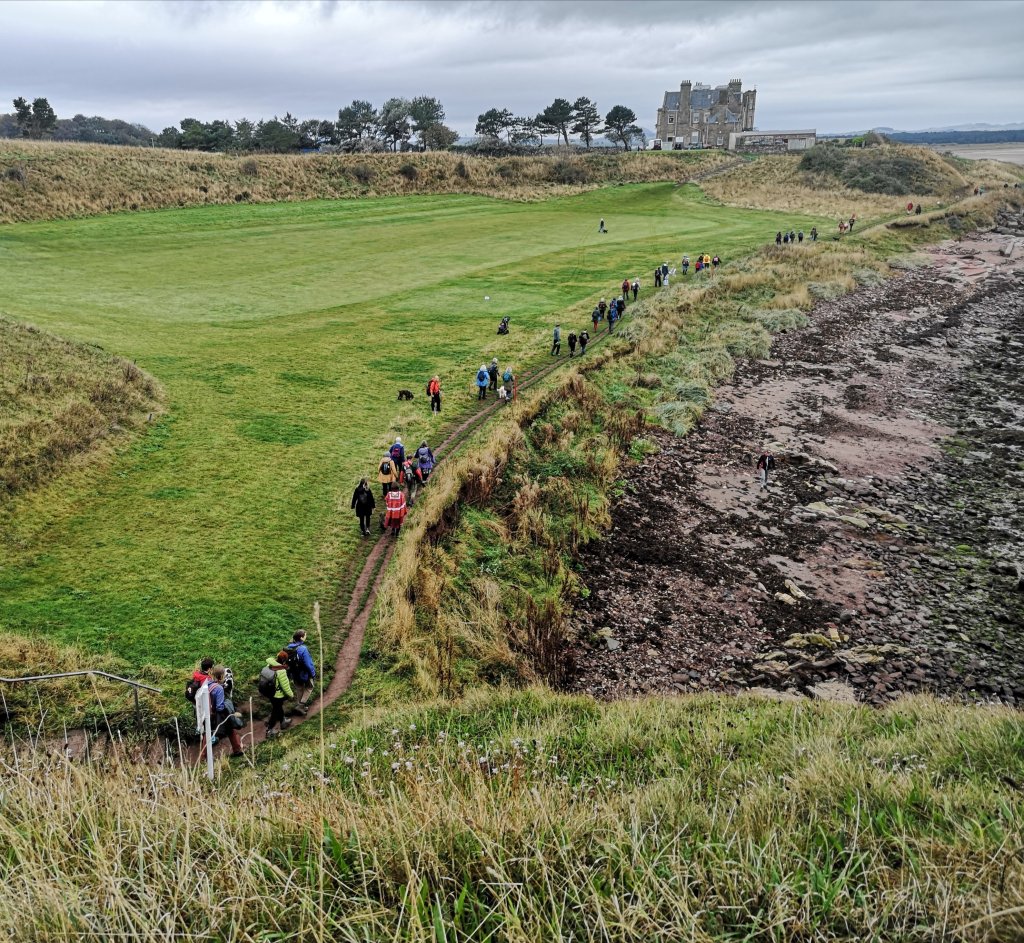
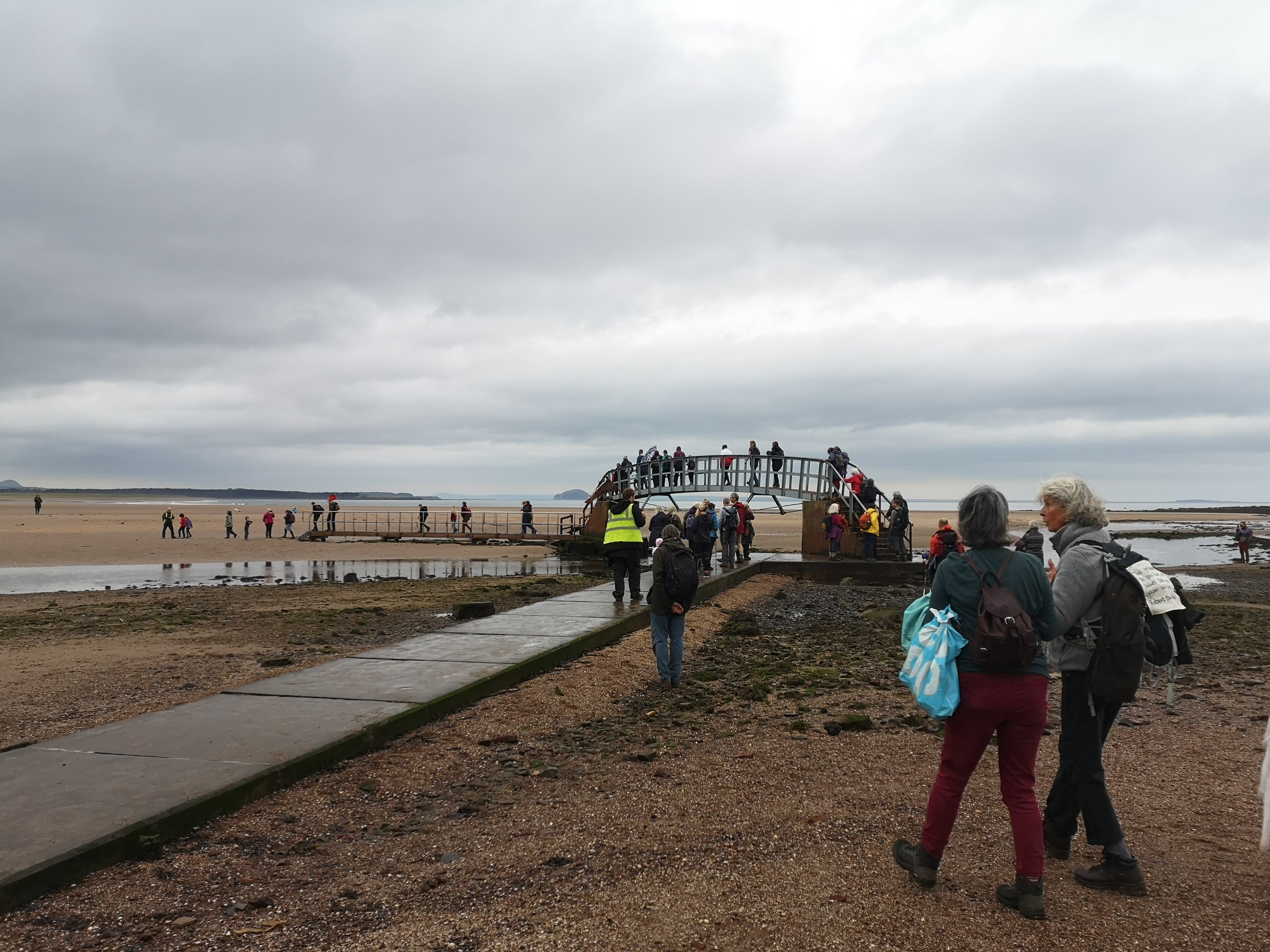
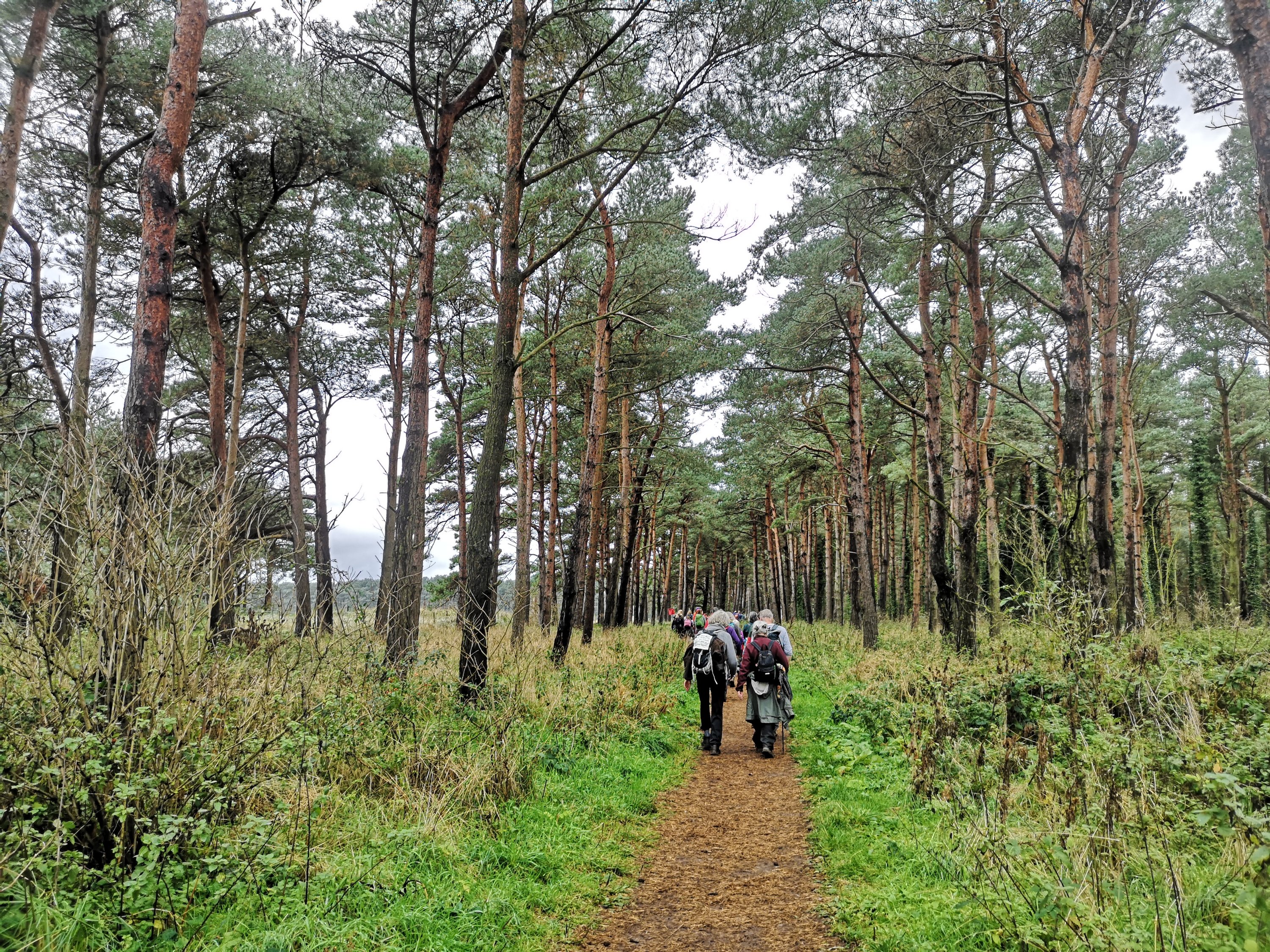
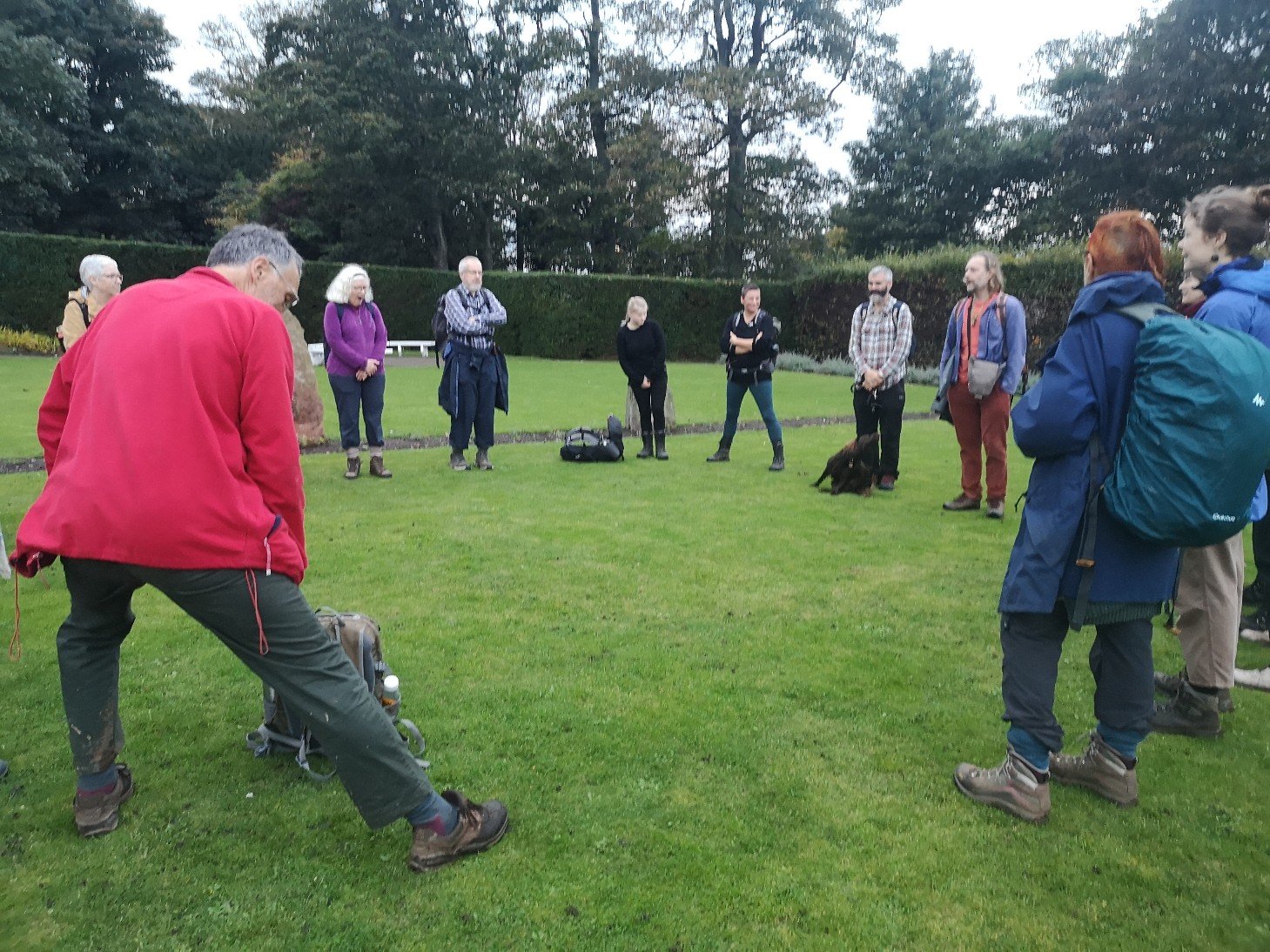
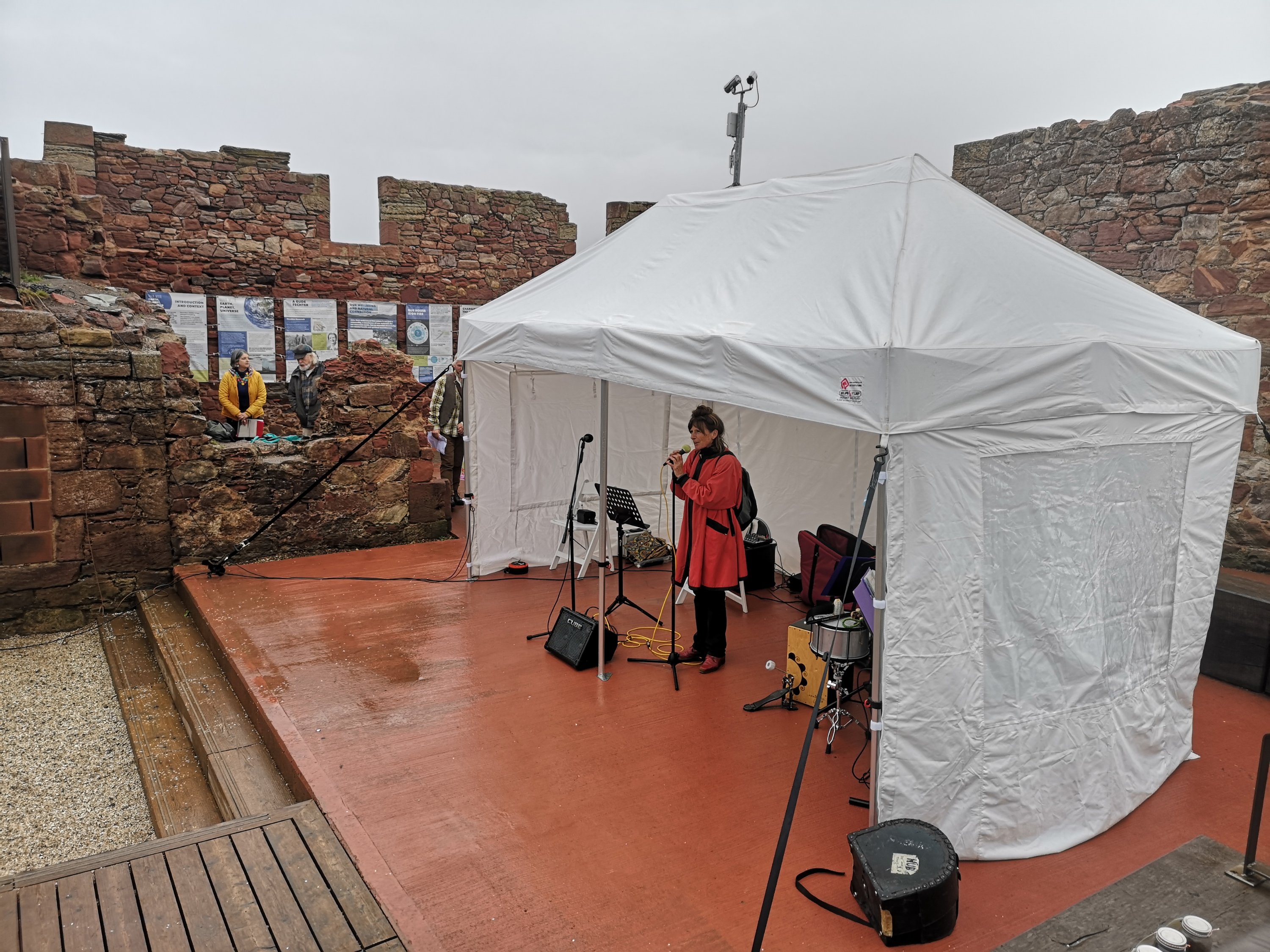
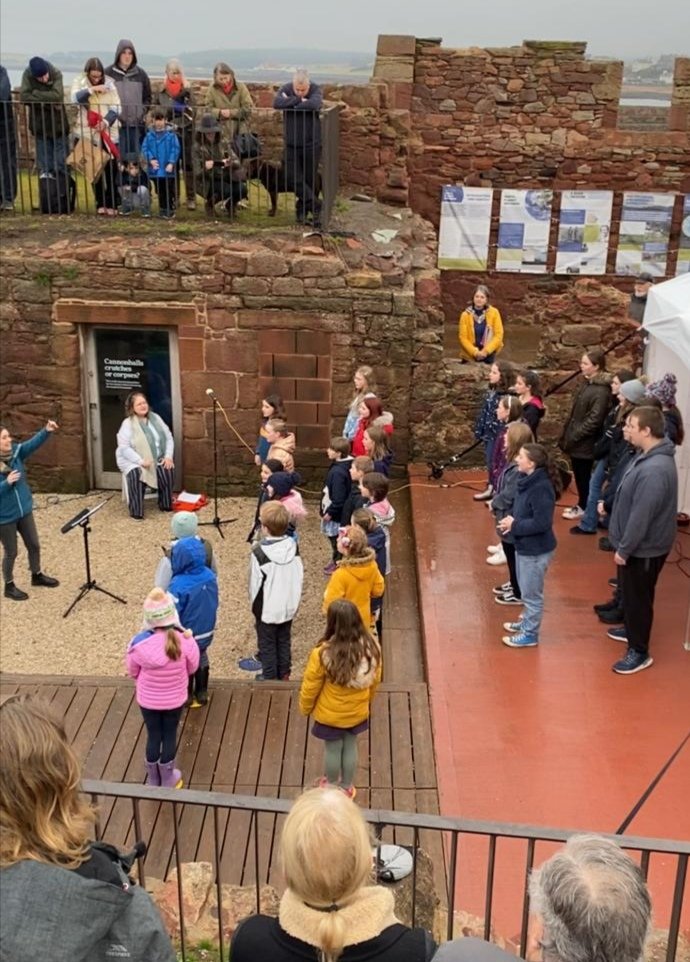
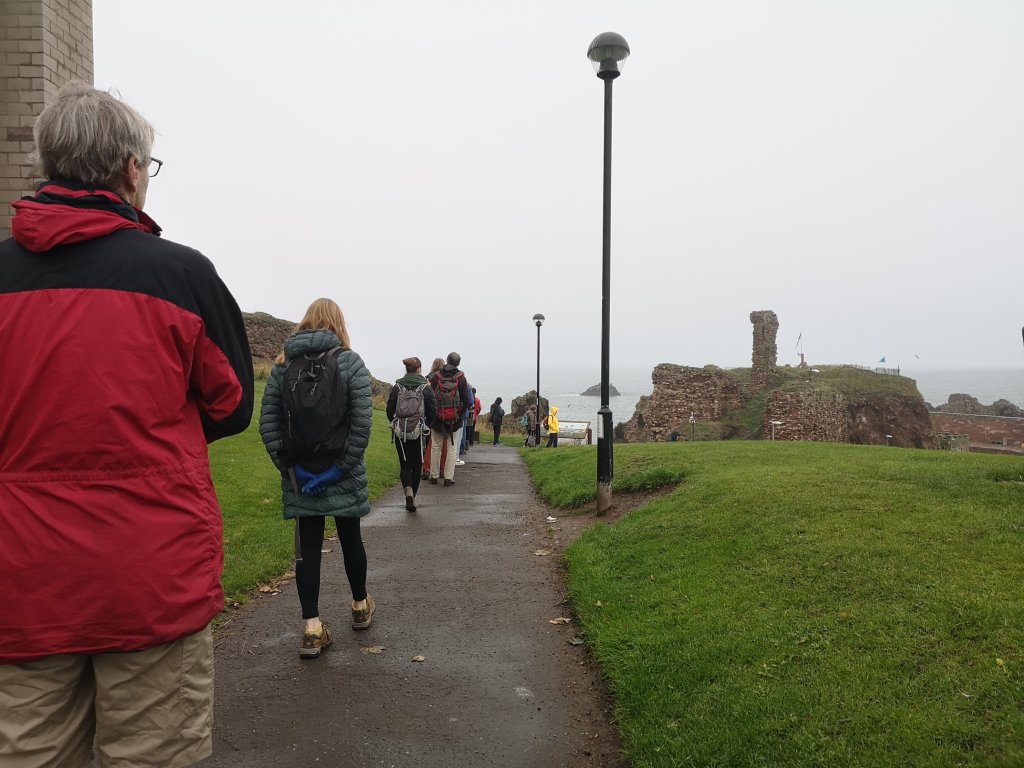
Slow Walk in Dunbar to launch the Pilgrimage for COP26 with Karen Gabbitas. 30 people participated
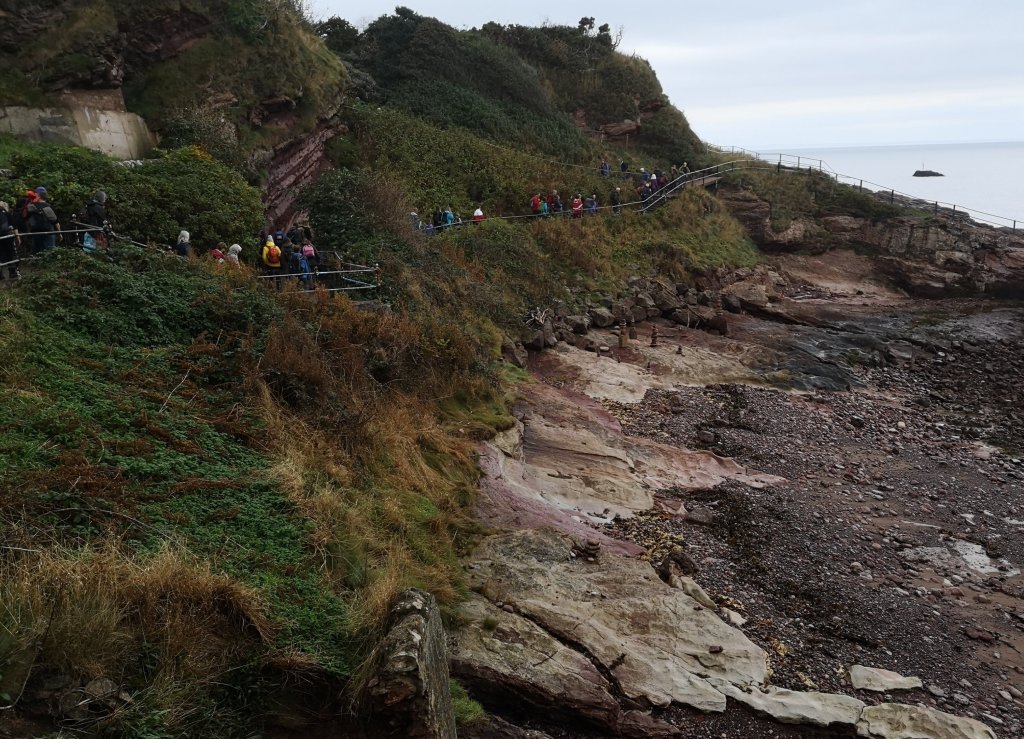
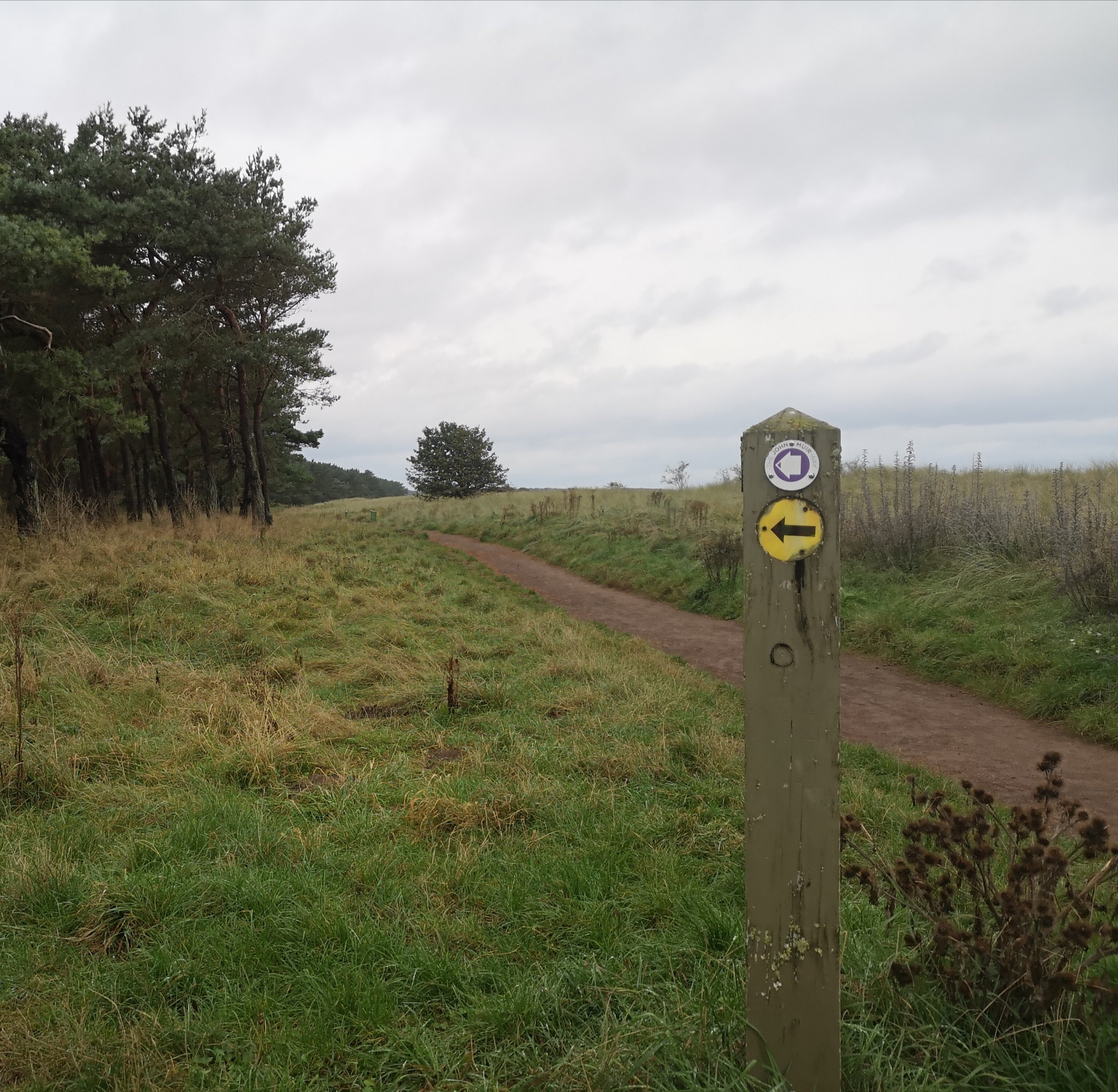
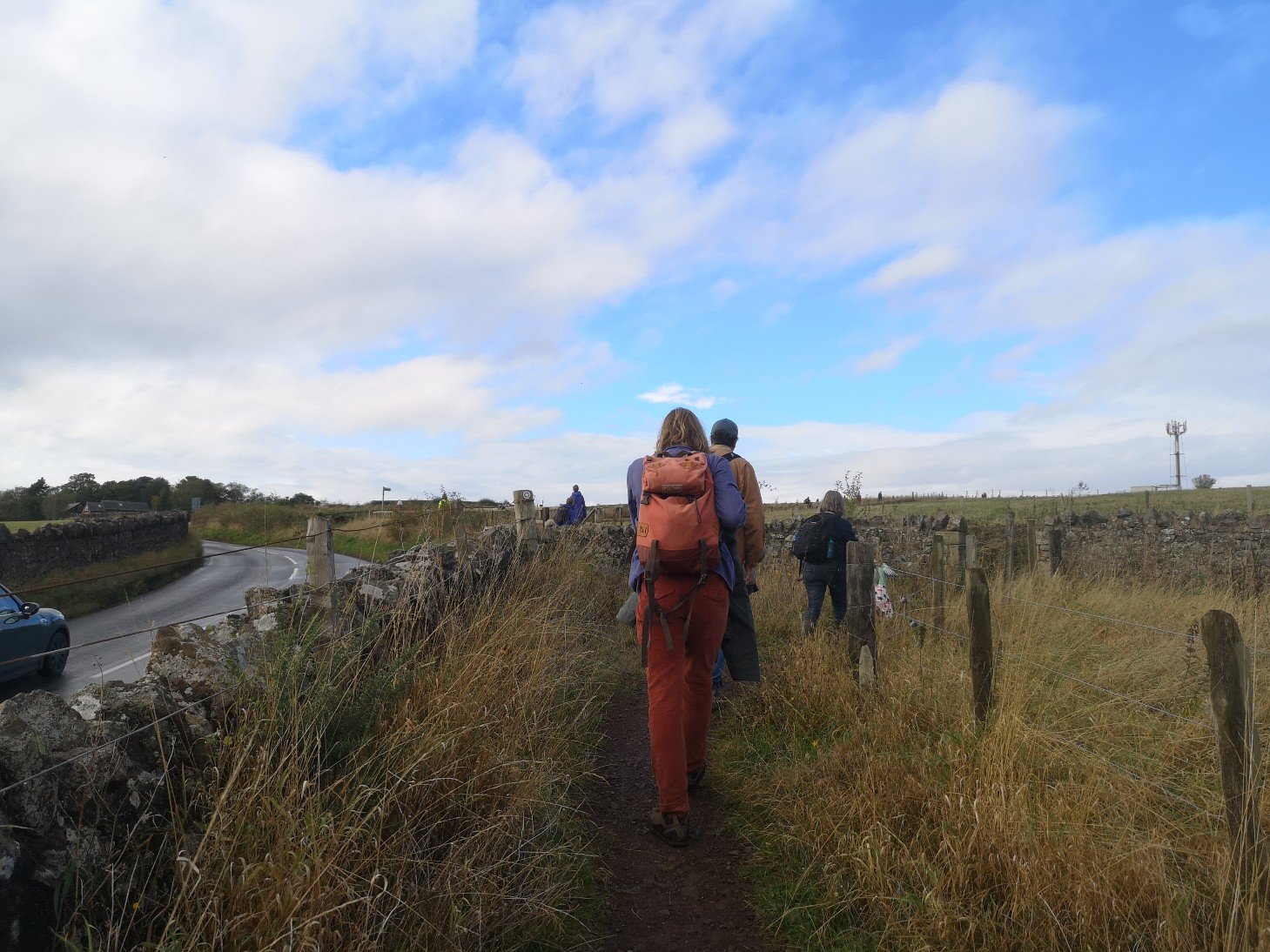
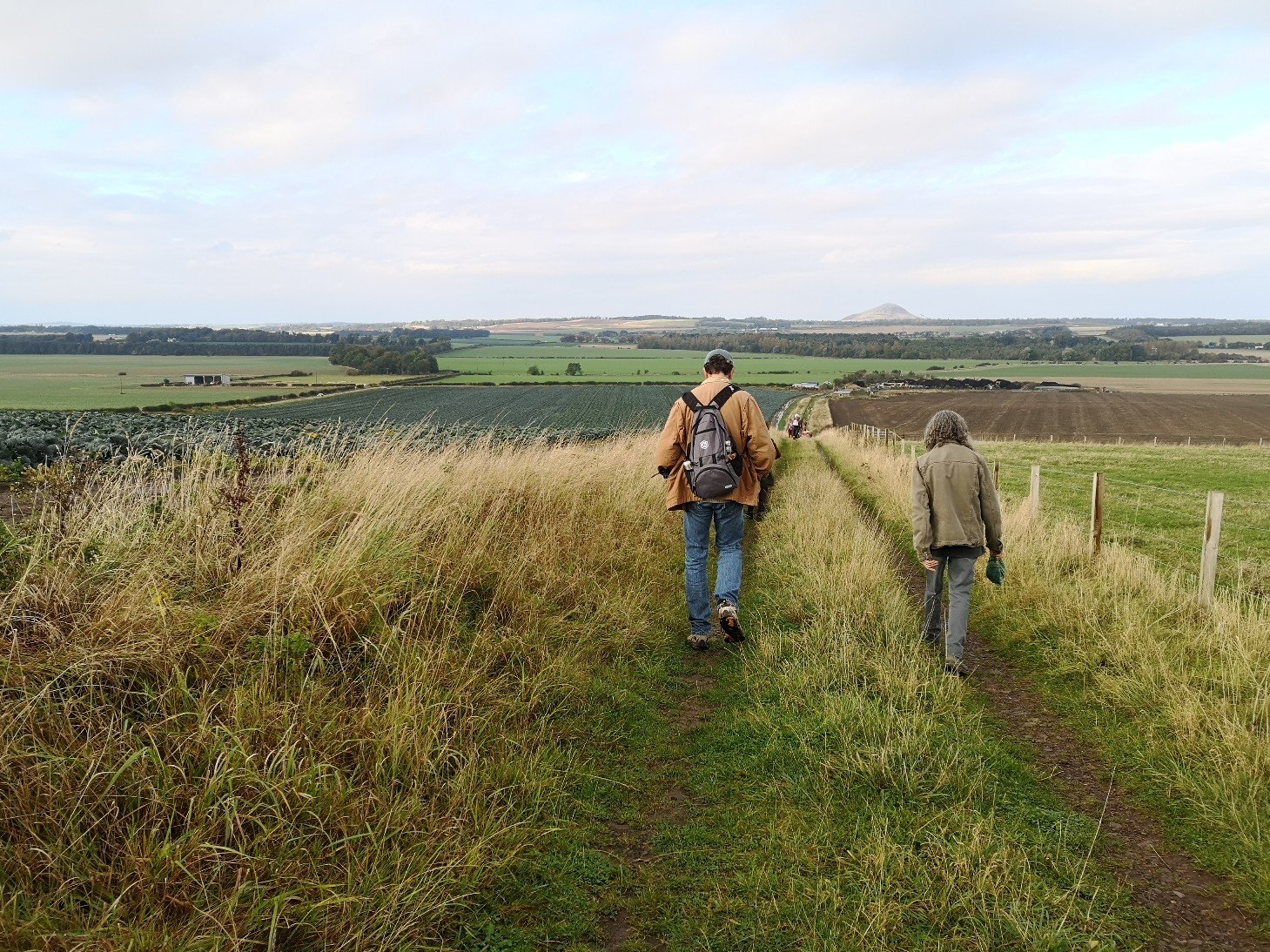
On 29th October, all being well, we will walk into Glasgow after travelling parts of the John Muir Way and St Ninian’s Way, on foot, in a collective effort. We will make “A walk and a learning journey … to reflect on the climate and ecological crisis in anticipation of the COP26.”
Our route visits
Dunbar
North Berwick
Aberlady
Portobello
Edinburgh (where we will stay on Saturday and Sunday)
South Queensferry
Bo’ness
Falkirk
Kirkintilloch
Glasgow
taking in coastal, cycle, urban, industrial, canal and river paths.
Many of you will know that I enjoy walking secular pilgrimage, that the act of stepping out each day with a simple pack on my back satisfies something vital in me. Walking sequential trails which connect town to country to village to city, whether the Camino de Santiago in Spain, the Via Sacra in Austria or the St Magnus Way in Orkney, is a way to reflect on, process and enliven my regular life.
This pilgrimage differs specifically from any of the others I have done before because it will be done in community. I am a solitary walker and I value my privacy highly, even though I do meet people along the path and enjoy their company at times. This COP26 pilgrimage, however, is a group activity. It invites people to walk together for a few hours, several days or the whole, and to be a part of a growing conversation about the many facets of the climate emergency in the light of the international meeting of world leaders at the beginning of November in Glasgow. We will discuss, think about, and inevitably come up with questions, maybe even solutions (practical or ideal) in the face of the situation we find ourselves in. Whatever happens we will be able to support each other in our feelings – grief, frustration, anger, hopelessness – in the face of what is happening to our beautiful world right now.
My focus for the pilgrimage is on the link between grief and walking, something that arises over and over, not just for me but for others as well (see the book Marram by Leonie Charlton for example). My enquiry will build on my previous writing (Working with Death and Loss in Shiatsu Practice’ (Singing Dragon 2020) and articles/blogs) and the Shiatsu client work I have been engaged in over the past 30 years, as well as my own personal rambles.
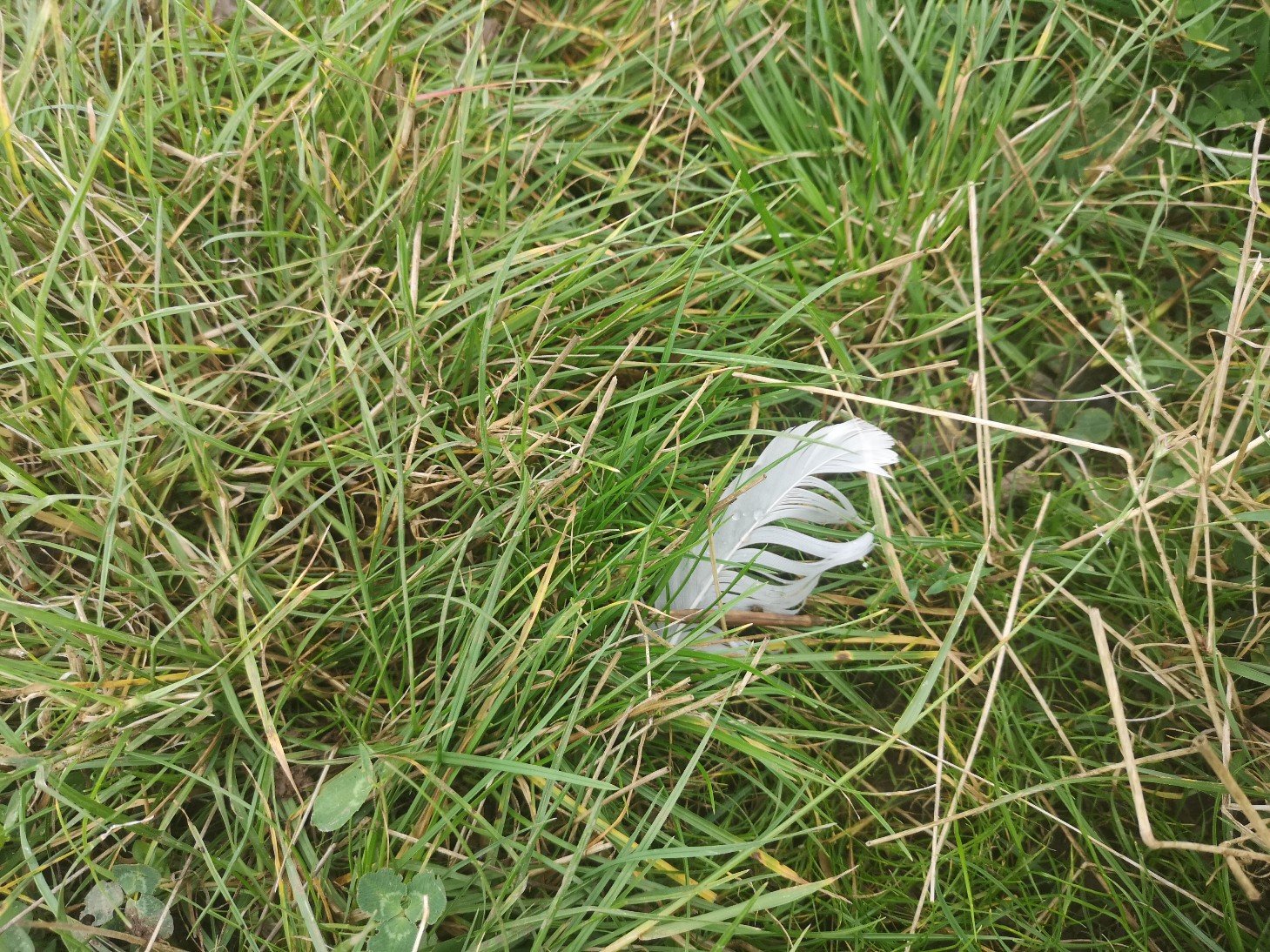
I will continue to collect a feather a day, usually the first I come across, as these long-time symbols of freedom and transcendence and their common use in ritual are often connected with the feelings we have when we are grieving or bereaved. It remains to be seen what the feathers will be used for or come to represent in the context of this pilgrimage.
If you would like to join us for some or all of this walk. Please read about it here and sign up here. You will be most welcome.
Camino Portuguese da Costa – Day 13, October 1st 2019
Leaving Caldas de Reis
Caldas means hot springs and although a foot fountain was right outside my hostel, there was no encouragement to bathe mine as they dissuade you for hygene reasons.
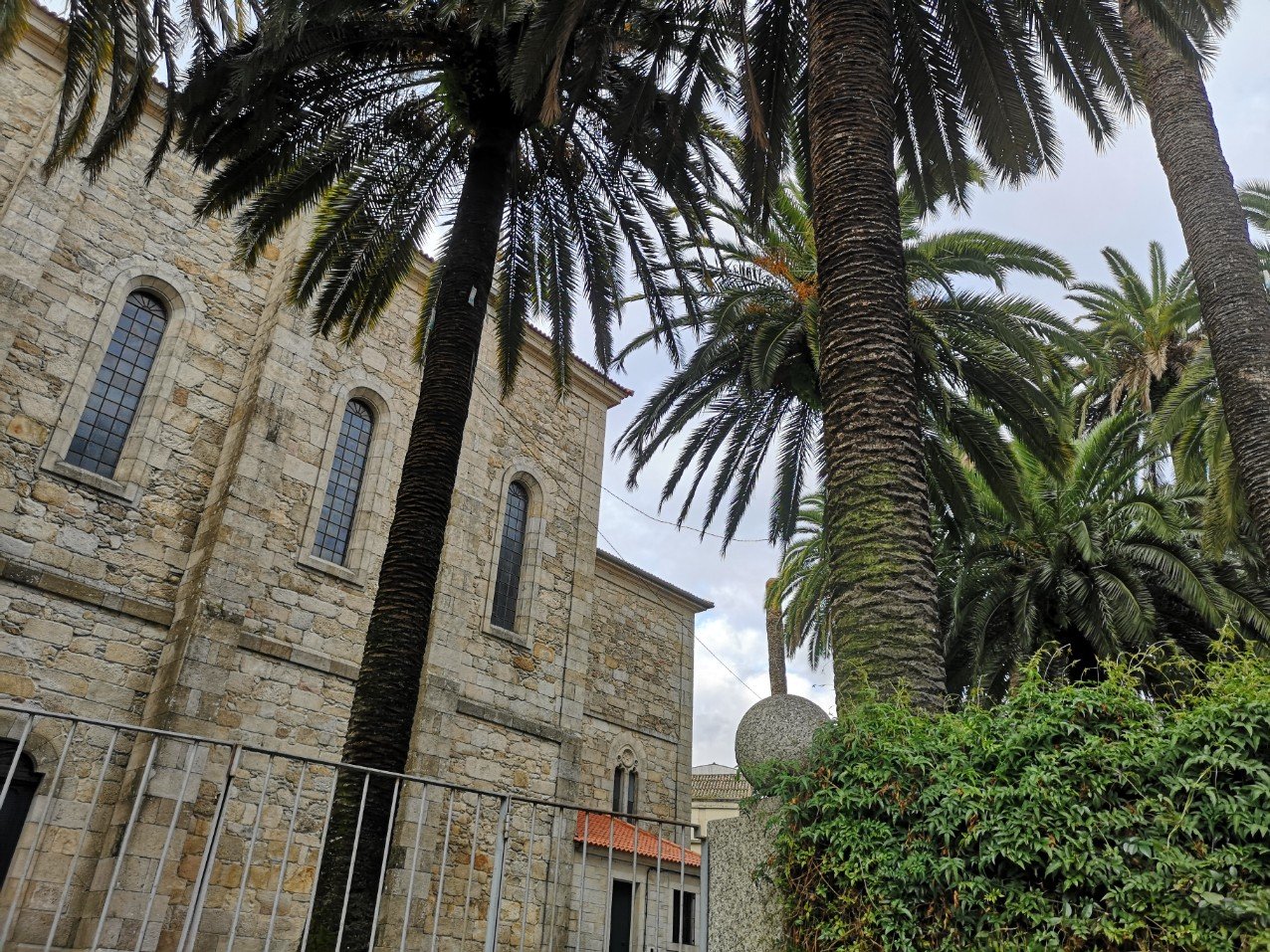
Towering palms beside the Igrexa de san Tome Becket (the British St Thomas a Becket), Caldas de Reis, Spain
There is a Bishop’s mitre on the door and otherwise I cannot find out what the connection is between St Thomas a Becket and Caldas de Reis – although of course he may have made pilgrimage here.
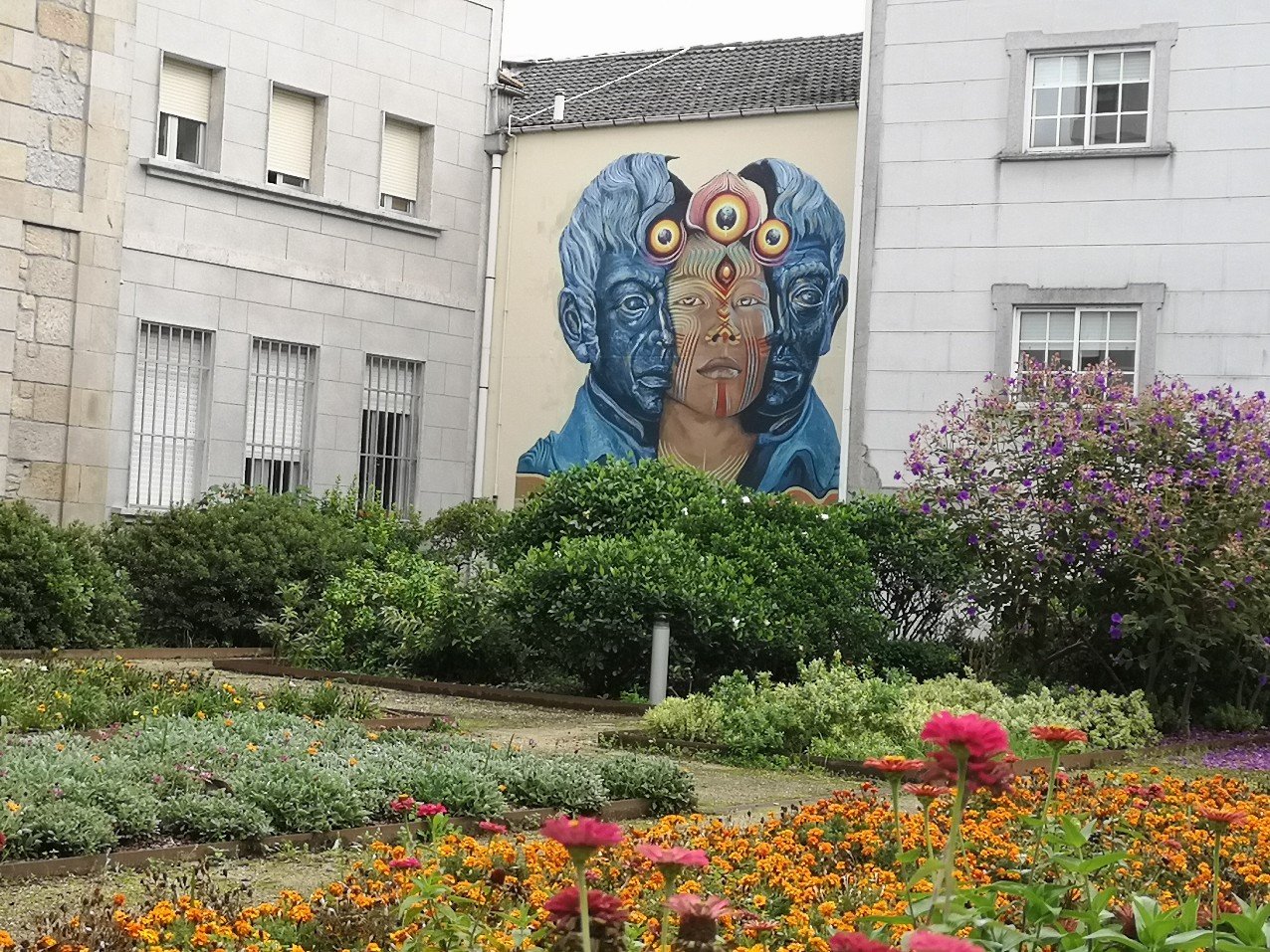
Street art, Caldas de Reis, Camino Portuguese, Spain
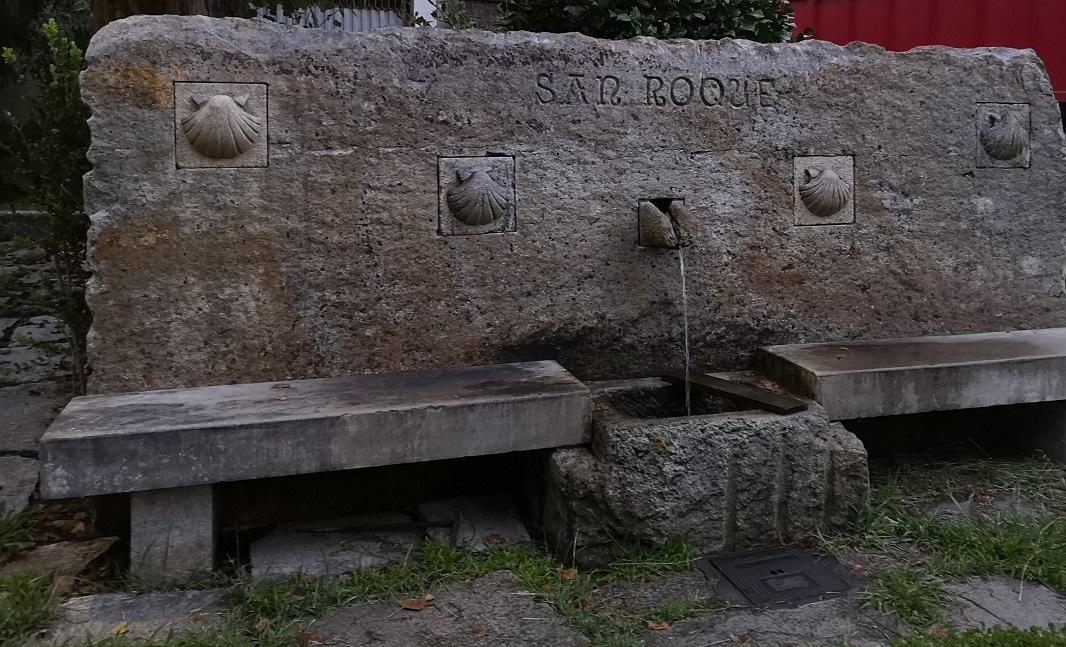
One of the many beautiful stone fountains you can see on the Portuguese Camino. Here emblazoned with the shell symbol of paths meeting at Santiago de Compostella
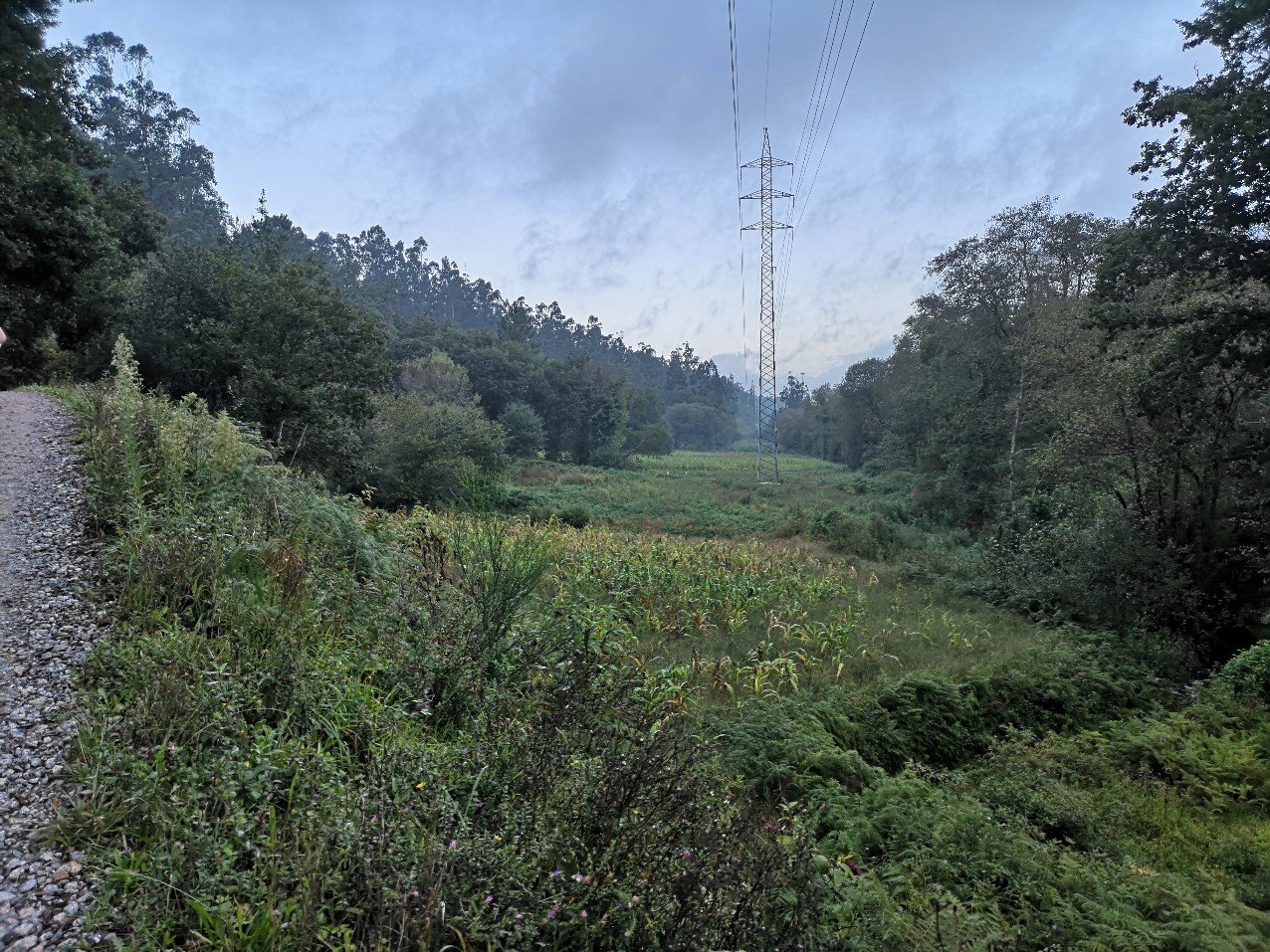
Walking out of Caldas de Reis, I looked down a long valley, the view spoiled by a pylon, Spain
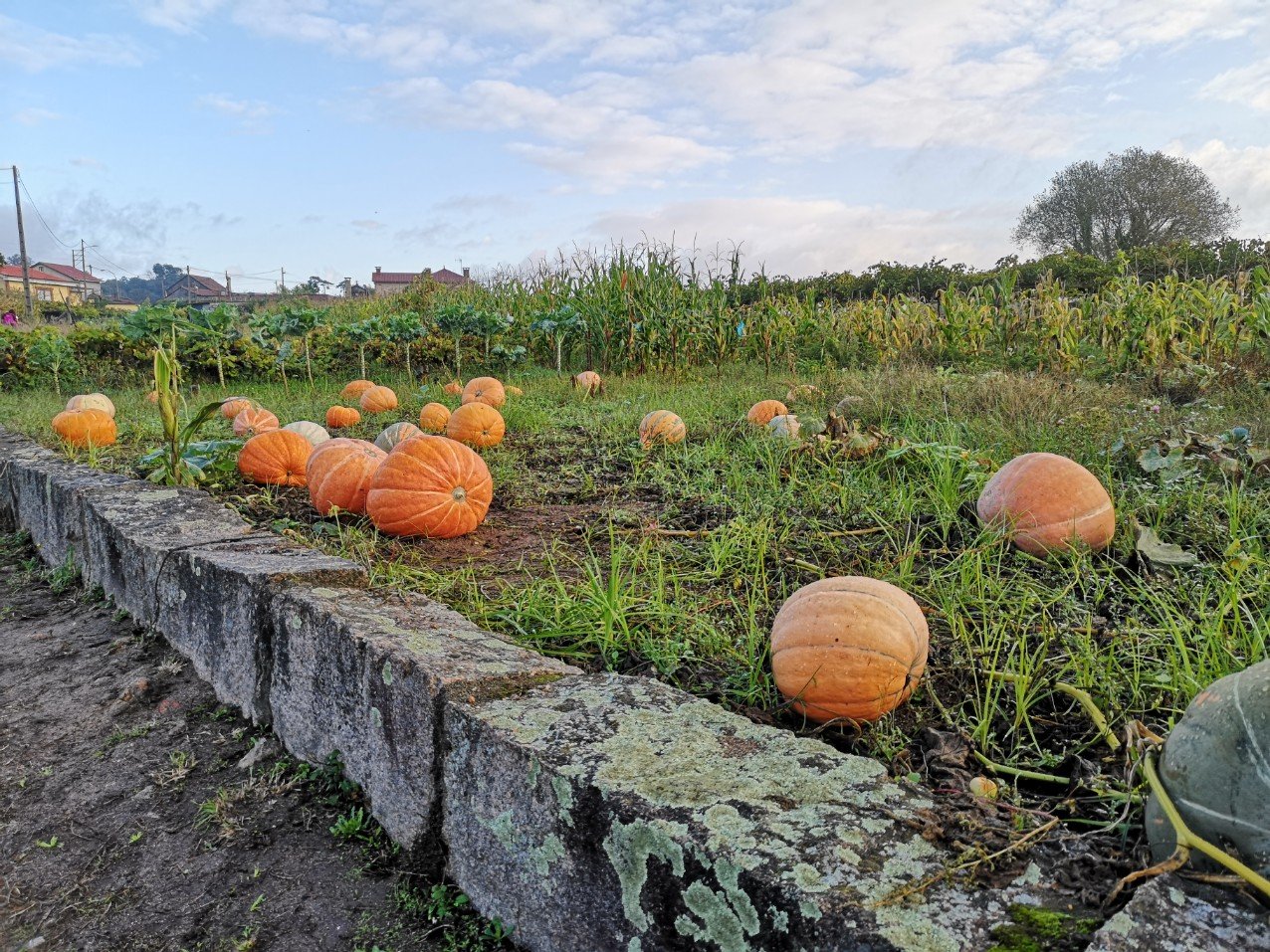
Field pumpkins. Although there were squash everywhere in the fields and gardens, I never saw them offered on a menu
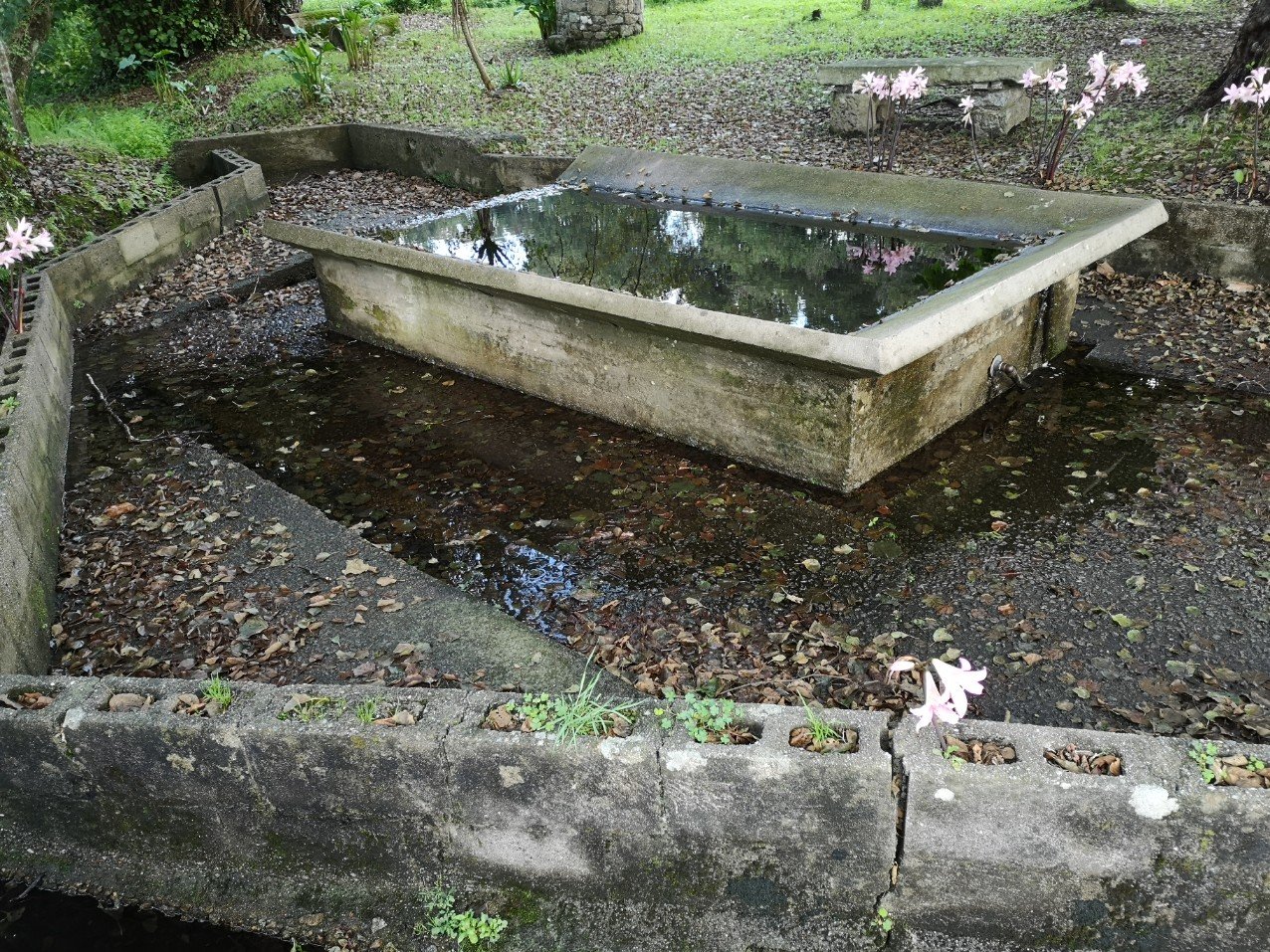
Reflections in the traditional, central washing area with what appeared to be self-seeded white lillies randomly dotted around. Carracedo, Spain
Further down the road were clumps of pink lillies growing wild on the banks like the lupins do in Scotland along the motorway between Edinburgh and Perth.
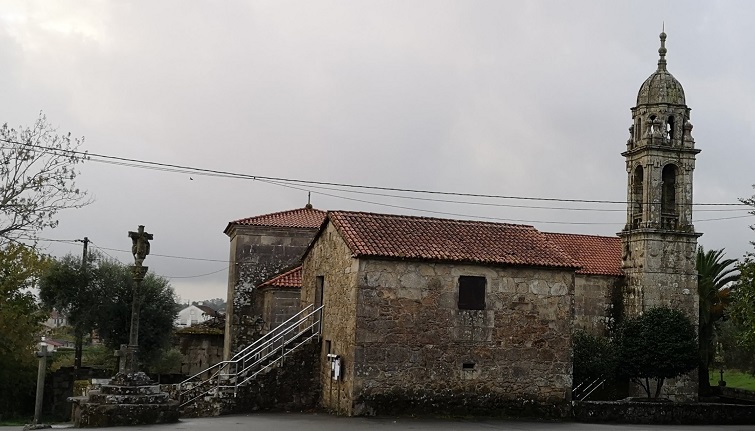
Iglesia San Clemente de Cesar, outside Caldas de Reis, Spain
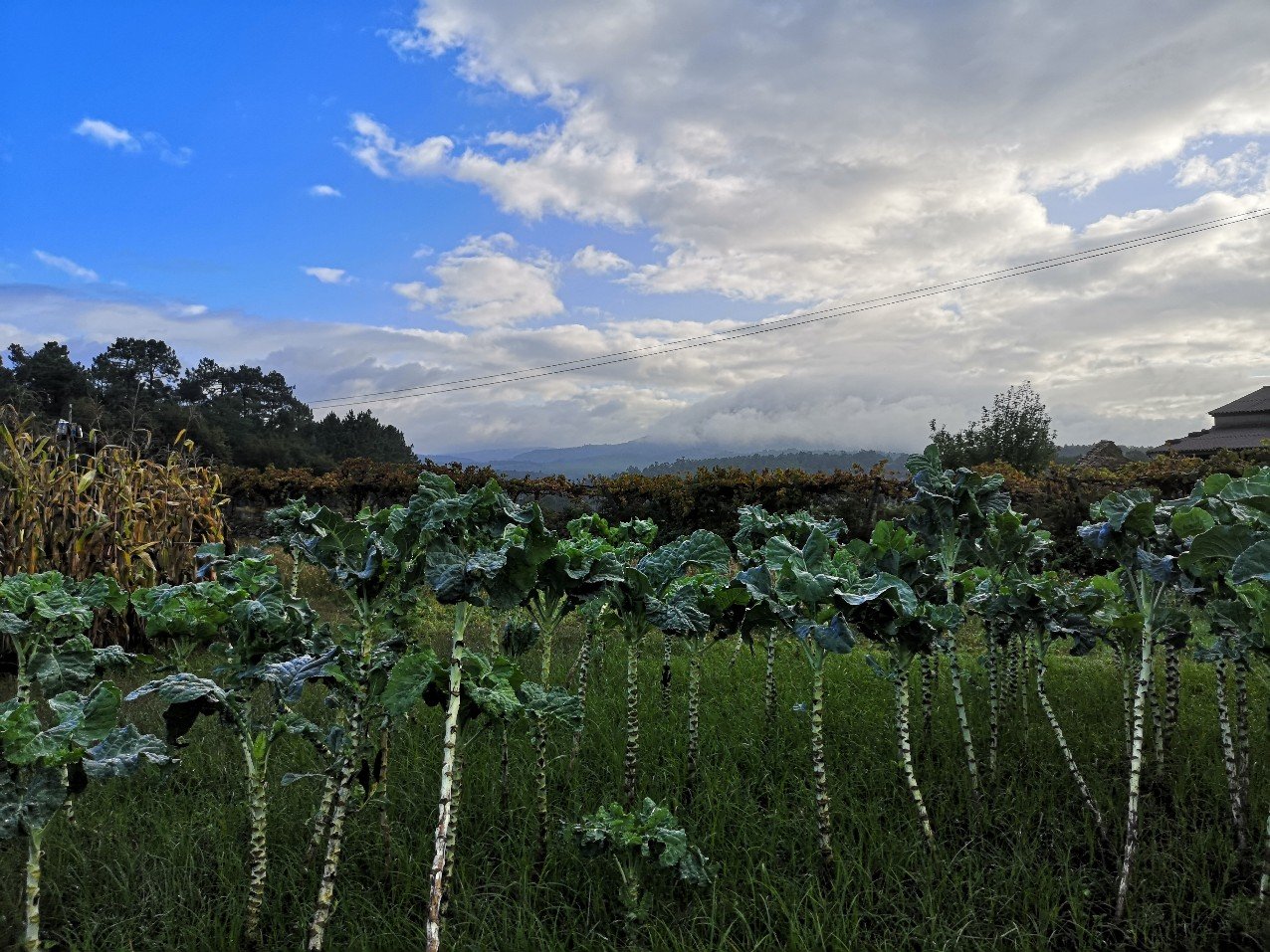
Tall brassicas growing in O Cruceiro, Spain
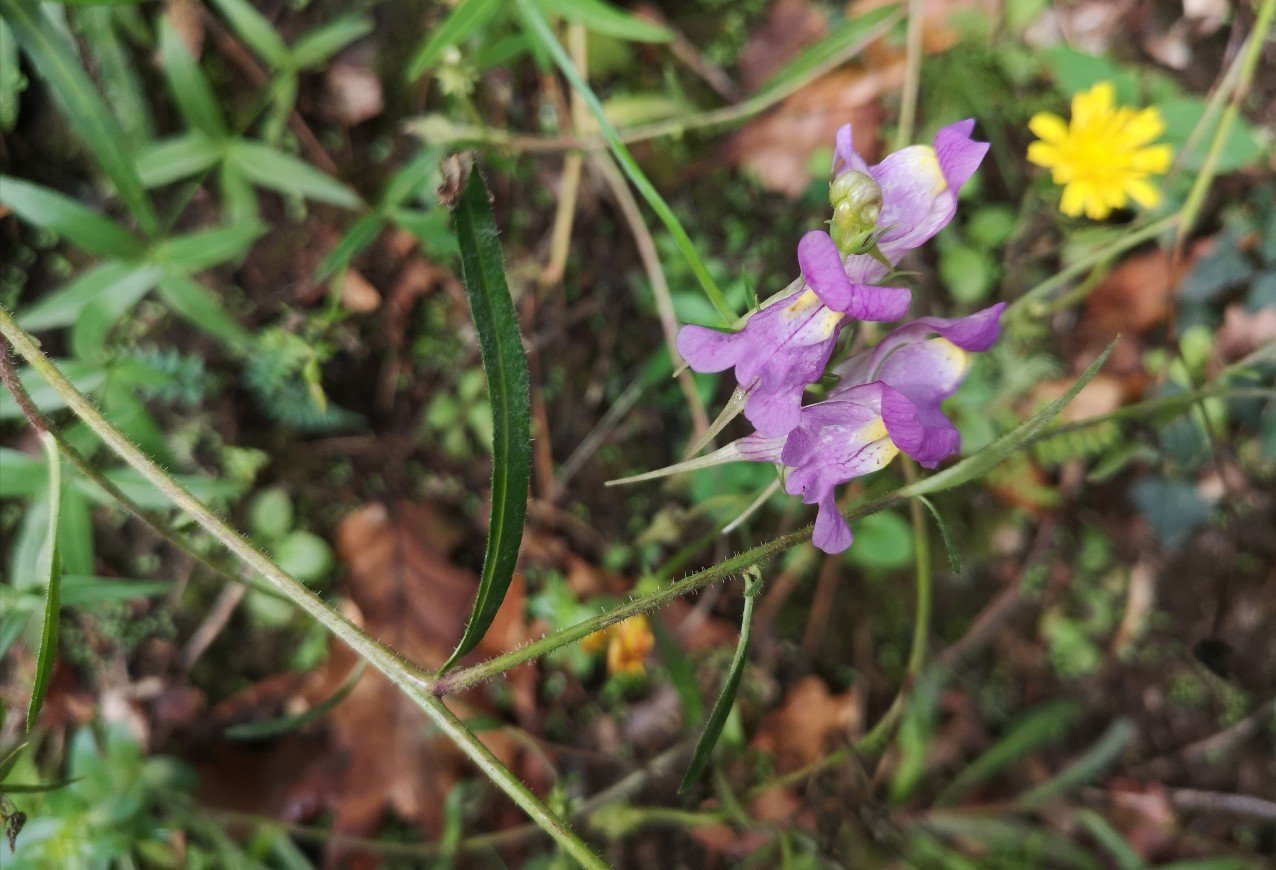
Three Bird Toadflax (Linaria triornithophora). I used the Leafsnap plant identifier app – free)
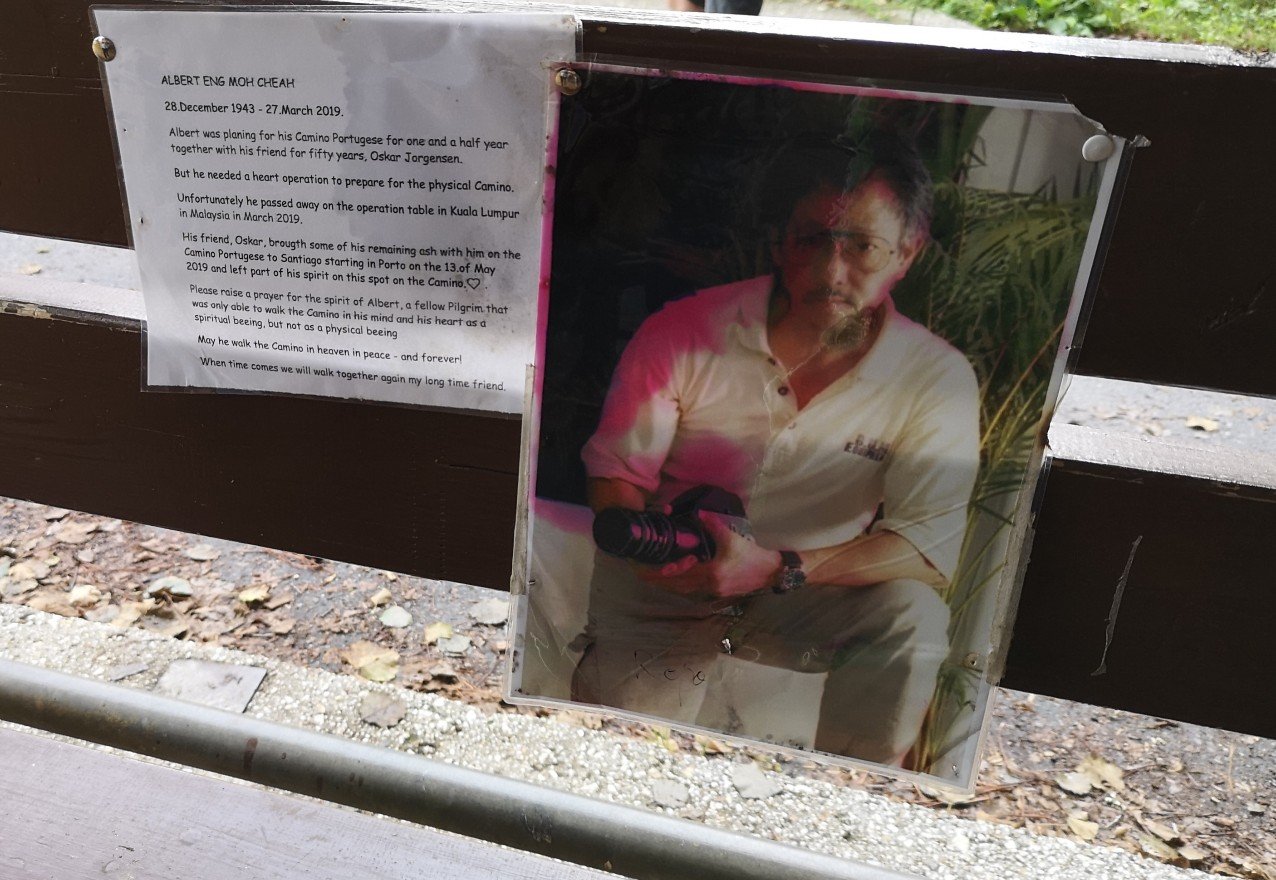
Memorial and location of Albert’s ashes, left by his friend. They had planned to walk the Camino together, but Albert had died on the operating table beforehand. Camino Portuguese, Spain
There are many such places to be found along the paths of the Caminos de Santiago.
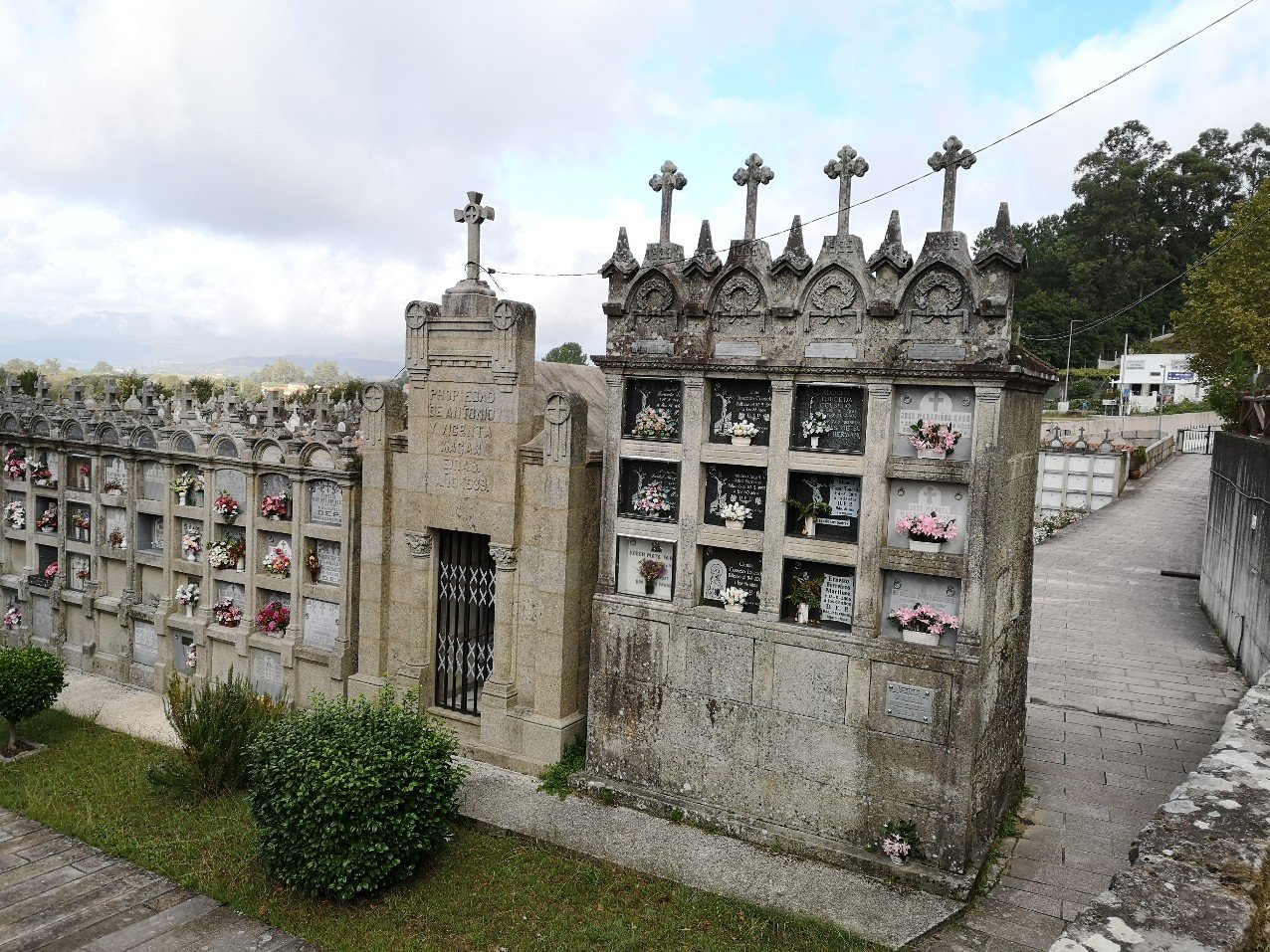
Cemetery, Camino Portuguese, Spain
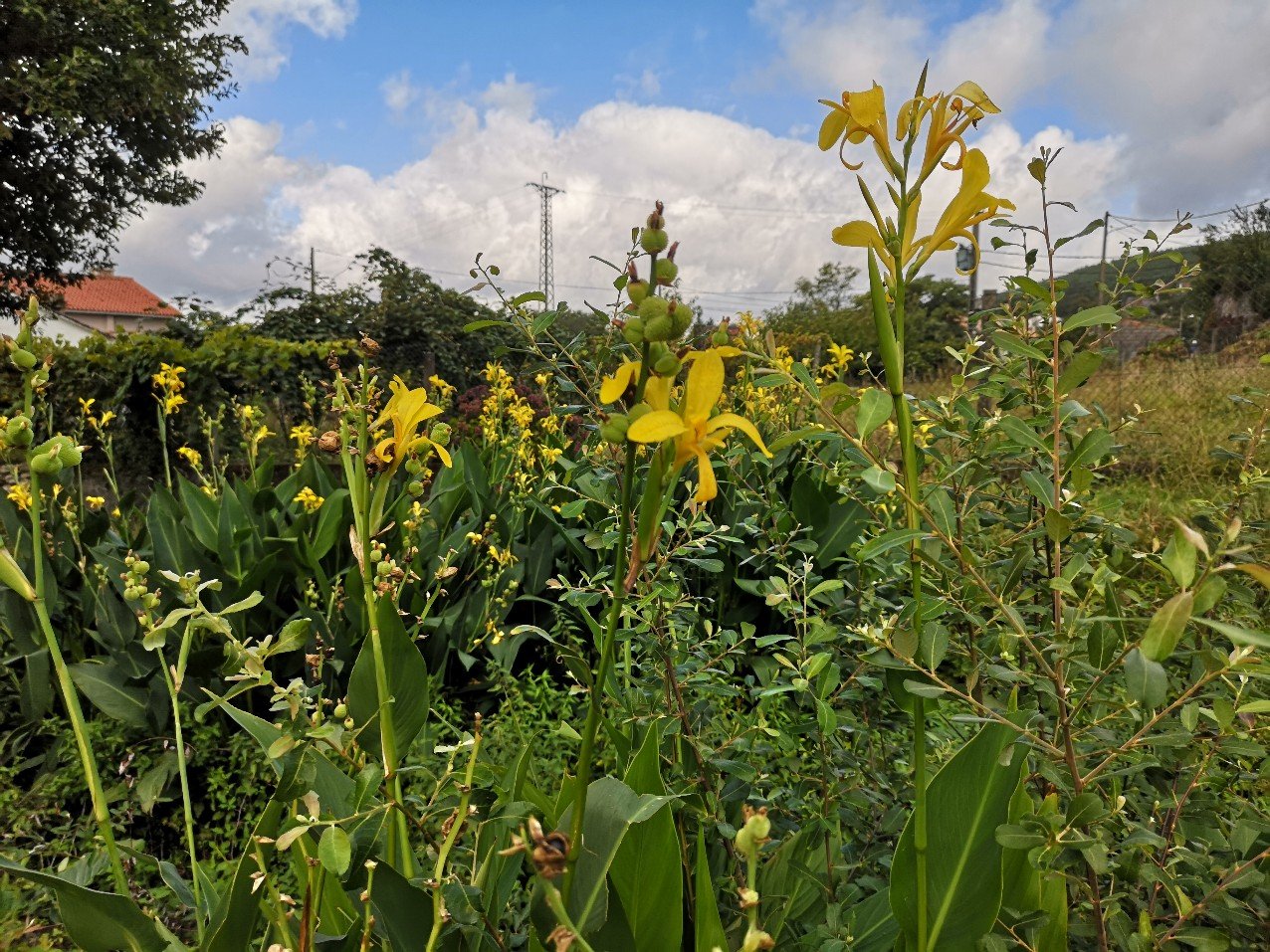
Sunshine in the form of canna lillies with their buxom seed pods, Spain
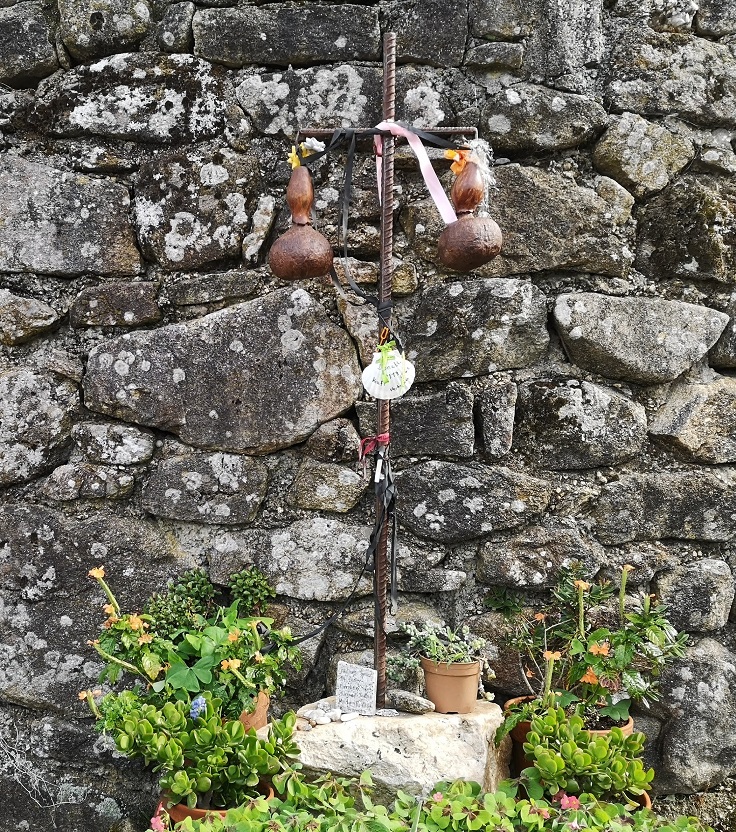
Gourds (used for carrying water by early pilgrims) and a camino shell on a rusty metal cross with plants and inscriptions, Camino Portuguese, Spain
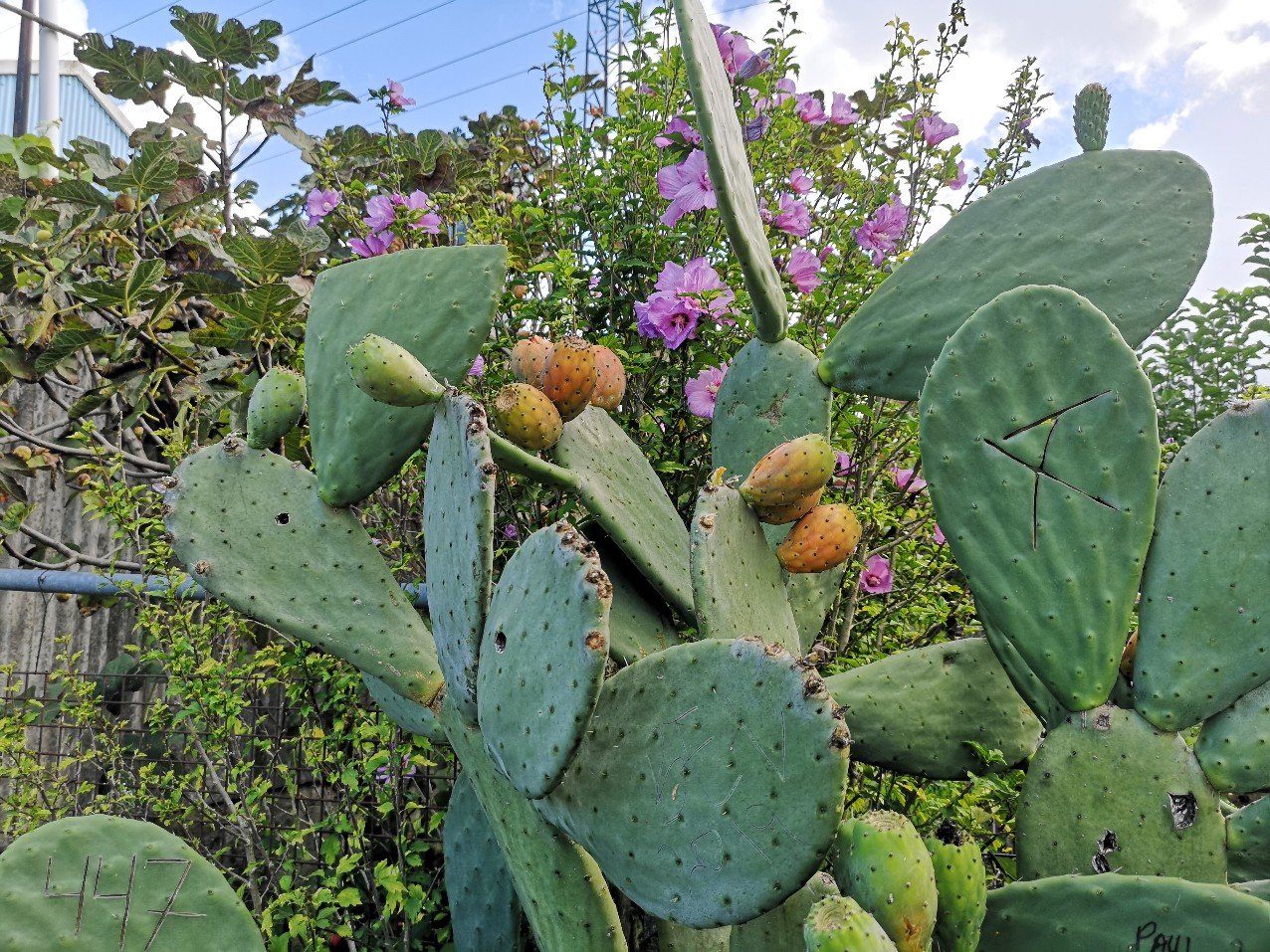
Prickly pears, Spain
Pontecesures (on the way)
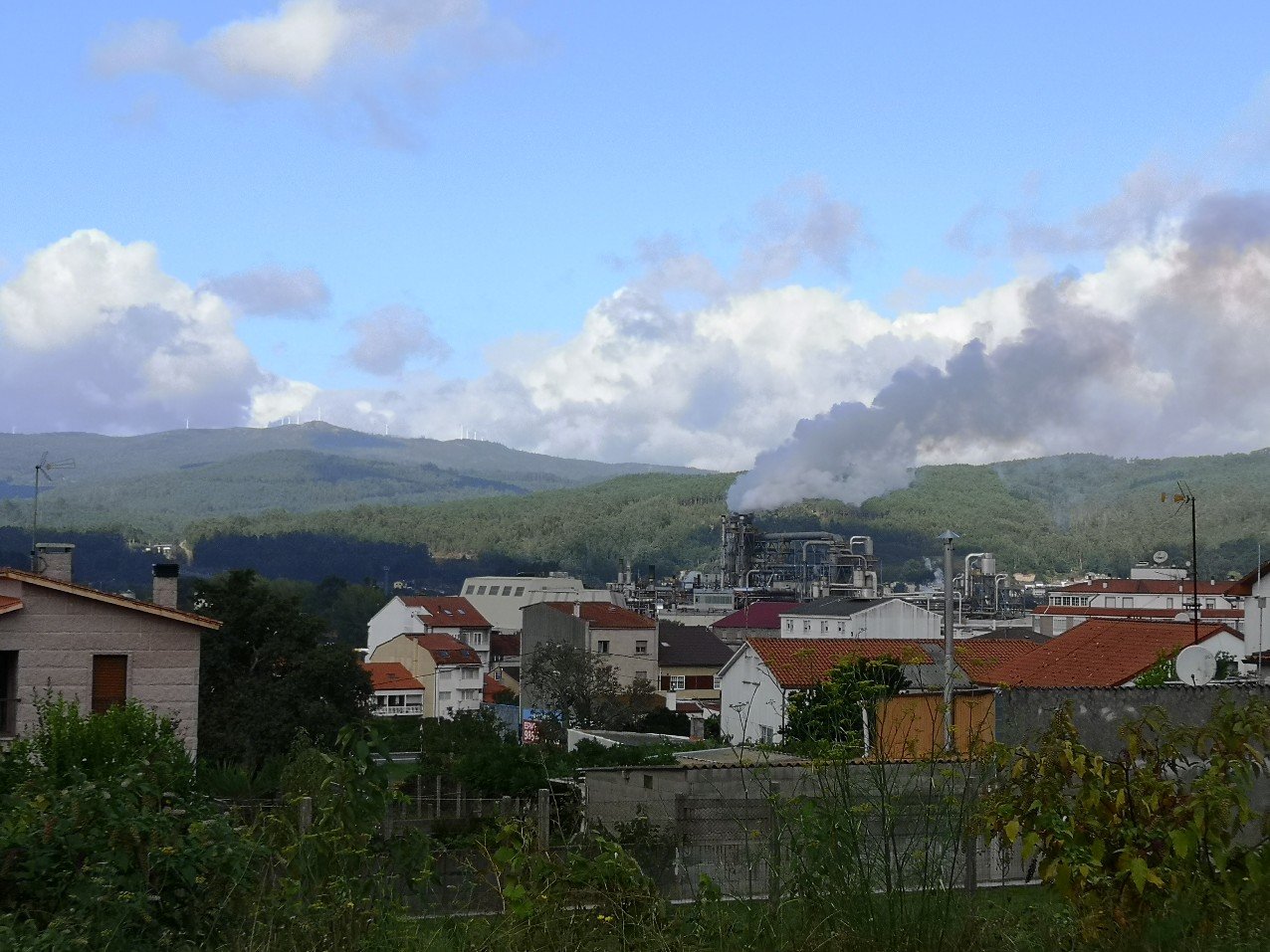
Coming into Pontecesures with its industrial pollution, Spain
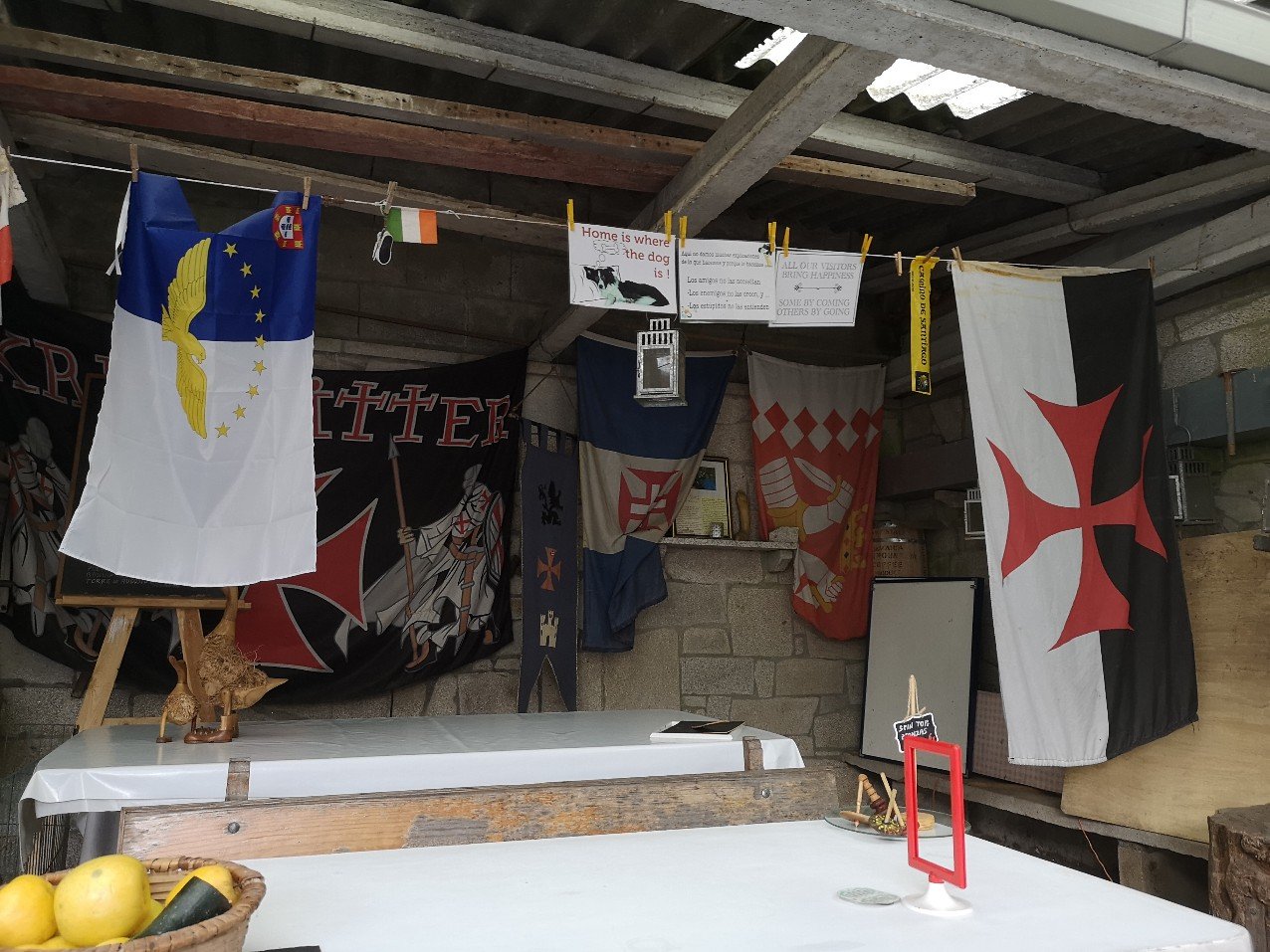
This cafe was recommended in a guide which I read. It was truly idiosyncratic, run by one man who has his own way of doing things, takes offence easily, and is dedicated to the Camino. Pontecesures, Spain
Just before crossing the River Ulla, on the right at a corner (if I remember correctly) is the place in the above photo. With makeshift furniture and varying quality of food, it is a somewhere to sit out of the sun and get refreshments. It appears to be donativo, but the maitre d’ expected payment and it was obviously a rather random affair. He was not chatty with me, but did serve up the ‘last’ bowl of vegetarian stew (it came recommended). He took a liking to the young couple who came in later, but sent another man who asked questions, packing! The flags and the individual nature of this place reminded me of Manjarín on the Camino Frances.
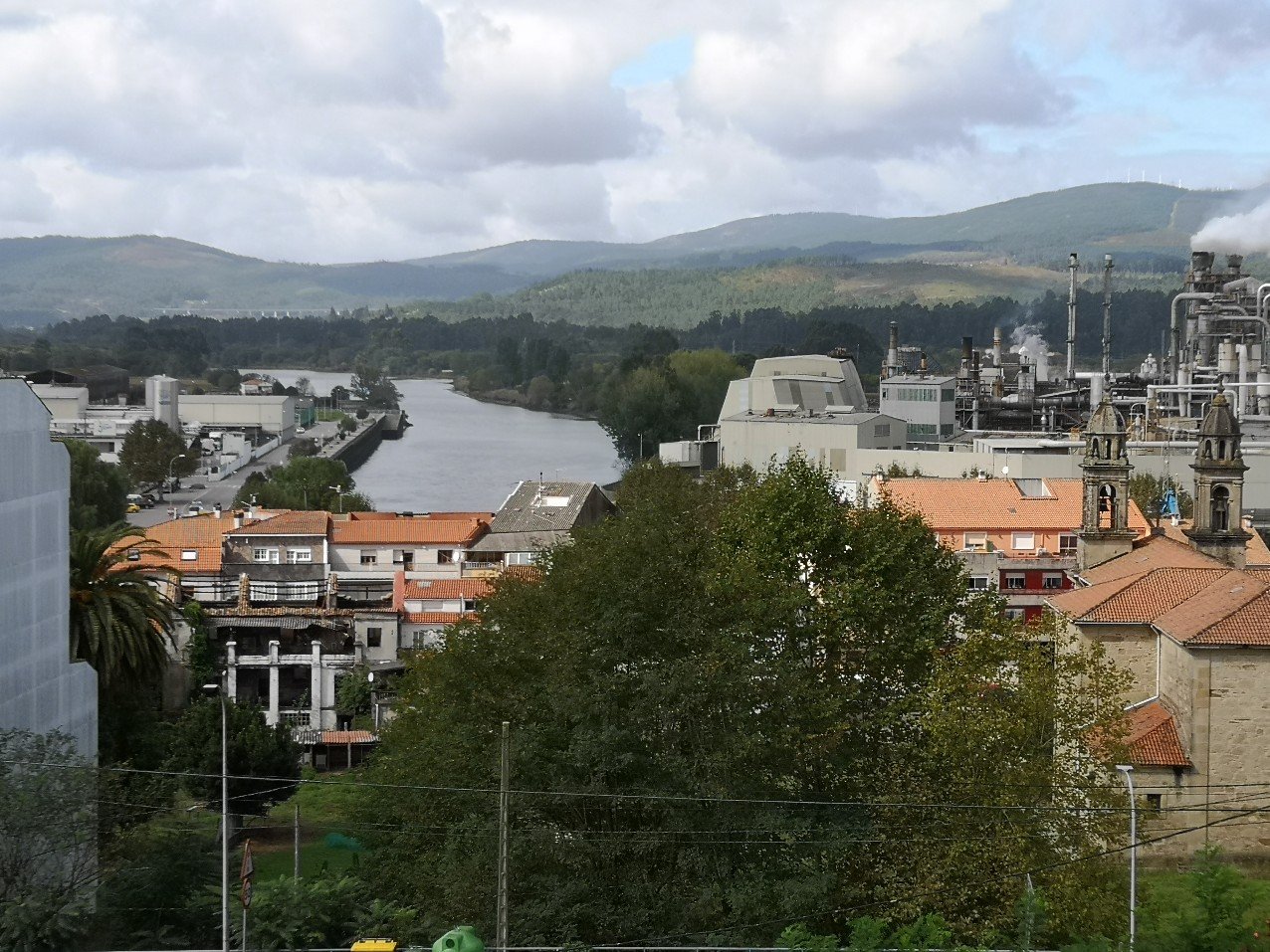
The Rio (river) Ulla, Pontecesures, Spain
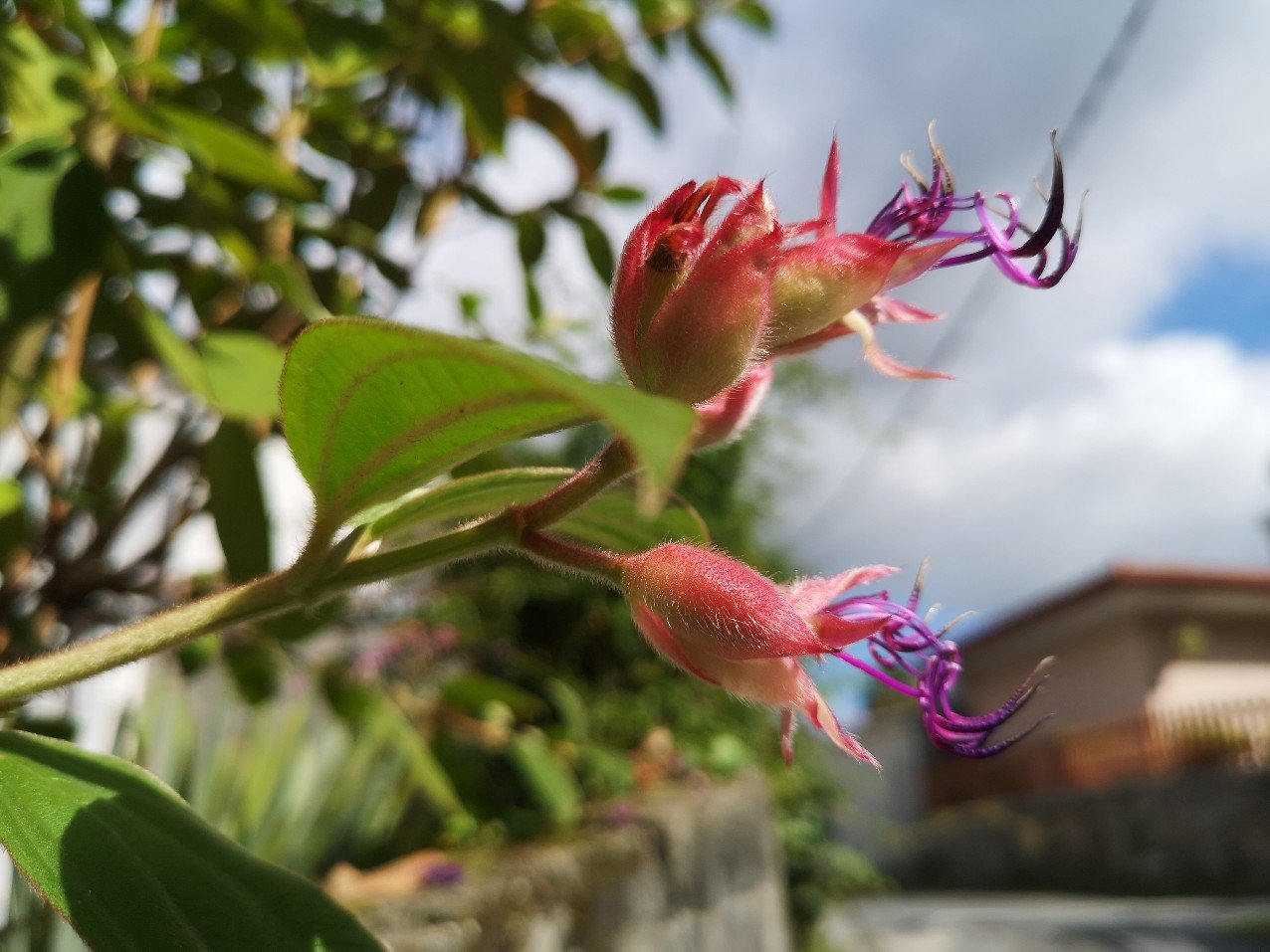
The Glory Bush (Tibouchina urvilliana) flower. (Thanks to Name That Plant on houzz.com)
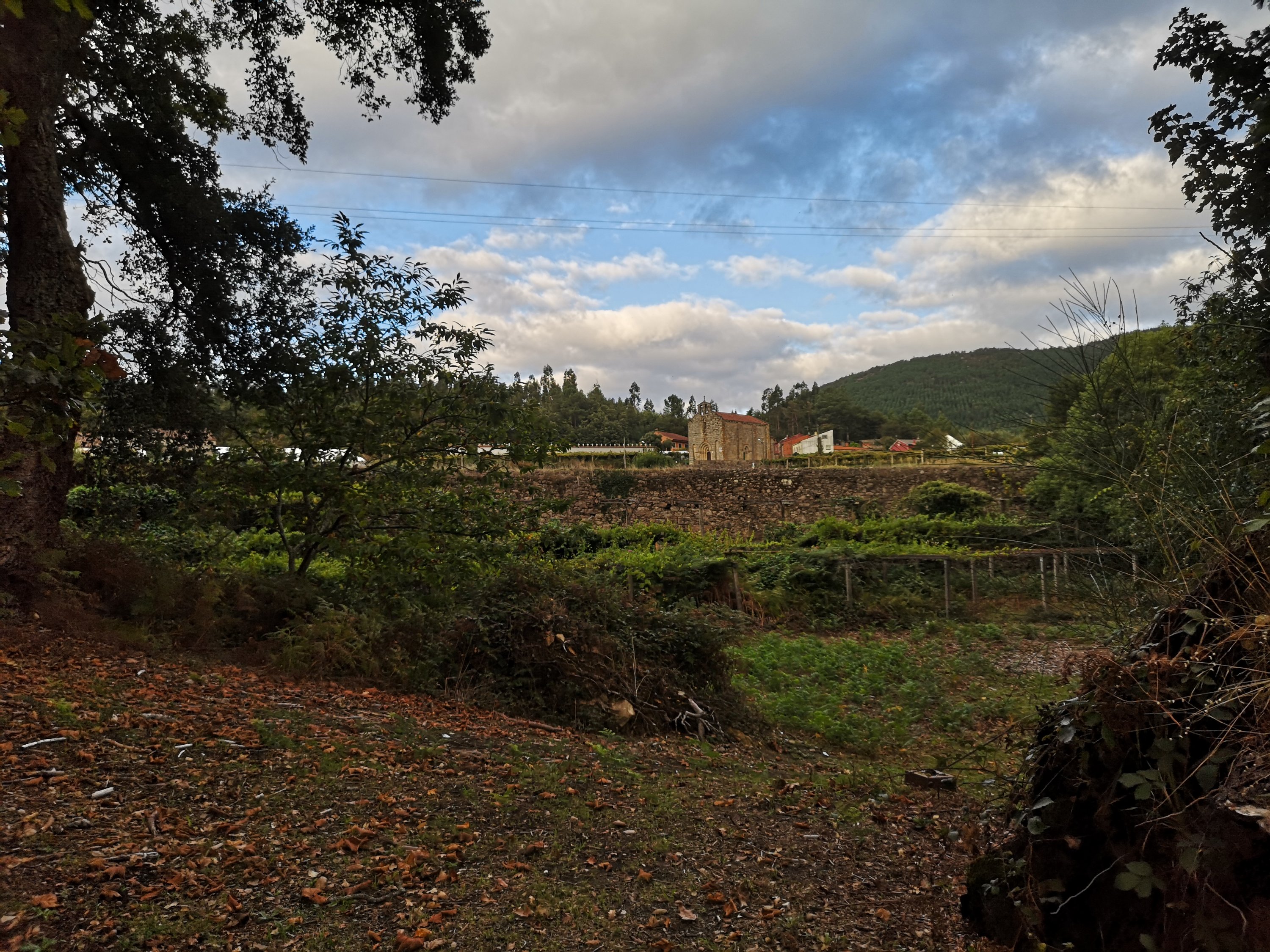
After crossing the bridge at Ponte(bridge)cesures and climbing up the other side in full, hot sun, the path took me along the banks of the River Ulla towards the San Antonio (St Anthony’s) Monastery of Herbón.
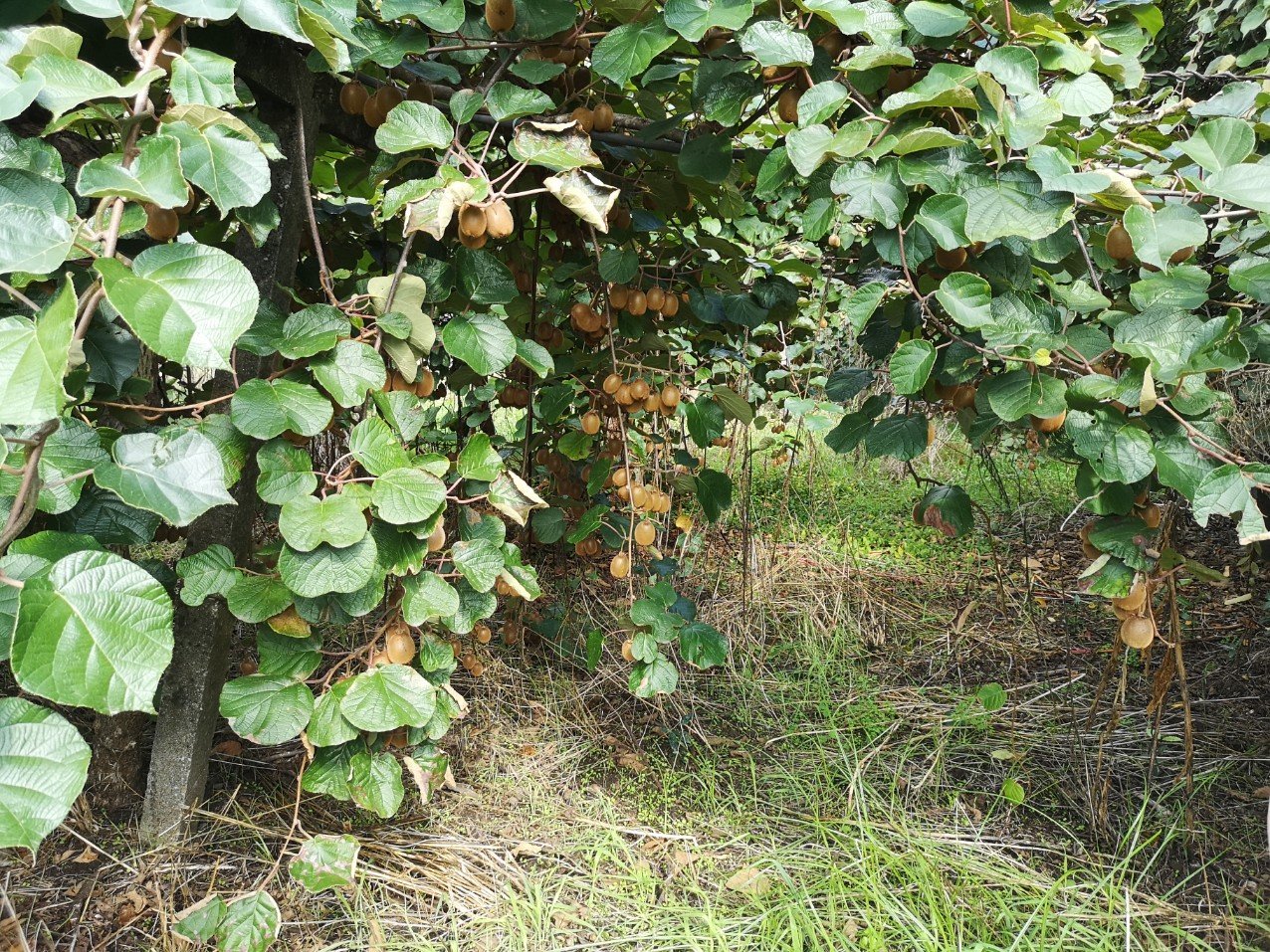
These kiwi fruit were drooping off the stalks and there were acres of them, on the way to Herbón, Spain
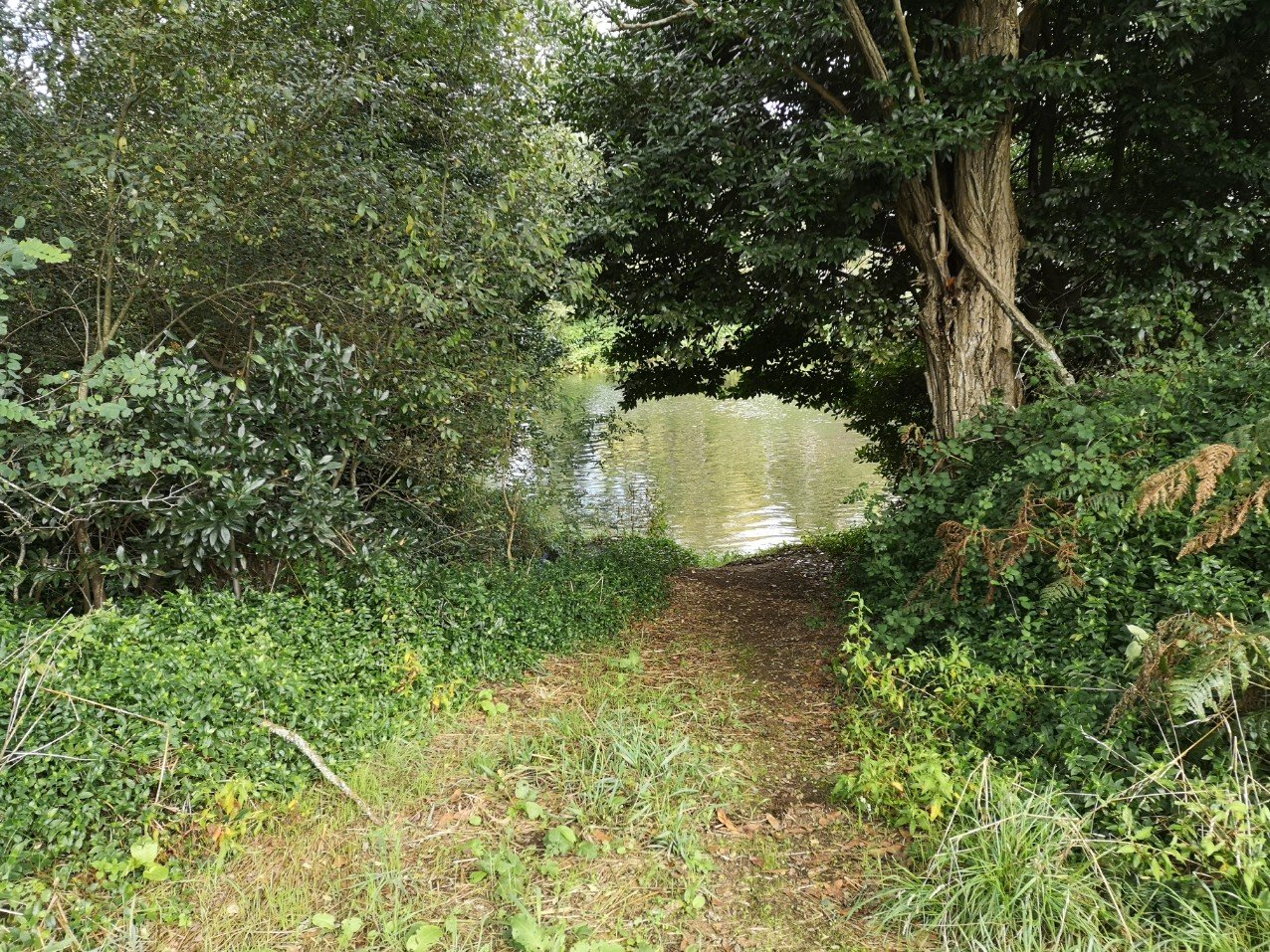
The route wound along the banks of the River Ulla, sometimes amidst the undergrowth, although the signs were pretty clear, Camino Portuguese
This time I did not bathe as I was keen to get a bed for the night in the monastery on the opposite bank.
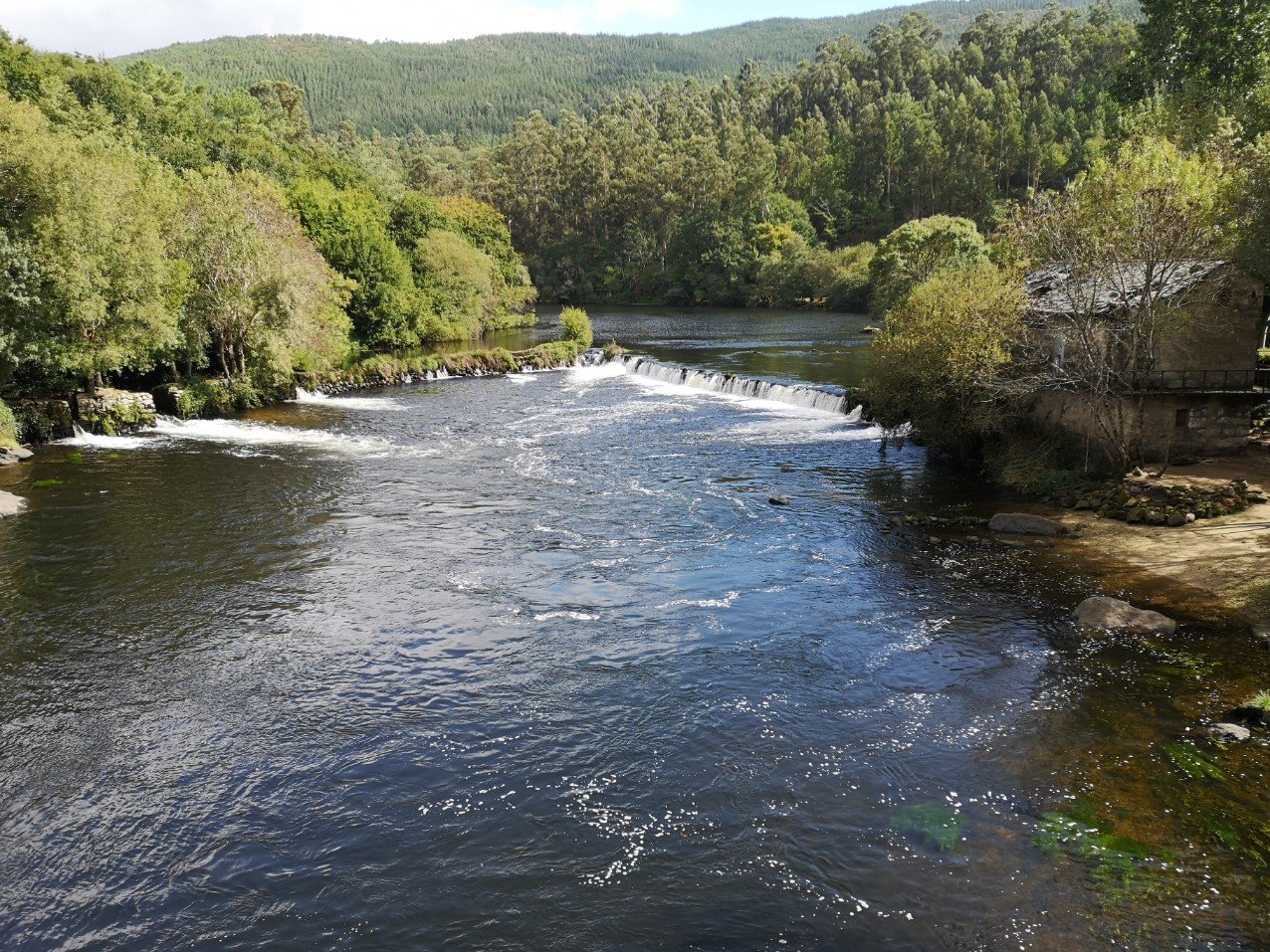
Weir, River Ulla, Spain
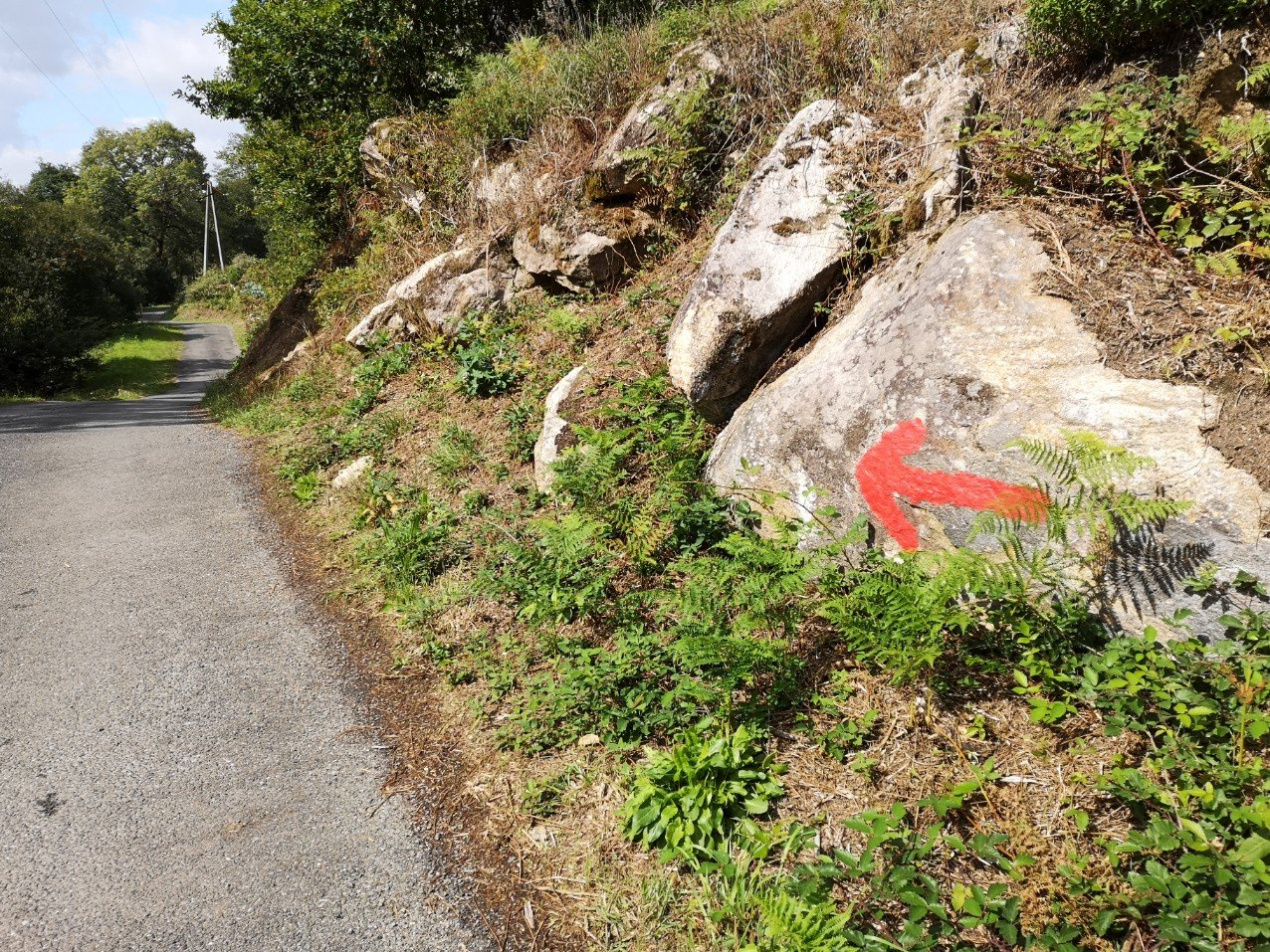
Red as well as yellow arrows here. Up and down I went, towards and away from the river, before crossing and climbing uphill away from it. Camino Portuguese, Spain
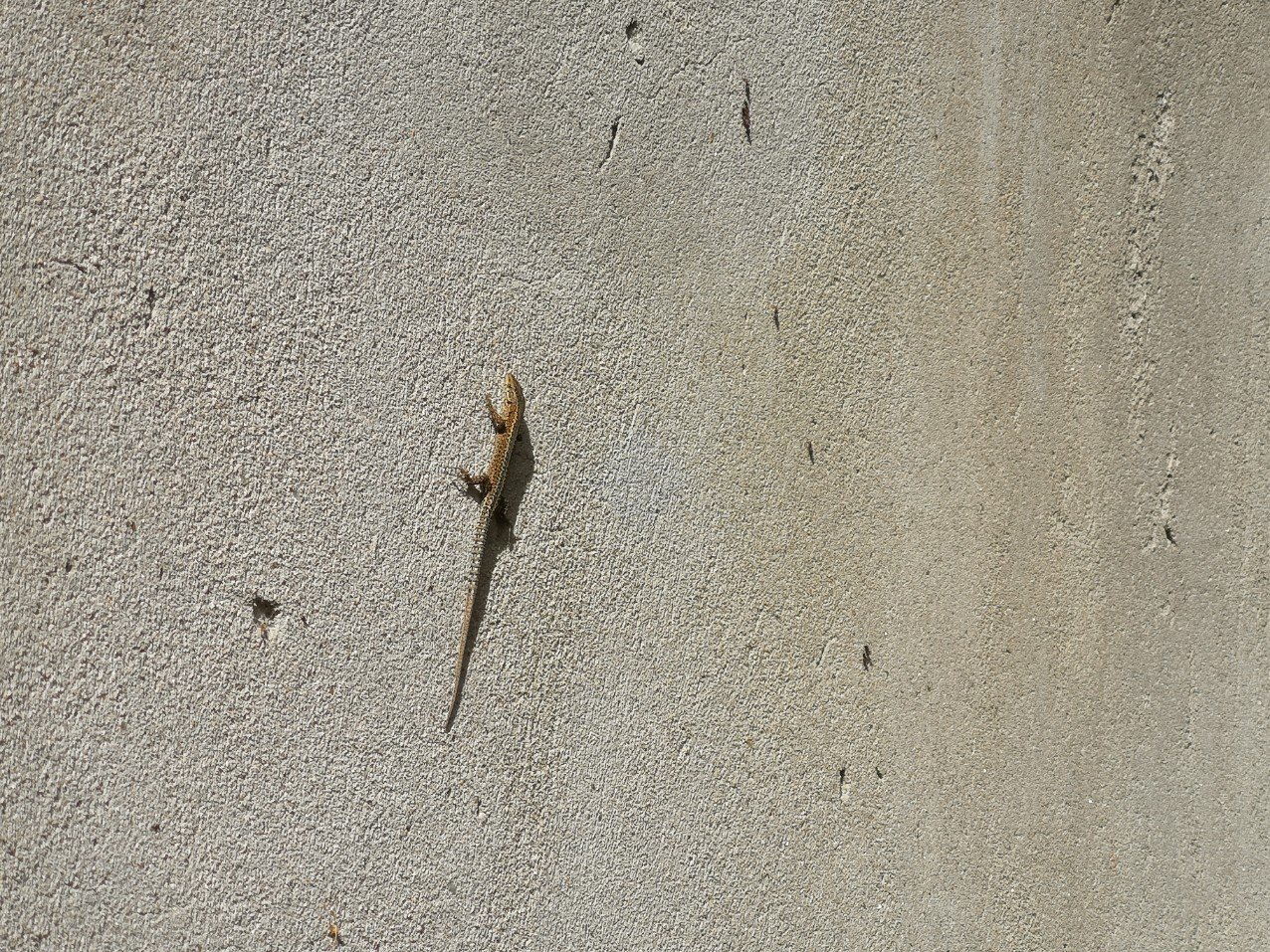
A small salamander basking in the sun!
Herbón Monastery
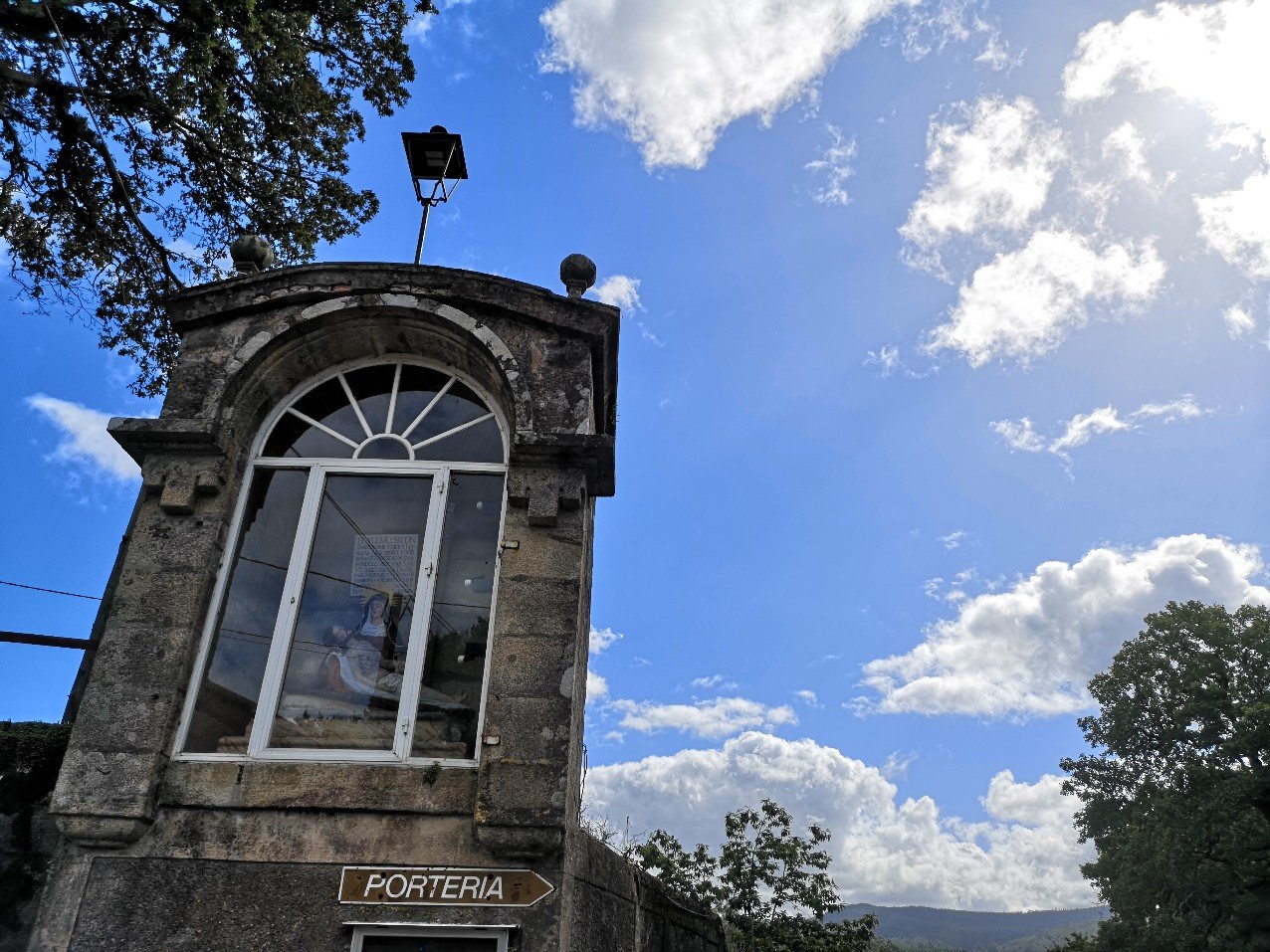
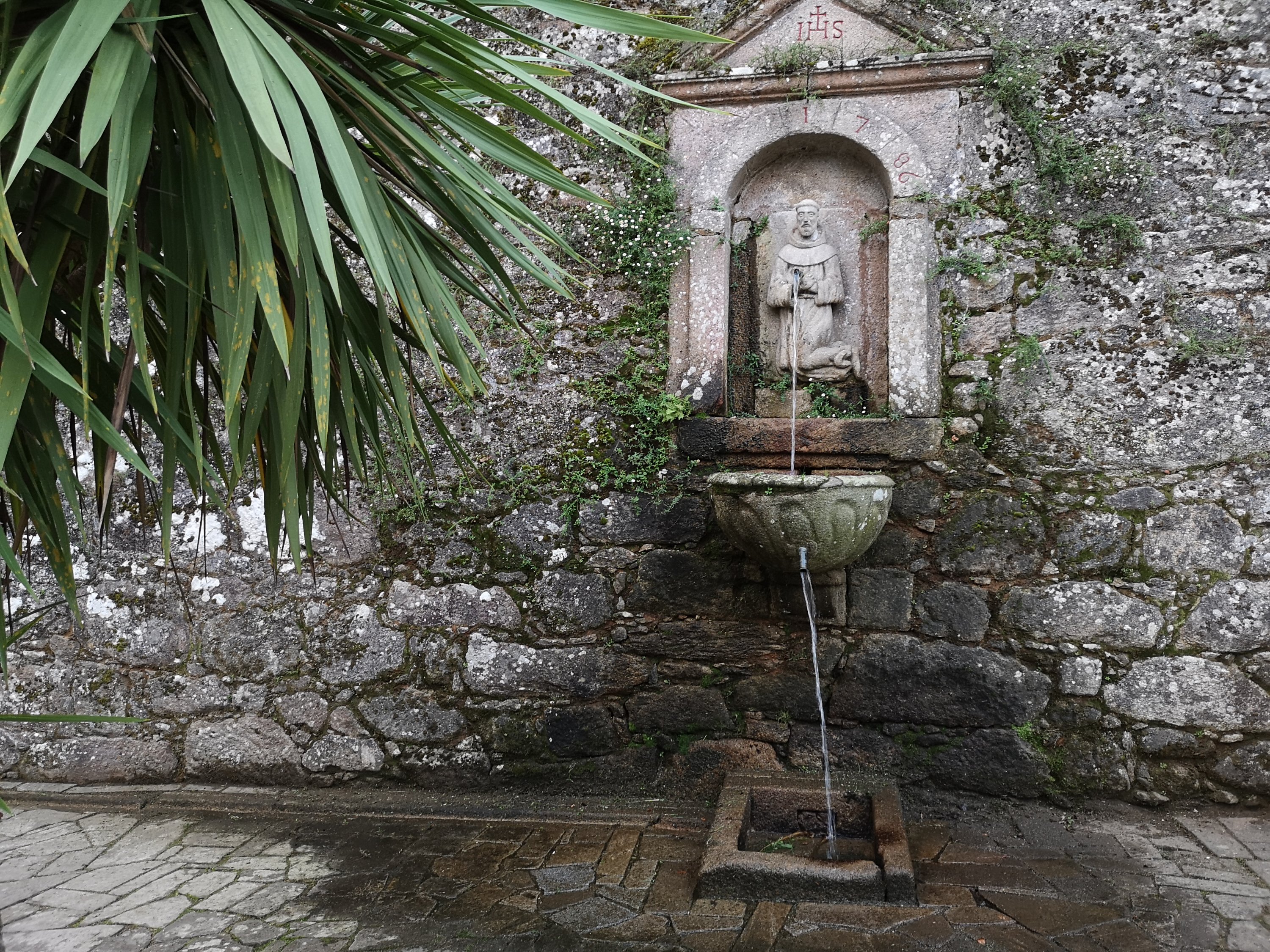
Walking around the walls of the Herbón Monastery looking for the entrance I spotted this shrine, Spain
I was pushing myself (not great for the still-painful foot) because of spening time over lunch and knowing that there is always competition to get a bed at the Herbón Monastery. I passed a couple who were clearly needing some ‘romantic’ time by the river. They were in no hurry to get there before me.
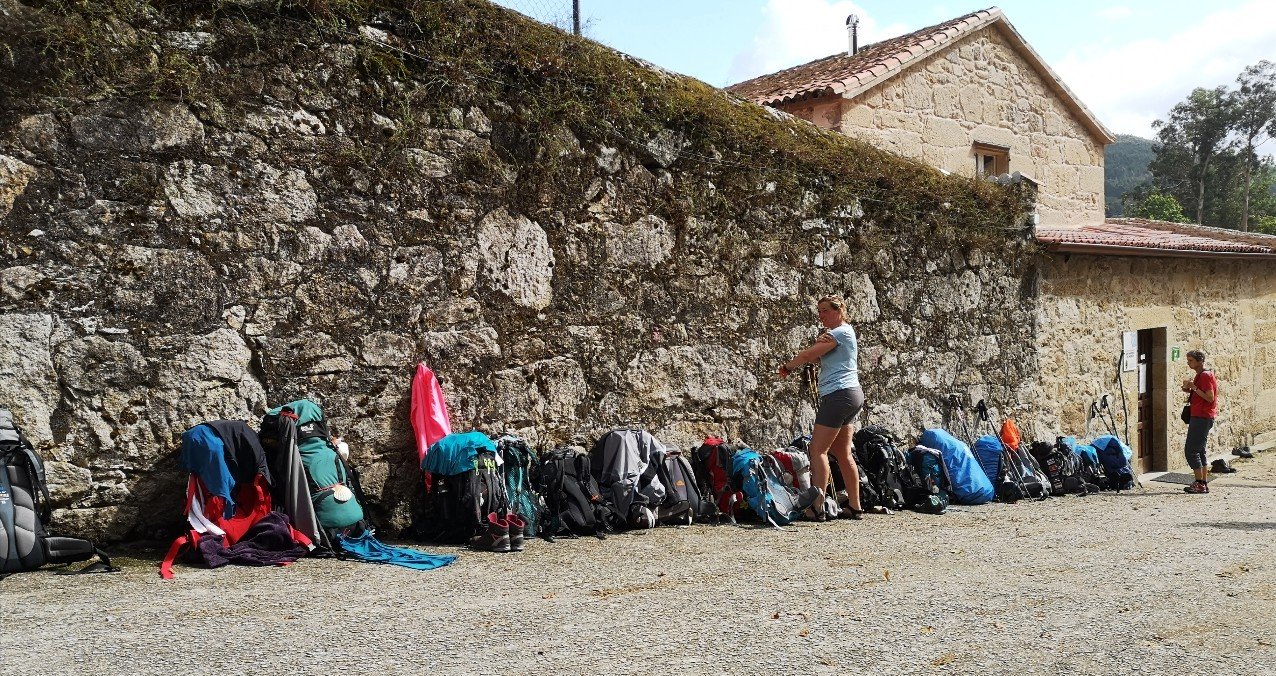
And there was the queue stretching back from the entrance in the wall – only two spaces were left and approximately four hours to wait before opening time, Herbón Monastery, Spain
It was nice and warm and there was plenty to see (photos below). People came to join the line, but were too late and left again – it was a little way into Padrón because it is a detour to get here.
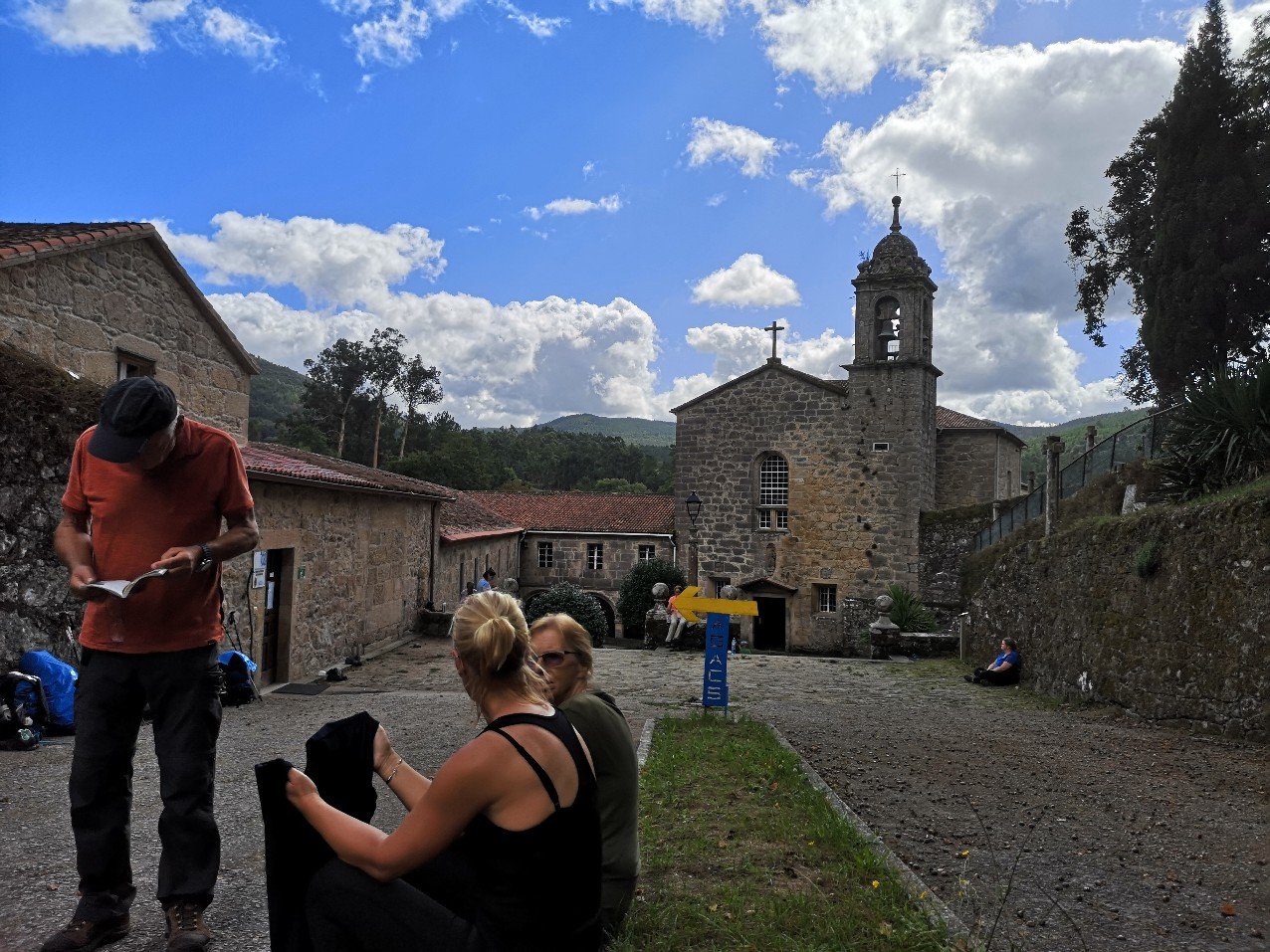
Old friends met up and new ones were made while waiting, Herbón Monastery, Spain
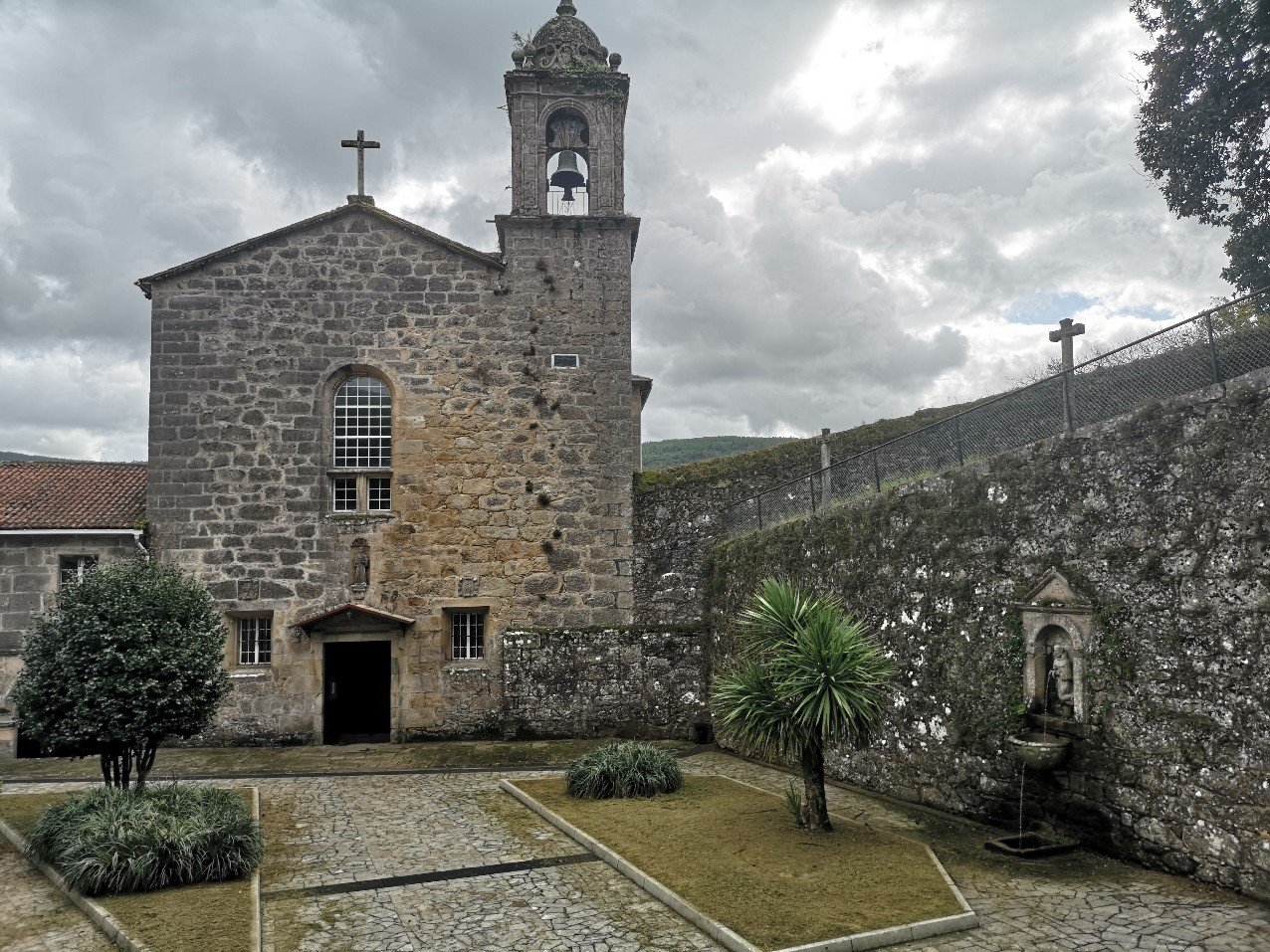
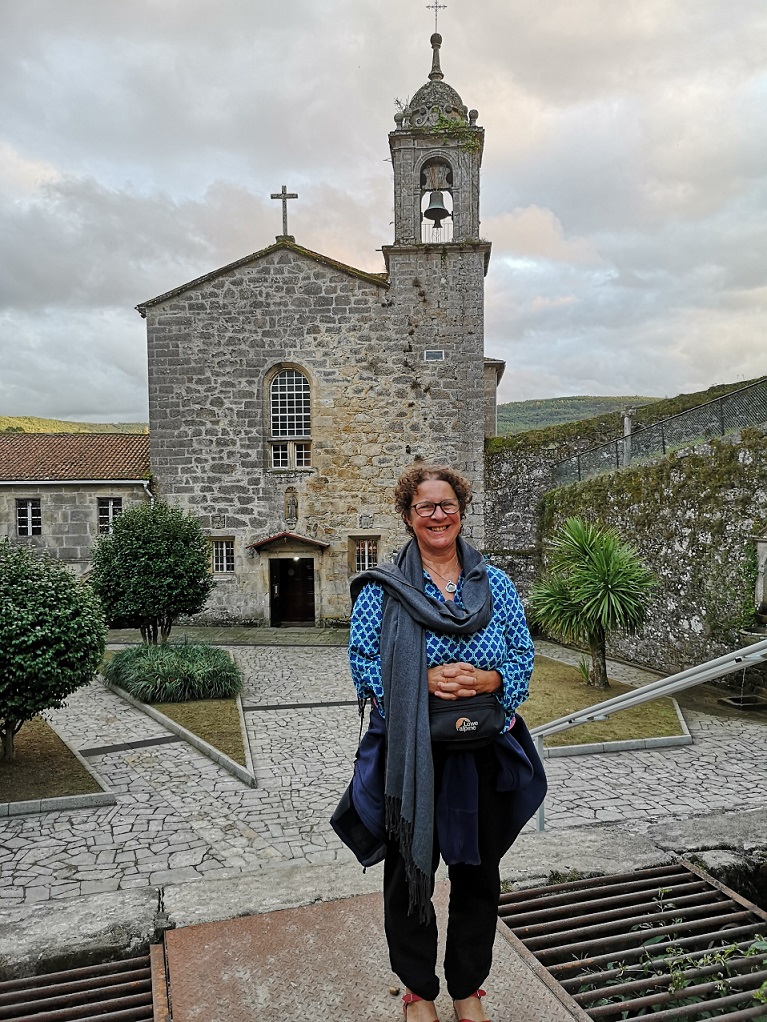
The church of the missionaries, Herbón Monastery, Spain
The young couple sauntered in after quite a while, but were too late and went off again.
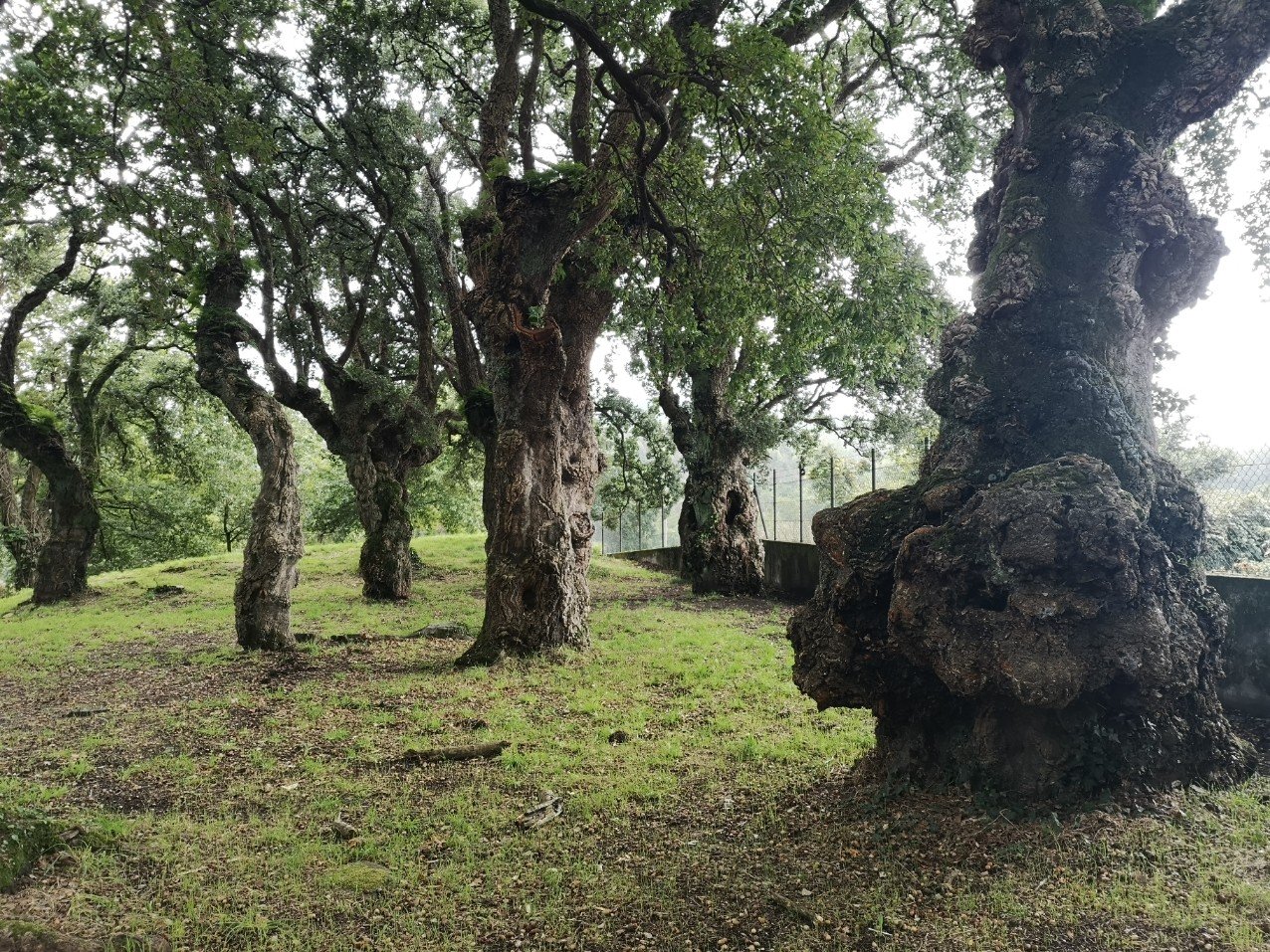
Seriously old trees – all knarled and full of character, Herbón Monastery garden, Spain
There were others with injuries far worse than mine. A small group decided to leave, calling a taxi, whereupon exactly the same number arrived late (after others had already turned away) and so they found that there were spaces for them. It just goes to show!
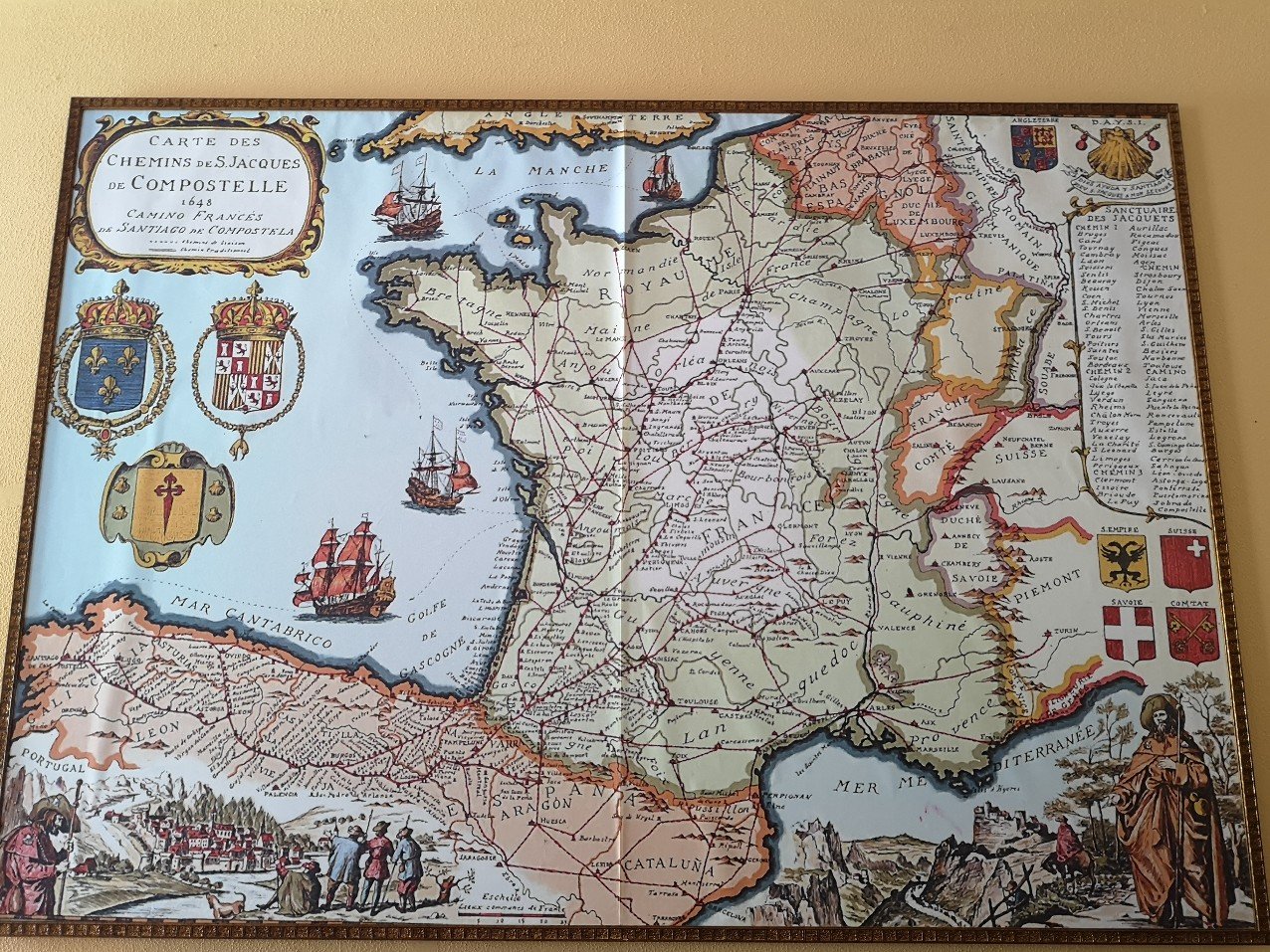
French map (1648) on the wall of the reception area of the Monastery at Herbón, showing the many caminos converging on Santiago de Compostella.
Eventually, after a light shower, we were let in and welcomed by the volunteers. It was very efficient. The accomodation was in small cubicles of two bunks each, ranged along a corridor. (That’s my mess on the bottom bunk!)
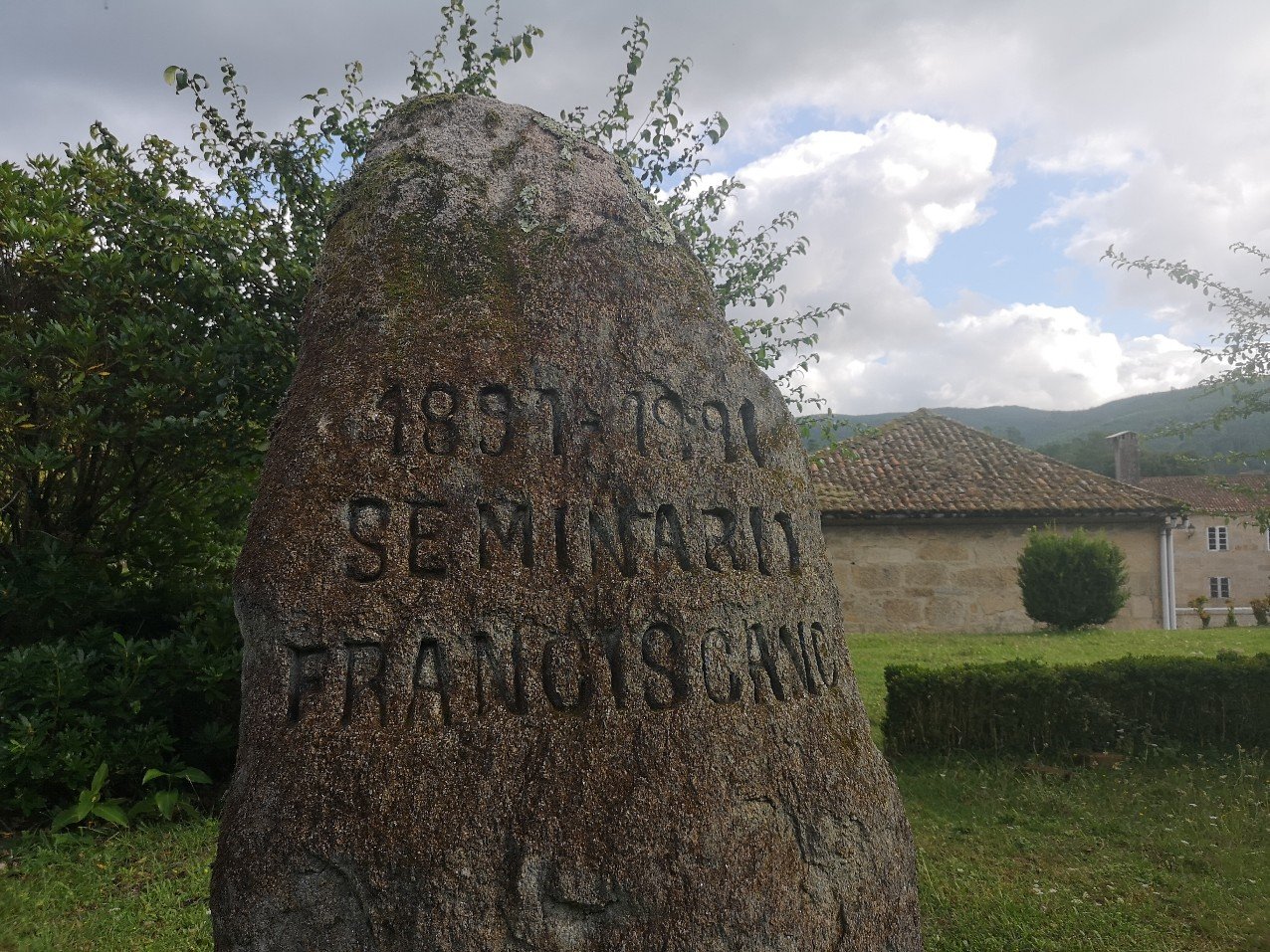
Franciscan Seminary 1891-1991. This monastery is in danger of being shut down because there are no young monks coming into the Order, but they do a lot in the village, so it is hoped that it will survive. Herbón Monastery, near Padron, Spain
After a break in which I spent time meditating in the sun, we were taken on a tour of the chapel, cloisters and other parts of the building. This is practically compulsory and very interesting. The monks were missionaries, sent overseas to spread the word of God, and those left at home ran a school on the premises.
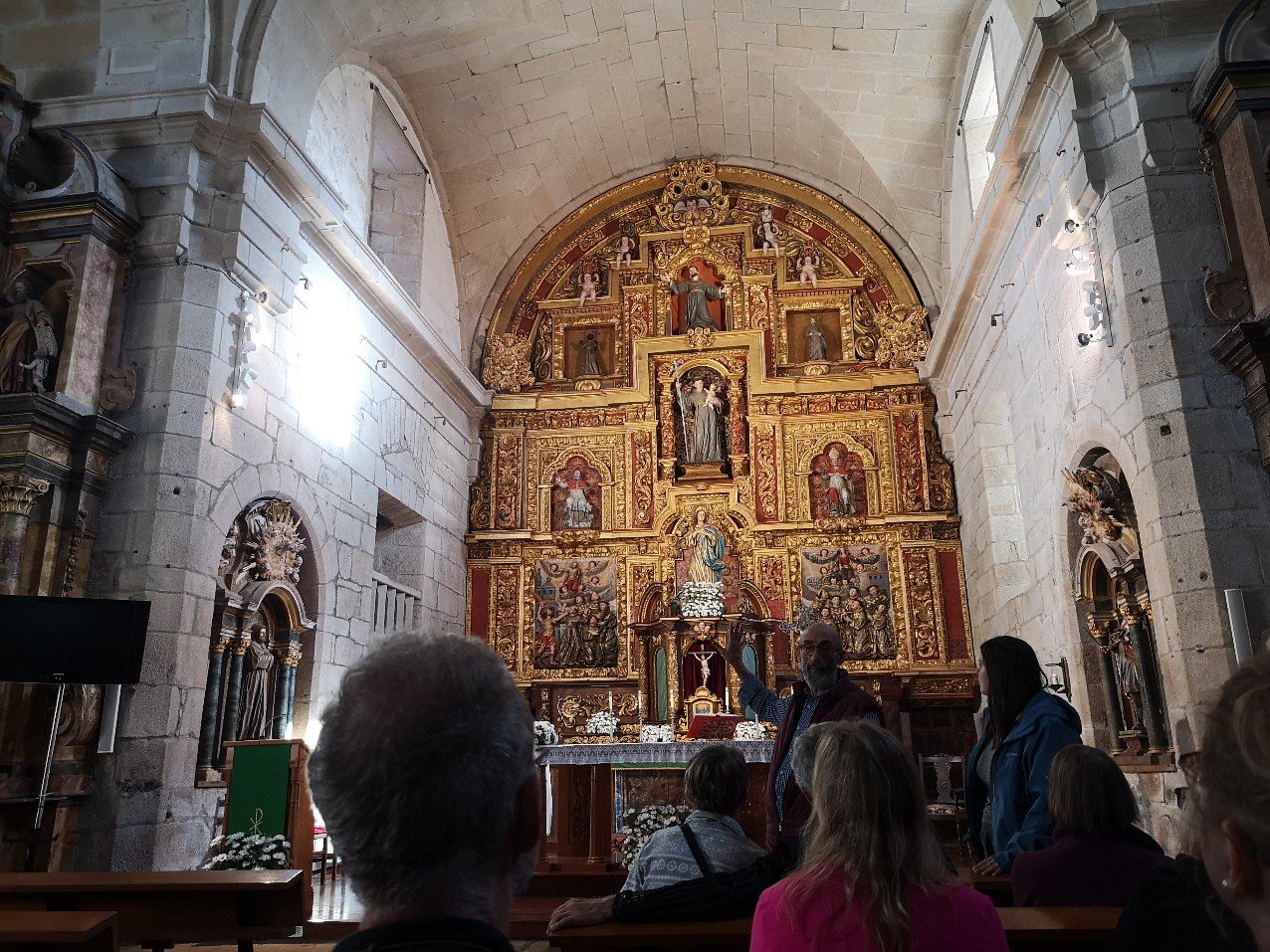
The sparkling golden altar, Herbón Monastery, Spain
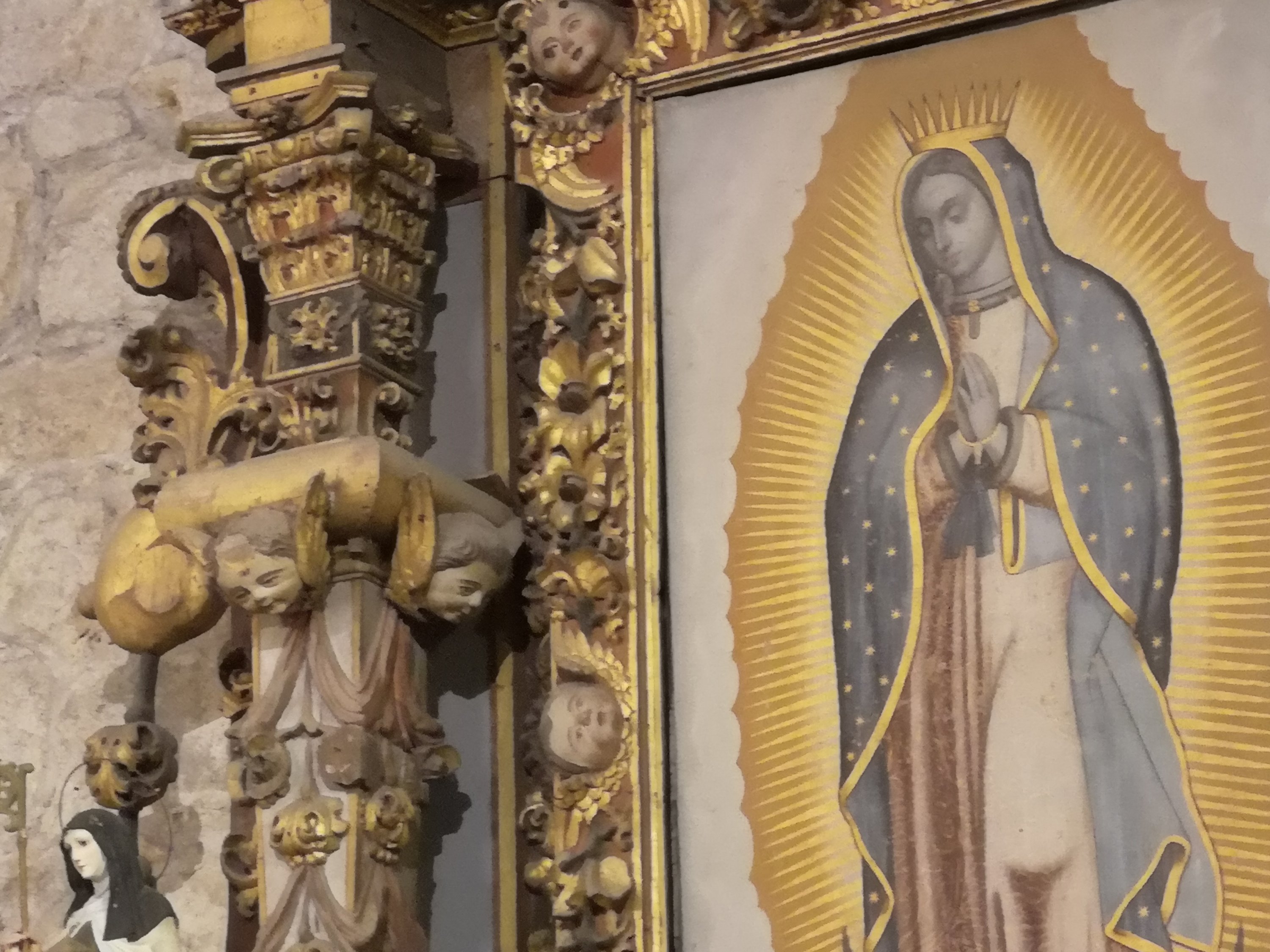
I loved these little angel heads with wings holding up the column, Herbón Monastery, Spain
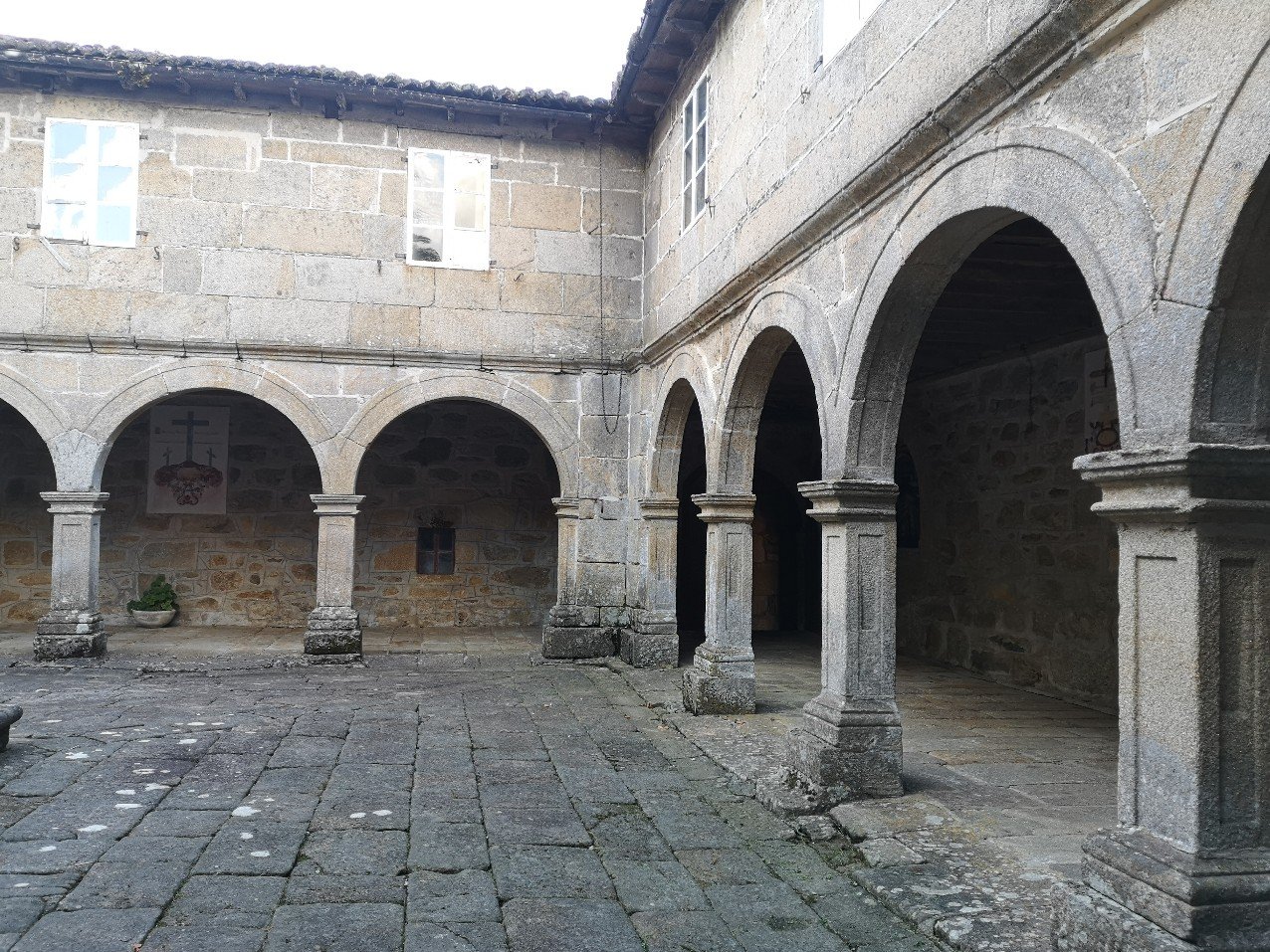
Cloisters, Herbón Monastery, Spain
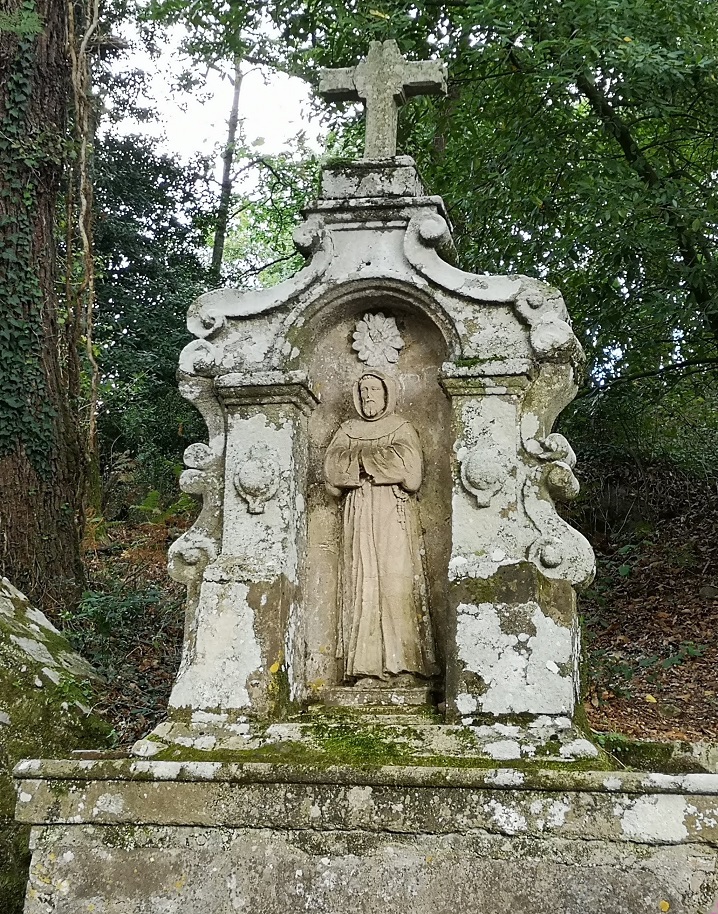
Stone statue and cross in the garden, Herbón Monastery, Spain
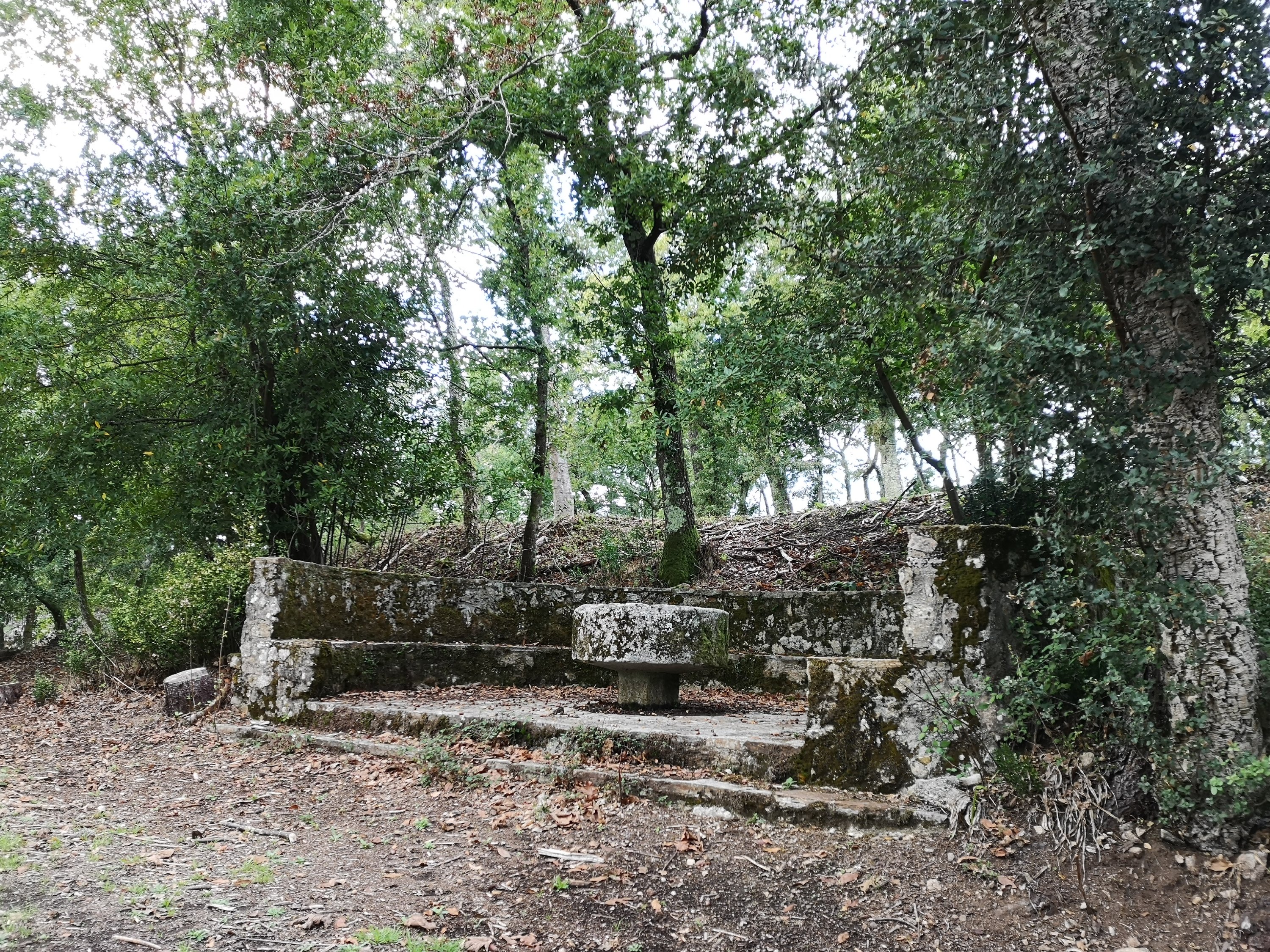
The large garden sports vineries (there is no-one to keep them going now, sadly), kitchen garden (partly in use, as far as I could see), water which has been tested and found to have lots of minerals in it so is truly healing, and various levels and attractive sections making it really interesting.
A place of meditation, Herbón Monastery, Spain
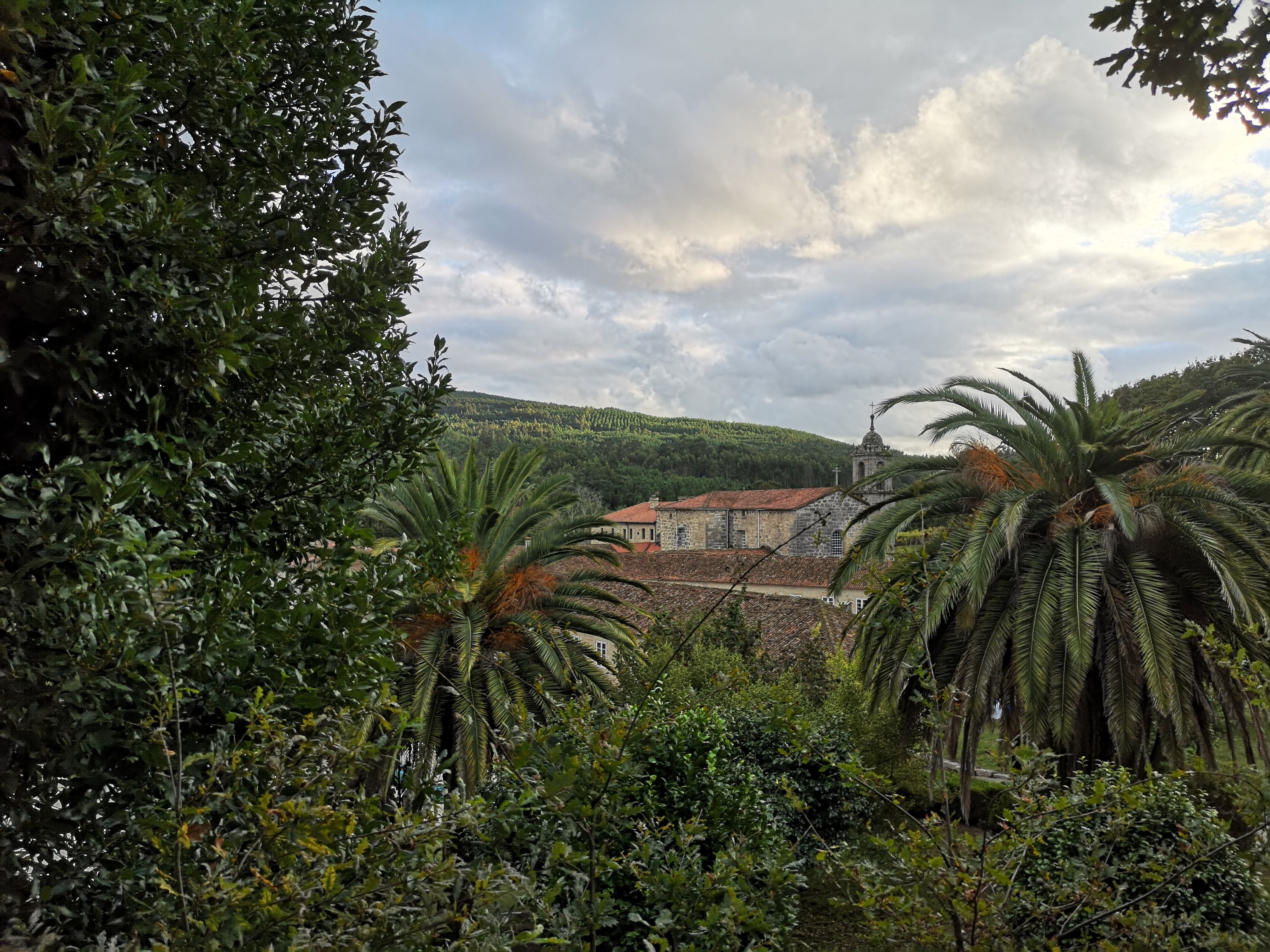
View from the garden, Herbón Monastery, Spain
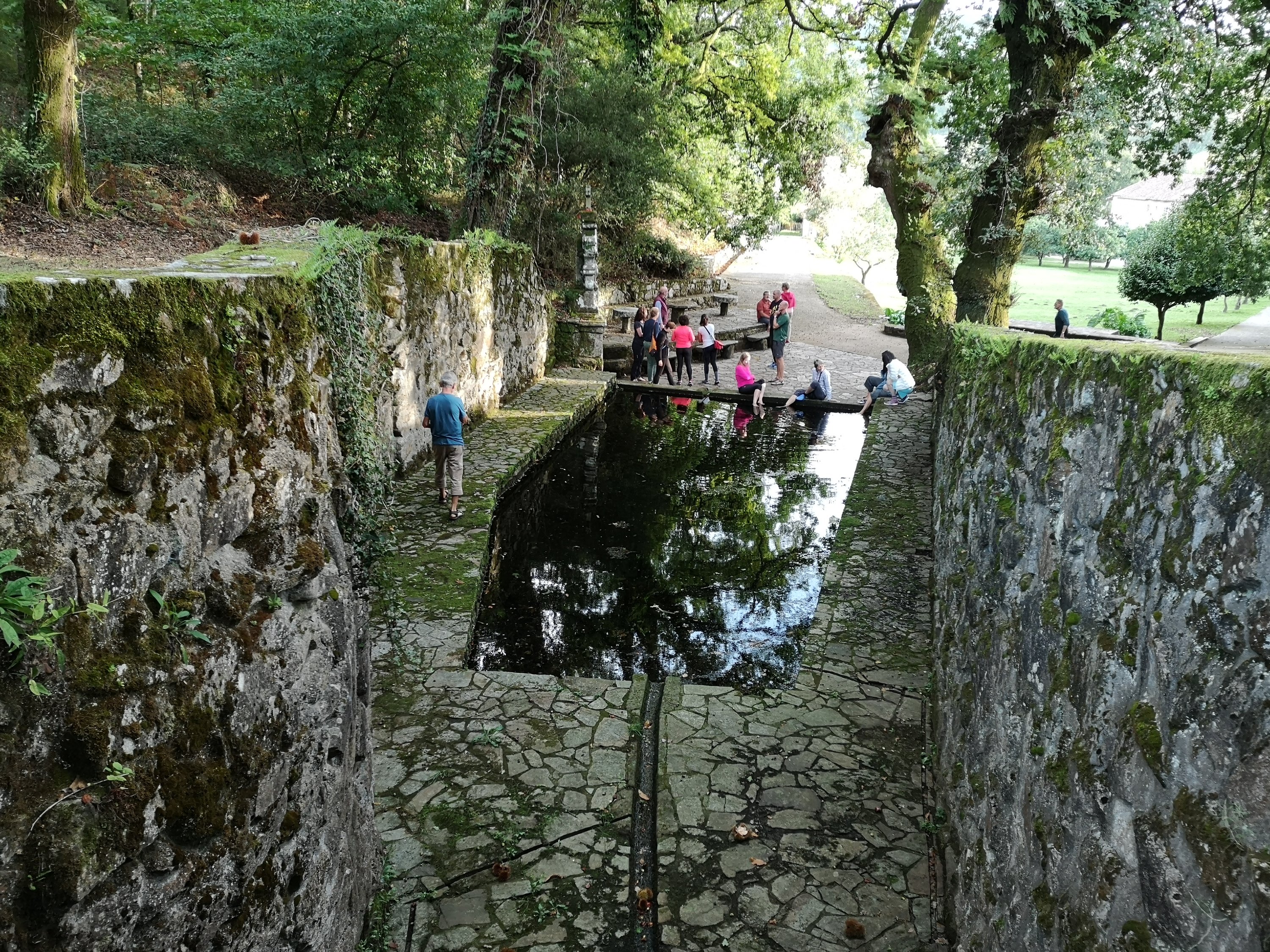
Healing waters at Herbón Monastery, Spain
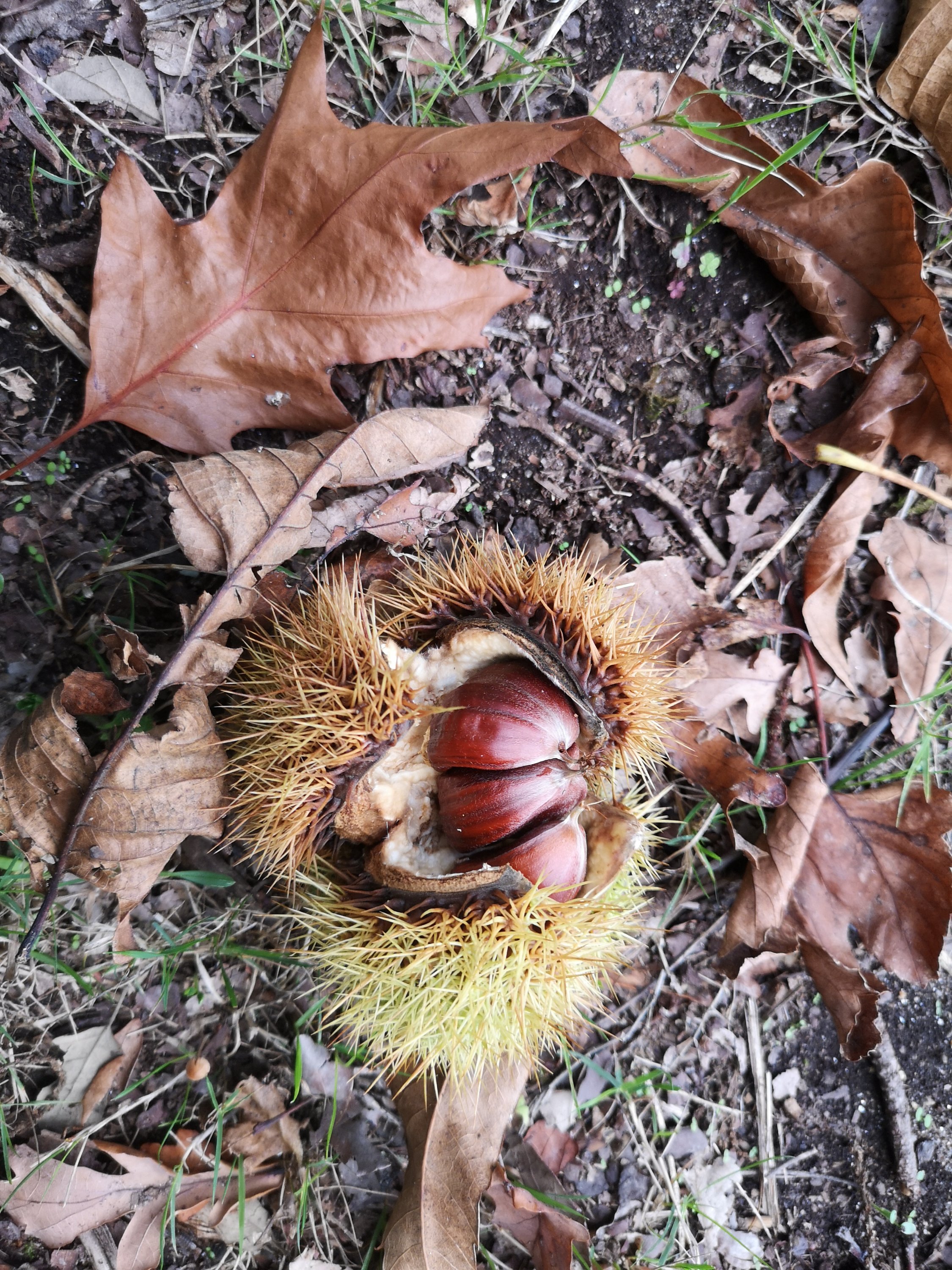
Dry, brown Autumn leaves and sweet chestnut prickles bursting open
Untended vines, Herbón Monastery, Spain
Wall shrine and fountain, Herbón Monastery, Spain
To reward us for such a long guided tour and talk, we were given a good meal (included in the 6 euro price) around long canteen tables and there was a lovely atmosphere there.
Note: There is always a decent vegetarian option at the shared meals on the Caminos
Reflecting is a vital part of taking a walk. It helps to embed or integrate the walking experiences – where I have been, and what I have learned – in the hope that any changes wrought will last.
Most of all, though, I failed to comprehend that the best things in life aren’t things that are visibly sexy on the surface. They don’t scream for attention, and they rarely invite adrenaline. Rather they come from quiet commitment, respectful engagement, and a love of something greater than yourself.
Before a sitting meditation I start by acknowledging or noting any issues which are bothering me, either to clear my mind, to problem-solve, or create focus. Then I try to simply sit. I have been doing that for years. As a result I sometimes come up with creative ideas, solutions and greater understanding, or at the very least a recognition of patterns of behaviour.
Walking is a kind of meditation and the more I walk pilgrimage, the more I realise that simply doing it: starting, trekking, and managing to complete, I’m learning what I need to.
I have habits that I try to pretend aren’t there most of the time. However, when walking a pilgrimage they come to the fore. It’s in the planning and facing of the realities of the land and the practicalities of accommodation and food that I am brough face to face with myself.
Is walking pilgrimage synonymous with being religious?
I do not follow a recognised religion. I was christened into the Church of England by my parents and had to learn tracts of the bible overnight for reciting in primary school the next day. Joining in assembly every morning at secondary school was obligatory, and I sang and read lessons during services; went on a Sunday School holiday; and spent years in the Girl Guides where Christianity was important.
I was steeped in it – the tenets seem to be in my soul (or perhaps in my cells). When I was learning to speak, religion provided me with a moral and ethical language, and I have discovered that it’s hard to shrug off.
Maybe I’m on a mission to get rid of the destructive part of what I was taught in those early years. I was encouraged to feel guilty, it was assumed that I had Original Sin, and I was told that I was bad in my core as were all other humans. Perhaps I now take ecumenical walks to give myself the time to recognise the impact of this and to let go of what seem now to be unhelpful lessons.
I do visit churches sometimes and I certainly respect believers, but I do not take communion. I have read widely, listened, and discussed religion with friends, but I cannot follow a Faith which seems to exclude or criticise people for being the way they are or believing what they do.
Historically, pilgrimage was a religious practice, so it’s not surprising that people keep asking me why I walk pilgrimage.
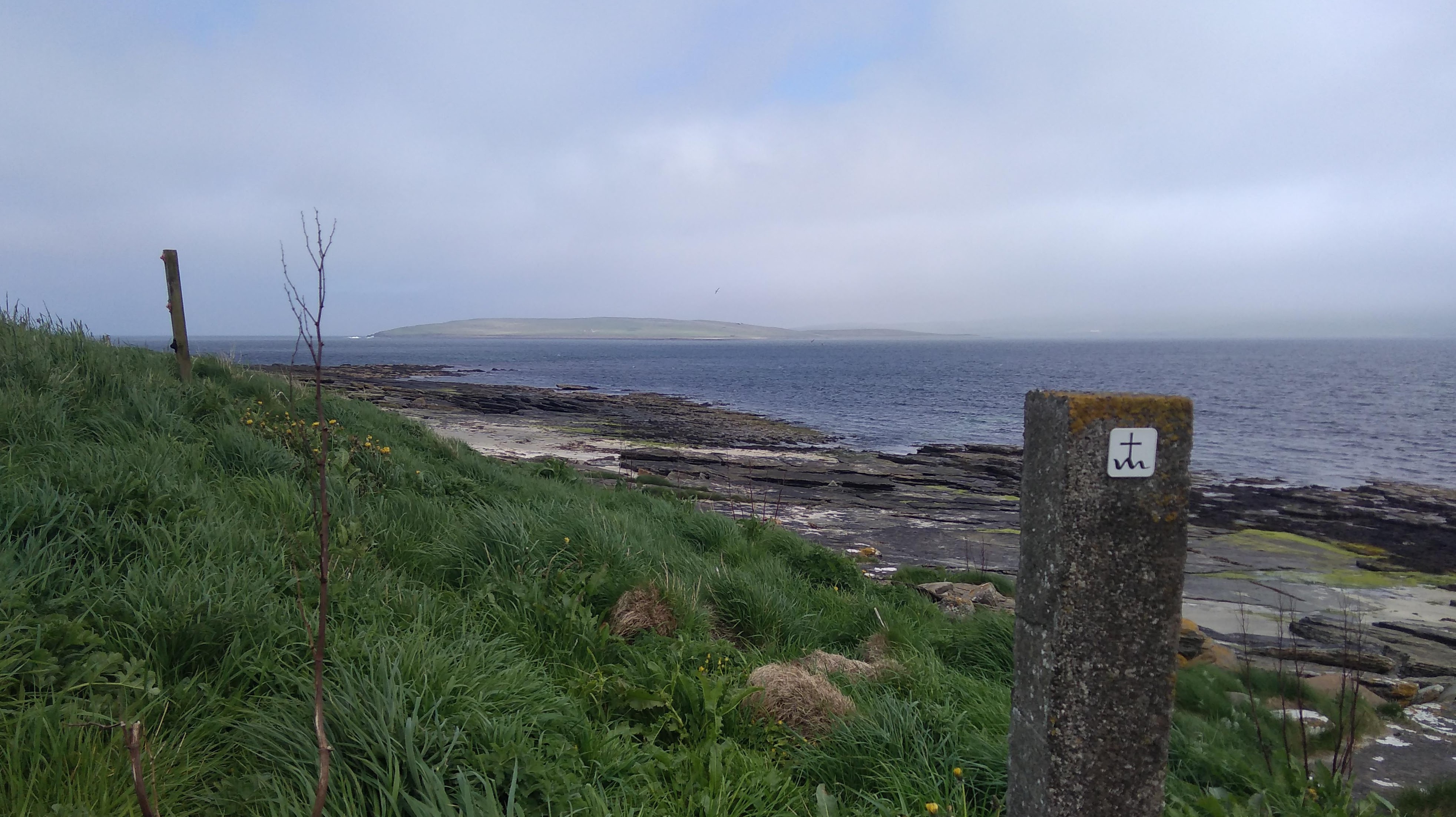
The three stones I found on Evie beach at the start of the St Magnus Way
Why pilgrimage?
For me, pilgrimage is more than a long-distance walk. It’s a walk with the added zizz of a specific intention, held to, and later reflected on. I’m walking in the fotsteps of others who were seeking enlightenment. Made with awareness and respect for tradition, there’s an in-built beginning, middle, and end, and it’s a project all in itself.
“The present, the present. It never stops, no matter how weary you get. It comes unstintingly, as a river does, and if you aren’t careful, you’ll be swept off your feet.”
Olivia Laing, To The River (p111)
Spirit, soul and understanding
In Chinese Medicine I was delighted to learn that there are a number of different ways to describe the spirit or soul. In Icelandic there are more words for snow than we have in English; in the Orient the parts of ourselves which relate to spirituality, to nature or to our innate relationship with other people are as important as our physical and mental aspects. Although the spirit is amorphous, hard to define, it is something I have a tangible sense of, particularly when I walk in nature. Although sometimes I am content to ‘be’, at other times I become curious and try to understand this puzzle.
When I sit and meditate in my Shiatsu room in Edinburgh I can simultaneously be in Tibet or Japan or China. I don’t know why that is or how it happens and so I ponder on these things as I walk. I privately thought that at least one explanation was that I was a nun and a monk in former lives. It’s the best explanation I could come up with. The feeling I had, for example, when I crossed the sands, barefoot, to Mont Saint Michel was real – I ‘knew’ I had walked there before.
Walking across the sands to Mont Saint Michel, France May 2017
What is ‘knowing’?
We have discovered in the last 100 years or so that our physical cells destruct and reconstruct, so the ones I have now shouldn’t be the same ones I had when I was a baby, never mind the ones my mother or grandmother had. And yet we know that we share genetic material.
There is a theory that there is a collective knowledge which accumulates from the generations which came before. It could be this wisdom which tells me where to go to find what I seek, and what has got me here in the first place. However, current scientific methodology and outcomes deny me entry into this collective unconscious. It insists that I enter through the portal of logic and I am not sure that logic is the right way into that sort of understanding.
I have an intrinsic sense of the English phrase, ‘I know it in my bones’. My bones are made up of cells and that genetic material, yet in every text I read about pilgrimage something inside me recognises it. I seem to share the centuries of that collective knowledge, it is familiar.
There is my DNA and my body. There are my mind and my thoughts. There is my self, my soul, my spirit. In my work and my walking I am enquiring into the connections and (re)discovering dissociations between these.
It’s all about love
The more I listen to myself as I traipse, and the more I hear my clients in the Shiatsu room, the more I think that what we all seek is the connection to LOVE. It sounds like a familiar new-age thing to say, it’s straight out of the ‘all you need is ….’ 1960s, but I keep coming back to it.
I have a hunger for that ‘something for which we search’, and I know it isn’t just me, because when I tell folk what I do, they say, ‘Oh, I wish I could do that’ or, ‘I have wanted to do that for ages’. Or maybe they too have already started!
I seem to be part of a contemporary pilgrimage movement in which it is possible that we are seeking ways to integrate, comprehend and connect our-selves, personally and in community.
Pilgrims walking the Via de la Plata, Spain; Tourists flocking to the Sacre Coeur in Paris, France.
Restlessness
In addition to all this, I notice a compunction to move on, to save my soul, to find and to seek. The ‘thing’ I am looking for is at the same time inside me right now and just ahead of me. It is that towards which I reach or walk. It isn’t new. Everything I have done in my life so far is part of this instinctive movement towards being purer, ironing out the creases. That’s what I believe we are all doing wherever we are.
I know that inside me lies this knowledge, just as tangibly as I know my organs are there. I recognise that I am part of a continuum, a humanity of seekers. What is necessary is the time and space to better hear what is happening, and that is hard to find when I am at home looking after people and my surroundings, doing what most of us do in our adult Western lives.
The answer, it seems, lies in introspection. Without trying to be precious, I go quietly back inside myself when I walk, to hear the still, small voice.
Nan Shepherd wrote ‘These moments come… most of all after hours of steady walking, with the long rhythm of motion sustained until motion is felt, not merely known by the brain, as the “still centre” of being…
And so it appears I am descended from the ascetics and hermits of my history. I’m reborn into the liberated 21st century. I am, at one and the same time, part of a shared community – walkers and pilgrims, fellow monks and nuns, a group with shared values – and I am alone to ponder.
Some things are proving intractable and I expect that’s why I have to keep on doing it!
I am walking the St Magnus Way on Orkney, and this is one of the blog series – 25th May 2018. Below, you can find links to all the others (introduction, transport, accommodation, resources etc). The overall walk is 55 miles over 5 days plus a visit to the island of Egilsay where St Magnus was said to have been murdered and, initially, buried.
This is the Man’s Well which never runs dry. Note the St Magnus Way mug hanging for the pilgrims to refresh themselves.
Last night I camped in the site just outside Birsay. I walked past the Man’s Well which was part of today’s route quite by chance on my way to have supper at the Barony Hotel. The water of the well was said to wash the body of St Magnus before he was canonised. Nowadays it is used for brewing ale and mixing with whisky at New Year! Mons (Norwegian) and Mansie (Orkadian) are both variations of the name Magnus, whereas it is thought that the Man of the Well’s title is the Norse version.
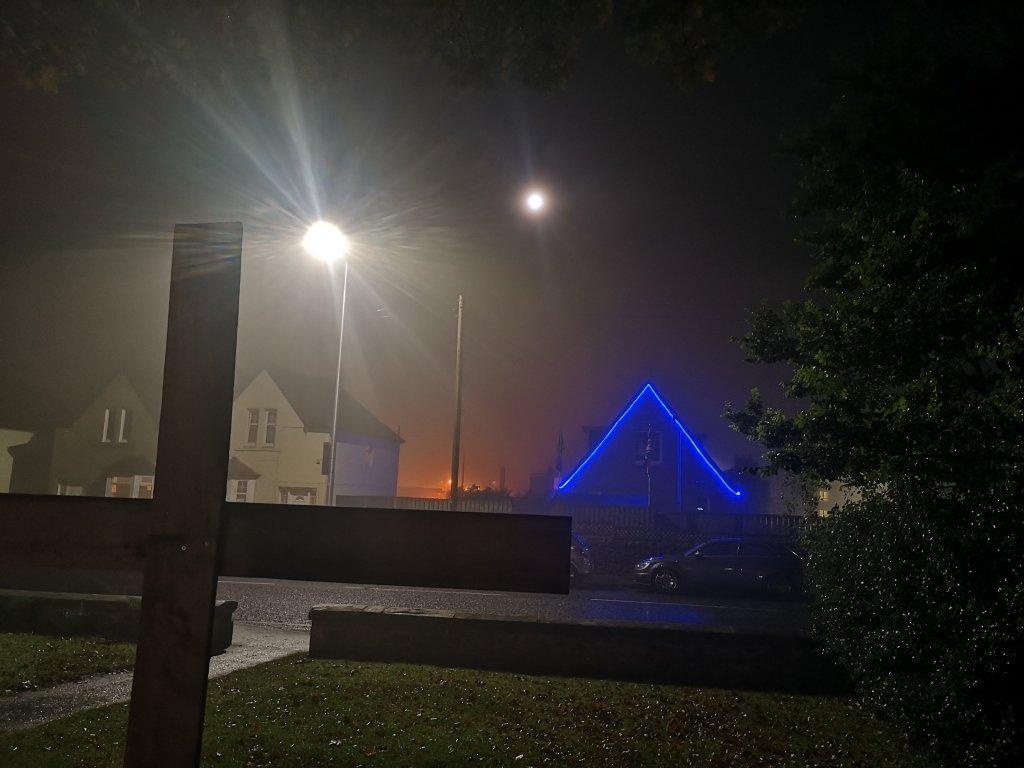
So I started my walk here at the Barony Mill but the photo was taken the night before as it was darkling.
Barony is a working mill famous for its Beremeal, and I had bere bannocks in the cafe in Kirkwall on my final day. Bannocks (this link will take you to a recipe) are a sort of flattish quick bread with the consistency of scones and they were made with flour from here.
Barony Mill, Orkney
Under the aqueduct by the mill wheel runs the lovely Boardhouse Burn (small river) which drives it, lined with shining marsh marigolds. I negotiated more of Orkney’s famously person-proof gate locks, crossed over the almost hidden boardwalk (not ‘under the boardwalk’!) and sloshed around in the soggy ground. I was making my way, through another tight kissing gate, back into Birsay village where the only public toilets of the day’s hike are to be found.
The boardwalk.
Would you call this a suitable loop with which to secure a gate? More like headgear for ‘sinners’.
As I waded once again through stinging nettles, I recalled the idea of a nettle shirt. It was called a celice (1) back in the days, and is a way to cause oneself suffering as ‘a self-imposed means of repentance and mortification of the flesh .. often .. worn during Lent.’ Sported by Abbess Teresa of Avila, (‘a remarkably capable abbess who reformed the Carmelite order’ (2)), this is another example of my many Christian references, things which spontaneously come to my mind when I am on pilgrimage. What with the barbed ring above and this notion, it seems that I am again concerned with the idea of choosing hardship as a way of … well, what?
A number of answers come to mind: being good, becoming a better person, proving one’s worth, deserving a prize….
In his book, Metamorphosis (3), David Gallagher discusses the fairy tale in which a sister picks and tramples nettles (thereby stinging her bare hands and feet) to sew shirts for her brothers to change them back from swans to men after they were cursed. In the version I read and reread as a child, the girl cannot speak whilst sewing. The villagers therefore become suspicious and start to burn her as a witch. As a result of being singed to death, she doesn’t completely finish and so the youngest brother retains a swan’s wing instead of his left arm. Gallagher theorises that, “..the partial transformation is a coded religious message that women should continuously courageously strive and be virtuous in society and support their male counterparts.”
So not only does it seem that my early reading habits allowed me to confuse religious advice and folklore, but the Brothers Grimm and the like (who wrote the stories) might have either been purposefully threading morals through their work or doing it unwittingly.
When I was about to leave for theVia Sacra (Austria) I asked the customary question: what is my focus for this Way? What came to mind was the phrase ‘to atone for my sins’ which surprised me because I am not a Christian now (although I was raised in that tradition and went to a Church of England (CoE) primary school), and I reject the idea of Original Sin.
My known reasons for making a pilgrimage are many: spiritual development, yes; time away from my busy life; a place for contemplation and meditation; and more. I can only notice, on account of the topics which arise as I trek, that the concepts and ways of thinking which come from the bible and church teachings are insidious. Instilled at an early age, and reinforced as they are constantly in the world around me, they are still ‘live’, and consequently they need to be reassessed, to be addressed.
Why? (I ask myself again). Because if there are powerful belief structures which underpin my way of thinking then I need to know what they are. If this way of thinking is the cornerstone of my attitude to work, the foundation of my choice-making; if it is this which supports my interaction with others but I am unaware of it, then I will be basing my life on, and sending out powerful messages about, something which I might more mindfully choose not to.
The very plain St Magnus Kirk, Birsay, Orkney.
An enormous black cow (which looked like a bull to me) sat in the corner by the kissing gate. S/he took absolutely no notice of me, its belly spreading out comfortably on the grass. Men worked on the right, their overalls at their waists; a little girl was shooting hoops against the house wall; I visited the St Magnus’ Kirk and read The Ballad of St Magnus pinned on its post (which I did not like), and admired the view of sea and sand from whence I had come, as directed by the St Magnus Way website.
View from the churchyard. There were swans in the bay who looked delightful.
It was a blowy stretch across the dunes, reminiscent of parts of my Normandy grande randonee. Oh dear, I was hungry already and had almost no supplies with me. I hoped Twatt (a ribald name if ever I heard one) had a shop. It wasn’t very easy to find the markers here but I knew the basic direction I was going in and the route description helped.
The Brough of Birsay that I was leaving behind me, and the edge of Birsay Bay.
Birsay Bay, Orkney.
Then up a small hill I went and onto the first road of the day, but hey, after yesterday, road was okay for a bit. It was gentle: the cows looked at me and me at them. The views were vast.
The square forehead of the Brough of Birsay again and the bright sands around Birsay Bay as I looked back. Orkney.
From high up I could see a tractor going backwards. It was surrounded by what looked like midges from a distance,but was in fact a swarm of gulls.
When technology teaches you a lesson
Every time I took a photo with my phone, I saw incoming emails and was fielding them accordingly. I was getting annoyed. Looking back at my notes, I wonder why I just didn’t ignore them until later. Guilt – that’s the answer! Comments from others about the amount of time I am away from home trigger my natural guilty thoughts along the lines of, ‘I ought to be responsive, responsible, working’. I have an open ‘ought’ channel!
Despite becoming aware of this years ago, ‘ought’ still plays a large part in my life – like a leaping, prancing devil, it taunts and prods me. Getting away into these quiet environments with my feet on the ground, allows me to identify the interface between ‘ought’ and ‘want’, to look that fiend in the eye. (A devil is traditionally a ‘bad’ thing, but in this case it is something waking me up and alerting me to a necessary change.)
The Wheebin Stone.
In Shiatsu we believe everything ultimately shares the same source (we call it Ki, a Japanese word for an Eastern concept), and that’s my explanation for being able to hear someone else’s thoughts (you know when you phone and the person on the end says, I was just thinking about you). Yesterday I had fancied I could hear the sheep chatting with each other. Is that even possible? If yes, then perhaps my phone was listening in to me!
Lucien Levy-Bruhl, a French philosopher, calls this ‘participation mystique’ (mystical participation) and it occurs beyond our logical, rational thought processes. It is like a ‘sense’ that we have but seldom use now , but it can be increased by usage, like a muscle, if we choose to exercise it. (4)
Anyway, bit by bit my phone just stopped charging, leaving me without the means to take photographs (having forgotten that on my last walk a similar thing happened for a different reason and I resolved to bring my camera the next time!) Day by day it caused more problems and I spent valuable time trying to right them. It was not until my train journey home when I sat next to a woman who insisted she use her own charger, that I started to identify the root of the problem and by the time I was home the phone was back to full speed! Coincidence?
‘I came greatly to value that solitude and self-reliance and was at peace in a landscape that was neither empty nor quiet. All around me I felt the ghosts of an immense past, I heard their whispers and I smiled when they walked by my side…’ (5)
It was possibly the deadness of the phone which made me let go of that guilt and, instead, focus on the walk. It did warn me. I took no heed. It warned me again. Still I continued to allow myself to be distracted, until it only gave me an hour or so of charge at a time and meant I could not communicate with anyone (see the Orphir to Kirkwall walk) or record my delightful surroundings as much as I wanted to.
Loch of Hundland, Orkney.
I observed my environs as I tramped on: a random cliff lay beside the road with nesting gulls; here were the first horses, but as yet no donkey except in the book I was still enjoying before falling asleep.
What a noble beast – straight out of the old Norse tales!
One singularly unimpressive and rather diminutive stone stands in a field on the left at this point – the Strathyre Mans Stone.
‘Jutting skywards from Orkney’s gentle landscape are a number of ancient standing stones, each a stark reminder of our prehistoric heritage. First cut from Orkney flagstone and erected before the Egyptians had begun constructing their pyramids, Orkney’s stone sentinels have withstood rain, wind and sun for thousands of years. ….To our modern minds, the society of Neolithic man is difficult to comprehend – a society where everyday life, religion and ritual were inextricably linked.’ (6)
A bus slowed and the driver gestured, the face communicating, did I want on? Noooo!
I was amused by a flock of black cows with brown and white offspring (well after using swarm for birds, a flock of cows was no surprise!). Two birds I fancied I hadn’t seen before flew by – one tiny with an ill-matching loudness which started with an emphatic tongue-behind-the-teeth sound; the other with wings where the black ends are much wider than the narrower part that is nearer its body – it squeaked and swooped at top speed.
After a while on the tarmac, I had a good idea and made a most successful boot to shoe change. Hiking boots are not made for road walking so my feet appreciated that and it was just about warm enough.
Thanks Alice for giving me these.
I passed a sign – manure and Kirk for sale! Who wants to live in this magnificent edifice?
Growth was the set-theme of the day (again from the St Magnus Way website). I wondered, does growing always mean getting older and becoming more adult, or is it spiritual growth which in my case may be to become more childlike?
There were more standing stones on the edge of a loch – they looked as if they were at home in their natural environment, probably a result of longevity; There was inevitably a cold wind down by the water. Yes, they all warned me: everyone I had spoken to had mentioned the wind – everybody!
Snippets of dreams where I was dancing with another younger woman swayed in and out of my mind. We were tied together by a thread – the image intrigued me.
I carried on along an eternal, straight road (this is real life btw, not my dream). It was not quite the Spanish meseta and maybe not even Roman. For perhaps the first time I sang out loud: The Long and Winding Road by the Beatles. I once walked with someone who sang to me – those were happy days.
Thank the Lord for chocolate. And for the people who gave me a flapjack (cake) yesterday. I loved them. Still the king cups shone by the side of me, providing the missing sunshine.
Did you know that the inside of lamb’s ears is pig-pink and that they chop off their lovely wiggly tails? Shame on them. (Oops there I go again. I expect there is a very good reason).
There is both unexpected and inescapable growth in self-care when taking a pilgrimage – indeed you cannot progress without it. I must look after my feet and fill my belly. When I sit and write, I forget those things – it’s hard to extricate myself from the laptop – but when I walk I have no choice.
Off road again, I wondered whether to go back to boots. I was at the head of the Loch, me and the caterpillars which had possibly followed me from Egilsay.
Growth (see how the theme has lodged and reappears, how I thought, then walked, then thought, then…). Growth: learning to hold the unnecessary or unwanted away without resentment. Which is harking back to the guilt of course.
I took a small break (without lunch, worst luck) and mini-meditated instead. I took lovely deep fragrant breaths, but a Shiatsu School Edinburgh idea interjected. I sat with my knees out to the sides, soles together, to ring the changes with the hip position, to be different from all that forward moving activity.
Oh, I think excitedly, I could write a St Magnus Way book. I could spend the 5 weeks between the French teaching weekends penning it in the Autumn. Another ‘good’ idea! I got very excited.
Then I was on a typical St M path again. Could I see the way? No. Could I see the bog? Yes! The boots won the day. It was altogether too wet, bumpy, harsh-heathery and possibly sporey-caterpillary to risk sandals.
Cows had obviously been lying in the mud given that their tummies were caked brown. It was really hard going and I recommend you wear long trousers if you want to try it. There was petrolly, peaty water in the channels made by the farm machinery. Birds insistently squeaked and tweeted, and then I heard the one with the wings described above and it woolf-whistled at me!
Who said a pilgrimage should be easy? Surely, I thought, the point is how I cope with adversity. Growth, you see.
My poor elbow – the result of yesterday’s falling into a hidden hole was sore.
Then there was a thundering and a mooing, and all the adult bovines in the paddock I was walking past closed ranks with the calves in their midst to protect them.
At Hilldyke the farmer had the WD40 out and the cattle were still lowing in my wake. A group of calves were up close by the fence of the field as I made my way downhill with a misty view. I was being bombarded by small, black insects on account of the lack of wind, but somehow the turbines were happily spinning away anyway. It was sort of too dark with sunglasses but too squinty without.
On the whole The St Magnus Way is well signposted with its very small black and white logos. They are not Spanish-Camino-yellow but pretty efficient, so that with your eyes peeled you can find them, although the Route Description (pdf download) is needed to supplement.
Blue, white and pink bells.
Away from the, it must be said, unusually pretty corner, I decided to walk on and the setting was once again utilitarian: barns and houses – more low-lying grey abodes presumably built like that to avoid the worst of the gales.
breezes loosely captured can connect us with the very edge of the infinite
Charles Moore in his foreward to Junichiro Tanizaki’s In Praise of Shadows
Later: trees (there aren’t normally so many here due to the wind), and flowers, and a VW in a field.
Did someone run out of petrol? Or have a few too many drinks and need to leave it and walk home?!
There’s a sense I often have that nature has its own colour scheme. Here the floral show is immaculate: the juxtaposition of colours, the relative heights, and the arrangement rival any church display.
I liked that sign!
I was getting a little weary, maybe because of being hungry, and I found myself wondering why my pal Magnus went all round the houses. After all, there’s no hill and it doesn’t look like a bog. Surely he would have gone as the crow flies. Ah well. More road walking.
The sheep are all different colours according to the farm. The cerise-rinse sheep reminds me of that book….
My hands were a tad sore from holding and prodding the baton yesterday. Ditto my shoulders, but luckily not the right hip which had been a problem from my old dancing days. I could feel it first thing this morning, but not now thank goodness.
This is more like it: it was very pretty with a grassy track and gorse sunshining up the hill behind.
I walked through Beaquoy, a collection of houses, pronounced, so Kiersty kindly told me, beck-woy.
In the distance the hills were still topped by mist. Yep I reckon that must be Dounby over there, I thought, and these are definitely midges (yuk), although I have found a new use for the scarf with the annoying tassles that get caught in the rucksack when I try to do it up: I can use it like a horse tail!
Not long after this I arrived at my destination and the first building I noticed was somewhere to eat. Twatt hadn’t yielded any shops or cafes, just dwellings, and I was famished. I had heard the sound of kids playing before I got there – a nice welcome.
According to the conversations I had had with locals, Dounby seemed to be best known for its co-op. I spotted home-grown potatoes showing their heads under the string in a garden, the memory-laden smell of cut grass an actual pavement under my feet Hooray! I had got here without serious injury before the tea shop shut… oh no, no, the tea shop was closed. Never let it be said that a closed sign stopped me when I was starving after a long day’s hike!
Dounby – host of the annual West Mainland Agricultural Show and home of the Church of Scotland minister whose idea it was to start this pilgrimage in the first place:
I had that same sense of embarrassment coming into a civilised area with unshaven legs, and into the cafe with my massive pack and muddy boots that I had had before, but the staff were kind and helpful. They let me in and fed me but I think it was because they heard my tummy rumble.
Here’s where I had my tea, at the Smithfield Hotel cafe – it’s not very attractive from the back but there is a sort of conservatory under glass at the front which was very warm.
I had a nice plate of fresh crab sandwiches with crisps and grapes whilst listening to ‘I tell you what you want, what you really, really want’ on the radio. (There were plenty of gluten free options).
I took the chance to have a look through local leaflets and found info on some of the places I will be going to. It was a pity I missed the Kirbuster Museum – it has a putting green; I liked the creative combination of Judy’s Fabric and Jokeshop; the Hill of Heddle is home to the motor cycle scrambling on Sundays – I hoped I wouldn’t have to walk there then; and there is an Orkney Men’s Shed which I am sorry not to be the right sex for as it sounds fun. I could not find a St Magnus Way leaflet at the campsite in Stromness, nor here. I did, however, spy a recipe for Rhubarb and Lentil Curry in The Orkney Advertiser which I might well try when I am back home.
At the first sight of the Milestone Church the sun came out.
I had popped into the pharmacy to find out about tetanus. Having had no recent jab, I wanted to know the symptoms, just in case my elbow (see above) was infected. Of course they wanted me to go to the medical centre, but I had been bathing it in tea tree oil from the very start and keeping it clean. There was no sign of anything being wrong and I had no internal fever or heat.
I wanted to meet the man who had started all this and the girl in the shop told me where the manse was, so before pitching camp, I set off on what turned out to be the next day’s walk: back to Quilco, then right to North Bigging (needing to ask for directions along the way).
This little critter came running and snarling at me and I am sorry but I laughed at him.
A man came into the garden rounding up his hound but there was no friendliness, nothing even approaching a friendly buen camino.
This wee guy was quite a good guard dog. The mist was starting to descend as I climbed, as you can see by the whitish patina of this photo.
There was an option to go up a hill, but I am afraid I didn’t do that. Afraid of what? Growth? I said hi to a Shetland pony, happy with my tummy full. I realised that what I feared was another long stretch of the long and winding road before I could knock on the Curate’s door. I must have been tireder than I thought. It was sunny and a bit of a climb.
When I walk and start to feel my back straining, I remember to hold those there pelvic floor muscles up and pull my naval to my spine, focusing on the core, especially when I am pooped and I can feel my innards heavy inside me (given that I am at the age when these things start to happen).
It was a bit of a disaster: I found the house – grand it was – but it was deserted. I left a phone message and waited in the garden, had a little sleep in fact and it was hot. Then I walked back a bit until I found yet another person to ask and it turned out I had been at the wrong place, probably Hollardyke House. On I went until I found a house with a sign saying ‘Manse’ with kids playing in the garden. How silly of me! So, I did meet David McNeish and he was most welcoming and picked me up at the main road 10 minutes later and dropped me at the church, given I had done that part of the walk for tomorrow already. He said it was no problem to sleep beside the church.
The public toilets were next door to the hotel (above) and because the church was closed I had to use them for my ablutions – except in the middle of the night. The next day I realised that there might have been security cameras spotting me while I dropped my drawers – Oh dear, I really hope not!
The view across to the Harray Loch.
The St Magnus Way website has excellent resources although one needs time and forethought as well as a working phone to download and listen. I expect some folk would be better organised than me and love to do this as they walked.
3 David Gallagher, ‘Metamorphosis, Transformations of the Body and the Influence of Ovid’s Metamorphoses on Germanic Literature of the Nineteenth and Twentieth centuries’ p 238.