Walking Like A Tortoise 

Slow and Steady On October 7th 2025 at 7pm UK time, I’m pleased to be sharing an online event with Marie-Anne Lerjen at the Walk Listen Create Café where we will be talking about the Marsato Award we received for our work. The recording can be found here on the walklistencreate youtube channel.

One of the portraits of members of the local community I met while walking the Granton Boundary
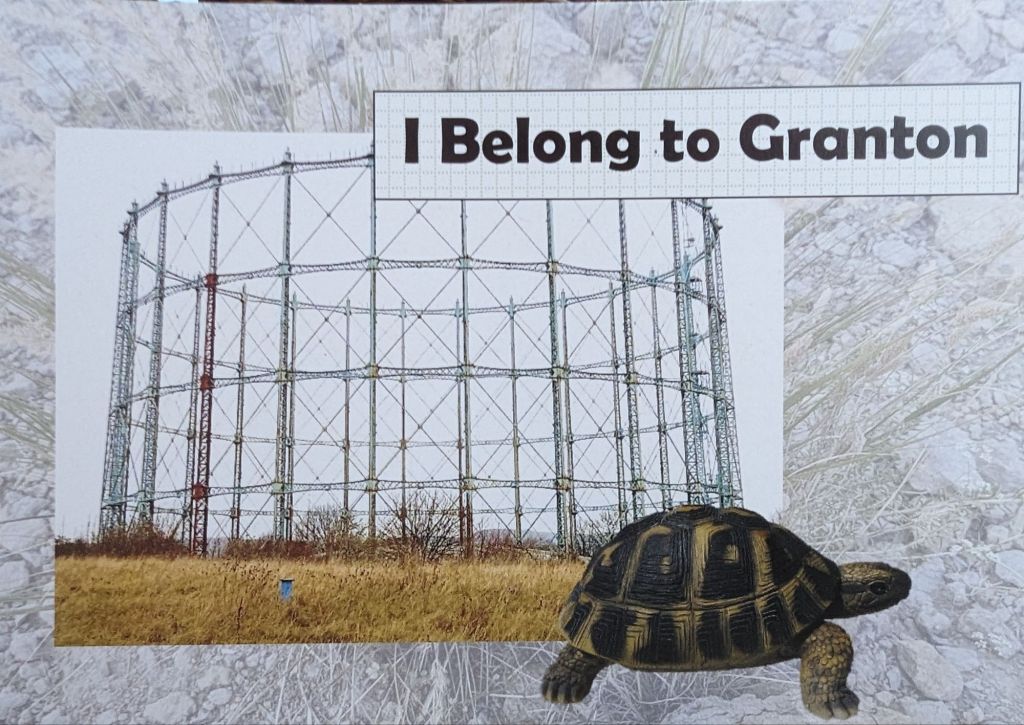
Free postcard for residents, designed by Tamsin Grainger
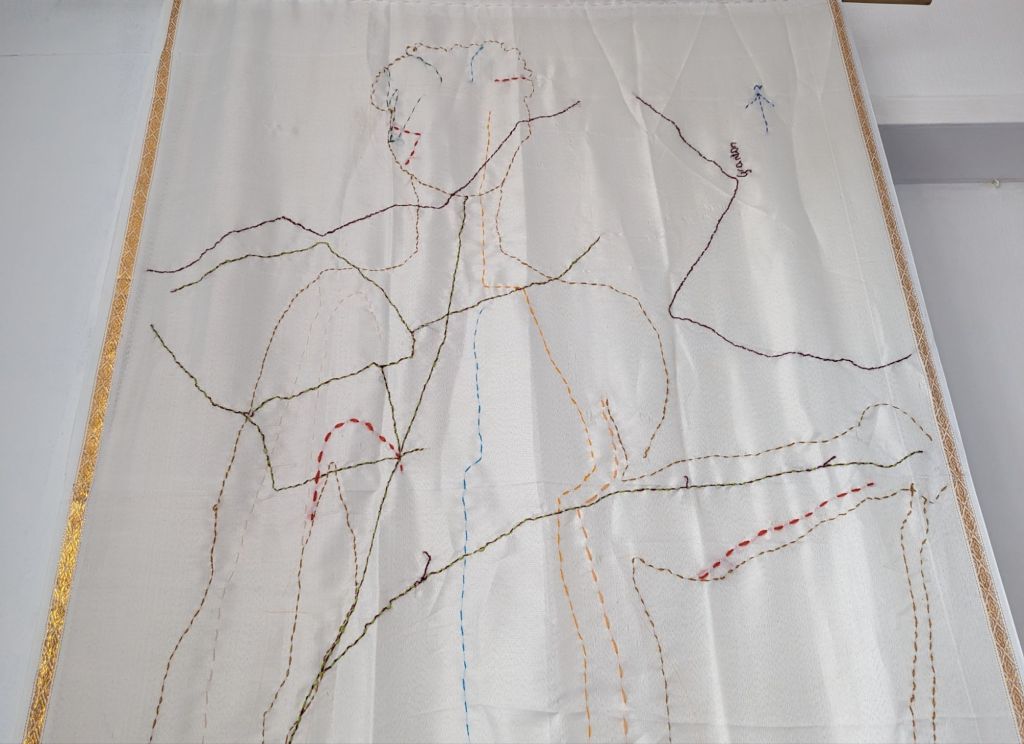
Detail, Personal Mapping. Textile work re. ‘My Body is My Map’
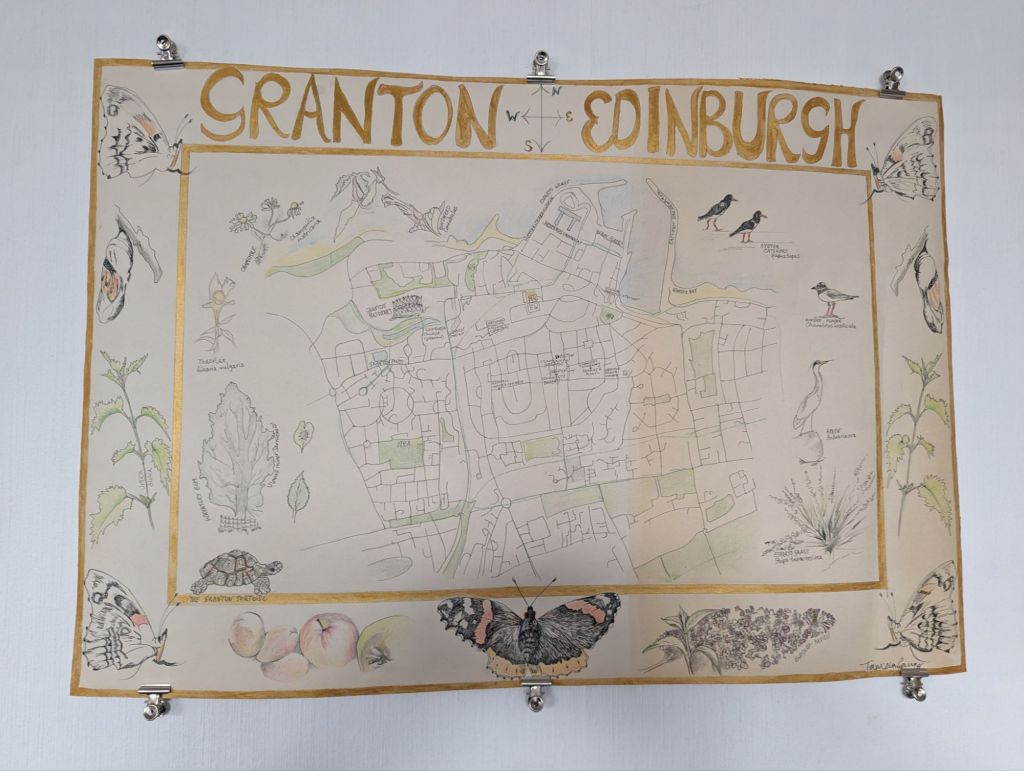
Hand drawn / painted map of Granton showing other-than-human inhabitants we live with
One of the Walking Like a Tortoise events
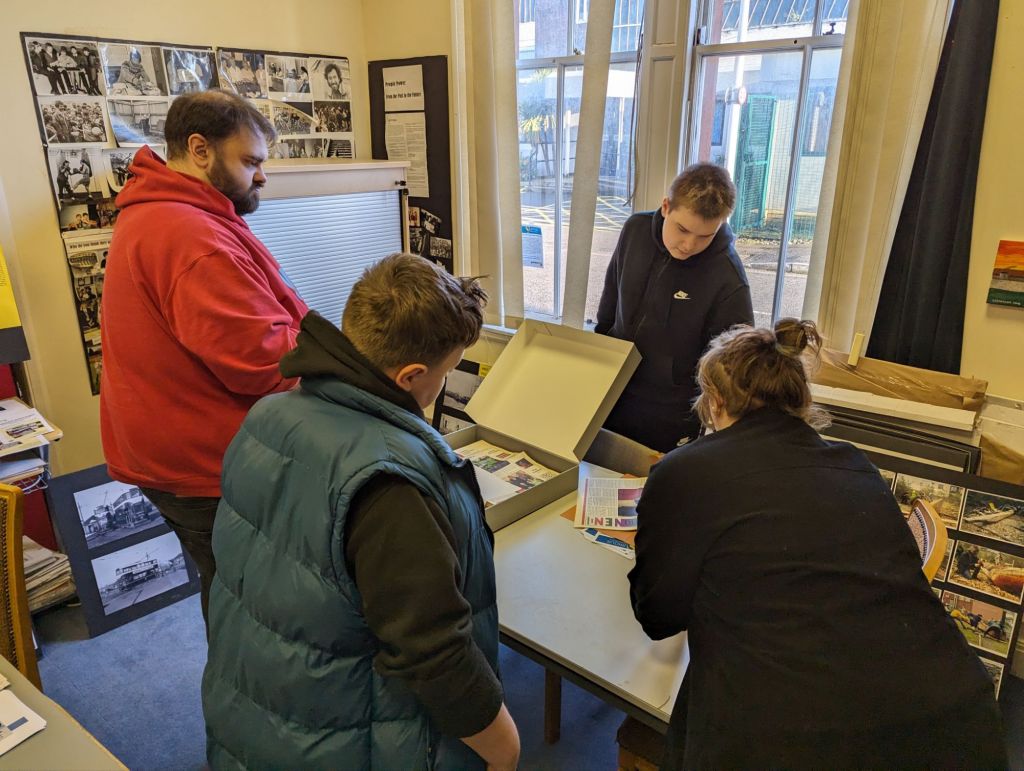
Showing members of the local youth club around the History Hub
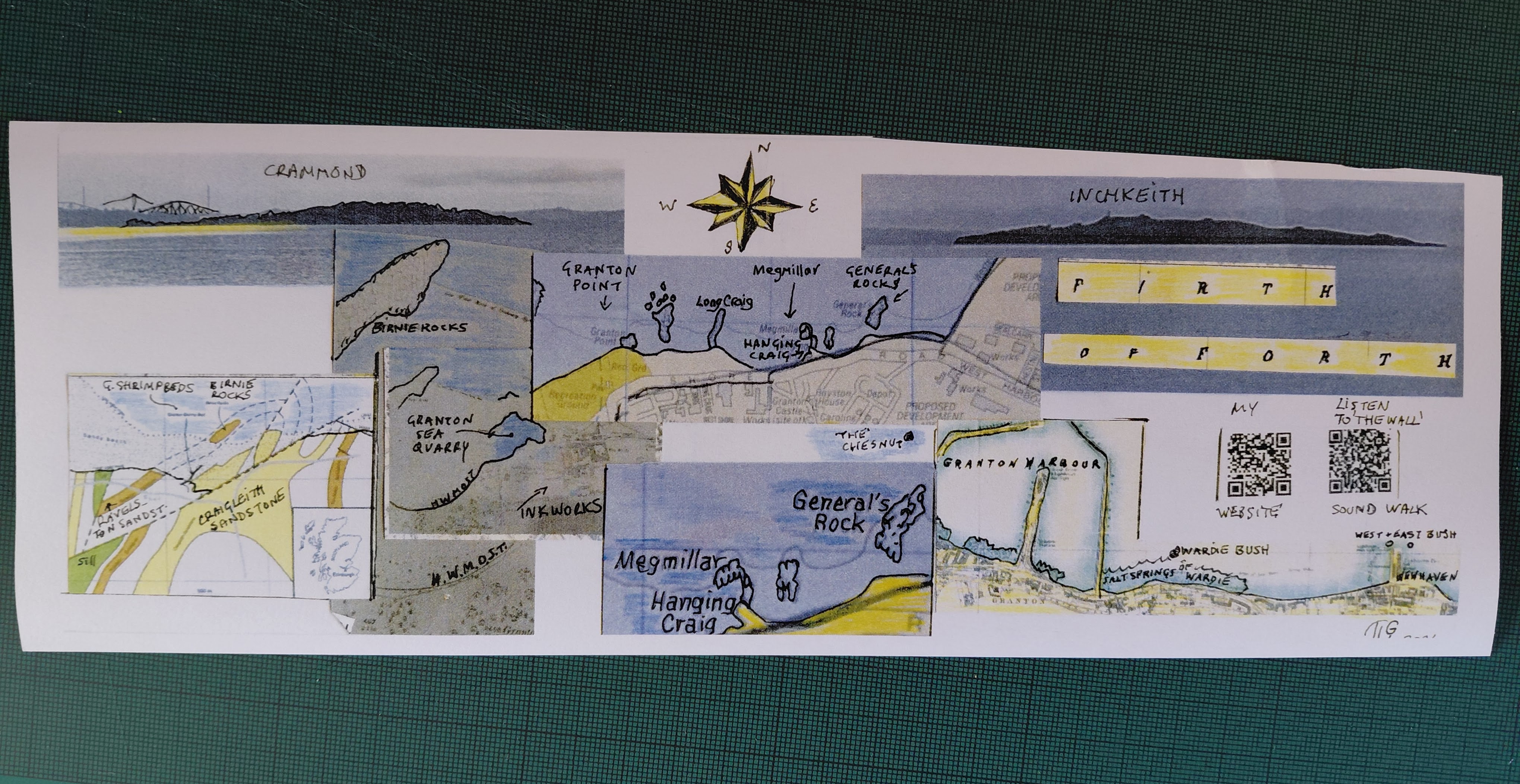
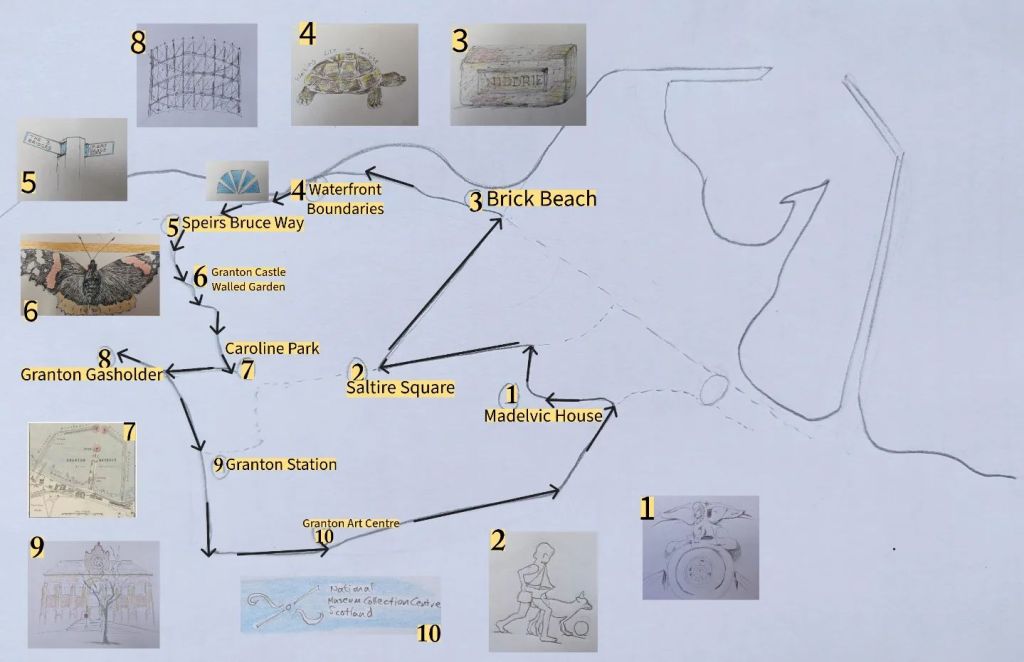
Walk Map, Granton, Edinburgh

Walking the Granton Boundary on Vimeo

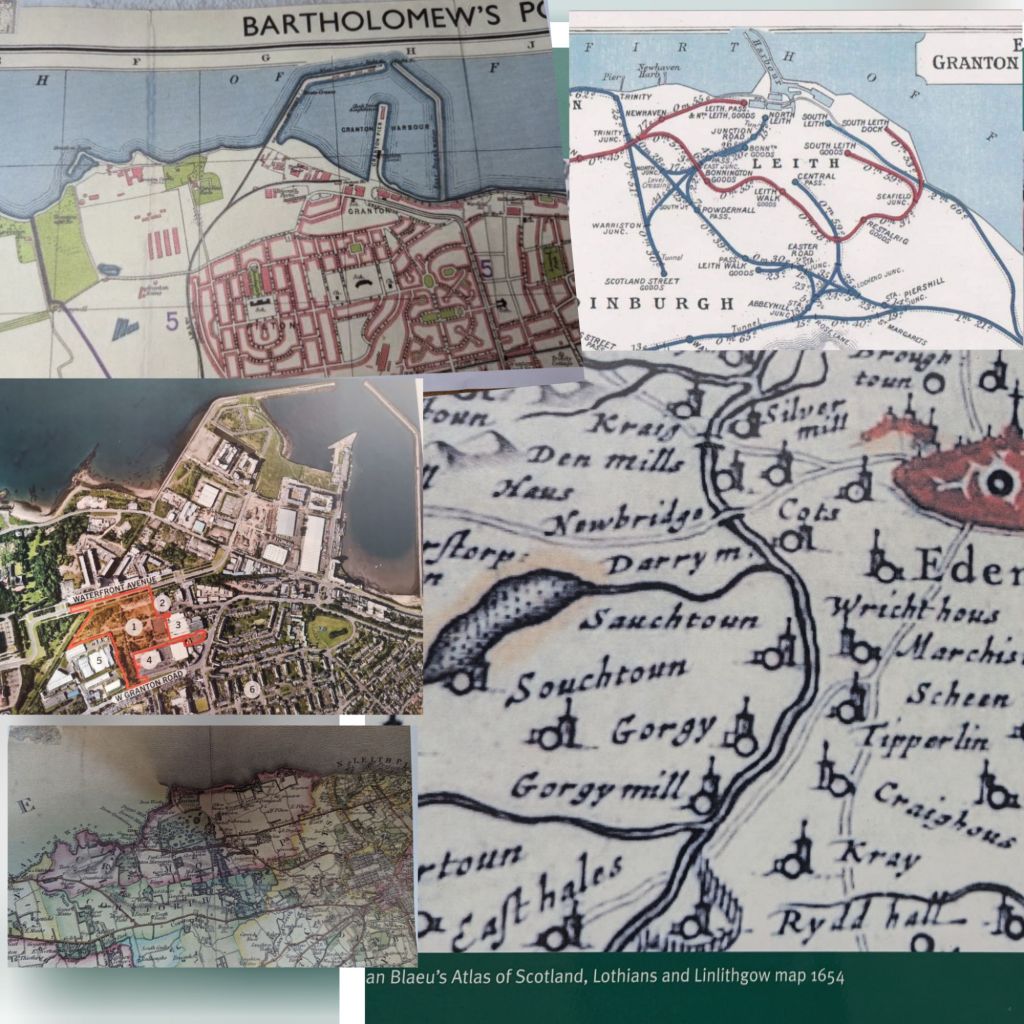
Old and new maps of Granton on the edge of Edinburgh

Walking Like a Tortoise in Living Maps Journal

Wheatley Elm Wellbeing Walk

Wheatley Elm Wellbeing Walk, May 10th 2025 (2-3.30pm).

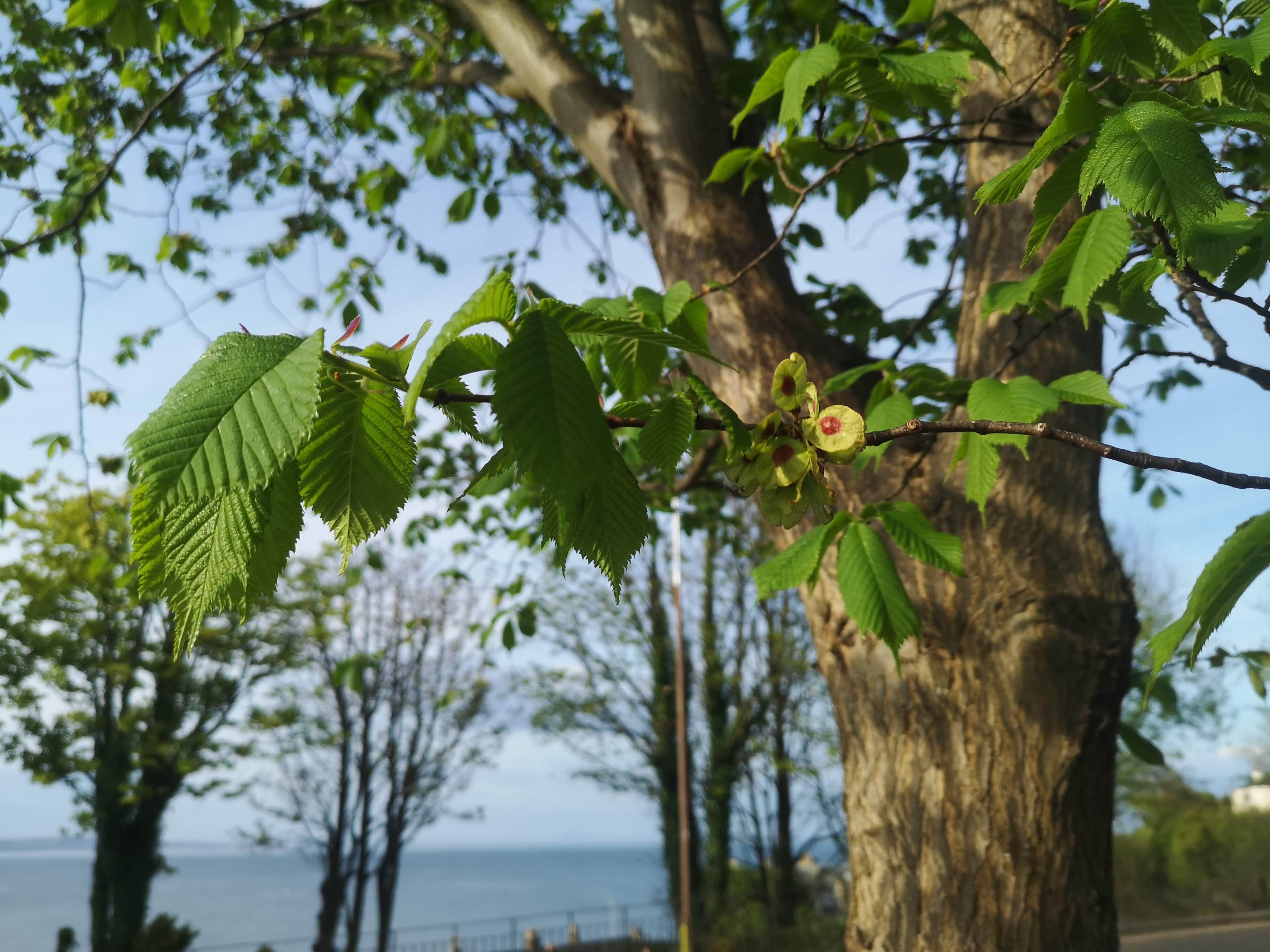
Wheatley Elm (detail)

A free community event beginning at Granton Crescent Park with some walking, art activities and gentle exercises. Part of the country-wide Urban Tree Festival, it focuses on our local trees, ones we go past everyday, and celebrates how brilliant they are.  

Booking Link: https://urbantreefestival.org/wheatley-elm-well-being-walk

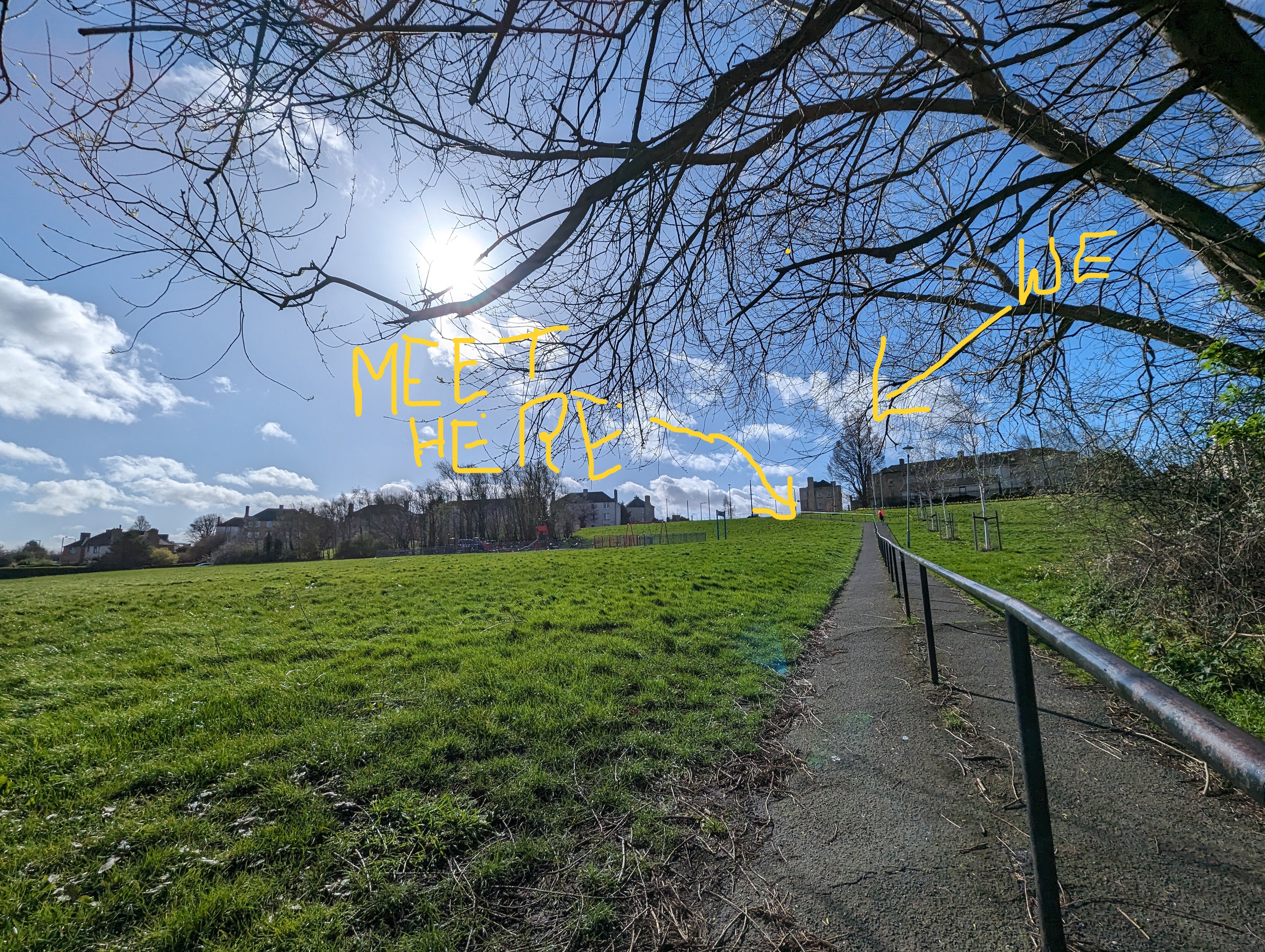
Meet here: There is a bench just inside the gate at the top of the path which runs between Granton Crescent and the bottom of Granton View and we will gather there. What3Words: ///skips.bets.aspect

Meet at Granton Crescent Park

We will visit some of the resilient and versatile Wheatley Elms in Edinburgh, find out more about this unusual species which is only found in 2 places in Britain, Edinburgh being one of them, and identify how we can benefit our sense of wellbeing besides.

A Granton Wheatley Elm

Walking, well-being ‘exercises’, art, talking and learning about the Wheatley Elm trees in the city.

All welcome – adults, children and dogs, prams and wheelchairs. Bring water and wear sensible footwear. Chocolate provided.

Contact me if you have questions. tamsinlgrainger@gmail.com

Connected links:

‘Hi, Wheatley Elm, nice to meet you…’

Knock on Wood – urban tree festival

I’m inviting you to walk with me to Knock on Wood, making a collective sound walk to celebrate the Urban Tree Festival in Granton, Edinburgh on 18th May 1.30 – 3.30 pm. This event is free of charge. Save the date!

Hammers made from the insides of pianos for knocking on trees gently

Starting and ending at the Pianodrome, Granton. Refreshments will be available at 3.30pm (by donation). Accessibility: For everyone – mostly pavement walking, so wheels will be as welcome as feet – human, dog or other.

Book via Eventbrite

Birch tree

As well as being a song by Amii Stewart, the title for this walk Knock on Wood comes from a description of what people do when they’re looking for suitable trees to make pianos with. They knock on them and listen to the tone to see if they’re suitable. 

We will walk together, to and around trees in Granton, knock on them and record the sounds, making a collective sound walk. 

If you have a sound recorder or a recorder app on your phone, please bring it with you. Remember to charge it first! I will compile the recordings after the walk and hope we will have some material to make something of it. If walkers wish to be involved afterwards, that would be great. You will also be welcome to bring sketch books, draw, paint or respond in other ways to the trees we visit in the urban setting.

Hopefully we can visit some of the types of trees (using the Edinburgh Tree Map – link below) that are sometimes used to make pianos – spruce (Norway and Sitka), beech, rock maple, Douglas fir, walnut, cherry, alder, ash, holly, hornbeam, oak and Pippy (cat’s paw) oak. If you know the location of these trees in the vicinity of the Pianodrome, please let me know and I will divert the walk to include them if I can.

Wood used in piano making

The type of wood used for the acoustic part of Pianos is called Tonewood. This is the Wood that can be tested through knocking. It comes from the ‘European’ spruce tree, but it must be grown under very special circumstances. There must be sufficient altitude and I’m told that there’s nowhere in the UK high enough. Oak is an excellent tonewood, though it is rare to find it in commercially-available instruments. It has a warm, mellow resonance and is particularly suitable for an heirloom quality English piano. 

The density of wood is based on how quickly the tree grows. When a tree grows slowly, the rings within are packed tighter together and when a tree grows quickly, the rings are further apart. Because trees grow at different rates based on the weather, temperature, soil and no end of other external factors that might affect them, the common, everyday tree has a variation in the size of rings within it meaning that it will ‘sound’ inconsistent.

With thanks to Adam Cox of Cavendish Pianos, Jamie of British Hardwoods and Millers Music (Cambridge)

Holly

As some of you know, I have made walks before about Absent Trees of Granton – trees taken down to make way for the extensive new housing, so the Knock on Wood sound lyrics seem appropriate:

“I don’t want to lose you, this good thing
That I got ’cause if I do
I will surely
Surely lose a lot

You better knock, knock on wood, baby
You better knock, knock knock, knock, knock”

Amii Stewart, Knock on Wood song lyrics
Would this wood sound inconsistent?

Knocking on wood (also phrased touching wood or touch wood) is an apotropaic (a type of magic intended to turn away harm or evil influences, as in deflecting misfortune or averting the evil eye) tradition of literally touching, tapping, or knocking on wood, or merely stating that one is doing or intending to do so, in order to avoid ‘tempting fate’ after making a favourable prediction or boast, or a declaration concerning one’s own death or another unfavourable situation.

Wikipedia

Pianodrome address: Pianodrome Warehouse Granton, The Red Bus Depot, 28 West Harbour Road, Edinburgh EH5 1PN.

Sweet Chestnut Tree

Find the Pianodrome near the crossroads of Chestnut St (Granton Middle Harbour), Waterfront Avenue and West Harbour Road, 10 minutes walk westwards from Granton Square.

Nearest transport links: There is parking at the Pianodrome. Buses: the 9 passes very close to the venue. Granton Square: 16, 19, 22, Airport 200. Good cycle paths in and out of the area though the West Harbour Road can be busy so take care.

W3W/// cried.emerge.gift

An official part of the Urban Tree Festival 2024 programme

See also Knock on Wood

Collaborating with:

Urban Tree Festival https://urbantreefestival.org/

Pianodrome (piano experts and custodians of the community orchard) https://www.pianodrome.org/

Edinburgh tree map http://edinburghtreemap.org/

City of Edinburgh Council Forestry Service

Granton Community Orchard

Important documentation you might like to read:

City of Edinburgh Council Forestry Services https://www.edinburgh.gov.uk/downloads/file/34091/forestry-service-standards-performance-indicators

Trees in the City

https://www.edinburgh.gov.uk/downloads/file/34092/trees-in-the-city-tree-management-policies

Scottish Government on our trees: https://forestryandland.gov.scot/

Title photo: the magnificent oaks of Dalkeith Country Park

Thanks to Ewan Davidson for his help in identification and checking.

Book via Eventbrite

Forest Bound

Forest Bound (Autumn / Winter 2022 / 2023) was a UK Centre for Ecology and Hydrology (Juan Pablo Lobo-Guerrero) project in collaboration with the Edinburgh and Lothians Regional Equality Council (ELREC). I was the lead artist, and. Written in Film documented the project.

This project featured in the haus_a_rest (zine) Community Art issue 46

… tiny pockets of ancient woodland… It’s all here, it’s untouched

John Williamson in Dartmoor Emergence Magazine https://emergencemagazine.org/film/time-travel-in-britains-last-remaining-rainforest/
Forest Bound: art activities at Roslin Glen

The project aimed to create spaces where communities that face additional barriers to access nature/outdoor spaces could interact with forests. I worked with the Edinburgh and Lothians Racial Equality Council @ELRECUK inviting members of Edinburgh’s Chinese, Syrian and Polish communities to walk in forests with us and respond to it through art and conversation.

Forest Bound: walking in the Black Wood of Rannoch

We visited the Black Wood of Rannoch in the Scottish Highlands, and Roslin Glen, outside Edinburgh.

Link to more information

Forest Bound was funded by the Natural Environment Research Council (NERC) as part of the Growing Roots 2 call.

We organised forest walks and a workshop session where we used visual arts to explore people’s connection to forests and begin conversations on how these overlap with key biological processes such as adaptation and resilience. Material from the activities was curated and was displayed at a community group art exhibition in Edinburgh from the 14th to 18th of February, 2023.

Forest Bound: foraging in the Black Wood of Rannoch

Forest Bound is a science-art project, the brainchild of Juan Pablo Lobo-Guerrero Villegas, Plant Ecological Genetics Research Associate at the Centre for Ecology and Technology @CEH.

There is more information on Tamsin’s website here.