Via de la Plata Camino – Seville to Guillena

This blog charts the beginning of the Via de la Plata, this time from the start, from Seville to Guillenna, 25 kms. 16.5.17
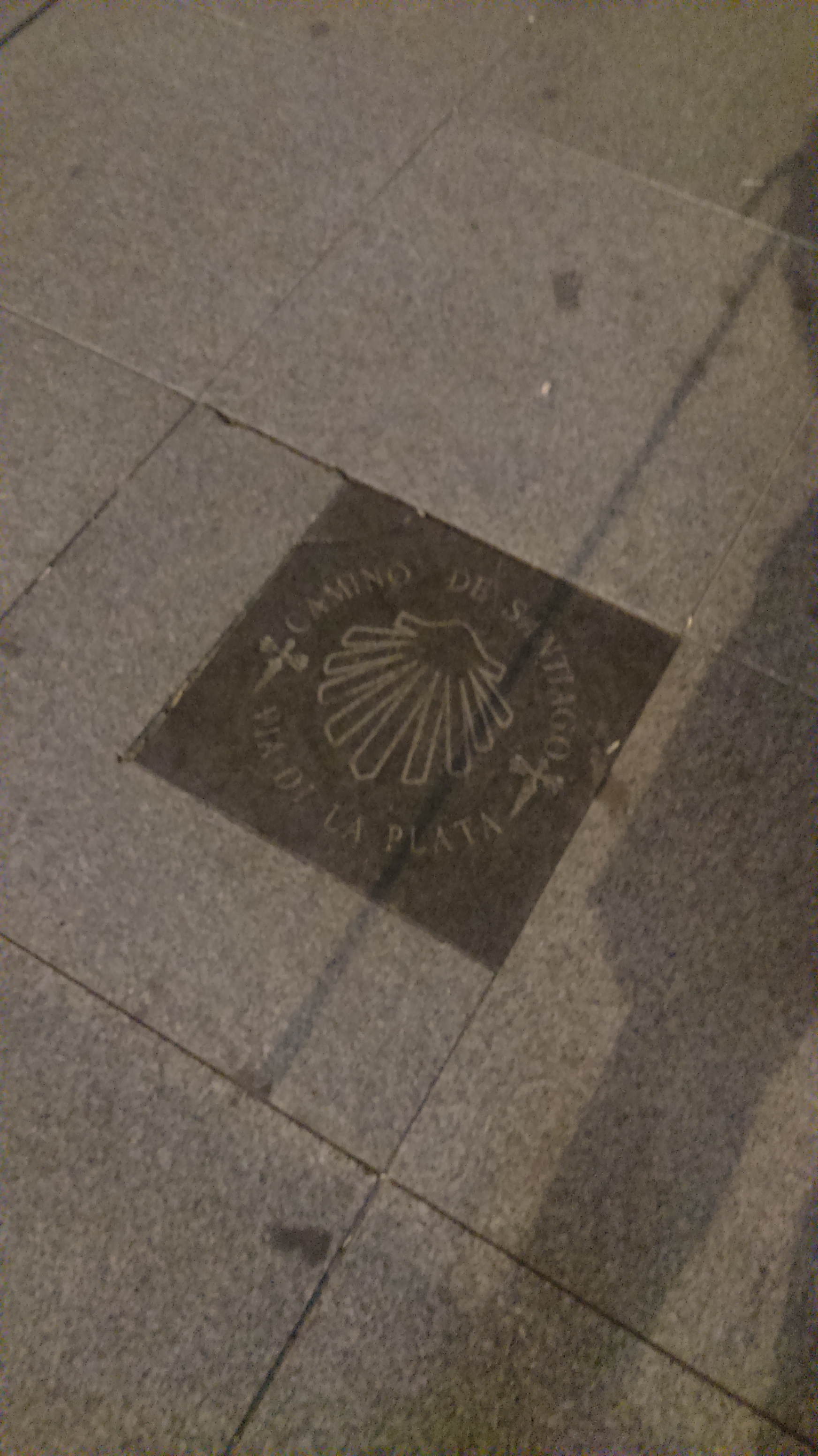
Jésus kindly dropped me off at a very early hour, still dark, to begin the Via de la Plata in the city of Seville, in deep southern Spain.
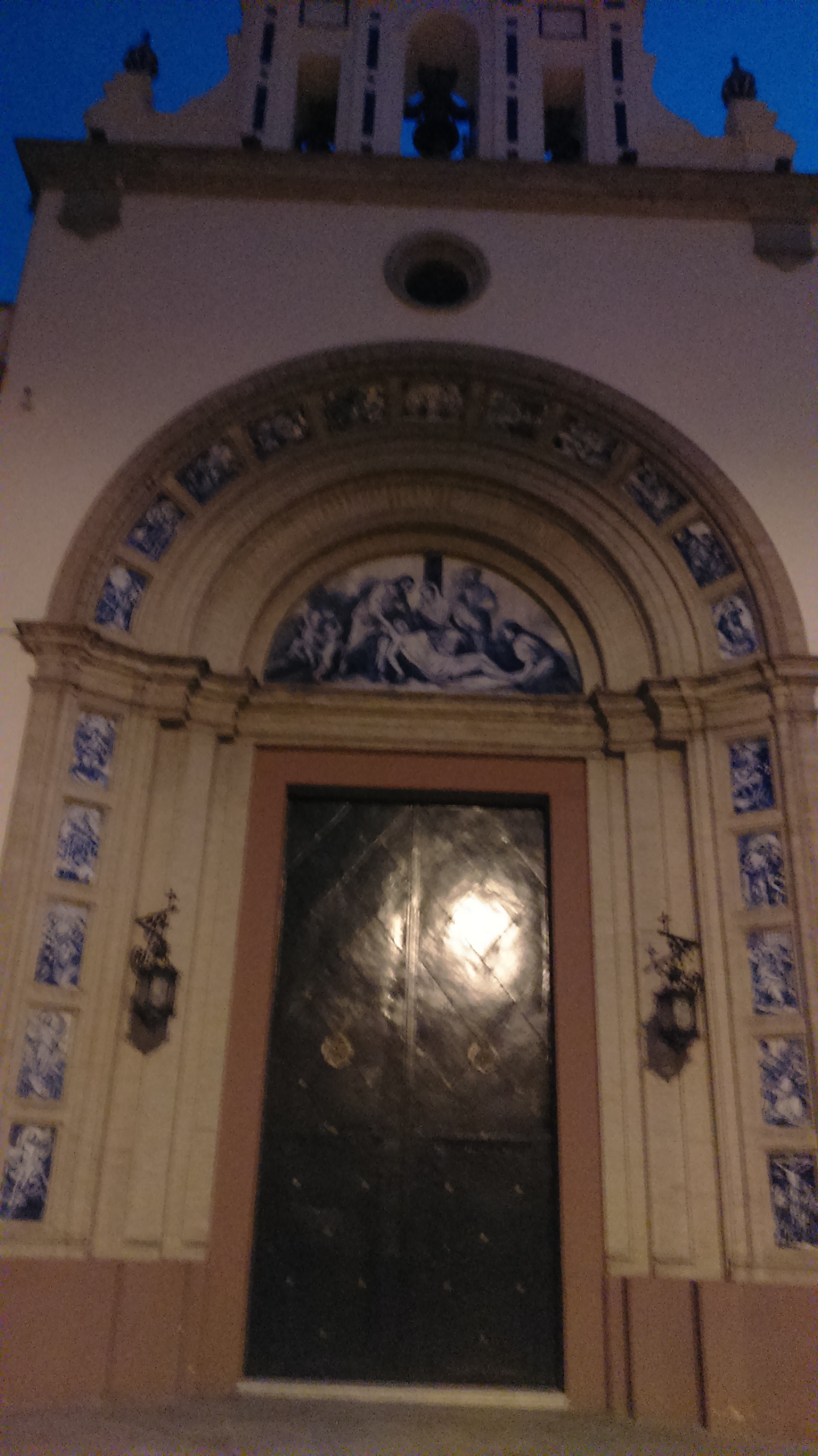
Negotiating my way out of town I saw a beautiful doorway, the flash of my camera lighting it up. What lies through the metaphorical portal for me at the start of this camino?

All the Spanish caminos have Santiago de Compostella as their final destination. I had completed the Camino Francés in late November 2016 and fancied continuing to walk, so started the VDLP (as it is known in the club!) from the end, in the direction of Seville where everyone else starts it. In fact it was very tricky to negotiate the signs and arrows going backwards, so I only did ten days or so and promised myself I would recommence from the beginning. And here I was, five months later!
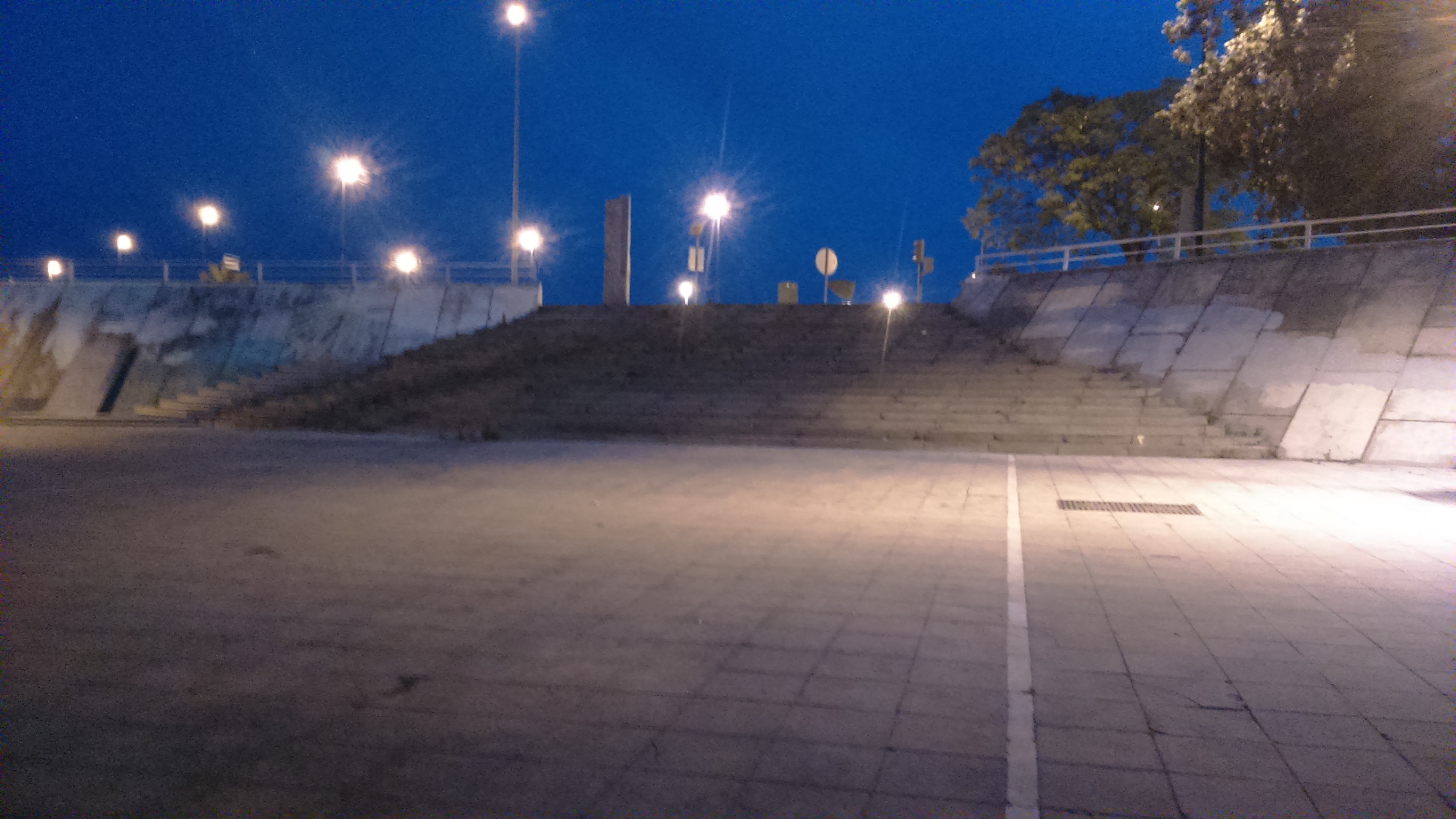
It was actually pitch dark at 6.15am except for the parts with streetlights

‘He gathered these details as he walked, and he could not have gathered them had he not opened himself to the kinds of encounter and perception that travel on foot makes possible. Walking, Lee notes, refines awareness: it compels you to ‘tread’ a landscape ‘slowly’ to ‘smell its different soils.’ The car-passenger by contrast, ‘races at gutter height, seeing less than a dog in a ditch’. Lee, like Leigh Fermor, believed in walking not only as a means of motion but also as a means of knowing..’. taken from Robert Macfarlane’s introduction to ‘As I Walked Out One Midsummer Morning’ by Laurie Lee.
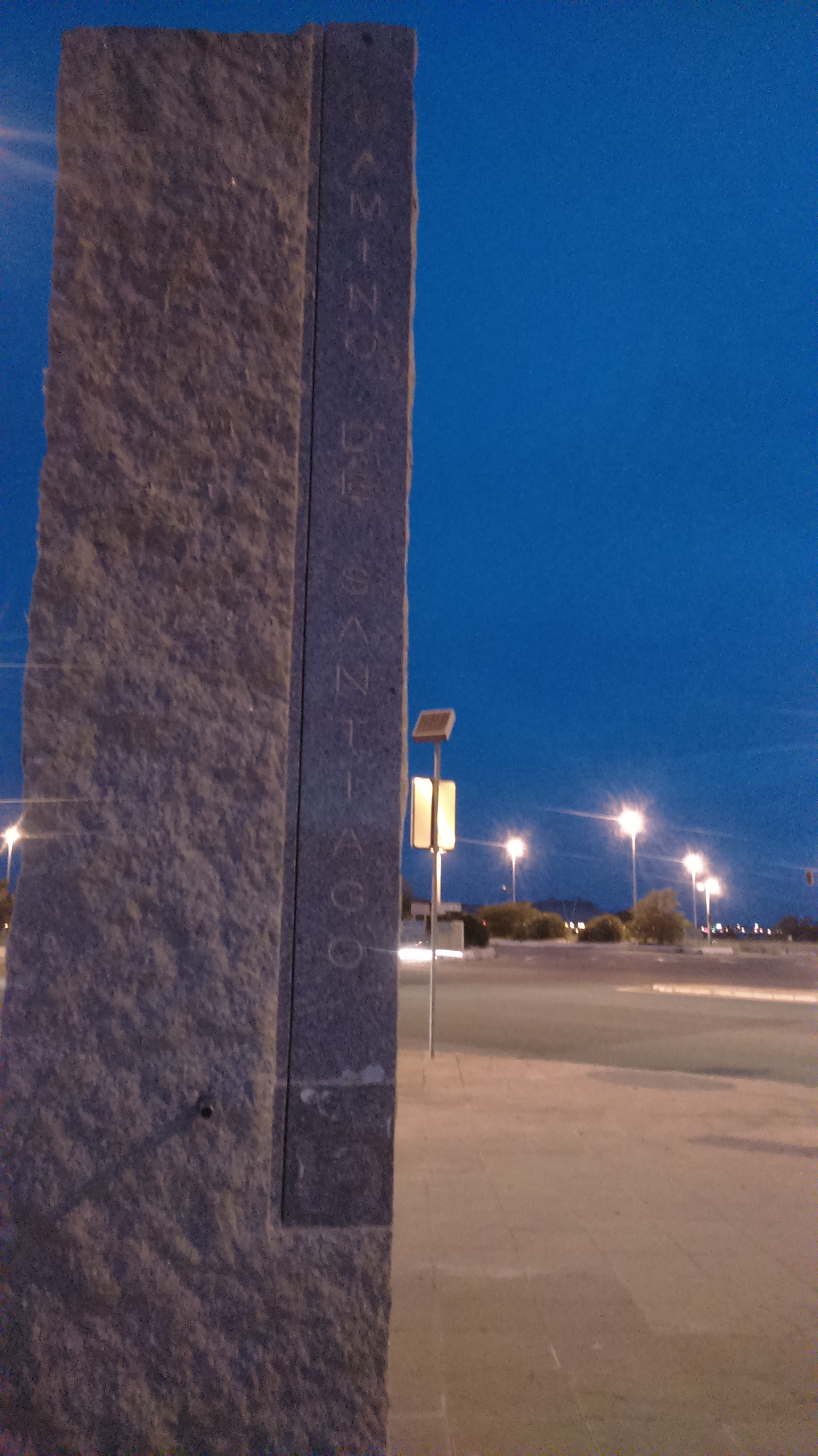
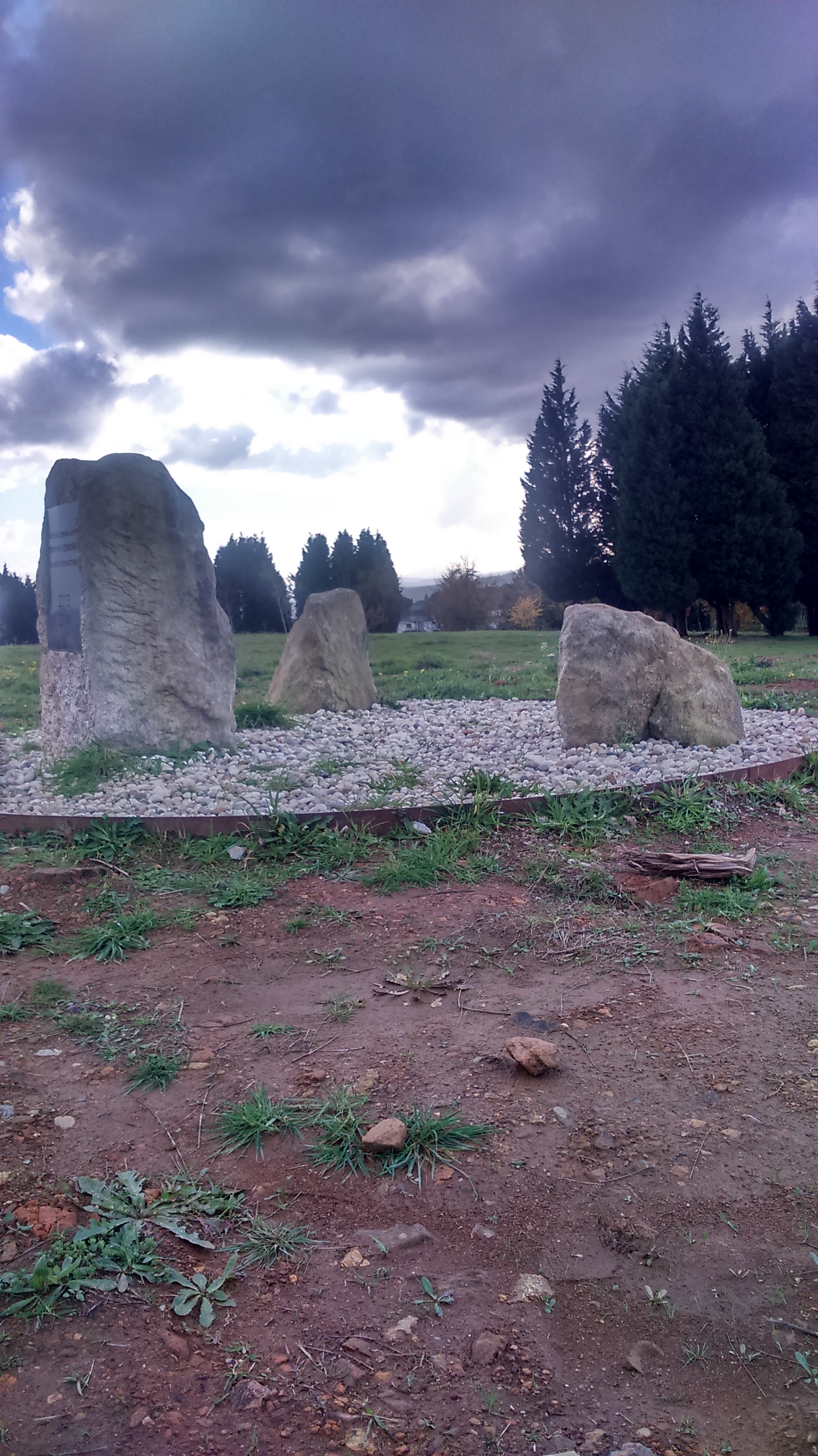
Camino de Santiago is carved down the right hand side of this stone marker at the edge of the bypass

Like Laurie Lee, I had travelled across Spain, unlike him I had spent one day in fast cars (Zaragoza – Madrid – Seville), and so I resonated with the above quote. I was so very glad to have my feet back on the ground and be moving at what felt like my natural pace again.
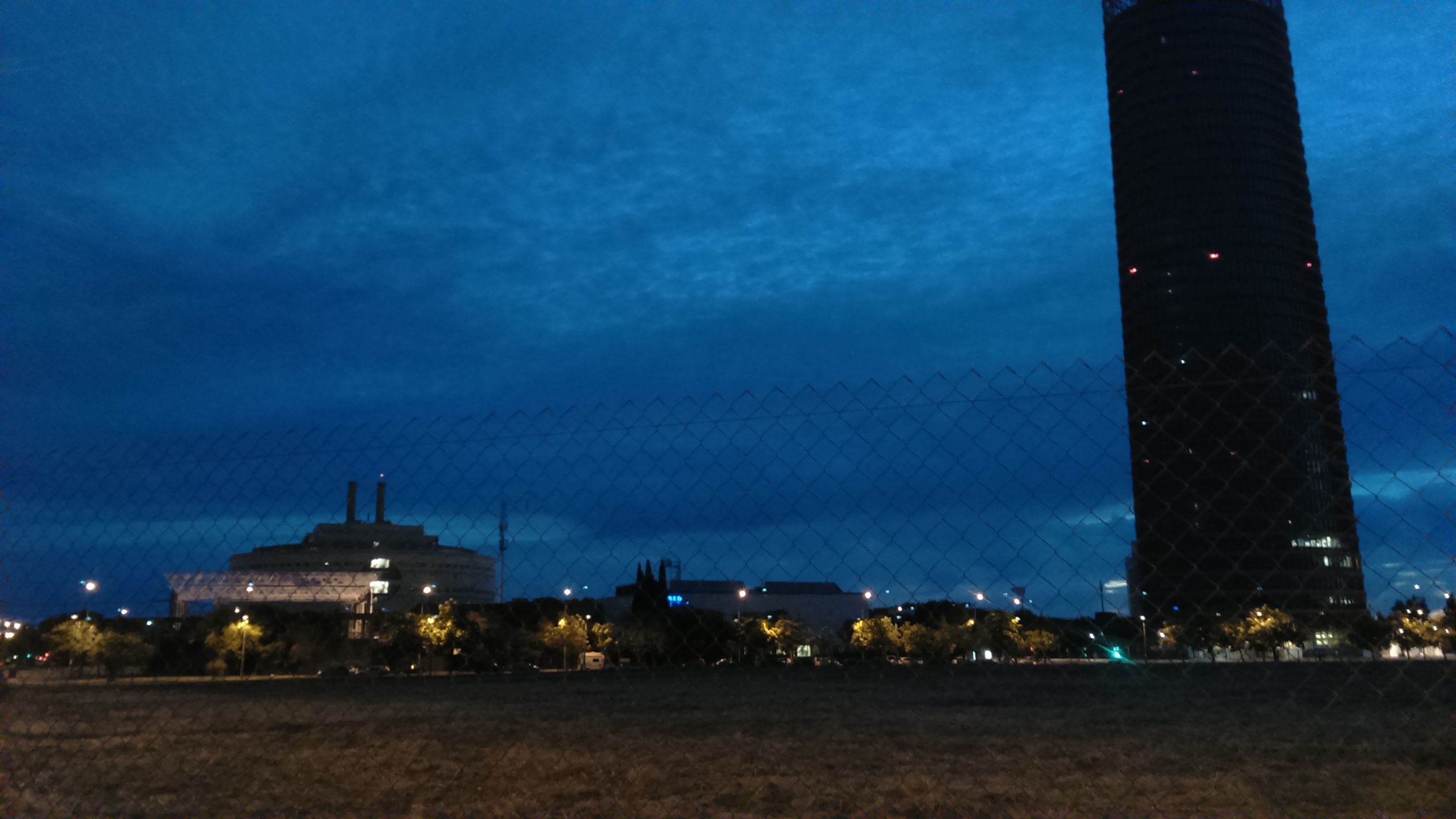
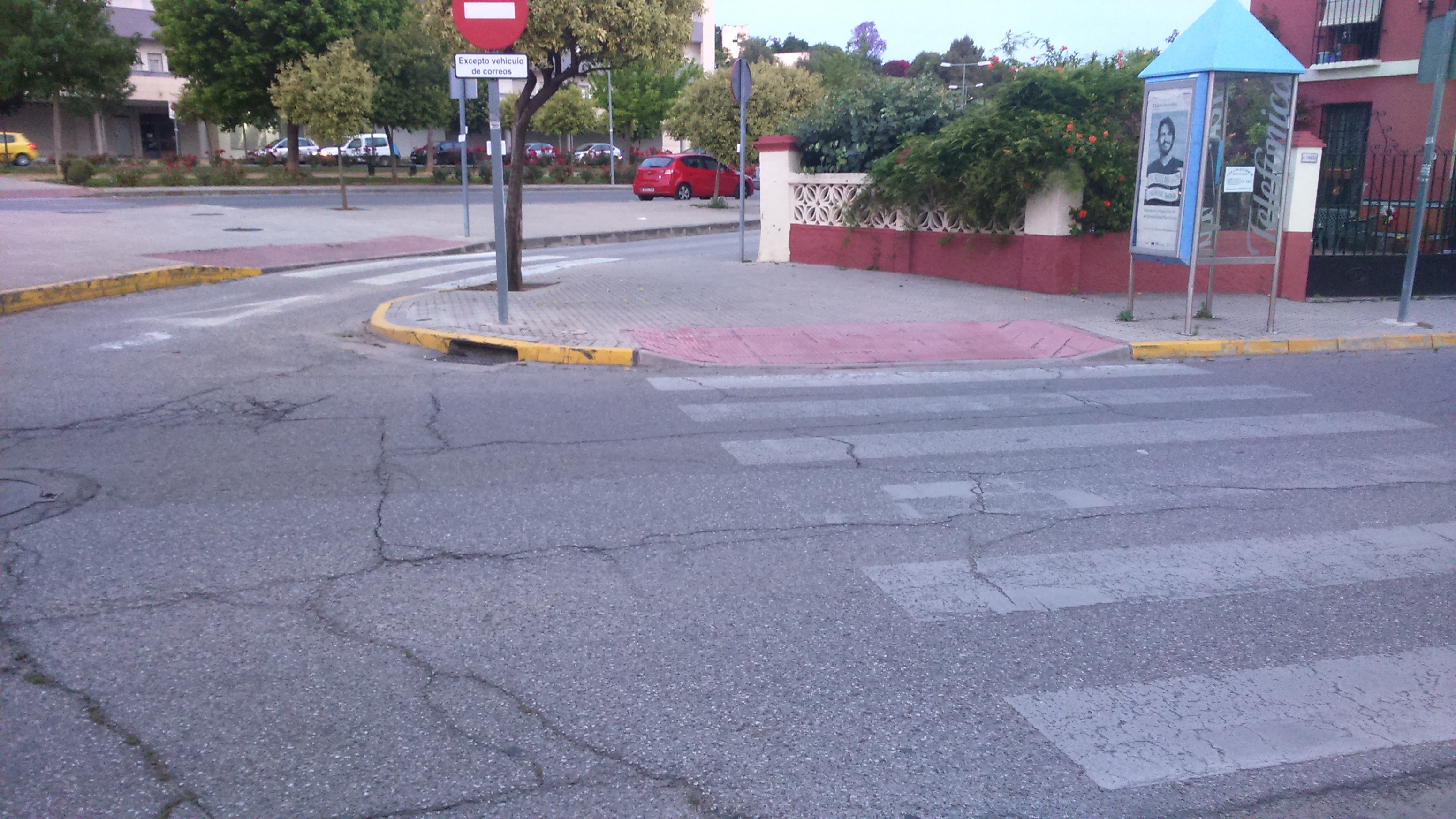
And of course I got lost as usual, attempting to find my way away from the urbanisation. Seville is a beautiful place, but my heart lies in the rural landscape and I was keen to move on there. The birds, my constant companions, were wide awake. I trundled through wasteland searching for the yellow arrows – scouring the edges of benches, trunks of trees, discovering one wrapped around a lamp post, and another on a motorway bridge underpass.
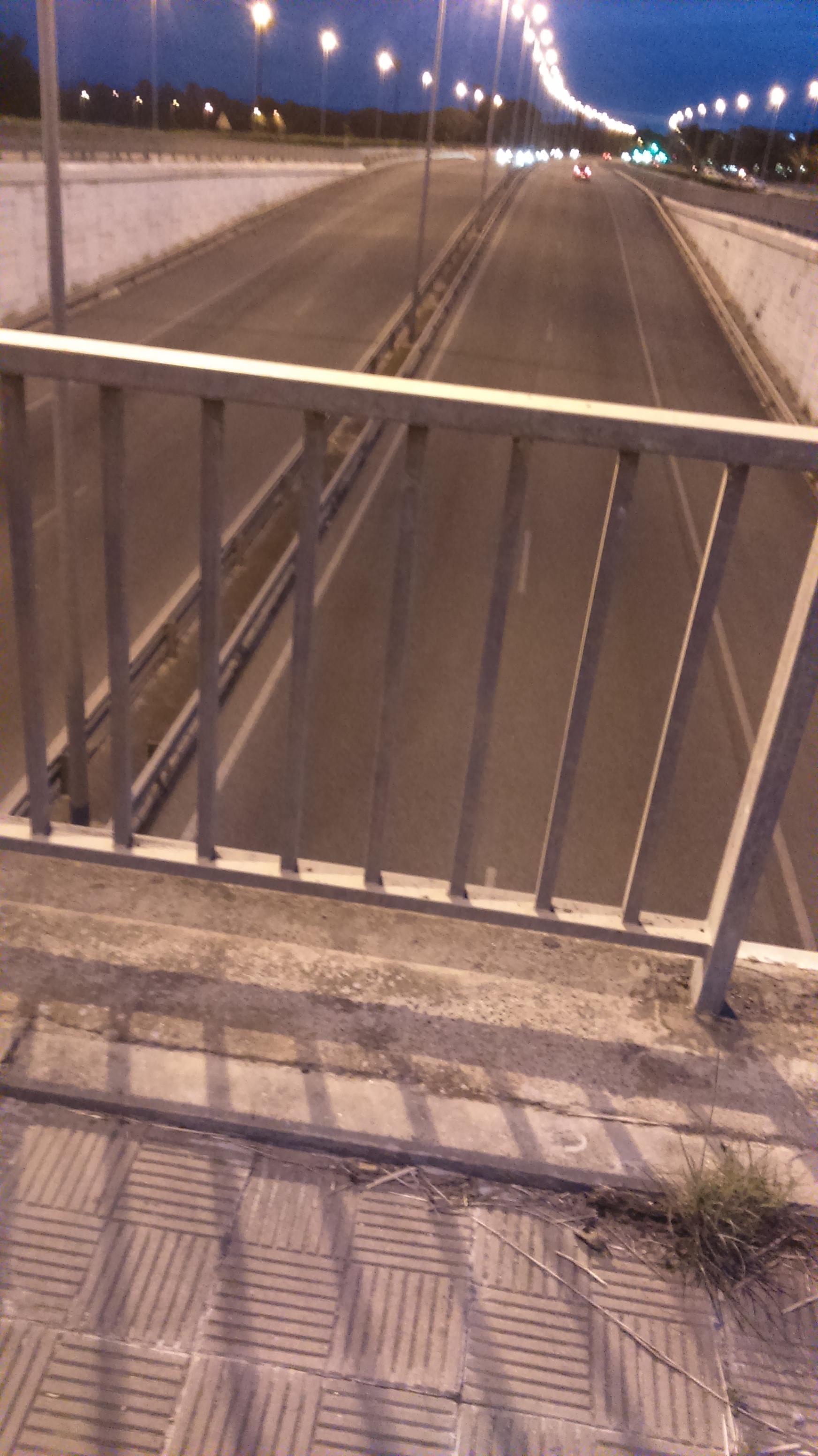
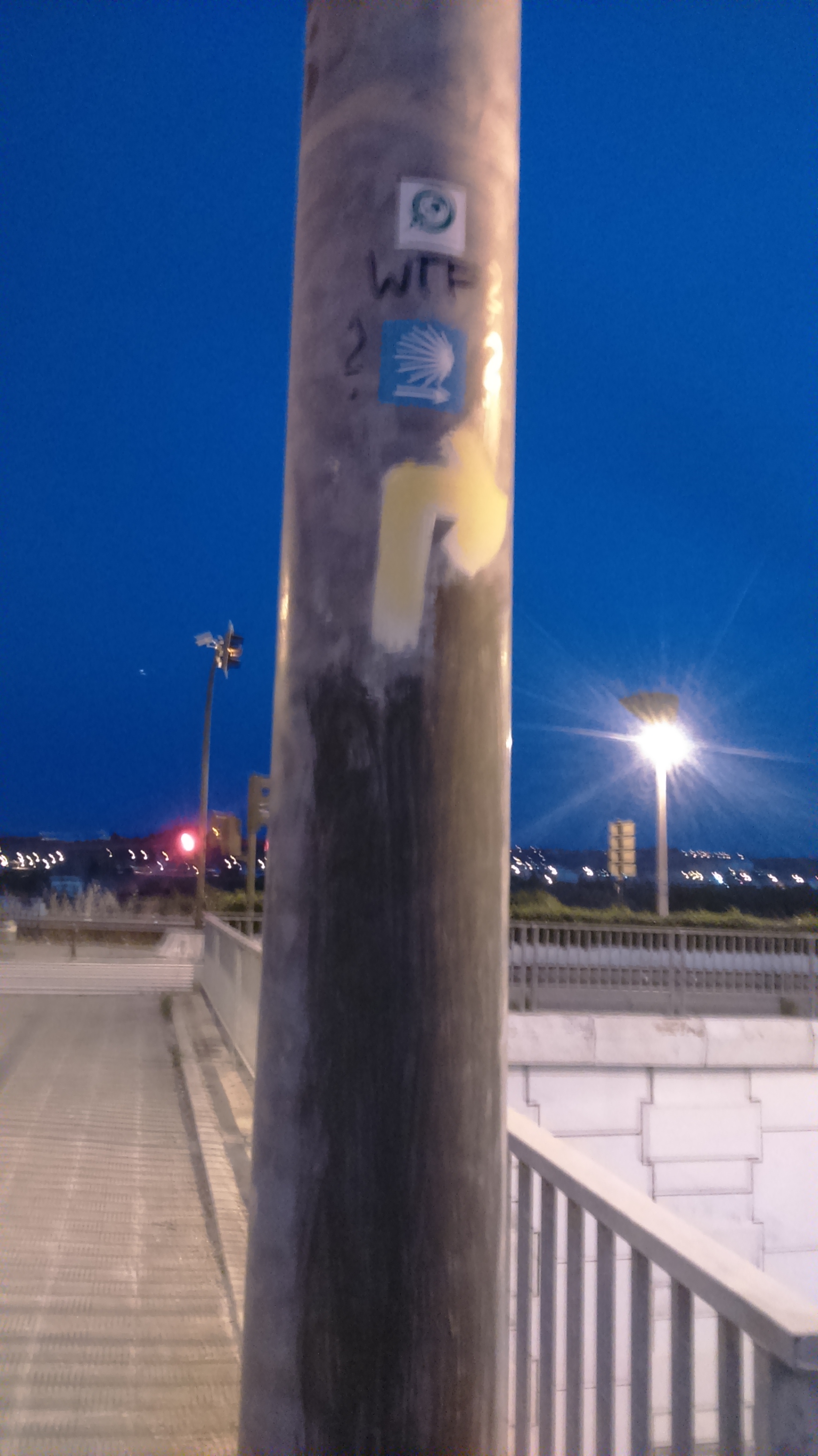
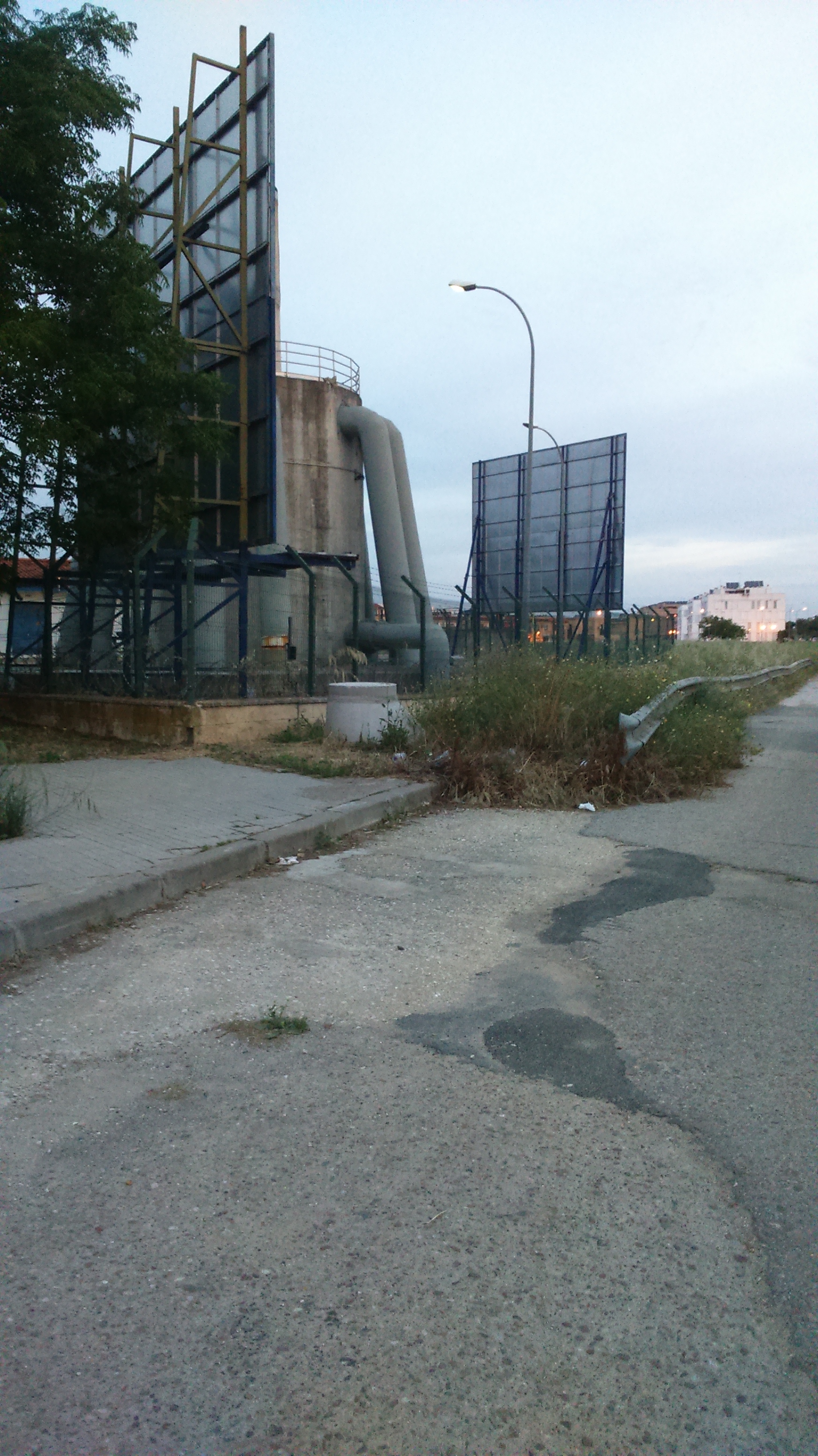
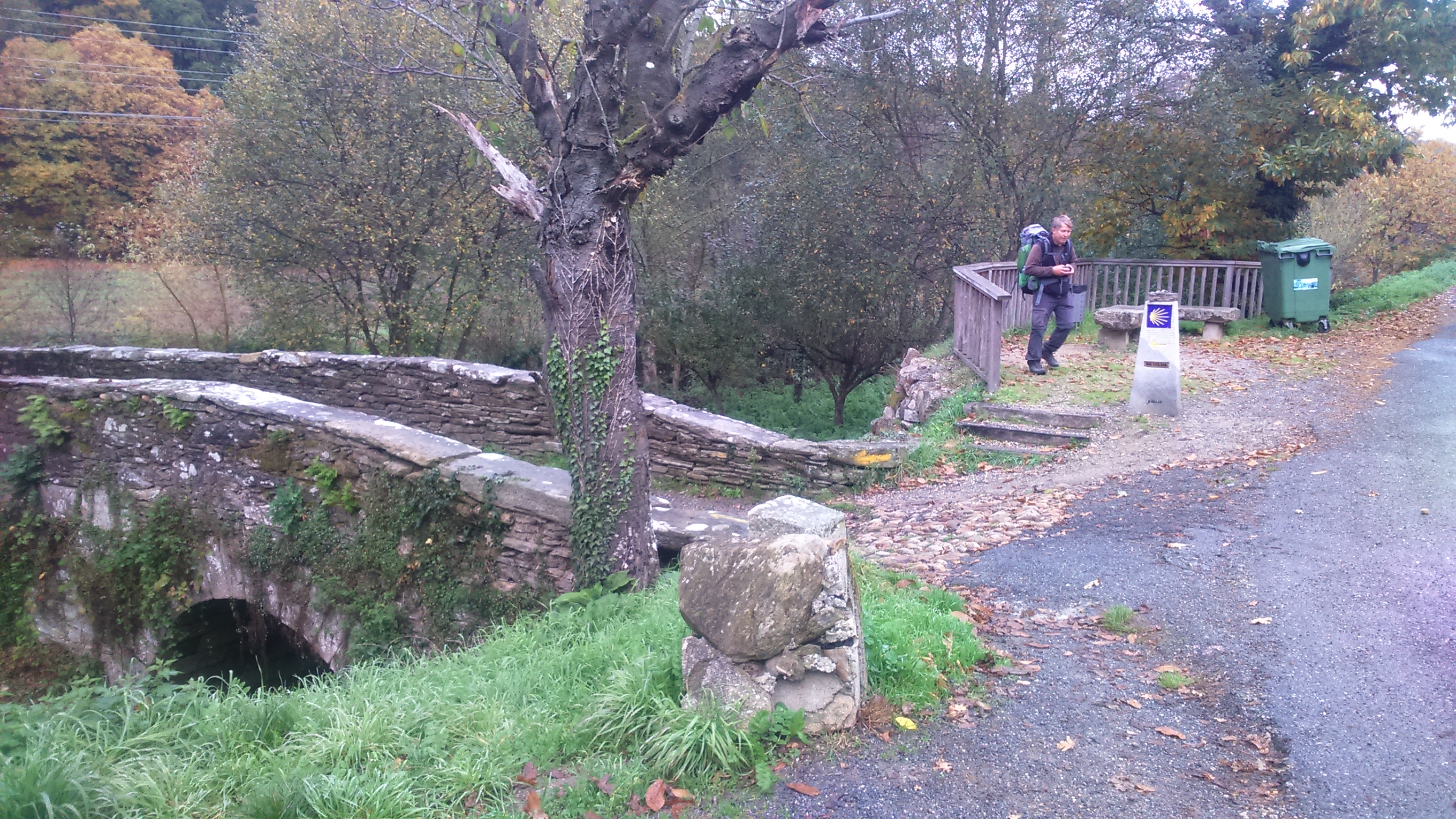
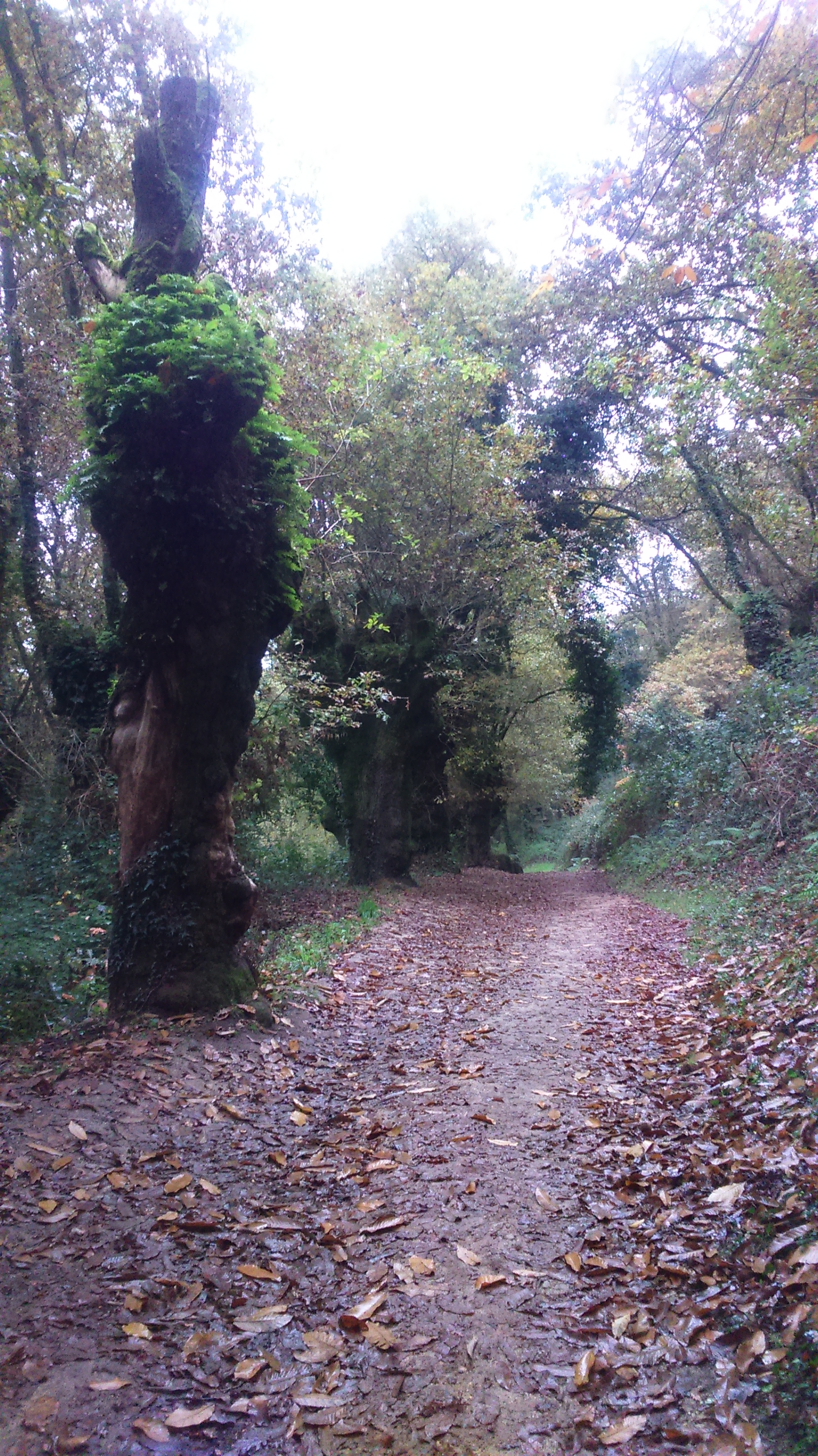
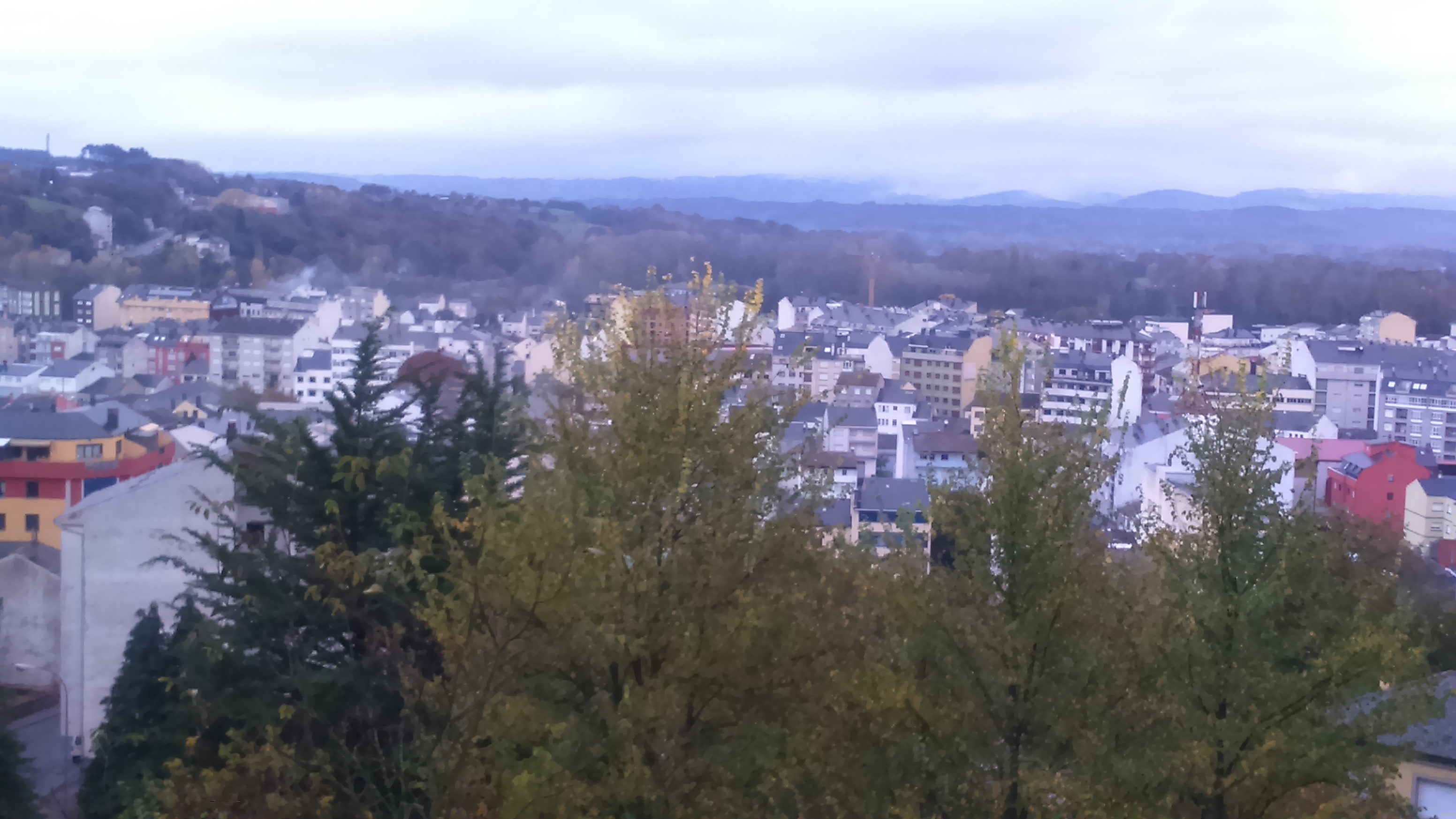
These photos are in order along the path.

My advice to fellow travellers: everyone knows the way, ask, and/or wait patiently for a sign.
Do not go too fast, look back so you get sights of the sprawl you are leaving behind.
And if, like me, you have left before dawn, you will have the added bonus of seeing the sky lighten gradually at your back.

Like many parts of all the caminos, the outskirts of cities and large towns are less than salubrious, but because I was so excited, and have been practicing appreciation of all that is around me, there is beauty if you look in the right way.
I was not really going that fast, but there were 3 Germans walking out at the same time as me, and they went ‘like the clappers’. I needed to keep up with them, so I thought, because they were so confident, but it was not my natural speed and there was not enough time to take focused photos. I have kept it in as a record of the route.
I was hastening to keep up and did not take the time to stop long enough to focus
Crossing the River Guadalquivir further up

There were trees laden with oranges (no photos) lining the streets, and I kept on going straight.
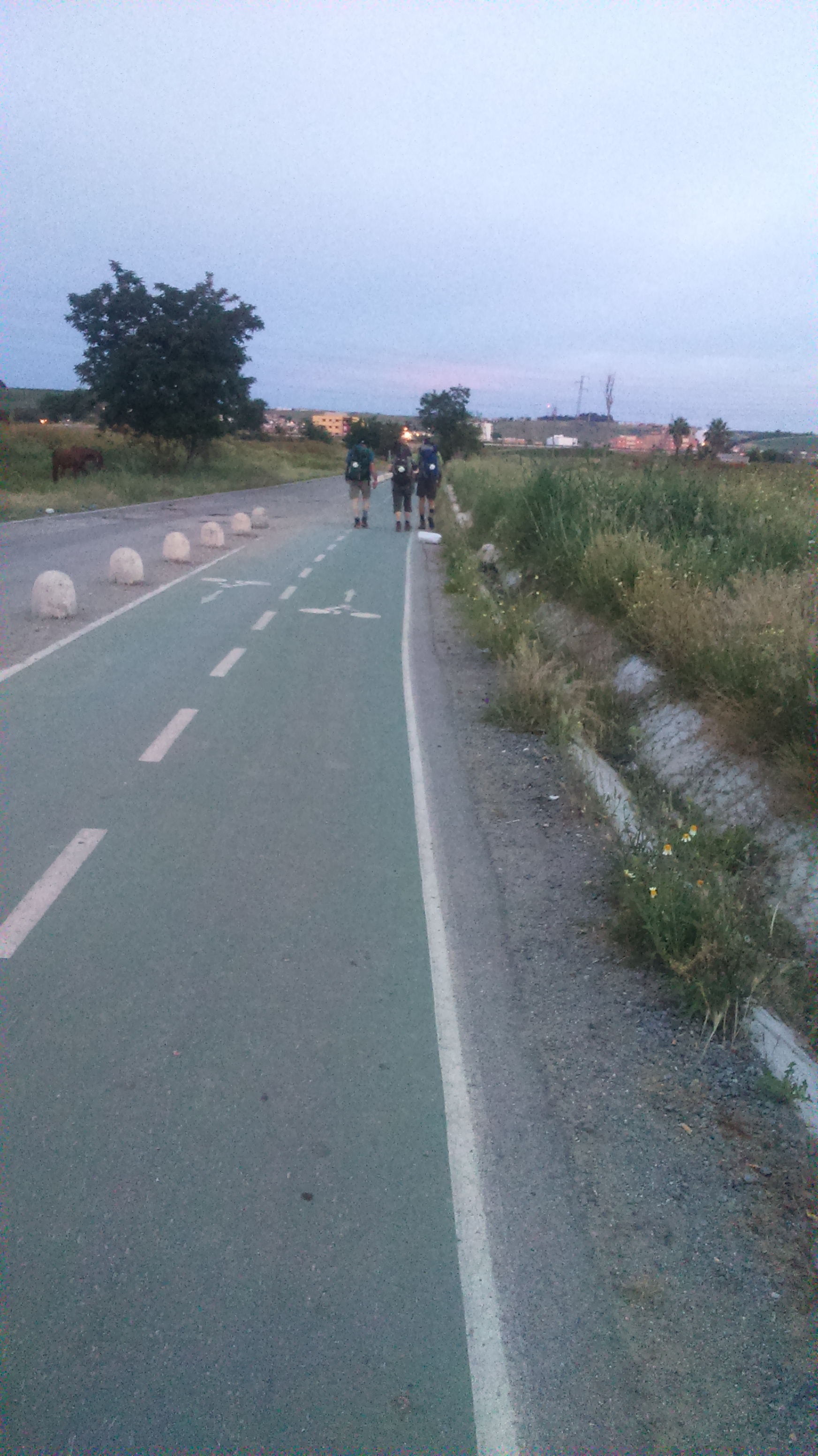
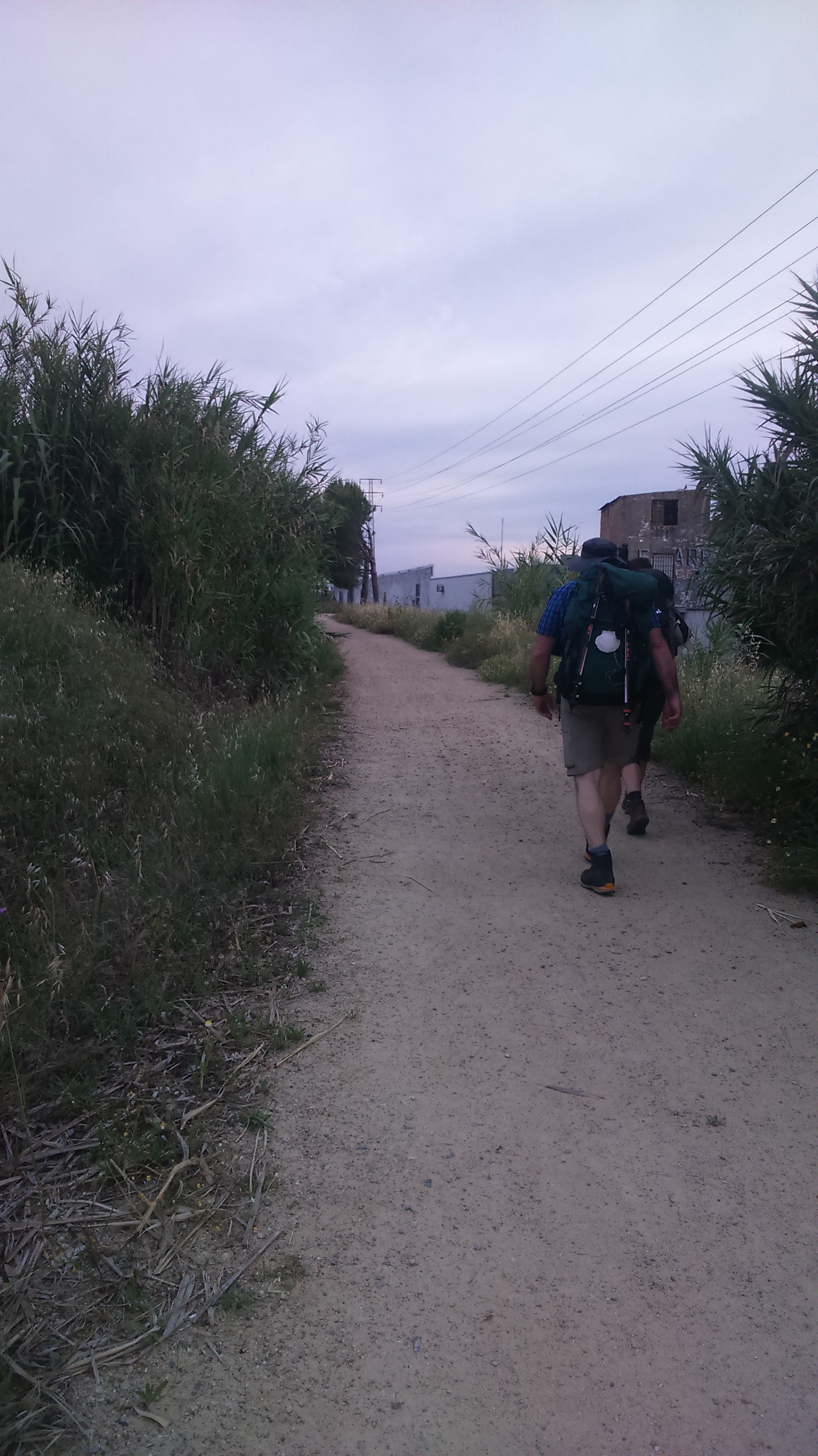
Racing Germans speeding ahead
And horses tethered by the roadside. I was to see many of them as I made my way north. Good, free grazing
Another dreadfully blurred photo, not for show, but for those following the route as well
It is an exercise in appreciation of the industrial
The sun was all but up by this time
We all four lost our bearings here. We asked someone who, most unusually, sent us the wrong way
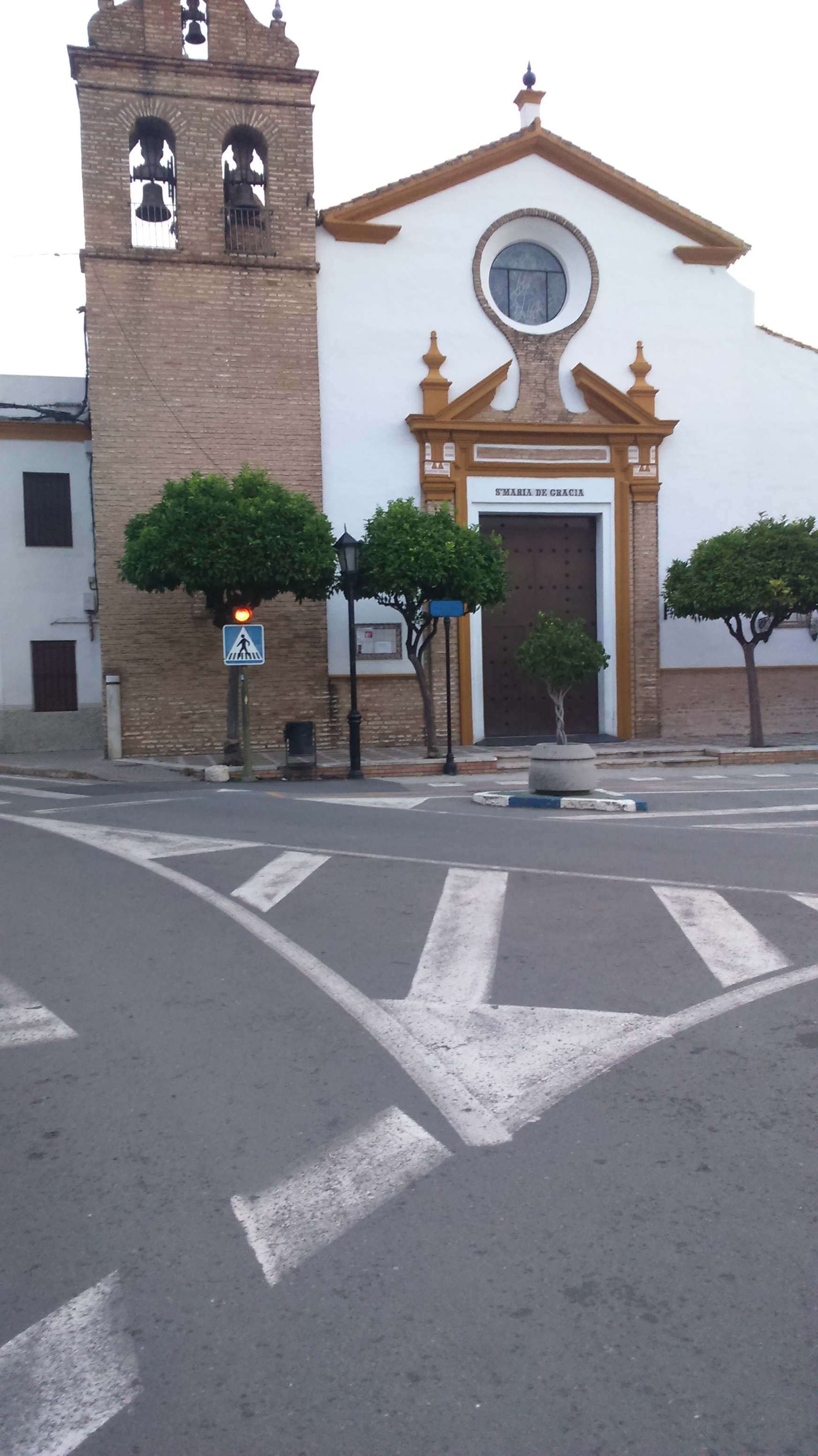
Hints now of things to come. Do you see the yellow and white decorations on the church with a flat bell tower?

I dashed into a cafe for a take-away croissant (no breakfast – very stupid – I never learn) and promptly lost the others. I panicked thinking I would never find the way on my own, so I ran to catch up. Ran! It is no fun with a backpack I can tell you.
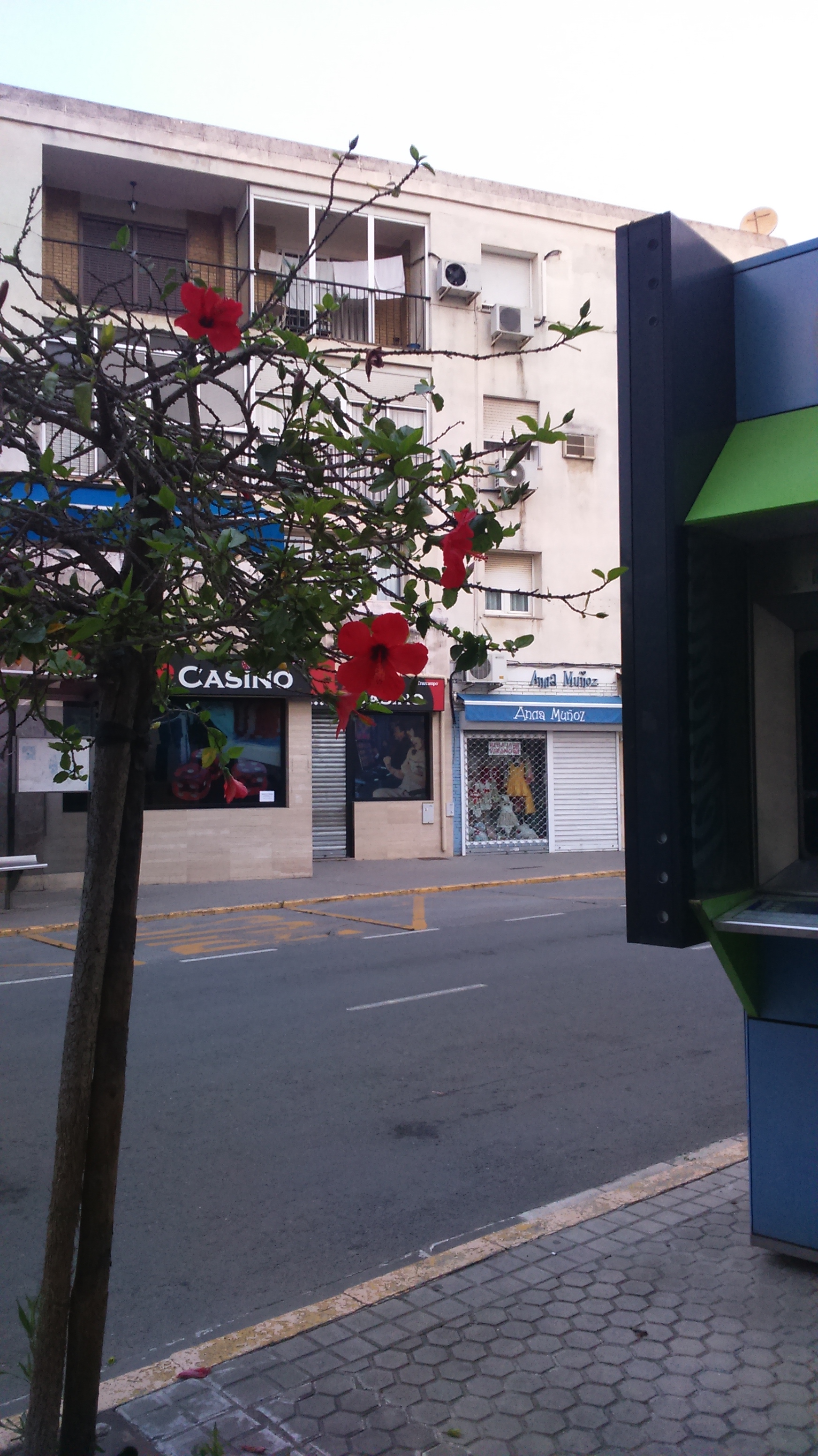
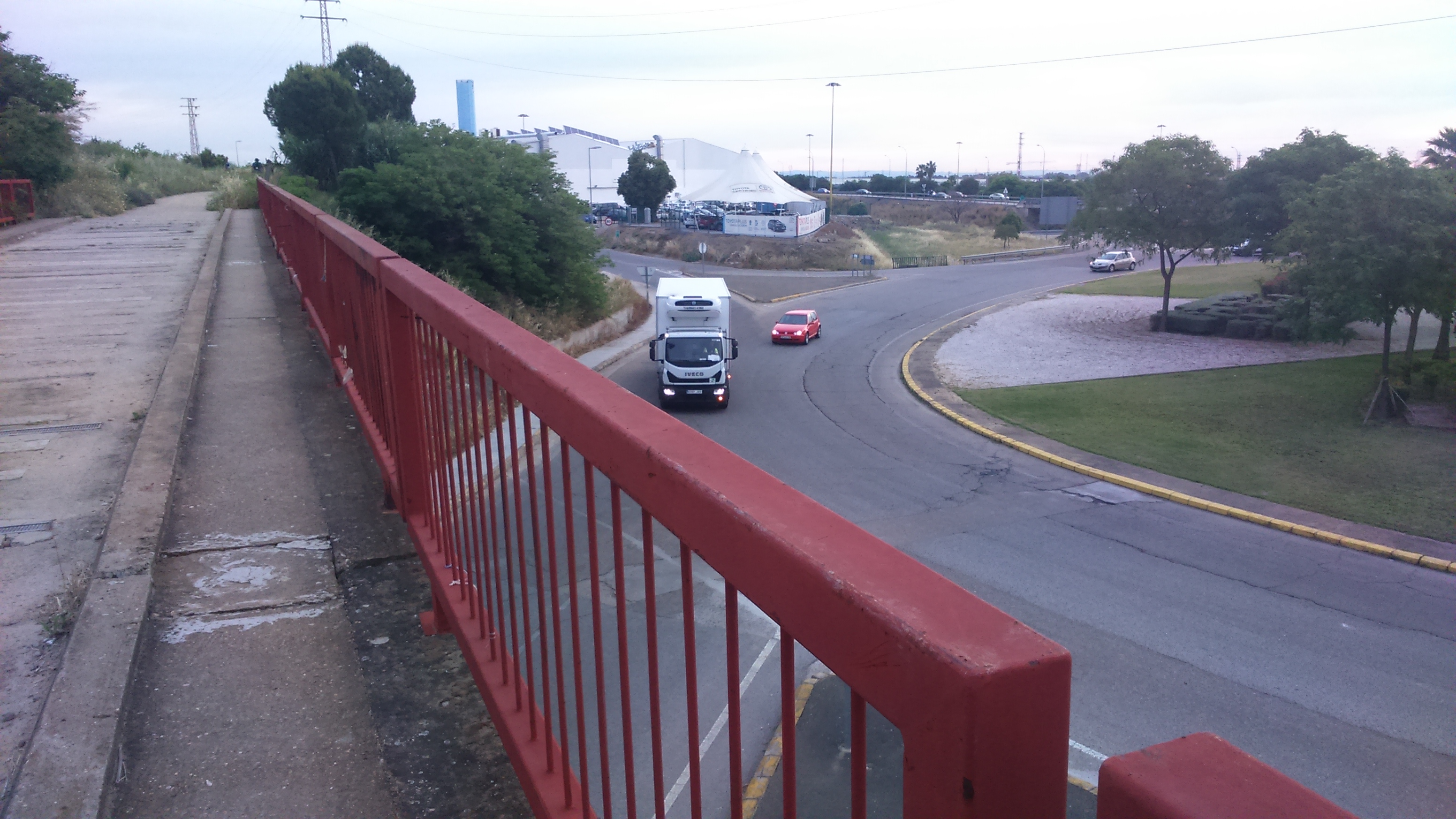
I gave the casino a miss though
More motorway
Dull weather
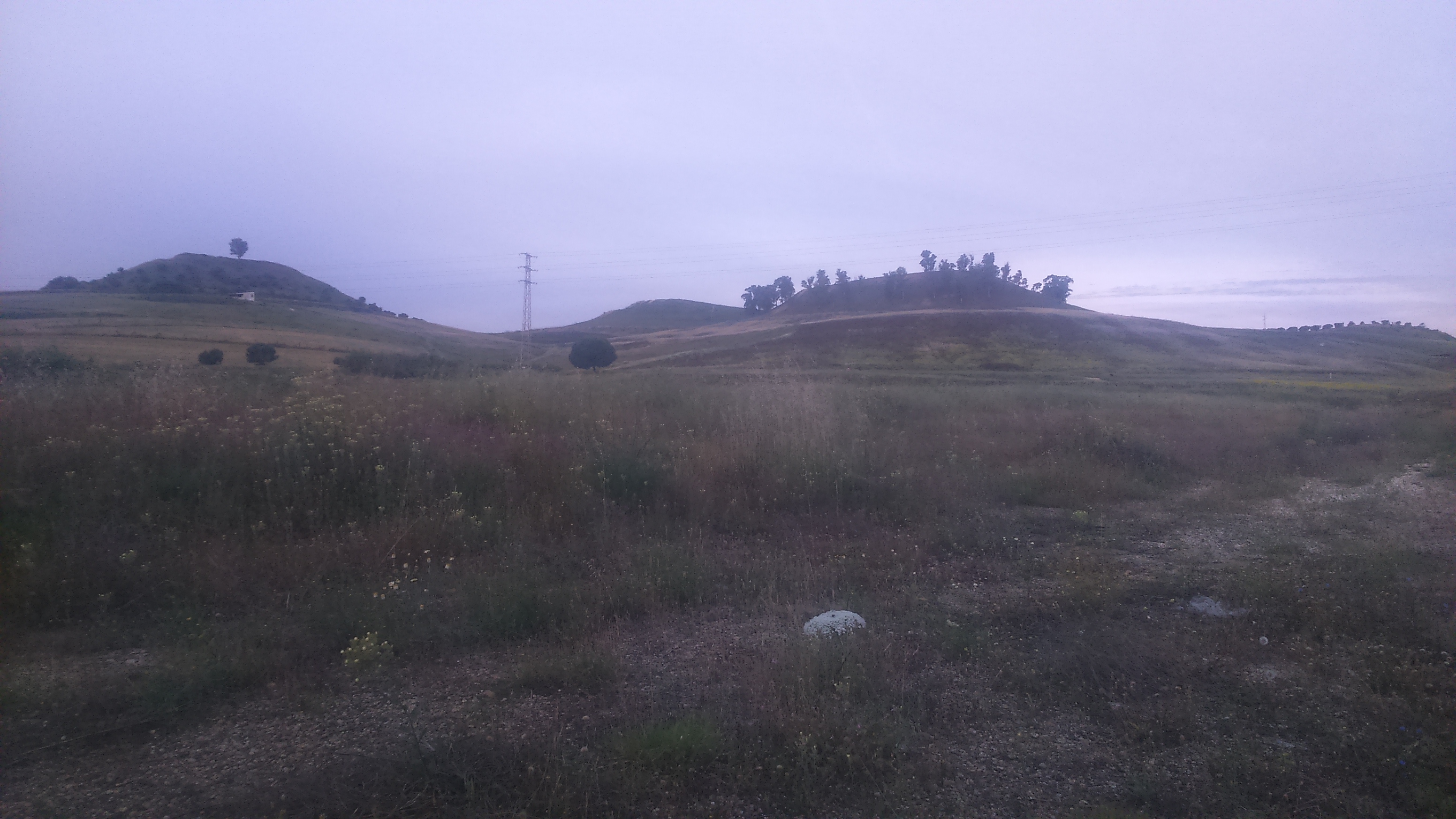
At least I was starting to see a view of the countryside and not just railings and dual carriageways
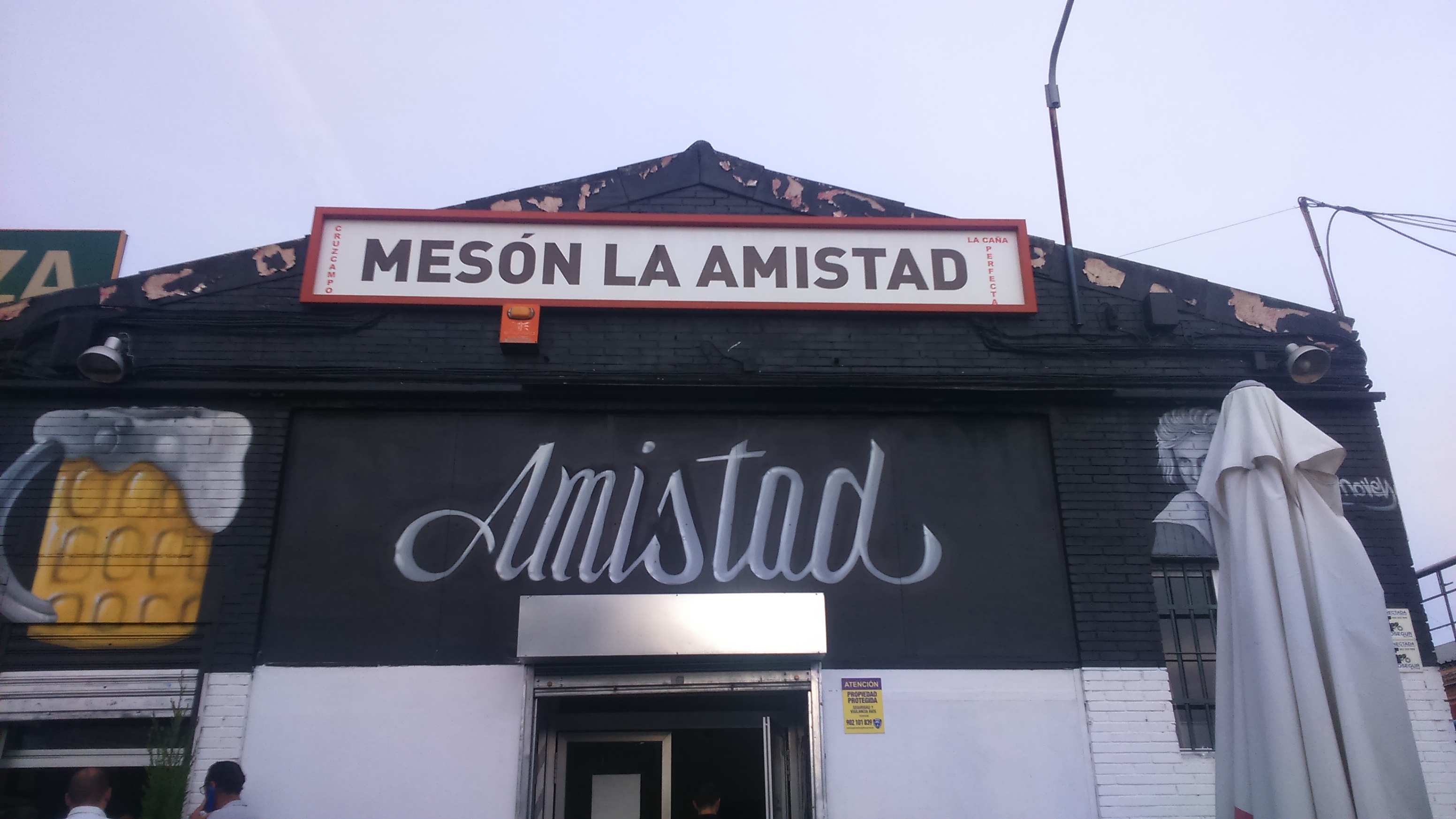
Before I left, Pedro dealt me a card for the journey. It was ‘Amistad’ meaning friendship. When I came across this around 8am, it seemed like an auspicious sign

The unmistakeable sound of a peacock heralded my arrival in Santiponce, 7km from Seville, after two hours. One of the richest artistic and cultural heritages in Andalusia, it is sited on the banks of the River Gualdaquivir, which suffered several floods. One caused its surviving inhabitants to take refuge in the monastery (see below), which then granted the highest land for the safe re-building of the town as it is now.
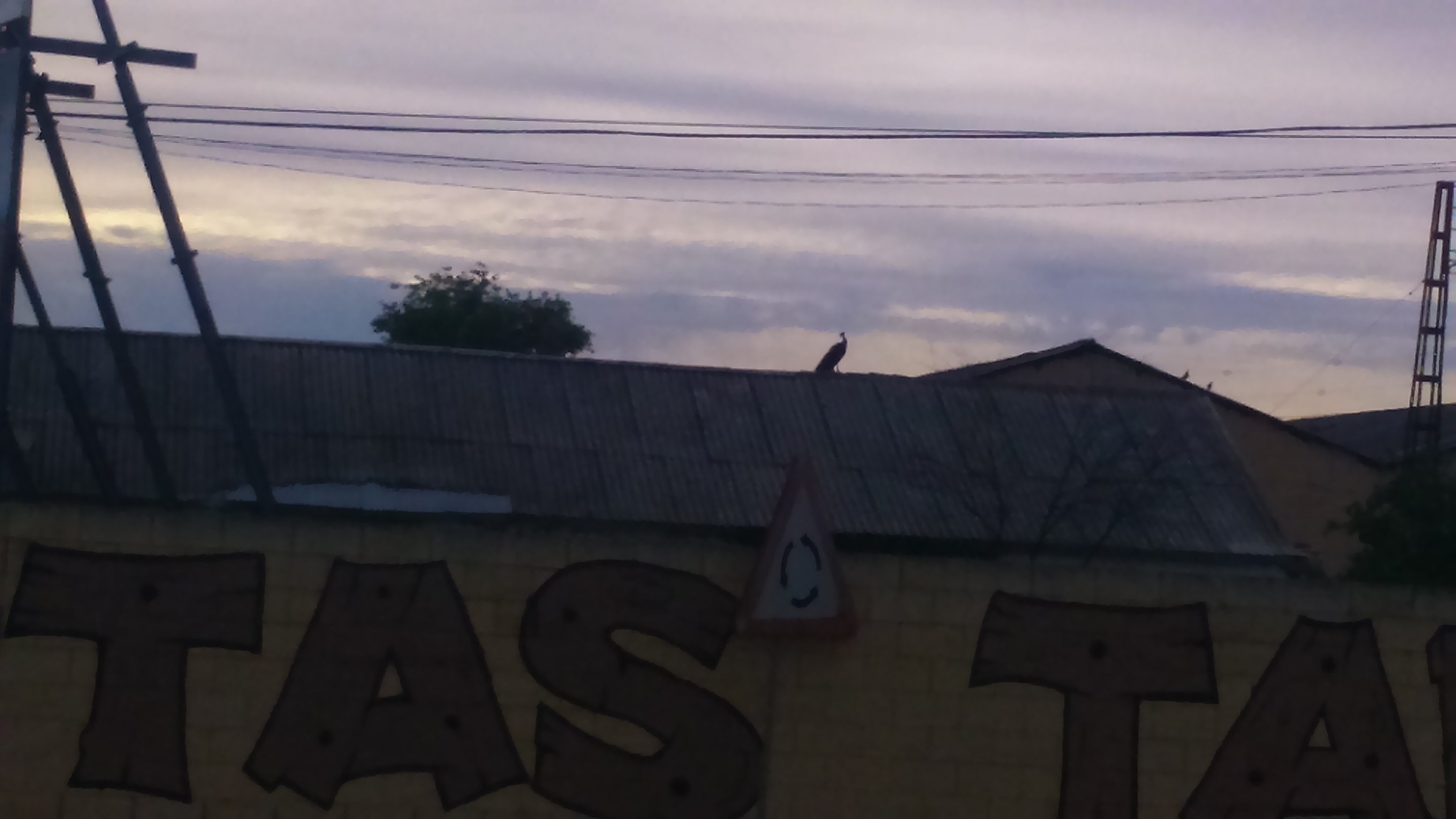
I searched for the squawk. It was on the roof, silhouetted against the morning sky
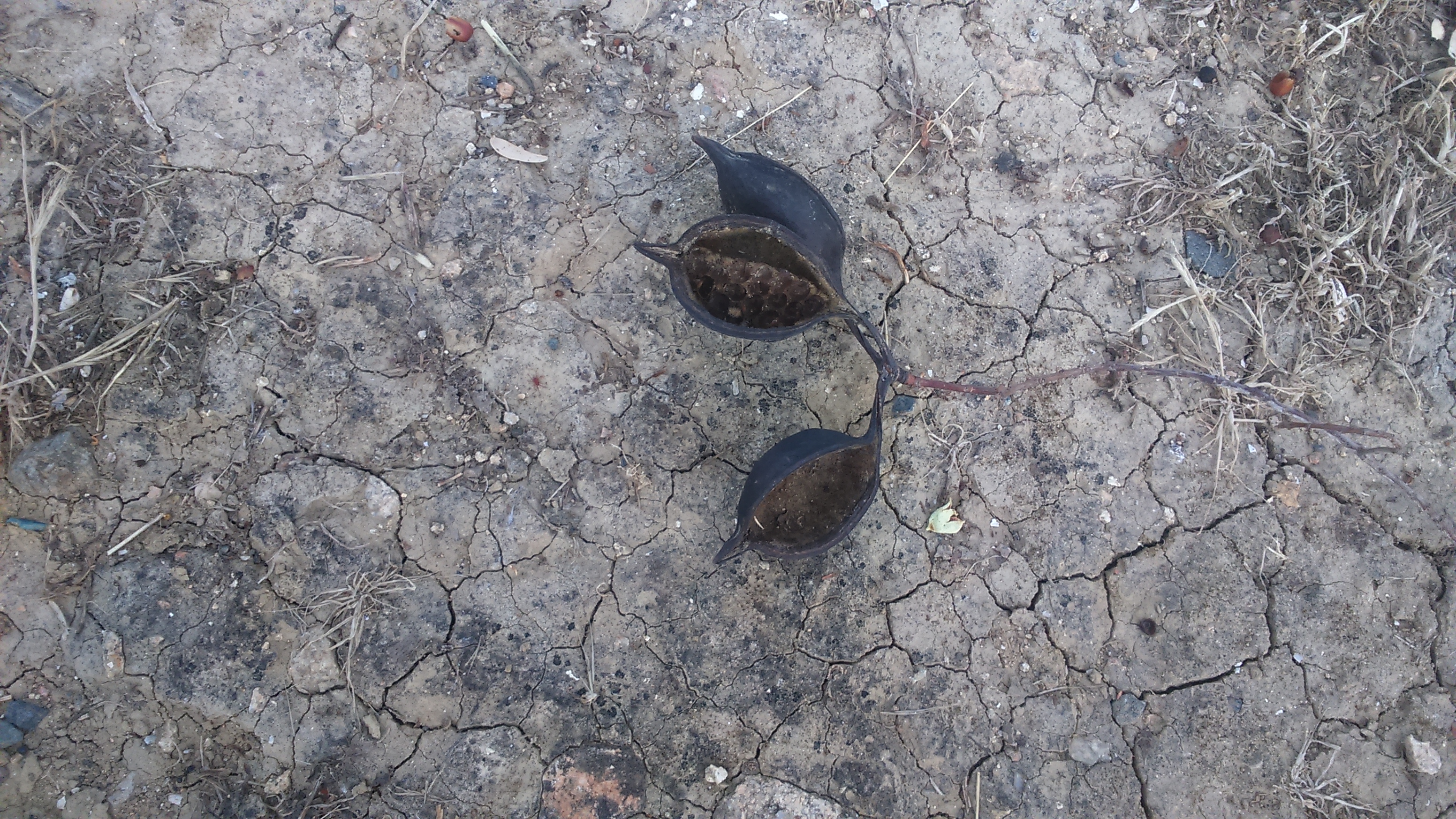
I do not know what tree these seed pods come from, but I liked the shape and colour against the cracked earth
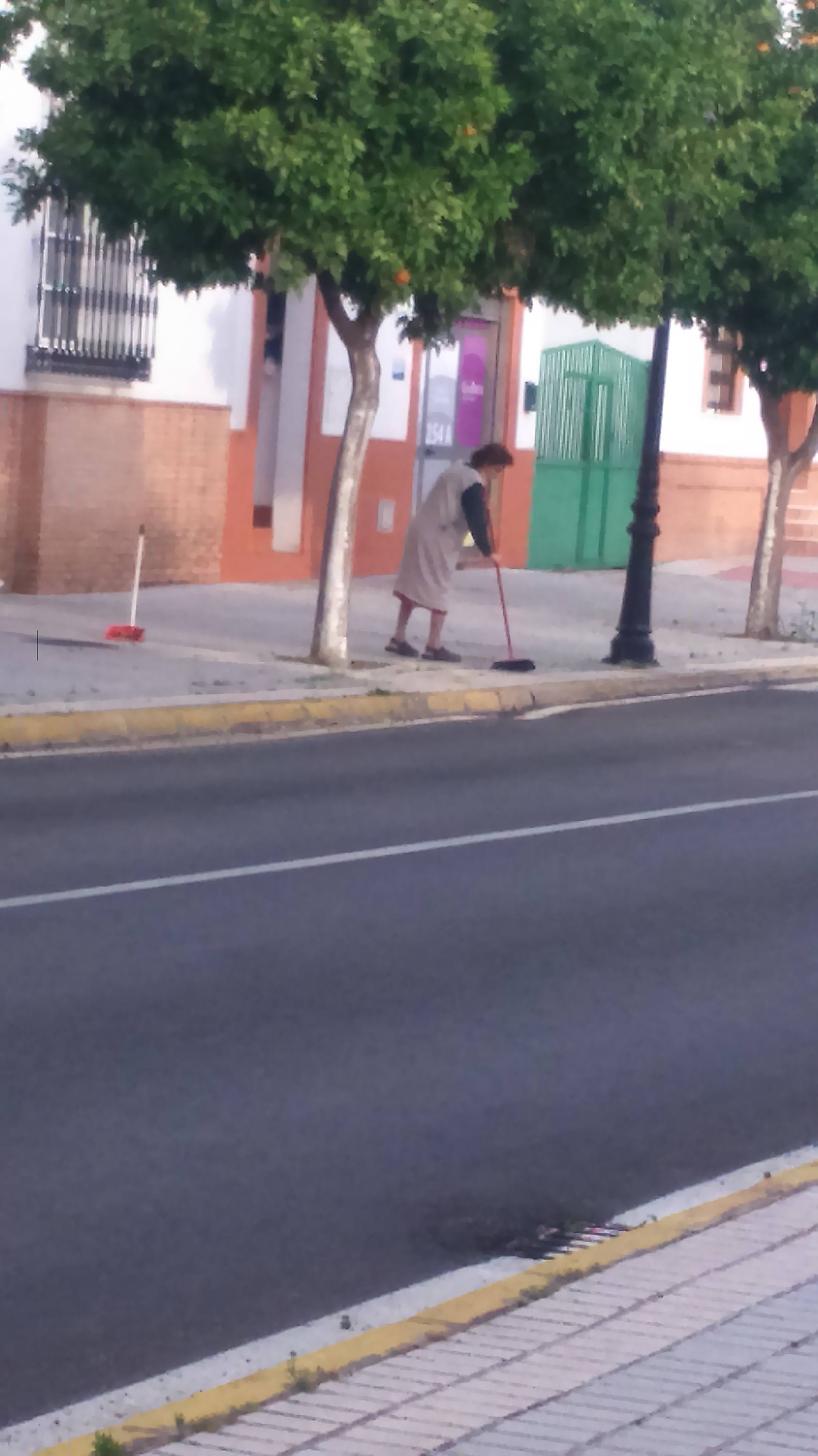
Early morning sweeping in her pinny – it seemed like a classic Spanish sight somehow

There were more orange trees and the sun was trying its hardest. I have to say that after yesterday’s scorcher, I was rather glad that it was not as hot, given it was my first day back on the road with the rucksack and all.
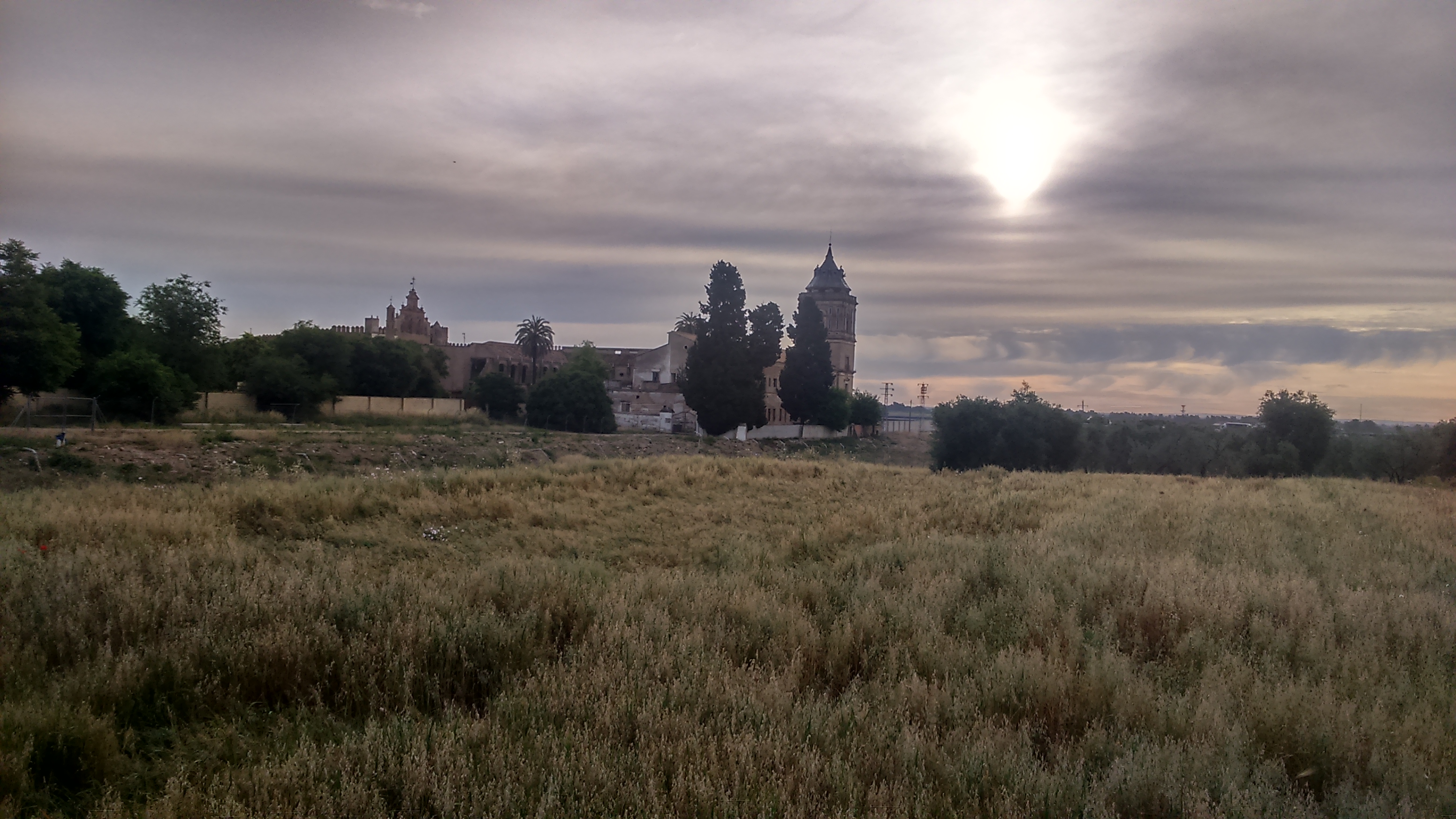
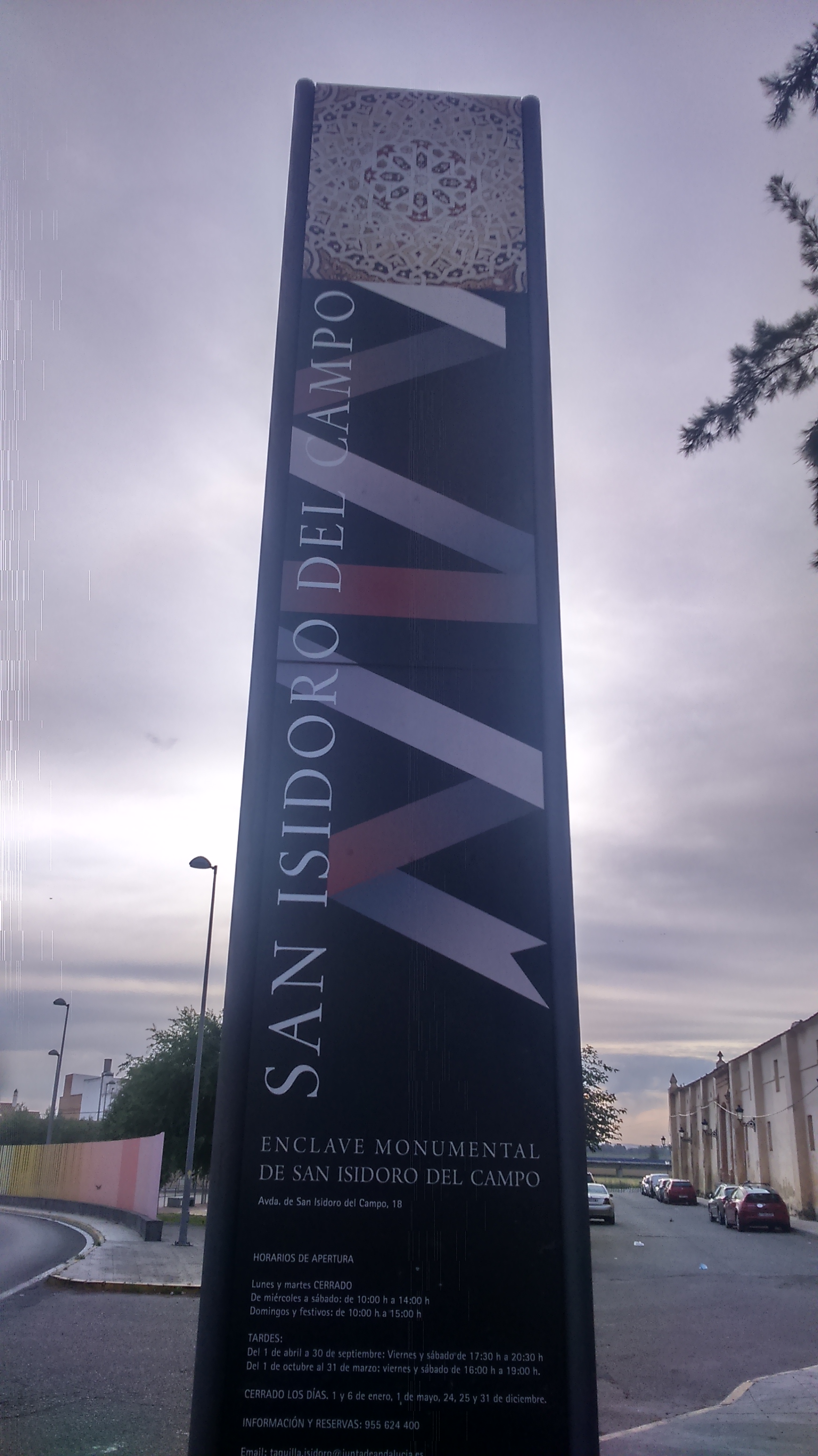
Beautiful though isn’t it? The ex-Monastery of San Isidoro del Campo, founded in 1301, on the edge of the town
Santiponce is a very attractive place

I took a detour to see the Roman Theatre but it was shut, only open in the summer (I guess May is not the summer) for performances. The nearby Tourist Information was very helpful though, and it had lovely clean toilets.
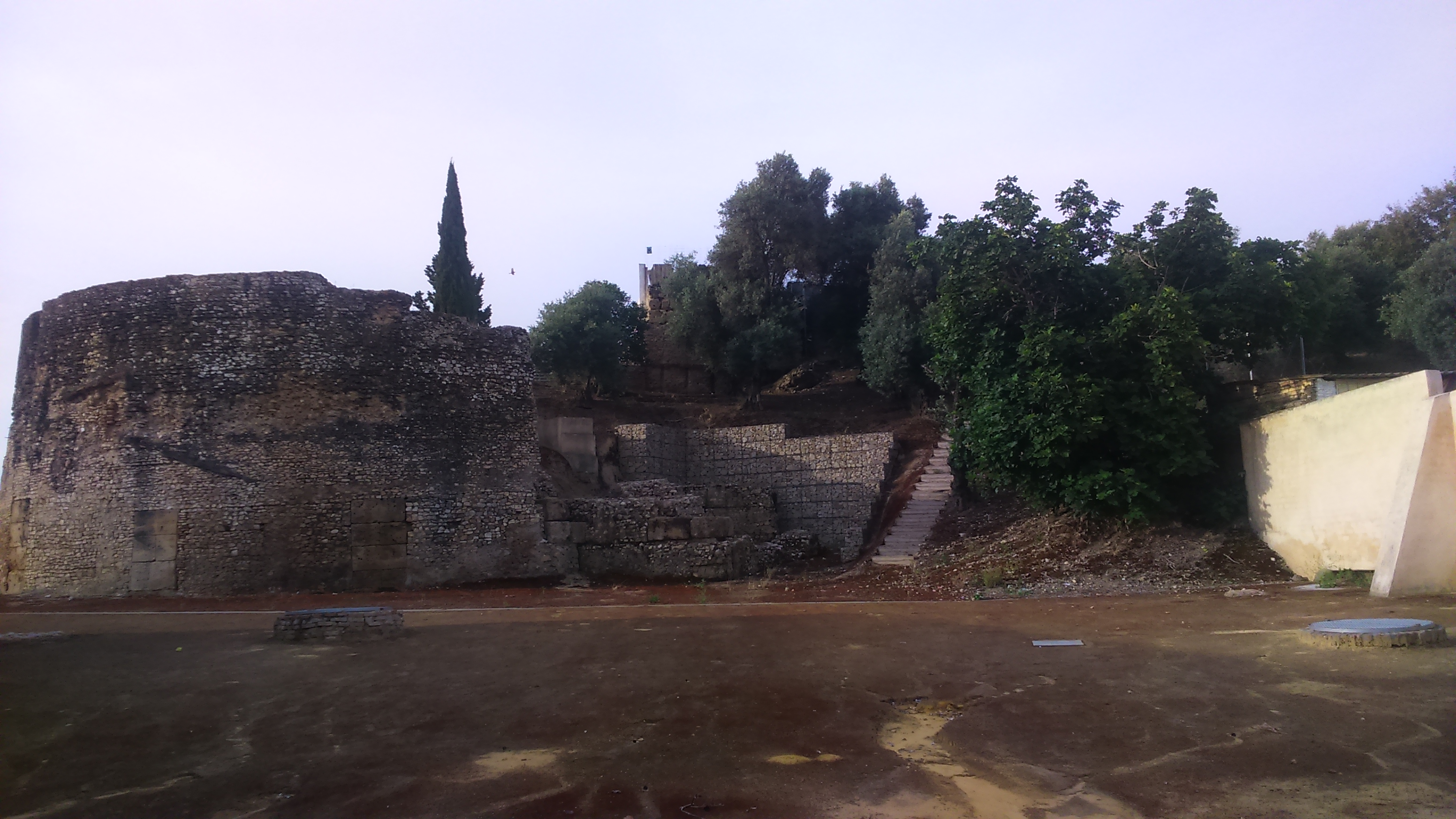
The Roman Theatre
Attractive detail on the main street
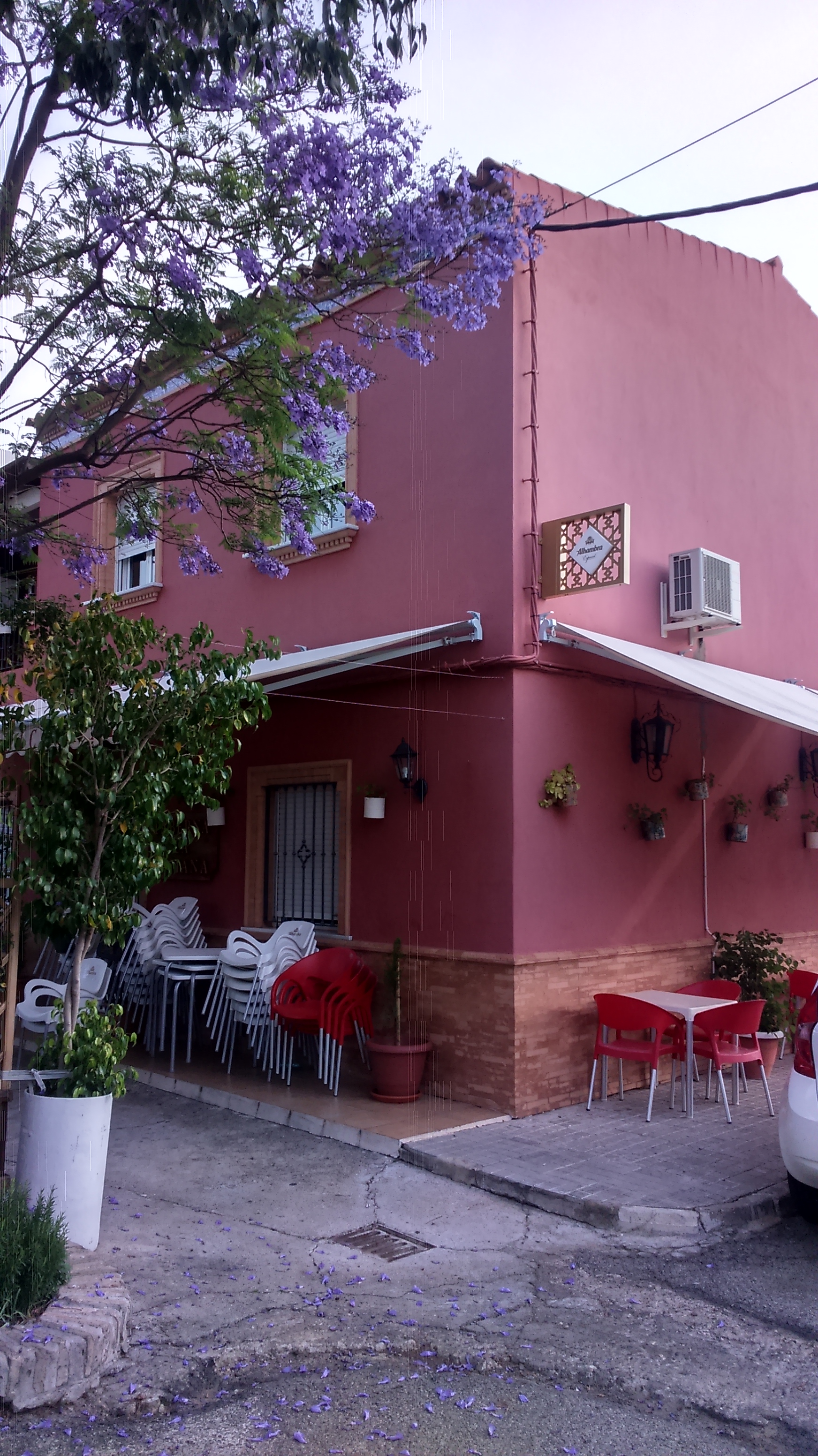
I just love pink houses
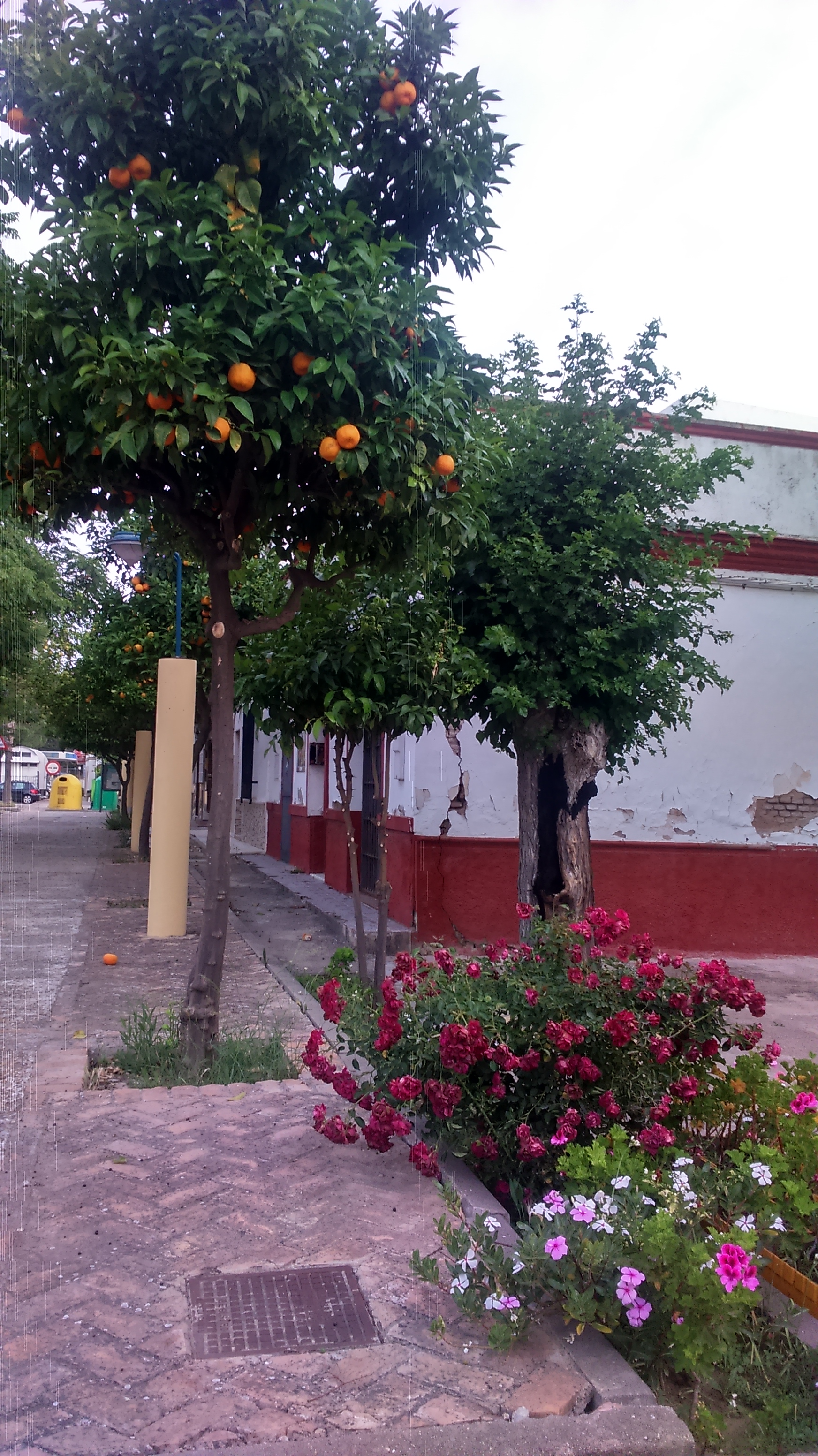
The famous Seville oranges – people were picking them up off the street and eating them

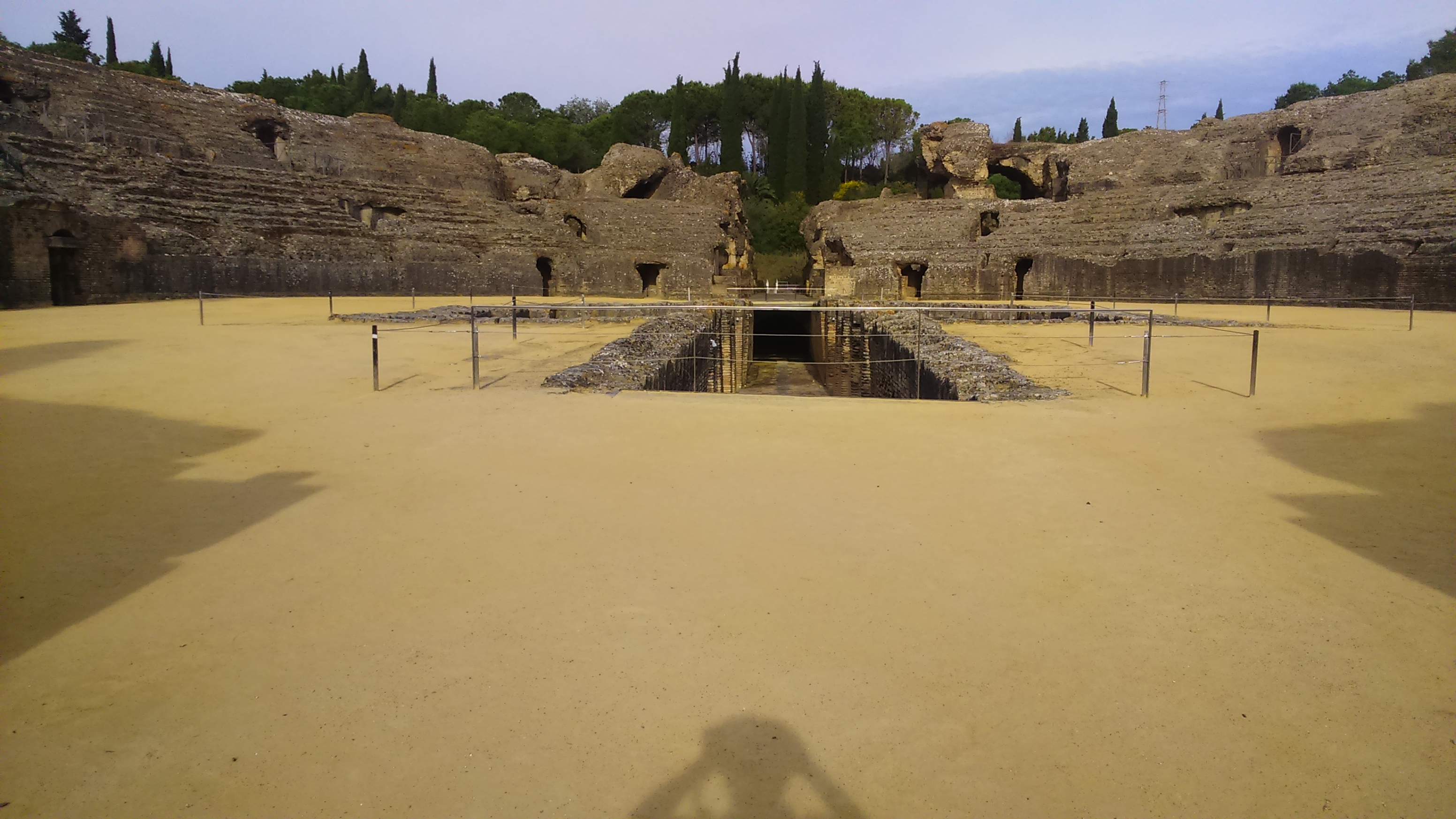
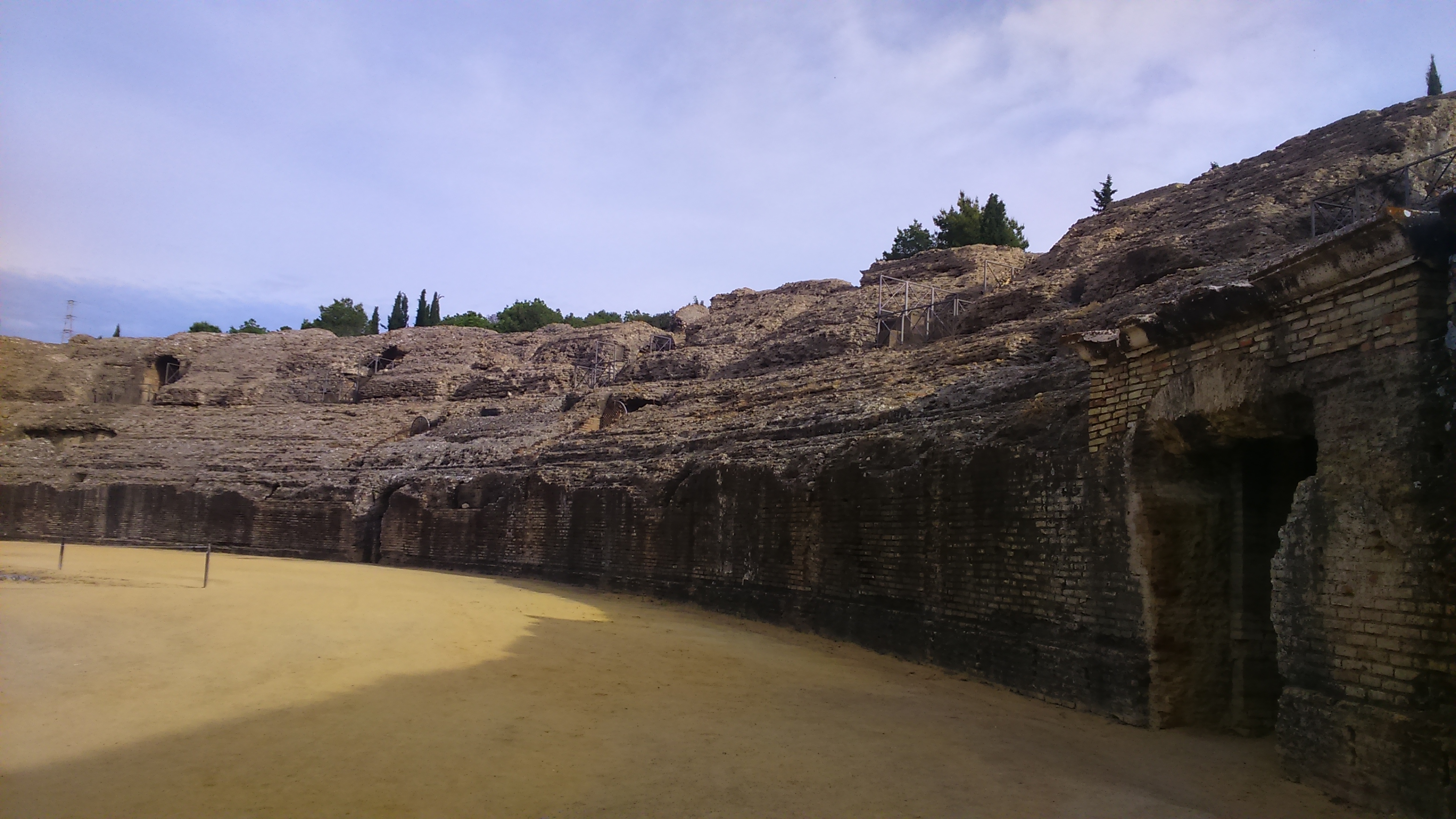
The Anfiteatro de Italica opens at 9am and one of my favourite blog writers recommended seeing it (see end of page), so I sat and ate an orange, listened to the birds, and rested my back until I could get in.
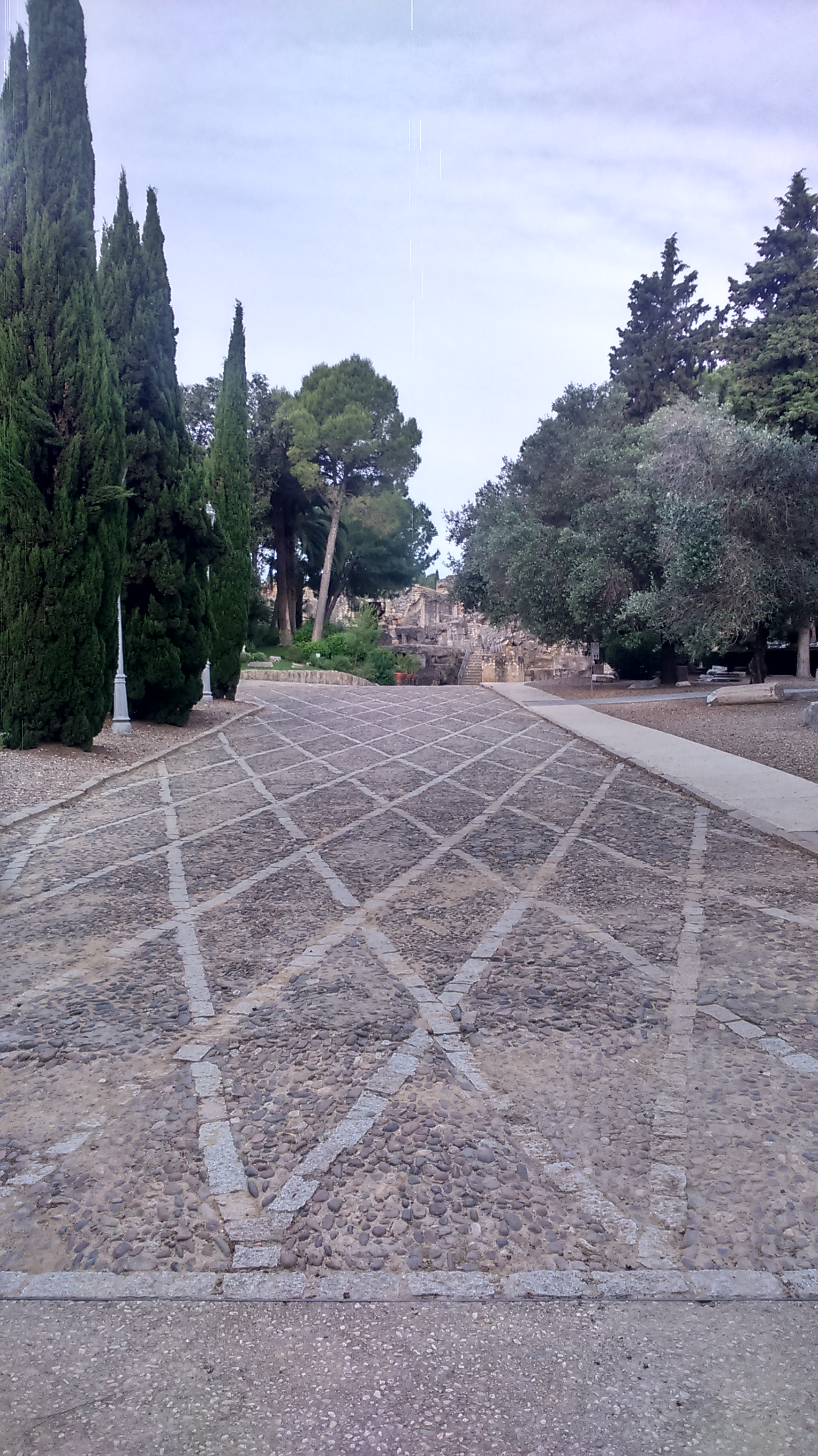
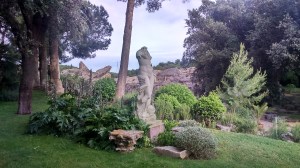
I wished that my dad had been with me to see this
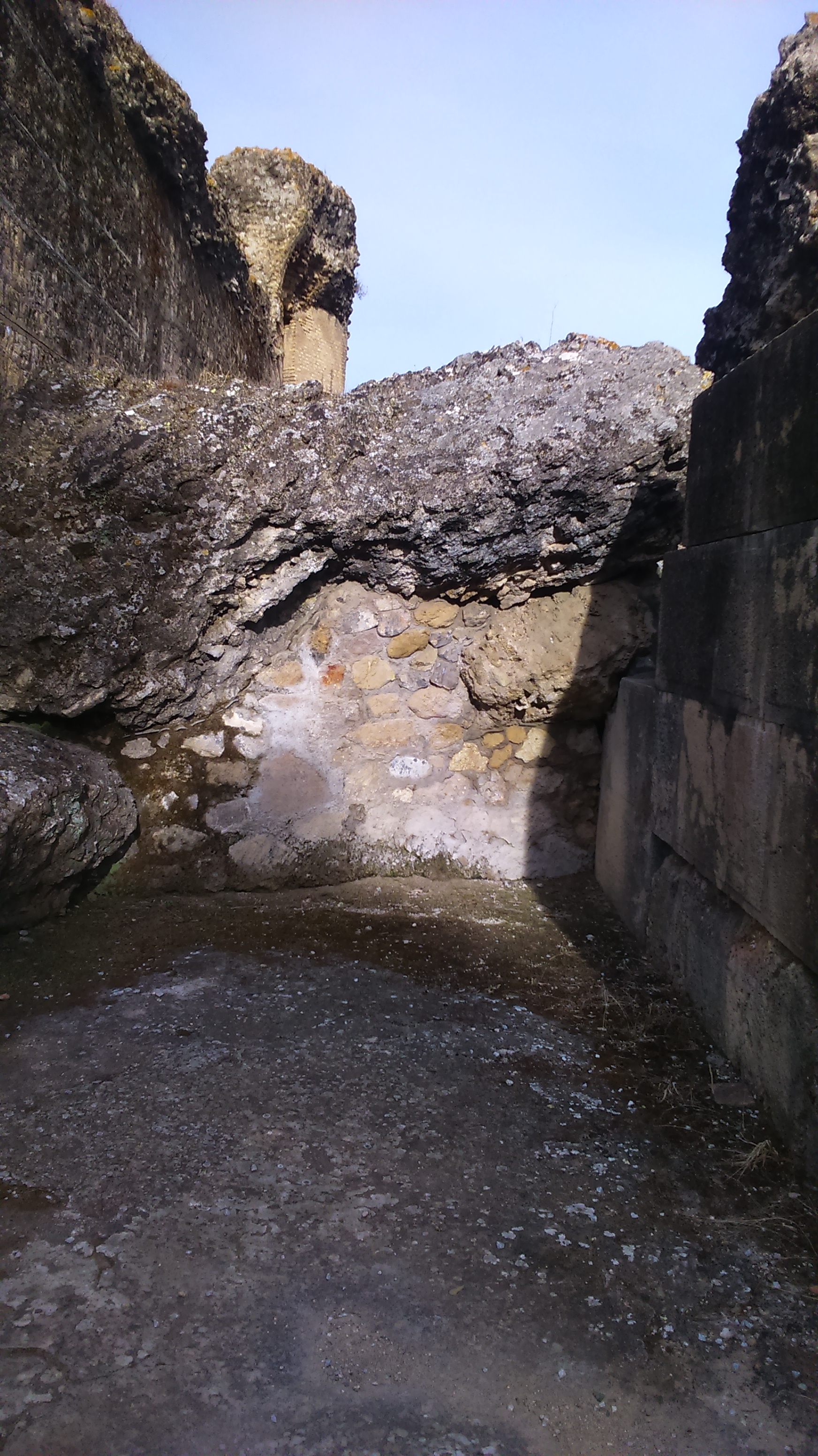
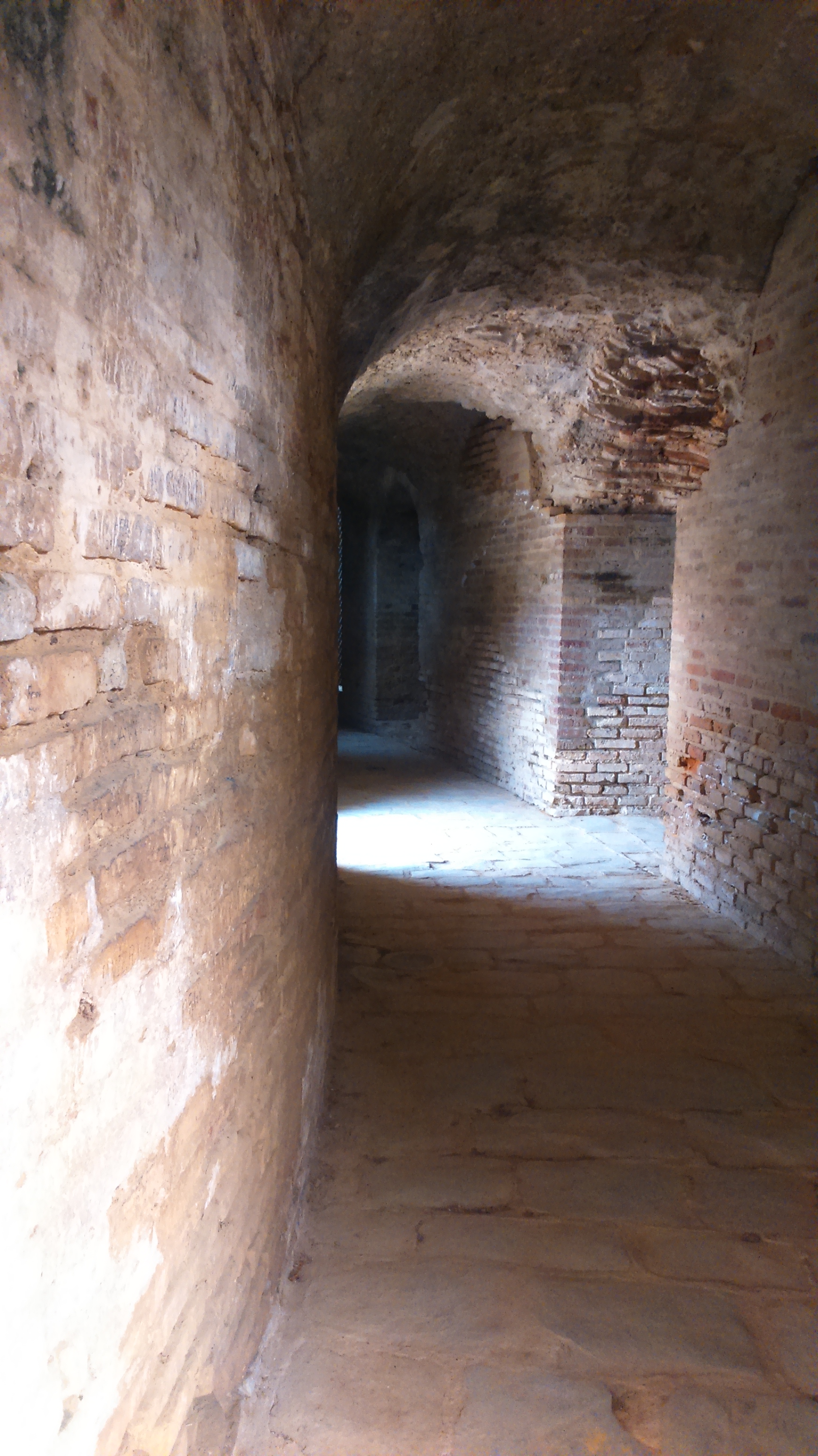
It was all so very old
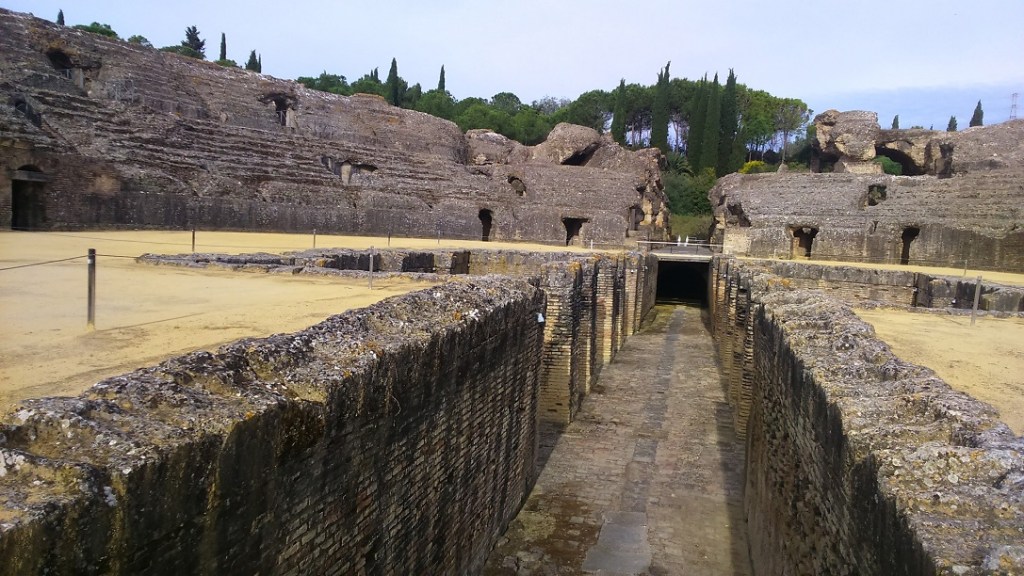
The amphitheatre itself – I could almost hear the bellowing of the crowd
And feel the fear of the gladiators

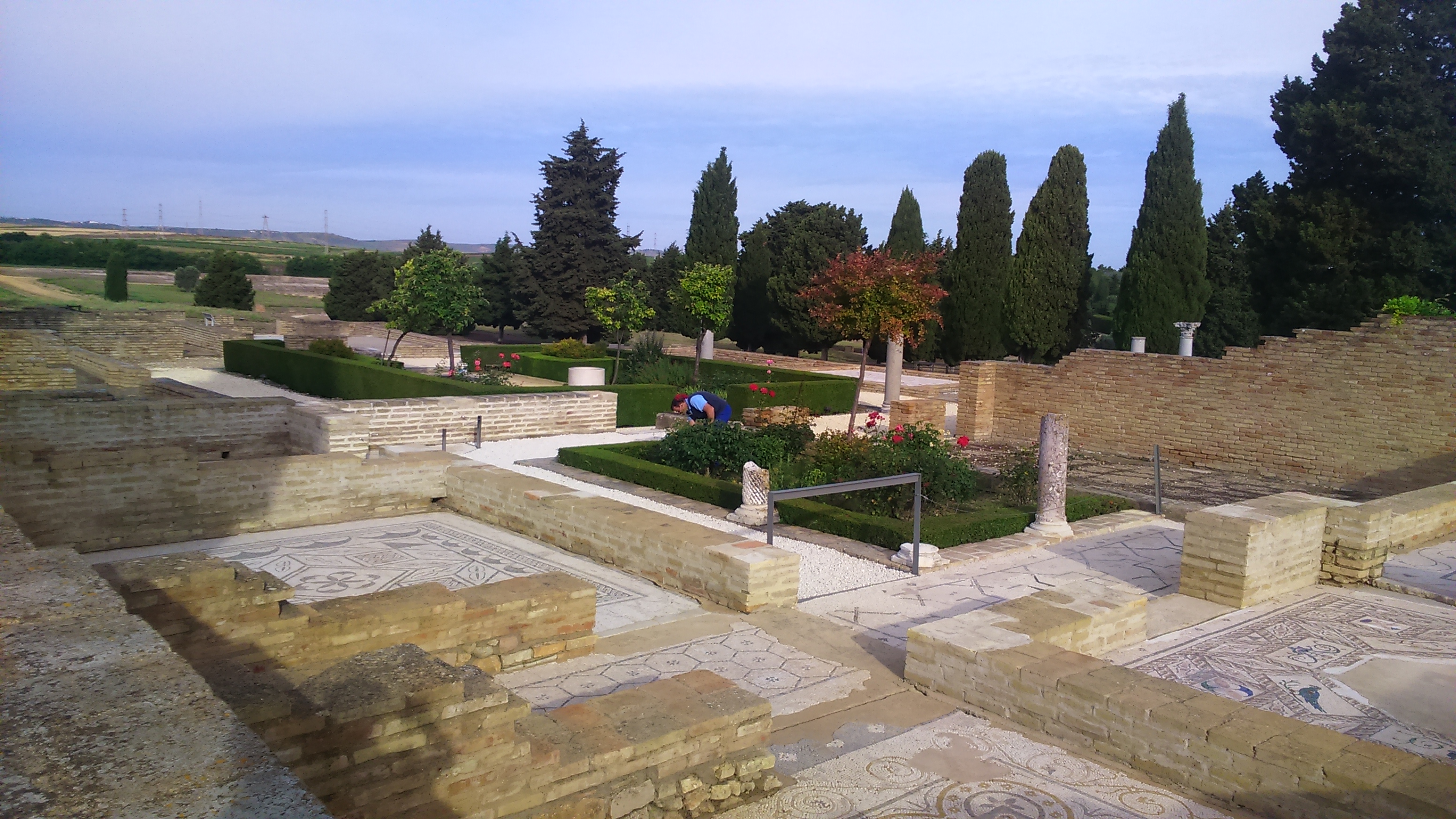
There were gardeners planting and tending red roses, just like characters from Alice in Wonderland. But it was hard to rest and enjoy when I knew there were miles to go. So I rejoined the Way and the flora and fauna.
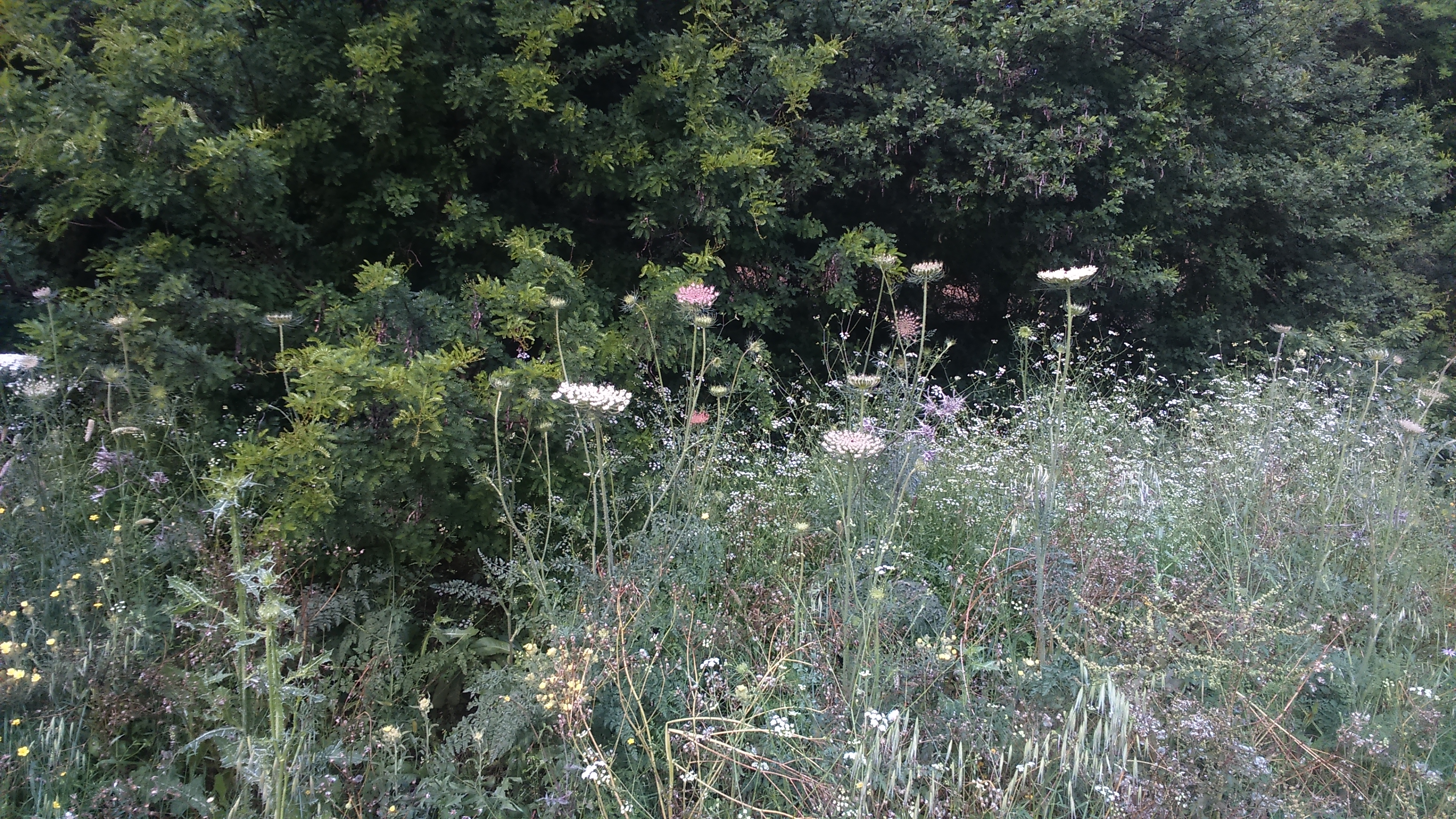
An hour from Santiponce and it was starting to get hot. The smell of a jam factory meant I was headed back into an industrial area, and a massive motorway junction followed.
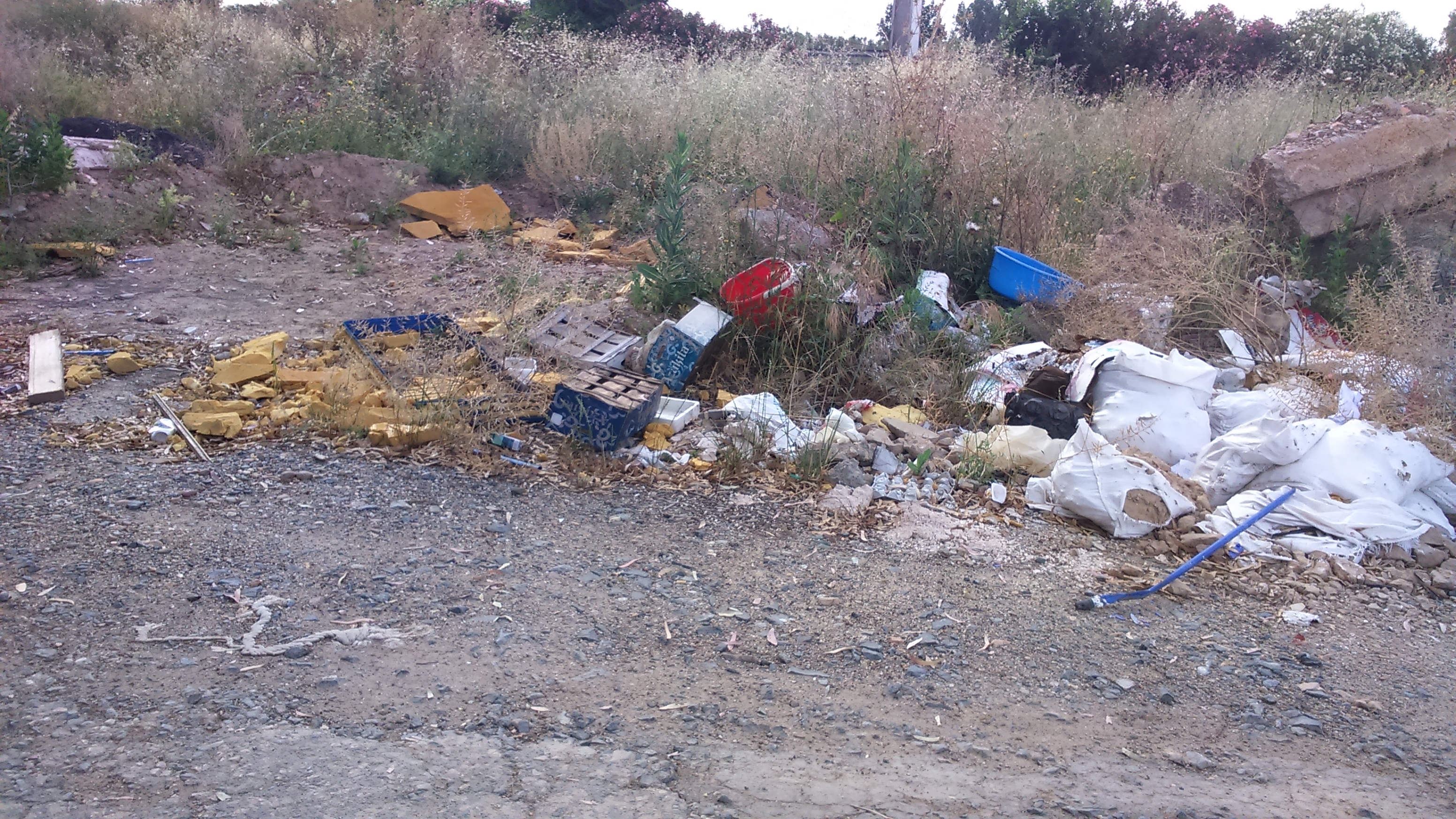
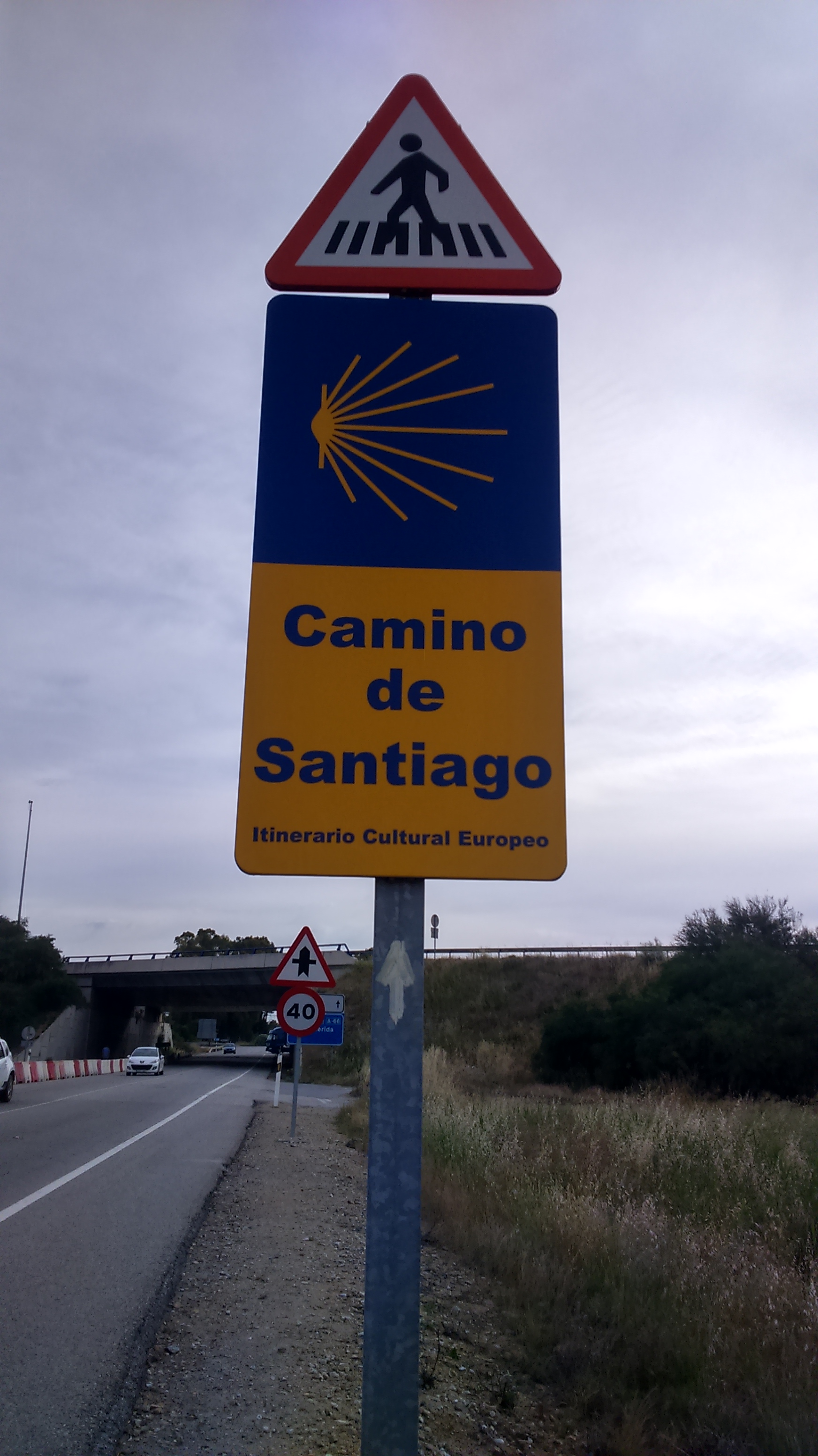
There was a lot of rubbish – not great
At least I knew I was well on my way now – no need for anyone to guide me

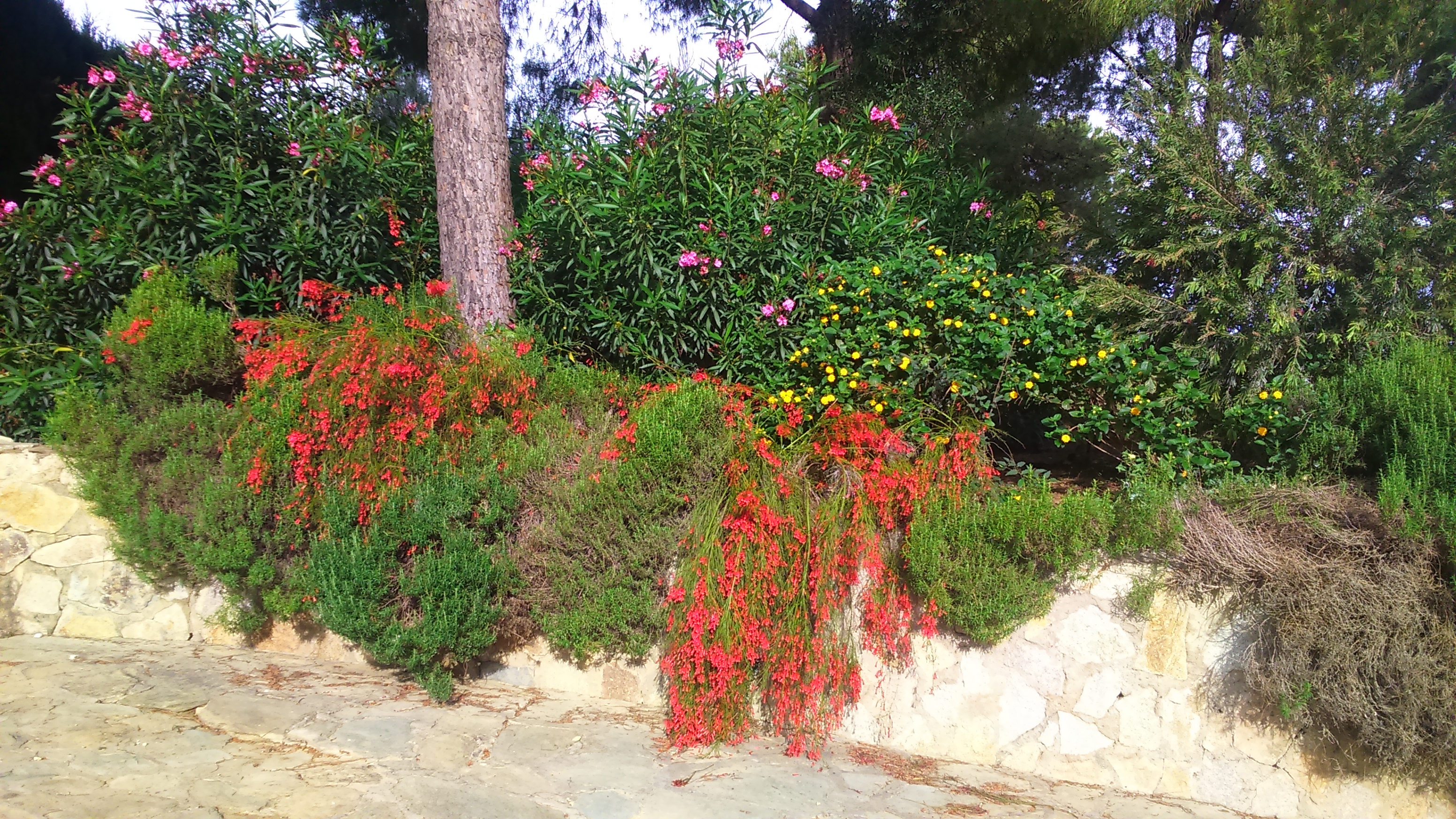
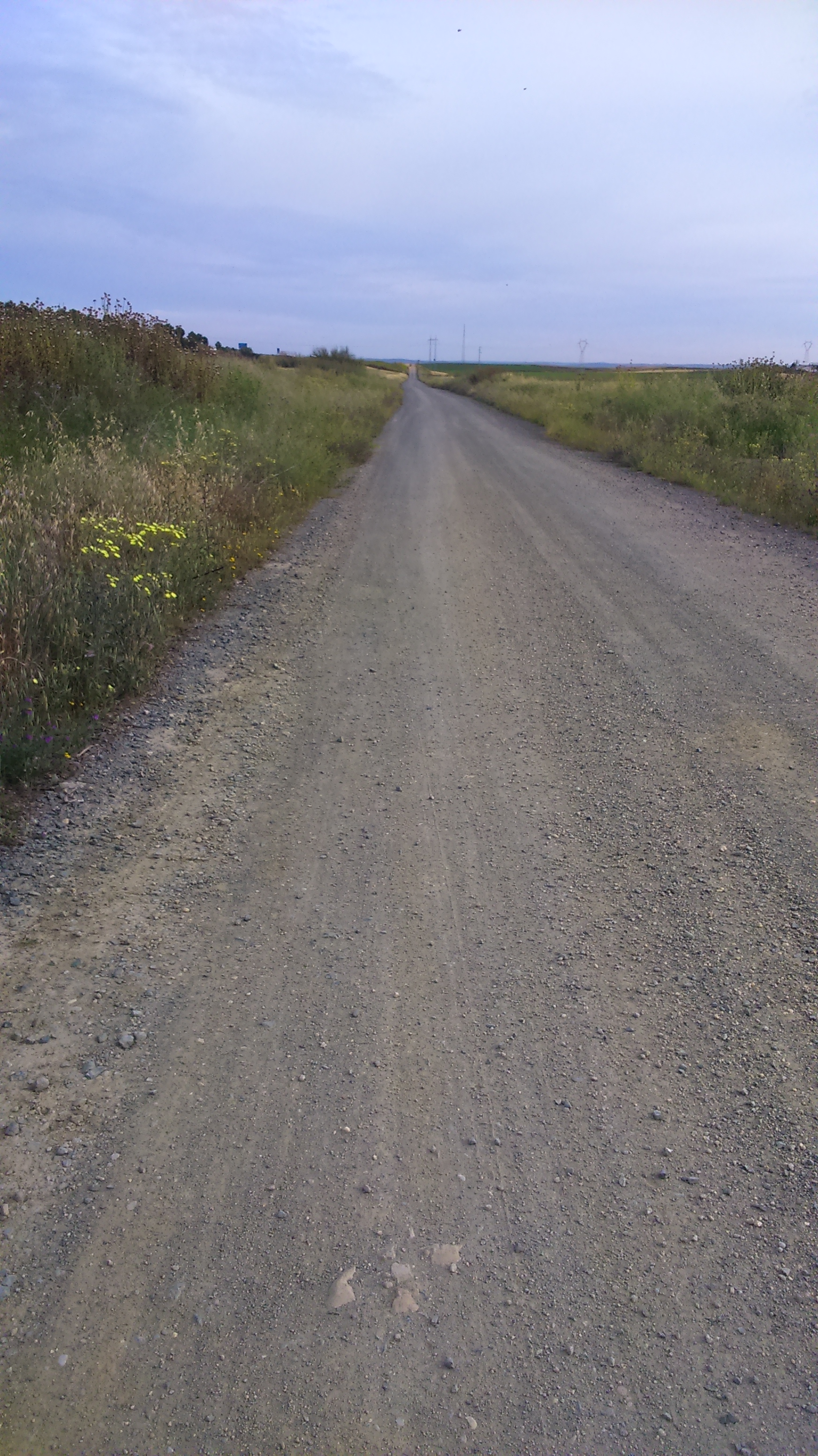
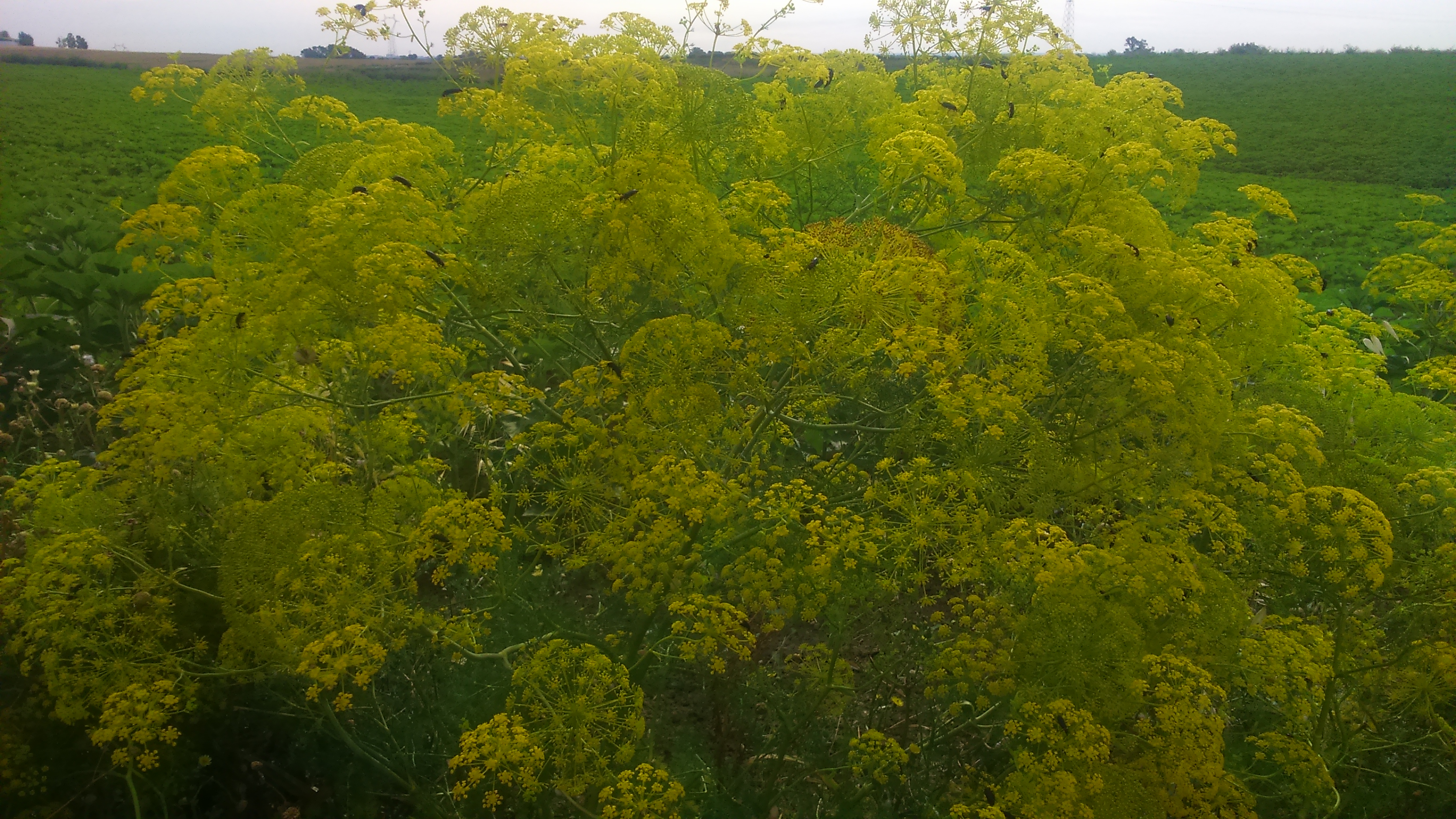
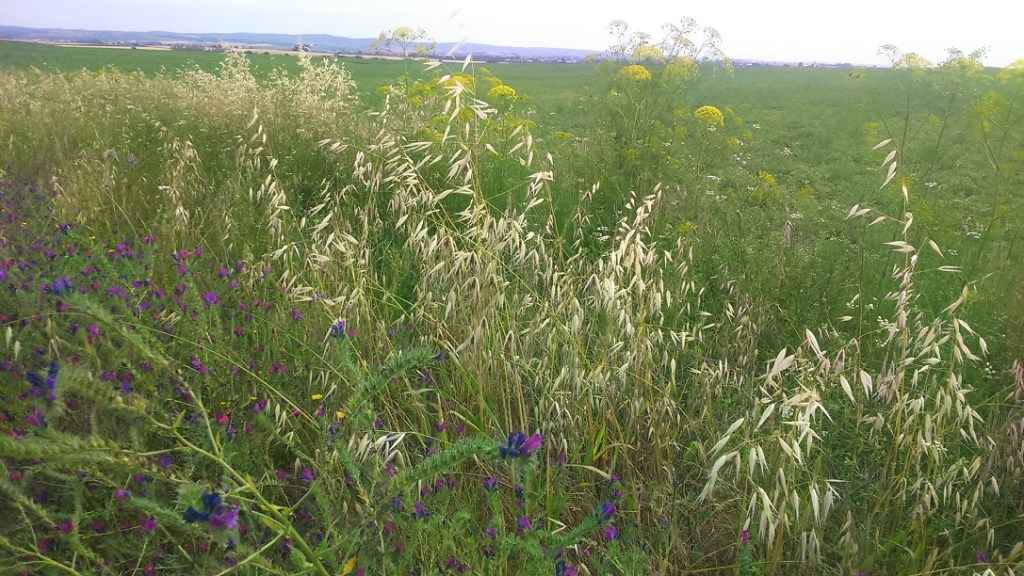
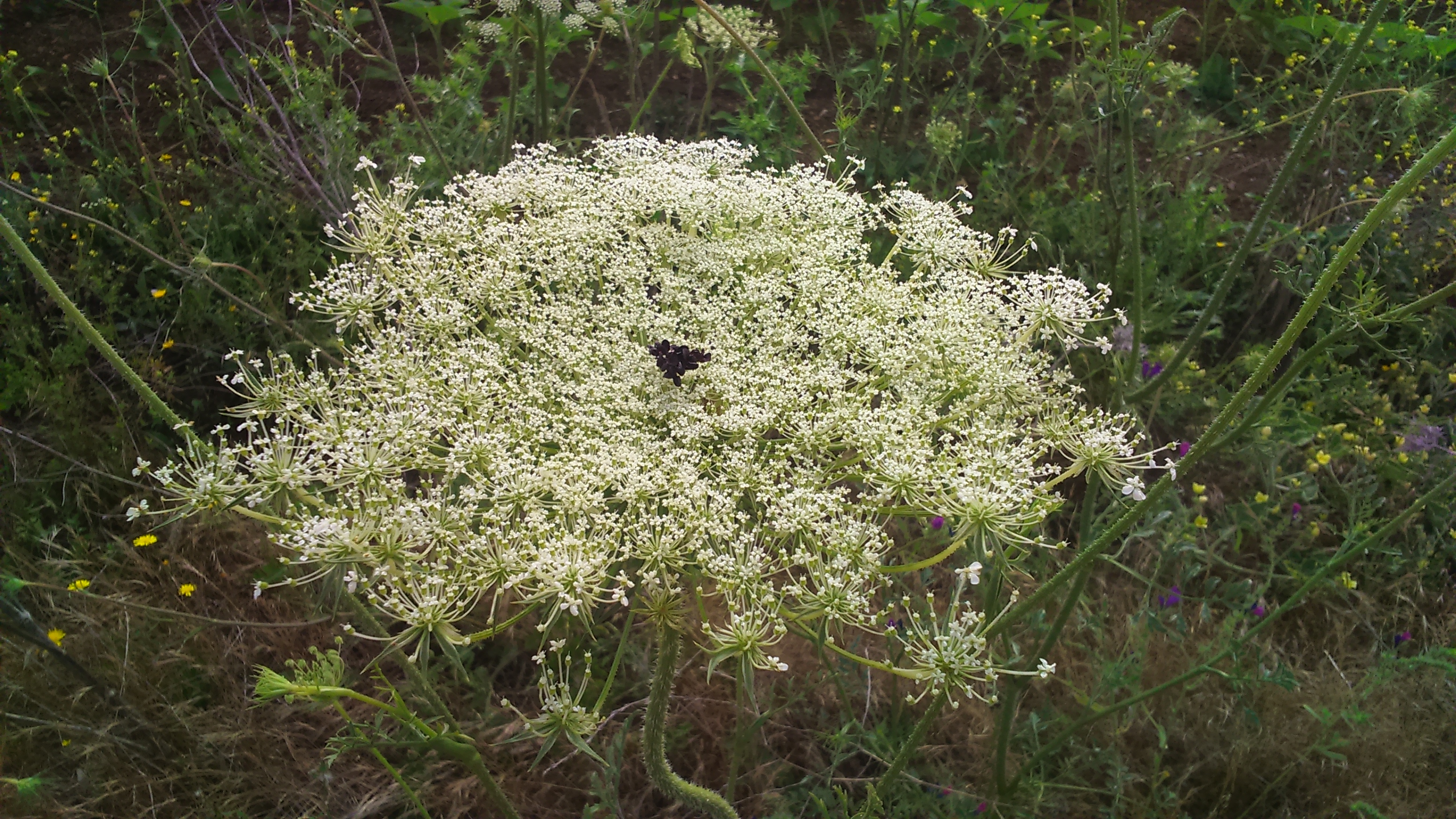
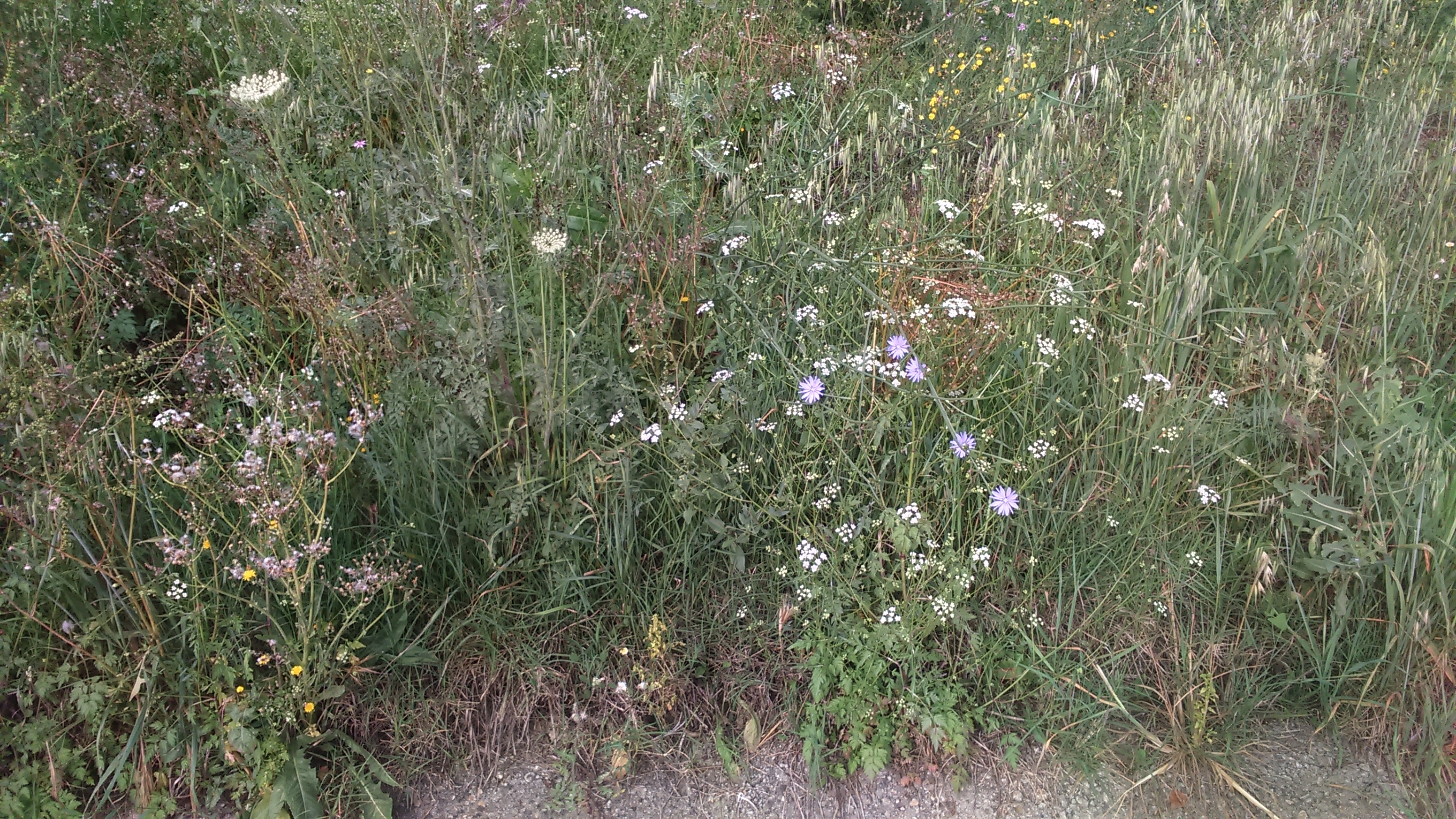
After a little while I was rewarded with beautiful wild flowers – azure cornflowers, cow parsley like big white iced buns with a beetle instead of a cherry on top, silver grey thistles, reeds, irregularly shaped fields of wheat – green and pale yellow – as well as pylons and traffic sounds competing with the birds.
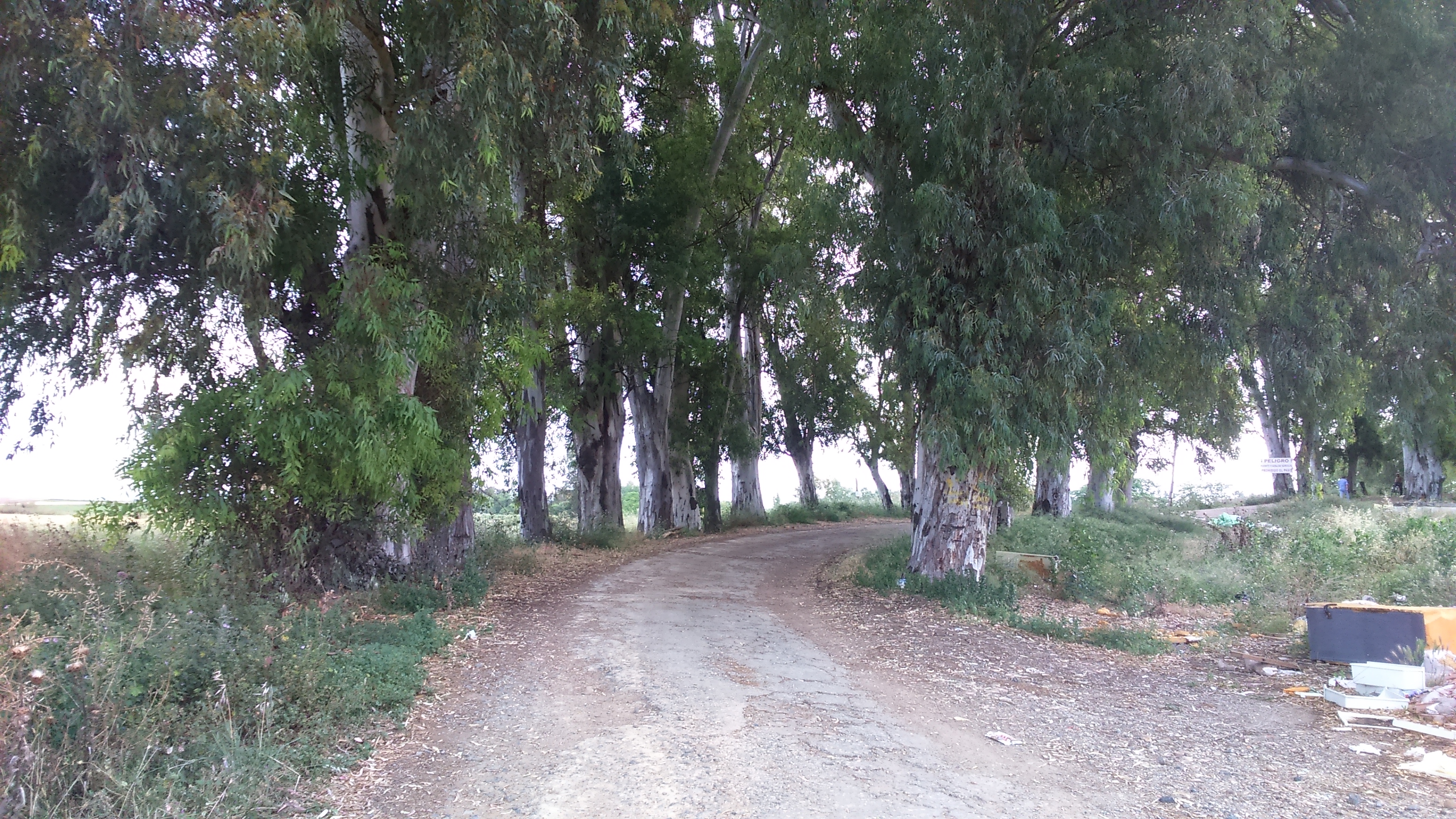
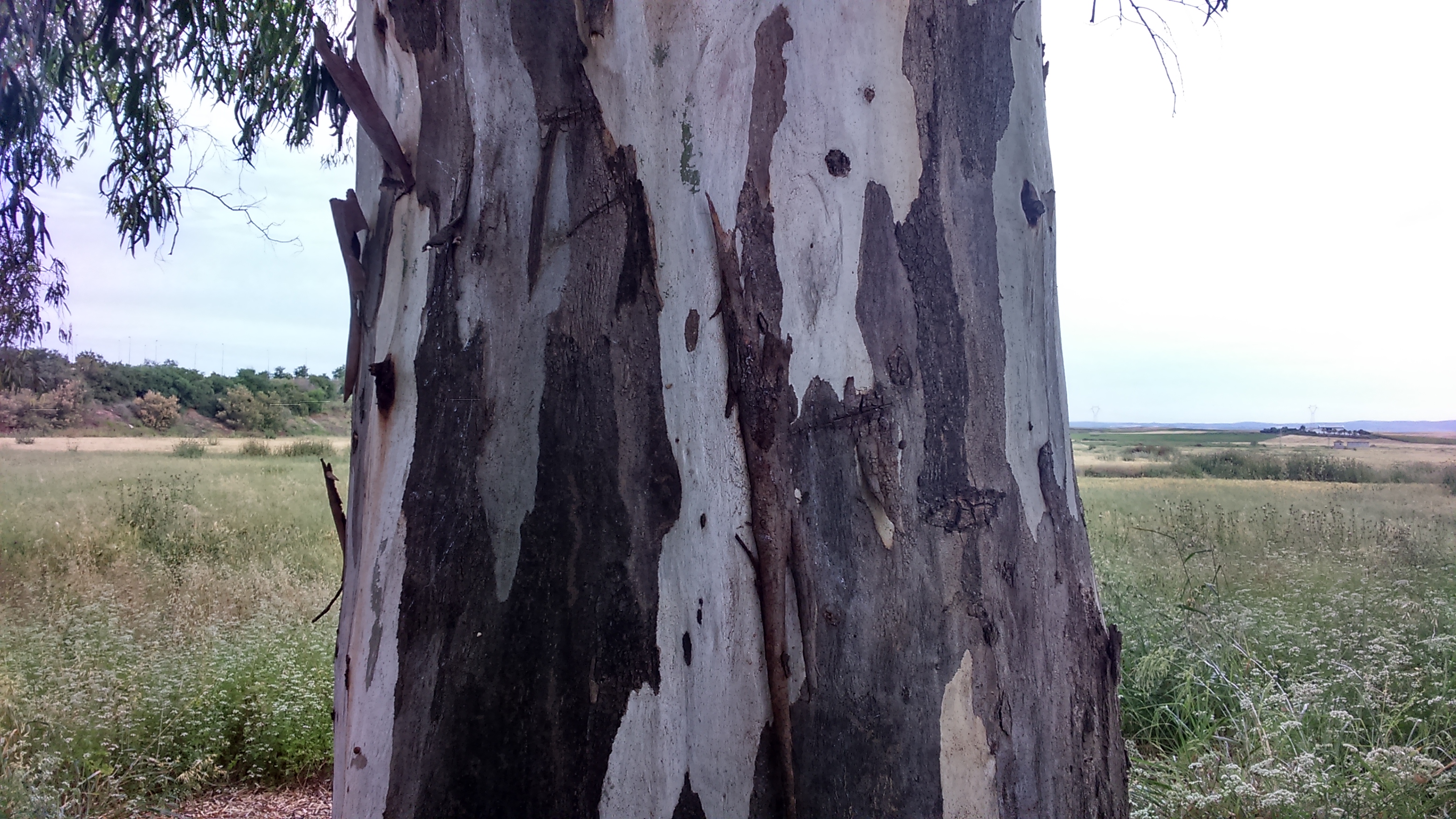
Avenues of plane trees
I was on my way again – this was what I had waited for
I thought it was a beetle in the middle, then I realised they all had them and that it was a seed

The path was stony and my feet were getting sore.
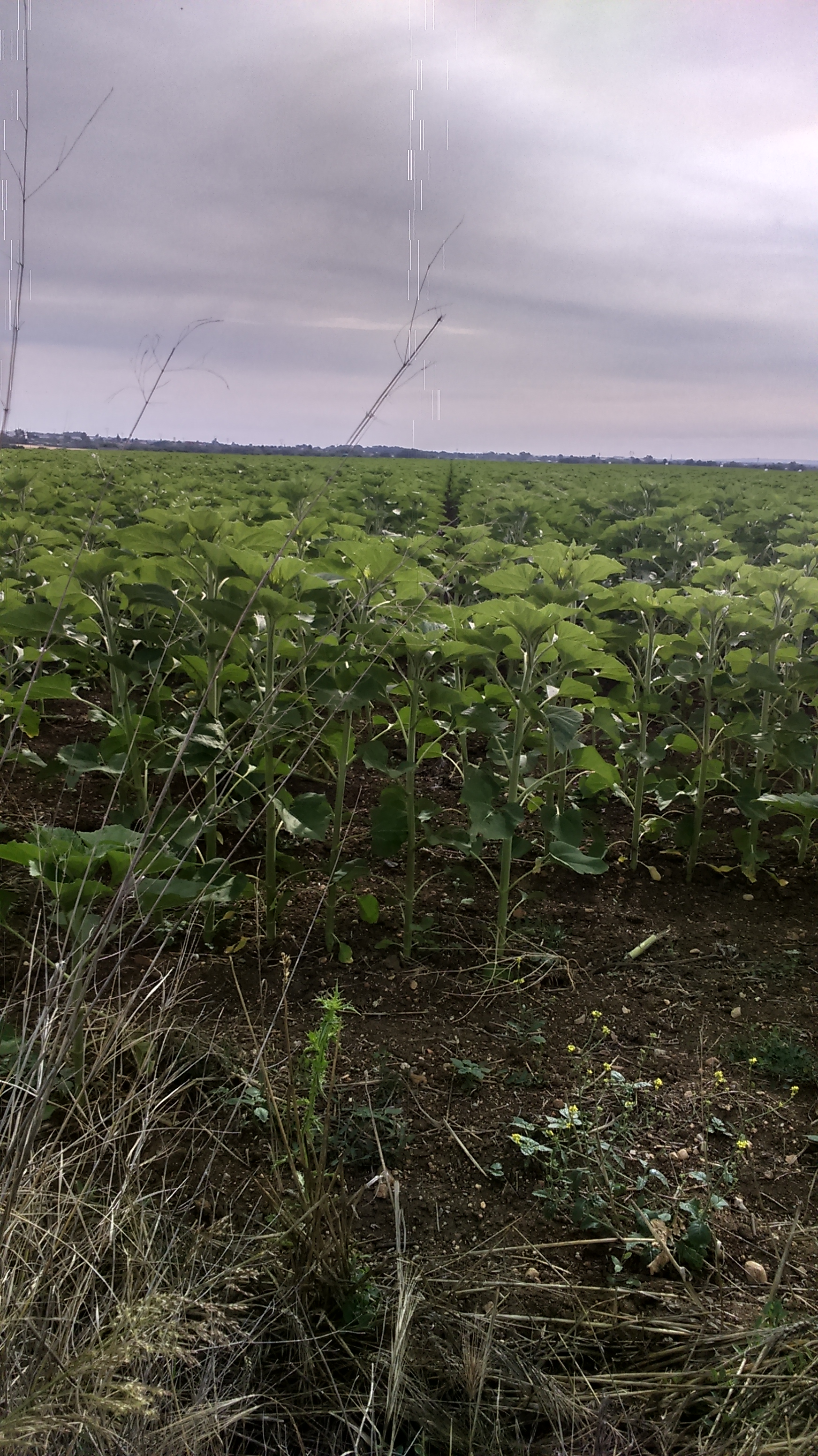
The plants were undulating in the welcome breeze.
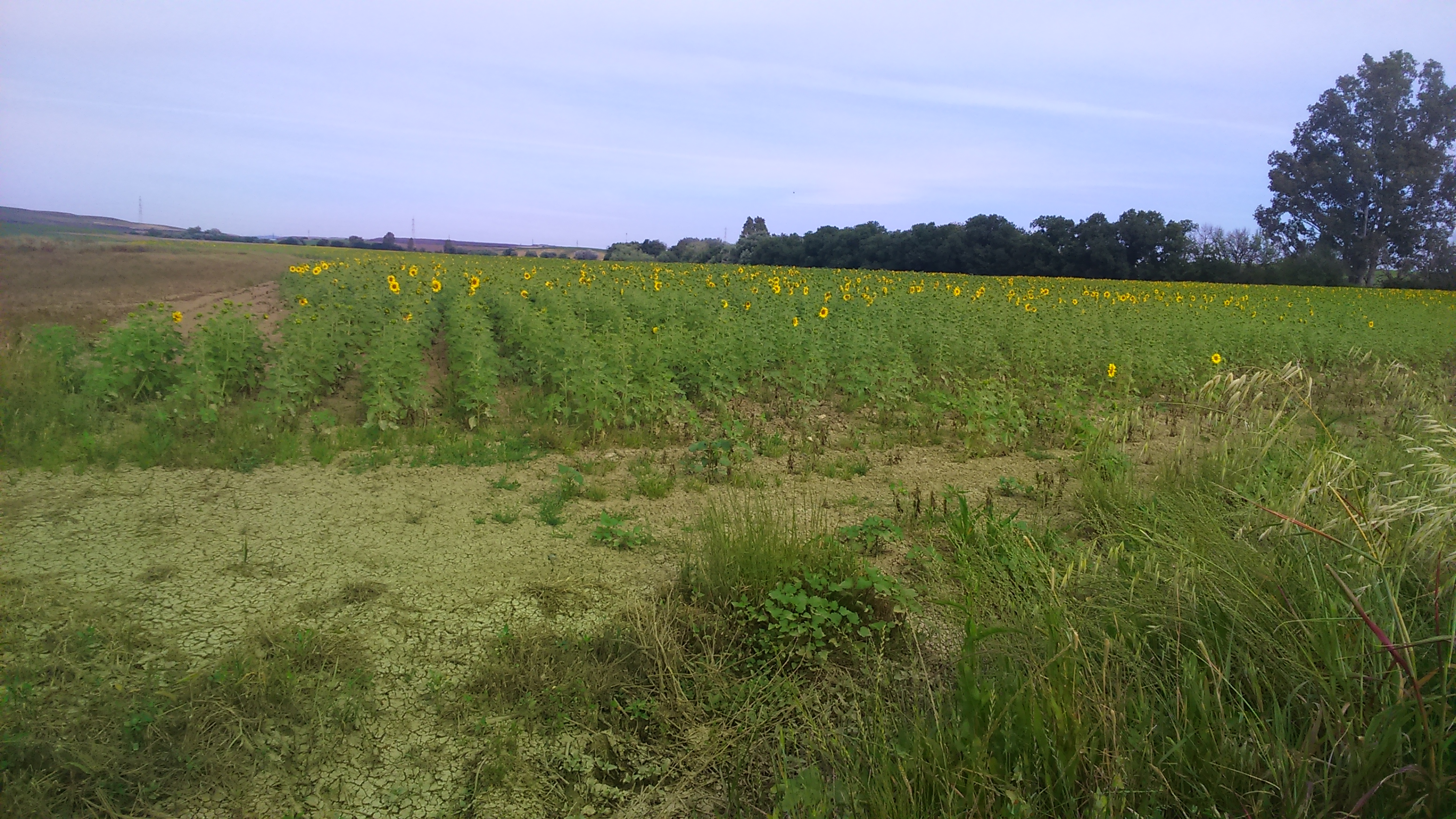
What were those yellow flowers in the distance?
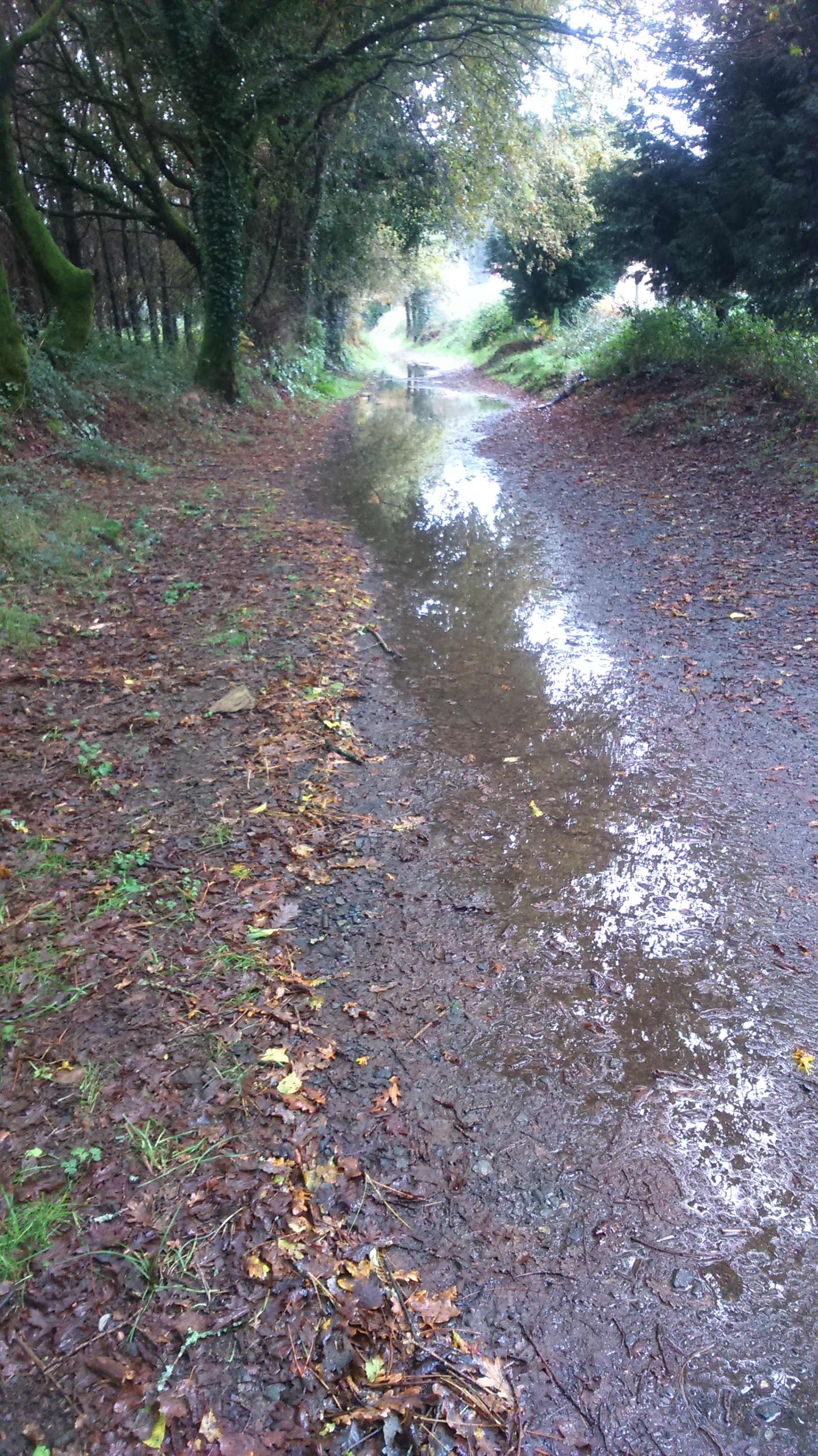
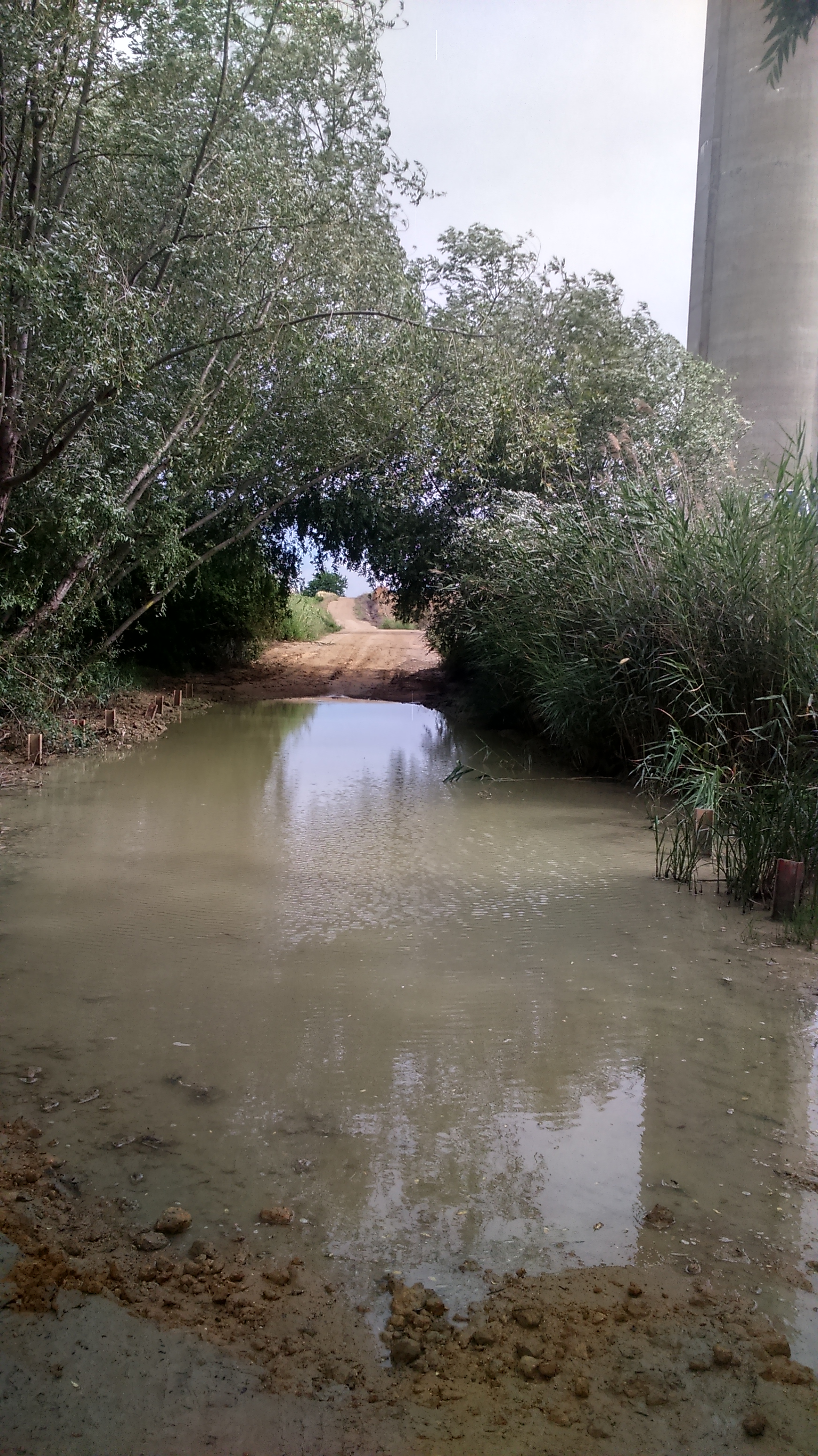
It looks pretty but this flooding on the path was somewhat challenging to manoeuvre

Piles of ants descended on scraps. Their diagonal queues dissected the path and I tried to avoid them. Birds played together in the breeze.
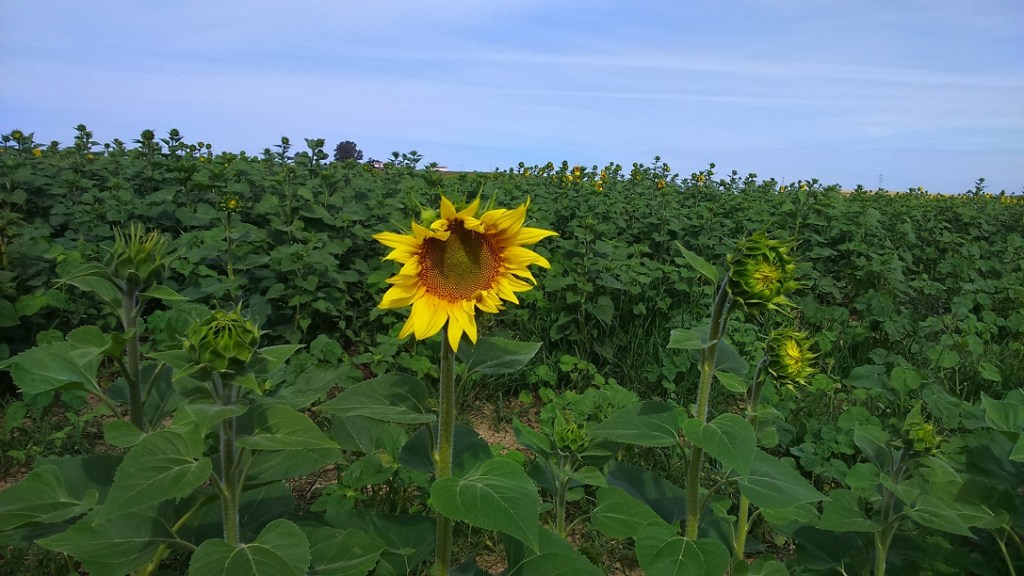
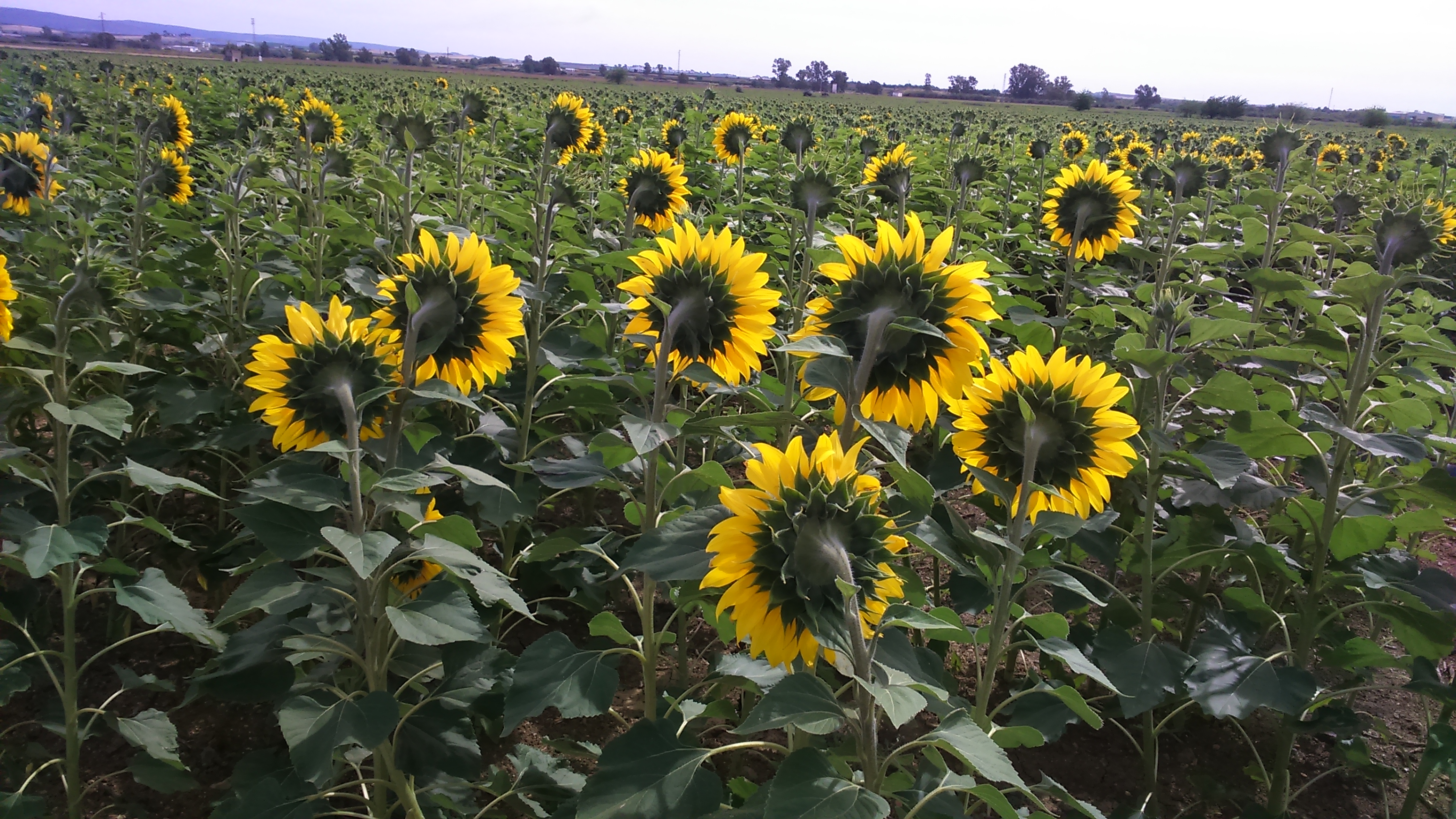
Ah, that’s what they are! Turning their heads as they follow the sun around, they are like submarine periscopes or beautiful, vertical rays of brightness
The backs of the sunflowers were like bonnets, their faces all to the sun hiding the fact that each one was swarming with bees

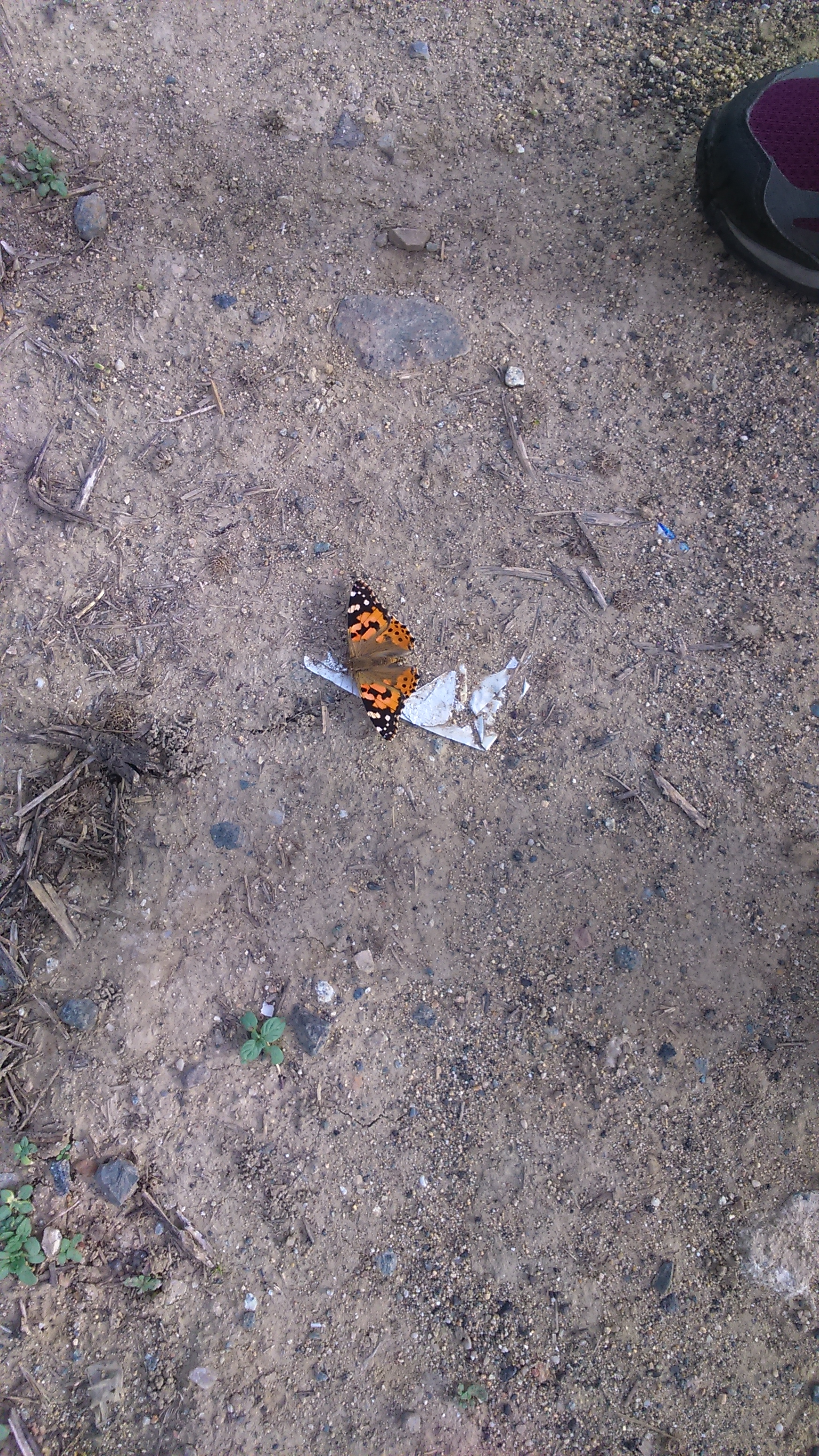
More flowers: Bindweed and borage. I was totally alone. There were no words except the occasional ‘buen camino’ to and from cyclists flying past, shoulders up to their ears. Now I was able to breathe in time with my walking steps, to notice a butterfly I hadn’t seen before – pale green with a splash of yellow and just a few black dots like Kandinsky, beautifully blended with the flower colours. I saw a dragonfly. I felt happy.

‘Walking itself is the intentional act closest to the unwilled rhythms of the body, to breathing and the beating of the heart’. Wanderlust by Rebecca Solnit p.5.

It was a lesson in endurance. When you are tired, you look into the distance and never believe you will ever get there, but you do. And it is joyous, my arrival into Guilenna.
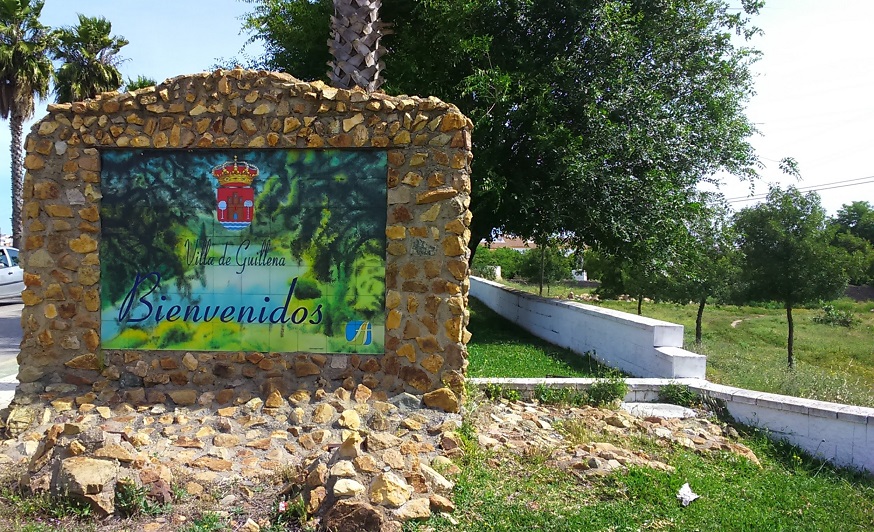
‘Bienvenido’ = welcome

There was quite a way before I really arrived. White houses with terracotta roofs greeted me at the end of the very dusty road. It turns out I should have gone over the bridge, not round by the river. I should have known when I found myself climbing over fences! The yellow arrows were once again hard to see.


Here was the prettiest church ever seen.
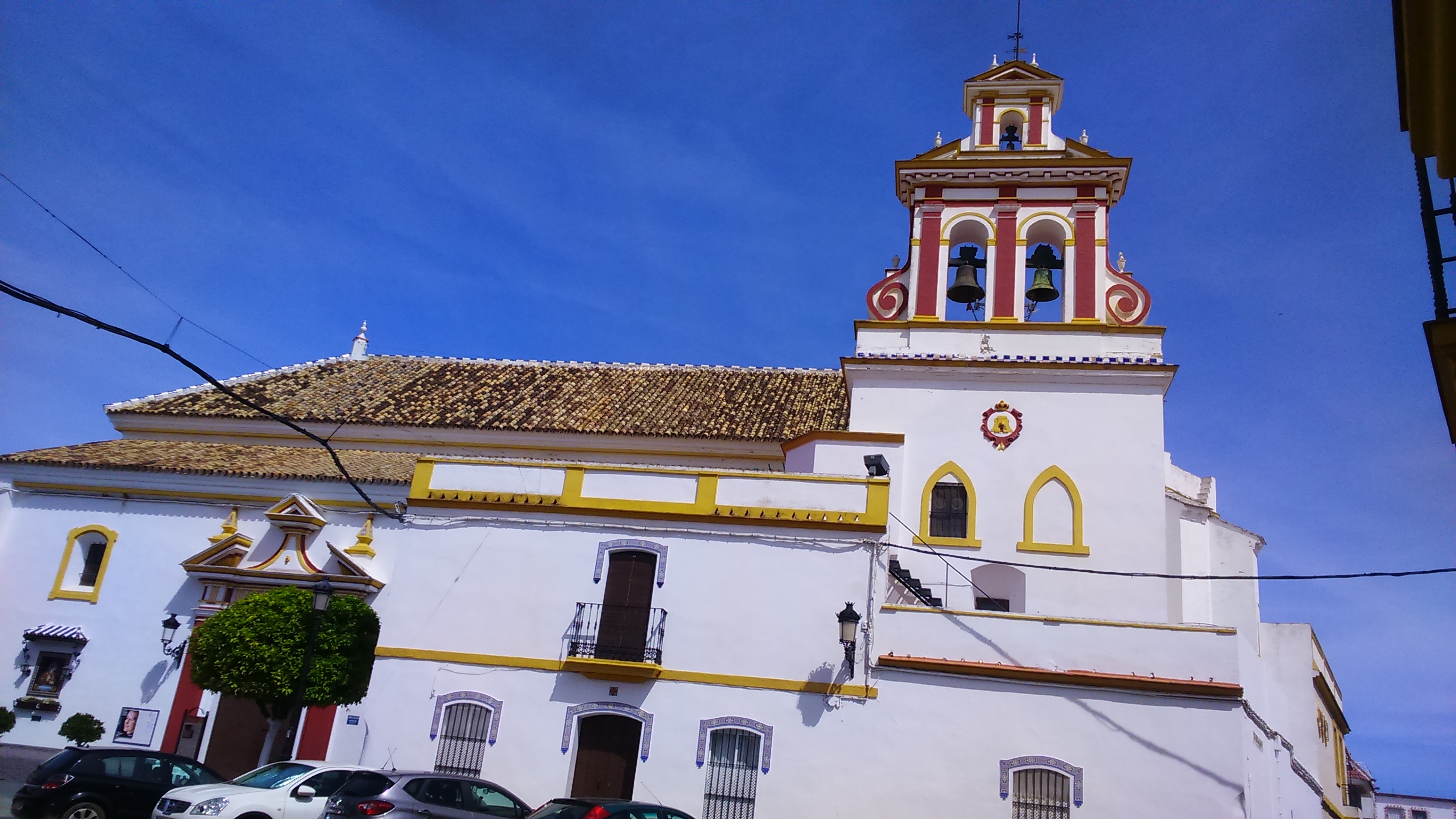
Iglesia Nuestra Señora de la Granada

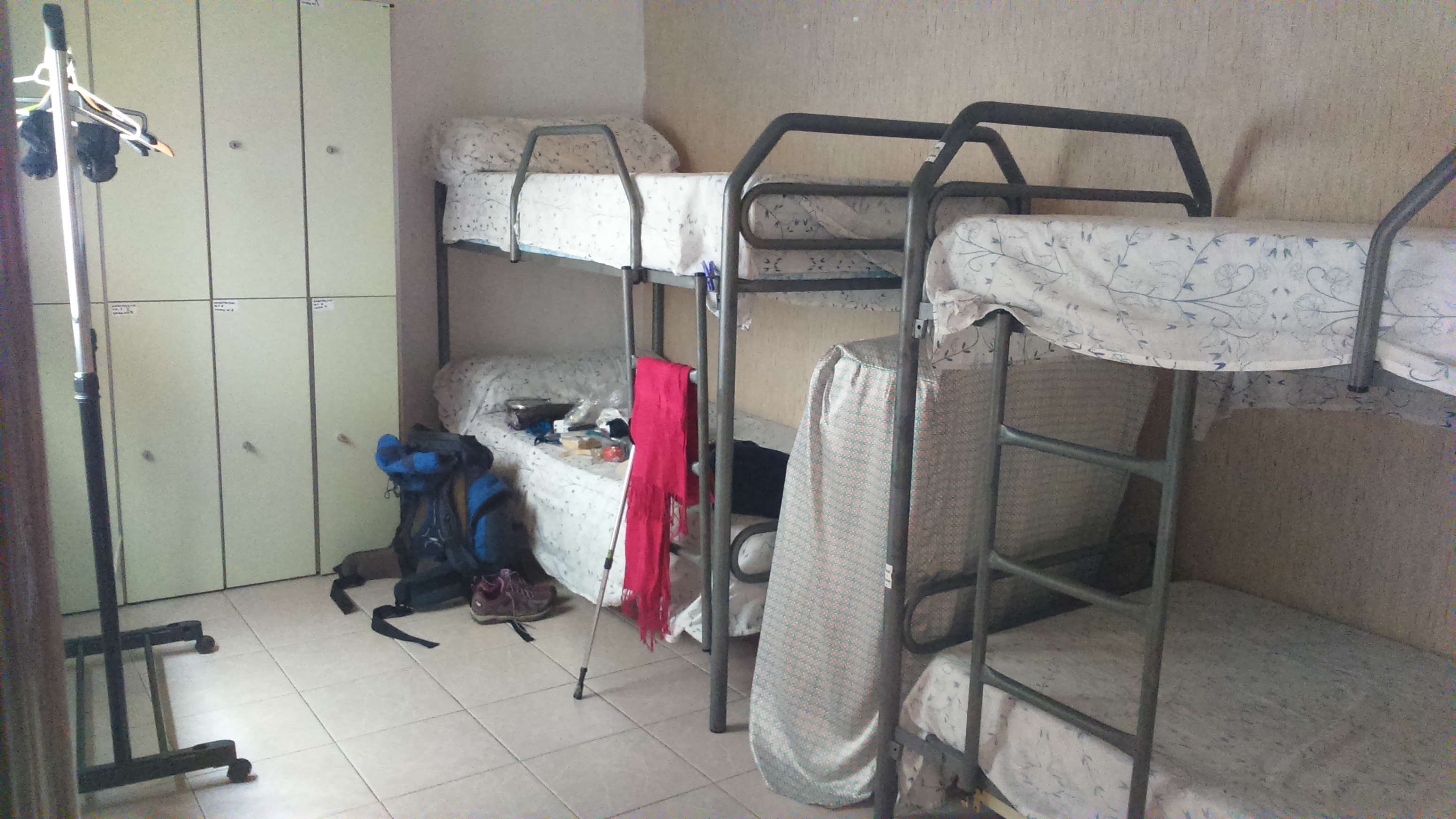
The first hostel was shut and I had to ask many women before I finally arrived at Hostel La Luz at 12.15 and it was 25 degrees by that time. The lady at reception was lovely – friendly, and informative. I was the first to arrive and had a dorm to myself next to the small courtyard, on the ground floor. The facilities were basic but fine for me, I had everything I needed.
I had decided to send things back to the UK (no use for my swimming things, or so I thought) to lighten my load. The post office was so, so slow – I sat and waited, watched and listened to the excitable Spanish conversations, and eventually it was my turn. It was a simple thing to do, not very expensive, and I sent some post cards as well. I rested and then had to go out again for food – what a very long main road it was in the 28 degree heat at 5pm! Or in fact 35 degrees depending where you looked (phone or electronic sign in the town).
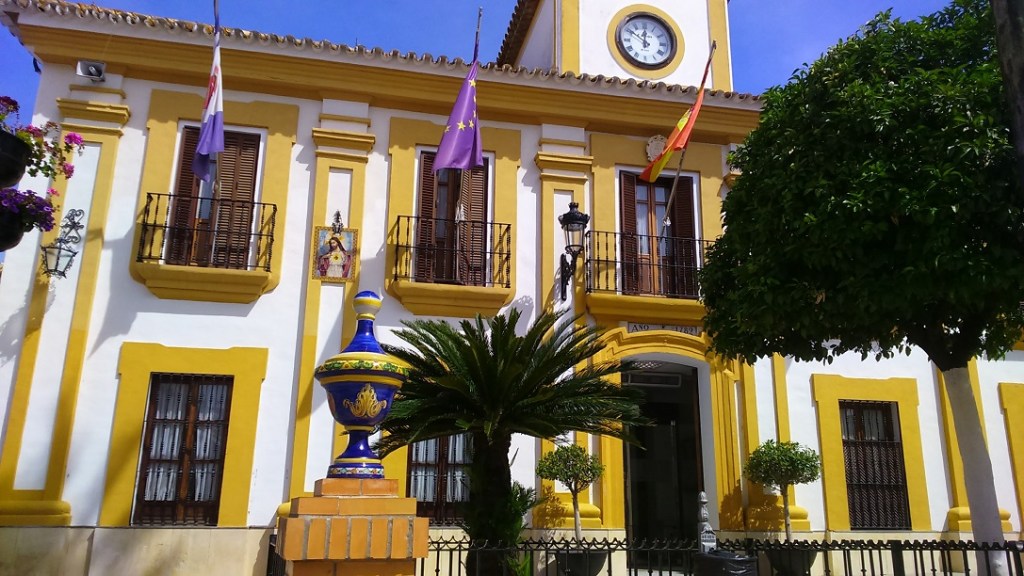
Typical town architecture, Guilenna

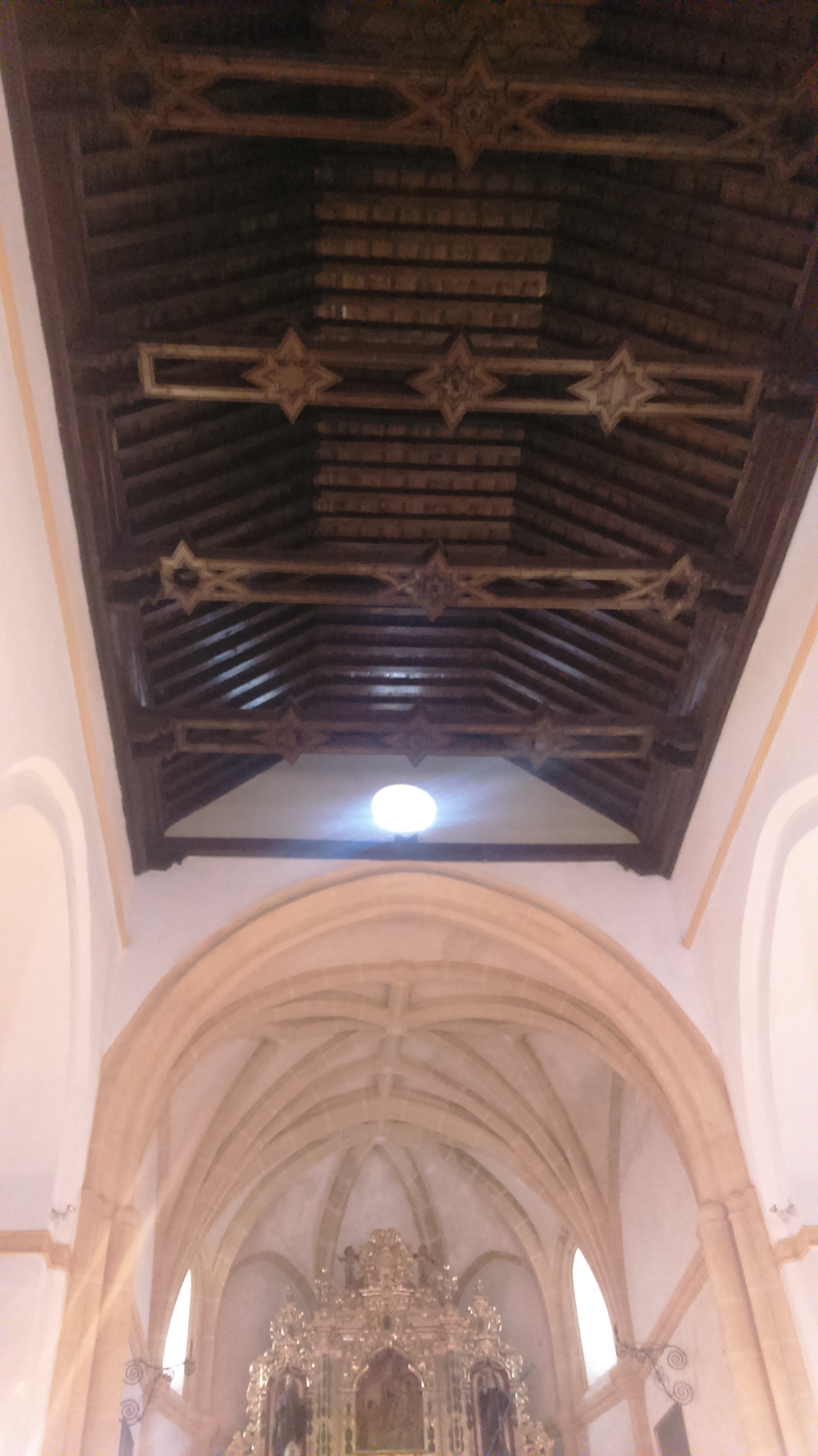
I went to the start of Mass in the evening. Inside, it was highly elaborate as you would expect of a Spanish Catholic church, although there was a simple wooden roof: one part with stars, and the other vaulted, made of stone and painted pale yellow. There was a very life-like, full-sized Virgin wearing a real black velvet dress embossed in gold with a fantastic silver tiara and beautiful lace scarf and collar. The women were all in attendance, one with the sound turned up on her mobile, tap tapping in response to the message which sounded very loud reverberating around the nave.
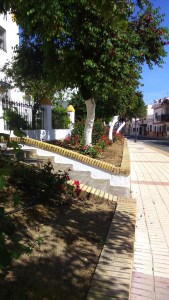
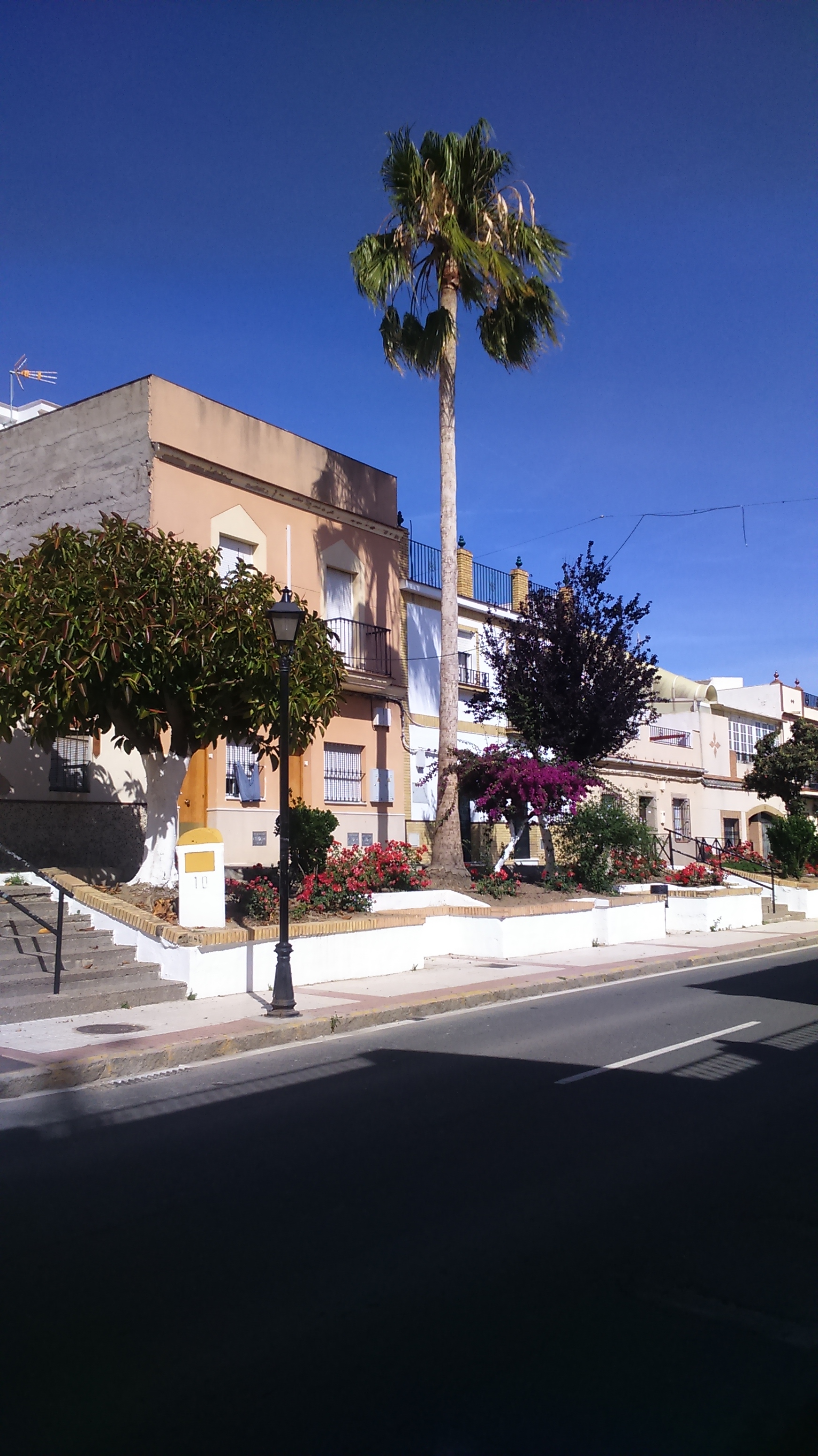
Such a pretty place

The little girl who entered in her gold shoes and bracelets had a carrier bag with a pink ball in it. She put her finger to her lips for a loud shush to grandma and great grandma. Extended families wore their everyday clothes. The deeply tanned young men in white t-shirts ranged around looking at the iconography. I was at the back and attracted attention, presumably because I was not local. It was very much of a social gathering before the service.
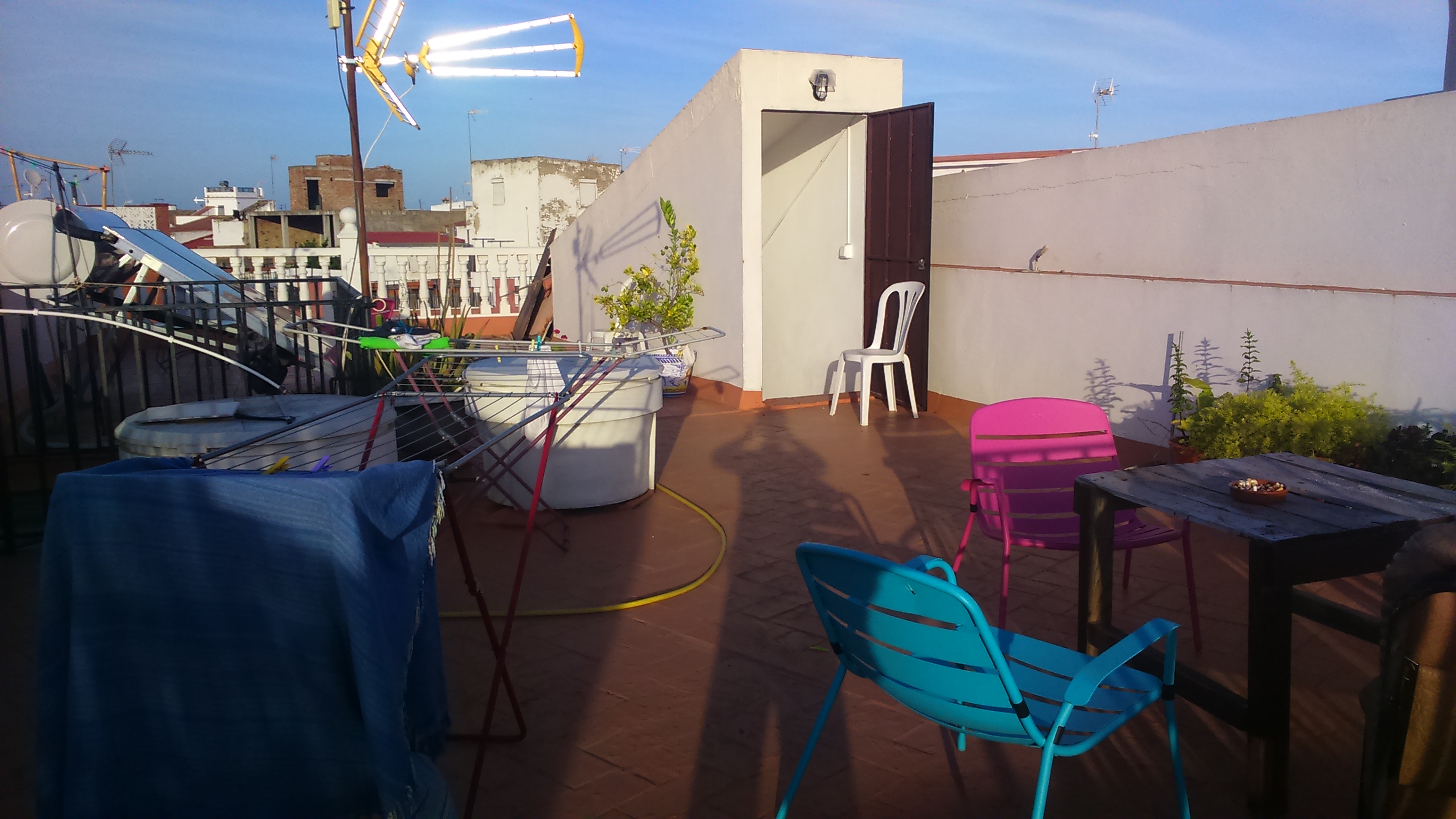
Later I enjoyed my own brand of spirituality – t’ai chi on the terrace in the evening sun with the village rooves on two sides, the countryside I had just walked through on a third, and the place I will walk into on the fourth. I gave thanks for the whole situation.
Another blog about the VDLP

Laurie Lee, As I Walked Out One Midsummer Morning

Rebecca Solnit, Wanderlust

Travels in Spain

I have just discovered that deleting photos from my media library at WordPress, the people who host these travel blogs, has meant that those deleted photos do not now appear in past blogs. The recent ones are fine.
I had no idea of this and am hoping that WordPress will contact me shortly to offer a solution. In the meantime, you will find blogs (eg about the Camino Frances in 2016) with text but no photos and I apologise for this.
Tamsin 24.7.17

This is a general introduction to my Spanish walking.

‘I travel not to go anywhere, but to go. I travel for travel’s sake. The great affair is to move.” R . L. Stevenson, Travels with a Donkey in the Cevennes

Time spent in Spain: 4.10.16 – 17.12.16; 12.5.17 – 24.5.17.

Some of these blogs were written ‘on the spot’, some soon after the event, and others when I returned to Scotland. What a joy to compile them!

At the 2016 Edinburgh International Book Festival, I heard Jean-Christophe Rufin explain (and these are my own words from the memory of that event), that all the walkers he saw seemed to be scribbling or typing a blog at every stop of the way, but that he decided not to do that and to rely instead on his own memory afterwards. But I am a 53 year old woman who has had 2 kids and has a head which is already very full of experiences, so I didn’t want to rely on mine!

received_10157991429210640.jpeg
I began to walk the Camino Frances in Pamplona, Spain.

Writing has been a good way to assimilate and integrate my experiences, to make sense of where I have travelled, what I was thinking, and the conversations I had with people. It enabled me to tell my family, friends and colleagues what I was up to (similar to one of those news letters you sometimes receive in Xmas cards!), and, I now realise, to keep the spirit of my wonderful adventures alive.

spain-autumn-2016-phone-886
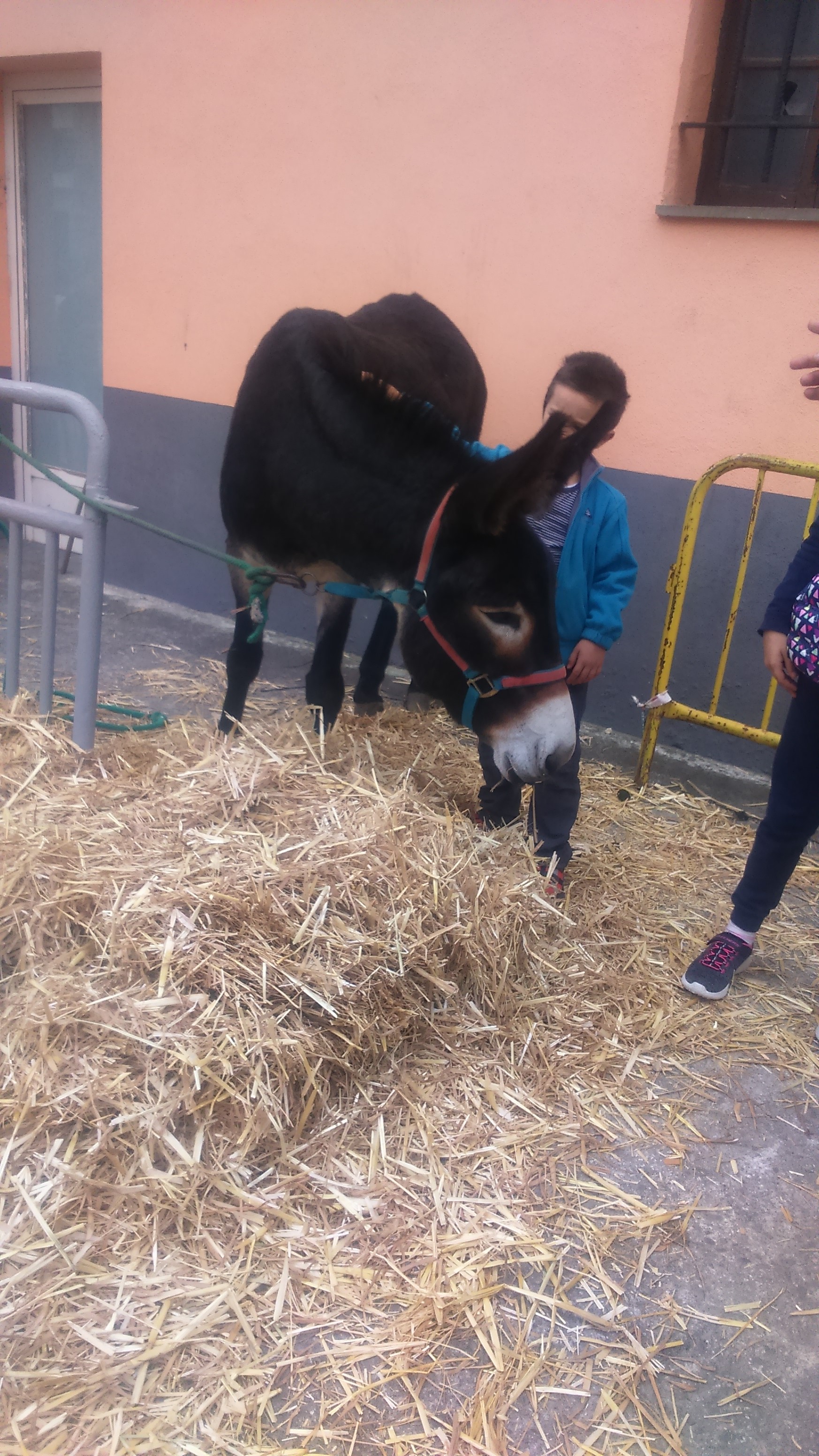
Donkey in a temporary street stall, Feria, a Basque county fair.

Origin of the blog name: There is a book by Scottish writer, Robert Louis Stevenson “Travels with a Donkey in the Cévennes”, and there is a French Camino  named after him which has a personal, family connection for me. Just as it is possible for campers to stay in a site where a tent is provided, ready-erected with a camp-bed in it; so there are many who take treks and have a mule or a person to carry their bags.  I walked around Spain with a rucksack on my back (containing what I needed for a 3-month stay, summer – winter), rather than having a donkey carry it for me.

“Whenever I was asked: ‘Why did you go to Santiago?’ I had a hard time answering. How could I explain to those who had not done it that the way has the effect – if not the virtue – to make you forget all reasons that led you to become involved in it in the first place.” Jean-Christophe Rufin, The Santiago Pilgrimage

So I won’t explain here why I decided to do this, although there is some explanation in later blogs.

But I will say that there were two distinct parts to my journey: one where I visited fellow Shiatsu (acupressure massage) and complementary therapy practitioners, giving sessions in return for bed and board. The other where I walked the Camino Frances and part of the Via de la Plata (‘o contrario’, backwards), staying in different hostels and hotels every night.

received_10157991437945640.jpeg
Burgos, a major town along the Camino Frances, Spain.

The former came out of finding a way to stay in Spain without spending too much money. The latter was inspired by friends Phyllis and Liz, by books, programmes I heard on the radio, and the film, ‘The Way’. It turns out that walking the Camino suits someone like me, a normally busy person, active, and perhaps tending towards being workaholic or at least feeling full of responsibilities. I trained myself years ago to sit and meditate, but it could be that walking is more appropriate to my character.

“that fine intoxication that comes from much motion in the open air, that begins in a sort of dazzle and sluggishness in the brain, and ends in a peace that passes comprehension.” R.L. Stevenson, taken from various blogs (see below in English & French).

Camino: A walk, or track, often trodden for religious and spiritual reasons since the Middle Ages, by ‘peregrinos’ (Spanish for pilgrim). The best known is The Way of St James of Compostelle, or Camino Frances. All paths are signposted by the coquille Saint Jaques shell which walkers also carry to symbolise their journey. ‘The Camino de Santiago comprises a lattice of European pilgrimage itineraries which converge at Santiago de Compostela in north-west Spain.’ (Michael Murray, for ref. see below). They can begin in Jerusalem, Rome, and Paris, famously at Sean-Jean-Pied-de-Port in France; and are travelled across Spain, Portugal, France, England and elsewhere in Europe.

spain-autumn-2016-phone-2732
The final way marker of the Camino Frances, Finnisterre, Spain.

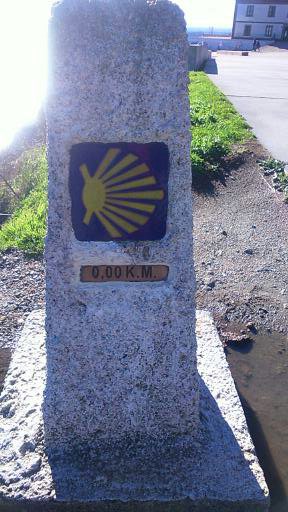
The shell sign alongside the number of km still to travel. This one indicates I have arrived in Santiago de Compostella, November 23rd 2016 after walking from Pamplona.

This is where I went, in the order I visited: October – Downton (New Forest, Hampshire, England), Santander (by boat from Portsmouth), Salinas, Aviles, Oviedo, Bilbao, Egileor, Vitoria Gastiez, Feria, San Sebastian, Pamplona. Camino Frances 1 (Urtega (by bus from Pamplona) to Najera). Cortiguera, Aranjuez (via Madrid). Camino Frances 2 (San Juan de Ortega to Carrion). November – Madrid. Camino Frances 3 (Leon to Santiago de Compostella), Finnisterre, Santiago.

received_10157991446825640.jpeg
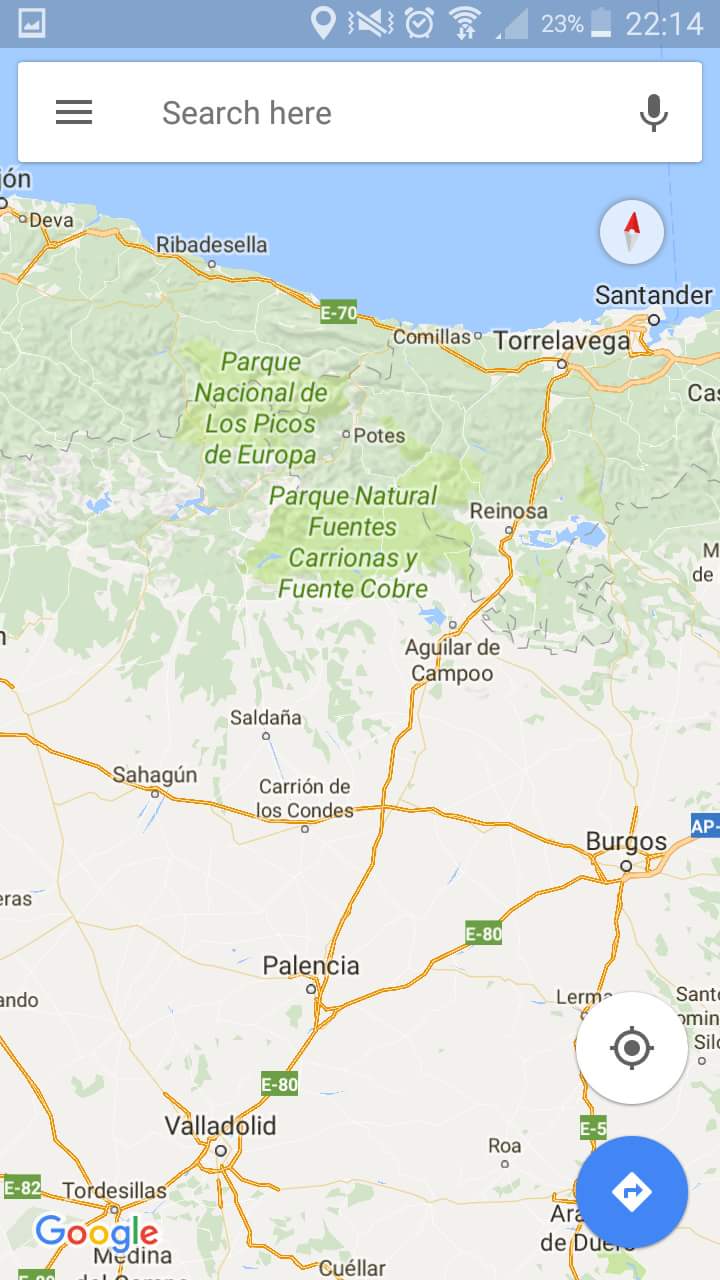
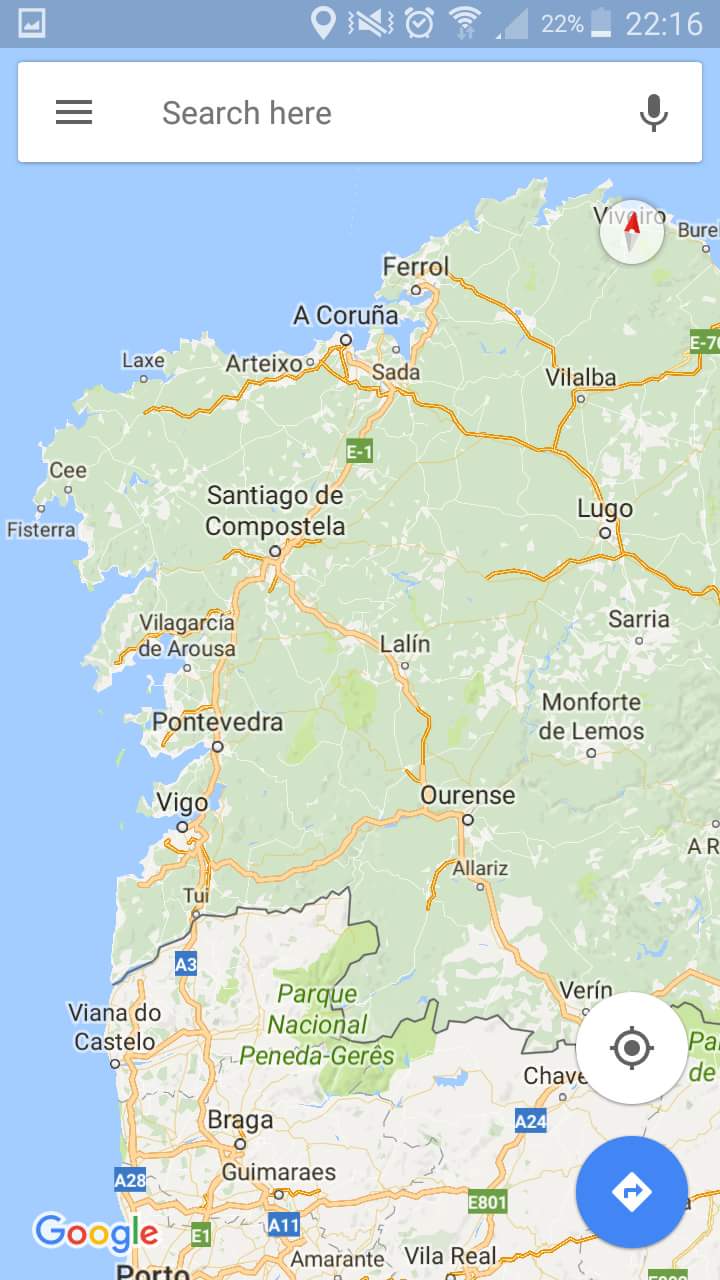
Map showing Santiago de Compostella in north western Spain, the home of the Tomb of St James, final destination of pilgrims from all over the world.

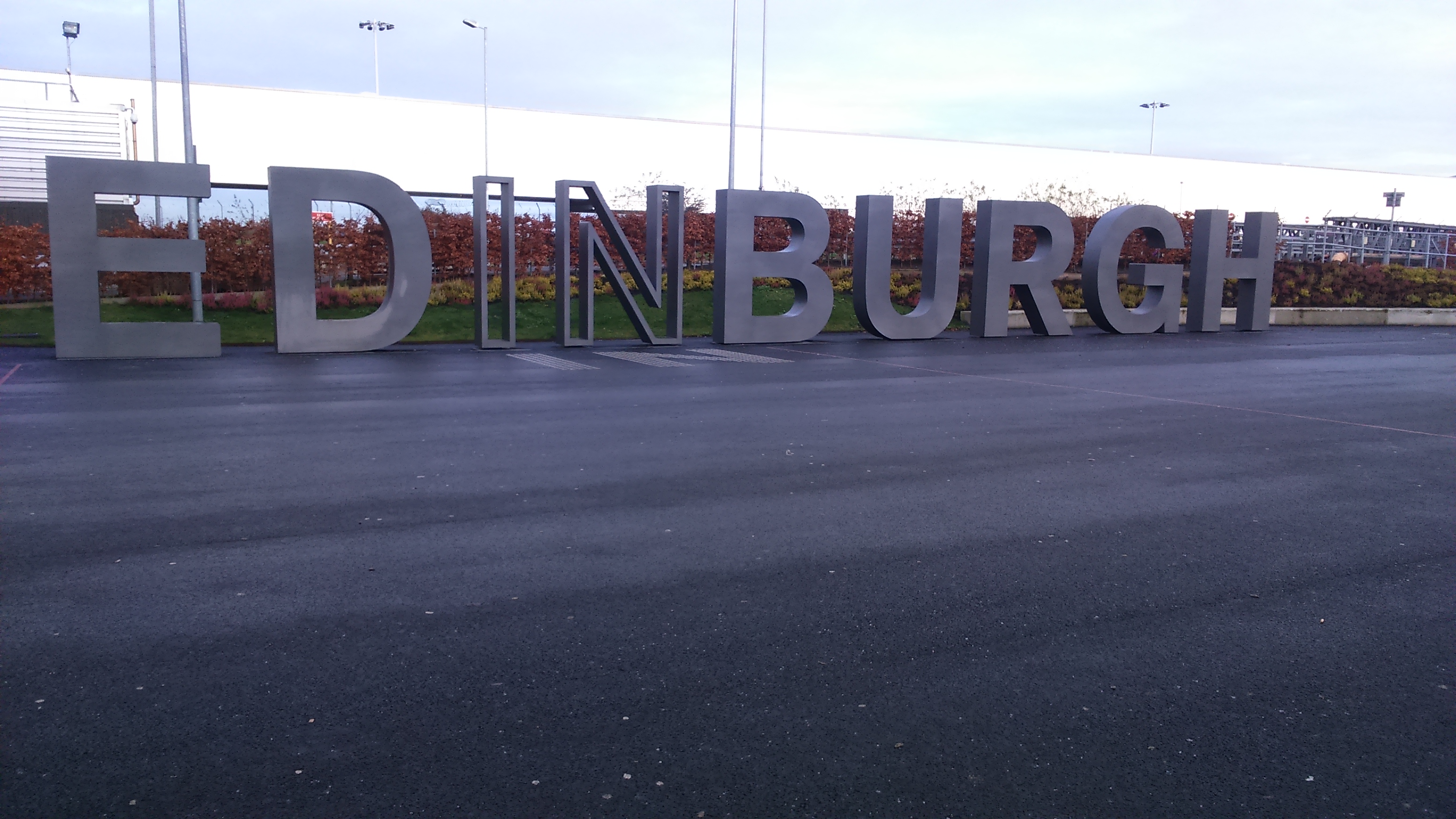
December – Camino Via de la Plata (Santiago to Vilar de Bario). Xinzon, Ourense, Las Matas (via Madrid), Valencia (via Madrid), Olocau and Sierra Calderona, Barcelona, Edinburgh (by aeroplane).

I keep being asked whether I suffered from the walking, and I understand the question because I, too, was very worried about this, and allowed it to put me off starting. I did have a week or so of blisters at the start, but I had researched what to take with me before going, and had plasters, cream and a sewing kit with me (yes, we sew a thread through the part with the fluid and let it drain out over time to stop it getting infected!). The other pilgrims were really helpful and showed me how to look after my feet, so I didn’t have to stop, and my skin hardened up soon enough.

spain-autumn-2016-phone-3179
Early on the Camino Frances, Spain.

My main concern had been my back and the load. I carried approximately 18kg (which was more than the recommended 5th of your body weight) and although it felt very heavy after 32km, there was no pain. All that yoga before I left, and my daily ‘Salutations to the Sun’ helped. I did have to pay to get it home on the aeroplane at the end, which was a nuisance and might have been avoided. Next time I will take a new-style, light-weight sleeping bag and towel to lighten my pack.

I trained as a professional dancer in my teens and early twenties, and am therefore used to daily class, working through the pain and stiffness of the night and previous day’s exertions. This probably helped me to deal with the numerous small physical difficulties which arose when I walked, especially at the start of the day. I used my Shiatsu and other training to identify the source, relax into the areas I was holding tension, and, lo! they disappeared as quickly as they came.

There were many other people who suffered and some who had to give up. I helped with Shiatsu where I could: feet, hands, ankles, backs etc, in the evenings at the hostels. It was good to meet travellers I had massaged later along the way, and particularly in Santiago on the final day to know they had been able to complete.

spain-2016-001
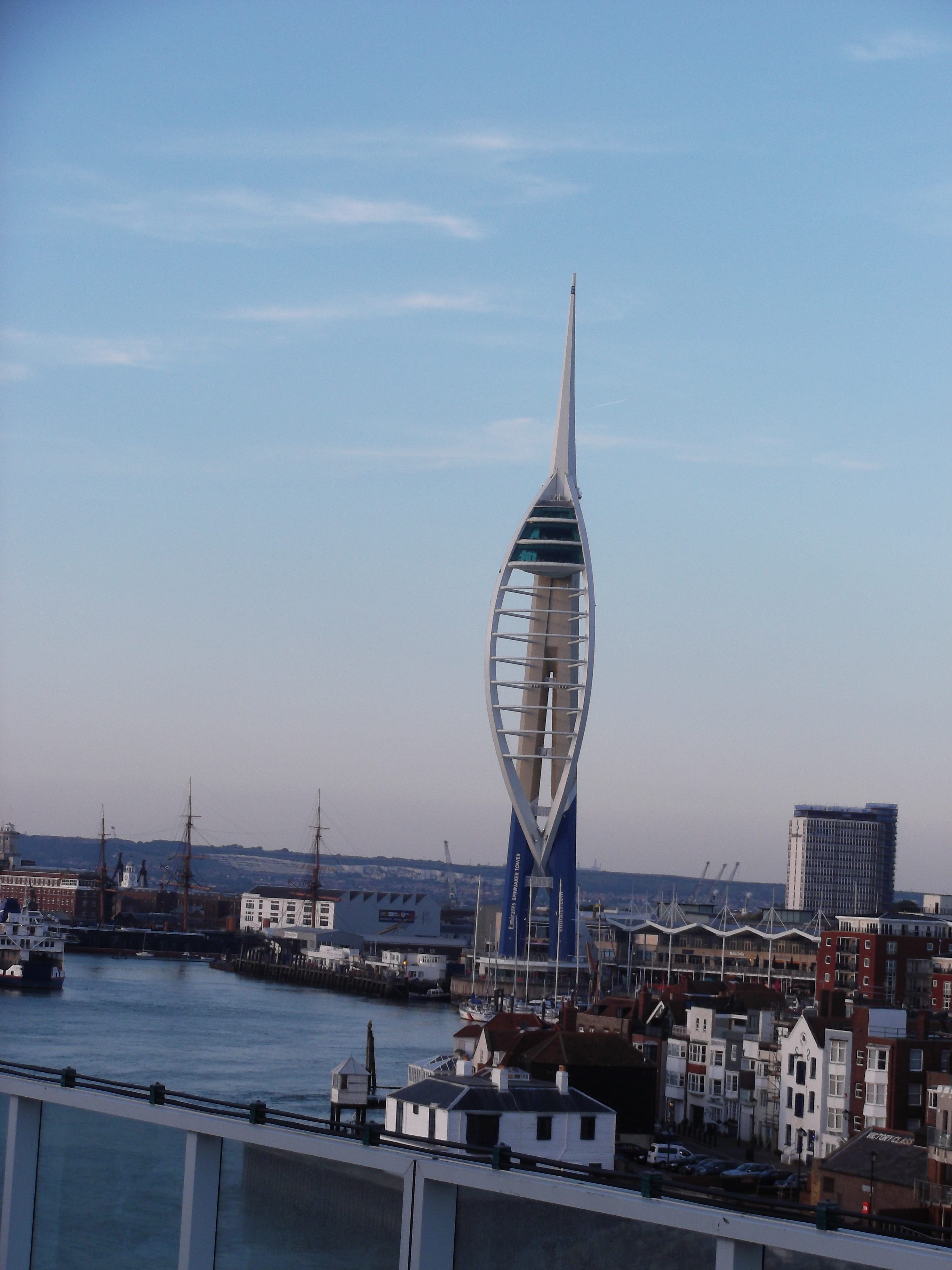
Leaving Portsmouth, by sea, October 2016.

Kilometres walked: 700+ (Caminos), not including Sierra Calderona, Egileor, Aviles-Salinas, walking friends’ dogs, walking to school near Valencia, all the cities…

dsc_0030_10.jpg
Home by aeroplane, December 2016.

Walking without a donkey – Travels in Spain. Starting with blog 1 in England

The Stevenson Camino blogs I have enjoyed:

http://stevenson.canalblog.com/

http://walkinginfrance.info/short-walks/r-l-stevenson-trail/

Travel stories by Teri White Carns https://roadtripteri.com/2012/10/16/first-day-of-walking-pamplona-to-urtega/

M. Murray’s research into Caminos: https://www.qub.ac.uk/research-centres/TheInstituteofSpatialandEnvironmentalPlanning/Impact/WorkingPapers/FileStore/Filetoupload,432512,en.pdf

https://www.caminodesantiago.me/

Fantastic book: A Philosophy of Walking, Frederic Gros

Camino Francés Camino – O Pedrouzo to Monte Gozo, Spain

22.11.16 O Pedrouzo to Monte Gozo 15.4 km

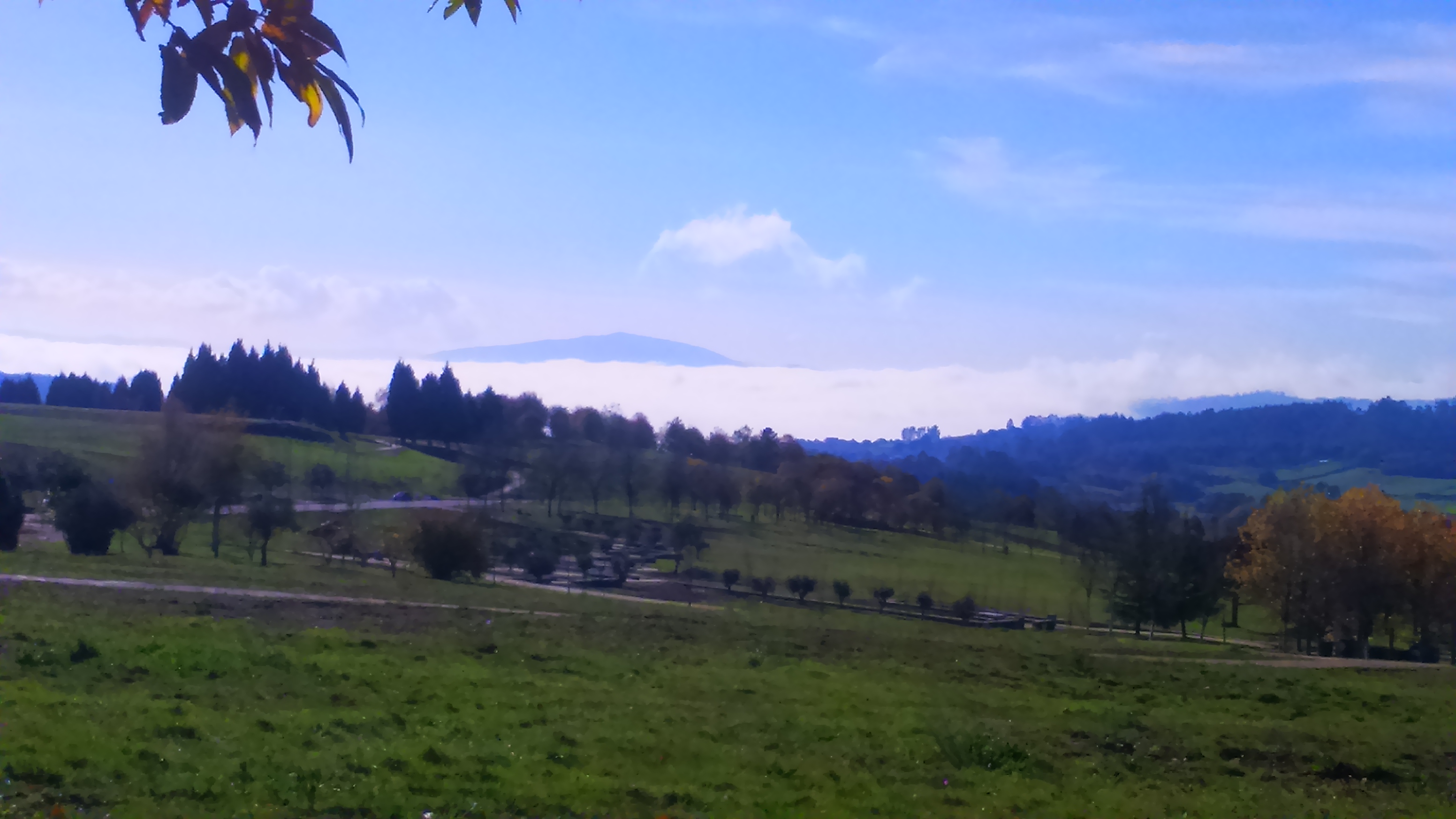
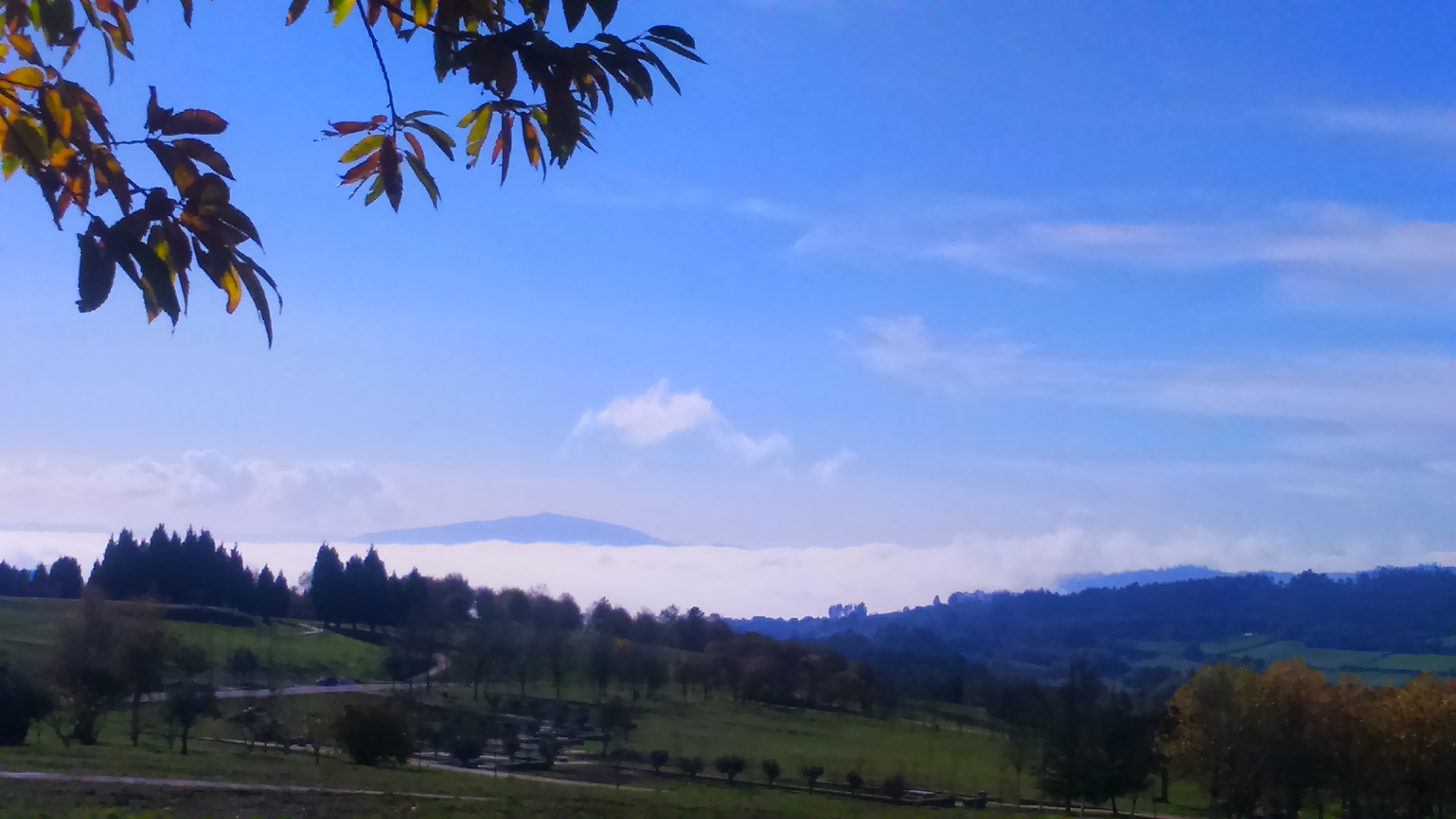
Despite the previous night’s rain, it was beautiful in the morning misty light

Unfortunately my boots were still damp by morning, but this was a short stage because part way between O Pedrouzo and Santiago is Monte do Gozo. Monte do Gozo is a massive complex of pilgrim accommodation (1200 beds), built at the behest of the Pope, and Alain, my walking companion and I, wanted to see what all the fuss was about. On the way we stopped for a hot chocolate and Santiago Tart (delicious almond sweet) to warm the cockles. There was not much conversation as we neared the end of the long journey and reflected on that with sadness.

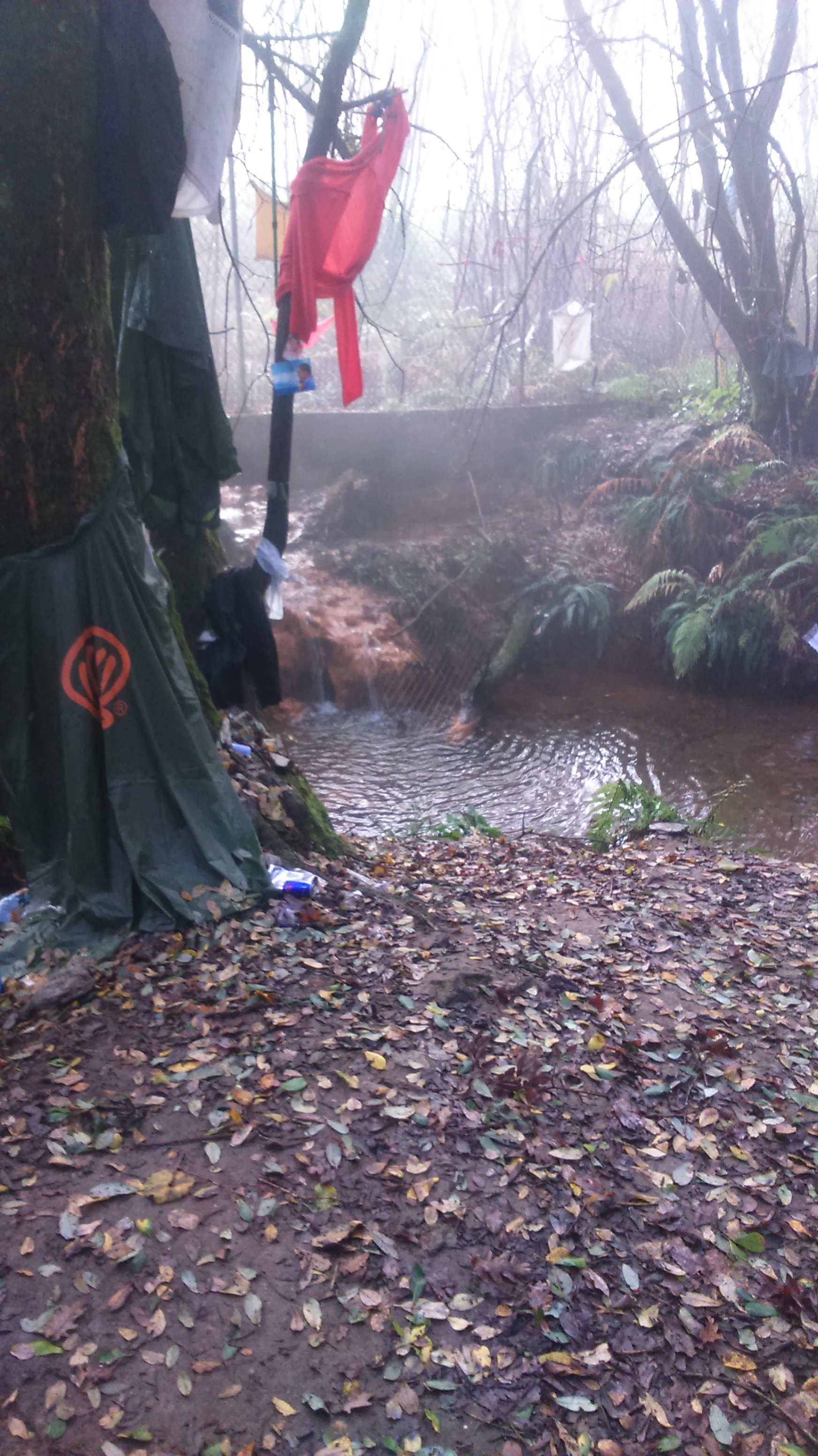
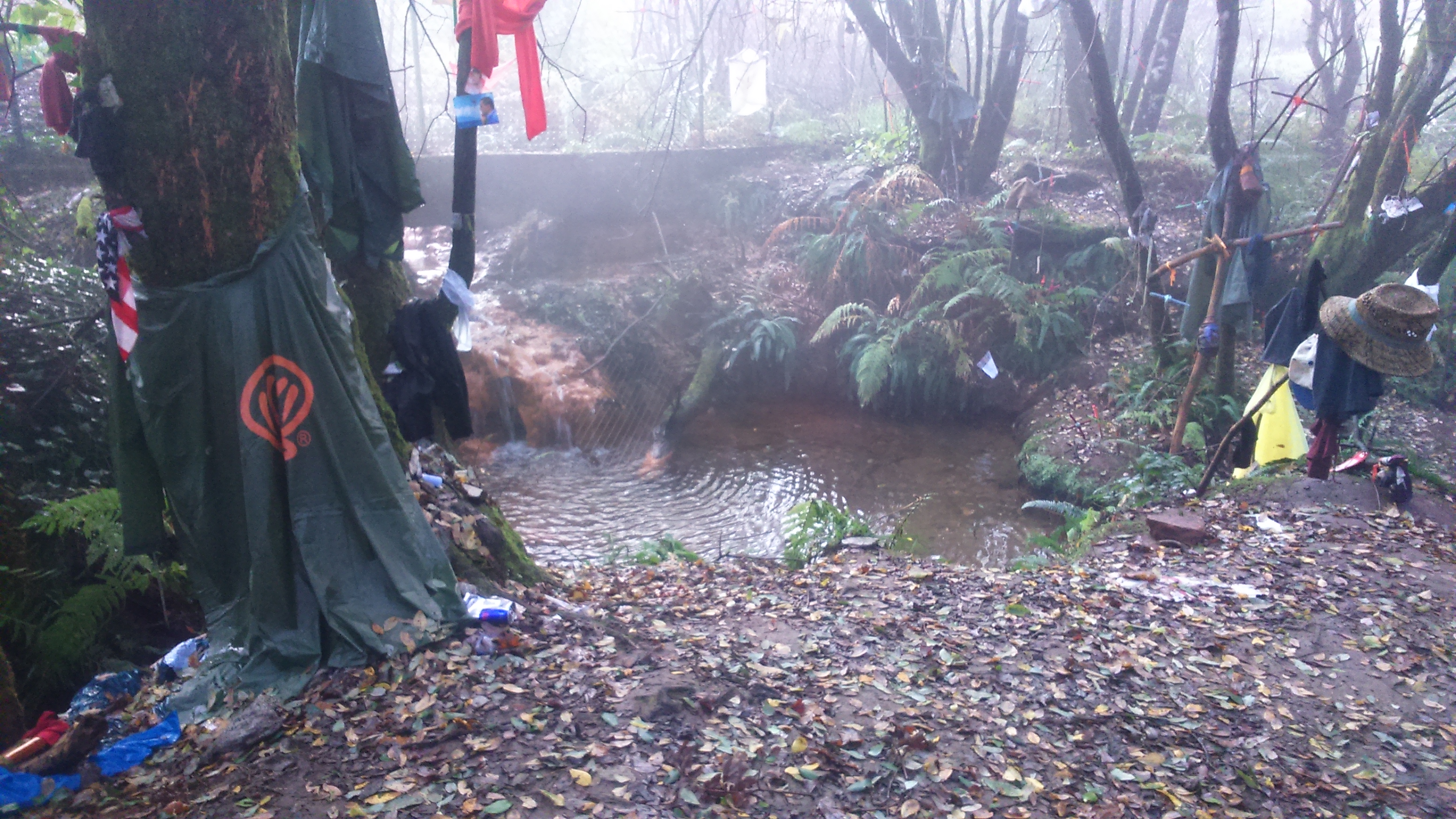
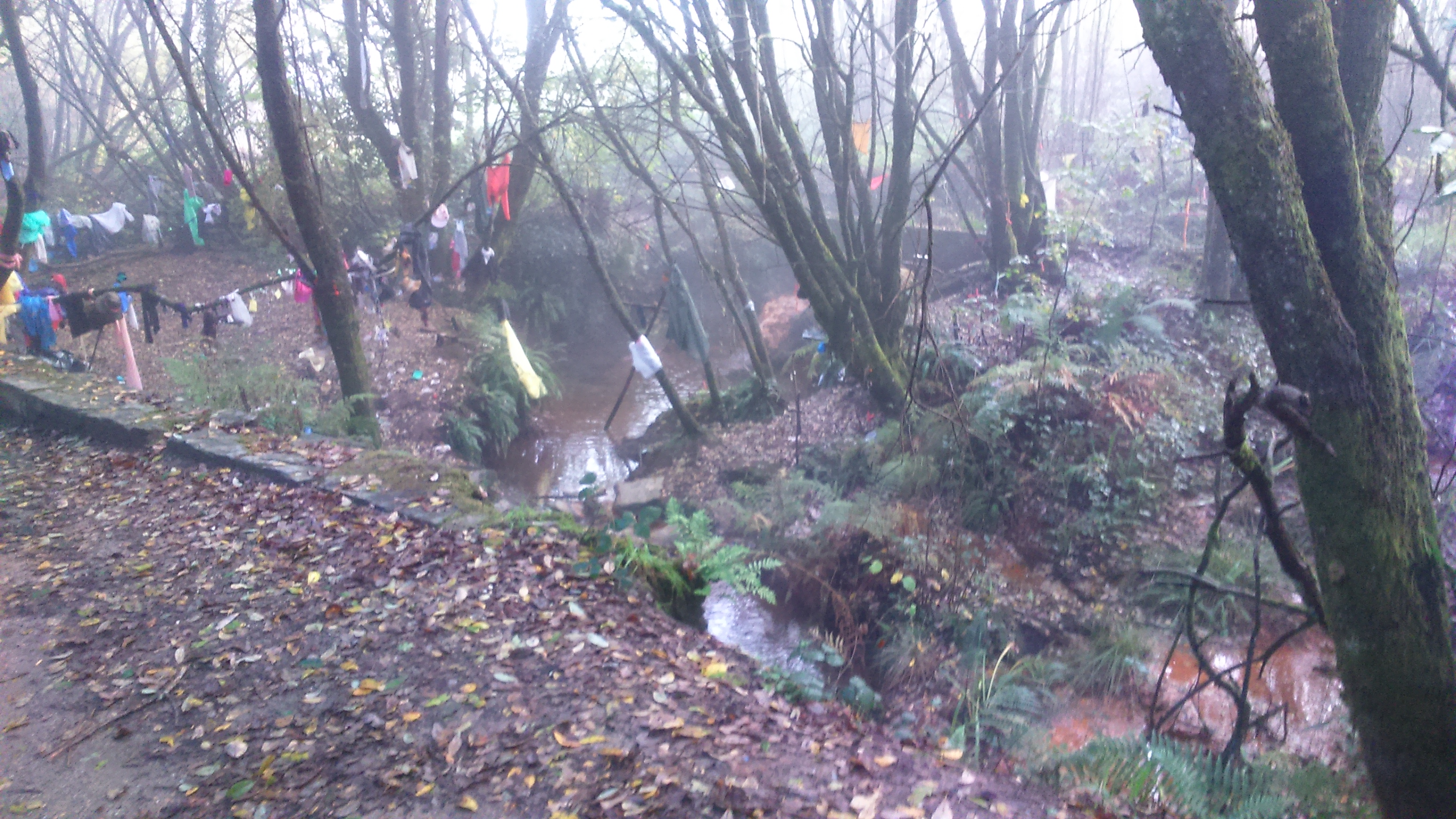
There is a tradition, amongst the Camino trapisers, where boots, clothes and other accoutrements which are no longer necessary, are ceremoniously draped around and arranged at a particular country dell. It didn’t attract me at all, indeed, it was all a bit of a mess. Plus, autumn was moving into winter now and a decidedly melancholy atmosphere was all around.

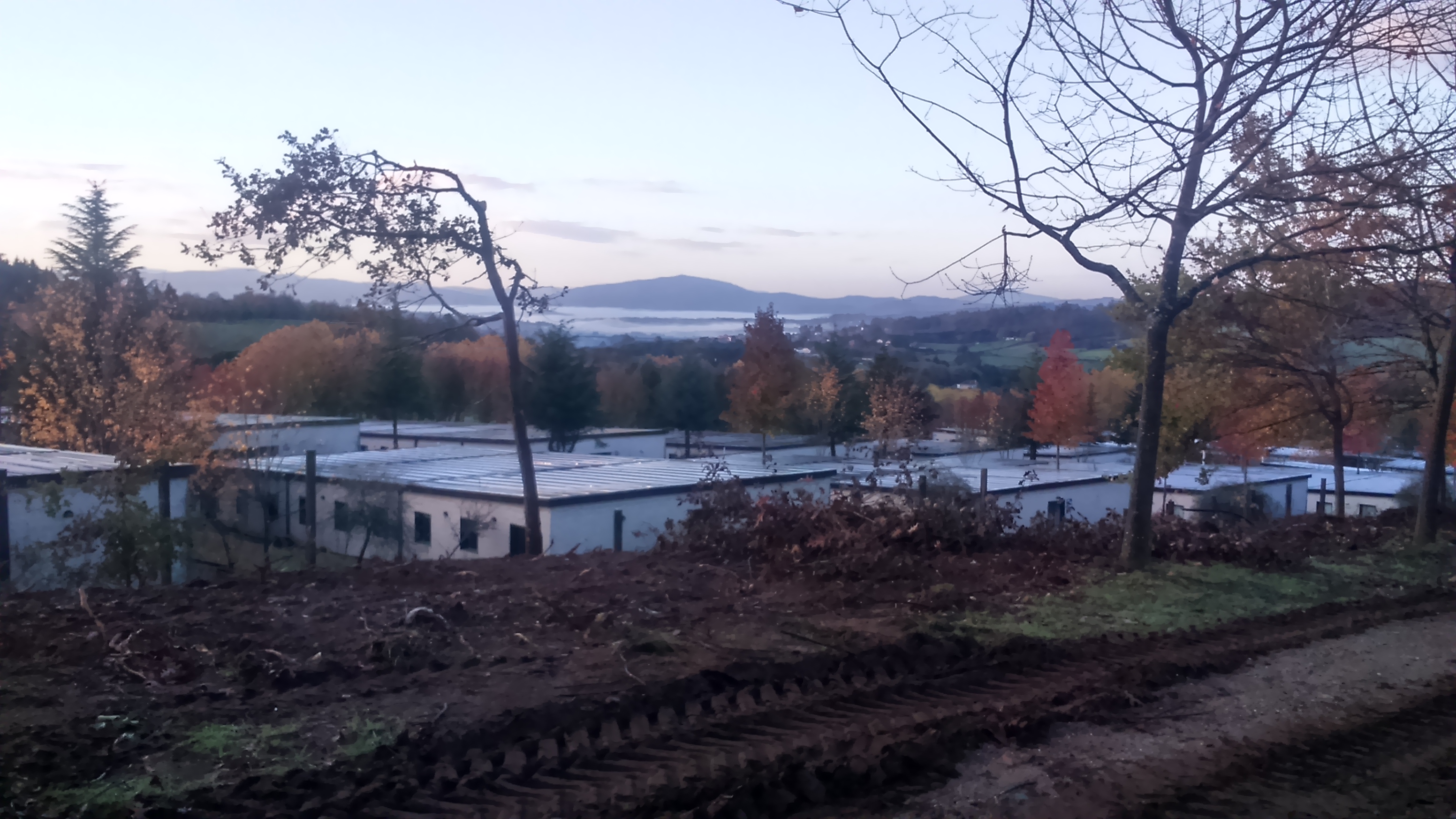
I have never seen such a place as Monte Gozo. It reminded me of a student campus or unimaginative caravan park, with its concrete masses in a gorgeous rural setting, and, as it was out of season, there was nothing but the wind blowing food wrappers around deserted walkways.

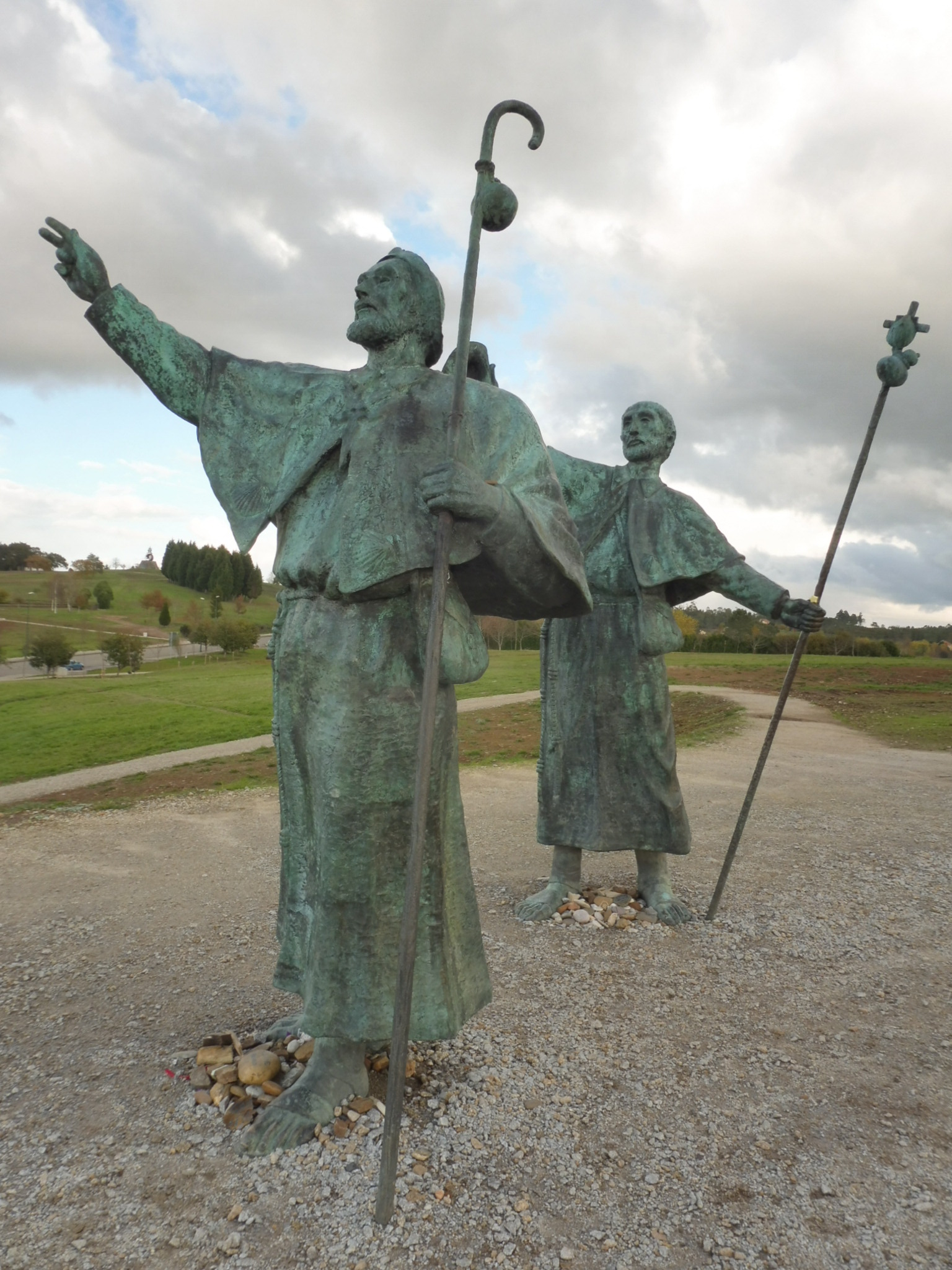
On top of a hill, there are views for contemplation, and somehow self-satisfied statues of walkers. So I turned my back on those arrested, oxidised striders, and sat in the warm sun in silence. It was starting to dawn on me that this wonderful Camino journey was nearly at its end.

I prefer to praise nature

The man who booked us in was very friendly and we were able to ask questions and find out about the place. Apparently it is full to heaving in the summer, although I still didn’t get a spiritual sense about what goes on there. There were one or two others in the hostel block and an adequate kitchen where we had our pack lunch. And there was blessed privacy for giving Shiatsu.

A thoughtful figure amongst the concrete

A desultory set of standing stones

Later, there were no cafes or bars open, so we walked into the village in the pitch black, under a starry night sky, and it was freezing. We searched, gave up, started again, and eventually found somewhere to eat the familiar traveller’s menu. I do not recommend visiting at this time of year, and was glad to leave the next morning to walk the final 5 kilometres into the city of Santiago de Compostella where St James’ remains are interred.

‘When I walk I soon become two. My body and me: a couple, an old story. Truly the soul is the body’s witness. An active, vigilant witness. It must follow the other’s rhythm, accompany its efforts: when you rest on the leg during steep ascents, when you feel its weight at the knee. You push on and the mind punctuates each step: ‘good, good, good’. The soul is the body’s pride. When I am walking, I accompany myself.’ p. 57

All quotes taken from A Philosophy of Walking by Frédéric Gros.

Camino Francés – Palas de Rei to Ribadiso to O Pedrouzo, Spain

20.11.16 Palas de Rei to Ribadiso 25.8 km; 21.11.16 Ribadiso to O Pedrouzo 22.1 km

It’s all about living without knowing what will happen. Whatever it is, walk through it.

dsc_1531.jpg
Another pretty Roman bridge in Gallicia

Down came the rain and…. . Two hours of heavy downpour in the morning meant very few photos for the rest of the day. However, it was a lovely walk through dark, pine forests, and open lusciously, green countryside, with a great deal of sloshing in the boot department. Plus, dripping sleeves, managing temperature control at the same time as trying to stay dry – one way and another it was a very different sort of a day than I had been used to.

Unexpectedly I stopped for lunch with a  friend, and was rarely so pleased to see a pizzeria and drink a warming glass (or 2) of red. The patron was understanding and provided newspaper as I disrobed and slowly stopped shivering. This simple kindness was particularly appreciated.

My feet were actually cosy, even though it was impossible to dodge the puddles, but it was overall more tiring, and so I arrived at the albergue (crossing the ancient 6th century bridge to the other side of the Rio Iso) with weary legs, feet and soul, and in a narky mood. The door was open but no-one was at home, literally. I phoned the number, and the van I had seen leave as I arrived, returned with the hospitalier. There was some confusion as to which hostel, because he had one in town as well, but here I needed to stay.

Of course being so wet, meant that I cooled down quickly, and so I was very pleased to find that the room had efficient heating and a hot shower. There was a communal kitchen, sitting area, and the eternal noise of the TV of course; and here were the two young Canadian girls again. They really had to make conversation this time – we had been sharing dorms, meeting up and separating, re-connecting and overtaking with desultory Buen Camino‘s for several days now. In fact, we even ended up sharing some food, and the presence of other previously wet walkers conspired to improve the atmosphere a little. There’s nothing like moaning about the weather for effective bonding!

I had packed some of the lunch-time newspaper in the bottom of my rucksack, for stuffing my boots at the end of the day. That turned out to be a lucky break, because it had soaked up some of the water which might otherwise have been absorbed by my only change of garments. There was still a great deal of rearranging of sleeping bag, walking clothes, and other soggy items on radiators throughout the evening, but they were all wonderfully dry by morning.

Which is less than can be said for the landscape: what a storm! It rained wildly all night, with thunder and lightening, and I suffered nightmares, wakened time and again, once by my own screaming. Despite being ready to leave by 8.30am, it seemed sensible to wait and see if it might stop before venturing out. It didn’t.

dsc_1532.jpg
The best walking companion

What is the Camino de Saniago de Compostelle like? Often it’s just walking. With a moment when the sun comes out and everything shines. Or you turn a corner and there’s a simple, solid, ancient chapel, right there in the middle of nowhere.

‘During that continuous but automatic effort of the body, the mind is placed at one’s disposal. It is then that thoughts can arise, surface or take shape.’                                                                        p. 157

Now I walked beside woods of very unpopular eucalyptus trees with chestnuts dotted amongst them. It was a rather bizarre idea of the Spanish government to plant 1000’s of them for the pulp industry, and they have proved to stop other native species and natural ground cover from growing well.

Unpopular eucalyptus trees

Wet pathways reflecting the forest

There were no vultures visible these days (see earlier blogs), only robins (les rouges-gorges); those little gardeners’ friends, hopping very close by the side of the path, fluttering in and out of the wet bushes as if they were following my progress, keeping an eye on me. The rain stopped by midday, and there was an open bar serving hot chocolate, but I felt colder and my feet were like ice.

O Pedrouzo is a largeish town, quite modern in places, and I stayed at a new hostel that evening, Crucero de O Pedrouzo, for 10 euros – all glass frontage and underfloor heating. Delicious! There was a bank with cashpoint, a choice of small supermarkets, and a hard-to-find, but worth-it bakery.

Once again I met with immense kindness. This time it was a woman who welcomed us at the entrance, and she took herself off to get mountains of newspaper and stuffed my boots for me, not just once, but again later, when the first lot had done its job.

dsc_1535.jpg
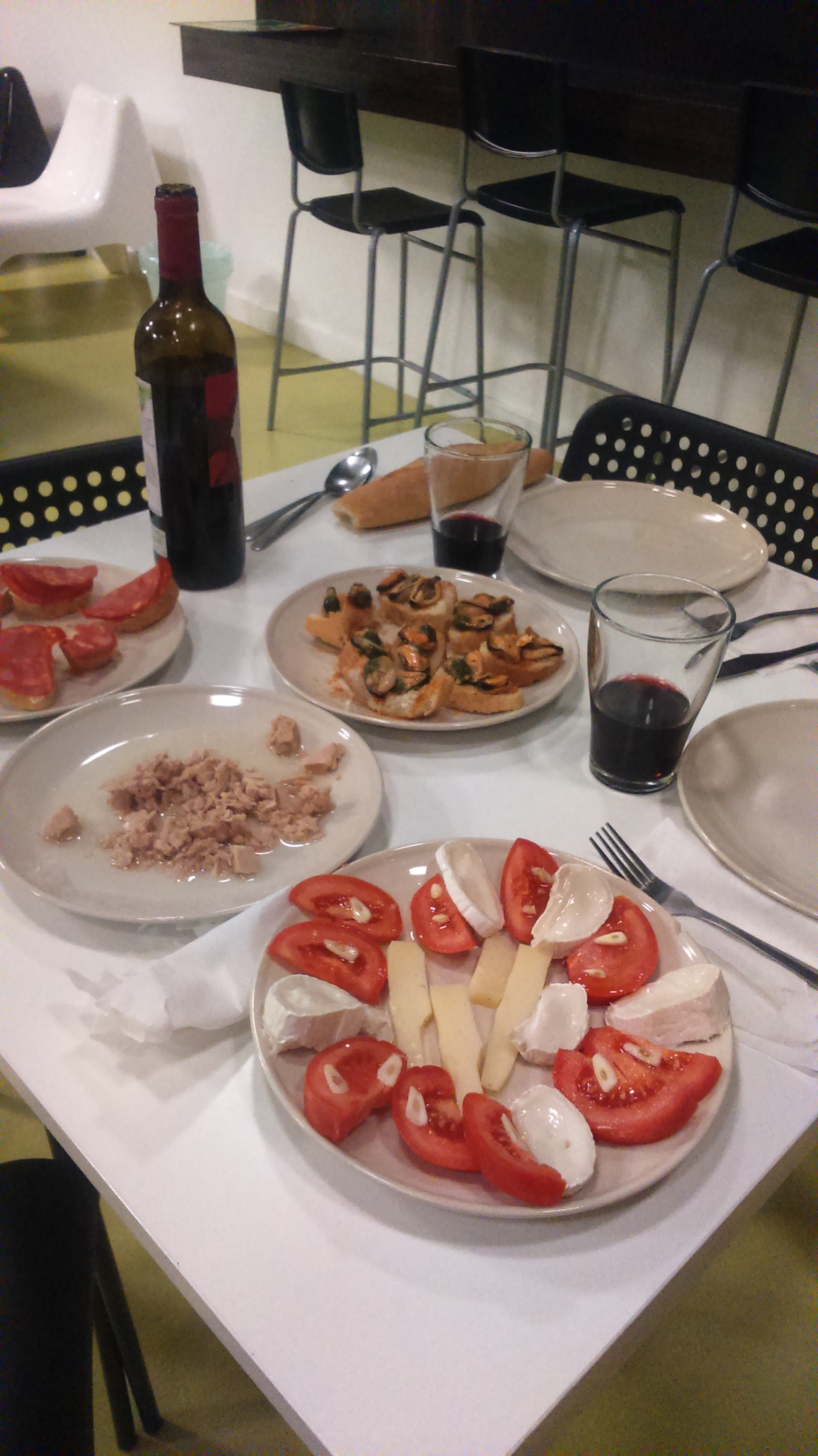
Looks yummy, doesn’t it?

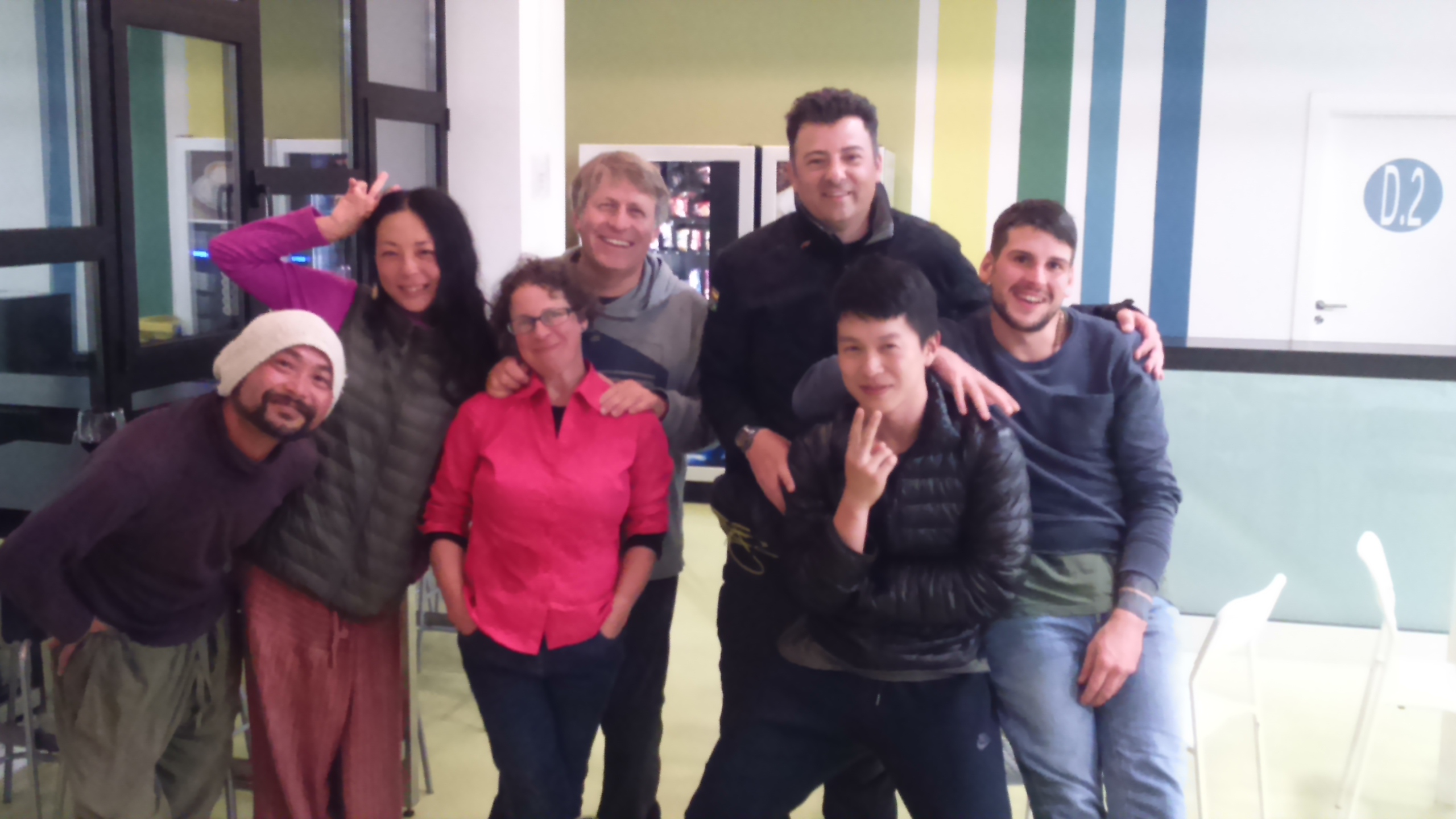
The open plan kitchen/sitting/dining area made for easy conversation, and immediate friendships were springing up at many tables as we ate. There was a young, cycling Korean, unusually mixing with other nationalities; 2 men speaking English and playing draughts together, despite the fact that neither had English as their native tongue; the familiar Canadian pair once again keeping to themselves; and a charming Japanese couple. By the end of the night, we were making hilarious conversation in many languages, and we all went to bed with smiles on our faces.

dsc_0057_1.jpg

All quotes taken from A Philosophy of Walking by Frédéric Gros.

Camino Francés – Sarria to Portomarin to Palas de Rei, Spain

18.11.16 – 19.11.16 Sarria to Portomarin 22.4km; Portomarin to Palas de Rei 24.8km

dsc_1513.jpg

It’s easy to think that you must walk alone on the Camino, because your own pace is the one which allows you to remain comfortable and go as far as you want to each day. As it turns out, I discovered that it was not necessary. What a pleasure to find that two can walk in step with each other and both be comfortable together!

dsc_1515.jpg
The Roman bridge of Aspera

I witnessed pairs and triplets of friends who walked in time with each other for a while, and then separated, settling into their own individual rhythms.

I walked with 2 others, falling into step with first one, then the other. Sometimes I was alone with my thoughts, musings, or own quiet, at other times I sang with the other two, and we strode out together. This is how it worked: if one fell out of humour with the second, the third was there to allow the first to walk on alone and regain equilibrium, whilst keeping the second company, listening to their complaints and woes, and eventually enabling a new harmony to evolve.

dsc_1517.jpg
Fragrant chestnut forests, not like the enduring manure/chemical odours as I walked for kms through the rural villages and farmlands of Galicia


When walking with a companion there was the pleasure of peaceful silence. Then again of conversation, of sharing music, or of gossiping about the walkers ahead. There was the telling of secrets – when looking ahead at the path it can be more tempting than when face-to-face. From profound to prosaic – from comparing notes of last night’s snorers, to the exchanging of intimacies – away from home it’s surprising what you can share with a stranger.

The first sight of Portomarin

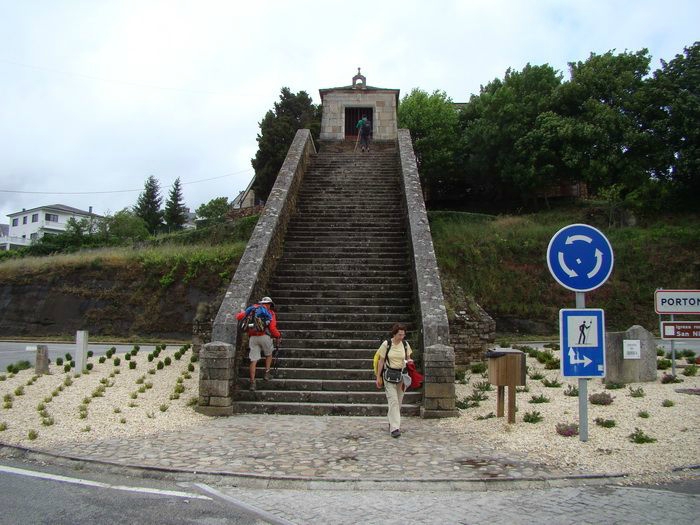
And you can haul each other up the slopes or through puddles if one is feeling weaker than the other. In the case of Portomarin, it was another of the long flights of steps at the last minute, on entry to the town, and then down again as the first hostel was not ideal!

steps-portomarin-ab

dsc_1523.jpg
Characteristic ‘horreos’ where grain is stored for the winter

On the subject of safety, I didn’t experience any bad feeling, only support and encouragement.  People cooked together, shared food and news, advice, of course, and their stories. I heard tell of articles stolen from one woman, but wonder if they had actually been lost, because in the 700 km I was unaware of any such (difficulty). Whilst I was very careful to carry my passport, phone and money with me at all times, others around me (who were much more experienced Camino walkers) were very lax, leaving things in other rooms, for example, when they had a shower, and everything was always there when they got back.

Despite the late year, December in north eastern Spain saw lush landscapes with copious wild flowers

Spain seemed to me to be very safe; bus drivers weren’t hidden behind perspex screens with signs warning ‘passengers who attack our staff will be prosecuted’, as in Scottish buses. Money to be used for change when buying tickets was out on the counter for anyone to steal, but no-one did.

dsc_1527.jpg
Romanesque church, Portomarin

dsc_1518.jpg
There were dogs absolutely everywhere, and, here, one had the sort of companion I did not!

Men and women shared dormitories and often there were unisex toilet facilities. I was several times on my own in empty buildings, save the male hospitalier, and I never felt in danger, although I have always taught myself to think of what might happen and to be safe!

dsc_1525.jpg
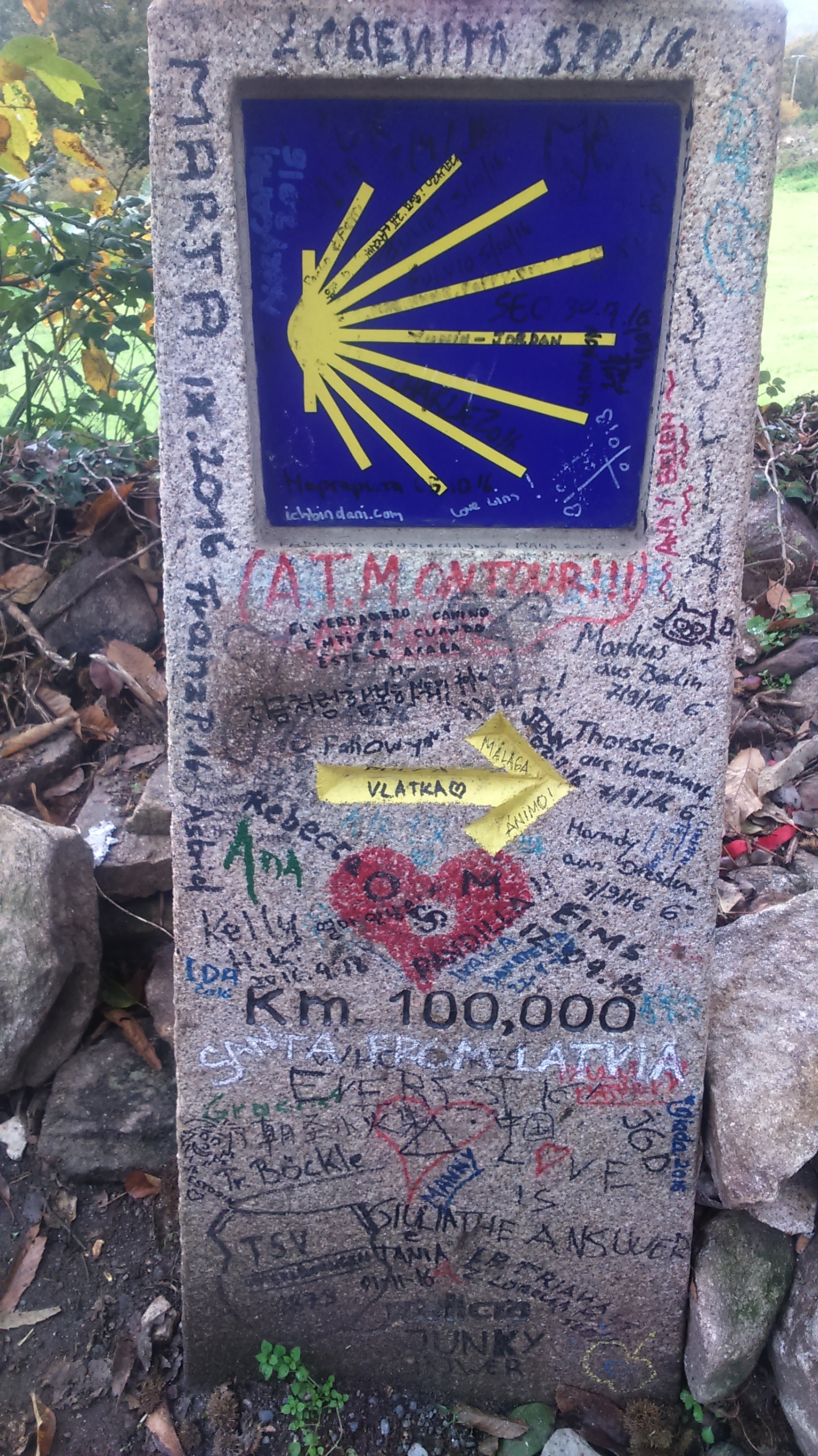
100kms to go!

On the other hand I did not walk alone after dusk through forests with wolves, but a woman I met in Santiago reported that she had; and I met several couples who had walked at night, which was not something I fancied. I can understand the attraction, especially in the summer, as it would be cooler, and light until late, with only short darks. Plus the quiet would be fantastic. And the stars, oh the stars are amazing when there’s very little light pollution! You can see layers and layers of them, a true depth to the night sky which you can see in the Scottish Highlands, but certainly not in London or most of Edinburgh.

dsc_1521.jpg
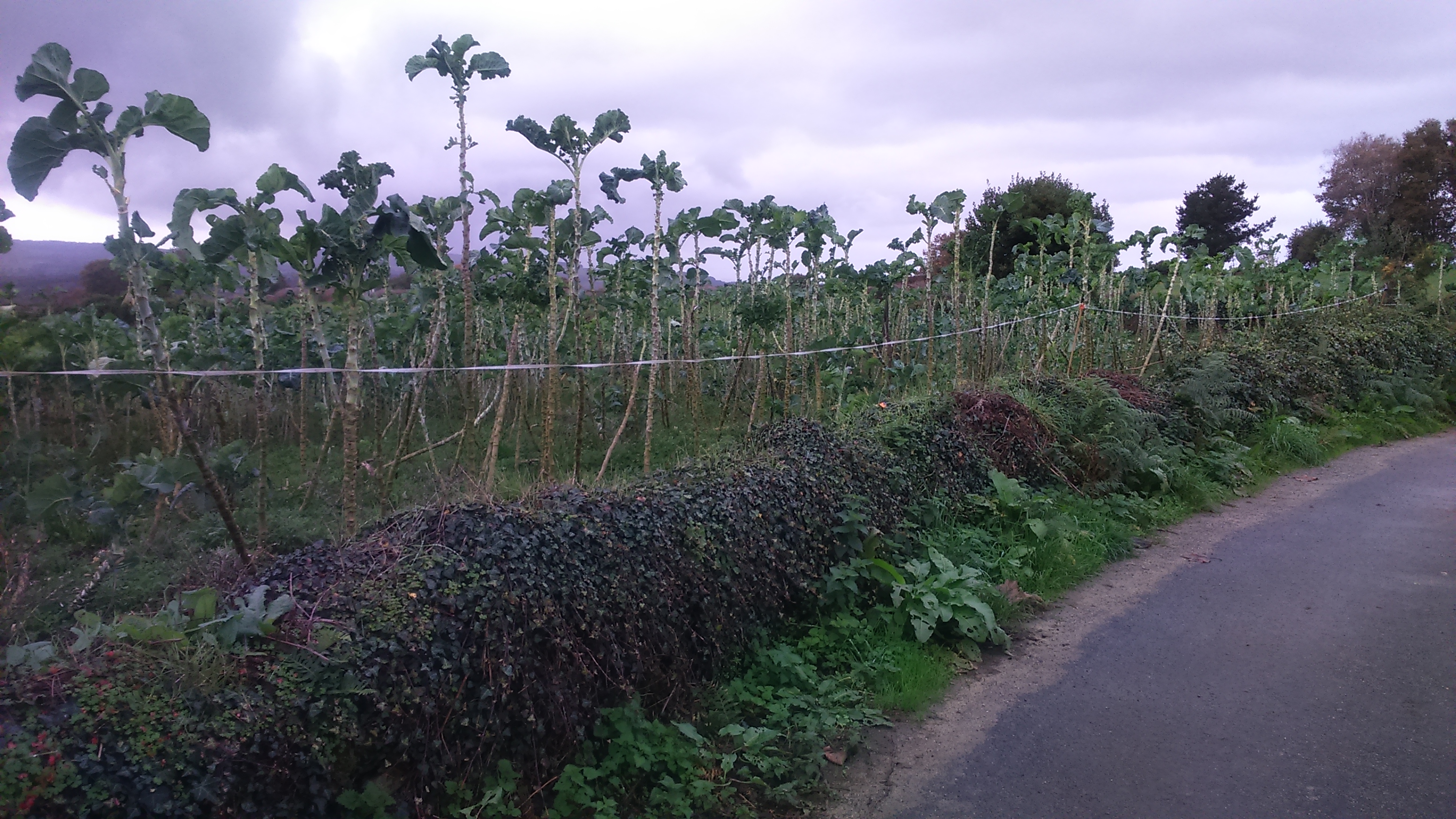
As a long-time allotment holder in Scotland, I was endlessly impressed by the ‘hueltas’, the vegetable gardens that bordered the roadsides in Spain

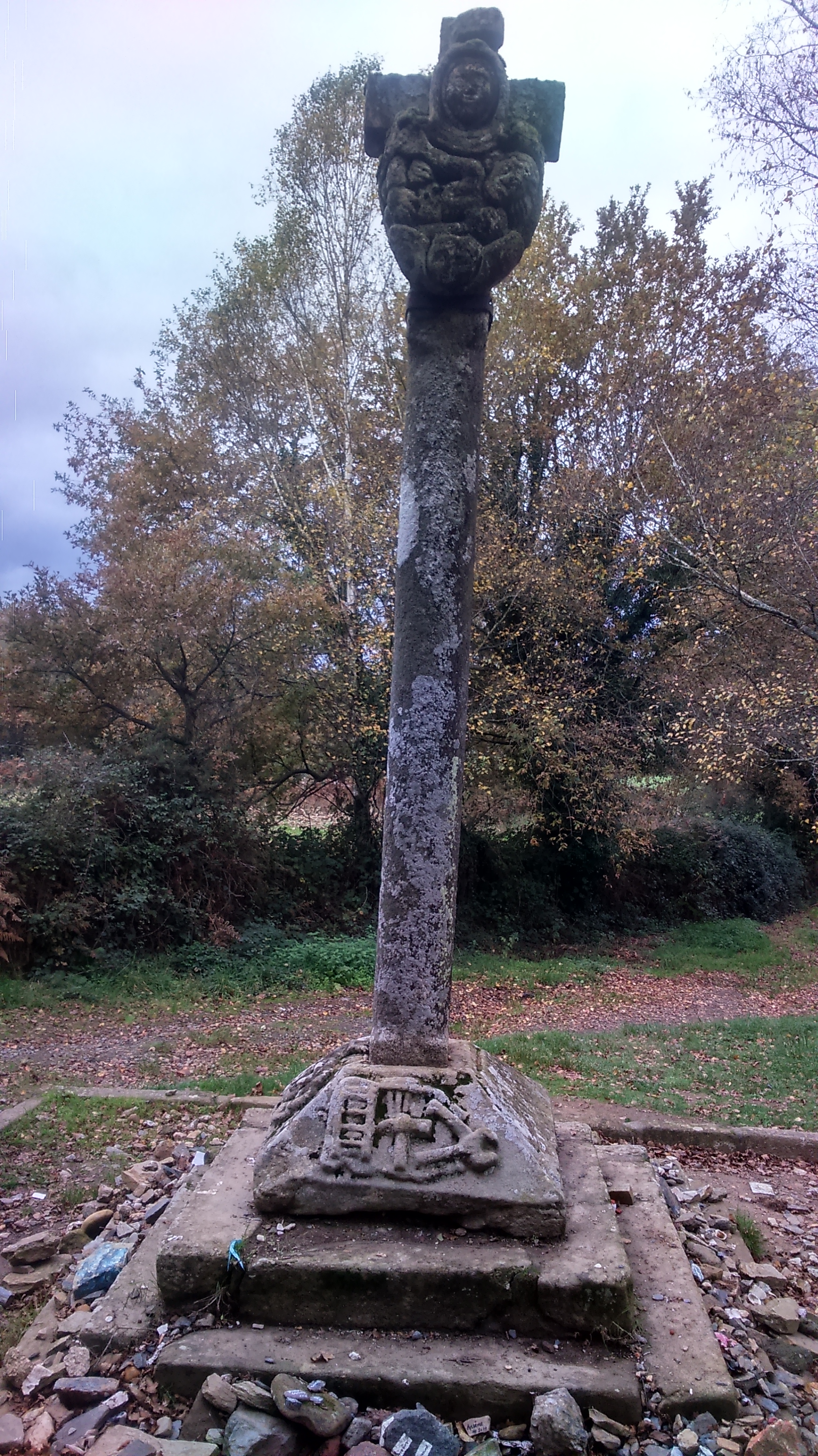
The next day I travelled to Palas de Rei. It was a journey of delightful countryside walking, coming across this beautiful, well-worn cross at the entrance to the Ligonde, a peregrinos’ cemetery.

dsc_1530.jpg

Wide open, inexplicably orange, pathways, all but deserted although the ghosts of the 1000’s of summer walkers were all around me.

dsc_1529.jpg

dsc_1533.jpg
The good weather had to break occassionally!

That evening I did have one very small incident. I was sleeping in a dormitory for 6 and it was full. I needed a break, some of that peace and quiet, after tea, and so I headed out to the town, downhill, for a wander around the admittedly dark and deserted streets. Within a short time, however, a man spotted me from the opposite side of the road and he started to follow me, to talk to me uncomprehensibly, and I didn’t get a good feeling. I hot-footed it back to the security of the hostel, and a most relaxing time on my bunk listening to music with my friend.

The hostel was ultra-modern, and as nowhere else was open it was very full. The other pilrims were very friendly, and although we were not supposed to cook, we all did. But we were not allowed to make our own breakfast and so it had to be paid for – served from a hatch, and much less satisfactory than the usual fare.

hostel-palas-dei-rei

The next morning it was raining. Many of us waited before leaving, just in case it let up, especially as it had been threatened for days and, luckily, not materialised. But today it did, and oh, did we get wet!