Sunrise Walks 2024

This is a Pedestrian Project about marking time. It took place between 27th October and 4th November 2024 (inc. images from 5th November).

I’m no creature of habit. Left to myself, I struggle to do the anything every day at the same time; I rarely eat at regular mealtimes, and having been self-employed for my adult life, I’ve never worked an on-going 9-5 (am-pm) day. Not since school.

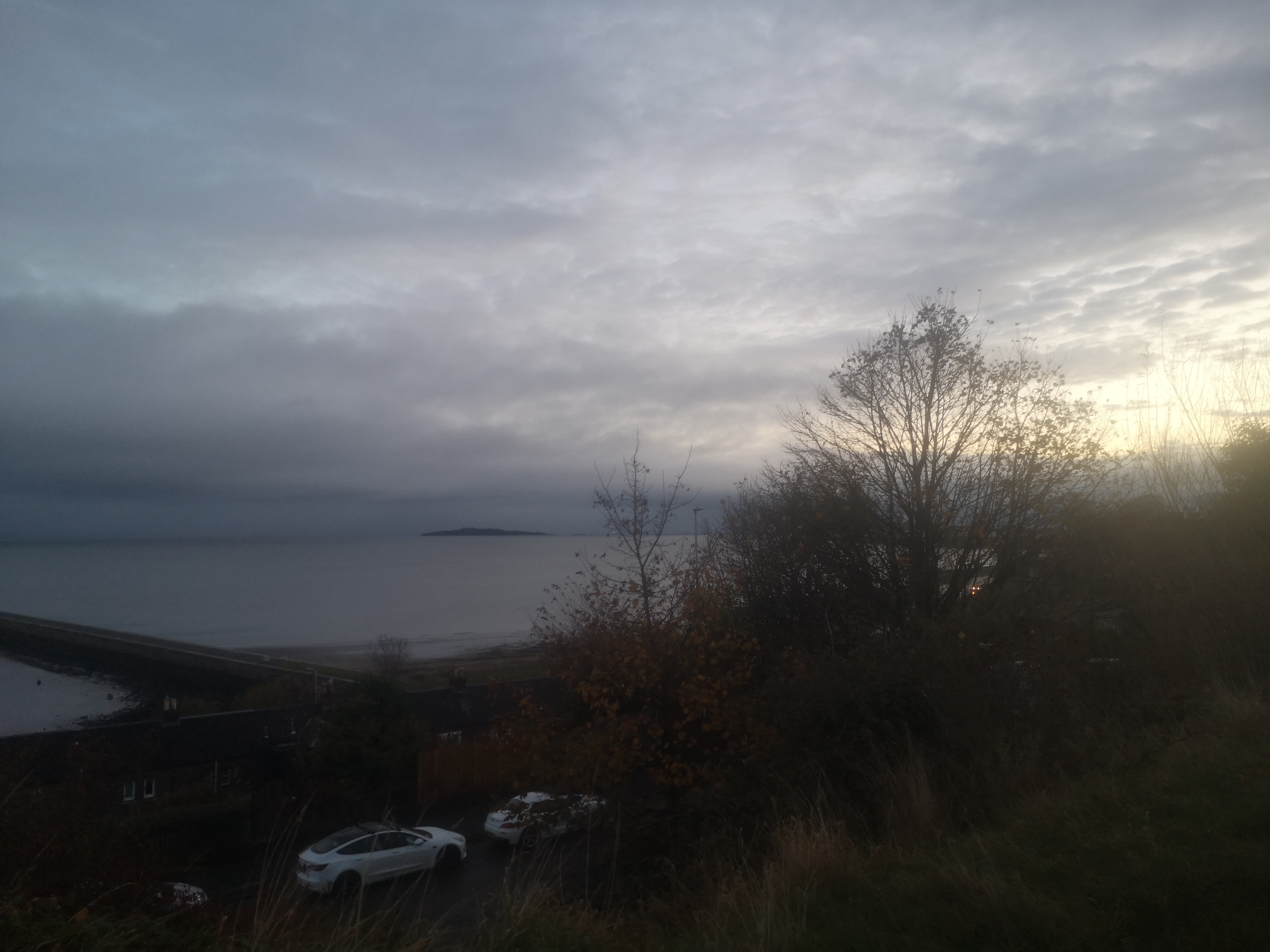
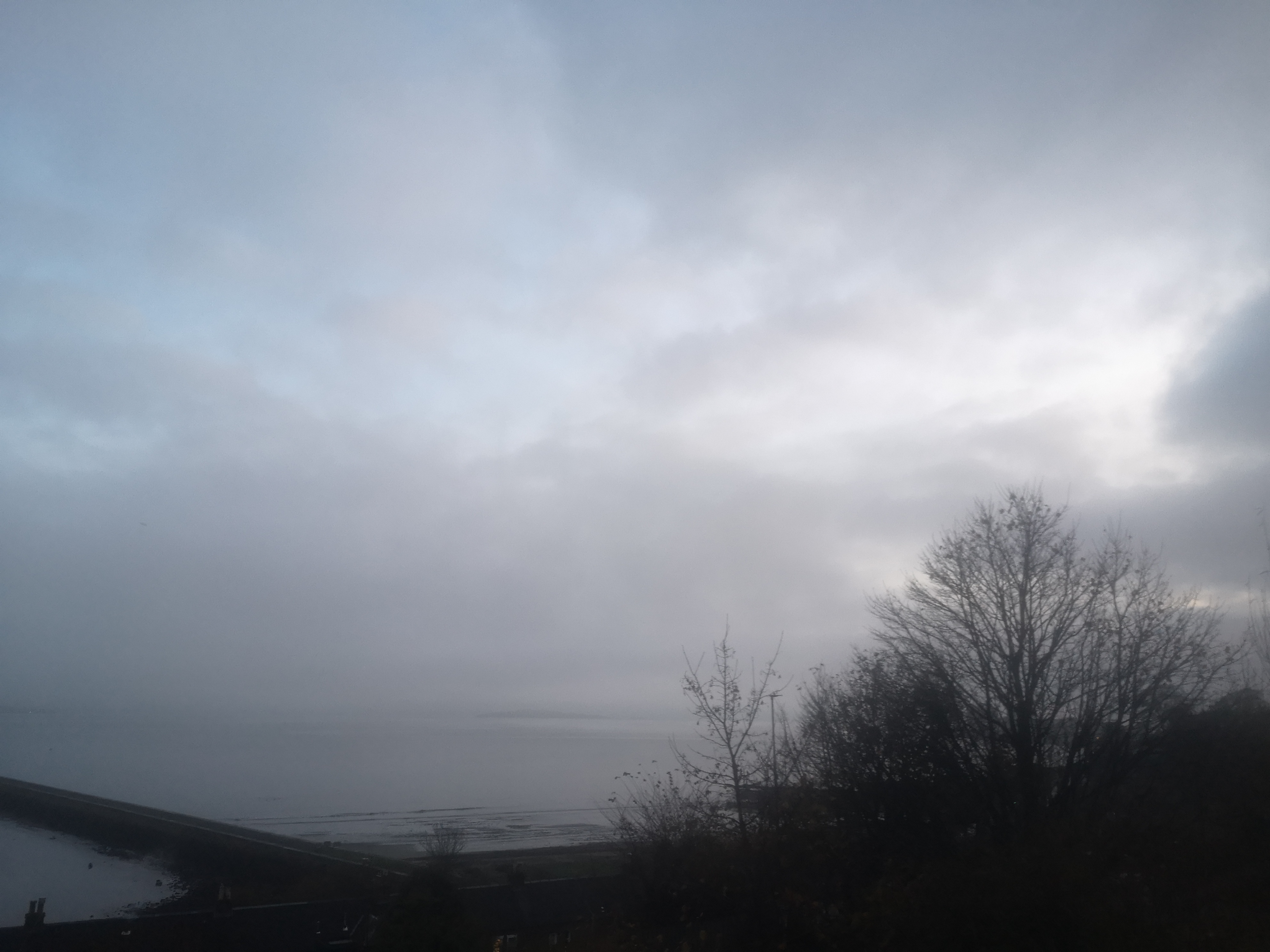
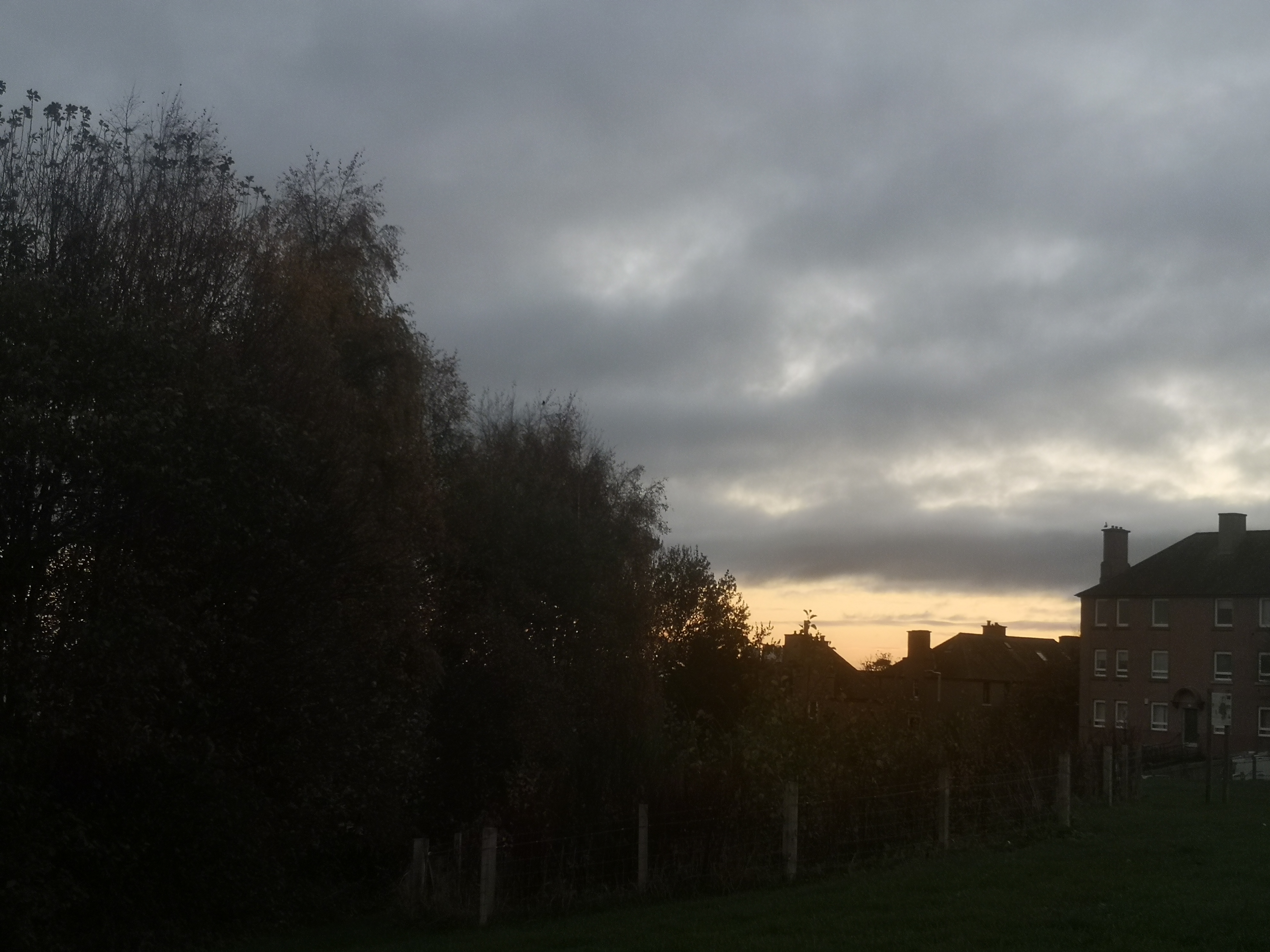
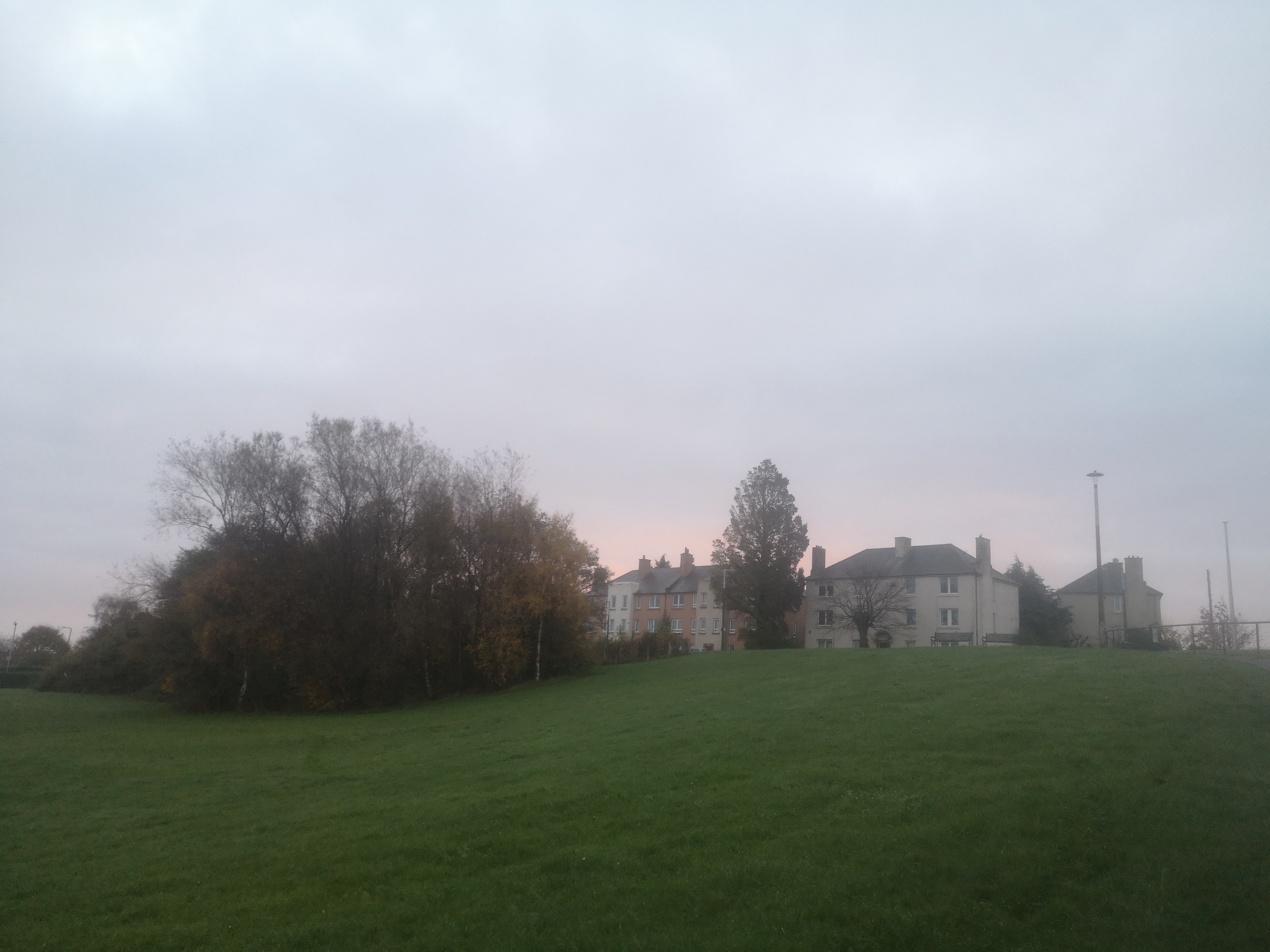
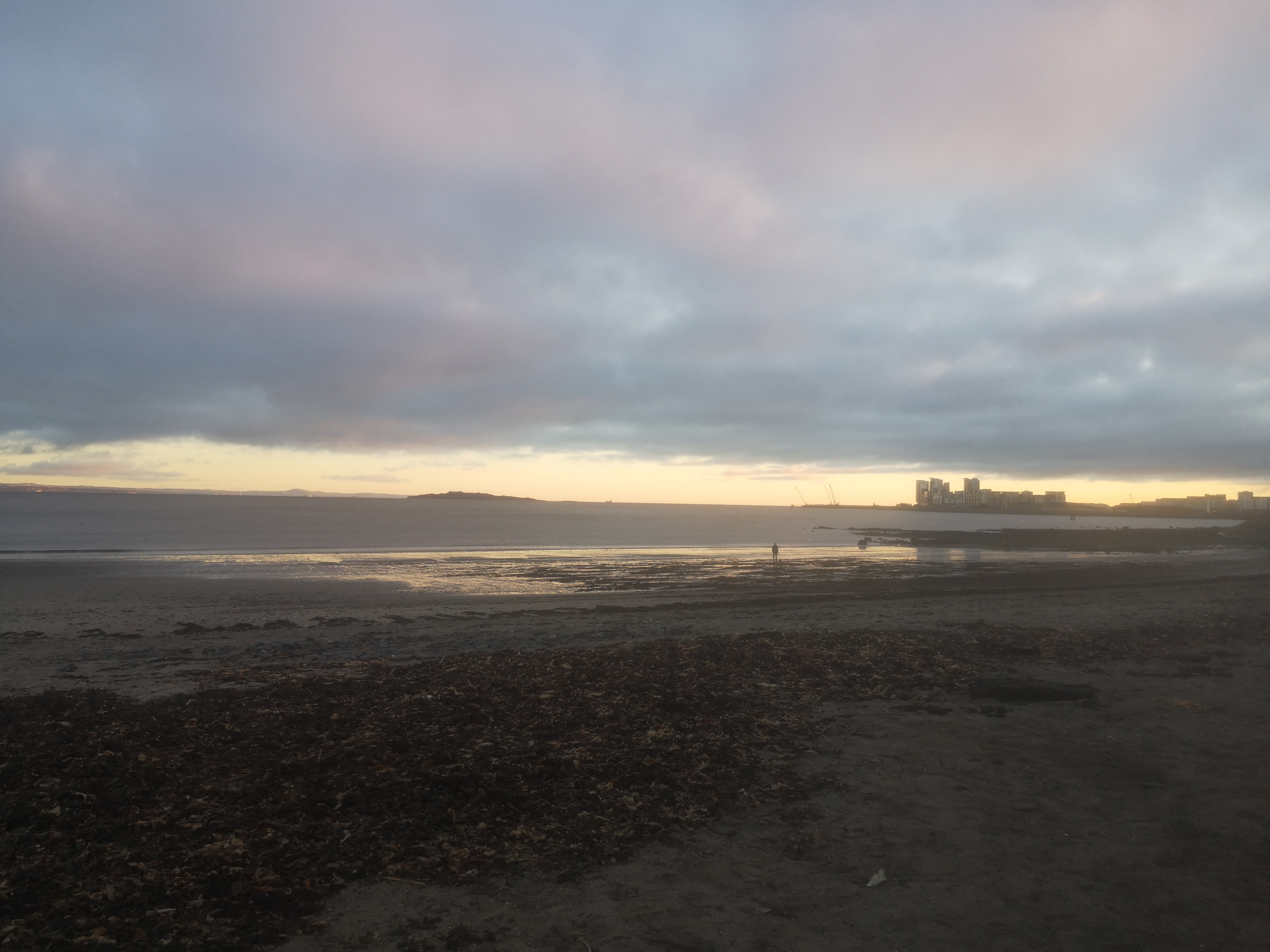
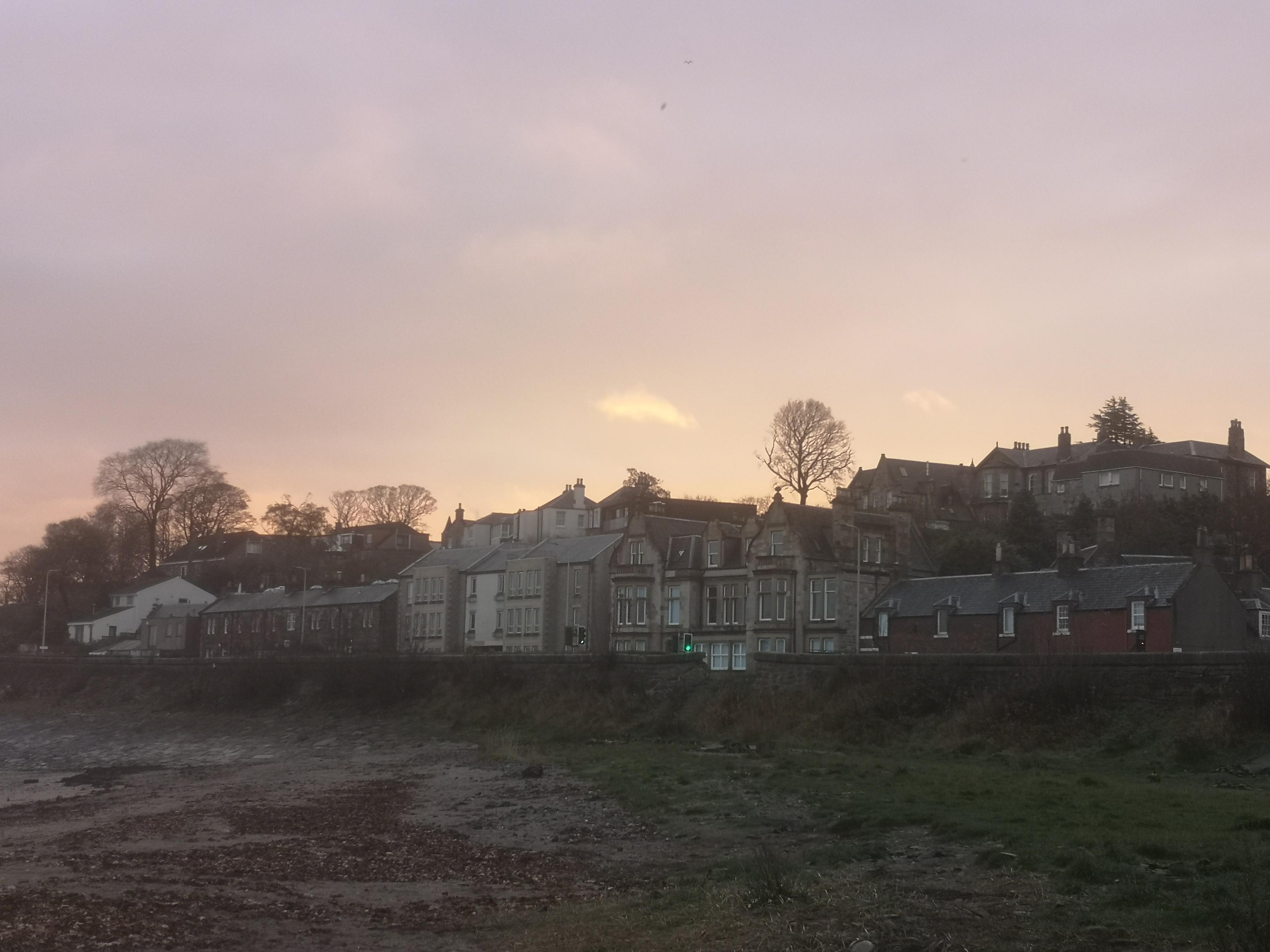
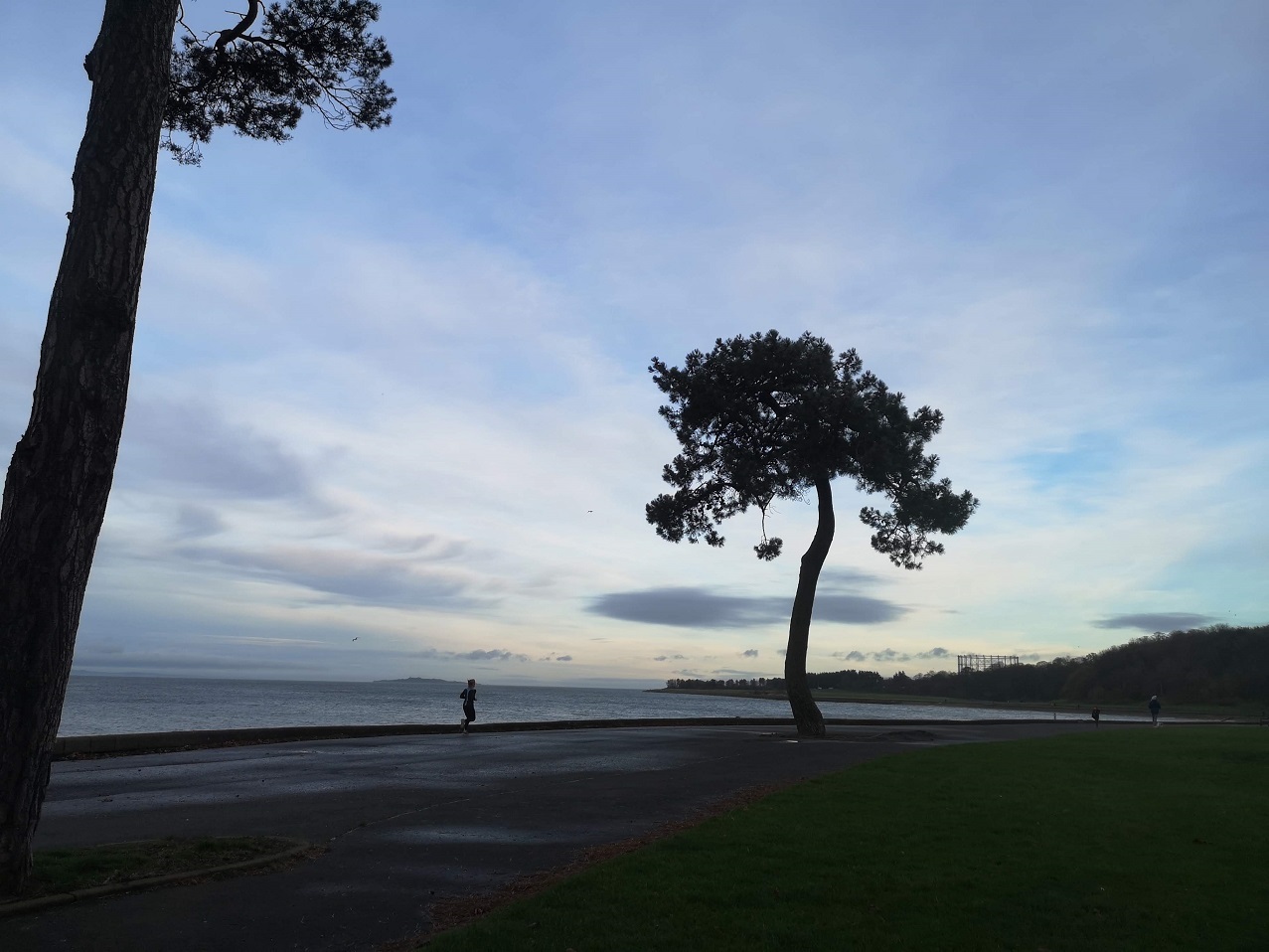
Photos Taken 15 minutes Before Sunrise (or thereabouts)
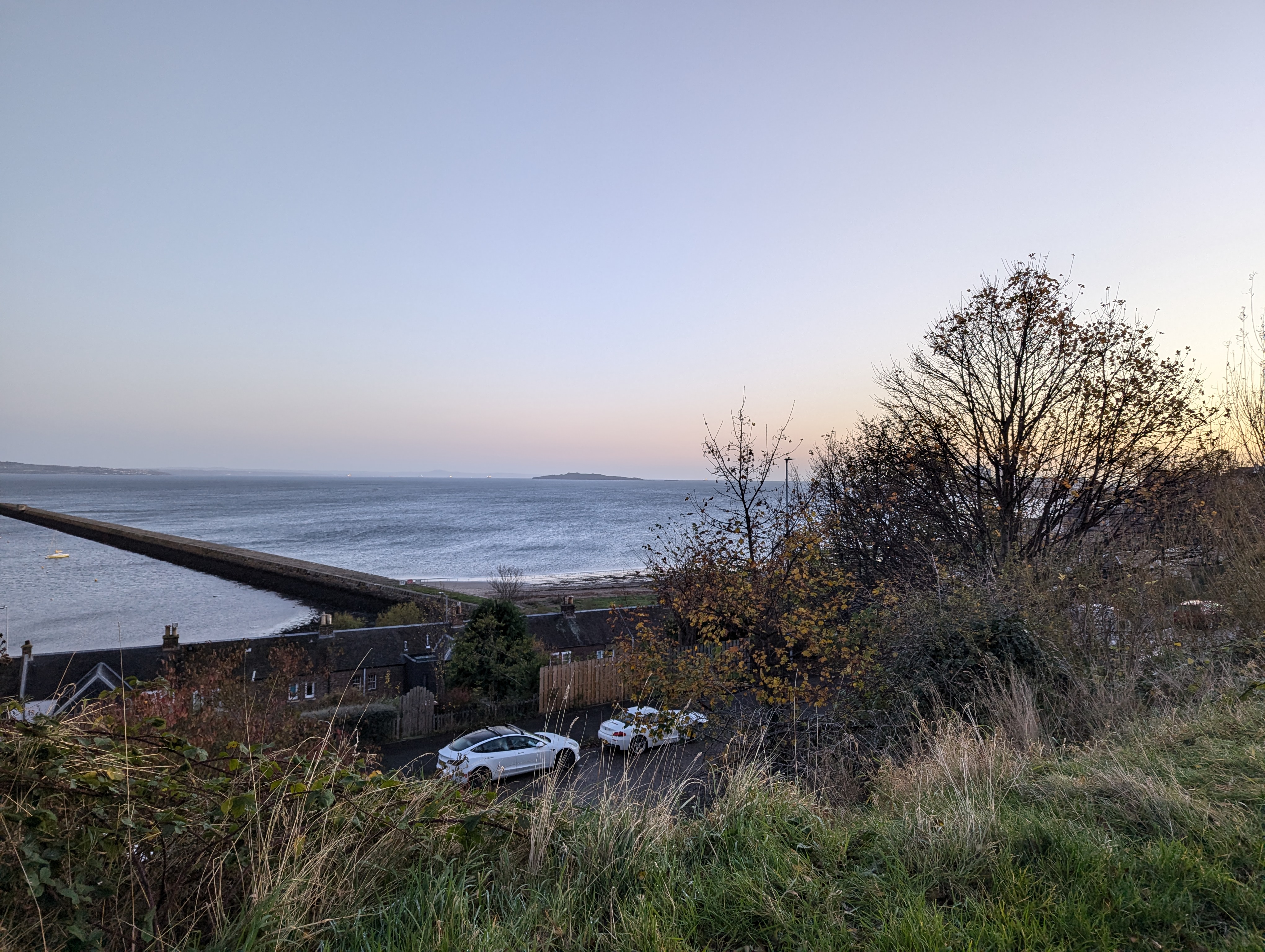
This may explain why Sunrise Walks are an interesting concept to me. Instead of following my own inner, wonky routine, I have decided to set my alarm and be there, on my doorstep at the correct time, every day between the clock chaging in the UK and in the US, as prompted by Blake Morris. The brief was to take a photo (or somehow to document) the moments that were 15 minutes before, at, and 15 minutes after, sunrise.

Except …

Sunrise changes by 2+ minutes every day so it isn’t actually ‘the same’. I made a chart in advance:
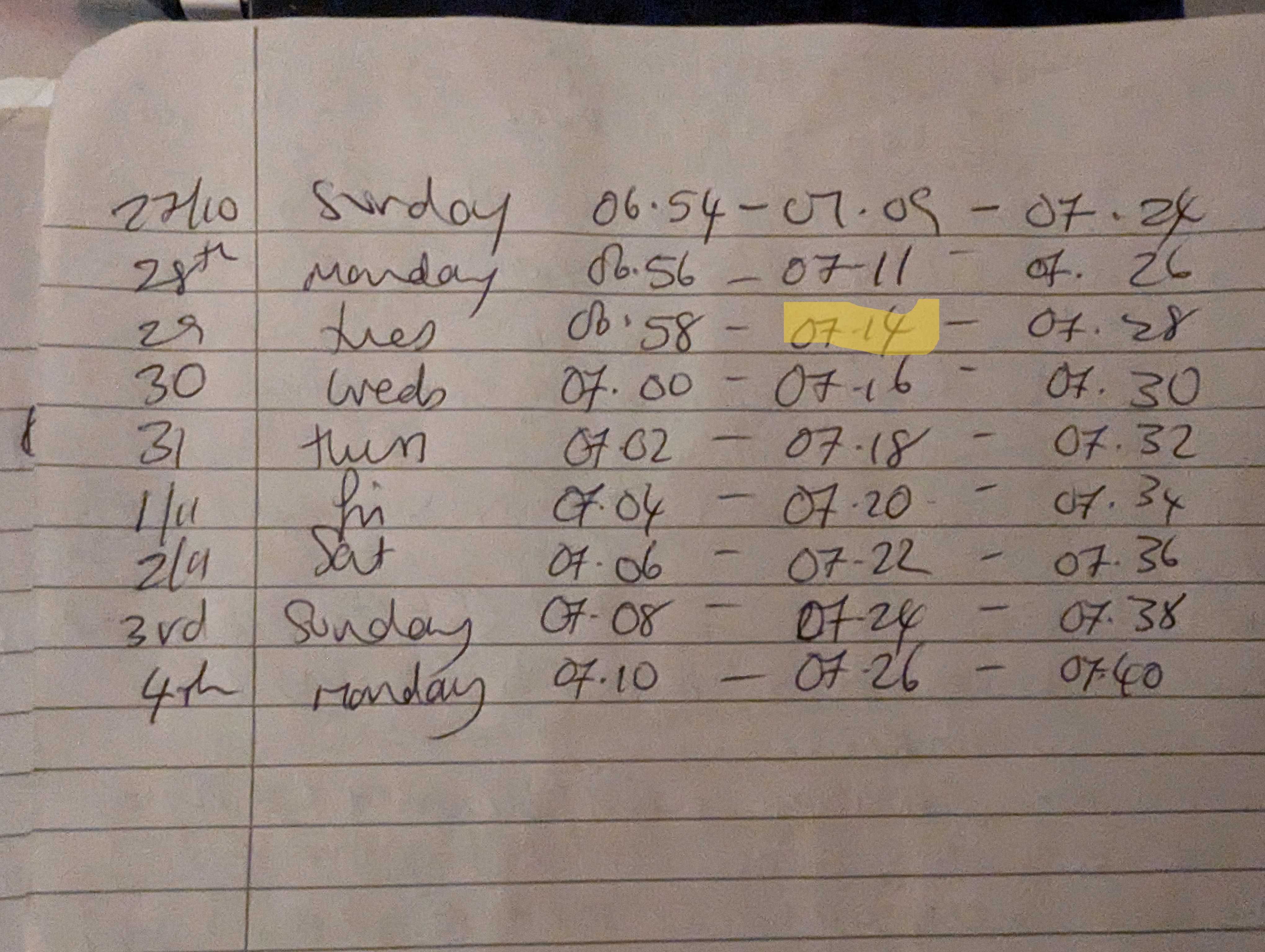
I didn’t notice that blip until day 7 and it was too late to change by then

Times and Twilight

I took the sunrise times from the Time and Date website and missed the 3 minute difference between 28th and 29th October. Instead, I saw that there were 2 minutes between 27th and 28th, 30th and 31st etc and followed that pattern for all of the start and end times (I’d be no good in a lab or at setting train timetables) meaning that from day 3, I was snapping my photos at the wrong times.

In writing this blog, I have discovered that this anomaly is because …

The Earth’s orbit around the Sun is elliptical, rather than circular, and the Earth’s axis of rotation is not perpendicular to the plane of the orbit.  This non-circularity of the orbit and the tilt of the Earth’s axis of rotation both contribute to the uneven changes in the times of sunrise and sunset.

Jeff Mangum on the National Radio Astronomy Observatory
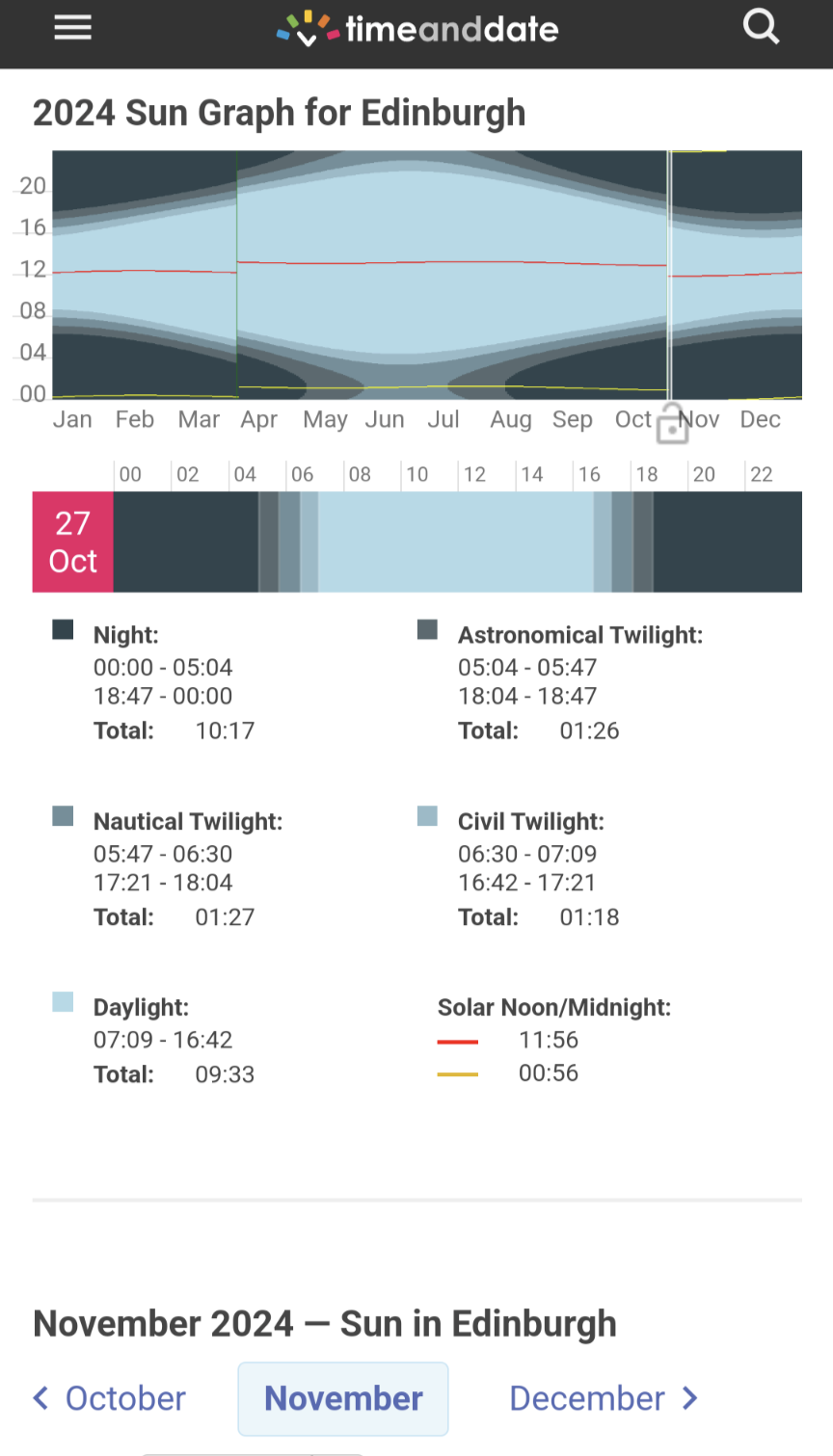
As an aside: I really like the idea of ‘civil twilight’ (above). That’s exactly how it was. It related to me as an ordinary person (not a military woman nor an ecclesiastical one) and was both a courteous and a polite time of day. I always thought twilight was before the dark finally settled down to sleep, but it means, “the soft glowing light from the sky when the sun is below the horizon, caused by the reflection of the sun’s rays from the atmosphere.” (Oxford dictionary), so it can apply to sunrise AND sunset.

Civil twilight “Begins in the morning, or ends in the evening, when the geometric center of the sun is 6 degrees below the horizon. Therefore morning civil twilight begins when the geometric center of the sun is 6 degrees below the horizon, and ends at sunrise.”

National Weather Service

If you are interested in that, you’ll probably like this too: Guardian article, The three phases of twilight, explained

The Route

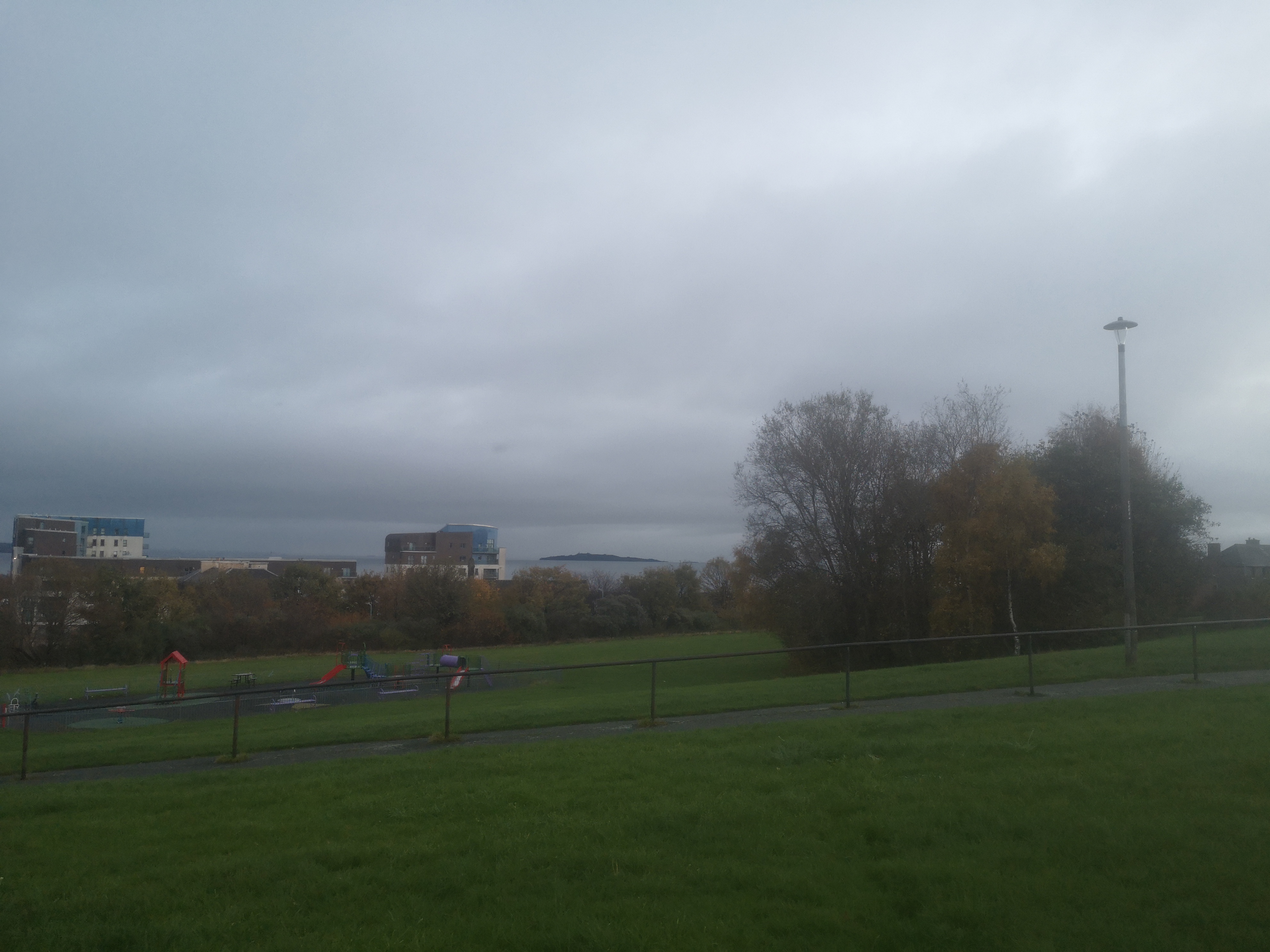
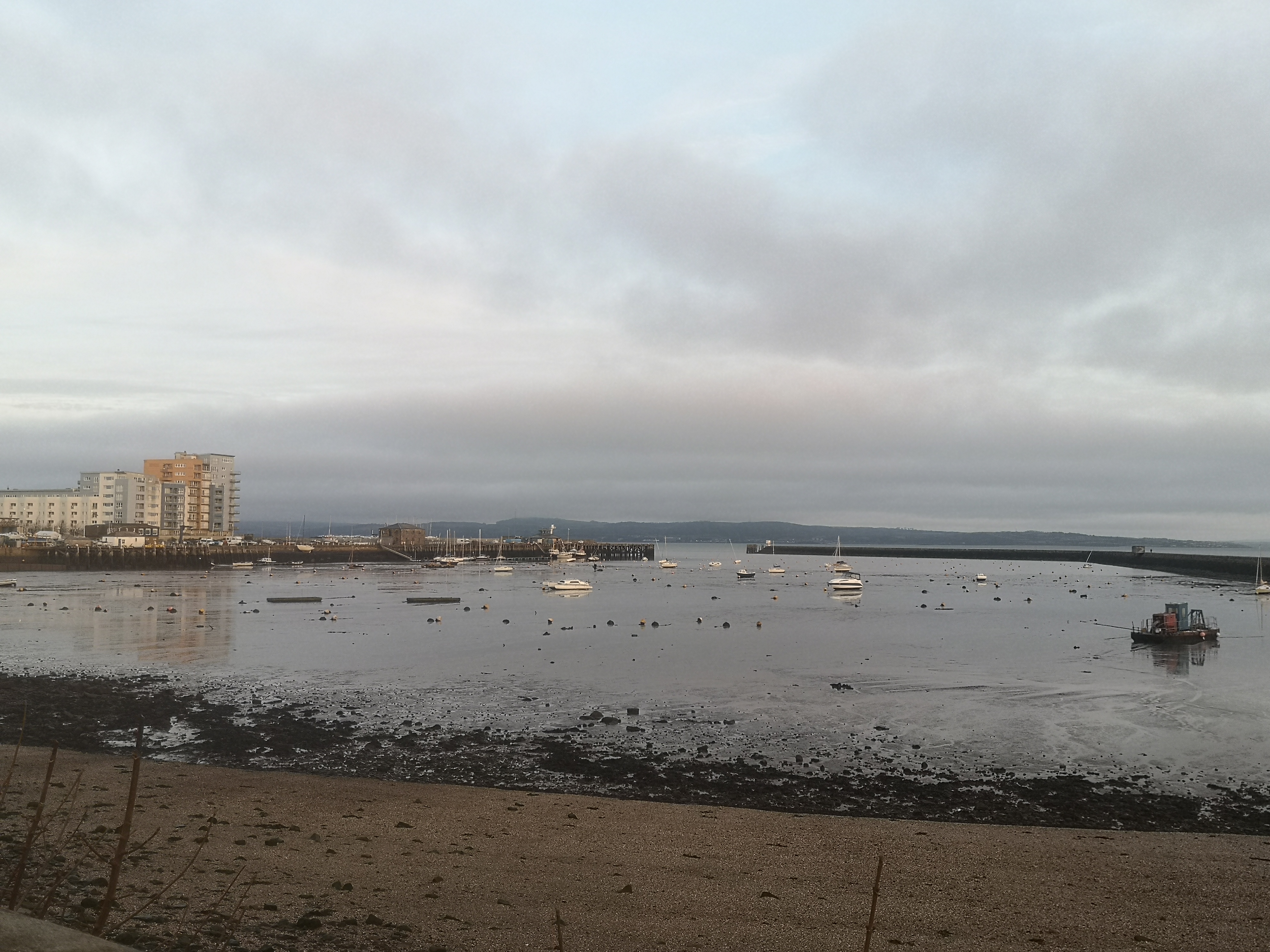
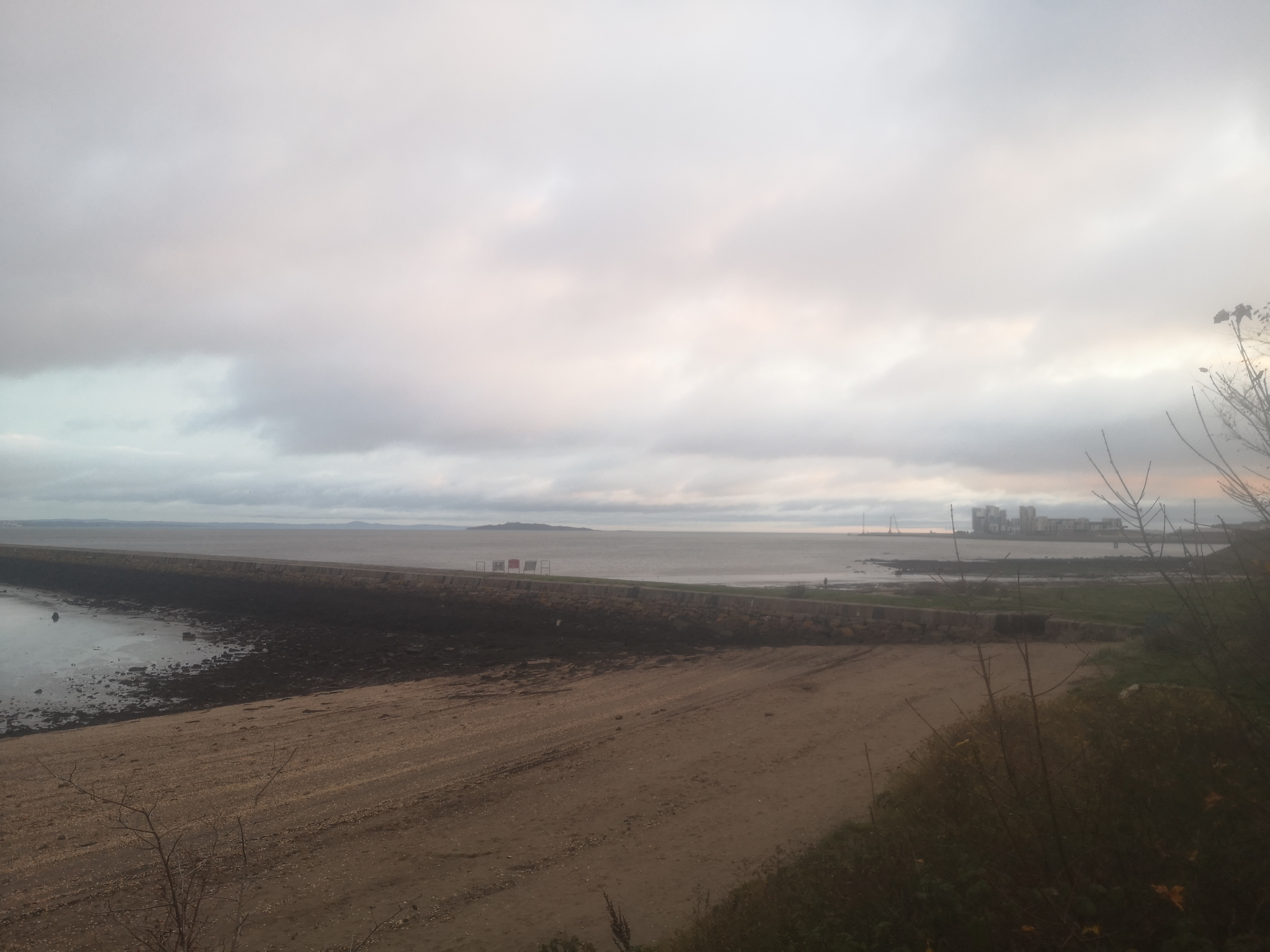
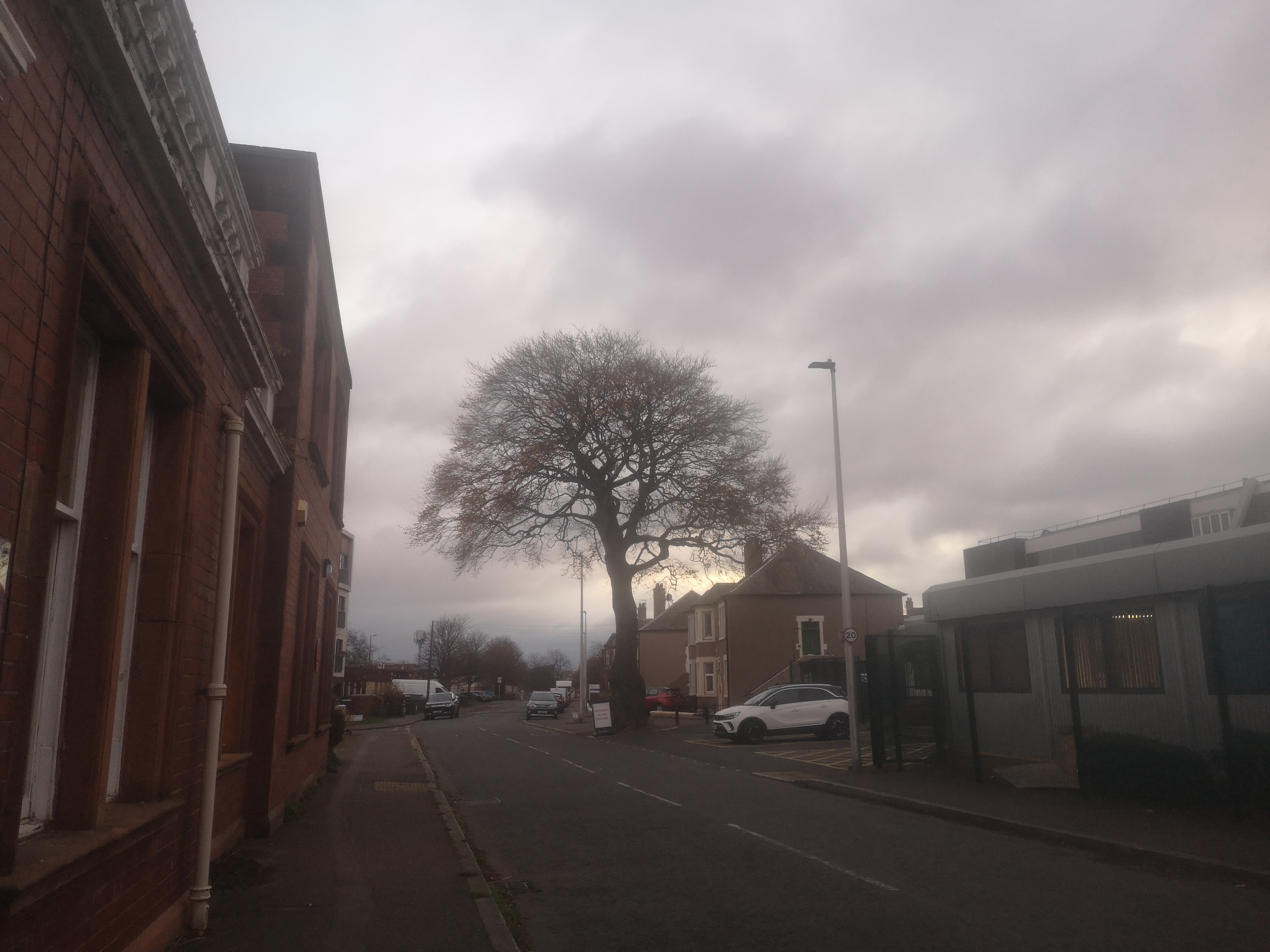
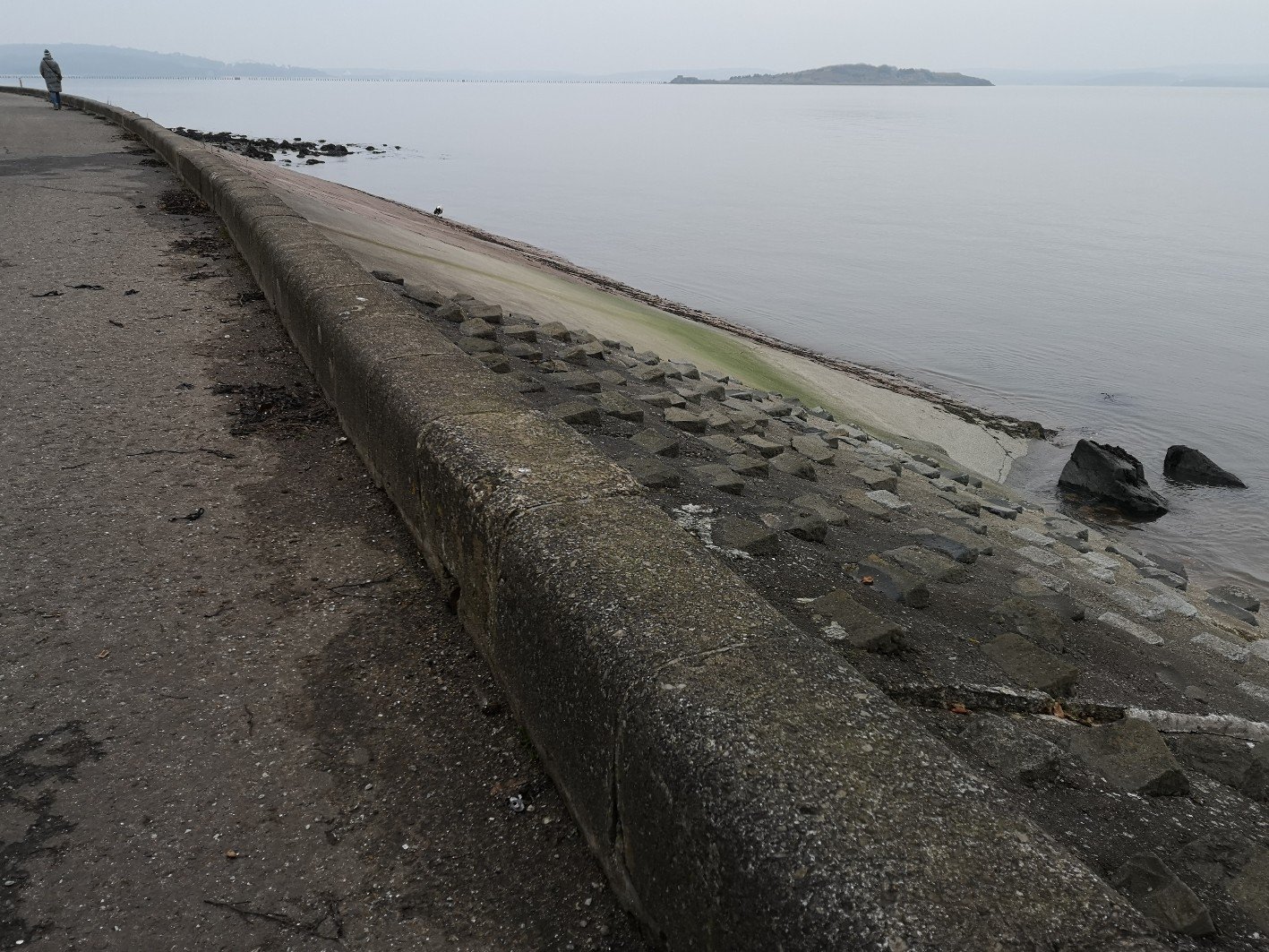
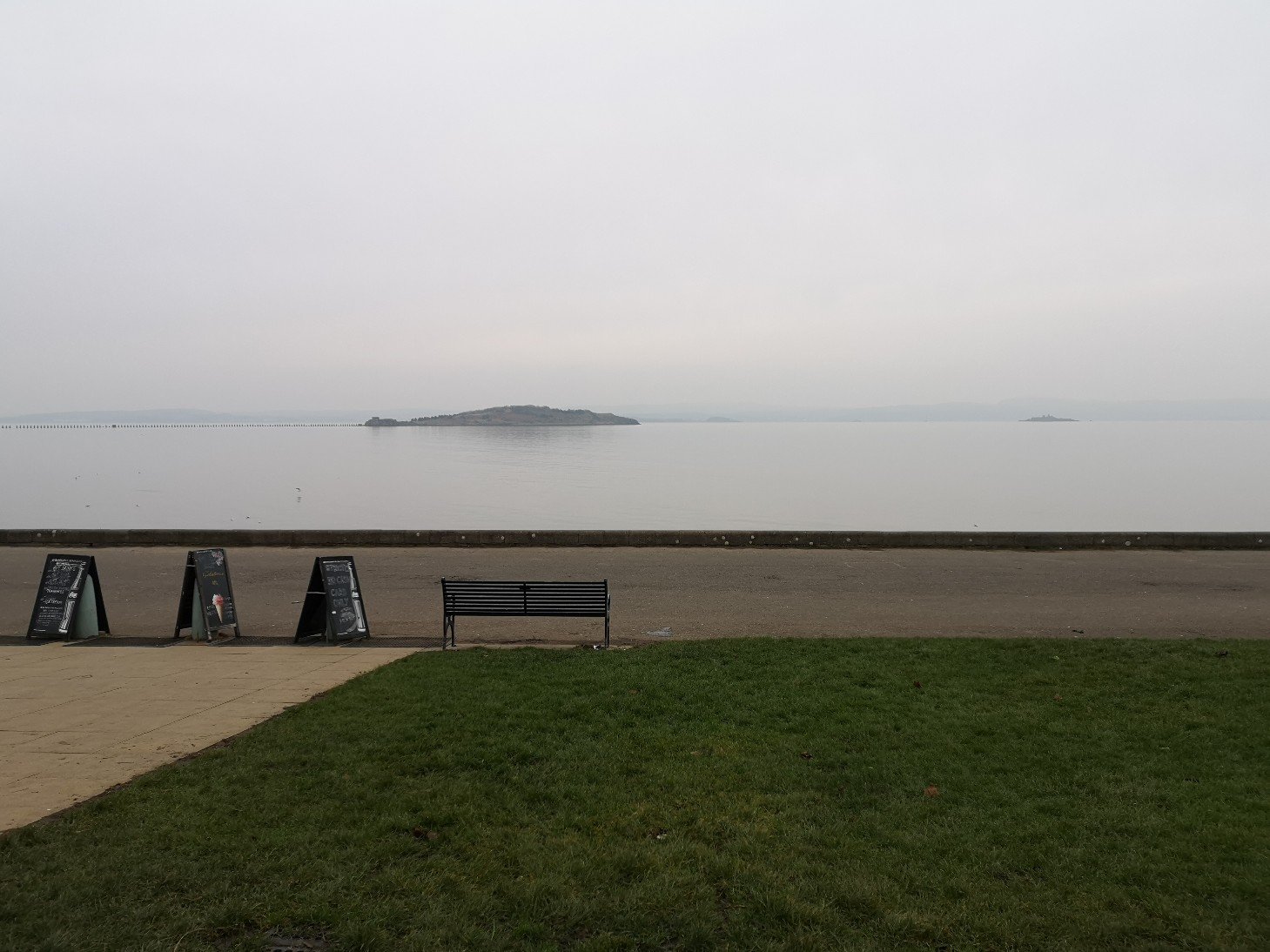
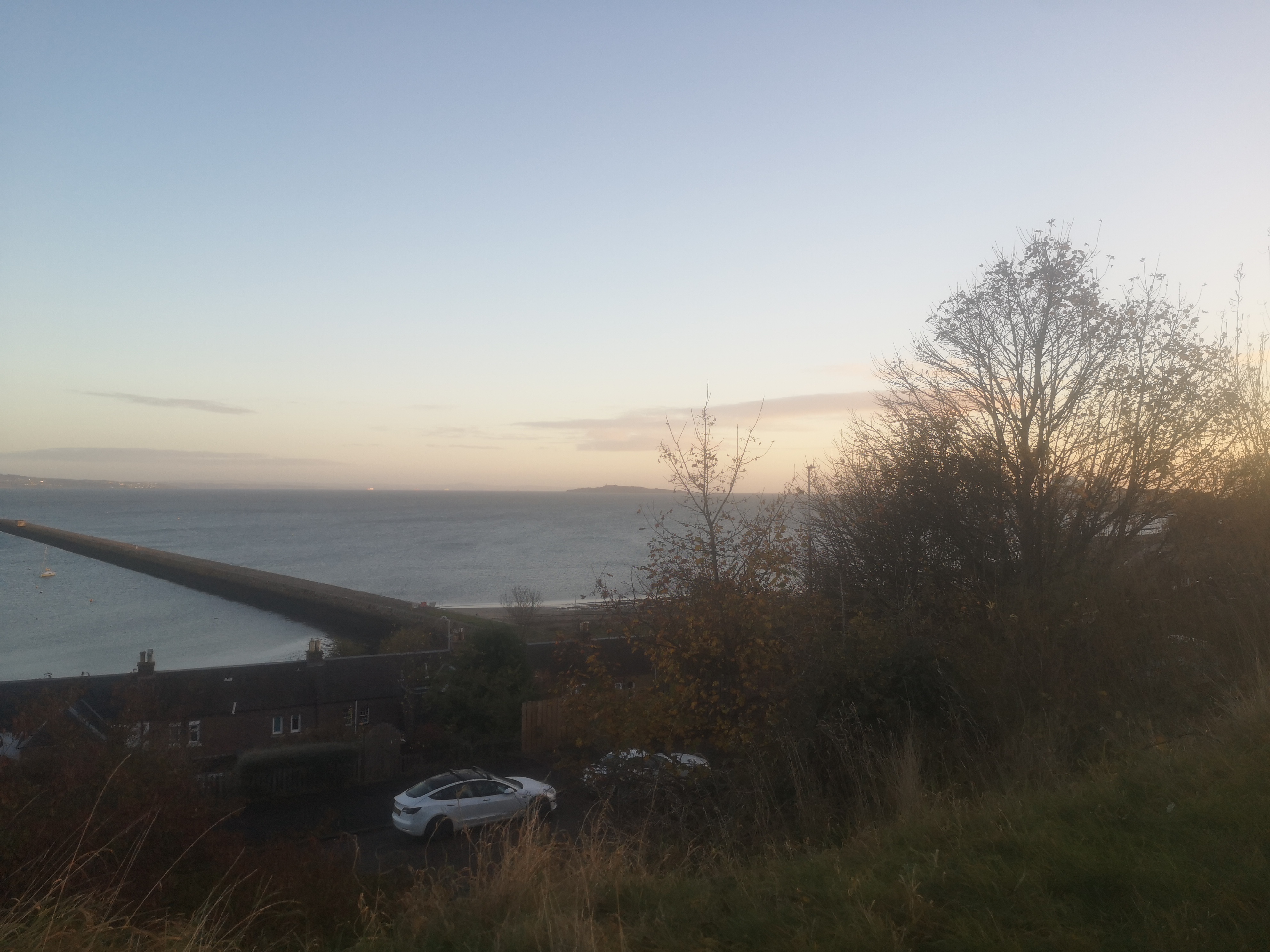
Anyway, I chose to walk the same route every day. Starting at the view near my front door 15 minutes before, walking to the highest point of Granton Crescent Park for sunrise, then down and through The Wasteland (to check whether my banner was still there and if the bulbs that we planted on the community walk had come up), and along to Wardie Bay for 15 minutes after. I didn’t make it on time to the beach every day as I got distracted by yellow cones at low tide and all manner of other things.
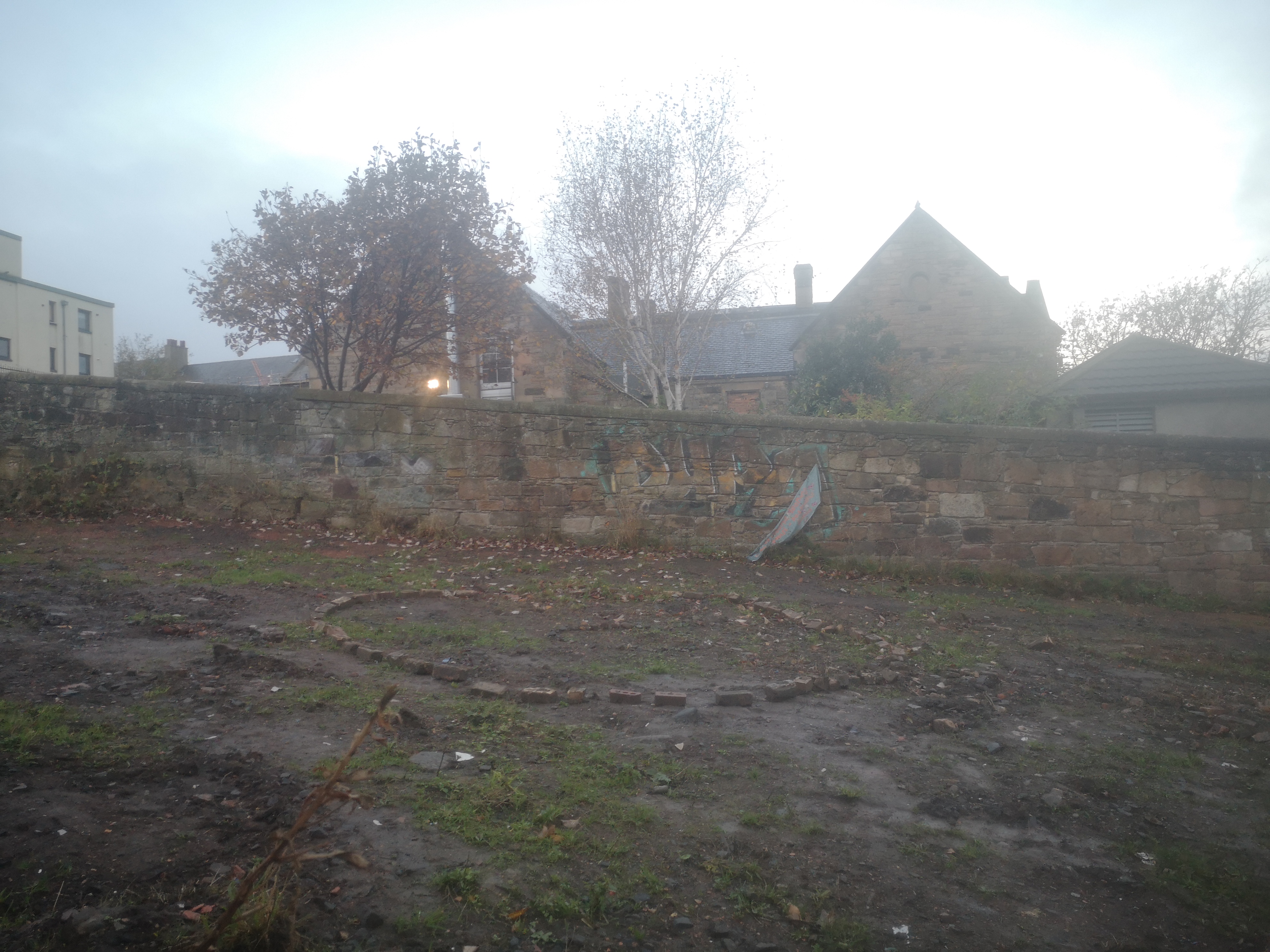
The Wasteland. Looking through the brambles from the Granton Crescent Park steps – the banner on the far wall had blown down again, but the circle of stones was in tact (at this date)

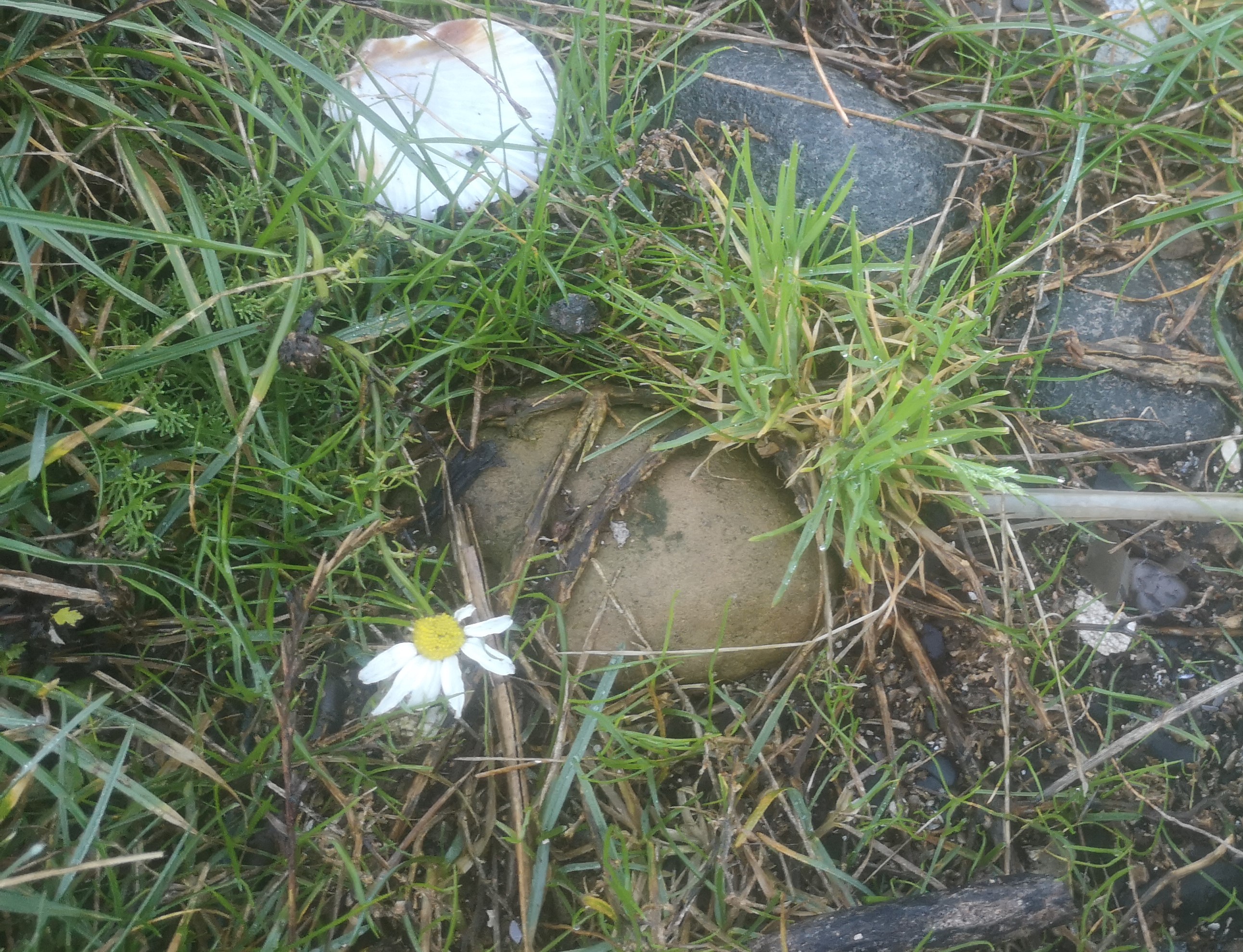
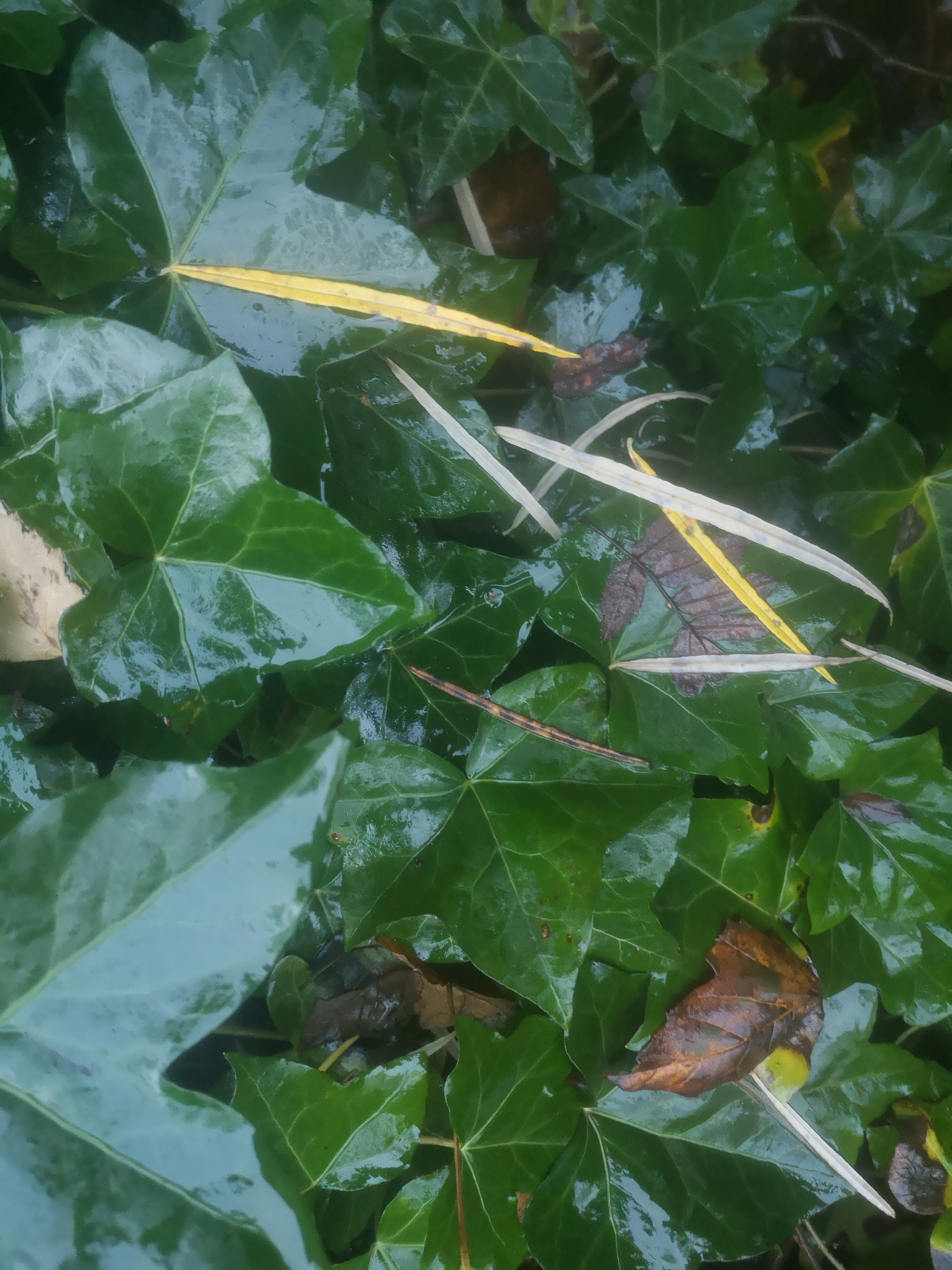
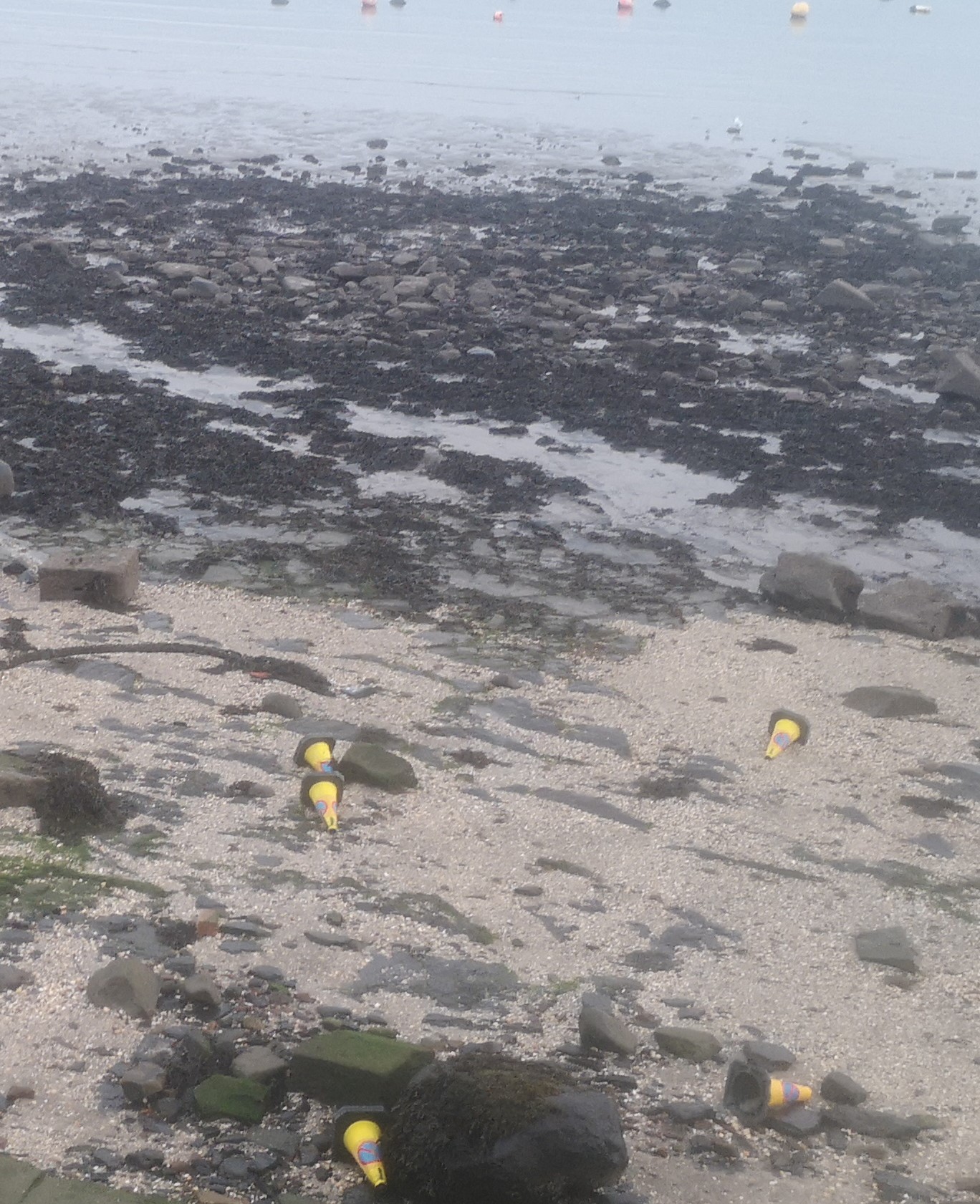
Traffic cones at low tide (left). That must have been a fine game for someone – really? They matched all sorts of other yellows which presented themselves: a sherbet-yellow yacht in the harbour, wild ragwort, chamomile (middle, like fried eggs with frayed edges), and spears of ageing sea buckthorn leaves (right). A flock of pigeons wheeled silently overhead, a single oyster catcher peeped piercingly, and a young gull lifted his feet higher than usual, one by one, to clear the wet grass fronds.

What happened?

  • The devil was watching just as I set off on the first day, and I dropped and completely broke my phone (the one with a decent camera). I reverted to my daughter’s very old one for the rest of the project hence the grainy quality of the images. That made me choose when and whether to take photos at all. I sketched and took careful mental notes so that I would remember, and spent time afterwards writing them down
  • I did this walk at the times on my chart until I got to Friday (day 6) when I realised it would clash with something I actually do every week at the same time, which is to go to my meditation group, so that day’s photos were not taken at the correct times
  • I thought Sunday was the final day (I’d put it in my diary wrong – don’t ever rely on me to be reliable) and on Monday I was doing this really long walk in Fife (the final day of The St Margaret’s Way) which meant that I had to be on an early bus and couldnlt walk the usual route
  • Thank godness art doesn’t have to be a precise science

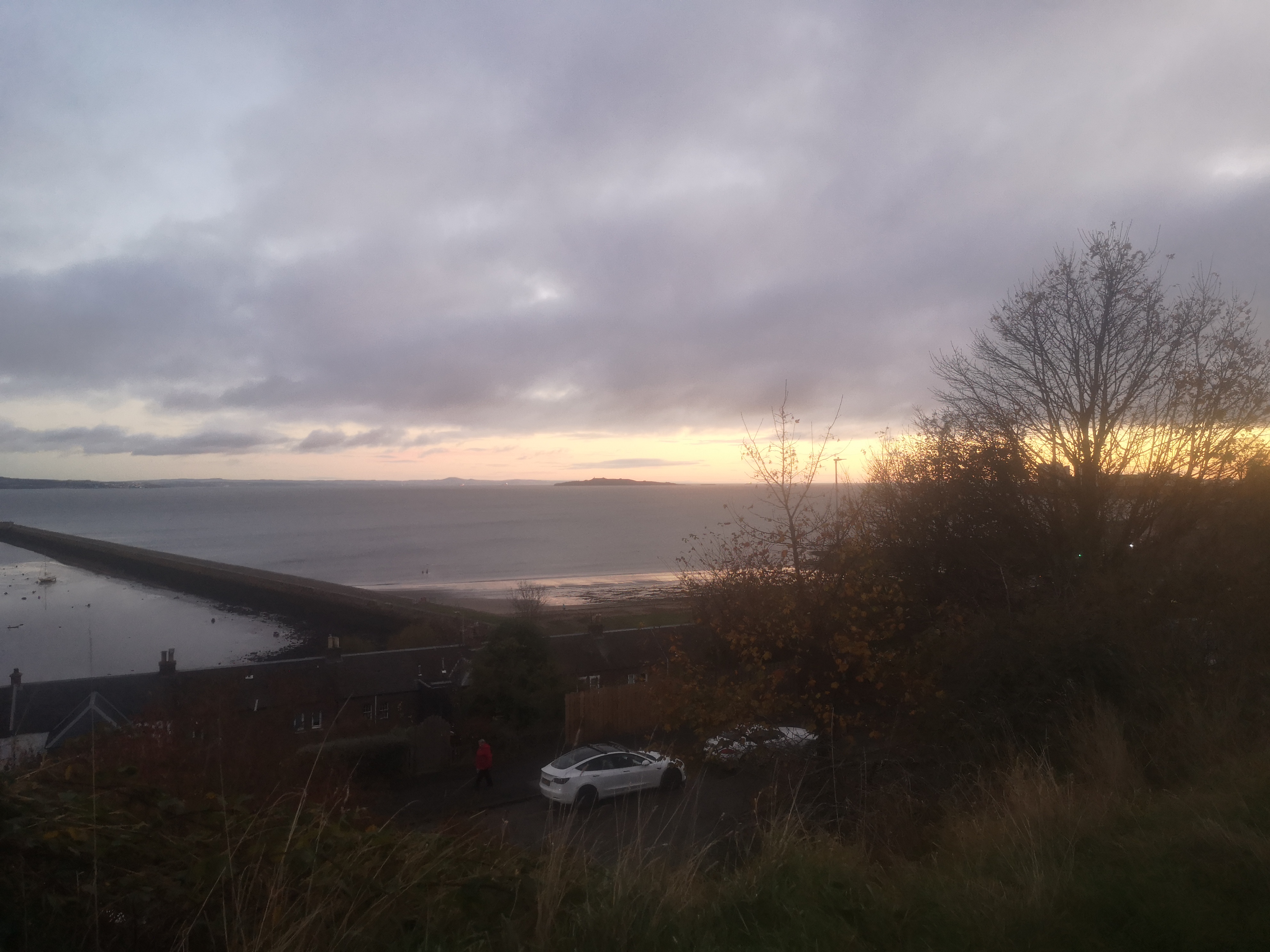
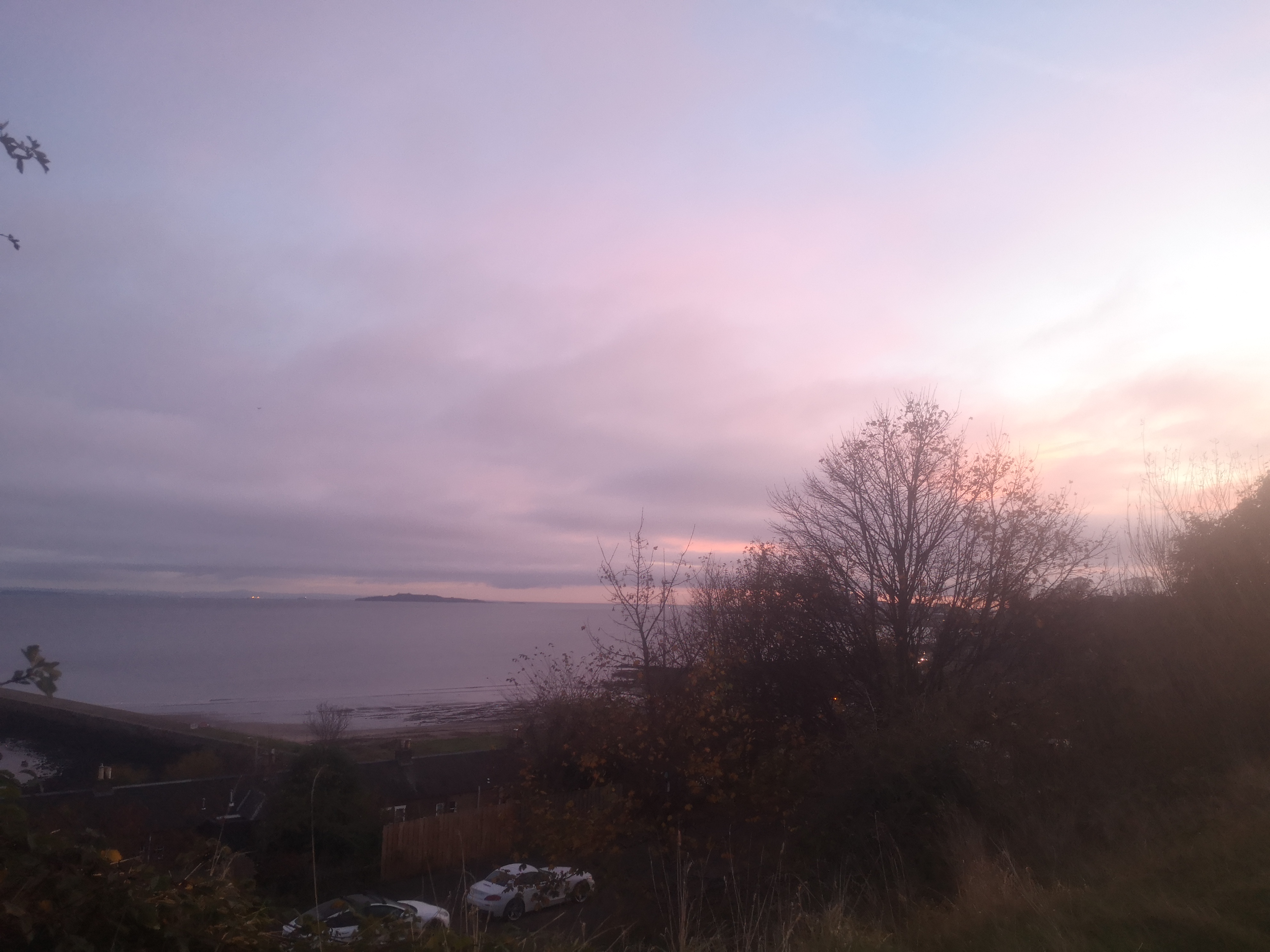
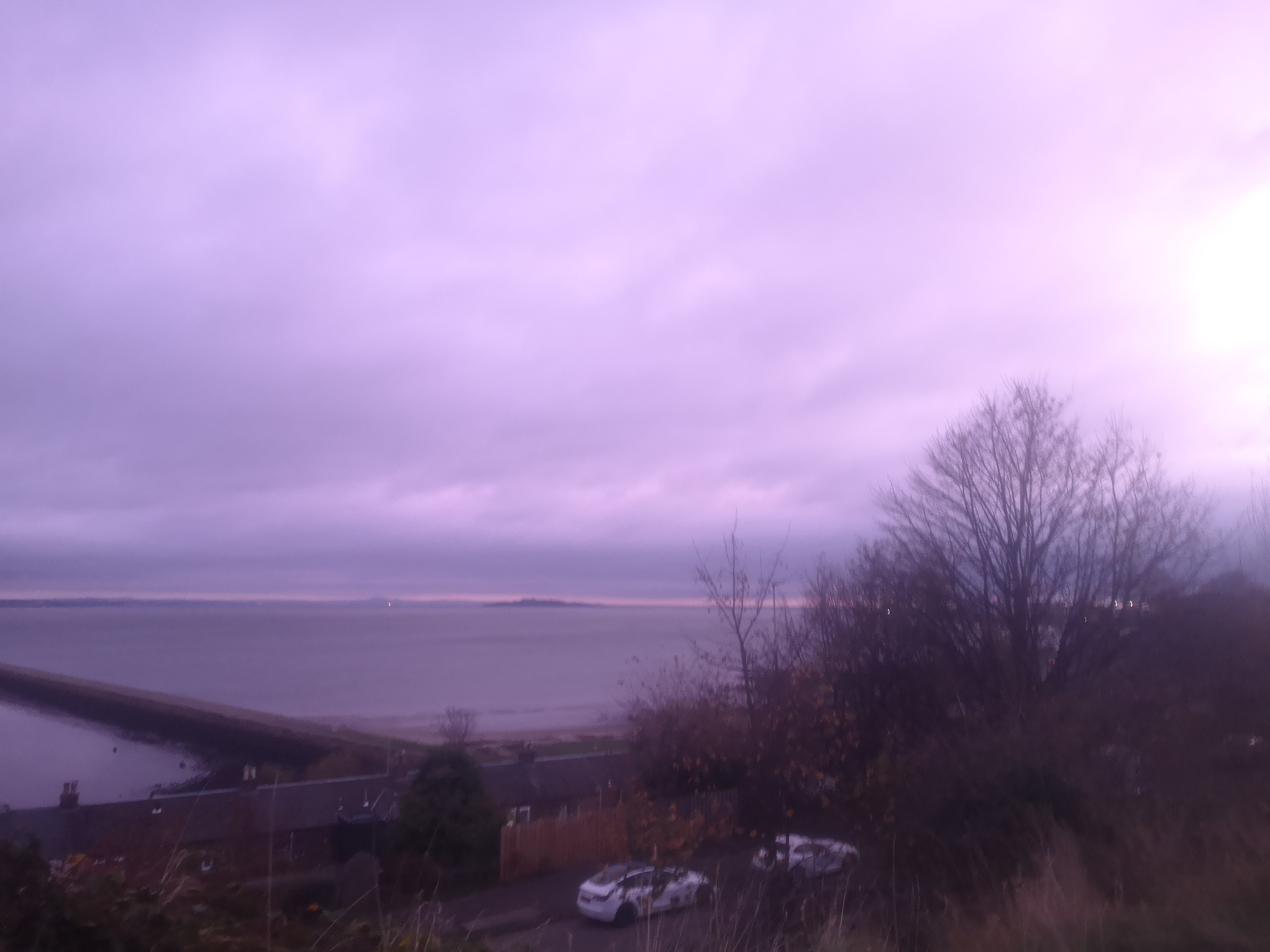
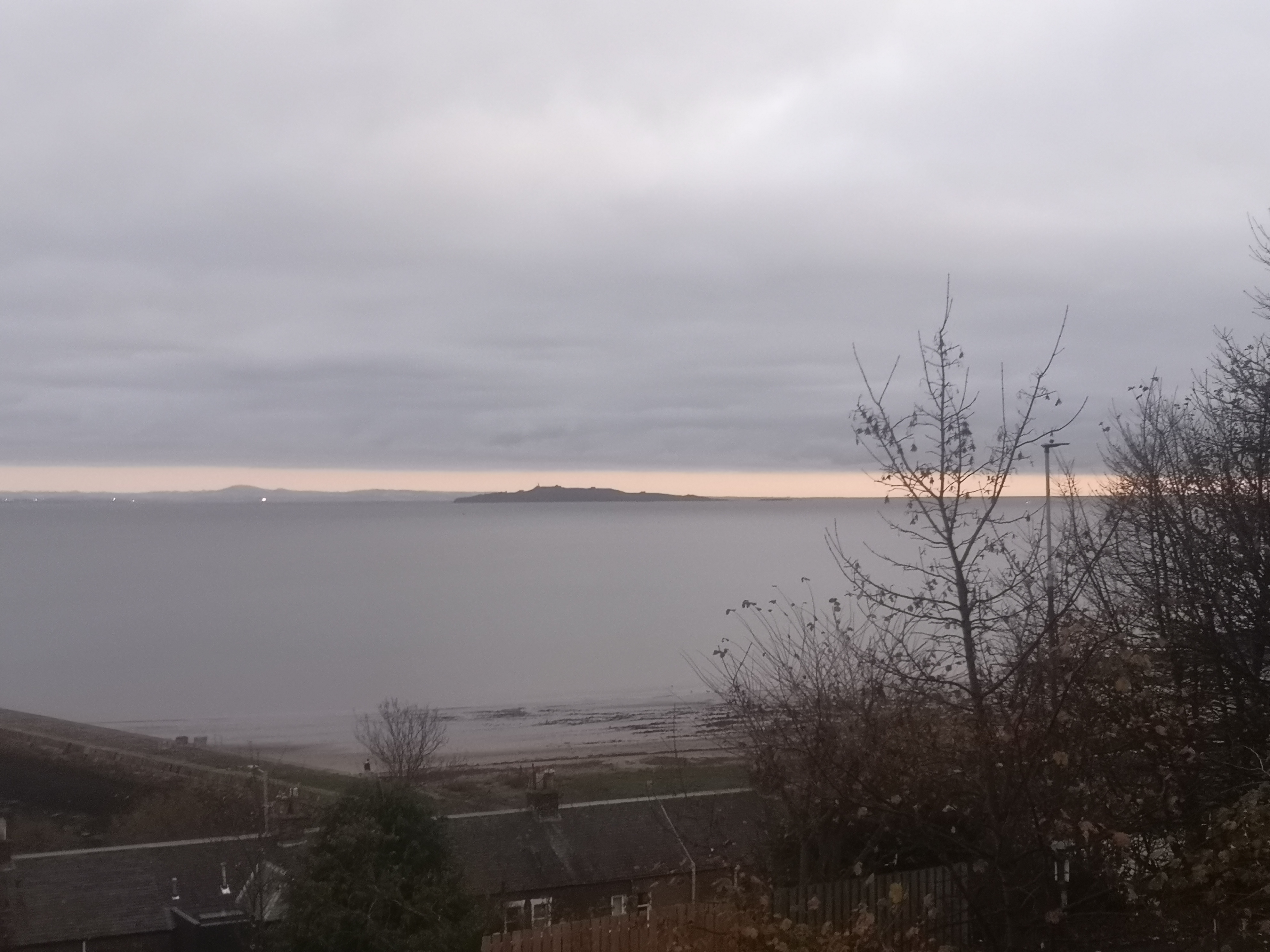
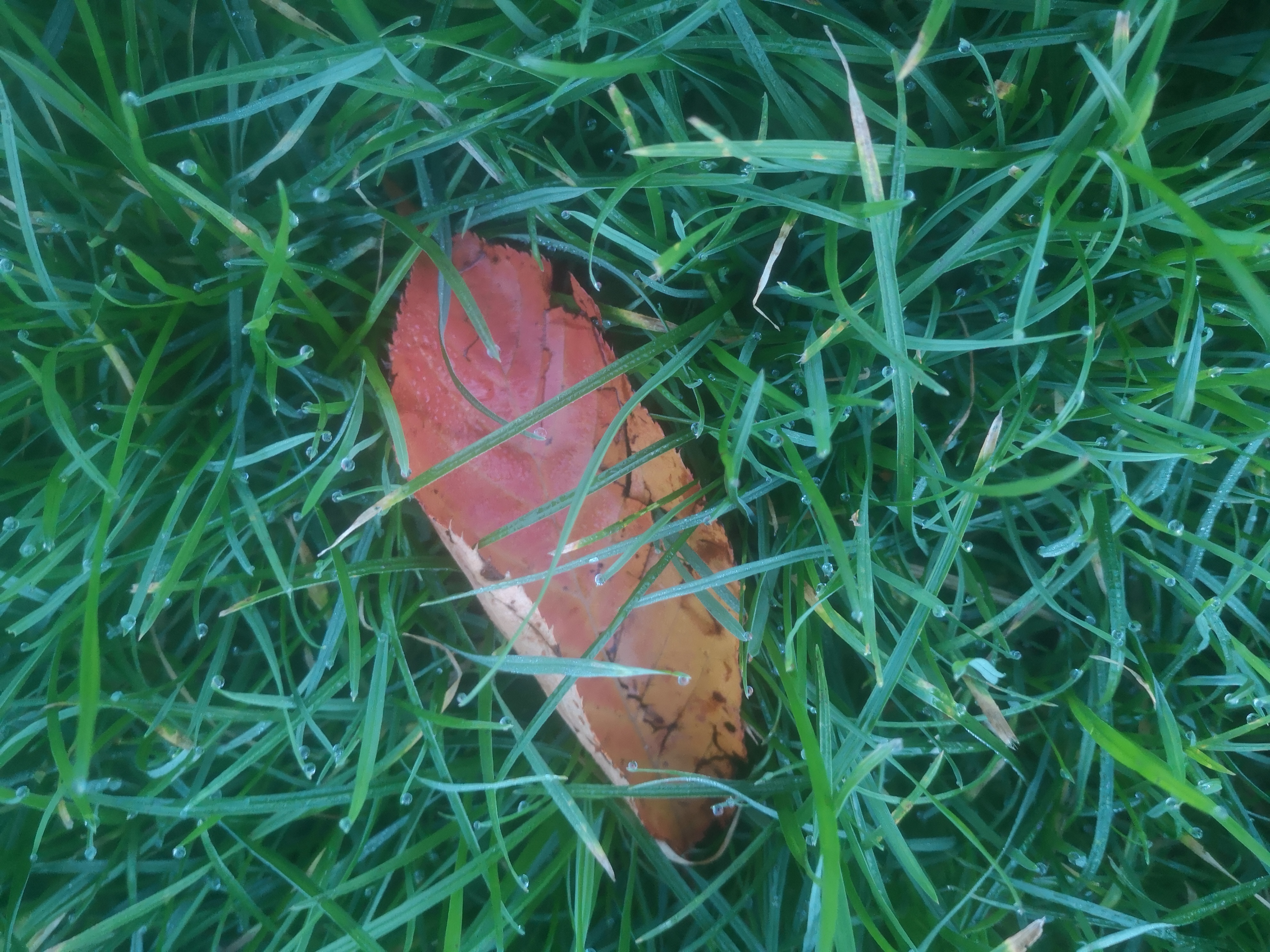
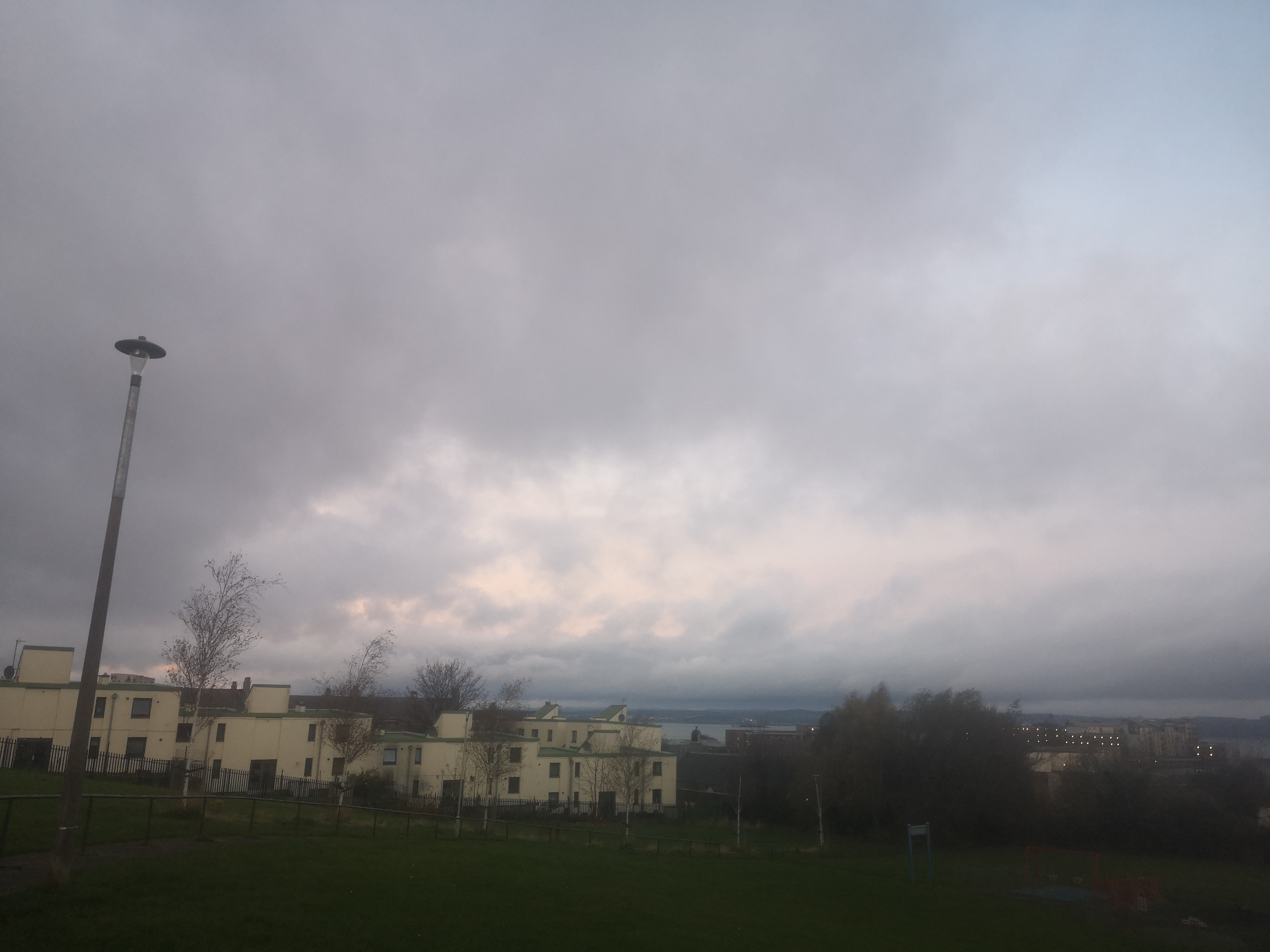
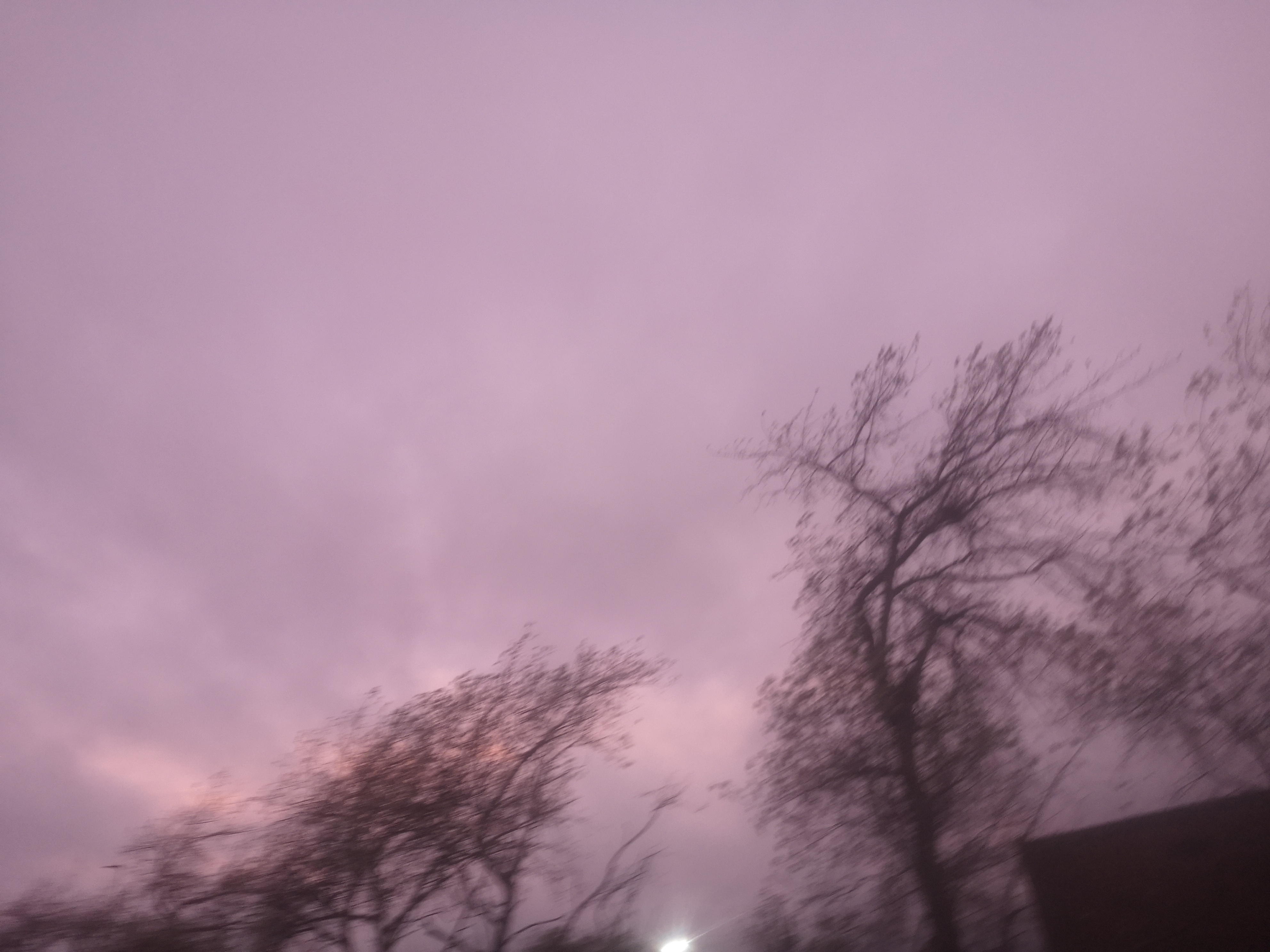
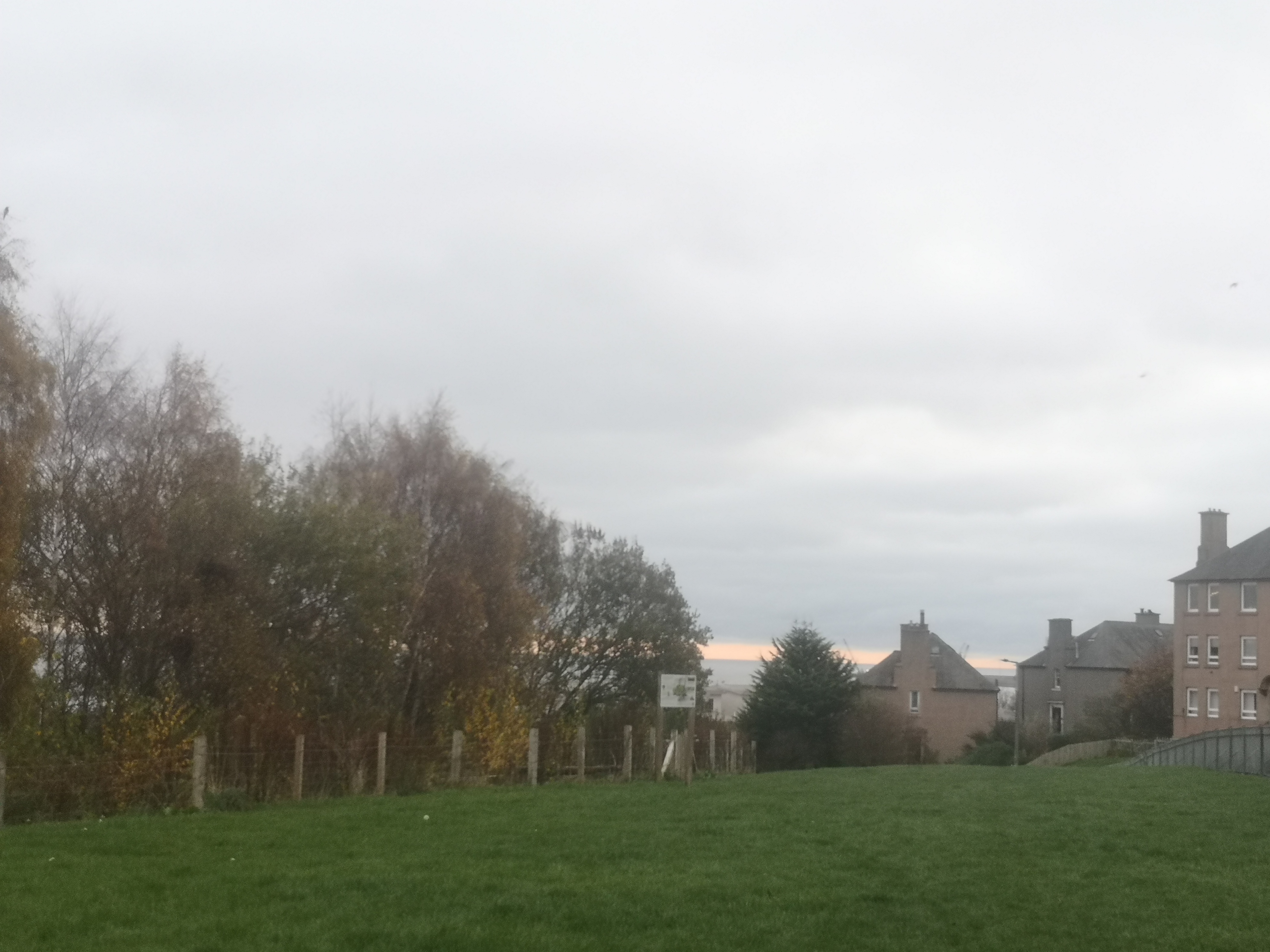
Photos Taken at Sunrise (pretty much)
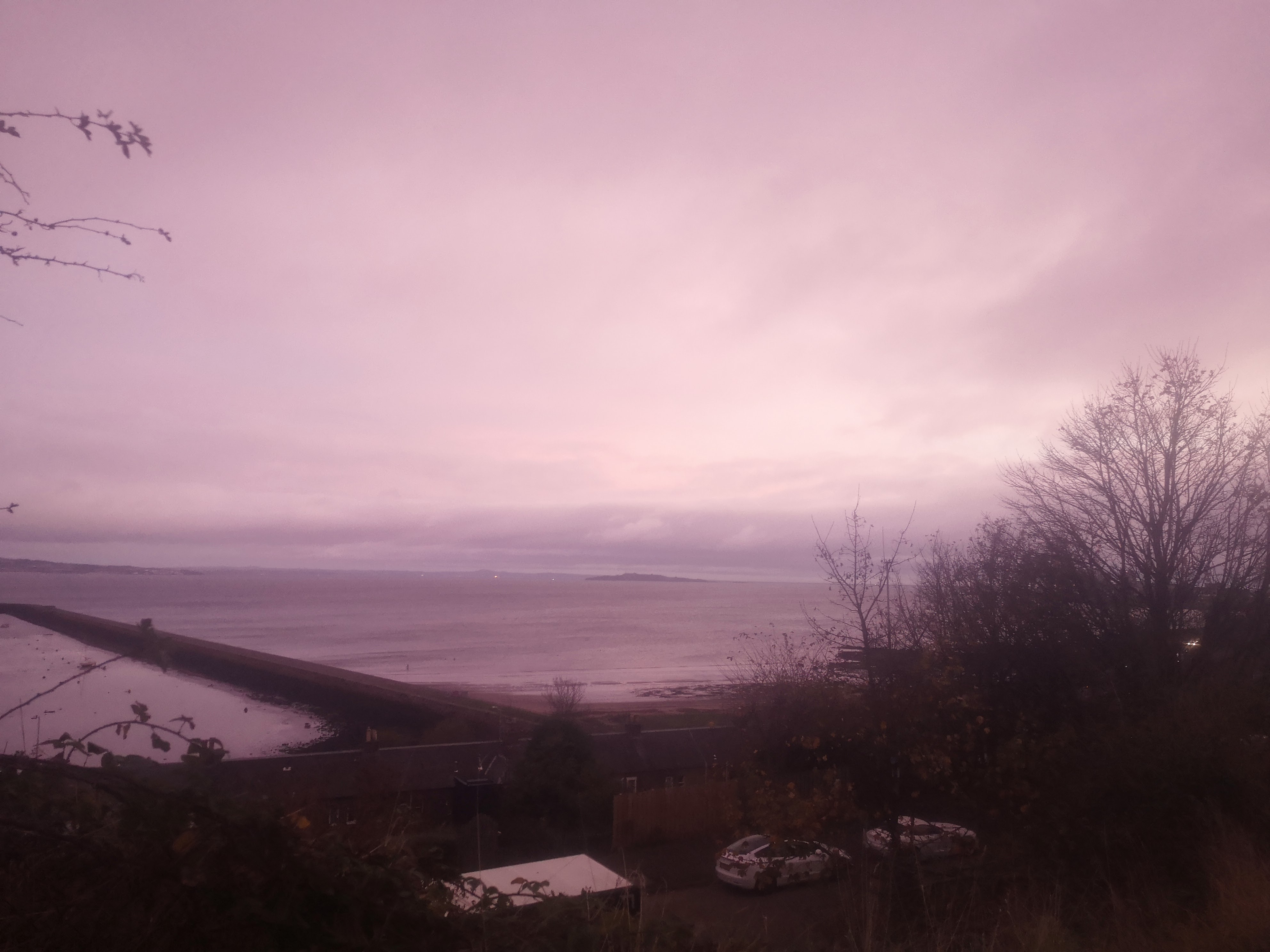
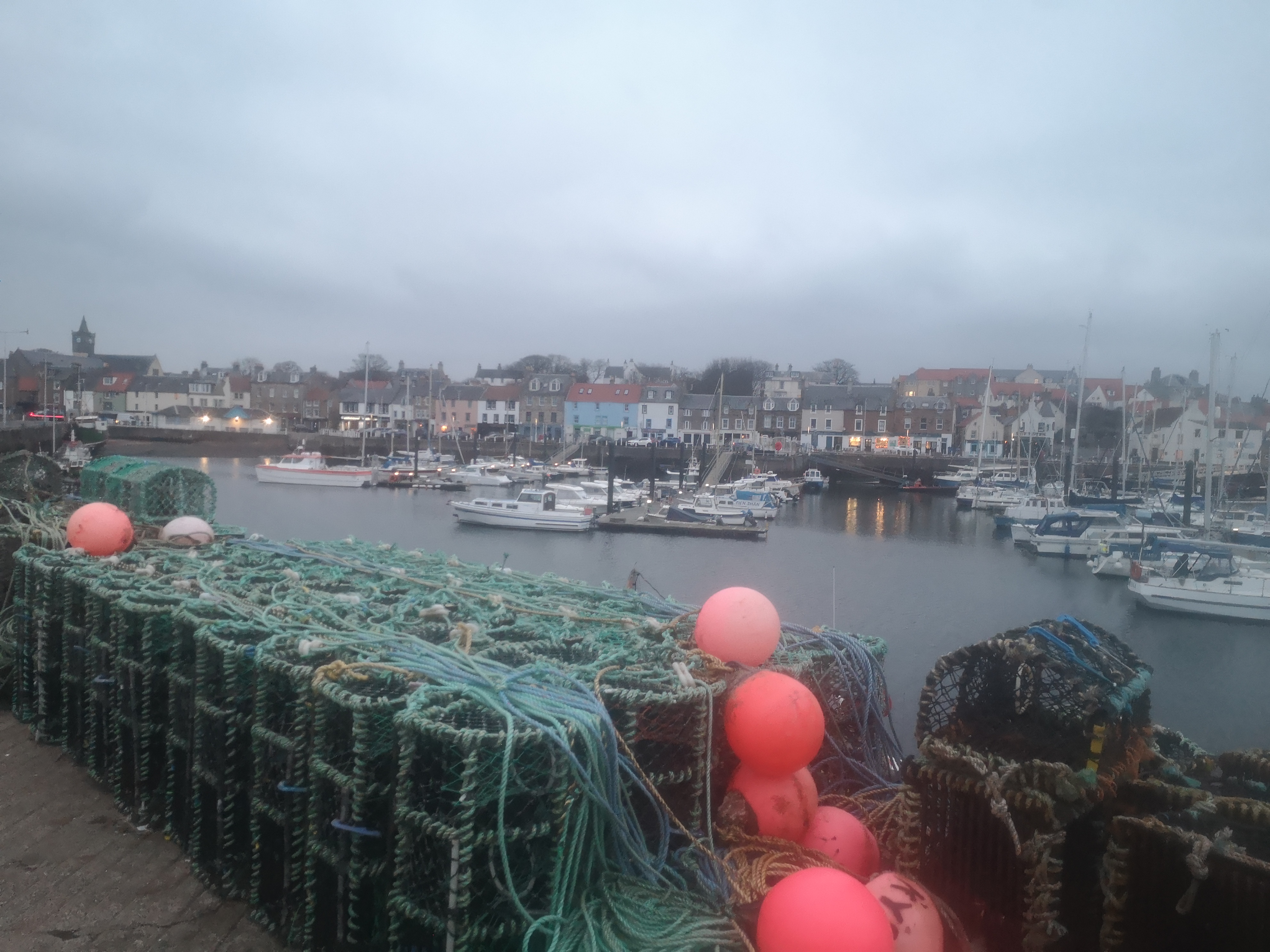
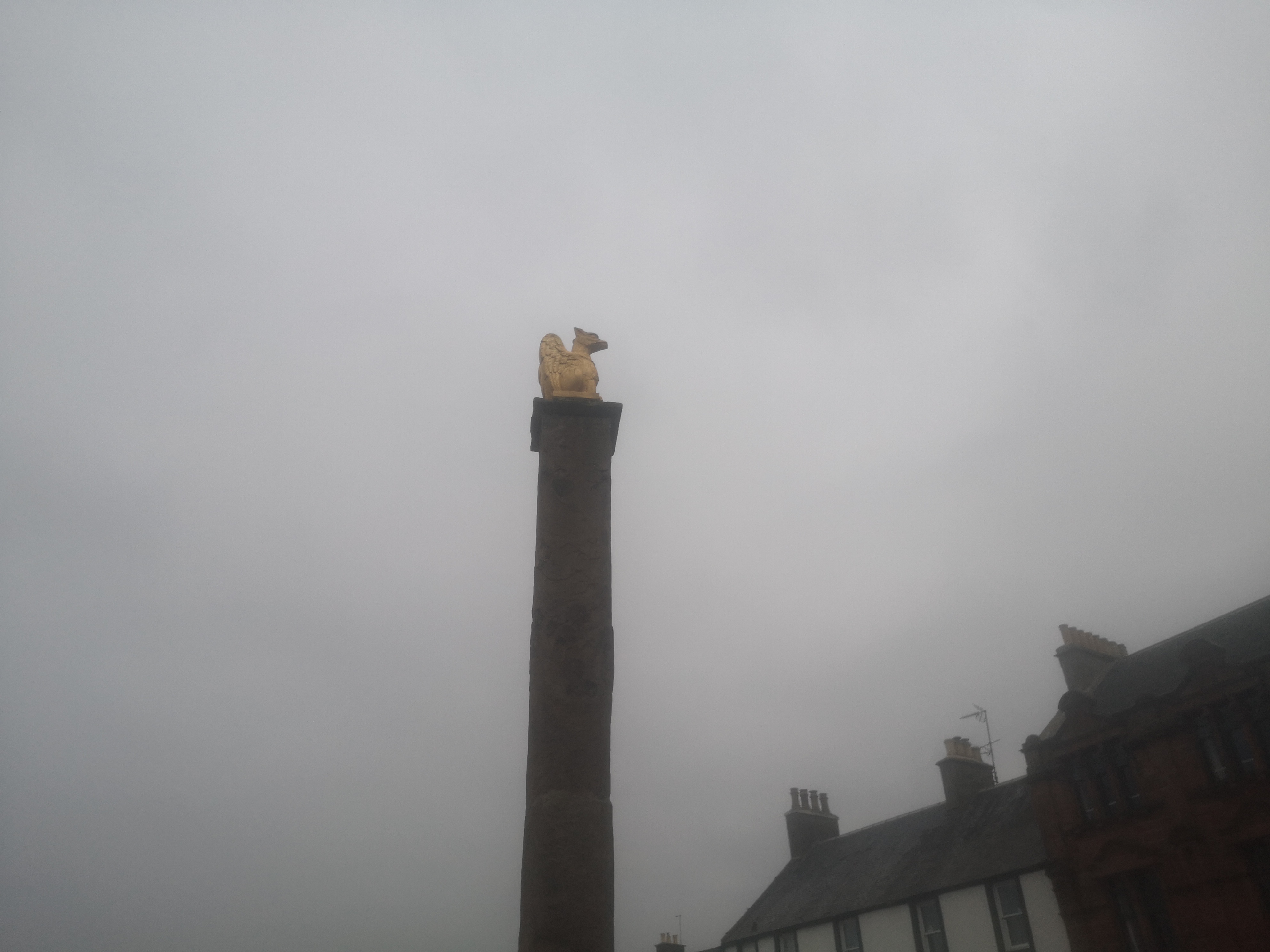
Notes on photo gallery above: Sunrise Photos. Day 1 was taken 2 minutes early because of the phone debacle. Day 6 was not taken at the right time either which you can see by the sky colour, though it is a rather nice, pinky purple). The 9th picture above was taken in Anstruther. It wasn’t a Sunrise Walk day, but I needed 9 images to make the photo grid work and found that I had taken a photo at exactly the right time.

What did I discover?
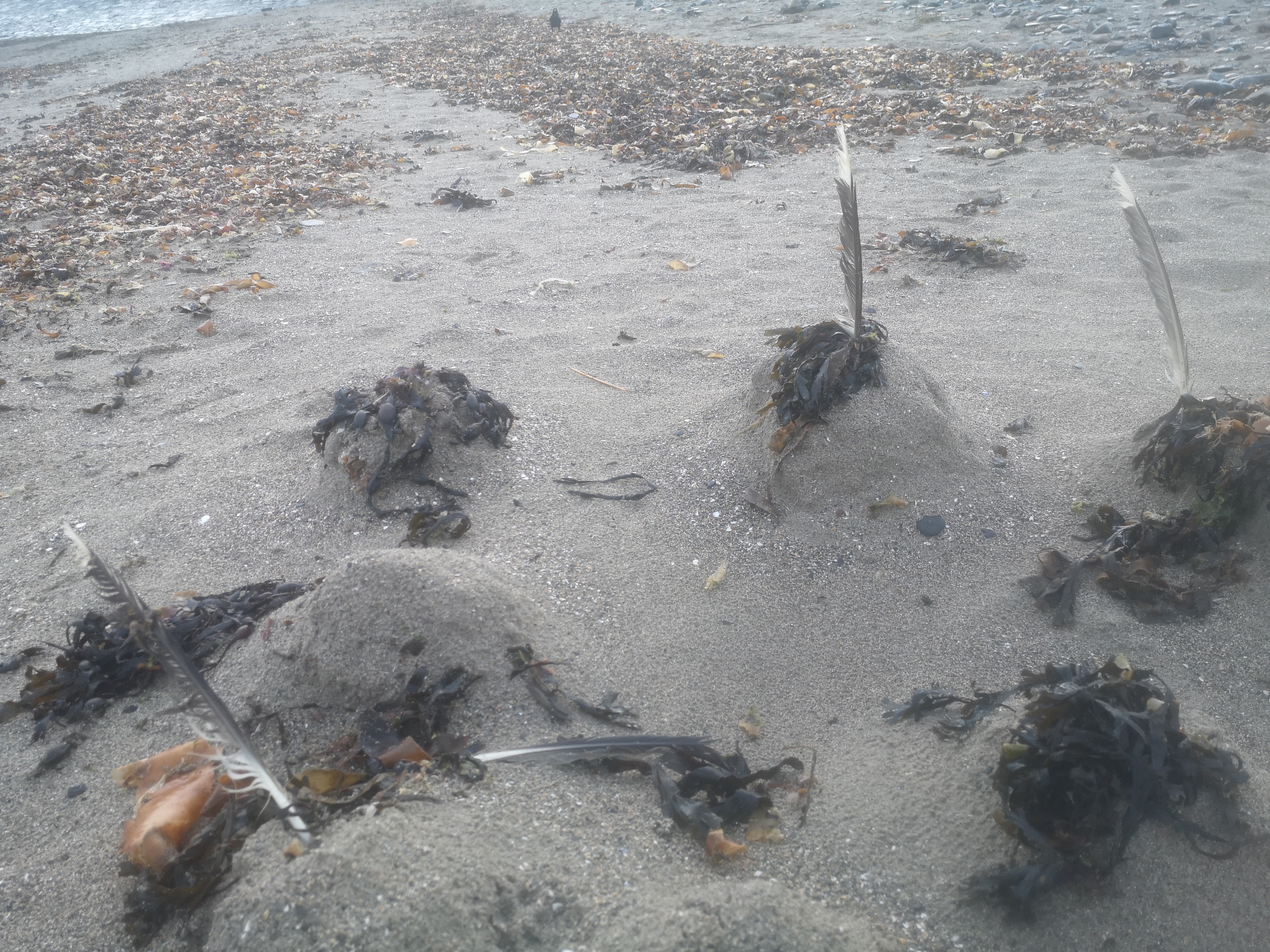
A long, thin black feather and a small slim, silver-blue fish, both on the strand – a grounded agent of flight and a beached swimmer. A series of sandcastles with upright feathers stuck in them like sentinels of the dawn. Border lines: Fife and Inchkeith Island on the horizon; the Eastern breakwater dissecting the sea, along which silouettes walked; the dividing line between the light and dark skin on my arm where the nettle stung me and left a tingling sensation for the remainder of the day. Fallen white poplar leaves and a camp in the little woods with silver tinsel looped over a branch.

Day 5, A Windy Film

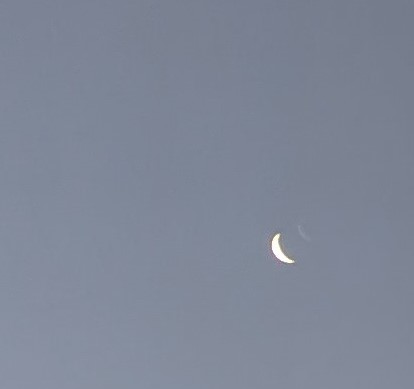
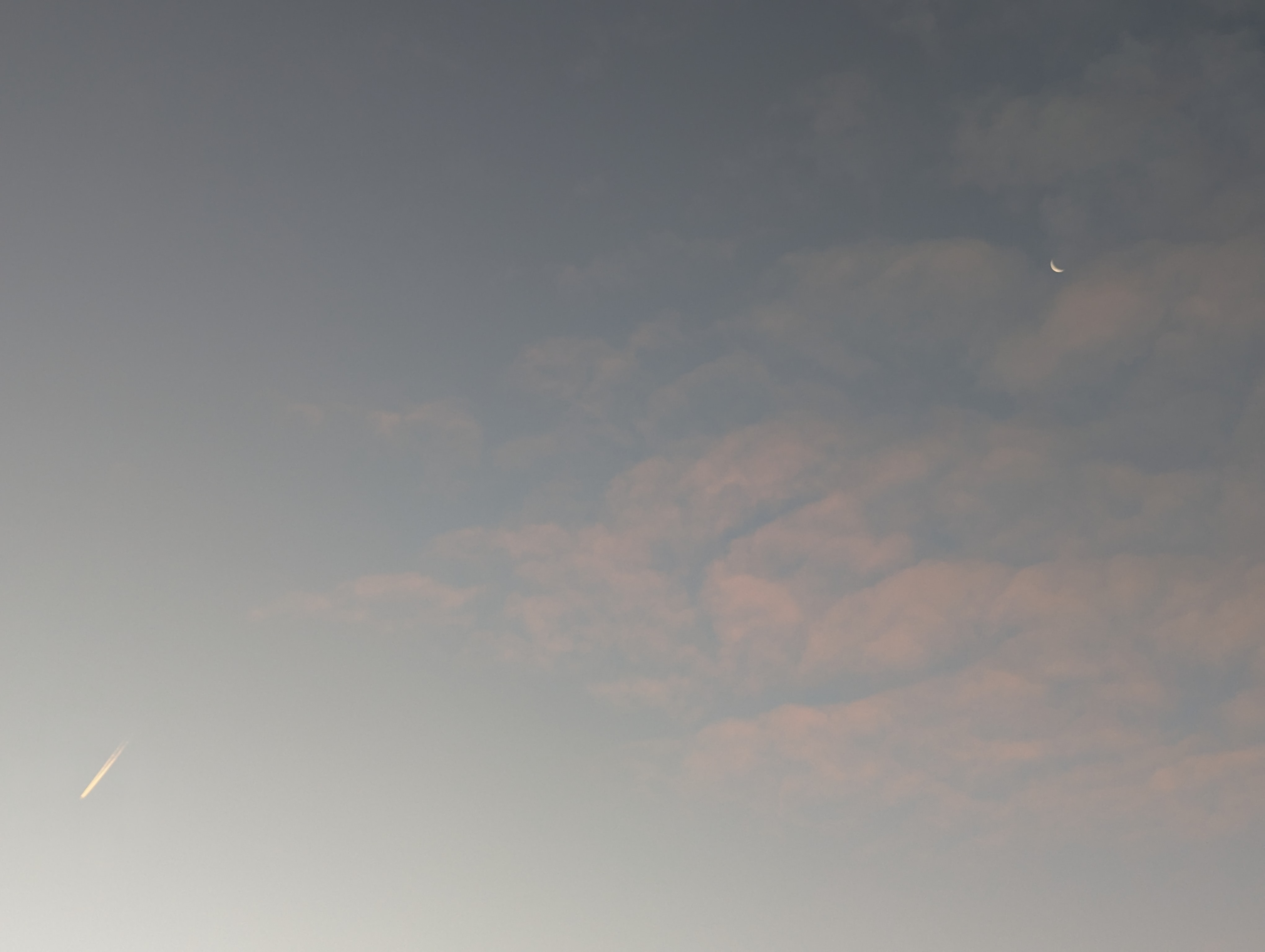
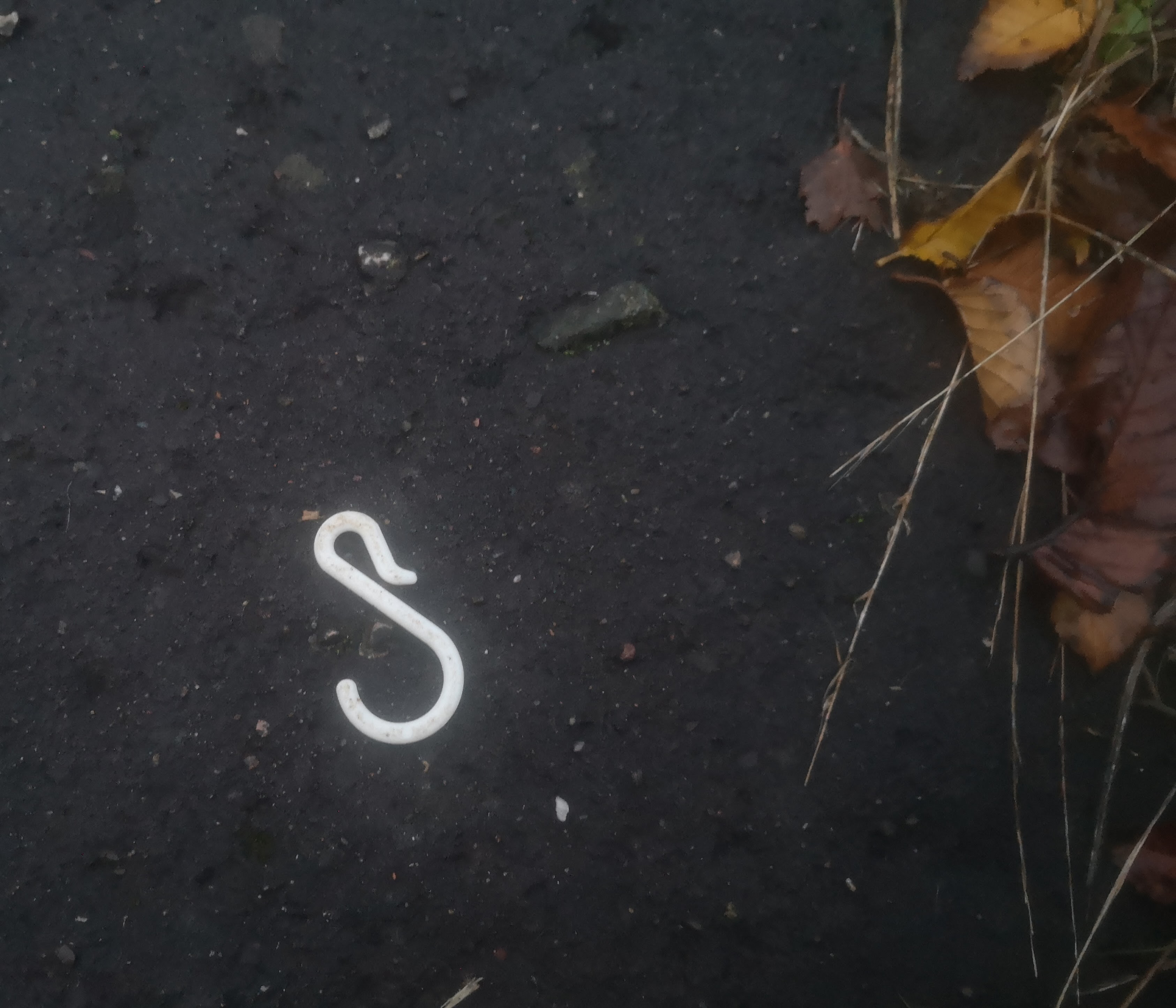
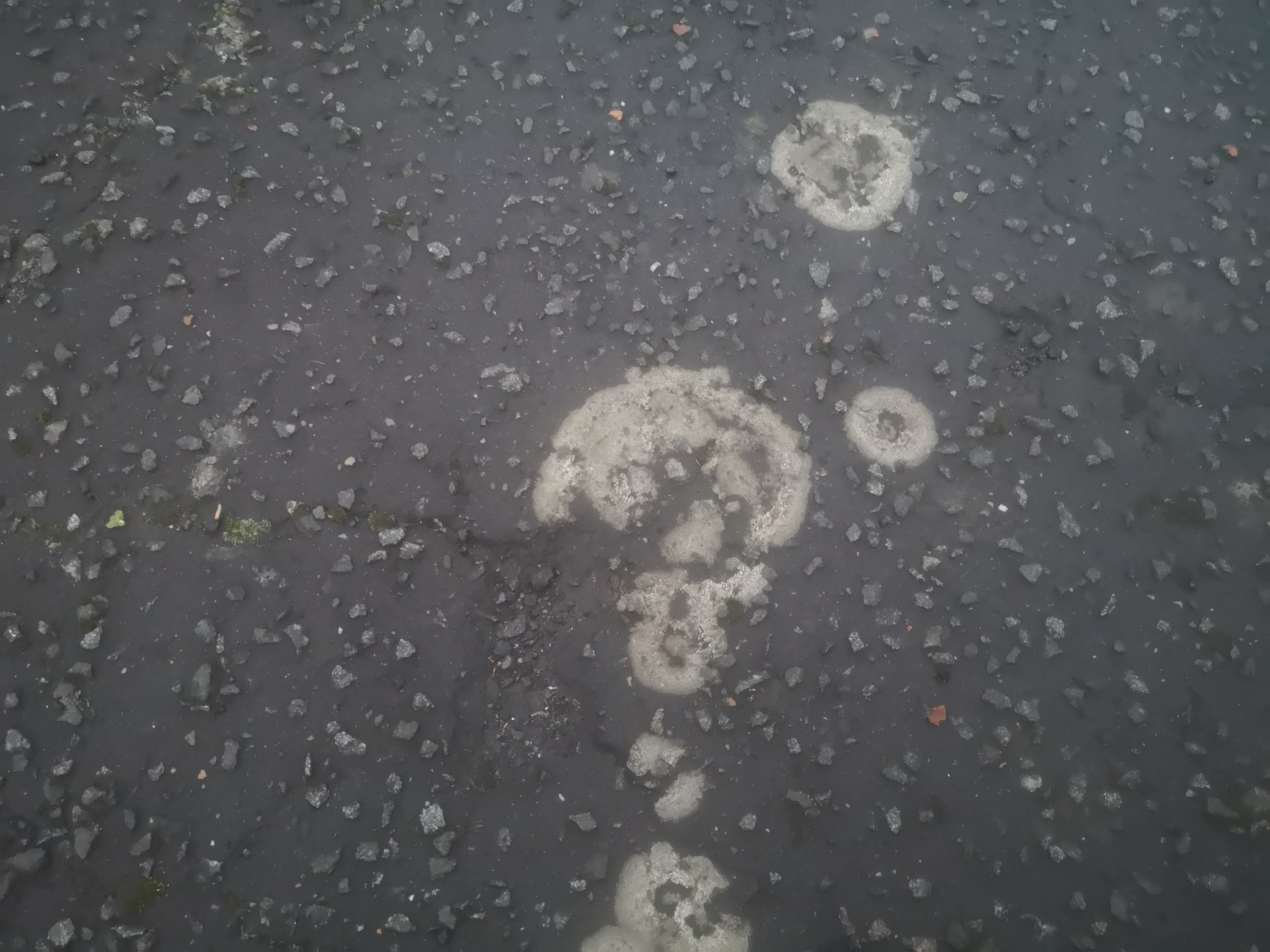
I learned that even when I get up at almost exactly the same time every day and walk almost the same route, the world is always different. It’s never the same. My thoughts are not the same, nor are my actions (even if I try) and neither is the sky / moon / sea / trees / rubbish (though the s-shaped hook was there impacted into the pavement every day). I liked the way the lichen pattern nearby and the shape of the crescent moon above seemed to be related to the curtain hook.
These solo walks were also social occassions. I knew that I was walking with other psychogeographers all over the world. We all shared on Intsagram and sent messages to each other, building up relationships over this 8-day period and, in some cases I knew some from previous Sunrise Walks or in-person meetings – I could picture Jackie in Dublin after walking with her in Canterbury, England, Carol near Philadelphia in the US after we First Friday Walked together along the Thames in London last month, and Kel who I’ve before met in Greece and Gloucestershire. Many, if not all, are part of the Walking Artists Network, and Carol, Kel and I are members of Walking the Land Artist Collective.

The last word(s)

I’m awake every day now. At dawn. Is that what it takes?

Compare what happened to day 7! It turned from dull to golden.

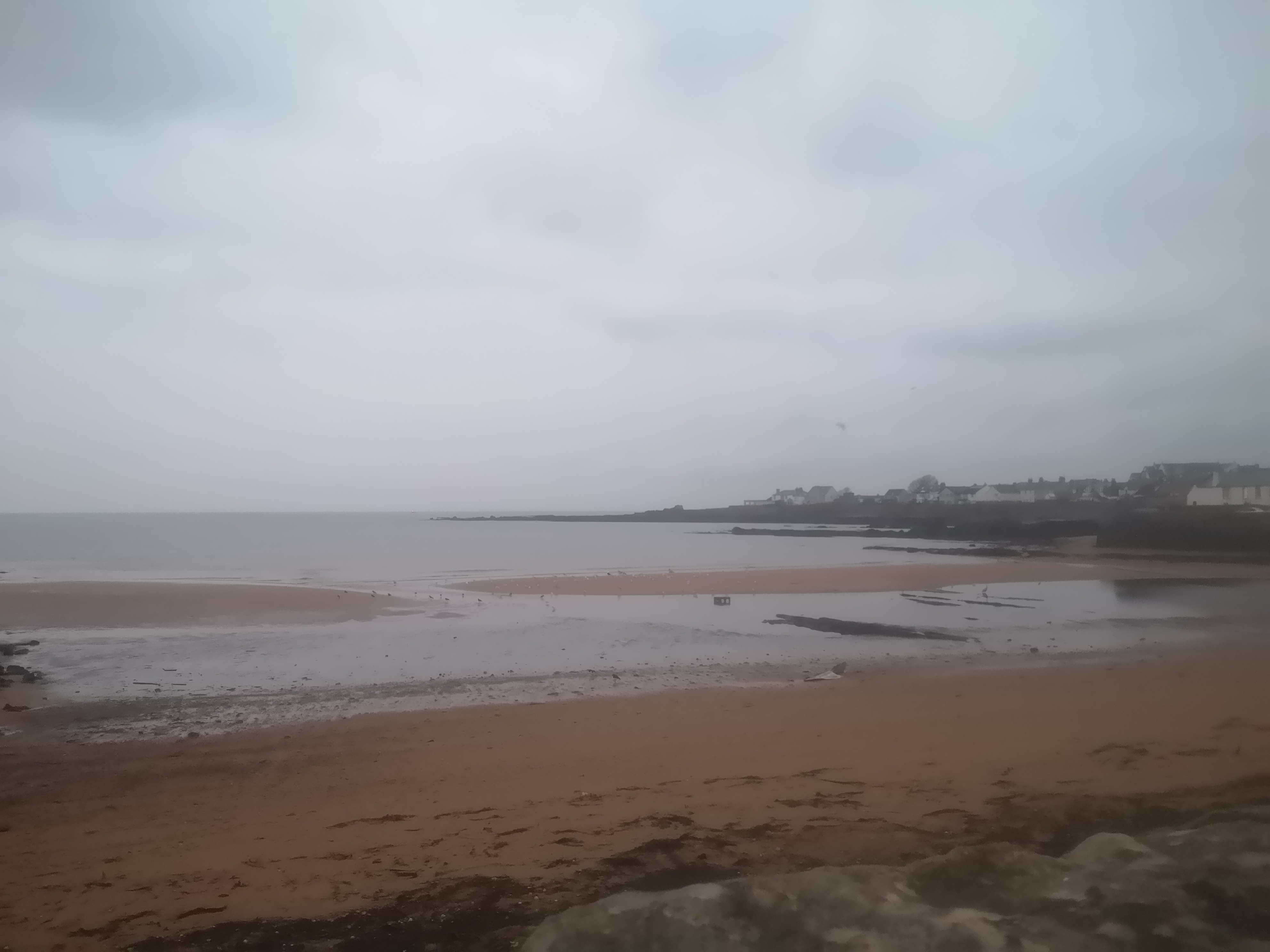
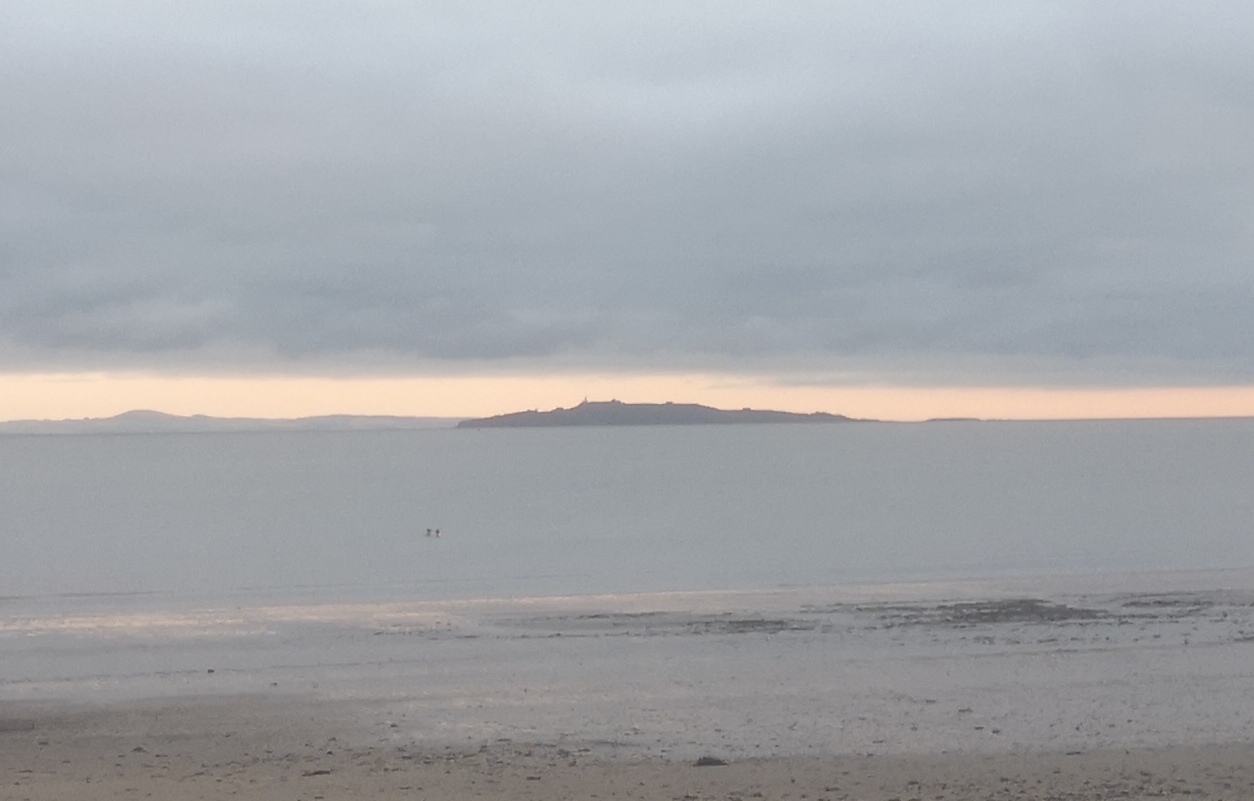
Photos Taken 15 Minutes After Sunrise (but not always)
See also: Lia Leendertz’s New Almanac

My 52 Walks with Blake Morris

Link to instagram page where, if you scroll down, there are other Sunrise Walks images I’ve done it before!

Winter Solstice Walk 2

22.12.21 Please refer to the previous blog before reading this one as it explains the premise of the walk and my plan. Phrases in bold refer to the walking score prompts.

As we move towards a repeat of last winter’s restrictions on movement due to the Covid-19 pandemic, I took my Solstice Walk #52More No.16 as a collective endeavour – remotely with Elspeth Penfold and Blake Morris who devised it, and with my friend T. We had planned to lunch at a café with our daughters (6 between us), but the Scottish guidelines changed on Monday to a maximum of 3 households at any one meeting, and B and A both wanted to limit the possibility of picking it up in case Xmas and New Year plans are jeopardised. So, T and I could not do away with the outside; instead, we had to do away with the inside – and brave the cold.

The walk, Silverknowes, Edinburgh

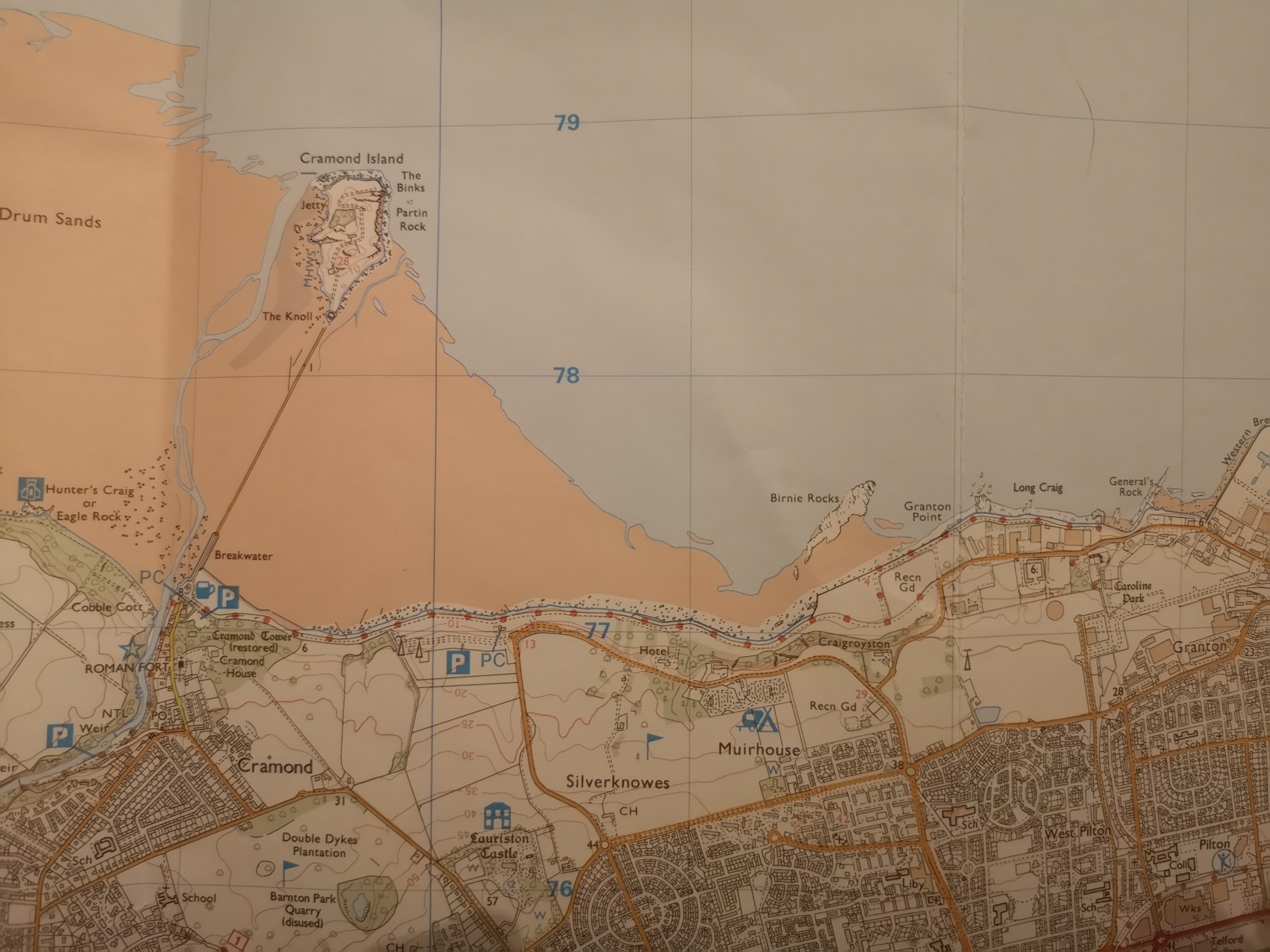
We met at Gypsy Brae and walk towards Cramond, through Silverknowes, a notoriously windy and exposed stretch of Scottish coastline.

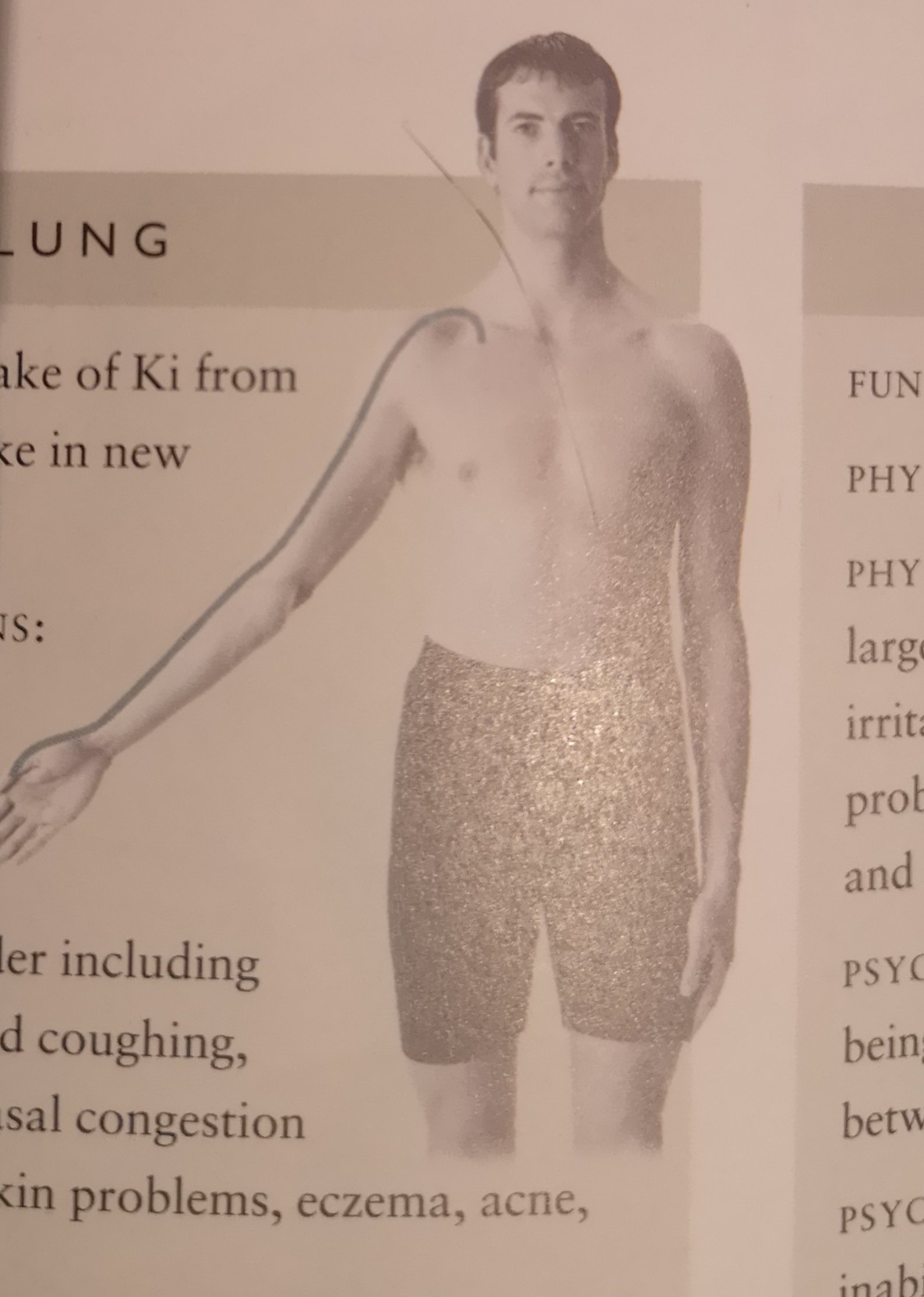
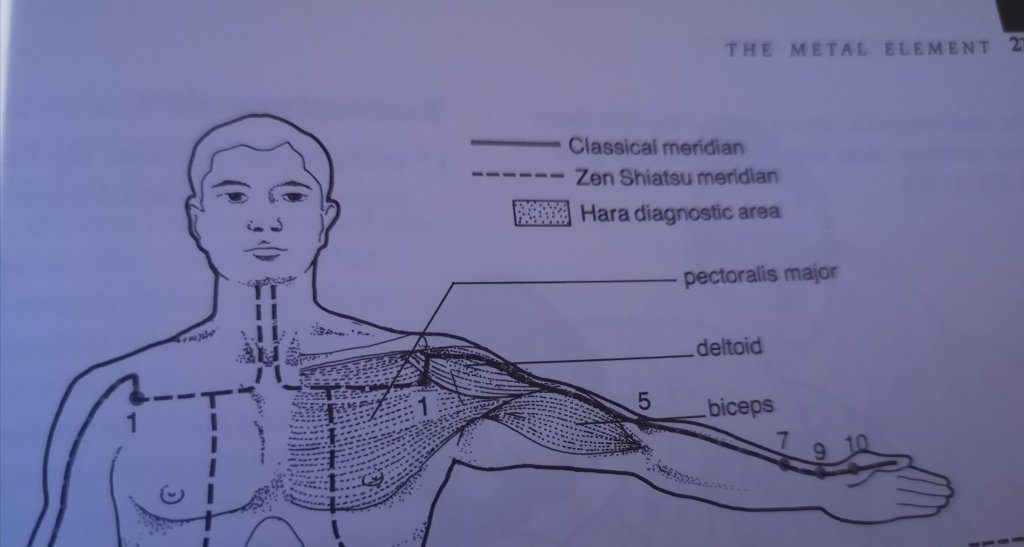
I was invited to walk through a book and I stretched that a little by using an app called Tsubook which I contributed to a few years ago. It shows the Shiatsu channels on clever body maps which can be tilted and turned so that you can see all aspects and angles. There are views with bones, muscles and the internal organs to enable the practitioner to identify the location and relationship of the acupressure points in as much detail as they want.

I chose the Lung meridian story. The points all have Chinese pinyin names which have been translated into English, and they sound surprsingly similar to the names on Elspeth Penfold’s Map of the Forbidden City which she used for her walk. In addition, we were walking and asking, ‘how does walking function as a storytelling mechanism?’ and these channels have a sequence about them. The Yin meridians often begin close to the central core of the body, and as they flow along, carrying or containing the chi of the Organs which give them their name, the points or access places along the way reflect the journey that the chi takes. From large spaces (in this case, a Palace) through rivers and ever smaller tributaries, they move outwards along the limbs to the small bones of the fingertips and the border between us and the outside world, the people whose skin we touch with ours.

Chi

We struggle to adequately translate this amazing word because it contains so much. It can be thought of as energetic vibration. In earlier times, people were better tuned into this aspect of themselves than most of us are today.

Many centuries ago, the Chinese believed the body was sacred and should not be cut up. Even if it was damaged through an accident or illness, the aim was always that it should be repaired sufficiently so it could eventually go on to meet the Ancestors in as complete and whole state as possible. They didn’t dissect each other, nor examine their insides, but instead relied on how they felt, using metaphors and comparing the sensations to what they knew well, which was the natural environment in which they farmed, fished and lived.

The names of the acupoints are poetic and descriptive, encapsulating their individual and collective function (including that of the Organs) and the location. Thus, the sensation of the radial side of the arms, the internal sensation of the flow of chi which emanates from the lungs, which changes through our lives and at different times of the day according to our activities and the weather and external pathogens, is alive, it’s an on-going story.

From Elaine Liechti’s book, Shiatsu

I have known T for many years, since before the children were born, and we keep in regular contact. I consider the relationship with her to be one of the important ones in my life, and so it was good to share this time with her. When any of us walk, we don’t walk in isolation, not from each other, not from the landscape we walk through, and not from the world-situation in which we are situated.

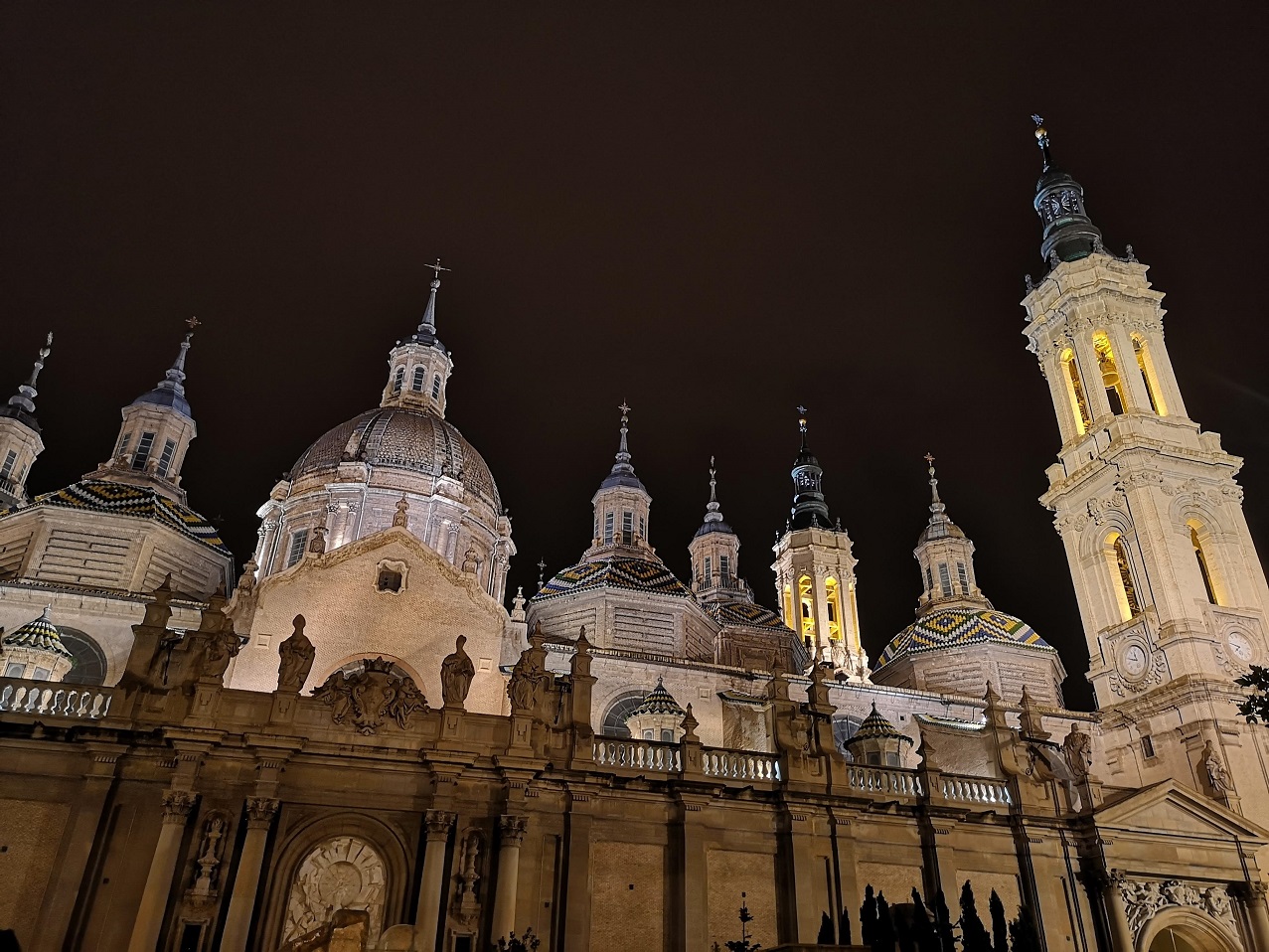
Basílica de Nuestra Señora del Pilar ‘Palace’, Zaragoza, Spain

Central Palace

The Central Palace is the translated name of the first point on the Lung channel, and it relates to the importance of the lungs. Their domed ceilings, interconnected corridors and meeting chambers play a the vital role in keeping us alive. It is in the lungs that we exchange oxygen and carbon dioxide and maintain a balance of gases. From an emotional and spiritual point of view, their function can be extrapolated to encompass the quality of our communication with each other, the literal noise we make enabled by the air passing through the throat, and by extension the gestures and movements we use for the same purpose, whether speakers or not. They are associated with our corporeal existence, represented by the breath which situates us right here in the present, and consequently the loss of the ability to exchange, and the absence of the breath which characterises death. Covid challenges all of that, affecting the respiratory system (coughs, sore throat, runny nose, the struggle for breath), and our exchange with the environment (smell and taste) in addition to our need or instinct to withdraw from each other and feelings of alienation.

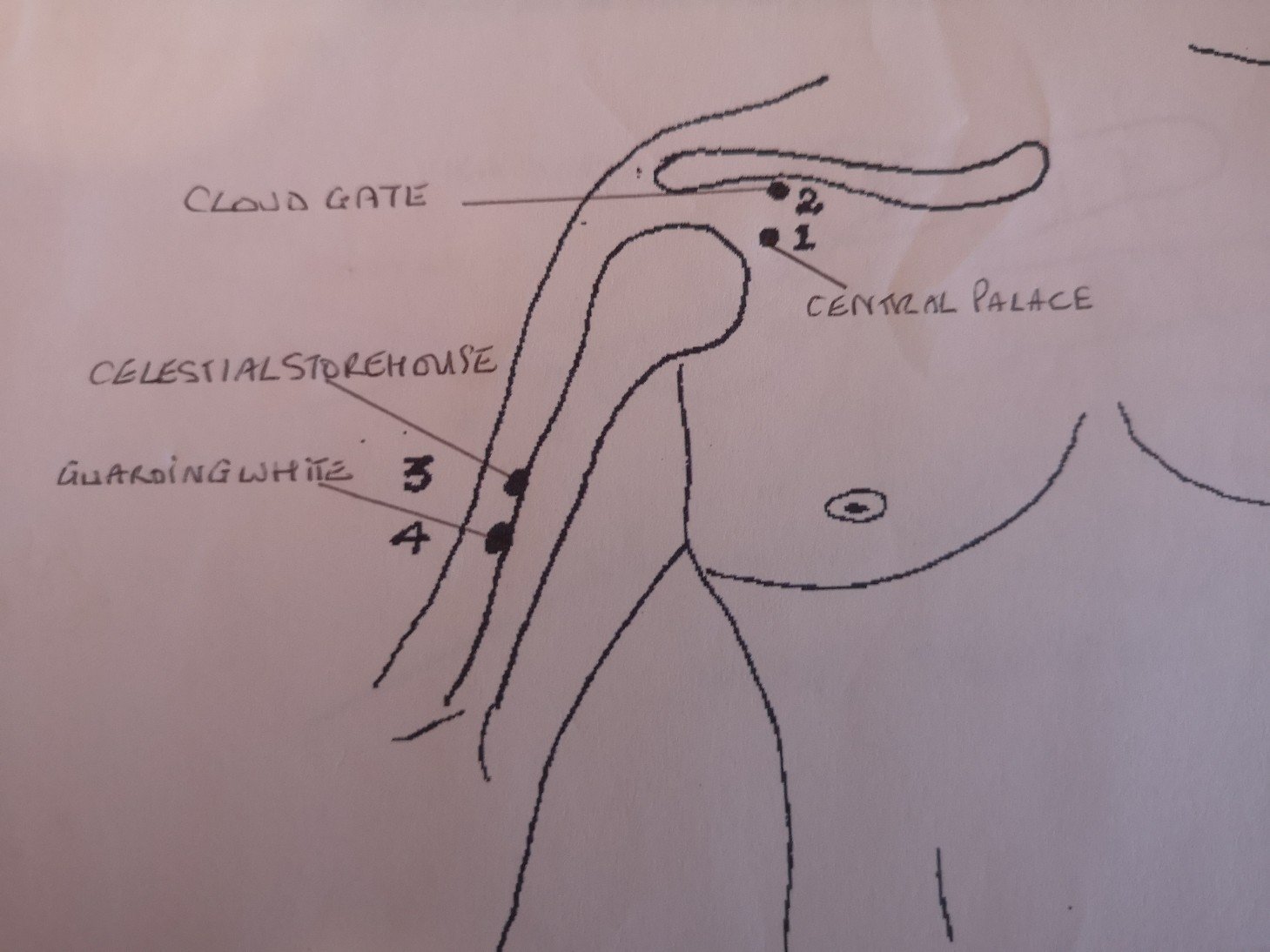
Lung 1 – 4

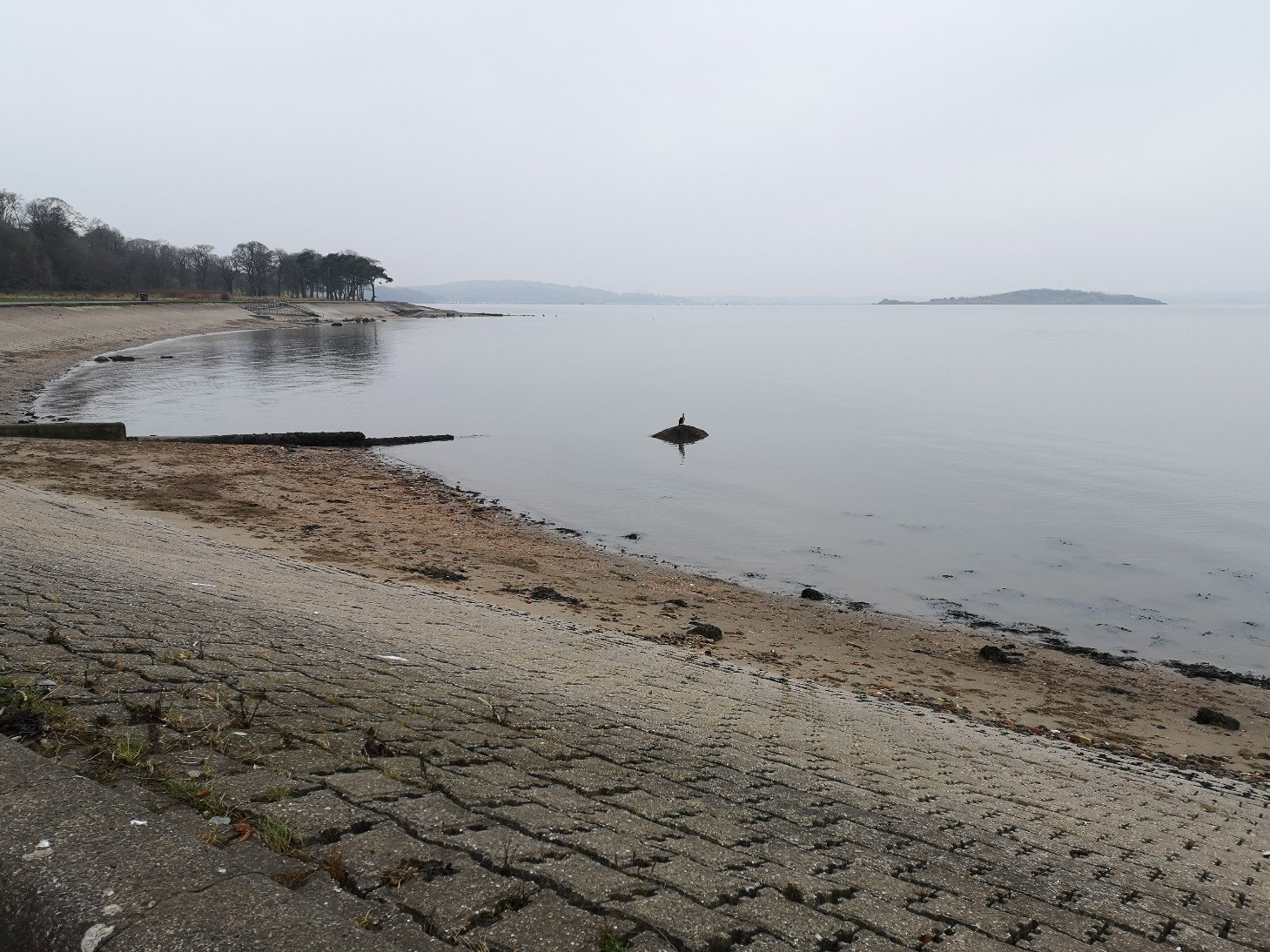
Our walk-story begins from our central location, home, and the travelling homes which are our metal cars, in other words our Central Palace. (I would usually walk there but I was going on to make a large Xmas food shop). Shiatsu practitioners and acupuncturists touch or needle this point to sedate the Lungs, to calm and smooth the Lung chi in cases of coughing. T and I are saying ‘Hello’ and ‘How are you?’ and catching up with each other. We walk on stone, beside low walls where small dogs trot, and Cramond island, separate and stately, stands out in the sea mist. The air is fresh in my nostrils and I take a series of deep breaths.

Cormorant and Cramond Island, Edinburgh

Cloud Gate

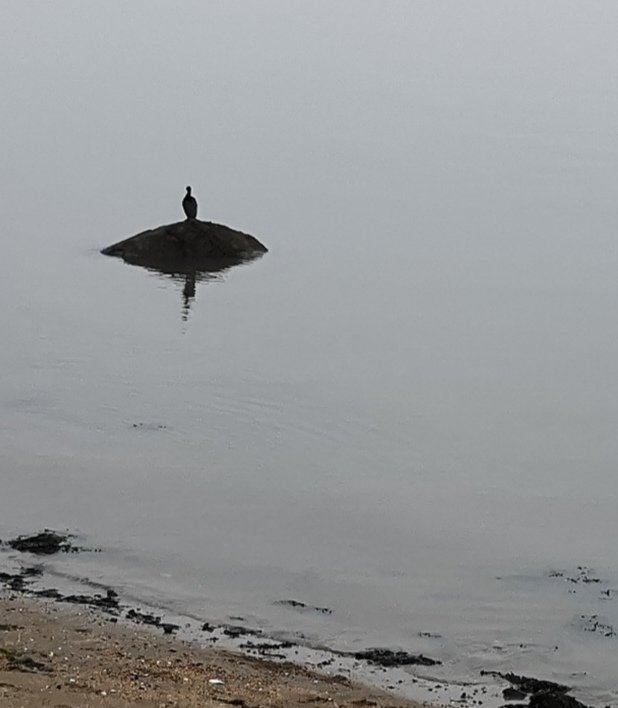
Above our heads is cloud, a lid of unform grey which has been low down for days. Cloud Gate is an acupoint which descends and disperses the Lung chi, giving the body the chance to redistribute excess phlegm away from where it clogs and stops us breathing and communicating. T and I are swapping work stories now, the busyness of the end of term, and the urgency of the festive deadline. A solitary cormorant stands on a single rock.

The distinctive shape of a cormorant (from a distance)

Celestial Storehouse

Other brave walkers stroll and cycle past us in the opposite direction, and ahead is a café, a Storehouse for sure, but Celestial? Its musak is only just audible from a distance, and we hadn’t yet got close enough to see the Buddhas which decorate it. The surround-sound, high-pitched voices of gulls intersperse our family chat – who is doing what and going out with whom. It has been noted that Lung 3, as we prosaically call it, assists with depression, characterised by isolation and lack of communication, as well as the familiar respiratory disorders. The towering and distinctive Scots Pines which we walk under have a dark, olive canopy drawing our gaze heavenwards.

Silverknowes Scots Pine On another day when the sky was blue!

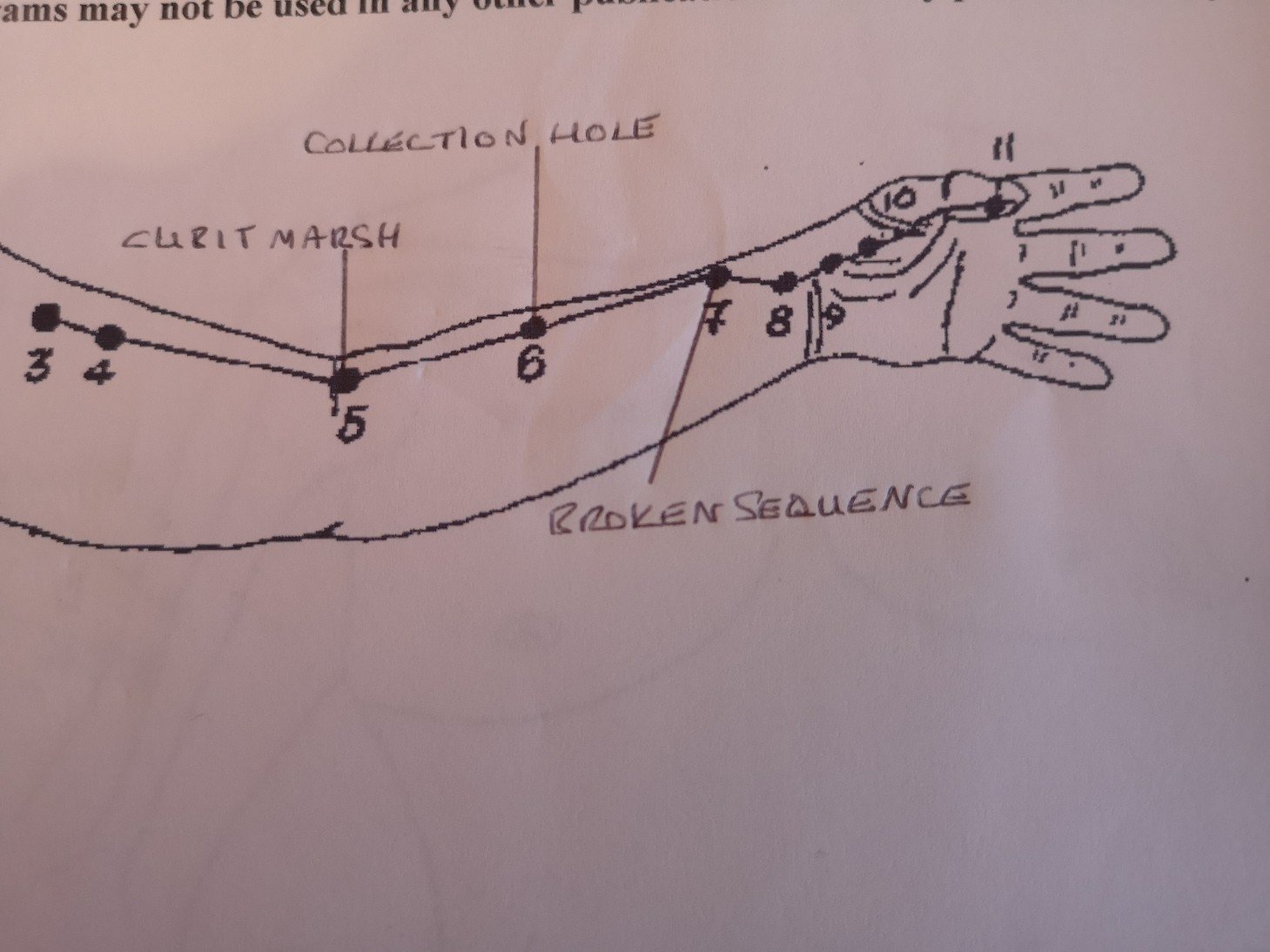
Cubit Marsh

By the 5th stage of the walk, we are onto the topic which sadly still dominates, and T told me that her G is ill with it in Glasgow, meaning she can’t join them for the holiday. We use Cubit Marsh, found in a small indentation at the elbow (cubitum), when someone is suffering certain types of pulmonary disorders. It is useful to think about the body having an internal weather system – prone to Heat and Cold for example – and, in this case, the acupoint is said to deal with Damp, something which is injurious to the Lungs, hence the name of Marsh, a wet and boggy place. It isn’t hard to understand why it is beneficial for infections, then, where there is discharge and snot. The water we are walking beside is very still, it barely circulates, and the Oyster Catchers simply sit, floating very slightly. Brine hangs in the air and the cold stings our cheeks.

Lung 3 – 11

Collection Hole

Reaching the café, we choose hot chocolate and wait at the hatch for our steaming drinks. The man who attends to us wears his neckerchief over his mouth and nose and serves at arm’s length, pushing the card machine across the surfboard which doubles as a counter. I tap without touching and try to make eye contact to say ‘Thanks’.

Down to the water’s edge

Broken Sequence

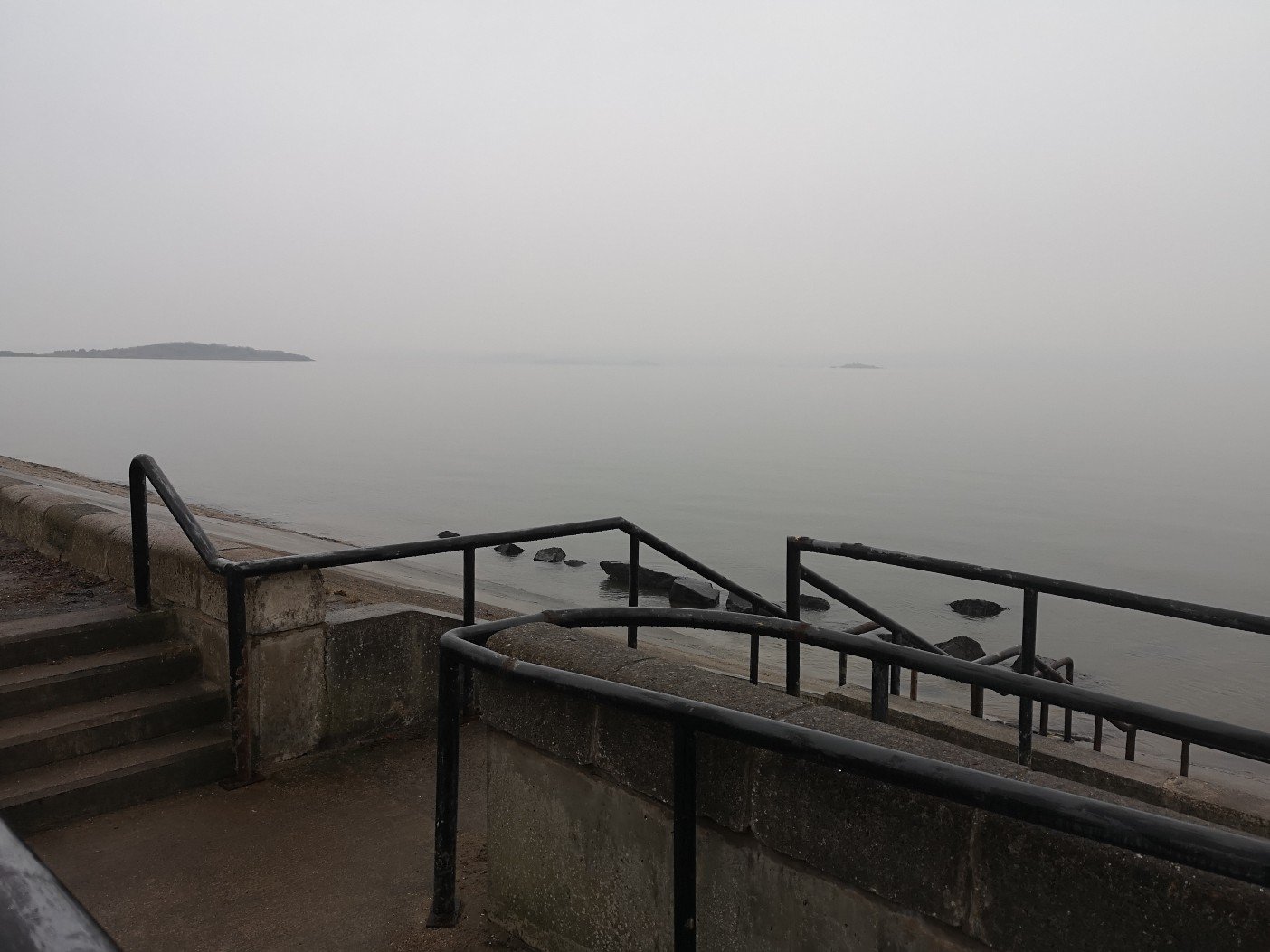
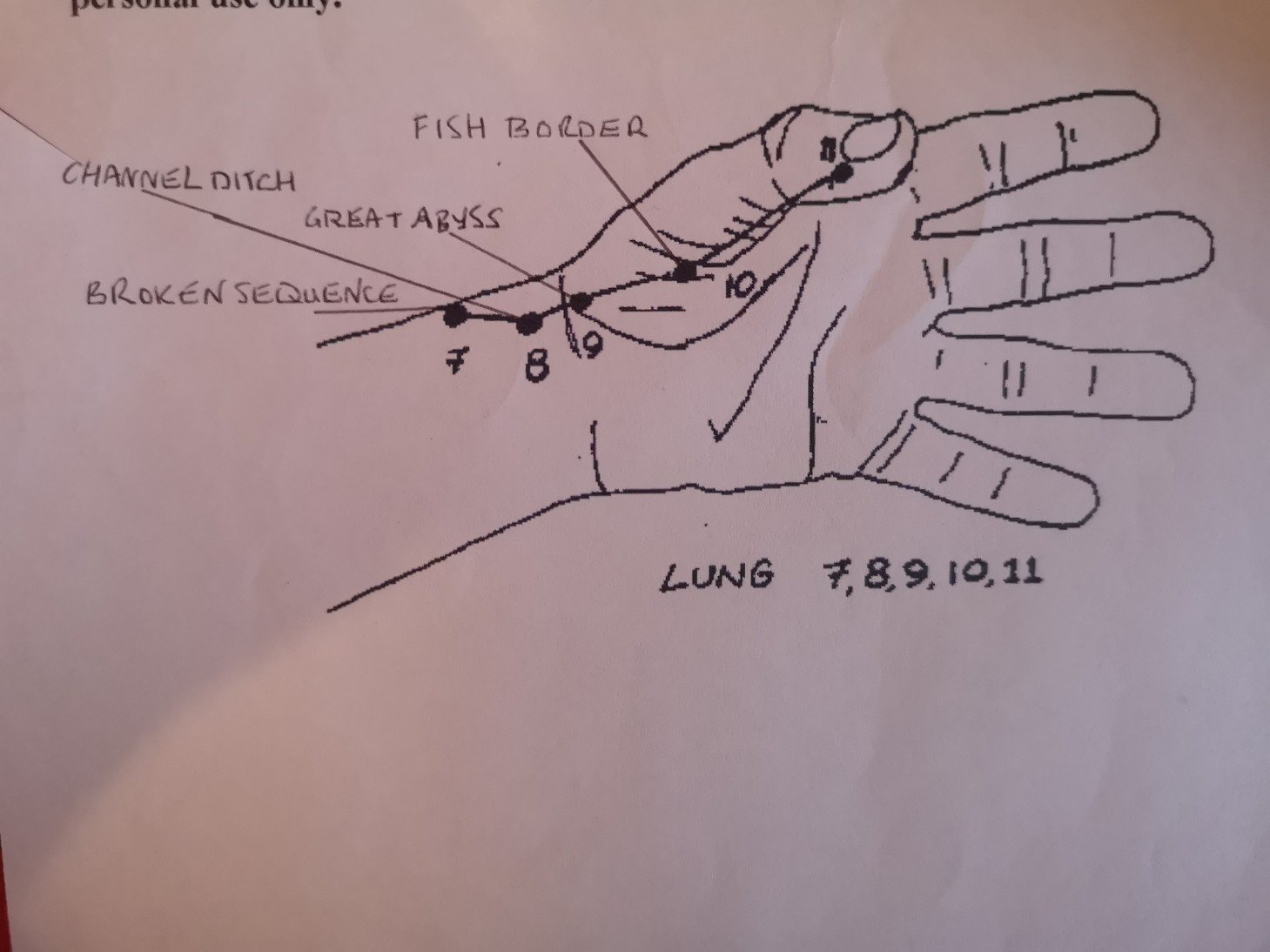
The Lung meridian now diverts to converge with the Zen Bladder channel (from the water element) and unblocks any stuck chi. At Silverknowes there is access to the foreshore where railings and steps break up the homogenous slate sea, leading down to the rocks and sand. Wind surfers like this spot and in the past I’ve watched them grasping the tow-line attached to a speed boat which zips and angles giving them the impetus to sail suddenly up into the sky, spray flying. It’s an exhilarating spectacle. We stop walking and choose a wooden bench, hoping it will be warmer to sit on than the metal ones. I had Covid recently and got off lightly with only a cold and a scratchy, irritable throat and tightness at the occiput (back of the top of the neck), which Lung 7, Broken Sequence, was very useful for.

Looking eastwards

Channel Ditch

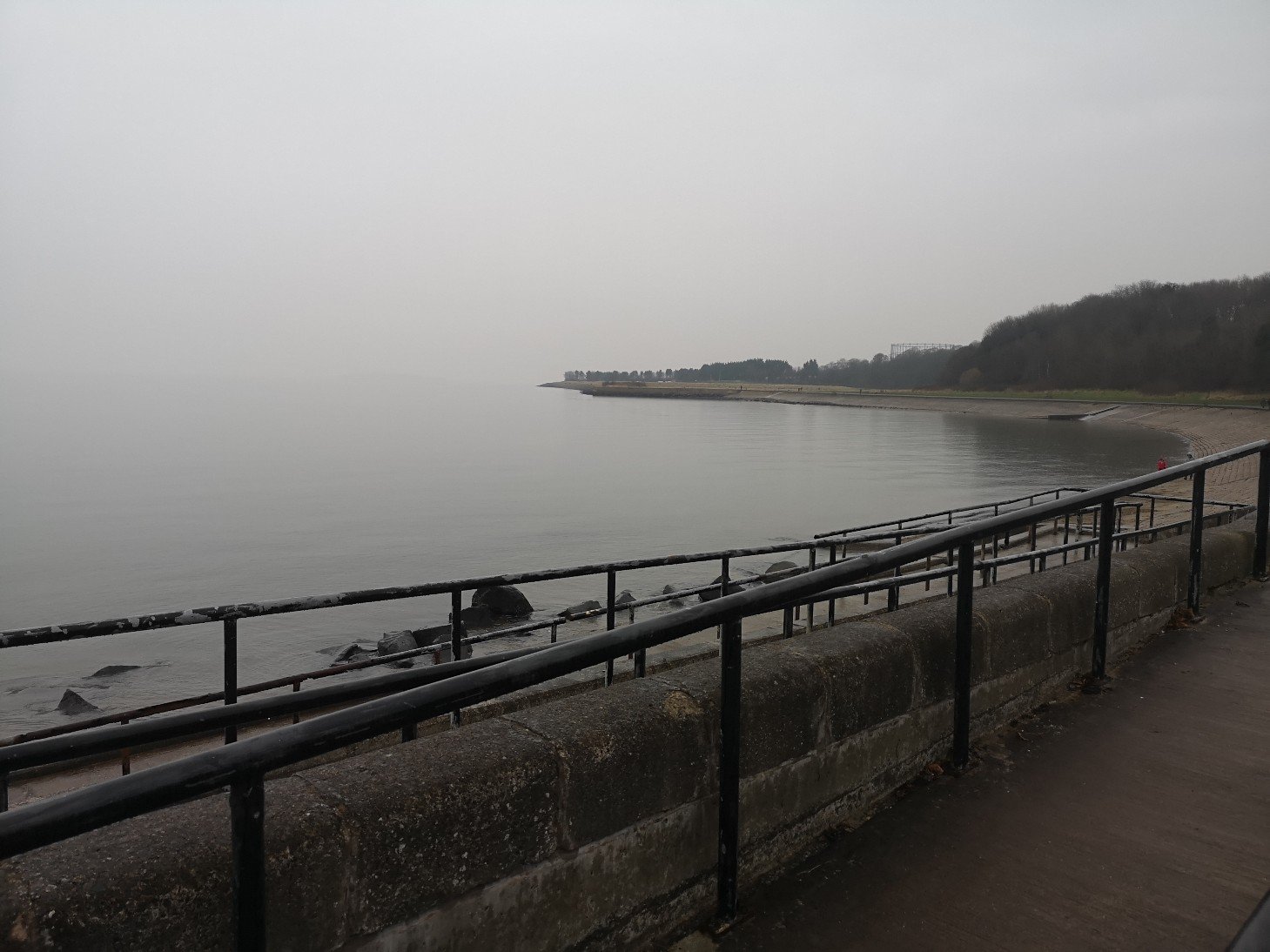
Missing out no.4, we continue with the sense of depth that the Marsh at no.5 brought and the story continues with the second of four wrist points. With the prosaic chat now out of the way, T and I talk about matters close to our hearts and we turn tail under the spitting rain. We see the same landscape from the west now, the bay curving round to a finger of land that seems to reach out to the Kingdom of Fife. We are flagging a little as daylight thins and the haar descends, moisture palpable on jeans and bobble hats.

Lung 7 – 11

Great Abyss

The 9th point on the Lung Meridian goes even deeper, hence the name. It connects with the Po, often called the Corporeal Soul, the Lung spirit in Chinese Medicine. It connects with the spiritual aspect of ourselves.

the Po [also] allows for a tricky balancing act of living life as a human being, namely that of being a creature of spirit inhabiting the body of an animal.

Acupressure.com

T and I are nearing the end of our walk and we start to reminisce, remembering walks we took 30 years ago and relatives who have since died. It is satisfying to be able to connect with someone who knows my background so intimately. It stabilises me and gives a sense of shape to my life.

John Kirkwood continues,

Lung 9 is able to go down into the abyss, to the depth of the soul. It can retrieve a person who has lost their way, calm one who is manic, stabilise someone who feels like they are cracking up or losing control. In short, it can reach down into the very depth of a person.

Crossing the bar and, metaphorically, the wrist crease, we amble eastwards, an easy, flat trajectory which allows the focus to be on what’s said and on the feelings expressed, rather on the terrain. The short day (it being just after the solstice) closes in around us.

Walking west

Fish Border

We leave the edge of the Firth of Forth, home to cod and pollock where the tide is now receding, and head towards a gift exchange. We hug and make plans for the week between Xmas and New Year; T suggests we come to sit around their fire pit and drink mulled wine which sounds delightful. The Lung channel is nearing its end and the fresh air has renewed us. Our walk-story has merged interior and exterior, past and present, day and evening, sea and land: Yin and Yang. Two friends met in place, and in spirit I was with Elspeth, Blake and the other Solstice walkers, telling a tale.

Cramond Island

Winter Solstice walk

In response to Elspeth Penfold and Blake Morris #52more no.16


Choose a book, follow the score and see where your walk takes you.

Here is the link to the blog which explains Elspeth’s thinking behind her and Blake’s walking score.

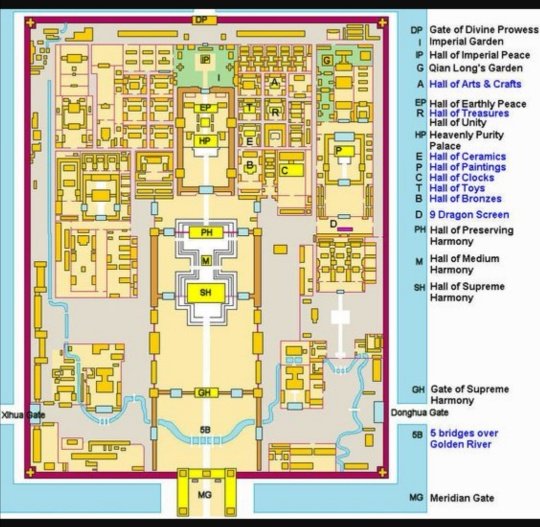
Map of the Forbidden City taken from Elspeth Penfold’s blog

In response to the Map of the Forbidden City with its Gate of Divine Prowess and Hall of Imperial Peace, I will use Tsubook (it’s a Shiatsu app) and specifically the Lung meridian map.

Each acupressure point which is located along the channel has a name translated from the Chinese. It starts at Central Palace in the chest, passes through the Cloud Gate, Celestial Storehouse, Cubit Marsh, Collection Hole, Broken Sequence, Channel Ditch, Great Abyss, and Fish Border. I have chosen 9 of the 11 points (the points where I use my thumb or an acupuncturist would use a needle), because those relate to place and tell the story of a journey.

Illustration from Shiatsu by Carola Beresford-Cooke


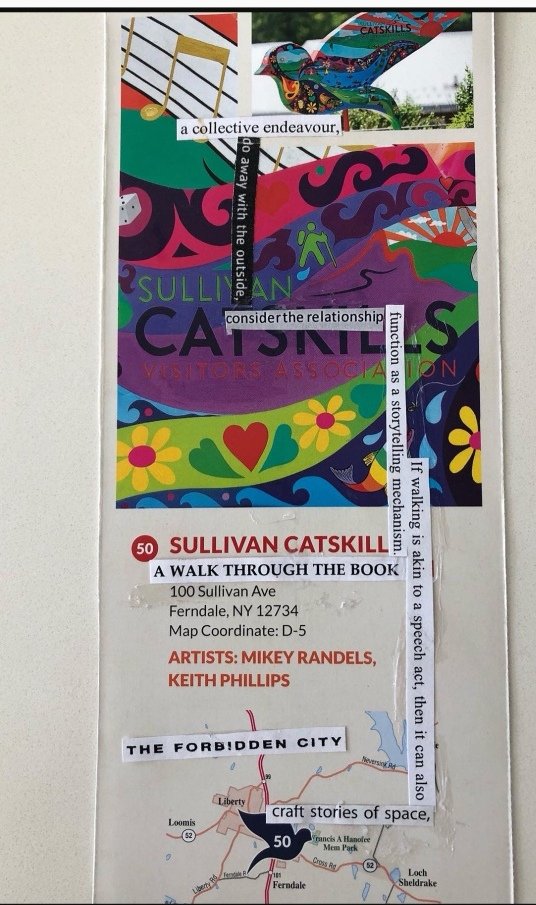
Here are @ElspethPenfold prompts, rearranged and collaged from @BlakeMorris score:

  • A collective endeavour,
  • Do away with the outside,
  • Consider the relationship,
  • Function as a storytelling mechanism,
  • If walking is akin to a speech act, then it can also craft stories of space
The walking score devised by Elspeth Penfold and Blake Morris

@ThreadandWord #52more @blakewalks thisisnotaslog.com link to A Different Lens, award winning project by Elspeth Penfold and Thread and Word, which I made a small contribution to. This is my walk #16