Cáceres to Casar de Cáceres

Cáceres to Casar de Cáceres (26th March 2018), maybe 18 kms taking me 4 hours plus.
wp-1522171369922..jpg

Today I did my morning meditation in a different position because I cannot sit cross legged in my sleeping bag.
wp-1522254368799..jpg
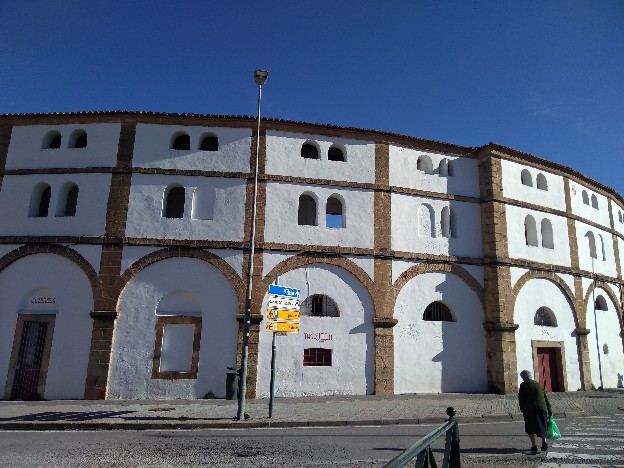
Bullring, Cáceres, Spain.

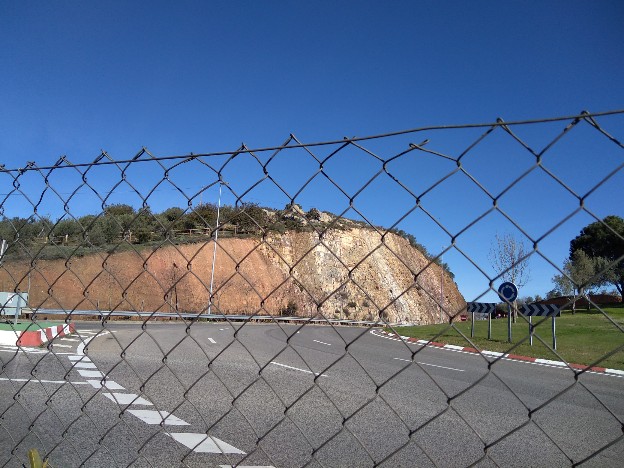
Walking out of Cáceres was smooth and I was impressed once again by the enormity and variety of the geology: the giant verticality of colour and strata exposed by road building.
wp-1522171369981..jpg

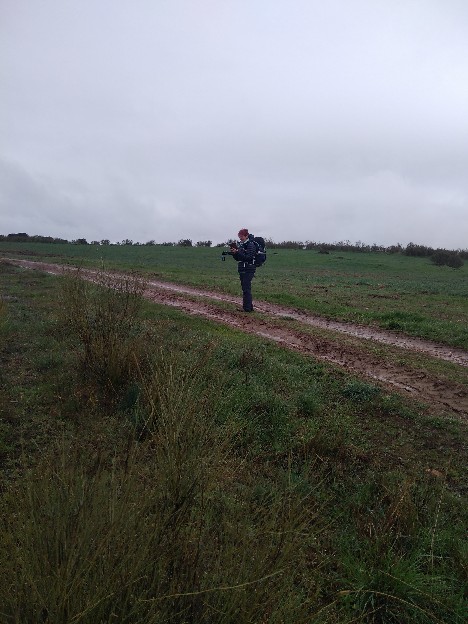
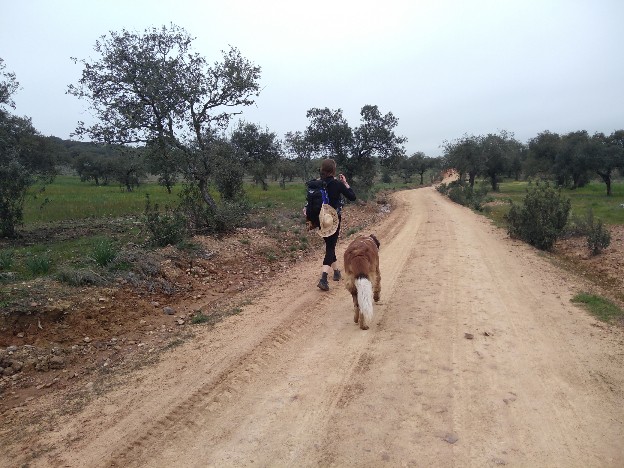
The roadside plants continue to be mainly rosemary and thyme but now with pink vetch. The Camino crosses main routes again and takes me along the highway. It is frustrating because I can see a beautiful path in the fields to my left but cannot get across the fences to it.
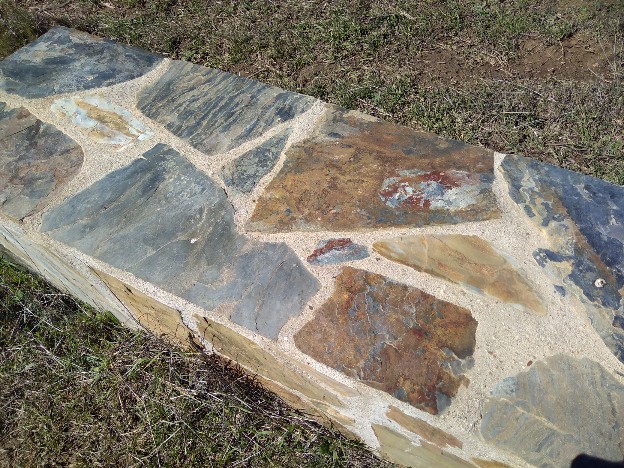
wp-1522171370037..jpg
A handy seat made of beautiful local stone.

There was a brief conversation with a fellow pilgrim along familiar lines –  nationality, where walking from and to – this time with an older Belgian man who is wearing a hat with sun flaps over both ears.
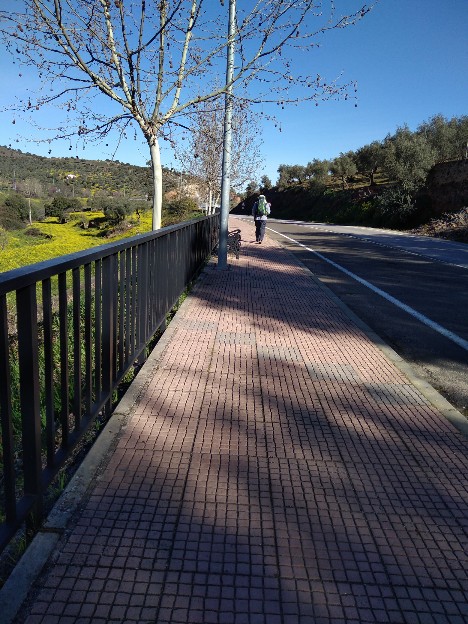
wp-1522171369956..jpg

The sun was shining brightly but it was cold on my head. I reflect that if you are going to do this walking lark, you must be prepared for some hardship. Having enough money for hotels and being fit definitely helps.

Because of my foot pain, I was already sitting in the sun to rest by at 11.05 after only 25 minutes, but I knew that this must happen if I am to manage to enjoy myself at all. I realised there were snow-covered mountains to my right and was awed by their beauty.
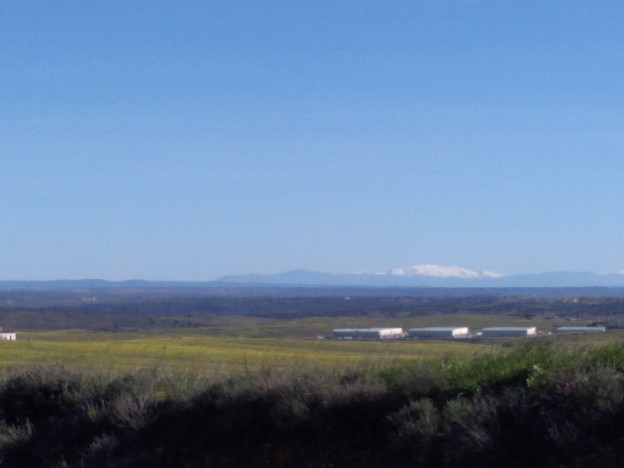
wp-1522171370026..jpg
Snow capped Sierra mountains in the distance.

Once again I thought ‘that must be the camino over there, but how do I get onto it?’

The lovely Spanish cyclist and his German friend sped past waving a smiley buen camino to me.

Then I saw a gap, took off my rucksack and rolled under a fence, thinking perhaps I had just missed the turning to the path but no, I had to go back through a farm gate shortly afterwards and continue on the ‘hard shoulder’ which was very tiresome. In the process I put my hand on thistles and still have one spine in the tip of my thumb two days later. Maybe that will teach me!

There was a very nice sun and the remains of yesterday’s wind on my going-bald patch at the front of my head. Bravely I took off the bottoms of my trousers making shorts.

I spotted the new fennel leaves at the base of the old dry stalks and remembered how they were almost past seeding when I finished my first camino in November 2016 in Santiago de Compostella.
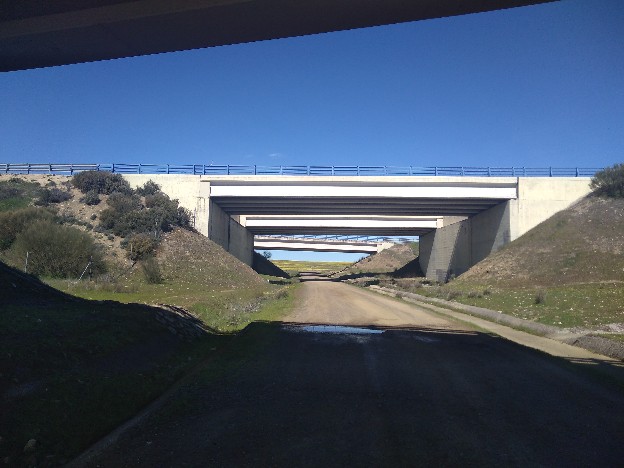
wp-1522171369990..jpg

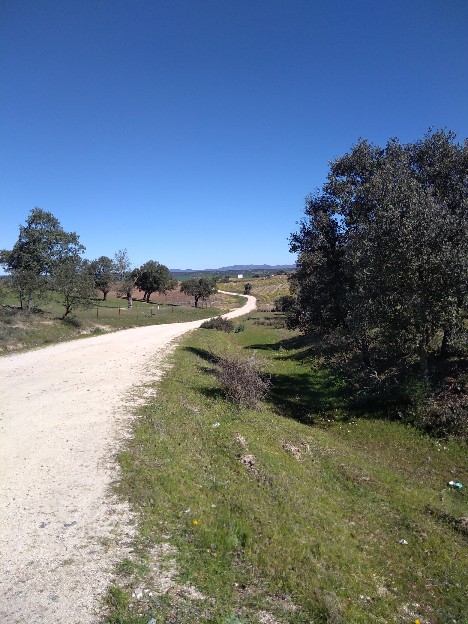
It was a long way beside that motorway. But my advice to others who might walk behind me is to wait, the off-road path eventually comes.
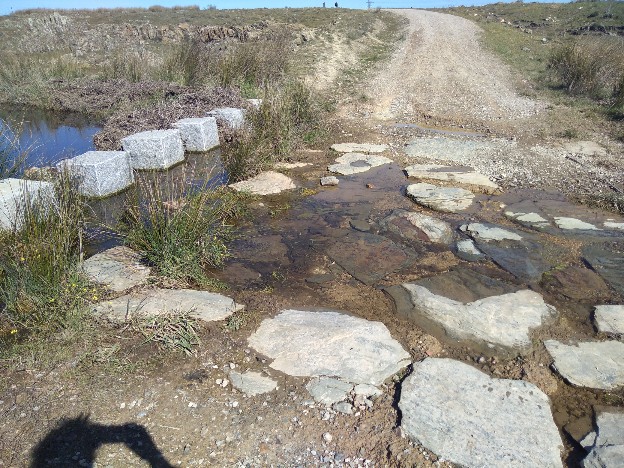
wp-1522171370007..jpg
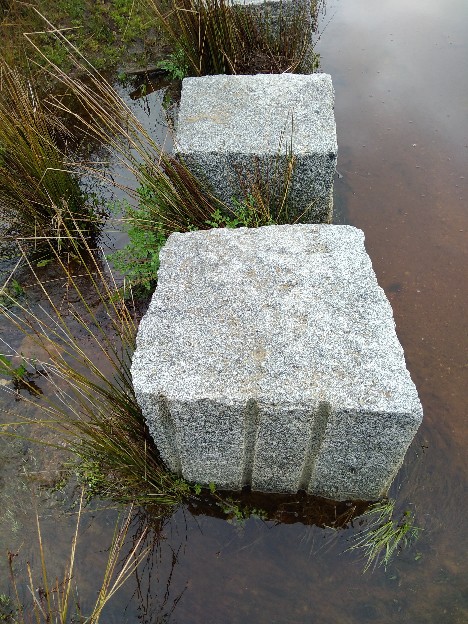
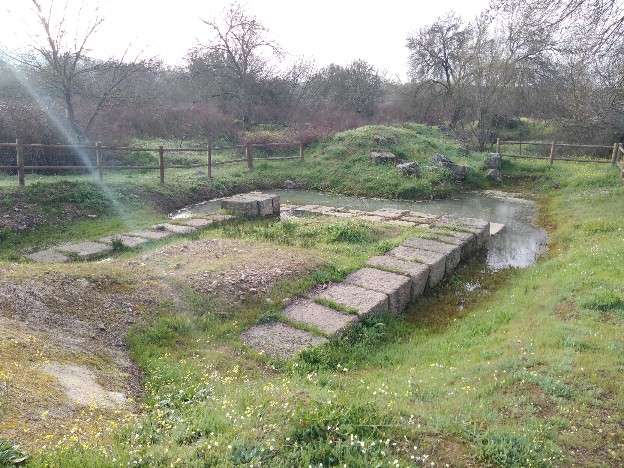
One of the many crossings – this one with stones provided to keep our feet dry.

There were still some of the dark brown and orange hairy caterpillars: one or two wibbling along over the gravel and some others fairly hurtling amongst the sheep droppings as if they were late for work. However there were nothing like the numbers of two days ago.

Other trekkers passed me occasionally and we fell into step for a while and shared pleasantries. I am trained to see the visual signs of the head-colds or tiredness, the dry lips, the excema under the nostrils, and do not ask questions.

Around me are small brown birds singing their little hearts out. I started thinking about this strange phrase – perhaps it is their puffed out wee chests and the high urgency of the pitch which has prompted it?

Now I was going uphill and was aware of my blister and that was only a tiny climb! I found myself saying blessings  for dead animals by the roadside, and I finished planning my workshop for the end of April: the ideas popping into my mind unbidden.
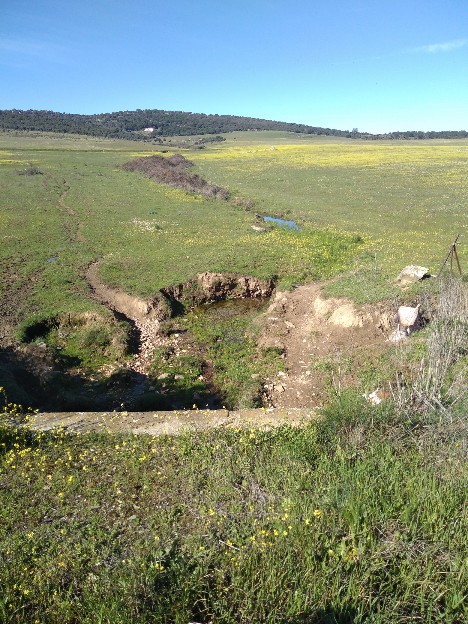
wp-1522171369965..jpg

It was very pleasant walking like that, with lots of tiny stops and the time to remember.

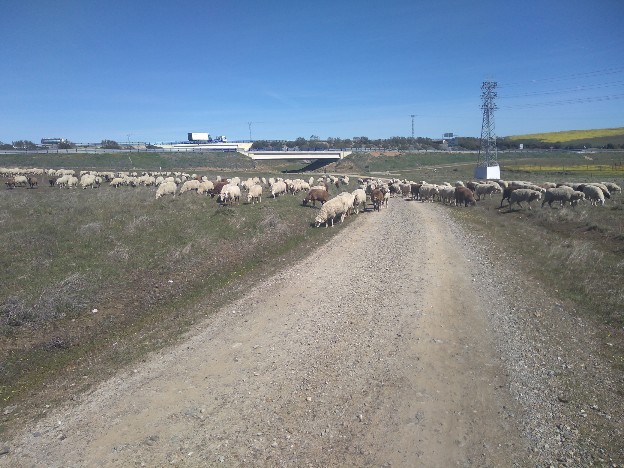
I came across a father and son, shepherds bringing up the rear with sturdy sticks but no dog. Overhead are three raptors and almost around my head are swallows flitting and flirting.
wp-1522171369974..jpg
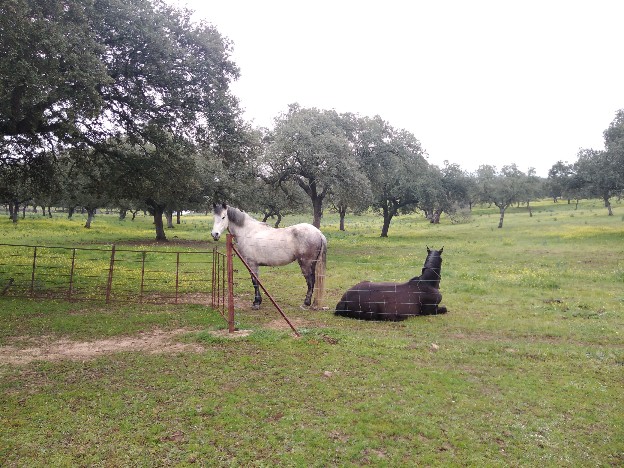
A flock of sheep to make my way through.

Once again I reflect that we walkers go so quietly that we come upon these creatures, or they on us, unexpectedly.

Oh those snowy mountains: simply majestic.

Finally I come into Casar de Cáceres and note the many expensive cars. It is presumably a commuter town for Cáceres itself. There are many helpful people including a woman who I had exchanged a few Spanish words with earlier and who later spotted me looking puzzled. She abandoned the wheelchair she was steering, grasped my arm and took me to the corner of the correct street.
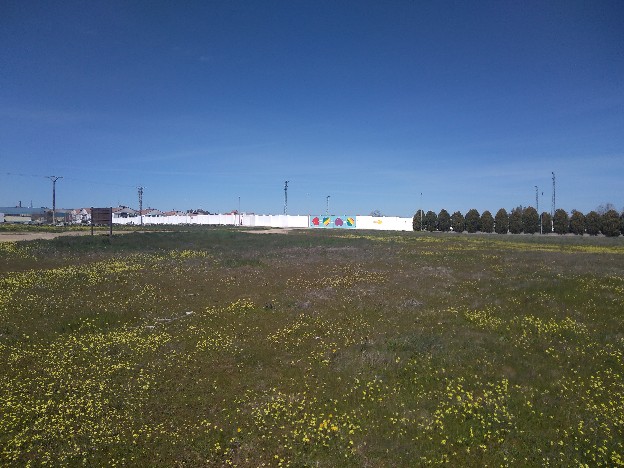
wp-1522171369945..jpg
The entrance to Casar de Cáceres – rainbow-coloured hearts and a huge yellow arrow: sign of the camino Via de la Plata.

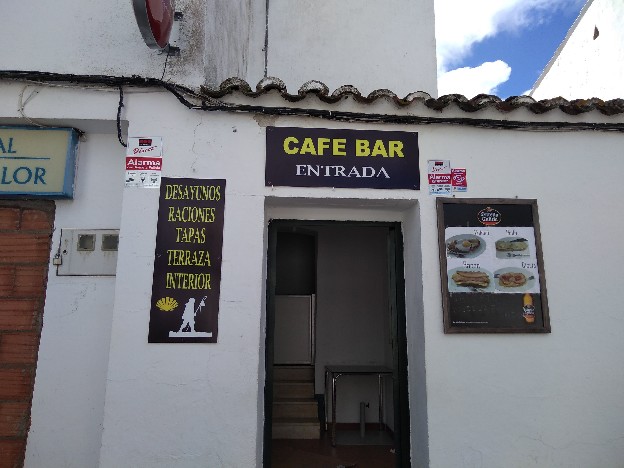
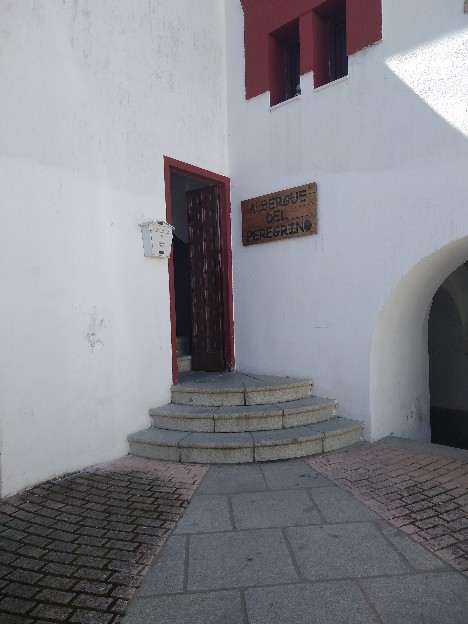
It was long walk into town where I registered at the bar and then, having walked on far too far, retraced my steps to the nice albergue on the first floor in the corner of Plaza España. I arrived at 1.45.
wp-1522171370016..jpg
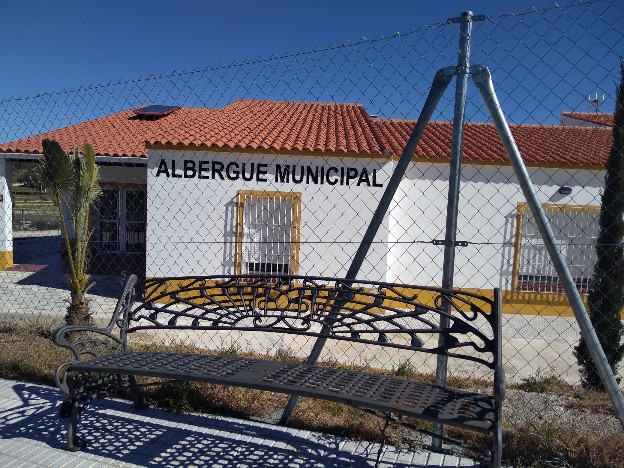
The albergue entrance in the corner of the square.

The evening consisted of sitting in the sun with my cups of tea and chatting to the others; a beer in the cafe and very interesting conversation with a German teacher about co-operative learning; shopping (including a plastic mug for 39 céntimos), cooking a meal for myself and some others; giving what I call kitchen- Shiatsu (ie on the spot, me kneeling on the kitchen floor); and later, thoroughly enjoying the wine.
wp-1522254321352..jpg
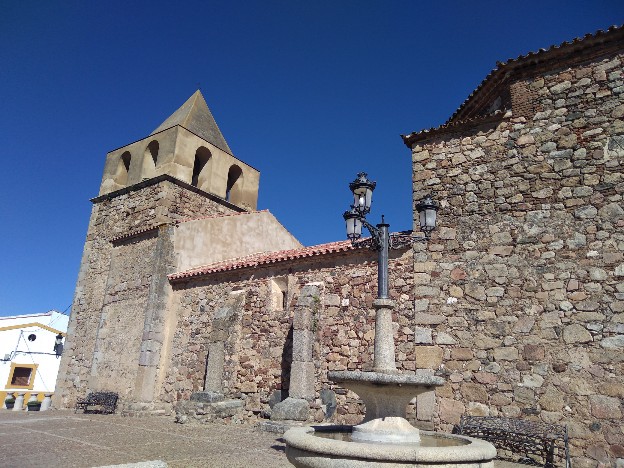
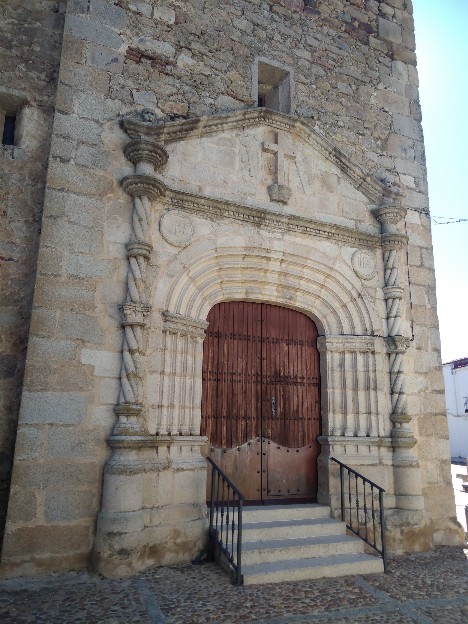
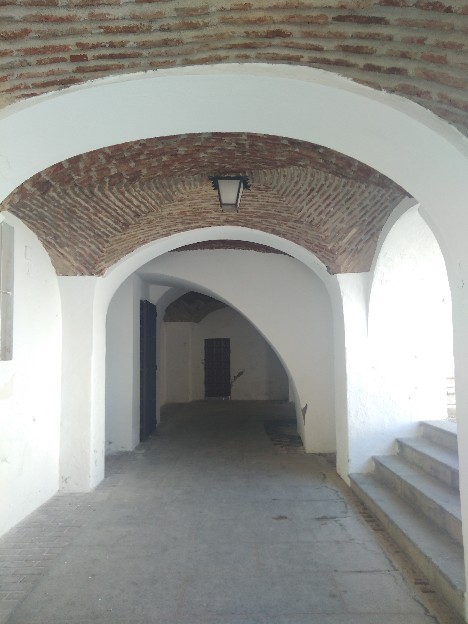
Beautiful Spanish architecture.

There was no WiFi, the shower flooded onto the floor, I did not enjoy my night-time visit to the toilet where someone had aimed and missed 😦 but it was great to have a kitchen with some utensils, and a free washer and dryer – all unbelievably, for 5 euros.
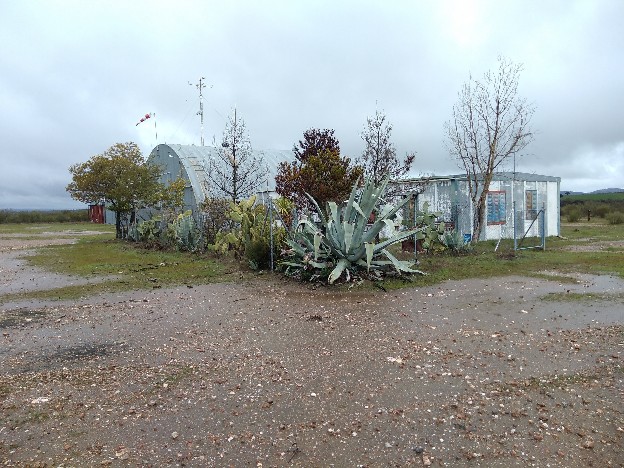
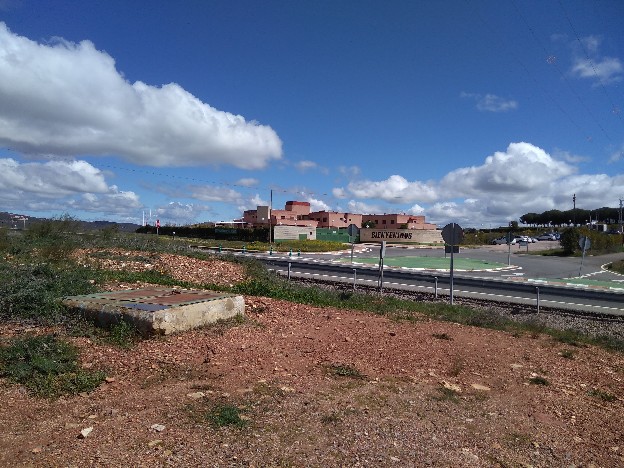
Aldea de Cano to Cáceres, Spain.

Aldea de Cano to Cáceres – March 25 2018. (Day 4 of this part of my Via de la Plata camino).

The hostel at Aldea de Cano had a very good kitchen and nice table for sharing food, but there was a great deal of noise from the bar on the other side of the albergue wall. I arrived very early in the rain, and spent most of the rest of the day in the cafe which had everything I needed – wifi, good food and drink – some of the time alone but mostly with others with whom I was by now quite friendly, having met them at various stops along the way over the past few days.

The hour changed so we had some extra sleep after our shared meal in the cafe (something for starter, hake with chips and a little salad, flan (sort of crème caramel) with what my kids called squidgy cream (from a spray can) and red wine for approx. 11 euros).

I had nightmares all night, a traditional anxiety one with a dog I had left at home when I went away without arranging who would feed it rather than a baby; in the other there was a flood and I was drowning. So, I was awake early and had room and found a mat for some yoga: it was good to stretch my BL meridian in the backs of my legs after the walking.

Marie Noelle and I began together. The others took a taxi: two half way and one right to the end.

It was a traipse on stony paths for the whole day with either red, orange and white quartz or dark blue /grey slate. To begin with there was some rain so we started later, visiting the bar next door for toast and coffee while the worst passed. The previous night’s torrential rain had caused the terrain to be even wetter and it was necessary to dodge huge puddles, bogs and small lake; or just wade through them.

There were cranes everywhere in the fields and on their nests, their long orange beaks and beady eyes clearly visible from the ground.

MN was a postnatal nurse for 37 years before she retired so we talked mother’s and babies: she told me how important it was to reassure the new mums and I agreed that this was a large part of my baby Shiatsu work too.

At 12 midday we arrived at Valdesalor where we found a nice bar in Cristóbal Colon.

The second half of the day was terrible. Every step was increasingly painful – a small joint in my right foot and a blister on my left. I tried to keep going, MN striding off ahead of me, but in the end I had to give in and stop constantly, stumbling on in the worst walk I have had, walking so slowly by the end that I might as well have stood still. It took me ages, and I was extremely downhearted when I realised how much of the town I must traverse before reaching the hostel. Luckily I was met with such sweetness from Benito and Andrea that it bought tears to my eyes, and I was happily put in a double room with MN.

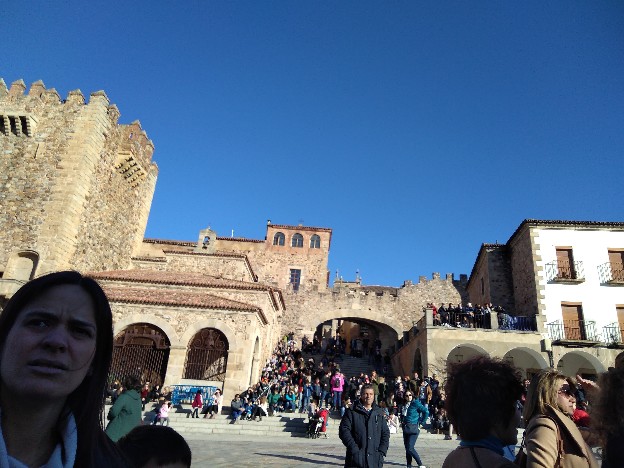
After a hot shower and clothes washing, a beer (which exploded all over the floor of the entrance hall and which I therefore had to mop up), and a rest, I had recovered sufficiently to make a small tour of the town. What a very beautiful place! In the soft golden evening light, the ancient walls and arches, looked just gorgeous. I would highly recommend that you visit here if you enjoy old monuments and impressive architecture.

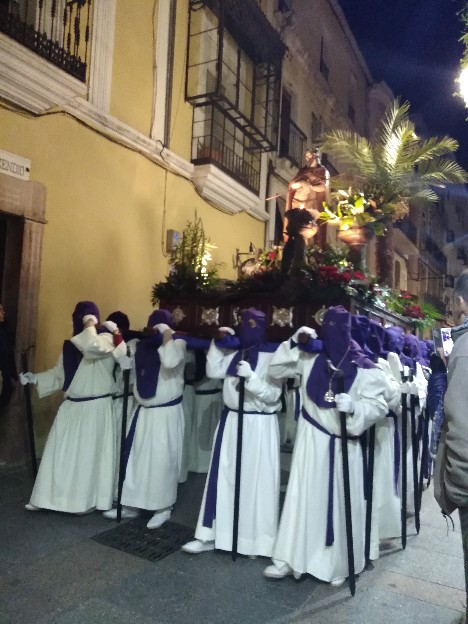
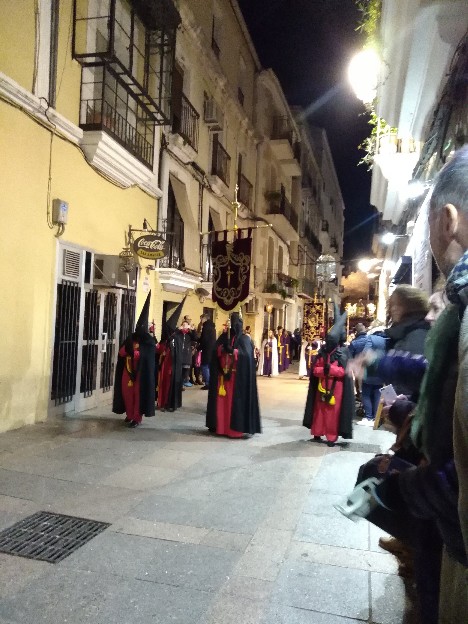
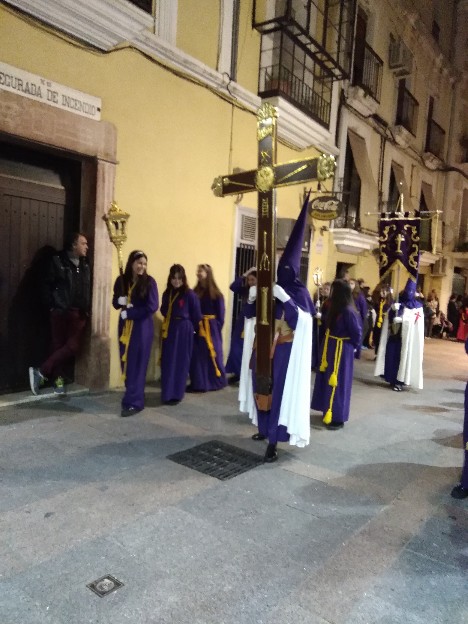
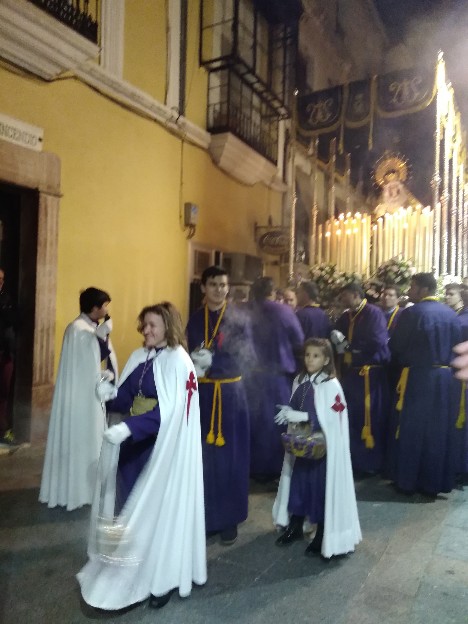
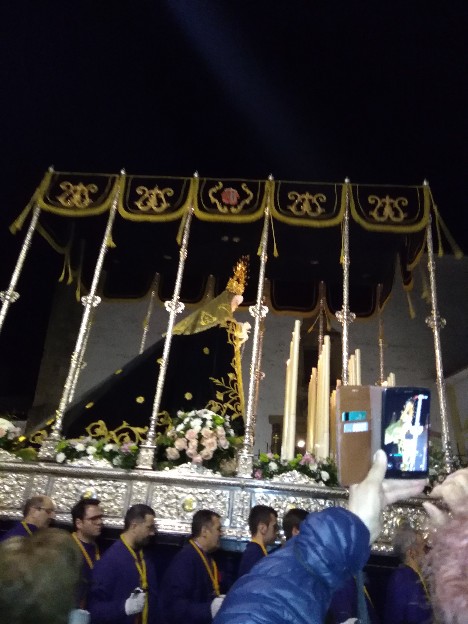
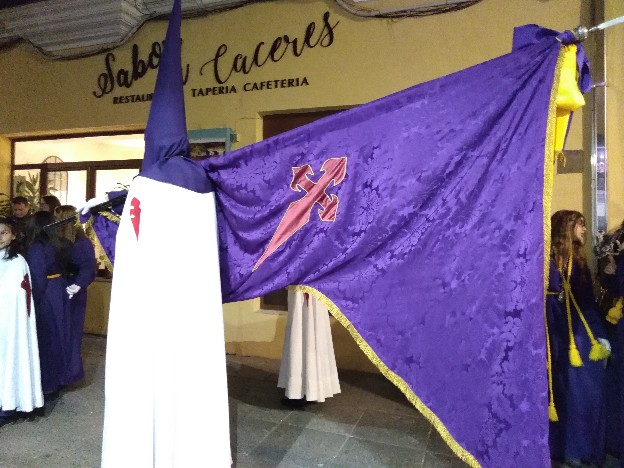
In Cáceres the Semana Santa was well underway, with processions through the narrow streets and in the main Plaza Mayor. The second one we observed at very close quarters. There were lines of men and women carrying the platforms which weigh up to half a tonne. They shoulder the wooden shafts with expressions of distress and frowns – it is unclear if they are in pain or suffering with Christ. We were told that they pay 300 euro for the privilege of carrying it for half hour. It is gold with red carnations and there are statues of Jesus, the Pope and other biblical characters. This platform is preceded by children and adults in purple robes with hoods over their faces which have small holes for the eyes. Many have tall pointed witches hats on too – black Klu Klu Clan-type head wear.

Afterwards come the well-schooled brass bands in their black, red and gold uniforms – both sexes play.

For some it was clearly a social occasion, for others religious and very serious. Throughout there is a basic 2/2 rhythm emphasised in a macabre way by the rhythmic clanking of the metal staffs, and it was this which held the greatest power for me. The people who carry the crosses (also unidentifiable because of hoods) are barefooted and have chains around their ankles. Every now and then there is a loud drum announcement and they all stop, those carrying the heavy dias take a break and it is suspended on poles. It is all very well organised with key people giving orders and bells signifying a re-start.

The private hostel has 40 beds but the city is the second most important in the region and this is the busiest time of the year so tomorrow, for example, when at least one of our group would like to stay longer due to an ankle injury, it is full.

It has a very nice garden and terrace at the back for drying clothes and sitting with a beer, despite being right in the centre.

We ate at a very nice place which was empty apparently because a large family booked it out and then cancelled. He was very patient with us, especially when dishes were sent back because having said they were vegetarian, they came with garnishes of bacon etc. I ate moussaka, salmon and flan (again!) for 11 euros.
Alcuescar to Aldea de Cano, Via de la Plata, Spain

24.3.18 a very short day 15 kms (3.5 hours).

wp-1521810268049..jpg

Last night I stayed at a Franciscan monastery Casa de la Misericordia, Los Esclavos (slaves) de María y de los Pobres (poor) in Alcuescar, started by Leocadio Galán in 1939 to house and educate the orphans of the war, both academically, religiously and in the arts, sports and culture.

I gave a Shiatsu to a deserving fellow trekker who had a neck problem; I was able to dry my boots and have a hot shower, but there was neither kitchen nor clothes washing facilities. We were invited to take a tour of the building with one of the Brothers and to attend Mass (a sign informed us that whatever our religious inclinations, we would be saved).

The soles of my feet ached well into the evening so it was good to give them a massage this morning and feel how Kyo the insteps, KD1 and the backs of the ankle were, even after 9 hours in bed. At least I did not feel the cold that the others did – what with my new sleeping bag and all so my Water element cannot be in that much imbalance!

Yesterday a group of us had to wait until 1pm to be admitted and they played us beautiful Spanish music while they booked us in. This morning we were all ready with our boots on when 7.30am arrived and the doors were opened. The hospitalero played the hallelujah chorus!

As soon as I walked across the road, my left heel remembered its blister, but later it was another part of my other foot which complained more bitterly.

wp-1521900443485..jpg
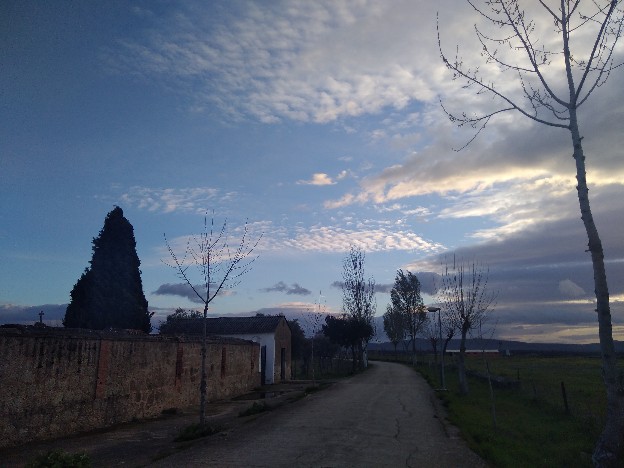
Sun rise.

Breakfast was at the café Alta Cuesta over the road (I bought a coffee and ate my left-over bread and cheese) with all the other pilgrims assembled before the day’s walk. What bonhomie (though most were German!). The Way was clearly marked, directly beside the albergue (hostel), and the tarmac quickly became a sandy path: good for the walkers’ feet. There were fields of goats; lots of dogs; and black/white storks flapping their ungainly wings, necks outstretched like flying geese.

wp-1521900443507..jpg
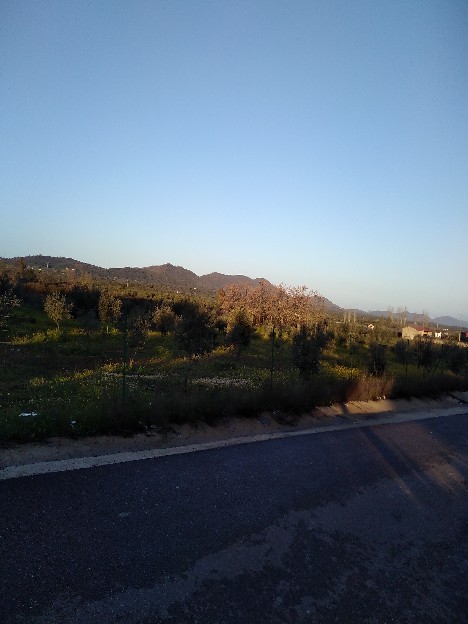
The olive green (obviously!) hills were on my left, in the distance, for half of the journey.

Today’s weather: sunny, cold (no need to stop and de-robe), with a glacial and an ever stronger, west wind.

Sign posting: Very good all day – even on the way out of the town. No need for a book or an app.

wp-1521899913025..jpg

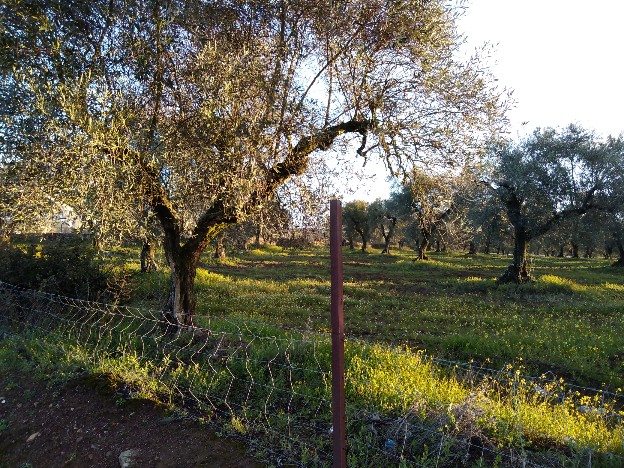
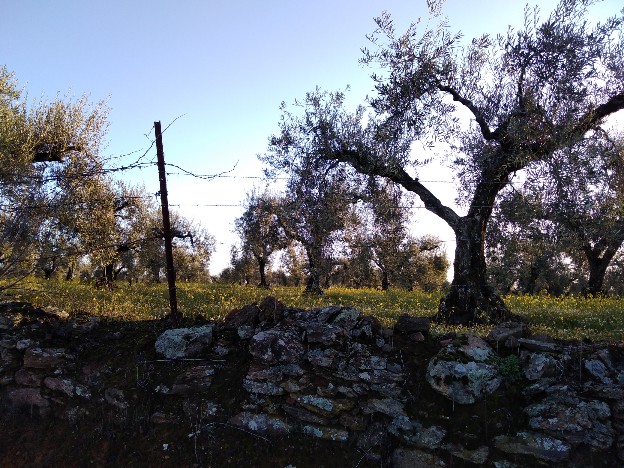
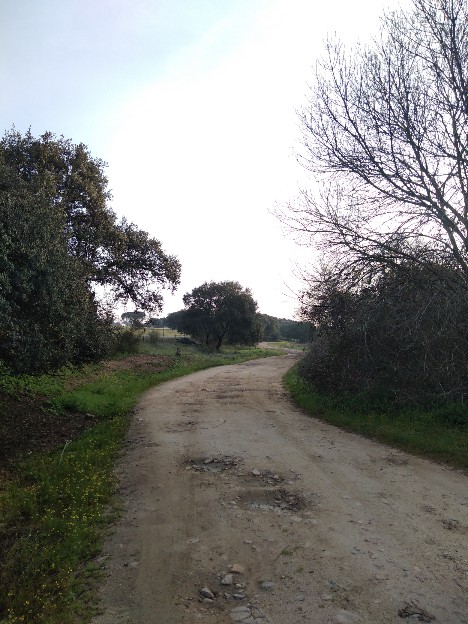
Soon I was walking between olive fields and hedges. The ground was sodden from yesterday’s rain.

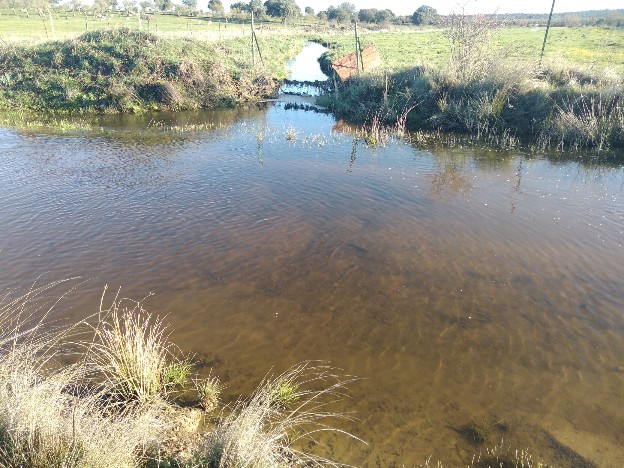
Throughout the morning I was dodging puddles, stepping on useful stone blocks positioned by the Amigos (‘Friends’) who look after the Camino, or skirting around small lakes of rainwater.
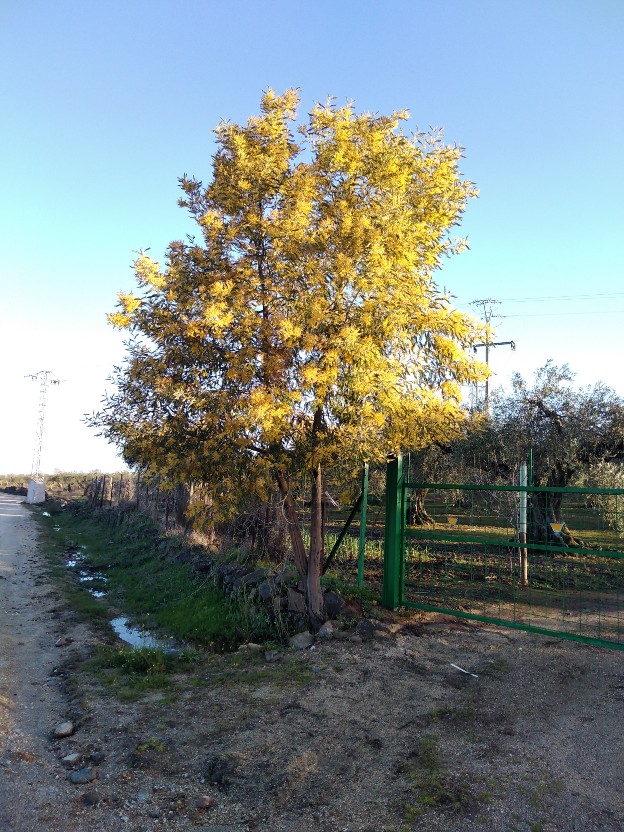
There was a small plot of newly planted, straggly onions growing underneath this glowing tree.

I tried to phone ahead to reserve a bed last night because I saw in my book that it was only a small hostel, but I was informed that bookings were impossible. So I was reminded to leave the situation to fate, stop counting the people who might be in front of me, and not to rush to keep up with them.

wp-1521899912955..jpg
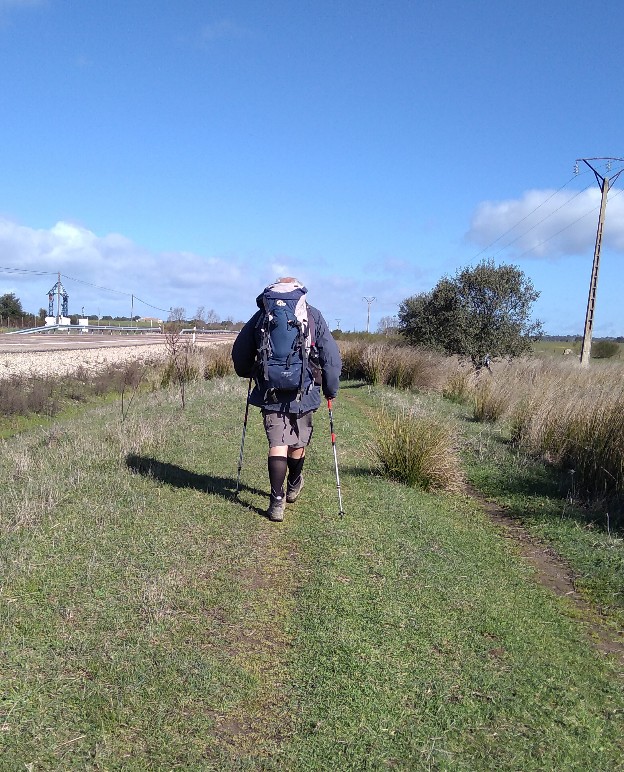
One of the many German people, this guy with sexy socks.

There were men at work stripping the olive trees with forks at arms length, presumably ridding them of the old, dead wood.

wp-1521899912999..jpg

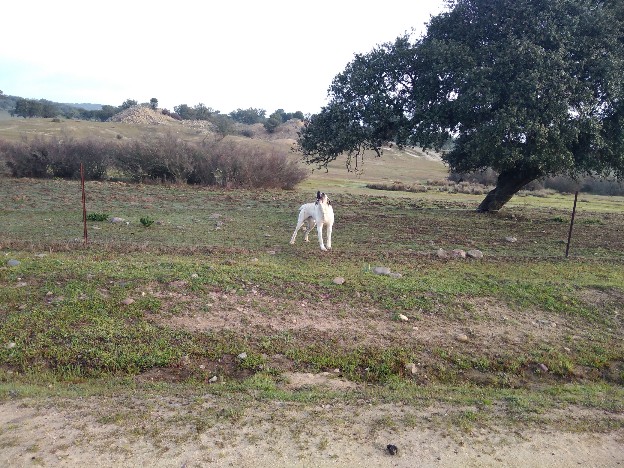
A little loud dog made a noise which was not relative to her size, and of course the boo boo boo bird serenaded me in addition to the chatterings of starlings.

wp-1521899912889..jpg
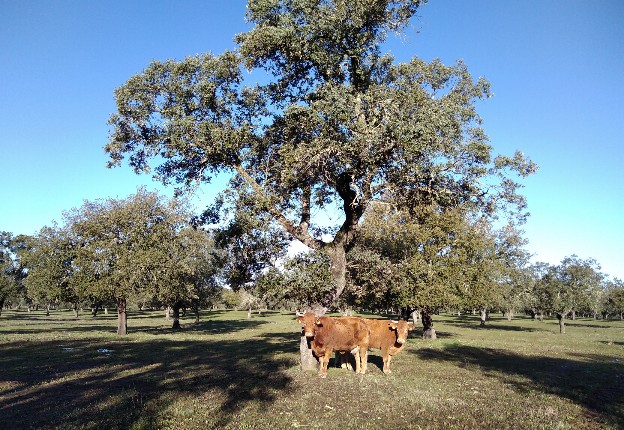
The calves were running, the cows sedate; their colours reminiscent of the Olocau dogs: a lovely warm, beige brown.

You can read the Olocau blog here.

When I talk with another as I walk, I forget myself. This can be good because they always have an interesting story to tell. However, in some ways, not, as I cannot tell if I am going too fast for example, not until they walk on and I re-focus.

I spot a beautiful lake but it is behind a fence.

wp-1521899912932..jpg
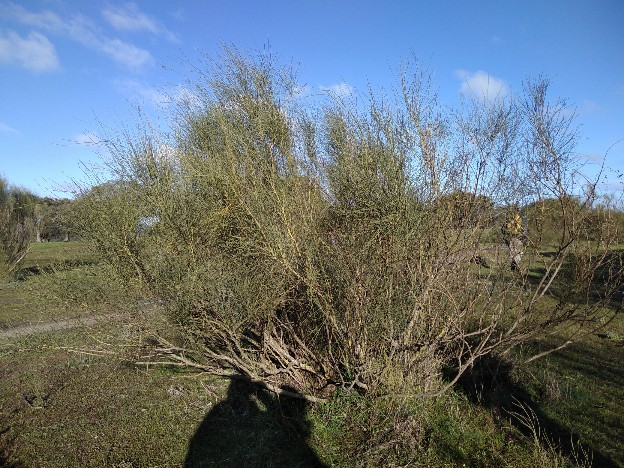
Someone told me this is tamarisk.
wp-1521899912966..jpg
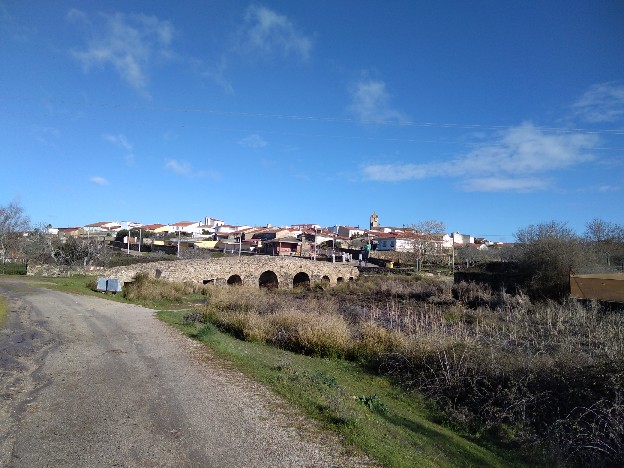
The red rooves and white houses of Casas de Don Antonio, Extremadura, Spain.

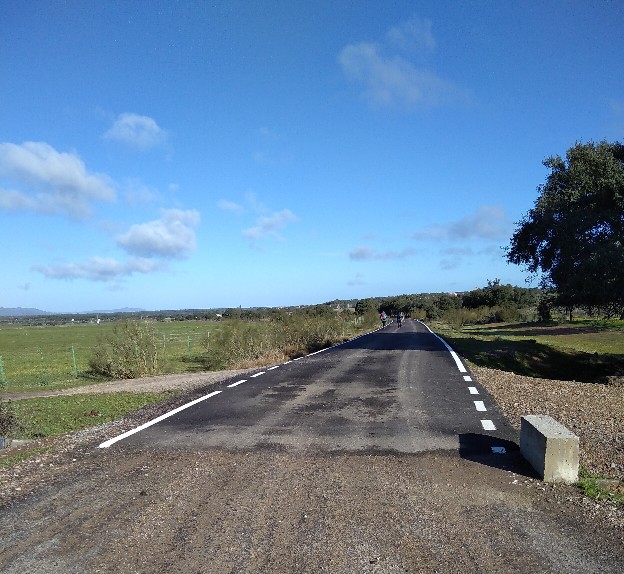
With cow bells tinkling, I was suddenly directed onto a runway-type paved road. Wow, the wind was so strong!

wp-1521899912945..jpg

But then almost immediately the signs were off to the right. I reflected, on listening to others, that some of my old habits have passed. That sort of mirror can be very helpful.

There is straight, strong grass poking  through the night-sky-blue bog water.

wp-1521899912973..jpg
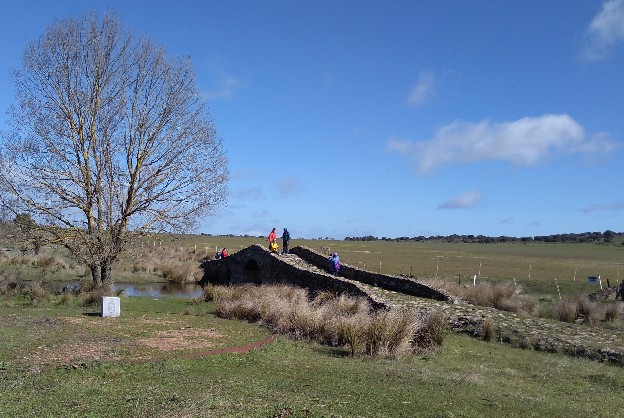
A group of Saturday walkers in anoraks of primary colours were having their photographs taken in the bridge. Smile!
wp-1521899913047..jpg
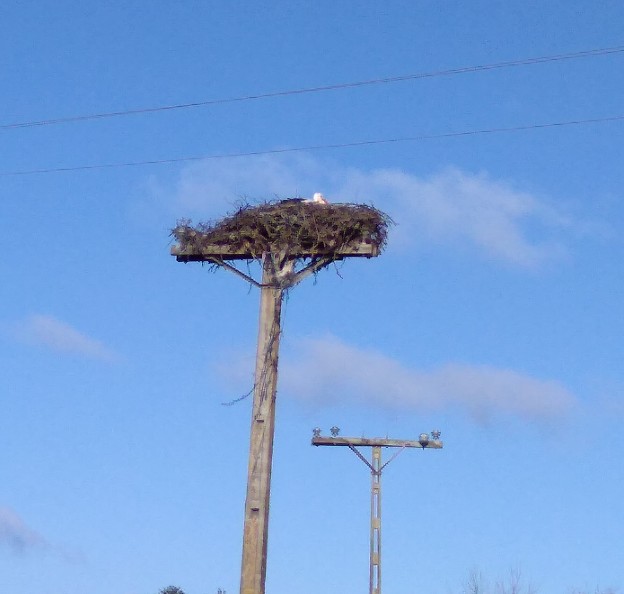
Here is a stork on top of an old pylon. It is blurred but you can just see the orange beak.

I was very stiff by now and when I squatted to pee, I asked myself ‘can I get up again?’ I wondered how I could ever have walked 6, 8 or 10 hours a day.

Note to self: try the she-wee Alice (eldest daughter) gave me.

When I notice myself thinking too much, or worrying, I imagine the image of praying hands in the centre of my chest. This is to try and centre myself, to try not to think of others. Otherwise, their Ki comes into contact with mine and I have more than me to deal with, and this camino must give me the chance to spend time inside.

The wind played havoc with my phone. I think, anyway. It seemed to be typing all on its own. One way or another it was impossible to take notes.

wp-1521899912983..jpg

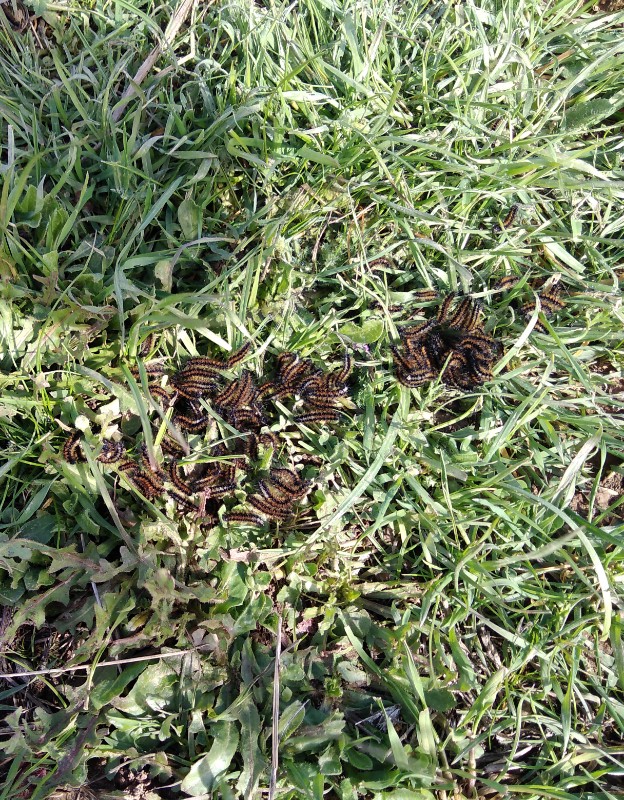
One fan-tailed raptor flew over and first 10, then 1000s of caterpillars who I had been told liked to move in a queue, were struggling between being stepped on, drowned and blown over. Poor things, they were having a harder time than I was, though they do have more legs.

Through a flock of sheep we wove, and off to to the right onto a road and the final destination.

wp-1521915448044..jpg
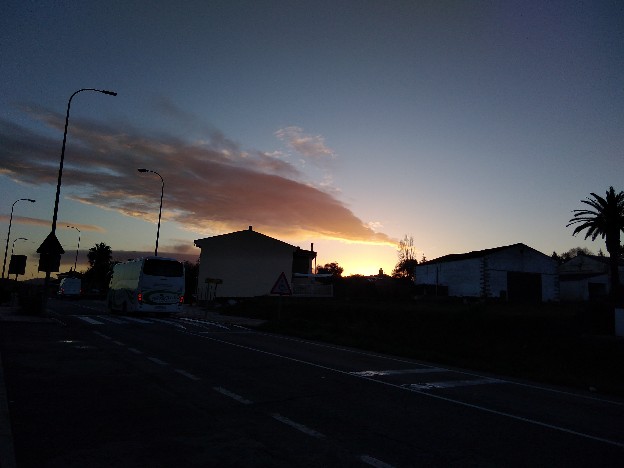
Sunset.
wp-1521915448056..jpg
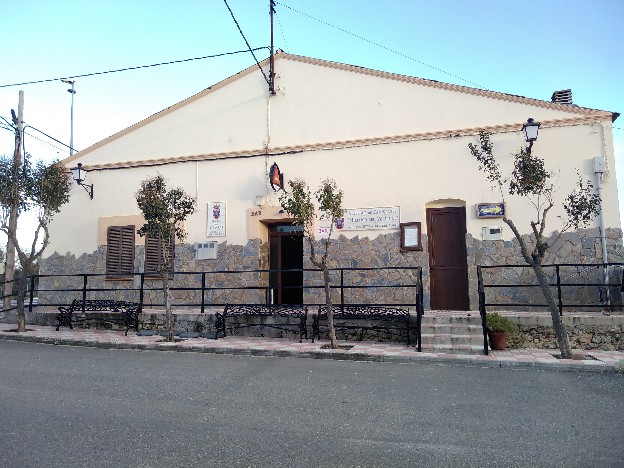
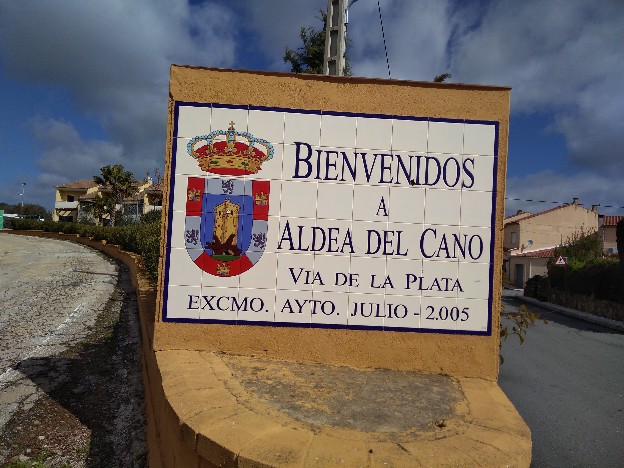
The municipal albergue, Aldea de Cano, Spain.
wp-1521915448007..jpg
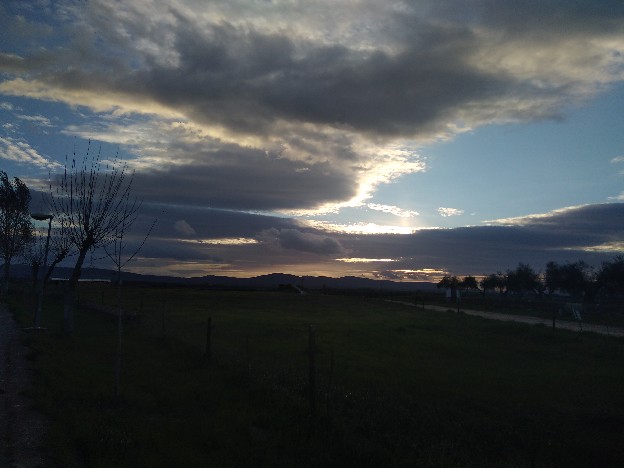
A mackerel sky.

wp-1521899913055..jpg


Aljucén to Alcuescar, Via de la Plata, Spain

Aljucén to Alcuescar, 23.3.18: 19 kms.

First, a few photos from last night:

wp-1521810268149..jpg
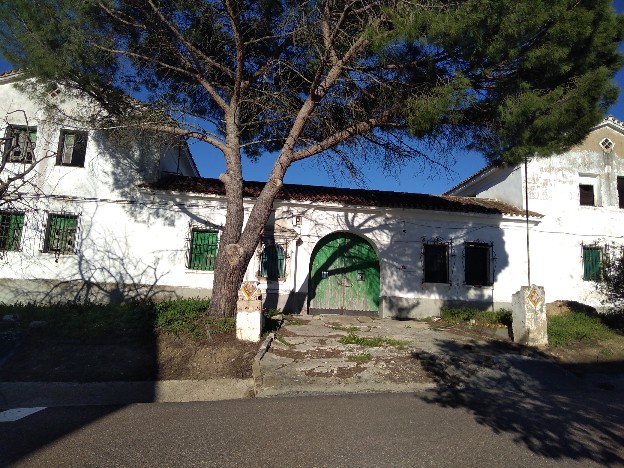
A typical house of this region, Aljucén, Spain.

Most of the previous afternoon was spent in the albergue courtyard in the hot sun. It was idyllic with three large black and white cranes floating on the thermals above, and, when alighting, clacking their beaks with a wooden clapper sort of sound. The sky they sailed through hosted the slither of New Moon. A short walk around the village revealed that the church was shut but the shop open for an individual lemon yoghurt, a bread roll, a tin of mussels, and fruit for breakfast. The evening, communal meal was at the café Kiosk opposite the albergue and much wine was drunk. I sat beside a woman who was walking ‘a contrario’ ie towards Seville rather than in the direction of Santiago de Compostella. The thermal baths in the village got a very good report. The hospitalera (woman who runs the albergue) went to great trouble to book her guests in.

wp-1521810764353..jpg
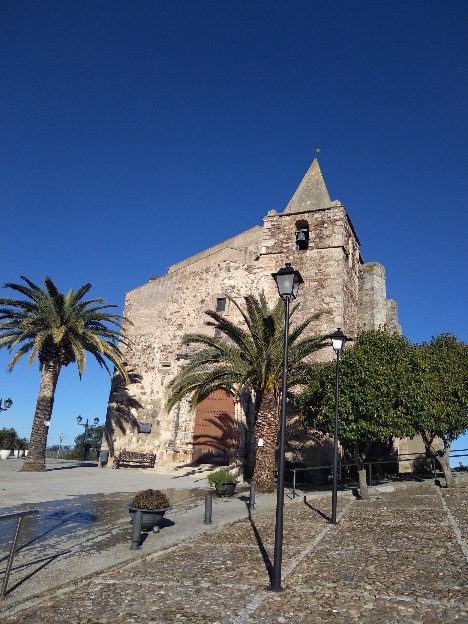
Parroquia Zsan Andrés, Parish Church of Saint Andres XVI century, Aljucén, Spain.

The next morning’s departure was at 7.35am after a great deal of hustle and bustling, the others leaving quite a mess without wiping the surfaces or cleaning the dishes. I was a bit surprised and took time to complete the duties before leaving.

The sun was behind the trees to my right as the walk began, and there was no pavement. It was not until the end of the road that it had truly risen.

My meditation buddies would have been meeting as I walked, so I was thinking of them. There was a dearth of yellow arrows so I hoped there was no mistake. After a while other pilgrims came into sight so I was glad to know it was the right road. As the morning wore on, it was more and more crowded, like the Camino Francés.

wp-1521810268181..jpg
Crossing the Rio / River Aljucén, Spain.

My clothes were damp from the dew but it was lovely and warm, not long until I hid behind a rock to take off my early morning warmer layers and walk in a t-shirt. Finally the arrows signed off the road to the right at the services (petrol etc) and onto the serpentine track.

wp-1521810268014..jpg
The long, winding Camino, Via de la Plata.
wp-1521810267920..jpg
This barking sheep dog loudly protected his flock for a kilometer!
wp-1521810267815..jpg
Massive granite boulders and brush on one side of the Way, and bog on the other.

The landscape was all very attractive and a big white bird took off from the wetlands, its massive wings flapping slowly.

Advice: There are no arrows here for a long time but just keep going!

wp-1521810267752..jpg
The first hills, hazy in the distance.

The rocks are covered with blue and red miniature plants. A hare auspiciously ran across my path. I was reflecting on learning to choose, to identify what is necessary to me and not to automatically fall in step with the other as I was bought up to do.

wp-1521810268067..jpg
The path is briefly made of orange earth, but then returns to yellow, then white sand and, at the end becomes all stony.
wp-1521810267935..jpg
An enormous, anonymous dog joined Jo as she set out from Aljucén at 8am, and at 10.30 he was still at her heels despite his paws falling down between the cattle grid irons as he followed her, loyally.

We walkers were overtaking, then falling behind, each other; one in particular determined to make conversation. A woman stopped to pee and the dog stopped too; another to stretch out already sore muscles (day two can be a challenge); a third walked by in silence; a couple chattered excitedly; a further man complained and told people what to do all the time. We were all sorts walking this ancient way, for many different reasons.

wp-1521810268113..jpg
‘Yin and Yang’ says my Argentian companion.

As the sky darkened and the air got increasingly damp, the chamomile petals were flattened down. Along the straight farm track I walked with Jo sharing snacks and stories of babies, relationships and the future – whether to plan or not to plan. I realised there were eucalyptus trees starting to appear, as in the North.

wp-1521810267893..jpg
Remains of the foundations of the Puente (bridge) de Trajano. From the Imperial Roman period, for crossing the River Aljucén.

And then there were three rain showers in quick succession and I could not see easily through my specs.

wp-1521810268199..jpg

Be careful to turn right when you get to the fork with all the signs for Alcuescar! That is, unless you want to go to Los Olivos, an albergue turística. There was a warning at last night’s inn that the owner was using the same yellow paint to lure unsuspecting hikers to his hostel. At this point I am sorry to say that you are not nearly there yet.

wp-1521810267781..jpg
Oleander in bud, lining the Camino for many miles. It will be stunning in season.

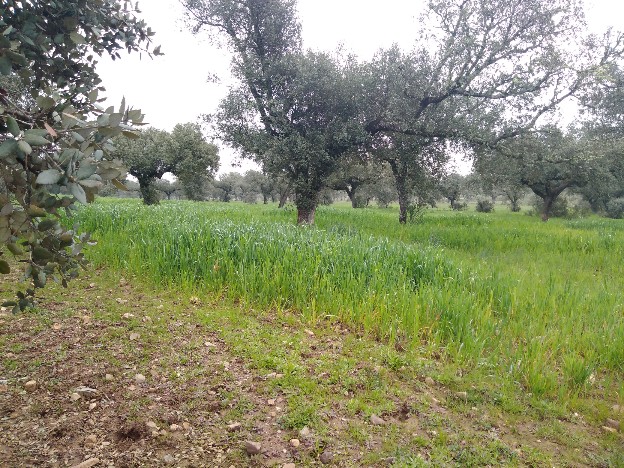
First there were underplantings of wheat and rape in the olive groves – so fertile.

wp-1521810267855..jpg

And then there was the familiar, mucky industrial outlying townscape, and then I knew I was near Alcuescar. Today it seemed like a long road despite it only being two kilometers longer than yesterday.

wp-1521810268049..jpg
Los Esclavos de Maria y los Pobres, a working monastery where I spent the night.
wp-1521810268106..jpg
The beautiful monastery garden.

Mérida to Aljucén – Via de la Plata, Spain

21/22 March 2018

wp-1521731001277..jpg
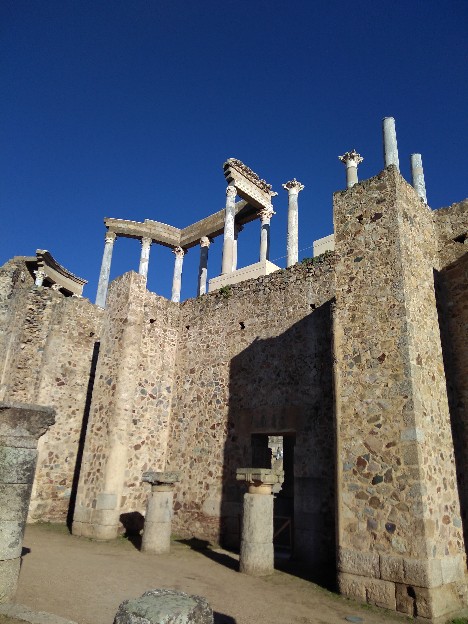
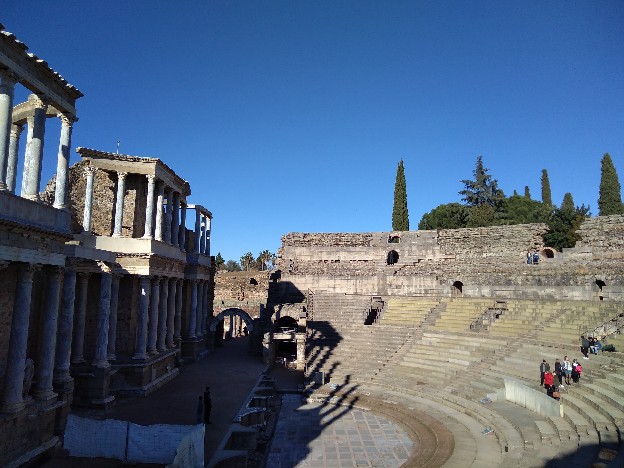
Roman theatre, Mérida, Spain.

I went to Mérida by bus from Seville because I completed that 10 days last year. The Leda bus took 3 hours and cost 9 euros.
wp-1521731001311..jpg
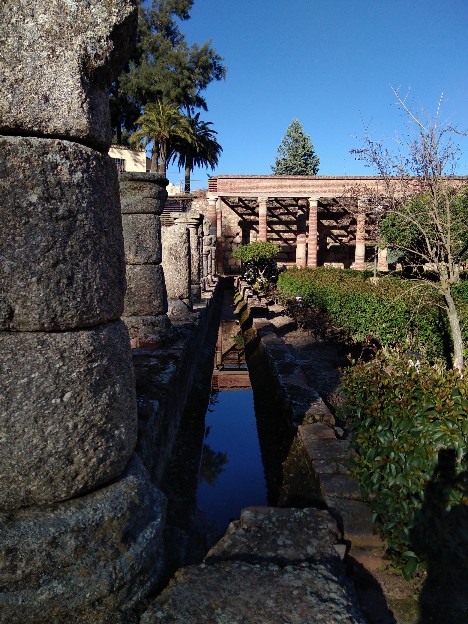
The beautiful gardens at the Roman Theatre, Mérida, Spain.

I enjoyed a beer and pinxos in the Plaza España (tortilla with bread and goats cheese on toast, neither of which were good but cheap) and visited the crypt (3 euros) and amphitheatre (12 euros) in the afternoon. The people at the tourist information were most helpful.

wp-1521731001263..jpg
Roman Amphitheatre, Mérida, Spain.

The out-of-town shopping centre where I bought my new baton was across the Roman Bridge (which is totally pedestrian and a great sight). I was foot-sore but it was a successful trip and after bread, cheese and lettuce I went to bed at 7.30pm.

wp-1521731001298..jpg
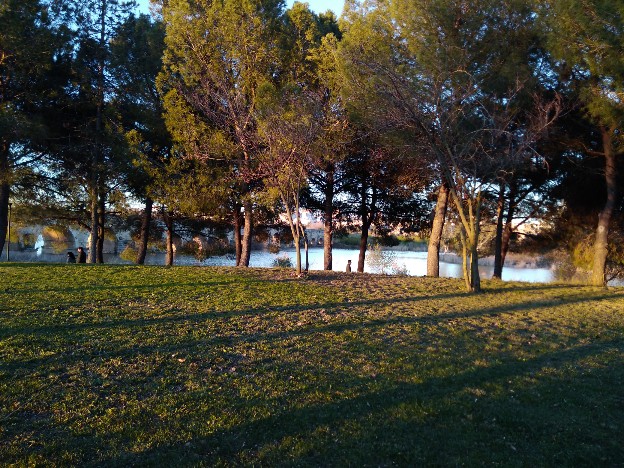
An evening shot of the Puente Romano (Roman Bridge) over the Guidiana River, Mérida, Spain.

I woke at 6am after a passable night. A cacophony of snorers accompanied me in the 18-bed dormitory which was almost full. I did my meditation and as I went outside to do tai chi I disturbed a heron on the river.

View from the hostel window.
wp-1521724756420..jpg
View of Mérida, looking back on departure.

I had a breakfast of milky coffee and packet cakes (2 euros), and was ready to go at 7.30am, only having to return once for my water bottle and map!

wp-1521724756412..jpg
The buildings are industrial and utilitarian on the outskirts of Mérida, Spain.

The road took me uphill and although there was ice on the parked-car windows, the sun shone all day; the birds sang to me and, in general, the yellow arrows were clear. I asked a woman for directions at one of the many roundabouts, and the first hour was along the side of busy cars going to work, as well as a green cycle track bedside the motorway.

wp-1521724756351..jpg

wp-1521724756438..jpg
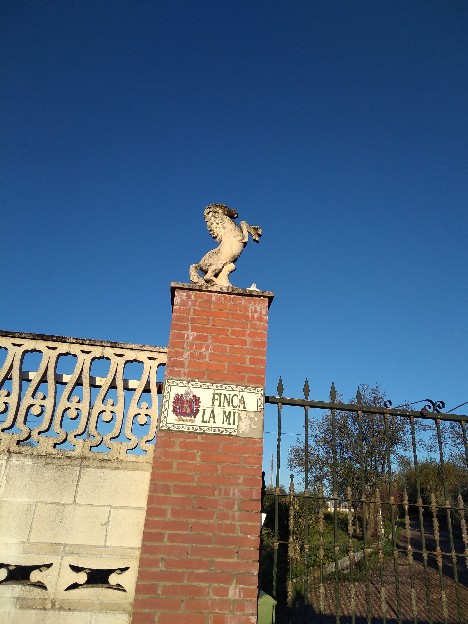
The statues on the gateposts are impressive.

The flowers were stunning: purple mallow; yellow rape; pink campion and ragged robin; white wild rocket and chamomile with their sunshine middles. Wood pigeons cooed at me when I shed a few tears, sure I had missed the way, although it transpired I had not.
Later, rabbits played with their white tails bobbing, and cow bells sounding like an orchestra of kalimbas were so beautiful.

I climbed up again to the top and there was the first view of the Prosperpina Reservoir. All morning my feet and other joints were taking it in turns to hurt, my back pack felt very heavy, but these things were familiar and if I have learnt anything from sitting it is that everything will pass eventually.

wp-1521724756366..jpg
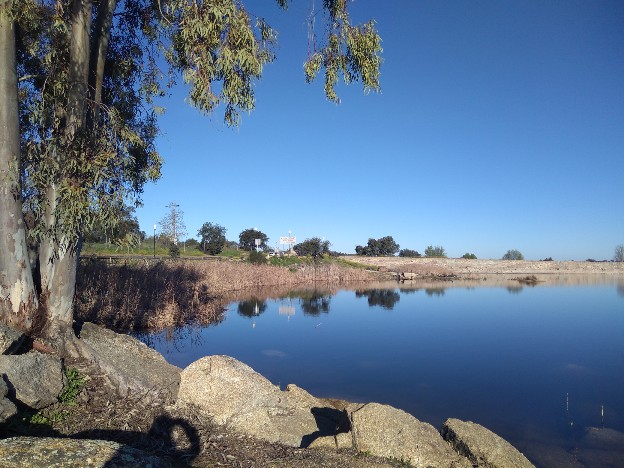
The Prosperpina Reservoir is glorious.

I sat and enjoyed it. I watched the heron on a rock, mirrored, stretching out its long black neck, and the swallows darting around for flies over the water. Individually the birds sang regular songs but together they created a mélange of sound.

I spent almost an hour near the reservoir reading the tourist information and changing out of my cold-weather layers into shorts and T-shirt.

wp-1521724756359..jpg

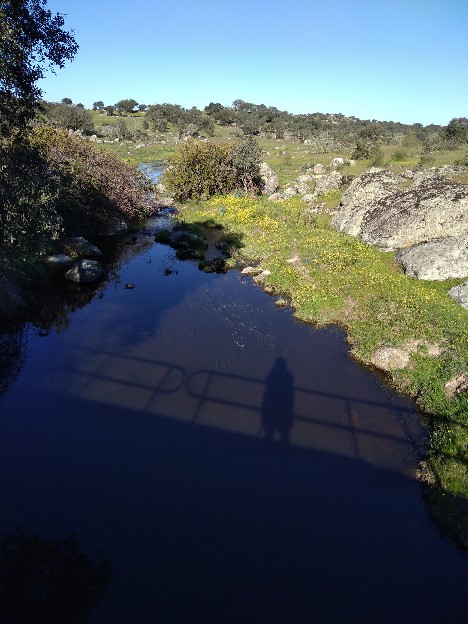
After skirting the lake, I walked by the babbling brook and this second part of the days walk was much closer to what I was hoping for: peace, with the call of the cuckoo and the water swirling amongst the bright green weed and sparkling in the sunshine

This path was across country although initially along a little road with lots of arrows, plastic bags and signs, all yellow to help us find our way. My feet were very grateful for the soft sand, although there were quite a few wet and boggy places.wp-1521724756453..jpg

I saw dog walkers by the reservoir, 2 local cyclists and 2 camino ones. No-one else.

Note for those walking this way: Remember to look on the pavement for arrows and indications, as well as on trees, the backs of street signs and the obvious marble blocks.

wp-1521731001255..jpg

A gentleman opened the gate for me as I trekked up into the village of El Carrascalejo where the church was shut.

wp-1521724756462..jpg
Parish Church, El Carrascalejo.
wp-1521724756469..jpg
Renaissance entrance of the Parish Church, El Carrascalejo.

I snacked at 11am with no sign of any café despite the information in my book (remember, it is March). On the way out of this tiny place there is a playpark and attractive picnic area.

wp-1521731001319..jpg
There are lots of lovely benches but the El Carrascalejo albergue is shut at this time of year.
wp-1521724756385..jpg
White winding road with fields of vines on either side.

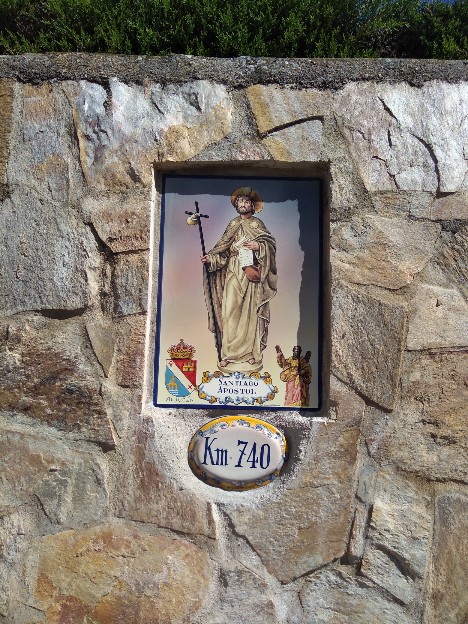
After all my winter reading about the history of the pilgrimage and monasteries, I really felt like a happy pilgrim with my staff and shell, sign of Saint Jacques interred at Santiago de Compostellla, the end of this 1000 km route

wp-1521724756429..jpg
Saint Jacques.

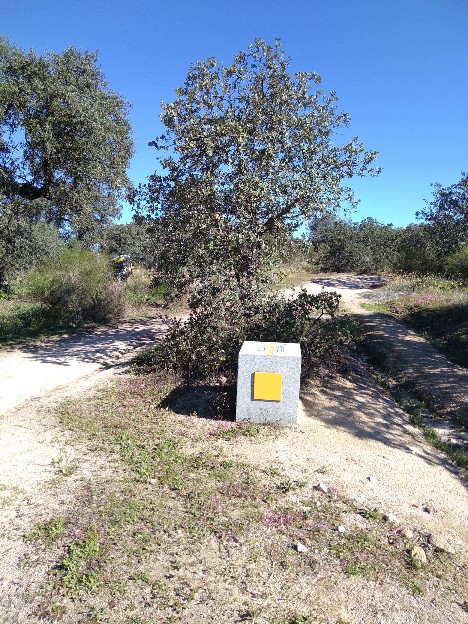
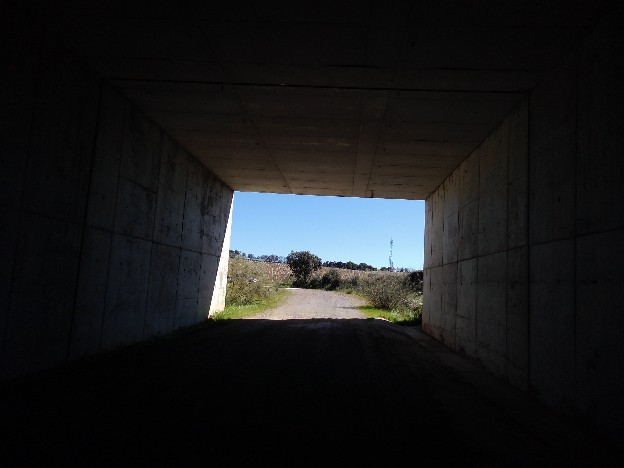
As I approached the motorway I took a left turn along a small road and then a right at a Mondrian-like cube with its yellow square and walked through the underpass.

wp-1521731001290..jpg

wp-1521724756330..jpg
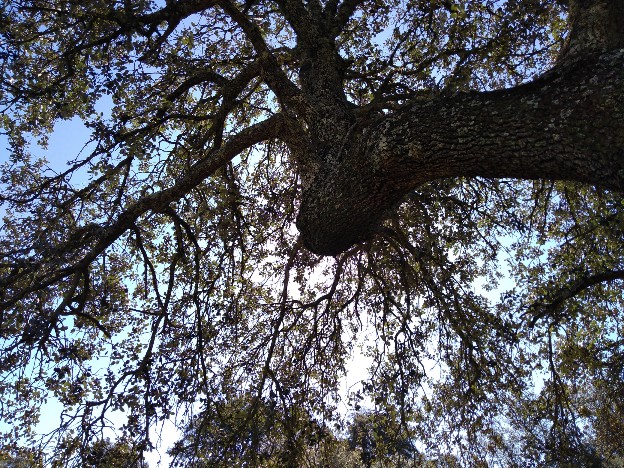
There are many Holm oaks in this area of Extremadura.

Up another little hill I went, along a farm path and past a group of men taking a break who called buen camimo and then I had a view of Aljucén.

I crossed the main road for the last time,  straight on between green fields lush after the rain (the farmers must be happy anyway!) and although there are no signs I kept on going right into the village where they were planting lots of new trees and arrived at the Albergue Turístico Río Aljucén at midday.

wp-1521724756395..jpg

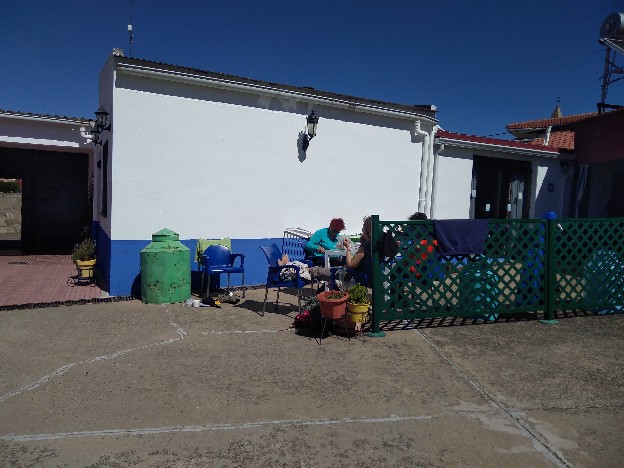
Costing 10 euros, this hostel was recommended by the previous hospitalero, has excellent, free Wi-Fi, is spotlessly clean and although it has a washer (3 euros) there is no dryer. I was the first to arrive so I got to have the hot shower and choose my bed in the small dormitory. All my things dried quickly in the sun as other pilgrims arrived. We sat together, mostly German people, one Argentinian, a couple of French and myself from Scotland  We spoke French, German, and a little English and Spanish.

wp-1521731001236..jpg