Walking without a donkey 16: Camino Francés (Castrojerez to Carrión)

1.11.16  Castrojerez to Frómista 25.2km; 2.11.16 Frómista – to Carrión 20.5km

Camino pilgrims rise very early in the hostels, intent on packing up rucksacks, having breakfast, and getting on the road just before daybreak. And today it’s another gloriously beautiful morning as we leave Castrojerez, still walking in the Castilla y León region of Spain.
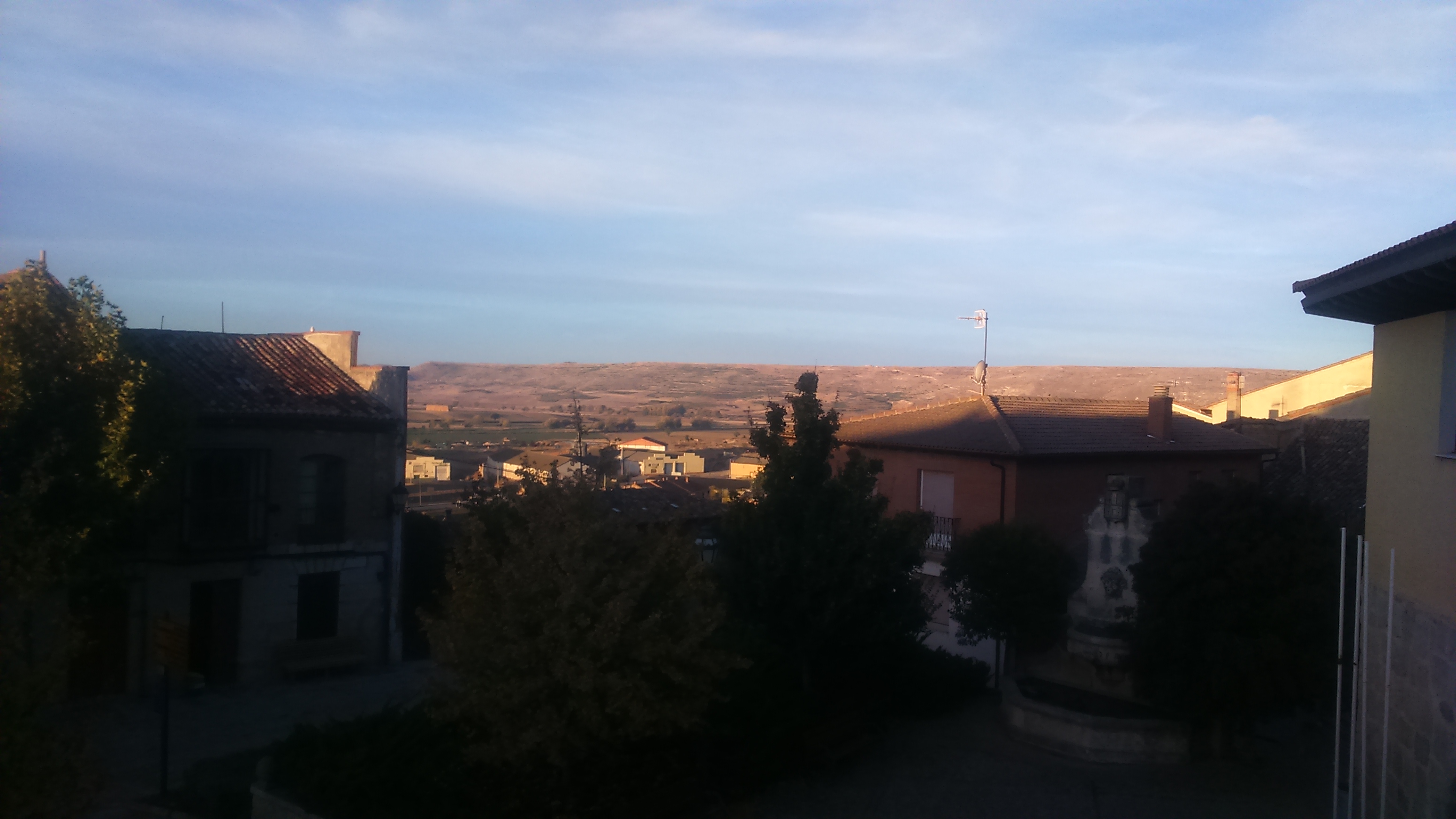
dsc_1167.jpg

At the end of the first climb there’s a more unusual monument with the signature coquille St Jaques shell carved in stone.
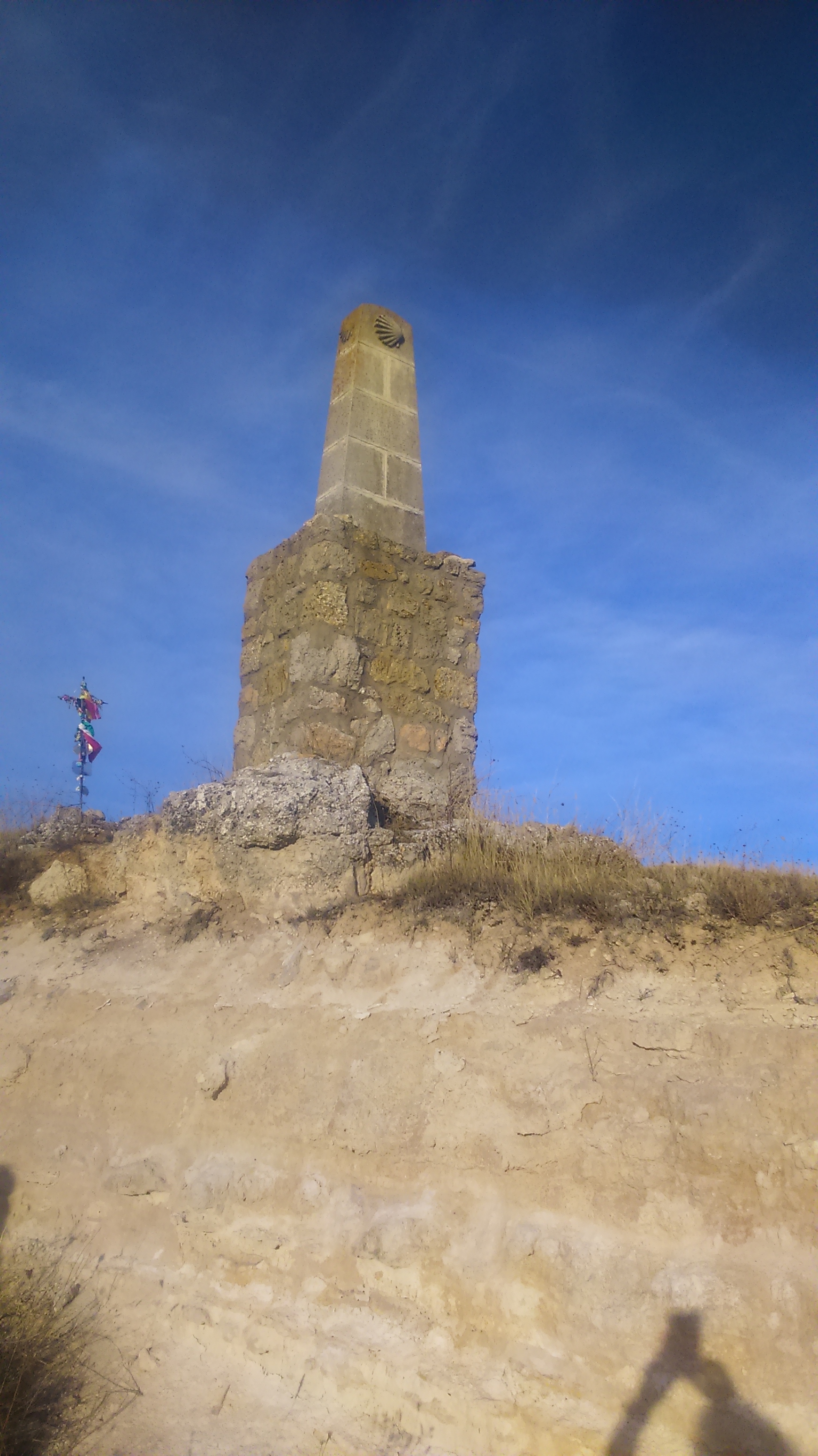
dsc_1168.jpg

alain-and-i

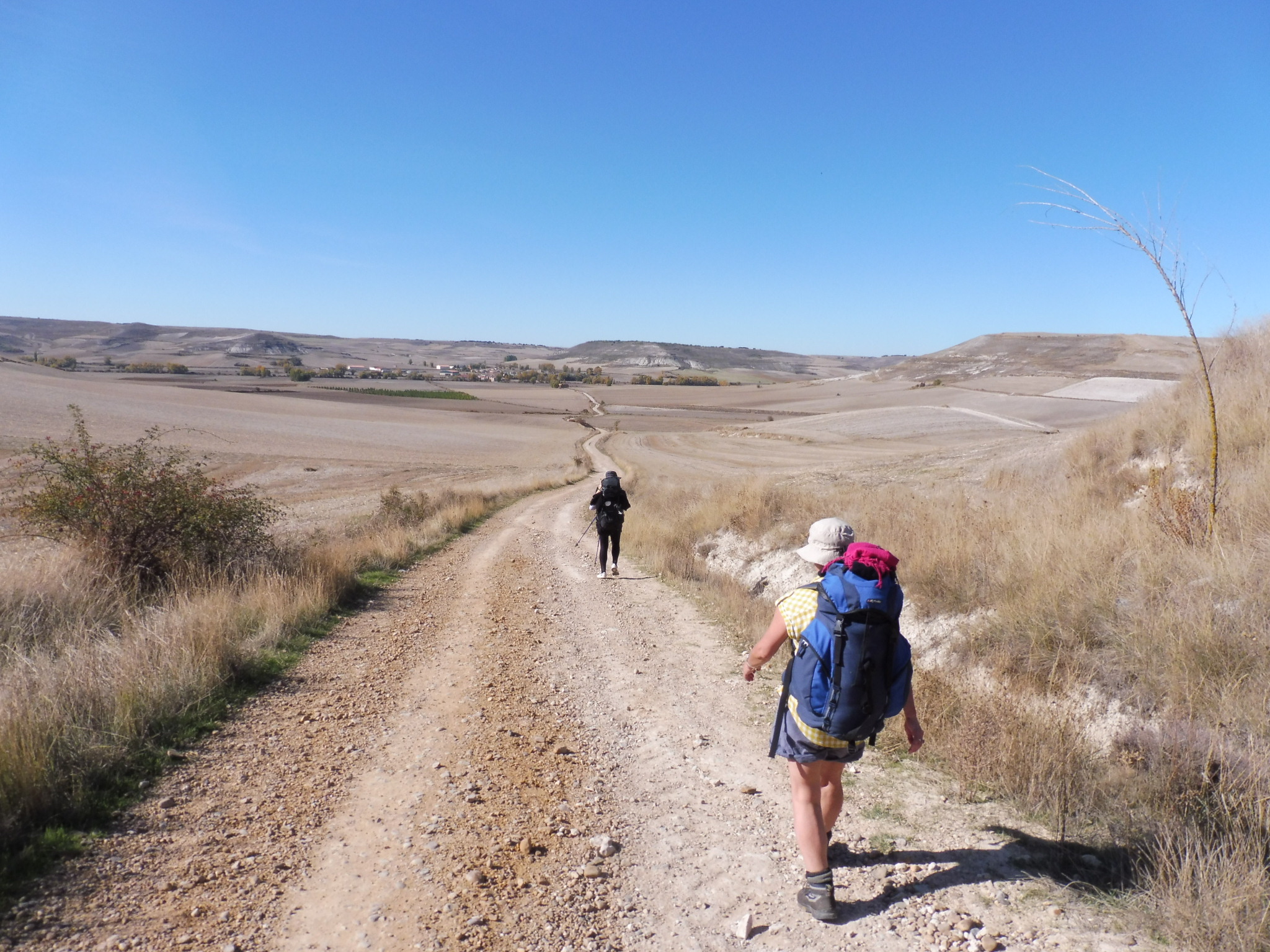
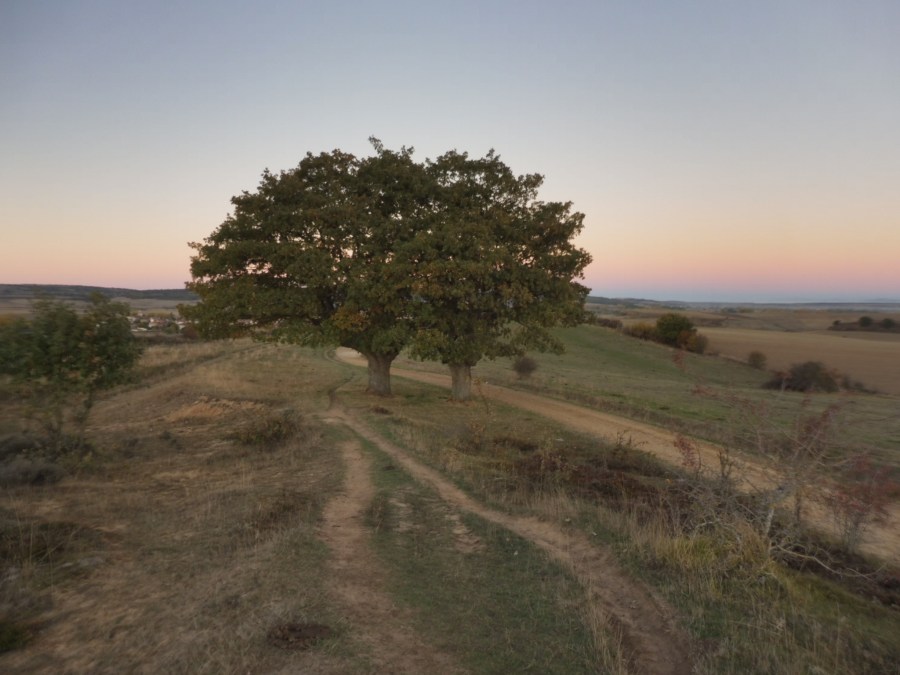
Then the walk continues along the flat meseta landscapes in the hazy light.
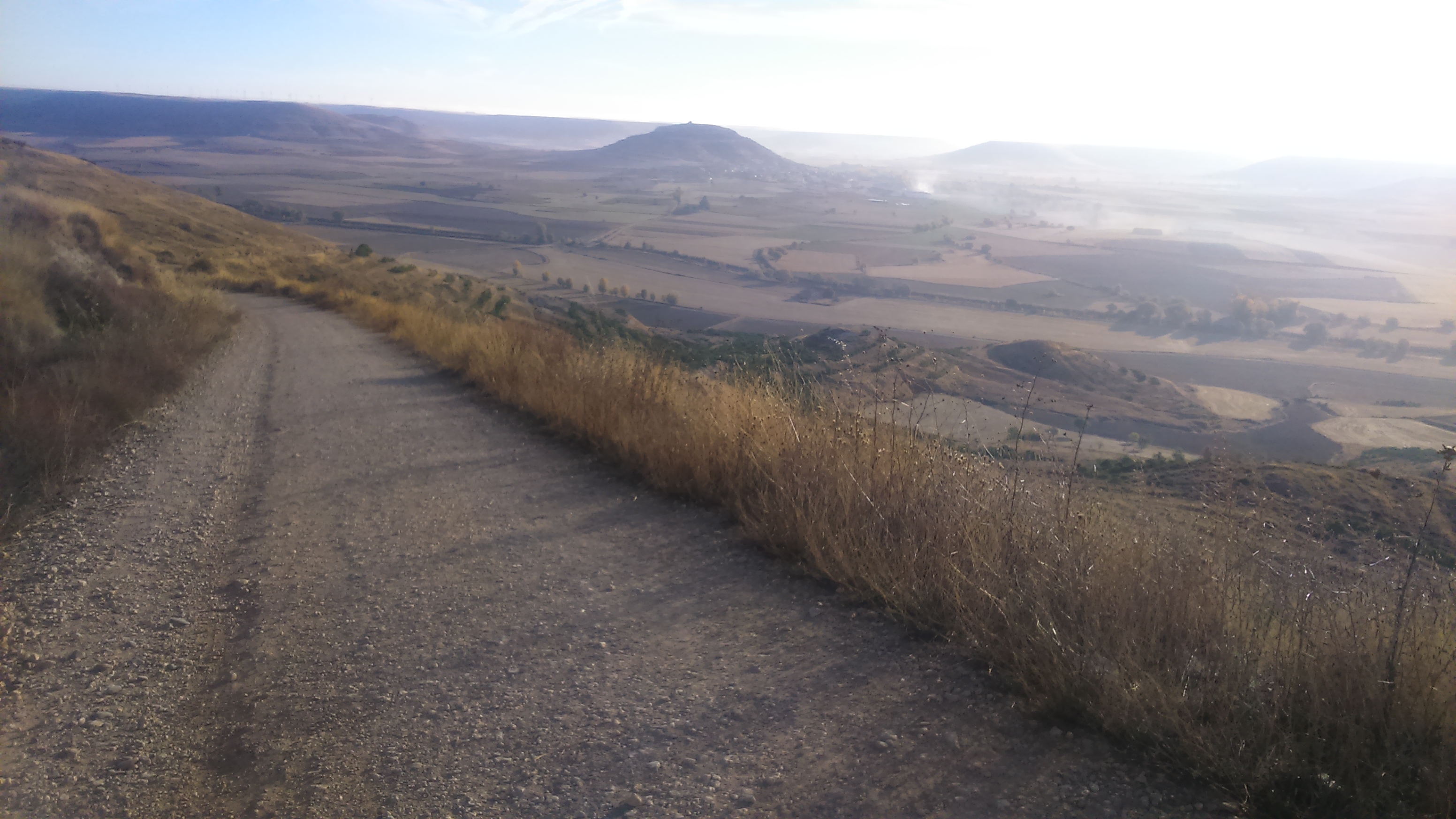
dsc_1169.jpg

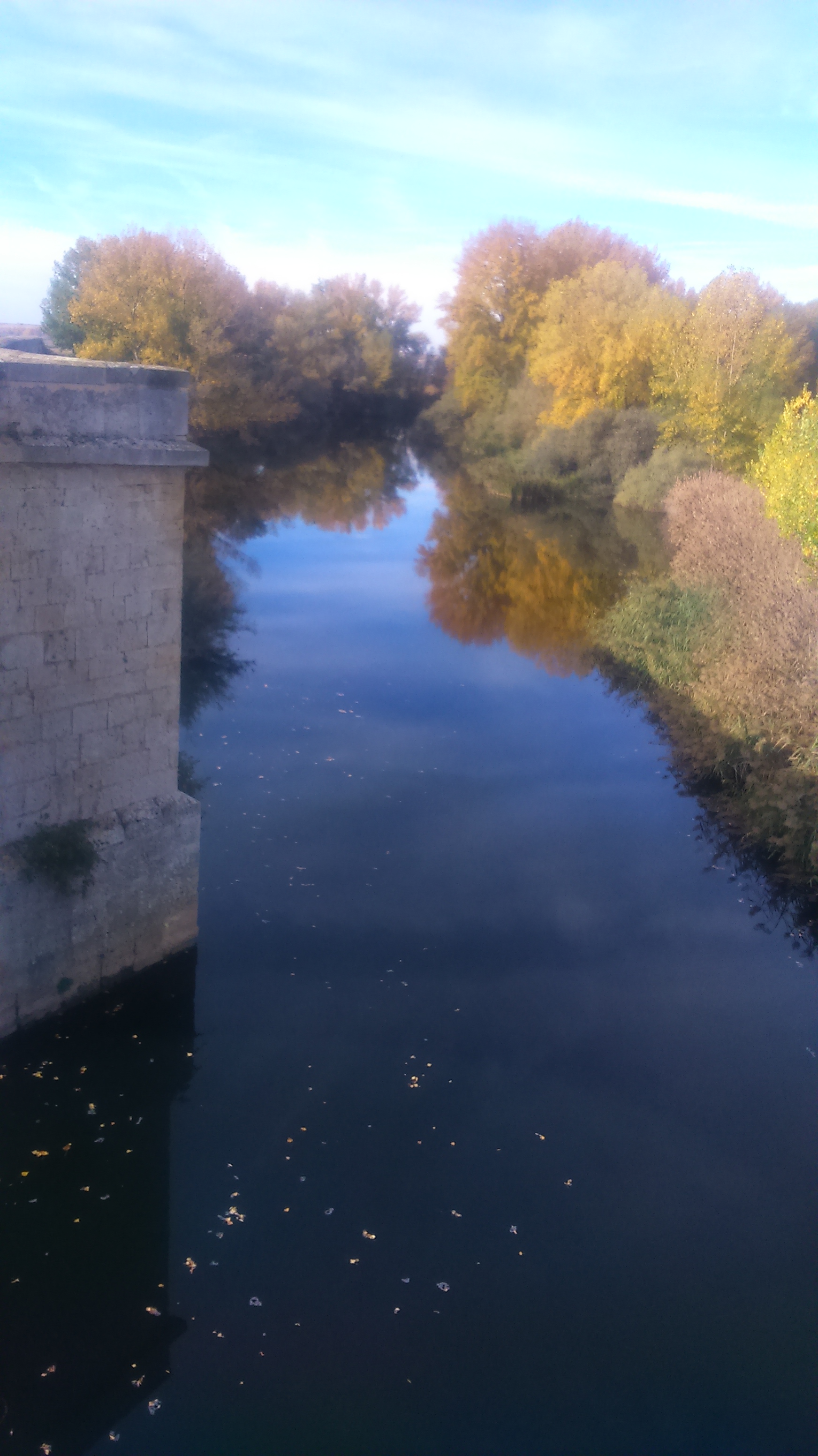
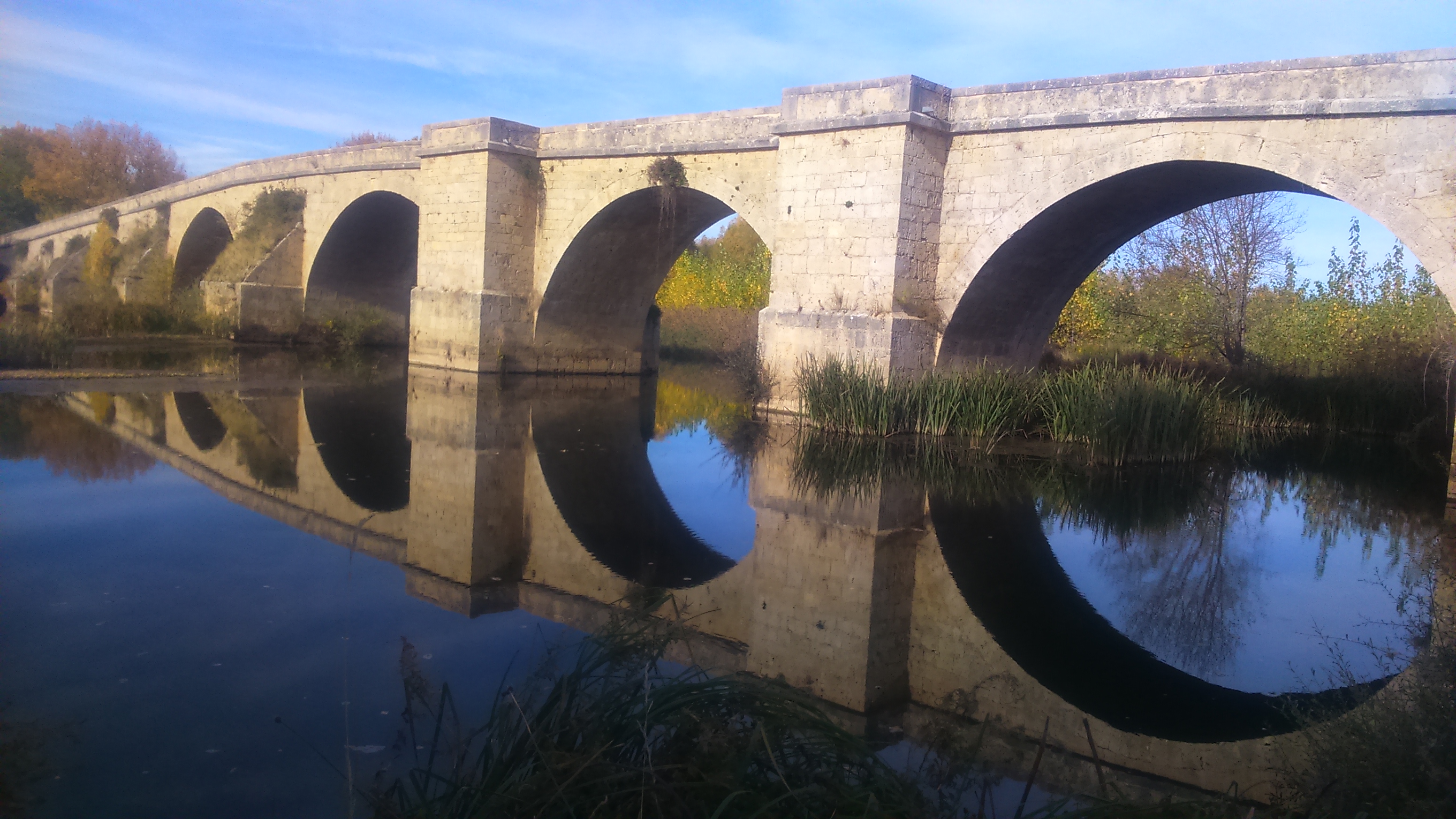
Crosses the ancient, arched bridge, with autumnal trees making a grand backdrop…
dsc_1171.jpg
Ponte Fitero over the River Pisuerga

dsc_1173.jpg

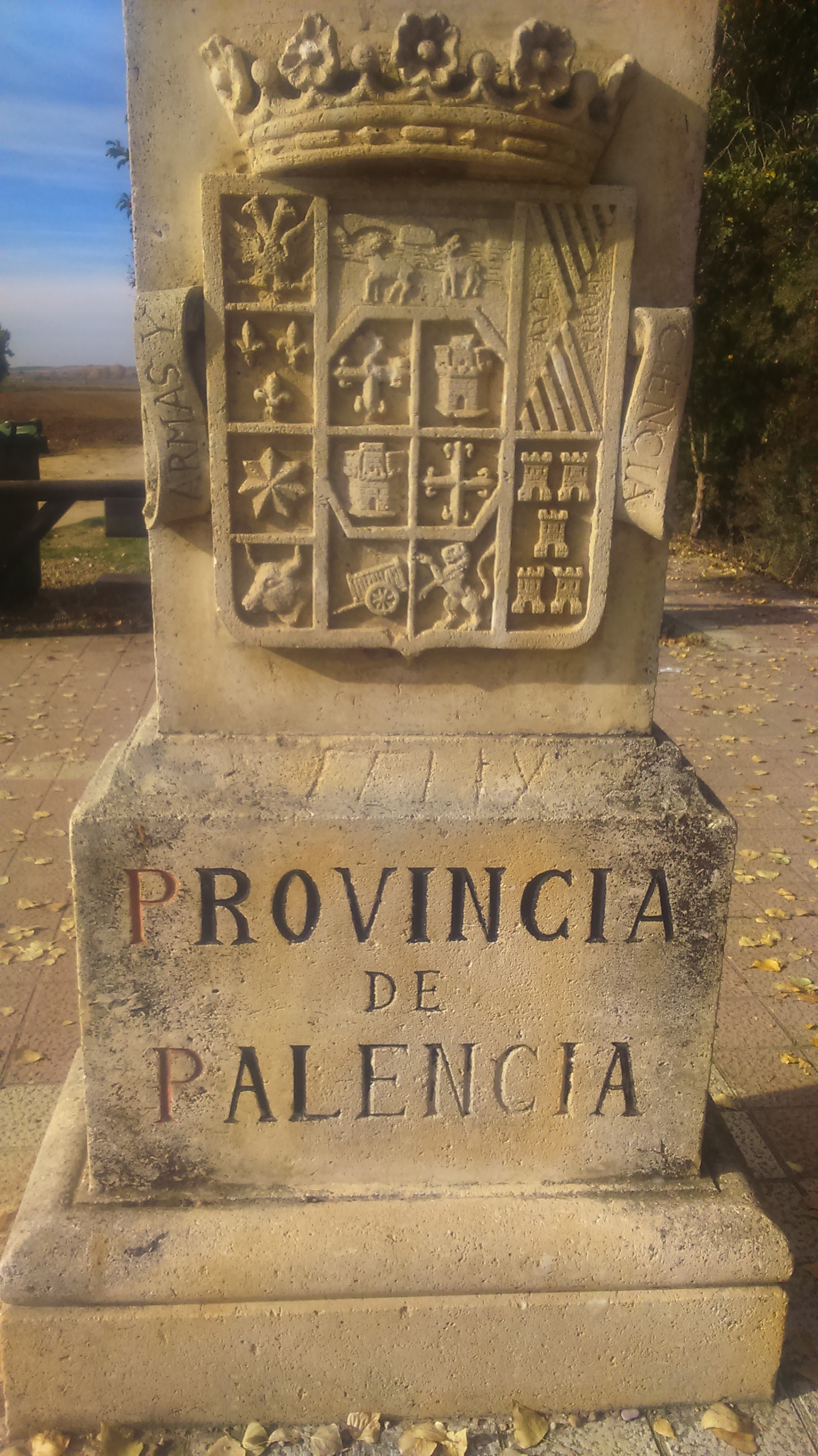
… into the province of Palencia…

dsc_1174.jpg

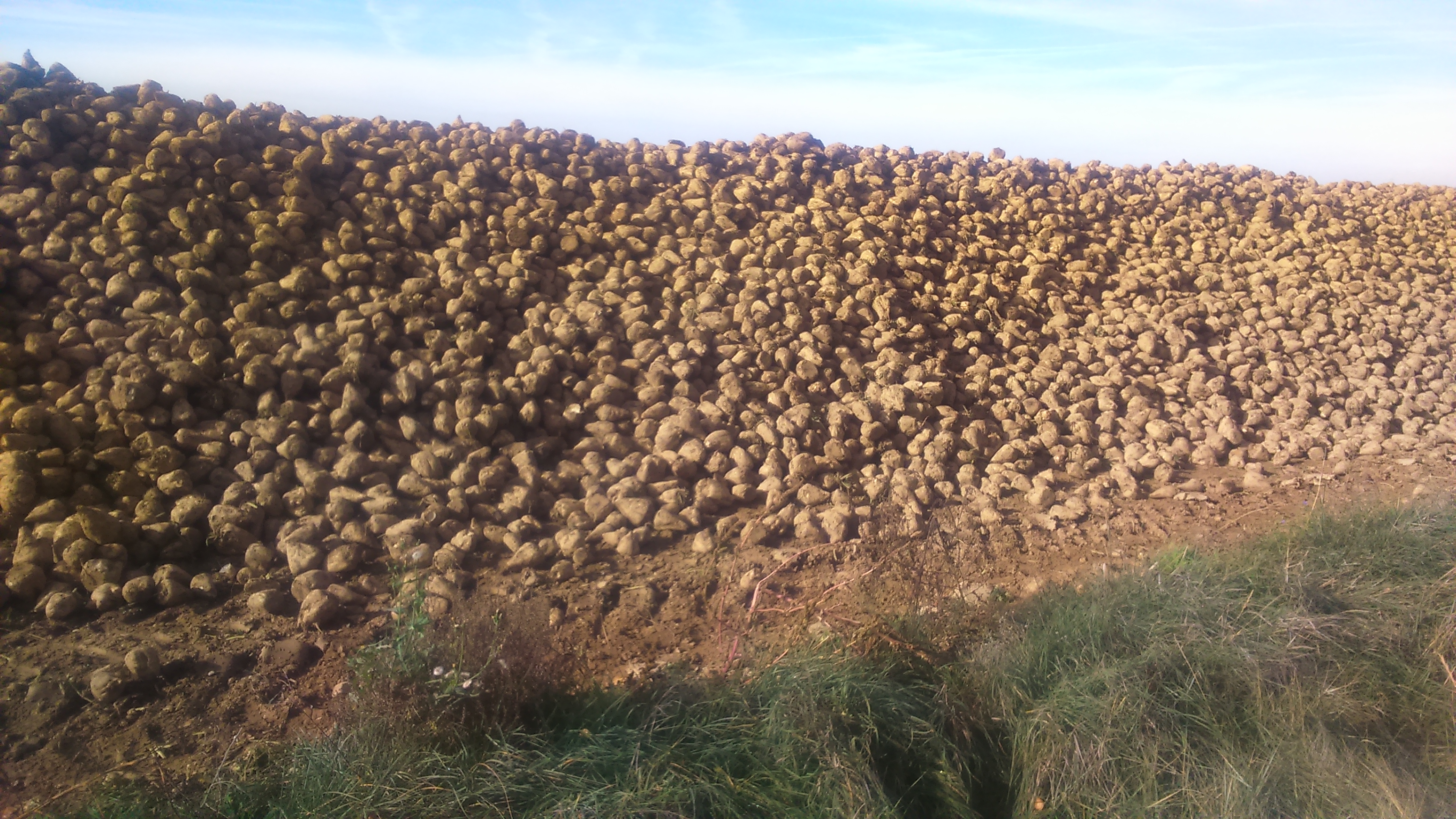
…where we walked past mountains of sugar beet.
dsc_1175.jpg

As you walk through fields along this Way, with farmers driving tractors on Sundays, and the warm, earthy smell, the soil and rock colours changing as the kms go by, past varying crops of fruit and vegetables, you do get some idea of the rural life here, and certainly feel connected to the turn of the seasons. Despite the continued warmth, I know that the year is heading towards winter.

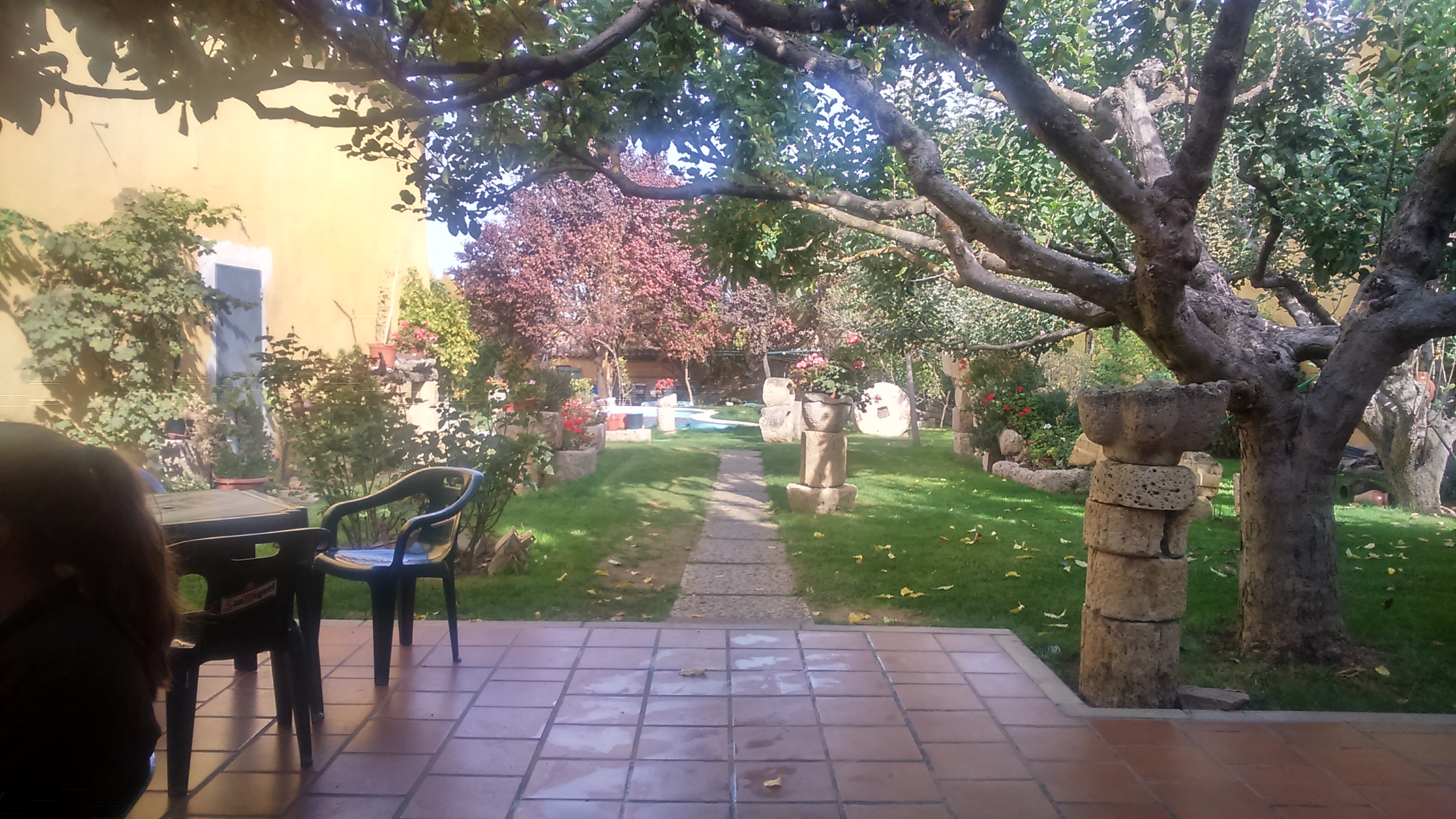
In an almost deserted town, where the bars listed in the book were all shut, and it looked like we wouldn’t get a drink, I spotted a sign and left the Path, rounded a corner where, is there? a little further? yes, an oasis. I was flagging and ready for a break!
dsc_1176.jpg

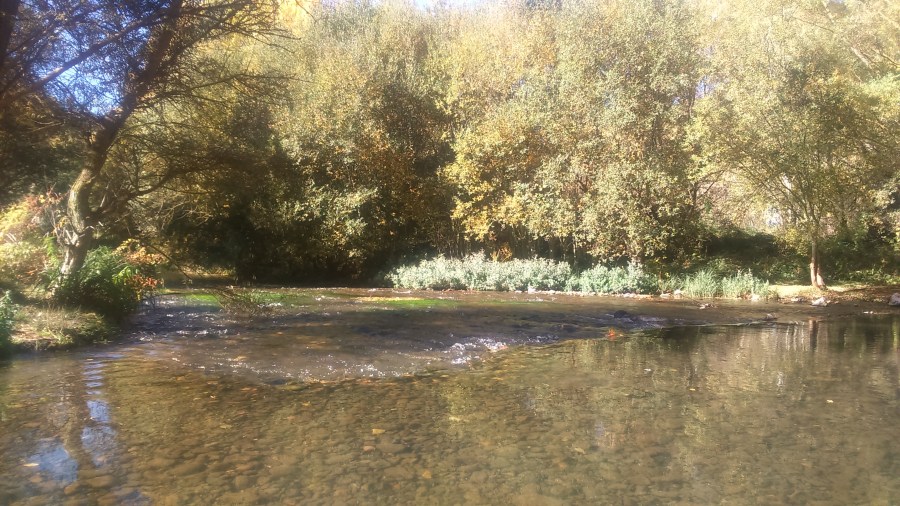
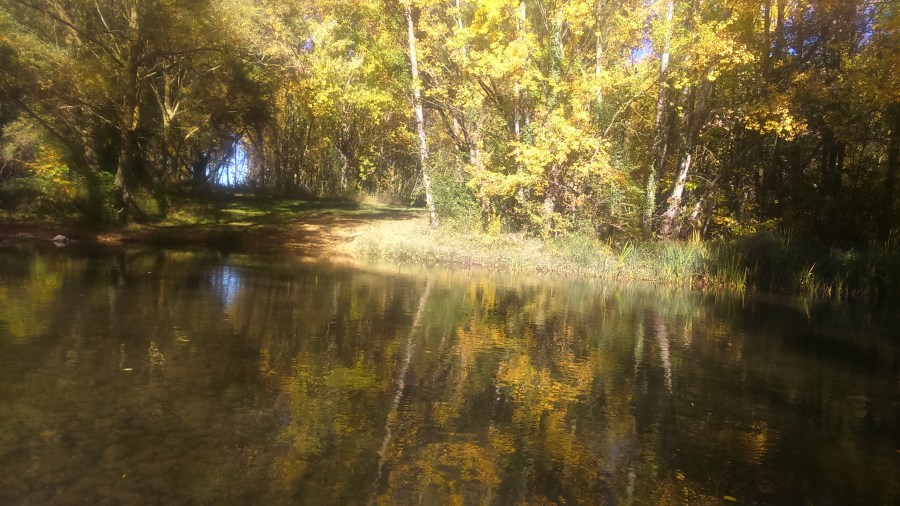
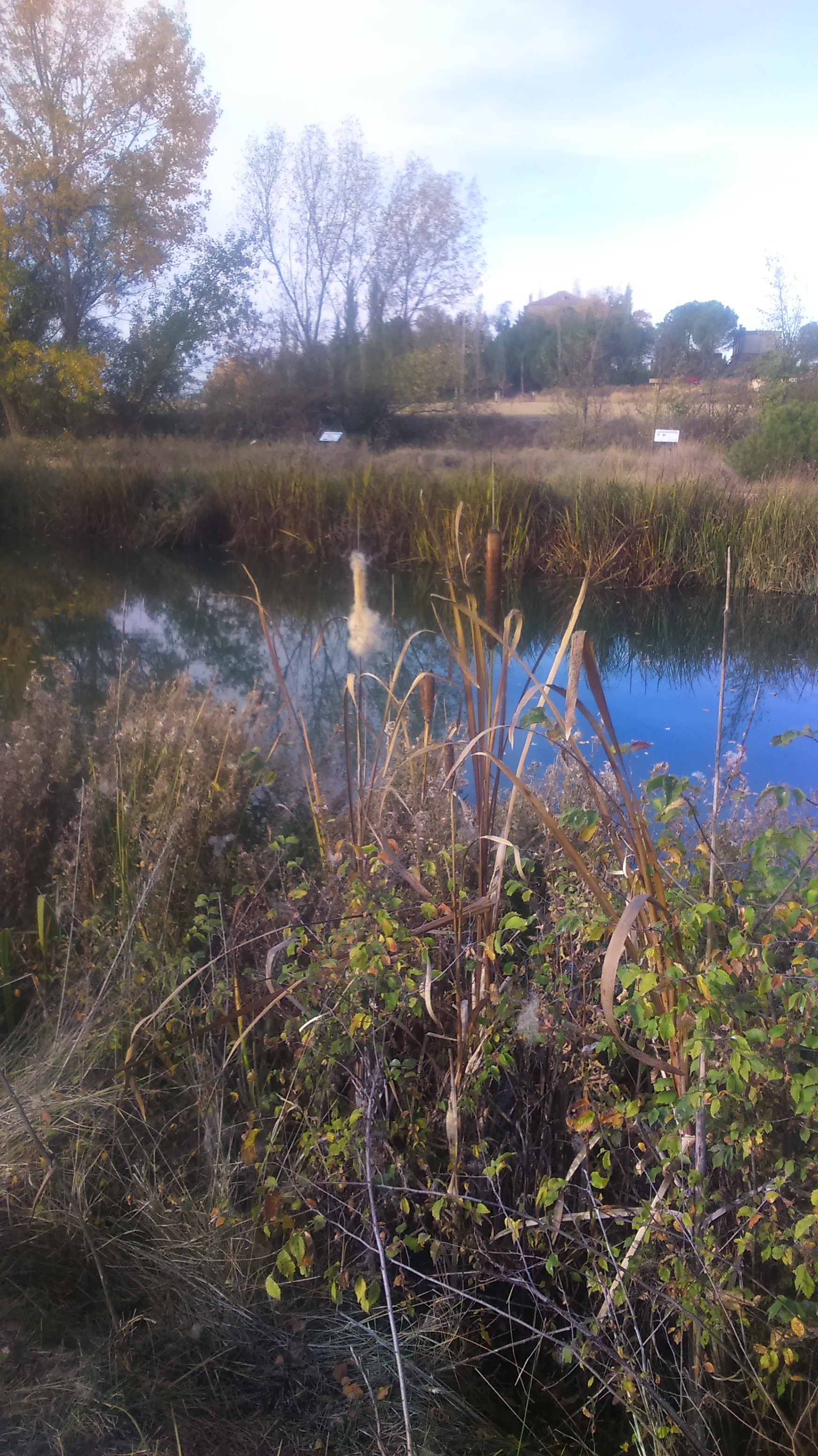
Renewed after 20 minutes without the back pack, there’s always something new to see. Here are idyllic rivers, some with bulrushes standing tall – velvety brown or bursting open like cotton wool candy floss;
dsc_1177.jpg

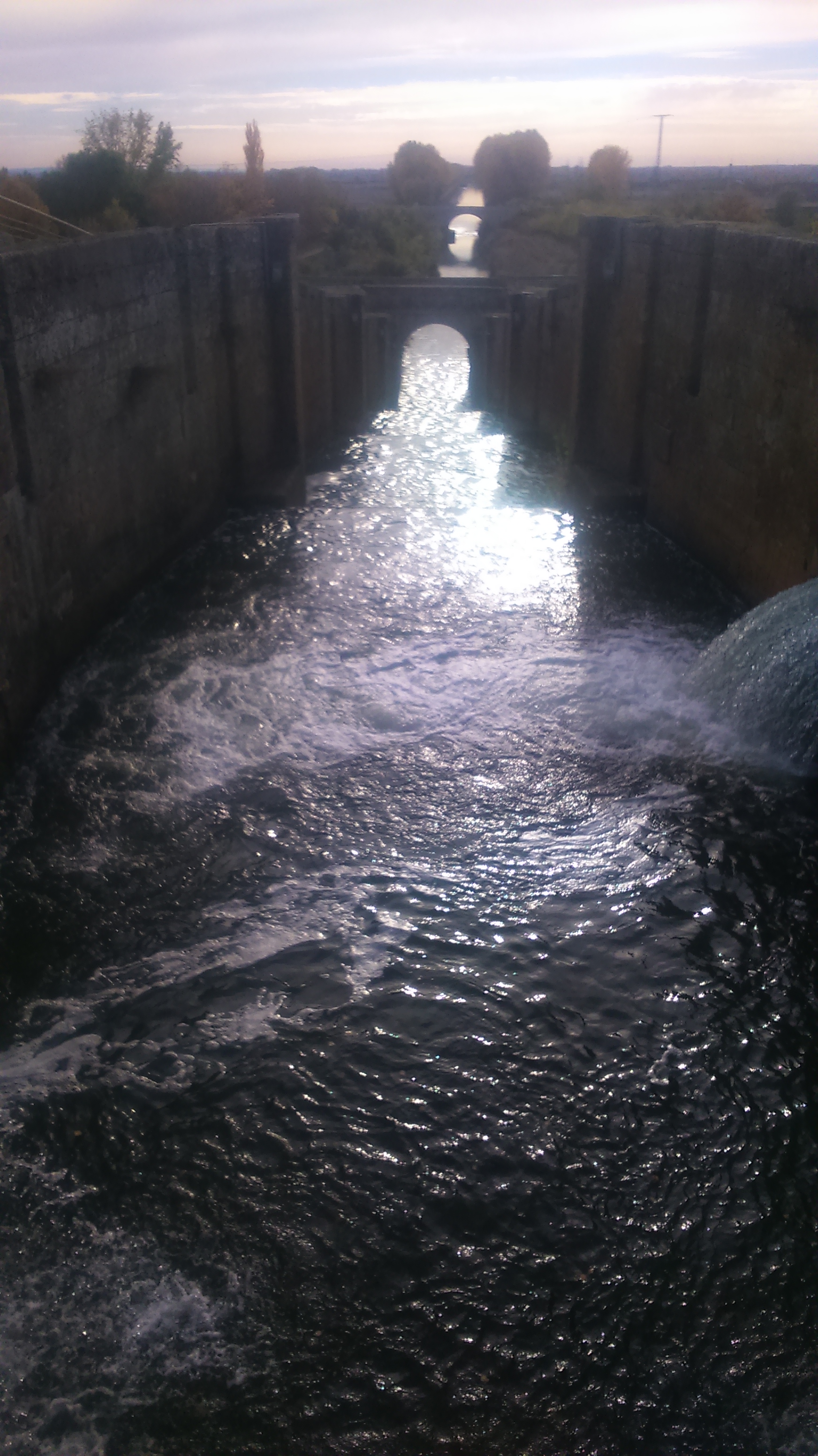
there, other waterways stretching into the distance under stone arches, sun glistening on the luminous surface.
dsc_1178.jpg
Frómista locks

‘The Canal de Castilla was a huge hydraulic engineering project of the second half of 18th century and beginning of 19th century. The Canal goes through parts of the provinces of Burgos, Palencia and Valladolid and was built to facilitate the transport of grain to the ports in the north coast so that they could be shipped overseas.’ *

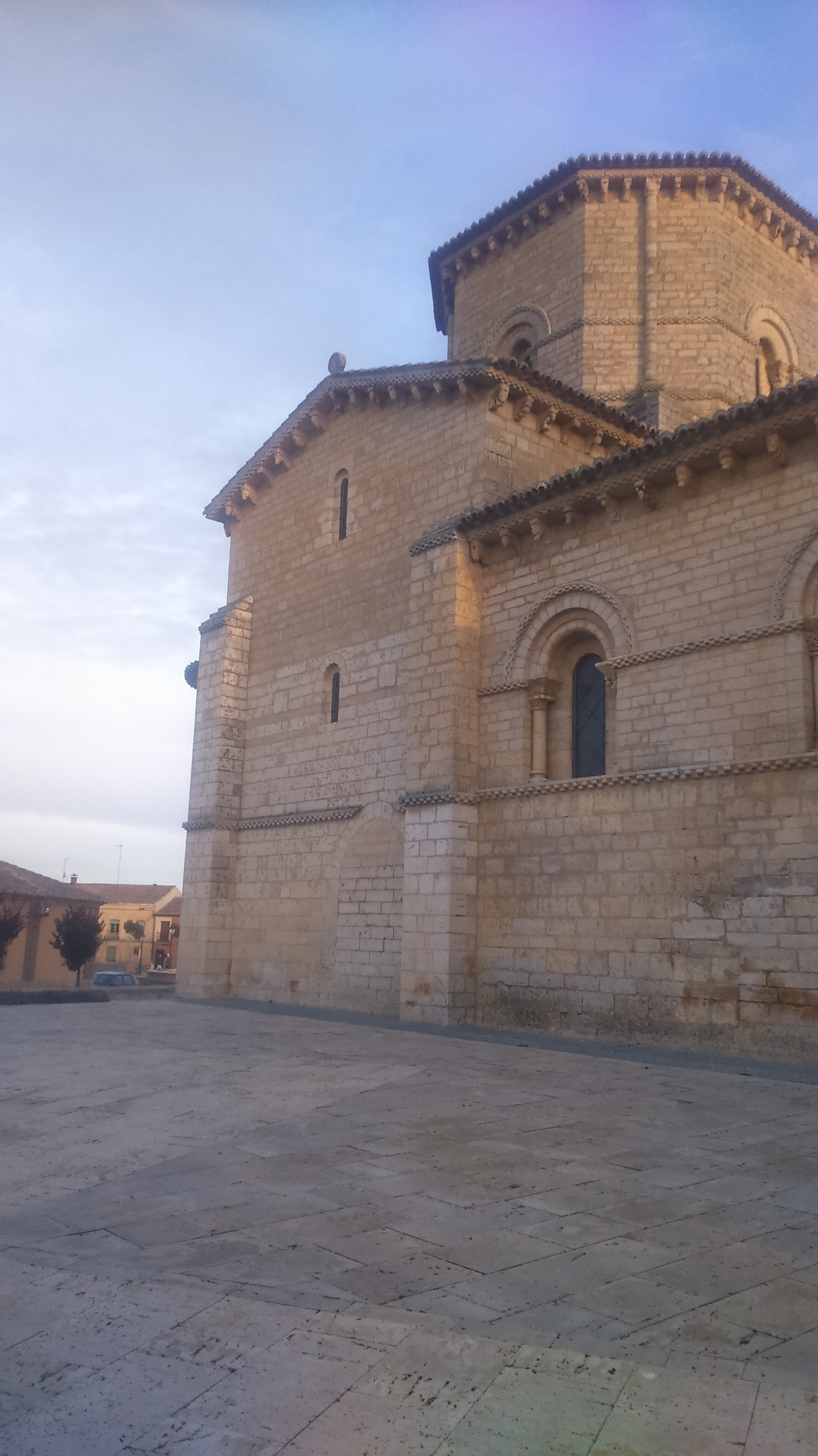
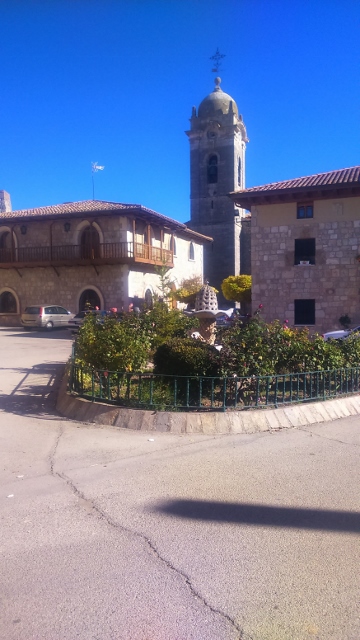
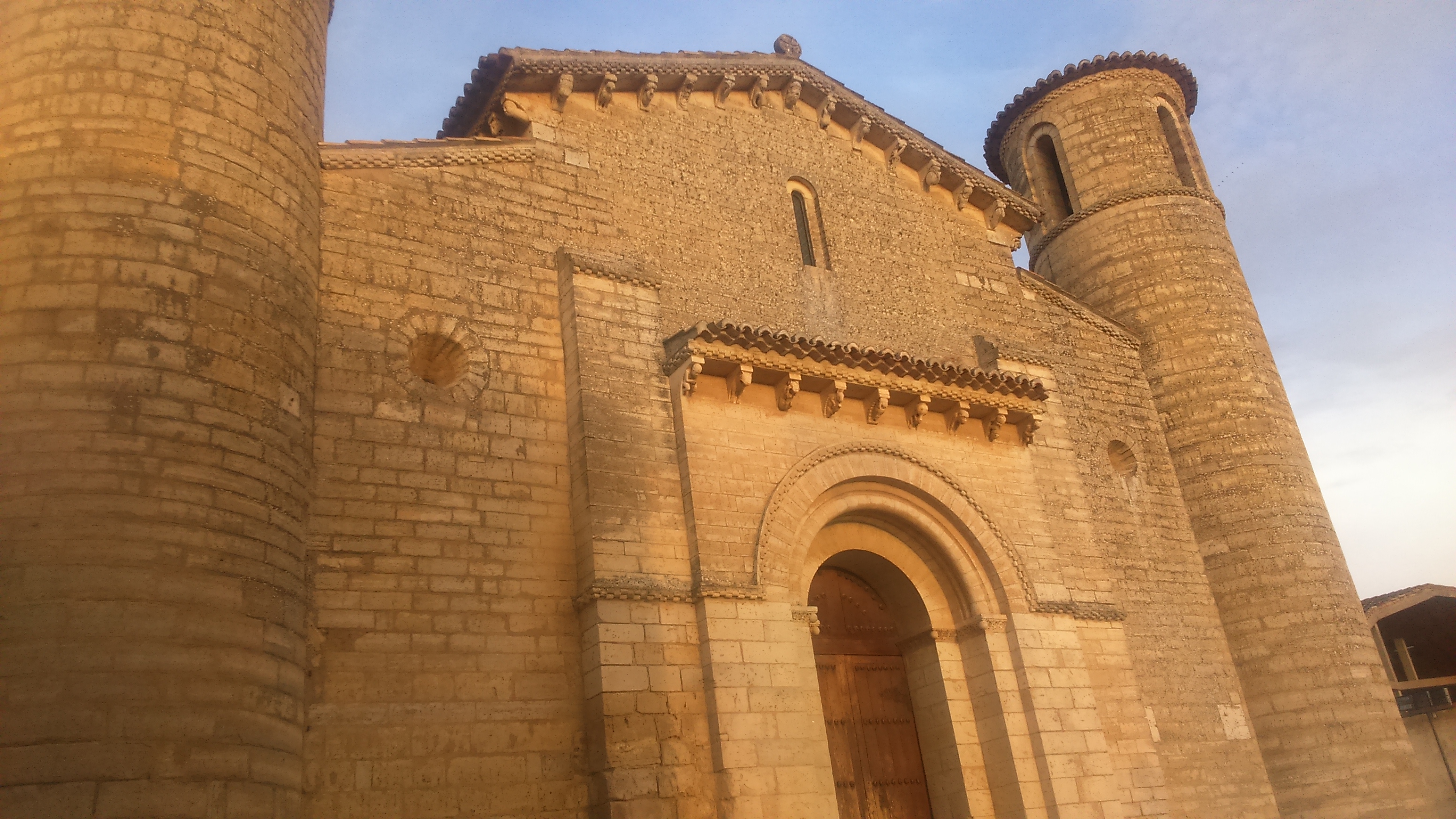
I stayed that night at Frómista with its picturesque Romanesque church.
dsc_1183.jpg
Iglesia San Martin
dsc_1182.jpg
from the 11th century.

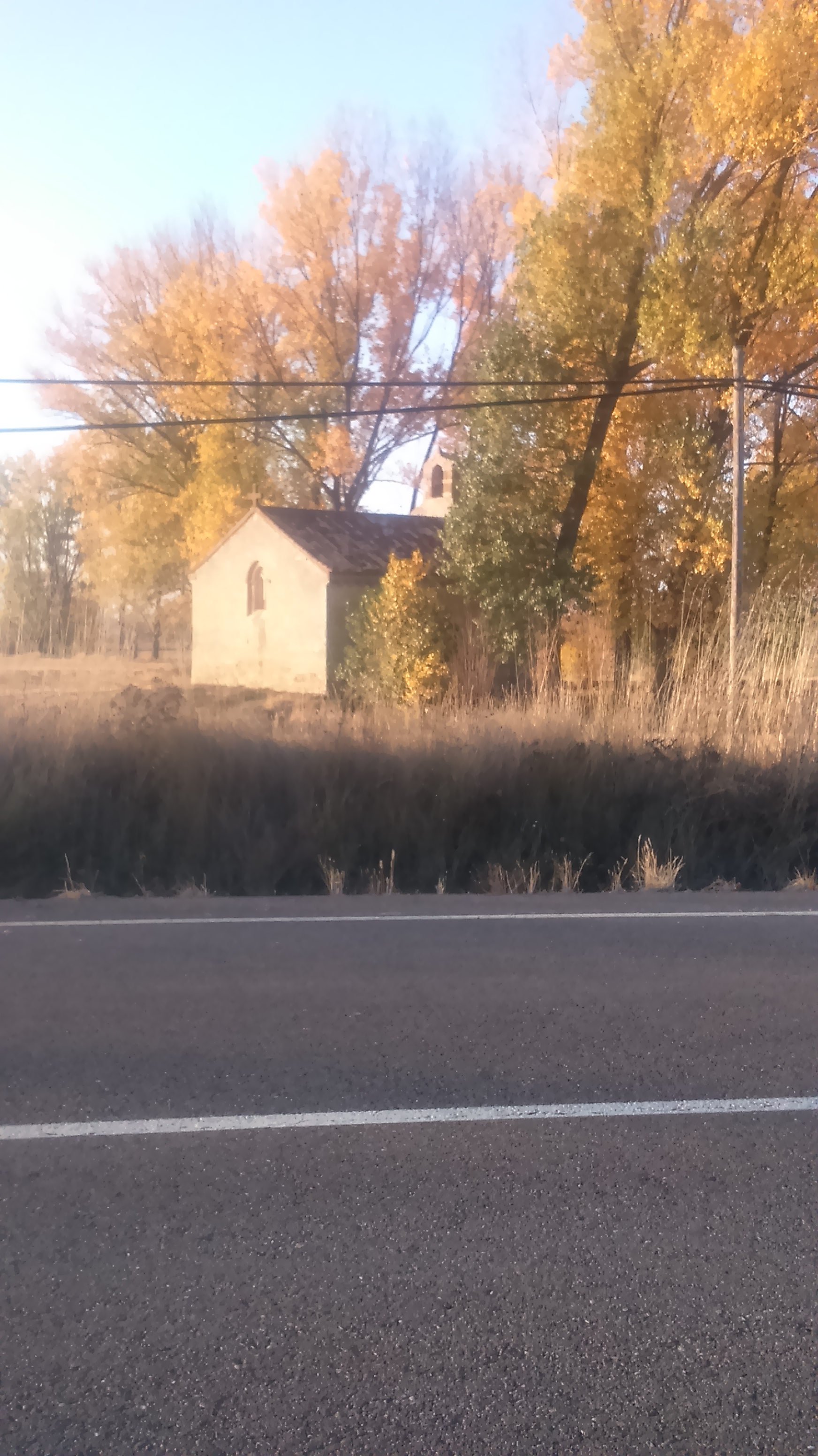
The next day there was road walking, always tougher on the feet than softer paths, and alongside, simple churches.
dsc_1184.jpg

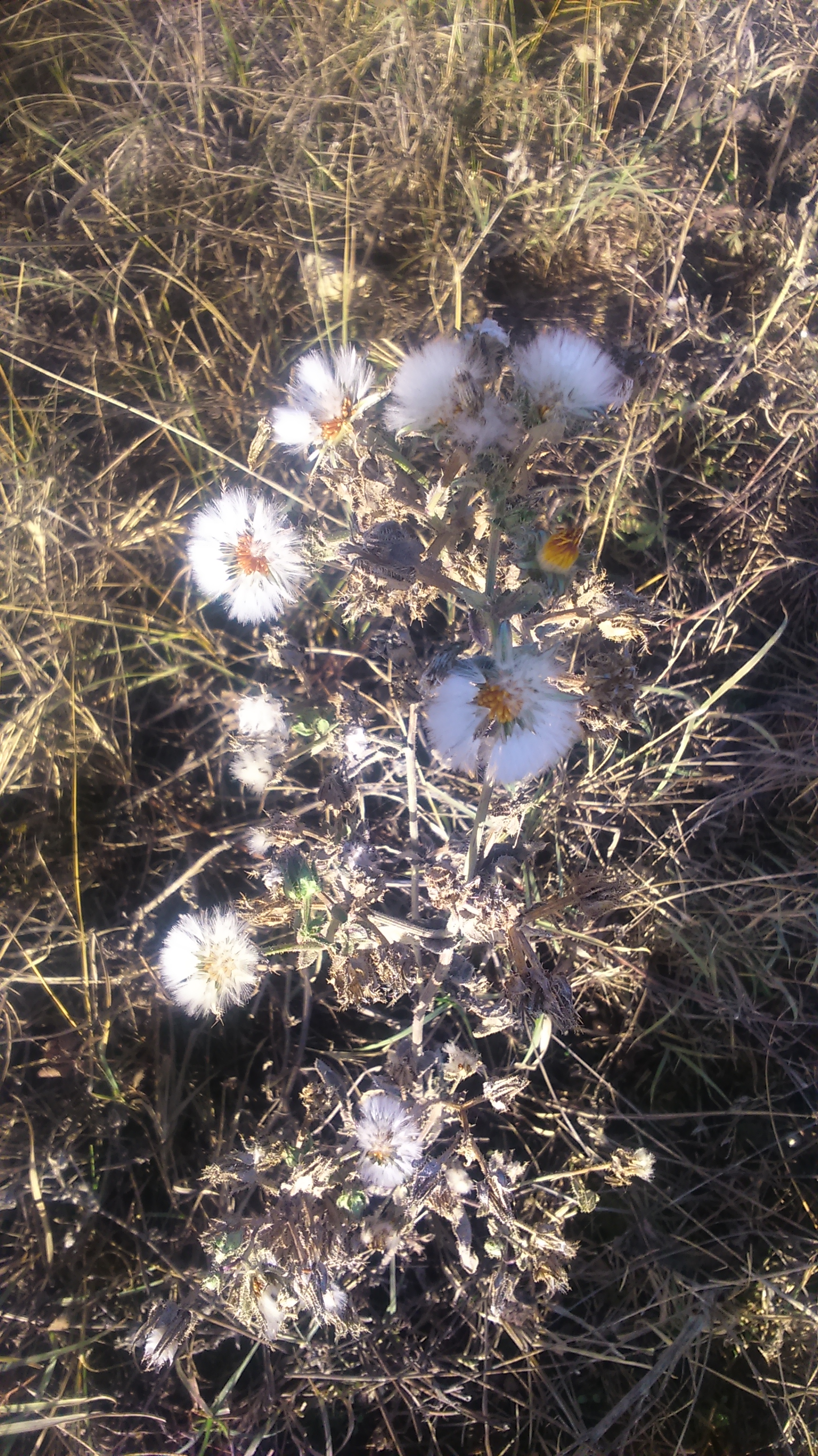
And I haven’t got tired of wondering at nature’s detail;
dsc_1185.jpg
flowers going to seed like soft fried eggs;

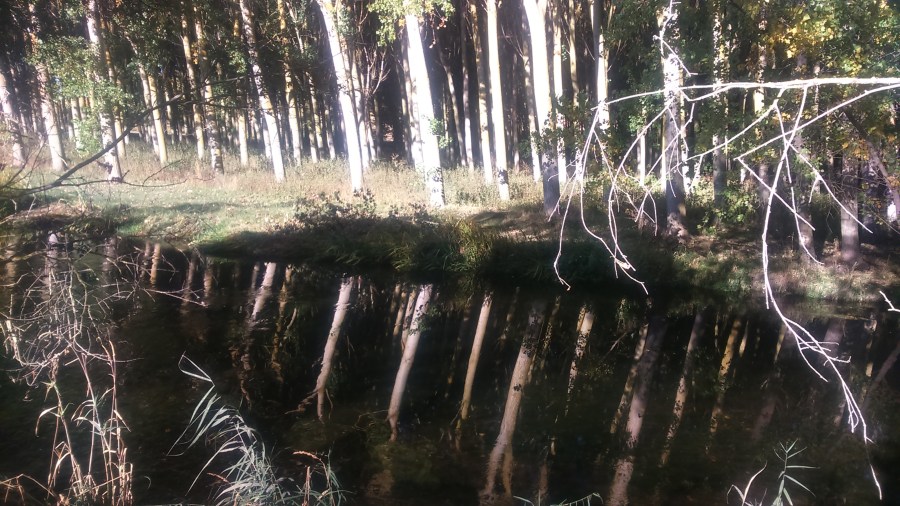
glistening pools;

dsc_1189.jpg

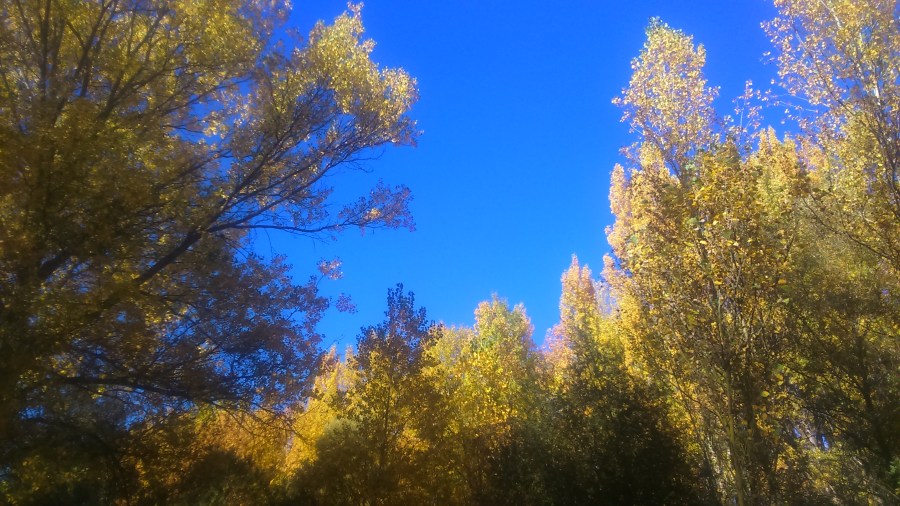
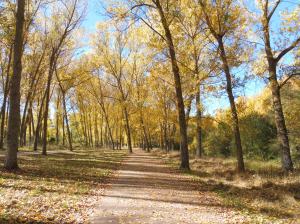
 and trees glowing against the contrasting blue sky.
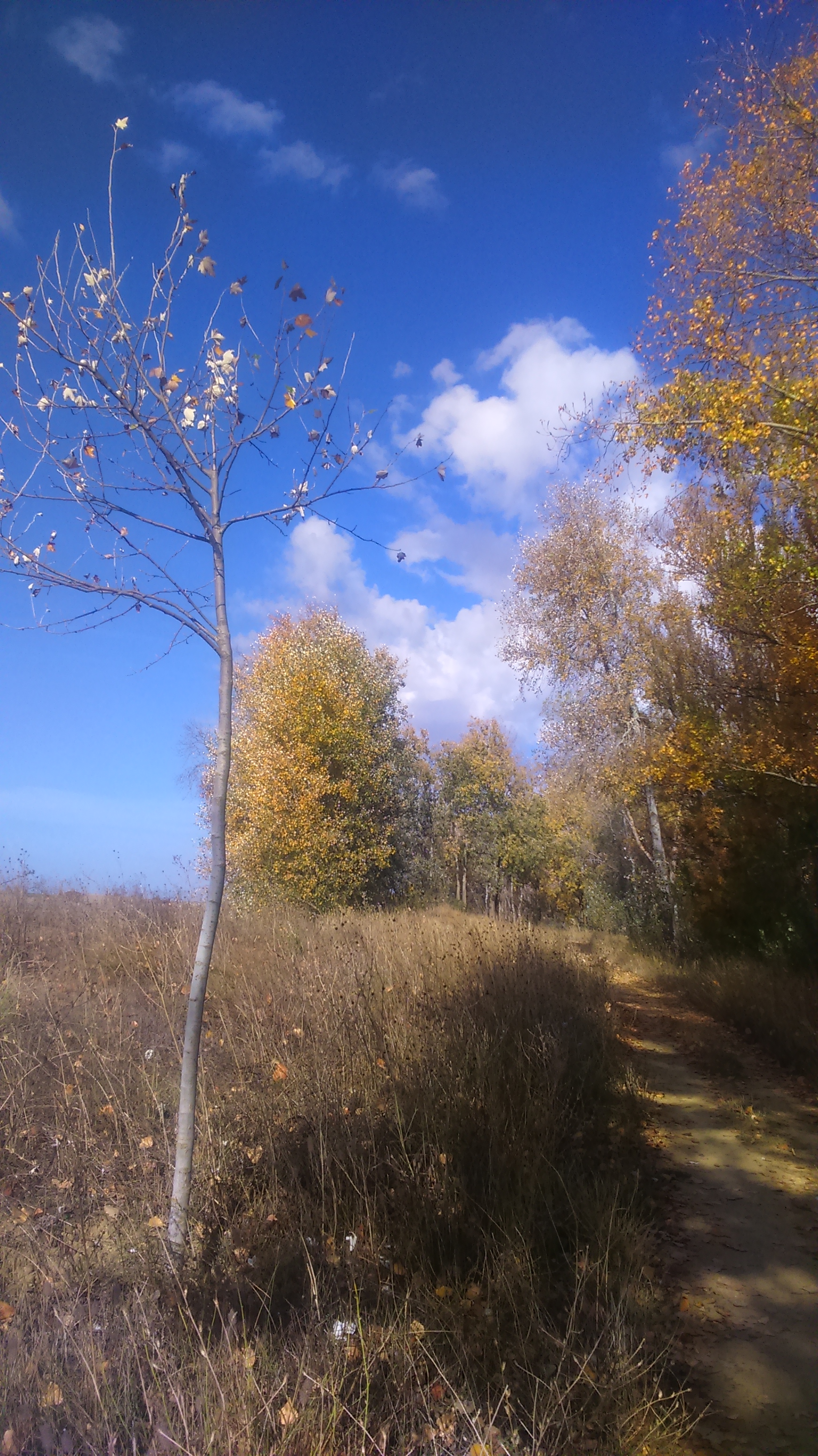
dsc_1186.jpg

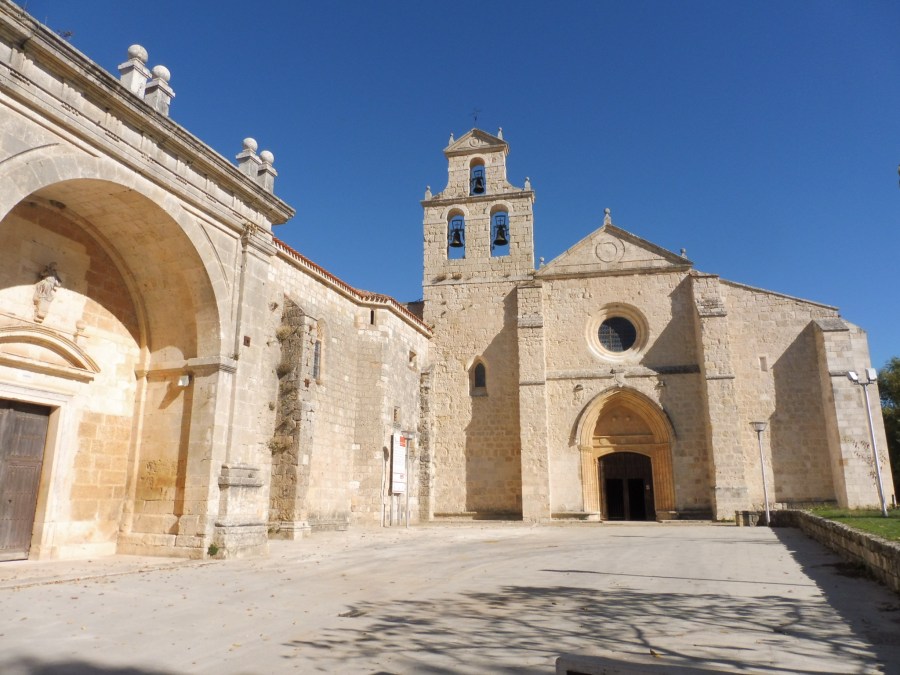
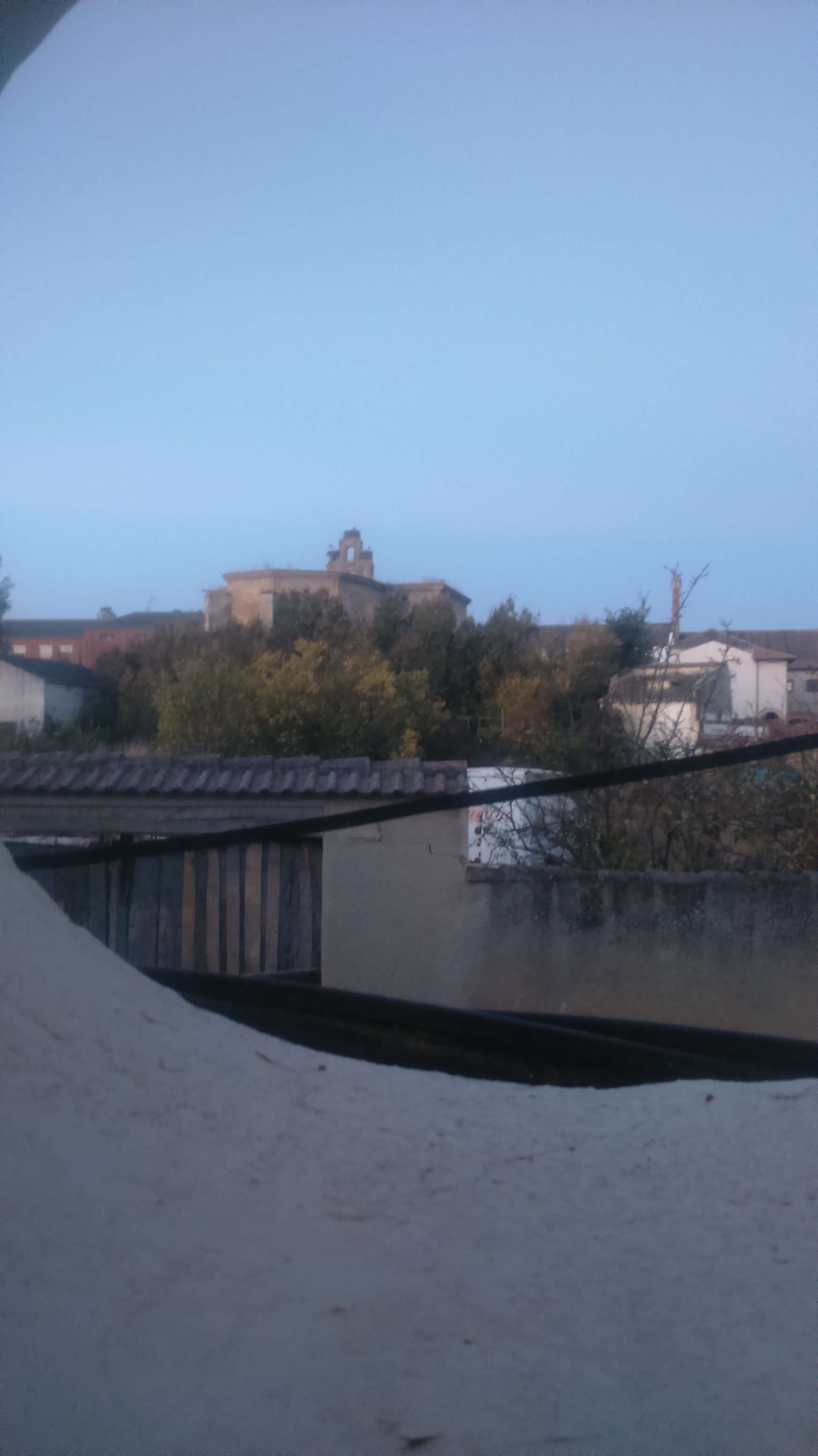
Until we arrived at the monastery turned hostel in Carrión.
dsc_1194.jpg
View from our window
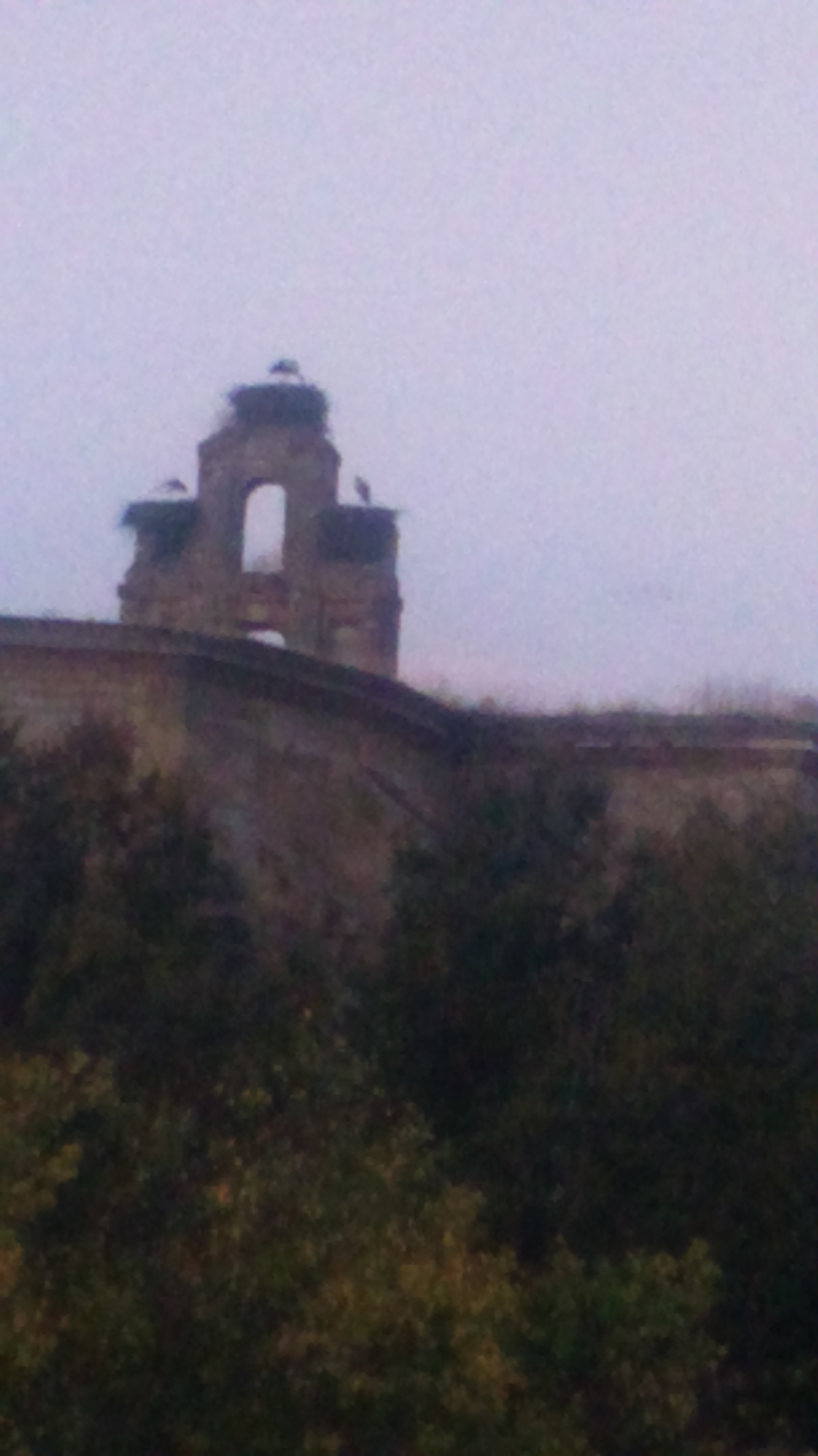
Church tower, Carrión, taken with zoom because there were 3 cranes sitting in the 3 spaces - something I was to see for many kms, if not on the top of steeples, then on their very own purpose-built towers (presumably to stop them making their massive nests on religious architecture).
Church tower, taken with zoom because there were 3 storks sitting on the 3 ledges.

Storks, which I thought were herons as they looked similar from a distance, are birds I was to see for many kms, if not on the top of steeples, then on their very own purpose-built towers (presumably to stop them making their massive nests on religious architecture). Did you know that they have a wing span of 10.5 feet (over 3 metres), and their nests have therefore been known to grow to over six feet (two metres) in diameter and about 10 feet (three metres) in depth? And a pair nested at the top of St Giles Kirk in 1416!

Carrión, next morning, was sunny with puffy, white clouds, as we collected in cafés for breakfast and to say our goodbyes.
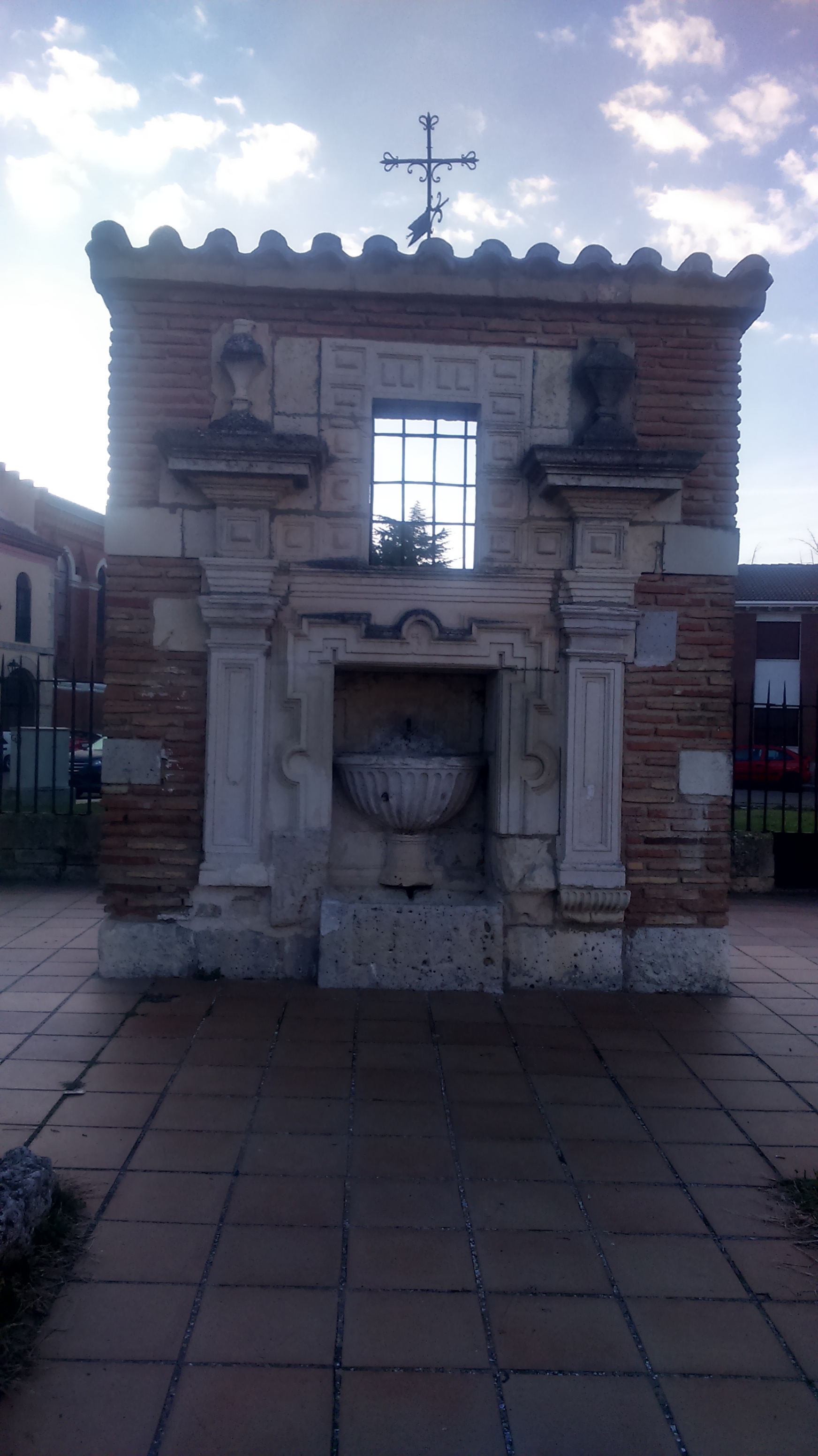
dsc_1197.jpg
Carrión town square monument with paned window.

The 3 English women were reluctantly leaving for home, and given a tearful send-off; and I was returning to Madrid again, this time for a pre-arranged reunion. I had mixed feelings: a heavy heart with leaving the Camino and friends behind, and joyful anticipation of seeing Alice (my eldest daughter) again.
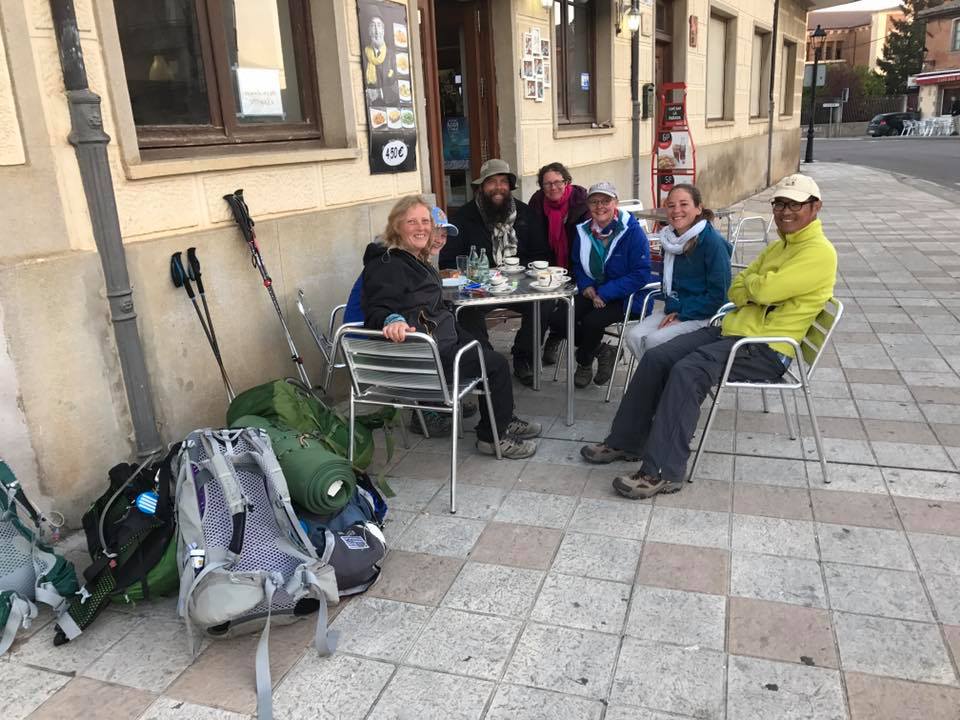
carrion-goodbye-julie-et-al

*from The way of St James blog

Life Part 2 blog (their camino).
 

Walking without a donkey 15: Camino Francés (Burgos to Castrojerez).

30.10.16 – 31.10.16 Burgos to Hornillos to Castrojerez

camino-frances-1557

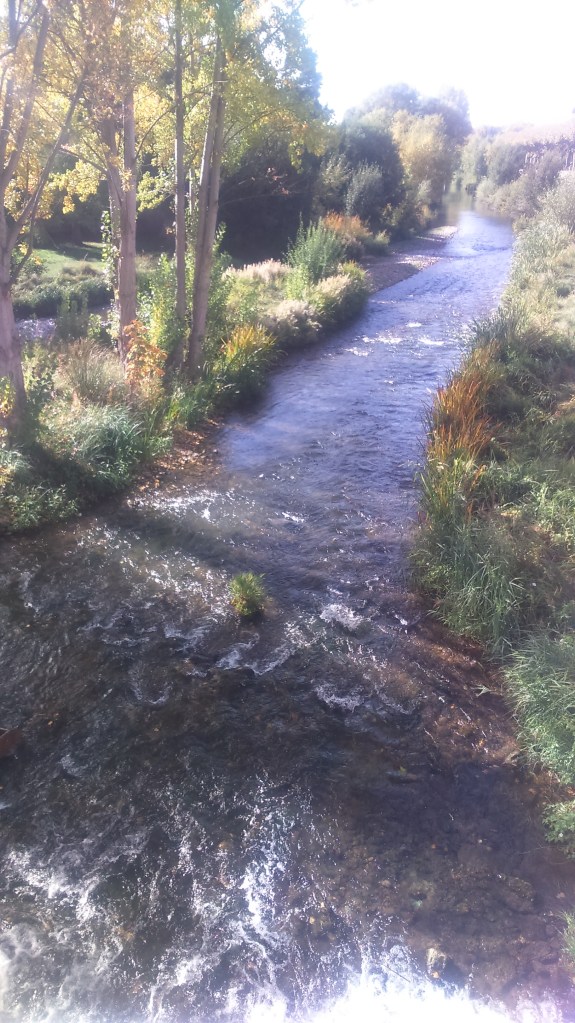
This photo looks as if it was taken in the countryside, but is part of Burgos. I visited a number of places where the local councils have provided beautiful pathways in and/or out of their cities, and after 28kms walking from San Juan de Ortega, it eased the weary end-of-day-feeling. 

The next morning, it didn’t take so long to get out of the urban environment I had spent the night in, and thankfully I was back into the countryside before too long, even if there were a few wrong turns to start with! It’s lucky that a friendly walker always seems to be there just as I am standing around looking bewildered, viewing first one, then a second possible turning, and somehow missing the yellow arrow.

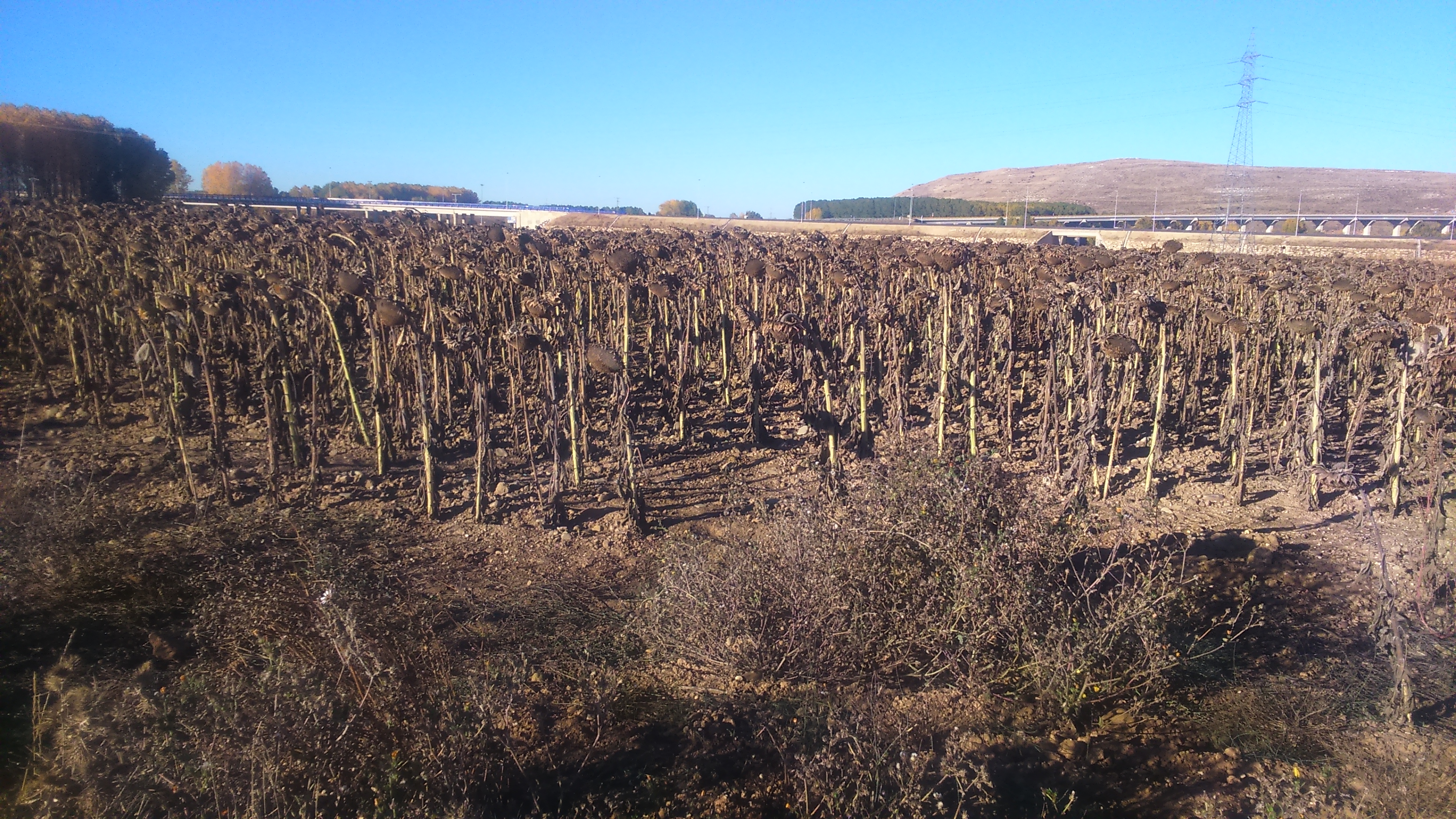
Not long afterwards I started traversing km after km beside fields of dead sunflowers. They were a bit creepy, and sad. Maybe, I ponder, the seeds will be harvested later rather than all going to waste? But I discover through research on the web when I get home, that there are situations where this is not the case. Due to EU subsidies the farmers do not actually  need the crop. What a dreadful waste.

dsc_1155.jpg

We walk through villages where the Camino is their main livelihood, and so some decorate their houses in blue and yellow with the familiar logo,  making sure we walkers feel welcome, and presumably encouraging us to spend money in the bars.

dsc_1157.jpg
A blurred picture, but you can see the flags and colours of the Way of St James.

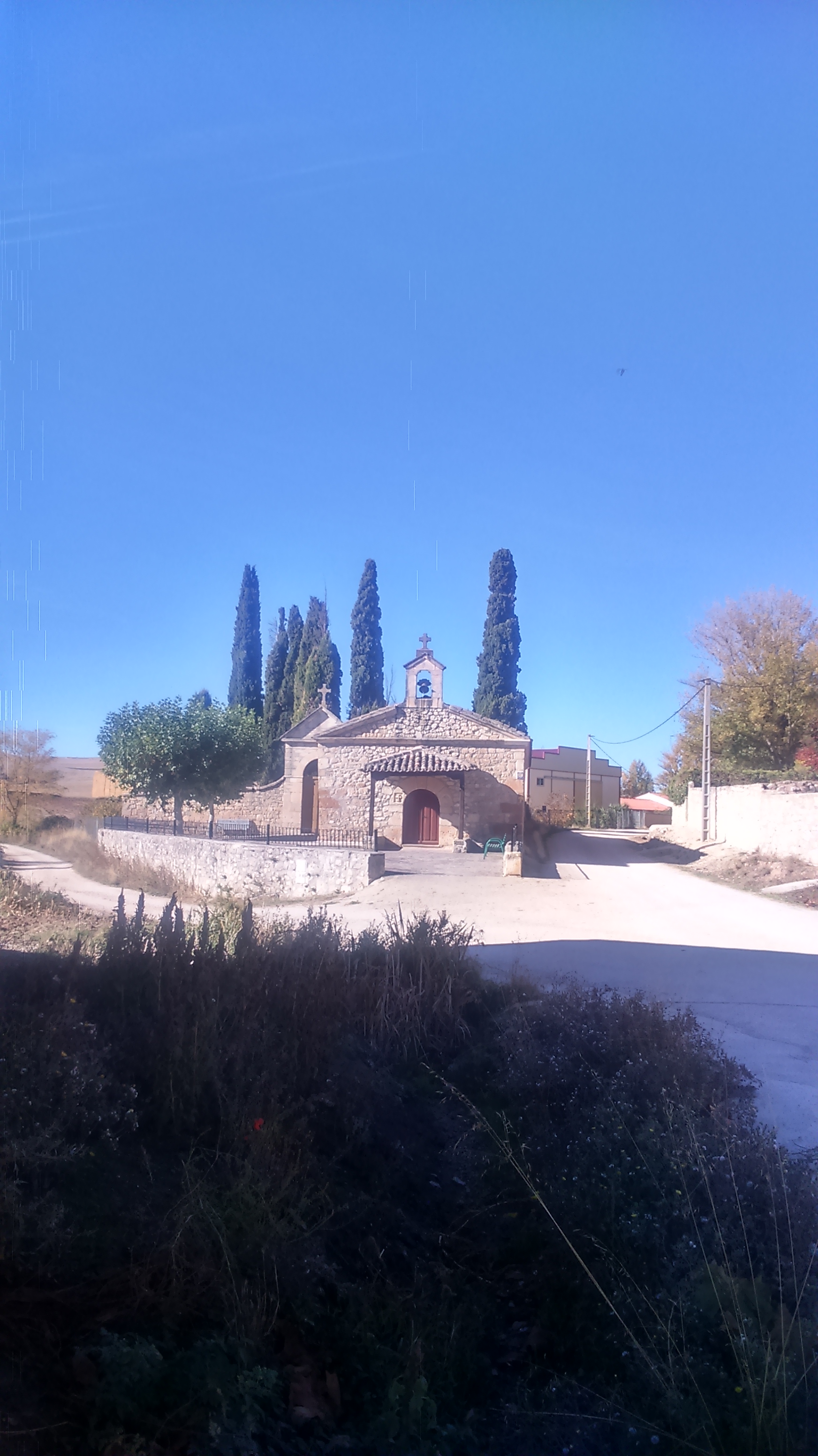
We pass delightful churches. Many are very simple with a single tower and entrance, charming in their structural naivety, and so attractive against the blue sky. They are not usually open, and when there is a long way to walk, we don’t often stop and view the interiors. They contribute to the overall spiritual atmosphere, reminding us that we tread in the footsteps of pilgrims through the ages. Their presence encourages silence.

dsc_1160.jpg

A largeish town, Hornillos del Camino (see that the name reflects its dependence on the Path), is in the region of Burgos, Castille y León. It is a well-kept and sturdy town, with wide streets of grey/yellow local stone, a Catholic church tower, and wooden balconies, and will be full of travellers in the summer months.

DSC_1158 (360x640)

camino-frances-1561

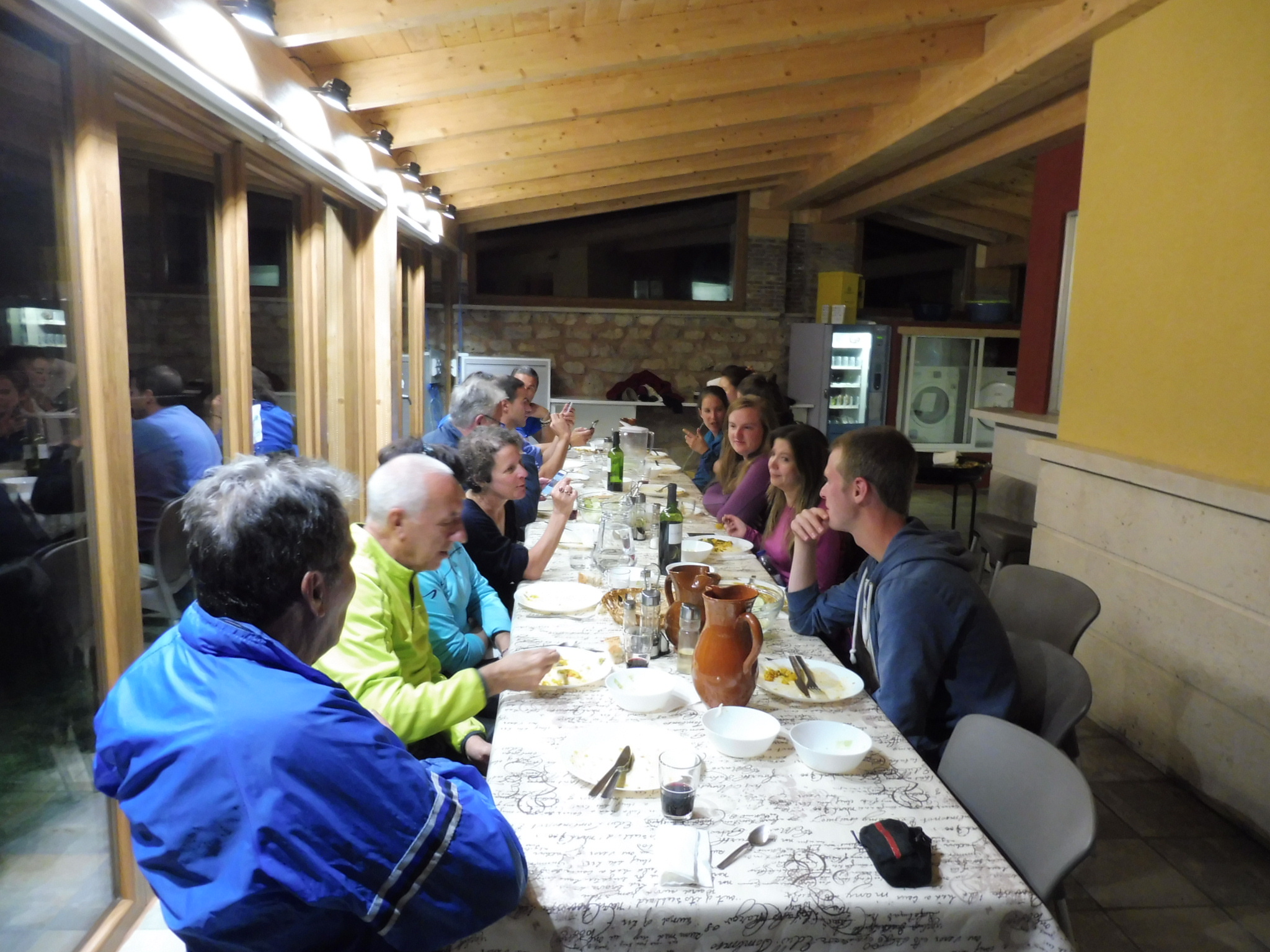
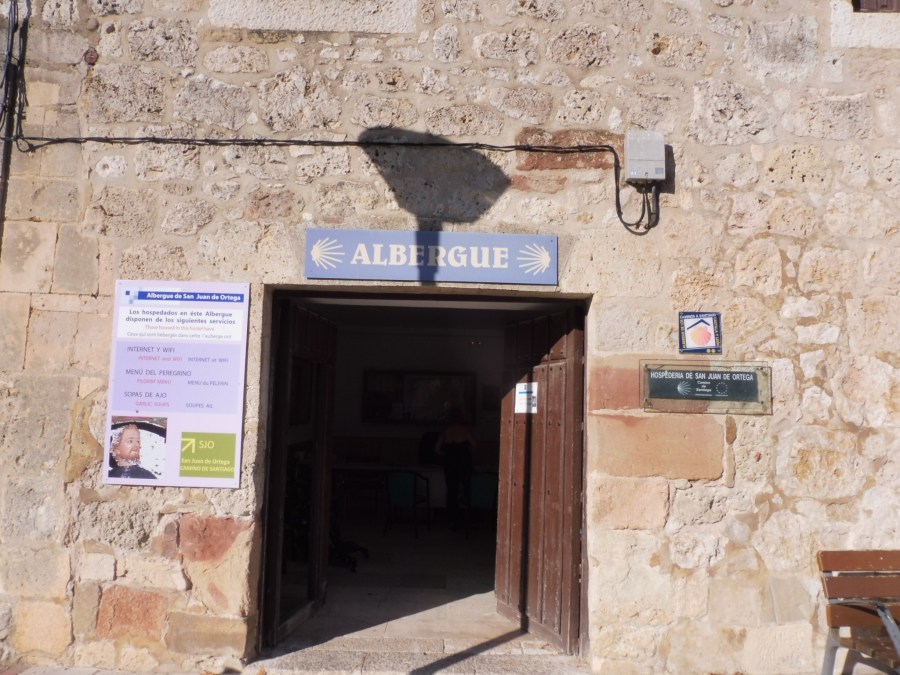
The atmosphere was convivial that evening at the albergue: I shared a ‘pilgrim menu’ (3 courses with wine for 10 euros) with the others, and a good time was had by all!

camino-frances-1568

Hornillos has a backdrop of hills, which does not prepare you for the meseta, the flat and open countryside which follows for several days. Not having to watch for boulders or strive uphill does mean that one km merges into another, and that releases the Mind.

‘Think while walking, walk while thinking, and let writing be but the light pause, as the body on a walk rests in contemplation of wide open spaces.’                                                                                                                                                              p.20 A Philosophy of walking, Frédéric Gros

camino-frances-1567

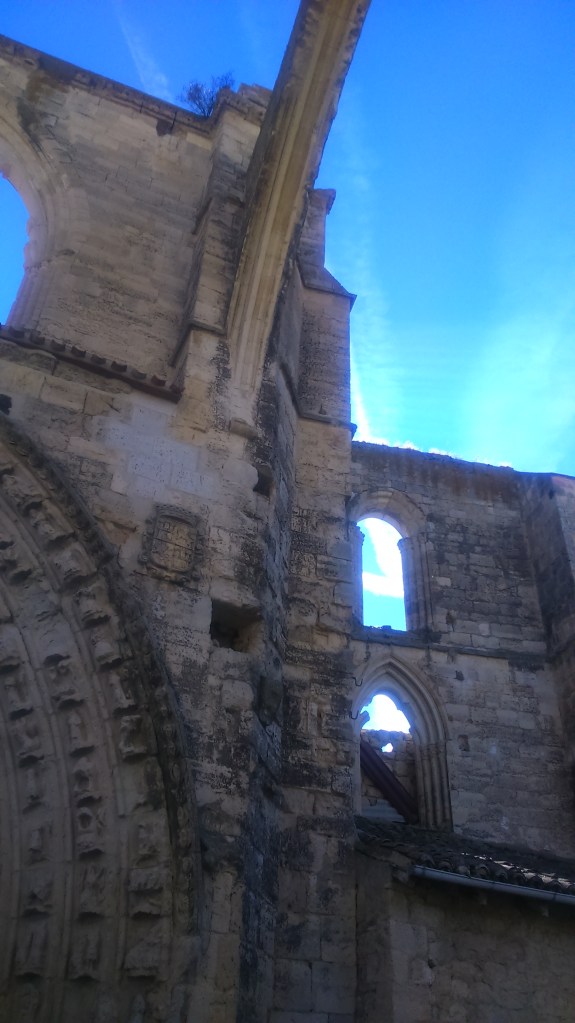
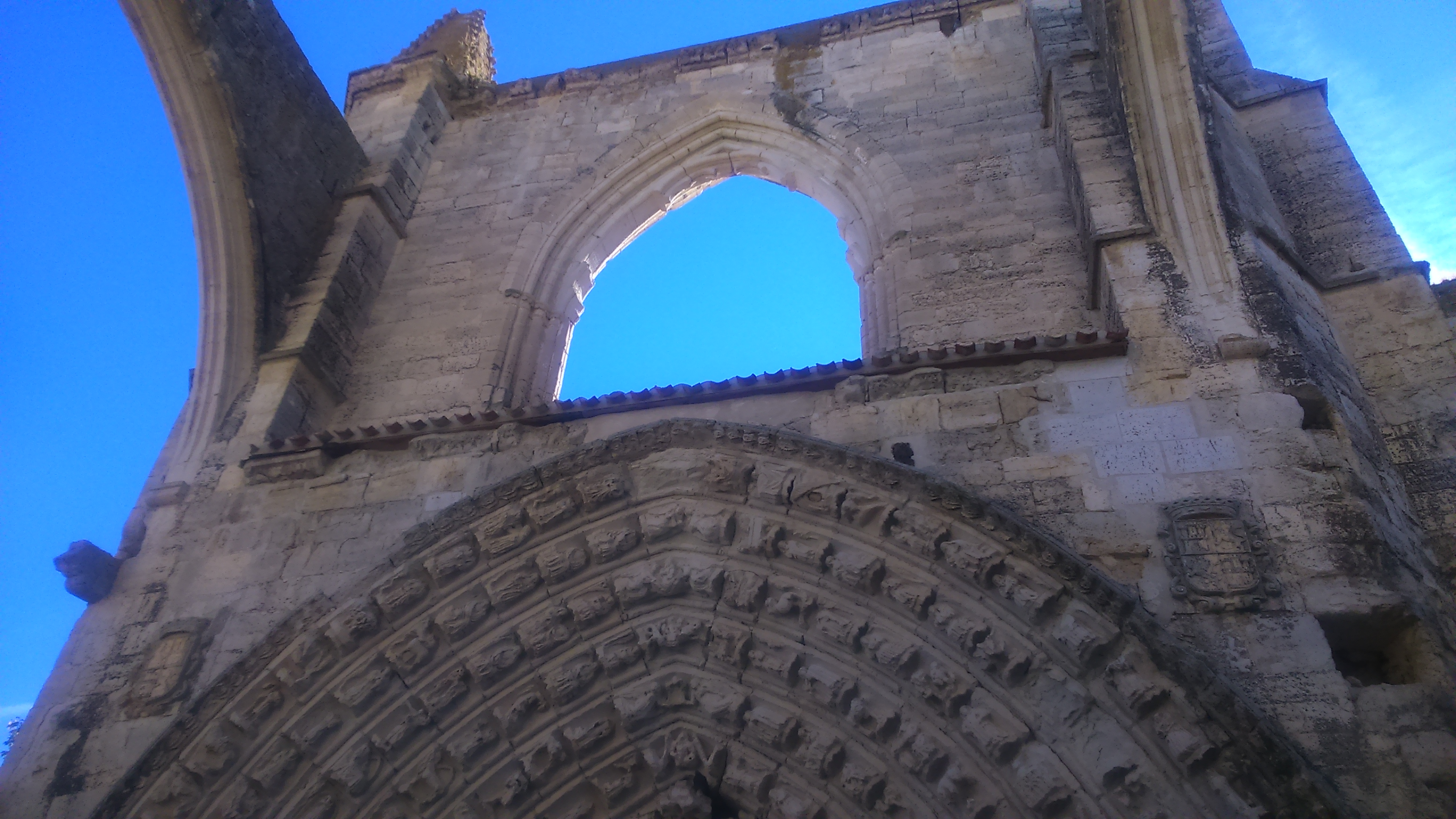
I only just get used to being able to see my destination an hour ahead, when something very unexpected happens: The sign to the ruins of the Convento de San Antón is unasssuming, suggesting to me that it will be another small religious building. But there is the sound of heavenly music, and it gets louder and louder, until I round a corner to be faced with astonishing flying buttresses right across the pathway.

dsc_1163.jpg

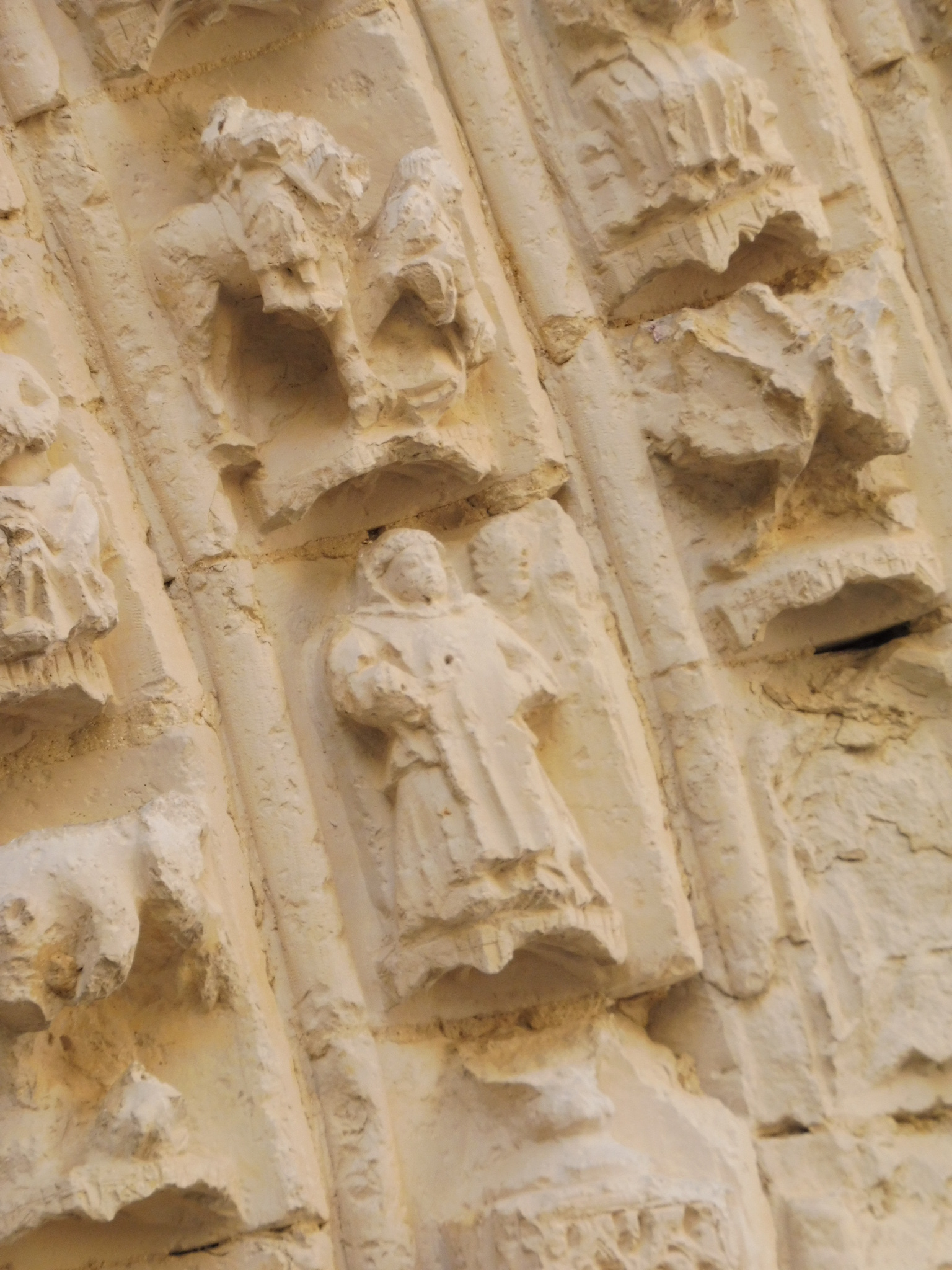
It is an architectural spectacle! I have to stop and gaze at the most detailed and highly carved archway, replete with stone figures many of whose heads are missing due to the ravages of time, and there, there’s a donkey (or is it a camel?).

dsc_1161.jpg

camino-frances-1601

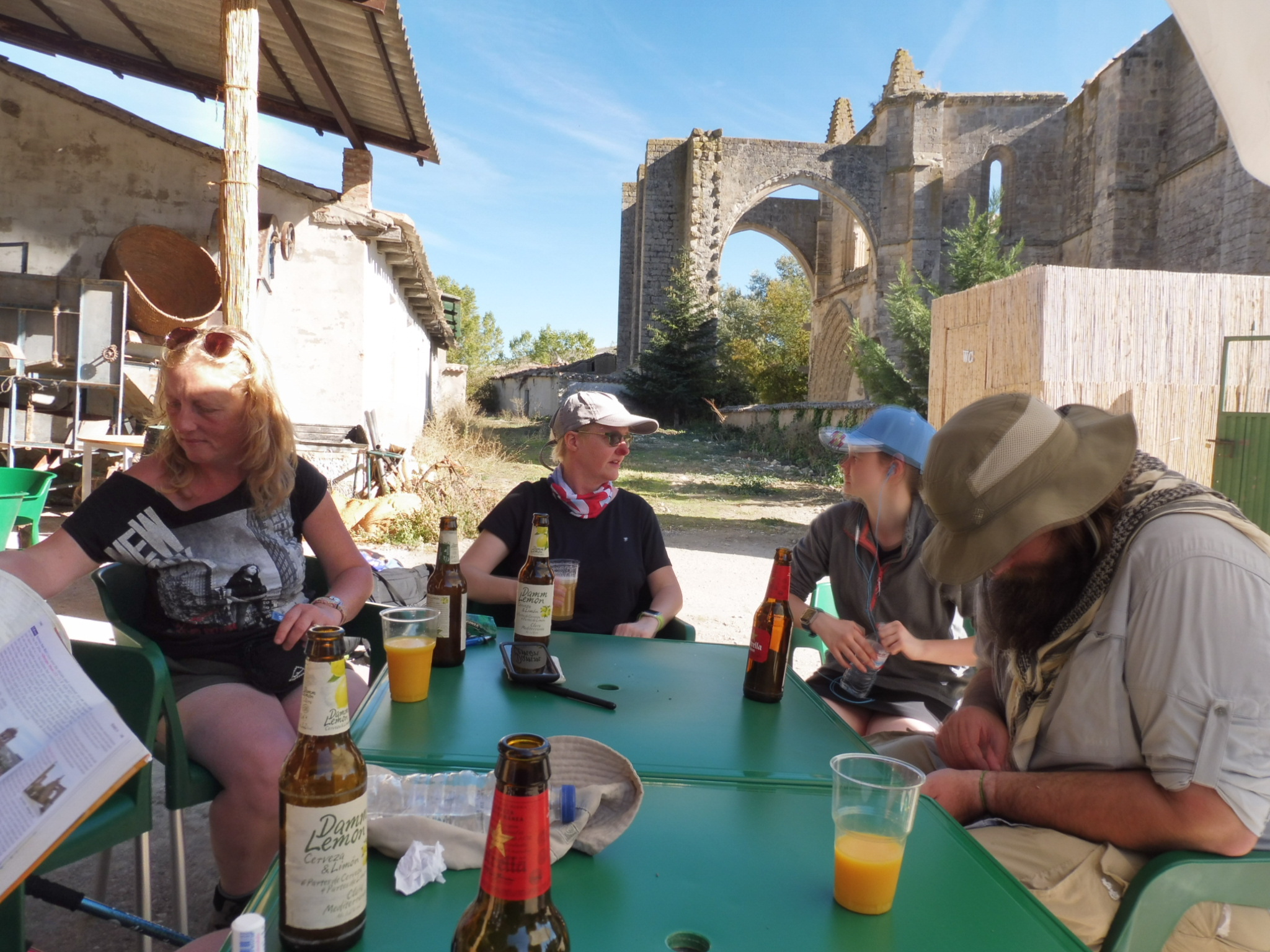
In addition, on the right is a courtyard from which I discover the music emanates, together with familiar faces enjoying drinks and a toilet break. It turns out to be one of those amusing tourist interludes where the barman produces a ‘bag’ with a long, thin spout, full of wine, that you hold up high and pour into your mouth (or all over your face if you aren’t careful!).

camino-frances-1592

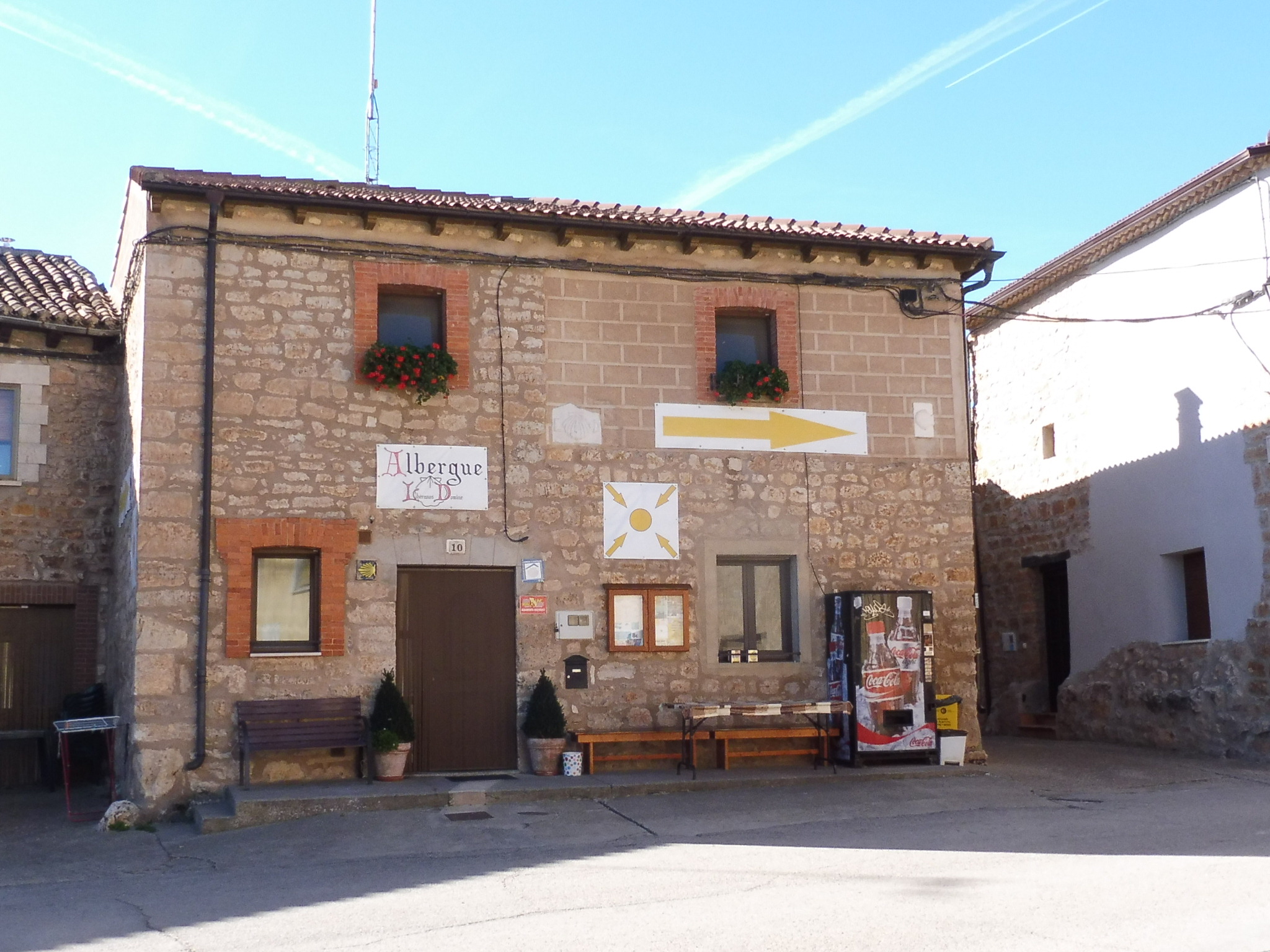
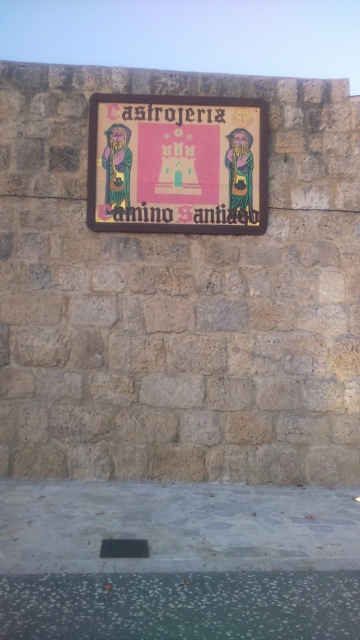
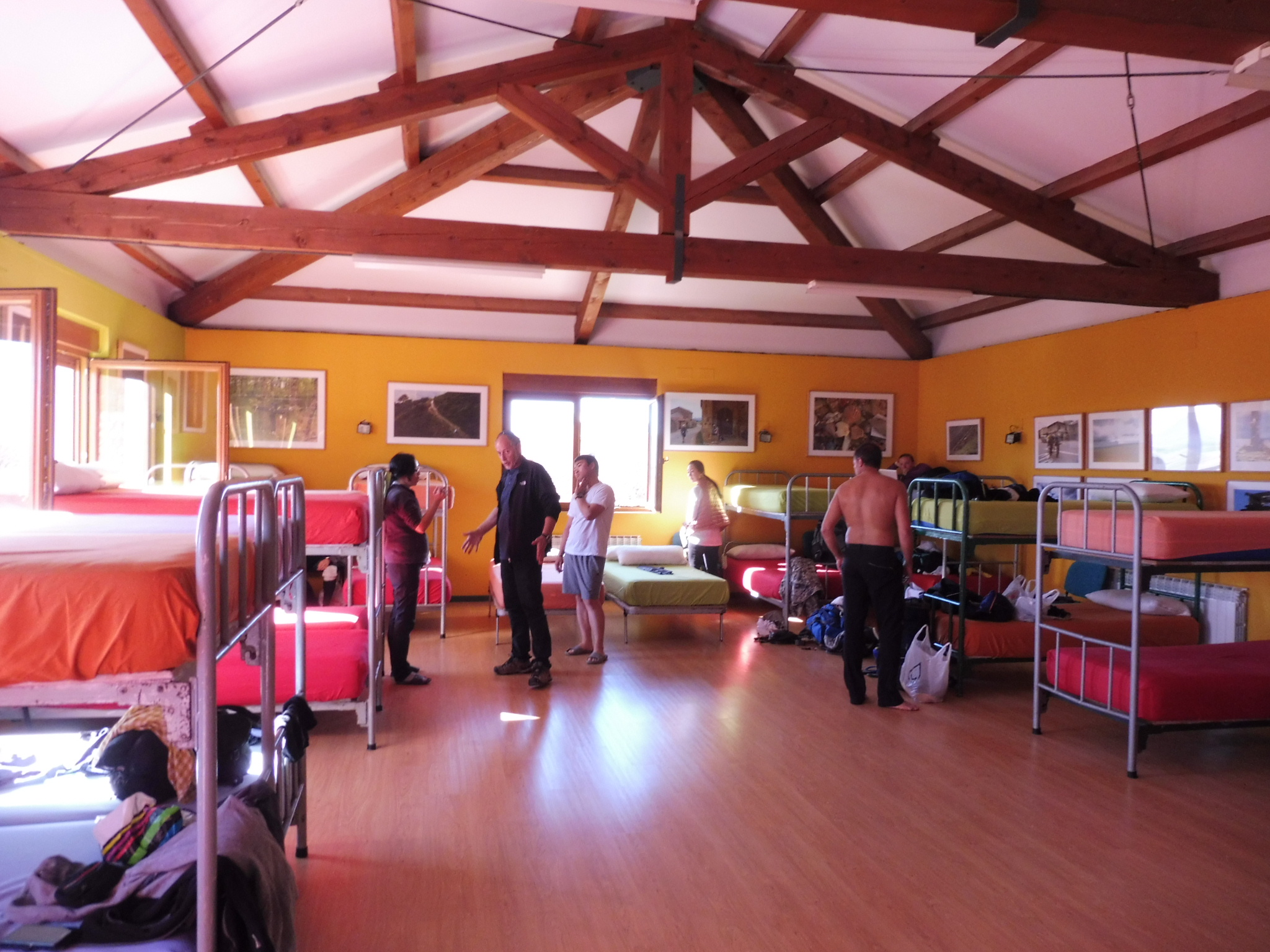
After these antics, we once again split into various groupings, and make off on the trail to Castrojerez with its idiosyncratic signage, and large shared dormitory for another night of snoring!

DSC_1166 (360x640)

camino-frances-1609

Thanks to Randall St. Germain  for sharing the Castrojerez website

A camino blog I recommend


Walking without a donkey 14: Camino Frances, San Juan to Burgos

29.10.16 San Juan de Ortega to Burgos, on foot

camino-frances-1532
San Juan de Ortega

Why did I come back to the Camino? I think I had already fallen in love! Walking out into a day like this, who would not?

dsc_1156.jpg

Certainly the world had that glow about it.

camino frances 1543.JPG

The simplicity of walking out at dawn with only the immediate to think about. Holding hands with the landscape, falling into step with the climate, walking alongside the smells and tastes of each region as I passed through. Sharing only the necessary things of life: food, sleep, moving forwards.

dsc_1152.jpg

Kissing the colours of Autumn, embracing the opportunities that waited for me; arriving in a new place, and exploring the unfamiliar streets, churches, shops and cafes; resting on my bunk simultaneously listening to music; exchanging stories in unfamiliar tongues. The looked-for love affair that took me out of myself, and at the same time dropped me right into the essence of my being.

dsc_1150.jpg

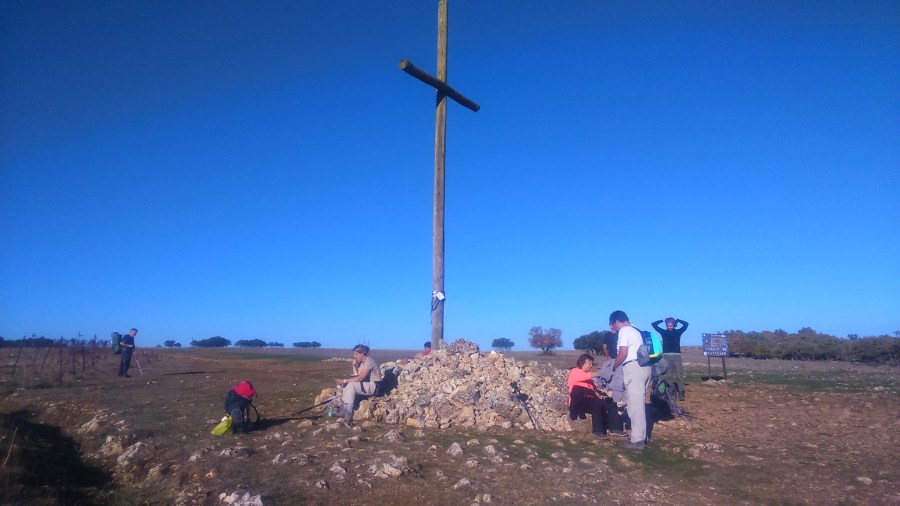
As well as resting places, the many crosses and cairns (the Scottish word for a pile of stones often found in the hills and along paths), serve as locations for carefully selected rocks, placed by walkers to mark the spot. We give thanks for what has come to us. That we are still on our feet and continuing to walk the beautiful Camino.

spain-autumn-2016-phone-1213

In Scotland, in summer, we often say to each other how lovely that the warmth brings people out of their houses, out of their thick, protective clothing, and liberates their chatter and laughter. Here I was in a seemingly perpetual summer, sun on my bare arms and legs, with the energy flowing up from the ground I was pacing, liberating me, and lightening my heart.

‘..the call of the great outdoors…the need to provoke…transgressions, to give substance at last to folly and dreams’. p.5 A Philosophy of Walking, Frederic Gros.

dsc_1153.jpg

(Such a contrast to walking in Edinburgh in January! No-one smiles or gives a cheery ‘Buen Camino’ as I stride past. My nostrils are full of exhaust fumes so I can barely notice the smells of the hedges and herbs in the gardens I walk past. If it wasn’t for last night’s snow highlighting the fields and hills of Fife over the water, which I can thankfully see through the skeleton trees at the end of the road, there would only be cars and rushing people.)

As I have seen Burgos, which is today’s destination, twice already, I walk through and out towards the other side. This way I avoid the crowds in the centre, and sashay along the glorious river bank, discovering the outskirts later that evening.

spain-autumn-2016-phone-1160

Walking without a donkey 13: Camino Francés

Days 5 and 6. 28-29 October 2016. Nájera (Camino Francés) – Burgos – Cortiguera – Madrid – Aranjuez – San Juan de Ortega (back on the Camino)

dsc_1075.jpg
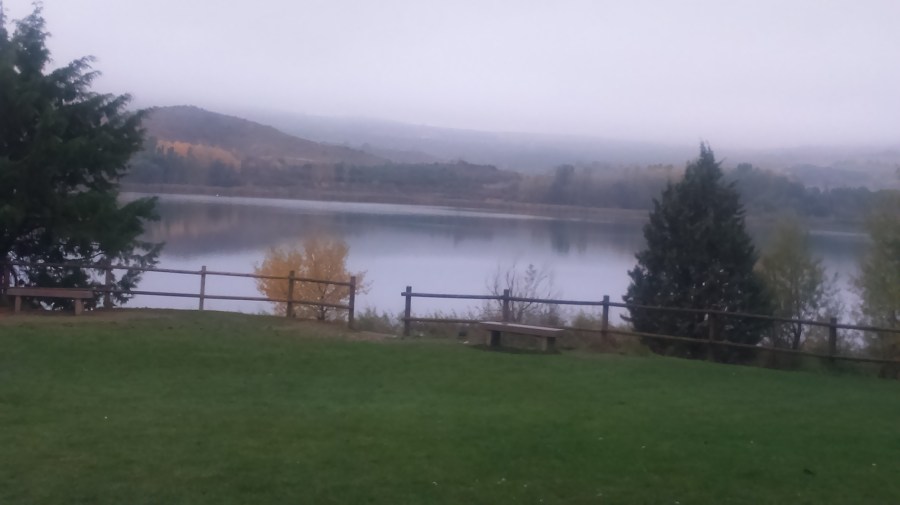
Pantano Reservoir, Logroño on the way to Najera 28 October 2016

I made a promise to visit Gill (who had already put me in touch with so many lovely Shiatsu people to stay with) in Aranjuez, which is 50km south of Madrid, before the end of October. So I left the Camino at Nájera, after only 5 days of walking (blog posts 9, 10, 11), and went there via Burgos (90km, 1.5 hours by bus), Cortiguera (blog post 12, 70km north of Burgos), and Madrid (250km, 2.5 hours back down south) – a very long way round!

dsc_1084.jpg

dsc_1085.jpg
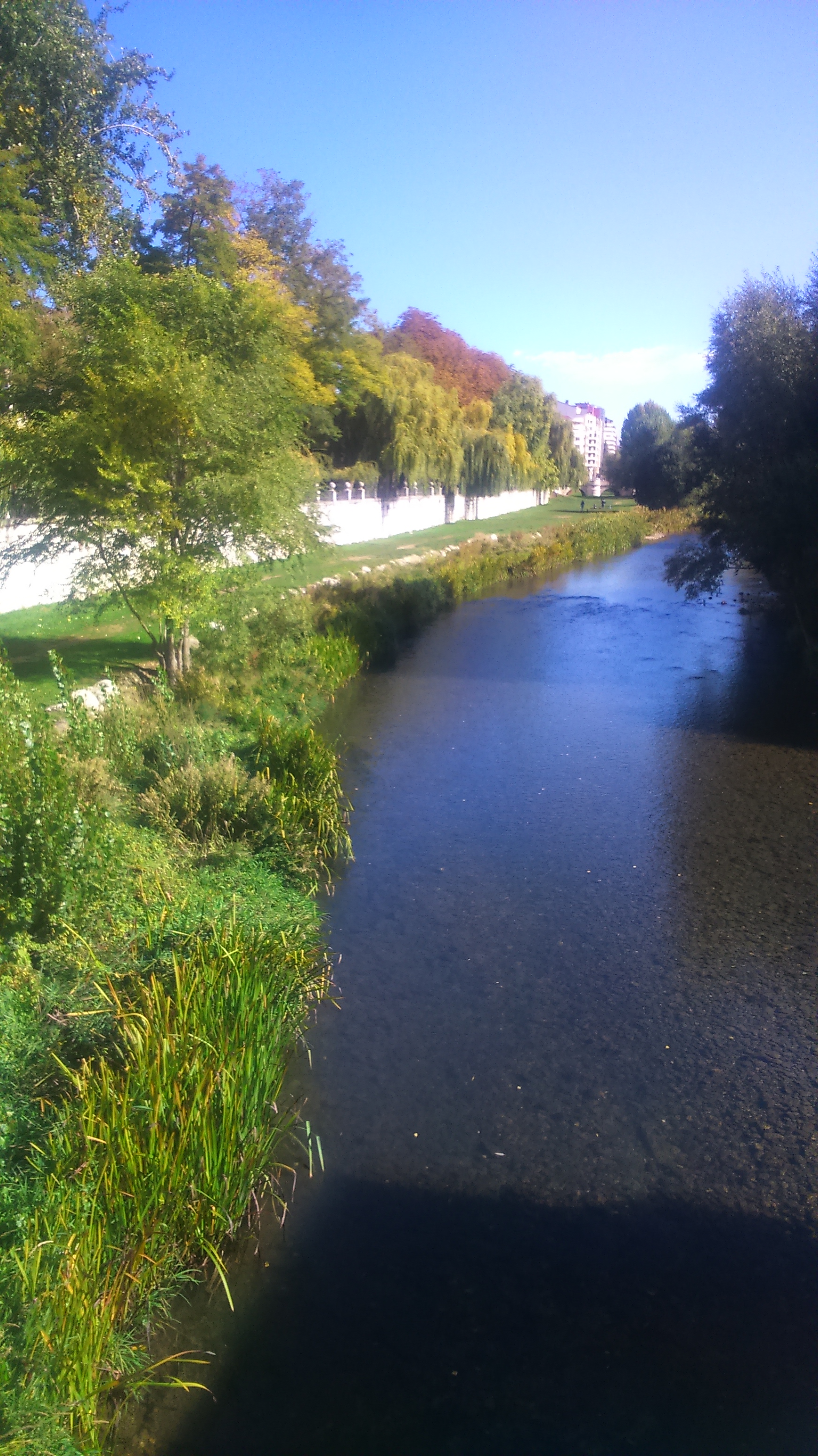
River Arlanzon, Burgos

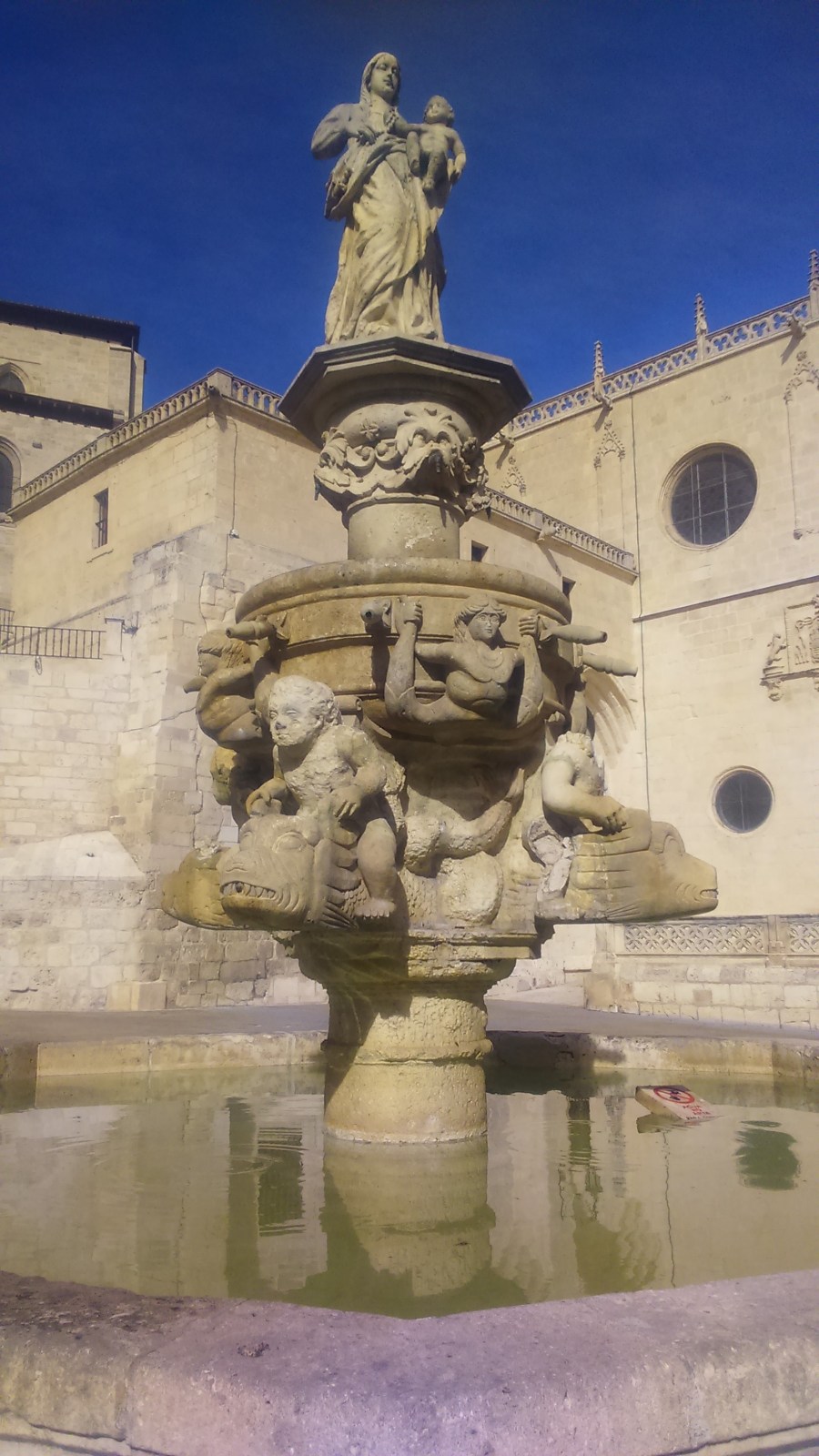
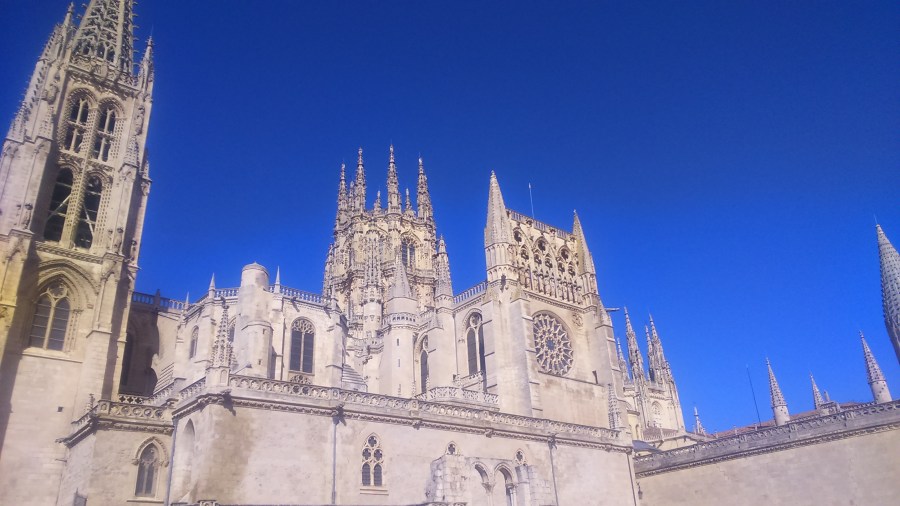
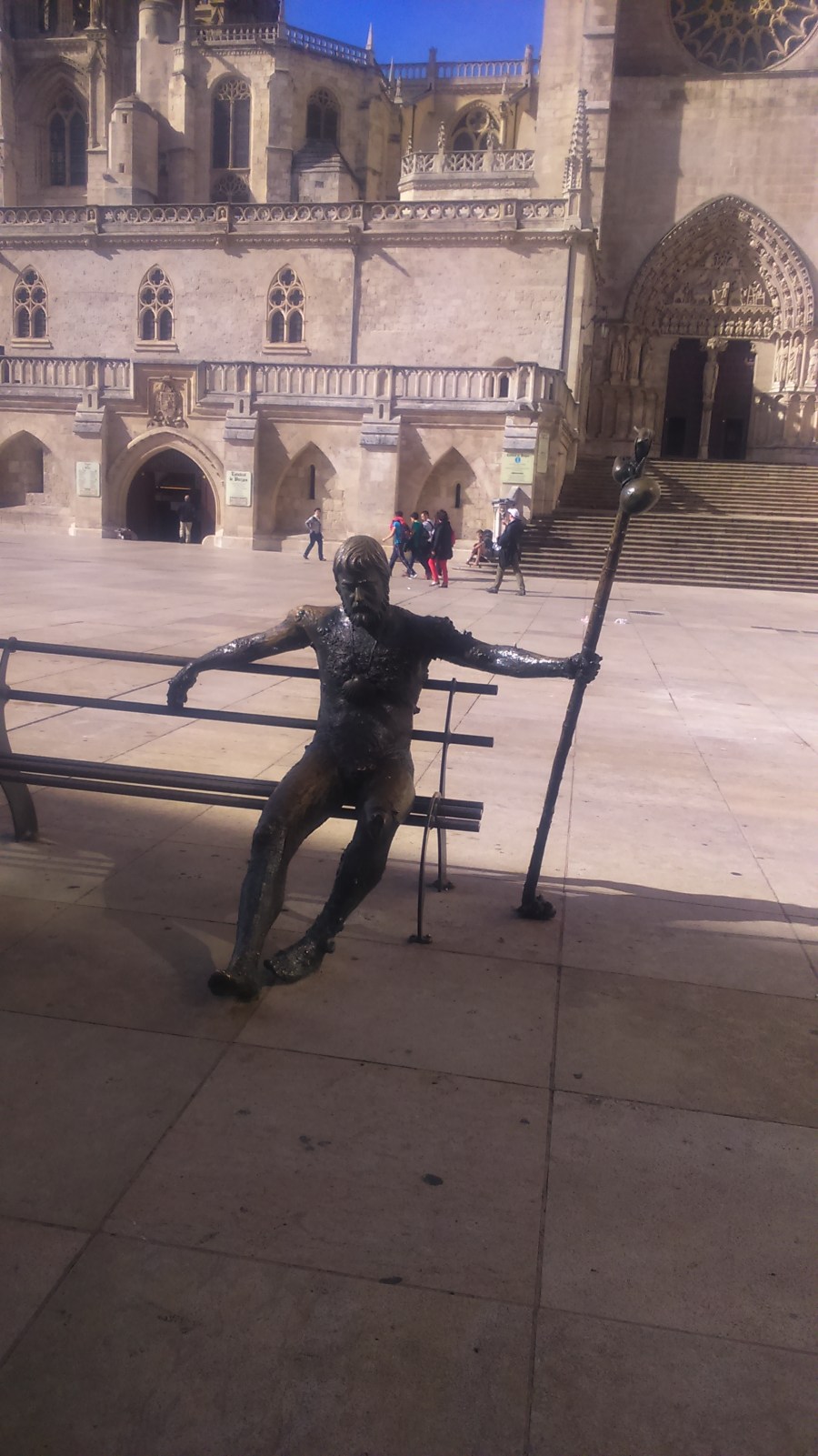
I only spent a little time in Burgos this time, but the sun shone and the bus station is central, so I was able to walk across the river, into Cathedral Square where I sat and ate my sandwiches, walked around the adjoining streets, visited a cafe for a green tea and wifi, and photographed the famous pilgrim statue.

dsc_1087.jpg

dsc_1091.jpg

dsc_1094.jpg

Afterwards I returned to get my link to Cortiguera to see Dirk and Charo.

This was where I saw a group of vultures circling at eye level in front of majestic rocks above the slit of river far below.

dsc_1125.jpg
On the way to Cortiguera

I wrote in my diary on the bus: ‘This time the ‘bird’ I see as I approach the city is a silver plane rising in the blue sky. After the outdoorsy life I’ve been living in the country and small villages, I’m nervous about entering the capital city for the first time.’

I was right, it was a serious contrast, and I found travelling across Madrid a terrible strain. After calmly walking through the regions of La Rioja and Cantabria, with their expansive silence and disinterested wildlife, the thoughtful travellers at a regular pace, the noise, the numbers of people, the difficulty in negotiating the ticket machines at the underground stations – it was all an onslaught to my system – and I couldn’t take any photos.

On arrival at Aranjuez, I partook of a glass of wine and settled myself. Later I was treated to a pizza (urban food!), and taken to Gill’s amazing kitchen garden. Here she grows fruit and vegetables, and bakes delicious bread in an open oven which she shares with her neighbour. Alongside giving and teaching Shiatsu, hosting visiting tutors, leading chi gung classes, and generally keeping a large sector of the Spanish Shiatsu community connected, she delivers this fresh produce to people in the local area.

I had not bargained for the power of the Camino, and the next morning I overturned my plans to stay south for 5 days, and returned to the north, via Madrid and the bus station I was getting to know and love, back to Burgos and the Way. Thank you Gill and Jorge for being so understanding.

camino-frances-1541
Hostel at San Juan de Ortega

It turns out that getting to San Juan de Ortega in the evening is tricky. It was hard to get information and a taxi would have been extortionate, so I waited 4 hours (witnessing drunken fisticuffs in the street), before joining a local bus service which several people had told me would go there and for which I had a ticket. Needless to say I was the only foreigner. The large family group which made up the majority of the other passengers, were friendly and interested in me and why I was there. They chattered loudly, not seeming bothered by my pigeon Spanish, offering to share their snacks with me, and laughing hilariously at my escapades up and down the country.

When I was the only one left, and we were driving through the pitch dark (by now three quarters of an hour late), the driver asked me where I was going and ‘Si, si’, he pointed into the distance. He told me all about his wife and kids, and where he was going on holiday, and eventually deposited me in front of the former monastery, where I was met by a kind, but rather worried, fellow walker. He had been told that the bus usually drops folk off at the previous village and was ready to come out and escort me in case I met wolves walking through the night forest. Apparently the bus had made a detour especially for me. Being so late meant there were no beds left, but this same kind man had negotiated an alternative – in the library – as well as having supper waiting for me. I always knew I would get there safely, but those around me were not so sure until I actually arrived!

camino frances 1532.JPG
San Juan church

The next day we walked to Burgos!

Last 2 photos courtesy of A. Bec

Walking without a donkey 12: Cortiguera 

26.10.16
Spain autumn 2016 phone 1875 (1) (288x512)

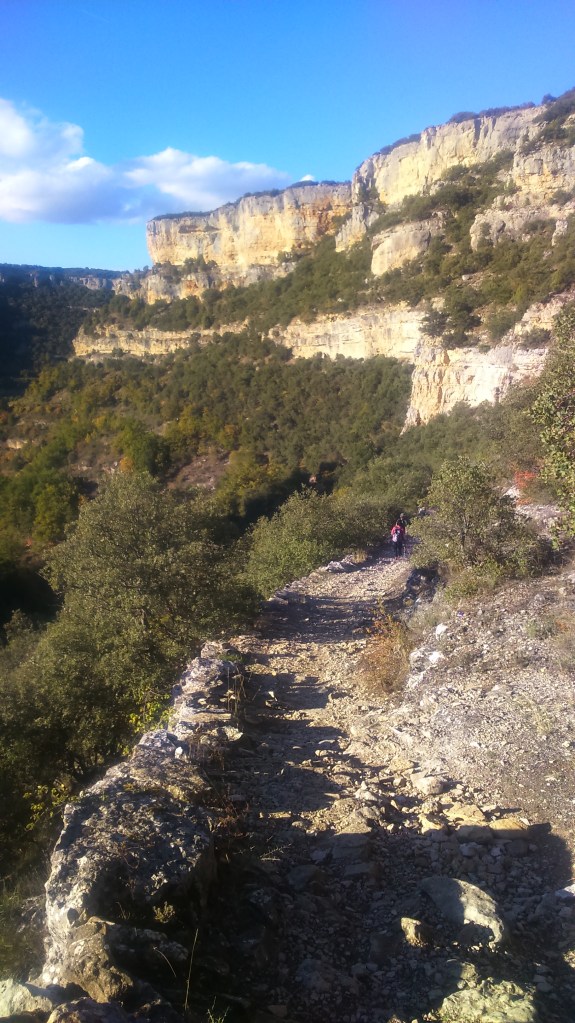
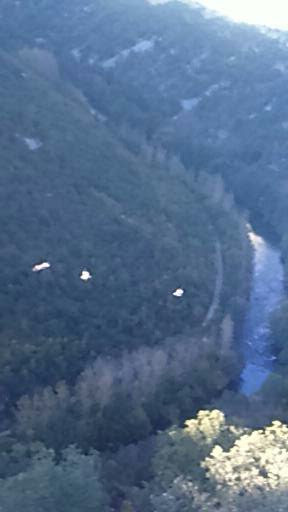
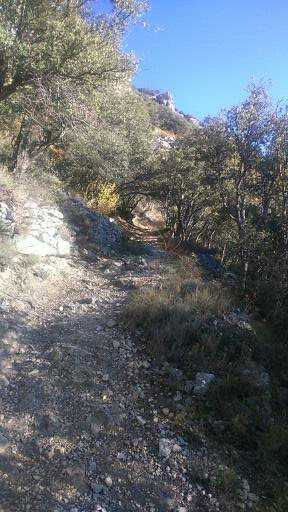
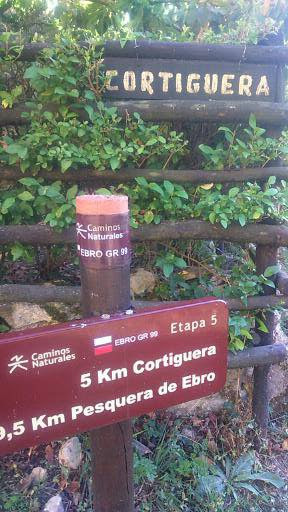
Mirador del Ebro (a river viewing place), is a most stunning view that there are no words to properly describe. I had climbed up and up in the baking heat with my backpack (no donkey). It was silent except for the occasional car far away on the road where the bus had left me, and cicadas which fizzed and hopped around my feet. Finally the path flattened out and a sign pointed to the mirador. I walked to the edge and below was the canyon with the azure blue Rio Ebro deep in it’s fissure, amongst forested slopes, massive grand rocks, and a rainbow Autumn landscape.

Spain autumn 2016 phone 1857 (512x288)
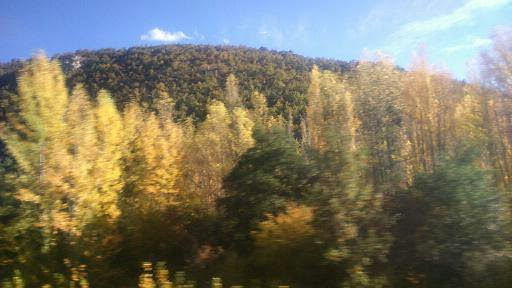
Taken from the bus!

Here, in the Castille and Leon region of Spain, I once again saw vultures abseiling downward and circling back up, except this time, as I stood at the Mirador del Ebro, I was above them – so close I could see every individual feather: the black, brown, and white sections of the great wing span, the hooked beak, and far-seeing eyes. They seemed to be simultaneously enjoying the physical experience of soaring on the air, and the business of spying prey on the rocky ledges way down below in the river gulley. And as if that still suspension wasn’t beautiful enough to watch, then they all came together in a sort of ornithological version of a tornado, spiralling around a column of air, a group of perhaps 9, round and round, up and up, before they started their next float back down.


Spain autumn 2016 phone 1883 (288x512)
Unfortunately this is a poor picture because I was focusing in on the birds of prey which were circling at my eye level above the river way below and my phone camera could not manage the zoom.

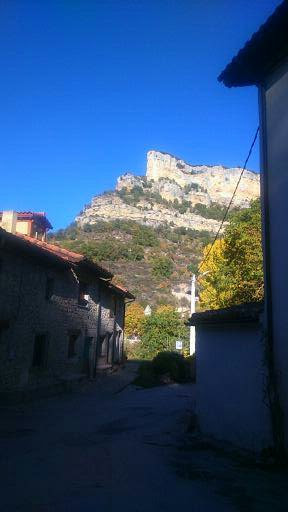
The area where Shiatsu practitioners Charro and Dirk live, is one of the most astonishing places I have ever been. Gleaming yellow trees in the autumn sun; towering craggs of grey and yellow stone – nature’s co-ordinated colour scheme; a deep canyon through which the River Ebro courses; rich, young forests of 30 years, now that the scattered population (1 person on average per square meter, less in Cortiguera) have stopped burning the trees for carbon.
Spain autumn 2016 phone 1865 (288x512)

I stay less than 24 hours, but it’s enough to be treated to delicious Castillian soup with buckwheat, baked apples with cinnamon and walnuts from their garden, a private cottage for the night, stimulating conversation, and to be shown around their extraordinary home.

Spain autumn 2016 phone 1874 (288x512)

They have personally reinhabited a destitute village and created beautiful spaces for visitors (via Casa Rural), Shiatsu sessions, and workshops. The night sky alone is worth the journey -there’s none of the black space we see in Edinburgh, it’s a heavenly array of layer upon layer of stars and constellations. T’ai Chi in the misty morning garden was a delight, and the tour of the local Romanesque derelict church, which they are in the process of restoring for future generations, was astonishing.

Charro and Dirk offer Shiatsu treatments, courses, accommodation and more. This is their website http://www.talamo.es

Spain autumn 2016 phone 1873 (288x512)