I am an Edinburgh-based artist who exhibited in the Walking the Land collective Lines of Enquiry exhibition at the Hardwick Gallery University of Gloucestershire in Cheltenham. The gallery is situated near the Honeybourne Line, a greenway which used to be a railway. After the opening on 7 March, I made an artwalk from the Welsh/English border to the Symposium which was also at Hardwick and held by Walking the Land.
The Honeybourne Line in Cheltenham and the Cycle Route Network in my home city of Edinburgh date from the Industrial Revolution, whereas industrious ants have been around since the Jurassic era. For much longer than we have been commuting along these paths, they have been making their way back and forth to work from ant hill or nest, gathering food, clearing up after us, and making critical relationships with other species (famously stroking aphids so they secrete honeydew).
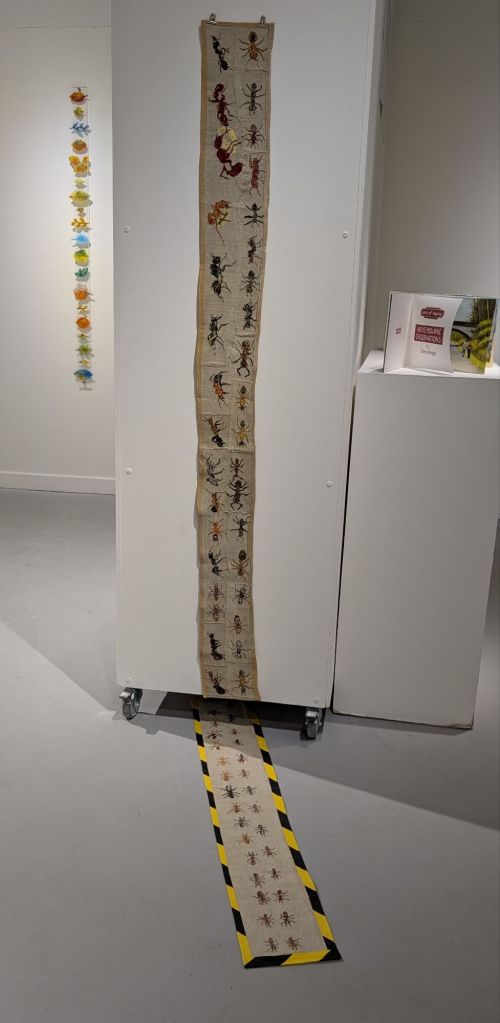
I have walked, watched, sketched and embroidered ants in order to appreciate and understand more about them and their busy lives. So often unseen, they are a vital part of our ecosystem and I celebrate them.
The Honeydew Line (stitching) by Tamsin Grainger at the Hardwick Gallery, Cheltenham. Ants walk each day to forage, and like commuters along the Honeybourne Line (Cheltenham), they pass in both directions often carrying heavy loads
I walked from Chepstow to Cheltenham through the Forest of Dean, the Severn Plain and the Cotswolds, looking out for the unseen small ones (eg ants who are part of our ecosystem and clear up our rubbish). For 10 days, I noticed, acknowledged, and paid attention to the vital role these not-insignificant members of our community play.
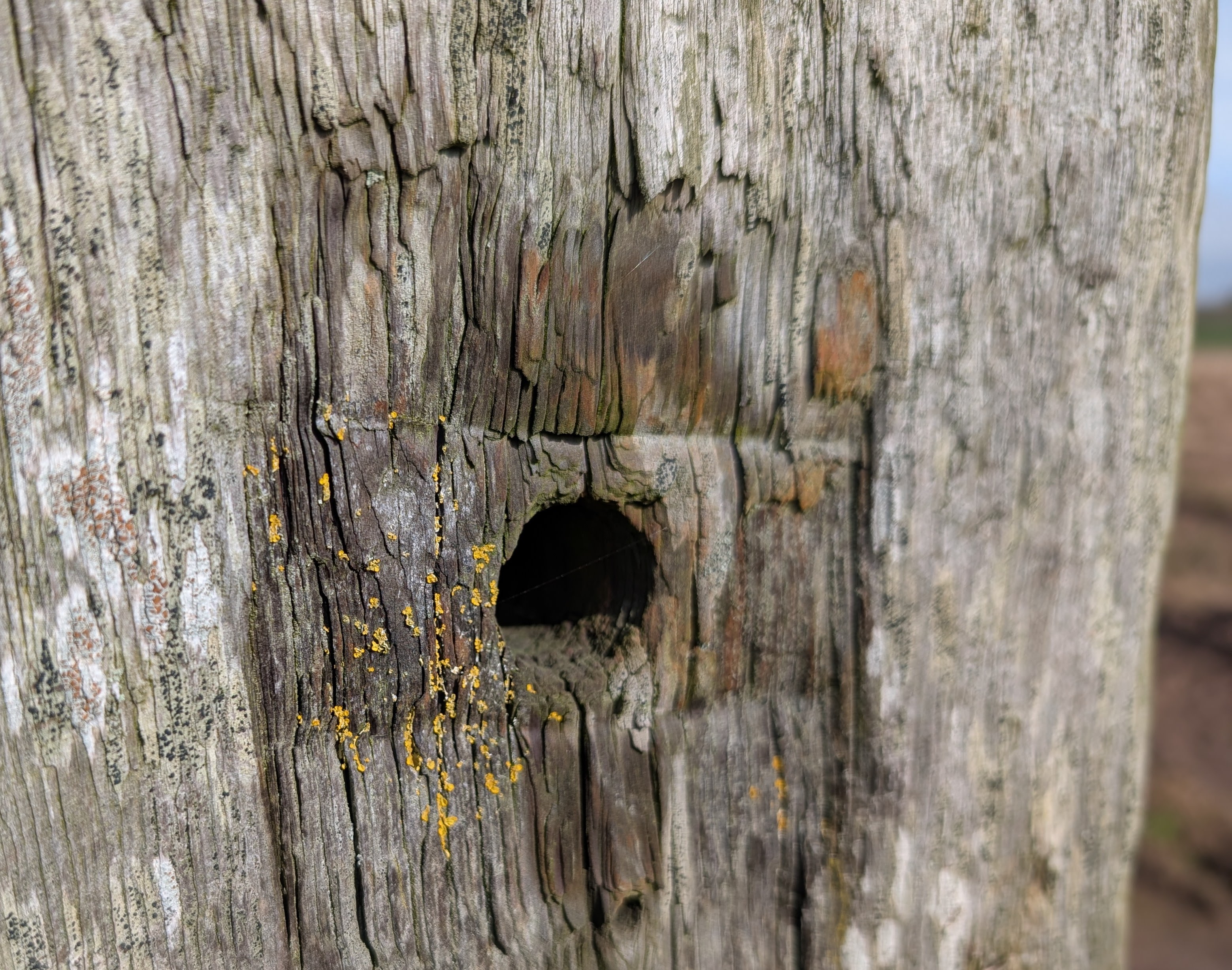
The mushroom says, fruitfulness comes from what is unseen or overlooked — hidden networks, decomposition.
Elizabeth Wainwright, Redlands
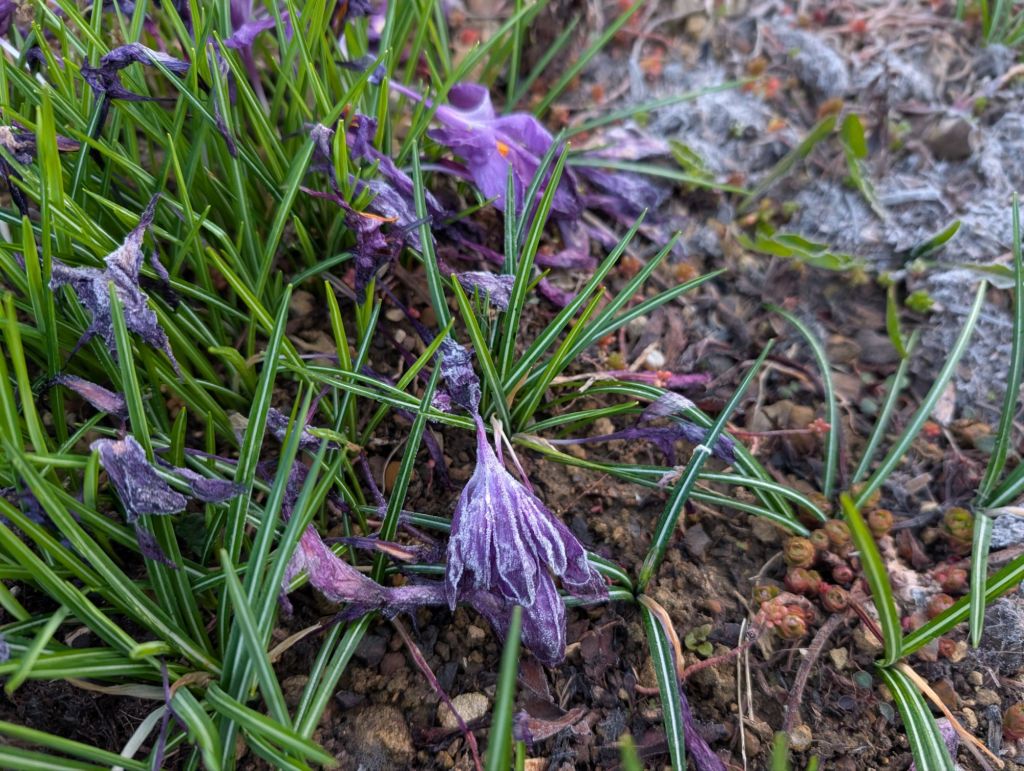
Orange crust fungusFrozen crocuses
At the end of each day, I visited the home of someone who had taken me up on my offer of a Shiatsu-hospitality exchange. Highlighting the walk in advance on social media, I invited others to accompany me and/or to meet in the evenings / overnight. I was delighted to make the acquaintance of many people I’d never previously met, and others whom I had known before but had not seen for a few or even for 40 years.
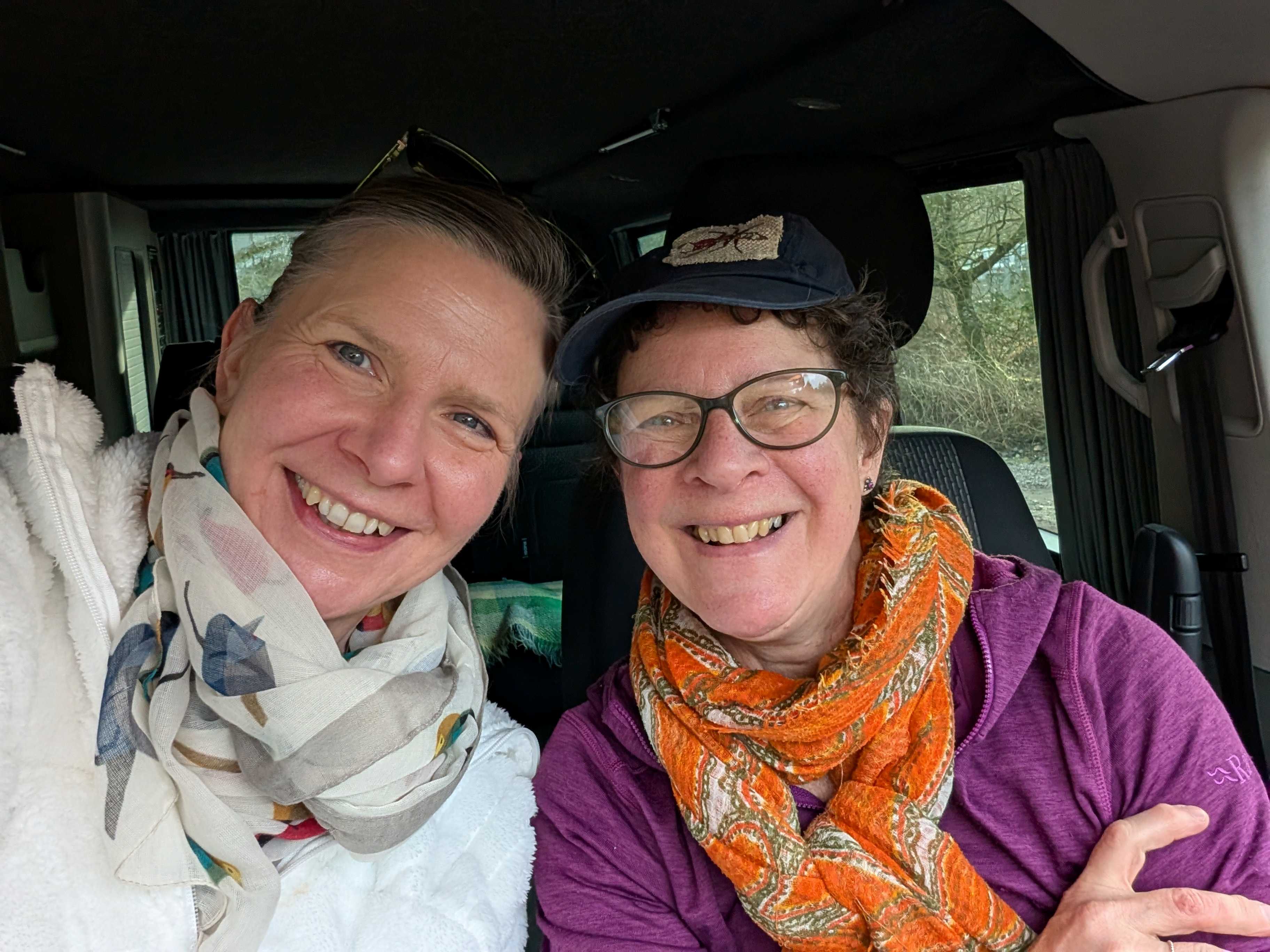
With Vicky at the end of day 1 @wyevalleyshiatsu
During the walking process, I witnessed the terrible devastation to our soil that we have caused through intensive forestry, extraction, and injurious industrial farming methods. The effects of the recent, more extreme, wind, storms and flooding, often attributed to climate change, were experienced every day.They prompted me to recognise our human failing to protect the insects, birds, plants and animals that we have a duty of care towards, and rely on.
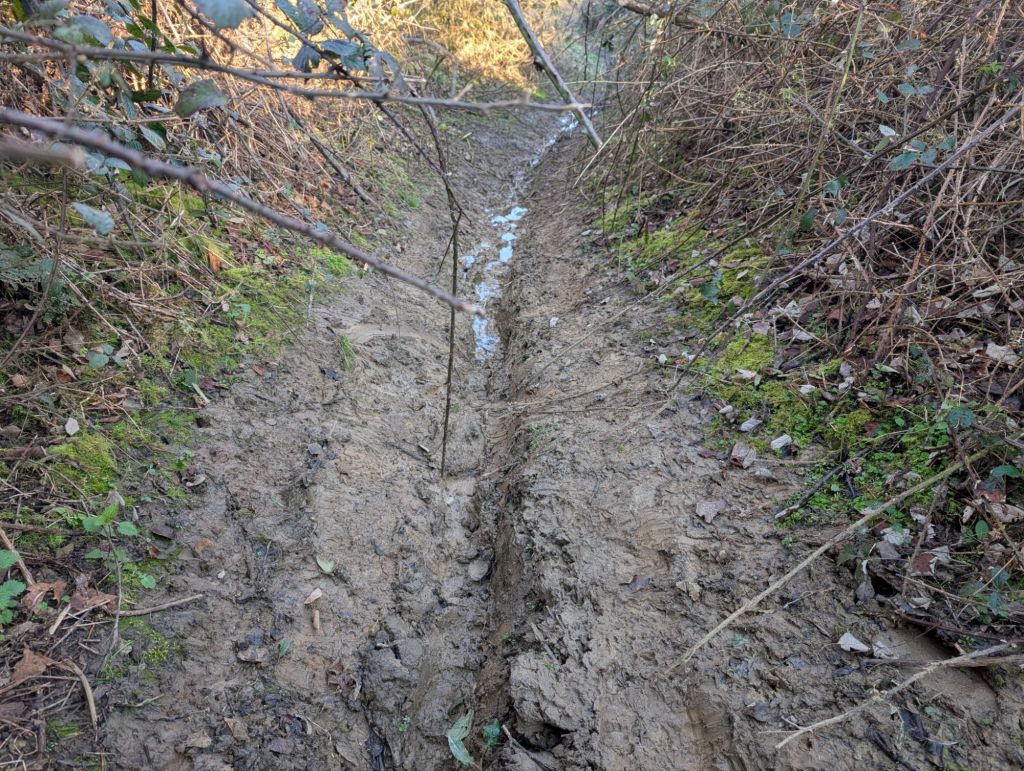
Eroded paths – almost impassable with human feet
Over the next months, I’ll be reflecting on the injury to my leg from slipping on the mud while climbing May Hill at the end of a 10-hour-day’s trek carrying a heavy pack. The pain I walked with became an embodied manifestation of the state of the crisis we are in. There were times on the tops of hills when trudging and squelching through mud, that I wondered if I could continue to go on. I had to sit and rest, mindfully. I had to accept the situation, go right into the middle of the extreme discomfort in order to transform the pain that each step caused.
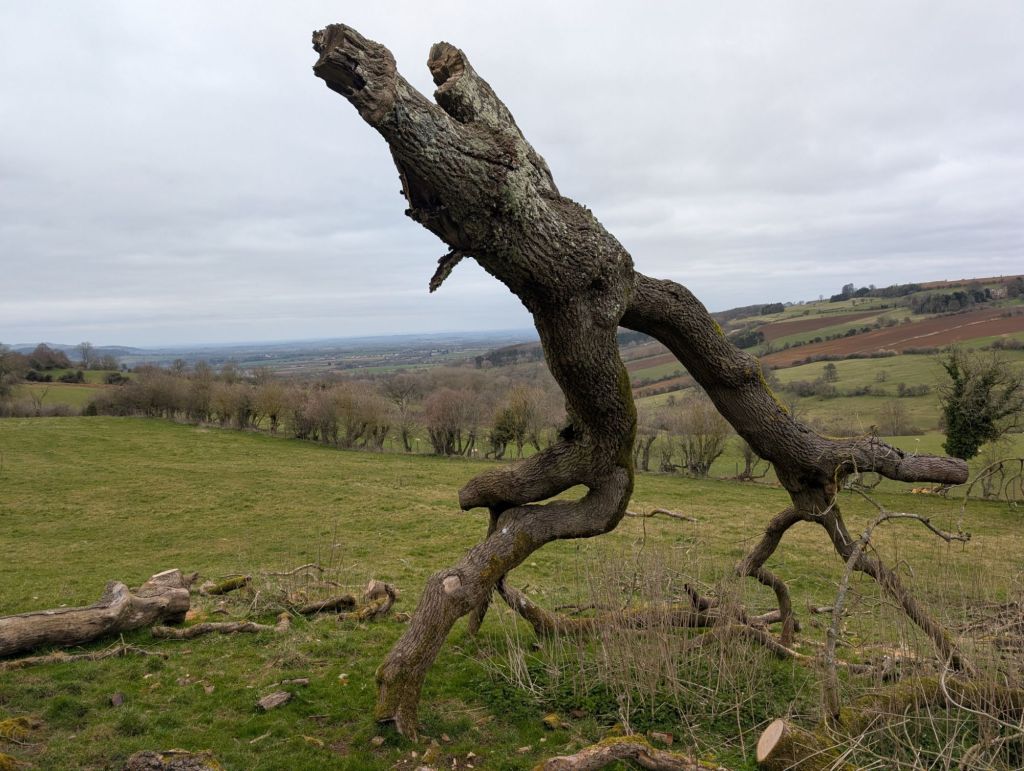
So many broken or fallen trees
I will be addressing the idea that this was more than a walk or a wander, perhaps a pilgrimage, and that the act of hope was inherent in the constant need to physically move forwards. I accepted help and occasionally I sewed a small panel instead of touching, embroidered something I had come across during that day’s walk – Melusine (found on the arch of Notgrove Manor) and a periwinkle flower (from the hedgerows). Though I had scheduled one rest day, I had to take a second, a break from the walking. Lucky me that I could do that, with the help of new and old friends.
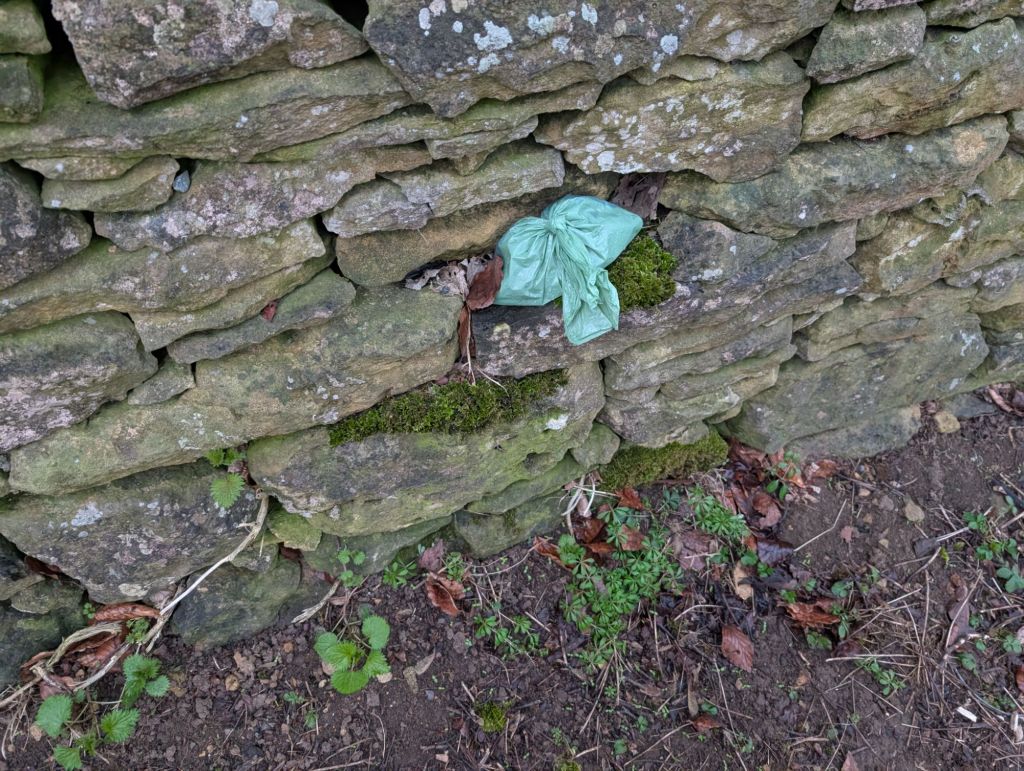
Someone left a dog poo bag on the wall
This walk has been now been completed. Thanks to all those who walked with me, or who bartered hospitality for Shiatsu. What is Shiatsu?
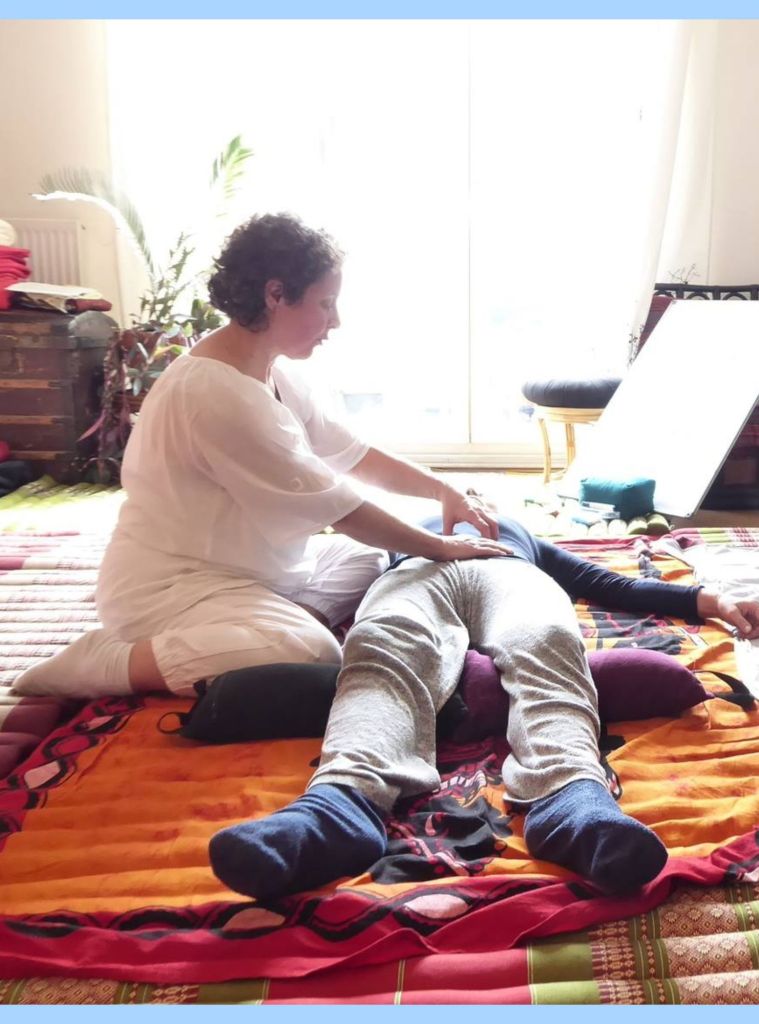
Tamsin giving Shiatsu, Paris
My route: Chepstow, to Parkend, to May Hill, to Gloucester, and to Crickley. Salperton to Stow-on-the-Wold, to Winchcombe, to Tewkesbury, all along the Gloucestershire Way. Then, to Gloucester on a British Pilgrimage Trust route, and finally to the Walking the Land Symposium in Cheltenham along a Slow Ways route. Total: approximately 124 miles (around 200 kms).
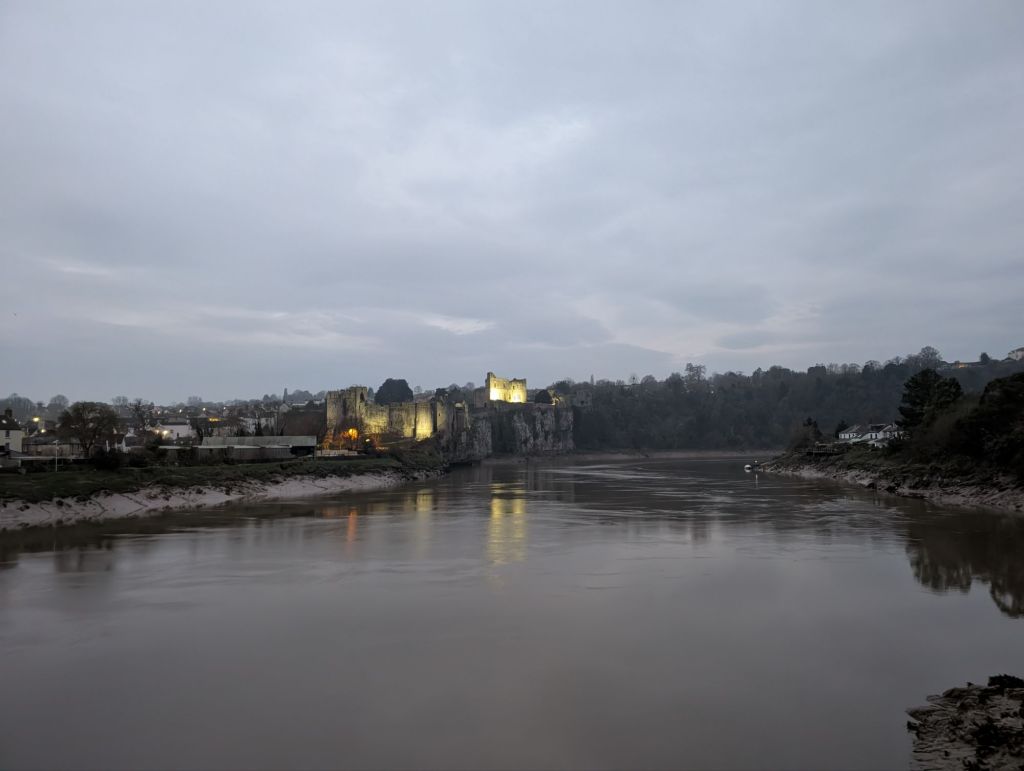
Starting in Chepstow at dawn
The Walking the Land ‘Lines of Enquiry’ exhibition ran between 3rd and 27th March, and the Symposium was on 21 March 2025.
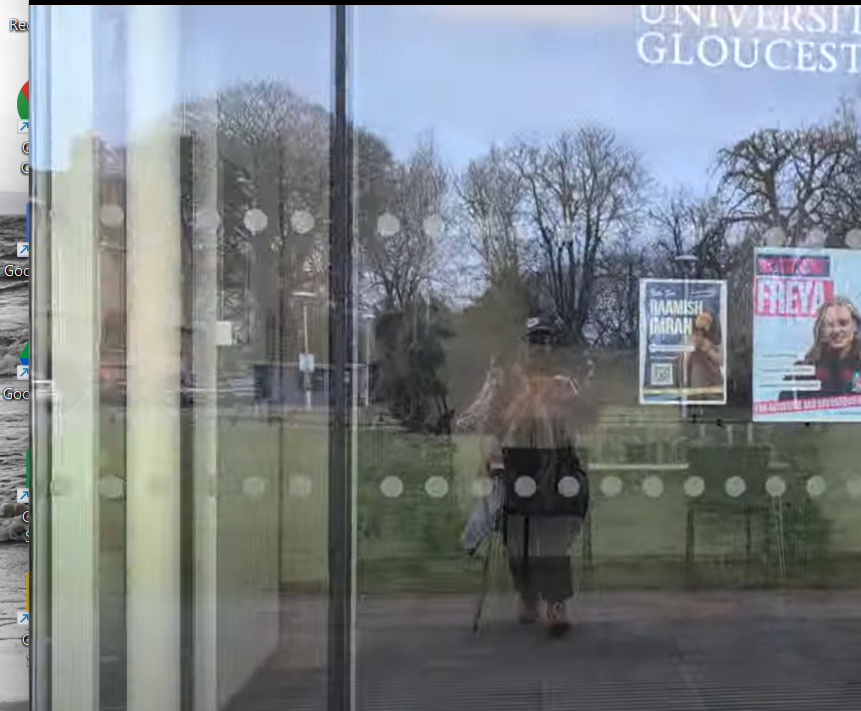
Arriving at the Hardwick Gallery, Cheltenham, for the Symposium on 21st March 2025 at the end of the walk
6 January 2022 – a winter walk between Winchelsea and Rye, East Sussex
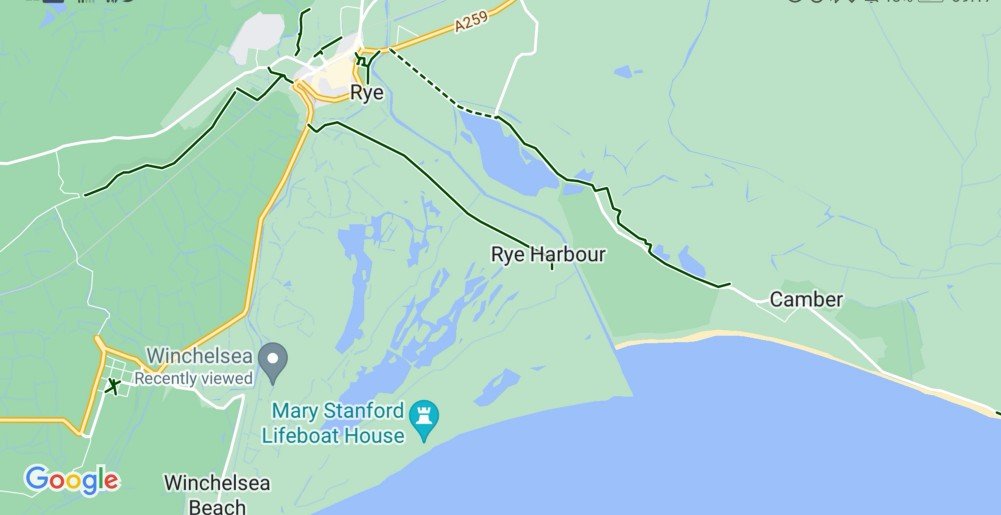
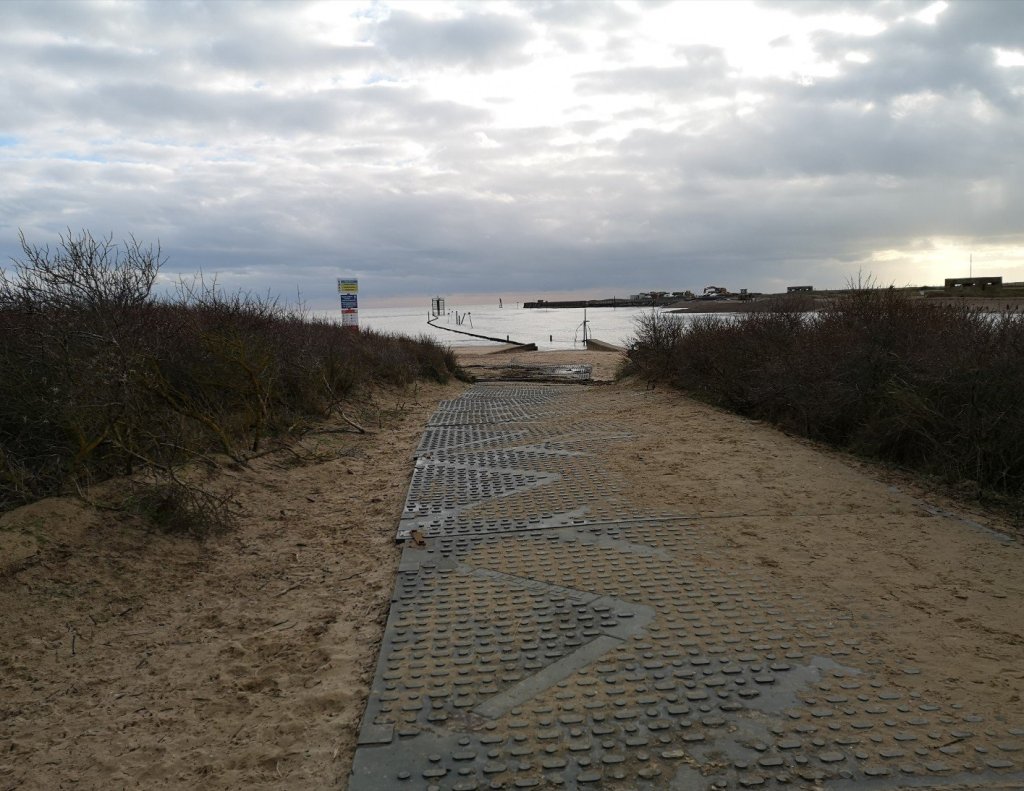
Taking the cross-country route from Winchelsea between the yellow and white roads above, through Rye, then from Rye Harbour to Camber Sands
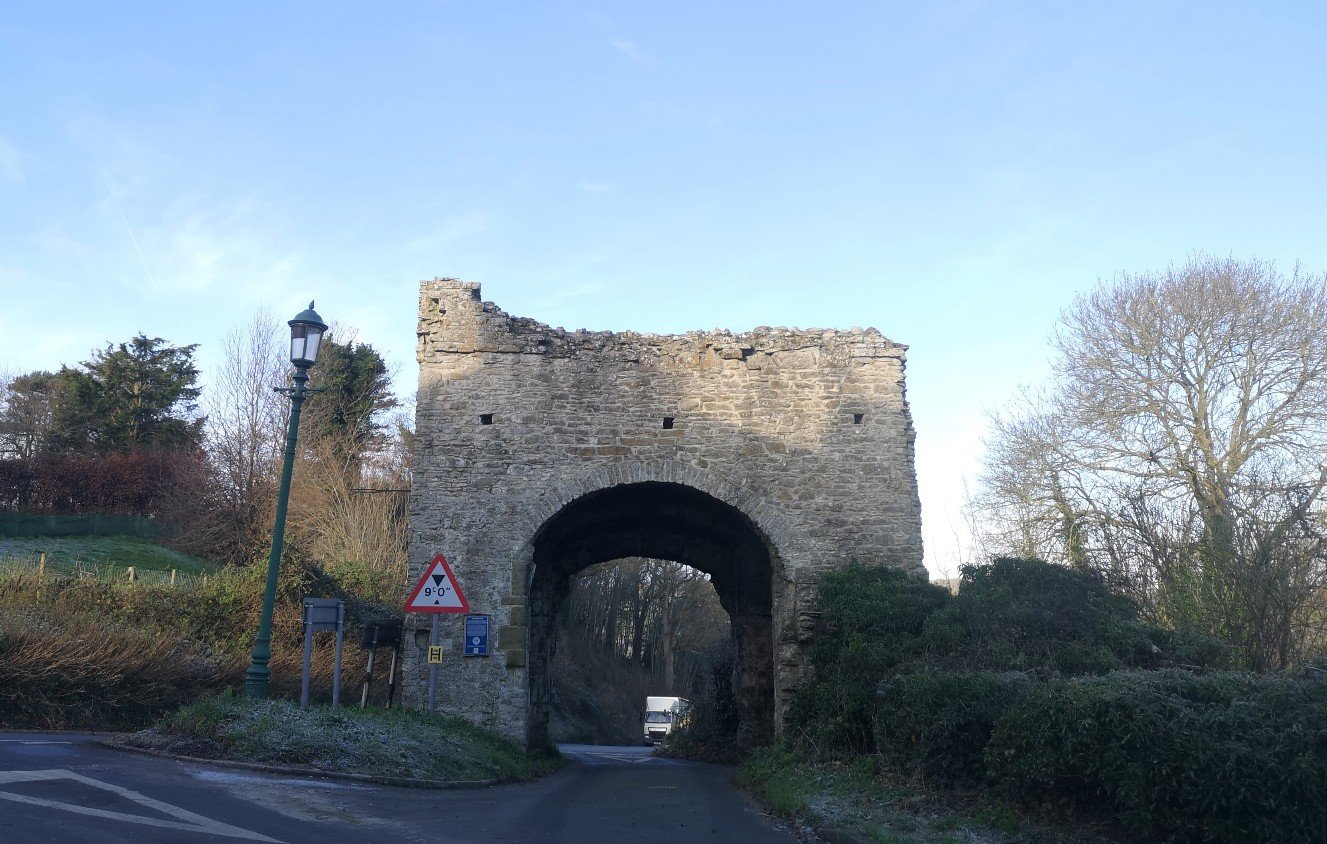
Gateway to a frosty walk – Winchelsea’s Medieval arch, East Sussex
I knew Winchelsea when I was a girl because my granny lived there for a while. My family and I visited for special occasions and I went to stay with her, once on my own and once with my sister. It was the time I was there alone which has remained in my mind.
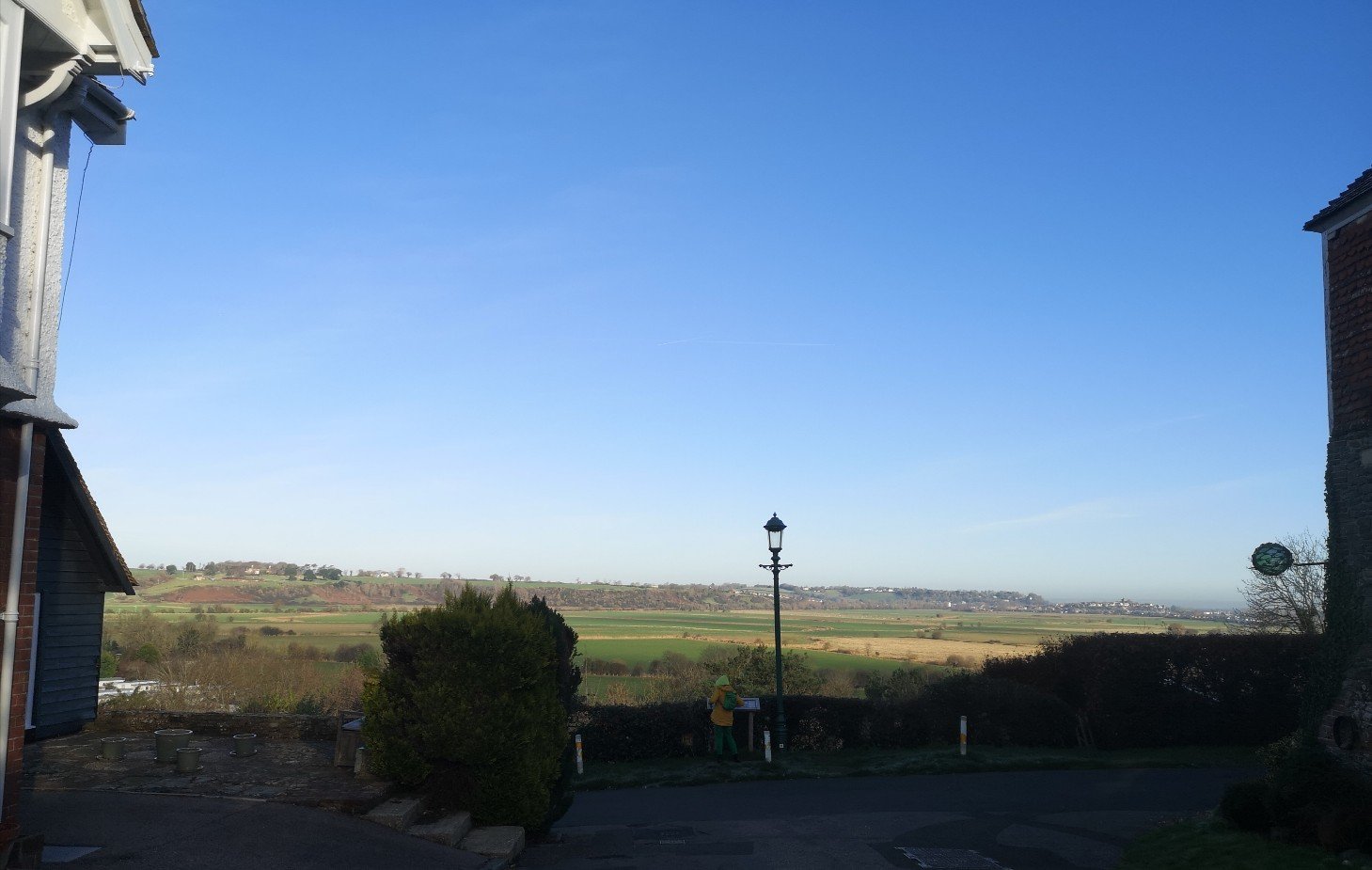
View ahead – where I was going to walk across the marshes to Rye, East Sussex
I was allowed, perhaps encouraged, explore without a grown up. I remember ranging down slopes, across dried cow pats and over little, soft hummocks. I walked and ran, then I lay down and I can recall the feeling of being there all these years later.
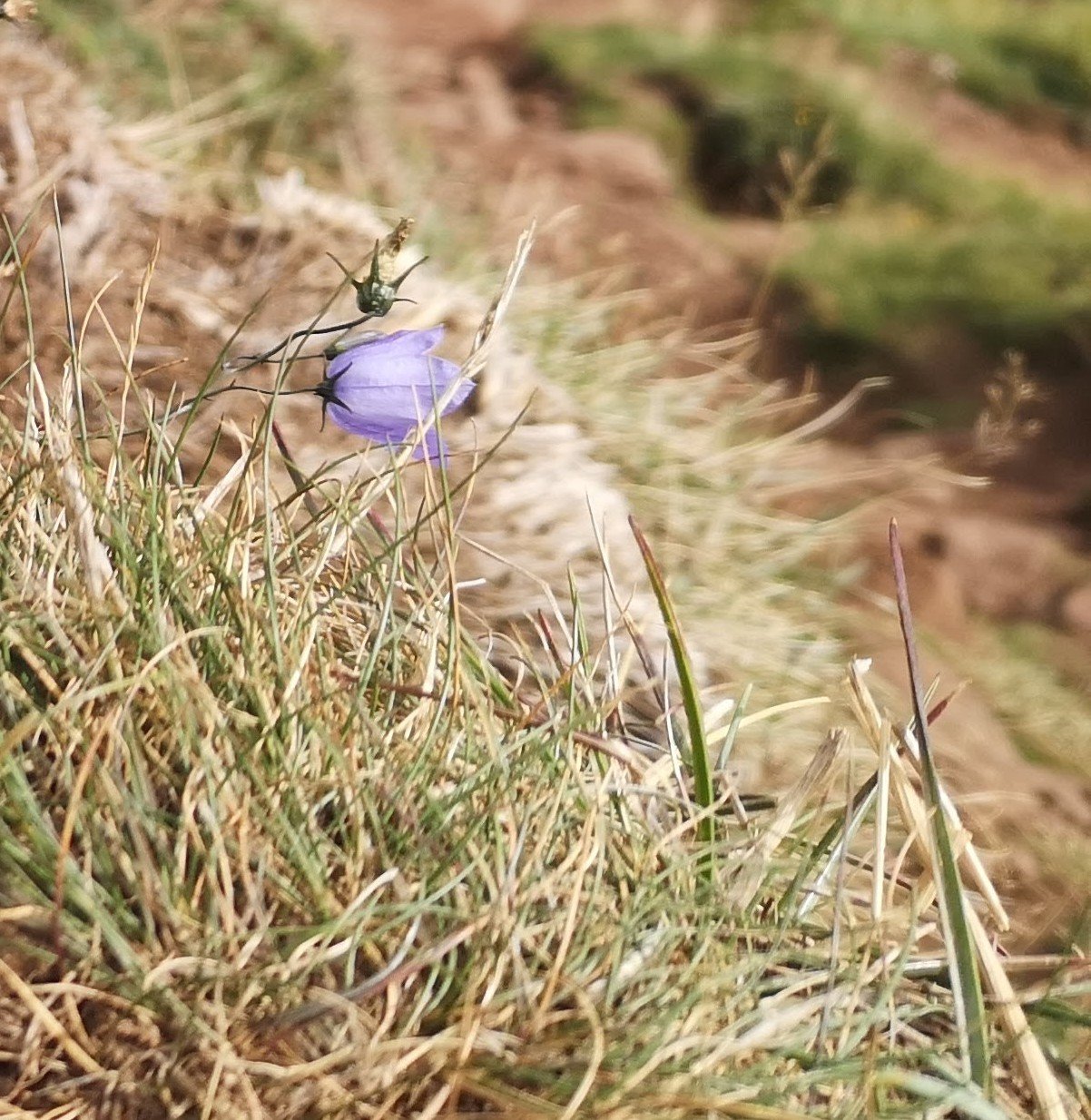
I have a visceral memory of the give of the land underneath me, the warm scent of rabbit and sheep pellets, my nose close-up to the goldening strands of springy turf, the upright threads of harebells level with my chin.
Harebell
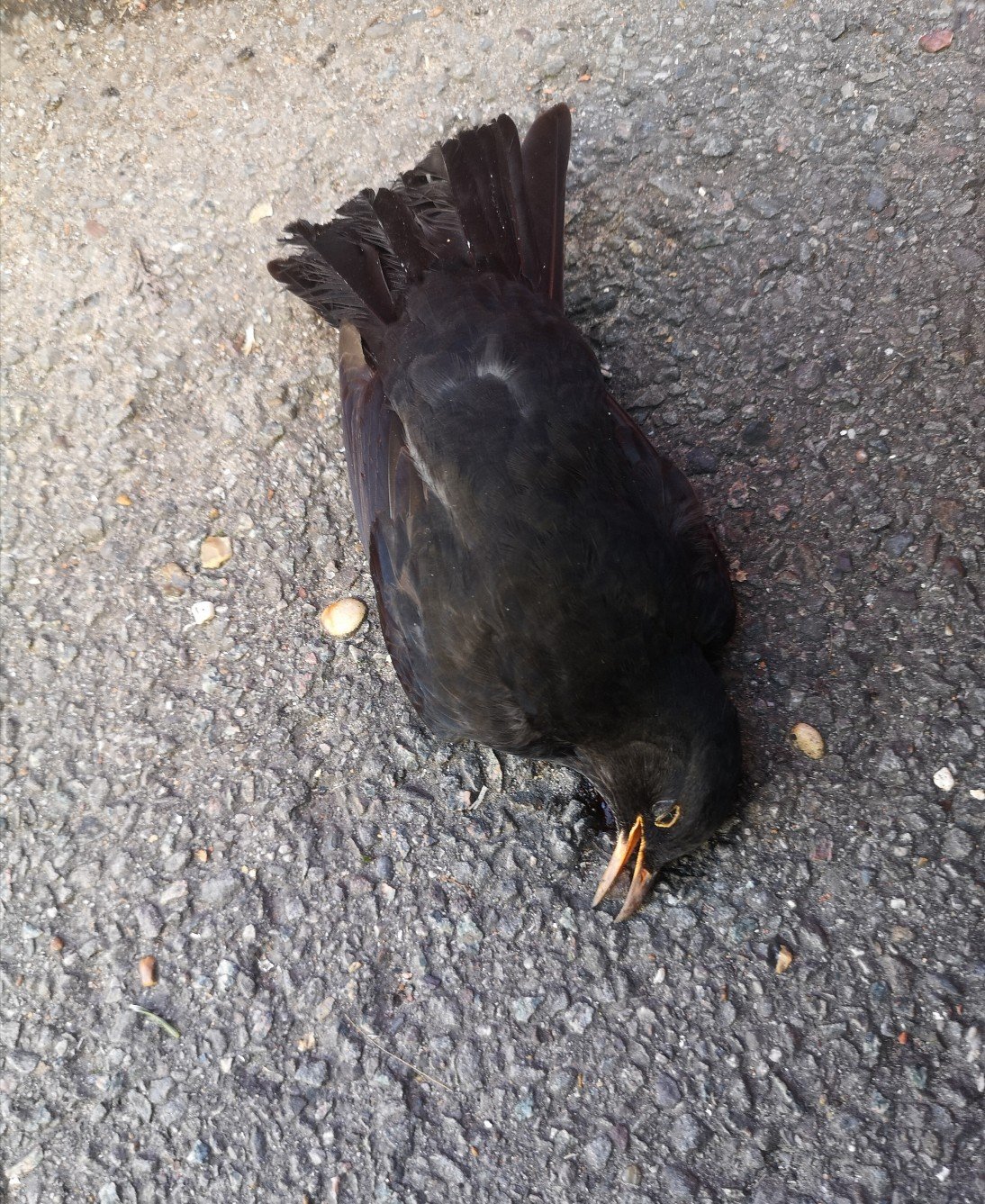
When I returned, some forty five years later with mum, the first thing I saw was a dead blackbird on the pavement in front of the church where Spike Milligan is buried.
Blackbird – loss
I must go down to the sea again, to the lonely sea and the sky; I left my shoes and socks there – I wonder if they’re dry?
Spike Milligan
It was such a fine-weather day to be walking out.
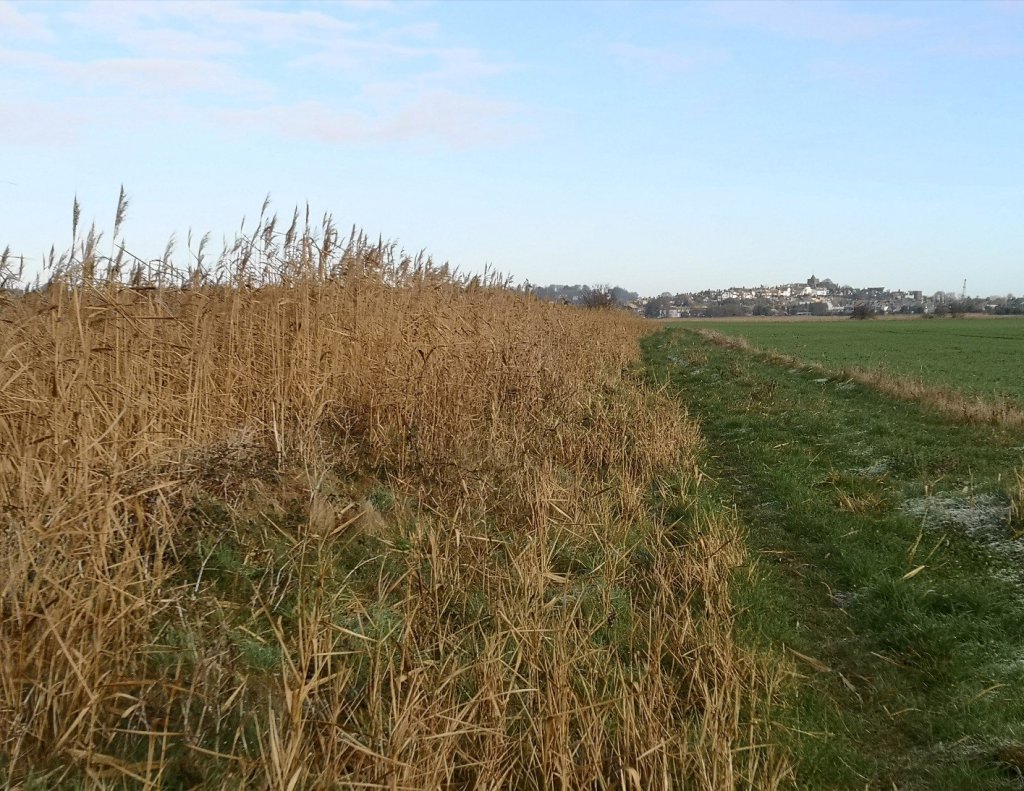
Towards Rye, East Sussex
Mum and her friend asked, How will you get there? But I knew there would be a path, somehow, and there it was.
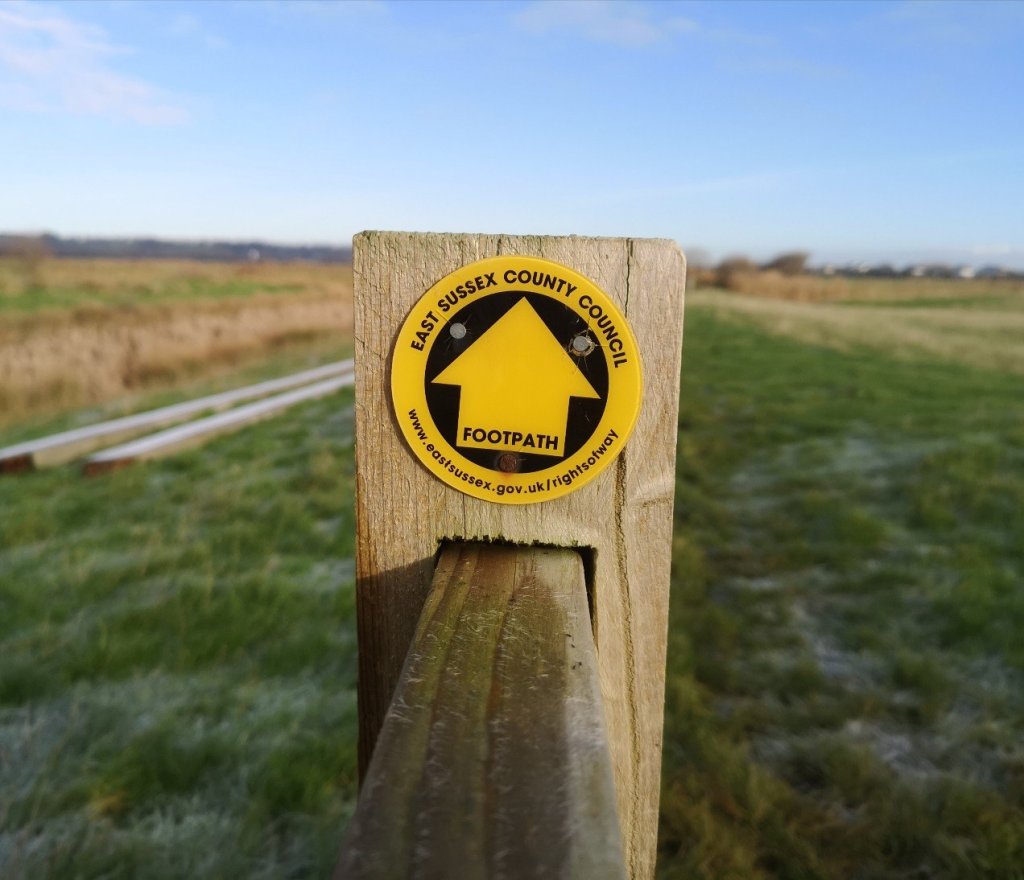
A sign of the path
I walked from this small cliff-town – what is sometimes called New Winchelsea – to her sister Rye, larger and more cosmopolitan. Rye and Old Winchelsea used to be side-by-side until the terrible storms of the mid-13th century when the ocean drowned the Old Winchelsea, a vibrant Cinque Port trading in wine. Pilgrims once put out for St James of Compostelle in Spain from there.
Bullrushes
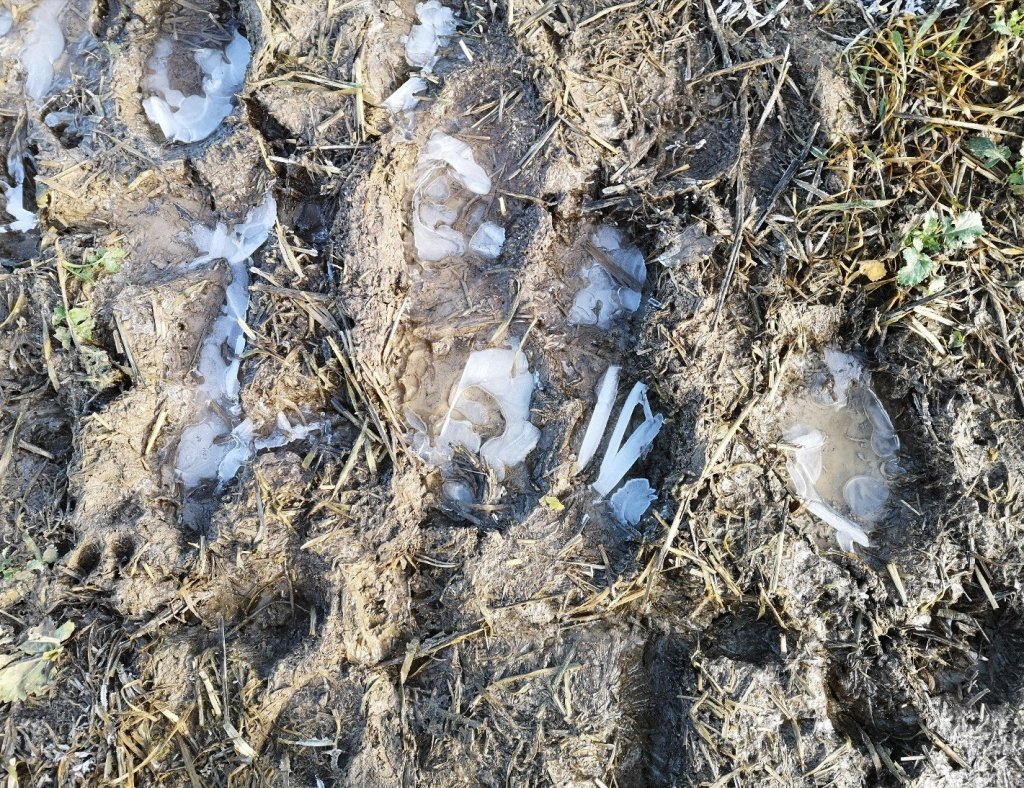
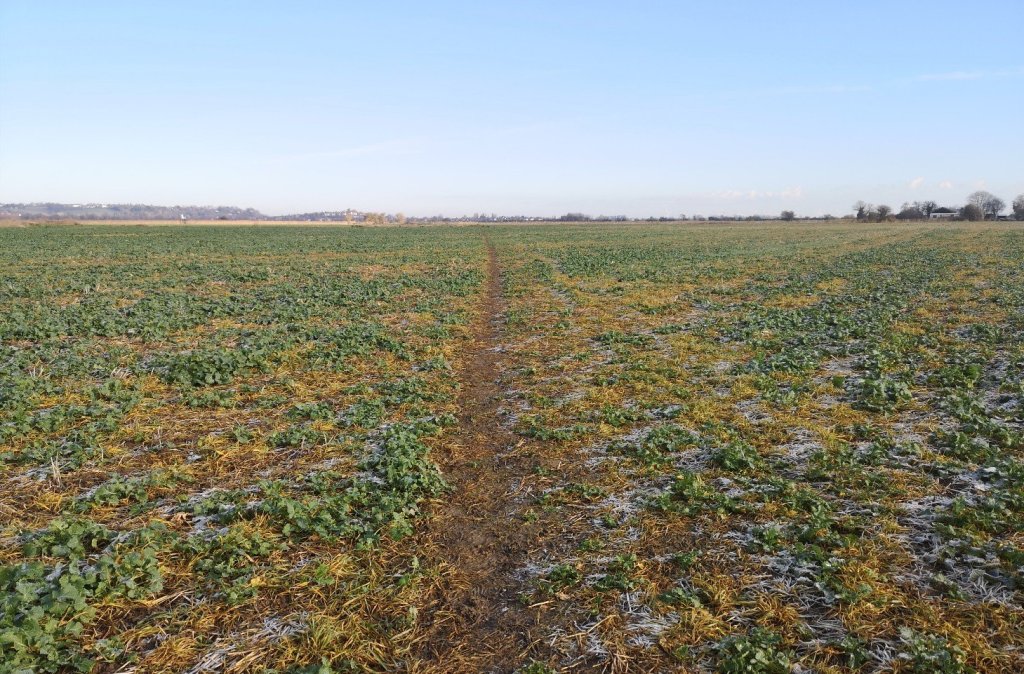
There was ice in the ploughed ruts and water everywhere. I followed the designated way, but it was little more than a desire path.
An icy morning
Desire Path
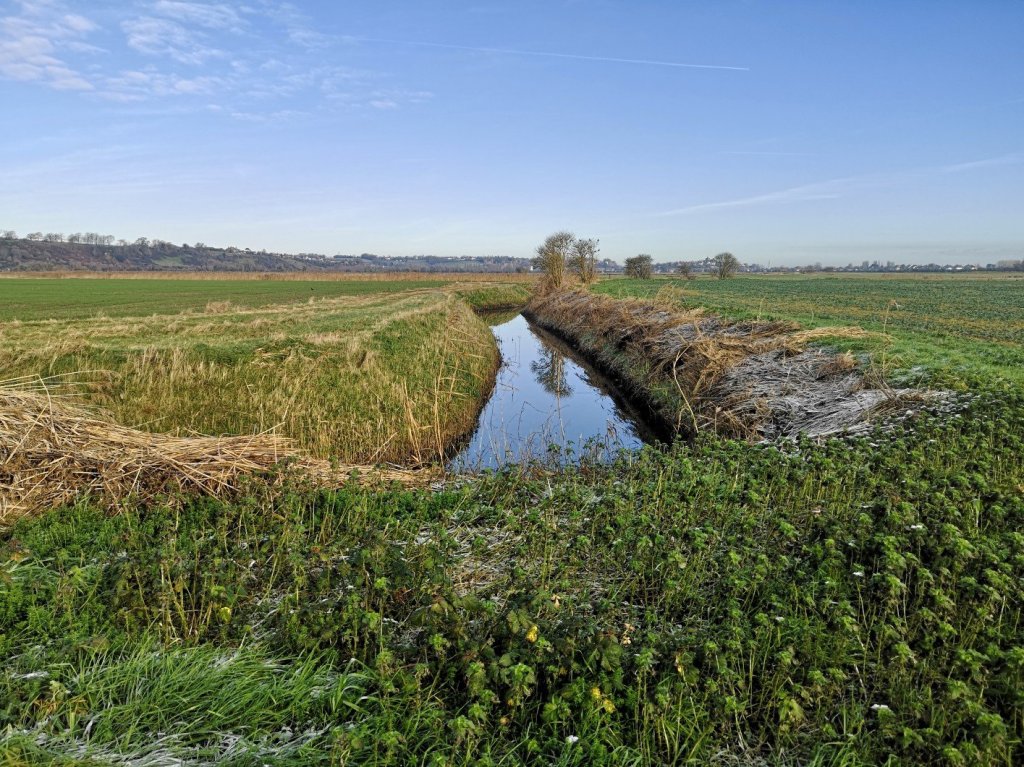
Water courses abound on these former marshes. Winchelsea to Rye, East Sussex
Frosted undergrowth
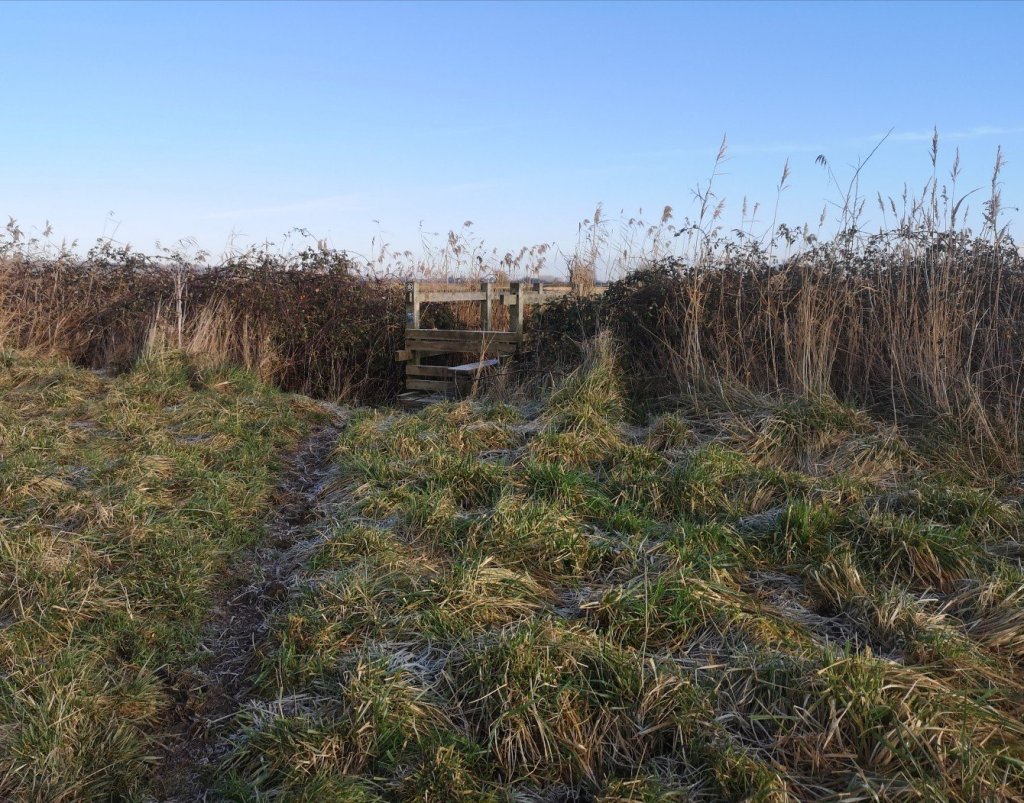
I took the wooden bridge between the stalks
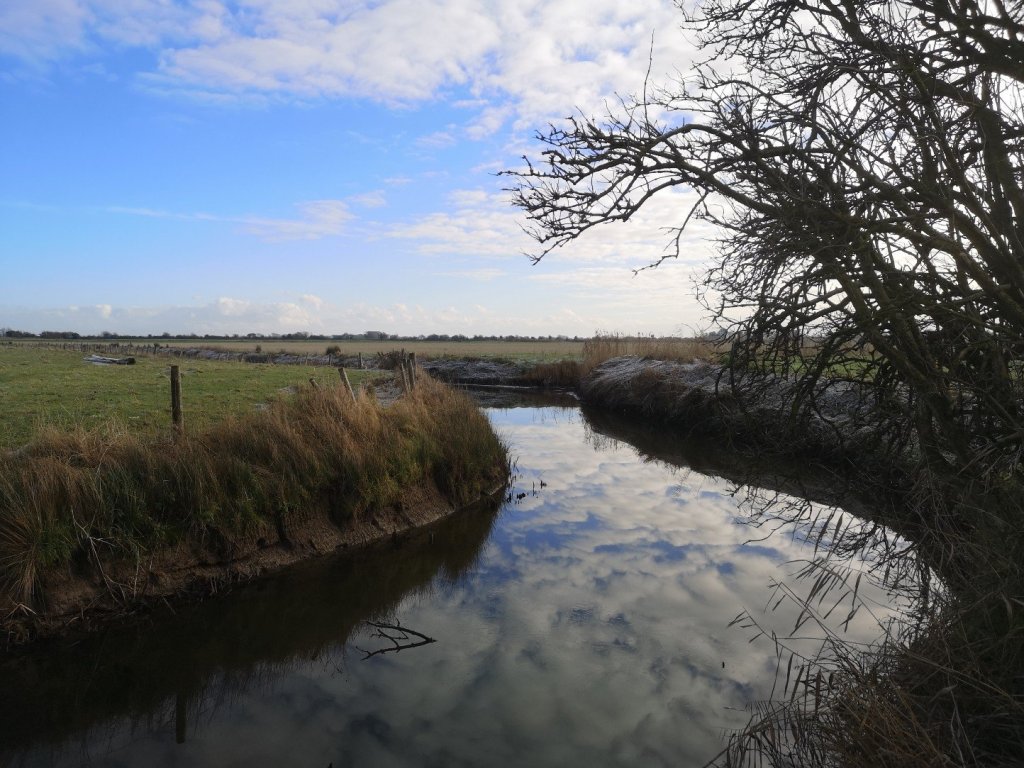
Still sweep reflecting the sky
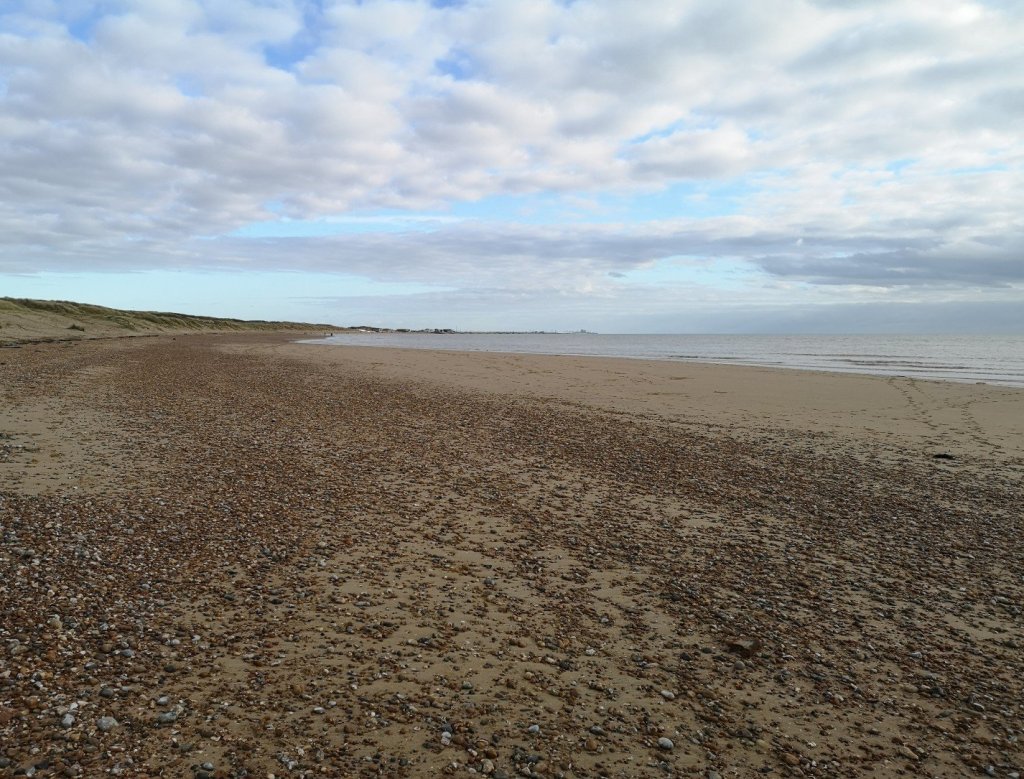
I caught my foot on a plant and fell over, of course, arriving into the town to meet friends with mud all over my trousers. Then we walked some more, as the rain came on, along Camber Sands. My siblings and I used to make sand castles with dad there. I remember how the sea was so, so far out and we had to walk ‘miles and miles’ to get our feet wet. All those years ago.
There are holes in the sky Where the rain gets in But they’re ever so small That’s why the rain is thin….
Spike Milligan
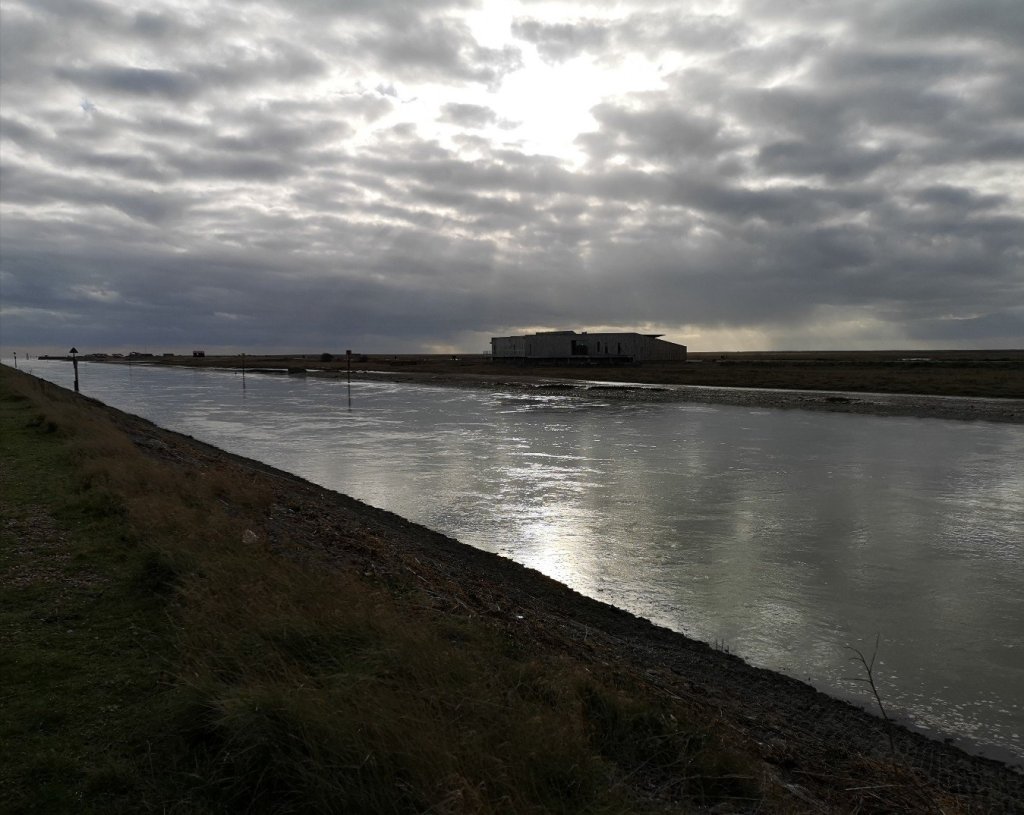
From Rye Harbour, view across the River Rother to the Discovery Centre
This walk was inspired by a prompt from Alisa Oleva and The Resident’s Association which went like this: ‘Go out on a walk, take photos of all the things and surfaces you would like to touch, but don’t touch them.’
I tried, I really did, but I failed at the first and last hurdles (and several in between if I’m honest). Who would have thought it would be so difficult? Although, given I touch for a living it’s not so surprising. I can’t give Shiatsu because of the Covid-19 virus restrictions, so this brief is apposite.
It was my phone I touched at the off – to take photos. Smooth and cool and about the weight of a nice big juicy apple, it quickly heated up in my hand. I was on a walk I have done once before which ended on a road (link) so I wanted to find a better way back.
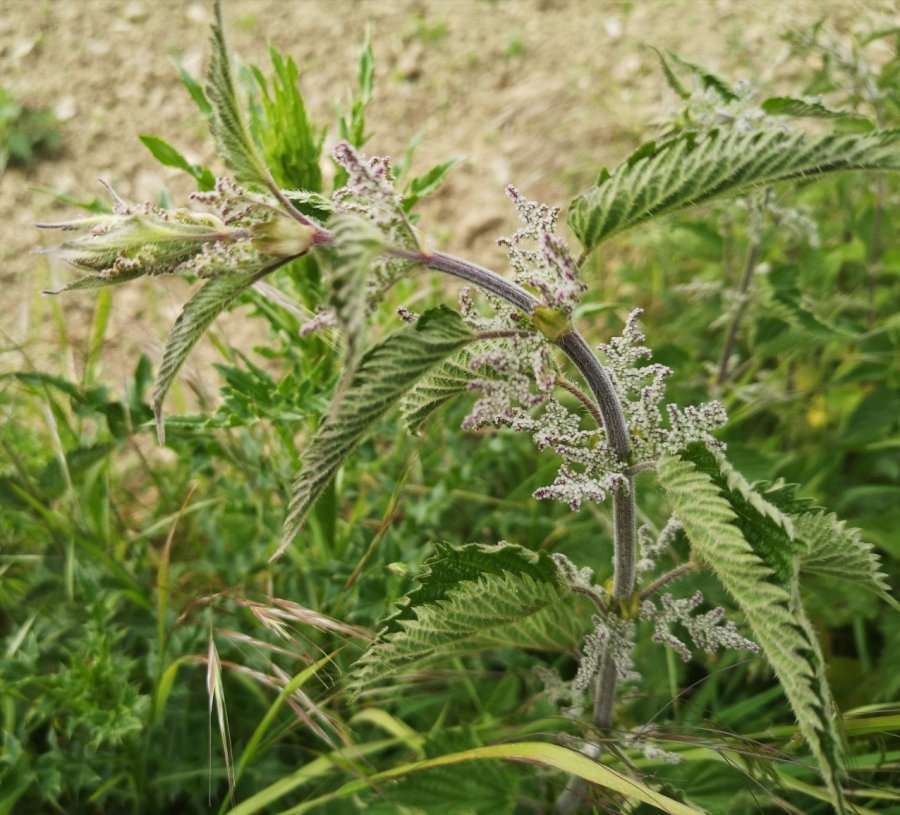
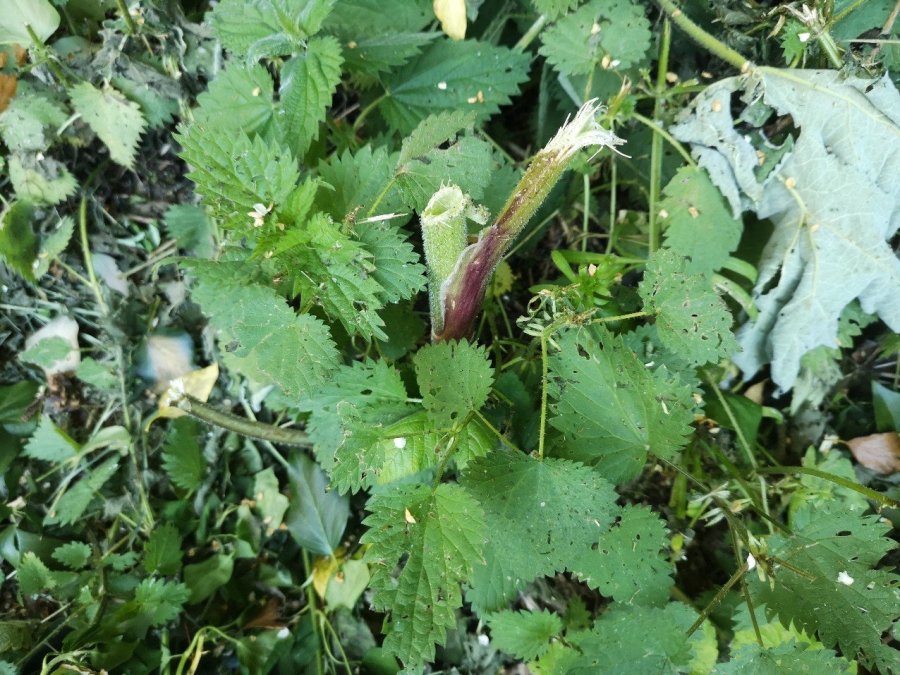
Stinging nettles
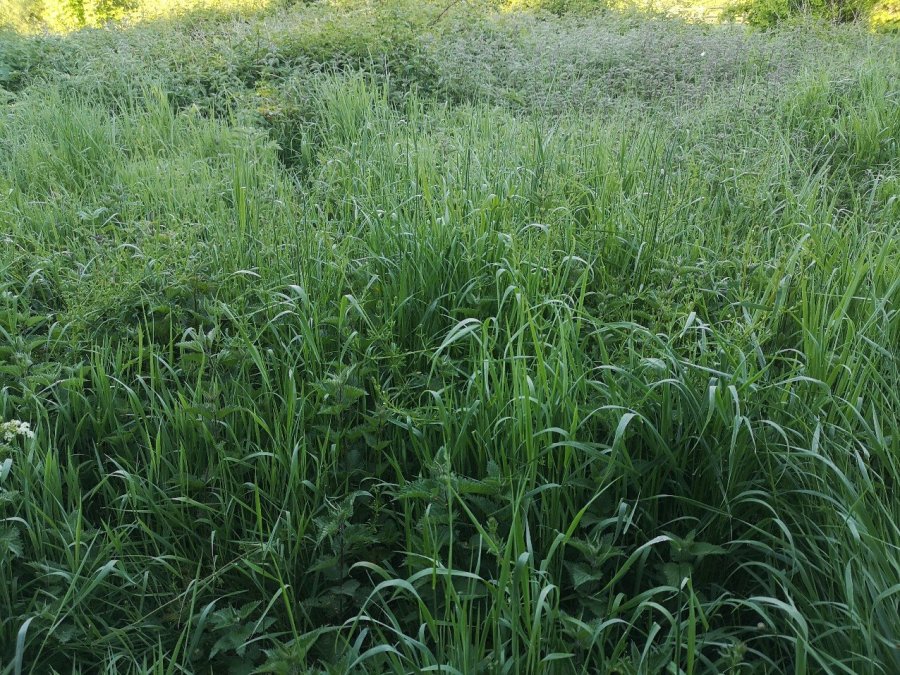
As soon as I started I wanted to reach out and feel the difference between the nettles and the dead nettles, even if one sort would surely sting me. It didn’t take long for my toddler instinct to kick in – ‘But I want to touch!’ I resisted.
When a wall reared up in front of me, my protesting teenager was taunted – ‘Just cos you say I shouldn’t touch, doesn’t mean I can’t!’ Though I was grown up and I didn’t.
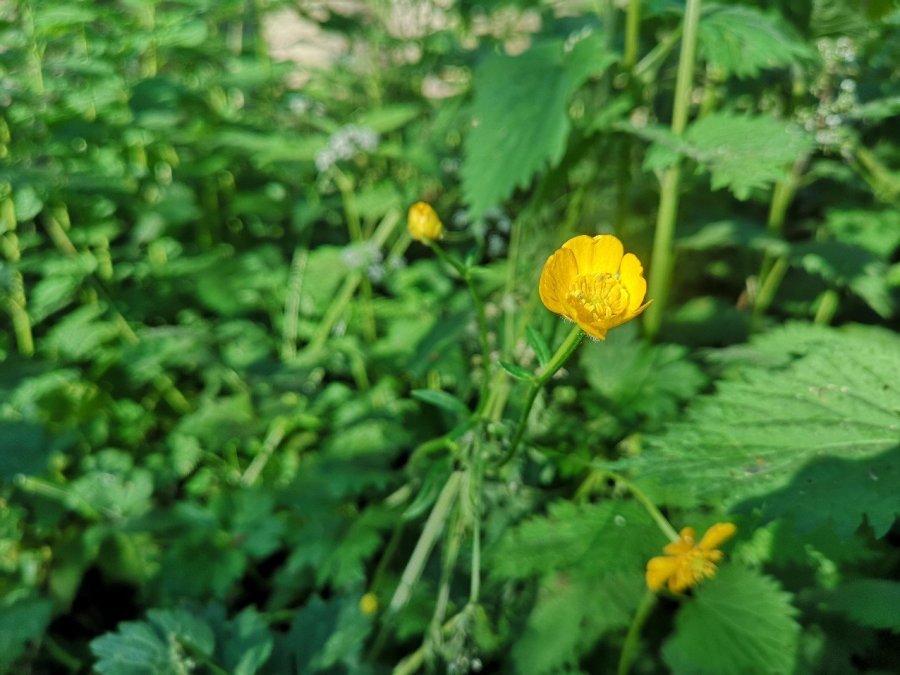
Buttercup (Ranunculus)
As I passed the buttercups I could imagine the smooth, silky petals. I’m a tactile person. I have honed my sense of touch to a very sensitive degree over tens of years. The mere sight stimulated the part of my brain which remembered the feel from before (as it does with most people) – my brain’s sensory cortex.
“When asked to imagine the difference between touching a cold, slick piece of metal and the warm fur of a kitten, most people admit that they can literally ‘feel’ the two sensations in their ‘mind’s touch,’” said Kaspar Meyer, the lead author of a study into touch.
“The same happened to our subjects when we showed them video clips of hands touching varied objects,” he said. “Our results show that ‘feeling with the mind’s touch’ activates the same parts of the brain that would respond to actual touch.”
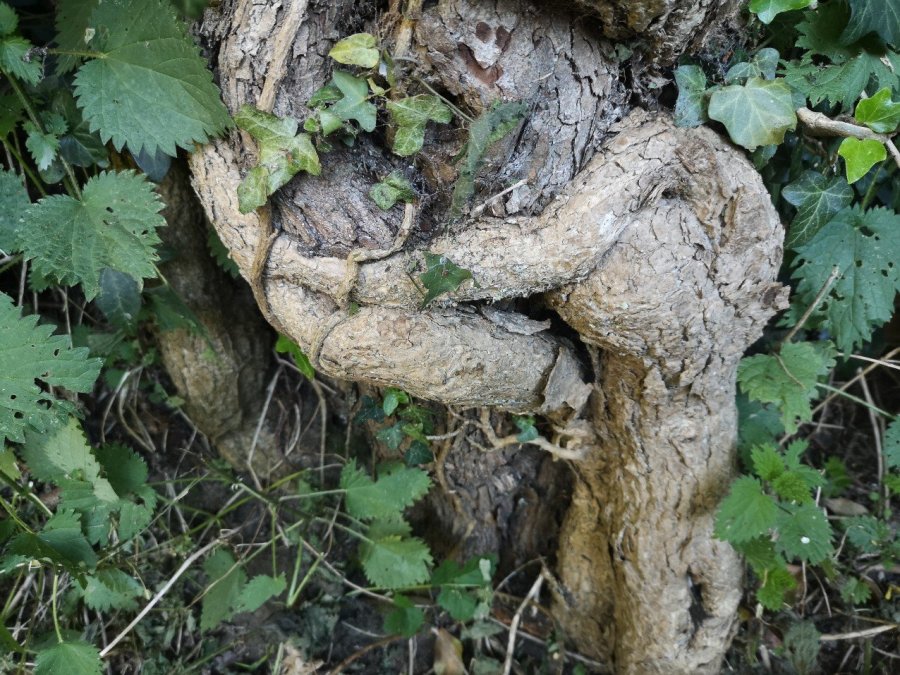
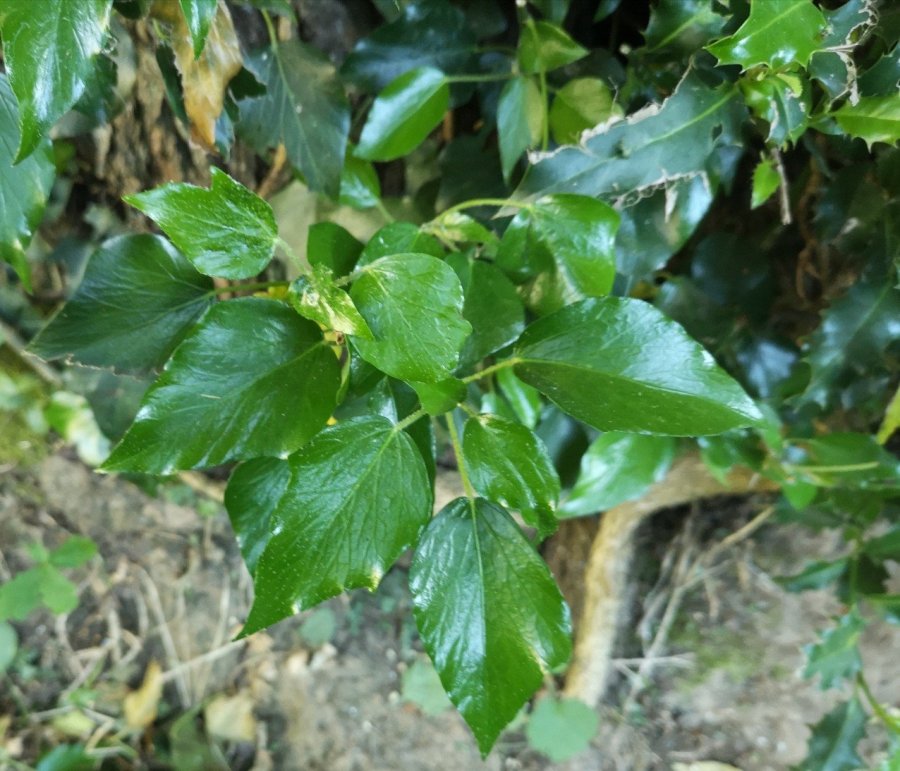
I saw stalk ends which I was convinced would be dry and rough. The torn-off strands might feel like threads, but I couldn’t be sure. The gnarled tree, all crooked and twisted, must feel just as dessicated, I conjectured, but harder. I was pretty sure I could lean into it and it wouldn’t fall over whereas the stem would have, of course. Colder than the trunk, the Hedera helix (a better monica than ‘common ivy’ in this case) would feel the least substantial, but the shiniest. Isn’t it fascinating that we use visually descriptive words like ‘shiny’ to describe the feel of something?
While it is customary to assert that we see with our eyes, touch with our hands, and hear with our ears, we live in a simultaneous universe where sensory events and their constituent elements have a natural tendency to overlap.
Undergrowth still covered in dew where the sun hasn’t yet touched
The undergrowth to my right was still opaque with dew, its wetness indistinguishable from its colour. But I didn’t touch; my eyes just feasted. (There’s another of those sensory comminglings). As I wandered on, I wondered, can you feel a colour? Would that pale grey-green feel the same as the vibrant gloss-green of that ivy I had just passed? It would be impossible to subtract the wetness from one in order to compare I reckoned.
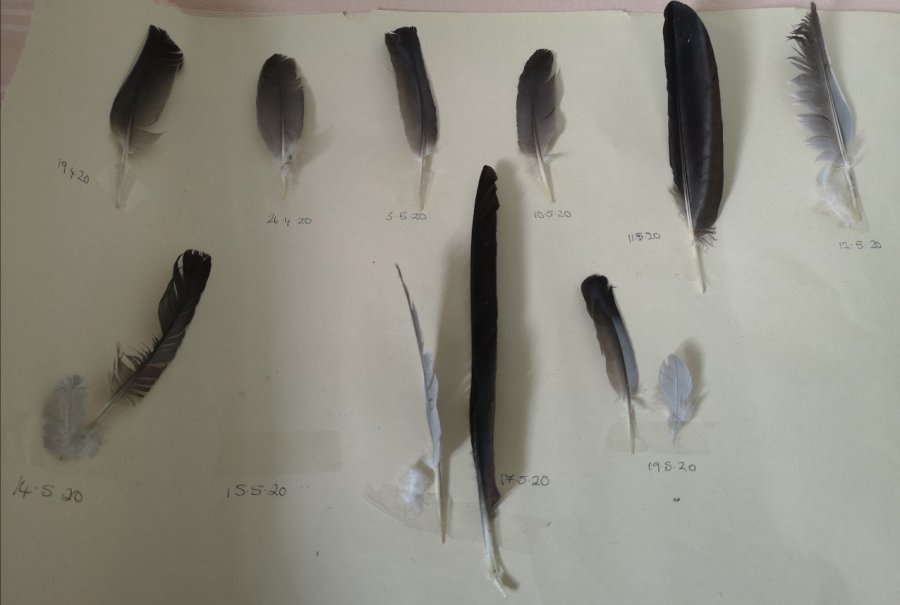
My feather collection
In this part of the countryside, the cascades of hawthorn are over now, their slightly feathery, petally droplets have fallen. Black crows were feeding, sharp-beak first, in the field. I would certainly like to touch their glossy feathers – I have been collecting feathers every day on my walks. If I hold the white tubular calamus, or hollow shaft of a long corvid’s plumage and twiddle it, the vane catches the light and gleams. There was a matching black horse lying down nearby and she observed me, haughtily. I might not have been brave enough to touch her.
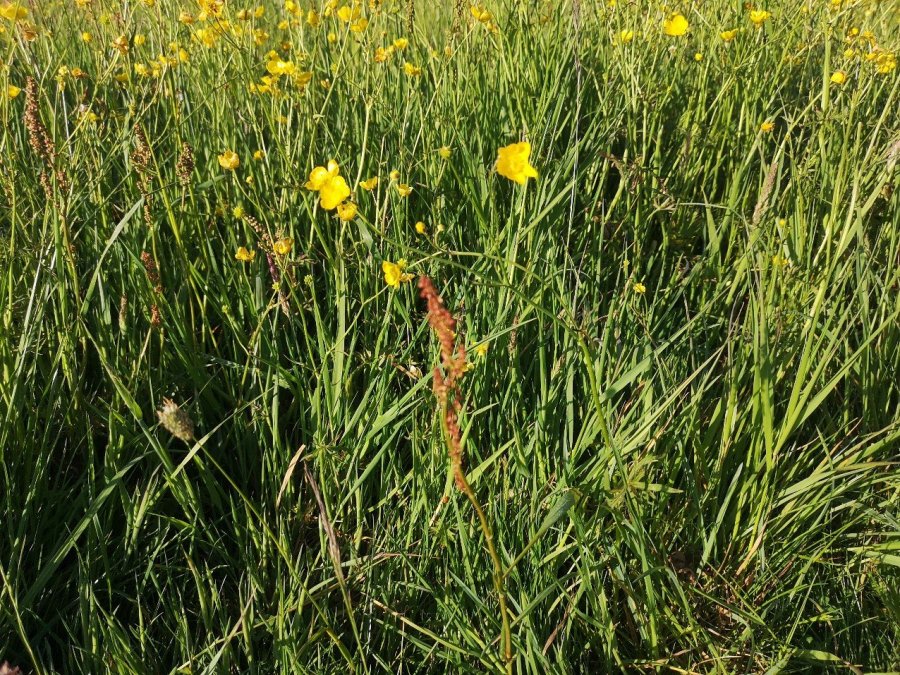
Common sorrel (Rumex acetosa) or ‘Sour Ducks’, red-brown between the buttercups
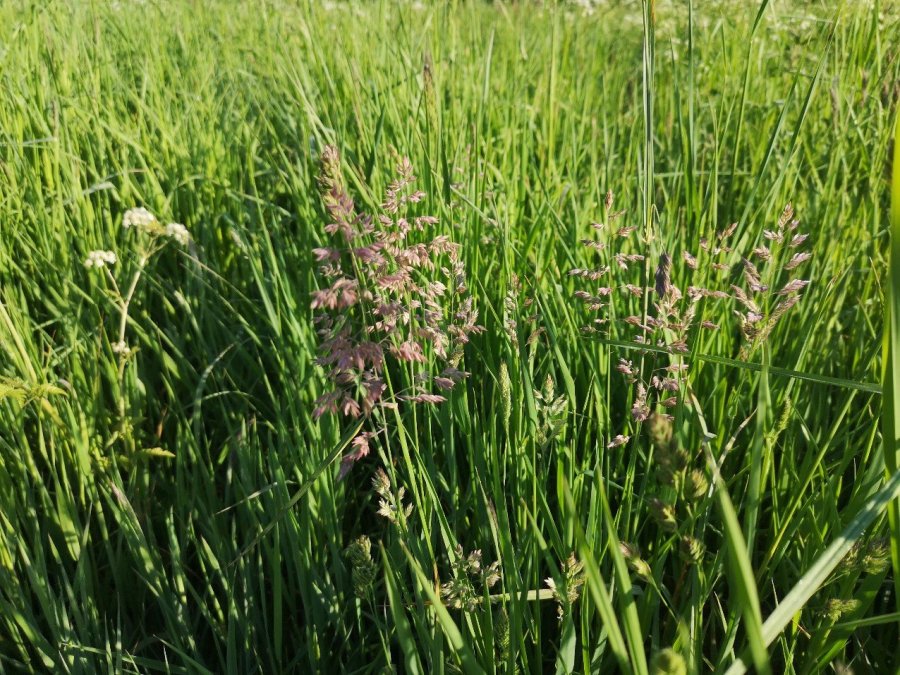
Yorkshire Fog
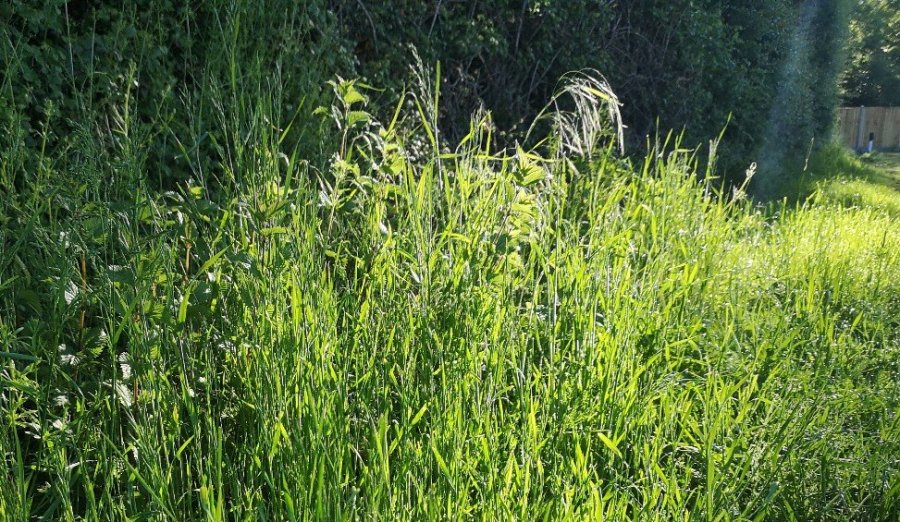
The wet grass touched my boots – I could see, but not feel. My legs brushed past the seedheads and they tickled my shins. They touched me, I didn’t touch them. In the same patch, I was alive to the contrast between the sorrel, which I knew would be bitty like toast crumbs between a thumb and forefinger, and the emery board, might-cut-you blades of grass. I remembered how I like to slide up the sheath of the softer Yorkshire Fog, just turning to seed now, gathering a mini bouquet before spilling the seeds up in a fountain and spraying them all around. I could just ‘feel’ the imprint of it on my fingertips.
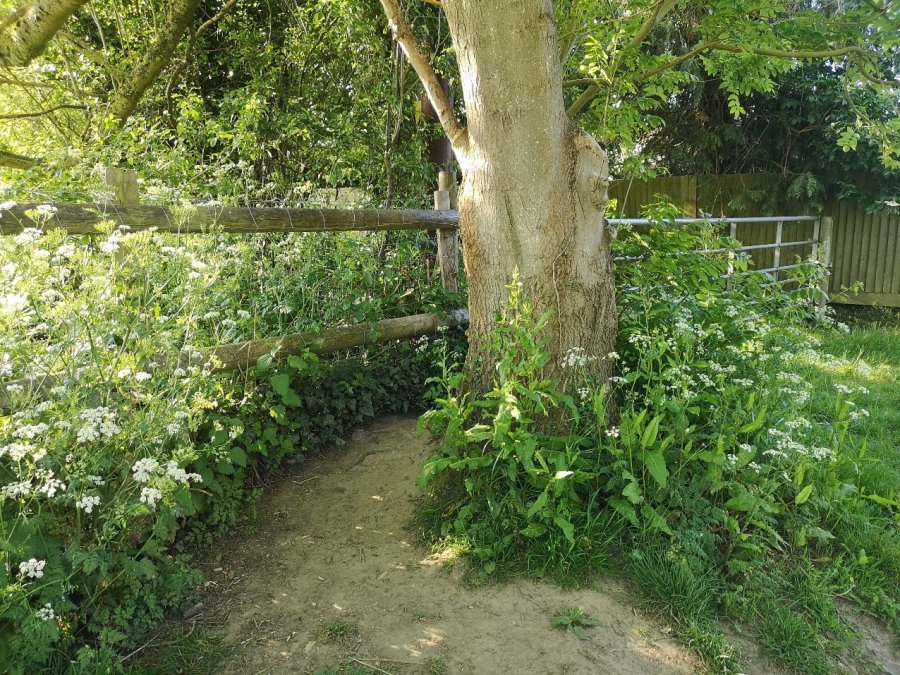
I had to edge behind the tree with my arms in the air
I crossed the first stile which I’ve been not hand-touching for weeks anyway, so I am practiced at that. I had to steady myself for a moment or two at the top before ‘jumping’ down off the second. Then at the next hurdle, I had to slip around behind the tree because the gate was shut. It was, I admit, impossible not to touch the trunk with the edges of myself, but I lifted my arms up as I squeezed through.
There was the familiar parp of the train as it approached the first of a ring of level crossings, making its announcement. I couldn’t touch that train even if I wanted to. I spotted the first chamomile and stooped to collect a feathery stem and have a sniff, transported back to my allotment where I grew swathes of it for medicinal purposes. It was not until the end of the walk when I scanned back that I realised that that had been a touch I didn’t even think to forgo.
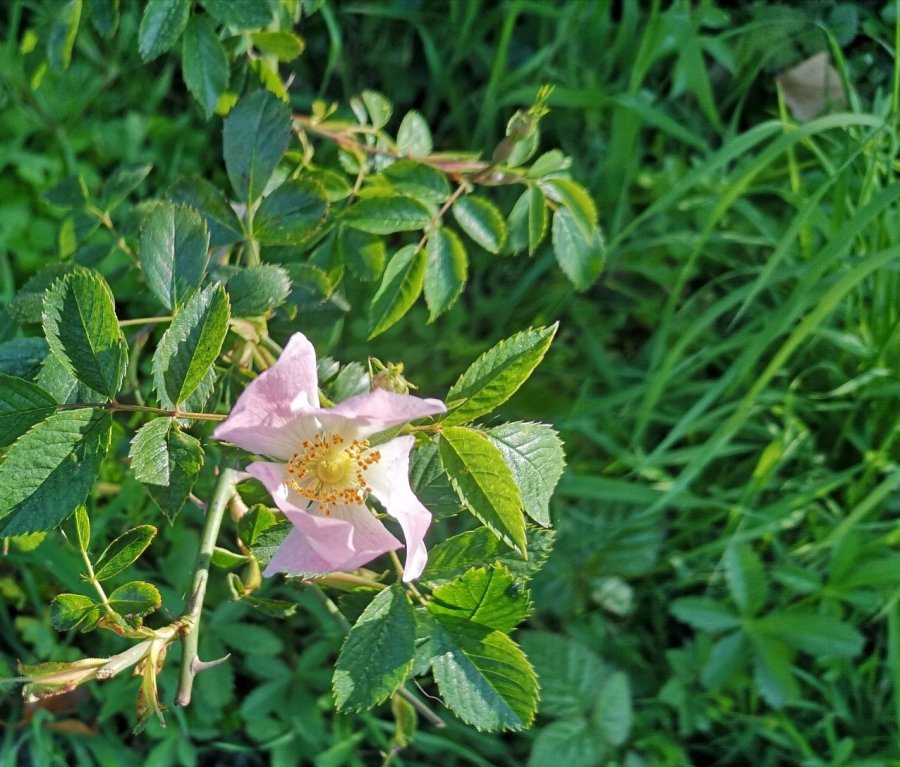
Wild dog rose (Rosa canina)
I feared to reach out to the wild roses in case I dislodged their fragile petals, so that was no problem. Before I knew it, I scratched my nose because it felt like a fly was crawling there. Damn! Turns out that I’m not great at this game.
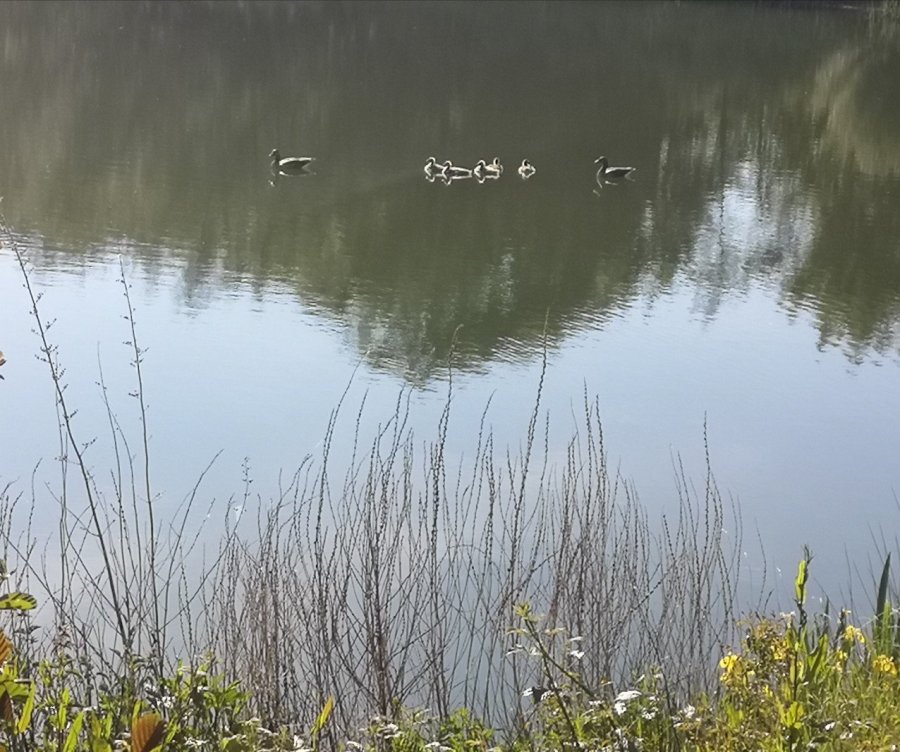
Goslings and their parents
I took a detour and there were the goslings, much more grown up, motionless on mirrored water. So still were they, that I assumed they were asleep, but then a parent dipped her beak and very slowly rotated to face her brood. The sun was behind, low, and I saw a drop dripping off. Mid way, it sparkled as the light shone through it, refracting into a star as it fell. Without actively moving she sailed closer to them, the space narrowing, and then she nudged the nearest chick.
It was the second hour and others were waking up and walking their dogs: a puppy scampered towards me and jumped up, so there was a wet-tongue touch without a by-your-leave. The owner and I forgot to move to opposite sides of the path two metres apart. Not so the woman with the stick – she avoided me like the plague as we have been instructed to do.
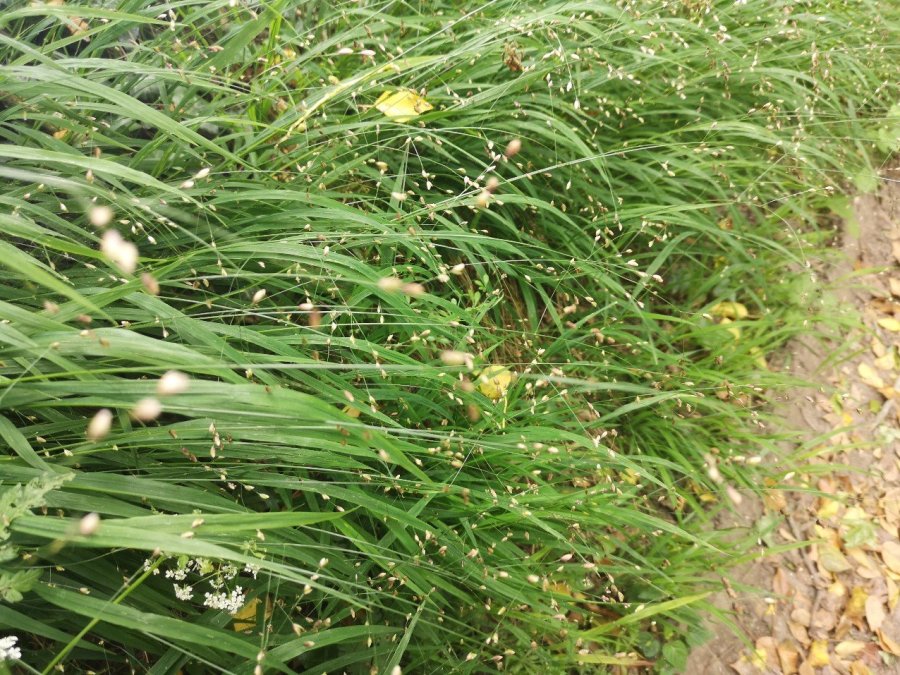
Pendulous Sedge (I think)
The birds were busy weeding in the arable fields, their heads bobbing. No doubt some seeds hadn’t yet germinated. A bramble scraped my upper arm leaving a long, bloody slash. Grasses caressed me and wind swept my sweaty brow – I felt it.
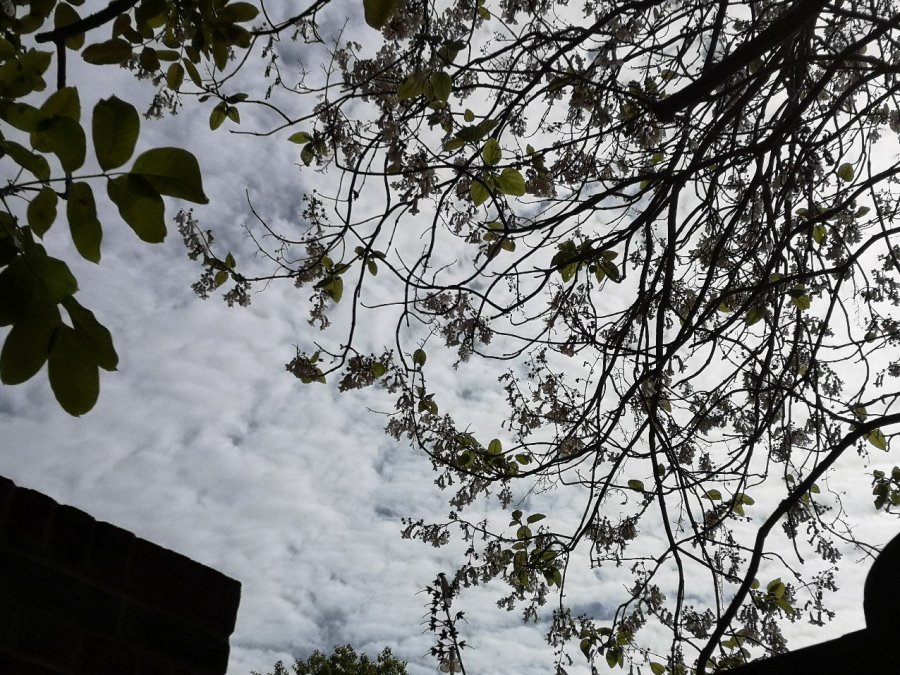
A fully grown tree with clusters of small, white traumpet shaped flowers (below)
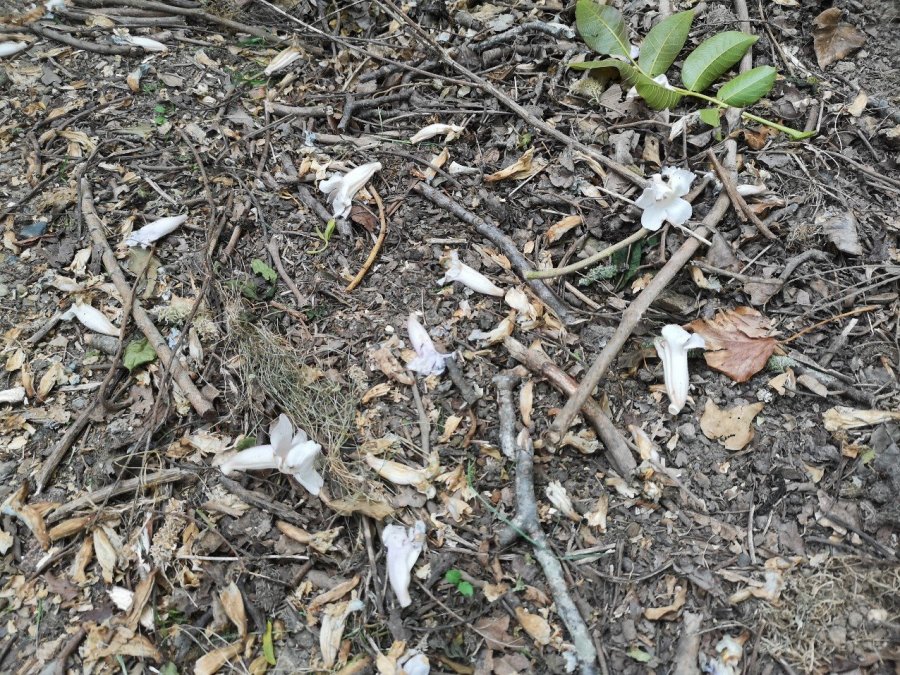
What is the name of the tree (not a shrub) these sticky flowers came from?
I stood under an unknown tree admiring its flowers. I flipped through my mental filing system, took a photo, and then the tree seemed to go ‘here you are’ and one white trumpet floated to the ground. There it lay amongst 10s of others! I picked one up (again, I didn’t even notice this touch until I started writing this) and carried it uphill. After some time I relegated it to my pocket for later perusal and it was, ooh, 5 minutes before I worked out what had caused the stickiness in my palm.
Impossible not to stroke
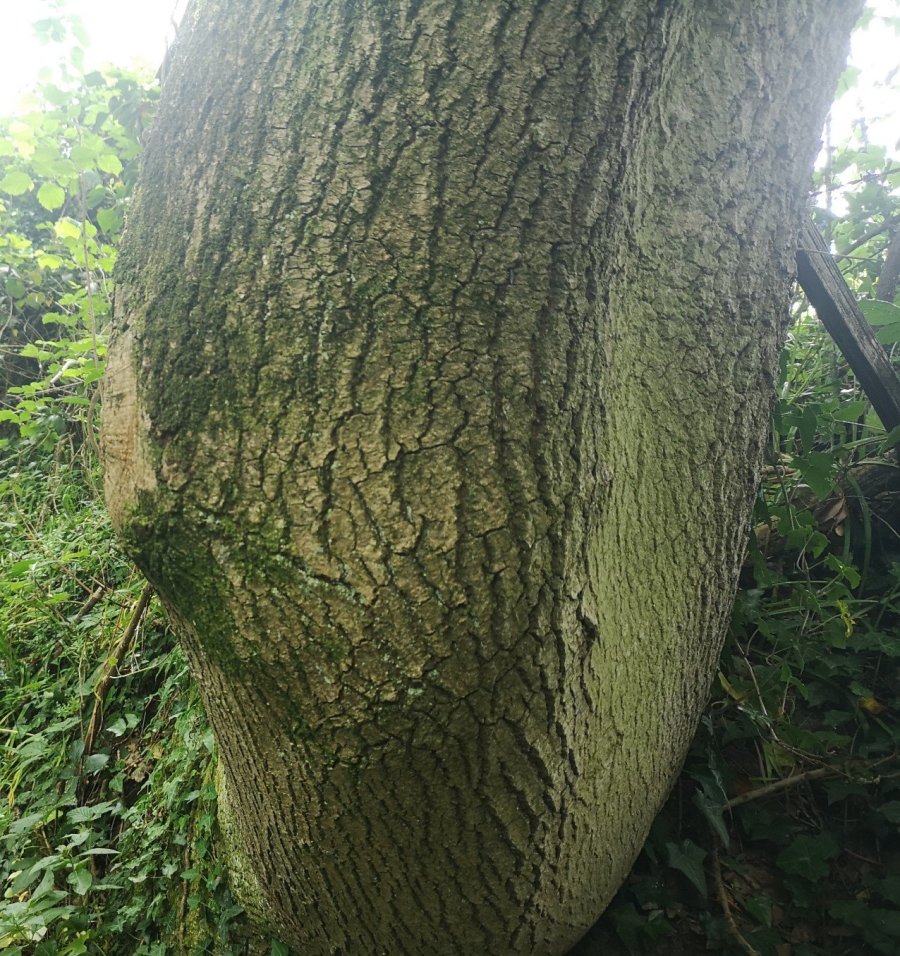
I did find an alternative route towards the end and as I squelched through the mud (there has been no rain for weeks but was some sort of stream running down the bridle path) and surveyed the broken branches from recent winds, I instinctively stroked the burl (a knotty growth) of a nearby tree, I caught myself at it and withdrew my hand sharpish, but it was too late.
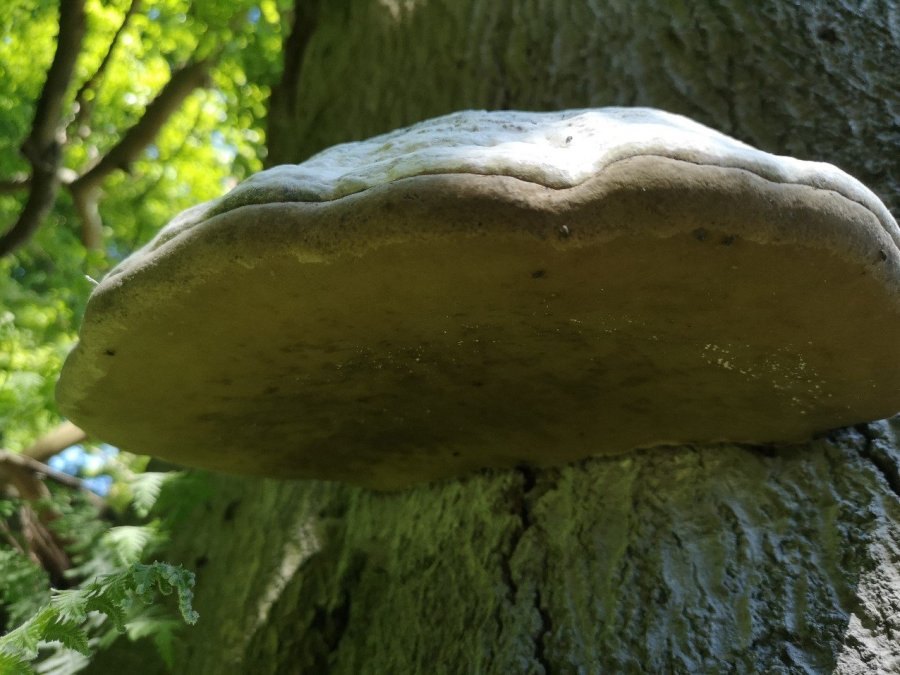
A fine specimen of Bracket fungus
The whole thing was pretty tricky. I wanted to know if the bracket fungus was hard or squashy. I wanted to warm my hand on the wall. I was curious whether the temperature of the inside of the log was different from the outside. I would have liked to swish through the Quaking grass. However, I particularly enjoyed the newfound awareness of how much my senses interact. And I had a beautiful walk.
Quaking Grass
If you ever see something in one of my blogs that is wrongly named, please do let me know. I do a lot of research but it isn’t always easy to get it right and I would be very grateful to learn.
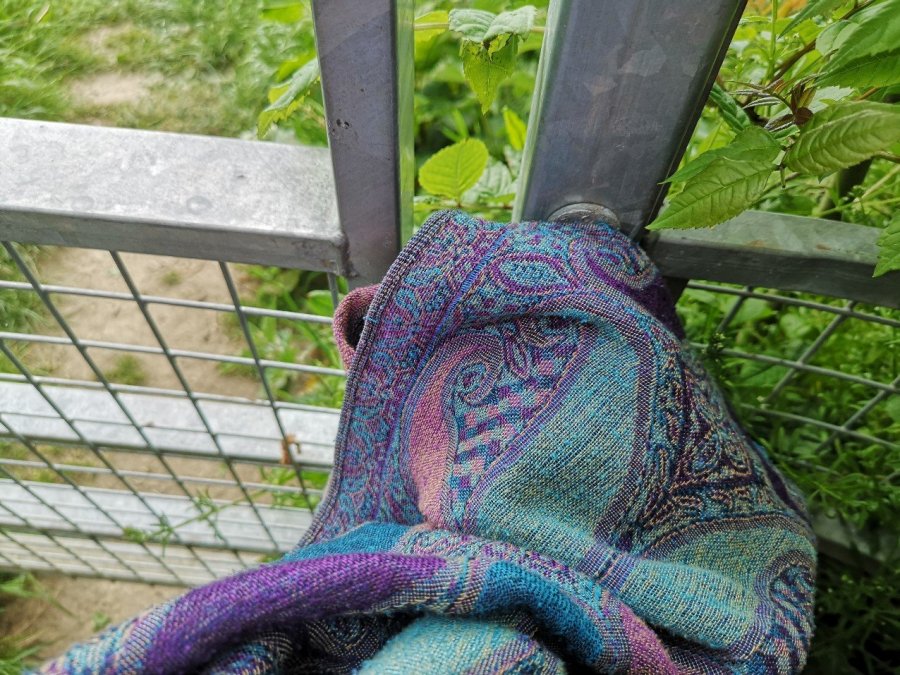
Uing the soft fabric of my scarf to open the metal gate to avoid cross-contamination from ‘the virus’- there was no other way to open it
Out of the house, I turned right instead of the usual left. I was heading towards a certain place and hoping to deviate – deviation, on occasion, being the source of imaginative instigation.
Ahead, on the single lane bridge, was a man on the non-pavement side where there’s a ‘>’ in the wall, a ‘more than’ nick out of the road. There is more, because when you stand there and look over, you can see the river. I was prepared to walk on the pavement, to keep my distance, but he crossed back. He had a stick. I said ‘good morning’ and he seemed surprised. I crossed to the nick and leaned over to look at the water. I live by the sea in Edinburgh, but here in Kent with my mother during the Covid-19 lockdown period, I am landlocked. It is different. It has an effect on me.
A lone swan with plenty of water all to herself
I took a left at the post office. Another gentleman and I dodged right-left-right until we wordlessly worked out who would go in the road – me. We smiled, maybe murmured, I can’t remember now.
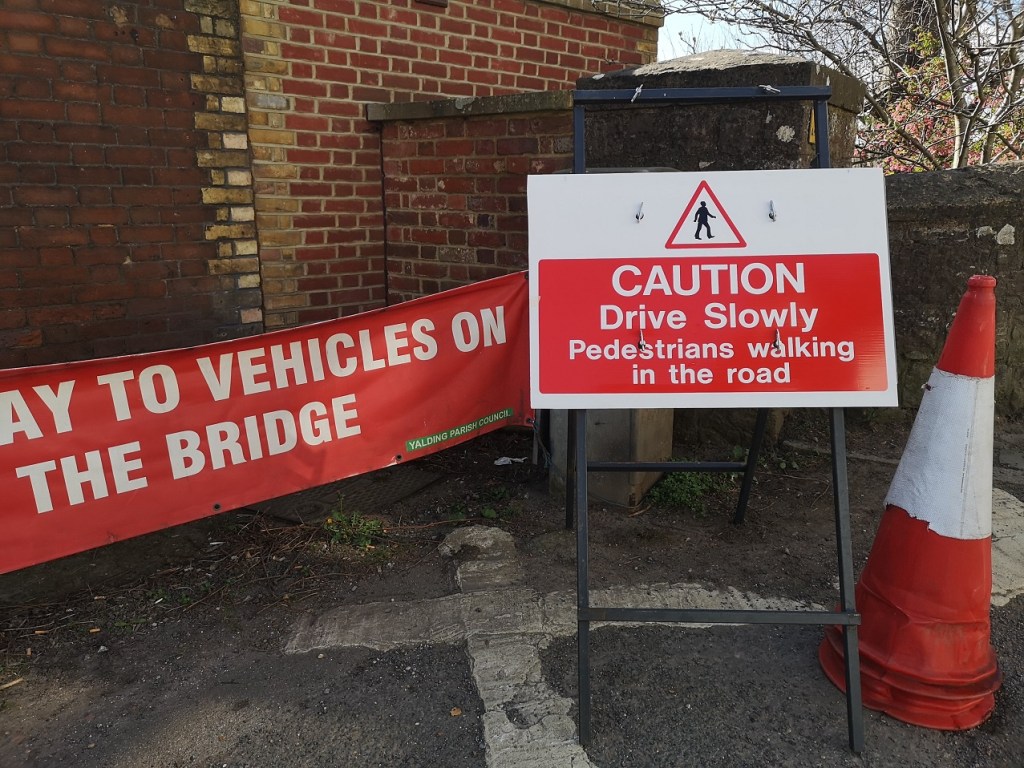
Does this shifting onto the highway to keep our distance, endanger our health?
Flood protection sandbags
My route is chosen
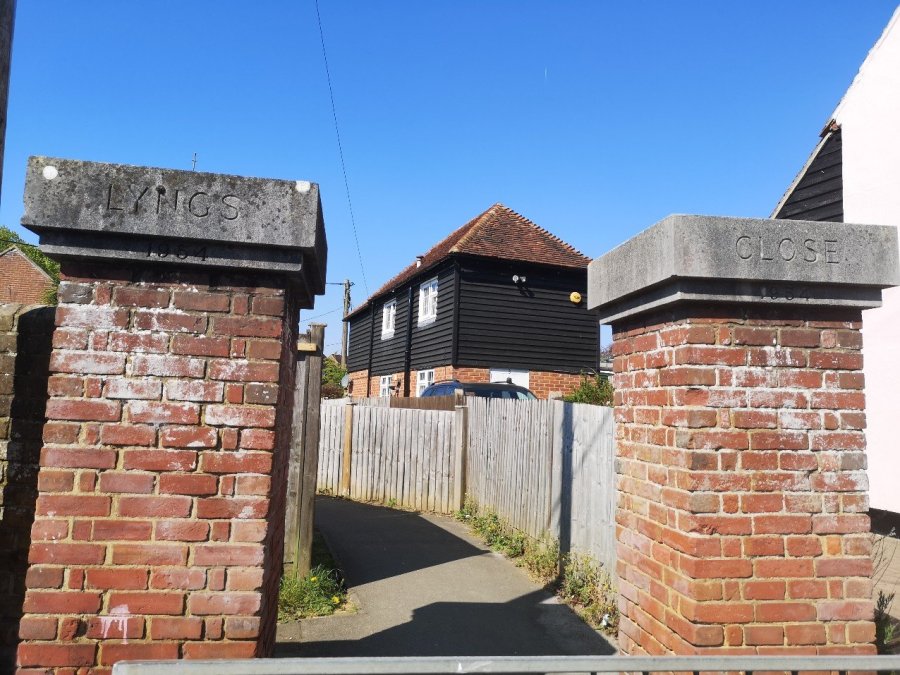
I passed where the sandbags are still piled up outside ‘the pretty cottages’ from the flooding,. Further on, there were words carved in chunks of stone at the top of 2 brick gate posts – Lyngs Close. I typed it into my notes for memory’s sake, and google changed it to ‘lungs’. For once, clever google – Lyngs does mean lungs! It denotes ‘an open space in a town or city, where people can breathe fresher air’ (which I didn’t know at the time). That set off a chain reaction in my mind.
Lyngs Close
Theme
I am a health practitioner, and when I refer to the Lungs in my work (Chinese Medicine), I spell it with a capital letter because the term encompasses both the respiratory organs and the things we practitioners have all noticed over the years that are repeatedly connected with them. For example, clients I see with asthma and other pulmonary issues, will often tell me, ‘I can’t breathe in this relationship’, or, ‘Although there is space at my work, I can’t take a deep breath when I’m there – I think it’s because my boss watches over me all the time’. These phrases link the physical lungs and the ability to breathe easily, with the psychological feelings around having enough space and freedom.
The lyng at Lyngs Close (and Beech tree #1)
This week, the Daily Mail reported concerns that ‘political appointees are breathing down the necks of scientists’, implying that they are being pressurised to make a vaccine quickly. In ancient Chinese texts you will find references to regulations, and the setting of borders (including those between what is right and wrong) linked to the Lungs. As it is their job to exchange oxygen and carbon dioxide across membranes (the borders between the alveoli, the air sacs) in order to maintain our vitality, the aspects of our lives related to rules, space and air are also connected. We are living in a time when the government might ‘push strict lockdown rules to their limit’ and that affects each of us in different ways. I tend to rebel if the boundary is too restricted, if my freedom to create is curtailed.1
A walk theme emerged by happenstance (which I always think must be about happily coming across something). Chance is about things happening unexpectedly and about providing for the possibility of…
Beech # 2
The Scottish charity Greenspace Scotland (2011) defines green spaces as: ‘the green lungs of our towns and cities which contribute to improving peoples’ physical and mental health…and ‘breathing spaces’ to take time out from the stresses of modern life. ‘
As I made my way down the narrow close, I remembered a walk I took a few weeks ago – I was directed along a foot-width path between two fences, by a farmer who did not want ramblers on his land. This expression of limitation was in the middle of a great, grassy field. I was unable to stray in any way. I recalled the signs I had photographed the previous evening – ‘Strictly Private’ and ‘Keep Out’. In Scotland we have the ‘Freedom to Roam’, not so here in England, my original home.
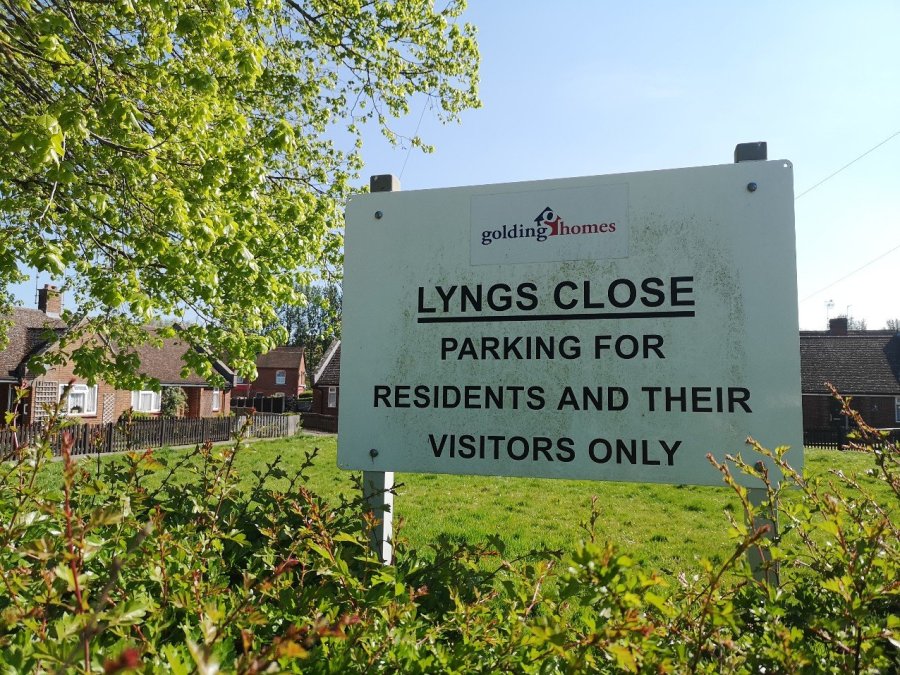
Restricted parking sign
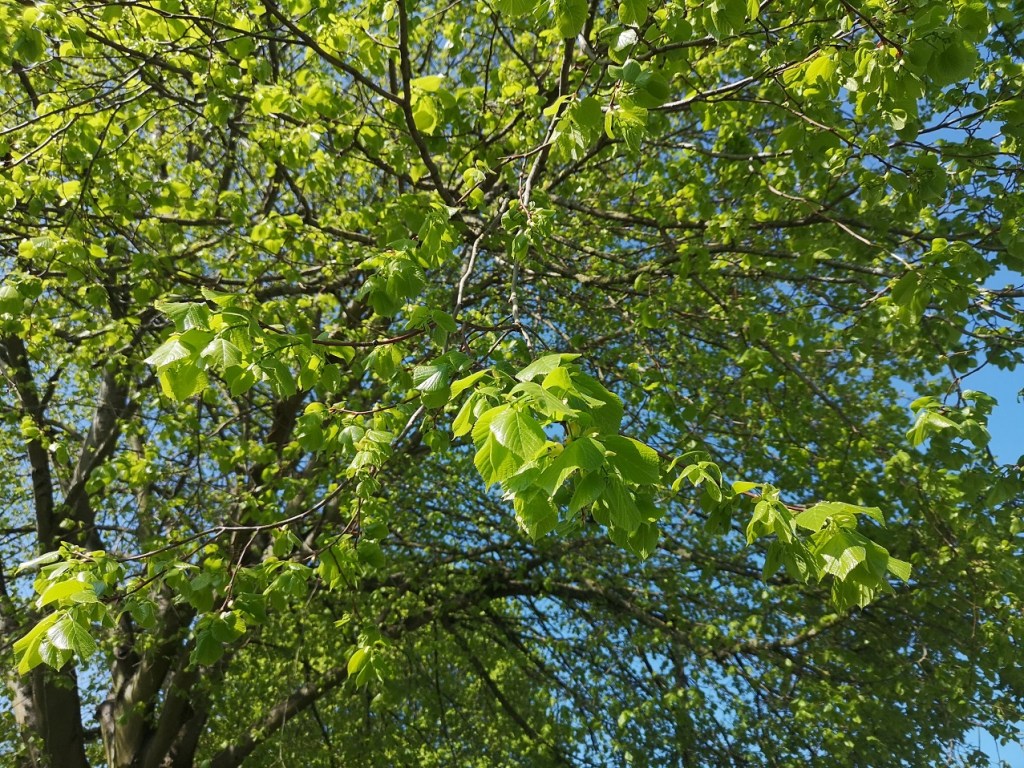
Leaves cleaning our air on our behalf
It’s like the world’s northern forests become a giant vacuum cleaner, scouring the air, sucking down the CO2 till around November
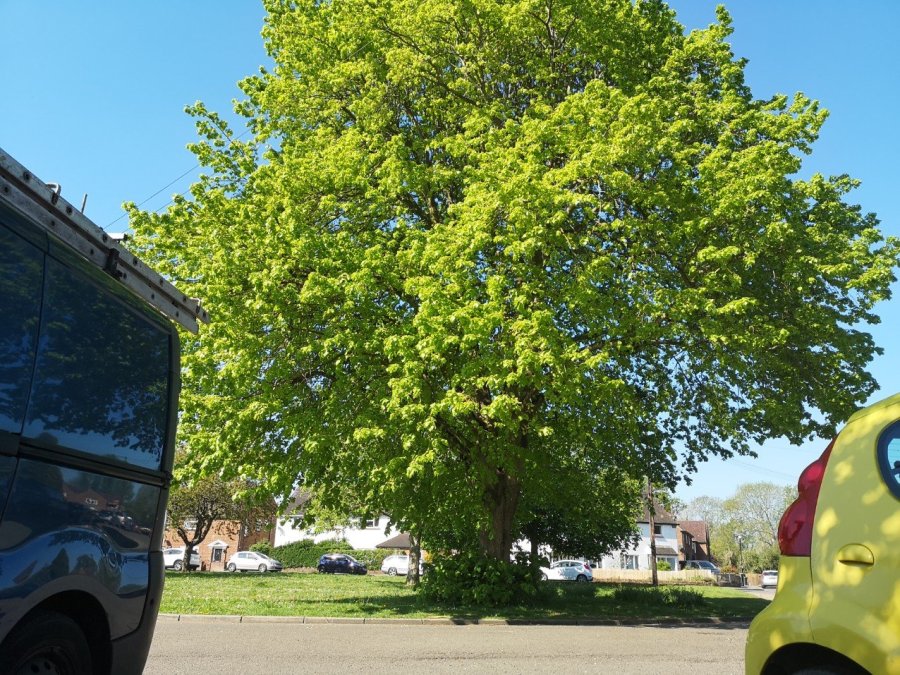
The way then opened up and there was a huge beech tree, one of earth’s 3.1 trillion ‘lungs’, with lobe-shaped leaves. (See the link in the box above for the source of that statistic). By the tree, at the edge of this oval patch of green for everyone to share, was a sign telling me that parking was for residents and their visitors only. I manoeuvred between the cars and came upon an even bigger Green, surrounded by houses and vehicles of varying shapes and sizes. I don’t have one, haven’t had for years, but I remember shutting myself in mine, in a secluded spot, to cry or scream, sleep or read when the children were at school and it all got too much. Here, it was momentarily clear, no exhaust fumes clogging up the air. I wondered if more cars were ‘at home’ than usual – that our new rules were going some way to liberating the planet from exhaust fumes.
There was a murmur of voices, slamming of doors and then a thrumming as an engine started up. It couldn’t, it tried again – the machine was coughing.
Dry tracery of tracks and mud
I had already strayed from my path, wandered off the tarmac onto grass and the crunch of dry sticks breaking. I took a big deep breath and blew at a dandelion clock. Under my boots, a dry tracery of tracks and mud; above, birds warbled. Avian creatures are the only species with a syrinx, the air passing across these thin membranes to produce their songs. Sometimes, like the Song Thrush, there are 2 windpipes and so 2 tunes can be sung simultaneously. It’s known as ‘duetting’. (How Do Birds Sing, CelebrateUrbanBirds.com)
If they stay there long, the grass will die
I noticed two bins on the grass which I knew would starve it of light if left there for very long. Without light, as every school child is taught, it would be unable to photosynthesise, to process carbon dioxide and water and convert it into oxygen and glucose to be able to thrive.
Dandelion clock
I mused on a Facebook story: A friend living in Peru reported, ‘Six weeks of no physical exercise, except for 2 minute walks to take the rubbish out, or check the mailbox, or walk from the car park to the pharmacy…’ Another, from Scotland, wrote, ‘I have felt a bit up and down emotionally this week, wondering….when I shall see my children and grandchildren again.’ Starved of light and sunshine, of physical contact and face-to-face time with friends and family, the health of we and our environment is threatened.
Outside the Village Hall, a man and a woman in a stationary car were smoking with the windows open and the engine running.
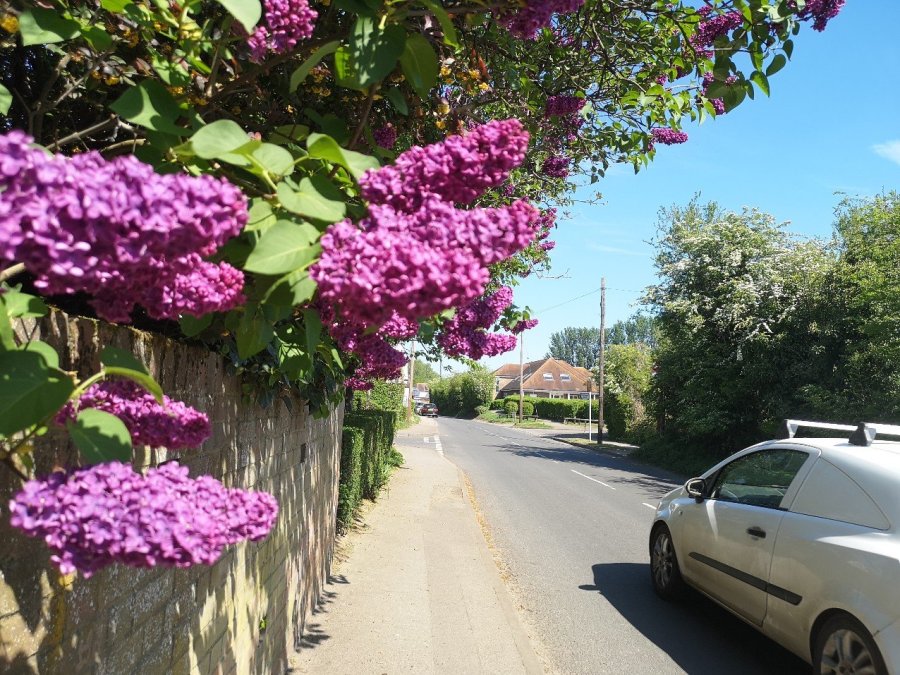
There seemed to be cars in every shot, stealing the focus from the lilac
Alone and together
Now I was back on the main road by the bus stop. A cyclist sped past, the dynamo humming. Four-by-fours raced, causing a wind to ripple my trousers. For a moment it was me and the birdsong before the next one. As it pulled away my nostrils filled with toxic vapours. A child stamped so he could hear himself, questioned his parents. He sang a snippet of the tune in his head, aloud. It was boiling (April) – I was ‘warming’.
Sweet chestnut blooms (plus a speed restriction sign and a car)
There were the wings of a pigeon, whirring; there, the straining neck of a blackbird dashing; and there, the candelabra of the chestnut tree. I remembered that they give some people hayfever.
People have trodden an illegal path
On my right was a track, and a gate with just enough space to squeeze around. ‘How do I know where I am not allowed to walk if there are no signs?’ I caught myself wondering. I went anyway. It took my fancy.
The pheasant hotfooting it away
There was one single crow high up in the clear blue sky; further on a solitary cat in the forage; a pesky pheasant in the stubble, its red head and plumed tail quite evident. Until it spotted me, that was. Then it ducked. If I had been a hungry buzzard at that moment, that pheasant would have seemed to be a clod of earth – cunning. A buzzing insect intercepted me and my camera. I ignored it because of the game and my thoughts. It was me and them. It smelled of hot, cut grass and faintly acrid chemicals.
8, 12, 4 birds flew around in ellipses, making a 3d spirograph of smooth circling, their wings catching the sun and glinting like morse code. I watched some more. No, the signalling came from their white bellies being exposed between wing flaps – hidden, shown, hidden, shown – around 3 x per second 2, 70-95 mph3 Notably, they choose to expend extra energy in order to fly together, adding an extra wingbeat per second in order to have compatriots to home with.4 I have brought Sara Baume’s book ‘handiwork’ for a walk with me. She writes that birds migrate with other species sometimes, if they share feeding habits. I didn’t know that. I like to think I could join a flock of others who have the same needs as me for company on the long journey.
If I am not allowed to go there, I can’t help them
Over and over again, as I walk, I am faced with limitations and the knock-on effect of them. As I turned a corner, cars were relegated to the distance, birds and other unidentifiable noises took precedence, but I could not investigate because of the fence. On Saturday morning it was the same – I think it was a distressed duck I was hearing (perhaps because of my concern over the mother of the 2 dead ducklings the cats brought in the day before), but I couldn’t satisfy my curiosity because of the wire and wooden posts. Nor could I help, even if that had been possible. (This is another topic – the crossing over the road to avoid contact, thereby missing the opportunity to be close to another, strike up a conversation, smile into their eyes and help if need be; the secluding which precludes neighbourly chats and offers / receiving of support; the ‘Keep Out’ signs which stop me reaching the scene of the problem – none of it healthy). I realised I was walking the outside perimeter of someone’s garden. They were on one side, me the other.
Hawthorn, Crataegus laevigata
The wood pigeon gurgled her underwater sounds; the sweet smell of hawthorn was like incense in a mosque. Two rabbits ran out onto the path and turned towards me. I realised they don’t know I was there. One turned off close by, the other froze. She seemed to be unsure. A pigeon errupted from above my head, and I startled. That scared the bunny away.
Lush hedgerows and official footpath sign
Nearing the end
This was the front of the sign I got stung to see …
A woman’s voice I couldn’t quite hear, interrupted my peace. I saw the phone ringing and I didn’t answer. Before I knew it I recognised where I was and glanced at the time – it was getting on.
I was on the official footpath, but it was the back of a sign that was towards me. I got stung by nettles trying to read it, and, although I generally think that homeopathically that does me good because I respond well to the properties of Urtica dioica, drink it every day (it’s good for the health of my joints and blood), nevertheless this is another danger inherent in rural walking!
Wilding
Raspberries gone wild
Before the cherry orchard, I came across raspberries which have been allowed to go wild. Not over excited, although maybe they are because they have grown in exuberant, prickly arches, more monumental than the brambles. (Do they compete? I wonder). They have been left, free to go their own way. Kids who ‘go wild’ are said to be having fun, they squeal and scream, their voices filling the air with their freedom of expression. I go a bit wild when I walk: I dismiss pretence and constraint. Not quite feral, not ‘gone mad’, but I have wilded.
The voices behind me were getting louder. Closer therefore. ‘You don’t want to do it on a day like today’, he said with a forbidding tone. I stood to the side to let them pass.
I wanted to stay out until I wanted to go back. I knew, now, where I was and how long it would take to get home and guaged it was perfect timing to speak to the kids on Zoom. (Actually I was late and the youngest messaged, ‘Where are you all? I am here on my own. I could be outside.’)
Offstage, a child screamed. A fatherly voice said, ‘Calm down, don’t panic, if there’s a problem, tell me’. Then I was back on a road. They cycled past.
So, be careful, you have been warned
You can’t do this, or that, nor the other
As I crossed the Lees, there was a procession of us, socially distanced. We were strung out, hopefully not ‘strung out’ – nervous or tense – after our walk. One woman wore headphones, cut off; a couple were knee deep in the undergrowth; a what-I-call ‘proper hiker’ was focused forwards with his baton jauntily over his shoulder like Dick Whittington (I said hello, but got no response); a friendly woman with a walking stick smiled and nodded.
Most of us were well spaced out – these 2 must have been living together
I did go where I had intended to, but I got there an unfamiliar way. I came across a lot of warnings, but survived. My health was all the better for the open air and the Spring green.
A 3 hour round walk, to and from Yalding High Street. March 2020
At this time, when we are not allowed to leave the house more than once a day unless there’s an emergency, and should only be doing it for the purposes of exercise, my awareness of the connections between nature and our situation is alive in my mind as I walk.
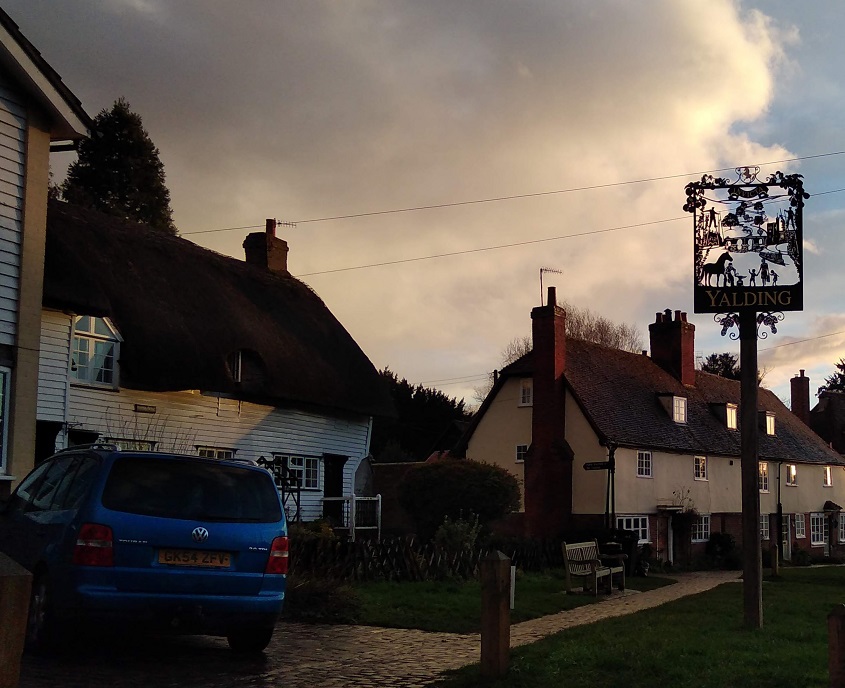
Thatched cottage on the left and tiled on the right of the lane behind the wooden bench. (Photo taken in the evening of another day)
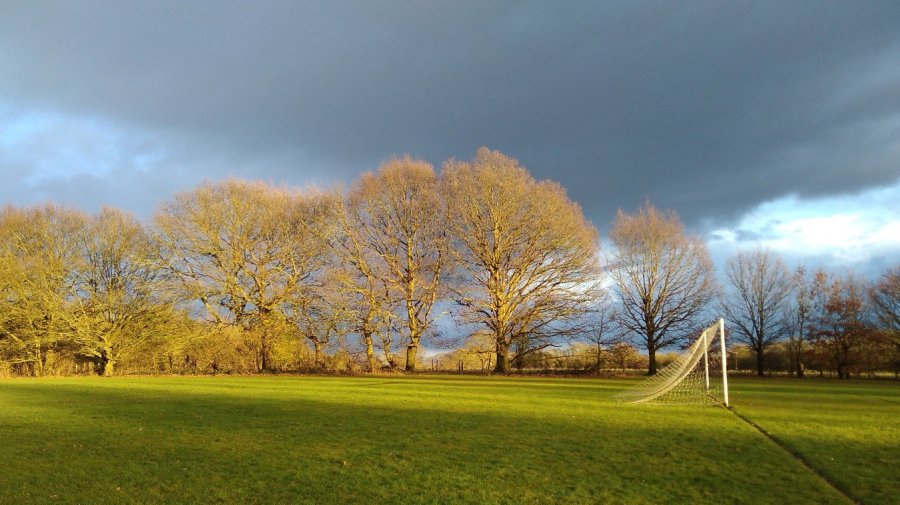
There’s a little lane off Yalding High Street, between the white-boarded, thatched house and the pale daffodil-yellow brick one with matching tiles (on the same side as St Peter’s and St Paul’s church). It takes you past the churchyard and through a gate which is now propped open with a sign saying it’s because of the corona virus. (It took me a while to work out why, but I think it’s so that you don’t have to touch the wood and possibly leave or catch germs). The cemetery with H’s grave and the rifle range are almost facing each other and you can see the controversial new builds and the rubble which has been left over. The Kintons is a well-used sports and dog-walking patch of grass with a children’s play area.
The Kintons
In the far left hand corner, past the bluebell woods, is a track which darts straight ahead. A field was being mowed to the right, a rather portly little dog was scampering behind, and I could see into the scrubby woods, with the back entrance to a grand mansion opposite. A woman was coming towards me and she couldn’t avoid being closer than two metres due to the narrowness of the track, but she awkwardly tilted her upper body as far away as possible. I had a lot of bible teaching when I was a child and stories often pop into my mind. I had been thinking about the image from the Good Samaritan of people crossing over to avoid having to help the injured and needy. Nowadays, on the contrary, we are taking care of each other by doing just that: by-passing on the street. Equally, many of us are going out of our way to look out for others – the phone and the doorbell ring approximately seven times a day at my mother’s house where I am currently staying, with folk from near and far checking if she is okay because she usually lives alone and is over 80 years old.
Crossing Vicarage Lane at a slight angle, I clambered over the stile, sleeve pulled down over my supporting hand to avoid skin contact, tromped through the grass, crossed an access road, and followed the footpath signs (you do not have the Right to Roam in England as we do in Scotland).
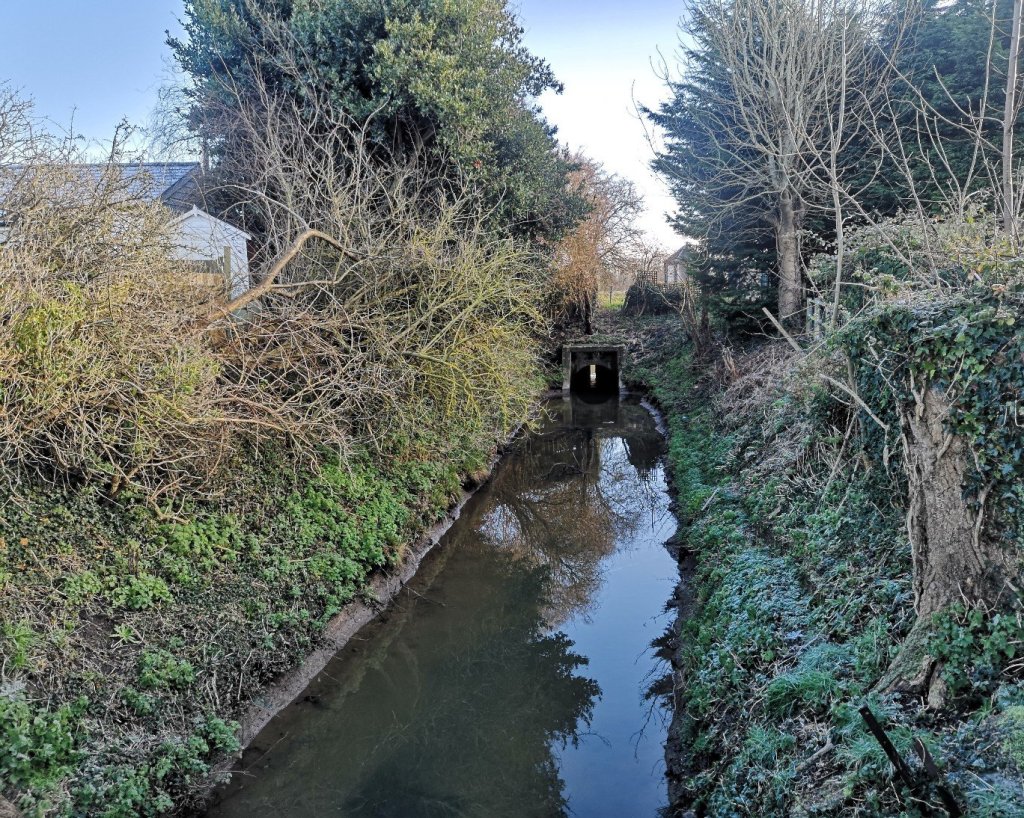
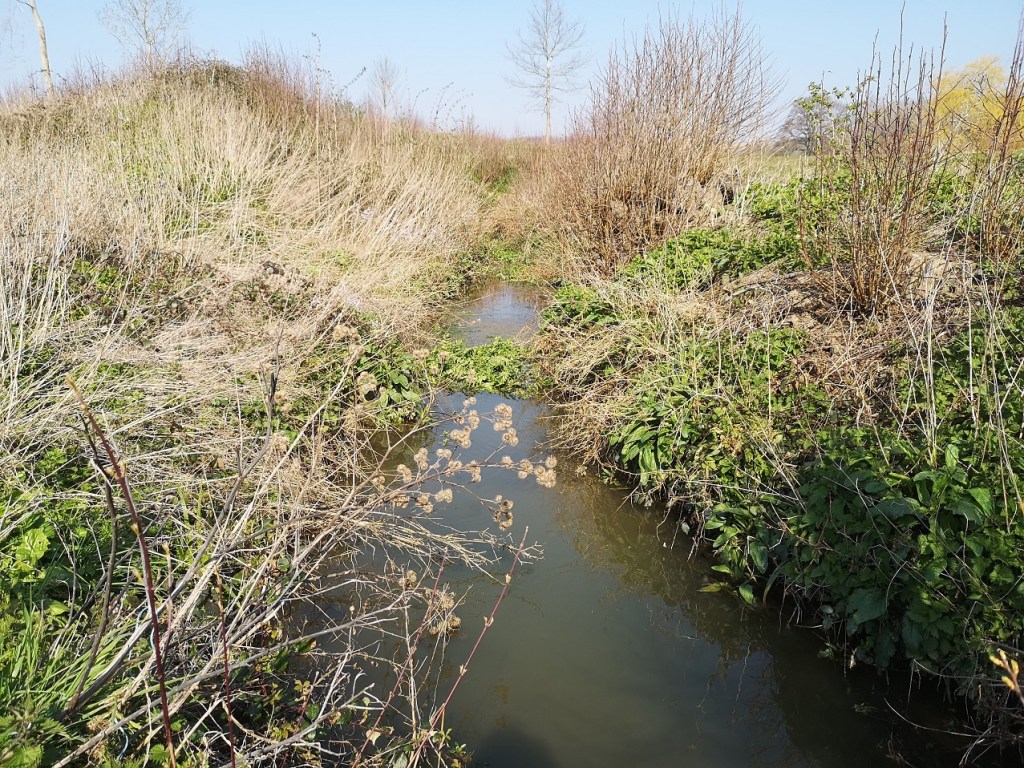
There are little streams and waterways everywhere, often almost hidden by overhanging undergrowth, Kent
Water weaves through this landscape at the best of times. It floods regularly, inundating the copses and arable lands; contrastingly, it is often so dry that great fissures appear and hose pipes are banned. Locals are constantly reminded of what is vital to life, forced to focus on conserving it and appreciating it when it is in balance. This virus we are now dealing with, is, maybe unwittingly, protecting our landscape (yesterday drones were spying on the Yorkshire moors to even stop hikers (for different reasons)). Although many fear that we have damaged it for good, we do also know how resilient nature can be.
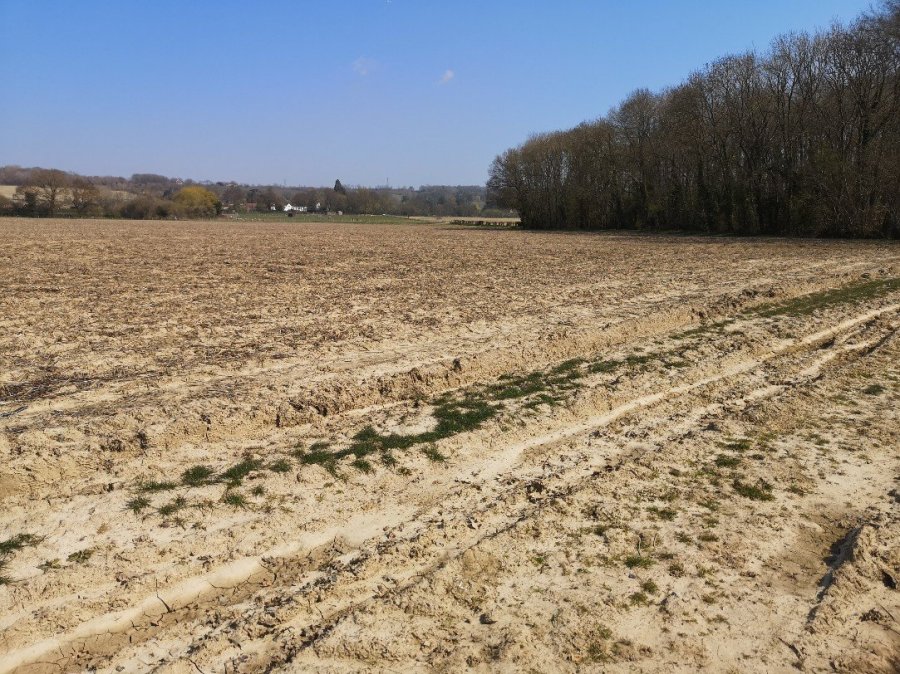
Wide expanses of sandy coloured, cracked earth, Kent
The earth was bright in the sun, hardening and whitening every day now Spring is here. Often so solid and unyielding in the south east of England, there are still sodden patches and the odd sinkhole of wetness left from Winter and you might not be so safe if you stepped there. I reflected that it is change, especially unforseen changes, which challenge our sense of security. Although we want to trust that we will one day be able to plan and move around the world again, we do not know when that will be. In fact, we know deep down that nothing will be exactly the same; we understand that this is serious enough to bring about a new order. We don’t yet know what shape that will take because, metaphorically speaking, the ground underneath us has shifted. This is why walking, even when we have to watch our footing, is such a reassuring activity – we still get from a to b and survive the experience. I could feel myself becoming grounded, and then I sighed and felt a movement in my heart area. (Chinese medicine practitioners: in the Five Phases, when the child’s happy (Earth), so is the mum (Fire)).
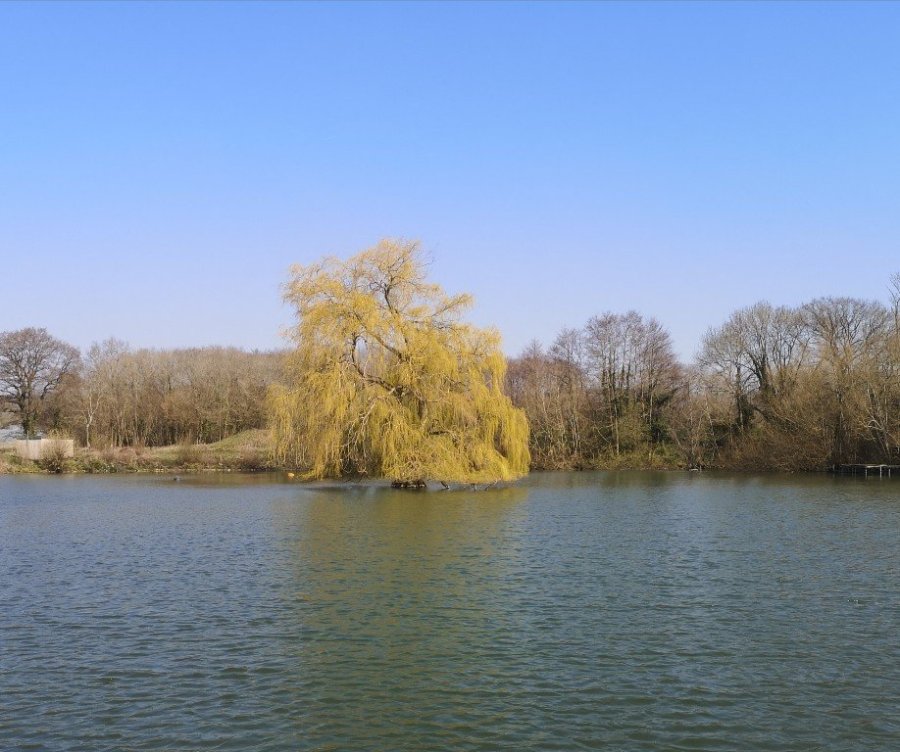
Contrasting colours – the yellow green of the tree with its new vestments and the blue of the lakelet and sky, Cheveney, Kent
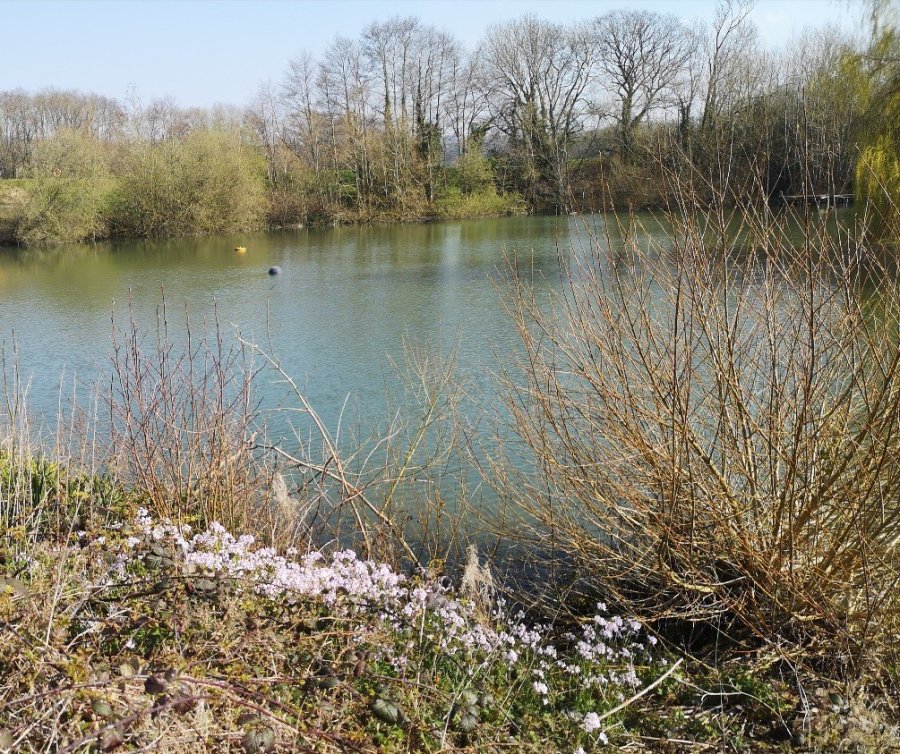
Banks of Lady Smock around the water, Cheveney, Kent
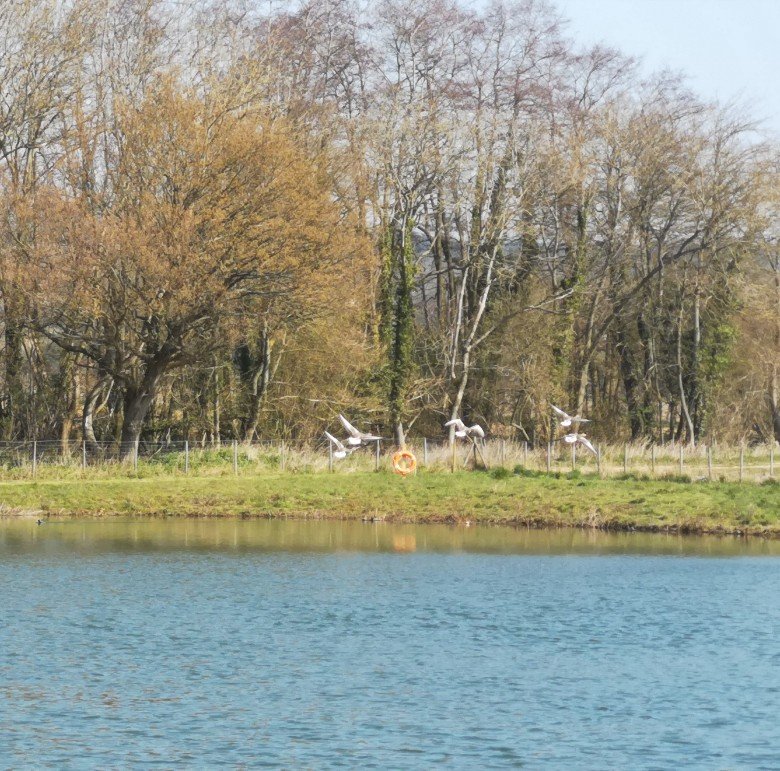
Walking towards Grove Lane, there is an almost imperceptible gap on the left which opens out to a small lake. It looked grand. Skirting it, I admired the wild flowers. What a beautiful setting on such a day, with the cool wind causing mini waves and turning the surface a myriad of shades of blue.
I am used to giving wildlife a wide berth, but this time I startled the flock of geese who were grazing on the grass a long way ahead. They made ‘We are very disturbed’ noises
All that was left was the Goose down
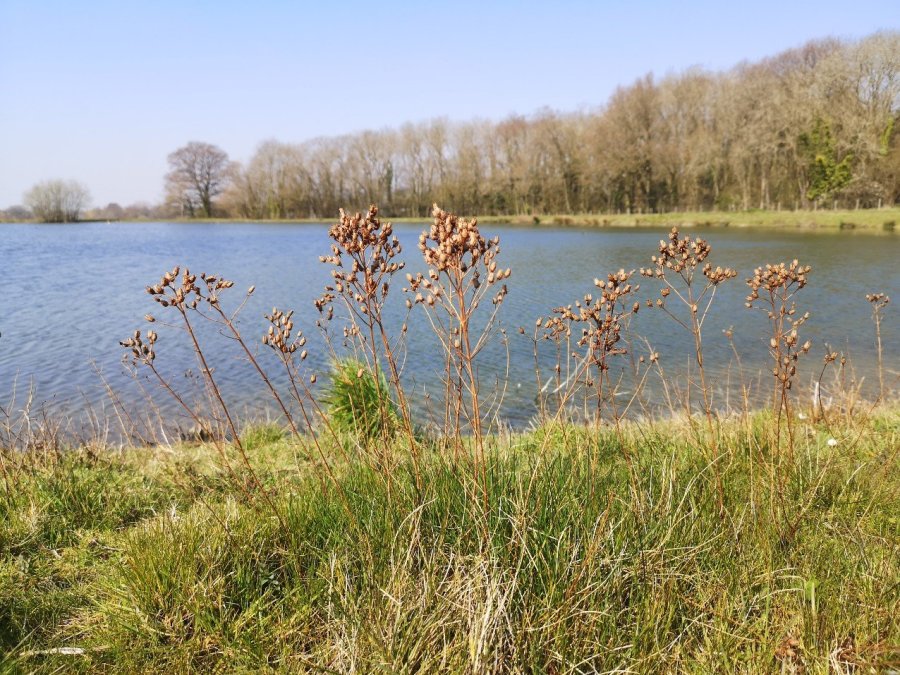
Seed heads from last winter
Daisies and Eye Bright
I crouched down to watch a bee collecting from between delicate mauve petals. He was only just about holding his own way in the breeze, but he kept on, goal clear. I admired the water birds and the Daisies with their sunshine faces. Bird’s Eye nestled at their feet, making another stunning combination of hues. There were sharply serrated Nettles and whorls of Thistles. Neon orange lifebelts hung at either end, and the whole was chicken-wire-edged so that I made an entire cycle before exiting precisely where I entered, stepping over the fallen fence.
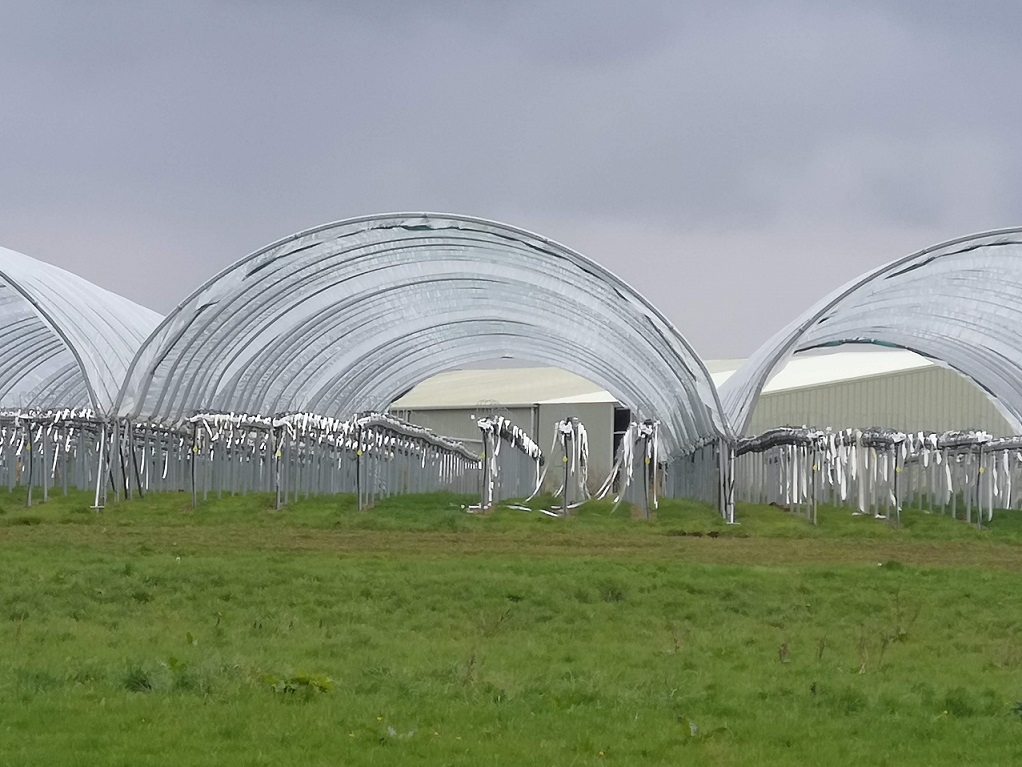
These polythene tunnels are from another farm nearby, but you can see the silver-looking straps hanging down which attach to the plants. 10 days ago the old plants were on them, the next day they had been removed, now they are being replaced for the coming season
Doubling back on myself by the lane which curves around the lake, my attention was attracted by men’s voices, the first of several groups I passed during the morning, working away hard in close proximity. They were setting the strawberry plants onto the stands under the plastic hoods.
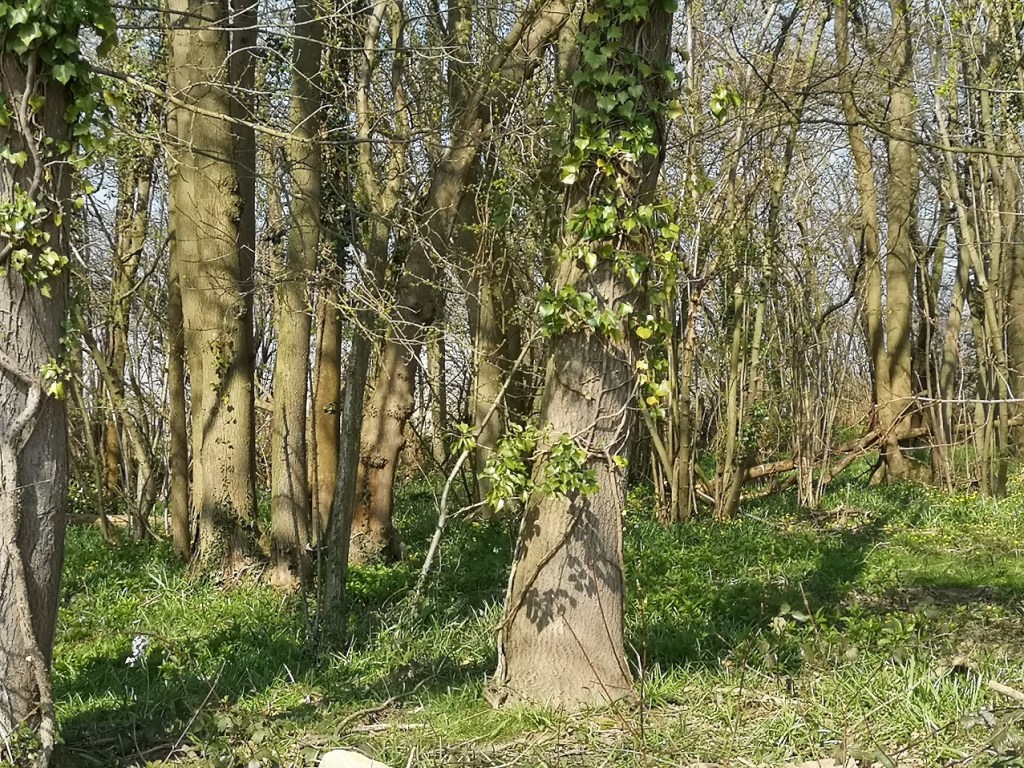
Trees in unseen communion
Coot on Cheveney Mill pond. They are also inhabitants of the upper lake I visited on this walk
I heard the coots before I saw them and I suspect that they were born here, that their life has been, and will continue to be, spent in this pond, (according to the RSPB they are resident here all year round), just as the trees in the wood next to it have stood in the same place for 100s of years. Other waterfowl return to their homes, well to their second homes every winter like Brits on the Costa Brava.
Witness the staying power of trees!
Witness the staying power of trees! There they are, in one spot, come month, come year. And what do they do while they’re standing there? It turns out they are very quietly, and probably slowly, fostering their community through their roots, just as so many of us are only now starting to do.
The word ‘Foster’ is associated with the Old English ‘fostrian‘ meaning to supply food, nourish and support.
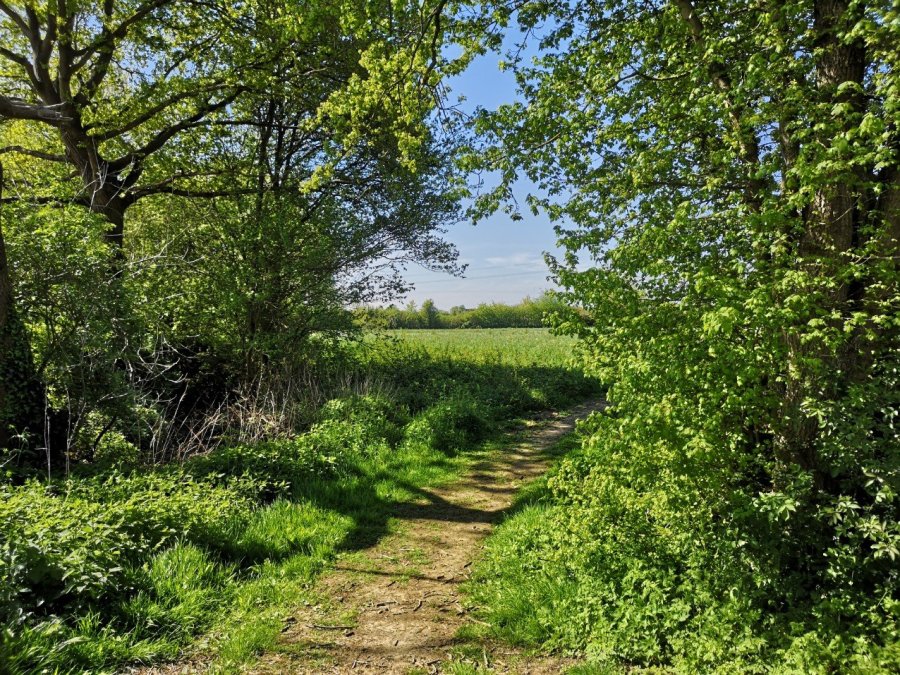
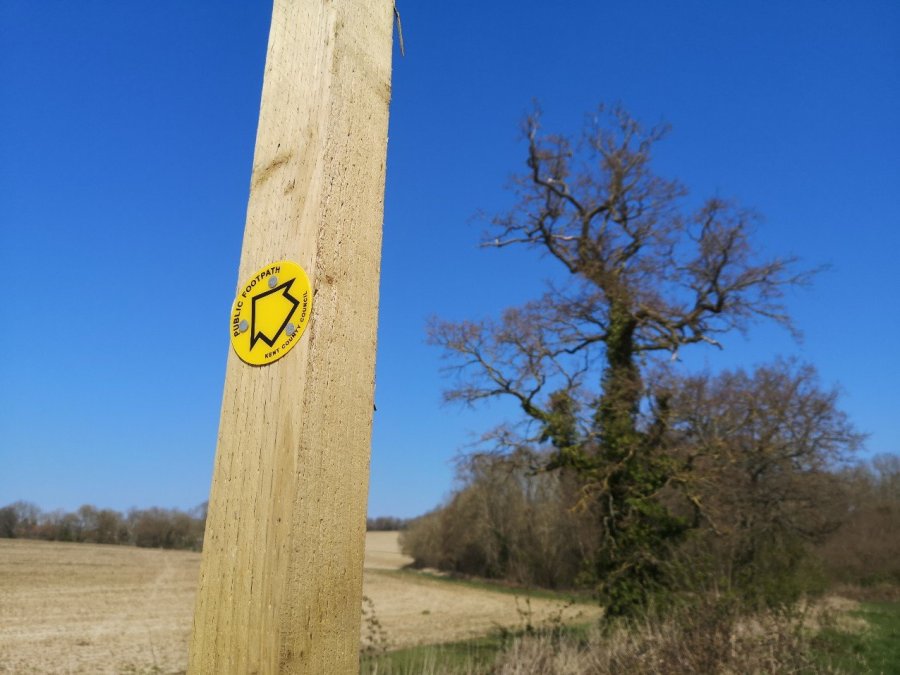
Kentish footpath
At the same time as processing the CO2 (carbon dioxide) for us, looking beautiful and smelling divine, trees offer a home to insects, birds and other creatures. And yet, so many humans were living and suffering alone before this crisis and are now even more isolated. This can be an unnatural, even a dangerous situation for certain people. Questions arise: What can we do to make sure that those who want it can get support and companionship? How can we plan in advance for the next virus? Trees will grow taller and straighter, needing less pruning, if they are planted close to each other in the way that they naturally reseed in a woodland area. What a lot we have to learn! What a lot we are learning right now, thanks to the Covid-19.
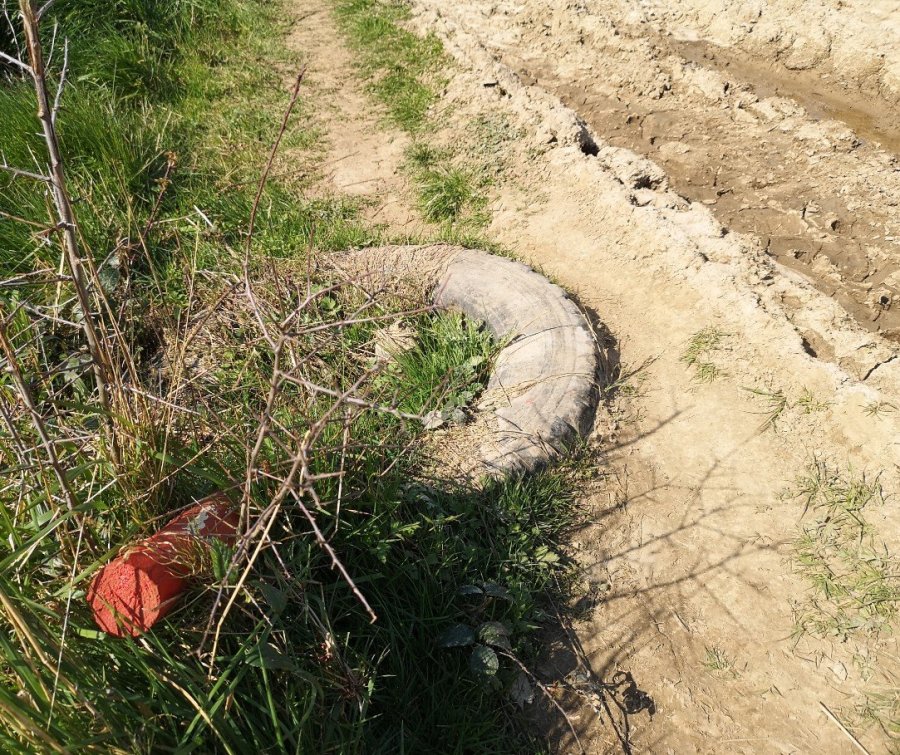
Sunken tyre
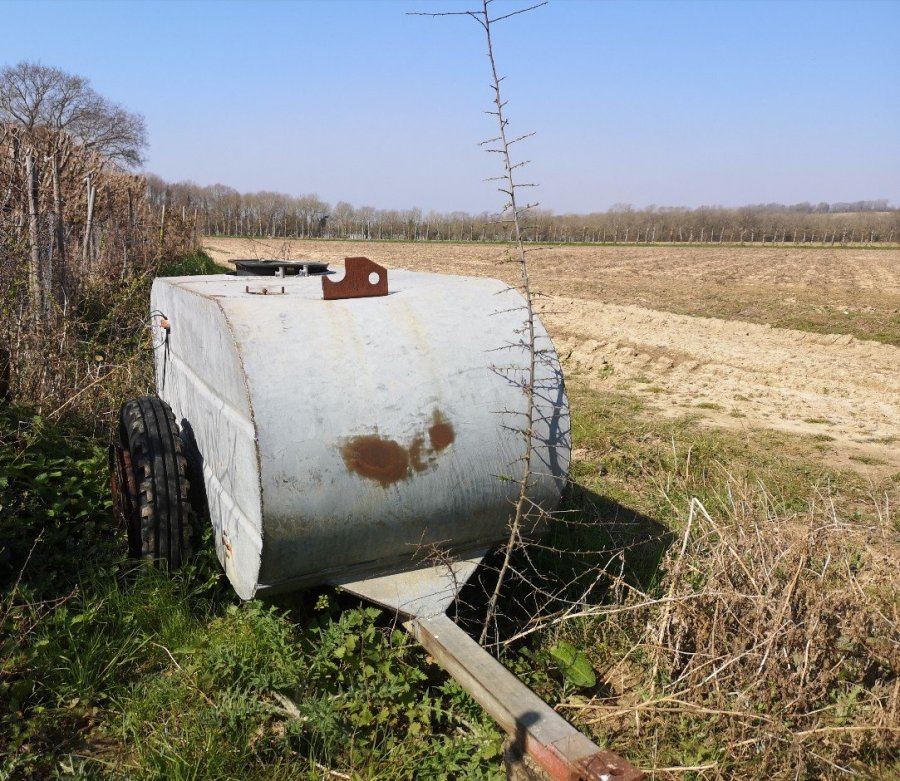
Discarded farm machinery
The path took me around a corner where some old equipment was half buried and put out to pasture. Wide open fields were flattish, a gentle rise in the distance and the wind from the north was chilly except when sheltered by the hedgerows.
Looking uphill in the direction of West Farleigh, Kent
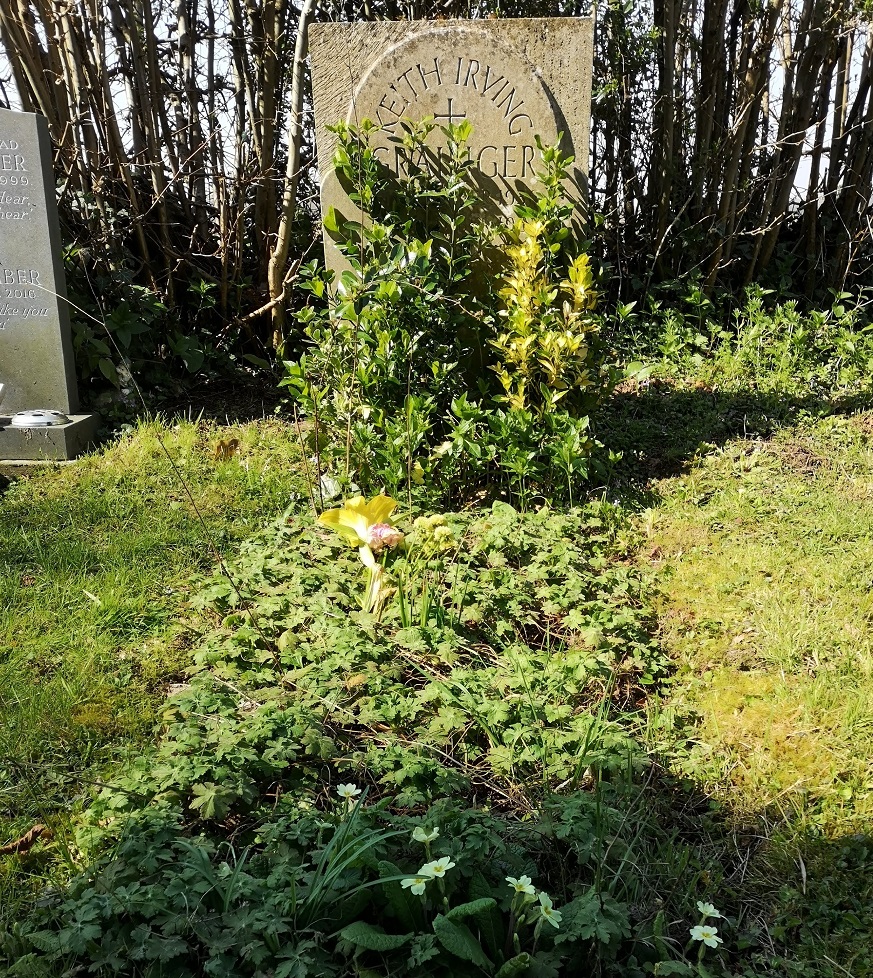
Dad’s gravestone at St Mary’s Parish Church, Hunton, Kent
I took the Permissive Path (that is, not a public Right of Way, but one which is permitted by the landowner) over a tiny, planked bridge to West Street and stopped at Hunton St Mary’s church to visit my father’s grave. I took a quick photo of the Village Hall to send to my sister – she got married there – and then crossed back over, past the Engineering Works and went right. I wandered beside more agricultural land until I reached the junction between Barn Hill and the wonderfully named Lughorse Lane.
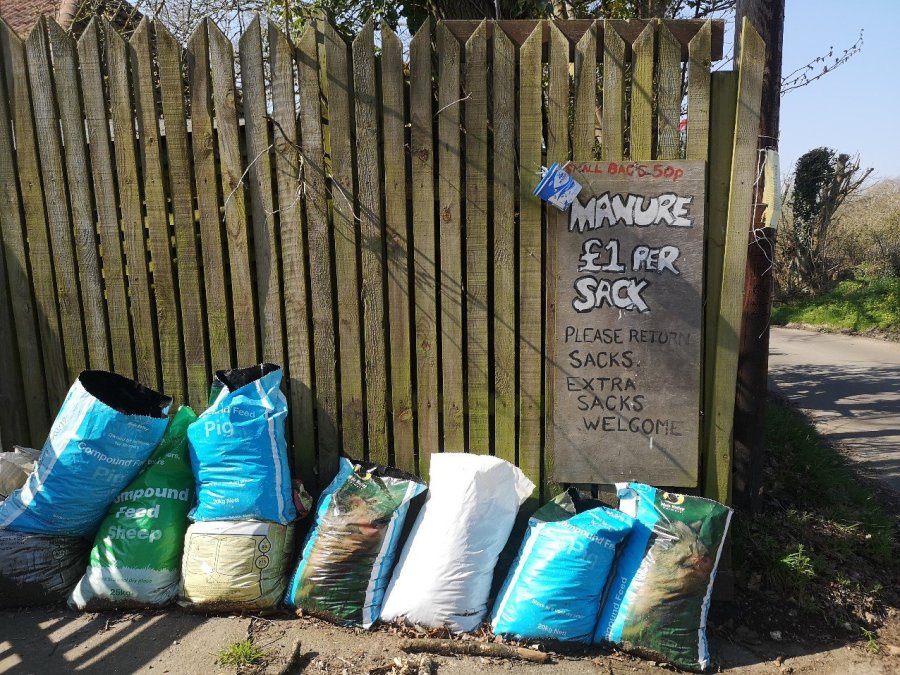
Manure for sale
Mare’s Tail or Horse Tail (thanks to Mick Summersgill; and in Icelandic it translates as Claw Lightening (thanks to Robyn Vilhjalmsson). Equisetum arvense
Clumps of proud daffodils with orange trumpets kept their eyes on me as I passed. There were also some plants which resembled long and upright poos, or if I am to be less disgusting, vertical pine cones in the deep grass (see above).
Stick to the footpaths!
Before long there was a footpath off to the right and I started to climb quite steeply. It was peaceful. This was my exercise (in case any(official)one is reading this). There was stubble from what appeared to be bamboo on my right, but I doubt it; more likely wheat. There were mostly Magpies, Pigeons and Crows around although I did see a Jay a few days ago which was exciting. I spied a raptor nearer the top, most likely a buzzard, sailing on outstreched wings, but the photo was too indistinct to reproduce it here.
Buston Manor – disused oasthouses without their cowls, the white oparts with a sail which move with the wind
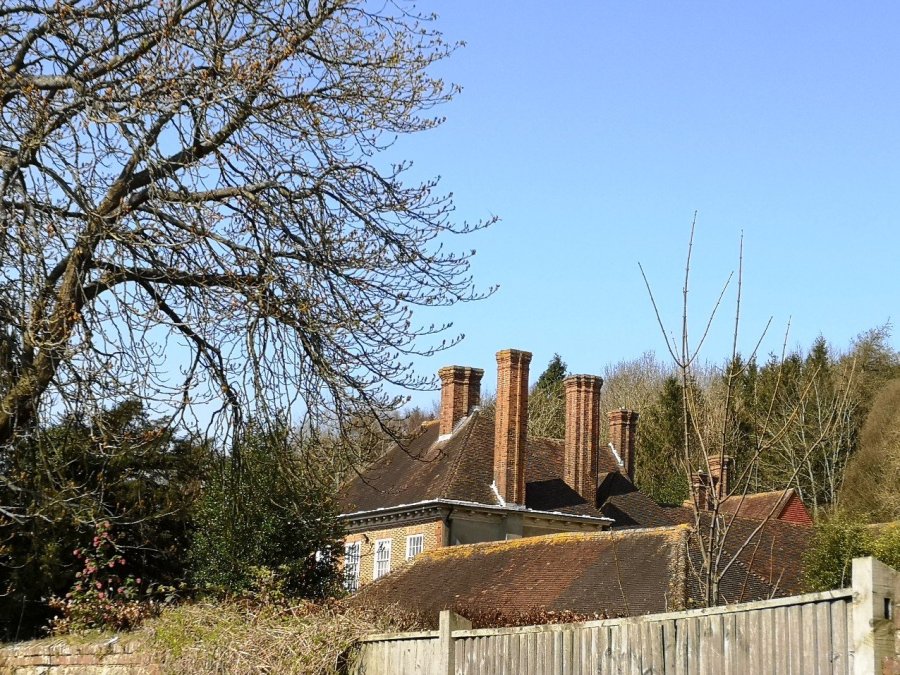
The Elizabethan chimneys of Buston Manor
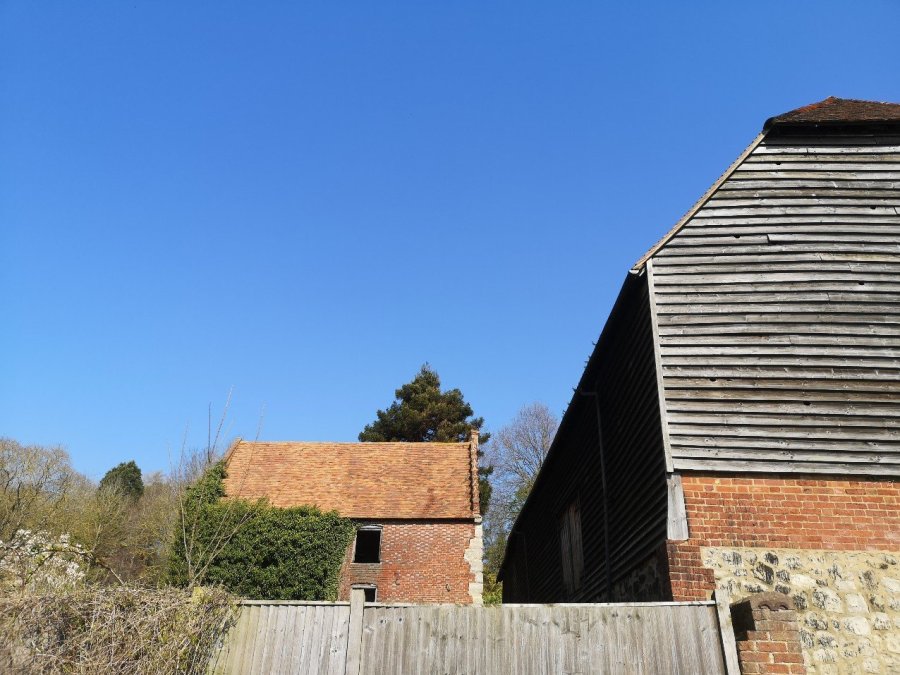
Capacious barn and other red brick outbuildings at Buston Manor, Kent
Flowering Currant looking bonny against the clear sky
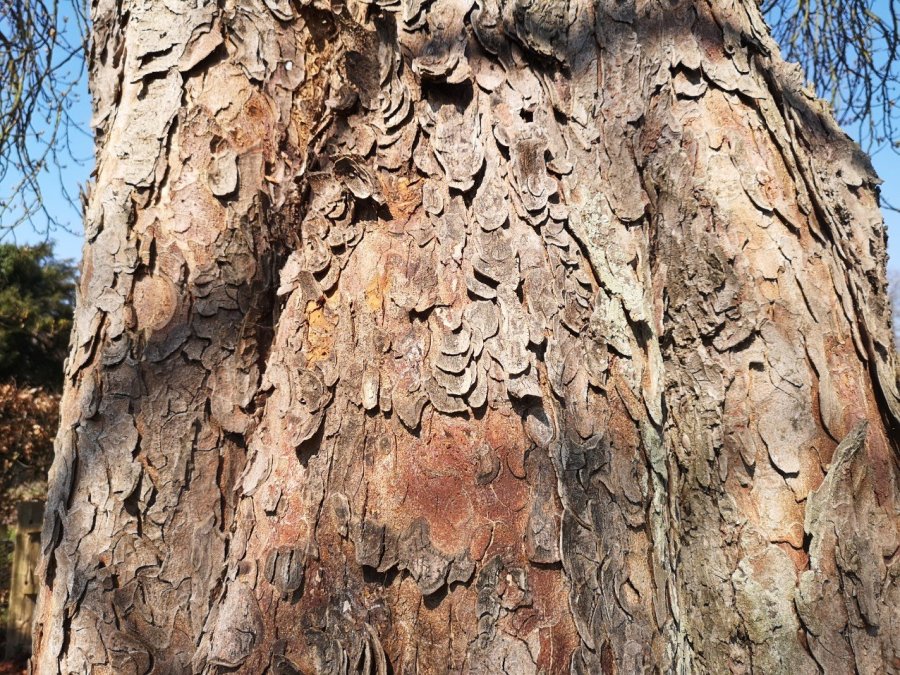
A dinosaur of a trunk with scales
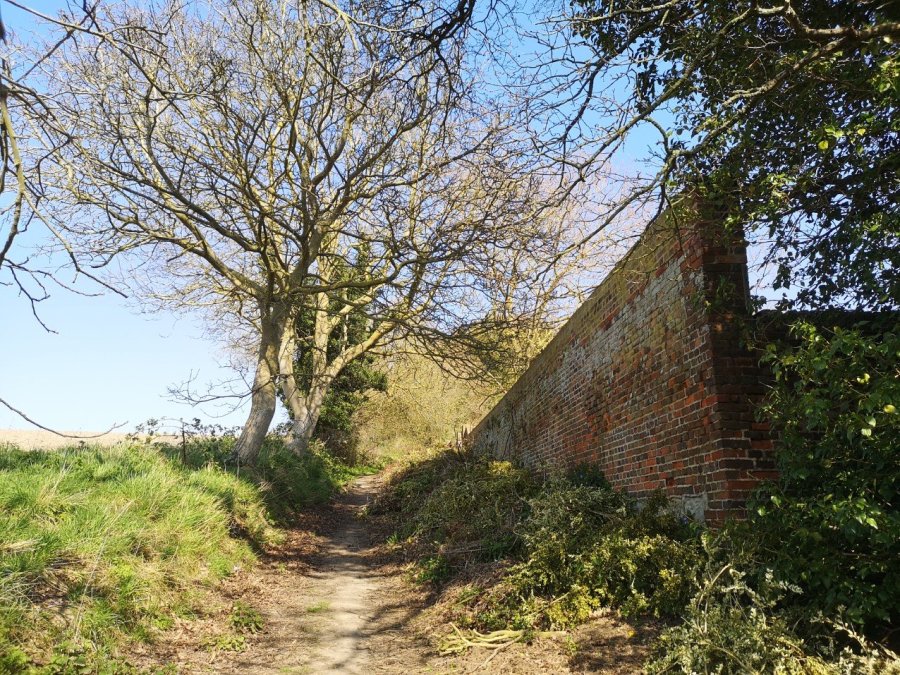
Although a dogwalker took the private road uphill on the right, I turned left on the official way and walked through the Buston Manor yard. First a jogger and then a proper walker with a staff who wore headphones, came towards me. But I was drawn aside by the gardens, architecture and tree bark design, never mind the extensive walled garden. I was told, later, that it is often used for filming TV and features.
Right at the end of the walled garden, Buston Manor, Kent (they obviously dump their garden waste over the wall!)
Up again and a little sit-down to eat my satsuma, wind in my ears and at the back of my neck. We have to be careful of that as an acupoint GB20, aptly named Wind Pool, where Wind can enter causing headaches or worse (flu), certainly making us vulnerable. My (and my grandmother’s) advice – wear a scarf!
Once more at the top, she and her dog went one way, I another
Call that a footpath! Kent
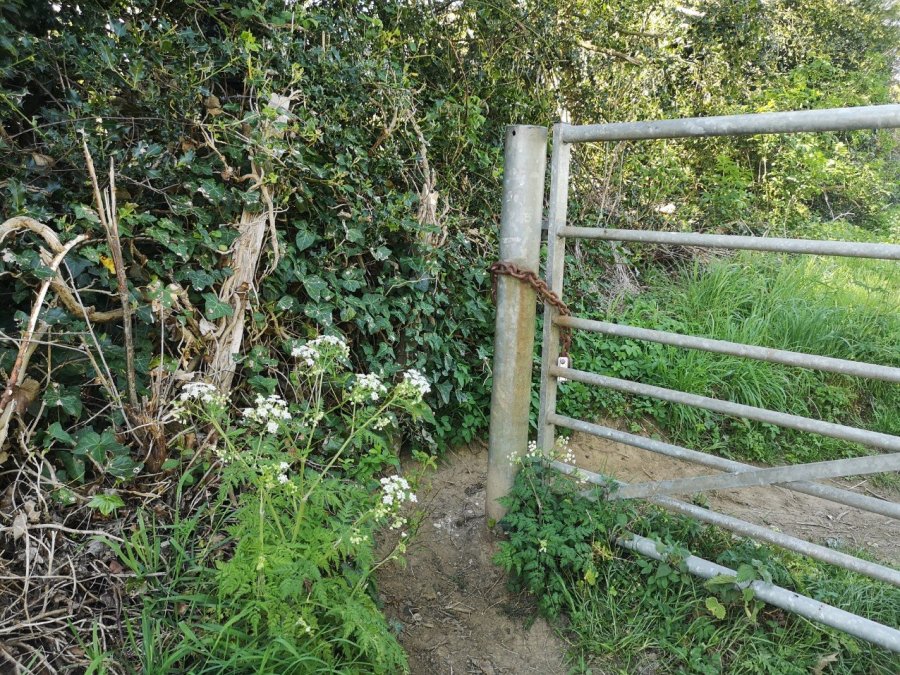
Through a metal gate, I went left onto a farm track of very dark loam, ploughed by machinery wheels and criss-crossed with tree shadows and sunshine-saturated grass. Steeply down now, until I unfortunately spied a Public Footpath stone and so took a right up a slight bank and out into the open again where there was one of the ‘footpaths’ I have walked the length of before in this area. This narrow enclosure drew me along and then, suddenly ending in a field, it showed me up to the right (where admittedly the vibrant green of ground-spreading chamomile was growing alongside left-over broad bean seedlings) and, without realising where I was heading, I was through another metal gate and onto Yalding Hill.
Yalding Hill is to be avoided at all costs if you are on foot as it is a very busy, narrow road with no pavements. Being very familiar with such situations, I was brazen and made sure every vehicle speeding towards me knew I was there (waving my arms, making eye contact, thanking them afterwards), but many were going too fast and several times I had to flatten myself against a bank. Had I known this in advance, I would have turned back.
Tip: Do turn back if you find yourself on Yalding Hill. Find another, safer way down.
Towards the bottom, where the village starts, are some very attractive gardens, the Walnut Tree pub and Village tearooms (both now closed of course), and the war memorial. The Greensand Way is off to the left
I walked through the garden gate three hours to the minute from when I left – good timing!

























 Walking without a donkey