Broken branches, fallen boughs, John Muir Country Park, Scotland
Location: The John Muir Country Park near Dunbar, Scotland
This event took place on : Keeper of the Soils walk, by North Lights Arts
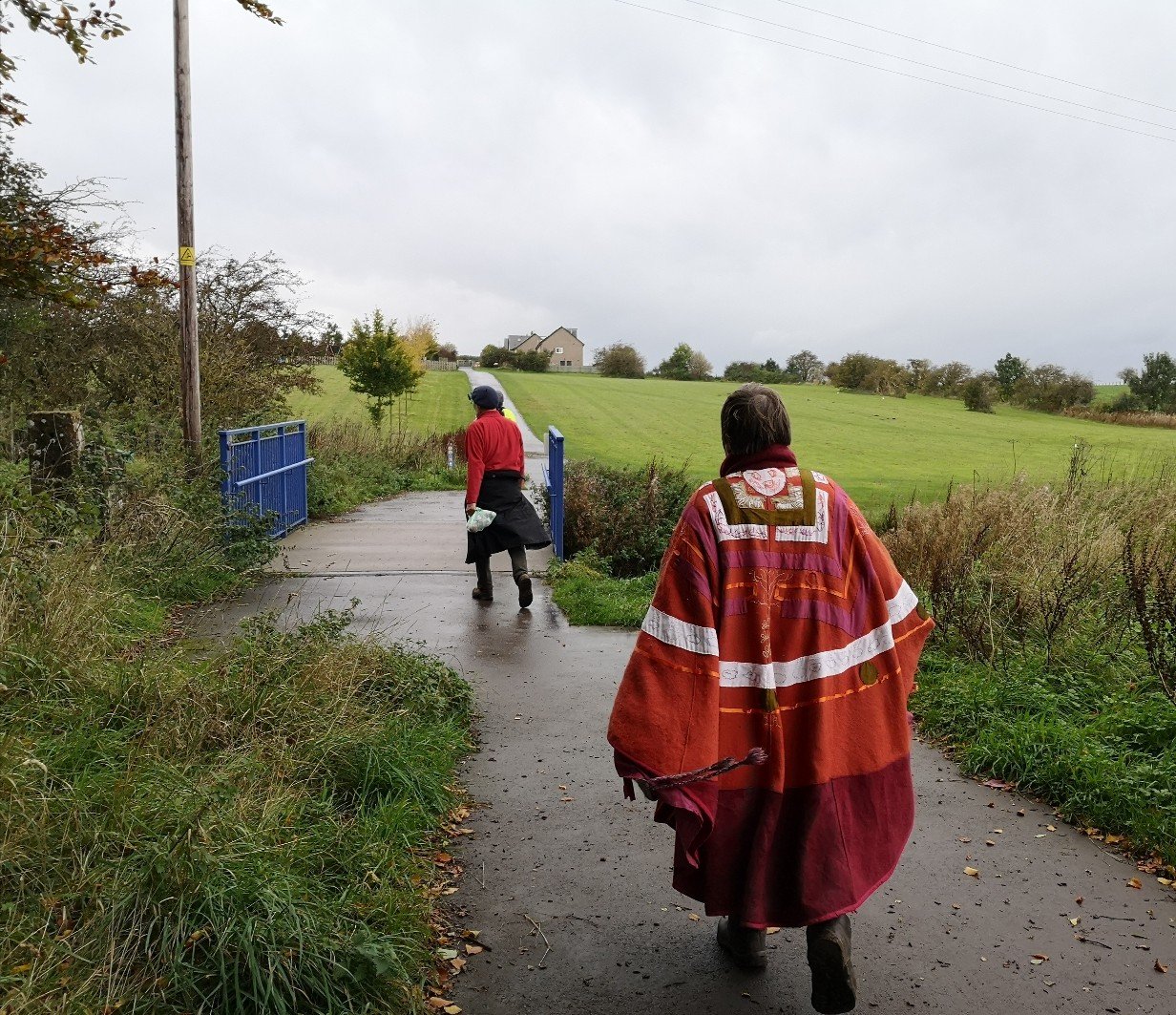
The Keeper of the Soils cloak, walking the Pilgrimage for COP26 October 2021
Preparation: I asked everyone to pick up a cone and practise playing it like a thumb piano, and a dead branch (for snapping when the time comes).
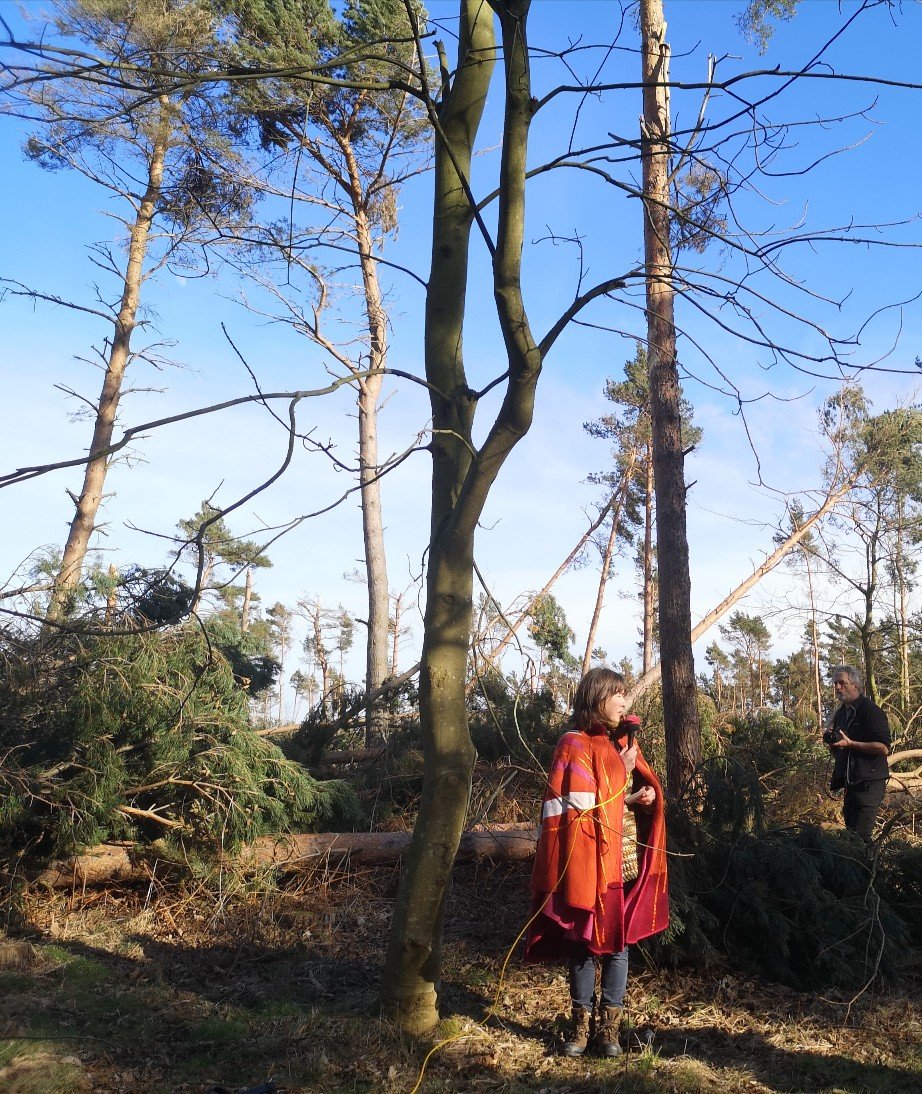
Natalie Taylor (@artforalluk on twitter), Keeper of the Soils, had chosen one of the trees which fell down in the storm. Half the group stood at the head of the tree and half at its foot. This is following an old burial tradition in which half the mourners would stand at the deceased’s head and half at her feet while the lament was sung.
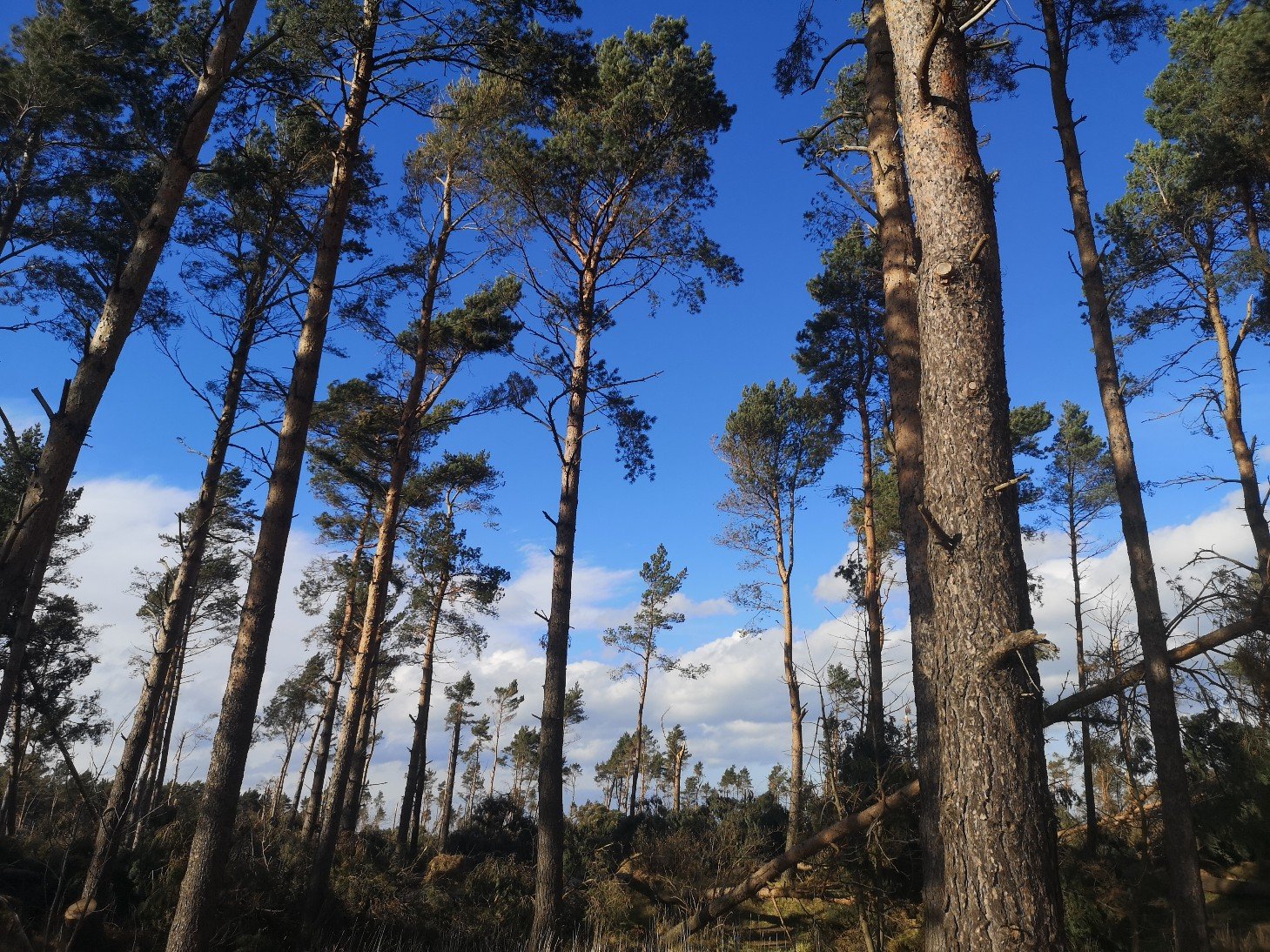
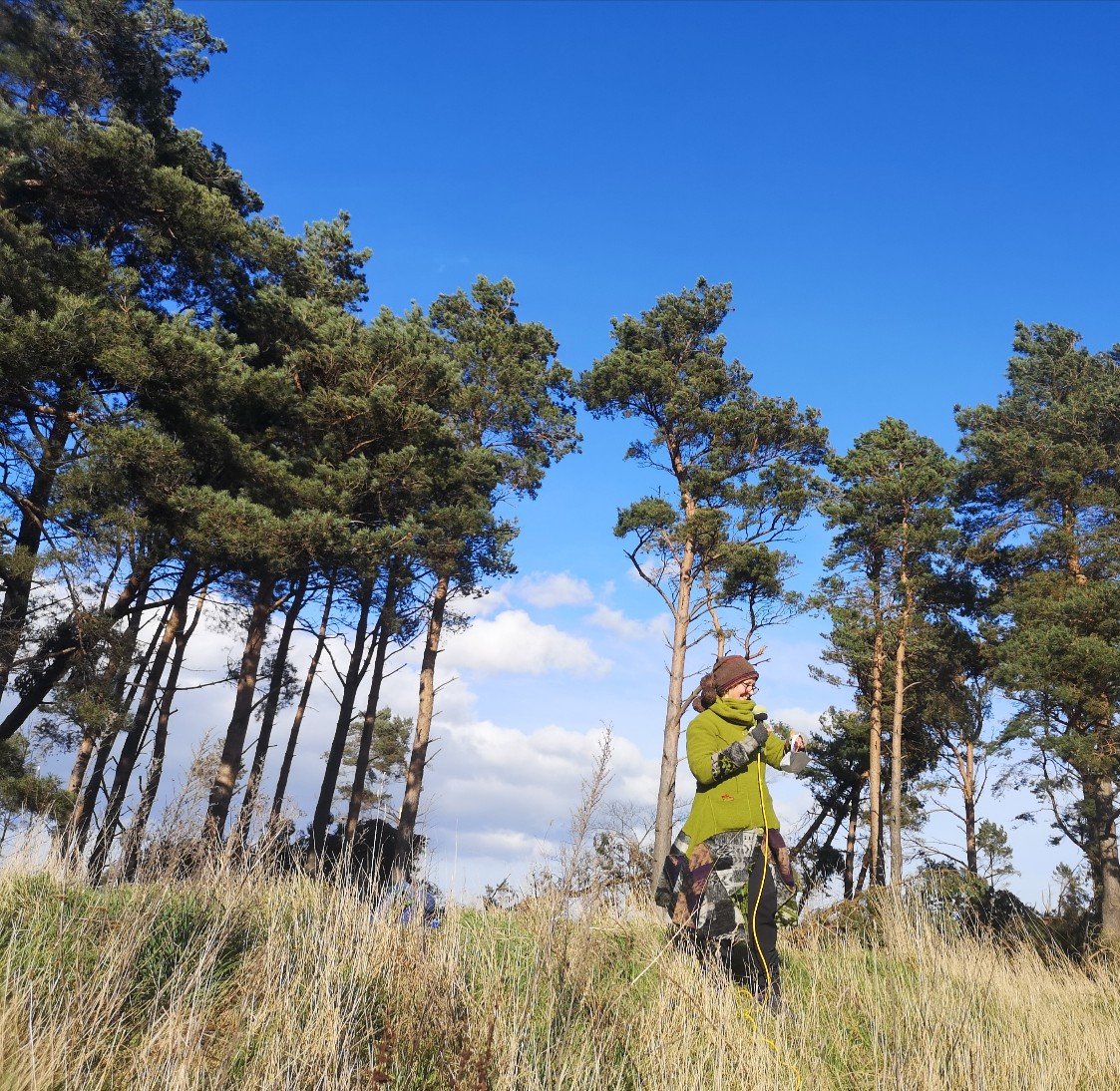
A collection of Scots Pine still standing, John Muir Country Park, Scotland
Spoken version of Lament for the Scots Pine c.TamsinGrainger March 2022
Lament for the Scots Pine
(all together) “We stand at your head”

“We stand at your feet”

“And I keep watch over your trunk”
Hail Scots Pine!
Straight your stem
Contained, your goblet of leaves,
Slate-grey your coat
Needles the green of the waves,
We see you
(the group repeats) We see you.
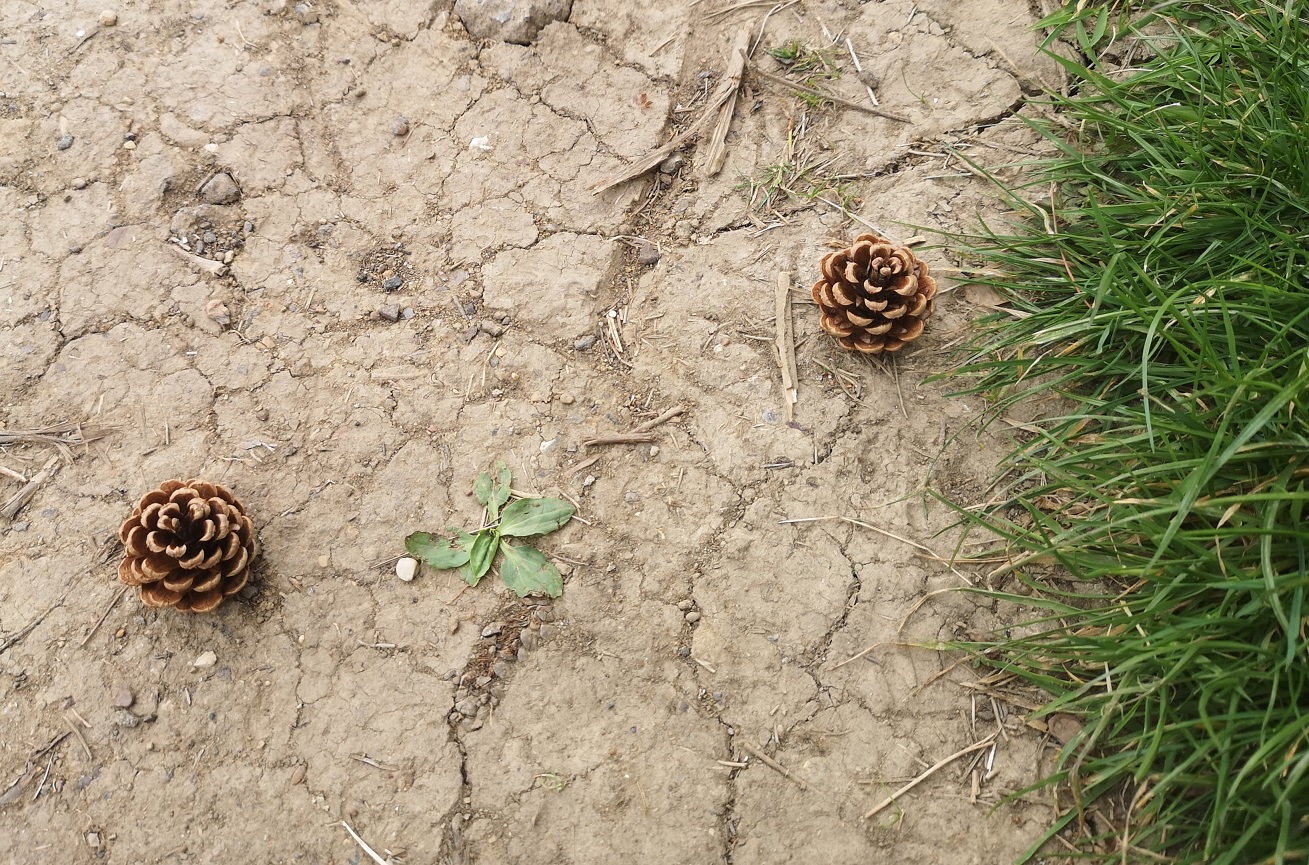
Scots Pine cones
Hail Scots Pine!
Silent you lie
When once the wind sounded you,
Woodpecker knocked
We play your cones with our thumbs,
We listen to you
(the group repeats) We listen to you.
Hail Scots Pine!
Rough your bark
Cold to my palm your branch
Dry your scales
Stroke the smooth lumber inside,
We touch you
(the group repeats) We touch you.
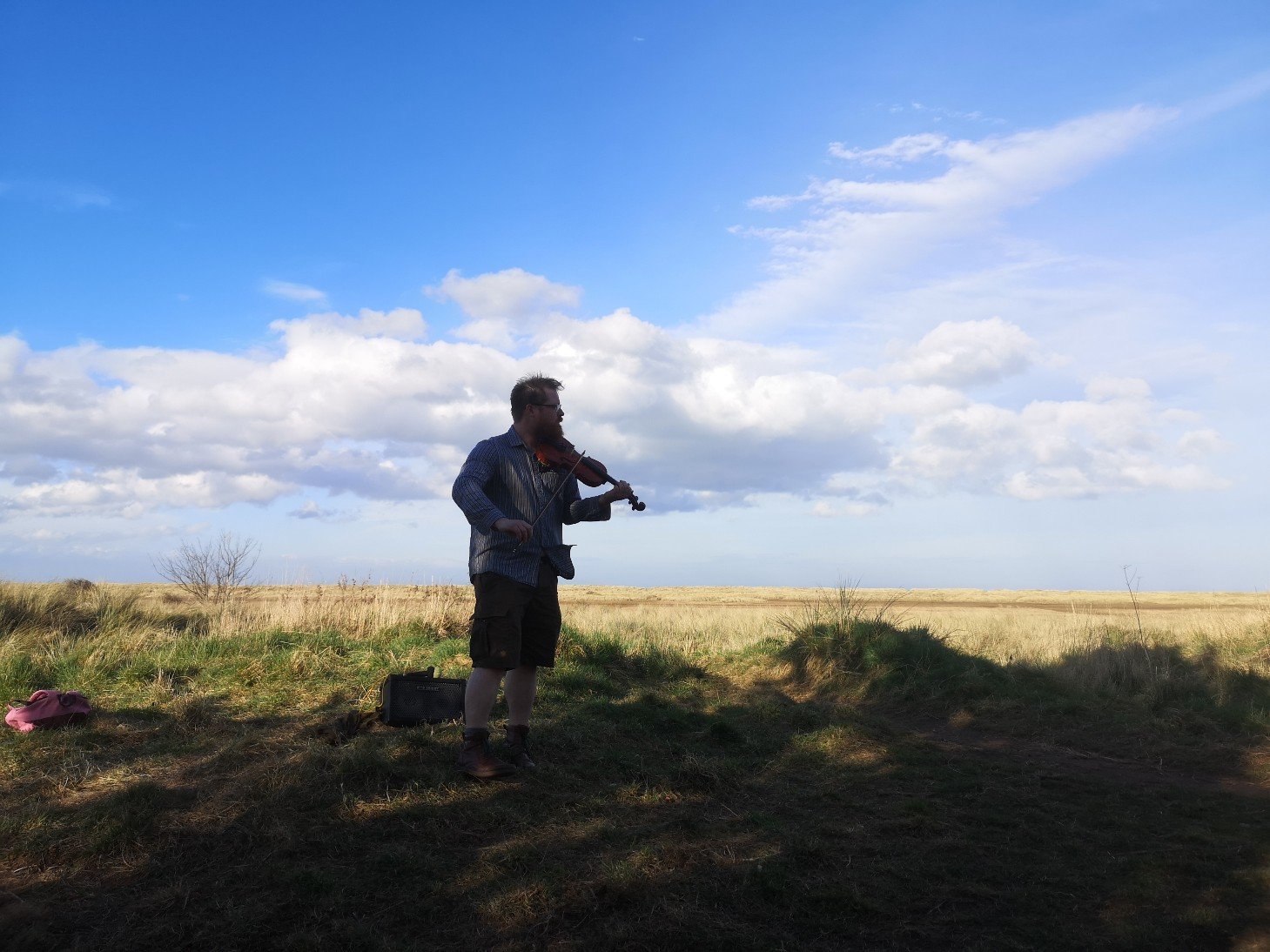
Lewis playing the fiddle, John Muir Country Park, Scotland
Hail Scots Pine!
To sniff your scent
We must-break one of your boughs
Clearing my nose.
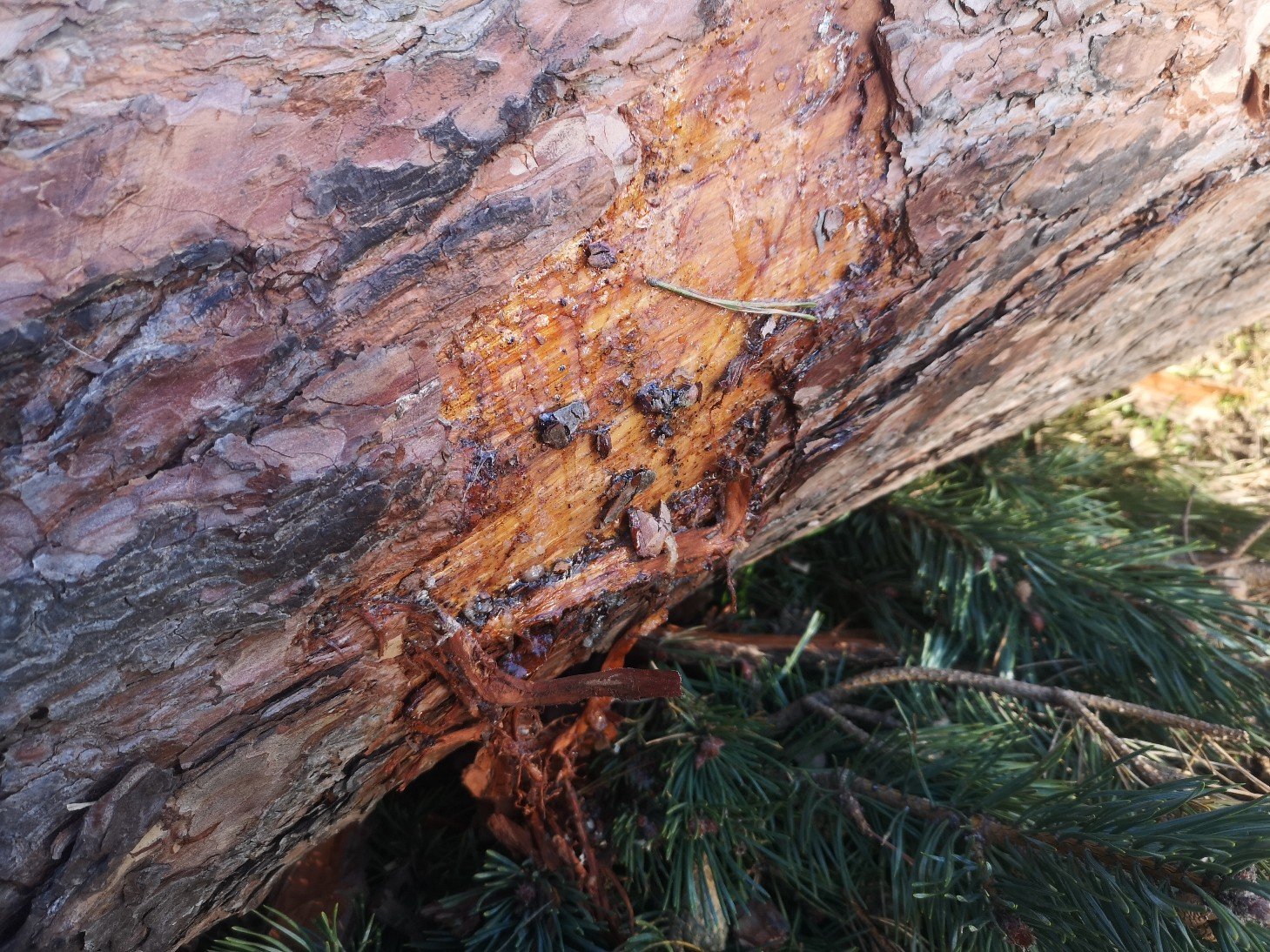
Fragrant the resin which oozes.
We smell you
(the group repeats) We smell you.
Hail Scots Pine!
Bitter my tongue,
Salt in the air and through you.
Peppery mint,
Sweet honeydew loved by wasps.
We taste you
(the group repeats) We taste you.
Jane Lewis leading the community singing, John Muir Country Park, Scotland
Tasted ocean,
Listened to Hedderwick Burn
Smelled the river,
Watched gulls and deer.
We applaud you
(the group repeats) We applaud you.
Tickled by squirrels,
Rain wetted your canopy.
Shivered by snow,
The wind blew you right over.
We mourn you
(the group repeats) We mourn you.
Natalie Taylor collecting the soil sample for keeping in the cloak, John Muir Country Park, Scotland
Grown from seed,
Might have lived 7-hundred years.
Closely planted
Could have grown-more-than 1-hundred feet.
We keen for you
(the group repeats) We keen for you.
Pinus sylvestris
All identical ages
Shallowly rooted
All same species together
We respect you
(the group repeats) We respect you.
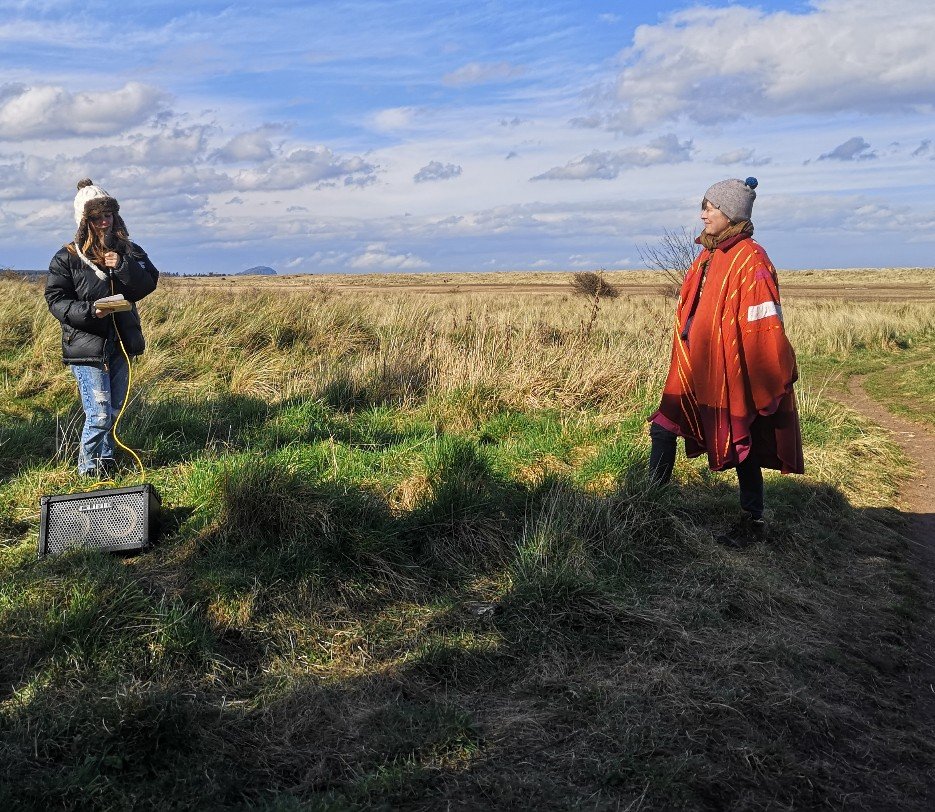
Lexi Douglas reading to launch the event, John Muir Country Park, Scotland
Heated by sun,
We rarely view from above.
Cooled by sand
We don’t usually see under.
We learn from you
(the group repeats) We learn from you.
‘Timor mortis conturbat me’?
No, fear of death does not trouble me,
Because
‘Between every two pine trees there is a door leading to a new way of life’.
Fallen tree with sap oozing, John Muir Country Park, Scotland
Quotes
‘Timor mortis conturbat me’ from late Medieval Scottish Poetry. A phrase from the Catholic Office of the Dead, it was used notably by William Dunbar in his ‘Lament for the Makars’. See also ‘Timor mortis conturbat me’ by Diana Hendry
‘Between every two pine trees there is a door leading to a new way of life’ John Muir
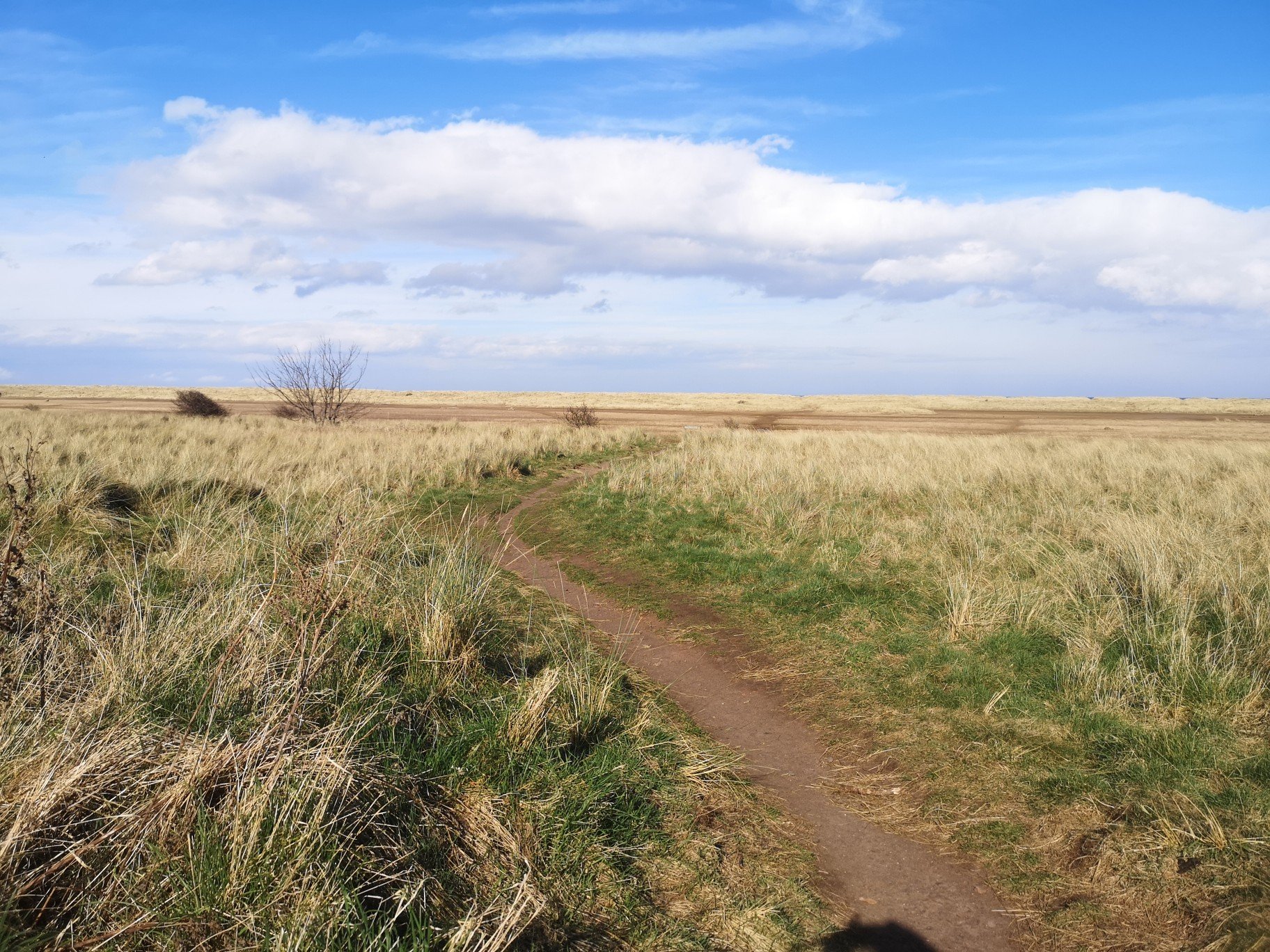
The park is by the sea, the mouth of the Firth of Forth, East Lothian, Scotland
Publicity
A contemplative walk round the John Muir Country Park trees following the effects of storm Arwen. Including live fiddling from Lewis, a community song from Jane Lewis, new poems from Rita Bradd and Tamsin Grainger, and soil sample collection by the Keeper of the Soils, Natalie Taylor.
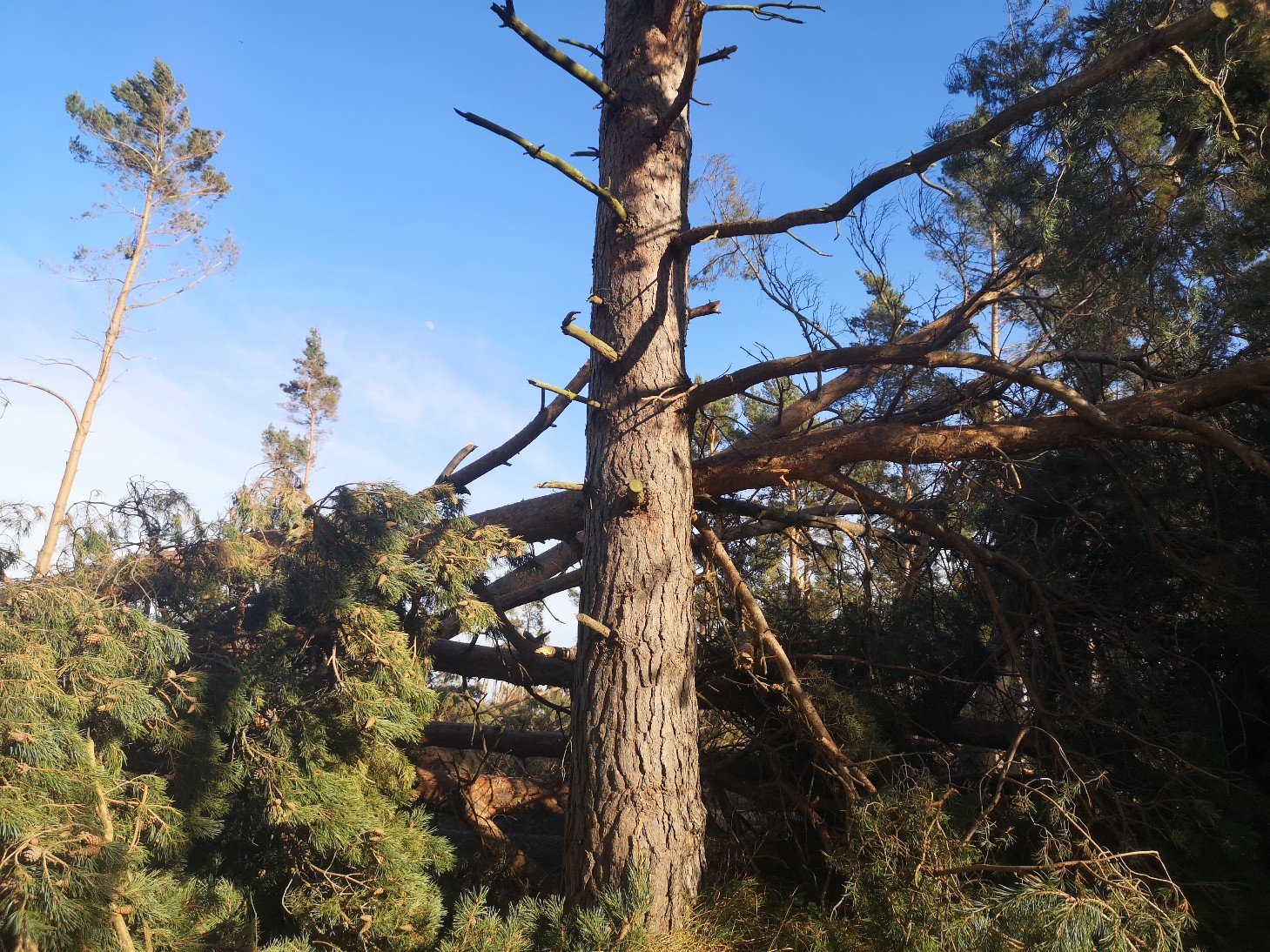
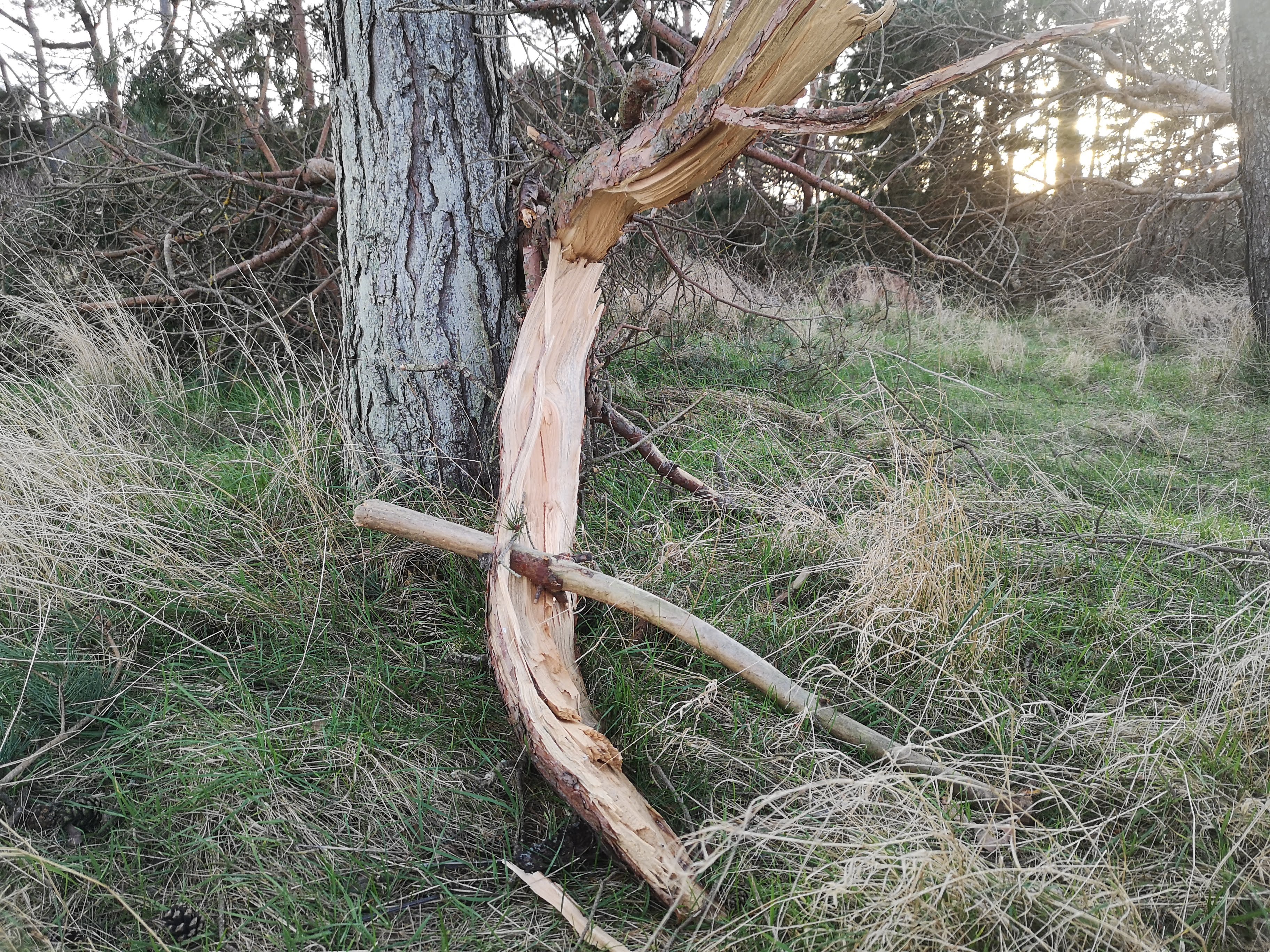
A broken Scots Pine during Storm Arwen, John Muir Country Park, Scotland
Blake Morris, in New York, works together with another psychogeographer to make a score for a walk and it is then made available to anyone else who would like to walk it in whatever way they like, wherever they are.
I walked Score #21 ‘with’ Blake and Jody Oberfelder. Here’s the link to the score.
Jody’s score #21
8th March 2022 Edinburgh, Scotland
Even before dawn I spend time practising to breathe, the springboard to living. I seem to have forgotten to exhale, or maybe I was never very good at it.
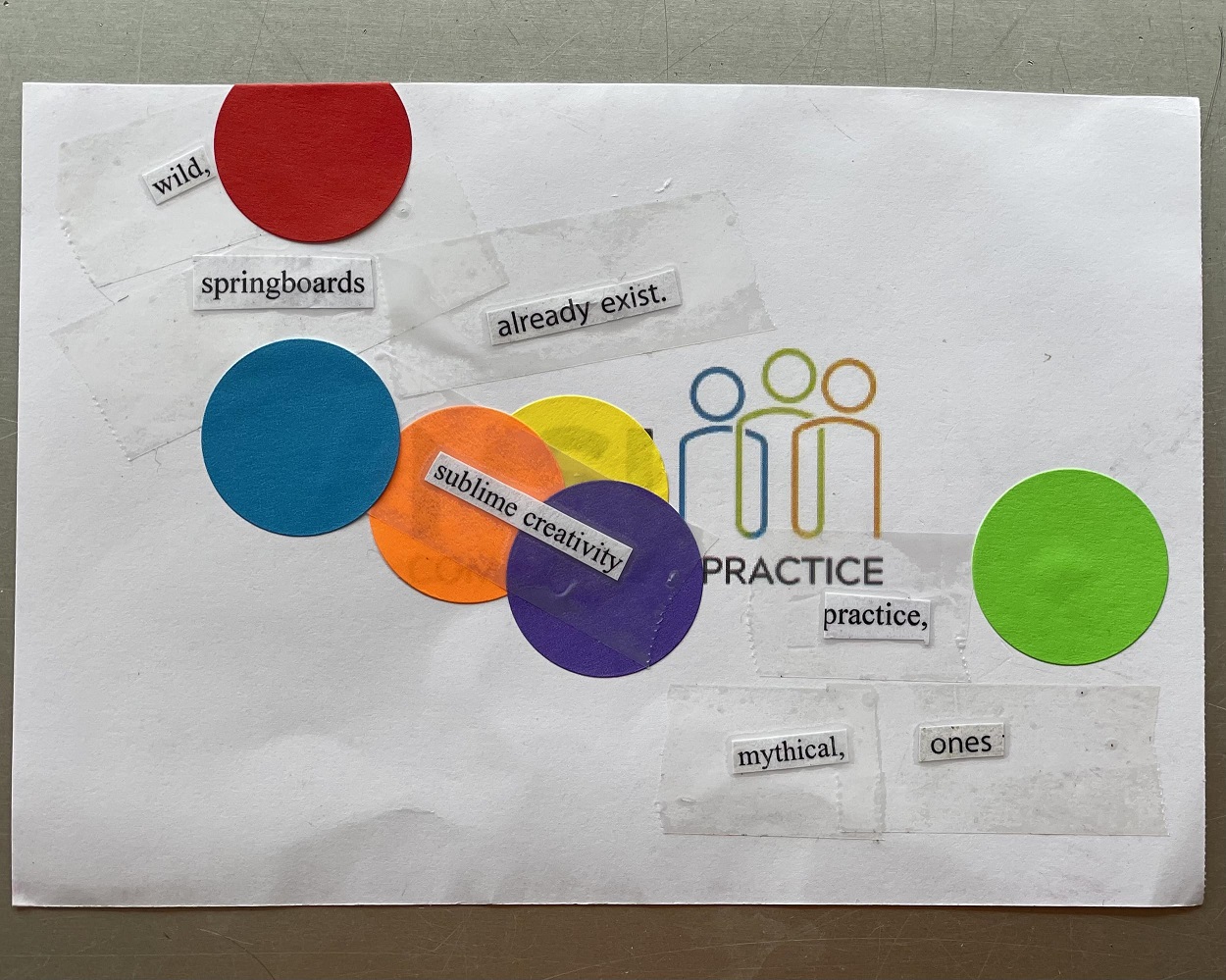
A casting of a half-dozen rainbow circles – red, blue, orange, yellow, purple, green – and a flag of blue and yellow. Found singly and made into creative collections.
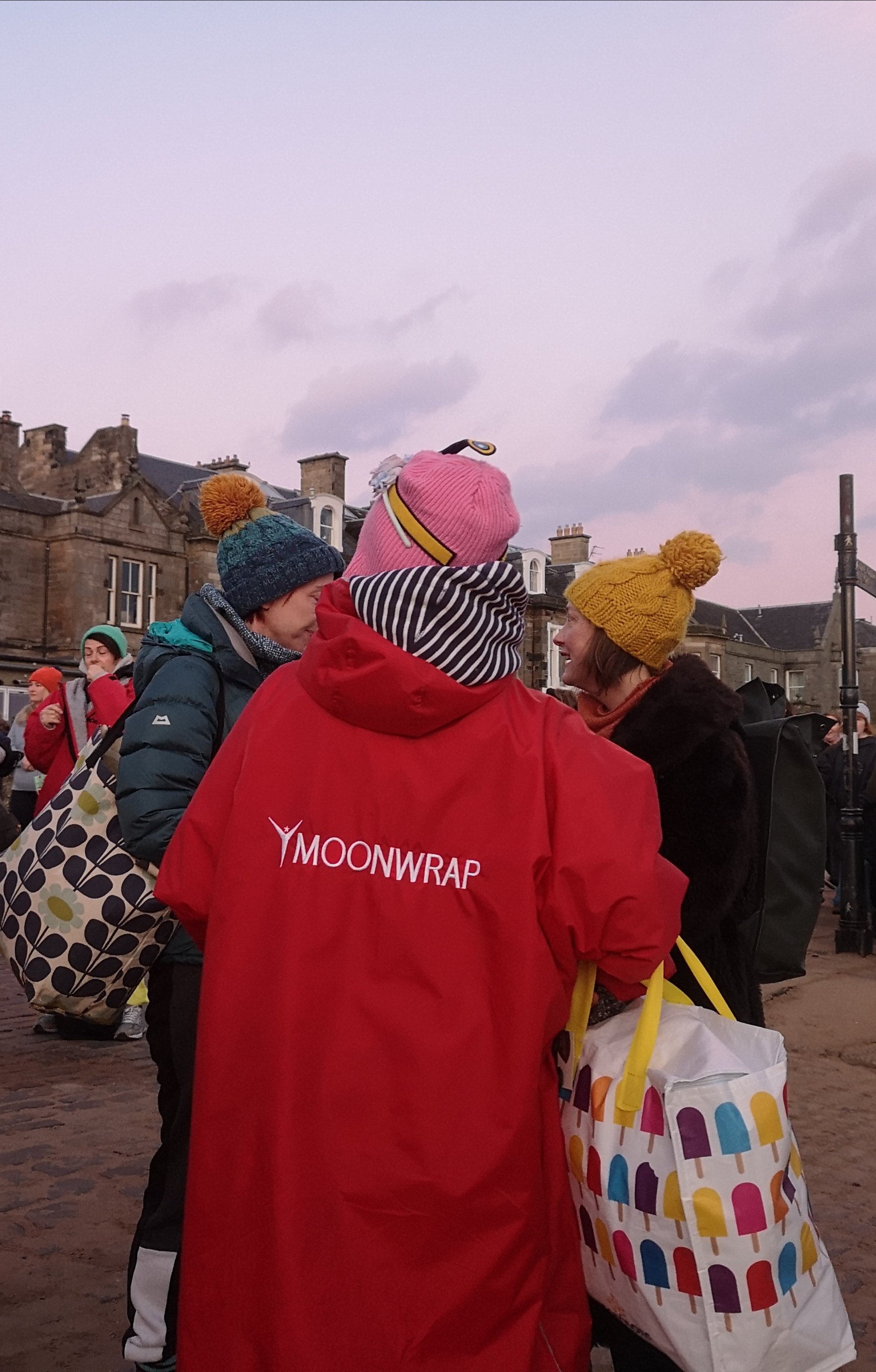
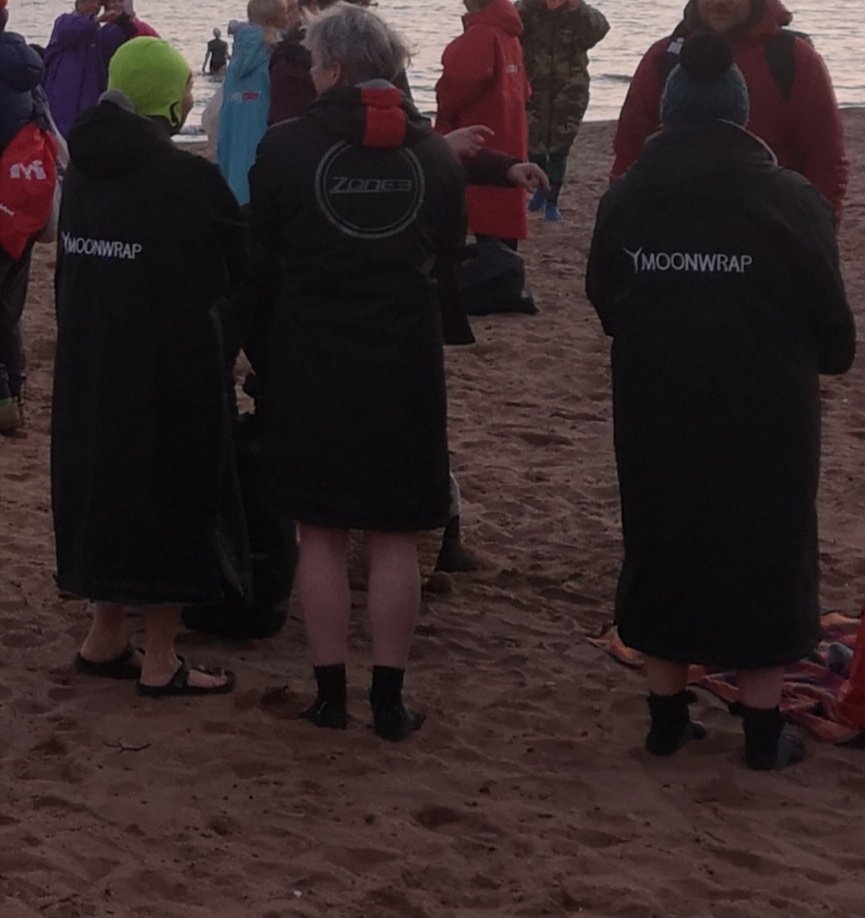
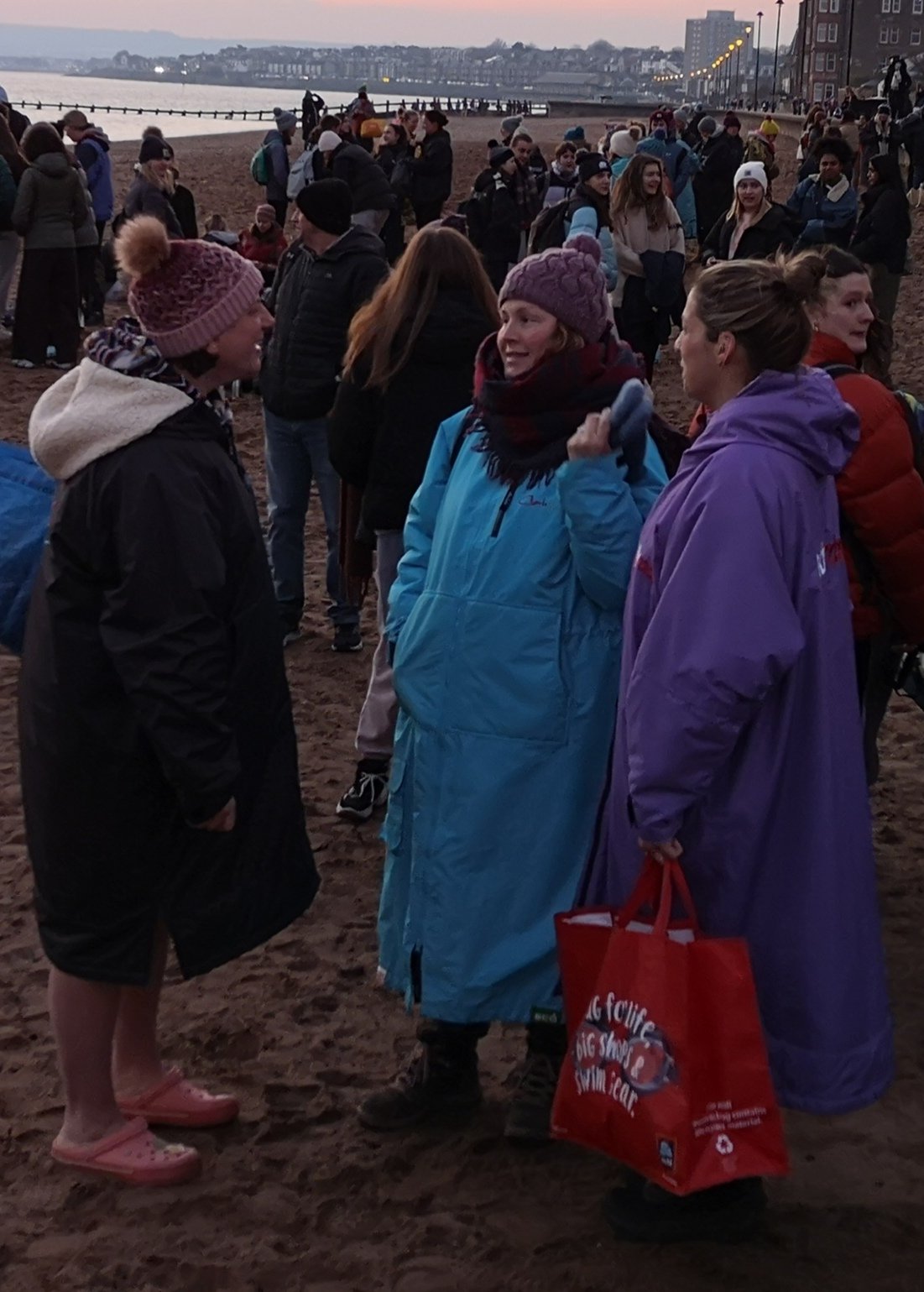
Women in 3s who already existed before I saw them, mythical crones they will one day become, prepare for the wild swim of the year on International Women’s Day 2022. We had a minute’s silence in solidarity with the women of Ukraine and Russia whose countries are at war.
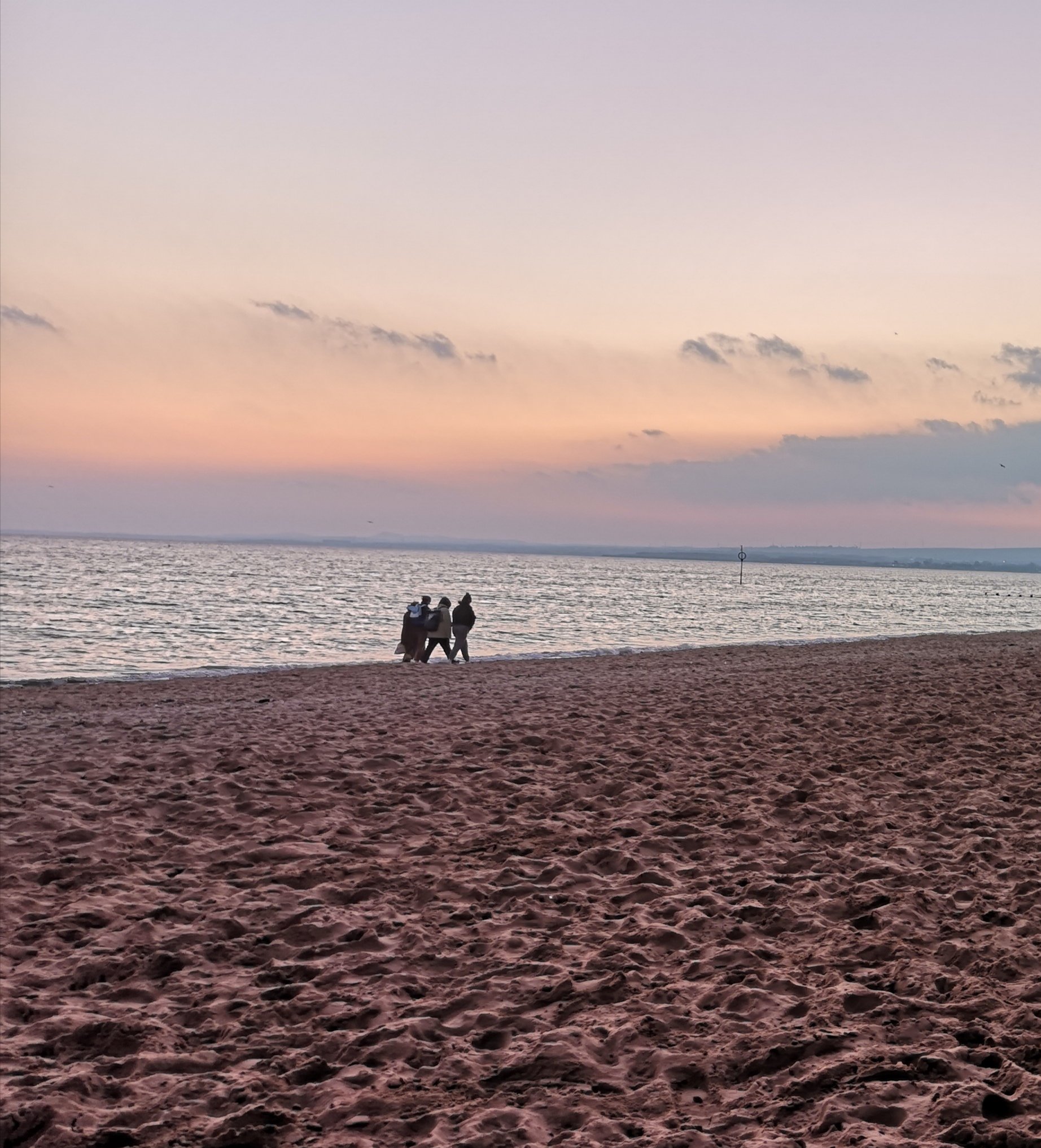
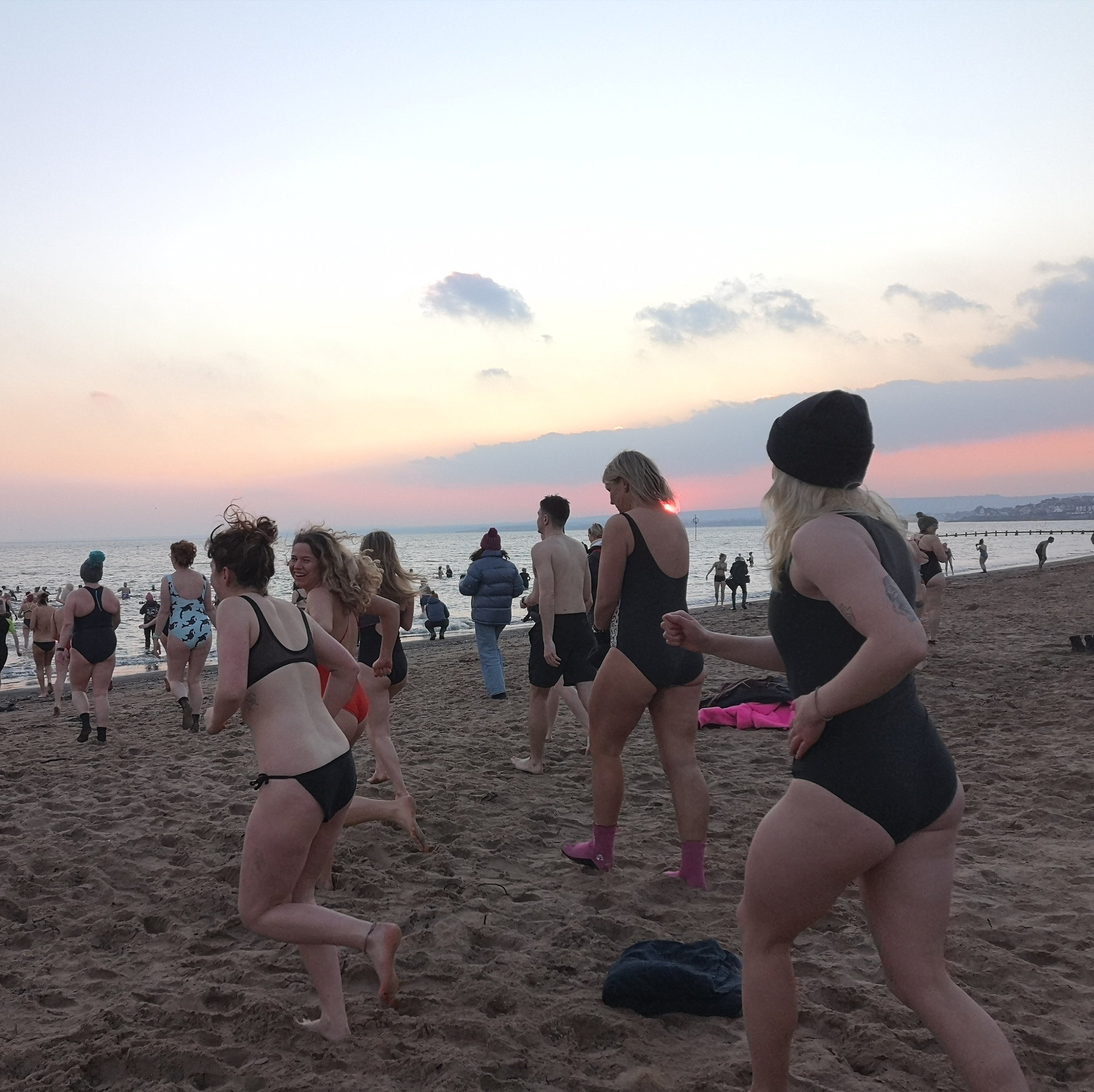
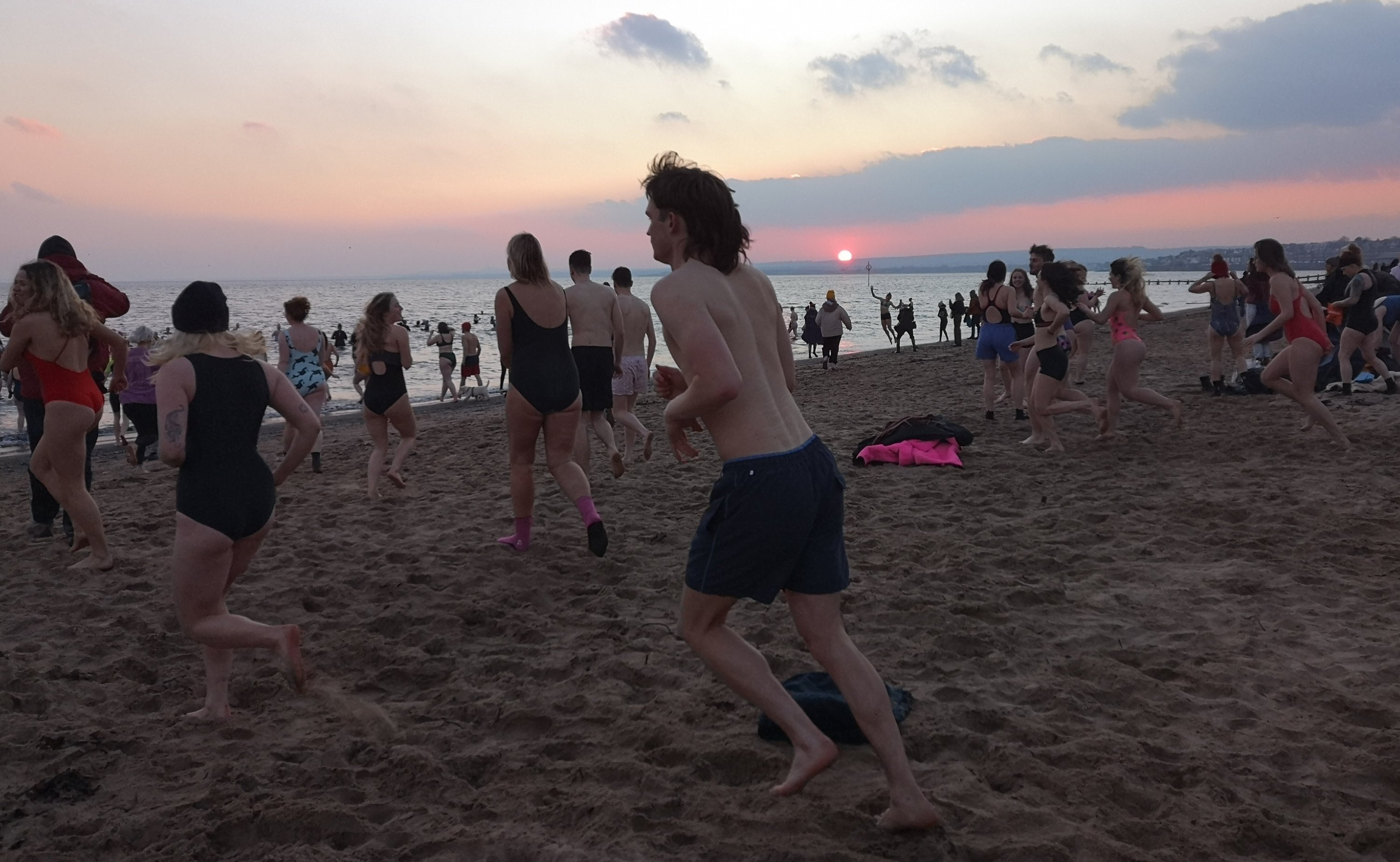
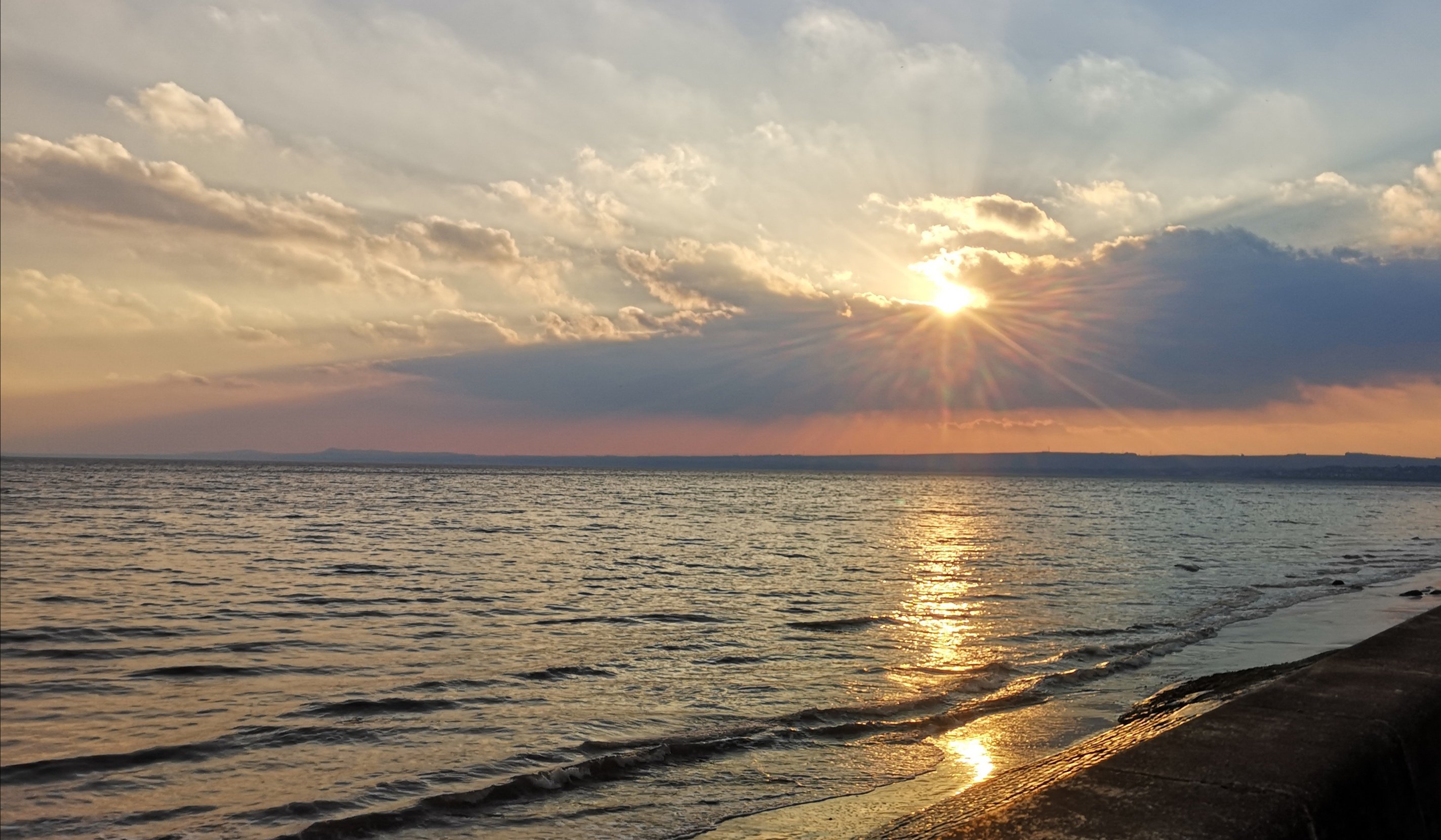
I and 700 other women of many nationalities, cultures and backgrounds are all celebrating together by running into the water beside a sublime sunrise.
The cold water took my breath away.
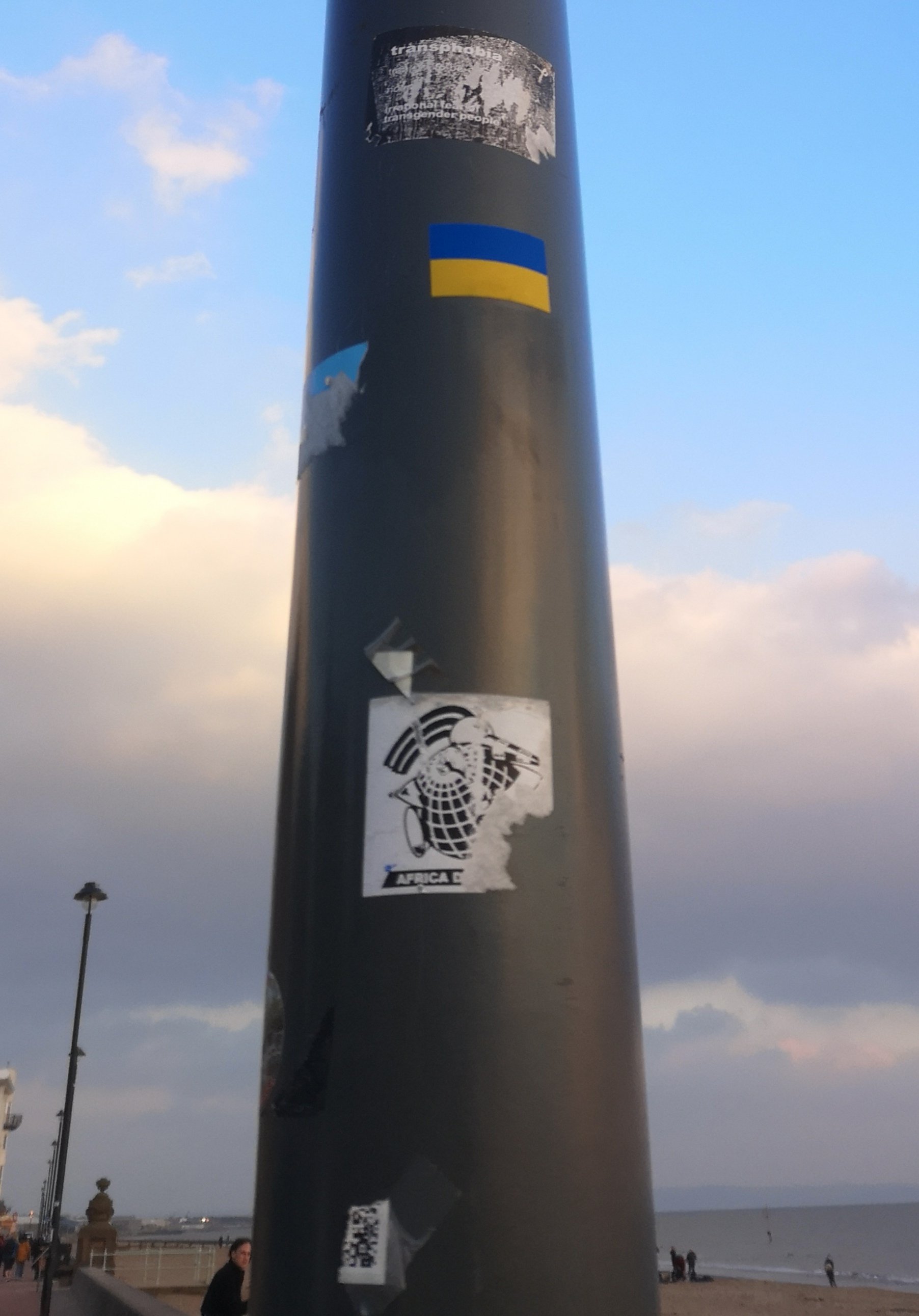
Ukranian flag on a lamp post, Portobello, Edinburgh
I want the flag to open up conversations about nationality and migration. I question nationality because of its association with borders. Borders divide; they are used as a tool for power and control, and can destroy freedom of movement which is a basic human right. Freedom of movement exists but only for some people. It depends on your passport—if you are European or British you can travel easily. If you decide to go somewhere for work, for the weather, for love, you just go. So many freedoms. For other people, it is not the same.
Iman Tajik
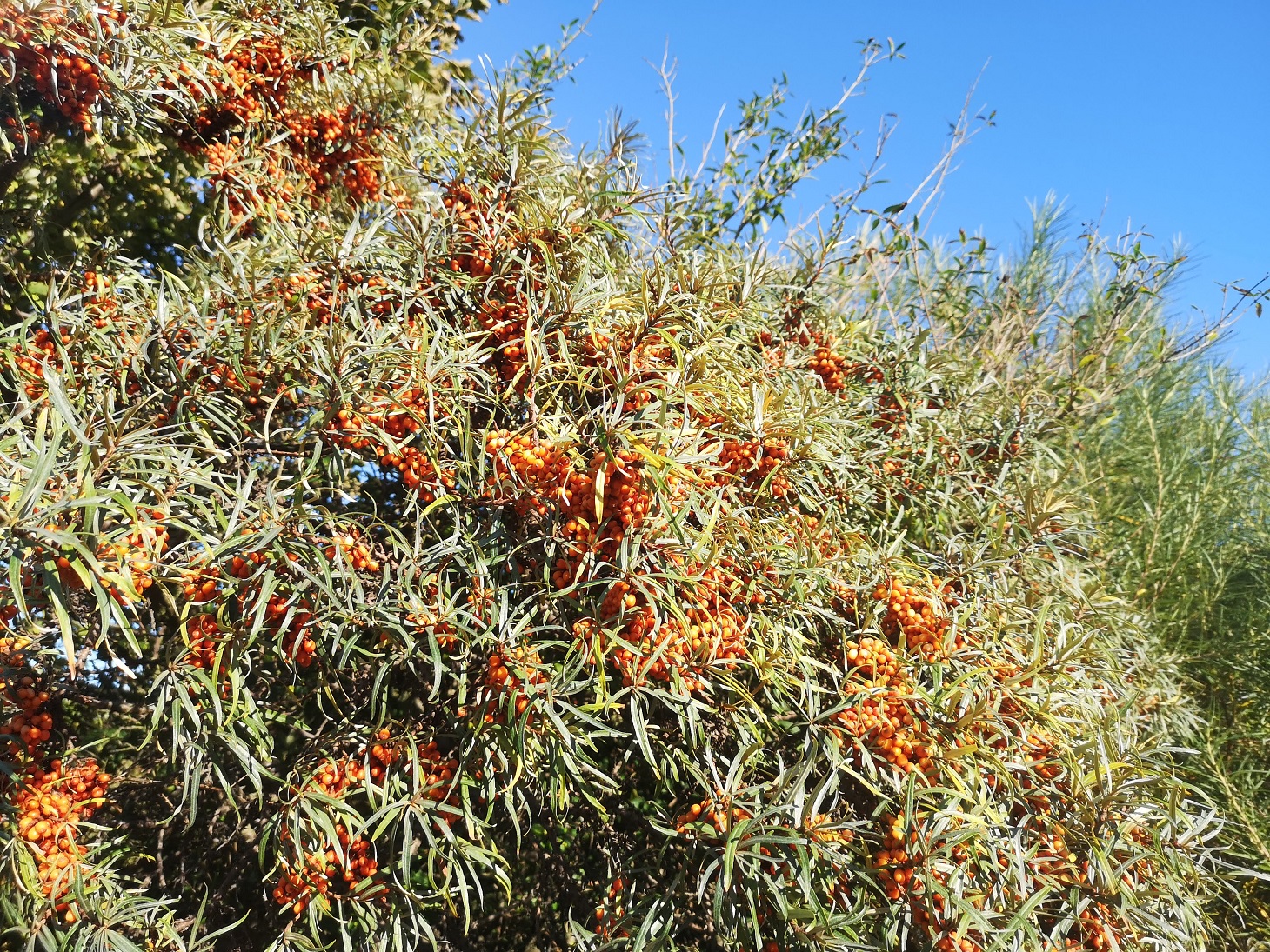
Afterwards we drank a shot of icy sea buckthorn juice, kindly donated. It was a satisfying deep orange colour and very sharp to taste.
22.12.21 Please refer to the previous blog before reading this one as it explains the premise of the walk and my plan. Phrases in bold refer to the walking score prompts.
As we move towards a repeat of last winter’s restrictions on movement due to the Covid-19 pandemic, I took my Solstice Walk #52More No.16 as a collective endeavour – remotely with Elspeth Penfold and Blake Morris who devised it, and with my friend T. We had planned to lunch at a café with our daughters (6 between us), but the Scottish guidelines changed on Monday to a maximum of 3 households at any one meeting, and B and A both wanted to limit the possibility of picking it up in case Xmas and New Year plans are jeopardised. So, T and I could not do away with the outside; instead, we had to do away with the inside – and brave the cold.
The walk, Silverknowes, Edinburgh
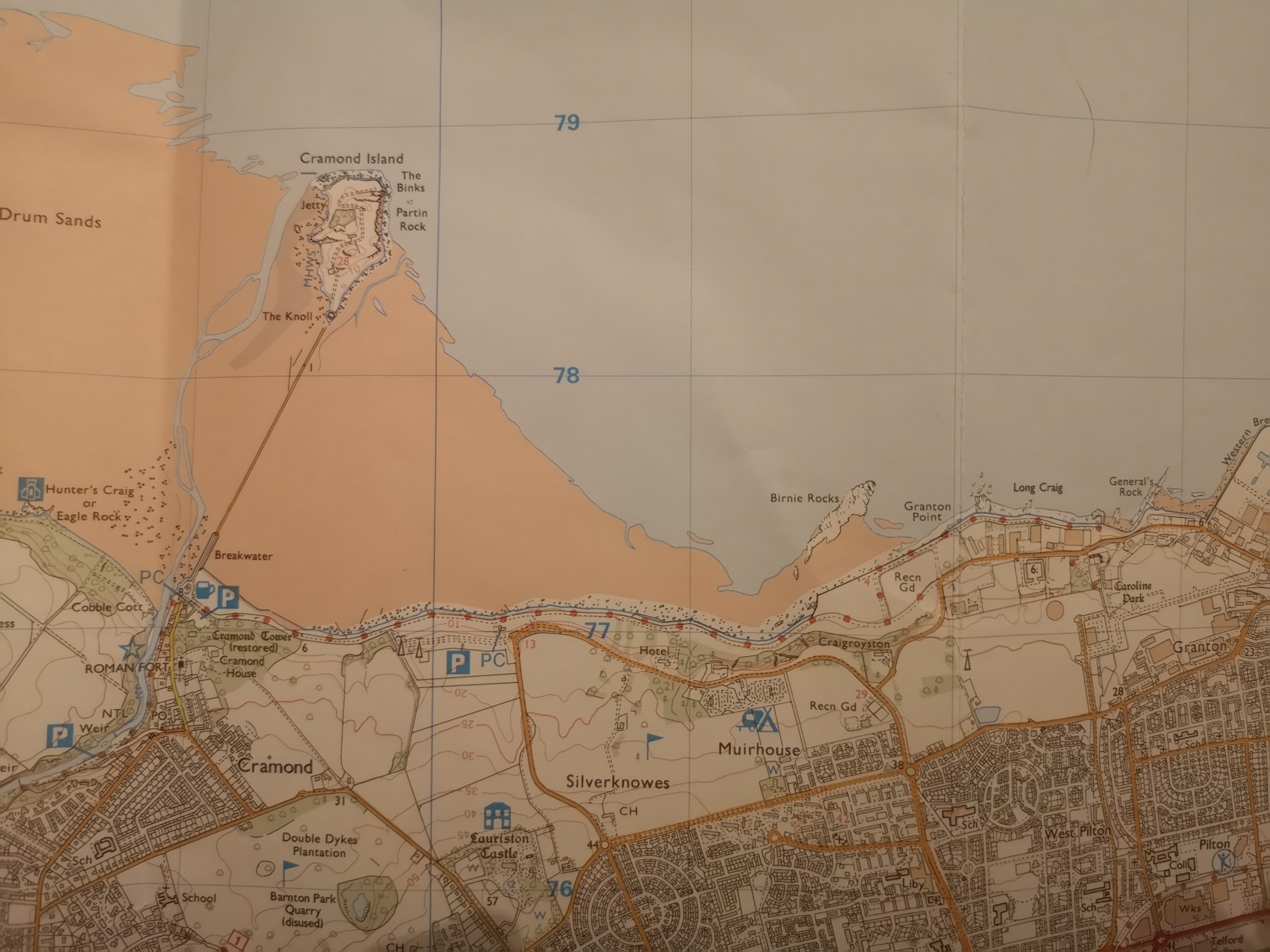
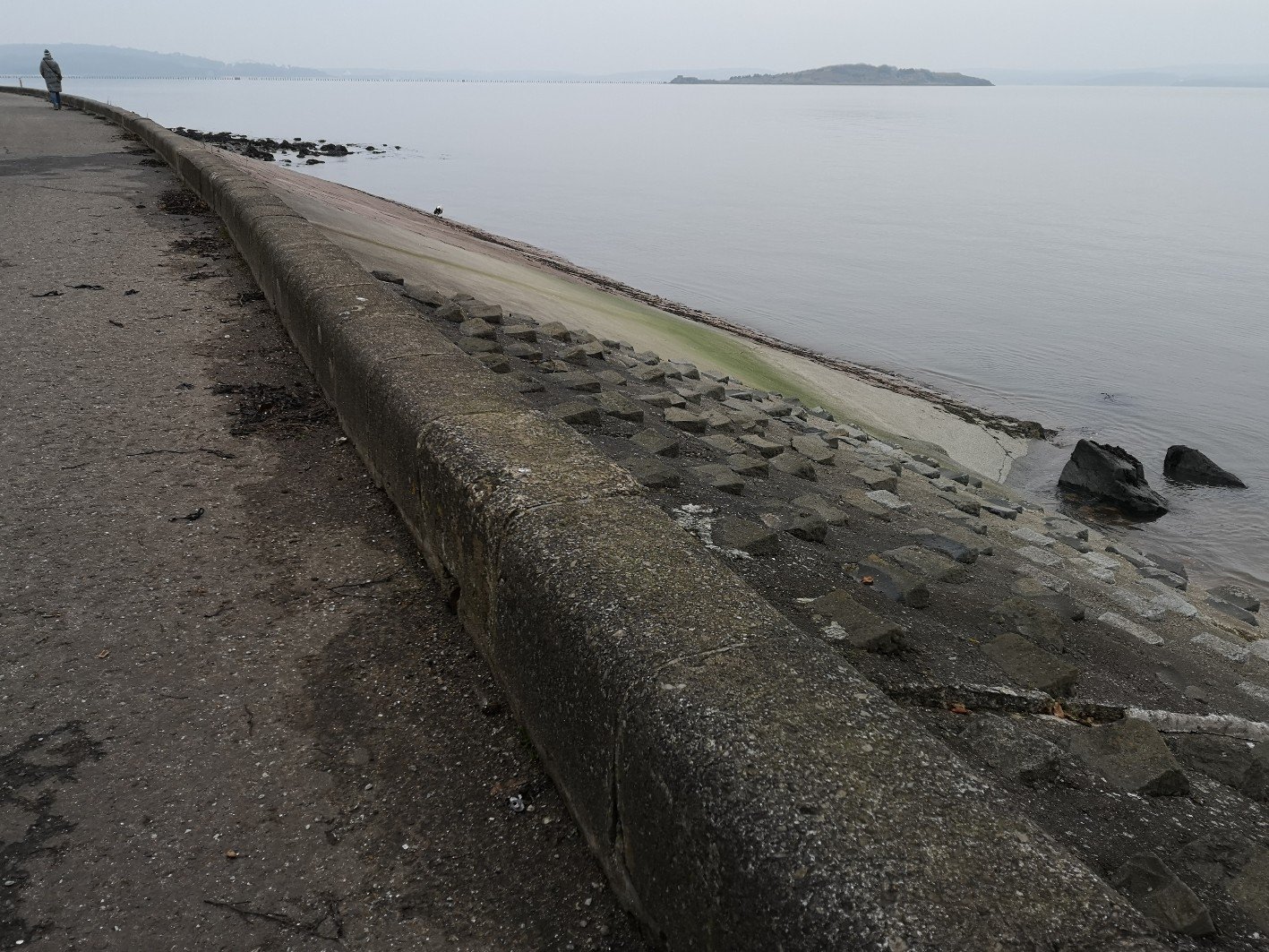
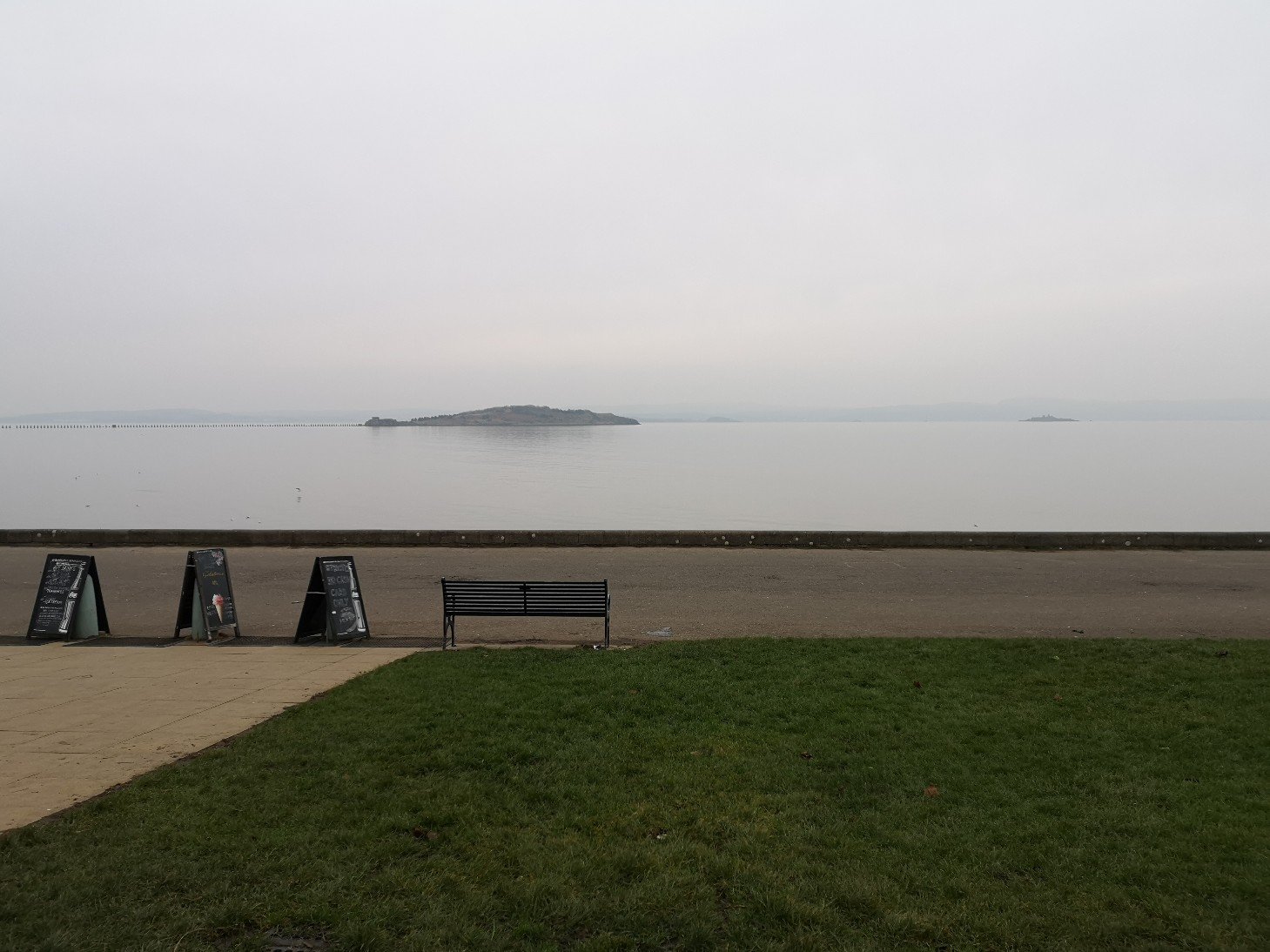
We met at Gypsy Brae and walk towards Cramond, through Silverknowes, a notoriously windy and exposed stretch of Scottish coastline.
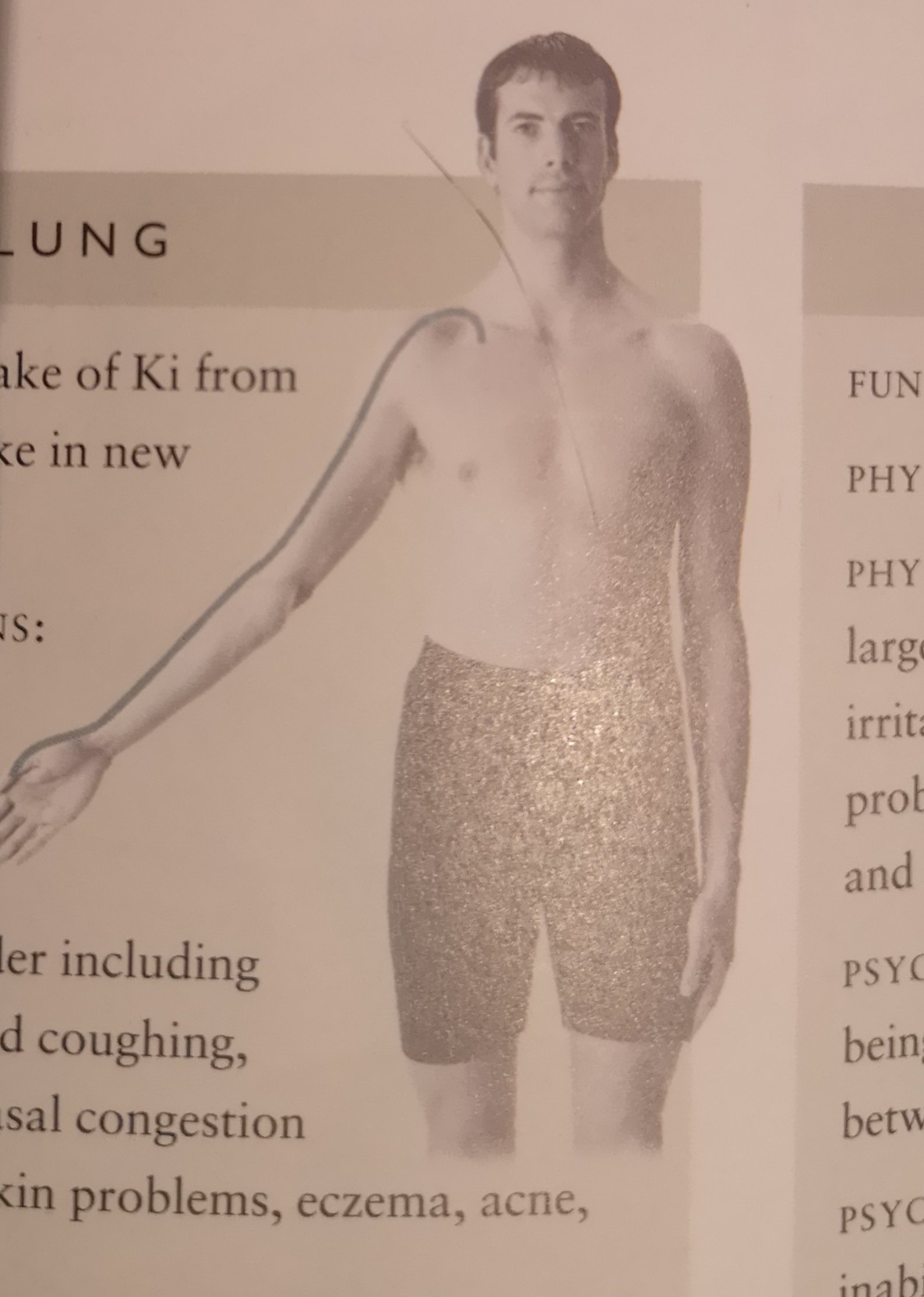
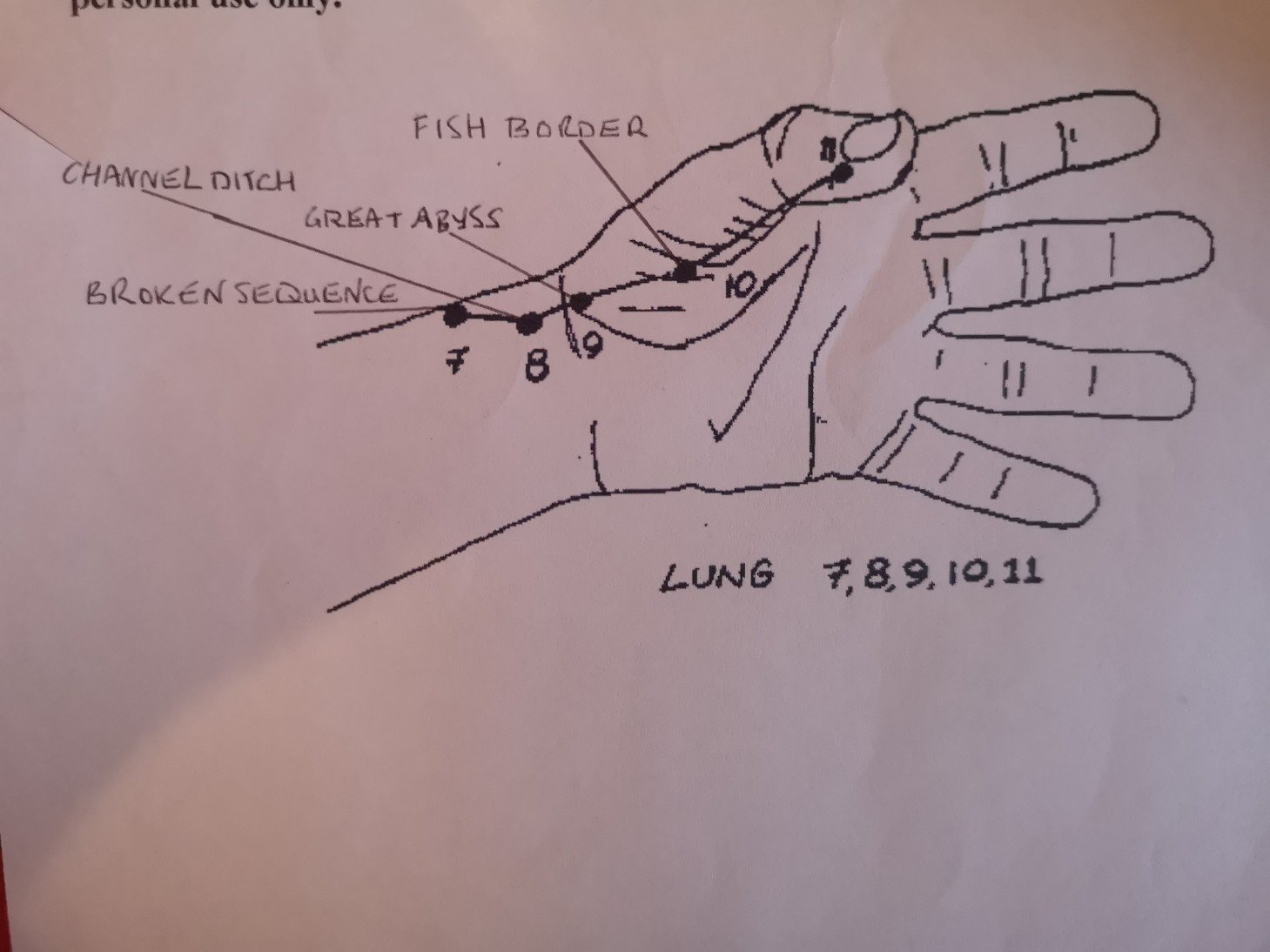
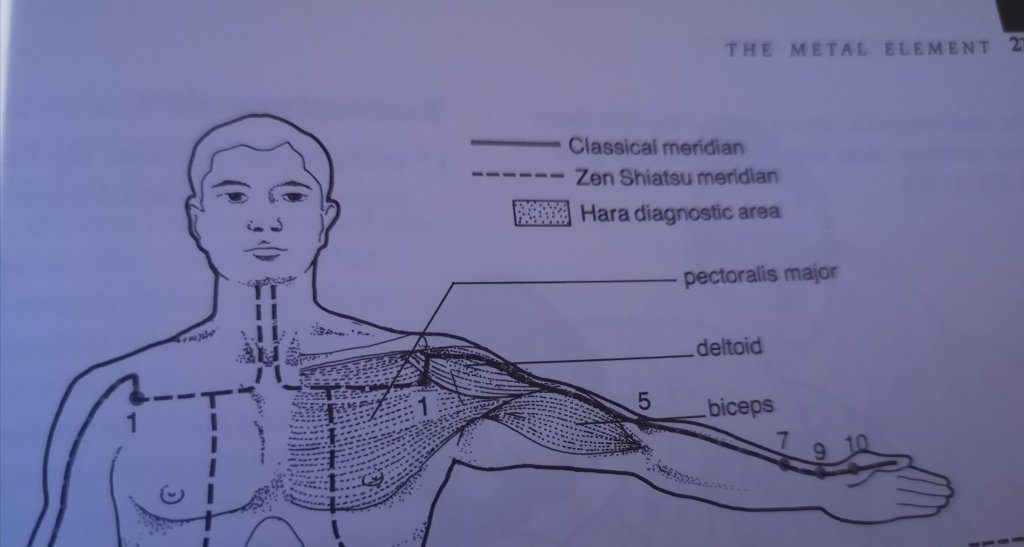
I was invited to walk through a book and I stretched that a little by using an app called Tsubook which I contributed to a few years ago. It shows the Shiatsu channels on clever body maps which can be tilted and turned so that you can see all aspects and angles. There are views with bones, muscles and the internal organs to enable the practitioner to identify the location and relationship of the acupressure points in as much detail as they want.
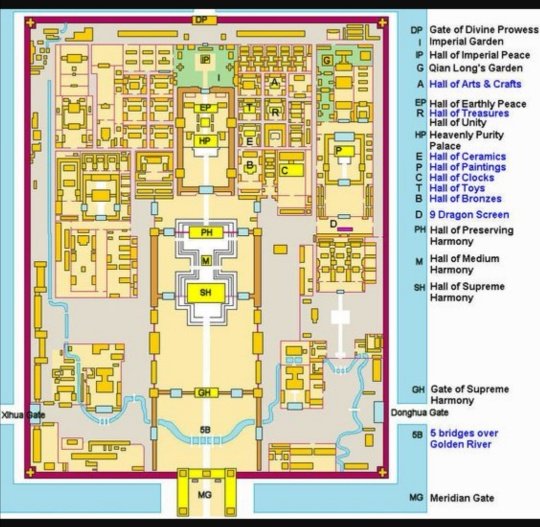
I chose the Lung meridian story. The points all have Chinese pinyin names which have been translated into English, and they sound surprsingly similar to the names on Elspeth Penfold’s Map of the Forbidden City which she used for her walk. In addition, we were walking and asking, ‘how does walking function as a storytelling mechanism?’ and these channels have a sequence about them. The Yin meridians often begin close to the central core of the body, and as they flow along, carrying or containing the chi of the Organs which give them their name, the points or access places along the way reflect the journey that the chi takes. From large spaces (in this case, a Palace) through rivers and ever smaller tributaries, they move outwards along the limbs to the small bones of the fingertips and the border between us and the outside world, the people whose skin we touch with ours.
Chi
We struggle to adequately translate this amazing word because it contains so much. It can be thought of as energetic vibration. In earlier times, people were better tuned into this aspect of themselves than most of us are today.
Many centuries ago, the Chinese believed the body was sacred and should not be cut up. Even if it was damaged through an accident or illness, the aim was always that it should be repaired sufficiently so it could eventually go on to meet the Ancestors in as complete and whole state as possible. They didn’t dissect each other, nor examine their insides, but instead relied on how they felt, using metaphors and comparing the sensations to what they knew well, which was the natural environment in which they farmed, fished and lived.
The names of the acupoints are poetic and descriptive, encapsulating their individual and collective function (including that of the Organs) and the location. Thus, the sensation of the radial side of the arms, the internal sensation of the flow of chi which emanates from the lungs, which changes through our lives and at different times of the day according to our activities and the weather and external pathogens, is alive, it’s an on-going story.
From Elaine Liechti’s book, Shiatsu
I have known T for many years, since before the children were born, and we keep in regular contact. I consider the relationship with her to be one of the important ones in my life, and so it was good to share this time with her. When any of us walk, we don’t walk in isolation, not from each other, not from the landscape we walk through, and not from the world-situation in which we are situated.
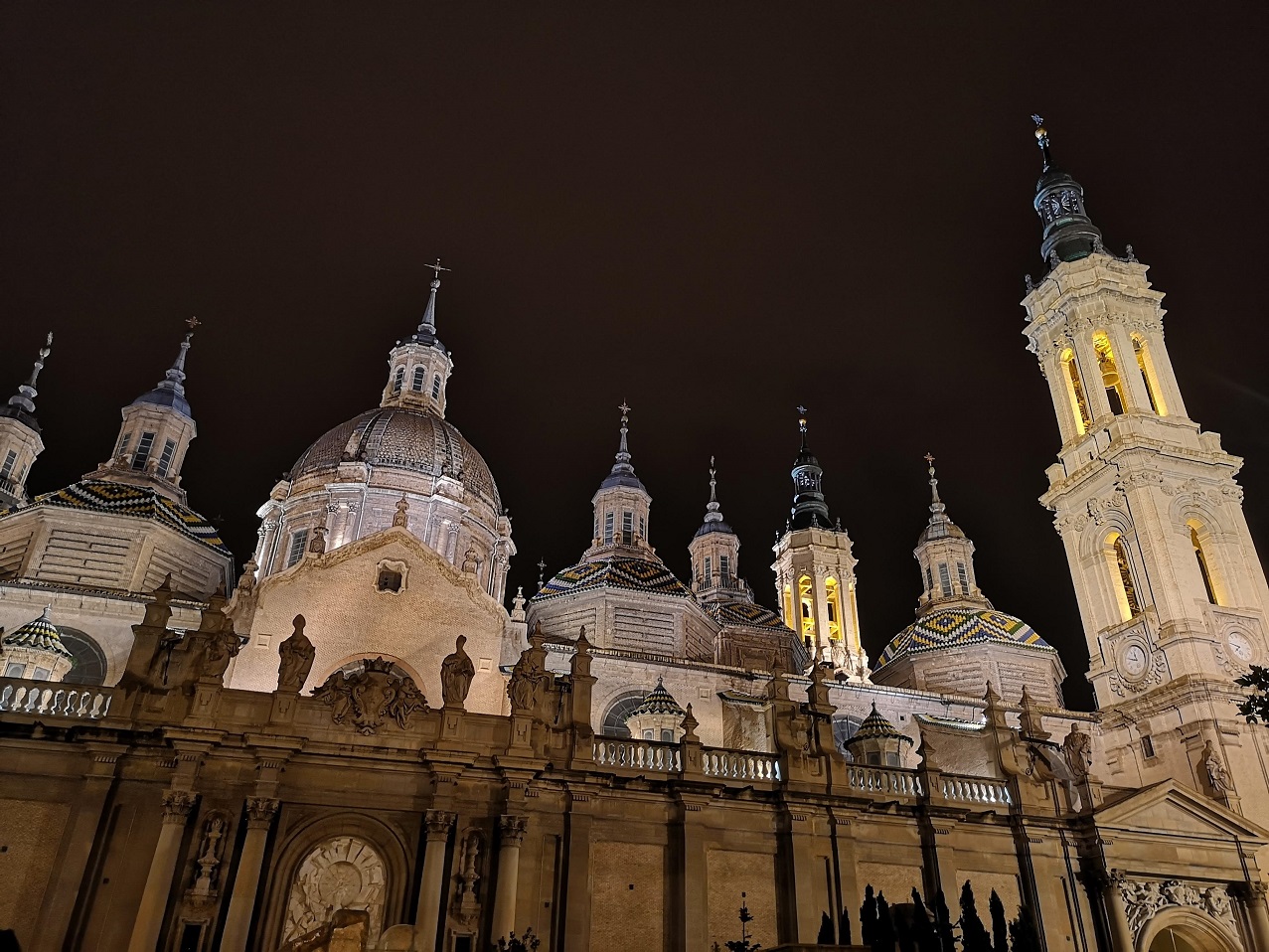
Basílica de Nuestra Señora del Pilar ‘Palace’, Zaragoza, Spain
Central Palace
The Central Palace is the translated name of the first point on the Lung channel, and it relates to the importance of the lungs. Their domed ceilings, interconnected corridors and meeting chambers play a the vital role in keeping us alive. It is in the lungs that we exchange oxygen and carbon dioxide and maintain a balance of gases. From an emotional and spiritual point of view, their function can be extrapolated to encompass the quality of our communication with each other, the literal noise we make enabled by the air passing through the throat, and by extension the gestures and movements we use for the same purpose, whether speakers or not. They are associated with our corporeal existence, represented by the breath which situates us right here in the present, and consequently the loss of the ability to exchange, and the absence of the breath which characterises death. Covid challenges all of that, affecting the respiratory system (coughs, sore throat, runny nose, the struggle for breath), and our exchange with the environment (smell and taste) in addition to our need or instinct to withdraw from each other and feelings of alienation.
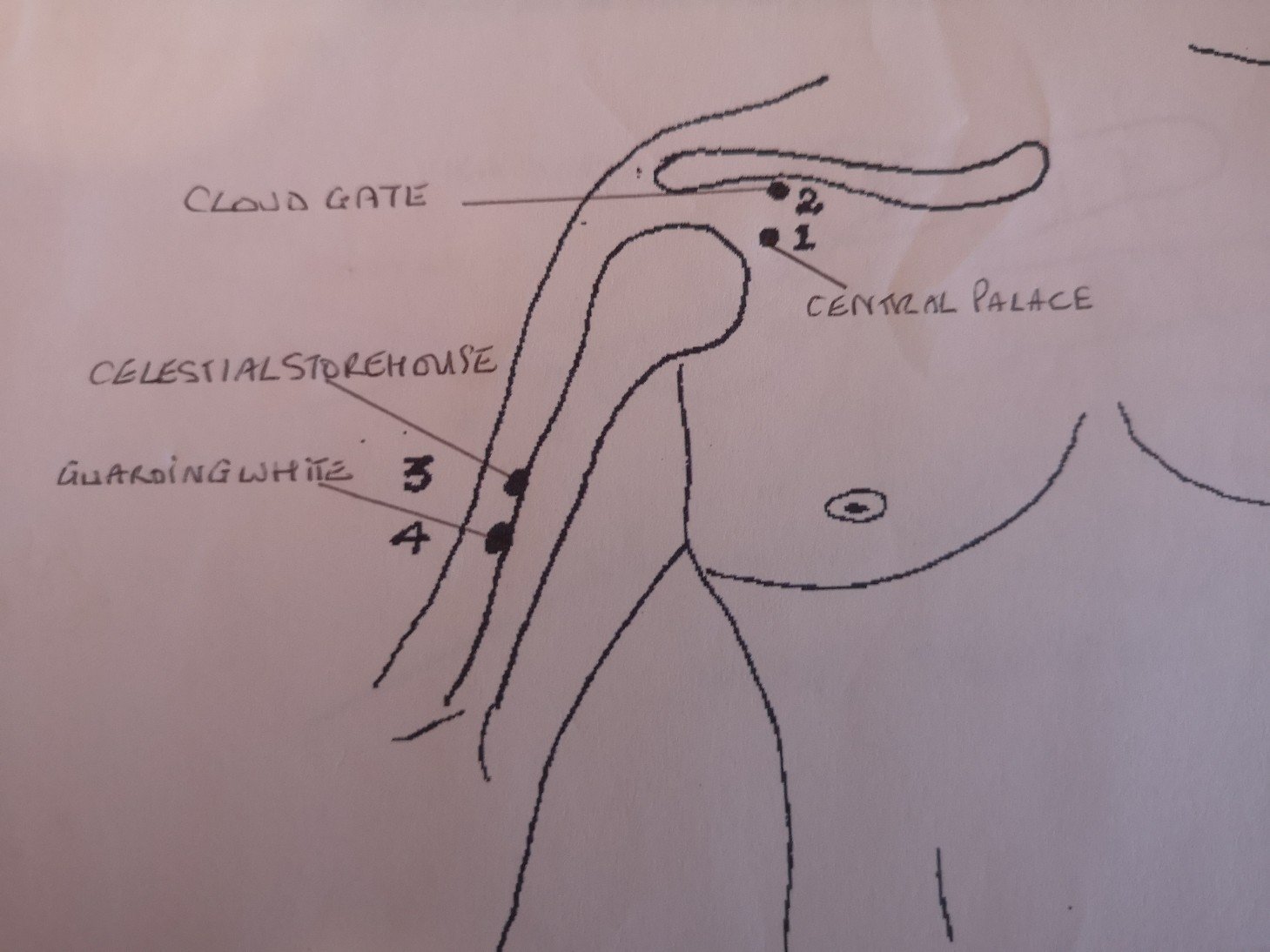
Lung 1 – 4
Our walk-story begins from our central location, home, and the travelling homes which are our metal cars, in other words our Central Palace. (I would usually walk there but I was going on to make a large Xmas food shop). Shiatsu practitioners and acupuncturists touch or needle this point to sedate the Lungs, to calm and smooth the Lung chi in cases of coughing. T and I are saying ‘Hello’ and ‘How are you?’ and catching up with each other. We walk on stone, beside low walls where small dogs trot, and Cramond island, separate and stately, stands out in the sea mist. The air is fresh in my nostrils and I take a series of deep breaths.
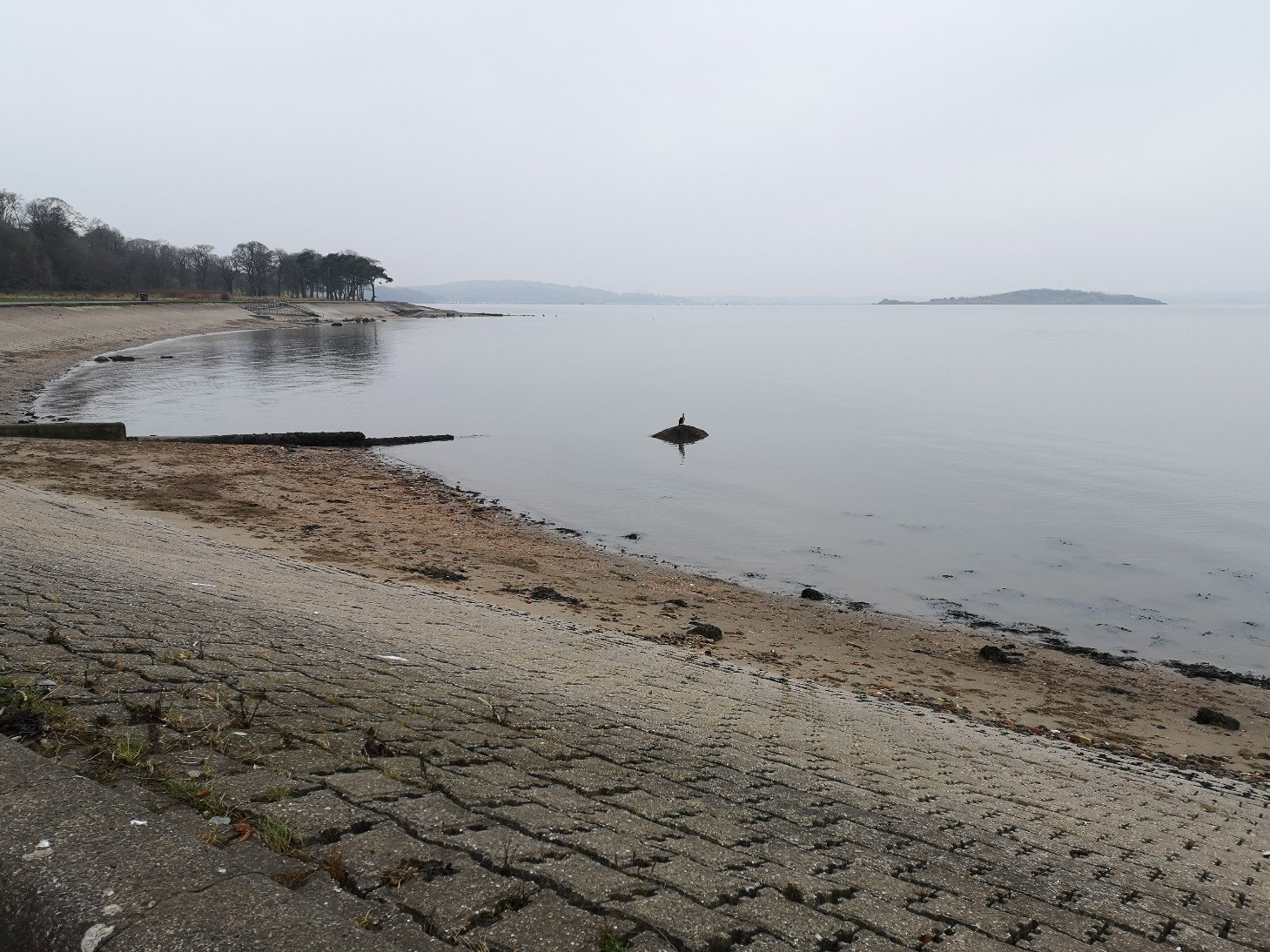
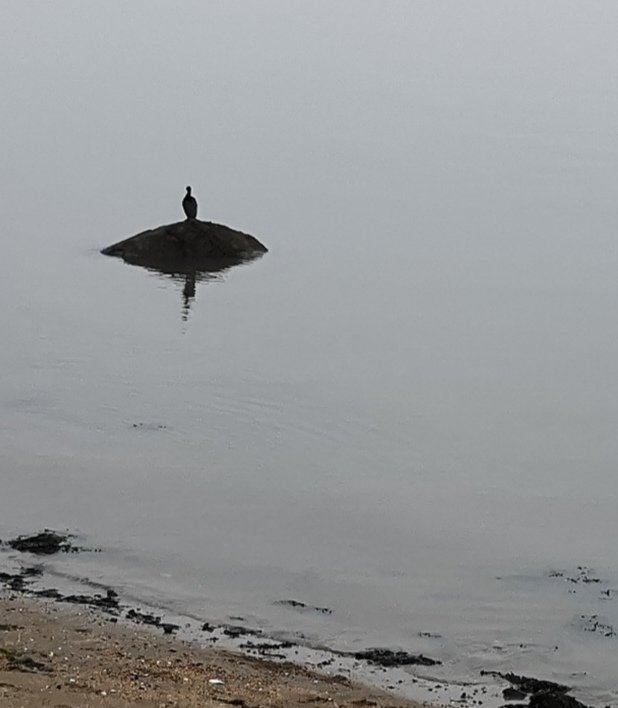
Cormorant and Cramond Island, Edinburgh
Cloud Gate
Above our heads is cloud, a lid of unform grey which has been low down for days. Cloud Gate is an acupoint which descends and disperses the Lung chi, giving the body the chance to redistribute excess phlegm away from where it clogs and stops us breathing and communicating. T and I are swapping work stories now, the busyness of the end of term, and the urgency of the festive deadline. A solitary cormorant stands on a single rock.
The distinctive shape of a cormorant (from a distance)
Celestial Storehouse
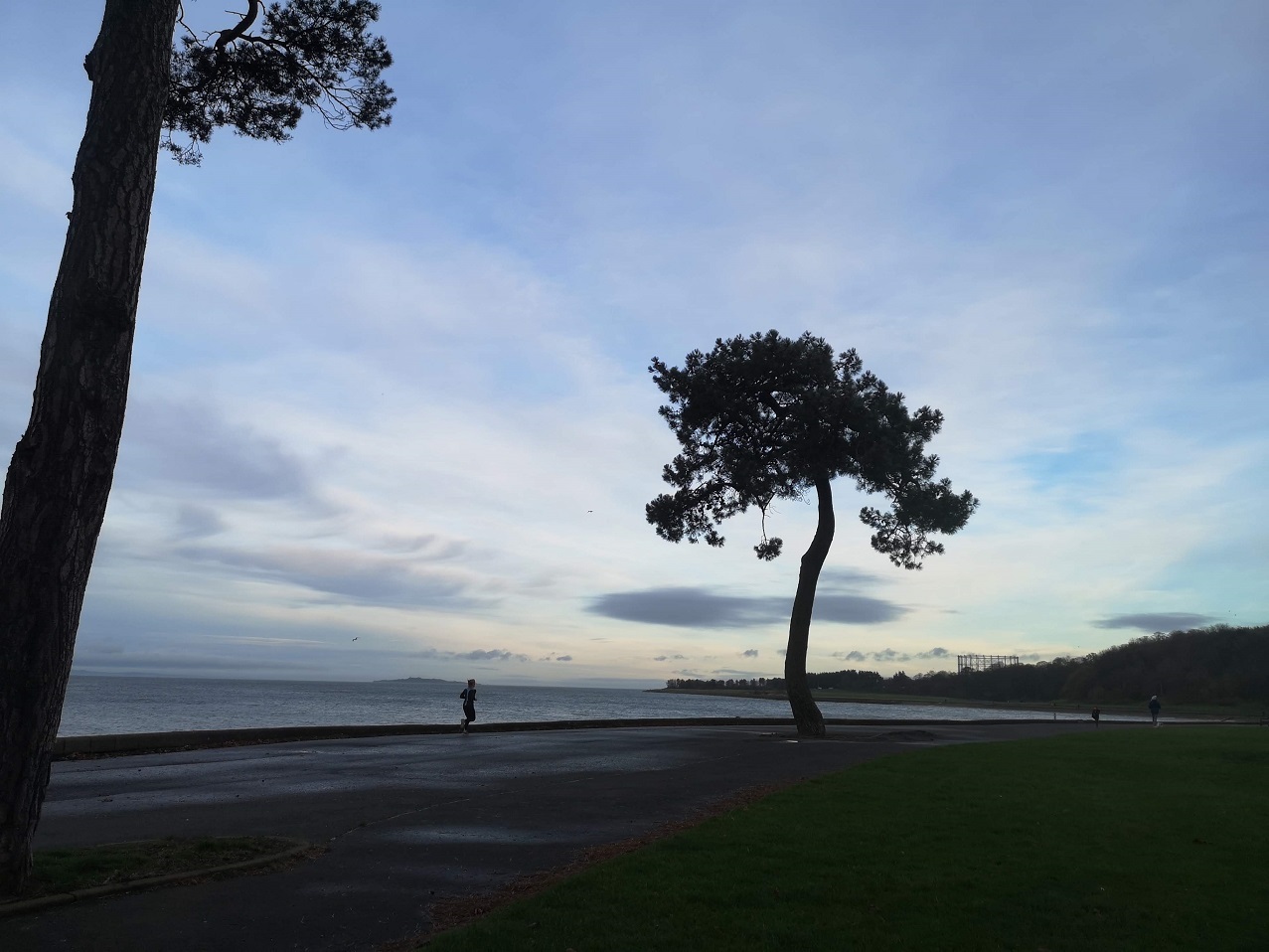
Other brave walkers stroll and cycle past us in the opposite direction, and ahead is a café, a Storehouse for sure, but Celestial? Its musak is only just audible from a distance, and we hadn’t yet got close enough to see the Buddhas which decorate it. The surround-sound, high-pitched voices of gulls intersperse our family chat – who is doing what and going out with whom. It has been noted that Lung 3, as we prosaically call it, assists with depression, characterised by isolation and lack of communication, as well as the familiar respiratory disorders. The towering and distinctive Scots Pines which we walk under have a dark, olive canopy drawing our gaze heavenwards.
Silverknowes Scots Pine On another day when the sky was blue!
Cubit Marsh
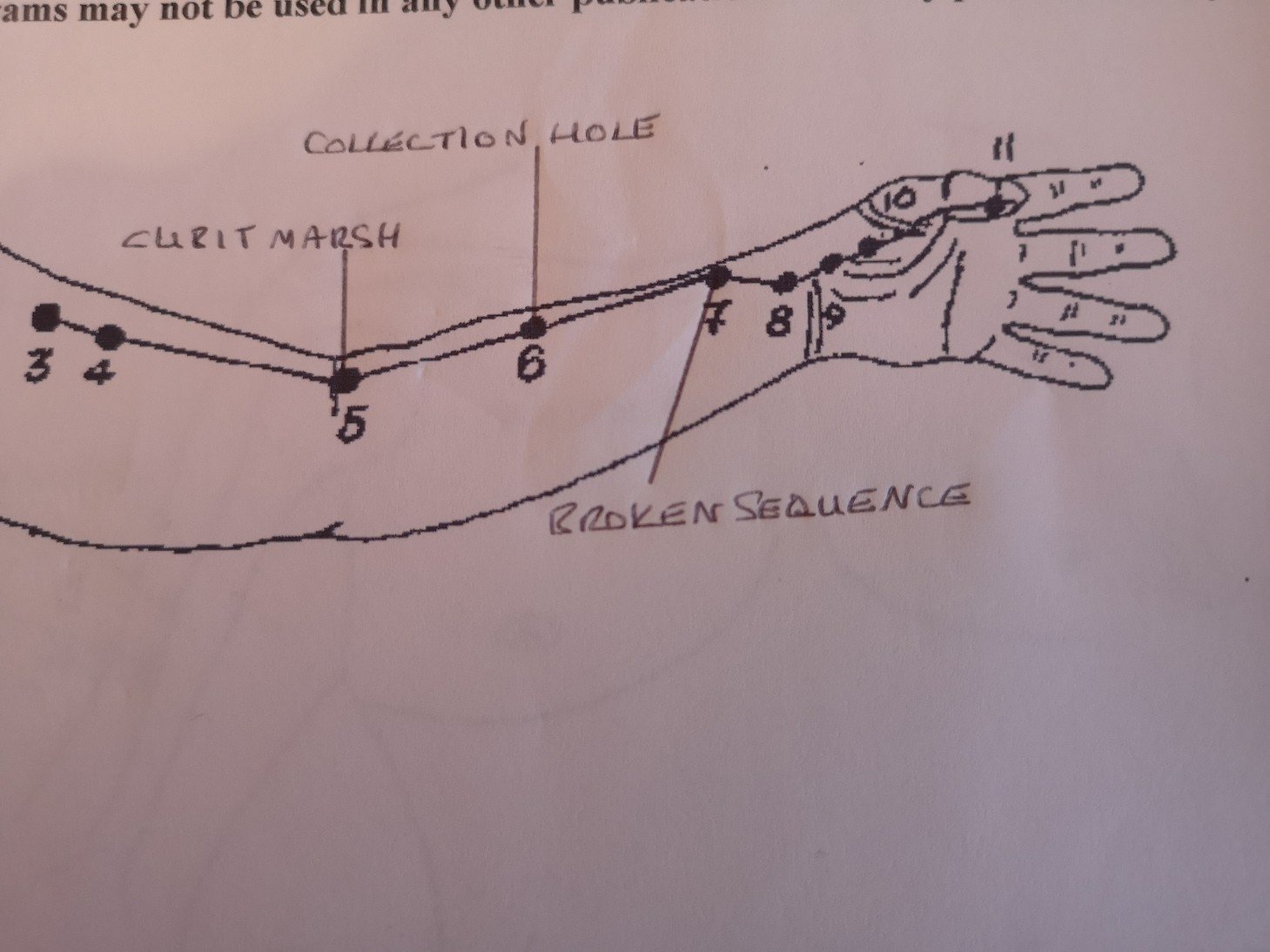
By the 5th stage of the walk, we are onto the topic which sadly still dominates, and T told me that her G is ill with it in Glasgow, meaning she can’t join them for the holiday. We use Cubit Marsh, found in a small indentation at the elbow (cubitum), when someone is suffering certain types of pulmonary disorders. It is useful to think about the body having an internal weather system – prone to Heat and Cold for example – and, in this case, the acupoint is said to deal with Damp, something which is injurious to the Lungs, hence the name of Marsh, a wet and boggy place. It isn’t hard to understand why it is beneficial for infections, then, where there is discharge and snot. The water we are walking beside is very still, it barely circulates, and the Oyster Catchers simply sit, floating very slightly. Brine hangs in the air and the cold stings our cheeks.
Lung 3 – 11
Collection Hole
Reaching the café, we choose hot chocolate and wait at the hatch for our steaming drinks. The man who attends to us wears his neckerchief over his mouth and nose and serves at arm’s length, pushing the card machine across the surfboard which doubles as a counter. I tap without touching and try to make eye contact to say ‘Thanks’.
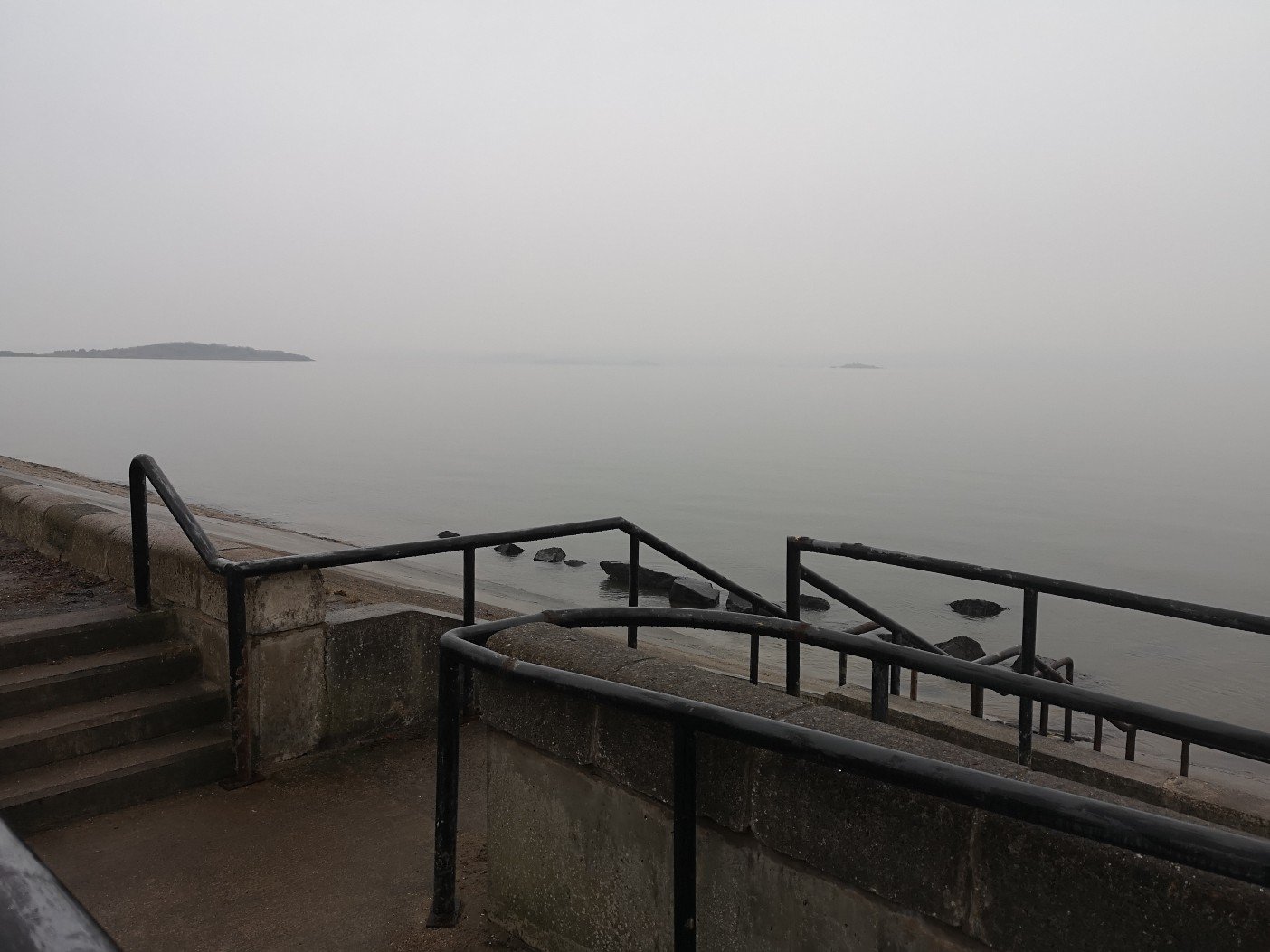
Down to the water’s edge
Broken Sequence
The Lung meridian now diverts to converge with the Zen Bladder channel (from the water element) and unblocks any stuck chi. At Silverknowes there is access to the foreshore where railings and steps break up the homogenous slate sea, leading down to the rocks and sand. Wind surfers like this spot and in the past I’ve watched them grasping the tow-line attached to a speed boat which zips and angles giving them the impetus to sail suddenly up into the sky, spray flying. It’s an exhilarating spectacle. We stop walking and choose a wooden bench, hoping it will be warmer to sit on than the metal ones. I had Covid recently and got off lightly with only a cold and a scratchy, irritable throat and tightness at the occiput (back of the top of the neck), which Lung 7, Broken Sequence, was very useful for.
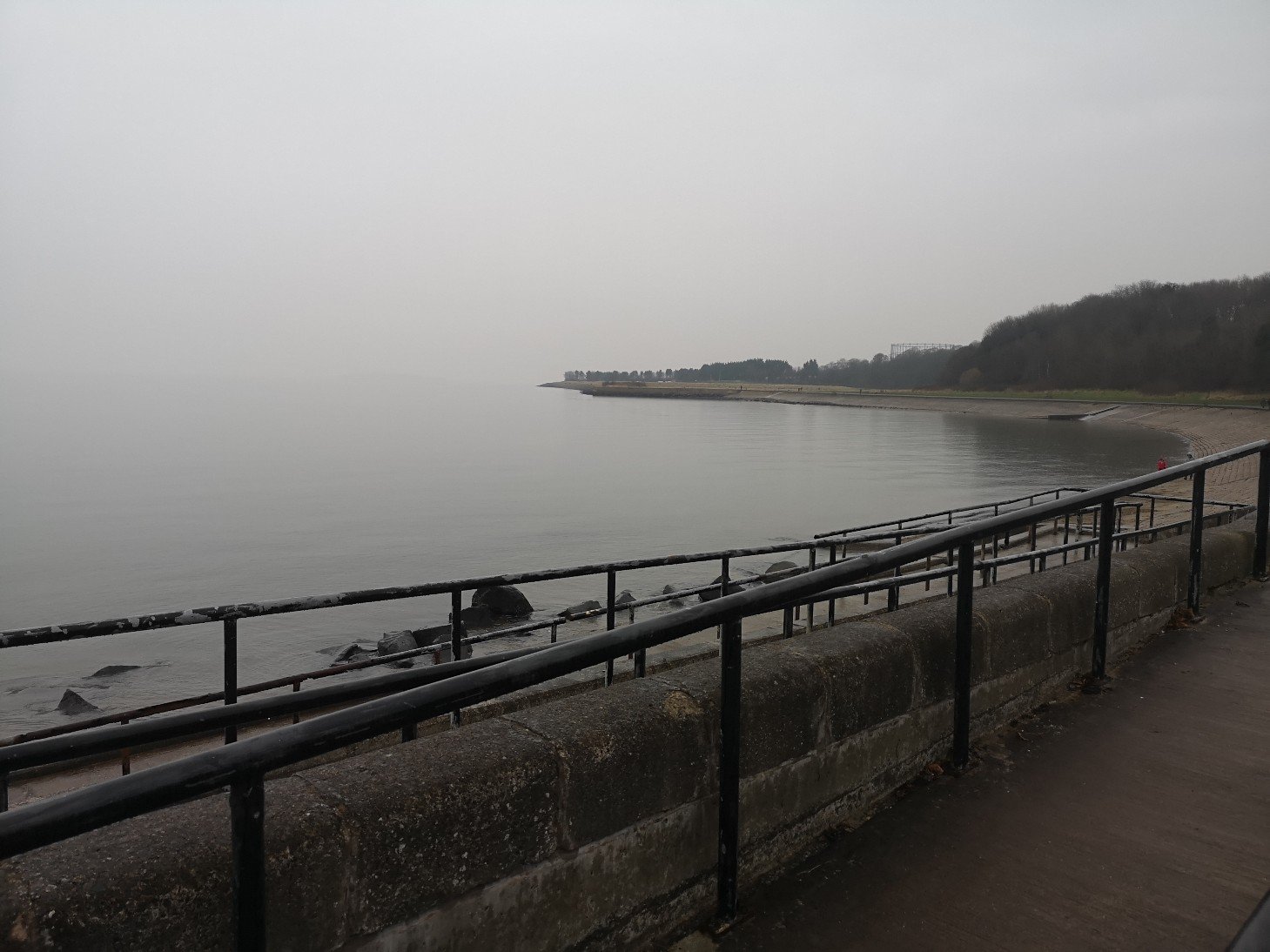
Looking eastwards
Channel Ditch
Missing out no.4, we continue with the sense of depth that the Marsh at no.5 brought and the story continues with the second of four wrist points. With the prosaic chat now out of the way, T and I talk about matters close to our hearts and we turn tail under the spitting rain. We see the same landscape from the west now, the bay curving round to a finger of land that seems to reach out to the Kingdom of Fife. We are flagging a little as daylight thins and the haar descends, moisture palpable on jeans and bobble hats.
Lung 7 – 11
Great Abyss
The 9th point on the Lung Meridian goes even deeper, hence the name. It connects with the Po, often called the Corporeal Soul, the Lung spirit in Chinese Medicine. It connects with the spiritual aspect of ourselves.
the Po [also] allows for a tricky balancing act of living life as a human being, namely that of being a creature of spirit inhabiting the body of an animal.
T and I are nearing the end of our walk and we start to reminisce, remembering walks we took 30 years ago and relatives who have since died. It is satisfying to be able to connect with someone who knows my background so intimately. It stabilises me and gives a sense of shape to my life.
John Kirkwood continues,
Lung 9 is able to go down into the abyss, to the depth of the soul. It can retrieve a person who has lost their way, calm one who is manic, stabilise someone who feels like they are cracking up or losing control. In short, it can reach down into the very depth of a person.
Crossing the bar and, metaphorically, the wrist crease, we amble eastwards, an easy, flat trajectory which allows the focus to be on what’s said and on the feelings expressed, rather on the terrain. The short day (it being just after the solstice) closes in around us.
Walking west
Fish Border
We leave the edge of the Firth of Forth, home to cod and pollock where the tide is now receding, and head towards a gift exchange. We hug and make plans for the week between Xmas and New Year; T suggests we come to sit around their fire pit and drink mulled wine which sounds delightful. The Lung channel is nearing its end and the fresh air has renewed us. Our walk-story has merged interior and exterior, past and present, day and evening, sea and land: Yin and Yang. Two friends met in place, and in spirit I was with Elspeth, Blake and the other Solstice walkers, telling a tale.
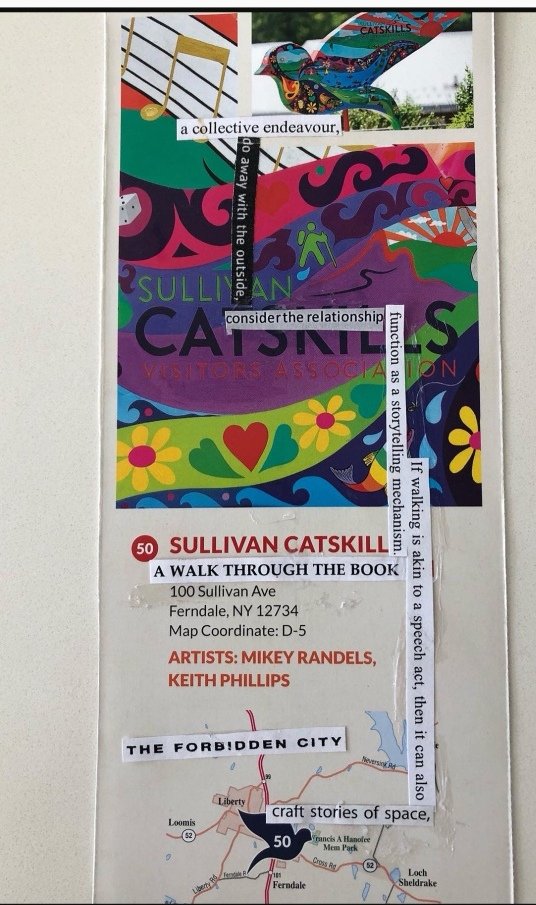
In response to the Map of the Forbidden City with its Gate of Divine Prowess and Hall of Imperial Peace, I will use Tsubook (it’s a Shiatsu app) and specifically the Lung meridian map.
Each acupressure point which is located along the channel has a name translated from the Chinese. It starts at Central Palace in the chest, passes through the Cloud Gate, Celestial Storehouse, Cubit Marsh, Collection Hole, Broken Sequence, Channel Ditch, Great Abyss, and Fish Border. I have chosen 9 of the 11 points (the points where I use my thumb or an acupuncturist would use a needle), because those relate to place and tell the story of a journey.
Illustration from Shiatsu by Carola Beresford-Cooke
Here are @ElspethPenfold prompts, rearranged and collaged from @BlakeMorris score:
A collective endeavour,
Do away with the outside,
Consider the relationship,
Function as a storytelling mechanism,
If walking is akin to a speech act, then it can also craft stories of space
The walking score devised by Elspeth Penfold and Blake Morris
@ThreadandWord #52more @blakewalks thisisnotaslog.com link to A Different Lens, award winning project by Elspeth Penfold and Thread and Word, which I made a small contribution to. This is my walk #16
‘Precarious’ is part of a collaborative film called Watermarks, which is Walking the Land’s contribution to The University of The Highland and Island’s (UHI) Edge Conference. In September 2022, it was developed into Precarious Edge and shown as part of the Murky Waters film programme as part of Art Walk Porty.
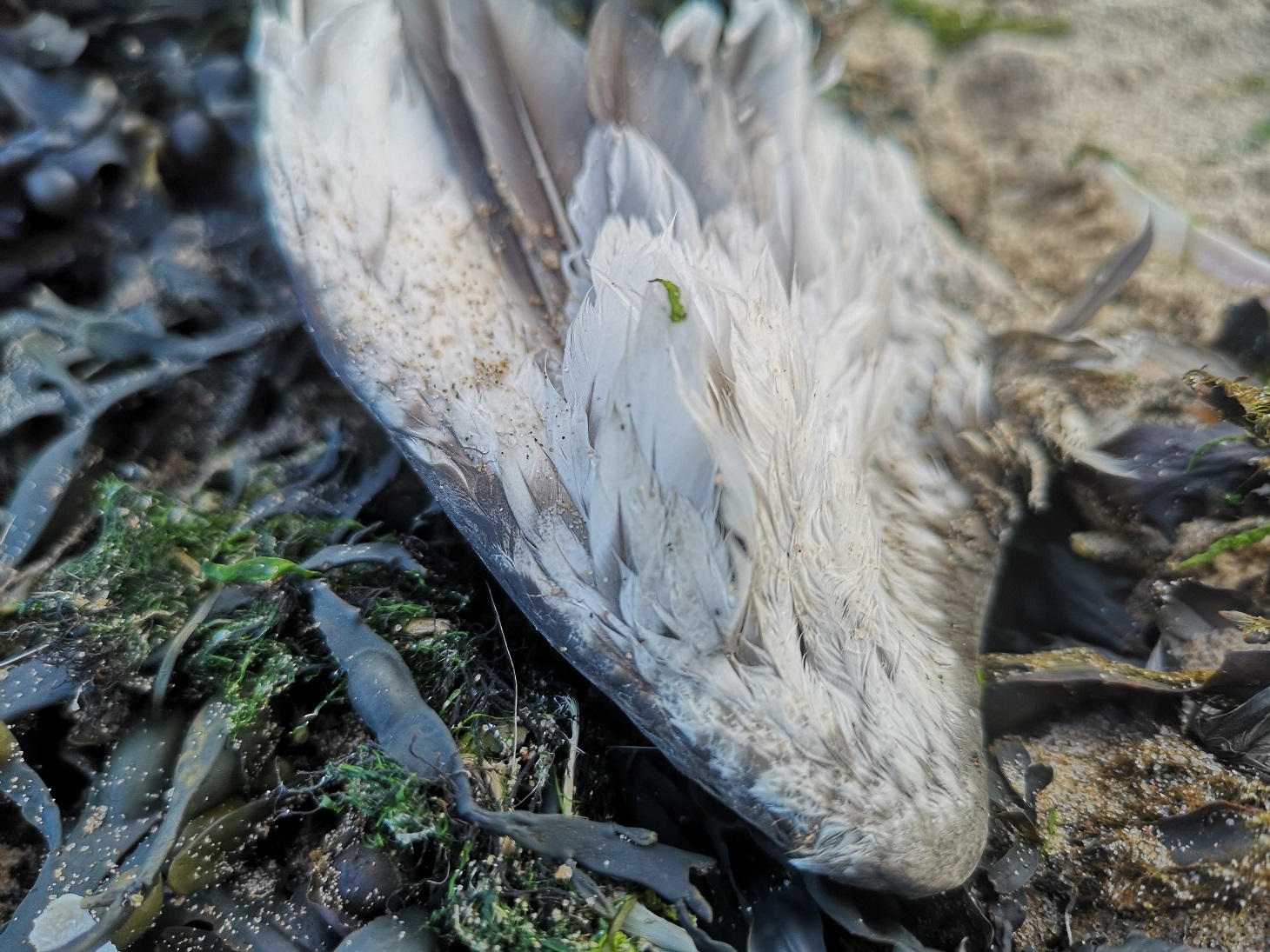
I filmed it on Portobello Beach in 2021 in response to the alarming number of deaths of young guillemots who unusually massed along this part of the coast of Edinburgh. This piece is part of a larger body of work looking at the effects that climate change is having on the bird population of the UK. See, No Birds Land installation
The Royal Society for the Protection of Birds (RSPB) said that while the exact cause remained unknown, the climate crisis was exacerbating the factors that lead to falls in seabird populations.
Guardian article about the investigation into the deaths of these guillemots
Guillemot wing, Portobello Beach, Edinburgh Summer 2021
Many thanks to Bea Parsons and my mum for watching and commenting on drafts, and to Richard and the team for compiling all the two-minutes into a great Watermarks film.
This film has since been expanded and reworked into Precarious Edge and was shown as part of the Murky Waters, Art Walk Porty short film evening in September 2022. MAP magazine reviewed it here


 Walking without a donkey