
Chepstow and the Forest of Dean were at the beginning of my walk along the Gloucestershire Way (see below), the British Pilgrimage Trust’s Tewkesbury Abbey to Gloucester Cathedral, and the Slow Ways UK route from Gloucester to Cheltenham. The whole project was a political, ecological and artistic walk ‘for the small things-often unseen or unnnoticed-to celebrate their importance in our ecosystem’. The theme grew out of my research for the Line(s) of Enquiry Walking the Land group exhibition which was at the Hardwick Gallery, University of Gloucestershire in Cheltenham between 3 and 27 March, and from the actual stitching of tiny insects. (This blog , Walking with Ants, explains what I did.)
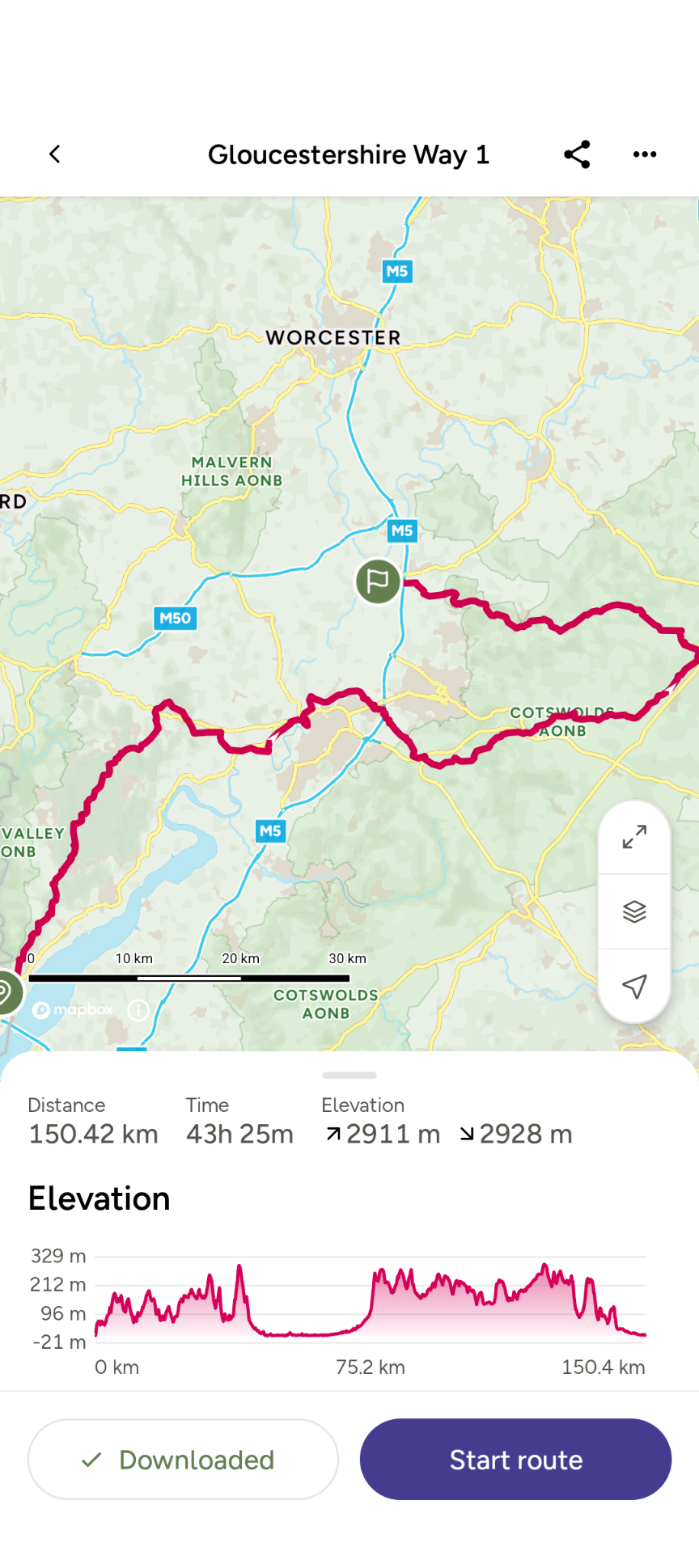
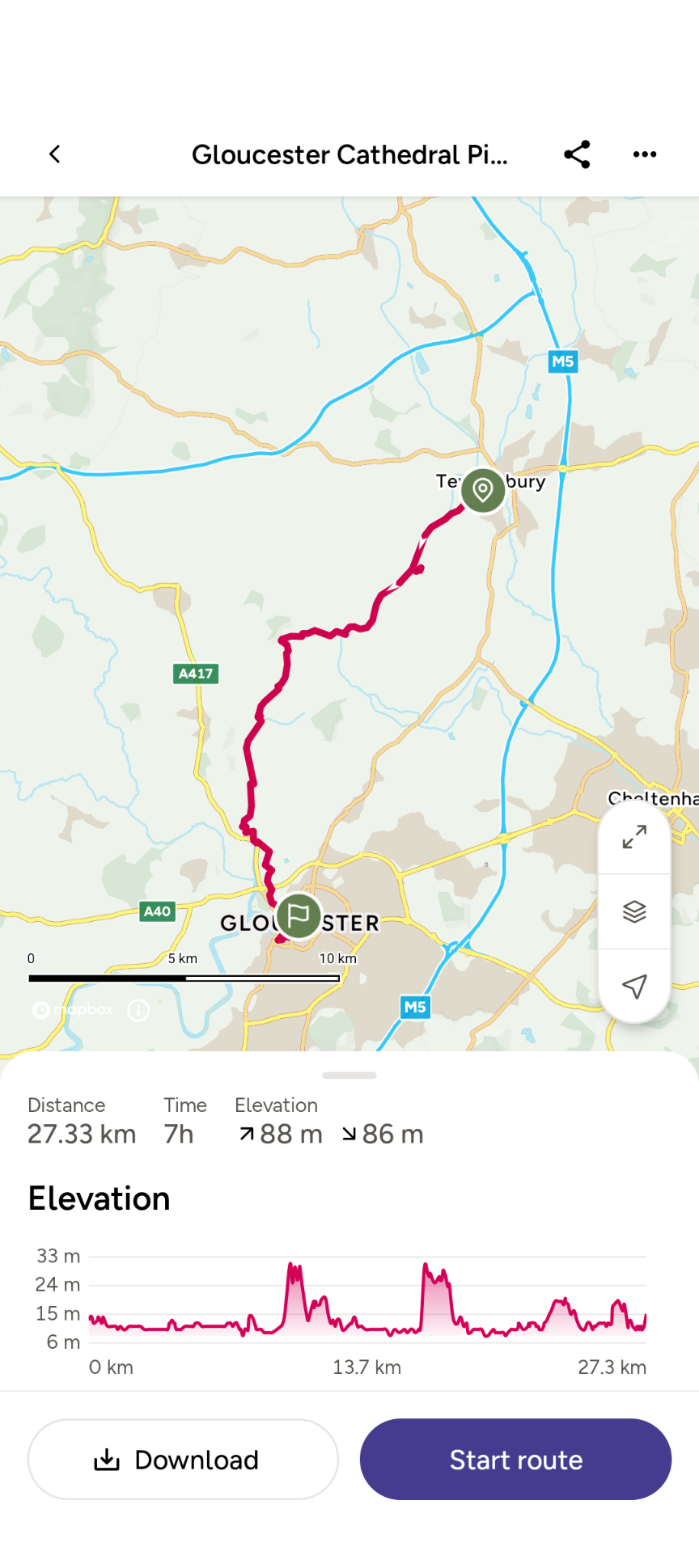
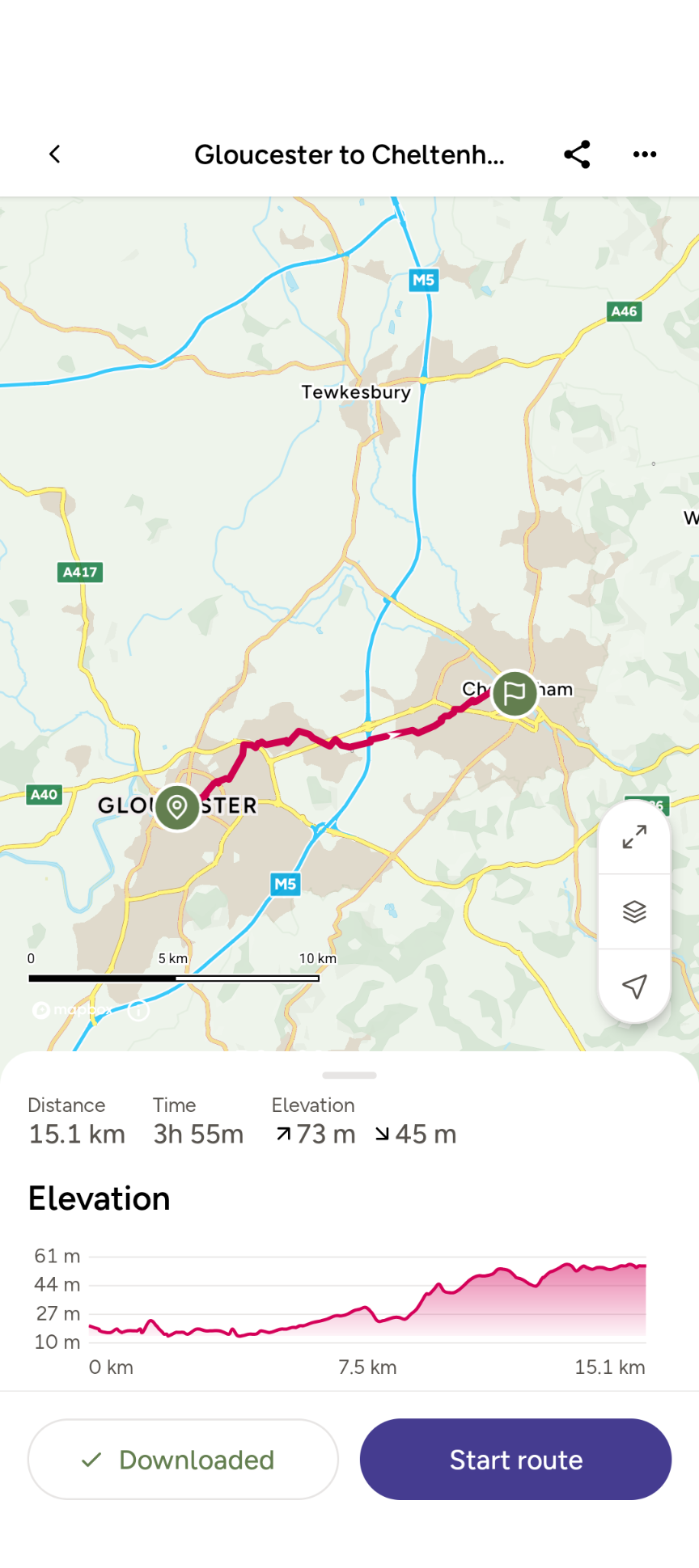
Three Ordnance Survey map app screenshots of the maps I used for the walk: The Gloucestershire Way (GPX from the Long Distance Walking Association), the British Pilgrimage Trust’s Tewkesbury Abbey to Gloucester Cathedral, and the Slow Ways UK route from Gloucester to Cheltenham
Day 1
I am fascinated with borders, the shared edges of places. Though they are a line on a map, they are also complex political divisions. Chepstow, or Cas-gwent, being on the Welsh side of the English border, shares the languages of Welsh and English and is at the cross-over point between cultures. I knew it a little, in my early twenties, when I lived and worked in the Forest of Dean as a Dance Animateur (someone who animates people about dance in a specific geographical area). It seemed right, somehow, to start my walk on the Old Bridge very shortly after sunrise, at the meeting of night and day. Long walks are always significant for me, they mark the boundary of the way I was and of a new way to be.
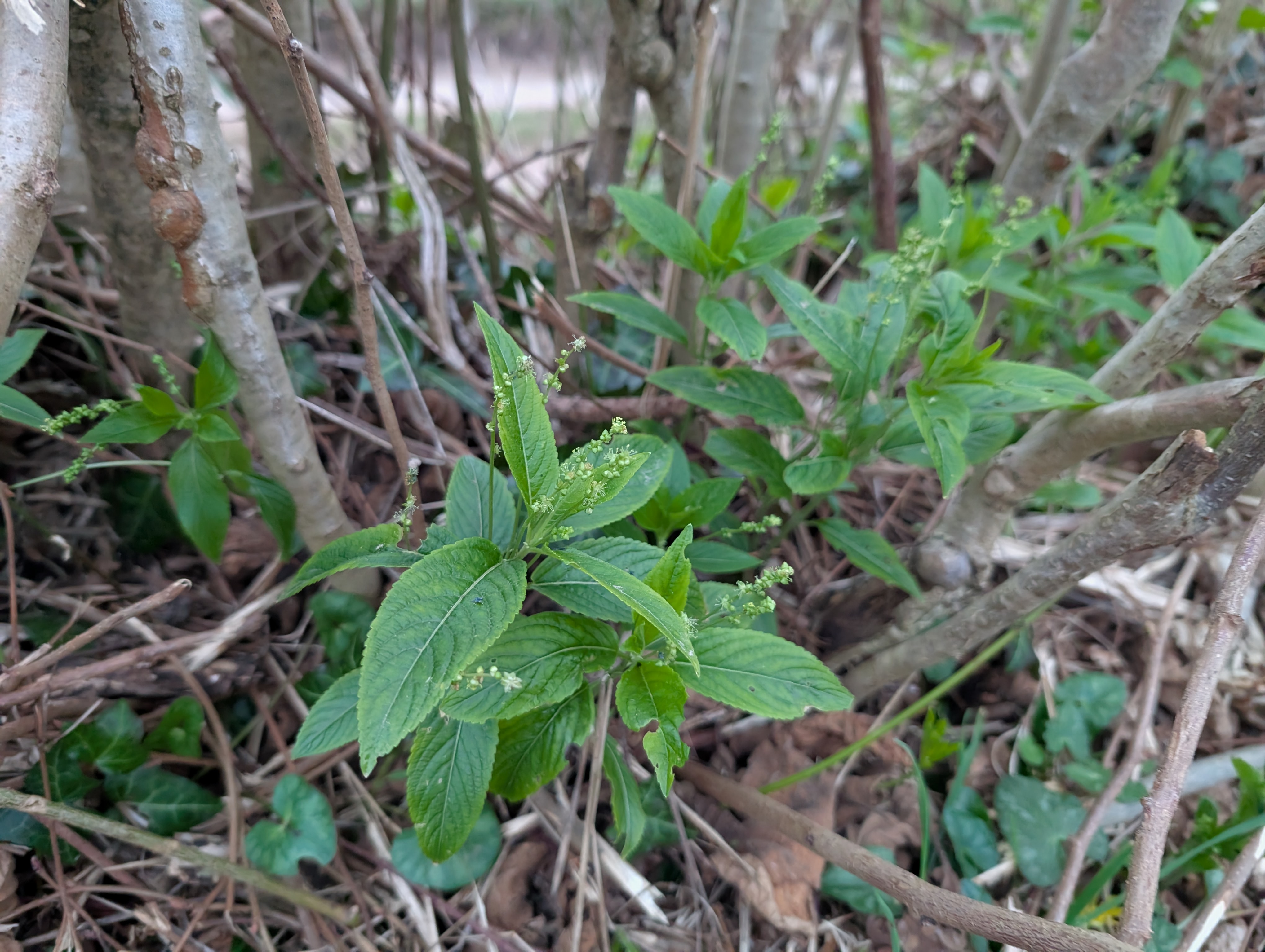
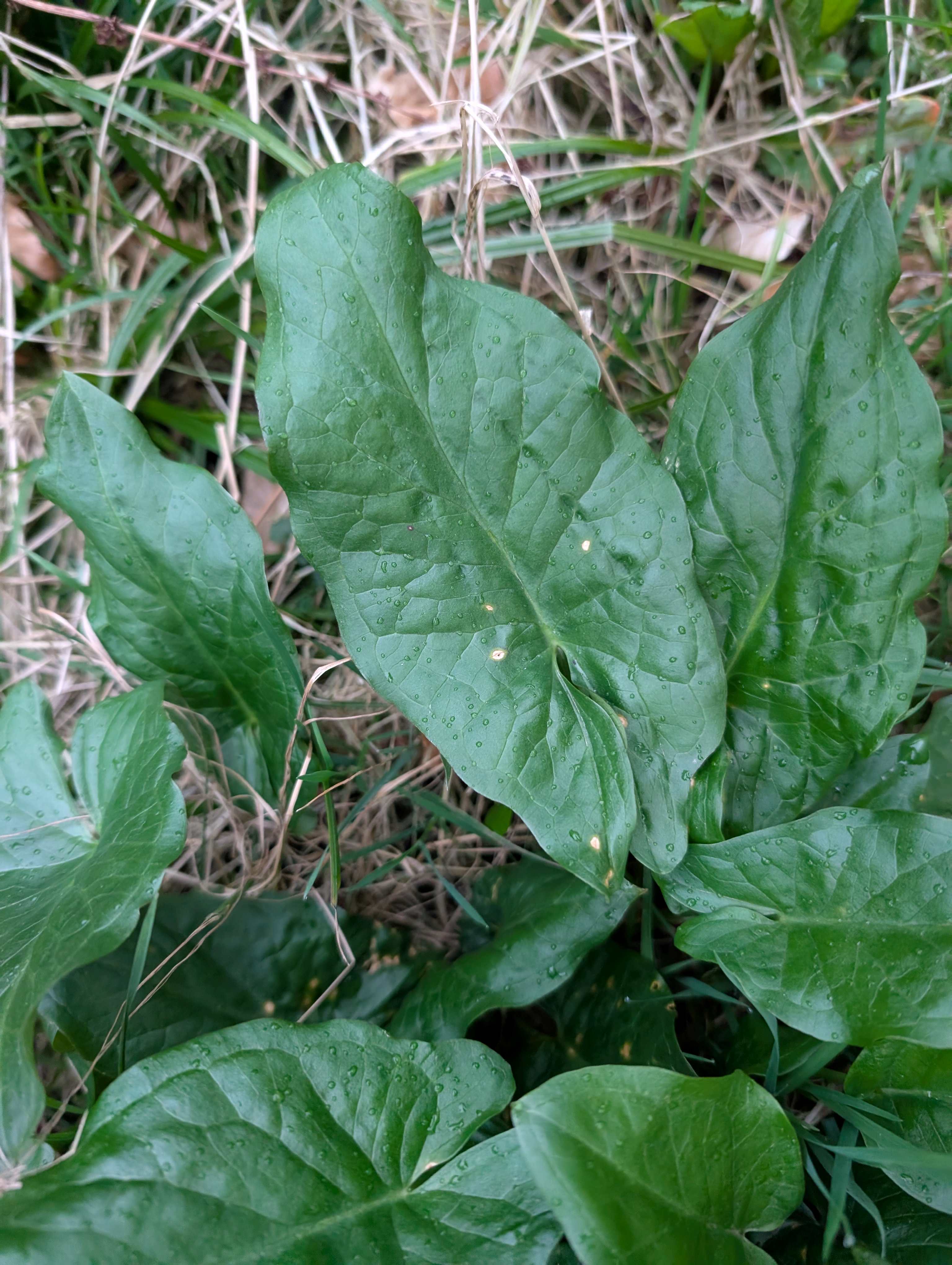
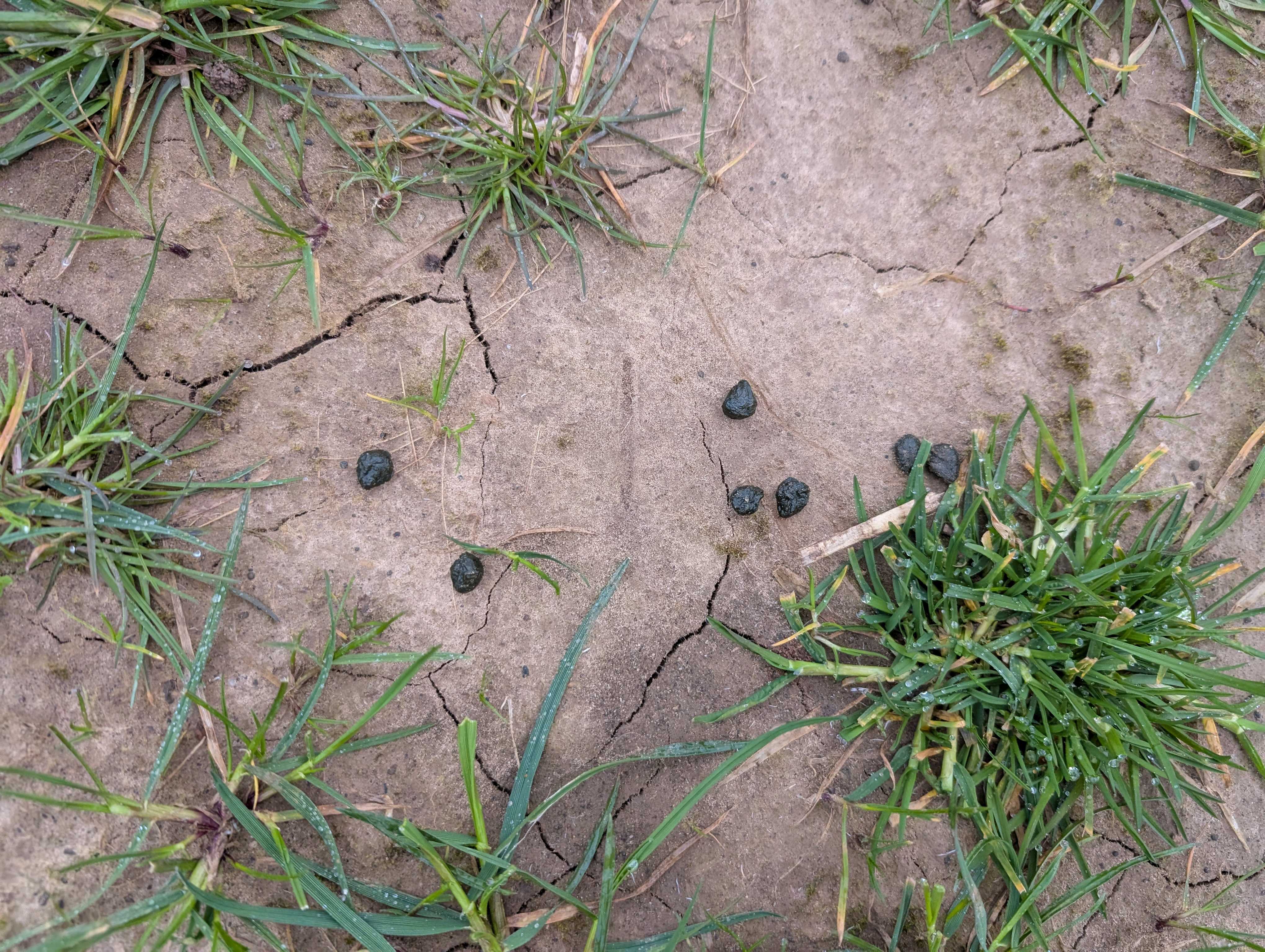
Captions for the images above: Some of the small things that I met on day 1, that make up and contribute to our ecosystem: Dog’s Mercury / Bingelurt or Mercuralis perennis (highly poisonous) found on ancient woodland floors; White spots on Lords and Ladies / Cuckoo pint or Aurum maculatum, perhaps indicating minerals in the water. It is also poisonous; Deer droppings that will feed the soil when it rains.
Before I left Edinburgh for Gloucestershire in England on 6 March 2025, I had felt under increasing pressure to produce intelligent ideas and write about what I intended to do. I felt sure it was not enough to ‘go on a walk and look at the landscape through the eyes of an artist’. I was worrying myself over not being sufficiently learnèd because I haven’t been to Art School or done a PhD, as so many of my erudite friends and colleagues have. I wonder, now, whether that worrying had something to do with what happened on the walk, with the injury I sustained which took a long time to get over and which still causes me pain at times.
… that the brain’s left hemisphere is designed to help us apprehend and thus manipulate the world, and the right hemisphere to comprehend it, to see it all for what it is.
Dr Iain McGilchrist from The Matter with Things (intro)
Using both sides of the brain
My different interests have always engaged me with both sides of my brain. At dance college we were being trained to become ‘thinking dancers’, effectively doing 2 degrees in one by mastering the practical application and delving deeply into the academic subjects which underpinned it.
Shiatsu, which I started to learn in 1989, is a hands-on subject. I was taught and have practised for many years, how to touch the body effectively and appropriately; it was essential that I deepened my intuition about the Chinese / Japanese notions of chi and qi. However, we also studied the theoretical and philosophical aspects of this complex complementary therapy.
Now I’m making walking art: simple perambulation in its application, plus reflection and enquiry coming duraing and after. With this latter, though, I was constantly worried about my ability and whether I should be doing something more in-depth and sophisticated.
Day 2
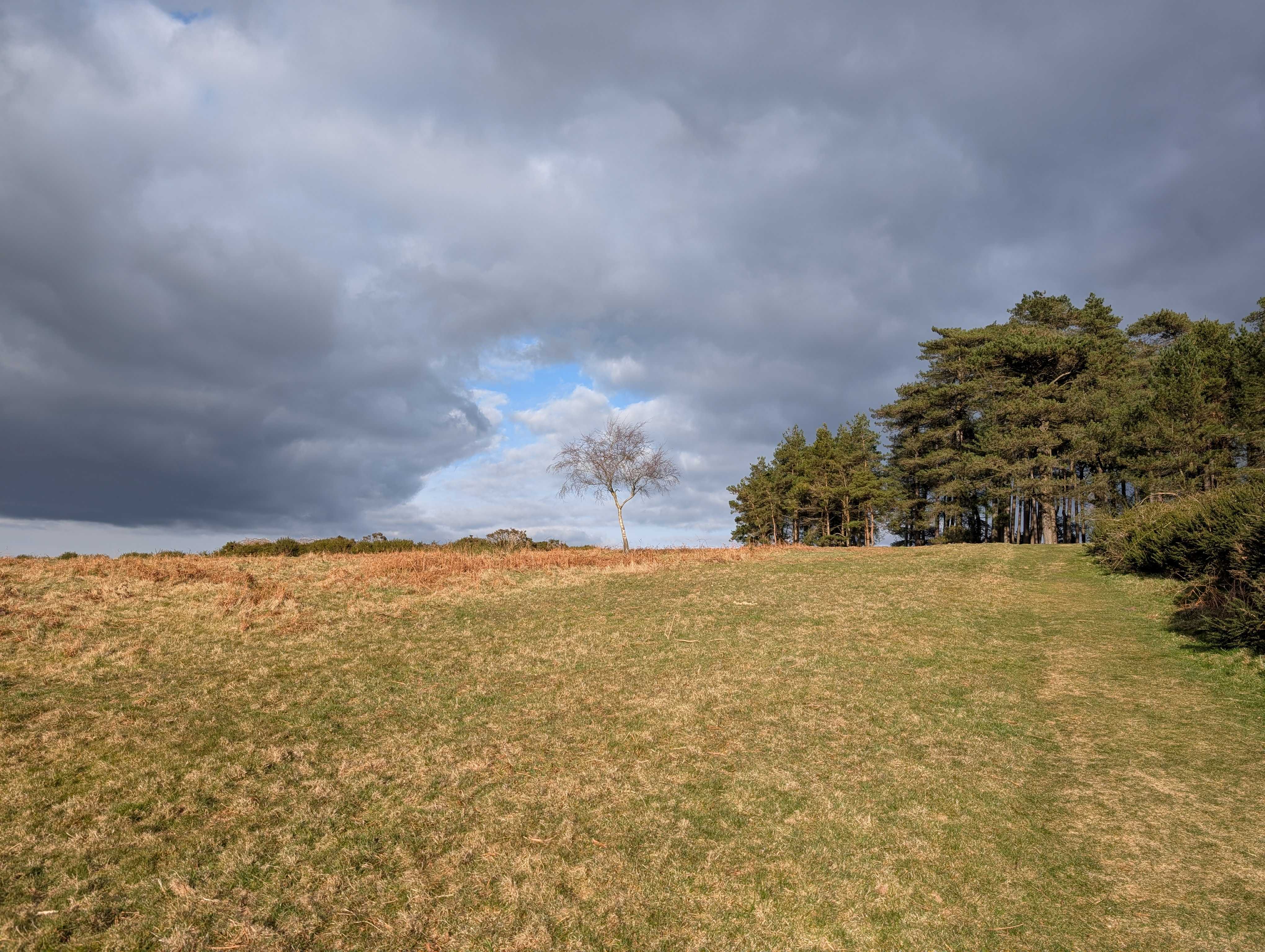

Captions for the images above: Going up May Hill, Forest of Dean March 2025, and the view from the top
I’d looked at the map for the second day, seen that there was a steep hill at its end, and told myself I did not have to do that, what with the heavy rucksack and it being only the end of day 2 (traditionally, one of the most challenging when doing a long-distance hike as you are not used to the hours of exercise, haven’t yet built up the relevant muscles to cope with it). When I got to Longhope though, I felt good. It was such a beautiful evening that I broke my resolve and went up anyway. Almost immediately, I had to stop every 11 paces, to rest and breathe, and then my foot slipped from under me and the weight on my back toppled me over. I was, as I had intuited the night before, too tired. It did not feel not serious, but by the time I started going down, I was hobbling. The back of my left knee was already hurting a lot.
The result of straining a tendon was that I had to focus in minute detail on my body sensations and how the surrounding landscape effected them. I could not use my brain to figure intellectual things out or puzzle over the meaning of what I was doing. I had to sink into my physical system to find ways to mitigate the damage and minimise any further harm to my soft tissues. This meant watching the ground, not only for the small things which often reside there, but for any slight undulation. Equally mindful of the internal as well as external beings I was meeting, I was forced into a different sort of balance.
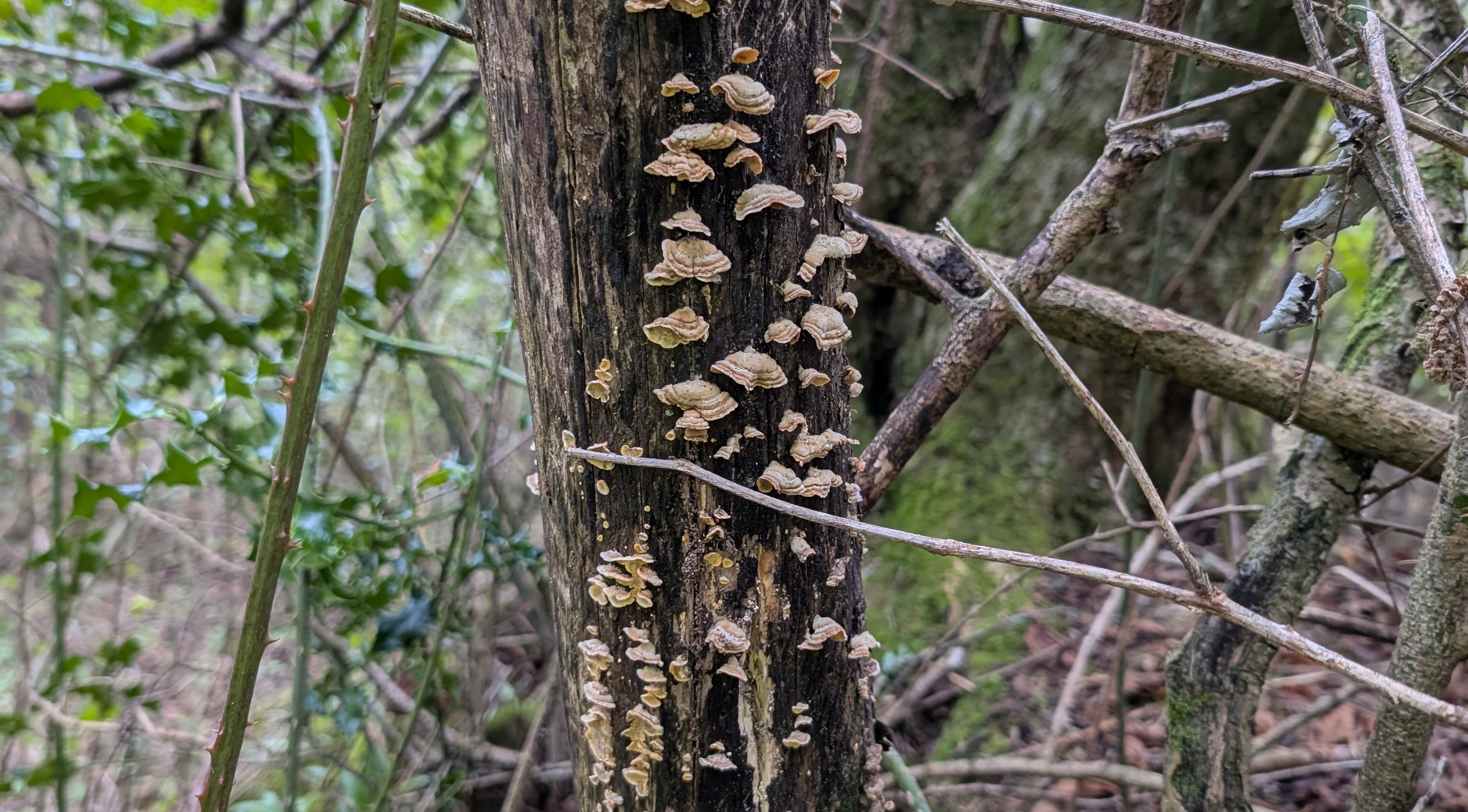
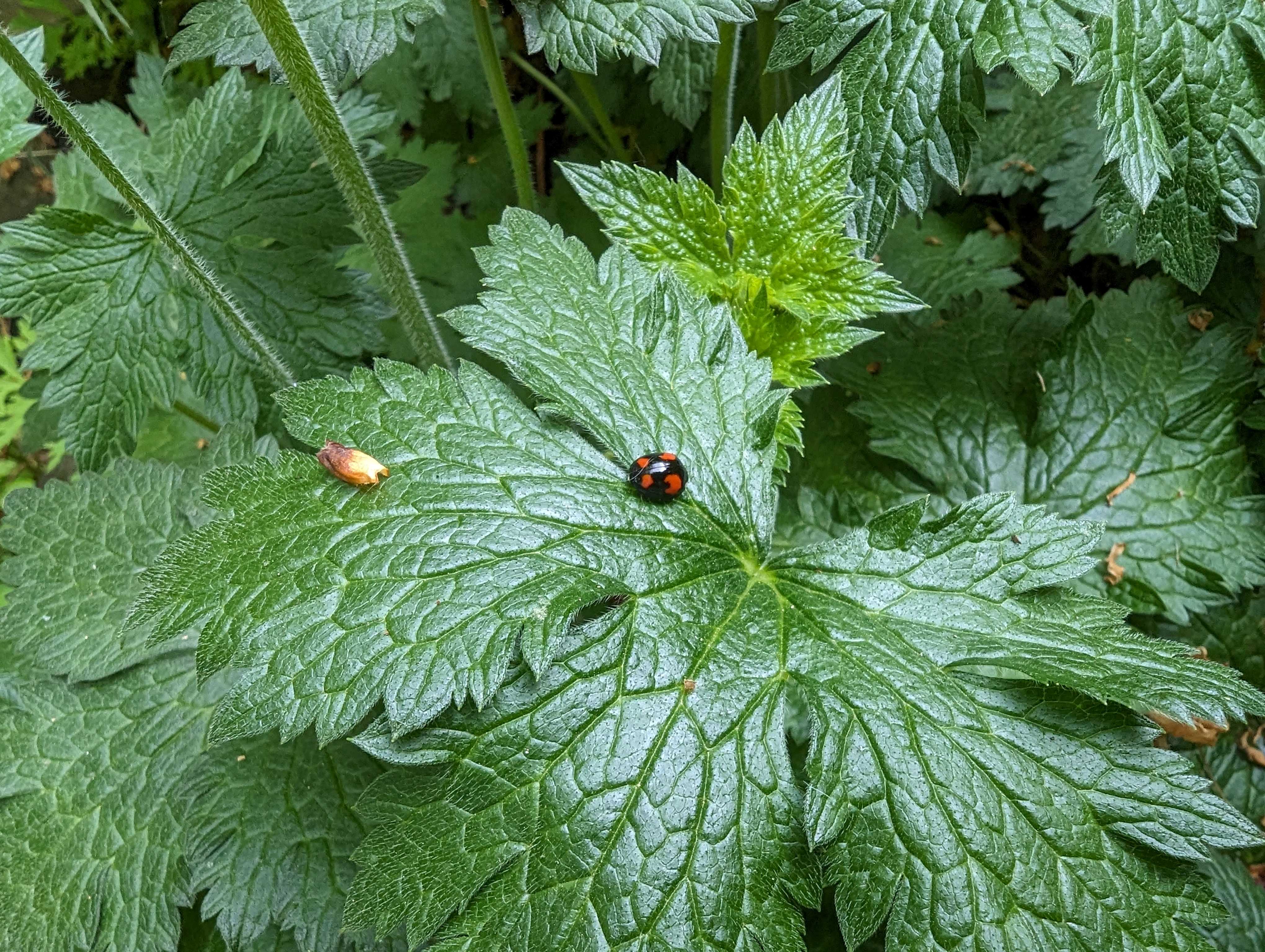
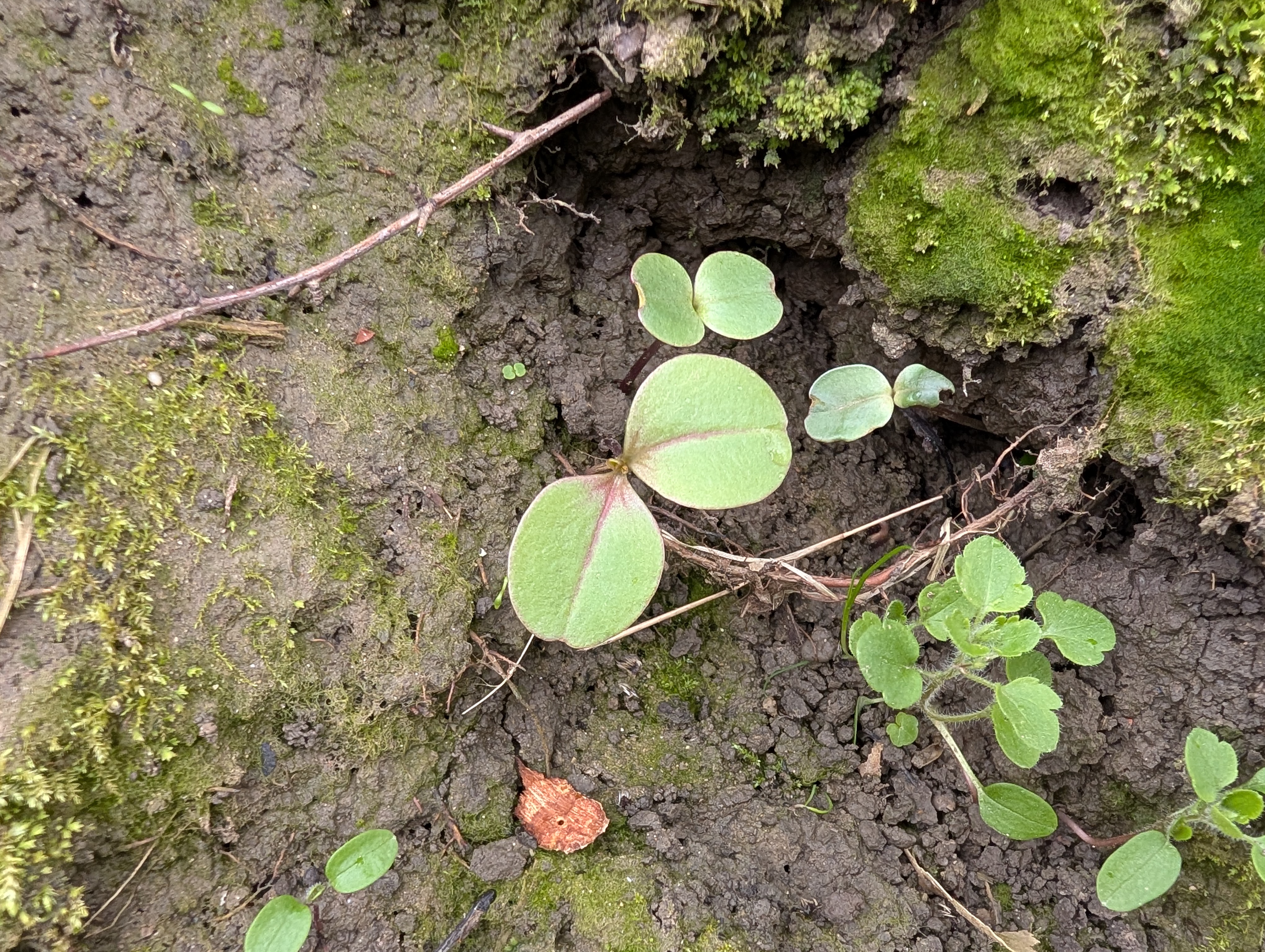
Captions for the images above: fugi growing on a log, Harlequin ladybird, cotyledons growing on a molehill
Just before I left home, by chance, I came across the drama deries, The Change (Channel 4) by Bridget Christie. It’s about a woman who leaves home and goes to the Forest of Dean ‘to find herself’. I could hardly believe the syncronicity. After my return, nursing my poor leg and unable to walk far at all, I watched series 2. It is full of shots of the small things: a beetle slowly crawling, mushrooms sticking out of a log, and seedlings starting to sprout. It is suggested that the more Linda, the main character, starts to feel rooted, and things start to drop into place for her, the more she starts to hear what is going on in the landscape around her; even the mycelium growing and connecting underground.
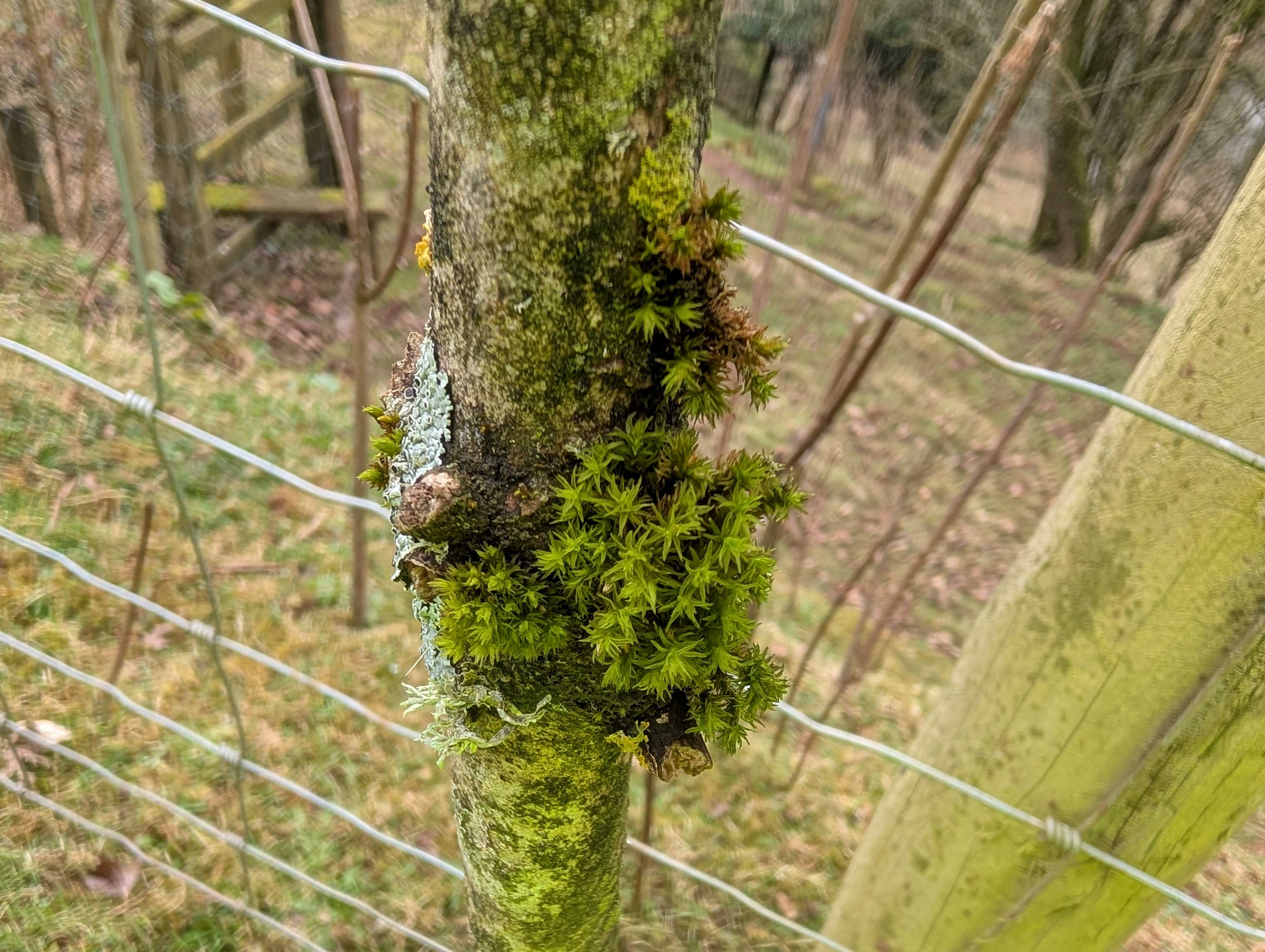
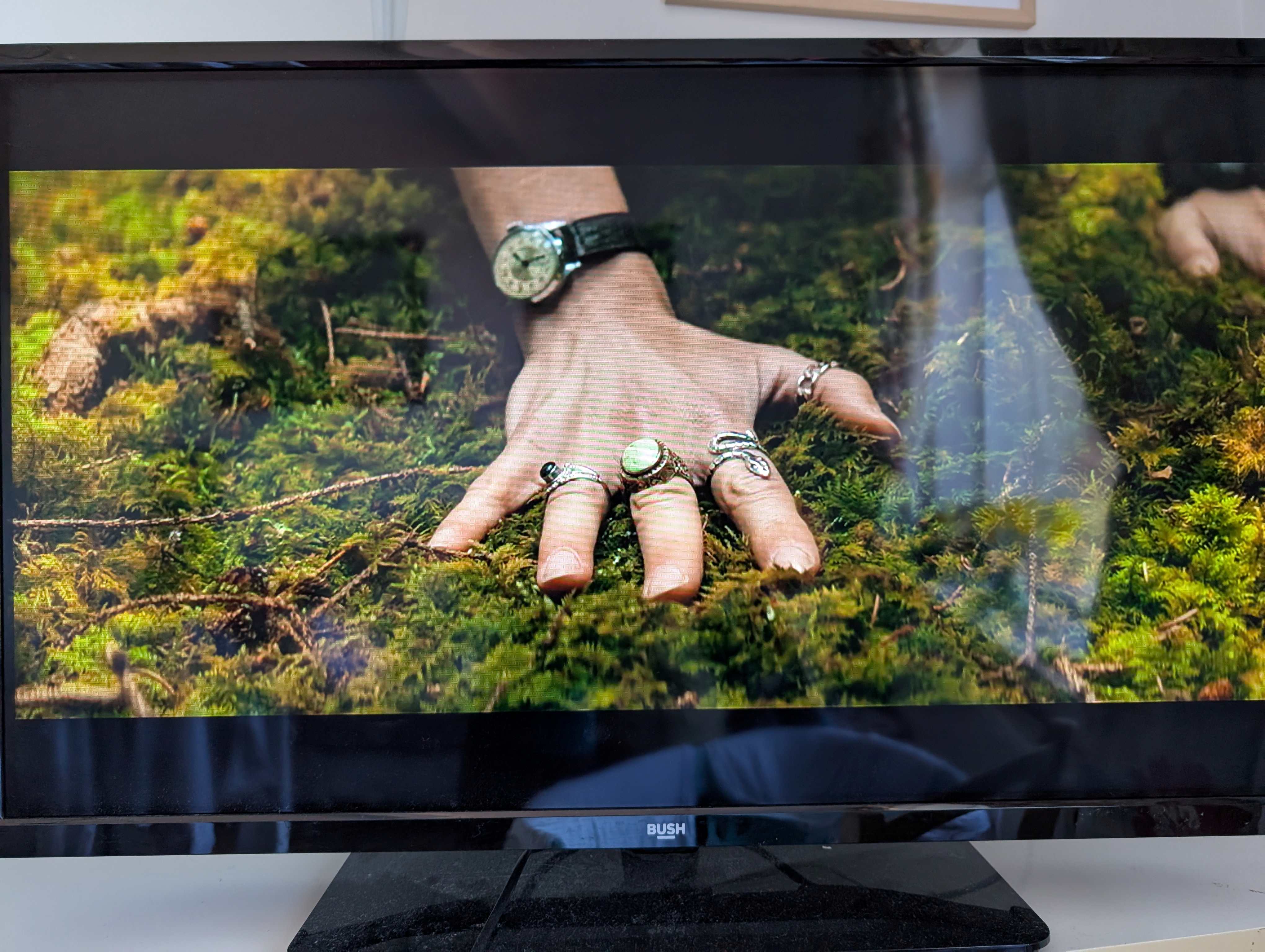
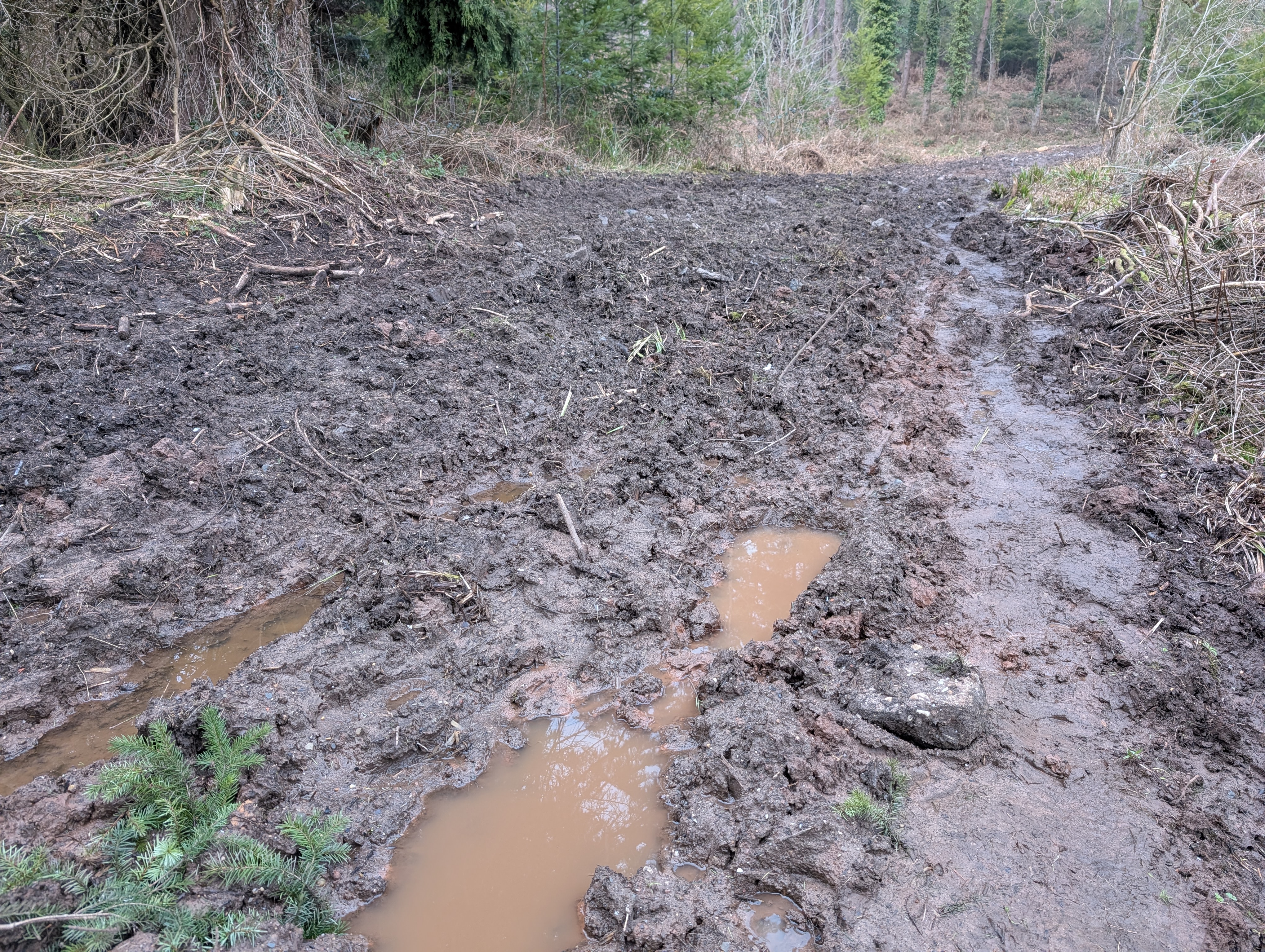
These early days of the walk were idications of how the whole was going to be: fascinating in the detail, a deep learning and balancing experience, and muddy, so very muddy.
To be continued/

 Walking without a donkey